AB 1094: Crimes: torture of a minor: parole.
- Session Year: 2025-2026
- House: Assembly
- Latest Version Date: 2025-10-11
Current Status:
Passed
(2025-10-11: Chaptered by Secretary of State - Chapter 631, Statutes of 2025.)
Introduced
In Committee
Awaiting First Chamber Vote
Passed First Chamber
In Committee
Awaiting Second Chamber Vote
Passed Second Chamber
Enacted
Existing law makes a person who, with the intent to cause cruel or extreme pain and suffering for the purpose of revenge, extortion, persuasion, or for any sadistic purpose, inflicts great bodily injury upon the person of another guilty of torture, and makes the crime punishable by imprisonment in the state prison for a term of life. Existing law specifies that an inmate imprisoned under a life sentence shall not be paroled until they have served a term of at least 7 years or as established pursuant to a law that establishes a minimum term.
This bill would prohibit a person imprisoned for committing the crime of torture from being eligible for parole until they have served at least 10 years, if the defendant is an adult who had care or custody of the victim and the victim was 14 years of age or younger at the time of the crime. By creating a new sentencing enhancement, the bill would impose a state-mandated local program.
The California Constitution requires the state to reimburse local agencies and school districts for certain costs mandated by the state. Statutory provisions establish procedures for making that reimbursement.
This bill would provide that no reimbursement is required by this act for a specified reason.
Existing law makes a person who, with the intent to cause cruel or extreme pain and suffering for the purpose of revenge, extortion, persuasion, or for any sadistic purpose, inflicts great bodily injury upon the person of another guilty of torture, and makes the crime punishable by imprisonment in the state prison for a term of life. Existing law specifies that an inmate imprisoned under a life sentence shall not be paroled until they have served a term of at least 7 years or as established pursuant to a law that establishes a minimum term.
This bill would prohibit a person imprisoned for committing the crime of torture from being eligible for parole until they have served at least 14 10 years, if the defendant is an adult who had care or custody of the victim and the victim was 14 years of age or younger at the time of the crime. By creating a new sentencing enhancement, the bill would impose a state-mandated local program.
The California Constitution requires the state to reimburse local agencies and school districts for certain costs mandated by the state. Statutory provisions establish procedures for making that reimbursement.
This bill would provide that no reimbursement is required by this act for a specified reason.
Existing law makes a person who, with the intent to cause cruel or extreme pain and suffering for the purpose of revenge, extortion, persuasion, or for any sadistic purpose, inflicts great bodily injury upon the person of another guilty of torture, and makes the crime punishable by imprisonment in the state prison for a term of life. Existing law specifies that an inmate imprisoned under a life sentence shall not be paroled until they have served a term of at least 7 years or as established pursuant to a law that establishes a minimum term.
This bill would prohibit a person imprisoned for committing the crime of torture from being eligible for parole until they have served at least 20 14 years, if the defendant is an adult who had care or custody of the victim and the victim was 14 years of age or younger at the time of the crime. By creating a new sentencing enhancement, the bill would impose a state-mandated local program.
The California Constitution requires the state to reimburse local agencies and school districts for certain costs mandated by the state. Statutory provisions establish procedures for making that reimbursement.
This bill would provide that no reimbursement is required by this act for a specified reason.
Existing law makes a person who, with the intent to cause cruel or extreme pain and suffering for the purpose of revenge, extortion, persuasion, or for any sadistic purpose, inflicts great bodily injury upon the person of another guilty of torture, and makes the crime punishable by imprisonment in the state prison for a term of life. Existing law specifies that an inmate imprisoned under a life sentence shall not be paroled until they have served a term of at least 7 years or as established pursuant to a law that establishes a minimum term.
This bill would prohibit a person imprisoned for committing the crime of torture from being eligible for parole until they have served at least 25 20 years, if the defendant is an adult who had care or custody of the victim and the victim of the torture was under was 14 years of age or younger at the time of the crime. By creating a new sentencing enhancement, the bill would impose a state-mandated local program.
The California Constitution requires the state to reimburse local agencies and school districts for certain costs mandated by the state. Statutory provisions establish procedures for making that reimbursement.
This bill would provide that no reimbursement is required by this act for a specified reason.
Existing law makes a person who, with the intent to cause cruel or extreme pain and suffering for the purpose of revenge, extortion, persuasion, or for any sadistic purpose, inflicts great bodily injury upon the person of another guilty of torture, and makes the crime punishable by imprisonment in the state prison for a term of life. Existing law specifies that an inmate imprisoned under a life sentence shall not be paroled until they have served a term of at least 7 years or as established pursuant to a law that establishes a minimum term.
This bill would prohibit a person imprisoned for committing the crime of torture from being eligible for parole until they have served at least 25 years, if the victim of the torture was under 14 years of age at the time of the crime. By creating a new sentencing enhancement, the bill would impose a state-mandated local program.
The California Constitution requires the state to reimburse local agencies and school districts for certain costs mandated by the state. Statutory provisions establish procedures for making that reimbursement.
This bill would provide that no reimbursement is required by this act for a specified reason.
(a)Torture is punishable by imprisonment in the state prison for a term of life.
(b)(1)Except as described in paragraph (2), a defendant imprisoned for torture shall not be eligible for parole until they have served at least seven years, pursuant to Section 3046.
(2)For a crime of torture committed on or after January 1, 2026, if the defendant is an adult who had care or custody of the victim and the victim was 14 years of age or younger at the time of the crime, the defendant shall not be eligible for parole until they have served at least 10 years.
SEC. 2.No reimbursement is required by this act pursuant to Section 6 of Article XIIIB of the California Constitution because the only costs that may be incurred by a local agency or school district will be incurred because this act creates a new crime or infraction, eliminates a crime or infraction, or changes the penalty for a crime or infraction, within the meaning of Section 17556 of the Government Code, or changes the definition of a crime within the meaning of Section 6 of Article XIIIB of the California Constitution.
(a)Torture is punishable by imprisonment in the state prison for a term of life.
(b)(1)Except as described in paragraph (2), a defendant imprisoned for torture shall not be eligible for parole until they have served at least seven years, pursuant to Section 3046.
(2)For a crime of torture committed on or after January 1, 2026, if the defendant is an adult who had care or custody of the victim and the victim was 14 years of age or younger at the time of the crime, the defendant shall not be eligible for parole until they have served at least 14 10 years.
SEC. 2.No reimbursement is required by this act pursuant to Section 6 of Article XIIIB of the California Constitution because the only costs that may be incurred by a local agency or school district will be incurred because this act creates a new crime or infraction, eliminates a crime or infraction, or changes the penalty for a crime or infraction, within the meaning of Section 17556 of the Government Code, or changes the definition of a crime within the meaning of Section 6 of Article XIIIB of the California Constitution.
(a)Torture is punishable by imprisonment in the state prison for a term of life.
(b)(1)Except as described in paragraph (2), a defendant imprisoned for torture shall not be eligible for parole until they have served at least seven years, pursuant to Section 3046.
(2)For a crime of torture committed after January 1, 2026, if the defendant is an adult who had care or custody of the victim and the victim was 14 years of age or younger at the time of the crime, the defendant shall not be eligible for parole until they have served at least 20 14 years.
SEC. 2.No reimbursement is required by this act pursuant to Section 6 of Article XIIIB of the California Constitution because the only costs that may be incurred by a local agency or school district will be incurred because this act creates a new crime or infraction, eliminates a crime or infraction, or changes the penalty for a crime or infraction, within the meaning of Section 17556 of the Government Code, or changes the definition of a crime within the meaning of Section 6 of Article XIIIB of the California Constitution.
(a)Torture is punishable by imprisonment in the state prison for a term of life.
(b)(1)Except as described in paragraph (2), a defendant imprisoned for torture shall not be eligible for parole until they have served at least seven years, pursuant to Section 3046.
(2)For a crime of torture committed after January 1, 2026, if the defendant is an adult who had care or custody of the victim and the victim is under was 14 years of age, age or younger at the time of the crime, the defendant shall not be eligible for parole until they have served at least 25 20 years.
SEC. 2.No reimbursement is required by this act pursuant to Section 6 of Article XIIIB of the California Constitution because the only costs that may be incurred by a local agency or school district will be incurred because this act creates a new crime or infraction, eliminates a crime or infraction, or changes the penalty for a crime or infraction, within the meaning of Section 17556 of the Government Code, or changes the definition of a crime within the meaning of Section 6 of Article XIIIB of the California Constitution.
(a)Torture is punishable by imprisonment in the state prison for a term of life.
(b)(1)Except as described in paragraph (2), a defendant imprisoned for torture shall not be eligible for parole until they have served at least seven years, pursuant to Section 3046.
(2)For a crime of torture committed after January 1, 2026, if the victim is under 14 years of age, the defendant shall not be eligible for parole until they have served at least 25 years.
SEC. 2.No reimbursement is required by this act pursuant to Section 6 of Article XIIIB of the California Constitution because the only costs that may be incurred by a local agency or school district will be incurred because this act creates a new crime or infraction, eliminates a crime or infraction, or changes the penalty for a crime or infraction, within the meaning of Section 17556 of the Government Code, or changes the definition of a crime within the meaning of Section 6 of Article XIIIB of the California Constitution.
|
Date
|
Status
|
|---|---|
| Oct 11, 2025 | Chaptered by Secretary of State - Chapter 631, Statutes of 2025. |
| Oct 11, 2025 | Approved by the Governor. |
| Sep 22, 2025 | Enrolled and presented to the Governor at 3 p.m. |
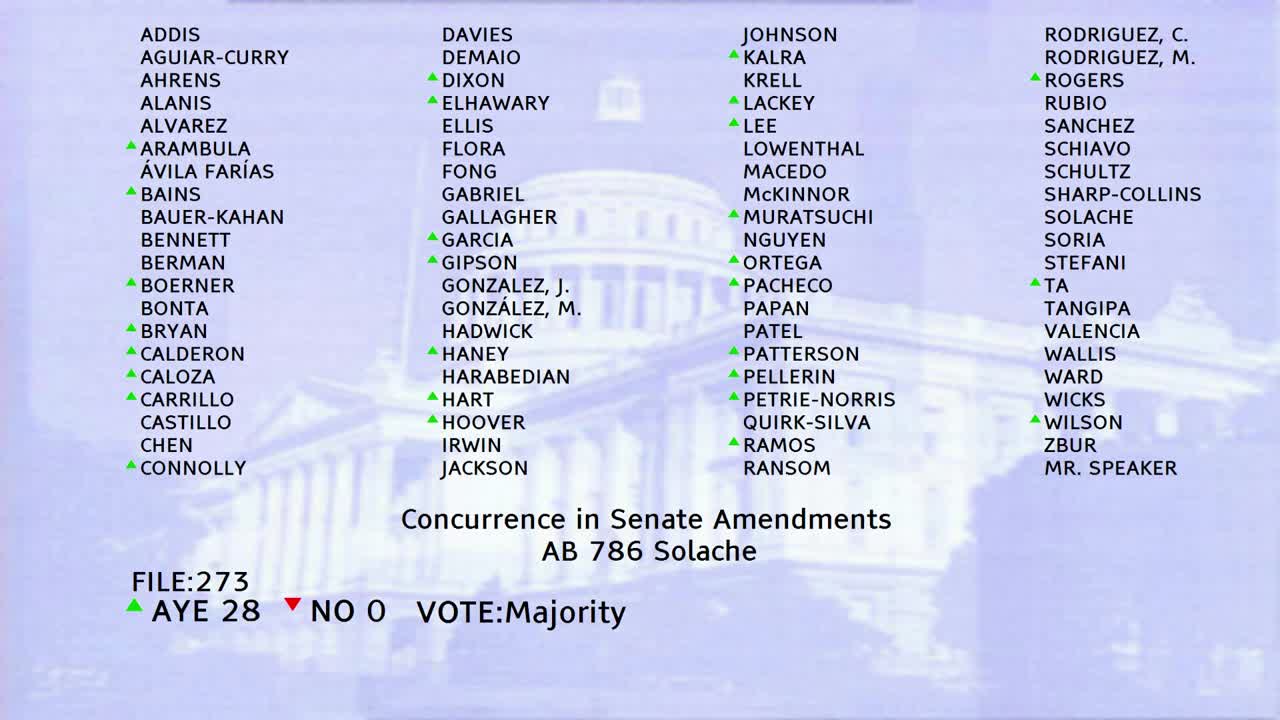
| Sep 10, 2025 | Senate amendments concurred in. To Engrossing and Enrolling. (Ayes 72. Noes 0. Page 3238.). |
| Sep 9, 2025 | In Assembly. Concurrence in Senate amendments pending. |
| Sep 9, 2025 | Read third time. Passed. Ordered to the Assembly. (Ayes 39. Noes 0. Page 2700.). |
| Sep 2, 2025 | Read second time. Ordered to third reading. |
| Aug 29, 2025 | Read second time and amended. Ordered returned to second reading. |
| Aug 29, 2025 | From committee: Amend, and do pass as amended. (Ayes 7. Noes 0.) (August 29). |
| Jul 14, 2025 | In committee: Referred to APPR. suspense file. |
| Jul 2, 2025 | From committee: Do pass and re-refer to Com. on APPR. (Ayes 6. Noes 0.) (July 1). Re-referred to Com. on APPR. |
| Jun 11, 2025 | Referred to Com. on PUB. S. |
| Jun 3, 2025 | In Senate. Read first time. To Com. on RLS. for assignment. |
| Jun 2, 2025 | Read third time. Passed. Ordered to the Senate. (Ayes 74. Noes 0. Page 1916.) |
| May 27, 2025 | Read second time. Ordered to third reading. |
| May 23, 2025 | Read second time and amended. Ordered returned to second reading. |
| May 23, 2025 | From committee: Amend, and do pass as amended. (Ayes 11. Noes 0.) (May 23). |
| May 23, 2025 | Assembly Rule 63 suspended. (Ayes 51. Noes 16. Page 1644.) |
| Apr 9, 2025 | In committee: Set, first hearing. Referred to APPR. suspense file. |
| Apr 7, 2025 | Re-referred to Com. on APPR. |
| Apr 3, 2025 | Read second time and amended. |
| Apr 2, 2025 | From committee: Amend, and do pass as amended and re-refer to Com. on APPR. (Ayes 9. Noes 0.) (April 1). |
| Mar 10, 2025 | Referred to Com. on PUB. S. |
| Feb 21, 2025 | From printer. May be heard in committee March 23. |
| Feb 20, 2025 | Read first time. To print. |
|
Date
|
Description
|
Location
|
Votes
|
|
|---|---|---|---|---|
| Sep 10, 2025 | AB 1094 Bains Concurrence in Senate Amendments | Assembly Floor |
Passed |
|
| Sep 9, 2025 | Assembly 3rd Reading AB1094 Bains et al. By Archuleta | Senate Floor |
Passed |
|
| Aug 29, 2025 | Do pass as amended | Senate Standing Committee on Appropriations |
Passed |
|
| Jul 14, 2025 | Placed on suspense file | Senate Standing Committee on Appropriations |
Passed |
|
| Jul 1, 2025 | Do pass, but first be re-referred to the Committee on [Appropriations] | Senate Standing Committee on Public Safety |
Passed |
|
| Jun 2, 2025 | AB 1094 Bains Assembly Third Reading | Assembly Floor |
Passed |
|
| May 23, 2025 | Do pass as amended. | Assembly Standing Committee on Appropriations |
Passed |
|
| Apr 1, 2025 | Do pass as amended and be re-referred to the Committee on [Appropriations] | Assembly Standing Committee on Public Safety |
Passed |
This list shows positions taken on this bill by organizations on the date displayed, which is linked to the original source.
Positions by individuals are not included.
|
Organization
|
Position
|
Date
|
|---|---|---|
| Aclu California Action | ** Against | |
| ARCADIA POLICE OFFICERS ASSOCIATION | ** Support | |
| Brea Police Association | ** Support | |
| Burbank Police Officers Association | ** Support | |
| California Association of School Police Chiefs | ** Support | |
| California Coalition of School Safety Professionals | ** Support | |
| California District Attorneys Association | ** Support | |
| California Narcotic Officers Association | ** Support | |
| Californians United for a Responsible Budget | ** Against | |
| California Police Chiefs Association | ** Support | |
| California Public Defenders Association | ** Against | |
| California Reserve Peace Officers Association | ** Support | |
| California State Sheriffs Association | ** Support | |
| CLAREMONT POLICE OFFICERS ASSOCIATION | ** Support | |
| Corona Police Officers Association | ** Support | |
| County of Orange, Through its Office of The District Attorney/public Administrator | ** Support | |
| Culver City Police Officers' Association | ** Support | |
| Ella Baker Center For Human Rights | ** Against | |
| FULLERTON POLICE OFFICERS ASSOCIATION | ** Support | |
| Initiate Justice | ** Against | |
| Initiate Justice Action | ** Against | |
| Justice2jobs Coalition | ** Against | |
| LA Defensa | ** Against | |
| Local 148 La County Public Defenders Union | ** Against | |
| Los Angeles School Police Management Association | ** Support | |
| los angeles school police officers association | ** Support | |
| MURRIETA POLICE OFFICERS ASSOCIATION | ** Support | |
| Newport Beach Police Association | ** Support | |
| orange county district attorney's office | ** Support | |
| Orange County District Attorney’s Office (source) | ** Support | |
| Palos Verdes Police Officers Association | ** Support | |
| Placer County Deputy Sheriffs’ Association | ** Support | |
| POMONA POLICE OFFICERS ASSOCIATION | ** Support | |
| RIVERSIDE POLICE OFFICERS ASSOCIATION | ** Support | |
| Riverside Sheriffs Association | ** Support | |
| San Francisco Public Defender | ** Against | |
| Smart Justice California | ** Against | |
| Uncommon Law | ** Against |
CONCURRENCE IN SENATE AMENDMENTS
CSA1 Bill Id:AB 1094
Author:(Bains)
As Amended Ver:August 29, 2025
Majority vote
SUMMARY
Requires any person convicted of torture where the victim is 14 years of age or younger and the person is in care or custody of the victim, to serve a minimum term of 10 years before being eligible for release.
Senate Amendments
Reduces the minimum term from 14 years to 10 years before a person convicted of torture of a child 14 years of age or younger and who has care or custody of the victim, as specified.
COMMENTS
As passed by the Assembly: This bill required any person convicted of torture where the victim is 14 years of age or younger and the person is in care or custody of the victim, to serve a minimum term of 14 years before being eligible for release.
According to the Author
"AB 1094 will increase the minimum sentence for individuals convicted of torturing a child under the age of 14. The bill recognizes the extreme harm caused to child victims and the necessity of greater deterrence and punishment for perpetrators who inflict such trauma on vulnerable children. The bill acknowledges the unique and severe impact of torture on children, aligning the penalty with the gravity of the crime and the victim"s vulnerability."
Arguments in Support
According to the Orange County District Attorney"s Office: "Under existing law, the punishment for torture does not distinguish between adult and child victims despite the inherent vulnerability of minors and the disproportionate harm children endure, usually at the hands of caretakers. When 10-year-old Natalie F. wasn"t hogtied and thrown into ice baths or burned with peppers, she was zip tied to furniture and starved for months by her stepmother, who was ultimately sentenced to 7-life for the torture. Natalie endured 17 surgeries to recover the use of her legs and is permanently disfigured. The trial judge said it was the worst case he"d ever seen and that he regretted not being able to impose more time. Parole after seven years just isn"t enough. Torture involves cruelty, suffering, a sadistic intent, and severe injury, and when inflicted upon a child, the long-term physical, emotional, and psychological impact is particularly devastating.
"AB 1094 acknowledges this distinction by ensuring that those who commit such heinous acts against children face penalties that reflect the gravity of their crimes, ensuring that young victims can grow into adulthood safe from their torturer. By increasing the minimum sentence, AB 1094 serves as both a deterrent and a measure of justice for victims. Strengthening consequences for those who inflict such severe trauma on children is a necessary step toward protecting our most vulnerable and ensuring accountability for perpetrators of these egregious offenses."
Arguments in Opposition
According to Smart Justice California: "While not minimizing the seriousness of the crimes of torturing a minor under 14, or of the crime of torturing any individual, current law already provides sufficient punishments and safeguards on release for anyone convicted of such a crime.
"Existing law already punishes an individual that commits torture on a minor under the age of 14 with a term of life in prison. Existing law also provides sufficient safeguards to insure that a person convicted of torture of a minor under 14 is not released back into the public on parole until it is safe to do so. Existing law, while providing a mechanism to eventually review such individuals for the possibility of release, does not provide any guarantee or even likelihood of release back to the community. A person cannot be released back into the community without a thorough review by the Board of Parole to ensure the individual presents no danger to the community and has been fully rehabilitated. Any decision by the Parole Board is also subject to review by the Governor."
FISCAL COMMENTS
According to the Senate Appropriations Committee:
- Unknown, potentially significant costs (General Fund) to the Department of Corrections and Rehabilitation (CDCR), likely in the millions of dollars annually, to incarcerate people for the increased sentences in this bill. The Legislative Analyst's Office (LAO) estimates the average annual cost to incarcerate one person in state prison is $133,000. The annual cost of operating a mental health crisis bed at CDCR is around $400,000. As part of the ongoing Coleman court case, CDCR has been incurring fines monthly since April 2023 for failing to reduce vacancy rates for five mental health classifications. The state has paid over $200 million in fines to date, and is still accruing fines. Thus, if even if just one person is sentenced to state prison for one year under this bill, it will add significant costs pressures to CDCR. By way of illustration, if only one are incarcerated for 10 years before they are eligible for parole as a result of this bill, it would cost the state, at minimum $1,330,000.
- Potential cost pressures (General Fund) to the Department of State Hospitals (DSH), in order to adequately house, treat, and care for persons committed to DSH that otherwise would not. Cost pressures to DSH are connected with an increase in state prison sentences. DSH"s proposed budget for fiscal year 2025-26 totals $3.4 billion – an increase of $3.4 million from the 2024 Budget Act. An increase the DSH population would result in the need for additional funding.
VOTES:
ASM PUBLIC SAFETY: 9-0-0
YES: Schultz, Alanis, Mark González, Haney, Harabedian, Lackey, Nguyen, Ramos, Sharp‑Collins
ASM APPROPRIATIONS: 11-0-4
YES: Wicks, Arambula, Calderon, Caloza, Elhawary, Fong, Mark González, Hart, Pacheco, Pellerin, Solache
ABS, ABST OR NV: Sanchez, Dixon, Ta, Tangipa
ASSEMBLY FLOOR: 74-0-5
YES: Addis, Aguiar-Curry, Ahrens, Alanis, Alvarez, Arambula, Ávila Farías, Bains, Bauer‑Kahan, Bennett, Berman, Boerner, Calderon, Caloza, Carrillo, Castillo, Chen, Connolly, Davies, DeMaio, Dixon, Elhawary, Ellis, Flora, Fong, Gabriel, Gallagher, Garcia, Gipson, Jeff Gonzalez, Mark González, Hadwick, Haney, Harabedian, Hoover, Irwin, Jackson, Kalra, Krell, Lackey, Lee, Lowenthal, Macedo, Muratsuchi, Nguyen, Ortega, Pacheco, Papan, Patel, Patterson, Pellerin, Petrie-Norris, Quirk-Silva, Ramos, Ransom, Celeste Rodriguez, Michelle Rodriguez, Blanca Rubio, Sanchez, Schiavo, Schultz, Sharp-Collins, Solache, Soria, Stefani, Ta, Tangipa, Valencia, Wallis, Ward, Wicks, Wilson, Zbur, Rivas
ABS, ABST OR NV: Bonta, Bryan, Hart, McKinnor, Rogers
UPDATED
VERSION: August 29, 2025
CONSULTANT: Kimberly Horiuchi / PUB. S. / (916) 319-3744, Andrew Ironside / PUB. S. / (916) 319-3744 FN: 0001972
SENATE RULES COMMITTEE Office of Senate Floor Analyses (916) 651-1520 Fax: (916) 327-4478 | AB 1094 |
THIRD READING
Bill No: AB 1094
Author: Bains (D), et al.
Amended: 8/29/25 in Senate
Vote: 21
SENATE PUBLIC SAFETY COMMITTEE: 6-0, 7/1/25
AYES: Arreguín, Seyarto, Caballero, Gonzalez, Pérez, Wiener
SENATE APPROPRIATIONS COMMITTEE: 7-0, 8/29/25
AYES: Caballero, Seyarto, Cabaldon, Dahle, Grayson, Richardson, Wahab
ASSEMBLY FLOOR: 74-0, 6/2/25 - See last page for vote
SUBJECT: Crimes: torture of a minor: parole
SOURCE: Orange County District Attorney’s Office
DIGEST:
This bill prohibits a person imprisoned for committing torture on or after January 1, 2026 from being eligible for parole until the person has served at least 10 years, if the defendant was an adult at the time of the crime and the victim was 14 years of age or younger and in the care or custody of the defendant at the time of the crime.
ANALYSIS:
Existing law:
- States every person who, with the intent to cause cruel or extreme pain and suffering for the purpose of revenge, extortion, persuasion, or for any sadistic purpose, inflicts great bodily injury upon the person of another, is guilty of torture. Specifies that the crime of torture does not require any proof that the victim suffered pain. (Penal Code (Pen. Code), § 206.)
- Provides that torture is punishable by imprisonment in the state prison for a term of life. (Pen. Code, § 206.1.)
- Provides that an incarcerated person imprisoned under a life sentence shall not be paroled until the person has served the greater of the following:
- A term of at least seven calendar years.
- A term as established pursuant to any other law that establishes a minimum term or minimum period of confinement under a life sentence before eligibility for parole. (Pen. Code, § 3046, subd. (a).)
- Establishes various processes related to parole suitability hearings. (Pen. Code, §§ 3040-3049.)
- Provides that parole shall be granted to an incarcerated person unless the Board of Parole Hearings (BPH) determines that the gravity of the current convicted offense or offenses, or the timing and gravity of current or past convicted offense or offenses, is such that consideration of the public safety requires a more lengthy period of incarceration for this individual. (Pen. Code, § 3041, subd. (b)(1).)
- Mandates BPH, in considering parole for an individual, consider all statements and recommendations which may have been submitted by the judge, district attorney, and sheriff, or in response to notices given pursuant to existing law, and recommendations of other persons interested in the granting or denying of parole. (Pen. Code, § 3046, subd. (d).)
- Provides that any person who, under circumstances or conditions likely to produce great bodily harm or death, willfully causes or permits any child to suffer, or inflicts thereon unjustifiable physical pain or mental suffering, or having the care or custody of any child, willfully causes or permits the person or health of that child to be injured, or willfully causes or permits that child to be placed in a situation where the child’s person or health is endangered, shall be punished by imprisonment in a county jail not exceeding one year, or in the state prison for two, four, or six years. (Pen. Code, § 273a, subd. (a).)
- Provides that any person, having the care or custody of a child who is under eight years of age, who assaults the child by means of force that to a reasonable person would be likely to produce great bodily injury, resulting in the child’s death, shall be punished by imprisonment in the state prison for 25 years to life. (Pen. Code, § 273ab, subd. (a).)
- Provides that any person, having the care or custody of a child who is under eight years of age, who assaults the child by means of force that to a reasonable person would be likely to produce great bodily injury, resulting in the child
- Becomes comatose due to brain injury or suffering paralysis of a permanent nature, shall be punished by imprisonment in the state prison for life with the possibility of parole. (Pen. Code, § 273ab, subd. (b).)
- Provides that any person who willfully inflicts upon a child any cruel or inhuman corporal punishment or an injury resulting in a traumatic condition is guilty of a felony and shall be punished by imprisonment for two, four, or six years, or in a county jail for not more than one year, by a fine of up to $6,000, or by both imprisonment and fine. (Pen. Code, § 273d, subd. (a).)
- Provides that any person who is found guilty of cruel or inhuman corporal punishment or an injury of a child resulting in a traumatic condition shall receive a four-year enhancement for a prior conviction of that offense, except as provided. (Pen. Code, § 273d, subd. (b).)
- Provides that any person who personally inflicts great bodily injury on any person other than an accomplice in the commission of a felony or attempted felony shall be punished by an additional and consecutive term of imprisonment in the state prison for three years. (Pen. Code, § 12022.7, subd. (a).)
- Provides that any person who personally inflicts great bodily injury on any person other than an accomplice in the commission of a felony or attempted felony which causes the victim to become comatose due to brain injury or to suffer paralysis of a permanent nature shall be punished by an additional and consecutive term of imprisonment in the state prison for five years. (Pen. Code, § 12022.7, subd. (a).)
- Provides that any person who personally inflicts great bodily injury on a child under the age of five years in the commission of a felony or attempted felony shall be punished by an additional and consecutive term of imprisonment in the state prison for four, five, or six years. (Pen. Code, § 12022.7, subd. (d).)
This bill prohibits a person imprisoned for the crime of torture committed on or after January 1, 2026, from being eligible for parole until the person has served at least 10 years, if the defendant was an adult at the time of the crime and the victim was 14 years of age or younger and in the care or custody of the defendant at the time of the crime.
Background
Torture was added to the Penal Code following the passage of Proposition 115 by the voters in 1990, and the statute has not been amended since that time. Penal Code section 206 provides that “every person who, with the intent to cause cruel or extreme pain and suffering for the purpose of revenge, extortion, persuasion, or for any sadistic purpose, inflicts great bodily injury as defined… upon the person of another, is guilty of torture.” The punishment for torture is “imprisonment in the state prison for a term of life.” (Pen. Code, § 206.1) When the punishment for a crime is “life” but a term is not specified, the minimum term is seven years. (Pen. Code, § 3046, subd. (a)(1).)
Parole Hearings. A parole hearing is a hearing to determine whether an incarcerated individual is suitable for release to parole supervision. Incarcerated individuals who are indeterminately sentenced must be granted parole by the parole board in order to be released from prison.
The Penal Code provides that the parole board “shall grant parole to an inmate unless it determines that the gravity of the current convicted offense or offenses, or the timing and gravity of current or past convicted offense or offenses, is such that consideration of the public safety requires a more lengthy period of incarceration for this individual.” (Pen. Code, § 3041, subd. (b).) The fundamental consideration when making a determination about an individual’s suitability for parole is whether the person currently poses an unreasonable risk of danger to society if released from prison. (In re Shaputis (2008) 44 Cal.4th 1241.) The decision whether to grant parole is an inherently subjective determination. (In re Rosenkrantz (2002) 29 Cal.4th 616, 655.)
In deciding whether to grant parole, BPH must consider all relevant and reliable information available. (Cal. Code Regs., tit. 15, §§ 2402, subd. (b), 2281, subd. (b).) Although the parole board is required to consider the circumstances of the offense, the California Supreme Court has held that it may not rely solely on the commitment offense when deciding to grant parole unless the circumstances of the offense “continue to be predictive of current dangerousness.” (In re Lawrence (2008) 44 Cal.4th 1181, 1221.) The parole board is prohibited from requiring an admission of guilt when considering whether to grant an individual parole. (Pen. Code, § 5011, subd. (b).) However, “an implausible denial of guilt may support a finding of current dangerousness, without in any sense requiring the inmate to admit guilt as a condition of parole….it is not the failure to admit guilt that reflects a lack of insight, but the fact that the denial is factually unsupported or otherwise lacking in credibility.” (In re Shaputis (2011) 53 Cal.4th 192, 216.) Although the term “insight” is not explicitly included in the regulations, the regulations “direct the Board to consider the inmate’s ‘past and present attitude toward the crime’ and ‘the presence of remorse,’ expressly including indications that the inmate ‘understands the nature and magnitude of the offense’… fit[ting] comfortably within the descriptive category of ‘insight.’” (Id. at 218 (citations omitted).)
The victim, victim’s next of kin, members of the victim’s family, and two representatives have the right to appear at the parole hearing to express their views concerning the incarcerated person and the case, including the incarcerated person’s suitability and the effect of the crime or crimes on the victim and victim’s family. (Pen. Code, § 3043, subd. (b)(1).) Notably, the victim and others entitled to attend the hearing may submit a written or electronic recording of their statement to the parole board in lieu of appearing at a parole hearing in person, and the board is required to consider any such statement prior to making a parole suitability determination. (Pen. Code, § 3043.2, subd. (a).)
A finding of suitability is subject to an internal review period as well as gubernatorial review. A finding of unsuitability results in a denial of parole. Marsy’s Law, approved by the voters on November 4, 2008 and codified in Penal Code section 3041.5, delineates when the individual’s next parole hearing is to be scheduled (i.e., three, five, seven, ten, or fifteen years). BPH may in its discretion, after considering the views and interests of the victim, advance a subsequent parole hearing to an earlier date, when a change in circumstances or new information establishes a reasonable likelihood that consideration of the public and victim’s safety does not require the additional period of incarceration of the individual. (Pen. Code, § 3041.5, subd. (b)(4).) An incarcerated individual may also petition the board to exercise its discretion to advance a subsequent parole hearing to an earlier date, by submitting a written request, setting forth the change in circumstances or new information that establishes a reasonable likelihood that consideration of the public safety does not require the additional period of incarceration of the individual. (Pen. Code, § 3041.5, subd. (d)(1).)
Eligibility for parole does not mean that the person will be granted parole. Although the parole grant rate has varied over time, the grant rate for hearings held between 2019 and 2024 for which the panel reached a decision to either grant or deny parole (i.e., excluding scheduled hearings that were postponed, waived, canceled, continued, or for which the person stipulated to unsuitability) ranged between 28-35%. (See BPH, Parole Suitability Proceedings and Statistical Data by Calendar Year available at <https://www.cdcr.ca.gov/bph/statistical-data/ .)
This bill requires a person convicted of the crime of torture to serve at least 10 years before the person is eligible for parole if the defendant was an adult at the time of the crime and the victim was 14 years of age or younger and in the care or custody of the defendant at the time of the crime.
FISCAL EFFECT: Appropriation: No Fiscal Com.: Yes Local: Yes
According to the Senate Appropriations Committee:
- Unknown, potentially significant costs (General Fund) to the Department of Corrections and Rehabilitation (CDCR), likely in the millions of dollars annually, to incarcerate people for the increased sentences in this bill. The Legislative Analyst’s Office (LAO) estimates the average annual cost to incarcerate one person in state prison is $133,000. The annual cost of operating a mental health crisis bed at CDCR is around $400,000. As part of the ongoing Coleman court case, CDCR has been incurring fines monthly since April 2023 for failing to reduce vacancy rates for five mental health classifications. The state has paid over $200 million in fines to date, and is still accruing fines. Thus, if even if just one person is sentenced to state prison for one year under this bill, it will add significant costs pressures to CDCR. By way of illustration, if only one are incarcerated for 10 years before they are eligible for parole as a result of this bill, it would cost the state, at minimum $1,330,000.
- Potential cost pressures (General Fund) to the Department of State Hospitals (DSH), in order to adequately house, treat, and care for persons committed to DSH that otherwise would not. Cost pressures to DSH are connected with an increase in state prison sentences. DSH’s proposed budget for fiscal year 2025-26 totals $3.4 billion – an increase of $3.4 million from the 2024 Budget Act. An increase the DSH population would result in the need for additional funding.
SUPPORT: (Verified 8/29/25)
Orange County District Attorney’s Office (source)
Arcadia Police Officers’ Association
Brea Police Association
Burbank Police Officers’ Association
California Association of School Police Chiefs
California Coalition of School Safety Professionals
California District Attorneys Association
California Narcotic Officers’ Association
California Police Chiefs Association
California Reserve Peace Officers Association
California State Sheriffs’ Association
Claremont Police Officers Association
Corona Police Officers Association
Culver City Police Officers’ Association
Fullerton Police Officers’ Association
Los Angeles School Police Management Association
Los Angeles School Police Officers Association
Murrieta Police Officers’ Association
Newport Beach Police Association
Palos Verdes Police Officers Association
Placer County Deputy Sheriffs’ Association
Pomona Police Officers’ Association
Riverside Police Officers Association
Riverside Sheriffs’ Association
OPPOSITION: (Verified 8/29/25)
ACLU California Action
Californians United for a Responsible Budget
Ella Baker Center for Human Rights
Initiate Justice
Initiate Justice Action
Justice2Jobs Coalition
La Defensa
San Francisco Public Defender
Smart Justice California
UnCommon Law
ASSEMBLY FLOOR: 74-0, 6/2/25
AYES: Addis, Aguiar-Curry, Ahrens, Alanis, Alvarez, Arambula, Ávila Farías, Bains, Bauer-Kahan, Bennett, Berman, Boerner, Calderon, Caloza, Carrillo, Castillo, Chen, Connolly, Davies, DeMaio, Dixon, Elhawary, Ellis, Flora, Fong, Gabriel, Gallagher, Garcia, Gipson, Jeff Gonzalez, Mark González, Hadwick, Haney, Harabedian, Hoover, Irwin, Jackson, Kalra, Krell, Lackey, Lee, Lowenthal, Macedo, Muratsuchi, Nguyen, Ortega, Pacheco, Papan, Patel, Patterson, Pellerin, Petrie-Norris, Quirk-Silva, Ramos, Ransom, Celeste Rodriguez, Michelle Rodriguez, Blanca Rubio, Sanchez, Schiavo, Schultz, Sharp-Collins, Solache, Soria, Stefani, Ta, Tangipa, Valencia, Wallis, Ward, Wicks, Wilson, Zbur, Rivas
NO VOTE RECORDED: Bonta, Bryan, Hart, McKinnor, Rogers
Prepared by: Stephanie Jordan / PUB. S. /
9/2/25 18:13:23
**** END ****
SENATE COMMITTEE ON
Senator Anna Caballero, Chair
2025 - 2026 Regular Session
AB 1094 (Bains) - Crimes: torture of a minor: parole
Version: | Policy Vote: |
Urgency: | Mandate: |
Hearing Date: | Consultant: |
Bill Summary:
Requires, for a crime of torture, if the defendant is an adult who had care or custody of the victim 14 years of age or younger at the time of the crime, the person shall not be eligible for parole until they have served at least 10 years.
*********** ANALYSIS ADDENDUM – SUSPENSE FILE ***********
The following information is revised to reflect amendments
adopted by the committee on August 29, 2025
Fiscal Impact:
- Unknown, potentially significant costs (General Fund) to the Department of Corrections and Rehabilitation (CDCR), likely in the millions of dollars annually, to incarcerate people for the increased sentences in this bill. The Legislative Analyst’s Office (LAO) estimates the average annual cost to incarcerate one person in state prison is $133,000. The annual cost of operating a mental health crisis bed at CDCR is around $400,000. As part of the ongoing Coleman court case, CDCR has been incurring fines monthly since April 2023 for failing to reduce vacancy rates for five mental health classifications. The state has paid over $200 million in fines to date, and is still accruing fines. Thus, if even if just one person is sentenced to state prison for one year under this bill, it will add significant costs pressures to CDCR. By way of illustration, if only one are incarcerated for 10 years before they are eligible for parole as a result of this bill, it would cost the state, at minimum $1,330,000.
- Potential cost pressures (General Fund) to the Department of State Hospitals (DSH), in order to adequately house, treat, and care for persons committed to DSH that otherwise would not. Cost pressures to DSH are connected with an increase in state prison sentences. DSH’s proposed budget for fiscal year 2025-26 totals $3.4 billion – an increase of $3.4 million from the 2024 Budget Act. An increase the DSH population would result in the need for additional funding.
Committee Amendments:
Prohibit a person imprisoned for torture for being eligible for parole until they have served 10 years, if the defendant is an adult who had care or custody of a victim 14 years old or younger.
-- END --
SENATE COMMITTEE ON APPROPRIATIONS
Senator Anna Caballero, Chair
2025 - 2026 Regular Session
AB 1094 (Bains) - Crimes: torture of a minor: parole
Version: May 23, 2025 | Policy Vote: PUB. S. 6 - 0 |
Urgency: No | Mandate: Yes |
Hearing Date: July 14, 2025 | Consultant: Liah Burnley |
Bill Summary:
AB 1094 requires, for a crime of torture, if the defendant is an adult who had care or custody of the victim 14 years of age or younger at the time of the crime, the person shall not be eligible for parole until they have served at least 14 years.
Fiscal Impact:
- Unknown, potentially significant costs (General Fund) to the Department of Corrections and Rehabilitation (CDCR), likely in the millions of dollars annually, to incarcerate people for the increased sentences in this bill. The Legislative Analyst’s Office (LAO) estimates the average annual cost to incarcerate one person in state prison is $133,000. The annual cost of operating a mental health crisis bed at CDCR is around $400,000. As part of the ongoing Coleman court case, CDCR has been incurring fines monthly since April 2023 for failing to reduce vacancy rates for five mental health classifications. The state has paid over $200 million in fines to date, and is still accruing fines. Thus, if even if just one person is sentenced to state prison for one year under this bill, it will add significant costs pressures to CDCR. By way of illustration, if only one are incarcerated for 14 years before they are eligible for parole as a result of this bill, it would cost the state, at minimum $1,862,000.
- Potential cost pressures (General Fund) to the Department of State Hospitals (DSH), in order to adequately house, treat, and care for persons committed to DSH that otherwise would not. Cost pressures to DSH are connected with an increase in state prison sentences. DSH’s proposed budget for fiscal year 2025-26 totals $3.4 billion – an increase of $3.4 million from the 2024 Budget Act. An increase the DSH population would result in the need for additional funding.
Background:
Every person who, with the intent to cause cruel or extreme pain and suffering for the purpose of revenge, extortion, persuasion, or for any sadistic purpose, inflicts great bodily injury upon the person of another, is guilty of torture. The crime of torture does not require any proof that the victim suffered pain.
Torture is punishable by imprisonment in the state prison for a term of life. A person imprisoned under a life sentence shall not be paroled until they serve the greater of seven years or a term as established pursuant to any other law that establishes a minimum term or minimum period of confinement under a life sentence before eligibility for parole.
Specific to children, prosecutors can also impose felony charges carrying up to a 6-year sentence if someone “willfully inflicts upon a child any cruel or inhuman corporal punishment or an injury resulting in a traumatic condition.” Prosecutors can seek an additional 4-year enhancement if the person has a prior conviction. Prosecutors can simultaneously bring felony charges, depending on the circumstances, of great bodily injury (GBI) under. GBI is a strikeable offense under the Three Strikes Law, and if GBI was inflicted on a child under the age of five, prosecutors can bring another 4 to 6 year enhancement. In other words, existing law gives prosecutors a plethora of options for charges they could bring for the crime of child torture that collectively carry far longer sentences than the torture statute.
A parole hearing is a hearing to determine whether an incarcerated individual is suitable for release to parole supervision. Incarcerated individuals who are indeterminately sentenced must be granted parole by the parole board in order to be released from prison. The Board of Parole Hearings (BPH) makes its decisions based on the gravity of the current convicted offense or offenses, or the timing and gravity of current or past convicted offense or offenses, and considers whether public safety requires a more lengthy period of incarceration for this individual. Existing law mandates BPH, in considering parole for an individual, to consider all statements and recommendations submitted by the judge, district attorney, and sheriff, or in response to notices given pursuant to existing law, and recommendations of other persons interested in the granting or denying of parole.
Proposed Law:
Provides that, for a crime of torture committed after January 1, 2026, if the defendant is an adult who had care or custody of the victim 14 years of age or younger at the time of the crime, the person shall not be eligible for parole until they have served at least 14 years.
Staff Comments:
Mass incarceration in California did not occur in a vacuum; it was the result of decades of cumulative policy decisions, that while well-intentioned, collectively expanded the scope and severity of the criminal justice system. Although individual pieces of legislation like this bill, and many others introduced this legislative session, may appear narrow or incremental, their combined effect will significantly increase incarceration rates. California has a well-documented history of prison overcrowding, which culminated in federal court intervention and a U.S. Supreme Court ruling in Brown v. Plata (2011) that found the state’s prison conditions unconstitutional due to severe overcrowding. Returning to such conditions would undermine fiscal sustainability, public safety, and rehabilitation goals.
The Governor’s budget estimates that Proposition 36 (2024), which increased punishment for various theft and drug crimes, will increase the average daily prison population, creating additional costs pressures for the state. Further, given the prevalence of mental health needs among incarcerated people, legislation that sends more people to state prison adds significant costs to CDCR for the delivery of mental health care. About one‑third of the prison population has a diagnosed mental health need.
The state strives to have a balanced system that preserves public safety while remaining fiscally responsible. Given the state’s fiscal situation, the May Revision to the Governor’s 2025-26 Budget proposes to close one additional prison by October 2026. Upon full closure, the state will achieve an estimated savings of about $150 million General Fund annually. Measures that increase the incarcerated population threaten the state’s ability to continue making progress in right-sizing California’s prison system.
-- END --
ASSEMBLY THIRD READING
ATR Bill Id:AB 1094
Author:(Bains)
As Amended Ver:May 23, 2025
Majority vote
SUMMARY
Requires any person convicted of torture where the victim is 14 years of age or younger and the person is in care or custody of the victim, to serve a minimum term of 14 years before being eligible for release.
Major Provisions
COMMENTS
According to the Author
"AB 1094 will increase the minimum sentence for individuals convicted of torturing a child under the age of 14. The bill recognizes the extreme harm caused to child victims and the necessity of greater deterrence and punishment for perpetrators who inflict such trauma on vulnerable children. The bill acknowledges the unique and severe impact of torture on children, aligning the penalty with the gravity of the crime and the victim's vulnerability."
Arguments in Support
According to the Orange County District Attorney's Office: "Under existing law, the punishment for torture does not distinguish between adult and child victims despite the inherent vulnerability of minors and the disproportionate harm children endure, usually at the hands of caretakers. When 10-year-old Natalie F. wasn't hogtied and thrown into ice baths or burned with peppers, she was zip tied to furniture and starved for months by her stepmother, who was ultimately sentenced to 7-life for the torture. Natalie endured 17 surgeries to recover the use of her legs and is permanently disfigured. The trial judge said it was the worst case he'd ever seen and that he regretted not being able to impose more time. Parole after 7 years just isn't enough. Torture involves cruelty, suffering, a sadistic intent, and severe injury, and when inflicted upon a child, the long-term physical, emotional, and psychological impact is particularly devastating.
"AB 1094 acknowledges this distinction by ensuring that those who commit such heinous acts against children face penalties that reflect the gravity of their crimes, ensuring that young victims can grow into adulthood safe from their torturer. By increasing the minimum sentence, AB 1094 serves as both a deterrent and a measure of justice for victims. Strengthening consequences for those who inflict such severe trauma on children is a necessary step toward protecting our most vulnerable and ensuring accountability for perpetrators of these egregious offenses."
Arguments in Opposition
According to Smart Justice California: "While not minimizing the seriousness of the crimes of torturing a minor under 14, or of the crime of torturing any individual, current law already provides sufficient punishments and safeguards on release for anyone convicted of such a crime.
"Existing law already punishes an individual that commits torture on a minor under the age of 14 with a term of life in prison. Existing law also provides sufficient safeguards to insure that a person convicted of torture of a minor under 14 is not released back into the public on parole until it is safe to do so. Existing law, while providing a mechanism to eventually review such individuals for the possibility of release, does not provide any guarantee or even likelihood of release back to the community. A person cannot be released back into the community without a thorough review by the Board of Parole to ensure the individual presents no danger to the community and has been fully rehabilitated. Any decision by the Parole Board is also subject to review by the Governor."
FISCAL COMMENTS
According to the Assembly Appropriations Committee, "Incarceration costs (General Fund) of an unknown but likely significant amount to the California Department of Corrections and Rehabilitation (CDCR). This bill significantly increases, from seven years to 20 years, the amount of time a qualifying person convicted of torture of a victim 14 years old or younger must be incarcerated before they become eligible for parole. Actual costs will depend on the number of people incarcerated for this offense. The Legislative Analyst's Office estimates the average annual cost to incarcerate one person in state prison is $133,000. CDCR data shows 12 new admissions into prison in 2024 with a primary offense of torture. The actual number of people convicted each year of torture of a victim 14 years old or younger is unknown. If, in a given year, there are three people admitted to CDCR for this offense, this bill would require each person to be incarcerated for an additional 13 years before they become eligible for parole. If this admission rate was consistent over time, costs to CDCR would be in the millions of dollars annually."
VOTES
ASM PUBLIC SAFETY: 9-0-0
YES: Schultz, Alanis, Mark González, Haney, Harabedian, Lackey, Nguyen, Ramos, Sharp‑Collins
ASM APPROPRIATIONS: 11-0-4
YES: Wicks, Arambula, Calderon, Caloza, Elhawary, Fong, Mark González, Hart, Pacheco, Pellerin, Solache
ABS, ABST OR NV: Sanchez, Dixon, Ta, Tangipa
UPDATED
VERSION: May 23, 2025
CONSULTANT: Kimberly Horiuchi /Andrew Ironside / PUB. S. / (916) 319-3744 FN: 0000747
Date of Hearing: April 9, 2025
ASSEMBLY COMMITTEE ON APPROPRIATIONS
Buffy Wicks, Chair
ABPCA Bill Id:AB 1094
Author:(Bains) – As Amended Ver:April 3, 2025
Policy Committee: | Public Safety | Vote: | 9 - 0 |
|
| ||
|
|
Urgency: No State Mandated Local Program: Yes Reimbursable: No
SUMMARY:
This bill requires a person convicted of torture of a victim 14 years of age or younger, where the person is an adult who had care or custody of the victim, to serve a minimum of 20 years in prison before the person becomes eligible for release.
FISCAL EFFECT:
Incarceration costs (General Fund) of an unknown but likely significant amount to the California Department of Corrections and Rehabilitation (CDCR). This bill significantly increases, from seven years to 20 years, the amount of time a qualifying person convicted of torture of a victim 14 years old or younger must be incarcerated before they become eligible for parole. Actual costs will depend on the number of people incarcerated for this offense. The Legislative Analyst’s Office estimates the average annual cost to incarcerate one person in state prison is $133,000. CDCR data shows 12 new admissions into prison in 2024 with a primary offense of torture. The actual number of people convicted each year of torture of a victim 14 years old or younger is unknown. If, in a given year, there are three people admitted to CDCR for this offense, this bill would require each person to be incarcerated for an additional 13 years before they become eligible for parole. If this admission rate was consistent over time, costs to CDCR would be in the millions of dollars annually.
COMMENTS:
- Purpose. This bill is sponsored by the Orange County District Attorney’s Office. According to the sponsor:
Torture involves cruelty, suffering, a sadistic intent, and severe injury, and when inflicted on a child, the long-term physical, emotional, and psychological impact is particularly devastating. AB 1094 acknowledges this distinction by ensuring that those who commit such heinous crimes against children face penalties that reflect the gravity of their crimes, ensuring that young victims can grow into adulthood safe from their torturer.
- Background. In California, most crimes are subject to determinate sentencing, meaning a person is sentenced to a fixed term of incarceration. When the term is complete, the person is released from custody. Some crimes – including murder, kidnapping, and torture – are subject to indeterminate sentencing. Under indeterminate sentencing, a person has no fixed release date. Instead, the person remains in custody indefinitely until their release is approved by the Board of Parole Hearings (Board). For example, a person may be sentenced to 15 years to life. After serving a period of time set by statute, the person would become eligible for parole consideration by the Board. Under California law, the Board must determine whether a person who is eligible for parole currently poses an unreasonable risk to public safety if released. The Board considers many factors to make this determination, including the person’s recent psychological assessments, conduct in prison, criminal history, remorse, and insight into why they committed their crime. If the Board grants parole to an indeterminately sentenced person, their case is also reviewed by the Governor’s office. If the Governor reverses the Board’s decision, the person remains in custody and must undergo another evaluation by the Board in a few years.
Under existing law, a person convicted of torture is sentenced to an indeterminate term of seven years to life. Torture is defined as the infliction of great bodily injury with the intent to cause cruel or extreme pain and suffering for the purpose of revenge, extortion, persuasion, or for any sadistic purpose. A person sentenced to seven years to life for torture must spend seven years in prison before they are eligible for parole. This bill would require a qualifying person convicted of torture of a victim aged 14 or younger to instead spend 20 years in prison before they are eligible for parole.
As described in more detail in the analysis of this bill by the Assembly Committee on Public Safety, it is not clear how often defendants are charged with torture as compared to other crimes that may be charged if a defendant perpetrates extreme child abuse that is tantamount to torture. If a defendant is convicted of multiple counts of felony child abuse resulting in great bodily injury, the defendant may ultimately serve more time in prison than a defendant convicted of torture for similar acts, depending on the discretion of the Board and Governor.
Research shows that lengthy criminal sentences, which are costly to state and local governments, do not effectively deter crime. In general, the certainty that someone will be punished for an offense plays a larger role in deterring their criminal activity, rather than the length of their potential punishment.
Analysis Prepared by: Annika Carlson / APPR. / (916) 319-2081
Date of Hearing:
Counsel: Kimberly Horiuchi
ASSEMBLY COMMITTEE ON PUBLIC SAFETY
Nick Schultz, Chair
ABPCA Bill Id:AB 1094
Author:(Bains) – As Introduced Ver:February 20, 2025
As Proposed to be Amended in Committee
SUMMARY:
Requires any person convicted of torture where the victim is 14 years of age or younger and the person is in care or custody of the victim, to serve a minimum term of 20 years before being eligible for release.
EXISTING LAW:
- States every person who, with the intent to cause cruel or extreme pain and suffering for the purpose of revenge, extortion, persuasion, or for any sadistic purpose, inflicts great bodily injury upon the person of another, is guilty of torture. The crime of torture does not require any proof that the victim suffered pain. (Pen. Code, § 206.)
- States torture is punishable by imprisonment in the state prison for a term of life.
- States an inmate imprisoned under a life sentence shall not be paroled until they have served the greater of the following:
- A term of at least seven calendar years.
- A term as established pursuant to any other law that establishes a minimum term or minimum period of confinement under a life sentence before eligibility for parole. (Pen. Code, § 3046, subd. (a).)
- A term of at least seven calendar years.
- States that, notwithstanding provisions of law about the minimum term for a life sentence, an inmate found suitable for parole pursuant to a youth offender parole hearing, or an elderly parole hearing, shall be paroled regardless of the manner in which the Board of Parole Hearings (BPH) set release dates pursuant to those laws. (Pen. Code, § 3046, subd. (b).)
- Mandates the BPH, in considering a parole for an inmate, consider all statements and recommendations which may have been submitted by the judge, district attorney, and sheriff, or in response to notices given pursuant to existing law, and recommendations of other persons interested in the granting or denying of parole. BPH shall enter on its order granting or denying parole to these inmates, the fact that the statements and recommendations have been considered by it. (Pen. Code, § 3046, subd. (d).)
- States any person who willfully inflicts upon a child any cruel or inhuman corporal punishment or an injury resulting in a traumatic condition is guilty of a felony and shall be punished by imprisonment for two, four, or six years, or in a county jail for not more than one year, or by both that imprisonment and fine. (Pen. Code, § 273d, subd. (a).)
- States any person who is found guilty of cruel or inhuman corporal punishment or an injury of a child shall receive a four-year enhancement for a prior conviction of that offense provided that no additional term shall be imposed for any prison term or term imposed under the Realignment Act, as specified. (Pen. Code, § 273d, subd. (b).)
- Provides that any person who personally inflicts great bodily injury on any person other than an accomplice in the commission of a felony or attempted felony shall be punished by an additional and consecutive term of imprisonment in the state prison for three years. (Pen. Code, § 12022.7, subd. (a).)
- States any person who personally inflicts great bodily injury on a child under the age of five years in the commission of a felony or attempted felony shall be punished by an additional and consecutive term of imprisonment in the state prison for four, five, or six years. (Pen. Code, § 12022.7, subd. (d).)
FISCAL EFFECT:
Unknown
COMMENTS:
- Author's Statement: According to the author, “AB 1094 will increase the minimum sentence for individuals convicted of torturing a child under the age of 14. The bill recognizes the extreme harm caused to child victims and the necessity of greater deterrence and punishment for perpetrators who inflict such trauma on vulnerable children. The bill acknowledges the unique and severe impact of torture on children, aligning the penalty with the gravity of the crime and the victim’s vulnerability.
- Penal Code section 206: Penal Code section 206 is the torture statute and states “Every person who, with the intent to cause cruel or extreme pain and suffering for the purpose of revenge, extortion, persuasion, or for any sadistic purpose, inflicts great bodily injury as defined… upon the person of another, is guilty of torture. The crime of torture does not require any proof that the victim suffered pain.” (Pen. Code, § 206.) Torture was added to the Penal Code in 1990 when the voters approved Proposition 115. It has not been amended since. This provision of law was spawned by a horrific attempted murder and rape of a young woman for which the defendant served only eight years of a 14-year sentence.[1]
Penal Code section 206.1, which sets the sentence for torture, does not specify 25-years to life as a punishment, but rather “life.” (See Pen. Code, § 206.1) Life, without any further specification, is punishable pursuant to Penal Code section 3046 and means a minimum term of seven years. (Pen. Code, § 3046, subd. (a)(1).) In 2025, the crime that spawned the torture statute would likely be charged as attempt murder or, at least, assault with intent to commit a rape, forcible rape, possibly “one strike sex” depending on the defendant’s prior record pursuant to Penal Code section 667.71, with several possible enhancements. The likely sentence would be a minimum of 15 years to life, 25 years to life, or a longer minimum term to life, depending on how it is charged and convicted. It seems the torture statute is possibly the least aggravated sentence available. Torture cases often involve robbery,[2] attempted murder or manslaughter,[3] severe instances of domestic violence,[4] disputes over drugs,[5] and gang disputes.[6]
Torture requires a showing that the defendant intended to inflict great bodily injury for a specific purpose. “Rather, the Supreme Court has explained the additional punishment is imposed because a defendant's intent to inflict pain for a sadistic purpose is deserving of additional punishment. The focus must be on the defendant's intent to inflict pain for revenge, extortion, persuasion or for any sadistic purpose rather than on the severity of the injuries or the duration of the attack.” (People v. Pre (2004) 117 Cal.App.4th 413, 424.)
Torture may be charged and convicted along with the “assaultive crimes” forming the basis of the torture charge. However, pursuant to Penal Code section 654, which prohibits punishing the same conduct twice, a defendant may not be consecutively sentenced.
Torture requires the infliction of great bodily injury with the intent to cause cruel or extreme pain and suffering. To satisfy that element, the statute necessarily requires the intentional commission of one or more assaultive acts, such as infliction of corporal injury on a spouse, committed with the intent to cause cruel or extreme pain and suffering. Accordingly, although a defendant may be convicted of both torture and any or all of the underlying acts (internal citation omitted), section 654 precludes imposition of unstayed sentences for both torture and any of the underlying assaultive offenses upon which the prosecution relies to prove that element. (People v. Mejia (2017) 9 Cal.App.5th 1036, 1044.)
In many cases, a longer term of imprisonment may result from multiple charges and consecutive sentencing where the conduct is considered separate acts. (See People v. Brents (2012) 53 Cal.4th 599, 609-10 [“A trial court's express or implied determination that two crimes were separate, involving separate objectives, must be upheld on appeal if supported by substantial evidence.”].)
In Brents, in sentencing the defendant for both the murder and the assault, the trial court expressly concluded that the murder of Gordon was separate from defendant's earlier assault on her. The court said: “Count III, which is assault by force likely to produce great bodily injury; that actually is a separate incident. It was before the kidnapping and before the homicide. Substantial evidence supports that conclusion.” (Ibid.)
According to the California Department of Corrections and Rehabilitation offender data, currently there are only 12 inmates sentenced to state prison for a violation of Penal Code section 206. There are 460 inmates sentenced to state prison on an enhancement of great bodily injury on a child under 5 years old. There are seven inmates sentenced on child abuse resulting in brain damage or permanent paralysis and seven inmates sentenced on child abuse resulting in great bodily injury.
- Child Abuse: As alluded to above, the penalty for felony child abuse resulting in traumatic injury is two, four, or six years in state prison. (Pen. Code, § 273d, subd. (a).) Felony child neglect is also punishable by two, four, or six years in state prison. (Pen. Code, § 273a, subd. (a).) A great bodily injury enhancement is up to three years in state prison in addition to the base term for the abuse. (Pen. Code, § 12022.7, subd. (a).)
In many circumstances, if a defendant is charged and convicted of multiple counts of child abuse, depending on the facts, the prosecutor may seek, and the court may sentence a defendant consecutively. However, that does not always mean each count will be sentenced to the full term. One of the cases referenced in the Author’s background statement is People v. Chavez.[7] Chavez significantly abused her 10-year-old step-daughter and two other children. The jury convicted her of torture, two felony counts of child abuse, and one felony enhancement of causing great bodily injury. She was sentenced to life on the torture conviction (meaning a minimum of seven years and a maximum term of life) plus an additional seven years ten months for child abuse with a great bodily injury enhancements.
Section 654 precludes multiple punishments for a single act or indivisible course of conduct. (People v. Miller (1977) 18 Cal.3d 873, 885.) The torture conviction and at least one of the child abuse convictions could not be sentenced consecutively assuming it was alleged as the assaultive conduct that formed the basis of the torture charge, but any additional acts of child abuse that may be sentenced consecutively so long as the People are able to convince the sentencing court that abuse is not part of an indivisible course of conduct. However, in many cases, the court will not sentence a defendant consecutively and will, instead, stay imposition of additional sentencing.[8]
Another example cited in the Author’s background material is People v. Ayala.[9] Ayala beat a 2-year old into a coma resulting in permanent brain damage. Pursuant to Penal Code section 273ab, the defendant is eligible for a life term same as the torture statute. (See Pen. Code, § 273ab, subd. (b).) Additionally, inflicting great bodily injury on a child under five years old may receive an enhancement of up to six years in prison. (Pen. Code, § 12022.7, subd. (d).) She was sentenced to 12 years to life plus seven years.
- Juvenile Parole: Pursuant to Penal Code section 3046, life means 7 years. As introduced, this bill requires any person who is sentenced for torture of a person under the age of 14 serve a minimum of 25 years. If the person sentenced is under the age of 18, this may affect juvenile parole. Penal Code section 3046, subdivision (c) states that, notwithstanding the sentence of “life,” juvenile and elderly parole is set pursuant to Penal Code section 3051 and 3055. A person convicted before the age of 18 and is sentenced to less than 25 years to life, may be eligible for parole at 20 years. (Pen. Code, § 3051, subd. (b)(2).) A person sentenced to 25-years to life is eligible for release on parole at a youth offender parole hearing during the person’s 25th year of incarceration. (Pen. Code, § 3051, subd. (b)(3).)
Torture is a violent felony and if alleged as a gang crime, may result in a juvenile being tried and sentenced as an adult. (Pen. Code, § 667.5, subd. (c)(7); Pen. Code, § 186.22, subd. (e)(1)(H); Welf. & Inst. Code, § 707, subd. (b)(21) and (23).) Accordingly, while a minor may be charged with torture of another minor, that minor would usually be eligible for release at 20 years so long as they did not get a 25-life term. However, as introduced, that minor would have to automatically serve 25 years before being eligible for release. The author has agreed to accept an amendment applying the minimum sentence to only an adult with care or custody of the victim.
- Argument in Support: According to the Orange County District Attorney’s Office: “Under existing law, the punishment for torture does not distinguish between adult and child victims despite the inherent vulnerability of minors and the disproportionate harm children endure, usually at the hands of caretakers. When 10-year-old Natalie F. wasn't hogtied and thrown into ice baths or burned with peppers, she was zip tied to furniture and starved for months by her stepmother, who was ultimately sentenced to 7-life for the torture. Natalie endured 17 surgeries to recover the use of her legs and is permanently disfigured. The trial judge said it was the worst case he'd ever seen and that he regretted not being able to impose more time. Parole after 7 years just isn't enough. Torture involves cruelty, suffering, a sadistic intent, and severe injury, and when inflicted upon a child, the long-term physical, emotional, and psychological impact is particularly devastating.
“AB 1094 acknowledges this distinction by ensuring that those who commit such heinous acts against children face penalties that reflect the gravity of their crimes, ensuring that young victims can grow into adulthood safe from their torturer. By increasing the minimum sentence, AB 1094 serves as both a deterrent and a measure of justice for victims. Strengthening consequences for those who inflict such severe trauma on children is a necessary step toward protecting our most vulnerable and ensuring accountability for perpetrators of these egregious offenses.”
- Argument in Opposition: According to Smart Justice California: “While not minimizing the seriousness of the crimes of torturing a minor under 14, or of the crime of torturing any individual, current law already provides sufficient punishments and safeguards on release for anyone convicted of such a crime.
“Existing law already punishes an individual that commits torture on a minor under the age of 14 with a term of life in prison. Existing law also provides sufficient safeguards to insure that a person convicted of torture of a minor under 14 is not released back into the public on parole until it is safe to do so. Existing law, while providing a mechanism to eventually review such individuals for the possibility of release, does not provide any guarantee or even likelihood of release back to the community. A person cannot be released back into the community without a thorough review by the Board of Parole to ensure the individual presents no danger to the community and has been fully rehabilitated. Any decision by the Parole Board is also subject to review by the Governor.” - Prior Legislation: SB 616 (Rubio) increases and expands ongoing domestic violence and child abuse educational requirements for judges, referees, commissioners, mediators, child custody recommending counselors, and evaluators involved in domestic violence and child custody proceedings. SB 616 died on the Senate Floor.
REGISTERED SUPPORT / OPPOSITION:
Support
California District Attorneys Association
County of Orange, Through its Office of The District Attorney/public Administrator
Oppose
ACLU California Action
California Public Defenders Association (CPDA)
Californians United for A Responsible Budget
Initiate Justice
Initiate Justice Action
Justice2jobs Coalition
LA Defensa
Local 148 LA County Public Defenders Union
San Francisco Public Defender
Smart Justice California, a Project of Tides Advocacy
Analysis Prepared by:
Kimberly Horiuchi / PUB. S. / (916) 319-3744
Singleton also severed his victim’s forearms and through her off a cliff. See Cynthia Gorney, "Crime and Banishment: Paroled Rapist Is Welcome Nowhere,” The Washington Post, August 29, 1987. ↑
People v. Barrera (1993) 14 Cal.App.4th 1555, 1561 ↑
People v. Pre (2004) 117 Cal.App.4th 413 ↑
People v. Baker (2002) 98 Cal.App.4th 1217, 1219 [120 Cal.Rptr.2d 313]. ↑
People v. Misa (2006) 140 Cal.App.4th 837, 840. ↑
People v. Jung (1999) 71 Cal.App.4th 1036, 1039. ↑
https://orangecountyda.org/press/anaheim-stepmother-sentenced-to-7-years-to-life-plus-7-years-10-months-for-torturing-10-year-old-step-daughter-abusing-three-other-children/ ↑
Penal Code section 1170.1, subdivision (a) also requires, “The principal term shall consist of the greatest term of imprisonment imposed by the court for any of the crimes, including any term imposed for applicable specific enhancements. The subordinate term for each consecutive offense shall consist of one-third of the middle term of imprisonment prescribed for each other felony conviction for which a consecutive term of imprisonment is imposed, and shall include one-third of the term imposed for any specific enhancements applicable to those subordinate offenses.” (Emphasis added.) Even if there are multiple convictions from the same case, sentencing law requires those convictions be sentenced to a subordinate term of one third the middle term on the principle term. This is why each count is not necessarily sentenced to a full term. For a child abuse conviction (Penal Code section 273a), the sentence may be one third the “principle term” – not just two years, four years, or six years. ↑
https://www.cbsnews.com/losangeles/news/orange-county-woman-who-left-2-year-old-stepson-paralyzed-sentenced-to-prison/ ↑
Discussed in Hearing
 4MIN
Assembly Floor
 5MIN
Senate Floor
 44SEC
Senate Standing Committee on Appropriations
 18MIN
Senate Standing Committee on Public Safety
 1MIN
Assembly Floor
 26MIN
Assembly Standing Committee on Public Safety
Bill Author

Bill Co-Author(s):