AB 1128: Mobilehome parks: rent caps: City of Torrance.
- Session Year: 2025-2026
- House: Assembly
- Latest Version Date: 2026-08-17
Current Status:
Failed
(2026-09-01: Assembly refused to concur in Senate amendments. (Ayes 28. Noes 18. Page 7081.))
Introduced
In Committee
Awaiting First Chamber Vote
Passed First Chamber
In Committee
Awaiting Second Chamber Vote
Passed Second Chamber
Enacted
Existing law, the Mobilehome Residency Law, prescribes various terms and conditions of tenancies in mobilehome parks. The law defines mobilehome park for these purposes to mean an area of land where 2 or more mobilehome sites are rented, or held out for rent, to accommodate mobilehomes used for human habitation.
The law caps the amount by which management of a qualified mobilehome park may increase the gross rental rate for a tenancy over the course of any 12-month period. The cap is the lower of 5% of the lowest gross rental rate charge for a tenancy at any time during the preceding 12 months or 3% of that amount plus the percentage change in the cost of living. Under that law, a mobilehome park is subject to that cap if it is located within and governed by the jurisdictions of 2 or more incorporated cities. The law repeals these rent cap provisions on January 1, 2030.
This bill would instead additionally make any mobilehome park that is located in the City of Torrance subject to that cap, as specified, and would extend the repeal of these rent cap provisions to January 1, 2036. For a mobilehome park that is not located within and governed by the jurisdictions of 2 or more incorporated cities, in the City of Torrance, the bill would cap the rent on January 1, 2027, at the amount of rent as of January 5, 2026, plus the maximum permissible increase described above.
This bill would make legislative findings and declarations as to the necessity of a special statute for the City of Torrance.
Existing law, the Mobilehome Residency Law, prescribes various terms and conditions of tenancies in mobilehome parks. The law defines mobilehome park for these purposes to mean an area of land where 2 or more mobilehome sites are rented, or held out for rent, to accommodate mobilehomes used for human habitation.
The law caps the amount by which management of a qualified mobilehome park may increase the gross rental rate for a tenancy over the course of any 12-month period. The cap is the lower of 5% of the lowest gross rental rate charge for a tenancy at any time during the preceding 12 months or 3% of that amount plus the percentage change in the cost of living. Under that law, a mobilehome park is subject to that cap if it is located within and governed by the jurisdictions of 2 or more incorporated cities. The law repeals these rent cap provisions on January 1, 2030.
This bill would instead make any mobilehome park subject to that cap, as specified, and would extend the repeal of these rent cap provisions to January 1, 2036. For a mobilehome park that is not located within and governed by the jurisdictions of 2 or more incorporated cities, the bill would cap the rent on January 1, 2027, at the amount of rent as of January 5, 2026, plus the maximum permissible increase described above.
Existing law requires the Commission on Teacher Credentialing to establish standards for the issuance and renewal of credentials, certificates, and permits. Existing law requires the commission to adopt standards for the accreditation of postsecondary teacher preparation programs. Existing law prescribes clinical practice as one of the commission-adopted standards and requires that teaching credential candidates perform 600 hours of clinical practice throughout the candidates teacher preparation program, including, as a component of those hours, unpaid student teaching.This bill would, contingent upon an appropriation of one-time funding by the Legislature, establish the California Student Teacher Support Grant Program, under the administration of the Commission on Teacher Credentialing, to award grants of an unspecified amount to teaching credential candidates to compensate the candidates while they perform the required student teaching. The bill would require stipends for each student teacher to be equal to the daily substitute teacher rate for the applicant local educational agency, as defined. In administering the grant program, the bill would require the commission to issue a request for applications to all local educational agencies in the state in order to solicit applications for funding. The bill would require the commission to adopt criteria for the selection of local educational agencies to participate in the grant program, including that the applicant local educational agency requires participating teaching credential candidates to pass a criminal background check before participating in the grant program and commit to accomplishing certain criteria, including completing their 600 hours of clinical practice that is required as part of the participants teacher preparation program, as provided. The bill would require the commission to annually report to the education and policy committees of both houses of the Legislature certain information regarding the grant program, as provided.Existing law requires the Commission on Teacher Credentialing to establish standards for the issuance and renewal of credentials, certificates, and permits. Existing law requires the commission to adopt standards for the accreditation of postsecondary teacher preparation programs. Existing law prescribes clinical practice as one of the commission-adopted standards and requires that teaching credential candidates perform 600 hours of clinical practice throughout the candidates teacher preparation program, including, as a component of those hours, unpaid student teaching.
This bill would, contingent upon an appropriation of one-time funding by the Legislature, establish the California Student Teacher Support Grant Program, under the administration of the Commission on Teacher Credentialing, to award grants of an unspecified amount to teaching credential candidates to compensate the candidates while they perform the required student teaching. The bill would require stipends for each student teacher to be equal to the daily substitute teacher rate for the applicant local educational agency, as defined. In administering the grant program, the bill would require the commission to issue a request for applications to all local educational agencies in the state in order to solicit applications for funding. The bill would require the commission to adopt criteria for the selection of local educational agencies to participate in the grant program, including that the applicant local educational agency requires participating teaching credential candidates to pass a criminal background check before participating in the grant program and commit to accomplishing certain criteria, including completing their 600 hours of clinical practice that is required as part of the participants teacher preparation program, as provided. The bill would require the commission to annually report to the education and policy committees of both houses of the Legislature certain information regarding the grant program, as provided.
Existing law requires the Commission on Teacher Credentialing to establish standards for the issuance and renewal of credentials, certificates, and permits. Existing law requires the commission to adopt a framework and general standards for the accreditation of preparation programs teachers and other certificated educators, as provided. Existing law prescribes clinical practice as one of the commission-adopted standards and requires that teaching credential candidates perform 600 hours of clinical practice throughout the candidates teacher preparation program, including, as a component of those hours, student teaching.This bill would state the intent of the Legislature to enact future legislation that would compensate teaching credential candidates for their work as student teachers.Existing law requires the Commission on Teacher Credentialing to establish standards for the issuance and renewal of credentials, certificates, and permits. Existing law requires the commission to adopt a framework and general standards for the accreditation of preparation programs teachers and other certificated educators, as provided. Existing law prescribes clinical practice as one of the commission-adopted standards and requires that teaching credential candidates perform 600 hours of clinical practice throughout the candidates teacher preparation program, including, as a component of those hours, student teaching.
This bill would state the intent of the Legislature to enact future legislation that would compensate teaching credential candidates for their work as student teachers.
This act shall be known, and may be cited, as the Mobilehome Affordability Act.
SEC. 2.Section 798.30.5 of the Civil Code is amended to read:798.30.5.(a)(1)Subject to subdivision (b), subdivisions (b), (f), and (g), management shall not, over the course of any 12-month period, increase the gross rental rate for a tenancy in a qualified mobilehome park more than 3 percent plus the percentage change in the cost of living, or 5 percent, whichever is lower, of the lowest gross rental rate charged for a tenancy at any time during the 12 months prior to the effective date of the increase.
(2)If the same homeowner maintains a tenancy over any 12-month period, the gross rental rate for the tenancy shall not be increased in more than two increments over that 12-month period, subject to the other restrictions of this subdivision governing gross rental rate increase.
(b)For a new tenancy in which no homeowner from the prior tenancy remains in lawful possession of the mobilehome space, management may establish the initial rental rate not subject to subdivision (a), unless the applicable local agency or jurisdiction has adopted an ordinance, rule, regulation, or initiative measure that limits the allowable rental rate for a new tenancy, in which case that ordinance, rule, regulation, or initiative measure shall apply. Subdivision (a) shall be applicable to subsequent increases after that initial rental rate has been established, except as otherwise provided in this section.
(c)A homeowner with a tenancy subject to this section shall not enter into a sublease that results in a total rent for the premises that exceeds the allowable rental rate authorized by subdivision (c) of Section 798.23.5. Nothing in this subdivision authorizes a homeowner to sublet or assign the homeowners interest where otherwise prohibited.
(d)Management shall provide notice of any increase in the rental rate, pursuant to subdivision (a), to each homeowner in accordance with Section 798.30.
(e)This section shall not apply to a tenancy for any of the following:
(1)A mobilehome space restricted by deed, regulatory restriction contained in an agreement with a government agency, or other recorded document as affordable housing for persons and families of very low, low, or moderate income, as defined in Section 50093 of the Health and Safety Code, or subject to an agreement that provides housing subsidies for affordable housing for persons and families of very low, low, or moderate income, as defined in Section 50093 of the Health and Safety Code or comparable federal statutes.
(2)A mobilehome space constructed and maintained in connection with any higher education institution within the state for use and occupancy by students in attendance at the institution.
(3)A mobilehome space subject to any ordinance, rule, regulation, or initiative measure that restricts annual increases in the rental rate to an amount less than that provided in subdivision (a).
(4)A mobilehome space within a resident-owned mobilehome park, as defined in Section 799.
(f)(1)(A)Except as In addition to the application of this section as provided in subdivision (g), this section applies to all rent increases of a mobilehome park that is located in the City of Torrance occurring on or after January 5, 2026.
(B)The amendments made to this section by the act that added this subdivision shall become operative on January 1, 2027.
(2)In the event that management of a mobilehome park not described in subdivision (g) that is located in the City of Torrance has increased the rent by more than the amount permissible under subdivision (a) between January 5, 2026, and January 1, 2027, both of the following shall apply:
(A)The applicable rent on January 1, 2027, shall be the rent as of January 5, 2026, plus the maximum permissible increase under subdivision (a).
(B)Management shall not be liable to a homeowner for any corresponding rent overpayment.
(3)Management of a mobilehome park not described in subdivision (g) that is located in the City of Torrance who increased the rental rate for a tenancy on or after January 5, 2026, but prior to January 1, 2027, by an amount less than the rental rate increase permitted by subdivision (a) shall be allowed to increase the rental rate twice, as provided in paragraph (2) of subdivision (a), within 12 months of January 5, 2026, but in no event shall that rental rate increase exceed the maximum rental rate increase permitted by subdivision (a).
(g)(1)(A)Notwithstanding In addition to the application of this section as provided in subdivision (f), this section applies to all rent increases of a mobilehome park that is located within and governed by the jurisdictions of two or more incorporated cities occurring on or after February 18, 2021.
(B)This section, as applied to a mobilehome park that is located within and governed by the jurisdictions of two or more incorporated cities, became operative January 1, 2022.
(2)In the event that management of a mobilehome park that is located within and governed by the jurisdictions of two or more incorporated cities has increased the rent by more than the amount permissible under subdivision (a) between February 18, 2021, and January 1, 2022, both of the following shall apply:
(A)The applicable rent on January 1, 2022, shall be the rent as of February 18, 2021, plus the maximum permissible increase under subdivision (a).
(B)Management shall not be liable to a homeowner for any corresponding rent overpayment.
(3)Management of a mobilehome park that is located within and governed by the jurisdictions of two or more incorporated cities who increased the rental rate for a tenancy on or after February 18, 2021, but prior to January 1, 2022, by an amount less than the rental rate increase permitted by subdivision (a) shall be allowed to increase the rental rate twice, as provided in paragraph (2) of subdivision (a), within 12 months of February 18, 2021, but in no event shall that rental rate increase exceed the maximum rental rate increase permitted by subdivision (a).
(h)Any waiver of the rights under this section shall be void as contrary to public policy.
(i)
(i)For the purposes of this section:
(1)Consumer Price Index for All Urban Consumers for All Items means the following:
(A)The Consumer Price Index for All Urban Consumers for All Items (CPI-U) for the metropolitan area in which the property is located, as published by the United States Bureau of Labor Statistics, which are as follows:
(i)The CPI-U for the Los Angeles-Long Beach-Anaheim metropolitan area covering the Counties of Los Angeles and Orange.
(ii)The CPI-U for the Riverside-San Bernardo-Ontario Bernardino-Ontario metropolitan area covering the Counties of Riverside and San Bernardino.
(iii)The CPI-U for the San Diego-Carlsbad metropolitan area covering the County of San Diego.
(iv)The CPI-U for the San Francisco-Oakland-Hayward metropolitan area covering the Counties of Alameda, Contra Costa, Marin, San Francisco, and San Mateo.
(v)Any successor metropolitan area index to any of the indexes listed in clauses (i) to (iv), inclusive.
(B)If the United States Bureau of Labor Statistics does not publish a CPI-U for the metropolitan area in which the property is located, the California Consumer Price Index for All Urban Consumers for All Items as published by the Department of Industrial Relations.
(C)On or after January 1, 2022, if the United States Bureau of Labor Statistics publishes a CPI-U index for one or more metropolitan areas not listed in subparagraph (A), that CPI-U index shall apply in those areas with respect to rent increases that take effect on or after August 1 of the calendar year in which the 12-month change in that CPI-U, as described in subparagraph (B) of paragraph (2), (3), is first published.
(2)Management means the management, as defined in Section 798.2, of a qualified mobilehome park.
(2)(3)(A)Percentage change in the cost of living means the percentage change in the applicable Consumer Price Index for All Urban Consumers for All Items, as described in paragraph (1) and computed pursuant to subparagraph (B) of this paragraph.
(B)(i)For rent increases that take effect before August 1 of any calendar year, the following shall apply:
(I)The percentage change shall be the percentage change in the amount published for April of the immediately preceding calendar year and April of the year before that.
(II)If there is not an amount published in April for the applicable geographic area, the percentage change shall be the percentage change in the amount published for March of the immediately preceding calendar year and March of the year before that.
(ii)For rent increases that take effect on or after August 1 of any calendar year, the following shall apply:
(I)The percentage change shall be the percentage change in the amount published for April of that calendar year and April of the immediately preceding calendar year.
(II)If there is not an amount published in April for the applicable geographic area, the percentage change shall be the percentage change in the amount published for March of that calendar year and March of the immediately preceding calendar year.
(iii)The percentage change shall be rounded to the nearest one-tenth of 1 percent.
(4)Qualified mobilehome park means a mobilehome park, as defined in Section 798.4, that is located in the City of Torrance or within and governed by the jurisdiction of two or more incorporated cities.
(j)(1)Nothing in this section affects the authority of a local government to adopt or maintain an ordinance, rule, regulation, or initiative measure that establishes a maximum amount that may be charged for rent. However, if a local ordinance, rule, regulation, or initiative measure allows for a rental rate increase greater than that provided in subdivision (a), this section shall apply.
(2)Nothing in this section alters the application of Sections 798.17, 798.45, Section 798.45 or 798.49 to any ordinance, rule, regulation, or initiative measure that establishes a maximum amount that may be charged for rent.
(3)This section is not intended to express any policy regarding the appropriate, allowable rental rate increase limitations when a local government or jurisdiction adopts an ordinance, rule, regulation, or initiative measure regulating rent increases.
(k)This section shall remain in effect only until January 1, 2036, and as of that date is repealed.
SEC. 3.The Legislature finds and declares that a special statute is necessary and that a general statute cannot be made applicable within the meaning of Section 16 of Article IV of the California Constitution because of the significant and disproportionate increases in mobilehome space rents within the City of Torrance and the resulting adverse impacts on housing affordability for low-income residents and seniors in those jurisdictions.
This act shall be known, and may be cited, as the Mobilehome Affordability Act.
SEC. 2.Section 798.30.5 of the Civil Code is amended to read:798.30.5.(a)(1)Subject to subdivision (b), management shall not, over the course of any 12-month period, increase the gross rental rate for a tenancy in a qualified mobilehome park more than 3 percent plus the percentage change in the cost of living, or 5 percent, whichever is lower, of the lowest gross rental rate charged for a tenancy at any time during the 12 months prior to the effective date of the increase.
(2)If the same homeowner maintains a tenancy over any 12-month period, the gross rental rate for the tenancy shall not be increased in more than two increments over that 12-month period, subject to the other restrictions of this subdivision governing gross rental rate increase.
(b)For a new tenancy in which no homeowner from the prior tenancy remains in lawful possession of the mobilehome space, management may establish the initial rental rate not subject to subdivision (a), unless the applicable local agency or jurisdiction has adopted an ordinance, rule, regulation, or initiative measure that limits the allowable rental rate for a new tenancy, in which case that ordinance, rule, regulation, or initiative measure shall apply. Subdivision (a) shall be applicable to subsequent increases after that initial rental rate has been established, except as otherwise provided in this section.
(c)A homeowner with a tenancy subject to this section shall not enter into a sublease that results in a total rent for the premises that exceeds the allowable rental rate authorized by subdivision (c) of Section 798.23.5. Nothing in this subdivision authorizes a homeowner to sublet or assign the homeowners interest where otherwise prohibited.
(d)Management shall provide notice of any increase in the rental rate, pursuant to subdivision (a), to each homeowner in accordance with Section 798.30.
(e)This section shall not apply to a tenancy for any of the following:
(1)A mobilehome space restricted by deed, regulatory restriction contained in an agreement with a government agency, or other recorded document as affordable housing for persons and families of very low, low, or moderate income, as defined in Section 50093 of the Health and Safety Code, or subject to an agreement that provides housing subsidies for affordable housing for persons and families of very low, low, or moderate income, as defined in Section 50093 of the Health and Safety Code or comparable federal statutes.
(2)A mobilehome space constructed and maintained in connection with any higher education institution within the state for use and occupancy by students in attendance at the institution.
(3)A mobilehome space subject to any ordinance, rule, regulation, or initiative measure that restricts annual increases in the rental rate to an amount less than that provided in subdivision (a).
(4)A mobilehome space within a resident-owned mobilehome park, as defined in Section 799.
(f)(1)(A)Except as provided in subdivision (g), this section applies to all rent increases of a mobilehome park occurring on or after January 5, 2026.
(B)The amendments made to this section by the act that added this subdivision shall become operative on January 1, 2027.
(2)In the event that management of a mobilehome park not described in subdivision (g) has increased the rent by more than the amount permissible under subdivision (a) between January 5, 2026, and January 1, 2027, both of the following shall apply:
(A)The applicable rent on January 1, 2027, shall be the rent as of January 5, 2026, plus the maximum permissible increase under subdivision (a).
(B)Management shall not be liable to a homeowner for any corresponding rent overpayment.
(3)Management of a mobilehome park not described in subdivision (g) who increased the rental rate for a tenancy on or after January 5, 2026, but prior to January 1, 2027, by an amount less than the rental rate increase permitted by subdivision (a) shall be allowed to increase the rental rate twice, as provided in paragraph (2) of subdivision (a), within 12 months of January 5, 2026, but in no event shall that rental rate increase exceed the maximum rental rate increase permitted by subdivision (a).
(f)This(g)(1)(A)Notwithstanding subdivision (f), this section shall apply applies to all rent increases of a mobilehome park that is located within and governed by the jurisdictions of two or more incorporated cities occurring on or after February 18, 2021.
(B)This section shall become section, as applied to a mobilehome park that is located within and governed by the jurisdictions of two or more incorporated cities, became operative January 1, 2022.
(2)In the event that management of a mobilehome park that is located within and governed by the jurisdictions of two or more incorporated cities has increased the rent by more than the amount permissible under subdivision (a) between February 18, 2021, and January 1, 2022, both of the following shall apply:
(A)The applicable rent on January 1, 2022, shall be the rent as of February 18, 2021, plus the maximum permissible increase under subdivision (a).
(B)Management shall not be liable to a homeowner for any corresponding rent overpayment.
(3)Management subject to subdivision (a) of a mobilehome park that is located within and governed by the jurisdictions of two or more incorporated cities who increased the rental rate for a tenancy on or after February 18, 2021, but prior to January 1, 2022, by an amount less than the rental rate increase permitted by subdivision (a) shall be allowed to increase the rental rate twice, as provided in paragraph (2) of subdivision (a), within 12 months of February 18, 2021, but in no event shall that rental rate increase exceed the maximum rental rate increase permitted by subdivision (a).
(g)(h)Any waiver of the rights under this section shall be void as contrary to public policy.
(h)(i)For the purposes of this section:
(1)Consumer Price Index for All Urban Consumers for All Items means the following:
(A)The Consumer Price Index for All Urban Consumers for All Items (CPI-U) for the metropolitan area in which the property is located, as published by the United States Bureau of Labor Statistics, which are as follows:
(i)The CPI-U for the Los Angeles-Long Beach-Anaheim metropolitan area covering the Counties of Los Angeles and Orange.
(ii)The CPI-U for the Riverside-San Bernardo-Ontario metropolitan area covering the Counties of Riverside and San Bernardino.
(iii)The CPI-U for the San Diego-Carlsbad metropolitan area covering the County of San Diego.
(iv)The CPI-U for the San Francisco-Oakland-Hayward metropolitan area covering the Counties of Alameda, Contra Costa, Marin, San Francisco, and San Mateo.
(v)Any successor metropolitan area index to any of the indexes listed in clauses (i) to (iv), inclusive.
(B)If the United States Bureau of Labor Statistics does not publish a CPI-U for the metropolitan area in which the property is located, the California Consumer Price Index for All Urban Consumers for All Items as published by the Department of Industrial Relations.
(C)On or after January 1, 2022, if the United States Bureau of Labor Statistics publishes a CPI-U index for one or more metropolitan areas not listed in subparagraph (A), that CPI-U index shall apply in those areas with respect to rent increases that take effect on or after August 1 of the calendar year in which the 12-month change in that CPI-U, as described in subparagraph (B) of paragraph (3), (2), is first published.
(2)Management means the management, as defined in Section 798.2, of a qualified mobilehome park. (3)(2)(A)Percentage change in the cost of living means the percentage change in the applicable Consumer Price Index for All Urban Consumers for All Items, as described in paragraph (1) and computed pursuant to subparagraph (B) of this paragraph.
(B)(i)For rent increases that take effect before August 1 of any calendar year, the following shall apply:
(I)The percentage change shall be the percentage change in the amount published for April of the immediately preceding calendar year and April of the year before that.
(II)If there is not an amount published in April for the applicable geographic area, the percentage change shall be the percentage change in the amount published for March of the immediately preceding calendar year and March of the year before that.
(ii)For rent increases that take effect on or after August 1 of any calendar year, the following shall apply:
(I)The percentage change shall be the percentage change in the amount published for April of that calendar year and April of the immediately preceding calendar year.
(II)If there is not an amount published in April for the applicable geographic area, the percentage change shall be the percentage change in the amount published for March of that calendar year and March of the immediately preceding calendar year.
(iii)The percentage change shall be rounded to the nearest one-tenth of 1 percent.
(4)Qualified mobilehome park means a mobilehome park, as defined in Section 798.4, that is located within and governed by the jurisdictions of two or more incorporated cities. (i)(j)(1)Nothing in this section affects the authority of a local government to adopt or maintain an ordinance, rule, regulation, or initiative measure that establishes a maximum amount that may be charged for rent. However, if a local ordinance, rule, regulation, or initiative measure allows for a rental rate increase greater than that provided in subdivision (a), this section shall apply.
(2)Nothing in this section alters the application of Sections 798.17, 798.45, or 798.49 to any ordinance, rule, regulation, or initiative measure that establishes a maximum amount that may be charged for rent.
(3)This section is not intended to express any policy regarding the appropriate, allowable rental rate increase limitations when a local government or jurisdiction adopts an ordinance, rule, regulation, or initiative measure regulating rent increases.
(j)(k)This section shall remain in effect only until January 1, 2030, 2036, and as of that date is repealed.
SECTION 1.Section 44416.5 is added to the Education Code, to read:44416.5.(a)To improve both teacher retention and recruitment in Californias public school system, it is the intent of the Legislature to create a grant program to compensate student teachers in order to help alleviate financial stress at an important time in the teacher preparation process.(b)Subject to an appropriation of one-time funds by the Legislature for this purpose in the annual Budget Act or another statute, the California Student Teacher Support Grant Program is hereby established under the administration of the commission to compensate teaching credential candidates during the student teaching component of the 600 hours of clinical practice that is required as part of the candidates teacher preparation program. Stipends for each student teacher shall be equal to the daily substitute teacher rate for the applicant local educational agency. The commission shall issue a request for applications to all local educational agencies to solicit applications for funding pursuant to this section and shall adopt criteria for the selection of local educational agencies to participate in the grant program. The criteria adopted by the commission shall include both of the following:(1)An applicant local educational agency shall require participants to pass a criminal background check before participating in the grant program.(2)An applicant local educational agency shall certify that it has received a commitment from each participant that the participant will accomplish both of the following:(A)Complete all of the requirements for, and obtain, a multiple subject, single subject, or education specialist teaching credential.(B)Complete their 600 hours of clinical practice that is required as part of the participants teacher preparation program.(c)Notwithstanding Section 10231.5 of the Government Code, the commission shall, on or before January 1 of each year, report to the education policy and fiscal committees of the Legislature regarding the status of the grant program, including, but not limited to, the number of student teachers paid, the degree to which the applicant meets the teacher shortage needs of the local educational agency, and the ethnic and racial composition of the participants in the program. The report shall be submitted in compliance with Section 9795 of the Government Code.(d)For purposes of this section, local educational agency means a school district, charter school, or county office of education.(e)It is the intent of the Legislature that any appropriation made to fund the grant program established by this section shall be applied toward the minimum funding requirements for school districts and community college districts imposed by Section 8 of Article XVI of the California Constitution.(a)To improve both teacher retention and recruitment in Californias public school system, it is the intent of the Legislature to create a grant program to compensate student teachers in order to help alleviate financial stress at an important time in the teacher preparation process.
(b)Subject to an appropriation of one-time funds by the Legislature for this purpose in the annual Budget Act or another statute, the California Student Teacher Support Grant Program is hereby established under the administration of the commission to compensate teaching credential candidates during the student teaching component of the 600 hours of clinical practice that is required as part of the candidates teacher preparation program. Stipends for each student teacher shall be equal to the daily substitute teacher rate for the applicant local educational agency. The commission shall issue a request for applications to all local educational agencies to solicit applications for funding pursuant to this section and shall adopt criteria for the selection of local educational agencies to participate in the grant program. The criteria adopted by the commission shall include both of the following:
(1)An applicant local educational agency shall require participants to pass a criminal background check before participating in the grant program.
(2)An applicant local educational agency shall certify that it has received a commitment from each participant that the participant will accomplish both of the following:
(A)Complete all of the requirements for, and obtain, a multiple subject, single subject, or education specialist teaching credential.
(B)Complete their 600 hours of clinical practice that is required as part of the participants teacher preparation program.
(c)Notwithstanding Section 10231.5 of the Government Code, the commission shall, on or before January 1 of each year, report to the education policy and fiscal committees of the Legislature regarding the status of the grant program, including, but not limited to, the number of student teachers paid, the degree to which the applicant meets the teacher shortage needs of the local educational agency, and the ethnic and racial composition of the participants in the program. The report shall be submitted in compliance with Section 9795 of the Government Code.
(d)For purposes of this section, local educational agency means a school district, charter school, or county office of education.
(e)It is the intent of the Legislature that any appropriation made to fund the grant program established by this section shall be applied toward the minimum funding requirements for school districts and community college districts imposed by Section 8 of Article XVI of the California Constitution.
SECTION 1.It is the intent of the Legislature to enact future legislation that would compensate teaching credential candidates for their work as student teachers.It is the intent of the Legislature to enact future legislation that would compensate teaching credential candidates for their work as student teachers.
|
Date
|
Status
|
|---|---|
| Sep 1, 2026 | Assembly refused to concur in Senate amendments. (Ayes 28. Noes 18. Page 7081.) |
| Sep 1, 2026 | Assembly refused to concur in Senate amendments. (Ayes 28. Noes 18.) |
| Sep 1, 2026 | Assembly refused to concur in Senate amendments. |
| Aug 27, 2026 | From committee: That the Senate amendments be concurred in. (Ayes 7. Noes 4.) (August 27). |
| Aug 26, 2026 | Joint Rule 62(a), file notice suspended. (Page 6646.) |
| Aug 26, 2026 | Joint Rule 62(a), file notice suspended. |
| Aug 26, 2026 | Re-referred to Com. on H. & C.D. pursuant to Assembly Rule 77.2. |
| Aug 26, 2026 | In Assembly. Concurrence in Senate amendments pending. |
| Aug 26, 2026 | Read third time. Passed. Ordered to the Assembly. (Ayes 25. Noes 10. Page 5837.). |
| Aug 26, 2026 | Read third time. Passed. Ordered to the Assembly. (Ayes 25. Noes 10.). |
| Aug 18, 2026 | Read second time. Ordered to third reading. |
| Aug 17, 2026 | Read third time and amended. Ordered to second reading. |
| Jul 2, 2026 | Read second time. Ordered to third reading. |
| Jul 1, 2026 | From committee: Do pass. (Ayes 8. Noes 2.) (June 30). |
| Jun 15, 2026 | Re-referred to Com. on JUD. |
| Jun 11, 2026 | Re-referred to Com. on RLS. |
| Jun 11, 2026 | Withdrawn from committee. |
| Jun 10, 2026 | From committee chair, with author's amendments: Amend, and re-refer to committee. Read second time, amended, and re-referred to Com. on ED. |
| Jun 25, 2025 | In committee: Hearing postponed by committee. |
| Jun 11, 2025 | Referred to Com. on ED. |
| Jun 3, 2025 | In Senate. Read first time. To Com. on RLS. for assignment. |
| Jun 2, 2025 | Read third time. Passed. Ordered to the Senate. (Ayes 79. Noes 0. Page 1878.) |
| May 27, 2025 | Read second time. Ordered to third reading. |
| May 23, 2025 | From committee: Do pass. (Ayes 14. Noes 0.) (May 23). |
| Apr 23, 2025 | In committee: Set, first hearing. Referred to suspense file. |
| Mar 27, 2025 | From committee: Do pass and re-refer to Com. on APPR. with recommendation: To Consent Calendar. (Ayes 9. Noes 0.) (March 26). Re-referred to Com. on APPR. |
| Mar 11, 2025 | Re-referred to Com. on ED. |
| Mar 10, 2025 | From committee chair, with author's amendments: Amend, and re-refer to Com. on ED. Read second time and amended. |
| Mar 10, 2025 | Referred to Com. on ED. |
| Feb 21, 2025 | From printer. May be heard in committee March 23. |
| Feb 20, 2025 | Read first time. To print. |
|
Date
|
Description
|
Location
|
Votes
|
|
|---|---|---|---|---|
| Sep 1, 2026 | AB 1128 Muratsuchi Concurrence in Senate Amendments | Assembly Floor |
Failed |
|
| Aug 27, 2026 | With recommendation: That Senate amendments be concurred in. | Assembly Standing Committee on Housing and Community Development |
Passed |
|
| Aug 26, 2026 | Assembly 3rd Reading AB1128 Muratsuchi et al. By Allen | Senate Floor |
Passed |
|
| Jun 30, 2026 | Do pass | Senate Standing Committee on Judiciary |
Passed |
|
| Jun 2, 2025 | AB 1128 Muratsuchi Assembly Third Reading | Assembly Floor |
Passed |
|
| May 23, 2025 | Do pass. | Assembly Standing Committee on Appropriations |
Passed |
|
| Mar 26, 2025 | Do pass and be re-referred to the Committee on [Appropriations] with recommendation: To Consent Calendar | Assembly Standing Committee on Education |
Passed |
This list shows positions taken on this bill by organizations on the date displayed, which is linked to the original source.
Positions by individuals are not included.
|
Organization
|
Position
|
Date
|
|---|---|---|
| Access Reproductive Justice | ** Support | |
| ACT -LA | ** Support | |
| Alameda County Office Of Education | ** Support | |
| Alliance Of Californians For Community Empowerment | ** Support | |
| Apartment Association of Greater Los Angeles | ** Against | |
| Bayside Village Homeowners Association | ** Support | |
| California Association Of Realtors | ** Against | |
| California Association Of Realtors | ** Against | |
| California Charter Schools Association | ** Support | |
| California Coalition For Rural Housing | ** Support | |
| California Community Land Trust Network | ** Support | |
| California Community Land Trust Office | ** Support | |
| California Faculty Association | ** Support | |
| California Mobilehome Parkowners Alliance | ** Against | |
| California Rental Housing Association | ** Against | |
| California Rural Legal Assistance Foundation | ** Support | |
| California State University, Office Of The Chancellor | ** Support | |
| California Teachers Association | ** Support | |
| Center for Community Action and Environmental Justice | ** Support | |
| CFT- a Union of Educators & Classified Professionals, Aft, Afl-cio | ** Support | |
| Coalition to Protect Manufactured Home Communities | ** Support | |
| Council of Community Housing Organizations | ** Support | |
| County Of Los Angeles | ** Support | |
| Courage California | ** Support | |
| Del Mar Estates Home Owners Alliance | ** Support | |
| Delta Kappa Gamma International - Chi State | ** Support | |
| East Bay Housing Organizations | ** Support | |
| East Contra Costa Community Leaders Network | ** Support | |
| EdTrust - West | ** Support | |
| Friends Committee On Legislation Of California | ** Support | |
| Golden State Manufactured-Home Owners League | ** Against | |
| Golden State Manufactured-Home Owners League | ** Against | |
| Health in Partnership | ** Support | |
| Housing California | ** Support | |
| Housing Justice as Health Equity Collaborative | ** Support | |
| Housing Now! | ** Support | |
| Housing Rights Committee of San Francisco | ** Support | |
| Huntington Shorecliffs Association | ** Support | |
| Inland Equity Community Land Trusts | ** Support | |
| Kennedy Commission | ** Support | |
| Legal Aid of Sonoma County | ** Support | |
| Long Beach Forward | ** Support | |
| Long Beach Residents Empowered | ** Support | |
| Mobilehome Resident Coalition | ** Support | |
| Mobile Home Resident Coalition | ** Support | |
| Mobile Home Resident Coalition | ** Support | |
| Mobilehome Residents Association | ** Support | |
| Mobile Home Residents Association | ** Support | |
| Monterey County Renters United | ** Support | |
| Mountain Homeless Coalition | ** Support | |
| Noho Home Alliance | ** Support | |
| Oakland Tenants Union | ** Support | |
| Office of Congressman Mike Thompson | ** Support | |
| Pacifica Housing 4 All | ** Support | |
| pacifica social justice | ** Support | |
| Parable of the Sower Intentional Community Cooperative | ** Support | |
| Public Law Center | ** Support | |
| Resilience Orange County | ** Support | |
| Skyline Mobile Home Park Hoa | ** Support | |
| South Bay Community Land Trust | ** Support | |
| Starting Over, Inc. | ** Support | |
| Strategic Actions for a Just Economy | ** Support | |
| Strategic Actions for a Just Economy (SAJE) | ** Support | |
| Tenants Together | ** Support | |
| Tenants United Anaheim | ** Support | |
| Thai Community Development Center | ** Support | |
| United Administrators of Southern California | ** Support | |
| Urban Habitat | ** Support | |
| Western Manufactured Housing Communities Association | ** Against | |
| Western Manufactured Housing Communities Association | ** Against | |
| Working Partnerships USA | ** Support |
Date of Hearing: August 27, 2026
ASSEMBLY COMMITTEE ON HOUSING AND COMMUNITY DEVELOPMENT
Matt Haney, Chair
ABPCA Bill Id:AB 1128 (
Author:Muratsuchi) – As Amended Ver:August 17, 2026
SUBJECT: Mobilehome parks: rent caps: City of Torrance
SUMMARY: Extends the maximum allowable gross rental rate increase, or rent cap, for a tenancy in a qualified mobilehome park to tenancies in mobilehome parks that are located in the City of Torrance, as specified. Specifically, this bill:
- Provides that management of a mobilehome park shall not, over the course of any 12-month period, increase the gross rental rate for a tenancy in a mobilehome park that is located in the City of Torrance more than 3% plus the percentage change in the cost of living, or 5%, whichever is lower, of the lowest gross rental rate charged for a tenancy at any time during the 12 months prior to the effective date.
- Provides that 1) above applies to all rent increases occurring on or after January 5, 2026.
- Specifies that 1) above shall become operative on January 1, 2027.
- Specifies that, if the management of a mobilehome park that is located in the City of Torrance has increased the rent by more than the amount permissible in 1) above between January 5, 2026, and January 1, 2027, both of the following shall apply:
- The applicable rent on January 1, 2027, shall be the rent as of January 5, 2026, plus the maximum permissible increase under 1); and
- Management shall not be liable to a homeowner for any corresponding rent overpayment.
- Authorizes management of a mobilehome park that is located in the City of Torrance who increased the rental rate for a tenancy on or after January 5, 2026, but prior to January 1, 2027, by an amount less than the rental rate increase permitted in 1) above to increase the rental rate twice within 12 months of January 5, 2026, but to no more than the maximum allowable rental rate increase.
- Expands the definition of “qualified mobilehome park” to include a mobilehome park that is located in the City of Torrance.
- Extends the sunset of the rent cap provisions for qualified mobilehome parks from January 1, 2030, to January 1, 2036.
- Declares a special statute is necessary and that a general statute cannot be made applicable within the meaning of Section 16 of Article IV of the California Constitution because of the significant and disproportionate increases in mobilehome space rents within the City of Torrance and the resulting adverse impacts on housing affordability for low-income residents and seniors in those jurisdictions.
- Makes other conforming changes related to rent cap provisions in qualified mobilehome parks.
EXISTING LAW:
- Establishes the Mobilehome Residency Law (MRL), which governs the requirements for permits, fees, rent control, and other provisions related to mobilehome park residents and mobilehome park management. [Civil Code (CIV) Section 798 et seq.]
- Defines “management” to mean the owner of a mobilehome park or an agent or representative authorized to act on his behalf in connection with matters relating to a tenancy in the park. (CIV 798.2)
- Defines “qualified mobilehome park” as a mobilehome park that is located within and governed by the jurisdictions of two or more incorporated cities. [CIV 798.30.5(h)(4)]
- Defines “percentage change in the cost of living” as the percentage change in the applicable Consumer Price Index for All Urban Consumers for All Items, as defined, based on geography, and computed as specified based on the effective date of the rent increase. [CIV 798.30.5(h)(3)]
- Prohibits management from increasing the gross rental rate for a tenancy in a qualified mobilehome park more than 3% plus the percentage change in the cost of living, or 5%, whichever is lower, of the lowest gross rental rate charged for a tenancy at any time during the 12 months prior to the effective date of the increase. [CIV 798.30.5(a)(1)]Prohibits the gross rental rate for the tenancy from being increased in more than two increments over a 12-month period, as specified, if the same homeowner maintains a tenancy over any 12-month period. [CIV 798.30.5(a)(2)]
- Authorizes management to establish the initial rental rate for a new tenancy in which no homeowner from the prior tenancy remains in lawful possession of the mobilehome space, subject to the local ordinances, rules, or regulations in the applicable agency or jurisdiction. Specifies that subsequent rent increases after the initial rent is established shall be subject to the maximum allowable rate of increases in 5) above [CIV 798.30.5(b)]
- Requires management to provide notice of any increase in the rental rate to each homeowner at least 90 days before the date of the increase. [CIV 798.30.5(d)]
- Specifies the maximum allowable rental rate increase shall not apply to a tenancy for any of the following:
- A mobilehome space restricted by deed, regulatory restriction contained in an agreement with a government agency, or other recorded document as affordable housing for persons and families of very low, low, or moderate income, or subject to an agreement that provides housing subsidies for affordable housing for persons and families of very low, low, or moderate income.
- A mobilehome space constructed and maintained in connection with any higher education institution within the state for use and occupancy by students in attendance at the institution.
- A mobilehome space subject to any ordinance, rule, regulation, or initiative measure that restricts annual increases in the rental rate to an amount less than that provided in 5) above.
- A mobilehome space within a resident-owned mobilehome park. [CIV 798.30.5(e)(1) – (4)]
- Specifies that the maximum allowable rent increase in state law shall not affect the authority of a local government to adopt or maintain an ordinance, rule, regulation, or initiative measure that establishes a maximum amount that may be charged for rent but that the rent cap above shall apply if a local ordinance, rule, regulation or initiative measure allows for a rental rate increase greater than that provided in 5) above. [CIV 798.30.5(i)(1)]
- Declares it not the intent to express any policy regarding the appropriate, allowable rental rate increase limitations when a local government or jurisdiction adopts an ordinance, rule, regulation, or initiative measure regulating rent increases. [CIV 798.30.5(i)(3)]
- Sunsets the provisions limiting the maximum allowable rent increases in qualified mobilehome parks on January 1, 2030. [CIV 798.30.5(j)]
- Exempts new construction from any ordinance, rule, regulation, or initiative measure adopted by any city, county, or city and county, that establishes a maximum amount that a landlord may charge a tenant for rent, for a period of 15 years from the date upon which the space is initially held out for rent. [CIV 798.45(a)]
- Defines “new construction” as any newly constructed space initially held out for rent after January 1, 1990. [CIV 798.7(a)]
- Exempts new mobilehome park construction from any ordinance, rule, regulation, or initiative measure adopted by any city, county, or city and county, that establishes a maximum amount that a landlord may charge a tenant for rent for a period of 15 years from the date upon which 50 percent of the spaces in the new mobilehome park are initially held out for rent measure from the date of issuance of a permit or certificate of occupancy for that space by the enforcement agency. [CIV 798.45(b)]
- Defines “new mobilehome park construction” as all spaces contained in a newly constructed mobilehome park for which a permit to operate is first issued by the enforcement agency on or after January 1, 2023. [CIV 798.7(b)]
- Prohibits a landlord, over the course of any 12-month period, from increasing the gross rental rate for a dwelling or a unit, including a park-owned mobilehome, more than 5% plus the percentage change in the cost of living, or 10%, whichever is lower, of the lowest gross rental rate charged for that dwelling or unit at any time during the 12 months prior to the effective date of the increase. (CIV 1946.2, CIV 1947.12)
FISCAL EFFECT: None. This bill is keyed non-fiscal by the Legislative Counsel.
COMMENTS:
Author’s statement: According to the author, “AB 1128 helps preserve one of California's last remaining sources of naturally affordable housing—mobile homes. Many mobile home residents are seniors, retirees, and low-income families living on fixed incomes who face unique challenges because they own their homes but rent the land underneath them. When space rents increase beyond affordability, residents often cannot simply relocate. Many mobile homes are not easily movable, and available spaces in other parks are limited. Excessive rent increases can therefore place residents at risk of displacement, loss of home equity, and homelessness.
AB 1128 builds upon the protections established by AB 978 (Quirk-Silva, Chapter 125, Statutes of 2021) by applying a statewide cap on annual space-rent increases of three percent plus inflation, up to a maximum of five percent, whichever is lower. This bill helps keep vulnerable seniors and low-income families housed and protects one of California's most important affordable housing resources.”
Housing affordability: Californians across the state continue to experience a housing affordability crisis. Due to years of underproduction, the number of low-income households significantly exceeds the number of affordable and available homes in California. According to the California Housing Partnership’s (CHP) Housing Needs Dashboard, 1,306,149 low-income renter households in California do not have access to an affordable home in today’s market. In the absence of affordable housing, renters are forced to secure housing that leaves little flexibility to fulfill other obligations, such as food, child care, or transportation. Renters are cost-burdened when they must pay more than 30% of their income towards rent. According to the CHP dashboard, 68% of low-income renter households in California are cost-burdened by their rent. The numbers of very low-income households and extremely low-income households that are cost-burdened by housing costs are even greater, with 85% and 90% of households being cost-burdened, respectively.
Mobilehomes in California: More than one million people live in California's approximately 4,500 mobilehome parks. Mobilehomes are pre-fabricated homes that are designed to be able to be transported and moved between locations. In practice, however, significant costs associated with relocation make it much more difficult to move a mobilehome. Because of their method of construction, mobilehomes are one of the most affordable types of housing, both as a pathway to homeownership and for tenants renting park-owned mobilehomes. In the latter arrangement, the relationship between a park resident and park management is similar to that of a traditional tenant-landlord relationship in other housing types. The resident leases the park-owned mobilehome and the park management maintains the mobilehome and other facilities in the park. However, in the former example, the relationship is unique in that a resident may own their mobilehome yet still pay rent to park management to lease the space upon which the mobilehome rests.
The MRL extensively regulates the relationship between landlords and homeowners who occupy a mobilehome park. A limited number of provisions also apply to residents who rent, as opposed to own, their mobilehome. The MRL has two parts: Articles 1 through 8 apply to most mobilehome parks and Article 9 applies to resident-owned parks or parks which are established as a subdivision, cooperative or condominium. The provisions cover many issues, including, but not limited to: 1) the rental and lease contract terms and specific conditions of receipt and delivery of written leases, park rules and regulations, and other mandatory notices; 2) mandatory notice and amendment procedures for mobilehome park rules and regulations; 3) mandatory notice of fees and charges, and increases or changes in them; and 4) specified conditions governing mobilehome park evictions. A dispute that arises pursuant to the application of the MRL generally must be resolved in a civil court of competent jurisdiction.
Rent caps: In 2019, California enacted the Tenant Protection Act (TPA) (Chiu), Chapter 597, Statutes of 2019, to protect tenants from exorbitant rent increases and require “just cause” notice before a landlord evicts a tenant. Generally, the TPA limits the amount that a residential landlord of a qualified housing unit may increase the rental rate each year and prohibits a landlord from terminating a tenancy without just cause if the tenant has occupied the rental for 12 months. Under the TPA, a landlord may increase the rent by 5% plus inflation, or a maximum cap of 10%, annually. Several types of rental housing are exempt from the TPA, including properties built in the last 15 years, single-family homes owned by natural persons, and owner-occupied homes, among others. Upon its final passage by the Legislature and enactment by the Governor, the TPA did not apply to mobilehomes. However, roughly 106 cities and counties in California currently have some local ordinance providing rent control for mobilehome parks, covering a significant amount of the state’s mobilehomes.[1]
In 2021, AB 978 (Quirk-Silva), Chapter 125, applied portions of the TPA framework to mobilehomes. More specifically, AB 978 amended the TPA to extend the just cause eviction requirements and rent cap protections to tenants of mobilehomes owned by park management. The bill also established a rent cap for mobilehome owners renting space in a qualified mobilehome park. The new rent cap limited rent increases to no more than 3% plus the percentage change in the cost of living, or 5%, whichever is lower. However, the new rent cap only applied in a mobilehome park that is located within, and governed by, the jurisdictions of two or more incorporated cities.
Mobilehome owners and park space rent caps: As noted previously, the TPA did not include park-owned mobilehomes nor park spaces rented by mobilehome owners in the rent cap protections. At that time, mobilehome owners worried that, prior to any prospective rent cap on park spaces taking effect, park owners would increase rental rates to levels that they may not be able to afford. Mobilehome owners feared that the significant costs needed to transport the mobilehome to a new mobilehome park, if they could even find one renting spaces at a price they could afford, could mean having to sell the mobilehome or losing the mobilehome entirely. Thus, mobilehomes were excluded from the TPA.
By extending TPA rent cap protections to renters of park-owned mobilehomes and establishing a new rent cap only for mobilehome owners renting space in parks governed by at least two jurisdictions, AB 978 left the rules of the regulatory environment for all other mobilehome owners renting park spaces up to the local jurisdictions to decide. This bill previously proposed to extend the AB 978 rent cap for park spaces to all other mobilehome parks, no matter the number of jurisdictions governing the park, though still subject to any locally-approved ordinance, rule, regulation, or initiative measure. However, this bill was recently amended to narrow the expansion of the AB 978 rent cap provisions to mobilehome parks in the City of Torrance. There are approximately 20 mobilehome parks in the City of Torrance.[2] However, opponents claim that this bill will impact 11 mobilehome parks in Torrance and apply to 1,093 spaces.
Recent litigation: Following the enactment of AB 978, challenges to the law were filed in state and federal courts. Anaheim Mobile Estates, LLC., the owner of Anaheim Mobile Estates which straddles the cities of Anaheim and Stanton, filed a complaint in the Superior Court of Orange County seeking a judgement that CIV 798.30.5 is unconstitutional. The arguments raised in the case centered on the Takings Clause of the Fifth Amendment of the U.S. Constitution, mechanisms for a fair return adjustment, and other legal arguments. In 2023, the Orange County Superior Court issued a judgement in favor of Anaheim Mobile Estates rendering the AB 978 rent cap provisions invalid. The State of California appealed to the Fourth District Court of Appeal. In 2025, the Fourth District Court of Appeal ruled in favor of the State of California and reversed the lower court’s judgement (Anaheim Mobile Estates LLC v. State of California (2025) 113 Cal. App. 5th 602.). Refer to the policy analysis prepared by the Senate Judiciary Committee for a full discussion of the constitutional questions arising from this case.
Peace Ranch, LLC., the owner of Rancho La Paz mobilehome park, filed a federal lawsuit challenging the constitutionality of AB 978’s rent increase limitations for qualified mobilehome parks. The federal district court initially dismissed the case for lack of standing, but the Ninth Circuit Court of Appeals reversed the decision finding that Peace Ranch could pursue its challenge, but did not decide whether AB 978 was constitutional. After the case returned to the district court, the court ruled in favor of the state. Peace Ranch appealed that decision to the Ninth Circuit in August 2025, and no subsequent decision resolving that appeal has been identified.
Gutted: This bill was gutted and amended into a new policy in June 2026.
Arguments in Support: According to the Mobile Home Resident Coalition, “Renters of apartments, condos, and traditional homes already have rent protection, but its 10 percent rate is too high for manufactured/mobile home community homeowners (MHCs) who also pay a mortgage, utilities, home insurance, property taxes, upkeep, maintenance, and perhaps pass-throughs by management. A recent statewide survey of MHCs shows homeowners pay, on average, 66 percent of their income on housing costs. The federal government warns that anything in excess of 30 percent puts manufactured housing homeowners at risk. It is not unusual for MHC homeowners to pay as high as 80-90 percent on housing costs. While other renters can move if their rent increases are too high, MHC homeowners cannot. Most manufactured homes are not mobile, and if they are, cost tens of thousands of dollars to move. MHC homeowners are vulnerable to high rent increases, causing them to walk away from their investment and equity.”
Arguments in Opposition: According to the Western Manufactured Housing Communities Association and the California Association of Realtors, “We appreciate your willingness to remove the statewide application of AB 1128 in the Senate, but remained opposed to the measure since AB 1128 fails to align with the rent-increase cps for apartments as determined by AB 1482 (Chiu) which set an annual increase for rents at 5% plus an adjustment for inflation up to 10%. By extending the rental cap of 3% plus an adjustment for inflation up to 5% to all mobilehome parks, we believe mobilehome parks should not be treated more harshly than apartments. Further, there is no provision in the amended version of AB 1128 to grant mobilehome parks a right to due process if the formula fails to cover reasonable costs of operation and capital expense and improvement. Every property owner deserves the right to be heard when substantive property rights are at risk. A hearing must be provided for relief against inflexible mathematical calculations which lie at the heart of this proposal. Every rent control ordinance in the state of California has due process, but AB 1128 contains no such provision.”
According to the Golden State Manufactured-home Owners League, “Unlike traditional renters, many mobilehome residents have mortgages, and all mobilehome residents are responsible for paying for home maintenance required by the state Mobilehome Park Maintenance Program, which oversees health and safety standards.
In addition to paying a base rent and a mortgage, many mobilehome leases also include annual pass-through provisions for insurance, capital improvements, government-related expenses, uninsured losses, “market catch-up” increases which take effect near the end of the lease term, and resale increases.
These all reflect dollar amounts and money that must be paid by mobilehome residents who are already on fixed and very low or modest incomes.
AB 1128, as amended, will increase rents. Even a one percentage point rental adjustment may not seem much, but living on small dollars makes us vulnerable to small margins.
And amending the bill to apply solely to the City of Torrance will unleash a torrent of commas … one comma at a time …. One more city at a time … one after another. You will erode the 1996 vote of Californians, and raise rents for more people than not. The Legislature can give us assurances, but many of them won’t be here when we suffer the consequences.
As a result, we request the bill:
- Reflect a .75% of CPI, but not more than 3% of the annual base rent, which are percentages and numbers established across local mobilehome ordinances;
- Reflect vacancy control ensuring affordability for mobilehomes, which is also established across local mobilehome ordinances; and
- Include an arbitration process at the expense of the park owners who seek to challenge a fair rate of return, and which has been established across local mobilehome ordinances.”
Related Legislation: AB 1543 (Quirk-Silva, 2025), extends the AB 978 rent cap provisions for tenancies in qualified mobilehome parks to all other mobilehome parks, as specified. AB 1543 is pending consideration in this committee.
AB 2778 (Muratsuchi, 2024), prohibited management from increasing the gross rental rate for a tenancy in a mobilehome park by more than 3% plus the percentage change in the cost of living, or 5%, whichever is lower, of the lowest gross rental rate charged for the tenancy at any time during the 12 months prior to the effective date of the increase, with exceptions. AB 2778 was never set for hearing.
AB 1035 (Muratsuchi, 2023), prohibited management from increasing the gross rental rate for a tenancy in a mobilehome park by more than 3% plus the percentage change in the cost of living, or 5%, whichever is lower, of the lowest gross rental rate charged at any time during the 12 month prior to the effective date of the increase, with exceptions. AB 1035 was never set for hearing.
AB 978 (Quirk-Silva), Chapter 125, Statutes of 2021, limits mobilehome parks located in, and governed by, more than one incorporated city from increasing the space rent that mobilehome owners must pay by more than three percent plus inflation, up to a maximum cap of five percent, annually. Extends to tenants renting park-owned mobilehomes the same rent cap protections and just cause evictions requirements of the TPA.
AB 1482 (Chiu), Chapter 597, Statutes of 2019, establishes the TPA limiting rent-gouging in California by placing a maximum allowable annual rent increase at 5% plus inflation, or 10%, whichever is lower, and imposes just cause requirements in order to evict tenants that have occupied the unit for more than 12 months.
REGISTERED SUPPORT / OPPOSITION:
Support
Mobile Home Resident Coalition (Sponsor)
Opposition
California Association of Realtors
Golden State Manufactured-home Owners League
Western Manufactured Housing Communities Association
Analysis Prepared by: Juan Reyes / H. & C.D. / (916) 319-2085
CONCURRENCE IN SENATE AMENDMENTS
CSA2 Bill Id:AB 1128
Author:(Muratsuchi and Quirk-Silva)
As Amended Ver:August 17, 2026
Majority vote
SUMMARY
Original Committee of Reference: Ed.
Extends the maximum allowable gross rental rate increase, or rent cap, for a tenancy in a qualified mobilehome park to tenancies in mobilehome parks that are located in the City of Torrance, as specified.
Senate Amendments
Current Committee Recommendation: Concur
- Delete the previous contents of the bill.
- Provide that management of a mobilehome park shall not, over the course of any 12-month period, increase the gross rental rate for a tenancy in a mobilehome park that is located in the City of Torrance more than 3% plus the percentage change in the cost of living, or 5%, whichever is lower, of the lowest gross rental rate charged for a tenancy at any time during the 12 months prior to the effective date.
- Provide that 2) above applies to all rent increases occurring on or after January 5, 2026.
- Specify that 2) above shall become operative on January 1, 2027.
- Specify that, if the management of a mobilehome park that is located in the City of Torrance has increased the rent by more than the amount permissible in 2) above between January 5, 2026, and January 1, 2027, both of the following shall apply:
- The applicable rent on January 1, 2027, shall be the rent as of January 5, 2026, plus the maximum permissible increase under 2); and
- Management shall not be liable to a homeowner for any corresponding rent overpayment.
- Authorize management of a mobilehome park that is located in the City of Torrance who increased the rental rate for a tenancy on or after January 5, 2026, but prior to January 1, 2027, by an amount less than the rental rate increase permitted in 2) above to increase the rental rate twice within 12 months of January 5, 2026, but to no more than the maximum allowable rental rate increase.
- Expand the definition of ″qualified mobilehome park″ to include a mobilehome park that is located in the City of Torrance.
- Extend the sunset of the rent cap provisions for qualified mobilehome parks from January 1, 2030, to January 1, 2036.
- Declare a special statute is necessary and that a general statute cannot be made applicable within the meaning of Section 16 of Article IV of the California Constitution because of the significant and disproportionate increases in mobilehome space rents within the City of Torrance and the resulting adverse impacts on housing affordability for low-income residents and seniors in those jurisdictions.
- Make other conforming changes related to rent cap provisions in qualified mobilehome parks.
COMMENTS
Mobilehomes in California: More than one million people live in California's approximately 4,500 mobilehome parks. Mobilehomes are pre-fabricated homes that are designed to be able to be transported and moved between locations. In practice, however, significant costs associated with relocation make it much more difficult to move a mobilehome. Because of their method of construction, mobilehomes are one of the most affordable types of housing, both as a pathway to homeownership and for tenants renting park-owned mobilehomes. In the latter arrangement, the relationship between a park resident and park management is similar to that of a traditional tenant-landlord relationship in other housing types. The resident leases the park-owned mobilehome and the park management maintains the mobilehome and other facilities in the park. However, in the former example, the relationship is unique in that a resident may own their mobilehome yet still pay rent to park management to lease the space upon which the mobilehome rests.
The Mobilehome Residency Law (MRL) extensively regulates the relationship between landlords and homeowners who occupy a mobilehome park. A limited number of provisions also apply to residents who rent, as opposed to own, their mobilehome. The MRL has two parts: Articles 1 through 8 apply to most mobilehome parks and Article 9 applies to resident-owned parks or parks which are established as a subdivision, cooperative or condominium. The provisions cover many issues, including, but not limited to: 1) the rental and lease contract terms and specific conditions of receipt and delivery of written leases, park rules and regulations, and other mandatory notices; 2) mandatory notice and amendment procedures for mobilehome park rules and regulations; 3) mandatory notice of fees and charges, and increases or changes in them; and 4) specified conditions governing mobilehome park evictions. A dispute that arises pursuant to the application of the MRL generally must be resolved in a civil court of competent jurisdiction.
Rent caps: In 2019, California enacted the Tenant Protection Act (TPA) (Chiu), Chapter 597, Statutes of 2019, to protect tenants from exorbitant rent increases and require “just cause” notice before a landlord evicts a tenant. Generally, the TPA limits the amount that a residential landlord of a qualified housing unit may increase the rental rate each year and prohibits a landlord from terminating a tenancy without just cause if the tenant has occupied the rental for 12 months. Under the TPA, a landlord may increase the rent by 5% plus inflation, or a maximum cap of 10%, annually. Several types of rental housing are exempt from the TPA, including properties built in the last 15 years, single-family homes owned by natural persons, and owner-occupied homes, among others. Upon its final passage by the Legislature and enactment by the Governor, the TPA did not apply to mobilehomes. However, roughly 106 cities and counties in California currently have some local ordinance providing rent control for mobilehome parks, covering a significant amount of the state’s mobilehomes.[1]
In 2021, AB 978 (Quirk-Silva), Chapter 125, applied portions of the TPA framework to mobilehomes. More specifically, AB 978 amended the TPA to extend the just cause eviction requirements and rent cap protections to tenants of mobilehomes owned by park management. The bill also established a rent cap for mobilehome owners renting space in a qualified mobilehome park. The new rent cap limited rent increases to no more than 3% plus the percentage change in the cost of living, or 5%, whichever is lower. However, the new rent cap only applied in a mobilehome park that is located within, and governed by, the jurisdictions of two or more incorporated cities.
Mobilehome owners and park space rent caps: As noted previously, the TPA did not include park-owned mobilehomes nor park spaces rented by mobilehome owners in the rent cap protections. At that time, mobilehome owners worried that, prior to any prospective rent cap on park spaces taking effect, park owners would increase rental rates to levels that they may not be able to afford. Mobilehome owners feared that the significant costs needed to transport the mobilehome to a new mobilehome park, if they could even find one renting spaces at a price they could afford, could mean having to sell the mobilehome or losing the mobilehome entirely. Thus, mobilehomes were excluded from the TPA.
By extending TPA rent cap protections to renters of park-owned mobilehomes and establishing a new rent cap only for mobilehome owners renting space in parks governed by at least two jurisdictions, AB 978 left the rules of the regulatory environment for all other mobilehome owners renting park spaces up to the local jurisdictions to decide. This bill previously proposed to extend the AB 978 rent cap for park spaces to all other mobilehome parks, no matter the number of jurisdictions governing the park, though still subject to any locally-approved ordinance, rule, regulation, or initiative measure. However, this bill was recently amended to narrow the expansion of the AB 978 rent cap provisions to mobilehome parks in the City of Torrance. There are approximately 20 mobilehome parks in the City of Torrance.[2] However, opponents claim that this bill will impact 11 mobilehome parks in Torrance and apply to 1,093 spaces.
According to the Author
“AB 1128 helps preserve one of California's last remaining sources of naturally affordable housing—mobile homes. Many mobile home residents are seniors, retirees, and low-income families living on fixed incomes who face unique challenges because they own their homes but rent the land underneath them. When space rents increase beyond affordability, residents often cannot simply relocate. Many mobile homes are not easily movable, and available spaces in other parks are limited. Excessive rent increases can therefore place residents at risk of displacement, loss of home equity, and homelessness.”
Arguments in Support
According to the Mobile Home Resident Coalition, “Renters of apartments, condos, and traditional homes already have rent protection, but its 10 percent rate is too high for manufactured/mobile home community homeowners (MHCs) who also pay a mortgage, utilities, home insurance, property taxes, upkeep, maintenance, and perhaps pass-throughs by management. A recent statewide survey of MHCs shows homeowners pay, on average, 66 percent of their income on housing costs. The federal government warns that anything in excess of 30 percent puts manufactured housing homeowners at risk. It is not unusual for MHC homeowners to pay as high as 80-90 percent on housing costs. While other renters can move if their rent increases are too high, MHC homeowners cannot. Most manufactured homes are not mobile, and if they are, cost tens of thousands of dollars to move. MHC homeowners are vulnerable to high rent increases, causing them to walk away from their investment and equity.”
Arguments in Opposition
According to the Western Manufactured Housing Communities Association and the California Association of Realtors, “We appreciate your willingness to remove the statewide application of AB 1128 in the Senate, but remained opposed to the measure since AB 1128 fails to align with the rent-increase caps for apartments as determined by AB 1482 (Chiu) which set an annual increase for rents at 5% plus an adjustment for inflation up to 10%. By extending the rental cap of 3% plus an adjustment for inflation up to 5% to all mobilehome parks, we believe mobilehome parks should not be treated more harshly than apartments. Further, there is no provision in the amended version of AB 1128 to grant mobilehome parks a right to due process if the formula fails to cover reasonable costs of operation and capital expense and improvement. Every property owner deserves the right to be heard when substantive property rights are at risk. A hearing must be provided for relief against inflexible mathematical calculations which lie at the heart of this proposal. Every rent control ordinance in the state of California has due process, but AB 1128 contains no such provision.”
According to the Golden State Manufactured-home Owners League, “Unlike traditional renters, many mobilehome residents have mortgages, and all mobilehome residents are responsible for paying for home maintenance required by the state Mobilehome Park Maintenance Program, which oversees health and safety standards.
In addition to paying a base rent and a mortgage, many mobilehome leases also include annual pass-through provisions for insurance, capital improvements, government-related expenses, uninsured losses, “market catch-up” increases which take effect near the end of the lease term, and resale increases.
These all reflect dollar amounts and money that must be paid by mobilehome residents who are already on fixed and very low or modest incomes.
AB 1128, as amended, will increase rents. Even a one percentage point rental adjustment may not seem much, but living on small dollars makes us vulnerable to small margins.
And amending the bill to apply solely to the City of Torrance will unleash a torrent of commas … one comma at a time …. One more city at a time … one after another. You will erode the 1996 vote of Californians, and raise rents for more people than not. The Legislature can give us assurances, but many of them won’t be here when we suffer the consequences.
As a result, we request the bill:
- Reflect a .75% of CPI, but not more than 3% of the annual base rent, which are percentages and numbers established across local mobilehome ordinances;
- Reflect vacancy control ensuring affordability for mobilehomes, which is also established across local mobilehome ordinances; and
- Include an arbitration process at the expense of the park owners who seek to challenge a fair rate of return, and which has been established across local mobilehome ordinances.”
FISCAL COMMENTS
None. This bill is keyed non-fiscal.
VOTES
ASM EDUCATION: 9-0-0
YES: Muratsuchi, Hoover, Addis, Alvarez, Bonta, Castillo, Garcia, Lowenthal, Patel
ASM APPROPRIATIONS: 14-0-1
YES: Wicks, Arambula, Calderon, Caloza, Dixon, Elhawary, Fong, Mark González, Hart, Pacheco, Pellerin, Solache, Ta, Tangipa
ABS, ABST OR NV: Sanchez
ASSEMBLY FLOOR: 79-0-0
YES: Addis, Aguiar-Curry, Ahrens, Alanis, Alvarez, Arambula, Ávila Farías, Bains, Bauer-Kahan, Bennett, Berman, Boerner, Bonta, Bryan, Calderon, Caloza, Carrillo, Castillo, Chen, Connolly, Davies, DeMaio, Dixon, Elhawary, Ellis, Flora, Fong, Gabriel, Gallagher, Garcia, Gipson, Jeff Gonzalez, Mark González, Hadwick, Haney, Harabedian, Hart, Hoover, Irwin, Jackson, Kalra, Krell, Lackey, Lee, Lowenthal, Macedo, McKinnor, Muratsuchi, Nguyen, Ortega, Pacheco, Papan, Patel, Patterson, Pellerin, Petrie-Norris, Quirk-Silva, Ramos, Ransom, Celeste Rodriguez, Michelle Rodriguez, Rogers, Blanca Rubio, Sanchez, Schiavo, Schultz, Sharp-Collins, Solache, Soria, Stefani, Ta, Tangipa, Valencia, Wallis, Ward, Wicks, Wilson, Zbur, Rivas
SENATE FLOOR: 26-10-4
YES: Allen, Arreguín, Ashby, Becker, Blakespear, Caballero, Cervantes, Cortese, Gonzalez, Grayson, Hurtado, Limón, McGuire, McNerney, Menjivar, Padilla, Pérez, Reyes, Richardson, Rubio, Smallwood-Cuevas, Stern, Umberg, Wahab, Weber Pierson, Wiener
NO: Alvarado-Gil, Cabaldon, Choi, Dahle, Grove, Niello, Ochoa Bogh, Seyarto, Strickland, Valladares
ABS, ABST OR NV: Archuleta, Durazo, Jones, Laird
ASM HOUSING AND COMMUNITY DEVELOPMENT: 7-4-1
YES: Haney, Caloza, Garcia, Kalra, Lee, Quirk-Silva, Wicks
NO: Patterson, Ávila Farías, Ta, Tangipa
ABS, ABST OR NV: Wilson
UPDATED
VERSION: August 17, 2026
CONSULTANT: Juan Reyes / H. & C.D. / (916) 319-2085 FN: 0004388
CONCURRENCE IN SENATE AMENDMENTS
CSA1 Bill Id:AB 1128
Author:(Muratsuchi and Quirk-Silva)
As Amended Ver:August 17, 2026
Majority vote
SUMMARY
Extends the maximum allowable gross rental rate increase, or rent cap, for a tenancy in a qualified mobilehome park to tenancies in mobilehome parks that are located in the City of Torrance, as specified.
Senate Amendments
- Delete the previous contents of the bill.
- Provide that management of a mobilehome park shall not, over the course of any 12-month period, increase the gross rental rate for a tenancy in a mobilehome park that is located in the City of Torrance more than 3% plus the percentage change in the cost of living, or 5%, whichever is lower, of the lowest gross rental rate charged for a tenancy at any time during the 12 months prior to the effective date.
- Provide that 2) above applies to all rent increases occurring on or after January 5, 2026.
- Specify that 2) above shall become operative on January 1, 2027.
- Specify that, if the management of a mobilehome park that is located in the City of Torrance has increased the rent by more than the amount permissible in 1) above between January 5, 2026, and January 1, 2027, both of the following shall apply:
- The applicable rent on January 1, 2027, shall be the rent as of January 5, 2026, plus the maximum permissible increase under 2); and
- Management shall not be liable to a homeowner for any corresponding rent overpayment.
- Authorize management of a mobilehome park that is located in the City of Torrance who increased the rental rate for a tenancy on or after January 5, 2026, but prior to January 1, 2027, by an amount less than the rental rate increase permitted in 2) above to increase the rental rate twice within 12 months of January 5, 2026, but to no more than the maximum allowable rental rate increase.
- Expand the definition of ″qualified mobilehome park″ to include a mobilehome park that is located in the City of Torrance.
- Extend the sunset of the rent cap provisions for qualified mobilehome parks from January 1, 2030, to January 1, 2036.
- Declare a special statute is necessary and that a general statute cannot be made applicable within the meaning of Section 16 of Article IV of the California Constitution because of the significant and disproportionate increases in mobilehome space rents within the City of Torrance and the resulting adverse impacts on housing affordability for low-income residents and seniors in those jurisdictions.
- Make other conforming changes related to rent cap provisions in qualified mobilehome parks.
COMMENTS
Mobilehomes in California: More than one million people live in California′s approximately 4,500 mobilehome parks. Mobilehomes are pre-fabricated homes that are designed to be able to be transported and moved between locations. In practice, however, significant costs associated with relocation make it much more difficult to move a mobilehome. Because of their method of construction, mobilehomes are one of the most affordable types of housing, both as a pathway to homeownership and for tenants renting park-owned mobilehomes. In the latter arrangement, the relationship between a park resident and park management is similar to that of a traditional tenant-landlord relationship in other housing types. The resident leases the park-owned mobilehome and the park management maintains the mobilehome and other facilities in the park. However, in the former example, the relationship is unique in that a resident may own their mobilehome yet still pay rent to park management to lease the space upon which the mobilehome rests.
The Mobilehome Residency Law (MRL) extensively regulates the relationship between landlords and homeowners who occupy a mobilehome park. A limited number of provisions also apply to residents who rent, as opposed to own, their mobilehome. The MRL has two parts: Articles 1 through 8 apply to most mobilehome parks and Article 9 applies to resident-owned parks or parks which are established as a subdivision, cooperative or condominium. The provisions cover many issues, including, but not limited to: 1) the rental and lease contract terms and specific conditions of receipt and delivery of written leases, park rules and regulations, and other mandatory notices; 2) mandatory notice and amendment procedures for mobilehome park rules and regulations; 3) mandatory notice of fees and charges, and increases or changes in them; and 4) specified conditions governing mobilehome park evictions. A dispute that arises pursuant to the application of the MRL generally must be resolved in a civil court of competent jurisdiction.
Rent caps: In 2019, California enacted the Tenant Protection Act (TPA) (Chiu), Chapter 597, Statutes of 2019, to protect tenants from exorbitant rent increases and require ″just cause″ notice before a landlord evicts a tenant. Generally, the TPA limits the amount that a residential landlord of a qualified housing unit may increase the rental rate each year and prohibits a landlord from terminating a tenancy without just cause if the tenant has occupied the rental for 12 months. Under the TPA, a landlord may increase the rent by 5% plus inflation, or a maximum cap of 10%, annually. Several types of rental housing are exempt from the TPA, including properties built in the last 15 years, single-family homes owned by natural persons, and owner-occupied homes, among others. Upon its final passage by the Legislature and enactment by the Governor, the TPA did not apply to mobilehomes. However, roughly 106 cities and counties in California currently have some local ordinance providing rent control for mobilehome parks, covering a significant amount of the state′s mobilehomes.[1]
In 2021, AB 978 (Quirk-Silva), Chapter 125, applied portions of the TPA framework to mobilehomes. More specifically, AB 978 amended the TPA to extend the just cause eviction requirements and rent cap protections to tenants of mobilehomes owned by park management. The bill also established a rent cap for mobilehome owners renting space in a qualified mobilehome park. The new rent cap limited rent increases to no more than 3% plus the percentage change in the cost of living, or 5%, whichever is lower. However, the new rent cap only applied in a mobilehome park that is located within, and governed by, the jurisdictions of two or more incorporated cities.
Mobilehome owners and park space rent caps: As noted previously, the TPA did not include park-owned mobilehomes nor park spaces rented by mobilehome owners in the rent cap protections. At that time, mobilehome owners worried that, prior to any prospective rent cap on park spaces taking effect, park owners would increase rental rates to levels that they may not be able to afford. Mobilehome owners feared that the significant costs needed to transport the mobilehome to a new mobilehome park, if they could even find one renting spaces at a price they could afford, could mean having to sell the mobilehome or losing the mobilehome entirely. Thus, mobilehomes were excluded from the TPA.
By extending TPA rent cap protections to renters of park-owned mobilehomes and establishing a new rent cap only for mobilehome owners renting space in parks governed by at least two jurisdictions, AB 978 left the rules of the regulatory environment for all other mobilehome owners renting park spaces up to the local jurisdictions to decide. This bill previously proposed to extend the AB 978 rent cap for park spaces to all other mobilehome parks, no matter the number of jurisdictions governing the park, though still subject to any locally-approved ordinance, rule, regulation, or initiative measure. However, this bill was recently amended to narrow the expansion of the AB 978 rent cap provisions to mobilehome parks in the City of Torrance. There are approximately 20 mobilehome parks in the City of Torrance.[2]
Gutted. This bill was gutted and amended into a new policy in June 2026.
According to the Author
″AB 1128 helps preserve one of California′s last remaining sources of naturally affordable housing—mobile homes. Many mobile home residents are seniors, retirees, and low-income families living on fixed incomes who face unique challenges because they own their homes but rent the land underneath them. When space rents increase beyond affordability, residents often cannot simply relocate. Many mobile homes are not easily movable, and available spaces in other parks are limited. Excessive rent increases can therefore place residents at risk of displacement, loss of home equity, and homelessness.″
Arguments in Support
According to the Mobilehome Resident Coalition, as amended June 10, 2026, ″Renters of apartments, condos, and traditional homes already have rent protection, but its 10 percent rate is too high for manufactured/mobile home community homeowners (MHCs) who also pay a mortgage, utilities, home insurance, property taxes, upkeep, maintenance, and perhaps pass-throughs by management. A recent statewide survey of MHCs shows homeowners pay, on average, 66 percent of their income on housing costs. The federal government warns that anything in excess of 30 percent puts manufactured housing homeowners at risk. It is not unusual for MHC homeowners to pay as high as 80-90 percent on housing costs. While other renters can move if their rent increases are too high, MHC homeowners cannot. Most manufactured homes are not mobile, and if they are, cost tens of thousands of dollars to move. MHC homeowners are vulnerable to high rent increases, causing them to walk away from their investment and equity.″
Arguments in Opposition
According to the Western Manufactured Housing Communities Association, California Mobilehome Parkowners Alliance, and other opposition coalition organizations, ″AB 1128 fails to align with the rent-increase caps for apartments as determined by AB 1482 (Chiu), which allows annual increases of 5% plus an inflation adjustment of up to 10%. Without explanation, AB 1128 imposes a far lower cap of 3% plus an inflation adjustment of only up to 5%, unfairly discriminating against all mobilehome parks in the state. Mobilehome parks area critical part of California′s rental housing inventory and deserve equal treatment, particularly as rising operating cots often exceed standard inflationary adjustments. Unlike traditional homes, whose value is tied to land, mobilehomes are depreciating assets that lose value over time and eventually require replacement. Rent caps, while intended to protect residents, can perversely increase the sale prices of the homes themselves. In non-rent-controlled areas, identical mobilehomes often sell for roughly $100,000, while in rent-controlled parks, prices can exceed $400,000. This distortion disproportionately harms low- and moderate-income families who must pay inflated prices or secure loans above the home′s actual value, reducing overall affordability. Overly restrictive caps lock both buyers and sellers into an unsustainable system, discouraging investment in maintenance and improvements, and ultimately making housing less attainable for those who need it most.″
FISCAL COMMENTS
None. This bill is keyed non-fiscal by the Legislative Counsel.
VOTES:
ASM EDUCATION: 9-0-0
YES: Muratsuchi, Hoover, Addis, Alvarez, Bonta, Castillo, Garcia, Lowenthal, Patel
ASM APPROPRIATIONS: 14-0-1
YES: Wicks, Arambula, Calderon, Caloza, Dixon, Elhawary, Fong, Mark González, Hart, Pacheco, Pellerin, Solache, Ta, Tangipa
ABS, ABST OR NV: Sanchez
ASSEMBLY FLOOR: 79-0-0
YES: Addis, Aguiar-Curry, Ahrens, Alanis, Alvarez, Arambula, Ávila Farías, Bains, Bauer-Kahan, Bennett, Berman, Boerner, Bonta, Bryan, Calderon, Caloza, Carrillo, Castillo, Chen, Connolly, Davies, DeMaio, Dixon, Elhawary, Ellis, Flora, Fong, Gabriel, Gallagher, Garcia, Gipson, Jeff Gonzalez, Mark González, Hadwick, Haney, Harabedian, Hart, Hoover, Irwin, Jackson, Kalra, Krell, Lackey, Lee, Lowenthal, Macedo, McKinnor, Muratsuchi, Nguyen, Ortega, Pacheco, Papan, Patel, Patterson, Pellerin, Petrie-Norris, Quirk-Silva, Ramos, Ransom, Celeste Rodriguez, Michelle Rodriguez, Rogers, Blanca Rubio, Sanchez, Schiavo, Schultz, Sharp-Collins, Solache, Soria, Stefani, Ta, Tangipa, Valencia, Wallis, Ward, Wicks, Wilson, Zbur, Rivas
UPDATED
VERSION: August 17, 2026
CONSULTANT: Juan Reyes / H. & C.D. / (916) 319-2085 FN: 0004278
SENATE RULES COMMITTEE Office of Senate Floor Analyses (916) 651-4171 | AB 1128 |
THIRD READING
Bill No: AB 1128
Author: Muratsuchi (D) and Quirk-Silva (D)
Amended: 8/17/26 in Senate
Vote: 21
SENATE JUDICIARY COMMITTEE: 8-2, 6/30/26
AYES: Umberg, Allen, Caballero, Reyes, Stern, Wahab, Weber Pierson, Wiener
NOES: Niello, Valladares
NO VOTE RECORDED: Ashby, Durazo, Laird
ASSEMBLY FLOOR: 79-0, 6/2/25 - See last page for vote
SUBJECT: Mobilehome parks: rent caps: City of Torrance
SOURCE: Mobilehome Residents Association
DIGEST:
This bill prohibits the management of a mobilehome park located in the City of Torrance from increasing the gross rental rate for a mobilehome park tenancy over any 12-month period by more than three percent plus the percentage change in the cost of living, up to five percent.
Senate Floor Amendments of 8/17/26 narrow this bill to only apply to mobilehome parks in the City of Torrance, add a definition of “management,” add findings and declarations relating to the need for a special statute, and make conforming changes.
ANALYSIS:
Existing law:
- Establishes the Mobilehome Residency Law (MRL), which regulates the rights, responsibilities, obligations, and relationships between mobilehome park management and park residents. (Civil (Civ.) Code §§ 798 et seq.)
- Requires mobilehome rental agreements to be in writing and to include certain information including the length of the tenancy, the rent, and the rules and regulations of the park. (Civ. Code §§ 798.15 et seq.)
- Requires park management to provide a homeowner written notice of any increase in rent at least 90 days before the increase takes effect. (Civ. Code § 798.30.)
- Prohibits a mobilehome park management from, over the course of any 12-month period, increasing the gross rental rate for a tenancy in the mobilehome park by more than three percent plus the percentage change in the cost of living, or five percent, whichever is lower, of the lowest gross rental rate charged in the past 12 months. (Civ. Code § 798.30.5.)
- Permits, for a tenancy in which no homeowner from the prior tenancy remains in lawful possession of the mobilehome space, mobilehome park management to establish the initial rental rate for the space, unless a local agency or jurisdiction has adopted an ordinance, rule, regulation, or initiative measure that limits the allowable rental rate for a new tenancy. (Civ. Code § 798.30.5.)
- Exempts from the provisions described in (4) and (5) a mobilehome space restricted by deed, regulatory restriction, or other recorded document as affordable housing, a mobilehome space constructed and maintained in connection with any higher education institution, a mobilehome space subject to any ordinance, rule, regulation, or initiative measure that restricts annual rent increases to a greater amount, and a mobilehome space within a resident-owned mobilehome park. (Civ. Code § 798.30.5(e).)
- Limits the applicability of (4) through (6) to qualified mobilehome parks, defined as a mobilehome park that is located within and governed by the jurisdictions of two or more incorporated cities.
- Sunsets the provisions described in (4) through (6) on January 1, 2030.
This bill:
- Expands the provisions described in (4) through (6), above, to mobilehome parks located in the City of Torrance.
- Specifies that the rent caps described in (4) and (5), above, apply to all rent increases in a mobilehome park in the City of Torrance occurring on or after January 5, 2026. Specifies that, for any rent increases for a mobilehome park in the City of Torrance above the permissible amount between January 5, 2026 and January 1, 2027, the applicable rent on January 1, 2027 must be the rent as of January 5, 2026, plus the maximum permissible increase. Specifies that management shall not be liable to a homeowner for any corresponding rent overpayment.
- Permits the management of a mobilehome park in the City of Torrance that increased the rental rate for a tenancy on or after January 5, 2026 and before January 1, 2027 by an amount less than the maximum amount, to increase rent twice within 12 months of January 5, 2026, but to no more than the maximum rental rate increase.
- Defines, for the purposes of these provisions, “management” to mean the management, as defined in Civil Code section 798.2, of a qualified mobilehome park.
- Expands the definition of “qualified mobilehome park” to include a mobilehome park in the City of Torrance.
- Finds and declares that a special statute is necessary because of the significant and disproportionate increases in mobilehome space rents within the City of Torrance and the resulting adverse impacts on housing affordability for low-income residents and seniors in those jurisdictions.
- Makes various technical and corrective changes.
- Extends the sunset for these provisions from January 1, 2030, to January 1, 2036.
FISCAL EFFECT: Appropriation: No Fiscal Com.: No Local: No
SUPPORT: (Verified 7/24/26)
Mobile Home Residents Association (source)
Access Reproductive Justice
ACT -LA
Alliance of Californians for Community Empowerment
Bayside Village Homeowners Association
California Coalition for Rural Housing
California Community Land Trust Network
California Community Land Trust Office
California Rural Legal Assistance Foundation
Center for Community Action and Environmental Justice
Coalition to Protect Manufactured Home Communities
Council of Community Housing Organizations
County of Los Angeles
Courage California
Del Mar Estates Home Owners Alliance
East Bay Housing Organizations
East Contra Costa Community Leaders Network
Friends Committee on Legislation of California
Health in Partnership
Housing California
Housing Justice As Health Equity Collaborative
Housing Now!
Housing Rights Committee of San Francisco
Huntington Shorecliffs Association
Inland Equity Community Land Trusts
Kennedy Commission
Legal Aid of Sonoma County
Long Beach Forward
Long Beach Residents Empowered
Monterey County Renters United
Mountain Homeless Coalition
Noho Home Alliance
Oakland Tenants Union
Office of Congressman Mike Thompson
Pacifica Housing 4 All
Pacifica Social Justice
Parable of the Sower Intentional Community Cooperative
Public Law Center
Resilience Orange County
Skyline Mobile Home Park Hoa
South Bay Community Land Trust
Starting Over, Inc.
Strategic Actions for a Just Economy
Tenants Together
Tenants United Anaheim
Thai Community Development Center
Urban Habitat
Working Partnerships USA
OPPOSITION: (Verified 7/24/26)
Apartment Association of Greater Los Angeles
California Association of Realtors
California Mobilehome Parkowners Alliance
California Rental Housing Association
Golden State Manufactured-home Owners League
Western Manufactured Housing Communities Association
ARGUMENTS IN SUPPORT: According to the Mobilehome Resident Coalition, which is the sponsor of AB 1128:
As introduced in June 2026, AB 1128 takes a necessary step forward by expanding rent cap protections to all California manufactured/mobile home communities unless they already have local rent control protections that offer more favorable rent increase caps. The bill also exempts mobilehome resident-owned communities because they set their own rents.
Many of our members are seniors on fixed incomes, veterans, people with disabilities, and working families who cannot afford the steep, arbitrary rent increases imposed by corporate park owners. By capping annual gross rental rate increases to the lower of 5% or 3% plus the percentage change in the cost of living, AB 1128 provides the housing stability necessary to prevent displacement and homelessness.
ARGUMENTS IN OPPOSITION: According to the California Association of Realtors and a number of other groups that oppose AB 1128:
AB 1128 fails to align with the rent-increase caps for apartments as determined by AB 1482 (Chiu), which allows annual increases of 5% plus an inflation adjustment of up to 10%. Without explanation, AB 1128 imposes a far lower cap of 3% plus an inflation adjustment of only up to 5%, unfairly discriminating against all mobilehome parks in the state. Mobilehome parks are a critical part of California's rental housing inventory and deserve equal treatment, particularly as rising operating costs often exceed standard inflationary adjustments.
Unlike traditional homes, whose value is tied to land, mobilehomes are depreciating assets that lose value over time and eventually require replacement. Rent caps, while intended to protect residents, can perversely increase the sale prices of the homes themselves. In non-rent-controlled areas, identical mobilehomes often sell for roughly $100,000, while in rent-controlled parks, prices can exceed $400,000. This distortion disproportionately harms low- and moderate-income families who must pay inflated prices or secure loans above the home’s actual value, reducing overall affordability. Overly restrictive caps lock both buyers and sellers into an unsustainable system, discouraging investment in maintenance and improvements, and ultimately making housing less attainable for those who need it most.
We, the signers of this letter, recognize the need to address rising costs, but rent control is a convenient band-aid over deeper structural issues. Mobilehome park rents are driven by real factors such as skyrocketing insurance costs, litigation over unforeseen service disruptions, rising labor expenses, and higher property taxes. Imposing a 3% to 5% cap without any mechanism to account for capital improvements or essential expenditures and a reasonable rate of return, proper consideration of prior Executive Orders and local ordinances imposing rent freezes during emergencies, or parks operating with long term lease agreements with limited rent increases places owners under financial stress and threatens the long-term viability of these communities. Simply put, without procedural safeguards, AB 1543 punishes investment, imperils housing quality, and undermines the very affordability it claims to protect.
According to the Golden State Manufactured-home Owners League, which is also opposed to AB 1128:
Unlike traditional renters, many mobilehome residents have mortgages, and all mobilehome residents are responsible for paying for home maintenance required by the state Mobilehome Park Maintenance Program, which oversees health and safety standards.
In addition to paying a base rent and a mortgage, many mobilehome leases also include annual pass-through provisions for insurance, capital improvements, government-related expenses, uninsured losses, “market catch-up” increases which take effect near the end of the lease term, and resale increases.
These all reflect dollar amounts and money that must be paid by mobilehome residents who are already on fixed and very low or modest incomes.
AB 1128, as amended, will increase rents. Even a one percentage point rental adjustment may not seem much, but living on small dollars makes us vulnerable to small margins.
And amending the bill to apply solely to the City of Torrance will unleash a torrent of commas … one comma at a time …. One more city at a time … one after another. You will erode the 1996 vote of Californians, and raise rents for more people than not. The Legislature can give us assurances, but many of them won’t be here when we suffer the consequences.
As a result, we request the bill:
- Reflect a .75% of CPI, but not more than 3% of the annual base rent, which are percentages and numbers established across local mobilehome ordinances;
- Reflect vacancy control ensuring affordability for mobilehomes, which is also established across local mobilehome ordinances;
- Include an arbitration process at the expense of the park owners who seek to challenge a fair rate of return, and which has been established across local mobilehome ordinances.
ASSEMBLY FLOOR: 79-0, 6/2/25
AYES: Addis, Aguiar-Curry, Ahrens, Alanis, Alvarez, Arambula, Ávila Farías, Bains, Bauer-Kahan, Bennett, Berman, Boerner, Bonta, Bryan, Calderon, Caloza, Carrillo, Castillo, Chen, Connolly, Davies, DeMaio, Dixon, Elhawary, Ellis, Flora, Fong, Gabriel, Gallagher, Garcia, Gipson, Jeff Gonzalez, Mark González, Hadwick, Haney, Harabedian, Hart, Hoover, Irwin, Jackson, Kalra, Krell, Lackey, Lee, Lowenthal, Macedo, McKinnor, Muratsuchi, Nguyen, Ortega, Pacheco, Papan, Patel, Patterson, Pellerin, Petrie-Norris, Quirk-Silva, Ramos, Ransom, Celeste Rodriguez, Michelle Rodriguez, Rogers, Blanca Rubio, Sanchez, Schiavo, Schultz, Sharp-Collins, Solache, Soria, Stefani, Ta, Tangipa, Valencia, Wallis, Ward, Wicks, Wilson, Zbur, Rivas
Prepared by: Ian Dougherty / JUD. / (916) 651-4113
8/18/26 16:11:33
SENATE RULES COMMITTEE Office of Senate Floor Analyses (916) 651-4171 | AB 1128 |
THIRD READING
Bill No: AB 1128
Author: Muratsuchi (D) and Quirk-Silva (D)
Amended: 6/10/26 in Senate
Vote: 21
SENATE JUDICIARY COMMITTEE: 8-2, 6/30/26
AYES: Umberg, Allen, Caballero, Reyes, Stern, Wahab, Weber Pierson, Wiener
NOES: Niello, Valladares
NO VOTE RECORDED: Ashby, Durazo, Laird
ASSEMBLY FLOOR: 79-0, 6/2/25 - See last page for vote
SUBJECT: Mobilehome parks: rent caps
SOURCE: Mobile Home Residents Association
DIGEST:
This bill prohibits the management of a mobilehome park from increasing the gross rental rate for a mobilehome park tenancy over any 12-month period by more than three percent plus the percentage change in the cost of living, up to five percent.
ANALYSIS:
Existing law:
- Establishes the Mobilehome Residency Law (MRL), which regulates the rights, responsibilities, obligations, and relationships between mobilehome park management and park residents. (Civil (Civ.) Code §§ 798 et seq.)
- Requires mobilehome rental agreements to be in writing and to include certain information including the length of the tenancy, the rent, and the rules and regulations of the park. (Civ. Code §§ 798.15 et seq.)
- Requires park management to provide a homeowner written notice of any increase in rent at least 90 days before the increase takes effect. (Civ. Code § 798.30.)
- Prohibits a mobilehome park management from, over the course of any 12-month period, increasing the gross rental rate for a tenancy in the mobilehome park by more than three percent plus the percentage change in the cost of living, or five percent, whichever is lower, of the lowest gross rental rate charged in the past 12 months. (Civ. Code § 798.30.5.)
- Permits, for a tenancy in which no homeowner from the prior tenancy remains in lawful possession of the mobilehome space, mobilehome park management to establish the initial rental rate for the space, unless a local agency or jurisdiction has adopted an ordinance, rule, regulation, or initiative measure that limits the allowable rental rate for a new tenancy. (Civ. Code § 798.30.5.)
- Exempts from the provisions described in (4) and (5) a mobilehome space restricted by deed, regulatory restriction, or other recorded document as affordable housing, a mobilehome space constructed and maintained in connection with any higher education institution, a mobilehome space subject to any ordinance, rule, regulation, or initiative measure that restricts annual rent increases to a greater amount, and a mobilehome space within a resident-owned mobilehome park. (Civ. Code § 798.30.5(e).)
- Limits the applicability of (4) through (6) to qualified mobilehome parks, defined as a mobilehome park that is located within and governed by the jurisdictions of two or more incorporated cities.
- Sunsets the provisions described in (4) through (6) on January 1, 2030.
This bill:
- Removes the limitation of the application of (4) through (6), above, to only those mobilehome parks located within and governed by the jurisdictions of two or more incorporated cities, thereby expanding those provisions statewide.
- Specifies that the rent caps described in (4) and (5), above, apply to all rent increases of a mobilehome park occurring on or after January 5, 2026. Specifies that, for any rent increases above the permissible amount between January 5, 2026 and January 1, 2027, the applicable rent on January 1, 2027 must be the rent as of January 5, 2026, plus the maximum permissible increase. Specifies that management shall not be liable to a homeowner for any corresponding rent overpayment.
- Permits the management of a mobilehome park that increased the rental rate for a tenancy on or after January 5, 2026 and before January 1, 2027 by an amount less than the maximum amount, to increase rent twice within 12 months of January 5, 2026, but to no more than the maximum rental rate increase.
- Extends the sunset for these provisions from January 1, 2030, to January 1, 2036.
FISCAL EFFECT: Appropriation: No Fiscal Com.: No Local: No
SUPPORT: (Verified 7/24/26)
Mobile Home Residents Association (source)
Access Reproductive Justice
ACT -LA
Alliance of Californians for Community Empowerment (ACCE Action)
Bayside Village Homeowners Association
California Coalition for Rural Housing
California Community Land Trust Network
California Community Land Trust Office
California Rural Legal Assistance Foundation
Center for Community Action and Environmental Justice (CCAEJ)
Coalition to Protect Manufactured Home Communities
Council of Community Housing Organizations
County of Los Angeles
Courage California
Del Mar Estates Home Owners Alliance
East Bay Housing Organizations
East Contra Costa Community Leaders Network
Friends Committee on Legislation of California
Health in Partnership
Housing California
Housing Justice As Health Equity Collaborative
Housing Now!
Housing Rights Committee of San Francisco
Huntington Shorecliffs Association
Inland Equity Community Land Trusts
Kennedy Commission
Legal Aid of Sonoma County
Long Beach Forward
Long Beach Residents Empowered
Monterey County Renters United
Mountain Homeless Coalition
Noho Home Alliance
Oakland Tenants Union
Office of Congressman Mike Thompson
Pacifica Housing 4 All
Pacifica Social Justice
Parable of the Sower Intentional Community Cooperative
Public Law Center
Resilience Orange County
Skyline Mobile Home Park Hoa
South Bay Community Land Trust
Starting Over, Inc.
Strategic Actions for a Just Economy (SAJE)
Tenants Together
Tenants United Anaheim
Thai Community Development Center
Urban Habitat
Working Partnerships USA
OPPOSITION: (Verified 7/24/26)
Apartment Association of Greater Los Angeles
California Association of Realtors
California Mobilehome Parkowners Alliance
California Rental Housing Association
Golden State Manufactured-home Owners League
Western Manufactured Housing Communities Association
ARGUMENTS IN SUPPORT:
According to the Mobilehome Resident Coalition, which is the sponsor of AB 1128:
As introduced in June 2026, AB 1128 takes a necessary step forward by expanding rent cap protections to all California manufactured/mobile home communities unless they already have local rent control protections that offer more favorable rent increase caps. The bill also exempts mobilehome resident-owned communities because they set their own rents.
Many of our members are seniors on fixed incomes, veterans, people with disabilities, and working families who cannot afford the steep, arbitrary rent increases imposed by corporate park owners. By capping annual gross rental rate increases to the lower of 5% or 3% plus the percentage change in the cost of living, AB 1128 provides the housing stability necessary to prevent displacement and homelessness.
ARGUMENTS IN OPPOSITION:
According to the California Association of Realtors and a number of other groups that oppose AB 1128:
AB 1128 fails to align with the rent-increase caps for apartments as determined by AB 1482 (Chiu), which allows annual increases of 5% plus an inflation adjustment of up to 10%. Without explanation, AB 1128 imposes a far lower cap of 3% plus an inflation adjustment of only up to 5%, unfairly discriminating against all mobilehome parks in the state. Mobilehome parks are a critical part of California's rental housing inventory and deserve equal treatment, particularly as rising operating costs often exceed standard inflationary adjustments.
Unlike traditional homes, whose value is tied to land, mobilehomes are depreciating assets that lose value over time and eventually require replacement. Rent caps, while intended to protect residents, can perversely increase the sale prices of the homes themselves. In non-rent-controlled areas, identical mobilehomes often sell for roughly $100,000, while in rent-controlled parks, prices can exceed $400,000. This distortion disproportionately harms low- and moderate-income families who must pay inflated prices or secure loans above the home’s actual value, reducing overall affordability. Overly restrictive caps lock both buyers and sellers into an unsustainable system, discouraging investment in maintenance and improvements, and ultimately making housing less attainable for those who need it most.
We, the signers of this letter, recognize the need to address rising costs, but rent control is a convenient band-aid over deeper structural issues. Mobilehome park rents are driven by real factors such as skyrocketing insurance costs, litigation over unforeseen service disruptions, rising labor expenses, and higher property taxes. Imposing a 3% to 5% cap without any mechanism to account for capital improvements or essential expenditures and a reasonable rate of return, proper consideration of prior Executive Orders and local ordinances imposing rent freezes during emergencies, or parks operating with long term lease agreements with limited rent increases places owners under financial stress and threatens the long-term viability of these communities. Simply put, without procedural safeguards, AB 1543 punishes investment, imperils housing quality, and undermines the very affordability it claims to protect.
According to the Golden State Manufactured-home Owners League, which is also opposed to AB 1128:
Unlike traditional renters, many mobilehome residents have mortgages, and all mobilehome residents are responsible for paying for home maintenance required by the state Mobilehome Park Maintenance Program, which oversees health and safety standards.
In addition to paying a base rent and a mortgage, many mobilehome leases also include annual pass-through provisions for insurance, capital improvements, government-related expenses, uninsured losses, “market catch-up” increases which take effect near the end of the lease term, and resale increases.
These all reflect dollar amounts and money that must be paid by mobilehome residents who are already on fixed and very low or modest incomes.
AB 1128, as amended, will increase rents. Even a one percentage point rental adjustment may not seem much, but living on small dollars makes us vulnerable to small margins.
And amending the bill to apply solely to the City of Torrance will unleash a torrent of commas … one comma at a time …. One more city at a time … one after another. You will erode the 1996 vote of Californians, and raise rents for more people than not. The Legislature can give us assurances, but many of them won’t be here when we suffer the consequences.
As a result, we request the bill:
- Reflect a .75% of CPI, but not more than 3% of the annual base rent, which are percentages and numbers established across local mobilehome ordinances;
- Reflect vacancy control ensuring affordability for mobilehomes, which is also established across local mobilehome ordinances;
- Include an arbitration process at the expense of the park owners who seek to challenge a fair rate of return, and which has been established across local mobilehome ordinances.
ASSEMBLY FLOOR: 79-0, 6/2/25
AYES: Addis, Aguiar-Curry, Ahrens, Alanis, Alvarez, Arambula, Ávila Farías, Bains, Bauer-Kahan, Bennett, Berman, Boerner, Bonta, Bryan, Calderon, Caloza, Carrillo, Castillo, Chen, Connolly, Davies, DeMaio, Dixon, Elhawary, Ellis, Flora, Fong, Gabriel, Gallagher, Garcia, Gipson, Jeff Gonzalez, Mark González, Hadwick, Haney, Harabedian, Hart, Hoover, Irwin, Jackson, Kalra, Krell, Lackey, Lee, Lowenthal, Macedo, McKinnor, Muratsuchi, Nguyen, Ortega, Pacheco, Papan, Patel, Patterson, Pellerin, Petrie-Norris, Quirk-Silva, Ramos, Ransom, Celeste Rodriguez, Michelle Rodriguez, Rogers, Blanca Rubio, Sanchez, Schiavo, Schultz, Sharp-Collins, Solache, Soria, Stefani, Ta, Tangipa, Valencia, Wallis, Ward, Wicks, Wilson, Zbur, Rivas
Prepared by: Ian Dougherty / JUD. / (916) 651-4113
7/30/26 14:49:17
**** END ****
Senator Thomas Umberg, Chair
2025-2026 Regular Session
Bill No: AB 1128 (Author:Muratsuchi)
Version: June 10, 2026
Hearing Date: June 30, 2026
Fiscal: No
Urgency: No
Consultant: ID
SUBJECT
Mobilehome parks: rent caps
DIGEST
This bill prohibits the management of a mobilehome park from increasing the gross rental rate for a mobilehome park tenancy over any 12-month period by more than three percent plus the percentage change in the cost of living, up to five percent.
EXECUTIVE SUMMARY
Mobilehome parks are an important source of affordable housing in California. Mobilehomes are pre-fabricated homes that are designed to be able to be transported and moved between locations, though transporting a mobilehome is incredibly difficult and expensive. Many mobilehome residents own their mobilehome, but lease the land upon which their home is located from a mobilehome park in which their mobilehome sits. The Mobilehome Residency Law (MRL) outlines various obligations, rights, and responsibilities between mobilehome park management and park residents. Current law prohibits, for mobilehomes located in and governed by two or more incorporated cities, the management of the mobilehome park from increasing the rental rate for a mobilehome lot by more than three percent plus the percentage change in the cost of living, up to five percent, of the lowest gross rental rate charged in the previous 12 months. AB 1128 proposes to expand this rent cap statewide, applicable to rent increases since January 5, 2026, as specified.
AB 1128 is sponsored by the Mobilehome Residents Association, and is supported by the Public Law Center. It is opposed by the Apartment Association of Southern California, the California Apartment Association, the California Mobilehome Parkowners Alliance, California Rental Housing Association, and the Western Manufactured Housing Communities Association.
PROPOSED CHANGES TO THE LAW
Existing law:
- Establishes the Mobilehome Residency Law (MRL), which regulates the rights, responsibilities, obligations, and relationships between mobilehome park management and park residents. (Civ. Code §§ 798 et seq.)
- Requires mobilehome rental agreements to be in writing and to include certain information including the length of the tenancy, the rent, and the rules and regulations of the park. (Civ. Code §§ 798.15 et seq.)
- Requires park management to provide a homeowner written notice of any increase in rent at least 90 days before the increase takes effect. (Civ. Code § 798.30.)
- Prohibits a mobilehome park management from, over the course of any 12-month period, increasing the gross rental rate for a tenancy in the mobilehome park by more than three percent plus the percentage change in the cost of living, or five percent, whichever is lower, of the lowest gross rental rate charged in the past 12 months. (Civ. Code § 798.30.5.)
- Permits, for a tenancy in which no homeowner from the prior tenancy remains in lawful possession of the mobilehome space, mobilehome park management to establish the initial rental rate for the space, unless a local agency or jurisdiction has adopted an ordinance, rule, regulation, or initiative measure that limits the allowable rental rate for a new tenancy. (Civ. Code § 798.30.5.)
- Exempts from the provisions described in (4) and (5) a mobilehome space restricted by deed, regulatory restriction, or other recorded document as affordable housing, a mobilehome space constructed and maintained in connection with any higher education institution, a mobilehome space subject to any ordinance, rule, regulation, or initiative measure that restricts annual rent increases to a greater amount, and a mobilehome space within a resident-owned mobilehome park. (Civ. Code § 798.30.5(e).)
- Limits the applicability of (4) through (6) to qualified mobilehome parks, defined as a mobilehome park that is located within and governed by the jurisdictions of two or more incorporated cities.
- Sunsets the provisions described in (4) through (6) on January 1, 2030.
This bill:
- Removes the limitation of the application of (4) through (6), above, to only those mobilehome parks located within and governed by the jurisdictions of two or more incorporated cities, thereby expanding those provisions statewide.
- Specifies that the rent caps described in (4) and (5), above, apply to all rent increases of a mobilehome park occurring on or after January 5, 2026. Specifies that, for any rent increases above the permissible amount between January 5, 2026 and January 1, 2027, the applicable rent on January 1, 2027 must be the rent as of January 5, 2026, plus the maximum permissible increase. Specifies that management shall not be liable to a homeowner for any corresponding rent overpayment.
- Permits the management of a mobilehome park that increased the rental rate for a tenancy on or after January 5, 2026 and before January 1, 2027 by an amount less than the maximum amount, to increase rent twice within 12 months of January 5, 2026, but to no more than the maximum rental rate increase.
- Extends the sunset for these provisions from January 1, 2030, to January 1, 2036.
COMMENTS
- Author’s statement
According to the author:
AB 1128 helps preserve one of California's last remaining sources of naturally affordable housing—mobile homes. Many mobile home residents are seniors, retirees, and low-income families living on fixed incomes who face unique challenges because they own their homes but rent the land underneath them. When space rents increase beyond affordability, residents often cannot simply relocate. Many mobile homes are not easily movable, and available spaces in other parks are limited. Excessive rent increases can therefore place residents at risk of displacement, loss of home equity, and homelessness.
AB 1128 builds upon the protections established by AB 978 (Quirk-Silva, Chapter 125, Statutes of 2021) by applying a statewide cap on annual space-rent increases of three percent plus inflation, up to a maximum of five percent, whichever is lower. This bill helps keep vulnerable seniors and low-income families housed and protects one of California's most important affordable housing resources.
- Mobilehomes are an important source of affordable housing in California
Mobilehomes represent an important source of affordable housing in California. There are an estimated 508,589 mobilehome units in California, providing housing to about 1.5 million Californians.[1] The median price of a mobilehome in 2022 was $82,600, making mobilehome ownership one of the most significant, un-subsidized sources of affordable housing.[2]
Mobilehomes are pre-fabricated homes that are designed to be able to be transported and moved between locations. Because mobilehomes are transportable, they are considered personal property instead of real property like traditionally built homes, and are not tied to the land on which they sit. Thus, mobilehomes are unique among all residential options. However, while they are technically mobile, a significant amount of time, effort, and money is often required to actually move a mobilehome. Costs for moving a mobilehome range from a few thousand to tens of thousands of dollars. Mobilehomes are also unique because many mobilehome residents own their mobilehome, but lease the land upon which their home is located from a mobilehome park. In this arrangement, the mobilehome sits on a lot within a park of mobilehomes and common space. The mobilehome park and the lots on which the mobilehomes sit are usually privately owned and managed by a mobilehome park company.
Thus, while residents technically own their mobilehome, they pay rent to the park management, are subject to the rules of the mobilehome park set by the ownership of the park, and often rely on the park for the provision of utilities. If they fall behind on their rent payments to the park for their mobilehome’s lot, or if they violate a rule of the park, they can be evicted from the park. Considering that they may have invested a large amount of money in a mobilehome that they can no longer live in, they could lose the equity they’ve accumulated in their mobilehome upon eviction by the park, either by having to sell the mobilehome quickly, or spend thousands of dollars to move their mobilehome elsewhere. These circumstances and the difficulty in moving a mobilehome often mean that mobilehome park owners hold an unequal bargaining position in relation to the mobilehome owners within their park.
In light of this and the unique nature of mobilehome parks, the Legislature passed the Mobilehome Residency Law (MRL) in 1978 to regulate the relationship between mobilehome park management and park residents, and to establish various rights, responsibilities, and limits of both groups. (Civ. Code §§ 798 et seq.) The MRL covers a variety of areas, including: permissible rental and lease contract terms; park rules and mandatory notices to residents; limits on fees and charges, as well as increases to them; and conditions and limits related to mobilehome park evictions.
- Rent control in mobilehome parks
Under the Costa-Hawkins Rental Housing Act of 1995 (Costa-Hawkins), the state limited the ability of local governments to enact rent control. In addition, Costa-Hawkins prohibited local governments from enacting ordinances that limited how much a landlord can increase rent for a new tenant upon a turnover of tenants, a policy known as “vacancy control.” The impact of Costa-Hawkins on rents across the state and local rent control measures has been sweeping. However, mobilehome parks were specifically exempted from Costa-Hawkins’ provisions. (Civ. Code § 1954.51.) As a result, local governments have been able to enact rent control ordinances for mobilehome parks in their jurisdictions, including rent controls that include vacancy control. As a result, about 106 cities and counties in California currently have some local ordinance providing rent control for mobilehome parks, covering a significant amount of the state’s mobilehomes.[3] These local ordinances typically limit rent increases, often to just a percentage of the consumer price index, and include vacancy control provisions as well.
In 2021, the Legislature enacted AB 978 (Quirk-Silva, Ch. 125, Stats. 2021) to provide rent control protections for mobilehome parks. AB 978 capped annual rent increases for mobilehome lots at three percent the previous year’s rental rate plus inflation, to a maximum of five percent. (Civ. Code § 798.30.5.) AB 978 also permitted mobilehome parks to implement vacancy decontrol; that is, to set the initial rental rate for a mobilehome site upon a turnover of tenants. However, AB 978 was significantly amended in this Committee to only apply to mobilehome parks that are located in and governed by two or more incorporated cities. AB 978 also included a sunset of January 1, 2030.
- AB 1128 would implement a statewide rent cap for mobilehome parks
AB 1128 proposes to expand AB 978’s rent caps statewide. It applies the rent cap to all rent increases, going back to January 1, 2026. In addition, it extends the sunset to its rent cap provisions from 2030 to January 1, 2036.
The author argues that this is necessary to protect mobilehome residents from large rent increases. Indeed, many mobilehome residents are seniors on fixed incomes and may not be able to afford large increases in their monthly rent. However, as previously mentioned, many mobilehome parks are already covered by local rent control ordinances, and these ordinances typically cap rent increases at significantly lower percentages than does this bill. They also often provide for vacancy control. Thus, while AB 1128 may help limit rent increases for some mobilehome park residents across the state, it does so less than local mobilehome rent cap ordinances do. Although it includes provisions that specify that it does not apply to jurisdictions with local rent control ordinances, it is possible that the bill ultimately results in local jurisdictions not passing or repealing more protective local ordinances. Moreover, AB 1128 does not include vacancy control provisions, which means that mobilehomes can simply reset the rental rates to much higher rates upon tenant turnover, and then increase rents on that tenant pursuant to AB 1128’s standards.
- Constitutional questions
The Takings Clause of the Fifth Amendment of the U.S. Constitution states that “no private property may be taken for public use, without just compensation.” (U.S. Const., Amend. V.) It is applicable to the actions of state and local governments through the Fourteenth Amendment. (Green v. Frazier (1920) 253 U.S. 233, 238.) The purpose of the Takings Clause is to protect individuals from unjust confiscation of their property by the government, and was “designed to bar Government from forcing some people alone to bear public burdens which, in all fairness and justice, should be borne by the public as a whole.” (Armstrong v. United States (1960) 364 U.S. 40, 49.)
Historically, a taking was considered to have occurred when the government physically took possession of or occupied one’s property. When the government physically acquires private property in these ways, the Fifth Amendment requires the government to provide just compensation for that taking. (Tahoe-Sierra Preservation Council, Inc. v. Tahoe Regional Planning Agency (2002) 535 U.S. 302, 322.) This process, by which government takes a person’s property for compensation, is called eminent domain. However, more recent caselaw on the Takings Clause developed the concept of a “regulatory” taking, in which the government restricts the owner’s use of their property so much as to go too far. (Penn. Coal Co. v. Mahon (1922) 26 U.S. 393.) To determine whether such a restriction amounts to a taking, the Court has balanced a variety of factors, including the economic impact of the regulation, its interference with reasonable investment-based expectations, and the character of the government action. (Penn. Central Transp. Co. v. New York City (1978) 48 U.S. 104, 124.)
After AB 978 was enacted, a mobilehome park to which AB 978’s rent cap applied challenged the state law as unconstitutional under the Takings Clause. While the mobilehome park initially won in the district court, the Fourth District Court of Appeal reversed the decision and found that, because the gross rental rate was not indefinitely frozen and the statute was not shown to be confiscatory in all or most cases by reason of the absence of a fair return adjustment mechanism, AB 978 did not violate the Takings Clause of the U.S. Constitution. (Anaheim Mobile Estates LLC v. State of California (2025) 113 Cal. App. 5th 602.)
- Arguments in support
According to the Mobilehome Resident Coalition, which is the sponsor of AB 1128:
As introduced in June 2026, AB 1128 takes a necessary step forward by expanding rent cap protections to all California manufactured/mobile home communities unless they already have local rent control protections that offer more favorable rent increase caps. The bill also exempts mobilehome resident-owned communities because they set their own rents.
Many of our members are seniors on fixed incomes, veterans, people with disabilities, and working families who cannot afford the steep, arbitrary rent increases imposed by corporate park owners. By capping annual gross rental rate increases to the lower of 5% or 3% plus the percentage change in the cost of living, AB 1128 provides the housing stability necessary to prevent displacement and homelessness.
- Arguments in opposition
According to the California Association of Realtors and a number of other groups that oppose AB 1128:
AB 1128 fails to align with the rent-increase caps for apartments as determined by AB 1482 (Chiu), which allows annual increases of 5% plus an inflation adjustment of up to 10%. Without explanation, AB 1128 imposes a far lower cap of 3% plus an inflation adjustment of only up to 5%, unfairly discriminating against all mobilehome parks in the state. Mobilehome parks are a critical part of California's rental housing inventory and deserve equal treatment, particularly as rising operating costs often exceed standard inflationary adjustments.
Unlike traditional homes, whose value is tied to land, mobilehomes are depreciating assets that lose value over time and eventually require replacement. Rent caps, while intended to protect residents, can perversely increase the sale prices of the homes themselves. In non-rent-controlled areas, identical mobilehomes often sell for roughly $100,000, while in rent-controlled parks, prices can exceed $400,000. This distortion disproportionately harms low- and moderate-income families who must pay inflated prices or secure loans above the home’s actual value, reducing overall affordability. Overly restrictive caps lock both buyers and sellers into an unsustainable system, discouraging investment in maintenance and improvements, and ultimately making housing less attainable for those who need it most.
We, the signers of this letter, recognize the need to address rising costs, but rent control is a convenient band-aid over deeper structural issues. Mobilehome park rents are driven by real factors such as skyrocketing insurance costs, litigation over unforeseen service disruptions, rising labor expenses, and higher property taxes. Imposing a 3% to 5% cap without any mechanism to account for capital improvements or essential expenditures and a reasonable rate of return, proper consideration of prior Executive Orders and local ordinances imposing rent freezes during emergencies, or parks operating with long term lease agreements with limited rent increases places owners under financial stress and threatens the long-term viability of these communities. Simply put, without procedural safeguards, AB 1543 punishes investment, imperils housing quality, and undermines the very affordability it claims to protect.
SUPPORT
Mobilehome Residents Association (sponsor)
Public Law Center
OPPOSITION
Apartment Association of Greater Los Angeles
California Association of Realtors
California Mobilehome Parkowners Alliance
California Rental Housing Association
Western Manufactured Housing Communities Association
RELATED LEGISLATION
Pending Legislation: AB 1543 (Quirk-Silva, 2025) is substantially similar to this bill, and implements a three percent cap, plus the change in the cost of living, up to five percent, on annual rent increases for mobilehomes. AB 1543 is currently pending before the Assembly Committee on Housing and Community Development.
Prior Legislation:
AB 2778 (Muratsuchi, 2024) would have capped mobilehome park rent increases to three percent of the previous year’s rent, plus the percentage change in the cost of living, up to five percent. AB 2778 died in the Assembly Committee on Housing and Community Development.
AB 1035 (Muratsuchi, 2023) would have capped mobilehome park rents to three percent of the previous year’s rent, plus the percentage change in the cost of living, as specified. AB 1035 died in the Assembly Committee on Housing and Community Development.
AB 978 (Quirk-Silva, Ch. 125, Stats. 2021) See Comment 3.
AB 2895 (Quirk-Silva, 2020) would have capped mobilehome park rent increases to five percent plus the percentage change in the cost of living, up to ten percent. AB 2895 died in this Committee.
PRIOR VOTES:
Assembly Floor (Ayes 79, Noes 0)
Assembly Appropriations Committee (Ayes 14, Noes 0)
Assembly Education Committee (Ayes 9, Noes 0)
**************
U.S. Census Bureau, 2021 American Community Survey 1-Year Estimates (2021), available at https://data.census.gov/. ↑
U.S. Census Bureau, Manufactured Housing Survey (Jun. 2022), available at https://www.census.gov/data/tables/time-series/econ/mhs/annual-data.html. ↑
Mobilehome Park Owners Alliance, “California Mobilehome Parks” (accessed Jun. 26, 2026) https://mhphoa.com/ca/rso/. ↑
SENATE COMMITTEE ON EDUCATION
Senator Sasha Renée Pérez, Chair
2025 - 2026 Regular
Bill No: Hearing Date: June 25, 2025
Author: | Muratsuchi | ||
Version: |
| ||
Urgency: | Fiscal: | ||
Consultant: | |||
Subject:
SUMMARY
This bill establishes the California Student Teacher Support Grant Program, administered by the Commission on Teacher Credentialing (CTC), to provide stipends to student teachers during the required 600 hours of clinical practice, subject to a one-time state appropriation.
BACKGROUND
Existing law:
- Authorizes the CTC to establish standards for the issuance and renewal of credentials, certificates, and permits for California educators, and to adopt standards for the accreditation of postsecondary teacher preparation programs. (Education Code (EC) §§ 44300, 44225)
- Requires teaching credential candidates to complete a minimum of 600 hours of supervised clinical practice—including student teaching—as part of their credential preparation. Clinical practice experiences must be developmental, sequential, and integrated with coursework. (CTC Program Standards)
- Defines types of teaching credentials that may be issued by the CTC, including:
- Multiple subject credentials for teaching in elementary settings.
- Single subject credentials for teaching in departmentalized settings.
- Education specialist credentials for teaching students with disabilities.
(EC §§ 44257, 44257.2, 44274.2)
- Allows CTC to issue additional types of credentials, including:
- Adult education and career technical education credentials.
- Specialist credentials in areas such as bilingual education and early childhood education.
- Services credentials for school counselors, psychologists, nurses, and administrators. (EC §§ 44225, 44274.2)
- Does not require compensation for clinical practice hours, meaning student teaching is generally unpaid. This creates a financial barrier for many credential candidates, especially those without external financial support.
ANALYSIS
This bill:
- Establishes the California Student Teacher Support Grant Program, contingent on a one-time appropriation by the Legislature, to provide compensation to teaching credential candidates during the 600 hours of required clinical practice.
- Requires the CTC to:
- Issue a request for applications to local educational agencies (LEAs), including school districts, charter schools, and county offices of education.
- Adopt selection criteria for LEAs to participate.
- Requires LEAs applying for grants to:
- Conduct criminal background checks on participants.
- Obtain a commitment from each participant to:
- Complete all requirements for a multiple subject, single subject, or education specialist credential.
- Complete the full 600 hours of clinical practice.
- Specifies that stipends will be equivalent to the daily substitute teacher rate in the applicant LEA.
- Requires CTC to report annually to the Legislature by January 1 on:
- The number of student teachers paid,
- The degree to which applicants meet teacher shortage needs, and
- The ethnic and racial composition of participants.
STAFF COMMENTS
- Need for the bill. According to the author, “California is facing a persistent teacher shortage that disproportionately affects our most vulnerable students. Many aspiring teachers struggle to complete their required student teaching hours due to financial hardship. By providing stipends to student teachers, this bill ensures that more talented, diverse, and committed educators can complete their training and serve in our public schools. This investment in teacher preparation will strengthen our education system and improve student outcomes across the state.”
- Student Teaching Is a Financial Bottleneck for would-be Educators. Student teaching remains one of the most under-resourced yet critical phases in a teacher’s training. Candidates must commit to full-time clinical practice—often for three to four months—without compensation, while still covering tuition, rent, and other living costs. This challenge has been shown to disproportionately deter candidates from low-income and underrepresented backgrounds, contributing to both the quantity and diversity challenges in California’s teacher pipeline. This bill aims to alleviate this bottleneck by offering stipends equivalent to the local substitute teacher rate, recognizing student teaching as labor that deserves compensation.
- A Targeted Intervention with Systemic Benefits. The design of this bill as a one-time, locally administered grant program allows for targeted deployment in districts most affected by staffing shortages. By enabling LEAs to apply and select participants, the bill creates a mechanism to respond to regional workforce needs while maintaining high standards for participant eligibility. Importantly, by requiring a commitment to complete credentialing requirements and 600 hours of clinical practice, the bill safeguards public investment while advancing the state’s goal of growing a prepared and credentialed teacher workforce.
- A National Trend toward Supporting Student Teachers. California is not alone in confronting the unintended consequences of unpaid clinical teaching. States like Michigan and Oklahoma have piloted or scaled programs to pay student teachers through a combination of state and federal dollars. Research and anecdotal data from these efforts indicate that stipends improve program completion rates, reduce attrition, and encourage more diverse candidates to pursue teaching. This bill could position California as a leader in modernizing teacher preparation support systems to meet 21st century workforce challenges.
- Complementary to Ongoing State Investments. California has made substantial investments in educator workforce development in recent years, including Golden State Teacher Grants, service scholarships, classified employee pathways, and residency programs. This bill complements these initiatives by filling a specific gap: general support for the unpaid student teaching requirement that applies to all traditional credential candidates. This broader reach distinguishes it from more targeted or selective programs and ensures more candidates—especially those not participating in residencies—can benefit.
- Implementation Considerations and Long-Term Vision. The success of this program will depend on effective implementation by CTC and LEAs. Thoughtful application criteria, clear communication of program requirements, and strong data collection will be essential. Over time, the program could serve as a model for more permanent solutions—such as shifting the norm away from unpaid clinical practice altogether. Annual reporting requirements will also enable the Legislature to evaluate the impact and equity of the program, including whether it reaches the communities and subject areas most in need of teachers.
- Budget Deal Reflects Legislative Support—But Not Yet Final. At the time of this writing, the Legislature’s version of the 2025–26 budget includes a $600 million Proposition 98 General Fund investment to support a Student Teacher Stipend Program, aligning with the core goals of this bill. This funding includes a $500 million augmentation to an earlier proposed investment. However, the legislative budget framework has not yet been signed by the Governor, and the policy details of the stipend program have not been finalized in trailer bill language. If enacted, this appropriation would represent a significant commitment to compensating student teachers and addressing financial barriers in the teacher preparation pipeline.
SUPPORT
CFT - A Union of Educators & Classified Professionals, AFT, AFL-CIO (Sponsor)
Alameda County Office of Education
California Charter Schools Association
California State University, Office of the Chancellor
California Teachers Association
Delta Kappa Gamma International - Chi State
EdTrust - West
United Administrators of Southern California
OPPOSITION
None received
-- END --
ASSEMBLY THIRD READING
ATR Bill Id:AB 1128
Author:(Muratsuchi)
As Amended Ver:March 10, 2025
Majority vote
SUMMARY
Establishes the California Student Teacher Support Grant Program to compensate teacher credential candidates during required student teaching.
Major Provisions
- Establishes, subject to an appropriation of one-time funds for this purpose, the California Student Teacher Support Grant Program, under the administration of the Commission on Teacher Credentialing (CTC), to compensate teaching credential candidates during the student teaching component of the 600 hours of clinical practice that is required as part of the candidate's teacher preparation program.
- Requires the CTC to issue a request for applications to all local educational agencies (LEAs) to solicit applications for funding.
- Requires applicants to require participants to pass a criminal background check.
- Requires an applicant to certify that it has received a commitment from each participant that the participant will accomplish all of the following:
- Complete all of the requirements for, and obtain, a multiple subject, single subject, or education specialist teaching credential; and
- Complete the 600 hours of clinical practice that is required as part of the candidate's teacher preparation program.
- Requires, on or before January 1 of each year, the CTC to report to the Legislature regarding the status of the program, including, but not limited to, the number of student teachers paid, the degree to which the applicant meets the teacher shortage needs of the school district, charter school, or county office of education (COE), and the ethnic and racial composition of the participants in the program.
- Defines an LEA as a school district, charter school or COE.
COMMENTS
What does this bill do? This bill creates a grant program for which LEAs can apply to receive funding to pay student teachers during their 600 hours of required clinical practice. Research suggests that because student teaching is currently unpaid, it is a financial burden and, therefore, a barrier to individuals entering the teaching profession.
Required clinical practice for teachers. According to the CTC, the CTC's adopted standards for preliminary multiple and single subject teacher preparation programs set forth the expectations for programs to provide candidates with appropriate supervised clinical practice. In adopting the program standards related to supervised clinical practice, the CTC signals the critical role that a high-quality and extensive clinical practice experience plays in preparing effective educators. The standards related to clinical practice are, at times, specific and directive while also allowing for flexibility for institutions to design experiences that work well for their candidates and the TK-12 schools they serve.
The program's clinical practice experiences are designed to provide the candidate with a developmental and sequential set of activities that are integrated with the program's coursework and extend the candidate's learning through application of theory to practice with TK-12 students in California public school classrooms. Clinical practice is a developmental and sequential set of activities integrated with theoretical and pedagogical coursework and must consist of a minimum of 600 hours of clinical practice across the arc of the program. The range of clinical practice experiences provided by the program includes supervised early field experiences, initial student teaching (co-planning and co-teaching with both general educators and education specialists, as appropriate, or guided teaching), and final student teaching. Student teaching includes a minimum of four weeks of solo or co-teaching or its equivalent. For interns, early field experience would take place in an experienced mentor's classroom. In most cases, clinical practice hours are unpaid. AB 238 will compensate student teachers during their required student teaching hours
Teacher survey data. In a September 2022 survey of TK-12 teachers in California conducted by Hart Research Associates, aspiring and former teachers shared their suggested policy changes to develop a strategy for teacher retention and recruitment. This survey provided several insights into teacher preparation programs, teacher workload, and the financial costs of teacher preparation programs. Aspiring teachers recommended compensating student teachers to help alleviate financial stress at an important time in the teacher preparation process. Specifically, the report noted:
- Aspiring teachers of color were more likely to feel less motivated to teach than their white counterparts, and through those discussions, a clear disparity emerged. The reasons they feel less motivated include heightened financial stress, low or no pay for time spent student-teaching, discouraging feedback, and the required teacher candidate assessments, which some express are racially biased. The testing and evaluation process required to enter the profession was cited as a significant reason why future teachers of color became less motivated;
- The cost of tuition and assessments is a major financial burden and source of stress for these aspiring teachers in California. Many report that they specifically chose the institution they attended based on tuition costs and the availability of scholarships, grants, and financial aid. Several indicated that, had they not had financial support from a spouse or partner or received some form of financial assistance or a scholarship, they likely would not have pursued a career in teaching; and
- Compensating student teachers was suggested by a significant number of aspiring teachers and is viewed as a very important policy change that will help alleviate financial stress at an important time in the teacher preparation process.
What are other states doing? In 2022, the State of Michigan established the MI Future Educator Stipend to pay student teachers and mentor teachers. Student teachers are paid $90 each day they work as a student teacher.
The Oklahoma State Department of Education invests federal relief dollars to compensate qualified candidates for their work as student teachers. The program funded Oklahoma student teachers in school year 2021-22 through school year 2023-24. Through a partnership with state IHEs, payments of up to $3,250 was provided to each student teacher approved by educator preparation providers. The payments were divided into two parts, with the first half going directly to the student teacher and the second payment through the school district to pass on to the student teacher.
According to the Author
"California is facing a persistent teacher shortage that disproportionately affects our most vulnerable students. Many aspiring teachers struggle to complete their required student teaching hours due to financial hardship. By providing stipends to student teachers, this bill ensures that more talented, diverse, and committed educators can complete their training and serve in our public schools. This investment in teacher preparation will strengthen our education system and improve student outcomes across the state."
Arguments in Support
The California Teachers Association states, "AB 1128 helps eliminate barriers to attracting a qualified and diversified workforce. Aspiring educators should not be expected to work for free. The National Education Association cites that unpaid student teaching remains a major barrier to entering the profession, disproportionately impacting educators that we need in the workforce – educators of color, those with low-income backgrounds – thus adding more pressures to the educator shortage. Especially in California, having to complete 600+ hours of student teaching in the span of an academic year is not a feasible task to accomplish without some form of compensation. In order for California to build a pipeline of educators – we need to do what we can to ensure that our aspiring educators have the stability and the means to focus on their training, and AB 1128 helps aspiring educators do just that."
Arguments in Opposition
None on file
FISCAL COMMENTS
According to the Assembly Appropriations Committee,
- One-time Proposition 98 General Fund costs likely in the range of $150 million to $300 million for the Legislature to appropriate funding to provide grants to compensate teaching credential candidates during the student teaching component.
Currently, the average number of student teachers in recent years has been about 28,000. Assuming pay of $140 a day to each teacher candidate, wage replacement for 600 hours, or 75 days, would be $10,500 per participant. If CTC were to provide this funding for half of the average number of student teachers annually, costs would be about $150 million. If CTC were to provide this funding for the average total number of student teachers annually, costs would be about $300 million.
- Ongoing General Fund costs of $728,000 for the CTC to hire five additional staff to administer the grant program.
VOTES
ASM EDUCATION: 9-0-0
YES: Muratsuchi, Hoover, Addis, Alvarez, Bonta, Castillo, Garcia, Lowenthal, Patel
ASM APPROPRIATIONS: 14-0-1
YES: Wicks, Arambula, Calderon, Caloza, Dixon, Elhawary, Fong, Mark González, Hart, Pacheco, Pellerin, Solache, Ta, Tangipa
ABS, ABST OR NV: Sanchez
UPDATED
VERSION: March 10, 2025
CONSULTANT: Chelsea Kelley / ED. / (916) 319-2087 FN: 0000657
Date of Hearing: April 23, 2025
ASSEMBLY COMMITTEE ON APPROPRIATIONS
Buffy Wicks, Chair
ABPCA Bill Id:AB 1128
Author:(Muratsuchi) – As Amended Ver:March 10, 2025
Policy Committee: | Education | Vote: | 9 - 0 |
|
| ||
|
|
Urgency: No State Mandated Local Program: No Reimbursable: No
SUMMARY:
This bill creates the California Student Teacher Support Grant Program to support teaching credential candidates, subject to a one-time appropriation.
Specifically, this bill the requires the Commission on Teacher Credentialing (CTC) to administer the grant program to compensate teaching credential candidates during 600 hours of student teaching that is required as part of a teaching candidate’s preparation program. The compensation is to be equal to the daily substitute teacher rate for the applicant local educational agency (LEA). CTC is to issues a request for applications to all LEAs and is to adopt criteria for selection of LEAs to participate. CTC is to report to the Legislature annually, by January 1, information about the program, including the number of student teachers paid, the degree to which the applicant meets the teacher shortage needs of the LEA, and the ethnic and racial composition of the participants in the program.
FISCAL EFFECT:
- One-time Proposition 98 General Fund costs likely in the range of $150 million to $300 million for the Legislature to appropriate funding to provide grants to compensate teaching credential candidates during the student teaching component.
Currently, the average number of student teachers in recent years has been about 28,000. Assuming pay of $140 a day to each teacher candidate, wage replacement for 600 hours, or 75 days, would be $10,500 per participant. If CTC were to provide this funding for half of the average number of student teachers annually, costs would be about $150 million. If CTC were to provide this funding for the average total number of student teachers annually, costs would be about $300 million.
- Ongoing General Fund costs of $728,000 for CTC to hire five additional staff to administer the grant program.
COMMENTS:
- Purpose. According to the author:
California is facing a persistent teacher shortage that disproportionately affects our most vulnerable students. Many aspiring teachers struggle to complete their required student teaching hours due to financial hardship. By providing stipends to student teachers, this bill ensures that more talented, diverse, and committed educators can complete their training and serve in our public schools. This investment in teacher preparation will strengthen our education system and improve student outcomes across the state.
- Background. Current law requires CTC to adopt standards for the accreditation of postsecondary teacher preparation programs. Law requires “clinical practice,” also known as student teaching, as one of the standards CTC must adopt. Current law requires a teaching credential candidate perform 600 hours of clinical practice throughout the candidate’s teacher preparation program. 600 hours equates to 75 days or three-and-a-half months of work. Student teaching hours are generally unpaid. Research suggests that because student teaching is unpaid, it is a financial burden and therefore a barrier to individuals entering the teaching profession.
Analysis Prepared by: Aaron Heredia / APPR. / (916) 319-2081
Date of Hearing: March 26, 2025
ASSEMBLY COMMITTEE ON EDUCATION
Al Muratsuchi, Chair
ABPCA Bill Id:AB 1128 (
Author:Muratsuchi) – As Amended Ver:March 10, 2025
SUBJECT: California Student Teacher Support Grant Program
SUMMARY: Establishes the California Student Teacher Support Grant Program to compensate teacher credential candidates during required student teaching. Specifically, this bill:
- Establishes, subject to an appropriation of one-time funds for this purpose, the California Student Teacher Support Grant Program, under the administration of the Commission on Teacher Credentialing (CTC), to compensate teaching credential candidates during the student teaching component of the 600 hours of clinical practice that is required as part of the candidate’s teacher preparation program.
- Requires the CTC to issue a request for applications to all local educational agencies (LEAs) to solicit applications for funding.
- Requires applicants to require participants to pass a criminal background check.
- Requires an applicant to certify that it has received a commitment from each participant that the participant will accomplish all of the following:
- Complete all of the requirements for, and obtain, a multiple subject, single subject, or education specialist teaching credential.
- Complete the 600 hours of clinical practice that is required as part of the candidate’s teacher preparation program.
- Requires, on or before January 1 of each year, the CTC to report to the education policy and fiscal committees of the Legislature regarding the status of the program, including, but not limited to, the number of student teachers paid, the degree to which the applicant meets the teacher shortage needs of the school district, charter school, or county office of education (COE), and the ethnic and racial composition of the participants in the program.
- Defines LEA as a school district, charter school or COE.
- States that it is the intent of the Legislature that any appropriation made to fund the grant program established by this section shall be applied toward the minimum funding requirements for school districts and community college districts imposed by Section 8 of Article XVI of the California Constitution.
EXISTING LAW:
- Requires the CTC to establish standards for the issuance and renewal of credentials, certificates, and permits. Requires the CTC to adopt standards for the accreditation of postsecondary teacher preparation programs. Prescribes “clinical practice” as one of the CTC-adopted standards and requires that teaching credential candidates perform 600 hours of clinical practice throughout the candidate’s teacher preparation program. (Education Code (EC) 44300 and the CTC’s Teaching Performance Expectations)
- Requires the CTC to award the following types of credentials to applicants whose preparation and competence satisfy its standards:
- Basic teaching credentials for teaching in kindergarten, or any of grades 1 to 12, inclusive, in public schools in the state;
- Credentials for teaching adult education classes and vocational education classes;
- Credentials for teaching specialties, including, but not necessarily limited to, bilingual education, early childhood education, and special education. The CTC may grant credentials to any candidate who concurrently meets the CTC’s standards of preparation and competence for the preliminary basic teaching credential and the preliminary specialty credential; and
- Credentials for school services, for positions including, but not necessarily limited to, administrators, school counselors, speech-language therapists, audiologists, school psychologists, library media teachers, supervisors of attendance, and school nurses. (EC 44225)
- Authorizes the CTC to issue single subject teaching credentials in agriculture, art, biological sciences, business, chemistry, dance, English, geosciences, health science, home economics, industrial and technology education (ITE), mathematics, music, physics, physical education, science (various subjects), social science, theater, and world languages (English language development and languages other than English). (EC 44257)
- Authorizes the CTC to issue a multiple or single subject teaching credential with a specified concentration in a particular subject based upon the depth of an applicant’s preparation in an important subject of the school curriculum in order to ensure excellence in teaching in specific subjects. (EC 44257.2)
- Authorizes the CTC to issue credentials for teaching specialties, including bilingual education, early childhood education, and special education (education specialist). Requires education specialist teaching credentials to be based upon a baccalaureate degree from an accredited institution, completion of a program of professional preparation, and standards that the CTC may establish. (EC 44274.2)
FISCAL EFFECT: Unknown
COMMENTS:
Need for the bill. According to the author, "California is facing a persistent teacher shortage that disproportionately affects our most vulnerable students. Many aspiring teachers struggle to complete their required student teaching hours due to financial hardship. By providing stipends to student teachers, this bill ensures that more talented, diverse, and committed educators can complete their training and serve in our public schools. This investment in teacher preparation will strengthen our education system and improve student outcomes across the state."
What does this bill do? This bill creates a grant program for which LEAs can apply to receive funding to pay student teachers during their 600 hours of required clinical practice. Research suggests that because student teaching is currently unpaid, it is a financial burden and, therefore, a barrier to individuals entering the teaching profession.
Required clinical practice for teachers. According to the CTC, the CTC’s adopted standards for preliminary multiple and single subject teacher preparation programs set forth the expectations for programs to provide candidates with appropriate supervised clinical practice. In adopting the program standards related to supervised clinical practice, the CTC signals the critical role that a high-quality and extensive clinical practice experience plays in preparing effective educators. The standards related to clinical practice are, at times, specific and directive while also allowing for flexibility for institutions to design experiences that work well for their candidates and the TK-12 schools they serve.
The program’s clinical practice experiences are designed to provide the candidate with a developmental and sequential set of activities that are integrated with the program’s coursework and extend the candidate’s learning through application of theory to practice with TK-12 students in California public school classrooms. Clinical practice is a developmental and sequential set of activities integrated with theoretical and pedagogical coursework and must consist of a minimum of 600 hours of clinical practice across the arc of the program. The range of clinical practice experiences provided by the program includes supervised early field experiences, initial student teaching (co-planning and co-teaching with both general educators and education specialists, as appropriate, or guided teaching), and final student teaching. Student teaching includes a minimum of four weeks of solo or co-teaching or its equivalent. For interns, early field experience would take place in an experienced mentor’s classroom. In most cases, clinical practice hours are unpaid. AB 238 will compensate student teachers during their required student teaching hours.
Teacher survey data. In a September 2022 survey of TK-12 teachers in California conducted by Hart Research Associates, aspiring and former teachers shared their suggested policy changes to develop a strategy for teacher retention and recruitment. This survey provided several insights into teacher preparation programs, teacher workload, and the financial costs of teacher preparation programs. Aspiring teachers recommended compensating student teachers to help alleviate financial stress at an important time in the teacher preparation process. Specifically, the report noted:
- Aspiring teachers of color were more likely to feel less motivated to teach than their white counterparts, and through those discussions, a clear disparity emerged. The reasons they feel less motivated include heightened financial stress, low or no pay for time spent student-teaching, discouraging feedback, and the required teacher candidate assessments, which some express are racially biased. The testing and evaluation process required to enter the profession was cited as a significant reason why future teachers of color became less motivated.
- The cost of tuition and assessments is a major financial burden and source of stress for these aspiring teachers in California. Many report that they specifically chose the institution they attended based on tuition costs and the availability of scholarships, grants, and financial aid. Several indicated that, had they not had financial support from a spouse or partner or received some form of financial assistance or a scholarship, they likely would not have pursued a career in teaching.
- Compensating student teachers was suggested by a significant number of aspiring teachers and is viewed as a very important policy change that will help alleviate financial stress at an important time in the teacher preparation process.
What are other states doing? In 2022, the State of Michigan established the MI Future Educator Stipend to pay student teachers and mentor teachers. Student teachers are paid $90 each day they work as a student teacher.
The Oklahoma State Department of Education invests federal relief dollars to compensate qualified candidates for their work as student teachers. The program will fund Oklahoma student teachers in school year 2021-22 through school year 2023-24. Through a partnership with state IHEs, payments of up to $3,250 will be provided to each student teacher approved by educator preparation providers. The payments are divided into two parts, with the first half going directly to the student teacher and the second payment through the school district, which will pass the funding on to the student teacher.
Related legislation. AB 238 (Muratsuchi) of the 2023-24 Session would have established the California Student Teacher Support Grant Program to compensate teacher credential candidates during required student teaching. This bill was held on the Senate Floor.
REGISTERED SUPPORT / OPPOSITION:
Support
California Charter Schools Association
California Faculty Association
Opposition
None on file
Analysis Prepared by: Chelsea Kelley / ED. / (916) 319-2087
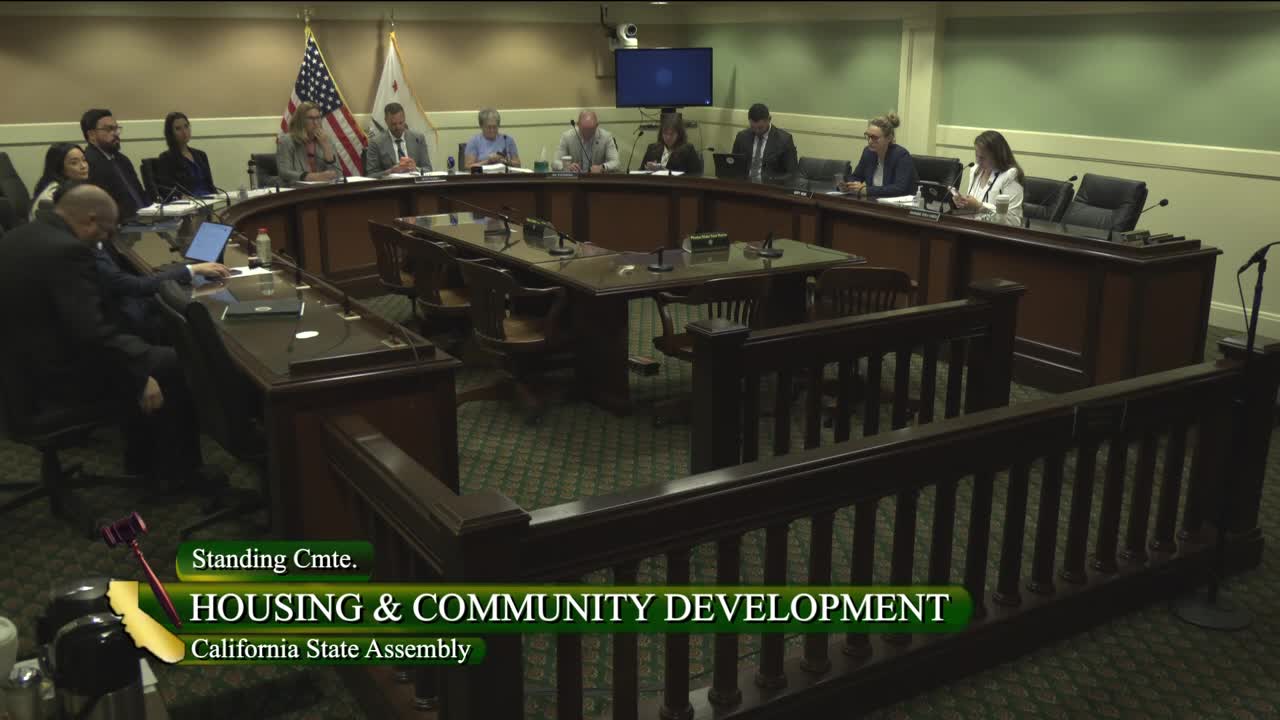


Bill Co-Author(s):