AB 1130: Political Reform Act of 1974: campaign disclosures.
- Session Year: 2025-2026
- House: Assembly
- Latest Version Date: 2026-09-19
Current Status:
Passed
(2026-09-19: Chaptered by Secretary of State - Chapter 335, Statutes of 2026.)
Introduced
In Committee
Awaiting First Chamber Vote
Passed First Chamber
In Committee
Awaiting Second Chamber Vote
Passed Second Chamber
Enacted
Existing law, the Political Reform Act of 1974, requires a person paid by a committee to post content supporting or opposing a candidate or ballot measure on an internet website, web application, or digital application to include a disclaimer stating that they were paid by the committee in connection with the post, except as specified. Existing law requires the committee to notify the person paid to post the content of this requirement. Existing law authorizes the Fair Political Practices Commission to seek injunctive relief to compel compliance with this disclaimer requirement. Existing law exempts a person who violates the disclaimer requirement from administrative, civil, and criminal penalties established by the act.
This bill would remove the exemption for administrative, civil, and criminal penalties and instead provide that if the required disclaimer is not included, the person paid to post the content and the committee who paid them are jointly and severally liable for any administrative or civil penalties incurred for the violation. The bill would require the committee to inform the person that failure to include the disclaimer may result in penalties under the Political Reform Act of 1974. The bill would also require the committee to include a statement on their campaign report, as specified, that the payment was provided for a paid thirty-party post.
A violation of the Political Reform Act of 1974 is punishable as a misdemeanor. By creating a new crime under the act, the bill would establish a state-mandated local program.
The California Constitution requires the state to reimburse local agencies and school districts for certain costs mandated by the state. Statutory provisions establish procedures for making that reimbursement.
This bill would provide that no reimbursement is required by this act for a specified reason.
The Political Reform Act of 1974, an initiative measure, provides that the Legislature may amend the act to further the acts purposes upon a 2/3 vote of each house of the Legislature and compliance with specified procedural requirements.
This bill would declare that it furthers the purposes of the act.
Existing law, the Political Reform Act of 1974, requires a person paid by a committee to post content supporting or opposing a candidate or ballot measure on an internet website, web application, or digital application to include a disclaimer stating that they were paid by the committee in connection with the post, except as specified. Existing law requires the committee to notify the person paid to post the content of this requirement. Existing law authorizes the Fair Political Practices Commission to seek injunctive relief to compel compliance with this disclaimer requirement. Existing law exempts a person who violates the disclaimer requirement from administrative, civil, and criminal penalties established by the act.
This bill would remove the exemption for administrative, civil, and criminal penalties and instead provide that if the required disclaimer is not included, the person paid to post the content and the committee who paid them are jointly and severally liable for any administrative or civil penalties incurred for the violation. The bill would require the committee to inform the person that failure to include the disclaimer may result in penalties under the Political Reform Act of 1974. The bill would also require the committee to include a statement on their campaign report, as specified, that the payment was provided for a paid thirty party post.
A violation of the Political Reform Act of 1974 is punishable as a misdemeanor. By creating a new crime under the act, the bill would establish a state-mandated local program.
The California Constitution requires the state to reimburse local agencies and school districts for certain costs mandated by the state. Statutory provisions establish procedures for making that reimbursement.
This bill would provide that no reimbursement is required by this act for a specified reason.
The Political Reform Act of 1974, an initiative measure, provides that the Legislature may amend the act to further the acts purposes upon a 2/3 vote of each house of the Legislature and compliance with specified procedural requirements.
This bill would declare that it furthers the purposes of the act.
Existing law, the Dental Practice Act, establishes the Dental Board of California in the Department of Consumer Affairs to license and regulate the practice of dentistry.This bill would require the board to develop, implement, and maintain an outreach and support program to recruit students from underserved communities in the state to pursue education and licensure in the field of dentistry. The bill would establish duties the board would be required to carry out in that regard, including conducting at least 2 outreach activities per year focused on students from underserved communities. The bill would require the board to provide a summary of actions taken pursuant to the bills provisions as part of its report to the Legislature through the sunset review process.Existing law, the Dental Practice Act, establishes the Dental Board of California in the Department of Consumer Affairs to license and regulate the practice of dentistry.
This bill would require the board to develop, implement, and maintain an outreach and support program to recruit students from underserved communities in the state to pursue education and licensure in the field of dentistry. The bill would establish duties the board would be required to carry out in that regard, including conducting at least 2 outreach activities per year focused on students from underserved communities. The bill would require the board to provide a summary of actions taken pursuant to the bills provisions as part of its report to the Legislature through the sunset review process.
Existing law, the Medical Practice Act, establishes the Medical Board of California within the Department of Consumer Affairs and sets forth its powers and duties relating to the licensure and regulation of the practice of medicine by physicians and surgeons. Under the act, the board consists of 15 members, including 13 members appointed by the Governor, one appointed by the Senate Committee on Rules, and one appointed by the Speaker of the Assembly, as prescribed. The act authorizes the appointing power to remove any member of the board for neglect of duty, incompetency, or unprofessional conduct.Under other existing law with respect to the department and its constituent boards, an appointing authority has power to remove from office at any time a member of any board appointed by the appointing authority for continued neglect of duties required by law, or for incompetence, or unprofessional or dishonorable conduct. Existing law prohibits this provision from being construed as a limitation or restriction on the power of the appointing authority conferred on the appointing authority by any other provision of law to remove any member of any board.This bill would revise the removal authority of an appointing power of the Medical Board of California granted by the Medical Practice Act to instead authorize the removal of a member of the board appointed by that authority for continued neglect of duties required by law, or for incompetence, or unprofessional or dishonorable conduct.Existing law, the Medical Practice Act, establishes the Medical Board of California within the Department of Consumer Affairs and sets forth its powers and duties relating to the licensure and regulation of the practice of medicine by physicians and surgeons. Under the act, the board consists of 15 members, including 13 members appointed by the Governor, one appointed by the Senate Committee on Rules, and one appointed by the Speaker of the Assembly, as prescribed. The act authorizes the appointing power to remove any member of the board for neglect of duty, incompetency, or unprofessional conduct.
Under other existing law with respect to the department and its constituent boards, an appointing authority has power to remove from office at any time a member of any board appointed by the appointing authority for continued neglect of duties required by law, or for incompetence, or unprofessional or dishonorable conduct. Existing law prohibits this provision from being construed as a limitation or restriction on the power of the appointing authority conferred on the appointing authority by any other provision of law to remove any member of any board.
This bill would revise the removal authority of an appointing power of the Medical Board of California granted by the Medical Practice Act to instead authorize the removal of a member of the board appointed by that authority for continued neglect of duties required by law, or for incompetence, or unprofessional or dishonorable conduct.
(a)(1)If a committee pays a person to post content on an internet website, web application, or digital application for the purpose of supporting or opposing a candidate for elective office or a ballot measure, the person shall concurrently include a disclaimer with that content stating that the person was paid by the committee in connection with the posting.
(2)The disclaimer required by this subdivision shall be readily legible to an average viewer or, if the content is in audio format, shall be clearly audible. A disclaimer that states, or is substantially similar to, the following satisfies the requirement in this subdivision: The author was paid by [name of committee and committee identification number] in connection with this posting.
(3)This subdivision does not apply to the following:
(A)Content requiring a disclosure pursuant to Section 84504.3 or subdivision (c) of Section 84511.
(B)Content posted on the committees own website, profile, or landing page by a person compensated by the committee to post such content.
(C)Content posted by a compensated employee of a committee on the employees own social media page or account if the only expense or cost of the communication is compensated staff time. This exception shall not apply if the compensated employee of the committees principal duties are to post content on their own social media page or account.
(b)A committee described in subdivision (a) shall notify the person paid to post the content of the requirement to include a disclaimer and that failure to include the disclaimer may result in penalties under the Political Reform Act of 1974.
(c)(1)Notwithstanding any other law, if a person accepts payment from a committee to post content that is subject to subdivision (a), and does not include the required disclaimer, that person and the committee shall be jointly and severally liable for any civil or administrative penalties incurred for the violation.
(2)If a person violates subdivision (a), the Commission may seek injunctive relief to compel compliance pursuant to Section 90009 after the person is notified of the requirement in subdivision (a).
(d)If a committee pays a person as described in subdivision (a) and that payment is required to be reported on a campaign report pursuant to subdivision (k) of Section 84211 of the Government Code, the committee shall include on the campaign report a statement that the payment was provided for a paid third-party post.
SEC. 2.No reimbursement is required by this act pursuant to Section 6 of Article XIIIB of the California Constitution because the only costs that may be incurred by a local agency or school district will be incurred because this act creates a new crime or infraction, eliminates a crime or infraction, or changes the penalty for a crime or infraction, within the meaning of Section 17556 of the Government Code, or changes the definition of a crime within the meaning of Section 6 of Article XIIIB of the California Constitution.
SEC. 3.The Legislature finds and declares that this bill furthers the purposes of the Political Reform Act of 1974 within the meaning of subdivision (a) of Section 81012 of the Government Code.
(a)(1)If a committee pays a person to post content on an internet website, web application, or digital application for the purpose of supporting or opposing a candidate for elective office or a ballot measure, the person shall concurrently include a disclaimer with that content stating that the person was paid by the committee in connection with the posting.
(2)The disclaimer required by this subdivision shall be readily legible to an average viewer or, if the content is in audio format, shall be clearly audible. A disclaimer that states, or is substantially similar to, the following satisfies the requirement in this subdivision: The author was paid by [name of committee and committee identification number] in connection with this posting.
(3)This subdivision does not apply to the following:
(A)Content requiring a disclosure pursuant to Section 84504.3 or subdivision (c) of Section 84511.
(B)Content posted on the committees own website, profile, or landing page by a person compensated by the committee to post such content.
(C)Content posted by a compensated employee of a committee on the employees own social media page or account where if the only expense or cost of the communication is compensated staff time. This exception shall not apply if the compensated employee of the committees principal duties are to post content on their own social media page or account.
(b)A committee described in subdivision (a) shall notify the person paid to post the content of the requirement to include a disclaimer and that failure to include the disclaimer may result in penalties under the Political Reform Act of 1974.
(c)(1)Notwithstanding any other law, if a person accepts payment from a committee to post content that is subject to subdivision (a), and does not include the required disclaimer, that person and the committee shall be jointly and severally liable for any civil or administrative penalties incurred for the violation.
(2)If a person violates subdivision (a), the Commission may seek injunctive relief to compel compliance pursuant to Section 90009 after the person is notified of the requirement in subdivision (a).
(d)If a committee pays a person as described in subdivision (a) and that payment is required to be reported on a campaign report pursuant to subdivision (k) of Section 84211 of the Government Code, the committee shall include on the campaign report a statement that the payment was provided for a paid third party third-party post.
SEC. 2.No reimbursement is required by this act pursuant to Section 6 of Article XIIIB of the California Constitution because the only costs that may be incurred by a local agency or school district will be incurred because this act creates a new crime or infraction, eliminates a crime or infraction, or changes the penalty for a crime or infraction, within the meaning of Section 17556 of the Government Code, or changes the definition of a crime within the meaning of Section 6 of Article XIIIB of the California Constitution.
SEC. 3.The Legislature finds and declares that this bill furthers the purposes of the Political Reform Act of 1974 within the meaning of subdivision (a) of Section 81012 of the Government Code.
(a)(1)If a committee pays a person to post content on an internet website, web application, or digital application for the purpose of supporting or opposing a candidate for elective office or a ballot measure, the person shall concurrently include a disclaimer with that content stating that the person was paid by the committee in connection with the posting.
(2)The disclaimer required by this subdivision shall be readily legible to an average viewer or, if the content is in audio format, shall be clearly audible. A disclaimer that states, or is substantially similar to, the following satisfies the requirement in this subdivision: The author was paid by [name of committee and committee identification number] in connection with this posting.
(3)This subdivision does not apply to the following:
(A)Content requiring a disclosure pursuant to Section 84504.3 or subdivision (c) of Section 84511.
(B)Content posted on the committees own website, profile, or landing page by a person compensated by the committee to post such content.
(C)Content posted by a compensated employee of a committee on the employees own social media page or account where the only expense or cost of the communication is compensated staff time. This exception shall not apply if the compensated employee of the committees principal duties are to post content on their own social media page or account.
(b)A committee described in subdivision (a) shall notify the person paid to post the content of the requirement to include a disclaimer. disclaimer and that failure to include the disclaimer may result in penalties under the Political Reform Act of 1974.
(c)(1)Notwithstanding any other provision of this title, a person in violation of subdivision (a) is not subject to administrative, civil, or criminal penalties under this title.(c)(1)Notwithstanding any other law, if a person accepts payment from a committee to post content that is subject to subdivision (a), and does not include the required disclaimer, that person and the committee shall be jointly and severally liable for any civil or administrative penalties incurred for the violation.
(2)If a person violates subdivision (a), the Commission may seek injunctive relief to compel compliance pursuant to Section 90009 after the person is notified of the requirement in subdivision (a).
(d)If a committee pays a person as described in subdivision (a) and that payment is required to be reported on a campaign report pursuant to subdivision (k) of Section 84211 of the Government Code, the committee shall include on the campaign report a statement that the payment was provided for a paid third party post.
SEC. 2.No reimbursement is required by this act pursuant to Section 6 of Article XIIIB of the California Constitution because the only costs that may be incurred by a local agency or school district will be incurred because this act creates a new crime or infraction, eliminates a crime or infraction, or changes the penalty for a crime or infraction, within the meaning of Section 17556 of the Government Code, or changes the definition of a crime within the meaning of Section 6 of Article XIIIB of the California Constitution.
SEC. 3.The Legislature finds and declares that this bill furthers the purposes of the Political Reform Act of 1974 within the meaning of subdivision (a) of Section 81012 of the Government Code.
SECTION 1.The Legislature finds and declares all of the following:(a)There continues to be a recognized shortage of dental care professionals in underserved communities throughout the state, and increasing access to dental education and professional licensure for individuals from these communities is essential to ensuring equitable access to oral health care.(b)According to the California Future Health Workforce Commission, the state is projected to face challenges in ensuring adequate access to dental care by 2030, not due to a lack of dentists overall, but because of a maldistribution of the dental workforce.(c)Without targeted efforts to improve workforce distribution and address systemic barriers such as reimbursement rates and regional workforce shortages, underserved areas will continue to experience limited access to dental providers.(d)The federal Health Resources and Services Administration has designated over 570 Dental Health Professional Shortage Areas in California, where millions of residents lack adequate access to dental care providers.(e)Less than 10 percent the states dentists are identified as Latino or Black, despite those groups comprising approximately 45 percent of the states population, resulting in significant barriers to accessing culturally and linguistically competent care for patients.(f)The cost and complexity of applying to dental school and obtaining licensure are significant barriers for students from underserved communities, especially those who are first-generation college students.(g)Expanding awareness of existing state programs, such as the California Dental Corps Loan Repayment Program, and offering application guidance can help more qualified candidates from underserved areas enter the dental profession and serve in high-need regions.SEC. 2.Article 10 (commencing with Section 1980) is added to Chapter 4 of Division 2 of the Business and Professions Code, to read:10.Outreach and Support Program1980.(a)For purposes of this section, the following definitions apply:(1)Board means the Dental Board of California.(2)Underserved community means a geographic area or population group identified in a database compiled by the federal Health Resources and Services Administration, or a medically underserved population, as defined in Section 128552 of the Health and Safety Code.(b)The board shall develop, implement, and maintain an outreach and support program to recruit students from underserved communities in the state to pursue education and licensure in the field of dentistry.(c)As part of the program, the board shall do all of the following:(1)Coordinate with public high schools, community colleges, universities, dental schools, and community-based organizations to identify and engage students from underserved communities with an interest in oral health care professions.(2)Provide accessible information to interested students regarding the educational pathway to becoming a licensed dentist in California, including undergraduate requirements, dental school admissions, licensure examinations, and application procedures.(3)Offer guidance, directly or through partnerships, on preparing for and applying to accredited dental schools, including information on prerequisite coursework, application timelines, personal statement writing, and interview preparation.(4)Provide assistance and information regarding the California Dental Corps Loan Repayment Program established pursuant to Section 1970 and other available financial aid or scholarship opportunities for students pursuing dental education or entering the dental workforce in underserved communities.(5)Conduct at least two outreach activities per year, such as webinars, in-person presentations, or resource fairs, focused on students from underserved communities.(6)Develop and maintain a publicly available webpage containing all of the information required under this section in a clear and comprehensible format in both English and Spanish.(d)The board may collaborate with relevant state and federal agencies, health professional organizations, and accredited educational institutions to carry out the duties described in this section.(e)The board shall provide a summary of actions taken pursuant to this section as part of its report to the Legislature through the sunset review process.The Legislature finds and declares all of the following:
(a)There continues to be a recognized shortage of dental care professionals in underserved communities throughout the state, and increasing access to dental education and professional licensure for individuals from these communities is essential to ensuring equitable access to oral health care.
(b)According to the California Future Health Workforce Commission, the state is projected to face challenges in ensuring adequate access to dental care by 2030, not due to a lack of dentists overall, but because of a maldistribution of the dental workforce.
(c)Without targeted efforts to improve workforce distribution and address systemic barriers such as reimbursement rates and regional workforce shortages, underserved areas will continue to experience limited access to dental providers.
(d)The federal Health Resources and Services Administration has designated over 570 Dental Health Professional Shortage Areas in California, where millions of residents lack adequate access to dental care providers.
(e)Less than 10 percent the states dentists are identified as Latino or Black, despite those groups comprising approximately 45 percent of the states population, resulting in significant barriers to accessing culturally and linguistically competent care for patients.
(f)The cost and complexity of applying to dental school and obtaining licensure are significant barriers for students from underserved communities, especially those who are first-generation college students.
(g)Expanding awareness of existing state programs, such as the California Dental Corps Loan Repayment Program, and offering application guidance can help more qualified candidates from underserved areas enter the dental profession and serve in high-need regions.
SEC. 2.Article 10 (commencing with Section 1980) is added to Chapter 4 of Division 2 of the Business and Professions Code, to read:10.Outreach and Support Program1980.(a)For purposes of this section, the following definitions apply:
(1)Board means the Dental Board of California.
(2)Underserved community means a geographic area or population group identified in a database compiled by the federal Health Resources and Services Administration, or a medically underserved population, as defined in Section 128552 of the Health and Safety Code.
(b)The board shall develop, implement, and maintain an outreach and support program to recruit students from underserved communities in the state to pursue education and licensure in the field of dentistry.
(c)As part of the program, the board shall do all of the following:
(1)Coordinate with public high schools, community colleges, universities, dental schools, and community-based organizations to identify and engage students from underserved communities with an interest in oral health care professions.
(2)Provide accessible information to interested students regarding the educational pathway to becoming a licensed dentist in California, including undergraduate requirements, dental school admissions, licensure examinations, and application procedures.
(3)Offer guidance, directly or through partnerships, on preparing for and applying to accredited dental schools, including information on prerequisite coursework, application timelines, personal statement writing, and interview preparation.
(4)Provide assistance and information regarding the California Dental Corps Loan Repayment Program established pursuant to Section 1970 and other available financial aid or scholarship opportunities for students pursuing dental education or entering the dental workforce in underserved communities.
(5)Conduct at least two outreach activities per year, such as webinars, in-person presentations, or resource fairs, focused on students from underserved communities.
(6)Develop and maintain a publicly available webpage containing all of the information required under this section in a clear and comprehensible format in both English and Spanish.
(d)The board may collaborate with relevant state and federal agencies, health professional organizations, and accredited educational institutions to carry out the duties described in this section.
(e)The board shall provide a summary of actions taken pursuant to this section as part of its report to the Legislature through the sunset review process.
SECTION 1.Section 2011 of the Business and Professions Code is amended to read:2011.The appointing power may remove any member of the board appointed by that authority pursuant to Section 106.The appointing power may remove any member of the board for neglect of duty required by this chapter, incompetency, or unprofessional conduct. appointed by that authority pursuant to Section 106.
|
Date
|
Status
|
|---|---|
| Sep 19, 2026 | Chaptered by Secretary of State - Chapter 335, Statutes of 2026. |
| Sep 19, 2026 | Approved by the Governor. |
| Sep 9, 2026 | Enrolled and presented to the Governor at 1 p.m. |
| Aug 30, 2026 | Senate amendments concurred in. To Engrossing and Enrolling. (Ayes 79. Noes 0. Page 6942.). |
| Aug 30, 2026 | Senate amendments concurred in. To Engrossing and Enrolling. (Ayes 79. Noes 0.). |
| Aug 30, 2026 | Senate amendments concurred in. To Engrossing and Enrolling. |
| Aug 28, 2026 | From committee: That the Senate amendments be concurred in. (Ayes 8. Noes 0.) (August 28). |
| Aug 26, 2026 | Joint Rule 62(a), file notice suspended. (Page 6621.) |
| Aug 26, 2026 | Joint Rule 62(a), file notice suspended. |
| Aug 25, 2026 | Re-referred to Com. on ELECTIONS. pursuant to Assembly Rule 77.2. |
| Aug 24, 2026 | In Assembly. Concurrence in Senate amendments pending. |
| Aug 24, 2026 | Read third time. Passed. Ordered to the Assembly. (Ayes 39. Noes 0. Page 5706.). |
| Aug 24, 2026 | Read third time. Passed. Ordered to the Assembly. (Ayes 39. Noes 0.). |
| Aug 17, 2026 | Read second time. Ordered to third reading. |
| Aug 13, 2026 | Read second time and amended. Ordered returned to second reading. |
| Aug 13, 2026 | From committee: Amend, and do pass as amended. (Ayes 7. Noes 0.) (August 13). |
| Aug 3, 2026 | In committee: Referred to APPR. suspense file. |
| Jun 30, 2026 | From committee: Do pass and re-refer to Com. on APPR. (Ayes 5. Noes 0.) (June 30). Re-referred to Com. on APPR. |
| Jun 15, 2026 | Re-referred to Com. on E. & C.A. |
| Jun 15, 2026 | Re-referred to Com. on RLS. pursuant to Senate Rule 29.10 (c). |
| Jun 15, 2026 | Read second time. Ordered to third reading. |
| Jun 11, 2026 | Read second time and amended. Ordered returned to second reading. |
| Jun 11, 2026 | Ordered to second reading. |
| Jun 11, 2026 | From inactive file. |
| Sep 4, 2025 | Ordered to inactive file at the request of Senator Laird. |
| Aug 29, 2025 | Read second time. Ordered to third reading. |
| Aug 29, 2025 | From committee: Do pass. (Ayes 7. Noes 0.) (August 29). |
| Aug 18, 2025 | In committee: Referred to suspense file. |
| Jun 30, 2025 | From committee: Do pass and re-refer to Com. on APPR. (Ayes 9. Noes 0.) (June 30). Re-referred to Com. on APPR. |
| Jun 23, 2025 | From committee chair, with author's amendments: Amend, and re-refer to committee. Read second time, amended, and re-referred to Com. on B. P. & E.D. |
| Jun 4, 2025 | Referred to Com. on B. P. & E.D. |
| May 28, 2025 | In Senate. Read first time. To Com. on RLS. for assignment. |
| May 27, 2025 | Read third time. Passed. Ordered to the Senate. (Ayes 76. Noes 0. Page 1740.) |
| May 22, 2025 | Read second time. Ordered to Consent Calendar. |
| May 21, 2025 | From committee: Do pass. To Consent Calendar. (Ayes 15. Noes 0.) (May 21). |
| Apr 22, 2025 | From committee: Do pass and re-refer to Com. on APPR. with recommendation: To Consent Calendar. (Ayes 18. Noes 0.) (April 22). Re-referred to Com. on APPR. |
| Mar 10, 2025 | Referred to Com. on B. & P. |
| Feb 21, 2025 | From printer. May be heard in committee March 23. |
| Feb 20, 2025 | Read first time. To print. |
|
Date
|
Description
|
Location
|
Votes
|
|
|---|---|---|---|---|
| Aug 30, 2026 | AB 1130 Berman Concurrence in Senate Amendments | Assembly Floor |
Passed |
|
| Aug 28, 2026 | With recommendation: That Senate amendments be concurred in. | Assembly Standing Committee on Elections |
Passed |
|
| Aug 24, 2026 | Assembly 3rd Reading AB1130 Berman et al. By Umberg | Senate Floor |
Passed |
|
| Aug 13, 2026 | Do pass as amended | Senate Standing Committee on Appropriations |
Passed |
|
| Aug 3, 2026 | Placed on suspense file | Senate Standing Committee on Appropriations |
Passed |
|
| Jun 30, 2026 | Do pass, but first be re-referred to the Committee on [Appropriations] | Senate Standing Committee on Elections and Constitutional Amendments |
Passed |
|
| Aug 29, 2025 | Do pass | Senate Standing Committee on Appropriations |
Passed |
|
| Aug 18, 2025 | Placed on suspense file | Senate Standing Committee on Appropriations |
Passed |
|
| Jun 30, 2025 | Do pass, but first be re-referred to the Committee on [Appropriations] | Senate Standing Committee on Business, Professions and Economic Development |
Passed |
|
| May 27, 2025 | AB 1130 Berman Consent Calendar Second Day Regular Session | Assembly Floor |
Passed |
|
| May 21, 2025 | Do pass. To Consent Calendar. | Assembly Standing Committee on Appropriations |
Passed |
|
| Apr 22, 2025 | Do pass and be re-referred to the Committee on [Appropriations] with recommendation: To Consent Calendar | Assembly Standing Committee on Business and Professions |
Passed |
This list shows positions taken on this bill by organizations on the date displayed, which is linked to the original source.
Positions by individuals are not included.
|
Organization
|
Position
|
Date
|
|---|---|---|
| California Dental Association | ** Support | |
| Fair Political Practices Commission | ** Support |
CONCURRENCE IN SENATE AMENDMENTS
CSA2 Bill Id:AB 1130
Author:(Berman and Blanca Rubio)
As Amended Ver:August 13, 2026
2/3 vote
SUMMARY
Original Committee of Reference: B. & P.
Allows administrative, civil, or criminal penalties to be imposed against a person who is paid by a campaign committee to post online political content in support of or in opposition to a candidate or measure if the person fails to include the required disclaimer that the person is being paid.
Senate Amendments
Current Committee Recommendation: Concur
The Senate amendments delete the Assembly-approved version of the bill, and instead:
- Repeal an existing provision of law that exempts a person who is paid by a campaign committee to post online content supporting or opposing a candidate or ballot measure from administrative, civil, and criminal penalties under the Political Reform Act of 1974 (PRA) for failing to comply with the existing requirement to include a disclaimer stating that the person was paid by the committee in connection with the posting.
- Make the person who posts and the campaign committee jointly and severally liable for any civil or administrative penalties that result from not making the required disclaimer.
- Require a campaign committee that pays a person for online political postings in support of or opposition to a candidate or ballot measure to do both of the following:
- Notify the person posting that failing to include the disclaimer may result in penalties under the PRA.
- Include information on a campaign report where the payment is disclosed that the payment was provided for a paid third-party post.
COMMENTS
As approved by the Assembly last year, this bill would have clarified that any member of the Medical Board of California may be removed by the authority that appointed that member for continued neglect of duties required by law, or for incompetence, or unprofessional or dishonorable conduct. Subsequent to the Assembly's approval, this bill was amended in the Senate to delete the Assembly-approved provisions and to add the current provisions, which were approved by the Senate by a vote of 40-0 on August 24, 2026. In light of the substantive Senate amendments, this bill was re-referred to the Assembly Elections Committee for further consideration pursuant to Assembly Rule 77.2. On August 28, 2026, the Assembly Elections Committee recommended, by a 8-0 vote, that the Senate amendments be concurred in.
With more individuals using social media to learn about current events and elections, campaigns increasingly use this tool to persuade voters and convince them to vote for, or against, a candidate or ballot measure. In an effort to bring transparency to payments to social media influences for political advertisements, in 2023, the Legislature passed SB 678 (Umberg), Chapter 156, Statutes of 2023, which added language to the PRA to require a person to include a disclaimer if they are paid by a person or committee to post content on an internet website, web application, or digital application for the purpose of supporting or opposing a candidate for elective office or a ballot measure.
Violations of the PRA generally are subject to administrative, civil, or criminal penalties. SB 678, however, provided that a failure to make this disclaimer was not subject to those penalties. Instead, the primary remedy available for a violation of SB 678 is that the FPPC may pursue injunctive relief to compel disclosure.
This bill removes the exemptions from administrative, civil, or criminal penalties for a failure to comply with the requirements in SB 678. Instead, this bill makes both the campaign committee and the person being paid jointly liable for penalties. This bill additionally requires the campaign committee to notify the paid influencer that a failure to include the disclaimer may result in penalties.
Additionally, when disclosing a campaign expenditure of $100 or more on a campaign statement, the PRA requires the committee to disclose the name of the person who received the expenditure, the person's street address, the amount of the expenditure, and a brief description of the consideration for which the expenditure was made. Campaign committees typically fulfill the requirement to provide that brief description by using one of 27 expenditure codes established by the FPPC, which describe common campaign expenses.
As a result, under existing law, a campaign's payment to an influencer for online posts could be described as vaguely as "online outreach" or "online communications." This bill instead would require such expenditures, when identified on a campaign disclosure report, to include a statement that the payment was provided for a paid third-party post.
In 1974, California voters passed an initiative, Proposition 9, that created the FPPC and codified significant restrictions and prohibitions on candidates, officeholders, and lobbyists. That initiative is commonly known as the PRA. Amendments to the PRA that are not submitted to the voters, such as those contained in this bill, must further the purposes of the initiative and require a two-thirds vote of both houses of the Legislature.
According to the Author
"Social media and the growing influencer industry have changed the way candidates reach voters. As more campaigns pay influencers for content, either in favor of themselves or criticizing their opponents, we need to make sure there are appropriate disclosures for voters that those posts are essentially paid political advertisements. AB 1130 will create additional transparency for the public, require campaigns to properly report payments to influencers, and ensure that voters are not misled by content that looks organic and authentic when it's really the equivalent of an ad."
Arguments in Support
The Fair Political Practices Commission, writes in support, "Disclaimer requirements in the campaign advertisement context provide important information to the public about how money is being spent in campaigns, and which individuals or entities are behind campaign messaging that seeks to influence voting choices. As technology evolves, the methods for communicating with voters expand, and it is prudent to examine how the law should be updated to adapt to these changes. To that end, the Legislature passed SB 678 (Umberg) in 2023, sponsored by the FPPC, which imposed a new concurrent disclaimer requirement on content posted on the internet that supports or opposes a candidate or ballot measure when the poster, such as a social media 'influencer,' was paid by a committee in connection with the post. AB 1130 further strengthens that disclaimer requirement by imposing liability on the person who posts the content and the committee that paid them. This will incentivize compliance and authorize the FPPC to pursue appropriate enforcement actions in cases of noncompliance."
Arguments in Opposition
None received to the current version of the bill.
FISCAL COMMENTS
According to the Senate Appropriations Committee, the FPPC indicates that it would incur first-year costs of $258,000, and $251,000 annually thereafter, to support one position in its Enforcement Division (General Fund).
VOTES
ASM BUSINESS AND PROFESSIONS: Vote not relevant.
YES:
ASM APPROPRIATIONS: Vote not relevant.
YES:
ASSEMBLY FLOOR: Vote not relevant.
YES:
ABS, ABST OR NV:
SENATE FLOOR: Vote not relevant.
YES:
ASM ELECTIONS: 8-0-0
YES: Pellerin, Johnson, Bennett, Berman, Elhawary, Ellis, Solache, Stefani
UPDATED
VERSION: August 13, 2026
CONSULTANT: Jonathan Fong / ELECTIONS / (916) 319-2094 FN: 0004446
Date of Hearing: August 28, 2026
ASSEMBLY COMMITTEE ON ELECTIONS
Gail Pellerin, Chair
ABPCA Bill Id:AB 1130 (
Author:Berman) – As Amended Ver:August 13, 2026
CONCURRENCE IN SENATE AMENDMENTS
SUBJECT: Political Reform Act of 1974: campaign disclosures.
SUMMARY: Allows administrative, civil, or criminal penalties to be imposed against a person who is paid by a campaign committee to post online political content in support of or in opposition to a candidate or measure if the person fails to include the required disclaimer that the person is being paid.
The Senate amendments delete the Assembly-approved version of the bill, and instead:
- Repeal an existing provision of law that exempts a person who is paid by a campaign committee to post online content supporting or opposing a candidate or ballot measure from administrative, civil, and criminal penalties under the Political Reform Act of 1974 (PRA) for failing to comply with the existing requirement to include a disclaimer stating that the person was paid by the committee in connection with the posting.
- Make the person who posts and the campaign committee jointly and severally liable for any civil or administrative penalties that result from not making the required disclaimer.
- Require a campaign committee that pays a person for online political postings in support of or opposition to a candidate or ballot measure to do both of the following:
- Notify the person posting that failing to include the disclaimer may result in penalties under the PRA.
- Include information on a campaign report where the payment is disclosed that the payment was provided for a paid third-party post.
EXISTING LAW:
- Creates the Fair Political Practices Commission (FPPC), and makes it responsible for the impartial, effective administration and implementation of the PRA. (Government Code §§83100, 83111)
- Requires a person who is paid by a committee to post content on an internet website, web application, or digital application for the purpose of supporting or opposing a candidate for elective office or a ballot measure to include a disclaimer with that content stating that the person was paid by the committee in connection with the posting. Provides that a violation of these provisions is not subject to criminal, civil, or administrative penalties. Authorizes the FPPC to pursue injunctive relief to compel this disclosure. (Government Code §84513)
- Requires elected officers, candidates, and campaign committees to file periodic campaign statements disclosing specific information, including the name and street address of each person who received an expenditure by the officer, candidate, or committee of $100 or more during the period covered, along with the amount of each expenditure, and a brief description of the consideration for which the expenditure was made. (Government Code §84211)
FISCAL EFFECT: According to the Senate Appropriations Committee, the FPPC indicates that it would incur first-year costs of $258,000, and $251,000 annually thereafter, to support one position in its Enforcement Division (General Fund).
COMMENTS:
- Prior Assembly Consideration of This Bill: As approved by the Assembly last year, this bill would have clarified that any member of the Medical Board of California may be removed by the authority that appointed that member for continued neglect of duties required by law, or for incompetence, or unprofessional or dishonorable conduct. Subsequent to the Assembly’s approval, this bill was amended in the Senate to delete the Assembly-approved provisions and to add the current provisions, which were approved by the Senate by a vote of 40-0 on August 24, 2026. Accordingly, this bill has been re-referred to this committee for further consideration pursuant to Assembly Rule 77.2.
- Purpose of the Bill: According to the author:
Social media and the growing influencer industry have changed the way candidates reach voters. As more campaigns pay influencers for content, either in favor of themselves or criticizing their opponents, we need to make sure there are appropriate disclosures for voters that those posts are essentially paid political advertisements. AB 1130 will create additional transparency for the public, require campaigns to properly report payments to influencers, and ensure that voters are not misled by content that looks organic and authentic when it’s really the equivalent of an ad.
- Online Influencers, Political Campaigns, and Recent Legislation: Voters have increasingly started to rely on social media to get their news about current events and elections. A 2025 poll conducted by Pew Research Center revealed that a fifth of United States adults now regularly get news on TikTok, including 43 percent of people under 30. With more individuals using social media to learn about current events and elections, campaigns increasingly use this tool to persuade voters and convince them to vote for, or against, a candidate or ballot measure.
Using influencers has increasingly become a viable campaign strategy. In October 2024, the Washington Post reported that one campaign consulting firm reported paying influencers between $200 and $100,000 to post political content. In an effort to bring transparency to such payments, in 2023, the Legislature passed SB 678 (Umberg), Chapter 156, Statutes of 2023, which added language to the PRA to require a person to include a disclaimer if they are paid by a person or committee to post content on an internet website, web application, or digital application for the purpose of supporting or opposing a candidate for elective office or a ballot measure. Violations of the PRA generally are subject to administrative, civil, or criminal penalties. SB 678, however, provided that a failure to make this disclaimer was not subject to those penalties. Instead, the primary remedy available for a violation of SB 678 is that the FPPC may pursue injunctive relief to compel disclosure.
During the most recent California Governor’s race, multiple candidates came under scrutiny for allegedly paying influencers and other third-party individuals to post political content that did not include the disclaimers required by SB 678.
This bill removes the exemptions from administrative, civil, or criminal penalties for a failure to comply with the requirements in SB 678. Instead, this bill makes both the campaign committee and the person being paid jointly liable for penalties. This bill additionally requires the campaign committee to notify the paid influencer that a failure to include the disclaimer may result in penalties.
- Campaign Expenditure Disclosures: When disclosing a campaign expenditure of $100 or more on a campaign statement, the PRA requires the committee to disclose the name of the person who received the expenditure, the person’s street address, the amount of the expenditure, and a brief description of the consideration for which the expenditure was made. Campaign committees typically fulfill the requirement to provide that brief description by using one of 27 expenditure codes established by the FPPC, which describe common campaign expenses.
As a result, under existing law, a campaign’s payment to an influencer for online posts could be described as vaguely as “online outreach” or “online communications.” This bill instead would require such expenditures, when identified on a campaign disclosure report, to include a statement that the payment was provided for a paid third-party post.
- Arguments in Support: In support of this bill, the Fair Political Practices Commission, writes:
Disclaimer requirements in the campaign advertisement context provide important information to the public about how money is being spent in campaigns, and which individuals or entities are behind campaign messaging that seeks to influence voting choices. As technology evolves, the methods for communicating with voters expand, and it is prudent to examine how the law should be updated to adapt to these changes. To that end, the Legislature passed SB 678 (Umberg) in 2023, sponsored by the FPPC, which imposed a new concurrent disclaimer requirement on content posted on the internet that supports or opposes a candidate or ballot measure when the poster, such as a social media ‘influencer,’ was paid by a committee in connection with the post. AB 1130 further strengthens that disclaimer requirement by imposing liability on the person who posts the content and the committee that paid them. This will incentivize compliance and authorize the FPPC to pursue appropriate enforcement actions in cases of noncompliance.
- Political Reform Act of 1974: In 1974, California voters passed an initiative, Proposition 9, that created the FPPC and codified significant restrictions and prohibitions on candidates, officeholders, and lobbyists. That initiative is commonly known as the PRA. Amendments to the PRA that are not submitted to the voters, such as those contained in this bill, must further the purposes of the initiative and require a two-thirds vote of both houses of the Legislature.
REGISTERED SUPPORT / OPPOSITION:
Support
Fair Political Practices Commission
Opposition
None on file.
Analysis Prepared by: Jonathan Fong / ELECTIONS / (916) 319-2094
CONCURRENCE IN SENATE AMENDMENTS
CSA1 Bill Id:AB 1130
Author:(Berman and Blanca Rubio)
As Amended Ver:August 13, 2026
2/3 vote
SUMMARY
Allows administrative, civil, or criminal penalties to be imposed against a person who is paid by a campaign committee to post online political content in support of or in opposition to a candidate or measure if the person fails to include the required disclaimer that the person is being paid.
Senate Amendments
Delete the Assembly-approved version of the bill, and instead:
- Repeal an existing provision of law that exempts a person who is paid by a campaign committee to post content supporting or opposing a candidate or ballot measure from administrative, civil, and criminal penalties under the Political Reform Act of 1974 (PRA) for failing to comply with the existing requirement to include a disclaimer stating that the person was paid by the committee in connection with the posting.
- Make the person who posts and the campaign committee jointly and severally liable for any civil or administrative penalties that result from not making the required disclaimer.
- Require a campaign committee that pays a person for online political postings in support of or opposition to a candidate or ballot measure to do both of the following:
- Notify the person posting that failing to include the disclaimer may result in penalties under the PRA.
- Include information on a campaign report where the payment is disclosed that the payment was provided for a paid third-party post.
COMMENTS
As approved by the Assembly, this bill would have clarified that any member of the Medical Board of California may be removed by the authority that appointed that member for continued neglect of duties required by law, or for incompetence, or unprofessional or dishonorable conduct. Subsequent to the Assembly’s approval, this bill was amended in the Senate to delete the Assembly-approved provisions and to add the current provisions. The provisions added in the Senate have not been heard in a policy committee in the Assembly during this legislative session.
California voters passed an initiative, Proposition 9, in 1974 that created the Fair Political Practices Commission (FPPC) and codified significant restrictions and prohibitions on candidates, officeholders, and lobbyists. That initiative is commonly known as the PRA. Amendments to the PRA that are not submitted to the voters, such as those contained in this bill, must further the purposes of the initiative and require a two-thirds vote of both houses of the Legislature.
According to the Author
″Social media and the growing influencer industry have changed the way candidates reach voters. As more campaigns pay influencers for content, either in favor of themselves or criticizing their opponents, we need to make sure there are appropriate disclosures for voters that those posts are essentially paid political advertisements. AB 1130 will create additional transparency for the public, require campaigns to properly report payments to influencers, and ensure that voters are not misled by content that looks organic and authentic when it’s really the equivalent of an ad.″
Arguments in Support
The Fair Political Practices Commission writes, ″Disclaimer requirements in the campaign advertisement context provide important information to the public about how money is being spent in campaigns, and which individuals or entities are behind campaign messaging that seeks to influence voting choices. As technology evolves, the methods for communicating with voters expand, and it is prudent to examine how the law should be updated to adapt to these changes. To that end, the Legislature passed SB 678 (Umberg, Chapter 156) in 2023, sponsored by the FPPC, which imposed a new concurrent disclaimer requirement on content posted on the internet that supports or opposes a candidate or ballot measure when the poster, such as a social media ‘influencer,’ was paid by a committee in connection with the post. AB 1130 further strengthens that disclaimer requirement by imposing liability on the person who posts the content and the committee that paid them. This will incentivize compliance and authorize the FPPC to pursue appropriate enforcement actions in cases of noncompliance.″
Arguments in Opposition
None received.
FISCAL COMMENTS
According to the Senate Appropriations Committee, the FPPC indicates that it would incur first-year costs of $258,000, and $251,000 annually thereafter, to support one position in its Enforcement Division (General Fund).
VOTES:
ASM BUSINESS AND PROFESSIONS: Vote Not Relevant
YES:
ASM APPROPRIATIONS: Vote Not Relevant
YES:
ASSEMBLY FLOOR: Vote Not Relevant
YES:
ABS, ABST OR NV:
SENATE FLOOR: 40-0-0
YES: Allen, Alvarado-Gil, Archuleta, Arreguín, Ashby, Becker, Blakespear, Cabaldon, Caballero, Cervantes, Choi, Cortese, Dahle, Durazo, Gonzalez, Grayson, Grove, Hurtado, Jones, Laird, Limón, McGuire, McNerney, Menjivar, Niello, Ochoa Bogh, Padilla, Pérez, Reyes, Richardson, Rubio, Seyarto, Smallwood-Cuevas, Stern, Strickland, Umberg, Valladares, Wahab, Weber Pierson, Wiener
UPDATED
VERSION: August 13, 2026
CONSULTANT: Jonathan Fong / ELECTIONS / (916) 319-2094 FN: 0003689
CONCURRENCE IN SENATE AMENDMENTS
CSA1 Bill Id:AB 1130
Author:(Berman and Blanca Rubio)
As Amended Ver:August 13, 2026
2/3 vote
SUMMARY
Allows administrative, civil, or criminal penalties to be imposed against a person who is paid by a campaign committee to post online political content in support of or in opposition to a candidate or measure if the person fails to include the required disclaimer that the person is being paid.
Senate Amendments
Delete the Assembly-approved version of the bill, and instead:
- Repeal an existing provision of law that exempts a person who is paid by a campaign committee to post content supporting or opposing a candidate or ballot measure from administrative, civil, and criminal penalties under the Political Reform Act of 1974 (PRA) for failing to comply with the existing requirement to include a disclaimer stating that the person was paid by the committee in connection with the posting.
- Make the person who posts and the campaign committee jointly and severally liable for any civil or administrative penalties that result from not making the required disclaimer.
- Require a campaign committee that pays a person for online political postings in support of or opposition to a candidate or ballot measure to do both of the following:
- Notify the person posting that failing to include the disclaimer may result in penalties under the PRA.
- Include information on a campaign report where the payment is disclosed that the payment was provided for a paid third-party post.
COMMENTS
As approved by the Assembly, this bill would have clarified that any member of the Medical Board of California may be removed by the authority that appointed that member for continued neglect of duties required by law, or for incompetence, or unprofessional or dishonorable conduct. Subsequent to the Assembly’s approval, this bill was amended in the Senate to delete the Assembly-approved provisions and to add the current provisions. The provisions added in the Senate have not been heard in a policy committee in the Assembly during this legislative session.
California voters passed an initiative, Proposition 9, in 1974 that created the Fair Political Practices Commission (FPPC) and codified significant restrictions and prohibitions on candidates, officeholders, and lobbyists. That initiative is commonly known as the PRA. Amendments to the PRA that are not submitted to the voters, such as those contained in this bill, must further the purposes of the initiative and require a two-thirds vote of both houses of the Legislature.
According to the Author
″Social media and the growing influencer industry have changed the way candidates reach voters. As more campaigns pay influencers for content, either in favor of themselves or criticizing their opponents, we need to make sure there are appropriate disclosures for voters that those posts are essentially paid political advertisements. AB 1130 will create additional transparency for the public, require campaigns to properly report payments to influencers, and ensure that voters are not misled by content that looks organic and authentic when it’s really the equivalent of an ad.″
Arguments in Support
The Fair Political Practices Commission writes, ″Disclaimer requirements in the campaign advertisement context provide important information to the public about how money is being spent in campaigns, and which individuals or entities are behind campaign messaging that seeks to influence voting choices. As technology evolves, the methods for communicating with voters expand, and it is prudent to examine how the law should be updated to adapt to these changes. To that end, the Legislature passed SB 678 (Umberg, Chapter 156) in 2023, sponsored by the FPPC, which imposed a new concurrent disclaimer requirement on content posted on the internet that supports or opposes a candidate or ballot measure when the poster, such as a social media ‘influencer,’ was paid by a committee in connection with the post. AB 1130 further strengthens that disclaimer requirement by imposing liability on the person who posts the content and the committee that paid them. This will incentivize compliance and authorize the FPPC to pursue appropriate enforcement actions in cases of noncompliance.″
Arguments in Opposition
None received.
FISCAL COMMENTS
According to the Senate Appropriations Committee, the FPPC indicates that it would incur first-year costs of $258,000, and $251,000 annually thereafter, to support one position in its Enforcement Division (General Fund).
VOTES:
ASM BUSINESS AND PROFESSIONS: 18-0-0
YES: Berman, Flora, Ahrens, Alanis, Bains, Bauer-Kahan, Caloza, Chen, Elhawary, Hadwick, Haney, Irwin, Jackson, Krell, Lowenthal, Macedo, Nguyen, Pellerin
ASM APPROPRIATIONS: 15-0-0
YES: Wicks, Sanchez, Arambula, Calderon, Caloza, Dixon, Elhawary, Fong, Mark González, Hart, Pacheco, Pellerin, Solache, Ta, Tangipa
ASSEMBLY FLOOR: 76-0-3
YES: Addis, Aguiar-Curry, Ahrens, Alanis, Alvarez, Arambula, Ávila Farías, Bains, Bauer-Kahan, Berman, Boerner, Bonta, Bryan, Calderon, Caloza, Carrillo, Castillo, Chen, Connolly, Davies, DeMaio, Dixon, Elhawary, Ellis, Flora, Fong, Gabriel, Gallagher, Garcia, Gipson, Mark González, Hadwick, Haney, Harabedian, Hart, Hoover, Irwin, Jackson, Kalra, Krell, Lackey, Lee, Lowenthal, Macedo, McKinnor, Muratsuchi, Ortega, Pacheco, Papan, Patel, Patterson, Pellerin, Petrie-Norris, Quirk-Silva, Ramos, Ransom, Celeste Rodriguez, Michelle Rodriguez, Rogers, Blanca Rubio, Sanchez, Schiavo, Schultz, Sharp-Collins, Solache, Soria, Stefani, Ta, Tangipa, Valencia, Wallis, Ward, Wicks, Wilson, Zbur, Rivas
ABS, ABST OR NV: Bennett, Jeff Gonzalez, Nguyen
UPDATED
VERSION: August 13, 2026
CONSULTANT: Jonathan Fong / ELECTIONS / (916) 319-2094 FN: 0003689
SENATE RULES COMMITTEE Office of Senate Floor Analyses (916) 651-4171 | AB 1130 |
THIRD READING
Bill No: AB 1130
Author: Berman (D) and Blanca Rubio (D), et al.
Amended: 8/13/26 in Senate
SENATE ELECTIONS & C.A. COMMITTEE: 5-0, 6/30/26
AYES: Wiener, Choi, Allen, Cervantes, Umberg
SENATE APPROPRIATIONS COMMITTEE: 7-0, 8/13/26
AYES: Cervantes, Seyarto, Cabaldon, Dahle, Grayson, Richardson, Wahab
ASSEMBLY FLOOR: 76-0, 5/27/25 (Consent) - See last page for vote
SUBJECT: Political Reform Act of 1974: campaign disclosures
SOURCE: Author
DIGEST:
This bill imposes administrative, civil, and criminal penalties for failure to include disclosure disclaimers when a campaign committee pays a person to post political content online in support of or opposition to candidates and measures.
ANALYSIS:
Existing law, known as the Political Reform Act (PRA):
- Establishes California’s campaign finance and disclosure laws for state and local campaigns, candidates, officeholders, and ballot measures, and created the Fair Political Practices Commission (FPPC) to implement, administer, and enforce the PRA.
- Provides for administrative, civil, and criminal penalties for violations of the PRA, including deeming any knowing or willful violation a misdemeanor.
- Requires elected officers, candidates, and campaign committees to file campaign reports at least every six months providing details about contributions received and expenditures made. These reports must include information about each person to whom an expenditure of $100 or more has been made during the period covered by the campaign statement, including:
- The recipient’s full name and street address.
- The amount of each expenditure.
- A brief description of the consideration for which each expenditure was made.
- Requires a person who is paid by a committee to support or oppose a candidate or ballot measure on an internet website, web application, or digital application, as specified, to include a disclaimer stating they were paid by the committee in connection with the post. Failure to make this disclaimer, however, is not subject to the standard penalties under the PRA. Instead, existing law authorizes the FPPC to pursue injunctive relief to compel disclosure.
This bill:
- Subjects the person who fails to make the required disclaimer in 4) of existing law to the standard administrative, civil, and criminal penalties under the PRA.
- Requires the campaign committee paying for the post to tell the person posting that failing to include the disclaimer may result in penalties under the PRA.
- Makes the person who posts and the campaign committee that paid them jointly and severally liable for any civil or administrative penalties that result from not making the required disclaimer.
- Requires disclosure of the payment made for the post on the campaign committee’s regular campaign reports to include a statement that the payment paid a third-party to make an online post.
Comments
- Author’s Statement. Social media and the growing influencer industry has changed the way candidates reach voters. As more campaigns pay influencers for content, either in favor of themselves or criticizing their opponents, we need to make sure there are appropriate disclosures for voters that those posts are essentially paid political advertisements. This bill will create additional transparency for the public, require campaigns to properly report payments to influencers, and ensure that voters are not misled by content that looks organic and authentic when it’s really the equivalent of an ad.
- Putting Campaigns on the Hook. Existing law explicitly provides that the person paid by a campaign committee to post content is not liable for administrative, civil, or criminal penalties under the PRA. Because the duty to post the disclaimer is on the paid person, the campaign committee is also not subject to liability. This bill imposes liability jointly on both the paid person and the committee for any administrative or civil penalties. The person making the post could also be subject to criminal penalties when not including the disclaimer. Criminal penalties are rare under the PRA, as the FPPC handles the vast majority of cases via its administrative enforcement process.
- Expanded Reporting. While a campaign must report any payment it makes that is $100 or more, it must provide only a brief description of what the payment was for and typically uses standardized expenditure codes. Under existing law, a payment for a post might be described as “online outreach” or “online communications.” Thus, campaigns can report these payments in ways one cannot tell on the face of the report the payment was for social media content. This bill requires more detail in the report so the public would know the campaign made the payment for posts.
Related/Prior Legislation
SB 678 (Umberg, Chapter 156, Statutes of 2023) requires disclosure disclaimers when a person is paid by a committee to post online political content in support of or opposition to candidates and measures.
FISCAL EFFECT: Appropriation: No Fiscal Com.: Yes Local: Yes
According to the Senate Committee on Appropriations:
The FPPC indicates that it would incur first-year costs of $258,000, and $251,000 annually thereafter, to support one position in its Enforcement Division (General Fund).
SUPPORT: (Verified 8/14/26)
California Fair Political Practices Commission
OPPOSITION: (Verified 8/14/26)
None received
ASSEMBLY FLOOR: 76-0, 5/27/25
AYES: Addis, Aguiar-Curry, Ahrens, Alanis, Alvarez, Arambula, Ávila Farías, Bains, Bauer-Kahan, Berman, Boerner, Bonta, Bryan, Calderon, Caloza, Carrillo, Castillo, Chen, Connolly, Davies, DeMaio, Dixon, Elhawary, Ellis, Flora, Fong, Gabriel, Gallagher, Garcia, Gipson, Mark González, Hadwick, Haney, Harabedian, Hart, Hoover, Irwin, Jackson, Kalra, Krell, Lackey, Lee, Lowenthal, Macedo, McKinnor, Muratsuchi, Ortega, Pacheco, Papan, Patel, Patterson, Pellerin, Petrie-Norris, Quirk-Silva, Ramos, Ransom, Celeste Rodriguez, Michelle Rodriguez, Rogers, Blanca Rubio, Sanchez, Schiavo, Schultz, Sharp-Collins, Solache, Soria, Stefani, Ta, Tangipa, Valencia, Wallis, Ward, Wicks, Wilson, Zbur, Rivas
NO VOTE RECORDED: Bennett, Jeff Gonzalez, Nguyen
Prepared by: Carrie Cornwell / E. & C.A. / (916) 651-4106
8/17/26 10:34:21
SENATE COMMITTEE ON
Senator Sabrina Cervantes, Chair
2025 - 2026 Regular Session
AB 1130 (Berman) - Political Reform Act of 1974: campaign disclosures
Version: | Policy Vote: |
Urgency: | Mandate: |
Hearing Date: | Consultant: |
Bill Summary:
AB 1130 would impose administrative, civil, and criminal penalties for failure to include disclosure disclaimers when a campaign committee pays a person to post political content online in support of or opposition to candidates and measures.
*********** ANALYSIS ADDENDUM – SUSPENSE FILE ***********
The following information is revised to reflect amendments
adopted by the committee on August 13, 2026
Fiscal Impact:
The Fair Political Practices Commission (FPPC) indicates that it would incur first-year costs of $258,000, and $251,000 annually thereafter, to support one position in its Enforcement Division (General Fund).
Committee Amendments:
Add Senator Cervantes as a coauthor.
-- END --
SENATE COMMITTEE ON
Senator Sabrina Cervantes, Chair
2025 - 2026 Regular Session
AB 1130 (Berman) - Political Reform Act of 1974: campaign disclosures
Version: | Policy Vote: |
Urgency: | Mandate: |
Hearing Date: | Consultant: |
Bill Summary:
AB 1130 would impose administrative, civil, and criminal penalties for failure to include disclosure disclaimers when a campaign committee pays a person to post political content online in support of or opposition to candidates and measures.
Fiscal Impact:
The Fair Political Practices Commission (FPPC) indicates that it would incur first-year costs of $258,000, and $251,000 annually thereafter, to support one position in its Enforcement Division (General Fund).
Background:
The Political Reform Act (PRA) establishes California's campaign finance, disclosure, and ethics framework for state and local candidates, elected officials, campaign committees, and ballot measure campaigns, and authorizes FPPC to administer and enforce its provisions. The PRA requires periodic campaign finance reports disclosing contributions received and expenditures made, including the identity of recipients receiving expenditures of $100 or more, the amount of each expenditure, and its purpose. Violations of the PRA are subject to administrative, civil, and criminal penalties, with knowing or willful violations constituting misdemeanors. Existing law also requires individuals who are compensated by a campaign committee to post content supporting or opposing a candidate or ballot measure on specified digital platforms to disclose that they were paid for the communication. Unlike most PRA violations, however, failure to include this disclaimer is not subject to the Act's standard enforcement penalties; instead, FPPC may seek injunctive relief to compel compliance.
Proposed Law:
This bill would do the following:
- Make violations of the digital disclaimer requirement subject to the same administrative, civil, and criminal enforcement provisions that apply to other violations of the PRA, thereby expanding FPPC's enforcement authority and available penalties for noncompliance.
- Require the campaign committee paying for the post to tell the person posting that failing to include the disclaimer may result in penalties under the PRA.
- Make the person who posts and the campaign committee that paid them jointly and severally liable for any civil or administrative penalties that result from not making the required disclaimer.
- Require disclosure of the payment made for the post on the campaign committee’s regular campaign reports to include a statement that the payment paid a third-party to make an online post.
Related Legislation:
SB 678 (Umberg, Chapter 156, Statutes of 2023) requires disclosure disclaimers when a person is paid by a committee to post online political content in support of or opposition to candidates and measures.
Staff Comments:
Any local government costs resulting from the mandate in this measure are not state-reimbursable because the mandate only involves the definition of a crime or the penalty for conviction of a crime.
-- END --
SENATE COMMITTEE ON
ELECTIONS AND CONSTITUTIONAL AMENDMENTS
Senator Scott Wiener, Chair
2025 - 2026 Regular
Bill No: Hearing Date: 6/30/26
Author: | |||
Version: |
| ||
Urgency: | Fiscal: | ||
Consultant: | |||
Subject:
DIGEST
This bill imposes administrative, civil, and criminal penalties for failure to include disclosure disclaimers when a campaign committee pays a person to post political content online in support of or opposition to candidates and measures.
ANALYSIS
Existing law, known as the Political Reform Act (PRA):
- Establishes California’s campaign finance and disclosure laws for state and local campaigns, candidates, officeholders, and ballot measures, and created the Fair Political Practices Commission (FPPC) to implement, administer, and enforce the PRA.
- Provides for administrative, civil, and criminal penalties for violations of the PRA, including deeming any knowing or willful violation a misdemeanor.
- Requires elected officers, candidates, and campaign committees to file campaign reports at least every six months providing details about contributions received and expenditures made. These reports must include information about each person to whom an expenditure of $100 or more has been made during the period covered by the campaign statement, including:
- The recipient’s full name and street address.
- The amount of each expenditure.
- A brief description of the consideration for which each expenditure was made.
- Requires a person who is paid by a committee to support or oppose a candidate or ballot measure on an internet website, web application, or digital application, as specified, to include a disclaimer stating they were paid by the committee in connection with the post. Failure to make this disclaimer, however, is not subject to the standard penalties under the PRA. Instead, existing law authorizes the FPPC to pursue injunctive relief to compel disclosure.
This bill:
- Subjects the person who fails to make the required disclaimer in 4) of existing law to the standard administrative, civil, and criminal penalties under the PRA.
- Requires the campaign committee paying for the post to tell the person posting that failing to include the disclaimer may result in penalties under the PRA.
- Makes the person who posts and the campaign committee that paid them jointly and severally liable for any civil or administrative penalties that result from not making the required disclaimer.
- Requires disclosure of the payment made for the post on the campaign committee’s regular campaign reports to include a statement that the payment paid a third-party to make an online post.
COMMENTS
- Author’s Statement. Social media and the growing influencer industry has changed the way candidates reach voters. As more campaigns pay influencers for content, either in favor of themselves or criticizing their opponents, we need to make sure there are appropriate disclosures for voters that those posts are essentially paid political advertisements. This bill will create additional transparency for the public, require campaigns to properly report payments to influencers, and ensure that voters are not misled by content that looks organic and authentic when it’s really the equivalent of an ad.
- Putting Campaigns on the Hook. Existing law explicitly provides that the person paid by a campaign committee to post content is not liable for administrative, civil, or criminal penalties under the PRA. Because the duty to post the disclaimer is on the paid person, the campaign committee is also not subject to liability. This bill imposes liability jointly on both the paid person and the committee for any administrative or civil penalties. The person making the post could also be subject to criminal penalties when not including the disclaimer. Criminal penalties are rare under the PRA, as the FPPC handles the vast majority of cases via its administrative enforcement process.
- Expanded Reporting. While a campaign must report any payment it makes that is $100 or more, it must provide only a brief description of what the payment was for, and typically uses standardized expenditure codes. Under existing law, a payment for a post might be described as “online outreach” or “online communications.” Thus, campaigns can report these payments in ways one cannot tell on the face of the report the payment was for social media content. This bill requires more detail in the report so the public would know the campaign made the payment for posts.
RELATED/PRIOR LEGISLATION
SB 678 (Umberg), Chapter 156, Statutes of 2023, requires disclosure disclaimers when a person is paid by a committee to post online political content in support of or opposition to candidates and measures.
PRIOR ACTION
Prior votes are not relevant.
POSITIONS
Sponsor: Author
Support: California Fair Political Practices Commission
Oppose: None received
-- END --
SENATE RULES COMMITTEE Office of Senate Floor Analyses (916) 651-1520 Fax: (916) 327-4478 | AB 1130 |
THIRD READING
Bill No: AB 1130
Author: Berman (D)
Amended: 6/23/25 in Senate
Vote: 21
SENATE BUS., PROF. & ECON. DEV. COMMITTEE: 9-0, 6/30/25
AYES: Ashby, Choi, Archuleta, Arreguín, Menjivar, Smallwood-Cuevas, Strickland, Umberg, Weber Pierson
NO VOTE RECORDED: Grayson, Niello
SENATE APPROPRIATIONS COMMITTEE: 7-0, 8/29/25
AYES: Caballero, Seyarto, Cabaldon, Dahle, Grayson, Richardson, Wahab
ASSEMBLY FLOOR: 76-0, 5/27/25 (Consent) - See last page for vote
SUBJECT: Dentistry: outreach and support program
SOURCE: Author
DIGEST:
This bill requires the Dental Board of California (DBC) to partner with educators, dental schools, and community-based organizations to provide outreach and support to students from underserved communities in pursuing education and licensure in the field of dentistry.
ANALYSIS:
Existing law:
- Establishes the Dental Practice Act which provides for the licensure of dentists and other dental health professionals. (Business and Professions Code (BPC) §§ 1600 et seq.)
- Establishes the DBC to administer and enforce the Dental Practice Act. (BPC § 1601.1(a))
- Establishes the California Dental Corps Loan Repayment Program to provide grants to qualifying dentists who agree to work for at least three years in a clinic or dental practice located in a dentally underserved area, or in which at least 50 percent of patients are from a dentally underserved population. (BPC §§ 1970 –1976)
- Requires The Board of Registered Nursing, the Board of Vocational Nursing and Psychiatric Technicians of the State of California, the Physician Assistant Board, and the Respiratory Care Board of California to collect workforce data from their respective licensees and registrants for future workforce planning at least biennially. at the time of electronic license or registration renewal for those boards that utilize electronic renewals for licensees or registrants. Requires other health care professional licensing boards like DBC to request workforce data from their respective licensees for future workforce planning at least biennially. Requires each board, or the Department of Consumer Affairs on its behalf to provide the individual licensee and registrant data to the Department of Health Care Access and Information. (BPC § 502)
This bill:
- Requires DBC to develop, implement, and maintain an outreach and support program to recruit students from underserved communities in the state to pursue education and licensure in the field of dentistry. Mandates that the program:
- Coordinate with public high schools, community colleges, universities, dental schools, and community-based organizations to identify and engage students from underserved communities with an interest in oral health care professions.
- Provide accessible information to interested students regarding the educational pathway to becoming a licensed dentist in California, including undergraduate requirements, dental school admissions, licensure examinations, and application procedures.
- Offer guidance, directly or through partnerships, on preparing for and applying to accredited dental schools, including information on prerequisite coursework, application timelines, personal statement writing, and interview preparation.
- Provide assistance and information regarding the California Dental Corps Loan Repayment Program established pursuant to Section 1970 and other available financial aid or scholarship opportunities for students pursuing dental education or entering the dental workforce in underserved communities.
- Conduct at least two outreach activities per year, such as webinars, in-person presentations, or resource fairs, focused on students from underserved communities.
- Develop and maintain a publicly available webpage containing all of the information required under this section in a clear and comprehensible format in both English and Spanish.
- Authorizes DBC to collaborate with relevant state and federal agencies, health professional organizations, and accredited educational institutions to carry out the duties of the program and requires DBC to provide a summary of actions taken pursuant to this section as part of its report to the Legislature through the sunset review process.
Background
DBC is responsible for licensing and regulating dental professionals in California. DBC licenses an estimated 112,000 dental professionals, of which approximately 43,500 are dentists; 46,000 are registered dental assistants (RDAs); and 2,300 are registered dental assistants in extended functions (RDAEFs). The DBC is also responsible for setting the duties and functions of unlicensed dental assistants. Dental hygienists are licensed and regulated by a separate and distinct regulatory body, the Dental Hygiene Board of California.
The Act requires DBC to be “organized into standing committees dealing with examinations, enforcement, and other subjects as the board deems appropriate.” DBC has nine Committees, four established in statute and one statutorily designated Council. In addition to those required by law, the DBC has elected to establish several other committees to meet identified needs, including a specofoc Access to Care Committee which, according to DBC, maintains awareness of the changes and challenges within the dental community. An ongoing objective is to identify areas where the DBC can assist with workforce development and according to DBC, bring increased diversity in the dental profession.
As reported to the Legislature during its 2024 sunset review oversight, DBC provides outreach presentations requested by dental schools, local dental societies, legislators, professional associations, and others. When the Board conducts presentations, Board staff explain the laws related to the dental profession, the Board’s composition and purpose, and the various licenses and permits that the Board issues. The Board also distributes email to interested parties via Listserv. The Board also networks with professional organizations, attends events, and conducts online meetings with dentistry, dental assisting program, and stakeholder groups.
According to a June 2021 brief by the UCLA Center for Health Policy Research, The Challenge of Meeting the Dental Care Needs of Low-Income California Adults With the Current Dental Workforce, access to oral health care, particularly for low-income individuals who face financial and other barriers to access, depends in part on the availability and practice characteristics of dentists. The study measured both the need for oral health care among low-income California adults and the characteristics of practicing dentists using multiple sources, including the California Health Interview Survey and DBC data. The brief found a low supply of working dentists in several regions that had high rates of low-income adults; a small proportion of dentists who provided dental visits under Medi-Cal; a significant number of dentists nearing retirement age; and an underrepresentation of Latinx and Black dentists in comparison to the low-income communities they serve. The brief notes that “An estimated 9.8 million adults in California were low-income in 2018–2019, and an estimated 28,000 dentists were practicing in California in 2020. Most dentists practiced in the Greater Bay Area (25%), Los Angeles (26%), and other Southern California counties (29%). However, a higher proportion of low-income adults lived in some regions that had a low concentration of dentists. For example, while 47% of adults in San Joaquin Valley counties were low-income, just 7% of dentists in the state practiced there.” According to the brief, “Pipeline education programs to increase the number of dentists from communities of color are another strategy for increasing access. Combining these efforts with loan repayment programs that are tied to practicing in areas and communities with fewer dentists is likely to increase their effectiveness. It is essential to ensure availability of multilingual staff and interpretation services in all dental practices in the short term, and to provide cultural competency training in dental school curricula in the long term. Policies to boost the capacity of existing dental providers are also needed — for example, training of expanded function hygienists and dental therapists, mobile dentistry, and teledentistry services.”
FISCAL EFFECT: Appropriation: No Fiscal Com.: Yes Local: No
According to the Senate Appropriations Committee, DBC reports ongoing costs of approximately $167,000 to develop and implement the program, which the board notes is not absorbable within existing resources. DBC also notes additional travel costs of $13,000 to conduct at least two outreach activities per year, which is anticipated to be absorbable.
SUPPORT: (Verified 8/29/25)
California Dental Association
OPPOSITION: (Verified 8/29/25)
None received
ARGUMENTS IN SUPPORT: According to the California Dental Association, “California does not face a shortage of licensed dentists, but rather a serious maldistribution of the dental workforce. Millions of Californians, especially in rural and low-income urban areas, lack access to dental care because systemic barriers prevent providers from establishing sustainable practices in these underserved regions. These barriers include factors such as high student debt and reimbursement rates that don’t reflect the rising costs of care. This bill addresses those structural challenges by creating targeted outreach to students from underserved communities and connecting them to educational and financial resources. By cultivating a workforce that is rooted in and reflective of the communities most affected by dental shortages, this bill will help build long-term, sustainable access to oral health care where it’s needed most.”
ASSEMBLY FLOOR: 76-0, 5/27/25
AYES: Addis, Aguiar-Curry, Ahrens, Alanis, Alvarez, Arambula, Ávila Farías, Bains, Bauer-Kahan, Berman, Boerner, Bonta, Bryan, Calderon, Caloza, Carrillo, Castillo, Chen, Connolly, Davies, DeMaio, Dixon, Elhawary, Ellis, Flora, Fong, Gabriel, Gallagher, Garcia, Gipson, Mark González, Hadwick, Haney, Harabedian, Hart, Hoover, Irwin, Jackson, Kalra, Krell, Lackey, Lee, Lowenthal, Macedo, McKinnor, Muratsuchi, Ortega, Pacheco, Papan, Patel, Patterson, Pellerin, Petrie-Norris, Quirk-Silva, Ramos, Ransom, Celeste Rodriguez, Michelle Rodriguez, Rogers, Blanca Rubio, Sanchez, Schiavo, Schultz, Sharp-Collins, Solache, Soria, Stefani, Ta, Tangipa, Valencia, Wallis, Ward, Wicks, Wilson, Zbur, Rivas
NO VOTE RECORDED: Bennett, Jeff Gonzalez, Nguyen
Prepared by: Sarah Mason / B., P. & E.D. /
8/30/25 15:18:23
**** END ****
SENATE COMMITTEE ON
Senator Anna Caballero, Chair
2025 - 2026 Regular Session
AB 1130 (Berman) - Dentistry: outreach and support program
Version: | Policy Vote: |
Urgency: | Mandate: |
Hearing Date: | Consultant: |
Bill Summary:
AB 1130 requires the Dental Board to develop and implement an outreach and support program to recruit students from underserved communities in pursuing education and licensure in the field of dentistry.
Fiscal Impact:
The Dental Board reports ongoing costs of approximately $167,000 to develop and implement the program, which the board notes is not absorbable within existing resources (State Dentistry Fund). The board also notes additional travel costs of $13,000 to conduct at least two outreach activities per year, which is anticipated to be absorbable.
Background:
The board is responsible for licensing and regulating dental professionals in California. Additionally, the Dental Practice Act requires the board to be “organized into standing committees dealing with examinations, enforcement, and other subjects as the board deems appropriate.” The board has nine committees, four established in statute and one statutorily designated council. In addition to those required by law, the board has elected to establish several other committees to meet identified needs, including a specific Access to Care Committee which, according to the board, maintains awareness of the changes and challenges within the dental community. An ongoing objective is to identify areas where the board can assist with workforce development and according to the board, bring increased diversity in the dental profession.
Proposed Law:
- Requires the board to develop, implement, and maintain an outreach and support program to recruit students from underserved communities in the state to pursue education and licensure in the field of dentistry. As part of the program, requires the board to do all of the following:
- Coordinate with public high schools, community colleges, universities, dental schools, and community-based organizations to identify and engage students from underserved communities with an interest in oral health care professions.
- Provide accessible information to interested students regarding the educational pathway to becoming a licensed dentist in California, including undergraduate requirements, dental school admissions, licensure examinations, and application procedures.
- Offer guidance, directly or through partnerships, on preparing for and applying to accredited dental schools, including information on prerequisite coursework, application timelines, personal statement writing, and interview preparation.
- Provide assistance and information regarding the California Dental Corps Loan Repayment Program and other available financial aid or scholarship opportunities for students pursuing dental education or entering the dental workforce in underserved communities.
- Conduct at least two outreach activities per year, such as webinars, in-person presentations, or resource fairs, focused on students from underserved communities.
- Develop and maintain a publicly available webpage containing all of the information required by this bill in a clear and comprehensible format in both English and Spanish.
- Authorizes the board to collaborate with relevant state and federal agencies, health professional organizations, and accredited educational institutions.
- Requires the board to provide a summary of actions taken pursuant to the outreach and support program in its annual sunset report to the Legislature.
- Defines “underserved community” to mean a geographic area or population group identified in a database compiled by the federal Health Resources and Services Administration, or a medically underserved population, as defined in Section 128552 of the Health and Safety Code.
- States legislative findings and declarations.
-- END --
SENATE COMMITTEE ON
BUSINESS, PROFESSIONS AND ECONOMIC DEVELOPMENT
Senator Angelique Ashby, Chair
2025 - 2026 Regular
Bill No: Hearing Date: June 30, 2025
Author: | |||
Version: | June 23, 2025 | ||
Urgency: | No | Fiscal: | Yes |
Consultant: | Sarah Mason | ||
Subject:
SUMMARY:
Requires the Dental Board of California (DBC) to partner with educators, dental schools, and community-based organizations to provide outreach and support to students from underserved communities in pursuing education and licensure in the field of dentistry.
Existing law:
- Establishes the Dental Practice Act which provides for the licensure of dentists and other dental health professionals. (Business and Professions Code (BPC) §§ 1600 et seq.)
- Establishes the DBC to administer and enforce the Dental Practice Act. (BPC § 1601.1(a))
- Establishes the California Dental Corps Loan Repayment Program to provide grants to qualifying dentists who agree to work for at least three years in a clinic or dental practice located in a dentally underserved area, or in which at least 50 percent of patients are from a dentally underserved population. (BPC §§ 1970 –1976)
- Requires The Board of Registered Nursing, the Board of Vocational Nursing and Psychiatric Technicians of the State of California, the Physician Assistant Board, and the Respiratory Care Board of California to collect workforce data from their respective licensees and registrants for future workforce planning at least biennially. at the time of electronic license or registration renewal for those boards that utilize electronic renewals for licensees or registrants. Requires other health care professional licensing boards like DBC to request workforce data from their respective licensees for future workforce planning at least biennially. Requires each board, or the Department of Consumer Affairs on its behalf to provide the individual licensee and registrant data to the Department of Health Care Access and Information. (BPC § 502)
This bill:
- Requires DBC to develop, implement, and maintain an outreach and support program to recruit students from underserved communities in the state to pursue education and licensure in the field of dentistry. Mandates that the program:
- Coordinate with public high schools, community colleges, universities, dental schools, and community-based organizations to identify and engage students from underserved communities with an interest in oral health care professions.
- Provide accessible information to interested students regarding the educational pathway to becoming a licensed dentist in California, including undergraduate requirements, dental school admissions, licensure examinations, and application procedures.
- Offer guidance, directly or through partnerships, on preparing for and applying to accredited dental schools, including information on prerequisite coursework, application timelines, personal statement writing, and interview preparation.
- Provide assistance and information regarding the California Dental Corps Loan Repayment Program established pursuant to Section 1970 and other available financial aid or scholarship opportunities for students pursuing dental education or entering the dental workforce in underserved communities.
- Conduct at least two outreach activities per year, such as webinars, in-person presentations, or resource fairs, focused on students from underserved communities.
- Develop and maintain a publicly available webpage containing all of the information required under this section in a clear and comprehensible format in both English and Spanish.
- Authorizes DBC to collaborate with relevant state and federal agencies, health professional organizations, and accredited educational institutions to carry out the duties of the program and requires DBC to provide a summary of actions taken pursuant to this section as part of its report to the Legislature through the sunset review process.
- Makes findings and declarations about a shortage of dental care professionals in underserved communities throughout the state; challenges in ensuring adequate access to dental care by 2023; the result that a lack of targeted efforts to improve workforce barriers and systemic barriers like reimbursement rates will continue to have on underserved areas; there are over 570 designated Dental Health Professional Shortage Areas (DHPSA) in California; a low number of dentists identify as Latino or Black resulting in barriers to accessing culturally and linguistically competent care for patients; the cost and complexity of applying to dental school and obtaining licensure are barriers to students from underserved communities and; expanding awareness of programs like the California Dental Corps Loan Repayment Program and offering application guidance can help qualified candidates from underserved areas enter the dental profession and serve in high-need regions.
FISCAL EFFECT:
Unknown. This bill is keyed fiscal by Legislative Counsel.
COMMENTS:
- Purpose. The Author is the Sponsor of this bill. According to the Author, “While California does not generally face a shortage of licensed dentists, more than 2 million of our residents live in regions where access to oral health care is challenging, if not impossible. Efforts by the state to encourage dental professionals to practice in those communities have not yet filled that access gap, in part likely due to a lack of awareness of existing programs. Evidence shows that the best way to establish a health professional workforce that will commit to serving long-term in underserved regions is to create a pipeline within those populations. AB 1130 will require the Dental Board to recruit and assist students living in underserved areas in obtaining the education and licensure so that they can enter the profession and provide much-needed care to their communities.”
According to the Author, “While California has historically had the highest number of dentists per capita in the United States, the state has struggled with dental care accessibility in communities where access to dental care remains challenging. Approximately 2.2 million Californians reside in areas designated as dental health professional shortage areas. The California Future Health Workforce Commission has projected that California’s dental professional workforce will be inadequate to serve the state’s needs by 2030, which is attributable to a maldistribution of licensed dentists, rather than an overall shortage.
This access gap is exacerbated by the underrepresentation of linguistically and culturally competent dentists; while 40 percent of California’s population is Latino/x, research has found that only 8% of the state’s dentists are identified as Latino/x or Black. The lack of Spanish-speaking dental professionals contributes to persistent access failures for vulnerable communities in California such as farmworkers. The Farmworker Health Survey conducted by researchers at the University of California, Merced found that only 35 percent of farmworkers visited the dentist in the past year.
While the state has implemented initiatives such as the California Dental Corps Loan Repayment Program to incentivize newly licensed dentists to practice in low-access regions, many students are unaware of these options. Further, there is little guarantee that dentists who commit to serving low-access regions for a limited time will continue to practice in those areas. It is also important to have health professionals who reflect the diverse communities they serve to ensure full competency.
AB 1130 would establish an outreach and support program under the DBC to recruit students from underserved communities in the state to pursue education and licensure in the field of dentistry. The DBC would be required to partner with K-12 schools, institutions of higher education, and community-based organizations to identify and engage students from underserved communities with an interest in oral health care professions. The program would then offer information, guidance, and assistance to those students as they begin the pathway to licensure in dentistry.
The goal of AB 1130 is to improve the professional pipeline for dentists who are most likely to practice in communities that have a lack of access to dental care because they are from those communities. These students will also bring enhanced cultural competency to their practice, as their personal backgrounds will be more reflective of the communities they will hopefully serve. While AB 1130 is not an immediate fix to the state’s oral health care access crisis, it offers a meaningful long-term solution to building a better workforce in the future.”
- Background. DBC is responsible for licensing and regulating dental professionals in California. DBC licenses an estimated 112,000 dental professionals, of which approximately 43,500 are dentists; 46,000 are registered dental assistants (RDAs); and 2,300 are registered dental assistants in extended functions (RDAEFs). The DBC is also responsible for setting the duties and functions of unlicensed dental assistants. Dental hygienists are licensed and regulated by a separate and distinct regulatory body, the Dental Hygiene Board of California.
The Act requires DBC to be “organized into standing committees dealing with examinations, enforcement, and other subjects as the board deems appropriate.” DBC has nine Committees, four established in statute and one statutorily designated Council. In addition to those required by law, the DBC has elected to establish several other committees to meet identified needs, including a specofoc Access to Care Committee which, according to DBC, maintains awareness of the changes and challenges within the dental community. An ongoing objective is to identify areas where the DBC can assist with workforce development and according to DBC, bring increased diversity in the dental profession. DBC reports that at an August 2023 Board meeting, the Board moved to authorize this committee to:
- Explore strategies to improve licensure examination transparency, which includes adding more content to candidate information bulletins to assist with examination preparation.
- Evaluate the impact of examination administration time on candidates whose second language is English.
- Survey candidates to determine how they study for examinations and why they are failing them.
- Analyze the pathways to licensure for RDAs to determine if the pathways are facilitating access to practice in a fair and valid manner.
As reported to the Committee during its 2024 sunset review oversight, DBC provides outreach presentations requested by dental schools, local dental societies, legislators, professional associations, and others. When the Board conducts presentations, Board staff explain the laws related to the dental profession, the Board’s composition and purpose, and the various licenses and permits that the Board issues. The Board also distributes email to interested parties via Listserv. The Board also networks with professional organizations, attends events, and conducts online meetings with dentistry, dental assisting program, and stakeholder groups.
According to a June 2021 brief by the UCLA Center for Health Policy Research, The Challenge of Meeting the Dental Care Needs of Low-Income California Adults With the Current Dental Workforce, access to oral health care, particularly for low-income individuals who face financial and other barriers to access, depends in part on the availability and practice characteristics of dentists. The study measured both the need for oral health care among low-income California adults and the characteristics of practicing dentists using multiple sources, including the California Health Interview Survey and DBC data. The brief found a low supply of working dentists in several regions that had high rates of low-income adults; a small proportion of dentists who provided dental visits under Medi-Cal; a significant number of dentists nearing retirement age; and an underrepresentation of Latinx and Black dentists in comparison to the low-income communities they serve. The brief notes that “An estimated 9.8 million adults in California were low-income in 2018–2019, and an estimated 28,000 dentists were practicing in California in 2020. Most dentists practiced in the Greater Bay Area (25%), Los Angeles (26%), and other Southern California counties (29%). However, a higher proportion of low-income adults lived in some regions that had a low concentration of dentists. For example, while 47% of adults in San Joaquin Valley counties were low-income, just 7% of dentists in the state practiced there.” According to the brief, “Pipeline education programs to increase the number of dentists from communities of color are another strategy for increasing access. Combining these efforts with loan repayment programs that are tied to practicing in areas and communities with fewer dentists is likely to increase their effectiveness. It is essential to ensure availability of multilingual staff and interpretation services in all dental practices in the short term, and to provide cultural competency training in dental school curricula in the long term. Policies to boost the capacity of existing dental providers are also needed — for example, training of expandedfunction hygienists and dental therapists, mobile dentistry, and teledentistry services.”
SUPPORT AND OPPOSITION:
Support:
None received
Opposition:
None received
-- END --
Date of Hearing: May 21, 2025
ASSEMBLY COMMITTEE ON APPROPRIATIONS
Buffy Wicks, Chair
ABPCA Bill Id:AB 1130
Author:(Berman) – As Introduced Ver:February 20, 2025
Policy Committee: | Business and Professions | Vote: | 18 - 0 |
|
| ||
|
|
Urgency: No State Mandated Local Program: No Reimbursable: No
SUMMARY:
This bill revises the removal authority of an appointing power of the Medical Board of California (MBC) to authorize an appointing authority to remove a board member appointed by that authority.
FISCAL EFFECT:
No costs to MBC.
COMMENTS:
Purpose. According to the author:
Patients and consumers in California rely on active, thoughtful memberships on each of the regulatory boards established to protect the public. Existing law makes it clear that if a board member is not meeting the high expectations of these responsibilities, they may be removed. However, the Medical Practice Act is not clear that each appointing authority may only remove its own appointed members for specified causes. Clarifying this provision will ensure that there is no uncertainty about the rights and autonomy of the separate, coequal branches of government with power to make appointments to this important board.
- MBC. MBC is a regulatory board established by the Medical Practice Act primarily to protect the public. MBC includes 15 members: eight physicians and seven public members. All professional members and five of the public members are appointed by the Governor. One public member of the MBC is appointed by the Senate Committee on Rules and one public member is appointed by the Speaker of the Assembly. This bill clarifies that only the authority that appointed an MBC member may remove that member.
Analysis Prepared by: Allegra Kim / APPR. / (916) 319-2081
Date of Hearing: April 22, 2025
ASSEMBLY COMMITTEE ON BUSINESS AND PROFESSIONS
Marc Berman, Chair
ABPCA Bill Id:AB 1130
Author:(Berman) – As Introduced Ver:February 20, 2025
SUBJECT: Medical Board of California: appointments: removal.
SUMMARY: Clarifies that any member of the Medical Board of California (MBC) may be removed by the authority that appointed that member for continued neglect of duties required by law, or for incompetence, or unprofessional or dishonorable conduct.
EXISTING LAW:
- Enacts the Medical Practice Act, which provides for the licensure and regulation of physicians and surgeons. (Business and Professions Code (BPC) §§ 2000 et seq.)
- Establishes the MBC within the Department of Consumer Affairs (DCA), a board comprised of 15 appointed members, including five public members and eight physician members appointed by the Governor, one public member appointed by the Senate Committee on Rules, and one public member appointed by the Speaker of the Assembly. (BPC § 2001)
- Provides that all members of the MBC must have been residents of California for five years preceding their appointment; requires all non-public members of the MBC to be actively licensed physicians; prohibits any member from owning any interest in any medical school; and requires that four of the physician members hold faculty appointments in a clinical department of an approved medical school in California. (BPC § 2007)
- Authorizes the MBC to appoint panels of at least four of its members for the purpose of fulfilling its disciplinary obligations, and requires that a majority of the panel members be physicians. (BPC § 2008)
- Establishes four-year terms for members of the MBC and provides that each appointing authority has the power to fill its vacancies for the unexpired term. (BPC § 2010)
- Provides that the appointing power may remove any member of the MBC for neglect of duty, incompetency, or unprofessional conduct. (BPC § 2011)
- Provides that for boards under the DCA, the appointing authority has power to remove from office at any time any member of any board appointed by that appointing authority for continued neglect of duties required by law, or for incompetence, or unprofessional or dishonorable conduct. (BPC § 106)
THIS BILL:
- Expressly provides that the appointing powers may only remove members of the MBC that were appointed by that appointing authority.
- Replaces specific causes for removal with reference to current law generally allowing for board members to be removed for continued neglect of duties required by law, or for incompetence, or unprofessional or dishonorable conduct.
FISCAL EFFECT: Unknown; this bill is keyed fiscal by the Legislative Counsel.
COMMENTS:
Purpose. This bill is sponsored by the author. According to the author:
Patients and consumers in California rely on active, thoughtful memberships on each of the regulatory boards established to protect the public. Existing law makes it clear that if a board member is not meeting the high expectations of these responsibilities, they may be removed. However, the Medical Practice Act is not clear that each appointing authority may only remove its own appointed members for specified causes. Clarifying this provision will ensure that there is no uncertainty about the rights and autonomy of the separate, coequal branches of government with power to make appointments to this important board.
Background.
Medical Board of California. The first Medical Practice Act in California was enacted in 1876. Early iterations of the MBC consisted of members either appointed directly by professional medical societies or who were appointed from lists of names provided by these societies. In 1901, the Act was completely rewritten and a Board of Examinations was established, comprised of nine members; the membership was increased to 11 in 1907. In 1976, significant changes were made to the Act to create MBC much as it exists today, as well as adjustments to MBC’s composition. The prior board’s 11 members originally included only one non-physician member; the MBC’s membership was increased to 19 members, including seven public members. The MBC underwent more structural change in 2008 with the elimination of its Divisions of Licensing and Medical Quality and the creation of a unified board.
Today, the MBC is comprised of 15 members: eight physicians and seven public members. All eight professional members and five of the public members are appointed by the Governor. One public member of the MBC is appointed by the Senate Committee on Rules and one public member is appointed by the Speaker of the Assembly. Current law requires that four of the physician members hold faculty appointments in a clinical department of an approved medical school in the state, but no more than four members may hold full-time appointments to the faculties of such medical schools. The MBC meets about four times per year.
Removal of Board Members. Each practice act establishing a licensing board under the Business and Professions Code provides for the composition of that board. This typically includes the appointment of specified members by the Governor, Speaker of the Assembly, and Senate Rules Committee. Allowing for both the executive and legislative branches of government to appoint members to regulatory boards is an important component of board membership compositions, as it improves independence, oversight, and transparency within each body.
However, early iterations of the statutes initially provided that only the Governor had the authority to remove members of boards, even those appointed by legislative leadership. Over the past several years, legislation has been enacted to clarify that each appointing authority has its own authority to remove board members. However, the Medical Practice Act remains somewhat unclear, as statutory language suggests that any appointing authority may remove any member, not just its own.
The Constitution of California provides that “the powers of state government are legislative, executive, and judicial. Persons charged with the exercise of one power may not exercise either of the others except as permitted by this Constitution.” This is broadly interpreted to prevent each branch of government from inappropriately dictating the actions of another branch outside what is authorized by the Constitution.
This bill would confirm that each appointing authority may only remove its own appointed members from the MBC. This clarification ensures that the Medical Practice Act respects the separation of powers doctrine and the role played by both the executive and legislative branches of government. The bill would also remove specific causes for removal and instead cross-reference existing law that already provides for these conditions.
Current Related Legislation. AB 408 (Berman) would authorize the MBC to establish a physician health and wellness program that aligns with national best practices for helping physicians with substance use disorders and other conditions receive treatment. This bill is pending in this committee.
Prior Related Legislation. AB 2688 (Berman) of 2024 was substantially similar to this bill. This bill died on the Senate Floor inactive file.
REGISTERED SUPPORT:
None on file
REGISTERED OPPOSITION:
None on file
Analysis Prepared by: Robert Sumner / B. & P. / (916) 319-3301
Discussed in Hearing
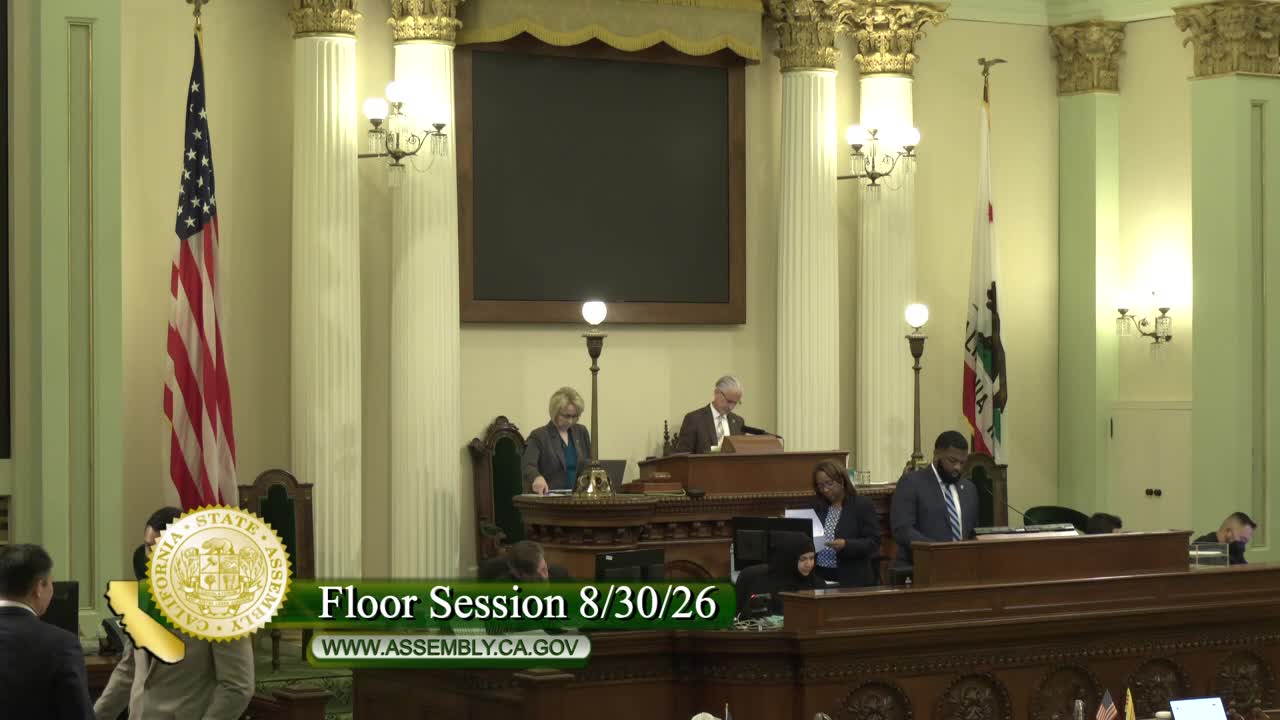 1MIN
Assembly Floor
 1MIN
Assembly Standing Committee on Elections
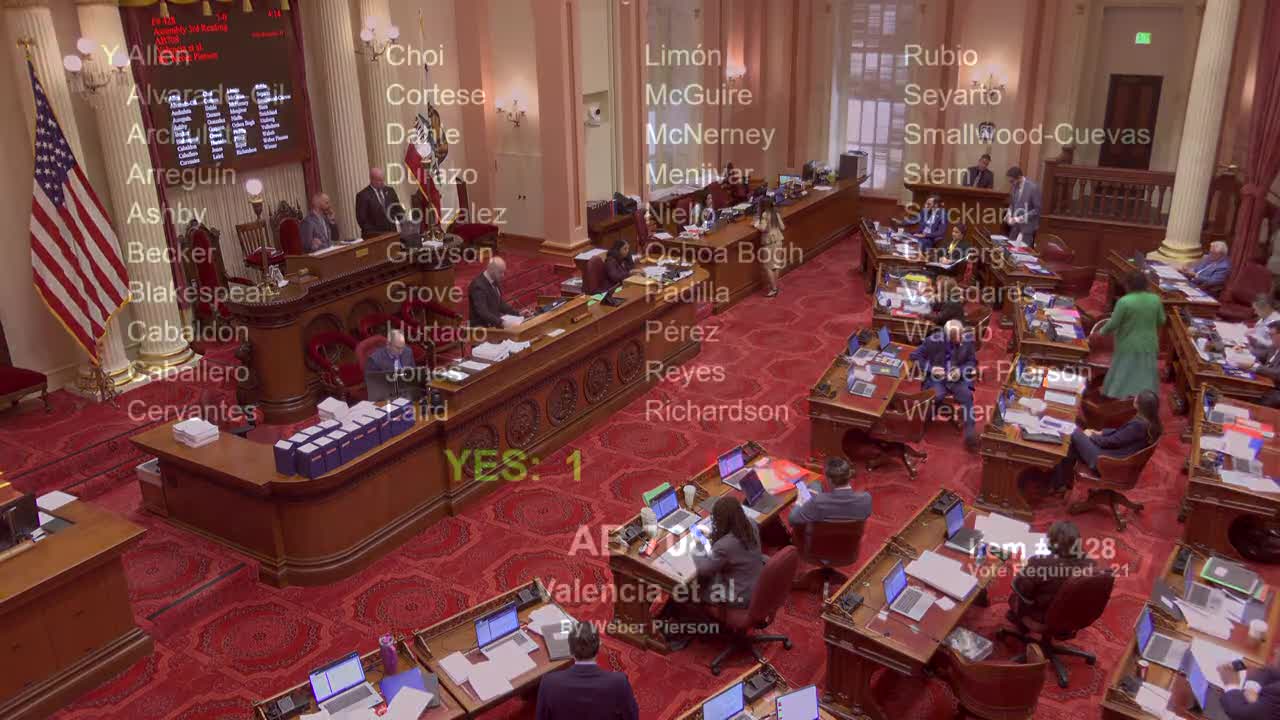 2MIN
Senate Floor
 58SEC
Senate Standing Committee on Appropriations
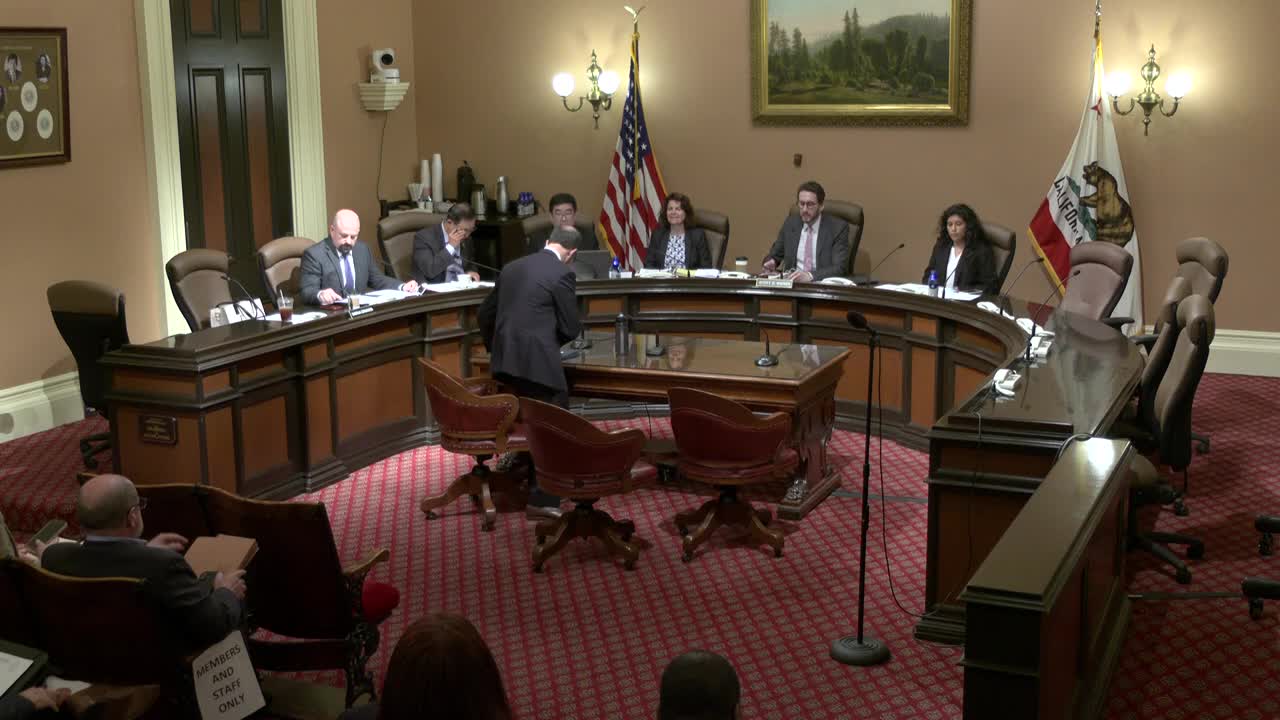 6MIN
Senate Standing Committee on Elections and Constitutional Amendments
 1MIN