AB 1190: Department of Motor Vehicles: private industry partner fees.
- Session Year: 2025-2026
- House: Assembly
- Latest Version Date: 2025-06-23
Current Status:
In Progress
(2025-08-29: In committee: Held under submission.)
Introduced
In Committee
Awaiting First Chamber Vote
Passed First Chamber
In Committee
Awaiting Second Chamber Vote
Passed Second Chamber
Enacted
Existing law authorizes the Department of Motor Vehicles to establish contracts for electronic programs that allow qualified private industry partners, including second-line business partners, to provide services that include processing and payment programs for vehicle registration and titling transactions. Existing law authorizes the department to establish the maximum amount that a qualified private industry partner may charge its customers, but requires the department to annually adjust that amount, as specified.
The bill would, notwithstanding the above-described authorization to establish maximum charge amounts, require the department to limit the amount that any qualified second-line business partner may charge their customers to no more than 5% above the fees that the department charges to consumers when providing those services directly, as specified. an individual customer for a vehicle registration renewal that is processed on the second-line business partners internet website to no more than the maximum amount a first-line service provider may charge its customers. The bill would also direct the department to require all qualified second-line business partners to prominently display on their internet websites, in a clear and conspicuous manner, a working link to the departments internet website with a specified statement informing the public that consumers may obtain services from the department at no additional cost.
Existing law authorizes the Department of Motor Vehicles to establish contracts for electronic programs that allow qualified private industry partners partners, including second-line business partners, to provide services that include processing and payment programs for vehicle registration and titling transactions. Existing law authorizes the department to establish the maximum amount that a qualified private industry partner may charge its customers, but requires the department to annually adjust that amount, as specified.
The bill would delete that authorization and required adjustment, and would instead require the department to limit the amount that a qualified private industry partner may charge its customers to 2% above the amount that the department charges for the service when procured directly from the departments internet website or offices. would, notwithstanding the above-described authorization to establish maximum charge amounts, require the department to limit the amount that any qualified second-line business partner may charge their customers to no more than 5% above the fees that the department charges to consumers when providing those services directly, as specified. The bill would also direct the department to require all qualified second-line business partners to prominently display on their internet websites, in a clear and conspicuous manner, a working link to the departments internet website with a specified statement informing the public that consumers may obtain services from the department at no additional cost.
Existing law authorizes the Department of Motor Vehicles to establish contracts for electronic programs that allow qualified private industry partners to provide services that include processing and payment programs for vehicle registration and titling transactions. Existing law authorizes the department to establish the maximum amount that a qualified private industry partner may charge its customers, but requires the department to annually adjust that amount, as specified.
The bill would delete that authorization and required adjustment, and would instead require the department to limit the amount that a qualified private industry partner may charge its customers to 2% above the amount that the department charges for the service when procured directly from the departments internet website or offices.
(a)In order to continue improving the quality of products and services it provides to its customers, the department, in conformance with Article 4 (commencing with Section 19130) of Chapter 5 of Part 2 of Division 5 of Title 2 of the Government Code, may establish contracts for electronic programs that allow qualified private industry partners to join the department in providing services that include processing and payment programs for vehicle registration and titling transactions, and services related to reporting vehicle sales and producing temporary license plates pursuant to Sections 4456 and 4456.2.
(b)(1)The department may enter into contractual agreements with qualified private industry partners. There are the following three types of private industry partnerships authorized under this section:
(A)First-line business partner is an industry partner that receives data directly from the department and uses it to complete registration and titling activities for that partners own business purposes.
(B)First-line service provider is an industry partner that receives information from the department and then transmits it to another authorized industry partner.
(C)Second-line business partner is a partner that receives information from a first-line service provider.
(2)The private industry partner contractual agreements shall include the following minimum requirements:
(A)Filing of an application and payment of an application fee, as established by the department.
(B)Submission of information, including, but not limited to, fingerprints and personal history statements, focusing on and concerning the applicants character, honesty, integrity, and reputation as the department may consider necessary.
(C)Posting a bond in an amount consistent with Section 1815.
(3)The department shall, through regulations, establish any additional requirements for the purpose of safeguarding privacy and protecting the information authorized for release under this section.
(c)(1)The director may establish, through the adoption of regulations, the maximum amount that a qualified private industry partner may charge its customers in providing the services authorized under subdivision (a).
(2)On or before September 1, 2022, and each January 1 thereafter, the department shall adjust the amount determined pursuant to paragraph (1) in accordance with the most recent available data on growth in the California Consumer Price Index for All Urban Consumers, except the initial adjustment made on or before September 1, 2022, shall be based on growth in the California Consumer Price Index for All Urban Consumers in the period since the end of the 2021 calendar year. The amount of the fee shall be rounded to the nearest whole dollar, with amounts equal to, or greater than, fifty cents ($0.50) rounded to the next highest whole dollar.
(d)The department shall charge a three-dollar ($3) transaction fee for the information and services provided pursuant to subdivision (a). The private industry partner may pass on the transaction fee to the customer, but the total charge to a customer may not exceed the amount established by the director under subdivision (c). The department may establish, through the adoption of regulations, exemptions from the transaction fee for transactions other than an original registration or transfer of ownership.
(e)All fees collected by the department pursuant to subdivision (d) shall be deposited in the Motor Vehicle Account. On January 1 of each year, the department shall adjust the fee in accordance with the California Consumer Price Index. The amount of the fee shall be rounded to the nearest whole dollar, with amounts equal to, or greater than, fifty cents ($0.50) rounded to the next highest whole dollar.
(f)The department shall adopt regulations and procedures that ensure adequate oversight and monitoring of qualified private industry partners to protect vehicle owners from the improper use of vehicle records. These regulations and procedures shall include provisions for qualified private industry partners to periodically submit records to the department, and the department shall review those records as necessary. The regulations shall also include provisions for the dedication of department resources to program monitoring and oversight; the protection of confidential records in the departments files and databases; and the duration and nature of the contracts with qualified private industry partners.
(g)The department shall, annually, by October 1, provide a report to the Legislature that shall include all of the following information gathered during the fiscal year immediately preceding the report date:
(1)Listing of all qualified private industry partners, including names and business addresses.
(2)Volume of transactions, by type, completed by business partners.
(3)Total amount of funds, by transaction type, collected by business partners.
(4)Total amount of funds received by the department.
(5)Description of any fraudulent activities identified by the department.
(6)Evaluation of the benefits of the program.
(7)Recommendations for any administrative or statutory changes that may be needed to improve the program.
(h)Nothing in this section impairs or limits the authority provided in Section 4610 or Section 12155 of the Insurance Code.
(i)(1)In addition to, and in accordance with, the transaction fee described in subdivision (d), the department shall charge private industry partners a one-dollar ($1) transaction fee for the implementation of the private industry partners proportionate share of departmentwide system improvements. All fees collected by the department pursuant to this subdivision shall be deposited in the Motor Vehicle Account.
(2)(A)The fee required by this subdivision shall be discontinued when the director determines that sufficient funds have been received to pay for the system improvements as described in paragraph (1), or on December 31, 2023, whichever occurs first. If sufficient funds are received first, the director shall execute a declaration making that determination, which shall be posted on the departments internet website and retained by the director.
(B)This subdivision shall become inoperative when the declaration described in subparagraph (A) has been executed and posted, or on December 31, 2023, whichever occurs first.
(j)(1)Notwithstanding subdivision (c), the department shall limit the amount that any qualified second-line business partner, as described in subparagraph (C) of paragraph (1) of subdivision (b), may charge their customers in providing the services authorized under subdivision (a) to no more than five percent above the fees that the department charges to consumers when providing those services directly through the departments internet website or field offices. an individual customer for a vehicle registration renewal that is processed on the second-line business partners internet website to no more than the maximum amount a first-line service provider may charge its customers pursuant to subdivision (c).
(2)The department shall require all qualified second-line business partners to prominently display on their internet websites, in a clear and conspicuous manner, a working link to the departments internet website with the following statement: Consumers may click here to obtain services from the California Department of Motor Vehicles at no additional cost.
(a)In order to continue improving the quality of products and services it provides to its customers, the department, in conformance with Article 4 (commencing with Section 19130) of Chapter 5 of Part 2 of Division 5 of Title 2 of the Government Code, may establish contracts for electronic programs that allow qualified private industry partners to join the department in providing services that include processing and payment programs for vehicle registration and titling transactions, and services related to reporting vehicle sales and producing temporary license plates pursuant to Sections 4456 and 4456.2.
(b)(1)The department may enter into contractual agreements with qualified private industry partners. There are the following three types of private industry partnerships authorized under this section:
(A)First-line business partner is an industry partner that receives data directly from the department and uses it to complete registration and titling activities for that partners own business purposes.
(B)First-line service provider is an industry partner that receives information from the department and then transmits it to another authorized industry partner.
(C)Second-line business partner is a partner that receives information from a first-line service provider.
(2)The private industry partner contractual agreements shall include the following minimum requirements:
(A)Filing of an application and payment of an application fee, as established by the department.
(B)Submission of information, including, but not limited to, fingerprints and personal history statements, focusing on and concerning the applicants character, honesty, integrity, and reputation as the department may consider necessary.
(C)Posting a bond in an amount consistent with Section 1815.
(3)The department shall, through regulations, establish any additional requirements for the purpose of safeguarding privacy and protecting the information authorized for release under this section.
(c)(1)The director may establish, through the adoption of regulations, the maximum amount that a qualified private industry partner may charge its customers in providing the services authorized under subdivision (a).
(2)On or before September 1, 2022, and each January 1 thereafter, the department shall adjust the amount determined pursuant to paragraph (1) in accordance with the most recent available data on growth in the California Consumer Price Index for All Urban Consumers, except the initial adjustment made on or before September 1, 2022, shall be based on growth in the California Consumer Price Index for All Urban Consumers in the period since the end of the 2021 calendar year. The amount of the fee shall be rounded to the nearest whole dollar, with amounts equal to, or greater than, fifty cents ($0.50) rounded to the next highest whole dollar.
(d)The department shall charge a three-dollar ($3) transaction fee for the information and services provided pursuant to subdivision (a). The private industry partner may pass on the transaction fee to the customer, but the total charge to a customer may not exceed the amount established by the director under subdivision (c). The department may establish, through the adoption of regulations, exemptions from the transaction fee for transactions other than an original registration or transfer of ownership.
(e)All fees collected by the department pursuant to subdivision (d) shall be deposited in the Motor Vehicle Account. On January 1 of each year, the department shall adjust the fee in accordance with the California Consumer Price Index. The amount of the fee shall be rounded to the nearest whole dollar, with amounts equal to, or greater than, fifty cents ($0.50) rounded to the next highest whole dollar.
(f)The department shall adopt regulations and procedures that ensure adequate oversight and monitoring of qualified private industry partners to protect vehicle owners from the improper use of vehicle records. These regulations and procedures shall include provisions for qualified private industry partners to periodically submit records to the department, and the department shall review those records as necessary. The regulations shall also include provisions for the dedication of department resources to program monitoring and oversight; the protection of confidential records in the departments files and databases; and the duration and nature of the contracts with qualified private industry partners.
(g)The department shall, annually, by October 1, provide a report to the Legislature that shall include all of the following information gathered during the fiscal year immediately preceding the report date:
(1)Listing of all qualified private industry partners, including names and business addresses.
(2)Volume of transactions, by type, completed by business partners.
(3)Total amount of funds, by transaction type, collected by business partners.
(4)Total amount of funds received by the department.
(5)Description of any fraudulent activities identified by the department.
(6)Evaluation of the benefits of the program.
(7)Recommendations for any administrative or statutory changes that may be needed to improve the program.
(h)Nothing in this section impairs or limits the authority provided in Section 4610 or Section 12155 of the Insurance Code.
(i)(1)In addition to, and in accordance with, the transaction fee described in subdivision (d), the department shall charge private industry partners a one-dollar ($1) transaction fee for the implementation of the private industry partners proportionate share of departmentwide system improvements. All fees collected by the department pursuant to this subdivision shall be deposited in the Motor Vehicle Account.
(2)(A)The fee required by this subdivision shall be discontinued when the director determines that sufficient funds have been received to pay for the system improvements as described in paragraph (1), or on December 31, 2023, whichever occurs first. If sufficient funds are received first, the director shall execute a declaration making that determination, which shall be posted on the departments internet website and retained by the director.
(B)This subdivision shall become inoperative when the declaration described in subparagraph (A) has been executed and posted, or on December 31, 2023, whichever occurs first.
(j)(1)Notwithstanding subdivision (c), the department shall limit the amount that any qualified second-line business partner, as described in subparagraph (C) of paragraph (1) of subdivision (b), may charge their customers in providing the services authorized under subdivision (a) to no more than five percent above the fees that the department charges to consumers when providing those services directly through the departments internet website or field offices.
(2)The department shall require all qualified second-line business partners to prominently display on their internet websites, in a clear and conspicuous manner, a working link to the departments internet website with the following statement: Consumers may click here to obtain services from the California Department of Motor Vehicles at no additional cost.
SECTION 1.Section 1685 of the Vehicle Code is amended to read:1685.(a)In order to continue improving the quality of products and services it provides to its customers, the department, in conformance with Article 4 (commencing with Section 19130) of Chapter 5 of Part 2 of Division 5 of Title 2 of the Government Code, may establish contracts for electronic programs that allow qualified private industry partners to join the department in providing services that include processing and payment programs for vehicle registration and titling transactions, and services related to reporting vehicle sales and producing temporary license plates pursuant to Sections 4456 and 4456.2.(b)(1)The department may enter into contractual agreements with qualified private industry partners. There are the following three types of private industry partnerships authorized under this section:(A)First-line business partner is an industry partner that receives data directly from the department and uses it to complete registration and titling activities for that partners own business purposes.(B)First-line service provider is an industry partner that receives information from the department and then transmits it to another authorized industry partner.(C)Second-line business partner is a partner that receives information from a first-line service provider.(2)The private industry partner contractual agreements shall include the following minimum requirements:(A)Filing of an application and payment of an application fee, as established by the department.(B)Submission of information, including, but not limited to, fingerprints and personal history statements, focusing on and concerning the applicants character, honesty, integrity, and reputation as the department may consider necessary.(C)Posting a bond in an amount consistent with Section 1815.(3)The department shall, through regulations, establish any additional requirements for the purpose of safeguarding privacy and protecting the information authorized for release under this section.(c)The department shall limit the amount that a qualified private industry partner may charge its customers in providing the services authorized under subdivision (a) to 2 percent above the amount that the department charges for the service when procured directly from the departments internet website or offices throughout the state.(d)The department shall charge a three-dollar ($3) transaction fee for the information and services provided pursuant to subdivision (a). The private industry partner may pass on the transaction fee to the customer, but the total charge to a customer may not exceed the amount established by the director under subdivision (c). The department may establish, through the adoption of regulations, exemptions from the transaction fee for transactions other than an original registration or transfer of ownership.(e)All fees collected by the department pursuant to subdivision (d) shall be deposited in the Motor Vehicle Account. On January 1 of each year, the department shall adjust the fee in accordance with the California Consumer Price Index. The amount of the fee shall be rounded to the nearest whole dollar, with amounts equal to, or greater than, fifty cents ($0.50) rounded to the next highest whole dollar.(f)The department shall adopt regulations and procedures that ensure adequate oversight and monitoring of qualified private industry partners to protect vehicle owners from the improper use of vehicle records. These regulations and procedures shall include provisions for qualified private industry partners to periodically submit records to the department, and the department shall review those records as necessary. The regulations shall also include provisions for the dedication of department resources to program monitoring and oversight; the protection of confidential records in the departments files and databases; and the duration and nature of the contracts with qualified private industry partners.(g)The department shall, annually, by October 1, provide a report to the Legislature that shall include all of the following information gathered during the fiscal year immediately preceding the report date:(1)Listing of all qualified private industry partners, including names and business addresses.(2)Volume of transactions, by type, completed by business partners.(3)Total amount of funds, by transaction type, collected by business partners.(4)Total amount of funds received by the department.(5)Description of any fraudulent activities identified by the department.(6)Evaluation of the benefits of the program.(7)Recommendations for any administrative or statutory changes that may be needed to improve the program.(h)Nothing in this section impairs or limits the authority provided in Section 4610 or Section 12155 of the Insurance Code.(i)(1)In addition to, and in accordance with, the transaction fee described in subdivision (d), the department shall charge private industry partners a one-dollar ($1) transaction fee for the implementation of the private industry partners proportionate share of departmentwide system improvements. All fees collected by the department pursuant to this subdivision shall be deposited in the Motor Vehicle Account.(2)(A)The fee required by this subdivision shall be discontinued when the director determines that sufficient funds have been received to pay for the system improvements as described in paragraph (1), or on December 31, 2023, whichever occurs first. If sufficient funds are received first, the director shall execute a declaration making that determination, which shall be posted on the departments internet website and retained by the director.(B)This subdivision shall become inoperative when the declaration described in subparagraph (A) has been executed and posted, or on December 31, 2023, whichever occurs first. REVISIONS: HeadingLine 2.(a)In order to continue improving the quality of products and services it provides to its customers, the department, in conformance with Article 4 (commencing with Section 19130) of Chapter 5 of Part 2 of Division 5 of Title 2 of the Government Code, may establish contracts for electronic programs that allow qualified private industry partners to join the department in providing services that include processing and payment programs for vehicle registration and titling transactions, and services related to reporting vehicle sales and producing temporary license plates pursuant to Sections 4456 and 4456.2.
(b)(1)The department may enter into contractual agreements with qualified private industry partners. There are the following three types of private industry partnerships authorized under this section:
(A)First-line business partner is an industry partner that receives data directly from the department and uses it to complete registration and titling activities for that partners own business purposes.
(B)First-line service provider is an industry partner that receives information from the department and then transmits it to another authorized industry partner.
(C)Second-line business partner is a partner that receives information from a first-line service provider.
(2)The private industry partner contractual agreements shall include the following minimum requirements:
(A)Filing of an application and payment of an application fee, as established by the department.
(B)Submission of information, including, but not limited to, fingerprints and personal history statements, focusing on and concerning the applicants character, honesty, integrity, and reputation as the department may consider necessary.
(C)Posting a bond in an amount consistent with Section 1815.
(3)The department shall, through regulations, establish any additional requirements for the purpose of safeguarding privacy and protecting the information authorized for release under this section.
(c)(1)The director may establish, through the adoption of regulations, the maximum amount that a qualified private industry partner may charge its customers in providing the services authorized under subdivision (a).(2)On or before September 1, 2022, and each January 1 thereafter, the department shall adjust the amount determined pursuant to paragraph (1) in accordance with the most recent available data on growth in the California Consumer Price Index for All Urban Consumers, except the initial adjustment made on or before September 1, 2022, shall be based on growth in the California Consumer Price Index for All Urban Consumers in the period since the end of the 2021 calendar year. The amount of the fee shall be rounded to the nearest whole dollar, with amounts equal to, or greater than, fifty cents ($0.50) rounded to the next highest whole dollar.(c)The department shall limit the amount that a qualified private industry partner may charge its customers in providing the services authorized under subdivision (a) to 2 percent above the amount that the department charges for the service when procured directly from the departments internet website or offices throughout the state.
(d)The department shall charge a three-dollar ($3) transaction fee for the information and services provided pursuant to subdivision (a). The private industry partner may pass on the transaction fee to the customer, but the total charge to a customer may not exceed the amount established by the director under subdivision (c). The department may establish, through the adoption of regulations, exemptions from the transaction fee for transactions other than an original registration or transfer of ownership.
(e)All fees collected by the department pursuant to subdivision (d) shall be deposited in the Motor Vehicle Account. On January 1 of each year, the department shall adjust the fee in accordance with the California Consumer Price Index. The amount of the fee shall be rounded to the nearest whole dollar, with amounts equal to, or greater than, fifty cents ($0.50) rounded to the next highest whole dollar.
(f)The department shall adopt regulations and procedures that ensure adequate oversight and monitoring of qualified private industry partners to protect vehicle owners from the improper use of vehicle records. These regulations and procedures shall include provisions for qualified private industry partners to periodically submit records to the department, and the department shall review those records as necessary. The regulations shall also include provisions for the dedication of department resources to program monitoring and oversight; the protection of confidential records in the departments files and databases; and the duration and nature of the contracts with qualified private industry partners.
(g)The department shall, annually, by October 1, provide a report to the Legislature that shall include all of the following information gathered during the fiscal year immediately preceding the report date:
(1)Listing of all qualified private industry partners, including names and business addresses.
(2)Volume of transactions, by type, completed by business partners.
(3)Total amount of funds, by transaction type, collected by business partners.
(4)Total amount of funds received by the department.
(5)Description of any fraudulent activities identified by the department.
(6)Evaluation of the benefits of the program.
(7)Recommendations for any administrative or statutory changes that may be needed to improve the program.
(h)Nothing in this section impairs or limits the authority provided in Section 4610 or Section 12155 of the Insurance Code.
(i)(1)In addition to, and in accordance with, the transaction fee described in subdivision (d), the department shall charge private industry partners a one-dollar ($1) transaction fee for the implementation of the private industry partners proportionate share of departmentwide system improvements. All fees collected by the department pursuant to this subdivision shall be deposited in the Motor Vehicle Account.
(2)(A)The fee required by this subdivision shall be discontinued when the director determines that sufficient funds have been received to pay for the system improvements as described in paragraph (1), or on December 31, 2023, whichever occurs first. If sufficient funds are received first, the director shall execute a declaration making that determination, which shall be posted on the departments internet website and retained by the director.
(B)This subdivision shall become inoperative when the declaration described in subparagraph (A) has been executed and posted, or on December 31, 2023, whichever occurs first.
|
Date
|
Status
|
|---|---|
| Aug 29, 2025 | In committee: Held under submission. |
| Aug 18, 2025 | In committee: Referred to suspense file. |
| Jul 9, 2025 | From committee: Do pass and re-refer to Com. on APPR. (Ayes 13. Noes 0.) (July 8). Re-referred to Com. on APPR. |
| Jun 23, 2025 | From committee chair, with author's amendments: Amend, and re-refer to committee. Read second time, amended, and re-referred to Com. on TRANS. |
| May 28, 2025 | Referred to Com. on TRANS. |
| May 20, 2025 | In Senate. Read first time. To Com. on RLS. for assignment. |
| May 19, 2025 | Read third time. Passed. Ordered to the Senate. (Ayes 73. Noes 1. Page 1608.) |
| May 15, 2025 | Read second time. Ordered to third reading. |
| May 14, 2025 | From committee: Do pass. (Ayes 14. Noes 1.) (May 14). |
| Apr 29, 2025 | From committee: Do pass and re-refer to Com. on APPR. (Ayes 15. Noes 0.) (April 28). Re-referred to Com. on APPR. |
| Apr 29, 2025 | Coauthors revised. |
| Apr 22, 2025 | Re-referred to Com. on TRANS. |
| Apr 21, 2025 | From committee chair, with author's amendments: Amend, and re-refer to Com. on TRANS. Read second time and amended. |
| Apr 1, 2025 | In committee: Hearing postponed by committee. |
| Mar 10, 2025 | Referred to Com. on TRANS. |
| Feb 24, 2025 | Read first time. |
| Feb 22, 2025 | From printer. May be heard in committee March 24. |
| Feb 21, 2025 | Introduced. To print. |
|
Date
|
Description
|
Location
|
Votes
|
|
|---|---|---|---|---|
| Aug 18, 2025 | Placed on suspense file | Senate Standing Committee on Appropriations |
Passed |
|
| Jul 8, 2025 | Do pass, but first be re-referred to the Committee on [Appropriations] | Senate Standing Committee on Transportation |
Passed |
|
| May 19, 2025 | AB 1190 Haney Assembly Third Reading | Assembly Floor |
Passed |
|
| May 14, 2025 | Do pass. | Assembly Standing Committee on Appropriations |
Passed |
|
| Apr 28, 2025 | Do pass and be re-referred to the Committee on [Appropriations] | Assembly Standing Committee on Transportation |
Passed |
This list shows positions taken on this bill by organizations on the date displayed, which is linked to the original source.
Positions by individuals are not included.
|
Organization
|
Position
|
Date
|
|---|---|---|
| Consumer Federation Of California | ** Support |
SENATE COMMITTEE ON
Senator Anna Caballero, Chair
2025 - 2026 Regular Session
AB 1190 (Haney) - Department of Motor Vehicles: private industry partner fees
Version: | Policy Vote: |
Urgency: | Mandate: |
Hearing Date: | Consultant: |
Bill Summary:
AB 1190 would require the Department of Motor Vehicles (DMV) to cap the fees that a second-line business partner may charge a customer for a vehicle registration renewal processed through the business partner’s website, as specified. The bill would also require the prominent placement of specified disclosures on all second-line business partners’ websites.
Fiscal Impact:
- DMV estimates one-time costs of approximately $125,000 to modify its website and publications, issue informational memos, and develop and adopt regulations to limit the fees that a second-line business partner may charge a customer for online vehicle registration renewals. (Motor Vehicle Account)
- Unknown fee revenue losses, to the extent the bill results in a shift of vehicle registration renewal transactions from second-line business partners that conduct those transactions on a website to an existing DMV direct service channel (through its website, a field office, or a self-service kiosk). The number of additional transactions that may be shifted to a direct DMV channel as a result of the bill is subject to a high level of uncertainty, and would depend upon customer behavior and the impact of the bill on business practices of second-line partners. For every 1% of the current volume of vehicle registration renewal transactions currently conducted through business partners that are shifted to the DMV, there would be a loss of approximately $131,000 in transaction fees. See staff comments. (Motor Vehicle Account)
- Staff notes that the bill, as currently drafted, would chapter out a provision of the transportation budget trailer bill that re-enacts the authority for DMV to charge a $1 fee for each transaction processed by a private industry partner until December 31, 2028. Absent correction, this would result in a revenue loss of approximately $20 million over three years. See Recommended Amendments below. (Motor Vehicle Account)
Background:
Existing law authorizes DMV to establish contracts for electronic programs that allow qualified private industry partners to join the department in providing services that include processing and payment programs for vehicle registration and titling transactions, and services related to reporting vehicle sales and producing temporary license plates. Existing law specifies the following categories of private industry partners:
- A “first-line business partner” is an industry partner that receives data directly from DMV and uses it to complete registration and titling activities for that partner’s own business purposes.
- A “first-line service provider” is an industry partner who provides software to second-line business partners who receive information from DMV for processing vehicle registration and titling transactions.
- A “second-line business partner” is a partner who utilizes software and receives information from DMV through a first-line service provider that allows them to process vehicle registration and titling transactions.
Existing law requires DMV to provide an annual report to the Legislature on the private industry program that includes specified information, including a listing of all qualified business partners, volume of each type of transaction processed by business partners, the total amount of funds collected through the program, a description of any fraudulent activities identified by DMV, an evaluation of the program’s benefits, and recommendations for any changes that would improve the program. The most recent report notes that transactions processed by business partners provide DMV with specified benefits, including the following:
- Provides DMV’s registration database with nightly updates.
- Allows vehicle license plates to be issued to car buyers more quickly.
- Offers an alternative method of service for DMV transactions, as many industry partners offer other services, such as car insurance and smog certification for one-stop shopping and flexible hours.
- Reduces the workload in DMV field offices.
- Eliminates costs to the state associated with dishonored payments as all fees are paid via electronic fund transfers from first-line providers and business partners, who absorb risk associated with invalid customer payments.
- Allows DMV to accrue interest earlier since electronic fund transfers are received quicker than other forms of payment.
Existing law authorizes DMV to establish, through regulations, the maximum amount that a qualified private industry partner may charge its customers in providing services, and requires those fees to be adjusted annually for inflation. Currently DMV has only exercised this authority to limit the fees that a first-line service provider may charge vehicle dealers and dismantlers, and caps the amount of these fees that may be passed along to customers at the actual cost of that fee, which is currently $29, but will increase to $30 on January 1, 2026. The DMV has not exercised the authority to impose a fee cap on other business partners.
Existing law also requires DMV to charge a transaction fee for the information and services provided through private industry partners, and authorizes those industry partners to pass the transaction fee on to the customer. This “BPA transaction fee,” which is currently $6 and adjusted periodically for inflation, is imposed on business partners for every transaction that is processed through to completion. Existing law also temporarily authorized DMV to charge a $1 fee on private industry partners for each processed transaction through December 31, 2023 for the implementation of the proportionate share of DMV’s IT system improvements. Staff notes that SB 128 (Budget and Fiscal Review Committee, Chap. 16/2025), this year’s transportation budget trailer bill, re-enacted this $1 fee through December 31, 2028, as specified.
Proposed Law:
AB 1190 would require DMV to limit the amount that a second-line business partner may charge an individual customer for a vehicle registration renewal that is processed on the second-line business partner’s website to no more than the maximum amount that a first-line service provider may charge its customers.
The bill would also require DMV to require all qualified second-line business partners to prominently display on their websites, in a clear and conspicuous manner, a working link to the DMV’s website with the following statement: “Consumers may click here to obtain services from the Department of Motor Vehicles at no additional cost.”
Staff Comments:
The most recent DMV report to the Legislature (the Consolidated Private Industry Partner Report) indicates that 2,185,741 vehicle registration renewals were processed through completion by business partners in the 2023-24 fiscal year, which generated over $13 million in BPA transaction fee revenues (at $6 per transaction) that were deposited into the Motor Vehicle Account. Staff notes that this includes both in-person transactions through a business partner as well as transactions conducted through a website, and data on the subset of online transactions conducted by second-line business partners that are included in the total volume is not available.
Opponents of the bill assert that limiting the fees they can charge customers for online vehicle registration renewal transactions to $30 would devastate their business model and may result in the loss of many business partners. If a second-line business partner currently charges $50 for vehicle registration renewal, the bill would result in a loss of $20 per transaction for that business partner, unless it increased fees on other transaction types to offset those losses. The bill would also require all qualified second-line business partners to prominently display on their websites a working link to the DMV website with a specified statement indicating that customers can use the link to obtain services directly from DMV at no additional cost. These combined impacts could lead to more customers going directly to DMV for vehicle registration renewal transactions, rather than using the services of a second-line business partner. The overall volume of transactions that may be shifted from business partners to the DMV is unknown and subject to a high level of uncertainty, but for every 1% of the overall vehicle registration renewal transactions that are currently conducted through a business partner are shifted to the DMV in a fiscal year, there would be a loss of approximately $131,000 in BPA transaction fee revenue that would otherwise be deposited into the Motor Vehicle Account.
Recommended Amendments:
This bill amends Vehicle Code Section 1685 to limit the fees that a second-line business partner may charge a customer for a vehicle registration renewal that is processed on its website. Staff notes that SB 128 (Budget and Fiscal Review Committee), Chap. 16/2025, the transportation budget trailer bill, also amended this statute to authorize DMV to charge a $1 fee for each transaction processed by a private industry partner until December 31, 2028. This bill should be amended to avoid chaptering out the recently-enacted provisions of the budget trailer bill that provide DMV with additional fee authority.
-- END --
ASSEMBLY THIRD READING
ATR Bill Id:AB 1190
Author:(Haney)
As Amended Ver:April 21, 2025
Majority vote
SUMMARY
Requires the Department of Motor Vehicles (DMV) to limit the amount any qualified second-line business partner may charge their customers to no more than 5% above the fees that the DMV charges the customer when providing those services directly through its internet website or field offices.
Major Provisions
Also requires second-line business partners to prominently display on their internet websites, in a clear and conspicuous manner, a working link to DMV's website with the statement "Consumers may click here to obtain services from the California Department of Motor Vehicles at no additional cost."
COMMENTS
The DMV is authorized to partner with qualified private businesses to provide vehicle registration and titling services, including processing and payment programs.
These private industry partners support the DMV in several ways:
- Provide nightly updates to the DMV database with new vehicle owner information.
- Allow faster issuance of license plates to car buyers.
- Offer alternative options for DMV services.
- Reduce workload at DMV field offices.
- Eliminate state costs related to failed payments (partners assume this risk).
- Enable the DMV to collect interest sooner on electronic fund transfers.
As of June 2024, the DMV had one first-line business partner, seven first-line service providers and 6,429 second-line business partners. A second-line business partner who receives information from a first-line service provider. This, includes but is not limited to websites other than the DMV website that provide registration services, car dealers, and payday lenders. In fiscal year 2023–2024, these partners completed 7.5 million transactions and collected $3.4 billion on the DMV's behalf. About one-third of that revenue came from new car registrations; the rest came from title transfers and registration renewals.
The Director of the DMV has the authority to cap transaction fees charged by private partners. Currently, licensed vehicle dealers and dismantlers are limited to charging consumers $29 per transaction. This transaction cap is adjusted annually for inflation. The DMV has not imposed a fee cap on its other partners. In November 2024, a Bay Area news outlet reported on a DMV business partner charging an extra $72 for vehicle registration. The company's website closely mimicked the DMV's official site and appeared at the top of search results for registration payments.
According to the Author
"Certain trusted vendors spoof the DMV website and use small print to disclaim that they are not the DMV, misleading consumers and burdening them with unnecessary junk fees to renew their car registrations. When consumers realize that they have been overcharged and attempt to dispute the charges, they are often threatened with aggressive legal action. AB 1190 will protect consumers and discourage such exploitative practices by capping the fees that DMV-approved partners can charge for processing DMV-related services."
Arguments in Support
The Consumer Federation of California, the sponsor of this bill, argues "Many Californians are being scammed and overcharged by unregulated, deceptive websites that impersonate or "spoof" the DMV's website, and shockingly some of these websites are literally partners of the DMV. These businesses intentionally mislead consumers, making them believe they are paying standard DMV fees when, in reality, they are being hit with hidden, excessive charges—sometimes double or triple the DMV's cost to consumers who go directly to the department's website. The worst-hit victims are seniors, families, low-income individuals, and communities of color who unknowingly fall into these predatory traps. Some of these "trusted partners" are payday lenders who in 2023 were found to have charged consumers up to a 460% annual percentage rate for single-payment payday loans.
For example, one elderly consumer was conned into paying $303 for a simple registration renewal—$72 more than the actual DMV fee. Another consumer was charged a staggering $956 for two car registrations, only to find that the website tacked on $150 in hidden fees and processed just one renewal. These fraudulent practices cost Californians millions in unnecessary fees every year, yet they remain completely unregulated. Without intervention, these scams will continue to drain the pockets of hard-working families.
AB 1190 shuts down these exploitative practices by imposing strict limits on what online businesses can charge, capping fees at just above DMV's standard rates. This ensures that Californians are no longer gouged by deceptive websites masquerading as official DMV services."
Arguments in Opposition
None on file
FISCAL COMMENTS
According to Assembly Appropriations Committee:
This bill will require DMV to modify its website and publications, issue memos and promulgate regulations addressing terms and fees caps required by this bill. This effort will likely cost DMV around $125,000 (Motor Vehicle Account).
VOTES
ASM TRANSPORTATION: 15-0-1
YES: Wilson, Davies, Aguiar-Curry, Ahrens, Carrillo, Harabedian, Hart, Hoover, Jackson, Lowenthal, Macedo, Papan, Ransom, Rogers, Ward
ABS, ABST OR NV: Lackey
ASM APPROPRIATIONS: 14-1-0
YES: Wicks, Sanchez, Arambula, Calderon, Caloza, Dixon, Elhawary, Fong, Mark González, Hart, Pacheco, Pellerin, Solache, Ta
NO: Tangipa
UPDATED
VERSION: April 21, 2025
CONSULTANT: David Sforza / TRANS. / (916) 319-2093 FN: 0000407
Date of Hearing: May 14, 2025
ASSEMBLY COMMITTEE ON APPROPRIATIONS
Buffy Wicks, Chair
ABPCA Bill Id:AB 1190
Author:(Haney) – As Amended Ver:April 21, 2025
Policy Committee: | Transportation | Vote: | 15 - 0 |
|
| ||
|
|
Urgency: No State Mandated Local Program: No Reimbursable: No
SUMMARY:
This bill requires the Department of Motor Vehicles (DMV) to limit the amount that any qualified “second-line business partner” of DMV may charge their customers to no more than 5% above the fees that DMV charges to consumers when providing those services directly through the department’s website or field offices.
The bill also requires all qualified second-line business partners to prominently display on their internet websites, in a clear and conspicuous manner, a working link to the DMV’s website with the following statement: Consumers may click here to obtain services from the California Department of Motor Vehicles at no additional cost.
FISCAL EFFECT:
This bill will require DMV to modify its website and publications, issue memos and promulgate regulations addressing terms and fees caps required by this bill. This effort will likely cost DMV around $125,000 (Motor Vehicle Account).
COMMENTS:
State law authorizes DMV to join with qualified private industry partners to provide services that include processing and payment programs for vehicle registration and titling transactions. DMV reports its private industry partners may perform the following types of transactions or provide the following types of benefits:
- Provide nightly updates to DMV registration database with new owner information.
- Allow vehicle license plates to be issued to car buyers more quickly.
- Offer an alternative method of service for DMV transactions. Many industry partners offer other services such as car insurance, and smog certification for one stop shopping. They also provide flexible hours.
- Reduce the workload in DMV field offices.
- Eliminate costs to the state associated with dishonored payments as all fees are paid via Electronic Fund Transfer (EFT) from the business partner, who absorbs the risk associated with invalid customer payments.
- Allows DMV to accrue interest earlier since the EFT funds are received more quickly than other forms of payment.
According to DMV, there are three types of private industry partnerships:
- A “first-line business partner” is a partner who receives information from DMV and uses it to process vehicle registration and titling transactions for that partner’s own business purposes.
- A “first-line service provider” is a partner who provides software to second-line business partners (described below), who receive information from DMV for processing vehicle registration and titling transactions.
- A “second-line business partner” is a partner who utilizes software and receives information from DMV through a first-line service provider that allows them to process vehicle registration and titling transactions.
DMV reports it has one first-line business partner, seven first-line service providers and 6,429 second-line business partners. This bill concerns second-line business partners.
Bill sponsor Consumer Federation of America tells of a system rife with scams:
Many Californians are being scammed and overcharged by unregulated, deceptive websites that impersonate or “spoof” the DMV’s website, and shockingly some of these websites are literally partners of the DMV. These businesses intentionally mislead consumers, making them believe they are paying standard DMV fees when, in reality, they are being hit with hidden, excessive charges—sometimes double or triple the DMV’s cost to consumers who go directly to the department’s website. The worst-hit victims are seniors, families, low-income individuals, and communities of color who unknowingly fall into these predatory traps. Some of these “trusted partners” are payday lenders who in 2023 were found to have charged consumers up to a 460% annual percentage rate for single-payment payday loans…
AB 1190 shuts down these exploitative practices by imposing strict limits on what online businesses can charge, capping fees at just above DMV’s standard rates. This ensures that Californians are no longer gouged by deceptive websites masquerading as official DMV services.
The committee is unaware of opposition to this bill.
Analysis Prepared by: Jay Dickenson / APPR. / (916) 319-2081
Date of Hearing: April 28, 2025
ASSEMBLY COMMITTEE ON TRANSPORTATION
Lori D. Wilson, Chair
ABPCA Bill Id:AB 1190 (
Author:Haney) – As Amended Ver:April 21, 2025
SUBJECT: Department of Motor Vehicles: private industry partner fees
SUMMARY: Requires the Department of Motor Vehicles (DMV) to limit the amount any qualified second-line business partner may charge their customers to no more than 5% above the fees that the department charges the customer when providing those services directly through the department’s internet website or field offices. Specifically, this bill:
- Also requires second-line business partners to prominently display on their internet websites, in a clear and conspicuous manner, a working link to DMV’s website with the statement “Consumers may click here to obtain services from the California Department of Motor Vehicles at no additional cost.”
EXISTING LAW:
- Authorizes DMV to establish contracts for electronic programs that allow qualified private industry partners to join the DMV in providing services that include processing and payment programs for vehicle registration and titling transactions, and services related to reporting vehicle sales and producing temporary license plates. (Vehicle Code section (VEH) 1685)
- Defines a “first line business partner” as an industry partner that receives data directly from DMV and uses it to complete registration and titling activities for that partner’s own business. (VEH 1685)
- A second-line business partner is a partner that receives information from a first-line business partner. (VEH 1685)
- Authorizes the DMV director to establish, through the adoption of regulations, the maximum amount that a qualified private industry partner may charge its customers. (VEH 1685)
- Requires DMV to adjust the amount determined to the California Consumer Price Index and to round the amount to the nearest dollar. (VEH 1685)
- Authorizes DMV to charge a $3 transaction fee for the information and services provided and authorizes the private industry partner to pass the transaction fee to the customer. (VEH 1685)
FISCAL EFFECT: Unknown
COMMENTS: The DMV is authorized to partner with qualified private businesses to provide vehicle registration and titling services, including processing and payment programs.
These private industry partners support the DMV in several ways:
- Provide nightly updates to the DMV database with new vehicle owner information.
- Allow faster issuance of license plates to car buyers.
- Offer alternative options for DMV services.
- Reduce workload at DMV field offices.
- Eliminate state costs related to failed payments (partners assume this risk).
- Enable the DMV to collect interest sooner on electronic fund transfers.
As of June 2024, the DMV had one first-line business partner, seven first-line service providers and 6,429 second-line business partners. A second-line business partner who receives information from a first-line service provider. This, includes but is not limited to websites other than the DMV website that provide registration services, car dealers, and payday lenders. In fiscal year 2023–2024, these partners completed 7.5 million transactions and collected $3.4 billion on the DMV’s behalf. About one-third of that revenue came from new car registrations; the rest came from title transfers and registration renewals.
The Director of the DMV has the authority to cap transaction fees charged by private partners. Currently, licensed vehicle dealers and dismantlers are limited to charging consumers $29 per transaction. This transaction cap is adjusted annually for inflation. The DMV has not imposed a fee cap on its other partners. In November 2024, a Bay Area news outlet reported on a DMV business partner charging an extra $72 for vehicle registration. The company’s website closely mimicked the DMV’s official site and appeared at the top of search results for registration payments.
According to the author, “Certain trusted vendors spoof the DMV website and use small print to disclaim that they are not the DMV, misleading consumers and burdening them with unnecessary junk fees to renew their car registrations. When consumers realize that they have been overcharged and attempt to dispute the charges, they are often threatened with aggressive legal action. AB 1190 will protect consumers and discourage such exploitative practices by capping the fees that DMV-approved partners can charge for processing DMV-related services.”
The Consumer Federation of California, the sponsor of this bill, argues “Many Californians are being scammed and overcharged by unregulated, deceptive websites that impersonate or “spoof” the DMV’s website, and shockingly some of these websites are literally partners of the DMV. These businesses intentionally mislead consumers, making them believe they are paying standard DMV fees when, in reality, they are being hit with hidden, excessive charges—sometimes double or triple the DMV’s cost to consumers who go directly to the department’s website. The worst-hit victims are seniors, families, low-income individuals, and communities of color who unknowingly fall into these predatory traps. Some of these “trusted partners” are payday lenders who in 2023 were found to have charged consumers up to a 460% annual percentage rate for single-payment payday loans.
For example, one elderly consumer was conned into paying $303 for a simple registration
renewal—$72 more than the actual DMV fee. Another consumer was charged a staggering $956 for two car registrations, only to find that the website tacked on $150 in hidden fees and processed just one renewal. These fraudulent practices cost Californians millions in unnecessary fees every year, yet they remain completely unregulated. Without intervention, these scams will continue to drain the pockets of hard-working families.
AB 1190 shuts down these exploitative practices by imposing strict limits on what online businesses can charge, capping fees at just above DMV’s standard rates. This ensures that Californians are no longer gouged by deceptive websites masquerading as official DMV services.”
REGISTERED SUPPORT / OPPOSITION:
Support
Consumer Federation of California
Opposition
None on file
Analysis Prepared by: David Sforza / TRANS. / (916) 319-2093
Discussed in Hearing
 34SEC
Senate Standing Committee on Appropriations
 15MIN
Senate Standing Committee on Transportation
 2MIN
Assembly Floor
 2MIN
Assembly Standing Committee on Appropriations
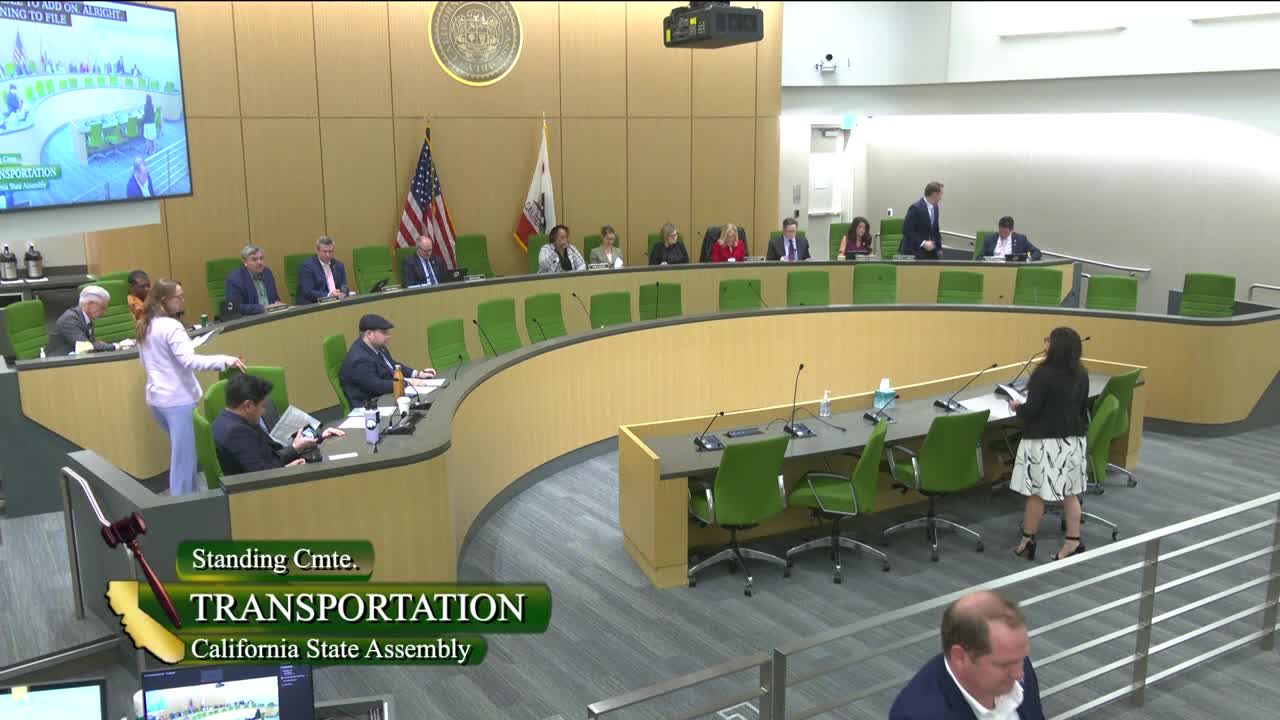 10MIN
Assembly Standing Committee on Transportation
Bill Author