AB 1209: Workers’ compensation: cannabis industry.
- Session Year: 2025-2026
- House: Assembly
- Latest Version Date: 2025-04-10
Current Status:
Failed
(2026-02-02: From committee: Filed with the Chief Clerk pursuant to Joint Rule 56.)
Introduced
In Committee
Awaiting First Chamber Vote
Passed First Chamber
In Committee
Awaiting Second Chamber Vote
Passed Second Chamber
Enacted
Existing law, the Control, Regulate and Tax Adult Use of Marijuana Act (AUMA), approved by the voters at the November 8, 2016, statewide general election, regulates the cultivation, distribution, transport, storage, manufacturing, testing, processing, sale, and use of marijuana for nonmedical purposes by people 21 years of age and older. The existing Medicinal and Adult-Use Cannabis Regulation and Safety Act (MAUCRSA), among other things, consolidates the licensure and regulation of commercial medicinal and adult-use cannabis activities.
Existing law establishes a workers compensation system, administered by the Administrative Director of the Division of Workers Compensation, to compensate an employee, as defined, for injuries sustained in the course of employment. Existing law requires every employer to secure the payment of workers compensation as provided by law and imposes civil and criminal penalties on employers that fail to secure the payment of workers compensation. Existing law authorizes an employer, pursuant to this provision, to insure against liability in insurers duly authorized to write compensation insurance in the state or to secure from the Director of Industrial Relations a certificate of consent to self-insure. Existing law establishes the Division of Labor Standards Enforcement and requires it to enforce certain provisions related to working conditions of employees, including whether an employer has secured the payment of workers compensation.
This bill would require an employer that is licensed or required to be licensed under MAUCRSA to provide proof that it has secured payment of workers compensation to the administrative director, as described. The bill would require the administrative director or its agent to report to the Division of Labor Standards and Enforcement an employer who does not provide the above-described proof. authorize the administrative director or their agent to require an employer that is licensed or required to be licensed under MAUCRSA to provide proof that it has secured payment of workers compensation to the administrative director or their agent. The bill would authorize the administrative director or their agent to establish a schedule for compliance that includes dates for when a licensee may be required to comply with these requirements. The bill would require the administrative director to provide assistance to any employer or entity that notifies the administrative director that it has been unable to obtain coverage and authorize the administrative director to extend the deadline for compliance, and would exempt any employer that secures the payment of workers compensation pursuant to these provisions from civil or criminal liability for prior failure to secure the payment of compensation. The bill would authorize the administrative director to contract with one or more agents to assist employers in complying with these provisions, as specified.
Existing law, the Control, Regulate and Tax Adult Use of Marijuana Act (AUMA), approved by the voters at the November 8, 2016, statewide general election, regulates the cultivation, distribution, transport, storage, manufacturing, testing, processing, sale, and use of marijuana for nonmedical purposes by people 21 years of age and older. The existing Medicinal and Adult-Use Cannabis Regulation and Safety Act (MAUCRSA), among other things, consolidates the licensure and regulation of commercial medicinal and adult-use cannabis activities.
Existing law establishes a workers compensation system, administered by the Administrative Director of the Division of Workers Compensation, to compensate an employee, as defined, for injuries sustained in the course of employment. Existing law requires every employer to secure the payment of workers compensation as provided by law and imposes civil and criminal penalties on employers that fail to secure the payment of workers compensation. Existing law authorizes an employer, pursuant to this provision, to insure against liability in insurers duly authorized to write compensation insurance in the state or to secure from the Director of Industrial Relations a certificate of consent to self-insure. Existing law establishes the Division of Labor Standards Enforcement and requires it to enforce certain provisions related to working conditions of employees, including whether an employer has secured the payment of workers compensation.
This bill would require an employer that is licensed or required to be licensed under MAUCRSA to provide proof that it has secured payment of workers compensation to the administrative director, as described. The bill would require the administrative director or its agent to report to the Division of Labor Standards and Enforcement an employer who does not provide the above-described proof. For an employer that is licensed or is required to be licensed under MAUCRSA, the The bill would require the administrative director to provide assistance to any employer or entity that notifies the administrative director that it has been unable to obtain coverage and authorize the administrative director to extend the deadline for compliance, and would exempt any employer that secures the payment of workers compensation pursuant to these provisions from civil or criminal liability for prior failure to secure the payment of compensation. The bill would authorize the administrative director to contract with one or more agents to assist employers in complying with these provisions, as specified.
Existing law, the Control, Regulate and Tax Adult Use of Marijuana Act (AUMA), approved by the voters at the November 8, 2016, statewide general election, regulates the cultivation, distribution, transport, storage, manufacturing, testing, processing, sale, and use of marijuana for nonmedical purposes by people 21 years of age and older. The existing Medicinal and Adult-Use Cannabis Regulation and Safety Act (MAUCRSA), among other things, consolidates the licensure and regulation of commercial medicinal and adult-use cannabis activities.
Existing law establishes a workers compensation system, administered by the Administrative Director of the Division of Workers Compensation, to compensate an employee, as defined, for injuries sustained in the course of employment. Existing law requires every employer to secure the payment of workers compensation as provided by law and imposes civil and criminal penalties on employers that fail to secure the payment of workers compensation. Existing law authorizes an employer, pursuant to this provision, to insure against liability in insurers duly authorized to write compensation insurance in the state or to secure from the Director of Industrial Relations a certificate of consent to self-insure. Existing law establishes the Division of Labor Standards Enforcement and requires it to enforce certain provisions related to working conditions of employees, including whether an employer has secured the payment of workers compensation.
This bill would require an employer that is licensed or is required to be licensed under MAUCRSA annually to provide proof that it has secured payment of workers compensation to the administrative director, as described. The The bill would require the administrative director to report to the Division of Labor Standards and Enforcement an employer who does not provide the above-described proof. For an employer that is licensed or is required to be licensed under MAUCRSA, the bill would require the administrative director to provide assistance to any employer or entity that notifies the administrative director that it has insufficient workers compensation coverage or has been unable to obtain coverage and authorize the administrative director to extend the deadline for compliance. The bill compliance, and would exempt any employer that secures the payment of workers compensation pursuant to these provisions from civil or criminal liability for prior failure to secure the payment of compensation. The bill would require authorize the administrative director to contract with one or more agents to assist employers in complying with these provisions, as specified.
This bill would declare that it is to take effect immediately as an urgency statute.Existing law, the Control, Regulate and Tax Adult Use of Marijuana Act (AUMA), approved by the voters at the November 8, 2016, statewide general election, regulates the cultivation, distribution, transport, storage, manufacturing, testing, processing, sale, and use of marijuana for nonmedical purposes by people 21 years of age and older. The existing Medicinal and Adult-Use Cannabis Regulation and Safety Act (MAUCRSA), among other things, consolidates the licensure and regulation of commercial medicinal and adult-use cannabis activities.
Existing law establishes a workers compensation system, administered by the Administrative Director of the Division of Workers Compensation, to compensate an employee, as defined, for injuries sustained in the course of employment. Existing law requires every employer to secure the payment of workers compensation as provided by law and imposes civil and criminal penalties on employers that fail to secure the payment of workers compensation. Existing law authorizes an employer, pursuant to this provision, to insure against liability in insurers duly authorized to write compensation insurance in the state or to secure from the Director of Industrial Relations a certificate of consent to self-insure.
This bill would require an employer that is licensed or is required to be licensed under MAUCRSA annually to provide proof that it has secured payment of workers compensation to the administrative director, as described. The bill would require the administrative director to provide assistance to any employer or entity that notifies the administrative director that it has insufficient workers compensation coverage or has been unable to obtain coverage and authorize the administrative director to extend the deadline for compliance. The bill would exempt any employer that secures the payment of workers compensation pursuant to these provisions from civil or criminal liability for prior failure to secure the payment of compensation. The bill would require the administrative director to contract with one or more agents to assist employers in complying with these provisions, as specified.
This bill would declare that it is to take effect immediately as an urgency statute.
(a)This section applies only to an employer that is licensed or that is required to be licensed pursuant to Division 10 (commencing with Section 26000) of the Business and Professions Code.
(b)(1)An employer shall annually The administrative director or their agent may require an employer to provide proof of compliance with Section 3700 to the administrative director or their agent in the form of a Workers Compensation Policy Declarations Page and all policy attachments, or a Certificate of Consent to Self-Insure.
(2)The administrative director or their agent shall establish a schedule for compliance that includes the dates by which each group of licensees shall be required to comply with this section. The schedule of compliance shall be based upon the number of licenses held by the person or business entity, by reference to the federal employer identification number or individual taxpayer identification number of the person or business entity, beginning with the persons or entities holding the largest number of licenses. The first group shall be required to begin reporting no later than 120 days after the effective date of this section, or 60 days after the administrative director has contracted with an agent pursuant to subdivision (f), whichever is earlier. may require an employer that contracts with a temporary agency or staffing agency or similar entity to provide workers to the employer to obtain proof of workers compensation coverage from those agencies or entities in the form of a Workers Compensation Policy Declarations Page and all policy attachments, or a Certificate of Consent to Self-Insure, and to provide the proof to the administrative director or their agent for those workers, regardless of whether the employer or the temporary agency or staffing agency employs or exercises control over the wages, hours, or working conditions of any worker.
(3)The administrative director or their agent may establish a schedule for compliance that includes the dates by which each identified licensee may be required to comply with this subdivision.
(c)An employer that contracts with a temporary agency or staffing agency or similar entity to provide workers to the employer shall obtain proof of workers compensation coverage from those agencies or entities in the form of a workers compensation policy declarations page, including all policy attachments, or a certificate of consent to self-insure, and shall provide the proof to the agent for those workers, regardless of whether the employer or the temporary agency or staffing agency employs or exercises control over the wages, hours, or working conditions of any worker.(d)(c)If an employer or entity notifies the administrative director or their agent that it has been unable to obtain workers compensation insurance, the administrative director or their agent shall provide administrative assistance to the employer or entity in obtaining full workers compensation coverage, and may extend the deadline for compliance with this section by 30 days in order to assist the employer in arranging for the services necessary to comply with this section.
(e)(d)An employer that secures the payment of workers compensation insurance coverage in compliance with this section shall not be subject to civil or criminal penalties described in Section 3700.5 for any prior inability failure to secure the payment of compensation.
(f)(e)(1)The administrative director may contract with one or more agents to assist employers in complying with this section.
(2)An agent contracted by the administrative director pursuant to this subdivision shall establish a contracted network of approved service vendors sufficient to provide a choice of service vendors to all employers that includes, but is not limited to, workers compensation insurance carriers, banks or credit unions, professional employer organizations, or other service vendors necessary to assist employers in complying with this section. All financial and banking services offered shall be conducted in compliance with the federal Bank Secrecy Act (BSA) (31 U.S.C. Sec. 5311 et seq.) and guidance document FIN-2014-G001, issued by the United States Department of the Treasury on February 14, 2014, entitled BSA Expectations Regarding Marijuana-Related Businesses.
(g)If an employer fails to comply with this section, the administrative director or their agent shall notify the Division of Labor Standards Enforcement, which shall enforce this section in the same manner as provided for in Chapter 4 (commencing with Section 79) of Division 1.(a)This section applies only to an employer that is licensed or that is required to be licensed pursuant to Division 10 (commencing with Section 26000) of the Business and Professions Code.
(b)(1)An employer shall annually provide proof of compliance with Section 3700 to the administrative director or their agent in the form of a Workers Compensation Policy Declarations Page and all policy attachments, or a Certificate of Consent to Self-Insure.
(2)The administrative director or their agent shall establish a schedule for compliance that includes the dates by which each group of licensees shall be required to comply with this section and with Section 3700.9. section. The schedule of compliance shall be based upon the number of licenses held by the person or business entity, by reference to the federal employer identification number or individual taxpayer identification number of the person or business entity, beginning with the persons or entities holding the largest number of licenses. The first group shall be required to begin reporting no later than 120 days after the effective date of this section, or 60 days after the administrative director has contracted with an agent pursuant to subdivision (e), (f), whichever is earlier.
(c)An employer that contracts with a temporary agency or staffing agency or similar entity to provide workers to the employer shall obtain proof of workers compensation coverage from those agencies or entities in the form of a workers compensation policy declarations page, including all policy attachments, or a certificate of consent to self-insure, and shall provide the proof to the agent for those workers, regardless of whether the employer or the temporary agency or staffing agency employs or exercises control over the wages, hours, or working conditions of any worker.
(c)(d)If an employer or entity notifies the administrative director or their agent that it has been unable to obtain workers compensation insurance, the administrative director or their agent shall provide administrative assistance to the employer or entity in obtaining full workers compensation coverage, and may extend the deadline for compliance with this section by 30 days in order to assist the employer in arranging for the services necessary to comply with this section.
(d)(e)An employer that secures the payment of workers compensation insurance coverage in compliance with this section shall not be subject to civil or criminal penalties described in Section 3700.5 for any prior inability to secure the payment of compensation.
(e)(f)(1)The administrative director may contract with one or more agents to assist employers in complying with this section.
(2)An agent contracted by the administrative director pursuant to this subdivision shall establish a contracted network of approved service vendors sufficient to provide a choice of service vendors to all employers that includes, but is not limited to, workers compensation insurance carriers, banks or credit unions, professional employer organizations, or other service vendors necessary to assist employers in complying with this section. All financial and banking services offered shall be conducted in compliance with the federal Bank Secrecy Act (BSA) (31 U.S.C. Sec. 5311 et seq.) and guidance document FIN-2014-G001, issued by the United States Department of the Treasury on February 14, 2014, entitled BSA Expectations Regarding Marijuana-Related Businesses.
(g)If an employer fails to comply with this section, the administrative director or their agent shall notify the Division of Labor Standards Enforcement, which shall enforce this section in the same manner as provided for in Chapter 4 (commencing with Section 79) of Division 1.
SEC. 2.Section 3700.9 is added to the Labor Code, to read:3700.9.(a)An employer that contracts with a third-party employer or a temporary agency, staffing agency, or similar entity to provide workers to the employer shall obtain proof of workers compensation coverage from those agencies or entities in the form of a Workers Compensation Policy Declarations Page, including all policy attachments, or a Certificate of Consent to Self-Insure, and shall provide the proof to the administrative director or their agent for those workers, regardless of whether the employer or the agency or entity employs or exercises control over the wages, hours, or working conditions of any worker.(b)The administrative director or their agent shall establish a schedule for compliance that includes the dates by which employers shall be required to comply with this section. Employers shall be required to begin reporting no later than 120 days after the effective date of this section, unless otherwise specified pursuant to paragraph (2) of subdivision (b) of Section 3700.7.(c)If an employer fails to comply with this section, the administrative director or their agency shall notify the Division of Labor Standards Enforcement, which shall enforce this section in the same manner as provided for in Chapter 4 (commencing with Section 79) of Division 1.(a)This section applies only to an employer that is licensed or that is required to be licensed pursuant to Division 10 (commencing with Section 26000) of the Business and Professions Code.
(b)(1)An employer shall annually provide proof of compliance with Section 3700 to the administrative director or their agent in the form of a Workers Compensation Policy Declarations Page and all policy attachments, or a Certificate of Self-Insurance. Consent to Self-Insure.
(c)An employer that contracts with a temporary agency or staffing agency or similar entity to provide workers to the employer shall obtain proof of workers compensation coverage from those agencies or entities in the form of the Workers Compensation Policy Declarations Page, including all policy attachments, or a Certificate of Self Insurance, and shall provide the proof to the agent for those workers, regardless of whether the employer or the temporary agency or staffing agency employs or exercises control over the wages, hours, or working conditions of any worker.(d)(2)The administrative director or their agent shall establish a schedule for compliance that includes the dates by which each group of licensees shall be required to comply with this section. section and with Section 3700.9. The schedule of compliance shall be based upon the number of licenses held by the person or business entity, by reference to the federal employer identification number or individual taxpayer identification number of the person or business entity. The persons or entities holding the largest number of licenses shall be the first group required to comply with this section, followed by the persons or entities holding fewer licenses, as provided in the schedule established pursuant to this subdivision. entity, beginning with the persons or entities holding the largest number of licenses. The first group shall be required to begin reporting no later than 60 120 days after the effective date of this section, or 60 days after the administrative director has contracted with an agent pursuant to subdivision (g). (e), whichever is earlier.
(e)(c)If an employer or entity notifies the administrative director or their agent that it has insufficient workers compensation coverage for all its employees, or has been unable to obtain workers compensation insurance, or cannot obtain coverage for other reasons, including, but not limited to, an inability to obtain payroll, banking, or other related services, the administrative director or their agent shall provide administrative assistance to the employer or entity in obtaining full workers compensation coverage, and may extend the deadline for compliance with this section by 30 days in order to assist the employer in arranging for the services necessary to comply with this section.
(f)(d)An employer that secures the payment of workers compensation insurance coverage pursuant to in compliance with this section shall not be subject to civil or criminal penalties described in Section 3700.5 for any prior failure inability to secure the payment of compensation.
(g)(e)(1)The administrative director shall may contract with one or more agents to assist employers in complying with this section. The contract between the department and an agent shall involve no exchange of monetary consideration to the agent. This subdivision does not preclude the exchange of monetary consideration between an agent and service vendors or employers for services received through an agent.
(2)An agent contracted by the administrative director pursuant to this section subdivision shall establish a contracted network of approved service vendors sufficient to provide a choice of service vendors to all employers that includes, but is not limited to, workers compensation insurance carriers, banks or credit unions, professional employer organizations, or other service vendors necessary to assist employers in complying with this section. All financial and banking services offered shall be conducted in compliance with the federal Bank Secrecy Act (BSA) (31 U.S.C. Sec. 5311 et seq.) and guidance document FIN-2014-G001, issued by the United States Department of the Treasury on February 14, 2014, entitled BSA Expectations Regarding Marijuana-Related Businesses. An agent and the network of professional service vendors retained by an agent shall be deemed to be independent contractors and consultants for purposes of this section.
(3)The Legislature finds and declares both of the following:(A)The services described in this subdivision are of a special and unique nature and required to be contracted out pursuant to paragraph (3) of subdivision (b) of Section 19130 of the Government Code.(B)The services described in this subdivision are a new state function pursuant to paragraph (2) of subdivision (b) of Section 19130 of the Government Code. SEC. 2.This act is an urgency statute necessary for the immediate preservation of the public peace, health, or safety within the meaning of Article IV of the California Constitution and shall go into immediate effect. The facts constituting the necessity are:In order to ensure that all employees in the cannabis industry are correctly classified and covered by workers compensation insurance without delay, it is necessary for this act to take effect immediately.SEC. 2.Section 3700.9 is added to the Labor Code, to read:3700.9.(a)An employer that contracts with a third-party employer or a temporary agency, staffing agency, or similar entity to provide workers to the employer shall obtain proof of workers compensation coverage from those agencies or entities in the form of a Workers Compensation Policy Declarations Page, including all policy attachments, or a Certificate of Consent to Self-Insure, and shall provide the proof to the administrative director or their agent for those workers, regardless of whether the employer or the agency or entity employs or exercises control over the wages, hours, or working conditions of any worker.
(b)The administrative director or their agent shall establish a schedule for compliance that includes the dates by which employers shall be required to comply with this section. Employers shall be required to begin reporting no later than 120 days after the effective date of this section, unless otherwise specified pursuant to paragraph (2) of subdivision (b) of Section 3700.7.
(c)If an employer fails to comply with this section, the administrative director or their agency shall notify the Division of Labor Standards Enforcement, which shall enforce this section in the same manner as provided for in Chapter 4 (commencing with Section 79) of Division 1.
(a)This section applies only to an employer that is licensed or that is required to be licensed pursuant to Division 10 (commencing with Section 26000) of the Business and Professions Code.
(b)An employer shall annually provide proof of compliance with Section 3700 to the administrative director or their agent in the form of a Workers Compensation Policy Declarations Page and all policy attachments, or a Certificate of Self-Insurance.
(c)An employer that contracts with a temporary agency or staffing agency or similar entity to provide workers to the employer shall obtain proof of workers compensation coverage from those agencies or entities in the form of the Workers Compensation Policy Declarations Page, including all policy attachments, or a Certificate of Self Insurance, and shall provide the proof to the agent for those workers, regardless of whether the employer or the temporary agency or staffing agency employs or exercises control over the wages, hours, or working conditions of any worker.
(d)The administrative director or their agent shall establish a schedule for compliance that includes the dates by which each group of licensees shall be required to comply with this section. The schedule of compliance shall be based upon the number of licenses held by the person or business entity, by reference to the federal employer identification number or individual taxpayer identification number of the person or business entity. The persons or entities holding the largest number of licenses shall be the first group required to comply with this section, followed by the persons or entities holding fewer licenses, as provided in the schedule established pursuant to this subdivision. The first group shall be required to begin reporting no later than 60 days after the administrative director has contracted with an agent pursuant to subdivision (g).
(e)If an employer or entity notifies the administrative director or their agent that it has insufficient workers compensation coverage for all its employees, or has been unable to obtain workers compensation insurance, or cannot obtain coverage for other reasons, including, but not limited to, an inability to obtain payroll, banking, or other related services, the administrative director or their agent shall provide assistance to the employer or entity in obtaining full workers compensation coverage, and may extend the deadline for compliance with this section by 30 days in order to assist the employer in arranging for the services necessary to comply with this section.
(f)An employer that secures the payment of workers compensation insurance coverage pursuant to this section shall not be subject to civil or criminal penalties described in Section 3700.5 for any prior failure to secure the payment of compensation.
(g)(1)The administrative director shall contract with one or more agents to assist employers in complying with this section. The contract between the department and an agent shall involve no exchange of monetary consideration to the agent. This subdivision does not preclude the exchange of monetary consideration between an agent and service vendors or employers for services received through an agent.
(2)An agent contracted by the administrative director pursuant to this section shall establish a contracted network of approved service vendors sufficient to provide a choice of service vendors to all employers that includes, but is not limited to, workers compensation insurance carriers, banks or credit unions, professional employer organizations, or other service vendors necessary to assist employers in complying with this section. All financial and banking services offered shall be conducted in compliance with the federal Bank Secrecy Act (BSA) (31 U.S.C. Sec. 5311 et seq.) and guidance document FIN-2014-G001, issued by the United States Department of the Treasury on February 14, 2014, entitled BSA Expectations Regarding Marijuana-Related Businesses. An agent and the network of professional service vendors retained by an agent shall be deemed to be independent contractors and consultants for purposes of this section.
(3)The Legislature finds and declares both of the following:
(A)The services described in this subdivision are of a special and unique nature and required to be contracted out pursuant to paragraph (3) of subdivision (b) of Section 19130 of the Government Code.
(B)The services described in this subdivision are a new state function pursuant to paragraph (2) of subdivision (b) of Section 19130 of the Government Code.
SEC. 2.This act is an urgency statute necessary for the immediate preservation of the public peace, health, or safety within the meaning of Article IV of the California Constitution and shall go into immediate effect. The facts constituting the necessity are:
In order to ensure that all employees in the cannabis industry are correctly classified and covered by workers compensation insurance without delay, it is necessary for this act to take effect immediately.
|
Date
|
Status
|
|---|---|
| Feb 2, 2026 | From committee: Filed with the Chief Clerk pursuant to Joint Rule 56. |
| Jan 31, 2026 | Died pursuant to Art. IV, Sec. 10(c) of the Constitution. |
| Apr 21, 2025 | In committee: Set, first hearing. Hearing canceled at the request of author. |
| Apr 21, 2025 | Re-referred to Com. on B. & P. |
| Apr 10, 2025 | From committee chair, with author's amendments: Amend, and re-refer to Com. on B. & P. Read second time and amended. |
| Apr 2, 2025 | From committee: Do pass and re-refer to Com. on B. & P. (Ayes 15. Noes 2.) (April 2). Re-referred to Com. on B. & P. |
| Mar 27, 2025 | Re-referred to Com. on INS. |
| Mar 26, 2025 | From committee chair, with author's amendments: Amend, and re-refer to Com. on INS. Read second time and amended. |
| Mar 24, 2025 | Re-referred to Com. on INS. |
| Mar 20, 2025 | From committee chair, with author's amendments: Amend, and re-refer to Com. on INS. Read second time and amended. |
| Mar 13, 2025 | Referred to Coms. on INS. and B. & P. |
| Feb 24, 2025 | Read first time. |
| Feb 22, 2025 | From printer. May be heard in committee March 24. |
| Feb 21, 2025 | Introduced. To print. |
|
Date
|
Description
|
Location
|
Votes
|
|
|---|---|---|---|---|
| Apr 2, 2025 | Do pass and be re-referred to the Committee on [Business and Professions] | Assembly Standing Committee on Insurance |
Passed |
This list shows positions taken on this bill by organizations on the date displayed, which is linked to the original source.
Positions by individuals are not included.
|
Organization
|
Position
|
Date
|
|---|---|---|
| Allied Managed Care And Acclamation Insurance Management Services | ** Support | |
| Medex Health Care, Inc. | ** Support | |
| Risk Insurance Management Society | ** Support |
Date of Hearing: April 2, 2025
ASSEMBLY COMMITTEE ON INSURANCE
Lisa Calderon, Chair
ABPCA Bill Id:AB 1209 (
Author:Michelle Rodriguez) – As Amended Ver:March 26, 2025
SUBJECT: Workers’ compensation: cannabis industry
SUMMARY: Requires employers in the cannabis industry to annually report compliance with existing requirements to secure payment of workers’ compensation to the administrative director (AD) of the Division of Workers’ Compensation (DWC), requires the AD to provide administrative assistance to cannabis employers in securing the payment of workers’ compensation, and grants safe harbor for cannabis employers for prior inability to secure payment of workers’ compensation if they come into compliance in accordance with the bill. Specifically, this bill:
- Requires employers licensed to operate businesses pertaining to the cultivation, testing, manufacture, distribution, sale, or commercial transfer of cannabis or cannabis products (henceforth, “cannabis employers”) to annually provide proof of compliance with the state requirement to secure the payment of workers’ compensation by submitting to the AD a Workers’ Compensation Policy Declarations Page and all policy attachments, or a Certificate of Consent to Self-Insure.
- Requires the AD or their agent to establish a schedule for compliance that includes dates by which each group of licensees shall be required to comply with this reporting requirement; specifies that the schedule of compliance shall be based upon the number of licenses held by the person or business entity, beginning with the persons or entities holding the largest number of licenses; and specifies that the first group shall be required to begin no later than 120 days after the effective date of the bill, or 60 days after the AD has contracted with an agent, as specified, whichever is earlier.
- Provides that if a cannabis employer or entity notifies the AD or their agent that it has been unable to obtain workers’ compensation insurance, the AD or their agent shall provide administrative assistance to the employer or entity in obtaining full workers’ compensation coverage, and may extend the deadline for compliance with the bill by 30 days in order to assist the employer in arranging for the services necessary to comply with the bill.
- Provides that a cannabis employer that secures the payment of workers’ compensation insurance coverage in compliance with the bill shall not be subject to civil or criminal penalties for any prior inability to secure the payment of compensation.
- Requires a cannabis employer that contracts with a temporary agency, staffing agency, or similar entity to provide workers to the employer, to obtain proof of workers’ compensation coverage from those agencies or entities in the form of a workers’ compensation policy declarations page including all policy attachments or a certificate of consent to self-insure, and to provide the proof to the agent for those workers.
- Authorizes the AD to contract with one or more agents to assist employers in complying with the bill.
- Specifies that an agent contracted by the AD pursuant to 6), above, shall establish a contracted network of approved service vendors sufficient to provide a choice of service vendors to all employers that includes, but is not limited to, workers’ compensation insurance carriers, banks or credit unions, professional employer organizations, or other service vendors necessary to assist employers in complying with the bill.
- Requires the AD or their agent to notify the Division of Labor Standards Enforcement (DLSE) if a cannabis employer fails to comply with the bill, and requires the DLSE to enforce the requirements of the bill.
EXISTING LAW:
- Establishes a workers’ compensation system that provides benefits to an employee who suffers from an injury or illness that arises out of, and in the course of, employment, irrespective of fault. (California Constitution Article XIV, Section 4)
- Establishes DWC within the Department of Industrial Relations (DIR) and charges it with monitoring the administration of workers’ compensation claims and providing administrative and judicial services to assist in resolving disputes that arise in connection with claims for workers’ compensation benefits. (Labor (Lab.) Code Sections 3200 et. seq.)
- Requires all employers to secure payment of workers’ compensation either by securing the consent of DIR to self-insure, or by securing insurance against liability from an insurance company duly authorized by the state. (Lab. Code Section 3700)
- Provides that it is the policy of the state to vigorously enforce the laws requiring employers to secure the payment of workers’ compensation and to protect employers who comply with the law from those who attempt to gain a competitive advantage at the expense of their workers by failing to secure the payment of workers’ compensation. (Lab. Code Section 90.3(a))
- Establishes the Division of Labor Standards Enforcement within DIR and charges it with, among other things, ensuring that the laws requiring employers to secure the payment of workers’ compensation are adequately enforced by maintaining a program that systematically identifies unlawfully uninsured employers. (Lab. Code Sections 79 & 90.3(b))
- Provides that the failure to secure the payment of workers’ compensation by one who knew, or should have been reasonably expected to have known, of the obligation to secure the payment of workers’ compensation is a misdemeanor punishable by imprisonment in the county jail for up to one year, or by a fine of up to double the amount of premium that would otherwise have been due to secure the payment of workers’ compensation during the time compensation was not secured, but not less than $10,000, or by both imprisonment and fine. Further provides that a second or subsequent conviction shall be punished by imprisonment for up to one year, a fine of triple the amount of the premium, but not less than $50,000, or both. (Lab. Code Section 3700.5)
- Establishes a comprehensive system to control and regulate the cultivation, distribution, transport, storage, manufacturing, processing, and sale of medicinal cannabis and cannabis products, and adult-use cannabis and cannabis products; and requires licensure, as specified, to conduct business pertaining to the cultivation, testing, manufacture, distribution, sale, or commercial transfer of cannabis or cannabis products. (Business & Professions Code Sections 26000, et seq.)
FISCAL EFFECT: Unknown
COMMENTS:
- Purpose: According to the author:
Even though existing law requires all employers with one or more employees to provide workers’ compensation coverage for their employees, an analysis of the WCIRB database confirmed that only 11.5% of licensed cannabis employers have workers’ compensation insurance coverage for their employees who sustain on-the-job injuries and illnesses while working in the industry. AB 1209 requires cannabis employers to submit proof of workers’ compensation to the Division of Workers’ Compensation (DWC) or its contracted agents. If a cannabis employer does not have or cannot obtain workers’ compensation insurance, assistance will be provided to those employers in securing workers’ compensation insurance at competitive group rates.
AB 1209 will help the cannabis industry employers comply with the legal requirement to provide workers’ compensation insurance by providing a clear pathway for these businesses to obtain coverage. A licensed cannabis employer that secures a workers’ compensation policy utilizing the processes and services offered in AB 1209 shall not be subject to civil or criminal penalties in existing law for any prior failure to secure the payment of workers’ compensation insurance.
Not only will employer compliance with workers’ compensation laws protect cannabis workers who suffer workplace injuries, it will provide additional protections to employees under California labor laws that are only available to employees, such as payroll and paycheck services, whistleblower protections, CalOSHA workplace protections, including prevention of illegal and improper pesticide exposure, and improper classification as independent contractors.
- Workers’ Compensation and the Cannabis Industry: At its core, the workers’ compensation system relies on a so-called “grand bargain.” If a worker is injured on the job, the employer must pay for the worker’s medical treatment, including monetary benefits if the injury is permanent. In exchange for receiving the guarantee of such treatment, the worker surrenders the right to sue the employer for monetary damages in civil court. All employers are required to secure the payment of workers’ compensation either by receiving approval from DIR to self-insure in accordance with substantial requirements, or by obtaining workers’ compensation insurance coverage from an authorized insurer. The Labor Code explicitly asserts that it is the policy of the state to “vigorously enforce” this law.
Cannabis industry licensees are required to comply with all extant labor laws in this state, including the requirement to secure the payment of workers’ compensation. On May 31, 2023, DIR issued a Newsline Notice entitled “DIR Reminds Cannabis Employers about Labor Law Requirements,” which read, in part:
[DIR] reminds cannabis employers that they must comply with California labor law requirements. Labor protections apply to all workers in the cannabis industry, no matter whether they are employed at a licensed or unlicensed cannabis business.
All employers must comply with minimum wage and overtime laws, maintain a valid workers’ compensation insurance policy to cover employees and provide safe working conditions for employees. Failure to comply with these and other California labor law requirements can result in citations for unpaid wages or civil penalties, criminal prosecution, or both.
Despite this reminder, data collected by the Workers’ Compensation Insurance Rating Bureau (WCIRB) indicates that only 11.5% of cannabis employers have workers’ compensation coverage, with estimated 96,500 cannabis employees lacking access to workers’ compensation benefits.
In some cases, the lack of workers’ compensation coverage in the cannabis industry is the result of negligence on the part of the employer. In many cases, however, the failure to obtain coverage results from the downstream implications of cannabis being legal at the state level while remaining illegal at the federal level.
According to a 2023 white paper drafted by the Cannabis Insurance Working Group of the National Association of Insurance Commissioners (NAIC), while workers’ compensation insurance tends to be more widely available to the cannabis industry than other types of commercial insurance, cannabis employers still face several hurdles to obtaining that coverage. Insurers remain concerned that supporting cannabis businesses can expose them to criminal liability under federal racketeering and organized crime (RICO) laws, narrowing the market. Even those that do offer workers’ compensation coverage to cannabis businesses can be hesitant to advertise it for fear of increased scrutiny, making it particularly difficult for cannabis employers to identify their options.
Federal law prohibits cannabis businesses from taking certain tax deductions related to insurance expenses, including for workers’ compensation insurance. Additionally, as of 2023, approximately 70% of cannabis-related businesses operated as cash-only businesses with no formal relationship with a bank. Lack of access to banking can preclude a business from qualifying for workers’ compensation coverage from most insurers, even if that coverage is otherwise available.
- Improving Compliance with Workers’ Compensation Coverage Requirements: This bill aims to improve compliance with requirements for securing workers’ compensation payment in the cannabis industry through four key provisions:
- Requiring cannabis employers to report compliance with workers’ compensation coverage laws using specified forms;
- Requiring DWC to provide administrative assistance to cannabis employers who have been unable to secure workers’ compensation insurance in securing insurance upon request;
- Providing safe harbor to cannabis employers that come into compliance with workers’ compensation coverage requirements through the mechanisms of the bill for prior inability to obtain workers’ compensation insurance; and
- Requiring cannabis employers to obtain proof of workers’ compensation coverage from any staffing or temp agencies through which they are provided workers using specified forms, and to provide that documentation to DWC along with their own compliance reporting.
The bill authorizes DWC to carry out several of these obligations by contracting with a third party should DWC determine this to be advantageous, and prescribes a specific framework for the responsibilities of a third party agent contracted through this authority. While this framework is one that could indeed be beneficial, it is not clear why DWC should only be provided authority to contract with a third-party toward implementation of the bill if implementation is carried out in accordance with that framework. Rather, it seems it would be preferable to provide DWC with the flexibility to determine the responsibilities of the third-party agent, if any.
Nonetheless, the bill in print would expand accountability and oversight for compliance with workers’ compensation requirements in the cannabis industry, develop additional resources for cannabis employers who may be having difficulty identifying available coverage, and, by providing amnesty for prior inability to obtain coverage, could encourage non-compliant employers to come into compliance using those resources. In support of the bill, the Risk and Insurance Management Society (RIMS), argues:
AB 1209 would establish a clear pathway for licensed cannabis employers to obtain workers’ compensation coverage, including licensees that have had difficulty obtaining coverage. For those cannabis licensees that have encountered problems obtaining banking, payroll services, and workers’ compensation insurance, the DWC- contracted agent will also be responsible for maintaining a network of providers in these areas at competitive rates and provide assistance to cannabis licensees that have not been able to secure these services on their own.
- Suggested Amendments: The bill in print provides the authority, but not the requirement, for the AD to contract with one or more agents to assist employers in complying with the bill. If the AD elects to do so, however, the bill specifies that the agent shall establish a contracted network of approved service vendors to provide a choice of service vendors that include workers’ compensation insurance carriers, banks or credit unions, and professional employer organizations, among others. While this may prove useful if implemented, the AD would arguably benefit from the authority to determine the appropriate role for a contracted agent in accomplishing the objectives of the bill, which may or may not fit with this vision. Furthermore, DWC does not necessarily have the expertise to evaluate the quality, appropriateness, and legitimacy of, e.g., banks and professional employer organizations.
Should the bill pass out of this committee, the author may wish to consider amending it to remove these constraints on the functions that can be assigned to a third-party contractor in implementing the bill. At a minimum, the author may wish to consider incorporating some coordination with the Department of Cannabis Control and the Department of Financial Protection and Innovation to ensure the availability of requisite expertise to assess potential service vendors for services unrelated to workers’ compensation.
Additionally, the author may wish to consider adopting three technical, non-substantive amendments would improve the clarity of the bill:
- In proposed Labor Code Section 3700.7(c), the bill in print requires an employer that contracts with a temp agency or staffing agency to report on the security of workers’ compensation coverage for workers provided via that agency. However, the bill in print specifically requires the employer to provide the proof of coverage “to the agent.” Because the AD contracting with an agent is elective pursuant to subdivision (f), proof of coverage should be provided to “the administrative director or their agent,” rather than to the agent exclusively.
- Both proposed Labor Code Section 3700.7(b)(1) and 3700.7(c) refer to a workers’ compensation policy declarations page with policy attachments and a certificate of consent to self-insure. However, the exact terminology and capitalization differs between the two provisions. These should be consistent in order to clarify that they are the same forms for both provisions.
- In proposed Labor Code Section 3700.7(e), the bill in print refers to “[a]n employer that secures the payment of workers’ compensation insurance coverage.” However, in coming into compliance with the bill, an employer would ideally be obtaining insurance coverage as a means to secure the payment of workers’ compensation. The words “insurance coverage” should therefore be struck for clarity.
- Double Referral: This bill is double-referred. Should it pass out of this committee, it will be heard in the Assembly Committee on Business & Professions.
- Prior Legislation: SB 1503 (Archuleta, 2024) would have, among other things, required, as a condition for licensure for conducting cannabis business, that the applicant or licensee have on file at all times a current and valid Certificate of Workers’ Compensation Insurance or Certification of Self-Insurance in the applicant’s or licensee’s business name. This bill did not receive a hearing in the Senate Committee on Business, Professions, & Economic Development.
REGISTERED SUPPORT / OPPOSITION:
Support
Allied Managed Care and Acclamation Insurance Management Services
Medex Health Care, INC.
Risk & Insurance Management Society (RIMS)
Opposition
None on file.
Analysis Prepared by: Landon Klein / INS. / (916) 319-2086
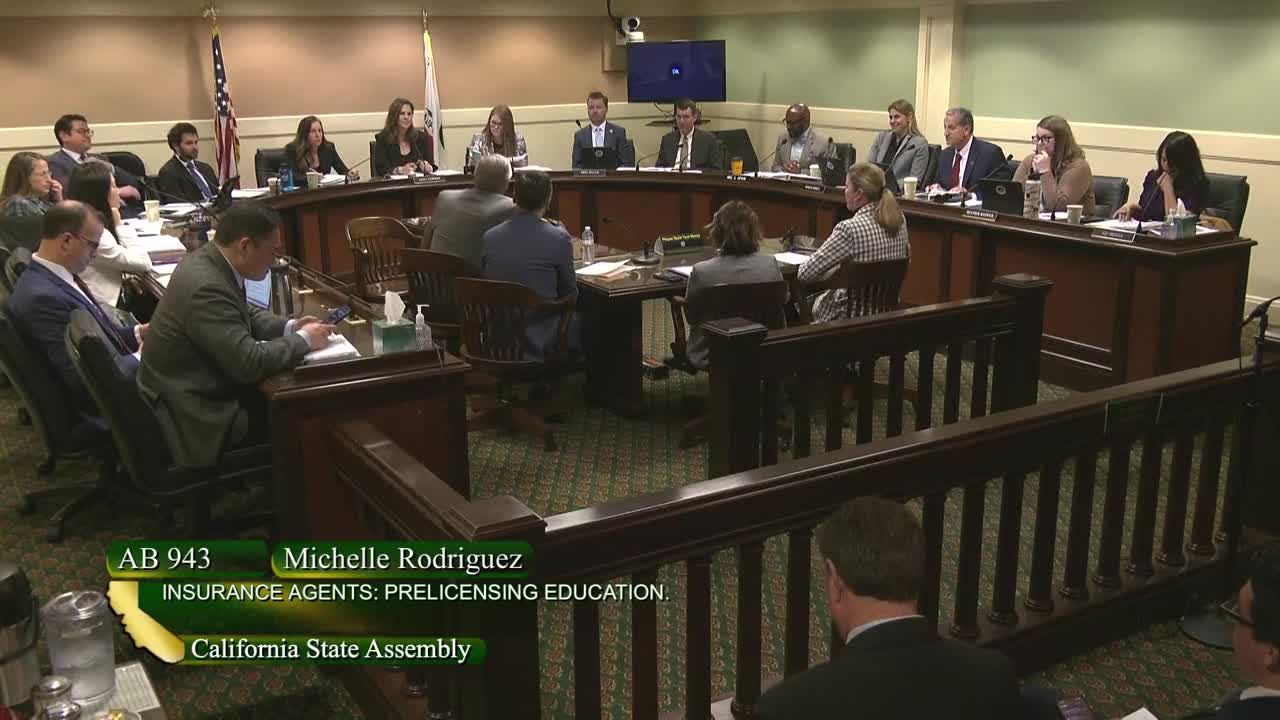
Bill Author

Bill Co-Author(s):