AB 1230: Pupil discipline: expulsions: procedures.
- Session Year: 2025-2026
- House: Assembly
- Latest Version Date: 2025-10-03
Current Status:
Passed
(2025-10-03: Chaptered by Secretary of State - Chapter 294, Statutes of 2025.)
Introduced
In Committee
Awaiting First Chamber Vote
Passed First Chamber
In Committee
Awaiting Second Chamber Vote
Passed Second Chamber
Enacted
Existing law authorizes the governing board of a school district to order a pupil expelled upon finding that the pupil committed one or more of a specified act, as provided. Existing law requires an expulsion order to remain in effect until the governing board orders the readmission of a pupil and requires the governing board to recommend a plan of rehabilitation for the pupil at the time of the expulsion order that may include recommendations for, among other things, improved academic performance, tutoring, or counseling. Existing law requires the governing board of each school district to adopt rules and regulations establishing a procedure for the filing and processing of requests for readmission and the process for the required review of all expelled pupils for readmission. Existing law requires the governing board, upon completion of the readmission process, to readmit the pupil unless the governing board makes a finding that the pupil has not met the conditions of the rehabilitation plan or continues to pose a danger to campus safety or to other pupils or employees of the school district.
Existing law requires each county superintendent of schools in counties that operate community schools, in conjunction with superintendents of school districts within the county, to develop a plan for providing education services to all expelled pupils in that county, as provided. Existing law requires the plan to enumerate existing educational alternatives for expelled pupils, identify gaps in educational services to expelled pupils, and strategies for filling those service gaps. Existing law requires each school district to maintain specified data related to pupil expulsions, including, among other things, the number of pupils recommended for expulsion.
This bill would require a plan of rehabilitation to include periodic review and a preliminary assessment for readmission at least 45 days before the end of the expulsion term, be tailored to the individual pupils needs, and address the pupils behavior that led to the expulsion and would authorize the plan of rehabilitation to be developed in consultation with specified school personnel, as provided. The bill would require the governing board of a school district to (1) assist the pupil in locating opportunities accessible to the pupil that are necessary to complete the requirements of a plan for rehabilitation, as provided, and (2) as part of the process for a required review, indicate whether or not the pupil had access to the necessary resources to complete their rehabilitation plan. The bill would prohibit the governing board from requiring the pupil or the pupils parent or guardian to pay for any costs or services that the governing board determines to be necessary for the pupil to complete a plan of rehabilitation and would prohibit an expelled pupil from being denied readmission due to financial or transportation barriers or a lack of viable opportunities to complete a term of the rehabilitation plan. The bill would require the governing board to instead readmit the pupil, unless the governing board makes a finding that the pupil (1) has not substantially met the conditions of the rehabilitation plan despite having access to the necessary resources and viable opportunities to complete their plan or (2) continues to exhibit documented behaviors that the pupil was expelled for or is documented to have committed one or more new acts during the expulsion term that would make the pupil eligible for another expulsion. The bill would authorize the governing board to extend the expulsion term, as specified, if the governing board makes one of those specified findings, as provided.
This bill would require the above-described plan for providing education services to all expelled pupils in the county to (1) include any services that may be required pursuant to an expelled pupils individualized education program or plan pursuant to Section 504 of the federal Rehabilitation Act of 1973, (2) identify multiple educational programs and services for expelled pupils, (3) outline a timely readmission process after the expulsion term is complete, and (4) describe the steps to be taken by the school district to support the successful transition of a pupil upon readmission, as provided. The bill would require each school district to maintain additional data related to pupil expulsions, including, among other things, the average length of expulsion terms, including any extensions, and would delete obsolete provisions related to that data.
By imposing additional duties on local educational agencies or local officials, the bill would constitute a state-mandated local program.
The California Constitution requires the state to reimburse local agencies and school districts for certain costs mandated by the state. Statutory provisions establish procedures for making that reimbursement.
This bill would provide that, if the Commission on State Mandates determines that the bill contains costs mandated by the state, reimbursement for those costs shall be made pursuant to the statutory provisions noted above.
Existing law authorizes the governing board of a school district to order a pupil expelled upon finding that the pupil committed one or more of a specified act, as provided. Existing law requires an expulsion order to remain in effect until the governing board orders the readmission of a pupil and requires the governing board to recommend a plan of rehabilitation for the pupil at the time of the expulsion order that may include recommendations for, among other things, improved academic performance, tutoring, or counseling. Existing law requires the governing board of each school district to adopt rules and regulations establishing a procedure for the filing and processing of requests for readmission and the process for the required review of all expelled pupils for readmission. Existing law requires the governing board, upon completion of the readmission process, to readmit the pupil unless the governing board makes a finding that the pupil has not met the conditions of the rehabilitation plan or continues to pose a danger to campus safety or to other pupils or employees of the school district.
Existing law requires each county superintendent of schools in counties that operate community schools, in conjunction with superintendents of school districts within the county, to develop a plan for providing education services to all expelled pupils in that county, as provided. Existing law requires the plan to enumerate existing educational alternatives for expelled pupils, identify gaps in educational services to expelled pupils, and strategies for filling those service gaps. Existing law requires each school district to maintain specified data related to pupil expulsions, including, among other things, the number of pupils recommended for expulsion.
This bill would require a plan of rehabilitation to include periodic review and an a preliminary assessment for readmission at least 45 days before the end of the expulsion term, be developed in consultation with specified school personnel, be tailored to the individual pupils needs, and address the pupils behavior that led to the expulsion. expulsion and would authorize the plan of rehabilitation to be developed in consultation with specified school personnel, as provided. The bill would require the governing board of a school district to (1) assist the pupil in locating opportunities accessible to the pupil that are necessary to complete the requirements of a plan for rehabilitation, as provided, and (2) as part of the process for a required review, indicate whether or not the pupil had access to the necessary resources to complete their rehabilitation plan. The bill would prohibit the governing board from requiring the pupil or the pupils parent or guardian to pay for any costs or services that the governing board determines to be necessary for the pupil to complete a plan of rehabilitation and would prohibit an expelled pupil from being denied readmission due to financial or transportation barriers or a lack of viable opportunities to complete a term of the rehabilitation plan. The bill would require the governing board to instead readmit the pupil, unless the governing board makes a finding that the pupil (1) has not substantially met the conditions of the rehabilitation plan despite having access to the necessary resources and viable opportunities to complete their plan or (2) continues to exhibit documented behaviors that led to the expulsion the pupil was expelled for or is documented to have committed one or more new acts during the expulsion term that would make the pupil eligible for another expulsion. The bill would authorize the governing board to extend the expulsion term, as specified, if the governing board makes one of those specified findings, as provided.
This bill would require the above-described plan for providing education services to all expelled pupils in the county to (1) include any services that may be required pursuant to an expelled pupils individualized education program or plan pursuant to Section 504 of the federal Rehabilitation Act of 1973, (2) identify multiple educational programs and services for expelled pupils, (3) outline a timely readmission process after the expulsion term is complete, and (4) describe the steps to be taken by the school district to support the successful transition of a pupil upon readmission, as provided. The bill would require each school district to maintain additional data related to pupil expulsions, including, among other things, the average length of expulsions ordered each school year, expulsion terms, including any extensions, and would delete obsolete provisions related to that data.
By imposing additional duties on local educational agencies or local officials, the bill would constitute a state-mandated local program.
The California Constitution requires the state to reimburse local agencies and school districts for certain costs mandated by the state. Statutory provisions establish procedures for making that reimbursement.
This bill would provide that, if the Commission on State Mandates determines that the bill contains costs mandated by the state, reimbursement for those costs shall be made pursuant to the statutory provisions noted above.
Existing law authorizes the governing board of a school district to order a pupil expelled upon finding that the pupil committed one or more of a specified act, as provided. Existing law requires an expulsion order to remain in effect until the governing board orders the readmission of a pupil and requires the governing board to recommend a plan of rehabilitation for the pupil at the time of the expulsion order that may include recommendations for, among other things, improved academic performance, tutoring, or counseling. Existing law requires the governing board of each school district to adopt rules and regulations establishing a procedure for the filing and processing of requests for readmission and the process for the required review of all expelled pupils for readmission. Existing law requires the governing board, upon completion of the readmission process, to readmit the pupil unless the governing board makes a finding that the pupil has not met the conditions of the rehabilitation plan or continues to pose a danger to campus safety or to other pupils or employees of the school district.
Existing law requires each county superintendent of schools in counties that operate community schools, in conjunction with superintendents of school districts within the county, to develop a plan for providing education services to all expelled pupils in that county, as provided. Existing law requires the plan to enumerate existing educational alternatives for expelled pupils, identify gaps in educational services to expelled pupils, and strategies for filling those service gaps. Existing law requires each school district to maintain specified data related to pupil expulsions, including, among other things, the number of pupils recommended for expulsion.
This bill would require a plan of rehabilitation to include periodic review and an assessment for readmission at least 45 days before the end of the expulsion term, be developed by a team of specified educators, in consultation with specified school personnel, be tailored to the individual pupils needs, and address the pupils behavior that led to the expulsion. The bill would require the governing board of a school district to (1) assist the pupil in locating opportunities accessible to the pupil that are necessary to complete the requirements of a plan for rehabilitation, as provided, and (2) as part of the process for a required review, indicate whether or not the pupil had access to the necessary resources to complete their rehabilitation plan. The bill would prohibit the governing board from requiring the pupil or the pupils parent or guardian to pay for any costs necessary to complete a plan of rehabilitation and would prohibit an expelled pupil from being denied readmission due to financial or transportation barriers or a lack of viable opportunities to complete a term of the rehabilitation plan. The bill, in order to deny the readmission of an expelled pupil, bill would instead require the governing board to instead readmit the pupil, unless the governing board makes a finding that the pupil (1) has not substantially met the conditions of the rehabilitation plan despite having access to the necessary resources to complete their plan. plan or (2) continues to exhibit documented behaviors that led to the expulsion or is documented to have committed one or more new acts during the expulsion term that would make the pupil eligible for another expulsion. The bill would authorize the governing board to extend the expulsion term, as specified, if the governing board makes a finding that the pupil has not substantially met the conditions of the rehabilitation plan, one of those specified findings, as provided.
This bill would require the above-described plan for providing education services to all expelled pupils in the county to (1) include any services that may be required pursuant to an expelled pupils individualized education program or plan pursuant to Section 504 of the federal Rehabilitation Act of 1973, (2) identify multiple educational programs and services for expelled pupils, (3) outline a timely readmission process after the expulsion term is complete, and (4) describe the steps to be taken by the school district to support the successful transition of a pupil upon readmission, as provided. The bill would require each school district to maintain additional data related to pupil expulsions, including, among other things, the percentage of expulsion terms that are extended average length of expulsions ordered each school year and the reasons for those extensions. year, and would delete obsolete provisions related to that data.
By imposing additional duties on local educational agencies or local officials, the bill would constitute a state-mandated local program.
The California Constitution requires the state to reimburse local agencies and school districts for certain costs mandated by the state. Statutory provisions establish procedures for making that reimbursement.
This bill would provide that, if the Commission on State Mandates determines that the bill contains costs mandated by the state, reimbursement for those costs shall be made pursuant to the statutory provisions noted above.
Existing law authorizes the governing board of a school district to order a pupil expelled upon finding that the pupil committed one or more of a specified act, as provided. Existing law requires an expulsion order to remain in effect until the governing board orders the readmission of a pupil and requires the governing board to recommend a plan of rehabilitation for the pupil at the time of the expulsion order that may include recommendations for, among other things, improved academic performance, tutoring, or counseling. Existing law requires the governing board of each school district to adopt rules and regulations establishing a procedure for the filing and processing of requests for readmission and the process for the required review of all expelled pupils for readmission. Existing law requires the governing board, upon completion of the readmission process, to readmit the pupil unless the governing board makes a finding that the pupil has not met the conditions of the rehabilitation plan or continues to pose a danger to campus safety or to other pupils or employees of the school district.
Existing law requires each county superintendent of schools in counties that operate community schools, in conjunction with superintendents of school districts within the county, to develop a plan for providing education services to all expelled pupils in that county, as provided. Existing law requires the plan to enumerate existing educational alternatives for expelled pupils, identify gaps in educational services to expelled pupils, and strategies for filling those service gaps. Existing law requires each school district to maintain specified data related to pupil expulsions, including, among other things, the number of pupils recommended for expulsion.
This bill would require a plan of rehabilitation to be developed by a team of specified educators, be tailored to the individual pupils needs, and address the pupils behavior that led to the expulsion. The bill would require the governing board of a school district to (1) assist the pupil in locating opportunities accessible to the pupil that are necessary to complete the requirements of a plan for rehabilitation, as provided, and (2) as part of the process for a required review, indicate whether or not the pupil had access to the necessary resources to complete their rehabilitation plan. The bill would prohibit the governing board from requiring the pupil or the pupils parent or guardian to pay for any costs necessary to complete a plan of rehabilitation and would prohibit an expelled pupil from being denied readmission due to financial or transportation barriers or a lack of viable opportunities to complete a term of the rehabilitation plan. The bill, in order to deny the readmission of an expelled pupil, would instead require a finding that the pupil has not substantially met the conditions of the rehabilitation plan despite having access to the necessary resources to complete their plan. The bill would authorize the governing board to extend the expulsion term, as specified, if the governing board makes a finding that the pupil has not substantially met the conditions of the rehabilitation plan, as provided.
This bill would require the above-described plan for providing education services to all expelled pupils in the county to (1) include any services that may be required pursuant to an expelled pupils individualized education program or plan pursuant to Section 504 of the federal Rehabilitation Act of 1973, (2) identify multiple educational programs and services for expelled pupils, (3) outline a timely readmission process after the expulsion term is complete, and (4) describe the steps to be taken by the school district to support the successful transition of a pupil upon readmission, as provided. The bill would require each school district to maintain additional data related to pupil expulsions, including, among other things, the percentage of expulsion terms that are extended each school year and the reasons for those extensions.
By imposing additional duties on local educational agencies or local officials, the bill would constitute a state-mandated local program.
The California Constitution requires the state to reimburse local agencies and school districts for certain costs mandated by the state. Statutory provisions establish procedures for making that reimbursement.
This bill would provide that, if the Commission on State Mandates determines that the bill contains costs mandated by the state, reimbursement for those costs shall be made pursuant to the statutory provisions noted above.
(a)An expulsion order shall remain in effect until the governing board, in the manner prescribed in this article, orders the readmission of a pupil. At the time an expulsion of a pupil is ordered for an act other than those described in subdivision (c) of Section 48915, the governing board shall set a date, not later than the last day of the semester following the semester in which the expulsion occurred, when the pupil shall be reviewed for readmission to a school maintained by the district or to the school the pupil last attended. If an expulsion is ordered during summer session or the intersession period of a year-round program, the governing board shall set a date, not later than the last day of the semester following the summer session or intersession period in which the expulsion occurred, when the pupil shall be reviewed for readmission to a school maintained by the district or to the school the pupil last attended. For a pupil who has been expelled pursuant to subdivision (c) of Section 48915, the governing board shall set a date of one year from the date the expulsion occurred, when the pupil shall be reviewed for readmission to a school maintained by the district, except that the governing board may set an earlier date for readmission on a case-by-case basis.
(b)(1)The governing board shall recommend a plan of rehabilitation for the pupil at the time of the expulsion order, which shall include, but not be limited to, periodic review and a preliminary assessment for readmission at least 45 days before the end of the expulsion term. The plan shall be tailored to the individual pupils needs and address the pupils behavior that led to the expulsion. The plan may be developed in consultation with school personnel who have knowledge or special expertise regarding the pupil and include recommendations for improved academic performance, tutoring, special education assessments, job training, counseling, employment, community service, or other rehabilitative programs.
(2)The governing board shall assist the pupil in locating opportunities accessible to the pupil that are necessary to complete the requirements of a plan for rehabilitation, including, but not limited to, opportunities for counseling and community service.
(3)The governing board shall not require the pupil or the pupils parent or guardian to pay for any costs or services the governing board determines to be necessary for the pupil to complete a plan of rehabilitation.
(c)(1)The governing board of each school district shall adopt rules and regulations establishing a procedure for the filing and processing of requests for readmission, a process for the required review of all expelled pupils for readmission, and a procedure for the transition process for readmitted pupils. As part of the process for a required review, the governing board shall indicate whether or not the pupil had access to the necessary resources to complete their rehabilitation plan. A rehabilitation plan that is not completed due to financial or transportation barriers or a lack of viable opportunities to complete a term of the rehabilitation plan shall not be a basis to deny the readmission of a pupil. A description of the readmission procedure shall be made available to the pupil and the pupils parent or guardian at the same time the pupil and the pupils parent or guardian are notified of the expulsion order.
(2)Upon completion of the readmission review process, the governing board shall readmit the pupil, unless the governing board makes a finding that the pupil (A) has not substantially met the conditions of the rehabilitation plan despite having access to the necessary resources and viable opportunities to complete their rehabilitation plan or (B) continues to exhibit documented behaviors that the pupil was expelled for or is documented to have committed one or more new acts during the expulsion term that would make the pupil eligible for another expulsion.
(3)If the pupil is not readmitted pursuant to paragraph (2), the expulsion term may be extended for one semester at a time, at which point the pupil shall be reassessed for readmission pursuant to paragraph (1).
(d)If the governing board denies the readmission of an expelled pupil pursuant to subdivision (c), the governing board shall make a determination to continue the placement of the pupil in the alternative educational program initially selected for the pupil during the period of the expulsion order or to place the pupil in another program that may include, but need not be limited to, serving expelled pupils, including placement in a county community school.
(e)The governing board shall provide written notice to the expelled pupil and the pupils parent or guardian describing the reasons for denying the pupil readmittance into the regular school district program. The written notice shall also include the determination of the educational program for the expelled pupil pursuant to subdivision (d). The expelled pupil shall enroll in that educational program unless the parent or guardian of the pupil elects to enroll the pupil in another school district.
SEC. 2.Section 48916.1 of the Education Code is amended to read:48916.1.(a)At the time an expulsion of a pupil is ordered, the governing board of the school district shall ensure that an educational program is provided to the pupil who is subject to the expulsion order for the period of the expulsion. Before an expulsion order is finalized, the governing board shall notify the pupil and the pupils family of the available educational options for expelled pupils as outlined in the plan pursuant to Section 48926. No later than three days after the expulsion, the governing board shall complete the initial referral of the pupil for enrollment in an educational program. Except for pupils expelled pursuant to subdivision (d) of Section 48915, the governing board of a school district is required to implement the provisions of this section only to the extent funds are appropriated for this purpose in the annual Budget Act or other legislation, or both.
(b)Notwithstanding any other law, an educational program provided pursuant to subdivision (a) may be operated by the school district, the county superintendent of schools, or a consortium of districts or in joint agreement with the county superintendent of schools.
(c)An educational program provided pursuant to subdivision (b) may not be situated within or on the grounds of the school from which the pupil was expelled.
(d)If the pupil who is subject to the expulsion order was expelled from any of kindergarten or grades 1 to 6, inclusive, the educational program provided pursuant to subdivision (b) may not be combined or merged with educational programs offered to pupils in any of grades 7 to 12, inclusive. The district or county program is the only program required to be provided to expelled pupils as determined by the governing board of the school district. This subdivision, as it relates to the separation of pupils by grade levels, does not apply to community day schools offering instruction in any of kindergarten and grades 1 to 8, inclusive, and established in accordance with Section 48660.
(e) (1)Each school district shall maintain the following outcome data:
(A)The number of pupils recommended for expulsion.
(B)The grounds for each recommended expulsion.
(C)Whether the pupil was subsequently expelled.
(D)Whether the expulsion order was suspended.
(E)The type of referral made after the expulsion.
(F)The disposition of the pupil after the end of the period of expulsion, including the completion of a rehabilitation plan or the successful readmission of the pupil, or both.
(G)The average length of expulsion terms, including any extensions.
(2)The Superintendent may require a school district to report this data as part of the coordinated compliance review.
(f)If the county superintendent of schools is unable at any time during the expulsion term and for any reason to serve the expelled pupils of a school district within the county, the county superintendent of schools shall notify the governing board of that school district. Upon notification, the governing board of the school district shall ensure that another educational program is provided to the pupil who is subject to an expulsion order for the duration of the expulsion order. The governing board of the school district may enter into an agreement with a county superintendent of schools in another county to provide education services for the school districts expelled pupils. Upon the change of a pupils eligibility for an educational program or at the request of the pupils parent or guardian, the governing board of the school district shall review with the pupil and the pupils parent or guardian the educational options for expelled pupils as outlined in the plan pursuant to Section 48926.
SEC. 3.Section 48926 of the Education Code is amended to read:48926.(a)(1)Each county superintendent of schools in counties that operate community schools pursuant to Section 1980, in conjunction with superintendents of the school districts within the county, shall develop a plan for providing education services, including any services that may be required pursuant to a pupils individualized education program or plan pursuant to Section 504 of the federal Rehabilitation Act of 1973 (29 U.S.C. Sec. 794), to all expelled pupils in that county. The plan shall be adopted by the governing board of each school district within the county and by the county board of education.
(2)The plan shall accomplish all of the following:
(A)Enumerate existing educational alternatives for expelled pupils.
(B)Identify gaps in educational services to expelled pupils and recommend strategies for filling those service gaps.
(C)Identify multiple educational programs and services.
(D)Outline a timely readmission process after the expulsion term is complete.
(E)Describe the steps to be taken by the school district, in collaboration with the county office of education, to support the successful transition of a pupil upon readmission.
(F)Identify alternative placements for pupils who are expelled and placed in district community day school programs, but who fail to substantially meet the terms and conditions of their rehabilitation plan.
(b)Each county superintendent of schools, in conjunction with the superintendents of the school districts, shall submit to the Superintendent the county plan for providing educational services to all expelled pupils in the county no later than June 30, 1997, and shall submit a triennial update to the plan to the Superintendent that reflects the outcome data pursuant to Section 48916.1, on June 30 thereafter.
SEC. 4.If the Commission on State Mandates determines that this act contains costs mandated by the state, reimbursement to local agencies and school districts for those costs shall be made pursuant to Part 7 (commencing with Section 17500) of Division 4 of Title 2 of the Government Code.
(a)An expulsion order shall remain in effect until the governing board, in the manner prescribed in this article, orders the readmission of a pupil. At the time an expulsion of a pupil is ordered for an act other than those described in subdivision (c) of Section 48915, the governing board shall set a date, not later than the last day of the semester following the semester in which the expulsion occurred, when the pupil shall be reviewed for readmission to a school maintained by the district or to the school the pupil last attended. If an expulsion is ordered during summer session or the intersession period of a year-round program, the governing board shall set a date, not later than the last day of the semester following the summer session or intersession period in which the expulsion occurred, when the pupil shall be reviewed for readmission to a school maintained by the district or to the school the pupil last attended. For a pupil who has been expelled pursuant to subdivision (c) of Section 48915, the governing board shall set a date of one year from the date the expulsion occurred, when the pupil shall be reviewed for readmission to a school maintained by the district, except that the governing board may set an earlier date for readmission on a case-by-case basis.
(b)(1)The governing board shall recommend a plan of rehabilitation for the pupil at the time of the expulsion order, which shall include, but not be limited to, periodic review and an a preliminary assessment for readmission at least 45 days before the end of the expulsion term. The plan shall be developed in consultation with school personnel who have knowledge or special expertise regarding the pupil, be tailored to the individual pupils needs, needs and address the pupils behavior that led to the expulsion. The plan may also be developed in consultation with school personnel who have knowledge or special expertise regarding the pupil and include recommendations for improved academic performance, tutoring, special education assessments, job training, counseling, employment, community service, or other rehabilitative programs.
(2)The governing board shall assist the pupil in locating opportunities accessible to the pupil that are necessary to complete the requirements of a plan for rehabilitation, including, but not limited to, opportunities for counseling and community service.
(3)The governing board shall not require the pupil or the pupils parent or guardian to pay for any costs or services the governing board determines to be necessary for the pupil to complete a plan of rehabilitation.
(c)(1)The governing board of each school district shall adopt rules and regulations establishing a procedure for the filing and processing of requests for readmission, a process for the required review of all expelled pupils for readmission, and a procedure for the transition process for readmitted pupils. As part of the process for a required review, the governing board shall indicate whether or not the pupil had access to the necessary resources to complete their rehabilitation plan. A rehabilitation term plan that is not completed due to financial or transportation barriers or a lack of viable opportunities to complete a term of the rehabilitation plan shall not be a basis to deny the readmission of a pupil. A description of the readmission procedure shall be made available to the pupil and the pupils parent or guardian at the same time the pupil and the pupils parent or guardian are notified of the expulsion order is entered. order.
(2)Upon completion of the readmission review process, the governing board shall readmit the pupil, unless the governing board makes a finding that the pupil (A) has not substantially met the conditions of the rehabilitation plan despite having access to the necessary resources and viable opportunities to complete their rehabilitation plan or (B) continues to exhibit documented behaviors that led to the expulsion the pupil was expelled for or is documented to have committed one or more new acts during the expulsion term that would make the pupil eligible for another expulsion.
(3)If the pupil is not readmitted pursuant to paragraph (2), the expulsion term may be extended for one semester at a time, at which point the pupil shall be reassessed for readmission pursuant to paragraph (1).
(d)If the governing board denies the readmission of an expelled pupil pursuant to subdivision (c), the governing board shall make a determination to continue the placement of the pupil in the alternative educational program initially selected for the pupil during the period of the expulsion order or to place the pupil in another program that may include, but need not be limited to, serving expelled pupils, including placement in a county community school.
(e)The governing board shall provide written notice to the expelled pupil and the pupils parent or guardian describing the reasons for denying the pupil readmittance into the regular school district program. The written notice shall also include the determination of the educational program for the expelled pupil pursuant to subdivision (d). The expelled pupil shall enroll in that educational program unless the parent or guardian of the pupil elects to enroll the pupil in another school district.
SEC. 2.Section 48916.1 of the Education Code is amended to read:48916.1.(a)At the time an expulsion of a pupil is ordered, the governing board of the school district shall ensure that an educational program is provided to the pupil who is subject to the expulsion order for the period of the expulsion. Before an expulsion order is finalized, the governing board shall review notify the pupil and the pupils family of the available educational options for expelled pupils with the pupil and the pupils family as outlined in the plan pursuant to Section 48926. No later than two three days after the expulsion, the governing board shall complete the initial referral of the pupil for enrollment in an educational program. Except for pupils expelled pursuant to subdivision (d) of Section 48915, the governing board of a school district is required to implement the provisions of this section only to the extent funds are appropriated for this purpose in the annual Budget Act or other legislation, or both.
(b)Notwithstanding any other law, an educational program provided pursuant to subdivision (a) may be operated by the school district, the county superintendent of schools, or a consortium of districts or in joint agreement with the county superintendent of schools.
(c)An educational program provided pursuant to subdivision (b) may not be situated within or on the grounds of the school from which the pupil was expelled.
(d)If the pupil who is subject to the expulsion order was expelled from any of kindergarten or grades 1 to 6, inclusive, the educational program provided pursuant to subdivision (b) may not be combined or merged with educational programs offered to pupils in any of grades 7 to 12, inclusive. The district or county program is the only program required to be provided to expelled pupils as determined by the governing board of the school district. This subdivision, as it relates to the separation of pupils by grade levels, does not apply to community day schools offering instruction in any of kindergarten and grades 1 to 8, inclusive, and established in accordance with Section 48660.
(e) (1)Each school district shall maintain the following outcome data:
(A)The number of pupils recommended for expulsion.
(B)The grounds for each recommended expulsion.
(C)Whether the pupil was subsequently expelled.
(D)Whether the expulsion order was suspended.
(E)The type of referral made after the expulsion.
(F)The disposition of the pupil after the end of the period of expulsion, including the completion of a rehabilitation plan or the successful readmission of the pupil, or both.
(G)The average length of expulsions ordered each school year. expulsion terms, including any extensions.
(2)The Superintendent may require a school district to report this data as part of the coordinated compliance review.
(f)If the county superintendent of schools is unable at any time during the expulsion term and for any reason to serve the expelled pupils of a school district within the county, the county superintendent of schools shall notify the governing board of that school district. Upon notification, the governing board of the school district shall ensure that another educational program is provided to the pupil who is subject to an expulsion order for the duration of the expulsion order. The governing board of the school district may enter into an agreement with a county superintendent of schools in another county to provide education services for the school districts expelled pupils. Upon the change of a pupils eligibility for an educational program or at the request of the pupils parent or guardian, the governing board of the school district shall review with the pupil and the pupils parent or guardian the educational options for expelled pupils as outlined in the plan pursuant to Section 48926.
SEC. 3.Section 48926 of the Education Code is amended to read:48926.(a)(1)Each county superintendent of schools in counties that operate community schools pursuant to Section 1980, in conjunction with superintendents of the school districts within the county, shall develop a plan for providing education services, including any services that may be required pursuant to a pupils individualized education program or plan pursuant to Section 504 of the federal Rehabilitation Act of 1973 (29 U.S.C. Sec. 794), to all expelled pupils in that county. The plan shall be adopted by the governing board of each school district within the county and by the county board of education.
(2)The plan shall accomplish all of the following:
(A)Enumerate existing educational alternatives for expelled pupils.
(B)Identify gaps in educational services to expelled pupils and recommend strategies for filling those service gaps.
(C)Identify multiple educational programs and services.
(D)Outline a timely readmission process after the expulsion term is complete.
(E)Describe the steps to be taken by the school district, in collaboration with the county office of education, to support the successful transition of a pupil upon readmission.
(F)Identify alternative placements for pupils who are expelled and placed in district community day school programs, but who fail to substantially meet the terms and conditions of their rehabilitation plan.
(b)Each county superintendent of schools, in conjunction with the superintendents of the school districts, shall submit to the Superintendent the county plan for providing educational services to all expelled pupils in the county no later than June 30, 1997, and shall submit a triennial update to the plan to the Superintendent that reflects the outcome data pursuant to Section 48916.1, on June 30 thereafter.
SEC. 4.If the Commission on State Mandates determines that this act contains costs mandated by the state, reimbursement to local agencies and school districts for those costs shall be made pursuant to Part 7 (commencing with Section 17500) of Division 4 of Title 2 of the Government Code.
(a)An expulsion order shall remain in effect until the governing board, in the manner prescribed in this article, orders the readmission of a pupil. At the time an expulsion of a pupil is ordered for an act other than those described in subdivision (c) of Section 48915, the governing board shall set a date, not later than the last day of the semester following the semester in which the expulsion occurred, when the pupil shall be reviewed for readmission to a school maintained by the district or to the school the pupil last attended. If an expulsion is ordered during summer session or the intersession period of a year-round program, the governing board shall set a date, not later than the last day of the semester following the summer session or intersession period in which the expulsion occurred, when the pupil shall be reviewed for readmission to a school maintained by the district or to the school the pupil last attended. For a pupil who has been expelled pursuant to subdivision (c) of Section 48915, the governing board shall set a date of one year from the date the expulsion occurred, when the pupil shall be reviewed for readmission to a school maintained by the district, except that the governing board may set an earlier date for readmission on a case-by-case basis.
(b)(1)The governing board shall recommend a plan of rehabilitation for the pupil at the time of the expulsion order, which may shall include, but not be limited to, periodic review and an assessment for readmission at least 30 45 days before the end of the expulsion term. The plan shall be developed by a team of educators in consultation with school personnel who have knowledge or special expertise regarding the pupil, be tailored to the individual pupils needs, and address the pupils behavior that led to the expulsion. The plan may also include recommendations for improved academic performance, tutoring, special education assessments, job training, counseling, employment, community service, or other rehabilitative programs.
(2)The governing board shall assist the pupil in locating opportunities accessible to the pupil that are necessary to complete the requirements of a plan for rehabilitation, including, but not limited to, opportunities for counseling and community service.
(3)The governing board shall not require the pupil or the pupils parent or guardian to pay for any costs necessary to complete a plan of rehabilitation.
(c)(1)The governing board of each school district shall adopt rules and regulations establishing a procedure for the filing and processing of requests for readmission, a process for the required review of all expelled pupils for readmission, and a procedure for the transition process for readmitted pupils. As part of the process for a required review, the governing board shall indicate whether or not the pupil had access to the necessary resources to complete their rehabilitation plan. A rehabilitation term that is not completed due to financial or transportation barriers or a lack of viable opportunities to complete a term of the rehabilitation plan shall not be a basis to deny the readmission of a pupil. A description of the readmission procedure shall be made available to the pupil and the pupils parent or guardian at the time the expulsion order is entered.
(2)Upon completion of the readmission review process, the governing board shall readmit the pupil, unless the governing board makes a finding that the pupil (A) has not substantially met the conditions of the rehabilitation plan despite having access to the necessary resources to complete their rehabilitation plan. plan or (B) continues to exhibit documented behaviors that led to the expulsion or is documented to have committed one or more new acts during the expulsion term that would make the pupil eligible for another expulsion.
(3)If the governing board makes a finding that the pupil has not substantially met the conditions of the rehabilitation plan, is not readmitted pursuant to paragraph (2), the expulsion term may be extended for a period not to exceed the end of the semester following the semester during which the original expulsion term would otherwise end, one semester at a time, at which point, point the pupil shall be readmitted. reassessed for readmission pursuant to paragraph (1).
(d)If the governing board denies the readmission of an expelled pupil pursuant to paragraph (2) of subdivision (c), the governing board shall make a determination to continue the placement of the pupil in the alternative educational program initially selected for the pupil during the period of the expulsion order or to place the pupil in another program that may include, but need not be limited to, serving expelled pupils, including placement in a county community school.
(e)The governing board shall provide written notice to the expelled pupil and the pupils parent or guardian describing the reasons for denying the pupil readmittance into the regular school district program. The written notice shall also include the determination of the educational program for the expelled pupil pursuant to subdivision (d). The expelled pupil shall enroll in that educational program unless the parent or guardian of the pupil elects to enroll the pupil in another school district.
SEC. 2.Section 48916.1 of the Education Code is amended to read:48916.1.(a)At the time an expulsion of a pupil is ordered, the governing board of the school district shall ensure that an educational program is provided to the pupil who is subject to the expulsion order for the period of the expulsion. Before an expulsion order is finalized, the governing board shall review educational options for expelled pupils with the pupil and the pupils family as outlined in the plan pursuant to Section 48926. No later than two days afer after the expulsion, the governing board shall complete the initial referral of the pupil for enrollment in an educational program. Except for pupils expelled pursuant to subdivision (d) of Section 48915, the governing board of a school district is required to implement the provisions of this section only to the extent funds are appropriated for this purpose in the annual Budget Act or other legislation, or both.
(b)Notwithstanding any other law, an educational program provided pursuant to subdivision (a) may be operated by the school district, the county superintendent of schools, or a consortium of districts or in joint agreement with the county superintendent of schools.
(c)An educational program provided pursuant to subdivision (b) may not be situated within or on the grounds of the school from which the pupil was expelled.
(d)If the pupil who is subject to the expulsion order was expelled from any of kindergarten or grades 1 to 6, inclusive, the educational program provided pursuant to subdivision (b) may not be combined or merged with educational programs offered to pupils in any of grades 7 to 12, inclusive. The district or county program is the only program required to be provided to expelled pupils as determined by the governing board of the school district. This subdivision, as it relates to the separation of pupils by grade levels, does not apply to community day schools offering instruction in any of kindergarten and grades 1 to 8, inclusive, and established in accordance with Section 48660.
(e) (1)Each school district shall maintain the following outcome data:
(A)The number of pupils recommended for expulsion.
(B)The grounds for each recommended expulsion.
(C)Whether the pupil was subsequently expelled.
(D)Whether the expulsion order was suspended.
(E)The type of referral made after the expulsion.
(F)The percentage of pupils who were successfully enrolled in a new educational program.(G)(F)The disposition of the pupil after the end of the period of expulsion, including the completion of a rehabilitation plan or the successful readmission of the pupil, or both.
(H)The percentage of expulsion terms that are extended each school year and the reasons for those extensions.(I)(G)The average length of expulsions ordered each school year.
(2)The Superintendent may require a school district to report this data as part of the coordinated compliance review. If a school district does not report outcome data as required by this subdivision, the Superintendent may not apportion any further money to the school district pursuant to Section 48664 until the school district is in compliance with this subdivision. Before withholding the apportionment of funds to a school district pursuant to this subdivision, the Superintendent shall give written notice to the governing board of the school district that the school district has failed to report the data required by paragraph (1) and that the school district has 30 calendar days from the date of the written notice of noncompliance to report the requested data and thereby avoid the withholding of the apportionment of funds.
(f)If the county superintendent of schools is unable at any time during the expulsion term and for any reason to serve the expelled pupils of a school district within the county, the county superintendent of schools shall notify the governing board of that school district. Upon notification, the governing board of the school district shall ensure that another educational program is provided to the pupil who is subject to an expulsion order for the duration of the expulsion order. The governing board of the school district may enter into an agreement with a county superintendent of schools in another county to provide education services for the school districts expelled pupils. Upon the change of a pupils eligibility for an educational program or at the request of the pupils parent or guardian, the governing board of the school district shall review with the pupil and the pupils parent or guardian the educational options for expelled pupils as outlined in the plan pursuant to Section 48926.
(g)For purposes of this section, expulsion includes stipulated expulsions.SEC. 3.Section 48926 of the Education Code is amended to read:48926.(a)(1)Each county superintendent of schools in counties that operate community schools pursuant to Section 1980, in conjunction with superintendents of the school districts within the county, shall develop a plan for providing education services, including any services that may be required pursuant to a pupils individualized education program or plan pursuant to Section 504 of the federal Rehabilitation Act of 1973 (29 U.S.C. Sec. 794), to all expelled pupils in that county. The plan shall be adopted by the governing board of each school district within the county and by the county board of education.
(2)The plan shall accomplish all of the following:
(A)Enumerate existing educational alternatives for expelled pupils.
(B)Identify gaps in educational services to expelled pupils and recommend strategies for filling those service gaps.
(C)Identify multiple educational programs and services.
(D)Outline a timely readmission process after the expulsion term is complete.
(E)Describe the steps to be taken by the school district, in collaboration with the county office of education, to support the successful transition of a pupil upon readmission.
(F)Identify alternative placements for pupils who are expelled and placed in district community day school programs, but who fail to substantially meet the terms and conditions of their rehabilitation plan.
(G)Reflect an analysis of data collected pursuant to subdivision (e) of Section 48916.1.(b)Each county superintendent of schools, in conjunction with the superintendents of the school districts, shall submit to the Superintendent the county plan for providing educational services to all expelled pupils in the county no later than June 30, 1997, and shall submit a triennial update to the plan to the Superintendent, including Superintendent that reflects the outcome data pursuant to Section 48916.1, on June 30 thereafter.
SEC. 4.If the Commission on State Mandates determines that this act contains costs mandated by the state, reimbursement to local agencies and school districts for those costs shall be made pursuant to Part 7 (commencing with Section 17500) of Division 4 of Title 2 of the Government Code.
REVISIONS: HeadingLines 2 and 3.(a)An expulsion order shall remain in effect until the governing board, in the manner prescribed in this article, orders the readmission of a pupil. At the time an expulsion of a pupil is ordered for an act other than those described in subdivision (c) of Section 48915, the governing board shall set a date, not later than the last day of the semester following the semester in which the expulsion occurred, when the pupil shall be reviewed for readmission to a school maintained by the district or to the school the pupil last attended. If an expulsion is ordered during summer session or the intersession period of a year-round program program, the governing board shall set a date, not later than the last day of the semester following the summer session or intersession period in which the expulsion occurred, when the pupil shall be reviewed for readmission to a school maintained by the district or to the school the pupil last attended. For a pupil who has been expelled pursuant to subdivision (c) of Section 48915, the governing board shall set a date of one year from the date the expulsion occurred, when the pupil shall be reviewed for readmission to a school maintained by the district, except that the governing board may set an earlier date for readmission on a case-by-case basis.
(b)(1)The governing board shall recommend a plan of rehabilitation for the pupil at the time of the expulsion order, which may include, but not be limited to, periodic review as well as and an assessment at the time of review for readmission. for readmission at least 30 days before the end of the expulsion term. The plan shall be developed by a team of educators who have knowledge or special expertise regarding the pupil, be tailored to the individual pupils needs, and address the pupils behavior that led to the expulsion. The plan may also include recommendations for improved academic performance, tutoring, special education assessments, job training, counseling, employment, community service, or other rehabilitative programs.
(2)The governing board shall assist the pupil in locating opportunities accessible to the pupil that are necessary to complete the requirements of a plan for rehabilitation, including, but not limited to, opportunities for counseling and community service.
(3)The governing board shall not require the pupil or the pupils parent or guardian to pay for any costs necessary to complete a plan of rehabilitation.
(c)(1)The governing board of each school district shall adopt rules and regulations establishing a procedure for the filing and processing of requests for readmission and the readmission, a process for the required review of all expelled pupils for readmission. Upon readmission, and a procedure for the transition process for readmitted pupils. As part of the process for a required review, the governing board shall indicate whether or not the pupil had access to the necessary resources to complete their rehabilitation plan. A rehabilitation term that is not completed due to financial or transportation barriers or a lack of viable opportunities to complete a term of the rehabilitation plan shall not be a basis to deny the readmission of a pupil. A description of the readmission procedure shall be made available to the pupil and the pupils parent or guardian at the time the expulsion order is entered.
(2)Upon completion of the readmission review process, the governing board shall readmit the pupil, unless the governing board makes a finding that the pupil has not substantially met the conditions of the rehabilitation plan or continues to pose a danger to campus safety or to other pupils or employees of the school district. A description of the procedure shall be made available to the pupil and the pupils parent or guardian at the time the expulsion order is entered. despite having access to the necessary resources to complete their rehabilitation plan.
(3)If the governing board makes a finding that the pupil has not substantially met the conditions of the rehabilitation plan, the expulsion term may be extended for a period not to exceed the end of the semester following the semester during which the original expulsion term would otherwise end, at which point, the pupil shall be readmitted.
(d)If the governing board denies the readmission of an expelled pupil pursuant to paragraph (2) of subdivision (c), the governing board shall make a determination either to continue the placement of the pupil in the alternative educational program initially selected for the pupil during the period of the expulsion order or to place the pupil in another program that may include, but need not be limited to, serving expelled pupils, including placement in a county community school.
(e)The governing board shall provide written notice to the expelled pupil and the pupils parent or guardian describing the reasons for denying the pupil readmittance into the regular school district program. The written notice shall also include the determination of the educational program for the expelled pupil pursuant to subdivision (d). The expelled pupil shall enroll in that educational program unless the parent or guardian of the pupil elects to enroll the pupil in another school district.
SEC. 2.Section 48916.1 of the Education Code is amended to read:48916.1.(a)At the time an expulsion of a pupil is ordered, the governing board of the school district shall ensure that an educational program is provided to the pupil who is subject to the expulsion order for the period of the expulsion. Before an expulsion order is finalized, the governing board shall review educational options for expelled pupils with the pupil and the pupils family as outlined in the plan pursuant to Section 48926. No later than two days afer the expulsion, the governing board shall complete the initial referral of the pupil for enrollment in an educational program. Except for pupils expelled pursuant to subdivision (d) of Section 48915, the governing board of a school district is required to implement the provisions of this section only to the extent funds are appropriated for this purpose in the annual Budget Act or other legislation, or both.
(b)Notwithstanding any other provision of law, any an educational program provided pursuant to subdivision (a) may be operated by the school district, the county superintendent of schools, or a consortium of districts or in joint agreement with the county superintendent of schools.
(c)Any An educational program provided pursuant to subdivision (b) may not be situated within or on the grounds of the school from which the pupil was expelled.
(d)If the pupil who is subject to the expulsion order was expelled from any of kindergarten or grades 1 to 6, inclusive, the educational program provided pursuant to subdivision (b) may not be combined or merged with educational programs offered to pupils in any of grades 7 to 12, inclusive. The district or county program is the only program required to be provided to expelled pupils as determined by the governing board of the school district. This subdivision, as it relates to the separation of pupils by grade levels, does not apply to community day schools offering instruction in any of kindergarten and grades 1 to 8, inclusive, and established in accordance with Section 48660.
(e) (1)Each school district shall maintain the following data:
(A)The number of pupils recommended for expulsion.
(B)The grounds for each recommended expulsion.
(C)Whether the pupil was subsequently expelled.
(D)Whether the expulsion order was suspended.
(E)The type of referral made after the expulsion.
(F)The percentage of pupils who were successfully enrolled in a new educational program.
(F)(G)The disposition of the pupil after the end of the period of expulsion. expulsion, including the completion of a rehabilitation plan or the successful readmission of the pupil, or both.
(H)The percentage of expulsion terms that are extended each school year and the reasons for those extensions.
(I)The average length of expulsions ordered each school year.
(2)The Superintendent may require a school district to report this data as part of the coordinated compliance review. If a school district does not report outcome data as required by this subdivision, the Superintendent may not apportion any further money to the school district pursuant to Section 48664 until the school district is in compliance with this subdivision. Before withholding the apportionment of funds to a school district pursuant to this subdivision, the Superintendent shall give written notice to the governing board of the school district that the school district has failed to report the data required by paragraph (1) and that the school district has 30 calendar days from the date of the written notice of noncompliance to report the requested data and thereby avoid the withholding of the apportionment of funds.
(f)If the county superintendent of schools is unable at any time during the expulsion term and for any reason to serve the expelled pupils of a school district within the county, the county superintendent of schools shall notify the governing board of that school district district. Upon notification, the governing board of the school district shall ensure that another educational program is provided to the pupil who is subject to an expulsion order for the duration of the expulsion order. The governing board of the school district may enter into an agreement with a county superintendent of schools in another county to provide education services for the school districts expelled pupils. Upon the change of a pupils eligibility for an educational program or at the request of the pupils parent or guardian, the governing board of the school district shall review with the pupil and the pupils parent or guardian the educational options for expelled pupils as outlined in the plan pursuant to Section 48926.
(g)For purposes of this section, expulsion includes stipulated expulsions.
SEC. 3.Section 48926 of the Education Code is amended to read:48926.(a)(1)Each county superintendent of schools in counties that operate community schools pursuant to Section 1980, in conjunction with superintendents of the school districts within the county, shall develop a plan for providing education services services, including any services that may be required pursuant to a pupils individualized education program or plan pursuant to Section 504 of the federal Rehabilitation Act of 1973 (29 U.S.C. Sec. 794), to all expelled pupils in that county. The plan shall be adopted by the governing board of each school district within the county and by the county board of education.
The(2)The plan shall enumerate accomplish all of the following:
(A)Enumerate existing educational alternatives for expelled pupils, identify pupils.
(B)Identify gaps in educational services to expelled pupils, pupils and recommend strategies for filling those service gaps. The plan shall also identify
(C)Identify multiple educational programs and services.
(D)Outline a timely readmission process after the expulsion term is complete.
(E)Describe the steps to be taken by the school district, in collaboration with the county office of education, to support the successful transition of a pupil upon readmission.
(F)Identify alternative placements for pupils who are expelled and placed in district community day school programs, but who fail to substantially meet the terms and conditions of their rehabilitation plan or who pose a danger to other district pupils, as determined by the governing board. plan.
(G)Reflect an analysis of data collected pursuant to subdivision (e) of Section 48916.1.
Each(b)Each county superintendent of schools, in conjunction with the superintendents of the school districts, shall submit to the Superintendent of Public Instruction the county plan for providing educational services to all expelled pupils in the county no later than June 30, 1997, and shall submit a triennial update to the plan to the Superintendent of Public Instruction, Superintendent, including the outcome data pursuant to Section 48916.1, on June 30th 30 thereafter.
SEC. 4.If the Commission on State Mandates determines that this act contains costs mandated by the state, reimbursement to local agencies and school districts for those costs shall be made pursuant to Part 7 (commencing with Section 17500) of Division 4 of Title 2 of the Government Code.
|
Date
|
Status
|
|---|---|
| Oct 3, 2025 | Chaptered by Secretary of State - Chapter 294, Statutes of 2025. |
| Oct 3, 2025 | Approved by the Governor. |
| Sep 15, 2025 | Enrolled and presented to the Governor at 4:30 p.m. |
| Sep 4, 2025 | Senate amendments concurred in. To Engrossing and Enrolling. (Ayes 78. Noes 0. Page 2936.). |
| Sep 4, 2025 | In Assembly. Concurrence in Senate amendments pending. |
| Sep 3, 2025 | Read third time. Passed. Ordered to the Assembly. (Ayes 40. Noes 0. Page 2465.). |
| Aug 29, 2025 | Read second time. Ordered to third reading. |
| Aug 29, 2025 | From committee: Do pass. (Ayes 7. Noes 0.) (August 29). |
| Aug 18, 2025 | In committee: Referred to suspense file. |
| Jul 3, 2025 | Read second time and amended. Re-referred to Com. on APPR. |
| Jul 2, 2025 | From committee: Amend, and do pass as amended and re-refer to Com. on APPR. (Ayes 7. Noes 0.) (July 2). |
| Jun 11, 2025 | Referred to Com. on ED. |
| Jun 3, 2025 | In Senate. Read first time. To Com. on RLS. for assignment. |
| Jun 2, 2025 | Read third time. Passed. Ordered to the Senate. (Ayes 77. Noes 0. Page 1884.) |
| May 27, 2025 | Read second time. Ordered to third reading. |
| May 23, 2025 | From committee: Do pass. (Ayes 14. Noes 0.) (May 23). |
| May 23, 2025 | Coauthors revised. |
| Apr 30, 2025 | In committee: Set, first hearing. Referred to suspense file. |
| Apr 22, 2025 | Re-referred to Com. on APPR. |
| Apr 21, 2025 | Read second time and amended. |
| Apr 10, 2025 | From committee: Amend, and do pass as amended and re-refer to Com. on APPR. (Ayes 9. Noes 0.) (April 9). |
| Mar 10, 2025 | Referred to Com. on ED. |
| Feb 24, 2025 | Read first time. |
| Feb 22, 2025 | From printer. May be heard in committee March 24. |
| Feb 21, 2025 | Introduced. To print. |
|
Date
|
Description
|
Location
|
Votes
|
|
|---|---|---|---|---|
| Sep 4, 2025 | AB 1230 Bonta Concurrence in Senate Amendments | Assembly Floor |
Passed |
|
| Sep 3, 2025 | Assembly 3rd Reading AB1230 Bonta et al. By Ochoa Bogh | Senate Floor |
Passed |
|
| Aug 29, 2025 | Do pass | Senate Standing Committee on Appropriations |
Passed |
|
| Aug 18, 2025 | Placed on suspense file | Senate Standing Committee on Appropriations |
Passed |
|
| Jul 2, 2025 | Do pass as amended, but first amend, and re-refer to the Committee on [Appropriations] | Senate Standing Committee on Education |
Passed |
|
| Jun 2, 2025 | AB 1230 Bonta Assembly Third Reading | Assembly Floor |
Passed |
|
| May 23, 2025 | Do pass. | Assembly Standing Committee on Appropriations |
Passed |
|
| Apr 9, 2025 | Do pass as amended and be re-referred to the Committee on [Appropriations] | Assembly Standing Committee on Education |
Passed |
This list shows positions taken on this bill by organizations on the date displayed, which is linked to the original source.
Positions by individuals are not included.
|
Organization
|
Position
|
Date
|
|---|---|---|
| Aclu California Action | ** Support | |
| Alameda County Board of Education (co-source) | ** Support | |
| Alameda County Office Of Education | ** Support | |
| Back to the Start | ** Support | |
| California Academy of Child and Adolescent Psychiatry | ** Support | |
| California Alliance for Youth and Community Justice | ** Support | |
| California Alliance Of Child And Family Services | ** Support | |
| California County Superintendents | ** Support | |
| California Faculty Association | ** Support | |
| California-Hawaii State Conference Of The Naacp | ** Support | |
| Californians for Safety and Justice | ** Support | |
| California School-Based Health Alliance | ** Support | |
| California School Employees Association | ** Support | |
| California Youth Empowerment Network | ** Support | |
| Cancel the Contract | ** Support | |
| Children Now | ** Support | |
| Courage California | ** Support | |
| East Bay Community Law Center | ** Support | |
| Easterseals Northern California | ** Support | |
| Edvoice | ** Support | |
| Freedom 4 Youth | ** Support | |
| John Burton Advocates for Youth | ** Support | |
| Los Angeles County Office Of Education | ** Support | |
| Madera County Superintendent Of Schools | ** Support | |
| National Center for Youth Law (co-source) | ** Support | |
| Oakland Unified School District | ** Support | |
| Office of the Riverside County Superintendent of Schools | ** Support | |
| Santa Clara County Office Of Education | ** Support | |
| Seneca Family of Agencies | ** Support | |
| The Arc and United Cerebral Palsy California Collaboration | ** Support | |
| The W. Haywood Burns Institute | ** Support | |
| United Administrators of Southern California | ** Support | |
| Youth Alliance | ** Support |
CONCURRENCE IN SENATE AMENDMENTS
CSA1 Bill Id:AB 1230
Author:(Bonta)
As Amended Ver:July 3, 2025
Majority vote
SUMMARY
Makes several changes to the components and procedures for the development and review of a rehabilitation plan for a student who is subject to an expulsion order. The bill also specifies data collection and reporting requirements related to expulsions for school districts and county offices of education (COEs).
Senate Amendments
- Specify that the assessment for readmission at least 45 days before the end of the expulsion term is preliminary.
- Adds a prohibition on any requirement for the pupil or their parents to pay for any services the governing board determines to be necessary for the pupil.
- Extends the requirement that the governing board complete the initial referral to an educational program from two days to three days.
- Other technical and conforming changes.
COMMENTS
Disparities in the rate of expulsions in California. The rate of expulsions in California schools has dropped significantly from a total of 6,724 in the 2013-14 school year to 4,133 in the 2023-24 school year, a drop of 39% over the ten-year period. However, disparities in the incidence between racial/ethnic groups remains. According to data from the California Department of Education (CDE), in 2023-24:
- African American students accounted for 5% of statewide enrollment and 12% of expulsions;
- Hispanic or Latino students made up 56% of statewide enrollment and 67% of expulsions; and
- White students made up 20% of enrollment and 12% of expulsions.
According to the Author
"AB 1230 strengthens expulsion rehabilitation plans to ensure that California's most vulnerable students receive the support they need to return to their home schools. In 2023-24, over 4,000 students were expelled. These students are some of our most underserved and at highest risk for poor academic outcomes. Without meaningful rehabilitation, these students risk falling into the school-to-prison pipeline, leading to lower academic achievement and higher incarceration rates. This bill ensures that rehabilitation plans are tailored to students' needs, removes financial and transportation barriers, and limits prolonged expulsion terms. It also mandates clear readmission pathways, transition support, and the use of expulsion data to improve district policies. AB 1230 prioritizes education over exclusion, providing expelled students with the resources necessary to succeed."
Arguments in Support
The Alameda County Office of Education writes, "In the 2023-24 school year, more than 4,000 California students were expelled from school, many of them among our most vulnerable student populations, with significant over-representations of Black, Native American, and Latinx students as well as foster youth, unhoused students, and students with disabilities. When students are removed from the classroom for disciplinary reasons, they are more likely to fall behind academically, drop out, and/or enter the juvenile justice system.
Current law offers only limited guidance to school districts regarding the development of rehabilitation plans to support the successful return of expelled students to their home district school or appropriate alternative. At present, plans may fail to address specific behaviors that led to the expulsion or may not be tailored to the specific needs of the expelled student. Currently, plans may require services the student must complete at the family's expense or include community service requirements without access to transportation. Current statute requires school districts to collect data on expulsions but does not mandate that the data inform the triennial plan each COE creates in partnership with districts in their county.
To hold students accountable for expulsion-related behavior, while also strengthening pathways for their return to their home district school or appropriate alternative, it is crucial to develop meaningful expulsion rehabilitation plans and data-informed triennial plans. AB 1230 will support improved outcomes for expelled students by requiring that rehabilitation plans address the behavior leading to the expulsion, include services responsive to the student's needs, and provide vital information regarding program enrollment and readmission. The bill will also require that school district data on expulsions inform the triennial plan."
Arguments in Opposition
None on file
FISCAL COMMENTS
According to the Senate Appropriations Committee:
This bill could result in Proposition 98 General Fund costs ranging from the tens of thousands to the hundreds of thousands of dollars for local educational agencies (LEAs) and their governing boards to fulfill the additional requirements for student rehabilitation plans and comply with the bill's data collection and reporting requirements. While there are approximately 4,000 expelled students in a given year, the costs for each LEA would vary depending on the exact number of its expulsions. The bill's requirements could be deemed to be a state reimbursable mandate.
VOTES:
ASM EDUCATION: 9-0-0
YES: Muratsuchi, Hoover, Addis, Alvarez, Bonta, Castillo, Garcia, Lowenthal, Patel
ASM APPROPRIATIONS: 14-0-1
YES: Wicks, Arambula, Calderon, Caloza, Dixon, Elhawary, Fong, Mark González, Hart, Pacheco, Pellerin, Solache, Ta, Tangipa
ABS, ABST OR NV: Sanchez
ASSEMBLY FLOOR: 77-0-2
YES: Addis, Aguiar-Curry, Ahrens, Alanis, Alvarez, Arambula, Ávila Farías, Bains, Bauer-Kahan, Bennett, Berman, Boerner, Bonta, Bryan, Calderon, Caloza, Carrillo, Castillo, Chen, Connolly, Davies, Dixon, Elhawary, Ellis, Flora, Fong, Gabriel, Gallagher, Garcia, Gipson, Jeff Gonzalez, Mark González, Hadwick, Haney, Harabedian, Hart, Hoover, Irwin, Jackson, Kalra, Krell, Lackey, Lee, Lowenthal, Macedo, McKinnor, Muratsuchi, Nguyen, Ortega, Pacheco, Papan, Patel, Patterson, Pellerin, Petrie-Norris, Quirk-Silva, Ramos, Ransom, Celeste Rodriguez, Michelle Rodriguez, Rogers, Blanca Rubio, Schiavo, Schultz, Sharp-Collins, Solache, Soria, Stefani, Ta, Tangipa, Valencia, Wallis, Ward, Wicks, Wilson, Zbur, Rivas
ABS, ABST OR NV: DeMaio, Sanchez
SENATE FLOOR: 40-0-0
YES: Allen, Alvarado-Gil, Archuleta, Arreguín, Ashby, Becker, Blakespear, Cabaldon, Caballero, Cervantes, Choi, Cortese, Dahle, Durazo, Gonzalez, Grayson, Grove, Hurtado, Jones, Laird, Limón, McGuire, McNerney, Menjivar, Niello, Ochoa Bogh, Padilla, Pérez, Reyes, Richardson, Rubio, Seyarto, Smallwood-Cuevas, Stern, Strickland, Umberg, Valladares, Wahab, Weber Pierson, Wiener
UPDATED
VERSION: July 3, 2025
CONSULTANT: Debbie Look / ED. / (916) 319-2087 FN: 0001593
SENATE RULES COMMITTEE Office of Senate Floor Analyses (916) 651-1520 Fax: (916) 327-4478 | AB 1230 |
THIRD READING
Bill No: AB 1230
Author: Bonta (D), et al.
Amended: 7/3/25 in Senate
Vote: 21
SENATE EDUCATION COMMITTEE: 7-0, 7/2/25
AYES: Pérez, Ochoa Bogh, Cabaldon, Choi, Cortese, Gonzalez, Laird
SENATE APPROPRIATIONS COMMITTEE: 7-0, 8/29/25
AYES: Caballero, Seyarto, Cabaldon, Dahle, Grayson, Richardson, Wahab
ASSEMBLY FLOOR: 77-0, 6/2/25 - See last page for vote
SUBJECT: Pupil discipline: expulsions: procedures
SOURCE: Alameda County Office of Education
National Center of Youth Law
DIGEST:
This bill makes several changes to the components and procedures for the development and review of a rehabilitation plan for a student who is subject to an expulsion order. This bill also specifies data collection and reporting requirements related to expulsions for school districts and county offices of education (COEs).
ANALYSIS:
Existing law:
- Requires the governing board of a school district to establish rules and regulations governing procedures for the expulsion of students, which must include, among other items, all of the following:
- The student’s right to a closed session hearing within 30 schooldays to determine whether they should be expelled conducted by the governing board of the school district or under contract with a county hearing officer or the Office of Administrative Hearings;
- Within 10 schooldays of the hearing, the school district must decide whether to expel the student unless the student requests a postponement, or within 40 days under specified conditions;
- The provision of written notice of the hearing to be provided to the student at least 10 calendar days prior and must include the date and place of the hearing; the specific facts and charges; the school district’s disciplinary rules; parent/guardian/student’s obligations; the right to be represented by legal counsel, to inspect and obtain copies of all documents to be used at the hearing, to confront and question all witnesses who testify at the hearing, to question all other evidence presented, and to present oral and documentary evidence on the pupil’s behalf, including witnesses;
- Final action to expel a student must be taken by the governing board of the school district in a public session, and written notice must be provided to the student or the student’s parent or guardian and be accompanied by all of the following: a notice of the right to appeal the expulsion to the county board of education; notice of the education alternative placement to be provided to the student during the period of the expulsion; and the obligation of the parent, guardian, or the student to inform the new school district of the student’s expulsion.
- The maintenance of records of each expulsion, including the cause for expulsion, which must be recorded in the student’s interim record and forwarded to any school in which the student subsequently enrolls upon request. (Education Code (EC) § 48918)
- Requires the governing board to ensure that an educational program is provided to a student who is subject to an expulsion order for the period of the expulsion; authorizes any educational program provided to expelled students to be operated by the school district, the county superintendent of schools, or a consortium of districts, or in joint agreement with the county; prohibits the educational program being provided to be situated on the grounds of the school from which the student was expelled; and prohibits the program offered to a student expelled from kindergarten to grade 6 to be combined with a program offered to students in grades 7 to 12. (EC § 48916.1)
- Requires that an expulsion order remains in effect until the governing board orders the readmission of the student; requires the board to set a date not later the last day of the semester following the semester in which the expulsion occurred, when the student is to be reviewed for readmission to a school maintained by the district; requires the governing board to recommend a plan of rehabilitation for the student at the time of the expulsion order, which may include recommendations for improved academic performance, tutoring, special education assessments, job training, counseling, employment, community service, or other rehabilitative programs; requires, upon completion of the readmission process, the board to readmit the student unless they find that the student has not met the conditions of the rehabilitation plan or continues to pose a danger to campus safety or to other students or employees of the school district; requires if the board denies readmission of an expelled student, they must continue the placement of the student in the alternative educational program originally selected, or place the student in another program serving expelled students, including a county community school. (EC § 48916)
- Requires each school district to maintain the specified data on expulsion and suspension and to report this data as a part of the coordinated compliance review, if requested by the State Superintendent of Public Instruction (SPI). (EC § 48916.1)
- Defines “expulsion” as the removal of a student from the immediate supervision and control, or the general supervision, of school personnel. (EC § 48925)
- Requires each county superintendent of schools in counties that operate community schools to develop a plan for providing education services to all expelled students in that county, identify existing educational alternatives for expelled students, identify gaps in services, and identify strategies for filling those gaps. Also requires the plan to identify alternative placements for students who fail to meet the rehabilitation plan or who pose a danger to other district students. Requires these plans be submitted to the SPI no later than June 30, 1997, and be updated and submitted every three years thereafter. (EC § 48926)
This bill:
- Requires the governing board of a school district to recommend a plan of rehabilitation for a student at the time of the expulsion order that includes an assessment for readmission at least 45 days before the end of the expulsion term.
- Authorize the rehabilitation plan to be developed in consultation with school personnel who have knowledge or special expertise regarding the student, rather than requiring their consultation.
- Requires the governing board of a school district to assist the student in locating opportunities accessible to the student that are necessary to complete the requirements of the rehabilitation plan, including but not limited to, opportunities for counseling and community services.
- Prohibits the governing board of the school district from requiring the student or their parent or guardian, to pay for any costs it deems necessary to complete a plan for rehabilitation.
- Requires the governing board of the school district to adopt rules and regulations establishing a procedure for the transition process for readmitted pupils.
- Requires the governing board, in the rehabilitation review procedure to include an indication of whether or not the student had access to the necessary resources to complete their rehabilitation plan.
- Prohibits the denial of a student’s request for readmission on the basis of a rehabilitation plan not being completed due to financial or transportation barriers or a lack of viable opportunities to complete the plan.
- Removes as a condition to deny readmission that the student continues to pose a danger to campus safety or to other pupils or employees of the school district.
- Requires the governing board to readmit a student upon the completion of the readmission review process, unless the governing board makes a finding that a student:
- Has not substantially met the conditions of the rehabilitation plan despite having access to the necessary resources and viable opportunities to complete their rehabilitation plan; or
- Continues to exhibit documented behaviors that the student was expelled for or is documented to have committed one or more new acts during the expulsion term that would make the student eligible for another expulsion.
- Authorizes the expulsion term of a student to be extended for one semester at a time, if the student is not readmitted pursuant to #9 above. If the student has not been readmitted, the student shall be reassessed for readmission, pursuant to the procedures developed by the governing board.
- Requires the governing board to review educational options for expelled students with the student and their family before the expulsion order is finalized, and requires that the initial referral of the student for enrollment in an educational program be completed within three days after the expulsion.
- Adds to the outcome data that a school district must maintain pertaining to expulsions, all of the following:
- The disposition of the pupil after the end of the period of expulsion, including the completion of a rehabilitation plan or the successful readmission of the pupil, or both; and
- The average length of expulsion terms, including any extensions.
- Removes an existing reference to a penalty for non-reporting as the relevant cross-section has been repealed.
- Requires the county office of education (COE) to notify the school district if they are unable to serve the expelled students, and requires, upon such notification, the school district to ensure that another educational program is provided to the student, and requires that the school district review the educational options available with the student and their parent or guardian.
- Expands the requirements of the triennial plan update that each county superintendent of schools that operates community schools must develop, to include the provision of services that may be required in an expelled student’s individualized education program (IEP) or 504 plan. Also requires the plan to additionally do the following:
- Identify multiple educational programs and services;
- Outline a timely readmission process after the expulsion term is complete; and
- Describe the steps to be taken by the school district, in collaboration with the COE, to support the successful transition of a student upon readmission.
Comments
- Need for this bill. According to the author, “AB 1230 strengthens expulsion rehabilitation plans to ensure that California’s most vulnerable students receive the support they need to return to their home schools. In 2023-24, over 4,000 students were expelled. These students are some of our most underserved and at highest risk for poor academic outcomes. Without meaningful rehabilitation, these students risk falling into the school-to-prison pipeline, leading to lower academic achievement and higher incarceration rates. This bill ensures that rehabilitation plans are tailored to students' needs, removes financial and transportation barriers, and limits prolonged expulsion terms. It also mandates clear readmission pathways, transition support, and the use of expulsion data to improve district policies. AB 1230 prioritizes education over exclusion, providing expelled students with the resources necessary to succeed.”
- Expulsion Rehabilitation Plans. The body of law governing expulsion rehabilitation plans, EC § 48916, is objectively sparse when recognizing how consequential the design and completion of the plan may be in an expelled student’s educational journey. At the time that an expulsion is ordered against a student, existing law requires the governing board of the student’s home school to set a date upon which the student shall be reviewed for readmission and recommend a plan of rehabilitation for the student. Upon completion of the readmission process, the governing board must readmit the student unless the board makes a finding that the student has not met the conditions of their rehabilitation plan or they continue to pose a danger to campus safety or other students or employees of the school district. The law authorizes the rehabilitation plan to include a periodic review, an assessment at the time of review for readmission, and recommendations for improved academic performance, tutoring, special education assessments, job training, counseling, employment, community service, or other rehabilitative programs. Beyond these authorizations, existing law provides no structure for creating a student-centered rehabilitation plan.
According to the bill’s co-sponsor, the Alameda County Office of Education:
“Current law offers very limited guidance to school districts regarding the development of rehabilitation plans to support the successful return of expelled students to their home district school or appropriate alternative. At present, plans may fail to address specific behaviors that led to the expulsion or may not be tailored to the needs of the student. Currently, plans may require services the student must complete at the family’s expense or include community service requirements without access to transportation.
“AB 1230 will support improved outcomes for expelled students by requiring that rehabilitation plans address the behavior leading to the expulsion and are responsive to the student’s needs, and that districts provide students and their families with vital information regarding program enrollment and readmission following expulsion...”
FISCAL EFFECT: Appropriation: No Fiscal Com.: Yes Local: Yes
According to the Senate Appropriations Committee:
- This bill could result in Proposition 98 General Fund costs ranging in the tens of thousands to hundreds of thousands of dollars for local educational agencies (LEAs) and their governing boards to fulfill the additional requirements for student rehabilitation plans and comply with the bill’s data collection and reporting requirements. While there are approximately 4,000 expelled students in a given year, the costs for each LEA would vary depending on the exact number of its expulsions. The bill’s requirements could be deemed to be a state reimbursable mandate.
SUPPORT: (Verified 8/29/25)
Alameda County Board of Education (co-source)
National Center for Youth Law (co-source)
ACLU California Action
Alameda County Office of Education
Back to the Start
California Academy of Child and Adolescent Psychiatry
California Alliance for Youth and Community Justice
California Alliance of Child and Family Services
California Faculty Association
California School Employees Association
California Youth Empowerment Network
California-Hawaii State Conference of the NAACP
Californians for Safety and Justice
Courage California
East Bay Community Law Center
Easterseals Northern California
EdVoice
Freedom 4 Youth
Los Angeles County Office of Education
Madera County Superintendent of Schools
Oakland Unified School District
Office of the Riverside County Superintendent of Schools
Santa Clara County Office of Education
Seneca Family of Agencies
The W. Haywood Burns Institute
United Administrators of Southern California
Youth Alliance
OPPOSITION: (Verified 8/29/25)
None received
ASSEMBLY FLOOR: 77-0, 6/2/25
AYES: Addis, Aguiar-Curry, Ahrens, Alanis, Alvarez, Arambula, Ávila Farías, Bains, Bauer-Kahan, Bennett, Berman, Boerner, Bonta, Bryan, Calderon, Caloza, Carrillo, Castillo, Chen, Connolly, Davies, Dixon, Elhawary, Ellis, Flora, Fong, Gabriel, Gallagher, Garcia, Gipson, Jeff Gonzalez, Mark González, Hadwick, Haney, Harabedian, Hart, Hoover, Irwin, Jackson, Kalra, Krell, Lackey, Lee, Lowenthal, Macedo, McKinnor, Muratsuchi, Nguyen, Ortega, Pacheco, Papan, Patel, Patterson, Pellerin, Petrie-Norris, Quirk-Silva, Ramos, Ransom, Celeste Rodriguez, Michelle Rodriguez, Rogers, Blanca Rubio, Schiavo, Schultz, Sharp-Collins, Solache, Soria, Stefani, Ta, Tangipa, Valencia, Wallis, Ward, Wicks, Wilson, Zbur, Rivas
NO VOTE RECORDED: DeMaio, Sanchez
Prepared by: Therresa Austin / ED. / (916) 651-4105
8/30/25 16:11:14
**** END ****
SENATE COMMITTEE ON APPROPRIATIONS
Senator Anna Caballero, Chair
2025 - 2026 Regular Session
AB 1230 (Bonta) - Pupil discipline: expulsions: procedures
Version: July 3, 2025 | Policy Vote: ED. 7 - 0 |
Urgency: No | Mandate: Yes |
Hearing Date: August 18, 2025 | Consultant: Lenin Del Castillo |
Bill Summary:
This bill makes various changes regarding the development and review of a rehabilitation plan for a student who is subject to an expulsion order.
Fiscal Impact:
This bill could result in Proposition 98 General Fund costs ranging in the tens of thousands to hundreds of thousands of dollars for local educational agencies (LEAs) and their governing boards to fulfill the additional requirements for student rehabilitation plans and comply with the bill’s data collection and reporting requirements. While there are approximately 4,000 expelled students in a given year, the costs for each LEA would vary depending on the exact number of its expulsions. The bill’s requirements could be deemed to be a state reimbursable mandate.
Background:
Existing law prohibits a student from being suspended from school or recommended for expulsion, unless the superintendent of the school district or the principal of the school determines that the student has committed any of specified offenses while on school grounds, while going to or coming from school, or during the lunch period whether on or off campus, or during or while going to or coming from a school-sponsored activity. These offenses include causing, attempting to cause, or threatening to cause physical injury to another person, or willfully using force or violence upon another person, except in self-defense; possessing, selling, or otherwise furnishing a firearm, knife, explosive, or other dangerous object, unless the student had obtained prior written permission to possess the item; and unlawfully possessing, using, selling, or otherwise furnishing a controlled substance.
Existing law requires the principal or superintendent of schools to recommend the expulsion of a student for any of the following acts committed at school or at a school activity off school grounds, unless it is determined that the expulsion should not be recommended under the circumstances or that an alternative means of correction would address the conduct:
- Causing serious physical injury to another person, except in self-defense;
- Possession of any knife or other dangerous object of no reasonable use to the student;
- Unlawful possession of any controlled substance, as specified;
- Robbery or extortion; and
- Assault or battery, as defined, upon any school employee.
Existing law requires that a decision to expel a student be based on a finding that other means of correction are not feasible or have repeatedly failed to bring about proper conduct; and/or due to the nature of the act, the presence of the student causes a continuing danger to the physical safety of the student or others.
Proposed Law:
This bill makes various changes regarding the development and review of a rehabilitation plan for a student who is subject to an expulsion order. Notable provisions of the bill include the following:
- Requires the governing board of a school district to recommend a plan of rehabilitation for a student at the time of the expulsion order that includes a preliminary assessment for readmission at least 45 days before the end of the expulsion term.
- Authorizes the rehabilitation plan to be developed in consultation with school personnel who have knowledge or special expertise regarding the pupil and is tailored to the student’s individual needs, and addresses the student’s behavior that led to the expulsion.
- Requires the governing board of a school district to assist the student in locating opportunities accessible to the student that are necessary to complete the requirements of the rehabilitation plan, including but not limited to, opportunities for counseling and community services.
- Provides that the governing board of the school district shall not require the student or their parent or guardian, to pay for any costs or services the governing board determines to be necessary for the student to complete a plan for rehabilitation.
- Requires the governing board of the school district to adopt rules and regulations establishing a procedure for the transition process for readmitted pupils and make a description of the readmission procedure available to the student and their parent or guardian.
- Requires the governing board, in the rehabilitation review procedure to include an indication of whether or not the student had access to the necessary resources to complete their rehabilitation plan.
- Prohibits the denial of a student’s request for readmission on the basis of a rehabilitation plan not being completed due to financial or transportation barriers or a lack of viable opportunities to complete the plan.
- Removes as a condition to deny readmission that the student continues to pose a danger to campus safety or to other pupils or employees of the school distric
- Requires the governing board to readmit a student upon the completion of the readmission review process, unless the governing board makes a finding, as specified.
- Authorizes the expulsion term of a student to be extended for one semester at a time, if the student is not readmitted. If the student has not been readmitted, the student shall be reassessed for readmission, pursuant to the procedures developed by the governing board.
- Requires the governing board to notify and review the available educational options for expelled students with the student and their family before the expulsion order is finalized, and requires that the initial referral of the student for enrollment in an educational program be completed within three days after the expulsion.
- Adds to the outcome data that a school district must maintain pertaining to expulsions, all of the following: the disposition of the pupil after the end of the period of expulsion, including the completion of a rehabilitation plan or the successful readmission of the pupil, or both; and the average length of expulsions expulsion terms, including any extensions.
- Requires the COE to notify the school district if they are unable to serve the expelled students, and requires, upon such notification, the school district to ensure that another educational program is provided to the student, and requires that the school district review the educational options available with the student and their parent or guardian.
- Expands the requirements of the triennial plan update that each county superintendent of schools that operates community schools must develop, as specified.
Related Legislation:
AB 1984 (Weber, Chapter 368, Statutes of 2024) requires LEAs to provide to the CDE data on student transfers due to disciplinary reasons, and the CDE to publish the information on their website.
SB 274 (Skinner, Chapter 597, Statutes of 2023) prohibits the suspension or expulsion of a student enrolled in grades 6 to 12 in a public school on the basis of willful defiance until July 1, 2029, and authorizes employees to refer students to school administrators for in-school interventions or supports.
Staff Comments:
Expulsion is a disciplinary action that school administrators may recommend for students but can only occur through the action of the school district governing board. Due process procedures for student expulsion are outlined in statute which categorize the types of offenses that require an expulsion recommendation and those that do not. If a school administrator recommends expulsion for a specified offense, the student is entitled to a hearing within 30 school days after the determination unless the student or their parents or guardians request in writing that the hearing be postponed. At the time that an expulsion is ordered against a student, existing law requires the governing board of the student’s home school to set a date upon which the student shall be reviewed for readmission and recommend a plan of rehabilitation for the student. Upon completion of the readmission process, the governing board must readmit the student unless the board makes a finding that the student has not met the conditions of their rehabilitation plan or they continue to pose a danger to campus safety or other students or employees of the school district. The law authorizes the rehabilitation plan to include a periodic review, an assessment at the time of review for readmission, and recommendations for improved academic performance, tutoring, special education assessments, job training, counseling, employment, community service, or other rehabilitative programs. However, the provisions in statute that governing student rehabilitation plans have not been substantively amended in recent years.
According to the author, “AB 1230 strengthens expulsion rehabilitation plans to ensure that California’s most vulnerable students receive the support they need to return to their home schools. In 2023-24, over 4,000 students were expelled. These students are some of our most underserved and at highest risk for poor academic outcomes. Without meaningful rehabilitation, these students risk falling into the school-to-prison pipeline, leading to lower academic achievement and higher incarceration rates. This bill ensures that rehabilitation plans are tailored to students' needs, removes financial and transportation barriers, and limits prolonged expulsion terms. It also mandates clear readmission pathways, transition support, and the use of expulsion data to improve district policies. AB 1230 prioritizes education over exclusion, providing expelled students with the resources necessary to succeed.”
-- END --
ASSEMBLY THIRD READING
ATR Bill Id:AB 1230
Author:(Bonta)
As Amended Ver:April 21, 2025
Majority vote
SUMMARY
Requires that a school district develop a rehabilitation plan for a student who has been expelled, and that the plan meets the individual needs of the student, address the student's behavior that led to the expulsion, reviews educational options for the student, and includes a transition process for readmitting the student. Requires the school district to assist the student in locating accessible opportunities to complete the requirements of the plan at no cost to the student or their family. Prohibits schools from denying readmission to a student for specific conditions. Specifies data collection and reporting requirements related to expulsions for school districts and county offices of education (COEs).
Major Provisions
- Requires a rehabilitation plan for a student who has been expelled from a school district, to include an assessment for readmission at least 45 days before the end of the expulsion term.
- Requires the governing board of the school district to assist the student in locating opportunities accessible to the student that are necessary to complete the requirements of a plan for rehabilitation, including but not limited to, opportunities for counseling and community service, at no cost to the student or their parent.
- Requires the governing board of the school district, in adopting rules and regulations on the procedure for requests for readmission, to include a procedure for the transition process for readmitted students.
- Prohibits the denial of a student's request for readmission on the basis of a rehabilitation plan not being completed due to financial or transportation barriers or a lack of viable opportunities to complete the plan.
- Removes as a condition to deny readmission that the student continues to exhibit documented behaviors that led to the expulsion or commits another act that would lead to an expulsion.
- Authorizes the governing board to extend the expulsion term for one semester at a time, if the finding is that the student has not substantially met the conditions of the rehabilitation plan, and requires a reassessment for readmission, as specified.
- Requires the governing board to review educational options for expelled students with the student and their family before the expulsion order is finalized, and requires that the initial referral of the student for enrollment in an educational program be completed within two days after the expulsion.
- Requires the COE to notify the school district if they are unable to serve the expelled students, and requires, upon such notification, the school district to ensure that another educational program is provided to the student, and requires that the school district review the educational options available with the student and their parent or guardian.
COMMENTS
This bill makes numerous changes to the procedures for the development and review of rehabilitation plans for students who have been expelled from their home school district, as well as the bases for readmission of the student.
Adverse impacts of suspensions and expulsions. The trend in recent years, in California as well as nationally, has been to reduce rates of suspension and expulsion. A large body of research has identified adverse impacts of suspensions and expulsions, including the following:
- Students who experience out-of-school suspensions and expulsions are 10 times more likely to ultimately drop out of high school;
- Students who are suspended or expelled are much more likely to become involved in the juvenile justice system;
- Students who are excluded from classes lose instructional time;
- A student's suspension or expulsion can have harmful effects on the family, including loss of wages or employment for the parent, particularly for single parents; and
- Students who are suspended or expelled are often less likely to have supervision at home and are subject to the risk of further behavioral problems.
A recent study finds that suspended and expelled youth exhibit significantly higher depressive symptoms in adolescence when compared to their counterparts with no history of suspension or expulsion. The authors note that punitive disciplinary practices in schools shape mental health from adolescence to adulthood. (Angton, 2024)
Disproportionality in exclusionary discipline. The disproportionate incidence of suspensions and expulsions among certain populations of students, including African American students, has gained nationwide attention in recent years. A 2018 report by the U.S. Government Accountability Office (GAO), K-12 Education: Discipline Disparities for Black Students, Boys, and Students with Disabilities, found that black students, boys, and students with disabilities were disproportionately disciplined in K-12 schools, based upon an analysis of the Civil Rights Data Collection (CRDC).
Disparities in the rate of expulsions in California. The rate of expulsions in California schools has dropped significantly from a total of 6,724 in the 2013-14 school year to 4,133 in the 2023-24 school year, a drop of 39% over the 10 year period. However, disparities in the incidence between racial/ethnic groups remains. According to data from the California Department of Education (CDE), in 2023-24:
- African American students accounted for 5% of statewide enrollment and 12% of expulsions;
- Hispanic or Latino students made up 56% of statewide enrollment and 67% of expulsions; and
- White students made up 20% of enrollment and 12% of expulsions.
According to the Author
"AB 1230 strengthens expulsion rehabilitation plans to ensure that California's most vulnerable students receive the support they need to return to their home schools. In 2023-24, over 4,000 students were expelled. These students are some of our most underserved and at highest risk for poor academic outcomes. Without meaningful rehabilitation, these students risk falling into the school-to-prison pipeline, leading to lower academic achievement and higher incarceration rates. This bill ensures that rehabilitation plans are tailored to students' needs, removes financial and transportation barriers, and limits prolonged expulsion terms. It also mandates clear readmission pathways, transition support, and the use of expulsion data to improve district policies. AB 1230 prioritizes education over exclusion, providing expelled students with the resources necessary to succeed."
Arguments in Support
The Alameda County Office of Education writes, "In the 2023-24 school year, more than 4,000 California students were expelled from school, many of them among our most vulnerable student populations, with significant over-representations of Black, Native American, and Latinx students as well as foster youth, unhoused students, and students with disabilities. When students are removed from the classroom for disciplinary reasons, they are more likely to fall behind academically, drop out, and/or enter the juvenile justice system.
Current law offers only limited guidance to school districts regarding the development of rehabilitation plans to support the successful return of expelled students to their home district school or appropriate alternative. At present, plans may fail to address specific behaviors that led to the expulsion or may not be tailored to the specific needs of the expelled student. Currently, plans may require services the student must complete at the family's expense or include community service requirements without access to transportation. Current statute requires school districts to collect data on expulsions but does not mandate that the data inform the triennial plan each COE creates in partnership with districts in their county.
To hold students accountable for expulsion-related behavior, while also strengthening pathways for their return to their home district school or appropriate alternative, it is crucial to develop meaningful expulsion rehabilitation plans and data-informed triennial plans. AB 1230 will support improved outcomes for expelled students by requiring that rehabilitation plans address the behavior leading to the expulsion, include services responsive to the student's needs, and provide vital information regarding program enrollment and readmission. The bill will also require that school district data on expulsions inform the triennial plan."
Arguments in Opposition
None on file
FISCAL COMMENTS
According to the Assembly Appropriations Committee:
- Ongoing Proposition 98 General Fund costs in the tens of thousands to hundreds of thousands dollars to school district governing boards to fulfill the additional requirements for expelled student rehabilitation plans.
- Assuming approximately 4,000 expelled students in a given year based on 2023-24 school year expulsion data, if the bill's requirements create $50 in additional school district staff time per expelled student, the bill creates costs of about $200,000.
VOTES
ASM EDUCATION: 9-0-0
YES: Muratsuchi, Hoover, Addis, Alvarez, Bonta, Castillo, Garcia, Lowenthal, Patel
ASM APPROPRIATIONS: 14-0-1
YES: Wicks, Arambula, Calderon, Caloza, Dixon, Elhawary, Fong, Mark González, Hart, Pacheco, Pellerin, Solache, Ta, Tangipa
ABS, ABST OR NV: Sanchez
UPDATED
VERSION: April 21, 2025
CONSULTANT: Debbie Look / ED. / (916) 319-2087 FN: 0000637
Date of Hearing: April 30, 2025
ASSEMBLY COMMITTEE ON APPROPRIATIONS
Buffy Wicks, Chair
ABPCA Bill Id:AB 1230
Author:(Bonta) – As Amended Ver:April 21, 2025
Policy Committee: | Education | Vote: | 9 - 0 |
|
| ||
|
|
Urgency: No State Mandated Local Program: Yes Reimbursable: Yes
SUMMARY:
This bill adds several requirements to a school district governing board’s recommended rehabilitation plan for an expelled student.
Specifically, this bill requires school district governing boards conduct a periodic review and assessment for readmission at least 45 days before the end of the expulsion term and that the rehabilitation plan address the individual student’s needs, including consultation with school personnel familiar with the student, and behavior which led to the expulsion. The bill requires governing boards assist expelled students in locating accessible opportunities necessary to complete requirements of a rehabilitation plan, such as counseling or community service, and prohibits requiring the student or their parents to pay for any costs necessary to complete the plan. The bill also requires a governing board to indicate in its plan review whether the student had access to necessary resources and specifies that barriers to finances or transportation that limit viable opportunities necessary for plan completion are not bases for denial of readmission. Lastly, the bill adds explicit requirements regarding service gaps and educational options to a county community school plan adopted by a county superintendent of schools and requires governing boards to review such educational options with an expelled student and their family before an expulsion order is finalized or upon change of a pupil’s eligibility for an educational program, if requested.
FISCAL EFFECT:
Ongoing Proposition 98 General Fund costs in the tens of thousands to hundreds of thousands dollars to school district governing boards to fulfill the additional requirements for expelled student rehabilitation plans.
Assuming approximately 4,000 expelled students in a given year based on 2023-24 school year expulsion data, if the bill’s requirements create $50 in additional school district staff time per expelled student, the bill creates costs of about $200,000.
COMMENTS:
- Purpose. According to the author:
This bill ensures that rehabilitation plans are tailored to students' needs, removes financial and transportation barriers, and limits prolonged expulsion terms. It also mandates clear readmission pathways, transition support, and the use of expulsion data to improve district policies. AB 1230 prioritizes education over exclusion, providing expelled students with the resources necessary to succeed.
- Background.
Accountability and Suspension and Expulsion Rates. California’s Local Control Funding Formula (LCFF) and Local Control and Accountability Plan (LCAP) requirements include school climate as one of the eight state priorities. The LCAP requires all school districts, COEs, and charter schools to report and examine student suspension and expulsion rates on their LCAPs and annual updates with the policy goal of encouraging schools to employ alternatives to suspension and expulsion.
Disparities in Expulsion Rates. The rate of expulsions in California schools dropped significantly from a total of 6,724 in the 2013-14 school year to 4,133 in the 2023-24 school year, 39% over the ten-year period. However, disparities in the incidence between racial/ethnic groups remains. According to data from the California Department of Education (CDE), in 2023-24: African American students accounted for 5% of statewide enrollment and 12% of expulsions, Hispanic or Latino students made up 56% of statewide enrollment and 67% of expulsions, and white students made up 20% of enrollment and 12% of expulsions.
Analysis Prepared by: Aaron Heredia / APPR. / (916) 319-2081
Date of Hearing: April 9, 2025
ASSEMBLY COMMITTEE ON EDUCATION
Al Muratsuchi, Chair
ABPCA Bill Id:AB 1230 (
Author:Bonta) – As Introduced Ver:February 21, 2025
SUBJECT: Pupil discipline: expulsions: procedures
SUMMARY: Requires that a school district develop a rehabilitation plan for a student who has been expelled, and that the plan meets the individual needs of the student, address the student’s behavior that led to the expulsion, review educational options for the student, and include a transition process for readmitting the student. Requires the school district to assist the student in locating accessible opportunities to complete the requirements of the plan at no cost to the student or their family. Prohibits schools from denying readmission to a student for specific conditions. Specifies data collection and reporting requirements related to expulsions for school districts and county offices of education (COEs). Specifically, this bill:
- Requires a rehabilitation plan for a student who has been expelled from a school district, to include an assessment for readmission at least 30 days before the end of the expulsion term.
- Requires the rehabilitation plan to be developed by a team of educators who have knowledge or special expertise regarding the student, be tailored to the individual student’s needs, and address the student’s behavior that led to the expulsion.
- Requires the governing board of the school district to assist the student in locating opportunities accessible to the student that are necessary to complete the requirements of a plan for rehabilitation, including but not limited to, opportunities for counseling and community service.
- Prohibits the governing board of the school district from requiring the student or their parent or guardian to pay for any costs necessary to complete a plan for rehabilitation.
- Requires the governing board of the school district, in adopting rules and regulations on the procedure for requests for readmission, to include a procedure for the transition process for readmitted students.
- Prohibits the denial of a student’s request for readmission on the basis of a rehabilitation plan not being completed due to financial or transportation barriers or a lack of viable opportunities to complete the plan.
- Removes as a condition to deny readmission that the student continues to pose a danger to campus safety or to other students or employees of the school district.
- Requires, upon completion of the readmission review process, the governing board to readmit the student unless the board finds that the student has not substantially met the conditions of the rehabilitation plan despite having access to the necessary resources to complete their plan.
- Authorizes the governing board to extend the expulsion term to the end of the next semester if the finding is that the student has not substantially met the conditions of the rehabilitation plan, but requires that the student be readmitted at the end of the second expulsion period.
- Requires the governing board to review educational options for expelled students with the student and their family before the expulsion order is finalized, and requires that the initial referral of the student for enrollment in an educational program be completed within two days after the expulsion.
- Adds to the data that a school district must maintain pertaining to expulsions, all of the following:
- The percentage of pupils who were successfully enrolled in a new educational program;
- The completion of an expelled student’s rehabilitation plan or the successful readmission of the student, or both;
- The percentage of expulsion terms that are extended each school year and the reasons for those extensions; and
- The average length of expulsions ordered each school year.
- Requires the COE to notify the school district if they are unable to serve the expelled students, and requires, upon such notification, the school district to ensure that another educational program is provided to the student, and requires that the school district review the educational options available with the student and their parent or guardian.
- Defines “expulsion” to include stipulated expulsions.
- Expands the requirements of the triennial plan update that each county superintendent of schools that operate community schools must develop to include the provision of services that may be required in an expelled student’s individualized education program (IEP) or 504 plan. Also requires the plan to include all of the following:
- Enumerate existing educational alternatives for expelled students;
- Identify gaps in educational services to expelled students and recommend strategies for filling those service gaps;
- Identify multiple educational programs and services;
- Outline a timely readmission process after the expulsion term is complete;
- Describe the steps to be taken by the school district, in collaboration with the COE, to support the successful transition of a student upon readmission;
- Identify alternative placements for students who fail to substantially meet the terms of their rehabilitation plans, but removes reference to students who pose a danger to other students, as determined by the governing board; and
- Reflect an analysis of data collected, as specified.
EXISTING LAW:
- Prohibits a student from being suspended from school or recommended for expulsion, unless the superintendent of the school district or the principal of the school determines that the student has committed any of the following offenses while on school grounds, while going to or coming from school, or during the lunch period whether on or off campus, or during or while going to or coming from a school-sponsored activity:
- Causing, attempting to cause, or threatening to cause physical injury to another person, or willfully using force or violence upon another person, except in self-defense;
- Possessing, selling, or otherwise furnishing a firearm, knife, explosive, or other dangerous object, unless the student had obtained prior written permission to possess the item;
- Unlawfully possessing, using, selling, or otherwise furnishing a controlled substance;
- Unlawfully offering, arranging, or negotiating to sell a controlled substance, an alcoholic beverage, or an intoxicant of any kind;
- Committing or attempting to commit robbery or extortion;
- Causing or attempting to cause damage to school property or private property;
- Stealing or attempting to steal school property or private property;
- Possessing or using tobacco or products containing tobacco or nicotine products;
- Committing an obscene act or engaging in habitual profanity or vulgarity;
- Unlawfully possessing or unlawfully offering, arranging, or negotiating to sell drug paraphernalia;
- Knowingly receiving stolen school property or private property;
- Possessing an imitation firearm;
- Committing or attempting to commit a sexual assault or sexual battery;
- Harassing, threatening, or intimidating a student who is a complaining witness or a witness in a school disciplinary proceeding in order to prevent the student from being a witness or retaliating against that student for being a witness, or both;
- Unlawfully offering, arranging to sell, or negotiating to sell the prescription drug Soma;
- Engaging in or attempting to engage in hazing;
- Engaging in the act of bullying, including bullying committed by means of an electronic act;
- Committing sexual harassment;
- Causing, attempting to cause, threatening to cause, or participating in an act of hate violence;
- Intentionally engaging in harassment, threats, or intimidation directed against school personnel or students that is sufficiently severe or pervasive to have the actual and reasonably expected effect of materially disrupting classwork, creating substantial disorder, and invading the rights of school personnel or students by creating an intimidating or hostile educational environment; or
- Making terroristic threats against school officials or school property or both; (Education Code (EC) 48900, 48900.2, 48900.3, 48900.4, 48900.7)
- Requires the principal or superintendent of schools to recommend the expulsion of a student for any of the following acts committed at school or at a school activity off school grounds, unless it is determined that the expulsion should not be recommended under the circumstances or that an alternative means of correction would address the conduct:
- Causing serious physical injury to another person, except in self-defense;
- Possession of any knife or other dangerous object of no reasonable use to the student;
- Unlawful possession of any controlled substance, as specified;
- Robbery or extortion; and
- Assault or battery, as defined, upon any school employee. (EC 48915)
- Requires that a decision to expel a student, based on any of the grounds in (2) be based on a finding that other means of correction are not feasible or have repeatedly failed to bring about proper conduct; and/or due to the nature of the act, the presence of the student causes a continuing danger to the physical safety of the student or others. (EC 48915)
- Requires the principal or superintendent of schools to immediately suspend and recommend expulsion of a student who has committed any of the following acts at school, or at a school activity off school grounds:
- Possessing, selling, or otherwise furnishing a firearm;
- Brandishing a knife at another person.
- Unlawfully selling a controlled substance, as specified;
- Committing or attempting to commit a sexual assault; or
- Possession of an explosive. (EC 48915)
- Requires the governing board of a school district to establish rules and regulations governing procedures for the expulsion of students, which must include, among other items, all of the following:
- The student’s right to a closed session hearing within 30 schooldays to determine whether they should be expelled conducted by the governing board of the school district or under contract with a county hearing officer or the Office of Administrative Hearings;
- Within 10 schooldays of the hearing, the school district must decide whether to expel the student unless the student requests a postponement, or within 40 days under specified conditions;
- The provision of written notice of the hearing to be provided to the student at least 10 calendar days prior and must include the date and place of the hearing; the specific facts and charges; the school district’s disciplinary rules; parent/guardian/student’s obligations; the right to be represented by legal counsel, to inspect and obtain copies of all documents to be used at the hearing, to confront and question all witnesses who testify at the hearing, to question all other evidence presented, and to present oral and documentary evidence on the pupil’s behalf, including witnesses;
- Final action to expel a student must be taken by the governing board of the school district in a public session, and written notice must be provided to the student or the student’s parent or guardian and be accompanied by all of the following: a notice of the right to appeal the expulsion to the county board of education; notice of the education alternative placement to be provided to the student during the period of the expulsion; and the obligation of the parent, guardian, or the student to inform the new school district of the student’s expulsion.
- The maintenance of records of each expulsion, including the cause for expulsion, which must be recorded in the student’s interim record and forwarded to any school in which the student subsequently enrolls upon request. (EC 48918)
- Requires the governing board to ensure that an educational program is provided to a student who is subject to an expulsion order for the period of the expulsion; authorizes any educational program provided to expelled students to be operated by the school district, the county superintendent of schools, or a consortium of districts, or in joint agreement with the county; prohibits the educational program being provided to be situated on the grounds of the school from which the student was expelled; and prohibits the program offered to a student expelled from K-6th grade to be combined with a program offered to students in grades 7-12. (EC 48916.1)
- Requires that an expulsion order remains in effect until the governing board orders the readmission of the student; requires the board to set a date not later the last day of the semester following the semester in which the expulsion occurred, when the student is to be reviewed for readmission to a school maintained by the district; requires the governing board to recommend a plan of rehabilitation for the student at the time of the expulsion order, which may include recommendations for improved academic performance, tutoring, special education assessments, job training, counseling, employment, community service, or other rehabilitative programs; requires, upon completion of the readmission process, the board to readmit the student unless they find that the student has not met the conditions of the rehabilitation plan or continues to pose a danger to campus safety or to other students or employees of the school district; requires if the board denies readmission of an expelled student, they must continue the placement of the student in the alternative educational program originally selected, or place the student in another program serving expelled students, including a county community school. (EC 48916)
- Requires each school district to maintain the following data and to report this data as a part of the coordinated compliance review, if requested by the superintendent:
- The number of pupils recommended for expulsion;
- The grounds for each recommended expulsion;
- Whether the pupil was subsequently expelled;
- Whether the expulsion order was suspended;
- The type of referral made after the expulsion; and
- The disposition of the pupil after the end of the period of expulsion. (EC 48916.1)
- Defines “expulsion” as the removal of a student from the immediate supervision and control, or the general supervision, of school personnel. (EC 48925)
- Requires each county superintendent of schools in counties that operate community schools to develop a plan for providing education services to all expelled students in that county, identify existing educational alternatives for expelled students, identify gaps in services, and identify strategies for filling those gaps. Also requires the plan to identify alternative placements for students who fail to meet the rehabilitation plan or who pose a danger to other district students. Requires these plans be submitted to the Superintendent of Public Instruction (SPI) no later than June 30, 1997, and be updated and submitted every three years thereafter. (EC 48926)
FISCAL EFFECT: The Office of Legislative Counsel has keyed this bill as a possible state-mandated local program.
COMMENTS:
Need for the bill. According to the author, “AB 1230 strengthens expulsion rehabilitation plans to ensure that California’s most vulnerable students receive the support they need to return to their home schools. In 2023-24, over 4,000 students were expelled. These students are some of our most underserved and at highest risk for poor academic outcomes. Without meaningful rehabilitation, these students risk falling into the school-to-prison pipeline, leading to lower academic achievement and higher incarceration rates. This bill ensures that rehabilitation plans are tailored to students' needs, removes financial and transportation barriers, and limits prolonged expulsion terms. It also mandates clear readmission pathways, transition support, and the use of expulsion data to improve district policies. AB 1230 prioritizes education over exclusion, providing expelled students with the resources necessary to succeed.”
This bill makes numerous changes to the procedures for the development and review of rehabilitation plans for students who have been expelled from their home school district, as well as the bases for readmission of the student. The bill also requires school districts to collect and report additional data on expulsions, and for COEs operating community schools to include additional information in their triennial plans to serve expelled students.
Adverse impacts of suspensions and expulsions. The trend in recent years, in California as well as nationally, has been to reduce the rates of suspension and expulsion. A large body of research has identified adverse impacts of suspensions and expulsions, including the following.
- Students who experience out-of-school suspensions and expulsions are 10 times more likely to ultimately drop out of high school;
- Students who are suspended or expelled are much more likely to become involved in the juvenile justice system;
- Students who are excluded from classes lose instructional time;
- A student’s suspension or expulsion can have harmful effects on the family, including loss of wages or employment for the parent, particularly for single parents; and
- Students who are suspended or expelled are often less likely to have supervision at home and are subject to the risk of further behavioral problems.
A recent study finds that suspended and expelled youth exhibit significantly higher depressive symptoms in adolescence when compared to their counterparts with no history of suspension or expulsion. The authors note that punitive disciplinary practices in schools shape mental health from adolescence to adulthood. (Angton, 2024)
Disproportionality in exclusionary discipline. The disproportionate incidence of suspensions and expulsions among certain populations of students, including African American students, has gained nationwide attention in recent years. A 2018 report by the U.S. Government Accountability Office (GAO), K-12 Education: Discipline Disparities for Black Students, Boys, and Students with Disabilities, found that black students, boys, and students with disabilities were disproportionately disciplined in K-12 schools, based upon an analysis of the Civil Rights Data Collection (CRDC).
A 2024 GAO report found that Black girls faced more and harsher forms of discipline than other girls and had the highest rates of exclusionary discipline, such as suspensions and expulsions. According to GAO’s analysis of the most recent Department of Education data before the pandemic, in school year 2017–18, Black girls comprised 15% of all girls in public schools but received almost half of suspensions and expulsions. Further, GAO’s analysis of the school year 2017–18 infractions or behavior data showed that Black girls received harsher punishments than White girls even when the infractions that prompted disciplinary action were similar.
Research suggests that harsh discipline practices and the over-policing of students of color that occurs in many schools have undermined the creation of safe and inclusive learning environments. Disproportionalities in suspension and expulsion rates between students of color and their white peers appear as early as preschool and continue through the K-12th grades. Black youth often receive harsher punishments for minor offenses and are more than twice as likely as white students to receive a referral to law enforcement or be subject to a school-related arrest. (Learning Policy Institute (LPI), March 2021).
One study, Educational and Criminal Justice Outcomes 12 Years After School Suspension (Rosenbaum, 2018), notes that “school suspensions aim to obtain better behavior from the punished student and maintain school norms by removing students. Suspension removes disruptive students from schools temporarily and may improve school climate by reducing peer influences to engage in deviant behavior.” The study goes on to note that a body of research has found that suspended students are more likely to:
- Engage in antisocial behavior;
- Have involvement with the criminal justice system;
- Be arrested both during the month of suspension and within a year of suspension; and
- Use marijuana and tobacco.
The study also cites various longitudinal research findings, including:
- Youth suspended in ninth grade were less likely to graduate high school, graduate on time, and enroll in postsecondary education; and
- Twelve years after suspension, suspended youth were less likely to have earned degrees or high school diplomas and were more likely to have been arrested or be on probation.
The GAO report review of research on the topic of disproportionate disciplinary actions suggests that “implicit bias on the part of teachers and staff may cause them to judge students’ behaviors differently based on the students’ race and sex. Teachers and staff sometimes have discretion to make case-by-case decisions about whether to discipline, and the form of discipline to impose in response to student behaviors, such as disobedience, defiance, and classroom disruption.” (GAO, 2018)
Research on student behavior, race, and discipline has found no evidence that African American overrepresentation in school suspension is due to higher rates of misbehavior. African American students were referred more often for behaviors that seemed to require more subjective judgment on the part of the person making the referral (e.g., disrespect, excessive noise, threatening behavior, and loitering). (Losen, 2011)
Some researchers conclude that “suspensions may act more as a reinforcer than a punisher for inappropriate behavior. Other research raises doubts as to whether harsh school discipline has a deterrent value. Frequent use of suspension alone has no measureable positive deterrent or academic benefit to either the students who are suspended or to non-suspended students.” (Losen, 2011). The American Academy of Pediatrics states, “Without the services of trained professionals, such as pediatricians, mental health professionals, and school counselors, and without a parent at home during the day, students with out-of-school suspensions and expulsions are far more likely to commit crimes.” One researcher notes that the school-to-prison pipeline literature suggests inequalities in school disciplinary practices may go on to produce inequalities in arrest prevalence and that it may be possible to close the racial gap in arrest if it were possible to close the racial gap in school discipline. (Barnes, 2018)
A meta-analysis of 40 primary studies examined the relationship between exclusionary discipline and delinquent outcomes, including school misconduct/infractions, antisocial behavior, involvement with the justice system, and risky behaviors. Authors found that exclusionary discipline is an important and meaningful predictor of increased delinquency across subgroups. (Gerlinger, 2021)
According to the U.S. Department of Education: “Teachers and students deserve school environments that are safe, supportive, and conducive to teaching and learning. Creating a supportive school climate—and decreasing suspensions and expulsions—requires close attention to the social, emotional, and behavioral needs of all students. Evidence does not show that discipline practices that remove students from instruction—such as suspensions and expulsions—help to improve either student behavior or school climate.”
Disparities in the rate of expulsions in California. The rate of expulsions in California schools has dropped significantly from a total of 6,724 in the 2013-14 school year to 4,133 in the 2023-24 school year, a drop of 39% over the ten-year period. However, disparities in the incidence between racial/ethnic groups remains. According to data from the California Department of Education (CDE), in 2023-24:
- African American students accounted for 5% of statewide enrollment and 12% of expulsions;
- Hispanic or Latino students made up 56% of statewide enrollment and 67% of expulsions; and
- White students made up 20% of enrollment and 12% of expulsions.
Holding schools accountable for suspension and expulsion rates. California’s Local Control Funding Formula (LCFF) and Local Control and Accountability Plan (LCAP) requirements include school climate as one of the eight state priorities. All California school districts, COEs, and charter schools are required to report and examine student suspension and expulsion rates on their LCAP and annual updates. It has been suggested that this requirement to clearly report disciplinary actions, in the aggregate as well as by subgroup, increases the pressure on schools to employ alternatives to suspension and expulsion.
Arguments in support. The Alameda County Office of Education, a co-sponsor of the bill, writes, “In the 2023-24 school year, more than 4,000 California students were expelled from school, many of them among our most vulnerable student populations, with significant over-representations of Black, Native American, and Latinx students as well as foster youth, unhoused students, and students with disabilities. When students are removed from the classroom for disciplinary reasons, they are more likely to fall behind academically, drop out, and/or enter the juvenile justice system.
Current law offers only limited guidance to school districts regarding the development of rehabilitation plans to support the successful return of expelled students to their home district school or appropriate alternative. At present, plans may fail to address specific behaviors that led to the expulsion or may not be tailored to the specific needs of the expelled student. Currently, plans may require services the student must complete at the family’s expense or include community service requirements without access to transportation. Current statute requires school districts to collect data on expulsions but does not mandate that the data inform the triennial plan each COE creates in partnership with districts in their county.
To hold students accountable for expulsion-related behavior, while also strengthening pathways for their return to their home district school or appropriate alternative, it is crucial to develop meaningful expulsion rehabilitation plans and data-informed triennial plans. AB 1230 will support improved outcomes for expelled students by requiring that rehabilitation plans address the behavior leading to the expulsion, include services responsive to the student’s needs, and provide vital information regarding program enrollment and readmission. The bill will also require that school district data on expulsions inform the triennial plan.”
Recommended Committee Amendments. Staff recommends that the bill be amended as follows:
- Require (rather than authorize) that the rehabilitation plan include a periodic review and an assessment for readmission at least 45 days before the end of the expulsion term.
- Require that the rehabilitation plan be developed in consultation with school personnel who have knowledge or special expertise regarding the pupil.
- Authorizes the governing board to deny readmission if the pupil continues to exhibit documented behaviors that led to the expulsion or commits a new expellable act.
- Remove the requirement that a pupil be readmitted after a 2nd expulsion term regardless of whether they have completed their rehabilitation plan and instead authorize the expulsion term to be extended for one semester at a time with a requirement that an assessment for readmission occur at the end of each term.
- Remove additional elements of data for school districts to collect and maintain.
- Remove reference to a penalty for non-reporting as the relevant cross-section has been repealed.
- Remove reference to stipulated expulsions, as these are not referenced in current code and not defined in the bill.
- Remove the requirement that a county superintendent reflect on an analysis of data collected by school districts, and require the triennial plan to reflect the outcome data provided by the school districts.
Related legislation. AB 772 (Lowenthal) of the 2025-26 session would require the CDE by June 30, 2026, to develop, post on its website, and distribute to LEAs, a model policy appropriate for schools serving grades 4-12 on how to address acts of cyberbullying occurring outside of school hours. Also requires LEAs to adopt the model policy by July 1, 2027, and to provide copies to staff, students, and parents.
AB 2351 (Lowenthal) of the 2023-24 Session would have authorized a student to be suspended from school or recommended for expulsion on the basis of specified acts taking place outside of school hours, if specified conditions are met. This bill was held in the Assembly Appropriations Committee.
AB 2711 (Ramos) Chapter 840, Statutes of 2024, prohibits the suspension of students enrolled in grades 1-12 who voluntarily disclose their use of a controlled substance, alcohol, an intoxicant of any kind, or tobacco, in order to seek help through services or supports. Applies this prohibition for students enrolled in charter schools.
AB 1984 (Weber) Chapter 368, Statutes of 2024, requires, commencing with the 2026-27 school year, LEAs to provide to the CDE data on student transfers due to disciplinary reasons, and the CDE to publish the information on their website. Requires the CDE, when providing guidance on its website about reducing disproportionate discipline of pupil subgroups in schools, to advise LEAs against the use of transfers to avoid reporting suspensions and expulsions.
SB 1445 (Cortese) Chapter 327, Statutes of 2024, authorizes a school district governing board, a charter school governing body, or an entity managing multiple charter schools, to allow student board members to make restorative justice recommendations that may be considered by the board or body in closed session expulsion hearings; and requires the board or body to provide limited case information to the student board member, subject to the approval of the student being considered for expulsion and their parent or guardian, and to relevant state and federal privacy protections.
SB 274 (Skinner) Chapter 597, Statutes of 2023, prohibits the suspension or expulsion of a student enrolled in 6th through 12th grade in a public school on the basis of willful defiance until July 1, 2029, authorizes employees to refer students to school administrators for in-school interventions or supports, and requires that administrators document the actions taken in the student’s record and inform the referring employee of those actions.
AB 599 (Ward) of the 2023-24 Session would have prohibited a pupil from being suspended or expelled from school for possessing or using tobacco or nicotine products beginning July 1, 2025. This bill would also have required the CDE to develop and make available a model policy for a public health approach to addressing student possession and use of drugs on school property by July 1, 2025. This bill was held in the Senate Appropriations Committee.
AB 2598 (Weber) Chapter 914, Statutes of 2022, requires the CDE to develop and post on its website by June 1, 2024, evidence-based best practices for restorative justice practices for LEAs to implement to improve campus culture and climate.
AB 740 (McCarty) Chapter 400, Statutes of 2022, extends the parental notification requirements currently in place for a student's involuntary transfer to a continuation school, suspension, or expulsion, in the case of a foster child, to the foster child's attorney and social worker, and, in the case of an Indian child, the child's tribal social worker and county social worker.
SB 419 (Skinner), Chapter 279, Statutes of 2019, commencing July 1, 2020, extends the permanent prohibition against suspending a pupil enrolled in kindergarten or any of grades 1 to 3 for disrupting school activities or otherwise willfully defied the valid authority of school staff to include grades 4 and 5 permanently; and to include grades 6 to 8, inclusive, until July 1, 2025; and applies these prohibitions to charter schools.
AB 1808 (Committee on Budget) Chapter 32, Statutes of 2018, removed the sunset on the prohibition on suspending a student in kindergarten through third grade, or recommending a student in kindergarten through 12th grade for expulsion, on the basis of willful defiance, making these prohibitions permanent.
AB 420 (Dickinson), Chapter 660, Statutes of 2014, eliminated the authority to suspend a pupil enrolled in kindergarten through 3rd grade, and the authority to recommend for expulsion a pupil enrolled in grades kindergarten through 12th grade, for disrupting school activities or otherwise willfully defying the valid authority of school personnel engaged in the performance of their duties. These requirements sunset on July 1, 2018.
SB 1111 (Lara) Chapter 837, Statutes of 2014, requires parental consent for referrals to a county community school by a school attendance review board, school district, or probation department, except for situations where a student is expelled or pursuant to a court order. This bill also establishes the right of a student to reenroll in his/her former school or another school upon completion of the term of involuntary transfer to a county community school.
AB 1729 (Ammiano), Chapter 425, Statutes of 2012, reaffirmed that superintendents and school principals have the discretion to implement alternatives to suspension and expulsion and expanded the list of other means of correction that must be implemented prior to suspension or expulsion to address most student misbehavior.
REGISTERED SUPPORT / OPPOSITION:
Support
Alameda County Office of Education (Co-sponsor)
National Center for Youth Law (Co-sponsor)
California Alliance of Child and Family Services
California County Superintendents
California School Employees Association
California School-Based Health Alliance
Cancel the Contract
Children Now
East Bay Community Law Center
Edvoice
John Burton Advocates for Youth
Office of The Riverside County Superintendent of Schools
Seneca Family of Agencies
The Arc and United Cerebral Palsy California Collaboration
Opposition
None on file
Analysis Prepared by: Debbie Look / ED. / (916) 319-2087
Discussed in Hearing
 1MIN
Assembly Floor
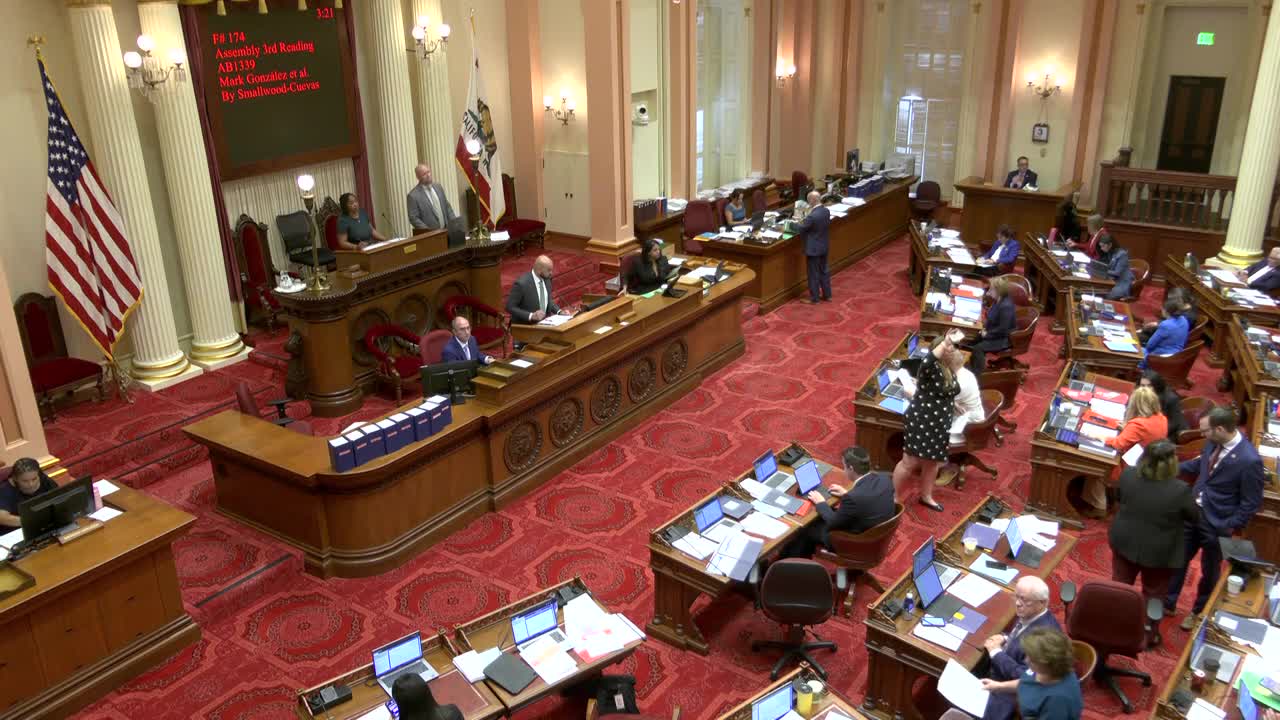 2MIN
Senate Floor
 42SEC
Senate Standing Committee on Appropriations
 14MIN
Senate Standing Committee on Education
 1MIN
Assembly Floor
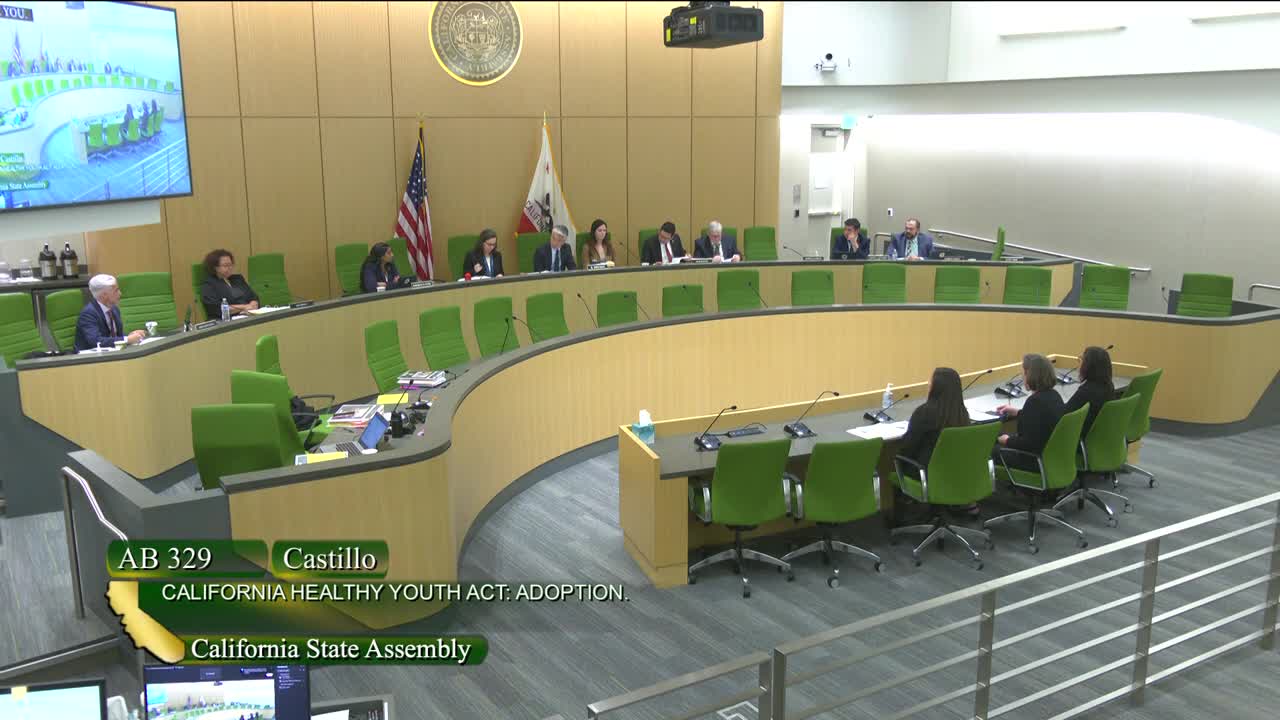 10MIN
Assembly Standing Committee on Education
Bill Author