AB 974: Redevelopment dissolution: housing projects: bond proceeds.
- Session Year: 2015-2016
- House: Assembly
- Latest Version Date: 2015-03-26
Existing law dissolved redevelopment agencies and community development agencies, as of February 1, 2012, and provides for the designation of successor agencies to wind down the affairs of the dissolved redevelopment agencies and to, among other things, make payments due for enforceable obligations and to perform obligations required pursuant to any enforceable obligation. Existing law provides for the transfer of housing assets and functions previously performed by the dissolved redevelopment agency to one of several specified public entities. Existing law authorizes the successor housing entity to designate the use of, and commit, proceeds from indebtedness that was issued for affordable housing purposes prior to January 1, 2011, and was backed by the Low and Moderate Income Housing Fund.
This bill would instead authorize a successor housing entity to designate the use of, and commit, proceeds from indebtedness that was issued for affordable housing purposes prior to June 28, 2011, and would require the proceeds from bonds issued between January 1, 2011, and June 28, 2011, to be used only for projects meeting certain requirements established in this bill for projects, to be funded by successor agencies generally, from proceeds of bonds issued during the same period.
Existing law authorizes the Department of Finance to issue a finding of completion to a successor agency that completes a due diligence review and meets other requirements. Upon receiving a finding of completion, a successor agency is authorized to expend excess bond proceeds derived from bonds issued on or before December 31, 2010, in a manner consistent with the original bond covenants.
The bill would expand this authorization to include the expenditure of excess bond proceeds derived from bonds issued on or before June 28, 2011, and would require proceeds derived from bonds issued between January 1, 2011, and June 28, 2011, to be used by successor agencies only for projects meeting certain requirements. The bill would additionally require the refinance of bonds issued between January 1, 2011 and June 28, 2011, if proceeds derived from those bonds can be used for projects meeting specified criteria, as specified.
Existing law, the Uniform Anatomical Gift Act, regulates the making of anatomical gifts and the disposition of donated bodies and body parts. Existing law authorizes an individual who is between 15 and 18 years of age to, among other things, make an anatomical gift for any specified purpose only upon the written consent of his or her parent or guardian.
This bill would make technical, nonsubstantive changes to that provision.
(a)(1)The city, county, or city and county that authorized the creation of a redevelopment agency may elect to retain the housing assets and functions previously performed by the redevelopment agency. If a city, county, or city and county elects to retain the authority to perform housing functions previously performed by a redevelopment agency, all rights, powers, duties, obligations, and housing assets, as defined in subdivision (e), excluding any amounts on deposit in the Low and Moderate Income Housing Fund and enforceable obligations retained by the successor agency, shall be transferred to the city, county, or city and county.
(2)The housing successor shall submit to the Department of Finance by August 1, 2012, a list of all housing assets that contains an explanation of how the assets meet the criteria specified in subdivision (e). The Department of Finance shall prescribe the format for the submission of the list. The list shall include assets transferred between February 1, 2012, and the date upon which the list is created. The department shall have up to 30 days from the date of receipt of the list to object to any of the assets or transfers of assets identified on the list. If the Department of Finance objects to assets on the list, the housing successor may request a meet and confer process within five business days of receiving the department objection. If the transferred asset is deemed not to be a housing asset as defined in subdivision (e), it shall be returned to the successor agency. If a housing asset has been previously pledged to pay for bonded indebtedness, the successor agency shall maintain control of the asset in order to pay for the bond debt.
(3)For purposes of this section and Section 34176.1, housing successor means the entity assuming the housing function of a former redevelopment agency pursuant to this section.
(b)If a city, county, or city and county does not elect to retain the responsibility for performing housing functions previously performed by a redevelopment agency, all rights, powers, assets, duties, and obligations associated with the housing activities of the agency, excluding enforceable obligations retained by the successor agency and any amounts in the Low and Moderate Income Housing Fund, shall be transferred as follows:
(1)If there is no local housing authority in the territorial jurisdiction of the former redevelopment agency, to the Department of Housing and Community Development.
(2)If there is one local housing authority in the territorial jurisdiction of the former redevelopment agency, to that local housing authority.
(3)If there is more than one local housing authority in the territorial jurisdiction of the former redevelopment agency, to the local housing authority selected by the city, county, or city and county that authorized the creation of the redevelopment agency.
(c)Commencing on the operative date of this part, the housing successor may enforce affordability covenants and perform related activities pursuant to applicable provisions of the Community Redevelopment Law (Part 1 (commencing with Section 33000)), including, but not limited to, Section 33418.
(d)Except as specifically provided in Section 34191.4, any funds transferred to the housing successor, together with any funds generated from housing assets, as defined in subdivision (e), shall be maintained in a separate Low and Moderate Income Housing Asset Fund which is hereby created in the accounts of the housing successor.
(e)For purposes of this part, housing asset includes all of the following:
(1)Any real property, interest in, or restriction on the use of real property, whether improved or not, and any personal property provided in residences, including furniture and appliances, all housing-related files and loan documents, office supplies, software licenses, and mapping programs, that were acquired for low- and moderate-income housing purposes, either by purchase or through a loan, in whole or in part, with any source of funds.
(2)Any funds that are encumbered by an enforceable obligation to build or acquire low- and moderate-income housing, as defined by the Community Redevelopment Law (Part 1 (commencing with Section 33000)) unless required in the bond covenants to be used for repayment purposes of the bond.
(3)Any loan or grant receivable, funded from the Low and Moderate Income Housing Fund, from homebuyers, homeowners, nonprofit or for-profit developers, and other parties that require occupancy by persons of low or moderate income as defined by the Community Redevelopment Law (Part 1 (commencing with Section 33000)).
(4)Any funds derived from rents or operation of properties acquired for low- and moderate-income housing purposes by other parties that were financed with any source of funds, including residual receipt payments from developers, conditional grant repayments, cost savings and proceeds from refinancing, and principal and interest payments from homebuyers subject to enforceable income limits.
(5)A stream of rents or other payments from housing tenants or operators of low- and moderate-income housing financed with any source of funds that are used to maintain, operate, and enforce the affordability of housing or for enforceable obligations associated with low- and moderate-income housing.
(6)(A)Repayments of loans or deferrals owed to the Low and Moderate Income Housing Fund pursuant to subparagraph (G) of paragraph (1) of subdivision (d) of Section 34171, which shall be used consistent with the affordable housing requirements in the Community Redevelopment Law (Part 1 (commencing with Section 33000)).
(B)Loan or deferral repayments shall not be made prior to the 201314 fiscal year. Beginning in the 201314 fiscal year, the maximum repayment amount authorized each fiscal year for repayments made pursuant to this paragraph and subdivision (b) of Section 34191.4 combined shall be equal to one-half of the increase between the amount distributed to taxing entities pursuant to paragraph (4) of subdivision (a) of Section 34183 in that fiscal year and the amount distributed to taxing entities pursuant to that paragraph in the 201213 base year. Loan or deferral repayments made pursuant to this paragraph shall take priority over amounts to be repaid pursuant to subdivision (b) of Section 34191.4.
(f)If a development includes both low- and moderate-income housing that meets the definition of a housing asset under subdivision (e) and other types of property use, including, but not limited to, commercial use, governmental use, open space, and parks, the oversight board shall consider the overall value to the community as well as the benefit to taxing entities of keeping the entire development intact or dividing the title and control over the property between the housing successor and the successor agency or other public or private agencies. The disposition of those assets may be accomplished by a revenue-sharing arrangement as approved by the oversight board on behalf of the affected taxing entities.
(g)(1)(A)The housing successor may designate the use of and commit indebtedness obligation proceeds that remain after the satisfaction of enforceable obligations that have been approved in a Recognized Obligation Payment Schedule and that are consistent with the indebtedness obligation covenants. The proceeds shall be derived from indebtedness obligations that were issued for the purposes of affordable housing prior to January 1, 2011, and were backed by the Low and Moderate Income Housing Fund June 28, 2011. Bond proceeds from bonds issued between January 1, 2011, and June 28, 2011, shall only be used for projects that meet the criteria set forth in subparagraphs (A) and (B) of paragraph (3) of subdivision (c) of Section 34191.4. Enforceable obligations may be satisfied by the creation of reserves for the projects that are the subject of the enforceable obligation that are consistent with the contractual obligations for those projects, or by expending funds to complete the projects.
(B)The housing successor shall provide notice to the successor agency of any designations of use or commitments of funds specified in subparagraph (A) that it wishes to make at least 20 days before the deadline for submission of the Recognized Obligation Payment Schedule to the oversight board. Commitments and designations shall not be valid and binding on any party until they are included in an approved and valid Recognized Obligation Payment Schedule. The review of these designations and commitments by the successor agency, oversight board, and Department of Finance shall be limited to a determination that the designations and commitments are consistent with bond covenants and that there are sufficient funds available.
(2)Funds shall be used and committed in a manner consistent with the purposes of the Low and Moderate Income Housing Asset Fund. Notwithstanding any other law, the successor agency shall retain and expend the excess housing obligation proceeds at the discretion of the housing successor, provided that the successor agency ensures that the proceeds are expended in a manner consistent with the indebtedness obligation covenants and with any requirements relating to the tax status of those obligations. The amount expended shall not exceed the amount of indebtedness obligation proceeds available and such expenditure shall constitute the creation of excess housing proceeds expenditures to be paid from the excess proceeds. Excess housing proceeds expenditures shall be listed separately on the Recognized Obligation Payment Schedule submitted by the successor agency.
(h)This section shall not be construed to provide any stream of tax increment financing.
SEC. 2.Section 34191.4 of the Health and Safety Code is amended to read:34191.4.The following provisions shall apply to any successor agency that has been issued a finding of completion by the Department of Finance:
(a)All real property and interests in real property identified in subparagraph (C) of paragraph (5) of subdivision (c) of Section 34179.5 shall be transferred to the Community Redevelopment Property Trust Fund of the successor agency upon approval by the Department of Finance of the long-range property management plan submitted by the successor agency pursuant to subdivision (b) of Section 34191.5 unless that property is subject to the requirements of any existing enforceable obligation.
(b)(1)Notwithstanding subdivision (d) of Section 34171, upon application by the successor agency and approval by the oversight board, loan agreements entered into between the redevelopment agency and the city, county, or city and county that created the redevelopment agency shall be deemed to be enforceable obligations provided that the oversight board makes a finding that the loan was for legitimate redevelopment purposes.
(2)If the oversight board finds that the loan is an enforceable obligation, the accumulated interest on the remaining principal amount of the loan shall be recalculated from origination at the interest rate earned by funds deposited into the Local Agency Investment Fund. The loan shall be repaid to the city, county, or city and county in accordance with a defined schedule over a reasonable term of years at an interest rate not to exceed the interest rate earned by funds deposited into the Local Agency Investment Fund. The annual loan repayments provided for in the recognized obligation payment schedules shall be subject to all of the following limitations:
(A)Loan repayments shall not be made prior to the 201314 fiscal year. Beginning in the 201314 fiscal year, the maximum repayment amount authorized each fiscal year for repayments made pursuant to this subdivision and paragraph (7) (6) of subdivision (e) of Section 34176 combined shall be equal to one-half of the increase between the amount distributed to the taxing entities pursuant to paragraph (4) of subdivision (a) of Section 34183 in that fiscal year and the amount distributed to taxing entities pursuant to that paragraph in the 201213 base year, provided, however, that calculation of the amount distributed to taxing entities during the 201213 base year shall not include any amounts distributed to taxing entities pursuant to the due diligence review process established in Sections 34179.5 to 34179.8, inclusive. Loan or deferral repayments made pursuant to this subdivision shall be second in priority to amounts to be repaid pursuant to paragraph (7) (6) of subdivision (e) of Section 34176.
(B)Repayments received by the city, county, or city and county that formed the redevelopment agency shall first be used to retire any outstanding amounts borrowed and owed to the Low and Moderate Income Housing Fund of the former redevelopment agency for purposes of the Supplemental Educational Revenue Augmentation Fund and shall be distributed to the Low and Moderate Income Housing Asset Fund established by subdivision (d) of Section 34176.
(C)Twenty percent of any loan repayment shall be deducted from the loan repayment amount and shall be transferred to the Low and Moderate Income Housing Asset Fund, after all outstanding loans from the Low and Moderate Income Housing Fund for purposes of the Supplemental Educational Revenue Augmentation Fund have been paid.
(c)(1)Bond proceeds derived from bonds issued on or before December 31, 2010 June 28, 2011, shall be used for the purposes for which the bonds were sold.
(2)(A)Notwithstanding Section 34177.3 or any other conflicting provision of law, bond proceeds in excess of the amounts needed to satisfy approved enforceable obligations shall thereafter be expended in a manner consistent with the original bond covenants. Enforceable obligations may be satisfied by the creation of reserves for projects that are the subject of the enforceable obligation and that are consistent with the contractual obligations for those projects, or by expending funds to complete the projects. An expenditure made pursuant to this paragraph shall constitute the creation of excess bond proceeds obligations to be paid from the excess proceeds. Excess bond proceeds obligations shall be listed separately on the Recognized Obligation Payment Schedule submitted by the successor agency.
(3)(A)Bond proceeds derived from bonds issued between January 1, 2011, and June 28, 2011, shall only be used for projects which meet the following criteria, as determined by a resolution issued by the oversight board:
(i)The project shall be consistent with the applicable regional sustainable communities strategy or alternative planning strategy adopted pursuant to Section 65080 of the Government Code that the State Air Resources Board has determined would, if implemented, achieve the greenhouse gas emission reduction targets established by the board or, if a sustainable communities strategy is not required for a region by law, a regional transportation plan that includes programs and policies to reduce greenhouse gas emissions.
(ii)Two or more significant planning or implementation actions shall have occurred on or before December 31, 2010. The term significant planning and implementation actions means any of the following:
(I)An action approved by the governing body of the city, county, city and county, the board of the former redevelopment agency, or the planning commission directly related to the planning or implementation of the project.
(II)The project is included within an approved city, county, city and county, or redevelopment agency planning document, including, but not limited to, a redevelopment agency five-year implementation plan, capital improvement plan, master plan, or other planning document.
(III)The expenditure by the city, county, city and county, or project sponsor, of more than twenty-five thousand dollars ($25,000) on planning-related activities for the project within one fiscal year, or fifty thousand dollars ($50,000) in total, over multiple fiscal years.
(iii)Documentation dated on or before December 31, 2010, shall be provided indicating the intention to finance all or a portion of the project with the future issuance of long-term debt, or documentation showing that the issuance of long-term redevelopment agency debt was being planned on or before December 31, 2010.
(iv)Each construction contract over one hundred thousand dollars ($100,000) shall include a provision that prevailing wage will be paid by the contractor and all of that contractors subcontractors.
(v)For each construction contract over two hundred fifty thousand dollars ($250,000), the successor agency shall require prospective contractors to submit a standardized questionnaire and financial statements as part of their bid package, to establish the contractors financial ability and experience in performing large construction projects.
(B)Any city, county, or city and county that funded an eligible project, meeting the criteria listed in clauses (i) to (iii), inclusive, of subparagraph (A) with funds other than redevelopment funds, between June 28, 2011, and the effective date of the act adding this paragraph, shall be eligible to be reimbursed utilizing 2011 bond proceeds, if the project meets the purpose for which the bonds were issued.
(C)Any successor agency requesting the use of bond proceeds derived from bonds issued between January 1, 2011, and June 28, 2011, in accordance with subparagraphs (A) and (B), shall place that request on its Recognized Obligation Payment Schedule. The successor agency shall place each project on a separate Recognized Obligation Payment Schedule line item. The successor agency shall detail in the resolution adopting the Recognized Obligation Payment Schedule how each project will meet the requirements in subparagraphs (A) and (B), and all documentation showing how the project meets those shall be attached to the resolution. The resolution adopting the Recognized Obligation Payment Schedule, including the supporting documentation, shall be forwarded to the Department of Finance for review and approval or denial. Pursuant to subdivision (h) of Section 34179, the Department of Finance may review and deny any action by the oversight board.
(B)
(4)If remaining bond proceeds derived from bonds issued on or before December 31, 2010, cannot be spent in a manner consistent with the bond covenants pursuant to subparagraph (A) paragraph (2), or if bond proceeds derived from bonds issued between January 1, 2011, and June 28, 2011, cannot be used for projects that met the requirements in subparagraphs (A) and (B) of paragraph (3), the proceeds shall be used to defease the bonds or to purchase those same outstanding bonds on the open market for cancellation. If only a portion of the bonds proceeds will be used, the successor agency shall defease or purchase bonds for cancellation in a manner that maximizes fiscal savings.
(5)If bond proceeds derived from bonds issued between January 1, 2011, and June 28, 2011, can be used for projects that met the requirements in subparagraphs (A) and (B) of paragraph (3), the corresponding bonds shall be refinanced, when refinancing is allowed according to the bonds indenture, to reduce debt service costs by lowering interest rates according to the provisions set forth in subdivision (a) of Section 34117.5.
SECTION 1.Section 7150.35 of the Health and Safety Code is amended to read:7150.35.(a)Except as otherwise provided in subdivision (g) and subject to subdivision (f), in the absence of an express, contrary indication by the donor, a person other than the donor is barred from making, amending, or revoking an anatomical gift of a donors body or part if the donor made an anatomical gift of the donors body or part under Section 7150.20 or an amendment to an anatomical gift of the donors body or part under Section 7150.25.
(b)A donors revocation of an anatomical gift of the donors body or part under Section 7150.25 is not a refusal and does not bar another person specified in Section 7150.15 or 7150.40 from making an anatomical gift of the donors body or part under Section 7150.20 or 7150.45.
(c)If a person other than the donor makes an unrevoked anatomical gift of the donors body or part under Section 7150.20 or an amendment to an anatomical gift of the donors body or part under Section 7150.25, another person may not make, amend, or revoke the gift of the donors body or part under Section 7150.45.
(d)A revocation of an anatomical gift of a donors body or part under Section 7150.25 by a person other than the donor does not bar another person from making an anatomical gift of the body or part under Section 7150.20 or 7150.45.
(e)In the absence of an express, contrary indication by the donor or other person authorized to make an anatomical gift under Section 7150.15, an anatomical gift of a part is neither a refusal to give another part nor a limitation on the making of an anatomical gift of another part at a later time by the donor or another person.
(f)In the absence of an express, contrary indication by the donor or other person authorized to make an anatomical gift under Section 7150.15, an anatomical gift of a part for one or more of the purposes set forth in Section 7150.15 is not a limitation on the making of an anatomical gift of the part for any of the other purposes by the donor or any other person under Section 7150.20 or 7150.45.
(g)Notwithstanding subdivision (a), an individual who is between 15 and 18 years of age may make an anatomical gift for any purpose authorized in this chapter, limit an anatomical gift to one or more of those purposes, refuse to make an anatomical gift, or amend or revoke an anatomical gift, only upon the written consent of the parent or guardian. If a donor who is an unemancipated minor dies, a parent of the donor who is reasonably available may revoke or amend an anatomical gift of the donors body or part.
(a)Except as otherwise provided in subdivision (g) and subject to subdivision (f), in the absence of an express, contrary indication by the donor, a person other than the donor is barred from making, amending, or revoking an anatomical gift of a donors body or part if the donor made an anatomical gift of the donors body or part under Section 7150.20 or an amendment to an anatomical gift of the donors body or part under Section 7150.25.
(b)A donors revocation of an anatomical gift of the donors body or part under Section 7150.25 is not a refusal and does not bar another person specified in Section 7150.15 or 7150.40 from making an anatomical gift of the donors body or part under Section 7150.20 or 7150.45.
(c)If a person other than the donor makes an unrevoked anatomical gift of the donors body or part under Section 7150.20 or an amendment to an anatomical gift of the donors body or part under Section 7150.25, another person may not make, amend, or revoke the gift of the donors body or part under Section 7150.45.
(d)A revocation of an anatomical gift of a donors body or part under Section 7150.25 by a person other than the donor does not bar another person from making an anatomical gift of the body or part under Section 7150.20 or 7150.45.
(e)In the absence of an express, contrary indication by the donor or other person authorized to make an anatomical gift under Section 7150.15, an anatomical gift of a part is neither a refusal to give another part nor a limitation on the making of an anatomical gift of another part at a later time by the donor or another person.
(f)In the absence of an express, contrary indication by the donor or other person authorized to make an anatomical gift under Section 7150.15, an anatomical gift of a part for one or more of the purposes set forth in Section 7150.15 is not a limitation on the making of an anatomical gift of the part for any of the other purposes by the donor or any other person under Section 7150.20 or 7150.45.
(g)Notwithstanding subdivision (a), an individual who is between 15 and 18 years of age may make an anatomical gift for any purpose authorized in this chapter, may limit an anatomical gift to one or more of those purposes, may refuse to make an anatomical gift, or may amend or revoke an anatomical gift, only upon the written consent of the parent or guardian. If a donor who is an unemancipated minor dies, a parent of the donor who is reasonably available may revoke or amend an anatomical gift of the donors body or part.
|
Date
|
Status
|
|---|---|
| Sep 10, 2015 | Ordered to inactive file at the request of Senator Allen. |
| Aug 31, 2015 | Read second time. Ordered to third reading. |
| Aug 27, 2015 | From committee: Do pass. (Ayes 5. Noes 2.) (August 27). |
| Aug 17, 2015 | In committee: Referred to APPR. suspense file. |
| Jul 15, 2015 | From committee: Do pass and re-refer to Com. on APPR. (Ayes 4. Noes 1.) (July 15). Re-referred to Com. on APPR. |
| Jul 8, 2015 | From committee: Do pass and re-refer to Com. on GOV. & F. (Ayes 8. Noes 2.) (July 7). Re-referred to Com. on GOV. & F. |
| Jun 24, 2015 | In committee: Hearing postponed by committee. |
| Jun 11, 2015 | Referred to Coms. on T. & H. and GOV. & F. |
| Jun 2, 2015 | In Senate. Read first time. To Com. on RLS. for assignment. |
| Jun 2, 2015 | Read third time. Passed. Ordered to the Senate. (Ayes 46. Noes 29. Page 1765.) |
| Jun 2, 2015 | Read third time. Passed. Ordered to the Senate. |
| Jun 1, 2015 | Read second time. Ordered to third reading. |
| May 28, 2015 | From committee: Do pass. (Ayes 12. Noes 5.) (May 28). |
| May 13, 2015 | In committee: Set, first hearing. Referred to APPR. suspense file. |
| Apr 29, 2015 | From committee: Do pass and re-refer to Com. on APPR. (Ayes 4. Noes 2.) (April 29). Re-referred to Com. on APPR. |
| Apr 16, 2015 | From committee: Do pass and re-refer to Com. on H. & C.D. (Ayes 5. Noes 3.) (April 15). Re-referred to Com. on H. & C.D. |
| Apr 6, 2015 | Re-referred to Com. on L. GOV. |
| Mar 26, 2015 | From committee chair, with author's amendments: Amend, and re-refer to Com. on L. GOV. Read second time and amended. |
| Mar 26, 2015 | Referred to Coms. on L. GOV. and H. & C.D. |
| Feb 27, 2015 | From printer. May be heard in committee March 29. |
| Feb 26, 2015 | Read first time. To print. |
|
Date
|
Description
|
Location
|
Votes
|
|
|---|---|---|---|---|
| Aug 27, 2015 | Do pass | Senate Standing Committee on Appropriations |
Passed |
|
| Aug 17, 2015 | Placed on suspense file | Senate Standing Committee on Appropriations |
Passed |
|
| Jul 15, 2015 | Do pass, but first be re-referred to the Committee on [Appropriations] | Senate Standing Committee on Governance and Finance |
Passed |
|
| Jul 7, 2015 | Do pass, but first be re-referred to the Committee on [Governance and Finance] | Senate Standing Committee on Transportation and Housing |
Passed |
|
| Jun 2, 2015 | AB 974 BLOOM Assembly Third Reading | Assembly Floor |
Passed |
|
| May 28, 2015 | Do pass. | Assembly Standing Committee on Appropriations |
Passed |
|
| Apr 29, 2015 | Do pass and be re-referred to the Committee on [Appropriations] | Assembly Standing Committee on Housing and Community Development |
Passed |
|
| Apr 15, 2015 | Do pass and be re-referred to the Committee on [Housing and Community Development] | Assembly Standing Committee on Local Government |
Passed |
This list shows positions taken on this bill by organizations on the date displayed, which is linked to the original source.
Positions by individuals are not included.
AB 974
Page 7
|
Office of Senate Floor Analyses (916) 651-1520 Fax: (916) 327-4478 |
THIRD READING
Bill No: AB 974
Amended: 3/26/15 in Assembly
SENATE TRANS. & HOUSING COMMITTEE: 8-2, 7/7/15
AYES: Beall, Cannella, Allen, Galgiani, McGuire, Mendoza, Roth, Wieckowski
NOES: Gaines, Leyva
NO VOTE RECORDED: Bates
SENATE GOVERNANCE & FIN. COMMITTEE: 4-1, 7/15/15
AYES: Hertzberg, Beall, Lara, Pavley
NOES: Moorlach
NO VOTE RECORDED: Nguyen, Hernandez
SENATE APPROPRIATIONS COMMITTEE: 5-2, 8/27/15
AYES: Lara, Beall, Hill, Leyva, Mendoza
NOES: Bates, Nielsen
ASSEMBLY FLOOR: 46-29, 6/2/15 - See last page for vote
SUBJECT: Redevelopment dissolution: housing projects: bond proceeds
DIGEST: This bill allows both successor agencies and housing successors to commit remaining proceeds from non-housing and housing redevelopment bonds, respectively, issued between January 1, 2011, and June 28, 2011, provided that the remaining proceeds are approved by the oversight board and used for projects that meet specific criteria.
Existing law:
Eliminates redevelopment agencies (RDAs) and establishes procedures for winding down the agencies, paying off enforceable obligations, and disposing of agency assets.
Establishes successor agencies, typically the city that established the RDA, to take control of all RDA assets, properties, and other items of value. Successor agencies are to dispose of an agency’s assets as directed by an oversight board, made up of representatives of local taxing entities, with the proceeds transferred to the county auditor-controller for distribution to taxing agencies within each county.
This bill:
Allows both successor agencies and housing successors to commit remaining proceeds from non-housing and housing redevelopment bonds, respectively, issued between January 1, 2011, and June 28, 2011, provided that the remaining proceeds are approved by the oversight board and used for projects that meet all of the following criteria:
The project must be consistent with a region’s sustainable communities strategy or equivalent planning strategy designed to reduce greenhouse gas emissions.
Two or more significant planning actions, as defined, occurred on or before December 31, 2010, related to the project.
Documentation dated on or before December 31, 2010, is provided indicating the intention to finance all or a portion of the project with the future issuance of long-term debt.
Any construction contract over $100,000 must include a provision ensuring prevailing wage is paid by the contractor and all subcontractors.
Any construction contract over $250,000 must require prospective contractors to establish their financial ability and experience in performing large construction contracts.
Authorizes a housing successor to reimburse with the bond proceeds issued in 2011 a city or county that funded an eligible project with other funds as long as the project meets the purpose for which the bonds were issued.
Requires bonds to be refinanced as soon as possible to reduce the debt service costs by lowering interest rates.
Background
Historically, the Community Redevelopment Law allowed a local government to establish a redevelopment area and capture all of the increase in property taxes generated within the area (referred to as “tax increment”) over a period of decades. The law requires redevelopment agencies to deposit 20% of tax increment into a Low and Moderate Income Housing Fund (L&M Fund) to be used to increase, improve, and preserve the community’s supply of low- and moderate-income housing available at an affordable housing cost.
In 2011, the Legislature enacted two bills, ABX1 26 (Blumenfield) and ABX1 27 (Blumenfield), Chapters 5 and 6, respectively, of the First Extraordinary Session. ABX1 26 eliminated RDAs and established procedures for winding down the agencies, paying off enforceable obligations, and disposing of agency assets. ABX1 26 established successor agencies, typically the city that established the agency, to take control of all RDA assets, properties, and other items of value. Successor agencies are to dispose of an RDA’s assets as directed by an oversight board, made up of representatives of local taxing entities, with the proceeds transferred to the county auditor-controller for distribution to taxing agencies within each county.
ABX1 26 also included provisions allowing the host city or county of a dissolving RDA to retain the housing assets and functions previously performed by the agency, except for funds on deposit in the agency’s L&M Fund, and thus become a housing successor. If the host city or county chooses not to become the housing successor, a local housing authority or the California Department of Housing and Community Development takes on that responsibility.
ABX1 27 allowed RDAs to avoid elimination if they made payments to schools in the current budget year and in future years. In December 2011, the California Supreme Court in California Redevelopment Association v. Matosantos upheld ABX1 26 and overturned ABX1 27. As a result, all of the state’s roughly 400 RDAs dissolved on February 1, 2012, and successor agencies began implementing ABX1 26’s provisions to distribute former redevelopment assets and pay the remaining obligations.
Subsequent legislation, AB 1484 (Assembly Budget Committee, Chapter 26, Statues of 2012), allowed a successor agency to expend remaining proceeds from non-housing redevelopment bonds issued before January 1, 2011, for the purposes for which the bonds were sold or to defease the bonds. AB 1484 also allowed a housing successor to commit remaining proceeds of bonds backed by the L&M Fund and issued for the purposes of affordable housing prior to January 1, 2011.
Comments
Defeasance vs. spending. The core issue presented by this bill is whether remaining bond proceeds should be spent or repaid as soon as possible. While many bonds cannot be repaid for 10 years, spending the money means that the bonds will not be repaid for up to 30 years, which of course entails significant additional interest. All these costs are funded through local tax increment, meaning that expending tax revenues on these projects reduces the amount of revenues available for other local governmental entities. Spending bond proceeds instead of repaying the bondholders will result in the completion of additional projects, many of which are likely to be beneficial to the community, if not the state, but this comes with an opportunity cost. Cities, counties, special districts, and the state by way of the school funding backfill will have fewer resources to spend on other needs or priorities.
Prior Legislation
This bill is very similar to AB 2493 (Bloom) of 2014, which would have allowed successor agencies to use proceeds derived from bonds issued between January 1, 2011, and June 28, 2011, if the project was consistent with a sustainable communities strategy or reduced greenhouse gas emissions. AB 2493 was vetoed by Governor Brown, with the following veto message:
“I applaud the author’s efforts to craft legislation to target specific projects for funding from 2011 bond proceeds. Funding for this measure, however, would come at the expense of lost property tax dollars to cities and counties that chose not to incur debt during this period, as well as special districts and schools. The cost to the general fund to backfill schools could be significant, to the tune of $500 million, at a time when the state is still recovering from deep recession.
“I recognize that the cost to local governments to defease these high interest rate bonds is significant. Therefore, I am directing DOF [the California Department of Finance] to develop a plan to address the outstanding bond debt of these agencies.”
To address the governor’s concern expressed in his veto message, the author has included in this bill a requirement that successor agencies refinance their 2011 bonds. The author argues that this requirement reduces some of the future fiscal impacts to the state and other taxing entities. It seems likely agencies would do this anyway; however, it is unclear how this change will adequately address the Governor’s concerns.
FISCAL EFFECT: Appropriation: No Fiscal Com.: Yes Local: No
According to the Senate Appropriations Committee, this bill will likely incur significant General Fund impacts, potentially tens of millions of dollars in some years, most of which would occur beginning in 2021 and through 2041, as a result of the bill allowing for continued debt repayment on bonds issued in 2011 from tax increment that would otherwise be redistributed to taxing entities if the bonds were defeased.
The amount of continued debt service payments from tax increment revenues would escalate to a peak of $99 million in 2026 and decline to approximately $42 million in 2041 (the typical 30-year term of most affected bonds), preventing a like amount from being distributed to local agencies that receive a portion of the property tax, including schools. Since the General Fund must backfill any amounts that would otherwise go to schools under Proposition 98’s minimum funding guarantees, this bill would result in future General Fund impacts that could reach the tens of millions of dollars, reaching a peak in 2026 and declining thereafter. (This does not account for any potential economic benefits resulting from allowing the completion of projects funded by the 2011 bonds.)
City of Santa Monica
City of West Hollywood
OPPOSITION: (Verified 8/28/15)
California Professional Firefighters
California Special Districts Association
California State Association of Counties
County of Los Angeles
County of Santa Clara
Urban Counties Caucus
ARGUMENT IN SUPPORT: According to the author, it is estimated that approximately $750 million in 2011 RDA bond proceeds are currently sitting idle and cannot be used. If these proceeds were spent on their intended projects, it is estimated that 19,000 high-wage construction and related jobs would be generated. The state has asserted that the vast majority of the 2011 RDA bonds must be defeased and their proceeds not spent on projects; however, over 90% of these bonds cannot be defeased for 10 years. During this 10-year period, nearly $1 billion will be spent on the debt service payments for these bonds, and the bond proceeds will continue to go unused. The vast majority of these bonds were issued for public works projects such as infrastructure construction and repair, new public facilities, and affordable housing. Further, the author argues that bondholders who purchased tax-exempt bonds for specific public works projects (approximately 70% of the bonds in question) were promised tax-free returns. Per federal tax law, tax-exempt bond proceeds must be used for their intended purpose, or the bonds could be subject to losing their tax-exempt status.
ARGUMENT IN OPPOSITION: Opponents argue that allowing successor agencies to use proceeds from bonds issued after the Governor announced his proposal to dissolve RDAs improperly rewards agencies that deliberately acted to circumvent the dissolution process, often by rushing to sell bonds at above-market interest rates. $750 million in bond proceeds is at stake, but the ultimate cost to schools, counties, cities, and special districts is $2 billion when the additional interest payments are included. Opponents prefer to see the bond proceeds used to retire redevelopment debt so that tax increment is more quickly available to all taxing entities, including schools, which otherwise the state’s General Fund must support. In other words, this bill requires the whole state to pay for these 39 “Mardi Gras” agencies.
ASSEMBLY FLOOR: 46-29, 6/2/15
AYES: Alejo, Bloom, Bonilla, Bonta, Brown, Burke, Calderon, Campos, Chau, Chiu, Chu, Cooley, Cooper, Dababneh, Daly, Dodd, Eggman, Cristina Garcia, Eduardo Garcia, Gatto, Gipson, Gomez, Roger Hernández, Holden, Jones-Sawyer, Levine, Lopez, Low, McCarty, Medina, Mullin, Nazarian, O'Donnell, Perea, Quirk, Rendon, Ridley-Thomas, Salas, Santiago, Mark Stone, Thurmond, Ting, Weber, Williams, Wood, Atkins
NOES: Achadjian, Travis Allen, Baker, Bigelow, Brough, Chang, Dahle, Beth Gaines, Gallagher, Gray, Grove, Hadley, Harper, Irwin, Jones, Kim, Lackey, Linder, Maienschein, Mathis, Mayes, Melendez, Obernolte, Olsen, Patterson, Steinorth, Wagner, Waldron, Wilk
NO VOTE RECORDED: Chávez, Frazier, Gonzalez, Gordon, Rodriguez
Prepared by: Eric Thronson / T. & H. / (916) 651-4121
8/31/15 17:35:41
AB 974 (Bloom) Page 5 of 5
SENATE COMMITTEE ON APPROPRIATIONS
Senator Ricardo Lara, Chair
2015 - 2016 Regular Session
AB 974 (Bloom) - Redevelopment dissolution: housing projects: bond proceeds
|
|
Version: March 26, 2015 |
Policy Vote: T. & H. 8 - 2, GOV. & F. 4 - 1 |
Urgency: No |
Mandate: No |
Hearing Date: August 17, 2015 |
Consultant: Mark McKenzie |
This bill meets the criteria for referral to the Suspense File.
Bill Summary:
AB 974 would allow redevelopment successor agencies, and entities performing the housing functions of former redevelopment agencies (RDAs), to spend bond proceeds from bonds issued by former RDAs between January 1, 2011 and June 28, 2011 for specified projects that were planned for development prior to 2011.
Fiscal Impact:
Significant General Fund impacts, potentially tens of millions in some years, most of which would occur beginning in 2021 and through 2041, as a result of the bill allowing for continued debt repayment on bonds issued in 2011 from tax increment that would otherwise be redistributed to taxing entities if the bonds were defeased.
The amount of continued debt service payments from tax increment revenues would escalate to a peak of $99 million in 2026 and decline to approximately $42 million in 2041 (the typical 30 year term of most affected bonds), preventing a like amount from being distributed to local agencies that receive a portion of the property tax, including schools. Since the General Fund must backfill any amounts that would otherwise go to schools under Proposition 98’s minimum funding guarantees, this bill would result in future General Fund impacts that could reach the tens of millions, reaching a peak in 2026 and declining thereafter. (This does not account for any potential economic benefits resulting from allowing the completion of projects funded by the 2011 bonds)
Background:
Historically, the Community Redevelopment Law has allowed a local government to establish redevelopment agencies (RDAs) and capture all of the increase in property taxes that is generated within the project area beyond the base year value (referred to as “tax increment”) over a period of decades. Prior to their dissolution pursuant to ABx1 26 (Blumenfield) Ch. 5/2011, RDAs used tax increment financing, oftentimes issuing long-term debt in the form of tax allocation bonds, to address issues of blight, construct affordable housing, rehabilitate existing buildings, and finance development and infrastructure projects. When RDAs were abruptly dissolved pursuant to ABx1 26, many held balances of unencumbered bond proceeds that were intended to fund future redevelopment activities, but were not needed to meet those RDAs’ existing obligations.
Existing law establishes procedures for winding down RDA activity, including a requirement that successor agencies dispose of former RDAs’ assets under direction of an oversight board. Successor agencies are required to make any payments related to enforceable obligations, as specified in an adopted biannual recognized obligation payment schedule (ROPS), and remit unencumbered balances of RDA funds to the county auditor-controller for distribution to local taxing entities in the county. The DOF reviews each ROPS to determine if the listed payments meet the statutory criteria for repayment, and has the authority to disallow any payments that do not meet those criteria. Successor agencies must use bond proceeds derived from bonds issued prior to January 1, 2011 for the purposes for which the bonds were sold. If those purposes cannot be achieved, the proceeds can be used to defease the bonds. Successor agencies cannot enter into new enforceable obligations.
Existing law, AB 1484 (Budget Committee), Chap 26/2012, requires DOF to provide a successor agency with a “finding of completion” after the agency remits specified RDA property tax allocations and unencumbered cash assets to the county auditor-controller through a due diligence process. Once the successor agency receives a finding of completion, the agency is authorized to, among other things, expend bond proceeds in excess of the amounts needed to satisfy approved enforceable obligations in a manner consistent with the original bond covenants. If remaining bond proceeds cannot be spent in a manner consistent with the bond covenants, the proceeds must be used to defease the bonds or to purchase those same outstanding bonds on the open market for cancellation. Defeasing bonds is a method of retiring bond debt by buying and holding risk-free U.S. Treasury securities in an amount that is sufficient to cover all principal and interest payments on the outstanding bonds.
SB 375 (Steinberg) Ch. 728/2008, requires the Air Resources Board (ARB) to provide each region that has a metropolitan planning organization (MPO) with a greenhouse gas emission reduction target for the automobile and light truck sector for 2020 and 2035, respectively. Each MPO, in turn, is required to include within its regional transportation plan a sustainable communities strategy (SCS) designed to achieve the ARB targets for greenhouse gas emission reduction. Each MPO must submit its SCS to ARB for review. ARB must accept or reject the MPO’s determination that the implementation of a submitted SCS submitted would achieve the greenhouse gas emission reduction targets.
Proposed Law:
AB 974 would authorize RDA successor agencies and housing successors to use bond proceeds derived from bonds issued between January 1, 2011 and June 28, 2011 for the projects that meet the following criteria, as determined by a resolution of the oversight board:
The project must be consistent with the applicable regional SCS or alternative planning strategy, as specified.
Two or more of the following significant planning or implementation actions must have occurred on or before December 31, 2010:
An action approved by the governing body of the city, county, city and county, the board of the former RDA, or the planning commission directly related to the planning or implementation of the project.
The project is included within an approved city, county, city and county, or RDA planning document, including, an RDA five-year implementation plan, capital improvement plan, master plan, or other planning document.
The expenditure by the city, county, city and county, or project sponsor, of more than $25,000 on planning related activities for the project within one fiscal year, or $50,000 in total, over multiple fiscal years.
The successor agency must provide documentation, dated on or before December 31, 2010, indicating the intention to finance all or a portion of the project with the future issuance of long-term debt, or documentation showing that the issuance of long-term RDA debt was being planned on or before that date.
Each construction contract over $100,000 must include a provision that prevailing wage will be paid by the contractor and all of that contractor’s subcontractors.
For each construction contract over $250,000, the successor agency must require prospective contractors to establish the contractor’s financial ability and experience in performing large construction projects, as specified.
AB 974 would also do the following:
Authorizes a successor agency to reimburse city and/or county expenditures that funded a project that meets these criteria from the proceeds of 2011 bonds, if those expenditures occurred between June 28, 2011 and the bill’s effective date.
Require a successor agency requesting to use bond proceeds from bonds issued between January 1, 2011 and June 28, 2011 to place that request on its ROPS, with each project listed as a separate line item.
Require a successor agency to show how each project meets specified requirements in the resolution adopting the ROPS, as specified, and to forward the resolution to DOF for review and approval or denial.
Require a successor agency to use bond proceeds that cannot be spent on projects, pursuant to requirements in the bill, to either defese the bonds or to purchase bonds for cancellation.
Requires bonds issued in 2011 that can be used for projects, pursuant to requirements in the bill, to be refinanced, when it is permitted, to reduce debt service costs by lowering interest rates.
Related Legislation:
AB 2493 (Bloom), which was vetoed by Governor Brown in 2014, was substantially similar to this bill. The Governor’s veto message stated the following:
This bill permits successor
agencies and housing successors of former redevelopment agencies to
use proceeds derived from bonds issued between January 1, 2011, and
June 28, 2011, if the project is consistent with a
sustainable communities strategy or reduces greenhouse gas emissions.
Expenditure of the bond proceeds would be subject to approval by the
Department of Finance (DOF).
I applaud the author's
efforts to craft legislation to target specific projects for funding
from 2011 bond proceeds. Funding for this measure, however, would
come at the expense of lost property tax dollars to cities and
counties that chose not to incur debt during this period, as well as
special districts and schools. The cost to the general fund to
backfill schools could be significant, to the tune of $500 million,
at a time when the state is still recovering from deep recession.
I
recognize that the cost to local governments to defease these high
interest rate bonds is significant. Therefore, I am directing the
Department of Finance to develop a plan to address the outstanding
bond debt of these agencies.
AB 113 (Budget Committee), which is a 2015-16 Budget Trailer Bill, contains provisions that enact some of the Governor’s proposed changes to the redevelopment dissolution process, including an alternative approach to allowing the expenditure of 2011 redevelopment bond proceeds. Under the alternative approach in AB 113, successor agencies that are granted a “last and final” ROPS by DOF would be authorized to spend up to 30% of any unencumbered 2011 bond proceeds and can spend an additional share – ranging from 25% to 5% – that corresponds to the date on which the bonds were issued. AB 113 is pending in the Senate Budget and Fiscal Review Committee.
Staff Comments:
According to the Legislative Analyst’s Office, in the first six months of 2011, RDAs issued about $1.5 billion in tax allocation bonds, a level of debt issuance greater than during all 12 months of 2010 ($1.3 billion). About two–thirds of the bond issuances in 2011 had interest rates greater than 7 percent, compared with less than one-quarter of bond issuances in 2010. In fact, RDAs issued more tax allocation bonds with interest rates exceeding 8 percent during the first six months of 2011 than they had in the previous ten years. While some of these bond sales were deliberate attempts by RDAs to preempt the Governor’s proposal to eliminate redevelopment, by establishing debt obligations that would tie up property tax increment revenues well into the future, many of those bond sales were intended for projects that had been in the planning stages long before the Governor announced his intentions.
Since RDA dissolutions statutes prohibit successor agencies from spending bond proceeds issued after December 31, 2010, they are often forced to retain those proceeds for extended periods of time while paying debt service (including interest charges) out of tax increment revenues. Much of the debt that was issued in 2011 cannot be defeased or refinanced until 2021. Proponents indicate that up to $1 billion in debt service payments will have been paid from tax increment by that time. AB 974 would allow successor agencies and housing successors to spend 2011 bond proceeds on projects that are consistent with the SCS and meet other specified criteria. This would essentially allow for an extension of redevelopment activity for at least 20 years to continue the debt service on these projects. As a result, successor agencies and housing successors would continue to incur administrative costs associated with the continued repayment.
Staff notes that the author has provided information indicating that bill would allow for the expenditure of approximately $435 million of the estimated $715 million in unspent 2011 RDA bond proceeds by 35 cities that have projects meeting the criteria established by the bill. Since the majority of bonds issued in 2011 cannot be defeased until 2021, the state fiscal impacts of this bill would not occur until that date, and would extend for an additional 20 years in most cases. Since this bill would ensure continued debt service for 20 years from tax increment that would otherwise be distributed to local taxing agencies, AB 974 would result in increased General Fund expenditures to offset tax increment payments that would otherwise go to schools, absent the bill.
-- END --
AB 974 (Bloom) 3/26/15 Page 5 of 5
SENATE COMMITTEE ON GOVERNANCE AND FINANCE
Senator Robert M. Hertzberg, Chair
2015 - 2016 Regular
Bill No: |
AB 974 |
Hearing Date: |
7/15/15 |
Author: |
Bloom |
Tax Levy: |
No |
Version: |
3/26/15 |
Fiscal: |
Yes |
Consultant: |
Weinberger |
||
REDEVELOPMENT SUCCESSOR AGENCIES
Allows redevelopment successor agencies to spend proceeds from bonds issued by former redevelopment agencies in 2011.
Background and Existing Law
Until 2011, the Community Redevelopment Law allowed local officials to set up redevelopment agencies (RDAs), prepare and adopt redevelopment plans, and finance redevelopment activities. As a redevelopment project area's assessed valuation grew above its base-year value, the resulting property tax revenues – the property tax increment – went to the RDA instead of going to the underlying local governments. The RDA kept the property tax increment revenues generated from increases in property values within a redevelopment project area.
Citing a significant State General Fund deficit, Governor Brown’s 2011-12 budget proposed eliminating RDAs and returning billions of dollars of property tax revenues to schools, cities, and counties to fund core services. Among the statutory changes that the Legislature adopted to implement the 2011-12 budget, AB X1 26 (Blumenfield, 2011) dissolved all RDAs. The California Supreme Court's 2011 ruling in California Redevelopment Association v. Matosantos upheld AB X1 26, but invalidated AB X1 27 (Blumenfield, 2011), which would have allowed most RDAs to avoid dissolution.
AB X1 26 established successor agencies to manage the process of unwinding former RDAs’ affairs. With the exception of seven cities that chose not to serve as successor agencies, the city or county that created each former RDA now serves as that RDA’s successor agency. A successor agency that is specifically designated to retain the housing assets and functions previously performed by the former RDA is known as a “housing successor agency.” Each successor agency has an oversight board that is responsible for supervising it and approving its actions. The Department of Finance (DOF) can review and request reconsideration of an over-sight board’s decisions.
One of the successor agencies’ primary responsibilities is to make payments for enforceable obligations entered into by former RDAs. The statutory definition of an “enforceable obligation” includes bonds, specified bond-related payments, some loans; payments required by the federal government, obligations to the state, obligations imposed by state law, legally required payments related to RDA employees, judgments or settlements, and other legally binding and enforceable agreements or contracts.
Each successor agency must, every six months, draft a list of enforceable obligations that are payable during a subsequent six month period. This “Recognized Obligation Payment Schedule” (ROPS) must be adopted by the oversight board and is subject to review by DOF. Obligations listed on a ROPS are payable from a Redevelopment Property Tax Trust Fund, which contains the revenues that would have been allocated as tax increment to a former RDA.
A successor agency receives a “finding of completion” from DOF if the agency complies with state laws that require it to remit specified RDA property tax allocations and cash assets identified through a “due diligence review” (AB 1484, Assembly Budget Committee, 2012). Nearly 340 successor agencies have received a finding of completion.
State law allows a successor agency that receives a finding of completion to use bond proceeds derived from bonds issued on or before December 31, 2010, for the purposes for which the bonds were sold. Bond proceeds in excess of the amounts needed to satisfy approved enforceable obligations must be expended in a manner consistent with the original bond covenants. If remaining bond proceeds cannot be spent in a manner consistent with the bond covenants, the proceeds must be used to defease the bonds or to purchase those same outstanding bonds on the open market for cancellation. Defeasing bonds is a method of retiring bond debt by buying and holding risk-free U.S. Treasury securities in an amount that is sufficient to cover all principal and interest payments on the outstanding bonds.
Citing the costs associated with retiring proceeds from bonds issued by RDAs in 2011 and the potential benefits of investing those proceeds in development projects, some local officials want the Legislature to allow successor agencies to spend 2011 bond proceeds under specified conditions.
Proposed Law
Assembly Bill 974 allows a successor agency, including a housing successor agency, to use bond proceeds derived from bonds issued between January 1, 2011, and June 28, 2011, only for projects which meet the following criteria, as determined by a resolution issued by the oversight board:
The project must be consistent with the applicable regional sustainable communities strategy or alternative planning strategy adopted pursuant to state law that the State Air Resources Board has determined would, if implemented, achieve the greenhouse gas emission reduction targets established by the board or, if a sustainable communities strategy is not required for a region by law, a regional transportation plan that includes programs and policies to reduce greenhouse gas emissions.
Two or more of the following significant planning or implementation actions must have occurred on or before December 31, 2010:
An action approved by the governing body of the city, county, city and county, the board of the former redevelopment agency, or the planning commission directly related to the planning or implementation of the project.
The project is included within an approved city, county, city and county, or redevelopment agency planning document, including a redevelopment agency five-year implementation plan, capital improvement plan, master plan, or other planning document.
The expenditure by the city, county, city and county, or project sponsor, of more than $25,000 on planning related activities for the project within one fiscal year, or $50,000 in total, over multiple fiscal years.
The successor agency must provide documentation, dated on or before December 31, 2010, indicating the intention to finance all or a portion of the project with the future issuance of long-term debt, or documentation showing that the issuance of long-term redevelopment agency debt was being planned on or before December 31, 2010.
Each construction contract over $100,000 must include a provision that prevailing wage will be paid by the contractor and all of that contractor’s subcontractors.
For each construction contract over $250,000, the successor agency must require prospective contractors to submit a standardized questionnaire and financial statements as part of their bid package, to establish the contractor’s financial ability and experience in performing large construction projects.
AB 974 allows a successor agency to use 2011 bond proceeds to reimburse a city, county, or city and county that funded an eligible project that meets specified criteria with funds other than redevelopment funds between June 28, 2011 and the bill’s effective date.
AB 974 requires that any successor agency requesting the use of bond proceeds pursuant to the bill’s provisions must place that request on its Recognized Obligation Payment Schedule in a specified manner.
AB 974 requires a successor agency to detail in the resolution adopting the Recognized Obligation Payment Schedule how each project will meet specified requirements and all documentation showing how the project meets those must be attached to the resolution. The resolution adopting the Recognized Obligation Payment Schedule, including the supporting documentation, must be forwarded to the Department of Finance for review and approval or denial.
AB 974 specifies that a successor agency must use bond proceeds that cannot be spent on projects, pursuant to the bill’s requirements, either to defease bonds or purchase bonds for cancellation.
If bond proceeds derived from bonds issued between January 1, 2011, and June 28, 2011 can be used for projects that meet requirements specified in AB 974, the bill requires that the corresponding bonds must be refinanced, when refinancing is allowed according to the bond’s indenture, to reduce debt service costs by lowering interest rates.
State Revenue Impact
No estimate.
Comments
1. Purpose of the bill. State law offers successor agencies no good options for disposing of billions of dollars of unspent RDA bond proceeds. If the interest rates that a successor agency earns on securities it buys to defease bonds are significantly lower than the interest payments on the bonds, the agency will lose money on the transaction. As a result, successor agencies may choose to retain hundreds of millions of dollars of bond proceeds for extended periods of time, while paying debt service, without producing any new infrastructure or economic development. Even if an agency wants to defease the 2011 bonds, much of the debt that was issued in 2011 can’t be retired for at least 10 years after it was issued. In the meantime, that debt continues to generate interest costs while producing no offsetting economic benefits. By contrast, AB 974 will support the completion of infrastructure projects that have already received millions of dollars of public investments, support state policy goals, and generate billions of dollars of economic activity that will benefit residents throughout California.
2. Forgiving Mardi Gras sins. In what has been called a “Mardi Gras” reaction, some redevelopment officials responded to Governor Brown’s January 2011 proposal to eliminate redevelopment agencies by accelerating their RDAs’ tax allocation bond sales. According to the Legislative Analyst’s Office, in the first six months of 2011, RDAs issued about $1.5 billion in tax allocation bonds, a level of debt issuance greater than during all 12 months of 2010 ($1.3 billion). About two–thirds of the bond issuances in 2011 had interest rates greater than 7 percent—compared with less than one–quarter of bond issuances in 2010. In fact, RDAs issued more tax allocation bonds with interest rates exceeding 8 percent during the first six months of 2011 than they had in the previous ten years. Because some of these atypical bond sales were efforts to preempt the Governor’s proposal by establishing debt obligations that would tie up property tax increment revenues well into the future, state law does not allow successor agencies to use unencumbered proceeds from bonds sold in 2011. The Committee may wish to consider whether local officials should now be allowed to use bond proceeds that were generated in an ill-conceived rush to confound the Governor’s RDA proposal.
3. Related legislation. AB 794 is substantially similar to AB 2493 (Bloom, 2014), which Governor Brown vetoed. The Governor’s veto message states:
This bill permits successor agencies and housing successors of former redevelopment agencies to use proceeds derived from bonds issued between January 1, 2011, and June 28, 2011, if the project is consistent with a sustainable communities strategy or reduces greenhouse gas emissions. Expenditure of the bond proceeds would be subject to approval by the Department of Finance (DOF).
I applaud the author's efforts to craft legislation to target specific projects for funding from 2011 bond proceeds. Funding for this measure, however, would come at the expense of lost property tax dollars to cities and counties that chose not to incur debt during this period, as well as special districts and schools. The cost to the general fund to backfill schools could be significant, to the tune of $500 million, at a time when the state is still recovering from deep recession.
I recognize that the cost to local governments to defease these high interest rate bonds is significant. Therefore, I am directing the Department of Finance to develop a plan to address the outstanding bond debt of these agencies.
AB 113 (Assembly Budget Committee, 2015), which is one of this year’s proposed budget trailer bills, contains provisions that enact some of the Governor’s proposed changes to the redevelopment dissolution process, including an alternative approach to allowing the expenditure of 2011 redevelopment bond proceeds. Under the alternative approach in AB 113, successor agencies that get the Department of Finance to approve a last and final recognized obligation payment schedule can expend up to 30% of any unencumbered 2011 bond proceeds and can spend an additional share – ranging from 25% to 5% – that corresponds to the date on which the bonds were issued. AB 113 is awaiting a vote on the Senate Floor.
4. Let’s get technical. To make AB 974's provisions more clear and consistent, the Committee may wish to consider making the following technical amendment to the bill:
On page 10, line 33, strike out “met” and insert “meet”
5. Double-referred. Because AB 974 relates to the use of former RDA bond proceeds for projects that include affordable housing development, Senate Rules Committee double-referred the bill, first to the Senate Transportation & Housing Committee, which hears bills related to housing policy, and then to the Senate Governance & Finance Committee, which hears bills related to RDAs’ dissolution. At its July 7 hearing, the Senate Transportation & Housing Committee passed AB 974 on an 8-2 vote.
Assembly Actions
Assembly Local Government Committee: 5-3
Assembly Housing & Community Development Committee: 4-3
Assembly Appropriations Committee: 12-5
Assembly Floor: 46-29
Support and Opposition
(7/9/15)
Support: Cities of Lynwood, Santa Monica, Union City and West Hollywood.
Opposition: California Professional Firefighters; California Special Districts Association; California State Association of Counties, Counties of Los Angeles and Santa Clara; Urban Counties Caucus.
-- END --
AB 974 (Bloom) Page 6 of 6
SENATE COMMITTEE ON TRANSPORTATION AND HOUSING
Senator Jim Beall, Chair
2015 - 2016 Regular
Bill No: AB 974 Hearing Date: 7/7/2015
Author: |
Bloom |
||
Version: |
3/26/2015 |
||
Urgency: |
No |
Fiscal: |
Yes |
Consultant: |
Eric Thronson |
||
SUBJECT: Redevelopment dissolution: housing projects: bond proceeds
DIGEST: This bill allows both successor agencies and housing successors to commit remaining proceeds from non-housing and housing redevelopment bonds, respectively, issued between January 1, 2011, and June 28, 2011, provided that the remaining proceeds are approved by the oversight board and used for projects that meet specific criteria.
ANALYSIS:
Historically, the Community Redevelopment Law allowed a local government to establish a redevelopment area and capture all of the increase in property taxes generated within the area (referred to as “tax increment”) over a period of decades. The law requires redevelopment agencies to deposit 20% of tax increment into a Low and Moderate Income Housing Fund (L&M Fund) to be used to increase, improve, and preserve the community’s supply of low- and moderate-income housing available at an affordable housing cost.
In 2011, the Legislature enacted two bills, AB 26X (Blumenfield) and AB 27X (Blumenfield), Chapters 5 and 6, respectively, of the First Extraordinary Session. AB 26X eliminated redevelopment agencies (RDAs) and established procedures for winding down the agencies, paying off enforceable obligations, and disposing of agency assets. AB 26X established successor agencies, typically the city that established the agency, to take control of all redevelopment agency assets, properties, and other items of value. Successor agencies are to dispose of an agency’s assets as directed by an oversight board, made up of representatives of local taxing entities, with the proceeds transferred to the county auditor-controller for distribution to taxing agencies within each county.
AB 26X also included provisions allowing the host city or county of a dissolving RDA to retain the housing assets and functions previously performed by the agency, except for funds on deposit in the agency’s L&M Fund, and thus become a housing successor. If the host city or county chooses not to become the housing successor, a local housing authority or the California Department of Housing and Community Development (HCD) takes on that responsibility.
AB 27X allowed RDAs to avoid elimination if they made payments to schools in the current budget year and in future years. In December 2011, the California Supreme Court in California Redevelopment Association v. Matosantos upheld AB 26X and overturned AB 27X. As a result, all of the state’s roughly 400 RDAs dissolved on February 1, 2012, and successor agencies began implementing AB 26X’s provisions to distribute former redevelopment assets and pay the remaining obligations.
Subsequent legislation, AB 1484 (Budget Committee, Chapter 26, Statues of 2012), allowed a successor agency to expend remaining proceeds from non-housing redevelopment bonds issued before January 1, 2011, for the purposes for which the bonds were sold or to defease the bonds. AB 1484 also allowed a housing successor to commit remaining proceeds of bonds backed by the L&M Fund and issued for the purposes of affordable housing prior to January 1, 2011.
This bill:
Allows both successor agencies and housing successors to commit remaining proceeds from non-housing and housing redevelopment bonds, respectively, issued between January 1, 2011, and June 28, 2011, provided that the remaining proceeds are approved by the oversight board and used for projects that meet all of the following criteria:
The project must be consistent with a region’s sustainable communities strategy or equivalent planning strategy designed to reduce greenhouse gas emissions.
Two or more significant planning actions, as defined, occurred on or before December 31, 2010, related to the project.
Documentation dated on or before December 31, 2010, is provided indicating the intention to finance all or a portion of the project with the future issuance of long-term debt.
Any construction contract over $100,000 must include a provision ensuring prevailing wage is paid by the contractor and all subcontractors.
Any construction contract over $250,000 must require prospective contractors to establish their financial ability and experience in performing large construction contracts.
Authorizes a housing successor to reimburse with the bond proceeds issued in 2011 a city or county that funded an eligible project with other funds as long as the project meets the purpose for which the bonds were issued.
Requires bonds to be refinanced as soon as possible to reduce the debt service costs by lowering interest rates.
COMMENTS:
Purpose. According to the author, it is estimated that approximately $750 million in 2011 RDA bond proceeds are currently sitting idle and cannot be used. If these proceeds were spent on their intended projects, it is estimated that 19,000 high-wage construction and related jobs would be generated. The state has asserted that the vast majority of the 2011 RDA bonds must be defeased and their proceeds not spent on projects; however, over 90% of these bonds cannot be defeased for 10 years. During this 10-year period, nearly $1 billion will be spent on the debt service payments for these bonds, and the bond proceeds will continue to go unused. The vast majority of these bonds were issued for public works projects such as infrastructure construction and repair, new public facilities, and affordable housing. Further, the author argues that bondholders who purchased tax-exempt bonds for specific public works projects (approximately 70% of the bonds in question) were promised tax-free returns. Per federal tax law, tax-exempt bond proceeds must be used for their intended purpose, or the bonds could be subject to losing their tax-exempt status.
Defeasance vs spending. The core issue presented by this bill is whether remaining bond proceeds should be spent or repaid as soon as possible. While many bonds cannot be repaid for 10 years, spending the money means that the bonds will not be repaid for up to 30 years, which of course entails significant additional interest. All these costs are funded through local tax increment, meaning that expending tax revenues on these projects reduces the amount of revenues available for other local governmental entities. Spending bond proceeds instead of repaying the bondholders will result in the completion of additional projects, many of which are likely to be beneficial to the community, if not the state, but this comes with an opportunity cost. Cities, counties, special districts, and the state by way of the school funding backfill will have fewer resources to spend on other needs or priorities.
Opposition. Opponents argue that allowing successor agencies to use proceeds from bonds issued after the governor announced his proposal to dissolve RDAs improperly rewards agencies that deliberately acted to circumvent the dissolution process, often by rushing to sell bonds at above-market interest rates. $750 million in bond proceeds is at stake, but the ultimate cost to schools, counties, cities, and special districts is $2 billion when the additional interest payments are included. Opponents prefer to see the bond proceeds used to retire redevelopment debt so that tax increment is more quickly available to all taxing entities, including schools, which otherwise the state’s General Fund must support. In other words, this bill requires the whole state to pay for these 39 “Mardi Gras” agencies.
Previous legislation. This bill is very similar to AB 2493 (Bloom) of 2014, which would have allowed successor agencies to use proceeds derived from bonds issued between January 1, 2011, and June 28, 2011, if the project was consistent with a sustainable communities strategy or reduced greenhouse gas emissions. AB 2493 was vetoed by Governor Brown, with the following veto message:
“I applaud the author’s efforts to craft legislation to target specific projects for funding from 2011 bond proceeds. Funding for this measure, however, would come at the expense of lost property tax dollars to cities and counties that chose not to incur debt during this period, as well as special districts and schools. The cost to the general fund to backfill schools could be significant, to the tune of $500 million, at a time when the state is still recovering from deep recession.
“I recognize that the cost to local governments to defease these high interest rate bonds is significant. Therefore, I am directing DOF [the California Department of Finance] to develop a plan to address the outstanding bond debt of these agencies.”
To address the governor’s concern expressed in his veto message, the author has included in this bill a requirement that successor agencies refinance their 2011 bonds. The author argues that this requirement reduces some of the future fiscal impacts to the state and other taxing entities. It seems likely agencies would do this anyway; however, it is unclear how this change will adequately address the Governor’s concerns.
Splitting the difference. The opponents of this bill raise valid concerns about rewarding bad behavior at the expense of others. Others have questioned the economic and social benefits that some of the projects may provide should they be funded through the mechanisms in this bill. For example, according to the bill’s supporters, some of the projects to be funded with this money include libraries, highway landscaping, parking structures, and law-enforcement facilities. Notwithstanding the merits of these and other projects, opponents are concerned about funding them on the backs of others.
On the other hand, the bill supporters report that roughly $135 million of the $750 million outstanding is for affordable housing projects. About 60% of those projects could be used under the conditions laid out in this bill, meaning roughly $80 million could be made available with this bill for affordable housing around the state. Given the dire need for affordable housing, the committee may wish to amend the bill to specify that only funds allocated for affordable housing projects could be available for expenditure under this bill, instead of all types of projects that otherwise meet the bill’s criteria.
Double referred. The Senate Rules Committee has referred this bill to both this committee and the Committee on Governance and Finance. If this bill passes out of this committee, then it will next be heard in the Governance and Finance Committee.
Related Legislation:
AB 113 (Assembly Budget Committee) — this budget trailer bill includes a number of provisions related to former RDAs and successor agencies, including language very similar to this bill. AB 113 is currently pending in the Senate Budget and Fiscal Review Committee.
AB 806 (Dodd) — among other things, allows the successor agency to amend or modify existing contracts and agreements, or otherwise administer projects in connection with enforceable obligations approved pursuant to existing law if the successor agency has received a finding of completion. AB 806 is currently pending in the Senate Governance and Finance Committee.
AB 2493 (Bloom, 2014) — similar to this bill, would have allowed successor agencies to use proceeds derived from bonds issued between January 1, 2011, and June 28, 2011, if the project was consistent with a sustainable communities strategy or reduced greenhouse gas emissions. AB 2493 was vetoed by Governor Brown.
AB 981 (Bloom, 2013) — would have allowed successor agencies to use proceeds of bonds issued by an RDA between January 1, 2011, and June 28, 2011, for projects of the former RDA, upon the issuance of a finding of completion by the state. AB 981 bill was held in the Assembly Appropriations Committee.
Assembly Votes:
Floor: 46-29
Appr: 12-5
H&CD: 4-2
LGov: 5-3
FISCAL EFFECT: Appropriation: No Fiscal Com.: Yes Local: No
POSITIONS: (Communicated to the committee before noon on Wednesday,
July 1, 2015.)
SUPPORT:
City of West Hollywood
OPPOSITION:
California Professional Firefighters
California Special Districts Association
California State Association of Counties
County of Los Angeles
County of Santa Clara
Urban Counties Caucus
-- END --
AB 974
Page 5
ASSEMBLY THIRD READING
AB 974
(Bloom)
As Amended March 26, 2015
Majority vote
Committee |
Votes |
Ayes |
Noes |
Local Government |
5-3 |
Gonzalez, Alejo, Chiu, Cooley, Holden |
Maienschein, Linder, Waldron |
Housing |
4-2 |
Chau, Burke, Chiu, Lopez |
Steinorth, Beth Gaines |
Appropriations |
12-5 |
Gomez, Bonta, Calderon, Daly, Eggman, Eduardo Garcia, Gordon, Holden, Quirk, Rendon, Weber, Wood |
Bigelow, Chang, Gallagher, Jones, Wagner |
SUMMARY: Allows successor agencies greater flexibility for bond obligation proceeds issued between January 1, 2011, and June 28, 2011, under specified conditions. Specifically, this bill:
Extends, from January 1, 2011, to June 28, 2011, the date by which a housing successor can designate the use of, and commit, indebtedness obligation proceeds that were issued for affordable housing purposes.
Extends, from December 31, 2010, to June 28, 2011, the date in existing law that provides that bond proceeds derived from bonds issued on or before that date must be used for the purposes for which the bonds were sold.
Requires bond proceeds derived from bonds issued between January 1, 2011, and June 28, 2011, to only be used for projects which meet the following criteria, as determined by a resolution issued by the oversight board:
The project shall be consistent with the applicable regional sustainable communities strategy or alternative planning strategy adopted, as specified, that the State Air Resources Board (Board) has determined would, if implemented, achieve the greenhouse gas emission reduction targets established by the Board or, if a sustainable communities strategy is not required for a region by law, a regional transportation plan that includes programs and policies to reduce greenhouse gas emissions;
Two or more significant planning or implementation actions shall have occurred on or before December 31, 2010. The term" significant planning or implementation actions" means any of the following:
An action approved by the governing body of the city, county, city and county, the board of the former redevelopment agency (RDA), or the planning commission directly related to the planning or implementation of the project;
The project is included within an approved city, county, city and county, or RDA planning document, including, but not limited to, an RDA five-year implementation plan, capital improvement plan, master plan, or other planning document; or,
The expenditure by the city, county, city and county, or project sponsor, of more than $25,000 on planning-related activities for the project within one fiscal year, of $50,000 in total, over multiple years.
Documentation dated on or before December 31, 2010, shall be provided indicating the intention to finance all or a portion of the project with the future issuance of long-term debt, or documentation showing that the issuance of long-term RDA debt was being planned on or before December 31, 2010;
Each construction contract over $100,000 shall include a provision that prevailing wage will be paid by the contractor and all of that contractor's subcontractors; and,
For each construction contract over $250,000, the successor agency shall require prospective contractors to submit a standardized questionnaire and financial statements as part of their bid package, to establish the contractor's financial ability and experience in performing large construction projects.
Provides that any city, county, or city and county that funded an eligible project, meeting the criteria listed above in 3a) through 3c), inclusive, with funds other than redevelopment funds, between June 28, 2011, and the effective date of this bill, shall be eligible to be reimbursed utilizing 2011 bond proceeds, if the project meets the purpose for which the bonds were issued.
Requires any successor agency requesting the use of bond proceeds derived from bonds issued between January 1, 2011, and June 28, 2011, in accordance with 3) and 4), above, shall place that request on its Recognized Obligation Payment Schedule (ROPS).
Requires the successor agency to place each project on a separate ROPS line item.
Requires the successor agency to detail in the resolution adopting the ROPS how each project will meet the requirements in 3) and 4), above, and all documentation showing how the project meets those shall be attached to the resolution.
Requires the resolution adopting the ROPS, including the supporting documentation, to be forwarded to the Department of Finance (DOF) for review and approval or denial.
Provides that if remaining bond proceeds derived from bonds issued on or before December 31, 2010, cannot be spent in a manner consistent with the bond covenants in existing law, or if bond proceeds derived from bonds issued between January 1, 2011, and June 28, 2011, cannot be used for projects that met the requirements in 3) and 4), above, the proceeds shall be used to defease the bonds or to purchase those same outstanding bonds on the open market for cancellation.
Requires, if only a portion of the bonds proceeds will be used, the successor agency to defease or purchase bonds for cancellation in a manner that maximizes fiscal savings.
Requires, if bond proceeds derived from bonds issued between January 1, 2011, and June 28, 2011, can be used for projects that met the requirements of 3) and 4), above, the corresponding bonds to be refinanced, when refinancing is allowed according to the bond's indenture, to reduce debt service costs by lowering interest rates according to the provisions set forth in existing law.
EXISTING LAW:
Dissolves redevelopment agencies and institutes a process for winding down their activities.
Allows a city or county that authorized the creation of an RDA to elect to retain the housing assets and functions previously performed by the RDA.
Required the entity assuming the housing functions of the former RDA to submit to DOF by August 1, 2012, a list of all housing assets, as specified.
Allows the entity that assumed the housing functions to designate the use of and commit indebtedness obligation proceeds that remain after the satisfaction of enforceable obligations that have been approved in a Recognized Obligation Payment Schedule and that are consistent with the indebtedness obligation covenants.
Requires the proceeds to be derived from indebtedness obligations that were issued for the purposes of affordable housing prior to January 1, 2011, and were backed by the Low- and Moderate-Income Housing Fund.
Requires DOF to issue a finding of completion to the successor agency, within five business days, once the following conditions have been met and verified:
The successor agency has paid the full amount as determined during the due diligence reviews and the county auditor-controller has reported those payments to DOF; and,
The successor agency has paid the full amount as determined during the July True-up process; or,
The successor agency has paid the full amount upon a final judicial determination of the amounts due and confirmation that those amounts have been paid by the county auditor-controller.
Allows the successor agency, upon receiving the finding of completion, to:
Retain dissolved redevelopment agency assets;
Place loan agreements between the former redevelopment agency and sponsoring entity on the ROPS, as an enforceable obligation, provided the oversight board makes a finding that the loan was for legitimate redevelopment purposes; and,
Utilize proceeds derived from bonds issued prior to January 1, 2011, in a manner consistent with the original bond covenants.
Requires, after DOF issues a finding of completion, the successor agency to prepare a long-range property management plan that addresses the disposition and use of the real properties of the former redevelopment agency, and requires the report to be submitted to the oversight board and DOF for approval no later than six months following the issuance to the successor agency of the finding of completion.
FISCAL EFFECT: According to the Assembly Appropriations Committee, this bill contains significant General Fund impacts, in the tens of millions of dollars, over several fiscal years resulting from the continued repayment of bonds issued in 2011 from tax increment that would otherwise be redistributed to local taxing entities, including schools. Because the General Fund must backfill any amounts that would otherwise go to schools under Proposition 98's (1988) minimum funding guarantee, this bill would result in future General Fund impacts.
COMMENTS:
Bill Summary. This bill allows successor agencies to use bond proceeds issued by RDAs between January 1, 2011, and June 28, 2011, as long as the criteria in this bill are met, and gives DOF the ability to review and either approve or deny the request by the successor agency to use bond proceeds. Criteria for allowing bond proceeds to be used include a requirement that the project be consistent with the applicable sustainable communities strategy or alternative planning strategy, pursuant to SB 375 (Steinberg), Chapter 728, Statutes of 2008, a requirement that two or more significant planning or implementation actions must have occurred on or before December 31, 2010, as this bill defines, and that documentation dated on or before December 31, 2010, must be provided indicating the intention to finance all or a portion of the project with the future issuance of long-term debt, or documentation showing that the issuance of long-term RDA debt was being planned on or before December 31, 2010.
This bill also specifies that prevailing wage must be included for each construction contract over $100,000, and requires a standardized questionnaire and financial statements as part of the bid package for construction contracts over $250,000. This bill contains several other provisions to clarify when 2011 bond proceeds need to be defeased, if the criteria in the bill isn't met, and requires the defeasing of bonds to be done in a manner that maximizes fiscal savings.
This bill is sponsored by the City of West Hollywood.
Author's Statement. According to the author, "It is estimated that approximately $750 million in 2011 RDA bond proceeds are currently sitting idle and cannot be used. If these proceeds were spent on their intended projects, it is estimated that 19,000 high wage construction and related jobs would be generated.
"The State has asserted that the vast majority of the 2011 RDA bonds must be defeased and their proceeds not spent on projects; however, over 90% of these bonds cannot be defeased for 10 years. During this ten year period nearly $1 billion will be spent on the debt service payments for these bonds, and the bond proceeds will continue to go unused. The vast majority of these bonds were issued for public works projects such as infrastructure construction and repair, new public facilities, and affordable housing.
"Bondholders who purchased tax-exempt bonds (approximately 70% of the bonds in question) for specific public works projects were promised tax-free returns. Per Federal Tax Law, tax-exempt bond proceeds must be used for their intended purpose, or the bonds could be subject to losing their tax-exempt status."
Prior Legislation. AB 981 (Bloom) of the 2013-14 Regular Session would have allowed successor agencies to use proceeds of bonds issued by a redevelopment agency between January 1, 2011, and June 28, 2011, for projects of the former RDA, upon the issuance of a finding of completion by DOF. AB 981 was held in the Assembly Appropriations Committee.
AB 2493 (Bloom) of 2014 would have allowed successor agencies to use proceeds derived from bonds issued between January 1, 2011, and June 28, 2011, if the project was consistent with a sustainable communities strategy or reduced greenhouse gas emissions. AB 2493 was vetoed by Governor Brown, with the following veto message:
I applaud the author's efforts to craft legislation to target specific projects for funding from 2011 bond proceeds. Funding for this measure, however, would come at the expense of lost property tax dollars to cities and counties that chose not to incur debt during this period, as well as special districts and schools. The cost to the general fund to backfill schools could be significant, to the tune of $500 million, at a time when the state is still recovering from deep recession.
I recognize that the cost to local governments to defease these high interest rate bonds is significant. Therefore, I am directing DOF to develop a plan to address the outstanding bond debt of these agencies.
Arguments in Support. Supporters argue that allowing these funds to be expended will create many prevailing wage jobs, shelter additional families in affordable housing, and rebuild critical infrastructure in cities that can serve as a catalyst for additional private-sector development.
Arguments in Opposition. The County of Santa Clara argues that this bill "would allow these funds to be used for new projects that were not under contract by June 27, 2011, rather than to pay down debt as required by current law… this is directly contrary to the expeditious wind-down of the former RDAs and improperly rewards RDAs that deliberately acted to circumvent the dissolution process."
Analysis Prepared by: Debbie Michel / L. GOV. / (916) 319-3958 FN: 0000564
AB 974
Page 3
Date of Hearing: May 13, 2015
ASSEMBLY COMMITTEE ON APPROPRIATIONS
Jimmy Gomez, Chair
AB 974
(Bloom) – As Amended March 26, 2015
Policy Committee: |
Local Government |
Vote: |
5 - 3 |
|
Housing and Community Development |
|
4 - 2 |
|
|
|
|
Urgency: No State Mandated Local Program: No Reimbursable: No
SUMMARY:
This bill would allow redevelopment successor agencies, and entities performing the housing functions of former redevelopment agencies (RDAs), to spend bond proceeds from bonds issued by former RDAs between January 1, 2011, and June 28, 2011.
FISCAL EFFECT:
Significant General Fund impacts, in the tens of millions of dollars, over several fiscal years resulting from the continued repayment of bonds issued in 2011 from tax increment that would otherwise be redistributed to local taxing entities, including schools. Because the General Fund must backfill any amounts that would otherwise go to schools under Proposition 98’s minimum funding guarantee, this bill would result in future General Fund impacts.
COMMENTS:
Purpose. This bill continues the multi-year effort to allow redevelopment successor agencies to spend bond proceeds from bonds issued by former RDAs in 2011.
According to the author, "It is estimated that approximately $750 million in 2011 RDA bond proceeds are currently sitting idle and cannot be used. If these proceeds were spent on their intended projects, it is estimated that 19,000 high wage construction and related jobs would be generated. The State has asserted that the vast majority of the 2011 RDA bonds must be defeased and their proceeds not spent on projects; however, over 90% of these bonds cannot be defeased for 10 years. During this ten year period nearly $1 billion will be spent on the debt service payments for these bonds, and the bond proceeds will continue to go unused. The vast majority of these bonds were issued for public works projects such as infrastructure construction and repair, new public facilities, and affordable housing. Bondholders who purchased tax-exempt bonds (approximately 70% of the bonds in question) for specific public works projects were promised tax-free returns. Per Federal Tax Law, tax-exempt bond proceeds must be used for their intended purpose, or the bonds could be subject to losing their tax-exempt status."
Background. In 2011, the Legislature approved and governor signed two measures, ABX1 26 and ABX1 27 that together dissolved redevelopment agencies as they existed and created a voluntary redevelopment program on a smaller scale. In response, the California Redevelopment Association, the League of California Cities and other partied, filed suit challenging the two measures. The Supreme Court denied the petition for peremptory writ of mandate with respect to ABX1 26 and granted the petition with respect to ABX1 27. As a result of the court’s decision, all redevelopment agencies were required to dissolve as of February 1. 2012, and there was no authority for any new redevelopment program.
In 2012, AB 1484 (Blumenfield), Chapter 26, made the statutory changes need to achieve budget savings related to the dissolution of redevelopment agencies. AB 1484 clarified the process for dissolving all redevelopment agencies, made various statutory changes associated with the dissolution of redevelopment agencies, and addressed a number of substantive issues related to administrative processes, affordable housing activities, repayment of loans from communities, use of existing bond proceeds, and the disposition or retention of former redevelopment agency assets. AB 1484 specified all proceeds from bonds issued in 2011 must be defeased, the exception being if the redevelopment agency has enforceable obligations with third parties to spend the proceeds.
Addressing the Governor’s Veto. This bill is similar to AB 2493 (Bloom) of 2014 and AB 981 (Bloom) of 2013, both of which were vetoed by Governor Brown. AB 2493 would have allowed successor agencies to use proceeds derived from bonds issued between January 1, 2011, and June 28, 2011, if the project was consistent with a sustainable communities strategy or reduced greenhouse gas emissions. In his veto message the Governor stated,
"I applaud the author's efforts to craft legislation to target specific projects for funding from 2011 bond proceeds. Funding for this measure, however, would come at the expense of lost property tax dollars to cities and counties that chose not to incur debt during this period, as well as special districts and schools. The cost to the general fund to backfill schools could be significant, to the tune of $500 million, at a time when the state is still recovering from deep recession.”
To address the veto, this bill would require a successor agency to refinance their 2011 bonds to lower interest rates when refinancing is allowed by the bond's indenture in order to reduce the fiscal impact to the state and other taxing entities due to the use of the 2011 bond proceeds.
Related Current Legislation. There are four additional bills regarding redevelopment pending in this Committee:
AB 654 (Brown) would prohibit revenues derived from a property tax rate approved by voters in a city, county, or special district to pay for the State Water Project to be allocated to the Redevelopment Property Tax Trust Fund.
AB 806 (Dodd) would make agreements entered into by a former redevelopment agency (RDA) prior to June 30, 2011, to fund state highway infrastructure improvements enforceable obligations, and makes various technical changes to redevelopment dissolution law regarding appointments to local oversight boards, modifications to existing contracts, and compensation agreements as part of the approval of long-range property management plans.
AB 1009 (Garcia) would allow revenues from a voter-approved pension property tax to be allocated to the city or county whose voters approved the tax.
AB 1412 (Perea) would allow for an expedited loan repayment schedule between a former RDA and a city or county, under specified conditions.
Related Prior Legislation. There have been numerous bills seeking to amend the statutes governing redevelopment dissolution. Among the most recent:
AB 1963 (Atkins) Chapter 146, Statutes of 2014, extends the date by which DOF must approve a redevelopment successor agency’s long-range management plan until January 1, 2016.
AB 2493 (Bloom) of 2014 made numerous changes to the redevelopment dissolution process. That bill was vetoed by Governor Brown.
SB 1129 (Steinberg) of 2014 made numerous changes to the redevelopment dissolution process. That bill was vetoed by Governor Brown.
SB 1404 (Leno) of 2014 would have allowed San Francisco’s successor agency to receive former tax increment revenues and issue debt to pay for specified replacement housing obligations. That bill was vetoed by Governor Brown.
Analysis Prepared by: Jennifer Swenson / APPR. / (916) 319-2081
AB 974
Page 6
Date of Hearing: April 29, 2015
ASSEMBLY COMMITTEE ON HOUSING AND COMMUNITY DEVELOPMENT
Ed Chau, Chair
AB 974
(Bloom) – As Amended March 26, 2015
SUBJECT: Redevelopment dissolution: housing projects: bond proceeds
SUMMARY: Allows successor agencies of former redevelopment agencies (RDAs) greater flexibility for bond obligation proceeds issued between January 1, 2011, and June 28, 2011, under specified conditions. Specifically, this bill:
Extends, from January 1, 2011, to June 28, 2011, the date by which a housing successor can designate the use of, and commit, indebtedness obligation proceeds that were issued for affordable housing purposes.
Extends, from December 31, 2010, to June 28, 2011, the date in existing law that provides that bond proceeds derived from bonds issued on or before that date must be used for the purposes for which the bonds were sold.
Requires bond proceeds derived from bonds issued between January 1, 2011, and June 28, 2011, to only be used for projects which meet the following criteria, as determined by a resolution issued by the oversight board:
The project shall be consistent with the applicable regional sustainable communities strategy or alternative planning strategy adopted, as specified, that the State Air Resources Board (Board) has determined would, if implemented, achieve the greenhouse gas emission reduction targets established by the Board or, if a sustainable communities strategy is not required for a region by law, a regional transportation plan that includes programs and policies to reduce greenhouse gas emissions;
Two or more significant planning or implementation actions shall have occurred on or before December 31, 2010. The term" significant planning or implementation actions" means any of the following:
An action approved by the governing body of the city, county, city and county, the board of the former RDA, or the planning commission directly related to the planning or implementation of the project;
The project is included within an approved city, county, city and county, or RDA planning document, including, but not limited to, an RDA five-year implementation plan, capital improvement plan, master plan, or other planning document; or,
The expenditure by the city, county, city and county, or project sponsor, of more than $25,000 on planning-related activities for the project within one fiscal year, of $50,000 in total, over multiple years.
Documentation dated on or before December 31, 2010, shall be provided indicating the intention to finance all or a portion of the project with the future issuance of long-term debt, or documentation showing that the issuance of long-term RDA debt was being planned on or before December 31, 2010;
Each construction contract over $100,000 shall include a provision that prevailing wage will be paid by the contractor and all of that contractor's subcontractors; and,
For each construction contract over $250,000, the successor agency shall require prospective contractors to submit a standardized questionnaire and financial statements as part of their bid package, to establish the contractor's financial ability and experience in performing large construction projects.
Provides that any city, county, or city and county that funded an eligible project, meeting the criteria listed above in 3a) through 3c), inclusive, with funds other than redevelopment funds, between June 28, 2011, and the effective date of this bill, shall be eligible to be reimbursed utilizing 2011 bond proceeds, if the project meets the purpose for which the bonds were issued.
Requires any successor agency requesting the use of bond proceeds derived from bonds issued between January 1, 2011, and June 28, 2011, in accordance with 3) and 4), above, shall place that request on its Recognized Obligation Payment Schedule (ROPS).
Requires the successor agency to place each project on a separate ROPS line item.
Requires the successor agency to detail in the resolution adopting the ROPS how each project will meet the requirements in 3) and 4), above, and all documentation showing how the project meets those shall be attached to the resolution.
Requires the resolution adopting the ROPS, including the supporting documentation, to be forwarded to the Department of Finance (DOF) for review and approval or denial.
Provides that if remaining bond proceeds derived from bonds issued on or before December 31, 2010, cannot be spent in a manner consistent with the bond covenants in existing law, or if bond proceeds derived from bonds issued between January 1, 2011, and June 28, 2011, cannot be used for projects that meet the requirements in 3) and 4), above, the proceeds shall be used to defease the bonds or to purchase those same outstanding bonds on the open market for cancellation.
Requires, if only a portion of the bond proceeds will be used, the successor agency to defease or purchase bonds for cancellation in a manner that maximizes fiscal savings.
Requires, if bond proceeds derived from bonds issued between January 1, 2011, and June 28, 2011, can be used for projects that meet the requirements of 3) and 4), above, the corresponding bonds to be refinanced, when refinancing is allowed according to the bond's indenture, to reduce debt service costs by lowering interest rates according to the provisions set forth in existing law.
EXISTING LAW:
Dissolves RDAs and institutes a process for winding down their activities.
Allows a city or county that authorized the creation of an RDA to elect to retain the housing assets and functions previously performed by the RDA.
Required the entity assuming the housing functions of the former RDA to submit to DOF by August 1, 2012, a list of all housing assets, as specified.
Allows the entity that assumed the housing functions to designate the use of and commit indebtedness obligation proceeds that remain after the satisfaction of enforceable obligations that have been approved in a ROPS and that are consistent with the indebtedness obligation covenants.
Requires the proceeds to be derived from indebtedness obligations that were issued for the purposes of affordable housing prior to January 1, 2011, and were backed by the Low- and Moderate-Income Housing Fund.
Requires DOF to issue a finding of completion to the successor agency, within five business days, once the following conditions have been met and verified:
The successor agency has paid the full amount as determined during the due diligence reviews and the county auditor-controller has reported those payments to DOF; and,
The successor agency has paid the full amount as determined during the July True-up process; or,
The successor agency has paid the full amount upon a final judicial determination of the amounts due and confirmation that those amounts have been paid by the county auditor-controller.
Allows the successor agency, upon receiving the finding of completion, to:
Retain dissolved RDA assets;
Place loan agreements between the former RDA and sponsoring entity on the ROPS, as an enforceable obligation, provided the oversight board makes a finding that the loan was for legitimate redevelopment purposes; and,
Utilize proceeds derived from bonds issued prior to January 1, 2011, in a manner consistent with the original bond covenants.
Requires, after DOF issues a finding of completion, the successor agency to prepare a long-range property management plan that addresses the disposition and use of the real properties of the former RDA, and requires the report to be submitted to the oversight board and DOF for approval no later than six months following the issuance to the successor agency of the finding of completion.
FISCAL EFFECT: Unknown.
COMMENTS:
Background: In 2011, facing a severe budget shortfall, the Governor proposed eliminating RDAs in order to deliver more property taxes to other local agencies. Redevelopment redirected 12% of property taxes statewide away from schools and other local taxing entities and into community development and affordable housing. Ultimately, the Legislature approved and the Governor signed two measures, AB 26 X1 (Blumenfield), Chapter 5, Statutes of 2011-12 First Extraordinary Session, and AB 27 X1 (Blumenfield), Chapter 6, Statutes of 2011-12 First Extraordinary Session, that together dissolved RDAs as they existed at the time and created a voluntary redevelopment program on a smaller scale. In response, the California Redevelopment Association (CRA) and the League of California Cities, along with other parties, filed suit challenging the two measures. The Supreme Court denied the petition for peremptory writ of mandate with respect to AB 26 X1. However, the Court did grant the petition with respect to AB 27 X1. As a result, all RDAs were required to dissolve as of February 1, 2012.
As part of the winding down of redevelopment agencies, AB 1484 (Blumenfield), Chapter 26, Statutes of 2012, made various statutory changes associated with the dissolution of RDAs and addressed a number of substantive issues related to administrative processes, affordable housing activities, repayment of loans from communities, use of existing bond proceeds and the disposition or retention of former RDA assets.
One of the provisions in AB 1484 allowed successor agencies that have received a "finding of completion" from DOF to have additional discretion regarding former agency real property assets, loan repayments to the local government community that formed the agency, and use of proceeds from bonds issued by the former RDA. In order to receive the finding of completion, the successor agency must undergo specified due diligence reviews and make the required payments to DOF. Current law requires redevelopment bonds issued between January 1, 2011, and June 28, 2011 to be defeased, or used to purchase the bonds on the open market for cancellation.
This bill allows successor agencies to use bond proceeds issued by RDAs between January 1, 2011, and June 28, 2011, as long as the criteria in the bill are met, and gives DOF the ability to review and either approve or deny the request by the successor agency to use bond proceeds. Criteria for allowing bond proceeds to be used include a requirement that the project be consistent with the applicable sustainable communities strategy or alternative planning strategy, pursuant to SB 375 (Steinberg), Chapter 728, Statutes of 2008, a requirement that two or more significant planning or implementation actions must have occurred on or before December 31, 2010, as the bill defines, and that documentation dated on or before December 31, 2010, must be provided indicating the intention to finance all or a portion of the project with the future issuance of long-term debt, or documentation showing that the issuance of long-term RDA debt was being planned on or before December 31, 2010.
This bill also specifies that prevailing wage must be included for each construction contract over $100,000, and requires a standardized questionnaire and financial statements as part of the bid package for construction contracts over $250,000. The bill contains several other provisions to clarify when 2011 bond proceeds need to be defeased, if the criteria in the bill are not met, and requires the defeasing of bonds to be done in a manner that maximizes fiscal savings.
The author has introduced similar legislation in the past including AB 2493 (Bloom) (2013) which was vetoed. To address the veto, this bill would require a successor agency to refinance their 2011 bonds to lower interest rates when refinancing is allowed by the bond's indenture. The intent of this change is to reduce the fiscal impact to the state and other taxing entities due to the use of the 2011 bond proceeds.
Purpose of this bill: According to the author, "It is estimated that approximately $750 million in 2011 RDA bond proceeds are currently sitting idle and cannot be used. If these proceeds were spent on their intended projects, it is estimated that 19,000 high wage construction and related jobs would be generated. The State has asserted that the vast majority of the 2011 RDA bonds must be defeased and their proceeds not spent on projects; however, over 90% of these bonds cannot be defeased for 10 years. During this ten year period nearly $1 billion will be spent on the debt service payments for these bonds, and the bond proceeds will continue to go unused. The vast majority of these bonds were issued for public works projects such as infrastructure construction and repair, new public facilities, and affordable housing. Bondholders who purchased tax-exempt bonds (approximately 70% of the bonds in question) for specific public works projects were promised tax-free returns. Per Federal Tax Law, tax-exempt bond proceeds must be used for their intended purpose, or the bonds could be subject to losing their tax-exempt status."
Related Legislation:
AB 981 (Bloom) of 2013: Would have allowed successor agencies to use proceeds of bonds issued by a RDA between January 1, 2011, and June 28, 2011, for projects of the former RDA, upon the issuance of a finding of completion by DOF. That bill was held in the Assembly Appropriations Committee.
AB 2493 (Bloom) of 2014: Would have allowed successor agencies to use proceeds derived from bonds issued between January 1, 2011, and June 28, 2011, if the project was consistent with a sustainable communities strategy or reduced greenhouse gas emissions. AB 2493 was vetoed by Governor Brown, with the following veto message:
"I applaud the author's efforts to craft legislation to target specific projects for funding from 2011 bond proceeds. Funding for this measure, however, would come at the expense of lost property tax dollars to cities and counties that chose not to incur debt during this period, as well as special districts and schools. The cost to the general fund to backfill schools could be significant, to the tune of $500 million, at a time when the state is still recovering from deep recession.
"I recognize that the cost to local governments to defease these high interest rate bonds is significant. Therefore, I am directing DOF to develop a plan to address the outstanding bond debt of these agencies."
Double-referred: This bill was double-referred to the Committee on Local Government, where it passed 5-1 on April 15, 2015.
REGISTERED SUPPORT / OPPOSITION:
Support
City of West Hollywood (sponsor)
City of Santa Monica
Opposition
California Professional Firefighters
California Special Districts Association (CSDA)
California State Association of Counties (CSAC)
Santa Clara County Board of Supervisors
Analysis Prepared by: Lisa Engel / H. & C.D. / (916) 319-2085
AB 974
Page 6
Date of Hearing: April 15, 2015
ASSEMBLY COMMITTEE ON LOCAL GOVERNMENT
Brian Maienschein, Chair
AB 974
(Bloom) – As Amended March 26, 2015
SUBJECT: Redevelopment dissolution: housing projects: bond proceeds.
SUMMARY: Allows successor agencies greater flexibility for bond obligation proceeds issued between January 1, 2011, and June 28, 2011, under specified conditions. Specifically, this bill:
Extends, from January 1, 2011, to June 28, 2011, the date by which a housing successor can designate the use of, and commit, indebtedness obligation proceeds that were issued for affordable housing purposes.
Extends, from December 31, 2010, to June 28, 2011, the date in existing law that provides that bond proceeds derived from bonds issued on or before that date must be used for the purposes for which the bonds were sold.
Requires bond proceeds derived from bonds issued between January 1, 2011, and June 28, 2011, to only be used for projects which meet the following criteria, as determined by a resolution issued by the oversight board:
The project shall be consistent with the applicable regional sustainable communities strategy or alternative planning strategy adopted, as specified, that the State Air Resources Board (Board) has determined would, if implemented, achieve the greenhouse gas emission reduction targets established by the Board or, if a sustainable communities strategy is not required for a region by law, a regional transportation plan that includes programs and policies to reduce greenhouse gas emissions;
Two or more significant planning or implementation actions shall have occurred on or before December 31, 2010. The term" significant planning or implementation actions" means any of the following:
An action approved by the governing body of the city, county, city and county, the board of the former redevelopment agency (RDA), or the planning commission directly related to the planning or implementation of the project;
The project is included within an approved city, county, city and county, or RDA planning document, including, but not limited to, an RDA five-year implementation plan, capital improvement plan, master plan, or other planning document; or,
The expenditure by the city, county, city and county, or project sponsor, of more than $25,000 on planning-related activities for the project within one fiscal year, of $50,000 in total, over multiple years.
Documentation dated on or before December 31, 2010, shall be provided indicating the intention to finance all or a portion of the project with the future issuance of long-term debt, or documentation showing that the issuance of long-term RDA debt was being planned on or before December 31, 2010;
Each construction contract over $100,000 shall include a provision that prevailing wage will be paid by the contractor and all of that contractor's subcontractors; and,
For each construction contract over $250,000, the successor agency shall require prospective contractors to submit a standardized questionnaire and financial statements as part of their bid package, to establish the contractor's financial ability and experience in performing large construction projects.
Provides that any city, county, or city and county that funded an eligible project, meeting the criteria listed above in 3a) through 3c), inclusive, with funds other than redevelopment funds, between June 28, 2011, and the effective date of this bill, shall be eligible to be reimbursed utilizing 2011 bond proceeds, if the project meets the purpose for which the bonds were issued.
Requires any successor agency requesting the use of bond proceeds derived from bonds issued between January 1, 2011, and June 28, 2011, in accordance with 3) and 4), above, shall place that request on its Recognized Obligation Payment Schedule (ROPS).
Requires the successor agency to place each project on a separate ROPS line item.
Requires the successor agency to detail in the resolution adopting the ROPS how each project will meet the requirements in 3) and 4), above, and all documentation showing how the project meets those shall be attached to the resolution.
Requires the resolution adopting the ROPS, including the supporting documentation, to be forwarded to the Department of Finance (DOF) for review and approval or denial.
Provides that if remaining bond proceeds derived from bonds issued on or before December 31, 2010, cannot be spent in a manner consistent with the bond covenants in existing law, or if bond proceeds derived from bonds issued between January 1, 2011, and June 28, 2011, cannot be used for projects that met the requirements in 3) and 4), above, the proceeds shall be used to defease the bonds or to purchase those same outstanding bonds on the open market for cancellation.
Requires, if only a portion of the bonds proceeds will be used, the successor agency to defease or purchase bonds for cancellation in a manner that maximizes fiscal savings.
Requires, if bond proceeds derived from bonds issued between January 1, 2011, and June 28, 2011, can be used for projects that met the requirements of 3) and 4), above, the corresponding bonds to be refinanced, when refinancing is allowed according to the bond's indenture, to reduce debt service costs by lowering interest rates according to the provisions set forth in existing law.
EXISTING LAW:
Dissolves redevelopment agencies and institutes a process for winding down their activities.
Allows a city or county that authorized the creation of an RDA to elect to retain the housing assets and functions previously performed by the RDA.
Required the entity assuming the housing functions of the former RDA to submit to DOF by August 1, 2012, a list of all housing assets, as specified.
Allows the entity that assumed the housing functions to designate the use of and commit indebtedness obligation proceeds that remain after the satisfaction of enforceable obligations that have been approved in a Recognized Obligation Payment Schedule and that are consistent with the indebtedness obligation covenants.
Requires the proceeds to be derived from indebtedness obligations that were issued for the purposes of affordable housing prior to January 1, 2011, and were backed by the Low- and Moderate-Income Housing Fund.
Requires DOF to issue a finding of completion to the successor agency, within five business days, once the following conditions have been met and verified:
The successor agency has paid the full amount as determined during the due diligence reviews and the county auditor-controller has reported those payments to DOF; and,
The successor agency has paid the full amount as determined during the July True-up process; or,
The successor agency has paid the full amount upon a final judicial determination of the amounts due and confirmation that those amounts have been paid by the county auditor-controller.
Allows the successor agency, upon receiving the finding of completion, to:
Retain dissolved redevelopment agency assets;
Place loan agreements between the former redevelopment agency and sponsoring entity on the ROPS, as an enforceable obligation, provided the oversight board makes a finding that the loan was for legitimate redevelopment purposes; and,
Utilize proceeds derived from bonds issued prior to January 1, 2011, in a manner consistent with the original bond covenants.
Requires, after DOF issues a finding of completion, the successor agency to prepare a long-range property management plan that addresses the disposition and use of the real properties of the former redevelopment agency, and requires the report to be submitted to the oversight board and DOF for approval no later than six months following the issuance to the successor agency of the finding of completion.
FISCAL EFFECT: This bill is keyed fiscal.
COMMENTS:
Background on RDA Dissolution. In 2011, facing a severe budget shortfall, the Governor proposed eliminating redevelopment agencies in order to deliver more property taxes to other local agencies. Redevelopment redirected 12% of property taxes statewide away from schools and other local taxing entities and into community development and affordable housing. Ultimately, the Legislature approved and the Governor signed two measures,
AB 26 X1 (Blumenfield), Chapter 5, Statutes of 2011-12 First Extraordinary Session, and AB 27 X1 (Blumenfield), Chapter 6, Statutes of 2011-12 First Extraordinary Session, that together dissolved redevelopment agencies as they existed at the time and created a voluntary redevelopment program on a smaller scale. In response, the California Redevelopment Association and the League of California Cities, along with other parties, filed suit challenging the two measures. The Supreme Court denied the petition for peremptory writ of mandate with respect to AB 26 X1. However, the Court did grant the California Redevelopment Association's petition with respect to AB 27 X1. As a result, all redevelopment agencies were required to dissolve as of February 1, 2012.
As part of the winding down of redevelopment agencies, AB 1484 (Blumenfield), Chapter 26, Statutes of 2012, made various statutory changes associated with the dissolution of redevelopment agencies and addressed a number of substantive issues related to administrative processes, affordable housing activities, repayment of loans from communities, use of existing bond proceeds and the disposition or retention of former redevelopment agency assets.
One of the provisions in AB 1484 allowed successor agencies that have received a "finding of completion" from DOF to have additional discretion regarding former agency real property assets, loan repayments to the local government community that formed the agency, and use of proceeds from bonds issued by the former redevelopment agency. In order to receive the finding of completion, the successor agency must undergo specified due diligence reviews and make the required payments to DOF.
Current law requires redevelopment bonds issued between January 1, 2011, and June 28, 2011 to be defeased, or used to purchase the bonds on the open market for cancellation.
Bill Summary. This bill allows successor agencies to use bond proceeds issued by RDAs between January 1, 2011, and June 28, 2011, as long as the criteria in the bill are met, and gives DOF the ability to review and either approve or deny the request by the successor agency to use bond proceeds. Criteria for allowing bond proceeds to be used include a requirement that the project be consistent with the applicable sustainable communities strategy or alternative planning strategy, pursuant to SB 375 (Steinberg), Chapter 728, Statutes of 2008, a requirement that two or more significant planning or implementation actions must have occurred on or before December 31, 2010, as the bill defines, and that documentation dated on or before December 31, 2010, must be provided indicating the intention to finance all or a portion of the project with the future issuance of long-term debt, or documentation showing that the issuance of long-term RDA debt was being planned on or before December 31, 2010.
The bill also specifies that prevailing wage must be included for each construction contract over $100,000, and requires a standardized questionnaire and financial statements as part of the bid package for construction contracts over $250,000. The bill contains several other provisions to clarify when 2011 bond proceeds need to be defeased, if the criteria in the bill isn't met, and requires the defeasing of bonds to be done in a manner that maximizes fiscal savings.
This bill is sponsored by the City of West Hollywood.
Author's Statement. According to the author, "It is estimated that approximately $750 million in 2011 RDA bond proceeds are currently sitting idle and cannot be used. If these proceeds were spent on their intended projects, it is estimated that 19,000 high wage construction and related jobs would be generated.
"The State has asserted that the vast majority of the 2011 RDA bonds must be defeased and their proceeds not spent on projects; however, over 90% of these bonds cannot be defeased for 10 years. During this ten year period nearly $1 billion will be spent on the debt service payments for these bonds, and the bond proceeds will continue to go unused. The vast majority of these bonds were issued for public works projects such as infrastructure construction and repair, new public facilities, and affordable housing.
"Bondholders who purchased tax-exempt bonds (approximately 70% of the bonds in question) for specific public works projects were promised tax-free returns. Per Federal Tax Law, tax-exempt bond proceeds must be used for their intended purpose, or the bonds could be subject to losing their tax-exempt status."
Prior Legislation. AB 981 (Bloom) of 2013 would have allowed successor agencies to use proceeds of bonds issued by a redevelopment agency between January 1, 2011, and June 28, 2011, for projects of the former RDA, upon the issuance of a finding of completion by DOF. That bill was held in the Assembly Appropriations Committee.
AB 2493 (Bloom) of 2014 would have allowed successor agencies to use proceeds derived from bonds issued between January 1, 2011, and June 28, 2011, if the project was consistent with a sustainable communities strategy or reduced greenhouse gas emissions. AB 2493 was vetoed by Governor Brown, with the following veto message:
"I applaud the author's efforts to craft legislation to target specific projects for funding from 2011 bond proceeds. Funding for this measure, however, would come at the expense of lost property tax dollars to cities and counties that chose not to incur debt during this period, as well as special districts and schools. The cost to the general fund to backfill schools could be significant, to the tune of $500 million, at a time when the state is still recovering from deep recession.
"I recognize that the cost to local governments to defease these high interest rate bonds is significant. Therefore, I am directing DOF to develop a plan to address the outstanding bond debt of these agencies."
Arguments in Support. Supporters argue that allowing these funds to be expended will create many prevailing wage jobs, shelter additional families in affordable housing, and rebuild critical infrastructure in cities that can serve as a catalyst for additional private-sector development.
Arguments in Opposition. The County of Santa Clara argues that this bill "would allow these funds to be used for new projects that were not under contract by June 27, 2011, rather than to pay down debt as required by current law…this is directly contrary to the expeditious wind-down of the former RDAs and improperly rewards RDAs that deliberately acted to circumvent the dissolution process."
Double-Referral. This bill is double-referred to the Committee on Housing and Community Development.
REGISTERED SUPPORT / OPPOSITION:
Support
City of West Hollywood [SPONSOR]
Opposition
California Special Districts Association
County of Santa Clara
Analysis Prepared by: Debbie Michel / L. GOV. / (916) 319-3958
Discussed in Hearing
 1MIN
Senate Standing Committee on Appropriations
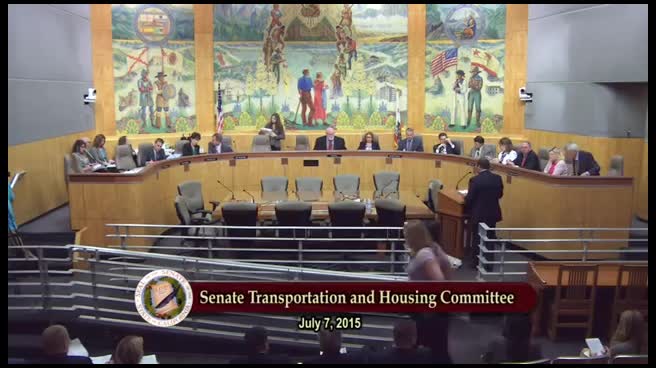 20MIN
Senate Standing Committee on Transportation and Housing
 2MIN
Assembly Floor
 12MIN
Assembly Standing Committee on Housing and Community Development
 16MIN
Assembly Standing Committee on Local Government
Bill Author

Bill Co-Author(s):