AB 1255: Pupil instruction: newcomer pupils: migrant education: migrant regions.
- Session Year: 2025-2026
- House: Assembly
- Latest Version Date: 2025-10-01
Current Status:
Passed
(2025-10-01: Chaptered by Secretary of State - Chapter 185, Statutes of 2025.)
Introduced
In Committee
Awaiting First Chamber Vote
Passed First Chamber
In Committee
Awaiting Second Chamber Vote
Passed Second Chamber
Enacted
(1)Existing law requires the Instructional Quality Commission to recommend curriculum frameworks and instructional materials for adoption to the State Board of Education. Existing law requires, at the next regularly scheduled revision of the curriculum framework in English Language Arts and English Language Development, the commission to consider including content designed to provide teachers with resources to meet the unique academic and English language development needs of newcomer pupils at all grade levels. Existing law also requires the commission to ensure that the instructional materials for pupils in kindergarten or any of grades 1 to 8, inclusive, that it recommends to the State Board of Education for adoption include resources to help teachers meet the needs of newcomer pupils.
This bill would instead require, at the next adoption or followup adoption of instructional materials for use in kindergarten and grades 1 to 8, inclusive, in English Language Arts and English Language Development, the commission to consider including resources to help teachers meet the unique academic and English language development needs of newcomer pupils.
(2)Existing law requires the State Board of Education to adopt a state master plan for services to migrant children, as provided. Existing law requires the Superintendent of Public Instruction, in implementing the state master plan for services to migrant children, to establish the service regional system as the primary method for the delivery of services to migrant children. Existing law requires the Superintendent to review and approve plans for the establishment of service regions and to incorporate specified criteria in the approval of regional plans, as provided.
Existing law defines migrant region, for purposes of this law pertaining to services for migrant children, as an operating agency comprised of a county or a combination of counties, or a public or private nonprofit agency not controlled in whole or part by a school district, or a combination of counties and agencies, meeting specified criteria.
This bill would revise the definition of migrant region to instead mean an operating agency meeting the specified criteria comprised of a county office of education or a combination of county offices of education, a combination of school districts within a county, a public or private nonprofit agency not controlled in whole or part by a school district, or a combination of county offices of education and public or private nonprofit agencies.
(3)This bill would declare that it is to take effect immediately as an urgency statute.
(1)Existing law requires the Instructional Quality Commission to recommend curriculum frameworks and instructional materials for adoption to the State Board of Education. Existing law requires, at the next regularly scheduled revision of the curriculum framework in English Language Arts and English Language Development, the commission to consider including content designed to provide teachers with resources to meet the unique academic and English language development needs of newcomer pupils at all grade levels. Existing law also requires the commission to ensure that the instructional materials for pupils in kindergarten or any of grades 1 to 8, inclusive, that it recommends to the State Board of Education for adoption include resources to help teachers meet the needs of newcomer pupils.
This bill would instead require, at the next adoption or followup adoption of instructional materials for use in kindergarten and grades 1 to 8, inclusive, in English Language Arts and English Language Development, the commission to consider including in its evaluation criteria resources to help teachers meet the unique academic and English language development needs of newcomer pupils.
(2)Existing law requires the State Board of Education to adopt a state master plan for services to migrant children, as provided. Existing law requires the Superintendent of Public Instruction, in implementing the state master plan for services to migrant children, to establish the service regional system as the primary method for the delivery of services to migrant children. Existing law requires the Superintendent to review and approve plans for the establishment of service regions and to incorporate specified criteria in the approval of regional plans, as provided.
Existing law defines migrant region, for purposes of this law pertaining to services for migrant children, as an operating agency comprised of a county or a combination of counties, or a public or private nonprofit agency not controlled in whole or part by a school district, or a combination of counties and agencies, meeting specified criteria.
This bill would revise the definition of migrant region to instead mean an operating agency meeting the specified criteria comprised of a county office of education or a combination of county offices of education, a school district or a combination of school districts within a county, a public or private nonprofit agency not controlled in whole or part by a school district, or a combination of county offices of education and public or private nonprofit agencies.
(3)This bill would declare that it is to take effect immediately as an urgency statute.
(1)Existing law requires the Instructional Quality Commission to recommend curriculum frameworks and instructional materials for adoption to the State Board of Education. Existing law requires, at the next regularly scheduled revision of the curriculum framework in English Language Arts and English Language Development, the commission to consider including content designed to provide teachers with resources to meet the unique academic and English language development needs of newcomer pupils at all grade levels. Existing law also requires the commission to ensure that the instructional materials for pupils in kindergarten or any of grades 1 to 8, inclusive, that it recommends to the State Board of Education for adoption include resources to help teachers meet the needs of newcomer pupils.
This bill would instead require, at the next adoption or followup adoption of instructional materials for use in kindergarten and grades 1 to 8, inclusive, in English Language Arts and English Language Development, the commission to consider including in its evaluation criteria resources to help teachers meet the unique academic and English language development needs of newcomer pupils.
(1)(2)Existing law requires the State Board of Education to adopt a state master plan for services to migrant children, as provided. Existing law requires the Superintendent of Public Instruction, in implementing the state master plan for services to migrant children, to establish the service regional system as the primary method for the delivery of services to migrant children. Existing law requires the Superintendent to review and approve plans for the establishment of service regions and to incorporate specified criteria in the approval of regional plans, as provided.
Existing law defines migrant region, for purposes of this law pertaining to services for migrant children, as an operating agency comprised of a county or a combination of counties, or a public or private nonprofit agency not controlled in whole or part by a school district, or a combination of counties and agencies, meeting specified criteria.
This bill would revise the definition of migrant region to instead mean an operating agency meeting the specified criteria comprised of a county office of education or a combination of county offices of education, a school district or a combination of school districts within a county, a public or private nonprofit agency not controlled in whole or part by a school district, or a combination of county offices of education and public or private nonprofit agencies.
(2)(3)This bill would declare that it is to take effect immediately as an urgency statute.
(1)Existing law requires the State Board of Education to adopt a state master plan for services to migrant children, as provided. Existing law requires the Superintendent of Public Instruction, in implementing the state master plan for services to migrant children, to establish the service regional system as the primary method for the delivery of services to migrant children. Existing law requires the Superintendent to review and approve plans for the establishment of service regions and to incorporate specified criteria in the approval of regional plans, as provided.
Existing law defines migrant region, for purposes of this law pertaining to services for migrant children, as an operating agency comprised of a county or a combination of counties, or a public or private nonprofit agency not controlled in whole or part by a school district, or a combination of counties and agencies, meeting specified criteria.
This bill would revise the definition of migrant region to instead mean an operating agency meeting the specified criteria comprised of a county office of education or a combination of county offices of education, a school district or a combination of school districts within a county, a public or private nonprofit agency not controlled in whole or part by a school district, or a combination of county offices of education and public or private nonprofit agencies.
(5)(2)This bill would declare that it is to take effect immediately as an urgency statute.
(1)Existing law authorizes dual enrollment programs, including middle college high schools and College and Career Access Pathways (CCAP) partnerships, under which high school pupils enrolled in a school district, county office of education, or charter school can obtain college credits while enrolled in high school, as specified.
This bill would authorize regional occupational centers or programs to establish middle college high schools or enter into CCAP partnerships, as specified.
(2)Existing law requires the California Community Colleges and the State Department of Education to collaborate with each other and with their respective local community colleges and local school districts to ensure the continued success of existing middle college high schools and to promote the establishment of new middle college high schools, and establishes responsibilities of the California Community Colleges and the department related to middle college high schools, as provided.
This bill would require the California Community Colleges and the department to also collaborate with regional occupational centers or programs and would include regional occupational centers or programs in the provisions describing the responsibilities of those entities related to middle college high schools.
(3)Existing law requires the department, in consultation with the office of the Chancellor of the California Community Colleges, to administer a competitive grant program to award grants to school districts, charter schools, and county offices of education for dual enrollment programs, as specified.
This bill would make regional occupational centers or programs operated by a county office of education or joint powers authority eligible to apply for a grant under the competitive grant program.
(4)Existing law requires the State Board of Education to adopt a state master plan for services to migrant children, as provided. Existing law requires the Superintendent of Public Instruction, in implementing the state master plan for services to migrant children, to establish the service regional system as the primary method for the delivery of services to migrant children. Existing law requires the Superintendent to review and approve plans for the establishment of service regions and to incorporate specified criteria in the approval of regional plans, as provided.
Existing law defines migrant region, for purposes of this law pertaining to services for migrant children, as an operating agency comprised of a county or a combination of counties, or a public or private nonprofit agency not controlled in whole or part by a school district, or a combination of counties and agencies, meeting specified criteria.
This bill would revise the definition of migrant region to instead mean an operating agency meeting the specified criteria comprised of a county office of education or a combination of county offices of education, a school district or a combination of school districts within a county, a public or private nonprofit agency not controlled in whole or part by a school district, or a combination of county offices of education and public or private nonprofit agencies.
(5)This bill would declare that it is to take effect immediately as an urgency statute.
(1)Existing law authorizes dual enrollment programs, including middle college high schools and College and Career Access Pathways (CCAP) partnerships, under which high school pupils enrolled in a school district, county office of education, or charter school can obtain college credits while enrolled in high school, as specified.
This bill would authorize regional occupational centers or programs to establish middle college high schools or enter into CCAP partnerships, as specified.
(2)Existing law requires the California Community Colleges and the State Department of Education to collaborate with each other and with their respective local community colleges and local school districts to ensure the continued success of existing middle college high schools and to promote the establishment of new middle college high schools, and establishes responsibilities of the California Community Colleges and the department related to middle college high schools, as provided.
This bill would require the California Community Colleges and the department to also collaborate with regional occupational centers or programs and would include regional occupational centers or programs in the provisions describing the responsibilities of those entities related to middle college high schools.
(3)Existing law requires the department, in consultation with the office of the Chancellor of the California Community Colleges, to administer a competitive grant program to award grants to school districts, charter schools, and county offices of education for dual enrollment programs, as specified.
This bill would make regional occupational centers or programs operated by a county office of education or joint powers authority eligible to apply for a grant under the competitive grant program.
Existing
(4)Existing law requires the State Board of Education to adopt a state master plan for services to migrant children, as provided. Existing law requires the Superintendent of Public Instruction, in implementing the state master plan for services to migrant children, to establish the service regional system as the primary method for the delivery of services to migrant children. Existing law requires the Superintendent to review and approve plans for the establishment of service regions and to incorporate specified criteria in the approval of regional plans, as provided.
Existing law defines migrant region, for purposes of this law pertaining to services for migrant children, as an operating agency comprised of a county or a combination of counties, or a public or private nonprofit agency not controlled in whole or part by a school district, or a combination of counties and agencies, meeting specified criteria.
This bill would revise the definition of migrant region to instead mean an operating agency meeting the specified criteria comprised of a county office of education or a combination of county offices of education, a school district or a combination of school districts within a county, a public or private nonprofit agency not controlled in whole or part by a school district, or a combination of county offices of education and public or private nonprofit agencies.
This(5)This bill would declare that it is to take effect immediately as an urgency statute.
Existing law requires the State Board of Education to adopt a state master plan for services to migrant children, as provided. Existing law requires the Superintendent of Public Instruction, in implementing the state master plan for services to migrant children, to establish the service regional system as the primary method for the delivery of services to migrant children. Existing law requires the Superintendent to review and approve plans for the establishment of service regions and to incorporate specified criteria in the approval of regional plans, as provided.
Existing law defines migrant region, for purposes of this law pertaining to services for migrant children, as an operating agency comprised of a county or a combination of counties, or a public or private nonprofit agency not controlled in whole or part by a school district, or a combination of counties and agencies, meeting specified criteria.
This bill would revise the definition of migrant region to instead mean an operating agency meeting the specified criteria comprised of a county office of education or a combination of county offices of education, a school district or a combination of school districts within a county, a public or private nonprofit agency not controlled in whole or part by a school district, or a combination of county offices of education and public or private nonprofit agencies.
This bill would declare that it is to take effect immediately as an urgency statute.
At the next adoption or followup adoption of instructional materials for use in kindergarten and grades 1 to 8, inclusive, in English Language Arts and English Language Development, the commission shall consider including resources for teachers to help them meet the unique academic and English language development needs of newcomer pupils.
SEC. 2.Section 54441 of the Education Code is amended to read:54441.The definitions set forth in this section shall govern the interpretation of this article.
(a)Currently migratory child means a child who has moved with a parent, guardian, or other person having custody, from one school district to another, either within the State of California or from another state within the 12-month period immediately preceding their identification as such a child, in order that the child, a parent, guardian, or other member of the immediate family might secure temporary or seasonal employment in an agricultural or fishing activity, and whose parents or guardians have been informed of the childs eligibility for migrant education services.
Currently migratory child includes a child who, without the parent or guardian, has continued to migrate annually to secure temporary or seasonal employment in an agricultural or fishing activity.
(b)Former migratory child means a child who was formerly eligible to be counted and served as a currently migratory child within the past five years, but who is no longer a currently migratory child, and who lives in an area served by an ESEA Title I Migrant Education project, and whose parents have been informed of the childs eligibility for migrant education services but have not removed the child from the program.
(c)Agricultural activity means any activity directly related to the production or processing of agricultural products and the cultivation or harvesting of trees.
(d)Fishing activity means any activity directly related to the catching or processing of fish or shellfish for initial commercial sale or as a principal means of personal subsistence.
(e)Operating agency means a local educational agency operating under a subgrant of state migrant education funding, or a public or private nonprofit agency under a special arrangement with the department to carry out a migrant education program.
(f)Migrant region means an operating agency comprised of a county office of education or a combination of county offices of education, a combination of school districts within a county, a public or private nonprofit agency not controlled in whole or part by a school district, or a combination of county offices of education and public or private nonprofit agencies, meeting the criteria of subdivision (a) of Section 54444.1.
(g)Quality control means the development of program quality standards by the state and the conduct of quality review procedures and processes at the operating agency, school district, and school level by state and other professional staff and parents, in conjunction with other interested parties, on a regular basis to assure the maintenance of high quality migrant education programs.
(h)Supplementary services means services provided to migratory children which are above the services already provided by a school or school district to other children of that school or school district.
(i)Average monthly enrollments means the average monthly number of pupils who are enrolled in a migrant education program. Average monthly enrollments shall be computed by totaling the number of migrant pupils reported by an operating agency during the months of September to June, inclusive, and dividing that total by 10.
(j)Department means the State Department of Education.
(k)Superintendent means the Superintendent of Public Instruction.
SEC. 3.This act is an urgency statute necessary for the immediate preservation of the public peace, health, or safety within the meaning of Article IV of the California Constitution and shall go into immediate effect. The facts constituting the necessity are:
In order to ensure the efficient administration of the migrant education program to all grantees and to ensure that an upcoming adoption of instructional materials by the State Board of Education includes resources for teachers to meet the unique needs of newcomer pupils, it is necessary that this act take effect immediately.
At the next adoption or followup adoption of instructional materials for use in kindergarten and grades 1 to 8, inclusive, in English Language Arts and English Language Development, the commission shall consider including in its evaluation criteria resources for teachers to help them meet the unique academic and English language development needs of newcomer pupils.
SEC. 2.Section 54441 of the Education Code is amended to read:54441.The definitions set forth in this section shall govern the interpretation of this article.
(a)Currently migratory child means a child who has moved with a parent, guardian, or other person having custody, from one school district to another, either within the State of California or from another state within the 12-month period immediately preceding their identification as such a child, in order that the child, a parent, guardian, or other member of the immediate family might secure temporary or seasonal employment in an agricultural or fishing activity, and whose parents or guardians have been informed of the childs eligibility for migrant education services.
Currently migratory child includes a child who, without the parent or guardian, has continued to migrate annually to secure temporary or seasonal employment in an agricultural or fishing activity.
(b)Former migratory child means a child who was formerly eligible to be counted and served as a currently migratory child within the past five years, but who is no longer a currently migratory child, and who lives in an area served by an ESEA Title I Migrant Education project, and whose parents have been informed of the childs eligibility for migrant education services but have not removed the child from the program.
(c)Agricultural activity means any activity directly related to the production or processing of agricultural products and the cultivation or harvesting of trees.
(d)Fishing activity means any activity directly related to the catching or processing of fish or shellfish for initial commercial sale or as a principal means of personal subsistence.
(e)Operating agency means a local educational agency operating under a subgrant of state migrant education funding, or a public or private nonprofit agency under a special arrangement with the department to carry out a migrant education program.
(f)Migrant region means an operating agency comprised of a county office of education or a combination of county offices of education, a combination of school districts within a county, a public or private nonprofit agency not controlled in whole or part by a school district, or a combination of county offices of education and public or private nonprofit agencies, meeting the criteria of subdivision (a) of Section 54444.1.
(g)Quality control means the development of program quality standards by the state and the conduct of quality review procedures and processes at the operating agency, school district, and school level by state and other professional staff and parents, in conjunction with other interested parties, on a regular basis to assure the maintenance of high quality migrant education programs.
(h)Supplementary services means services provided to migratory children which are above the services already provided by a school or school district to other children of that school or school district.
(i)Average monthly enrollments means the average monthly number of pupils who are enrolled in a migrant education program. Average monthly enrollments shall be computed by totaling the number of migrant pupils reported by an operating agency during the months of September to June, inclusive, and dividing that total by 10.
(j)Department means the State Department of Education.
(k)Superintendent means the Superintendent of Public Instruction.
SEC. 3.This act is an urgency statute necessary for the immediate preservation of the public peace, health, or safety within the meaning of Article IV of the California Constitution and shall go into immediate effect. The facts constituting the necessity are:
In order to ensure the efficient administration of the migrant education program to all grantees and to ensure that an upcoming adoption of instructional materials by the State Board of Education includes resources for teachers to meet the unique needs of newcomer pupils, it is necessary that this act take effect immediately.
At the next regularly scheduled revision of the curriculum framework adoption or followup adoption of instructional materials for use in kindergarten and grades 1 to 8, inclusive, in English Language Arts and English Language Development, the commission shall consider including content designed to provide teachers with resources to meet the unique academic and English language development needs of newcomer pupils at all grade levels, and shall ensure that the instructional materials for pupils in kindergarten or any of grades 1 to 8, inclusive, that it recommends to the state board for adoption include in its evaluation criteria resources for teachers to help them meet these needs. the unique academic and English language development needs of newcomer pupils.
SECTION 1.SEC. 2.Section 54441 of the Education Code is amended to read:54441.The definitions set forth in this section shall govern the interpretation of this article.
(a)Currently migratory child means a child who has moved with a parent, guardian, or other person having custody, from one school district to another, either within the State of California or from another state within the 12-month period immediately preceding their identification as such a child, in order that the child, a parent, guardian, or other member of the immediate family might secure temporary or seasonal employment in an agricultural or fishing activity, and whose parents or guardians have been informed of the childs eligibility for migrant education services.
Currently migratory child includes a child who, without the parent or guardian, has continued to migrate annually to secure temporary or seasonal employment in an agricultural or fishing activity.
(b)Former migratory child means a child who was formerly eligible to be counted and served as a currently migratory child within the past five years, but who is no longer a currently migratory child, and who lives in an area served by an ESEA Title I Migrant Education project, and whose parents have been informed of the childs eligibility for migrant education services but have not removed the child from the program.
(c)Agricultural activity means any activity directly related to the production or processing of agricultural products and the cultivation or harvesting of trees.
(d)Fishing activity means any activity directly related to the catching or processing of fish or shellfish for initial commercial sale or as a principal means of personal subsistence.
(e)Operating agency means a local educational agency operating under a subgrant of state migrant education funding, or a public or private nonprofit agency under a special arrangement with the department to carry out a migrant education program.
(f)Migrant region means an operating agency comprised of a county office of education or a combination of county offices of education, a combination of school districts within a county, a public or private nonprofit agency not controlled in whole or part by a school district, or a combination of county offices of education and public or private nonprofit agencies, meeting the criteria of subdivision (a) of Section 54444.1.
(g)Quality control means the development of program quality standards by the state and the conduct of quality review procedures and processes at the operating agency, school district, and school level by state and other professional staff and parents, in conjunction with other interested parties, on a regular basis to assure the maintenance of high quality migrant education programs.
(h)Supplementary services means services provided to migratory children which are above the services already provided by a school or school district to other children of that school or school district.
(i)Average monthly enrollments means the average monthly number of pupils who are enrolled in a migrant education program. Average monthly enrollments shall be computed by totaling the number of migrant pupils reported by an operating agency during the months of September to June, inclusive, and dividing that total by 10.
(j)Department means the State Department of Education.
(k)Superintendent means the Superintendent of Public Instruction.
SEC. 2.SEC. 3.This act is an urgency statute necessary for the immediate preservation of the public peace, health, or safety within the meaning of Article IV of the California Constitution and shall go into immediate effect. The facts constituting the necessity are:
In order to ensure the efficient administration of the migrant education program to all grantees, grantees and to ensure that an upcoming adoption of instructional materials by the State Board of Education includes resources for teachers to meet the unique needs of newcomer pupils, it is necessary that this act take effect immediately.
The definitions set forth in this section shall govern the interpretation of this article.
(a)Currently migratory child means a child who has moved with a parent, guardian, or other person having custody, from one school district to another, either within the State of California or from another state within the 12-month period immediately preceding their identification as such a child, in order that the child, a parent, guardian, or other member of the immediate family might secure temporary or seasonal employment in an agricultural or fishing activity, and whose parents or guardians have been informed of the childs eligibility for migrant education services.
Currently migratory child includes a child who, without the parent or guardian, has continued to migrate annually to secure temporary or seasonal employment in an agricultural or fishing activity.
(b)Former migratory child means a child who was formerly eligible to be counted and served as a currently migratory child within the past five years, but who is no longer a currently migratory child, and who lives in an area served by an ESEA Title I Migrant Education project, and whose parents have been informed of the childs eligibility for migrant education services but have not removed the child from the program.
(c)Agricultural activity means any activity directly related to the production or processing of agricultural products and the cultivation or harvesting of trees.
(d)Fishing activity means any activity directly related to the catching or processing of fish or shellfish for initial commercial sale or as a principal means of personal subsistence.
(e)Operating agency means a local educational agency operating under a subgrant of state migrant education funding, or a public or private nonprofit agency under a special arrangement with the department to carry out a migrant education program.
(f)Migrant region means an operating agency comprised of a county office of education or a combination of county offices of education, a combination of school districts within a county, a public or private nonprofit agency not controlled in whole or part by a school district, or a combination of county offices of education and public or private nonprofit agencies, meeting the criteria of subdivision (a) of Section 54444.1.
(g)Quality control means the development of program quality standards by the state and the conduct of quality review procedures and processes at the operating agency, school district, and school level by state and other professional staff and parents, in conjunction with other interested parties, on a regular basis to assure the maintenance of high quality migrant education programs.
(h)Supplementary services means services provided to migratory children which are above the services already provided by a school or school district to other children of that school or school district.
(i)Average monthly enrollments means the average monthly number of pupils who are enrolled in a migrant education program. Average monthly enrollments shall be computed by totaling the number of migrant pupils reported by an operating agency during the months of September to June, inclusive, and dividing that total by 10.
(j)Department means the State Department of Education.
(k)Superintendent means the Superintendent of Public Instruction.
SEC. 5.Section 76004 of the Education Code is amended to read:76004.Notwithstanding Section 76001 or any other law:(a)(1)The governing board of a community college district may enter into a College and Career Access Pathways (CCAP) partnership with the governing board of a school district or a county office of education for the purpose of offering or expanding dual enrollment opportunities for pupils who may not already be college bound or who are underrepresented in higher education, with the goal of developing seamless pathways from high school to community college for career technical education or preparation for transfer, improving high school graduation rates, or helping high school pupils achieve college and career readiness.(2)As used in this section, high school includes a community school, continuation high school, juvenile court school, or adult education program offering courses for high school diplomas or high school equivalency certificates.(3)As used in this section, underrepresented in higher education may include first-time college students, low-income students, students who are current or former foster youth, homeless students, students with disabilities, and students with dependent children.(b)A participating community college district may enter into a CCAP partnership with a school district or county office of education partner that is governed by a CCAP partnership agreement approved by the governing boards of both partners. As a condition of adopting a CCAP partnership agreement, the governing board of each partner shall do both of the following:(1)For career technical education pathways to be provided under the partnership, consult with, and consider the input of, the appropriate local workforce development board to determine the extent to which the pathways are aligned with regional and statewide employment needs. The governing board of each partner shall have final decisionmaking authority regarding the career technical education pathways to be provided under the partnership.(2)Present, take comments from the public on, and approve or disapprove the dual enrollment partnership agreement at an open public meeting of the governing board of the partner.(c)(1)The CCAP partnership agreement shall outline the terms of the CCAP partnership, and shall include, but not be limited to, the total number of high school pupils to be served and the total number of full-time equivalent students projected to be claimed by the community college district for those pupils; the scope, nature, time, location, and listing of community college courses to be offered; and criteria to assess the ability of pupils to benefit from those courses. The CCAP partnership agreement shall also establish protocols for information sharing, in compliance with all applicable state and federal privacy laws, joint facilities use, and parental consent for high school pupils to enroll in community college courses. The protocols shall only require a high school pupil participating in a CCAP partnership to submit one parental consent form and principal recommendation for the duration of the pupils participation in the CCAP partnership.(2)The CCAP partnership agreement shall identify a point of contact for the participating community college district and school district or county office of education partner.(3)A copy of the CCAP partnership agreement shall be filed with the office of the Chancellor of the California Community Colleges and with the department before the start of the CCAP partnership. The chancellor may void any CCAP partnership agreement it determines has not complied with the intent of the requirements of this section.(d)A community college district participating in a CCAP partnership shall not provide physical education course opportunities to high school pupils pursuant to this section, or any other course opportunities that do not assist in the attainment of at least one of the goals listed in subdivision (a).(e)A community college district shall allow an existing CCAP partnership to be amended, or a new CCAP agreement to be established with a school district or county office of education and a community college district outside of the primary community college districts service area, if the primary community college district has declined a request from the school district or county office of education, or has failed to take action within 60 calendar days of a request by the school district or county office of education, to either amend into the existing CCAP partnership the requested courses, or to approve another community college district to enter into a CCAP partnership to offer those courses.(f)A high school pupil enrolled in a course offered through a CCAP partnership shall not be assessed any fee that is prohibited by Section 49011.(g)(1)A community college district participating in a CCAP partnership shall assign priority for enrollment and course registration to a pupil seeking to enroll in a community college course that is required for the pupils CCAP partnership program that is equivalent to the priority assigned to a pupil attending a middle college high school as described in Section 11300 and consistent with the middle college high school provisions in Section 76001.(2)Units completed by a pupil pursuant to a CCAP partnership agreement may count towards determining a pupils registration priority for enrollment and course registration at a community college.(h)The CCAP partnership agreement shall certify that any community college instructor teaching a course on a high school campus has not been convicted of any sex offense as defined in Section 87010, or convicted of any controlled substance offense as defined in Section 87011.(i)The CCAP partnership agreement shall certify that any community college instructor teaching a course at the partnering high school campus has not displaced or resulted in the termination of an existing high school teacher teaching the same course on that high school campus.(j)The CCAP partnership agreement shall certify that a qualified high school teacher teaching a course offered for college credit at a high school campus has not displaced or resulted in the termination of an existing community college faculty member teaching the same course at the partnering community college campus.(k)The CCAP partnership agreement shall include a plan by the participating community college district to ensure both of the following:(1)A community college course offered for college credit at the partnering high school campus does not reduce access to the same course offered at the partnering community college campus.(2)Participation in a CCAP partnership is consistent with the core mission of the community colleges as described in Section 66010.4, and that pupils participating in a CCAP partnership will not lead to enrollment displacement of otherwise eligible adults in the community college.(l)The CCAP partnership agreement shall certify that both the school district or county office of education and community college district partners comply with local collective bargaining agreements and all state and federal reporting requirements regarding the qualifications of the teacher or faculty member teaching a CCAP partnership course offered for high school credit.(m)The CCAP partnership agreement shall specify both of the following:(1)Which partner will be the employer of record for purposes of assignment monitoring and reporting to the county office of education.(2)Which partner will assume reporting responsibilities pursuant to applicable federal teacher quality mandates.(n)The CCAP partnership agreement shall certify that any pretransfer-level course taught by community college faculty at a partnering high school campus shall be offered only to high school pupils who do not meet their grade level standard in mathematics, English, or both on an interim assessment in grade 10 or 11, as determined by the partnering school district or county office of education, and shall involve a collaborative effort between high school and community college faculty to deliver an innovative pretransfer course as an intervention in the pupils junior or senior year to ensure that the pupil is prepared for college-level work upon graduation.(o)(1)A community college district may limit enrollment in a community college course solely to eligible high school pupils if the course is offered at a high school campus, either in person or using an online platform, during the regular schoolday and the community college course is offered pursuant to a CCAP partnership agreement.(2)For purposes of allowances and apportionments from Section B of the State School Fund, a community college district conducting a closed course on a high school campus pursuant to paragraph (1) shall be credited with those units of full-time equivalent students attributable to the attendance of eligible high school pupils.(p)A community college district may allow a special part-time student participating in a CCAP partnership agreement established pursuant to this article to enroll in up to a maximum of 15 units per term in courses offered at the community college campus or the participating high school campus, if all of the following circumstances are satisfied:(1)The units constitute no more than four community college courses per term.(2)The units are part of an academic program that is part of a CCAP partnership agreement established pursuant to this article.(3)The units are part of an academic program that is designed to award students both a high school diploma and an associate degree or a certificate or credential.(q)The governing board of a community college district participating in a CCAP partnership agreement established pursuant to this article shall exempt pupils seeking to enroll in a community college course required for the pupils CCAP partnership program from the fee requirements in Sections 76060.5, 76223, 76300, 76350, and 79121.(r)The governing board of a community college district participating in a CCAP partnership agreement shall enroll high school pupils in any course that is part of a CCAP partnership agreement offered at a community college campus. Courses offered through the CCAP program may be offered at the community college campus or the participating high school campus.(s)A district or county office of education shall not receive a state allowance or apportionment for an instructional activity for which the partner has been, or shall be, paid an allowance or apportionment.(t)(1)The attendance of a high school pupil at a community college as a special part-time or full-time student pursuant to this section is authorized attendance for which the community college shall be credited or reimbursed pursuant to Section 48802 or 76002, provided that no school district or county office of education has received reimbursement for the same instructional activity.(2)For purposes of calculating classroom-based average daily attendance for classroom-based instruction apportionments, at least 80 percent of the instructional time offered by a charter school pursuant to an authorized CCAP partnership agreement shall be at the schoolsite, and the charter school shall require the attendance of a pupil for a minimum of 50 percent of the minimum instructional time required to be offered pursuant to paragraph (1) of subdivision (a) of Section 47612.5, if the pupil is also a special part-time student enrolled in a community college pursuant to this section and the pupil will receive academic credit upon satisfactory completion of enrolled courses.(u)(1)For each CCAP partnership agreement entered into pursuant to this section, the affected community college district and school district or county office of education shall report annually to the office of the Chancellor of the California Community Colleges all of the following information:(A)The total number of high school pupils by schoolsite enrolled in each CCAP partnership, aggregated by gender and ethnicity, and reported in compliance with all applicable state and federal privacy laws.(B)The total number of community college courses, by course category and type and by schoolsite, enrolled in by CCAP partnership participants.(C)The total number and percentage of successful course completions, by course category and type and by schoolsite, of CCAP partnership participants.(D)The total number of full-time equivalent students generated by CCAP partnership community college district participants.(E)The total number of full-time equivalent students served online generated by CCAP partnership community college district participants.(2)On or before May 1 of each year, the chancellor shall aggregate the information annually reported pursuant to paragraph (1) and submit a report of that information to all of the following:(A)The Legislature, in compliance with Section 9795 of the Government Code.(B)The Director of Finance.(C)The Superintendent.(3)The chancellor shall ensure that the number of full-time equivalent students generated by CCAP partnerships is reported pursuant to the reporting requirements in Section 76002.(4)On or before July 31, 2020, the chancellor shall revise the special part-time student application process to allow a pupil to complete one application for the duration of the pupils attendance at a community college as a special part-time student participating in a CCAP partnership agreement.(v)A community college district that violates this article, including, but not limited to, any restriction imposed by the board of governors pursuant to this article, shall be subject to the same penalty as may be imposed pursuant to subdivision (d) of Section 78032.(w)This section does not affect a dual enrollment partnership agreement existing on January 1, 2016, under which an early college high school, a middle college high school, or a California Career Pathways Trust existing on January 1, 2016, is operated. An early college high school, middle college high school, or California Career Pathways Trust partnership agreement existing on January 1, 2016, shall not operate as a CCAP partnership unless it complies with this section.(x)The governing body of a charter school or a regional occupational center or program may enter into a CCAP partnership agreement with the governing board of a community college district pursuant to this section. That CCAP partnership agreement shall comply with all applicable requirements of this section.SEC. 6.SEC. 2.This act is an urgency statute necessary for the immediate preservation of the public peace, health, or safety within the meaning of Article IV of the California Constitution and shall go into immediate effect. The facts constituting the necessity are:
In order to ensure the efficient administration of education programs, the migrant education program to all grantees, it is necessary that this act take effect immediately.
(a)The Legislature finds and declares that middle college high schools have proven to be a highly effective collaborative effort between local school districts or regional occupational centers or programs and community colleges. The goal of the middle college high school is to select at-promise high school pupils who are performing below their academic potential and place them in an alternative high school located on a community college campus in order to reduce the likelihood that they will drop out of school before graduation.
(b)Each middle college high school shall be structured as a broad-based, comprehensive instructional program focusing on college preparatory and school-to-work curricula, career education, work experience, community service, and support and motivational activities.
(c)The specific design of a middle college high school may vary depending on the circumstances of the community college and the school district or regional occupational center or program. The basic elements of the middle college high school shall include, but not be limited to, the following:
(1)A curriculum that focuses on college and career preparation.
(2)A reduced adult-student ratio.
(3)Flexible scheduling to allow for work internships, community service experience, and interaction with community college student role models.
(4)Opportunities for experiential internships, work apprenticeships, and community service.
SEC. 2.Section 11301 of the Education Code is amended to read:11301.(a)The California Community Colleges and the department shall collaborate with each other and with their respective local community colleges, school districts, and regional occupational centers or programs to ensure the continued success of existing middle college high schools and to promote the establishment of new middle college high schools.
(b)The responsibilities of the California Community Colleges and the department pursuant to subdivision (a) shall include, but are not limited to, both of the following:
(1)With respect to existing middle college high schools, monitor the ongoing viability of the programs, assist with the resolution of policy or financial issues that may arise, and track specific outcomes for students and schools, including attendance rates, graduation rates, college entrance and attendance rates, and employment rates for those students who do not attend college.
(2)With respect to the promotion of new middle college high schools, respond to inquiries from school districts, regional occupational centers and programs, and community colleges about the establishment of middle college high schools, advise local entities on startup costs and ongoing funding mechanisms for the program, consult with local entities on the organizational structure of, and curriculum development for, the middle college high schools, facilitate the completion of any necessary facilities improvements, communicate with local entities at least biannually about the existence of middle college high schools and the availability of the departments and the California Community Colleges resources, if any, to assist with the establishment of middle college high schools.
SEC. 3.Section 41585 of the Education Code is amended to read:41585.(a)Contingent upon an appropriation by the Legislature in the annual Budget Act or another statute, the department, in consultation with the office of the Chancellor of the California Community Colleges, shall, beginning on or before January 1, 2023, administer a competitive grant program to do all of the following:
(1)Enable more local educational agencies to establish either middle college or early college high schools or programs that provide pupils with access to obtain college credits while enrolled in high school.
(2)Provide incentives for local educational agencies to establish dual enrollment course opportunities that are consistent with the requirements of Section 76004.
(3)Enable local educational agencies with existing middle college or early college high schools or programs or College and Career Access Pathways partnerships established pursuant to Section 76004 to couple robust pupil advising and success supports with dual enrollment opportunities and establish outreach campaigns to promote dual enrollment for new or existing middle college or early college high schools or programs or College and Career Access Pathways partnerships established pursuant to Section 76004. For local educational agencies with College and Career Access Pathways partnerships, outreach shall be focused toward families and pupils who may not be college bound or who are underrepresented in higher education.
(b)(1)Of the funds appropriated in support of this grant program, the Superintendent shall provide approved applicants with either or both of the following, as applicable:
(A)A one-time grant of up to two hundred fifty thousand dollars ($250,000) to support the costs to plan for, and start up, a middle college or early college high school or program that is located on the campus of a local educational agency, a partnering community college, or other location determined by the local partnership, and that is consistent with the specifications of Chapter 14 (commencing with Section 11300) of Part 7 of Division 1 of Title 1.
(B)A one-time grant of up to one hundred thousand dollars ($100,000) to establish a College and Career Access Pathways dual enrollment partnership agreement that is consistent with the requirements of Section 76004 and to enable pupils at the participating high school to access dual enrollment opportunities pursuant to the College and Career Access Pathways partnership agreement.
(2)Nothing shall preclude a local educational agency from using any unexpended funds received for the purposes of subparagraph (A) or (B) of paragraph (1) from using those funds to collaborate with their partner community college to access pupil advising and success support services offered by the partner community college district.
(3)A local educational agency may request grants from either or both of the opportunities specified in subparagraphs (A) and (B) of paragraph (1).
(c)The funds appropriated in the annual Budget Act or other statute for purposes of this section shall be distributed, approximately, in the following manner:
(1)Up to 50 percent shall be available for the purposes of subparagraph (A) of paragraph (1) of subdivision (b).
(2)Up to 50 percent shall be available for the purposes of subparagraph (B) of paragraph (1) of subdivision (b).
(d)(1)A local educational agency seeking a grant under this section shall submit an application to the Superintendent at a time, in a manner, and with any appropriate information, as the Superintendent may reasonably require, including, but not limited to, evidence of an existing or planned partnership with an institution of higher education for the creation of the dual enrollment program.
(2)The Superintendent shall give priority to available grant funds to support applications from local educational agencies that display any of the following characteristics:
(A)Fifty percent or more of the enrolled pupils at the local educational agency are unduplicated pupils, as defined in Section 42238.02.
(B)The local educational agency has a higher than state average dropout rate.
(C)The local educational agency has a higher than state average rate of suspension and a higher than state average rate of expulsion.
(D)The local educational agency has higher than state average rates of child homelessness, foster youth, or justice-involved youth.
(E)The local educational agency has a lower than state average rate of pupils completing all of the AG courses required to be eligible for admission to the University of California or the California State University.
(3)To ensure funds are disbursed in a timely manner, the Superintendent shall begin disbursing funds for approved applicants on or before December 1, 2023.
(e)(1)It is the intent of the Legislature that courses offered to high school pupils in dual enrollment programs pursuant to this section are part of structured, well-sequenced pathways and count toward postsecondary certificate or degree requirements, and are counted toward high school graduation requirements in equivalent subject areas.
(2)It is the intent of the Legislature that courses offered to high school pupils pursuant to a College and Career Access Pathways partnership agreement established by Section 76004 are part of structured, well-sequenced pathways and consist of transfer-level courses, unless one of the following occurs:
(A)The pupil elects to participate in a degree or certificate pathway that is not met with transfer-level courses.
(B)The pupil, in mathematics, English, or both, in grade 10 or 11, would warrant access to innovative remediation coursework, as determined by the partnering local educational agency. The pupil may be placed into an innovative remediation course during their first year of participating in the College and Career Access Pathways partnership agreement as an intervention taken to ensure the pupil is on track to satisfactorily complete state and any local graduation requirements, as determined by the local educational agency, and is prepared for transfer-level coursework at a community college upon graduation.
(f)On or before June 30, 2024, and on or before June 30, 2027, the department shall prepare a summary of how the funds in this section were disbursed and used to further the goals listed in subdivision (a), and shall submit the summary to the Department of Finance, the Joint Legislative Budget Committee, the Senate Committee on Education, the Assembly Committee on Higher Education, and the Assembly Committee on Education. The summary shall include all of the following information:
(1)The number of grants awarded, disaggregated by local educational agency.
(2)A qualitative description of how the funding was used by local educational agencies to accomplish the goals listed in subdivision (a).
(3)The total number of high school pupils by schoolsite enrolled in dual enrollment programs disaggregated by participation in middle college high schools or programs, early college high schools or programs, College and Career Access Pathways, and other dual enrollment programs.
(4)The total number of community college courses by course category taken by pupils participating in middle college high schools or programs, early college high schools or programs, College and Career Access Pathways, and other dual enrollment programs.
(5)The total number of successful course completions by course category disaggregated by participation in middle college high schools or programs, early college high schools or programs, College and Career Access Pathways, and other dual enrollment programs.
(6) Course and program outcomes for pupils who were enrolled in dual enrollment programs, disaggregated by grade level, gender, socioeconomic status, race and ethnicity, and other disproportionately impacted groups.
(g)It is the intent of the Legislature that, upon the implementation of the California Cradle-to-Career Data System established in Section 10860, future data and outcome reporting on dual enrollment programs shall be linked through, and conducted in accordance with, the privacy requirements of the California Cradle-to-Career Data System.
(h)For purposes of this article, local educational agency means a school district, charter school, county office of education, or regional occupational center or program operated by a county office of education or joint powers authority.
SEC. 4.Section 54441 of the Education Code is amended to read:54441.The definitions set forth in this section shall govern the interpretation of this article.
(a)Currently migratory child means a child who has moved with a parent, guardian, or other person having custody, from one school district to another, either within the State of California or from another state within the 12-month period immediately preceding their identification as such a child, in order that the child, a parent, guardian, or other member of the immediate family might secure temporary or seasonal employment in an agricultural or fishing activity, and whose parents or guardians have been informed of the childs eligibility for migrant education services.
Currently migratory child includes a child who, without the parent or guardian, has continued to migrate annually to secure temporary or seasonal employment in an agricultural or fishing activity.
(b)Former migratory child means a child who was formerly eligible to be counted and served as a currently migratory child within the past five years, but who is no longer a currently migratory child, and who lives in an area served by an ESEA Title I Migrant Education project, and whose parents have been informed of the childs eligibility for migrant education services but have not removed the child from the program.
(c)Agricultural activity means any activity directly related to the production or processing of agricultural products and the cultivation or harvesting of trees.
(d)Fishing activity means any activity directly related to the catching or processing of fish or shellfish for initial commercial sale or as a principal means of personal subsistence.
(e)Operating agency means a local educational agency operating under a subgrant of state migrant education funding, or a public or private nonprofit agency under a special arrangement with the department to carry out a migrant education program.
(f)Migrant region means an operating agency comprised of a county office of education or a combination of county offices of education, a school district or a combination of school districts within a county, a public or private nonprofit agency not controlled in whole or part by a school district, or a combination of county offices of education and public or private nonprofit agencies, meeting the criteria of subdivision (a) of Section 54444.1.
(g)Quality control means the development of program quality standards by the state and the conduct of quality review procedures and processes at the operating agency, school district, and school level by state and other professional staff and parents, in conjunction with other interested parties, on a regular basis to assure the maintenance of high quality migrant education programs.
(h)Supplementary services means services provided to migratory children which are above the services already provided by a school or school district to other children of that school or school district.
(i)Average monthly enrollments means the average monthly number of pupils who are enrolled in a migrant education program. Average monthly enrollments shall be computed by totaling the number of migrant pupils reported by an operating agency during the months of September to June, inclusive, and dividing that total by 10.
(j)Department means the State Department of Education.
(k)Superintendent means the Superintendent of Public Instruction.
SEC. 5.Section 76004 of the Education Code is amended to read:76004.Notwithstanding Section 76001 or any other law:
(a)(1)The governing board of a community college district may enter into a College and Career Access Pathways (CCAP) partnership with the governing board of a school district or a county office of education for the purpose of offering or expanding dual enrollment opportunities for pupils who may not already be college bound or who are underrepresented in higher education, with the goal of developing seamless pathways from high school to community college for career technical education or preparation for transfer, improving high school graduation rates, or helping high school pupils achieve college and career readiness.
(2)As used in this section, high school includes a community school, continuation high school, juvenile court school, or adult education program offering courses for high school diplomas or high school equivalency certificates.
(3)As used in this section, underrepresented in higher education may include first-time college students, low-income students, students who are current or former foster youth, homeless students, students with disabilities, and students with dependent children.
(b)A participating community college district may enter into a CCAP partnership with a school district or county office of education partner that is governed by a CCAP partnership agreement approved by the governing boards of both partners. As a condition of adopting a CCAP partnership agreement, the governing board of each partner shall do both of the following:
(1)For career technical education pathways to be provided under the partnership, consult with, and consider the input of, the appropriate local workforce development board to determine the extent to which the pathways are aligned with regional and statewide employment needs. The governing board of each partner shall have final decisionmaking authority regarding the career technical education pathways to be provided under the partnership.
(2)Present, take comments from the public on, and approve or disapprove the dual enrollment partnership agreement at an open public meeting of the governing board of the partner.
(c)(1)The CCAP partnership agreement shall outline the terms of the CCAP partnership, and shall include, but not be limited to, the total number of high school pupils to be served and the total number of full-time equivalent students projected to be claimed by the community college district for those pupils; the scope, nature, time, location, and listing of community college courses to be offered; and criteria to assess the ability of pupils to benefit from those courses. The CCAP partnership agreement shall also establish protocols for information sharing, in compliance with all applicable state and federal privacy laws, joint facilities use, and parental consent for high school pupils to enroll in community college courses. The protocols shall only require a high school pupil participating in a CCAP partnership to submit one parental consent form and principal recommendation for the duration of the pupils participation in the CCAP partnership.
(2)The CCAP partnership agreement shall identify a point of contact for the participating community college district and school district or county office of education partner.
(3)A copy of the CCAP partnership agreement shall be filed with the office of the Chancellor of the California Community Colleges and with the department before the start of the CCAP partnership. The chancellor may void any CCAP partnership agreement it determines has not complied with the intent of the requirements of this section.
(d)A community college district participating in a CCAP partnership shall not provide physical education course opportunities to high school pupils pursuant to this section, or any other course opportunities that do not assist in the attainment of at least one of the goals listed in subdivision (a).
(e)A community college district shall allow an existing CCAP partnership to be amended, or a new CCAP agreement to be established with a school district or county office of education and a community college district outside of the primary community college districts service area, if the primary community college district has declined a request from the school district or county office of education, or has failed to take action within 60 calendar days of a request by the school district or county office of education, to either amend into the existing CCAP partnership the requested courses, or to approve another community college district to enter into a CCAP partnership to offer those courses.
(f)A high school pupil enrolled in a course offered through a CCAP partnership shall not be assessed any fee that is prohibited by Section 49011.
(g)(1)A community college district participating in a CCAP partnership shall assign priority for enrollment and course registration to a pupil seeking to enroll in a community college course that is required for the pupils CCAP partnership program that is equivalent to the priority assigned to a pupil attending a middle college high school as described in Section 11300 and consistent with the middle college high school provisions in Section 76001.
(2)Units completed by a pupil pursuant to a CCAP partnership agreement may count towards determining a pupils registration priority for enrollment and course registration at a community college.
(h)The CCAP partnership agreement shall certify that any community college instructor teaching a course on a high school campus has not been convicted of any sex offense as defined in Section 87010, or convicted of any controlled substance offense as defined in Section 87011.
(i)The CCAP partnership agreement shall certify that any community college instructor teaching a course at the partnering high school campus has not displaced or resulted in the termination of an existing high school teacher teaching the same course on that high school campus.
(j)The CCAP partnership agreement shall certify that a qualified high school teacher teaching a course offered for college credit at a high school campus has not displaced or resulted in the termination of an existing community college faculty member teaching the same course at the partnering community college campus.
(k)The CCAP partnership agreement shall include a plan by the participating community college district to ensure both of the following:
(1)A community college course offered for college credit at the partnering high school campus does not reduce access to the same course offered at the partnering community college campus.
(2)Participation in a CCAP partnership is consistent with the core mission of the community colleges as described in Section 66010.4, and that pupils participating in a CCAP partnership will not lead to enrollment displacement of otherwise eligible adults in the community college.
(l)The CCAP partnership agreement shall certify that both the school district or county office of education and community college district partners comply with local collective bargaining agreements and all state and federal reporting requirements regarding the qualifications of the teacher or faculty member teaching a CCAP partnership course offered for high school credit.
(m)The CCAP partnership agreement shall specify both of the following:
(1)Which partner will be the employer of record for purposes of assignment monitoring and reporting to the county office of education.
(2)Which partner will assume reporting responsibilities pursuant to applicable federal teacher quality mandates.
(n)The CCAP partnership agreement shall certify that any pretransfer-level course taught by community college faculty at a partnering high school campus shall be offered only to high school pupils who do not meet their grade level standard in mathematics, English, or both on an interim assessment in grade 10 or 11, as determined by the partnering school district or county office of education, and shall involve a collaborative effort between high school and community college faculty to deliver an innovative pretransfer course as an intervention in the pupils junior or senior year to ensure that the pupil is prepared for college-level work upon graduation.
(o)(1)A community college district may limit enrollment in a community college course solely to eligible high school pupils if the course is offered at a high school campus, either in person or using an online platform, during the regular schoolday and the community college course is offered pursuant to a CCAP partnership agreement.
(2)For purposes of allowances and apportionments from Section B of the State School Fund, a community college district conducting a closed course on a high school campus pursuant to paragraph (1) shall be credited with those units of full-time equivalent students attributable to the attendance of eligible high school pupils.
(p)A community college district may allow a special part-time student participating in a CCAP partnership agreement established pursuant to this article to enroll in up to a maximum of 15 units per term in courses offered at the community college campus or the participating high school campus, if all of the following circumstances are satisfied:
(1)The units constitute no more than four community college courses per term.
(2)The units are part of an academic program that is part of a CCAP partnership agreement established pursuant to this article.
(3)The units are part of an academic program that is designed to award students both a high school diploma and an associate degree or a certificate or credential.
(q)The governing board of a community college district participating in a CCAP partnership agreement established pursuant to this article shall exempt pupils seeking to enroll in a community college course required for the pupils CCAP partnership program from the fee requirements in Sections 76060.5, 76223, 76300, 76350, and 79121.
(r)The governing board of a community college district participating in a CCAP partnership agreement shall enroll high school pupils in any course that is part of a CCAP partnership agreement offered at a community college campus. Courses offered through the CCAP program may be offered at the community college campus or the participating high school campus.
(s)A district or county office of education shall not receive a state allowance or apportionment for an instructional activity for which the partner has been, or shall be, paid an allowance or apportionment.
(t)(1)The attendance of a high school pupil at a community college as a special part-time or full-time student pursuant to this section is authorized attendance for which the community college shall be credited or reimbursed pursuant to Section 48802 or 76002, provided that no school district or county office of education has received reimbursement for the same instructional activity.
(2)For purposes of calculating classroom-based average daily attendance for classroom-based instruction apportionments, at least 80 percent of the instructional time offered by a charter school pursuant to an authorized CCAP partnership agreement shall be at the schoolsite, and the charter school shall require the attendance of a pupil for a minimum of 50 percent of the minimum instructional time required to be offered pursuant to paragraph (1) of subdivision (a) of Section 47612.5, if the pupil is also a special part-time student enrolled in a community college pursuant to this section and the pupil will receive academic credit upon satisfactory completion of enrolled courses.
(u)(1)For each CCAP partnership agreement entered into pursuant to this section, the affected community college district and school district or county office of education shall report annually to the office of the Chancellor of the California Community Colleges all of the following information:
(A)The total number of high school pupils by schoolsite enrolled in each CCAP partnership, aggregated by gender and ethnicity, and reported in compliance with all applicable state and federal privacy laws.
(B)The total number of community college courses, by course category and type and by schoolsite, enrolled in by CCAP partnership participants.
(C)The total number and percentage of successful course completions, by course category and type and by schoolsite, of CCAP partnership participants.
(D)The total number of full-time equivalent students generated by CCAP partnership community college district participants.
(E)The total number of full-time equivalent students served online generated by CCAP partnership community college district participants.
(2)On or before May 1 of each year, the chancellor shall aggregate the information annually reported pursuant to paragraph (1) and submit a report of that information to all of the following:
(A)The Legislature, in compliance with Section 9795 of the Government Code.
(B)The Director of Finance.
(C)The Superintendent.
(3)The chancellor shall ensure that the number of full-time equivalent students generated by CCAP partnerships is reported pursuant to the reporting requirements in Section 76002.
(4)On or before July 31, 2020, the chancellor shall revise the special part-time student application process to allow a pupil to complete one application for the duration of the pupils attendance at a community college as a special part-time student participating in a CCAP partnership agreement.
(v)A community college district that violates this article, including, but not limited to, any restriction imposed by the board of governors pursuant to this article, shall be subject to the same penalty as may be imposed pursuant to subdivision (d) of Section 78032.
(w)This section does not affect a dual enrollment partnership agreement existing on January 1, 2016, under which an early college high school, a middle college high school, or a California Career Pathways Trust existing on January 1, 2016, is operated. An early college high school, middle college high school, or California Career Pathways Trust partnership agreement existing on January 1, 2016, shall not operate as a CCAP partnership unless it complies with this section.
(x)The governing body of a charter school or a regional occupational center or program may enter into a CCAP partnership agreement with the governing board of a community college district pursuant to this section. That CCAP partnership agreement shall comply with all applicable requirements of this section.
SEC. 6.This act is an urgency statute necessary for the immediate preservation of the public peace, health, or safety within the meaning of Article IV of the California Constitution and shall go into immediate effect. The facts constituting the necessity are:
In order to ensure the efficient administration of education programs, it is necessary that this act take effect immediately.
(a)The Legislature finds and declares that middle college high schools have proven to be a highly effective collaborative effort between local school districts or regional occupational centers or programs and community colleges. The goal of the middle college high school is to select at-promise high school pupils who are performing below their academic potential and place them in an alternative high school located on a community college campus in order to reduce the likelihood that they will drop out of school before graduation.
(b)Each middle college high school shall be structured as a broad-based, comprehensive instructional program focusing on college preparatory and school-to-work curricula, career education, work experience, community service, and support and motivational activities.
(c)The specific design of a middle college high school may vary depending on the circumstances of the community college or and the school district. district or regional occupational center or program. The basic elements of the middle college high school shall include, but not be limited to, the following:
(1)A curriculum that focuses on college and career preparation.
(2)A reduced adult-student ratio.
(3)Flexible scheduling to allow for work internships, community service experience, and interaction with community college student role models.
(4)Opportunities for experiential internships, work apprenticeships, and community service.
SEC. 2.Section 11301 of the Education Code is amended to read:11301.(a)The California Community Colleges and the State Department of Education department shall collaborate with each other and with their respective local community colleges and local colleges, school districts districts, and regional occupational centers or programs to ensure the continued success of existing middle college high schools and to promote the establishment of new middle college high schools.
(b)The responsibilities of the California Community Colleges and the State Department of Education department pursuant to subdivision (a) shall include, but need not be are not limited to, both of the following:
(1)With respect to existing middle college high schools, monitor the ongoing viability of the programs, assist with the resolution of policy or financial issues that may arise, and track specific outcomes for students and schools, including attendance rates, graduation rates, college entrance and attendance rates, and employment rates for those students who do not attend college.
(2)With respect to the promotion of new middle college high schools, respond to inquiries from school districts districts, regional occupational centers and programs, and community colleges about the establishment of middle college high schools, advise local entities on startup costs and ongoing funding mechanisms for the program, consult with local entities on the organizational structure of, and curriculum development for, the middle college high schools, facilitate the completion of any necessary facilities improvements, communicate with local entities at least biannually about the existence of middle college high schools and the availability of State Department of Education the departments and the California Community Colleges Colleges resources, if any, to assist with the establishment of middle college high schools.
SEC. 3.Section 41585 of the Education Code is amended to read:41585.(a)Contingent upon an appropriation by the Legislature in the annual Budget Act or another statute, the department, in consultation with the office of the Chancellor of the California Community Colleges, shall, beginning on or before January 1, 2023, administer a competitive grant program to do all of the following:
(1)Enable more local educational agencies to establish either middle college or early college high schools or programs that provide pupils with access to obtain college credits while enrolled in high school.
(2)Provide incentives for local educational agencies to establish dual enrollment course opportunities that are consistent with the requirements of Section 76004.
(3)Enable local educational agencies with existing middle college or early college high schools or programs or College and Career Access Pathways partnerships established pursuant to Section 76004 to couple robust pupil advising and success supports with dual enrollment opportunities and establish outreach campaigns to promote dual enrollment for new or existing middle college or early college high schools or programs or College and Career Access Pathways partnerships established pursuant to Section 76004. For local educational agencies with College and Career Access Pathways partnerships, outreach shall be focused toward families and pupils who may not be college bound or who are underrepresented in higher education.
(b)(1)Of the funds appropriated in support of this grant program, the Superintendent shall provide approved applicants with either or both of the following, as applicable:
(A)A one-time grant of up to two hundred fifty thousand dollars ($250,000) to support the costs to plan for, and start up, a middle college or early college high school or program that is located on the campus of a local educational agency, a partnering community college, or other location determined by the local partnership, and that is consistent with the specifications of Chapter 14 (commencing with Section 11300) of Part 7 of Division 1 of Title 1.
(B)A one-time grant of up to one hundred thousand dollars ($100,000) to establish a College and Career Access Pathways dual enrollment partnership agreement that is consistent with the requirements of Section 76004 and to enable pupils at the participating high school to access dual enrollment opportunities pursuant to the College and Career Access Pathways partnership agreement.
(2)Nothing shall preclude a local educational agency from using any unexpended funds received for the purposes of subparagraph (A) or (B) of paragraph (1) from using those funds to collaborate with their partner community college to access pupil advising and success support services offered by the partner community college district.
(3)A local educational agency may request grants from either or both of the opportunities specified in subparagraphs (A) and (B) of paragraph (1).
(c)The funds appropriated in the annual Budget Act or other statute for purposes of this section shall be distributed, approximately, in the following manner:
(1)Up to 50 percent shall be available for the purposes of subparagraph (A) of paragraph (1) of subdivision (b).
(2)Up to 50 percent shall be available for the purposes of subparagraph (B) of paragraph (1) of subdivision (b).
(d)(1)A local educational agency seeking a grant under this section shall submit an application to the Superintendent at a time, in a manner, and with any appropriate information, as the Superintendent may reasonably require, including, but not limited to, evidence of an existing or planned partnership with an institution of higher education for the creation of the dual enrollment program.
(2)The Superintendent shall give priority to available grant funds to support applications from local educational agencies that display any of the following characteristics:
(A)Fifty percent or more of the enrolled pupils at the local educational agency are unduplicated pupils, as defined in Section 42238.02.
(B)The local educational agency has a higher than state average dropout rate.
(C)The local educational agency has a higher than state average rate of suspension and a higher than state average rate of expulsion.
(D)The local educational agency has higher than state average rates of child homelessness, foster youth, or justice-involved youth.
(E)The local educational agency has a lower than state average rate of pupils completing all of the AG courses required to be eligible for admission to the University of California or the California State University.
(3)To ensure funds are disbursed in a timely manner, the Superintendent shall begin disbursing funds for approved applicants on or before December 1, 2023.
(e)(1)It is the intent of the Legislature that courses offered to high school pupils in dual enrollment programs pursuant to this section are part of structured, well-sequenced pathways and count toward postsecondary certificate or degree requirements, and are counted toward high school graduation requirements in equivalent subject areas.
(2)It is the intent of the Legislature that courses offered to high school pupils pursuant to a College and Career Access Pathways partnership agreement established by Section 76004 are part of structured, well-sequenced pathways and consist of transfer-level courses, unless one of the following occurs:
(A)The pupil elects to participate in a degree or certificate pathway that is not met with transfer-level courses.
(B)The pupil, in mathematics, English, or both, in grade 10 or 11, would warrant access to innovative remediation coursework, as determined by the partnering school district, county office of education, or charter school. local educational agency. The pupil may be placed into an innovative remediation course during their first year of participating in the College and Career Access Pathways partnership agreement as an intervention taken to ensure the pupil is on track to satisfactorily complete state and any local graduation requirements, as determined by the school district, county office of education, or charter school, local educational agency, and is prepared for transfer-level coursework at a community college upon graduation.
(f)On or before June 30, 2024, and on or before June 30, 2027, the department shall prepare a summary of how the funds in this section were disbursed and used to further the goals listed in subdivision (a), and shall submit the summary to the Department of Finance, the Joint Legislative Budget Committee, the Senate Committee on Education, the Assembly Committee on Higher Education, and the Assembly Committee on Education. The summary shall include all of the following information:
(1)The number of grants awarded, disaggregated by local educational agency.
(2)A qualitative description of how the funding was used by local educational agencies to accomplish the goals listed in subdivision (a).
(3)The total number of high school pupils by schoolsite enrolled in dual enrollment programs disaggregated by participation in middle college high schools or programs, early college high schools or programs, College and Career Access Pathways, and other dual enrollment programs.
(4)The total number of community college courses by course category taken by pupils participating in middle college high schools or programs, early college high schools or programs, College and Career Access Pathways, and other dual enrollment programs.
(5)The total number of successful course completions by course category disaggregated by participation in middle college high schools or programs, early college high schools or programs, College and Career Access Pathways, and other dual enrollment programs.
(6) Course and program outcomes for pupils who were enrolled in dual enrollment programs, disaggregated by grade level, gender, socioeconomic status, race and ethnicity, and other disproportionately impacted groups.
(g)It is the intent of the Legislature that, upon the implementation of the California Cradle-to-Career Data System established in Section 10860, future data and outcome reporting on dual enrollment programs shall be linked through, and conducted in accordance with, the privacy requirements of the California Cradle-to-Career Data System.
(h)For purposes of this article, local educational agency means a school district, charter school, or county office of education. education, or regional occupational center or program operated by a county office of education or joint powers authority.
SECTION 1.SEC. 4.Section 54441 of the Education Code is amended to read:54441.The definitions set forth in this section shall govern the interpretation of this article.
(a)Currently migratory child means a child who has moved with a parent, guardian, or other person having custody, from one school district to another, either within the State of California or from another state within the 12-month period immediately preceding their identification as such a child, in order that the child, a parent, guardian, or other member of the immediate family might secure temporary or seasonal employment in an agricultural or fishing activity, and whose parents or guardians have been informed of the childs eligibility for migrant education services.
Currently migratory child includes a child who, without the parent or guardian, has continued to migrate annually to secure temporary or seasonal employment in an agricultural or fishing activity.
(b)Former migratory child means a child who was formerly eligible to be counted and served as a currently migratory child within the past five years, but who is no longer a currently migratory child, and who lives in an area served by an ESEA Title I Migrant Education project, and whose parents have been informed of the childs eligibility for migrant education services but have not removed the child from the program.
(c)Agricultural activity means any activity directly related to the production or processing of agricultural products and the cultivation or harvesting of trees.
(d)Fishing activity means any activity directly related to the catching or processing of fish or shellfish for initial commercial sale or as a principal means of personal subsistence.
(e)Operating agency means a local educational agency operating under a subgrant of state migrant education funding, or a public or private nonprofit agency under a special arrangement with the department to carry out a migrant education program.
(f)Migrant region means an operating agency comprised of a county office of education or a combination of county offices of education, a school district or a combination of school districts within a county, a public or private nonprofit agency not controlled in whole or part by a school district, or a combination of county offices of education and public or private nonprofit agencies, meeting the criteria of subdivision (a) of Section 54444.1.
(g)Quality control means the development of program quality standards by the state and the conduct of quality review procedures and processes at the operating agency, school district, and school level by state and other professional staff and parents, in conjunction with other interested parties, on a regular basis to assure the maintenance of high quality migrant education programs.
(h)Supplementary services means services provided to migratory children which are above the services already provided by a school or school district to other children of that school or school district.
(i)Average monthly enrollments means the average monthly number of pupils who are enrolled in a migrant education program. Average monthly enrollments shall be computed by totaling the number of migrant pupils reported by an operating agency during the months of September to June, inclusive, and dividing that total by 10.
(j)Department means the State Department of Education.
(k)Superintendent means the Superintendent of Public Instruction.
SEC. 5.Section 76004 of the Education Code is amended to read:76004.Notwithstanding Section 76001 or any other law:
(a)(1)The governing board of a community college district may enter into a College and Career Access Pathways (CCAP) partnership with the governing board of a school district or a county office of education for the purpose of offering or expanding dual enrollment opportunities for pupils who may not already be college bound or who are underrepresented in higher education, with the goal of developing seamless pathways from high school to community college for career technical education or preparation for transfer, improving high school graduation rates, or helping high school pupils achieve college and career readiness.
(2)As used in this section, high school includes a community school, continuation high school, juvenile court school, or adult education program offering courses for high school diplomas or high school equivalency certificates.
(3)As used in this section, underrepresented in higher education may include first-time college students, low-income students, students who are current or former foster youth, homeless students, students with disabilities, and students with dependent children.
(b)A participating community college district may enter into a CCAP partnership with a school district or county office of education partner that is governed by a CCAP partnership agreement approved by the governing boards of both partners. As a condition of adopting a CCAP partnership agreement, the governing board of each partner shall do both of the following:
(1)For career technical education pathways to be provided under the partnership, consult with, and consider the input of, the appropriate local workforce development board to determine the extent to which the pathways are aligned with regional and statewide employment needs. The governing board of each partner shall have final decisionmaking authority regarding the career technical education pathways to be provided under the partnership.
(2)Present, take comments from the public on, and approve or disapprove the dual enrollment partnership agreement at an open public meeting of the governing board of the partner.
(c)(1)The CCAP partnership agreement shall outline the terms of the CCAP partnership, and shall include, but not be limited to, the total number of high school pupils to be served and the total number of full-time equivalent students projected to be claimed by the community college district for those pupils; the scope, nature, time, location, and listing of community college courses to be offered; and criteria to assess the ability of pupils to benefit from those courses. The CCAP partnership agreement shall also establish protocols for information sharing, in compliance with all applicable state and federal privacy laws, joint facilities use, and parental consent for high school pupils to enroll in community college courses. The protocols shall only require a high school pupil participating in a CCAP partnership to submit one parental consent form and principal recommendation for the duration of the pupils participation in the CCAP partnership.
(2)The CCAP partnership agreement shall identify a point of contact for the participating community college district and school district or county office of education partner.
(3)A copy of the CCAP partnership agreement shall be filed with the office of the Chancellor of the California Community Colleges and with the department before the start of the CCAP partnership. The chancellor may void any CCAP partnership agreement it determines has not complied with the intent of the requirements of this section.
(d)A community college district participating in a CCAP partnership shall not provide physical education course opportunities to high school pupils pursuant to this section, or any other course opportunities that do not assist in the attainment of at least one of the goals listed in subdivision (a).
(e)A community college district shall allow an existing CCAP partnership to be amended, or a new CCAP agreement to be established with a school district or county office of education and a community college district outside of the primary community college districts service area, if the primary community college district has declined a request from the school district or county office of education, or has failed to take action within 60 calendar days of a request by the school district or county office of education, to either amend into the existing CCAP partnership the requested courses, or to approve another community college district to enter into a CCAP partnership to offer those courses.
(f)A high school pupil enrolled in a course offered through a CCAP partnership shall not be assessed any fee that is prohibited by Section 49011.
(g)(1)A community college district participating in a CCAP partnership shall assign priority for enrollment and course registration to a pupil seeking to enroll in a community college course that is required for the pupils CCAP partnership program that is equivalent to the priority assigned to a pupil attending a middle college high school as described in Section 11300 and consistent with the middle college high school provisions in Section 76001.
(2)Units completed by a pupil pursuant to a CCAP partnership agreement may count towards determining a pupils registration priority for enrollment and course registration at a community college.
(h)The CCAP partnership agreement shall certify that any community college instructor teaching a course on a high school campus has not been convicted of any sex offense as defined in Section 87010, or convicted of any controlled substance offense as defined in Section 87011.
(i)The CCAP partnership agreement shall certify that any community college instructor teaching a course at the partnering high school campus has not displaced or resulted in the termination of an existing high school teacher teaching the same course on that high school campus.
(j)The CCAP partnership agreement shall certify that a qualified high school teacher teaching a course offered for college credit at a high school campus has not displaced or resulted in the termination of an existing community college faculty member teaching the same course at the partnering community college campus.
(k)The CCAP partnership agreement shall include a plan by the participating community college district to ensure both of the following:
(1)A community college course offered for college credit at the partnering high school campus does not reduce access to the same course offered at the partnering community college campus.
(2)Participation in a CCAP partnership is consistent with the core mission of the community colleges as described in Section 66010.4, and that pupils participating in a CCAP partnership will not lead to enrollment displacement of otherwise eligible adults in the community college.
(l)The CCAP partnership agreement shall certify that both the school district or county office of education and community college district partners comply with local collective bargaining agreements and all state and federal reporting requirements regarding the qualifications of the teacher or faculty member teaching a CCAP partnership course offered for high school credit.
(m)The CCAP partnership agreement shall specify both of the following:
(1)Which partner will be the employer of record for purposes of assignment monitoring and reporting to the county office of education.
(2)Which partner will assume reporting responsibilities pursuant to applicable federal teacher quality mandates.
(n)The CCAP partnership agreement shall certify that any pretransfer-level course taught by community college faculty at a partnering high school campus shall be offered only to high school pupils who do not meet their grade level standard in mathematics, English, or both on an interim assessment in grade 10 or 11, as determined by the partnering school district or county office of education, and shall involve a collaborative effort between high school and community college faculty to deliver an innovative pretransfer course as an intervention in the pupils junior or senior year to ensure that the pupil is prepared for college-level work upon graduation.
(o)(1)A community college district may limit enrollment in a community college course solely to eligible high school pupils if the course is offered at a high school campus, either in person or using an online platform, during the regular schoolday and the community college course is offered pursuant to a CCAP partnership agreement.
(2)For purposes of allowances and apportionments from Section B of the State School Fund, a community college district conducting a closed course on a high school campus pursuant to paragraph (1) shall be credited with those units of full-time equivalent students attributable to the attendance of eligible high school pupils.
(p)A community college district may allow a special part-time student participating in a CCAP partnership agreement established pursuant to this article to enroll in up to a maximum of 15 units per term in courses offered at the community college campus or the participating high school campus, if all of the following circumstances are satisfied:
(1)The units constitute no more than four community college courses per term.
(2)The units are part of an academic program that is part of a CCAP partnership agreement established pursuant to this article.
(3)The units are part of an academic program that is designed to award students both a high school diploma and an associate degree or a certificate or credential.
(q)The governing board of a community college district participating in a CCAP partnership agreement established pursuant to this article shall exempt pupils seeking to enroll in a community college course required for the pupils CCAP partnership program from the fee requirements in Sections 76060.5, 76223, 76300, 76350, and 79121.
(r)The governing board of a community college district participating in a CCAP partnership agreement shall enroll high school pupils in any course that is part of a CCAP partnership agreement offered at a community college campus. Courses offered through the CCAP program may be offered at the community college campus or the participating high school campus.
(s)A district or county office of education shall not receive a state allowance or apportionment for an instructional activity for which the partner has been, or shall be, paid an allowance or apportionment.
(t)(1)The attendance of a high school pupil at a community college as a special part-time or full-time student pursuant to this section is authorized attendance for which the community college shall be credited or reimbursed pursuant to Section 48802 or 76002, provided that no school district or county office of education has received reimbursement for the same instructional activity.
(2)For purposes of calculating classroom-based average daily attendance for classroom-based instruction apportionments, at least 80 percent of the instructional time offered by a charter school pursuant to an authorized CCAP partnership agreement shall be at the schoolsite, and the charter school shall require the attendance of a pupil for a minimum of 50 percent of the minimum instructional time required to be offered pursuant to paragraph (1) of subdivision (a) of Section 47612.5, if the pupil is also a special part-time student enrolled in a community college pursuant to this section and the pupil will receive academic credit upon satisfactory completion of enrolled courses.
(u)(1)For each CCAP partnership agreement entered into pursuant to this section, the affected community college district and school district or county office of education shall report annually to the office of the Chancellor of the California Community Colleges all of the following information:
(A)The total number of high school pupils by schoolsite enrolled in each CCAP partnership, aggregated by gender and ethnicity, and reported in compliance with all applicable state and federal privacy laws.
(B)The total number of community college courses, by course category and type and by schoolsite, enrolled in by CCAP partnership participants.
(C)The total number and percentage of successful course completions, by course category and type and by schoolsite, of CCAP partnership participants.
(D)The total number of full-time equivalent students generated by CCAP partnership community college district participants.
(E)The total number of full-time equivalent students served online generated by CCAP partnership community college district participants.
(2)On or before May 1 of each year, the chancellor shall aggregate the information annually reported pursuant to paragraph (1) and submit a report of that information to all of the following:
(A)The Legislature, in compliance with Section 9795 of the Government Code.
(B)The Director of Finance.
(C)The Superintendent.
(3)The chancellor shall ensure that the number of full-time equivalent students generated by CCAP partnerships is reported pursuant to the reporting requirements in Section 76002.
(4)On or before July 31, 2020, the chancellor shall revise the special part-time student application process to allow a pupil to complete one application for the duration of the pupils attendance at a community college as a special part-time student participating in a CCAP partnership agreement.
(v)A community college district that violates this article, including, but not limited to, any restriction imposed by the board of governors pursuant to this article, shall be subject to the same penalty as may be imposed pursuant to subdivision (d) of Section 78032.
(w)This section does not affect a dual enrollment partnership agreement existing on January 1, 2016, under which an early college high school, a middle college high school, or a California Career Pathways Trust existing on January 1, 2016, is operated. An early college high school, middle college high school, or California Career Pathways Trust partnership agreement existing on January 1, 2016, shall not operate as a CCAP partnership unless it complies with this section.
(x)The governing body of a charter school or a regional occupational center or program may enter into a CCAP partnership agreement with the governing board of a community college district pursuant to this section. That CCAP partnership agreement shall comply with all applicable requirements of this section.
SEC. 2.SEC. 6.This act is an urgency statute necessary for the immediate preservation of the public peace, health, or safety within the meaning of Article IV of the California Constitution and shall go into immediate effect. The facts constituting the necessity are:
In order to ensure the efficient administration of the migrant education program to all grantees, education programs, it is necessary that this act take effect immediately.
The definitions set forth in this section shall govern the interpretation of this article.
(a)Currently migratory child means a child who has moved with a parent, guardian, or other person having custody, from one school district to another, either within the State of California or from another state within the 12-month period immediately preceding his or her their identification as such a child, in order that the child, a parent, guardian, or other member of his or her the immediate family might secure temporary or seasonal employment in an agricultural or fishing activity, and whose parents or guardians have been informed of the childs eligibility for migrant education services.
Currently migratory child includes a child who, without the parent or guardian, has continued to migrate annually to secure temporary or seasonal employment in an agricultural or fishing activity.
(b)Former migratory child means a child who was formerly eligible to be counted and served as a currently migratory child within the past five years, but who is no longer a currently migratory child, and who lives in an area served by an ESEA Title I Migrant Education project, and whose parents have been informed of the childs eligibility for migrant education services but have not removed the child from the program.
(c)Agricultural activity means any activity directly related to the production or processing of agricultural products and the cultivation or harvesting of trees.
(d)Fishing activity means any activity directly related to the catching or processing of fish or shellfish for initial commercial sale or as a principal means of personal subsistence.
(e)Operating agency means a local educational agency operating under a subgrant of state migrant education funding, or a public or private nonprofit agency under a special arrangement with the department to carry out a migrant education program.
(f)Migrant region means an operating agency comprised of a county or office of education or a combination of county offices of education, a school district or a combination of counties, or school districts within a county, a public or private nonprofit agency not controlled in whole or part by a school district, or a combination of counties and agencies, county offices of education and public or private nonprofit agencies, meeting the criteria of subdivision (a) of Section 54444.1.
(g)Quality control means the development of program quality standards by the state and the conduct of quality review procedures and processes at the operating agency, school district, and school level by state and other professional staff and parents, in conjunction with other interested parties, on a regular basis to assure the maintenance of high quality migrant education programs.
(h)Supplementary services means services provided to migratory children which are above the services already provided by a school or school district to other children of that school or school district.
(i)Average monthly enrollments means the average monthly number of pupils who are enrolled in a migrant education program. Average monthly enrollments shall be computed by totaling the number of migrant pupils reported by an operating agency during the months of September to June, inclusive, and dividing that total by 10.
(j)Department means the State Department of Education.
(k)Superintendent means the Superintendent of Public Instruction.
SEC. 2.This act is an urgency statute necessary for the immediate preservation of the public peace, health, or safety within the meaning of Article IV of the California Constitution and shall go into immediate effect. The facts constituting the necessity are:
In order to ensure the efficient administration of the migrant education program to all grantees, it is necessary that this act take effect immediately.
|
Date
|
Status
|
|---|---|
| Oct 1, 2025 | Chaptered by Secretary of State - Chapter 185, Statutes of 2025. |
| Oct 1, 2025 | Approved by the Governor. |
| Sep 15, 2025 | Enrolled and presented to the Governor at 4:30 p.m. |
| Sep 4, 2025 | Senate amendments concurred in. To Engrossing and Enrolling. (Ayes 76. Noes 0. Page 2912.). |
| Sep 2, 2025 | In Assembly. Concurrence in Senate amendments pending. |
| Sep 2, 2025 | Read third time. Urgency clause adopted. Passed. Ordered to the Assembly. (Ayes 40. Noes 0. Page 2396.). |
| Aug 21, 2025 | Read second time. Ordered to third reading. |
| Aug 20, 2025 | Read third time and amended. Ordered to second reading. |
| Aug 20, 2025 | Ordered to third reading. |
| Aug 20, 2025 | Action rescinded whereby the bill was read third time, urgency clause adopted, passed, and to Assembly. |
| Jul 14, 2025 | In Senate. Held at Desk. |
| Jul 14, 2025 | Ordered to the Senate. |
| Jul 10, 2025 | In Assembly. Concurrence in Senate amendments pending. |
| Jul 10, 2025 | Read third time. Urgency clause adopted. Passed. Ordered to the Assembly. (Ayes 37. Noes 0. Page 2043.). |
| Jul 8, 2025 | Read second time. Ordered to Consent Calendar. |
| Jul 7, 2025 | From committee: Be ordered to second reading file pursuant to Senate Rule 28.8 and ordered to Consent Calendar. |
| Jun 25, 2025 | From committee: Do pass and re-refer to Com. on APPR. with recommendation: To Consent Calendar. (Ayes 7. Noes 0.) (June 25). Re-referred to Com. on APPR. |
| Jun 16, 2025 | From committee chair, with author's amendments: Amend, and re-refer to committee. Read second time, amended, and re-referred to Com. on ED. |
| Jun 11, 2025 | Referred to Com. on ED. |
| Jun 3, 2025 | In Senate. Read first time. To Com. on RLS. for assignment. |
| Jun 2, 2025 | Read third time. Urgency clause adopted. Passed. Ordered to the Senate. (Ayes 76. Noes 0. Page 1919.). |
| May 27, 2025 | Read second time. Ordered to third reading. |
| May 23, 2025 | Read second time and amended. Ordered returned to second reading. |
| May 23, 2025 | From committee: Amend, and do pass as amended. (Ayes 11. Noes 0.) (May 23). |
| May 23, 2025 | Assembly Rule 63 suspended. (Ayes 51. Noes 16. Page 1644.) |
| May 14, 2025 | In committee: Set, first hearing. Referred to APPR. suspense file. |
| May 6, 2025 | Re-referred to Com. on APPR. |
| May 5, 2025 | Read second time and amended. |
| May 1, 2025 | From committee: Amend, and do pass as amended and re-refer to Com. on APPR. with recommendation: To Consent Calendar. (Ayes 9. Noes 0.) (April 30). |
| Apr 22, 2025 | Re-referred to Com. on ED. |
| Apr 21, 2025 | From committee chair, with author's amendments: Amend, and re-refer to Com. on ED. Read second time and amended. |
| Mar 10, 2025 | Referred to Com. on ED. |
| Feb 24, 2025 | Read first time. |
| Feb 22, 2025 | From printer. May be heard in committee March 24. |
| Feb 21, 2025 | Introduced. To print. |
|
Date
|
Description
|
Location
|
Votes
|
|
|---|---|---|---|---|
| Sep 4, 2025 | AB 1255 Education Concurrence in Senate Amendments By MURATSUCHI | Assembly Floor |
Passed |
|
| Sep 2, 2025 | The committee on LAB recommend that the measure be PASSED, UNAMENDED | Senate Floor |
Passed |
|
| Jul 10, 2025 | Consent Calendar 2nd AB1255 ED. (Muratsuchi) Urgency Clause | Senate Floor |
Passed |
|
| Jun 25, 2025 | Do pass, but first be re-referred to the Committee on [Appropriations] with the recommendation: To Consent Calendar | Senate Standing Committee on Education |
Passed |
|
| Jun 2, 2025 | AB 1255 Education Third Reading Urgency By MURATSUCHI | Assembly Floor |
Passed |
|
| May 23, 2025 | Do pass as amended. | Assembly Standing Committee on Appropriations |
Passed |
|
| Apr 30, 2025 | Do pass as amended, and be re-referred to the Committee on [Appropriations] with recommendation: To Consent Calendar | Assembly Standing Committee on Education |
Passed |
This list shows positions taken on this bill by organizations on the date displayed, which is linked to the original source.
Positions by individuals are not included.
|
Organization
|
Position
|
Date
|
|---|---|---|
| California Newcomer Network | ** Support | |
| Californians Together | ** Support | |
| Teach Plus California | ** Support |
CONCURRENCE IN SENATE AMENDMENTS
CSA1 Bill Id:AB 1255
Author:(Committee on Education)
As Amended Ver:August 20, 2025
2/3 vote. Urgency.
SUMMARY
As an urgency measure, modifies the definition of migrant region related to services for migrant children to be comprised of county offices of education rather than geographical counties; and permits consideration of the inclusion of materials to meet the needs of newcomer students in the next adoption of instructional materials in English language arts English language development (ELA/ELD) without first revising the corresponding curriculum framework.
Senate Amendments
Add a provision that permits consideration of inclusion of materials to meet the needs of newcomer students in the adoption of instructional materials in ELA/ELD without first revising the corresponding curriculum framework.
COMMENTS
Need for the bill. This bill is an Assembly Education Committee measure which:
1) Clarifies the definition of migrant regions for purposes of the migrant education program. According to the California Department of Education (CDE), these changes to the definition align it with the existing approved migrant regions, which include several school districts; and
2) Permits consideration of inclusion of materials to meet the needs of newcomer students in the adoption of instructional materials in ELA/ELD without first revising the corresponding curriculum framework. Current law AB 714 (McCarty), Chapter 342, Statutes of 2023 requires that when the ELA/ELD framework is next revised, the Instructional Quality Commission (IQC) consider including content to help teachers meet the unique academic and English language development needs of newcomers. It also requires that, when this framework revision occurs, the IQC ensure that the adopted instructional materials include resources to help teachers meet these needs. At the time AB 714 was enacted, the expectation was that the ELA/ELD framework would be revised prior to the adoption of instructional materials in ELA/ELD. Since then, the State Board of Education (SBE) has decided to adopt new materials in this subject without revising the framework. To make the provision of AB 714 take effect, the reference to the revision of the ELA/ELD framework needs to be removed.
According to the Author
"This bill, an Education Committee measure, is intended to clarify the definition of migrant regions for purposes of the MEP, and to require consideration of the needs of newcomer students in the next adoption of instructional materials in ELA and ELD."
Arguments in Support
Californians Together writes, "Newcomers, or immigrant students in their first three years of U.S. schools, are a large and underserved student group in California's K-12 system. Unfortunately, our current curriculum and instructional materials do not address the language and academic needs of newcomers. All too often, newcomers students drop out, or graduate high school without the skills to be college and career ready."
AB 1255 addresses this gap by requiring that at the next adoption or followup adoption of instructional materials for use in kindergarten and grades 1 to 8, inclusive, in English Language Arts and English Language Development, the commission to consider the including the unique academic and English language development needs of newcomer students.
This bill represents a critical step toward creating equitable learning environments for all students, particularly those who bring rich cultural and linguistic assets but face significant barriers to success without targeted support."
Arguments in Opposition
None on file
FISCAL COMMENTS
According to the Senate Appropriations Committee, pursuant to Senate Rule 28.8, negligible state costs.
VOTES:
ASM EDUCATION: 9-0-0
YES: Muratsuchi, Hoover, Addis, Alvarez, Bonta, Castillo, Garcia, Lowenthal, Patel
ASM APPROPRIATIONS: 11-0-4
YES: Wicks, Arambula, Calderon, Caloza, Elhawary, Fong, Mark González, Hart, Pacheco, Pellerin, Solache
ABS, ABST OR NV: Sanchez, Dixon, Ta, Tangipa
ASSEMBLY FLOOR: 76-0-3
YES: Addis, Aguiar-Curry, Ahrens, Alanis, Alvarez, Arambula, Ávila Farías, Bains, Bauer-Kahan, Bennett, Berman, Boerner, Bonta, Bryan, Calderon, Caloza, Carrillo, Castillo, Chen, Connolly, Davies, Dixon, Elhawary, Ellis, Flora, Fong, Gabriel, Gallagher, Garcia, Gipson, Jeff Gonzalez, Mark González, Hadwick, Haney, Harabedian, Hart, Hoover, Irwin, Jackson, Kalra, Krell, Lackey, Lee, Lowenthal, Macedo, Muratsuchi, Nguyen, Ortega, Pacheco, Papan, Patel, Patterson, Pellerin, Petrie-Norris, Quirk-Silva, Ramos, Ransom, Celeste Rodriguez, Michelle Rodriguez, Rogers, Blanca Rubio, Schiavo, Schultz, Sharp-Collins, Solache, Soria, Stefani, Ta, Tangipa, Valencia, Wallis, Ward, Wicks, Wilson, Zbur, Rivas
ABS, ABST OR NV: DeMaio, McKinnor, Sanchez
SENATE FLOOR: 40-0-0
YES: Allen, Alvarado-Gil, Archuleta, Arreguín, Ashby, Becker, Blakespear, Cabaldon, Caballero, Cervantes, Choi, Cortese, Dahle, Durazo, Gonzalez, Grayson, Grove, Hurtado, Jones, Laird, Limón, McGuire, McNerney, Menjivar, Niello, Ochoa Bogh, Padilla, Pérez, Reyes, Richardson, Rubio, Seyarto, Smallwood-Cuevas, Stern, Strickland, Umberg, Valladares, Wahab, Weber Pierson, Wiener
SENATE FLOOR: 37-0-3
YES: Allen, Alvarado-Gil, Archuleta, Arreguín, Ashby, Becker, Blakespear, Cabaldon, Caballero, Cervantes, Choi, Cortese, Dahle, Durazo, Gonzalez, Grayson, Grove, Hurtado, Jones, Laird, Limón, McGuire, McNerney, Menjivar, Niello, Ochoa Bogh, Padilla, Richardson, Rubio, Seyarto, Smallwood-Cuevas, Stern, Strickland, Valladares, Wahab, Weber Pierson, Wiener
ABS, ABST OR NV: Pérez, Reyes, Umberg
UPDATED
VERSION: August 20, 2025
CONSULTANT: Tanya Lieberman / ED. / (916) 319-2087 FN: 0001527
SENATE RULES COMMITTEE Office of Senate Floor Analyses (916) 651-1520 Fax: (916) 327-4478 | AB 1255 |
THIRD READING
Bill No: AB 1255
Author: Committee on Education
Amended: 8/20/25 in Senate
Vote: 27 - Urgency
SENATE EDUCATION COMMITTEE: 7-0, 6/25/25
AYES: Pérez, Ochoa Bogh, Cabaldon, Choi, Cortese, Gonzalez, Laird
SENATE APPROPRIATIONS COMMITTEE: Senate Rule 28.8
SENATE FLOOR: 37-0, 7/10/25 (Consent)
AYES: Allen, Alvarado-Gil, Archuleta, Arreguín, Ashby, Becker, Blakespear, Cabaldon, Caballero, Cervantes, Choi, Cortese, Dahle, Durazo, Gonzalez, Grayson, Grove, Hurtado, Jones, Laird, Limón, McGuire, McNerney, Menjivar, Niello, Ochoa Bogh, Padilla, Richardson, Rubio, Seyarto, Smallwood-Cuevas, Stern, Strickland, Valladares, Wahab, Weber Pierson, Wiener
NO VOTE RECORDED: Pérez, Reyes, Umberg
ASSEMBLY FLOOR: 76-0, 6/2/25 - See last page for vote
SUBJECT: Pupil instruction: newcomer pupils: migrant education: migrant regions
SOURCE: Author
DIGEST:
This bill, an urgency measure, modifies the definition of migrant region related to services for migrant children to be comprised of county offices of education rather than geographical counties. It further permits consideration of the inclusion of materials to meet the needs of newcomer students in the next adoption of instructional materials in English language arts/English language development (ELA/ELD) without first revising the corresponding curriculum framework.
Senate Floor Amendments of 8/20/25 strike the reference to the evaluation criteria from the newcomer instructional materials provision.
ANALYSIS:
Existing law:
- Requires the State Board of Education (SBE) to adopt a state master plan for services to migrant children, as provided. It further requires the Superintendent of Public Instruction (SPI), in implementing the state master plan for services to migrant children, to establish the service regional system as the primary method for the delivery of services to migrant children. Current law also requires the SPI to review and approve plans for the establishment of service regions and to incorporate specified criteria in the approval of regional plans, as provided. (Education Code (EC) § 54444.1)
- Defines “migrant region,” for purposes of this law pertaining to services for migrant children, as an operating agency comprised of a county or a combination of counties, or a public or private nonprofit agency not controlled in whole or part by a school district, or a combination of counties and agencies, meeting specified criteria. (EC § 54441(f))
- Requires, the Instructional Quality Commission (IQC) to recommend curriculum frameworks and instructional materials for adoption to the SBE.
- Requires, at the next regularly scheduled revision of the curriculum framework in ELA and ELD, the IQC to consider including content designed to provide teachers with resources to meet the unique academic and ELD needs of newcomer pupils at all grade levels. It further requires the IQC to ensure that the instructional materials for pupils in kindergarten or any of grades 1 to 8, inclusive, that it recommends to the SBE for adoption include resources to help teachers meet the needs of newcomer pupils. (EC § 33547)
- Defines “newcomer pupil” to have the same meaning as “immigrant children and youth,” as defined in federal law, which is defined as individuals who:
- Are age three through 21.
- Were not born in any State.
- Have not been attending one or more schools in any one or more states for more than three full academic years. (EC § 54450(a))
This bill:
- Modifies the definition of migrant region to include an operating agency comprised of a county office of education (instead of a county), or a combination of county offices of education or a combination of school districts within a county (instead of a combination of counties), or a combination of county offices of education and public or private nonprofit agencies meeting migrant education services criteria, as specified.
- Requires at the next adoption or follow-up adoption of instructional materials for use in kindergarten and grades 1 to 8, inclusive, in ELA and ELD, the IQC to consider including resources to help teachers meet the unique academic and ELD needs of newcomer pupils.
- Includes an urgency clause based on the need to ensure the efficient administration of the migrant education program to all grantees, and to ensure that an upcoming adoption of instructional materials by the SBE includes resources for teachers to meet the unique needs of newcomer pupils, it is necessary that this act take effect immediately.
Comments
Need for this bill. This bill is an Assembly Education Committee measure. Information provided by the Assembly Committee staff notes that this bill accomplishes two objectives. First, it clarifies the definition of migrant regions for purposes of the migrant education program. According to the California Department of Education (CDE), these changes to the definition align it with the existing approved migrant regions, which include several school districts. Secondly, current law AB 714 (McCarty, Chapter 342, Statutes of 2023) requires that when the ELA/ELD framework is next revised, the IQC consider including content to help teachers meet the unique academic and English language development needs of newcomers. It also requires that, when this framework revision occurs, the IQC ensure that the adopted instructional materials include resources to help teachers meet these needs. At the time AB 714 was enacted, the expectation, based on many decades of practice, was that the ELA/ELD framework would be revised prior to the adoption of instructional materials in ELA/ELD. Since then, the SBE has decided to adopt new materials in this subject without revising the framework. To make the provision of AB 714 take effect, the reference to the revision of the ELA/ELD framework needs to be removed. This would have the effect of requiring the IQC to consider this content in the instructional materials adoption expected to begin in the coming year.
SBE Instructional Materials Adoption Process. State law requires the SBE to adopt instructional materials for grades K-8 in the curriculum areas of ELA/ELD, mathematics, science, history–social science, visual and performing arts, health, and world languages. Each new instructional materials adoption process is typically initiated after adopting a new or revised curriculum framework—each of which contains a chapter describing the criteria for evaluation of instructional materials. In this instance, SBE has decided to adopt new materials for ELA/ELD without revising the framework.
According to CDE, the instructional materials adoption process takes place over a period of approximately two years. The sample timeline below includes the following key milestones:
- The IQC recommends the timeline and online reviewer application to the SBE, and the SBE approves the timeline and application.
- The IQC approves the evaluation criteria and standards maps.
- SBE approves the evaluation criteria and standards maps.
- The IQC recommends reviewers to the SBE, and the SBE appoints reviewers.
- The publisher invitation to submit meeting takes place, and submission forms are due approximately two months later.
- Reviewer training takes place for approximately one week, publishers submit materials for review, and reviewers reconvene for deliberations approximately three months after training. Reviewers make program adoption recommendations to the IQC.
- The IQC holds a public meeting to receive public comment and makes recommendations to the SBE.
- The SBE holds a public meeting to receive public comment and takes action on program recommendations.
Once adopted by the SBE, school district governing boards and charter schools may adopt the instructional materials or separately adopt materials that have not been adopted by the SBE but have been verified to be in alignment with the state SBE-adopted content standards and curricular frameworks. This bill requests the IQC to add content to help teachers meet the unique needs of newcomers to the next revision of the ELA/ELD recommended instruction materials rather than at the next revision of the curriculum framework.
Newcomer students. Newcomers are generally students in their first years of U.S. schooling with varying educational backgrounds and English proficiency. AB 714 recently aligned the definition of this unique student group with the federal definition of immigrant youth and children, as it is believed to encompass the main characteristics of newcomers—students who are abroad and have been in U.S. schools for three years or less. In 2022, the Policy Analysis for California Education (PACE) reported that there are between 150,000 and 200,000 immigrant students in the state who have been in U.S. schools for less than three years. This group of newcomers generally requires specialized academic instruction and social services to succeed in school, and despite great efforts, many districts struggle to create these conditions for success. A key finding of the PACE report is the lack of comprehensive guidance for schools and teachers to effectively deliver instructions and support to newcomers. This bill seeks to ensure the development of materials for teachers to support the English language development of newcomers.
Migrant Education Program. Migrant education is a federally funded program. To participate in migrant education programs, a child is considered “migratory” if the parent or guardian is a migratory worker in the agricultural, dairy, lumber, or fishing industries and whose family has moved during the past three years. A “qualifying” move can range from moving from one residence to another or across school district boundaries due to economic necessity. Both federal and state laws support California’s migrant education program. State law sets out the administrative framework for delivering local migrant education program services through regional offices. SBE has approved some school districts as migrant education program regions. However, current law only lists counties or nonprofit organizations to serve as regions. According to CDE, there are currently 24 regions; six are school districts. This bill seeks to align state statute with actions already taken by SBE. It would grant the authority to school districts to operate as migrant education regions.
FISCAL EFFECT: Appropriation: No Fiscal Com.: Yes Local: No
SUPPORT: (Verified 8/21/25)
California Newcomer Network
Californians Together
Teach Plus California
OPPOSITION: (Verified 8/21/25)
None received
ASSEMBLY FLOOR: 76-0, 6/2/25
AYES: Addis, Aguiar-Curry, Ahrens, Alanis, Alvarez, Arambula, Ávila Farías, Bains, Bauer-Kahan, Bennett, Berman, Boerner, Bonta, Bryan, Calderon, Caloza, Carrillo, Castillo, Chen, Connolly, Davies, Dixon, Elhawary, Ellis, Flora, Fong, Gabriel, Gallagher, Garcia, Gipson, Jeff Gonzalez, Mark González, Hadwick, Haney, Harabedian, Hart, Hoover, Irwin, Jackson, Kalra, Krell, Lackey, Lee, Lowenthal, Macedo, Muratsuchi, Nguyen, Ortega, Pacheco, Papan, Patel, Patterson, Pellerin, Petrie-Norris, Quirk-Silva, Ramos, Ransom, Celeste Rodriguez, Michelle Rodriguez, Rogers, Blanca Rubio, Schiavo, Schultz, Sharp-Collins, Solache, Soria, Stefani, Ta, Tangipa, Valencia, Wallis, Ward, Wicks, Wilson, Zbur, Rivas
NO VOTE RECORDED: DeMaio, McKinnor, Sanchez
Prepared by: Olgalilia Ramirez / ED. / (916) 651-4105
8/21/25 16:51:32
**** END ****
CONCURRENCE IN SENATE AMENDMENTS
CSA1 Bill Id:AB 1255
Author:(Committee on Education)
As Amended Ver:June 16, 2025
2/3 vote. Urgency
SUMMARY
As an urgency measure, modifies the definition of migrant region related to services for migrant children to be comprised of county offices of education rather than geographical counties; and permits consideration of the inclusion of materials to meet the needs of newcomer students in the next adoption of instructional materials in English language arts English language development (ELA/ELD) without first revising the corresponding curriculum framework.
Senate Amendments
- Added a provision that permits consideration of inclusion of materials to meet the needs of newcomer students in the adoption of instructional materials in ELA/ELD without first revising the corresponding curriculum framework.
COMMENTS
Need for the bill. This bill is an Assembly Education Committee measure which:
- Clarifies the definition of migrant regions for purposes of the migrant education program. According to the California Department of Education (CDE), these changes to the definition align it with the existing approved migrant regions, which include several school districts; and
- Permits consideration of inclusion of materials to meet the needs of newcomer students in the adoption of instructional materials in ELA/ELD without first revising the corresponding curriculum framework. Current law AB 714 (McCarty, Chapter 342, Statutes of 2023) requires that when the ELA/ELD framework is next revised, the Instructional Quality Commission (IQC) consider including content to help teachers meet the unique academic and English language development needs of newcomers. It also requires that, when this framework revision occurs, the IQC ensure that the adopted instructional materials include resources to help teachers meet these needs. At the time AB 714 was enacted, the expectation was that the ELA/ELD framework would be revised prior to the adoption of instructional materials in ELA/ELD. Since then, the State Board of Education (SBE) has decided to adopt new materials in this subject without revising the framework. To make the provision of AB 714 take effect, the reference to the revision of the ELA/ELD framework needs to be removed.
According to the Author
"This bill, an Education Committee measure, is intended to clarify the definition of migrant regions for purposes of the MEP, and to require consideration of the needs of newcomer students in the next adoption of instructional materials in ELA and ELD."
Arguments in Support
Californians Together writes, "Newcomers, or immigrant students in their first three years of U.S. schools, are a large and underserved student group in California's K-12 system. Unfortunately, our current curriculum and instructional materials do not address the language and academic needs of newcomers. All too often, newcomers students drop out, or graduate high school without the skills to be college and career ready.
AB 1255 addresses this gap by requiring that at the next adoption or followup adoption of instructional materials for use in kindergarten and grades 1 to 8, inclusive, in English Language Arts and English Language Development, the commission to consider the including the unique academic and English language development needs of newcomer students.
This bill represents a critical step toward creating equitable learning environments for all students, particularly those who bring rich cultural and linguistic assets but face significant barriers to success without targeted support."
Arguments in Opposition
None on file
FISCAL COMMENTS
According to the Senate Appropriations Committee, pursuant to Senate Rule 28.8, negligible state costs.
VOTES:
ASM EDUCATION: 9-0-0
YES: Muratsuchi, Hoover, Addis, Alvarez, Bonta, Castillo, Garcia, Lowenthal, Patel
ASM APPROPRIATIONS: 11-0-4
YES: Wicks, Arambula, Calderon, Caloza, Elhawary, Fong, Mark González, Hart, Pacheco, Pellerin, Solache
ABS, ABST OR NV: Sanchez, Dixon, Ta, Tangipa
ASSEMBLY FLOOR: 76-0-3
YES: Addis, Aguiar-Curry, Ahrens, Alanis, Alvarez, Arambula, Ávila Farías, Bains, Bauer‑Kahan, Bennett, Berman, Boerner, Bonta, Bryan, Calderon, Caloza, Carrillo, Castillo, Chen, Connolly, Davies, Dixon, Elhawary, Ellis, Flora, Fong, Gabriel, Gallagher, Garcia, Gipson, Jeff Gonzalez, Mark González, Hadwick, Haney, Harabedian, Hart, Hoover, Irwin, Jackson, Kalra, Krell, Lackey, Lee, Lowenthal, Macedo, Muratsuchi, Nguyen, Ortega, Pacheco, Papan, Patel, Patterson, Pellerin, Petrie-Norris, Quirk-Silva, Ramos, Ransom, Celeste Rodriguez, Michelle Rodriguez, Rogers, Blanca Rubio, Schiavo, Schultz, Sharp-Collins, Solache, Soria, Stefani, Ta, Tangipa, Valencia, Wallis, Ward, Wicks, Wilson, Zbur, Rivas
ABS, ABST OR NV: DeMaio, McKinnor, Sanchez
SENATE FLOOR: 37-0-3
YES: Allen, Alvarado-Gil, Archuleta, Arreguín, Ashby, Becker, Blakespear, Cabaldon, Caballero, Cervantes, Choi, Cortese, Dahle, Durazo, Gonzalez, Grayson, Grove, Hurtado, Jones, Laird, Limón, McGuire, McNerney, Menjivar, Niello, Ochoa Bogh, Padilla, Richardson, Rubio, Seyarto, Smallwood-Cuevas, Stern, Strickland, Valladares, Wahab, Weber Pierson, Wiener
ABS, ABST OR NV: Pérez, Reyes, Umberg
UPDATED
VERSION: June 16, 2025
CONSULTANT: Tanya Lieberman / ED. / (916) 319-2087 FN: 0001106
SENATE RULES COMMITTEE Office of Senate Floor Analyses (916) 651-1520 Fax: (916) 327-4478 | AB 1255 |
CONSENT
Bill No: AB 1255
Author: Committee on Education
Amended: 6/16/25 in Senate
Vote: 27 - Urgency
SENATE EDUCATION COMMITTEE: 7-0, 6/25/25
AYES: Pérez, Ochoa Bogh, Cabaldon, Choi, Cortese, Gonzalez, Laird
SENATE APPROPRIATIONS COMMITTEE: Senate Rule 28.8
ASSEMBLY FLOOR: 76-0, 6/2/25 - See last page for vote
SUBJECT: Pupil instruction: newcomer pupils: migrant education: migrant regions
SOURCE: Author
DIGEST:
This bill, an urgency measure, modifies the definition of migrant region related to services for migrant children to be comprised of county offices of education rather than geographical counties.
ANALYSIS:
Existing law:
- Requires the State Board of Education (SBE) to adopt a state master plan for services to migrant children, as provided. It further requires the Superintendent of Public Instruction (SPI), in implementing the state master plan for services to migrant children, to establish the service regional system as the primary method for the delivery of services to migrant children. Current law also requires the SPI to review and approve plans for the establishment of service regions and to incorporate specified criteria in the approval of regional plans, as provided. (Education Code (EC) § 54444.1)
- Defines “migrant region,” for purposes of this law pertaining to services for migrant children, as an operating agency comprised of a county or a combination of counties, or a public or private nonprofit agency not controlled in whole or part by a school district, or a combination of counties and agencies, meeting specified criteria. (EC § 54441(f))
- Requires the Instructional Quality Commission (IQC) to recommend curriculum frameworks and instructional materials for adoption to the SBE.
- Requires, at the next regularly scheduled revision of the curriculum framework in English Language Arts (ELA) and English Language Development (ELD), the IQC to consider including content designed to provide teachers with resources to meet the unique academic and ELD needs of newcomer pupils at all grade levels. It further requires the IQC to ensure that the instructional materials for pupils in kindergarten or any of grades 1 to 8, inclusive, that it recommends to the SBE for adoption include resources to help teachers meet the needs of newcomer pupils. (EC § 33547)
- Defines “newcomer pupil” to have the same meaning as “immigrant children and youth,” as defined in federal law, which is defined as individuals who:
- Are age three through 21.
- Were not born in any State.
- Have not been attending one or more schools in any one or more states for more than three full academic years. (EC § 54450(a))
This bill:
- Modifies the definition of migrant region to include an operating agency comprised of a county office of education (instead of a county), or a combination of county offices of education or a combination of school districts within a county (instead of a combination of counties), or a combination of county offices of education and public or private nonprofit agencies meeting migrant education services criteria, as specified.
- Requires at the next adoption or follow-up adoption of instructional materials for use in kindergarten and grades 1 to 8, inclusive, in ELA and ELD, the IQC to consider including in its evaluation criteria resources to help teachers meet the unique academic and ELD needs of newcomer pupils.
- Includes an urgency clause based on the need to ensure the efficient administration of the migrant education program to all grantees, and to ensure that an upcoming adoption of instructional materials by the SBE includes resources for teachers to meet the unique needs of newcomer pupils, it is necessary that this act take effect immediately.
Comments
Need for this bill. This bill is an Assembly Education Committee measure. Information provided by the Assembly Committee staff notes that this bill accomplishes two objectives. First, it clarifies the definition of migrant regions for purposes of the migrant education program. According to the California Department of Education (CDE), these changes to the definition align it with the existing approved migrant regions, which include several school districts. Secondly, current law AB 714 (McCarty, Chapter 342, Statutes of 2023) requires that when the ELA/ELD framework is next revised, the IQC consider including content to help teachers meet the unique academic and English language development needs of newcomers. It also requires that, when this framework revision occurs, the IQC ensure that the adopted instructional materials include resources to help teachers meet these needs. At the time AB 714 was enacted, the expectation, based on many decades of practice, was that the ELA/ELD framework would be revised prior to the adoption of instructional materials in ELA/ELD. Since then, the SBE has decided to adopt new materials in this subject without revising the framework. To make the provision of AB 714 take effect, the reference to the revision of the ELA/ELD framework needs to be removed. This would have the effect of requiring the IQC to consider this content in the instructional materials adoption expected to begin in the coming year.
SBE Instructional Materials Adoption Process. State law requires the SBE to adopt instructional materials for grades K-8 in the curriculum areas of ELA/ELD, mathematics, science, history–social science, visual and performing arts, health, and world languages. Each new instructional materials adoption process is typically initiated after adopting a new or revised curriculum framework—each of which contains a chapter describing the criteria for evaluation of instructional materials. In this instance, SBE has decided to adopt new materials for ELA/ELD without revising the framework.
According to CDE, the instructional materials adoption process takes place over a period of approximately two years. The sample timeline below includes the following key milestones:
- The IQC recommends the timeline and online reviewer application to the SBE, and the SBE approves the timeline and application.
- The IQC approves the evaluation criteria and standards maps.
- SBE approves the evaluation criteria and standards maps.
- The IQC recommends reviewers to the SBE, and the SBE appoints reviewers.
- The publisher invitation to submit meeting takes place, and submission forms are due approximately two months later.
- Reviewer training takes place for approximately one week, publishers submit materials for review, and reviewers reconvene for deliberations approximately three months after training. Reviewers make program adoption recommendations to the IQC.
- The IQC holds a public meeting to receive public comment and makes recommendations to the SBE.
- The SBE holds a public meeting to receive public comment and takes action on program recommendations.
Once adopted by the SBE, school district governing boards and charter schools may adopt the instructional materials or separately adopt materials that have not been adopted by the SBE but have been verified to be in alignment with the state SBE-adopted content standards and curricular frameworks. This bill requests the IQC to add content to help teachers meet the unique needs of newcomers to the next revision of the ELA/ELD recommended instruction materials.
Newcomer students. Newcomers are generally students in their first years of U.S. schooling with varying educational backgrounds and English proficiency. AB 714 recently aligned the definition of this unique student group with the federal definition of immigrant youth and children, as it is believed to encompass the main characteristics of newcomers—students who are abroad and have been in U.S. schools for three years or less. In 2022, the Policy Analysis for California Education (PACE) reported that there are between 150,000 and 200,000 immigrant students in the state who have been in U.S. schools for less than three years. This group of newcomers generally requires specialized academic instruction and social services to succeed in school, and despite great efforts, many districts struggle to create these conditions for success. A key finding of the PACE report is the lack of comprehensive guidance for schools and teachers to effectively deliver instructions and support to newcomers. This bill seeks to ensure the development of materials for teachers to support the English language development of newcomers.
Migrant Education Program. Migrant education is a federally funded program. To participate in migrant education programs, a child is considered “migratory” if the parent or guardian is a migratory worker in the agricultural, dairy, lumber, or fishing industries and whose family has moved during the past three years. A “qualifying” move can range from moving from one residence to another or across school district boundaries due to economic necessity. Both federal and state laws support California’s migrant education program. State law sets out the administrative framework for delivering local migrant education program services through regional offices. SBE has approved some school districts as migrant education program regions. However, current law only lists counties or nonprofit organizations to serve as regions. According to CDE, there are currently 24 regions; six are school districts. This bill seeks to align state statute with actions already taken by SBE. It would grant the authority to school districts to operate as migrant education regions.
FISCAL EFFECT: Appropriation: No Fiscal Com.: Yes Local: No
SUPPORT: (Verified 7/8/25)
California Newcomer Network
Californians Together
Teach Plus California
OPPOSITION: (Verified 7/8/25)
None received
ASSEMBLY FLOOR: 76-0, 6/2/25
AYES: Addis, Aguiar-Curry, Ahrens, Alanis, Alvarez, Arambula, Ávila Farías, Bains, Bauer-Kahan, Bennett, Berman, Boerner, Bonta, Bryan, Calderon, Caloza, Carrillo, Castillo, Chen, Connolly, Davies, Dixon, Elhawary, Ellis, Flora, Fong, Gabriel, Gallagher, Garcia, Gipson, Jeff Gonzalez, Mark González, Hadwick, Haney, Harabedian, Hart, Hoover, Irwin, Jackson, Kalra, Krell, Lackey, Lee, Lowenthal, Macedo, Muratsuchi, Nguyen, Ortega, Pacheco, Papan, Patel, Patterson, Pellerin, Petrie-Norris, Quirk-Silva, Ramos, Ransom, Celeste Rodriguez, Michelle Rodriguez, Rogers, Blanca Rubio, Schiavo, Schultz, Sharp-Collins, Solache, Soria, Stefani, Ta, Tangipa, Valencia, Wallis, Ward, Wicks, Wilson, Zbur, Rivas
NO VOTE RECORDED: DeMaio, McKinnor, Sanchez
Prepared by: Olgalilia Ramirez / ED. / (916) 651-4105
7/9/25 16:03:34
**** END ****
SENATE COMMITTEE ON EDUCATION
Senator Sasha Renée Pérez, Chair
2025 - 2026 Regular
Bill No: Hearing Date: June 25, 2025
Author: | Committee on Education | ||
Version: |
| ||
Urgency: | Fiscal: | ||
Consultant: | |||
Subject:
SUMMARY
This bill, an urgency measure, modifies the definition of migrant region related to services for migrant children to be comprised of county offices of education rather than geographical counties.
BACKGROUND
Existing law:
- Requires the State Board of Education (SBE) to adopt a state master plan for services to migrant children, as provided. It further requires the Superintendent of Public Instruction (SPI), in implementing the state master plan for services to migrant children, to establish the service regional system as the primary method for the delivery of services to migrant children. Current law also requires the SPI to review and approve plans for the establishment of service regions and to incorporate specified criteria in the approval of regional plans, as provided. (Education Code (EC) § 54444.1)
- Defines “migrant region,” for purposes of this law pertaining to services for migrant children, as an operating agency comprised of a county or a combination of counties, or a public or private nonprofit agency not controlled in whole or part by a school district, or a combination of counties and agencies, meeting specified criteria. (EC § 54441(f))
- Requires the Instructional Quality Commission (IQC) to recommend curriculum frameworks and instructional materials for adoption to the SBE.
- Requires, at the next regularly scheduled revision of the curriculum framework in English Language Arts (ELA) and English Language Development (ELD), the IQC to consider including content designed to provide teachers with resources to meet the unique academic and ELD needs of newcomer pupils at all grade levels. It further requires the IQC to ensure that the instructional materials for pupils in kindergarten or any of grades 1 to 8, inclusive, that it recommends to the SBE for adoption include resources to help teachers meet the needs of newcomer pupils. (EC § 33547)
- Defines “newcomer pupil” to have the same meaning as “immigrant children and youth,” as defined in federal law, which is defined as individuals who:
- Are age three through 21.
- Were not born in any State.
- Have not been attending one or more schools in any one or more states for more than three full academic years. (EC § 54450(a))
ANALYSIS
This bill:
- Modifies the definition of migrant region to include an operating agency comprised of a county office of education (instead of a county), or a combination of county offices of education or a combination of school districts within a county (instead of a combination of counties), or a combination of county offices of education and public or private nonprofit agencies meeting migrant education services criteria, as specified.
- Requires at the next adoption or follow-up adoption of instructional materials for use in kindergarten and grades 1 to 8, inclusive, in ELA and ELD, the IQC to consider including in its evaluation criteria resources to help teachers meet the unique academic and ELD needs of newcomer pupils.
- Includes an urgency clause based on the need to ensure the efficient administration of the migrant education program to all grantees, and to ensure that an upcoming adoption of instructional materials by the SBE includes resources for teachers to meet the unique needs of newcomer pupils, it is necessary that this act take effect immediately.
STAFF COMMENTS
- Need for the bill. This bill is an Assembly Education Committee measure. Information provided by the Assembly Committee staff notes that this bill accomplishes two objectives. First, it clarifies the definition of migrant regions for purposes of the migrant education program. According to the California Department of Education (CDE), these changes to the definition align it with the existing approved migrant regions, which include several school districts. Secondly, current law AB 714 (McCarty, Chapter 342, Statutes of 2023) requires that when the ELA/ELD framework is next revised, the IQC consider including content to help teachers meet the unique academic and English language development needs of newcomers. It also requires that, when this framework revision occurs, the IQC ensure that the adopted instructional materials include resources to help teachers meet these needs. At the time AB 714 was enacted, the expectation, based on many decades of practice, was that the ELA/ELD framework would be revised prior to the adoption of instructional materials in ELA/ELD. Since then, the SBE has decided to adopt new materials in this subject without revising the framework. To make the provision of AB 714 take effect, the reference to the revision of the ELA/ELD framework needs to be removed. This would have the effect of requiring the IQC to consider this content in the instructional materials adoption expected to begin in the coming year.
- SBE Instructional Materials Adoption Process. State law requires the SBE to adopt instructional materials for grades K-8 in the curriculum areas of ELA/ELD, mathematics, science, history–social science, visual and performing arts, health, and world languages. Each new instructional materials adoption process is typically initiated after adopting a new or revised curriculum framework—each of which contains a chapter describing the criteria for evaluation of instructional materials. In this instance, SBE has decided to adopt new materials for ELA/ELD without revising the framework.
According to CDE, the instructional materials adoption process takes place over a period of approximately two years. The sample timeline below includes the following key milestones:
- The IQC recommends the timeline and online reviewer application to the SBE, and the SBE approves the timeline and application.
- The IQC approves the evaluation criteria and standards maps.
- SBE approves the evaluation criteria and standards maps.
- The IQC recommends reviewers to the SBE, and the SBE appoints reviewers.
- The publisher invitation to submit meeting takes place, and submission forms are due approximately two months later.
- Reviewer training takes place for approximately one week, publishers submit materials for review, and reviewers reconvene for deliberations approximately three months after training. Reviewers make program adoption recommendations to the IQC.
- The IQC holds a public meeting to receive public comment and makes recommendations to the SBE.
- The SBE holds a public meeting to receive public comment and takes action on program recommendations.
Once adopted by the SBE, school district governing boards and charter schools may adopt the instructional materials or separately adopt materials that have not been adopted by the SBE but have been verified to be in alignment with the state SBE-adopted content standards and curricular frameworks. This bill requests the IQC to add content to help teachers meet the unique needs of newcomers to the next revision of the ELA/ELD recommended instruction materials.
- Newcomer students. Newcomers are generally students in their first years of U.S. schooling with varying educational backgrounds and English proficiency. AB 714 recently aligned the definition of this unique student group with the federal definition of immigrant youth and children, as it is believed to encompass the main characteristics of newcomers—students who are abroad and have been in US schools for three years or less. In 2022, the Policy Analysis for California Education (PACE) reported that there are between 150,000 and 200,000 immigrant students in the state who have been in U.S. schools for less than three years. This group of newcomers generally requires specialized academic instruction and social services to succeed in school, and despite great efforts, many districts struggle to create these conditions for success. A key finding of the PACE report is the lack of comprehensive guidance for schools and teachers to effectively deliver instructions and support to newcomers. This bill seeks to ensure the development of materials for teachers to support the English language development of newcomers.
- Migrant Education Program. Migrant education is a federally funded program. To participate in migrant education programs, a child is considered “migratory” if the parent or guardian is a migratory worker in the agricultural, dairy, lumber, or fishing industries and whose family has moved during the past three years. A “qualifying” move can range from moving from one residence to another or across school district boundaries due to economic necessity. Both federal and state laws support California’s migrant education program. State law sets out the administrative framework for delivering local migrant education program services through regional offices. SBE has approved some school districts as migrant education program regions. However, current law only lists counties or nonprofit organizations to serve as regions. According to CDE, there are currently 24 regions; six are school districts. This bill seeks to align state statute with actions already taken by SBE. It would grant the authority to school districts to operate as migrant education regions.
SUPPORT
California Newcomer Network
Californians Together
OPPOSITION
None received
-- END --
ASSEMBLY THIRD READING
ATR Bill Id:AB 1255
Author:(Committee on Education)
As Amended Ver:May 23, 2025
2/3 vote. Urgency
SUMMARY
As an urgency statute, changes the definition of migrant region for purposes of the migrant education program (MEP).
Major Provisions
- Adds to the entities which may be operating agencies for purposes of the definition of a "migrant region" for purposes of the MEP, as follows:
- A county office of education (COE), instead of a county;
- A combination of school districts within a county;
- A combination of COEs and public or private nonprofit agencies.
COMMENTS
Migrant Education Program. The MEP is a federal program that provides grants to support high quality, comprehensive educational programs and services during the school year and school breaks throughout the school calendar to support the needs of migratory youth three to 21 years of age. The California MEP sets out the administrative framework for delivering MEP services through regional offices.
This bill clarifies the definition of migrant regions for purposes of the MEP. According to the CDE, these changes to the definition align it with the existing approved migrant regions, which include several school districts.
Direct-funded school districts as migrant regions. According to the CDE, there are currently 20 migrant regions, of which 14 are COEs and six are school districts. This bill would explicitly authorize school districts to serve as migrant regions. According to the CDE, the state has approved school districts as migrant regions (known as "direct funded districts") when school districts were best positioned to administer the program.
According to the Author
"This bill, an Education Committee measure, is intended to clarify the definition of migrant regions for purposes of the MEP, to align it with the existing approved migrant regions, which include several school districts."
Arguments in Support
None on file
Arguments in Opposition
None on file
FISCAL COMMENTS
According to the Assembly Appropriations Committee, no new state costs.
VOTES
ASM EDUCATION: 9-0-0
YES: Muratsuchi, Hoover, Addis, Alvarez, Bonta, Castillo, Garcia, Lowenthal, Patel
ASM APPROPRIATIONS: 11-0-4
YES: Wicks, Arambula, Calderon, Caloza, Elhawary, Fong, Mark González, Hart, Pacheco, Pellerin, Solache
ABS, ABST OR NV: Sanchez, Dixon, Ta, Tangipa
UPDATED
VERSION: May 23, 2025
CONSULTANT: Tanya Lieberman / ED. / (916) 319-2087 FN: 0000840
Date of Hearing: May 14, 2025
ASSEMBLY COMMITTEE ON APPROPRIATIONS
Buffy Wicks, Chair
ABPCA Bill Id:AB 1255
Author:(Committee on Education) – As Amended Ver:May 5, 2025
Policy Committee: | Education | Vote: | 9 - 0 |
|
| ||
|
|
Urgency: Yes State Mandated Local Program: No Reimbursable: No
SUMMARY:
This bill changes the definition of migrant region for purposes of the migrant education program (MEP), and makes regional occupational centers and programs (ROC/Ps) eligible to participate in middle college high schools and programs as well as College and Career Access Pathways (CCAP) dual enrollment partnerships. The bill takes effect immediately as an urgency measure.
FISCAL EFFECT:
- Ongoing Proposition 98 General Fund cost pressures of an unknown amount, potentially in the millions of dollars, for community colleges, collectively statewide, to the extent this bill results in additional high school students participating in CCAP dual enrollment programs at a community college district.
- Ongoing General Fund costs of up to $83,000 to the California Community Colleges Chancellor’s Office to provide technical assistance to community colleges partnering with ROC/Ps to enter CCAP agreements.
COMMENTS:
Migrant Education Program. The MEP is a federal program that provides grants to support high quality, comprehensive educational programs and services during the school year and school breaks throughout the school calendar to support the needs of migratory youth three to 21 years of age. The California MEP sets out the administrative framework for delivering MEP services through regional offices.
This bill clarifies the definition of migrant regions for purposes of the MEP. According to the CDE, these changes to the definition align it with the existing approved migrant regions, which include several school districts.
Dual Enrollment Programs in California. In California, there are four types of dual enrollment programs authorized by the Education Code: traditional dual enrollment pathways, early college high schools (ECHS), middle college high schools (MCHS), and CCAP. In academic year 2022-2023, there were 255,635 high school students enrolled in dual enrollment programs in California. The high school graduating class of 2023 took an average of three dual enrollment courses and earned over 2,400 college credits. Dual enrollment has existed as a college-credit program in California since the 1970s. However, it has only been in the last two decades that dual enrollment has expanded in both course offerings and participation.
ROC/Ps and Dual Enrollment. Current law authorizes the county superintendent of schools in each county, or with one or more counties, with the consent of the SBE, to establish and maintain a ROC/P to provide education and training in CTE courses. It also authorizes the establishment and maintenance of a regional occupational center or program by two or more school districts pursuant to a joint powers authority (JPA), as specified. Prior to the implementation of the LCFF, ROC/Ps received Proposition 98 funds directly from the state, similar to an LEA. However, during the initial years of the LCFF’s implementation, the state eliminated direct funding to ROC/Ps and authorized member LEAs to continue funding them for student services or opt-out and use those resources, now discretionary within the LCFF, for other purposes. This is significant because ROC/Ps do not report attendance to the state for apportionment under the LCFF the way an LEA must.
Current law requires, among other things, a student be under the immediate supervision and control of a certificated employee of the LEA to generate attendance for apportionment. This bill adds an ROC/P to the definition of an LEA for purposes of specified dual enrollment programs, each with specific requirements, which may lead to confusion regarding instructional time and supervision requirement compliance and put LEAs at risk of fiscal penalties. Additionally, state law establishes ROC/Ps specifically to provide education and training in career technical courses. Dual enrollment pathways, allowing a high school student to gain higher education experience and credit, may not align with this purpose.
Analysis Prepared by: Aaron Heredia / APPR. / (916) 319-2081
Date of Hearing: April 30, 2025
ASSEMBLY COMMITTEE ON EDUCATION
Al Muratsuchi, Chair
ABPCA Bill Id:AB 1255 (
Author:Committee on Education) – As Amended Ver:April 21, 2025
SUBJECT: Pupil instruction: dual enrollment programs: regional occupational centers or programs: migrant education: migrant regions.
SUMMARY: As an urgency statute, changes the definition of migrant region for purposes of the migrant education program (MEP), and makes regional occupational centers and programs (ROC/Ps) eligible to participate in middle college high schools and programs as well as College and Career Access Pathways (CCAP) dual enrollment partnerships. Specifically, this bill:
- Adds to the entities which may be operating agencies for purposes of the definition of a “migrant region” for purposes of the MEP, as follows:
- A county office of education (COE), instead of a county;
- A combination of school districts within a county;
- A combination of COEs and public or private nonprofit agencies.
- Explicitly recognizes (ROC/Ps) as eligible entities for middle college high schools and programs and CCAP dual enrollment partnerships.
- States that the act is an urgency statute and will go into immediate effect.
EXISTING LAW:
- Defines, for purposes of the migrant education program (MEP), “migrant region” to mean means an operating agency comprised of a county or a combination of counties, a public or private nonprofit agency not controlled in whole or part by a school district, or a combination of counties and agencies. (Education Code (EC) 54441)
- Requires the California Community Colleges (CCC) and the California Department of Education (CDE) to collaborate with each other and their respective local community colleges and local school district to create and maintain middle college high schools; whose purpose is to select at-promise high school pupils who are performing below their academic potential and place them in an alternative high school located on a community college campus in order to reduce the likelihood that they will drop out of school prior to graduation. (EC 11300, 11301)
- Authorizes a community college district to enter into a CCAP partnership agreement, with a governing board of a school district, charter school, or a COE and outlines specific requirements for participation in the CCAP partnership agreements by the CCC and the school district, charter school, or COE. The purpose of the partnership is to offer or expand dual enrollment opportunities for pupils who may not be college bound or who are underrepresented in higher education. Permits special part-time students participating in the CCAP partnership to receive priority enrollment, enroll in up to 15 courses, and receive fee waivers for specified fees. The goal of the partnership is to offer courses that develop seamless pathways from high school to community college for career technical education (CTE) or the preparation for transfer, improve high school graduation rates, and/or help pupils achieve college and career readiness (EC76004).
- Authorizes the county superintendent of schools in each county, or with one or more counties, with the consent of the SBE, to establish and maintain a ROC/P to provide education and training in CTE courses. Authorizes the establishment and maintenance of a regional occupational center or program by two or more school districts pursuant to a joint powers authority (JPA), as specified. (EC 52301)
FISCAL EFFECT: Unknown
COMMENTS:
Purpose of this bill. This bill, an Education Committee measure, includes the following provisions:
- This bill clarifies the definition of migrant regions for purposes of the MEP. According to the CDE, these changes to the definition align it with the existing approved migrant regions, which include several school districts.
- This bill ROC/Ps will clarify that ROC/Ps are eligible to participate in middle college and CCAP programs, as some have been doing for many years. Statute does not explicitly recognize ROC/Ps as eligible for middle college high school and CCAP programs, and this has caused issues for these entities in applying for grants from CDE and entering into partnerships with their local community college districts.
Migrant Education Program. The MEP is a federal program that provides grants to support high quality, comprehensive educational programs and services during the school year and school breaks throughout the school calendar to support the needs of migratory youth 3-21 years of age. The California MEP sets out the administrative framework for delivering MEP services through regional offices. The purpose of the MEP is to:
- Assist states in supporting high quality and comprehensive educational programs during the school year and, as needed, during summer or intersession periods;
- Ensure migratory youth who move among the states are not penalized by disparities in curriculum, graduation requirements, and state academic standards;
- Help migratory children overcome educational disruption, cultural and language barriers, various health-related problems, social isolation, and other factors that inhibit their ability to succeed in school;
- Ensure that migratory children receive full and appropriate opportunities to meet the same challenging state academic standards that all children are expected to meet; and
- Help migratory children benefit from State and local systemic reforms.
The MEP requires a children to be identified as “migratory” if the parent is a migratory worker in the agricultural, dairy, lumber, or fishing industries and has moved during the past three years. Moving from one residence to another or across school district boundaries due to economic need can be considered a “qualifying” move. Young adults may also qualify if they move on their own within the past three years to engage in or pursue eligible employment. Eligibility is established through an interview conducted by a Migrant Education recruiter who visits both the home and employment locations where migrant workers are employed. California law includes a priority for students who have made a qualifying move within the previous one-year period and who are failing, or are most at risk of failing to meet state academic standards, or who have dropped out of school.
In California, the MEP offers supplemental educational services through a network of COEs and school districts. Regional programs work in collaboration with nearby school districts to provide services to the various ages, grades, and academic needs of migrant youth. They range from prekindergarten through high school graduation requirements. The services may be offered as afterschool programs, throughout intersession school breaks, and, at times, on weekends.
Academic services provided by the MEP are supplemental and remedial in nature. The CDE reviews applications and awards federal funds to the subgrantees, who operate the programs that serve migrant students. The State Service Delivery Plan (SSDP) identifies the state priorities and requires subgrantees to provide services to preschool children, instructional intervention programs on English language arts and mathematics, instructional programs to support high school graduation, educational and support services for out-of-school youth, and support services to assist with parental involvement and health-related needs, such as dental services, vision needs, and other social welfare needs.
To address the federal requirements, each state is required to develop an SSDP that identifies the targeted program service areas and measurable outcomes. In California, the SSDP requires services to address needs in the following areas: preschool, English language arts, mathematics, out-of-school youth (OSY), high school graduation, and parental involvement.
Direct-funded school districts as migrant regions. According to the CDE, there are currently 20 migrant regions, of which 14 are COEs and six are school districts. This bill would explicitly authorize school districts to serve as migrant regions. According to the CDE, the state has approved school districts as migrant regions (known as “direct funded districts”) when school districts were best positioned to administer the program.
Migrant students in California. According to the CDE, California is home to the largest number of migrant students in the country. One in three migrant students in the U.S. resides in the state. There has been a marked decline in the number of migrant students in California in recent years, from 176,001 students in the 2009-10 school year to 72,257 in the 2022-23 school year. According to the CDE, this downward trend is consistent across all age groups of migrant students, with the largest population decline among out-of-school youth ages 19 to 21.
Several factors that have been offered as possible explanations for this decline, including the aging of the farmworker workforce, improved employment opportunities in Mexico, automation of farm work, immigration policy and political climate, and increased residential stability of farmworker children.
Dual Enrollment. Every year more than one million high school students enroll in dual enrollment courses. Also known as concurrent enrollment, dual enrollment is any partnership between a college or university and a high school that results in the offering of college courses to high school students. The modality used to teach the course and whether the courses will transfer (count as college credit) are included in the terms and conditions of the partnerships. Dual enrollment participation has greatly expanded since the 1990s and now nearly 82% of high school students nationwide attend a school that offers some form of dual enrollment.
The purpose of dual enrollment is two-fold: (1) to expand access to higher education by providing high school students a unique opportunity to engage in college coursework; and (2) to shorten time to degree. While still an emerging program, dual enrollment students have stronger postsecondary education outcomes when compared to non-dual enrollment students. According to the Columbia University Community College Research Center, a higher percentage of dual enrollment students graduated with a bachelor’s degree when compared with non-dual enrollment students. Neither national nor state law requires the offering of dual enrollment; and yet, nearly every state has its own method for offering dual enrollment to high school students.
Dual enrollment programs in California. In California, there are four types of dual enrollment programs authorized by the Education Code: traditional dual enrollment pathways, early college high schools, middle college high schools, and CCAP. In academic year 2022-2023, there were 255,635 high school student enrolled in dual enrollment programs in California. The high school graduating class of 2023 took an average of three dual enrollment courses and earned over 2,400 college credits. Dual enrollment has existed as a college-credit program in California since the 1970s; however, it has only been in the last two decades that dual enrollment has expanded in both course offerings and participation.
Recommended Committee amendment. Staff recommends that this bill be amended to remove the authorization for a single district to serve as a migrant region, leaving the option for multiple districts to jointly operate as a migrant region.
Related legislation. AB 2473 (Committee on Education), Chapter 831, Statutes of 2024, as an urgency measure, 1) allows credential holders to earn supplementary authorizations through recognized methods of demonstrating subject matter competence; 2) requires the Commission on Teacher Credentialing (CTC) to issue supplementary authorizations to out-of-state teachers for any commonly taught subjects; 3) repeals the English Language Learner Acquisition and Development Pilot Program; (4) requires LEAs to comply with specified requirements for newcomer program students; and (5) ensures continued access to federal criminal history information for individuals employed at or appointed to the CTC.
REGISTERED SUPPORT / OPPOSITION:
Support
None on file
Opposition
None on file
Analysis Prepared by: Tanya Lieberman / ED. / (916) 319-2087
Discussed in Hearing
View Older Hearings
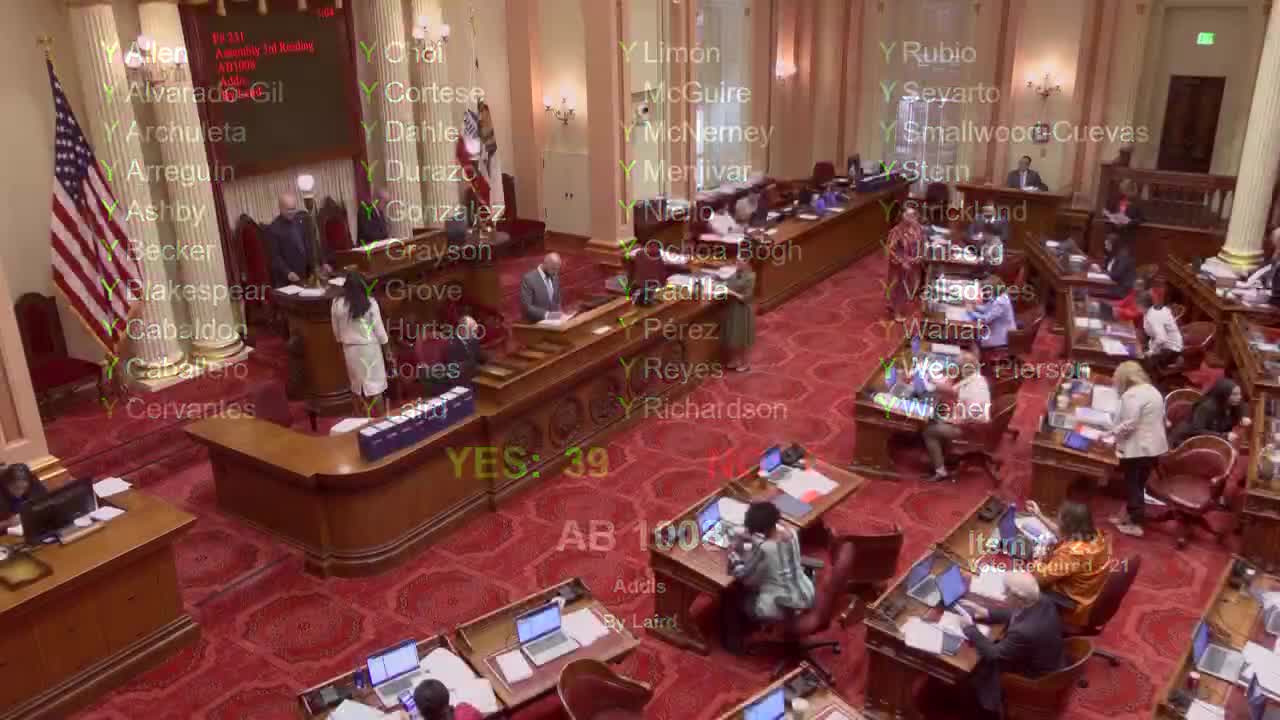
Bill Author
Bill Co-Author(s):