AB 1258: Deferred entry of judgment pilot program.
- Session Year: 2025-2026
- House: Assembly
- Latest Version Date: 2025-10-06
Current Status:
Passed
(2025-10-06: Chaptered by Secretary of State - Chapter 394, Statutes of 2025.)
Introduced
In Committee
Awaiting First Chamber Vote
Passed First Chamber
In Committee
Awaiting Second Chamber Vote
Passed Second Chamber
Enacted
Existing law authorizes, until January 1, 2026, the Counties of Alameda, Butte, Nevada, and Santa Clara to establish a pilot program to operate a deferred entry of judgment pilot program for eligible defendants who are 18 years of age or older, but under 21 years of age, on the date the offense was committed, as specified. Existing law requires a probation department to submit data relating to the effectiveness of the pilot program to the Division of Recidivism Reduction and Re-Entry, within the Department of Justice. Existing law requires a participating county to submit an evaluation of its pilot programs impact and effectiveness to the Assembly and Senate Committees on Public Safety, no later than December 31, 2024.
This bill would extend the pilot program, for the Counties of Butte, Nevada, and Santa Clara, to January 1, 2029, and would require an evaluation to be submitted to the Assembly and Senate Committees on Public Safety no later than December 31, 2027.
Existing law requires the Board of State and Community Corrections to review a countys pilot program to ensure compliance with specific federal law.
This bill would instead require the Office of Youth and Community Restoration to review a countys pilot program for compliance and would require the office to report findings from the review to the board.
Existing law authorizes, until January 1, 2026, the Counties of Alameda, Butte, Nevada, and Santa Clara to establish a pilot program to operate a deferred entry of judgment pilot program for eligible defendants who are 18 years of age or older, but under 21 years of age, on the date the offense was committed, as specified. Existing law requires the Board of State and Community Corrections to review a countys pilot program to ensure compliance with specific federal law, and further requires a probation department to submit data relating to the effectiveness of the pilot program to the Division of Recidivism Reduction and Re-Entry, within the Department of Justice. Existing law requires a participating county to submit an evaluation of its pilot programs impact and effectiveness to the Assembly and Senate Committees on Public Safety, no later than December 31, 2024.
This bill would extend the pilot program, for the County of Counties of Butte, Nevada, and Santa Clara, to January 1, 2029, and would require an evaluation to be submitted to the Assembly and Senate Committees on Public Safety no later than December 31, 2027.
Existing law authorizes, until January 1, 2026, the Counties of Alameda, Butte, Nevada, and Santa Clara to establish a pilot program to operate a deferred entry of judgment pilot program for eligible defendants who are 18 years of age or older, but under 21 years of age, on the date the offense was committed, as specified. Existing law requires the Board of State and Community Corrections to review a countys pilot program to ensure compliance with specific federal law, and further requires a probation department to submit data relating to the effectiveness of the pilot program to the Division of Recidivism Reduction and Re-Entry, within the Department of Justice. Existing law requires a participating county to submit an evaluation of its pilot programs impact and effectiveness to the Assembly and Senate Committees on Public Safety, no later than December 31, 2024.
This bill would extend the pilot program, for the County of Santa Clara, to January 1, 2029, and would require an evaluation to be submitted to the Assembly and Senate Committees on Public Safety no later than December 31, 2027.
(a)The following counties may establish a pilot program pursuant to this section to operate a deferred entry of judgment pilot program for eligible defendants described in subdivision (b):
(1)County of Butte.
(2)County of Nevada.
(3)County of Santa Clara.
(b)A defendant may participate in a deferred entry of judgment pilot program within the countys juvenile hall if that person is charged with committing a felony offense, other than the offenses listed under subdivision (d), pleads guilty to the charge or charges, and the probation department determines that the person meets all of the following requirements:
(1)Is 18 years of age or older, but under 21 years of age, on the date the offense was committed. A defendant who is 21 years of age or older, but under 25 years of age, on the date the offense was committed, may participate in the program with the approval of the multidisciplinary team established pursuant to paragraph (2) of subdivision (m).
(2)Is suitable for the program after evaluation using a risk assessment tool, as described in subdivision (c).
(3)Shows the ability to benefit from services generally reserved for delinquents, including, but not limited to, cognitive behavioral therapy, other mental health services, and age-appropriate educational, vocational, and supervision services, that are currently deployed under the jurisdiction of the juvenile court.
(4)Meets the rules of the juvenile hall developed in accordance with the applicable regulations set forth in Title 15 of the California Code of Regulations.
(5)Does not have a prior or current conviction for committing an offense listed under subdivision (c) of Section 1192.7, subdivision (c) of Section 667.5, or subdivision (b) of Section 707 of the Welfare and Institutions Code.
(6)Is not required to register as a sex offender pursuant to Chapter 5.5 (commencing with Section 290) of Title 9 of Part 1.
(c)The probation department, in consultation with the superior court, district attorney, and sheriff of the county or the governmental body charged with operating the county jail, shall develop an evaluation process using a risk assessment tool to determine eligibility for the program.
(d)A defendant is ineligible for the program if they are required to register as a sex offender pursuant to Chapter 5.5 (commencing with Section 290) of Title 9 of Part 1 or have been convicted of one or more of the following offenses:
(1)An offense listed under subdivision (c) of Section 1192.7.
(2)An offense listed under subdivision (c) of Section 667.5.
(3)An offense listed under subdivision (b) of Section 707 of the Welfare and Institutions Code.
(e)The court shall grant deferred entry of judgment if an eligible defendant consents to participate in the program, waives the right to a speedy trial or a speedy preliminary hearing, pleads guilty to the charge or charges, and waives time for the pronouncement of judgment.
(f)(1)If the probation department determines that the defendant is ineligible for the deferred entry of judgment pilot program or the defendant does not consent to participate in the program, the proceedings shall continue as in any other case.
(2)If it appears to the probation department that the defendant is performing unsatisfactorily in the program as a result of the commission of a new crime or the violation of any of the rules of the juvenile hall, or that the defendant is not benefiting from the services in the program, the probation department may make a motion for entry of judgment. After notice to the defendant, the court shall hold a hearing to determine whether judgment should be entered. If the court finds that the defendant is performing unsatisfactorily in the program or that the defendant is not benefiting from the services in the program, the court shall render a finding of guilt to the charge or charges pleaded, enter judgment, and schedule a sentencing hearing as otherwise provided in this code, and the probation department, in consultation with the county sheriff, shall remove the defendant from the program and return the defendant to custody in county jail. The mechanism of when and how the defendant is moved from custody in juvenile hall to custody in a county jail shall be determined by the local multidisciplinary team specified in paragraph (2) of subdivision (m).
(3)If the defendant has performed satisfactorily during the period in which deferred entry of judgment was granted, at the end of that period, the court shall dismiss the criminal charge or charges.
(g)A defendant shall serve no longer than one year in custody within a countys juvenile hall pursuant to the program.
(h)The probation department shall develop a plan for reentry services, including, but not limited to, housing, employment, and education services, as a component of the program.
(i)The probation department shall submit data relating to the effectiveness of the program to the Division of Recidivism Reduction and Re-Entry, within the Department of Justice, including recidivism rates for program participants as compared to recidivism rates for similar populations in the adult system within the county.
(j)A defendant participating in this program shall not come into contact with minors within the juvenile hall for any purpose, including, but not limited to, housing, recreation, or education.
(k)Before establishing a pilot program pursuant to this section, the county shall apply to the Board of State and Community Corrections for approval of a county institution as a suitable place for confinement for the purpose of the pilot program. The board shall review and approve or deny the application of the county within 30 days of receiving notice of this proposed use. In its review, the board shall take into account the available programming, capacity, and safety of the institution as a place for the confinement and rehabilitation of individuals within the jurisdiction of the criminal court and those within the jurisdiction of the juvenile court.
(l)The Office of Youth and Community Restoration shall review a countys pilot program to ensure compliance with requirements of the federal Juvenile Justice and Delinquency Prevention Act of 1974 (34 U.S.C. Sec. 11101 et seq.), as amended, relating to sight and sound separation between juveniles and adult inmates. The Office of Youth and Community Restoration shall communicate the results of any review to the Board of State and Community Corrections within 30 days after the review is complete.
(m)(1)This section applies to a defendant who would otherwise serve time in custody in a county jail. Participation in a program pursuant to this section shall not be authorized as an alternative to a sentence involving community supervision.
(2)Each county shall establish a multidisciplinary team that shall meet periodically to review and discuss the implementation, practices, and impact of the program. The team shall include representatives from all of the following:
(A)The probation department.
(B)The district attorneys office.
(C)The public defenders office.
(D)The sheriffs department.
(E)Courts located in the county.
(F)The county board of supervisors.
(G)The county health and human services department.
(H)A youth advocacy group.
(n)(1)A county that establishes a pilot program pursuant to this section shall conduct an evaluation of the pilot programs impact and effectiveness in their county. The evaluation shall include, but not be limited to, evaluating the pilot programs impact on sentencing and impact on opportunities for community supervision, monitoring the programs effect on minors in the juvenile facility, if any, and its effectiveness with respect to program participants, including outcome-related data for program participants compared to young adult offenders sentenced for comparable crimes.
(2)Each county shall prepare a report based on the evaluation conducted pursuant to paragraph (1) and shall submit the report to the Assembly and Senate Committees on Public Safety, no later than December 31, 2027.
(3)Counties may contract with an independent entity, including, but not limited to, the Regents of the University of California, for the purposes of conducting the evaluation and preparing the report pursuant to this subdivision.
(4)To continue to participate in the pilot program, authorized counties shall comply with the reporting requirement in paragraph (2).
(o)This chapter shall remain in effect only until January 1, 2029, and as of that date is repealed, unless a later enacted statute, that is enacted before January 1, 2029, deletes or extends that date.
(a)The following counties may establish a pilot program pursuant to this section to operate a deferred entry of judgment pilot program for eligible defendants described in subdivision (b):
(1)County of Butte.
(2)County of Nevada.
(3)County of Santa Clara.
(b)A defendant may participate in a deferred entry of judgment pilot program within the countys juvenile hall if that person is charged with committing a felony offense, other than the offenses listed under subdivision (d), pleads guilty to the charge or charges, and the probation department determines that the person meets all of the following requirements:
(1)Is 18 years of age or older, but under 21 years of age, on the date the offense was committed. A defendant who is 21 years of age or older, but under 25 years of age, on the date the offense was committed, may participate in the program with the approval of the multidisciplinary team established pursuant to paragraph (2) of subdivision (m).
(2)Is suitable for the program after evaluation using a risk assessment tool, as described in subdivision (c).
(3)Shows the ability to benefit from services generally reserved for delinquents, including, but not limited to, cognitive behavioral therapy, other mental health services, and age-appropriate educational, vocational, and supervision services, that are currently deployed under the jurisdiction of the juvenile court.
(4)Meets the rules of the juvenile hall developed in accordance with the applicable regulations set forth in Title 15 of the California Code of Regulations.
(5)Does not have a prior or current conviction for committing an offense listed under subdivision (c) of Section 1192.7, subdivision (c) of Section 667.5, or subdivision (b) of Section 707 of the Welfare and Institutions Code.
(6)Is not required to register as a sex offender pursuant to Chapter 5.5 (commencing with Section 290) of Title 9 of Part 1.
(c)The probation department, in consultation with the superior court, district attorney, and sheriff of the county or the governmental body charged with operating the county jail, shall develop an evaluation process using a risk assessment tool to determine eligibility for the program.
(d)A defendant is ineligible for the program if they are required to register as a sex offender pursuant to Chapter 5.5 (commencing with Section 290) of Title 9 of Part 1 or have been convicted of one or more of the following offenses:
(1)An offense listed under subdivision (c) of Section 1192.7.
(2)An offense listed under subdivision (c) of Section 667.5.
(3)An offense listed under subdivision (b) of Section 707 of the Welfare and Institutions Code.
(e)The court shall grant deferred entry of judgment if an eligible defendant consents to participate in the program, waives the right to a speedy trial or a speedy preliminary hearing, pleads guilty to the charge or charges, and waives time for the pronouncement of judgment.
(f)(1)If the probation department determines that the defendant is ineligible for the deferred entry of judgment pilot program or the defendant does not consent to participate in the program, the proceedings shall continue as in any other case.
(2)If it appears to the probation department that the defendant is performing unsatisfactorily in the program as a result of the commission of a new crime or the violation of any of the rules of the juvenile hall, or that the defendant is not benefiting from the services in the program, the probation department may make a motion for entry of judgment. After notice to the defendant, the court shall hold a hearing to determine whether judgment should be entered. If the court finds that the defendant is performing unsatisfactorily in the program or that the defendant is not benefiting from the services in the program, the court shall render a finding of guilt to the charge or charges pleaded, enter judgment, and schedule a sentencing hearing as otherwise provided in this code, and the probation department, in consultation with the county sheriff, shall remove the defendant from the program and return the defendant to custody in county jail. The mechanism of when and how the defendant is moved from custody in juvenile hall to custody in a county jail shall be determined by the local multidisciplinary team specified in paragraph (2) of subdivision (m).
(3)If the defendant has performed satisfactorily during the period in which deferred entry of judgment was granted, at the end of that period, the court shall dismiss the criminal charge or charges.
(g)A defendant shall serve no longer than one year in custody within a countys juvenile hall pursuant to the program.
(h)The probation department shall develop a plan for reentry services, including, but not limited to, housing, employment, and education services, as a component of the program.
(i)The probation department shall submit data relating to the effectiveness of the program to the Division of Recidivism Reduction and Re-Entry, within the Department of Justice, including recidivism rates for program participants as compared to recidivism rates for similar populations in the adult system within the county.
(j)A defendant participating in this program shall not come into contact with minors within the juvenile hall for any purpose, including, but not limited to, housing, recreation, or education.
(k)Before establishing a pilot program pursuant to this section, the county shall apply to the Board of State and Community Corrections for approval of a county institution as a suitable place for confinement for the purpose of the pilot program. The board shall review and approve or deny the application of the county within 30 days of receiving notice of this proposed use. In its review, the board shall take into account the available programming, capacity, and safety of the institution as a place for the confinement and rehabilitation of individuals within the jurisdiction of the criminal court and those within the jurisdiction of the juvenile court.
(l)The Board of State and Community Corrections Office of Youth and Community Restoration shall review a countys pilot program to ensure compliance with requirements of the federal Juvenile Justice and Delinquency Prevention Act of 1974 (34 U.S.C. Sec. 11101 et seq.), as amended, relating to sight and sound separation between juveniles and adult inmates. The Office of Youth and Community Restoration shall communicate the results of any review to the Board of State and Community Corrections within 30 days after the review is complete.
(m)(1)This section applies to a defendant who would otherwise serve time in custody in a county jail. Participation in a program pursuant to this section shall not be authorized as an alternative to a sentence involving community supervision.
(2)Each county shall establish a multidisciplinary team that shall meet periodically to review and discuss the implementation, practices, and impact of the program. The team shall include representatives from all of the following:
(A)The probation department.
(B)The district attorneys office.
(C)The public defenders office.
(D)The sheriffs department.
(E)Courts located in the county.
(F)The county board of supervisors.
(G)The county health and human services department.
(H)A youth advocacy group.
(n)(1)A county that establishes a pilot program pursuant to this section shall conduct an evaluation of the pilot programs impact and effectiveness in their county. The evaluation shall include, but not be limited to, evaluating the pilot programs impact on sentencing and impact on opportunities for community supervision, monitoring the programs effect on minors in the juvenile facility, if any, and its effectiveness with respect to program participants, including outcome-related data for program participants compared to young adult offenders sentenced for comparable crimes.
(2)Each county shall prepare a report based on the evaluation conducted pursuant to paragraph (1) and shall submit the report to the Assembly and Senate Committees on Public Safety, no later than December 31, 2027.
(3)Counties may contract with an independent entity, including, but not limited to, the Regents of the University of California, for the purposes of conducting the evaluation and preparing the report pursuant to this subdivision.
(4)To continue to participate in the pilot program, authorized counties shall comply with the reporting requirement in paragraph (2).
(o)This chapter shall remain in effect only until January 1, 2029, and as of that date is repealed, unless a later enacted statute, that is enacted before January 1, 2029, deletes or extends that date.
(a)The following counties may establish a pilot program pursuant to this section to operate a deferred entry of judgment pilot program for eligible defendants described in subdivision (b):
(1)County of Alameda.(2)(1)County of Butte.
(3)(2)County of Nevada.
(4)(3)County of Santa Clara.
(b)A defendant may participate in a deferred entry of judgment pilot program within the countys juvenile hall if that person is charged with committing a felony offense, other than the offenses listed under subdivision (d), pleads guilty to the charge or charges, and the probation department determines that the person meets all of the following requirements:
(1)Is 18 years of age or older, but under 21 years of age, on the date the offense was committed. A defendant who is 21 years of age or older, but under 25 years of age, on the date the offense was committed, may participate in the program with the approval of the multidisciplinary team established pursuant to paragraph (2) of subdivision (m).
(2)Is suitable for the program after evaluation using a risk assessment tool, as described in subdivision (c).
(3)Shows the ability to benefit from services generally reserved for delinquents, including, but not limited to, cognitive behavioral therapy, other mental health services, and age-appropriate educational, vocational, and supervision services, that are currently deployed under the jurisdiction of the juvenile court.
(4)Meets the rules of the juvenile hall developed in accordance with the applicable regulations set forth in Title 15 of the California Code of Regulations.
(5)Does not have a prior or current conviction for committing an offense listed under subdivision (c) of Section 1192.7, subdivision (c) of Section 667.5, or subdivision (b) of Section 707 of the Welfare and Institutions Code.
(6)Is not required to register as a sex offender pursuant to Chapter 5.5 (commencing with Section 290) of Title 9 of Part 1.
(c)The probation department, in consultation with the superior court, district attorney, and sheriff of the county or the governmental body charged with operating the county jail, shall develop an evaluation process using a risk assessment tool to determine eligibility for the program.
(d)A defendant is ineligible for the program if they are required to register as a sex offender pursuant to Chapter 5.5 (commencing with Section 290) of Title 9 of Part 1 or have been convicted of one or more of the following offenses:
(1)An offense listed under subdivision (c) of Section 1192.7.
(2)An offense listed under subdivision (c) of Section 667.5.
(3)An offense listed under subdivision (b) of Section 707 of the Welfare and Institutions Code.
(e)The court shall grant deferred entry of judgment if an eligible defendant consents to participate in the program, waives the right to a speedy trial or a speedy preliminary hearing, pleads guilty to the charge or charges, and waives time for the pronouncement of judgment.
(f)(1)If the probation department determines that the defendant is ineligible for the deferred entry of judgment pilot program or the defendant does not consent to participate in the program, the proceedings shall continue as in any other case.
(2)If it appears to the probation department that the defendant is performing unsatisfactorily in the program as a result of the commission of a new crime or the violation of any of the rules of the juvenile hall, or that the defendant is not benefiting from the services in the program, the probation department may make a motion for entry of judgment. After notice to the defendant, the court shall hold a hearing to determine whether judgment should be entered. If the court finds that the defendant is performing unsatisfactorily in the program or that the defendant is not benefiting from the services in the program, the court shall render a finding of guilt to the charge or charges pleaded, enter judgment, and schedule a sentencing hearing as otherwise provided in this code, and the probation department, in consultation with the county sheriff, shall remove the defendant from the program and return the defendant to custody in county jail. The mechanism of when and how the defendant is moved from custody in juvenile hall to custody in a county jail shall be determined by the local multidisciplinary team specified in paragraph (2) of subdivision (m).
(3)If the defendant has performed satisfactorily during the period in which deferred entry of judgment was granted, at the end of that period, the court shall dismiss the criminal charge or charges.
(g)A defendant shall serve no longer than one year in custody within a countys juvenile hall pursuant to the program.
(h)The probation department shall develop a plan for reentry services, including, but not limited to, housing, employment, and education services, as a component of the program.
(i)The probation department shall submit data relating to the effectiveness of the program to the Division of Recidivism Reduction and Re-Entry, within the Department of Justice, including recidivism rates for program participants as compared to recidivism rates for similar populations in the adult system within the county.
(j)A defendant participating in this program shall not come into contact with minors within the juvenile hall for any purpose, including, but not limited to, housing, recreation, or education.
(k)Before establishing a pilot program pursuant to this section, the county shall apply to the Board of State and Community Corrections for approval of a county institution as a suitable place for confinement for the purpose of the pilot program. The board shall review and approve or deny the application of the county within 30 days of receiving notice of this proposed use. In its review, the board shall take into account the available programming, capacity, and safety of the institution as a place for the confinement and rehabilitation of individuals within the jurisdiction of the criminal court and those within the jurisdiction of the juvenile court.
(l)The Board of State and Community Corrections shall review a countys pilot program to ensure compliance with requirements of the federal Juvenile Justice and Delinquency Prevention Act of 1974 (34 U.S.C. Sec. 11101 et seq.), as amended, relating to sight and sound separation between juveniles and adult inmates.
(m)(1)This section applies to a defendant who would otherwise serve time in custody in a county jail. Participation in a program pursuant to this section shall not be authorized as an alternative to a sentence involving community supervision.
(2)Each county shall establish a multidisciplinary team that shall meet periodically to review and discuss the implementation, practices, and impact of the program. The team shall include representatives from all of the following:
(A)Probation The probation department.
(B)The district attorneys office.
(C)The public defenders office.
(D)The sheriffs department.
(E)Courts located in the county.
(F)The county board of supervisors.
(G)The county health and human services department.
(H)A youth advocacy group.
(n)(1)A county that establishes a pilot program pursuant to this section shall conduct an evaluation of the pilot programs impact and effectiveness in their county. The evaluation shall include, but not be limited to, evaluating the pilot programs impact on sentencing and impact on opportunities for community supervision, monitoring the programs effect on minors in the juvenile facility, if any, and its effectiveness with respect to program participants, including outcome-related data for program participants compared to young adult offenders sentenced for comparable crimes.
(2)Each county shall prepare a report based on the evaluation conducted pursuant to paragraph (1) and shall submit the report to the Assembly and Senate Committees on Public Safety, no later than December 31, 2024. 2027.
(3)Counties may contract with an independent entity, including, but not limited to, the Regents of the University of California, for the purposes of conducting the evaluation and preparing the report pursuant to this subdivision.
(4)To continue to participate in the pilot program, authorized counties shall comply with the reporting requirement in paragraph (2).
(o)This chapter shall remain in effect only until January 1, 2026, 2029, and as of that date is repealed, unless a later enacted statute, that is enacted before January 1, 2026, 2029, deletes or extends that date.
SECTION 1.Section 1000.7 is added to the Penal Code, to read:1000.7.(a)The County of Santa Clara may establish a pilot program pursuant to this section to operate a deferred entry of judgment pilot program for eligible defendants described in subdivision (b).(b)A defendant may participate in a deferred entry of judgment pilot program within the countys juvenile hall if that person is charged with committing a felony offense, other than the offenses listed under subdivision (d), pleads guilty to the charge or charges, and the probation department determines that the person meets all of the following requirements:(1)Is 18 years of age or older, but under 21 years of age, on the date the offense was committed. A defendant who is 21 years of age or older, but under 25 years of age, on the date the offense was committed, may participate in the program with the approval of the multidisciplinary team established pursuant to paragraph (2) of subdivision (m).(2)Is suitable for the program after evaluation using a risk assessment tool, as described in subdivision (c).(3)Shows the ability to benefit from services generally reserved for delinquents, including, but not limited to, cognitive behavioral therapy, other mental health services, and age-appropriate educational, vocational, and supervision services, that are currently deployed under the jurisdiction of the juvenile court.(4)Meets the rules of the juvenile hall developed in accordance with the applicable regulations set forth in Title 15 of the California Code of Regulations.(5)Does not have a prior or current conviction for committing an offense listed under subdivision (c) of Section 1192.7, subdivision (c) of Section 667.5, or subdivision (b) of Section 707 of the Welfare and Institutions Code.(6)Is not required to register as a sex offender pursuant to Chapter 5.5 (commencing with Section 290) of Title 9 of Part 1.(c)The probation department, in consultation with the superior court, district attorney, and sheriff of the county or the governmental body charged with operating the county jail, shall develop an evaluation process using a risk assessment tool to determine eligibility for the program.(d)A defendant is ineligible for the program if they are required to register as a sex offender pursuant to Chapter 5.5 (commencing with Section 290) of Title 9 of Part 1 or have been convicted of one or more of the following offenses:(1)An offense listed under subdivision (c) of Section 1192.7.(2)An offense listed under subdivision (c) of Section 667.5.(3)An offense listed under subdivision (b) of Section 707 of the Welfare and Institutions Code.(e)The court shall grant deferred entry of judgment if an eligible defendant consents to participate in the program, waives the right to a speedy trial or a speedy preliminary hearing, pleads guilty to the charge or charges, and waives time for the pronouncement of judgment.(f)(1)If the probation department determines that the defendant is ineligible for the deferred entry of judgment pilot program or the defendant does not consent to participate in the program, the proceedings shall continue as in any other case.(2)If it appears to the probation department that the defendant is performing unsatisfactorily in the program as a result of the commission of a new crime or the violation of any of the rules of the juvenile hall, or that the defendant is not benefiting from the services in the program, the probation department may make a motion for entry of judgment. After notice to the defendant, the court shall hold a hearing to determine whether judgment should be entered. If the court finds that the defendant is performing unsatisfactorily in the program or that the defendant is not benefiting from the services in the program, the court shall render a finding of guilt to the charge or charges pleaded, enter judgment, and schedule a sentencing hearing as otherwise provided in this code, and the probation department, in consultation with the county sheriff, shall remove the defendant from the program and return the defendant to custody in county jail. The mechanism of when and how the defendant is moved from custody in juvenile hall to custody in a county jail shall be determined by the local multidisciplinary team specified in paragraph (2) of subdivision (m).(3)If the defendant has performed satisfactorily during the period in which deferred entry of judgment was granted, at the end of that period, the court shall dismiss the criminal charge or charges.(g)A defendant shall serve no longer than one year in custody within a countys juvenile hall pursuant to the program.(h)The probation department shall develop a plan for reentry services, including, but not limited to, housing, employment, and education services, as a component of the program.(i)The probation department shall submit data relating to the effectiveness of the program to the Division of Recidivism Reduction and Re-Entry, within the Department of Justice, including recidivism rates for program participants as compared to recidivism rates for similar populations in the adult system within the county.(j)A defendant participating in this program shall not come into contact with minors within the juvenile hall for any purpose, including, but not limited to, housing, recreation, or education.(k)Before establishing a pilot program pursuant to this section, the County of Santa Clara shall apply to the Board of State and Community Corrections for approval of a county institution as a suitable place for confinement for the purpose of the pilot program. The board shall review and approve or deny the application of the county within 30 days of receiving notice of this proposed use. In its review, the board shall take into account the available programming, capacity, and safety of the institution as a place for the confinement and rehabilitation of individuals within the jurisdiction of the criminal court and those within the jurisdiction of the juvenile court.(l)The Board of State and Community Corrections shall review the countys pilot program to ensure compliance with requirements of the federal Juvenile Justice and Delinquency Prevention Act of 1974 (34 U.S.C. Sec. 11101 et seq.), as amended, relating to sight and sound separation between juveniles and adult inmates.(m)(1)This section applies to a defendant who would otherwise serve time in custody in a county jail. Participation in a program pursuant to this section shall not be authorized as an alternative to a sentence involving community supervision.(2)The County of Santa Clara shall establish a multidisciplinary team that shall meet periodically to review and discuss the implementation, practices, and impact of the program. The team shall include representatives from all of the following:(A)Probation department.(B)The district attorneys office.(C)The public defenders office.(D)The sheriffs department.(E)Courts located in the county.(F)The county board of supervisors.(G)The county health and human services department.(H)A youth advocacy group.(n)(1)If the County of Santa Clara establishes a pilot program pursuant to this section, the county shall conduct an evaluation of the pilot programs impact and effectiveness in their county. The evaluation shall include, but not be limited to, evaluating the pilot programs impact on sentencing and impact on opportunities for community supervision, monitoring the programs effect on minors in the juvenile facility, if any, and its effectiveness with respect to program participants, including outcome-related data for program participants compared to young adult offenders sentenced for comparable crimes.(2)The County of Santa Clara shall prepare a report based on the evaluation conducted pursuant to paragraph (1) and shall submit the report to the Assembly and Senate Committees on Public Safety, no later than December 31, 2027.(3)The County of Santa Clara may contract with an independent entity, including, but not limited to, the Regents of the University of California, for the purposes of conducting the evaluation and preparing the report pursuant to this subdivision.(4)To continue to participate in the pilot program, the County of Santa Clara shall comply with the reporting requirement in paragraph (2).(o)This chapter shall remain in effect only until January 1, 2029, and as of that date is repealed, unless a later enacted statute, that is enacted before January 1, 2029, deletes or extends that date.(a)The County of Santa Clara may establish a pilot program pursuant to this section to operate a deferred entry of judgment pilot program for eligible defendants described in subdivision (b).
(b)A defendant may participate in a deferred entry of judgment pilot program within the countys juvenile hall if that person is charged with committing a felony offense, other than the offenses listed under subdivision (d), pleads guilty to the charge or charges, and the probation department determines that the person meets all of the following requirements:
(1)Is 18 years of age or older, but under 21 years of age, on the date the offense was committed. A defendant who is 21 years of age or older, but under 25 years of age, on the date the offense was committed, may participate in the program with the approval of the multidisciplinary team established pursuant to paragraph (2) of subdivision (m).
(2)Is suitable for the program after evaluation using a risk assessment tool, as described in subdivision (c).
(3)Shows the ability to benefit from services generally reserved for delinquents, including, but not limited to, cognitive behavioral therapy, other mental health services, and age-appropriate educational, vocational, and supervision services, that are currently deployed under the jurisdiction of the juvenile court.
(4)Meets the rules of the juvenile hall developed in accordance with the applicable regulations set forth in Title 15 of the California Code of Regulations.
(5)Does not have a prior or current conviction for committing an offense listed under subdivision (c) of Section 1192.7, subdivision (c) of Section 667.5, or subdivision (b) of Section 707 of the Welfare and Institutions Code.
(6)Is not required to register as a sex offender pursuant to Chapter 5.5 (commencing with Section 290) of Title 9 of Part 1.
(c)The probation department, in consultation with the superior court, district attorney, and sheriff of the county or the governmental body charged with operating the county jail, shall develop an evaluation process using a risk assessment tool to determine eligibility for the program.
(d)A defendant is ineligible for the program if they are required to register as a sex offender pursuant to Chapter 5.5 (commencing with Section 290) of Title 9 of Part 1 or have been convicted of one or more of the following offenses:
(1)An offense listed under subdivision (c) of Section 1192.7.
(2)An offense listed under subdivision (c) of Section 667.5.
(3)An offense listed under subdivision (b) of Section 707 of the Welfare and Institutions Code.
(e)The court shall grant deferred entry of judgment if an eligible defendant consents to participate in the program, waives the right to a speedy trial or a speedy preliminary hearing, pleads guilty to the charge or charges, and waives time for the pronouncement of judgment.
(f)(1)If the probation department determines that the defendant is ineligible for the deferred entry of judgment pilot program or the defendant does not consent to participate in the program, the proceedings shall continue as in any other case.
(2)If it appears to the probation department that the defendant is performing unsatisfactorily in the program as a result of the commission of a new crime or the violation of any of the rules of the juvenile hall, or that the defendant is not benefiting from the services in the program, the probation department may make a motion for entry of judgment. After notice to the defendant, the court shall hold a hearing to determine whether judgment should be entered. If the court finds that the defendant is performing unsatisfactorily in the program or that the defendant is not benefiting from the services in the program, the court shall render a finding of guilt to the charge or charges pleaded, enter judgment, and schedule a sentencing hearing as otherwise provided in this code, and the probation department, in consultation with the county sheriff, shall remove the defendant from the program and return the defendant to custody in county jail. The mechanism of when and how the defendant is moved from custody in juvenile hall to custody in a county jail shall be determined by the local multidisciplinary team specified in paragraph (2) of subdivision (m).
(3)If the defendant has performed satisfactorily during the period in which deferred entry of judgment was granted, at the end of that period, the court shall dismiss the criminal charge or charges.
(g)A defendant shall serve no longer than one year in custody within a countys juvenile hall pursuant to the program.
(h)The probation department shall develop a plan for reentry services, including, but not limited to, housing, employment, and education services, as a component of the program.
(i)The probation department shall submit data relating to the effectiveness of the program to the Division of Recidivism Reduction and Re-Entry, within the Department of Justice, including recidivism rates for program participants as compared to recidivism rates for similar populations in the adult system within the county.
(j)A defendant participating in this program shall not come into contact with minors within the juvenile hall for any purpose, including, but not limited to, housing, recreation, or education.
(k)Before establishing a pilot program pursuant to this section, the County of Santa Clara shall apply to the Board of State and Community Corrections for approval of a county institution as a suitable place for confinement for the purpose of the pilot program. The board shall review and approve or deny the application of the county within 30 days of receiving notice of this proposed use. In its review, the board shall take into account the available programming, capacity, and safety of the institution as a place for the confinement and rehabilitation of individuals within the jurisdiction of the criminal court and those within the jurisdiction of the juvenile court.
(l)The Board of State and Community Corrections shall review the countys pilot program to ensure compliance with requirements of the federal Juvenile Justice and Delinquency Prevention Act of 1974 (34 U.S.C. Sec. 11101 et seq.), as amended, relating to sight and sound separation between juveniles and adult inmates.
(m)(1)This section applies to a defendant who would otherwise serve time in custody in a county jail. Participation in a program pursuant to this section shall not be authorized as an alternative to a sentence involving community supervision.
(2)The County of Santa Clara shall establish a multidisciplinary team that shall meet periodically to review and discuss the implementation, practices, and impact of the program. The team shall include representatives from all of the following:
(A)Probation department.
(B)The district attorneys office.
(C)The public defenders office.
(D)The sheriffs department.
(E)Courts located in the county.
(F)The county board of supervisors.
(G)The county health and human services department.
(H)A youth advocacy group.
(n)(1)If the County of Santa Clara establishes a pilot program pursuant to this section, the county shall conduct an evaluation of the pilot programs impact and effectiveness in their county. The evaluation shall include, but not be limited to, evaluating the pilot programs impact on sentencing and impact on opportunities for community supervision, monitoring the programs effect on minors in the juvenile facility, if any, and its effectiveness with respect to program participants, including outcome-related data for program participants compared to young adult offenders sentenced for comparable crimes.
(2)The County of Santa Clara shall prepare a report based on the evaluation conducted pursuant to paragraph (1) and shall submit the report to the Assembly and Senate Committees on Public Safety, no later than December 31, 2027.
(3)The County of Santa Clara may contract with an independent entity, including, but not limited to, the Regents of the University of California, for the purposes of conducting the evaluation and preparing the report pursuant to this subdivision.
(4)To continue to participate in the pilot program, the County of Santa Clara shall comply with the reporting requirement in paragraph (2).
(o)This chapter shall remain in effect only until January 1, 2029, and as of that date is repealed, unless a later enacted statute, that is enacted before January 1, 2029, deletes or extends that date.
|
Date
|
Status
|
|---|---|
| Oct 6, 2025 | Chaptered by Secretary of State - Chapter 394, Statutes of 2025. |
| Oct 6, 2025 | Approved by the Governor. |
| Sep 15, 2025 | Enrolled and presented to the Governor at 4:30 p.m. |
| Sep 4, 2025 | Senate amendments concurred in. To Engrossing and Enrolling. (Ayes 61. Noes 13. Page 2923.). |
| Sep 3, 2025 | In Assembly. Concurrence in Senate amendments pending. |
| Sep 3, 2025 | Read third time. Passed. Ordered to the Assembly. (Ayes 32. Noes 8. Page 2448.). |
| Aug 27, 2025 | Read second time. Ordered to third reading. |
| Aug 26, 2025 | Read third time and amended. Ordered to second reading. |
| Jul 8, 2025 | Read second time. Ordered to third reading. |
| Jul 7, 2025 | From committee: Be ordered to second reading pursuant to Senate Rule 28.8. |
| Jun 24, 2025 | From committee: Do pass and re-refer to Com. on APPR. (Ayes 5. Noes 1.) (June 24). Re-referred to Com. on APPR. |
| Jun 11, 2025 | Referred to Com. on PUB. S. |
| Jun 3, 2025 | In Senate. Read first time. To Com. on RLS. for assignment. |
| Jun 2, 2025 | Read third time. Passed. Ordered to the Senate. (Ayes 61. Noes 13. Page 1932.) |
| May 27, 2025 | Read second time. Ordered to third reading. |
| May 23, 2025 | From committee: Do pass. (Ayes 11. Noes 1.) (May 23). |
| Apr 23, 2025 | In committee: Set, first hearing. Referred to suspense file. |
| Apr 9, 2025 | From committee: Do pass and re-refer to Com. on APPR. (Ayes 7. Noes 0.) (April 8). Re-referred to Com. on APPR. |
| Apr 3, 2025 | Re-referred to Com. on PUB. S. |
| Apr 2, 2025 | From committee chair, with author's amendments: Amend, and re-refer to Com. on PUB. S. Read second time and amended. |
| Mar 10, 2025 | Referred to Com. on PUB. S. |
| Feb 24, 2025 | Read first time. |
| Feb 22, 2025 | From printer. May be heard in committee March 24. |
| Feb 21, 2025 | Introduced. To print. |
|
Date
|
Description
|
Location
|
Votes
|
|
|---|---|---|---|---|
| Sep 4, 2025 | AB 1258 Kalra Concurrence in Senate Amendments | Assembly Floor |
Passed |
|
| Sep 3, 2025 | Assembly 3rd Reading AB1258 Kalra By Cortese | Senate Floor |
Passed |
|
| Jun 24, 2025 | Do pass, but first be re-referred to the Committee on [Appropriations] | Senate Standing Committee on Public Safety |
Passed |
|
| Jun 2, 2025 | AB 1258 Kalra Assembly Third Reading | Assembly Floor |
Passed |
|
| May 23, 2025 | Do pass. | Assembly Standing Committee on Appropriations |
Passed |
|
| Apr 8, 2025 | Do pass and be re-referred to the Committee on [Appropriations] | Assembly Standing Committee on Public Safety |
Passed |
This list shows positions taken on this bill by organizations on the date displayed, which is linked to the original source.
Positions by individuals are not included.
|
Organization
|
Position
|
Date
|
|---|---|---|
| California Judges Association (CJA) | ** Support | |
| California Public Defenders Association | ** Support | |
| Chief Probation Officers Of California | ** Support | |
| County of Santa Clara | ** Support | |
| Ella Baker Center For Human Rights | ** Support |
CONCURRENCE IN SENATE AMENDMENTS
CSA1 Bill Id:AB 1258
Author:(Kalra)
As Amended Ver:August 26, 2025
Majority vote
SUMMARY
Extends the Deferred entry of judgment pilot program, for the Counties of Butte, Nevada, and Santa Clara, to January 1, 2029, and would require an evaluation of the pilot program's impact and effectiveness in their county to be submitted to the Assembly and Senate Committees on Public Safety no later than December 31, 2027.
Senate Amendments
- Shift responsibility for reviewing compliance of the federal Juvenile Justice and Delinquency Prevention Act of 1974 from the Board of State and Community Corrections to the Office of Youth and Community Restoration.
- Require the Office of Youth and Community Restoration to communicate the results of any review to the Board within 30 days after the review is complete.
COMMENTS
As passed by the Assembly: This bill extended the Deferred entry of judgment pilot program, for the Counties of Butte, Nevada, and Santa Clara, to January 1, 2029, and would require an evaluation of the pilot program's impact and effectiveness in their county to be submitted to the Assembly and Senate Committees on Public Safety no later than December 31, 2027.
According to the Author
"Studies have shown that young adults between the ages of 18-25 are still undergoing significant brain development and developing their decision-making skills. To that extent, although these individuals are legal adults, they could be better serviced by the juvenile justice system where they would receive age-appropriate services as opposed to rehabilitation in an adult facility.
"AB 1258 would extend the sunset date until January 1, 2029, for Santa Clara County to continue offering age-appropriate services for offenders between the ages of 18 and 25 through the Young Adult Deferred Entry Judgement Program. This program has been shown to have a positive impact on young adults as an alternative to adult incarceration. Extending the sunset to continue this program will allow transitional-age youth to receive supportive services geared toward them."
Arguments in Support
According to the California Judges Association (CJA), "AB 1258 extends the sunset date of the Deferred Entry of Judgment Pilot Program (DEJPP) from January 1, 2026, until January 1, 2029. DEJPP has been in place since 2016 in the counties of Alameda, Butte, Napa, Nevada, Santa Clara, and Ventura. AB 1258 would extend the sunset dates for Butte, Nevada, and Santa Clara County to January 1, 2029. This bill allows young adults between the ages of 18 – 25, who meet specific criteria, to participate in a deferred entry program with the approval of a multidisciplinary team established by this bill. This allows these young adults with access to age appropriate services, such as mental health, vocational, educational, and reentry services. Individuals convicted of violent crimes, sex offenses, or other serious felonies are excluded from participation.
"Young adults who complete the program would be eligible to have their charge(s) dropped and have access to housing, employment, and education reentry services to combat recidivism and ensure they are given the best chance to succeed post-incarceration. However, failure to comply or committing a new crime could result in entry of judgment and a transfer to county jail. Program efficacy will be determined through participating county's data collection submitted by December 31, 2027, to the Division of Recidivism Reduction and Re-Entry within the Department of Justice.
"AB 1258 promotes public safety by prioritizing evidence-based rehabilitation over punitive measures. Research has consistently shown that young adults who receive appropriate services tailored to their needs are less likely to reoffend, making communities safer in the long run. The inclusion of risk assessment tools ensures that only those who demonstrate the ability to benefit from the program are admitted, balancing accountability with the opportunity for positive change."
Arguments in Opposition
None on file.
FISCAL COMMENTS
According to the Assembly Appropriations Committee, "No significant state costs.
"Regardless, consistent with Appropriations Committee rules and practice, this bill is eligible for placement on the suspense file because it has the primary purpose of extending a pilot program."
VOTES:
ASM PUBLIC SAFETY: 7-0-2
YES: Schultz, Alanis, Mark González, Haney, Harabedian, Ramos, Sharp-Collins
ABS, ABST OR NV: Lackey, Nguyen
ASM APPROPRIATIONS: 11-1-3
YES: Wicks, Arambula, Calderon, Caloza, Elhawary, Fong, Mark González, Hart, Pacheco, Pellerin, Solache
NO: Tangipa
ABS, ABST OR NV: Sanchez, Dixon, Ta
ASSEMBLY FLOOR: 61-13-5
YES: Addis, Aguiar-Curry, Ahrens, Alanis, Alvarez, Arambula, Ávila Farías, Bauer-Kahan, Bennett, Berman, Boerner, Bonta, Bryan, Calderon, Caloza, Carrillo, Connolly, Elhawary, Fong, Gabriel, Garcia, Gipson, Jeff Gonzalez, Mark González, Haney, Harabedian, Hart, Irwin, Jackson, Kalra, Krell, Lee, Lowenthal, McKinnor, Muratsuchi, Nguyen, Ortega, Pacheco, Papan, Patel, Pellerin, Petrie-Norris, Quirk-Silva, Ramos, Ransom, Celeste Rodriguez, Michelle Rodriguez, Rogers, Schiavo, Schultz, Sharp-Collins, Solache, Soria, Stefani, Valencia, Wallis, Ward, Wicks, Wilson, Zbur, Rivas
NO: Castillo, Chen, Davies, DeMaio, Ellis, Flora, Gallagher, Hadwick, Hoover, Macedo, Patterson, Sanchez, Tangipa
ABS, ABST OR NV: Bains, Dixon, Lackey, Blanca Rubio, Ta
SENATE FLOOR: 32-8-0
YES: Allen, Archuleta, Arreguín, Ashby, Becker, Blakespear, Cabaldon, Caballero, Cervantes, Cortese, Dahle, Durazo, Gonzalez, Grayson, Grove, Hurtado, Laird, Limón, McGuire, McNerney, Menjivar, Padilla, Pérez, Reyes, Richardson, Rubio, Smallwood-Cuevas, Stern, Umberg, Wahab, Weber Pierson, Wiener
NO: Alvarado-Gil, Choi, Jones, Niello, Ochoa Bogh, Seyarto, Strickland, Valladares
UPDATED
VERSION: August 26, 2025
CONSULTANT: Samarpreet Kaur / PUB. S. / (916) 319-3744 FN: 0001597
SENATE RULES COMMITTEE Office of Senate Floor Analyses (916) 651-1520 Fax: (916) 327-4478 | AB 1258 |
THIRD READING
Bill No: AB 1258
Author: Kalra (D)
Amended: 8/26/25 in Senate
Vote: 21
SENATE PUBLIC SAFETY COMMITTEE: 5-1, 6/24/25
AYES: Arreguín, Caballero, Gonzalez, Pérez, Wiener
NOES: Seyarto
ASSEMBLY FLOOR: 61-13, 6/2/25 - See last page for vote
SENATE APPROPRIATIONS COMMITTEE: Senate Rule 28.8
SUBJECT: Deferred entry of judgment pilot program
SOURCE: Author
DIGEST:
This bill extends the operation of the Transition Age Youth Pilot Program operating in Butte, Nevada, and Santa Clara counties until January 1, 2029.
Senate Floor Amendments of 8/26/25 shift responsibility for monitoring compliance with specified federal law requirements from the Board of State and Community Corrections to the Office of Youth and Community Restoration.
ANALYSIS:
Existing law:
- Provides that the counties of Alameda, Butte, Napa, Nevada, and Santa Clara may establish a pilot program to operate a deferred entry of judgment pilot program until January 1, 2024 for certain eligible defendants. (Penal (Pen.) Code, § 1000.7, subd. (a).)
- Provides that a defendant may participate in a deferred entry of judgment pilot program within the county’s juvenile hall if that person is charged with committing a felony offense, except as specified, they plead guilty to the charge or charges, and the probation department determines that the person meets all of the following requirements:
- Is 18 years of age or older, but under 21 years of age on the date the offense was committed, or is 21 years of age or older, but under 25 years of age on the date the offense was committed with the approval of the county multidisciplinary team established pursuant to this pilot program;
- Is suitable for the program after evaluation using a risk assessment tool, as specified;
- Shows the ability to benefit from services generally reserved for delinquents, including but not limited to, cognitive behavioral therapy, other mental health services, and age-appropriate educational, vocational, and supervision services, that are currently deployed under the jurisdiction of the juvenile court;
- Meets the rules of the juvenile hall developed in accordance with the applicable regulations;
- Does not have a prior or current conviction for committing certain specified offenses; and,
- Is not required to register as a sex offender, as specified. (Pen. Code, § 1000.7, subd. (b).)
- Requires the probation department, in consultation with the superior court, district attorney, and sheriff of the county or the governmental body charged with operating the county jail, to develop an evaluation process using a risk assessment tool to determine eligibility for the program. (Pen. Code, § 1000.7, subd. (c).)
- Makes ineligible for the deferred entry of judgment pilot program a defendant who is required to register as a sex offender, as specified, or who has been convicted of one or more of the following offenses:
- A “serious” felony, as that term is defined by law;
- A “violent” felony, as that term is defined by law; or,
- A serious or violent crime as that term is defined pertaining to juveniles. (Pen. Code, § 1000.7, subd. (d).)
- Requires the court to grant deferred entry of judgment if an eligible defendant consents to participate in the program, waives their right to a speedy trial or a speedy preliminary hearing, pleads guilty to the charge or charges, and waives time for the pronouncement of judgment. (Pen. Code, § 1000.7, subd. (e).)
- Provides that if the probation department determines that the defendant is not eligible for the deferred entry of judgment pilot program or the defendant does not consent to participate in the program, the proceedings shall continue as in any other case. (Pen. Code, § 1000.7, subd. (f)(1).)
- States that if it appears to the probation department that the defendant is performing unsatisfactorily in the program as a result of the commission of a new crime or the violation of any of the rules of the juvenile hall or that the defendant is not benefiting from the services in the program, the probation department may make a motion for entry of judgment. After notice to the defendant, the court is required to hold a hearing to determine whether judgment should be entered. (Pen. Code, § 1000.7, subd. (f)(2).)
- States that if the court finds that the defendant is performing unsatisfactorily in the program or that the defendant is not benefiting from the services in the program, the court is required to render a finding of guilt to the charge or charges pleaded, enter judgment, and schedule a sentencing hearing, and the probation department, in consultation with the county sheriff, is required to remove the defendant from the program and return him or her to custody in county jail. The mechanism of when and how the defendant is moved from custody in juvenile hall to custody in a county jail shall be determined by the local multidisciplinary team, as specified. (Pen. Code, § 1000.7, subd. (f)(2).)
- Provides that if the defendant has performed satisfactorily during the period in which deferred entry of judgment was granted, at the end of that period, the court is required to dismiss the criminal charge or charges. (Pen. Code, § 1000.7, subd. (f)(3).)
- Prohibits a defendant participating in this program from serving longer than one year in juvenile hall. (Pen. Code, § 1000.7, subd. (g).)
- Requires the probation department to develop a plan for reentry services, including, but not limited to, housing, employment, and education services, as a component of the program. (Pen. Code, § 1000.7, subd. (h).)
- Requires the probation department to submit data relating to the effectiveness of the program to the Division of Recidivism Reduction and Re-Entry, within the Department of Justice, including recidivism rates for program participants as compared to recidivism rates for similar populations in the adult system within the county. (Pen. Code, § 1000.7, subd. (i).)
- Prohibits a defendant participating in the program from coming into contact with minors within the juvenile hall for any purpose, including, but not limited to, housing, recreation, or education. (Pen. Code, § 1000.7, subd. (j).)
- Requires the Board of State and Community Corrections to review a county’s pilot program to ensure compliance with requirements of the federal Juvenile Justice and Delinquency Prevention Act relating to “sight and sound” separation between juveniles and adult inmates.
- Requires a county participating in the program to conduct an evaluation of the pilot program’s impact and effectiveness in their county, as specified, and to prepare a report based on the evaluation, which is to be submitted to the Assembly and Senate Committees on Public Safety. (Pen. Code, § 1000.7, subd. (n).)
- Sunsets the pilot program on January 1, 2026. (Pen. Code, § 1000.7, subd. (o).)
This bill:
- Extends the young adult deferred entry of judgment pilot program from January 1, 2026 to January 1, 2029.
- Removes Alameda County from the pilot program.
- Assigns the Office of Youth and Community Restoration to conduct “sight and sound” inspections for counties participating in the pilot program and to communicate their findings to the Board of State and Community Corrections.
Background
The Deferred Entry of Judgement Pilot Program is based on the premise that although 18 to 21 year olds are legally adults, young offenders are still undergoing significant brain development and may be better served by the juvenile justice system with corresponding age appropriate intensive services.
To be eligible for the transition age youth deferred entry of judgment program, the defendant must be between the ages of 18 and 21, and must not have a prior or current conviction for a serious, violent, or sex offense. Individuals between the age of 21 and 24 may also participate in the program with approval of the local multidisciplinary team. Participants must consent to participate in the program, be assessed and found suitable for the program, and show the ability to benefit from the services generally provided to juvenile hall youth. The probation department is required to develop a plan for reentry services, including, but not limited to, housing, employment, and education services, as a component of the program. Finally, a person participating in the program cannot serve more than one year in juvenile hall.
The pilot program is a deferred entry of judgment program, meaning that participants have to plead guilty in order to be eligible for the program. If they succeed in the program then the criminal charges are dismissed. If the individual is found to perform unsatisfactorily in the program, the probation department may file a motion of entry of judgement. Once it receives the motion, the court conducts a hearing to establish whether a judgment should be entered. If the court determines that an individual was not benefiting from the services and supports included in the program or is performing unsatisfactorily in the program, the court may render a verdict of guilty to the charge or charges and schedule a sentencing hearing.
This bill extends the operational date of the pilot program to January 1, 2029 and removes Alameda County as a participating county.
FISCAL EFFECT: Appropriation: No Fiscal Com.: Yes Local: No
SUPPORT: (Verified 8/25/25)
California Judges Association
California Public Defenders Association
Chief Probation Officers' of California
County of Santa Clara
Ella Baker Center for Human Rights
OPPOSITION: (Verified 8/25/25)
None received
ARGUMENT IN SUPPORT:
According to the Chief Probation Officers of California:
SB 1004 (Hill, 2016) and SB 1106 (Hill, 2018) authorized specified counties to voluntarily enact a pilot program that allows young adults who have committed non-serious, non-violent, and non-sex offenses aged 18-21 to participate in the program which allows them to receive services and to have their charges dismissed upon successful completion of the program. Programming for these young adults includes cognitive behavioral therapy, mental health treatment, vocational training, reentry planning, and education, among others.
Probation is focused on helping justice-involved individuals transition out of the system permanently through transformative and evidence-based rehabilitation and by addressing the safety and treatment needs of the individual. The extension sought in this bill helps support the important continuity of services and community safety needs for individuals in the program.
ASSEMBLY FLOOR: 61-13, 6/2/25
AYES: Addis, Aguiar-Curry, Ahrens, Alanis, Alvarez, Arambula, Ávila Farías, Bauer-Kahan, Bennett, Berman, Boerner, Bonta, Bryan, Calderon, Caloza, Carrillo, Connolly, Elhawary, Fong, Gabriel, Garcia, Gipson, Jeff Gonzalez, Mark González, Haney, Harabedian, Hart, Irwin, Jackson, Kalra, Krell, Lee, Lowenthal, McKinnor, Muratsuchi, Nguyen, Ortega, Pacheco, Papan, Patel, Pellerin, Petrie-Norris, Quirk-Silva, Ramos, Ransom, Celeste Rodriguez, Michelle Rodriguez, Rogers, Schiavo, Schultz, Sharp-Collins, Solache, Soria, Stefani, Valencia, Wallis, Ward, Wicks, Wilson, Zbur, Rivas
NOES: Castillo, Chen, Davies, DeMaio, Ellis, Flora, Gallagher, Hadwick, Hoover, Macedo, Patterson, Sanchez, Tangipa
NO VOTE RECORDED: Bains, Dixon, Lackey, Blanca Rubio, Ta
Prepared by: Sandy Uribe / PUB. S. /
8/26/25 16:07:33
**** END ****
SENATE RULES COMMITTEE Office of Senate Floor Analyses (916) 651-1520 Fax: (916) 327-4478 | AB 1258 |
THIRD READING
Bill No: AB 1258
Author: Kalra (D)
Amended: 4/2/25 in Assembly
Vote: 21
SENATE PUBLIC SAFETY COMMITTEE: 5-1, 6/24/25
AYES: Arreguín, Caballero, Gonzalez, Pérez, Wiener
NOES: Seyarto
SENATE APPROPRIATIONS COMMITTEE: Senate Rule 28.8
ASSEMBLY FLOOR: 61-13, 6/2/25 - See last page for vote
SUBJECT: Deferred entry of judgment pilot program
SOURCE: Author
DIGEST:
This bill extends the operation of the Transition Age Youth Pilot Program operating in Butte, Nevada, and Santa Clara counties until January 1, 2029.
ANALYSIS:
Existing law:
- Provides that the counties of Alameda, Butte, Napa, Nevada, and Santa Clara may establish a pilot program to operate a deferred entry of judgment pilot program until January 1, 2024 for certain eligible defendants. (Penal (Pen.) Code, § 1000.7, subd. (a).)
- Provides that a defendant may participate in a deferred entry of judgment pilot program within the county’s juvenile hall if that person is charged with committing a felony offense, except as specified, they plead guilty to the charge or charges, and the probation department determines that the person meets all of the following requirements:
- Is 18 years of age or older, but under 21 years of age on the date the offense was committed, or is 21 years of age or older, but under 25 years of age on the date the offense was committed with the approval of the county multidisciplinary team established pursuant to this pilot program;
- Is suitable for the program after evaluation using a risk assessment tool, as specified;
- Shows the ability to benefit from services generally reserved for delinquents, including but not limited to, cognitive behavioral therapy, other mental health services, and age-appropriate educational, vocational, and supervision services, that are currently deployed under the jurisdiction of the juvenile court;
- Meets the rules of the juvenile hall developed in accordance with the applicable regulations;
- Does not have a prior or current conviction for committing certain specified offenses; and,
- Is not required to register as a sex offender, as specified. (Pen. Code, § 1000.7, subd. (b).)
- Requires the probation department, in consultation with the superior court, district attorney, and sheriff of the county or the governmental body charged with operating the county jail, to develop an evaluation process using a risk assessment tool to determine eligibility for the program. (Pen. Code, § 1000.7, subd. (c).)
- Makes ineligible for the deferred entry of judgment pilot program a defendant who is required to register as a sex offender, as specified, or who has been convicted of one or more of the following offenses:
- A “serious” felony, as that term is defined by law;
- A “violent” felony, as that term is defined by law; or,
- A serious or violent crime as that term is defined pertaining to juveniles. (Pen. Code, § 1000.7, subd. (d).)
- Requires the court to grant deferred entry of judgment if an eligible defendant consents to participate in the program, waives their right to a speedy trial or a speedy preliminary hearing, pleads guilty to the charge or charges, and waives time for the pronouncement of judgment. (Pen. Code, § 1000.7, subd. (e).)
- Provides that if the probation department determines that the defendant is not eligible for the deferred entry of judgment pilot program or the defendant does not consent to participate in the program, the proceedings shall continue as in any other case. (Pen. Code, § 1000.7, subd. (f)(1).)
- States that if it appears to the probation department that the defendant is performing unsatisfactorily in the program as a result of the commission of a new crime or the violation of any of the rules of the juvenile hall or that the defendant is not benefiting from the services in the program, the probation department may make a motion for entry of judgment. After notice to the defendant, the court is required to hold a hearing to determine whether judgment should be entered. (Pen. Code, § 1000.7, subd. (f)(2).)
- States that if the court finds that the defendant is performing unsatisfactorily in the program or that the defendant is not benefiting from the services in the program, the court is required to render a finding of guilt to the charge or charges pleaded, enter judgment, and schedule a sentencing hearing, and the probation department, in consultation with the county sheriff, is required to remove the defendant from the program and return him or her to custody in county jail. The mechanism of when and how the defendant is moved from custody in juvenile hall to custody in a county jail shall be determined by the local multidisciplinary team, as specified. (Pen. Code, § 1000.7, subd. (f)(2).)
- Provides that if the defendant has performed satisfactorily during the period in which deferred entry of judgment was granted, at the end of that period, the court is required to dismiss the criminal charge or charges. (Pen. Code, § 1000.7, subd. (f)(3).)
- Prohibits a defendant participating in this program from serving longer than one year in juvenile hall. (Pen. Code, § 1000.7, subd. (g).)
- Requires the probation department to develop a plan for reentry services, including, but not limited to, housing, employment, and education services, as a component of the program. (Pen. Code, § 1000.7, subd. (h).)
- Requires the probation department to submit data relating to the effectiveness of the program to the Division of Recidivism Reduction and Re-Entry, within the Department of Justice, including recidivism rates for program participants as compared to recidivism rates for similar populations in the adult system within the county. (Pen. Code, § 1000.7, subd. (i).)
- Prohibits a defendant participating in the program from coming into contact with minors within the juvenile hall for any purpose, including, but not limited to, housing, recreation, or education. (Pen. Code, § 1000.7, subd. (j).)
- Requires a county participating in the program to conduct an evaluation of the pilot program’s impact and effectiveness in their county, as specified, and to prepare a report based on the evaluation, which is to be submitted to the Assembly and Senate Committees on Public Safety. (Pen. Code, § 1000.7, subd. (n).)
- Sunsets the pilot program on January 1, 2026. (Pen. Code, § 1000.7, subd. (o).)
This bill:
- Extends the young adult deferred entry of judgment pilot program from January 1, 2026 to January 1, 2029.
- Removes Alameda County from the pilot program.
Background
The Deferred Entry of Judgement Pilot Program is based on the premise that although 18 to 21 year olds are legally adults, young offenders are still undergoing significant brain development and may be better served by the juvenile justice system with corresponding age appropriate intensive services.
To be eligible for the transition age youth deferred entry of judgment program, the defendant must be between the ages of 18 and 21, and must not have a prior or current conviction for a serious, violent, or sex offense. Individuals between the age of 21 and 24 may also participate in the program with approval of the local multidisciplinary team. Participants must consent to participate in the program, be assessed and found suitable for the program, and show the ability to benefit from the services generally provided to juvenile hall youth. The probation department is required to develop a plan for reentry services, including, but not limited to, housing, employment, and education services, as a component of the program. Finally, a person participating in the program cannot serve more than one year in juvenile hall.
The pilot program is a deferred entry of judgment program, meaning that participants have to plead guilty in order to be eligible for the program. If they succeed in the program then the criminal charges are dismissed. If the individual is found to perform unsatisfactorily in the program, the probation department may file a motion of entry of judgement. Once it receives the motion, the court conducts a hearing to establish whether a judgment should be entered. If the court determines that an individual was not benefiting from the services and supports included in the program or is performing unsatisfactorily in the program, the court may render a verdict of guilty to the charge or charges and schedule a sentencing hearing.
This bill extends the operational date of the pilot program to January 1, 2029 and removes Alameda County as a participating county.
FISCAL EFFECT: Appropriation: No Fiscal Com.: Yes Local: No
SUPPORT: (Verified 7/7/25)
California Judges Association
California Public Defenders Association
Chief Probation Officers' of California
County of Santa Clara
Ella Baker Center for Human Rights
OPPOSITION: (Verified 7/7/25)
None received
ARGUMENT IN SUPPORT:
According to the Chief Probation Officers of California:
SB 1004 (Hill, 2016) and SB 1106 (Hill, 2018) authorized specified counties to voluntarily enact a pilot program that allows young adults who have committed non-serious, non-violent, and non-sex offenses aged 18-21 to participate in the program which allows them to receive services and to have their charges dismissed upon successful completion of the program. Programming for these young adults includes cognitive behavioral therapy, mental health treatment, vocational training, reentry planning, and education, among others.
Probation is focused on helping justice-involved individuals transition out of the system permanently through transformative and evidence-based rehabilitation and by addressing the safety and treatment needs of the individual. The extension sought in this bill helps support the important continuity of services and community safety needs for individuals in the program.
ASSEMBLY FLOOR: 61-13, 6/2/25
AYES: Addis, Aguiar-Curry, Ahrens, Alanis, Alvarez, Arambula, Ávila Farías, Bauer-Kahan, Bennett, Berman, Boerner, Bonta, Bryan, Calderon, Caloza, Carrillo, Connolly, Elhawary, Fong, Gabriel, Garcia, Gipson, Jeff Gonzalez, Mark González, Haney, Harabedian, Hart, Irwin, Jackson, Kalra, Krell, Lee, Lowenthal, McKinnor, Muratsuchi, Nguyen, Ortega, Pacheco, Papan, Patel, Pellerin, Petrie-Norris, Quirk-Silva, Ramos, Ransom, Celeste Rodriguez, Michelle Rodriguez, Rogers, Schiavo, Schultz, Sharp-Collins, Solache, Soria, Stefani, Valencia, Wallis, Ward, Wicks, Wilson, Zbur, Rivas
NOES: Castillo, Chen, Davies, DeMaio, Ellis, Flora, Gallagher, Hadwick, Hoover, Macedo, Patterson, Sanchez, Tangipa
NO VOTE RECORDED: Bains, Dixon, Lackey, Blanca Rubio, Ta
Prepared by: Sandy Uribe / PUB. S. /
7/8/25 16:38:50
**** END ****
SENATE COMMITTEE ON PUBLIC SAFETY
Senator Jesse Arreguín, Chair
2025 - 2026 Regular
Bill No: AB 1258 Hearing Date: June 24, 2025
Author: | Kalra | ||
Version: | April 2, 2025 | ||
Urgency: | No | Fiscal: | Yes |
Consultant: | SU | ||
Subject: Deferred entry of judgment pilot program
HISTORY
Source: Author
Prior Legislation: AB 58 (Kalra), Ch. 418, Stats. of 2023
AB 1318 (Stone), Ch. 210, Stats. of 2021
AB 1390 (Stone), Ch. 129, Stats. of 2019
AB 1106 (Hill), Ch. 1007, Stats. of 2018
AB 1004 (Hill), Ch. 865, Stats. of 2016
Support: California Judges Association; California Public Defenders Association; Chief Probation Officers of California; Ella Baker Center for Human Rights
Opposition: None known
Assembly Floor Vote: 61 - 13
PURPOSE
The purpose of this bill is to extend the operation of the Transition Age Youth Pilot Program operating in Butte, Nevada, and Santa Clara counties until January 1, 2029.
Existing law provides that the counties of Alameda, Butte, Napa, Nevada, and Santa Clara may establish a pilot program to operate a deferred entry of judgment pilot program until January 1, 2024 for certain eligible defendants. (Pen. Code, § 1000.7, subd. (a).)
Existing law provides that a defendant may participate in a deferred entry of judgment pilot program within the county’s juvenile hall if that person is charged with committing a felony offense, except as specified, they plead guilty to the charge or charges, and the probation department determines that the person meets all of the following requirements:
- Is 18 years of age or older, but under 21 years of age on the date the offense was committed, or is 21 years of age or older, but under 25 years of age on the date the offense was committed with the approval of the county multidisciplinary team established pursuant to this pilot program;
- Is suitable for the program after evaluation using a risk assessment tool, as specified;
- Shows the ability to benefit from services generally reserved for delinquents, including but not limited to, cognitive behavioral therapy, other mental health services, and age-appropriate educational, vocational, and supervision services, that are currently deployed under the jurisdiction of the juvenile court;
- Meets the rules of the juvenile hall developed in accordance with the applicable regulations;
- Does not have a prior or current conviction for committing certain specified offenses; and,
- Is not required to register as a sex offender, as specified. (Pen. Code, § 1000.7, subd. (b).)
Existing law requires the probation department, in consultation with the superior court, district attorney, and sheriff of the county or the governmental body charged with operating the county jail, to develop an evaluation process using a risk assessment tool to determine eligibility for the program. (Pen. Code, § 1000.7, subd. (c).)
Existing law makes ineligible for the deferred entry of judgment pilot program a defendant who is required to register as a sex offender, as specified, or who has been convicted of one or more of the following offenses:
- A “serious” felony, as that term is defined by law;
- A “violent” felony, as that term is defined by law; or,
- A serious or violent crime as that term is defined pertaining to juveniles. (Pen. Code, § 1000.7, subd. (d).)
Existing law requires the court to grant deferred entry of judgment if an eligible defendant consents to participate in the program, waives their right to a speedy trial or a speedy preliminary hearing, pleads guilty to the charge or charges, and waives time for the pronouncement of judgment. (Pen. Code, § 1000.7, subd. (e).)
Existing law provides that if the probation department determines that the defendant is not eligible for the deferred entry of judgment pilot program or the defendant does not consent to participate in the program, the proceedings shall continue as in any other case. (Pen. Code, § 1000.7, subd. (f)(1).)
Existing law states that if it appears to the probation department that the defendant is performing unsatisfactorily in the program as a result of the commission of a new crime or the violation of any of the rules of the juvenile hall or that the defendant is not benefiting from the services in the program, the probation department may make a motion for entry of judgment. After notice to the defendant, the court is required to hold a hearing to determine whether judgment should be entered. (Pen. Code, § 1000.7, subd. (f)(2).)
Existing law states that if the court finds that the defendant is performing unsatisfactorily in the program or that the defendant is not benefiting from the services in the program, the court is required to render a finding of guilt to the charge or charges pleaded, enter judgment, and schedule a sentencing hearing, and the probation department, in consultation with the county sheriff, is required to remove the defendant from the program and return him or her to custody in county jail. The mechanism of when and how the defendant is moved from custody in juvenile hall to custody in a county jail shall be determined by the local multidisciplinary team, as specified. (Pen. Code, § 1000.7, subd. (f)(2).)
Existing law provides that if the defendant has performed satisfactorily during the period in which deferred entry of judgment was granted, at the end of that period, the court is required to dismiss the criminal charge or charges. (Pen. Code, § 1000.7, subd. (f)(3).)
Existing law prohibits a defendant participating in this program from serving longer than one year in juvenile hall. (Pen. Code, § 1000.7, subd. (g).)
Existing law requires the probation department to develop a plan for reentry services, including, but not limited to, housing, employment, and education services, as a component of the program. (Pen. Code, § 1000.7, subd. (h).)
Existing law requires the probation department to submit data relating to the effectiveness of the program to the Division of Recidivism Reduction and Re-Entry, within the Department of Justice, including recidivism rates for program participants as compared to recidivism rates for similar populations in the adult system within the county. (Pen. Code, § 1000.7, subd. (i).)
Existing law prohibits a defendant participating in the program from coming into contact with minors within the juvenile hall for any purpose, including, but not limited to, housing, recreation, or education. (Pen. Code, § 1000.7, subd. (j).)
Existing law requires a county participating in the program to conduct an evaluation of the pilot program’s impact and effectiveness in their county, as specified, and to prepare a report based on the evaluation, which is to be submitted to the Assembly and Senate Committees on Public Safety. (Pen. Code, § 1000.7, subd. (n).)
Existing law sunsets the pilot program on January 1, 2026. (Pen. Code, § 1000.7, subd. (o).)
This bill extends the young adult deferred entry of judgment pilot program from January 1, 2026 to January 1, 2029.
This bill removes Alameda County from the pilot program.
COMMENTS
- Need for This Bill
According to the author:
Studies have shown that young adults between the ages of 18-25 are still undergoing significant brain development and developing their decision-making skills. To that extent, although these individuals are legal adults, they could be better served by the juvenile justice system, where they would receive age-appropriate services as opposed to rehabilitation in an adult facility.
AB 1258 would extend the sunset date until January 1, 2029, for Santa Clara County to continue offering age-appropriate services for offenders between the ages of 18 and 25 through the Young Adult Deferred Entry Judgement Program. This program has been shown to have a positive impact on young adults as an alternative to adult incarceration. Extending the sunset to continue this program will allow transitional-age youth to receive supportive services geared toward them.
- Deferred Entry of Judgment Pilot Program For Transition Age Youth
SB 1004 (Hill) Chapter 865, Statutes of 2016, authorized five counties -- Alameda, Butte, Napa, Nevada, and Santa Clara -- to operate a deferred entry of judgement pilot program until January, 1 2020, in which certain young adult offenders would serve their time in juvenile hall instead of jail. The bill recognized that although 18 to 21 year olds are legally adults, “young offenders… are still undergoing significant brain development and…may be better served by the juvenile justice system with corresponding age appropriate intensive services.” (Sen. Com. on Public Safety, Analysis of Sen. Bill No. 1004 (2015-2016 Reg. Sess.) as amended on Mar. 28, 2016.) Subsequently, SB 1106 (Hill), Chapter 1007, Statutes of 2018, extended the sunset date on the pilot program to January 1, 2022, and added the County of Ventura to the list of counties authorized to operate the pilot program.
Program eligibility was expanded by AB 1390 (Mark Stone), Chapter 129, Statutes of 2019, to include young adults who were between the age of 21 and 24 at the time of their arresting offense. Program participation by an individual in this age group must first be approved locally by the jurisdiction’s multidisciplinary team established for this project. The operation of the pilot program was again extended by AB 1318 (Mark Stone), Chapter 210, Statutes of 2021 to January 1, 2024.
AB 58 (Kalra), Chapter 418, Statutes of 2023, extended the pilot program yet again until January 1, 2026, and removed Napa and Ventura counties as a participating county. AB 58 also removed the reporting requirements of the Board of State and Community Corrections and instead required a county that establishes a pilot program to conduct an evaluation on the impact and effectiveness of the pilot program, as specified, and submit a report to the Assembly and Senate Public Safety Committees. Finally, AB 58 prohibited continued participation in the pilot program if a participating county failed to comply with this reporting requirement.
To be eligible for the transition age youth deferred entry of judgment program, the defendant must be between the ages of 18 and 21, and must not have a prior or current conviction for a serious, violent, or sex offense. As stated above, individuals between the age of 21 and 24 may participate in the program with approval of the local multidisciplinary team. Participants must consent to participate in the program, be assessed and found suitable for the program, and show the ability to benefit from the services generally provided to juvenile hall youth. The probation department is required to develop a plan for reentry services, including, but not limited to, housing, employment, and education services, as a component of the program. Finally, a person participating in the program cannot serve more than one year in juvenile hall.
The pilot program is a deferred entry of judgment program, meaning that participants have to plead guilty in order to be eligible for the program. If they succeed in the program then the criminal charges are dismissed. If the individual is found to perform unsatisfactorily in the program, the probation department may file a motion of entry of judgement. Once it receives the motion, the court conducts a hearing to establish whether a judgment should be entered. If the court determines that an individual was not benefiting from the services and supports included in the program or is performing unsatisfactorily in the program, the court may render a verdict of guilty to the charge or charges and schedule a sentencing hearing.
This bill extends the operational date of the pilot program to January 1, 2029 and removes Alameda County as a participating county. It is not clear if Alameda County has requested removal. At any rate, based on the information provided to this Committee by the author’s office, it appears that Alameda County may have failed to comply with the reporting requirements, and so is ineligible for continued participation.
- Argument in Support
According to the Chief Probation Officers of California:
SB 1004 (Hill, 2016) and SB 1106 (Hill, 2018) authorized specified counties to voluntarily enact a pilot program that allows young adults who have committed non-serious, non-violent, and non-sex offenses aged 18-21 to participate in the program which allows them to receive services and to have their charges dismissed upon successful completion of the program. Programming for these young adults includes cognitive behavioral therapy, mental health treatment, vocational training, reentry planning, and education, among others.
Probation is focused on helping justice-involved individuals transition out of the system permanently through transformative and evidence-based rehabilitation and by addressing the safety and treatment needs of the individual. The extension sought in this bill helps support the important continuity of services and community safety needs for individuals in the program.
– END –
ASSEMBLY THIRD READING
ATR Bill Id:AB 1258
Author:(Kalra)
As Amended Ver:April 2, 2025
Majority vote
SUMMARY
Extends the Deferred entry of judgment pilot program, for the Counties of Butte, Nevada, and Santa Clara, to January 1, 2029, and would require an evaluation of the pilot program’s impact and effectiveness in their county to be submitted to the Assembly and Senate Committees on Public Safety no later than December 31, 2027.
Major Provisions
COMMENTS
According to the Author
"Studies have shown that young adults between the ages of 18-25 are still undergoing significant brain development and developing their decision-making skills. To that extent, although these individuals are legal adults, they could be better serviced by the juvenile justice system where they would receive age-appropriate services as opposed to rehabilitation in an adult facility.
"AB 1258 would extend the sunset date until January 1, 2029, for Santa Clara County to continue offering age-appropriate services for offenders between the ages of 18 and 25 through the Young Adult Deferred Entry Judgement Program. This program has been shown to have a positive impact on young adults as an alternative to adult incarceration. Extending the sunset to continue this program will allow transitional-age youth to receive supportive services geared toward them."
Arguments in Support
According to the California Judges Association (CJA), "AB 1258 extends the sunset date of the Deferred Entry of Judgment Pilot Program (DEJPP) from January 1, 2026, until January 1, 2029. DEJPP has been in place since 2016 in the counties of Alameda, Butte, Napa, Nevada, Santa Clara, and Ventura. AB 1258 would extend the sunset dates for Butte, Nevada, and Santa Clara County to January 1, 2029. This bill allows young adults between the ages of 18 – 25, who meet specific criteria, to participate in a deferred entry program with the approval of a multidisciplinary team established by this bill. This allows these young adults with access to age appropriate services, such as mental health, vocational, educational, and reentry services. Individuals convicted of violent crimes, sex offenses, or other serious felonies are excluded from participation.
"Young adults who complete the program would be eligible to have their charge(s) dropped and have access to housing, employment, and education reentry services to combat recidivism and ensure they are given the best chance to succeed post-incarceration. However, failure to comply or committing a new crime could result in entry of judgment and a transfer to county jail. Program efficacy will be determined through participating county's data collection submitted by December 31, 2027, to the Division of Recidivism Reduction and Re-Entry within the Department of Justice.
"AB 1258 promotes public safety by prioritizing evidence-based rehabilitation over punitive measures. Research has consistently shown that young adults who receive appropriate services tailored to their needs are less likely to reoffend, making communities safer in the long run. The inclusion of risk assessment tools ensures that only those who demonstrate the ability to benefit from the program are admitted, balancing accountability with the opportunity for positive change."
Arguments in Opposition
None on file.
FISCAL COMMENTS
According to the Assembly Appropriations Committee, "No significant state costs.
"Regardless, consistent with Appropriations Committee rules and practice, this bill is eligible for placement on the suspense file because it has the primary purpose of extending a pilot program."
VOTES
ASM PUBLIC SAFETY: 7-0-2
YES: Schultz, Alanis, Mark González, Haney, Harabedian, Ramos, Sharp-Collins
ABS, ABST OR NV: Lackey, Nguyen
ASM APPROPRIATIONS: 11-1-3
YES: Wicks, Arambula, Calderon, Caloza, Elhawary, Fong, Mark González, Hart, Pacheco, Pellerin, Solache
NO: Tangipa
ABS, ABST OR NV: Sanchez, Dixon, Ta
UPDATED
VERSION: April 2, 2025
CONSULTANT: Samarpreet Kaur / PUB. S. / (916) 319-3744 FN: 0000708
Date of Hearing: April 23, 2025
ASSEMBLY COMMITTEE ON APPROPRIATIONS
Buffy Wicks, Chair
ABPCA Bill Id:AB 1258
Author:(Kalra) – As Amended Ver:April 2, 2025
Policy Committee: | Public Safety | Vote: | 7 - 0 |
|
| ||
|
|
Urgency: No State Mandated Local Program: No Reimbursable: No
SUMMARY:
This bill extends authorization for the deferred entry of judgment pilot program operating in Butte, Nevada, and Santa Clara counties.
FISCAL EFFECT:
No significant state costs.
Regardless, consistent with Appropriations Committee rules and practice, this bill is eligible for placement on the suspense file because it has the primary purpose of extending a pilot program.
COMMENTS:
- Purpose. According to the author:
Studies have shown that young adults between the ages of 18-25 are still undergoing significant brain development and developing their decision making skills. To that extent, although these individual are legal adults, they could be better serviced by the juvenile justice system where they would receive age appropriate services as opposed to rehabilitation in an adult facility…This pilot program has shown to have a positive impact in young adults as an alternative to adult incarceration. Extending the sunset to continue this program will give transitional age youth an opportunity to receive supportive services geared for them.
- Background. Since 2016, the Legislature has authorized specified counties to operate a deferred entry of judgment pilot program for qualifying people aged 18 to 25 who commit certain criminal offenses. If a qualifying person is accepted into the program, they plead guilty but the judgment against them is deferred. They must participate in relevant services like mental health care, vocational training, education, and reentry services. If the person performs well in the program, the court may dismiss the charges against them. If the person fails to comply with the program or commits a new crime, the court may enter the judgment against them for their original offense and sentence them to a term of incarceration.
This bill extends authorization for counties to continue operating this program until January 1, 2029. The bill is supported by the Chief Probation Officers of California, the California Public Defenders Association, and the California Judges Association.
Analysis Prepared by: Annika Carlson / APPR. / (916) 319-2081
Date of Hearing: April 8, 2025
Consultant: Samarpreet Kaur
ASSEMBLY COMMITTEE ON PUBLIC SAFETY
Nick Schultz, Chair
ABPCA Bill Id:AB 1258
Author:(Kalra) – As Amended Ver:April 2, 2025
SUMMARY:
Extends the Deferred entry of judgment pilot program, for the Counties of Butte, Nevada, and Santa Clara, to January 1, 2029, and would require an evaluation of the pilot program’s impact and effectiveness in their county to be submitted to the Assembly and Senate Committees on Public Safety no later than December 31, 2027.
EXISTING LAW:
- Provides that the counties of Alameda, Butte, Napa, Nevada, Santa Clara and Ventura may establish a pilot program to operate a deferred entry of judgment pilot program until January 1, 2026 for certain eligible defendants. (Pen. Code, § 1000.7, subd. (a).)
- Provides that a defendant may participate in a deferred entry of judgment pilot program within the county’s juvenile hall if that person is charged with committing a felony offense, except as specified, they plead guilty to the charge or charges, and the probation department determines that the person meets all of the following requirements:
- Is 18 years of age or older, but under 21 years of age on the date the offense was committed, or is 21 years of age or older, but under 25 years of age on the date the offense was committed with the approval of the county multidisciplinary team established pursuant to this pilot program;
- Is suitable for the program after evaluation using a risk assessment tool, as specified;
- Shows the ability to benefit from services generally reserved for delinquents, including but not limited to, cognitive behavioral therapy, other mental health services, and age-appropriate educational, vocational, and supervision services, that are currently deployed under the jurisdiction of the juvenile court;
- Meets the rules of the juvenile hall developed in accordance with the applicable regulations;
- Does not have a prior or current conviction for committing certain specified offenses; and,
- Is not required to register as a sex offender, as specified. (Pen. Code, § 1000.7, subd. (b).)
- Is 18 years of age or older, but under 21 years of age on the date the offense was committed, or is 21 years of age or older, but under 25 years of age on the date the offense was committed with the approval of the county multidisciplinary team established pursuant to this pilot program;
- Requires the probation department, in consultation with the superior court, district attorney, and sheriff of the county or the governmental body charged with operating the county jail, to develop an evaluation process using a risk assessment tool to determine eligibility for the program. (Pen. Code, § 1000.7, subd. (c).)
- States that a defendant is ineligible for the deferred entry of judgment pilot program a defendant who is required to register as a sex offender, as specified, or who has been convicted of one or more of the following offenses:
- A “serious” felony, as that term is defined by law;
- A “violent” felony, as that term is defined by law; or,
- A serious or violent crime as that term is defined pertaining to juveniles. (Pen. Code, § 1000.7, subd. (d).)
- A “serious” felony, as that term is defined by law;
- Provides that the court must grant deferred entry of judgment if an eligible defendant consents to participate in the program, waives their right to a speedy trial or a speedy preliminary hearing, pleads guilty to the charge or charges, and waives time for the pronouncement of judgment. (Pen. Code, § 1000.7, subd. (e).)
- Provides that if the probation department determines that the defendant is not eligible for the deferred entry of judgment pilot program or the defendant does not consent to participate in the program, the proceedings shall continue as in any other case. (Pen. Code, § 1000.7, subd. (f)(1).)
- States that if it appears to the probation department that the defendant is performing unsatisfactorily in the program as a result of the commission of a new crime or the violation of any of the rules of the juvenile hall or that the defendant is not benefiting from the services in the program, the probation department may make a motion for entry of judgment. After notice to the defendant, the court is required to hold a hearing to determine whether judgment should be entered. (Pen. Code, § 1000.7, subd. (f)(2).)
- States that if the court finds that the defendant is performing unsatisfactorily in the program or that the defendant is not benefiting from the services in the program, the court is required to render a finding of guilt to the charge or charges pleaded, enter judgment, and schedule a sentencing hearing, and the probation department, in consultation with the county sheriff, is required to remove the defendant from the program and return him or her to custody in county jail. The mechanism of when and how the defendant is moved from custody in juvenile hall to custody in a county jail shall be determined by the local multidisciplinary team, as specified. (Pen. Code, § 1000.7, subd. (f)(2).)
- Provides that if the defendant has performed satisfactorily during the period in which deferred entry of judgment was granted, at the end of that period, the court is required to dismiss the criminal charge or charges. (Pen. Code, § 1000.7, subd. (f)(3).)
- Prohibits a defendant participating in this program from serving longer than one year in juvenile hall. (Pen. Code, § 1000.7, subd. (g).)
- Requires the probation department to develop a plan for reentry services, including, but not limited to, housing, employment, and education services, as a component of the program. (Pen. Code, § 1000.7, subd. (h).)
- Requires the probation department to submit data relating to the effectiveness of the program to the Division of Recidivism Reduction and Re-Entry, within the Department of Justice, including recidivism rates for program participants as compared to recidivism rates for similar populations in the adult system within the county. (Pen. Code, § 1000.7, subd. (i).)
- Prohibits a defendant participating in the program from coming into contact with minors within the juvenile hall for any purpose, including, but not limited to, housing, recreation, or education. (Pen. Code, § 1000.7, subd. (j).)
- Provides that prior to establishing a pilot program pursuant to this section, the county is required to apply to the Board of State and Community Corrections (BSCC) for approval of a county institution as a suitable place for confinement for the purpose of the pilot program. The BSCC is required to review and approve or deny the application of the county within 30 days of receiving notice of this proposed use. In its review, the BSCC is required to take into account the available programming, capacity, and safety of the institution as a place for the confinement and rehabilitation of individuals within the jurisdiction of the criminal court, and those within the jurisdiction of the juvenile court. (Pen. Code, § 1000.7, subd. (k).)
- Requires the BSCC to review a county’s pilot program to ensure compliance with requirements of the federal law, relating to “sight and sound” separation between juveniles and adult inmates. (Pen. Code, § 1000.7, subd. (l).)
- Provides that the statutes related to this pilot program apply to a defendant who would otherwise serve time in custody in a county jail. Participation in this pilot program is prohibited as an alternative to a sentence involving community supervision. (Pen. Code, § 1000.7, subd. (m)(1).)
- Requires that each county establish a multidisciplinary team that shall meet periodically to review and discuss the implementation, practices, and impact of the program. The team shall include representatives from the following entities:
- The probation department;
- The district attorney’s office;
- The public defender’s office;
- The sheriff’s department;
- Courts located in the county;
- The county board of supervisors;
- The county health and human services department; and,
- A youth advocacy group. (Pen. Code, § 1000.7, subd. (m)(2).)
- Requires a county that establishes a pilot program pursuant to this section to conduct an evaluation of the pilot program’s impact and effectiveness. The evaluation is required to include, but not limited to:
- Evaluating each pilot program’s impact on sentencing and impact on opportunities for community supervision;
- Monitoring the program’s effect on minors in the juvenile facility, if any; and,
- Its effectiveness with respect to program participants, including outcome-related data for program participants compared to young adult offenders sentenced for comparable crimes. (Pen. Code, § 1000.7, subd. (n)(1).)
- Requires each participating county evaluations of the pilot program to be combined into a comprehensive report and submitted to the Assembly and Senate Committees on Public Safety, no later than December 31, 2027. (Pen. Code, § 1000.7, subd. (n)(2).)
- Provides that Counties may contract with an independent entity, including, but not limited to, the Regents of the University of California, for the purposes of conducting the evaluation and preparing the report. (Pen. Code, § 1000.7, subd. (n)(3).)
- Requires counties to comply with reporting requirements as stated to continue to participate in the pilot program (Pen. Code, § 1000.7, subd. (n)(4).)
- Requires this chapter to remain in effect only until January 1, 2029, and as of that date is repealed, unless a later enacted statue, that is enacted before January 1, 2029, deletes or extends that date. (Pen. Code, § 1000.7, subd. (o).)
FISCAL EFFECT:
Unknown
COMMENTS:
- Author's Statement: According to the author, “Studies have shown that young adults between the ages of 18-25 are still undergoing significant brain development and developing their decision-making skills. To that extent, although these individuals are legal adults, they could be better serviced by the juvenile justice system where they would receive age-appropriate services as opposed to rehabilitation in an adult facility.
“AB 1258 would extend the sunset date until January 1, 2029, for Santa Clara County to continue offering age-appropriate services for offenders between the ages of 18 and 25 through the Young Adult Deferred Entry Judgement Program. This program has been shown to have a positive impact on young adults as an alternative to adult incarceration. Extending the sunset to continue this program will allow transitional-age youth to receive supportive services geared toward them.”
- Transition Age Youth (TAY) Pilot Program: SB 1004 (Hill) Chapter 865, Statutes of 2016, authorized five counties -- Alameda, Butte, Napa, Nevada, and Santa Clara -- to operate a deferred entry of judgement pilot program until January 1, 2020 in which certain young adult offenders would serve their time in juvenile hall instead of jail. Subsequently, SB 1106 (Hill), Chapter 1007, Statutes of 2018, extended the sunset date on the pilot program to January 1, 2022 and added the County of Ventura to the list of counties authorized to operate the pilot program, although ultimately Ventura chose not to participate in the pilot program.
Program eligibility was expanded by AB 1390 (Mark Stone), Chapter 129, Statutes of 2019, to include young adults who were between the age of 21 and 24 at the time of their arresting offense. Program participation by an individual in this age group must first be approved locally by the jurisdiction’s multidisciplinary team established for this project. The operation of the pilot program was again extended by AB 1318 (Mark Stone), Chapter 210, Statutes of 2021 to January 1, 2024. AB 58 (Kalra), Chapter 418, Statues of 2023, extended this pilot program to January 1, 2026.
Prior to establishing a pilot program, the county is required to apply to BSCC for approval of a county institution as a suitable place for confinement for the purpose of the pilot program. To be eligible, the defendant must be between the ages of 18 and 21, and must not have a prior or current conviction for a serious, violent, or sex offense. As stated above, individuals between the age of 21 and 24 may participate in the program with approval of the local multidisciplinary team. Participants must consent to participate in the program, be assessed and found suitable for the program, and show the ability to benefit from the services generally provided to juvenile hall youth. The probation department is required to develop a plan for reentry services, including, but not limited to, housing, employment, and education services, as a component of the program. Finally, a person participating in the program cannot serve more than one year in juvenile hall.
The pilot program is a deferred entry of judgment program, meaning that participants have to plead guilty in order to be eligible for the program. If they succeed in the program then the criminal charges are dismissed. If the individual is found to perform unsatisfactorily in the program, the probation department may file a motion of entry of judgement. Once it receives the motion, the court conducts a hearing to establish whether a judgment should be entered. If the court determines that an individual was not benefiting from the services and supports included in the program or is performing unsatisfactorily in the program, the court may render a verdict of guilty to the charge or charges and schedule a sentencing hearing.
This bill would extend the sunset date of the TAY Pilot Program until January 1, 2029, and require participating counties to submit an evaluation report of the program to the Assembly and Senate Public Safety Committees by December 31, 2027.
- Argument in Support: According to the California Judges Association (CJA), “AB 1258 extends the sunset date of the Deferred Entry of Judgment Pilot Program (DEJPP) from January 1, 2026, until January 1, 2029. DEJPP has been in place since 2016 in the counties of Alameda, Butte, Napa, Nevada, Santa Clara, and Ventura. AB 1258 would extend the sunset dates for Butte, Nevada, and Santa Clara County to January 1, 2029. This bill allows young adults between the ages of 18 – 25, who meet specific criteria, to participate in a deferred entry program with the approval of a multidisciplinary team established by this bill. This allows these young adults with access to age appropriate services, such as mental health, vocational, educational, and reentry services. Individuals convicted of violent crimes, sex offenses, or other serious felonies are excluded from participation.
“Young adults who complete the program would be eligible to have their charge(s) dropped and have access to housing, employment, and education reentry services to combat recidivism and ensure they are given the best chance to succeed post-incarceration. However, failure to comply or committing a new crime could result in entry of judgment and a transfer to county jail. Program efficacy will be determined through participating county’s data collection submitted by December 31, 2027, to the Division of Recidivism Reduction and Re-Entry within the Department of Justice.
“AB 1258 promotes public safety by prioritizing evidence-based rehabilitation over punitive measures. Research has consistently shown that young adults who receive appropriate services tailored to their needs are less likely to reoffend, making communities safer in the long run. The inclusion of risk assessment tools ensures that only those who demonstrate the ability to benefit from the program are admitted, balancing accountability with the opportunity for positive change.” - Prior Legislation:
- AB 58 (Kalra), Chapter 418, Statues of 2023, extended this pilot program to January 1, 2026.
- AB 1318 (Stone), Chapter 210, Statues 2021, extended this pilot program until January 1, 2024.
- AB 1390 (Stone), Chapter 129, Statutes of 2019, to include young adults who were between the age of 21 and 24 at the time of their arresting offense.
- SB 1106 (Hill), Chapter 1007, Statutes of 2018, extended the sunset date on the pilot program to January 1, 2022 and added the County of Ventura to the list of counties authorized to operate the pilot program, although ultimately Ventura chose not to participate in the pilot program.
- SB 1004 (Hill) Chapter 865, Statutes of 2016, authorized five counties -- Alameda, Butte, Napa, Nevada, and Santa Clara -- to operate a deferred entry of judgement pilot program until January 1, 2020.
- AB 58 (Kalra), Chapter 418, Statues of 2023, extended this pilot program to January 1, 2026.
REGISTERED SUPPORT / OPPOSITION:
Support
California Judges Association
California Public Defenders Association (CPDA)
Chief Probation Officers' of California (CPOC)
Ella Baker Center for Human Rights
Opposition
None submitted.
Analysis Prepared by:
Samarpreet Kaur / PUB. S. / (916) 319-3744
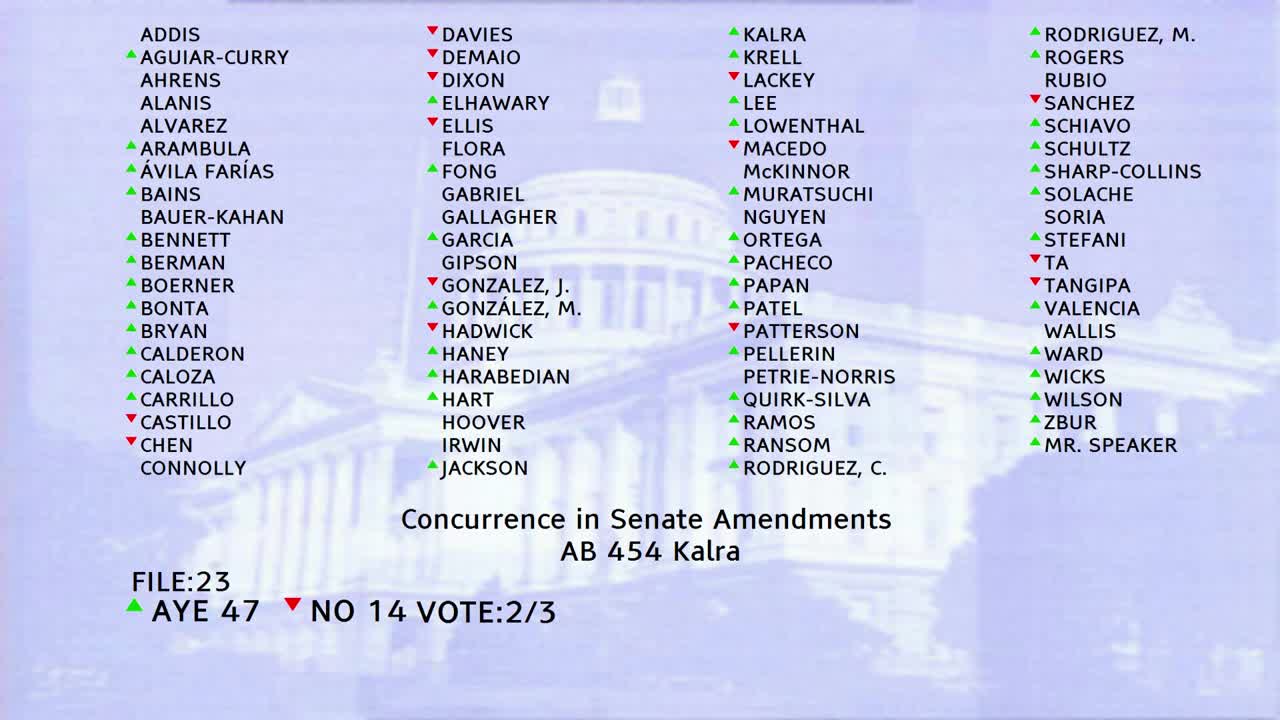
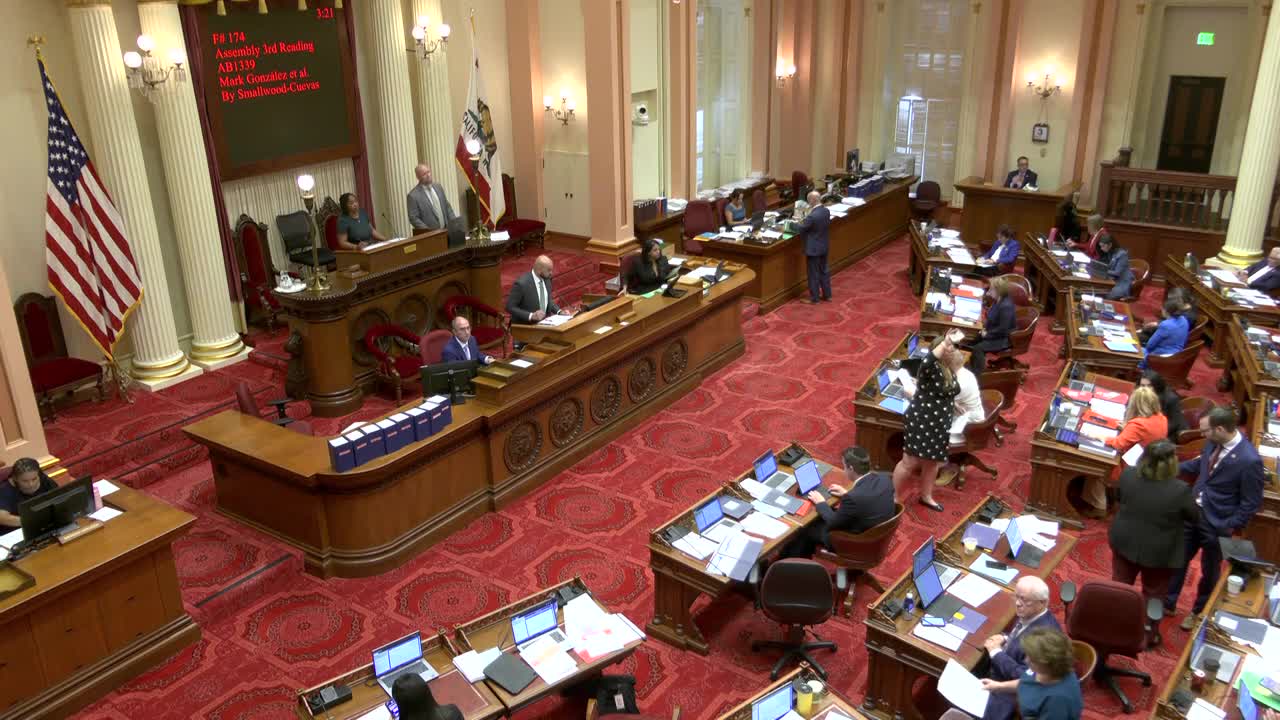

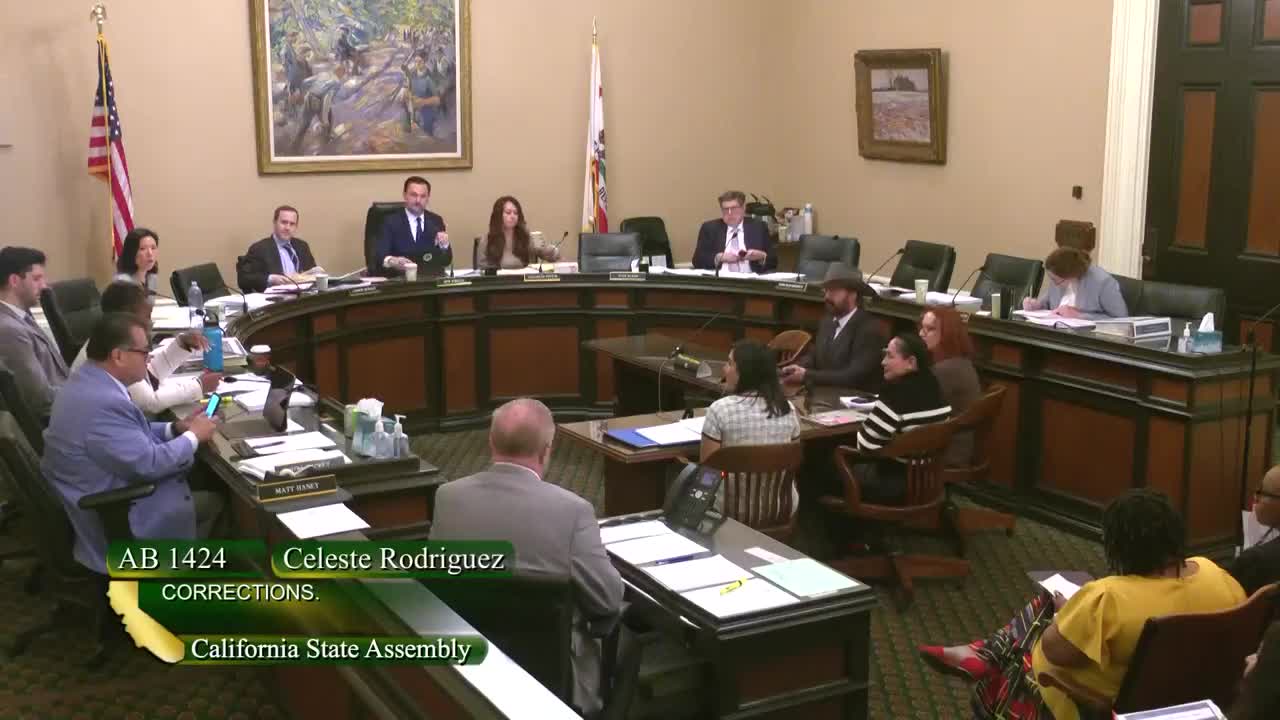
Bill Author

Bill Co-Author(s):