AB 1267: Marriage: prohibition on minors.
- Session Year: 2025-2026
- House: Assembly
- Latest Version Date: 2026-09-30
Current Status:
Passed
(2026-09-30: Chaptered by Secretary of State - Chapter 850, Statutes of 2026.)
Introduced
In Committee
Awaiting First Chamber Vote
Passed First Chamber
In Committee
Awaiting Second Chamber Vote
Passed Second Chamber
Enacted
Existing law authorizes an unmarried person who is under 18 years of age to marry upon obtaining a court order granting permission and the written consent of at least one of the parents or the guardian of each underage party to the marriage, as specified. Existing law requires the court, if it considers it necessary, as part of the court order granting permission to marry, to require the parties to the prospective marriage of a minor to participate in premarital counseling, as specified.
Existing law provides that 2 unmarried, unrelated adults who have chosen to share one anothers lives in an intimate and committed relationship of mutual caring may establish a domestic partnership by filing a declaration with the Secretary of State, if certain requirements are met. Existing law provides that a person under 18 years of age who, together with the person with whom the person proposes to establish a domestic partnership, meets the requirements for a domestic partnership other than the requirement of being at least 18 years of age, is capable of consenting to and establishing a domestic partnership upon obtaining a court order granting permission to the underage person or persons to establish a domestic partnership. Under existing law, registered domestic partners have the same rights, protections, and benefits as spouses.
This bill would repeal the authorization for a person under 18 years of age to be issued a marriage license or to establish a domestic partnership, thereby prohibiting a person under 18 years of age from being issued a marriage license or from establishing a domestic partnership. The bill would make conforming changes.
Existing law requires the State Registrar to create a document, no later than March 1, 2020, concerning marriage certificates in which one or both of the parties were minors at the time of solemnization of the marriage. Existing law requires the State Registrar to update that document annually, as specified. Existing law requires the local registrar to submit specified information for the purposes of that report.
This bill would repeal those provisions.
Existing law authorizes an unmarried person who is under 18 years of age to marry upon obtaining a court order granting permission and the written consent of at least one of the parents or the guardian of each underage party to the marriage, as specified. Existing law requires the court, if it considers it necessary, as part of the court order granting permission to marry, to require the parties to the prospective marriage of a minor to participate in premarital counseling, as specified.
Existing law provides that 2 unmarried, unrelated adults who have chosen to share one anothers lives in an intimate and committed relationship of mutual caring may establish a domestic partnership by filing a declaration with the Secretary of State, if certain requirements are met. Existing law provides that a person under 18 years of age who, together with the person with whom the person proposes to establish a domestic partnership, meets the requirements for a domestic partnership other than the requirement of being at least 18 years of age, is capable of consenting to and establishing a domestic partnership upon obtaining a court order granting permission to the underage person or persons to establish a domestic partnership. Under existing law, registered domestic partners have the same rights, protections, and benefits as spouses.
This bill would repeal the authorization for a person under 18 years of age to be issued a marriage license or to establish a domestic partnership, thereby prohibiting a person under 18 years of age from being issued a marriage license or from establishing a domestic partnership. The bill would make conforming changes.
Existing law required requires the State Registrar to create a document, no later than March 1, 2020, concerning marriage certificates in which one or both of the parties were minors at the time of solemnization of the marriage. Existing law requires the State Registrar to update that document annually, as specified. Existing law requires the local registrar to submit specified information for the purposes of that report.
This bill would repeal those provisions.
Existing law authorizes an unmarried person who is under 18 years of age to marry upon obtaining a court order granting permission and the written consent of at least one of the parents or the guardian of each underage party to the marriage, as specified. Existing law requires the court, if it considers it necessary, as part of the court order granting permission to marry, to require the parties to the prospective marriage of a minor to participate in premarital counseling, as specified.
Existing law provides that 2 unmarried, unrelated adults who have chosen to share one anothers lives in an intimate and committed relationship of mutual caring may establish a domestic partnership by filing a declaration with the Secretary of State, if certain requirements are met. Existing law provides that a person under 18 years of age who, together with the person with whom the person proposes to establish a domestic partnership, meets the requirements for a domestic partnership other than the requirement of being at least 18 years of age, is capable of consenting to and establishing a domestic partnership upon obtaining a court order granting permission to the underage person or persons to establish a domestic partnership. Under existing law, registered domestic partners have the same rights, protections, and benefits as spouses.
This bill would repeal the authorization for a person under 18 years of age to be issued a marriage license or to establish a domestic partnership, thereby prohibiting a person under 18 years of age from being issued a marriage license or from establishing a domestic partnership. The bill would make conforming changes.
Existing law required the State Registrar to create a document, no later than March 1, 2020, concerning marriage certificates in which one or both of the parties were minors at the time of solemnization of the marriage. Existing law requires the State Registrar to update that document annually, as specified. Existing law requires the local registrar to submit specified information for the purposes of that report.
This bill would repeal those provisions.
Existing law requires the State Department of Health Care Services to license and regulate adult alcohol or other drug recovery or treatment facilities that provide residential nonmedical services, as specified, and further requires the department to certify and regulate alcohol and other drug programs, as specified. Existing law requires the department to charge various fees for a license or certification.This bill would, beginning January 1, 2027, require the department to offer a consolidated license and certification that allows the holder to operate more than one facility that requires a license, a program that requires a certification, or a combination thereof, that the holder operates within the same geographic location. This bill would define same geographic location as the physical location where clients are generally colocated, intermingle, reside, or receive services in one building or multiple buildings within 1,000 feet of each other in areas not zoned exclusively for residential use under local zoning ordinances. The bill would require a consolidated license and certification to, among other things, impose the same minimum standards as if an applicant had applied and operated under separate licenses and certification for each of its facilities and programs. The bill would authorize the department to promulgate regulations and impose a charge to implement a consolidated license and certification.Existing law requires the State Department of Health Care Services to license and regulate adult alcohol or other drug recovery or treatment facilities that provide residential nonmedical services, as specified, and further requires the department to certify and regulate alcohol and other drug programs, as specified. Existing law requires the department to charge various fees for a license or certification.
This bill would, beginning January 1, 2027, require the department to offer a consolidated license and certification that allows the holder to operate more than one facility that requires a license, a program that requires a certification, or a combination thereof, that the holder operates within the same geographic location. This bill would define same geographic location as the physical location where clients are generally colocated, intermingle, reside, or receive services in one building or multiple buildings within 1,000 feet of each other. other in areas not zoned exclusively for residential use under local zoning ordinances. The bill would require a consolidated license and certification to, among other things, impose the same minimum standards as if an applicant had applied and operated under separate licenses and certification for each of its facilities and programs. The bill would authorize the department to promulgate regulations and impose a charge to implement a consolidated license and certification.
Existing law requires the State Department of Health Care Services to license and regulate adult alcohol or other drug recovery or treatment facilities that provide residential nonmedical services, as specified, and further requires the department to certify and regulate alcohol and other drug programs, as specified. Existing law requires the department to charge various fees for a license or certification.
This bill would would, beginning January 1, 2027, require the department to offer a consolidated license and certification that allows the holder to operate more than one facility that requires a license, a program that requires a certification, or a combination thereof, that the holder operates within the same geographic location. This bill would define same geographic location as the physical location where clients are generally colocated, intermingle, reside, or receive services in one building or multiple buildings within 1,000 feet of each other. The bill would require a consolidated license and certification to, among other things, impose the same minimum standards as if an applicant had applied and operated under separate licenses and certification for each of its facilities and programs. The bill would authorize the department to promulgate regulations and impose a charge to implement a consolidated license and certification.
Existing law requires the State Department of Health Care Services to license and regulate adult alcohol or other drug recovery or treatment facilities that provide residential nonmedical services, as specified, and further requires the department to certify and regulate alcohol and other drug programs, as specified. Existing law requires the department to charge various fees for a license or certification.
This bill would require the department to offer a consolidated license and certification that allows the holder to operate more than one facility that requires a license, a program that requires a certification, or a combination thereof, that the holder operates within the same geographic location. This bill would define same geographic location as the physical location where clients are generally colocated, intermingle, reside, or receive services in one building or multiple buildings within 1,000 feet of each other. The bill would require a consolidated license and certification to, among other things, impose the same minimum standards as if an applicant had applied and operated under separate licenses and certification for each of its facilities and programs. The bill would authorize the department to promulgate regulations and impose a charge to implement a consolidated license and certification.
(a)Domestic partners are two adults who have chosen to share one anothers lives in an intimate and committed relationship of mutual caring.
(b)A domestic partnership shall be established in California when both persons file a Declaration of Domestic Partnership with the Secretary of State pursuant to this division and all of the following requirements are met at the time of filing:
(1)Neither person is married to another person, or is a member of another domestic partnership with another person, that has not been terminated, dissolved, or adjudged a nullity.
(2)The two persons are not related by blood in a way that would prevent them from being married to each other in this state.
(3)Both persons are at least 18 years of age.
(4)Both persons are capable of consenting to the domestic partnership.
SEC. 2.Section 297.1 of the Family Code is repealed.SEC. 3.Section 298.8 of the Family Code is repealed.SEC. 4.Section 302 of the Family Code is repealed.SEC. 5.Section 303 of the Family Code is repealed.SEC. 6.Section 304 of the Family Code is repealed.SEC. 7.Section 423 of the Family Code is amended to read:423.The person solemnizing the marriage shall return the marriage license, endorsed as required in Section 422, to the county recorder of the county in which the license was issued within 10 days after the ceremony.
SEC. 8.Section 1501 of the Family Code is repealed.SEC. 9.Section 2210 of the Family Code is amended to read:2210.A marriage is voidable and may be adjudged a nullity if any of the following conditions existed at the time of the marriage:
(a)The party who commences the proceeding or on whose behalf the proceeding is commenced was under 18 years of age, unless the party entered into the marriage pursuant to former Section 302 or former Section 303 in this state before January 1, 2027.
(b)The spouse of either party was living, and the marriage with that spouse was then in force and that spouse (1) was absent and not known to the party commencing the proceeding to be living for a period of five successive years immediately preceding the subsequent marriage for which the judgment of nullity is sought or (2) was generally reputed or believed by the party commencing the proceeding to be dead at the time the subsequent marriage was contracted.
(c)Either party was of unsound mind, unless the party of unsound mind, after coming to reason, freely cohabited with the other as their spouse.
(d)The consent of either party was obtained by fraud, unless the party whose consent was obtained by fraud afterwards, with full knowledge of the facts constituting the fraud, freely cohabited with the other as their spouse.
(e)The consent of either party was obtained by force, unless the party whose consent was obtained by force afterwards freely cohabited with the other as their spouse.
(f)Either party was, at the time of marriage, physically incapable of entering into the marriage state, and that incapacity continues and appears to be incurable.
SEC. 10.Section 102233 of the Health and Safety Code is repealed.SEC. 11.Section 102356 of the Health and Safety Code is repealed.(a)Domestic partners are two adults who have chosen to share one anothers lives in an intimate and committed relationship of mutual caring.
(b)A domestic partnership shall be established in California when both persons file a Declaration of Domestic Partnership with the Secretary of State pursuant to this division, and, at the time of filing, division and all of the following requirements are met: met at the time of filing:
(1)Neither person is married to another person, or is a member of another domestic partnership with another person, that has not been terminated, dissolved, or adjudged a nullity.
(2)The two persons are not related by blood in a way that would prevent them from being married to each other in this state.
(3)Both persons are at least 18 years of age.
(4)Both persons are capable of consenting to the domestic partnership.
SEC. 2.Section 297.1 of the Family Code is repealed.SEC. 3.Section 298.8 of the Family Code is repealed.SEC. 4.Section 302 of the Family Code is repealed.SEC. 5.Section 303 of the Family Code is repealed.SEC. 6.Section 304 of the Family Code is repealed.SEC. 7.Section 423 of the Family Code is amended to read:423.The person solemnizing the marriage shall return the marriage license, endorsed as required in Section 422, to the county recorder of the county in which the license was issued within 10 days after the ceremony.
SEC. 8.Section 1501 of the Family Code is repealed.SEC. 9.Section 2210 of the Family Code is amended to read:2210.A marriage is voidable and may be adjudged a nullity if any of the following conditions existed at the time of the marriage:
(a)The party who commences the proceeding or on whose behalf the proceeding is commenced was under 18 years of age, unless the party entered into the marriage pursuant to former Section 302 or former Section 303 in this state before January 1, 2027.
(b)The spouse of either party was living, and the marriage with that spouse was then in force and that spouse (1) was absent and not known to the party commencing the proceeding to be living for a period of five successive years immediately preceding the subsequent marriage for which the judgment of nullity is sought or (2) was generally reputed or believed by the party commencing the proceeding to be dead at the time the subsequent marriage was contracted.
(c)Either party was of unsound mind, unless the party of unsound mind, after coming to reason, freely cohabited with the other as their spouse.
(d)The consent of either party was obtained by fraud, unless the party whose consent was obtained by fraud afterwards, with full knowledge of the facts constituting the fraud, freely cohabited with the other as their spouse.
(e)The consent of either party was obtained by force, unless the party whose consent was obtained by force afterwards freely cohabited with the other as their spouse.
(f)Either party was, at the time of marriage, physically incapable of entering into the marriage state, and that incapacity continues and appears to be incurable.
SEC. 10.Section 102233 of the Health and Safety Code is repealed.SEC. 11.Section 102356 of the Health and Safety Code is repealed.(a)Domestic partners are two adults who have chosen to share one anothers lives in an intimate and committed relationship of mutual caring.
(b)A domestic partnership shall be established in California when both persons file a Declaration of Domestic Partnership with the Secretary of State pursuant to this division, and, at the time of filing, all of the following requirements are met:
(1)Neither person is married to another person, or is a member of another domestic partnership with another person, that has not been terminated, dissolved, or adjudged a nullity.
(2)The two persons are not related by blood in a way that would prevent them from being married to each other in this state.
(3)Both persons are at least 18 years of age.
(4)Both persons are capable of consenting to the domestic partnership.
SEC. 2.Section 297.1 of the Family Code is repealed.SEC. 3.Section 298.8 of the Family Code is repealed.SEC. 4.Section 302 of the Family Code is repealed.SEC. 5.Section 303 of the Family Code is repealed.SEC. 6.Section 304 of the Family Code is repealed.SEC. 7.Section 423 of the Family Code is amended to read:423.The person solemnizing the marriage shall return the marriage license, endorsed as required in Section 422, to the county recorder of the county in which the license was issued within 10 days after the ceremony.
SEC. 8.Section 1501 of the Family Code is repealed.SEC. 9.Section 2210 of the Family Code is amended to read:2210.A marriage is void voidable and may be adjudged a nullity if any of the following conditions existed at the time of the marriage:
(a)The party who commences the proceeding or on whose behalf the proceeding is commenced was under 18 years of age, unless the party entered into the marriage pursuant to former Section 302 or former Section 303 in this state before January 1, 2027.
(b)The spouse of either party was living, and the marriage with that spouse was then in force and that spouse (1) was absent and not known to the party commencing the proceeding to be living for a period of five successive years immediately preceding the subsequent marriage for which the judgment of nullity is sought or (2) was generally reputed or believed by the party commencing the proceeding to be dead at the time the subsequent marriage was contracted.
(c)Either party was of unsound mind, unless the party of unsound mind, after coming to reason, freely cohabited with the other as their spouse.
(d)The consent of either party was obtained by fraud, unless the party whose consent was obtained by fraud afterwards, with full knowledge of the facts constituting the fraud, freely cohabited with the other as their spouse.
(e)The consent of either party was obtained by force, unless the party whose consent was obtained by force afterwards freely cohabited with the other as their spouse.
(f)Either party was, at the time of marriage, physically incapable of entering into the marriage state, and that incapacity continues and appears to be incurable.
SEC. 10.Section 102233 of the Health and Safety Code is repealed.SEC. 11.Section 102356 of the Health and Safety Code is repealed.(a)Domestic partners are two adults who have chosen to share one anothers lives in an intimate and committed relationship of mutual caring.
(b)A domestic partnership shall be established in California when both persons file a Declaration of Domestic Partnership with the Secretary of State pursuant to this division, and, at the time of filing, all of the following requirements are met:
(1)Neither person is married to someone else another person, or is a member of another domestic partnership with someone else another person, that has not been terminated, dissolved, or adjudged a nullity.
(2)The two persons are not related by blood in a way that would prevent them from being married to each other in this state.
(3)Both persons are at least 18 years of age.
(4)Both persons are capable of consenting to the domestic partnership.
SEC. 2.Section 297.1 of the Family Code is repealed.SEC. 3.Section 298.8 of the Family Code is repealed.SEC. 4.Section 302 of the Family Code is repealed.SEC. 5.Section 303 of the Family Code is repealed.SEC. 6.Section 304 of the Family Code is repealed.SEC. 7.Section 423 of the Family Code is amended to read:423.The person solemnizing the marriage shall return the marriage license, endorsed as required in Section 422, to the county recorder of the county in which the license was issued within 10 days after the ceremony.
SEC. 8.Section 1501 of the Family Code is repealed.SEC. 9.Section 2210 of the Family Code is amended to read:2210.A marriage is void if any of the following conditions existed at the time of the marriage:
(a)The party who commences the proceeding or on whose behalf the proceeding is commenced was under 18 years of age, unless the party entered into the marriage pursuant to former Section 302 or former Section 303 in this state before January 1, 2027.
(b)The spouse of either party was living, and the marriage with that spouse was then in force and that spouse (1) was absent and not known to the party commencing the proceeding to be living for a period of five successive years immediately preceding the subsequent marriage for which the judgment of nullity is sought or (2) was generally reputed or believed by the party commencing the proceeding to be dead at the time the subsequent marriage was contracted.
(c)Either party was of unsound mind, unless the party of unsound mind, after coming to reason, freely cohabited with the other as their spouse.
(d)The consent of either party was obtained by fraud, unless the party whose consent was obtained by fraud afterwards, with full knowledge of the facts constituting the fraud, freely cohabited with the other as their spouse.
(e)The consent of either party was obtained by force, unless the party whose consent was obtained by force afterwards freely cohabited with the other as their spouse.
(f)Either party was, at the time of marriage, physically incapable of entering into the marriage state, and that incapacity continues and appears to be incurable.
SEC. 10.Section 102233 of the Health and Safety Code is repealed.SEC. 11.Section 102356 of the Health and Safety Code is repealed.(a)Domestic partners are two adults who have chosen to share one anothers lives in an intimate and committed relationship of mutual caring.
(b)A domestic partnership shall be established in California when both persons file a Declaration of Domestic Partnership with the Secretary of State pursuant to this division, and, at the time of filing, all of the following requirements are met:
(1)Neither person is married to someone else or is a member of another domestic partnership with someone else that has not been terminated, dissolved, or adjudged a nullity.
(2)The two persons are not related by blood in a way that would prevent them from being married to each other in this state.
(3)Both persons are at least 18 years of age, except as provided in Section 297.1. age.
(4)Both persons are capable of consenting to the domestic partnership.
SEC. 2.Section 297.1 of the Family Code is repealed.297.1.(a)A person under 18 years of age who, together with the other proposed domestic partner, otherwise meets the requirements for a domestic partnership other than the requirement of being at least 18 years of age, may establish a domestic partnership upon obtaining a court order granting permission to the underage person or persons to establish a domestic partnership.(b)(1)The court order and written consent of the parents of each person under 18 years of age or of one of the parents or the guardian of each person under 18 years of age, except as provided in paragraph (2), shall be filed with the clerk of the court, and a certified copy of the order shall be filed with the Secretary of State with the Declaration of Domestic Partnership.(2)If it appears to the satisfaction of the court by application of a person under 18 years of age that the person requires a written consent to establish a domestic partnership and that the minor has no parent or guardian, or has no parent or guardian capable of consenting, the court may make an order consenting to establishing the domestic partnership. The order shall be filed with the clerk of the court and a certified copy of the order shall be filed with the Secretary of State with the Declaration of Domestic Partnership.(3)Notwithstanding any other law, immediately after the Secretary of State creates or updates the document described in Section 298.8 using the information required for the document and that is contained in a certified copy of a court order filed with the Secretary of State with the Declaration of Domestic Partnership pursuant to this subdivision, the Secretary of State may dispose of the certified copy of the court order.(c)In determining whether to issue a court order granting permission to establish a domestic partnership, the court shall do all of the following:(1)Require Family Court Services to separately interview the parties intending to establish a domestic partnership and, if applicable, at least one of the parents or the guardian of each party who is a minor. If more than one parent or guardian is interviewed, the parents or guardians shall be interviewed separately.(2)Require Family Court Services to prepare and submit to the court a written report, containing any assessment of potential force, threat, persuasion, fraud, coercion, or duress by either of the parties or their family members relating to the intended domestic partnership. The report shall also contain recommendations of Family Court Services for either granting or denying the parties permission to establish a domestic partnership. If Family Court Services knows or reasonably suspects that either party is a victim of child abuse or neglect, Family Court Services shall submit a report of the known or suspected child abuse or neglect to the county child protective services agency.(3)After receiving the report of the assessments of Family Court Services, as described in paragraph (2), separately interview in camera each of the parties prior to making a final determination regarding the court order.(4)Consider whether there is evidence of coercion or undue influence on the minor.(d)If the court issues an order granting the parties permission to establish a domestic partnership, and if one or both of the parties are 17 years of age or younger, the parties shall be eligible to file a Declaration of Domestic Partnership with the Secretary of State no earlier than 30 days from the time the court order was issued.(e)As part of the court order granting permission to establish a domestic partnership, the court shall, if it considers it necessary, require the parties to the prospective domestic partnership of a minor to participate, before the domestic partnership is established, in counseling concerning social, economic, and personal responsibilities incident to the domestic partnership. The parties shall not be required to confer with counselors provided by religious organizations of any denomination. In determining whether to order the parties to participate in the counseling, the court shall consider, among other factors, the ability of the parties to pay for the counseling. The court may impose a reasonable fee to cover the cost of counseling provided by the county or the court. The fees shall be used exclusively to cover the cost of the counseling services authorized by this section.(f)(1)Only for purposes of completing the document described in Section 298.8, and not for purposes of making a determination regarding the court order, the gender of each party intending to establish a domestic partnership, if provided, shall be documented on the court order granting permission to establish the domestic partnership.(2)The date of birth of each party intending to establish a domestic partnership shall also be documented on the court order granting permission to establish the domestic partnership.(g)Upon issuance of the order granting permission to establish a domestic partnership, the minor shall be provided with the following information:(1)The rights and responsibilities of an emancipated minor, including, but not limited to, the effects of emancipation as described in Chapter 2 (commencing with Section 7050) of Part 6 of Division 11.(2)(A)The circumstances under which a domestic partnership may be determined by a court to be void or voidable and adjudged a nullity and the procedure for obtaining that judicial determination.(B)The procedures for termination of a domestic partnership.(3)Telephone numbers for the National Domestic Violence Hotline and the National Sexual Assault Hotline.(4)The conditions under which an unemancipated minor may leave home and seek to remain in a shelter or otherwise live separately from the minors parent or guardian, and whether the consent or acquiescence of a parent or guardian is required to remain away from the home of the parent or guardian, the rights of an unemancipated minor to apply for a protective or restraining order to prevent abuse, and the rights of a minor to enter into contracts, including contracts for legal services and mental health counseling.(h)(1)Subdivisions (c) and (d) do not apply to a minor who is 17 years of age and who has achieved a high school diploma or a high school equivalency certificate.(2)Subdivision (d) does not apply to a minor who is 16 or 17 years of age and who is pregnant or whose prospective domestic partner is pregnant.SEC. 3.Section 298.8 of the Family Code is repealed.298.8.(a)The Secretary of State shall create a document no later than March 1, 2020, with annual updates no later than March 1 of each year thereafter, disaggregated by county, containing only the following information concerning domestic partnerships that were registered during the preceding calendar year and in which one or both of the parties were minors at the time the domestic partnership was established:(1)The total number of those registered domestic partnerships.(2)Itemized for each of those registered domestic partnerships, the age of each party at the time the domestic partnership was established.(3)Itemized for each of those registered domestic partnerships, the gender of each party as documented on the court order pursuant to Section 297.1, unless the court order does not include the gender.(b)The document shall not contain the names, addresses, or other personal identifying information of parties to a registered domestic partnership, or any information identifying a registered domestic partnership. The document shall not contain a registered domestic partnership or a copy of the court order described in Section 297.1.(c)The Secretary of State shall make the document available to the public upon request.SEC. 4.Section 302 of the Family Code is repealed.302.(a)An unmarried person under 18 years of age may be issued a marriage license upon obtaining a court order granting permission to the underage person or persons to marry, in accordance with the requirements described in Section 304.(b)The court order and written consent of at least one of the parents or the guardian of each underage person shall be filed with the clerk of the court, and a certified copy of the order shall be presented to the county clerk at the time the marriage license is issued.SEC. 5.Section 303 of the Family Code is repealed.303.If it appears to the satisfaction of the court by application of a minor that the minor requires a written consent to marry and that the minor has no parent or has no parent capable of consenting, the court may make an order consenting to the issuance of a marriage license and granting permission to the minor to marry, in accordance with the requirements described in Section 304. The order shall be filed with the clerk of the court and a certified copy of the order shall be presented to the county clerk at the time the marriage license is issued.SEC. 6.Section 304 of the Family Code is repealed.304.(a)In determining whether to issue a court order granting permission to marry pursuant to Section 302 or 303, the court shall do all of the following:(1)Require Family Court Services to separately interview the parties intending to marry and, if applicable, at least one of the parents or the guardian of each party who is a minor. If more than one parent or guardian is interviewed, the parents or guardians shall be interviewed separately.(2)Require Family Court Services to prepare and submit to the court a written report, containing any assessment of potential force, threat, persuasion, fraud, coercion, or duress by either of the parties or their family members relating to the intended marriage. The report shall also contain recommendations of Family Court Services for either granting or denying the parties permission to marry. If Family Court Services knows or reasonably suspects that either party is a victim of child abuse or neglect, Family Court Services shall submit a report of the known or suspected child abuse or neglect to the county child protective services agency.(3)After receiving the report of the assessments of Family Court Services, as described in paragraph (2), separately interview in camera each of the parties prior to making a final determination regarding the court order.(4)Consider whether there is evidence of coercion or undue influence on the minor.(b)If the court issues an order granting the parties permission to marry pursuant to Section 302 or 303, and if one or both of the parties are 17 years of age or younger, the parties shall be eligible to request a marriage license no earlier than 30 days from the time the court order was issued.(c)As part of the court order granting permission to marry under Section 302 or 303, the court shall, if it considers it necessary, require the parties to the prospective marriage of a minor to participate in premarital counseling concerning social, economic, and personal responsibilities incident to marriage. The parties shall not be required to confer with counselors provided by religious organizations of any denomination. In determining whether to order the parties to participate in the premarital counseling, the court shall consider, among other factors, the ability of the parties to pay for the counseling. The court may impose a reasonable fee to cover the cost of premarital counseling provided by the county or the court. The fees shall be used exclusively to cover the cost of the counseling services authorized by this section.(d)(1)Only for purposes of completing the document described in Section 102233 of the Health and Safety Code, and not for purposes of making a determination regarding the court order, the gender of each party intending to marry, if provided, shall be documented on the court order granting permission to marry.(2)The date of birth of each party intending to marry shall also be documented on the court order granting permission to marry.(3)For purposes of the requirements on the person solemnizing the marriage under subdivision (b) of Section 423, and the requirements on the local registrar under subdivision (a) of Section 102356 of the Health and Safety Code, the court shall provide parties who are granted permission to marry with a copy of the court order granting permission to marry.(e)Upon issuance of the order granting permission to marry, the minor shall be provided with the following information:(1)The rights and responsibilities of an emancipated minor, including, but not limited to, the effects of emancipation as described in Chapter 2 (commencing with Section 7050) of Part 6 of Division 11.(2)(A)The circumstances under which a marriage may be determined by a court to be void or voidable and adjudged a nullity and the procedure for obtaining that judicial determination.(B)The procedures for legal separation or dissolution of marriage.(3)Telephone numbers for the National Domestic Violence Hotline and the National Sexual Assault Hotline.(4)The conditions under which an unemancipated minor may leave home and seek to remain in a shelter or otherwise live separately from the minors parent or guardian, and whether the consent or acquiescence of a parent or guardian is required to remain away from the home of the parent or guardian, the rights of an unemancipated minor to apply for a protective or restraining order to prevent abuse, and the rights of a minor to enter into contracts, including contracts for legal services and mental health counseling.(f)(1)Subdivisions (a) and (b) do not apply to a minor who is 17 years of age and who has achieved a high school diploma or a high school equivalency certificate.(2)Subdivision (b) does not apply to a minor who is 16 or 17 years of age and who is pregnant or whose prospective spouse is pregnant.SEC. 7.Section 423 of the Family Code is amended to read:423.(a)The person solemnizing the marriage shall return the marriage license, endorsed as required in Section 422, to the county recorder of the county in which the license was issued within 10 days after the ceremony.
(b)For purposes of Section 102356 of the Health and Safety Code, the person solemnizing the marriage shall include with the marriage license described in subdivision (a) a copy of the court order granting permission to marry described in Section 304, if one or both of the parties to the marriage were minors at the time of solemnization of the marriage.SEC. 8.Section 1501 of the Family Code is repealed.1501.A minor may make a valid premarital agreement or other marital property agreement if the minor is emancipated, is otherwise capable of contracting marriage pursuant to Section 302 or 303, or has entered or is entering a marriage that is valid in the jurisdiction where the marriage is solemnized.SEC. 9.Section 2210 of the Family Code is amended to read:2210.A marriage is voidable and may be adjudged a nullity void if any of the following conditions existed at the time of the marriage:
(a)The party who commences the proceeding or on whose behalf the proceeding is commenced was under 18 years of age, unless the party entered into the marriage pursuant to Section 302 or 303. former Section 302 or former Section 303 in this state before January 1, 2027.
(b)The spouse of either party was living living, and the marriage with that spouse was then in force and that spouse (1) was absent and not known to the party commencing the proceeding to be living for a period of five successive years immediately preceding the subsequent marriage for which the judgment of nullity is sought or (2) was generally reputed or believed by the party commencing the proceeding to be dead at the time the subsequent marriage was contracted.
(c)Either party was of unsound mind, unless the party of unsound mind, after coming to reason, freely cohabited with the other as his or her their spouse.
(d)The consent of either party was obtained by fraud, unless the party whose consent was obtained by fraud afterwards, with full knowledge of the facts constituting the fraud, freely cohabited with the other as his or her their spouse.
(e)The consent of either party was obtained by force, unless the party whose consent was obtained by force afterwards freely cohabited with the other as his or her their spouse.
(f)Either party was, at the time of marriage, physically incapable of entering into the marriage state, and that incapacity continues, continues and appears to be incurable.
SEC. 10.Section 102233 of the Health and Safety Code is repealed.102233.(a)The State Registrar shall create a document no later than March 1, 2020, with annual updates no later than March 1 of each year thereafter, disaggregated by county, containing only the information received by a local registrar during the preceding calendar year pursuant to subdivision (a) of Section 102356, concerning marriage certificates in which one or both of the parties were minors at the time of solemnization of the marriage.(b)The document shall not contain the names, addresses, or other personal identifying information of parties to a marriage certificate, or any information identifying a marriage certificate. The document shall not contain a marriage certificate or a copy of the court order described in Section 304 of the Family Code.(c)The State Registrar shall make the document available to the public upon request.SEC. 11.Section 102356 of the Health and Safety Code is repealed.102356.(a)For purposes of Section 102233, the local registrar of marriages shall submit to the State Registrar, at least annually, all of the following information concerning marriage certificates that are accepted for registration by them during the same calendar year and in which one or both of the parties were minors at the time of solemnization of the marriage:(1)The total number of those marriage certificates.(2)Itemized for each of those marriage certificates, the age of each party at the time of solemnization of the marriage.(3)Itemized for each of those marriage certificates, the gender of each party, if available.(b)The information submitted to the State Registrar pursuant to subdivision (a) shall not contain the names, addresses, or other personal identifying information of parties to a marriage certificate or information identifying a marriage certificate. The information shall not contain a marriage certificate or a copy of the court order described in Section 304 of the Family Code.(c)The local registrar of marriages shall not submit information described in paragraphs (1) to (3), inclusive, of subdivision (a) if no marriage certificate described in subdivision (a) is accepted for registration by them during the same calendar year.(d)(1)Notwithstanding any other law, no earlier than two years after the local registrar of marriages submits the information described in subdivision (a) to the State Registrar, the local registrar may dispose of that information.(2)Notwithstanding any other law, immediately after the local registrar of marriages submits the information described in subdivision (a) to the State Registrar, the local registrar may dispose of the copy of the court order received from the person solemnizing the marriage pursuant to Section 423 of the Family Code.(e)Notwithstanding the rulemaking provisions of the Administrative Procedure Act (Chapter 3.5 (commencing with Section 11340) of Part 1 of Division 3 of Title 2 of the Government Code), the State Department of Public Health may implement this section through an all-county letter or similar instruction from the State Registrar without taking regulatory action.SECTION 1.Chapter 7.7 (commencing with Section 11834.70) is added to Part 2 of Division 10.5 of the Health and Safety Code, to read:7.7.Consolidated License and Certification11834.70.(a)Beginning January 1, 2027, the department shall offer a consolidated license and certification that allows the holder to operate more than one of a facility that requires a license, pursuant to Chapter 7.5 (commencing with Section 11834.01), a program that requires a certification, pursuant to Chapter 7.1 (commencing with Section 11832), or a combination thereof, that the holder operates within the same geographic location.(b)This chapter shall not apply to facilities or programs that are located in areas zoned exclusively for residential use under local zoning ordinances. Such facilities shall remain subject to separate licensing and certification requirements pursuant to Chapter 7.5 (commencing with Section 11834.01) and Chapter 7.1 (commencing with Section 11832), as applicable.11834.71.For purposes of this chapter, same geographic location means the physical location where clients are generally colocated, intermingle, reside, or receive services in one building or multiple buildings within 1,000 feet of each other, except for facilities or programs that are located in areas zoned exclusively for residential use under local zoning ordinances.11834.72.(a)The department shall provide a process to obtain and operate under a consolidated license and certification that includes, but is not limited to, all of the following:(1)Unified, single application to fully license and certify all of the facilities and programs the applicant operates within the same geographic location that require a license or certification.(2)Streamlined process to review an application for a consolidated license and certification.(3)Unified inspection and oversight of all of the facilities and programs operated under a consolidated license and certification.(4)Minimum standards for a consolidated license and certification that are the same as if an applicant had applied and operated under separate licenses and certification for each of its facilities and programs.(5)Phase-in period for facilities and programs operating under different licenses and certifications to obtain a consolidated license and certification.(b)The department may impose any additional requirements to obtain or operate under a consolidated license and certification that the department determines would eliminate redundancy in the licensing and certification of different facilities and programs within the same geographic location.11834.73.The department shall impose a charge for a consolidated license and certification that is equal to the amount an applicant would pay for the applicable individual licenses and certification for their facilities and programs, but that does not exceed the reasonable regulatory costs to the state incident to the activities provided for in paragraph (3) of subdivision (b) of Section 3 of Article XIII A of the California Constitution.11834.74.(a)The department shall adopt regulations necessary to implement this chapter. During the rulemaking process, the department shall include opportunities for stakeholder comment and cooperative workgroups aimed at clarifying geographic criteria, regulatory charges, and the logistics of consolidated inspections.(b)Notwithstanding the rulemaking provisions of the Administrative Procedure Act (Chapter 3.5 (commencing with Section 11340) of Part 1 of Division 3 of Title 2 of the Government Code), the department may, if it deems appropriate, implement, interpret, or make specific this chapter by means of provider bulletins, written guidelines, or similar instructions from the department, until regulations are adopted.11834.75.This chapter shall not be deemed to require the applicant or holder of more than one license issued pursuant to Chapter 7.5 (commencing with Section 11834.01), or certification issued pursuant to Chapter 7.1 (commencing with Section 11832), to seek a consolidated license and certification.(a)Beginning January 1, 2027, the department shall offer a consolidated license and certification that allows the holder to operate more than one of a facility that requires a license, pursuant to Chapter 7.5 (commencing with Section 11834.01), a program that requires a certification, pursuant to Chapter 7.1 (commencing with Section 11832), or a combination thereof, that the holder operates within the same geographic location.
(b)This chapter shall not apply to facilities or programs that are located in areas zoned exclusively for residential use under local zoning ordinances. Such facilities shall remain subject to separate licensing and certification requirements pursuant to Chapter 7.5 (commencing with Section 11834.01) and Chapter 7.1 (commencing with Section 11832), as applicable.
11834.71.For purposes of this chapter, same geographic location means the physical location where clients are generally colocated, intermingle, reside, or receive services in one building or multiple buildings within 1,000 feet of each other. other, except for facilities or programs that are located in areas zoned exclusively for residential use under local zoning ordinances.
11834.72.(a)The department shall provide a process to obtain and operate under a consolidated license and certification that includes, but is not limited to, all of the following:
(1)Unified, single application to fully license and certify all of the facilities and programs the applicant operates within the same geographic location that require a license or certification.
(2)Streamlined process to review an application for a consolidated license and certification.
(3)Unified inspection and oversight of all of the facilities and programs operated under a consolidated license and certification.
(4)Minimum standards for a consolidated license and certification that are the same as if an applicant had applied and operated under separate licenses and certification for each of its facilities and programs.
(5)Phase-in period for facilities and programs operating under different licenses and certifications to obtain a consolidated license and certification.
(b)The department may impose any additional requirements to obtain or operate under a consolidated license and certification that the department determines would eliminate redundancy in the licensing and certification of different facilities and programs within the same geographic location.
11834.73.The department shall impose a charge for a consolidated license and certification that is equal to the amount an applicant would pay for the applicable individual licenses and certification for their facilities and programs, but that does not exceed the reasonable regulatory costs to the state incident to the activities provided for in paragraph (3) of subdivision (b) of Section 3 of Article XIII A of the California Constitution.
11834.74.(a)The department shall adopt regulations necessary to implement this chapter. During the rulemaking process, the department shall include opportunities for stakeholder comment and cooperative workgroups aimed at clarifying geographic criteria, regulatory charges, and the logistics of consolidated inspections.
(b)Notwithstanding the rulemaking provisions of the Administrative Procedure Act (Chapter 3.5 (commencing with Section 11340) of Part 1 of Division 3 of Title 2 of the Government Code), the department may, if it deems appropriate, implement, interpret, or make specific this chapter by means of provider bulletins, written guidelines, or similar instructions from the department, until regulations are adopted.
11834.75.This chapter shall not be deemed to require the applicant or holder of more than one license issued pursuant to Chapter 7.5 (commencing with Section 11834.01), or certification issued pursuant to Chapter 7.1 (commencing with Section 11832), to seek a consolidated license and certification.
The Beginning January 1, 2027, the department shall offer a consolidated license and certification that allows the holder to operate more than one of a facility that requires a license, pursuant to Chapter 7.5 (commencing with Section 11834.01), a program that requires a certification, pursuant to Chapter 7.1 (commencing with Section 11832), or a combination thereof, that the holder operates within the same geographic location.
11834.71.For purposes of this chapter, same geographic location means the physical location where clients are generally colocated, intermingle, reside, or receive services in one building or multiple buildings within 1,000 feet of each other.
11834.72.(a)The department shall provide a process to obtain and operate under a consolidated license and certification that includes, but is not limited to, all of the following:
(1)Unified, single application to fully license and certify all of the facilities and programs the applicant operates within the same geographic location that require a license or certification.
(2)Streamlined process to review an application for a consolidated license and certification.
(3)Unified inspection and oversight of all of the facilities and programs operated under a consolidated license and certification.
(4)Minimum standards for a consolidated license and certification that are the same as if an applicant had applied and operated under separate licenses and certification for each of its facilities and programs.
(5)Phase-in period for facilities and programs operating under different licenses and certifications to obtain a consolidated license and certification.
(b)The department may impose any additional requirements to obtain or operate under a consolidated license and certification that the department determines would eliminate redundancy in the licensing and certification of different facilities and programs within the same geographic location.
11834.73.The department shall impose a charge for a consolidated license and certification that is equal to the amount an applicant would pay for the applicable individual licenses and certification for their facilities and programs, but that does not exceed the reasonable regulatory costs to the state incident to the activities provided for in paragraph (3) of subdivision (b) of Section 3 of Article XIII A of the California Constitution.
11834.74.(1)(a)The department shall adopt regulations necessary to implement this chapter. During the rulemaking process, the department shall include opportunities for stakeholder comment and cooperative workgroups aimed at clarifying geographic criteria, regulatory charges, and the logistics of consolidated inspections.
(2)(b)Notwithstanding the rulemaking provisions of the Administrative Procedure Act (Chapter 3.5 (commencing with Section 11340) of Part 1 of Division 3 of Title 2 of the Government Code), the department may, if it deems appropriate, implement, interpret, or make specific this chapter by means of provider bulletins, written guidelines, or similar instructions from the department, until regulations are adopted.
11834.75.This chapter shall not be deemed to require the applicant or holder of more than one license issued pursuant to Chapter 7.5 (commencing with Section 11834.01), or certification issued pursuant to Chapter 7.1 (commencing with Section 11832), to seek a consolidated license and certification.
The department shall offer a consolidated license and certification that allows the holder to operate more than one of a facility that requires a license, pursuant to Chapter 7.5 (commencing with Section 11834.01), a program that requires a certification, pursuant to Chapter 7.1 (commencing with Section 11832), or a combination thereof, that the holder operates within the same geographic location.
11834.71.For purposes of this chapter, same geographic location means the physical location where clients are generally colocated, intermingle, reside, or receive services in one building or multiple buildings within 1,000 feet of each other.
11834.72.(a)The department shall provide a process to obtain and operate under a consolidated license and certification that includes, but is not limited to, all of the following:
(1)Unified, single application to fully license and certify all of the facilities and programs the applicant operates within the same geographic location that require a license or certification.
(2)Streamlined process to review an application for a consolidated license and certification.
(3)Unified inspection and oversight of all of the facilities and programs operated under a consolidated license and certification.
(4)Minimum standards for a consolidated license and certification that are the same as if an applicant had applied and operated under separate licenses and certification for each of its facilities and programs.
(5)Phase-in period for facilities and programs operating under different licenses and certifications to obtain a consolidated license and certification.
(b)The department may impose any additional requirements to obtain or operate under a consolidated license and certification that the department determines would eliminate redundancy in the licensing and certification of different facilities and programs within the same geographic location.
11834.73.The department shall impose a charge for a consolidated license and certification that is equal to the amount an applicant would pay for the applicable individual licenses and certification for their facilities and programs, but that does not exceed the reasonable regulatory costs to the state incident to the activities provided for in paragraph (3) of subdivision (b) of Section 3 of Article XIII A of the California Constitution.
11834.74.(1)The department shall adopt regulations necessary to implement this chapter. During the rulemaking process, the department shall include opportunities for stakeholder comment and cooperative workgroups aimed at clarifying geographic criteria, regulatory charges, and the logistics of consolidated inspections.
(2)Notwithstanding the rulemaking provisions of the Administrative Procedure Act (Chapter 3.5 (commencing with Section 11340) of Part 1 of Division 3 of Title 2 of the Government Code), the department may, if it deems appropriate, implement, interpret, or make specific this chapter by means of provider bulletins, written guidelines, or similar instructions from the department, until regulations are adopted.
11834.75.This chapter shall not be deemed to require the applicant or holder of more than one license issued pursuant to Chapter 7.5 (commencing with Section 11834.01), or certification issued pursuant to Chapter 7.1 (commencing with Section 11832), to seek a consolidated license and certification.
|
Date
|
Status
|
|---|---|
| Sep 30, 2026 | Chaptered by Secretary of State - Chapter 850, Statutes of 2026. |
| Sep 30, 2026 | Approved by the Governor. |
| Sep 3, 2026 | Enrolled and presented to the Governor at 4 p.m. |
| Aug 26, 2026 | Senate amendments concurred in. To Engrossing and Enrolling. (Ayes 78. Noes 0. Page 6559.). |
| Aug 26, 2026 | Senate amendments concurred in. To Engrossing and Enrolling. (Ayes 78. Noes 0.). |
| Aug 25, 2026 | From committee: That the Senate amendments be concurred in. (Ayes 12. Noes 0.) (August 25). |
| Aug 24, 2026 | Joint Rule 62(a), file notice suspended. (Page 6370.) |
| Aug 24, 2026 | Joint Rule 62(a), file notice suspended. |
| Aug 20, 2026 | Re-referred to Com. on JUD. pursuant to Assembly Rule 77.2. |
| Aug 19, 2026 | In Assembly. Concurrence in Senate amendments pending. |
| Aug 19, 2026 | Read third time. Passed. Ordered to the Assembly. (Ayes 38. Noes 0. Page 5551.). |
| Aug 19, 2026 | Read third time. Passed. Ordered to the Assembly. (Ayes 38. Noes 0.). |
| Aug 11, 2026 | Read second time. Ordered to third reading. |
| Aug 10, 2026 | Read third time and amended. Ordered to second reading. |
| Aug 4, 2026 | Read second time. Ordered to third reading. |
| Aug 3, 2026 | From committee: Be ordered to second reading pursuant to Senate Rule 28.8. |
| Jul 2, 2026 | Read second time and amended. Re-referred to Com. on APPR. |
| Jul 1, 2026 | From committee: Amend, and do pass as amended and re-refer to Com. on APPR. (Ayes 12. Noes 0.) (June 30). |
| Jun 22, 2026 | From committee chair, with author's amendments: Amend, and re-refer to committee. Read second time, amended, and re-referred to Com. on JUD. |
| Jun 15, 2026 | Re-referred to Com. on JUD. |
| Jun 15, 2026 | Re-referred to Com. on RLS. pursuant to Senate Rule 29.10 (c). |
| Jun 15, 2026 | Read second time. Ordered to third reading. |
| Jun 11, 2026 | Read second time and amended. Ordered returned to second reading. |
| Jun 11, 2026 | Ordered to second reading. |
| Jun 11, 2026 | From inactive file. |
| Sep 8, 2025 | Ordered to inactive file at the request of Senator Menjivar. |
| Aug 29, 2025 | Read second time. Ordered to third reading. |
| Aug 29, 2025 | From committee: Do pass. (Ayes 7. Noes 0.) (August 29). |
| Jul 14, 2025 | In committee: Referred to APPR. suspense file. |
| Jul 3, 2025 | From committee: Do pass and re-refer to Com. on APPR. (Ayes 10. Noes 0.) (July 2). Re-referred to Com. on APPR. |
| Jun 11, 2025 | Referred to Com. on HEALTH. |
| Jun 3, 2025 | In Senate. Read first time. To Com. on RLS. for assignment. |
| Jun 2, 2025 | Read third time. Passed. Ordered to the Senate. (Ayes 66. Noes 8. Page 1885.) |
| May 27, 2025 | Read second time. Ordered to third reading. |
| May 23, 2025 | From committee: Do pass. (Ayes 12. Noes 1.) (May 23). |
| May 14, 2025 | In committee: Set, first hearing. Referred to APPR. suspense file. |
| Apr 28, 2025 | Re-referred to Com. on APPR. |
| Apr 24, 2025 | Read second time and amended. |
| Apr 23, 2025 | From committee: Amend, and do pass as amended and re-refer to Com. on APPR. (Ayes 13. Noes 1.) (April 22). |
| Mar 27, 2025 | Re-referred to Com. on HEALTH. |
| Mar 26, 2025 | From committee chair, with author's amendments: Amend, and re-refer to Com. on HEALTH. Read second time and amended. |
| Mar 13, 2025 | Referred to Com. on HEALTH. |
| Feb 24, 2025 | Read first time. |
| Feb 22, 2025 | From printer. May be heard in committee March 24. |
| Feb 21, 2025 | Introduced. To print. |
|
Date
|
Description
|
Location
|
Votes
|
|
|---|---|---|---|---|
| Aug 26, 2026 | AB 1267 Pellerin Concurrence in Senate Amendments | Assembly Floor |
Passed |
|
| Aug 25, 2026 | With recommendation: That Senate amendments be concurred in. | Assembly Standing Committee on Judiciary |
Passed |
|
| Aug 19, 2026 | Assembly 3rd Reading AB1267 Pellerin et al. By Menjivar | Senate Floor |
Passed |
|
| Jun 30, 2026 | Do pass as amended, but first amend, and re-refer to the Committee on [Appropriations] | Senate Standing Committee on Judiciary |
Passed |
|
| Aug 29, 2025 | Do pass | Senate Standing Committee on Appropriations |
Passed |
|
| Jul 14, 2025 | Placed on suspense file | Senate Standing Committee on Appropriations |
Passed |
|
| Jul 2, 2025 | Do pass, but first be re-referred to the Committee on [Appropriations] | Senate Standing Committee on Health |
Passed |
|
| Jun 2, 2025 | AB 1267 Pellerin Assembly Third Reading | Assembly Floor |
Passed |
|
| May 23, 2025 | Do pass. | Assembly Standing Committee on Appropriations |
Passed |
|
| Apr 22, 2025 | Do pass as amended and be re-referred to the Committee on [Appropriations] | Assembly Standing Committee on Health |
Passed |
This list shows positions taken on this bill by organizations on the date displayed, which is linked to the original source.
Positions by individuals are not included.
|
Organization
|
Position
|
Date
|
|---|---|---|
| aha foundation | ** Support | |
| American Atheists | ** Support | |
| American Civil Liberties Union (ACLU) California Action | ** Against | |
| Atheists United | ** Support | |
| California Association Of Alcohol And Drug Program Executives, Inc. | ** Support | |
| California Behavioral Health Association | ** Support | |
| California Catholic Conference | ** Support | |
| California Commission on the Status of Women and Girls | ** Support | |
| California Freethought Day | ** Support | |
| California National Organization For Women | ** Support | |
| California NOW | ** Support | |
| California Women's Law Center | ** Support | |
| Central Valley Justice Coalition | ** Support | |
| City and County of San Francisco | ** Support | |
| City Of Mission Viejo | ** Against | |
| cleanearth4kids.org | ** Support | |
| Conference of California Bar Associations | ** Support | |
| County of Santa Clara | ** Support | |
| Diamond Collective | ** Support | |
| Drug Policy Alliance | ** Support | |
| Equality Now | ** Support | |
| Family Violence Appellate Project | ** Support | |
| FFRF Action Fund | ** Support | |
| Freedom From Religion Foundation | ** Support | |
| Girl Scouts Heart Of Central California | ** Support | |
| Girls Inc. of Los Angeles | ** Support | |
| Global Girls Worldwide Women | ** Support | |
| Indivisible California Green Team | ** Support | |
| Indivisible San Jose | ** Support | |
| Livermore Indivisible | ** Support | |
| Love Never Fails | ** Support | |
| Muslims for Progressive Values | ** Support | |
| Protect Our Defenders | ** Support | |
| Safe House Project | ** Support | |
| Secular Student Alliance | ** Support | |
| Service Women's Action Network | ** Support | |
| tahirih justice center | ** Support | |
| Three individuals | ** Support | |
| Together We Will | ** Support | |
| Together We Will Albany-Berkeley | ** Support | |
| Ultraviolet Action | ** Support | |
| unchained at last | ** Support | |
| United Nations Association - California | ** Support | |
| Women'S Liberation Front | ** Support | |
| Youth for Neurodiversity Inc. | ** Support | |
| Zonta E-club of Silicon Valley | ** Support | |
| Zonta International | ** Support | |
| Zonta International, District 9 | ** Support | |
| Zonta Newport Harbor | ** Support |
CONCURRENCE IN SENATE AMENDMENTS
CSA2 Bill Id:AB 1267
Author:(Pellerin, et al.)
As Amended Ver:August 10, 2026
Majority vote
SUMMARY
Original Committee of Reference: HEALTH
Prohibits any person under 18 years old from marrying or entering into a domestic partnership.
Senate Amendments
Current Committee Recommendation: CONCUR
Delete the Assembly version of the bill and instead:
- Repeal all relevant statutes related to the procedure for obtaining a court order authorizing a minor to enter into a marriage or domestic partnership, and the State Registrar and local registrar's obligation to compile annual minor marriage numbers.
- Make marriages entered into on or after January 1, 2027 where the party who commences the proceeding was under 18 voidable.
COMMENTS
Currently, Family Code Section 300 requires both parties to be at least 18 years old in order to enter into a legally valid marriage. However, Sections 302 and 303 also authorize California courts to grant minors permission to obtain a marriage license in certain situations. In order to qualify for a court order, each minor involved in the relationship must complete a series of requirements before the court, including interviews with Family Court Services and the judge. This review framework was implemented in 2018 via SB 273 (Hill) Chapter 660, Statutes of 2018, which also imposed data collection requirements on local registrars and the State Registrar to track the number of minor marriages in the state.
The State Registrar report for 2025 reflects 10 total reported marriages involving minors across the entire state. The largest reported age gap between the married parties was five years with one party aged 17 years old and the other 22. Of the remaining nine marriages, four were between parties ages 17 and 18, two were between parties ages 17 and 19, one was between parties ages 17 and 20, and one was between parties ages 16 and 18. (California Department of Health (February 5, 2026) California 2025 Information Concerning Marriages of Minors.)
This bill prohibits any minor in California from obtaining a marriage license with no exception, including minors that have been previously emancipated.
The author and sponsors contend that this strict prohibition is a commonsense approach to protecting the state's minors, and is consistent with other age-based statutory restrictions. The sponsors also argue that California's statutory scheme is antiquated and dangerous: "[It allows] children of any age to be entered into marriage, with no real recourse for a child who does not want to marry. […] We have almost no way to support even the most mature 17-year-old who is facing an impending or existing forced marriage, since minors face overwhelming legal and practical barriers if they try to leave home, get help from advocates[.] enter a domestic violence shelter, retain an attorney or bring a legal action."
According to the Author
California, New Mexico, and Mississippi are the only states that have no minimum age to marry. Child marriages cause lifelong consequences, including stripping minors of their right an education, economic mobility, and puts them at greater risk for experiencing violence and unwanted pregnancies. Many organizations – including Human Rights Watch and the U.S. State Department – consider marriage before age 18 to be a human rights abuse and a form of child abuse.
Allowing children to marry undermines statutory rape laws and creates a legal shield for child predators and human traffickers.
State law sets the age of majority – meaning, who is considered to be an adult – at 18 years old. Although California grants minors certain limited rights, the age of majority plays a crucial role in determining when individuals are granted certain rights and responsibilities, including the right to vote, enter into contracts, and make important legal decisions.
Minors can easily be forced to marry or to stay in a marriage before they turn 18 and can access the full rights of adulthood. Regardless of their maturity level, minors even a day before their 18th birthday cannot easily leave home, get help from an advocate, enter a domestic violence shelter, retain an attorney, or bring a legal action independently.
California must protect our kids and end child marriage once and for all.
Arguments in Support
This bill is sponsored by the California Commission on the Status of Women and Girls and Unchained at Last. It enjoys further support from a variety of local governments, affinity organizations, domestic violence prevention organizations, legal services providers, and multiple individuals. The California Commission on the Status of Women and Girls submits:
California is one of four states in the U.S. without a minimum age for marriage, falling far behind other states in protecting girls from child marriage and the negative impacts that often come with underage marriage. Child marriage is rooted in a deep history of abuse and coercion, contributing to difficulties in protecting girls from human trafficking, domestic violence in which an older partners inflict violence, statutory rape, and other gender-based violence. Individuals who enter into underage marriages are disproportionately girls ages 16 or 17 to adult men who are, on average, four years older, raising serious concerns about their ability to consent. Research further demonstrates that these minors often lose significant rights and become de facto wards of their spouse, in which they lose the ability to become financially independent, obtain a protective order, hire an attorney, and stay at a domestic violence shelter until they turn 18. These individuals are, therefore, at increased risk of homelessness, financial dependency, abuse, and do not often obtain the education needed to maintain their own autonomy.
California currently sets age minimum requirements for several activities such as voting, driving, owning firearms, drinking, and is currently considering restrictions on social media use this legislative session with Assemblymember Lowenthal's, AB 1709. This bill aligns with such protections for girls who are most vulnerable to child marriage and these harmful consequences by making 18 the minimum age that one may enter into a marriage.
Arguments in Opposition
This bill is opposed by American Civil Liberties Union (ACLU) California Action. They write:
While we share your commitment to protecting minors from exploitation and coercion, we are deeply concerned that this legislation, as drafted, overreaches in ways that risk serious unintended harm to the young people it seeks to protect.
We wholeheartedly agree that young people deserve to lead healthy, safe, and fulfilling lives. We support what we believe are the intentions of the bill, to address the harm of coercive relationships on young people and protect them from abuse. However, we also strongly believe in and support self-determination and bodily autonomy for all people, including young people who are pregnant and/or parenting.
Under current California law as reformed by SB 273 (Hill, Ch[apter] 660, Stat[utes of] 2018), a minor may only marry upon:
(1) separate interviews of the minor and at least one parent by Family Court Services;
(2) a written Family Court Services report to the court identifying any findings of coercion, duress, or abuse;
(3) an independent judicial interview of the parties; and
(4) a judicial determination that the marriage is not the product of coercion or undue influence.1
This framework is not a loophole, but rather a robust protective mechanism intended to balance young people's well-being and decision-making autonomy. Eliminating it entirely removes the option of marriage as a potential pathway even in those circumstances where a minor, in consultation with parents or legal guardians and subject to the discretion of a judicial body, seeks out the critical benefits and legal protections that marriage can provide.
FISCAL COMMENTS
According to the Senate Appropriations Committee, pursuant to Senate Rule 28.8, negligible state costs.
VOTES
ASM HEALTH: 13-1-2
YES: Bonta, Addis, Aguiar-Curry, Rogers, Carrillo, Flora, Mark González, Krell, Patel, Celeste Rodriguez, Schiavo, Sharp-Collins, Stefani
NO: Sanchez
ABS, ABST OR NV: Chen, Patterson
ASM APPROPRIATIONS: 12-1-2
YES: Wicks, Arambula, Calderon, Caloza, Elhawary, Fong, Mark González, Hart, Pacheco, Pellerin, Solache, Tangipa
NO: Dixon
ABS, ABST OR NV: Sanchez, Ta
ASSEMBLY FLOOR: 66-8-5
YES: Addis, Aguiar-Curry, Ahrens, Alanis, Alvarez, Arambula, Ávila Farías, Bains, Bauer-Kahan, Bennett, Berman, Boerner, Bonta, Bryan, Calderon, Caloza, Carrillo, Connolly, Elhawary, Ellis, Fong, Gabriel, Garcia, Gipson, Jeff Gonzalez, Mark González, Haney, Harabedian, Hart, Hoover, Irwin, Jackson, Kalra, Krell, Lee, Lowenthal, McKinnor, Muratsuchi, Nguyen, Ortega, Pacheco, Papan, Patel, Pellerin, Petrie-Norris, Quirk-Silva, Ramos, Ransom, Celeste Rodriguez, Michelle Rodriguez, Rogers, Blanca Rubio, Schiavo, Schultz, Sharp-Collins, Solache, Soria, Stefani, Tangipa, Valencia, Wallis, Ward, Wicks, Wilson, Zbur, Rivas
NO: Castillo, Davies, DeMaio, Dixon, Gallagher, Macedo, Patterson, Sanchez
ABS, ABST OR NV: Chen, Flora, Hadwick, Lackey, Ta
SENATE FLOOR: 38-0-2
YES: Allen, Alvarado-Gil, Archuleta, Arreguín, Ashby, Becker, Cabaldon, Caballero, Cervantes, Choi, Cortese, Dahle, Durazo, Gonzalez, Grayson, Grove, Hurtado, Jones, Laird, McGuire, McNerney, Menjivar, Niello, Ochoa Bogh, Padilla, Pérez, Reyes, Richardson, Rubio, Seyarto, Smallwood-Cuevas, Stern, Strickland, Umberg, Valladares, Wahab, Weber Pierson, Wiener
ABS, ABST OR NV: Blakespear, Limón
ASM JUDICIARY: 12-0-0
YES: Kalra, Macedo, Bauer-Kahan, Bryan, Connolly, Dixon, Harabedian, Pacheco, Papan, Sanchez, Stefani, Zbur
UPDATED
VERSION: August 10, 2026
CONSULTANT: Tom Clark / Manuela Boucher / JUD. / (916) 319-2334 FN: 0004038
Date of Hearing: August 25, 2026
ASSEMBLY COMMITTEE ON JUDICIARY
Ash Kalra, Chair
ABPCA Bill Id:AB 1267
Author:(Pellerin) – As Amended Ver:August 10, 2026
FOR CONCURRENCE
SUBJECT: Marriage: prohibition on minors
SYNOPSIS
In order to enter into a legally valid marriage or domestic partnership, existing law requires both parties to meet a series of qualifications, including being at least 18 years old. However, minors in California may potentially still enter into either legal relationship if they comply with a statutory framework that, among other elements, requires the consent of at least one parent or guardian and a series of interviews with Family Court Services and the final decree of a judge. Since 2019, statutorily required reporting from the county registrar offices reflects relatively low numbers of marriages involving one or more minors, with a high of 17 marriages statewide in 2019 and a low of nine in 2022. Nevertheless, the past few years have seen a number of legislative efforts to completely foreclose the possibility of minor marriages. This measure represents the most recent campaign, and would make 18 the minimum age to enter into a marriage or domestic partnership without exception. The bill’s sponsors and supporters contend that no minor should be able to enter into a legally binding marriage, and argue that such legal relationships are harmful, particularly to young women, resulting in higher risks of human trafficking, domestic violence, and other gender-based violence.
This bill is sponsored by the California Commission on the Status of Women and Girls and Unchained at Last. It enjoys further support from a variety of local governments, affinity organizations, domestic violence prevention organizations, legal services providers, and multiple individuals. It is opposed by the ACLU California Action which argues that, while they are supportive of the bill’s aim to protect young people in this state, prohibiting them from entering into a marriage or domestic partnership inappropriately restricts their legal autonomy.
SUMMARY: Expands the existing prohibition on marriages involving a minor to prohibit any person under 18 years of age from marrying or entering into a domestic partnership. Specifically, this bill:
- Repeals all existing provisions in the Family Code and Health and Safety Code relating to the court procedures for authorizing a marriage involving a minor or domestic partnership, the State Registrar’s annual compilation of the number of minor marriages, and a local registrar’s obligation to report minor marriage certificates to the State Registrar.
- Makes marriages entered into on or after January 1, 2027 where one or more party is a minor voidable.
EXISTING LAW:
- Defines “minor” as an individual under 18 years of age. (Family Code Section 6500. All further statutory references are to the Family Code unless otherwise specified.)
- Authorizes two people to enter into a domestic partnership if both parties meet a series of qualifications, including that both individuals are at least 18 years old, except as specified in Section 297.1. (Section 297.)
- Authorizes a person under 18 years of age that otherwise meets the requirements to enter into a domestic partnership to do so after obtaining a court order granting the parties permission.
- Requires written consent of the parents of each minor party to the domestic partnership, unless the minor has no parent or guardian or their parent or guardian is not capable of consenting. (Section 297.1 (b).)
- Requires the court to comply with all of the following in determining whether to issue a court order granting permission to establish a domestic partnership:
- Require Family Court Services to separately interview the parties intending to establish a domestic partnership and, if applicable, at least one of the parents or guardians of each party who is a minor. If more than one parent or guardian is interviewed, the parents or guardians must be interviewed separately;
- Require Family Court Services to prepare and submit to the court a written report, containing any assessment of potential force, threat, persuasion, fraud, coercion, or duress by either of the parties or their family members relating to the intended domestic partnership. Requires the report to also contain recommendations of Family Court Services for either granting or denying the parties permission to establish a domestic partnership. If Family Court Services knows or reasonably suspects that either party is a victim of child abuse or neglect, requires Family Court Services to submit a report of the known or suspected child abuse or neglect to the county child protective services agencies.
- Separately interview in camera each of the parties after receiving the Family Court Services reports.
- Consider whether there is evidence of coercion or undue influence of the minor. (Section 297.1 (c).)
- Exempts a minor who is 17 years of age and who has received a high school diploma or high school equivalency certificate from these requirements. (Section 297.1 (h)(1).)
- Makes the parties eligible to file a declaration of domestic partnership with the Secretary of State no earlier than 30 days from the time the court order was issued, if the court issues an order granting the parties permission to establish a domestic partnership and one or both of the parties are 17 years old or younger. Exempts minors who are 17 years of age and who have achieved a high school diploma or high school equivalency certificate, or a minor who is 16 or 17 years old and who is pregnant or whose prospective domestic partner is pregnant from this timeline. (Section 297.1 (d), (h)(2).)
- Requires the court if it considers it necessary, as part of the order granting permission to establish a domestic partnership, to require the parties to the prospective domestic partnership to participate, before the partnership is established, in counseling concerning social, economic, and personal responsibilities incident to the domestic partnership. (Section 297.1 (e).)
- Requires a minor who receives a court order granting them permission to enter into a domestic partnership to also be provided with specified information, including the rights and responsibilities of an emancipated minor, including, but not limited to, the effects of emancipation as described in the Family Code; the circumstances under which a domestic partnership may be determined by a court to be void or voidable and adjudged a nullity and the procedure for obtaining that judicial determination; the telephone numbers for the National Domestic Violence Hotline and the National Sexual Assault Hotline; and the conditions under which an unemancipated minor may leave home and seek to remain in a shelter or otherwise live separately from the minor’s parent or guardian, and whether the consent of acquiescence of a parent or guardian is required to remain away from the home of the parent or guardian, the rights of an unemancipated minor to apply for a protective or restraining order to prevent abuse, and the rights of a minor to enter into contracts, including contracts for legal services and mental health counseling. (Section 297.1 (g).)
- Defines marriage as a personal relation arising out of a civil contract between two persons, to which the consent of the parties capable of making that contract is necessary. Specifies that consent alone does not constitute marriage, and that consent must be followed by issuance of a license and solemnization as authorized by existing law. (Section 300 (a).)
- Specifies that two unmarried persons 18 years of age or older, who are not otherwise disqualified, are capable of consenting to and consummating marriage. (Section 301.)
- Authorizes an unmarried person under 18 years of age to obtain a marriage license after obtaining a court order granting permission to the underage person to marry, as specified in Section 304. Requires the court order and written consent of at least one of the parents or the guardian of each underage person to be filed with the clerk of the court, and a certified copy of the order to be presented to the county clerk and the time the marriage license is issued. (Section 302.)
- Authorizes the court to make an order consenting to the issuance of a marriage license and granting the minor permission to marry if the minor has no parent or no parent capable of consenting, as specified in Section 304. (Section 303.)
- Requires the court to do all of the following in determining whether to issue a court order granting permission for a minor to marry:
- Require Family Court Services to separately interview the parties intending to marry and, if applicable, at least one of the parents or the guardian of each party who is a minor. If more than one parent or guardian is interviewed, the court must interview each separately;
- Require Family Court Services to prepare and submit to the court a written report, containing any assessment of potential force, threat, persuasion, fraud, coercion, or duress by either of the parties or their family members relating to the intended marriage. Requires the report to also contain recommendations of Family Court Services for either granting or denying the parties permission to marry. Requires Family Court Services, if they know or reasonably suspect that either party is a victim of child abuse or neglect, to submit a report of the known or suspected child abuse or neglect to the county child protective services agency.
- Separately interview in camera each of the parties after receiving the Family Court Services reports.
- Consider whether there is evidence of coercion or undue influence on the minor. (Section 304 (a).)
- Exempts a minor who is 17 years of age and who has received a high school diploma or high school equivalency certificate from these requirements. (Section 304 (f)(1).)
- Makes the parties eligible to request a marriage license no earlier than 30 days from the time the court order was issued, if the court issues an order granting the parties permission to marry and one or both of the parties are 17 years old or younger. Exempts minors who are 17 years of age and who have achieved a high school diploma or high school equivalency certificate, or a minor who is 16 or 17 years old and who is pregnant or whose prospective spouse is pregnant from this timeline. (Section 304 (b), (f)(2).)
- Requires the court if it considers it necessary, as part of the order granting permission to marry, to require the parties to the prospective marriage to participate, before the partnership is established, in counseling concerning social, economic, and personal responsibilities incident to the marriage. (Section 304 (c).)
- Requires a minor who receives a court order granting them permission to marry to also be provided with specified information, including the rights and responsibilities of an emancipated minor, including, but not limited to, the effects of emancipation as described in the Family Code; the circumstances under which a marriage may be determined by a court to be void or voidable and adjudged a nullity and the procedure for obtaining that judicial determination; the telephone numbers for the National Domestic Violence Hotline and the National Sexual Assault Hotline; and the conditions under which an unemancipated minor may leave home and seek to remain in a shelter or otherwise live separately from the minor’s parent or guardian, and whether the consent of acquiescence of a parent or guardian is required to remain away from the home of the parent or guardian, the rights of an unemancipated minor to apply for a protective or restraining order to prevent abuse, and the rights of a minor to enter into contracts, including contracts for legal services and mental health counseling. (Section 304 (e).)
- Authorizes a minor to make a valid premarital agreement or other marital property agreement if they are emancipated, is otherwise capable of contracting marriage pursuant to Section 302 or 303, or has entered or is entering a marriage that is valid in the jurisdiction where the marriage is solemnized. (Section 1501.)
- Makes a marriage voidable and may be adjudged a nullity if the party who commences the proceeding or on whose behalf the proceeding is commenced was under 18 years of age, unless the party entered into the marriage pursuant to Section 302 or 303. (Section 2210 (a).)
- Authorizes a minor to consent to certain medical and mental health treatments at various ages, including care related to pregnancy prevention or treatment; medical, vision, or dental care; treatment for injuries caused by intimate partner violence; and treatment for opioid use disorders. (Sections 6920 – 6930.)
- Provides that a minor is considered an emancipated minor if they have entered into a valid marriage, or has established a valid domestic partnership, regardless of whether the marriage or the domestic partnership has been dissolved; is on active duty with the Armed Forces of the United States; or has received a declaration of emancipation. (Section 7002.)
- Establishes that an emancipated minor is considered as an adult for various purposes including the right to support by their parents; the right of the parents to the minor’s earnings and to control of the minor; ending all vicarious or imputed liability of the minor’s parents or guardian for the minor’s torts; the minor’s capacity to consent to medical, dental, or psychiatric care, without parental consent, knowledge, or liability; the minor’s capacity to enter into a binding contract or give a delegation of power; the minor’s capacity to establish their own residence, among various other authorities. (Section 7050.)
- Authorizes a minor to petition the court for a declaration of emancipation, and requires the petition to demonstrate that the minor is at least 14 years old, that they willingly live separate and apart from their parents or guardian with the consent or acquiescence of the parent or guardian, and that they are managing their own financial affairs. Requires a court to grant the petition if it finds that the minor meets these requirements and that emancipation would not be contrary to the minor’s best interest. (Section 7120, 7122.)
- Requires the State Registrar to create a document no later than March 1, 2020, with annual updates no later than March 1 of each year thereafter, disaggregated by county, containing only the information received by a local registrar during the preceding calendar year pursuant to Health and Safety Code Section 102356, concerning marriage certificates in which one or both of the parties were minors at the time of solemnization of the marriage. Prohibits the document from including specified personal identifying information of the parties, and requires the State Registrar to make the document available to the public upon request. (Health and Safety Code Section 102233.)
- Requires the local registrar of marriage, for purposes of Health and Safety Code Section 102233, to submit to the State Registrar, at least annually, all of the following information concerning marriage certificates that are accepted for registration by them during the same calendar year and in which one or both of the parties were minors at the time of solemnization of the marriage:
- The total number of those marriage certificates;
- Itemized for each of those marriage certificates, the age of each party at the time of solemnization of the marriage;
- Itemized for each of those marriage certificates, the gender of each party, if available. (Health and Safety Code Section 102356.)
FISCAL EFFECT: As currently in print this bill is keyed fiscal.
COMMENTS: According to the author:
California, New Mexico, and Mississippi are the only states that have no minimum age to marry. Child marriages cause lifelong consequences, including stripping minors of their right an education, economic mobility, and puts them at greater risk for experiencing violence and unwanted pregnancies. Many organizations – including Human Rights Watch and the U.S. State Department – consider marriage before age 18 to be a human rights abuse and a form of child abuse.
Allowing children to marry undermines statutory rape laws and creates a legal shield for child predators and human traffickers.
State law sets the age of majority – meaning, who is considered to be an adult – at 18 years old. Although California grants minors certain limited rights, the age of majority plays a crucial role in determining when individuals are granted certain rights and responsibilities, including the right to vote, enter into contracts, and make important legal decisions.
Minors can easily be forced to marry or to stay in a marriage before they turn 18 and can access the full rights of adulthood. Regardless of their maturity level, minors even a day before their 18th birthday cannot easily leave home, get help from an advocate, enter a domestic violence shelter, retain an attorney, or bring a legal action independently.
California must protect our kids and end child marriage once and for all.
Opponents of minor marriages point to lower rates of education, and an increased risk of physical and mental abuse, among other data points to support their position. In 2016, the U.S. State Department called “child, early, and forced marriage (CEFM) a human rights abuse that contributes to economic hardship and leads to under-investment in girls’ educational and health care needs.” The report further notes that “CEFM often occurs in contexts of poverty, displacement, or societal pressures, and prevalence rates are highest in the most impoverished and most rural regions of the world.” (Department of State United States Global Strategy to Empower Adolescent Girls (March 2016) available at: https://2009-2017.state.gov/documents/organization/254904.pdf.)
Existing law as it relates to marriage and domestic partnerships involving a minor. In 2018, the Legislature enacted SB 273 (Hill) Chap. 660, Stats. 2018, which implemented a court review process for minors seeking to get married. Currently, Family Code Section 300 requires both parties to be at least 18 years old in order to enter into a legally valid marriage. However, Sections 302 and 303 also authorize California courts to grant minors permission to obtain a marriage license in certain situations. In order to qualify for such a court order, each minor involved in the relationship must complete a series of requirements. First, if the minor has a parent or guardian able to provide consent, at least one parent or guardian must file a written consent decree with the court. In circumstances where there is no parent or guardian capable of consenting, the court may still issue a marriage license so long as the other requirements are met. A minor whose parent or guardian is capable of consenting but does not obtain such parental consent cannot get married until they turn 18.
In the case that a parent provides consent or is incapable of providing consent, all of the following must be completed before a court can grant the minor or minors permission to obtain a marriage license:
- Family Court Services must separately interview each minor intending to enter into the marriage.
- If applicable, Family Court Services must interview at least one of the minor’s parent or guardians.
- Family Court Services must submit a report detailing any potential force, threat, persuasion, fraud, coercion, or duress by either party or their families related to the proposed marriage. The report must also include a recommendation by Family Court Services for the court to either grant or deny the parties’ request. In the event Family Court Services knows or reasonably suspects that either party is a victim of child abuse or neglect, existing law requires FCS to submit a report of neglect or abuse to the county child protective services agency.
- After reviewing the FCS report, the court must interview each party separately in camera (that is, in private in the judge’s chambers as part of the court proceeding). The court is also required by law to consider whether there is any evidence of coercion or undue influence in the minor.
If all of the above requirements are satisfied and the court grants the parties permission to enter into the marriage, the minor must wait at least 30 days before obtaining a marriage license. There are two exceptions to these procedural requirements: a 17-year-old who has achieved a high school diploma or high school equivalency certificate does not need to complete the interview process with Family Court Services or the in camera interview, and does not need to wait 30 days to obtain either the marriage license or declaration of domestic partnership. Second, a 16- or 17-year old who is pregnant or whose prospective spouse is pregnant is exempt from the 30-day waiting period.
Finally, each court order granting parties permission must also be accompanied with a slate of resources and information relating to each person’s rights within the relationship, the rights and responsibilities of an emancipated minor, access to services for domestic violence and sexual assault resources, and information about when and how a legal marriage or domestic partnership may be terminated or annulled.
The procedural requirements, limitations, and exceptions are mirrored for minors intending to enter into a domestic partnership. For the remainder of this analysis, references to marriage or marriage licenses and certificates include domestic partnerships and declarations of domestic partnerships. A minor who enters into a legal marriage is considered emancipated, and receives practically all the rights and responsibilities of an adult.
Existing data collection requirements. In addition to establishing the court review process detailed above, SB 273 also implemented data collection requirements. Existing law now requires local registrars to provide annual reports to the State Registrar reflecting the number of marriage certificates involving a minor that were returned alongside the court order giving the minor permission to marry. The State Registrar is then required, by March 1 of each year, to compile the county reports into a cohesive report reflecting the number of minor marriages, the age of each party, and their gender, where available, on a county-by-county basis. However, until 2024, registrars were not required to include data reflecting the numbers of marriages involving minors that occurred in the county if the license was not returned with the required court order. Therefore, until recently, there were potentially additional marriages involving minors conducted throughout the state that were not captured under existing statutory reporting requirements.
In 2024, the Legislature enacted SB 575 (Wahab) Chap. 984, Stats. 2024. In addition to closing the marriage license-court order loophole, SB 575 also required the State Registrar to search all marriage records transmitted by a local registrar between 2019 and 2024 and compile a report for the Legislature. The report must reflect the total number of marriages involving a minor, include an anonymized list of each marriage, the ages and gender of each party, and a breakdown of the numbers of such marriages by county. That report is due to the Legislature on September 1, 2027.
The State Registrar reported only 9 legal marriages involving minors in 2022, and a high of 17 in 2019. (California Department of Health (February 4, 2020) California 2019 Information Concerning Marriages of Minors, (February 7, 2023) California 2022 Information Concerning Marriages of Minors.) However, each of these reports occurred prior to the enactment of SB 575 and therefore potentially failed to capture all marriages involving minors that occurred in the state. The State Registrar report for 2025, which captures the changes included in SB 575 to close the reporting loophole, reflects 10 total reported marriages involving minors across the entire state. (California Department of Health (February 5, 2026) California 2025 Information Concerning Marriages of Minors.)
This bill would prohibit any minor in California from obtaining a marriage license with no exception, including minors that have been previously emancipated. The bill would also repeal all of the related data collection provisions, including the provision requiring the Registrar’s upcoming reporting deadline. In support of the measure, the sponsors and supporters contend that such a strict prohibition is a commonsense approach to protecting the state’s minors, and is consistent with other age-based restrictions. The California Commission on the Status of Women and Girls writes:
California currently sets age minimum requirements for several activities such as voting, driving, owning firearms, drinking, and is currently considering restrictions on social media use this legislative session with Assemblymember Lowenthal’s, AB 1709. This bill aligns with such protections for girls who are most vulnerable to child marriage and these harmful consequences by making 18 the minimum age that one may enter into a marriage.
Unchained at Last, the other sponsors of the bill, contends that California’s statutory scheme is antiquated and dangerous:
[The statute allows] children of any age to be entered into marriage, with no real recourse for a child who does not want to marry. […] We have almost no way to support even the most mature 17-year-old who is facing an impending or existing forced marriage, since minors face overwhelming legal and practical barriers if they try to leave home, get help from advocates[,] enter a domestic violence shelter, retain an attorney or bring a legal action.
While explicitly supportive of measures to protect minors and the bill’s apparent intentions, ACLU California Action is opposed to the bill: “we also strongly believe in and support self-determination and bodily autonomy for all people, including young people who are pregnant and/or parenting.” The ACLU contends that the SB 273 framework currently in place is “a robust protective mechanism intended to balance young people’s well-being and decision-making autonomy.” Additionally, the ACLU argues that the data-collection required by SB 575 is not complete, and that this measure is therefore premature.
Understanding the author and sponsors laudable goal of protecting minors from coercive and abusive relationships, there are a couple of points worthy of clarification. First, California statute does impose an age requirement of 18 years old subject to the statutory exception established by SB 273 which allows a minor to request permission from a court to marry. Second, as noted above, a minor who enters into a legally valid marriage becomes emancipated and receives many of the rights and responsibilities of an adult. This includes the legal right to leave a marital home, retain an attorney and enter into contracts, and bring any legal action including to sue for divorce. The author and sponsors also claim that minors who have been legally married may face challenges accessing domestic violence shelters and other resources. However, turning away those suffering from abuse, whether they are minors or not, would arguably be contradictory to the ethos of many if not all domestic violence shelters and there does not appear to be any legal reason why a shelter would turn away a minor that has been emancipated through legal marriage.
As echoed by the ACLU, it would be impossible to find a reasonable individual supportive of allowing young children to marry or enter into abusive relationships. However, one could reasonably argue that in some instances, a 16 or 17-year-old may have the maturity and rational capacity to consent to marry, and may face unique circumstances that make marriage a reasonable option. For example, a 17-year-old who is pregnant and plans to have the child may wish to marry the 18-year old father, whether to access the father’s health insurance if available through his job or because that is what they believe is most appropriate for their circumstances. Ideally, one would not need to marry for health insurance, but until and unless we establish universal health care, such a choice may be reasonable. In any case, it is highly unlikely that every legal marriage involving a minor included coercion, by parents or older suitors. To be sure, in some cases such coercion may indeed exist. That is why SB 273 (noted above) enhanced court oversight in order to guard against any undue influence. Given the very small number of marriages that are reported by the courts as being authorized, the existing law appears to be effective in that it appears that only a handful are being approved each year in the state. Even with the guardrails created by SB 273, however, it is certainly possible that a minor child could be coerced and convinced to marry an adult or even another minor, and that a parent or guardian forcing the relationship would be able to provide the court the requisite consent to facilitate the establishment of this legal relationship. To the extent that the court approval process may act as a foil against preventing such unwanted and harmful relationships by creating a veneer of validity, it is also possible that the SB 273 process may have the opposite of its intended effect. The answer to the policy question then seems to be whether, on balance, the few underage marriages that involve two wholly willing parties, whatever their circumstances may be, are outweighed by the potential for harm to unwilling parties – to that point it is reasonable to conclude that even one person coerced into an unwanted marriage, particularly one with legal implications, is one too many.
It is also true that, while minors are legally restricted from engaging in a number of other otherwise-legal activities such as obtaining a drivers license, purchasing alcohol, and enlisting in the military, California statute does provide exemptions for many actions. For example, while minors typically need parental consent to obtain most health care services, they can consent to mental health treatment or counseling at 12 years old, medical care related to pregnancy treatment or prevention at any age, and medical care and counseling related to drug- or alcohol-related concerns at 12 years old. (Family Code Sections 6924, 6925, 6929, respectively.) There is an important distinction between each of these, and various other, examples – namely that they are time-sensitive in nature. A minor who discovers they are pregnant at 17 cannot wait until they are 18 to seek treatment, while it is not wholly unreasonable to require the same minor to wait one year to get married. Nevertheless, it should be recognized that, despite acknowledging minors may not be ideally suited to make certain decisions on their own behalf, there is precedent for exceptions to those rules.
Unchained at Last claims “[m]ore than 8,000 California children are entered into marriage every year, and the annual number has been increasing in recent years. As of 2021, more than 14,000 minors living in California already had been married. 100% of these marriages would have been considered a sex crime outside of marriage, because a child-marriage license is a ‘get out of jail free’ card for a would-be child rapist. Sex with a child under age 18 is a sex crime in California unless the perpetrator first marries the child.” (California Coalition to End Child Marriage available at: https://www.unchainedatlast.org/california-coalition-to-end-child-marriage/.) First, it is important to note that California classifies rape as a crime, regardless of whether or not the parties are married. California’s rape laws were modernized in 2021 to eliminate the “spousal rape exception,” and today rape is treated the same regardless of whether it occurred within a marriage or not. Therefore, while a party may not be liable for statutory rape, they may still be prosecuted for rape. Additionally, the State Registrar’s recording of child marriages reflects vastly different numbers, as previously discussed. It seems that the number of legally valid marriages, which are what this bill would restrict, reached a high of 17 in 2019, the first year that such records were statutorily required to be provided by the State Registrar. Since then, there were a recorded 11 marriages involving minors in 2020 and 2021, nine in 2022, 15 in 2023, and 10 in 2024. It is not entirely clear where this significant discrepancy comes from, but it may be due at least in part to the inclusion of nonlegal marriages involving minors.
Because this bill only impacts the age requirement for legally valid marriages, this measure standing alone will not eliminate non-legal marriages involving minors. Existing statutory requirements center on documenting the number of legal marriages, those involving a marriage license and the courts where numerous professionals evaluate and discuss the implications of marriage with the intending parties. However, it is much more challenging and potentially impossible to fully document the rate of “marriages” that occur outside of the legal system, that are never registered with the county recorders or the State Registrar. These marriages may occur within discrete or isolated communities, coerced by family or other community members. While barring minors from engaging in legal marriage may help prevent some unwanted or ill-advised legal union, which in and of itself may be sufficient to justify this measure, it would not prevent other non-legal marriages and forced relationships. Earlier this year, this Committee heard and approved AB 2534 (Kalra, 2026), which expands the Domestic Violence Prevention Act to explicitly authorize victims of intended or completed forced marriages to obtain domestic violence restraining orders against those forcing the marriage or their intended spouse. It seems these two measures are complementary, working in tandem to provide recourse for all parties to an unwanted forced marriage, whether they are a minor or otherwise, to protect themselves before, during, and after the relationship.
Constitutional Concerns. The ACLU also argues that this bill conflicts with “California’s longstanding commitment to honoring minors’ ability to make important personal decisions for themselves,” pointing to California’s Proposition 3. California voters approved Proposition 3 in November 2024 which enacted Article I Section 7.5 of the California Constitution providing that “the right to marry is a fundamental right.” The language of the constitutional amendment reflected the United States Supreme Court’s ruling in Obergefell v. Hodges which likewise identified marriage as a fundamental liberty protected by the United States Constitution. (Obergefell v. Hodges (2015) 576 U.S. 644.)
While it is possible to interpret the language of Proposition 3 to likewise protect the right of minors to choose who to marry and when, it is not necessarily a foregone conclusion that AB 1267 in any way violates Proposition 3. When Proposition 3 was on the ballot in 2024, minors were already restricted in their ability to enter into a marriage – as mentioned numerous times in this analysis, California law does in fact limit marriage to individuals 18 years of age or older, with the narrow exception of those who can obtain permission from a court pursuant to the SB 273 framework. In other words, as is the case today, minors could only get married if they complied with the procedure under Family Code Section 304. As evidenced by the existence of this current measure, those restrictions continued even after the passage of Proposition 3. Therefore, it is entirely possible that a court could dismiss a challenge to the constitutionality of the measure, holding that, while fundamental, the right to marry is not immune to any restrictions.
ARGUMENTS IN SUPPORT: This bill is sponsored by the Commission on the Status of Women and Girls and Unchained At Last. It enjoys further support from a variety of local governments, affinity organizations, domestic violence prevention organizations, legal services providers, and multiple individuals. In support of the measure Unchained at Last submits:
We see the devastation firsthand on a daily basis. We are a survivor-led nonprofit working to end forced and child marriage in the United States through direct services and systems change. We provide wraparound, often life-saving services (for free) to individuals who are escaping forced marriage, a form of modern slavery.
These escapes are never easy, but our clients usually see a positive outcome – unless they are not yet age 18. We have almost no way to support even the most mature 17-year-old who is facing an impending or existing forced marriage, since minors face overwhelming legal and practical barriers if they try to leave home, get help from advocates like us, enter a domestic violence shelter, retain an attorney or bring a legal action. In fact, if we help a minor in California to escape a forced marriage, we could face criminal charges.
When girls who reach out to us learn of their limited options, many turn to suicide attempts and self harm.
While child marriage creates a nightmarish legal trap for children, it does the opposite for pedophiles and sexual predators: It gives them a get-out-of-jail-free card. Sex with a minor is a crime in this state – unless the perpetrator first marries the minor.
Child marriage is recognized as a human rights abuse; it destroys almost every aspect of an American girl’s life, including her health, education, economic opportunities and physical safety. It typically leads to a loss of sexual and reproductive rights, with survivors forced to endure nonconsensual sex, pregnancy, childbirth and childrearing.
States across the U.S. and around the world are passing legislation like AB 1267, to make the marriage age 18, no exceptions. This is in keeping with the promise the U.S. and every country made, under the United Nations Sustainable Development Goals, to end child marriage by year 2030, due to the global acknowledgment that marriage before age 18 is a harmful practice that particularly impacts girls and is hindering gender equality.
AB 1267 will cost nothing and harm no one (except sexual predators), and it will end a harmful practice and human rights abuse that produces devastating, lifelong repercussions for girls. For these reasons, we respectfully ask for your “AYE” vote on this important measure and look forward to seeing this bill pass unanimously – as it has in other states – so legislators can confirm that girls matter.
ARGUMENTS IN OPPOSITION: This bill is opposed by ACLU California Action. They submit:
Prohibiting minors from marrying in every case is a departure from California’s longstanding commitment to honoring minors’ ability to make important personal decisions for themselves, particularly in the realm of reproductive autonomy. Just as minors have the right to decide to have an abortion or to carry a pregnancy to term (or to seek a restraining order) on their own, they should maintain the right to marry, with robust protections in place to prevent coercion and abuse. We understand that young people need support when they find themselves in abusive and coercive relationships,3 and that a one-size-fits-all approach does not work to address the unique circumstances each young person may be facing. Forced, extralegal “marriages” are part of a complex global problem with roots in misogyny, poverty, social norms, and instability,4 which demands a context-specific approach to address the underlying problems that drive it.5
Marriage can provide critical legal protection for pregnant minors and young parents — including emancipation, the right to consent to their own medical care, and access to spousal benefits unavailable to unmarried partners. Under Cal. Fam. Code § 7002, marriage is one of only three pathways to emancipation for a minor, which in turn triggers § 7050’s grant of full health care autonomy — the right to consent to medical, dental, and psychiatric care without parental approval. An absolute ban eliminates this avenue without providing any equivalent substitute.
A total marriage ban could also drive young people who are already in abusive relationships further underground, out of reach of social services. Parents who coerce their children into relationships may not be deterred by a ban on legal marriage and instead could insist on religious or other forms of cultural marriage outside of the legal system and with none of the protections that the current system provides.
REGISTERED SUPPORT / OPPOSITION:
Support
CA Commission on the Status of Women and Girls (co-sponsor)
Unchained At Last (co-sponsor)
AHA Foundation
American Atheists
Atheists United
California Behavioral Health Association
California Catholic Conference
California Freethought Day
California National Organization for Women
California Now
California Women's Law Center
Central Valley Justice Coalition
Chelsea Clinton
City and County of San Francisco
Cleanearth4kids.org
Conference of California Bar Associations
County of Santa Clara
Diamond Collective
Equality Now
Family Violence Appellate Project
FFRF Action Fund
Freedom From Religion Foundation
Girl Scouts Heart of Central California
Girls INC. of Los Angeles
Global Girls Worldwide Women
Indivisible California Green Team
Indivisible San Jose
Livermore Indivisible
Love Never Fails
Muslims for Progressive Values
Protect Our Defenders
Safe House Project
Secular Student Alliance
Service Women's Action Network
Tahirih Justice Center
Together We Will Albany-Berkeley
Ultraviolet Action
United Nations Association - California
Women's Liberation Front
Youth for Neurodiversity INC.
Zonta E-club of Silicon Valley
Zonta International
Zonta Newport Harbor
Opposition
ACLU California Action
Analysis Prepared by: Manuela Boucher-de la Cadena / JUD. / (916) 319-2334
CONCURRENCE IN SENATE AMENDMENTS
CSA1 Bill Id:AB 1267
Author:(Pellerin, et al.)
As Amended Ver:August 10, 2026
Majority vote
SUMMARY
Prohibits any person under 18 years old from marrying or entering into a domestic partnership.
Senate Amendments
Delete the Assembly version of the bill and instead:
- Repeal all relevant statutes related to the procedure for obtaining a court order authorizing a minor to enter into a marriage or domestic partnership, and the State Registrar and local registrar's obligation to compile annual minor marriage numbers.
- Make marriages entered into on or after January 1, 2027 where the party who commences the proceeding was under 18 voidable.
COMMENTS
Currently, Family Code Section 300 requires both parties to be at least 18 years old in order to enter into a legally valid marriage. However, Sections 302 and 303 also authorize California courts to grant minors permission to obtain a marriage license in certain situations. In order to qualify for a court order, each minor involved in the relationship must complete a series of requirements before the court, including interviews with Family Court Services and the judge. This review framework was implemented in 2018 via SB 273 (Hill) Chapter 660, Statutes of 2018, which also imposed data collection requirements on local registrars and the State Registrar to track the number of minor marriages in the state.
The State Registrar report for 2025 reflects 10 total reported marriages involving minors across the entire state. The largest reported age gap between the married parties was five years with one party aged 17 years old and the other 22. Of the remaining nine marriages, four were between parties ages 17 and 18, two were between parties ages 17 and 19, one was between parties ages 17 and 20, and one was between parties ages 16 and 18. (California Department of Health (February 5, 2026) California 2025 Information Concerning Marriages of Minors.)
This bill prohibits any minor in California from obtaining a marriage license with no exception, including minors that have been previously emancipated.
The author and sponsors contend that this strict prohibition is a commonsense approach to protecting the state's minors, and is consistent with other age-based statutory restrictions. The sponsors also argue that California's statutory scheme is antiquated and dangerous: "[It allows] children of any age to be entered into marriage, with no real recourse for a child who does not want to marry. […] We have almost no way to support even the most mature 17-year-old who is facing an impending or existing forced marriage, since minors face overwhelming legal and practical barriers if they try to leave home, get help from advocates[.] enter a domestic violence shelter, retain an attorney or bring a legal action."
According to the Author
California, New Mexico, and Mississippi are the only states that have no minimum age to marry. Child marriages cause lifelong consequences, including stripping minors of their right an education, economic mobility, and puts them at greater risk for experiencing violence and unwanted pregnancies. Many organizations – including Human Rights Watch and the U.S. State Department – consider marriage before age 18 to be a human rights abuse and a form of child abuse.
Allowing children to marry undermines statutory rape laws and creates a legal shield for child predators and human traffickers.
State law sets the age of majority – meaning, who is considered to be an adult – at 18 years old. Although California grants minors certain limited rights, the age of majority plays a crucial role in determining when individuals are granted certain rights and responsibilities, including the right to vote, enter into contracts, and make important legal decisions.
Minors can easily be forced to marry or to stay in a marriage before they turn 18 and can access the full rights of adulthood. Regardless of their maturity level, minors even a day before their 18th birthday cannot easily leave home, get help from an advocate, enter a domestic violence shelter, retain an attorney, or bring a legal action independently.
California must protect our kids and end child marriage once and for all.
Arguments in Support
This bill is sponsored by the California Commission on the Status of Women and Girls and Unchained at Last. It enjoys further support from a variety of local governments, affinity organizations, domestic violence prevention organizations, legal services providers, and multiple individuals. The California Commission on the Status of Women and Girls submits:
California is one of four states in the U.S. without a minimum age for marriage, falling far behind other states in protecting girls from child marriage and the negative impacts that often come with underage marriage. Child marriage is rooted in a deep history of abuse and coercion, contributing to difficulties in protecting girls from human trafficking, domestic violence in which an older partners inflict violence, statutory rape, and other gender-based violence. Individuals who enter into underage marriages are disproportionately girls ages 16 or 17 to adult men who are, on average, four years older, raising serious concerns about their ability to consent. Research further demonstrates that these minors often lose significant rights and become de facto wards of their spouse, in which they lose the ability to become financially independent, obtain a protective order, hire an attorney, and stay at a domestic violence shelter until they turn 18. These individuals are, therefore, at increased risk of homelessness, financial dependency, abuse, and do not often obtain the education needed to maintain their own autonomy.
California currently sets age minimum requirements for several activities such as voting, driving, owning firearms, drinking, and is currently considering restrictions on social media use this legislative session with Assemblymember Lowenthal's, AB 1709. This bill aligns with such protections for girls who are most vulnerable to child marriage and these harmful consequences by making 18 the minimum age that one may enter into a marriage.
Arguments in Opposition
This bill is opposed by ACLU California Action. They write:
While we share your commitment to protecting minors from exploitation and coercion, we are deeply concerned that this legislation, as drafted, overreaches in ways that risk serious unintended harm to the young people it seeks to protect.
We wholeheartedly agree that young people deserve to lead healthy, safe, and fulfilling lives. We support what we believe are the intentions of the bill, to address the harm of coercive relationships on young people and protect them from abuse. However, we also strongly believe in and support self-determination and bodily autonomy for all people, including young people who are pregnant and/or parenting.
Under current California law as reformed by SB 273 (Hill, Ch[apter] 660, Stat[utes of] 2018), a minor may only marry upon:
(1) separate interviews of the minor and at least one parent by Family Court Services;
(2) a written Family Court Services report to the court identifying any findings of coercion, duress, or abuse;
(3) an independent judicial interview of the parties; and
(4) a judicial determination that the marriage is not the product of coercion or undue influence.1
This framework is not a loophole, but rather a robust protective mechanism intended to balance young people's well-being and decision-making autonomy. Eliminating it entirely removes the option of marriage as a potential pathway even in those circumstances where a minor, in consultation with parents or legal guardians and subject to the discretion of a judicial body, seeks out the critical benefits and legal protections that marriage can provide.
FISCAL COMMENTS
According to the Senate Appropriations Committee, pursuant to Senate Rule 28.8, negligible state costs.
VOTES:
ASM HEALTH: 13-1-2
YES: Bonta, Addis, Aguiar-Curry, Rogers, Carrillo, Flora, Mark González, Krell, Patel, Celeste Rodriguez, Schiavo, Sharp-Collins, Stefani
NO: Sanchez
ABS, ABST OR NV: Chen, Patterson
ASM APPROPRIATIONS: 12-1-2
YES: Wicks, Arambula, Calderon, Caloza, Elhawary, Fong, Mark González, Hart, Pacheco, Pellerin, Solache, Tangipa
NO: Dixon
ABS, ABST OR NV: Sanchez, Ta
ASSEMBLY FLOOR: 66-8-5
YES: Addis, Aguiar-Curry, Ahrens, Alanis, Alvarez, Arambula, Ávila Farías, Bains, Bauer-Kahan, Bennett, Berman, Boerner, Bonta, Bryan, Calderon, Caloza, Carrillo, Connolly, Elhawary, Ellis, Fong, Gabriel, Garcia, Gipson, Jeff Gonzalez, Mark González, Haney, Harabedian, Hart, Hoover, Irwin, Jackson, Kalra, Krell, Lee, Lowenthal, McKinnor, Muratsuchi, Nguyen, Ortega, Pacheco, Papan, Patel, Pellerin, Petrie-Norris, Quirk-Silva, Ramos, Ransom, Celeste Rodriguez, Michelle Rodriguez, Rogers, Blanca Rubio, Schiavo, Schultz, Sharp-Collins, Solache, Soria, Stefani, Tangipa, Valencia, Wallis, Ward, Wicks, Wilson, Zbur, Rivas
NO: Castillo, Davies, DeMaio, Dixon, Gallagher, Macedo, Patterson, Sanchez
ABS, ABST OR NV: Chen, Flora, Hadwick, Lackey, Ta
UPDATED
VERSION: August 10, 2026
CONSULTANT: Manuela Boucher / JUD. / (916) 319-2334 FN: 0003350
SENATE RULES COMMITTEE Office of Senate Floor Analyses (916) 651-4171 | AB 1267 |
THIRD READING
Bill No: AB 1267
Author: Pellerin (D), Dixon (R), Menjivar (D), Petrie-Norris (D), Quirk-Silva (D) and Wahab (D), et al.
Amended: 8/10/26 in Senate
Vote: 21
SENATE HEALTH COMMITTEE: 10-0, 7/2/25
AYES: Menjivar, Durazo, Gonzalez, Grove, Limón, Padilla, Richardson, Rubio, Weber Pierson, Wiener
NO VOTE RECORDED: Valladares
SENATE APPROPRIATIONS COMMITTEE: 7-0, 8/29/25
AYES: Caballero, Seyarto, Cabaldon, Dahle, Grayson, Richardson, Wahab
SENATE JUDICIARY COMMITTEE: 12-0, 6/30/26
AYES: Umberg, Niello, Allen, Ashby, Caballero, Durazo, Laird, Reyes, Stern, Valladares, Wahab, Wiener
NO VOTE RECORDED: Weber Pierson
SENATE APPROPRIATIONS COMMITTEE: Senate Rule 28.8
ASSEMBLY FLOOR: 66-8, 6/2/25 - See last page for vote
SUBJECT: Marriage: prohibition on minors
SOURCE: California Commission on the Status of Women and Girls
Unchained at Last
DIGEST:
This bill repeals provisions permitting a person under the age of 18 from entering into a marriage or a domestic partnership with parental consent, thereby establishing the state’s minimum marriage and domestic partnership age at 18 years.
Senate Floor amendments of 8/10/26 add co-authors.
ANALYSIS:
Existing law:
- Provides that the right to marry is a fundamental right. (California Constitution (Cal. Const.), art. I, § 7.5.)
- Defines “minor” as an individual under 18 years of age. (Family (Fam.) Code, § 6500.)
- Limits a minor’s ability to give legal consent or be legally liable for their actions, including:
- Providing that a minor is civilly liable for a wrong done by the minor, but is not liable for exemplary damages unless the minor was capable of knowing that the act was wrongful. (Fam. Code, § 6600.)
- Providing that a minor may, in some cases, make a contract in the same manner as an adult; however, a minor cannot give a delegation of power, make a contract relating to real property, or make a contract relating to personal property not in the immediate possession or control of the minor, and the minor may, in most cases, disaffirm a contract within a reasonable time afterwards. (Fam. Code, §§ 6700, 6701, 6710.)
- Providing that a minor may consent to certain medical and mental health treatments, including medical care related to the prevention or treatment of pregnancy (at any age), treatment for injuries caused by intimate partner violence (at age 12 years or older), and treatment for opioid use disorder (12 years of age for most treatments; 16 years of age for opioid use disorder treatments involving buprenorphine). (Fam. Code, §§ 6920-6930.)
- Providing that a minor aged 16 years or older may, with the consent of a parent or court approval, enlist in the Armed Forces of the United States. (Fam. Code, § 6950.)
- Provides that two unmarried persons 18 years of age or older, who are not otherwise disqualified, are capable of consenting to and consummating marriage or a domestic partnership. (Fam. Code, §§ 297.1, 301.)
- Notwithstanding 4), permits an unmarried person under 18 years of age and otherwise qualified to consent to a marriage or domestic partnership with the consent of a parent or guardian and a court order. If the minor has no parent or guardian capable of consenting, the court may grant permission as well as issue the order. (Fam. Code, §§ 297.1, 302, 303.)
- Establishes the procedure by which a minor may obtain a court order to enter into a marriage or domestic partnership, as required under 5), as follows:
- Family Court Services must separately interview the parties intending to marry and, if applicable, at least one of the parents or guardians of each party who is a minor. If more than one parent or guardian is interviewed, they must be interviewed separately.
- Family Court Services must prepare and submit to the court a written report containing an assessment of potential force, threat, persuasion, fraud, coercion, or duress by either of the parties or their family members relating to the intended marriage, as well as Family Court Services’ recommendation for either granting or denying the parties permission to marry. If Family Court Services knows or reasonably suspects that either party is a victim of child abuse or neglect, Family Court Services shall submit a report of the known or suspected child abuse or neglect to the county child protective services agency.
- After receiving the Family Court Services report, the court must separately interview in camera (privately and off the record) each of the parties prior to making a final determination regarding the court order, and consider whether there is evidence of coercion or undue influence on the minor.
- If the court issues an order granting permission to marry or enter into a domestic partnership, and if one or both of the parties is a minor, the parties shall be eligible to request a marriage license no earlier than 30 days from the time the court issued the order.
- As parts of its order granting permission to marry or enter into a domestic partnership, the court, if it considers necessary, shall require the parties to the prospective marriage or domestic partnership to participate, prior to the marriage or establishment of the domestic partnership, in counseling concerning social, economic, and personal responsibilities incident to the marriage or domestic partnership; the parties shall not be required to confer with religious counselors of any denomination. In determining whether to order counseling, the court shall consider, among other factors, the availability of the parties to pay for counseling; the court may impose a reasonable fee to cover the cost of counseling provided by the court or county, which shall be used exclusively to cover the cost of the counseling services.
- For purposes of the data collection in 13)-16), the court order granting permission to enter into the marriage or domestic partnership must include the gender and date of birth of each party.
- Upon the issuance of an order granting permission to enter into the marriage or domestic partnership, the minor shall be provided with information regarding the rights and responsibilities of an emancipated minor; the circumstances under which a marriage or domestic partnership may be determined to be void or voidable and adjudged a nullity; the procedures for legal separation and dissolution of a marriage or termination of a domestic partnership; telephone numbers for the National Domestic Violence Hotline and the National Sexual Assault Hotline; and the conditions under which an unemancipated minor may leave home and seek to remain in a shelter or otherwise live separately from the minor’s parent or guardian and whether their consent is required, the rights of an unemancipated minor to apply for a protective order or restraining order to prevent abuse, and the rights of a minor to enter into contracts, including for legal services and mental health counseling. (Fam. Code, §§ 297.1, 304.)
- Exempts, from the interview, report, and 30-day waiting period requirements set forth in 6), a minor who is 17 years of age and has achieved a high school diploma or a high school equivalency certificate, or a minor who is 16 or 17 years of age and who is pregnant or whose prospective spouse or domestic partner is pregnant. (Fam. Code, §§ 297.1(h), 304(f).)
- Requires the court order and written consent of the parent(s) or guardian(s) of each minor entering into a domestic partnership to be filed with the clerk of the court and a certified copy of the order to be filed with the Secretary of State with the Declaration of Domestic Partnership. (Fam. Code, § 297.1 (a).)
- Requires the Secretary of State to create a document, available to the public on request, that is updated annually by March 1 of each year, disaggregated by county, containing specified information concerning domestic partnerships registered in the preceding calendar year and in which one or both of the parties were minors at the time the domestic partnership was established. (Fam. Code, § 298.8.)
- Requires the local registrar of marriages to submit to the State Registrar, at least annually, specified information concerning marriage certificates accepted for registration by them during the same calendar year and in which one or both of the parties were minors at the time of solemnization of the marriage. (Health & Safety (Saf.) Code, § 102356(a).)
- Requires the State Registrar to create a document, and make the document available to the public on request, updated annually by March 1 of each year, disaggregated by county, containing the information received from the local registrars under 10). (Health & Saf. Code, § 102233.)
- Provides that a marriage is voidable and may be adjudged a nullity if, at the time of the marriage, certain conditions existed, including that the party who commences the proceeding to have the marriage adjudged a nullity was a minor, unless the party entered into the marriage with the requisite court order and permission from a parent or guardian. (Fam. Code, § 2210.)
- Establishes the crime of unlawful sexual intercourse with a minor, provided the perpetrator is not the spouse of the minor. (Pen. Code, § 261.5.)
This bill:
- Prohibits a person under 18 years of age from marrying or entering into a domestic partnership.
- Repeals all provisions related to the court order procedure for a minor to enter into a marriage or domestic partnership, the State Registrar’s annual compilation of minor marriage numbers, and a local registrar’s obligation to report minor marriage certificates to the State Registrar.
- Makes all marriages involving a minor entered into after the effective date of this measure voidable at the election of the person who was a minor at the time of the marriage.
Comments
Without parental consent, a person can’t legally get married, or enter into a domestic partnership, in California until they’re 18 years of age. California is one of three states, however, that has no minimum age for entering into a marriage or domestic partnership with parental consent and approval of a court. The process by which such court approval can be obtained, as put in place by SB 273 (Hill, Chapter 660, Statutes of 2018) requires, among other things, the minor who wishes to get married to be interviewed privately on two separate occasions to ensure that they are not being coerced or threatened into the marriage or domestic partnership.
This bill eliminates the provisions permitting a person under the age of 18 to get married or enter into a domestic partnership under any circumstances, including when the minor is emancipated.
FISCAL EFFECT: Appropriation: No Fiscal Com.: Yes Local: No
The Senate Appropriations Committee passed this bill pursuant to Senate Rule 28.8.
SUPPORT: (Verified 8/10/26)
California Commission on the Status of Women & Girls (co-source)
Unchained At Last (co-source)
AHA Foundation
American Atheists
Atheists United
California Catholic Conference
California Women’s Law Center
California Freethought Day
California National Organization for Women
Central Valley Justice Coalition
CleanEarth4Kids.org
Conference of California Bar Associations
County of Santa Clara
Diamond Collective
Equality Now
Family Violence Appellate Project
FFRF Action Fund
Global Girls Worldwide Women
Girls Inc. of Los Angeles
Indivisible San Jose
Love Never Fails
Muslims for Progressive Values
Protect Our Defenders
Safe House Project
Secular Student Alliance
Tahirih Justice Center
Together We Will
UltraViolet Action
Zonta International, District 9
Zonta Newport Harbor
Approximately 480 individuals
OPPOSITION: (Verified 8/10/26)
ACLU California Action
ARGUMENTS IN SUPPORT: According to the County of Santa Clara:
This bill would correct California’s dangerous, archaic laws that allow a parent and/or a judge to enter a minor of any age into marriage – making California’s laws a stunning outlier not only in the United States but also globally. California Department of Public Health data show 88 minors were entered into marriage here between 2019 and 2025, including girls as young as 15 who were wed to men in their 20s and 30s.
Disturbingly, a child-marriage license is a “get out of jail free” card for a would-be child rapist, since sex with a child is considered rape unless the perpetrator first marries the child.
Minors can easily be forced to marry or to stay in a marriage before they turn 18 and get the full rights of adulthood. Regardless of their maturity level, minors even a day before their 18th birthday cannot easily leave home, get help from an advocate, enter a domestic violence shelter, retain an attorney or bring a legal action independently. This is why, globally, all marriage before age 18 is considered forced marriage, which is a form of modern slavery.
Further, child marriage destroys American girls’ health, education and economic opportunities, and increases their risk of experiencing violence. Those who marry before 18 have a 70-80% chance of divorcing, which brings additional hardship and instability. The U.S. State Department calls marriage before 18 a “human rights abuse.” The United Nations calls it a “harmful practice.”
AB 1267 would end this human rights abuse and bring California in line with states across the nation – including Oregon and Washington – and countries around the world that are making their marriage age 18, no exceptions.
ARGUMENTS IN OPPOSITION: According to ACLU California Action:
Prohibiting minors from marrying in every case is a departure from California’s longstanding commitment to honoring minors’ ability to make important personal decisions for themselves, particularly in the realm of reproductive autonomy. Just as minors have the right to decide to have an abortion or to carry a pregnancy to term (or to seek a restraining order) on their own, they should maintain the right to marry, with robust protections in place to prevent coercion and abuse. We understand that young people need support when they find themselves in abusive and coercive relationships, and that a one-size-fits-all approach does not work to address the unique circumstances each young person may be facing. Forced, extralegal “marriages” are part of a complex global problem with roots in misogyny, poverty, social norms, and instability, which demands a context-specific approach to address the underlying problems that drive it.
Marriage can provide critical legal protection for pregnant minors and young parents — including emancipation, the right to consent to their own medical care, and access to spousal benefits unavailable to unmarried partners. Under Cal. Fam. Code § 7002, marriage is one of only three pathways to emancipation for a minor, which in turn triggers § 7050’s grant of full health care autonomy — the right to consent to medical, dental, and psychiatric care without parental approval. An absolute ban eliminates this avenue without providing any equivalent substitute.
A total marriage ban could also drive young people who are already in abusive relationships further underground, out of reach of social services. Parents who coerce their children into relationships may not be deterred by a ban on legal marriage and instead could insist on religious or other forms of cultural marriage outside of the legal system and with none of the protections that the current system provides.
ASSEMBLY FLOOR: 66-8, 6/2/25
AYES: Addis, Aguiar-Curry, Ahrens, Alanis, Alvarez, Arambula, Ávila Farías, Bains, Bauer-Kahan, Bennett, Berman, Boerner, Bonta, Bryan, Calderon, Caloza, Carrillo, Connolly, Elhawary, Ellis, Fong, Gabriel, Garcia, Gipson, Jeff Gonzalez, Mark González, Haney, Harabedian, Hart, Hoover, Irwin, Jackson, Kalra, Krell, Lee, Lowenthal, McKinnor, Muratsuchi, Nguyen, Ortega, Pacheco, Papan, Patel, Pellerin, Petrie-Norris, Quirk-Silva, Ramos, Ransom, Celeste Rodriguez, Michelle Rodriguez, Rogers, Blanca Rubio, Schiavo, Schultz, Sharp-Collins, Solache, Soria, Stefani, Tangipa, Valencia, Wallis, Ward, Wicks, Wilson, Zbur, Rivas
NOES: Castillo, Davies, DeMaio, Dixon, Gallagher, Macedo, Patterson, Sanchez
NO VOTE RECORDED: Chen, Flora, Hadwick, Lackey, Ta
Prepared by: Allison Whitt Meredith / JUD. / (916) 651-4113
8/12/26 16:18:47
**** END ****
SENATE RULES COMMITTEE Office of Senate Floor Analyses (916) 651-4171 | AB 1267 |
THIRD READING
Bill No: AB 1267
Author: Pellerin (D), Dixon (R), Petrie-Norris (D) and Quirk-Silva (D), et al.
Amended: 7/2/26 in Senate
Vote: 21
SENATE HEALTH COMMITTEE: 10-0, 7/2/25
AYES: Menjivar, Durazo, Gonzalez, Grove, Limón, Padilla, Richardson, Rubio, Weber Pierson, Wiener
NO VOTE RECORDED: Valladares
SENATE APPROPRIATIONS COMMITTEE: 7-0, 8/29/25
AYES: Caballero, Seyarto, Cabaldon, Dahle, Grayson, Richardson, Wahab
SENATE JUDICIARY COMMITTEE: 12-0, 6/30/26
AYES: Umberg, Niello, Allen, Ashby, Caballero, Durazo, Laird, Reyes, Stern, Valladares, Wahab, Wiener
NO VOTE RECORDED: Weber Pierson
ASSEMBLY FLOOR: 66-8, 6/2/25 - See last page for vote
SUBJECT: Marriage: prohibition on minors
SOURCE: California Commission on the Status of Women and Girls
Unchained at Last
DIGEST:
This bill repeals provisions permitting a person under the age of 18 from entering into a marriage or a domestic partnership with parental consent, thereby establishing the state’s minimum marriage and domestic partnership age at 18 years.
ANALYSIS:
Existing law:
- Provides that the right to marry is a fundamental right. (California Constitution (Cal. Const.), art. I, § 7.5.)
- Defines “minor” as an individual under 18 years of age. (Family (Fam.) Code, § 6500.)
- Limits a minor’s ability to give legal consent or be legally liable for their actions, including:
- Providing that a minor is civilly liable for a wrong done by the minor, but is not liable for exemplary damages unless the minor was capable of knowing that the act was wrongful. (Fam. Code, § 6600.)
- Providing that a minor may, in some cases, make a contract in the same manner as an adult; however, a minor cannot give a delegation of power, make a contract relating to real property, or make a contract relating to personal property not in the immediate possession or control of the minor, and the minor may, in most cases, disaffirm a contract within a reasonable time afterwards. (Fam. Code, §§ 6700, 6701, 6710.)
- Providing that a minor may consent to certain medical and mental health treatments, including medical care related to the prevention or treatment of pregnancy (at any age), treatment for injuries caused by intimate partner violence (at age 12 years or older), and treatment for opioid use disorder (12 years of age for most treatments; 16 years of age for opioid use disorder treatments involving buprenorphine). (Fam. Code, §§ 6920-6930.)
- Providing that a minor aged 16 years or older may, with the consent of a parent or court approval, enlist in the Armed Forces of the United States. (Fam. Code, § 6950.)
- Provides that two unmarried persons 18 years of age or older, who are not otherwise disqualified, are capable of consenting to and consummating marriage or a domestic partnership. (Fam. Code, §§ 297.1, 301.)
- Notwithstanding 4), permits an unmarried person under 18 years of age and otherwise qualified to consent to a marriage or domestic partnership with the consent of a parent or guardian and a court order. If the minor has no parent or guardian capable of consenting, the court may grant permission as well as issue the order. (Fam. Code, §§ 297.1, 302, 303.)
- Establishes the procedure by which a minor may obtain a court order to enter into a marriage or domestic partnership, as required under 5), as follows:
- Family Court Services must separately interview the parties intending to marry and, if applicable, at least one of the parents or guardians of each party who is a minor. If more than one parent or guardian is interviewed, they must be interviewed separately.
- Family Court Services must prepare and submit to the court a written report containing an assessment of potential force, threat, persuasion, fraud, coercion, or duress by either of the parties or their family members relating to the intended marriage, as well as Family Court Services’ recommendation for either granting or denying the parties permission to marry. If Family Court Services knows or reasonably suspects that either party is a victim of child abuse or neglect, Family Court Services shall submit a report of the known or suspected child abuse or neglect to the county child protective services agency.
- After receiving the Family Court Services report, the court must separately interview in camera (privately and off the record) each of the parties prior to making a final determination regarding the court order, and consider whether there is evidence of coercion or undue influence on the minor.
- If the court issues an order granting permission to marry or enter into a domestic partnership, and if one or both of the parties is a minor, the parties shall be eligible to request a marriage license no earlier than 30 days from the time the court issued the order.
- As parts of its order granting permission to marry or enter into a domestic partnership, the court, if it considers necessary, shall require the parties to the prospective marriage or domestic partnership to participate, prior to the marriage or establishment of the domestic partnership, in counseling concerning social, economic, and personal responsibilities incident to the marriage or domestic partnership; the parties shall not be required to confer with religious counselors of any denomination. In determining whether to order counseling, the court shall consider, among other factors, the availability of the parties to pay for counseling; the court may impose a reasonable fee to cover the cost of counseling provided by the court or county, which shall be used exclusively to cover the cost of the counseling services.
- For purposes of the data collection in 13)-16), the court order granting permission to enter into the marriage or domestic partnership must include the gender and date of birth of each party.
- Upon the issuance of an order granting permission to enter into the marriage or domestic partnership, the minor shall be provided with information regarding the rights and responsibilities of an emancipated minor; the circumstances under which a marriage or domestic partnership may be determined to be void or voidable and adjudged a nullity; the procedures for legal separation and dissolution of a marriage or termination of a domestic partnership; telephone numbers for the National Domestic Violence Hotline and the National Sexual Assault Hotline; and the conditions under which an unemancipated minor may leave home and seek to remain in a shelter or otherwise live separately from the minor’s parent or guardian and whether their consent is required, the rights of an unemancipated minor to apply for a protective order or restraining order to prevent abuse, and the rights of a minor to enter into contracts, including for legal services and mental health counseling. (Fam. Code, §§ 297.1, 304.)
- Exempts, from the interview, report, and 30-day waiting period requirements set forth in 6), a minor who is 17 years of age and has achieved a high school diploma or a high school equivalency certificate, or a minor who is 16 or 17 years of age and who is pregnant or whose prospective spouse or domestic partner is pregnant. (Fam. Code, §§ 297.1(h), 304(f).)
- Requires the court order and written consent of the parent(s) or guardian(s) of each minor entering into a domestic partnership to be filed with the clerk of the court and a certified copy of the order to be filed with the Secretary of State with the Declaration of Domestic Partnership. (Fam. Code, § 297.1 (a).)
- Requires the Secretary of State to create a document, available to the public on request, that is updated annually by March 1 of each year, disaggregated by county, containing specified information concerning domestic partnerships registered in the preceding calendar year and in which one or both of the parties were minors at the time the domestic partnership was established. (Fam. Code, § 298.8.)
- Requires the local registrar of marriages to submit to the State Registrar, at least annually, specified information concerning marriage certificates accepted for registration by them during the same calendar year and in which one or both of the parties were minors at the time of solemnization of the marriage. (Health & Safety (Saf.) Code, § 102356(a).)
- Requires the State Registrar to create a document, and make the document available to the public on request, updated annually by March 1 of each year, disaggregated by county, containing the information received from the local registrars under 10). (Health & Saf. Code, § 102233.)
- Provides that a marriage is voidable and may be adjudged a nullity if, at the time of the marriage, certain conditions existed, including that the party who commences the proceeding to have the marriage adjudged a nullity was a minor, unless the party entered into the marriage with the requisite court order and permission from a parent or guardian. (Fam. Code, § 2210.)
- Establishes the crime of unlawful sexual intercourse with a minor, provided the perpetrator is not the spouse of the minor. (Pen. Code, § 261.5.)
This bill:
- Prohibits a person under 18 years of age from marrying or entering into a domestic partnership.
- Repeals all provisions related to the court order procedure for a minor to enter into a marriage or domestic partnership, the State Registrar’s annual compilation of minor marriage numbers, and a local registrar’s obligation to report minor marriage certificates to the State Registrar.
- Makes all marriages involving a minor entered into after the effective date of this measure voidable at the election of the person who was a minor at the time of the marriage.
Comments
Without parental consent, a person can’t legally get married, or enter into a domestic partnership, in California until they’re 18 years of age. California is one of three states, however, that has no minimum age for entering into a marriage or domestic partnership with parental consent and approval of a court. The process by which such court approval can be obtained, as put in place by SB 273 (Hill, Chapter 660, Statutes of 2018) requires, among other things, the minor who wishes to get married to be interviewed privately on two separate occasions to ensure that they are not being coerced or threatened into the marriage or domestic partnership.
This bill eliminates the provisions permitting a person under the age of 18 to get married or enter into a domestic partnership under any circumstances, including when the minor is emancipated.
FISCAL EFFECT: Appropriation: No Fiscal Com.: Yes Local: No
The Senate Appropriations Committee passed this bill pursuant to Senate Rule 28.8.
SUPPORT: (Verified 8/3/26)
California Commission on the Status of Women & Girls (co-source)
Unchained At Last (co-source)
AHA Foundation
American Atheists
Atheists United
California Catholic Conference
California Women’s Law Center
California Freethought Day
California National Organization for Women
Central Valley Justice Coalition
CleanEarth4Kids.org
Conference of California Bar Associations
County of Santa Clara
Diamond Collective
Equality Now
Family Violence Appellate Project
FFRF Action Fund
Global Girls Worldwide Women
Girls Inc. of Los Angeles
Indivisible San Jose
Love Never Fails
Muslims for Progressive Values
Protect Our Defenders
Safe House Project
Secular Student Alliance
Tahirih Justice Center
Together We Will
UltraViolet Action
Zonta International, District 9
Zonta Newport Harbor
Approximately 480 individuals
OPPOSITION: (Verified 8/3/26)
ACLU California Action
ARGUMENTS IN SUPPORT: According to the County of Santa Clara:
This bill would correct California’s dangerous, archaic laws that allow a parent and/or a judge to enter a minor of any age into marriage – making California’s laws a stunning outlier not only in the United States but also globally. California Department of Public Health data show 88 minors were entered into marriage here between 2019 and 2025, including girls as young as 15 who were wed to men in their 20s and 30s.
Disturbingly, a child-marriage license is a “get out of jail free” card for a would-be child rapist, since sex with a child is considered rape unless the perpetrator first marries the child.
Minors can easily be forced to marry or to stay in a marriage before they turn 18 and get the full rights of adulthood. Regardless of their maturity level, minors even a day before their 18th birthday cannot easily leave home, get help from an advocate, enter a domestic violence shelter, retain an attorney or bring a legal action independently. This is why, globally, all marriage before age 18 is considered forced marriage, which is a form of modern slavery.
Further, child marriage destroys American girls’ health, education and economic opportunities, and increases their risk of experiencing violence. Those who marry before 18 have a 70-80% chance of divorcing, which brings additional hardship and instability. The U.S. State Department calls marriage before 18 a “human rights abuse.” The United Nations calls it a “harmful practice.”
AB 1267 would end this human rights abuse and bring California in line with states across the nation – including Oregon and Washington – and countries around the world that are making their marriage age 18, no exceptions.
ARGUMENTS IN OPPOSITION: According to ACLU California Action:
Prohibiting minors from marrying in every case is a departure from California’s longstanding commitment to honoring minors’ ability to make important personal decisions for themselves, particularly in the realm of reproductive autonomy. Just as minors have the right to decide to have an abortion or to carry a pregnancy to term (or to seek a restraining order) on their own, they should maintain the right to marry, with robust protections in place to prevent coercion and abuse. We understand that young people need support when they find themselves in abusive and coercive relationships, and that a one-size-fits-all approach does not work to address the unique circumstances each young person may be facing. Forced, extralegal “marriages” are part of a complex global problem with roots in misogyny, poverty, social norms, and instability, which demands a context-specific approach to address the underlying problems that drive it.
Marriage can provide critical legal protection for pregnant minors and young parents — including emancipation, the right to consent to their own medical care, and access to spousal benefits unavailable to unmarried partners. Under Cal. Fam. Code § 7002, marriage is one of only three pathways to emancipation for a minor, which in turn triggers § 7050’s grant of full health care autonomy — the right to consent to medical, dental, and psychiatric care without parental approval. An absolute ban eliminates this avenue without providing any equivalent substitute.
A total marriage ban could also drive young people who are already in abusive relationships further underground, out of reach of social services. Parents who coerce their children into relationships may not be deterred by a ban on legal marriage and instead could insist on religious or other forms of cultural marriage outside of the legal system and with none of the protections that the current system provides.
ASSEMBLY FLOOR: 66-8, 6/2/25
AYES: Addis, Aguiar-Curry, Ahrens, Alanis, Alvarez, Arambula, Ávila Farías, Bains, Bauer-Kahan, Bennett, Berman, Boerner, Bonta, Bryan, Calderon, Caloza, Carrillo, Connolly, Elhawary, Ellis, Fong, Gabriel, Garcia, Gipson, Jeff Gonzalez, Mark González, Haney, Harabedian, Hart, Hoover, Irwin, Jackson, Kalra, Krell, Lee, Lowenthal, McKinnor, Muratsuchi, Nguyen, Ortega, Pacheco, Papan, Patel, Pellerin, Petrie-Norris, Quirk-Silva, Ramos, Ransom, Celeste Rodriguez, Michelle Rodriguez, Rogers, Blanca Rubio, Schiavo, Schultz, Sharp-Collins, Solache, Soria, Stefani, Tangipa, Valencia, Wallis, Ward, Wicks, Wilson, Zbur, Rivas
NOES: Castillo, Davies, DeMaio, Dixon, Gallagher, Macedo, Patterson, Sanchez
NO VOTE RECORDED: Chen, Flora, Hadwick, Lackey, Ta
Prepared by: Allison Whitt Meredith / JUD. / (916) 651-4113
8/5/26 14:57:30
**** END ****
Senator Thomas Umberg, Chair
2025-2026 Regular Session
Bill No: AB 1267 (Author:Pellerin)
Version: June 22, 2026
Hearing Date: June 30, 2026
Fiscal: Yes
Urgency: No
Consultant: AWM
SUBJECT
Marriage: prohibition on minors
DIGEST
This bill repeals provisions permitting a person under the age of 18 from entering into a marriage or a domestic partnership with parental consent, thereby establishing the state’s minimum marriage and domestic partnership age at 18 years.
EXECUTIVE SUMMARY
Without parental consent, a person can’t legally get married, or enter into a domestic partnership, in California until they’re 18 years of age. California is one of three states, however, that has no minimum age for entering into a marriage or domestic partnership with parental consent and approval of a court. The process by which such court approval can be obtained, as put in place by SB 273 (Hill, Ch. 660, Stats. 2018) requires, among other things, the minor who wishes to get married to be interviewed privately on two separate occasions to ensure that they are not being coerced or threatened into the marriage or domestic partnership.
This bill eliminates the provisions permitting a person under the age of 18 to get married or enter into a domestic partnership under any circumstances, including when the minor is emancipated. The bill also provides that marriages entered into by a minor on or after January 1, 2027, are void; the author has agreed to amendment to keep these illegal marriages voidable at the election of the person who married as a minor, consistent with existing law.
This bill is sponsored by the California Commission on the Status of Women and Girls and Unchained at Last, and is supported by a number of organizations, including women’s advocacy organizations, religious groups, and atheist groups, and three individuals. This bill is opposed by ACLU California Action.
PROPOSED CHANGES TO THE LAW
Existing law:
- Provides that the right to marry is a fundamental right. (Cal. Const., art. I, § 7.5.)
- Defines “minor” as an individual under 18 years of age. (Fam. Code, § 6500.)
- Limits a minor’s ability to give legal consent or be legally liable for their actions, including:
- Providing that a minor is civilly liable for a wrong done by the minor, but is not liable for exemplary damages unless the minor was capable of knowing that the act was wrongful. (Fam. Code, § 6600.)
- Providing that a minor may, in some cases, make a contract in the same manner as an adult; however, a minor cannot give a delegation of power, make a contract relating to real property, or make a contract relating to personal property not in the immediate possession or control of the minor, and the minor may, in most cases, disaffirm a contract within a reasonable time afterwards. (Fam. Code, §§ 6700, 6701, 6710.)
- Providing that a minor may consent to certain medical and mental health treatments, including medical care related to the prevention or treatment of pregnancy (at any age), treatment for injuries caused by intimate partner violence (at age 12 years or older), and treatment for opioid use disorder (12 years of age for most treatments; 16 years of age for opioid use disorder treatments involving buprenorphine). (Fam. Code, §§ 6920-6930.)
- Providing that a minor aged 16 years or older may, with the consent of a parent or court approval, enlist in the Armed Forces of the United States. (Fam. Code, § 6950.)
- Provides that a person is an emancipated minor if any of the following conditions are satisfied:
- The person has entered into a valid marriage or has established a valid domestic partnership, regardless of whether the marriage or domestic partnership has been dissolved.
- The person is on active duty with the Armed Forces of the United States.
- The person has received a declaration of emancipation from the court, as specified. (Fam. Code, §§ 7002, 7120, 7122.)
- Provides that an emancipated minor shall be considered an adult for most purposes, including:
- The minor’s right to be supported by their parents.
- The right of the minor’s parents to the minor’s earnings and to control the minor.
- The minor’s capacity to consent to medical, dental, or psychiatric care, without parental consent, knowledge, or liability.
- The minor’s capacity to enter into a binding contract, give a delegation of power, or buy, sell, lease, encumber, or transfer an interest in real property.
- The minor’s capacity to sue or be sued, and compromise, settle, arbitrate or adjust a claim or proceeding.
- The minor’s capacity to make or revoke a will.
- The minor’s capacity to establish their own residence, apply for a work permit without parental consent, and enroll in a school or college. (Fam. Code, § 7050.)
- Provides that two unmarried persons 18 years of age or older, who are not otherwise disqualified, are capable of consenting to and consummating marriage or a domestic partnership. (Fam. Code, §§ 297.1, 301.)
- Notwithstanding 6), permits an unmarried person under 18 years of age and otherwise qualified to consent to a marriage or domestic partnership with the consent of a parent or guardian and a court order. If the minor has no parent or guardian capable of consenting, the court may grant permission as well as issue the order. (Fam. Code, §§ 297.1, 302, 303.)
- Establishes the procedure by which a minor may obtain a court order to enter into a marriage or domestic partnership, as required under 7), as follows and subject to the exceptions in 9) and 10):
- Family Court Services must separately interview the parties intending to marry and, if applicable, at least one of the parents or guardians of each party who is a minor. If more than one parent or guardian is interviewed, they must be interviewed separately.
- Family Court Services must prepare and submit to the court a written report containing an assessment of potential force, threat, persuasion, fraud, coercion, or duress by either of the parties or their family members relating to the intended marriage, as well as Family Court Services’ recommendation for either granting or denying the parties permission to marry. If Family Court Services knows or reasonably suspects that either party is a victim of child abuse or neglect, Family Court Services shall submit a report of the known or suspected child abuse or neglect to the county child protective services agency.
- After receiving the Family Court Services report, the court must separately interview in camera (privately and off the record) each of the parties prior to making a final determination regarding the court order, and consider whether there is evidence of coercion or undue influence on the minor.
- If the court issues an order granting permission to marry or enter into a domestic partnership, and if one or both of the parties is a minor, the parties shall be eligible to request a marriage license no earlier than 30 days from the time the court issued the order.
- As parts of its order granting permission to marry or enter into a domestic partnership, the court, if it considers necessary, shall require the parties to the prospective marriage or domestic partnership to participate, prior to the marriage or establishment of the domestic partnership, in counseling concerning social, economic, and personal responsibilities incident to the marriage or domestic partnership; the parties shall not be required to confer with religious counselors of any denomination. In determining whether to order counseling, the court shall consider, among other factors, the availability of the parties to pay for counseling; the court may impose a reasonable fee to cover the cost of counseling provided by the court or county, which shall be used exclusively to cover the cost of the counseling services.
- For purposes of the data collection in 13)-16), the court order granting permission to enter into the marriage or domestic partnership must include the gender and date of birth of each party.
- Upon the issuance of an order granting permission to enter into the marriage or domestic partnership, the minor shall be provided with information regarding the rights and responsibilities of an emancipated minor; the circumstances under which a marriage or domestic partnership may be determined to be void or voidable and adjudged a nullity; the procedures for legal separation and dissolution of a marriage or termination of a domestic partnership; telephone numbers for the National Domestic Violence Hotline and the National Sexual Assault Hotline; and the conditions under which an unemancipated minor may leave home and seek to remain in a shelter or otherwise live separately from the minor’s parent or guardian and whether their consent is required, the rights of an unemancipated minor to apply for a protective order or restraining order to prevent abuse, and the rights of a minor to enter into contracts, including for legal services and mental health counseling. (Fam. Code, §§ 297.1, 304.)
- Exempts, from the interview, report, and 30-day waiting period requirements set forth in 8), a minor who is 17 years of age and has achieved a high school diploma or a high school equivalency certificate. (Fam. Code, §§ 297.1(h)(1), 304(f)(1).)
- Exempts, from the 30-day waiting period requirement, a minor who is 16 or 17 years of age and who is pregnant or whose prospective spouse or domestic partner is pregnant. (Fam. Code, §§ 297.1(h)(2), 304(f)(2).)
- Requires a person solemnizing a marriage involving a minor to return to the county recorder, along with the marriage license, a copy of the court order granting permission to marry, if one or both of the parties to the marriage were minors at the time of solemnization. (Fam. Code, § 423.)
- Requires the court order and written consent of the parent(s) or guardian(s) of each minor entering into a domestic partnership to be filed with the clerk of the court and a certified copy of the order to be filed with the Secretary of State with the Declaration of Domestic Partnership. (Fam. Code, § 297.1 (a).)
- Requires the Secretary of State to create a document, available to the public on request, that is updated annually by March 1 of each year, disaggregated by county, containing the following information concerning domestic partnerships registered in the preceding calendar year and in which one or both of the parties were minors at the time the domestic partnership was established:
- The total number of those registered domestic partnerships.
- For each domestic partnership, the age of each party at the time the domestic partnership was established.
- For each domestic partnership, the gender of each party as documented on the court order, unless the court order does not include gender. (Fam. Code, § 298.8.)
- Requires the local registrar of marriages to submit to the State Registrar, at least annually, all of the following information concerning marriage certificates accepted for registration by them during the same calendar year and in which both of the parties were minors at the time of solemnization of the marriage:
- The total number of those marriage certificates.
- For each of those marriages, the age of each party at the time of solemnization of the marriage.
- For each of those marriages, the gender of each party as documented in the court order, unless the court order does not include gender. (Health & Saf. Code, § 102356(a).)
- Requires the State Registrar to create a document, and make the document available to the public on request, updated annually by March 1 of each year, disaggregated by county, containing the information received from the local registrars under 14). (Health & Saf. Code, § 102233.)
- Permits a minor to make a valid premarital agreement or other marital property agreement if the minor is emancipated, has obtained a court order and permission to marry as required in 6), or has entered or is entering a marriage that is valid in the jurisdiction where the marriage is solemnized. (Fam. Code, § 1501.)
- Permits a party to terminate a domestic partnership in one of two ways:
- Through a Notice of Termination of Domestic Partnership filed with the Secretary of State, provided that the domestic partnership is not more than five years in duration, there are no children of the relationship of the parties, and other conditions are met. This process allows the parties to terminate the domestic partnership without filing a proceeding for dissolution with the courts. (Fam. Code, § 299(a)-(b).)
- Through a proceeding for the dissolution of a domestic partnership, nullity of domestic partnership, or legal separation of partners in a domestic partnership in the superior court. This proceeding is essentially the same as a proceeding for dissolution of marriage. (Fam. Code, § 299(d).)
- Permits a party to terminate a marriage through a proceeding for dissolution of marriage in the superior court, which is commenced through the filing of a petition. (Fam. Code, div. 6, §§ 2000 et seq.)
- Provides that a marriage is voidable and may be adjudged a nullity if, at the time of the marriage, certain conditions existed, including:
- The party who commences the proceeding to have the marriage adjudged a nullity was a minor, unless the party entered into the marriage with the requisite court order and permission from a parent or guardian.
- Consent of either party was obtained by fraud, unless the party whose consent was obtained by fraud afterwards, with full knowledge of the facts constituting the fraud, freely cohabitated with the other as their spouse.
- Consent of either party was obtained by force, unless the party whose consent was obtained by force afterwards freely cohabitated with the other as their spouse. (Fam. Code, § 2210 (Section 2210).)
- Establishes the crime of unlawful sexual intercourse with a minor, provided the perpetrator is not the spouse of the minor, as follows:
- An adult (defined as a person aged 18 years or older) who engages in an act of unlawful sexual conduct with a minor less than two years younger than the adult is liable for a civil penalty not to exceed $2,000.
- An adult who engages in an act of unlawful sexual intercourse with a minor at least two years younger than the adult is liable for a civil penalty not to exceed $5,000.
- A person who engages in an unlawful act of sexual intercourse with a minor who is not more than three years older or three years younger than the perpetrator is guilty of a misdemeanor.
- A person who engages in an act of unlawful sexual intercourse with a minor who is more than three years younger than the perpetrator is guilty of either a misdemeanor or a felony and shall be punished by imprisonment of up to three years and liable for a civil penalty not to exceed $10,000.
- A person 21 years of age or older who engages in an act of unlawful sexual intercourse with a minor who is under 16 years of age is guilty of either a misdemeanor or felony, and shall be punished by a term of imprisonment of up to four years and a civil penalty not to exceed $25,000. (Pen. Code, § 261.5.)
This bill:
- Prohibits a person under 18 years of age from marrying or entering into a domestic partnership.
- Repeals all provisions related to the court order procedure for a minor to enter into a marriage or domestic partnership, the State Registrar’s annual compilation of minor marriage numbers, and a local registrar’s obligation to report minor marriage certificates to the State Registrar.
- Makes marriages entered into under the conditions in Section 2210 void, rather than voidable.
COMMENTS
- Author’s comment
California, New Mexico, and Mississippi are the only states that have no minimum age to marry. Child marriages cause lifelong consequences, including stripping minors of their right an education, economic mobility, and puts them at greater risk for experiencing violence and unwanted pregnancies. Many organizations – including Human Rights Watch and the U.S. State Department – consider marriage before age 18 to be a human rights abuse and a form of child abuse.
Allowing children to marry undermines statutory rape laws and creates a legal shield for child predators and human traffickers.
State law sets the age of majority – meaning, who is considered to be an adult – at 18 years old. Although California grants minors certain limited rights, the age of majority plays a crucial role in determining when individuals are granted certain rights and responsibilities, including the right to vote, enter into contracts, and make important legal decisions.
Minors can easily be forced to marry or to stay in a marriage before they turn 18 and can access the full rights of adulthood. Regardless of their maturity level, minors even a day before their 18th birthday cannot easily leave home, get help from an advocate, enter a domestic violence shelter, retain an attorney, or bring a legal action independently.
California must protect our kids and end child marriage once and for all.
2. Background on minor consent laws
As a general rule in California, a minor is a person who is under 18 years of age, and anyone 18 years of age or older is an adult.[1] Adults are presumed capable of giving legal consent, absent extenuating circumstances,[2] whereas minors are generally not capable of providing legal consent except as specifically set forth in statute.[3]
California grants minors the right to make a number of decisions about their own health and wellness without parental consent. For example, minors 12 years of age or older can give consent for their own mental health treatment;[4] all minors can consent to medical services relating to the prevention or treatment of pregnancy, except that a minor may not be sterilized without parental consent;[5] minors 12 years of age or older may give consent to treatment for certain communicable diseases, including a sexually transmitted disease;[6] a minor 12 years of age or older may consent to diagnosis or treatment arising from rape, sexual assault, or intimate partner violence;[7] and a minor 12 years of age or older can consent to diagnosis or treatment of drug and alcohol disorder, though a minor must be 16 years of age before they can consent to opioid use disorder treatment that uses buprenorphine.[8]
But marriage for minors is different.[9] A minor can get married at any age with parental consent, subject to the approval of a court, following an investigation and separate interviews of the parties.[10] (The court process is discussed in greater detail in Comment 3.) A minor cannot get married at any age without parental consent, unless the minor has no parent or guardian capable of consenting and the court, after the process set forth in Comment 3, approves the issuance of the marriage license.[11]
There are also a few things adults aren’t legally allowed to do until they’re 21: purchase alcohol,[12] purchase tobacco products,[13] purchase cannabis products for recreational use,[14] and purchase certain firearms and ammunition.[15]
3. The court approval process for a marriage involving a minor and recent legislation
In 2018, the Legislature enacted SB 273,[16] which significantly expanded the judicial review procedure through which a minor could obtain consent to marry. Before then, a minor technically needed parental consent and court approval to get married, but the approval “process” was a single Judicial Council form that form notified the minor that the court might order the parties premarital counseling prior to issuing the order.[17]
Under SB 273, when a minor seeks a court order to marry, Family Court Services must first interview each party intending to marry and at least one parent or guardian of each proposed minor spouse; if Family Court Services interviews more than one parent or guardian, the interviews must be conducted separately.[18] Family Court Services then must prepare and submit to the court a report based on the interviews containing any finding of potential force, threat, persuasion, fraud, coercion, or duress by either of the parties or their family members relating to the intended marriage, and a recommendation for either granting or denying the request for marriage.[19] After receiving the report, the court must separately interview each of the parties to the intended marriage in camera (privately and off the record) before making a final determination regarding the request.[20] As part of the determination, the court must consider whether there is evidence of coercion or undue influence on the minor.[21] If the court issues an order permitting the marriage, the parties are not eligible to request a marriage license until 30 days after the court order was issued.[22] The court also retains its ability to order the parties to premarital counseling.[23]
The SB 273 framework has two exceptions. First, a minor who is 17 years of age and has achieved a high school diploma or high school equivalency certificate is exempt from the Family Court Services and in camera interview procedure and the 30-day waiting period to obtain a marriage license.[24] Second, if a minor is 16 or 17 years of age and pregnant, or their prospective spouse is pregnant, they are exempt from the 30-day waiting period.[25]
SB 273 also put in place enhanced data-gathering requirements for marriages involving minors. Prior to the enactment of SB 273, there was no mandated tracking of how many minors petitioned for, and were granted, permission to marry each year. SB 273 required county registrars to annually report to the State Registrar the number of marriage certificates involving a minor that were returned with the court order giving the minor permission to marry; the State Registrar then must, by March 1 of each year, compile those reports into a single report setting forth the number of minor marriages, the age of each party to the marriage, and the gender of each party (where available) on a county-by-county basis.[26]
The State Registrar’s compilations for the years 2019-2022 reflected only a handful of legal marriages involving minors per year, with a high of 17 in 2019 and a low of 9 in 2022.[27] SB 273 left a gap in the reporting requirement, however: if a marriage certificate was returned without a court order, a local registrar was permitted, but not required, to include the data from that certificate in its report to the State Registrar.[28]
In 2024, this Committee heard SB 575 (Wahab, Ch. 984, Stats. 2024). At the time of the hearing, SB 575 would have established California’s marriage age at 18 years, with an exception permitting emancipated minors to enter into domestic partnerships. The author agreed, however, to amend the bill to (1) eliminate the loophole for marriage certificates returned without a court order, thereby requiring local registrars to report every marriage involving a minor to the State Registrar; and (2) require the State Registrar to search all of its marriage records transmitted by a local registrar between 2019 and 2024 and report to the Legislature the total number of such marriages, including an anonymized list of each marriage, the ages of each party, and their genders, and a breakdown of marriages by county. The State Registrar’s report is due September 1, 2027.[29] The same year, AB 2924 (Petrie-Norris, 2024) was introduced in the Assembly. AB 2924 would have established the state’s minimum marriage age at 18 years, with no exception for emancipated minors like the one in SB 575. AB 2924 died in the Assembly Judiciary Committee without being heard.
ACLU California Action, writing in opposition, argues that this bill is premature in light of the impending report from the State Registrar:
SB 575 (Wahab, 2024) was enacted precisely to address [the data] gap, requiring the State Registrar to compile comprehensive reports on minor marriages from 2019 forward, to publish annual data going forward, and to compile a report on extralegal marriages. The State Registrar has not yet published any such report and must do so by September 2027. AB 1267 would foreclose the judicial pathway before the Legislature has a meaningful opportunity to evaluate whether SB 273’s protections are working, and before the State Registrar’s improved reporting has generated a reliable baseline.
The Legislature should delay final action until the State Registrar’s SB 575 reporting has produced at least two full annual cycles of verified data on the actual prevalence of minor marriage under the SB 273 framework.
4. The data on minor marriage, and the data on minor marriage in California
The Obama Administration’s Global Strategy to Empower Adolescent Girls explains the following about child, early, and forced marriage (CEFM):
Families marry girls before the age of 18 for a number of reasons, including social beliefs about the appropriate age of marriage for girls; fears that older girls will not find spouses; poor quality of schooling; concerns about the risks of sexual violence girls face in school and on their way to school; the socioeconomic needs of a girl’s household; and concerns about premarital sexual behavior that could result in pregnancy outside of marriage, HIV/AIDS, and perceived dishonor to the family. This practice is often rooted in patriarchal beliefs that value girls less and confine them to traditional roles of motherhood and domestic labor.
Ultimately CEFM arises from, and often perpetuates, gender inequality. It is a human rights abuse that contributes to economic hardship and leads to under-investment in girls’ educational and health care needs.
CEFM undermines economic productivity, threatens sustainable growth and development, and fosters conditions that enable or exacerbate violence and insecurity, including domestic violence. It produces devastating repercussions for a girl’s life, effectively ending her childhood. Early marriage forces a girl into adulthood and motherhood before she is physically and mentally mature and before she completes her education, limiting her future options, depriving her of the chance to reach her full potential, and preventing her from contributing fully to her family and community.[30]
CEFM does not affect only girls, but it is a gendered problem; research shows that girls are more likely to be married as minors than boys.[31] Child marriage is “associated with a broad range of psychiatric disorders,”[32] high levels of violence, and the disruption of the child’s education. [33] A 2019 qualitative study of individuals who married between the ages of 13 and 17 years also found that a majority of them were pressured by their families to marry, including through threats.[34] The studies also participated high levels of family, cultural, and religious pressure to marry young, particularly when the girl was pregnant.[35]
It is difficult to know how much the data collected globally, or the data collected prior to 2019, are relevant to the current experience of minors marrying in California. Data provided by the State Registrar following SB 273’s implementation showed small numbers of minors getting married each year, from a high of 17 minors in 2019 to 9 minors in 2022.[36] All of the minors were 16 or 17, and the largest age gap was 6 years.[37] As noted above, however, there were concerns that the State Registrar’s reports were incomplete because local registrars did not have to report minor marriages if the officiant did not return the court order with the completed marriage license. This gap was closed by SB 575.
The report for 2024, which reflects data reported before SB 575 took effect, showed 10 marriages involving minors; all of the minors were 17 years of age, and most of the other spouses were 18 or 19, though there was also a 20-year-old, a 23-year-old, and a 28-year old, as well as one marriage between two 17-year-olds.[38] The report for 2025, which reflects data reported after SB 575 took effect, showed 10 marriages involving minors; nine of the ten were 17 years old, with one 16-year-old, and the two oldest spouses were 22 years of age.[39]
There is still some debate over whether these numbers are accurate. The SB 575 report, which will audit all of the marriage certificates submitted to the State Registrar between 2019 and 2024, is not due until next year. There are also some who believe that, to the extent there is a wider problem of “marriages” involving minors in California, it is happening extra-legally, e.g., through religious ceremonies performed without a marriage license.
Despite efforts and outreach to the author’s office, sponsors, and other stakeholders, Committee staff were unable to identify or speak to anyone who was married, or entered into a domestic partnership, as a minor in California after the implementation of SB 273. It is therefore difficult to assess the effectiveness of the SB 273 investigation process, the nature of the marriages being approved by the courts, and whether there are additional judicial or extrajudicial minor marriages taking place in California.
5. This bill prohibits persons under 18 years of age from marrying or entering into a domestic partnership
This bill eliminates the provisions permitting a minor to get married, or enter into a domestic partnership, with parental consent and court approval, thereby establishing the minimum age for consent to marry or enter a domestic partnership at 18 years. The bill does not include an exception for emancipated minors. The bill also, accordingly, deletes the code sections relating to the annual collection of data relating to marriage licenses in which one party was a minor, but leaves intact the statute requiring the State Registrar to issue the multiyear report required by SB 575. For the author and sponsors, this change is a no-brainer to protect California’s girls, and is consistent with California’s other age-based restrictions. For example, the California Commission on the Status of Women and Girls writes:
California currently sets age minimum requirements for several activities such as voting, driving, owning firearms, drinking, and is currently considering restrictions on social media use this legislative session with Assemblymember Lowenthal’s AB 1709. This bill aligns with such protections for girls who are most vulnerable to child marriage and these harmful consequences by making 18 the minimum age that one may enter into a marriage.
In addition to the imposition of an absolute minimum marriage age, the bill makes changes to the framework for marriages that are currently voidable, but not automatically void, due to circumstances rendering the consent of one of the parties ineffective. To the extent this bill modifies the voidability status of marriages other than marriages involving minors, this was the result of a drafting error, and the author has agreed to amend the bill to revert those provisions to current law. To the extent the bill makes a marriage entered into by a minor on or after the implementation date of this bill void, there are concerns that this restricts the options of survivors. A void marriage is a legal nullity—it never existed.[40] Current law, therefore, gives a survivor of an illegal marriage entered into as a minor the choice to void the marriage or to petition for dissolution,[41] which gives them greater rights with respect to ongoing support and division of assets.[42] By making a marriage void, rather than voidable, the survivor loses that choice. The author, therefore, has agreed to amend the bill to provide that a marriage involving a minor, entered into on or after January 1, 2027, is voidable at the election of the person who was a minor at the time of the marriage.
As the author notes, 17 other states and the District of Columbia now set their marriage age at 18 years, with no exceptions for parental consent or judicial approval.
6. Constitutional questions
As ACLU California Action notes, California’s voters approved Proposition 3, declaring that “the right to marry is a fundamental right” protected by the California Constitution in the November 2024 election.[43] This declaration is consistent with the United States Supreme Court’s protection of marriage as a fundamental liberty protected by the United States Constitution.[44]
The United States Supreme Court has not, however, directly addressed the question of whether minors have a fundamental right to marry; opinions have stated in dicta that the answer is no.[45] The question of whether the California Constitution protects a minor’s right to marry in particular circumstances is more complicated.
When Proposition 3 was approved, minors had a limited right to marry; a court could determine that the voters, in granting an absolute right with no qualification for age, meant to enshrine the right as it was currently in effect in the state, including limited allowance for minor marriage. The voter information guide for the November 2024 election does refer to child marriages, in the “con” portion of the discussion; the “yes” and “pro” sides, however, do not assert that Proposition 3 is intended to apply to minors.[46] Similarly, the proponents’ arguments in favor of Proposition 3 discussed protecting the right to marry on the basis of race and gender, while the rebuttal argument threatened that Proposition 3 would open remove all protections on marriage, including limits on child marriage.[47] But the anti-Proposition 3 arguments were so hyperbolic, it’s easy to imagine voters not taking any of the opponents’ positions seriously; it’s therefore not clear how much weight should be placed on the voter materials as evidence of the voters’ intent.
Contrary to those dire predictions, Proposition 3 did not, in fact, totally do away with any and all government restrictions on marriage. It is therefore extremely unlikely that the California Supreme Court would hold that Proposition 3 recognizes an unbounded right of minors to marry, and Committee staff are not aware of anyone arguing that such a right exists. The question is more narrow: whether some class of minors—be they emancipated minors, minors who have enlisted in the military, or minors who have been determined by a court to be capable of giving their consent—should be granted the right to marry. Because Proposition 3 is so new, there is no case law to provide guidance on how the California Supreme Court is likely to answer this question.
7. Amendments
As noted above, the author has agreed to amend the bill to correct a drafting error that inadvertently altered the voidable status of certain marriages unrelated to minor marriages, and to make an illegal marriage involving a minor voidable at the election of the minor. The amendments are set forth below, subject to any nonsubstantive changes the Office of Legislative Counsel may make.
Amendment
At page 26, in line 26, delete “void” and insert “voidable and may be adjudged a nullity”
6. Arguments in support
According to the County of Santa Clara:
This bill would correct California’s dangerous, archaic laws that allow a parent and/or a judge to enter a minor of any age into marriage – making California’s laws a stunning outlier not only in the United States but also globally. California Department of Public Health data show 88 minors were entered into marriage here between 2019 and 2025, including girls as young as 15 who were wed to men in their 20s and 30s.
Disturbingly, a child-marriage license is a “get out of jail free” card for a would-be child rapist, since sex with a child is considered rape unless the perpetrator first marries the child.
Minors can easily be forced to marry or to stay in a marriage before they turn 18 and get the full rights of adulthood. Regardless of their maturity level, minors even a day before their 18th birthday cannot easily leave home, get help from an advocate, enter a domestic violence shelter, retain an attorney or bring a legal action independently. This is why, globally, all marriage before age 18 is considered forced marriage, which is a form of modern slavery.
Further, child marriage destroys American girls’ health, education and economic opportunities, and increases their risk of experiencing violence. Those who marry before 18 have a 70-80% chance of divorcing, which brings additional hardship and instability. The U.S. State Department calls marriage before 18 a “human rights abuse.” The United Nations calls it a “harmful practice.”
AB 1267 would end this human rights abuse and bring California in line with states across the nation – including Oregon and Washington – and countries around the world that are making their marriage age 18, no exceptions.
7. Arguments in opposition
According to ACLU California Action:
Prohibiting minors from marrying in every case is a departure from California’s longstanding commitment to honoring minors’ ability to make important personal decisions for themselves, particularly in the realm of reproductive autonomy. Just as minors have the right to decide to have an abortion or to carry a pregnancy to term (or to seek a restraining order) on their own, they should maintain the right to marry, with robust protections in place to prevent coercion and abuse. We understand that young people need support when they find themselves in abusive and coercive relationships, and that a one-size-fits-all approach does not work to address the unique circumstances each young person may be facing. Forced, extralegal “marriages” are part of a complex global problem with roots in misogyny, poverty, social norms, and instability, which demands a context-specific approach to address the underlying problems that drive it.
Marriage can provide critical legal protection for pregnant minors and young parents — including emancipation, the right to consent to their own medical care, and access to spousal benefits unavailable to unmarried partners. Under Cal. Fam. Code § 7002, marriage is one of only three pathways to emancipation for a minor, which in turn triggers § 7050’s grant of full health care autonomy — the right to consent to medical, dental, and psychiatric care without parental approval. An absolute ban eliminates this avenue without providing any equivalent substitute.
A total marriage ban could also drive young people who are already in abusive relationships further underground, out of reach of social services. Parents who coerce their children into relationships may not be deterred by a ban on legal marriage and instead could insist on religious or other forms of cultural marriage outside of the legal system and with none of the protections that the current system provides.
SUPPORT
California Commission on the Status of Women & Girls (co-sponsor)
Unchained At Last (co-sponsor)
AHA Foundation
American Atheists
Atheists United
California Catholic Conference
California Freethought Day
California National Organization for Women
CleanEarth4Kids.org
Central Valley Justice Coalition
California Women’s Law Center
County of Santa Clara
Equality Now
FFRF Action Fund
Global Girls Worldwide Women
Girls Inc. of Los Angeles
Indivisible San Jose
Love Never Fails
Muslims for Progressive Values
Protect Our Defenders
Safe House Project
Secular Student Alliance
Tahirih Justice Center
Together We Will
UltraViolet Action
Zonta International, District 9
Zonta Newport Harbor
Three individuals
OPPOSITION
ACLU California Action
RELATED LEGISLATION
Pending legislation: None known.
Prior legislation:
SB 575 (Wahab, Ch. 984, Stats. 2024) is discussed in Comment 3 of this analysis.
AB 2924 (Petrie-Norris, 2024) is discussed in Comment 3 of this analysis.
SB 273 (Hill, Ch. 660, Stats. 2018) is discussed in Comment 3 of this analysis.
PRIOR VOTES
This bill was substantially gutted and amended on June 11, 2026, therefore all prior votes are irrelevant.
**************
Fam. Code, §§ 6500, 6501. ↑
For example, the Probate Code authorizes the establishment of a conservatorship for a person deemed to be substantially unable to manage their own affairs, which results in the conservatee being legally deprived of some of their decisionmaking authority. (Prob. Code, div. 4, pt. 3, §§ 1800 et seq.) Even then, a conservatee retains the right to give or refuse consent in a number of contexts—including the right to consent to a marriage—unless the court specifically holds otherwise. (Prob. Code, div. 4, pt. 3, ch. 4, §§ 1870 et seq.) ↑
See Fam. Code, div. 11, §§ 6500 et seq. ↑
Fam. Code, § 6924. ↑
Id., § 6925. ↑
Id., § 6926. ↑
Id., §§ 6927, 6928, 6930. ↑
Id., §§ 6929, 6929.1. ↑
References to marriage include domestic partnership unless domestic partnerships are expressly mentioned. ↑
Fam. Code, §§ 302-304. ↑
Id., § 303. ↑
Bus. & Prof. Code, § 25658. ↑
Bus. & Prof. Code, §§ 22962, 22963. ↑
Id., § 26140. ↑
Id., §§ 27505, 27510 ↑
SB 273 (Hill, Ch. 660, Stats. 2018). ↑
See Sen. Com. on Judiciary, Analysis of Sen. Bill No. 273 (2017-2018 Reg. Sess.) as amended May 3, 2017. ↑
Fam. Code, § 304(a). The procedures laid out in Family Code section 304 are identical to the procedures put in place for domestic partnerships. (See id., § 297.1.) ↑
Id., § 304(a). If Family Court Services believes that either party is a victim of child abuse or neglect, they must report the abuse or neglect to the county child protective services. (Ibid.) ↑
Ibid. ↑
Ibid. ↑
Id. at § 304(b). ↑
Id. at § 304(c). ↑
Id at § 304(f)(1). ↑
Id. at § 304(f)(2). ↑
SB 273 (Hill, Ch. 660, Stats. 2018). ↑
See Sen. Com. on Judiciary, Analysis of Sen. Bill No. 575 (2023-2024 Reg. Sess.) as amended Jan. 3, 2024, p. 11. ↑
SB 273 (Hill, Ch. 660, Stats. 2018). ↑
Health & Saf. Code, § 102233.1. ↑
United States Department of State, United States Global Strategy to Empower Adolescent Girls (Mar. 2016) pp. 5-6, available at https://2009-2017.state.gov/documents/organization/254904.pdf (link current as of June 25, 2026). ↑
E.g., Wadi, et al., The Lived Experience of Child Marriage in the United States (2019) Social Work in Public Health, Vol. 34, No. 3, p. 201. ↑
Le Strat, Child Marriage in the United States and Its Association with Mental Health in Women (2011) Pediatrics, Vol. 128, Iss. 3, p. 527. ↑
Wadi, supra, at pp. 204, 206. ↑
Id.at p. 204. ↑
Id. at pp. 207-208. ↑
Sen. Com. on Judiciary, Analysis of Sen. Bill No. 575 (2022-2023 Reg. Sess.) as amended Jan. 3, 2024, p. 11. ↑
Ibid. ↑
California Department of Public Health, California 2022 Information Concerning Marriages of Minors (Feb. 13, 2025). ↑
California Department of Public Health, California 2022 Information Concerning Marriages of Minors (Feb. 5, 2026). ↑
Fam. Code, § 2212. ↑
This choice is granted only to the person who was illegally married as a minor; if the other spouse was an adult at the time of the marriage, they do not have the right to petition to void the marriage. (Fam. Code, § 2212.) ↑
See Fam. Code, §§ 2250-2255, 2500-2660, 3500-5616. ↑
See Cal. Const., art. I, § 7.5. ↑
E.g., Obergefell v. Hodges (2015) 576 U.S. 644, 663. ↑
E.g., Thompson v. Oklahoma (1988) 487 U.S. 815, 823 (plur. opn. of Stevens, J.); Bellotti v. Baird (1979) 443 U.S. 622, 642; see also Moe v. Dinkins (2d Cir. 1982) 669 F.2d 67, 68 (“the right of minors to marry has not been viewed as a fundamental right deserving strict scrutiny”). ↑
California Official Voter Information Guide, Gen. Elec. (Nov. 5, 2024) Quick Reference Guide, p. 5 ↑
Id., Proposition 3 arguments, pp. 22-23. ↑
SENATE RULES COMMITTEE Office of Senate Floor Analyses (916) 651-1520 Fax: (916) 327-4478 | AB 1267 |
THIRD READING
Bill No: AB 1267
Author: Pellerin (D)
Amended: 4/24/25 in Assembly
Vote: 21
SENATE HEALTH COMMITTEE: 10-0, 7/2/25
AYES: Menjivar, Durazo, Gonzalez, Grove, Limón, Padilla, Richardson, Rubio, Weber Pierson, Wiener
NO VOTE RECORDED: Valladares
SENATE APPROPRIATIONS COMMITTEE: 7-0, 8/29/25
AYES: Caballero, Seyarto, Cabaldon, Dahle, Grayson, Richardson, Wahab
ASSEMBLY FLOOR: 66-8, 6/2/25 - See last page for vote
SUBJECT: Consolidated license and certification
SOURCE: California Association of Alcohol and Drug Program Executives, Inc.
DIGEST:
This bill requires the Department of Health Care Services, beginning January 1, 2027, to offer a consolidated license and certification that allows the holder to operate more than one licensed adult residential alcohol or other drug recovery or treatment facility, a certified alcohol or other drug program, or a combination thereof, that the holder operates within the same geographic location.
ANALYSIS:
Existing federal law:
- Requires records of the identity, diagnosis, prognosis, or treatment of any patient maintained in connection with any program or activity relating to substance abuse education, prevention, training, treatment, rehabilitation, or research conducted, regulated, or directly or indirectly assisted by any department or agency of the U.S. to be confidential and be disclosed only after prior written consent of the patient. Establishes the following definitions:
- “Diagnosis” means any reference to an individual’s substance use disorder (SUD) or to a condition identified as having been caused by that SUD made for the purpose of treatment or referral for treatment;
- “Disclose” means to communicate any information identifying a patient as being or having been diagnosed with a SUD, having or having had a SUD, or being or having been referred for treatment of a SUD either directly, by reference to publicly available information, or through verification of such identification by another person; and,
- “Records” means any information, whether recorded or not, created by, received, or acquired by a Part 2 program (such as participating providers of the Medicare program, or those authorized to conduct maintenance treatment or withdrawal management) relating to a patient (e.g., diagnosis, treatment and referral for treatment information, billing information, emails, voice mails, and texts), and including patient identifying information. [42 USC §290dd-2 and 42 CFR Part 2 §2.11]
Existing state law:
- Grants sole authority in the state to Department of Health Care Services (DHCS) to certify alcohol or other drug (AOD) programs and to license adult residential alcohol or other drug recovery or treatment facilities (RTFs). [Health and Safety Code (HSC) §11832 and §11834.01]
- Requires each AOD program client and RTF resident to have personal rights, including the right to confidentiality as provided for in federal law above. [AOD Cert. Stds. Rev. 2025 §43 and 9, California Code of Regulations (CCR) §10569]
- Requires DHCS to conduct onsite program compliance visits for AOD programs and RTFs at least once during the certification or licensure period. Permits DHCS to conduct announced or unannounced site visits to review for compliance. [HSC §11832.12 and §11834.01]
- Permits DHCS’s Director to suspend or revoke certification or licensure, including other AOD program certifications or RTF licenses held by the same person or entity, or to deny an application for certification or licensure; extension of the certification or license; or, modification to certification or a license, upon specified violations and circumstances. [HSC §11832.14 and §11834.36]
This bill:
- Requires DHCS, beginning January 1, 2027, to offer a consolidated license and certification that allows the holder to operate more than one licensed RTF, a certified AOD program, or a combination thereof, that the holder operates within the “same geographic location.”
- Defines “same geographic location” as the physical location where clients are generally co-located, intermingle, reside, or receive services in one building or multiple buildings within 1,000 feet of each other, except for facilities or programs that are located in areas zoned exclusively for residential use under local zoning ordinances.
- Prohibits a consolidated license and certification to apply to facilities in areas zoned exclusively for residential use under local zoning ordinances.
- Requires DHCS to provide a process to obtain and operate under a consolidated license and certification that includes, but is not limited to:
- Unified, single application to fully license and certify all of the facilities and programs the applicant operates within the same geographic location;
- Streamlined process to review these applications;
- Unified inspection and oversight of all of the facilities and programs;
- Minimum standards for these facilities that are the same as if an applicant had applied to operate under separate licenses and certifications; and,
- Phase-in period for facilities and programs operating under different licenses and certifications to obtain a consolidated license and certification.
- Permits DHCS to impose any additional requirements to obtain or operate under a consolidated license and certification that it determines would eliminate redundancy in the licensing and certification of different facilities and programs within the same geographic location.
- Requires DHCS to impose a charge for a consolidated license and certification that is equal to the amount an applicant would pay for the individual licenses and certifications but that does not exceed the reasonable regulatory costs to the state.
- Requires DHCS to adopt regulations necessary to implement this bill, including allowing opportunities for stakeholder comment and cooperative workgroups aimed at clarifying geographic criteria, regulatory charges, and the logistics of consolidated inspections. Permits DHCS, if it deems appropriate, to implement, interpret, or make specific this bill by means of provider bulletins, written guidelines, or similar instructions until regulations are adopted.
- Prohibits this bill from being deemed as requiring the applicant or holder of more than one license or certification to seek a consolidated license and certification.
Comments
According to the author of this bill:
California's current fragmented licensing and certification system for substance use disorder (SUD) treatment providers creates significant administrative redundancies. As a result, SUD treatment providers must secure separate approvals for each distinct program category, such as outpatient certification, residential license, and a combined residential license and certification. This bill will remove administrative redundancies, decrease operational costs, and free up resources to be used for direct patient care. Addressing this heavy administrative load is one step closer to addressing our state’s growing behavioral health crisis.
Background
Licensed and certified programs. RTFs licensed by DHCS, based on what is commonly referred to as the “social model,” provide recovery, treatment, or detoxification services. (The Department of Public Health licenses medical model RTFs, known as chemical dependency recovery hospitals.) The services provided by social model RTFs include group and individual counseling, educational sessions, and alcoholism or drug abuse recovery and treatment planning. Social model RTFs are allowed to provide clients first aid and emergency care. Since the passage of AB 848 (Stone, Chapter 744, Statutes of 2015), RTFs can apply to DHCS for an additional license to provide incidental medical services (IMS) by a licensed physician or other health care practitioner. SB 823 (Hill, Chapter 781, Statutes of 2018) requires DHCS to adopt American Society of Addiction Medicine (ASAM) treatment criteria as the minimum standard of care for licensed RTFs. DHCS is also responsible for certification of a business entity with a physical location in the state that provides one or more of the following services to clients: treatment, recovery, or detoxification services, or medications for addiction treatment. DHCS also provides program certification for facilities that are licensed by the Department of Social Services that serve adolescents.
As part of their licensing and certification functions, DHCS conducts reviews of licensed and certified programs every two years, or as necessary; checks for compliance with statute, regulations, and certification standards to ensure the health and safety of clients; investigates all complaints it determines are within its jurisdiction; and has the authority to suspend or revoke a program’s license or certification for a violation of statute, regulations, and certification standards. DHCS states that they have the sole authority to conduct site visits to their licensed and certified facilities. As provided for in licensing regulations and certification standards, DHCS is required to ensure that client and resident confidentiality is maintained under federal law, which provides extra protection for medical records for those with SUDs as well.
FISCAL EFFECT: Appropriation: No Fiscal Com.: Yes Local: No
According to the Senate Appropriations Committee:
Unknown ongoing costs, potentially in the low hundreds of thousands, for DHCS for state administration. Costs would be covered by the General Fund, to the extent that revenues from the new charge for the consolidated license and certification are insufficient to cover the costs for state administration.
SUPPORT: (Verified 8/29/2025)
California Association of Alcohol and Drug Program Executives, Inc. (source)
California Behavioral Health Association
Drug Policy Alliance
OPPOSITION: (Verified 8/29/2025)
None received
ARGUMENTS IN SUPPORT: The California Association of Alcohol and Drug Program Executives (CAADPE), as sponsor, and other supporters argue that California faces an ongoing behavioral health crisis, with demand for SUD treatment services far exceeding available capacity. The 2022 National Survey on Drug Use and Health found that approximately 2.9 million California adults meet the criteria for a SUD, yet only a fraction receive treatment due to administrative and financial barriers. Supporters state that according to DHCS, 70% of counties report urgently needing residential treatment services; 75% of counties cite a lack of available SUD residential beds specifically for youth patients; and 38% of counties do not have any RTFs. Supporters also cite DHCS estimates that approximately 50% of the workforce in SUD treatment programs is allocated to administrative tasks, diverting valuable resources away from direct patient care. The current regulatory framework requires SUD treatment providers to obtain separate licenses and certifications for each facility or program, even when they are located in close proximity, which exacerbates these administrative costs and creates barriers to providing care. CAADPE states that this bill aligns with the goals of Proposition 1’s Behavioral Health Continuum Infrastructure Program (BHCIP), which is investing $4.4 billion in expanding behavioral health infrastructure across California. Without this bill, many BHCIP-funded projects will face significant administrative burdens, limiting their ability to deliver the expanded services that Californians urgently need.
ASSEMBLY FLOOR: 66-8, 6/2/25
AYES: Addis, Aguiar-Curry, Ahrens, Alanis, Alvarez, Arambula, Ávila Farías, Bains, Bauer-Kahan, Bennett, Berman, Boerner, Bonta, Bryan, Calderon, Caloza, Carrillo, Connolly, Elhawary, Ellis, Fong, Gabriel, Garcia, Gipson, Jeff Gonzalez, Mark González, Haney, Harabedian, Hart, Hoover, Irwin, Jackson, Kalra, Krell, Lee, Lowenthal, McKinnor, Muratsuchi, Nguyen, Ortega, Pacheco, Papan, Patel, Pellerin, Petrie-Norris, Quirk-Silva, Ramos, Ransom, Celeste Rodriguez, Michelle Rodriguez, Rogers, Blanca Rubio, Schiavo, Schultz, Sharp-Collins, Solache, Soria, Stefani, Tangipa, Valencia, Wallis, Ward, Wicks, Wilson, Zbur, Rivas
NOES: Castillo, Davies, DeMaio, Dixon, Gallagher, Macedo, Patterson, Sanchez
NO VOTE RECORDED: Chen, Flora, Hadwick, Lackey, Ta
Prepared by: Reyes Diaz / HEALTH / (916) 651-4111
8/30/25 16:33:53
**** END ****
SENATE COMMITTEE ON APPROPRIATIONS
Senator Anna Caballero, Chair
2025 - 2026 Regular Session
AB 1267 (Pellerin) - Consolidated license and certification
Version: April 24, 2025 | Policy Vote: HEALTH 10 - 0 |
Urgency: No | Mandate: No |
Hearing Date: July 14, 2025 | Consultant: Agnes Lee |
Bill Summary:
AB 1267 would require the Department of Health Care Services (DHCS) to offer a consolidated license and certification that allows the holder to operate more than one of an adult residential alcohol or other drug recovery or treatment facility (RTF) that requires a license, an alcohol or other drug program that requires a certification, or a combination thereof, that the holder operates within the same geographic location, as specified.
Fiscal Impact:
Unknown ongoing costs, potentially in the low hundreds of thousands, for DHCS for state administration. Costs would be covered by the General Fund, to the extent that revenues from the new charge for the consolidated license and certification are insufficient to cover the costs for state administration.
Background:
Adult residential alcohol or other drug recovery or treatment facilities (RTFs) provide residential nonmedical services to adults who are recovering from problems related to alcohol, drug, or alcohol and drug misuse or addiction, and who need alcohol, drug, or alcohol and drug recovery treatment or detoxification services. Current law grants sole authority to DHCS to license RTFs and authorizes the department to initiate a license suspension or revocation for licensing violations.
DHCS also has the sole authority to certify and monitor all outpatient alcohol or other drug programs, also known as substance use disorder treatment programs that offer treatment, recovery, detoxification, or Medication for Addiction Treatment (MAT) services. Many facilities licensed by DHCS are also certified. Certification by DHCS identifies those facilities that exceed minimum levels of service quality and are in substantial compliance with state program standards.
Proposed Law:
Specific provisions of the bill would:
- Require, beginning January 1, 2027, the DHCS to offer a consolidated license and certification that allows the holder to operate more than one of a facility that requires a license, a program that requires a certification, or a combination thereof, that the holder operates within the “same geographic location,” as defined.
- Specify that the bill’s provisions do not apply to facilities or programs that are located in areas zoned exclusively for residential use under local zoning ordinances, and that such facilities remain subject to separate licensing and certification requirements pursuant to existing law.
- Require DHCS to provide a process to obtain and operate under a consolidated license and certification that includes, but is not limited to, all of the following:
- Unified, single application to fully license and certify all of the facilities and programs the applicant operates within the same geographic location that require a license or certification.
- Streamlined process to review an application for a consolidated license and certification.
- Unified inspection and oversight of all of the facilities and programs operated under a consolidated license and certification.
- Minimum standards for a consolidated license and certification that are the same as if an applicant had applied and operated under separate licenses and certification for each of its facilities and programs.
- Phase-in period for facilities and programs operating under different licenses and certifications to obtain a consolidated license and certification.
- Require DHCS to impose a charge for a consolidated license and certification, as specified.
- Require DHCS to adopt regulations necessary for implementation; and allow DHCS, if it deems appropriate, to implement by means of provider bulletins, written guidelines, or similar instructions from the department, until regulations are adopted.
Related Legislation:
AB 1037 (Elhawary), among other things, would require DHCS to offer a combined application for entities seeking licensure as a RTF and to provide incidental medical services. The bill is currently in the Senate Judiciary Committee.
-- END --
ASSEMBLY THIRD READING
ATR Bill Id:AB 1267
Author:(Pellerin)
As Amended Ver:April 24, 2025
Majority vote
SUMMARY
Requires, beginning January 1, 2027, the State Department of Health Care Services (DHCS) to offer a consolidated license for adult alcohol or other drug (AOD) recovery or treatment facilities (RTFs) and certification for AOD programs that allows the holder to operate more than one facility and more than one facility type within the same geographic location, defined as within 1,000 feet, except for those facilities in area zoned exclusively for residential use.
Major Provisions
COMMENTS
Prevalence of Substance Use Disorder (SUD) in California. A 2024 publication from Health Management Associates and the California Health Care Foundation titled, "Substance Use Disorder in California — a Focused Landscape Analysis" reported that approximately 9% of Californians ages 12 years and older met the criteria for SUD in 2022. According to the report, the prevalence of SUD among individuals 12 years of age and older increased to 8.8% in 2022 from 8.1% in 2015. While the health care system is moving toward acknowledging SUD as a chronic illness, only 6% of Americans and 10% of Californians ages 12 and older with an SUD received treatment for their condition in 2021. More than 19,335 Californians ages 12 years and older died from the effects of alcohol from 2020 to 2021, and the total annual number of alcohol-related deaths increased by approximately 18% in the state from 2020 to 2021. Overdose deaths from both opioids and psychostimulants (such as amphetamines), are soaring. This issue, compounded by the increased availability of fentanyl, has resulted in a 10-fold increase in fentanyl related deaths between 2015 and 2019. According to the California Department of Public Health Overdose Prevention Initiative, 7,847 opioid-related overdose deaths occurred in California in 2023. In the first two quarters of 2024, 2,975 opioid-related overdose deaths were recorded in California.
Alcohol and Drug Treatment Facility Licensing. DHCS has sole authority to license RTFs in the state. Licensure is required when at least one of the following services is provided: detoxification; group sessions; individual sessions; educational sessions; or, alcoholism or other drug abuse recovery or treatment planning. Additionally, facilities may be subject to other types of permits, clearances, business taxes, or local fees that may be required by the cities or counties in which the facilities are located.
As part of their licensing function, DHCS conducts reviews of RTF operations every two years, or as necessary. DHCS's Substance Use Disorder Compliance Division checks for compliance with statute and regulations (Title 9, Chapter 5, California Code of Regulations) to ensure the health and safety of RTF residents and investigates all complaints related to RTFs, including deaths, complaints against staff, and allegations of operating without a license. DHCS has the authority to suspend or revoke a license for conduct in the operation of an RTF that is contrary to the health, morals, welfare, or safety of either an individual in, or receiving services from, the facility or to the people of the State of California.
Incidental medical services (IMS) are optional services provided at a facility by a health care practitioner, or staff under the supervision of a health care practitioner, to address medical issues associated with detoxification, treatment, or recovery services. IMS must be provided at the facility in compliance with the community standard of practice. IMS does not include general primary medical care or medical services required to be performed in a licensed health facility. IMS are defined in statute and include the following:
- Obtaining medical histories;
- Monitoring health status;
- Testing associated with detoxification from alcohol or drugs;
- Providing alcoholism or drug abuse recovery or treatment services;
- Overseeing patient self-administered medications; and,
- Treating substance abuse disorders, including detoxification.
Local facility approvals. When licensing residential facilities, DHCS requires a fire clearance from the local fire authority. Both residential and outpatient programs must obtain and provide proof of this clearance, which is requested directly from the fire authority within the city where the program is licensed. Current state law and regulations do not require any other additional local approvals beyond a fire clearance for residential facilities.
AOD Program Certification. Prior to January 1, 2025, programs were permitted to seek certification from DHCS. Under AB 118 (Committee on Budget), Chapter 42, Statutes of 2023, certification is now a requirement for many AOD programs, with exceptions for various licensed facility types, schools, jails, and prisons. Programs were required to apply for certification no later than January 1, 2024. As of March 2025, DHCS reported that it certifies 1,055 outpatient facilities and 989 licensed facilities, for a total of 2,044 certified facilities. If DHCS finds evidence that a program is providing treatment, recovery, detoxification, or medication-assisted treatment services without a certification, DHCS must issue a written notice to the program stating that it is operating in violation of the law, and any person or entity found to be operating without certification may be subject to an assessment of civil penalties of two thousand ($2,000) dollars per day and will be barred from applying for initial certification for a period of five years from the date of the violation notice.
According to the Author
California's current fragmented licensing and certification system for substance use disorder (SUD) treatment providers creates significant administrative redundancies. As a result, SUD treatment providers must secure separate approvals for each distinct program category, such as outpatient certification, residential license and certification, and Narcotic Treatment Program (NTP) licensing. The author argues this bill will remove administrative redundancies, decrease operational costs, and free up resources to be used for direct patient care. The author concludes addressing this heavy administrative load is one step toward addressing the state's growing behavioral health crisis.
Arguments in Support
California Association of Alcohol and Drug Program Executives (CAADPE) is the sponsor of this bill and says in support that it takes a critical step in ensuring that Californians struggling with SUDs can access treatment more efficiently by streamlining the licensing and certification process for SUD treatment facilities. By reducing administrative barriers, CAADPE argues this bill will help expand access to essential services, improving health outcomes while ensuring that resources are directed toward patient care rather than excessive regulatory compliance. CAADPE states that DHCS estimates approximately 50% of the workforce in SUD treatment programs is allocated to administrative tasks, diverting valuable resources away from direct patient care. CAADPE argues the current regulatory framework requires SUD treatment providers to obtain separate licenses and certifications for each facility or program, even when they are located in close proximity exacerbates these administrative costs and creates barriers to providing care. This fragmented approach results to unnecessary costs, duplicative inspections, and delays in expanding treatment services to meet growing demand. CAADPE concludes that this bill aligns with other recent reforms to expand access to care.
The Drug Policy Alliance (DPA) also supports the bill, stating California faces an ongoing behavioral health crisis, with demand for SUD treatment services far exceeding available capacity. DPA cites the 2022 National Survey on Drug Use and Health finding that approximately 2.9 million California adults meet the criteria for a SUD, yet only a fraction receive treatment due to administrative and financial barriers. DPA also cites DHCS data suggesting that 70% of counties report urgently needing residential treatment services, 75% of counties cite a lack of available SUD residential beds specifically for youth patients, and 38% of counties do not have any residential SUD treatment facilities.
Arguments in Opposition
None.
FISCAL COMMENTS
According to the Assembly Appropriations Committee, one-time General Fund costs to DHCS of an unknown amount, likely over $150,000. At the time the Appropriations analysis was prepared, DHCS had not provided a cost estimate.
VOTES
ASM HEALTH: 13-1-2
YES: Bonta, Addis, Aguiar-Curry, Rogers, Carrillo, Flora, Mark González, Krell, Patel, Celeste Rodriguez, Schiavo, Sharp-Collins, Stefani
NO: Sanchez
ABS, ABST OR NV: Chen, Patterson
ASM APPROPRIATIONS: 12-1-2
YES: Wicks, Arambula, Calderon, Caloza, Elhawary, Fong, Mark González, Hart, Pacheco, Pellerin, Solache, Tangipa
NO: Dixon
ABS, ABST OR NV: Sanchez, Ta
UPDATED
VERSION: April 24, 2025
CONSULTANT: Logan Hess / HEALTH / (916) 319-2097 FN: 0000694
Date of Hearing: May 14, 2025
ASSEMBLY COMMITTEE ON APPROPRIATIONS
Buffy Wicks, Chair
ABPCA Bill Id:AB 1267
Author:(Pellerin) – As Amended Ver:April 24, 2025
Policy Committee: | Health | Vote: | 13 - 1 |
|
| ||
|
|
Urgency: No State Mandated Local Program: No Reimbursable: No
SUMMARY:
This bill requires the Department of Health Care Services (DHCS) to offer a consolidated license and certification for adult alcohol or other drug (AOD) recovery or treatment facilities. The consolidated license allows the holder to operate more than one facility that requires a license, a program that requires a certification, or a combination thereof, that the holder operates within the same geographic location, except in an area zoned exclusively for residential use.
Specifically, this bill:
- Requires DHCS, beginning January 1, 2027, to offer a consolidated license and certification that allows the holder to operate more than one facility that requires a license, a program that requires a certification, or a combination thereof, that the holder operates within the same geographic location.
- Defines “same geographic location” as the physical location where clients are generally co-located, intermingle, reside, or receive services in one building or multiple buildings within 1,000 feet of each other, except for facilities located in areas that are zoned exclusively for residential use.
- Requires the consolidated license and certification process to include the following:
- A unified, single application to fully license and certify all of the facilities and programs that require a license or certification and that the applicant operates within the same geographic location.
- A streamlined process to review an application for a consolidated license and certification.
- Unified inspection and oversight of all of the facilities and programs operated under a consolidated license and certification.
- The same minimum standards for a consolidated license and certification as if an applicant had applied and operated under separate licenses and certification for each of its facilities and programs.
- A phase-in period for facilities and programs operating under different licenses and certifications to obtain a consolidated license and certification.
- Requires DHCS to promulgate regulations and impose a charge for a consolidated license and certification that that is equal to the amount an applicant would pay for the applicable individual licenses and certification for their facilities and programs, but does not exceed the reasonable regulatory costs to the state.
- Authorizes DHCS to implement, interpret, or make specific this bill by means of provider bulletins, written guidelines, or similar instructions, until regulations are adopted.
FISCAL EFFECT:
One-time General Fund costs to DHCS of an unknown amount, likely over $150,000. At the time this analysis was prepared, DHCS had not provided a cost estimate.
COMMENTS:
- Purpose. This bill is sponsored by the California Association of Alcohol and Drug Program Executives (CAADPE). According to the author:
California's current fragmented licensing and certification system for substance use disorder (SUD) treatment providers creates significant administrative redundancies. As a result, SUD treatment providers must secure separate approvals for each distinct program category, such as outpatient certification, residential license and certification, and Narcotic Treatment Program licensing. AB 1267 will remove administrative redundancies, decrease operational costs, and free up resources to be used for direct patient care. Addressing this heavy administrative load is one step towards addressing our state’s growing behavioral health crisis.
- AOD Program Certification. Prior to January 1, 2025, AOD programs were allowed to seek certification from DHCS. Under AB 118 (Committee on Budget), Chapter 42, Statutes of 2023, certification is now a requirement for many AOD programs, with exceptions for various licensed facility types, schools, jails, and prisons. AB 118 required programs to apply for certification no later than January 1, 2024. As of March 2025, DHCS reported it had certified 1,055 outpatient facilities and 989 licensed facilities, for a total of 2,044 certified facilities. If DHCS finds evidence that a program is providing treatment, recovery, detoxification, or medication-assisted treatment services without a certification, DHCS must notify the program that it is operating in violation of the law, and any person or entity found to be operating without certification may be subject to an assessment of civil penalties of two thousand ($2,000) dollars per day and will be barred from applying for initial certification for a period of five years.
Analysis Prepared by: Allegra Kim / APPR. / (916) 319-2081
Date of Hearing: April 22, 2025
ASSEMBLY COMMITTEE ON HEALTH
Mia Bonta, Chair
ABPCA Bill Id:AB 1267
Author:(Pellerin) – As Amended Ver:March 26, 2025
SUBJECT: Consolidated license and certification.
SUMMARY: Requires, beginning January 1, 2027, the State Department of Health Care Services (DHCS) to offer a consolidated license for adult alcohol or other drug recovery or treatment facilities (RTFs) and certification for alcohol and other drug (AOD) programs that allows the holder to operate more than one facility and more than one facility type within the same geographic location. Specifically, this bill:
- Requires DHCS, beginning January 1, 2027, to offer a consolidated license and certification that allows the holder to operate more than one facility that requires a license, a program that requires a certification, or a combination thereof, that the holder operates within the same geographic location.
- Defines “same geographic location” as the physical location where clients are generally colocated, intermingle, reside, or receive services in one building or multiple buildings within 1,000 feet of each other.
- Requires the consolidated license and certification process to include, at a minimum, all of the following:
- A unified, single application to fully license and certify all of the facilities and programs the applicant operates within the same geographic location that require a license or certification;
- A streamlined process to review an application for a consolidated license and certification;
- A unified inspection and oversight of all of the facilities and programs operated under a consolidated license and certification;
- Minimum standards for a consolidated license and certification that are the same as if an applicant had applied and operated under separate licenses and certification for each of its facilities and programs; and,
- A phase-in period for facilities and programs operating under different licenses and certifications to obtain a consolidated license and certification.
- Authorizes DHCS to promulgate regulations and impose a charge to implement a consolidated license and certification.
EXISTING LAW:
- Establishes DHCS as the sole licensing authority for RTFs. Permits new licenses to be issued for a period of two years and requires DHCS to conduct onsite program visits for compliance at least once during the two-year licensing period. [Health and Safety Code (HSC) § 11834.01]
- Requires DHCS to adopt the American Society of Addiction Medicine (ASAM) treatment criteria, or an equivalent evidence-based standard, as the minimum standard of care for licensed facilities and requires a licensee to maintain those standards with respect to the level of care to be provided by the licensee. [HSC § 11834.015]
- Defines RTF to mean a premises, place, or building that provides residential nonmedical services to adults who are recovering from problems related to alcohol, drug, or alcohol and drug misuse or addiction, and who need alcohol, drug, or alcohol and drug recovery treatment or detoxification services. [HSC § 11834.02]
- Requires, if a facility intends to provide incidental medical services (IMS), evidence of a valid license of a physician and surgeon who will provide or oversee those services, and any other information deemed appropriate by DHCS. Defines “incidental medical services” to mean services that follow the community standard of practice and are not required to be performed in a licensed clinic or licensed health facility, and includes obtaining medical histories, monitoring health status, testing associated with detoxification from alcohol or drugs, and overseeing patient self-administered medications. [HSC §§ 11834.025-11834.026]
- Establishes DHCS as the sole certifying authority for alcohol or other drug programs. Requires new certifications to be issued for a period of two years to programs meeting statutory and regulatory requirements. [HSC § 11832]
- Exempts specific settings from the certification requirement, including but not limited to: licensed adult alcoholism or drug abuse recovery or treatment facilities, clinics licensed by the State Department of Public Health (DPH), community care facilities licensed by the State Department of Social Services, public elementary and secondary schools, and county jails and state correctional institutions, including juvenile justice facilities. [HSC § 11832.3]
- Requires an entity applying for certification to submit a written application, a certification fee, an initial application fee and any other documentation specified by DHCS. [HSC § 11832.4]
- Specifies the conditions under which DHCS may issue a certification, terminate review of an application, or deny certification. [HSC § 11832.5]
- Requires certified programs to adopt policies and procedure consistent with statute and regulations that address, at a minimum: admission and discharge, client rights, services, medications, and staff and client code of conduct. Requires programs to either offer medications for addiction treatment (MAT) directly to clients, or have an effective referral process in place, as defined. [HSC § 11832.8 and § 11832.9]
FISCAL EFFECT: Unknown. This bill has not yet been analyzed by a fiscal committee.
COMMENTS:
- PURPOSE OF THIS BILL. According to the author, California's current fragmented licensing and certification system for substance use disorder (SUD) treatment providers creates significant administrative redundancies. As a result, SUD treatment providers must secure separate approvals for each distinct program category, such as outpatient certification, residential license and certification, and Narcotic Treatment Program (NTP) licensing. The author argues this bill will remove administrative redundancies, decrease operational costs, and free up resources to be used for direct patient care. The author concludes addressing this heavy administrative load is one step toward addressing the state’s growing behavioral health crisis.
- BACKGROUND.
- Prevalence of SUD in California. A 2024 publication from Health Management Associates and the California Health Care Foundation titled, “Substance Use Disorder in California — a Focused Landscape Analysis” reported that approximately 9% of Californians ages 12 years and older met the criteria for SUD in 2022. According to the report, the prevalence of SUD among individuals 12 years of age and older increased to 8.8% in 2022 from 8.1% in 2015. While the health care system is moving toward acknowledging SUD as a chronic illness, only 6% of Americans and 10% of Californians ages 12 and older with an SUD received treatment for their condition in 2021. More than 19,335 Californians ages 12 years and older died from the effects of alcohol from 2020 to 2021, and the total annual number of alcohol-related deaths increased by approximately 18% in the state from 2020 to 2021. Overdose deaths from both opioids and psychostimulants (such as amphetamines), are soaring. This issue, compounded by the increased availability of fentanyl, has resulted in a 10-fold increase in fentanyl related deaths between 2015 and 2019. According to the DPH Overdose Prevention Initiative, 7,847 opioid-related overdose deaths occurred in California in 2023. In the first two quarters of 2024, 2,975 opioid-related overdose deaths were recorded in California.
- Alcohol and Drug Treatment Facility Licensing. DHCS has sole authority to license RTFs in the state. Licensure is required when at least one of the following services is provided: detoxification; group sessions; individual sessions; educational sessions; or, alcoholism or other drug abuse recovery or treatment planning. Additionally, facilities may be subject to other types of permits, clearances, business taxes, or local fees that may be required by the cities or counties in which the facilities are located.
As part of their licensing function, DHCS conducts reviews of RTF operations every two years, or as necessary. DHCS's Substance Use Disorder Compliance Division checks for compliance with statute and regulations (Title 9, Chapter 5, California Code of Regulations) to ensure the health and safety of RTF residents and investigates all complaints related to RTFs, including deaths, complaints against staff, and allegations of operating without a license. DHCS has the authority to suspend or revoke a license for conduct in the operation of an RTF that is contrary to the health, morals, welfare, or safety of either an individual in, or receiving services from, the facility or to the people of the State of California.
IMS are optional services provided at a facility by a health care practitioner, or staff under the supervision of a health care practitioner, to address medical issues associated with detoxification, treatment, or recovery services. IMS must be provided at the facility in compliance with the community standard of practice. IMS does not include general primary medical care or medical services required to be performed in a licensed health facility. IMS are defined in statute and include the following:
- Obtaining medical histories;
- Monitoring health status;
- Testing associated with detoxification from alcohol or drugs;
- Providing alcoholism or drug abuse recovery or treatment services;
- Overseeing patient self-administered medications; and,
- Treating substance abuse disorders, including detoxification.
- Local facility approvals. When licensing residential facilities, DHCS requires a fire clearance from the local fire authority. Both residential and outpatient programs must obtain and provide proof of this clearance, which is requested directly from the fire authority within the city where the program is licensed. Current state law and regulations do not require any other additional local approvals beyond a fire clearance for residential facilities.
- AOD Program Certification. Prior to January 1, 2025, programs were permitted to seek certification from DHCS. Under AB 118 (Committee on Budget), Chapter 42, Statutes of 2023, certification is now a requirement for many AOD programs, with exceptions for various licensed facility types, schools, jails, and prisons. Programs were required to apply for certification no later than January 1, 2024. As of March 2025, DHCS reported that it certifies 1,055 outpatient facilities and 989 licensed facilities, for a total of 2,044 certified facilities. If DHCS finds evidence that a program is providing treatment, recovery, detoxification, or medication-assisted treatment services without a certification, DHCS must issue a written notice to the program stating that it is operating in violation of the law, and any person or entity found to be operating without certification may be subject to an assessment of civil penalties of two thousand ($2,000) dollars per day and will be barred from applying for initial certification for a period of five years from the date of the violation notice.
- SUPPORT. California Association of Alcohol and Drug Program Executives (CAADPE) is the sponsor of this bill and says in support that it takes a critical step in ensuring that Californians struggling with SUDs can access treatment more efficiently by streamlining the licensing and certification process for SUD treatment facilities. By reducing administrative barriers, CAADPE argues this bill will help expand access to essential services, improving health outcomes while ensuring that resources are directed toward patient care rather than excessive regulatory compliance. CAADPE states that DHCS estimates approximately 50% of the workforce in SUD treatment programs is allocated to administrative tasks, diverting valuable resources away from direct patient care. CAADPE argues the current regulatory framework requires SUD treatment providers to obtain separate licenses and certifications for each facility or program, even when they are located in close proximity exacerbates these administrative costs and creates barriers to providing care. This fragmented approach results to unnecessary costs, duplicative inspections, and delays in expanding treatment services to meet growing demand. CAADPE concludes that this bill aligns with other recent reforms to expand access to care.
The Drug Policy Alliance (DPA) also supports the bill, stating California faces an ongoing behavioral health crisis, with demand for SUD treatment services far exceeding available capacity. DPA cites the 2022 National Survey on Drug Use and Health finding that approximately 2.9 million California adults meet the criteria for a SUD, yet only a fraction receive treatment due to administrative and financial barriers. DPA also cites DHCS data suggesting that 70% of counties report urgently needing residential treatment services, 75% of counties cite a lack of available SUD residential beds specifically for youth patients, and 38% of counties do not have any residential SUD treatment facilities.
- OPPOSITION. The City of Mission Viejo opposes the bill stating it could result in inconsistent regulatory standards and blur distinctions between facility levels of care, undermining the safety and quality of services for clients—many of whom are among the most vulnerable in our communities. Mission Viejo argues that local agencies and counties rely on clear licensing categories to coordinate care, enforce accountability, and ensure providers are meeting appropriate standards. Mission Viejo further argues that this bill fails to clarify how consolidated licensing would affect local permitting, zoning compliance, and enforcement authority, and that these ambiguities may result in unintentional consequences, including reduced local input and oversight, delays in approvals, and gaps in service coordination.
- RELATED LEGISLATION.
- AB 255 (Haney) would authorize state programs to fund supportive-recovery residences, a new type of residence that will satisfy housing first principles, be specifically designed to support substance use recovery, emphasize abstinence, and offer permanent housing only. Requires the state to conduct periodic monitoring and prohibits a resident from being evicted for relapse. Requires a resident seeking to leave or at risk of eviction be provided assistance in accessing housing operated with harm-reduction principles that is also permanent housing. AB 255 is pending in the Assembly Housing and Community Development Committee.
- AB 425 (Davies) would require DHCS to adopt the ASAM treatment criteria, or an equivalent evidence-based standard, as the minimum standard of care for certified AOD programs. A certified program would be required to maintain those standards. AB 425 is pending the Assembly Health Committee.
- AB 492 (Valencia) would require DHCS to notify a city or county, in writing, of the issuance of a new license to an RTF within the local government’s jurisdiction. AB 492 is pending in the Assembly Appropriations Committee.
- AB 877 (Dixon) would require the Department of Managed Health Care, the Department of Insurance, and the DHCS to prepare and send one letter to each chief financial officer of a health care service plan, health insurer, or Medi-Cal managed care plan that provides coverage for substance use disorder in residential facilities to include a statement informing the plan or insurer that substance use disorder treatment in licensed and certified residential facilities is almost exclusively nonmedical, with rare exceptions. AB 877 is pending in the Assembly Health Committee.
- AB 1037 (Elhawary) would update several SUD licensing and public health laws by expanding those authorized to receive opioid antagonists and eliminate the requirement that they receive training, and require DHCS to offer a combined application for entities to be licenses as an RTF and to provide IMS. AB 1037 is pending in the Assembly Judiciary Committee.
- SB 43 (Umberg) would require all programs certified and all facilities licensed, no later than July 15, 2026, and annually each July 15 thereafter, to submit to DHCS a report of all money transfers between the program or facility and a recovery residence during the previous fiscal year. SB 43 is pending in the Senate Health Committee.
- PREVIOUS LEGISLATION.
- AB 2081 (Davies), Chapter 376, Statutes of 2024, requires entities licensed or certified by DHCS to include on their websites and intake paperwork a disclosure stating an individual may check DHCS’s website to confirm any actions taken against the entity.
- AB 2121 (Dixon) of 2024 would have required an RTF to confirm that it is located more than 300 feet from any other RTF or any community care facility, as specified, and would have required the department to notify in writing the city or the county in which the facility is located of the issuance of a license. AB 2121 was not set for hearing in the Assembly Health Committee.
- AB 381 (Davies), Chapter 437, Statutes of 2021, requires licensed RTFs to have at least two unexpired doses of naloxone on site and to have one staff member on premises that is trained to administer.
- AB 1158 (Petrie Norris), Chapter 443, Statutes of 2021, requires an RTF licensed by DHCS serving more than six residents to maintain specified insurance coverages, including commercial general liability insurance and employer’s liability insurance. Requires a licensee serving six or fewer residents to maintain general liability insurance coverage. Requires any government entity that contract with privately owned recovery residence or RTF serving more than six residents to require the contractors to, at all times, maintain specific insurance coverage.
- SB 992 (Hernández), Chapter 784, Statutes of 2018, requires programs licensed or certified by DHCS to disclose business relationships with recovery residences, prohibits RTFs from denying admission solely on the basis of an individual having a MAT prescription, and requires RTFs to develop relapse plans.
- AMENDMENTS. The author proposes amending this bill to clarify that the consolidated license and certification applications are not available to facilities located in areas zoned exclusively for residential use.
- POLICY COMMENT. The intent of the author is that the consolidated application fee not lead to a reduction in resources for DHCS to carry out its licensing and certification functions. Should this bill move forward, the author may wish to consider strategies for ensuring that the ability of larger facilities to consolidate their application does not lead to a disproportionate fee increase for those facilities or programs that cannot take advantage of the consolidation.
REGISTERED SUPPORT / OPPOSITION:
Support
California Association of Alcohol and Drug Program Executives, INC. (Sponsor)
California Behavioral Health Association
Drug Policy Alliance
Opposition
City of Mission Viejo
Analysis Prepared by: Logan Hess / HEALTH / (916) 319-2097
Discussed in Hearing
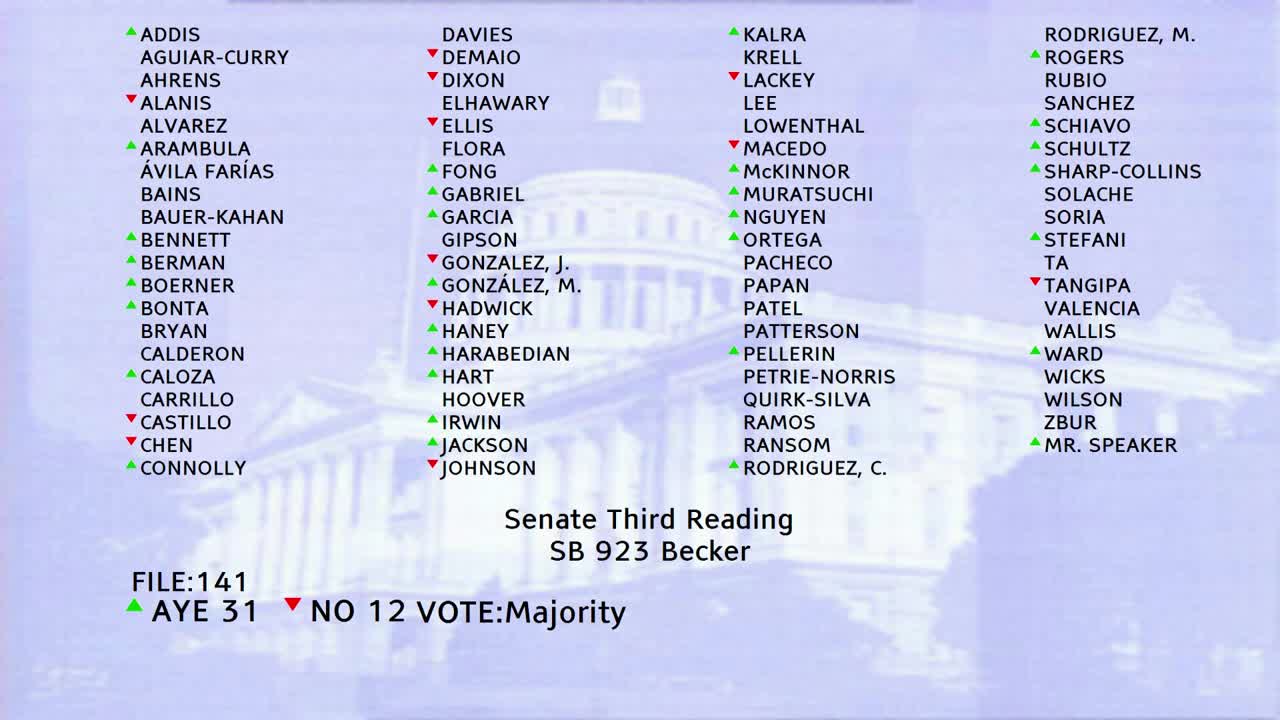 15MIN
Assembly Floor
 28MIN
Assembly Standing Committee on Judiciary
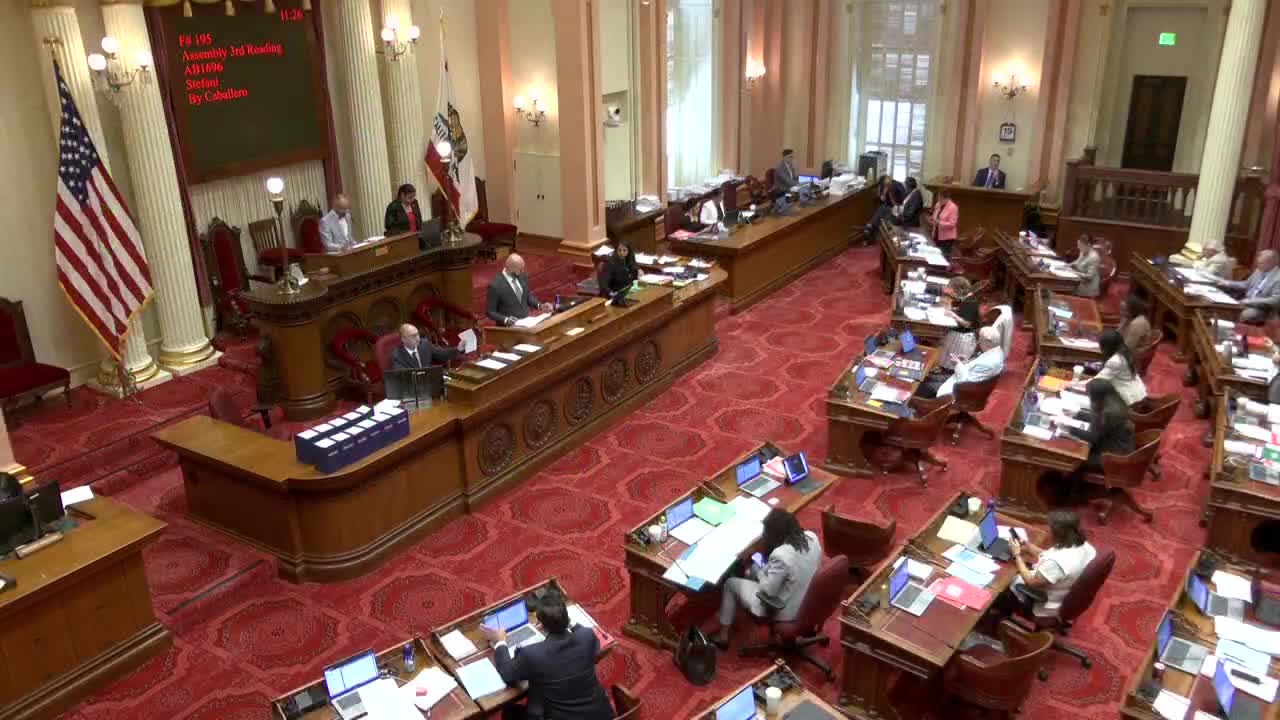 8MIN
Senate Floor
 21MIN
Senate Standing Committee on Judiciary
 8MIN
Senate Standing Committee on Health
 55SEC
Assembly Floor
 6MIN
Assembly Standing Committee on Health
Bill Author




Bill Co-Author(s):