AB 1271: Communications: broadband internet service providers.
- Session Year: 2025-2026
- House: Assembly
- Latest Version Date: 2025-04-30
Current Status:
Failed
(2026-02-02: From committee: Filed with the Chief Clerk pursuant to Joint Rule 56.)
Introduced
In Committee
Awaiting First Chamber Vote
Passed First Chamber
In Committee
Awaiting Second Chamber Vote
Passed Second Chamber
Enacted
Existing law, the Digital Equity Bill of Rights, provides that it is the principle of the state to ensure digital equity for all residents of the state, that, among other things, residents have access to broadband that meets specific requirements, and provides that it is the policy of the state that, to the extent technically feasible, broadband internet subscribers benefit from equal access to broadband internet service within the service area of a broadband provider.
This bill bill, contingent upon funding for this purpose, would require a broadband internet service provider, on or before January 1, 2027, and annually thereafter, to submit to the Department of Consumer Affairs Affairs, or the Department of Broadband and Digital Equity if Assembly Bill 693 of the 202526 Regular Session is enacted, a report containing broadband internet access service pricing and speed data that includes, among other information, the advertised speeds offered to consumers and the advertised and total prices paid by consumers. The bill would require the department to publish an annual broadband internet access service affordability and speed report aggregating and analyzing the data submitted by the broadband internet service providers and would require the department to make the data submitted by broadband internet service providers available to the public, as specified. The bill would make a broadband internet service provider that fails to comply with these provisions subject to an administrative penalty not to exceed $1,000 per violation per day until compliance is achieved.
This bill would require a broadband internet service provider to establish and maintain a dedicated consumer complaint resolution process that allows consumers to submit complaints via telephone, email, and an online portal, and would require a broadband internet service provider to respond to a complaint within 7 business days and provide a resolution, explanation, or corrective action within a specified timeframe. The bill would prescribe remedies for a consumer if a broadband internet service provider fails to resolve a complaint within the specified timeframe or refuses to act in good faith, including the issuance of a minimum credit of $50 for a complaint that remains unresolved beyond 60 days without valid justification. The bill would require a broadband internet service provider to disclose the complaint resolution process and remedies clearly and conspicuously in its terms of service, in its billing statements, and on its internet website. The bill would require a broadband internet service provider to report quarterly complaint statistics to the department, as specified.
Existing constitutional provisions require that a statute that limits the right of access to the meetings of public bodies or the writings of public officials and agencies be adopted with findings demonstrating the interest protected by the limitation and the need for protecting that interest.
This bill would make legislative findings to that effect.
Existing law, the Digital Equity Bill of Rights, provides that it is the principle of the state to ensure digital equity for all residents of the state, that, among other things, residents have access to broadband that meets specific requirements, and provides that it is the policy of the state that, to the extent technically feasible, broadband internet subscribers benefit from equal access to broadband internet service within the service area of a broadband provider.
This bill would require a broadband internet service provider, on or before January 1, 2027, and annually thereafter, to submit to the Department of Consumer Affairs a report containing broadband internet access service pricing and speed data that includes, among other information, the advertised speeds offered to consumers and the advertised and total prices paid by consumers. The bill would require the department to publish an annual broadband internet access service affordability and speed report aggregating and analyzing the data submitted by the broadband internet service providers and would require the department to make the data submitted by broadband internet service providers available to the public, as specified. The bill would make a broadband internet service provider that fails to comply with the bills these provisions subject to an administrative penalty not to exceed $1,000 per violation per day until compliance is achieved.
This bill would require a broadband internet service provider to establish and maintain a dedicated consumer complaint resolution process that allows consumers to submit complaints via telephone, email, and an online portal, and would require a broadband internet service provider to respond to a complaint within 7 business days and provide a resolution, explanation, or corrective action within a specified timeframe. The bill would prescribe remedies for a consumer if a broadband internet service provider fails to resolve a complaint within the specified timeframe or refuses to act in good faith, including the issuance of a minimum credit of $50 for a complaint that remains unresolved beyond 60 days without valid justification. The bill would require a broadband internet service provider to disclose the complaint resolution process and remedies clearly and conspicuously in its terms of service, in its billing statements, and on its internet website. The bill would require a broadband internet service provider to report quarterly complaint statistics to the department, as specified.
Existing constitutional provisions require that a statute that limits the right of access to the meetings of public bodies or the writings of public officials and agencies be adopted with findings demonstrating the interest protected by the limitation and the need for protecting that interest.
This bill would make legislative findings to that effect.
Existing law, the Digital Equity Bill of Rights, provides that it is the principle of the state to ensure digital equity for all residents of the state, that, among other things, residents have access to broadband that meets specific requirements, and provides that it is the policy of the state that, to the extent technically feasible, broadband internet subscribers benefit from equal access to broadband internet service within the service area of a broadband provider.
This bill would require a broadband internet service provider, on or before January 1, 2027, and annually thereafter, to submit to the Department of Consumer Affairs a report containing broadband internet access service pricing and speed data that includes, among other information, the advertised and actual broadband speeds offered to consumers and the advertised and actual aggregated total prices paid by consumers. The bill would require a broadband internet service provider to certify the accuracy and completeness of the reported data under penalty of perjury. By expanding the scope of the crime of perjury, the bill would impose a state-mandated local program. The bill would require the department to publish an annual broadband internet access service affordability and speed report aggregating and analyzing the data submitted by the broadband internet service providers and would require the department to make broadband pricing and speed data collected the data submitted by broadband internet service providers available to the public, as specified. The bill would make a broadband internet service provider that fails to comply with the bills provisions subject to an administrative penalty not to exceed $1,000 per violation per day until compliance is achieved.
Existing constitutional provisions require that a statute that limits the right of access to the meetings of public bodies or the writings of public officials and agencies be adopted with findings demonstrating the interest protected by the limitation and the need for protecting that interest.
This bill would make legislative findings to that effect.
The California Constitution requires the state to reimburse local agencies and school districts for certain costs mandated by the state. Statutory provisions establish procedures for making that reimbursement.This bill would provide that no reimbursement is required by this act for a specified reason.Existing law, the Digital Equity Bill of Rights, provides that it is the principle of the state to ensure digital equity for all residents of the state, that, among other things, residents have access to broadband that meets specific requirements, and provides that it is the policy of the state that, to the extent technically feasible, broadband internet subscribers benefit from equal access to broadband internet service within the service area of a broadband provider.
This bill would state the intent of the Legislature to enact legislation that seeks to bring more transparency to internet speeds. require a broadband internet service provider, on or before January 1, 2027, and annually thereafter, to submit to the Department of Consumer Affairs a report containing broadband pricing and speed data that includes, among other information, the advertised and actual broadband speeds offered to consumers and the advertised and actual aggregated prices paid by consumers. The bill would require a broadband internet service provider to certify the accuracy and completeness of the reported data under penalty of perjury. By expanding the scope of the crime of perjury, the bill would impose a state-mandated local program. The bill would require the department to publish an annual broadband affordability and speed report aggregating and analyzing the data submitted by the broadband internet service providers and would require the department to make broadband pricing and speed data collected available to the public, as specified. The bill would make a broadband internet service provider that fails to comply with the bills provisions subject to an administrative penalty not to exceed $1,000 per violation per day until compliance is achieved.
Existing constitutional provisions require that a statute that limits the right of access to the meetings of public bodies or the writings of public officials and agencies be adopted with findings demonstrating the interest protected by the limitation and the need for protecting that interest.
This bill would make legislative findings to that effect.
The California Constitution requires the state to reimburse local agencies and school districts for certain costs mandated by the state. Statutory provisions establish procedures for making that reimbursement.
This bill would provide that no reimbursement is required by this act for a specified reason.
Existing law, the Digital Equity Bill of Rights, provides that it is the principle of the state to ensure digital equity for all residents of the state, that, among other things, residents have access to broadband that meets specific requirements, and provides that it is the policy of the state that, to the extent technically feasible, broadband internet subscribers benefit from equal access to broadband internet service within the service area of a broadband provider.
This bill would state the intent of the Legislature to enact legislation that seeks to bring more transparency to internet speeds.
The Legislature finds and declares as follows:
(a)Californians receive their broadband internet access service from a variety of providers utilizing various technologies to deliver the service to residences and businesses.
(b)A variety of factors may negatively impact the speed performance of a subscribers broadband internet access service including the type of device being used, other hardware issues, equipment, network traffic, software issues, signal interference, physical obstructions, and user error.
(c)While not all factors that influence a subscribers speed performance are directly attributable to the broadband internet service provider, customers have a reasonable expectation that their provider will reliably provide the advertised speeds for their contracted plan that is purchased so that the service can be accessed with their devices.
(d)It is in the public interest to ensure that subscribers of broadband internet access service reliably receive the speeds they pay for, are fully informed about the pricing structure for their plans, and have access to affordable broadband that meets their connectivity needs.
SEC. 2.Chapter 8.2 (commencing with Section 21220) is added to Division 8 of the Business and Professions Code, to read:8.2.Broadband Internet Service Providers21220.For purposes of this chapter, the following definitions apply:
(a)Broadband internet access service has the same meaning as that term is defined in Section 3100 of the Civil Code.
(b)Broadband internet service provider means any entity that provides broadband internet access service to an individual, corporation, government, or other customer in the state.
(c)Broadband pricing and speed data means information related to the following:
(1)Advertised speeds by plan.
(2)Speed performance experienced by customers.
(3)Promotional pricing by plan.
(4)Total pricing for broadband internet access services paid by a customer per plan, inclusive of all fees, surcharges, and additional charges assessed on the customer, either as standalone broadband service or the broadband service component of bundled service offerings.
(5)Plan structures, including bundled service offerings and discounts.
(6)The most commonly purchased broadband internet access service plans aggregated to the census tract level.
(d)Consumer complaint means any written or electronic complaint submitted by a consumer to a broadband internet service provider regarding any of the following:
(1)Service quality issues, including slow speeds, frequent outages, or failure to meet advertised performance.
(2)Billing discrepancies, including hidden fees, overcharges, unauthorized charges, or misleading promotional pricing.
(3)Contractual disputes, including price increases after a promotional period, early termination fees, or failure to disclose terms and conditions.
(4)Customer service failures, including repeated unresponsiveness, lack of resolution, or failure to comply with California consumer protection laws.
(e)Department means an identified program within the Department of Consumer Affairs. Affairs, unless Assembly Bill 693 of the 202526 Regular Session is enacted, in which case, department means the Department of Broadband and Digital Equity.
(f)Machine-readable format means a structured data format that can be processed by a computer without human intervention, including, but not limited to, JavaScript Object Notation (JSON), comma-separated values (CSV), or Extensible Markup Language (XML) formats.
(g)Speed performance means the speed delivered to the customer.
21221.(a)A broadband internet service provider operating in the state shall, on or before January 1, 2027, and then annually, submit to the department a report containing broadband internet access service pricing and speed data at the census tract or address level in a machine-readable format. The report shall include, at a minimum, all of the following:
(1)The advertised speeds offered to consumers.
(2)Speed performance.
(3)The advertised and total price paid by consumers, including all fees and surcharges.
(4)A breakdown of broadband internet access service plans offered to consumers at the census-tract or address level, including standalone, bundled, and eligibility-based plans.
(5)The number of consumer complaints received pursuant to Section 21224, the types of complaints, the average resolution time, and the number of unresolved complaints exceeding 60 days.
(b)The department may conduct audits and require broadband internet service providers to provide supporting documentation to verify compliance with this section.
(c)Implementation of this section is contingent upon sufficient funding being appropriated by the Legislature to the department in the annual Budget Act or other statute for that purpose.
21222.(a)The department shall publish an annual broadband internet access service affordability and speed report aggregating and analyzing the data submitted pursuant to Section 21221.
(b)The data submitted pursuant to Section 21221 shall be made available to the public by the department in an open data format, subject to the protection of proprietary business information and personally identifying information, and consistent with the California Public Records Act (Division 10 (commencing with Section 7920.000) of Title 1 of the Government Code).
(c)Implementation of this section is contingent upon sufficient funding being appropriated by the Legislature to the department in the annual Budget Act or other statute for that purpose.
21223.(a)A broadband internet service provider that fails to comply with Section 21221, including, but not limited to, failure to submit required data, submission of incomplete or misleading data, or failure to cooperate with audits conducted pursuant to subdivision (b) of Section 21221, shall be subject to an administrative penalty by the department not to exceed one thousand dollars ($1,000), per violation per day until compliance is achieved.
(b)The department shall adopt a data reporting template for entities to report the broadband pricing and speed data to the department. The template shall be in an open data format that shall be readily accessible to the public.
(c)The department may adopt rules and regulations necessary to implement and enforce Sections 21221 and 21222.
(d)Implementation of this section is contingent upon sufficient funding being appropriated by the Legislature to the department in the annual Budget Act or other statute for that purpose.
21224.(a)A broadband internet service provider shall establish and maintain a dedicated consumer complaint resolution process that allows customers to submit consumer complaints via telephone, email, and an online portal.
(b)A broadband internet service provider shall provide consumers with a tracking number for each consumer complaint and an estimated timeline for resolution.
(c)A broadband internet service provider shall respond to a consumer complaint within seven business days and provide a resolution, explanation, or corrective action within 30 days of receipt.
(d)If a consumer complaint cannot be resolved within 30 days, the broadband internet service provider shall provide the consumer with a written explanation of the delay and an updated resolution timeline, not to exceed 60 days from the initial complaint submission.
21225.(a)If a broadband internet service provider fails to resolve a consumer complaint within the timeframe specified in Section 21224 or refuses to act in good faith, the consumer is entitled to one or more of the following remedies:
(1)For billing disputes, a refund for overcharges, undisclosed fees, or improper billing practices.
(2)For service failures or service quality issues, prorated credits or full refunds for periods of nonservice or substandard service, or replacement of provider-issued hardware, including modems or routers, at no cost to the consumer, if the equipment is determined to be the likely cause of degraded service.
(3)For breach of contract, waiver of early termination fees when the broadband internet service provider fails to uphold its service agreement.
(b)A broadband internet service provider shall issue a minimum credit of fifty dollars ($50) to any consumer whose complaint remains unresolved beyond 60 days without valid justification.
21226.(a)A broadband internet service provider shall disclose the complaint resolution process and remedies clearly and conspicuously in its terms of service, in its billing statements, and on its internet website.
(b)A broadband internet service provider shall report quarterly complaint statistics to the department that include the number of consumer complaints received, the types of complaints, the average resolution time, and the number of unresolved complaints exceeding 60 days.SEC. 3.The Legislature finds and declares that Section 2 of this act, which adds Section 21222 to the Business and Professions Code, imposes a limitation on the publics right of access to the meetings of public bodies or the writings of public officials and agencies within the meaning of Section 3 of Article I of the California Constitution. Pursuant to that constitutional provision, the Legislature makes the following findings to demonstrate the interest protected by this limitation and the need for protecting that interest:
In order to protect the confidentiality of consumers and the proprietary information of businesses subject to this act, it is necessary that this act limit the publics right of access to proprietary business information, protected personal information, and personally identifiable information.
The Legislature finds and declares as follows:
(a)Californians receive their broadband internet access service from a variety of providers utilizing various technologies to deliver the service to residences and businesses.
(b)A variety of factors may negatively impact the speed performance of a subscribers broadband internet access service including the type of device being used, other hardware issues, equipment, network traffic, software issues, signal interference, physical obstructions, and user error.
(c)While not all factors that influence a subscribers speed performance are directly attributable to the broadband internet service provider, customers have a reasonable expectation that their provider will reliably provide the advertised speeds for their contracted plan that is purchased so that the service can be accessed with their devices.
(d)It is in the public interest to ensure that subscribers of broadband internet access service reliably receive the speeds they pay for, are fully informed about the pricing structure for their plans, and have access to affordable broadband that meets their connectivity needs.
SEC. 2.Chapter 8.2 (commencing with Section 21220) is added to Division 8 of the Business and Professions Code, to read:8.2.Broadband Internet Service Providers21220.For purposes of this chapter, the following definitions apply:
(a)Broadband internet access service has the same meaning as that term is defined in Section 3100 of the Civil Code.
(b)Broadband internet service provider means any entity that provides broadband internet access service to an individual, corporation, government, or other customer in the state.
(c)Broadband pricing and speed data means information related to the following:
(1)Advertised speeds by plan.
(2)Speed performance experienced by customers.
(3)Promotional pricing by plan.
(4)Total pricing for broadband internet access services paid by a customer per plan, inclusive of all fees, surcharges, and additional charges assessed on the customer, either as standalone broadband service or the broadband service component of bundled service offerings.
(5)Plan structures, including bundled service offerings and discounts.
(6)The most commonly purchased broadband internet access service plans aggregated to the census tract level.
(d)Consumer complaint means any written or electronic complaint submitted by a consumer to a broadband internet service provider regarding any of the following:
(1)Service quality issues, including slow speeds, frequent outages, or failure to meet advertised performance.
(2)Billing discrepancies, including hidden fees, overcharges, unauthorized charges, or misleading promotional pricing.
(3)Contractual disputes, including price increases after a promotional period, early termination fees, or failure to disclose terms and conditions.
(4)Customer service failures, including repeated unresponsiveness, lack of resolution, or failure to comply with California consumer protection laws.
(d)(e)Department means the Department of Consumer Affairs.
(e)(f)Machine-readable format means a structured data format that can be processed by a computer without human intervention, including, but not limited to, JavaScript Object Notation (JSON), comma-separated values (CSV), or Extensible Markup Language (XML) formats.
(f)(g)Speed performance means the speed delivered to the customer.
21221.(a)A broadband internet service provider operating in the state shall, on or before January 1, 2027, and then annually, submit to the department a report containing broadband internet access service pricing and speed data at the census tract or address level in a machine-readable format. The report shall include, at a minimum, all of the following:
(1)The advertised speeds offered to consumers.
(2)Speed performance.
(3)The advertised and total price paid by consumers, including all fees and surcharges.
(4)A breakdown of broadband internet access service plans offered to consumers at the census-tract or address level, including standalone, bundled, and eligibility-based plans.
(b)The department may conduct audits and require broadband internet service providers to provide supporting documentation to verify compliance with this section.
21222.(a)The department shall publish an annual broadband internet access service affordability and speed report aggregating and analyzing the data submitted pursuant to Section 21221.
(b)The data submitted pursuant to Section 21221 shall be made available to the public by the department in an open data format, subject to the protection of proprietary business information and personally identifying information, and consistent with the California Public Records Act (Division 10 (commencing with Section 7920.000) of Title 1 of the Government Code).
21223.(a)A broadband internet service provider that fails to comply with this chapter, Section 21221, including, but not limited to, failure to submit required data, submission of incomplete or misleading data, or failure to cooperate with audits conducted pursuant to this chapter, subdivision (b) of Section 21221, shall be subject to an administrative penalty by the department not to exceed one thousand dollars ($1,000), per violation per day until compliance is achieved.
(b)The department shall adopt a data reporting template for entities to report the broadband pricing and speed data to the department. The template shall be in an open data format that shall be readily accessible to the public.
(c)The department may adopt rules and regulations necessary to implement and enforce this chapter. Sections 21221 and 21222.
21224.(a)A broadband internet service provider shall establish and maintain a dedicated consumer complaint resolution process that allows customers to submit consumer complaints via telephone, email, and an online portal.
(b)A broadband internet service provider shall provide consumers with a tracking number for each consumer complaint and an estimated timeline for resolution.
(c)A broadband internet service provider shall respond to a consumer complaint within seven business days and provide a resolution, explanation, or corrective action within 30 days of receipt.
(d)If a consumer complaint cannot be resolved within 30 days, the broadband internet service provider shall provide the consumer with a written explanation of the delay and an updated resolution timeline, not to exceed 60 days from the initial complaint submission.
21225.(a)If a broadband internet service provider fails to resolve a consumer complaint within the timeframe specified in Section 21224 or refuses to act in good faith, the consumer is entitled to one or more of the following remedies:
(1)For billing disputes, a refund for overcharges, undisclosed fees, or improper billing practices.
(2)For service failures or service quality issues, prorated credits or full refunds for periods of nonservice or substandard service, or replacement of provider-issued hardware, including modems or routers, at no cost to the consumer, if the equipment is determined to be the likely cause of degraded service.
(3)For breach of contract, waiver of early termination fees when the broadband internet service provider fails to uphold its service agreement.
(b)A broadband internet service provider shall issue a minimum credit of fifty dollars ($50) to any consumer whose complaint remains unresolved beyond 60 days without valid justification.
21226.(a)A broadband internet service provider shall disclose the complaint resolution process and remedies clearly and conspicuously in its terms of service, in its billing statements, and on its internet website.
(b)A broadband internet service provider shall report quarterly complaint statistics to the department that include the number of consumer complaints received, the types of complaints, the average resolution time, and the number of unresolved complaints exceeding 60 days.
SEC. 3.The Legislature finds and declares that Section 2 of this act, which adds Section 21222 to the Business and Professions Code, imposes a limitation on the publics right of access to the meetings of public bodies or the writings of public officials and agencies within the meaning of Section 3 of Article I of the California Constitution. Pursuant to that constitutional provision, the Legislature makes the following findings to demonstrate the interest protected by this limitation and the need for protecting that interest:
In order to protect the confidentiality of consumers and the proprietary information of businesses subject to this act, it is necessary that this act limit the publics right of access to proprietary business information, protected personal information, and personally identifiable information.
The Legislature finds and declares as follows:
(a)Californians receive their broadband internet access service from a variety of providers utilizing various technologies to deliver the service to residences and businesses.
(b)A variety of factors may negatively impact the speed performance of a subscribers broadband internet access service including the type of device being used, other hardware issues, equipment, network traffic, software issues, signal interference, physical obstructions, and user error.
(c)While not all factors that influence a subscribers speed performance are directly attributable to the broadband internet service provider, customers have a reasonable expectation that their provider will reliably provide the advertised speeds for their contracted plan that is purchased so that the service can be accessed with their devices.
(d)It is in the public interest to ensure that subscribers of broadband internet access service reliably receive the speeds they pay for, are fully informed about the pricing structure for their plans, and have access to affordable broadband that meets their connectivity needs.
SECTION 1.SEC. 2.Chapter 8.2 (commencing with Section 21220) is added to Division 8 of the Business and Professions Code, to read:8.2.Broadband Internet Service Providers21220.For purposes of this chapter, the following definitions apply:
(a)Broadband internet access service has the same meaning as that term is defined in Section 3100 of the Civil Code.
(a)(b)Broadband internet service provider means any business entity that provides broadband internet access service to an individual, corporation, government, or other customer in the state.
(b)(c)Broadband pricing and speed data means information related to broadband service rates, fees, and speed performance, including: the following:
(1)Advertised and actual broadband speeds, including promotional speeds and the average speeds experienced by consumers. speeds by plan.
(2)Speed performance experienced by customers.
(2)(3)Promotional pricing and total aggregated pricing for broadband services, inclusive pricing by plan.
(4)Total pricing for broadband internet access services paid by a customer per plan, inclusive of all fees, surcharges, and additional charges assessed on the consumer, customer, either as standalone broadband service or the broadband service component of bundled service offerings.
(3)(5)Plan structures, including bundled service offerings, discounts, and the offerings and discounts.
(6)The most commonly purchased broadband internet access service plans aggregated to the census tract level.
(c)(d)Department means the Department of Consumer Affairs.
(d)(e)Machine-readable format means a structured data format that can be processed by a computer without human intervention, including, but not limited to, JavaScript Object Notation (JSON), comma-separated values (CSV), or Extensible Markup Language (XML) formats.
(f)Speed performance means the speed delivered to the customer.
21221.(a)A broadband internet service provider operating in the state shall, on or before January 1, 2027, and then annually, submit to the department a report containing broadband internet access service pricing and speed data at the census tract or address level in a machine-readable format. The report shall include, at a minimum, all of the following:
(1)The advertised and actual broadband speeds offered to consumers, including the average speed experienced by consumers. consumers.
(2)Speed performance.
(2)(3)The advertised and actual aggregated total price paid by consumers, including all fees and surcharges.
(3)(4)A breakdown of broadband internet access service plans offered to consumers at the census-tract or address level, including standalone, bundled, and eligibility-based plans.
(b)A broadband internet service provider shall certify the accuracy and completeness of the reported data under penalty of perjury. (c)(b)The department may conduct audits and require broadband internet service providers to provide supporting documentation to verify compliance with this section.
21222.(a)The department shall publish an annual broadband internet access service affordability and speed report aggregating and analyzing the data submitted pursuant to Section 21221.
(b)The department shall make broadband pricing and speed data collected pursuant to this chapter available to the public in an open-data format, except as necessary to protect proprietary business information, protected personal information, and personally identifiable information, as determined by the department.(b)The data submitted pursuant to Section 21221 shall be made available to the public by the department in an open data format, subject to the protection of proprietary business information and personally identifying information, and consistent with the California Public Records Act (Division 10 (commencing with Section 7920.000) of Title 1 of the Government Code).
21223.(a)A broadband internet service provider that fails to comply with this chapter, including, but not limited to, failure to submit required data, submission of incomplete or misleading data, or failure to cooperate with audits conducted pursuant to this chapter, shall be subject to an administrative penalty by the department not to exceed one thousand dollars ($1,000), per violation per day until compliance is achieved.
(b)The department shall adopt a data reporting template for entities to report the broadband pricing and speed data to the department. The template shall be in an open data format that shall be readily accessible to the public.
(b)(c)The department shall may adopt rules and regulations necessary to implement and enforce this chapter.
SEC. 2.SEC. 3.The Legislature finds and declares that Section 1 2 of this act, which adds Section 21222 to the Business and Professions Code, imposes a limitation on the publics right of access to the meetings of public bodies or the writings of public officials and agencies within the meaning of Section 3 of Article I of the California Constitution. Pursuant to that constitutional provision, the Legislature makes the following findings to demonstrate the interest protected by this limitation and the need for protecting that interest:
In order to protect the confidentiality of consumers and the proprietary information of businesses subject to this act, it is necessary that this act limit the publics right of access to proprietary business information, protected personal information, and personally identifiable information.
SEC. 3.No reimbursement is required by this act pursuant to Section 6 of Article XIIIB of the California Constitution because the only costs that may be incurred by a local agency or school district will be incurred because this act creates a new crime or infraction, eliminates a crime or infraction, or changes the penalty for a crime or infraction, within the meaning of Section 17556 of the Government Code, or changes the definition of a crime within the meaning of Section 6 of Article XIIIB of the California Constitution.For purposes of this chapter, the following definitions apply:
(a)Broadband internet service provider means any business that provides broadband internet access service to an individual, corporation, government, or other customer in the state.
(b)Broadband pricing and speed data means information related to broadband service rates, fees, and speed performance, including:
(1)Advertised and actual broadband speeds, including promotional speeds and the average speeds experienced by consumers.
(2)Promotional pricing and total aggregated pricing for broadband services, inclusive of all fees, surcharges, and additional charges assessed on the consumer, either as standalone broadband service or the broadband service component of bundled service offerings.
(3)Plan structures, including bundled service offerings, discounts, and the most commonly purchased broadband plans aggregated to the census tract level.
(c)Department means the Department of Consumer Affairs.
(d)Machine-readable format means a structured data format that can be processed by a computer without human intervention, including, but not limited to, JavaScript Object Notation (JSON), comma-separated values (CSV), or Extensible Markup Language (XML) formats.
21221.(a)A broadband internet service provider operating in the state shall, on or before January 1, 2027, and then annually, submit to the department a report containing broadband pricing and speed data at the census tract or address level in a machine-readable format. The report shall include, at a minimum, all of the following:
(1)The advertised and actual broadband speeds offered to consumers, including the average speed experienced by consumers.
(2)The advertised and actual aggregated price paid by consumers, including all fees and surcharges.
(3)A breakdown of broadband plans offered to consumers at the census-tract or address level, including standalone, bundled, and eligibility-based plans.
(b)A broadband internet service provider shall certify the accuracy and completeness of the reported data under penalty of perjury.
(c)The department may conduct audits and require broadband internet service providers to provide supporting documentation to verify compliance with this section.
21222.(a)The department shall publish an annual broadband affordability and speed report aggregating and analyzing the data submitted pursuant to Section 21221.
(b)The department shall make broadband pricing and speed data collected pursuant to this chapter available to the public in an open-data format, except as necessary to protect proprietary business information, protected personal information, and personally identifiable information, as determined by the department.
21223.(a)A broadband internet service provider that fails to comply with this chapter, including, but not limited to, failure to submit required data, submission of incomplete or misleading data, or failure to cooperate with audits conducted pursuant to this chapter, shall be subject to an administrative penalty not to exceed one thousand dollars ($1,000), per violation per day until compliance is achieved.
(b)The department shall adopt rules and regulations necessary to implement and enforce this chapter.
SEC. 2.The Legislature finds and declares that Section 1 of this act, which adds Section 21222 to the Business and Professions Code, imposes a limitation on the publics right of access to the meetings of public bodies or the writings of public officials and agencies within the meaning of Section 3 of Article I of the California Constitution. Pursuant to that constitutional provision, the Legislature makes the following findings to demonstrate the interest protected by this limitation and the need for protecting that interest:
In order to protect the confidentiality of consumers and the proprietary information of businesses subject to this act, it is necessary that this act limit the publics right of access to proprietary business information, protected personal information, and personally identifiable information.
SEC. 3.No reimbursement is required by this act pursuant to Section 6 of Article XIIIB of the California Constitution because the only costs that may be incurred by a local agency or school district will be incurred because this act creates a new crime or infraction, eliminates a crime or infraction, or changes the penalty for a crime or infraction, within the meaning of Section 17556 of the Government Code, or changes the definition of a crime within the meaning of Section 6 of Article XIIIB of the California Constitution.
SECTION 1.It is the intent of the Legislature to enact legislation that seeks to bring more transparency to internet speeds.It is the intent of the Legislature to enact legislation that seeks to bring more transparency to internet speeds.
|
Date
|
Status
|
|---|---|
| Feb 2, 2026 | From committee: Filed with the Chief Clerk pursuant to Joint Rule 56. |
| Jan 31, 2026 | Died pursuant to Art. IV, Sec. 10(c) of the Constitution. |
| May 23, 2025 | In committee: Held under submission. |
| May 14, 2025 | In committee: Set, first hearing. Referred to APPR. suspense file. |
| May 1, 2025 | Re-referred to Com. on APPR. |
| Apr 30, 2025 | Read second time and amended. |
| Apr 29, 2025 | From committee: Amend, and do pass as amended and re-refer to Com. on APPR. (Ayes 13. Noes 2.) (April 29). |
| Apr 22, 2025 | Re-referred to Com. on B. & P. |
| Apr 21, 2025 | From committee chair, with author's amendments: Amend, and re-refer to Com. on B. & P. Read second time and amended. |
| Apr 21, 2025 | Re-referred to Com. on B. & P. |
| Apr 10, 2025 | Read second time and amended. |
| Apr 9, 2025 | From committee: Amend, and do pass as amended and re-refer to Com. on B. & P. (Ayes 9. Noes 0.) (April 9). |
| Apr 1, 2025 | Re-referred to Com. on C. & C. |
| Mar 28, 2025 | From committee chair, with author's amendments: Amend, and re-refer to Com. on C. & C. Read second time and amended. |
| Mar 28, 2025 | Referred to Coms. on C. & C. and B. & P. |
| Feb 24, 2025 | Read first time. |
| Feb 22, 2025 | From printer. May be heard in committee March 24. |
| Feb 21, 2025 | Introduced. To print. |
|
Date
|
Description
|
Location
|
Votes
|
|
|---|---|---|---|---|
| Apr 29, 2025 | Do pass as amended and be re-referred to the Committee on [Appropriations] | Assembly Standing Committee on Business and Professions |
Passed |
|
| Apr 9, 2025 | Do pass as amended and be re-referred to the Committee on [Business and Professions] | Assembly Standing Committee on Communications and Conveyance |
Passed |
This list shows positions taken on this bill by organizations on the date displayed, which is linked to the original source.
Positions by individuals are not included.
|
Organization
|
Position
|
Date
|
|---|---|---|
| Arts for LA | ** Support | |
| California Alliance for Digital Equity | ** Support | |
| California Broadband and Video Association | ** Against | |
| California Community Foundation | ** Support | |
| Communities in Schools of Los Angeles | ** Support | |
| Community Coalition of The Antelope Valley | ** Support | |
| Digital Equity LA | ** Support | |
| EveryoneOn | ** Support | |
| Families In Schools | ** Support | |
| Fresno Coalition for Digital Inclusion | ** Support | |
| GPSN | ** Support | |
| Hack the Hood | ** Support | |
| Healing and Justice Center | ** Support | |
| Institute for Local Self-Reliance | ** Support | |
| Michelson Center For Public Policy | ** Support | |
| NextGen California | ** Support | |
| #OaklandUndivided | ** Support | |
| Our Voice: Communities for Quality Education | ** Support | |
| Para Los Ninos | ** Support | |
| Parent Engagement Academy | ** Support | |
| Trio Plus | ** Support | |
| Unite-LA | ** Support |
Date of Hearing: May 14, 2025
ASSEMBLY COMMITTEE ON APPROPRIATIONS
Buffy Wicks, Chair
ABPCA Bill Id:AB 1271
Author:(Bonta) – As Amended Ver:April 30, 2025
Policy Committee: | Communications and Conveyance | Vote: | 9 - 0 |
Business and Professions | 13 - 2 | ||
|
|
Urgency: No State Mandated Local Program: No Reimbursable: No
SUMMARY:
This bill requires internet service providers (ISPs) to report information on pricing and speed data to a specific state agency, which the state agency is to publish annually and make available to the public.
Specifically, this bill, upon appropriation:
- Requires an ISP operating in California, starting January 1, 2027, to annually report to a specific state agency a report that includes, at a minimum, (a) the advertised speed offered to consumers, (b) speed performance experienced by customers, (c) advertised and total price paid by consumers, (d) a breakdown of broadband internet access service plans offered to consumers at the census-tract or address level and (e) the number of consumer complaints received, the types of complaints, the average resolution time and the number of unresolved complaints exceeding 60 days.
- Requires the specified state agency—meaning either a program within the Department of Consumer Affairs or the Department of Broadband and Digital Equity, if AB 693 (Boerner) becomes law and creates such a department—to annually publish a broadband internet access service affordability and speed report and empowers the state agency to (a) audit ISPs and provide supporting documentation to verify compliance with the reporting requirements and (b) adopt rules and regulations.
- Specifies that an ISP that fails to comply with the reporting requirements is subject to an administrative penalty by the state agency of no more than $1,000, per violation, per day.
- Requires an ISP to establish a dedicated consumer complaint resolution process and specifies timeframes within which the ISP is to respond to and resolve complaints and, if the ISP fails to resolve a consumer complaint within those timeframes or act in good faith, provides for the monetary and service-related remedies the ISP must provide to the complaining consumer.
FISCAL EFFECT:
This bill creates work for Consumer Affairs that is outside the scope of any work it currently performs. Activities Consumer Affairs would need to undertake include adopting rules and regulations; auditing and enforcement; collecting, analyzing and publishing data; and responding to inquiries and communication. Consumer Affairs estimates it will need an analyst, a research data specialist and a technician to perform this work, as well as a manager to oversee the work, at an annual cost of approximately $600,000 beginning in fiscal year (FY) 2026-27 and ongoing thereafter.
In addition, Consumer Affairs assumes implementation will entail the need for two information technology specialists to maintain the database that houses the submitted information and clean up data, as needed. The department estimates annual personnel costs of approximately $360,000 beginning in FY 2026-27, as well as one-time costs of approximately $50,000 for a contract with a vendor to configure the software needed to run the ISP data submission portal.
Consumer Affairs warns it does not have funding to cover these costs, as its existing duties are paid from fees charged to entities it regulates and the work created by this bill is unrelated to those activities. Therefore, this analysis assumes the costs described above would come from the General Fund.
COMMENTS:
State law makes several pronouncements about policy regarding broadband service. For example, the Legislature placed in law the Digital Equity Bill of Rights, which, among other things, declares the principle of the state to ensure digital equity for all its residents and that residents shall have access to broadband that is sufficient and reliable, with internet speeds that are sufficient to meet the growing demand and reliance on access to education, government, public safety, economic prosperity, and health care through high-speed internet access. And the California Public Utilities Commission regulates rates charged by, and the terms of service of some entities that, in addition to providing rate regulated telephone service, also provide broadband services. The state also provides billions of dollars to facilitate the construction of broadband infrastructure and subsidizes the cost of broadband services to low-income Californians. However, there is no state agency charged with regulating broadband service or ISPs, specifically. Rather, the state relies on market competition and the profit motive to ensure ISPs supply broadband services that are affordable, attractive and as advertised.
This bill does not upend this regulatory scheme. Instead, it requires ISPs to report information on pricing and speed data to a state agency because, the author contends, “Without clear reporting requirements, consumers and policymakers lack the tools to ensure accountability and affordability.” According to the author:
Reliable, high-speed internet is essential for participating in education, employment, healthcare, and civic life. Yet many Californians experience a disconnect between what providers advertise and what they actually deliver…This bill addresses that gap by requiring providers to submit annual reports to the Department of Consumer Affairs detailing real-world broadband performance and true service costs. The Department will publish these findings to support transparency and inform future broadband equity efforts. AB 1271 empowers consumers and strengthens California’s broadband infrastructure through greater access to accurate information.
It is important to note that, currently, the Consumers Affairs is not involved in regulating ISPs or broadband services. Perhaps for this reason, the bill assigns its duties to a yet-to-be-created program within Consumer Affairs or to the Department of Broadband and Digital Equity, if AB 693 (Boerner)—a bill currently under consideration by this committee—becomes law and creates the department.
This bill is supported by a long list of consumer advocacy and other organizations who, collectively, write this bill creates access to “reliable, transparent information about internet prices and speeds, so that policymakers and residents can make informed choices moving forward.”
In contrast, the bill is opposed by industry group the California Broadband and Video Association (CalBroadband), which describes the bill as “duplicative” and “unnecessary,” because:
federal law and the [Federal Trade Commission’s] rules already ensure that all relevant information necessary to make informed choices among broadband providers and service plans is currently reported and readily available to consumers…several of CalBroadband’s member companies have participated in the FCC’s broad-scale nationwide study of consumer broadband performance in the United States over the past fourteen years. The results of that data, since the FCC began this process in 2011 of directly measuring consumer broadband performance collected from providers, have been compiled across thirteen FCC reports.
Analysis Prepared by: Jay Dickenson / APPR. / (916) 319-2081
Date of Hearing: April 29, 2025
ASSEMBLY COMMITTEE ON BUSINESS AND PROFESSIONS
Marc Berman, Chair
ABPCA Bill Id:AB 1271
Author:(Bonta) – As Amended Ver:April 21, 2025
NOTE: This bill is double referred and previously passed the Assembly Committee on Communications and Conveyance on a 9-0-1 vote.
SUBJECT: Communications: broadband internet service providers.
SUMMARY: Requires the Department of Consumer Affairs (DCA) to collect and analyze data relating to broadband internet access service pricing and speed data and requires broadband internet service providers to establish and maintain a consumer complaint resolution process.
EXISTING LAW:
- Establishes the DCA within the Business, Consumer Services, and Housing Agency. (Business and Professions Code (BPC) § 100)
- Defines “board” as also inclusive of “bureau,” “commission,” “committee,” “department,” “division,” “examining committee,” “program,” and “agency.” (BPC § 22)
- Enumerates various regulatory boards, bureaus, committees, commissions, and programs under the DCA’s jurisdiction. (BPC § 101)
- Provides that all boards within the DCA are established for the purpose of ensuring that those private businesses and professions deemed to engage in activities which have potential impact upon the public health, safety, and welfare are adequately regulated in order to protect the people of California. (BPC § 101.6)
- Provides that each board within the DCA exists as a separate unit, and has the functions of setting standards, holding meetings, conducting examinations, reviewing applications, conducting investigations of violations of laws under its jurisdiction, issuing citations and holding hearings for the revocation of licenses, and the imposing of penalties following those hearings, insofar as those powers are given by statute to each respective board. (BPC § 108)
- Places the DCA under the control of the Director of Consumer Affairs, who is appointed by the Governor and may investigate the work of boards under the DCA. (BPC § 150)
- Empowers the Director of Consumer Affairs to require reports from any board within the DCA as deemed reasonably necessary on any phase of their operations. (BPC § 127)
- Requires each board within the DCA to notify complainants against licensees of the initial administrative action taken on the complainant’s complaint within 10 days of receipt as well as the final action ultimately taken on the complaint. (BPC § 129)
- Provides that a charge for the estimated administrative expenses of the DCA may be levied on a pro rata share basis against any of the boards, bureaus, commissions, divisions, and agencies, at the discretion of the Director of Consumer Affairs and with the approval of the Department of Finance. (BPC § 201)
- Establishes the Professions and Vocations Fund within the State Treasury, consisting of various special funds for each of the boards, bureaus, and other entities within the DCA, and provides that each fund shall be available for expenditure only for the purposes provided by law. (BPC § 205)
- Provides that the money in any fund within the Professions and Vocations Fund that is attributable to administrative fines, civil penalties, and criminal penalties imposed by a regulating entity, or cost recovery by a regulating entity from enforcement actions and case settlements, shall be available for expenditure only upon appropriation by the Legislature. (BPC § 207)
- Provides that the Director of Consumer Affairs has the following powers and it shall be the director’s duty to:
- Recommend and propose the enactment of such legislation as necessary to protect and promote the interests of consumers.
- Represent the consumer’s interests before federal and state legislative hearings and executive commissions.
- Assist, advise, and cooperate with federal, state, and local agencies and officials to protect and promote the interests of consumers.
- Study, investigate, research, and analyze matters affecting the interests of consumers.
- Hold public hearings, subpoena witnesses, take testimony, compel the production of books, papers, documents, and other evidence, and call upon other state agencies for information.
- Propose and assist in the creation and development of consumer education programs.
- Promote ethical standards of conduct for business and consumers and undertake activities to encourage public responsibility in the production, promotion, sale and lease of consumer goods and services.
- Advise the Governor and Legislature on all matters affecting the interests of consumers.
- Exercise and perform other functions, powers and duties as may be deemed appropriate to protect and promote the interests of consumers as directed by the Governor or the Legislature.
- Maintain contact and liaison with consumer groups in California and nationally.
- (BPC § 310)
- Requires that the Director of Consumer Affairs be formally notified of and be provided a full opportunity to review all notices of proposed, modified, and final rulemaking actions, and provides the director with the authority to disapprove a proposed rule or regulation within 30 days on the ground that it is injurious to the public health, safety, or welfare. (BPC § 313.1)
- Requires the Director of Consumer Affairs to receive complaints from consumers concerning each of the following matters:
- Unfair methods of competition and unfair or deceptive acts or practices undertaken by any person in the conduct of any trade or commerce.
- The production, distribution, sale, and lease of any goods and services undertaken by any person which may endanger the public health, safety, or welfare.
- Violations of provisions of the Business and Professions Code relating to businesses and professions licensed by any agency of the DCA and its regulations.
- Student concerns related to the Bureau for Private Postsecondary Education’s performance of its responsibilities, including concerns that arise related to the Bureau for Private Postsecondary Education’s handling of a complaint or its administration of the Student Tuition Recovery Fund.
- (BPC § 481)
- Additionally requires the Director of Consumer Affairs to receive complaints from consumers concerning services provided by telephone corporations. (BPC § 325.3)
- Requires the Director of Consumer Affairs to transmit any valid complaint to the local, state or federal agency whose authority provides the most effective means to secure the relief, or to the Attorney General. (BPC § 326)
THIS BILL:
- Defines “broadband internet access service” as having the same definition as provided in the California Internet Consumer Protection and Net Neutrality Act of 2018.
- Beginning January 1, 2027, requires broadband internet service providers operating in the state to annually submit to a report to the DCA containing broadband internet access service pricing and speed data at the census tract or address level in a machine-readable format.
- Requires each report submitted by a broadband internet service provider to the DCA to include, at a minimum, all of the following:
- The advertised speeds offered to consumers.
- Speed performance.
- The advertised and total price paid by consumers, including all fees and surcharges.
- A breakdown of broadband internet access service plans offered to consumers at the census-tract or address level, including standalone, bundled, and eligibility-based plans.
- Empowers the DCA to conduct audits and require broadband internet service providers to provide supporting documentation to verify compliance with the reporting requirement.
- Requires the DCA to publish an annual broadband internet access service affordability and speed report aggregating and analyzing the data reported to the department by broadband internet service providers.
- Provides that data submitted to the DCA shall be made available to the public by the DCA in an open data format, subject to the protection of proprietary business information and personally identifying information, and consistent with the California Public Records Act.
- Subjects a broadband internet service provider that fails to submit required data, submits incomplete or misleading data, or fails to cooperate with audits conducted by the DCA to an administrative penalty by the DCA not to exceed $1,000 per violation per day until compliance is achieved.
- Requires the DCA to adopt a data reporting template for entities to report the broadband pricing and speed data to the DCA, which shall be in an open data format that shall be readily accessible to the public.
- Authorizes the DCA to adopt rules and regulations necessary to implement and enforce the requirements in the bill.
- Requires broadband internet service providers to establish and maintain a dedicated consumer complaint resolution process that allows customers to submit consumer complaints via telephone, email, and an online portal.
- Requires broadband internet service providers to provide consumers with a tracking number for each consumer complaint and an estimated timeline for resolution.
- Requires broadband internet service providers to respond to a consumer complaint within seven business days and provide a resolution, explanation, or corrective action within 30 days of receipt.
- Provides that if a consumer complaint cannot be resolved within 30 days, the broadband internet service provider shall provide the consumer with a written explanation of the delay and an updated resolution timeline, not to exceed 60 days from the initial complaint submission.
- Provides that if a broadband internet service provider fails to resolve a consumer complaint within the specified timeframe or refuses to act in good faith, the consumer is entitled to one or more of the following remedies:
- For billing disputes, a refund for overcharges, undisclosed fees, or improper billing practices.
- For service failures or service quality issues, prorated credits or full refunds for periods of nonservice or substandard service, or replacement of provider-issued hardware, including modems or routers, at no cost to the consumer, if the equipment is determined to be the likely cause of degraded service.
- For breach of contract, waiver of early termination fees when the broadband internet service provider fails to uphold its service agreement.
- Requires a broadband internet service provider to issue a minimum credit of $50 to any consumer whose complaint remains unresolved beyond 60 days without valid justification.
- Requires broadband internet service providers to disclose the complaint resolution process and remedies clearly and conspicuously in their terms of service, in their billing statements, and on their internet websites.
- Requires broadband internet service providers to report quarterly complaint statistics to the DCA that include the number of consumer complaints received, the types of complaints, the average resolution time, and the number of unresolved complaints exceeding 60 days.
- Makes findings and declarations in support of the bill’s provisions, including a finding and declaration that it is necessary for the bill to limit the public’s right of access to proprietary business information, protected personal information, and personally identifiable information in order to protect the confidentiality of consumers and the proprietary information of businesses subject to the bill.
FISCAL EFFECT: Unknown; this bill is keyed fiscal by the Legislative Counsel.
COMMENTS:
Purpose. This bill is sponsored by the California Alliance for Digital Equity. According to the author:
AB 1271 empowers consumers and strengthens California’s broadband infrastructure through greater access to accurate information. AB 1271 increases transparency in broadband service by requiring internet service providers to report the speed experienced by consumers, along with total pricing data—including all fees and surcharges. Reliable, high-speed internet is essential for participating in education, employment, healthcare, and civic life. Yet many Californians experience a disconnect between what providers advertise and what they actually deliver. Without clear reporting requirements, consumers and policymakers lack the tools to ensure accountability and affordability. This bill addresses that gap by requiring providers to submit annual reports to the Department of Consumer Affairs detailing real-world broadband performance and true service costs. The Department will publish these findings to support transparency and inform future broadband equity efforts.
Background.
Department of Consumer Affairs. The DCA is a department within the Business, Consumer Services, and Housing Agency that primarily exists to provide administrative support services to the various individual boards, bureaus, and other entities that comprise and fund the department. Support services provided by the DCA include human resources, information technology, investigations, communications, professional examinations, training, strategic planning, and fiscal operations. As of the DCA’s most recent annual report to the Legislature, the DCA consists of 36 distinct regulatory entities, including 26 boards, seven bureaus, one committee, one commission, and one program. In total, the DCA oversees more than 3.4 million licensees across 280 license types falling within the respective jurisdiction of each board, bureau, or other licensing entity. The DCA also administers the Arbitration Certification Program, which currently certifies and monitors twenty third-party arbitration programs to ensure compliance with California law relating to new vehicle warranties.
In addition to providing support services to individual licensing entities, statute requires the DCA to receive complaints from consumers and to transmit any valid complaints to the local, state, or federal agency that is appropriate to assist the complainant. The DCA’s Consumer Information Center (CIC) includes a Call Center and a Correspondence Unit. During Fiscal Year 2021-22, the CIC received over 400,000 calls and provided correspondence to consumers in over 38,000 instances. The DCA has also produced an estimated 370 publications, which includes guidance to both consumers and licensees.
Broadband Internet Service Providers. Typically, “broadband internet” is used to refer to various forms of high-speed internet access technologies including fiber-optic, cable, digital subscriber line (DSL), satellite, and wireless services. Access to high-speed internet is no longer regarded as a luxury, as more and more essential services rely on reliable internet services. For example, California has long faced a significant shortage of primary care providers, which disproportionately impacts communities with a higher proportion of minorities.[1] While telehealth technologies are frequently offered as solutions to this provider shortage, studies have found that those same communities frequently also do not have access to broadband, with approximately 15 percent of California households lacking high-speed internet access.[2]
In 2023, the Legislature enacted the Assembly Bill 414 (Reyes), the Digital Equity Bill of Rights, which included findings and declarations stating “that digital equity, in which all individuals and communities have the information technology capacity needed for full participation in society, democracy, and the economy, is necessary for civic and cultural participation, employment, lifelong learning, and to access essential services.” While the bill did not establish an enforceable right to broadband access, AB 414 established that it is the principle of the state to ensure digital equity for all residents and that residents should have access to broadband in various forms and functions. AB 414 additionally established that it is the policy of the state that broadband internet subscribers benefit from equal access to service.
The author and sponsors of this bill have conveyed their belief that some broadband internet service providers have potentially engaged in certain practices that disproportionately harm vulnerable populations, including misrepresentations of speed data and inequitable pricing practices. Findings and declarations in this bill state that the intent is to ensure that subscribers of broadband internet access service reliably receive the speeds they pay for, are fully informed about the pricing structure for their plans, and have access to affordable broadband that meets their connectivity needs. The bill would seek to achieve this objective through the collection, analysis, and publication of data.
Specifically, this bill would require broadband internet service providers to submit reports to the DCA containing broadband internet access service pricing and speed data at the census tract or address level in a machine-readable format. The DCA would then be required to publish an annual broadband internet access service affordability and speed report aggregating and analyzing the data reported to the department, and to make the data it receives available to the public in an open data format. The DCA would be authorized to conduct audits to confirm compliance impose administrative penalties on broadband internet service providers for failure to comply with the bill’s reporting requirements of up to $1,000 per day.
In addition, this bill would require each broadband internet access service provider to establish and maintain a dedicated consumer complaint resolution process that allows customers to submit consumer complaints via telephone, email, and an online portal. Consumers would be provided a tracking number for each consumer complaint and an estimated timeline for resolution, and broadband internet service providers would be required to respond to a consumer complaint within seven business days and to provide a resolution, explanation, or corrective action within 30 days of receipt. If a consumer complaint cannot be resolved within 30 days, the broadband internet service provider would be required to provide the consumer with a written explanation of the delay and an updated resolution timeline, not to exceed 60 days from the initial complaint submission. A broadband internet service provider would be required to issue a minimum credit of $50 to any consumer whose complaint remains unresolved beyond 60 days without valid justification.
The author believes that by requiring the DCA to collect and publish broadband internet access service pricing and speed data, advocates and policymakers can identify and address inequities in broadband access in California. This bill would also potentially verify whether actual internet speeds are consistent with advertised speeds. While similar data is already collected and analyzed nationally by the Federal Communications Commission, this bill would ensure that information specific to communities in California can be considered when undertaking efforts to increase broadband access for California residents.
Current Related Legislation. AB 693 (Boerner) would establish the Department of Broadband and Digital Equity within the Government Operations Agency, to serve as the central state agency for the state’s broadband and digital equity initiatives.
Prior Related Legislation. AB 414 (Reyes), Chapter 436, Statutes of 2023 enacted the Digital Equity Bill of Rights, which established the principle of the state to ensure digital equity for all its residents, and that residents shall have access broadband that is sufficient and reliable.
AB 286 (Wood), Chapter 645, Statutes of 2023 expanded the fields of data included on the California Interactive Broadband Map maintained by the California Public Utilities Commission.
ARGUMENTS IN SUPPORT:
The California Alliance for Digital Equity, a coalition consisting of numerous organizations including #OaklandUndivided, California Community Foundation, NextGen California, and the Children’s Partnership, is sponsoring this bill. The coalition writes in support: “Large-sample, independent studies have shown that consumers up and down the State of California are not receiving the broadband speeds they are paying for. For example, #OaklandUndivided - an equity-based, collective impact initiative founded in partnership with the City of Oakland and other local stakeholders - ran nearly half a million speed tests at over 15,000 locations across Oakland and found that over 75% of internet connections they tested never reached the speed threshold to be considered served. Most alarmingly, connections in their highest income, predominantly white zip code were nearly ten times faster than in their poorest zip code with residents that are majority people of color.” The coalition argues that “we all deserve, at minimum, to get what we pay for, a reliable process to seek redress when we don’t, and confirmation that our communities are not subject to disparate pricing or substandard service.”
ARGUMENTS IN OPPOSITION:
The California Broadband & Video Association (CalBroadband) opposes this bill unless amended, writing: “CalBroadband’s members share AB 1271’s goals of transparently providing information about the broadband service options available to California consumers. However, CalBroadband respectfully urges the Committee to reject the bill in print to minimize confusion and unintended harm, given that federal law and the FCC’s rules already ensure that all relevant information necessary to make informed choices among broadband providers and service plans is currently reported and readily available to consumers. It is also fundamentally unnecessary, given that several of CalBroadband’s member companies have participated in the FCC’s broad-scale nationwide study of consumer broadband performance in the United States over the past fourteen years. The results of that data, since the FCC began this process in 2011 of directly measuring consumer broadband performance collected from providers, have been compiled across thirteen FCC reports.” CalBroadband’s letter concludes by stating: “While we urge the Committee to avoid creating the duplicative and burdensome reporting requirements inherent with this proposal, CalBroadband and its member companies stand ready to work with the author and the Committee to address issues of broadband adoption and access in California.”
IMPLEMENTATION ISSUES:
Placement of Administrative and Enforcement Responsibilities. This bill would require the DCA to collected reported data from broadband internet service providers, enforce compliance with that reporting, and publish analysis on the data it collects. Questions have been raised about whether the DCA is the appropriate entity to implement these requirements. As discussed in this analysis, the primary mission of the DCA is the oversight of professional and vocational licensing programs administered by the various boards under its jurisdiction. The DCA does not historically function by engaging directly in administering or enforcing regulatory requirements; rather, the DCA provides support services to the distinct boards, bureaus, and other programs that comprise the department.
Prior analysis of this bill noted that the California Public Utilities Commission arguably performs functions more closely aligned with the bill’s intent; however, that analysis further acknowledged that the Legislature has recently looked to place responsibility for broadband initiatives with other agencies. AB 693 (Boerner) was introduced this year to establish a Department of Broadband and Digital Equity within the Government Operations Agency; if that legislation were enacted, this newly established department may be a significantly more appropriate agency to task with implementing the requirements of this bill. If the DCA remains the identified agency, the author may wish to specify that the responsibilities provided in this bill would not be assigned directly to the DCA but to a program or bureau within the DCA.
Funding Source. The vast majority of the DCA’s funding is derived from a pro rata assessment against the revenue received from licensing and regulatory fees collected by the various boards and bureaus within the department. Because the DCA does not typically receive General Fund support, the cost for implementing a new program that is unrelated to any existing licensing program would have to be paid for through the use of revenue from fees charged to applicants and licensees engaged in professions fully unrelated to broadband services. In addition to raising questions of fairness and sustainability, this funding scheme could invoke legal considerations under Proposition 26, which requires license fees to be directly related to the reasonable regulatory costs of granting privileges to the payor. Another funding source should be identified.
AMENDMENTS:
- To provide that the Department of Broadband and Digital Equity should be responsible for carrying out the requirements of this bill rather than the DCA, in the event that department is established, and to clarify that implementation by the DCA would be vested within a specific program, amend subdivision (e) in Section 2 of the bill as follows:
(e) “Department” means an identified program within the Department of Consumer Affairs, unless Assembly Bill 693 of the 2025–26 Regular Session is enacted, in which case “Department” means the Department of Broadband and Digital Equity.
- To require the identification of a funding source other than revenue collected from the assessment of fees and fines from licensing programs within the DCA, provide that the provisions of the bill requiring the DCA to collect, analyze, and publish data reported by broadband internet service providers is contingent upon sufficient funding provided for this purpose in the annual Budget Act or other statute.
REGISTERED SUPPORT:
California Alliance for Digital Equity (Sponsor)
#OaklandUndivided
Arts for LA
California Community Foundation
Communities in Schools of Los Angeles
Community Coalition of the Antelope Valley
Digital Equity LA
EveryoneOn
Families in Schools
Fresno Coalition for Digital Inclusion
GPSN
Hack the Hood
Healing and Justice Center
Institute for Local Self-Reliance
Michelson Center for Public Policy
NextGen California
Our Voice: Communities for Quality Education
Para Los Ninos
Parent Engagement Academy
TRiO Plus
UNITE-LA
2 Individuals
REGISTERED OPPOSITION:
California Broadband and Video Association
Analysis Prepared by: Robert Sumner / B. & P. / (916) 319-3301
Date of Hearing: April 9, 2025
ASSEMBLY COMMITTEE ON COMMUNICATIONS AND CONVEYANCE
Tasha Boerner, Chair
ABPCA Bill Id:AB 1271 (
Author:Bonta) – As Amended Ver:March 28, 2025
SUBJECT: Communications: broadband internet service providers
SUMMARY: This will would require a broadband internet service provider (ISP) to annually submit to the Department of Consumer Affairs (DCA) a report containing broadband pricing and speed data, as specified. This bill would also require DCA to annually publish broadband affordability and speed report aggregating and analyzing the submitted data.
Specifically, this bill:
- Defines “broadband internet service provider” to mean any business that provides broadband internet access service to an individual, corporation, government, or other customer in the state.
- Defines “broadband pricing and speed data” to mean information related to broadband service rates, fees, and speed performance, including specified factors.
- Requires a broadband internet service provider operating in the state to, on or before January 1, 2027, and then annually, submit to the department a report containing broadband pricing and speed data at the census tract or address level in a machine-readable format, as specified.
- Requires that a broadband internet service provider to certify the accuracy and completeness of the reported data under penalty of perjury.
- Requires DCA to publish an annual broadband affordability and speed report aggregating and analyzing the data submitted pursuant to this bill.
- Requires DCA to make broadband pricing and speed data collected pursuant to this chapter available to the public in an open-data format, except as necessary to protect proprietary business information, protected personal information, and personally identifiable information, as determined by DCA.
- Specifies that a broadband internet service provider that fails to comply with this chapter shall be subject to an administrative penalty not to exceed one thousand dollars ($1,000), per violation per day until compliance is achieved.
- Authorizes the department to adopt rules and regulations necessary to implement and enforce this bill.
- Finds and declares that this bill would impose a limitation on the public’s right to access public information within the meaning of the California Constitution. Declares that the interest protected by this limitation and the need for protecting that interest is in order to protect the confidentiality of consumers and the proprietary information of businesses subject to this act, it is necessary that this act limit the public’s right of access to proprietary business information, protected personal information, and personally identifiable information.
EXISTING LAW:
- Establishes the Department of Consumer Affairs within the Business, Consumer Services, and Housing Agency. (Business and Professions Code § 101)
- Defines “broadband internet access service” to means a mass-market retail service by wire or radio provided to customers in California that provides the capability to transmit data to, and receive data from, all or substantially all Internet endpoints, including, but not limited to, any capabilities that are incidental to and enable the operation of the communications service, but excluding dial-up Internet access service. (Civil Code § 3100)
- Establishes the Office of Broadband and Digital Literacy within the Department of Technology, to oversee the development and construction of a statewide open-access middle-mile broadband network, and for the maintenance and operation of the statewide open-access middle-mile broadband network to provide an opportunity for last-mile providers, anchor institutions, and tribal entities to connect to the statewide open-access middle-mile broadband network to facilitate high-speed broadband service. (Government Code § Section 11549.51)
- Requires the California Public Utilities Commission (CPUC) to maintain and update a state broadband map which identifies, for each address in the state, each provider of broadband services that offers service at the address and the maximum speed of broadband services offered by each provider of broadband services at the address. (Public Utilities Code § 281.6)
- Establishes that all people are by nature free and independent and have inalienable rights, among which are privacy. (California Constitution § 1)
- Provides that the people have the right of access to information concerning the conduct of the people’s business, and, therefore, the meetings of public bodies and the writings of public officials and agencies shall be open to public scrutiny. (California Constitution Article I § 3)
- Establishes the principle of the state, to ensure digital equity for all its residents, and that residents shall have access broadband that is sufficient and reliable. (Civil Code § 3122)
- Establishes the California Public Records Act, to ensure transparency and accountability in government by establishing the public's right to access records held by state and local agencies, with some exceptions to protect privacy and other public interests. (Government Code § 7920 et. seq.)
FISCAL EFFECT: Unknown.
COMMENTS:
- Intent of this bill. The intent of this bill is to provide transparency and quality assurance for the broadband internet services purchased by consumers in California. This bill aims to accomplish this objective my requiring broadband internet service providers (ISPs) to disclose certain speed and pricing data to the state. According to the author: “Reliable, high-speed internet is essential for participating in education, employment, healthcare, and civic life. Yet many Californians experience a disconnect between what providers advertise and what they actually deliver. Without clear reporting requirements, consumers and policymakers lack the tools to ensure accountability and affordability. This bill addresses that gap by requiring providers to submit annual reports to the Department of Consumer Affairs detailing real-world broadband performance and true service costs. The Department will publish these findings to support transparency and inform future broadband equity efforts.
AB 1271 empowers consumers and strengthens California’s broadband infrastructure through greater access to accurate information.”
- State and federal agencies already collect some of the data covered by this bill. This bill would require broadband internet service providers (ISPs) to report to the Department of Consumer Affairs (DCA) with broadband price and speed data. Under existing law and regulations, ISPs already report to the California Public Utilities Commission (CPUC) and the Federal Communications Commission (FCC) with some of the price and speed data that is intended to be covered by this bill, but not to the extent envisioned by this bill. In particular, California law requires the CPUC to maintain a broadband map with price and speed information. To implement this section, the CPUC annually requests address-level data from each provider of broadband services in the state pertaining the maximum speed of broadband services offered at an address. This broadband availability information collected by the CPUC is then shared with the public on California’s interactive broadband map[1]. At the federal level, pursuant to both federal law and regulations, ISPs also report to the FCC with price and speed data. Nonetheless, this bill does intend to cover a wider array of data than is currently being collected. The scope of the data collection intended by this bill is discussed in more details in Section 4 below.
Lastly and importantly, it is worth noting that this bill gives new work to an agency – the Department of Consumer Affairs - which historically has not been directly involved with the state’s broadband initiatives. As such, it would be at least the third government entity regularly collecting broadband availability and pricing data aside from the CPUC and FCC. Therefore, it is potentially duplicative if the CPUC’s data collection responsibilities are not correspondingly changed to account for DCA’s new role. Given that this bill will be double referred to the Assembly Committee on Business and Professions, should it pass this committee, this analysis will not discuss whether the DCA is equipped or could reasonably be equipped to implement this bill. However, it is worth noting that the recent history of this committee and the Legislature has been to look beyond the CPUC when it comes to broadband initiatives. For example, in SB 156 the Legislature established the Office of Broadband and Digital Literacy at the California Department of Technology. Later this session, this committee is due to consider legislation to establish a Department of Broadband and Digital Equity (AB 693, Boerner), an agency which might be better equipped to implement this bill if both should pass.
- Federal regulations require ISPs to display broadband consumer labels, with price and speed information. In addition to reporting data directly to the FCC, data which is then shared with the public, ISPs also share price and speed information directly with consumers. For example, in November 2021, Congress passed the Bipartisan Infrastructure Law, which directed the FCC to require consumer-friendly labels with information about broadband services. In 2022, the FCC adopted rules requiring broadband providers to display, at the point of sale, labels displaying key information consumers want: prices, speeds, fees, data allowances, and other critical information.
Similarly to the intent of this bill, broadband labels are designed to provide clear, easy-to-understand, and accurate information about the cost and performance of broadband internet services. The labels are modeled after the FDA nutrition labels and are intended to help consumers comparison shop for the internet service plan that will best meet their needs and budget. Internet service providers that offer home, or fixed, internet services, or mobile broadband plans are required to have a label for each standalone broadband service plan they offer. The labels must disclose important information about broadband prices, introductory rates, data allowances, and broadband speeds. They also include links to information about network management practices and privacy policies. See Attachment 1 for an example of the FCC’s broadband consumer labels. Where this bill differs, or goes beyond, the upfront pricing and speed transparency required by federal regulations, is that it would also seem to require reporting on individual user and community-level performance. For example, this bill explicitly requires reporting on average speeds experienced by consumers, which neither federal or state regulations require.
- This bill would require ISPs to also report on speed performance and actual costs paid by customers. In addition to the marketed price and speeds, meaning those prices and speeds for plans marketed to and purchased by the customer, this bill is additionally intended to require ISPs to report on speed performance data and actual costs paid by customers. In other words, this bill would require comprehensive reporting on broadband marketing, sales, and performance data. The underlying issue the author of this bill posits as a problem is that marketed price and speed may differ from the total price and speeds performance at the customer premises. In turn, customers may be paying for plans for which they may never receive the full value of. There is both anecdotal data and small studies that support this conclusion. For example, #OaklandUndivided, an entity associated with the City of Oakland, published a study based on thousands of speed tests conducted within the City[2]. According to their data, connections in Oakland’s highest income zip code with the largest population of
white residents were nearly ten times faster than the city’s poorest, which house the city's largest communities of color. However, studies like this are very limited, so it is difficult to make sweeping assumptions about how frequently this happens or what the underlying causes are.
Even when speed performance data is collected, the data alone has limited value to establish a causal inference about the underlying factors that influence performance. Take the #OaklandUndivided study into consideration again, which measured speed performance at customer locations thousands of times across the city. According to the report summary, the data was collected every time a student tried to get online. While the data trend overall showed that actual speeds were below marketed speeds, the slower speeds could have been the result of various factors attributable to the ISP or even the customer. For example, the study did not appear to control for the type of device being used by the user, their distance from their home WiFi modem, or how many devices were being used concurrently. All these factors will likely influence speed performance, and perhaps not consistently across time and location. While a lack of a standardization in speed performance testing does not render such a study useless, at the very least it demonstrates that further inquiry and data collection would be necessary to establish a conclusion about the causes. In relation to this bill, it demonstrates that obtaining consistent, standardized, and accurate speed performance data may be a complex undertaking. Moving forward the author may wish to consider whether establishing a standard methodology or approach to measuring speed performance is appropriate for this bill. This is of particular importance because, as currently drafted, an ISP would be required to certify the accuracy and completeness of the reported data under penalty of perjury.
- This bill utilizes unclear and vague terminology. This bill establishes an open-ended definition of the term “broadband pricing and speed data” that would include information such as promotional speeds, average speeds experienced by customers, and total aggregated pricing. However, the language within the definition itself is what is unclear or vague. For example, it is unclear what is considered a promotional speed. This bill also does not establish any methodology or guidance as to how an ISP should measure average speeds across areas. For data collection purposes it is imperative to ensure accuracy and consistency, particularly when consumers may subscribe to different speeds within a particular census block. While this bill does authorize DCA to adopt rules and regulations necessary to implement and enforce this chapter, the committee may wish to consider an amendment requiring DCA to adopt a standard data reporting template would be reasonable.
- Considerations for disclosure of customer and ISP data. While the California Constitution protects the inalienable right to privacy, it also enshrines the right of right of access to information concerning the conduct of the people’s business. This bill would require the DCA to publicly disclose the customer and ISP data in an open-data format, except as necessary to protect proprietary business information, protected personal information, and personally identifiable information. While this bill does attempt to strike a balance between the competing public interests of transparency and privacy, the standard it sets would be interpreted at the discretion of the DCA. This raises potential concerns about privacy for individuals and businesses. In particular, without firm guidance, this bill may lead to the disclosure of individual customer performance data down to the address-level, or pricing and sales data that could be used by ISP competitors to impact the nature of the broadband marketplace. In order to ensure a consistent balance between transparency and privacy, as required by the Constitution, the committee may wish to amend this bill to ensure the DCA discloses the information consistent with established law, the California Public Records Act.
- Similar/related legislation.
- AB 693 (Boerner) of this session would establish the Department of Broadband and Digital Equity within the Government Operations Agency, to serve as the central state agency for the state’s broadband and digital equity initiatives.
- AB 414 (Reyes. 2023) established the principle of the state, to ensure digital equity for all its residents, and that residents shall have access broadband that is sufficient and reliable.
- AB 286 (Wood, 2023) expanded the fields of data included on the California Interactive Broadband Map maintained by the California Public Utilities Commission's (CPUC). Specifically, the bill authorized customers to submit self-reported data and requires the CPUC to validate self-reported data before using that data as evidence in a proceeding.
- SB 156 (Committee on Budget and Fiscal Review, 2021), among other things, established the Office of Broadband and Digital Literacy within the California Department of Technology to oversee the development of a statewide middle-mile open-access broadband network.
- Double referral. This bill will be referred to the Committee on Business and Professions should it pass this committee.
- Committee amendments.
- Establish findings and declarations pertaining to the underlying issue addressed by this bill, and establishing the public interest in collecting the data.
- Include a reference to the existing definition of “broadband internet access service” established in the Civil Code.
- Revise the definition of “broadband pricing and speed data” by striking vague and unclear terminology, and narrowing the scope of information to an explicit list of information.
- Define “speed performance” to mean the speed delivered to a customer.
- Revise the broadband pricing and speed data that is required to be reported to DCA to provide more clarity.
- Strike the requirement for an ISP to the accuracy and completeness of the reported data under penalty of perjury.
- Revise provisions relating to public disclosure of ISP and customer data by making reference to the California Public Records Act.
REGISTERED SUPPORT / OPPOSITION:
Support
None on file.
Opposition
None on file.
Analysis Prepared by: Emilio Perez / C. & C. / (916) 319-2637
Attachment 1: FCC Broadband Consumer Label

Discussed in Hearing
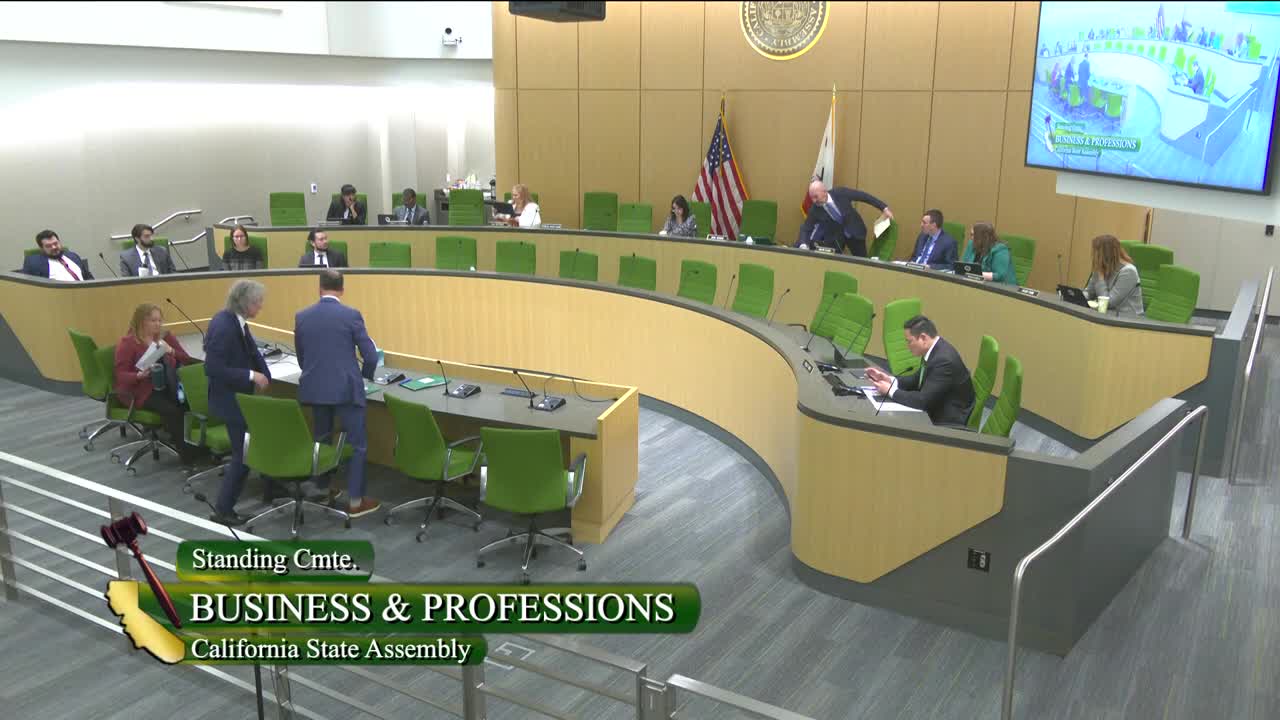 16MIN
Assembly Standing Committee on Business and Professions
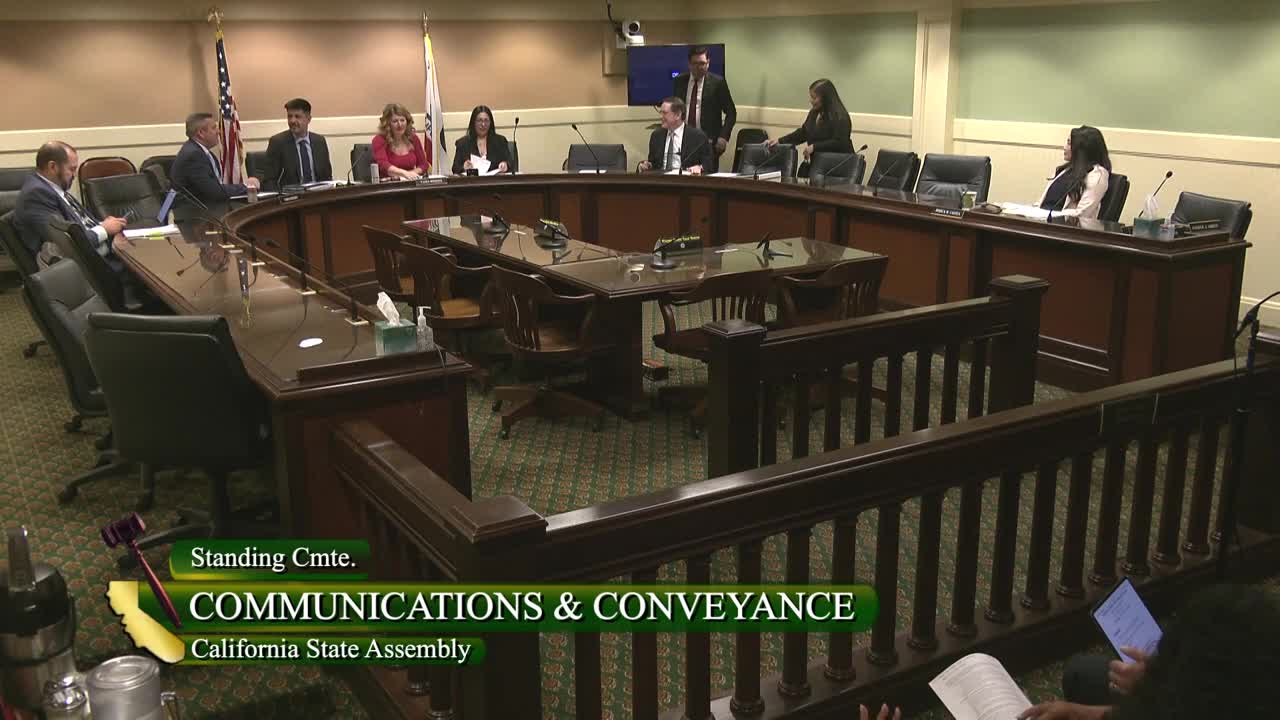 9MIN
Assembly Standing Committee on Communications and Conveyance
Bill Author

Bill Co-Author(s):