AB 1296: Local educational agencies: reserve funds.
- Session Year: 2025-2026
- House: Assembly
- Latest Version Date: 2025-10-10
Current Status:
Passed
(2025-10-10: Chaptered by Secretary of State - Chapter 508, Statutes of 2025.)
Introduced
In Committee
Awaiting First Chamber Vote
Passed First Chamber
In Committee
Awaiting Second Chamber Vote
Passed Second Chamber
Enacted
Existing law requires the Department of Housing and Community Development to develop and publish specified reports, including, among others, a study of farmworker housing conditions, needs, and solutions. Existing law authorizes the department to provide technical assistance for specified purposes, including in developing housing for students and faculty of universities and colleges, as provided.
This bill would require the department, on or before January 1, 2027, to make available on its internet website a form that enables a local educational agency to notify the department of the agencys interest in using real property that it owns for a housing project. The bill would require the department to review the information submitted via the form and make the information available on its internet website. The bill would also require the department to provide technical assistance, as specified, to a local educational agency that submits the notice described above and requests technical assistance, for the purpose of supporting predevelopment activities related to a housing project located on real property owned by the local educational agency.
Existing law requires the Department of Housing and Community Development to develop and publish specified reports, including, among others, a study of farmworker housing conditions, needs, and solutions. Existing law authorizes the department to provide technical assistance for specified purposes, including in developing housing for students and faculty of universities and colleges, as provided.
This bill would require the department, on or before January 1, 2027, to make available on its internet website a form that enables a local educational agency to notify the department of the agencys interest in using real property that it owns for a housing project. The bill would require the department to review the information submitted via the form and make the information available on its internet website. The bill would also require the department to provide technical assistance, as specified, to a local educational agency for the purpose of supporting predevelopment activities related to a housing project located on real property owned by the local educational agency.
Existing law requires the Department of Housing and Community Development to develop and publish specified reports, including, among others, a study of farmworker housing conditions, needs, and solutions. Existing law authorizes the department to provide technical assistance for specified purposes, including in developing housing for students and faculty of universities and colleges, as provided.
This bill would require the department, on or before an unspecified date, January 1, 2027, to make available on its internet website a form that enables a local education educational agency to notify the department of the agencys interest in using real property that it owns for a housing project. The bill would require the department to review the information submitted via the form and make the information available on its internet website. The bill would also require the department to provide technical assistance assistance, as specified, to a local education educational agency for the purpose of pursuing supporting predevelopment activities related to a housing project located on real property owned by the local education educational agency.
Existing law requires the Department of Housing and Community Development to develop and publish specified reports, including, among others, a study of farmworker housing conditions, needs, and solutions. Existing law authorizes the department to provide technical assistance for specified purposes, including in developing housing for students and faculty of universities and colleges, as provided.
This bill would require the department, on or before an unspecified date, to make available on its internet website a form that enables a local education agency to notify the department of the agencys interest in using real property that it owns for a housing project. The bill would require the department to review the information submitted via the form and make the information available on its internet website. The bill would also require the department to provide technical assistance to a local education agency for the purpose of pursuing a housing project located on real property owned by the local education agency.
Existing law requires the Superintendent of Public Instruction, the Controller, and the Director of Finance to develop and update standards and criteria to be reviewed and adopted by the State Board of Education, and to be used by local educational agencies in the development of annual budgets and the management of subsequent expenditures from that budget, as provided.This bill would state the intent of the Legislature to enact subsequent legislation relating to school district reserve fund restructuring to allow for the building of affordable housing.Existing law requires the Superintendent of Public Instruction, the Controller, and the Director of Finance to develop and update standards and criteria to be reviewed and adopted by the State Board of Education, and to be used by local educational agencies in the development of annual budgets and the management of subsequent expenditures from that budget, as provided.
This bill would state the intent of the Legislature to enact subsequent legislation relating to school district reserve fund restructuring to allow for the building of affordable housing.
(a)On or before January 1, 2027, the department shall make available on its internet website a form that enables a local educational agency to notify the department of the agencys interest in using real property owned by the local educational agency for a housing project.
(b)The department shall review the information submitted via the form and make the information available on its internet website.
SEC. 2.Section 50512.5 is added to the Health and Safety Code, to read:50512.5.(a)The department shall provide technical assistance to a local educational agency that submits a notice pursuant to Section 50408.6 and that requests the department to provide technical assistance, as described in subdivision (b), for the purpose of supporting predevelopment activities related to a housing project located on real property owned by the local educational agency. The department may provide this assistance directly or through contracts with qualified third-party entities, including, but not limited to, legal firms, financial advisors, housing development consultants, and nonprofit technical assistance providers.
(b)Technical assistance pursuant to subdivision (a) shall be advisory in nature and may include, but is not limited to, all of the following:
(1)Providing information and guidance on statutory requirements, surplus land procedures, and local land use regulations relevant to predevelopment activities.
(2)Advising on available funding sources, including state and federal grants, tax credits, and loan programs and outlining application requirements and timelines.
(3)Offering insights on conducting project feasibility analysis and exploring partnership models, such as joint ventures with housing developers or public agencies.
(4)Clarifying state and local regulatory processes related to planning, zoning, and environmental review, including key steps and compliance considerations.
(5)Reviewing draft agreements with housing developers and providing feedback, including on ground leases, joint development agreements, and other public-private partnership contracts, without engaging in direct negotiation.
(6)Facilitating referrals to external experts, service providers, or funding agencies with specialized expertise that might support the predevelopment activities of the local educational agency.
(c)Any legal advice or other assistance provided by the department shall not be construed as forming an attorney-client relationship between the department and the local educational agency. The department shall not be liable for any damages, liabilities, or other obligations that a local educational agency incurs pursuant to activities under this section.
(d)The department shall prioritize technical assistance for local educational agencies that serve high-need student populations or are located in areas experiencing high housing-cost burdens or educator-staffing shortages.
(a)On or before January 1, 2027, the department shall make available on its internet website a form that enables a local educational agency to notify the department of the agencys interest in using real property owned by the local educational agency for a housing project.
(b)The department shall review the information submitted via the form and make the information available on its internet website.
SEC. 2.Section 50512.5 is added to the Health and Safety Code, to read:50512.5.(a)The department shall provide technical assistance to a local educational agency for the purpose of supporting predevelopment activities related to a housing project located on real property owned by the local educational agency. The department may provide this assistance directly or through contracts with qualified third-party entities, including, but not limited to, legal firms, financial advisors, housing development consultants, and nonprofit technical assistance providers.
(b)Technical assistance pursuant to subdivision (a) shall be advisory in nature and may include, but is not be limited to, all of the following:
(1)Legal advice regarding Providing information and guidance on statutory requirements, surplus land procedures, and local land use regulations. regulations relevant to predevelopment activities.
(2)Guidance Advising on available funding sources, including state and federal grants, tax credits, and loan programs. programs and outlining application requirements and timelines.
(3)Assistance with Offering insights on conducting project feasibility analysis and exploring partnership models, including such as joint ventures with housing developers or public agencies.
(4)Support navigating Clarifying state and local regulatory processes related to planning, zoning, and environmental review. review, including key steps and compliance considerations.
(5)Drafting, reviewing, and negotiating Reviewing draft agreements with housing developers, developers and providing feedback, including on ground leases, joint development agreements, and other public-private partnership contracts. contracts, without engaging in direct negotiation.
(6)Facilitating referrals to external experts, service providers, or funding agencies with specialized expertise that might support the predevelopment activities of the local educational agency.
(c)Any legal advice or other assistance provided by the department shall not be construed as forming an attorney-client relationship between the department and the local educational agency. The department shall not be liable for any damages, liabilities, or other obligations that a local educational agency incurs pursuant to activities under this section.
(d)The department shall prioritize technical assistance for local educational agencies that serve high-need student populations or are located in areas experiencing high housing-cost burdens or educator-staffing shortages.
(a)On or before ____, January 1, 2027, the department shall make available on its internet website a form that enables a local education educational agency to notify the department of the agencys interest in using real property owned by the local education educational agency for a housing project.
(b)The department shall review the information submitted via the form and make the information available on its internet website.
SEC. 2.Section 50512.5 is added to the Health and Safety Code, to read:50512.5.(a)The department shall provide technical assistance, including, but not limited to, legal counsel, assistance to a local education educational agency for the purpose of pursuing supporting predevelopment activities related to a housing project located on real property owned by the local education educational agency. The department may provide this assistance directly or through contracts with qualified third-party entities, including, but not limited to, legal firms, financial advisors, housing development consultants, and nonprofit technical assistance providers.
(b)Technical assistance pursuant to subdivision (a) shall include, but not be limited to, all of the following:
(1)Legal advice regarding statutory requirements, surplus land procedures, and local land use regulations.
(2)Guidance on available funding sources, including state and federal grants, tax credits, and loan programs.
(3)Assistance with project feasibility analysis and partnership models, including joint ventures with housing developers or public agencies.
(4)Support navigating state and local regulatory processes related to planning, zoning, and environmental review.
(5)Drafting, reviewing, and negotiating agreements with housing developers, including ground leases, joint development agreements, and other public-private partnership contracts.
(c)Any legal advice or other assistance provided by the department shall not be construed as forming an attorney-client relationship between the department and the local educational agency. The department shall not be liable for any damages, liabilities, or other obligations that a local educational agency incurs pursuant to activities under this section.
(d)The department shall prioritize technical assistance for local educational agencies that serve high-need student populations or are located in areas experiencing high housing-cost burdens or educator-staffing shortages.
REVISIONS: HeadingLine 2.(a)On or before ____, the department shall make available on its internet website a form that enables a local education agency to notify the department of the agencys interest in using real property owned by the local education agency for a housing project.
(b)The department shall review the information submitted via the form and make the information available on its internet website.
SEC. 2.Section 50512.5 is added to the Health and Safety Code, to read:50512.5.The department shall provide technical assistance, including, but not limited to, legal counsel, to a local education agency for the purpose of pursuing a housing project located on real property owned by the local education agency.
SECTION 1.It is the intent of the Legislature to enact subsequent legislation relating to school district reserve fund restructuring to allow for the building of affordable housing.It is the intent of the Legislature to enact subsequent legislation relating to school district reserve fund restructuring to allow for the building of affordable housing.
|
Date
|
Status
|
|---|---|
| Oct 10, 2025 | Chaptered by Secretary of State - Chapter 508, Statutes of 2025. |
| Oct 10, 2025 | Approved by the Governor. |
| Sep 16, 2025 | Enrolled and presented to the Governor at 2 p.m. |
| Sep 9, 2025 | Senate amendments concurred in. To Engrossing and Enrolling. (Ayes 66. Noes 8. Page 3119.). |
| Sep 8, 2025 | In Assembly. Concurrence in Senate amendments pending. |
| Sep 8, 2025 | Read third time. Passed. Ordered to the Assembly. (Ayes 30. Noes 8. Page 2618.). |
| Sep 2, 2025 | Read second time. Ordered to third reading. |
| Aug 29, 2025 | Read second time and amended. Ordered returned to second reading. |
| Aug 29, 2025 | From committee: Amend, and do pass as amended. (Ayes 5. Noes 2.) (August 29). |
| Jun 30, 2025 | In committee: Referred to APPR. suspense file. |
| Jun 18, 2025 | From committee: Do pass and re-refer to Com. on APPR. (Ayes 7. Noes 2.) (June 17). Re-referred to Com. on APPR. |
| Jun 11, 2025 | Referred to Com. on HOUSING. |
| Jun 3, 2025 | In Senate. Read first time. To Com. on RLS. for assignment. |
| Jun 2, 2025 | Read third time. Passed. Ordered to the Senate. (Ayes 67. Noes 5. Page 1920.) |
| May 27, 2025 | Read second time. Ordered to third reading. |
| May 23, 2025 | Read second time and amended. Ordered returned to second reading. |
| May 23, 2025 | From committee: Amend, and do pass as amended. (Ayes 11. Noes 2.) (May 23). |
| May 23, 2025 | Assembly Rule 63 suspended. (Ayes 51. Noes 16. Page 1644.) |
| May 21, 2025 | In committee: Set, first hearing. Referred to APPR. suspense file. |
| May 21, 2025 | Joint Rule 62(a), file notice suspended. (Page 1627.) |
| May 14, 2025 | In committee: Hearing postponed by committee. |
| May 1, 2025 | From committee: Do pass and re-refer to Com. on APPR. (Ayes 9. Noes 0.) (April 30). Re-referred to Com. on APPR. |
| Apr 28, 2025 | From committee: Do pass and re-refer to Com. on ED. (Ayes 10. Noes 0.) (April 24). Re-referred to Com. on ED. |
| Apr 28, 2025 | Coauthors revised. |
| Apr 21, 2025 | (Pending re-refer to Com. on ED.) |
| Apr 21, 2025 | Assembly Rule 56 suspended. (Page 1163.) |
| Apr 21, 2025 | Re-referred to Com. on H. & C.D. |
| Apr 10, 2025 | From committee chair, with author's amendments: Amend, and re-refer to Com. on H. & C.D. Read second time and amended. |
| Apr 1, 2025 | Re-referred to Com. on H. & C.D. |
| Mar 28, 2025 | From committee chair, with author's amendments: Amend, and re-refer to Com. on H. & C.D. Read second time and amended. |
| Mar 28, 2025 | Referred to Coms. on H. & C.D. and ED. |
| Feb 24, 2025 | Read first time. |
| Feb 22, 2025 | From printer. May be heard in committee March 24. |
| Feb 21, 2025 | Introduced. To print. |
|
Date
|
Description
|
Location
|
Votes
|
|
|---|---|---|---|---|
| Sep 9, 2025 | AB 1296 Bonta Concurrence in Senate Amendments | Assembly Floor |
Passed |
|
| Sep 8, 2025 | Assembly 3rd Reading AB1296 Bonta et al. By Cabaldon | Senate Floor |
Passed |
|
| Aug 29, 2025 | Do pass as amended | Senate Standing Committee on Appropriations |
Passed |
|
| Jun 30, 2025 | Placed on suspense file | Senate Standing Committee on Appropriations |
Passed |
|
| Jun 17, 2025 | Do pass, but first be re-referred to the Committee on [Appropriations] | Senate Standing Committee on Housing |
Passed |
|
| Jun 2, 2025 | AB 1296 Bonta Assembly Third Reading | Assembly Floor |
Passed |
|
| May 23, 2025 | Do pass as amended. | Assembly Standing Committee on Appropriations |
Passed |
|
| Apr 30, 2025 | Do pass and be re-referred to the Committee on [Appropriations] | Assembly Standing Committee on Education |
Passed |
|
| Apr 24, 2025 | Do pass and be re-referred to the Committee on [Education] | Assembly Standing Committee on Housing and Community Development |
Passed |
This list shows positions taken on this bill by organizations on the date displayed, which is linked to the original source.
Positions by individuals are not included.
|
Organization
|
Position
|
Date
|
|---|---|---|
| California YIMBY | ** Support | |
| Los Angeles County Office Of Education | ** Support |
CONCURRENCE IN SENATE AMENDMENTS
CSA1 Bill Id:AB 1296
Author:(Bonta)
As Amended Ver:August 29, 2025
Majority vote
SUMMARY
Requires the Department of Housing and Community Development (HCD) to create a form for local educational agencies (LEAs) to express interest in using their property for housing development and requires HCD to offer technical assistance to LEAs for predevelopment activities on such projects, especially in high-need or high-cost areas.
Senate Amendments
Author's amendments taken in the Senate Appropriations Committee limit the requirement for HCD to provide technical assistance to only those LEAs that submit a notice to the department requesting technical assistance to support predevelopment activities, as specified.
COMMENTS
California's Housing Crisis. California's housing crisis is a half-century in the making. [1] After decades of underproduction, supply is far behind need, and housing and rental costs are soaring. As a result, millions of Californians must make hard decisions about paying for housing at the expense of food, health care, child care, and transportation, directly impacting the quality of life in the state. [2] One in three households in the state doesn't earn enough money to meet their basic needs. [3] In 2024, over 187,000 Californians experienced homelessness on a given night.[4]
To meet this housing need, HCD determined that California must plan for more than 2.5 million new homes, and no less than one million of those homes must be affordable to lower-income households, in the 6th Regional Housing Needs Allocation (RHNA) cycle. By contrast, housing production in the past decade has been under 100,000 units per year – including less than 10,000 units of affordable housing per year.[5]
The state's housing crisis is not equally experienced by all Californians. Testimony by the UC Berkeley Terner Center to this Committee showed that the impacts of the housing crisis are significantly more severe for lower-income individuals, single-earner households, Black and Latino Californians, younger and older populations, and those who reside in, or aspire to live and work in, the state's highest-cost regions.[6]
Housing Affordability and LEA Employee Need. California is facing a worsening educator workforce crisis, driven in large part by the state's extreme housing affordability challenges. According to the California Teachers Association's State of California's Public Schools survey published in January 2025, four in 10 educators are considering leaving the profession in the next few years, with 77% citing financial strain as a key reason.[7] More than half of those surveyed said they know colleagues who have already left due to financial pressure.[8] Among younger educators, 35% are considering leaving, and a staggering 92% point to financial hardship as the reason why.[9]
The same survey found that housing affordability is a major driver of this trend. Eighty-four percent of educators say that housing affordability is a serious issue near their workplaces. Nearly one-third of teachers are rent-burdened, and rates are even higher for non-teaching staff like teacher assistants and food service workers. These burdens fall disproportionately on Black and Latino school employees, further undermining efforts to build a diverse and stable education workforce. These financial pressures have contributed to roughly 10,000 current educator vacancies across California's public schools.
At the same time, there are over 1,000 LEAs in California that collectively own more than 150,000 acres of land.[10] According to recent research, of the land owned by LEAs, there are 7,068 properties with potentially developable land of one acre or more, totaling 75,000 acres statewide. At a modest density of 30 dwelling units per acre, such properties could contain 2.3 million units of housing – more than enough to house the state's 300,000 teachers and 350,000 other LEA employees.
Despite the potential for development, there is very little housing currently built on LEA property. This is understandable, given that the primary function of this land is for educational purposes. It is also because there are myriad impediments to completion of employee housing on LEA property, including:
- Lack of expertise: the core competency of LEAs is education. To the degree there is expertise in new construction or facilities management, it is focused on educational facilities, not on building and managing housing.
- Lack of funding: given exceedingly high construction costs, the price of new market-rate housing exceeds what is affordable to most LEA staff. As such, to develop employee housing, LEAs will need to identify and obtain public sources of funding to ensure continued affordability.
- Lack of permission: getting housing approved in California is often a laborious and risky process for seasoned developers, let alone LEAs. This is due in part to the complexity of the local approvals process and required analysis under the California Environmental Quality Act (CEQA).
State and local officials are increasingly exploring ways to facilitate housing on LEA property, as a way to help LEAs recruit and retain employees. The Teacher Housing Act of 2016 (SB 1413, Leno, Chapter 732, Statutes of 2016), created a state policy to support housing for teachers and school district employees, and specified that projects can receive local or state funds or tax credits if developments are restricted to school district employees. AB 3308 (Gabriel), Chapter 199, Statutes of 2020 specified that LEAs building housing could restrict occupancy on projects developed on their own land to teachers and employees of the school district. To address land use barriers to building housing, AB 2295 (Bloom), Chapter 652, Statutes of 2022, authorized a housing development project as an allowable use on any real property owned by a LEA, regardless of the underlying local zoning designation.
This bill would further chip away at one of the key remaining barriers to LEA housing development – the lack of expertise. Due to California's current regulatory framework, it is difficult for even the most seasoned developers to successfully gain local approval to build housing, assemble a capital stack for an affordable housing project, navigate through the construction stage, and then manage an affordable housing development for the full term of its affordability covenants. This bill would help LEAs seeking to build housing without the in-house expertise in the following ways:
- Publication of available land: LEAs with land that they would like to see housing built on would be able to submit their property information to HCD, who would then make that information available to the public. This could help to match LEAs with qualified developers.
- Technical assistance: HCD, or a qualified third-party that HCD contracts with, would be required to provide technical assistance to LEAs that request it to help them navigate predevelopment activities. This technical assistance shall be advisory in nature and may include, but is not limited to, providing guidance on regulations, funding, feasibility analysis, and contract review. This support may also include referrals to outside experts and service providers.
Under this bill, HCD would be required to prioritize its technical assistance for LEAs that serve high-need student populations, or that are located in areas experiencing high housing-cost burdens or educator staffing shortages. In doing so, it seeks to empower LEAs to build housing for their employees, while ensuring that the help is first directed to the highest-need LEAs.
Public Land for Affordable Housing: California already has proven models for using public land to build affordable housing. The Excess Sites Program, administered jointly by DGS and HCD, identifies underutilized state-owned properties and prioritizes them for affordable housing development. As of the end of the 2023 Fiscal Year, the last year with available data, the Excess Sites Program sparked 19 partnerships between the state, affordable housing developers, and local communities, amassing a pipeline of approximately 5,500 new homes.[11] Complementing this effort, the Surplus Land Act (SLA) requires local agencies to prioritize affordable housing when disposing of publicly owned land by establishing certain processes that they must follow. Since January 1, 2021, over 32,200 units have been unlocked through the SLA, with over 20,000 deed-restricted affordable units.[12]
Together, these policies create a powerful framework for unlocking public land for housing, with strong requirements for affordability and transparency. In both the excess sites program and the SLA, the state maintains a map of the excess sites and surplus land that is available for affordable housing development.[13][14] This bill would build on that proven model by requiring HCD to maintain a list of LEA land that is available for affordable housing development, if the LEA elects to participate by submitting that information to HCD.
According to the Author
"California's educator workforce is being pushed out of the communities they serve. Over half of California school districts are in counties where new teachers are rent-burdened. The burden of unaffordable housing falls hardest on Black and Latinx educators and school staff—undermining efforts to build a diverse and inclusive workforce that reflects the students our schools serve. At the same time, California has over 75,000 acres of public school land that could support housing—but many school districts lack the capacity to act on this opportunity. AB 1296 connects LEAs interested in pursuing housing projects with potential partners and directs the Department of Housing and Community Development to offer technical assistance to LEAs to support predevelopment activities. AB 1296 is about equity, access, and supporting the people who support our students. This bill ensures that workforce housing is not just an option for well-resourced districts, but a real opportunity for every community."
Arguments in Support
The Los Angeles County Office of Education (LACOE) writes in support: "AB 1296 aligns with LACOE's mission to support the academic and social success of every student while providing a fiscally responsible path to address the educator housing crisis. By expanding the capacity of LEAs to create affordable housing for educators and school staff, this bill strengthens the workforce, improves community stability, and ultimately enhances outcomes for California's students."
Arguments in Opposition
None on file.
FISCAL COMMENTS
According to the Assembly Committee on Appropriations:
Under the bill, HCD would be responsible for delivering project-specific information and regulatory guidance—such as requirements under the Surplus Land Act, local zoning laws, and the California Environmental Quality Act. HCD would also assist LEAs with identifying public funding sources, offering insights on conducting feasibility analyses, reviewing draft agreements and providing feedback on ground leases or other development agreements with housing developers, as well as facilitating referrals to external experts and others. Additionally, HCD would be required to create an online form for LEAs to express interest and provide a public-facing resource hub to support housing development on school-owned land. To implement these responsibilities, HCD will likely incur the following costs:
Total General Fund (GF) costs in the range of $2 million to $3 million annually ongoing. These costs include permanent staff positions for a dedicated technical assistance team, $1.25 million annually in consulting services to provide expert support in real estate finance and development advising, and a one-time IT cost of $750,000 to support data collection, outreach, and program administration.
VOTES:
ASM HOUSING AND COMMUNITY DEVELOPMENT: 10-0-2
YES: Haney, Patterson, Ávila Farías, Caloza, Garcia, Kalra, Lee, Quirk-Silva, Wicks, Wilson
ABS, ABST OR NV: Ta, Tangipa
ASM EDUCATION: 9-0-0
YES: Muratsuchi, Hoover, Addis, Alvarez, Bonta, Castillo, Garcia, Lowenthal, Patel
ASM APPROPRIATIONS: 11-2-2
YES: Wicks, Arambula, Calderon, Caloza, Elhawary, Fong, Mark González, Hart, Pacheco, Pellerin, Solache
NO: Dixon, Tangipa
ABS, ABST OR NV: Sanchez, Ta
ASSEMBLY FLOOR: 67-5-7
YES: Addis, Aguiar-Curry, Ahrens, Alanis, Alvarez, Arambula, Ávila Farías, Bains, Bauer‑Kahan, Bennett, Berman, Boerner, Bonta, Bryan, Calderon, Caloza, Carrillo, Connolly, Davies, Elhawary, Fong, Gabriel, Garcia, Gipson, Jeff Gonzalez, Mark González, Haney, Harabedian, Hart, Hoover, Irwin, Jackson, Kalra, Krell, Lackey, Lee, Lowenthal, McKinnor, Muratsuchi, Nguyen, Ortega, Pacheco, Papan, Patel, Patterson, Pellerin, Petrie-Norris, Quirk‑Silva, Ramos, Ransom, Celeste Rodriguez, Michelle Rodriguez, Rogers, Blanca Rubio, Schiavo, Schultz, Sharp-Collins, Solache, Soria, Stefani, Valencia, Wallis, Ward, Wicks, Wilson, Zbur, Rivas
NO: DeMaio, Dixon, Gallagher, Macedo, Tangipa
ABS, ABST OR NV: Castillo, Chen, Ellis, Flora, Hadwick, Sanchez, Ta
UPDATED
VERSION: August 29, 2025
CONSULTANT: Dori Ganetsos / H. & C.D. / (916) 319-2085 FN: 0001879
California Department of Housing and Community Development, A Home for Every Californian: 2022 Statewide Housing Plan. March 2022, https://storymaps.arcgis.com/stories/94729ab1648d43b1811c1698a748c136 ↑
IBID. ↑
IBID. ↑
U.S. Department of Housing and Urban Development, Point in Time Counts. https://www.huduser.gov/portal/datasets/ahar/2023-ahar-part-1-pit-estimates-of-homelessness-in-the-us.html ↑
https://www.hcd.ca.gov/policy-research/housing-challenges.shtml ↑
UC Berkeley Terner Center Testimony by Ben Metcalf, Managing Director, at the State Housing Production Legislation: Actions, Outcomes, and Opportunities Informational Hearing, February 12, 2025 ↑
California Teachers Association's State of California's Public Schools survey (January 2025) ↑
https://citiesandschools.berkeley.edu/wp-content/uploads/Report-Education-Workforce-Housing-in-CaliforniaCCS-cityLAB-Terner-Center2022-1.pdf ↑
California Teachers Association's State of California's Public Schools survey (January 2025) ↑
See footnote 4 ↑
HCD FY 22-23 Annual Report, accessed here: https://www.hcd.ca.gov/policy-and-research/plans-and-reports ↑
https://www.hcd.ca.gov/planning-and-community-development/housing-open-data-tools/surplus-land-act-dashboard ↑
https://experience.arcgis.com/experience/f9b1ccf48e864ac8af8014cbb89371b8 ↑
https://www.hcd.ca.gov/planning-and-community-development/housing-open-data-tools/notices-of-available-locally-owned-surplus-land-map ↑
SENATE RULES COMMITTEE Office of Senate Floor Analyses (916) 651-1520 Fax: (916) 327-4478 | AB 1296 |
THIRD READING
Bill No: AB 1296
Author: Bonta (D), et al.
Amended: 8/29/25 in Senate
Vote: 21
SENATE HOUSING COMMITTEE: 7-2, 6/17/25
AYES: Wahab, Arreguín, Cabaldon, Caballero, Cortese, Durazo, Grayson
NOES: Seyarto, Ochoa Bogh
NO VOTE RECORDED: Gonzalez, Padilla
SENATE APPROPRIATIONS COMMITTEE: 5-2, 8/29/25
AYES: Caballero, Cabaldon, Grayson, Richardson, Wahab
NOES: Seyarto, Dahle
ASSEMBLY FLOOR: 67-5, 6/2/25 - See last page for vote
SUBJECT: Local educational agencies: reserve funds
SOURCE: Author
DIGEST:
This bill requires the state Department of Housing and Community Development (HCD) to provide technical assistance to local education agencies (LEAs) for housing predevelopment activities on LEA properties.
ANALYSIS:
Existing law:
- Establishes the Teacher Housing Act of 2016, which establishes that:
- It is state policy to support housing for teachers and school district employees.
- School districts and developers in receipt of local or state funds or tax credits designated for affordable rental housing may restrict occupancy to teachers and school district employees on land owned by school districts.
- School districts may allow local public employees or other members of the public to occupy housing created through the Teacher Housing Act.
- Authorizes a housing development project to be deemed an allowable use on any real property owned by an LEA if the development meets the following requirements:
- The development has at least 10 units.
- The housing development has a deed restriction that ensures, for a period of 55 years; at least a majority of the units are set at a rent that is affordable to lower income households; and at least 30% of the units shall be affordable to lower-income households.
- All of the units shall be rented by local educational employees, local public employees, followed by general members of the public, as specified.
- The residential density for the housing development shall be the greater of the residential density allowed on the parcel by the city or county, or the applicable density deemed appropriate to accommodate housing for lower income households as provided under housing element law (known as the “Mullin densities” – see Comment #2 below).
- The height shall be the greater of 30 feet or the height limit allowed on the parcel by the city or county.
- The property is adjacent to a property that permits residential uses.
- The property is an infill site, as specified.
- Any housing built must be located on property that is entirely contained within any applicable urban limit line or urban growth boundary.
- The housing development must satisfy other local objective zoning standards, objective subdivision standards, and objective design review standards that do not preclude the housing development from achieving the residential density or height permitted in this bill.
- The housing development must comply with all infrastructure-related requirements, including impact fees that are existing or pending at the time the application is submitted, imposed by a city or county or a special district that provides service to the parcel.
- Requires the LEA to maintain ownership of a housing development that meets the requirements of (2) for the length of the 55-year affordability covenant.
This bill:
- Requires HCD to provide technical assistance to an LEA that submits a specified notice and that requests HCD to provide technical assistance for the purpose of supporting predevelopment activities related to a housing project located on real property owned by the LEA. This assistance may be provided directly or through contracts with qualified third-party entities, as specified.
- Provides that technical assistance shall be advisory in nature and may include, but is not limited to, all of the following:
- Providing information and guidance on relevant statutory requirements, surplus land procedures, and local land use regulations.
- Advising on available funding sources, including state and federal grants, tax credits, and loan programs, as well on application requirements and timelines.
- Providing assistance on conducting project feasibility analysis and partnership models, such as joint ventures with housing developers or public agencies.
- Clarifying state and local regulatory processes related to planning, zoning, and environmental review.
- Reviewing draft agreements with housing developers and providing feedback, including on ground leases, joint development agreements, and other public-private partnership contracts, without direct negotiation.
- Facilitating referrals to relevant external experts, service providers, or funding agencies with specialized expertise.
- Provides that any legal advice or other assistance provided by HCD shall not be construed as forming an attorney-client relationship between HCD and the LEA and HCD shall not be liable for any damages, liabilities, or other obligations that an LEA incurs.
- Requires HCD to prioritize technical assistance for LEAs that serve high-need student populations or are located in areas experiencing high housing cost burdens or educator staffing shortages.
- Requires HCD, on or before January 1, 2027, to make available on its website a form enabling an LEA to notify HCD of its interest in using the LEA’s property for a housing project.
- Requires HCD to review submitted forms and to make them available on its website.
Background
California’s affordable housing crisis. California has the largest concentration of severely unaffordable housing markets in the nation, with the average home value in California at $773,363. To keep up with demand, HCD estimates that California must plan for the development of more than 2.5 million homes over the next eight years, and no less than one million of those homes must meet the needs of lower-income households (more than 640,000 very low-income and 385,000 low-income units are needed). For decades, not enough housing was constructed to meet need, resulting in a severe undersupply of housing.
As a result of the severe housing shortage, millions of Californians, who are disproportionately lower-income and people of color, must make hard decisions about paying for housing at the expense of food, health care, child care, and transportation—one in three households in the state don’t earn enough money to meet their basic needs.
Comments
- Author statement. “California’s educator workforce is being pushed out of the communities they serve. Over half of California school districts are in counties where new teachers are rent-burdened. At the same time, California has over 75,000 acres of public school land that could support housing—but many school districts lack the capacity to act on this opportunity. AB 1296 connects LEAs interested in pursuing housing projects with potential partners and directs the Department of Housing and Community Development to offer advisory technical assistance to LEAs to support predevelopment activities. AB 1296 is about equity, access, and supporting the people who support our students. This bill ensures that workforce housing is not just an option for well-resourced districts, but a real opportunity for every community.”
- School district land for affordable housing. According to Education Workforce Housing in California: Developing the 21st Century Campus (issued by cityLAB-UCLA, et al, in December 2021), there are more than 1,000 LEAs in California. Collectively, LEAs own more than 150,000 acres of land. According to recent research, of the land owned by LEAs, there are 7,068 properties with potentially developable land of one acre or more, totaling 75,000 acres statewide. At a density of 30 dwellings per acre, such properties could contain 2.3 million units of housing – more than enough to house the state’s 300,000 teachers and 350,000 other LEA employees.
Despite the potential for development, there is very little housing on LEA property. This is understandable, given that the primary function of this land is for educational purposes. In addition, there are myriad impediments to completion of employee housing on LEA property, including:
- Lack of expertise. The core competency of LEAs is education. To the degree there is expertise in new construction or facilities management, it is focused on educational facilities, not on building and managing housing.
- Lack of funding. Given exceedingly high construction costs, the price of new housing exceeds what is affordable to most LEA staff. As such, to develop employee housing, LEAs need to identify public sources of funding.
- Lack of permission. Getting housing approved in California is often a laborious and risky process, reflecting the complexity of government review, public processes, and required analysis under the California Environmental Quality Act (CEQA). LEA properties typically face the additional hurdle of not having zoning that allows housing or specified development standards for housing projects. As such, if an LEA wanted to build housing for its employees, it would need to seek permission from a local government to establish the right to build housing and identify objective standards for the project to conform with.
- Legislative actions to facilitate housing on LEA land. State and local officials are increasingly exploring ways to facilitate housing on LEA property, as a way to help LEAs recruit and retain employees. The Teacher Housing Act of 2016 SB 1413 (Leno, Chapter 732, Statutes of 2016), created a state policy to support housing for school district employees, and specified that projects can receive local or state funds or tax credits if developments are restricted to school district employees.
In 2022, the legislature passed AB 2295 (Bloom, Chapter 652), which sought to help facilitate the production of more housing by adding LEA properties to the sites available to be developed for residential uses. Specifically, AB 2295 deems a housing project, beginning January 1, 2024 and until January 1, 2033, to be an allowable use on an LEA-owned property if it contains at least 10 units, of which at least 30% are affordable to lower-income households. These projects must provide first priority to LEA employees, followed by local public employees, and finally members of the public. The committee does not know whether any LEAs have taken advantage of this authorization. AB 1021 (Wicks, 2025) would make a number of changes to AB 2295 aimed at increasing the feasibility of developing housing on LEA land, including adding these developments to an existing CEQA exemption for affordable housing.
- Bringing in HCD to help. As noted in 4) above, despite the urgent need for affordable school employee housing, there are myriad impediments to completion of employee housing on LEA property – including a lack of expertise on how to navigate the state’s complex housing permitting process. This bill would address this problem by requiring HCD to provide technical assistance to LEAs to support predevelopment activities on LEA properties. It requires HCD to prioritize LEAs that serve high-need student populations or that are located in areas experiencing high housing cost burdens or educator staffing shortages. Finally, it requires HCD to develop a form that an LEA can submit to HCD designating property it is interested in developing for a housing project, and requires HCD to make these forms publicly available on its website. By formally connecting HCD with LEAs, this bill helps remove a significant barrier to developing affordable housing on LEA properties.
- Senate Appropriations Amendments. Author’s amendments taken in the Senate Appropriations Committee limit the requirement for HCD to provide technical assistance to only those LEAs that submit a notice to the department requesting technical assistance to support predevelopment activities, as specified.
FISCAL EFFECT: Appropriation: No Fiscal Com.: Yes Local: No
According to the Senate Appropriations Committee:
- HCD estimates one-time IT costs of approximately $750,000 in 2026-27 to support data collection, outreach, and program administration. HCD would also incur ongoing costs of approximately $1.74 - $1.97 million annually, beginning in 2026-27, which includes approximately $1 million in annual contract costs for consulting services to provide expert support in real estate finance and development advising, as well as state operations costs in the range of $740,000 to $970,000 annually for a dedicated technical assistance team of 3.0 - 4.0 PY of permanent staff. (General Fund)
SUPPORT: (Verified 8/29/25)
California Yimby
Los Angeles County Office of Education
OPPOSITION: (Verified 8/29/25)
None received
ASSEMBLY FLOOR: 67-5, 6/2/25
AYES: Addis, Aguiar-Curry, Ahrens, Alanis, Alvarez, Arambula, Ávila Farías, Bains, Bauer-Kahan, Bennett, Berman, Boerner, Bonta, Bryan, Calderon, Caloza, Carrillo, Connolly, Davies, Elhawary, Fong, Gabriel, Garcia, Gipson, Jeff Gonzalez, Mark González, Haney, Harabedian, Hart, Hoover, Irwin, Jackson, Kalra, Krell, Lackey, Lee, Lowenthal, McKinnor, Muratsuchi, Nguyen, Ortega, Pacheco, Papan, Patel, Patterson, Pellerin, Petrie-Norris, Quirk-Silva, Ramos, Ransom, Celeste Rodriguez, Michelle Rodriguez, Rogers, Blanca Rubio, Schiavo, Schultz, Sharp-Collins, Solache, Soria, Stefani, Valencia, Wallis, Ward, Wicks, Wilson, Zbur, Rivas
NOES: DeMaio, Dixon, Gallagher, Macedo, Tangipa
NO VOTE RECORDED: Castillo, Chen, Ellis, Flora, Hadwick, Sanchez, Ta
Prepared by: Alison Hughes / HOUSING / (916) 651-4124
9/2/25 18:19:15
**** END ****
SENATE COMMITTEE ON APPROPRIATIONS
Senator Anna Caballero, Chair
2025 - 2026 Regular Session
AB 1296 (Bonta) - Local educational agencies: reserve funds
Version: May 23, 2025 | Policy Vote: HOUSING 7 - 2 |
Urgency: No | Mandate: No |
Hearing Date: August 29, 2025 | Consultant: Mark McKenzie |
Bill Summary:
AB 1296 would require the Department of Housing and Community Development (HCD) to provide a form on its website that enables a local educational agency (LEA) to notify the department of its interest in using its property for housing development. The bill would also require HCD to provide technical assistance to an LEA to support predevelopment activities related to a housing project on LEA property, as specified.
*********** ANALYSIS ADDENDUM – SUSPENSE FILE ***********
The following information is revised to reflect amendments
adopted by the committee on August 29, 2025
Fiscal Impact:
- HCD estimates one-time IT costs of approximately $750,000 in 2026-27 to support data collection, outreach, and program administration. HCD would also incur ongoing costs of approximately $1.74 - $1.97 million annually, beginning in 2026-27, which includes approximately $1 million in annual contract costs for consulting services to provide expert support in real estate finance and development advising, as well as state operations costs in the range of $740,000 to $970,000 annually for a dedicated technical assistance team of 3.0 - 4.0 PY of permanent staff. (General Fund)
Author Amendments:
Limit the requirement for HCD to provide technical assistance to only those LEAs that submit a notice to the department requesting technical assistance to support predevelopment activities, as specified.
-- END --
SENATE COMMITTEE ON APPROPRIATIONS
Senator Anna Caballero, Chair
2025 - 2026 Regular Session
AB 1296 (Bonta) - Local educational agencies: reserve funds
Version: May 23, 2025 | Policy Vote: HOUSING 7 - 2 |
Urgency: No | Mandate: No |
Hearing Date: June 30, 2025 | Consultant: Mark McKenzie |
Bill Summary:
AB 1296 would require the Department of Housing and Community Development (HCD) to provide a form on its website that enables a local educational agency (LEA) to notify the department of its interest in using its property for housing development. The bill would also require HCD to provide technical assistance to an LEA to support predevelopment activities related to a housing project on LEA property, as specified.
Fiscal Impact:
- HCD estimates first year costs of approximately $3.2 million, including one-time IT costs of $750,000 to support data collection, outreach, and program administration, and $2.45 million in ongoing annual costs. Ongoing costs include approximately $1 million in annual contract costs for consulting services to provide expert support in real estate finance and development advising, as well as state operations costs of approximately $1.45 million for a dedicated technical assistance team of 6.0 PY of permanent staff. (General Fund)
Background:
In 2016, SB 1413 (Leno) established the Teacher Housing Act of 2016 to facilitate the acquisition, construction, rehabilitation, and preservation of affordable housing for teachers and school employees. School districts are authorized to establish and implement programs that address the housing needs of teachers and school district employees by leveraging funding sources including state, federal, local, public, private and resources available to housing developers, promoting public and private partnerships, and fostering innovative financing opportunities. SB 1413 also created a state policy supporting the use of federal and state Low Income Housing Tax Credits to fund housing for teachers and school district employees on land owned by the school district and permitting school districts to restrict occupancy to teachers and school district employees.
In 2022, the legislature passed AB 2295 (Bloom), which sought to help facilitate the production of more housing by increasing the sites available to be developed for residential uses to include real property owned by an LEA. AB 2295 deemed a housing project, beginning January 1, 2024 and until January 1, 2033, to be an allowable use on property owned by a local educational agency if it contained at least 10 units and provided at least 30% of the units affordable to lower-income households. The projects are required to provide first priority to LEA employees, followed by local public employees, and finally to members of the public.
According to Education Workforce Housing in California: Developing the 21st Century Campus (issued by cityLAB-UCLA et al. in December 2021) there are more than 1,000 LEAs in California. Collectively, they own more than 150,000 acres of land. According to recent research, of land owned by LEAs, there are 7,068 properties with potentially developable land of one acre or more, totaling 75,000 acres statewide. At a density of 30 dwelling units per acre, such properties could contain 2.3 million units of housing – more than enough to house the state’s 300,000 teachers and 350,000 other LEA employees. Despite this potential for development on LEA-owned property, very few housing projects have been developed on these sites to date for various reasons, including a lack of available dedicated funding and a lack of expertise among LEAs to navigate the process for developing housing.
Proposed Law:
AB 1296 would require HCD to create and post a form on its website by January 1, 2027 that enables an LEA to notify the department of its interest in using real property it owns for a housing project. The bill would also require HCD to provide technical assistance to an LEA, directly or through contracts with specified qualified third-party entities, for the purpose of supporting predevelopment activities related to a housing project on land owned by the LEA. HCD’s technical assistance must be advisory in nature and may include all of the following:
- Providing information and guidance on statutory requirements, surplus land procedures, and local land use regulations relevant to predevelopment activities.
- Advising on available funding sources, including state and federal grants, tax credits and loan programs, and outlining application requirements and timelines.
- Offering insights on conducting project feasibility analysis and exploring partnership models, such as joint ventures with housing developers or public agencies.
- Clarifying state and local regulatory processes related to planning, zoning, and environmental review, including key steps and compliance considerations.
- Reviewing draft agreements with housing developers and providing feedback, including on ground leases, joint development agreements, and other public-private partnership contracts, without engaging in direct negotiation.
- Facilitating referrals to external experts, service providers, or funding agencies with specialized expertise that might support LEA predevelopment activities.
The bill specifies that any legal advice or other assistance provided by HCD or third-party entities does not establish an attorney-client relationship, and HCD would not be liable for any damages, liabilities, or other obligations incurred by an LEA. HCD must prioritize technical assistance for LEAs that serve high-need student populations or are located in areas experiencing high housing cost burdens or educator staffing shortages.
Related Legislation:
SB 502 (Arreguin), which was held on this Committee’s Suspense File this year, would have authorized LEAs to submit a list of any available land they own to HCD, and require the department, in consultation with the Department of General Services to determine the suitability of those lands for development of affordable housing. Any LEA lands that are deemed suitable for affordable housing development must be made publicly available, as specified.
AB 1381 (Muratsuchi), which is currently pending in this Committee, would establish the Educational Workforce Housing Revolving Loan Fund, administered by the California School Finance Authority, to provide zero-interest loans to LEAs for conducting educational workforce housing predevelopment activities, subject to appropriation.
AB 1021 (Wicks), which is currently pending in the Senate Local Government Committee, would make changes to the development requirements, including local land use approval process, for housing projects on LEA-owned land, as specified.
AB 2295 (Bloom), Chap. 652/2022, deems an affordable housing project that meets specified criteria to be an allowable use on any real property owned by an LEA, from January 1, 2024 until January 1, 2033, as specified.
SB 1413 (Leno), Chap. 732/2016, established the Teacher Housing Act of 2016 to facilitate the acquisition, construction, rehabilitation, and preservation of affordable housing for teachers and school employees, as specified.
Staff Comments:
This bill is intended to connect LEAs interested in pursuing housing projects with potential partners by requiring HCD to assist LEAs with the predevelopment process once they have identified LEA property suitable for housing. Specifically, the bill would require HCD to develop a form and notification process for identifying LEA property for housing development, and require HCD to provide direct technical assistance to LEAs. The bill shifts significant predevelopment responsibilities to HCD, including support with project feasibility, legal compliance, public funding strategies, reviewing development agreements, and facilitating referrals to third-party experts, as specified. As noted above, HCD would incur one-time IT costs to create an online form and public-facing hub to support housing development on LEA property, as well as ongoing costs for permanent staffing resources to provide necessary technical assistance, which also includes contracting costs with specified third-party entities for consulting services.
-- END --
SENATE COMMITTEE ON HOUSING
Senator Aisha Wahab, Chair
2025 - 2026 Regular
Bill No: AB 1296 Hearing Date: 6/17/25
Author: | Bonta | ||
Version: | 5/23/2025 Amended | ||
Urgency: | No | Fiscal: | Yes |
Consultant: | Erin Riches | ||
SUBJECT: Local educational agencies: reserve funds
DIGEST: This bill requires the state Department of Housing and Community Development (HCD) to provide technical assistance to local education agencies (LEAs) for housing predevelopment activities on LEA properties.
ANALYSIS:
Existing law:
- Establishes the Teacher Housing Act of 2016, which establishes that:
- It is state policy to support housing for teachers and school district employees.
- School districts and developers in receipt of local or state funds or tax credits designated for affordable rental housing may restrict occupancy to teachers and school district employees on land owned by school districts.
- School districts may allow local public employees or other members of the public to occupy housing created through the Teacher Housing Act.
- Authorizes a housing development project to be deemed an allowable use on any real property owned by an LEA if the development meets the following requirements:
- The development has at least 10 units.
- The housing development has a deed restriction that ensures, for a period of 55 years; at least a majority of the units are set at a rent that is affordable to lower income households; and at least 30% of the units shall be affordable to lower-income households.
- All of the units shall be rented by local educational employees, local public employees, followed by general members of the public, as specified.
- The residential density for the housing development shall be the greater of the residential density allowed on the parcel by the city or county, or the applicable density deemed appropriate to accommodate housing for lower income households as provided under housing element law (known as the “Mullin densities” – see Comment #2 below).
- The height shall be the greater of 30 feet or the height limit allowed on the parcel by the city or county.
- The property is adjacent to a property that permits residential uses.
- The property is an infill site, as specified.
- Any housing built must be located on property that is entirely contained within any applicable urban limit line or urban growth boundary.
- The housing development must satisfy other local objective zoning standards, objective subdivision standards, and objective design review standards that do not preclude the housing development from achieving the residential density or height permitted in this bill.
- The housing development must comply with all infrastructure-related requirements, including impact fees that are existing or pending at the time the application is submitted, imposed by a city or county or a special district that provides service to the parcel.
- Requires the LEA to maintain ownership of a housing development that meets the requirements of (2) for the length of the 55-year affordability covenant.
This bill:
- Requires HCD to provide technical assistance to an LEA to support predevelopment activities related to a housing project located on real property owned by the LEA. This assistance may be provided directly or through contracts with qualified third-party entities, as specified.
- Provides that technical assistance shall be advisory in nature and may include, but is not limited to, all of the following:
- Providing information and guidance on relevant statutory requirements, surplus land procedures, and local land use regulations.
- Advising on available funding sources, including state and federal grants, tax credits, and loan programs, as well on application requirements and timelines.
- Providing assistance on conducting project feasibility analysis and partnership models, such as joint ventures with housing developers or public agencies.
- Clarifying state and local regulatory processes related to planning, zoning, and environmental review.
- Reviewing draft agreements with housing developers and providing feedback, including on ground leases, joint development agreements, and other public-private partnership contracts, without direct negotiation.
- Facilitating referrals to relevant external experts, service providers, or funding agencies with specialized expertise.
- Provides that any legal advice or other assistance provided by HCD shall not be construed as forming an attorney-client relationship between HCD and the LEA and HCD shall not be liable for any damages, liabilities, or other obligations that an LEA incurs.
- Requires HCD to prioritize technical assistance for LEAs that serve high-need student populations or are located in areas experiencing high housing cost burdens or educator staffing shortages.
- Requires HCD, on or before January 1, 2027, to make available on its website a form enabling an LEA to notify HCD of its interest in using the LEA’s property for a housing project.
- Requires HCD to review submitted forms and to make them available on its website.
Background
California’s affordable housing crisis. California has the largest concentration of severely unaffordable housing markets in the nation, with the average home value in California at $773,363. To keep up with demand, HCD estimates that California must plan for the development of more than 2.5 million homes over the next eight years, and no less than one million of those homes must meet the needs of lower-income households (more than 640,000 very low-income and 385,000 low-income units are needed). For decades, not enough housing was constructed to meet need, resulting in a severe undersupply of housing.
As a result of the severe housing shortage, millions of Californians, who are disproportionately lower-income and people of color, must make hard decisions about paying for housing at the expense of food, health care, child care, and transportation—one in three households in the state don’t earn enough money to meet their basic needs.
Comments
- Author statement. “California’s educator workforce is being pushed out of the communities they serve. Over half of California school districts are in counties where new teachers are rent-burdened. At the same time, California has over 75,000 acres of public school land that could support housing—but many school districts lack the capacity to act on this opportunity. AB 1296 connects LEAs interested in pursuing housing projects with potential partners and directs the Department of Housing and Community Development to offer advisory technical assistance to LEAs to support predevelopment activities. AB 1296 is about equity, access, and supporting the people who support our students. This bill ensures that workforce housing is not just an option for well-resourced districts, but a real opportunity for every community.”
- Mullin densities. Existing law authorizes an LEA to develop housing on one of its properties provided several requirements are met, including that the residential density for the housing development shall be the greater of the residential density allowed on the parcel by the city or county, or the applicable density deemed appropriate to accommodate housing for lower-income households as provided under housing element law – known as the “Mullin densities.”
A local government must determine whether each site in its site inventory for its housing element can accommodate some portion of the jurisdiction’s share of the regional housing needs assessment requirement by income category during the housing element planning period. A community must use the “default zoning densities,” also referred to as “Mullin densities,” to determine whether a site is adequately zoned for lower income housing or must provide an alternative analysis. Current default densities are as follows:
- 15 units per acre: cities within non-metropolitan counties; non-metropolitan counties with metropolitan areas.
- 10 units per acre: unincorporated areas in all nonmetropolitan counties not included in the 15 units per acre category.
- 20 units per acre: suburban jurisdictions.
- 30 units per acre: jurisdictions in metropolitan counties.
- Surplus Land Act (SLA): public lands for affordable housing. One of the limiting factors in building new affordable homes is land—the high cost and acquisition of land suitable for housing. Public agencies own a significant amount of lands located in or near urban areas, some of which exceed those agencies’ foreseeable needs, which could be used for housing. The SLA provides notification to affordable housing developers when local agencies make surplus land available, and requires local agencies to negotiate in good faith with them for these parcels. The goal is to help valuable public land develop into affordable housing.
If a local government declares land as “exempt surplus land,” it does not have to meet the requirements of the SLA. SB 681 (Wahab, 2025) would, among other things, remove school district land from the definition of “exempt surplus land,” meaning that land owned by school districts would be subject to the requirements of the SLA. In other words, under SB 681, a local government would have to give first right of refusal to affordable housing developers when selling school district land.
- Excess state land for affordable housing. On January 15, 2019, California Governor Gavin Newsom signed Executive Order N-06-19 directing the California Department of General Services (DGS) and HCD to identify and prioritize excess state-owned property and aggressively pursue sustainable, innovative, cost-effective housing projects. HCD and DGS identified more than 44,000 state properties with the greatest feasibility for residential development and affordable housing finance program competitiveness, and placed selected parcels in a digitized map. Those sites were then publicized and made available to developers for purposes of developing multifamily housing. On July 1, 2024, DGS and HCD released a new digitized inventory of state-owned land that is considered excess and suitable for reuse as affordable housing under the executive order. Anyone can use the map to search through the state’s inventory of available excess land and apply various filters, such as the HCD/California Tax Credit Allocation Committee’s Opportunity Map and high-quality transit areas, among other data layers. Since the executive order was issued in 2019, HCD and DGS have assembled a statewide pipeline of nearly 4,300 housing units across 32 projects in various phases of development. These projects include units dedicated specifically for farmworkers, seniors, and those experiencing homelessness.
- School district land for affordable housing. According to Education Workforce Housing in California: Developing the 21st Century Campus (issued by cityLAB-UCLA, et al, in December 2021), there are more than 1,000 LEAs in California. Collectively, LEAs own more than 150,000 acres of land. According to recent research, of the land owned by LEAs, there are 7,068 properties with potentially developable land of one acre or more, totaling 75,000 acres statewide. At a density of 30 dwellings per acre, such properties could contain 2.3 million units of housing – more than enough to house the state’s 300,000 teachers and 350,000 other LEA employees.
Despite the potential for development, there is very little housing on LEA property. This is understandable, given that the primary function of this land is for educational purposes. In addition, there are myriad impediments to completion of employee housing on LEA property, including:
- Lack of expertise. The core competency of LEAs is education. To the degree there is expertise in new construction or facilities management, it is focused on educational facilities, not on building and managing housing.
- Lack of funding. Given exceedingly high construction costs, the price of new housing exceeds what is affordable to most LEA staff. As such, to develop employee housing, LEAs need to identify public sources of funding.
- Lack of permission. Getting housing approved in California is often a laborious and risky process, reflecting the complexity of government review, public processes, and required analysis under the California Environmental Quality Act (CEQA). LEA properties typically face the additional hurdle of not having zoning that allows housing or specified development standards for housing projects. As such, if an LEA wanted to build housing for its employees, it would need to seek permission from a local government to establish the right to build housing and identify objective standards for the project to conform with.
- Legislative actions to facilitate housing on LEA land. State and local officials are increasingly exploring ways to facilitate housing on LEA property, as a way to help LEAs recruit and retain employees. The Teacher Housing Act of 2016 (SB 1413, Leno, Chapter 732, Statutes of 2016), created a state policy to support housing for school district employees, and specified that projects can receive local or state funds or tax credits if developments are restricted to school district employees.
In 2022, the legislature passed AB 2295 (Bloom, Chapter 652), which sought to help facilitate the production of more housing by adding LEA properties to the sites available to be developed for residential uses. Specifically, AB 2295 deems a housing project, beginning January 1, 2024 and until January 1, 2033, to be an allowable use on an LEA-owned property if it contains at least 10 units, of which at least 30% are affordable to lower-income households. These projects must provide first priority to LEA employees, followed by local public employees, and finally members of the public. The committee does not know whether any LEAs have taken advantage of this authorization. AB 1021 (Wicks, 2025) would make a number of changes to AB 2295 aimed at increasing the feasibility of developing housing on LEA land, including adding these developments to an existing CEQA exemption for affordable housing.
- Bringing in HCD to help. As noted in 4) above, despite the urgent need for affordable school employee housing, there are myriad impediments to completion of employee housing on LEA property – including a lack of expertise on how to navigate the state’s complex housing permitting process. This bill would address this problem by requiring HCD to provide technical assistance to LEAs to support predevelopment activities on LEA properties. It requires HCD to prioritize LEAs that serve high-need student populations or that are located in areas experiencing high housing cost burdens or educator staffing shortages. Finally, it requires HCD to develop a form that an LEA can submit to HCD designating property it is interested in developing for a housing project, and requires HCD to make these forms publicly available on its website. By formally connecting HCD with LEAs, this bill helps remove a significant barrier to developing affordable housing on LEA properties.
Related/Prior Legislation
SB 681 (Wahab, 2025) – makes several changes to laws governing housing approvals, elements, common interest developments, and building standards, as specified, including removing school district real property from the definition of “exempt surplus land,” thereby requiring this land to be disposed of in accordance with the Surplus Land Act. This bill is pending committee assignment in the Assembly.
AB 1381 (Muratsuchi, 2025) – establishes the Educational Workforce Housing Revolving Loan Fund, administered by the California School Finance Authority, to provide zero-interest loans to LEAs for conducting educational workforce housing predevelopment activities, subject to appropriation. This bill is pending hearing in the Senate Education Committee.
AB 1021 (Wicks, 2025) – makes changes to AB 2295 (Bloom, Chapter 652, Statutes of 2022), which authorized a housing development project as an allowable use on any real property owned by an LEA and adds housing on LEA property to an existing exemption in CEQA. This bill is pending hearing in the Senate Local Government Committee.
SB 502 (Arreguin, 2025) – would have allowed funds from the Building Homes and Jobs Act (SB 2, Atkins, Chapter 364, Statutes of 2017) that would otherwise be used for ownership opportunities to also be available for LEAs to develop low- and moderate-income housing. This bill was held on the Senate Appropriations Committee suspense file.
AB 2295 (Bloom, Chapter 652, Statutes of 2022) – Deems a housing project, beginning January 1, 2024 and until January 1, 2033, to be an allowable use on property owned by an LEA if it meets specified affordability criteria and planning standards.
FISCAL EFFECT: Appropriation: Fiscal Com.: Local:
POSITIONS: (Communicated to the committee before 9:00 a.m. on Thursday, June 12, 2025.)
SUPPORT:
None received
OPPOSITION:
None received
-- END --
ASSEMBLY THIRD READING
ATR Bill Id:AB 1296
Author:(Bonta)
As Amended Ver:May 23, 2025
Majority vote
SUMMARY
Requires the Department of Housing and Community Development (HCD) to create a form for local educational agencies (LEAs) to express interest in using their property for housing development and requires HCD to offer technical assistance to LEAs for predevelopment activities on such projects, especially in high-need or high-cost areas.
Major Provisions
- Requires HCD to create and post a form on its website by January 1, 2027, for LEAs to notify HCD of a LEA's interest in using its real property for housing development.
- Requires HCD to review the information submitted pursuant to 1) and make the information provided publicly available on its website.
- Provides that HCD shall offer technical assistance to LEAs that shall be advisory in nature for predevelopment activities related to building housing on LEA-owned land. Authorizes HCD to provide this technical assistance directly or through contracts with qualified third-party entities, including legal firms, financial advisors, housing development consultants, and nonprofit technical assistance providers.
- Specifies that technical assistance provided by HCD or the third-party entities pursuant to 3) may include, but is not limited to:
- Information and guidance on statutory requirements, surplus land procedures, and local land use regulations relevant to predevelopment activities;
- Advice on available funding sources;
- Insights on conducting project feasibility analyses and exploring development partnership models;
- Clarification regarding state and local regulatory processes;
- Reviewing draft agreements with housing developers and providing feedback on ground leases, development agreements, and other contracts, without engaging in direct negotiation; and
- Facilitating referrals to external experts, service providers, or funding agencies with specialized expertise that might support predevelopment activities.
- Provides that any legal advice or other assistance provided by HCD or the qualified third-party entities to the LEAs does not establish an attorney-client relationship, and the HCD is not liable for any damages, liabilities, or other obligations that a LEA incurs.
- Requires HCD to prioritize technical assistance for LEAs serving high-need student populations or located in areas with high housing cost burdens or areas that face educator staffing shortages.
COMMENTS
California's Housing Crisis. California's housing crisis is a half-century in the making. [1] After decades of underproduction, supply is far behind need, and housing and rental costs are soaring. As a result, millions of Californians must make hard decisions about paying for housing at the expense of food, health care, child care, and transportation, directly impacting the quality of life in the state. [2] One in three households in the state doesn't earn enough money to meet their basic needs. [3] In 2024, over 187,000 Californians experienced homelessness on a given night.[4]
To meet this housing need, HCD determined that California must plan for more than 2.5 million new homes, and no less than one million of those homes must be affordable to lower-income households, in the 6th Regional Housing Needs Allocation (RHNA) cycle. By contrast, housing production in the past decade has been under 100,000 units per year – including less than 10,000 units of affordable housing per year.[5]
The state's housing crisis is not equally experienced by all Californians. Testimony by the UC Berkeley Terner Center to this Committee showed that the impacts of the housing crisis are significantly more severe for lower-income individuals, single-earner households, Black and Latino Californians, younger and older populations, and those who reside in, or aspire to live and work in, the state's highest-cost regions.[6]
Housing Affordability and LEA Employee Need. California is facing a worsening educator workforce crisis, driven in large part by the state's extreme housing affordability challenges. According to the California Teachers Association's State of California's Public Schools survey published in January 2025, 4 in 10 educators are considering leaving the profession in the next few years, with 77% citing financial strain as a key reason.[7] More than half of those surveyed said they know colleagues who have already left due to financial pressure.[8] Among younger educators, 35% are considering leaving, and a staggering 92% point to financial hardship as the reason why.[9]
The same survey found that housing affordability is a major driver of this trend. Eighty-four percent of educators say that housing affordability is a serious issue near their workplaces. Nearly one-third of teachers are rent-burdened, and rates are even higher for non-teaching staff like teacher assistants and food service workers. These burdens fall disproportionately on Black and Latino school employees, further undermining efforts to build a diverse and stable education workforce. These financial pressures have contributed to roughly 10,000 current educator vacancies across California's public schools.
At the same time, there are over 1,000 LEAs in California that collectively own more than 150,000 acres of land.[10] According to recent research, of the land owned by LEAs, there are 7,068 properties with potentially developable land of one acre or more, totaling 75,000 acres statewide. At a modest density of 30 dwelling units per acre, such properties could contain 2.3 million units of housing – more than enough to house the state’s 300,000 teachers and 350,000 other LEA employees.
Despite the potential for development, there is very little housing currently built on LEA property. This is understandable, given that the primary function of this land is for educational purposes. It is also because there are myriad impediments to completion of employee housing on LEA property, including:
- Lack of expertise: the core competency of LEAs is education. To the degree there is expertise in new construction or facilities management, it is focused on educational facilities, not on building and managing housing.
- Lack of funding: given exceedingly high construction costs, the price of new market-rate housing exceeds what is affordable to most LEA staff. As such, to develop employee housing, LEAs will need to identify and obtain public sources of funding to ensure continued affordability.
- Lack of permission: getting housing approved in California is often a laborious and risky process for seasoned developers, let alone LEAs. This is due in part to the complexity of the local approvals process and required analysis under the California Environmental Quality Act (CEQA).
State and local officials are increasingly exploring ways to facilitate housing on LEA property, as a way to help LEAs recruit and retain employees. The Teacher Housing Act of 2016 (SB 1413, Leno, Chapter 732, Statutes of 2016), created a state policy to support housing for teachers and school district employees, and specified that projects can receive local or state funds or tax credits if developments are restricted to school district employees. AB 3308 (Gabriel), Chapter 199, Statutes of 2020 specified that LEAs building housing could restrict occupancy on projects developed on their own land to teachers and employees of the school district. To address land use barriers to building housing, AB 2295 (Bloom), Chapter 652, Statutes of 2022, authorized a housing development project as an allowable use on any real property owned by a LEA, regardless of the underlying local zoning designation.
This bill would further chip away at one of the key remaining barriers to LEA housing development – the lack of expertise. Due to California's current regulatory framework, it is difficult for even the most seasoned developers to successfully gain local approval to build housing, assemble a capital stack for an affordable housing project, navigate through the construction stage, and then manage an affordable housing development for the full term of its affordability covenants. This bill would help LEAs seeking to build housing without the in-house expertise in the following ways:
- Publication of available land: LEAs with land that they would like to see housing built on would be able to submit their property information to HCD, who would then make that information available to the public. This could help to match LEAs with qualified developers.
- Technical assistance: HCD, or a qualified third-party that HCD contracts with, would be required to provide technical assistance to LEAs to help them navigate predevelopment activities. This technical assistance shall be advisory in nature and may include, but is not limited to, providing guidance on regulations, funding, feasibility analysis, and contract review. This support may also include referrals to outside experts and service providers.
Under this bill, HCD would be required to prioritize its technical assistance for LEAs that serve high-need student populations, or that are located in areas experiencing high housing-cost burdens or educator staffing shortages. In doing so, it seeks to empower LEAs to build housing for their employees, while ensuring that the help is first directed to the highest-need LEAs.
Public Land for Affordable Housing: California already has proven models for using public land to build affordable housing. The Excess Sites Program, administered jointly by DGS and HCD, identifies underutilized state-owned properties and prioritizes them for affordable housing development. As of the end of the 2023 Fiscal Year, the last year with available data, the Excess Sites Program sparked 19 partnerships between the state, affordable housing developers, and local communities, amassing a pipeline of approximately 5,500 new homes.[11] Complementing this effort, the Surplus Land Act (SLA) requires local agencies to prioritize affordable housing when disposing of publicly owned land by establishing certain processes that they must follow. Since January 1, 2021, over 32,200 units have been unlocked through the SLA, with over 20,000 deed-restricted affordable units.[12]
Together, these policies create a powerful framework for unlocking public land for housing, with strong requirements for affordability and transparency. In both the excess sites program and the SLA, the state maintains a map of the excess sites and surplus land that is available for affordable housing development.[13][14] This bill would build on that proven model by requiring HCD to maintain a list of LEA land that is available for affordable housing development, if the LEA elects to participate by submitting that information to HCD.
According to the Author
"California's educator workforce is being pushed out of the communities they serve. Over half of California school districts are in counties where new teachers are rent-burdened. The burden of unaffordable housing falls hardest on Black and Latinx educators and school staff—undermining efforts to build a diverse and inclusive workforce that reflects the students our schools serve. At the same time, California has over 75,000 acres of public school land that could support housing—but many school districts lack the capacity to act on this opportunity. AB 1296 connects LEAs interested in pursuing housing projects with potential partners and directs the Department of Housing and Community Development to offer technical assistance to LEAs to support predevelopment activities. AB 1296 is about equity, access, and supporting the people who support our students. This bill ensures that workforce housing is not just an option for well-resourced districts, but a real opportunity for every community."
Arguments in Support
None on file.
Arguments in Opposition
None on file.
FISCAL COMMENTS
Under the bill, HCD would be responsible for delivering project-specific information and regulatory guidance—such as requirements under the Surplus Land Act, local zoning laws, and the California Environmental Quality Act. HCD would also assist LEAs with identifying public funding sources, offering insights on conducting feasibility analyses, reviewing draft agreements and providing feedback on ground leases or other development agreements with housing developers, as well as facilitating referrals to external experts and others. Additionally, HCD would be required to create an online form for LEAs to express interest and provide a public-facing resource hub to support housing development on school-owned land. To implement these responsibilities, HCD will likely incur the following costs:
Total General Fund (GF) costs in the range of $2 million to $3 million annually ongoing. These costs include permanent staff positions for a dedicated technical assistance team, $1.25 million annually in consulting services to provide expert support in real estate finance and development advising, and a one-time IT cost of $750,000 to support data collection, outreach, and program administration.
VOTES
ASM HOUSING AND COMMUNITY DEVELOPMENT: 10-0-2
YES: Haney, Patterson, Ávila Farías, Caloza, Garcia, Kalra, Lee, Quirk-Silva, Wicks, Wilson
ABS, ABST OR NV: Ta, Tangipa
ASM EDUCATION: 9-0-0
YES: Muratsuchi, Hoover, Addis, Alvarez, Bonta, Castillo, Garcia, Lowenthal, Patel
ASM APPROPRIATIONS: 11-2-2
YES: Wicks, Arambula, Calderon, Caloza, Elhawary, Fong, Mark González, Hart, Pacheco, Pellerin, Solache
NO: Dixon, Tangipa
ABS, ABST OR NV: Sanchez, Ta
UPDATED
VERSION: May 23, 2025
CONSULTANT: Dori Ganetsos / H. & C.D. / (916) 319-2085 FN: 0000689
California Department of Housing and Community Development, A Home for Every Californian: 2022 Statewide Housing Plan. March 2022, https://storymaps.arcgis.com/stories/94729ab1648d43b1811c1698a748c136 ↑
IBID. ↑
IBID. ↑
U.S. Department of Housing and Urban Development, Point in Time Counts. https://www.huduser.gov/portal/datasets/ahar/2023-ahar-part-1-pit-estimates-of-homelessness-in-the-us.html ↑
https://www.hcd.ca.gov/policy-research/housing-challenges.shtml ↑
UC Berkeley Terner Center Testimony by Ben Metcalf, Managing Director, at the State Housing Production Legislation: Actions, Outcomes, and Opportunities Informational Hearing, February 12, 2025 ↑
California Teachers Association’s State of California’s Public Schools survey (January 2025) ↑
https://citiesandschools.berkeley.edu/wp-content/uploads/Report-Education-Workforce-Housing-in-CaliforniaCCS-cityLAB-Terner-Center2022-1.pdf ↑
California Teachers Association’s State of California’s Public Schools survey (January 2025) ↑
See footnote 4 ↑
HCD FY 22-23 Annual Report, accessed here: https://www.hcd.ca.gov/policy-and-research/plans-and-reports ↑
https://www.hcd.ca.gov/planning-and-community-development/housing-open-data-tools/surplus-land-act-dashboard ↑
https://experience.arcgis.com/experience/f9b1ccf48e864ac8af8014cbb89371b8 ↑
https://www.hcd.ca.gov/planning-and-community-development/housing-open-data-tools/notices-of-available-locally-owned-surplus-land-map ↑
Date of Hearing: May 21, 2025
ASSEMBLY COMMITTEE ON APPROPRIATIONS
Buffy Wicks, Chair
ABPCA Bill Id:AB 1296
Author:(Bonta) – As Amended Ver:April 10, 2025
Policy Committee: | Housing and Community Development | Vote: | 10 - 0 |
Education | 9 - 0 | ||
|
|
Urgency: No State Mandated Local Program: No Reimbursable: No
SUMMARY:
This bill requires the Department of Housing and Community Development (HCD) to provide direct technical assistance to local educational agencies (LEAs) seeking to develop housing on land they own, and to provide a form on its website to allow an LEA to notify HCD of the LEA’s interest in using its property for housing development.
Specifically, this bill:
- Requires HCD to create and post a form on its website by January 1, 2027, for LEAs to notify HCD of an LEA’s interest in using its real property for housing development.
- Requires HCD to review the information submitted pursuant to item 1, above, and make the information provided publicly available on its website.
- Requires HCD to offer technical assistance to LEAs for predevelopment activities related to building housing on LEA-owned land.
- Authorizes HCD to provide this technical assistance directly or through contracts with qualified third-party entities, including legal firms, financial advisors, housing development consultants, and nonprofit technical assistance providers.
- Specifies the technical assistance provided by HCD or the third-party entities must include legal advice, funding guidance, project feasibility analysis, assistance navigating through the local approval process, and help with drafting and negotiating development agreements.
- Provides that any legal advice or other assistance provided by HCD or the qualified third-party entities to the LEAs does not establish an attorney-client relationship, and the HCD is not liable for any damages, liabilities, or other obligations that a LEA incurs.
- Requires HCD to prioritize technical assistance for LEAs serving high-need student populations or located in areas with high housing cost burdens or areas that face educator staffing shortages.
FISCAL EFFECT:
Under the bill, HCD would be responsible for delivering project-specific legal and regulatory guidance—such as requirements under the Surplus Land Act, local zoning laws, and the California Environmental Quality Act. HCD would also assist LEAs with identifying and applying for public funding sources, conducting feasibility analyses, and negotiating ground leases or other development agreements with housing developers. Additionally, HCD would be required to create an online form for LEAs to express interest and provide a public-facing resource hub to support housing development on school-owned land. To implement these responsibilities, HCD estimates the following costs:
Total General Fund (GF) costs of $3.72 million in the first fiscal year, with $2.97 million annually ongoing. These costs include seven permanent staff positions for a dedicated technical assistance team, $1.25 million annually in consulting services to provide expert support in real estate finance and development advising, and a one-time IT cost of $750,000 to support data collection, outreach, and program administration.
COMMENTS:
- Purpose. According to the author:
California’s educator workforce is being pushed out of the communities they serve. Over half of California school districts are in counties where new teachers are rent-burdened. At the same time, California has over 75,000 acres of public school land that could support housing—but many school districts lack the capacity to act on this opportunity. [This bill] connects LEAs interested in pursuing housing projects with potential partners and directs HCD to offer technical assistance to LEAs to support predevelopment activities. [This bill] is about equity, access, and supporting the people who support our students. This bill ensures that workforce housing is not just an option for well-resourced districts, but a real opportunity for every community.
- Background. According to the California Teachers Association’s State of California’s Public Schools survey published in January 2025, four in 10 educators are considering leaving the profession in the next few years, with 77% citing financial strain as a key reason. Among younger educators, 35% are considering leaving, and 92% point to financial hardship as the reason why. The same survey found that housing affordability is a major driver of this trend. Nearly one-third of teachers are rent-burdened, and rates are even higher for non-teaching staff like teacher assistants and food service workers. These burdens fall disproportionately on Black and Latino school employees.
Over 1,000 LEAs in California collectively own more than 150,000 acres of land. According to recent research, of the land owned by LEAs, over 7,000 properties have potentially developable land of one acre or more, totaling 75,000 acres statewide. At a density of 30 dwelling units per acre, such properties could contain 2.3 million units of housing – more than enough to house the state’s 300,000 teachers and 350,000 other LEA employees.
State and local officials are increasingly exploring ways to facilitate housing on LEA property, as a way to help LEAs recruit and retain employees. The Teacher Housing Act of 2016 created a state policy to support housing for teachers and school district employees, and specified that projects may receive local or state funds or tax credits if developments are restricted to school district employees. AB 3308 (Gabriel), Chapter 199, Statutes of 2020, specified that LEAs building housing may restrict occupancy on projects developed on their own land to teachers and employees of the school district, and AB 2295 (Bloom), Chapter 652, Statutes of 2022, authorized a housing development project as an allowable use on any real property owned by a LEA, regardless of the underlying local zoning designation.
This bill requires HCD to provide technical assistance to an LEA that express interest in building teacher housing on their properties to help the LEA find a qualified developer and navigate the state and local regulatory requirements necessary to gain approval to build housing.
- Related Legislation. AB 1021 (Wicks) provides updates to AB 2295 (Bloom) and adds housing on LEA property to an existing California Environmental Quality Act (CEQA) exemption. AB 1021 is pending on the Assembly Floor.
AB 1381 (Maratsuchi) establishes a no-interest revolving loan fund to support predevelopment of educational workforce housing by LEAs, and designates a statewide educational nonprofit organization to assist in identifying LEAs for receipt of a loan. AB 1381 is pending in this committee.
Analysis Prepared by: Jennifer Swenson / APPR. / (916) 319-2081
Date of Hearing: April 30, 2025
ASSEMBLY COMMITTEE ON EDUCATION
Al Muratsuchi, Chair
ABPCA Bill Id:AB 1296 (
Author:Bonta) – As Amended Ver: April 10, 2025
[Note: This bill was double referred to the Assembly Housing and Community Development Committee and was heard by that Committee as it relates to issues under its jurisdiction.]
SUBJECT: Local educational agencies: reserve funds
SUMMARY: Requires the Department of Housing and Community Development (DHCD) to, by January 1, 2027, make available on its website a form to allow local educational agencies (LEAs) to notify the DHCD of their interest in using property they own for a housing project, and requires the DHCD to provide technical assistance to the LEA to support predevelopment activities related to a housing project on LEA property. Specifically, this bill:
- Requires the DHCD to make available on its website by January 1, 2027, a form to allow LEAs to notify the DHCD of their interest in using property they own for a housing project.
- Requires the DHCD to provide technical assistance to an LEA to support predevelopment activities related to a housing project located on property owned by the LEA.
- Authorizes the DHCD to provide technical assistance to an LEA directly or through contracts with qualified third-party entities, including but not limited to, legal firms, financial advisors, housing development consultants, and nonprofit technical assistance providers.
- Requires that technical assistance include, but not be limited to, all of the following:
- Legal advice regarding statutory requirements, surplus land procedures, and local land use regulations;
- Guidance on available funding sources, including state and federal grants, tax credits, and loan programs;
- Assistance with project feasibility analysis and partnership models, including joint ventures with housing developers or public agencies;
- Support for navigating state and local regulatory processes related to planning, zoning, and environmental review; and
- Drafting, reviewing, and negotiating agreements with housing developers, including ground leases, joint development agreements, and other public-private partnership contracts.
- Prohibits any legal advice or other assistance provided by the DHCD to be construed as forming an attorney-client relationship between the DHCD and the LEA and prohibits the DHCD from being held liable for any damages, liabilities, or other obligations that an LEA incurs as a result of these activities.
- Requires the DHCD to prioritize the provision of technical assistance to LEAs serving high-need student populations or those located in areas experiencing high housing cost burdens or educator staffing shortages.
EXISTING LAW:
- Authorizes a housing development project to be an allowable use on any real property owned by an LEA if the housing development satisfies all of the following:
- Consists of at least 10 housing units;
- At least 30% of the units are affordable to lower-income households;
- 100% of the units are rented, in priority order to the LEA’s employees, directly adjacent LEA’s employees, public employees working in the jurisdiction of the LEA, and to the general public;
- Complies with the residential density allowable by the city or county, as applicable;
- Complies with the height limit of 35 feet or the height allowable by the city or county, whichever is greater;
- Property is adjacent to a property that permits residential use;
- Property is located on an infill site;
- Satisfies all other local objective zoning standards;
- Is located entirely within any applicable urban limit line; and
- Complies with all infrastructure-related requirements. (Government Code (GOV) 65914.7)
- Establishes the Teacher Housing Act of 2016 in order to facilitate the acquisition, construction, rehabilitation, and preservation of affordable rental housing for teachers and school district employees to allow them to access and maintain housing stability. Requires a program established to be restricted to teacher or school district employees, except that a school district may allow local public employees or other members of the public to occupy housing. Requires a school district to retain the right to prioritize school district employees over local public employees or other members of the public to occupy housing. (Health and Safety Code (HSC) 53570 and 53571)
- Creates a state policy supporting housing for teachers and school district employees and permits school districts and developers in receipt of local or state funds or tax credits for affordable housing to restrict occupancy to teachers and school district employees on land owned by school districts, provided that no other laws are violated. (HSC 53571)
- Exempts a property belonging to the state, a county, a city, a school district, a community college district or any combination thereof, that is used to provide rental housing for employees of one or more public school districts or community colleges from paying property taxes and any interest, including possessory interest. (Revenue and Taxation Code Section 202)
FISCAL EFFECT: Unknown
COMMENTS:
Need for the bill. According to the author, “California’s educator workforce is being pushed out of the communities they serve. Over half of California school districts are in counties where new teachers are rent-burdened. The burden of unaffordable housing falls hardest on Black and Latinx educators and school staff—undermining efforts to build a diverse and inclusive workforce that reflects the students our schools serve. At the same time, California has over 75,000 acres of public school land that could support housing—but many school districts lack the capacity to act on this opportunity. AB 1296 connects LEAs interested in pursuing housing projects with potential partners and directs the Department of Housing and Community Development to offer technical assistance to LEAs to support predevelopment activities. AB 1296 is about equity, access, and supporting the people who support our students. This bill ensures that workforce housing is not just an option for well-resourced districts, but a real opportunity for every community.”
Teacher Housing Act of 2016: In 2016, SB 1413 (Leno), Chapter 732, established the Teacher Housing Act of 2016 to facilitate the acquisition, construction, rehabilitation, and preservation of affordable housing for teachers and school district employees. That Act authorized school districts to establish and implement programs that address the housing needs of teachers and school district employees by leveraging funding sources, including state, federal, and local public, private and nonprofit resources available to housing developers, promoting public and private partnerships, and fostering innovative financing opportunities. The Act also created a state policy supporting the use of federal and state Low Income Housing Tax Credits (LIHTC) to fund housing for teachers and school district employees on land owned by the school district and permitted school districts to restrict occupancy to teachers and school district employees.
Generally, under federal Internal Revenue Service (IRS) rules, if a residential unit is provided for only a member of a social organization or provided by an employer for its employees, the unit is not for use by the general public and is not eligible for federal LIHTC. However, federal IRS law also states that a qualified LIHTC project does not fail to meet the general public use requirement solely because of occupancy restrictions or preferences that favor tenants (1) with special needs, (2) who are members of a specified group under a federal program or a state program or policy that supports housing for such a specified group, or (3) who are involved in artistic or literary activities.
The Act provided express state statutory authority to permit school districts to construct housing on their property and limit the occupancy to teachers and school district employees. As mentioned above, federal law creates an exemption to the “general use” requirement that allows the use of federal and state tax credits if a state establishes a policy or program that supports housing for such a specified group. The Act established this policy by allowing school districts to restrict occupancy of affordable housing on school district land constructed with federal or state low income housing tax credits to the district’s teachers and school employees.
Housing on School District Land: There are over 1,000 LEAs in California. Collectively, they own more than 150,000 acres of land. According to recent research, on land owned by LEAs, there are 7,068 properties with potentially developable land of one acre or more, totaling 75,000 acres statewide. At a modest density of 30 dwelling units per acre, such properties could contain 2.3 million units of housing – more than enough to house the state's 300,000 teachers and 350,000 other LEA employees.
LEAs that want to build housing for their employees face barriers, including land that is not zoned for housing. To build housing, a LEA would need to get the site rezoned by a local government, which would take time and could face community opposition. AB 2295 (Bloom), Chapter 652, Statutes of 2022 made housing a permissible use on LEA properties with an allowable height of 35 feet, if the housing project provided some affordable housing and prioritized housing units for school employees. To qualify, a development would need to make a majority of the units affordable to moderate-income households (those making less than 120% of the area median income), including that at least 30% would need to be affordable to lower income households (those making less than 80% of the area median income). Priority for housing would go to district employees. However, should there not be enough LEA employees to fill the units, projects would be subject to a sequence where they could fill the units with employees of adjacent LEAs, and if there is still space then other public employees in that jurisdiction and if there is still space after that, to members of the general public.
While housing would become a permissible use, an LEA’s housing project would still need to go through the local government's entitlement process. The local government can apply its own zoning and design review standards, as long as they do not preclude the project from being three stories or 35 feet in height and allow a density that accommodates at least 30 units per acre in urban areas, 20 units per acre in suburban areas, and 10 units per acre in rural areas.
Providing technical assistance to LEAs. This bill requires the DHCD to provide technical assistance to an LEA to support predevelopment activities related to a housing project located on property owned by the LEA either directly or through contracts with qualified third-party entities, including but not limited to, legal firms, financial advisors, housing development consultants, and nonprofit technical assistance providers.
Another bill moving through the legislative process this year, AB 1381 (Muratsuchi) would establish the Educational Workforce Housing Revolving Loan Fund, administered by the State Treasurer, and would require, upon an appropriation by the Legislature, moneys in the fund to be loaned to LEAs for purposes of conducting educational workforce housing predevelopment efforts. The bill requires the State Treasurer to designate a statewide educational nonprofit organization with demonstrable experience in assisting LEAs with workforce housing predevelopment efforts to, among other tasks, to providing training to LEA staff responsible for overseeing implementation of its educational workforce development project.
The Committee may wish to consider that AB 1381 and this bill require technical assistance to be offered regarding employee housing projects, which may cause some duplication.
Related legislation. AB 1381 (Muratsuchi) of the 2025-26 Session would establish the Educational Workforce Housing Revolving Loan Fund, administered by the State Treasurer, and requires upon an appropriation by the Legislature moneys in the fund to be loaned LEAs for purposes of conducting educational workforce housing predevelopment efforts.
AB 1021 (Wicks) of the 2025-26 Session, makes changes to AB 2295 (Bloom), Chapter 652, Statutes of 2022, which authorized a housing development project as an allowable use on any real property owned by an LEA and adds housing on LEA property to an existing exemption in the California Environmental Quality Act (CEQA).
AB 2967 (Ting) Chapter 748, Statutes of 2024, expands the Teacher Housing Act to cover specified nonprofit organization employees.
AB 2517 (Papan) of the 2023-24 Session would have established a definition of the term “school facilities” as it relates to local school facilities bond elections in school districts and California Community College districts and delineates the purposes for which school bonds may be issued. This bill was held in the Assembly Higher Education Committee.
AB 2295 (Bloom), Chapter 652, Statutes of 2022, authorizes a housing development project to be an allowable use on any real property owned by a local educational agency (LEA), as specified.
AB 3308 (Gabriel), Chapter 199, Statutes of 2020, allows school districts to restrict occupancy of affordable housing on school district-owned land, funded with LIHTC, to teachers and school district employees of the school district that owns the land, regardless of any laws that would prohibit a priority or preference for school district employees and teachers. Allows public employees to also occupy the housing, as specified.
SB 1413 (Leno), Chapter 732, Statutes of 2016, establishes the Teacher Housing Act of 2016 and provides that a school district may establish and implement programs that address the housing needs of teachers and school district employees who face challenges in securing affordable housing.
REGISTERED SUPPORT / OPPOSITION:
Support
None on file
Opposition
None on file
Analysis Prepared by: Debbie Look / ED. / (916) 319-2087
Date of Hearing: April 30, 2025
ASSEMBLY COMMITTEE ON EDUCATION
Al Muratsuchi, Chair
ABPCA Bill Id:AB 1296 (
Author:Bonta) – As Amended Ver: April 28, 2025
[Note: This bill was double referred to the Assembly Housing and Community Development Committee and was heard by that Committee as it relates to issues under its jurisdiction.]
SUBJECT: Local educational agencies: reserve funds
SUMMARY: Requires the Department of Housing and Community Development (DHCD) to, by January 1, 2027, make available on its website a form to allow local educational agencies (LEAs) to notify the DHCD of their interest in using property they own for a housing project, and requires the DHCD to provide technical assistance to the LEA to support predevelopment activities related to a housing project on LEA property. Specifically, this bill:
- Requires the DHCD to make available on its website by January 1, 2027, a form to allow LEAs to notify the DHCD of their interest in using property they own for a housing project.
- Requires the DHCD to provide technical assistance to an LEA to support predevelopment activities related to a housing project located on property owned by the LEA.
- Authorizes the DHCD to provide technical assistance to an LEA directly or through contracts with qualified third-party entities, including but not limited to, legal firms, financial advisors, housing development consultants, and nonprofit technical assistance providers.
- Requires that technical assistance include, but not be limited to, all of the following:
- Legal advice regarding statutory requirements, surplus land procedures, and local land use regulations;
- Guidance on available funding sources, including state and federal grants, tax credits, and loan programs;
- Assistance with project feasibility analysis and partnership models, including joint ventures with housing developers or public agencies;
- Support for navigating state and local regulatory processes related to planning, zoning, and environmental review; and
- Drafting, reviewing, and negotiating agreements with housing developers, including ground leases, joint development agreements, and other public-private partnership contracts.
- Prohibits any legal advice or other assistance provided by the DHCD to be construed as forming an attorney-client relationship between the DHCD and the LEA and prohibits the DHCD from being held liable for any damages, liabilities, or other obligations that an LEA incurs as a result of these activities.
- Requires the DHCD to prioritize the provision of technical assistance to LEAs serving high-need student populations or those located in areas experiencing high housing cost burdens or educator staffing shortages.
EXISTING LAW:
- Authorizes a housing development project to be an allowable use on any real property owned by an LEA if the housing development satisfies all of the following:
- Consists of at least 10 housing units;
- At least 30% of the units are affordable to lower-income households;
- 100% of the units are rented, in priority order to the LEA’s employees, directly adjacent LEA’s employees, public employees working in the jurisdiction of the LEA, and to the general public;
- Complies with the residential density allowable by the city or county, as applicable;
- Complies with the height limit of 35 feet or the height allowable by the city or county, whichever is greater;
- Property is adjacent to a property that permits residential use;
- Property is located on an infill site;
- Satisfies all other local objective zoning standards;
- Is located entirely within any applicable urban limit line; and
- Complies with all infrastructure-related requirements. (Government Code (GOV) 65914.7)
- Establishes the Teacher Housing Act of 2016 in order to facilitate the acquisition, construction, rehabilitation, and preservation of affordable rental housing for teachers and school district employees to allow them to access and maintain housing stability. Requires a program established to be restricted to teacher or school district employees, except that a school district may allow local public employees or other members of the public to occupy housing. Requires a school district to retain the right to prioritize school district employees over local public employees or other members of the public to occupy housing. (Health and Safety Code (HSC) 53570 and 53571)
- Creates a state policy supporting housing for teachers and school district employees and permits school districts and developers in receipt of local or state funds or tax credits for affordable housing to restrict occupancy to teachers and school district employees on land owned by school districts, provided that no other laws are violated. (HSC 53571)
- Exempts a property belonging to the state, a county, a city, a school district, a community college district or any combination thereof, that is used to provide rental housing for employees of one or more public school districts or community colleges from paying property taxes and any interest, including possessory interest. (Revenue and Taxation Code Section 202)
FISCAL EFFECT: Unknown
COMMENTS:
Need for the bill. According to the author, “California’s educator workforce is being pushed out of the communities they serve. Over half of California school districts are in counties where new teachers are rent-burdened. The burden of unaffordable housing falls hardest on Black and Latinx educators and school staff—undermining efforts to build a diverse and inclusive workforce that reflects the students our schools serve. At the same time, California has over 75,000 acres of public school land that could support housing—but many school districts lack the capacity to act on this opportunity. AB 1296 connects LEAs interested in pursuing housing projects with potential partners and directs the Department of Housing and Community Development to offer technical assistance to LEAs to support predevelopment activities. AB 1296 is about equity, access, and supporting the people who support our students. This bill ensures that workforce housing is not just an option for well-resourced districts, but a real opportunity for every community.”
Teacher Housing Act of 2016: In 2016, SB 1413 (Leno), Chapter 732, established the Teacher Housing Act of 2016 to facilitate the acquisition, construction, rehabilitation, and preservation of affordable housing for teachers and school district employees. That Act authorized school districts to establish and implement programs that address the housing needs of teachers and school district employees by leveraging funding sources, including state, federal, and local public, private and nonprofit resources available to housing developers, promoting public and private partnerships, and fostering innovative financing opportunities. The Act also created a state policy supporting the use of federal and state Low Income Housing Tax Credits (LIHTC) to fund housing for teachers and school district employees on land owned by the school district and permitted school districts to restrict occupancy to teachers and school district employees.
Generally, under federal Internal Revenue Service (IRS) rules, if a residential unit is provided for only a member of a social organization or provided by an employer for its employees, the unit is not for use by the general public and is not eligible for federal LIHTC. However, federal IRS law also states that a qualified LIHTC project does not fail to meet the general public use requirement solely because of occupancy restrictions or preferences that favor tenants (1) with special needs, (2) who are members of a specified group under a federal program or a state program or policy that supports housing for such a specified group, or (3) who are involved in artistic or literary activities.
The Act provided express state statutory authority to permit school districts to construct housing on their property and limit the occupancy to teachers and school district employees. As mentioned above, federal law creates an exemption to the “general use” requirement that allows the use of federal and state tax credits if a state establishes a policy or program that supports housing for such a specified group. The Act established this policy by allowing school districts to restrict occupancy of affordable housing on school district land constructed with federal or state low income housing tax credits to the district’s teachers and school employees.
Housing on School District Land: There are over 1,000 LEAs in California. Collectively, they own more than 150,000 acres of land. According to recent research, on land owned by LEAs, there are 7,068 properties with potentially developable land of one acre or more, totaling 75,000 acres statewide. At a modest density of 30 dwelling units per acre, such properties could contain 2.3 million units of housing – more than enough to house the state's 300,000 teachers and 350,000 other LEA employees.
LEAs that want to build housing for their employees face barriers, including land that is not zoned for housing. To build housing, a LEA would need to get the site rezoned by a local government, which would take time and could face community opposition. AB 2295 (Bloom), Chapter 652, Statutes of 2022 made housing a permissible use on LEA properties with an allowable height of 35 feet, if the housing project provided some affordable housing and prioritized housing units for school employees. To qualify, a development would need to make a majority of the units affordable to moderate-income households (those making less than 120% of the area median income), including that at least 30% would need to be affordable to lower income households (those making less than 80% of the area median income). Priority for housing would go to district employees. However, should there not be enough LEA employees to fill the units, projects would be subject to a sequence where they could fill the units with employees of adjacent LEAs, and if there is still space then other public employees in that jurisdiction and if there is still space after that, to members of the general public.
While housing would become a permissible use, an LEA’s housing project would still need to go through the local government's entitlement process. The local government can apply its own zoning and design review standards, as long as they do not preclude the project from being three stories or 35 feet in height and allow a density that accommodates at least 30 units per acre in urban areas, 20 units per acre in suburban areas, and 10 units per acre in rural areas.
Providing technical assistance to LEAs. This bill requires the DHCD to provide technical assistance to an LEA to support predevelopment activities related to a housing project located on property owned by the LEA either directly or through contracts with qualified third-party entities, including but not limited to, legal firms, financial advisors, housing development consultants, and nonprofit technical assistance providers.
Another bill moving through the legislative process this year, AB 1381 (Muratsuchi) would establish the Educational Workforce Housing Revolving Loan Fund, administered by the State Treasurer, and would require, upon an appropriation by the Legislature, moneys in the fund to be loaned to LEAs for purposes of conducting educational workforce housing predevelopment efforts. The bill requires the State Treasurer to designate a statewide educational nonprofit organization with demonstrable experience in assisting LEAs with workforce housing predevelopment efforts to, among other tasks, to providing training to LEA staff responsible for overseeing implementation of its educational workforce development project.
The Committee may wish to consider that AB 1381 and this bill require technical assistance to be offered regarding employee housing projects, which may cause some duplication.
Related legislation. AB 1381 (Muratsuchi) of the 2025-26 Session would establish the Educational Workforce Housing Revolving Loan Fund, administered by the State Treasurer, and requires upon an appropriation by the Legislature moneys in the fund to be loaned LEAs for purposes of conducting educational workforce housing predevelopment efforts.
AB 1021 (Wicks) of the 2025-26 Session, makes changes to AB 2295 (Bloom), Chapter 652, Statutes of 2022, which authorized a housing development project as an allowable use on any real property owned by an LEA and adds housing on LEA property to an existing exemption in the California Environmental Quality Act (CEQA).
AB 2967 (Ting) Chapter 748, Statutes of 2024, expands the Teacher Housing Act to cover specified nonprofit organization employees.
AB 2517 (Papan) of the 2023-24 Session would have established a definition of the term “school facilities” as it relates to local school facilities bond elections in school districts and California Community College districts and delineates the purposes for which school bonds may be issued. This bill was held in the Assembly Higher Education Committee.
AB 2295 (Bloom), Chapter 652, Statutes of 2022, authorizes a housing development project to be an allowable use on any real property owned by a local educational agency (LEA), as specified.
AB 3308 (Gabriel), Chapter 199, Statutes of 2020, allows school districts to restrict occupancy of affordable housing on school district-owned land, funded with LIHTC, to teachers and school district employees of the school district that owns the land, regardless of any laws that would prohibit a priority or preference for school district employees and teachers. Allows public employees to also occupy the housing, as specified.
SB 1413 (Leno), Chapter 732, Statutes of 2016, establishes the Teacher Housing Act of 2016 and provides that a school district may establish and implement programs that address the housing needs of teachers and school district employees who face challenges in securing affordable housing.
REGISTERED SUPPORT / OPPOSITION:
Support
None on file
Opposition
None on file
Analysis Prepared by: Debbie Look / ED. / (916) 319-2087
Date of Hearing: April 24, 2025
ASSEMBLY COMMITTEE ON HOUSING AND COMMUNITY DEVELOPMENT
Matt Haney, Chair
ABPCA Bill Id:AB 1296 (
Author:Bonta) – As Amended Ver:April 10, 2025
SUBJECT: Local educational agencies: reserve funds
SUMMARY: Requires the Department of Housing and Community Development (HCD) to create a form for local educational agencies (LEAs) to express interest in using their property for housing development and requires HCD to offer technical assistance to LEAs for predevelopment activities on such projects, especially in high-need or high-cost areas. Specifically, this bill:
- Requires HCD to create and post a form on its website by January 1, 2027, for LEAs to notify HCD of a LEA’s interest in using its real property for housing development.
- Requires HCD to review the information submitted pursuant to 1) and make the information provided publicly available on its website.
- Provides that HCD shall offer technical assistance to LEAs for predevelopment activities related to building housing on LEA-owned land.
- Authorizes HCD to provide this technical assistance directly or through contracts with qualified third-party entities, including legal firms, financial advisors, housing development consultants, and nonprofit technical assistance providers.
- Specifies that technical assistance provided by HCD or the third-party entities pursuant to 4) must include legal advice, funding guidance, project feasibility analysis, assistance navigating through the local approvals process, and help with drafting and negotiating development agreements.
- Provides that any legal advice or other assistance provided by HCD or the qualified third-party entities to the LEAs does not establish an attorney-client relationship, and the HCD is not liable for any damages, liabilities, or other obligations that a LEA incurs.
- Requires HCD to prioritize technical assistance for LEAs serving high-need student populations or located in areas with high housing cost burdens or areas that face educator staffing shortages.
EXISTING LAW:
- Requires HCD to maintain an up-to-date listing of all notices of availability submitted by local agencies seeking to dispose of surplus land. (Government Code (GOV) Section 54222).
- Requires cities and counties to inventory and report surplus and excess local public lands to HCD to be included in a statewide inventory. (GOV 54230)
- Specifies that LEAs can restrict occupancy on housing developed on their own land to teachers and school district employees of the school district. (Health & Safety Code Section 53571)
- Authorizes LEAs to establish and implement programs that address the housing needs of teachers and school district employees who face challenges in securing affordable housing. (GOV 53571-53574)
- Requires the Department of General Services (DGS) to update the digital inventory of state excess sites, required by Executive Order No. N-06-19, with state-owned land meeting an established criteria that is suitable for affordable housing development. (GOV 14684.3)
- Allows the governing board of a school district to elect, not to appoint, a school district advisory committee if the school district will sell, lease, or rent excess real property to be used for teacher or school district employee housing. (Education Code Section 17391)
- Provides that a housing development project shall be deemed an allowable use on any property owned by an LEA if the housing development satisfies all of the following:
- The housing development consists of at least 10 units;
- A majority of the units of the housing development shall be set at an affordable rent to lower-income or moderate-income households; however, 30% of the units must be affordable to lower-income households. The housing development shall have a recorded deed restriction of at least 55 years;
- One hundred percent of the housing shall be rented to LEA employees, local public employees, and general members of the public pursuant the following priorities:
- The LEA’s employees;
- Employees of other LEAs;
- Public employees who work for a local agency within the jurisdiction of the LEA;
- Members of the general public; and
- The LEA offers units that become unoccupied or available for rent to the LEA’s employees first.
- The residential density for the housing development as measured on the development footprint shall be the greater of the following:
- The residential density allowed on the parcel by the city or county, as applicable; or
- The applicable density required to accommodate housing for lower-income households as specified in Housing Element Law.
- The height limit for the housing development shall be the greater of the height limit allowed on the parcel by the city or county or 35 feet;
- The property is next to a property that permits residential uses as a principally permitted use;
- The property is located on an infill site in an urban area and meets either of the following criteria:
- The site has not been previously developed for urban uses, and both of the following apply:
- The site is immediately adjacent to parcels that are developed with qualified urban uses or at least 75% of the perimeter of the site adjoins parcels that are developed with qualified urban uses, and the remaining 25% of the site adjoins parcels that have previously been developed for qualified urban uses; and
- No parcel within the site has been created within the past 10 years unless the parcel was created as a result of the plan of a redevelopment agency; or
- The site has been previously qualified for urban uses;
- The housing development shall satisfy other local objective zoning standards, objective subdivision standards, and objective design review standards that do not preclude the housing development from achieving the allowable density and height;
- The property is located entirely within any applicable urban limit line or urban growth boundary established by local ordinance; and
- The LEA maintains ownership of a housing development for the length of the 55-year affordability requirements. (GOV 65914.7)
FISCAL EFFECT: Unknown.
COMMENTS:
Author’s Statement: According to the author, “California’s educator workforce is being pushed out of the communities they serve. Over half of California school districts are in counties where new teachers are rent-burdened. The burden of unaffordable housing falls hardest on Black and Latinx educators and school staff—undermining efforts to build a diverse and inclusive workforce that reflects the students our schools serve. At the same time, California has over 75,000 acres of public school land that could support housing—but many school districts lack the capacity to act on this opportunity. AB 1296 connects LEAs interested in pursuing housing projects with potential partners and directs the Department of Housing and Community Development to offer technical assistance to LEAs to support predevelopment activities. AB 1296 is about equity, access, and supporting the people who support our students. This bill ensures that workforce housing is not just an option for well-resourced districts, but a real opportunity for every community.”
California’s Housing Crisis. California’s housing crisis is a half-century in the making. [1] After decades of underproduction, supply is far behind need and housing and rental costs are soaring. As a result, millions of Californians must make hard decisions about paying for housing at the expense of food, health care, child care, and transportation, directly impacting the quality of life in the state. [2] One in three households in the state doesn’t earn enough money to meet their basic needs. [3] In 2024, over 187,000 Californians experienced homelessness on a given night.[4]
To meet this housing need, HCD determined that California must plan for more than 2.5 million new homes, and no less than one million of those homes must be affordable to lower-income households, in the 6th Regional Housing Needs Allocation (RHNA) cycle. By contrast, housing production in the past decade has been under 100,000 units per year – including less than 10,000 units of affordable housing per year.[5]
The state’s housing crisis is not equally experienced by all Californians. Testimony by the UC Berkeley Terner Center to this Committee showed that the impacts of the housing crisis are significantly more severe for lower-income individuals, single-earner households, Black and Latino Californians, younger and older populations, and those who reside in, or aspire to live and work in, the state’s highest-cost regions.[6]
Housing Affordability and LEA Employee Need. California is facing a worsening educator workforce crisis, driven in large part by the state’s extreme housing affordability challenges. According to the California Teachers Association’s State of California’s Public Schools survey published in January 2025, 4 in 10 educators are considering leaving the profession in the next few years, with 77% citing financial strain as a key reason.[7] More than half of those surveyed said they know colleagues who have already left due to financial pressure.[8] Among younger educators, 35% are considering leaving, and a staggering 92% point to financial hardship as the reason why.[9]
The same survey found that housing affordability is a major driver of this trend. Eighty-four percent of educators say that housing affordability is a serious issue near their workplaces. Nearly one-third of teachers are rent-burdened, and rates are even higher for non-teaching staff like teacher assistants and food service workers. These burdens fall disproportionately on Black and Latino school employees, further undermining efforts to build a diverse and stable education workforce. These financial pressures have contributed to roughly 10,000 current educator vacancies across California’s public schools.
At the same time, there are over 1,000 LEAs in California that collectively own more than 150,000 acres of land.[10] According to recent research, of the land owned by LEAs, there are 7,068 properties with potentially developable land of one acre or more, totaling 75,000 acres statewide. At a modest density of 30 dwelling units per acre, such properties could contain 2.3 million units of housing – more than enough to house the state’s 300,000 teachers and 350,000 other LEA employees.
Despite the potential for development, there is very little housing currently built on LEA property. This is understandable, given that the primary function of this land is for educational purposes. It is also because there are myriad impediments to completion of employee housing on LEA property, including:
- Lack of expertise: the core competency of LEAs is education. To the degree there is expertise in new construction or facilities management, it is focused on educational facilities, not on building and managing housing.
- Lack of funding: given exceedingly high construction costs, the price of new market-rate housing exceeds what is affordable to most LEA staff. As such, to develop employee housing, LEAs will need to identify and obtain public sources of funding to ensure continued affordability.
- Lack of permission: getting housing approved in California is often a laborious and risky process for seasoned developers, let alone LEAs. This is due in part to the complexity of the local approvals process and required analysis under the California Environmental Quality Act (CEQA).
State and local officials are increasingly exploring ways to facilitate housing on LEA property, as a way to help LEAs recruit and retain employees. The Teacher Housing Act of 2016 (SB 1413, Leno, Chapter 732, Statutes of 2016), created a state policy to support housing for teachers and school district employees, and specified that projects can receive local or state funds or tax credits if developments are restricted to school district employees. AB 3308 (Gabriel), Chapter 199, Statutes of 2020 specified that LEAs building housing could restrict occupancy on projects developed on their own land to teachers and employees of the school district. To address land use barriers to building housing, AB 2295 (Bloom), Chapter 652, Statutes of 2022, authorized a housing development project as an allowable use on any real property owned by a LEA, regardless of the underlying local zoning designation.
This bill would further chip away at one of the key remaining barriers to LEA housing development – the lack of expertise. Due to California’s current regulatory framework, it is difficult for even the most seasoned developers to successfully gain local approval to build housing, assemble a capital stack for an affordable housing project, navigate through the construction stage, and then manage an affordable housing development for the full term of its affordability covenants. This bill would help LEAs seeking to build housing without the in-house expertise in the following ways:
- Publication of available land: LEAs with land that they would like to see housing built on would be able to submit their property information to HCD, who would then make that information available to the public. This could help to match LEAs with qualified developers.
- Technical assistance: HCD, or a qualified third-party that HCD contracts with, would be required to provide technical assistance to LEAs to help them navigate the regulatory maze that is gaining approval to build housing. This technical assistance includes, but is not limited to:
- Legal advice regarding statutory requirements, surplus land procedures, and local land use regulations;
- Guidance on available funding sources, including state and federal grants, tax credits, and loan programs;
- Assistance with project feasibility analysis and partnership models, including joint ventures with housing developers or public agencies;
- Support navigating state and local regulatory processes related to planning, zoning, and environmental review; and
- Drafting, reviewing, and negotiating agreements with housing developers, including ground leases, joint development agreements, and other public-private partnership contracts.
Under this bill, HCD would be required to prioritize its technical assistance for LEAs that serve high-need student populations, or that are located in areas experiencing high housing-cost burdens or educator staffing shortages. In doing so, it seeks to empower LEAs to build housing for their employees, while ensuring that the help is first directed to the highest-need LEAs.
Public Land for Affordable Housing: California already has proven models for using public land to build affordable housing. The Excess Sites Program, administered jointly by DGS and HCD, identifies underutilized state-owned properties and prioritizes them for affordable housing development. As of the end of the 2023 Fiscal Year, the last year with available data, the Excess Sites Program sparked 19 partnerships between the state, affordable housing developers, and local communities, amassing a pipeline of approximately 5,500 new homes.[11] Complementing this effort, the Surplus Land Act (SLA) requires local agencies to prioritize affordable housing when disposing of publicly owned land by establishing certain processes that they must follow. Since January 1, 2021, over 32,200 units have been unlocked through the SLA, with over 20,000 deed-restricted affordable units.[12]
Together, these policies create a powerful framework for unlocking public land for housing, with strong requirements for affordability and transparency. In both the excess sites program and the SLA, the state maintains a map of the excess sites and surplus land that is available for affordable housing development.[13][14] This bill would build on that proven model by requiring HCD to maintain a list of LEA land that is available for affordable housing development, if the LEA elects to participate by submitting that information to HCD.
Related Legislation:
AB 1021 (Wicks), of this legislative session, proposes changes to existing law to help LEAs build housing on real property owned by them. The bill passed out of this Committee and is pending hearing in the Committee on Local Government.
AB 1381 (Maratsuchi), of this legislative session, would create a no-interest revolving loan fund to support predevelopment of educational workforce housing by LEAs, and designate a statewide educational nonprofit organization to help LEAs develop housing. The bill is pending hearing in the Committee on Education.
SB 502 (Arreguín), of this legislative session, would require that 20% of the money deposited in the Building Homes and Jobs Trust Fund be expended for affordable owner-occupied workforce housing or for LEAs to build low- to moderate-income workforce housing. The bill is pending hearing in the Senate Housing Committee.
AB 2295 (Bloom), Chapter 652, Statutes of 2022, authorized a housing development project as an allowable use on any real property owned by a local educational agency (LEA), as specified.
AB 2233 (Quirk-Silva), Chapters 438, Statutes of 2022, and SB 561 (Dodd), Chapters 446, Statutes of 2022 required DGS to update the digital inventory of state excess sites, required by Executive Order No. N-06-19, with state-owned land meeting an established criteria that is suitable for affordable housing development.
AB 1486 (Ting), Chapters 664, Statutes of 2019 required HCD to maintain an up-to-date listing of all notices of availability submitted by local agencies seeking to dispose of surplus land.
AB 1255 (R. Rivas), Chapters 661, Statutes of 2019 required cities and counties to inventory and report surplus and excess local public lands to HCD to be included in a statewide inventory.
AB 3308 (Gabriel), Chapter 199, Statutes of 2020 specified that permitting schools could restrict occupancy on land owned by school districts to teachers and school district employees of the school district.
SB 1413 (Leno), Chapter 732, Statutes of 2016 authorized a school district to establish and implement programs, as provided, that address the housing needs of teachers and school district employees who face challenges in securing affordable housing.
Arguments in Support: None on file.
Arguments in Opposition: None on file.
Double Referred: This bill was also referred to the Committee on Education, where it will be heard should it pass out of this Committee.
REGISTERED SUPPORT / OPPOSITION:
Support
None on file.
Opposition
None on file.
Analysis Prepared by: Dori Ganetsos / H. & C.D. / (916) 319-2085
California Department of Housing and Community Development, A Home for Every Californian: 2022 Statewide Housing Plan. March 2022, https://storymaps.arcgis.com/stories/94729ab1648d43b1811c1698a748c136 ↑
IBID. ↑
IBID. ↑
U.S. Department of Housing and Urban Development, Point in Time Counts. https://www.huduser.gov/portal/datasets/ahar/2023-ahar-part-1-pit-estimates-of-homelessness-in-the-us.html ↑
https://www.hcd.ca.gov/policy-research/housing-challenges.shtml ↑
UC Berkeley Terner Center Testimony by Ben Metcalf, Managing Director, at the State Housing Production Legislation: Actions, Outcomes, and Opportunities Informational Hearing, February 12, 2025 ↑
California Teachers Association’s State of California’s Public Schools survey (January 2025) ↑
https://citiesandschools.berkeley.edu/wp-content/uploads/Report-Education-Workforce-Housing-in-CaliforniaCCS-cityLAB-Terner-Center2022-1.pdf ↑
California Teachers Association’s State of California’s Public Schools survey (January 2025) ↑
See footnote 4 ↑
HCD FY 22-23 Annual Report, accessed here: https://www.hcd.ca.gov/policy-and-research/plans-and-reports ↑
https://www.hcd.ca.gov/planning-and-community-development/housing-open-data-tools/surplus-land-act-dashboard ↑
https://experience.arcgis.com/experience/f9b1ccf48e864ac8af8014cbb89371b8 ↑
https://www.hcd.ca.gov/planning-and-community-development/housing-open-data-tools/notices-of-available-locally-owned-surplus-land-map ↑
Discussed in Hearing
 2MIN
Assembly Floor
 3MIN
Senate Floor
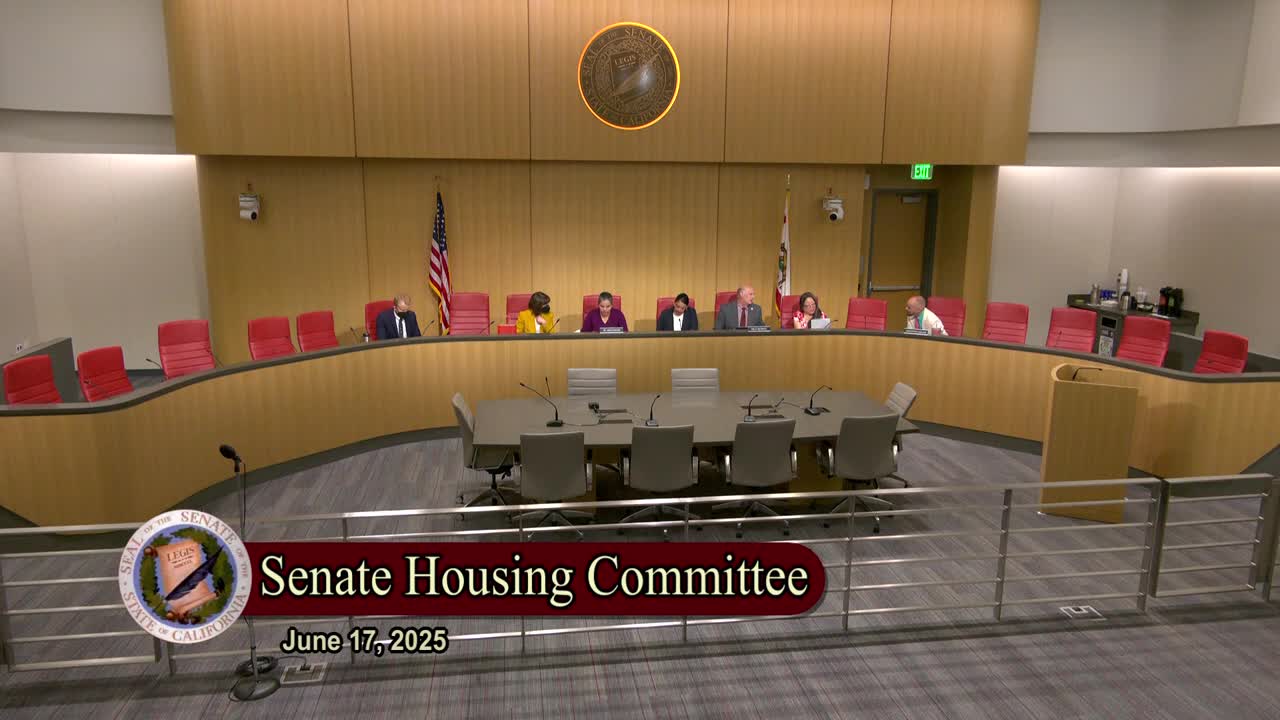 9MIN
Senate Standing Committee on Housing
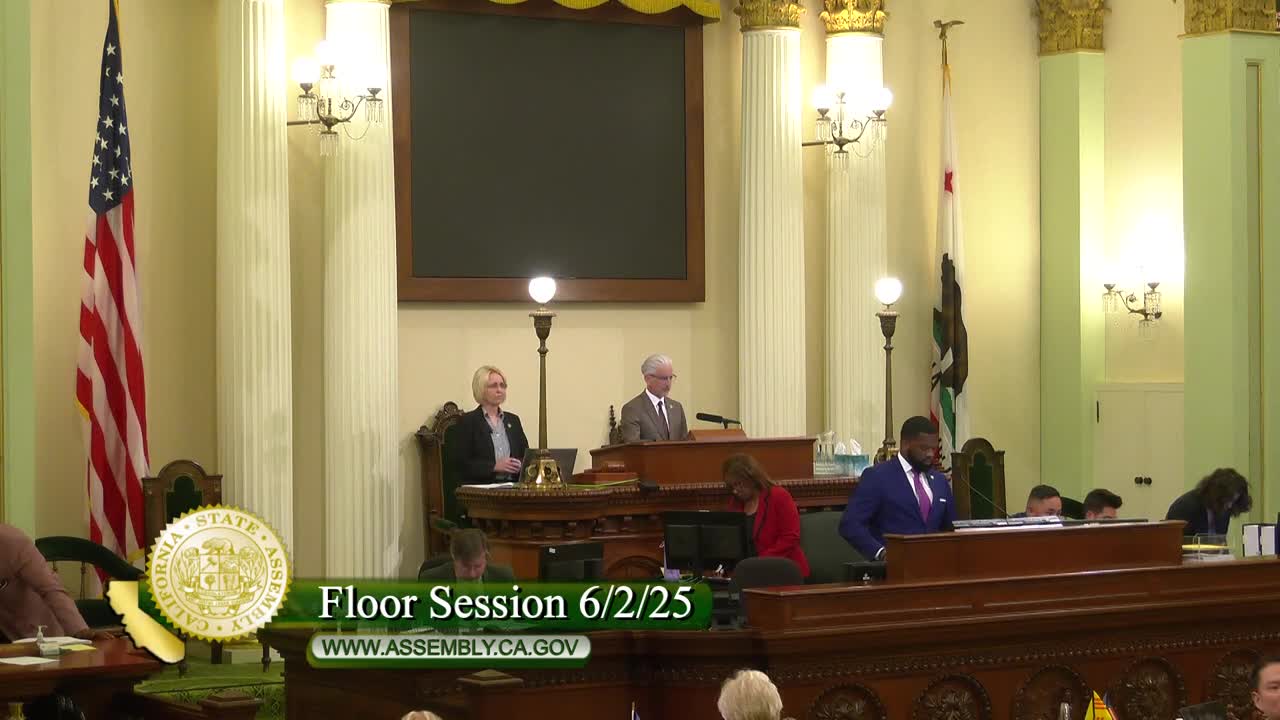 1MIN
Assembly Floor
 4MIN
Assembly Standing Committee on Education
 4MIN
Assembly Standing Committee on Housing and Community Development
Bill Author