AB 1299: Parking violations.
- Session Year: 2025-2026
- House: Assembly
- Latest Version Date: 2025-10-06
Current Status:
Passed
(2025-10-06: Chaptered by Secretary of State - Chapter 346, Statutes of 2025.)
Introduced
In Committee
Awaiting First Chamber Vote
Passed First Chamber
In Committee
Awaiting Second Chamber Vote
Passed Second Chamber
Enacted
Existing law requires a specified administrative hearing process in the enforcement and processing of parking violations and penalties, and requires the issuing agency to conduct an initial administrative review of the notice of parking violation at the request of the contestant to whom the notice was mailed. Existing law authorizes an examiner conducting the hearing or the issuing agency to allow payment of the parking penalty in installments, and authorizes the issuing agency to defer payment if the contestant provides satisfactory evidence to the examiner or the issuing agency, as the case may be, of the inability to pay the parking penalty in full.
This bill would authorize the issuing agency to reduce or waive the parking penalty if the contestant provides satisfactory evidence of either an inability to pay the parking penalty in full or any other extenuating circumstances relevant to payment of the parking penalty, including, but not limited to, documented homelessness status and financial hardship.
Existing law authorizes a parking citation processing agency, as defined, to collect an unpaid parking penalty by requesting the Department of Motor Vehicles to place a registration hold on the vehicle to which the citations have been issued, or by obtaining a civil judgment against the registered owner of the vehicle, as specified. Existing law requires a processing agency to offer a payment plan for unpaid parking citations to qualified indigent persons. Existing law requires the payment plan to meet specified conditions, including, among others, that a person is allowed a period of 120 calendar days from the issuance of a notice of parking violation or 10 days after the administrative hearing determination, whichever is later, to file a request to participate in a payment plan.
This bill would allow the person to file a request to participate in a payment plan at any time.
Existing law requires a specified administrative hearing process in the enforcement and processing of parking violations and penalties, and requires the issuing agency to conduct an initial administrative review of the notice of parking violation at the request of the contestant to whom the notice was mailed. Existing law authorizes an examiner conducting the hearing or the issuing agency to allow payment of the parking penalty in installments, and authorizes the issuing agency to defer payment if the contestant provides satisfactory evidence to the examiner or the issuing agency, as the case may be, of the inability to pay the parking penalty in full.
This bill would authorize the issuing agency to reduce or suspend waive the parking penalty if the contestant provides satisfactory evidence of either an inability to pay the parking penalty in full or any other extenuating circumstances relevant to payment of the parking penalty, including, but not limited to, documented homelessness status and financial hardship.
Existing law authorizes a parking citation processing agency, as defined, to collect an unpaid parking penalty by requesting the Department of Motor Vehicles to place a registration hold on the vehicle to which the citations have been issued, or by obtaining a civil judgment against the registered owner of the vehicle, as specified. Existing law requires a processing agency to offer a payment plan for unpaid parking citations to qualified indigent persons. Existing law requires the payment plan to meet specified conditions, including, among others, that a person is allowed a period of 120 calendar days from the issuance of a notice of parking violation or 10 days after the administrative hearing determination, whichever is later, to file a request to participate in a payment plan.
This bill would allow the person to file a request to participate in a payment plan at any time.
Existing law requires a specified administrative hearing process in the enforcement and processing of parking violations and penalties, and requires the issuing agency to conduct an initial administrative review of the notice of parking violation at the request of the contestant to whom the notice was mailed. Existing law authorizes an examiner conducting the hearing or the issuing agency to allow payment of the parking penalty in installments, and authorizes the issuing agency to defer payment if the contestant provides satisfactory evidence to the examiner or the issuing agency, as the case may be, of the inability to pay the parking penalty in full.
This bill would authorize the issuing agency to reduce or suspend the parking penalty if the contestant provides satisfactory evidence of either an inability to pay the parking penalty in full or any other extenuating circumstances relevant to payment of the parking penalty, including, but not limited to, documented homelessness status and financial hardship.
(a)For a period of 21 calendar days from the issuance of a notice of parking violation or 14 calendar days from the mailing of a notice of delinquent parking violation, exclusive of any days from the day the processing agency receives a request for a copy or facsimile of the original notice of parking violation pursuant to Section 40206.5 and the day the processing agency complies with the request, a person may request an initial review of the notice by the issuing agency. The request may be made by telephone, in writing, or in person. There shall not be a charge for this review. If, following the initial review, the issuing agency is satisfied that the violation did not occur, that the registered owner was not responsible for the violation, or that extenuating circumstances make dismissal of the citation appropriate in the interest of justice, the issuing agency shall cancel the notice of parking violation or notice of delinquent parking violation. The issuing agency shall advise the processing agency, if any, of the cancellation. The issuing agency or the processing agency shall mail the results of the initial review to the person contesting the notice, and, if following that review, cancellation of the notice does not occur, include a reason for that denial, notification of the ability to request an administrative hearing, and notice of the procedure adopted pursuant to subdivision (b) for waiving prepayment of the parking penalty based upon an inability to pay.
(b)If the person is dissatisfied with the results of the initial review, the person may request an administrative hearing of the violation no later than 21 calendar days following the mailing of the results of the issuing agencys initial review. The request may be made by telephone, in writing, or in person. The person requesting an administrative hearing shall deposit the amount of the parking penalty with the processing agency. The issuing agency shall adopt a written procedure to allow a person who is indigent, as defined in Section 40220, to request an administrative hearing without payment of the parking penalty upon satisfactory proof of an inability to pay the amount due. An administrative hearing shall be held within 90 calendar days following the receipt of a request for an administrative hearing, excluding time tolled pursuant to this article. The person requesting the hearing may request one continuance, not to exceed 21 calendar days.
(c)The administrative hearing process shall include all of the following:
(1)The person requesting a hearing shall have the choice of a hearing by mail, in person, or, if offered by the issuing agency, by telephone or electronic means. An in-person hearing shall be conducted within the jurisdiction of the issuing agency. If an issuing agency contracts with an administrative provider, in-person hearings shall be held within the jurisdiction of the issuing agency or within the county of the issuing agency.
(2)If the person requesting a hearing is a minor, that person shall be permitted to appear at a hearing or admit responsibility for the parking violation without the necessity of the appointment of a guardian. The processing agency may proceed against the minor in the same manner as against an adult.
(3)The administrative hearing shall be conducted in accordance with written procedures established by the issuing agency and approved by the governing body or chief executive officer of the issuing agency. The hearing shall provide an independent, objective, fair, and impartial review of contested parking violations.
(4)(A)The issuing agencys governing body or chief executive officer shall appoint or contract with qualified examiners or administrative hearing providers that employ qualified examiners to conduct the administrative hearings. Examiners shall demonstrate those qualifications, training, and objectivity necessary to conduct a fair and impartial review. An examiner shall not be employed, managed, or controlled by a person whose primary duties are parking enforcement or parking citation, processing, collection, or issuance. The examiner shall be separate and independent from the citation, collection, or processing function. An examiners continued employment, performance evaluation, compensation, and benefits shall not, directly or indirectly, be linked to the amount of fines collected by the examiner.
(B)(i)Examiners shall have a minimum of 20 hours of training. The examiner is responsible for the costs of the training. The issuing agency may reimburse the examiner for those costs.
(ii)Training may be provided through any of the following:
(I)An accredited college or university.
(II)A program conducted by the Commission on Peace Officer Standards and Training.
(III)American Arbitration Association or a similar established organization.
(IV)Through a program approved by the governing board of the issuing agency, including a program developed and provided by, or for, the issuing agency.
(iii)Training programs may include topics relevant to the administrative hearing, including, but not limited to, applicable laws and regulations, parking enforcement procedures, due process, evaluation of evidence, hearing procedures, and effective oral and written communication.
(iv)Upon the approval of the governing board of the issuing agency, up to 12 hours of relevant experience may be substituted for up to 12 hours of training. In addition, up to eight hours of the training requirements described in clause (i) may be credited to an individual, at the discretion of the governing board of the issuing agency, based upon training programs or courses described in clause (ii) that the individual attended within the last five years.
(5)The officer or person who issues a notice of parking violation shall not be required to participate in an administrative hearing. The issuing agency shall not be required to produce any evidence other than the notice of parking violation or copy of the notice and information received from the Department of Motor Vehicles identifying the registered owner of the vehicle. The documentation in proper form shall be prima facie evidence of the violation.
(6)The examiners decision following the administrative hearing may be personally delivered to the person by the examiner or sent by first-class mail, and, if the notice is not cancelled, include a written reason for that denial.
(7)The examiner or the issuing agency may, at any time, and consistent with the written guidelines established by the issuing agency, allow payment of the parking penalty in installments, or the issuing agency may allow for deferred payment or allow for a reduction or waiver of the parking penalty if the person provides evidence satisfactory to the examiner or the issuing agency, as the case may be, of either an inability to pay the parking penalty in full, or any other extenuating circumstances relevant to payment of the parking penalty, including, but not limited to, documented homelessness status and financial hardship. If authorized by the governing board of the issuing agency, the examiner may permit the performance of community service in lieu of payment of a parking penalty.
(d)The provisions of this section relating to the administrative appeal process do not apply to an issuing agency that is a law enforcement agency if the issuing agency does not also act as the processing agency.
SEC. 2.Section 40220 of the Vehicle Code is amended to read:40220.(a)Except as otherwise provided in Sections 40220.5, 40221, and 40222, the processing agency may proceed under one of the following options in order to collect an unpaid parking penalty and related service fees:
(1)(A)File an itemization of unpaid parking penalties and related service fees with the department for collection with the registration of the vehicle pursuant to Section 4760. For unpaid parking penalties issued on and after July 1, 2018, and related service fees, the processing agency shall not file an itemization with the department unless all of the following conditions have been satisfied:
(i)The processing agency provides a payment plan option for indigent persons that, at a minimum, does all of the following:
(I)Allows payment of unpaid parking penalties and related service fees in monthly installments of no more than twenty-five dollars ($25) for total amounts due that are five hundred dollars ($500) or less. The amount of late fees and penalty assessments waived pursuant to subclause (II) shall not be counted in calculating that total amount of five hundred dollars ($500) or less. Unpaid parking penalties and fees shall be paid off within 24 months. There shall be no prepayment penalty for paying off the balance prior to the payment period expiring.
(II)Waives all late fees and penalty assessments, exclusive of any state surcharges described in Sections 70372, 76000, and 76000.3 of the Government Code, if an indigent person enrolls in the payment plan. Waived late fees and penalty assessments may be reinstated if the person falls out of compliance with the payment plan.
(III)Limits the processing fee to participate in a payment plan to five dollars ($5) or less for indigent persons. The processing fee for an indigent person may be added to the payment plan amount, at the discretion of the indigent person. If a processing agency offers a payment plan option to persons who are not indigent, limits the processing fee to participate in the payment plan to twenty-five dollars ($25) or less.
(IV)Allows a person to file a request to participate in a payment plan at any time.
(ii)The processing agency includes the information described in subclauses (I) and (II) in the notice of parking violation, and includes both in the notice of parking violation and on its public internet website, a web page link and telephone number to more information on the payment program. Each processing agency shall ensure that the linked internet web page is readily accessible in a prominent location on the parking citation payment section of the agencys internet website and includes all of the following information:
(I)The availability of an installment payment plan and the timeframe in which to apply.
(II)The persons right to request an indigency determination and the timeframe in which the person must apply.
(III)Clear language about how the person can request an indigency determination and what that determination will entail.
(IV)Documents needed by the processing agency to make an indigency determination.
(iii)The person fails to enroll in the payment plan within the time specified in the notice or is not eligible for the payment plan because the person is not indigent.
(B)The processing agency shall allow a person who falls out of compliance with the payment plan a one-time extension of 45 calendar days from the date the payment plan becomes delinquent to resume payments before the processing agency files an itemization of unpaid parking penalties and related service fees with the department pursuant to subparagraph (A).
(C)The processing agency shall rescind the filing of an itemization of unpaid parking penalties and related service fees with the department for an indigent person, for one time only, if the registered owner or lessee enrolls in a payment plan and pays a late fee of no more than five dollars ($5).
(D)(i)Each California State University and community college district governing board shall adopt a parking citation payment plan for persons with multiple unpaid parking citations. A parking citation payment policy adopted under this subparagraph shall include, but not be limited to, all of the following requirements:
(I)Late fees shall be placed in abeyance while the payment plan is in place and the person adheres to its terms, and shall be waived once the payment plan is completed.
(II)Once the payment plan is in place and the person adheres to its terms, an itemization of unpaid parking penalties and service fees as described in subparagraph (A) shall not be filed with the department.
(III)Each California State University and community college district campus shall post the parking citation payment policy on its internet website for students awareness and access.
(ii)A California State University or community college district governing board that fails to implement a parking citation payment plan pursuant to clause (i) shall implement the payment plan as provided in subparagraphs (A) to (C), inclusive, and subdivision (c).
(2) (A)If more than four hundred dollars ($400) in unpaid penalties and fees have been accrued by a person or registered owner, proof thereof may be filed with the court and shall have the same effect as a civil judgment. Execution may be levied and other measures may be taken for the collection of the judgment as are authorized for the collection of an unpaid civil judgment entered against a defendant in an action on a debtor. The court may assess costs against a judgment debtor to be paid upon satisfaction of the judgment. The processing agency shall send a notice by first-class mail to the person or registered owner indicating that a judgment shall be entered for the unpaid penalties, fees, and costs and that, after 21 calendar days from the date of the mailing of the notice, the judgment shall have the same effect as an entry of judgment against a judgment debtor. The person or registered owner shall also be notified at that time that execution may be levied against their assets, liens may be placed against their property, their wages may be garnished, and other steps may be taken to satisfy the judgment. If a judgment is rendered for the processing agency, the processing agency may contract with a collection agency to collect the amount of the judgment.
(B)Notwithstanding any other law, the processing agency shall pay the established first paper civil filing fee at the time an entry of civil judgment is requested.
(3)If the registration of the vehicle has not been renewed for 60 days beyond the renewal date, and the citation has not been collected by the department pursuant to Section 4760, file proof of unpaid penalties and fees with the court with the same effect as a civil judgment as provided in paragraph (2).
(b)This section does not apply to a registered owner of a vehicle if the citation was issued prior to the registered owner taking possession of the vehicle, and the department has notified the processing agency pursuant to Section 4764.
(c)(1)For purposes of paragraph (1) of subdivision (a), a person is indigent if any of the following conditions is met:
(A)The person meets the income criteria set forth in subdivision (b) of Section 68632 of the Government Code.
(B)The person receives public benefits from a program listed in subdivision (a) of Section 68632 of the Government Code.
(2)The person may demonstrate that the person is indigent by providing either of the following information, as applicable:
(A)Proof of income from a pay stub or another form of proof of earnings, such as a bank statement, that shows that the person meets the income criteria set forth in subdivision (b) of Section 68632 of the Government Code, subject to review and approval by the processing agency or its designee. The processing agency or its designee shall not unreasonably withhold its approval.
(B)Proof of receipt of benefits under the programs described in subparagraph (B) of paragraph (1), including, but not limited to, an electronic benefits transfer card or another card, subject to review and approval by the processing agency. The processing agency or its designee shall not unreasonably withhold its approval.
(3)If a defendants indigent status is found to have been willfully fraudulent, the defendants penalties and fees reduction shall be overturned and the full amount of penalties and fees shall be restored.
(a)For a period of 21 calendar days from the issuance of a notice of parking violation or 14 calendar days from the mailing of a notice of delinquent parking violation, exclusive of any days from the day the processing agency receives a request for a copy or facsimile of the original notice of parking violation pursuant to Section 40206.5 and the day the processing agency complies with the request, a person may request an initial review of the notice by the issuing agency. The request may be made by telephone, in writing, or in person. There shall not be a charge for this review. If, following the initial review, the issuing agency is satisfied that the violation did not occur, that the registered owner was not responsible for the violation, or that extenuating circumstances make dismissal of the citation appropriate in the interest of justice, the issuing agency shall cancel the notice of parking violation or notice of delinquent parking violation. The issuing agency shall advise the processing agency, if any, of the cancellation. The issuing agency or the processing agency shall mail the results of the initial review to the person contesting the notice, and, if following that review, cancellation of the notice does not occur, include a reason for that denial, notification of the ability to request an administrative hearing, and notice of the procedure adopted pursuant to subdivision (b) for waiving prepayment of the parking penalty based upon an inability to pay.
(b)If the person is dissatisfied with the results of the initial review, the person may request an administrative hearing of the violation no later than 21 calendar days following the mailing of the results of the issuing agencys initial review. The request may be made by telephone, in writing, or in person. The person requesting an administrative hearing shall deposit the amount of the parking penalty with the processing agency. The issuing agency shall adopt a written procedure to allow a person who is indigent, as defined in Section 40220, to request an administrative hearing without payment of the parking penalty upon satisfactory proof of an inability to pay the amount due. An administrative hearing shall be held within 90 calendar days following the receipt of a request for an administrative hearing, excluding time tolled pursuant to this article. The person requesting the hearing may request one continuance, not to exceed 21 calendar days.
(c)The administrative hearing process shall include all of the following:
(1)The person requesting a hearing shall have the choice of a hearing by mail, in person, or, if offered by the issuing agency, by telephone or electronic means. An in-person hearing shall be conducted within the jurisdiction of the issuing agency. If an issuing agency contracts with an administrative provider, in-person hearings shall be held within the jurisdiction of the issuing agency or within the county of the issuing agency.
(2)If the person requesting a hearing is a minor, that person shall be permitted to appear at a hearing or admit responsibility for the parking violation without the necessity of the appointment of a guardian. The processing agency may proceed against the minor in the same manner as against an adult.
(3)The administrative hearing shall be conducted in accordance with written procedures established by the issuing agency and approved by the governing body or chief executive officer of the issuing agency. The hearing shall provide an independent, objective, fair, and impartial review of contested parking violations.
(4)(A)The issuing agencys governing body or chief executive officer shall appoint or contract with qualified examiners or administrative hearing providers that employ qualified examiners to conduct the administrative hearings. Examiners shall demonstrate those qualifications, training, and objectivity necessary to conduct a fair and impartial review. An examiner shall not be employed, managed, or controlled by a person whose primary duties are parking enforcement or parking citation, processing, collection, or issuance. The examiner shall be separate and independent from the citation, collection, or processing function. An examiners continued employment, performance evaluation, compensation, and benefits shall not, directly or indirectly, be linked to the amount of fines collected by the examiner.
(B)(i)Examiners shall have a minimum of 20 hours of training. The examiner is responsible for the costs of the training. The issuing agency may reimburse the examiner for those costs.
(ii)Training may be provided through any of the following:
(I)An accredited college or university.
(II)A program conducted by the Commission on Peace Officer Standards and Training.
(III)American Arbitration Association or a similar established organization.
(IV)Through a program approved by the governing board of the issuing agency, including a program developed and provided by, or for, the issuing agency.
(iii)Training programs may include topics relevant to the administrative hearing, including, but not limited to, applicable laws and regulations, parking enforcement procedures, due process, evaluation of evidence, hearing procedures, and effective oral and written communication.
(iv)Upon the approval of the governing board of the issuing agency, up to 12 hours of relevant experience may be substituted for up to 12 hours of training. In addition, up to eight hours of the training requirements described in clause (i) may be credited to an individual, at the discretion of the governing board of the issuing agency, based upon training programs or courses described in clause (ii) that the individual attended within the last five years.
(5)The officer or person who issues a notice of parking violation shall not be required to participate in an administrative hearing. The issuing agency shall not be required to produce any evidence other than the notice of parking violation or copy of the notice and information received from the Department of Motor Vehicles identifying the registered owner of the vehicle. The documentation in proper form shall be prima facie evidence of the violation.
(6)The examiners decision following the administrative hearing may be personally delivered to the person by the examiner or sent by first-class mail, and, if the notice is not cancelled, include a written reason for that denial.
(7)The examiner or the issuing agency may, at any stage of the initial review or the administrative hearing process, time, and consistent with the written guidelines established by the issuing agency, allow payment of the parking penalty in installments, or the issuing agency may allow for deferred payment or allow for a reduction or suspension waiver of the parking penalty if the person provides evidence satisfactory to the examiner or the issuing agency, as the case may be, of either an inability to pay the parking penalty in full, or any other extenuating circumstances relevant to payment of the parking penalty, including, but not limited to, documented homelessness status and financial hardship. If authorized by the governing board of the issuing agency, the examiner may permit the performance of community service in lieu of payment of a parking penalty.
(d)The provisions of this section relating to the administrative appeal process do not apply to an issuing agency that is a law enforcement agency if the issuing agency does not also act as the processing agency.
SEC. 2.Section 40220 of the Vehicle Code is amended to read:40220.(a)Except as otherwise provided in Sections 40220.5, 40221, and 40222, the processing agency may proceed under one of the following options in order to collect an unpaid parking penalty and related service fees:
(1)(A)File an itemization of unpaid parking penalties and related service fees with the department for collection with the registration of the vehicle pursuant to Section 4760. For unpaid parking penalties issued on and after July 1, 2018, and related service fees, the processing agency shall not file an itemization with the department unless all of the following conditions have been satisfied:
(i)The processing agency provides a payment plan option for indigent persons that, at a minimum, does all of the following:
(I)Allows payment of unpaid parking penalties and related service fees in monthly installments of no more than twenty-five dollars ($25) for total amounts due that are five hundred dollars ($500) or less. The amount of late fees and penalty assessments waived pursuant to subclause (II) shall not be counted in calculating that total amount of five hundred dollars ($500) or less. Unpaid parking penalties and fees shall be paid off within 24 months. There shall be no prepayment penalty for paying off the balance prior to the payment period expiring.
(II)Waives all late fees and penalty assessments, exclusive of any state surcharges described in Sections 70372, 76000, and 76000.3 of the Government Code, if an indigent person enrolls in the payment plan. Waived late fees and penalty assessments may be reinstated if the person falls out of compliance with the payment plan.
(III)Limits the processing fee to participate in a payment plan to five dollars ($5) or less for indigent persons. The processing fee for an indigent person may be added to the payment plan amount, at the discretion of the indigent person. If a processing agency offers a payment plan option to persons who are not indigent, limits the processing fee to participate in the payment plan to twenty-five dollars ($25) or less.
(IV)Allows a person a period of 120 calendar days from the issuance of a notice of parking violation or 10 days after the administrative hearing determination, whichever is later, to file a request to participate in a payment plan. plan at any time.
(ii)The processing agency includes the information described in subclauses (I) and (II) in the notice of parking violation, and includes both in the notice of parking violation and on its public internet website, a web page link and telephone number to more information on the payment program. Each processing agency shall ensure that the linked internet web page is readily accessible in a prominent location on the parking citation payment section of the agencys internet website and includes all of the following information:
(I)The availability of an installment payment plan and the timeframe in which to apply.
(II)The persons right to request an indigency determination and the timeframe in which the person must apply.
(III)Clear language about how the person can request an indigency determination and what that determination will entail.
(IV)Documents needed by the processing agency to make an indigency determination.
(iii)The person fails to enroll in the payment plan within the time specified in the notice or is not eligible for the payment plan because the person is not indigent.
(B)The processing agency shall allow a person who falls out of compliance with the payment plan a one-time extension of 45 calendar days from the date the payment plan becomes delinquent to resume payments before the processing agency files an itemization of unpaid parking penalties and related service fees with the department pursuant to subparagraph (A).
(C)The processing agency shall rescind the filing of an itemization of unpaid parking penalties and related service fees with the department for an indigent person, for one time only, if the registered owner or lessee enrolls in a payment plan and pays a late fee of no more than five dollars ($5).
(D)(i)Each California State University and community college district governing board shall adopt a parking citation payment plan for persons with multiple unpaid parking citations. A parking citation payment policy adopted under this subparagraph shall include, but not be limited to, all of the following requirements:
(I)Late fees shall be placed in abeyance while the payment plan is in place and the person adheres to its terms, and shall be waived once the payment plan is completed.
(II)Once the payment plan is in place and the person adheres to its terms, an itemization of unpaid parking penalties and service fees as described in subparagraph (A) shall not be filed with the department.
(III)Each California State University and community college district campus shall post the parking citation payment policy on its internet website for students awareness and access.
(ii)A California State University or community college district governing board that fails to implement a parking citation payment plan pursuant to clause (i) shall implement the payment plan as provided in subparagraphs (A) to (C), inclusive, and subdivision (c).
(2) (A)If more than four hundred dollars ($400) in unpaid penalties and fees have been accrued by a person or registered owner, proof thereof may be filed with the court and shall have the same effect as a civil judgment. Execution may be levied and other measures may be taken for the collection of the judgment as are authorized for the collection of an unpaid civil judgment entered against a defendant in an action on a debtor. The court may assess costs against a judgment debtor to be paid upon satisfaction of the judgment. The processing agency shall send a notice by first-class mail to the person or registered owner indicating that a judgment shall be entered for the unpaid penalties, fees, and costs and that, after 21 calendar days from the date of the mailing of the notice, the judgment shall have the same effect as an entry of judgment against a judgment debtor. The person or registered owner shall also be notified at that time that execution may be levied against their assets, liens may be placed against their property, their wages may be garnished, and other steps may be taken to satisfy the judgment. If a judgment is rendered for the processing agency, the processing agency may contract with a collection agency to collect the amount of the judgment.
(B)Notwithstanding any other law, the processing agency shall pay the established first paper civil filing fee at the time an entry of civil judgment is requested.
(3)If the registration of the vehicle has not been renewed for 60 days beyond the renewal date, and the citation has not been collected by the department pursuant to Section 4760, file proof of unpaid penalties and fees with the court with the same effect as a civil judgment as provided in paragraph (2).
(b)This section does not apply to a registered owner of a vehicle if the citation was issued prior to the registered owner taking possession of the vehicle, and the department has notified the processing agency pursuant to Section 4764.
(c)(1)For purposes of paragraph (1) of subdivision (a), a person is indigent if any of the following conditions is met:
(A)The person meets the income criteria set forth in subdivision (b) of Section 68632 of the Government Code.
(B)The person receives public benefits from a program listed in subdivision (a) of Section 68632 of the Government Code.
(2)The person may demonstrate that the person is indigent by providing either of the following information, as applicable:
(A)Proof of income from a pay stub or another form of proof of earnings, such as a bank statement, that shows that the person meets the income criteria set forth in subdivision (b) of Section 68632 of the Government Code, subject to review and approval by the processing agency or its designee. The processing agency or its designee shall not unreasonably withhold its approval.
(B)Proof of receipt of benefits under the programs described in subparagraph (B) of paragraph (1), including, but not limited to, an electronic benefits transfer card or another card, subject to review and approval by the processing agency. The processing agency or its designee shall not unreasonably withhold its approval.
(3)If a defendants indigent status is found to have been willfully fraudulent, the defendants penalties and fees reduction shall be overturned and the full amount of penalties and fees shall be restored.
(a)For a period of 21 calendar days from the issuance of a notice of parking violation or 14 calendar days from the mailing of a notice of delinquent parking violation, exclusive of any days from the day the processing agency receives a request for a copy or facsimile of the original notice of parking violation pursuant to Section 40206.5 and the day the processing agency complies with the request, a person may request an initial review of the notice by the issuing agency. The request may be made by telephone, in writing, or in person. There shall not be a charge for this review. If, following the initial review, the issuing agency is satisfied that the violation did not occur, that the registered owner was not responsible for the violation, or that extenuating circumstances make dismissal of the citation appropriate in the interest of justice, the issuing agency shall cancel the notice of parking violation or notice of delinquent parking violation. The issuing agency shall advise the processing agency, if any, of the cancellation. The issuing agency or the processing agency shall mail the results of the initial review to the person contesting the notice, and, if following that review, cancellation of the notice does not occur, include a reason for that denial, notification of the ability to request an administrative hearing, and notice of the procedure adopted pursuant to subdivision (b) for waiving prepayment of the parking penalty based upon an inability to pay.
(b)If the person is dissatisfied with the results of the initial review, the person may request an administrative hearing of the violation no later than 21 calendar days following the mailing of the results of the issuing agencys initial review. The request may be made by telephone, in writing, or in person. The person requesting an administrative hearing shall deposit the amount of the parking penalty with the processing agency. The issuing agency shall adopt a written procedure to allow a person who is indigent, as defined in Section 40220, to request an administrative hearing without payment of the parking penalty upon satisfactory proof of an inability to pay the amount due. An administrative hearing shall be held within 90 calendar days following the receipt of a request for an administrative hearing, excluding time tolled pursuant to this article. The person requesting the hearing may request one continuance, not to exceed 21 calendar days.
(c)The administrative hearing process shall include all of the following:
(1)The person requesting a hearing shall have the choice of a hearing by mail, in person, or, if offered by the issuing agency, by telephone or electronic means. An in-person hearing shall be conducted within the jurisdiction of the issuing agency. If an issuing agency contracts with an administrative provider, in-person hearings shall be held within the jurisdiction of the issuing agency or within the county of the issuing agency.
(2)If the person requesting a hearing is a minor, that person shall be permitted to appear at a hearing or admit responsibility for the parking violation without the necessity of the appointment of a guardian. The processing agency may proceed against the minor in the same manner as against an adult.
(3)The administrative hearing shall be conducted in accordance with written procedures established by the issuing agency and approved by the governing body or chief executive officer of the issuing agency. The hearing shall provide an independent, objective, fair, and impartial review of contested parking violations.
(4)(A)The issuing agencys governing body or chief executive officer shall appoint or contract with qualified examiners or administrative hearing providers that employ qualified examiners to conduct the administrative hearings. Examiners shall demonstrate those qualifications, training, and objectivity necessary to conduct a fair and impartial review. An examiner shall not be employed, managed, or controlled by a person whose primary duties are parking enforcement or parking citation, processing, collection, or issuance. The examiner shall be separate and independent from the citation, collection, or processing function. An examiners continued employment, performance evaluation, compensation, and benefits shall not, directly or indirectly, be linked to the amount of fines collected by the examiner.
(B)(i)Examiners shall have a minimum of 20 hours of training. The examiner is responsible for the costs of the training. The issuing agency may reimburse the examiner for those costs.
(ii)Training may be provided through any of the following:
(I)An accredited college or university.
(II)A program conducted by the Commission on Peace Officer Standards and Training.
(III)American Arbitration Association or a similar established organization.
(IV)Through a program approved by the governing board of the issuing agency, including a program developed and provided by, or for, the issuing agency.
(iii)Training programs may include topics relevant to the administrative hearing, including, but not limited to, applicable laws and regulations, parking enforcement procedures, due process, evaluation of evidence, hearing procedures, and effective oral and written communication.
(iv)Upon the approval of the governing board of the issuing agency, up to 12 hours of relevant experience may be substituted for up to 12 hours of training. In addition, up to eight hours of the training requirements described in clause (i) may be credited to an individual, at the discretion of the governing board of the issuing agency, based upon training programs or courses described in clause (ii) that the individual attended within the last five years.
(5)The officer or person who issues a notice of parking violation shall not be required to participate in an administrative hearing. The issuing agency shall not be required to produce any evidence other than the notice of parking violation or copy of the notice and information received from the Department of Motor Vehicles identifying the registered owner of the vehicle. The documentation in proper form shall be prima facie evidence of the violation.
(6)The examiners decision following the administrative hearing may be personally delivered to the person by the examiner or sent by first-class mail, and, if the notice is not cancelled, include a written reason for that denial.
(7)The examiner or the issuing agency may, at any stage of the initial review or the administrative hearing process, and consistent with the written guidelines established by the issuing agency, allow payment of the parking penalty in installments, or the issuing agency may allow for deferred payment, payment or allow for a reduction or suspension of the parking penalty if the person provides evidence satisfactory to the examiner or the issuing agency, as the case may be, of either an inability to pay the parking penalty in full. full, or any other extenuating circumstances relevant to payment of the parking penalty, including, but not limited to, documented homelessness status and financial hardship. If authorized by the governing board of the issuing agency, the examiner may permit the performance of community service in lieu of payment of a parking penalty.
(d)The provisions of this section relating to the administrative appeal process do not apply to an issuing agency that is a law enforcement agency if the issuing agency does not also act as the processing agency.
|
Date
|
Status
|
|---|---|
| Oct 6, 2025 | Chaptered by Secretary of State - Chapter 346, Statutes of 2025. |
| Oct 6, 2025 | Approved by the Governor. |
| Sep 15, 2025 | Enrolled and presented to the Governor at 4:30 p.m. |
| Sep 4, 2025 | In Assembly. Ordered to Engrossing and Enrolling. |
| Sep 4, 2025 | Read third time. Passed. Ordered to the Assembly. (Ayes 39. Noes 0. Page 2514.). |
| Jul 8, 2025 | Read second time. Ordered to third reading. |
| Jul 7, 2025 | From committee: Be ordered to second reading pursuant to Senate Rule 28.8. |
| Jun 25, 2025 | From committee: Do pass and re-refer to Com. on APPR. (Ayes 13. Noes 0.) (June 24). Re-referred to Com. on APPR. |
| Jun 4, 2025 | Referred to Com. on TRANS. |
| May 28, 2025 | In Senate. Read first time. To Com. on RLS. for assignment. |
| May 27, 2025 | Read third time. Passed. Ordered to the Senate. (Ayes 75. Noes 1. Page 1740.) |
| May 22, 2025 | Read second time. Ordered to Consent Calendar. |
| May 21, 2025 | From committee: Do pass. To Consent Calendar. (Ayes 15. Noes 0.) (May 21). |
| May 14, 2025 | In committee: Hearing postponed by committee. |
| Apr 8, 2025 | From committee: Do pass and re-refer to Com. on APPR. with recommendation: To Consent Calendar. (Ayes 16. Noes 0.) (April 7). Re-referred to Com. on APPR. |
| Mar 18, 2025 | Re-referred to Com. on TRANS. |
| Mar 17, 2025 | From committee chair, with author's amendments: Amend, and re-refer to Com. on TRANS. Read second time and amended. |
| Mar 10, 2025 | Referred to Com. on TRANS. |
| Feb 24, 2025 | Read first time. |
| Feb 22, 2025 | From printer. May be heard in committee March 24. |
| Feb 21, 2025 | Introduced. To print. |
|
Date
|
Description
|
Location
|
Votes
|
|
|---|---|---|---|---|
| Sep 4, 2025 | Assembly 3rd Reading AB1299 Bryan et al. By Cortese | Senate Floor |
Passed |
|
| Jun 24, 2025 | Do pass, but first be re-referred to the Committee on [Appropriations] | Senate Standing Committee on Transportation |
Passed |
|
| May 27, 2025 | AB 1299 Bryan Consent Calendar Second Day Regular Session | Assembly Floor |
Passed |
|
| May 21, 2025 | Do pass. To Consent Calendar. | Assembly Standing Committee on Appropriations |
Passed |
|
| Apr 7, 2025 | Do pass and be re-referred to the Committee on [Appropriations] with recommendation: To Consent Calendar | Assembly Standing Committee on Transportation |
Passed |
This list shows positions taken on this bill by organizations on the date displayed, which is linked to the original source.
Positions by individuals are not included.
|
Organization
|
Position
|
Date
|
|---|---|---|
| Bay Area Legal Aid | ** Support | |
| California Housing Partnership | ** Support | |
| California Mobility and Parking Association | ** Support | |
| Coalition of California Welfare Rights Organization | ** Support | |
| Communities United for Restorative Youth Justice | ** Support | |
| Community Legal Services in East Palo Alto | ** Support | |
| Debt Free Justice California | ** Support | |
| Grace Institute - End Child Poverty in Ca | ** Support | |
| Housing California | ** Support | |
| Initiate Justice | ** Support | |
| John Burton Advocates for Youth | ** Support | |
| Justice2jobs Coalition | ** Support | |
| Los Angeles City Attorney'S Office | ** Support | |
| San Francisco Public Defender | ** Support | |
| western center on law & poverty | ** Support |
SENATE RULES COMMITTEE Office of Senate Floor Analyses (916) 651-1520 Fax: (916) 327-4478 | AB 1299 |
THIRD READING
Bill No: AB 1299
Author: Bryan (D) and Celeste Rodriguez (D)
Amended: 3/17/25 in Assembly
Vote: 21
SENATE TRANSPORTATION COMMITTEE: 13-0, 6/24/25
AYES: Cortese, Strickland, Archuleta, Arreguín, Blakespear, Cervantes, Dahle, Gonzalez, Grayson, Limón, Menjivar, Seyarto, Umberg
NO VOTE RECORDED: Richardson, Valladares
SENATE APPROPRIATIONS COMMITTEE: Senate Rule 28.8
ASSEMBLY FLOOR: 75-1, 5/27/25 (Consent) - See last page for vote
SUBJECT: Parking violations
SOURCE: Author
DIGEST:
This bill authorizes a local authority to waive or reduce parking penalties at any time if a person can demonstrate circumstances relevant to their inability to pay the penalty, and requires processing agencies to allow indigent persons to request a parking penalty payment plan at any time.
ANALYSIS:
Existing law:
- Authorizes a local authority to allow payment of the parking penalty in installments or defer payments. (Vehicle Code (VEH) § 40215)
- Provides several options to processing agencies collecting unpaid parking penalties for tickets, including filing an itemization of unpaid parking penalties and service fees with the Department of Motor Vehicles (DMV) for collection with the registration of a vehicle, so long as the processing agency:
- Provides a payment plan option for indigent persons, as defined, that allows unpaid parking fines and fees to be paid off in monthly installments of no more than $25 for total amounts due that are $500 or less, in a period within 24 months. No prepayment penalty for paying off the balance prior to the payment period may be accessed;
- Waives all late fees and penalty assessments, exclusive of any state surcharges, as defined, if an indigent person enrolls in the payment plan. Waived late fees and penalty assessments may be reinstated if the person falls out of compliance with the payment plan;
- Limits the processing fee to participate in a payment plan to $5 or less for indigent persons and $25 or less for all other persons. The processing fee may be added to the payment plan amount at the discretion of the payee; and,
- Allows the application for the determination if a person is indigent for a period of 120 calendar days from the issuance of a notice of parking violation, or 10 days after the administrative hearing determination, whichever is later. (VEH § 40220)
- Requires a processing agency to allow a registered owner or lessee who falls out of compliance with a payment plan a one-time extension of 45 calendar days from the date the plan becomes delinquent to resume payments before the processing agency files an itemization of unpaid parking penalties and service fees with DMV. (VEH § 40220)
- Requires a processing agency to include information regarding its payment plan option above on its public website, and a web page link and telephone number to more information on the program. (VEH § 40220)
- Defines “indigent” for the purposes of this section to mean anyone who meets the income requirements for or is currently on several public assistance programs, including: Supplemental Security Income, Supplemental Nutrition Assistance Program (SNAP, or more commonly known as food stamps), Medi-Cal or In-Home Supportive Services . (VEH § 40220)
This bill:
- Authorizes an issuing agency to consider at any time any other extenuating circumstances relevant to the payment of the parking penalty, including but not limited to, documented homeless status and financial hardship, when deciding to reduce or suspend parking penalties.
- Requires processing agencies to extend the period of time they offer payment plans to indigent persons from within 120 days of receiving the parking ticket to any time in order for the issuing agency to use DMV as a collection agent.
Comments
- Purpose of this bill. According to the author, “AB 1299 is a common sense bill that gives local government’s discretion to reduce or waive parking penalties based on the individual’s circumstances, including, but not limited to, financial hardship. For people living in poverty, parking tickets pose are a severe financial burden that can quickly spiral from a $52 fine to a vehicle registration hold. This bill gives local agencies the ability to look at a person’s whole circumstance when deciding an action on a parking ticket. For situations where a parking ticket can push an individual from poverty to financial crisis, local jurisdictions should have the ability to do what is best for their constituent.”
- High Burden of Parking tickets. Unpaid parking tickets can pose a significant burden for low-income individuals. Parking tickets can initiate a cascading effect of worsening consequences, from mounting fines, to the vehicle being towed, to a lien sale of the vehicle by the tow company at a total loss to the owner. According to the 2019 report Towed into Debt: How Towing Practices in California Punish Poor People, “[s]tatewide, over one fourth of tows are conducted just because the owner had unpaid parking tickets, lapsed registration, or parked in one place for 72 hours. Vehicles towed for these reasons are 2-6 times more likely to be sold at lien sale than the average towed car.” The report identified that in San Francisco 50% of vehicles towed for unpaid parking tickets were sold by the tow company, while only 9% of all vehicles towed were sold.
- Past legislative efforts. Under current law, processing agencies are already required to take several steps prior to asking DMV to collect the unpaid debt from indigent individuals, including establishing a payment program and waiving late fees and penalty assessments. The Legislature passed AB 503 (Lackey, Chapter 741, Statutes of 2017) to stem the spiral of debt for an indigent person. The bill reduced parking penalties for indigent individuals by requiring the offering of a payment plan and the waiver of penalties. Assemblymember Lackey introduced two follow-up bills as a result of processing agencies trying to circumvent implementing the law. AB 2544 (Lackey, Chapter 494, Statutes of 2018), clarified that parking agencies had to offer payment plans for tickets issued before July 1, 2018, because processing agencies refused to consider older tickets when implementing the law. AB 833 (Lackey, Chapter 495, Statutes of 2019), clarified that the $300 maximum cap for which a parking agency had to offer a payment plan only applied to the base fines, not too late penalties because the City of Sacramento was refusing to provide payment plans for individuals who had more than two tickets with a late fee. In 2020, the Legislature passed AB 3277 (Jones-Sawyer, Chapter 55), which increased the maximum cap from $300 to $500. AB 3277 also lengthened the period of time an individual can request a payment plan from 60 calendar days from the issuance of a parking violation to 120 days from the issuance of a parking violation.
- Flexibility for issuing agencies. This bill grants greater flexibility to agencies issuing parking tickets, easing restrictions on their ability to reduce, suspend, or offer payment plans for parking fines for individuals experiencing homelessness. First, this bill removes the requirement that a person who received a parking ticket must request a payment plan for their fine within 120 days. Instead, under this bill, a person could request to participate in a repayment plan at any time. According to this bill’s sponsors, some individuals who need payment plans miss the 120 day window and thus become ineligible for payment plans. Second, this bill allows the issuing agency to defer, reduce, or waive the parking penalty at any time if the ticketed person can demonstrate their inability to pay, or other extenuating circumstances, such as homelessness or financial hardship. This provision is permissive to the issuing agency. Currently, an issuing agency is limited as to when, why, and to what extent they can reduce penalties.
Research indicates that reducing fines and fees results in greater repayment rates. According to an analysis by the Judicial Council of California of citation repayment data, “repayment success rates increased as the ordered amount decreased. Furthermore, the results of these three studies align on the proportional relationship between repayment likelihood and the amount ordered, showing an approximately 20 percent repayment rate at fines exceeding $500 and increasing approximately 10 percent with each subsequent reduction of $100 up to 70 percent for amounts between $0 and $100.”
Related/Prior Legislation
AB 1022 (Kalra, 2025) – Would have removed the authority for a peace officer to impound a vehicle for having five or more unpaid parking tickets. This bill was held in the Assembly Appropriations Committee.
SB 1487 (Glazer, 2024) – Would have prohibited a late payment penalty for a parking violation from exceeding 30% of the original penalty and would extend the time to pay a parking violation before additional penalties accrue. This bill was held in Assembly Appropriations Committee on suspense.
AB 1082 (Kalra, 2023) – Would have, among other provisions, revised the ability of local processing agencies to refer delinquent parking violations to the DMV and revised requirements for payment plans. This bill was held in the Senate Appropriations Committee on suspense.
AB 1685 (Bryan, 2022) – Would have required processing agencies to forgive at least $1,500 in parking fines and fees annually for a qualified homeless person. The bill was vetoed by Governor Newsom.
AB 3277 (Jones-Sawyer, Chapter 55, Statutes of 2020) – Made various eligibility and programmatic changes to the payment plan program administered by local agencies relative to parking citations.
AB 503 (Lackey, Chapter 741, Statutes of 2017) – Required the offering of a payment plan and the waiver of penalties for indigent people with unpaid parking tickets prior to filing an itemization of them at the DMV, starting on July 1, 2018.
FISCAL EFFECT: Appropriation: No Fiscal Com.: Yes Local: No
SUPPORT: (Verified 7/7/25)
Bay Area Legal Aid
California Housing Partnership
California Mobility and Parking Association
Coalition of California Welfare Rights Organization
Communities United for Restorative Youth Justice
Community Legal Services in East Palo Alto
Debt Free Justice California
Grace Institute - End Child Poverty in CA
Housing California
Initiate Justice
John Burton Advocates for Youth
Justice2jobs Coalition
Los Angeles City Attorney's Office
San Francisco Public Defender
Western Center on Law & Poverty
OPPOSITION: (Verified 7/7/25)
None received
ASSEMBLY FLOOR: 75-1, 5/27/25
AYES: Addis, Aguiar-Curry, Ahrens, Alanis, Alvarez, Arambula, Ávila Farías, Bains, Bauer-Kahan, Berman, Boerner, Bonta, Bryan, Calderon, Caloza, Carrillo, Castillo, Chen, Connolly, Davies, Dixon, Elhawary, Ellis, Flora, Fong, Gabriel, Gallagher, Garcia, Gipson, Mark González, Hadwick, Haney, Harabedian, Hart, Hoover, Irwin, Jackson, Kalra, Krell, Lackey, Lee, Lowenthal, Macedo, McKinnor, Muratsuchi, Ortega, Pacheco, Papan, Patel, Patterson, Pellerin, Petrie-Norris, Quirk-Silva, Ramos, Ransom, Celeste Rodriguez, Michelle Rodriguez, Rogers, Blanca Rubio, Sanchez, Schiavo, Schultz, Sharp-Collins, Solache, Soria, Stefani, Ta, Tangipa, Valencia, Wallis, Ward, Wicks, Wilson, Zbur, Rivas
NOES: DeMaio
NO VOTE RECORDED: Bennett, Jeff Gonzalez, Nguyen
Prepared by: Isabelle LaSalle / TRANS. / (916) 651-4121
7/8/25 16:38:51
**** END ****
SENATE COMMITTEE ON TRANSPORTATION
Senator Dave Cortese, Chair
2025 - 2026 Regular
Bill No: Hearing Date: 6/24/2025
Author: | Bryan | ||
Version: | 3/17/2025 Amended | ||
Urgency: | No | Fiscal: | Yes |
Consultant: | Isabelle LaSalle | ||
SUBJECT:
DIGEST: This bill authorizes a local authority to waive or reduce parking penalties at any time if a person can demonstrate circumstances relevant to their inability to pay the penalty, and requires processing agencies to allow indigent persons to request a parking penalty payment plan at any time.
ANALYSIS:
Existing law:
- Authorizes a local authority to allow payment of the parking penalty in installments or defer payments. (VEH 40215)
- Provides several options to processing agencies collecting unpaid parking penalties for tickets, including filing an itemization of unpaid parking penalties and service fees with the Department of Motor Vehicles (DMV) for collection with the registration of a vehicle, so long as the processing agency:
- Provides a payment plan option for indigent persons, as defined, that allows unpaid parking fines and fees to be paid off in monthly installments of no more than $25 for total amounts due that are $500 or less, in a period within 24 months. No prepayment penalty for paying off the balance prior to the payment period may be accessed;
- Waives all late fees and penalty assessments, exclusive of any state surcharges, as defined, if an indigent person enrolls in the payment plan. Waived late fees and penalty assessments may be reinstated if the person falls out of compliance with the payment plan;
- Limits the processing fee to participate in a payment plan to $5 or less for indigent persons and $25 or less for all other persons. The processing fee may be added to the payment plan amount at the discretion of the payee; and,
- Allows the application for the determination if a person is indigent for a period of 120 calendar days from the issuance of a notice of parking violation, or 10 days after the administrative hearing determination, whichever is later. (VEH 40220)
- Requires a processing agency to allow a registered owner or lessee who falls out of compliance with a payment plan a one-time extension of 45 calendar days from the date the plan becomes delinquent to resume payments before the processing agency files an itemization of unpaid parking penalties and service fees with DMV. (VEH 40220)
- Requires a processing agency to include information regarding its payment plan option above on its public website, and a web page link and telephone number to more information on the program. (VEH 40220)
- Defines “indigent” for the purposes of this section to mean anyone who meets the income requirements for or is currently on several public assistance programs, including: Supplemental Security Income (SSI), Supplemental Nutrition Assistance Program (SNAP, or more commonly known as food stamps), Medi-Cal or In-Home Supportive Services (IHSS). (VEH 40220)
This bill:
- Authorizes an issuing agency to consider at any time any other extenuating circumstances relevant to the payment of the parking penalty, including but not limited to, documented homeless status and financial hardship, when deciding to reduce or suspend parking penalties.
- Requires processing agencies to extend the period of time they offer payment plans to indigent persons from within 120 days of receiving the parking ticket to any time in order for the issuing agency to use DMV as a collection agent.
COMMENTS:
- Purpose of the bill. According to the author, “AB 1299 is a common sense bill that gives local government’s discretion to reduce or waive parking penalties based on the individual’s circumstances, including, but not limited to, financial hardship. For people living in poverty, parking tickets pose are a severe financial burden that can quickly spiral from a $52 fine to a vehicle registration hold. This bill gives local agencies the ability to look at a person’s whole circumstance when deciding an action on a parking ticket. For situations where a parking ticket can push an individual from poverty to financial crisis, local jurisdictions should have the ability to do what is best for their constituent.”
- High Burden of Parking tickets. Unpaid parking tickets can pose a significant burden for low-income individuals. Parking tickets can initiate a cascading effect of worsening consequences, from mounting fines, to the vehicle being towed, to a lien sale of the vehicle by the tow company at a total loss to the owner. According to the 2019 report Towed into Debt: How Towing Practices in California Punish Poor People, “[s]tatewide, over one fourth of tows are conducted just because the owner had unpaid parking tickets, lapsed registration, or parked in one place for 72 hours. Vehicles towed for these reasons are 2-6 times more likely to be sold at lien sale than the average towed car.” The report identified that in San Francisco 50% of vehicles towed for unpaid parking tickets were sold by the tow company, while only 9% of all vehicles towed were sold.
- Past legislative efforts. Under current law, processing agencies are already required to take several steps prior to asking DMV to collect the unpaid debt from indigent individuals, including establishing a payment program and waiving late fees and penalty assessments. The Legislature passed AB 503 (Lackey, Chapter 741, Statutes of 2017) to stem the spiral of debt for an indigent person. The bill reduced parking penalties for indigent individuals by requiring the offering of a payment plan and the waiver of penalties. Assemblymember Lackey introduced two follow-up bills as a result of processing agencies trying to circumvent implementing the law. AB 2544 (Lackey, Chapter 494, Statutes of 2018), clarified that parking agencies had to offer payment plans for tickets issued before July 1, 2018, because processing agencies refused to consider older tickets when implementing the law. AB 833 (Lackey, Chapter 495, Statutes of 2019), clarified that the $300 maximum cap for which a parking agency had to offer a payment plan only applied to the base fines, not too late penalties because the City of Sacramento was refusing to provide payment plans for individuals who had more than two tickets with a late fee. In 2020, the Legislature passed AB 3277 (Jones-Sawyer, Chapter 55), which increased the maximum cap from $300 to $500. AB 3277 also lengthened the period of time an individual can request a payment plan from 60 calendar days from the issuance of a parking violation to 120 days from the issuance of a parking violation.
- Flexibility for issuing agencies. This bill grants greater flexibility to agencies issuing parking tickets, easing restrictions on their ability to reduce, suspend, or offer payment plans for parking fines for individuals experiencing homelessness. First, the bill removes the requirement that a person who received a parking ticket must request a payment plan for their fine within 120 days. Instead, under this bill, a person could request to participate in a repayment plan at any time. According to the bill’s sponsors, some people who need payment plans miss the 120 day window and thus become ineligible for payment plans. Second, this bill allows the issuing agency to defer, reduce, or waive the parking penalty at any time if the ticketed person can demonstrate their inability to pay, or other extenuating circumstances, such as homelessness or financial hardship. This provision is permissive to the issuing agency. Currently, an issuing agency is limited as to when, why, and to what extent they can reduce penalties.
Research indicates that reducing fines and fees results in greater repayment rates. According to an analysis by the Judicial Council of California of citation repayment data, “repayment success rates increased as the ordered amount decreased. Furthermore, the results of these three studies align on the proportional relationship between repayment likelihood and the amount ordered, showing an approximately 20 percent repayment rate at fines exceeding $500 and increasing approximately 10 percent with each subsequent reduction of $100 up to 70 percent for amounts between $0 and $100.”
- Support. Writing in support, Los Angeles City Attorney Hydee Feldstein Soto writes, “[a]s you know, many unhoused residents in the state have accumulated numerous parking citations, leading to insurmountable debt that is often exacerbated by penalties and interest, creating a cycle of financial hardship that can be nearly impossible to escape; and the accumulation of unpaid parking tickets may prevent unhoused individuals from securing stable employment and housing. Existing law requires a specified administrative hearing process in the enforcement and processing of parking violations and penalties, and requires the issuing agency to conduct an initial administrative review of the notice of parking violation at the request of the contestant to whom the notice was mailed, and authorizes an examiner conducting the hearing or the issuing agency to allow payment of the parking penalty in installments, and further authorizes the issuing agency to defer payment if the contestant provides satisfactory evidence to the examiner or the issuing agency, as the case may be, of the inability to pay the parking penalty in full. This bill, however, provides additional flexibility to the issuing agency to help those who can demonstrate a need for that assistance.”
Related/previous Legislation:
AB 1022 (Kalra, 2025) – Would have removed the authority for a peace officer to impound a vehicle for having five or more unpaid parking tickets. This bill was held in the Assembly Appropriations Committee.
SB 1487 (Glazer, 2024) – Would have prohibited a late payment penalty for a parking violation from exceeding 30% of the original penalty and would extend the time to pay a parking violation before additional penalties accrue. This bill was held in Assembly Appropriations Committee on suspense.
AB 1082 (Kalra, 2023) – Would have, among other provisions, revised the ability of local processing agencies to refer delinquent parking violations to the DMV and revised requirements for payment plans. This bill was held in the Senate Appropriations Committee on suspense.
AB 1685 (Bryan, 2022) – Would have required processing agencies to forgive at least $1,500 in parking fines and fees annually for a qualified homeless person. The bill was vetoed by Governor Newsom.
AB 3277 (Jones-Sawyer, Chapter 55, Statutes of 2020) – Made various eligibility and programmatic changes to the payment plan program administered by local agencies relative to parking citations.
AB 503 (Lackey, Chapter 741, Statutes of 2017) – Required the offering of a payment plan and the waiver of penalties for indigent people with unpaid parking tickets prior to filing an itemization of them at the DMV, starting on July 1, 2018.
FISCAL EFFECT: Appropriation: No Fiscal Com.: Yes Local: No
POSITIONS: (Communicated to the committee before noon on Wednesday, June 18, 2025.)
SUPPORT:
Bay Area Legal Aid
California Mobility and Parking Association
Coalition of California Welfare Rights Organization
Communities United for Restorative Youth Justice (CURYJ)
Community Legal Services in East Palo Alto
Debt Free Justice California
Grace Institute - End Child Poverty in CA
Housing California
Initiate Justice
John Burton Advocates for Youth
Justice2jobs Coalition
Los Angeles City Attorney's Office
San Francisco Public Defender
Western Center on Law & Poverty
OPPOSITION:
None received.
-- END --
Date of Hearing: May 21, 2025
ASSEMBLY COMMITTEE ON APPROPRIATIONS
Buffy Wicks, Chair
ABPCA Bill Id:AB 1299
Author:(Bryan) – As Amended Ver:March 17, 2025
Policy Committee: | Transportation | Vote: | 16 - 0 |
|
| ||
|
|
Urgency: No State Mandated Local Program: No Reimbursable: No
SUMMARY:
This bill removes time constraints in existing law that limit (a) when a person who was issued a parking ticket may apply to the agency that issued the ticket to participate in a deferred payment plan to remedy unpaid parking penalties and (b) when the issuing agency may defer payment of parking penalties, authorize a person subject to parking penalties to participate in a payment installment plan or allow for a reduction or waiver of the parking penalty.
The bill also expands existing law to allow an agency that issued a parking ticket (a) to reduce or waive the parking penalty in full and, (b), when considering whether to allow a person to participate in an installment payment plan or to defer or waive payment, consider any extenuating circumstances relevant to payment of the parking penalty, including, but not limited to, documented homelessness status and financial hardship.
FISCAL EFFECT:
Negligible costs to the Department of Motor Vehicles (DMV), if any.
COMMENTS:
Existing law authorizes an agency issuing a parking ticket to offer a payment plan to help an individual pay for an unpaid parking ticket. However, if the parking agency wishes to utilize the DMV as a collections agent for unpaid tickets, the agency must first offer payment plans and a waiver of late fees to indigent persons as long as the indigent person requests a payment plan within 120 days of receiving the citation. This bill removes the 120-day time limit
The author intends this bill to allow a local government discretion to reduce or waive parking penalties “based on the individual’s circumstances.” According to the author:
For people living in poverty, parking tickets pose are a severe financial burden that can quickly spiral from a $52 fine to a vehicle registration hold. This bill gives local agencies the ability to look at a person’s whole circumstance when deciding an action on a parking ticket. For situations where a parking ticket can push an individual from poverty to financial crisis, local jurisdictions should have the ability to do what is best for their constituent.
Analysis Prepared by: Jay Dickenson / APPR. / (916) 319-2081
Date of Hearing: April 7, 2025
ASSEMBLY COMMITTEE ON TRANSPORTATION
Lori D. Wilson, Chair
ABPCA Bill Id:AB 1299 (
Author:Bryan) – As Amended Ver:March 17, 2025
SUBJECT: Parking violations
SUMMARY: Authorizes a local authority to offer a reduction or suspension of parking penalties if a person can demonstrate an inability to pay the parking penalty in full. Specifically, this bill:
- Authorizes an issuing agency to consider any other extenuating circumstances relevant to the payment of the parking penalty, including but not limited to documented homeless status and financial hardship, when deciding to reduce or suspend parking penalties.
- Requires processing agencies to extend the period of time they offer payment plans to indigent persons from within 120 days of receiving the parking ticket to any time in order for the issuing agency to use the Department of Motor Vehicles (DMV) as a collection agent.
EXISTING LAW:
- Authorizes a local authority to allow payment of the parking penalty in installments or defer payments. (Vehicle Code Section 40215)
- Provides several options to processing agencies collecting unpaid parking penalties for tickets, including filing an itemization of unpaid parking penalties and service fees with DMV for collection with the registration of a vehicle, so long as the processing agency.
- Provides a payment plan option for indigent persons, as defined, that allows unpaid parking fines and fees to be paid off in monthly installments of no more than $25 for total amounts due that are $500 or less, in a period within 24 months. No prepayment penalty for paying off the balance prior to the payment period may be accessed;
- Waives all late fees and penalty assessments, exclusive of any state surcharges, as defined, if an indigent person enrolls in the payment plan. Waived late fees and penalty assessments may be reinstated if the person falls out of compliance with the payment plan;
- Limits the processing fee to participate in a payment plan to $5 or less for indigent persons and $25 or less for all other persons. The processing fee may be added to the payment plan amount at the discretion of the payee; and,
- Allows the application for the determination if a person is indigent for a period of 120 calendar days from the issuance of a notice of parking violation, or 10 days after the administrative hearing determination, whichever is later. (VEH 40220)
- Requires a processing agency to allow a registered owner or lessee who falls out of compliance with a payment plan a one-time extension of 45 calendar days from the date the plan becomes delinquent to resume payments before the processing agency files an itemization of unpaid parking penalties and service fees with DMV. (VEH 40220)
- Requires a processing agency to include information regarding its payment plan option above on its public website, and a web page link and telephone number to more information on the program. (VEH 40220)
- Defines “indigent” for the purposes of this section to mean anyone who meets the income requirements for or is currently on several public assistance programs, including: Supplemental Security Income (SSI), Supplemental Nutrition Assistance Program (SNAP, or more commonly known as food stamps), Medi-Cal or In-Home Supportive Services (IHSS). (VEH 40220)
FISCAL EFFECT: Unknown
COMMENTS: Existing law authorizes an agency issuing parking tickets to offer a payment plan to help an individual pay for unpaid parking tickets. However, if the parking agency wishes to utilize the DMV as a collections agent for unpaid tickets, they must offer payment plans and a waiver of late fees to indigent persons as long as they request a payment plan within 120 days of receiving the citation. This bill permits local authorities to reduce the parking ticket amount or waive parking tickets for those who cannot pay a parking ticket and requires parking agencies to offer a payment plan to indigent persons at any time, not just within the first 120 days.
According to the author, “AB 1299 is a common sense bill that gives local government’s discretion to reduce or waive parking penalties based on the individual’s circumstances, including, but not limited to, financial hardship. For people living in poverty, parking tickets pose are a severe financial burden that can quickly spiral from a $52 fine to a vehicle registration hold. This bill gives local agencies the ability to look at a person’s whole circumstance when deciding an action on a parking ticket. For situations where a parking ticket can push an individual from poverty to financial crisis, local jurisdictions should have the ability to do what is best for their constituent.”
The cost of fines and fees associated with traffic and parking citations has steadily increased over the last few decades. Traffic fees can add up to hundreds of dollars after taking into account add-on fees. Add-on fees for minor offenses double or quadruple the original fine, and until recently California suspended drivers’ licenses for failure to pay traffic fines.
Local agencies may use the DMV to collect unpaid parking ticket debt. DMV can require payment in full for unpaid parking tickets to for a person to renew their vehicle registration. For indigent individuals, these piling parking tickets have created a cycle of debt where they are unable to pay back parking fines, and then get additional penalties for driving an unregistered vehicle and an increased vehicle registration fee for late payments.
The cost of being late on payment of a parking ticket can spiral out of control for an indigent person. In the City of Los Angeles, the fine for a parking ticket for overstaying or failing to pay a meter amounts to $63. If someone cannot pay that ticket on time, the late fee adds $88. Los Angeles can then transfer the tickets to the DMV to collect the unpaid debt as a requirement to pay vehicle registration fees. Vehicle registration late fees can increase by 60% of the original fees for payments over 30 days late, which may increase the registration fee by as much as $100. If a person is stopped by law enforcement for having an unregistered vehicle, the fine for driving an unregistered vehicle is currently $285. All totaled, these fines alone add up to $536. This would amount to 1/3 of a single individual’s monthly income if they made the maximum amount of money to be eligible for Medi-Cal.
In addition to unpaid debt, parking fees or late registration may result in a person's vehicle being towed by law enforcement. Having five or more unpaid parking tickets allows law enforcement to tow someone’s vehicle or place a restrictive device on it. If the fines are moved to the DMV for collections and the individual cannot afford to pay their vehicle registration, law enforcement can tow the vehicle if the registration is more than six months past due.
Recovering a vehicle after it has been towed is expensive. Towed into Debt: How Towing Practices in California Punish Poor People, a report issued by the sponsors of this bill, notes that the average tow fee in California is $189, with a $53 storage fee per day and a $150 administrative fee. After three days of storage, a towing fee would be $499. The cost of five unpaid parking tickets in Los Angeles would result in a total cost of $520 with late penalties. The cost of a three-day tow in addition to the five unpaid parking tickets ($1,254) would amount to all but $200 of an indigent person's monthly income if they made the maximum amount to make them eligible for Medi-Cal.
The Legislature passed AB 503 (Lackey), Chapter 741, Statutes of 2017 to stem the spiral of debt for an indigent person. Assemblymember Lackey introduced two follow-up bills as a result of processing agencies trying to get around implementing the law. AB 2544 (Lackey), Chapter 494, Statutes of 2018, clarified that parking agencies had to offer payment plans for tickets issued before July 1, 2018, because processing agencies refused to consider older tickets when implementing the law. AB 833 (Lackey), Chapter 495, Statutes of 2019, clarified that the $300 maximum cap for which a parking agency had to offer a payment plan only applied to the base fines, not too late penalties because the City of Sacramento was refusing to provide payment plans for individuals who had more than two tickets with a late fee. In 2020, the Legislature passed AB 3277 (Jones-Sawyer) Chapter 55, which increased the maximum cap from $300 to $500. This bill would require parking agencies to offer the payment plan at any time, not just within the first 120 days of receiving the parking ticket.
Parking tickets can be particularly problematic for individuals who live in their vehicles because of the risk of having their vehicle towed, either for having five or more parking tickets or for unpaid registration for more than six months as a result of being unable to afford to pay vehicle registration as a result of parking tickets sent to DMV for collection purposes.
Western Center on Law and Poverty, a co-sponsor of this bill, argues “AB 1299’s commonsense approach is to provide discretion for local governments to reduce and waive parking penalties based on the circumstances, including an individual’s financial status. Research and experience show that people are more likely to pay for something they can afford. California has had great success in similar reforms, such as the Judicial Council’s My Citations program, which reduces traffic tickets based on the driver’s ability to pay. It is also critical to remove barriers for individuals who are attempting to come forward and resolve unpaid tickets. For low-income drivers who are juggling a number of financial pressures, enforcing unnecessary deadlines to petition for a reduction or request a payment plan does not match their financial realities and threaten the effectiveness of ability-to-pay initiatives.”
According to the point-in-time estimates of homeless from the 2023 Annual Homelessness Assessment Report to Congress, there are an estimated 180,000 people that were experiencing homelessness in California, up 6% from the previous count.
According to the University of California, Los Angeles (UCLA) report Who Lives in Vehicles and Why? Understanding Vehicular Homelessness in Los Angeles in 2020, almost 60% of the city's unhoused population lived in their vehicle. According to that report, “Compared to non-vehicular respondents, people living in vehicles identified as female, White, and older at higher rates. The vehicular unhoused were also more likely to be in households with children. People living in vehicles reported higher employment rates and were more likely to be actively looking for work.”
According to the UCLA report, while women make up 30% of the unhoused population, they make up 46% of those living in a vehicle. While only 5% of the unhoused population were living with children, 18% of those living in a vehicle were living with children. A higher percentage of unhoused persons living in vehicles were unhoused because of domestic violence (10.7%) while 31% of those living in their vehicles had reported suffering from domestic violence.
Related legislation: AB 1022 (Kalra) of 2025 removes the authority for a peace officer to impound a vehicle for having five or more unpaid parking tickets. That bill is pending before this committee.
AB 3277 (Reggie-Jones), Chapter 55, Statutes of 2020 made various eligibility and programmatic changes to the payment plan program administered by local agencies relative to parking citations.
AB 503 (Lackey), Chapter 741, Statutes of 2017 required the offering of a payment plan and the waiver of penalties for indigent people with unpaid parking tickets prior to filing an itemization of them at the DMV, starting on July 1, 2018.
SB 1487 (Glazer) of 2024 would have prohibited a late payment penalty for a parking violation from exceeding 30% of the original penalty and would extend the time to pay a parking violation before additional penalties accrue. That bill was held in Assembly Appropriations Committee on suspense.
AB 1082 (Kalra) of 2023 would have, among other provisions, revised the ability of local processing agencies to refer delinquent parking violations to the DMV and revised requirements for payment plans. The bill was held in the Senate Appropriations Committee on suspense.
AB 1685 (Bryan) of 2022 would have required processing agencies to forgive at least $1,500 in parking fines and fees annually for a qualified homeless person. The bill was vetoed by Governor Newsom.
REGISTERED SUPPORT / OPPOSITION:
Support
Los Angeles City Attorney’s Office (co-sponsor)
Western Center on Law and Poverty (co-sponsor)
California Mobility and Parking Association
Opposition
None on file
Analysis Prepared by: David Sforza / TRANS. / (916) 319-2093
Discussed in Hearing
View Older Hearings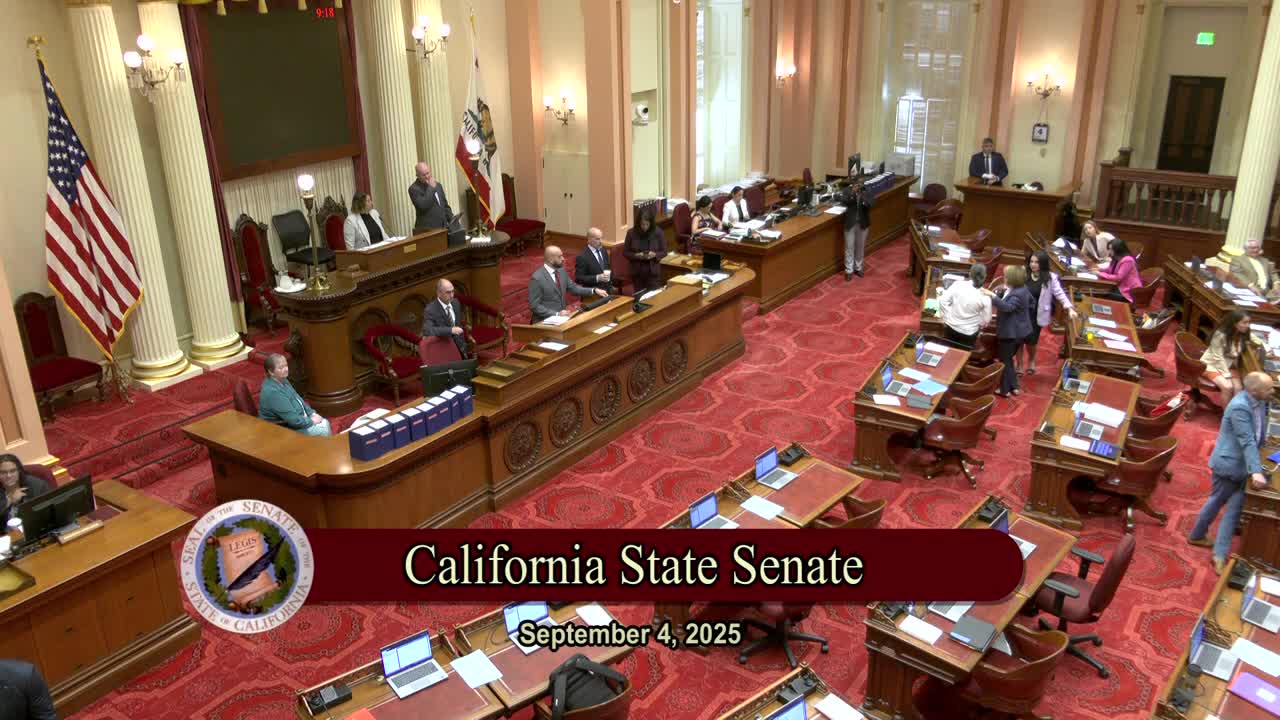


Bill Co-Author(s):