AB 1304: Paint product recovery program: paint recovery: education and outreach.
- Session Year: 2025-2026
- House: Assembly
- Latest Version Date: 2025-04-03
Current Status:
Failed
(2026-02-02: From committee: Filed with the Chief Clerk pursuant to Joint Rule 56.)
Introduced
In Committee
Awaiting First Chamber Vote
Passed First Chamber
In Committee
Awaiting Second Chamber Vote
Passed Second Chamber
Enacted
Existing law establishes a paint product recovery program for the purpose of requiring paint manufacturers to develop and implement a program stewardship plan to collect, transport, and process postconsumer paint to reduce the costs and environmental impacts of the disposal of postconsumer paint in this state. Existing law defines various terms for the purpose of the program. Existing law requires a stewardship plan to include consumer, contractor, and retailer education and outreach efforts to promote source reduction and recycling products, and authorizes the development and updating of education and outreach materials.
This bill would state that the purpose of the program is also to require paint manufacturers to develop and implement a program to recover, reuse, and recycle postconsumer paint. The bill would define paint recovery to mean the process of collecting and transporting leftover paint for the purpose of reuse, processing, or recycling to reduce its environmental impact and disposal costs. The bill would require, rather than authorize, the development and updating of education and outreach materials, would require a stewardship plans education and outreach efforts to also promote the proper use and handling of paint products, and would require those efforts to include investment in the training of Californias future workforce by working with California apprenticeship programs for training apprentices and journey-level painters.
Existing law establishes a paint product recovery program for the purpose of requiring paint manufacturers to develop and implement a program to collect, transport, and process postconsumer paint to reduce the costs and environmental impacts of the disposal of postconsumer paint in this state. Existing law defines various terms for the purpose of the program.
This bill would state that the purpose of the program is also to require paint manufacturers to develop and implement a program to recover, reuse, and recycle postconsumer paint. The bill would define paint recovery to mean the process of collecting and transporting leftover paint for the purpose of reuse, processing, or recycling to reduce its environmental impact and disposal costs.
The Legislature finds and declares all of the following:
(a)Proper recovery, reuse, processing, and recycling of paint has many environmental benefits, including saving energy, water, and oil, reducing climate changing carbon dioxide emissions, reducing the amount of waste in landfills, and conserving resources.
(b)Proper recovery, reuse, processing, and recycling of paint supports a circular economy by decreasing the cost for new paint materials through reuse, reformulation, offsetting need for virgin materials, and by creating new business opportunities and potentially lower production costs for paint manufacturers.
(c)California painters are skilled tradespeople who not only play a vital role in shaping our cities and infrastructure, but also are all members of the communities they work in.
(d)The thousands of skilled tradespeople of California are committed to, and are invested in, the health and well-being of the towns and cities they work and live in.
(e)Training and apprenticeship programs train the future tradespeople of our state to not only meet the high quality standards of their craft, but also to meet Californias health, safety, and environmental laws, codes, ordinances, and standards.
(f)Historic investment in workforce training through Californias apprenticeship programs has empowered tradespeople to advocate on behalf of themselves and their communities for stronger health and safety standards.
(g)Investment in Californias trade apprenticeship programs on environmental conservation and sustainable practices will lead to stronger community involvement in the programs and practices that protect our communities.
(c)(h)It is intent of the Legislature to encourage maximum recovery, reuse, processing, and recycling of postconsumer paint. embed workforce training and investment in Californias paint product stewardship programs education and outreach to encourage Californias future workforce stewards of Californias environment as active participants in Californias paint product stewardship program.
SEC. 2.Section 48700 of the Public Resources Code is amended to read:48700.The purpose of the paint product recovery program established pursuant to this chapter is to require paint manufacturers to develop and implement a program to collect, process, recover, recycle, reuse, and transport postconsumer paint to reduce the costs and environmental impacts of the disposal of postconsumer paint in this state.
SEC. 3.Section 48701 of the Public Resources Code is amended to read:48701.For purposes of this chapter, the following terms have the following meanings:
(a)(1)Aerosol coating product means a pressurized coating product containing pigments or resins dispensed by means of a propellant and packaged and sold in a disposable aerosol container for handheld application, or for use in specialized equipment for ground traffic or marking applications.
(2)Aerosol coating product does not include paint thinner, paint remover, graffiti remover, caulking compounds that contain no appreciable level of opaque fillers or pigments, products subject to Article 1 (commencing with Section 94500) or Article 2 (commencing with Section 94507) of Subchapter 8.5 of Chapter 1 of Division 3 of Title 17 of the California Code of Regulations, or other nonaerosol coating products not regulated under Article 3 (commencing with Section 94520) of Subchapter 8.5 of Chapter 1 of Division 3 of Title 17 of the California Code of Regulations.
(b)Coating-related product means a product used as a paint thinner, paint colorant, paint additive, paint remover, surface sealant, surface preparation, or surface adhesive and sold for home improvement. For purposes of this subdivision, home improvement has the same meaning as defined in Section 7151 of the Business and Professions Code.
(c)Consumer means a purchaser or owner of a paint product, including a person, business, corporation, limited partnership, nonprofit organization, or governmental entity.
(d)Department means the Department of Resources Recycling and Recovery.
(e)Distributor means a person that has a contractual relationship with one or more manufacturers to market and sell paint products to retailers.
(f)Manufacturer means a manufacturer of a paint product.
(g)Nonindustrial coating means arts and crafts paint, automotive refinish paint, driveway sealer, faux finish or glaze, furniture oil, furniture paint, lime wash, lime paint, marine paint, antifouling paint, road and traffic marking paint, two-component paint, wood preservative, fire retardant paint, dry fog paint, chalkboard paint, and conductive paint, sold in containers of five gallons or less for commercial and homeowner use, but does not include coatings purchased for industrial or original equipment manufacturer use.
(h)(1)Paint product includes all of the following:
(A)Interior and exterior architectural coatings, sold in containers of five gallons or less for commercial or homeowner use, but does not include coatings purchased for industrial or original equipment manufacturer use.
(B)Aerosol coating products.
(C)Nonindustrial coatings and coating-related products sold in containers of five gallons or less for commercial or homeowner use, but does not include products purchased for industrial or original equipment manufacturer use.
(2)Paint product does not include a health and beauty product.
(i)Paint recovery means the process of collecting and transporting leftover paint for the purpose of reusing, processing, or recycling to reduce its environmental impact and disposal costs.
(j)Permanent collection site means a permanent location in the state where discarded paint products may be returned at no cost, by a consumer or another party on behalf of a consumer, to be reused or otherwise managed.
(k)Postconsumer paint means a paint product not used by the purchaser.
(l)Retailer means a person that sells paint products in the state to a consumer. For purposes of this subdivision, a sale includes, but is not limited to, transactions conducted through sales outlets, catalogs, or the internet or any other similar electronic means.
(m)Stewardship organization means an organization that is exempt from taxation under Section 501(c)(3) of the United States Internal Revenue Code of 1986 and formed for the purpose of implementing a stewardship plan to meet the requirements of this chapter.
(n)Stewardship plan means a plan developed by a stewardship organization that meets the requirements of Sections 48703.1, 48703.2, 48703.3, and 48703.4, and is submitted to the department for approval pursuant to Section 48703.
(o)Temporary collection site means a temporary location in the state where discarded paint products may be returned at no cost, by a consumer or another party on behalf of a consumer, to be reused or otherwise managed.
SEC. 4.Section 48703.4 of the Public Resources Code is amended to read:48703.4.A stewardship plan shall include consumer, contractor, and retailer education and outreach efforts to promote the proper use, handling, source reduction reduction, and recycling of paint products. This information may education and outreach shall include, but is not limited to, developing, both of the following:
(a)Developing, and updating as necessary, educational and other outreach materials for consumers and retailers of paint products. These materials shall be made available to retailers. These materials may shall include, but are not limited to, one or more of the following:
(a)(1)Signage that is prominently displayed and easily visible to the consumer.
(b)(2)Written materials and templates of materials for reproduction by retailers to be provided to the consumer at the time of purchase or delivery, or both. Written materials shall include information on the prohibition of improper disposal of paint products.
(c)(3)Advertising or other promotional materials, or both, that include references to paint product recycling opportunities.
(d)(4)An internet website that publicizes the location of approved collection sites and provides information on how to access and drop off paint products at the free and convenient network of approved collection sites offered by the stewardship organization.
(e)(5)All signage and materials required for approved collection sites by the stewardship organization, and a description of the method by which approved collection sites can access replacement materials at no cost to the approved collection site.
(f)(6)A description of efforts to support participation by all California communities, including a description of efforts to communicate in languages other than English.
(b)Investment in the training of Californias future workforce by working with California apprenticeship programs for training apprentices and journey-level painters.
The Legislature finds and declares all of the following:
(a)Proper recovery, reuse, processing, and recycling of paint has many environmental benefits, including saving energy, water, and oil, reducing climate changing carbon dioxide emissions, reducing the amount of waste in landfills, and conserving resources.
(b)Proper recovery, reuse, processing, and recycling of paint supports a circular economy by decreasing the cost for new paint materials through reuse, reformulation, offsetting need for virgin materials, and by creating new business opportunities and potentially lower production costs for paint manufacturers.
(c)It is intent of the Legislature to encourage maximum recovery, reuse, processing, and recycling of postconsumer paint.
SEC. 2.Section 48700 of the Public Resources Code is amended to read:48700.The purpose of the paint product recovery program established pursuant to this chapter is to require paint manufacturers to develop and implement a program to collect, transport, and process process, recover, recycle, reuse, and transport postconsumer paint to reduce the costs and environmental impacts of the disposal of postconsumer paint in this state.
SEC. 3.Section 48701 of the Public Resources Code is amended to read:48701.For purposes of this chapter, the following terms have the following meanings:
(a)(1)Aerosol coating product means a pressurized coating product containing pigments or resins dispensed by means of a propellant and packaged and sold in a disposable aerosol container for handheld application, or for use in specialized equipment for ground traffic or marking applications.
(2)Aerosol coating product does not include paint thinner, paint remover, graffiti remover, caulking compounds that contain no appreciable level of opaque fillers or pigments, products subject to Article 1 (commencing with Section 94500) or Article 2 (commencing with Section 94507) of Subchapter 8.5 of Chapter 1 of Division 3 of Title 17 of the California Code of Regulations, or other nonaerosol coating products not regulated under Article 3 (commencing with Section 94520) of Subchapter 8.5 of Chapter 1 of Division 3 of Title 17 of the California Code of Regulations.
(b)Coating-related product means a product used as a paint thinner, paint colorant, paint additive, paint remover, surface sealant, surface preparation, or surface adhesive and sold for home improvement. For purposes of this subdivision, home improvement has the same meaning as defined in Section 7151 of the Business and Professions Code.
(c)Consumer means a purchaser or owner of a paint product, including a person, business, corporation, limited partnership, nonprofit organization, or governmental entity.
(d)Department means the Department of Resources Recycling and Recovery.
(e)Distributor means a person that has a contractual relationship with one or more manufacturers to market and sell paint products to retailers.
(f)Manufacturer means a manufacturer of a paint product.
(g)Nonindustrial coating means arts and crafts paint, automotive refinish paint, driveway sealer, faux finish or glaze, furniture oil, furniture paint, lime wash, lime paint, marine paint, antifouling paint, road and traffic marking paint, two-component paint, wood preservative, fire retardant paint, dry fog paint, chalkboard paint, and conductive paint, sold in containers of five gallons or less for commercial and homeowner use, but does not include coatings purchased for industrial or original equipment manufacturer use.
(h)(1)Paint product includes all of the following:
(A)Interior and exterior architectural coatings, sold in containers of five gallons or less for commercial or homeowner use, but does not include coatings purchased for industrial or original equipment manufacturer use.
(B)Aerosol coating products.
(C)Nonindustrial coatings and coating-related products sold in containers of five gallons or less for commercial or homeowner use, but does not include products purchased for industrial or original equipment manufacturer use.
(2)Paint product does not include a health and beauty product.
(i)Paint recovery means the process of collecting and transporting leftover paint for the purpose of reusing, processing, or recycling to reduce its environmental impact and disposal costs.
(i)(j)Permanent collection site means a permanent location in the state where discarded paint products may be returned at no cost, by a consumer or another party on behalf of a consumer, to be reused or otherwise managed.
(j)(k)Postconsumer paint means a paint product not used by the purchaser.
(k)(l)Retailer means a person that sells paint products in the state to a consumer. For purposes of this subdivision, a sale includes, but is not limited to, transactions conducted through sales outlets, catalogs, or the internet or any other similar electronic means.
(l)(m)Stewardship organization means an organization that is exempt from taxation under Section 501(c)(3) of the United States Internal Revenue Code of 1986 and formed for the purpose of implementing a stewardship plan to meet the requirements of this chapter.
(m)(n)Stewardship plan means a plan developed by a stewardship organization that meets the requirements of Sections 48703.1, 48703.2, 48703.3, and 48703.4, and is submitted to the department for approval pursuant to Section 48703.
(n)(o)Temporary collection site means a temporary location in the state where discarded paint products may be returned at no cost, by a consumer or another party on behalf of a consumer, to be reused or otherwise managed.
|
Date
|
Status
|
|---|---|
| Feb 2, 2026 | From committee: Filed with the Chief Clerk pursuant to Joint Rule 56. |
| Jan 31, 2026 | Died pursuant to Art. IV, Sec. 10(c) of the Constitution. |
| May 23, 2025 | In committee: Held under submission. |
| May 7, 2025 | In committee: Set, first hearing. Referred to APPR. suspense file. |
| Apr 22, 2025 | From committee: Do pass and re-refer to Com. on APPR. (Ayes 13. Noes 1.) (April 21). Re-referred to Com. on APPR. |
| Apr 7, 2025 | Re-referred to Com. on NAT. RES. |
| Apr 3, 2025 | From committee chair, with author's amendments: Amend, and re-refer to Com. on NAT. RES. Read second time and amended. |
| Mar 13, 2025 | Referred to Com. on NAT. RES. |
| Feb 24, 2025 | Read first time. |
| Feb 22, 2025 | From printer. May be heard in committee March 24. |
| Feb 21, 2025 | Introduced. To print. |
|
Date
|
Description
|
Location
|
Votes
|
|
|---|---|---|---|---|
| Apr 21, 2025 | Do pass and be re-referred to the Committee on [Appropriations] | Assembly Standing Committee on Natural Resources |
Passed |
This list shows positions taken on this bill by organizations on the date displayed, which is linked to the original source.
Positions by individuals are not included.
|
Organization
|
Position
|
Date
|
|---|---|---|
| American Coatings Association | ** Against | |
| California Teamsters Public Affairs Council | ** Support | |
| District Council 16 International Union Of Painters And Allied Trades | ** Support | |
| North American Wood Pole Council | ** Against | |
| Rural County Representatives of California | ** Against | |
| State Building and Construction Trades Council | ** Support | |
| Treated Wood Council | ** Against | |
| Western Wood Preservers Institute | ** Against |
Date of Hearing: May 7, 2025
ASSEMBLY COMMITTEE ON APPROPRIATIONS
Buffy Wicks, Chair
ABPCA Bill Id:AB 1304
Author:(Schultz) – As Amended Ver:April 3, 2025
Policy Committee: | Natural Resources | Vote: | 13 - 1 |
|
| ||
|
|
Urgency: No State Mandated Local Program: No Reimbursable: No
SUMMARY:
This bill revises the state’s paint product recovery program’s education and outreach requirements to include apprenticeship workforce training.
Specifically, this bill, among other things:
- Defines “paint recovery” to mean the process of collecting and transporting leftover paint for the purpose of reusing, processing, or recycling to reduce its environmental impact and disposal costs.
- Requires a stewardship plan to include consumer, contractor, and retailer education and outreach efforts to promote the proper use, handling, source reduction, and recycling of paint products.
- Requires the education and outreach efforts to include investment in the training of California’s future workforce by working with California apprenticeship programs for training apprentices and journey-level painters.
FISCAL EFFECT:
CalRecycle will incur costs of an unknown amount, likely in the low hundreds of thousands of dollars, to implement this bill. CalRecycle is in the process of developing permanent regulations to implement recently chaptered bills that add aerosol coating products, nonindustrial coatings, and coating-related products into the paint program. Changes to the program as contemplated by this bill will delay the current rulemaking or require a new regulatory process.
For its part, CalRecycle estimates one-time costs of approximately $257,000 in fiscal year (FY) 2026-27 for one new position followed by ongoing annual costs of approximately $414,000 for two total positions to implement this bill. CalRecycle notes it would likely require a loan to cover these costs, because the Paint Product Stewardship Account does not have a sufficient balance to do so.
As noted below, the paint stewardship program (including CalRecycle’s administrative costs) is funded by a fee assessed on the sale of new paint. Because this assessment is collected from consumers at the point-of-sale, any increased funding for workforce development may result in either reduced funding for other components of the program or higher fees for consumers.
COMMENTS:
1) Purpose. According to the author, this bill strengthens the state’s paint stewardship program “by requiring PaintCare to invest in the training of California’s future workforce, thereby increasing the recycling rate of unused paint and providing career pathways for Californians by working with our existing apprenticeship programs.”
2) Background. Extended producer responsibility (EPR) is a strategy that places shared responsibility for end-of-life product management on producers and all entities involved in the product chain, instead of on the general public and local governments. The state’s EPR program for paint ensures leftover paint is reused, recycled, or properly disposed. CalRecycle oversees the program, which is run by PaintCare, a nonprofit stewardship organization created by paint manufacturers.
The paint stewardship program offers 816 free collection sites throughout the state as well as free pick-up service for large volumes of paint. According to PaintCare, the program has collected over 37 million gallons of used paint for recycling or proper disposal.
The program is funded by an assessment, or fee, charged to consumers for every container of paint at the time of sale. The current assessment for paint products sold in California is $0.30 for a container that is one-half pint to less than one gallon, $0.65 for a container that is between one and two gallons, and $1.50 for a container that is larger than two gallons. PaintCare pays CalRecycle an administrative fee to cover the department’s costs of administering and enforcing the paint stewardship program. According to CalRecycle, for the first two quarters of FY 2024-25, PaintCare paid CalRecycle approximately $196,000 and $133,000 in administrative fees. The Paint Product Stewardship Account had an ending balance of $575,000 in FY 2023-24, and in the same FY, the department expended approximately $548,000 from the account (all of which is reimbursed by PaintCare).
The Assembly Natural Resources Committee analysis of this bill notes that this bill seems to be modeled after a provision in AB 863 (Aguiar-Curry), Chapter 675, Statutes of 2024, which requires that 8% of the carpet fee collected as part of the state’s carpet stewardship program be awarded as grants to fund apprenticeship programs for carpet installers.
This bill is supported by several labor unions, who argue that expanding the paint program’s education and outreach requirements to incorporate apprenticeship workforce development will train the state’s future workforce “to manage materials more sustainably leading to better outcomes for these programs but moreover will lead to cleaner communities by changing the workplace culture and making out trades people stewards of California’s environment.”
Among others in opposition, the American Coatings Association (ACA), which created PaintCare, argues that professional education is “already a cornerstone of the existing PaintCare program.” ACA further contends that the instructions to utilize the program are the “same for professionals as it is for do-it-yourself painters – replace the lid securely and either drop it off at a participating location or call for a large volume pick up. We are unclear how additional training would add value to the program.” ACA argues the bill will impose new program costs, which would ultimately cost consumers and contractor budgets with potential increased fees on the program to “account for new and unspecified training.” Finally ACA argues the bill will delay the aforementioned rulemaking “after two years of legislation supported by ACA and many other stakeholders.”
Analysis Prepared by: Nikita Koraddi / APPR. / (916) 319-2081
Date of Hearing: April 21, 2025
ASSEMBLY COMMITTEE ON NATURAL RESOURCES
Isaac G. Bryan, Chair
ABPCA Bill Id:AB 1304 (
Author:Schultz) – As Amended Ver:April 3, 2025
SUBJECT: Paint product recovery program: paint recovery: education and outreach
SUMMARY: Revises the Paint Product Recovery Program (Program) to include consumer, contractor, and retailer education and outreach efforts and to include investment in workforce training.
EXISTING LAW establishes the Program, which establishes an expanded producer responsibility (EPR) program for the collection and recycling of architectural paint. (Public Resources Code 48700 et seq.) The Program:
- Defines various terms, including “paint product” as interior and external architectural coatings, aerosol coatings, and nonindustrial coatings and coating-related products.
- Requires the Department of Resources Recycling and Recovery (CalRecycle) to adopt regulations to implement the Program.
- Requires manufacturers, individually or through a stewardship organization, to establish and implement a paint stewardship plan (plan), which covers the collection and management of postconsumer paint products.
- Requires the plan to demonstrate sufficient funding for the Program, including a stewardship assessment for each container of paint products sold by manufacturers in the state. Requires that the assessment to be added to the cost of all paint products sold in California.
- Requires the plan to include consumer, contractor, and retailer education and outreach efforts to promote the source reduction and recycling of paint products, including developing and updating educational and other outreach materials.
- Requires producers, individually or through a stewardship organization, to submit an annual report to CalRecycle that includes:
- The total volume of paint sold in the state;
- The total volume or postconsumer paint recovered;
- A description of methods used to collect, transport, and process paint products;
- The total cost of implementing the Program;
- An evaluation of how the Program’s funding mechanism operated;
- An independent financial audit;
- Examples of educational materials provided to consumers; and,
- Any other information deemed relevant by the stewardship organization.
- Requires CalRecycle to review the annual report and adopt a finding of compliance or noncompliance with the requirements
- Establishes administrative civil penalties for violations of the Program.
THIS BILL:
- Defines “paint recovery” to mean the process of collecting and transporting leftover paint for the purpose of reusing, processing, or recycling to reduce its environmental impact and disposal costs.
- Requires a stewardship plan to include consumer, contractor, and retailer education and outreach efforts to promote the proper use, handling, source reduction, and recycling of paint products.
- Requires a stewardship plan to include investment in the training of California’s future workforce by working with California apprenticeship programs for training apprentices and journey-level painters.
FISCAL EFFECT: Unknown
COMMENTS:
- Product stewardship. According to CalRecycle, product stewardship, or EPR, is a strategy that places shared responsibility for end-of-life management of products on the producers and all entities involved in the product chain, instead of entirely on local governments and consumers. EPR programs rely on industry, formalized in a product stewardship organization, to develop and implement approaches to create a circular economy that makes business sense, with oversight and enforcement provided by a government entity. This approach provides flexibility for manufacturers to design products in a way that facilitates recycling and to develop systems to capture those products at the end-of-life to meet statutory goals. California has established EPR programs for carpet, paint, pharmaceuticals, household batteries, and mattresses. Additionally, SB 54 (Allen) Chapter 75, Statutes of 2022, established the Plastic Pollution Prevention and Packaging Producer Responsibility Act, which imposes minimum content and source reduction requirements for plastic single-use packaging and food service ware through an EPR program.
- PaintCare. California’s Program was originally established in 2012 and was expanded to include aerosol and other paint types and revised by SB 1143 (Allen), Chapter 989, Statutes of 2024. Producers are required to participate individually or through a stewardship organization acting on their behalf. In California, the Program is administered by PaintCare, a nonprofit organization that operates paint stewardship programs in 11 states, including Colorado, New York, Oregon, and Washington. California’s program includes 816 free collection sites located throughout the state, offering convenient collection to the majority of the state. According to PaintCare, the Program has collected over 37 million gallons of used paint for recycling or proper disposal. In addition to the free drop-off locations, PaintCare offers free pick-up service for large volumes, which is defined as 100 gallons or more.
The Program is funded by an assessment, or fee, charged to consumers for every container of paint at the time of sale. The current assessment for paint products sold in California is $0.30 for containers one-half pint to less than one gallon, $0.65 for containers one to two gallons, and $1.50 for containers larger than two gallons.
The Program requires the plan to include consumer, contractor, and retailer education and outreach efforts to promote the source reduction and recycling of paint products. The materials may include signage, written materials and templates of materials for use by retailers to be provided to consumers at the time of purchase or delivery, advertising or other promotional materials, a website that publicizes the location of free and convenient collection sites that accept used paint, and efforts to support participation by all California communities, including efforts to communicate in languages other than English.
As part of its education and outreach efforts, PaintCare maintains a website with resources for contractors (easily accessed from their main website) that includes a fact sheet with information for painting contractors about the Program, drop-off sites, the assessment and Program funding, specific recommendations to contractors relating to preparing estimates for customers, including the assessment in their estimates, free pick-up for large volume paint projects, and what products are covered in the Program. In addition to the fact sheet, PaintCare has implemented strategies to educate trade painters on how to recycle paint through the Program, including employing six coordinators that are responsible for building and maintaining contractor relationships by attending local and state chapter events sponsored or frequented by painters.
- Regulations process. CalRecycle has begun revisions to the regulations governing the Program pursuant to SB 1143. The regulations would implement the addition of aerosol coating products, nonindustrial coatings, and coating-related products. Last month, CalRecycle held an informal workshop to solicit feedback on the regulatory concepts and opened an informal public comment period. Initial public comments were due by April 11. Additional changes to the Program would likely delay the current regulatory process or require a new regulatory process.
- This bill. This bill adds additional requirements to the product stewardship plan relating to consumer, contractor, and retailer education and outreach and requires the plan to provide for “investment in the training of California’s future workforce by working with California apprenticeship programs for training apprentices and journey-level painters.” This bill seems to be modeled after a provision in AB 863 (Aguiar-Curry), Chapter 675, Statutes of 2024, which requires that 8% of the carpet assessment collected be awarded as grants to fund apprenticeship programs for carpet installers. Because the assessment is collected from consumers at the point-of-sale, any increased funding for workforce development will either result in reduced funding for other components of the Program or higher costs for consumers.
- Author’s statement:
While California’s paint stewardship program, operating under PaintCare, has successfully diverted millions of gallons of paint from landfill, at a recovery rate of approximately 5% a year, conservative evaluations estimate a disposal rate of 10% annually. That additional 5% plus of unrecovered paint is millions of gallons being disposed of in landfill or worse yet finding its way into California’s waterways and environment, costing local governments millions of dollars to remediate.
AB 1304 strengthens the program by requiring PaintCare to invest in the training of California’s future workforce, thereby increasing the recycling rate of unused paint and providing career pathways for Californians by working with our existing apprenticeship programs.
REGISTERED SUPPORT / OPPOSITION:
Support
California Teamsters Public Affairs Council
District Council 16, International Union of Painters and Allied Trades
District Council 36, International Union of Painters and Allied Trades
State Building and Construction Trades Council
Opposition
American Coatings Association
North American Wood Pole Council
Rural County Representatives of California
Treated Wood Council
Western Wood Preservers Institute
Analysis Prepared by: Elizabeth MacMillan / NAT. RES. /
Discussed in Hearing
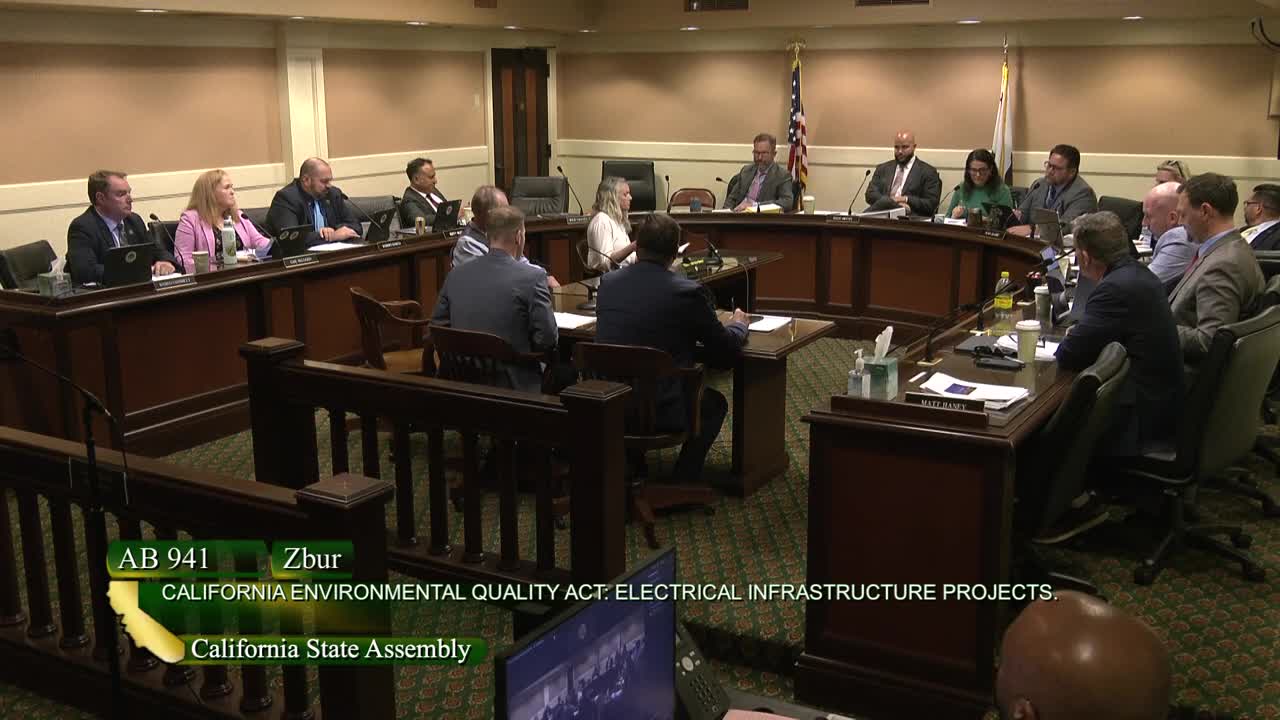 15MIN
Assembly Standing Committee on Natural Resources
Bill Author

Bill Co-Author(s):