AB 1318: Public social services: tax-exempt nonprofit organizations.
- Session Year: 2025-2026
- House: Assembly
- Latest Version Date: 2025-10-07
Current Status:
Passed
(2025-10-07: Chaptered by Secretary of State - Chapter 451, Statutes of 2025.)
Introduced
In Committee
Awaiting First Chamber Vote
Passed First Chamber
In Committee
Awaiting Second Chamber Vote
Passed Second Chamber
Enacted
The Corporation Tax Law, in modified conformity with federal tax law, provides an exemption from the taxes imposed by that law for specified organizations. Existing law references federal tax law to give priority to tax-exempt organizations, or to require tax-exempt status, for the purpose of certain grants and service contracts.
This bill would provide that where specified federal tax law is referenced to determine eligibility for any state grant or service contract, or for the disbursement of state or local funds, it is deemed to also refer to the relevant provision of the Corporation Tax Law.
Existing law designates the State Department of Social Services as the single agency with full power to supervise every phase of the administration of public social services, including services for refugees, immigrants, and asylees, except as specified.
Existing law requires the department to allocate federal funds for refugee social services programs to eligible counties and, in certain circumstances, to qualified nonprofit organizations. Existing law requires the department, subject to an appropriation, to provide grants to qualified nonprofit organizations through contracts to provide certain immigration-related legal services to persons residing in, or formerly residing in, the state. Existing law requires the department to administer a rapid response program to award grants or contracts to entities, including nonprofit organizations, that provide critical assistance to immigrants during times of need. Existing law, subject to an appropriation, establishes the Enhanced Services for Asylees and Vulnerable Noncitizens program to provide resettlement services for persons granted asylum by the United States Attorney General or the United States Secretary of Homeland Security or who are eligible to receive refugee cash assistance and services as victims of crime. Existing law requires a grant or contract awarded pursuant to that program to be executed only with a qualified nonprofit organization. Existing law defines qualified nonprofit organization or nonprofit organization for purposes of these provisions to include a nonprofit organization that, among other things, is exempt from federal income taxation, as specified.
This bill would revise the definition of qualified nonprofit organization or nonprofit organization under the above-described provisions to additionally include a nonprofit organization that meets specified requirements to qualify for state tax-exempt status.
This bill would declare that it is to take effect immediately as an urgency statute.
The Corporation Tax Law, in modified conformity with federal tax law, provides an exemption from the taxes imposed by that law for specified organizations. Existing law references federal tax law to give priority to tax-exempt organizations, or to require tax-exempt status, for the purpose of certain grants and service contracts.
This bill would provide that where specified federal tax law is referenced to determine eligibility for any state grant or service contract, or for the disbursement of state or local funds, it is deemed to also refer to the relevant provision of the Corporation Tax Law.
Existing law designates the State Department of Social Services as the single agency with full power to supervise every phase of the administration of public social services, including services for refugees, immigrants, and asylees, except as specified.
Existing law requires the department to allocate federal funds for refugee social services programs to eligible counties and, in certain circumstances, to qualified nonprofit organizations. Existing law requires the department, subject to an appropriation, to provide grants to qualified nonprofit organizations through contracts to provide certain immigration-related legal services to persons residing in, or formerly residing in, the state. Existing law requires the department to administer a rapid response program to award grants or contracts to entities, including nonprofit organizations, that provide critical assistance to immigrants during times of need. Existing law, subject to an appropriation, establishes the Enhanced Services for Asylees and Vulnerable Noncitizens program to provide resettlement services for persons granted asylum by the United States Attorney General or the United States Secretary of Homeland Security or who are eligible to receive refugee cash assistance and services as victims of crime. Existing law requires a grant or contract awarded pursuant to that program to be executed only with a qualified nonprofit organization. Existing law defines qualified nonprofit organization or nonprofit organization for purposes of these provisions to include a nonprofit organization that, among other things, is exempt from federal income taxation, as specified.
This bill would revise the definition of qualified nonprofit organization or nonprofit organization under the above-described provisions to additionally include a nonprofit organization that meets specified requirements to qualify for state tax-exempt status.
This bill would declare that it is to take effect immediately as an urgency statute.
The Corporation Tax Law, in modified conformity with federal tax law, provides an exemption from the taxes imposed by that law for specified organizations. Existing law references federal tax law to give priority to tax-exempt organizations, or to require tax-exempt status, for the purpose of certain grants and service contracts.
This bill would provide that where specified federal tax law is referenced to determine eligibility for any state grant or service contract, or for the disbursement of state or local funds, it is deemed to also refer to the relevant provision of the Corporation Tax Law.
Existing law designates the State Department of Social Services as the single agency with full power to supervise every phase of the administration of public social services, including services for refugees, immigrants, and asylees, except as specified.
Existing law requires the department to allocate federal funds for refugee social services programs to eligible counties and, in certain circumstances, to qualified nonprofit organizations. Existing law requires the department, subject to an appropriation, to provide grants to qualified nonprofit organizations through contracts to provide certain immigration-related legal services to persons residing in, or formerly residing in, the state. Existing law requires the department to administer a rapid response program to award grants or contracts to entities, including nonprofit organizations, that provide critical assistance to immigrants during times of need. Existing law, subject to an appropriation, establishes the Enhanced Services for Asylees and Vulnerable Noncitizens program to provide resettlement services for persons granted asylum by the United States Attorney General or the United States Secretary of Homeland Security or who are eligible to receive refugee cash assistance and services as victims of crime. Existing law requires a grant or contract awarded pursuant to that program to be executed only with a qualified nonprofit organization. Existing law defines qualified nonprofit organization or nonprofit organization for purposes of these provisions to include a nonprofit organization that, among other things, is exempt from federal income taxation, as specified.
This bill would revise the definition of qualified nonprofit organization or nonprofit organization under the above-described provisions to additionally include a nonprofit organization that meets specified requirements to qualify for state tax-exempt status.
This bill would declare that it is to take effect immediately as an urgency statute.
Existing law designates the State Department of Social Services as the single agency with full power to supervise every phase of the administration of public social services, including services for refugees, immigrants, and asylees, except as specified.
Existing law requires the department to allocate federal funds for refugee social services programs to eligible counties and, in certain circumstances, to qualified nonprofit organizations. Existing law requires the department, subject to an appropriation, to provide grants to qualified nonprofit organizations through contracts to provide certain immigration-related legal services to persons residing in, or formerly residing in, the state. Existing law requires the department to administer a rapid response program to award grants or contracts to entities, including nonprofit organizations, that provide critical assistance to immigrants during times of need. Existing law, subject to an appropriation, establishes the Enhanced Services for Asylees and Vulnerable Noncitizens program to provide resettlement services for persons granted asylum by the United States Attorney General or the United States Secretary of Homeland Security or who are eligible to receive refugee cash assistance and services as victims of crime. Existing law requires a grant or contract awarded pursuant to that program to be executed only with a qualified nonprofit organization. Existing law defines qualified nonprofit organization or nonprofit organization for purposes of these provisions to include a nonprofit organization that, among other things, is exempt from federal income taxation, as specified.
This bill would revise the definition of qualified nonprofit organization or nonprofit organization under the above-described provisions to additionally include a nonprofit organization that meets specified requirements to qualify for state tax-exempt status.
This bill would declare that it is to take effect immediately as an urgency statute.
Existing law designates the State Department of Social Services as the single agency with full power to supervise every phase of the administration of public social services, including services for refugees, immigrants, and asylees, except as specified.
Existing law requires the department to allocate federal funds for refugee social services programs to eligible counties and, in certain circumstances, to qualified nonprofit organizations. Existing law requires the department, subject to an appropriation, to provide grants to qualified nonprofit organizations through contracts to provide certain immigration-related legal services to persons residing in, or formerly residing in, the state. Existing law requires the department to administer a rapid response program to award grants or contracts to entities, including nonprofit organizations, that provide critical assistance to immigrants during times of need. Existing law, subject to an appropriation, establishes the Enhanced Services for Asylees and Vulnerable Noncitizens program to provide resettlement services for persons granted asylum by the United States Attorney General or the United States Secretary of Homeland Security or who are eligible to receive refugee cash assistance and services as victims of crime. Existing law requires a grant or contract awarded pursuant to that program to be executed only with a qualified nonprofit organization. Existing law defines qualified nonprofit organization or nonprofit organization for purposes of these provisions to include a nonprofit organization that, among other things, is exempt from federal income taxation, as specified.
This bill would revise the definition of qualified nonprofit organization or nonprofit organization under the above-described provisions to additionally include a nonprofit organization that meets specified requirements to qualify for state tax-exempt status.
Existing law, the Corporation Tax Law, exempts organizations that are organized and operated for nonprofit purposes, as specified, from taxes imposed by that law if the Franchise Tax Board issues a determination exempting the organization from tax, except as provided.This bill would make nonsubstantive changes to those provisions.Existing law, the Corporation Tax Law, exempts organizations that are organized and operated for nonprofit purposes, as specified, from taxes imposed by that law if the Franchise Tax Board issues a determination exempting the organization from tax, except as provided.
This bill would make nonsubstantive changes to those provisions.
Notwithstanding any other law, and unless the context clearly requires otherwise, whenever any reference to Section 501(c)(3) of the Internal Revenue Code appears in any statute, regulation, or contract, or in any other code, with respect to determining eligibility for any state grant or service contract, or the disbursement of state or local funds, it shall also be deemed to refer to Section 23701d of the Revenue and Taxation Code.
SEC. 2.Section 13275 of the Welfare and Institutions Code is amended to read:13275.For the purposes of this chapter, the following terms have the following meanings:
(a)Eligible county means a county or city and county designated as impacted using a formula developed by the department based upon the refugee arrivals in the county during the preceding 60-month period for which the department has data.
(b)Qualified nonprofit organization means a nonprofit organization that is either exempt from federal income taxation pursuant to Section 501(c)(3) of the Internal Revenue Code or exempt from state income taxation under Section 23701d of the Revenue and Taxation Code and that satisfies any additional eligibility criteria established by the department.
(c)Refugee social services include, but are not limited to, English language and employment training, as funded through federal appropriations.
(d)Service provider means a qualified nonprofit organization or private for-profit organization selected by the department to administer refugee services.
SEC. 3.Section 13304 of the Welfare and Institutions Code is amended to read:13304.(a)Any grant awarded pursuant to Section 13303 shall fulfill all of the following:
(1)Be executed only with a nonprofit organization that meets the requirements set forth either in Section 501(c)(3) or 501(c)(5) of the Internal Revenue Code or in Section 23701d of the Revenue and Taxation Code and that meets all of the following requirements:
(A)Except as provided in clause (i) of subparagraph (D), have at least three years of experience handling the type of immigration issues for which the organization is requesting a grant.
(B)Have conducted trainings on immigration issues for persons beyond its staff.
(C)Is recognized and accredited by the Office of Legal Access Programs under the United States Department of Justices Executive Office for Immigration Review or meets the requirements to receive funding from the Trust Fund Program administered by the State Bar of California.
(D)(i)For a legal services organization that provides legal training and technical assistance as defined in subdivision (c) of Section 13303, have at least 10 years of experience conducting immigration legal services and technical assistance and meet the requirements to receive funding from the Trust Fund Program administered by the State Bar of California.
(ii)Notwithstanding clause (i), a legal services organization, as described in clause (i), may, at the discretion of the department, instead meet the requirements listed in subparagraphs (A) and (B).
(2)Require reporting, monitoring, or audits of services provided, as determined by the department.
(3)Require grant recipients to maintain adequate legal malpractice insurance and to indemnify and hold the state harmless from any claims that arise from the legal services provided pursuant to this chapter.
(b)For grants awarded prior to the effective date of the act that added this subdivision, with the consent of the department and the grantee, the grantee may provide any of the services described in Section 13303, as amended by that act, and any agreement between the department and grantee shall be deemed to authorize the provision of those services.
SEC. 4.Section 13306 of the Welfare and Institutions Code is amended to read:13306.(a)Grants awarded pursuant to Section 13305 shall be provided only to nonprofit organizations that meet the requirements set forth either in Section 501(c)(3) or 501(c)(5) of the Internal Revenue Code or in Section 23701d of the Revenue and Taxation Code and have at least three years of experience with both of the following:
(1)Conducting education and outreach with immigrant populations.
(2)Conducting outreach for government benefits and programs.
(b)This section shall become operative on January 1, 2016.
SEC. 5.Section 13401 of the Welfare and Institutions Code is amended to read:13401.(a)Grants or contracts awarded by the State Department of Social Services pursuant to this chapter shall comply with all of the following:
(1)May be executed with entities, including, but not limited to, nonprofit entities that meet the requirements set forth in either Section 501(c)(3) or 501(c)(5) of the Internal Revenue Code or in Section 23701d of the Revenue and Taxation Code. An entity may partner with another entity to meet the requirements of this paragraph.
(2)Shall require reporting, monitoring, or audits of assistance provided, as determined by the department.
(3)Shall be used to deliver the following critical assistance to immigrants, as determined necessary by the department:
(A)Medical screening and treatment needs identified by that screening.
(B)(i)Temporary shelter that meets minimum habitability standards, including access to a bathroom, shower, and safe sleeping space. The entity may provide this assistance through temporary direct housing support, rental of physical space or hotel rooms, or by operating a shelter.
(ii)For purposes of this paragraph, shelter operations include, but are not limited to, any of the following:
(I)Securing physical space and making any necessary modifications to that space as required by a fire marshal or other legal authority.
(II)Personnel to oversee the shelter, including security officers.
(III)Janitorial services.
(IV)Laundry services.
(V)Insurance.
(VI)Any other associated and necessary costs of operating a shelter.
(C)Food.
(D)Clothing and other essential supplies.
(E)Transportation.
(F)Communications, including telephone and internet access, and translation services.
(G)Outreach and case management to support the delivery of the services listed in this paragraph.
(4)An entity that is awarded a grant or contract to provide medical screening shall have at least three years of experience providing medical screenings or other equivalent health care related services.
(5)An entity that is awarded a grant or contract to provide assistance other than medical services shall have at least three years of experience providing the assistance for which the entity seeks funding or shall subcontract with another entity that has at least three years of experience providing those services.
(6)An entity that is awarded a grant or contract pursuant to paragraph (5) to provide medical screenings may subcontract with another entity that has at least three years of experience providing medical screenings or other equivalent health care related services.
(b)Not more than 40 percent of each grant or contract awarded to an entity shall be advanced to that entity.
(c)Funding pursuant to this chapter shall be coordinated with any other funds available to support immigrants with critical assistance, and shall supplement and not supplant those funds.
SEC. 6.Section 13650 of the Welfare and Institutions Code is amended to read:13650.(a)The Legislature finds and declares all of the following:
(1)Vulnerable noncitizens, asylees, and refugees are important to the fabric of our society.
(2)Regardless of their legal distinctions, noncitizens face many of the same challenges integrating into the state and are often living in the same communities.
(3)Refugees, asylees, and other noncitizens are granted different services due to the legal distinction of when they were identified, with refugees often being identified in the country of origin and asylees in the country of arrival.
(4)Between 2017 and 2019, the number of applicants granted asylum increased from 26,199 applicants to 46,508 applicants, representing a 56-percent increase. In 2019 alone, California was the settlement state for 34 percent of all new asylees, which was the highest rate of all states.
(5)Research indicates that while individuals granted asylum in this state are given eligibility to a wide range of benefits, most asylees do not get these benefits due to the lack of case management services and assistance in navigating the social safety net and health care systems.
(6)The state-funded Trafficking and Crime Victim Assistance Program (TCVAP) provides critical benefits and services to noncitizen victims of human trafficking, domestic violence, and other serious crimes. TCVAP benefits and services mirror those that are available to refugees after initial resettlement. These vulnerable noncitizens would benefit from initial case management services.
(7)Studies show that with proper case management support, noncitizens are better able to secure the benefits for which they are eligible, and find employment and bring immense contributions to the economy.
(b)The Enhanced Services for Asylees and Vulnerable Noncitizens (ESAVN) is hereby established to provide resettlement services for persons who are currently residing in California and who are granted asylum by the United States Attorney General or the United States Secretary of Homeland Security pursuant to Section 1158 of Title 8 of the United States Code or who are eligible for assistance and services under Section 13283.
(c)For purposes of this chapter, a vulnerable noncitizen is defined as any individual who would be eligible for services under Section 13283.
(d)Grants or contracts awarded pursuant to this section shall be executed only with nonprofit organizations that meet the requirements set forth either in Section 501(c)(3) or 501(c)(5) of the Internal Revenue Code or in Section 23701d of the Revenue and Taxation Code and have at least three years of experience with both of the following:
(1)Providing case management services, as defined in subdivision (b) of Section 13651.
(2)Providing culturally and linguistically appropriate services.
(e)The department shall require qualified nonprofit organizations awarded contracts or grants pursuant to this section to report, monitor, or audit the services provided, as determined by the department.
(f)Funds allocated for these services may also be used to conduct a formal evaluation of the services provided by a qualified entity, as determined by the department.
SEC. 7.The provisions of this act are severable. If any provision of this act or its application is held invalid, that invalidity shall not affect other provisions or applications that can be given effect without the invalid provision or application.
SEC. 8.This act is an urgency statute necessary for the immediate preservation of the public peace, health, or safety within the meaning of Article IV of the California Constitution and shall go into immediate effect. The facts constituting the necessity are:
Given the escalating threats from the federal government to nonprofit organizations serving vulnerable communities, it is necessary for this act to take effect immediately.
Notwithstanding any other law, and unless the context clearly requires otherwise, whenever any reference to Section 501(c)(3) of the Internal Revenue Code appears in any statute, regulation, or contract, or in any other code, with respect to determining eligibility for any state grant or service contract, or the disbursement of state or local funds, it shall also be deemed to refer to Section 23701d of the Revenue and Taxation Code.
SEC. 2.Section 13275 of the Welfare and Institutions Code is amended to read:13275.For the purposes of this chapter, the following terms have the following meanings:
(a)Eligible county means a county or city and county designated as impacted using a formula developed by the department based upon the refugee arrivals in the county during the preceding 60-month period for which the department has data.
(b)Qualified nonprofit organization means a nonprofit organization that is either exempt from federal income taxation pursuant to Section 501(c)(3) of the Internal Revenue Code or exempt from state income taxation under Section 23701d of the Revenue and Taxation Code and that satisfies any additional eligibility criteria established by the department.
(c)Refugee social services include, but are not limited to, English language and employment training, as funded through federal appropriations.
(d)Service provider means a qualified nonprofit organization or private for-profit organization selected by the department to administer refugee services.
SEC. 3.Section 13304 of the Welfare and Institutions Code is amended to read:13304.(a)Any grant awarded pursuant to Section 13303 shall fulfill all of the following:
(1)Be executed only with a nonprofit organization that meets the requirements set forth either in Section 501(c)(3) or 501(c)(5) of the Internal Revenue Code or in Section 23701d of the Revenue and Taxation Code and that meets all of the following requirements:
(A)Except as provided in clause (i) of subparagraph (D), have at least three years of experience handling the type of immigration issues for which the organization is requesting a grant.
(B)Have conducted trainings on immigration issues for persons beyond its staff.
(C)Is recognized and accredited by the Office of Legal Access Programs under the United States Department of Justices Executive Office for Immigration Review or meets the requirements to receive funding from the Trust Fund Program administered by the State Bar of California.
(D)(i)For a legal services organization that provides legal training and technical assistance as defined in subdivision (c) of Section 13303, have at least 10 years of experience conducting immigration legal services and technical assistance and meet the requirements to receive funding from the Trust Fund Program administered by the State Bar of California.
(ii)Notwithstanding clause (i), a legal services organization, as described in clause (i), may, at the discretion of the department, instead meet the requirements listed in subparagraphs (A) and (B).
(2)Require reporting, monitoring, or audits of services provided, as determined by the department.
(3)Require grant recipients to maintain adequate legal malpractice insurance and to indemnify and hold the state harmless from any claims that arise from the legal services provided pursuant to this chapter.
(b)For grants awarded prior to the effective date of the act that added this subdivision, with the consent of the department and the grantee, the grantee may provide any of the services described in Section 13303, as amended by that act, and any agreement between the department and grantee shall be deemed to authorize the provision of those services.
SEC. 4.Section 13306 of the Welfare and Institutions Code is amended to read:13306.(a)Grants awarded pursuant to Section 13305 shall be provided only to nonprofit organizations that meet the requirements set forth either in Section 501(c)(3) or 501(c)(5) of the Internal Revenue Code or in Section 23701d of the Revenue and Taxation Code and have at least three years of experience with both of the following:
(1)Conducting education and outreach with immigrant populations.
(2)Conducting outreach for government benefits and programs.
(b)This section shall become operative on January 1, 2016.
SEC. 5.Section 13401 of the Welfare and Institutions Code is amended to read:13401.(a)Grants or contracts awarded by the State Department of Social Services pursuant to this chapter shall comply with all of the following:
(1)May be executed with entities, including, but not limited to, nonprofit entities that meet the requirements set forth in either Section 501(c)(3) or 501(c)(5) of the Internal Revenue Code or in Section 23701d of the Revenue and Taxation Code. An entity may partner with another entity to meet the requirements of this paragraph.
(2)Shall require reporting, monitoring, or audits of assistance provided, as determined by the department.
(3)Shall be used to deliver the following critical assistance to immigrants, as determined necessary by the department:
(A)Medical screening and treatment needs identified by that screening.
(B)(i)Temporary shelter that meets minimum habitability standards, including access to a bathroom, shower, and safe sleeping space. The entity may provide this assistance through temporary direct housing support, rental of physical space or hotel rooms, or by operating a shelter.
(ii)For purposes of this paragraph, shelter operations include, but are not limited to, any of the following:
(I)Securing physical space and making any necessary modifications to that space as required by a fire marshal or other legal authority.
(II)Personnel to oversee the shelter, including security officers.
(III)Janitorial services.
(IV)Laundry services.
(V)Insurance.
(VI)Any other associated and necessary costs of operating a shelter.
(C)Food.
(D)Clothing and other essential supplies.
(E)Transportation.
(F)Communications, including telephone and internet access, and translation services.
(G)Outreach and case management to support the delivery of the services listed in this paragraph.
(4)An entity that is awarded a grant or contract to provide medical screening shall have at least three years of experience providing medical screenings or other equivalent health care related services.
(5)An entity that is awarded a grant or contract to provide assistance other than medical services shall have at least three years of experience providing the assistance for which the entity seeks funding or shall subcontract with another entity that has at least three years of experience providing those services.
(6)An entity that is awarded a grant or contract pursuant to paragraph (5) to provide medical screenings may subcontract with another entity that has at least three years of experience providing medical screenings or other equivalent health care related services.
(b)Not more than 40 percent of each grant or contract awarded to an entity shall be advanced to that entity.
(c)Funding pursuant to this chapter shall be coordinated with any other funds available to support immigrants with critical assistance, and shall supplement and not supplant those funds.
SEC. 6.Section 13650 of the Welfare and Institutions Code is amended to read:13650.(a)The Legislature finds and declares all of the following:
(1)Vulnerable noncitizens, asylees, and refugees are important to the fabric of our society.
(2)Regardless of their legal distinctions, noncitizens face many of the same challenges integrating into the state and are often living in the same communities.
(3)Refugees, asylees, and other noncitizens are granted different services due to the legal distinction of when they were identified, with refugees often being identified in the country of origin and asylees in the country of arrival.
(4)Between 2017 and 2019, the number of applicants granted asylum increased from 26,199 applicants to 46,508 applicants, representing a 56-percent increase. In 2019 alone, California was the settlement state for 34 percent of all new asylees, which was the highest rate of all states.
(5)Research indicates that while individuals granted asylum in this state are given eligibility to a wide range of benefits, most asylees do not get these benefits due to the lack of case management services and assistance in navigating the social safety net and health care systems.
(6)The state-funded Trafficking and Crime Victim Assistance Program (TCVAP) provides critical benefits and services to noncitizen victims of human trafficking, domestic violence, and other serious crimes. TCVAP benefits and services mirror those that are available to refugees after initial resettlement. These vulnerable noncitizens would benefit from initial case management services.
(7)Studies show that with proper case management support, noncitizens are better able to secure the benefits for which they are eligible, and find employment and bring immense contributions to the economy.
(b)The Enhanced Services for Asylees and Vulnerable Noncitizens (ESAVN) is hereby established to provide resettlement services for persons who are currently residing in California and who are granted asylum by the United States Attorney General or the United States Secretary of Homeland Security pursuant to Section 1158 of Title 8 of the United States Code or who are eligible for assistance and services under Section 13283.
(c)For purposes of this chapter, a vulnerable noncitizen is defined as any individual who would be eligible for services under Section 13283.
(d)Grants or contracts awarded pursuant to this section shall be executed only with nonprofit organizations that meet the requirements set forth either in Section 501(c)(3) or 501(c)(5) of the Internal Revenue Code or in Section 23701d of the Revenue and Taxation Code and have at least three years of experience with both of the following:
(1)Providing case management services, as defined in subdivision (b) of Section 13651.
(2)Providing culturally and linguistically appropriate services.
(e)The department shall require qualified nonprofit organizations awarded contracts or grants pursuant to this section to report, monitor, or audit the services provided, as determined by the department.
(f)Funds allocated for these services may also be used to conduct a formal evaluation of the services provided by a qualified entity, as determined by the department.
SEC. 7.The provisions of this act are severable. If any provision of this act or its application is held invalid, that invalidity shall not affect other provisions or applications that can be given effect without the invalid provision or application.
SEC. 8.This act is an urgency statute necessary for the immediate preservation of the public peace, health, or safety within the meaning of Article IV of the California Constitution and shall go into immediate effect. The facts constituting the necessity are:
Given the escalating threats from the federal government to nonprofit organizations serving vulnerable communities, it is necessary for this act to take effect immediately.
Notwithstanding any other law, and unless the context clearly requires otherwise, whenever any reference to Section 501(c)(3) of the Internal Revenue Code appears in any statute, regulation, or contract, or in any other code, with respect to determining eligibility for any state grant or service contract, or the disbursement of state or local funds, it shall also be deemed to refer to Section 23701d of the Revenue and Taxation Code.
SECTION 1.SEC. 2.Section 13275 of the Welfare and Institutions Code is amended to read:13275.For the purposes of this chapter, the following terms have the following meanings:
(a)Eligible county means a county or city and county designated as impacted using a formula developed by the department based upon the refugee arrivals in the county during the preceding 60-month period for which the department has data.
(b)Qualified nonprofit organization means a nonprofit organization that is either exempt from federal income taxation pursuant to Section 501(c)(3) of the Internal Revenue Code or exempt from state income taxation under Section 23701d of the Revenue and Taxation Code and that satisfies any additional eligibility criteria established by the department.
(c)Refugee social services include, but are not limited to, English language and employment training, as funded through federal appropriations.
(d)Service provider means a qualified nonprofit organization or private for-profit organization selected by the department to administer refugee services.
SEC. 2.SEC. 3.Section 13304 of the Welfare and Institutions Code is amended to read:13304.(a)Any grant awarded pursuant to Section 13303 shall fulfill all of the following:
(1)Be executed only with a nonprofit organization that meets the requirements set forth either in Section 501(c)(3) or 501(c)(5) of the Internal Revenue Code or in Section 23701d of the Revenue and Taxation Code and that meets all of the following requirements:
(A)Except as provided in clause (i) of subparagraph (D), have at least three years of experience handling the type of immigration issues for which the organization is requesting a grant.
(B)Have conducted trainings on immigration issues for persons beyond its staff.
(C)Is recognized and accredited by the Office of Legal Access Programs under the United States Department of Justices Executive Office for Immigration Review or meets the requirements to receive funding from the Trust Fund Program administered by the State Bar of California.
(D)(i)For a legal services organization that provides legal training and technical assistance as defined in subdivision (c) of Section 13303, have at least 10 years of experience conducting immigration legal services and technical assistance and meet the requirements to receive funding from the Trust Fund Program administered by the State Bar of California.
(ii)Notwithstanding clause (i), a legal services organization, as described in clause (i), may, at the discretion of the department, instead meet the requirements listed in subparagraphs (A) and (B).
(2)Require reporting, monitoring, or audits of services provided, as determined by the department.
(3)Require grant recipients to maintain adequate legal malpractice insurance and to indemnify and hold the state harmless from any claims that arise from the legal services provided pursuant to this chapter.
(b)For grants awarded prior to the effective date of the act that added this subdivision, with the consent of the department and the grantee, the grantee may provide any of the services described in Section 13303, as amended by that act, and any agreement between the department and grantee shall be deemed to authorize the provision of those services.
SEC. 3.SEC. 4.Section 13306 of the Welfare and Institutions Code is amended to read:13306.(a)Grants awarded pursuant to Section 13305 shall be provided only to nonprofit organizations that meet the requirements set forth either in Section 501(c)(3) or 501(c)(5) of the Internal Revenue Code or in Section 23701d of the Revenue and Taxation Code and have at least three years of experience with both of the following:
(1)Conducting education and outreach with immigrant populations.
(2)Conducting outreach for government benefits and programs.
(b)This section shall become operative on January 1, 2016.
SEC. 4.SEC. 5.Section 13401 of the Welfare and Institutions Code is amended to read:13401.(a)Grants or contracts awarded by the State Department of Social Services pursuant to this chapter shall comply with all of the following:
(1)May be executed with entities, including, but not limited to, nonprofit entities that meet the requirements set forth in either Section 501(c)(3) or 501(c)(5) of the Internal Revenue Code or in Section 23701d of the Revenue and Taxation Code. An entity may partner with another entity to meet the requirements of this paragraph.
(2)Shall require reporting, monitoring, or audits of assistance provided, as determined by the department.
(3)Shall be used to deliver the following critical assistance to immigrants, as determined necessary by the department:
(A)Medical screening and treatment needs identified by that screening.
(B)(i)Temporary shelter that meets minimum habitability standards, including access to a bathroom, shower, and safe sleeping space. The entity may provide this assistance through temporary direct housing support, rental of physical space or hotel rooms, or by operating a shelter.
(ii)For purposes of this paragraph, shelter operations include, but are not limited to, any of the following:
(I)Securing physical space and making any necessary modifications to that space as required by a fire marshal or other legal authority.
(II)Personnel to oversee the shelter, including security officers.
(III)Janitorial services.
(IV)Laundry services.
(V)Insurance.
(VI)Any other associated and necessary costs of operating a shelter.
(C)Food.
(D)Clothing and other essential supplies.
(E)Transportation.
(F)Communications, including telephone and internet access, and translation services.
(G)Outreach and case management to support the delivery of the services listed in this paragraph.
(4)An entity that is awarded a grant or contract to provide medical screening shall have at least three years of experience providing medical screenings or other equivalent health care related services.
(5)An entity that is awarded a grant or contract to provide assistance other than medical services shall have at least three years of experience providing the assistance for which the entity seeks funding or shall subcontract with another entity that has at least three years of experience providing those services.
(6)An entity that is awarded a grant or contract pursuant to paragraph (5) to provide medical screenings may subcontract with another entity that has at least three years of experience providing medical screenings or other equivalent health care related services.
(b)Not more than 40 percent of each grant or contract awarded to an entity shall be advanced to that entity.
(c)Funding pursuant to this chapter shall be coordinated with any other funds available to support immigrants with critical assistance, and shall supplement and not supplant those funds.
SEC. 5.SEC. 6.Section 13650 of the Welfare and Institutions Code is amended to read:13650.(a)The Legislature finds and declares all of the following:
(1)Vulnerable noncitizens, asylees, and refugees are important to the fabric of our society.
(2)Regardless of their legal distinctions, noncitizens face many of the same challenges integrating into the state and are often living in the same communities.
(3)Refugees, asylees, and other noncitizens are granted different services due to the legal distinction of when they were identified, with refugees often being identified in the country of origin and asylees in the country of arrival.
(4)Between 2017 and 2019, the number of applicants granted asylum increased from 26,199 applicants to 46,508 applicants, representing a 56-percent increase. In 2019 alone, California was the settlement state for 34 percent of all new asylees, which was the highest rate of all states.
(5)Research indicates that while individuals granted asylum in this state are given eligibility to a wide range of benefits, most asylees do not get these benefits due to the lack of case management services and assistance in navigating the social safety net and health care systems.
(6)The state-funded Trafficking and Crime Victim Assistance Program (TCVAP) provides critical benefits and services to noncitizen victims of human trafficking, domestic violence, and other serious crimes. TCVAP benefits and services mirror those that are available to refugees after initial resettlement. These vulnerable noncitizens would benefit from initial case management services.
(7)Studies show that with proper case management support, noncitizens are better able to secure the benefits for which they are eligible, and find employment and bring immense contributions to the economy.
(b)The Enhanced Services for Asylees and Vulnerable Noncitizens (ESAVN) is hereby established to provide resettlement services for persons who are currently residing in California and who are granted asylum by the United States Attorney General or the United States Secretary of Homeland Security pursuant to Section 1158 of Title 8 of the United States Code or who are eligible for assistance and services under Section 13283.
(c)For purposes of this chapter, a vulnerable noncitizen is defined as any individual who would be eligible for services under Section 13283.
(d)Grants or contracts awarded pursuant to this section shall be executed only with nonprofit organizations that meet the requirements set forth either in Section 501(c)(3) or 501(c)(5) of the Internal Revenue Code or in Section 23701d of the Revenue and Taxation Code and have at least three years of experience with both of the following:
(1)Providing case management services, as defined in subdivision (b) of Section 13651.
(2)Providing culturally and linguistically appropriate services.
(e)The department shall require qualified nonprofit organizations awarded contracts or grants pursuant to this section to report, monitor, or audit the services provided, as determined by the department.
(f)Funds allocated for these services may also be used to conduct a formal evaluation of the services provided by a qualified entity, as determined by the department.
SEC. 7.The provisions of this act are severable. If any provision of this act or its application is held invalid, that invalidity shall not affect other provisions or applications that can be given effect without the invalid provision or application.
SEC. 6.SEC. 8.This act is an urgency statute necessary for the immediate preservation of the public peace, health, or safety within the meaning of Article IV of the California Constitution and shall go into immediate effect. The facts constituting the necessity are:
Given the escalating threats from the federal government to nonprofit organizations serving vulnerable communities, it is necessary for this act to take effect immediately.
For the purposes of this chapter, the following terms have the following meanings:
(a)Eligible county means a county or city and county designated as impacted using a formula developed by the department based upon the refugee arrivals in the county during the preceding 60-month period for which the department has data.
(b)Qualified nonprofit organization means a nonprofit organization that is either exempt from federal income taxation pursuant to Section 501(c)(3) of the Internal Revenue Code or exempt from state income taxation under Section 23701d of the Revenue and Taxation Code and that satisfies any additional eligibility criteria established by the department.
(c)Refugee social services include, but are not limited to, English language and employment training, as funded through federal appropriations.
(d)Service provider means a qualified nonprofit organization or private for-profit organization selected by the department to administer refugee services.
SEC. 2.Section 13304 of the Welfare and Institutions Code is amended to read:13304.(a)Any grant awarded pursuant to Section 13303 shall fulfill all of the following:
(1)Be executed only with a nonprofit organization that meets the requirements set forth either in Section 501(c)(3) or 501(c)(5) of the Internal Revenue Code or in Section 23701d of the Revenue and Taxation Code and that meets all of the following requirements:
(A)Except as provided in clause (i) of subparagraph (D), have at least three years of experience handling the type of immigration issues for which the organization is requesting a grant.
(B)Have conducted trainings on immigration issues for persons beyond its staff.
(C)Is recognized and accredited by the Office of Legal Access Programs under the United States Department of Justices Executive Office for Immigration Review or meets the requirements to receive funding from the Trust Fund Program administered by the State Bar of California.
(D)(i)For a legal services organization that provides legal training and technical assistance as defined in subdivision (c) of Section 13303, have at least 10 years of experience conducting immigration legal services and technical assistance and meet the requirements to receive funding from the Trust Fund Program administered by the State Bar of California.
(ii)Notwithstanding clause (i), a legal services organization, as described in clause (i), may, at the discretion of the department, instead meet the requirements listed in subparagraphs (A) and (B).
(2)Require reporting, monitoring, or audits of services provided, as determined by the department.
(3)Require grant recipients to maintain adequate legal malpractice insurance and to indemnify and hold the state harmless from any claims that arise from the legal services provided pursuant to this chapter.
(b)For grants awarded prior to the effective date of the act that added this subdivision, with the consent of the department and the grantee, the grantee may provide any of the services described in Section 13303, as amended by that act, and any agreement between the department and grantee shall be deemed to authorize the provision of those services.
SEC. 3.Section 13306 of the Welfare and Institutions Code is amended to read:13306.(a)Grants awarded pursuant to Section 13305 shall be provided only to nonprofit organizations that meet the requirements set forth either in Section 501(c)(3) or 501(c)(5) of the Internal Revenue Code or in Section 23701d of the Revenue and Taxation Code and have at least three years of experience with both of the following:
(1)Conducting education and outreach with immigrant populations.
(2)Conducting outreach for government benefits and programs.
(b)This section shall become operative on January 1, 2016.
SEC. 4.Section 13401 of the Welfare and Institutions Code is amended to read:13401.(a)Grants or contracts awarded by the State Department of Social Services pursuant to this chapter shall comply with all of the following:
(1)May be executed with entities, including, but not limited to, nonprofit entities that meet the requirements set forth in either Section 501(c)(3) or 501(c)(5) of the Internal Revenue Code or in Section 23701d of the Revenue and Taxation Code. An entity may partner with another entity to meet the requirements of this paragraph.
(2)Shall require reporting, monitoring, or audits of assistance provided, as determined by the department.
(3)Shall be used to deliver the following critical assistance to immigrants, as determined necessary by the department:
(A)Medical screening and treatment needs identified by that screening.
(B)(i)Temporary shelter that meets minimum habitability standards, including access to a bathroom, shower, and safe sleeping space. The entity may provide this assistance through temporary direct housing support, rental of physical space or hotel rooms, or by operating a shelter.
(ii)For purposes of this paragraph, shelter operations include, but are not limited to, any of the following:
(I)Securing physical space and making any necessary modifications to that space as required by a fire marshal or other legal authority.
(II)Personnel to oversee the shelter, including security officers.
(III)Janitorial services.
(IV)Laundry services.
(V)Insurance.
(VI)Any other associated and necessary costs of operating a shelter.
(C)Food.
(D)Clothing and other essential supplies.
(E)Transportation.
(F)Communications, including telephone and internet access, and translation services.
(G)Outreach and case management to support the delivery of the services listed in this paragraph.
(4)An entity that is awarded a grant or contract to provide medical screening shall have at least three years of experience providing medical screenings or other equivalent health care related services.
(5)An entity that is awarded a grant or contract to provide assistance other than medical services shall have at least three years of experience providing the assistance for which the entity seeks funding or shall subcontract with another entity that has at least three years of experience providing those services.
(6)An entity that is awarded a grant or contract pursuant to paragraph (5) to provide medical screenings may subcontract with another entity that has at least three years of experience providing medical screenings or other equivalent health care related services.
(b)Not more than 40 percent of each grant or contract awarded to an entity shall be advanced to that entity.
(c)Funding pursuant to this chapter shall be coordinated with any other funds available to support immigrants with critical assistance, and shall supplement and not supplant those funds.
SEC. 5.Section 13650 of the Welfare and Institutions Code is amended to read:13650.(a)The Legislature finds and declares all of the following:
(1)Vulnerable noncitizens, asylees, and refugees are important to the fabric of our society.
(2)Regardless of their legal distinctions, noncitizens face many of the same challenges integrating into the state and are often living in the same communities.
(3)Refugees, asylees, and other noncitizens are granted different services due to the legal distinction of when they were identified, with refugees often being identified in the country of origin and asylees in the country of arrival.
(4)Between 2017 and 2019, the number of applicants granted asylum increased from 26,199 applicants to 46,508 applicants, representing a 56-percent increase. In 2019 alone, California was the settlement state for 34 percent of all new asylees, which was the highest rate of all states.
(5)Research indicates that while individuals granted asylum in this state are given eligibility to a wide range of benefits, most asylees do not get these benefits due to the lack of case management services and assistance in navigating the social safety net and health care systems.
(6)The state-funded Trafficking and Crime Victim Assistance Program (TCVAP) provides critical benefits and services to noncitizen victims of human trafficking, domestic violence, and other serious crimes. TCVAP benefits and services mirror those that are available to refugees after initial resettlement. These vulnerable noncitizens would benefit from initial case management services.
(7)Studies show that with proper case management support, noncitizens are better able to secure the benefits for which they are eligible, and find employment and bring immense contributions to the economy.
(b)The Enhanced Services for Asylees and Vulnerable Noncitizens (ESAVN) is hereby established to provide resettlement services for persons who are currently residing in California and who are granted asylum by the United States Attorney General or the United States Secretary of Homeland Security pursuant to Section 1158 of Title 8 of the United States Code or who are eligible for assistance and services under Section 13283.
(c)For purposes of this chapter, a vulnerable noncitizen is defined as any individual who would be eligible for services under Section 13283.
(d)Grants or contracts awarded pursuant to this section shall be executed only with nonprofit organizations that meet the requirements set forth either in Section 501(c)(3) or 501(c)(5) of the Internal Revenue Code or in Section 23701d of the Revenue and Taxation Code and have at least three years of experience with both of the following:
(1)Providing case management services, as defined in subdivision (b) of Section 13651.
(2)Providing culturally and linguistically appropriate services.
(e)The department shall require qualified nonprofit organizations awarded contracts or grants pursuant to this section to report, monitor, or audit the services provided, as determined by the department.
(f)Funds allocated for these services may also be used to conduct a formal evaluation of the services provided by a qualified entity, as determined by the department.
SEC. 6.This act is an urgency statute necessary for the immediate preservation of the public peace, health, or safety within the meaning of Article IV of the California Constitution and shall go into immediate effect. The facts constituting the necessity are:
Given the escalating threats from the federal government to nonprofit organizations serving vulnerable communities, it is necessary for this act to take effect immediately.
For the purposes of this chapter, the following terms have the following meanings:
(a)Eligible county means a county or city and county designated as impacted using a formula developed by the department based upon the refugee arrivals in the county during the preceding 60-month period for which the department has data.
(b)Qualified nonprofit organization means a nonprofit organization that is either exempt from federal income taxation pursuant to Section 501(c)(3) of the Internal Revenue Code or exempt from state income taxation under Section 23701d of the Revenue and Taxation Code and that satisfies any additional eligibility criteria established by the department.
(c)Refugee social services include, but are not limited to, English language and employment training, as funded through federal appropriations.
(d)Service provider means a qualified nonprofit organization or private for-profit organization selected by the department to administer refugee services.
SEC. 2.Section 13304 of the Welfare and Institutions Code is amended to read:13304.(a)Any grant awarded pursuant to Section 13303 shall fulfill all of the following:
(1)Be executed only with a nonprofit organization that meets the requirements set forth either in Section 501(c)(3) or 501(c)(5) of the Internal Revenue Code or in Section 23701d of the Revenue and Taxation Code and that meets all of the following requirements:
(A)Except as provided in clause (i) of subparagraph (D), have at least three years of experience handling the type of immigration issues for which the organization is requesting a grant.
(B)Have conducted trainings on immigration issues for persons beyond its staff.
(C)Is recognized and accredited by the Office of Legal Access Programs under the United States Department of Justices Executive Office for Immigration Review or meets the requirements to receive funding from the Trust Fund Program administered by the State Bar of California.
(D)(i)For a legal services organization that provides legal training and technical assistance as defined in subdivision (c) of Section 13303, have at least 10 years of experience conducting immigration legal services and technical assistance and meet the requirements to receive funding from the Trust Fund Program administered by the State Bar of California.
(ii)Notwithstanding clause (i), a legal services organization, as described in clause (i), may, at the discretion of the department, instead meet the requirements listed in subparagraphs (A) and (B).
(2)Require reporting, monitoring, or audits of services provided, as determined by the department.
(3)Require grant recipients to maintain adequate legal malpractice insurance and to indemnify and hold the state harmless from any claims that arise from the legal services provided pursuant to this chapter.
(b)For grants awarded prior to the effective date of the act that added this subdivision, with the consent of the department and the grantee, the grantee may provide any of the services described in Section 13303, as amended by that act, and any agreement between the department and grantee shall be deemed to authorize the provision of those services.
SEC. 3.Section 13306 of the Welfare and Institutions Code is amended to read:13306.(a)Grants awarded pursuant to Section 13305 shall be provided only to nonprofit organizations that meet the requirements set forth either in Section 501(c)(3) or 501(c)(5) of the Internal Revenue Code or in Section 23701d of the Revenue and Taxation Code and have at least three years of experience with both of the following:
(1)Conducting education and outreach with immigrant populations.
(2)Conducting outreach for government benefits and programs.
(b)This section shall become operative on January 1, 2016.
SEC. 4.Section 13401 of the Welfare and Institutions Code is amended to read:13401.(a)Grants or contracts awarded by the State Department of Social Services pursuant to this chapter shall comply with all of the following:
(1)May be executed with entities, including, but not limited to, nonprofit entities that meet the requirements set forth in either Section 501(c)(3) or 501(c)(5) of the Internal Revenue Code. Code or in Section 23701d of the Revenue and Taxation Code. An entity may partner with another entity to meet the requirements of this paragraph.
(2)Shall require reporting, monitoring, or audits of assistance provided, as determined by the department.
(3)Shall be used to deliver the following critical assistance to immigrants, as determined necessary by the department:
(A)Medical screening and treatment needs identified by that screening.
(B)(i)Temporary shelter that meets minimum habitability standards, including access to a bathroom, shower, and safe sleeping space. The entity may provide this assistance through temporary direct housing support, rental of physical space or hotel rooms, or by operating a shelter.
(ii)For purposes of this paragraph, shelter operations include, but are not limited to, any of the following:
(I)Securing physical space and making any necessary modifications to that space as required by a fire marshal or other legal authority.
(II)Personnel to oversee the shelter, including security officers.
(III)Janitorial services.
(IV)Laundry services.
(V)Insurance.
(VI)Any other associated and necessary costs of operating a shelter.
(C)Food.
(D)Clothing and other essential supplies.
(E)Transportation.
(F)Communications, including telephone and internet access, and translation services.
(G)Outreach and case management to support the delivery of the services listed in this paragraph.
(4)An entity that is awarded a grant or contract to provide medical screening shall have at least three years of experience providing medical screenings or other equivalent health care related services.
(5)An entity that is awarded a grant or contract to provide assistance other than medical services shall have at least three years of experience providing the assistance for which the entity seeks funding or shall subcontract with another entity that has at least three years of experience providing those services.
(6)An entity that is awarded a grant or contract pursuant to paragraph (5) to provide medical screenings may subcontract with another entity that has at least three years of experience providing medical screenings or other equivalent health care related services.
(b)Not more than 40 percent of each grant or contract awarded to an entity shall be advanced to that entity.
(c)Funding pursuant to this chapter shall be coordinated with any other funds available to support immigrants with critical assistance, and shall supplement and not supplant those funds.
SEC. 5.Section 13650 of the Welfare and Institutions Code is amended to read:13650.(a)The Legislature finds and declares all of the following:
(1)Vulnerable noncitizens, asylees, and refugees are important to the fabric of our society.
(2)Regardless of their legal distinctions, noncitizens face many of the same challenges integrating into the state and are often living in the same communities.
(3)Refugees, asylees, and other noncitizens are granted different services due to the legal distinction of when they were identified, with refugees often being identified in the country of origin and asylees in the country of arrival.
(4)Between 2017 and 2019, the number of applicants granted asylum increased from 26,199 applicants to 46,508 applicants, representing a 56-percent increase. In 2019 alone, California was the settlement state for 34 percent of all new asylees, which was the highest rate of all states.
(5)Research indicates that while individuals granted asylum in this state are given eligibility to a wide range of benefits, most asylees do not get these benefits due to the lack of case management services and assistance in navigating the social safety net and health care systems.
(6)The state-funded Trafficking and Crime Victim Assistance Program (TCVAP) provides critical benefits and services to noncitizen victims of human trafficking, domestic violence, and other serious crimes. TCVAP benefits and services mirror those that are available to refugees after initial resettlement. These vulnerable noncitizens would benefit from initial case management services.
(7)Studies show that with proper case management support, noncitizens are better able to secure the benefits for which they are eligible, and find employment and bring immense contributions to the economy.
(b)The Enhanced Services for Asylees and Vulnerable Noncitizens (ESAVN) is hereby established to provide resettlement services for persons who are currently residing in California and who are granted asylum by the United States Attorney General or the United States Secretary of Homeland Security pursuant to Section 1158 of Title 8 of the United States Code or who are eligible for assistance and services under Section 13283.
(c)For purposes of this chapter, a vulnerable noncitizen is defined as any individual who would be eligible for services under Section 13283.
(d)Grants or contracts awarded pursuant to this section shall be executed only with nonprofit organizations that meet the requirements set forth in paragraph (3) or (5) of subsection (c) of Section 501 either in Section 501(c)(3) or 501(c)(5) of the Internal Revenue Code or in Section 23701d of the Revenue and Taxation Code and have at least three years of experience with both of the following:
(1)Providing case management services, as defined in subdivision (b) of Section 13651.
(2)Providing culturally and linguistically appropriate services.
(e)The department shall require qualified nonprofit organizations awarded contracts or grants pursuant to this section to report, monitor, or audit the services provided, as determined by the department.
(f)Funds allocated for these services may also be used to conduct a formal evaluation of the services provided by a qualified entity, as determined by the department.
SECTION 1.Section 23701 of the Revenue and Taxation Code is amended to read:23701.(a)Organizations that are organized and operated for nonprofit purposes within the provisions of a specific section of this article, or are defined in Section 23701h, relating to certain title-holding companies, or Section 23701x, relating to certain title-holding companies, are exempt from taxes imposed under this part, except as provided in this article or in Article 2 (commencing with Section 23731) of this chapter if both of the following occur:(1)An application for exemption is submitted in the form prescribed by the Franchise Tax Board.(2)The Franchise Tax Board issues a determination exempting the organization from tax.(b)(1)Notwithstanding subdivision (a), an organization organized and operated for nonprofit purposes in accordance with Section 23701a, 23701d, 23701e, 23701f, 23701g, or 23701w shall be exempt from taxes imposed by this part, except as provided in this article or in Article 2 (commencing with Section 23731), upon its submission to the Franchise Tax Board of one of the following:(A)A copy of the determination letter or ruling issued by the Internal Revenue Service recognizing the organizations exemption from federal income tax under Section 501(a) of the Internal Revenue Code, as an organization described in Section 501(c)(3), (c)(4), (c)(5), (c)(6), (c)(7), or (c)(19) of the Internal Revenue Code.(B)A copy of the group exemption letter issued by the Internal Revenue Service that states that both the central organization and all of its subordinates are tax-exempt under Section 501(c)(3), (c)(4), (c)(5), (c)(6), (c)(7), or (c)(19) of the Internal Revenue Code and substantiation that the organization is included in the federal group exemption letter as a subordinate organization.(2)(A)Upon receipt of the documents required in subparagraph (A) or (B) of paragraph (1), the Franchise Tax Board shall issue an acknowledgment that the organization is exempt from taxes imposed by this part, except as provided in this article or in Article 2 (commencing with Section 23731). The acknowledgment may refer to the organizations recognition by the Internal Revenue Service of exemption from federal income tax as an organization described in Section 501(c)(3), (c)(4), (c)(5), (c)(6), (c)(7), or (c)(19) of the Internal Revenue Code and, if applicable, the organizations subordinate organization status under a federal group exemption letter. The effective date of an organizations exemption from state income tax pursuant to this subdivision shall be no later than the effective date of the organizations recognition of exemption from federal income tax as an organization described in Section 501(c)(3), (c)(4), (c)(5), (c)(6), (c)(7), or (c)(19) of the Internal Revenue Code, or its status as a subordinate organization under a federal group exemption letter, as applicable.(B)Notwithstanding any other provision of this subdivision, an organization formed as a California corporation or qualified to do business in California that, as of the date of receipt by the Franchise Tax Board of the documents required under paragraph (1), is listed by the Secretary of State or Franchise Tax Board as suspended or forfeited may not establish its exemption under paragraph (1) and shall not receive an acknowledgment referred to under subparagraph (A) from the Franchise Tax Board until that corporation is listed by the Secretary of State and the Franchise Tax Board as an active corporation.(3)If, for federal income tax purposes, an organizations exemption from tax as an organization described in Section 501(c)(3), (c)(4), (c)(5), (c)(6), (c)(7), or (c)(19) of the Internal Revenue Code is suspended or revoked, the organization shall notify the Franchise Tax Board of the suspension or revocation, in the form and manner prescribed by the Franchise Tax Board. Upon notification, the board shall suspend or revoke, whichever is applicable, for state income tax purposes, the organizations exemption under paragraph (1).(4)This subdivision shall not be construed to prevent the Franchise Tax Board from revoking the exemption of an organization that is not organized or operated in accordance with California law, this chapter, or Section 501(c)(3), (c)(4), (c)(5), (c)(6), (c)(7), or (c)(19) of the Internal Revenue Code.(5)If the Franchise Tax Board suspends or revokes the exemption of an organization pursuant to paragraph (3) or (4), the exemption shall be reinstated only upon compliance with this section, regardless of whether the organization can establish exemption under paragraph (1).(c)This section shall not prevent a determination from having retroactive effect and does not prevent the issuance of a determination with respect to a domestic organization which was in existence prior to January 1, 1970, and exempt under prior law without the submission of a formal application or payment of a filing fee. For the purpose of this section, the term domestic means created or organized under the laws of this state.(d)The Franchise Tax Board may prescribe rules and regulations to implement the provisions of this article.(e)The amendments made to this section by the act adding this subdivision shall become operative on January 1, 2021.(a)Organizations which that are organized and operated for nonprofit purposes within the provisions of a specific section of this article, or are defined in Section 23701h (relating 23701h, relating to certain title-holding companies) companies, or Section 23701x (relating 23701x, relating to certain title-holding companies), companies, are exempt from taxes imposed under this part, except as provided in this article or in Article 2 (commencing with Section 23731) of this chapter if both of the following occur:
(1)An application for exemption is submitted in the form prescribed by the Franchise Tax Board.
(2)The Franchise Tax Board issues a determination exempting the organization from tax.
(b)(1)Notwithstanding subdivision (a), an organization organized and operated for nonprofit purposes in accordance with Section 23701a, 23701d, 23701e, 23701f, 23701g, or 23701w shall be exempt from taxes imposed by this part, except as provided in this article or in Article 2 (commencing with Section 23731), upon its submission to the Franchise Tax Board of one of the following:
(A)A copy of the determination letter or ruling issued by the Internal Revenue Service recognizing the organizations exemption from federal income tax under Section 501(a) of the Internal Revenue Code, as an organization described in Section 501(c)(3), (c)(4), (c)(5), (c)(6), (c)(7), or (c)(19) of the Internal Revenue Code.
(B)A copy of the group exemption letter issued by the Internal Revenue Service that states that both the central organization and all of its subordinates are tax-exempt under Section 501(c)(3), (c)(4), (c)(5), (c)(6), (c)(7), or (c)(19) of the Internal Revenue Code and substantiation that the organization is included in the federal group exemption letter as a subordinate organization.
(2)(A)Upon receipt of the documents required in subparagraph (A) or (B) of paragraph (1), the Franchise Tax Board shall issue an acknowledgment that the organization is exempt from taxes imposed by this part, except as provided in this article or in Article 2 (commencing with Section 23731). The acknowledgment may refer to the organizations recognition by the Internal Revenue Service of exemption from federal income tax as an organization described in Section 501(c)(3), (c)(4), (c)(5), (c)(6), (c)(7), or (c)(19) of the Internal Revenue Code and, if applicable, the organizations subordinate organization status under a federal group exemption letter. The effective date of an organizations exemption from state income tax pursuant to this subdivision shall be no later than the effective date of the organizations recognition of exemption from federal income tax as an organization described in Section 501(c)(3), (c)(4), (c)(5), (c)(6), (c)(7), or (c)(19) of the Internal Revenue Code, or its status as a subordinate organization under a federal group exemption letter, as applicable.
(B)Notwithstanding any other provision of this subdivision, an organization formed as a California corporation or qualified to do business in California that, as of the date of receipt by the Franchise Tax Board of the documents required under paragraph (1), is listed by the Secretary of State or Franchise Tax Board as suspended or forfeited may not establish its exemption under paragraph (1) and shall not receive an acknowledgment referred to under subparagraph (A) from the Franchise Tax Board until that corporation is listed by the Secretary of State and the Franchise Tax Board as an active corporation.
(3)If, for federal income tax purposes, an organizations exemption from tax as an organization described in Section 501(c)(3), (c)(4), (c)(5), (c)(6), (c)(7), or (c)(19) of the Internal Revenue Code is suspended or revoked, the organization shall notify the Franchise Tax Board of the suspension or revocation, in the form and manner prescribed by the Franchise Tax Board. Upon notification, the board shall suspend or revoke, whichever is applicable, for state income tax purposes, the organizations exemption under paragraph (1).
(4)This subdivision shall not be construed to prevent the Franchise Tax Board from revoking the exemption of an organization that is not organized or operated in accordance with California law, this chapter, or Section 501(c)(3), (c)(4), (c)(5), (c)(6), (c)(7), or (c)(19) of the Internal Revenue Code.
(5)If the Franchise Tax Board suspends or revokes the exemption of an organization pursuant to paragraph (3) or (4), the exemption shall be reinstated only upon compliance with this section, regardless of whether the organization can establish exemption under paragraph (1).
(c)This section shall not prevent a determination from having retroactive effect and does not prevent the issuance of a determination with respect to a domestic organization which was in existence prior to January 1, 1970, and exempt under prior law without the submission of a formal application or payment of a filing fee. For the purpose of this section, the term domestic means created or organized under the laws of this state.
(d)The Franchise Tax Board may prescribe rules and regulations to implement the provisions of this article.
(e)The amendments made to this section by the act adding this subdivision shall become operative on January 1, 2021.
|
Date
|
Status
|
|---|---|
| Oct 7, 2025 | Chaptered by Secretary of State - Chapter 451, Statutes of 2025. |
| Oct 7, 2025 | Approved by the Governor. |
| Sep 16, 2025 | Enrolled and presented to the Governor at 2 p.m. |
| Sep 9, 2025 | Senate amendments concurred in. To Engrossing and Enrolling. (Ayes 60. Noes 19. Page 3124.). |
| Sep 8, 2025 | In Assembly. Concurrence in Senate amendments pending. |
| Sep 8, 2025 | Read third time. Urgency clause adopted. Passed. Ordered to the Assembly. (Ayes 29. Noes 10. Page 2609.). |
| Aug 20, 2025 | Read second time. Ordered to third reading. |
| Aug 19, 2025 | From committee: Be ordered to second reading pursuant to Senate Rule 28.8. |
| Jul 8, 2025 | From committee: Do pass and re-refer to Com. on APPR. (Ayes 4. Noes 0.) (July 7). Re-referred to Com. on APPR. |
| Jun 23, 2025 | From committee chair, with author's amendments: Amend, and re-refer to committee. Read second time, amended, and re-referred to Com. on HUMAN S. |
| Jun 9, 2025 | In committee: Set, first hearing. Hearing canceled at the request of author. |
| Jun 4, 2025 | Referred to Com. on HUMAN S. |
| May 28, 2025 | In Senate. Read first time. To Com. on RLS. for assignment. |
| May 27, 2025 | Read third time. Urgency clause adopted. Passed. Ordered to the Senate. (Ayes 61. Noes 13. Page 1732.). |
| May 15, 2025 | Read second time. Ordered to third reading. |
| May 14, 2025 | From committee: Do pass. (Ayes 11. Noes 4.) (May 14). |
| May 5, 2025 | Re-referred to Com. on APPR. |
| May 1, 2025 | Read second time and amended. |
| Apr 30, 2025 | From committee: Amend, and do pass as amended and re-refer to Com. on APPR. (Ayes 5. Noes 2.) (April 29). |
| Apr 1, 2025 | Re-referred to Com. on HUM. S. |
| Mar 28, 2025 | From committee chair, with author's amendments: Amend, and re-refer to Com. on HUM. S. Read second time and amended. |
| Mar 28, 2025 | Referred to Com. on HUM. S. |
| Feb 24, 2025 | Read first time. |
| Feb 22, 2025 | From printer. May be heard in committee March 24. |
| Feb 21, 2025 | Introduced. To print. |
|
Date
|
Description
|
Location
|
Votes
|
|
|---|---|---|---|---|
| Sep 9, 2025 | AB 1318 Bonta Concurrence in Senate Amendments | Assembly Floor |
Passed |
|
| Sep 8, 2025 | Assembly 3rd Reading AB1318 Bonta et al. By McNerney Urgency Clause | Senate Floor |
Passed |
|
| Jul 7, 2025 | Do pass, but first be re-referred to the Committee on [Appropriations] | Senate Standing Committee on Human Services |
Passed |
|
| May 27, 2025 | AB 1318 Bonta Third Reading Urgency | Assembly Floor |
Passed |
|
| May 14, 2025 | Do pass. | Assembly Standing Committee on Appropriations |
Passed |
|
| Apr 29, 2025 | Do pass as amended and be re-referred to the Committee on [Appropriations] | Assembly Standing Committee on Human Services |
Passed |
This list shows positions taken on this bill by organizations on the date displayed, which is linked to the original source.
Positions by individuals are not included.
|
Organization
|
Position
|
Date
|
|---|---|---|
| 350 Bay Area Action | ** Support | |
| 7th Generation Advisors | ** Support | |
| AACSA | ** Support | |
| Aclu California Action | ** Support | |
| Active San Gabriel Valley | ** Support | |
| All for Kids | ** Support | |
| Aresis Ensemble | ** Support | |
| Aresis Ensemble (City Garage Theatre) | ** Support | |
| Asian Law Caucus | ** Support | |
| Asian Pacific Environmental Network | ** Support | |
| Bay Area Climbers Coalition | ** Support | |
| CA Healthy Nail Salon Collaborative | ** Support | |
| California Alliance Of Child And Family Services | ** Support | |
| California Association Of Nonprofits | ** Support | |
| California Behavioral Health Association | ** Support | |
| California Calls | ** Support | |
| California Community Action Partnership Association | ** Support | |
| California Environmental Justice Alliance Action | ** Support | |
| California Immigrant Policy Center | ** Support | |
| California Interfaith Power & Light | ** Support | |
| California Latinas for Reproductive Justice | ** Support | |
| California Mobility Fund | ** Support | |
| California Native Plant Society | ** Support | |
| Californians for Pesticide Reform | ** Support | |
| California Nurses Association | ** Support | |
| California Partnership To End Domestic Violence | ** Support | |
| California State PTA | ** Support | |
| Calpride | ** Support | |
| Caulder Lamm Alliance for Children, Inc. | ** Support | |
| Center for Community Action and Environmental Justice | ** Support | |
| Center for Empowering Refugees and Immigrants | ** Support | |
| Center on Race, Poverty & the Environment | ** Support | |
| Central American Resource Center Carecen Of California | ** Support | |
| Central Valley Air Quality Coalition | ** Support | |
| Ceres Community Project | ** Support | |
| Charitable Ventures | ** Support | |
| Chrysalis | ** Support | |
| City Heights Community Development Corporation | ** Support | |
| City of Alameda | ** Support | |
| Coalition to Abolish Slavery and Trafficking | ** Support | |
| Communities for a Better Environment | ** Support | |
| Community Alliance With Family Farmers | ** Support | |
| Community Bridges | ** Support | |
| Crisis Support Services of Alameda County | ** Support | |
| East Yard Communities for Environmental Justice | ** Support | |
| Empower Yolo | ** Support | |
| Equality California | ** Support | |
| Farm2people | ** Support | |
| Firm - Fresno Immigrant and Refugee Ministries | ** Support | |
| Focused on Growth Academy | ** Support | |
| Food Empowerment Project | ** Support | |
| Foodwise | ** Support | |
| Fossil Free California | ** Support | |
| Fresh Approach | ** Support | |
| Global Refugee Awareness Healing Center | ** Support | |
| Guadalupe-Nipomo Dunes Center | ** Support | |
| Guild for Psychological Studies | ** Support | |
| Harc, INC. | ** Support | |
| Haven | ** Support | |
| Haven (Healthy Alternatives to a Violent Environment) | ** Support | |
| Healing and Justice Center | ** Support | |
| Health Care Integrated Services | ** Support | |
| Healthy Alternatives to Violent Environments | ** Support | |
| Hispanic Foundation of Silicon Valley | ** Support | |
| Hmong Culture Camp | ** Support | |
| HSS | ** Support | |
| Immigrant Defenders Law Center | ** Support | |
| Immigrant Legal Resource Center | ** Support | |
| Khmer Girls in Action | ** Support | |
| Kids in Need of Defense | ** Support | |
| Kitchen Table Advisors | ** Support | |
| Land Together | ** Support | |
| Latino Coalition for a Healthy California | ** Support | |
| Legal Aid Association Of California | ** Support | |
| Little Manila Rising | ** Support | |
| Los Angeles Neighborhood Initiative | ** Support | |
| Lumina Alliance | ** Support | |
| Making Hope Happen Foundation | ** Support | |
| Malo Motivating Action Leadership Opportunity | ** Support | |
| Media Alliance | ** Support | |
| MicroEnterprise Collaborative of Inland Southern California | ** Support | |
| Mid-City CAN | ** Support | |
| Monterey Bay Aquarium | ** Support | |
| Move Santa Barbara County | ** Support | |
| Occidental Arts and Ecology Center | ** Support | |
| Orcutt Area Seniors in Service, INC. | ** Support | |
| Our Time to Act | ** Support | |
| Oxnard Performing Arts Center Corporation | ** Support | |
| Pasadena Village | ** Support | |
| PathPoint | ** Support | |
| Pesticide Action and Agroecology Network | ** Support | |
| Pop Culture Hero Coalition | ** Support | |
| Public Health Advocates | ** Support | |
| Rainbow Spaces | ** Support | |
| REACH | ** Support | |
| Red Rabbit Advocacy | ** Support | |
| Reinvent South Stockton Coalition | ** Support | |
| Restore Hetch Hetchy | ** Support | |
| Rising Sun Center for Opportunity | ** Support | |
| Roots of Change | ** Support | |
| San Diego 350 | ** Support | |
| San Diego Food System Alliance | ** Support | |
| San Diego LGBT Community Center | ** Support | |
| San Diego Organizing Project | ** Support | |
| Santa Cruz Climate Action Network | ** Support | |
| Say San Diego | ** Support | |
| See | ** Support | |
| SEE (Social Eco Education) | ** Support | |
| Self-Help Enterprises | ** Support | |
| Services, Immigrant Rights and Education Network | ** Support | |
| Shelter From the Storm, Inc. | ** Support | |
| Sierra Nevada Alliance | ** Support | |
| Silicon Valley Council of Nonprofits | ** Support | |
| S & L Foster Family Agency | ** Support | |
| S&L Foster Family Agency | ** Support | |
| Southeast Asia Resource Action Center | ** Support | |
| Stewardship Action Foundation | ** Support | |
| Sustainable Claremont | ** Support | |
| Ten Strands | ** Support | |
| The Aja Project | ** Support | |
| The Joslyn Center | ** Support | |
| The Nonprofit Partnership | ** Support | |
| The Stephan Center | ** Support | |
| The Unity Council | ** Support | |
| The Urban Collaborative Project | ** Support | |
| Tracy Community Connections Center | ** Support | |
| Veggielution | ** Support | |
| Ventures | ** Support | |
| Vietnamese American Roundtable | ** Support | |
| Viet Voices | ** Support | |
| Vision y Compromiso | ** Support | |
| walnut avenue family & women's center | ** Support | |
| Wild Farm Alliance | ** Support | |
| WomenShelter of Long Beach | ** Support | |
| Youth United for Community Action | ** Support | |
| Youth Will | ** Support |
CONCURRENCE IN SENATE AMENDMENTS
CSA1 Bill Id:AB 1318
Author:(Bonta)
As Amended Ver:June 23, 2025
2/3 vote. Urgency
SUMMARY
Expands the definition "qualified nonprofit organization" for the purposes of the administration of services to refugees and undocumented persons and the administration of the Rapid Response Program and the Enhanced Services for Asylees and Vulnerable Noncitizens (ESAVN) program to allow contracts or grants be awarded to nonprofits with either state tax-exempt status or federal 501(c)(3) status. Adds an urgency clause.
Senate Amendments
- Provide that, notwithstanding any other law, and unless the context clearly requires otherwise, whenever any reference to Internal Revenue Code Section 501(c)(3) appears in any statute, regulation, or contract, or in any other code, with respect to determining eligibility for any state grant or service contract, or the disbursement of state or local funds, it shall also be deemed to refer to Revenue and Taxation Code Section 23701d.
- Provide that the provisions of this act are severable and that if any provision of this act or its application is held invalid, that invalidity shall not affect other provisions or applications that can be given effect without the invalid provision or application.
COMMENTS
501(c)(3) Nonprofits. 501(c)(3) organizations are a category of nonprofit entities recognized by the federal Internal Revenue Code that are exempt from federal income tax because they serve the public good. This designation is one of the most common in the United States (U.S.) nonprofit sector. According to the California Employment Development Department, there were 31,581 nonprofit firms in the third quarter of 2024, employing 1.8 million employees. These nonprofits employed 10.1% of California's workforce of 18.2 million employees. The nonprofits that this bill impacts are the largest type of nonprofit entities, which are 501(c)(3) organizations, employing 1.4 million employees. Additionally, there were 3,147 nonprofits that provided health care and social assistance.
A 501(c)(3) organization must be organized and operated exclusively for one or more of the following purposes: charitable, religious, educational, scientific, literary, testing for public safety, and preventing cruelty to children or animals. These organizations are strictly prohibited from participating or intervening in any political campaign on behalf or against any candidate for public office, which includes making contributions, endorsements, or issuing political statements. Additionally, the activities of the organization must provide a real, tangible benefit to the public or a signification portion of it (e.g. providing food to low-income families, offering educational programs). These organizations typically rely on broad public support, such as donations from individuals and grants from governments or foundations. Examples of 501(c)(3) organizations include food banks, health clinics, environmental organizations, and schools.
While many organizations automatically receive California tax-exempt status after getting a federal 501(c)(3) determination, they must notify the Federal Tax Board and file appropriate documents to maintain compliance.
Federal Actions on 501(c)(3) Nonprofits. Following a series of executive orders (EOs) by President Donald Trump in early 2025, nonprofits engaging in diversity, equity, inclusion (DEI) and environmental justice (EJ) work now face significant legal and financial risks. Two major EOs, "Ending Illegal Discrimination and Restoring Merit-Based Opportunity" and "Ending Radical Wasteful Government DEI Programs and Referencing," aim to eliminate federal support for DEI and EJ programs. These directives not only target public-sector efforts, but also extend to private nonprofits, foundations, and associations, requiring them to certify compliance with federal anti-discrimination laws and potentially subjecting them to federal scrutiny. The U.S. Department of Justice, under new leadership, has been directed to investigate and penalize organizations believed to be engaged in "illegal" DEI practices, raising the threat of civil and criminal enforcement.
In addition to federal funding being at risk, nonprofit leaders are increasingly concerned that these EOs could jeopardize their organization's tax-exempt status. The vague definitions within the orders, combined with calls to identify "discriminatory DEI practitioners," have left many organizations uncertain about which programs or language may be deemed noncompliant. Legal challenges are already underway, such as a lawsuit filed against the American Chemical Society alleging racial discrimination under civil rights laws, but many nonprofits are opting to proactively review their practices. Experts recommend that nonprofits examine their DEI initiatives, reassess reliance on federal funds, and consult legal counsel to mitigate risk. These steps may include scrubbing public-facing materials, isolating DEI-related activities from federally funded programs, or seeking alternative funding sources. While some courts have already enjoined parts of the EOs on constitutional grounds, uncertainty remains high.
In March 2025, President Trumps signed an EO, titled "Restoring Public Service Loan Forgiveness (PSLF)," which introduces a new regulatory definition that could indirectly threaten the tax-exempt status of certain nonprofits. The order instructs the U.S. Department of Education to exclude from the PSLF program any nonprofit with a "substantial illegal purpose." This phrase is loosely defined to include nonprofits that: aid violations of immigration law; support terrorism or designated cartels; facilitate what the EO describes as child abuse (e.g. gender-affirming care); repeatedly engage in illegal decimation; and, regularly violate state tort laws (e.g. trespassing, disorderly conduct).
According to experts, the term "substantial illegal purpose" is not defined in federal statute, but appears in a 1984 tax case (Church of Scientology v IRS) where tax-exempt status was revoked for illegal activity that violated public policy. The order hints that the IRS could be used to revoke tax exemption from nonprofits alleged to engage in these activities, even without formal charges or convictions. This appears to align with broader efforts by the Trump administration to scrutinize DEI programs, nonprofit service providers to migrants and refugees, and other politically targeted entities. Advocates warn that nonprofits implicated under this new definition should prepare for potential IRS audits and assume their tax-exempt status to be at risk. Even past conduct during open audit periods could justify revocation, regardless of whether the activity has ceased.
Lastly, recent federal legislation has increasingly targeted nonprofits that support vulnerable populations, particularly immigrants and asylum seekers. For example, Senate Bill 497 (Hagerty, R-TN), introduced on February 10, 2025, proposes revoking the 501(c)(3) tax-exempt status of organizations that provide assistance to undocumented immigrants. Similarly, H.R. 9495, introduced in 2024 by Representative Claudia Tenney (R-NY), would have granted the U.S. Treasury Secretary broad authority to revoke the tax-exempt status of any nonprofit labeled a "terrorist-supporting organization," without requiring due process. These proposals aim to undermine the legal and social services available to immigrants by threatening the nonprofit organizations that deliver them.
This bill. Under current state law, nonprofits must have federal 501(c)(3) status to qualify for many public funding opportunities. This requirement is especially common in programs administered by the California Department of Social Services. As a result, if the federal government revokes a nonprofit's 501(c)(3) status, even for political reasons, the organization could lose access to critical state funding, despite remaining fully compliant with California laws and regulations. This poses a serious risk to the state's safety net, particularly for organizations serving immigrant communities. This bill seeks to address that vulnerability by allowing nonprofit organizations to qualify for public funding if they hold either federal 501(c)(3) tax-exempt status or state tax-exempt status under California Revenue and Taxation Code Section 23701d. By recognizing state-level tax-exempt status, the bill aims to ensure that nonprofits operating lawfully in California are not disqualified from funding due to federal political actions. This change may help safeguard the state's ability to deliver essential services through trusted nonprofit partners, especially in immigrant communities.
According to the Author
"As someone who spent over a decade working in the nonprofit sector, I have seen firsthand how vital these organizations are to the health, safety, and dignity of our communities. I often refer to the nonprofit sector as the third arm of government, because when public systems fall short, it is nonprofits that step in—filling gaps, reaching marginalized populations, and delivering essential services where government and for-profit entities cannot. Unfortunately, recent efforts have targeted the tax-exempt status of nonprofits that do not align with the current goals of the federal administration. [This bill] ensures that California can continue to partner with nonprofits that meet our state's standards—regardless of federal political shifts—by allowing organizations with state tax-exempt status to continue to receive funding through our programs. This bill protects the integrity of our service network and stands with the organizations that have long stood with our most vulnerable populations."
Arguments in Support
According to California Association of Nonprofits, "[This bill] establishes fair, transparent criteria and a consistent state process to prevent politically motivated efforts to silence or punish nonprofits based on their work or the communities they serve."
Arguments in Opposition
No opposition on file.
FISCAL COMMENTS
According to the Senate Appropriations Committee, pursuant to Senate Rule 28.8, the June 23, 2025, version of this bill would result in negligible state costs.
VOTES:
ASM HUMAN SERVICES: 5-2-0
YES: Lee, Calderon, Elhawary, Jackson, Celeste Rodriguez
NO: Castillo, Tangipa
ASM APPROPRIATIONS: 11-4-0
YES: Wicks, Arambula, Calderon, Caloza, Elhawary, Fong, Mark González, Hart, Pacheco, Pellerin, Solache
NO: Sanchez, Dixon, Ta, Tangipa
ASSEMBLY FLOOR: 61-13-5
YES: Addis, Aguiar-Curry, Ahrens, Alvarez, Arambula, Ávila Farías, Bains, Bauer-Kahan, Bennett, Berman, Boerner, Bonta, Bryan, Calderon, Caloza, Carrillo, Connolly, Dixon, Elhawary, Flora, Fong, Gabriel, Garcia, Gipson, Mark González, Haney, Harabedian, Hart, Irwin, Jackson, Kalra, Krell, Lee, Lowenthal, McKinnor, Muratsuchi, Ortega, Pacheco, Papan, Patel, Pellerin, Petrie-Norris, Quirk-Silva, Ramos, Ransom, Celeste Rodriguez, Michelle Rodriguez, Rogers, Blanca Rubio, Schiavo, Schultz, Sharp-Collins, Solache, Soria, Stefani, Valencia, Ward, Wicks, Wilson, Zbur, Rivas
NO: Alanis, Davies, DeMaio, Gallagher, Hadwick, Hoover, Lackey, Macedo, Patterson, Sanchez, Ta, Tangipa, Wallis
ABS, ABST OR NV: Castillo, Chen, Ellis, Jeff Gonzalez, Nguyen
UPDATED
VERSION: June 23, 2025
CONSULTANT: Bri-Ann Hernández-Mengual / HUM. S. / (916) 319-2089 FN: 0001869
SENATE RULES COMMITTEE Office of Senate Floor Analyses (916) 651-1520 Fax: (916) 327-4478 | AB 1318 |
THIRD READING
Bill No: AB 1318
Author: Bonta (D), et al.
Amended: 6/23/25 in Senate
Vote: 27 - Urgency
SENATE HUMAN SERVICES COMMITTEE: 4-0, 7/7/25
AYES: Arreguín, Becker, Durazo, Limón
NO VOTE RECORDED: Ochoa Bogh
ASSEMBLY FLOOR: 61-13, 5/27/25 - See last page for vote
SUBJECT: Public social services: tax-exempt nonprofit organizations
SOURCE: California Association of Nonprofits
DIGEST:
This bill defines a “qualified nonprofit organization” to mean a nonprofit with either state tax-exempt status or federal 501(c)(3) status, for the purpose of allowing contracts or grants to be awarded for services to refugees and undocumented persons and the administration of the Rapid Response Program and the Enhanced Services for Asylees and Vulnerable Noncitizens (ESAVN) program. This bill also provides that notwithstanding any other law, and unless the context clearly requires otherwise, whenever any reference to Section 501(c)(3) of the Internal Revenue Code appears in any statute, regulation, or contract, or in any other code, with respect to determining eligibility for any state grant or service contract, or the disbursement of state or local funds, it shall also be deemed to refer to Section 23701d of the Revenue and Taxation Code.
ANALYSIS:
Existing Law:
- Establishes the Nonprofit Corporation Law to provide for the governance of nonprofit corporations, including public benefit corporations, mutual benefit corporations, nonprofit religious corporations, and cooperative corporations. (Corporation Code 5000 § et seq.)
- Provides that a nonprofit organization qualifies for tax exemption if it is exclusively organized and operated for purposes such as religious, charitable, scientific, educational, or the prevention of cruelty to children or animals. To qualify: no part of its earnings can benefit private individuals or shareholders; it cannot primarily engage in lobbying or influence legislation, except as specified; it cannot participate in political campaigns; its assets must be irrevocably dedicated to one or more of the exempt purposes listed, which means if the organization dissolves, its assets must go to another qualifying tax-exempt organization or a government entity for public use; and, the irrevocable dedication can be shown through the organization’s founding documents or by operation of law. (Revenue and Taxation Code § 23701d(a); 18 California Code of Regulations § 143)
- Defines, for the purposes of the administration of refugee social services and refugee cash assistance, “qualified nonprofit organization” means a nonprofit organization that is exempt from federal income taxation pursuant to federal law and that satisfies any additional eligibility criteria established by the California Department of Social Services (CDSS). (Welfare and Institution Code (WIC) § 13275(a))
- Provides that corporations, and any community chest, fund, or foundation, organized and operated exclusively for religious, charitable, scientific, testing for public safety, literary, or educational purposes, or to foster national or international amateur sports competition, or for the prevention of cruelty to children or animals, no part of the net earnings of which inures to the benefit of any private shareholder or individual, no substantial part of the activities of which is carrying on propaganda, or otherwise attempting, to include legislation, and which does not participate in, or intervene in any political campaign on behalf of or in opposition to any candidate for public office. (26 United States Code (USC) § 501(c)(3))
This bill:
- Provides that notwithstanding any other law, and unless the context clearly requires otherwise, whenever any reference to Section 501(c)(3) of the Internal Revenue Code appears in any statute, regulation, or contract, or in any other code, with respect to determining eligibility for any state grant or service contract, or the disbursement of state or local funds, it shall also be deemed to refer to Section 23701d of the Revenue and Taxation Code.
- Expands what qualifies as a “qualified nonprofit organization” from one that qualifies as tax exempt under federal law to one that qualifies as tax exempt under federal law or under state law for purposes of allowing contracts or grants to be awarded for services to refugees and undocumented persons and the administration of the Rapid Response Program and the Enhanced Services for Asylees and Vulnerable Noncitizens program.
Comments
According to the author. “As someone who spent over a decade working in the nonprofit sector, I have seen firsthand how vital these organizations are to the health, safety, and dignity of our communities. I often refer to the nonprofit sector as the third arm of government, because when public systems fall short, it is nonprofits that step in filling gaps, reaching marginalized populations, and delivering essential services where government and for-profit entities cannot. Unfortunately, recent efforts have targeted the tax-exempt status of nonprofits that do not align with the current goals of the federal administration. AB 1318 ensures that California can continue to partner with nonprofits that meet our state’s standards, regardless of federal political shifts, by allowing organizations with state tax-exempt status to continue to receive funding through our programs. This bill protects the integrity of our service network and stands with the organizations that have long stood with our most vulnerable populations.”
Nonprofits vs Tax-Exempt. In California there are three types of nonprofit corporations: public benefit, mutual benefit, and religious. Nonprofits are not necessarily tax-exempt, regardless of their federal tax status. All nonprofits must apply to the Franchise Tax Board for tax-exempt status, or provide the Franchise Tax Board with a copy of the Internal Revenue Service’s determination that the organization is tax-exempt under the Internal Revenue Code. The Franchise Tax Board then notifies the organization of its determination, or its acknowledgement of the Internal Revenue Service determination, either of which entitles the organization to an exemption from the Corporation Tax. A nonprofit that does not obtain approval from Franchise Tax Board for their tax-exempt application is subject to the Corporation Tax. Individuals will often form nonprofits, without applying for tax-exempt status. Under federal law, a 501(c)(3) organization is a nonprofit that is also exempt from federal income tax under the Internal Revenue Code. Not all nonprofits fall under 501(c)(3). The California equivalent of a 501(c)(3) is Revenue and Taxation Code 23701d. The requirements to be tax-exempt under federal and state law are not identical. This bill, by adding language that says “when Section 501(c)(3) of the Internal Revenue Code appears in any statute, regulation, or contract, or in any other code, with respect to determining eligibility for any state grant or service contract, or the disbursement of state or local funds, it shall also be deemed to refer to Section 23701d of the Revenue and Taxation Code,” allows a nonprofit to continue to qualify for a state grant or service contract, or the disbursement of state or local funds, even if they no longer qualify as tax exempt under federal law so long as they qualify as tax exempt under state law.
Revocation of Federal Tax Exempt Status. The current federal administration has made various announcements suggesting the possibility of revoking 501(c)(3) tax-exempt status for organizations, seemingly focused only on organizations that disagree with the administration. This had led to fear and anxiety through large portions of the nonprofit sector. Federal tax exemption cannot be revoked through executive action, and it is a crime for the president or any top administration officials to ask the IRS to act against specific taxpayers. The IRS procedures to revoke federal tax-exempt status requires individual case-by-case IRS audits of each organization. The process allows the entity to defend itself and multiple ways to appeal, but this process can take years. This bill would protect nonprofits by allowing them to qualify as tax exempt under federal or state law for purposes of various contracts or grants with the state.
Related/Prior Legislation:
AB 2218 (Santiago, 2024) would have extended eligibility for the ESAVN program’s awards and contracts to nonprofit organizations with one year of experience providing case management services and linguistically and culturally appropriate services. AB 2218 was held in the Assembly Appropriations Committee.
SB 85 (Weiner, 2024) would have allowed state funds, if appropriated, to be used in addition to federal funds for the extension of refugee social services up to 360 days. Would have expanded the ESAVN program from 90 days up to 180 days, with additional opportunities for extensions up to 360 days of case management services. SB 85 was vetoed by Governor Newsom.
FISCAL EFFECT: Appropriation: No Fiscal Com.: Yes Local: No
Senate Rule 28.8
SUPPORT: (Verified 8/18/25)
California Association of Nonprofits (Source)
350 Bay Area Action
7th Generation Advisors
Aacsa
Active San Gabriel Valley
All for Kids
Aresis Ensemble (City Garage Theatre)
Asian Law Caucus
Asian Pacific Environmental Network
Bay Area Climbers Coalition
CA Healthy Nail Salon Collaborative
California Alliance of Child and Family Services
California Behavioral Health Association
California Calls
California Environmental Justice Alliance Action
California Immigrant Policy Center
California Interfaith Power & Light
California Latinas for Reproductive Justice
California Mobility Fund
California Native Plant Society
California Nurses Association
California Partnership to End Domestic Violence
California State PTA
Californians for Pesticide Reform
Calpride
Caulder Lamm Alliance for Children, INC.
Center for Community Action and Environmental Justice
Center for Empowering Refugees and Immigrants
Center on Race, Poverty & the Environment
Central Valley Air Quality Coalition
Ceres Community Project
Charitable Ventures
Chrysalis
City Heights Community Development Corporation
City of Alameda
Coalition to Abolish Slavery and Trafficking
Communities for a Better Environment
Community Alliance With Family Farmers
Community Bridges
Crisis Support Services of Alameda County
East Yard Communities for Environmental Justice
Empower Yolo
Equality California
Farm2people
Firm - Fresno Immigrant and Refugee Ministries
Focused on Growth Academy
Food Empowerment Project
Foodwise
Fossil Free California
Fresh Approach
Global Refugee Awareness Healing Center
Guadalupe-nipomo Dunes Center
Guild for Psychological Studies
Harc, INC.
Haven (Healthy Alternatives to a Violent Environment)
Healing and Justice Center
Health Care Integrated Services
Hispanic Foundation of Silicon Valley
Hmong Culture Camp
Hss
Immigrant Defenders Law Center
Immigrant Legal Resource Center
Khmer Girls in Action
Kids in Need of Defense
Kitchen Table Advisors
Land Together
Latino Coalition for a Healthy California
Legal Aid Association of California
Little Manila Rising
Los Angeles Neighborhood Initiative
Lumina Alliance
Making Hope Happen Foundation
Malo Motivating Action Leadership Opportunity
Media Alliance
Microenterprise Collaborative of Inland Southern California
Mid-city Can
Monterey Bay Aquarium
Move Santa Barbara County
Occidental Arts and Ecology Center
Orcutt Area Seniors in Service, INC.
Our Time to ACT
Oxnard Performing Arts Center Corporation
Pasadena Village
Pathpoint
Pesticide Action and Agroecology Network
Pop Culture Hero Coalition
Public Health Advocates
Rainbow Spaces
Reach
Red Rabbit Advocacy
Reinvent South Stockton Coalition
Restore Hetch Hetchy
Rising Sun Center for Opportunity
Roots of Change
S & L Foster Family Agency
San Diego 350
San Diego Food System Alliance
San Diego Lgbt Community Center
San Diego Organizing Project
Santa Cruz Climate Action Network
Say San Diego
SEE (Social Eco Education)
Services, Immigrant Rights and Education Network
Shelter From the Storm, INC.
Sierra Nevada Alliance
Silicon Valley Council of Nonprofits
Southeast Asia Resource Action Center
Stewardship Action Foundation
Sustainable Claremont
Ten Strands
The Aja Project
The Joslyn Center
The Nonprofit Partnership
The Stephan Center
The Unity Council
The Urban Collaborative Project
Tracy Community Connections Center
Veggielution
Ventures
Viet Voices
Vietnamese American Roundtable
Vision Y Compromiso
Walnut Avenue Family & Women's Center
Wild Farm Alliance
Women Shelter of Long Beach
Youth United for Community Action
Youth Will
OPPOSITION: (Verified 8/18/25)
None received
ASSEMBLY FLOOR: 61-13, 5/27/25
AYES: Addis, Aguiar-Curry, Ahrens, Alvarez, Arambula, Ávila Farías, Bains, Bauer-Kahan, Bennett, Berman, Boerner, Bonta, Bryan, Calderon, Caloza, Carrillo, Connolly, Dixon, Elhawary, Flora, Fong, Gabriel, Garcia, Gipson, Mark González, Haney, Harabedian, Hart, Irwin, Jackson, Kalra, Krell, Lee, Lowenthal, McKinnor, Muratsuchi, Ortega, Pacheco, Papan, Patel, Pellerin, Petrie-Norris, Quirk-Silva, Ramos, Ransom, Celeste Rodriguez, Michelle Rodriguez, Rogers, Blanca Rubio, Schiavo, Schultz, Sharp-Collins, Solache, Soria, Stefani, Valencia, Ward, Wicks, Wilson, Zbur, Rivas
NOES: Alanis, Davies, DeMaio, Gallagher, Hadwick, Hoover, Lackey, Macedo, Patterson, Sanchez, Ta, Tangipa, Wallis
NO VOTE RECORDED: Castillo, Chen, Ellis, Jeff Gonzalez, Nguyen
Prepared by: Heather Hopkins / HUMAN S. / (916) 651-1524
8/20/25 23:35:43
**** END ****
ASSEMBLY THIRD READING
ATR Bill Id:AB 1318
Author:(Bonta)
As Amended Ver:May 1, 2025
2/3 vote. Urgency
SUMMARY
Expands the definition "qualified nonprofit organization" for the purposes of the administration of services to refugees and undocumented persons and the administration of the Rapid Response Program and the Enhanced Services for Asylees and Vulnerable Noncitizens (ESAVN) program to allow contracts or grants be awarded to nonprofits with either state tax-exempt status or federal 501(c)(3) status. Adds an urgency clause.
COMMENTS
Background: Refugee and Asylee Programs. The California Department of Social Services (CDSS) coordinates programs and services to help refugees successfully resettle within California and assists with the integration of specified vulnerable populations. As part of this role, CDSS is responsible for allocating federal funds for refugee social services programs to each eligible county or qualified nonprofit organization based on the number of refugees receiving aid, or who reside, in the eligible county. Existing state law conditions allocation for social services on the availability of federal funds for this purpose.
Enhanced Services for Asylees and Vulnerable Noncitizens Program. California established the ESAVN program in 2021 to provide culturally and linguistically appropriate case-management services to asylees and noncitizen victims of human trafficking, domestic violence, and other serious crimes who qualify under the state-funded Trafficking and Crime Victim Assistance Program (TCVAP). Eligible individuals must reside in California and receive services within the first year of being granted asylum or deemed eligible as a vulnerable noncitizen. ESAVN services last up to 90 days and focus on helping clients access public benefits and healthcare. The Budget Act of 2021, allocated $8 million over three years, until June 30, 2024. Subsequent state budgets have not provided funding to continue the program.
Rapid Response Program. Administered by CDSS and established in 2021, the Rapid Response Program provides critical assistance to immigrants through grants or contracts with nonprofit organizations, primarily supporting humanitarian efforts at the southern border and during natural disasters. It has been funded with one-time allocations in the 2021, 2022, and 2023 Budget Acts. From April 1 to June 30, 2024, the Rapid Response Program operated under a fiscal year 2023-24 budget allocation of $161.7 million, of which $106.5 million had been awarded to contractors and partners. One of the largest ongoing initiatives, the Border Shelter Services for Immigrants (BSSI) project, has provided shelter to more than 595,000 migrant arrivals since its inception. Between April and June 2024 alone, 48,945 individuals received shelter through nonprofit partners participating in the BSSI effort.
501(c)(3) Nonprofits. 501(c)(3) organizations are a category of nonprofit entities recognized by the federal Internal Revenue Code that are exempt from federal income tax because they serve the public good. This designation is one of the most common in the Untied States (U.S.) nonprofit sector. According to the California Employment Development Department, there were 31,581 nonprofit firms in the third quarter of 2024, employing 1.8 million employees. These nonprofits employed 10.1% of California's workforce of 18.2 million employees. The nonprofits that this bill impacts are the largest type of nonprofit entities, which are 501(c)(3) organizations, employing 1.4 million employees. Additionally, there were 3,147 nonprofits that provided health care and social assistance.
A 501(c)(3) organization must be organized and operated exclusively for one or more of the following purposes: charitable, religious, educational, scientific, literary, testing for public safety, and preventing cruelty to children or animals. These organizations are strictly prohibited from participating or intervening in any political campaign on behalf or against any candidate for public office, which includes making contributions, endorsements, or issuing political statements. Additionally, the activities of the organization must provide a real, tangible benefit to the public or a signification portion of it (e.g. providing food to low-income families, offering educational programs). These organizations typically rely on broad public support, such as donations from individuals and grants from governments or foundations. Examples of 501(c)(3) organizations include food banks, health clinics, environmental organizations, and schools.
While many organizations automatically receive California tax-exempt status after getting a federal 501(c)(3) determination, they must notify the Federal Tax Board and file appropriate documents to maintain compliance.
Federal Actions on 501(c)(3) Nonprofits. Following a series of executive orders (EOs) by President Donald Trump in early 2025, nonprofits engaging in diversity, equity, inclusion (DEI) and environmental justice (EJ) work now face significant legal and financial risks. Two major Eos, "Ending Illegal Discrimination and Restoring Merit-Based Opportunity" and "Ending Radical Wasteful Government DEI Programs and Referencing," aim to eliminate federal support for DEI and EJ programs. These directives not only target public-sector efforts, but also extend to private nonprofits, foundations, and associations, requiring them to certify compliance with federal anti-discrimination laws and potentially subjecting them to federal scrutiny. The U.S. Department of Justice, under new leadership, has been directed to investigate and penalize organizations believed to be engaged in "illegal" DEI practices, raising the threat of civil and criminal enforcement.
In addition to federal funding being at risk, nonprofit leaders are increasingly concerned that these EOs could jeopardize their organization's tax-exempt status. The vague definitions within the orders, combined with calls to identify "discriminatory DEI practitioners," have left many organizations uncertain about which programs or language may be deemed noncompliant. Legal challenges are already underway, such as a lawsuit filed against the American Chemical Society alleging racial discrimination under civil rights laws, but many nonprofits are opting to proactively review their practices. Experts recommend that nonprofits examine their DEI initiatives, reassess reliance on federal funds, and consult legal counsel to mitigate risk. These steps may include scrubbing public-facing materials, isolating DEI-related activities from federally funded programs, or seeking alternative funding sources. While some courts have already enjoined parts of the EOs on constitutional grounds, uncertainty remains high.
In March 2025, President Trumps signed an EO, titled "Restoring Public Service Loan Forgiveness (PSLF)," which introduces a new regulatory definition that could indirectly threaten the tax-exempt status of certain nonprofits. The order instructs the United States Department of Education to exclude from the PSLF program any nonprofit with a "substantial illegal purpose." This phrase is loosely defined to include nonprofits that: aid violations of immigration law; support terrorism or designated cartels; facilitate what the EO describes as child abuse (e.g. gender-affirming care); repeatedly engage in illegal decimation; and, regularly violate state tort laws (e.g. trespassing, disorderly conduct).
According to experts, the term "substantial illegal purpose" is not defined in federal statute, but appears in a 1984 tax case (Church of Scientology v IRS) where tax-exempt status was revoked for illegal activity that violated public policy. The order hints that the IRS could be used to revoke tax exemption from nonprofits alleged to engage in these activities, even without formal charges or convictions. This appears to align with broader efforts by the Trump administration to scrutinize DEI programs, nonprofit service providers to migrants and refugees, and other politically targeted entities. Advocates warn that nonprofits implicated under this new definition should prepare for potential IRS audits and assume their tax-exempt status to be at risk. Even past conduct during open audit periods could justify revocation, regardless of whether the activity has ceased.
Lastly, recent federal legislation has increasingly targeted nonprofits that support vulnerable populations, particularly immigrants and asylum seekers. For example, Senate Bill 497 (Hagerty, R-TN), introduced on February 10, 2025, proposes revoking the 501(c)(3) tax-exempt status of organizations that provide assistance to undocumented immigrants. Similarly, H.R. 9495, introduced in 2024 by Representative Claudia Tenney (R-NY), would have granted the U.S. Treasury Secretary broad authority to revoke the tax-exempt status of any nonprofit labeled a "terrorist-supporting organization," without requiring due process. These proposals aim to undermine the legal and social services available to immigrants by threatening the nonprofit organizations that deliver them.
This bill. Under current state law, nonprofits must have federal 501(c)(3) status to qualify for many public funding opportunities. This requirement is especially common in programs administered by CDSS. As a result, if the federal government revokes a nonprofit's 501(c)(3) status, even for political reasons, the organization could lose access to critical state funding, despite remaining fully compliant with California laws and regulations. This poses a serious risk to the state's safety net, particularly for organizations serving immigrant communities. This bill seeks to address that vulnerability by allowing nonprofit organizations to qualify for public funding if they hold either federal 501(c)(3) tax-exempt status or state tax-exempt status under California Revenue and Taxation Code Section 23701d. By recognizing state-level tax-exempt status, the bill aims to ensure that nonprofits operating lawfully in California are not disqualified from funding due to federal political actions. This change may help safeguard the state's ability to deliver essential services through trusted nonprofit partners, especially in immigrant communities.
According to the Author
"As someone who spent over a decade working in the nonprofit sector, I have seen firsthand how vital these organizations are to the health, safety, and dignity of our communities. I often refer to the nonprofit sector as the third arm of government, because when public systems fall short, it is nonprofits that step in—filling gaps, reaching marginalized populations, and delivering essential services where government and for-profit entities cannot. Unfortunately, recent efforts have targeted the tax-exempt status of nonprofits that do not align with the current goals of the federal administration. [This bill] ensures that California can continue to partner with nonprofits that meet our state's standards—regardless of federal political shifts—by allowing organizations with state tax-exempt status to continue to receive funding through our programs. This bill protects the integrity of our service network and stands with the organizations that have long stood with our most vulnerable populations."
Arguments in Support
According to California Association of Nonprofits, "[This bill] establishes fair, transparent criteria and a consistent state process to prevent politically motivated efforts to silence or punish nonprofits based on their work or the communities they serve."
Arguments in Opposition
None on file.
FISCAL COMMENTS
According to the Assembly Appropriations Committee on May 14, 2025, the California Department of Social Services (CDSS) anticipates minor and absorbable costs to review the federal and state tax-exempt status of nonprofit organizations seeking grants or contracts with the department to provide specified services.
VOTES
ASM HUMAN SERVICES: 5-2-0
YES: Lee, Calderon, Elhawary, Jackson, Celeste Rodriguez
NO: Castillo, Tangipa
ASM APPROPRIATIONS: 11-4-0
YES: Wicks, Arambula, Calderon, Caloza, Elhawary, Fong, Mark González, Hart, Pacheco, Pellerin, Solache
NO: Sanchez, Dixon, Ta, Tangipa
UPDATED
VERSION: May 1, 2025
CONSULTANT: Bri-Ann Hernández-Mengual / HUM. S. / (916) 319-2089 FN: 0000451
Date of Hearing: May 14, 2025
ASSEMBLY COMMITTEE ON APPROPRIATIONS
Buffy Wicks, Chair
ABPCA Bill Id:AB 1318
Author:(Bonta) – As Amended Ver:May 1, 2025
Policy Committee: | Human Services | Vote: | 5 - 2 |
|
| ||
|
|
Urgency: Yes State Mandated Local Program: No Reimbursable: No
SUMMARY:
This bill defines a “qualified nonprofit organization” to mean a nonprofit with either state tax-exempt status or federal 501(c)(3) status, for the purpose of allowing contracts or grants to be awarded for services to refugees and undocumented persons and the administration of the Rapid Response Program and the Enhanced Services for Asylees and Vulnerable Noncitizens (ESAVN) program.
FISCAL EFFECT:
The California Department of Social Services (CDSS) anticipates minor and absorbable costs to review the federal and state tax-exempt status of nonprofit organizations seeking grants or contracts with the department to provide specified services.
COMMENTS:
- Purpose. According to the author:
I often refer to the nonprofit sector as the third arm of government, because when public systems fall short, it is nonprofits that step in—filling gaps, reaching marginalized populations, and delivering essential services where government and for-profit entities cannot. Unfortunately, recent efforts have targeted the tax-exempt status of nonprofits that do not align with the current goals of the federal administration. [This bill] ensures that California can continue to partner with nonprofits that meet our state’s standards—regardless of federal political shifts—by allowing organizations with state tax-exempt status to continue to receive funding through our programs. This bill protects the integrity of our service network and stands with the organizations that have long stood with our most vulnerable populations.
- Background. Refugee and Asylee Programs. CDSS coordinates programs and services to help refugees successfully resettle within California and assists with the integration of specified vulnerable populations. As part of this role, CDSS is responsible for allocating federal funds for refugee social services programs to each eligible county or qualified nonprofit organization based on the number of refugees receiving aid, or who reside, in the eligible county. Existing state law conditions allocation for social services on the availability of federal funds for this purpose.
CDSS also administers the ESAVN program, a state program to provide culturally appropriate and responsive case management services for asylees and vulnerable noncitizens through non-profit organizations for up to 90 days within the first year following the grant of asylum or after having been deemed eligible for specified refugee social services. Existing law requires the ESAVN program be implemented only to the extent funds are appropriated in the annual Budget Act. The Budget Act of 2021, allocated $8 million over three years, until June 30, 2024. Subsequent state budgets have not provided funding to continue the program.
Also administered by CDSS, the Rapid Response Program provides assistance to immigrants through grants or contracts with nonprofit organizations, primarily supporting humanitarian efforts at the southern border and during natural disasters. The program has been funded with one-time allocations in the 2021, 2022, and 2023 Budget Acts.
Nonprofit Status. Under state law, nonprofits must have federal 501(c)(3) status to qualify for many public funding opportunities. This requirement is especially common in programs administered by CDSS. As a result, if the federal government revokes a nonprofit’s 501(c)(3) status, the organization could lose access to state funding, despite remaining fully compliant with California laws and regulations. Because nonprofit organizations provide many of the services offered to asylees, refugees, and other vulnerable noncitizens, the potential loss of federal nonprofit status may put these services at risk.
This bill seeks to address that vulnerability by allowing nonprofit organizations to qualify for public funding if they hold either federal 501(c)(3) tax-exempt status or state tax-exempt status under California Revenue and Taxation Code Section 23701(d). By recognizing state-level tax-exempt status, the bill aims to ensure that nonprofits operating lawfully in California are not disqualified from funding due to federal actions.
- Related Legislation. AB 548 (Solache), of this legislative session, revises eligibility criteria for the ESAVN program, specifies acceptable proof of California residency, and reduces number of years a nonprofit is required to have provided relevant services before being awarded grants or contracts. AB 548 is pending on this committee’s suspense file.
Analysis Prepared by: Jennifer Swenson / APPR. / (916) 319-2081
Date of Hearing: April 29, 2025
ASSEMBLY COMMITTEE ON HUMAN SERVICES
Alex Lee, Chair
ABPCA Bill Id:AB 1318 (
Author:Bonta) – As Amended Ver:March 28, 2025
SUBJECT: Public social services: tax-exempt nonprofit organizations
SUMMARY: Expands the definition “qualified nonprofit organization” for the purposes of the administration of services to refugees and undocumented persons and the administration of the Rapid Response Program and the Enhanced Services for Asylees and Vulnerable Noncitizens (ESAVN) program to allow contracts or grants be awarded to nonprofits with either state tax-exempt status or federal 501(c)(3) status.
EXISTING LAW:
State law:
- Establishes the Nonprofit Corporation Law to provide for the governance of nonprofit corporations, including public benefit corporations, mutual benefit corporations, nonprofit religious corporations, and cooperative corporations. (Corporation Code § 5000 et seq.)
- Provides that a nonprofit organization qualifies for tax exemption if it is exclusively organized and operated for purposes such as religious, charitable, scientific, educational, or the prevention of cruelty to children or animals. To qualify:
- No part of its earnings can benefit private individuals or shareholders;
- It cannot primarily engage in lobbying or influence legislation, except as otherwise provided in 3) below;
- It cannot participate in political campaigns;
- Its assets must be irrevocably dedicated to one or more of the exempt purposes listed, which means if the organization dissolves, its assets must go to another qualifying tax-exempt organization or a government entity for public use; and,
- The irrevocable dedication can be shown through the organization’s founding documents or by operation of law. (Revenue and Taxation Code [RTC] § 23701d(a); 18 California Code of Regulations § 143)
- Provides that the “welfare exemption,” except as provided in state law, shall not be granted to any organization unless it is qualified as an exempt organization under either state law in 2) above or federal law in 9) below. (RTC § 214.8(a))
- Defines, for the purposes of the administration of refugee social services and refugee cash assistance, “qualified nonprofit organization” means a nonprofit organization that is exempt from federal income taxation pursuant to federal law in 9) below and that satisfies any additional eligibility criteria established by the California Department of Social Services (CDSS). (Welfare and Institution Code [WIC] § 13275(a))
- Provides that any grant awarded, for the purposes of providing services for undocumented persons, must fulfill all of the following:
- Be executed only with a nonprofit organization that meets the requirements set forth in federal law in 9) below and that meets specified requirements;
- Require reporting, monitoring, or audits of services provided, as determined by CDSS; and,
- Require grant recipients to maintain adequate legal malpractice insurance and to indemnify and hold the state harmless from any claims that arise from the legal services provided. (WIC § 13304(a)(1))
- Requires grants awarded, for the purposes of providing services for undocumented persons, to be provided only to nonprofit organizations that meet the requirements set forth in federal law in 9) below and have at least three years of experience with both of the following:
- Conducting education and outreach with immigrant populations; and,
- Conducting outreach for government benefits and programs. (WIC § 13306)
- Requires grants or contracts awarded by CDSS to administer the Rapid Response Program to comply with all of the following:
- May be executed with entities, including, but not limited to, nonprofit entities that meet the requirements set forth in 9) below. Any entity may partner with another entity to meet the requirements;
- Shall require reporting, monitoring, or audits of assistance provided, as determined by CDSS;
- Shall be used to deliver critical specified assistance to immigrants;
- An entity that is awarded a grant or contract to provide medical screening shall have at least three years of experience providing medical screenings or other equivalent health care related services;
- An entity that is awarded a grant or contract to provide assistance other than medical services shall have at least three years of experience providing the assistance for which the entity seeks funding or shall subcontract with another entity that has at least three years of experience providing those services; and,
- An entity that is awarded a grant or contract pursuant to e) above to provide medical screenings may subcontract with another entity that has at least three years of experience providing medical screenings or other equivalent health care related services. (WIC § 13401(a))
- Requires grants or contracts awarded for the purposes of administering the ESAVN program, to be executed only with nonprofits that meet the requirements in 9 below) and have at least three years of experience with both of the following:
- Providing case management services, as defined; and,
- Providing culturally and linguistically appropriate services. (WIC § 13650(d))
Federal law:
- Provides that corporations, and any community chest, fund, or foundation, organized and operated exclusively for religious, charitable, scientific, testing for public safety, literary, or educational purposes, or to foster national or international amateur sports competition, or for the prevention of cruelty to children or animals, no part of the net earnings of which inures to the benefit of any private shareholder or individual, no substantial part of the activities of which is carrying on propaganda, or otherwise attempting, to include legislation, and which does not participate in, or intervene in any political campaign on behalf of or in opposition to any candidate for public office. (26 United States Code [U.S.C.] § 501(c)(3))
- Exempts organizations described in 9) above to be exempt from taxation unless such exemption is denied. (26 U.S.C. § 501(a))
FISCAL EFFECT: Unknown, this bill has not been analyzed by a fiscal committee.
COMMENTS:
Background: Immigrants with legal standing in the United States (U.S.), both temporary and permanent, are those who have been granted permission to live and work in the country by obtaining a visa or obtaining other legal statuses, such as legal permanent residency (LPR), being granted asylum, admitted as a refugee, a parolee, or conditional entrant, among others. Once in the country, these immigrants are entitled to certain rights and protections under the law, including access to government benefits and services, such as healthcare, education, and public social services. As of 2023, the California Budget and Policy Center reports that over 11 million immigrants, defined as foreign-born individuals, reside in California, making up 28% of the state population. According to the Public Policy Institute of California (PPIC), the vast majority of immigrants in California are documented residents, meaning they have legal authorization to reside in the U.S. In 2022, 83% of documented immigrants were either naturalized citizens or had other legal statuses, such as visa holder and LPR.
Undocumented immigrants are individuals who enter or reside in a country without legal authorization. However, the definition of “legal authorization” is not fixed and can shift depending on the policies of the presidential administration in power. For example, under the Biden administration, Venezuelan migrants were granted Temporary Protected Status, which allowed them to live and work legally in the U.S. This designation was later revoked by the current Trump administration, rendering many of those same individuals undocumented under current federal policy. A planned mass deportation of these individuals is now on hold, pending the outcome of a legal challenge before the federal courts.
Undocumented immigrants often fear deportation and lack access to basic rights and protections afforded to legal residents. Nationally, undocumented immigrants contributed $96.7 billion in federal, state, and local taxes, with $59.4 billion paid to the federal government and the remaining $37.3 billion to state and local governments. Despite undocumented Californians contributing $8.5 billion in state and local taxes in 2022, they may be vulnerable to exploitation and abuse in the workplace and elsewhere, and they typically face significant barriers to accessing government services. A national 2024 report by the Institution on Taxation and Economic Policy highlighted that for every 1 million undocumented immigrants who reside in the country, public services receive $8.9 billion in additional tax revenue. Nationally, providing access to work authorization to all current undocumented immigrants would increase their tax contributions by $40.2 billion annually, to $136.9 billion. More than a third of the tax dollars paid by undocumented immigrants are toward payroll taxes dedicated to funding programs, like Social Security, Medicare, and unemployment insurance—that undocumented workers are barred from accessing. In the same PPIC report, it was noted that in 2022, there were 1.8 million undocumented immigrants in California, which represented 4.6% of the total population.
The California Refugee Resettlement Program (RRP), established in 1980, is entirely federally funded, administered by CDSS, and aids eligible refugees, Cuban-Haitian entrants, asylees, certified human trafficking victims and their family members, Special Immigrant Visa holders, and certain Amerasians from Vietnam to successfully resettle in California. The CDSS Refugee Programs Bureau oversees the RRP statewide and manages the following programs: Refugee Cash Assistance, Unaccompanied Refugee Minors Program, Trafficking and Crime Victim Assistance Program (TCVAP), ESAVN, and the Repatriation Program. Based on the number of refugees residing in or receiving aid in the U.S., CDSS allocates federal funds from the Reception and Placement Program to eligible counties and qualified nonprofit organizations to deliver program benefits and services.
Enhanced Services for Asylees and Vulnerable Noncitizens Program. Vulnerable noncitizens often face significant barriers to integration, including language obstacles, cultural differences, and unfamiliarity with the U.S. legal and social service systems. In response, California established the ESAVN program in 2021 to provide culturally and linguistically appropriate case-management services to asylees and noncitizen victims of human trafficking, domestic violence, and other serious crimes who qualify under the state-funded TCVAP. Eligible individuals must reside in California and receive services within the first year of being granted asylum or deemed eligible as a vulnerable noncitizen. ESAVN services last up to 90 days and focus on helping clients access public benefits and healthcare.
In July 2021, the Refugee Programs Bureau awarded $8 million in ESAVN funding to 13 nonprofit organizations operating across four regions: Northern California, the Bay Area, the Central Valley, and Southern California. This funding, provided through the Budget Acts of 2021, 2022, and 2023, supported services through June 30, 2024 – extended from the original end date of June 30, 2023. No additional funding was allocated beyond this extension.
Rapid Response Program. Administered by CDSS and established in 2021, the Rapid Response Program provides critical assistance to immigrants through grants or contracts with nonprofit organizations, primarily supporting humanitarian efforts at the southern border and during natural disasters. It has been funded with one-time allocations in the 2021, 2022, and 2023 Budget Acts. From April 1 to June 30, 2024, the Rapid Response Program operated under a fiscal year 2023-24 budget allocation of $161.7 million, of which $106.5 million had been awarded to contractors and partners. One of the largest ongoing initiatives, the Border Shelter Services for Immigrants (BSSI) project, has provided shelter to more than 595,000 migrant arrivals since its inception. Between April and June 2024 alone, 48,945 individuals received shelter through nonprofit partners participating in the BSSI effort.
In August 2022, before federal funding became available, CDSS awarded a total of $2,023,109 to three qualified nonprofit organizations to provide critical assistance, including case management and temporary housing support, to Ukrainian newcomers affected by the war in Ukraine. Services were offered to individuals residing in Los Angeles, Orange, Sacramento, and San Diego counties. Between August 1, 2022, and September 30, 2023, the funded providers served 662 individuals. The grant term concluded on November 1, 2023, after which the project transitioned to the Refugee Programs Bureau to continue under federal funding.
The Haitian Integration Support Services project concluded on June 30, 2024, having served 70 Haitian newcomers in San Diego County through direct case management that included assistance with health care, housing, and legal navigation. In addition, 217 individuals accessed food assistance and diaper distribution services through this effort. The Opportunities for Youth program continued supporting vulnerable youth and households, with 576 individuals served and $40,800 in direct financial assistance distributed as of April 2024. Another major initiative, the Storm Assistance for Immigrants (SAI) project, also came to a close during this period. Since launching in June 2023, SAI provided $80.3 million in direct aid to 56,488 individuals across nearly 36,000 households. In its most recent phase, $11.5 million in financial assistance was disbursed to 8,024 agricultural workers in counties hit hard by storms, including San Joaquin, Ventura, and Kern.
The 2024 Budget Act re-appropriated unspent funds from previous years to maintain essential sheltering services at the border. Over the past three years, nonprofit organizations were awarded $158 million through the federal Shelter and Services Program, but only $3.8 million of that has been disbursed. As a result, the re-appropriated state funding is currently filling funding gaps for nonprofit shelter providers that have limited or delayed access to federal resources.
501(c)(3) Nonprofits. 501(c)(3) organizations are a category of nonprofit entities recognized by the federal Internal Revenue Code that are exempt from federal income tax because they serve the public good. This designation is one of the most common in the U.S. nonprofit sector. According to the California Employment Development Department, there were 31,581 nonprofit firms in the third quarter of 2024, employing 1.8 million employees. These nonprofits employed 10.1% of California’s workforce of 18.2 million employees. The nonprofits that this bill impacts are the largest type of nonprofit entities, which are 501(c)(3) organizations, employing 1.4 million employees. Additionally, there were 3,147 nonprofits that provided health care and social assistance.
A 501(c)(3) organization must be organized and operated exclusively for one or more of the following purposes: charitable, religious, educational, scientific, literary, testing for public safety, and preventing cruelty to children or animals. These organizations are strictly prohibited from participating or intervening in any political campaign on behalf or against any candidate for public office, which includes making contributions, endorsements, or issuing political statements. Additionally, the activities of the organization must provide a real, tangible benefit to the public or a signification portion of it (e.g. providing food to low-income families, offering educational programs). These organizations typically rely on broad public support, such as donations from individuals and grants from governments or foundations. Examples of 501(c)(3) organizations include food banks, health clinics, environmental organizations, and schools.
In addition to receiving federal income tax exemptions, a 501(c)(3) organization is eligible to receive tax-deductible charitable contributions, have access to public and private grants, have postal discounts, and receive state and local tax exemptions. While many organizations automatically receive California tax-exempt status after getting a federal 501(c)(3) determination, they must notify the Federal Tax Board and file appropriate documents to maintain compliance.
Federal Actions on 501(c)(3) Nonprofits. Following a series of executive orders (EOs) by President Donald Trump in early 2025, nonprofits engaging in diversity, equity, inclusion (DEI) and environmental justice (EJ) work now face significant legal and financial risks. Two major EOs—“Ending Illegal Discrimination and Restoring Merit-Based Opportunity” and “Ending Radical Wasteful Government DEI Programs and Referencing”—aim to eliminate federal support for DEI and EJ programs. These directives not only target public-sector efforts, but also extend to private nonprofits, foundations, and associations, requiring them to certify compliance with federal anti-discrimination laws and potentially subjecting them to federal scrutiny. The U.S. Department of Justice, under new leadership, has been directed to investigate and penalize organizations believed to be engaged in “illegal” DEI practices, raising the threat of civil and criminal enforcement.
In addition to federal funding being at risk, nonprofit leaders are increasingly concerned that these EOs could jeopardize their organization’s tax-exempt status. The vague definitions within the orders, combined with calls to identify “discriminatory DEI practitioners,” have left many organizations uncertain about which programs or language may be deemed noncompliant. Legal challenges are already underway—such as a lawsuit filed against the American Chemical Society alleging racial discrimination under civil rights laws—but many nonprofits are opting to proactively review their practices. Experts recommend that nonprofits examine their DEI initiatives, reassess reliance on federal funds, and consult legal counsel to mitigate risk. These steps may include scrubbing public-facing materials, isolating DEI-related activities from federally funded programs, or seeking alternative funding sources. While some courts have already enjoined parts of the EOs on constitutional grounds, uncertainty remains high.
In March 2025, President Trumps signed an EO, titled “Restoring Public Service Loan Forgiveness (PSLF),” which introduces a new regulatory definition that could indirectly threaten the tax-exempt status of certain nonprofits. The order instructs the U.S. Department of Education to exclude from the PSLF program any nonprofit with a “substantial illegal purpose.” This phrase is loosely defined to include nonprofits that: aid violations of immigration law; support terrorism or designated cartels; facilitate what the EO describes as child abuse (e.g. gender-affirming care); repeatedly engage in illegal decimation; and, regularly violate state tort laws (e.g. trespassing, disorderly conduct).
According to experts, the term “substantial illegal purpose” is not defined in federal statute, but appears in a 1984 tax case (Church of Scientology v IRS) where tax-exempt status was revoked for illegal activity that violated public policy. The order hints that the IRS could be used to revoke tax exemption from nonprofits alleged to engage in these activities—even without formal charges or convictions. This appears to align with broader efforts by the Trump administration to scrutinize DEI programs, nonprofit service providers to migrants and refugees, and other politically targeted entities. Advocates warn that nonprofits implicated under this new definition should prepare for potential IRS audits and assume their tax-exempt status to be at risk. Even past conduct during open audit periods could justify revocation, regardless of whether the activity has ceased.
Lastly, recent federal legislation has increasingly targeted nonprofits that support vulnerable populations, particularly immigrants and asylum seekers. For example, Senate Bill 497 (Hagerty, R-TN), introduced on February 10, 2025, proposes revoking the 501(c)(3) tax-exempt status of organizations that provide assistance to undocumented immigrants. Similarly, H.R. 9495, introduced in 2024 by Representative Claudia Tenney (R-NY), would have granted the U.S. Treasury Secretary broad authority to revoke the tax-exempt status of any nonprofit labeled a “terrorist-supporting organization,” without requiring due process. These proposals aim to undermine the legal and social services available to immigrants by threatening the nonprofit organizations that deliver them.
This bill. Under current state law, nonprofits must have federal 501(c)(3) status to qualify for many public funding opportunities. This requirement is especially common in programs administered by CDSS. As a result, if the federal government revokes a nonprofit’s 501(c)(3) status—even for political reasons—the organization could lose access to critical state funding, despite remaining fully compliant with California laws and regulations. This poses a serious risk to the state’s safety net, particularly for organizations serving immigrant communities. This bill seeks to address that vulnerability by allowing nonprofit organizations to qualify for public funding if they hold either federal 501(c)(3) tax-exempt status or state tax-exempt status under California Revenue and Taxation Code Section 23701d. By recognizing state-level tax-exempt status, the bill aims to ensure that nonprofits operating lawfully in California are not disqualified from funding due to federal political actions. This change may help safeguard the state’s ability to deliver essential services through trusted nonprofit partners, especially in immigrant communities.
Author’s Statement: According to the Author, “As someone who spent over a decade working in the nonprofit sector, I have seen firsthand how vital these organizations are to the health, safety, and dignity of our communities. I often refer to the nonprofit sector as the third arm of government, because when public systems fall short, it is nonprofits that step in—filling gaps, reaching marginalized populations, and delivering essential services where government and for-profit entities cannot. Unfortunately, recent efforts have targeted the tax-exempt status of nonprofits that do not align with the current goals of the federal administration. [This bill] ensures that California can continue to partner with nonprofits that meet our state’s standards—regardless of federal political shifts—by allowing organizations with state tax-exempt status to continue to receive funding through our programs. This bill protects the integrity of our service network and stands with the organizations that have long stood with our most vulnerable populations.”
Equity Implications: By allowing nonprofits with state tax-exempt status under California law to qualify for public funding—regardless of whether their federal 501(c)(3) status has been revoked—the bill protects continued access to essential services for undocumented individuals, asylees, refugees, and other vulnerable populations. This is especially critical in light of recent federal actions aimed at politically targeting nonprofits that provide immigration-related support. Without this safeguard, organizations serving marginalized groups could be disqualified from funding solely due to federal political interference, even if they remain fully compliant with California laws. This bill also may reinforce the state’s commitment to racial and social equity, as many of these nonprofits serve communities of color, low-income individuals, and non-English speakers. This bill seeks to affirm California’s autonomy in aligning its public funding priorities with equity-focused goals, rather than being bound by shifting federal policies. In doing so, the bill aims to ensure stability for safety-net services and helps uphold the state’s broader commitments to inclusion, justice, and human dignity.
RELATED AND PRIOR LEGISLATION:
AB 548 (Solache) of the current legislative session, revises eligibility criteria for the ESAVN program, specifies acceptable proof of California residency, and reduces the amount of time nonprofits are required to have provided relevant services before being awarded grants or contracts. AB 548 is set to be heard by this committee on April 29, 2025.
AB 2218 (Santiago) of 2024, would have extended eligibility for the ESAVN program’s awards and contracts to nonprofit organizations with one year of experience providing case management services and linguistically and culturally appropriate services. AB 2218 was held on the Assembly Committee on Appropriations suspense file.
SB 85 (Weiner) of 2024, would have allowed state funds, if appropriated, to be used in addition to federal funds for the extension of refugee social services up to 360 days. Would have expanded the ESAVN program from 90 days up to 180 days, with additional opportunities for extensions up to 360 days of case management services. SB 85 was vetoed by Governor Newsom.
AB 1404 (Santiago) of 2019, would have required a nonprofit sponsor to make an annual disclosure publicly available by posting on the nonprofit sponsor’s public internet website in the same location where it posts copies of its annual report within 30 days of filing an IRS Form 900 that discloses specified information regarding deferred compensation, and would have required the nonprofit sponsor to certify the information it discloses is true and correct. AB 1404 was placed on the Senate inactive file.
AB 2036 (Muratsuchi) of 2019, would have required, if the Attorney General (AG) imposes a condition on its consent to an agreement or transaction related to a nonprofit health facility (or a facility that operates or controls a facility that provides similar health care), that condition is to remain in effect for the entire period of time specified by the AG, regardless of whether the health facility is subject to an additional or subsequent sale, transfer, purchase, lease, exchange, option, conveyance, or other disposition of assets. AB 2036 was referred to the Assembly Committee on Health but was not set for hearing.
AB 1342 (Low) of 2019, would have required the state AG to review and approve any sale of a nonprofit educational institution to a for-profit entity. AB 1342 was held on the Senate Committee on Appropriations suspense file.
AB 557 (Irwin), Chapter 363, Statutes of 2015, established an administrative dissolution process and an administrative surrender process for nonprofit and foreign corporations.
REGISTERED SUPPORT / OPPOSITION:
Support
California Association of Nonprofits (Sponsor)
AACSA
ACLU California Action
All for Kids
Aresis Ensemble (City Garage Theater)
California Behavioral Health Association
California Community Action Partnership Association
California Immigrant Policy Center
California Partnership to End Domestic Violence
CalNonprofits
Caulder Lamm Alliance for Children, INC.
Center for Empowering Refugees and Immigrants
Central American Resource Center - Carecen - of California
Ceres Community Project
Charitable Ventures
Chrysalis
Community Aliance With Family Farmers
Community Bridges
Crisis Support Services of Alameda County
Empower Yolo
Equality California
Focused on Growth Academy (F.O.G.)
Fresh Approach
Global Refugee Awareness Healing Center
Guadalupe-Nipomo Dunes Center
Guild for Psychological Studies
HARC, INC.
Health Care Integrated Services
Healthy Alternatives to Violent Environments
Hispanic Foundation of Silicon Valley
HSS
Immigrant Defenders Law Center
Kitchen Table Advisors
Legal Aid Association of California
Los Angeles Neighborhood Initiative
Lumina Alliance
Making Hope Happen Foundation
Media Alliance
Microenterprise Collaborative of Inland Southern California
Move Santa Barbara County
Orcutt Area Seniors in Service, INC. (OASIS)
Oxnard Performing Arts Center Corporation (OPACC)
Pasadena Village
PathPoint
Pop Culture Hero Coalition
Reach
Rising Sun Center for Opportunity
Roots of Change
S&L Foster Family Agency
San Diego Food System Alliance
Self-Help Enterprises
Shelter From the Storm, INC.
Sierra Nevada Alliance
Silicon Valley Council of Nonprofits
The Immigrant Legal Resource Center
The Joslyn Center
The Nonprofit Partnership
The Stephan Center
Tracy Community Connections Center
Veggielution
Ventures
Walnut Avenue Family & Women's Center
Women Shelter of Long Beach
Opposition
None on file.
Analysis Prepared by: Bri-Ann Hernández-Mengual / HUM. S. / (916) 319-2089
Discussed in Hearing
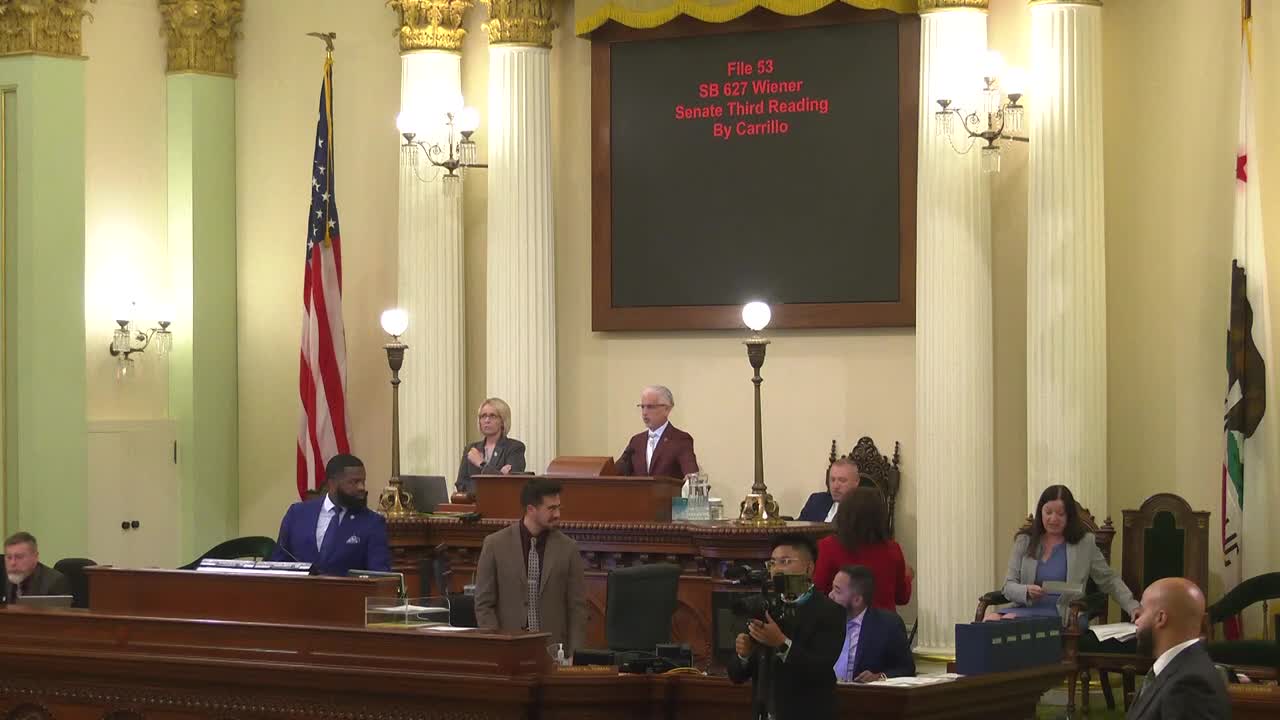 2MIN
Assembly Floor
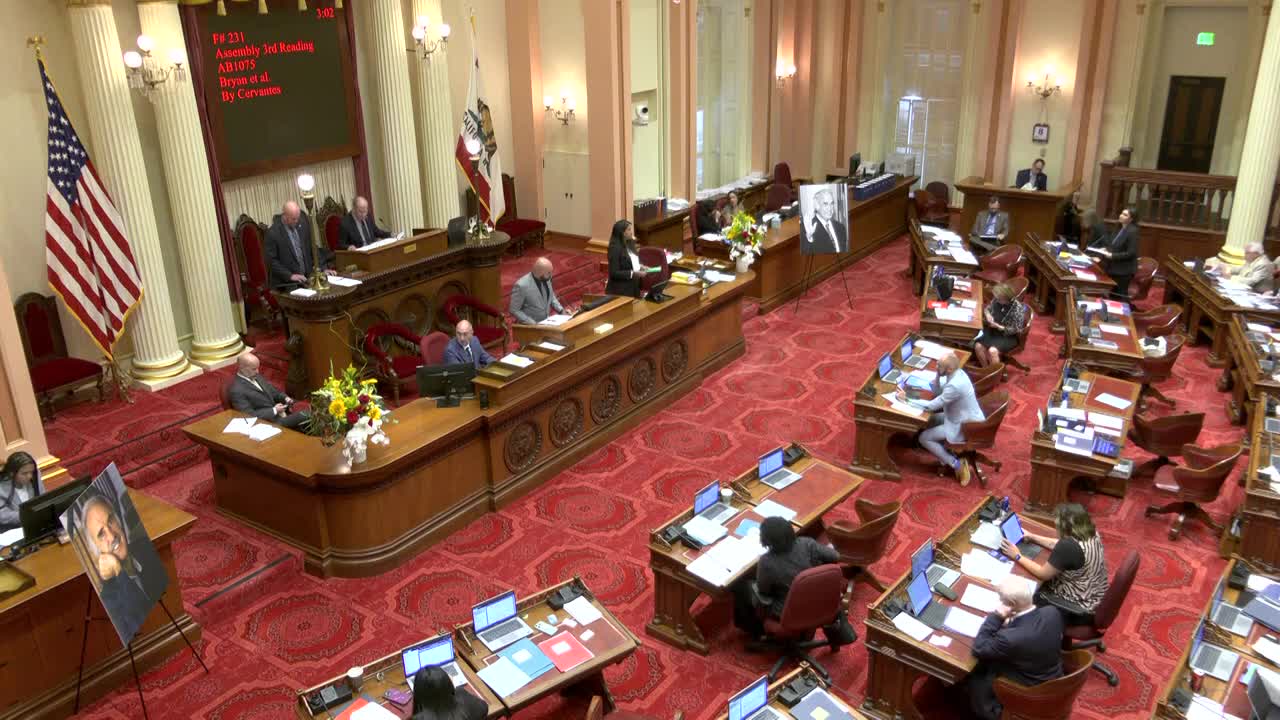 3MIN
Senate Floor
 7MIN
Senate Standing Committee on Human Services
 2MIN
Assembly Floor
 2MIN
Assembly Standing Committee on Appropriations
 5MIN
Assembly Standing Committee on Human Services
Bill Author