AB 1326: Health masks: right to wear.
- Session Year: 2025-2026
- House: Assembly
- Latest Version Date: 2025-09-11
Current Status:
Failed
(2026-01-22: Consideration of Governor's veto stricken from file.)
Introduced
In Committee
Awaiting First Chamber Vote
Passed First Chamber
In Committee
Awaiting Second Chamber Vote
Passed Second Chamber
Enacted
Existing law sets forth various provisions on the wearing of a mask for health purposes. These circumstances include, among others, a statewide stockpile of personal protective equipment (PPE) in the event of a pandemic, wildfire smoke event, or other health emergency; employer-supplied PPE to employees who provide direct patient care in a general acute care hospital; employees of commercial cannabis businesses wearing a mask for respiration; and providing peace officers with an appropriate portable manual mask and airway assembly for use when applying cardiopulmonary resuscitation to prevent the spread of communicable disease.
Under this bill, an individual would have the right to wear a health mask on their face in a public place for the purpose of protecting their individual health or the public health, with regard to communicable disease, air quality, or other health factors. The bill would define a health mask and a public place for purposes of this provision.
Under the bill, the above-described right would not be construed as limiting or otherwise modifying the application or implementation of certain requirements for the removal of a health mask relating to, among other contexts, security protocols to identify an individual, essential functions in the workplace, or emergency health care protocols, as specified, without limiting certain nondiscrimination protections on the basis of disability or medical condition.
Existing law sets forth various provisions on the wearing of a mask for health purposes. These circumstances include, among others, a statewide stockpile of personal protective equipment (PPE) in the event of a pandemic, wildfire smoke event, or other health emergency; employer-supplied PPE to employees who provide direct patient care in a general acute care hospital; employees of commercial cannabis businesses wearing a mask for respiration; and providing peace officers with an appropriate portable manual mask and airway assembly for use when applying cardiopulmonary resuscitation to prevent the spread of communicable disease.
Under this bill, an individual would have the right to wear a health mask on their face in a public place for the purpose of protecting their individual health or the public health, with regard to communicable disease, air quality, or other health factors. The bill would define a health mask and a public place for purposes of this provision.
Under the bill, the above-described right would not be construed as limiting or otherwise modifying the application or implementation of certain requirements for the removal of a health mask relating to, among other contexts, security protocols to identify an individual, a bona fide occupational qualification, essential functions in the workplace, or emergency health care protocols, as specified, without limiting certain nondiscrimination protections on the basis of disability or medical condition.
Existing law sets forth various provisions on the wearing of a mask for health purposes. These circumstances include, among others, a statewide stockpile of personal protective equipment (PPE) in the event of a pandemic, wildfire smoke event, or other health emergency; employer-supplied PPE to employees who provide direct patient care in a general acute care hospital; employees of commercial cannabis businesses wearing a mask for respiration; and providing peace officers with an appropriate portable manual mask and airway assembly for use when applying cardiopulmonary resuscitation to prevent the spread of communicable disease.
Under this bill, an individual would have the right to wear a health mask on their face in a public place for the purpose of protecting their individual health or the public health, with regard to communicable disease, air quality, or other health factors. The bill would define a health mask and a public place for purposes of this provision.
Under the bill, the above-described right would not be construed as limiting or otherwise modifying the application or implementation of certain requirements for the removal of a health mask relating to, among other contexts, security protocols to identify an individual, a bona fide occupational qualification, or emergency health care protocols, as specified. specified, without limiting certain nondiscrimination protections on the basis of disability or medical condition.
Existing law sets forth various provisions on the wearing of a mask for health purposes. These circumstances include, among others, a statewide stockpile of personal protective equipment (PPE) in the event of a pandemic, wildfire smoke event, or other health emergency; employer-supplied PPE to employees who provide direct patient care in a general acute care hospital; employees of commercial cannabis businesses wearing a mask for respiration; and providing peace officers with an appropriate portable manual mask and airway assembly for use when applying cardiopulmonary resuscitation to prevent the spread of communicable disease.
Under this bill, an individual would have the right to wear a mask on their face in a public place for the purpose of protecting their individual health or the public health, with regard to communicable disease, air quality, or other health factors. The bill would define a mask and a public place for purposes of this provision.
Under the bill, the above-described right would not be construed as limiting or otherwise modifying the application or implementation of certain requirements for the removal of a mask relating to, among other contexts, security protocols to identify an individual, a bona fide occupational qualification, or emergency health care protocols, as specified.
Existing law, the Healthy Workplaces, Healthy Families Act of 2014, entitles an employee who works in California for the same employer for 30 or more days within a year from the commencement of employment to paid sick days. Under existing law, an employee accrues paid sick days at a rate of not less than one hour per every 30 hours worked, subject to certain use, accrual, and yearly carryover limitations. Existing law requires the Labor Commissioner to enforce the act and provides for procedures, including investigation and hearing, and for remedies and penalties. Existing law, until December 31, 2022, also provided COVID-19 supplemental paid sick leave for covered employees, as defined, who were unable to work or telework due to certain reasons related to COVID-19, including that the employee was advised by a health care provider to self-quarantine, as specified. Existing law requires the Labor Commissioner to enforce these COVID-19 supplemental paid sick leave provisions.This bill, upon appropriation by the Legislature, would entitle a covered employee, as defined, to supplemental paid sick leave if that employee is unable to work or telework for reasons related to a health emergency, including COVID-19, avian influenza, measles, or another communicable disease outbreak, as prescribed in an order or guidelines of certain governmental health officials. The bill would entitle a covered employee to 80 hours of supplemental paid sick leave if that employee works full time or was scheduled to work, on average, at least 40 hours per week for the employer in the 2 weeks preceding the date the covered employee took supplemental paid sick leave. The bill would provide a different calculation for supplemental paid sick leave for a covered employee working fewer or variable hours. The bill would provide that the total number of hours of COVID-19 supplemental paid sick leave to which a covered employee is entitled to under these provisions is in addition to any paid sick leave available under the act. The bill would require each hour of supplemental paid sick leave to be compensated at a specified rate, as prescribed. The bill would also require the Labor Commissioner to enforce these provisions.Existing law, the Healthy Workplaces, Healthy Families Act of 2014, entitles an employee who works in California for the same employer for 30 or more days within a year from the commencement of employment to paid sick days. Under existing law, an employee accrues paid sick days at a rate of not less than one hour per every 30 hours worked, subject to certain use, accrual, and yearly carryover limitations. Existing law requires the Labor Commissioner to enforce the act and provides for procedures, including investigation and hearing, and for remedies and penalties.
Existing law, until December 31, 2022, also provided COVID-19 supplemental paid sick leave for covered employees, as defined, who were unable to work or telework due to certain reasons related to COVID-19, including that the employee was advised by a health care provider to self-quarantine, as specified. Existing law requires the Labor Commissioner to enforce these COVID-19 supplemental paid sick leave provisions.
This bill, upon appropriation by the Legislature, would entitle a covered employee, as defined, to supplemental paid sick leave if that employee is unable to work or telework for reasons related to a health emergency, including COVID-19, avian influenza, measles, or another communicable disease outbreak, as prescribed in an order or guidelines of certain governmental health officials. The bill would entitle a covered employee to 80 hours of supplemental paid sick leave if that employee works full time or was scheduled to work, on average, at least 40 hours per week for the employer in the 2 weeks preceding the date the covered employee took supplemental paid sick leave. The bill would provide a different calculation for supplemental paid sick leave for a covered employee working fewer or variable hours. The bill would provide that the total number of hours of COVID-19 supplemental paid sick leave to which a covered employee is entitled to under these provisions is in addition to any paid sick leave available under the act. The bill would require each hour of supplemental paid sick leave to be compensated at a specified rate, as prescribed. The bill would also require the Labor Commissioner to enforce these provisions.
Existing law governs the payment of wages for labor, including seasonal labor, as defined. Existing law requires the Labor Commissioner to hear and decide all wage disputes arising in connection with seasonal labor and to allow or reject any deductions made from those wages. Existing law requires the commissioner to reject all deductions made for gambling and liquor debts incurred by the employee during that employment.This bill would make nonsubstantive changes to those provisions.Existing law governs the payment of wages for labor, including seasonal labor, as defined. Existing law requires the Labor Commissioner to hear and decide all wage disputes arising in connection with seasonal labor and to allow or reject any deductions made from those wages. Existing law requires the commissioner to reject all deductions made for gambling and liquor debts incurred by the employee during that employment.
This bill would make nonsubstantive changes to those provisions.
For purposes of this chapter, the following definitions apply:
(a)Health mask means a medical grade mask that is surgical or an N95 or KN95 respirator to prevent the transmission of infections.
(b)Public place means any of the following:
(1)A place of business that is open to the general public for the sale of goods or services.
(2)Another place of public accommodation, as defined in Section 2000a of Title 42 of the United States Code, or within the scope of entities that are subject to Section 51 of the Civil Code.
(3)A governmental or public building or place open to the general public.
(4)A street, road, plaza, park, or other outdoor space open to the general public.
(5)A mode of public transportation.
(6)A clinic, a hospital or other health facility, a care facility, or other health care setting.
(7)An academic institution or other educational setting.
(8)An employment setting or other workplace.
(9)Any other location that is open to the general public.
28051.An individual has the right to wear a health mask on their face in a public place for the purpose of protecting their individual health or the public health, with regard to communicable disease, air quality, or other health factors, subject to any limitations described in this chapter.
28052.Section 28051 shall not be construed as limiting or otherwise modifying the application or implementation of any of the following:
(a)(1)Any requirement to temporarily remove a health mask for identification purposes as part of any of the following:
(A)Security regulations, procedures, or protocols under federal law, such as passenger screening at airports.
(B)Security regulations, procedures, or protocols under state law, such as photograph processing for a drivers license or identification card.
(C)The policy of a public place if identification of an individual is required for entry into the public place and removal of the health mask is necessary for that identification, such as age verification at certain nightclubs or other establishments serving alcohol.
(2)To the extent not in conflict with federal law, paragraph (1) shall be construed in the narrowest and most restrictive manner possible, with the removal of the health mask being limited to a temporary and momentary basis for identification purposes only upon entry and not as a justification for requiring prolonged removal of the health mask within the public place if no longer necessary for the identification described in paragraph (1).
(b)Any requirement to avoid obstruction of vision while operating a vehicle. It is the intent of the Legislature that a health mask worn as described in this chapter is in the form of covering an individuals mouth and nose and not an individuals eyes.
(c)(1)Any requirement, imposed on an employee or worker in an employment setting or other workplace, to remove a health mask in order to perform the employees or workers essential functions. For purposes of this subdivision, essential functions has the same meaning as defined in Section 12926 of the Government Code and is applicable whether or not the employee or worker has a disability.
(2)To the extent not in conflict with federal law, paragraph (1) shall be construed in the narrowest and most restrictive manner possible, with a requirement on removal of a health mask not to be used as a justification for requiring prolonged removal of the health mask in the employment setting or other workplace if the removal is unnecessary for the purpose described in paragraph (1).
(d)Section 6403.7 of the Labor Code, if Assembly Bill No. 596 of the 202526 Regular Session is chaptered and adds that section.
(e)Any health care protocols to remove a health mask as necessary to access an individuals face in order to perform a health care treatment or procedure on an emergency basis.
(f)Section 185 of the Penal Code.
(g)California Occupational Safety and Health Act of 1973 (Part 1 (commencing with Section 6300) of Division 5 of the Labor Code) and Title 8 of the California Code of Regulations.
(h)Any safety or security procedures for the facilities of the Department of Corrections and Rehabilitation.
28053.Section 28052 shall not be construed as limiting or otherwise modifying the application or implementation of any nondiscrimination protections on the basis of disability or medical condition, including, but not limited to, applicable protections set forth in the following provisions:
(a)The federal Americans with Disabilities Act of 1990 (42 U.S.C. Sec. 12101 et seq.).
(b)Section 504 of the federal Rehabilitation Act of 1973 (29 U.S.C. Sec. 794).
(c)The Unruh Civil Rights Act (Section 51 of the Civil Code).
(d)Section 11135 of the Government Code.
For purposes of this chapter, the following definitions apply:
(a)Health mask means a medical grade mask that is surgical or an N95 or KN95 respirator to prevent the transmission of infections.
(b)Public place means any of the following:
(1)A place of business that is open to the general public for the sale of goods or services.
(2)Another place of public accommodation, as defined in Section 2000a of Title 42 of the United States Code, or within the scope of entities that are subject to Section 51 of the Civil Code.
(3)A governmental or public building or place open to the general public.
(4)A street, road, plaza, park, or other outdoor space open to the general public.
(5)A mode of public transportation.
(6)A clinic, a hospital or other health facility, a care facility, or other health care setting.
(7)An academic institution or other educational setting.
(8)An employment setting or other workplace.
(9)Any other location that is open to the general public.
28051.An individual has the right to wear a health mask on their face in a public place for the purpose of protecting their individual health or the public health, with regard to communicable disease, air quality, or other health factors, subject to any limitations described in this chapter.
28052.Section 28051 shall not be construed as limiting or otherwise modifying the application or implementation of any of the following:
(a)(1)Any requirement to temporarily remove a health mask for identification purposes through facial recognition, as part of any of the following:
(A)Security regulations, procedures, or protocols under federal law, such as passenger screening at airports.
(B)Security regulations, procedures, or protocols under state law, such as photograph processing for a drivers license or identification card.
(C)The policy of a public place if identification of an individual is required for entry into the public place and removal of the health mask is necessary for that identification, such as age verification at certain nightclubs or other establishments serving alcohol.
(2)To the extent not in conflict with federal law, paragraph (1) shall be construed in the narrowest and most restrictive manner possible, with the removal of the health mask being limited to a temporary and momentary basis for identification purposes only upon entry and not as a justification for requiring prolonged removal of the health mask within the public place if no longer necessary for the identification described in paragraph (1).
(b)Any requirement to avoid obstruction of vision while operating a vehicle. It is the intent of the Legislature that a health mask worn as described in this chapter is in the form of covering an individuals mouth and nose and not an individuals eyes.
(c)(1)Any requirement to remove a health mask for purposes of a bona fide occupational qualification reasonably necessary to the normal operation of the corresponding employment setting or other workplace. For purposes of this paragraph, bona fide occupational qualification shall be interpreted in a manner consistent with the interpretation of that term under Section 12940 of the Government Code.(c)(1)Any requirement, imposed on an employee or worker in an employment setting or other workplace, to remove a health mask in order to perform the employees or workers essential functions. For purposes of this subdivision, essential functions has the same meaning as defined in Section 12926 of the Government Code and is applicable whether or not the employee or worker has a disability.
(2)To the extent not in conflict with federal law, paragraph (1) shall be construed in the narrowest and most restrictive manner possible, with a requirement on removal of a health mask not to be used as a justification for requiring prolonged removal of the health mask in the employment setting or other workplace if the removal is unnecessary for the purpose described in paragraph (1).
(2)(d)Section 6403.7 of the Labor Code, if Assembly Bill No. 596 of the 202526 Regular Session is chaptered and adds that section.
(d)(e)Any health care protocols to remove a health mask as necessary to access an individuals face in order to perform a health care treatment or procedure on an emergency basis.
(e)(f)Section 185 of the Penal Code.
(g)California Occupational Safety and Health Act of 1973 (Part 1 (commencing with Section 6300) of Division 5 of the Labor Code) and Title 8 of the California Code of Regulations.
(h)Any safety or security procedures for the facilities of the Department of Corrections and Rehabilitation.
28053.Section 28052 shall not be construed as limiting or otherwise modifying the application or implementation of any nondiscrimination protections on the basis of disability or medical condition, including, but not limited to, applicable protections set forth in the following provisions:
(a)The federal Americans with Disabilities Act of 1990 (42 U.S.C. Sec. 12101 et seq.).
(b)Section 504 of the federal Rehabilitation Act of 1973 (29 U.S.C. Sec. 794).
(c)The Unruh Civil Rights Act (Section 51 of the Civil Code).
(d)Section 11135 of the Government Code.
For purposes of this chapter, the following definitions apply:
(a)Mask means any of the following masks for placement on an individuals face:(1)A filtering facepiece respirator, such as an N95 or KN95 mask.(2)A surgical mask.(3)A cloth mask.(4)Another mask within the scope of personal protective equipment, as defined in Section 131021.(a)Health mask means a medical grade mask that is surgical or an N95 or KN95 respirator to prevent the transmission of infections.
(b)Public place means any of the following:
(1)A place of business that is open to the general public for the sale of goods or services.
(2)Another place of public accommodation, as defined in Section 2000a of Title 42 of the United States Code, or within the scope of entities that are subject to Section 51 of the Civil Code.
(3)A governmental or public building or place open to the general public.
(4)A street, road, plaza, park, or other outdoor space open to the general public.
(5)A mode of public transportation.
(6)A clinic, a hospital or other health facility, a care facility, or other health care setting.
(7)An academic institution or other educational setting.
(8)An employment setting or other workplace.
(9)Any other location that is open to the general public.
28051.An individual has the right to wear a health mask on their face in a public place for the purpose of protecting their individual health or the public health, with regard to communicable disease, air quality, or other health factors, subject to any limitations described in this chapter.
28052.Section 28051 shall not be construed as limiting or otherwise modifying the application or implementation of any of the following:
(a)Any requirement to temporarily remove a mask for identification purposes through facial recognition, as part of security regulations, procedures, or protocols under federal or state law, or as part of the policy of a public place if identification of an individual is required for entry into the public place and removal of the mask is necessary for that identification.(a)(1)Any requirement to temporarily remove a health mask for identification purposes through facial recognition, as part of any of the following:
(A)Security regulations, procedures, or protocols under federal law, such as passenger screening at airports.
(B)Security regulations, procedures, or protocols under state law, such as photograph processing for a drivers license or identification card.
(C)The policy of a public place if identification of an individual is required for entry into the public place and removal of the health mask is necessary for that identification, such as age verification at certain nightclubs or other establishments serving alcohol.
(2)To the extent not in conflict with federal law, paragraph (1) shall be construed in the narrowest and most restrictive manner possible, with the removal of the health mask being limited to a temporary and momentary basis for identification purposes only upon entry and not as a justification for requiring prolonged removal of the health mask within the public place if no longer necessary for the identification described in paragraph (1).
(b)Any requirement to avoid obstruction of vision while operating a vehicle. It is the intent of the Legislature that a health mask worn as described in this chapter is in the form of covering an individuals mouth and nose and not an individuals eyes.
(c)(1)Any requirement to remove a health mask for purposes of a bona fide occupational qualification. qualification reasonably necessary to the normal operation of the corresponding employment setting or other workplace. For purposes of this paragraph, bona fide occupational qualification shall be interpreted in a manner consistent with the interpretation of that term under Section 12940 of the Government Code.
(2)Section 6403.7 of the Labor Code, if Assembly Bill No. 596 of the 202526 Regular Session is chaptered and adds that section.
(d)Any health care protocols to remove a health mask as necessary to access an individuals face in order to perform a health care treatment or procedure on an emergency basis.
(e)Section 185 of the Penal Code.
28053.Section 28052 shall not be construed as limiting or otherwise modifying the application or implementation of any nondiscrimination protections on the basis of disability or medical condition, including, but not limited to, applicable protections set forth in the following provisions:
(a)The federal Americans with Disabilities Act of 1990 (42 U.S.C. Sec. 12101 et seq.).
(b)Section 504 of the federal Rehabilitation Act of 1973 (29 U.S.C. Sec. 794).
(c)The Unruh Civil Rights Act (Section 51 of the Civil Code).
(d)Section 11135 of the Government Code.
For purposes of this chapter, the following definitions apply:
(a)Mask means any of the following masks for placement on an individuals face:
(1)A filtering facepiece respirator, such as an N95 or KN95 mask.
(2)A surgical mask.
(3)A cloth mask.
(4)Another mask within the scope of personal protective equipment, as defined in Section 131021.
(b)Public place means any of the following:
(1)A place of business that is open to the general public for the sale of goods or services.
(2)Another place of public accommodation, as defined in Section 2000a of Title 42 of the United States Code, or within the scope of entities that are subject to Section 51 of the Civil Code.
(3)A governmental or public building or place open to the general public.
(4)A street, road, plaza, park, or other outdoor space open to the general public.
(5)A mode of public transportation.
(6)A clinic, a hospital or other health facility, a care facility, or other health care setting.
(7)An academic institution or other educational setting.
(8)An employment setting or other workplace.
28051.An individual has the right to wear a mask on their face in a public place for the purpose of protecting their individual health or the public health, with regard to communicable disease, air quality, or other health factors, subject to any limitations described in this chapter.
28052.Section 28051 shall not be construed as limiting or otherwise modifying the application or implementation of any of the following:
(a)Any requirement to temporarily remove a mask for identification purposes through facial recognition, as part of security regulations, procedures, or protocols under federal or state law, or as part of the policy of a public place if identification of an individual is required for entry into the public place and removal of the mask is necessary for that identification.
(b)Any requirement to avoid obstruction of vision while operating a vehicle. It is the intent of the Legislature that a mask worn as described in this chapter is in the form of covering an individuals mouth and nose and not an individuals eyes.
(c)Any requirement to remove a mask for purposes of a bona fide occupational qualification.
(d)Any health care protocols to remove a mask as necessary to access an individuals face in order to perform a health care treatment or procedure on an emergency basis.
(e)Section 185 of the Penal Code.
SECTION 1.Section 248.4 is added to the Labor Code, to read:248.4.(a)As used in this section:(1)Supplemental paid sick leave means supplemental paid sick leave provided pursuant to this section.(2)Employer means an employer, as defined in subdivision (b) of Section 245.5, that employs more than 25 employees.(3)Covered employee means an employee who is unable to work or telework for an employer because of a reason listed under paragraph (1) of subdivision (b).(b)Upon appropriation by the Legislature, a covered employee shall be entitled to supplemental paid sick leave as follows:(1)An employer shall provide supplemental paid sick leave to each covered employee if that covered employee is unable to work or telework due to any of the following reasons:(A)The covered employee is subject to a quarantine or isolation period related to a health emergency, including, but not limited to, COVID-19, avian influenza, measles, or another communicable disease outbreak, as described or defined in an order or guidelines of the State Department of Public Health, the federal Centers for Disease Control and Prevention, or a local health officer who has jurisdiction over the workplace. If the covered employee is subject to more than one of the foregoing, the covered employee shall be permitted to use supplemental paid sick leave for the minimum quarantine or isolation period under the order or guidelines that provides for the longest such minimum period.(B)The covered employee has been advised by a health care provider to self-quarantine due to concerns related to the health emergency.(C)The covered employee is attending an appointment to receive a vaccine for protection against contracting the contagious disease related to the health emergency.(D)The covered employee is experiencing symptoms related to a vaccine administered to protect against the contagious disease related to the health emergency and those symptoms prevent the employee from being able to work or telework.(E)The covered employee is experiencing symptoms and seeking a medical diagnosis related to the health emergency.(F)The covered employee is caring for a family member, as defined in subdivision (c) of Section 245.5, who is subject to an order or guidelines described in subparagraph (A), or who has been advised to self-quarantine, as described in subparagraph (B).(G)The covered employee is caring for a child, as defined in subdivision (c) of Section 245.5, whose school or place of care is closed or otherwise unavailable for reasons related to the health emergency on the premises.(2)A covered employee shall be entitled to the following number of hours of supplemental paid sick leave:(A)Eighty hours of supplemental paid sick leave, if the covered employee satisfies either of the following criteria:(i)The employer considers the covered employee to work full time.(ii)The covered employee worked or was scheduled to work, on average, at least 40 hours per week for the employer in the two weeks preceding the date the covered employee took supplemental paid sick leave.(B)A covered employee who does not satisfy the criteria in subparagraph (A) is entitled to an amount of supplemental paid sick leave as follows:(i)If the covered employee has a normal weekly schedule, the total number of hours the covered employee is normally scheduled to work for the employer over two weeks.(ii)If the covered employee works a variable number of hours, 14 times the average number of hours the covered employee worked each day for the employer in the six months preceding the date the covered employee took supplemental paid sick leave. If the covered employee has worked for the employer over a period of fewer than six months but more than 14 days, this calculation shall instead be made over the entire period the covered employee has worked for the employer.(iii)If the covered employee works a variable number of hours and has worked for the employer over a period of 14 days or fewer, the total number of hours the covered employee has worked for that employer.(C)The total number of hours of supplemental paid sick leave to which a covered employee is entitled pursuant to subparagraph (A) or (B) shall be in addition to any paid sick leave that may be available to the covered employee under Section 246.(D)A covered employee may determine how many hours of supplemental paid sick leave to use, up to the total number of hours to which the covered employee is entitled pursuant to subparagraph (A) or (B). The employer shall make supplemental paid sick leave available for immediate use by the covered employee, upon the oral or written request of the covered employee to the employer.(E)An employer is not required to provide a covered employee more than the total number of hours of supplemental paid sick leave to which the covered employee is entitled pursuant to subparagraph (A) or (B).(3)Each hour of supplemental paid sick leave shall be compensated at a rate equal to the following:(A)For nonexempt covered employees, by the highest of the following:(i)Calculated in the same manner as the regular rate of pay for the workweek in which the covered employee uses supplemental paid sick leave, whether or not the employee actually works overtime in that workweek.(ii)Calculated by dividing the covered employees total wages, not including overtime premium pay, by the employees total hours worked in the full pay periods of the prior 90 days of employment.(iii)The state minimum wage.(iv)The local minimum wage to which the covered employee is entitled.(B)Supplemental paid sick leave for exempt covered employees shall be calculated in the same manner as the employer calculates wages for other forms of paid leave time.(4)An employer shall not require a covered employee to use any other paid or unpaid leave, paid time off, or vacation time provided by the employer to the covered employee before the covered employee uses supplemental paid sick leave or in lieu of supplemental paid sick leave.(c)Notwithstanding subdivision (b), if an employer pays a covered employee another supplemental benefit for leave taken on or after January 1, 2026, that is payable for the reasons listed in paragraph (1) of subdivision (b) and that compensates the covered employee in an amount equal to or greater than the amount of compensation for supplemental paid sick leave to which the covered employee is entitled as set forth under paragraph (3) of subdivision (b), then the employer may count the hours of the other paid benefit or leave towards the total number of hours of supplemental paid sick leave that the employer is required to provide to the covered employee under paragraph (2) of subdivision (b). For purposes of the foregoing, the other supplemental benefit for leave taken that may be counted does not include paid sick leave to which the covered employee is entitled under Section 246, subdivision (e) of Section 248, or subdivision (f) of Section 248.1 but may include paid leave provided by the employer pursuant to any federal or local law in effect or that became effective on or after January 1, 2026, if the paid leave is provided to the covered employee under that law for any of the same reasons set forth in paragraph (1) of subdivision (b).(d)In addition to other remedies as may be provided by the laws of this state or its subdivisions, including, but not limited to, the remedies available to redress any unlawful business practice under Chapter 5 (commencing with Section 17200) of Part 2 of Division 7 of the Business and Professions Code, the Labor Commissioner shall enforce this section. For purposes of enforcement and to implement supplemental paid sick leave, this section shall apply as follows:(1)The Labor Commissioner shall enforce this section as if supplemental paid sick leave constitutes paid sick days, paid sick leave, or sick leave under subdivisions (i) and (n) of Section 246, subdivisions (b) and (c) of Section 246.5, Section 247, Section 247.5, and Section 248.5.(2)For purposes of the enforcement of subdivision (i) of Section 246 as it relates to this section:(A)Supplemental paid sick leave shall be set forth separately from paid sick days.(B)The requirement in subdivision (i) of Section 246 is not enforceable until the next full pay period following the date that this section takes effect.(C)When covered employees have schedules described in clauses (ii) and (iii) of subparagraph (B) of paragraph (2) of subdivision (b), an employer may meet the requirement of subdivision (i) of Section 246 for covered employees by doing an initial calculation of supplemental paid sick leave available and indicating (variable) next to that calculation. This, however, does not exempt an employer from providing a covered employee an updated calculation when such a covered employee requests to use supplemental paid sick leave or requests relevant records under Section 247.5.(3)Section 249 applies to supplemental paid sick leave.(4)No later than seven days after the date of enactment of this section, the Labor Commissioner shall make publicly available a model notice for purposes of Section 247. Only for purposes of supplemental paid sick leave, if an employers covered employees do not frequent a workplace, the employer may satisfy the notice requirement of subdivision (a) of Section 247 by disseminating notice through electronic means, such as by electronic mail.(e)The provisions of this section are severable. If any provision of this section or its application is held invalid, that invalidity shall not affect other provisions or applications that can be given effect without the invalid provision or application.(f)The provisions of this section shall not apply to providers of in-home supportive services under Section 14132.95, 14132.952, or 14132.956 of, or Article 7 (commencing with Section 12300) of Chapter 3 of Part 3 of Division 9 of, the Welfare and Institutions Code, or waiver personal care services pursuant to Section 14132.97 of the Welfare and Institutions Code.(a)As used in this section:
(1)Supplemental paid sick leave means supplemental paid sick leave provided pursuant to this section.
(2)Employer means an employer, as defined in subdivision (b) of Section 245.5, that employs more than 25 employees.
(3)Covered employee means an employee who is unable to work or telework for an employer because of a reason listed under paragraph (1) of subdivision (b).
(b)Upon appropriation by the Legislature, a covered employee shall be entitled to supplemental paid sick leave as follows:
(1)An employer shall provide supplemental paid sick leave to each covered employee if that covered employee is unable to work or telework due to any of the following reasons:
(A)The covered employee is subject to a quarantine or isolation period related to a health emergency, including, but not limited to, COVID-19, avian influenza, measles, or another communicable disease outbreak, as described or defined in an order or guidelines of the State Department of Public Health, the federal Centers for Disease Control and Prevention, or a local health officer who has jurisdiction over the workplace. If the covered employee is subject to more than one of the foregoing, the covered employee shall be permitted to use supplemental paid sick leave for the minimum quarantine or isolation period under the order or guidelines that provides for the longest such minimum period.
(B)The covered employee has been advised by a health care provider to self-quarantine due to concerns related to the health emergency.
(C)The covered employee is attending an appointment to receive a vaccine for protection against contracting the contagious disease related to the health emergency.
(D)The covered employee is experiencing symptoms related to a vaccine administered to protect against the contagious disease related to the health emergency and those symptoms prevent the employee from being able to work or telework.
(E)The covered employee is experiencing symptoms and seeking a medical diagnosis related to the health emergency.
(F)The covered employee is caring for a family member, as defined in subdivision (c) of Section 245.5, who is subject to an order or guidelines described in subparagraph (A), or who has been advised to self-quarantine, as described in subparagraph (B).
(G)The covered employee is caring for a child, as defined in subdivision (c) of Section 245.5, whose school or place of care is closed or otherwise unavailable for reasons related to the health emergency on the premises.
(2)A covered employee shall be entitled to the following number of hours of supplemental paid sick leave:
(A)Eighty hours of supplemental paid sick leave, if the covered employee satisfies either of the following criteria:
(i)The employer considers the covered employee to work full time.
(ii)The covered employee worked or was scheduled to work, on average, at least 40 hours per week for the employer in the two weeks preceding the date the covered employee took supplemental paid sick leave.
(B)A covered employee who does not satisfy the criteria in subparagraph (A) is entitled to an amount of supplemental paid sick leave as follows:
(i)If the covered employee has a normal weekly schedule, the total number of hours the covered employee is normally scheduled to work for the employer over two weeks.
(ii)If the covered employee works a variable number of hours, 14 times the average number of hours the covered employee worked each day for the employer in the six months preceding the date the covered employee took supplemental paid sick leave. If the covered employee has worked for the employer over a period of fewer than six months but more than 14 days, this calculation shall instead be made over the entire period the covered employee has worked for the employer.
(iii)If the covered employee works a variable number of hours and has worked for the employer over a period of 14 days or fewer, the total number of hours the covered employee has worked for that employer.
(C)The total number of hours of supplemental paid sick leave to which a covered employee is entitled pursuant to subparagraph (A) or (B) shall be in addition to any paid sick leave that may be available to the covered employee under Section 246.
(D)A covered employee may determine how many hours of supplemental paid sick leave to use, up to the total number of hours to which the covered employee is entitled pursuant to subparagraph (A) or (B). The employer shall make supplemental paid sick leave available for immediate use by the covered employee, upon the oral or written request of the covered employee to the employer.
(E)An employer is not required to provide a covered employee more than the total number of hours of supplemental paid sick leave to which the covered employee is entitled pursuant to subparagraph (A) or (B).
(3)Each hour of supplemental paid sick leave shall be compensated at a rate equal to the following:
(A)For nonexempt covered employees, by the highest of the following:
(i)Calculated in the same manner as the regular rate of pay for the workweek in which the covered employee uses supplemental paid sick leave, whether or not the employee actually works overtime in that workweek.
(ii)Calculated by dividing the covered employees total wages, not including overtime premium pay, by the employees total hours worked in the full pay periods of the prior 90 days of employment.
(iii)The state minimum wage.
(iv)The local minimum wage to which the covered employee is entitled.
(B)Supplemental paid sick leave for exempt covered employees shall be calculated in the same manner as the employer calculates wages for other forms of paid leave time.
(4)An employer shall not require a covered employee to use any other paid or unpaid leave, paid time off, or vacation time provided by the employer to the covered employee before the covered employee uses supplemental paid sick leave or in lieu of supplemental paid sick leave.
(c)Notwithstanding subdivision (b), if an employer pays a covered employee another supplemental benefit for leave taken on or after January 1, 2026, that is payable for the reasons listed in paragraph (1) of subdivision (b) and that compensates the covered employee in an amount equal to or greater than the amount of compensation for supplemental paid sick leave to which the covered employee is entitled as set forth under paragraph (3) of subdivision (b), then the employer may count the hours of the other paid benefit or leave towards the total number of hours of supplemental paid sick leave that the employer is required to provide to the covered employee under paragraph (2) of subdivision (b). For purposes of the foregoing, the other supplemental benefit for leave taken that may be counted does not include paid sick leave to which the covered employee is entitled under Section 246, subdivision (e) of Section 248, or subdivision (f) of Section 248.1 but may include paid leave provided by the employer pursuant to any federal or local law in effect or that became effective on or after January 1, 2026, if the paid leave is provided to the covered employee under that law for any of the same reasons set forth in paragraph (1) of subdivision (b).
(d)In addition to other remedies as may be provided by the laws of this state or its subdivisions, including, but not limited to, the remedies available to redress any unlawful business practice under Chapter 5 (commencing with Section 17200) of Part 2 of Division 7 of the Business and Professions Code, the Labor Commissioner shall enforce this section. For purposes of enforcement and to implement supplemental paid sick leave, this section shall apply as follows:
(1)The Labor Commissioner shall enforce this section as if supplemental paid sick leave constitutes paid sick days, paid sick leave, or sick leave under subdivisions (i) and (n) of Section 246, subdivisions (b) and (c) of Section 246.5, Section 247, Section 247.5, and Section 248.5.
(2)For purposes of the enforcement of subdivision (i) of Section 246 as it relates to this section:
(A)Supplemental paid sick leave shall be set forth separately from paid sick days.
(B)The requirement in subdivision (i) of Section 246 is not enforceable until the next full pay period following the date that this section takes effect.
(C)When covered employees have schedules described in clauses (ii) and (iii) of subparagraph (B) of paragraph (2) of subdivision (b), an employer may meet the requirement of subdivision (i) of Section 246 for covered employees by doing an initial calculation of supplemental paid sick leave available and indicating (variable) next to that calculation. This, however, does not exempt an employer from providing a covered employee an updated calculation when such a covered employee requests to use supplemental paid sick leave or requests relevant records under Section 247.5.
(3)Section 249 applies to supplemental paid sick leave.
(4)No later than seven days after the date of enactment of this section, the Labor Commissioner shall make publicly available a model notice for purposes of Section 247. Only for purposes of supplemental paid sick leave, if an employers covered employees do not frequent a workplace, the employer may satisfy the notice requirement of subdivision (a) of Section 247 by disseminating notice through electronic means, such as by electronic mail.
(e)The provisions of this section are severable. If any provision of this section or its application is held invalid, that invalidity shall not affect other provisions or applications that can be given effect without the invalid provision or application.
(f)The provisions of this section shall not apply to providers of in-home supportive services under Section 14132.95, 14132.952, or 14132.956 of, or Article 7 (commencing with Section 12300) of Chapter 3 of Part 3 of Division 9 of, the Welfare and Institutions Code, or waiver personal care services pursuant to Section 14132.97 of the Welfare and Institutions Code.
SECTION 1.Section 253 of the Labor Code is amended to read:253.The Labor Commissioner shall hear and decide all wage disputes arising in connection with seasonal labor and shall allow or reject any deductions made from those wages. The Labor Commissioner shall reject all deductions made for gambling and liquor debts incurred by the employee during that employment.The Labor Commissioner shall hear and decide all wage disputes arising in connection with seasonal labor and shall allow or reject any deductions made from such those wages. He The Labor Commissioner shall reject all deductions made for gambling and liquor debts incurred by the employee during such that employment.
|
Date
|
Status
|
|---|---|
| Jan 22, 2026 | Consideration of Governor's veto stricken from file. |
| Oct 11, 2025 | Consideration of Governor's veto pending. |
| Oct 11, 2025 | Vetoed by Governor. |
| Sep 16, 2025 | Enrolled and presented to the Governor at 2 p.m. |
| Sep 9, 2025 | Senate amendments concurred in. To Engrossing and Enrolling. (Ayes 66. Noes 3. Page 3125.). |
| Sep 8, 2025 | In Assembly. Concurrence in Senate amendments pending. |
| Sep 8, 2025 | Read third time. Passed. Ordered to the Assembly. (Ayes 28. Noes 1. Page 2590.). |
| Sep 3, 2025 | Read second time. Ordered to third reading. |
| Sep 2, 2025 | Read third time and amended. Ordered to second reading. |
| Aug 20, 2025 | Read second time and amended. Ordered to third reading. |
| Aug 19, 2025 | From committee: Amend, and do pass as amended. (Ayes 11. Noes 0.) (July 15). |
| Jun 19, 2025 | From committee: Do pass and re-refer to Com. on JUD. (Ayes 8. Noes 0.) (June 18). Re-referred to Com. on JUD. |
| May 21, 2025 | Referred to Coms. on HEALTH and JUD. |
| May 8, 2025 | In Senate. Read first time. To Com. on RLS. for assignment. |
| May 8, 2025 | Read third time. Passed. Ordered to the Senate. (Ayes 58. Noes 2. Page 1481.) |
| May 1, 2025 | Read second time. Ordered to third reading. |
| Apr 30, 2025 | From committee: Do pass. (Ayes 14. Noes 2.) (April 29). |
| Apr 10, 2025 | Re-referred to Com. on HEALTH. pursuant to Assembly Rule 96. |
| Apr 7, 2025 | Re-referred to Com. on L. & E. |
| Apr 3, 2025 | From committee chair, with author's amendments: Amend, and re-refer to Com. on L. & E. Read second time and amended. |
| Mar 25, 2025 | Re-referred to Com. on L. & E. |
| Mar 24, 2025 | From committee chair, with author's amendments: Amend, and re-refer to Com. on L. & E. Read second time and amended. |
| Mar 24, 2025 | Referred to Com. on L. & E. |
| Feb 24, 2025 | Read first time. |
| Feb 22, 2025 | From printer. May be heard in committee March 24. |
| Feb 21, 2025 | Introduced. To print. |
|
Date
|
Description
|
Location
|
Votes
|
|
|---|---|---|---|---|
| Sep 9, 2025 | AB 1326 Ahrens Concurrence in Senate Amendments | Assembly Floor |
Passed |
|
| Sep 8, 2025 | Assembly 3rd Reading AB1326 Ahrens By Becker | Senate Floor |
Passed |
|
| Jul 15, 2025 | Do pass as amended | Senate Standing Committee on Judiciary |
Passed |
|
| Jun 18, 2025 | Do pass, but first be re-referred to the Committee on [Judiciary] | Senate Standing Committee on Health |
Passed |
|
| May 8, 2025 | AB 1326 Ahrens Assembly Third Reading | Assembly Floor |
Passed |
|
| Apr 29, 2025 | Do pass. | Assembly Standing Committee on Health |
Passed |
This list shows positions taken on this bill by organizations on the date displayed, which is linked to the original source.
Positions by individuals are not included.
|
Organization
|
Position
|
Date
|
|---|---|---|
| Disability Rights California | ** Support | |
| Health Officers Association Of California | ** Support | |
| Oakland Privacy | ** Support | |
| One individual | ** Support |
GOVERNOR'S VETO
GV Bill Id:AB 1326
Author:(Ahrens)
As Enrolled Ver:September 11, 2025
2/3 vote
SUMMARY
States that an individual has the right to wear a health mask, as defined, on their face in a public place for the purpose of protecting their individual health or the public health, with regard to communicable disease, air quality, or other health factors. Provides this right would not be construed as limiting or otherwise modifying the application or implementation of certain requirements for the removal of a mask relating to, among other contexts, security protocols to identify an individual, essential functions in the workplace, or emergency health care protocols, as specified.
Senate Amendments
- Narrow the definition of "mask" from a filtering facepiece respirator, surgical, cloth, or another mask within the scope of personal protective equipment as defined in existing law to a "health mask" meaning a medical grade mask that is surgical or an N95 or KN95 respirator to prevent the transmission of infections.
- Add "any other location that is open to the general public" to the definition of a public place.
- Require provisions regarding any requirement to temporarily remove a health mask for identification purposes, to be construed, to the extent not in conflict with federal law, in the narrowest and most restrictive manner possible, with the removal of the health mask being limited to a temporary and momentary basis for identification purposes only upon entry and not as a justification for requiring prolonged removal of the health mask within the public place if no longer necessary for identification.
- Regarding the requirements imposed on workers in the workplace to remove a health mask, strike the reference to "bona fide occupational qualification" and instead reference the employee's essential functions, and specify that essential functions has the same meaning in existing law and is applicable whether or not the employee has a disability.
- Specify that any requirement for a worker or employee to remove a health mask in order to perform the employee's essential functions is required to be construed, to the extent not in conflict with federal law, in the narrowest and most restrictive manner possible, with a requirement on removal of a health mask not to be used as a justification for requiring prolonged removal of the health mask in the employment setting or other workplace if the removal is unnecessary to perform the essential functions described in 4) above.
- Add additional settings in which this bill is prohibited from being construed as limiting or otherwise modifying the application or implementation, including:
- The California Occupational Safety and Health Act of 1973 and related regulations; and,
- Any safety or security procedures for Department of Corrections and Rehabilitation facilities.
- Prohibit this bill from being construed as limiting or otherwise modifying the application or implementation of any nondiscrimination protections on the basis of disability or medical condition, including, but not limited to, applicable protections set forth in specified anti-discriminatory federal and state statutes.
- Contain language to avoid chaptering-out conflicts with AB 596 (McKinnor) of the current legislative session.
Governor's Veto Message
This bill states an individual has the right to wear a mask in public spaces and workplaces for the purpose of protecting their health or the public's health, except under specified situations.
I appreciate the author's goal of ensuring Californians may wear a mask for public health reasons, but I am not convinced this measure is necessary. Existing law appears sufficient to allow a person to wear a mask for health reasons in most public situations. This bill creates a sweeping new policy with numerous exceptions, and may create confusion about the application of existing state and federal legal protections.
COMMENTS
Use of Face Masks in the Pandemic Mitigation Strategy. According to an article titled, "Local, state, and federal mask mandates during the COVID-19 pandemic," on April 3, 2020, the Centers for Disease Control and Prevention (CDC) released a recommendation that public citizens should wear ″nonmedical cloth masks″ while in public places to help prevent the spread of SARS-CoV-2, the virus which causes COVID-19. The initial rationale behind this recommendation was for ″source control,″ to limit the emission of virus-containing respiratory droplets from infected people during their contagious period. As the viral transmission dynamics were better understood, another pandemic challenge was realized: up to 40% of infected people are asymptomatic but can shed high levels of SARS-CoV-2 from their respiratory tracts, and they contribute to more than half of viral transmissions. Thus, the universal use of face masks for source control among the general public became a top priority in the pandemic mitigation strategy.
A 2023 rapid systematic review of evidence titled, ″Effectiveness of face masking for reducing transmission of SARS-CoV-2″ found that masks wearing masks reduced the transmission of SARS-CoV-2.
In April 2020, the State Department of Public Health (DPH) recommended wearing face coverings. In June of 2020, DPH issued guidance that required Californians to wear a face-covering in high-risk settings, including but not limited to public spaces, healthcare settings, public workplaces, in retail food settings, driving when passengers are present, and outdoors in public spaces when maintaining a physical distance of six feet from persons who are not members of the same household or residence is not feasible. This guidance included limited exemptions including but not limited to children two and under and people with disabilities which prevent wearing a face covering. Throughout 2020 and into early 2022, the state issued various guidelines and requirements regarding mask usage in public spaces, healthcare settings, and areas where social distancing was not feasible. Cities like Los Angeles and San Francisco enforced stricter rules than state mandates, depending on local COVID-19 infection rates.
In January of 2021, President Joseph R. Biden issued Executive Order 13991 requiring on-duty or on-site Federal employees, on-site Federal contractors, and other individuals in Federal buildings and on Federal lands to wear masks, maintain physical distance, and adhere to other public health measurers, as provided in CDC guidelines.
This bill seeks to enshrine the right of wearing a health mask in a public place in state law.
According to the Author
This bill aims to establish a clear legal right for individuals to wear masks to protect their health and the health of others. The author continues that individuals may face discrimination when making personal health choices without this legal safeguard. The author states that this this issue relates to bodily autonomy. The author concludes that if statutory protection is not provided, policies or ordinances restricting or banning the use of masks could be implemented.
Arguments in Support
Disability Rights California (DRC) supports this bill and states by codifying the right to wear a mask for health protection, this bill removes ambiguity and helps to destigmatize the use of masks, especially for individuals with chronic health conditions, compromised immune systems, or who are protecting vulnerable family members. DRC continues that people with certain health conditions and disabilities may need to wear P95 masks in public to reduce their risk of infection or exposure to harmful particles, including: individuals with weakened immune systems due to cancer treatments, organ transplants, or HIV/AIDS; those with chronic respiratory diseases such as asthma, chronic obstructive pulmonary disease (COPD), or cystic fibrosis; and people with cardiovascular conditions like heart disease, which can be worsened by air pollution or respiratory infections. DRC continues that individuals with certain disabilities that affect their ability to fight infections or that require close contact with caregivers may also rely on high-filtration masks like P95s for protection. DRC states that California has long led the nation in advancing public health and environmental protections. DRC concludes that this bill continues that leadership by ensuring that health-conscious individuals are not penalized, harassed, or denied services for making responsible choices to protect themselves and others in public spaces.
Arguments in Opposition
None.
FISCAL COMMENTS
None, this bill is keyed non-fiscal.
VOTES
ASM HEALTH: 14-2-0
YES: Bonta, Chen, Addis, Aguiar-Curry, Arambula, Carrillo, Flora, Mark González, Krell, Patel, Celeste Rodriguez, Schiavo, Sharp-Collins, Stefani
NO: Patterson, Sanchez
ASSEMBLY FLOOR: 58-2-19
YES: Addis, Aguiar-Curry, Ahrens, Alanis, Alvarez, Ávila Farías, Bains, Bauer-Kahan, Bennett, Berman, Bonta, Bryan, Calderon, Caloza, Chen, Connolly, Davies, Dixon, Elhawary, Fong, Garcia, Gipson, Mark González, Haney, Harabedian, Hart, Jackson, Kalra, Krell, Lee, Lowenthal, McKinnor, Muratsuchi, Nguyen, Ortega, Pacheco, Papan, Patel, Pellerin, Petrie-Norris, Quirk-Silva, Ramos, Ransom, Michelle Rodriguez, Rogers, Blanca Rubio, Schiavo, Schultz, Sharp-Collins, Solache, Soria, Stefani, Valencia, Ward, Wicks, Wilson, Zbur, Rivas
NO: DeMaio, Hoover
ABS, ABST OR NV: Arambula, Boerner, Carrillo, Castillo, Ellis, Flora, Gabriel, Gallagher, Jeff Gonzalez, Hadwick, Irwin, Lackey, Macedo, Patterson, Celeste Rodriguez, Sanchez, Ta, Tangipa, Wallis
SENATE FLOOR: 28-1-11
YES: Allen, Archuleta, Arreguín, Ashby, Becker, Blakespear, Caballero, Cervantes, Cortese, Durazo, Gonzalez, Grayson, Hurtado, Laird, Limón, McGuire, McNerney, Menjivar, Padilla, Pérez, Reyes, Richardson, Rubio, Smallwood-Cuevas, Umberg, Wahab, Weber Pierson, Wiener
NO: Alvarado-Gil
ABS, ABST OR NV: Cabaldon, Choi, Dahle, Grove, Jones, Niello, Ochoa Bogh, Seyarto, Stern, Strickland, Valladares
ASSEMBLY FLOOR: 66-3-11
YES: Addis, Aguiar-Curry, Ahrens, Alanis, Alvarez, Arambula, Ávila Farías, Bains, Bauer-Kahan, Bennett, Berman, Boerner, Bonta, Bryan, Calderon, Caloza, Carrillo, Connolly, Davies, Dixon, Elhawary, Flora, Fong, Gallagher, Garcia, Gipson, Mark González, Haney, Harabedian, Hart, Hoover, Irwin, Jackson, Kalra, Krell, Lee, Lowenthal, McKinnor, Muratsuchi, Nguyen, Ortega, Pacheco, Papan, Patel, Pellerin, Petrie-Norris, Quirk-Silva, Ramos, Ransom, Celeste Rodriguez, Michelle Rodriguez, Rogers, Blanca Rubio, Schiavo, Schultz, Sharp-Collins, Solache, Soria, Stefani, Valencia, Wallis, Ward, Wicks, Wilson, Zbur, Rivas
NO: Ellis, Macedo, Tangipa
ABS, ABST OR NV: Castillo, Chen, DeMaio, Gabriel, Jeff Gonzalez, Hadwick, Johnson, Lackey, Patterson, Sanchez, Ta
UPDATED
VERSION: September 11, 2025
CONSULTANT: Eliza Brooks / HEALTH / (916) 319-2097 FN: 0002195
CONCURRENCE IN SENATE AMENDMENTS
CSA1 Bill Id:AB 1326
Author:(Ahrens)
As Amended Ver:September 02, 2025
Majority vote
SUMMARY
States that an individual has the right to wear a health mask, as defined, on their face in a public place for the purpose of protecting their individual health or the public health, with regard to communicable disease, air quality, or other health factors. Provides this right would not be construed as limiting or otherwise modifying the application or implementation of certain requirements for the removal of a mask relating to, among other contexts, security protocols to identify an individual, essential functions in the workplace, or emergency health care protocols, as specified.
Senate Amendments
- Narrow the definition of "mask" from a filtering facepiece respirator, surgical, cloth, or another mask within the scope of personal protective equipment as defined in existing law to a "health mask" meaning a medical grade mask that is surgical or an N95 or KN95 respirator to prevent the transmission of infections.
- Add "any other location that is open to the general public" to the definition of a public place.
- Require provisions regarding any requirement to temporarily remove a health mask for identification purposes, to be construed, to the extent not in conflict with federal law, in the narrowest and most restrictive manner possible, with the removal of the health mask being limited to a temporary and momentary basis for identification purposes only upon entry and not as a justification for requiring prolonged removal of the health mask within the public place if no longer necessary for identification.
- Regarding the requirements imposed on workers in the workplace to remove a health mask, strike the reference to "bona fide occupational qualification" and instead reference the employee's essential functions, and specify that essential functions has the same meaning in existing law and is applicable whether or not the employee has a disability.
- Specify that any requirement for a worker or employee to remove a health mask in order to perform the employee's essential functions is required to be construed, to the extent not in conflict with federal law, in the narrowest and most restrictive manner possible, with a requirement on removal of a health mask not to be used as a justification for requiring prolonged removal of the health mask in the employment setting or other workplace if the removal is unnecessary to perform the essential functions described in 4) above.
- Add additional settings in which this bill is prohibited from being construed as limiting or otherwise modifying the application or implementation, including:
- The California Occupational Safety and Health Act of 1973 and related regulations; and,
- Any safety or security procedures for Department of Corrections and Rehabilitation facilities.
- Prohibit this bill from being construed as limiting or otherwise modifying the application or implementation of any nondiscrimination protections on the basis of disability or medical condition, including, but not limited to, applicable protections set forth in specified anti-discriminatory federal and state statutes.
- Contain language to avoid chaptering-out conflicts with AB 596 (McKinnor) of the current legislative session.
COMMENTS
Use of Face Masks in the Pandemic Mitigation Strategy. According to an article titled, "Local, state, and federal mask mandates during the COVID-19 pandemic," on April 3, 2020, the Centers for Disease Control and Prevention (CDC) released a recommendation that public citizens should wear ″nonmedical cloth masks″ while in public places to help prevent the spread of SARS-CoV-2, the virus which causes COVID-19. The initial rationale behind this recommendation was for ″source control,″ to limit the emission of virus-containing respiratory droplets from infected people during their contagious period. As the viral transmission dynamics were better understood, another pandemic challenge was realized: up to 40% of infected people are asymptomatic but can shed high levels of SARS-CoV-2 from their respiratory tracts, and they contribute to more than half of viral transmissions. Thus, the universal use of face masks for source control among the general public became a top priority in the pandemic mitigation strategy.
A 2023 rapid systematic review of evidence titled, ″Effectiveness of face masking for reducing transmission of SARS-CoV-2″ found that masks wearing masks reduced the transmission of SARS-CoV-2.
In April 2020, the State Department of Public Health (DPH) recommended wearing face coverings. In June of 2020, DPH issued guidance that required Californians to wear a face-covering in high-risk settings, including but not limited to public spaces, healthcare settings, public workplaces, in retail food settings, driving when passengers are present, and outdoors in public spaces when maintaining a physical distance of six feet from persons who are not members of the same household or residence is not feasible. This guidance included limited exemptions including but not limited to children two and under and people with disabilities which prevent wearing a face covering. Throughout 2020 and into early 2022, the state issued various guidelines and requirements regarding mask usage in public spaces, healthcare settings, and areas where social distancing was not feasible. Cities like Los Angeles and San Francisco enforced stricter rules than state mandates, depending on local COVID-19 infection rates.
In January of 2021, President Joseph R. Biden issued Executive Order 13991 requiring on-duty or on-site Federal employees, on-site Federal contractors, and other individuals in Federal buildings and on Federal lands to wear masks, maintain physical distance, and adhere to other public health measurers, as provided in CDC guidelines.
This bill seeks to enshrine the right of wearing a health mask in a public place in state law.
According to the Author
This bill aims to establish a clear legal right for individuals to wear masks to protect their health and the health of others. The author continues that individuals may face discrimination when making personal health choices without this legal safeguard. The author states that this this issue relates to bodily autonomy. The author concludes that if statutory protection is not provided, policies or ordinances restricting or banning the use of masks could be implemented.
Arguments in Support
Disability Rights California (DRC) supports this bill and states by codifying the right to wear a mask for health protection, this bill removes ambiguity and helps to destigmatize the use of masks, especially for individuals with chronic health conditions, compromised immune systems, or who are protecting vulnerable family members. DRC continues that people with certain health conditions and disabilities may need to wear P95 masks in public to reduce their risk of infection or exposure to harmful particles, including: individuals with weakened immune systems due to cancer treatments, organ transplants, or HIV/AIDS; those with chronic respiratory diseases such as asthma, chronic obstructive pulmonary disease (COPD), or cystic fibrosis; and people with cardiovascular conditions like heart disease, which can be worsened by air pollution or respiratory infections. DRC continues that individuals with certain disabilities that affect their ability to fight infections or that require close contact with caregivers may also rely on high-filtration masks like P95s for protection. DRC states that California has long led the nation in advancing public health and environmental protections. DRC concludes that this bill continues that leadership by ensuring that health-conscious individuals are not penalized, harassed, or denied services for making responsible choices to protect themselves and others in public spaces.
Arguments in Opposition
None.
FISCAL COMMENTS
None, this bill is keyed non-fiscal.
VOTES:
ASM HEALTH: 14-2-0
YES: Bonta, Chen, Addis, Aguiar-Curry, Arambula, Carrillo, Flora, Mark González, Krell, Patel, Celeste Rodriguez, Schiavo, Sharp-Collins, Stefani
NO: Patterson, Sanchez
ASSEMBLY FLOOR: 58-2-19
YES: Addis, Aguiar-Curry, Ahrens, Alanis, Alvarez, Ávila Farías, Bains, Bauer-Kahan, Bennett, Berman, Bonta, Bryan, Calderon, Caloza, Chen, Connolly, Davies, Dixon, Elhawary, Fong, Garcia, Gipson, Mark González, Haney, Harabedian, Hart, Jackson, Kalra, Krell, Lee, Lowenthal, McKinnor, Muratsuchi, Nguyen, Ortega, Pacheco, Papan, Patel, Pellerin, Petrie- Norris, Quirk-Silva, Ramos, Ransom, Michelle Rodriguez, Rogers, Blanca Rubio, Schiavo, Schultz, Sharp-Collins, Solache, Soria, Stefani, Valencia, Ward, Wicks, Wilson, Zbur, Rivas
NO: DeMaio, Hoover
ABS, ABST OR NV: Arambula, Boerner, Carrillo, Castillo, Ellis, Flora, Gabriel, Gallagher, Jeff Gonzalez, Hadwick, Irwin, Lackey, Macedo, Patterson, Celeste Rodriguez, Sanchez, Ta, Tangipa, Wallis
UPDATED
VERSION: September 02, 2025
CONSULTANT: Eliza Brooks / HEALTH / (916) 319-2097 FN: 0001876
SENATE RULES COMMITTEE Office of Senate Floor Analyses (916) 651-1520 Fax: (916) 327-4478 | AB 1326 |
THIRD READING
Bill No: AB 1326
Author: Ahrens (D), et al.
Amended: 9/2/25 in Senate
Vote: 21
SENATE HEALTH COMMITTEE: 8-0, 6/18/25
AYES: Menjivar, Durazo, Limón, Padilla, Richardson, Rubio, Weber Pierson, Wiener
NO VOTE RECORDED: Valladares, Gonzalez, Grove
SENATE JUDICIARY COMMITTEE: 11-0, 7/15/25
AYES: Umberg, Allen, Arreguín, Ashby, Caballero, Durazo, Laird, Stern, Wahab, Weber Pierson, Wiener
NO VOTE RECORDED: Niello, Valladares
ASSEMBLY FLOOR: 58-2, 5/8/25 - See last page for vote
SUBJECT: Health masks: right to wear
SOURCE: Author
DIGEST:
This bill states that an individual has the right to wear a health mask on their face in a public place for the purpose of protecting their individual health or the public health, with regard to communicable disease, air quality, or other health factors.
Senate Floor Amendments of 9/2/2025 add to the settings and circumstances that are exempted from this bill.
ANALYSIS:
Existing law:
- Establishes the California Department of Public Health (CDPH), directed by a state Public Health Officer (PHO), to be vested with all the duties, powers, purposes, functions, responsibilities, and jurisdictions as they relate to public health and licensing of health facilities, as specified. Gives the PHO broad authority to detect, monitor, and prevent the spread of communicable disease in the state. [Health and Safety Code (HSC) §131050 and §120130]
- Requires each county board of supervisors to appoint a local health officer (LHO). Requires LHOs to enforce and observe orders and ordinances of the board of supervisors, pertaining to the public health and sanitary matters, orders, including quarantine and other regulations prescribed by CDPH, and statutes relating to public health. [HSC §101000 and §101030]
- Defines “personal protective equipment” (PPE) as protective equipment for eyes, face, head, and extremities, protective clothing, respiratory devices, and protective shields and barriers, including, but not limited to, N95 and other filtering facepiece respirators, face masks, surgical masks, and face shields, among other items. [HSC §131021]
- Requires an employer to maintain a stockpile of the following PPE in the amount equal to three months of normal consumption: N95 filtering facepiece respirators; surgical masks, isolation gowns, eye protection, and shoe coverings, among other items. [Labor Code (LAB) §6403.3]
- States, under the Unruh Civil Rights Act, that all persons within the jurisdiction of this state are free and equal, and no matter what their sex, race, color, religion, ancestry, national origin, disability, medical condition, genetic information, marital status, sexual orientation, citizenship, primary language, or immigration status are entitled to the full and equal accommodations, advantages, facilities, privileges, or services in all business establishments of every kind whatsoever. [Civil Code (CIV) §51]
This bill:
- States that an individual has the right to wear a health mask on their face in a public place for the purpose of protecting their individual health or the public health, with regard to communicable disease, air quality, or other health factors.
- Defines “health mask” as a medical grade mask that is surgical or an N95 or KN95 respirator to prevent the transmission of infections.
- Defines “public place” as:
- A place of business that is open to the general public for the sale of goods or services;
- Another place of public accommodation, as defined federal law relate to equal access and prohibition against discrimination or segregation in places of public accommodation, or within the scope of entities subject to the Unruh Civil Rights Act;
- A governmental or public building or place open to the general public;
- A street, road, plaza, park, or other outdoor space open to the general public;
- A mode of public transportation;
- A clinic, a hospital or other health facility, a care facility, or other health care setting;
- An academic institution or other educational setting;
- An employment setting or other workplace; and,
- Any other location that is open to the general public.
- Prohibits this bill from being construed as limiting or otherwise modifying the application or implementation of any of the following:
- Any requirement to temporarily remove a health mask for identification purposes, as part: security regulations, procedures, or protocols under federal law, such as passenger screening at airports; security regulations, procedures, or protocols under state law, such as photograph processing for a driver’s license or identification card; or, the policy of a public place if identification of an individual is required for entry into the public place and removal of the health mask is necessary for that identification, such as age verification at certain nightclubs or other establishments serving alcohol. To the extent not in conflict with federal law, requires this to be construed in the narrowest and most restrictive manner possible, with the removal of the health mask being limited to a temporary and momentary basis for identification purposes only upon entry and not as a justification for requiring prolonged removal of the health mask within the public place if no longer necessary for identification;
- Any requirement to avoid obstruction of vision while operating a vehicle. It is the intent of the Legislature that a mask worn as described in this chapter is in the form of covering an individual’s mouth and nose and not an individual’s eyes;
- Any requirement, imposed on an employee or worker in an employment setting or other workplace, to remove a health mask in order to perform the employee’s or worker’s essential functions, as specified;
- Any health care protocols to remove a mask as necessary to access an individual’s face in order to perform a health care treatment or procedure on an emergency basis;
- Existing law making it illegal for a person to wear any mask, false whiskers, or any personal disguise for the purpose of: evading or escaping discovery, recognition, or identification in the commission of any public offense; or, concealment, flight, or escape, when charged with, arrested for, or convicted of, any public offense;
- The California Occupational Safety and Health Act of 1973 and related regulations; and,
- Any safety or security procedures for Department of Corrections and Rehabilitation facilities.
- Prohibits this bill from being construed as limiting or otherwise modifying the application or implementation of any nondiscrimination protections on the basis of disability or medical condition, including, but not limited to, applicable protections set forth in specified anti-discriminatory federal and state statutes.
- Contains language to avoid chaptering-out conflicts with AB 596 (McKinnor) of the current legislative session.
Comments
According to the author of this bill:
This bill aims to establish a clear legal right for individuals to wear masks to protect their health and the health of others. Individuals may face discrimination when making personal health choices without this legal safeguard. This issue relates to bodily autonomy. If statutory protection is not provided, policies or ordinances restricting or banning the use of masks could be implemented.
Background
Early in the COVID-19 pandemic, the Centers for Disease Control and Prevention (CDC) issued recommendations to help prevent the spread of SARS-CoV-2, the virus which causes COVID-19, including that individuals wear ‘nonmedical cloth masks’ in public places. This was originally recommended to limit the emission of virus-containing respiratory droplets from infected people during their contagious period. As public health officials became more knowledgeable about the virus, it was learned that up to 40% of infected people are asymptomatic but can shed high levels of the virus from their respiratory tracts, contributing to more than half of viral transmissions. This made wearing masks a top priority in the public health strategy to mitigate COVID-19. However, it was largely left to state and local officials to determine what restrictions to impose to slow new infections. According to a January 2021 article in the journal Infection Control & Hospital Epidemiology, despite the evidence supporting universal public face masks, guidance varied widely from state to state. As of November 28, 2020, the governors of 35 states had issued emergency orders for statewide mandatory mask requirements. In the states lacking statewide mandates, some local leaders issued face mask requirements for their cities or counties. California’s statewide approach to masking evolved over time. In April 2020, CDPH issued guidance stating that people may choose to wear a cloth face covering when in public for essential activities, such as shopping at the grocery store, but that wearing a cloth face covering did not eliminate the need to physically distance. In June 2020, CDPH guidance was that people must wear face coverings when they are in the “high-risk situations,” including indoor public spaces, health care settings, public transportation, workplaces, and outdoors when physical distance was not possible. On December 15, 2021, CDPH issued a statewide mandate to wear masks in all indoor public settings irrespective of vaccine status.
A study published in February 2021 found that 84% of people wore masks. The 16% who did not wear masks scored higher on most of the researchers measures of negative attitudes towards masks. The authors indicated that negative attitudes about masks formed an intercorrelated network, with the central themes being: a) beliefs that masks are ineffective in preventing COVID-19; and, b) an aversion to being forced to wear masks. The study found that the network of anti-mask attitudes was connected to negative attitudes toward COVID-19 vaccination, beliefs that the threat of COVID-19 was exaggerated, disregard for social distancing, and political conservatism. A systemic review of evidence published in August 2023 concluded that wearing masks, wearing higher quality masks (respirators), and mask mandates generally reduced SARS-CoV-2 transmission.
Effective May 11, 2023 the declared federal public health emergency ended. As a result, CDPH sunsetted its mask mandate and recommended that people, regardless of COVID-19 community levels:
- Wear a mask around others if they have respiratory symptoms;
- Wear a mask they have had a significant exposure to someone who has tested positive for COVID-19; and,
- Ensure masks provide the best fit and filtration (like N95, KN95 and KF94).
CDPH states that wearing a mask is important for those who are at higher risk for getting very sick from COVID-19, and as the risk for transmission increases in the community. Examples of settings to consider wearing a mask include: indoor areas of public transportation (such as in airplanes, trains, buses, ferries) and transportation hubs (such as airports, stations, and seaports), and other crowded indoor settings, especially where higher risk individuals are present. CDPH notes that local health jurisdictions and other entities may have requirements in specific settings based on local circumstances.
FISCAL EFFECT: Appropriation: No Fiscal Com.: No Local: No
SUPPORT: (Verified 9/2/2025)
Disability Rights California
Health Officers Association of California
Oakland Privacy
One individual
OPPOSITION: (Verified 9/2/2025)
None received
ARGUMENTS IN SUPPORT: Disability Rights California strongly supports this bill because it advances and protects the rights of Californians with disabilities as well as people with certain health conditions. These individuals are particularly vulnerable and may need to wear P95 masks in public in order to reduce their risk of infection or exposure to harmful particles. This includes individuals with weakened immune systems due to cancer treatments, organ transplants, or HIV/AIDS; those with chronic respiratory diseases such as asthma, chronic obstructive pulmonary disease (COPD), or cystic fibrosis; and people with cardiovascular conditions like heart disease, which can be worsened by air pollution or respiratory infections. This bill would ensure that those who require the additional protection for their health, as well as individuals who are simply health conscious- cannot be penalized, harassed, or denied services for making responsible choices to protect themselves and others in public spaces. The Health Officers Association of California also supports this bill because it ensures protection for vulnerable communities and it is a common sense measure that promotes public health and individual freedom. The COVID-19 pandemic, severe wildfire seasons, and recurring outbreaks of communicable diseases have underscored the critical role that face masks play in protecting community health. Beyond the response to the pandemic, masks still remain a vital tool for safeguarding immunocompromised individuals. Without this bill, policies or ordinances that ban the use of masks could be implemented. This would put those who rely on them at risk, those who use them for caution to be stripped of their individual freedom, and puts our communities as a whole at greater risk.
ASSEMBLY FLOOR: 58-2, 5/8/25
AYES: Addis, Aguiar-Curry, Ahrens, Alanis, Alvarez, Ávila Farías, Bains, Bauer-Kahan, Bennett, Berman, Bonta, Bryan, Calderon, Caloza, Chen, Connolly, Davies, Dixon, Elhawary, Fong, Garcia, Gipson, Mark González, Haney, Harabedian, Hart, Jackson, Kalra, Krell, Lee, Lowenthal, McKinnor, Muratsuchi, Nguyen, Ortega, Pacheco, Papan, Patel, Pellerin, Petrie-Norris, Quirk-Silva, Ramos, Ransom, Michelle Rodriguez, Rogers, Blanca Rubio, Schiavo, Schultz, Sharp-Collins, Solache, Soria, Stefani, Valencia, Ward, Wicks, Wilson, Zbur, Rivas
NOES: DeMaio, Hoover
NO VOTE RECORDED: Arambula, Boerner, Carrillo, Castillo, Ellis, Flora, Gabriel, Gallagher, Jeff Gonzalez, Hadwick, Irwin, Lackey, Macedo, Patterson, Celeste Rodriguez, Sanchez, Ta, Tangipa, Wallis
Prepared by: Melanie Moreno / HEALTH / (916) 651-4111
9/3/25 18:31:32
**** END ****
SENATE RULES COMMITTEE Office of Senate Floor Analyses (916) 651-1520 Fax: (916) 327-4478 | AB 1326 |
THIRD READING
Bill No: AB 1326
Author: Ahrens (D)
Amended: 8/20/25 in Senate
Vote: 21
SENATE HEALTH COMMITTEE: 8-0, 6/18/25
AYES: Menjivar, Durazo, Limón, Padilla, Richardson, Rubio, Weber Pierson, Wiener
NO VOTE RECORDED: Valladares, Gonzalez, Grove
SENATE JUDICIARY COMMITTEE: 11-0, 7/15/25
AYES: Umberg, Allen, Arreguín, Ashby, Caballero, Durazo, Laird, Stern, Wahab, Weber Pierson, Wiener
NO VOTE RECORDED: Niello, Valladares
ASSEMBLY FLOOR: 58-2, 5/8/25 - See last page for vote
SUBJECT: Health masks: right to wear
SOURCE: Author
DIGEST:
This bill states that an individual has the right to wear a health mask on their face in a public place for the purpose of protecting their individual health or the public health, with regard to communicable disease, air quality, or other health factors.
ANALYSIS:
Existing law:
- Establishes the California Department of Public Health (CDPH), directed by a state Public Health Officer (PHO), to be vested with all the duties, powers, purposes, functions, responsibilities, and jurisdictions as they relate to public health and licensing of health facilities, as specified. Gives the PHO broad authority to detect, monitor, and prevent the spread of communicable disease in the state. [Health and Safety Code (HSC) §131050 and §120130]
- Requires each county board of supervisors to appoint a local health officer (LHO). Requires LHOs to enforce and observe orders and ordinances of the board of supervisors, pertaining to the public health and sanitary matters, orders, including quarantine and other regulations prescribed by CDPH, and statutes relating to public health. [HSC §101000 and §101030]
- Defines “personal protective equipment” (PPE) as protective equipment for eyes, face, head, and extremities, protective clothing, respiratory devices, and protective shields and barriers, including, but not limited to, N95 and other filtering facepiece respirators, face masks, surgical masks, and face shields, among other items. [HSC §131021]
- Requires an employer to maintain a stockpile of the following PPE in the amount equal to three months of normal consumption: N95 filtering facepiece respirators; surgical masks, isolation gowns, eye protection, and shoe coverings, among other items. [Labor Code (LAB) §6403.3]
- States, under the Unruh Civil Rights Act, that all persons within the jurisdiction of this state are free and equal, and no matter what their sex, race, color, religion, ancestry, national origin, disability, medical condition, genetic information, marital status, sexual orientation, citizenship, primary language, or immigration status are entitled to the full and equal accommodations, advantages, facilities, privileges, or services in all business establishments of every kind whatsoever. [CIV §51]
This bill:
- States that an individual has the right to wear a health mask on their face in a public place for the purpose of protecting their individual health or the public health, with regard to communicable disease, air quality, or other health factors.
- Defines “health mask” as a medical grade mask that is surgical or an N95 or KN95 respirator to prevent the transmission of infections.
- Defines “public place” as:
- A place of business that is open to the general public for the sale of goods or services;
- Another place of public accommodation, as defined federal law relate to equal access and prohibition against discrimination or segregation in places of public accommodation, or within the scope of entities subject to the Unruh Civil Rights Act;
- A governmental or public building or place open to the general public;
- A street, road, plaza, park, or other outdoor space open to the general public;
- A mode of public transportation;
- A clinic, a hospital or other health facility, a care facility, or other health care setting;
- An academic institution or other educational setting;
- An employment setting or other workplace; and,
- Any other location that is open to the general public.
- Prohibits this bill from being construed as limiting or otherwise modifying the application or implementation of any of the following:
- Any requirement to temporarily remove a health mask for identification purposes through facial recognition, as part: security regulations, procedures, or protocols under federal law, such as passenger screening at airports; security regulations, procedures, or protocols under state law, such as photograph processing for a driver’s license or identification card; or, the policy of a public place if identification of an individual is required for entry into the public place and removal of the health mask is necessary for that identification, such as age verification at certain nightclubs or other establishments serving alcohol. To the extent not in conflict with federal law, requires this to be construed in the narrowest and most restrictive manner possible, with the removal of the health mask being limited to a temporary and momentary basis for identification purposes only upon entry and not as a justification for requiring prolonged removal of the health mask within the public place if no longer necessary for identification;
- Any requirement to avoid obstruction of vision while operating a vehicle. It is the intent of the Legislature that a mask worn as described in this chapter is in the form of covering an individual’s mouth and nose and not an individual’s eyes;
- Any requirement to remove a mask for purposes of a bona fide occupational qualification reasonably necessary to the normal operation of the corresponding employment setting or other workplace.;
- Any health care protocols to remove a mask as necessary to access an individual’s face in order to perform a health care treatment or procedure on an emergency basis.
- Existing law making it illegal for a person to wear any mask, false whiskers, or any personal disguise for the purpose of: evading or escaping discovery, recognition, or identification in the commission of any public offense; or, concealment, flight, or escape, when charged with, arrested for, or convicted of, any public offense.
- Prohibits this bill from being construed as limiting or otherwise modifying the application or implementation of any nondiscrimination protections on the basis of disability or medical condition, including, but not limited to, applicable protections set forth in specified anti-discriminatory federal and state statutes.
- Contains language to avoid chaptering-out conflicts with AB 596 (McKinnor).
Comments
According to the author of this bill:
This bill aims to establish a clear legal right for individuals to wear masks to protect their health and the health of others. Individuals may face discrimination when making personal health choices without this legal safeguard. This issue relates to bodily autonomy. If statutory protection is not provided, policies or ordinances restricting or banning the use of masks could be implemented.
Background
Early in the COVID-19 pandemic, the Centers for Disease Control and Prevention (CDC) issued recommendations to help prevent the spread of SARS-CoV-2, the virus which causes COVID-19, including that individuals wear ‘nonmedical cloth masks’ in public places. This was originally recommended to limit the emission of virus-containing respiratory droplets from infected people during their contagious period. As public health officials became more knowledgeable about the virus, it was learned that up to 40% of infected people are asymptomatic but can shed high levels of the virus from their respiratory tracts, contributing to more than half of viral transmissions. This made wearing masks a top priority in the public health strategy to mitigate COVID-19. However, it was largely left to state and local officials to determine what restrictions to impose to slow new infections. According to a January 2021 article in the journal Infection Control & Hospital Epidemiology, despite the evidence supporting universal public face masks, guidance varied widely from state to state. As of November 28, 2020, the governors of 35 states had issued emergency orders for statewide mandatory mask requirements. In the states lacking statewide mandates, some local leaders issued face mask requirements for their cities or counties. California’s statewide approach to masking evolved over time. In April 2020, CDPH issued guidance stating that people may choose to wear a cloth face covering when in public for essential activities, such as shopping at the grocery store, but that wearing a cloth face covering did not eliminate the need to physically distance. In June 2020, CDPH guidance was that people must wear face coverings when they are in the “high-risk situations,” including indoor public spaces, health care settings, public transportation, workplaces, and outdoors when physical distance was not possible. On December 15, 2021, CDPH issued a statewide mandate to wear masks in all indoor public settings irrespective of vaccine status.
A study published in February 2021 found that 84% of people wore masks. The 16% who did not wear masks scored higher on most of the researchers measures of negative attitudes towards masks. The authors indicated that negative attitudes about masks formed an intercorrelated network, with the central themes being: a) beliefs that masks are ineffective in preventing COVID-19; and, b) an aversion to being forced to wear masks. The study found that the network of anti-mask attitudes was connected to negative attitudes toward COVID-19 vaccination, beliefs that the threat of COVID-19 was exaggerated, disregard for social distancing, and political conservatism. A systemic review of evidence published in August 2023 concluded that wearing masks, wearing higher quality masks (respirators), and mask mandates generally reduced SARS-CoV-2 transmission.
Effective May 11, 2023 the declared federal public health emergency ended. As a result, CDPH sunsetted its mask mandate and recommended that people, regardless of COVID-19 community levels:
- Wear a mask around others if they have respiratory symptoms;
- Wear a mask they have had a significant exposure to someone who has tested positive for COVID-19; and,
- Ensure masks provide the best fit and filtration (like N95, KN95 and KF94).
CDPH states that wearing a mask is important for those who are at higher risk for getting very sick from COVID-19, and as the risk for transmission increases in the community. Examples of settings to consider wearing a mask include: indoor areas of public transportation (such as in airplanes, trains, buses, ferries) and transportation hubs (such as airports, stations, and seaports), and other crowded indoor settings, especially where higher risk individuals are present. CDPH notes that local health jurisdictions and other entities may have requirements in specific settings based on local circumstances.
FISCAL EFFECT: Appropriation: No Fiscal Com.: No Local: No
SUPPORT: (Verified 8/12/2025)
Disability Rights California
Health Officers Association of California
Oakland Privacy
One individual
OPPOSITION: (Verified 8/12/2025)
None received
ARGUMENTS IN SUPPORT: Disability Rights California strongly supports this bill because it advances and protects the rights of Californians with disabilities as well as people with certain health conditions. These individuals are particularly vulnerable and may need to wear P95 masks in public in order to reduce their risk of infection or exposure to harmful particles. This includes individuals with weakened immune systems due to cancer treatments, organ transplants, or HIV/AIDS; those with chronic respiratory diseases such as asthma, chronic obstructive pulmonary disease (COPD), or cystic fibrosis; and people with cardiovascular conditions like heart disease, which can be worsened by air pollution or respiratory infections. This bill would ensure that those who require the additional protection for their health, as well as individuals who are simply health conscious- cannot be penalized, harassed, or denied services for making responsible choices to protect themselves and others in public spaces. The Health Officers Association of California also supports this bill because it ensures protection for vulnerable communities and it is a common sense measure that promotes public health and individual freedom. The COVID-19 pandemic, severe wildfire seasons, and recurring outbreaks of communicable diseases have underscored the critical role that face masks play in protecting community health. Beyond the response to the pandemic, masks still remain a vital tool for safeguarding immunocompromised individuals. Without this bill, policies or ordinances that ban the use of masks could be implemented. This would put those who rely on them at risk, those who use them for caution to be stripped of their individual freedom, and puts our communities as a whole at greater risk.
ASSEMBLY FLOOR: 58-2, 5/8/25
AYES: Addis, Aguiar-Curry, Ahrens, Alanis, Alvarez, Ávila Farías, Bains, Bauer-Kahan, Bennett, Berman, Bonta, Bryan, Calderon, Caloza, Chen, Connolly, Davies, Dixon, Elhawary, Fong, Garcia, Gipson, Mark González, Haney, Harabedian, Hart, Jackson, Kalra, Krell, Lee, Lowenthal, McKinnor, Muratsuchi, Nguyen, Ortega, Pacheco, Papan, Patel, Pellerin, Petrie-Norris, Quirk-Silva, Ramos, Ransom, Michelle Rodriguez, Rogers, Blanca Rubio, Schiavo, Schultz, Sharp-Collins, Solache, Soria, Stefani, Valencia, Ward, Wicks, Wilson, Zbur, Rivas
NOES: DeMaio, Hoover
NO VOTE RECORDED: Arambula, Boerner, Carrillo, Castillo, Ellis, Flora, Gabriel, Gallagher, Jeff Gonzalez, Hadwick, Irwin, Lackey, Macedo, Patterson, Celeste Rodriguez, Sanchez, Ta, Tangipa, Wallis
Prepared by: Melanie Moreno / HEALTH / (916) 651-4111
8/21/25 16:45:45
**** END ****
Senator Thomas Umberg, Chair
2025-2026 Regular Session
Bill No: AB 1326 (Author:Ahrens)
Version: April 3, 2025
Hearing Date: July 15, 2025
Fiscal: No
Urgency: No
Consultant: AWM
SUBJECT
Masks: individual or public health
DIGEST
This bill provides that a person has the right to wear a mask, as defined, that covers the nose and mouth, for the protection of their health or the public health, subject to certain exceptions.
EXECUTIVE SUMMARY
Numerous studies have affirmed that wearing a health mask prevents COVID-19 transmission and deaths. Health masks are also useful for persons with respiratory conditions, persons wishing to decrease their inhalation of wildfire smoke and pollution, and persons with allergies. While certain state and federal laws already provide protections for persons who need to wear a health mask due to a disability, there is no state law that clearly sets forth a person’s right to wear a health mask without an established disability.
This bill affirms that a person has the right to wear a health mask that covers their mouth and nose—such as an N95 or surgical mask—for health reasons when they are in a public place. A “public place” is defined broadly, and includes a place of business open to the general public; a governmental building open to the public; a street, parks, or outdoor space open to the public; an academic institution or other institutional setting; and an employment setting or other workplace. The bill includes certain exemptions for situations where a person can be required to temporarily remove their mask for identification purposes. The author has agreed to amendments to clarify the bill’s scope and the nature of the exemptions.
This bill is sponsored by the author and is supported by the Health Officers Association of California and one individual. The Committee has not received timely opposition to this bill. The Senate Health Committee passed this bill with a vote of 8-0.
PROPOSED CHANGES TO THE LAW
Existing law:
- Provides that Congress shall make no law prohibiting the free exercise of religion or abridging the freedom of speech. (U.S. Const., 1st amend. (the First Amendment) & 14th amends.; see Gitlow v. People of State of New York (1925) 268 U.S. 652, 666 (First Amendment guarantees apply to the states through the due process clause of the Fourteenth Amendment).)
- Provides that all people are by nature free and independent and have inalienable rights, including pursuing and obtaining safety, happiness, and privacy. (Cal. Const, art. I, § 1 (Section 1).)
- Provides that free exercise and enjoyment of religious liberty without discrimination or preference are guaranteed, except that this liberty of conscience does not excuse acts that are licentious or inconsistent with the peace or safety of the State. (Cal. Const., art. I, § 4 (Section 4).)
- Establishes the Unruh Civil Rights Act, which provides that all persons within the jurisdiction of the state are free and equal, and no matter what their sex, including gender identity and gender expression, race, color, religion, ancestry, national origin, disability, medical condition, genetic information, marital status, sexual orientation, citizenship, primary language, or immigration status are entitled to the full and equal accommodations, advantages, facilities, privileges, or services in all business establishments of every kind whatsoever. (Civ. Code, § 51.)
- Defines “personal protective equipment” as protective equipment for eyes, face, head, and extremities, protective clothing, respiratory devices, and protective shields and barriers, including, but not limited to, N95 and other filtering facepiece respirators, elastomeric air-purifying respirators with appropriate particulate filters or cartridges, powered air purifying respirators, disinfecting and sterilizing devices and supplies, medical gowns and apparel, face masks, surgical masks, face shields, gloves, shoe coverings, and other equipment necessary to comply with specified regulations. (Health & Saf. Code, § 131021.)
- Provides that it is unlawful for any person to wear any mask, false whiskers, or any personal disguise (whether complete or partial) for the purpose of evading or escaping discovery, recognition, or identification in the commission of any public offense, or for the purpose of concealment, flight, or escape, when charged with, arrested for, or convicted of, any public offense. A violation of this provision is a misdemeanor. (Pen. Code, § 185.)
This bill:
- Defines the following terms:
- “Mask” means any of the following masks for placement on an individual’s face: a filtering facepiece respirator, such as an N95 or KN95 mask; a surgical mask; a cloth mask; or another mask within the scope of “personal protective equipment,” as defined.
- “Public place” means any of the following:
- A place of business that is open to the general public for the sale of goods or services.
- Another place of public accommodation, as defined in federal law or the Unruh Civil Rights Act.
- A governmental or public building or place open to the public.
- A street, road, plaza, park, or other outdoor space open to the general public.
- A mode of public transportation.
- A clinic, a hospital or other health facility, a care facility, or other health care setting.
- An academic institution or other educational setting.
- An employment setting or other workplace.
- Provides that an individual has the right to wear a mask on their face in public for the purpose of protecting their individual health or public health, with regard to communicable disease, air quality, or other health factors, subject to the limitations in 3).
- Provides that 2) shall not be construed as limiting or otherwise modifying the application or implementation of any of the following:
- Any requirement to temporarily remove a mask for identification purposes through facial recognition, as part of security regulations, procedures, or protocols under federal or state law, or as part of the policy of a public place if identification is required for entry into the public place and removal of the mask is necessary for that identification.
- Any requirement to avoid obstruction of vision while operating a vehicle. It is the intent of the Legislature that a mask worn as described in 2) is in the form of covering an individual’s mouth and nose and not an individual’s eyes.
- Any requirement to remove a mask for purposes of a bona fide occupational qualification.
- Any health care protocols to remove a mask as necessary to access an individual’s face in order to perform a health care treatment procedure on an emergency basis.
- Section 185 of the Penal Code.
COMMENTS
- Author’s comment
According to the author:
This bill aims to establish a clear legal right for individuals to wear masks to protect their health and the health of others. Individuals may face discrimination when making personal health choices without this legal safeguard. This issue relates to bodily autonomy. If statutory protection is not provided, policies or ordinances restricting or banning the use of masks could be implemented.
2. Health masks save lives
Wearing face masks for health reasons was not a major part of American life until the COVID-19 pandemic. As explained by the Senate Health Committee’s analysis of this bill:
In April 2020, CDPH issued guidance stating that people may choose to wear a cloth face covering when in public for essential activities, such as shopping at the grocery store, but that wearing a cloth face covering did not eliminate the need to physically distance. In June 2020, CDPH guidance was that people must wear face coverings when they are in the “high-risk situations,” including indoor public spaces, health care settings, public transportation, workplaces, and outdoors when physical distance was not possible. On December 15, 2021, CDPH issued a statewide mandate to wear masks in all indoor public settings irrespective of vaccine status
In May 2023, the California Department of Public Health (CDPH) recommended that people wear masks if they have respiratory symptoms or if they have had a significant exposure to someone who has tested positive for COVID-19. The Senate Health Committee’s analysis also sets forth a more detailed timeline of California’s mask mandates; it is incorporated herein by reference.
Numerous studies have affirmed that wearing a face mask prevents COVID-19 transmission and deaths.[1] Granted, not all masks are created equal—in one study, N95 respirators were significantly more efficacious than other mask types at controlling COVID-19 particles---but even the least-effective masks will stop more infections than no mask at all.[2]
Beyond COVID-19, there are a number of health concerns for which a person may choose to wear a mask, including:
- Preventing the inhalation of wildfire smoke.
- Preventing the inhalation of poor-quality air, whether due to pollution from vehicles, industrial facilities, or agriculture.
- Protecting a wearer with chronic respiratory diseases.
- Reducing the wearer’s risk of infection from others, particularly when the wearer is immunocompromised or cares for a person who is immunocompromised.
- Reducing the wearer’s risk of transmitting diseases to others, such as the flu.
There are also a number of health conditions that require a person to wear a mask; many of these conditions, and the right to wear a mask for health reasons as a result of these conditions, are already protected by existing disability antidiscrimination statutes, including the Americans with Disabilities Act (ADA)[3] and the Unruh Civil Rights Act.[4]
3. This bill confirms a person’s right to wear a mask that covers their mouth and nose for health reasons, subject to limited exceptions
This bill affirms that a person has the right to wear a mask that covers their mouth and nose—such as an N95 or surgical mask—for health reasons when they are in a public place. A “public place” is defined broadly, and includes a place of business open to the general public; a governmental building open to the public; a street, park, or outdoor space open to the public; an academic institution or other institutional setting; and an employment setting or other workplace.
The bill also provides that there are exceptions to the right to wear a mask; these are narrowly tailored to circumstances in which a mask would interfere with state or federal law or the safety of the wearer or the public. Specifically, the exceptions include:
- A requirement to temporarily remove a mask for identification purposes when required by federal or state law, such as at the airport when presenting one’s driver’s license or ID card to the Transportation Security Administration, when getting one’s driver’s license or ID photo taken, or when law enforcement is checking one’s driver’s license for identification purposes at a traffic stop.[5] The removal requirement is required to be momentary, i.e., only as long as the agent or officer performing the identification needs to confirm that the person’s face matches their other documentation.
- A requirement to temporarily remove a mask for identification purposes if identification is necessary for entry into the public place and the removal of the mask is necessary for the identification. This is also a narrow exception that permits only a momentary removal of the mask to confirm the wearer’s identity, and should be confined to situations where there is a real need to check a person’s identification before entering a public place, such as to confirm a person’s age before allowing them into a bar.[6]
- A requirement to avoid obstruction while operating a vehicle.
- A requirement to remove a mask for purposes of a bona fide occupational qualification, as the term is used in California’s Fair Housing and Employment Act.[7]
- Any health care protocols to remove a mask as necessary to access an individual’s face in order to perform a health care treatment or procedure on an emergency basis.
- Wearing a mask or other disguise to evade detection during, or after, the commission of a crime.[8]
The author has agreed to amendments, set forth below in Comment 5, to clarify these provisions.
To be clear, this bill speaks to the right to wear a health mask only to the extent not already covered by the ADA or state laws; the exceptions set forth above do not override existing antidiscrimination laws to prevent a person from wearing a mask if doing so would functionally discriminate against them on the basis of a disability. This bill also does not address, one way or the other, a person’s right to wear a mask for other reasons protected by other laws. For example, the First Amendment and Section 2 of the California Constitution protect a person’s right to free expression, which may include wearing a mask for expressive purposes; the First Amendment and Section 4 of the California Constitution protect the free exercise of religion, which may include wearing a face covering for religious reasons; and Section 1 of the California Constitution protects the right to privacy, which may include wearing a mask to protect one’s privacy from, e.g., corporate surveillance technology. Nevertheless, this bill’s affirmation that every person enjoys the right to wear a health mask without undue interference should provide useful guidance to persons and businesses regarding the scope of that right.
4. Amendments
As noted above, the author has agreed to amendments to clarify the bill’s scope, including its interaction with existing laws and the contemplated exception for temporary identifications. The amendments are set forth below, subject to any nonsubstantive changes the Office of Legislative Counsel may make.
Amendment 1
On page 3, delete lines 8-15 and insert
(a) “Health mask” means medical grade masks that are surgical or N95 or KN95 respirators to prevent the transmission of infections.
Amendment 2
On page 3, after line 30, insert “(9) Any other location that is open to the general public.”
Amendment 3
On page 3, in line 31, after “wear a” insert “health”
Amendment 4
On page 4, delete lines 6-11 and insert
(a) (1) Any requirement to temporarily remove a health mask for identification purposes through facial recognition, as part of any of the following:
(A) Security regulations, procedures, or protocols under federal law, such as passenger screening at airports.
(B) Security regulations, procedures, or protocols under state law, such as photograph processing for a driver’s license or identification card.
(C) The policy of a public place if identification of an individual is required for entry into the public place and removal of the health mask is necessary for that identification, such as age verification at certain nightclubs or other establishments serving alcohol.
(2) To the extent not in conflict with federal law, paragraph (1) shall be construed in the narrowest and most restrictive manner possible, with the removal of the health mask being limited to a temporary and momentary basis for identification purposes only upon entry and not as a justification for requiring prolonged removal of the health mask within the public place if no longer necessary for the identification described in paragraph (1).
Amendment 5
On page 4, in line 13, after “that a” insert “mask”
Amendment 6
On page 4, after “(c)”, insert “(1)” and after “remove a” insert “health”
Amendment 7
On page 4, in line 17, after “qualification” insert “reasonably necessary to the normal operation of the corresponding employment setting or other workplace. For purposes of this paragraph, “bona fide occupational qualification” shall be interpreted in a manner consistent with the interpretation of that term under Section 12940 of the Government Code.
(2) Section 6403.7 of the Labor Code, if Assembly Bill No. 596 of the 2025–26 Regular Session is chaptered and adds that section
Amendment 8
On page 4, in line 18, after “remove a” insert “health”
Amendment 9
On page 4, after line 21, insert:
28053. Section 28052 shall not be construed as limiting or otherwise modifying the application or implementation of any nondiscrimination protections on the basis of disability or medical condition, including, but not limited to, applicable protections set forth in the following provisions:
(a) The federal Americans with Disabilities Act of 1990 (42 U.S.C. Sec. 12101 et seq.).
(b) Section 504 of the federal Rehabilitation Act of 1973 (29 U.S.C. Sec. 794).
(c) The Unruh Civil Rights Act (Section 51 of the Civil Code).
(d) Section 11135 of the Government Code.
4. Arguments in support
According to the Health Officers Association of California:
The COVID-19 pandemic, severe wildfire seasons, and recurring outbreaks of communicable diseases have underscored the critical role that face masks play in protecting community health. Beyond pandemic response, masks remain a vital tool for safeguarding immunocompromised individuals, reducing respiratory illness transmission, and mitigating exposure to poor air quality. Ensuring that individuals may continue to wear masks in public places for legitimate health purposes is essential to protecting vulnerable populations and maintaining public health resilience.
Protecting the right to mask for health reasons is a common-sense measure that promotes public health, individual dignity, and community safety.
SUPPORT
Health Officers Association of California
One individual
OPPOSITION
None received
RELATED LEGISLATION
Pending legislation:
SB 627 (Wiener, 2025) makes it a misdemeanor for a law enforcement officer to wear a mask or personal disguise while interacting with the public, except for specified medical-grade masks and masks to protect against exposure to smoke during wildfires. SB 627 is pending before the Assembly Public Safety Committee.
AB 596 (McKinnor, 2025) prohibits an employer from wearing a face covering, as defined and including a respirator, unless it would create a safety hazard, and permits the employer to require a person on the worksite to momentarily remove their face covering for identification purposes, unless the removal would create a safety hazard. AB 569 is pending before the Senate Appropriations Committee.
Prior legislation:
AB 1775 (Haney, Ch. 1004, Stats. 2024) among other things, required a jurisdiction that permits a licensed cannabis retailer to also serve food or host live performances on the premises to require the retailer to permit employees to wear a mask for respiration in any area where cannabis is smoked, including a N95 and NIOSH N95-rated masks.
AB 73 (Rivas, Ch. 322, Stats. 2021) expanded the definition of “essential workers” to include agricultural workers, for the purpose of accessing the personal protective equipment stockpile for emergencies established by the Department of Public Health and the Office of Emergency Services.
PRIOR VOTES:
Senate Health Committee (Ayes 8, Noes 0)
Assembly Floor (Ayes 58, Noes 2)
Assembly Health Committee (Ayes 14, Noes 2)
**************
E.g., Hasen & Mano, Mask mandates save lives (Mar. 2023) Journal of Health Economics, Vol. 88, 102721 (“statewide mandates saved 87,000 lives through December 19, 202, while a nationwide mask mandate could have saved 57,000 additional lives”); Nagata, Okada, & Nishiura, Epidemiological impact of revoking mask-wearing recommendation on COVID-19 transmission in Tokyo, Japan (Dec. 2024) Infectious Disease Modelling Vol. 9, Iss. 4, 1289-1300 (the decrease in mask-wearing coverage in Japan in 2023, from 97 percent to 69 percent, led to approximately 427 additional deaths in Tokyo, corresponding to approximately 3,700 additional deaths across Japan); Leech, et al., Mask wearing in community settings reduces SARS-CoV-2 transmission (May 31, 2022) Applied Biological Sciences, 119 (23); Damette & Huynh, Face mask is an efficient tool to fight the Covid-19 pandemic and some factors increase the probability of its adoption (Jun. 6, 2023) Scientific Reports, Vol. 13:9218; Ford, et al., Mask use in community settings in the context of COVID-19: a systematic review of ecological data (Jul. 19, 2021) eClinical Medicine, 38:101024; Greenhalgh, et al., Masks and respirators for prevention of respiratory infections: a state of the science review (May 22, 2024) Clinical Microbiology Reviews, Vol. 37, No. 2; Boulos, et al., Effectiveness of face masks for reducing transmission of SARS-CoV-2: a rapid systematic review (Aug. 24, 2023) Philosophical Transactions of the Royal Society A, Vol. 381, Iss. 2257. ↑
Lai, et al., Relative efficacy of masks and respirators as source control for viral aerosol shedding from people infected with SARS-CoV-2: a controlled human exhaled breath aerosol experimental study (Jun. 2024) eBioMedicine, Vol. 104, 105157. ↑
42 U.S.C. ch. 126, §§ 12101 et seq. ↑
Civ. Code, § 51. ↑
See Veh. Code, §§ 12500, 12800.5, 13005.5, 23136. ↑
See, e.g., Bus. & Prof. Code, §§ 25658-25660; Civ. Code, § 1798.99.1. ↑
AB 596 (McKinnor, 2025), which was passed by the Senate Labor, Public Employment and Retirement Committee with a vote of 5-0 and is pending before the Senate Appropriations Committee, establishes more specific rights for employees who wish to wear a mask at work. ↑
See Pen. Code, § 185. ↑
SENATE COMMITTEE ON HEALTH
Senator Caroline Menjivar, Chair
BILL NO: AB 1326
AUTHOR: | Ahrens | ||
VERSION: | April 3, 2025 | ||
HEARING DATE: | June 18, 2025 | ||
CONSULTANT: | Melanie Moreno | ||
SUBJECT: Masks: individual or public health
SUMMARY:
- States that an individual has the right to wear a mask on their face in a public place for the purpose of protecting their individual health or the public health, with regard to communicable disease, air quality, or other health factors.
Existing law:
- Establishes the California Department of Public Health (CDPH), directed by a state Public Health Officer (PHO), to be vested with all the duties, powers, purposes, functions, responsibilities, and jurisdictions as they relate to public health and licensing of health facilities, as specified. Gives the PHO broad authority to detect, monitor, and prevent the spread of communicable disease in the state. [HSC §131050 and §120130]
- Requires each county board of supervisors to appoint a local health officer (LHO). Requires LHOs to enforce and observe orders and ordinances of the board of supervisors, pertaining to the public health and sanitary matters, orders, including quarantine and other regulations prescribed by CDPH, and statutes relating to public health. [HSC §101000 and §101030]
- Defines “personal protective equipment” (PPE) as protective equipment for eyes, face, head, and extremities, protective clothing, respiratory devices, and protective shields and barriers, including, but not limited to, N95 and other filtering facepiece respirators, face masks, surgical masks, and face shields, among other items. [HSC §131021]
- Requires an employer to maintain a stockpile of the following PPE in the amount equal to three months of normal consumption: N95 filtering facepiece respirators; surgical masks, isolation gowns, eye protection, and shoe coverings, among other items. [LAB §6403.3]
- States, under the Unruh Civil Rights Act, that all persons within the jurisdiction of this state are free and equal, and no matter what their sex, race, color, religion, ancestry, national origin, disability, medical condition, genetic information, marital status, sexual orientation, citizenship, primary language, or immigration status are entitled to the full and equal accommodations, advantages, facilities, privileges, or services in all business establishments of every kind whatsoever. [CIV §51]
This bill:
- States that an individual has the right to wear a mask on their face in a public place for the purpose of protecting their individual health or the public health, with regard to communicable disease, air quality, or other health factors.
- Defines “mask” as any of the following for placement on an individual’s face: a) a filtering facepiece respirator, such as an N95 or KN95 mask; b) a surgical mask; c) a cloth mask; or, d) another mask within the scope of PPE.
- Defines “public place” as:
- A place of business that is open to the general public for the sale of goods or services;
- Another place of public accommodation, as defined federal law relate to equal access and prohibition against discrimination or segregation in places of public accommodation, or within the scope of entities subject to the Unruh Civil Rights Act;
- A governmental or public building or place open to the general public;
- A street, road, plaza, park, or other outdoor space open to the general public;
- A mode of public transportation;
- A clinic, a hospital or other health facility, a care facility, or other health care setting;
- An academic institution or other educational setting; and,
- An employment setting or other workplace.
- Prohibits this bill from being construed as limiting or otherwise modifying the application or implementation of any of the following:
- Any requirement to temporarily remove a mask for identification purposes through facial recognition, as part of security regulations, procedures, or protocols under federal or state law, or as part of the policy of a public place if identification of an individual is required for entry into the public place and removal of the mask is necessary for that identification;
- Any requirement to avoid obstruction of vision while operating a vehicle. It is the intent of the Legislature that a mask worn as described in this chapter is in the form of covering an individual’s mouth and nose and not an individual’s eyes;
- Any requirement to remove a mask for purposes of a bona fide occupational qualification;
- Any health care protocols to remove a mask as necessary to access an individual’s face in order to perform a health care treatment or procedure on an emergency basis.
- Existing law making it illegal for a person to wear any mask, false whiskers, or any personal disguise for the purpose of: evading or escaping discovery, recognition, or identification in the commission of any public offense; or, concealment, flight, or escape, when charged with, arrested for, or convicted of, any public offense.
FISCAL EFFECT:
This bill is keyed non-fiscal.
PRIOR VOTES:
Assembly Floor: | 58 - 2 |
Assembly Health Committee: | 14 - 2 |
COMMENTS:
- Author’s statement. According to the author, this bill aims to establish a clear legal right for individuals to wear masks to protect their health and the health of others. Individuals may face discrimination when making personal health choices without this legal safeguard. This issue relates to bodily autonomy. If statutory protection is not provided, policies or ordinances restricting or banning the use of masks could be implemented.
- Background. Early in the COVID-19 pandemic, the Centers for Disease Control and Prevention (CDC) issued recommendations to help prevent the spread of SARS-CoV-2, the virus which causes COVID-19, including that individuals wear ‘nonmedical cloth masks’ in public places. This was originally recommended to limit the emission of virus-containing respiratory droplets from infected people during their contagious period. As public health officials became more knowledgeable about the virus, it was learned that up to 40% of infected people are asymptomatic but can shed high levels of the virus from their respiratory tracts, contributing to more than half of viral transmissions. This made wearing masks a top priority in the public health strategy to mitigate COVID-19. However, it was largely left to state and local officials to determine what restrictions to impose to slow new infections. According to a January 2021 article in the journal Infection Control & Hospital Epidemiology, despite the evidence supporting universal public face masks, guidance varied widely from state to state. As of November 28, 2020, the governors of 35 states had issued emergency orders for statewide mandatory mask requirements. In the states lacking statewide mandates, some local leaders issued face mask requirements for their cities or counties. California’s statewide approach to masking evolved over time. In April 2020, CDPH issued guidance stating that people may choose to wear a cloth face covering when in public for essential activities, such as shopping at the grocery store, but that wearing a cloth face covering did not eliminate the need to physically distance. In June 2020, CDPH guidance was that people must wear face coverings when they are in the “high-risk situations,” including indoor public spaces, health care settings, public transportation, workplaces, and outdoors when physical distance was not possible. On December 15, 2021, CDPH issued a statewide mandate to wear masks in all indoor public settings irrespective of vaccine status.
A study published in February 2021 found that 84% of people wore masks. The 16% who did not wear masks scored higher on most of the researchers measures of negative attitudes towards masks. The authors indicated that negative attitudes about masks formed an intercorrelated network, with the central themes being: a) beliefs that masks are ineffective in preventing COVID-19; and, b) an aversion to being forced to wear masks. The study found that the network of anti-mask attitudes was connected to negative attitudes toward COVID-19 vaccination, beliefs that the threat of COVID-19 was exaggerated, disregard for social distancing, and political conservatism. A systemic review of evidence published in August 2023 concluded that wearing masks, wearing higher quality masks (respirators), and mask mandates generally reduced SARS-CoV-2 transmission.
Effective May 11, 2023 the declared federal public health emergency ended. As a result, CDPH sunsetted its mask mandate and recommended that people, regardless of COVID-19 community levels:
- Wear a mask around others if they have respiratory symptoms;
- Wear a mask they have had a significant exposure to someone who has tested positive for COVID-19; and,
- Ensure masks provide the best fit and filtration (like N95, KN95 and KF94).
CDPH states that wearing a mask is important for those who are at higher risk for getting very sick from COVID-19, and as the risk for transmission increases in the community. Examples of settings to consider wearing a mask include: indoor areas of public transportation (such as in airplanes, trains, buses, ferries) and transportation hubs (such as airports, stations, and seaports), and other crowded indoor settings, especially where higher risk individuals are present. CDPH notes that local health jurisdictions and other entities may have requirements in specific settings based on local circumstances.
- Double referral. This bill is double referred. Should it pass out of this Committee, it will be referred to the Senate Judiciary Committee.
- Related legislation. AB 596 (McKinnor) prohibits an employer from preventing any employee from wearing a face covering, including a respirator, unless it would create a safety hazard. AB 596 is pending in the Senate Labor Committee.
- Support. Disability Rights California strongly supports this bill because it advances and protects the rights of Californians with disabilities as well as people with certain health conditions. These individuals are particularly vulnerable and may need to wear P95 masks in public in order to reduce their risk of infection or exposure to harmful particles. This includes individuals with weakened immune systems due to cancer treatments, organ transplants, or HIV/AIDS; those with chronic respiratory diseases such as asthma, chronic obstructive pulmonary disease (COPD), or cystic fibrosis; and people with cardiovascular conditions like heart disease, which can be worsened by air pollution or respiratory infections. This bill would ensure that those who require the additional protection for their health, as well as individuals who are simply health conscious- cannot be penalized, harassed, or denied services for making responsible choices to protect themselves and others in public spaces. The Health Officers Association of California also supports this bill because it ensures protection for vulnerable communities and it is a common sense measure that promotes public health and individual freedom. The COVID-19 pandemic, severe wildfire seasons, and recurring outbreaks of communicable diseases have underscored the critical role that face masks play in protecting community health. Beyond the response to the pandemic, masks still remain a vital tool for safeguarding immunocompromised individuals. Without this bill, policies or ordinances that ban the use of masks could be implemented. This would put those who rely on them at risk, those who use them for caution to be stripped of their individual freedom, and puts our communities as a whole at greater risk.
SUPPORT AND OPPOSITION:
Support: Disability Rights California
Health Officers Association of California
Oakland Privacy
One individual
Oppose: None received.
-- END --
ASSEMBLY THIRD READING
ATR Bill Id:AB 1326
Author:(Ahrens)
As Amended Ver:April 3, 2025
Majority vote
SUMMARY
States that an individual has the right to wear a mask on their face in a public place for the purpose of protecting their individual health or the public health, with regard to communicable disease, air quality, or other health factors. Provides this right would not be construed as limiting or otherwise modifying the application or implementation of certain requirements for the removal of a mask relating to, among other contexts, security protocols to identify an individual, a bona fide occupational qualification, or emergency health care protocols, as specified.
Major Provisions
COMMENTS
Use of Face Masks in the Pandemic Mitigation Strategy. According to an article titled, ″Local, state, and federal mask mandates during the COVID-19 pandemic,″ on April 3, 2020, the Centers for Disease Control and Prevention (CDC) released a recommendation that public citizens should wear ″nonmedical cloth masks″ while in public places to help prevent the spread of SARS-CoV-2, the virus which causes COVID-19. The initial rationale behind this recommendation was for ″source control,″ to limit the emission of virus-containing respiratory droplets from infected people during their contagious period. As the viral transmission dynamics were better understood, another pandemic challenge was realized: up to 40% of infected people are asymptomatic but can shed high levels of SARS-CoV-2 from their respiratory tracts, and they contribute to more than half of viral transmissions. Thus, the universal use of face masks for source control among the general public became a top priority in the pandemic mitigation strategy.
A 2023 rapid systematic review of evidence titled, ″Effectiveness of face masking for reducing transmission of SARS-CoV-2″ found that masks wearing masks reduced the transmission of SARS-CoV-2.
In April 2020, the State Department of Public Health (DPH) recommended wearing face coverings. In June of 2020, DPH issued guidance that required Californians to wear a face-covering in high-risk settings, including but not limited to public spaces, healthcare settings, public workplaces, in retail food settings, driving when passengers are present, and outdoors in public spaces when maintaining a physical distance of six feet from persons who are not members of the same household or residence is not feasible. This guidance included limited exemptions including but not limited to children two and under and people with disabilities which prevent wearing a face covering. Throughout 2020 and into early 2022, the state issued various guidelines and requirements regarding mask usage in public spaces, healthcare settings, and areas where social distancing was not feasible. Cities like Los Angeles and San Francisco enforced stricter rules than state mandates, depending on local COVID-19 infection rates.
In January of 2021, President Joseph R. Biden issued Executive Order 13991 requiring on-duty or on-site Federal employees, on-site Federal contractors, and other individuals in Federal buildings and on Federal lands to wear masks, maintain physical distance, and adhere to other public health measurers, as provided in CDC guidelines.
Mask Bans. In 2024, Nassau County in New York has passed a bill banning masks in public spaces. According to the text of the law, titled the ″Mask Transparency Act″, the county legislature of stated the purpose of the law is to prohibit wearing masks or facial coverings for the purposes of concealing an individual′s identity in public places, unless such mask is worn for purposes of protecting the wearer′s health or safety or for religious or celebratory purposes. In 2024, Los Angeles Mayor Karen Bass indicated that she was in discussions regarding a mask ban for protests with the City Attorney.
California state law makes it a misdemeanor to wear a mask with the intent to conceal one′s identity, punishable by up to 180 days in jail, community service, fines, and other probation conditions.
This bill seeks to enshrine the right of wearing a mask in a public place in state law. The author contends that since pandemic-related mandates have expired, many institutions, employers, and even government entities have begun to restrict or discourage mask-wearing. The author further notes that many individuals have worn masks during protest demonstrations, and these policies seem to target these individuals as a means of suppression. This bill seeks to establish legal protections for individuals wearing masks for personal health reasons.
According to the Author
This bill aims to establish a clear legal right for individuals to wear masks to protect their health and the health of others. The author continues that individuals may face discrimination when making personal health choices without this legal safeguard. The author states that this this issue relates to bodily autonomy. The author concludes that if statutory protection is not provided, policies or ordinances restricting or banning the use of masks could be implemented.
Arguments in Support
Disability Rights California (DRC) supports this bill and states by codifying the right to wear a mask for health protection, this bill removes ambiguity and helps to destigmatize the use of masks, especially for individuals with chronic health conditions, compromised immune systems, or who are protecting vulnerable family members. DRC continues that people with certain health conditions and disabilities may need to wear P95 masks in public to reduce their risk of infection or exposure to harmful particles, including: individuals with weakened immune systems due to cancer treatments, organ transplants, or HIV/AIDS; those with chronic respiratory diseases such as asthma, chronic obstructive pulmonary disease (COPD), or cystic fibrosis; and people with cardiovascular conditions like heart disease, which can be worsened by air pollution or respiratory infections. DRC continues that individuals with certain disabilities that affect their ability to fight infections or that require close contact with caregivers may also rely on high-filtration masks like P95s for protection. DRC states that California has long led the nation in advancing public health and environmental protections. DRC concludes that this bill continues that leadership by ensuring that health-conscious individuals are not penalized, harassed, or denied services for making responsible choices to protect themselves and others in public spaces.
Arguments in Opposition
None on file
FISCAL COMMENTS
None
VOTES
ASM HEALTH: 14-2-0
YES: Bonta, Chen, Addis, Aguiar-Curry, Arambula, Carrillo, Flora, Mark González, Krell, Patel, Celeste Rodriguez, Schiavo, Sharp-Collins, Stefani
NO: Patterson, Sanchez
UPDATED
VERSION: April 3, 2025
CONSULTANT: Eliza Brooks / HEALTH / (916) 319-2097 FN: 0000305
Date of Hearing: April 29, 2025
ASSEMBLY COMMITTEE ON HEALTH
Mia Bonta, Chair
ABPCA Bill Id:AB 1326
Author:(Ahrens) – As Amended Ver:April 3, 2025
SUBJECT: Masks: individual or public health.
SUMMARY: States that an individual has the right to wear a mask on their face in a public place for the purpose of protecting their individual health or the public health, with regard to communicable disease, air quality, or other health factors. Provides this right would not be construed as limiting or otherwise modifying the application or implementation of certain requirements for the removal of a mask relating to, among other contexts, security protocols to identify an individual, a bona fide occupational qualification, or emergency health care protocols, as specified. Specifically, this bill:
- States that an individual has the right to wear a mask on their face in a public place for the purpose of protecting their individual health or the public health, with regard to communicable disease, air quality, or other health factors, subject to any limitations described in this bill.
- Prohibits 1) above from being construed as limiting or otherwise modifying the application or implementation of any of the following:
- Any requirement to temporarily remove a mask for identification purposes through facial recognition, as part of security regulations, procedures, or protocols under federal or state law, or as part of the policy of a public place if identification of an individual is required for entry into the public place and removal of the mask is necessary for that identification;
- Any requirement to avoid obstruction of vision while operating a vehicle. States the intent of the Legislature that a mask worn as described in this chapter is in the form of covering an individual’s mouth and nose and not an individual’s eyes;
- Any requirement to remove a mask for purposes of a bona fide occupational qualification; and,
- Any health care protocols to remove a mask as necessary to access an individual’s face in order to perform a health care treatment or procedure on an emergency basis.
- Existing law 4) below.
- Defines, for purposes of this bill, the following:
- “Mask” to mean any of the following masks for placement on an individual’s face:
- A filtering facepiece respirator, such as an N95 or KN95 mask;
- A surgical mask;
- A cloth mask; and,
- Another mask within the scope of personal protective equipment (PPE), as described in 1) in existing law below.
- “Public place” to mean any of the following:
- A place of business that is open to the general public for the sale of goods or services;
- Another place of public accommodation, as defined in existing law 5) below or within the scope of entities that are subject to existing law 3) below;
- A governmental or public building or place open to the general public;
- A street, road, plaza, park, or other outdoor space open to the general public;
- A mode of public transportation;
- A clinic, a hospital or other health facility, a care facility, or other health care setting;
- An academic institution or other educational setting; and,
- An employment setting or other workplace.
- “Mask” to mean any of the following masks for placement on an individual’s face:
EXISTING LAW:
- Defines “personal protective equipment” or “PPE” means protective equipment for eyes, face, head, and extremities, protective clothing, respiratory devices, and protective shields and barriers, including, but not limited to, N95 and other filtering facepiece respirators, face masks, surgical masks, and face shields, among other items, as provided. [Health and Safety Code § 131021]
- Requires an employer to maintain a stockpile of the following equipment in the amount equal to three months of normal consumption: N95 filtering facepiece respirators; surgical masks, among other items, as provided. [Labor Code § 6403.3]
- States that all persons within the jurisdiction of this state are free and equal, and no matter what their sex, race, color, religion, ancestry, national origin, disability, medical condition, genetic information, marital status, sexual orientation, citizenship, primary language, or immigration status are entitled to the full and equal accommodations, advantages, facilities, privileges, or services in all business establishments of every kind whatsoever. [California Civil Code § 51]
- States that it is unlawful for any person to wear any mask, false whiskers, or any personal disguise (whether complete or partial) for the purpose of: evading or escaping discovery, recognition, or identification in the commission of any public offense; or, concealment, flight, or escape, when charged with, arrested for, or convicted of, any public offense. Makes violation of this provision punishable by a misdemeanor. [Penal Code § 185]
- Defines public accommodation as any inn, hotel, motel, or other establishment which provides lodging to transient guests, other than an establishment located within a building which contains not more than five rooms for rent or hire and which is actually occupied by the proprietor of such establishment as their residence; any restaurant, cafeteria, lunchroom, lunch counter, soda fountain, or other facility principally engaged in selling food for consumption on the premises, including, but not limited to, any such facility located on the premises of any retail establishment; or any gasoline station; any motion picture house, theater, concert hall, sports arena, stadium or other place of exhibition or entertainment; and, any establishment which is physically located within the premises of any establishment otherwise covered by this definition, as specified. [Title 42, United States Code § 2000A]
FISCAL EFFECT: This bill is keyed non-fiscal.
COMMENTS:
- PURPOSE OF THIS BILL. According to the author, this bill aims to establish a clear legal right for individuals to wear masks to protect their health and the health of others. The author continues that individuals may face discrimination when making personal health choices without this legal safeguard. The author states that this this issue relates to bodily autonomy. The author concludes that if statutory protection is not provided, policies or ordinances restricting or banning the use of masks could be implemented.
- BACKGROUND.
- Use of Face Masks in the Pandemic Mitigation Strategy. According to an article titled, “Local, state, and federal mask mandates during the COVID-19 pandemic,” on April 3, 2020, the Centers for Disease Control and Prevention (CDC) released a recommendation that public citizens should wear “nonmedical cloth masks” while in public places to help prevent the spread of SARS-CoV-2, the virus which causes COVID-19. The initial rationale behind this recommendation was for “source control,” to limit the emission of virus-containing respiratory droplets from infected people during their contagious period. As the viral transmission dynamics were better understood, another pandemic challenge was realized: up to 40% of infected people are asymptomatic but can shed high levels of SARS-CoV-2 from their respiratory tracts, and they contribute to more than half of viral transmissions. Thus, the universal use of face masks for source control among the general public became a top priority in the pandemic mitigation strategy.
A 2023 rapid systematic review of evidence titled, “Effectiveness of face masking for reducing transmission of SARS-CoV-2” found that masks wearing masks reduced the transmission of SARS-CoV-2.
In April 2020, the State Department of Public Health (DPH) recommended wearing face coverings. In June of 2020, DPH issued guidance that required Californians to wear a face-covering in high-risk settings, including but not limited to public spaces, healthcare settings, public workplaces, in retail food settings, driving when passengers are present, and outdoors in public spaces when maintaining a physical distance of six feet from persons who are not members of the same household or residence is not feasible. This guidance included limited exemptions including but not limited to children two and under and people with disabilities which prevent wearing a face covering. Throughout 2020 and into early 2022, the state issued various guidelines and requirements regarding mask usage in public spaces, healthcare settings, and areas where social distancing was not feasible. Cities like Los Angeles and San Francisco enforced stricter rules than state mandates, depending on local COVID-19 infection rates.
In January of 2021, President Joseph R. Biden issued Executive Order 13991 requiring on-duty or on-site Federal employees, on-site Federal contractors, and other individuals in Federal buildings and on Federal lands to wear masks, maintain physical distance, and adhere to other public health measurers, as provided in CDC guidelines.
- Mask Bans. In 2024, Nassau County in New York has passed a bill banning masks in public spaces. According to the text of the law, titled the “Mask Transparency Act”, the county legislature of stated the purpose of the law is to prohibit wearing masks or facial coverings for the purposes of concealing an individual’s identity in public places, unless such mask is worn for purposes of protecting the wearer’s health or safety or for religious or celebratory purposes. In 2024, Los Angeles Mayor Karen Bass indicated that she was in discussions regarding a mask ban for protests with the City Attorney.
California state law makes it a misdemeanor to wear a mask with the intent to conceal one’s identity, punishable by up to 180 days in jail, community service, fines, and other probation conditions.
This bill seeks to enshrine the right of wearing a mask in a public place in state law. The author contends that since pandemic-related mandates have expired, many institutions, employers, and even government entities have begun to restrict or discourage mask-wearing. The author further notes that many individuals have worn masks during protest demonstrations, and these policies seem to target these individuals as a means of suppression. This bill seeks to establish legal protections for individuals wearing masks for personal health reasons.
- SUPPORT. Disability Rights California (DRC) supports this bill and states by codifying the right to wear a mask for health protection, this bill removes ambiguity and helps to destigmatize the use of masks, especially for individuals with chronic health conditions, compromised immune systems, or who are protecting vulnerable family members. DRC continues that people with certain health conditions and disabilities may need to wear P95 masks in public to reduce their risk of infection or exposure to harmful particles, including: individuals with weakened immune systems due to cancer treatments, organ transplants, or HIV/AIDS; those with chronic respiratory diseases such as asthma, chronic obstructive pulmonary disease (COPD), or cystic fibrosis; and people with cardiovascular conditions like heart disease, which can be worsened by air pollution or respiratory infections. DRC continues that individuals with certain disabilities that affect their ability to fight infections or that require close contact with caregivers may also rely on high-filtration masks like P95s for protection. DRC states that California has long led the nation in advancing public health and environmental protections. DRC concludes that this bill continues that leadership by ensuring that health-conscious individuals are not penalized, harassed, or denied services for making responsible choices to protect themselves and others in public spaces.
- RELATED LEGISLATION. AB 596 (McKinnor) prohibits an employer from preventing any employee from wearing a face covering, including a respirator, unless it would create a safety hazard. AB 596 passed the Assembly Committee on Labor and Employment with a vote of 6-0 on March 19, 2025 and is pending on the Assembly Floor.
- PREVIOUS LEGISLATION.
- AB 73 (Rivas), Chapter 322, Statutes of 2021, expands the definition of essential workers to include agricultural workers for the purpose of accessing the personal protective equipment (PPE) stockpile for emergencies established by DPH and the Office of Emergency Services. Directs the Division of Occupational Safety and Health (Cal/OSHA) to review and update the content of wildfire smoke training in existing regulations. Requires training provided by employers to be in a language and manner readily understandable by employees.
- Policy Comment. This bill is drafted to prohibit the right to wear a mask from being construed as limiting or otherwise modifying the application or implementation of existing law 4) above, which makes it unlawful, punishable by a misdemeanor, to wear any mask, false whiskers, or any personal disguise (whether complete or partial) for the purpose of: evading or escaping discovery, recognition, or identification in the commission of any public offense; or, concealment, flight, or escape, when charged with, arrested for, or convicted of, any public offense. As this bill moves forward, to address potential safety concerns that may arise, the author may wish to consider specifying legislative intent that a “mask” does not mean a mask that completely obscures an individual’s face except within the scope of personal protective equipment as described in existing law 1) above.
REGISTERED SUPPORT / OPPOSITION:
Support
Disability Rights California
One individual
Opposition
None on file
Analysis Prepared by: Eliza Brooks / HEALTH / (916) 319-2097
Discussed in Hearing
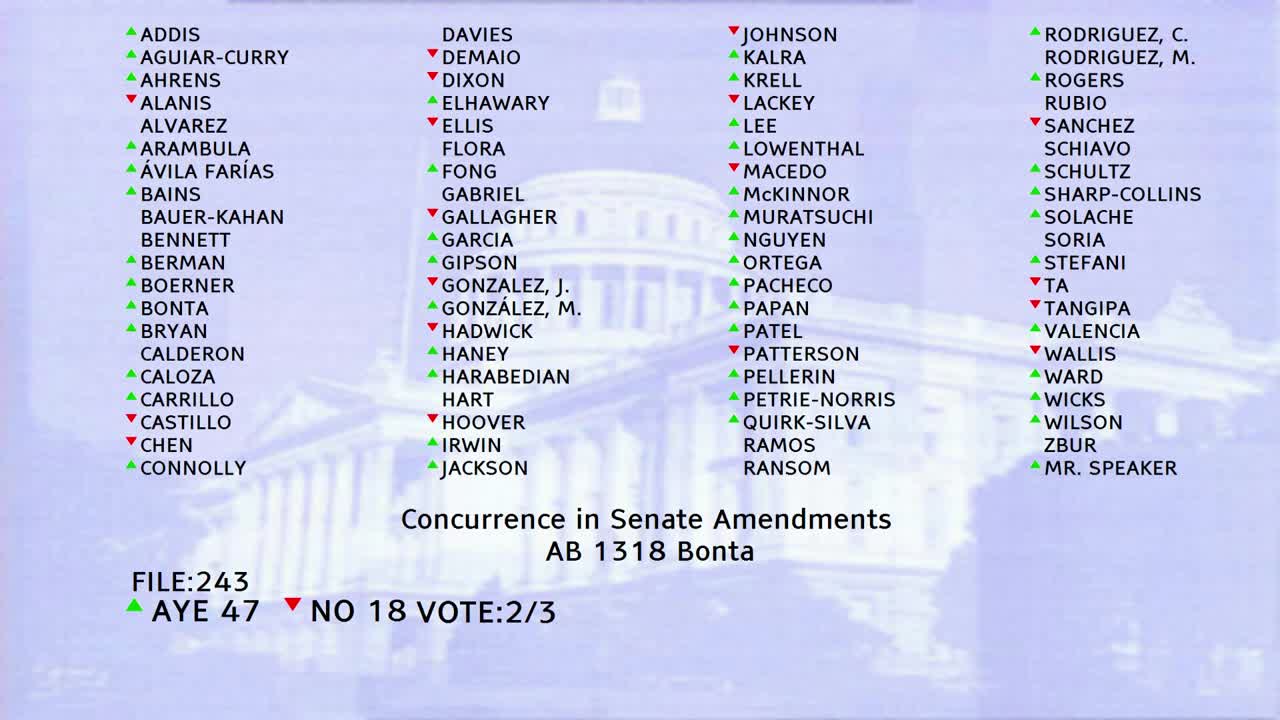 1MIN
Assembly Floor
 2MIN
Senate Floor
 4MIN
Senate Standing Committee on Judiciary
 9MIN
Senate Standing Committee on Health
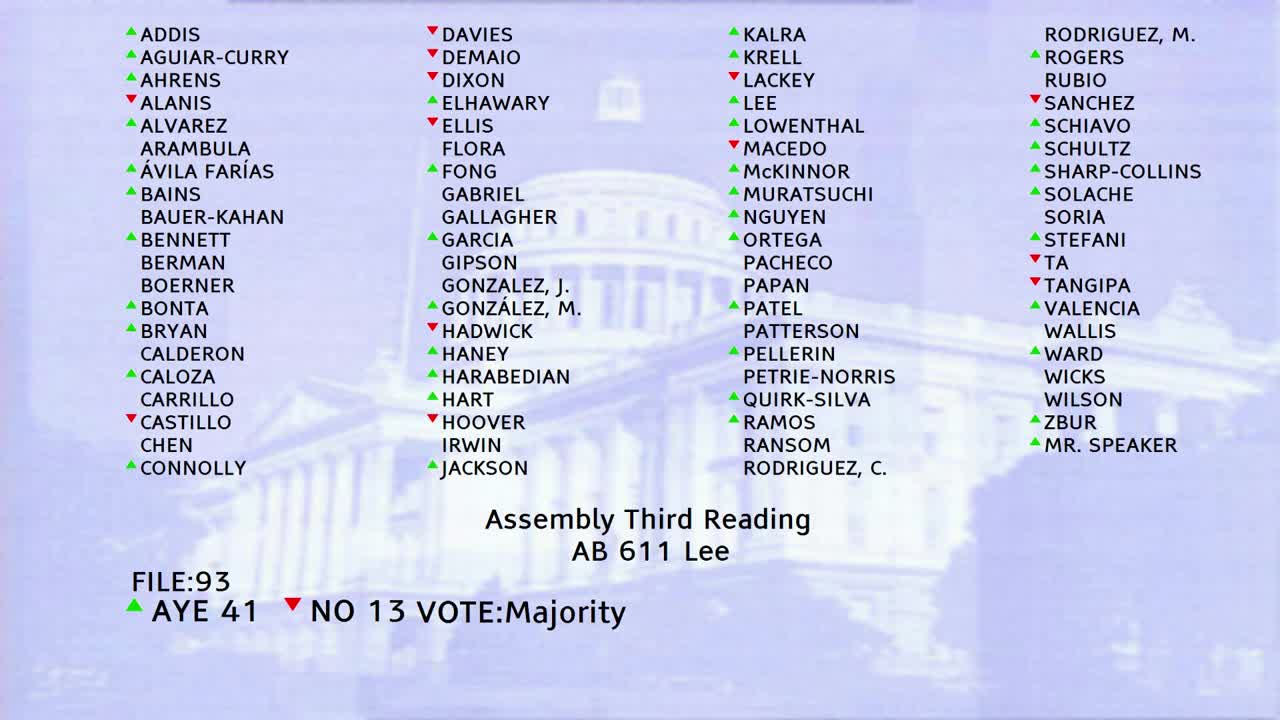 1MIN
Assembly Floor
 2MIN
Assembly Standing Committee on Health
Bill Author