AB 1339: Department of Insurance: housing insurance study.
- Session Year: 2025-2026
- House: Assembly
- Latest Version Date: 2025-10-13
Current Status:
Passed
(2025-10-13: Chaptered by Secretary of State - Chapter 728, Statutes of 2025.)
Introduced
In Committee
Awaiting First Chamber Vote
Passed First Chamber
In Committee
Awaiting Second Chamber Vote
Passed Second Chamber
Enacted
Existing law creates the Department of Insurance, headed by the Insurance Commissioner, and prescribes the departments powers and duties. Existing law generally regulates classes of insurance.
This bill would require the department, upon appropriation and in consultation with specified entities and affordable housing entities, to conduct a study of the property, liability, and builders risk insurance coverages available to affordable housing entities, as defined, that receive a grant, loan, or tax credit awarded by the Department of Housing and Community Development or the California Tax Credit Allocation Committee. The bill would require an insurer to provide necessary information requested by the commissioner for the study. The bill would require the department, in conducting the study, to, among other things, (1) collect information from relevant entities, (2) identify barriers to keeping the affordable housing entities appropriately insured, and (3) analyze and request any other relevant information that may help the department analyze the availability of property, liability, and builders risk insurance coverage for specified affordable housing entities. The bill would also require the department to analyze how, if at all, insurers consider specified determinations of offers or rate setting, including the level or source of income of an individual or group of individuals residing or intending to reside upon the property to be insured. The bill would require the department to submit a report on the study to the Senate Committee on Insurance and the Assembly Committee on Insurance within one year of the above-described appropriation. The bill would require that report to make recommendations on potential policy and budget options to address insurance coverage cost and access challenges for specified affordable housing entities as identified in the study. The bill would repeal these provisions as of January 1, 2031.
The bill would also make related findings and declarations.
Existing law creates the Department of Insurance, headed by the Insurance Commissioner, and prescribes the departments powers and duties. Existing law generally regulates classes of insurance.
This bill would require the department, upon appropriation and in consultation with specified entities and affordable housing entities, to conduct a study of the property, liability, and builders risk insurance coverages available to affordable housing entities, as defined, that receive a grant, loan, or tax credit awarded by the Department of Housing and Community Development or the California Tax Credit Allocation Committee. The bill would require an insurer to provide necessary information requested by the commissioner for the study. The bill would require the department, in conducting the study, to, among other things, (1) collect information from relevant entities, (2) identify barriers to keeping the affordable housing entities appropriately insured, and (3) analyze and request any other relevant information that may help the department analyze the availability of property, liability, and builders risk insurance coverage for specified affordable housing entities. The bill would also require the department to analyze how, if at all, insurers consider specified determinations of offers or rate setting, including the level or source of income of an individual or group of individuals residing or intending to reside upon the property to be insured. The bill would require the department to submit a report on the study to the Senate Committee on Insurance and the Assembly Committee on Insurance by December 31, 2026. within one year of the above-described appropriation. The bill would require that report to make recommendations on potential policy and budget options to address insurance coverage cost and access challenges for specified affordable housing entities as identified in the study. The bill would repeal these provisions as of January 1, 2027. 2031.
The bill would also make related findings and declarations.
Existing law creates the Department of Insurance, headed by the Insurance Commissioner, and prescribes the departments powers and duties. Existing law generally regulates classes of insurance.
This bill would require the department, upon appropriation and in consultation with specified entities and affordable housing entities, to conduct a study of the property, liability, and builders risk insurance coverages available to affordable housing entities, as defined, that receive a grant, loan, or tax credit awarded by the Department of Housing and Community Development or the California Tax Credit Allocation Committee. The bill would require an insurer to provide necessary information requested by the commissioner for the study. The bill would require the department, in conducting the study, to, among other things, (1) collect information from relevant entities, (2) obtain data on the number and types of insurance policies in effect, reasons for policy nonrenewals or cancellations, claims activity, and premium and deductible amounts, identify barriers to keeping the affordable housing entities appropriately insured, and (3) analyze and request any other relevant information that may help the department analyze the availability of property, liability, and builders risk insurance coverage for specified affordable housing entities. The bill would also require the department to analyze how, if at all, insurers consider specified determinations of offers or rate setting, including the level or source of income of an individual or group of individuals residing or intending to reside upon the property to be insured. The bill would require the department to submit a report on the study to the appropriate committees of the Legislature Senate Committee on Insurance and the Assembly Committee on Insurance by December 31, 2026. The bill would require that report to make recommendations on potential policy and budget options to address insurance coverage cost and access challenges for specified affordable housing entities as identified in the study. The bill would repeal these provisions as of January 1, 2027.
The bill would also make related findings and declarations.
Existing law creates the Department of Insurance, headed by the Insurance Commissioner, and prescribes the departments powers and duties. Existing law generally regulates classes of insurance.
This bill would require the department, upon appropriation and in consultation with specified entities and affordable housing entities, to conduct a study of the property, liability, and builders risk insurance coverages available to affordable housing entities, as defined, that receive a grant, loan, or tax credit awarded by the Department of Housing and Community Development or the California Tax Credit Allocation Committee. The bill would require an insurer to provide necessary information requested by the commissioner for the study. The bill would require the department, in conducting the study, to, among other things, (1) collect information from relevant entities, (2) obtain data on the number and types of insurance policies in effect, reasons for policy nonrenewals or cancellations, claims activity, and premium and deductible amounts, and (3) analyze and request any other relevant information that may help the department analyze the availability of property, liability, and builders risk insurance coverage for specified affordable housing entities. The bill would also require the department to analyze how, if at all, insurers consider specified determinations of offers or rate setting, including the level or source of income of an individual or group of individuals residing or intending to reside upon the property to be insured. The bill would require the department to submit a report on the study to the appropriate committees of the Legislature by December 31, 2026. The bill would require that report to make recommendations on potential policy and budget options to address insurance coverage cost and access challenges for specified affordable housing entities as identified in the study. The bill would repeal these provisions as of January 1, 2027.
The bill would also make related findings and declarations.
The Legislature finds and declares all of the following:
(a)Hundreds of thousands of affordable homes have been built across California to meet the needs of low-income households and people experiencing homelessness. The state has invested billions of dollars in these homes through programs administered by the Department of Housing and Community Development and the California Tax Credit Allocation Committee.
(b)The United States is facing an industrywide insurance crisis, especially in the property insurance sector. According to Marshs Global Insurance Market Index, property insurance rates have increased for 27 consecutive quarters, continuing the longest run of increases since the inception of the index in 2012.
(c)Affordable housing entities in urban, suburban, and rural communities across California are facing limited availability of insurance coverage, significant premium and deductible cost increases, and reductions in the scope and quality of coverage. These issues are present in property, liability, and builders risk insurance.
(d)Affordable housing entities have limited options to manage increased insurance costs due to their mission and legal requirements to keep rents at affordable levels for low-income households. As a result, affordable housing entities are particularly vulnerable to insurance cost increases, which now present an urgent threat to the fiscal solvency and stability of affordable housing across California.
(e)While long-term structural reforms to the insurance market may be necessary, there is an immediate need for transparency and data-driven decisionmaking. Currently, there is limited publicly available information regarding how insurance market dynamics uniquely affect multifamily affordable housing. In particular, data on premium and deductible levels and trends and their relationship to claims types and amounts, resident composition, and property characteristics remain unanswered.
(f)Efforts at a nationwide level, such as the 2024 voluntary data call by the National Association of Insurance Commissioners, have primarily focused on single-family homeowners insurance, leaving multifamily and affordable housing insurance trends largely unexamined.
(g)The lack of reliable and comprehensive data impairs the states ability to respond effectively to the insurance crisis affecting its affordable housing investments. Granting the Department of Insurance the authority to request, collect, and analyze insurance-related data specific to affordable housing would enhance transparency and inform future policy and budget decisions.
(h)Collecting this data will help preserve state investments, protect low-income residents from housing instability, and enable California to develop targeted strategies to address systemic insurance challenges in the affordable housing sector.
(i)There is a compelling state interest in understanding how the insurance markets current dynamics affect the availability and sustainability of affordable housing, and in exploring targeted solutions to reduce risks and ensure the long-term viability of publicly funded affordable housing developments.
13851.(a)(1)The Department of Insurance shall conduct a study of the property, liability, and builders risk insurance coverages available to affordable housing entities as defined in Section 13907 and receiving a grant, loan, or tax credit awarded by the Department of Housing and Community Development or the California Tax Credit Allocation Committee intended to serve lower income households, as defined in Section 50079.5 of the Health and Safety Code.
(2)The department shall conduct this study in consultation with the affordable housing entities described in paragraph (1), admitted insurers, providers of nonprofit insurance services, risk-sharing pools for public housing authorities and nongovernmental owners of affordable housing properties, insurance captives, risk retention groups, and other relevant state agencies, including the Department of Housing and Community Development and the California Tax Credit Allocation Committee.
(b)An insurer, upon the request of the commissioner, shall provide and make available any information necessary to comply with the requirements of this section. Any information provided to the department by an insurer shall be considered a trade secret, confidential, privileged, or otherwise exempt from disclosure under the California Public Records Act (Division 10 (commencing with Section 7920.000) of Title 1 of the Government Code). Nothing in this section prohibits the commissioner from preparing and publishing reports, analyses, or other documents using the data received under this section so long as the data is in aggregate form and does not permit the identification of information related to individual companies.
13852.In conducting the study described in subdivision (a) of Section 13851, the department shall do all of the following:
(a)Collect information necessary to conduct the study from relevant insurers with the affordable housing entities described in subdivision (a) of Section 13851.
(b)Identify barriers to keeping the affordable housing entities appropriately insured.
(c)Analyze and request any other relevant information that may help the department analyze the availability of property, liability, and builders risk insurance coverage for the affordable housing entities described in subdivision (a) of Section 13851.
(d)Analyze trends impacting market availability of property, liability, and builders risk insurance coverage for the affordable housing entities described in subdivision (a) of Section 13851.
(e)(1)Analyze and request any other relevant information that may help the department analyze how, if at all, insurers consider the following in determinations of insurance policy offers or rate setting:
(A)The level or source of income of an individual or group of individuals residing or intending to reside upon the property to be insured, if the individual or group of individuals is not the owner of the real property.
(B)The receipt of assistance, intended for housing, from the federal or state government, or from a local public entity, as defined in Section 50079 of the Health and Safety Code, including, but not limited to, federal vouchers issued under Section 8 of the United States Housing Act of 1937 (42 U.S.C. Sec. 1437f), by an individual or group of individuals residing or intending to reside upon the property insured or to be insured.
(2)The designation of real property containing a residential dwelling unit as affordable to residents at a specific income level pursuant to statute, regulations, or restrictive declaration, or pursuant to a regulatory agreement with a state governmental entity.
13853.(a)The department shall submit a report on the study described in subdivision (a) of Section 13851 to the Senate Committee on Insurance and the Assembly Committee on Insurance within one year of the appropriation made pursuant to Section 13854.
(b)The report shall make recommendations on potential policy and budget options to address insurance coverage cost and access challenges for the affordable housing entities described in subdivision (a) of Section 13851, as identified in the study.
(c)The report submitted to the Legislature pursuant to this section shall be submitted pursuant to Section 9795 of the Government Code.
13854.Implementation of this chapter is contingent upon an appropriation by the Legislature for purposes of this chapter in the annual Budget Act or another statute.
13855.This chapter shall remain in effect only until January 1, 2031, and as of that date is repealed.
The Legislature finds and declares all of the following:
(a)Hundreds of thousands of affordable homes have been built across California to meet the needs of low-income households and people experiencing homelessness. The state has invested billions of dollars in these homes through programs administered by the Department of Housing and Community Development and the California Tax Credit Allocation Committee.
(b)The United States is facing an industrywide insurance crisis, especially in the property insurance sector. According to Marshs Global Insurance Market Index, property insurance rates have increased for 27 consecutive quarters, continuing the longest run of increases since the inception of the index in 2012.
(c)Affordable housing entities in urban, suburban, and rural communities across California are facing limited availability of insurance coverage, significant premium and deductible cost increases, and reductions in the scope and quality of coverage. These issues are present in property, liability, and builders risk insurance.
(d)Affordable housing entities have limited options to manage increased insurance costs due to their mission and legal requirements to keep rents at affordable levels for low-income households. As a result, affordable housing entities are particularly vulnerable to insurance cost increases, which now present an urgent threat to the fiscal solvency and stability of affordable housing across California.
(e)While long-term structural reforms to the insurance market may be necessary, there is an immediate need for transparency and data-driven decisionmaking. Currently, there is limited publicly available information regarding how insurance market dynamics uniquely affect multifamily affordable housing. In particular, data on premium and deductible levels and trends and their relationship to claims types and amounts, resident composition, and property characteristics remain unanswered.
(f)Efforts at a nationwide level, such as the 2024 voluntary data call by the National Association of Insurance Commissioners, have primarily focused on single-family homeowners insurance, leaving multifamily and affordable housing insurance trends largely unexamined.
(g)The lack of reliable and comprehensive data impairs the states ability to respond effectively to the insurance crisis affecting its affordable housing investments. Granting the Department of Insurance the authority to request, collect, and analyze insurance-related data specific to affordable housing would enhance transparency and inform future policy and budget decisions.
(h)Collecting this data will help preserve state investments, protect low-income residents from housing instability, and enable California to develop targeted strategies to address systemic insurance challenges in the affordable housing sector.
(i)There is a compelling state interest in understanding how the insurance markets current dynamics affect the availability and sustainability of affordable housing, and in exploring targeted solutions to reduce risks and ensure the long-term viability of publicly funded affordable housing developments.
13851.(a)(1)The Department of Insurance shall conduct a study of the property, liability, and builders risk insurance coverages available to affordable housing entities as defined in Section 13907 and receiving a grant, loan, or tax credit awarded by the Department of Housing and Community Development or the California Tax Credit Allocation Committee intended to serve lower income households, as defined in Section 50079.5 of the Health and Safety Code.
(2)The department shall conduct this study in consultation with the affordable housing entities described in paragraph (1), admitted insurers, providers of nonprofit insurance services, risk-sharing pools for public housing authorities and nongovernmental owners of affordable housing properties, insurance captives, risk retention groups, and other relevant state agencies, including the Department of Housing and Community Development and the California Tax Credit Allocation Committee.
(b)An insurer, upon the request of the commissioner, shall provide and make available any information necessary to comply with the requirements of this section. Any information provided to the department by an insurer shall be considered a trade secret, confidential, privileged, or otherwise exempt from disclosure under the California Public Records Act (Division 10 (commencing with Section 7920.000) of Title 1 of the Government Code). Nothing in this section prohibits the commissioner from preparing and publishing reports, analyses, or other documents using the data received under this section so long as the data is in aggregate form and does not permit the identification of information related to individual companies.
13852.In conducting the study described in subdivision (a) of Section 13851, the department shall do all of the following:
(a)Collect information necessary to conduct the study from relevant insurers with the affordable housing entities described in subdivision (a) of Section 13851.
(b)Identify barriers to keeping the affordable housing entities appropriately insured.
(c)Analyze and request any other relevant information that may help the department analyze the availability of property, liability, and builders risk insurance coverage for the affordable housing entities described in subdivision (a) of Section 13851.
(d)Analyze trends impacting market availability of property, liability, and builders risk insurance coverage for the affordable housing entities described in subdivision (a) of Section 13851.
(e)(1)Analyze and request any other relevant information that may help the department analyze how, if at all, insurers consider the following in determinations of insurance policy offers or rate setting:
(A)The level or source of income of an individual or group of individuals residing or intending to reside upon the property to be insured, if the individual or group of individuals is not the owner of the real property.
(B)The receipt of assistance, intended for housing, from the federal or state government, or from a local public entity, as defined in Section 50079 of the Health and Safety Code, including, but not limited to, federal vouchers issued under Section 8 of the United States Housing Act of 1937 (42 U.S.C. Sec. 1437f), by an individual or group of individuals residing or intending to reside upon the property insured or to be insured.
(2)The designation of real property containing a residential dwelling unit as affordable to residents at a specific income level pursuant to statute, regulations, or restrictive declaration, or pursuant to a regulatory agreement with a state governmental entity.
13853.(a)The department shall submit a report on the study described in subdivision (a) of Section 13851 to the Senate Committee on Insurance and the Assembly Committee on Insurance on or before December 31, 2026. within one year of the appropriation made pursuant to Section 13854.
(b)The report shall make recommendations on potential policy and budget options to address insurance coverage cost and access challenges for the affordable housing entities described in subdivision (a) of Section 13851, as identified in the study.
(c)The report submitted to the Legislature pursuant to this section shall be submitted pursuant to Section 9795 of the Government Code.
13854.Implementation of this chapter is contingent upon an appropriation by the Legislature for purposes of this chapter in the annual Budget Act or another statute.
13855.This chapter shall remain in effect only until January 1, 2027, 2031, and as of that date is repealed.
The Legislature finds and declares all of the following:
(a)Hundreds of thousands of affordable homes have been built across California to meet the needs of low-income households and people experiencing homelessness. The state has invested billions of dollars in these homes through programs administered by the Department of Housing and Community Development and the California Tax Credit Allocation Committee.
(b)The United States is facing an industrywide insurance crisis, especially in the property insurance sector. According to Marshs Global Insurance Market Index, property insurance rates have increased for 27 consecutive quarters, continuing the longest run of increases since the inception of the index in 2012.
(c)Affordable housing entities in urban, suburban, and rural communities across California are facing limited availability of insurance coverage, significant premium and deductible cost increases, and reductions in the scope and quality of coverage. These issues are present in property, liability, and builders risk insurance.
(d)Affordable housing entities have limited options to manage increased insurance costs due to their mission and legal requirements to keep rents at affordable levels for low-income households. As a result, affordable housing entities are particularly vulnerable to insurance cost increases, which now present an urgent threat to the fiscal solvency and stability of affordable housing across California.
13851.(a)(1)The Department of Insurance shall conduct a study of the property, liability, and builders risk insurance coverages available to affordable housing entities as defined in Section 13907 and receiving a grant, loan, or tax credit awarded by the Department of Housing and Community Development or the California Tax Credit Allocation Committee intended to serve lower income households, as defined in Section 50079.5 of the Health and Safety Code. The department shall additionally identify barriers to keeping these affordable housing entities appropriately insured.
(2)The department shall conduct this study in consultation with the affordable housing entities described in paragraph (1), admitted and nonadmitted insurers, providers of nonprofit insurance services, risk-sharing pools for public housing authorities and nongovernmental owners of affordable housing properties, insurance captives, risk retention groups, and other relevant state agencies, including the Department of Housing and Community Development and the California Tax Credit Allocation Committee.
(b)An insurer, upon the request of the commissioner, shall provide and make available any information necessary to comply with the requirements of this section. Any information provided to the department by an insurer shall be considered a trade secret, confidential, privileged, or otherwise exempt from disclosure under the California Public Records Act (Division 10 (commencing with Section 7920.000) of Title 1 of the Government Code). Nothing in this section prohibits the commissioner from preparing and publishing reports, analyses, or other documents using the data received under this section so long as the data is in aggregate form and does not permit the identification of information related to individual companies.
13852.In conducting the study described in subdivision (a) of Section 13851, the department shall do all of the following:
(a)Collect information necessary to conduct the study from relevant insurers with the affordable housing entities described in subdivision (a) of Section 13851. Identified admitted and nonadmitted insurers, insurance captives, and risk retention groups shall provide the requested information to the department.
(b)Obtain data from the previous five years on the number and types of insurance policies in effect, reasons for policy nonrenewals or cancellations, claims activity, and premium and deductible amounts.(b)Identify barriers to keeping the affordable housing entities appropriately insured.
(c)Analyze and request any other relevant information that may help the department analyze the availability of property, liability, and builders risk insurance coverage for the affordable housing entities described in subdivision (a) of Section 13851.
(d)Analyze trends impacting market availability of property, liability, and builders risk insurance coverage for the affordable housing entities described in subdivision (a) of Section 13851.
(e)(1)Analyze and request any other relevant information that may help the department analyze how, if at all, insurers consider the following in determinations of insurance policy offers or rate setting:
(A)The level or source of income of an individual or group of individuals residing or intending to reside upon the property to be insured, if the individual or group of individuals is not the owner of the real property.
(B)The receipt of assistance, intended for housing, from the federal or state government, or from a local public entity, as defined in Section 50079 of the Health and Safety Code, including, but not limited to, federal vouchers issued under Section 8 of the United States Housing Act of 1937 (42 U.S.C. Sec. 1437f), by an individual or group of individuals residing or intending to reside upon the property insured or to be insured.
(2)The designation of real property containing a residential dwelling unit as affordable to residents at a specific income level pursuant to statute, regulations, or restrictive declaration, or pursuant to a regulatory agreement with a state governmental entity.
13853.(a)The department shall submit a report on the study described in subdivision (a) of Section 13851 to the appropriate committees of the Legislature Senate Committee on Insurance and the Assembly Committee on Insurance on or before December 31, 2026.
(b)The report shall make recommendations on potential policy and budget options to address insurance coverage cost and access challenges for the affordable housing entities described in subdivision (a) of Section 13851, as identified in the study.
(c)The report submitted to the Legislature pursuant to this section shall be submitted pursuant to Section 9795 of the Government Code.
13854.Implementation of this chapter is contingent upon an appropriation by the Legislature for purposes of this chapter in the annual Budget Act or another statute.
13855.This chapter shall remain in effect only until January 1, 2027, and as of that date is repealed.
The Legislature finds and declares all of the following:
(a)Hundreds of thousands of affordable homes have been built across California to meet the needs of low-income households and people experiencing homelessness. The state has invested billions of dollars in these homes through programs administered by the Department of Housing and Community Development and the California Tax Credit Allocation Committee.
(b)The United States is facing an industrywide insurance crisis, especially in the property insurance sector. According to Marshs Global Insurance Market Index, property insurance rates have increased for 27 consecutive quarters, continuing the longest run of increases since the inception of the index in 2012.
(c)Affordable housing entities in urban, suburban, and rural communities across California are facing limited availability of insurance coverage, significant premium and deductible cost increases, and reductions in the scope and quality of coverage. These issues are present in property, liability, and builders risk insurance.
(d)Affordable housing entities have limited options to manage increased insurance costs due to their mission and legal requirements to keep rents at affordable levels for low-income households. As a result, affordable housing entities are particularly vulnerable to insurance cost increases, which now present an urgent threat to the fiscal solvency and stability of affordable housing across California.
13851.(a)(1)The Department of Insurance shall conduct a study of the property, liability, and builders risk insurance coverages available to affordable housing entities as defined in Section 13907 and receiving a grant, loan, or tax credit awarded by the Department of Housing and Community Development or the California Tax Credit Allocation Committee intended to serve lower income households, as defined in Section 50079.5 of the Health and Safety Code. The department shall additionally identify barriers to keeping these affordable housing entities appropriately insured.
(2)The department shall conduct this study in consultation with the affordable housing entities described in paragraph (1), admitted and nonadmitted insurers, providers of nonprofit insurance services, risk-sharing pools for public housing authorities and nongovernmental owners of affordable housing properties, insurance captives, risk retention groups, and other relevant state agencies, including the Department of Housing and Community Development and the California Tax Credit Allocation Committee.
(b)An insurer, upon the request of the commissioner, shall provide and make available any information necessary to comply with the requirements of this section. Any information provided to the department by an insurer shall be considered a trade secret, confidential, privileged, or otherwise exempt from disclosure under the California Public Records Act (Division 10 (commencing with Section 7920.000) of Title 1 of the Government Code). Nothing in this section prohibits the commissioner from preparing and publishing reports, analyses, or other documents using the data received under this section so long as the data is in aggregate form and does not permit the identification of information related to individual companies.
13852.In conducting the study described in subdivision (a) of Section 13851, the department shall do all of the following:
(a)Collect information necessary to conduct the study from relevant insurers with the affordable housing entities described in subdivision (a) of Section 13851. Identified admitted and nonadmitted insurers, insurance captives, and risk retention groups shall provide the requested information to the department.
(b)Obtain data from the previous five years on the number and types of insurance policies in effect, reasons for policy nonrenewals or cancellations, claims activity, and premium and deductible amounts.
(c)Analyze and request any other relevant information that may help the department analyze the availability of property, liability, and builders risk insurance coverage for the affordable housing entities described in subdivision (a) of Section 13851.
(d)Analyze trends impacting market availability of property, liability, and builders risk insurance coverage for the affordable housing entities described in subdivision (a) of Section 13851.
(e)(1)Analyze and request any other relevant information that may help the department analyze how, if at all, insurers consider the following in determinations of insurance policy offers or rate setting:
(A)The level or source of income of an individual or group of individuals residing or intending to reside upon the property to be insured, if the individual or group of individuals is not the owner of the real property.
(B)The receipt of assistance, intended for housing, from the federal or state government, or from a local public entity, as defined in Section 50079 of the Health and Safety Code, including, but not limited to, federal vouchers issued under Section 8 of the United States Housing Act of 1937 (42 U.S.C. Sec. 1437f), by an individual or group of individuals residing or intending to reside upon the property insured or to be insured.
(2)The designation of real property containing a residential dwelling unit as affordable to residents at a specific income level pursuant to statute, regulations, or restrictive declaration, or pursuant to a regulatory agreement with a state governmental entity.
13853.(a)The department shall submit a report on the study described in subdivision (a) of Section 13851 to the appropriate committees of the Legislature on or before December 31, 2026.
(b)The report shall make recommendations on potential policy and budget options to address insurance coverage cost and access challenges for the affordable housing entities described in subdivision (a) of Section 13851, as identified in the study.
(c)The report submitted to the Legislature pursuant to this section shall be submitted pursuant to Section 9795 of the Government Code.
13854.Implementation of this chapter is contingent upon an appropriation by the Legislature for purposes of this chapter in the annual Budget Act or another statute.
13855.This chapter shall remain in effect only until January 1, 2027, and as of that date is repealed.
|
Date
|
Status
|
|---|---|
| Oct 13, 2025 | Chaptered by Secretary of State - Chapter 728, Statutes of 2025. |
| Oct 13, 2025 | Approved by the Governor. |
| Sep 15, 2025 | Enrolled and presented to the Governor at 4:30 p.m. |
| Sep 4, 2025 | Senate amendments concurred in. To Engrossing and Enrolling. (Ayes 78. Noes 0. Page 2925.). |
| Sep 3, 2025 | In Assembly. Concurrence in Senate amendments pending. |
| Sep 3, 2025 | Read third time. Passed. Ordered to the Assembly. (Ayes 40. Noes 0. Page 2447.). |
| Aug 20, 2025 | Read second time. Ordered to third reading. |
| Aug 19, 2025 | From committee: Do pass. (Ayes 7. Noes 0.) (August 18). |
| Jul 10, 2025 | From committee: Do pass and re-refer to Com. on APPR. with recommendation: To Consent Calendar. (Ayes 7. Noes 0.) (July 9). Re-referred to Com. on APPR. |
| Jul 2, 2025 | From committee chair, with author's amendments: Amend, and re-refer to committee. Read second time, amended, and re-referred to Com. on INS. |
| Jun 18, 2025 | Referred to Com. on INS. |
| Jun 4, 2025 | In Senate. Read first time. To Com. on RLS. for assignment. |
| Jun 3, 2025 | Read third time. Passed. Ordered to the Senate. (Ayes 79. Noes 0. Page 1994.) |
| May 27, 2025 | Read second time. Ordered to third reading. |
| May 23, 2025 | From committee: Do pass. (Ayes 14. Noes 0.) (May 23). |
| May 14, 2025 | In committee: Set, first hearing. Referred to APPR. suspense file. |
| May 5, 2025 | Re-referred to Com. on APPR. |
| May 1, 2025 | Read second time and amended. |
| Apr 30, 2025 | From committee: Amend, and do pass as amended and re-refer to Com. on APPR. (Ayes 16. Noes 0.) (April 30). |
| Mar 13, 2025 | Referred to Com. on INS. |
| Feb 24, 2025 | Read first time. |
| Feb 22, 2025 | From printer. May be heard in committee March 24. |
| Feb 21, 2025 | Introduced. To print. |
|
Date
|
Description
|
Location
|
Votes
|
|
|---|---|---|---|---|
| Sep 4, 2025 | AB 1339 Mark González Concurrence in Senate Amendments | Assembly Floor |
Passed |
|
| Sep 3, 2025 | Assembly 3rd Reading AB1339 Mark González et al. By Smallwood-Cuevas | Senate Floor |
Passed |
|
| Aug 18, 2025 | Do pass | Senate Standing Committee on Appropriations |
Passed |
|
| Jul 9, 2025 | Do pass, but first be re-referred to the Committee on [Appropriations] with the recommendation: To Consent Calendar | Senate Standing Committee on Insurance |
Passed |
|
| Jun 3, 2025 | AB 1339 Mark González Assembly Third Reading | Assembly Floor |
Passed |
|
| May 23, 2025 | Do pass. | Assembly Standing Committee on Appropriations |
Passed |
|
| Apr 30, 2025 | Do pass as amended and be re-referred to the Committee on [Appropriations] | Assembly Standing Committee on Insurance |
Passed |
This list shows positions taken on this bill by organizations on the date displayed, which is linked to the original source.
Positions by individuals are not included.
|
Organization
|
Position
|
Date
|
|---|---|---|
| Abode Housing Development | ** Support | |
| Affordable Housing Management Association-Pacific Southwest | ** Support | |
| All Home A Project Of Tides Center | ** Support | |
| ALL HOME, A PROJECT OF TIDES CENTER | ** Support | |
| Brilliant Corners | ** Support | |
| California Coalition For Rural Housing | ** Support | |
| California Housing Consortium | ** Support | |
| California Housing Partnership | ** Support | |
| Christian Church Homes | ** Support | |
| Christian Church Homes (CCH) | ** Support | |
| City and County of San Francisco | ** Support | |
| Delivering Innovation in Supportive Housing | ** Support | |
| East Bay Asian Local Development Corporation | ** Support | |
| East Bay Housing Organizations | ** Support | |
| Enterprise Community Partners | ** Support | |
| Homes & Hope | ** Support | |
| Housing California | ** Support | |
| LISC Bay Area | ** Support | |
| Little Tokyo Service Center | ** Support | |
| MidPen Housing Corporation | ** Support | |
| National Alliance to End Homelessness | ** Support | |
| Non-Profit Housing Association of Northern California | ** Support | |
| Non-profit Housing Association of Northern California (NPH) | ** Support | |
| Resources for Community Development | ** Support | |
| San Diego Housing Federation | ** Support | |
| Southern California Association of Nonprofit Housing | ** Support | |
| Supportive Housing Alliance | ** Support | |
| Tenderloin Neighborhood Development Corporation | ** Support | |
| The John Stewart Company | ** Support | |
| Wakeland Housing and Development Corporation | ** Support |
CONCURRENCE IN SENATE AMENDMENTS
CSA1 Bill Id:AB 1339
Author:(Mark González)
As Amended Ver:July 2, 2025
Majority vote
SUMMARY
Requires the California Department of Insurance (CDI) to conduct a study on the availability of property, liability, and builders' risk insurance coverage for certain affordable housing entities.
- Requires CDI, upon appropriation, to conduct a study on the availability of property, liability, and builders' risk insurance coverages for certain affordable housing entities that receive a grant, loan, or tax credit from the Department of Housing and Community Development (HCD) or California Tax Credit Allocation Committee (TCAC). CDI must conduct the study in consultation with specified affordable housing entities, insurers, and other relevant state agencies, including HCD and TCAC. Among other directives, CDI must analyze how, if at all, an insurer considers the level or source of income of an individual or group residing upon the property to be insured.
- Requires an insurer to provide specified information requested by the Insurance Commissioner (IC) for the study. The information is exempt from disclosure under the California Public Records Act, but the IC may publish reports using the data received as long as the data is de-identified and in aggregate form.
- Requires CDI to submit a report on the study to the Legislature within one year of the appropriation made. The report must make recommendations on potential policy and budget options to address cost and access challenges for affordable housing entities seeking insurance coverage.
Senate Amendments
- Clarified that the report specified in the measure would be to be completed by CDI within one year of the appropriation made.
- Changed repeal date from January 1, 2027 to January 1, 2031
- Added to findings and declarations.
COMMENTS
Affordable housing and insurance: According to the proponents of this measure, the US is facing a housing-industry-wide insurance crisis, with acute and unique impacts to the affordable housing sector in California. Unlike market-rate housing, in which owners can absorb increased operational costs through more robust profit margins and/or rent increases, affordable housing providers are required to keep rents affordable through their public funding sources, which require affordability for at least 55 years, in most cases through a regulatory covenant agreement. It is required by law that these affordable housing providers keep rents affordable to tenants, and most already operate on very narrow margins. This presents an urgent threat to the fiscal solvency and stability of affordable housing, undermines the state's investments in affordable housing, and puts tens of thousands of California's most vulnerable households at risk.
Other states: New York and Washington have requested similar studies on insurance and affordable housing.
According to the Author
According to the author, "Rising insurance costs, shrinking coverage, and insurer withdrawals are creating financial hardship for affordable housing providers – jeopardizing the state's investment in safe and stable housing for low-income families, seniors, and people experiencing homelessness." According to the author, "This study will provide critical data and recommendations to inform policy solutions that ensure affordable housing remains viable and protected."
Arguments in Support
According to the Enterprise Community Partners, "AB 1339 would facilitate an evidence-based approach to ensuring fair and affordable access to insurance for affordable housing providers. To achieve this, AB 1339 would require CDI to collect and analyze five years of data on policy availability, premium trends, and claims history, and to investigate underwriting factors, including resident populations and source of income. Based on this data, AB 1339 would also require CDI to publish a report with policy and budget recommendations to mitigate cost and access challenges by December 31, 2026."
Arguments in Opposition
None on file.
FISCAL COMMENTS
According to the Senate Appropriations Committee, CDI reports costs of $89,000 in Fiscal Year 2025-26 and $125,000 in FY 2026-27 to complete the study (Insurance Fund). The bill specifies CDI is required to complete the study within one year an appropriation is made to the department.
VOTES:
ASM INSURANCE: 16-0-1
YES: Calderon, Wallis, Addis, Alvarez, Ávila Farías, Berman, Chen, Ellis, Gipson, Hadwick, Harabedian, Krell, Nguyen, Petrie-Norris, Michelle Rodriguez, Valencia
ABS, ABST OR NV: Ortega
ASM APPROPRIATIONS: 14-0-1
YES: Wicks, Arambula, Calderon, Caloza, Dixon, Elhawary, Fong, Mark González, Hart, Pacheco, Pellerin, Solache, Ta, Tangipa
ABS, ABST OR NV: Sanchez
ASSEMBLY FLOOR: 79-0-0
YES: Addis, Aguiar-Curry, Ahrens, Alanis, Alvarez, Arambula, Ávila Farías, Bains, Bauer-Kahan, Bennett, Berman, Boerner, Bonta, Bryan, Calderon, Caloza, Carrillo, Castillo, Chen, Connolly, Davies, DeMaio, Dixon, Elhawary, Ellis, Flora, Fong, Gabriel, Gallagher, Garcia, Gipson, Jeff Gonzalez, Mark González, Hadwick, Haney, Harabedian, Hart, Hoover, Irwin, Jackson, Kalra, Krell, Lackey, Lee, Lowenthal, Macedo, McKinnor, Muratsuchi, Nguyen, Ortega, Pacheco, Papan, Patel, Patterson, Pellerin, Petrie-Norris, Quirk-Silva, Ramos, Ransom, Celeste Rodriguez, Michelle Rodriguez, Rogers, Blanca Rubio, Sanchez, Schiavo, Schultz, Sharp-Collins, Solache, Soria, Stefani, Ta, Tangipa, Valencia, Wallis, Ward, Wicks, Wilson, Zbur, Rivas
SENATE FLOOR: 40-0-0
YES: Allen, Alvarado-Gil, Archuleta, Arreguín, Ashby, Becker, Blakespear, Cabaldon, Caballero, Cervantes, Choi, Cortese, Dahle, Durazo, Gonzalez, Grayson, Grove, Hurtado, Jones, Laird, Limón, McGuire, McNerney, Menjivar, Niello, Ochoa Bogh, Padilla, Pérez, Reyes, Richardson, Rubio, Seyarto, Smallwood-Cuevas, Stern, Strickland, Umberg, Valladares, Wahab, Weber Pierson, Wiener
UPDATED
VERSION: July 2, 2025
CONSULTANT: Kathleen O'Malley / INS. / (916) 319-2086 FN: 0001596
SENATE RULES COMMITTEE Office of Senate Floor Analyses (916) 651-1520 Fax: (916) 327-4478 | AB 1339 |
THIRD READING
Bill No: AB 1339
Author: Mark González (D), et al.
Amended: 7/2/25 in Senate
Vote: 21
SENATE INSURANCE COMMITTEE: 7-0, 7/9/25
AYES: Rubio, Niello, Becker, Caballero, Jones, Padilla, Wahab
SENATE APPROPRIATIONS COMMITTEE: 7-0, 8/18/25
AYES: Caballero, Seyarto, Cabaldon, Dahle, Grayson, Richardson, Wahab
ASSEMBLY FLOOR: 79-0, 6/3/25 - See last page for vote
SUBJECT: Department of Insurance: housing insurance study
SOURCE: Enterprise Community Partners, Inc./Housing California
DIGEST:
This bill requires, upon appropriation, the California Department of Insurance (CDI) to conduct a study on the availability of property, liability, and builders' risk insurance coverage for certain affordable housing entities within one-year of such an appropriation.
ANALYSIS:
Existing law:
- Establishes the affordable housing risk retention pool that authorizes affordable housing entities to join in an arrangement that provides for the pooling of self-insured claims or losses against tort liability, liability to officers and employees for their acts or omissions, and physical damage to motor vehicles, personal property, and real property of the affordable housing entity. Specifies that the pooling arrangement is not considered insurance, and is not subject to regulation by the Insurance Commissioner.
- Defines “affordable housing” as housing developments in which some of the dwelling units may be purchased or rented, with or without government assistance, on a basis that is affordable to persons or families of low or moderate income, as defined in Section 50093 of the Health and Safety Code.
- Defines an “affordable housing entity” as the following:
- A housing authority created under the laws of this state or another jurisdiction and any agency or instrumentality of a housing authority, including, but not limited to, a legal entity created to conduct a self-insurance program for housing authorities
- A non-profit corporation organized under the laws of this state or another state that is engaged in providing affordable housing.
- A partnership, general or limited, or limited liability company that is engaged in providing affordable housing and that is affiliated with a housing authority if the housing authority or non-profit corporation has one or more of the following:
- A financial or ownership interest in the partnership or limited liability company or the right to acquire that interest.
- The power to direct the management or policies of the partnership or Limited Liability Company.
- Contract to lease, manage, or operate the affordable housing owned by the partnership or Limited Liability Company.
This bill:
- Requires CDI, upon appropriation, to conduct a study on the availability of property, liability, and builders' risk insurance coverage for certain affordable housing entities that receive a grant, loan, or tax credit from the Department of Housing and Community Development (HCD) or California Tax Credit Allocation Committee (TCAC). CDI must conduct the study in consultation with specified affordable housing entities, insurers, and other relevant state agencies, including HCD and TCAC.
- Among other things, stipulates that CDI must analyze how, if at all, an insurer considers the level or source of income of an individual or group residing upon the property to be insured, and identify barriers to keeping the affordable housing entities insured.
- Requires an insurer to provide specified information requested by the Insurance Commissioner for the study. The information is exempt from disclosure under the California Public Records Act, but the Commissioner may publish reports using the data received as long as the data is de-identified and in aggregate form.
- Requires CDI to submit a report on the study to the Legislature within one year of the appropriation that would make this bill’s provisions operative. The report must make recommendations on potential policy and budget options to address cost and access challenges for affordable housing entities seeking insurance coverage.
- Makes related findings and declarations.
- Repeals its provisions on January 1, 2031.
Related/Prior Legislation
AB 2327 (Harkey, Chapter 384, Statutes of 2010). Authorized an affordable housing entity to join with one or more affordable housing entities in an arrangement providing for the pooling of self-insured claims or losses.
FISCAL EFFECT: Appropriation: No Fiscal Com.: Yes Local: No
According to the Senate Appropriations Committee:
“CDI reports costs of $89,000 in Fiscal Year 2025-26 and $125,000 in FY 2026-27 to complete the study (Insurance Fund). The bill specifies CDI is required to complete the study within one year an appropriation is made to the department.”
SUPPORT: (Verified 8/20/25)
Enterprise Community Partners, Inc. (Source)
Housing California (Source)
Abode Housing Development
Affordable Housing Management Association -pacific Southwest
All Home, a Project of Tides Center
Brilliant Corners
California Coalition for Rural Housing
California Housing Consortium
California Housing Partnership
Christian Church Homes (CCH)
City and County of San Francisco
Delivering Innovation in Supportive Housing
East Bay Asian Local Development Corporation
East Bay Housing Organizations
Homes & Hope
LISC Bay Area
Little Tokyo Service Center
Midpen Housing Corporation
National Alliance to End Homelessness
Non-profit Housing Association of Northern California (NPH)
Resources for Community Development
San Diego Housing Federation
Southern California Association of Nonprofit Housing
Supportive Housing Alliance
Tenderloin Neighborhood Development Corporation
The John Stewart Company
Wakeland Housing and Development Corporation
OPPOSITION: (Verified 8/20/25)
None received
ARGUMENTS IN SUPPORT:
According to the sponsors, Housing California and Enterprise Community Partners:
“California is facing a severe insurance crisis that has significantly impacted the affordable housing sector in California. Between 2020 and 2022, insurance costs for affordable housing providers increased by 56% on average, with some providers experiencing rate hikes as high as 500% from 2022 to 2024. These increases, coupled with reductions in coverage availability and scope, threaten the financial viability of affordable housing developments. Unlike market-rate housing, where costs can be offset through rent increases or profit margins, affordable housing providers operate under strict regulations on rents as well as significant financial constraints as mission-driven organizations. As a result, many are being forced to implement coping strategies, including using operational reserves meant for one time uses, deferring necessary property maintenance and improvements, cutting services and staff, and reducing insurance coverage, which increases financial vulnerability.
AB 1339 would facilitate an evidence-based approach to ensuring fair and affordable access to insurance for affordable housing providers. To achieve this, AB 1339 would require CDI to collect and analyze data on policy availability, premium trends, and claims history, and to investigate underwriting factors, including resident populations and source of income. Based on this data, AB 1339 would also require CDI to publish a report with policy and budget recommendations to mitigate cost and access challenges by December 31, 2026. AB 1339 is essential to ensuring the continued viability of California’s affordable housing investments and protecting vulnerable residents from displacement due to insurance market challenges.”
ASSEMBLY FLOOR: 79-0, 6/3/25
AYES: Addis, Aguiar-Curry, Ahrens, Alanis, Alvarez, Arambula, Ávila Farías, Bains, Bauer-Kahan, Bennett, Berman, Boerner, Bonta, Bryan, Calderon, Caloza, Carrillo, Castillo, Chen, Connolly, Davies, DeMaio, Dixon, Elhawary, Ellis, Flora, Fong, Gabriel, Gallagher, Garcia, Gipson, Jeff Gonzalez, Mark González, Hadwick, Haney, Harabedian, Hart, Hoover, Irwin, Jackson, Kalra, Krell, Lackey, Lee, Lowenthal, Macedo, McKinnor, Muratsuchi, Nguyen, Ortega, Pacheco, Papan, Patel, Patterson, Pellerin, Petrie-Norris, Quirk-Silva, Ramos, Ransom, Celeste Rodriguez, Michelle Rodriguez, Rogers, Blanca Rubio, Sanchez, Schiavo, Schultz, Sharp-Collins, Solache, Soria, Stefani, Ta, Tangipa, Valencia, Wallis, Ward, Wicks, Wilson, Zbur, Rivas
Prepared by: Brandon Seto / INS. / (916) 651-4110
8/20/25 23:35:45
**** END ****
SENATE COMMITTEE ON APPROPRIATIONS
Senator Anna Caballero, Chair
2025 - 2026 Regular Session
AB 1339 (Mark González) - Department of Insurance: housing insurance study
Version: July 2, 2025 | Policy Vote: INS. 7 - 0 |
Urgency: No | Mandate: No |
Hearing Date: August 18, 2025 | Consultant: Janelle Miyashiro |
Bill Summary:
AB 1339 requires, upon appropriation, the California Department of Insurance (CDI) to conduct a study and submit a report on the availability of property, liability, and builders’ risk insurance coverage for affordable housing entities, as specified.
Fiscal Impact:
CDI reports costs of $89,000 in Fiscal Year 2025-26 and $125,000 in FY 2026-27 to complete the study (Insurance Fund). The bill specifies CDI is required to complete the study within one year an appropriation is made to the department.
Background:
The rising cost of insurance is becoming a significant challenge for housing development, including in the realm of affordable housing. Unlike market-rate housing developers, which may absorb increased operational costs, such as rising insurance premiums, by increasing prices or rent, affordable housing providers are bound by various laws and covenants to keep prices and rent below a certain amount. Growing insurance costs may force developers to reconsider building new projects, exacerbating the availability of affordable housing units.
In March of this year, Commissioner Lara announced, as part of the Commissioner’s Sustainable Insurance Strategy, an increase in the FAIR Plan’s Division I Commercial Property coverage limits to $20 million per building, with a total $100 million maximum limit per location. According to the announcement, “This targeted FAIR Plan expansion helps meet the urgent needs of homeowners associations, affordable housing developers, farmers, builders, and business owners who are being priced out or left without coverage altogether. It is a short-term solution with long-term benefits—providing necessary insurance access while we continue implementing comprehensive reforms to restore a competitive and reliable market in California.” These new coverage limits are stipulated in the Commissioner’s Order No. 2024-2.
Proposed Law:
- Requires CDI to conduct a study of the property, liability, and builders’ risk insurance coverages available to affordable housing entities receiving a grant, loan, or tax credit awarded by the Department of Housing and Community Development or the California Tax Credit Allocation Committee.
- Require CDI to conduct the study in consultation with affordable housing entities, admitted insurers, providers of nonprofit insurance services, risk-sharing pools for public housing authorities and nongovernmental owners of affordable housing properties, insurance captives, risk retention groups, and other relevant state agencies.
- Requires, upon request of the commissioner, an insurer to provide and make available any information necessary to comply with the study required by this bill.
- In conducting the study, requires CDI to collect, analyze, and request any necessary information, identify barriers to keeping affordable housing entities appropriately insured, and analyze trends impacting market availability, as specified.
- Requires CDI to submit a report on the study to the Senate and Assembly Committees on Insurance within one year an appropriation is made by the Legislature to complete the study.
- Requires the report to make recommendations on potential policy and budget options to address insurance coverage cost and access challenges for affordable housing entities as identified in the study.
- Provides the provisions of the bill are contingent upon an appropriation by the Legislature.
- Sunsets the provisions of the bill on January 1, 2031.
- States legislative findings and declarations.
-- END --
SENATE COMMITTEE ON INSURANCE
Senator Susan Rubio, Chair
2025 - 2026 Regular
Bill No: AB 1339 Hearing Date: July 9, 2025
Author: | Mark González | ||
Version: | July 2, 2025 Amended | ||
Urgency: | No | Fiscal: | Yes |
Consultant: | Brandon Seto | ||
SUBJECT: Department of Insurance: housing insurance study
DIGEST:
Requires, upon appropriation, the California Department of Insurance (CDI) to conduct a study on the availability of property, liability, and builders' risk insurance coverage for certain affordable housing entities within one-year of such an appropriation.
ANALYSIS:
Existing law:
- Establishes the affordable housing risk retention pool that authorizes affordable housing entities to join in an arrangement that provides for the pooling of self-insured claims or losses against tort liability, liability to officers and employees for their acts or omissions, and physical damage to motor vehicles, personal property, and real property of the affordable housing entity. Specifies that the pooling arrangement is not considered insurance, and is not subject to regulation by the Insurance Commissioner.
- Defines “affordable housing” as housing developments in which some of the dwelling units may be purchased or rented, with or without government assistance, on a basis that is affordable to persons or families of low or moderate income, as defined in Section 50093 of the Health and Safety Code.
- Defines an “affordable housing entity” as the following:
- A housing authority created under the laws of this state or another jurisdiction and any agency or instrumentality of a housing authority, including, but not limited to, a legal entity created to conduct a self-insurance program for housing authorities
- A non-profit corporation organized under the laws of this state or another state that is engaged in providing affordable housing.
- A partnership, general or limited, or limited liability company that is engaged in providing affordable housing and that is affiliated with a housing authority if the housing authority or non-profit corporation has one or more of the following:
- A financial or ownership interest in the partnership or limited liability company or the right to acquire that interest.
- The power to direct the management or policies of the partnership or limited liability company.
- Contract to lease, manage, or operate the affordable housing owned by the partnership or limited liability company.
This bill:
- Requires CDI, upon appropriation, to conduct a study on the availability of property, liability, and builders' risk insurance coverage for certain affordable housing entities that receive a grant, loan, or tax credit from the Department of Housing and Community Development (HCD) or California Tax Credit Allocation Committee (TCAC). CDI must conduct the study in consultation with specified affordable housing entities, insurers, and other relevant state agencies, including HCD and TCAC.
- Among other things, stipulates that CDI must analyze how, if at all, an insurer considers the level or source of income of an individual or group residing upon the property to be insured, and identify barriers to keeping the affordable housing entities insured.
- Requires an insurer to provide specified information requested by the Insurance Commissioner for the study. The information is exempt from disclosure under the California Public Records Act, but the Commissioner may publish reports using the data received as long as the data is de-identified and in aggregate form.
- Requires CDI to submit a report on the study to the Legislature within one year of the appropriation that would make this bill’s provisions operative. The report must make recommendations on potential policy and budget options to address cost and access challenges for affordable housing entities seeking insurance coverage.
- Makes related findings and declarations.
- Repeals its provisions on January 1, 2031.
Background
According to the Author:
“California’s insurance crisis is putting affordable housing at risk. Skyrocketing premiums, shrinking coverage, and insurer withdrawals are creating serious financial strain for affordable housing providers—threatening the long-term viability of homes serving low-income families, seniors, and people experiencing homelessness.
Unlike market-rate developers, affordable housing providers cannot raise rents to absorb these costs. Instead, they’re forced to defer maintenance, reduce resident services, and carry less insurance—leaving properties and residents more vulnerable. Without intervention, this crisis will delay new construction, drive providers out of the market, and undermine the state’s progress on housing and homelessness.
AB 1339 directs the Department of Insurance to study the availability and affordability of insurance for affordable housing and identify barriers to coverage. The study will also assess whether factors like tenant income or housing subsidies impact insurers’ decisions. This data is a vital first step to crafting policy solutions that protect affordable housing across California.”
Questions
Then author may wish to consider working with CDI to determine what information specified in this study and subsequent report can be acquired by CDI under its authority, and the availability of such data.
Related/Prior Legislation
AB 2327 (Harkey, Chapter 384, Statutes of 2010): Authorized an affordable housing entity to join with one or more affordable housing entities in an arrangement providing for the pooling of self-insured claims or losses.
ARGUMENTS IN SUPPORT:
According to the sponsors, Housing California and Enterprise Community Partners:
“California is facing a severe insurance crisis that has significantly impacted the affordable housing sector in California. Between 2020 and 2022, insurance costs for affordable housing providers increased by 56% on average, with some providers experiencing rate hikes as high as 500% from 2022 to 2024. These increases, coupled with reductions in coverage availability and scope, threaten the financial viability of affordable housing developments. Unlike market-rate housing, where costs can be offset through rent increases or profit margins, affordable housing providers operate under strict regulations on rents as well as significant financial constraints as mission-driven organizations. As a result, many are being forced to implement coping strategies, including using operational reserves meant for one time uses, deferring necessary property maintenance and improvements, cutting services and staff, and reducing insurance coverage, which increases financial vulnerability.
AB 1339 would facilitate an evidence-based approach to ensuring fair and affordable access to insurance for affordable housing providers. To achieve this, AB 1339 would require CDI to collect and analyze data on policy availability, premium trends, and claims history, and to investigate underwriting factors, including resident populations and source of income. Based on this data, AB 1339 would also require CDI to publish a report with policy and budget recommendations to mitigate cost and access challenges by December 31, 2026. AB 1339 is essential to ensuring the continued viability of California’s affordable housing investments and protecting vulnerable residents from displacement due to insurance market challenges.”
ARGUMENTS IN OPPOSITION:
None received.
SUPPORT:
Enterprise Community Partners, INC. (Sponsor)
Housing California (Sponsor)
Abode Housing Development
All Home, a Project of Tides Center
Brilliant Corners
California Coalition for Rural Housing
California Housing Consortium
California Housing Partnership
Christian Church Homes (CCH)
City and County of San Francisco
Delivering Innovation in Supportive Housing
East Bay Asian Local Development Corporation
East Bay Housing Organizations
Homes & Hope
LISC Bay Area
Little Tokyo Service Center
Midpen Housing Corporation
National Alliance to End Homelessness
Non-profit Housing Association of Northern California (NPH)
Resources for Community Development
Southern California Association of Nonprofit Housing
Supportive Housing Alliance
Tenderloin Neighborhood Development Corporation
The John Stewart Company
Wakeland Housing and Development Corporation
OPPOSITION:
None.
-- END --
ASSEMBLY THIRD READING
ATR Bill Id:AB 1339
Author:(Mark González)
As Amended Ver:May 1, 2025
Majority vote
SUMMARY
Requires the California Department of Insurance (CDI) to conduct a study on the availability of property, liability, and builders' risk insurance coverage for certain affordable housing entities.
Major Provisions
- Requires CDI, upon appropriation, to conduct a study on the availability of property, liability, and builders' risk insurance coverages for certain affordable housing entities that receive a grant, loan, or tax credit from the Department of Housing and Community Development (HCD) or California Tax Credit Allocation Committee (TCAC). CDI must conduct the study in consultation with specified affordable housing entities, insurers, and other relevant state agencies, including HCD and TCAC. Among other directives, CDI must analyze how, if at all, an insurer considers the level or source of income of an individual or group residing upon the property to be insured.
- Requires an insurer to provide specified information requested by the Insurance Commissioner (IC) for the study. The information is exempt from disclosure under the California Public Records Act, but the IC may publish reports using the data received as long as the data is de-identified and in aggregate form.
- Requires CDI to submit a report on the study to the Legislature by December 31, 2026. The report must make recommendations on potential policy and budget options to address cost and access challenges for affordable housing entities seeking insurance coverage.
COMMENTS
Affordable housing and insurance: According to the proponents of this measure, the US is facing a housing-industry-wide insurance crisis, with acute and unique impacts to the affordable housing sector in California. Unlike market-rate housing, in which owners can absorb increased operational costs through more robust profit margins and/or rent increases, affordable housing providers are required to keep rents affordable through their public funding sources, which require affordability for at least 55 years, in most cases through a regulatory covenant agreement. It is required by law that these affordable housing providers keep rents affordable to tenants, and most already operate on very narrow margins. This presents an urgent threat to the fiscal solvency and stability of affordable housing, undermines the state's investments in affordable housing, and puts tens of thousands of California's most vulnerable households at risk.
Other states: New York and Washington have requested similar studies on insurance and affordable housing.
According to the Author
According to the author, "Rising insurance costs, shrinking coverage, and insurer withdrawals are creating financial hardship for affordable housing providers – jeopardizing the state's investment in safe and stable housing for low-income families, seniors, and people experiencing homelessness." According to the author, "This study will provide critical data and recommendations to inform policy solutions that ensure affordable housing remains viable and protected."
Arguments in Support
According to the Enterprise Community Partners, "AB 1339 would facilitate an evidence-based approach to ensuring fair and affordable access to insurance for affordable housing providers. To achieve this, AB 1339 would require CDI to collect and analyze five years of data on policy availability, premium trends, and claims history, and to investigate underwriting factors, including resident populations and source of income. Based on this data, AB 1339 would also require CDI to publish a report with policy and budget recommendations to mitigate cost and access challenges by December 31, 2026."
Arguments in Opposition
None on file.
FISCAL COMMENTS
According to the Assembly Appropriations Committee, one-time costs of approximately $89,000 in fiscal year (FY) 2025-26 and $125,000 in FY 2026-27 to CDI to conduct the study (Insurance Fund). However, since the primary purpose of this bill is to create a study, this bill qualifies for this committee's suspense file consistent with committee rules.
Cost pressures of an unknown amount, potentially in the millions of dollars, to implement the report's recommendations on budget options to address affordable housing insurance issues (General Fund or special fund).
Likely absorbable costs to HCD and TCAC to consult with CDI on the study.
VOTES
ASM INSURANCE: 16-0-1
YES: Calderon, Wallis, Addis, Alvarez, Ávila Farías, Berman, Chen, Ellis, Gipson, Hadwick, Harabedian, Krell, Nguyen, Petrie-Norris, Michelle Rodriguez, Valencia
ABS, ABST OR NV: Ortega
ASM APPROPRIATIONS: 14-0-1
YES: Wicks, Arambula, Calderon, Caloza, Dixon, Elhawary, Fong, Mark González, Hart, Pacheco, Pellerin, Solache, Ta, Tangipa
ABS, ABST OR NV: Sanchez
UPDATED
VERSION: May 1, 2025
CONSULTANT: Kathleen O'Malley / INS. / (916) 319-2086 FN: 0000546
Date of Hearing: May 14, 2025
ASSEMBLY COMMITTEE ON APPROPRIATIONS
Buffy Wicks, Chair
ABPCA Bill Id:AB 1339
Author:(Mark González) – As Amended Ver:May 1, 2025
Policy Committee: | Insurance | Vote: | 16 - 0 |
|
| ||
|
|
Urgency: No State Mandated Local Program: No Reimbursable: No
SUMMARY:
This bill requires the Department of Insurance (CDI) to conduct a study on the availability of property, liability, and builders’ risk insurance coverage for certain affordable housing entities.
Specifically, this bill:
- Requires CDI, upon appropriation, to conduct a study on the availability of property, liability, and builders’ risk insurance coverages for certain affordable housing entities that receive a grant, loan, or tax credit from the Department of Housing and Community Development (HCD) or California Tax Credit Allocation Committee (TCAC). CDI must conduct the study in consultation with specified affordable housing entities, insurers, and other relevant state agencies, including HCD and TCAC. Among other directives, CDI must analyze how, if at all, an insurer considers the level or source of income of an individual or group residing upon the property to be insured.
- Requires an insurer to provide specified information requested by the Insurance Commissioner (IC) for the study. The information is exempt from disclosure under the California Public Records Act, but the IC may publish reports using the data received as long as the data is de-identified and in aggregate form.
- Requires CDI to submit a report on the study to the Legislature by December 31, 2026. The report must make recommendations on potential policy and budget options to address cost and access challenges for affordable housing entities seeking insurance coverage.
FISCAL EFFECT:
- One-time costs of approximately $89,000 in fiscal year (FY) 2025-26 and $125,000 in FY 2026-27 to CDI to conduct the study (Insurance Fund). However, since the primary purpose of this bill is to create a study, this bill qualifies for this committee’s suspense file consistent with committee rules.
- Cost pressures of an unknown amount, potentially in the millions of dollars, to implement the report’s recommendations on budget options to address affordable housing insurance issues (General Fund or special fund).
- Likely absorbable costs to HCD and TCAC to consult with CDI on the study.
COMMENTS:
- Purpose. The author contends that “Rising insurance costs, shrinking coverage, and insurer withdrawals are creating financial hardship for affordable housing providers – jeopardizing the state’s investment in safe and stable housing for low-income families, seniors, and people experiencing homelessness.” According to the author, “This study will provide critical data and recommendations to inform policy solutions that ensure affordable housing remains viable and protected.” This bill is sponsored by Housing California and Enterprise Community Partners and supported by other affordable housing groups.
- Insurance Impacts on Affordable Housing. Unlike market-rate housing developers, which may absorb increased operational costs, such as rising insurance premiums, by increasing prices or rent, affordable housing providers are bound by various laws and covenants to keep prices and rent below a certain amount.
This bill requires CDI to conduct a study, within one year, on the availability of property, liability, and builders’ risk insurance coverages for certain affordable housing entities that receive certain state grants, loans, or tax credits. As noted in the Assembly Insurance Committee’s analysis of this bill, “Concerns with this measure are whether the information requested can actually be achieved by CDI,” specifically regarding whether an insurer considers the level or source of income of an individual or group residing upon the property to be insured.
Analysis Prepared by: Irene Ho / APPR. / (916) 319-2081
Date of Hearing: April 30, 2025
ASSEMBLY COMMITTEE ON INSURANCE
Lisa Calderon, Chair
ABPCA Bill Id:AB 1339 (
Author:Mark González) – As Introduced Ver:February 21, 2025
SUBJECT: Department of Insurance: housing insurance study
SUMMARY: Requires the California Department of Insurance (CDI) to conduct a study of the property, liability, and builders’ risk insurance coverages available to affordable housing entities. Specifically, this bill:
- Requires CDI to identify barriers to keeping affordable housing entities appropriately insured.
- Requires CDI to conduct the study in consultation with affordable housing entities, insurers, providers of nonprofit insurance services, risk-sharing pools for public housing authorities and nongovernmental owners of affordable housing properties, insurance captives, risk retention groups and other relevant state agencies.
- Requires an insurer to provide necessary information requested by CDI for the study.
- Requires CDI to do all of the following:
- Collect information to conduct the study;
- Obtain data from the previous five years on the number of types of insurance policies in effect, reasons for policy renewals or cancellations, claims activity, and premium and deductible amounts;
- Analyze and request any other relevant information that may help CDI analyze the availability of property, liability, and builders’ risk insurance coverage for the affordable housing entities;
- Analyze trends impacting market availability of property, liability, and builders’ risk insurance coverage for affordable housing entities; and,
- Analyze and request any other relevant information that may help CDI analyze how, if at all, insurers consider the following in determinations of insurance policy offers or rate setting:
- The level or source of income of an individual or group of individuals residing or intending to reside upon the property to be insured, if the individual or group of individuals is not the owner of the real property.
- The receipt of assistance intended for housing from the federal or state government or a local public entity.
- The designation of real property containing a residential dwelling unit as affordable to residents at a specific income level.
- Requires CDI to submit the study to the appropriate committees of the Legislature on or before December 31, 2026.
- Requires the report on the study to include recommendations on potential policy and budget options to address insurance coverage cost and access challenges for affordable housing entities.
- Provisions of this measure are contingent upon appropriation by the Legislature.
- Provisions in this measure sunset on January 1, 2027.
- Makes findings and declarations.
EXISTING LAW:
- Establishes the Insurance Commissioner (Commissioner) as a statewide elected official responsible for administering and overseeing CDI.
- Establishes the affordable housing risk retention pool that authorizes affordable housing entities to join in an arrangement that provides for the pooling of self-insured claims or losses against tort liability, liability to officers and employees for their acts or omissions, and physical damage to motor vehicles, personal property and real property of the affordable housing entity. Specifies that the pooling arrangement is not to be considered insurance, and will not be subject to regulation by the Insurance Commissioner. (Insurance Code, Section 13900)
- Defines “affordable housing” as housing developments in which some of the dwelling units may be purchased or rented, with or without government assistance, on a basis that is affordable to persons or families of low or moderate income, as defined in Section 50093 of the Health and Safety Code. (Insurance Code, Section 13906)
- Defines “affordable housing entity” as the following:
- A housing authority created under the laws of this state or another jurisdiction and any agency or instrumentality of a housing authority, including, but not limited to, a legal entity created to conduct a self-insurance program for housing authorities
- A nonprofit corporation organized under the laws of this state or another state that is engaged in providing affordable housing.
- A partnership, general or limited, or limited liability company that is engaged in providing affordable housing and that is affiliated with a housing if the housing authority or nonprofit corporation has one or more of the following:
- A financial or ownership interest in the partnership or limited liability company or the right to acquire that interest.
- The power to direct the management or policies of the partnership or limited liability company.
- Contract to lease, manage, or operate the affordable housing owned by the partnership or limited liability company. (Insurance Code, Section 13907)
FISCAL EFFECT: Unknown.
COMMENTS:
- Purpose of the bill: According to the author, “California is facing an insurance crisis that threatens the stability of affordable housing across the state. Rising insurance costs, shrinking coverage, and insurer withdrawals are creating financial hardship for affordable housing providers—jeopardizing the state’s investment in safe and stable housing for low-income families, seniors, and people experiencing homelessness.
Unlike for-profit housing providers, affordable housing providers cannot raise rents to offset these costs. As a result, affordable housing providers are forced to defer necessary property maintenance and improvements, cut services and staff, and reduce insurance coverage, which increases financial vulnerability. If left unaddressed, this crisis will stall new development, push providers out of the market, and worsen California’s housing and homelessness crises.
This study will provide critical data and recommendations to inform policy solutions that ensure affordable housing remains viable and protected. By taking this essential first step, we can reaffirm California’s commitment to housing affordability and address the growing insurance challenges that threaten its success.”
- Affordable housing and insurance: According to the proponents of this measure, the US is facing a housing-industry-wide insurance crisis, with acute and unique impacts to the affordable housing sector in California. Unlike market-rate housing, in which owners can absorb increased operational costs through more robust profit margins and/or rent increases, affordable housing providers are required to keep rents affordable through their public funding sources, which require affordability for at least 55 years, in most cases through a regulatory covenant agreement. It is required by law that these affordable housing providers keep rents affordable to tenants, and most already operate on very narrow margins. This presents an urgent threat to the fiscal solvency and stability of affordable housing, undermines the state’s investments in affordable housing, and puts tens of thousands of California’s most vulnerable households at risk.
- Other states: New York and Washington have requested similar studies on insurance and affordable housing.
- Concerns with bill: As property insurance rates increase, the impacts to affordable housing are valid concerns and should be discussed. Concerns with this measure are whether the information requested can actually be achieved by CDI, specifically data points in (e). Committee staff recommends the author work with CDI to determine the best path forward as far as what information is able to be collected specific, to affordable housing entities.
- Suggested amendments:
- Remove references to nonadmitted insurers
- On page 4 delete “identified admitted and” and delete lines 6-11.
- Specify the appropriate committees are the Senate Committee on Insurance and the Assembly Committee on Insurance on page 5.
- Move “Identify barriers to keeping these affordable housing entities appropriately insured.” from page 3 to (b) on page 4.
REGISTERED SUPPORT / OPPOSITION:
Support
All Home, a Project of Tides Center
Brilliant Corners
California Coalition for Rural Housing
California Housing Consortium
California Housing Partnership
City and County of San Francisco
East Bay Asian Local Development Corporation
East Bay Housing Organizations
Enterprise Community Partners, INC.
Homes & Hope
Housing California
Little Tokyo Service Center
Midpen Housing Corporation
Resources for Community Development
Southern California Association of Nonprofit Housing
Supportive Housing Alliance
The John Stewart Company
Wakeland Housing and Development Corporation
Opposition
None on file.
Analysis Prepared by: Kathleen O'Malley / INS. / (916) 319-2086
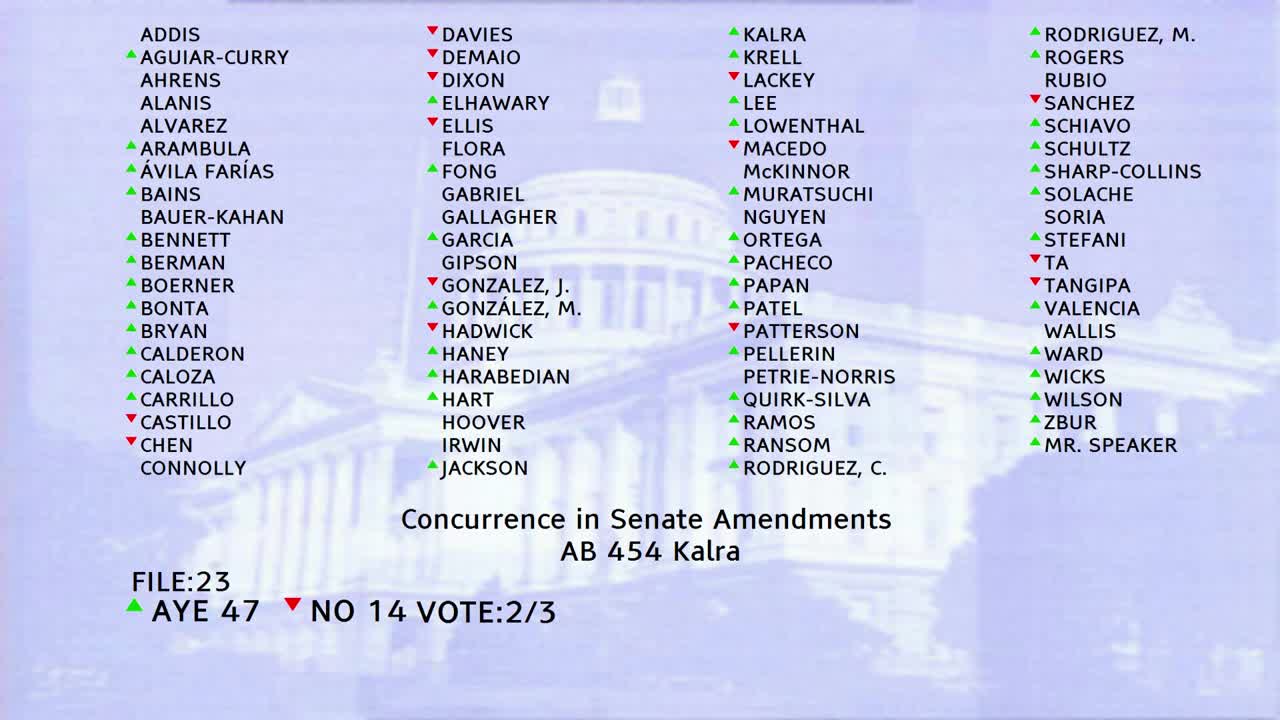
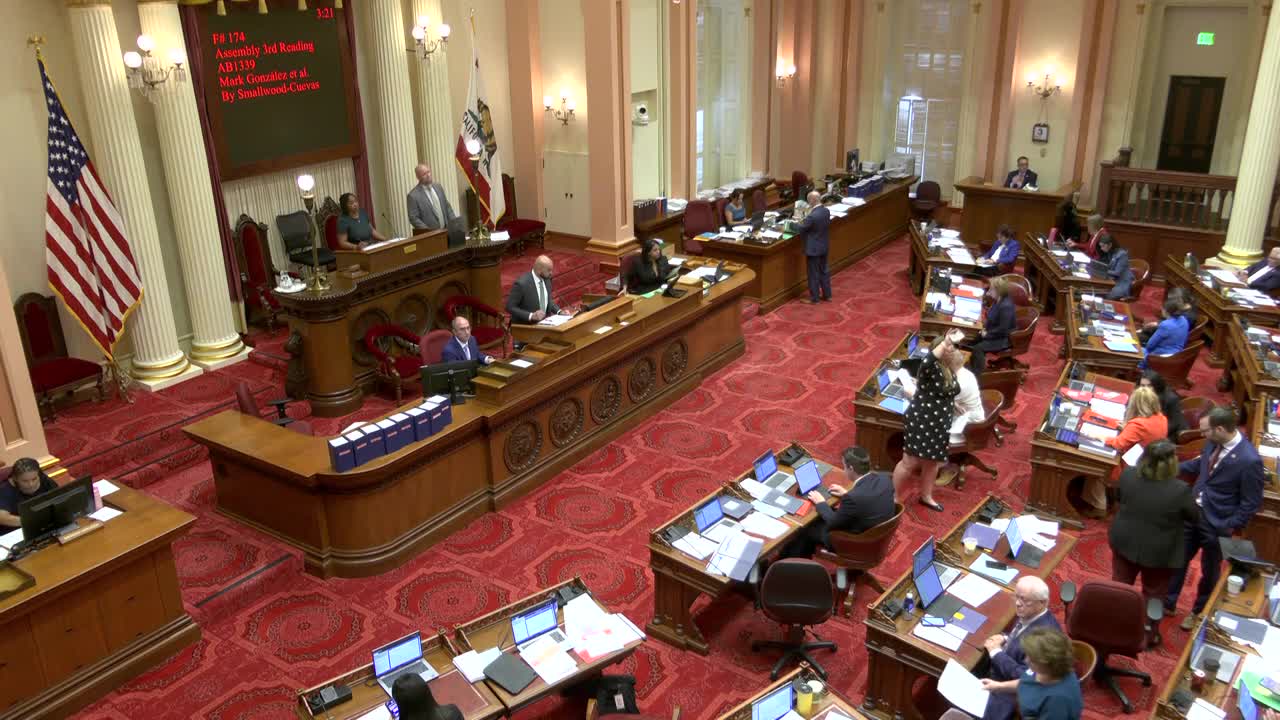
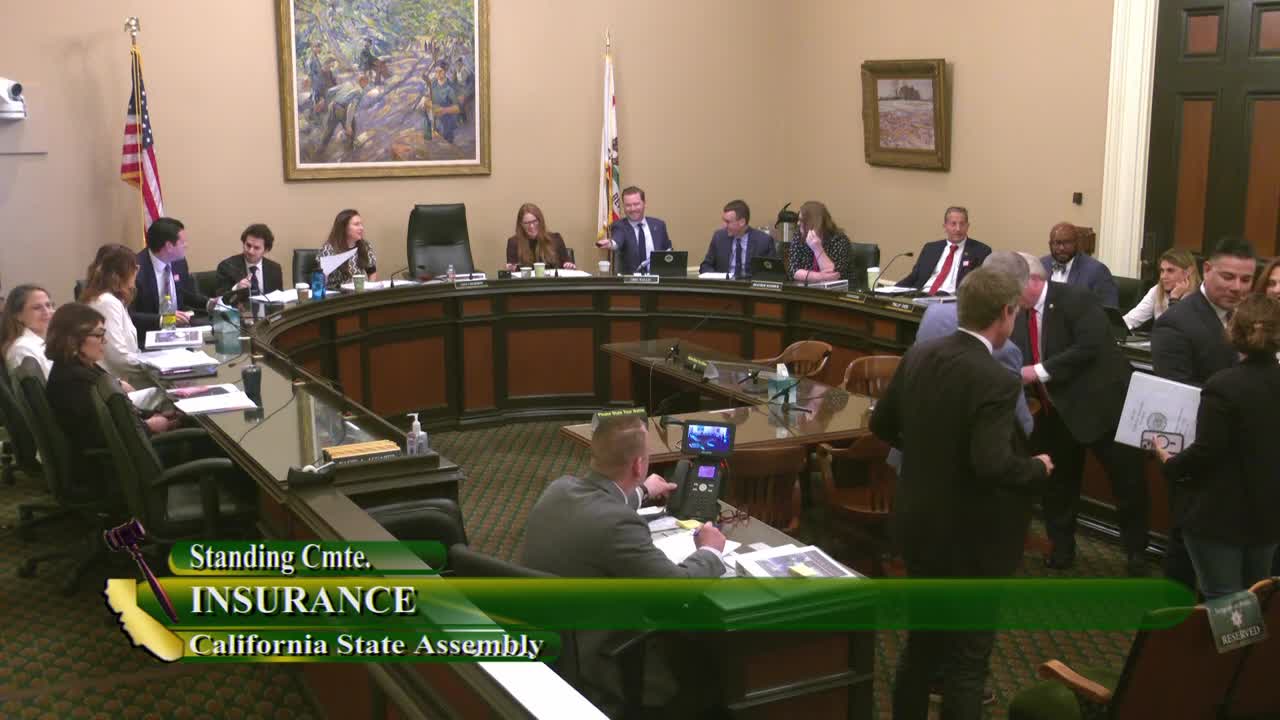
Bill Author