AB 1383: Public employees’ retirement benefits.
- Session Year: 2025-2026
- House: Assembly
- Latest Version Date: 2026-09-03
Current Status:
Failed
(2026-09-20: Vetoed by Governor.)
Introduced
In Committee
Awaiting First Chamber Vote
Passed First Chamber
In Committee
Awaiting Second Chamber Vote
Passed Second Chamber
Enacted
The Public Employees Retirement Law (PERL) establishes the Public Employees Retirement System (PERS) to provide a defined benefit to members of the system based on final compensation, credited service, and age at retirement, subject to certain variations. Existing law creates the Public Employees Retirement Fund, which is continuously appropriated for purposes of PERS, including depositing employer and employee contributions. Under the California Constitution, assets of a public pension or retirement system are trust funds.
The California Public Employees Pension Reform Act of 2013 (PEPRA) establishes a variety of requirements and restrictions on public employers offering defined benefit pension plans. In this regard, PEPRA restricts the amount of compensation that may be applied for purposes of calculating a defined pension benefit for a new member, as defined, by restricting it to specified percentages of the contribution and benefit base under a specified federal law with respect to old age, survivors, and disability insurance benefits.
Existing law, the Teachers Retirement Law, establishes the State Teachers Retirement System (STRS) and creates the Defined Benefit Program of the State Teachers Retirement Plan, which provides a defined benefit to members of the program, based on final compensation, creditable service, and age at retirement, subject to certain variations.
This bill, for service performed on and after January 1, 2027, would prohibit the pensionable compensation for calendar year 2027 used to calculate the defined benefit paid to a new member of a retirement system subject to PEPRA who retires from the system from exceeding specified percentages of the contribution and benefit base under the specified federal law with respect to old age, survivors, and disability insurance benefits. The bill would make related, conforming changes to these provisions on pensionable compensation. The bill also would require a new member of STRS to be subject to specified limits of the Teachers Retirement Law.
PEPRA requires each retirement system that offers a defined benefit plan for safety members of the system to use one of 3 formulas for safety members, 2% at age 57, 2.5% at age 57, or 2.7% at age 57.
This bill would establish new retirement formulas, for employees first hired on or after January 1, 2027, as 2.5% at age 55, 2.7% at age 55, or 3% at age 55, subject to certain exceptions. For new members hired on or after January 1, 2013, who are safety members, the bill would require employers to adjust the formulas for service performed on or after January 1, 2027, to offer the formula that has the same fraction at age 55 as the fraction at age 57 in the formula the employer offered pursuant to existing law. The bill would authorize a public employer and a recognized employee organization to negotiate a prospective increase to the retirement benefit formulas for safety members and new safety members, consistent with the formulas permitted under PEPRA, including the new formulas described above.
This bill would authorize an employer and its employees to agree in a memorandum of understanding to be subject to a higher safety plan or a lower safety plan, subject to certain requirements, including that the memorandum of understanding is collectively bargained in accordance with applicable laws.
By increasing the contribution to continuously appropriated funds, and by increasing expenditures from those funds, this bill would make an appropriation.
The Public Employees Retirement Law (PERL) establishes the Public Employees Retirement System (PERS) to provide a defined benefit to members of the system based on final compensation, credited service, and age at retirement, subject to certain variations. Existing law creates the Public Employees Retirement Fund, which is continuously appropriated for purposes of PERS, including depositing employer and employee contributions. Under the California Constitution, assets of a public pension or retirement system are trust funds.
The California Public Employees Pension Reform Act of 2013 (PEPRA) establishes a variety of requirements and restrictions on public employers offering defined benefit pension plans. In this regard, PEPRA restricts the amount of compensation that may be applied for purposes of calculating a defined pension benefit for a new member, as defined, by restricting it to specified percentages of the contribution and benefit base under a specified federal law with respect to old age, survivors, and disability insurance benefits.
Existing law, the Teachers Retirement Law, establishes the State Teachers Retirement System (STRS) and creates the Defined Benefit Program of the State Teachers Retirement Plan, which provides a defined benefit to members of the program, based on final compensation, creditable service, and age at retirement, subject to certain variations.
This bill, for service performed on and after January 1, 2027, would require a retirement system subject to PEPRA to adjust pensionable compensation limits to be consistent with prohibit the pensionable compensation for calendar year 2027 used to calculate the defined benefit paid to a new member of a retirement system subject to PEPRA who retires from the system from exceeding specified percentages of the contribution and benefit base under the specified federal law with respect to old age, survivors, and disability insurance benefits. The bill would make related, conforming changes to these provisions on pensionable compensation. The bill also would require a new member of STRS to be subject to specified limits of the Teachers Retirement Law.
PEPRA requires each retirement system that offers a defined benefit plan for safety members of the system to use one of 3 formulas for safety members, 2% at age 57, 2.5% at age 57, or 2.7% at age 57.
This bill would establish new retirement formulas, for employees first hired on or after January 1, 2027, as 2.5% at age 55, 2.7% at age 55, or 3% at age 55. 55, subject to certain exceptions. For new members hired on or after January 1, 2013, who are safety members, the bill would require employers to adjust the formulas for service performed on or after January 1, 2027, to offer one of the 3 formulas for safety members that is closest to the formula that has the same fraction at age 55 as the fraction at age 57 in the formula the employer provided offered pursuant to existing law. The bill would authorize a public employer and a recognized employee organization to negotiate a prospective increase to the retirement benefit formulas for safety members and new safety members, consistent with the formulas permitted under PEPRA, including the new formulas described above.
This bill would authorize an employer and its employees to agree in a memorandum of understanding to be subject to a higher safety plan or a lower safety plan, subject to certain requirements, including that the memorandum of understanding is collectively bargained in accordance with applicable laws.
By increasing the contribution to continuously appropriated funds, and by increasing expenditures from those funds, this bill would make an appropriation.
The Public Employees Retirement Law (PERL) establishes the Public Employees Retirement System (PERS) to provide a defined benefit to members of the system based on final compensation, credited service, and age at retirement, subject to certain variations. Existing law creates the Public Employees Retirement Fund, which is continuously appropriated for purposes of PERS, including depositing employer and employee contributions. Under the California Constitution, assets of a public pension or retirement system are trust funds.
The California Public Employees Pension Reform Act of 2013 (PEPRA) establishes a variety of requirements and restrictions on public employers offering defined benefit pension plans. In this regard, PEPRA restricts the amount of compensation that may be applied for purposes of calculating a defined pension benefit for a new member, as defined, by restricting it to specified percentages of the contribution and benefit base under a specified federal law with respect to old age, survivors, and disability insurance benefits.
Existing law, the Teachers Retirement Law, establishes the State Teachers Retirement System (STRS) and creates the Defined Benefit Program of the State Teachers Retirement Plan, which provides a defined benefit to members of the program, based on final compensation, creditable service, and age at retirement, subject to certain variations.
This bill, on and after January 1, 2026, 2027, would require a retirement system subject to PEPRA to adjust pensionable compensation limits to be consistent with a defined benefit limitation established and annually adjusted under federal law with respect to tax exempt qualified trusts. specified percentages of the contribution and benefit base under the specified federal law with respect to old age, survivors, and disability insurance benefits. The bill would require a new member of STRS to be subject to specified limits of the Teachers Retirement Law.
PEPRA requires each retirement system that offers a defined benefit plan for safety members of the system to use one of 3 formulas for safety members, 2% at age 57, 2.5% at age 57, or 2.7% at age 57.
This bill would establish new retirement formulas, for employees first hired on or after January 1, 2026, 2027, as 2.5% at age 55, 2.7% at age 55, or 3% at age 55. For new members hired on or after January 1, 2013, who are safety members, the bill would require employers to adjust the formulas for service performed on or after January 1, 2026, 2027, to offer one of the 3 formulas for safety members that is closest to the formula the employer provided pursuant to existing law. The bill would authorize a public employer and a recognized employee organization to negotiate a prospective increase to the retirement benefit formulas for safety members and new safety members, consistent with the formulas permitted under the act. PEPRA, including the new formulas described above.
This bill would authorize an employer and its employees to agree in a memorandum of understanding to be subject to a higher safety plan or a lower safety plan, subject to certain requirements, including that the memorandum of understanding is collectively bargained in accordance with applicable laws.
PEPRA requires all public employees to pay at least 50 percent of normal costs and prohibits public employers from paying any of the required employee contribution.This bill would authorize an employer and employee, through the collective bargaining process, to agree to terms in a memorandum of understanding where the employer pays a portion of employee contribution.By increasing the contribution to continuously appropriated funds, and by increasing expenditures from those funds, this bill would make an appropriation.
The Public Employees Retirement Law (PERL) establishes the Public Employees Retirement System (PERS) to provide a defined benefit to members of the system based on final compensation, credited service, and age at retirement, subject to certain variations. Existing law creates the Public Employees Retirement Fund, which is continuously appropriated for purposes of PERS, including depositing employer and employee contributions. Under the California Constitution, assets of a public pension or retirement system are trust funds.
The California Public Employees Pension Reform Act of 2013 (PEPRA) establishes a variety of requirements and restrictions on public employers offering defined benefit pension plans. In this regard, PEPRA restricts the amount of compensation that may be applied for purposes of calculating a defined pension benefit for a new member, as defined, by restricting it to specified percentages of the contribution and benefit base under a specified federal law with respect to old age, survivors, and disability insurance benefits.
This bill, on and after January 1, 2026, would require a retirement system to adjust pensionable compensation limits to be consistent with a defined benefit limitation established and annually adjusted under federal law with respect to tax exempt qualified trusts. By
PEPRA requires each retirement system that offers a defined benefit plan for safety members of the system to use one of 3 formulas for safety members, 2% at age 57, 2.5% at age 57, or 2.7% at age 57.
This bill would establish new retirement formulas, for employees first hired on or after January 1, 2026, as 2.5% at age 55, 2.7% at age 55, or 3% at age 55. For new members hired on or after January 1, 2013, who are safety members, the bill would require employers to adjust the formulas for service performed on or after January 1, 2026, to offer one of the 3 formulas for safety members that is closest to the formula the employer provided pursuant to existing law. The bill would authorize a public employer and a recognized employee organization to negotiate a prospective increase to the retirement benefit formulas for members and new members, consistent with the formulas permitted under the act.
This bill would authorize an employer and its employees to agree in a memorandum of understanding to be subject to a higher safety plan or a lower safety plan, subject to certain requirements, including that the memorandum of understanding is collectively bargained in accordance with applicable laws.
PEPRA requires all public employees to pay at least 50 percent of normal costs and prohibits public employers from paying any of the required employee contribution.
This bill would authorize an employer and employee, through the collective bargaining process, to agree to terms in a memorandum of understanding where the employer pays a portion of employee contribution.
By increasing the contribution to continuously appropriated funds, this bill would make an appropriation.
The Public Employees Retirement Law (PERL) establishes the Public Employees Retirement System (PERS) to provide a defined benefit to members of the system based on final compensation, credited service, and age at retirement, subject to certain variations. Existing law creates the Public Employees Retirement Fund, which is continuously appropriated for purposes of PERS, including depositing employer and employee contributions. Under the California Constitution, assets of a public pension or retirement system are trust funds.
The California Public Employees Pension Reform Act of 2013 (PEPRA) establishes a variety of requirements and restrictions on public employers offering defined benefit pension plans. In this regard, PEPRA restricts the amount of compensation that may be applied for purposes of calculating a defined pension benefit for a new member, as defined, by restricting it to specified percentages of the contribution and benefit base under a specified federal law with respect to old age, survivors, and disability insurance benefits.
This bill, on and after January 1, 2026, would require a retirement system to adjust pensionable compensation limits to be consistent with a defined benefit limitation established and annually adjusted under federal law with respect to tax exempt qualified trusts. By increasing the contribution to continuously appropriated funds, this bill would make an appropriation.
Existing law authorizes the Labor Commissioner to adopt regulations necessary to carry out specified provisions relating to car washing and polishing, and requires the Division of Labor Standards Enforcement to enforce those provisions.Existing law required the commissioner to, on or before December 31, 2008, study and report to the Legislature on the status of labor law violations and enforcement in the car washing and polishing industry.This bill would repeal that provision and would, instead, require the commissioner to annually, on or before December 31, complete a study and submit a report, as specified, to the Legislature on the status of labor law violations and enforcement in the car washing and polishing industry and the total number of registered car washing and polishing businesses in the state.Existing law authorizes the Labor Commissioner to adopt regulations necessary to carry out specified provisions relating to car washing and polishing, and requires the Division of Labor Standards Enforcement to enforce those provisions.
Existing law required the commissioner to, on or before December 31, 2008, study and report to the Legislature on the status of labor law violations and enforcement in the car washing and polishing industry.
This bill would repeal that provision and would, instead, require the commissioner to annually, on or before December 31, complete a study and submit a report, as specified, to the Legislature on the status of labor law violations and enforcement in the car washing and polishing industry and the total number of registered car washing and polishing businesses in the state.
The Legislature finds and declares the following:
(a)California is experiencing significant challenges in the recruitment and retention of safety personnel, including firefighters, police officers, and other first responders. Competitive retirement benefits are critical to ensuring an adequate and well-trained public safety workforce.
(b)Firefighters face heightened risks of occupational diseases, including elevated cancer rates. Studies have shown that firefighters have a significantly higher risk of developing multiple types of cancer due to prolonged exposure to carcinogens and hazardous materials in the line of duty. In 2022, the International Agency for Research on Cancer identified the occupation of firefighting as a Class 1 carcinogen.
(c)The physical demands of safety positions are extraordinary, requiring peak physical performance, endurance, and exposure to high-stress, life-threatening situations on a daily basis. These factors contribute to increased rates of disability, injury, and early retirement compared to other professions.
(d)Adjusting the retirement age and pension formulas for safety employees is necessary to maintain a sustainable and effective workforce while addressing the unique health and occupational challenges faced by these personnel.
(e)California has a strong history of protecting and promoting collective bargaining rights and providing opportunities for employees and employers to bargain over certain retirement benefits that further enhances opportunities for public employers and employees to partner on stronger retirement security.
(f)The compensation cap established under the California Public Employees Pension Reform Act of 2013 places limits that are significantly less than the current federal limit. To reflect current wage rates across both safety and miscellaneous employees, it is necessary to reconsider the appropriate compensation cap level, consistent with federal limits.
SEC. 2.Section 7522.02 of the Government Code is amended to read:7522.02.(a)(1)Notwithstanding any other law, except as provided in this article, on and after January 1, 2013, this article shall apply to all state and local public retirement systems and to their participating employers, including the Public Employees Retirement System, the State Teachers Retirement System, the Legislators Retirement System, the Judges Retirement System, the Judges Retirement System II, county and district retirement systems created pursuant to the County Employees Retirement Law of 1937 (Chapter 3 (commencing with Section 31450) of Part 3 of Division 4 of Title 3), independent public retirement systems, and to individual retirement plans offered by public employers. However, this article shall be subject to the Internal Revenue Code and Section 17 of Article XVI of the California Constitution. The administration of the requirements of this article shall comply with applicable provisions of the Internal Revenue Code and the Revenue and Taxation Code.
(2)Notwithstanding paragraph (1), this article shall not apply to the entities described in Section 9 of Article IX of, and Sections 4 and 5 of Article XI of, the California Constitution, except to the extent that these entities continue to be participating employers in any retirement system governed by state statute. Accordingly, any retirement plan approved before January 1, 2013, by the voters of any entity excluded from coverage by this section shall not be affected by this article.
(3)(A)Notwithstanding paragraph (1), this article shall not apply to a public employee whose interests are protected under Section 5333(b) of Title 49 of the United States Code until a federal district court rules that the United States Secretary of Labor, or their designee, erred in determining that the application of this article precludes certification under that section, or until January 1, 2016, whichever is sooner.
(B)If a federal district court upholds the determination of the United States Secretary of Labor, or their designee, that application of this article precludes them from providing a certification under Section 5333(b) of Title 49 of the United States Code, this article shall not apply to a public employee specified in subparagraph (A).
(4)Notwithstanding paragraph (1), this article shall not apply to a multiemployer plan authorized by Section 302(c)(5) of the federal Taft-Hartley Act (29 U.S.C. Sec. 186(c)(5)) if the public employer began participation in that plan prior to January 1, 2013, and the plan is regulated by the federal Employee Retirement Income Security Act of 1974 (29 U.S.C. Sec. 1001 et seq.).
(b)The benefit plan required by this article shall apply to public employees who are new members as defined in Section 7522.04.
(c)(1)Individuals who were employed by any public employer before January 1, 2013, and who became employed by a subsequent public employer for the first time on or after January 1, 2013, shall be subject to the retirement plan that would have been available to employees of the subsequent employer who were first employed by the subsequent employer on or before December 31, 2012, if the individual was subject to concurrent membership for which creditable service was performed in the previous six months or reciprocity established under any of the following provisions:
(A)Article 5 (commencing with Section 20350) of Chapter 3 of Part 3 of Division 5 of Title 2.
(B)Chapter 3 (commencing with Section 31450) of Part 3 of Division 4 of Title 3.
(C)Any agreement between public retirement systems to provide reciprocity to members of the systems.
(D)Section 22115.2 of the Education Code.
(2)An individual who was employed before January 1, 2013, and who, without a separation from employment, changed employment positions and became subject to a different defined benefit plan in a different public retirement system offered by their employer shall be subject to that defined benefit plan as it would have been available to employees who were first employed on or before December 31, 2012.
(d)If a public employer, before January 1, 2013, offers a defined benefit pension plan that provides a defined benefit formula with a lower benefit factor at normal retirement age and results in a lower normal cost than the defined benefit formula required by this article, that employer may continue to offer that defined benefit formula instead of the defined benefit formula required by this article, and shall not be subject to the requirements of Section 7522.10 for pensionable compensation subject to that formula. However, if the employer adopts a new defined benefit formula on or after January 1, 2013, that formula must conform to the requirements of this article or must be determined and certified by the retirement systems chief actuary and the retirement board to have no greater risk and no greater cost to the employer than the defined benefit formula required by this article and must be approved by the Legislature. New members of the defined benefit plan may only participate in the lower cost defined benefit formula that was in place before January 1, 2013, or a defined benefit formula that conforms to the requirements of this article or is approved by the Legislature as provided in this subdivision.
(e)If a public employer, before January 1, 2013, offers a retirement benefit plan that consists solely of a defined contribution plan, that employer may continue to offer that plan instead of the defined benefit pension plan required by this article. However, if the employer adopts a new defined benefit pension plan or defined benefit formula on or after January 1, 2013, that plan or formula must conform to the requirements of this article or must be determined and certified by the retirement systems chief actuary and the systems board to have no greater risk and no greater cost to the employer than the defined benefit formula required by this article and must be approved by the Legislature. New members of the employers plan may only participate in the defined contribution plan that was in place before January 1, 2013, or a defined contribution plan or defined benefit formula that conforms to the requirements of this article. This subdivision shall not be construed to prohibit an employer from offering a defined contribution plan on or after January 1, 2013, either with or without a defined benefit plan, whether or not the employer offered a defined contribution plan prior to that date.
(f)(1)If, on or after January 1, 2013, the Cities of Brea and Fullerton form a joint powers authority pursuant to the provisions of the Joint Exercise of Powers Act (Article 1 (commencing with Section 6500) of Chapter 5), that joint powers authority may provide employees the defined benefit plan or formula that those employees received from their respective employers prior to the exercise of a common power, to which the employee is associated, by the joint powers authority to any employee of the City of Brea, the City of Fullerton, or a city described in paragraph (2) who is not a new member and subsequently is employed by the joint powers authority within 180 days of the city providing for the exercise of a common power, to which the employee was associated, by the joint powers authority.
(2)On or before January 1, 2017, a city in Orange County that is contiguous to the City of Brea or the City of Fullerton may join the joint powers authority described in paragraph (1), but not more than three cities shall be permitted to join.
(3)The formation of a joint powers authority on or after January 1, 2013, shall not act in a manner as to exempt a new employee or a new member, as defined by Section 7522.04, from the requirements of this article. New members may only participate in a defined benefit plan or formula that conforms to the requirements of this article.
(g)(1)If, on or after January 1, 2013, the Belmont Fire Protection District, the Estero Municipal Improvement District, and the City of San Mateo form a joint powers authority pursuant to the provisions of the Joint Exercise of Powers Act (Article 1 (commencing with Section 6500) of Chapter 5), that joint powers authority may provide employees the defined benefit plan or formula that those employees received from their respective employers prior to the exercise of a common power, to which the employee is associated, by the joint powers authority to any employee of the Belmont Fire Protection District, the Estero Municipal Improvement District, and the City of San Mateo who is not a new member and subsequently is employed by the joint powers authority within 180 days of the agency providing for the exercise of a common power, to which the employee was associated, by the joint powers authority.
(2)The formation of a joint powers authority on or after January 1, 2013, shall not act in a manner as to exempt a new employee or a new member, as defined by Section 7522.04, from the requirements of this article. New members may only participate in a defined benefit plan or formula that conforms to the requirements of this article.
(h)(1)On or after January 1, 2026, the Pajaro Regional Flood Management Agency, a joint powers authority formed pursuant to the provisions of the Joint Exercise of Powers Act (Chapter 5 (commencing with Section 6500)), may provide a defined benefit plan or formula pursuant to paragraph (2) to an employee of a member agency of the joint powers authority or of another public agency, as defined in Section 20056, who is not a new member and who is subsequently employed by the joint powers authority within 180 days of the effective date of the retirement plan contract amendment made pursuant to this section.
(2)On or before April 1, 2026, the Pajaro Regional Flood Management Agency may select a defined benefit plan or formula offered by one of its member agencies prior to the exercise of a common power which the member agency offered to its employees on December 31, 2012, and designate that formula for its employees as specified in paragraph (1).
(3)This subdivision does not exempt a new employee or a new member from the requirements of this article. New members may only participate in a defined benefit plan or formula that conforms to the requirements of this article.
(i)The Judges Retirement System and the Judges Retirement System II shall not be required to adopt the defined benefit formula required by Section 7522.20, 7522.25, or 7522.26, or the compensation limitations defined in Section 7522.10.
(j)This article shall not be construed to provide membership in any public retirement system for an individual who would not otherwise be eligible for membership under that systems applicable rules or laws.
(k)On and after January 1, 2013, each public retirement system shall modify its plan or plans to comply with the requirements of this article and may adopt regulations or resolutions for this purpose.
(l)On and after January 1, 2024, a county and a trial court that separate their joint contract into individual contracts pursuant to Section 20471.2 may provide employees the defined benefit plan or formula that those employees received from their respective employers prior to the exercise of the option to separate, provided that the employee subsequently does not otherwise meet the definition of a new employee.
SEC. 3.Section 7522.10 of the Government Code is amended to read:7522.10.(a)On and after January 1, 2013, each public retirement system shall modify its plan or plans to comply with the requirements of this section for each public employer that participates in the system.
(b)Whenever pensionable compensation, as defined in Section 7522.34, is used in the calculation of a benefit, the pensionable compensation shall be subject to the limitations set forth in subdivision (c).
(c)(1)For service performed on January 1, 2013, to December 31, 2026, inclusive, the pensionable compensation used to calculate the defined benefit paid to a new member who retires from the system shall not exceed the following applicable percentage of the contribution and benefit base specified in Section 430(b) of Title 42 of the United States Code on January 1, 2013, as adjusted under paragraph (1) of subdivision (d):
(A)One hundred percent for a member whose service is included in the federal system.
(B)One hundred twenty percent for a member whose service is not included in the federal system.
(2)For service performed on and after January 1, 2027, the pensionable compensation used to calculate the defined benefit paid to a new member who retires from the system shall not exceed the following applicable percentage of the contribution and benefit base specified in Section 430(b) of Title 42 of the United States Code on January 1, 2027, as adjusted under paragraph (1) of subdivision (d):
(A)One hundred percent for a member whose service is included in the federal system.
(B)One hundred twenty percent for a member whose service is not included in the federal system.
(3)A new member of the State Teachers Retirement System shall be subject to the limit established pursuant to subdivision (d) of Section 22119.3 of, or subdivision (c) of Section 26139.5 of, the Education Code.
(d)(1)The retirement system shall adjust the pensionable compensation described in subdivision (c) based on the annual changes to the Consumer Price Index for All Urban Consumers: U.S. City Average, calculated by dividing the Consumer Price Index for All Urban Consumers: U.S. City Average, for the month of September in the calendar year preceding the adjustment by the Consumer Price Index for All Urban Consumers: U.S. City Average, for the month of September of the previous year rounded to the nearest thousandth. The adjustment shall be effective annually on January 1, beginning in 2014 for paragraph (1) of subdivision (c) and 2028 for paragraph (2) of subdivision (c).
(2)The Legislature reserves the right to modify the requirements of this subdivision with regard to all public employees subject to this section, except that the Legislature may not modify these provisions in a manner that would result in a decrease in benefits accrued prior to the effective date of the modification.
(e)A public employer shall not offer a defined benefit or any combination of defined benefits, including a defined benefit offered by a private provider, on compensation in excess of the limitation in subdivision (c).
(f)(1)Subject to the limitation in subdivision (c) of Section 7522.42, a public employer may provide a contribution to a defined contribution plan for compensation in excess of the limitation in subdivision (c) provided the plan and the contribution meet the requirements and limits of federal law.
(2)A public employee who receives an employer contribution to a defined contribution plan shall not have a vested right to continue receiving the employer contribution.
(g)Any employer contributions to any employee defined contribution plan above the pensionable compensation limits in subdivision (c) shall not exceed the employers contribution rate, as a percentage of pay, required to fund the defined benefit plan for income subject to the limitation in subdivision (c) of Section 7522.42.
(h)The retirement system shall limit the pensionable compensation used to calculate the contributions required of an employer or a new member to the amount of compensation that would be used for calculating a defined benefit as set forth in subdivision (c) or (d).
SEC. 4.Section 7522.15 of the Government Code is amended to read:7522.15.Except as provided in subdivisions (d) and (e) of Section 7522.02, each public employer and each public retirement system that offers a defined benefit plan shall offer only the defined benefit formulas established pursuant to Sections 7522.20, 7522.25, and 7522.26 to new members.
SEC. 5.Section 7522.19 is added to the Government Code, to read:7522.19.(a)Notwithstanding any other provision of this article, a public employer and a recognized employee organization may negotiate a prospective increase to the retirement benefit formulas for safety members and new safety members, consistent with the formulas permitted under this article, including Section 7522.26.
(b)Benefit formula increases adopted pursuant to this section shall be established in accordance with Section 7522.44.
SEC. 6.Section 7522.25 of the Government Code is amended to read:7522.25.(a)Each retirement system that offers a defined benefit plan for safety members of the system shall use one or more of the defined benefit formulas prescribed by this section. A member may retire for service under any of the formulas in this section after five years of service and upon reaching 50 years of age.
(b)The Basic Safety Plan shall provide a pension at retirement for service equal to the percentage of the members final compensation set forth opposite the members age at retirement, taken to the preceding quarter year, in the following table, multiplied by the number of years of service in the system as a safety member.
Age at Retirement | Fraction |
|---|---|
50 | 1.426 |
501/4 | 1.447 |
501/2 | 1.467 |
503/4 | 1.488 |
51 | 1.508 |
511/4 | 1.529 |
511/2 | 1.549 |
513/4 | 1.570 |
52 | 1.590 |
521/4 | 1.611 |
521/2 | 1.631 |
523/4 | 1.652 |
53 | 1.672 |
531/4 | 1.693 |
531/2 | 1.713 |
533/4 | 1.734 |
54 | 1.754 |
541/4 | 1.775 |
541/2 | 1.795 |
543/4 | 1.816 |
55 | 1.836 |
551/4 | 1.857 |
551/2 | 1.877 |
553/4 | 1.898 |
56 | 1.918 |
561/4 | 1.939 |
561/2 | 1.959 |
563/4 | 1.980 |
57 and over | 2.000 |
(c)The Safety Option Plan One shall provide a pension at retirement for service equal to the percentage of the members final compensation set forth opposite the members age at retirement, taken to the preceding quarter year, in the following table, multiplied by the number of years of service in the system as a safety member.
Age at Retirement | Fraction |
50 | 2.000 |
501/4 | 2.018 |
501/2 | 2.036 |
503/4 | 2.054 |
51 | 2.071 |
511/4 | 2.089 |
511/2 | 2.107 |
513/4 | 2.125 |
52 | 2.143 |
521/4 | 2.161 |
521/2 | 2.179 |
523/4 | 2.196 |
53 | 2.214 |
531/4 | 2.232 |
531/2 | 2.250 |
533/4 | 2.268 |
54 | 2.286 |
541/4 | 2.304 |
541/2 | 2.321 |
543/4 | 2.339 |
55 | 2.357 |
551/4 | 2.375 |
551/2 | 2.393 |
553/4 | 2.411 |
56 | 2.429 |
561/4 | 2.446 |
561/2 | 2.464 |
563/4 | 2.482 |
57 and over | 2.500 |
(d)The Safety Option Plan Two shall provide a pension at retirement for service equal to the percentage of the members final compensation set forth opposite the members age at retirement, taken to the preceding quarter year, in the following table, multiplied by the number of years of service in the system as a safety member.
Age at Retirement | Fraction |
|---|---|
50 | 2.000 |
501/4 | 2.025 |
501/2 | 2.050 |
503/4 | 2.075 |
51 | 2.100 |
511/4 | 2.125 |
511/2 | 2.150 |
513/4 | 2.175 |
52 | 2.200 |
521/4 | 2.225 |
521/2 | 2.250 |
523/4 | 2.275 |
53 | 2.300 |
531/4 | 2.325 |
531/2 | 2.350 |
533/4 | 2.375 |
54 | 2.400 |
541/4 | 2.425 |
541/2 | 2.450 |
543/4 | 2.475 |
55 | 2.500 |
551/4 | 2.525 |
551/2 | 2.550 |
553/4 | 2.575 |
56 | 2.600 |
561/4 | 2.625 |
561/2 | 2.650 |
563/4 | 2.675 |
57 and over | 2.700 |
(e)On and after January 1, 2013, an employer shall offer one or more of the safety formulas prescribed by this section to new members who are safety employees. The formula offered shall be the formula that is closest to, and provides a lower benefit at 55 years of age than, the formula provided to members in the same retirement classification offered by the employer on December 31, 2012.
(f)On and after January 1, 2013, an employer and its employees subject to Safety Option Plan One or Safety Option Plan Two may agree in a memorandum of understanding to be subject to Safety Option Plan One or the Basic Safety Plan, subject to the following:
(1)The lower plan shall apply to members first employed on or after the effective date of the lower plan and shall be agreed to in a memorandum of understanding that has been collectively bargained in accordance with applicable laws.
(2)A retirement plan contract amendment with a public retirement system to alter a retirement formula pursuant to this subdivision shall not be implemented by the employer in the absence of a memorandum of understanding that has been collectively bargained in accordance with applicable laws.
(3)An employer shall not use impasse procedures to impose the lower plan.
(4)An employer shall not provide a different defined benefit for nonrepresented, managerial, or supervisory employees than the employer provides for other public employees, including represented employees, of the same employer who are in the same membership classifications.
(g)Pensionable compensation used to calculate the defined benefit shall be limited as described in Section 7522.10.
(h)This section shall only apply to service performed between January 1, 2013, and December 31, 2026.
SEC. 7.Section 7522.26 is added to the Government Code, to read:7522.26.(a)On and after January 1, 2027, each retirement system that offers a defined benefit plan for safety members of the system shall use one or more of the defined benefit formulas prescribed by this section. A member may retire for service under any of the formulas in this section after five years of service and upon reaching 50 years of age.
(b)The Basic Safety Plan shall provide a pension at retirement for service equal to the percentage of the members final compensation set forth opposite the members age at retirement, taken to the preceding quarter year, in the following table, multiplied by the number of years of service in the system as a safety member.
Age at Retirement | Fraction |
|---|---|
50 | 1.426 |
501/4 | 1.450 |
501/2 | 1.474 |
503/4 | 1.498 |
51 | 1.522 |
511/4 | 1.550 |
511/2 | 1.576 |
513/4 | 1.602 |
52 | 1.628 |
521/4 | 1.656 |
521/2 | 1.686 |
523/4 | 1.714 |
53 | 1.742 |
531/4 | 1.772 |
531/2 | 1.804 |
533/4 | 1.834 |
54 | 1.866 |
541/4 | 1.900 |
541/2 | 1.932 |
543/4 | 1.966 |
55 and over | 2.000 |
(c)The Safety Option Plan One shall provide a pension at retirement for service equal to the percentage of the members final compensation set forth opposite the members age at retirement, taken to the preceding quarter year, in the following table, multiplied by the number of years of service in the system as a safety member.
Age at Retirement | Fraction |
|---|---|
50 | 2.000 |
501/4 | 2.025 |
501/2 | 2.050 |
503/4 | 2.075 |
51 | 2.100 |
511/4 | 2.125 |
511/2 | 2.150 |
513/4 | 2.175 |
52 | 2.200 |
521/4 | 2.225 |
521/2 | 2.250 |
523/4 | 2.275 |
53 | 2.300 |
531/4 | 2.325 |
531/2 | 2.350 |
533/4 | 2.375 |
54 | 2.400 |
541/4 | 2.425 |
541/2 | 2.450 |
543/4 | 2.475 |
55 and over | 2.500 |
(d)The Safety Option Plan Two shall provide a pension at retirement for service equal to the percentage of the members final compensation set forth opposite the members age at retirement, taken to the preceding quarter year, in the following table, multiplied by the number of years of service in the system as a safety member.
Age at Retirement | Fraction |
|---|---|
50 | 2.000 |
501/4 | 2.035 |
501/2 | 2.070 |
503/4 | 2.105 |
51 | 2.140 |
511/4 | 2.175 |
511/2 | 2.210 |
513/4 | 2.245 |
52 | 2.280 |
521/4 | 2.315 |
521/2 | 2.350 |
523/4 | 2.385 |
53 | 2.420 |
531/4 | 2.455 |
531/2 | 2.490 |
533/4 | 2.525 |
54 | 2.560 |
541/4 | 2.595 |
541/2 | 2.630 |
543/4 | 2.665 |
55 and over | 2.700 |
(e)The Safety Option Plan Three shall provide a pension at retirement for service equal to the percentage of the members final compensation set forth opposite the members age at retirement, taken to the preceding quarter year, in the following table, multiplied by the number of years of service in the system as a safety member. For service subject to this subdivision, the benefit limit shall be 90 percent of final compensation.
Age at Retirement | Fraction |
|---|---|
50 | 2.400 |
501/4 | 2.430 |
501/2 | 2.460 |
503/4 | 2.490 |
51 | 2.520 |
511/4 | 2.550 |
511/2 | 2.580 |
513/4 | 2.610 |
52 | 2.640 |
521/4 | 2.670 |
521/2 | 2.700 |
523/4 | 2.730 |
53 | 2.760 |
531/4 | 2.790 |
531/2 | 2.820 |
533/4 | 2.850 |
54 | 2.880 |
541/4 | 2.910 |
541/2 | 2.940 |
543/4 | 2.970 |
55 and over | 3.000 |
(f)For new members hired on or after January 1, 2027, who are safety members, an employer shall offer the formula in this section that has the same fraction at age 55 as the fraction at age 57 in the formula the employer offered pursuant to Section 7522.25 as of December 31, 2026, unless the employer and employees have agreed to a higher or lower safety plan pursuant to subdivision (h) or (i).
(g)For new members hired on or after January 1, 2013, who are safety members, the employer shall adjust their formula as follows:
(1)For service performed between January 1, 2013, and December 31, 2026, the retirement age and formula shall be as offered by the employer between January 1, 2013, and December 31, 2026, and subject to Section 7522.25.
(2)For service performed on or after January 1, 2027, the employer shall offer the formula in this section that has the same fraction at age 55 as the fraction at age 57 in the formula the employer offered pursuant to Section 7522.25. The formula offered shall maintain the percentage of compensation factor offered as of December 31, 2026, unless the employer and employees have agreed to a higher or lower safety plan pursuant to subdivision (h) or (i).
(3)This section shall not be construed to provide retroactive benefits to employees. This section shall adjust the prospective benefit for safety employees by adjusting the retirement age to 55.
(h)An employer and its employees may agree in a memorandum of understanding to be subject to a higher safety plan, subject to the following:
(1)The higher plan shall apply to members on or after the effective date of the higher plan and shall be agreed to in a memorandum of understanding that has been collectively bargained in accordance with applicable laws.
(2)The higher plan adopted pursuant to this subdivision shall be subject to Section 7522.44.
(i)An employer and its employees may agree in a memorandum of understanding to be subject to a lower safety plan, subject to the following:
(1)The lower plan shall apply to members first employed on or after the effective date of the lower plan and shall be agreed to in a memorandum of understanding that has been collectively bargained in accordance with applicable laws.
(2)A retirement plan contract amendment with a public retirement system to alter a retirement formula pursuant to this subdivision shall not be implemented by the employer in the absence of a memorandum of understanding that has been collectively bargained in accordance with applicable laws.
(3)An employer shall not use impasse procedures to impose the lower plan.
(4)An employer shall not provide a different defined benefit for nonrepresented, managerial, or supervisory employees than the employer provides for other public employees, including represented employees, of the same employer who are in the same membership classifications.
(j)Pensionable compensation used to calculate the defined benefit shall be limited as described in Section 7522.10.
(k)A safety member that is subject to a defined benefit formula prescribed by this section, who is not a new member, shall be subject to contribution rates established pursuant to Section 7522.30.
SEC. 8.Section 20516 of the Government Code is amended to read:20516.(a)Notwithstanding any other provision of this part, with or without a change in benefits, a contracting agency and its employees may agree, in writing, to share the costs of the employer contribution. The cost sharing pursuant to this section shall also apply for related nonrepresented employees as approved in a resolution passed by the contracting agency.
(b)The collective bargaining agreement or memorandum of understanding ratified by the employee bargaining unit and the governing body of the contracting agency shall specify the exact percentage of member compensation that shall be paid toward the current service cost of the benefits by members or the methodology for calculating that cost-sharing rate. The member contributions shall be contributions over and above normal contributions otherwise required by this part and shall be treated as normal contributions for all purposes of this part. The contributions shall be uniform, except as described in subdivision (c), with respect to all members within each of the following classifications: local miscellaneous members, local police officers, local firefighters, county peace officers, and all local safety members other than local police officers, local firefighters, and county peace officers. The balance of any costs shall be paid by the contracting agency and shall be credited to the employers account. An employer shall not use impasse procedures to impose member cost sharing on any contribution amount above that which is authorized by law.
(c)Member cost sharing may differ by classification for groups of employees subject to different levels of benefits pursuant to Sections 7522.20, 7522.25, 7522.26, and 20475, or by a recognized collective bargaining unit if agreed to in a memorandum of understanding reached pursuant to the applicable collective bargaining laws.
(d)This section shall not apply to any contracting agency nor to the employees of a contracting agency until the agency elects to be subject to this section by contract or by amendment to its contract made in the manner prescribed for approval of contracts. Contributions provided by this section shall be withheld from member compensation or otherwise collected when the contract amendment becomes effective. Once the contracting agency elects to be subject to this section, contract amendments shall not be required to effectuate cost sharing in subsequent collective bargaining agreements or memoranda of understanding ratified by the employee bargaining unit and the governing body of the agency; provided, however, that if a collective bargaining agreement or memorandum of understanding sets forth a methodology for calculating the cost-sharing rate instead of an exact percentage, the contracting agency shall provide the retirement system with a signed side letter ratified by the employee bargaining unit and the agency indicating the exact percentage at least 90 days prior to the effective date of the cost-sharing rate as set forth in the signed side letter.
(e)For the purposes of this section, all contributions, liabilities, actuarial interest rates, and other valuation factors shall be determined on the basis of actuarial assumptions and methods that, in the aggregate, are reasonable and that, in combination, offer the actuarys best estimate of anticipated experience under this system.
(f)Nothing in this section shall preclude a contracting agency and its employees from independently agreeing in a memorandum of understanding to share the costs of any benefit, in a manner inconsistent with this section. However, any agreement in a memorandum of understanding that is inconsistent with this section shall not be part of the contract between this system and the contracting agency.
(g)If, and to the extent that, the board determines that a cost-sharing agreement under this section would conflict with Title 26 of the United States Code, the board may refuse to approve the agreement.
(h)Nothing in this section shall require a contracting agency to enter into a memorandum of understanding or collective bargaining agreement with a bargaining representative in order to increase the amount of member contributions when such a member contribution increase is authorized by other provisions under this part.
SEC. 9.It is the intent of the Legislature that this act shall not be construed to affect any retirement benefits or pension rights accrued before its effective date.
The Legislature finds and declares the following:
(a)California is experiencing significant challenges in the recruitment and retention of safety personnel, including firefighters, police officers, and other first responders. Competitive retirement benefits are critical to ensuring an adequate and well-trained public safety workforce.
(b)Firefighters face heightened risks of occupational diseases, including elevated cancer rates. Studies have shown that firefighters have a significantly higher risk of developing multiple types of cancer due to prolonged exposure to carcinogens and hazardous materials in the line of duty. In 2022, the International Agency for Research on Cancer identified the occupation of firefighting as a Class 1 carcinogen.
(c)The physical demands of safety positions are extraordinary, requiring peak physical performance, endurance, and exposure to high-stress, life-threatening situations on a daily basis. These factors contribute to increased rates of disability, injury, and early retirement compared to other professions.
(d)Adjusting the retirement age and pension formulas for safety employees is necessary to maintain a sustainable and effective workforce while addressing the unique health and occupational challenges faced by these personnel.
(e)California has a strong history of protecting and promoting collective bargaining rights and providing opportunities for employees and employers to bargain over certain retirement benefits that further enhances opportunities for public employers and employees to partner on stronger retirement security.
(f)The compensation cap established under the California Public Employees Pension Reform Act of 2013 places limits that are significantly less than the current federal limit. To reflect current wage rates across both safety and miscellaneous employees, it is necessary to reconsider the appropriate compensation cap level, consistent with federal limits.
SEC. 2.Section 7522.02 of the Government Code is amended to read:7522.02.(a)(1)Notwithstanding any other law, except as provided in this article, on and after January 1, 2013, this article shall apply to all state and local public retirement systems and to their participating employers, including the Public Employees Retirement System, the State Teachers Retirement System, the Legislators Retirement System, the Judges Retirement System, the Judges Retirement System II, county and district retirement systems created pursuant to the County Employees Retirement Law of 1937 (Chapter 3 (commencing with Section 31450) of Part 3 of Division 4 of Title 3), independent public retirement systems, and to individual retirement plans offered by public employers. However, this article shall be subject to the Internal Revenue Code and Section 17 of Article XVI of the California Constitution. The administration of the requirements of this article shall comply with applicable provisions of the Internal Revenue Code and the Revenue and Taxation Code.
(2)Notwithstanding paragraph (1), this article shall not apply to the entities described in Section 9 of Article IX of, and Sections 4 and 5 of Article XI of, the California Constitution, except to the extent that these entities continue to be participating employers in any retirement system governed by state statute. Accordingly, any retirement plan approved before January 1, 2013, by the voters of any entity excluded from coverage by this section shall not be affected by this article.
(3)(A)Notwithstanding paragraph (1), this article shall not apply to a public employee whose interests are protected under Section 5333(b) of Title 49 of the United States Code until a federal district court rules that the United States Secretary of Labor, or their designee, erred in determining that the application of this article precludes certification under that section, or until January 1, 2016, whichever is sooner.
(B)If a federal district court upholds the determination of the United States Secretary of Labor, or their designee, that application of this article precludes them from providing a certification under Section 5333(b) of Title 49 of the United States Code, this article shall not apply to a public employee specified in subparagraph (A).
(4)Notwithstanding paragraph (1), this article shall not apply to a multiemployer plan authorized by Section 302(c)(5) of the federal Taft-Hartley Act (29 U.S.C. Sec. 186(c)(5)) if the public employer began participation in that plan prior to January 1, 2013, and the plan is regulated by the federal Employee Retirement Income Security Act of 1974 (29 U.S.C. Sec. 1001 et seq.).
(b)The benefit plan required by this article shall apply to public employees who are new members as defined in Section 7522.04.
(c)(1)Individuals who were employed by any public employer before January 1, 2013, and who became employed by a subsequent public employer for the first time on or after January 1, 2013, shall be subject to the retirement plan that would have been available to employees of the subsequent employer who were first employed by the subsequent employer on or before December 31, 2012, if the individual was subject to concurrent membership for which creditable service was performed in the previous six months or reciprocity established under any of the following provisions:
(A)Article 5 (commencing with Section 20350) of Chapter 3 of Part 3 of Division 5 of Title 2.
(B)Chapter 3 (commencing with Section 31450) of Part 3 of Division 4 of Title 3.
(C)Any agreement between public retirement systems to provide reciprocity to members of the systems.
(D)Section 22115.2 of the Education Code.
(2)An individual who was employed before January 1, 2013, and who, without a separation from employment, changed employment positions and became subject to a different defined benefit plan in a different public retirement system offered by their employer shall be subject to that defined benefit plan as it would have been available to employees who were first employed on or before December 31, 2012.
(d)If a public employer, before January 1, 2013, offers a defined benefit pension plan that provides a defined benefit formula with a lower benefit factor at normal retirement age and results in a lower normal cost than the defined benefit formula required by this article, that employer may continue to offer that defined benefit formula instead of the defined benefit formula required by this article, and shall not be subject to the requirements of Section 7522.10 for pensionable compensation subject to that formula. However, if the employer adopts a new defined benefit formula on or after January 1, 2013, that formula must conform to the requirements of this article or must be determined and certified by the retirement systems chief actuary and the retirement board to have no greater risk and no greater cost to the employer than the defined benefit formula required by this article and must be approved by the Legislature. New members of the defined benefit plan may only participate in the lower cost defined benefit formula that was in place before January 1, 2013, or a defined benefit formula that conforms to the requirements of this article or is approved by the Legislature as provided in this subdivision.
(e)If a public employer, before January 1, 2013, offers a retirement benefit plan that consists solely of a defined contribution plan, that employer may continue to offer that plan instead of the defined benefit pension plan required by this article. However, if the employer adopts a new defined benefit pension plan or defined benefit formula on or after January 1, 2013, that plan or formula must conform to the requirements of this article or must be determined and certified by the retirement systems chief actuary and the systems board to have no greater risk and no greater cost to the employer than the defined benefit formula required by this article and must be approved by the Legislature. New members of the employers plan may only participate in the defined contribution plan that was in place before January 1, 2013, or a defined contribution plan or defined benefit formula that conforms to the requirements of this article. This subdivision shall not be construed to prohibit an employer from offering a defined contribution plan on or after January 1, 2013, either with or without a defined benefit plan, whether or not the employer offered a defined contribution plan prior to that date.
(f)(1)If, on or after January 1, 2013, the Cities of Brea and Fullerton form a joint powers authority pursuant to the provisions of the Joint Exercise of Powers Act (Article 1 (commencing with Section 6500) of Chapter 5), that joint powers authority may provide employees the defined benefit plan or formula that those employees received from their respective employers prior to the exercise of a common power, to which the employee is associated, by the joint powers authority to any employee of the City of Brea, the City of Fullerton, or a city described in paragraph (2) who is not a new member and subsequently is employed by the joint powers authority within 180 days of the city providing for the exercise of a common power, to which the employee was associated, by the joint powers authority.
(2)On or before January 1, 2017, a city in Orange County that is contiguous to the City of Brea or the City of Fullerton may join the joint powers authority described in paragraph (1), but not more than three cities shall be permitted to join.
(3)The formation of a joint powers authority on or after January 1, 2013, shall not act in a manner as to exempt a new employee or a new member, as defined by Section 7522.04, from the requirements of this article. New members may only participate in a defined benefit plan or formula that conforms to the requirements of this article.
(g)(1)If, on or after January 1, 2013, the Belmont Fire Protection District, the Estero Municipal Improvement District, and the City of San Mateo form a joint powers authority pursuant to the provisions of the Joint Exercise of Powers Act (Article 1 (commencing with Section 6500) of Chapter 5), that joint powers authority may provide employees the defined benefit plan or formula that those employees received from their respective employers prior to the exercise of a common power, to which the employee is associated, by the joint powers authority to any employee of the Belmont Fire Protection District, the Estero Municipal Improvement District, and the City of San Mateo who is not a new member and subsequently is employed by the joint powers authority within 180 days of the agency providing for the exercise of a common power, to which the employee was associated, by the joint powers authority.
(2)The formation of a joint powers authority on or after January 1, 2013, shall not act in a manner as to exempt a new employee or a new member, as defined by Section 7522.04, from the requirements of this article. New members may only participate in a defined benefit plan or formula that conforms to the requirements of this article.
(h)(1)On or after January 1, 2026, the Pajaro Regional Flood Management Agency, a joint powers authority formed pursuant to the provisions of the Joint Exercise of Powers Act (Chapter 5 (commencing with Section 6500)), may provide a defined benefit plan or formula pursuant to paragraph (2) to an employee of a member agency of the joint powers authority or of another public agency, as defined in Section 20056, who is not a new member and who is subsequently employed by the joint powers authority within 180 days of the effective date of the retirement plan contract amendment made pursuant to this section.
(2)On or before April 1, 2026, the Pajaro Regional Flood Management Agency may select a defined benefit plan or formula offered by one of its member agencies prior to the exercise of a common power which the member agency offered to its employees on December 31, 2012, and designate that formula for its employees as specified in paragraph (1).
(3)This subdivision does not exempt a new employee or a new member from the requirements of this article. New members may only participate in a defined benefit plan or formula that conforms to the requirements of this article.
(i)The Judges Retirement System and the Judges Retirement System II shall not be required to adopt the defined benefit formula required by Section 7522.20, 7522.25, or 7522.26, or the compensation limitations defined in Section 7522.10.
(j)This article shall not be construed to provide membership in any public retirement system for an individual who would not otherwise be eligible for membership under that systems applicable rules or laws.
(k)On and after January 1, 2013, each public retirement system shall modify its plan or plans to comply with the requirements of this article and may adopt regulations or resolutions for this purpose.
(l)On and after January 1, 2024, a county and a trial court that separate their joint contract into individual contracts pursuant to Section 20471.2 may provide employees the defined benefit plan or formula that those employees received from their respective employers prior to the exercise of the option to separate, provided that the employee subsequently does not otherwise meet the definition of a new employee.
SEC. 3.Section 7522.10 of the Government Code is amended to read:7522.10.(a)On and after January 1, 2013, each public retirement system shall modify its plan or plans to comply with the requirements of this section for each public employer that participates in the system.
(b)Whenever pensionable compensation, as defined in Section 7522.34, is used in the calculation of a benefit, the pensionable compensation shall be subject to the limitations set forth in subdivision (c).
(c)(1)For service performed on January 1, 2013, to December 31, 2026, inclusive, the pensionable compensation used to calculate the defined benefit paid to a new member who retires from the system shall not exceed the following applicable percentage of the contribution and benefit base specified in Section 430(b) of Title 42 of the United States Code on January 1, 2013, as adjusted under paragraph (1) of subdivision (d):
(A)One hundred percent for a member whose service is included in the federal system.
(B)One hundred twenty percent for a member whose service is not included in the federal system.
(2)For service performed on and after January 1, 2027, the pensionable compensation used to calculate the defined benefit paid to a new member who retires from the system shall not exceed the following applicable percentage of the contribution and benefit base specified in Section 430(b) of Title 42 of the United States Code on January 1, 2027, as adjusted under paragraph (1) of subdivision (d):
(A)One hundred percent for a member whose service is included in the federal system.
(B)One hundred thirty-five twenty percent for a member whose service is not included in the federal system.
(3)A new member of the State Teachers Retirement System shall be subject to the limit established pursuant to subdivision (d) of Section 22119.3 of, or subdivision (c) of Section 26139.5 of, the Education Code.
(d)(1)The retirement system shall adjust the pensionable compensation described in subdivision (c) based on the annual changes to the Consumer Price Index for All Urban Consumers: U.S. City Average, calculated by dividing the Consumer Price Index for All Urban Consumers: U.S. City Average, for the month of September in the calendar year preceding the adjustment by the Consumer Price Index for All Urban Consumers: U.S. City Average, for the month of September of the previous year rounded to the nearest thousandth. The adjustment shall be effective annually on January 1, beginning in 2014 for paragraph (1) of subdivision (c) and 2028 for paragraph (2) of subdivision (c).
(2)The Legislature reserves the right to modify the requirements of this subdivision with regard to all public employees subject to this section, except that the Legislature may not modify these provisions in a manner that would result in a decrease in benefits accrued prior to the effective date of the modification.
(e)A public employer shall not offer a defined benefit or any combination of defined benefits, including a defined benefit offered by a private provider, on compensation in excess of the limitation in subdivision (c).
(f)(1)Subject to the limitation in subdivision (c) of Section 7522.42, a public employer may provide a contribution to a defined contribution plan for compensation in excess of the limitation in subdivision (c) provided the plan and the contribution meet the requirements and limits of federal law.
(2)A public employee who receives an employer contribution to a defined contribution plan shall not have a vested right to continue receiving the employer contribution.
(g)Any employer contributions to any employee defined contribution plan above the pensionable compensation limits in subdivision (c) shall not exceed the employers contribution rate, as a percentage of pay, required to fund the defined benefit plan for income subject to the limitation in subdivision (c) of Section 7522.42.
(h)The retirement system shall limit the pensionable compensation used to calculate the contributions required of an employer or a new member to the amount of compensation that would be used for calculating a defined benefit as set forth in subdivision (c) or (d).
SEC. 4.Section 7522.15 of the Government Code is amended to read:7522.15.Except as provided in subdivisions (d) and (e) of Section 7522.02, each public employer and each public retirement system that offers a defined benefit plan shall offer only the defined benefit formulas established pursuant to Sections 7522.20, 7522.25, and 7522.26 to new members.
SEC. 5.Section 7522.19 is added to the Government Code, to read:7522.19.(a)Notwithstanding any other provision of this article, a public employer and a recognized employee organization may negotiate a prospective increase to the retirement benefit formulas for safety members and new safety members, consistent with the formulas permitted under this article, including Section 7522.26.
(b)Benefit formula increases adopted pursuant to this section shall be established in accordance with Section 7522.44.
SEC. 6.Section 7522.25 of the Government Code is amended to read:7522.25.(a)Each retirement system that offers a defined benefit plan for safety members of the system shall use one or more of the defined benefit formulas prescribed by this section. A member may retire for service under any of the formulas in this section after five years of service and upon reaching 50 years of age.
(b)The Basic Safety Plan shall provide a pension at retirement for service equal to the percentage of the members final compensation set forth opposite the members age at retirement, taken to the preceding quarter year, in the following table, multiplied by the number of years of service in the system as a safety member.
Age at Retirement | Fraction |
|---|---|
50 | 1.426 |
501/4 | 1.447 |
501/2 | 1.467 |
503/4 | 1.488 |
51 | 1.508 |
511/4 | 1.529 |
511/2 | 1.549 |
513/4 | 1.570 |
52 | 1.590 |
521/4 | 1.611 |
521/2 | 1.631 |
523/4 | 1.652 |
53 | 1.672 |
531/4 | 1.693 |
531/2 | 1.713 |
533/4 | 1.734 |
54 | 1.754 |
541/4 | 1.775 |
541/2 | 1.795 |
543/4 | 1.816 |
55 | 1.836 |
551/4 | 1.857 |
551/2 | 1.877 |
553/4 | 1.898 |
56 | 1.918 |
561/4 | 1.939 |
561/2 | 1.959 |
563/4 | 1.980 |
57 and over | 2.000 |
(c)The Safety Option Plan One shall provide a pension at retirement for service equal to the percentage of the members final compensation set forth opposite the members age at retirement, taken to the preceding quarter year, in the following table, multiplied by the number of years of service in the system as a safety member.
Age at Retirement | Fraction |
50 | 2.000 |
501/4 | 2.018 |
501/2 | 2.036 |
503/4 | 2.054 |
51 | 2.071 |
511/4 | 2.089 |
511/2 | 2.107 |
513/4 | 2.125 |
52 | 2.143 |
521/4 | 2.161 |
521/2 | 2.179 |
523/4 | 2.196 |
53 | 2.214 |
531/4 | 2.232 |
531/2 | 2.250 |
533/4 | 2.268 |
54 | 2.286 |
541/4 | 2.304 |
541/2 | 2.321 |
543/4 | 2.339 |
55 | 2.357 |
551/4 | 2.375 |
551/2 | 2.393 |
553/4 | 2.411 |
56 | 2.429 |
561/4 | 2.446 |
561/2 | 2.464 |
563/4 | 2.482 |
57 and over | 2.500 |
(d)The Safety Option Plan Two shall provide a pension at retirement for service equal to the percentage of the members final compensation set forth opposite the members age at retirement, taken to the preceding quarter year, in the following table, multiplied by the number of years of service in the system as a safety member.
Age at Retirement | Fraction |
|---|---|
50 | 2.000 |
501/4 | 2.025 |
501/2 | 2.050 |
503/4 | 2.075 |
51 | 2.100 |
511/4 | 2.125 |
511/2 | 2.150 |
513/4 | 2.175 |
52 | 2.200 |
521/4 | 2.225 |
521/2 | 2.250 |
523/4 | 2.275 |
53 | 2.300 |
531/4 | 2.325 |
531/2 | 2.350 |
533/4 | 2.375 |
54 | 2.400 |
541/4 | 2.425 |
541/2 | 2.450 |
543/4 | 2.475 |
55 | 2.500 |
551/4 | 2.525 |
551/2 | 2.550 |
553/4 | 2.575 |
56 | 2.600 |
561/4 | 2.625 |
561/2 | 2.650 |
563/4 | 2.675 |
57 and over | 2.700 |
(e)On and after January 1, 2013, an employer shall offer one or more of the safety formulas prescribed by this section to new members who are safety employees. The formula offered shall be the formula that is closest to, and provides a lower benefit at 55 years of age than, the formula provided to members in the same retirement classification offered by the employer on December 31, 2012.
(f)On and after January 1, 2013, an employer and its employees subject to Safety Option Plan One or Safety Option Plan Two may agree in a memorandum of understanding to be subject to Safety Option Plan One or the Basic Safety Plan, subject to the following:
(1)The lower plan shall apply to members first employed on or after the effective date of the lower plan and shall be agreed to in a memorandum of understanding that has been collectively bargained in accordance with applicable laws.
(2)A retirement plan contract amendment with a public retirement system to alter a retirement formula pursuant to this subdivision shall not be implemented by the employer in the absence of a memorandum of understanding that has been collectively bargained in accordance with applicable laws.
(3)An employer shall not use impasse procedures to impose the lower plan.
(4)An employer shall not provide a different defined benefit for nonrepresented, managerial, or supervisory employees than the employer provides for other public employees, including represented employees, of the same employer who are in the same membership classifications.
(g)Pensionable compensation used to calculate the defined benefit shall be limited as described in Section 7522.10.
(h)This section shall only apply to service performed between January 1, 2013, and December 31, 2026.
SEC. 7.Section 7522.26 is added to the Government Code, to read:7522.26.(a)On and after January 1, 2027, each retirement system that offers a defined benefit plan for safety members of the system shall use one or more of the defined benefit formulas prescribed by this section. A member may retire for service under any of the formulas in this section after five years of service and upon reaching 50 years of age.
(b)The Basic Safety Plan shall provide a pension at retirement for service equal to the percentage of the members final compensation set forth opposite the members age at retirement, taken to the preceding quarter year, in the following table, multiplied by the number of years of service in the system as a safety member.
Age at Retirement | Fraction |
|---|---|
50 | 1.426 |
501/4 | 1.450 |
501/2 | 1.474 |
503/4 | 1.498 |
51 | 1.522 |
511/4 | 1.550 |
511/2 | 1.576 |
513/4 | 1.602 |
52 | 1.628 |
521/4 | 1.656 |
521/2 | 1.686 |
523/4 | 1.714 |
53 | 1.742 |
531/4 | 1.772 |
531/2 | 1.804 |
533/4 | 1.834 |
54 | 1.866 |
541/4 | 1.900 |
541/2 | 1.932 |
543/4 | 1.966 |
55 and over | 2.000 |
(c)The Safety Option Plan One shall provide a pension at retirement for service equal to the percentage of the members final compensation set forth opposite the members age at retirement, taken to the preceding quarter year, in the following table, multiplied by the number of years of service in the system as a safety member.
Age at Retirement | Fraction |
|---|---|
50 | 2.000 |
501/4 | 2.025 |
501/2 | 2.050 |
503/4 | 2.075 |
51 | 2.100 |
511/4 | 2.125 |
511/2 | 2.150 |
513/4 | 2.175 |
52 | 2.200 |
521/4 | 2.225 |
521/2 | 2.250 |
523/4 | 2.275 |
53 | 2.300 |
531/4 | 2.325 |
531/2 | 2.350 |
533/4 | 2.375 |
54 | 2.400 |
541/4 | 2.425 |
541/2 | 2.450 |
543/4 | 2.475 |
55 and over | 2.500 |
(d)The Safety Option Plan Two shall provide a pension at retirement for service equal to the percentage of the members final compensation set forth opposite the members age at retirement, taken to the preceding quarter year, in the following table, multiplied by the number of years of service in the system as a safety member.
Age at Retirement | Fraction |
|---|---|
50 | 2.000 |
501/4 | 2.035 |
501/2 | 2.070 |
503/4 | 2.105 |
51 | 2.140 |
511/4 | 2.175 |
511/2 | 2.210 |
513/4 | 2.245 |
52 | 2.280 |
521/4 | 2.315 |
521/2 | 2.350 |
523/4 | 2.385 |
53 | 2.420 |
531/4 | 2.455 |
531/2 | 2.490 |
533/4 | 2.525 |
54 | 2.560 |
541/4 | 2.595 |
541/2 | 2.630 |
543/4 | 2.665 |
55 and over | 2.700 |
(e)The Safety Option Plan Three shall provide a pension at retirement for service equal to the percentage of the members final compensation set forth opposite the members age at retirement, taken to the preceding quarter year, in the following table, multiplied by the number of years of service in the system as a safety member. For service subject to this subdivision, the benefit limit shall be 90 percent of final compensation.
Age at Retirement | Fraction |
|---|---|
50 | 2.400 |
501/4 | 2.430 |
501/2 | 2.460 |
503/4 | 2.490 |
51 | 2.520 |
511/4 | 2.550 |
511/2 | 2.580 |
513/4 | 2.610 |
52 | 2.640 |
521/4 | 2.670 |
521/2 | 2.700 |
523/4 | 2.730 |
53 | 2.760 |
531/4 | 2.790 |
531/2 | 2.820 |
533/4 | 2.850 |
54 | 2.880 |
541/4 | 2.910 |
541/2 | 2.940 |
543/4 | 2.970 |
55 and over | 3.000 |
(f)For new members hired on or after January 1, 2027, who are safety members, an employer shall offer the formula in this section that has the same fraction at age 55 as the fraction at age 57 in the formula the employer offered pursuant to Section 7522.25 as of December 31, 2026, unless the employer and employees have agreed to a higher or lower safety plan pursuant to subdivisions subdivision (h) or (i).
(g)For new members hired on or after January 1, 2013, who are safety members, the employer shall adjust their formula as follows:
(1)For service performed between January 1, 2013, and December 31, 2026, the retirement age and formula shall be as offered by the employer between January 1, 2013, and December 31, 2026, and subject to Section 7522.25.
(2)For service performed on or after January 1, 2027, the employer shall offer the formula in this section that has the same fraction at age 55 as the fraction at age 57 in the formula the employer offered pursuant to Section 7522.25. The formula offered shall maintain the percentage of compensation factor offered as of December 31, 2026, unless the employer and employees have agreed to a higher or lower safety plan pursuant to subdivisions subdivision (h) or (i).
(3)This section shall not be construed to provide retroactive benefits to employees. This section shall adjust the prospective benefit for safety employees by adjusting the retirement age to 55.
(h)An employer and its employees may agree in a memorandum of understanding to be subject to a higher safety plan, subject to the following:
(1)The higher plan shall apply to members on or after the effective date of the higher plan and shall be agreed to in a memorandum of understanding that has been collectively bargained in accordance with applicable laws.
(2)The higher plan adopted pursuant to this subdivision shall be subject to Section 7522.44.
(i)An employer and its employees may agree in a memorandum of understanding to be subject to a lower safety plan, subject to the following:
(1)The lower plan shall apply to members first employed on or after the effective date of the lower plan and shall be agreed to in a memorandum of understanding that has been collectively bargained in accordance with applicable laws.
(2)A retirement plan contract amendment with a public retirement system to alter a retirement formula pursuant to this subdivision shall not be implemented by the employer in the absence of a memorandum of understanding that has been collectively bargained in accordance with applicable laws.
(3)An employer shall not use impasse procedures to impose the lower plan.
(4)An employer shall not provide a different defined benefit for nonrepresented, managerial, or supervisory employees than the employer provides for other public employees, including represented employees, of the same employer who are in the same membership classifications.
(j)Pensionable compensation used to calculate the defined benefit shall be limited as described in Section 7522.10.
(k)A safety member that is subject to a defined benefit formula prescribed by this section, who is not a new member, shall be subject to contribution rates established pursuant to Section 7522.30.
SEC. 8.Section 20516 of the Government Code is amended to read:20516.(a)Notwithstanding any other provision of this part, with or without a change in benefits, a contracting agency and its employees may agree, in writing, to share the costs of the employer contribution. The cost sharing pursuant to this section shall also apply for related nonrepresented employees as approved in a resolution passed by the contracting agency.
(b)The collective bargaining agreement or memorandum of understanding ratified by the employee bargaining unit and the governing body of the contracting agency shall specify the exact percentage of member compensation that shall be paid toward the current service cost of the benefits by members or the methodology for calculating that cost-sharing rate. The member contributions shall be contributions over and above normal contributions otherwise required by this part and shall be treated as normal contributions for all purposes of this part. The contributions shall be uniform, except as described in subdivision (c), with respect to all members within each of the following classifications: local miscellaneous members, local police officers, local firefighters, county peace officers, and all local safety members other than local police officers, local firefighters, and county peace officers. The balance of any costs shall be paid by the contracting agency and shall be credited to the employers account. An employer shall not use impasse procedures to impose member cost sharing on any contribution amount above that which is authorized by law.
(c)Member cost sharing may differ by classification for groups of employees subject to different levels of benefits pursuant to Sections 7522.20, 7522.25, 7522.26, and 20475, or by a recognized collective bargaining unit if agreed to in a memorandum of understanding reached pursuant to the applicable collective bargaining laws.
(d)This section shall not apply to any contracting agency nor to the employees of a contracting agency until the agency elects to be subject to this section by contract or by amendment to its contract made in the manner prescribed for approval of contracts. Contributions provided by this section shall be withheld from member compensation or otherwise collected when the contract amendment becomes effective. Once the contracting agency elects to be subject to this section, contract amendments shall not be required to effectuate cost sharing in subsequent collective bargaining agreements or memoranda of understanding ratified by the employee bargaining unit and the governing body of the agency; provided, however, that if a collective bargaining agreement or memorandum of understanding sets forth a methodology for calculating the cost-sharing rate instead of an exact percentage, the contracting agency shall provide the retirement system with a signed side letter ratified by the employee bargaining unit and the agency indicating the exact percentage at least 90 days prior to the effective date of the cost-sharing rate as set forth in the signed side letter.
(e)For the purposes of this section, all contributions, liabilities, actuarial interest rates, and other valuation factors shall be determined on the basis of actuarial assumptions and methods that, in the aggregate, are reasonable and that, in combination, offer the actuarys best estimate of anticipated experience under this system.
(f)Nothing in this section shall preclude a contracting agency and its employees from independently agreeing in a memorandum of understanding to share the costs of any benefit, in a manner inconsistent with this section. However, any agreement in a memorandum of understanding that is inconsistent with this section shall not be part of the contract between this system and the contracting agency.
(g)If, and to the extent that, the board determines that a cost-sharing agreement under this section would conflict with Title 26 of the United States Code, the board may refuse to approve the agreement.
(h)Nothing in this section shall require a contracting agency to enter into a memorandum of understanding or collective bargaining agreement with a bargaining representative in order to increase the amount of member contributions when such a member contribution increase is authorized by other provisions under this part.
SEC. 9.It is the intent of the Legislature that this act shall not be construed to affect any retirement benefits or pension rights accrued before its effective date.
The Legislature finds and declares the following:
(a)California is experiencing significant challenges in the recruitment and retention of safety personnel, including firefighters, police officers, and other first responders. Competitive retirement benefits are critical to ensuring an adequate and well-trained public safety workforce.
(b)Firefighters face heightened risks of occupational diseases, including elevated cancer rates. Studies have shown that firefighters have a significantly higher risk of developing multiple types of cancer due to prolonged exposure to carcinogens and hazardous materials in the line of duty. In 2022, the International Agency for Research on Cancer identified the occupation of firefighting as a Class 1 carcinogen.
(c)The physical demands of safety positions are extraordinary, requiring peak physical performance, endurance, and exposure to high-stress, life-threatening situations on a daily basis. These factors contribute to increased rates of disability, injury, and early retirement compared to other professions.
(d)Adjusting the retirement age and pension formulas for safety employees is necessary to maintain a sustainable and effective workforce while addressing the unique health and occupational challenges faced by these personnel.
(e)California has a strong history of protecting and promoting collective bargaining rights and providing opportunities for employees and employers to bargain over certain retirement benefits that further enhances opportunities for public employers and employees to partner on stronger retirement security.
(f)The compensation cap established under the California Public Employees Pension Reform Act of 2013 places limits that are significantly less than the current federal limit. To reflect current wage rates across both safety and miscellaneous employees, it is necessary to reconsider the appropriate compensation cap level, consistent with federal limits.
SEC. 2.Section 7522.02 of the Government Code is amended to read:7522.02.(a)(1)Notwithstanding any other law, except as provided in this article, on and after January 1, 2013, this article shall apply to all state and local public retirement systems and to their participating employers, including the Public Employees Retirement System, the State Teachers Retirement System, the Legislators Retirement System, the Judges Retirement System, the Judges Retirement System II, county and district retirement systems created pursuant to the County Employees Retirement Law of 1937 (Chapter 3 (commencing with Section 31450) of Part 3 of Division 4 of Title 3), independent public retirement systems, and to individual retirement plans offered by public employers. However, this article shall be subject to the Internal Revenue Code and Section 17 of Article XVI of the California Constitution. The administration of the requirements of this article shall comply with applicable provisions of the Internal Revenue Code and the Revenue and Taxation Code.
(2)Notwithstanding paragraph (1), this article shall not apply to the entities described in Section 9 of Article IX of, and Sections 4 and 5 of Article XI of, the California Constitution, except to the extent that these entities continue to be participating employers in any retirement system governed by state statute. Accordingly, any retirement plan approved before January 1, 2013, by the voters of any entity excluded from coverage by this section shall not be affected by this article.
(3)(A)Notwithstanding paragraph (1), this article shall not apply to a public employee whose interests are protected under Section 5333(b) of Title 49 of the United States Code until a federal district court rules that the United States Secretary of Labor, or their designee, erred in determining that the application of this article precludes certification under that section, or until January 1, 2016, whichever is sooner.
(B)If a federal district court upholds the determination of the United States Secretary of Labor, or their designee, that application of this article precludes them from providing a certification under Section 5333(b) of Title 49 of the United States Code, this article shall not apply to a public employee specified in subparagraph (A).
(4)Notwithstanding paragraph (1), this article shall not apply to a multiemployer plan authorized by Section 302(c)(5) of the federal Taft-Hartley Act (29 U.S.C. Sec. 186(c)(5)) if the public employer began participation in that plan prior to January 1, 2013, and the plan is regulated by the federal Employee Retirement Income Security Act of 1974 (29 U.S.C. Sec. 1001 et seq.).
(b)The benefit plan required by this article shall apply to public employees who are new members as defined in Section 7522.04.
(c)(1)Individuals who were employed by any public employer before January 1, 2013, and who became employed by a subsequent public employer for the first time on or after January 1, 2013, shall be subject to the retirement plan that would have been available to employees of the subsequent employer who were first employed by the subsequent employer on or before December 31, 2012, if the individual was subject to concurrent membership for which creditable service was performed in the previous six months or reciprocity established under any of the following provisions:
(A)Article 5 (commencing with Section 20350) of Chapter 3 of Part 3 of Division 5 of Title 2.
(B)Chapter 3 (commencing with Section 31450) of Part 3 of Division 4 of Title 3.
(C)Any agreement between public retirement systems to provide reciprocity to members of the systems.
(D)Section 22115.2 of the Education Code.
(2)An individual who was employed before January 1, 2013, and who, without a separation from employment, changed employment positions and became subject to a different defined benefit plan in a different public retirement system offered by their employer shall be subject to that defined benefit plan as it would have been available to employees who were first employed on or before December 31, 2012.
(d)If a public employer, before January 1, 2013, offers a defined benefit pension plan that provides a defined benefit formula with a lower benefit factor at normal retirement age and results in a lower normal cost than the defined benefit formula required by this article, that employer may continue to offer that defined benefit formula instead of the defined benefit formula required by this article, and shall not be subject to the requirements of Section 7522.10 for pensionable compensation subject to that formula. However, if the employer adopts a new defined benefit formula on or after January 1, 2013, that formula must conform to the requirements of this article or must be determined and certified by the retirement systems chief actuary and the retirement board to have no greater risk and no greater cost to the employer than the defined benefit formula required by this article and must be approved by the Legislature. New members of the defined benefit plan may only participate in the lower cost defined benefit formula that was in place before January 1, 2013, or a defined benefit formula that conforms to the requirements of this article or is approved by the Legislature as provided in this subdivision.
(e)If a public employer, before January 1, 2013, offers a retirement benefit plan that consists solely of a defined contribution plan, that employer may continue to offer that plan instead of the defined benefit pension plan required by this article. However, if the employer adopts a new defined benefit pension plan or defined benefit formula on or after January 1, 2013, that plan or formula must conform to the requirements of this article or must be determined and certified by the retirement systems chief actuary and the systems board to have no greater risk and no greater cost to the employer than the defined benefit formula required by this article and must be approved by the Legislature. New members of the employers plan may only participate in the defined contribution plan that was in place before January 1, 2013, or a defined contribution plan or defined benefit formula that conforms to the requirements of this article. This subdivision shall not be construed to prohibit an employer from offering a defined contribution plan on or after January 1, 2013, either with or without a defined benefit plan, whether or not the employer offered a defined contribution plan prior to that date.
(f)(1)If, on or after January 1, 2013, the Cities of Brea and Fullerton form a joint powers authority pursuant to the provisions of the Joint Exercise of Powers Act (Article 1 (commencing with Section 6500) of Chapter 5), that joint powers authority may provide employees the defined benefit plan or formula that those employees received from their respective employers prior to the exercise of a common power, to which the employee is associated, by the joint powers authority to any employee of the City of Brea, the City of Fullerton, or a city described in paragraph (2) who is not a new member and subsequently is employed by the joint powers authority within 180 days of the city providing for the exercise of a common power, to which the employee was associated, by the joint powers authority.
(2)On or before January 1, 2017, a city in Orange County that is contiguous to the City of Brea or the City of Fullerton may join the joint powers authority described in paragraph (1) (1), but not more than three cities shall be permitted to join.
(3)The formation of a joint powers authority on or after January 1, 2013, shall not act in a manner as to exempt a new employee or a new member, as defined by Section 7522.04, from the requirements of this article. New members may only participate in a defined benefit plan or formula that conforms to the requirements of this article.
(g)(1)If, on or after January 1, 2013, the Belmont Fire Protection District, the Estero Municipal Improvement District, and the City of San Mateo form a joint powers authority pursuant to the provisions of the Joint Exercise of Powers Act (Article 1 (commencing with Section 6500) of Chapter 5), that joint powers authority may provide employees the defined benefit plan or formula that those employees received from their respective employers prior to the exercise of a common power, to which the employee is associated, by the joint powers authority to any employee of the Belmont Fire Protection District, the Estero Municipal Improvement District, and the City of San Mateo who is not a new member and subsequently is employed by the joint powers authority within 180 days of the agency providing for the exercise of a common power, to which the employee was associated, by the joint powers authority.
(2)The formation of a joint powers authority on or after January 1, 2013, shall not act in a manner as to exempt a new employee or a new member, as defined by Section 7522.04, from the requirements of this article. New members may only participate in a defined benefit plan or formula that conforms to the requirements of this article.
(h)(1)On or after January 1, 2026, the Pajaro Regional Flood Management Agency, a joint powers authority formed pursuant to the provisions of the Joint Exercise of Powers Act (Chapter 5 (commencing with Section 6500)), may provide a defined benefit plan or formula pursuant to paragraph (2) to an employee of a member agency of the joint powers authority or of another public agency, as defined in Section 20056, who is not a new member and who is subsequently employed by the joint powers authority within 180 days of the effective date of the retirement plan contract amendment made pursuant to this section.
(2)On or before April 1, 2026, the Pajaro Regional Flood Management Agency may select a defined benefit plan or formula offered by one of its member agencies prior to the exercise of a common power which the member agency offered to its employees on December 31, 2012, and designate that formula for its employees as specified in paragraph (1).
(3)This subdivision does not exempt a new employee or a new member from the requirements of this article. New members may only participate in a defined benefit plan or formula that conforms to the requirements of this article.
(i)The Judges Retirement System and the Judges Retirement System II shall not be required to adopt the defined benefit formula required by Section 7522.20, 7522.25, or 7522.26, or the compensation limitations defined in Section 7522.10.
(j)This article shall not be construed to provide membership in any public retirement system for an individual who would not otherwise be eligible for membership under that systems applicable rules or laws.
(k)On and after January 1, 2013, each public retirement system shall modify its plan or plans to comply with the requirements of this article and may adopt regulations or resolutions for this purpose.
(l)On and after January 1, 2024, a county and a trial court that separate their joint contract into individual contracts pursuant to Section 20471.2 may provide employees the defined benefit plan or formula that those employees received from their respective employers prior to the exercise of the option to separate, provided that the employee subsequently does not otherwise meet the definition of a new employee.
SEC. 3.Section 7522.10 of the Government Code is amended to read:7522.10.(a)On and after January 1, 2013, each public retirement system shall modify its plan or plans to comply with the requirements of this section for each public employer that participates in the system.
(b)Whenever pensionable compensation, as defined in Section 7522.34, is used in the calculation of a benefit, the pensionable compensation shall be subject to the limitations set forth in subdivision (c).
(c)(1)For service performed on January 1, 2013, to December 31, 2026, inclusive, the pensionable compensation used to calculate the defined benefit paid to a new member who retires from the system shall not exceed the following applicable percentage of the contribution and benefit base specified in Section 430(b) of Title 42 of the United States Code on January 1, 2013, as adjusted under paragraph (1) of subdivision (d):
(A)One hundred percent for a member whose service is included in the federal system.
(B)One hundred twenty percent for a member whose service is not included in the federal system.
(2)For service performed on and after January 1, 2027, the pensionable compensation used to calculate the defined benefit paid to a new member who retires from the system shall not exceed the following applicable percentage of the contribution and benefit base specified in Section 430(b) of Title 42 of the United States Code on January 1, 2027, as adjusted under paragraph (1) of subdivision (d):
(A)One hundred percent for a member whose service is included in the federal system.
(B)One hundred thirty-five percent for a member whose service is not included in the federal system.
(3)A new member of the State Teachers Retirement System shall be subject to the limit established pursuant to subdivision (d) of Section 22119.3 of, or subdivision (c) of Section 26139.5 of, the Education Code.
(d)(1)The retirement system shall adjust the pensionable compensation described in subdivision (c) based on the annual changes to the Consumer Price Index for All Urban Consumers: U.S. City Average, calculated by dividing the Consumer Price Index for All Urban Consumers: U.S. City Average, for the month of September in the calendar year preceding the adjustment by the Consumer Price Index for All Urban Consumers: U.S. City Average, for the month of September of the previous year rounded to the nearest thousandth. The adjustment shall be effective annually on January 1, beginning in 2014 for paragraph (1) of subdivision (c) and 2028 for paragraph (2) of subdivision (c).
(2)The Legislature reserves the right to modify the requirements of this subdivision with regard to all public employees subject to this section, except that the Legislature may not modify these provisions in a manner that would result in a decrease in benefits accrued prior to the effective date of the modification.
(e)A public employer shall not offer a defined benefit or any combination of defined benefits, including a defined benefit offered by a private provider, on compensation in excess of the limitation in subdivision (c).
(f)(1)Subject to the limitation in subdivision (c) of Section 7522.42, a public employer may provide a contribution to a defined contribution plan for compensation in excess of the limitation in subdivision (c) provided the plan and the contribution meet the requirements and limits of federal law.
(2)A public employee who receives an employer contribution to a defined contribution plan shall not have a vested right to continue receiving the employer contribution.
(g)Any employer contributions to any employee defined contribution plan above the pensionable compensation limits in subdivision (c) shall not exceed the employers contribution rate, as a percentage of pay, required to fund the defined benefit plan for income subject to the limitation in subdivision (c) of Section 7522.42.
(h)The retirement system shall limit the pensionable compensation used to calculate the contributions required of an employer or a new member to the amount of compensation that would be used for calculating a defined benefit as set forth in subdivision (c) or (d).
SEC. 4.Section 7522.15 of the Government Code is amended to read:7522.15.Except as provided in subdivisions (d) and (e) of Section 7522.02, each public employer and each public retirement system that offers a defined benefit plan shall offer only the defined benefit formulas established pursuant to Sections 7522.20, 7522.25, and 7522.26 to new members.
SEC. 5.Section 7522.19 is added to the Government Code, to read:7522.19.(a)Notwithstanding any other provision of this article, a public employer and a recognized employee organization may negotiate a prospective increase to the retirement benefit formulas for safety members and new safety members, consistent with the formulas permitted under this article, including Section 7522.26.
(b)Benefit formula increases adopted pursuant to this section shall be established in accordance with Section 7522.44.
SEC. 6.Section 7522.25 of the Government Code is amended to read:7522.25.(a)Each retirement system that offers a defined benefit plan for safety members of the system shall use one or more of the defined benefit formulas prescribed by this section. A member may retire for service under any of the formulas in this section after five years of service and upon reaching 50 years of age.
(b)The Basic Safety Plan shall provide a pension at retirement for service equal to the percentage of the members final compensation set forth opposite the members age at retirement, taken to the preceding quarter year, in the following table, multiplied by the number of years of service in the system as a safety member.
Age at Retirement | Fraction |
|---|---|
50 | 1.426 |
501/4 | 1.447 |
501/2 | 1.467 |
503/4 | 1.488 |
51 | 1.508 |
511/4 | 1.529 |
511/2 | 1.549 |
513/4 | 1.570 |
52 | 1.590 |
521/4 | 1.611 |
521/2 | 1.631 |
523/4 | 1.652 |
53 | 1.672 |
531/4 | 1.693 |
531/2 | 1.713 |
533/4 | 1.734 |
54 | 1.754 |
541/4 | 1.775 |
541/2 | 1.795 |
543/4 | 1.816 |
55 | 1.836 |
551/4 | 1.857 |
551/2 | 1.877 |
553/4 | 1.898 |
56 | 1.918 |
561/4 | 1.939 |
561/2 | 1.959 |
563/4 | 1.980 |
57 and over | 2.000 |
(c)The Safety Option Plan One shall provide a pension at retirement for service equal to the percentage of the members final compensation set forth opposite the members age at retirement, taken to the preceding quarter year, in the following table, multiplied by the number of years of service in the system as a safety member.
Age at Retirement | Fraction |
50 | 2.000 |
501/4 | 2.018 |
501/2 | 2.036 |
503/4 | 2.054 |
51 | 2.071 |
511/4 | 2.089 |
511/2 | 2.107 |
513/4 | 2.125 |
52 | 2.143 |
521/4 | 2.161 |
521/2 | 2.179 |
523/4 | 2.196 |
53 | 2.214 |
531/4 | 2.232 |
531/2 | 2.250 |
533/4 | 2.268 |
54 | 2.286 |
541/4 | 2.304 |
541/2 | 2.321 |
543/4 | 2.339 |
55 | 2.357 |
551/4 | 2.375 |
551/2 | 2.393 |
553/4 | 2.411 |
56 | 2.429 |
561/4 | 2.446 |
561/2 | 2.464 |
563/4 | 2.482 |
57 and over | 2.500 |
(d)The Safety Option Plan Two shall provide a pension at retirement for service equal to the percentage of the members final compensation set forth opposite the members age at retirement, taken to the preceding quarter year, in the following table, multiplied by the number of years of service in the system as a safety member.
Age at Retirement | Fraction |
|---|---|
50 | 2.000 |
501/4 | 2.025 |
501/2 | 2.050 |
503/4 | 2.075 |
51 | 2.100 |
511/4 | 2.125 |
511/2 | 2.150 |
513/4 | 2.175 |
52 | 2.200 |
521/4 | 2.225 |
521/2 | 2.250 |
523/4 | 2.275 |
53 | 2.300 |
531/4 | 2.325 |
531/2 | 2.350 |
533/4 | 2.375 |
54 | 2.400 |
541/4 | 2.425 |
541/2 | 2.450 |
543/4 | 2.475 |
55 | 2.500 |
551/4 | 2.525 |
551/2 | 2.550 |
553/4 | 2.575 |
56 | 2.600 |
561/4 | 2.625 |
561/2 | 2.650 |
563/4 | 2.675 |
57 and over | 2.700 |
(e)On and after January 1, 2013, an employer shall offer one or more of the safety formulas prescribed by this section to new members who are safety employees. The formula offered shall be the formula that is closest to, and provides a lower benefit at 55 years of age than, the formula provided to members in the same retirement classification offered by the employer on December 31, 2012.
(f)On and after January 1, 2013, an employer and its employees subject to Safety Option Plan One or Safety Option Plan Two may agree in a memorandum of understanding to be subject to Safety Option Plan One or the Basic Safety Plan, subject to the following:
(1)The lower plan shall apply to members first employed on or after the effective date of the lower plan and shall be agreed to in a memorandum of understanding that has been collectively bargained in accordance with applicable laws.
(2)A retirement plan contract amendment with a public retirement system to alter a retirement formula pursuant to this subdivision shall not be implemented by the employer in the absence of a memorandum of understanding that has been collectively bargained in accordance with applicable laws.
(3)An employer shall not use impasse procedures to impose the lower plan.
(4)An employer shall not provide a different defined benefit for nonrepresented, managerial, or supervisory employees than the employer provides for other public employees, including represented employees, of the same employer who are in the same membership classifications.
(g)Pensionable compensation used to calculate the defined benefit shall be limited as described in Section 7522.10.
(h)This section shall only apply to service performed between January 1, 2013, and December 31, 2026.
SEC. 7.Section 7522.26 is added to the Government Code, to read:7522.26.(a)On and after January 1, 2027, each retirement system that offers a defined benefit plan for safety members of the system shall use one or more of the defined benefit formulas prescribed by this section. A member may retire for service under any of the formulas in this section after five years of service and upon reaching 50 years of age.
(b)The Basic Safety Plan shall provide a pension at retirement for service equal to the percentage of the members final compensation set forth opposite the members age at retirement, taken to the preceding quarter year, in the following table, multiplied by the number of years of service in the system as a safety member.
Age at Retirement | Fraction |
|---|---|
50 | 1.426 |
501/4 | 1.450 |
501/2 | 1.474 |
503/4 | 1.498 |
51 | 1.522 |
511/4 | 1.550 |
511/2 | 1.576 |
513/4 | 1.602 |
52 | 1.628 |
521/4 | 1.656 |
521/2 | 1.686 |
523/4 | 1.714 |
53 | 1.742 |
531/4 | 1.772 |
531/2 | 1.804 |
533/4 | 1.834 |
54 | 1.866 |
541/4 | 1.900 |
541/2 | 1.932 |
543/4 | 1.966 |
55 and over | 2.000 |
(c)The Safety Option Plan One shall provide a pension at retirement for service equal to the percentage of the members final compensation set forth opposite the members age at retirement, taken to the preceding quarter year, in the following table, multiplied by the number of years of service in the system as a safety member.
Age at Retirement | Fraction |
|---|---|
50 | 2.000 |
501/4 | 2.025 |
501/2 | 2.050 |
503/4 | 2.075 |
51 | 2.100 |
511/4 | 2.125 |
511/2 | 2.150 |
513/4 | 2.175 |
52 | 2.200 |
521/4 | 2.225 |
521/2 | 2.250 |
523/4 | 2.275 |
53 | 2.300 |
531/4 | 2.325 |
531/2 | 2.350 |
533/4 | 2.375 |
54 | 2.400 |
541/4 | 2.425 |
541/2 | 2.450 |
543/4 | 2.475 |
55 and over | 2.500 |
(d)The Safety Option Plan Two shall provide a pension at retirement for service equal to the percentage of the members final compensation set forth opposite the members age at retirement, taken to the preceding quarter year, in the following table, multiplied by the number of years of service in the system as a safety member.
Age at Retirement | Fraction |
|---|---|
50 | 2.000 |
501/4 | 2.035 |
501/2 | 2.070 |
503/4 | 2.105 |
51 | 2.140 |
511/4 | 2.175 |
511/2 | 2.210 |
513/4 | 2.245 |
52 | 2.280 |
521/4 | 2.315 |
521/2 | 2.350 |
523/4 | 2.385 |
53 | 2.420 |
531/4 | 2.455 |
531/2 | 2.490 |
533/4 | 2.525 |
54 | 2.560 |
541/4 | 2.595 |
541/2 | 2.630 |
543/4 | 2.665 |
55 and over | 2.700 |
(e)The Safety Option Plan Three shall provide a pension at retirement for service equal to the percentage of the members final compensation set forth opposite the members age at retirement, taken to the preceding quarter year, in the following table, multiplied by the number of years of service in the system as a safety member. For service subject to this subdivision, the benefit limit shall be 90 percent of final compensation.
Age at Retirement | Fraction |
|---|---|
50 | 2.400 |
501/4 | 2.430 |
501/2 | 2.460 |
503/4 | 2.490 |
51 | 2.520 |
511/4 | 2.550 |
511/2 | 2.580 |
513/4 | 2.610 |
52 | 2.640 |
521/4 | 2.670 |
521/2 | 2.700 |
523/4 | 2.730 |
53 | 2.760 |
531/4 | 2.790 |
531/2 | 2.820 |
533/4 | 2.850 |
54 | 2.880 |
541/4 | 2.910 |
541/2 | 2.940 |
543/4 | 2.970 |
55 and over | 3.000 |
(f)For new members hired on or after January 1, 2027, who are safety members, an employer shall offer the formula in this section that has the same fraction at age 55 as the fraction at age 57 in the formula the employer offered pursuant to Section 7522.25 as of December 31, 2026, unless the employer and employees have agreed to a higher or lower safety plan pursuant to subdivisions (h) or (i).
(g)For new members hired on or after January 1, 2013, who are safety members, the employer shall adjust their formula as follows:
(1)For service performed between January 1, 2013, and December 31, 2026, the retirement age and formula shall be as offered by the employer between January 1, 2013, and December 31, 2026, and subject to Section 7522.25.
(2)For service performed on or after January 1, 2027, the employer shall offer the formula in this section that has the same fraction at age 55 as the fraction at age 57 in the formula the employer offered pursuant to Section 7522.25. The formula offered shall maintain the percentage of compensation factor offered as of December 31, 2026, unless the employer and employees have agreed to a higher or lower safety plan pursuant to subdivisions (h) or (i).
(3)This section shall not be construed to provide retroactive benefits to employees. This section shall adjust the prospective benefit for safety employees by adjusting the retirement age to 55.
(h)An employer and its employees may agree in a memorandum of understanding to be subject to a higher safety plan, subject to the following:
(1)The higher plan shall apply to members on or after the effective date of the higher plan and shall be agreed to in a memorandum of understanding that has been collectively bargained in accordance with applicable laws.
(2)The higher plan adopted pursuant to this subdivision shall be subject to Section 7522.44.
(i)An employer and its employees may agree in a memorandum of understanding to be subject to a lower safety plan, subject to the following:
(1)The lower plan shall apply to members first employed on or after the effective date of the lower plan and shall be agreed to in a memorandum of understanding that has been collectively bargained in accordance with applicable laws.
(2)A retirement plan contract amendment with a public retirement system to alter a retirement formula pursuant to this subdivision shall not be implemented by the employer in the absence of a memorandum of understanding that has been collectively bargained in accordance with applicable laws.
(3)An employer shall not use impasse procedures to impose the lower plan.
(4)An employer shall not provide a different defined benefit for nonrepresented, managerial, or supervisory employees than the employer provides for other public employees, including represented employees, of the same employer who are in the same membership classifications.
(j)Pensionable compensation used to calculate the defined benefit shall be limited as described in Section 7522.10.
(k)A safety member that is subject to a defined benefit formula prescribed by this section, who is not a new member, shall be subject to contribution rates established pursuant to Section 7522.30.
SEC. 8.Section 20516 of the Government Code is amended to read:20516.(a)Notwithstanding any other provision of this part, with or without a change in benefits, a contracting agency and its employees may agree, in writing, to share the costs of the employer contribution. The cost sharing pursuant to this section shall also apply for related nonrepresented employees as approved in a resolution passed by the contracting agency.
(b)The collective bargaining agreement or memorandum of understanding ratified by the employee bargaining unit and the governing body of the contracting agency shall specify the exact percentage of member compensation that shall be paid toward the current service cost of the benefits by members or the methodology for calculating that cost-sharing rate. The member contributions shall be contributions over and above normal contributions otherwise required by this part and shall be treated as normal contributions for all purposes of this part. The contributions shall be uniform, except as described in subdivision (c), with respect to all members within each of the following classifications: local miscellaneous members, local police officers, local firefighters, county peace officers, and all local safety members other than local police officers, local firefighters, and county peace officers. The balance of any costs shall be paid by the contracting agency and shall be credited to the employers account. An employer shall not use impasse procedures to impose member cost sharing on any contribution amount above that which is authorized by law.
(c)Member cost sharing may differ by classification for groups of employees subject to different levels of benefits pursuant to Sections 7522.20, 7522.25, 7522.26, and 20475, or by a recognized collective bargaining unit if agreed to in a memorandum of understanding reached pursuant to the applicable collective bargaining laws.
(d)This section shall not apply to any contracting agency nor to the employees of a contracting agency until the agency elects to be subject to this section by contract or by amendment to its contract made in the manner prescribed for approval of contracts. Contributions provided by this section shall be withheld from member compensation or otherwise collected when the contract amendment becomes effective. Once the contracting agency elects to be subject to this section, contract amendments shall not be required to effectuate cost sharing in subsequent collective bargaining agreements or memoranda of understanding ratified by the employee bargaining unit and the governing body of the agency; provided, however, that if a collective bargaining agreement or memorandum of understanding sets forth a methodology for calculating the cost-sharing rate instead of an exact percentage, the contracting agency shall provide the retirement system with a signed side letter ratified by the employee bargaining unit and the agency indicating the exact percentage at least 90 days prior to the effective date of the cost-sharing rate as set forth in the signed side letter.
(e)For the purposes of this section, all contributions, liabilities, actuarial interest rates, and other valuation factors shall be determined on the basis of actuarial assumptions and methods that, in the aggregate, are reasonable and that, in combination, offer the actuarys best estimate of anticipated experience under this system.
(f)Nothing in this section shall preclude a contracting agency and its employees from independently agreeing in a memorandum of understanding to share the costs of any benefit, in a manner inconsistent with this section. However, any agreement in a memorandum of understanding that is inconsistent with this section shall not be part of the contract between this system and the contracting agency.
(g)If, and to the extent that, the board determines that a cost-sharing agreement under this section would conflict with Title 26 of the United States Code, the board may refuse to approve the agreement.
(h)Nothing in this section shall require a contracting agency to enter into a memorandum of understanding or collective bargaining agreement with a bargaining representative in order to increase the amount of member contributions when such a member contribution increase is authorized by other provisions under this part.
SEC. 9.It is the intent of the Legislature that this act shall not be construed to affect any retirement benefits or pension rights accrued before its effective date.
The Legislature finds and declares the following:
(a)California is experiencing significant challenges in the recruitment and retention of safety personnel, including firefighters, police officers, and other first responders. Competitive retirement benefits are critical to ensuring an adequate and well-trained public safety workforce.
(b)Firefighters face heightened risks of occupational diseases, including elevated cancer rates. Studies have shown that firefighters have a significantly higher risk of developing multiple types of cancer due to prolonged exposure to carcinogens and hazardous materials in the line of duty. In 2022, the International Agency for Research on Cancer identified the occupation of firefighting as a Class 1 carcinogen.
(c)The physical demands of safety positions are extraordinary, requiring peak physical performance, endurance, and exposure to high-stress, life-threatening situations on a daily basis. These factors contribute to increased rates of disability, injury, and early retirement compared to other professions.
(d)Adjusting the retirement age and pension formulas for safety employees is necessary to maintain a sustainable and effective workforce while addressing the unique health and occupational challenges faced by these personnel.
(e)California has a strong history of protecting and promoting collective bargaining rights and providing opportunities for employees and employers to bargain over certain retirement benefits that further enhances opportunities for public employers and employees to partner on stronger retirement security.
(f)The compensation cap established under the California Public Employees Pension Reform Act of 2013 places limits that are significantly less than the current federal limit. To reflect current wage rates across both safety and miscellaneous employees, it is necessary to reconsider the appropriate compensation cap level, consistent with federal limits.
SEC. 2.Section 7522.02 of the Government Code is amended to read:7522.02.(a)(1)Notwithstanding any other law, except as provided in this article, on and after January 1, 2013, this article shall apply to all state and local public retirement systems and to their participating employers, including the Public Employees Retirement System, the State Teachers Retirement System, the Legislators Retirement System, the Judges Retirement System, the Judges Retirement System II, county and district retirement systems created pursuant to the County Employees Retirement Law of 1937 (Chapter 3 (commencing with Section 31450) of Part 3 of Division 4 of Title 3), independent public retirement systems, and to individual retirement plans offered by public employers. However, this article shall be subject to the Internal Revenue Code and Section 17 of Article XVI of the California Constitution. The administration of the requirements of this article shall comply with applicable provisions of the Internal Revenue Code and the Revenue and Taxation Code.
(2)Notwithstanding paragraph (1), this article shall not apply to the entities described in Section 9 of Article IX of, and Sections 4 and 5 of Article XI of, the California Constitution, except to the extent that these entities continue to be participating employers in any retirement system governed by state statute. Accordingly, any retirement plan approved before January 1, 2013, by the voters of any entity excluded from coverage by this section shall not be affected by this article.
(3)(A)Notwithstanding paragraph (1), this article shall not apply to a public employee whose interests are protected under Section 5333(b) of Title 49 of the United States Code until a federal district court rules that the United States Secretary of Labor, or their designee, erred in determining that the application of this article precludes certification under that section, or until January 1, 2016, whichever is sooner.
(B)If a federal district court upholds the determination of the United States Secretary of Labor, or their designee, that application of this article precludes them from providing a certification under Section 5333(b) of Title 49 of the United States Code, this article shall not apply to a public employee specified in subparagraph (A).
(4)Notwithstanding paragraph (1), this article shall not apply to a multiemployer plan authorized by Section 302(c)(5) of the federal Taft-Hartley Act (29 U.S.C. Sec. 186(c)(5)) if the public employer began participation in that plan prior to January 1, 2013, and the plan is regulated by the federal Employee Retirement Income Security Act of 1974 (29 U.S.C. Sec. 1001 et seq.).
(b)The benefit plan required by this article shall apply to public employees who are new members as defined in Section 7522.04.
(c)(1)Individuals who were employed by any public employer before January 1, 2013, and who became employed by a subsequent public employer for the first time on or after January 1, 2013, shall be subject to the retirement plan that would have been available to employees of the subsequent employer who were first employed by the subsequent employer on or before December 31, 2012, if the individual was subject to concurrent membership for which creditable service was performed in the previous six months or reciprocity established under any of the following provisions:
(A)Article 5 (commencing with Section 20350) of Chapter 3 of Part 3 of Division 5 of Title 2.
(B)Chapter 3 (commencing with Section 31450) of Part 3 of Division 4 of Title 3.
(C)Any agreement between public retirement systems to provide reciprocity to members of the systems.
(D)Section 22115.2 of the Education Code.
(2)An individual who was employed before January 1, 2013, and who, without a separation from employment, changed employment positions and became subject to a different defined benefit plan in a different public retirement system offered by their employer shall be subject to that defined benefit plan as it would have been available to employees who were first employed on or before December 31, 2012.
(d)If a public employer, before January 1, 2013, offers a defined benefit pension plan that provides a defined benefit formula with a lower benefit factor at normal retirement age and results in a lower normal cost than the defined benefit formula required by this article, that employer may continue to offer that defined benefit formula instead of the defined benefit formula required by this article, and shall not be subject to the requirements of Section 7522.10 for pensionable compensation subject to that formula. However, if the employer adopts a new defined benefit formula on or after January 1, 2013, that formula must conform to the requirements of this article or must be determined and certified by the retirement systems chief actuary and the retirement board to have no greater risk and no greater cost to the employer than the defined benefit formula required by this article and must be approved by the Legislature. New members of the defined benefit plan may only participate in the lower cost defined benefit formula that was in place before January 1, 2013, or a defined benefit formula that conforms to the requirements of this article or is approved by the Legislature as provided in this subdivision.
(e)If a public employer, before January 1, 2013, offers a retirement benefit plan that consists solely of a defined contribution plan, that employer may continue to offer that plan instead of the defined benefit pension plan required by this article. However, if the employer adopts a new defined benefit pension plan or defined benefit formula on or after January 1, 2013, that plan or formula must conform to the requirements of this article or must be determined and certified by the retirement systems chief actuary and the systems board to have no greater risk and no greater cost to the employer than the defined benefit formula required by this article and must be approved by the Legislature. New members of the employers plan may only participate in the defined contribution plan that was in place before January 1, 2013, or a defined contribution plan or defined benefit formula that conforms to the requirements of this article. This subdivision shall not be construed to prohibit an employer from offering a defined contribution plan on or after January 1, 2013, either with or without a defined benefit plan, whether or not the employer offered a defined contribution plan prior to that date.
(f)(1)If, on or after January 1, 2013, the Cities of Brea and Fullerton form a joint powers authority pursuant to the provisions of the Joint Exercise of Powers Act (Article 1 (commencing with Section 6500) of Chapter 5), that joint powers authority may provide employees the defined benefit plan or formula that those employees received from their respective employers prior to the exercise of a common power, to which the employee is associated, by the joint powers authority to any employee of the City of Brea, the City of Fullerton, or a city described in paragraph (2) who is not a new member and subsequently is employed by the joint powers authority within 180 days of the city providing for the exercise of a common power, to which the employee was associated, by the joint powers authority.
(2)On or before January 1, 2017, a city in Orange County that is contiguous to the City of Brea or the City of Fullerton may join the joint powers authority described in paragraph (1) but not more than three cities shall be permitted to join.
(3)The formation of a joint powers authority on or after January 1, 2013, shall not act in a manner as to exempt a new employee or a new member, as defined by Section 7522.04, from the requirements of this article. New members may only participate in a defined benefit plan or formula that conforms to the requirements of this article.
(g)(1)If, on or after January 1, 2013, the Belmont Fire Protection District, the Estero Municipal Improvement District, and the City of San Mateo form a joint powers authority pursuant to the provisions of the Joint Exercise of Powers Act (Article 1 (commencing with Section 6500) of Chapter 5), that joint powers authority may provide employees the defined benefit plan or formula that those employees received from their respective employers prior to the exercise of a common power, to which the employee is associated, by the joint powers authority to any employee of the Belmont Fire Protection District, the Estero Municipal Improvement District, and the City of San Mateo who is not a new member and subsequently is employed by the joint powers authority within 180 days of the agency providing for the exercise of a common power, to which the employee was associated, by the joint powers authority.
(2)The formation of a joint powers authority on or after January 1, 2013, shall not act in a manner as to exempt a new employee or a new member, as defined by Section 7522.04, from the requirements of this article. New members may only participate in a defined benefit plan or formula that conforms to the requirements of this article.
(h)(1)On or after January 1, 2026, the Pajaro Regional Flood Management Agency, a joint powers authority formed pursuant to the provisions of the Joint Exercise of Powers Act (Chapter 5 (commencing with Section 6500)), may provide a defined benefit plan or formula pursuant to paragraph (2) to an employee of a member agency of the joint powers authority or of another public agency, as defined in Section 20056, who is not a new member and who is subsequently employed by the joint powers authority within 180 days of the effective date of the retirement plan contract amendment made pursuant to this section.
(2)On or before April 1, 2026, the Pajaro Regional Flood Management Agency may select a defined benefit plan or formula offered by one of its member agencies prior to the exercise of a common power which the member agency offered to its employees on December 31, 2012, and designate that formula for its employees as specified in paragraph (1).
(3)This subdivision does not exempt a new employee or a new member from the requirements of this article. New members may only participate in a defined benefit plan or formula that conforms to the requirements of this article.
(i)The Judges Retirement System and the Judges Retirement System II shall not be required to adopt the defined benefit formula required by Section 7522.20 or 7522.25 7522.20, 7522.25, or 7522.26, or the compensation limitations defined in Section 7522.10.
(j)This article shall not be construed to provide membership in any public retirement system for an individual who would not otherwise be eligible for membership under that systems applicable rules or laws.
(k)On and after January 1, 2013, each public retirement system shall modify its plan or plans to comply with the requirements of this article and may adopt regulations or resolutions for this purpose.
(l)On and after January 1, 2024, a county and a trial court that separate their joint contract into individual contracts pursuant to Section 20471.2 may provide employees the defined benefit plan or formula that those employees received from their respective employers prior to the exercise of the option to separate, provided that the employee subsequently does not otherwise meet the definition of a new employee.
SEC. 2.SEC. 3.Section 7522.10 of the Government Code is amended to read:7522.10.(a)On and after January 1, 2013, each public retirement system shall modify its plan or plans to comply with the requirements of this section for each public employer that participates in the system.
(b)Whenever pensionable compensation, as defined in Section 7522.34, is used in the calculation of a benefit, the pensionable compensation shall be subject to the limitations set forth in subdivision (c).
(c)(1)The For service performed on January 1, 2013, to December 31, 2026, inclusive, the pensionable compensation used to calculate the defined benefit paid to a new member who retires from the system shall not exceed the following applicable percentage of the contribution and benefit base specified in Section 430(b) of Title 42 of the United States Code on January 1, 2013: 2013, as adjusted under paragraph (1) of subdivision (d):
(A)One hundred percent for a member whose service is included in the federal system.
(B)One hundred twenty percent for a member whose service is not included in the federal system.
(2)On For service performed on and after January 1, 2027, a retirement system subject to this article shall adjust the pensionable compensation limits established by this subdivision to be consistent with used to calculate the defined benefit paid to a new member who retires from the system shall not exceed the following applicable percentage of the contribution and benefit base specified in Section 430(b) of Title 42 of the United States Code on January 1, 2027: 2027, as adjusted under paragraph (1) of subdivision (d):
(A)One hundred percent for a member whose service is included in the federal system.
(B)One hundred thirty-five percent for a member whose service is not included in the federal system.
(3)A new member of the State Teachers Retirement System shall be subject to the limit established pursuant to subdivision (d) of Section 22119.3 of, or subdivision (c) of Section 26139.5 of, the Education Code.
(d)(1)The retirement system shall adjust the pensionable compensation described in subdivision (c) based on the annual changes to the Consumer Price Index for All Urban Consumers: U.S. City Average, calculated by dividing the Consumer Price Index for All Urban Consumers: U.S. City Average, for the month of September in the calendar year preceding the adjustment by the Consumer Price Index for All Urban Consumers: U.S. City Average, for the month of September of the previous year rounded to the nearest thousandth. The adjustment shall be effective annually on January 1, beginning in 2014. 2014 for paragraph (1) of subdivision (c) and 2028 for paragraph (2) of subdivision (c).
(2)The Legislature reserves the right to modify the requirements of this subdivision with regard to all public employees subject to this section, except that the Legislature may not modify these provisions in a manner that would result in a decrease in benefits accrued prior to the effective date of the modification.
(e)A public employer shall not offer a defined benefit or any combination of defined benefits, including a defined benefit offered by a private provider, on compensation in excess of the limitation in subdivision (c).
(f)(1)Subject to the limitation in subdivision (c) of Section 7522.42, a public employer may provide a contribution to a defined contribution plan for compensation in excess of the limitation in subdivision (c) provided the plan and the contribution meet the requirements and limits of federal law.
(2)A public employee who receives an employer contribution to a defined contribution plan shall not have a vested right to continue receiving the employer contribution.
(g)Any employer contributions to any employee defined contribution plan above the pensionable compensation limits in subdivision (c) shall not exceed the employers contribution rate, as a percentage of pay, required to fund the defined benefit plan for income subject to the limitation in subdivision (c) of Section 7522.42.
(h)The retirement system shall limit the pensionable compensation used to calculate the contributions required of an employer or a new member to the amount of compensation that would be used for calculating a defined benefit as set forth in subdivision (c) or (d).
SEC. 4.Section 7522.15 of the Government Code is amended to read:7522.15.Except as provided in subdivisions (d) and (e) of Section 7522.02, each public employer and each public retirement system that offers a defined benefit plan shall offer only the defined benefit formulas established pursuant to Sections 7522.20 and 7522.25 7522.20, 7522.25, and 7522.26 to new members.
SEC. 3.SEC. 5.Section 7522.19 is added to the Government Code, to read:7522.19.(a)Notwithstanding any other law, provision of this article, a public employer and a recognized employee organization may negotiate a prospective increase to the retirement benefit formulas for safety members and new safety members, consistent with the formulas permitted under this article, including Section 7522.26.
(b)Benefit formula increases adopted pursuant to this section shall be established in accordance with Section 7522.44.
SEC. 4.SEC. 6.Section 7522.25 of the Government Code is amended to read:7522.25.(a)Each retirement system that offers a defined benefit plan for safety members of the system shall use one or more of the defined benefit formulas prescribed by this section. A member may retire for service under any of the formulas in this section after five years of service and upon reaching 50 years of age.
(b)The Basic Safety Plan shall provide a pension at retirement for service equal to the percentage of the members final compensation set forth opposite the members age at retirement, taken to the preceding quarter year, in the following table, multiplied by the number of years of service in the system as a safety member.
Age at Retirement | Fraction |
|---|---|
50 | 1.426 |
501/4 | 1.447 |
501/2 | 1.467 |
503/4 | 1.488 |
51 | 1.508 |
511/4 | 1.529 |
511/2 | 1.549 |
513/4 | 1.570 |
52 | 1.590 |
521/4 | 1.611 |
521/2 | 1.631 |
523/4 | 1.652 |
53 | 1.672 |
531/4 | 1.693 |
531/2 | 1.713 |
533/4 | 1.734 |
54 | 1.754 |
541/4 | 1.775 |
541/2 | 1.795 |
543/4 | 1.816 |
55 | 1.836 |
551/4 | 1.857 |
551/2 | 1.877 |
553/4 | 1.898 |
56 | 1.918 |
561/4 | 1.939 |
561/2 | 1.959 |
563/4 | 1.980 |
57 and over | 2.000 |
(c)The Safety Option Plan One shall provide a pension at retirement for service equal to the percentage of the members final compensation set forth opposite the members age at retirement, taken to the preceding quarter year, in the following table, multiplied by the number of years of service in the system as a safety member.
Age at Retirement | Fraction |
50 | 2.000 |
501/4 | 2.018 |
501/2 | 2.036 |
503/4 | 2.054 |
51 | 2.071 |
511/4 | 2.089 |
511/2 | 2.107 |
513/4 | 2.125 |
52 | 2.143 |
521/4 | 2.161 |
521/2 | 2.179 |
523/4 | 2.196 |
53 | 2.214 |
531/4 | 2.232 |
531/2 | 2.250 |
533/4 | 2.268 |
54 | 2.286 |
541/4 | 2.304 |
541/2 | 2.321 |
543/4 | 2.339 |
55 | 2.357 |
551/4 | 2.375 |
551/2 | 2.393 |
553/4 | 2.411 |
56 | 2.429 |
561/4 | 2.446 |
561/2 | 2.464 |
563/4 | 2.482 |
57 and over | 2.500 |
(d)The Safety Option Plan Two shall provide a pension at retirement for service equal to the percentage of the members final compensation set forth opposite the members age at retirement, taken to the preceding quarter year, in the following table, multiplied by the number of years of service in the system as a safety member.
Age at Retirement | Fraction |
|---|---|
50 | 2.000 |
501/4 | 2.025 |
501/2 | 2.050 |
503/4 | 2.075 |
51 | 2.100 |
511/4 | 2.125 |
511/2 | 2.150 |
513/4 | 2.175 |
52 | 2.200 |
521/4 | 2.225 |
521/2 | 2.250 |
523/4 | 2.275 |
53 | 2.300 |
531/4 | 2.325 |
531/2 | 2.350 |
533/4 | 2.375 |
54 | 2.400 |
541/4 | 2.425 |
541/2 | 2.450 |
543/4 | 2.475 |
55 | 2.500 |
551/4 | 2.525 |
551/2 | 2.550 |
553/4 | 2.575 |
56 | 2.600 |
561/4 | 2.625 |
561/2 | 2.650 |
563/4 | 2.675 |
57 and over | 2.700 |
(e)On and after January 1, 2013, an employer shall offer one or more of the safety formulas prescribed by this section to new members who are safety employees. The formula offered shall be the formula that is closest to, and provides a lower benefit at 55 years of age than, the formula provided to members in the same retirement classification offered by the employer on December 31, 2012.
(f)On and after January 1, 2013, an employer and its employees subject to Safety Option Plan One or Safety Option Plan Two may agree in a memorandum of understanding to be subject to Safety Option Plan One or the Basic Safety Plan, subject to the following:
(1)The lower plan shall apply to members first employed on or after the effective date of the lower plan, plan and shall be agreed to in a memorandum of understanding that has been collectively bargained in accordance with applicable laws.
(2)A retirement plan contract amendment with a public retirement system to alter a retirement formula pursuant to this subdivision shall not be implemented by the employer in the absence of a memorandum of understanding that has been collectively bargained in accordance with applicable laws.
(3)An employer shall not use impasse procedures to impose the lower plan.
(4)An employer shall not provide a different defined benefit for nonrepresented, managerial, or supervisory employees than the employer provides for other public employees, including represented employees, of the same employer who are in the same membership classifications.
(g)Pensionable compensation used to calculate the defined benefit shall be limited as described in Section 7522.10.
(h)This section shall only apply to service performed between January 1, 2013, and December 31, 2026.
SEC. 5.SEC. 7.Section 7522.26 is added to the Government Code, to read:7522.26.(a)On and after January 1, 2027, each retirement system that offers a defined benefit plan for safety members of the system shall use one or more of the defined benefit formulas prescribed by this section. A member may retire for service under any of the formulas in this section after five years of service and upon reaching 50 years of age.
(b)The Basic Safety Plan shall provide a pension at retirement for service equal to the percentage of the members final compensation set forth opposite the members age at retirement, taken to the preceding quarter year, in the following table, multiplied by the number of years of service in the system as a safety member.
Age at Retirement | Fraction |
|---|---|
50 | 1.426 |
501/4 | 1.450 |
501/2 | 1.474 |
503/4 | 1.498 |
51 | 1.522 |
511/4 | 1.550 |
511/2 | 1.576 |
513/4 | 1.602 |
52 | 1.628 |
521/4 | 1.656 |
521/2 | 1.686 |
523/4 | 1.714 |
53 | 1.742 |
531/4 | 1.772 |
531/2 | 1.804 |
533/4 | 1.834 |
54 | 1.866 |
541/4 | 1.900 |
541/2 | 1.932 |
543/4 | 1.966 |
55 and over | 2.000 |
(c)The Safety Option Plan One shall provide a pension at retirement for service equal to the percentage of the members final compensation set forth opposite the members age at retirement, taken to the preceding quarter year, in the following table, multiplied by the number of years of service in the system as a safety member.
Age at Retirement | Fraction |
|---|---|
50 | 2.000 |
501/4 | 2.025 |
501/2 | 2.050 |
503/4 | 2.075 |
51 | 2.100 |
511/4 | 2.125 |
511/2 | 2.150 |
513/4 | 2.175 |
52 | 2.200 |
521/4 | 2.225 |
521/2 | 2.250 |
523/4 | 2.275 |
53 | 2.300 |
531/4 | 2.325 |
531/2 | 2.350 |
533/4 | 2.375 |
54 | 2.400 |
541/4 | 2.425 |
541/2 | 2.450 |
543/4 | 2.475 |
55 and over | 2.500 |
(d)The Safety Option Plan Two shall provide a pension at retirement for service equal to the percentage of the members final compensation set forth opposite the members age at retirement, taken to the preceding quarter year, in the following table, multiplied by the number of years of service in the system as a safety member.
Age at Retirement | Fraction |
|---|---|
50 | 2.000 |
501/4 | 2.035 |
501/2 | 2.070 |
503/4 | 2.105 |
51 | 2.140 |
511/4 | 2.175 |
511/2 | 2.210 |
513/4 | 2.245 |
52 | 2.280 |
521/4 | 2.315 |
521/2 | 2.350 |
523/4 | 2.385 |
53 | 2.420 |
531/4 | 2.455 |
531/2 | 2.490 |
533/4 | 2.525 |
54 | 2.560 |
541/4 | 2.595 |
541/2 | 2.630 |
543/4 | 2.665 |
55 and over | 2.700 |
(e)The Safety Option Plan Three shall provide a pension at retirement for service equal to the percentage of the members final compensation set forth opposite the members age at retirement, taken to the preceding quarter year, in the following table, multiplied by the number of years of service in the system as a safety member. For service subject to this subdivision, the benefit limit shall be 90 percent of final compensation.
Age at Retirement | Fraction |
|---|---|
50 | 2.400 |
501/4 | 2.430 |
501/2 | 2.460 |
503/4 | 2.490 |
51 | 2.520 |
511/4 | 2.550 |
511/2 | 2.580 |
513/4 | 2.610 |
52 | 2.640 |
521/4 | 2.670 |
521/2 | 2.700 |
523/4 | 2.730 |
53 | 2.760 |
531/4 | 2.790 |
531/2 | 2.820 |
533/4 | 2.850 |
54 | 2.880 |
541/4 | 2.910 |
541/2 | 2.940 |
543/4 | 2.970 |
55 and over | 3.000 |
(f)For new members hired on or after January 1, 2027, who are safety members, an employer shall offer one or more of the safety formulas prescribed by this section to new members who are safety employees. The formula offered shall maintain the percentage of compensation factor offered as of December 31, 2026. the formula in this section that has the same fraction at age 55 as the fraction at age 57 in the formula the employer offered pursuant to Section 7522.25 as of December 31, 2026, unless the employer and employees have agreed to a higher or lower safety plan pursuant to subdivisions (h) or (i).
(g)For new members hired on or after January 1, 2013, who are safety members, the employer shall adjust their formula as follows:
(1)For service performed between January 1, 2013, and December 31, 2026, the retirement age and formula shall be as offered by the employer between January 1, 2013, and December 31, 2026, and subject to Section 7522.25.
(2)For service performed on or after January 1, 2027, the employer shall offer the formula in this section that is closest to has the same fraction at age 55 as the fraction at age 57 in the formula the employer provided offered pursuant to Section 7522.25. The formula offered shall maintain the percentage of compensation factor offered as of December 31, 2026. 2026, unless the employer and employees have agreed to a higher or lower safety plan pursuant to subdivisions (h) or (i).
(3)This section shall not be construed to provide retroactive benefits to employees. This section shall adjust the prospective benefit for safety employees by adjusting the retirement age to 55.
(h)An employer and its employees may agree in a memorandum of understanding to be subject to a higher safety plan, subject to the following:
(1)The higher plan shall apply to members on or after the effective date of the higher plan, plan and shall be agreed to in a memorandum of understanding that has been collectively bargained in accordance with applicable laws.
(2)The higher plan adopted pursuant to this subdivision shall be subject to Section 7522.44.
(i)An employer and its employees may agree in a memorandum of understanding to be subject to a lower safety plan, subject to the following:
(1)The lower plan shall apply to members first employed on or after the effective date of the lower plan, plan and shall be agreed to in a memorandum of understanding that has been collectively bargained in accordance with applicable laws.
(2)A retirement plan contract amendment with a public retirement system to alter a retirement formula pursuant to this subdivision shall not be implemented by the employer in the absence of a memorandum of understanding that has been collectively bargained in accordance with applicable laws.
(3)An employer shall not use impasse procedures to impose the lower plan.
(4)An employer shall not provide a different defined benefit for nonrepresented, managerial, or supervisory employees than the employer provides for other public employees, including represented employees, of the same employer who are in the same membership classifications.
(j)Pensionable compensation used to calculate the defined benefit shall be limited as described in Section 7522.10.
(k)A safety member that is subject to a defined benefit formula prescribed by this section, who is not a new member, shall be subject to contribution rates established pursuant to Section 7522.30.
SEC. 8.Section 20516 of the Government Code is amended to read:20516.(a)Notwithstanding any other provision of this part, with or without a change in benefits, a contracting agency and its employees may agree, in writing, to share the costs of the employer contribution. The cost sharing pursuant to this section shall also apply for related nonrepresented employees as approved in a resolution passed by the contracting agency.
(b)The collective bargaining agreement or memorandum of understanding ratified by the employee bargaining unit and the governing body of the contracting agency shall specify the exact percentage of member compensation that shall be paid toward the current service cost of the benefits by members or the methodology for calculating that cost-sharing rate. The member contributions shall be contributions over and above normal contributions otherwise required by this part and shall be treated as normal contributions for all purposes of this part. The contributions shall be uniform, except as described in subdivision (c), with respect to all members within each of the following classifications: local miscellaneous members, local police officers, local firefighters, county peace officers, and all local safety members other than local police officers, local firefighters, and county peace officers. The balance of any costs shall be paid by the contracting agency and shall be credited to the employers account. An employer shall not use impasse procedures to impose member cost sharing on any contribution amount above that which is authorized by law.
(c)Member cost sharing may differ by classification for groups of employees subject to different levels of benefits pursuant to Sections 7522.20, 7522.25, 7522.26, and 20475, or by a recognized collective bargaining unit if agreed to in a memorandum of understanding reached pursuant to the applicable collective bargaining laws.
(d)This section shall not apply to any contracting agency nor to the employees of a contracting agency until the agency elects to be subject to this section by contract or by amendment to its contract made in the manner prescribed for approval of contracts. Contributions provided by this section shall be withheld from member compensation or otherwise collected when the contract amendment becomes effective. Once the contracting agency elects to be subject to this section, contract amendments shall not be required to effectuate cost sharing in subsequent collective bargaining agreements or memoranda of understanding ratified by the employee bargaining unit and the governing body of the agency; provided, however, that if a collective bargaining agreement or memorandum of understanding sets forth a methodology for calculating the cost-sharing rate instead of an exact percentage, the contracting agency shall provide the retirement system with a signed side letter ratified by the employee bargaining unit and the agency indicating the exact percentage at least 90 days prior to the effective date of the cost-sharing rate as set forth in the signed side letter.
(e)For the purposes of this section, all contributions, liabilities, actuarial interest rates, and other valuation factors shall be determined on the basis of actuarial assumptions and methods that, in the aggregate, are reasonable and that, in combination, offer the actuarys best estimate of anticipated experience under this system.
(f)Nothing in this section shall preclude a contracting agency and its employees from independently agreeing in a memorandum of understanding to share the costs of any benefit, in a manner inconsistent with this section. However, any agreement in a memorandum of understanding that is inconsistent with this section shall not be part of the contract between this system and the contracting agency.
(g)If, and to the extent that, the board determines that a cost-sharing agreement under this section would conflict with Title 26 of the United States Code, the board may refuse to approve the agreement.
(h)Nothing in this section shall require a contracting agency to enter into a memorandum of understanding or collective bargaining agreement with a bargaining representative in order to increase the amount of member contributions when such a member contribution increase is authorized by other provisions under this part.
SEC. 6.SEC. 9.It is the intent of the Legislature that this act shall not be construed to affect any retirement benefits or pension rights accrued before its effective date.
The Legislature finds and declares the following:
(a)California is experiencing significant challenges in the recruitment and retention of safety personnel, including firefighters, police officers, and other first responders. Competitive retirement benefits are critical to ensuring an adequate and well-trained public safety workforce.
(b)Firefighters face heightened risks of occupational diseases, including elevated cancer rates. Studies have shown that firefighters have a significantly higher risk of developing multiple types of cancer due to prolonged exposure to carcinogens and hazardous materials in the line of duty. In 2022, the International Agency for Research on Cancer identified the occupation of firefighting as a Class 1 carcinogen.
(c)The physical demands of safety positions are extraordinary, requiring peak physical performance, endurance, and exposure to high-stress, life-threatening situations on a daily basis. These factors contribute to increased rates of disability, injury, and early retirement compared to other professions.
(d)Adjusting the retirement age and pension formulas for safety employees is necessary to maintain a sustainable and effective workforce while addressing the unique health and occupational challenges faced by these personnel.
(e)California has a strong history of protecting and promoting collective bargaining rights and providing opportunities for employees and employers to bargain over certain retirement benefits that further enhances opportunities for public employers and employees to partner on stronger retirement security.
(f)Public employees commit their life to service of their communities. Allowing employees to bargain over the payment of the normal cost between employees and employers will facilitate further discussion at the bargaining table, improving conditions for all employees.(g)(f)The compensation cap established under the public employee pension reform act, California Public Employees Pension Reform Act of 2013 places limits that are significantly less than the current federal limit. To reflect current wage rates across both safety and miscellaneous employees, it is necessary to reconsider the appropriate compensation cap level, consistent with federal limits.
SEC. 2.Section 7522.10 of the Government Code is amended to read:7522.10.(a)On and after January 1, 2013, each public retirement system shall modify its plan or plans to comply with the requirements of this section for each public employer that participates in the system.
(b)Whenever pensionable compensation, as defined in Section 7522.34, is used in the calculation of a benefit, the pensionable compensation shall be subject to the limitations set forth in subdivision (c).
(c)(1)The pensionable compensation used to calculate the defined benefit paid to a new member who retires from the system shall not exceed the following applicable percentage of the contribution and benefit base specified in Section 430(b) of Title 42 of the United States Code on January 1, 2013:
(A)One hundred percent for a member whose service is included in the federal system.
(B)One hundred twenty percent for a member whose service is not included in the federal system.
(2)On and after January 1, 2026, 2027, a retirement system subject to this article shall adjust pensionable compensation limits established by this subdivision to be consistent with the defined benefit rate established by Section 415(b)(1)(A) of Title 26 of the United States Code, as adjusted annually. following applicable percentage of the contribution and benefit base specified in Section 430(b) of Title 42 of the United States Code on January 1, 2027:
(A)One hundred percent for a member whose service is included in the federal system.
(B)One hundred thirty-five percent for a member whose service is not included in the federal system.
(3)A new member of the State Teachers Retirement System shall be subject to the limit established pursuant to subdivision (d) of Section 22119.3 of, or subdivision (c) of Section 26139.5 of, the Education Code.
(d)(1)The retirement system shall adjust the pensionable compensation described in subdivision (c) based on the annual changes to the Consumer Price Index for All Urban Consumers: U.S. City Average, calculated by dividing the Consumer Price Index for All Urban Consumers: U.S. City Average, for the month of September in the calendar year preceding the adjustment by the Consumer Price Index for All Urban Consumers: U.S. City Average, for the month of September of the previous year rounded to the nearest thousandth. The adjustment shall be effective annually on January 1, beginning in 2014.
(2)The Legislature reserves the right to modify the requirements of this subdivision with regard to all public employees subject to this section, except that the Legislature may not modify these provisions in a manner that would result in a decrease in benefits accrued prior to the effective date of the modification.
(e)A public employer shall not offer a defined benefit or any combination of defined benefits, including a defined benefit offered by a private provider, on compensation in excess of the limitation in subdivision (c).
(f)(1)Subject to the limitation in subdivision (c) of Section 7522.42, a public employer may provide a contribution to a defined contribution plan for compensation in excess of the limitation in subdivision (c) provided the plan and the contribution meet the requirements and limits of federal law.
(2)A public employee who receives an employer contribution to a defined contribution plan shall not have a vested right to continue receiving the employer contribution.
(g)Any employer contributions to any employee defined contribution plan above the pensionable compensation limits in subdivision (c) shall not exceed the employers contribution rate, as a percentage of pay, required to fund the defined benefit plan for income subject to the limitation in subdivision (c) of Section 7522.42.
(h)The retirement system shall limit the pensionable compensation used to calculate the contributions required of an employer or a new member to the amount of compensation that would be used for calculating a defined benefit as set forth in subdivision (c) or (d).
SEC. 3.Section 7522.19 is added to the Government Code, to read:7522.19.(a)Notwithstanding any other law, a public employer and a recognized employee organization may negotiate a prospective increase to the retirement benefit formulas for safety members and new safety members, consistent with the formulas permitted under this article. article, including Section 7522.26.
(b)Benefit formula increases adopted pursuant to this section shall be established in accordance with Section 7522.44 of this article. 7522.44.
(c)For safety members, prospective benefit enhancement may be considered using the formulas included in Section 7522.26.SEC. 4.Section 7522.25 of the Government Code is amended to read:7522.25.(a)Each retirement system that offers a defined benefit plan for safety members of the system shall use one or more of the defined benefit formulas prescribed by this section. A member may retire for service under any of the formulas in this section after five years of service and upon reaching 50 years of age.
(b)The Basic Safety Plan shall provide a pension at retirement for service equal to the percentage of the members final compensation set forth opposite the members age at retirement, taken to the preceding quarter year, in the following table, multiplied by the number of years of service in the system as a safety member.
Age at Retirement | Fraction |
|---|---|
50 | 1.426 |
501/4 | 1.447 |
501/2 | 1.467 |
503/4 | 1.488 |
51 | 1.508 |
511/4 | 1.529 |
511/2 | 1.549 |
513/4 | 1.570 |
52 | 1.590 |
521/4 | 1.611 |
521/2 | 1.631 |
523/4 | 1.652 |
53 | 1.672 |
531/4 | 1.693 |
531/2 | 1.713 |
533/4 | 1.734 |
54 | 1.754 |
541/4 | 1.775 |
541/2 | 1.795 |
543/4 | 1.816 |
55 | 1.836 |
551/4 | 1.857 |
551/2 | 1.877 |
553/4 | 1.898 |
56 | 1.918 |
561/4 | 1.939 |
561/2 | 1.959 |
563/4 | 1.980 |
57 and over | 2.000 |
(c)The Safety Option Plan One shall provide a pension at retirement for service equal to the percentage of the members final compensation set forth opposite the members age at retirement, taken to the preceding quarter year, in the following table, multiplied by the number of years of service in the system as a safety member.
Age at Retirement | Fraction |
50 | 2.000 |
501/4 | 2.018 |
501/2 | 2.036 |
503/4 | 2.054 |
51 | 2.071 |
511/4 | 2.089 |
511/2 | 2.107 |
513/4 | 2.125 |
52 | 2.143 |
521/4 | 2.161 |
521/2 | 2.179 |
523/4 | 2.196 |
53 | 2.214 |
531/4 | 2.232 |
531/2 | 2.250 |
533/4 | 2.268 |
54 | 2.286 |
541/4 | 2.304 |
541/2 | 2.321 |
543/4 | 2.339 |
55 | 2.357 |
551/4 | 2.375 |
551/2 | 2.393 |
553/4 | 2.411 |
56 | 2.429 |
561/4 | 2.446 |
561/2 | 2.464 |
563/4 | 2.482 |
57 and over | 2.500 |
(d)The Safety Option Plan Two shall provide a pension at retirement for service equal to the percentage of the members final compensation set forth opposite the members age at retirement, taken to the preceding quarter year, in the following table, multiplied by the number of years of service in the system as a safety member.
Age at Retirement | Fraction |
|---|---|
50 | 2.000 |
501/4 | 2.025 |
501/2 | 2.050 |
503/4 | 2.075 |
51 | 2.100 |
511/4 | 2.125 |
511/2 | 2.150 |
513/4 | 2.175 |
52 | 2.200 |
521/4 | 2.225 |
521/2 | 2.250 |
523/4 | 2.275 |
53 | 2.300 |
531/4 | 2.325 |
531/2 | 2.350 |
533/4 | 2.375 |
54 | 2.400 |
541/4 | 2.425 |
541/2 | 2.450 |
543/4 | 2.475 |
55 | 2.500 |
551/4 | 2.525 |
551/2 | 2.550 |
553/4 | 2.575 |
56 | 2.600 |
561/4 | 2.625 |
561/2 | 2.650 |
563/4 | 2.675 |
57 and over | 2.700 |
(e)On and after January 1, 2013, an employer shall offer one or more of the safety formulas prescribed by this section to new members who are safety employees. The formula offered shall be the formula that is closest to, and provides a lower benefit at 55 years of age than, the formula provided to members in the same retirement classification offered by the employer on December 31, 2012.
(f)On and after January 1, 2013, an employer and its employees subject to Safety Option Plan One or Safety Option Plan Two may agree in a memorandum of understanding to be subject to Safety Option Plan One or the Basic Safety Plan, subject to the following:
(1)The lower plan shall apply to members first employed on or after the effective date of the lower plan, and shall be agreed to in a memorandum of understanding that has been collectively bargained in accordance with applicable laws.
(2)A retirement plan contract amendment with a public retirement system to alter a retirement formula pursuant to this subdivision shall not be implemented by the employer in the absence of a memorandum of understanding that has been collectively bargained in accordance with applicable laws.
(3)An employer shall not use impasse procedures to impose the lower plan.
(4)An employer shall not provide a different defined benefit for nonrepresented, managerial, or supervisory employees than the employer provides for other public employees, including represented employees, of the same employer who are in the same membership classifications.
(g)Pensionable compensation used to calculate the defined benefit shall be limited as described in Section 7522.10.
(h)This section shall only apply to service performed between January 1, 2013, and December 31, 2025. 2026.
SEC. 5.Section 7522.26 is added to the Government Code, to read:7522.26.(a)On and after January 1, 2026, 2027, each retirement system that offers a defined benefit plan for safety members of the system shall use one or more of the defined benefit formulas prescribed by this section. A member may retire for service under any of the formulas in this section after five years of service and upon reaching 50 years of age.
(b)The Basic Safety Plan shall provide a pension at retirement for service equal to the percentage of the members final compensation set forth opposite the members age at retirement, taken to the preceding quarter year, in the following table, multiplied by the number of years of service in the system as a safety member.
| Age at | |
|---|---|
Retirement Age at Retirement | Fraction |
50 | 1.426 |
501/4 | 1.450 |
501/2 | 1.474 |
503/4 | 1.498 |
51 | 1.522 |
511/4 | 1.550 |
511/2 | 1.576 |
513/4 | 1.602 |
52 | 1.628 |
521/4 | 1.656 |
521/2 | 1.686 |
523/4 | 1.714 |
53 | 1.742 |
531/4 | 1.772 |
531/2 | 1.804 |
533/4 | 1.834 |
54 | 1.866 |
541/4 | 1.900 |
541/2 | 1.932 |
543/4 | 1.966 |
55 and over | 2.000 |
(c)The Safety Option Plan One shall provide a pension at retirement for service equal to the percentage of the members final compensation set forth opposite the members age at retirement, taken to the preceding quarter year, in the following table, multiplied by the number of years of service in the system as a safety member.
| Age at | |
|---|---|
Retirement Age at Retirement | Fraction |
50 | 2.000 |
501/4 | 2.025 |
501/2 | 2.050 |
503/4 | 2.075 |
51 | 2.100 |
511/4 | 2.125 |
511/2 | 2.150 |
513/4 | 2.175 |
52 | 2.200 |
521/4 | 2.225 |
521/2 | 2.250 |
523/4 | 2.275 |
53 | 2.300 |
531/4 | 2.325 |
531/2 | 2.350 |
533/4 | 2.375 |
54 | 2.400 |
541/4 | 2.425 |
541/2 | 2.450 |
543/4 | 2.475 |
55 and over | 2.500 |
(d)The Safety Option Plan Two shall provide a pension at retirement for service equal to the percentage of the members final compensation set forth opposite the members age at retirement, taken to the preceding quarter year, in the following table, multiplied by the number of years of service in the system as a safety member.
| Age at | |
|---|---|
Retirement Age at Retirement | Fraction |
50 | 2.000 |
501/4 | 2.035 |
501/2 | 2.070 |
503/4 | 2.105 |
51 | 2.140 |
511/4 | 2.175 |
511/2 | 2.210 |
513/4 | 2.245 |
52 | 2.280 |
521/4 | 2.315 |
521/2 | 2.350 |
523/4 | 2.385 |
53 | 2.420 |
531/4 | 2.455 |
531/2 | 2.490 |
533/4 | 2.525 |
54 | 2.560 |
541/4 | 2.595 |
541/2 | 2.630 |
543/4 | 2.665 |
55 and over | 2.700 |
(e)The Safety Option Plan Three shall provide a pension at retirement for service equal to the percentage of the members final compensation set forth opposite the members age at retirement, taken to the preceding quarter year, in the following table, multiplied by the number of years of service in the system as a safety member. For service subject to this subdivision subdivision, the benefit limit shall be 90 percent of final compensation.
| Age at | |
|---|---|
Retirement Age at Retirement | Fraction |
50 | 2.400 |
501/4 | 2.430 |
501/2 | 2.460 |
503/4 | 2.490 |
51 | 2.520 |
511/4 | 2.550 |
511/2 | 2.580 |
513/4 | 2.610 |
52 | 2.640 |
521/4 | 2.670 |
521/2 | 2.700 |
523/4 | 2.730 |
53 | 2.760 |
531/4 | 2.790 |
531/2 | 2.820 |
533/4 | 2.850 |
54 | 2.880 |
541/4 | 2.910 |
541/2 | 2.940 |
543/4 | 2.970 |
55 and over | 3.000 |
(f)For new members hired on or after January 1, 2026, 2027, who are safety members, an employer shall offer one or more of the safety formulas prescribed by this section to new members who are safety employees. The formula offered shall maintain the percentage of compensation factor offered as of December 31, 2025. 2026.
(g)For new members hired on or after January 1, 2013, who are safety members, the employer shall adjust their formula as follows:
(1)For service performed between January 1, 2013, and December 31, 2025, 2026, the retirement age and formula shall be as offered by the employer between January 1, 2013, and December 31, 2025, 2026, and subject to Section 7522.25.
(2)For service performed on or after January 1, 2026, 2027, the employer shall offer the formula in this section that is closest to the formula the employer provided pursuant to Section 7522.25. The formula offered shall maintain the percentage of compensation factor offered as of December 31, 2026.
(3)This section shall not be construed to provide retroactive benefits to employees. This section shall adjust the prospective benefit for safety employees by adjusting the retirement age to 55.
(h)An employer and its employees may agree in a memorandum of understanding to be subject to a higher safety plan, subject to the following:
(1)The higher plan shall apply to members or after the effective date of the higher plan, and shall be agreed to in a memorandum of understanding that has been collectively bargained in accordance with applicable laws.
(2)The higher plan adopted pursuant to this subdivision shall be subject to Section 7522.44.
(i)An employer and its employees may agree in a memorandum of understanding to be subject to a lower safety plan, subject to the following:
(1)The lower plan shall apply to members first employed on or after the effective date of the lower plan, and shall be agreed to in a memorandum of understanding that has been collectively bargained in accordance with applicable laws.
(2)A retirement plan contract amendment with a public retirement system to alter a retirement formula pursuant to this subdivision shall not be implemented by the employer in the absence of a memorandum of understanding that has been collectively bargained in accordance with applicable laws.
(3)An employer shall not use impasse procedures to impose the lower plan.
(4)An employer shall not provide a different defined benefit for nonrepresented, managerial, or supervisory employees than the employer provides for other public employees, including represented employees, of the same employer who are in the same membership classifications.
(j)Pensionable compensation used to calculate the defined benefit shall be limited as described in Section 7522.10.
(k)A safety member that is subject to a defined benefit formula prescribed by this section, who is not a new member, shall be subject to contribution rates established pursuant to Section 7522.30.
SEC. 6.Section 7522.30 of the Government Code is amended to read:7522.30.(a)This section shall apply to all public employers and to all new members.(1)Except as otherwise provided in paragraph (2), equal sharing of normal costs between public employers and public employees shall be the standard. The standard shall be that employees pay at least 50 percent of normal costs and that employers not pay any of the required employee contribution.(2)On or after January 1, 2026, an employer and employees may, through the collective bargaining process, agree to terms in a memorandum of understanding where the employer pays a portion of employee contribution.(b)The normal cost rate shall mean the annual actuarially determined normal cost for the plan of retirement benefits provided to the new member and shall be established based on the actuarial assumptions used to determine the liabilities and costs as part of the annual actuarial valuation. The plan of retirement benefits shall include any elements that would impact the actuarial determination of the normal cost, including, but not limited to, the retirement formula, eligibility and vesting criteria, ancillary benefit provisions, and any automatic cost-of-living adjustments as determined by the public retirement system.(c)New members employed by those public employers defined in paragraphs (2) and (3) of subdivision (i) of Section 7522.04, the Legislature, the California State University, and the judicial branch who participate in a defined benefit plan shall have an initial contribution rate of at least 50 percent of the normal cost rate for that defined benefit plan, rounded to the nearest quarter of 1 percent, unless a greater contribution rate has been agreed to pursuant to the requirements in subdivision (e). This contribution shall not be paid by the employer on the employees behalf.(d)Notwithstanding subdivision (c), once established, the employee contribution rate described in subdivision (c) shall not be adjusted on account of a change to the normal cost rate unless the normal cost rate increases or decreases by more than 1 percent of payroll above or below the normal cost rate in effect at the time the employee contribution rate is first established or, if later, the normal cost rate in effect at the time of the last adjustment to the employee contribution rate under this section.(e)Notwithstanding subdivision (c), employee contributions may be more than one-half of the normal cost rate if the increase has been agreed to through the collective bargaining process, subject to the following conditions:(1)The employer shall not contribute at a greater rate to the plan for nonrepresented, managerial, or supervisory employees than the employer contributes for other public employees, including represented employees, of the same employer who are in related retirement membership classifications.(2)The employer shall not increase an employee contribution rate in the absence of a memorandum of understanding that has been collectively bargained in accordance with applicable laws.(3)The employer shall not use impasse procedures to increase an employee contribution rate above the rate required by this section.(f)If the terms of a contract, including a memorandum of understanding, between a public employer and its public employees, that is in effect on January 1, 2013, would be impaired by any provision of this section, that provision shall not apply to the public employer and public employees subject to that contract until the expiration of that contract. A renewal, amendment, or any other extension of that contract shall be subject to the requirements of this section.SEC. 7.SEC. 6.It is the intent of the Legislature that this act shall not be construed to affect any retirement benefits or pension rights accrued before its effective date.
CORRECTIONS: HeadingLines 4 and 7. TextPages 10, 11, 12, and 13.The Legislature finds and declares the following:
(a)California is experiencing significant challenges in the recruitment and retention of safety personnel, including firefighters, police officers, and other first responders. Competitive retirement benefits are critical to ensuring an adequate and well-trained public safety workforce.
(b)Firefighters face heightened risks of occupational diseases, including elevated cancer rates. Studies have shown that firefighters have a significantly higher risk of developing multiple types of cancer due to prolonged exposure to carcinogens and hazardous materials in the line of duty. In 2022, the International Agency for Research on Cancer identified the occupation of firefighting as a Class 1 carcinogen.
(c)The physical demands of safety positions are extraordinary, requiring peak physical performance, endurance, and exposure to high-stress, life-threatening situations on a daily basis. These factors contribute to increased rates of disability, injury, and early retirement compared to other professions.
(d)Adjusting the retirement age and pension formulas for safety employees is necessary to maintain a sustainable and effective workforce while addressing the unique health and occupational challenges faced by these personnel.
(e)California has a strong history of protecting and promoting collective bargaining rights and providing opportunities for employees and employers to bargain over certain retirement benefits that further enhances opportunities for public employers and employees to partner on stronger retirement security.
(f)Public employees commit their life to service of their communities. Allowing employees to bargain over the payment of the normal cost between employees and employers will facilitate further discussion at the bargaining table, improving conditions for all employees.
(g)The compensation cap established under the public employee pension reform act, places limits that are significantly less than the current federal limit. To reflect current wage rates across both safety and miscellaneous employees, it is necessary to reconsider the appropriate compensation cap level, consistent with federal limits.
SECTION 1.SEC. 2.Section 7522.10 of the Government Code is amended to read:7522.10.(a)On and after January 1, 2013, each public retirement system shall modify its plan or plans to comply with the requirements of this section for each public employer that participates in the system.
(b)Whenever pensionable compensation, as defined in Section 7522.34, is used in the calculation of a benefit, the pensionable compensation shall be subject to the limitations set forth in subdivision (c).
(c)(1)The pensionable compensation used to calculate the defined benefit paid to a new member who retires from the system shall not exceed the following applicable percentage of the contribution and benefit base specified in Section 430(b) of Title 42 of the United States Code on January 1, 2013:
(A)One hundred percent for a member whose service is included in the federal system.
(B)One hundred twenty percent for a member whose service is not included in the federal system.
(2)On and after January 1, 2026, a retirement system subject to this article shall adjust pensionable compensation limits established by this subdivision to be consistent with the defined benefit rate established by Section 415(b)(1)(A) of Title 26 of the United States Code, as adjusted annually.
(d)(1)The retirement system shall adjust the pensionable compensation described in subdivision (c) based on the annual changes to the Consumer Price Index for All Urban Consumers: U.S. City Average, calculated by dividing the Consumer Price Index for All Urban Consumers: U.S. City Average, for the month of September in the calendar year preceding the adjustment by the Consumer Price Index for All Urban Consumers: U.S. City Average, for the month of September of the previous year rounded to the nearest thousandth. The adjustment shall be effective annually on January 1, beginning in 2014.
(2)The Legislature reserves the right to modify the requirements of this subdivision with regard to all public employees subject to this section, except that the Legislature may not modify these provisions in a manner that would result in a decrease in benefits accrued prior to the effective date of the modification.
(e)A public employer shall not offer a defined benefit or any combination of defined benefits, including a defined benefit offered by a private provider, on compensation in excess of the limitation in subdivision (c).
(f)(1)Subject to the limitation in subdivision (c) of Section 7522.42, a public employer may provide a contribution to a defined contribution plan for compensation in excess of the limitation in subdivision (c) provided the plan and the contribution meet the requirements and limits of federal law.
(2)A public employee who receives an employer contribution to a defined contribution plan shall not have a vested right to continue receiving the employer contribution.
(g)Any employer contributions to any employee defined contribution plan above the pensionable compensation limits in subdivision (c) shall not exceed the employers contribution rate, as a percentage of pay, required to fund the defined benefit plan for income subject to the limitation in subdivision (c) of Section 7522.42.
(h)The retirement system shall limit the pensionable compensation used to calculate the contributions required of an employer or a new member to the amount of compensation that would be used for calculating a defined benefit as set forth in subdivision (c) or (d).
SEC. 3.Section 7522.19 is added to the Government Code, to read:7522.19.(a)Notwithstanding any other law, a public employer and a recognized employee organization may negotiate a prospective increase to the retirement benefit formulas for members and new members, consistent with the formulas permitted under this article.
(b)Benefit formula increases adopted pursuant to this section shall be established in accordance with Section 7522.44 of this article.
(c)For safety members, prospective benefit enhancement may be considered using the formulas included in Section 7522.26.
SEC. 4.Section 7522.25 of the Government Code is amended to read:7522.25.(a)Each retirement system that offers a defined benefit plan for safety members of the system shall use one or more of the defined benefit formulas prescribed by this section. A member may retire for service under any of the formulas in this section after five years of service and upon reaching 50 years of age.
(b)The Basic Safety Plan shall provide a pension at retirement for service equal to the percentage of the members final compensation set forth opposite the members age at retirement, taken to the preceding quarter year, in the following table, multiplied by the number of years of service in the system as a safety member.
Age at Retirement | Fraction |
|---|---|
50 | 1.426 |
501/4 | 1.447 |
501/2 | 1.467 |
503/4 | 1.488 |
51 | 1.508 |
511/4 | 1.529 |
511/2 | 1.549 |
513/4 | 1.570 |
52 | 1.590 |
521/4 | 1.611 |
521/2 | 1.631 |
523/4 | 1.652 |
53 | 1.672 |
531/4 | 1.693 |
531/2 | 1.713 |
533/4 | 1.734 |
54 | 1.754 |
541/4 | 1.775 |
541/2 | 1.795 |
543/4 | 1.816 |
55 | 1.836 |
551/4 | 1.857 |
551/2 | 1.877 |
553/4 | 1.898 |
56 | 1.918 |
561/4 | 1.939 |
561/2 | 1.959 |
563/4 | 1.980 |
57 and over | 2.000 |
(c)The Safety Option Plan One shall provide a pension at retirement for service equal to the percentage of the members final compensation set forth opposite the members age at retirement, taken to the preceding quarter year, in the following table, multiplied by the number of years of service in the system as a safety member.
Age at Retirement | Fraction |
50 | 2.000 |
501/4 | 2.018 |
501/2 | 2.036 |
503/4 | 2.054 |
51 | 2.071 |
511/4 | 2.089 |
511/2 | 2.107 |
513/4 | 2.125 |
52 | 2.143 |
521/4 | 2.161 |
521/2 | 2.179 |
523/4 | 2.196 |
53 | 2.214 |
531/4 | 2.232 |
531/2 | 2.250 |
533/4 | 2.268 |
54 | 2.286 |
541/4 | 2.304 |
541/2 | 2.321 |
543/4 | 2.339 |
55 | 2.357 |
551/4 | 2.375 |
551/2 | 2.393 |
553/4 | 2.411 |
56 | 2.429 |
561/4 | 2.446 |
561/2 | 2.464 |
563/4 | 2.482 |
57 and over | 2.500 |
(d)The Safety Option Plan Two shall provide a pension at retirement for service equal to the percentage of the members final compensation set forth opposite the members age at retirement, taken to the preceding quarter year, in the following table, multiplied by the number of years of service in the system as a safety member.
Age at Retirement | Fraction |
|---|---|
50 | 2.000 |
501/4 | 2.025 |
501/2 | 2.050 |
503/4 | 2.075 |
51 | 2.100 |
511/4 | 2.125 |
511/2 | 2.150 |
513/4 | 2.175 |
52 | 2.200 |
521/4 | 2.225 |
521/2 | 2.250 |
523/4 | 2.275 |
53 | 2.300 |
531/4 | 2.325 |
531/2 | 2.350 |
533/4 | 2.375 |
54 | 2.400 |
541/4 | 2.425 |
541/2 | 2.450 |
543/4 | 2.475 |
55 | 2.500 |
551/4 | 2.525 |
551/2 | 2.550 |
553/4 | 2.575 |
56 | 2.600 |
561/4 | 2.625 |
561/2 | 2.650 |
563/4 | 2.675 |
57 and over | 2.700 |
(e)On and after January 1, 2013, an employer shall offer one or more of the safety formulas prescribed by this section to new members who are safety employees. The formula offered shall be the formula that is closest to, and provides a lower benefit at 55 years of age than, the formula provided to members in the same retirement classification offered by the employer on December 31, 2012.
(f)On and after January 1, 2013, an employer and its employees subject to Safety Option Plan One or Safety Option Plan Two may agree in a memorandum of understanding to be subject to Safety Option Plan One or the Basic Safety Plan, subject to the following:
(1)The lower plan shall apply to members first employed on or after the effective date of the lower plan, and shall be agreed to in a memorandum of understanding that has been collectively bargained in accordance with applicable laws.
(2)A retirement plan contract amendment with a public retirement system to alter a retirement formula pursuant to this subdivision shall not be implemented by the employer in the absence of a memorandum of understanding that has been collectively bargained in accordance with applicable laws.
(3)An employer shall not use impasse procedures to impose the lower plan.
(4)An employer shall not provide a different defined benefit for nonrepresented, managerial, or supervisory employees than the employer provides for other public employees, including represented employees, of the same employer who are in the same membership classifications.
(g)Pensionable compensation used to calculate the defined benefit shall be limited as described in Section 7522.10.
(h)This section shall only apply to service performed between January 1, 2013, and December 31, 2025.
SEC. 5.Section 7522.26 is added to the Government Code, to read:7522.26.(a)On and after January 1, 2026, each retirement system that offers a defined benefit plan for safety members of the system shall use one or more of the defined benefit formulas prescribed by this section. A member may retire for service under any of the formulas in this section after five years of service and upon reaching 50 years of age.
(b)The Basic Safety Plan shall provide a pension at retirement for service equal to the percentage of the members final compensation set forth opposite the members age at retirement, taken to the preceding quarter year, in the following table, multiplied by the number of years of service in the system as a safety member.
Age at | |
|---|---|
Retirement | Fraction |
50 | 1.426 |
501/4 | 1.450 |
501/2 | 1.474 |
503/4 | 1.498 |
51 | 1.522 |
511/4 | 1.550 |
511/2 | 1.576 |
513/4 | 1.602 |
52 | 1.628 |
521/4 | 1.656 |
521/2 | 1.686 |
523/4 | 1.714 |
53 | 1.742 |
531/4 | 1.772 |
531/2 | 1.804 |
533/4 | 1.834 |
54 | 1.866 |
541/4 | 1.900 |
541/2 | 1.932 |
543/4 | 1.966 |
55 and over | 2.000 |
(c)The Safety Option Plan One shall provide a pension at retirement for service equal to the percentage of the members final compensation set forth opposite the members age at retirement, taken to the preceding quarter year, in the following table, multiplied by the number of years of service in the system as a safety member.
Age at | |
|---|---|
Retirement | Fraction |
50 | 2.000 |
501/4 | 2.025 |
501/2 | 2.050 |
503/4 | 2.075 |
51 | 2.100 |
511/4 | 2.125 |
511/2 | 2.150 |
513/4 | 2.175 |
52 | 2.200 |
521/4 | 2.225 |
521/2 | 2.250 |
523/4 | 2.275 |
53 | 2.300 |
531/4 | 2.325 |
531/2 | 2.350 |
533/4 | 2.375 |
54 | 2.400 |
541/4 | 2.425 |
541/2 | 2.450 |
543/4 | 2.475 |
55 and over | 2.500 |
(d)The Safety Option Plan Two shall provide a pension at retirement for service equal to the percentage of the members final compensation set forth opposite the members age at retirement, taken to the preceding quarter year, in the following table, multiplied by the number of years of service in the system as a safety member.
Age at | |
|---|---|
Retirement | Fraction |
50 | 2.000 |
501/4 | 2.035 |
501/2 | 2.070 |
503/4 | 2.105 |
51 | 2.140 |
511/4 | 2.175 |
511/2 | 2.210 |
513/4 | 2.245 |
52 | 2.280 |
521/4 | 2.315 |
521/2 | 2.350 |
523/4 | 2.385 |
53 | 2.420 |
531/4 | 2.455 |
531/2 | 2.490 |
533/4 | 2.525 |
54 | 2.560 |
541/4 | 2.595 |
541/2 | 2.630 |
543/4 | 2.665 |
55 and over | 2.700 |
(e)The Safety Option Plan Three shall provide a pension at retirement for service equal to the percentage of the members final compensation set forth opposite the members age at retirement, taken to the preceding quarter year, in the following table, multiplied by the number of years of service in the system as a safety member. For service subject to this subdivision the benefit limit shall be 90 percent of final compensation.
Age at | |
|---|---|
Retirement | Fraction |
50 | 2.400 |
501/4 | 2.430 |
501/2 | 2.460 |
503/4 | 2.490 |
51 | 2.520 |
511/4 | 2.550 |
511/2 | 2.580 |
513/4 | 2.610 |
52 | 2.640 |
521/4 | 2.670 |
521/2 | 2.700 |
523/4 | 2.730 |
53 | 2.760 |
531/4 | 2.790 |
531/2 | 2.820 |
533/4 | 2.850 |
54 | 2.880 |
541/4 | 2.910 |
541/2 | 2.940 |
543/4 | 2.970 |
55 and over | 3.000 |
(f)For new members hired on or after January 1, 2026, who are safety members, an employer shall offer one or more of the safety formulas prescribed by this section to new members who are safety employees. The formula offered shall maintain the percentage of compensation factor offered as of December 31, 2025.
(g)For new members hired on or after January 1, 2013, who are safety members, the employer shall adjust their formula as follows:
(1)For service performed between January 1, 2013, and December 31, 2025, the retirement age and formula shall be as offered by the employer between January 1, 2013, and December 31, 2025, and subject to Section 7522.25.
(2)For service performed on or after January 1, 2026, the employer shall offer the formula in this section that is closest to the formula the employer provided pursuant to Section 7522.25.
(3)This section shall not be construed to provide retroactive benefits to employees. This section shall adjust the prospective benefit for safety employees by adjusting the retirement age to 55.
(h)An employer and its employees may agree in a memorandum of understanding to be subject to a higher safety plan, subject to the following:
(1)The higher plan shall apply to members or after the effective date of the higher plan, and shall be agreed to in a memorandum of understanding that has been collectively bargained in accordance with applicable laws.
(2)The higher plan adopted pursuant to this subdivision shall be subject to Section 7522.44.
(i)An employer and its employees may agree in a memorandum of understanding to be subject to a lower safety plan, subject to the following:
(1)The lower plan shall apply to members first employed on or after the effective date of the lower plan, and shall be agreed to in a memorandum of understanding that has been collectively bargained in accordance with applicable laws.
(2)A retirement plan contract amendment with a public retirement system to alter a retirement formula pursuant to this subdivision shall not be implemented by the employer in the absence of a memorandum of understanding that has been collectively bargained in accordance with applicable laws.
(3)An employer shall not use impasse procedures to impose the lower plan.
(4)An employer shall not provide a different defined benefit for nonrepresented, managerial, or supervisory employees than the employer provides for other public employees, including represented employees, of the same employer who are in the same membership classifications.
(j)Pensionable compensation used to calculate the defined benefit shall be limited as described in Section 7522.10.
(k)A safety member that is subject to a defined benefit formula prescribed by this section, who is not a new member, shall be subject to contribution rates established pursuant to Section 7522.30.
SEC. 6.Section 7522.30 of the Government Code is amended to read:7522.30.(a)This section shall apply to all public employers and to all new members. Equal
(1)Except as otherwise provided in paragraph (2), equal sharing of normal costs between public employers and public employees shall be the standard. The standard shall be that employees pay at least 50 percent of normal costs and that employers not pay any of the required employee contribution.
(2)On or after January 1, 2026, an employer and employees may, through the collective bargaining process, agree to terms in a memorandum of understanding where the employer pays a portion of employee contribution.
(b)The normal cost rate shall mean the annual actuarially determined normal cost for the plan of retirement benefits provided to the new member and shall be established based on the actuarial assumptions used to determine the liabilities and costs as part of the annual actuarial valuation. The plan of retirement benefits shall include any elements that would impact the actuarial determination of the normal cost, including, but not limited to, the retirement formula, eligibility and vesting criteria, ancillary benefit provisions, and any automatic cost-of-living adjustments as determined by the public retirement system.
(c)New members employed by those public employers defined in paragraphs (2) and (3) of subdivision (i) of Section 7522.04, the Legislature, the California State University, and the judicial branch who participate in a defined benefit plan shall have an initial contribution rate of at least 50 percent of the normal cost rate for that defined benefit plan, rounded to the nearest quarter of 1 percent, unless a greater contribution rate has been agreed to pursuant to the requirements in subdivision (e). This contribution shall not be paid by the employer on the employees behalf.
(d)Notwithstanding subdivision (c), once established, the employee contribution rate described in subdivision (c) shall not be adjusted on account of a change to the normal cost rate unless the normal cost rate increases or decreases by more than 1 percent of payroll above or below the normal cost rate in effect at the time the employee contribution rate is first established or, if later, the normal cost rate in effect at the time of the last adjustment to the employee contribution rate under this section.
(e)Notwithstanding subdivision (c), employee contributions may be more than one-half of the normal cost rate if the increase has been agreed to through the collective bargaining process, subject to the following conditions:
(1)The employer shall not contribute at a greater rate to the plan for nonrepresented, managerial, or supervisory employees than the employer contributes for other public employees, including represented employees, of the same employer who are in related retirement membership classifications.
(2)The employer shall not increase an employee contribution rate in the absence of a memorandum of understanding that has been collectively bargained in accordance with applicable laws.
(3)The employer shall not use impasse procedures to increase an employee contribution rate above the rate required by this section.
(f)If the terms of a contract, including a memorandum of understanding, between a public employer and its public employees, that is in effect on January 1, 2013, would be impaired by any provision of this section, that provision shall not apply to the public employer and public employees subject to that contract until the expiration of that contract. A renewal, amendment, or any other extension of that contract shall be subject to the requirements of this section.
SEC. 7.It is the intent of the Legislature that this act shall not be construed to affect any retirement benefits or pension rights accrued before its effective date.
REVISIONS: HeadingLine 3.(a)On and after January 1, 2013, each public retirement system shall modify its plan or plans to comply with the requirements of this section for each public employer that participates in the system.
(b)Whenever pensionable compensation, as defined in Section 7522.34, is used in the calculation of a benefit, the pensionable compensation shall be subject to the limitations set forth in subdivision (c).
(c)(1)The pensionable compensation used to calculate the defined benefit paid to a new member who retires from the system shall not exceed the following applicable percentage of the contribution and benefit base specified in Section 430(b) of Title 42 of the United States Code on January 1, 2013:
(1)(A)One hundred percent for a member whose service is included in the federal system.
(2)(B)One hundred twenty percent for a member whose service is not included in the federal system.
(2)On and after January 1, 2026, a retirement system subject to this article shall adjust pensionable compensation limits established by this subdivision to be consistent with the defined benefit rate established by Section 415(b)(1)(A) of Title 26 of the United States Code, as adjusted annually.
(d)(1)The retirement system shall adjust the pensionable compensation described in subdivision (c) based on the annual changes to the Consumer Price Index for All Urban Consumers: U.S. City Average, calculated by dividing the Consumer Price Index for All Urban Consumers: U.S. City Average, for the month of September in the calendar year preceding the adjustment by the Consumer Price Index for All Urban Consumers: U.S. City Average, for the month of September of the previous year rounded to the nearest thousandth. The adjustment shall be effective annually on January 1, beginning in 2014.
(2)The Legislature reserves the right to modify the requirements of this subdivision with regard to all public employees subject to this section, except that the Legislature may not modify these provisions in a manner that would result in a decrease in benefits accrued prior to the effective date of the modification.
(e)A public employer shall not offer a defined benefit or any combination of defined benefits, including a defined benefit offered by a private provider, on compensation in excess of the limitation in subdivision (c).
(f)(1)Subject to the limitation in subdivision (c) of Section 7522.42, a public employer may provide a contribution to a defined contribution plan for compensation in excess of the limitation in subdivision (c) provided the plan and the contribution meet the requirements and limits of federal law.
(2)A public employee who receives an employer contribution to a defined contribution plan shall not have a vested right to continue receiving the employer contribution.
(g)Any employer contributions to any employee defined contribution plan above the pensionable compensation limits in subdivision (c) shall not exceed the employers contribution rate, as a percentage of pay, required to fund the defined benefit plan for income subject to the limitation in subdivision (c) of Section 7522.42.
(h)The retirement system shall limit the pensionable compensation used to calculate the contributions required of an employer or a new member to the amount of compensation that would be used for calculating a defined benefit as set forth in subdivision (c) or (d).
SECTION 1.Section 2068 of the Labor Code is repealed.SEC. 2.Section 2068 is added to the Labor Code, to read:2068.(a)The commissioner shall complete a study and submit a report to the Legislature annually, on or before December 31, on both of the following:(1)The status of labor law violations and enforcement in the car washing and polishing industry.(2)The total number of registered car washing and polishing businesses in the state.(b)The report shall be submitted in compliance with Section 9795 of the Government Code.(a)The commissioner shall complete a study and submit a report to the Legislature annually, on or before December 31, on both of the following:
(1)The status of labor law violations and enforcement in the car washing and polishing industry.
(2)The total number of registered car washing and polishing businesses in the state.
(b)The report shall be submitted in compliance with Section 9795 of the Government Code.
|
Date
|
Status
|
|---|---|
| Sep 20, 2026 | Vetoed by Governor. |
| Sep 9, 2026 | Enrolled and presented to the Governor at 1 p.m. |
| Aug 30, 2026 | Senate amendments concurred in. To Engrossing and Enrolling. (Ayes 69. Noes 2. Page 6908.). |
| Aug 30, 2026 | Senate amendments concurred in. To Engrossing and Enrolling. (Ayes 69. Noes 2.). |
| Aug 30, 2026 | Senate amendments concurred in. To Engrossing and Enrolling. |
| Aug 30, 2026 | In Assembly. Concurrence in Senate amendments pending. |
| Aug 30, 2026 | Read third time. Passed. Ordered to the Assembly. (Ayes 33. Noes 0.). |
| Aug 28, 2026 | Read second time. Ordered to third reading. |
| Aug 27, 2026 | Read third time and amended. Ordered to second reading. |
| Aug 13, 2026 | Read second time. Ordered to third reading. |
| Aug 13, 2026 | From committee: Do pass. (Ayes 7. Noes 0.) (August 13). |
| Aug 3, 2026 | In committee: Referred to APPR. suspense file. |
| Jul 1, 2026 | From committee chair, with author's amendments: Amend, and re-refer to committee. Read second time, amended, and re-referred to Com. on APPR. |
| Jun 24, 2026 | From committee: Do pass and re-refer to Com. on APPR. (Ayes 5. Noes 0.) (June 24). Re-referred to Com. on APPR. |
| May 13, 2026 | From committee chair, with author's amendments: Amend, and re-refer to committee. Read second time, amended, and re-referred to Com. on L., P.E. & R. |
| May 6, 2026 | Referred to Com. on L., P.E. & R. |
| Jan 29, 2026 | In Senate. Read first time. To Com. on RLS. for assignment. |
| Jan 29, 2026 | Read third time. Passed. Ordered to the Senate. (Ayes 70. Noes 2. Page 3878.) |
| Jan 27, 2026 | Measure version as amended on January 22 corrected. |
| Jan 26, 2026 | Read second time. Ordered to third reading. |
| Jan 22, 2026 | Read second time and amended. Ordered returned to second reading. |
| Jan 22, 2026 | From committee: Amend, and do pass as amended. (Ayes 12. Noes 0.) (January 22). |
| Jan 22, 2026 | Assembly Rule 63 suspended. (Page 3806.) |
| May 23, 2025 | In committee: Hearing postponed by committee. |
| May 23, 2025 | Coauthors revised. |
| May 14, 2025 | In committee: Set, first hearing. Referred to APPR. suspense file. |
| Apr 23, 2025 | From committee: Do pass and re-refer to Com. on APPR. (Ayes 7. Noes 0.) (April 23). Re-referred to Com. on APPR. |
| Apr 23, 2025 | Coauthors revised. |
| Apr 21, 2025 | Re-referred to Com. on P. E. & R. |
| Apr 11, 2025 | From committee chair, with author's amendments: Amend, and re-refer to Com. on P. E. & R. Read second time and amended. |
| Mar 11, 2025 | Re-referred to Com. on P. E. & R. |
| Mar 10, 2025 | From committee chair, with author's amendments: Amend, and re-refer to Com. on P. E. & R. Read second time and amended. |
| Mar 10, 2025 | Referred to Com. on P. E. & R. |
| Feb 24, 2025 | Read first time. |
| Feb 22, 2025 | From printer. May be heard in committee March 24. |
| Feb 21, 2025 | Introduced. To print. |
|
Date
|
Description
|
Location
|
Votes
|
|
|---|---|---|---|---|
| Aug 30, 2026 | AB 1383 McKinnor Concurrence in Senate Amendments | Assembly Floor |
Passed |
|
| Aug 30, 2026 | Assembly 3rd Reading AB1383 McKinnor et al. By Grayson | Senate Floor |
Passed |
|
| Aug 13, 2026 | Do pass | Senate Standing Committee on Appropriations |
Passed |
|
| Aug 3, 2026 | Placed on suspense file | Senate Standing Committee on Appropriations |
Passed |
|
| Jun 24, 2026 | Do pass, but first be re-referred to the Committee on [Appropriations] | Senate Standing Committee on Labor, Public Employment and Retirement |
Passed |
|
| Jan 29, 2026 | AB 1383 McKinnor Assembly Third Reading | Assembly Floor |
Passed |
|
| Jan 22, 2026 | Do pass as amended. | Assembly Standing Committee on Appropriations |
Passed |
|
| Apr 23, 2025 | Do pass and be re-referred to the Committee on [Appropriations] | Assembly Standing Committee on Public Employment and Retirement |
Passed |
This list shows positions taken on this bill by organizations on the date displayed, which is linked to the original source.
Positions by individuals are not included.
|
Organization
|
Position
|
Date
|
|---|---|---|
| Aaron Read & Associates | ** Support | |
| Alameda Police Officers Association | ** Support | |
| Amador Water Agency | ** Against | |
| American Federation of State, County and Municipal Employees | ** Support | |
| Apple Valley Professional Firefighters Association Local 4742 | ** Support | |
| Arcadia Firefighters Association Local 3440 | ** Support | |
| Arcadia Police Officers' Association | ** Support | |
| Arcata Professional Firefighters Local 4981 | ** Support | |
| Association For Los Angeles Deputy Sheriffs | ** Support | |
| Association of California Cities - Orange County | ** Against | |
| Association Of California School Administrators | ** Against | |
| Association Of Orange County Deputy Sheriffs | ** Support | |
| Barstow Professional Firefighters Association Local 2325 | ** Support | |
| BART Police Officers' Association | ** Support | |
| Berkeley Fire Fighters Association Local 1227 | ** Support | |
| Brea Police Association | ** Support | |
| Brea Professional Firefighters Association | ** Support | |
| Burbank Police Officers' Association | ** Support | |
| Calaveras Professional Firefighters Association Local 5149 | ** Support | |
| Cal Fire Local 2881 | ** Support | |
| California Actuarial Advisory Panel | ** Against | |
| California Association for Coordinated Transportation | ** Against | |
| California Association Of Psychiatric Technicians | ** Support | |
| California Association Of Recreation & Park Districts | ** Against | |
| California Association Of School Business Officials | ** Against | |
| California Association of School Police Chiefs | ** Support | |
| California Coalition of School Safety Professionals | ** Support | |
| California Federation of Labor Unions | ** Support | |
| California Fire Chiefs Association | ** Support | |
| California Fish & Game Warden Supervisors and Managers Association | ** Support | |
| California Fraternal Order of Police | ** Support | |
| California Narcotic Officers' Association | ** Support | |
| California Policy Center | ** Against | |
| California Professional Firefighters | ** Support | |
| California Reserve Peace Officers Association | ** Support | |
| California School Employees Association | ** Support | |
| California Special Districts Association | ** Against | |
| California State Association Of Counties | ** Against | |
| California Statewide Law Enforcement Association | ** Support | |
| California Transit Association | ** Against | |
| Calistoga Professional Firefighters Association Local 5606 | ** Support | |
| Carlsbad Firefighters Association Local 3730 | ** Support | |
| Carlsbad Firefighters Association, Local 3730 | ** Support | |
| Cathedral City Firefighters Association Local 3654 | ** Support | |
| Cathedral City Firefighters Association, Local 3654 | ** Support | |
| Cathedral City Police Management Association | ** Support | |
| Central Firefighters Local 3535 | ** Support | |
| Chico Firefighters Local 2734 | ** Support | |
| Chico Firefighters, Local 2734 | ** Support | |
| Chino Valley Professional Firefighters Local 3522 | ** Support | |
| Chowchilla City Police Officers' Association | ** Support | |
| City Newport Beach | ** Against | |
| City of Adelanto | ** Against | |
| City of Alameda | ** Against | |
| City of Arcadia | ** Against | |
| City of Belmont | ** Against | |
| City Of Belvedere | ** Against | |
| City of Benicia | ** Against | |
| City Of Beverly Hills | ** Against | |
| City of Big Bear Lake | ** Against | |
| City of Brea | ** Against | |
| City of Brentwood | ** Against | |
| City Of Burbank | ** Against | |
| City of Calimesa | ** Against | |
| City of Carpinteria | ** Against | |
| City of Citrus Heights | ** Against | |
| City Of Coalinga | ** Against | |
| City of Colton | ** Against | |
| City of Concord | ** Against | |
| City of Cotati | ** Against | |
| City Of Del Mar | ** Against | |
| City of Downey Police Department | ** Support | |
| City of Dublin | ** Against | |
| City of Eureka | ** Against | |
| City of Fairfield | ** Against | |
| City Of Fillmore | ** Against | |
| City of Firebaugh | ** Against | |
| City Of Folsom | ** Against | |
| City of Folsom, California | ** Against | |
| City of Fontana | ** Against | |
| City of Fortuna | ** Against | |
| City of Fountain Valley | ** Against | |
| City of Fremont | ** Against | |
| City Of Garden Grove | ** Against | |
| City of Gilroy Council Member Zach Hilton | ** Support | |
| City of Glendora | ** Against | |
| City of Grand Terrace | ** Against | |
| City Of Hemet | ** Against | |
| City of Hermosa Beach | ** Against | |
| City of Highland | ** Against | |
| City Of Inglewood | ** Against | |
| City of Inglewood City Hall | ** Against | |
| City of Irwindale | ** Against | |
| City Of Kingsburg | ** Against | |
| City of La Habra | ** Against | |
| City of Lakewood | ** Against | |
| City Of Lancaster | ** Against | |
| City of La Palma | ** Against | |
| City Of La Quinta | ** Against | |
| City of La Quinta, Riverside County, California | ** Against | |
| City of Larkspur | ** Against | |
| City of La Verne | ** Against | |
| City of Lindsay | ** Against | |
| City Of Livermore | ** Against | |
| City Of Lomita | ** Against | |
| City of Los Alamitos | ** Against | |
| city of lynwood | ** Against | |
| City of Manteca | ** Against | |
| City Of Merced | ** Against | |
| City of Mill Valley | ** Against | |
| City Of Mission Viejo | ** Against | |
| City of Morro Bay | ** Against | |
| City of Murrieta | ** Against | |
| City of Napa | ** Against | |
| City of Newport Beach | ** Against | |
| City of Norwalk | ** Against | |
| City of Oceanside | ** Against | |
| City of Pacific Grove | ** Against | |
| city of paramount | ** Against | |
| City of Pasadena | ** Against | |
| City of Perris | ** Against | |
| City Of Pleasanton | ** Against | |
| City of Port Hueneme | ** Against | |
| City of Poway | ** Against | |
| City Of Redlands | ** Against | |
| City Of Reedley | ** Against | |
| City of Rohnert Park | ** Against | |
| City Of Salinas | ** Against | |
| City of San Luis Obispo | ** Against | |
| City of San Rafael | ** Against | |
| City of San Ramon | ** Against | |
| City of Santa Paula | ** Against | |
| City of Santa Rosa | ** Against | |
| City of Scotts Valley | ** Against | |
| City of Soledad | ** Against | |
| City of Solvang | ** Against | |
| city of sonoma | ** Against | |
| City of Stanton | ** Against | |
| City of St. Helena | ** Against | |
| City of Suisun City | ** Against | |
| City of Sunnyvale | ** Against | |
| City Of Tehachapi | ** Against | |
| City of Torrance | ** Against | |
| City of Tulare | ** Against | |
| City Of Vernon | ** Against | |
| City of Vista | ** Against | |
| City of Walnut | ** Against | |
| City of Weed | ** Against | |
| city of yorba linda | ** Against | |
| CLAREMONT POLICE OFFICERS ASSOCIATION | ** Support | |
| Coalinga; City of | ** Against | |
| Compton Firefighters, Local 2216 | ** Support | |
| Compton Fire Fighters Local 2216 | ** Support | |
| Conejo Recreation and Park District | ** Against | |
| Contra Costa County Deputy Sheriffs Association | ** Support | |
| Coronado Firefighters Association, Local 1475 | ** Support | |
| Coronado Fire Fighters Association Local 1475 | ** Support | |
| Corona Police Officers Association | ** Support | |
| COUNTY EMPLOYEES MANAGEMENT ASSOCIATION | ** Support | |
| County of Contra Costa | ** Against | |
| County of Humboldt | ** Against | |
| County Of Kern | ** Against | |
| County of Napa | ** Against | |
| Cucamonga Valley Water District | ** Against | |
| Culver City Firefighters Association Local 1927 | ** Support | |
| Culver City Police Officers' Association | ** Support | |
| Danville; Town of | ** Against | |
| Deputy Sheriff's Association of Santa Clara County | ** Support | |
| Deputy Sheriffs’ Association of Santa Clara County | ** Support | |
| El Cajon Firefighters Local 4603 | ** Support | |
| El Cajon Police Officers' Association | ** Support | |
| El Dorado Hills Professional Firefighters Local 3604 | ** Support | |
| El Segundo Firefighters Association Local 3682 | ** Support | |
| Encinitas Firefighters Association Local 3787 | ** Support | |
| Encinitas Firefighters Association, Local 3787 | ** Support | |
| Fallbrook Firefighters Association Local 1622 | ** Support | |
| Fallbrook Firefighters Association, Local 1622 | ** Support | |
| Fillmore; City of | ** Against | |
| Fire Districts Association Of California | ** Support | |
| Five Cities Professional Firefighters Local 4403 | ** Support | |
| Fountain Valley Firefighters Local 4530 | ** Support | |
| Fresno Deputy Sheriff's Association | ** Support | |
| Fresno Mosquito And Vector Control District | ** Against | |
| Fullerton Firefighters Association Local 3421 | ** Support | |
| Fullerton Firefighters Association, Local 3421 | ** Support | |
| Fullerton Police Officers' Association | ** Support | |
| Gilroy Fire Fighters Local 2805 | ** Support | |
| Govern for California | ** Against | |
| Hanford Police Officers' Association | ** Support | |
| Hawthorne Police Officers’ Association | ** Support | |
| HAWTHORNE POLICE OFFICERS ASSOCIATION | ** Support | |
| Healdsburg Fire Fighters Local 2604 | ** Support | |
| Heartland Firefighters of LA Mesa Local 4759 | ** Support | |
| Heartland Firefighters of Lemon Grove Local 2728 | ** Support | |
| Hemet City Firefighters Association Local 2342 | ** Support | |
| Hemet City Firefighters Association, Local 2342 | ** Support | |
| Hemet; City of | ** Against | |
| Herlong Public Utility District | ** Against | |
| Howard Jarvis Taxpayers Association | ** Against | |
| Imperial Beach Firefighters Association Local 4692 | ** Support | |
| International Union of Operating Engineers, Cal-Nevada Conference | ** Support | |
| Kingsburg; City of | ** Against | |
| Laguna Beach Firefighters Local 3684 | ** Support | |
| LA Habra: City of | ** Against | |
| Lakeside Firefighters Association Local 4488 | ** Support | |
| Lakeside Firefighters Association, Local 4488 | ** Support | |
| LA Mesa Police Officers Association | ** Support | |
| LA Verne Firefighters Association Local 3624 | ** Support | |
| League Of California Cities | ** Against | |
| Lieutenant Governor Eleni Kounalakis | ** Support | |
| LIVERMORE-PLEASANTON FIREFIGHTERS LOCAL 1974 | ** Support | |
| Long Beach Firefighters Local 372 | ** Support | |
| Long Beach Police Officers Association | ** Support | |
| Los Angeles County Professional Peace Officers Association | ** Support | |
| LOS ANGELES PORT POLICE ASSOCIATION | ** Support | |
| Los Angeles School Police Management Association | ** Support | |
| los angeles school police officers association | ** Support | |
| Los Angeles Unified School District | ** Against | |
| Marina Peace Officer Association | ** Support | |
| Marin County Council of Mayors and Council Members | ** Against | |
| Merced City Firefighters Local 1479 | ** Support | |
| Mission Viejo; City of | ** Against | |
| Montebello Firefighters Association Local 3821 | ** Support | |
| Monterey County Probation Association | ** Support | |
| Murrieta; City of | ** Against | |
| Murrieta Firefighters, Local 3540 | ** Support | |
| Murrieta Fire Fighters Local 3540 | ** Support | |
| Murrieta Police Officers' Association | ** Support | |
| Napa City Fire Fighters Local 3124 | ** Support | |
| National City Firefighters Association Local 2744 | ** Support | |
| National City Firefighters Association, Local 2744 | ** Support | |
| Newport Beach Firefighters Association Local 3734 | ** Support | |
| Newport Beach Firefighters Association, Local 3734 | ** Support | |
| Newport Beach Police Association | ** Support | |
| Oceanside Firefighters Association Local 3736 | ** Support | |
| Oceanside Firefighters Association, Local 3736 | ** Support | |
| Olivenhain Municipal Water District | ** Against | |
| Ontario Professional Firefighters Local 1430 | ** Support | |
| Orange City Firefighters Local 2384 | ** Support | |
| Orange City Firefighters, Local 2384 | ** Support | |
| Orange County Professional Firefighters Association, Local 3631 | ** Support | |
| Palm Springs Firefighters Association Local 3601 | ** Support | |
| Palm Springs Firefighters Association, Local 3601 | ** Support | |
| Palo Alto Police Officers' Association | ** Support | |
| Palos Verdes Police Officers Association | ** Support | |
| Pasadena Firefighters Local 809 | ** Support | |
| Paso Robles Professional Firefighters Local 4148 | ** Support | |
| Patterson Firefighters Association Local 4577 | ** Support | |
| Peace Officers Research Association Of California | ** Support | |
| PETALUMA FIREFIGHTERS LOCAL 1415 | ** Support | |
| Placer County Deputy Sheriffs' Association | ** Support | |
| Plumas County Sheriff's Employees' Association | ** Support | |
| Pomona Police Officers' Association | ** Support | |
| Poway Firefighters Association Local 3922 | ** Support | |
| Poway Firefighters Association, Local 3922 | ** Support | |
| Rancho Santa Fe Professional Firefighters Association Local 4349 | ** Support | |
| Reason Foundation | ** Against | |
| Redlands Police Officers Association | ** Support | |
| Redondo Beach Fire Association Local 2787 | ** Support | |
| REGISTERED NURSES PROFESSIONAL ASSOCIATION | ** Support | |
| RIALTO PROFESSIONAL FIREFIGHTERS LOCAL 3688 | ** Support | |
| Richmond International Association of Firefighters Local 188 | ** Support | |
| RIVERSIDE POLICE OFFICERS ASSOCIATION | ** Support | |
| Riverside Sheriffs' Association | ** Support | |
| Running Springs Professional Firefighters Local 5308 | ** Support | |
| Rural County Representatives of California | ** Against | |
| Sacramento County Deputy Sheriffs Association | ** Support | |
| Sacramento County Employees Retirement System | ** Against | |
| Sacramento County Probation Association | ** Support | |
| san bernardino county sheriff's employees' benefit association | ** Support | |
| San Diego City Fire Fighters Local 145 | ** Support | |
| San Diego County Probation Officers Association | ** Support | |
| San Gabriel City Firemen’s Association Local 2197 | ** Support | |
| SAN JOAQUIN COUNTY CORRECTIONAL OFFICERS ASSOCIATION | ** Support | |
| San Joaquin County Probation Officers Association | ** Support | |
| San Jose Fire Fighters Local 230 | ** Support | |
| San Luis Obispo City Firefighters Local 3523 | ** Support | |
| SAN MATEO COUNTY FIREFIGHTERS LOCAL 2400 | ** Support | |
| San Mateo County Probation Detention Association | ** Support | |
| San Ramon Valley Firefighters Association Local 3546 | ** Support | |
| Santa Ana Police Officers Association | ** Support | |
| Santa Barbara County Firefighters Local 2046 | ** Support | |
| Santa Clara City Firefighters Local 1171 | ** Support | |
| SANTA CLARA COUNTY CORRECTIONAL PEACE OFFICERS ASSOCIATION | ** Support | |
| Santa Clara County Probation Peace Officer's Union Local 1587 | ** Support | |
| Santa Clara County Probation Peace Officer's Union, Local 1587 | ** Support | |
| Santa Cruz City Firefighters Local 1716 | ** Support | |
| SANTA CRUZ DEPUTY SHERIFFS ASSOCIATION | ** Support | |
| Santa Maria City Firefighters Local 2020 | ** Support | |
| Sausalito Police Association | ** Support | |
| Seaside Firefighters Local 1218 | ** Support | |
| Service Employees International Union, California | ** Support | |
| Sheriff's Employee Benefits Association | ** Support | |
| Sierra County Deputy Sheriff's Association | ** Support | |
| Sierra County Sheriff | ** Support | |
| Sierra Madre Professional Firefighters Local 5216 | ** Support | |
| Sierra Nevada Firefighters Local 3800 | ** Support | |
| Solana Beach Firefighters Local 3779 | ** Support | |
| Solana Beach Firefighters, Local 3779 | ** Support | |
| Sonoma County Deputy Sheriffs' Association | ** Support | |
| SONOMA COUNTY LAW ENFORCEMENT ASSOCIATION | ** Support | |
| Sonoma County Mayors' and Councilmembers' Association | ** Against | |
| Stanislaus Consolidated Firefighters Local 3399 | ** Support | |
| State Coalition Of Probation Organizations | ** Support | |
| St. Helena Police Officers' Association | ** Support | |
| Stockton Firefighters Local 456 | ** Support | |
| Stockton Firefighters, Local 456 | ** Support | |
| Templeton Community Services District | ** Against | |
| Templeton Firefighters Local 5422 | ** Support | |
| Town of Apple Valley | ** Against | |
| Town of Danville | ** Against | |
| Town of Fairfax | ** Against | |
| Town of Moraga | ** Against | |
| Town of Truckee | ** Against | |
| Tracy City Fire Fighters Local 3355 | ** Support | |
| Union City Police Officer's Association | ** Support | |
| Union Of American Physicians And Dentists | ** Support | |
| Urban Counties of California | ** Against | |
| Vacaville Firefighters Association IAFF Local 3501 | ** Support | |
| Valley Center Municipal Water District | ** Against | |
| VALLEY PHYSICIANS GROUP | ** Support | |
| Valley Sanitary District | ** Against | |
| Vandenberg Professional Firefighters Local F-116 | ** Support | |
| VENTURA COUNTY DEPUTY SHERIFFS ASSOCIATION | ** Support | |
| VENTURA COUNTY PROFESSIONAL PEACE OFFICERS ASSOCIATION | ** Support | |
| Walnut Creek Police Officer Association | ** Support | |
| Watsonville Professional Firefighters Local 1272 | ** Support | |
| West Covina Fire Fighters Local 3226 | ** Support | |
| Williams Police Officers Association | ** Support | |
| Woodland Professional Firefighters Local 4029 | ** Support |
GOVERNOR'S VETO
GV Bill Id:AB 1383
Author:(McKinnor)
As Enrolled Ver:September 3, 2026
2/3 vote
SUMMARY
Makes changes to the Public Employees' Pension Reform Act (PEPRA) of 2013 that apply prospectively to: (1) increase the pensionable compensation limit used to calculate a Defined Benefit (DB) retirement for all public employees, as provided; (2) provide options for various DB retirement formulas applicable only to safety retirement plan members; and, (3) authorize employers and recognize employee organizations to negotiate a lower or higher DB safety retirement plan formula, as prescribed.
Senate amendments:
1) Reduced the pensionable compensation limit used to calculate the DB paid to a member who retires from a public employee retirement system from 135% to 120% of the federal social security limit for members whose service is not included in the federal system.
2) Made technical and clarifying changes.
Governor's Veto Message
This bill would modify the California Public Employees' Pension Reform Act (PEPRA) to prospectively establish a new pensionable compensation limit for all members and reduce the benefit age factor to 55 for safety members. This bill would also authorize a new safety formula that could be agreed to in the collective bargaining process.
This measure would partially reverse some of PEPRA's reforms and significantly increase state and local government costs. Moreover, by widening the retirement benefit gap between safety members and non-safety members, this measure invites future changes that would expose our retirement system to additional risk.
PEPRA was a necessary reform born of a crisis exacerbated by past policy decisions. I still recall – before PEPRA's passage in 2012 – the alarming forecasts, the fierce criticism of public employees, and the growing pressure to eliminate defined benefit plans altogether. This is an era of California history I do not want to repeat. I fear that undoing PEPRA's reforms, even partially, risks us doing exactly that.
COMMENTS
What is the PEPRA and Why Does it Exist?
The enactment of the PEPRA resulted from several substantial negative legislative and public experiences that required a statutory response through prudent reforms to public employee retirement.
Generally, Chapter 555, Statutes of 1999 (Senate Bill 400, Ortiz) increased pension benefit formulas and granted pension contribution holidays, i.e.., reduced or eliminated employer and employee contributions, under a belief that the super-funded (more than 100% funded) status of particular retirement systems would maintain that status for some time following a period of substantial economic and market growth and pension system positive investment returns. Relatively shortly thereafter, this belief was met by economic and financial crises due to the dot-com downturn in the early- to mid-2000s followed by the 2008 economic crisis that caused financial market instability. The combination of both events negatively affected California's public employee pension systems' investment returns that took nearly a decade for them to recover.
With the enactment of SB 400 followed by those economic crises affecting pension fund investment returns, this resulted in increased unfunded or underfunded actuarial liabilities (UAL) or obligations (UAO). The public outcry against that public policy coupled with those economic crises and increased UAL/UAO was then followed by regular and increased attention by the media and the public, as well as pension abuse schemes and manipulation by public employers and employees such as pension spiking and double-dipping, among other questionable and concerning pension activities, which amplified the public outcry. This included regular attention by various media outlets as to public employees whose pensions annually exceeded $100,000, i.e., "The $100,000 Club," among others.
Following those events, the ever-present threat of statewide ballot measures by attentive and well-resourced public employee pension critic interests proposed drastic austerity measures up to and including, the elimination of public employee DB plans in favor of defined contribution (DC) plans (e.g., 401(k)-style plans) or draconian reductions to pension benefit formulas.
In response, as a long-term solution to address these concerns and others, the Governor and Legislature enacted the PEPRA as a means to address questionable pension-related activities, restore public confidence in public employee retirement, and long-terms costs relating to the UAL/UAO. After enactment of the PEPRA, another crisis in the form of the global COVID-19 health pandemic and its ensuing uncertainty negatively affected the financial markets that, again, resulted in well over $100 billion in losses to California's pensions systems, followed by ongoing federal inflationary measures that also affected the markets, investment returns, and pension systems' short- and long-term assumptions.
During the current period of economic or financial uncertainty and what some may view as unnecessary, self-inflicted economic and budgetary policy tumult by the federal government, these systems continue to rigorously assess risks and seek opportunities to continue financial recovery to maintain their ability to meet their statutory and constitutionally mandated fiduciary obligations.
Since its enactment thirteen years ago, two decisions by the California Supreme Court regarding the PEPRA have affirmed the Legislature's intent and enactment of this policy and today, the PEPRA continues to exist – largely unmodified – despite litigation,[1] and numerous prior legislative proposals to do otherwise, as a prudent measure and means to maintain public confidence in public employee retirement, achieve its multiple objectives, and not repeat the policy mistakes of the past.
Please see the various policy committee analyses for a full discussion of this bill.
According to the Author
"[Thirteen] years ago and in order to stabilize the state's retirement system, the Legislature made significant modifications to public employee retirement benefits including the retirement formulas, the age of retirement and requiring public employees to contribute more to their own retirement benefits. While many of the changes to PEPRA are still necessary for the long term health of the retirement fund, retirement formula reductions are a contributing factor to vacancies throughout the public sector in this state, especially with our first responders. "[This bill] does not grant retroactive retirement benefit increases or pension holidays and it does not change other necessary and appropriate PEPRA guardrails," and "… only applies prospectively, recognizing the ongoing challenges and dedication of our firefighters, police and the unique challenges and risks associated with a career as a first responder. "[This bill] represents our need to recruit and retain the next generation of first responders needed to protect the lives and property of residents across California."
Arguments in Support
According to the California Professional Firefighters, "[f]irefighting is one of the most difficult and dangerous jobs imaginable. Those who answer the call to serve their communities put their mental and physical health on the line every time they respond to an incident, risking a known range of injuries and illnesses to serve the public. Firefighters carry a 14% higher risk of dying of cancer than the general population. This risk is so great that the International Agency for Research on Cancer (IARC) has classified occupational exposure as a firefighter as a Group 1 known human carcinogen. These cancer risks come from innumerable sources, including circadian rhythm disruption, smoke inhalation, exposure to toxic chemicals and substances, and many more. Every day on the job represents a new set of exposures to these known risks. Asking firefighters to work for a significantly longer period in a deadly profession for a reduced pension does not make economic sense. While changes to the pension systems that disadvantage workers are nearly always framed in financial terms such as increasing the health of the fund and reducing taxpayer costs, these costs are not fully eliminated but transferred."
A coalition of law enforcement associations and others express, "[d]epartments throughout the state are struggling to fill academy classes and keep experienced officers on the job. A major driver of this problem is PEPRA. Enacted in 2012, PEPRA significantly reduced retirement benefits, raised the retirement age, and restricted collective bargaining over retirement issues. While these changes were intended to generate cost savings, and they have, with CalPERS estimating over $4 billion saved in the first 10 years, they have also had real, lasting consequences for our ability to staff public safety positions."
Arguments in Opposition
A coalition of local government interests, i.e., cities, counties, special districts, etc.) state, "[this bill] increases mandated costs without a way for public agencies to absorb them. The potential cost of this bill comes at a time of fiscal uncertainty. Much like the state, local agencies are facing budget challenges, as revenues are not keeping pace with the costs of delivering services or new mandates and are facing significant loss of resources and heightened responsibilities due to passage of H.R. 1. Some local agencies are currently considering significant budget cuts across all departments. [This bill] would cause increased benefit costs and new cost pressures, leading to serious cost increases for local government. According to the California Public Employees' Retirement System (CalPERS), given the current discount rate of 6.8%, [this bill] is expected to increase the required contributions of employers and PEPRA members and increase the present value of future benefits (PVB) by $4.8 billion across State, Schools, and Local Agency plans. In addition to the change in PVB, CalPERS estimates that the change to the accrued liability to be $233 million across State, Schools, and Local Agency plans.
Additionally, [this bill] further proposes that employers may increase their PEPRA formula
to 3% at age 55 through individual agency collective bargaining. The benefit for this
formula will be limited to 90% of final compensation. The increase in the normal
cost due to this change could lead to increased annual normal cost contributions of
$353 million in the first year and increase the present value of future benefits by $3.4
billion. The CalPERS analysis does not include estimates for non-CalPERS pension systems,
including for the twenty county-operated pension systems. Additionally, these costs are
based on a snapshot of current compensation for public employees and could be
heightened significantly if compensation increases rise and exceed the current
compensation cap.
FISCAL COMMENTS
According to the Senate Committee on Appropriations, the current CalPERS actuarial analysis estimates that the bill would increase pension costs for state, school, and local agency plans by approximately $4.8 billion in the present value of future benefits (PVB) and increase annual normal cost contributions by approximately $233 million. The estimated impact varies depending on which provisions of the bill are implemented, as follows:
- Increasing the pensionable compensation limit for all PEPRA members: This provision would increase annual normal cost contributions by approximately $241 million in the first year and increase the PVB by approximately $4.2 billion. The higher costs would apply to all affected employee groups with members whose benefits are impacted by the increased compensation limit.
- Increase the benefit age factor for PEPRA safety members: This provision would increase annual normal cost contributions by approximately $38 million in the first year and increase the PVB by approximately $560 million. These costs could be partially offset by an unknown amount if earlier retirement reduces workplace injuries or disability-related costs among safety members.
- Allowing PEPRA and new safety members to receive a 3% at age 55 retirement formula: This provision would increase annual normal cost contributions by approximately $353 million in the first year and increase the PVB by approximately $3.4 billion. However, these costs would only occur if an employer and employees negotiate adoption of the enhanced formula through a memorandum of understanding.
Under current law, PEPRA member and employer contributions generally share the normal cost of benefits equally. Therefore, for the first two scenarios – which would take effect without collective bargaining – the employer share of the estimated increase in normal cost contributions is approximately $141 million annually across state, school, and local employers (General Fund, special funds, and local funds). Employer costs could be higher if an employer elects, as authorized by the bill, to pay a greater share of the employee contribution through collective bargaining. Additionally, these estimates reflect costs for current PEPRA members only; employer costs would increase over time as additional employees are hired under the bill's expanded benefit provisions.
CalPERS would incur approximately $1.2 million in one-time administrative costs for information technology updates, revised publications and training materials, increased member call volume, and program support (Public Employees' Retirement Fund).
VOTES
ASM PUBLIC EMPLOYMENT AND RETIREMENT: 7-0-0
YES: McKinnor, Lackey, Alanis, Boerner, Elhawary, Garcia, Nguyen
ASM APPROPRIATIONS: 12-0-3
YES: Wicks, Hoover, Stefani, Calderon, Caloza, Fong, Mark González, Krell, Bauer-Kahan, Pacheco, Pellerin, Solache
ABS, ABST OR NV: Dixon, Ta, Tangipa
ASSEMBLY FLOOR: 70-2-8
YES: Addis, Aguiar-Curry, Ahrens, Alanis, Alvarez, Ávila Farías, Bains, Bauer-Kahan, Bennett, Berman, Boerner, Bonta, Bryan, Calderon, Caloza, Carrillo, Castillo, Chen, Connolly, Davies, Dixon, Elhawary, Flora, Fong, Gabriel, Gallagher, Garcia, Jeff Gonzalez, Mark González, Hadwick, Haney, Harabedian, Hart, Hoover, Irwin, Jackson, Kalra, Krell, Lackey, Lee, Lowenthal, McKinnor, Muratsuchi, Nguyen, Ortega, Pacheco, Papan, Patel, Patterson, Pellerin, Petrie-Norris, Quirk-Silva, Ramos, Michelle Rodriguez, Rogers, Blanca Rubio, Sanchez, Schiavo, Schultz, Sharp-Collins, Solache, Soria, Stefani, Ta, Wallis, Ward, Wicks, Wilson, Zbur, Rivas
NO: DeMaio, Tangipa
ABS, ABST OR NV: Arambula, Ellis, Gipson, Johnson, Macedo, Ransom, Celeste Rodriguez, Valencia
SENATE FLOOR: 33-0-7
YES: Allen, Archuleta, Arreguín, Ashby, Blakespear, Cabaldon, Cervantes, Cortese, Durazo, Gonzalez, Grayson, Grove, Hurtado, Jones, Laird, Limón, McGuire, McNerney, Ochoa Bogh, Padilla, Pérez, Reyes, Richardson, Rubio, Seyarto, Smallwood-Cuevas, Stern, Strickland, Umberg, Valladares, Wahab, Weber Pierson, Wiener
ABS, ABST OR NV: Alvarado-Gil, Becker, Caballero, Choi, Dahle, Menjivar, Niello
ASSEMBLY FLOOR: 69-2-8
YES: Addis, Aguiar-Curry, Ahrens, Alanis, Alvarez, Arambula, Ávila Farías, Bains, Bauer-Kahan, Bennett, Berman, Boerner, Bonta, Bryan, Calderon, Caloza, Carrillo, Castillo, Chen, Connolly, Davies, Elhawary, Fong, Gabriel, Garcia, Gipson, Jeff Gonzalez, Mark González, Haney, Harabedian, Hart, Hoover, Irwin, Jackson, Kalra, Lackey, Lee, Lowenthal, McKinnor, Muratsuchi, Nguyen, Ortega, Pacheco, Papan, Patel, Patterson, Pellerin, Petrie-Norris, Quirk-Silva, Ramos, Ransom, Celeste Rodriguez, Michelle Rodriguez, Rogers, Blanca Rubio, Schiavo, Schultz, Sharp-Collins, Solache, Soria, Stefani, Ta, Valencia, Wallis, Ward, Wicks, Wilson, Zbur, Rivas
NO: DeMaio, Dixon
ABS, ABST OR NV: Ellis, Flora, Hadwick, Johnson, Krell, Macedo, Sanchez, Tangipa
UPDATED
VERSION: September 3, 2026
CONSULTANT: Michael Bolden / P. E. & R. / (916) 319-3957 FN: 0004571
Alameda County Deputy Sheriff's Assn. v. Alameda County Employees' Retirement Assn. (2020) 9 Cal.5th 1032, and CAL FIRE Local 2881 v. CalPERS (2019) 6 Cal. 5th 965. It is noted that while the specific subject matter of the litigation in each of these cases involve specific changes resulting from the PEPRA's enactment, the commentary regarding these two judicial decisions is only offered for historical context. ↑
CONCURRENCE IN SENATE AMENDMENTS
CSA1 Bill Id:AB 1383
Author:(McKinnor)
As Amended Ver:August 27, 2026
Majority vote
SUMMARY
Makes changes to the Public Employees' Pension Reform Act (PEPRA) of 2013 that apply prospectively to: (1) increase the pensionable compensation limit used to calculate a Defined Benefit (DB) retirement for all public employees, as provided; (2) provide options for various DB retirement formulas applicable only to safety retirement plan members; and, (3) authorize employers and recognize employee organizations to negotiate a lower or higher DB safety retirement plan formula, as prescribed.
Senate Amendments
1) Reduce the pensionable compensation limit used to calculate the DB paid to a member who retires from a public employee retirement system from 135% to 120% of the federal social security limit for members whose service is not included in the federal system.
2) Make technical and clarifying changes.
COMMENTS
What is the PEPRA and Why Does it Exist?
The enactment of the PEPRA resulted from several substantial negative legislative and public experiences that required a statutory response through prudent reforms to public employee retirement.
Generally, Chapter 555, Statutes of 1999 (Senate Bill 400, Ortiz) increased pension benefit formulas and granted pension contribution holidays, i.e.., reduced or eliminated employer and employee contributions, under a belief that the super-funded (more than 100% funded) status of particular retirement systems would maintain that status for some time following a period of substantial economic and market growth and pension system positive investment returns. Relatively shortly thereafter, this belief was met by economic and financial crises due to the dot-com downturn in the early- to mid-2000s followed by the 2008 economic crisis that caused financial market instability. The combination of both events negatively affected California's public employee pension systems' investment returns that took nearly a decade for them to recover.
With the enactment of SB 400 followed by those economic crises affecting pension fund investment returns, this resulted in increased unfunded or underfunded actuarial liabilities (UAL) or obligations (UAO). The public outcry against that public policy coupled with those economic crises and increased UAL/UAO was then followed by regular and increased attention by the media and the public, as well as pension abuse schemes and manipulation by public employers and employees such as pension spiking and double-dipping, among other questionable and concerning pension activities, which amplified the public outcry. This included regular attention by various media outlets as to public employees whose pensions annually exceeded $100,000, i.e., "The $100,000 Club," among others.
Following those events, the ever-present threat of statewide ballot measures by attentive and well-resourced public employee pension critic interests proposed drastic austerity measures up to and including, the elimination of public employee DB plans in favor of defined contribution (DC) plans (e.g., 401(k)-style plans) or draconian reductions to pension benefit formulas.
In response, as a long-term solution to address these concerns and others, the Governor and Legislature enacted the PEPRA as a means to address questionable pension-related activities, restore public confidence in public employee retirement, and long-terms costs relating to the UAL/UAO. After enactment of the PEPRA, another crisis in the form of the global COVID-19 health pandemic and its ensuing uncertainty negatively affected the financial markets that, again, resulted in well over $100 billion in losses to California's pensions systems, followed by ongoing federal inflationary measures that also affected the markets, investment returns, and pension systems' short- and long-term assumptions.
During the current period of economic or financial uncertainty and what some may view as unnecessary, self-inflicted economic and budgetary policy tumult by the federal government, these systems continue to rigorously assess risks and seek opportunities to continue financial recovery to maintain their ability to meet their statutory and constitutionally mandated fiduciary obligations.
Since its enactment thirteen years ago, two decisions by the California Supreme Court regarding the PEPRA have affirmed the Legislature's intent and enactment of this policy and today, the PEPRA continues to exist – largely unmodified – despite litigation,[1] and numerous prior legislative proposals to do otherwise, as a prudent measure and means to maintain public confidence in public employee retirement, achieve its multiple objectives, and not repeat the policy mistakes of the past.
Please see the various policy committee analyses for a full discussion of this bill.
According to the Author
"[Thirteen] years ago and in order to stabilize the state's retirement system, the Legislature made significant modifications to public employee retirement benefits including the retirement formulas, the age of retirement and requiring public employees to contribute more to their own retirement benefits. While many of the changes to PEPRA are still necessary for the long term health of the retirement fund, retirement formula reductions are a contributing factor to vacancies throughout the public sector in this state, especially with our first responders. "[This bill] does not grant retroactive retirement benefit increases or pension holidays and it does not change other necessary and appropriate PEPRA guardrails," and "… only applies prospectively, recognizing the ongoing challenges and dedication of our firefighters, police and the unique challenges and risks associated with a career as a first responder. "[This bill] represents our need to recruit and retain the next generation of first responders needed to protect the lives and property of residents across California."
Arguments in Support
According to the California Professional Firefighters, "[f]irefighting is one of the most difficult and dangerous jobs imaginable. Those who answer the call to serve their communities put their mental and physical health on the line every time they respond to an incident, risking a known range of injuries and illnesses to serve the public. Firefighters carry a 14% higher risk of dying of cancer than the general population. This risk is so great that the International Agency for Research on Cancer (IARC) has classified occupational exposure as a firefighter as a Group 1 known human carcinogen. These cancer risks come from innumerable sources, including circadian rhythm disruption, smoke inhalation, exposure to toxic chemicals and substances, and many more. Every day on the job represents a new set of exposures to these known risks. Asking firefighters to work for a significantly longer period in a deadly profession for a reduced pension does not make economic sense. While changes to the pension systems that disadvantage workers are nearly always framed in financial terms such as increasing the health of the fund and reducing taxpayer costs, these costs are not fully eliminated but transferred."
A coalition of law enforcement associations and others express, "[d]epartments throughout the state are struggling to fill academy classes and keep experienced officers on the job. A major driver of this problem is PEPRA. Enacted in 2012, PEPRA significantly reduced retirement benefits, raised the retirement age, and restricted collective bargaining over retirement issues. While these changes were intended to generate cost savings, and they have, with CalPERS estimating over $4 billion saved in the first 10 years, they have also had real, lasting consequences for our ability to staff public safety positions."
Arguments in Opposition
A coalition of local government interests, i.e., cities, counties, special districts, etc.) state, "[this bill] increases mandated costs without a way for public agencies to absorb them. The potential cost of this bill comes at a time of fiscal uncertainty. Much like the state, local agencies are facing budget challenges, as revenues are not keeping pace with the costs of delivering services or new mandates and are facing significant loss of resources and heightened responsibilities due to passage of H.R. 1. Some local agencies are currently considering significant budget cuts across all departments. [This bill] would cause increased benefit costs and new cost pressures, leading to serious cost increases for local government. According to the California Public Employees' Retirement System (CalPERS), given the current discount rate of 6.8%, [this bill] is expected to increase the required contributions of employers and PEPRA members and increase the present value of future benefits (PVB) by $4.8 billion across State, Schools, and Local Agency plans. In addition to the change in PVB, CalPERS estimates that the change to the accrued liability to be $233 million across State, Schools, and Local Agency plans.
Additionally, [this bill] further proposes that employers may increase their PEPRA formula to 3% at age 55 through individual agency collective bargaining. The benefit for this formula will be limited to 90% of final compensation. The increase in the normal cost due to this change could lead to increased annual normal cost contributions of $353 million in the first year and increase the present value of future benefits by $3.4 billion. The CalPERS analysis does not include estimates for non-CalPERS pension systems, including for the twenty county-operated pension systems. Additionally, these costs are based on a snapshot of current compensation for public employees and could be heightened significantly if compensation increases rise and exceed the current compensation cap.
FISCAL COMMENTS
According to the Senate Committee on Appropriations, the current CalPERS actuarial analysis estimates that the bill would increase pension costs for state, school, and local agency plans by approximately $4.8 billion in the present value of future benefits (PVB) and increase annual normal cost contributions by approximately $233 million. The estimated impact varies depending on which provisions of the bill are implemented, as follows:
- Increasing the pensionable compensation limit for all PEPRA members: This provision would increase annual normal cost contributions by approximately $241 million in the first year and increase the PVB by approximately $4.2 billion. The higher costs would apply to all affected employee groups with members whose benefits are impacted by the increased compensation limit.
- Increase the benefit age factor for PEPRA safety members: This provision would increase annual normal cost contributions by approximately $38 million in the first year and increase the PVB by approximately $560 million. These costs could be partially offset by an unknown amount if earlier retirement reduces workplace injuries or disability-related costs among safety members.
- Allowing PEPRA and new safety members to receive a 3% at age 55 retirement formula: This provision would increase annual normal cost contributions by approximately $353 million in the first year and increase the PVB by approximately $3.4 billion. However, these costs would only occur if an employer and employees negotiate adoption of the enhanced formula through a memorandum of understanding.
Under current law, PEPRA member and employer contributions generally share the normal cost of benefits equally. Therefore, for the first two scenarios – which would take effect without collective bargaining – the employer share of the estimated increase in normal cost contributions is approximately $141 million annually across state, school, and local employers (General Fund, special funds, and local funds). Employer costs could be higher if an employer elects, as authorized by the bill, to pay a greater share of the employee contribution through collective bargaining. Additionally, these estimates reflect costs for current PEPRA members only; employer costs would increase over time as additional employees are hired under the bill's expanded benefit provisions.
CalPERS would incur approximately $1.2 million in one-time administrative costs for information technology updates, revised publications and training materials, increased member call volume, and program support (Public Employees' Retirement Fund).
VOTES:
ASM PUBLIC EMPLOYMENT AND RETIREMENT: 7-0-0
YES: McKinnor, Lackey, Alanis, Boerner, Elhawary, Garcia, Nguyen
ASM APPROPRIATIONS: 12-0-3
YES: Wicks, Hoover, Stefani, Calderon, Caloza, Fong, Mark González, Krell, Bauer-Kahan, Pacheco, Pellerin, Solache
ABS, ABST OR NV: Dixon, Ta, Tangipa
ASSEMBLY FLOOR: 70-2-8
YES: Addis, Aguiar-Curry, Ahrens, Alanis, Alvarez, Ávila Farías, Bains, Bauer-Kahan, Bennett, Berman, Boerner, Bonta, Bryan, Calderon, Caloza, Carrillo, Castillo, Chen, Connolly, Davies, Dixon, Elhawary, Flora, Fong, Gabriel, Gallagher, Garcia, Jeff Gonzalez, Mark González, Hadwick, Haney, Harabedian, Hart, Hoover, Irwin, Jackson, Kalra, Krell, Lackey, Lee, Lowenthal, McKinnor, Muratsuchi, Nguyen, Ortega, Pacheco, Papan, Patel, Patterson, Pellerin, Petrie-Norris, Quirk-Silva, Ramos, Michelle Rodriguez, Rogers, Blanca Rubio, Sanchez, Schiavo, Schultz, Sharp-Collins, Solache, Soria, Stefani, Ta, Wallis, Ward, Wicks, Wilson, Zbur, Rivas
NO: DeMaio, Tangipa
ABS, ABST OR NV: Arambula, Ellis, Gipson, Johnson, Macedo, Ransom, Celeste Rodriguez, Valencia
UPDATED
VERSION: July 1, 2026
CONSULTANT: Michael Bolden / P. E. & R. / (916) 319-3957 FN: 0004500
Alameda County Deputy Sheriff's Assn. v. Alameda County Employees' Retirement Assn. (2020) 9 Cal.5th 1032, and CAL FIRE Local 2881 v. CalPERS (2019) 6 Cal. 5th 965. It is noted that while the specific subject matter of the litigation in each of these cases involve specific changes resulting from the PEPRA's enactment, the commentary regarding these two judicial decisions is only offered for historical context. ↑
SENATE RULES COMMITTEE Office of Senate Floor Analyses (916) 651-4171 | AB 1383 |
THIRD READING
Bill No: AB 1383
Author: McKinnor (D), et al.
Amended: 8/27/26 in Senate
Vote: 21
SENATE LABOR, PUB. EMP. & RET. COMMITTEE: 5-0, 6/24/26
AYES: Smallwood-Cuevas, Strickland, Cortese, Durazo, Laird
SENATE APPROPRIATIONS COMMITTEE: 7-0, 8/13/26
AYES: Cervantes, Seyarto, Cabaldon, Dahle, Grayson, Richardson, Wahab
ASSEMBLY FLOOR: 70-2, 1/29/26 - See last page for vote
SUBJECT: Public employees’ retirement benefits
SOURCE: California Professional Firefighters
DIGEST:
This bill (1) increases the Public Employees’ Pension Reform Act of 2013 (PEPRA) pensionable compensation caps for all PEPRA members – miscellaneous and safety, as specified. It also (2) freezes existing PEPRA safety formulas to apply only to service from January 1, 2013, to December 31, 2026; (3) provides new safety formulas for service from 1/1/27; and (4) requires public employers to raise their PEPRA firefighter and peace officer safety pension benefit formulas to this bill’s new formulas effective January 1, 2027, to give at age 55 what their PEPRA formula gives at age 57 unless the parties bargain for a higher or lower formula, as specified.
Senate Floor Amendments of 8/27/26 change the amount by which this bill raises the current pensionable compensation cap for employees not included in social security from 135% to 120% of the 2027 social security base as adjusted annually for the Consumer Price Index (CPI) beginning in 2028. Under current law, the pensionable compensation cap is adjusted based on 120% of the 2013 social security base adjusted annually for CPI beginning in 2014.
ANALYSIS:
Existing law:
- Establishes PEPRA which applies to all public employers and public pension plans on and after January 1, 2013. (Government Code § 7522 et seq.)
- Establishes a cap on the amount of compensation that can be used to calculate a retirement benefit for all new members, as specified, of a public retirement system equal to the Social Security wage index limit (originally $110,100, now $159,733 ) for employees who participate in Social Security, or 120% of that limit (originally $132,120, now $191,679) if they do not participate in Social Security. (Government Code § 7522.10)
- Requires the retirement systems to adjust the compensation cap annually, as specified, based on changes in the CPI for all Urban Consumers. (Government Code § 7522.10 (d))
- Specifies that the Legislature reserves the right to modify the annual CPI adjustments to the compensation cap prospectively. (Government Code § 7522.02 (d)(2))
- Prohibits an employer from offering a defined benefit (DB) plan, or combination of DB plans, on compensation in excess of the compensation cap. (Government Code § 7522.02 (e))
- Allows an employer to offer a defined contribution (DC) plan on earnings above the compensation cap up to the federal limit on compensation that can be creditable to DB plans. Any such DC plan must comply with federal laws, and employees do not have a vested right to an employer contribution to such a plan. (Government Code § 7522.02 (f))
- Defines “new member” with regard to eligibility for PEPRA as:
- An individual who has never been a member of any public retirement system prior to January 1, 2013.
- An individual who moved between retirement systems with more than a six month break in service, as specified.
- An individual who moved between public employers within a retirement system after more than a six month break in service, as specified. (Government Code § 7522.04 (f))
- An individual who has never been a member of any public retirement system prior to January 1, 2013.
- Defines “Normal Cost” to mean the portion of the present value of projected benefits under the defined benefit that is attributable to the current year of service, as determined by the public retirement system’s actuary according to the most recently completed valuation. (Government Code § 7522.04 (g))
- Specifies that the retirement formula for the DB plan will be 2% at age 62 for all new non-safety employees, excluding teachers. The formula is adjusted to encourage members to retire at later ages. The earliest an employee would be eligible to retire is age 52 with a 1% factor and the maximum retirement factor of 2.5% is provided at age 67. (Government Code § 7522.20)
- Specifies that the retirement formula for new members of the California State Teachers’ Retirement System (CalSTRS) will be 2% at age 62. The earliest an employee would be eligible to retire is age 55 with an actuarially reduced formula, and with a maximum formula of 2.4% at age 65. (Government Code § 7522.02 (c), Education Code § 24202.6 and § 24202.7)
- Provides for three retirement formulas for the DB plan that apply to new safety employees, as specified. The three formulas are: 2% at age 57 (basic plan); 2.5% at age 57 (safety option plan one); and 2.7% at age 57 (safety option plan 2). (Government Code § 7522.25)
- Requires contributions from employees to the DB plan to equal to one-half of normal cost of the DB. (Government Code § 7522.30)
- Requires that final compensation be defined for all new employees as the highest average annual compensation over a three-year period. (Government Code § 7522.32)
- Defines “pensionable compensation” and prohibits the following types of compensation from being used to calculate a retirement benefit: compensation paid to enhance a retirement benefit; compensation previously provided “in-kind” and converted to cash in the final comp period; one-time or ad hoc payments; severance pay; pay for unused leave or time off; pay for work outside of normal hours; uniform, housing or vehicle allowances; pay for overtime, except planned overtime, extended duty workweek, or pay defined in the federal labor codes; employer contributions to DC plans; bonuses, and other pay determined to not be pensionable compensation. (Government Code § 7522.34)
- Limits the maximum salary taken into account for any retirement plan (DB and DC combined) to the federal limit established under 401(a)(17) of the Internal Revenue Code (IRC) and prohibits an employer from seeking a federal exemption from the limit. (Government Code § 7522.42)
- Prohibits an employer from making contributions to any public retirement plan (DB or DC) on any amounts of compensation that exceeds the 401(a)(17) limit. (Government Code § 7522.42)
- Prohibits a public employer from offering a benefit replacement plan for any member or survivor who is subject to the federal limit on benefits established by section 415(b) of the IRC for an employee first hired on and after January 1, 2013, or to any group of employees that was not offered a benefits replacement plan prior to that date. (Government Code § 7522.43)
- Prohibits a retroactive enhancement to a benefit formula, either due to a change to an existing formula, or due to a change to the retirement classification for a specific job. (Government Code § 7522.44)
- Requires a public employer’s contribution to a defined benefit plan, in combination with employee contributions, to be not less than the normal cost rate for that defined benefit plan for that fiscal year. (Government Code § 7522.52)
- Prohibits post-retirement employment from exceeding 960 hours in a consecutive 12 month period. If a retiree receives unemployment benefits, he or she is prohibited from working for 12 months as a retiree for a public employer.
- Prohibits a person who retires on or after January 1, 2013, from returning to work as a retired annuitant for a period of 180 days after retirement unless the action is approved in an open meeting, as specified by the governing body of the employer, or by California Department of Human Resources (CalHR) authority if state retiree, as specified. However, in no case could a person who receives a retirement incentive (e.g., a “golden handshake”) return to work as a retired annuitant for a period of 180 days after retirement. (Government Code § 7522.56)
- Establishes the following exceptions to 180 day rule:
- The retiree is participating in the Faculty Early Retirement Program pursuant to a collective bargaining agreement with the California State University.
- The retiree is a public safety officer or firefighter.
- The retiree is a trustee, administrator, or fiscal advisor appointed to address academic or financial weaknesses in a school or community college district, pursuant to specified requirements.
- The retiree is a subordinate judicial officer whose position, upon retirement, is converted to a judgeship and he or she returns to work in the converted position.
- The retiree is a person taking office as a judge, as specified. (Government Code § 7522.56)
- The retiree is participating in the Faculty Early Retirement Program pursuant to a collective bargaining agreement with the California State University.
- Allows more flexibility for bargaining increased cost sharing between employers and existing employees in CalPERS and retirement systems established pursuant to the County Employees’ Retirement Law of 1937 (37 Act). Using impasse procedures to impose cost sharing arrangements achieved through this new flexibility would be prohibited if the proposed contribution exceeds statutorily required contributions for current employees or half of the normal cost of benefits for employees first hired on or after January 1, 2013. (Government Code § 7522.30)
This bill:
- Freezes existing PEPRA safety formulas and makes them applicable only for service from 1/1/2013 – 12/31/26, increases safety retirement plans as of 1/1/2027 for all public employers, and makes this bill’s new formulas bargainable, as specified.
- Requires employers to move, beginning January 1, 2027, from their existing PEPRA safety formula[1] to one of three new, richer retirement formulas that would give at age 55 what their PEPRA formula gives at age 57 unless the parties bargain for a higher or lower formula, as specified. [2] However, this bill prohibits employers from using impasse procedures to impose a lower plan.
- Establishes a bargainable fourth formula that would provide 3% @ 55 rather than PEPRA’s current maximum formula that provides 2.7% @ 57.
- Increases PEPRA’s limits on compensation for all members, miscellaneous and safety, that a retirement system is permitted to include in the calculation of a member’s retirement, thereby increasing pensions for all members who are above the current pensionable compensation caps.
- First, this bill mandates the systems to use the 2027 Social Security 430 (b) base instead of the 2013 base to determine the pensionable compensation caps. This provision raises the cap from $159,733 to $184,500 for members covered under Social Security (e.g., miscellaneous members).
- Second, it raises the cap for members not covered under Social Security (e.g., safety members, and miscellaneous not covered under Social Security such as transit district employees) from $191,679 to $221,400
- The provisions thus increase pensionable compensation by someone over the limits up to $24,767 and $29,721 respectively, depending on whether they are covered by Social Security.
- After imposing one of the new formulas closest to the employer’s PEPRA formula, authorizes a public employer and a recognized employee organization to negotiate for a different new formula for a prospective increase to the retirement benefit formulas for safety members and new safety members.
- Exempts the Judges’ Retirement System (JRS) and JRS II from this bill’s provisions.
- Requires that benefit formula increases adopted pursuant to this bill, be established in accordance with PEPRA’s prohibition against retroactive benefit increases.
- Declares that it is the intent of the Legislature that this act shall not be construed to affect any retirement benefits or pension rights accrued before its effective date.
- Finds and declares the following approximately: the state is experiencing significant challenges recruiting firefighters, police, and other first responders; firefighters face heightened risks of occupational diseases; these high-stress positions contribute to increased rates of disability, injury, and early retirement; it is necessary to adjust safety employee pension formulas to sustain an effective workforce and address occupational challenges; retirement benefits should be collectively bargained; and current compensation caps are too low.
Background
Pension Systems Prior to 1999. Before 1999, California's public retirement systems, including CalPERS, provided defined benefit pensions based on a formula incorporating three primary factors: (1) years of credited service, (2) age at retirement, and (3) final compensation. Rather than depending on investment returns or employee contributions, retirees received a guaranteed lifetime benefit determined by statute and, if applicable, collective bargaining agreements. Retirement formulas varied by employee classification, with public safety employees generally receiving more generous benefits than miscellaneous employees because of the physical demands and earlier retirement expectations associated with those occupations.
Prior to 1999, the retirement formulas available to state employees were generally more modest than those adopted in subsequent years. For example, many state miscellaneous employees were covered by a formula that provided approximately 2 percent of final compensation for each year of service at age 60 ("2 percent at 60"), while safety employees typically received formulas such as 3 percent at age 50. Final compensation for many members was based on the highest average compensation earned over a three-year period, which moderated pension costs by reducing the effect of end-of-career salary increases.
Senate Bill 400 (1999). Enacted during a period of exceptional investment returns and strong funding levels, SB 400 (Ortiz, chapter 555, statutes of 1999) significantly enhanced retirement benefits for many CalPERS members. The legislation was premised on the expectation that robust investment earnings would finance much of the increased cost without requiring substantial additional employer contributions. Among its most significant provisions, SB 400:
- Increased retirement formulas for many state miscellaneous employees from 2 percent at age 60 to 2 percent at age 55, with benefit factors increasing to 2.5 percent at age 63.
- Applied the enhanced benefit formulas retroactively to both past and future service, substantially increasing the pensions of current employees.
- Changed the calculation of final compensation for many state and school members from the highest consecutive three-year average salary to the highest consecutive 12-month salary, resulting in larger pension benefits.
- Authorized numerous state and local employers to adopt enhanced retirement formulas for additional employee groups, particularly public safety employees.
Impact of SB 400. SB 400 substantially increased long-term pension liabilities for CalPERS and participating public employers. Although the legislation was enacted when CalPERS was more than fully funded and investment markets were producing historically high returns, subsequent market downturns—particularly the dot-com collapse and the 2008 financial crisis—revealed that investment earnings alone were insufficient to finance the enhanced benefits. Employer contribution rates increased significantly over time as unfunded liabilities grew, placing additional pressure on state and local government budgets. While investment losses and other actuarial factors also contributed to the growth in pension liabilities, SB 400's retroactive benefit enhancements are widely regarded as one of the principal factors increasing the long-term cost of California's public pension systems.
Assembly Bill 340 (2012) – Public Employees' Pension Reform Act. In response to growing pension liabilities and escalating employer costs, the Legislature enacted AB 340 (Furutani, Chapter 296, Statutes of 2012), establishing the California Public Employees' Pension Reform Act of 2013 (PEPRA). The reforms took effect on January 1, 2013, and primarily apply to individuals who first entered California public retirement systems on or after that date ("new members"). Existing employees (referred to as “classic” members) generally retained the retirement benefits they had already earned. PEPRA implemented numerous reforms designed to reduce future pension costs, including:
- Establishing lower retirement formulas for new employees, such as 2% at age 62 for many miscellaneous state employees and 2.7% at age 57 for many public safety employees.
- Increasing normal retirement ages for many employee groups.
- Requiring new members to pay at least 50% of the normal cost of their pension benefits, subject to collective bargaining.
- Imposing limits on pensionable compensation that may be used to calculate retirement benefits.
- Narrowing the definition of pensionable compensation by excluding certain forms of pay from retirement calculations.
- Restricting pension-spiking practices and placing new limits on post-retirement employment.
Impact of AB 340 (PEPRA). PEPRA fundamentally changed the trajectory of California's public pension systems by reducing the cost of retirement benefits for employees hired on or after January 1, 2013, while preserving the vested benefits of existing employees. Because the reforms apply only to new members, their fiscal effects have accumulated gradually as the workforce has turned over. As a result, an increasing share of employees is now covered by lower-cost benefit formulas, reducing normal pension costs and slowing the growth of future pension liabilities.
These reductions, however, do not represent actual budgetary savings or cash available for other state priorities. Instead, they reflect avoided costs—estimates of how much higher employer pension contributions would have been absent PEPRA. Employer pension contributions have generally continued to increase as governments fund benefits earned by current employees and pay down substantial unfunded liabilities associated with benefits earned before PEPRA's enactment. Thus, while PEPRA has improved the long-term sustainability of California's public retirement systems by lowering the cost of future benefits, it has not eliminated existing pension debt or reduced annual pension expenditures in absolute terms.
Thus, PEPRA did not eliminate existing unfunded liabilities associated with benefits previously earned by employees and retirees, which continue to require significant employer contributions. As a result, while PEPRA improved the long-term sustainability of California's public retirement systems, governments remain responsible for amortizing pension obligations that accrued before the reforms took effect.
Comments
AB 1383 Risks. According to the California Actuarial Advisory Panel (CAAP):
“In addition to increasing liabilities and normal cost rates, the changes to the benefit formulas and compensation limits can be expected to increase the future volatility of costs. Higher benefits must eventually result in higher liabilities and assets. With more assets invested in the market, investment risk will go up. With higher liabilities, changes in behavior or assumptions that affect those liabilities - such as a potential future reduction in the discount rate - will have a greater impact on the required contributions.
The changes in the benefits may also result in modifications in member behavior that could result in other unexpected downstream effects. For example, improvements in the benefit multiplier for public safety members at earlier ages could result in changes in the retirement patterns for these members. These changes may not only affect plan costs, but also other compensation and personnel-related costs, such as post-retirement medical benefits and training or recruitment expenses.”
In other words, if the market significantly deteriorates and/ or members work longer to earn higher pensions under the new formulas than they otherwise would have under the PEPRA formulas, both pension costs and other post-employment benefit costs will be higher than these estimates. Moreover, CalPERS’ estimates for AB 1383 are based on 2024 data. The economy has become much more volatile in the last 2 years with the Iran war-related and Trump tariff-related inflation spikes, the increasing concern over private equity valuations (where CalPERS has substantially increased its portfolio weighting), the potential that we are living through another era of “irrational exuberance” in the stock market driven by AI technology investments, and the expected disruption of economic activity by those AI innovations.
AB 1383’s Potential Inequity from Lifting the Compensation Caps. According to CAAP: “For PEPRA members, current statutes require that members pay at least half of the normal cost (subject to rounding provisions for some groups). As discussed above, the overall normal cost is expected to increase for all groups if they include members with benefits that are expected to be affected by the current PEPRA compensation limits, including non-Safety groups. If this occurs, PEPRA member contribution rates will increase for all members of the group [, unless the employer negotiates to pay more than half the normal cost, which would now be allowed under AB 1383 [3]]. In other words, it is likely that all PEPRA members would be required to contribute more, even though only the more highly compensated individuals will experience any benefit improvement, at least for the non-Safety groups.”
Thus, lower compensated employees whose salary will never hit the current compensation limits will pay more so that highly compensated employees can get an even larger pension.
Unintended Victims if Cost Estimates Are Incorrect. Pension benefits, with good reason, have special protection in California under constitutional case law. Once given, employers can almost never take back the benefits for members who were working when the new benefits were offered. If benefit costs exceed projections, pension systems’ unfunded liability goes up. That requires the systems to raise employer contributions and may also result in pressure for employees to reach an agreement to share in the increased unfunded liability. Employees, especially veteran employees, may find that option more palatable than potential immediate reductions in force, suspension of anticipated raises, COLAs, or other benefit enhancements since the unfunded liability costs would be amortized over 20 years under current CalPERS policy. In any case, those increased employer costs reduce public funding that could otherwise be used to support vulnerable communities who depend on public services for other critical services, especially in health and welfare programs. Because projected costs are likely to increase during economic downturns, these reductions hit those vulnerable communities at the moment they most need public services and when public employers’ resources are most strained.
Ironically, public employee recruitment and retention can also suffer significantly since public employers often respond to resource and cost pressures from increased personnel costs and economic downturns by eliminating positions. That can result in fewer employees being pressured to do far more work with a lot less help and fewer resources. It can also lead to younger employees being blocked from advancement opportunities because of position and wage freezes.
AB 1383’s Effect on Local Government with Pension Systems other than CalPERS. The proponents have focused exclusively on costs to the state from changes to CalPERS’ plans. However, this bill’s provisions mandate that all public pension funds adopt the McKinnor compensation caps and formulas. There are 20 CERL county systems and several other independent systems that will face increasing costs because of this bill’s mandate. Those costs have not been evaluated, presumably because they are local costs not General Fund costs. Yet should those local governments fail to be able to pay the increased pension costs, there will be great pressure for the state to bail them out. In any event, those costs will compound the reduction for services to vulnerable populations as outlined above, given that counties and local districts play an outsized role in providing those services. Committee time constraints prevent a substantive analysis of this bill’s potential impact on local government, but opponents and researchers have expressed significant concern that local governments are already under-resourced and unprepared for this bill’s costs. [4] For example, according to a coalition of local government associations, including the California State Association of Counties:
“Unfortunately, pension costs for many California public agencies continue to be a challenge, threatening the delivery of basic public services, compromising general fund budgets and, indeed, posing a long-term fiscal challenge to the State itself. That is why it is increasingly important that any change to the system be sustainable, fair to taxpayers and employees, and provide long-term financial stability. Any change to PEPRA must protect the fiscal integrity of public agencies and retirement for public employees.”
Recent Senate Floor Amendments
The 8/27/26 Senate Floor amendments change the amount by which this bill would raise the current pensionable compensation cap for employees not included in social security from 135% to 120% of the 2027 social security base as adjusted annually for CPI beginning in 2028. Under current law, the pensionable compensation cap for is adjusted based on the 2013 social security base adjusted annually for CPI beginning in 2014.
Pensionable Cap (i.e., the maximum compensation used to calculate the employee’s pension). | Current Law: 100% / 120% of 2013 SS Base adjusted annually for CPI | AB 1383 pre-8/27/26 amendments: 100% / 135% of 2027 SS Base adjusted annually for CPI | AB 1383 w/ 8/27/26 amendments: 100% / 120% of 2027 SS Base adjusted annually for CPI |
Employees in social security (e.g., Miscellaneous) | $159,733 | $184,500 | $184,500 |
Employees not in social security (e.g., safety members, some miscellaneous members like transit district employees) | $191,679 | $249,075 | $221,400 |
Related/Prior Legislation
AB 1054 (Gipson) would establish a Deferred Retirement Option Program (DROP) to allow participating State Bargaining Unit (BU) 5 peace officers (CAHP) and State BU 8 firefighters (CalFire Local 2881) to elect a deferred retirement date, continue working 1-5 years, freeze their defined benefit (DB) pension benefit accrual, divert their employee contributions and potentially the employer contributions to their DROP account, earn a guaranteed specified interest rate on their DROP savings, and upon reaching the deferred retirement date, receive their pension and a one-time lump-sum payment of their program account balance upon termination of employment and subsequent retirement from CalPERS. The bill has passed the Senate, the Assembly, and has been sent to Engrossing and Enrolling.
SB 292 (Pan, 2015) specified that the requirement for employees subject to PEPRA to pay 50 percent of the actuarial normal cost of their pension benefits does not apply in specific cities and one county in which voter-approved tax levies were enacted prior to 1978 for the purpose of paying pension costs. The Governor vetoed the bill.
SB 13 (Beall, Chapter 528, Statutes of 2013) made technical corrections to PEPRA in order to clarify the Legislature’s intent in enacting PEPRA and to assist affected employers and retirement systems in implementation of PEPRA.
AB 340 (Furutani, Chapter 296, Statutes of 2012) established PEPRA, which made major revisions to the public retirement systems’ laws and applied to all public employers and public pension plans on and after January 1, 2013.
SB 400 (Ortiz, Chapter 555, Statutes of 1999), among other things, provided enhanced retirement formulas for State Peace Officer/Firefighter members who retire on or after January 1, 2000. The enhanced formula provided a retirement benefit factor of 3 percent at and after age 55 and allowed members to retire, on a discounted basis, as early as age 50 and also provided enhanced pension formulas for state patrol members who retire on or after January 1, 2000. The enhanced formula provided a retirement benefit factor of 3 percent at age 50 and was also available as a contract option for local contracting agencies.
SUPPORT: (Verified 8/27/26)
California Professional Firefighters (source)
Aaron Read & Associates
Alameda City Firefighters Local 689
Alameda County Firefighters IAFF Local 55
Alameda Police Officers Association
American Federation of State, County and Municipal Employees
Anaheim Firefighters Association Local 2899
Apple Valley Professional Firefighters Association Local 4742
Arcadia Firefighters Association Local 3440
Arcata Professional Firefighters Local 4981
Association for Los Angeles Deputy Sheriffs
Association of Orange County Deputy Sheriffs
Atascadero City Firefighters Local 3600
Barstow Professional Firefighters Association Local 2325
BART Police Officers' Association
Berkeley Fire Fighters Association Local 1227
Brea Police Association
Brea Professional Firefighters Association
Burbank Fire Fighters Local 778
Burbank Police Officers' Association
Cal Fire Local 2881
Calaveras Professional Firefighters Association Local 5149
California Association of Psychiatric Technicians
California Association of School Police Chiefs
California Coalition of School Safety Professionals
California Federation of Labor Unions
California Fire Chiefs Association
California Fish & Game Warden Supervisors and Managers Association
California Fraternal Order of Police
California Narcotic Officers' Association
California Professional Firefighters
California Reserve Peace Officers Association
California School Employees Association
California Statewide Law Enforcement Association
Calistoga Professional Firefighters Association Local 5606
Carlsbad Firefighters Association Local 3730
Cathedral City Firefighters Association Local 3654
Cathedral City Police Management Association
Central Firefighters Local 3535
Chico Firefighters Local 2734
Chino Valley Professional Firefighters Local 3522
Chowchilla City Police Officers' Association
Chula Vista Firefighters Local 2180
City of Downey Police Department
City of Gilroy Council Member Zach Hilton
Claremont Police Officers Association
Compton Fire Fighters Local 2216
Contra Costa County Deputy Sheriffs Association
Contra Costa County Professional Firefighters Local 1230
Corona Firefighters Association Local 3757
Corona Police Officers Association
Coronado Fire Fighters Association Local 1475
Costa Mesa Firefighters Local 1465
County Employees Management Association
Culver City Firefighters Association Local 1927
Culver City Police Officers' Association
Davis Professional Firefighters Association Local 3494
Deputy Sheriffs’ Association of Santa Clara County
El Cajon Firefighters Local 4603
El Cajon Police Officers' Association
El Dorado Hills Professional Firefighters Local 3604
El Segundo Firefighters Association Local 3682
Encinitas Firefighters Association Local 3787
Escondido Firefighters Local 3842
Fallbrook Firefighters Association Local 1622
Fire Districts Association of California
Five Cities Professional Firefighters Local 4403
Fountain Valley Firefighters Local 4530
Fremont Fire Fighters Local 1689
Fresno Deputy Sheriff's Association
Fullerton Firefighters Association Local 3421
Fullerton Police Officers' Association
Gilroy Fire Fighters Local 2805
Glendale Professional Firefighters Local 776
Hanford Police Officers' Association
Hawthorne Police Officers’ Association
Hayward Fire Fighters Local 1909
Healdsburg Fire Fighters Local 2604
Heartland Firefighters of La Mesa Local 4759
Heartland Firefighters of Lemon Grove Local 2728
Hemet City Firefighters Association Local 2342
Huntington Beach Firefighters Association Local 3354
Imperial Beach Firefighters Association Local 4692
International Union of Operating Engineers, Cal-Nevada Conference
Kern County Firefighters Local 1301 Union
La Mesa Police Officers Association
La Verne Firefighters Association Local 3624
Laguna Beach Firefighters Local 3684
Lakeside Firefighters Association Local 4488
Lieutenant Governor Eleni Kounalakis
Livermore-Pleasanton Firefighters Local 1974
Long Beach Firefighters Local 372
Long Beach Police Officers Association
Los Angeles County Firefighters Local 1014
Los Angeles County Professional Peace Officers Association
Los Angeles Port Police Association
Los Angeles School Police Management Association
Los Angeles School Police Officers Association
Marin Professional Firefighters Local 1775
Marina Peace Officer Association
Merced City Firefighters Local 1479
Milpitas Firefighters Local 1699
Modesto City Firefighters Local 1289
Monrovia Firefighters Local 2415
Montebello Firefighters Association Local 3821
Monterey County Probation Association
Monterey Firefighters Association Local 3707
Murrieta Fire Fighters Local 3540
Murrieta Police Officers' Association
Napa City Fire Fighters Local 3124
NASA JPL Professional Firefighters Local I-94
National City Firefighters Association Local 2744
Nevada County Professional Firefighters Local 3800
Newport Beach Firefighters Association Local 3734
Newport Beach Police Association
Oakland Firefighters Local 55
Oceanside Firefighters Association Local 3736
Ontario Professional Firefighters Local 1430
Orange City Firefighters Local 2384
Orange County Professional Firefighters Association, Local 3631
Oxnard Firefighters Local 1684
Palm Springs Firefighters Association Local 3601
Palo Alto Police Officers' Association
Palo Alto Professional Firefighters Local 1319
Palos Verdes Police Officers Association
Pasadena Firefighters Local 809
Paso Robles Professional Firefighters Local 4148
Patterson Firefighters Association Local 4577
Peace Officers Research Association of California
Petaluma Firefighters Local 1415
Placer County Deputy Sheriffs' Association
Plumas County Sheriff's Employees' Association
Pomona Police Officers' Association
Poway Firefighters Association Local 3922
Professional Firefighters of Sonoma County Local 1401
Rancho Cucamonga Firefighters Association Local 2274
Rancho Santa Fe Professional Firefighters Association Local 4349
Redlands Police Officers Association
Redlands Professional Firefighters Association Local 1354
Redondo Beach Fire Association Local 2787
Registered Nurses Professional Association
Rialto Professional Firefighters Local 3688
Richmond International Association of Firefighters Local 188
Riverside City Firefighters Association Local 1067
Riverside Police Officers Association
Riverside Sheriffs' Association
Running Springs Professional Firefighters Local 5308
Sacramento Area Firefighters Local 522
Sacramento County Deputy Sheriffs Association
Sacramento County Probation Association
Salinas Fire Fighters Local 1270
San Bernardino County Sheriff's Employees' Benefit Association
San Diego City Fire Fighters Local 145
San Diego County Probation Officers Association
San Francisco Fire Fighters Local 798
San Gabriel City Firemen’s Association Local 2197
San Joaquin County Correctional Officers Association
San Joaquin County Probation Officers Association
San Jose Fire Fighters Local 230
San Luis Obispo City Firefighters Local 3523
San Marcos Firefighters Association Local 4184
San Mateo County Firefighters Local 2400
San Mateo County Probation Detention Association
San Ramon Valley Firefighters Association Local 3546
Santa Ana Police Officers Association
Santa Barbara City Firefighters Association Local 525
Santa Barbara County Firefighters Local 2046
Santa Clara City Firefighters Local 1171
Santa Clara County Correctional Peace Officers Association
Santa Clara County Firefighters Local 1165
Santa Clara County Probation Peace Officer's Union, Local 1587
Santa Cruz City Firefighters Local 1716
Santa Cruz Deputy Sheriffs Association
Santa Maria City Firefighters Local 2020
Santa Monica Fire Fighters Local 1109
Sausalito Police Association
Seaside Firefighters Local 1218
Service Employees International Union, California
Sheriff's Employee Benefits Association
Sierra County Deputy Sheriff's Association
Sierra County Sheriff
Sierra Madre Professional Firefighters Local 5216
Sierra Nevada Firefighters Local 3800
Solana Beach Firefighters Local 3779
Sonoma County Deputy Sheriffs' Association
Sonoma County Law Enforcement Association
St. Helena Police Officers' Association
Stanislaus Consolidated Firefighters Local 3399
State Coalition of Probation Organizations
Stockton Firefighters Local 456
Templeton Firefighters Local 5422
Torrance Fire Fighters Association Local 1138
Tracy City Fire Fighters Local 3355
Union City Police Officer's Association
Union of American Physicians and Dentists
Vacaville Firefighters Association IAFF Local 3501
Valley Physicians Group
Vandenberg Professional Firefighters Local F-116
Ventura City Firefighters Association Local 3431
Ventura County Deputy Sheriffs Association
Ventura County Professional Firefighters Association Local 1364
Ventura County Professional Peace Officers Association
Vista Firefighters Association Local 4107
Walnut Creek Police Officer Association
Watsonville Professional Firefighters Local 1272
West Covina Fire Fighters Local 3226
Williams Police Officers Association
Woodland Professional Firefighters Local 4029
OPPOSITION: (Verified 8/27/26)
Amador Water Agency
Association of California Cities - Orange County
Association of California School Administrators
California Association for Coordinated Transportation
California Association of Recreation & Park Districts
California Association of School Business Officials
California Policy Center
California Special Districts Association
California State Association of Counties
California Transit Association
City of Adelanto
City of Alameda
City of Arcadia
City of Belmont
City of Belvedere
City of Benicia
City of Beverly Hills
City of Big Bear Lake
City of Brea
City of Brentwood
City of Burbank
City of Calimesa
City of Carpinteria
City of Citrus Heights
City of Coalinga
City of Colton
City of Concord
City of Cotati
City of Del Mar
City of Dublin
City of Eureka
City of Fairfield
City of Fillmore
City of Firebaugh
City of Folsom
City of Fontana
City of Fortuna
City of Fountain Valley
City of Fremont
City of Garden Grove
City of Glendora
City of Grand Terrace
City of Hemet
City of Hermosa Beach
City of Highland
City of Inglewood
City of Irwindale
City of Kingsburg
City of La Habra
City of La Palma
City of La Quinta
City of La Verne
City of Lakewood
City of Lancaster
City of Larkspur
City of Lindsay
City of Livermore
City of Lomita
City of Los Alamitos
City of Lynwood
City of Manteca
City of Merced
City of Mill Valley
City of Mission Viejo
City of Morro Bay
City of Murrieta
City of Napa
City of Newport Beach
City of Norwalk
City of Oceanside
City of Pacific Grove
City of Paramount
City of Pasadena
City of Perris
City of Pleasanton
City of Port Hueneme
City of Poway
City of Reedley
City of Rohnert Park
City of Salinas
City of San Luis Obispo
City of San Rafael
City of San Ramon
City of Santa Paula
City of Santa Rosa
City of Scotts Valley
City of Soledad
City of Solvang
City of Sonoma
City of St. Helena
City of Stanton
City of Suisun City
City of Sunnyvale
City of Tehachapi
City of Torrance
City of Tulare
City of Vernon
City of Vista
City of Walnut
City of Weed
City of Yorba Linda
Conejo Recreation and Park District
County of Contra Costa
County of Humboldt
County of Kern
County of Napa
Cucamonga Valley Water District
Fresno Mosquito and Vector Control District
Govern for California
Herlong Public Utility District
Howard Jarvis Taxpayers Association
League of California Cities
Los Angeles Unified School District
Marin County Council of Mayors and Council Members
Olivenhain Municipal Water District
Rural County Representatives of California
Sonoma County Mayors' and Councilmembers' Association
Templeton Community Services District
Town of Apple Valley
Town of Danville
Town of Fairfax
Town of Moraga
Town of Truckee
Urban Counties of California
Valley Center Municipal Water District
Valley Sanitary District
FISCAL EFFECT: Appropriation: Yes Fiscal Com.: Yes Local: No
According to the Senate Appropriations committee:
- The current California Public Employees Retirement System (CalPERS) actuarial analysis estimates that the bill would increase pension costs for state, school, and local agency plans by approximately $4.8 billion in the present value of future benefits (PVB) and increase annual normal cost contributions by approximately $233 million. The estimated impact varies depending on which provisions of the bill are implemented, as follows:
- Increasing the pensionable compensation limit for all PEPRA members: This provision would increase annual normal cost contributions by approximately $241 million in the first year and increase the PVB by approximately $4.2 billion. The higher costs would apply to all affected employee groups with members whose benefits are impacted by the increased compensation limit.
- Increase the benefit age factor for PEPRA safety members: This provision would increase annual normal cost contributions by approximately $38 million in the first year and increase the PVB by approximately $560 million. These costs could be partially offset by an unknown amount if earlier retirement reduces workplace injuries or disability-related costs among safety members.
- Allowing PEPRA and new safety members to receive a 3 percent at age 55 retirement formula: This provision would increase annual normal cost contributions by approximately $353 million in the first year and increase the PVB by approximately $3.4 billion. However, these costs would only occur if an employer and employees negotiate adoption of the enhanced formula through a memorandum of understanding.
- Under current law, PEPRA member and employer contributions generally share the normal cost of benefits equally. Therefore, for the first two scenarios—which would take effect without collective bargaining—the employer share of the estimated increase in normal cost contributions is approximately $141 million annually across state, school, and local employers (General Fund, special funds, and local funds). Additionally, these estimates reflect costs for current PEPRA members only; employer costs would increase over time as additional employees are hired under the bill’s expanded benefit provisions.
- CalPERS would incur approximately $1.2 million in one-time administrative costs for information technology updates, revised publications and training materials, increased member call volume, and program support (Public Employees’ Retirement Fund).
ARGUMENTS IN SUPPORT: According to a coalition of firefighter unions:
“Firefighting is one of the most difficult and dangerous jobs imaginable. Those who answer the call to serve their communities put their mental and physical health on the line every time they respond to an incident, risking a known range of injuries and illnesses to serve the public. Firefighters carry a 14% higher risk of dying of cancer than the general population. This risk is so great that the International Agency for Research on Cancer (IARC) has classified occupational exposure as a firefighter as a Group 1 known human carcinogen.
These cancer risks come from innumerable sources, including circadian rhythm disruption, smoke inhalation, exposure to toxic chemicals and substances, and many more. Every day on the job represents a new set of exposures to these known risks.
Asking firefighters to work for a significantly longer period in a deadly profession for a reduced pension does not make economic sense. While changes to the pension systems that disadvantage workers are nearly always framed in financial terms such as increasing the health of the fund and reducing taxpayer costs, these costs are not fully eliminated but transferred.
Put most simply – the longer a firefighter is forced to work, the more likely it is they will develop cancer or another job-caused illness, thereby incurring significant workers’ compensation and industrial disability retirement costs. Due to minimum staffing requirements, every day that a firefighter is off the job due to a job-caused injury or illness, another member must be assigned to take their place, adding the cost of mandatory overtime to what is necessary for treatment. With these health risks in mind, the adjustments proposed by AB 1383 will help protect firefighters by providing pathways for a dignified retirement by age 55.
Outside of health-related issues, a recent report by the National Institute on Retirement Security found that pension benefits drive significant economic activity in California, both through the direct support of jobs and their wages as well as the spending power granted to retirees by their secure retirement. This activity included $28.4 billion in wages and salaries, $86.9 billion in economic output, and $16.6 billion in federal, state, and local tax revenues. This results in the “pension benefit multiplier” that means each dollar paid out in pension benefits results in $1.27 in economic output, and the “taxpayer investment factor” that means each dollar contributed by taxpayers results in $4.30 in economic output.”
ARGUMENTS IN OPPOSITION: According to a coalition of several local government associations, including the League of California Cities, the California State Association of Counties, and the California Special Districts Association:
“AB 1383 increases mandated costs without a way for public agencies to absorb them.
The potential cost of this bill comes at a time of fiscal uncertainty. Much like the state, local agencies are facing budget challenges, as revenues are not keeping pace with the costs of delivering services or new mandates and are facing significant loss of resources and heightened responsibilities due to passage of H.R. 1. Some local agencies are currently considering significant budget cuts across all departments. AB 1383 would cause increased benefit costs and new cost pressures, leading to serious cost increases for local government.
According to CalPERS, given the current discount rate of 6.8%, AB 1383 is expected to increase the required contributions of employers and PEPRA members and increase the present value of future benefits (PVB) by $4.8 billion across State, Schools, and Local Agency plans. In addition to the change in PVB, CalPERS estimates that the change to the accrued liability to be $233 million across State, Schools, and Local Agency plans. Additionally, AB 1383 further proposes that employers may increase their PEPRA formula to 3% at age 55 through individual agency collective bargaining. The benefit for this formula will be limited to 90 percent of final compensation. The increase in the normal cost due to this change could lead to increased annual normal cost contributions of $353 million in the first year and increase the present value of future benefits by $3.4 billion.
The CalPERS analysis does not include estimates for non-CalPERS pension systems, including for the twenty county-operated pension systems. Additionally, these costs are based on a snapshot of current compensation for public employees and could be heightened significantly if compensation increases rise and exceed the current compensation cap.
As of June 30, 2025, the Public Employees Retirement Fund (PERF) was approximately 79% funded. If CalPERS misses its investment return mark of 6.8%, local agencies in CalPERS and the State have to pay the difference. Again, this bill would compound costs for local governments and the State and do nothing to offset the costs.
While this bill may be prospective, agencies have already been authorizing salary increases since the passage of PEPRA under the assumption that the cost of benefits would remain in line with current PEPRA law. The prospective costs would likely cause an immediate financial strain on any agency, especially those with a large number of PEPRA safety employees.”
ASSEMBLY FLOOR: 70-2, 1/29/26
AYES: Addis, Aguiar-Curry, Ahrens, Alanis, Alvarez, Ávila Farías, Bains, Bauer-Kahan, Bennett, Berman, Boerner, Bonta, Bryan, Calderon, Caloza, Carrillo, Castillo, Chen, Connolly, Davies, Dixon, Elhawary, Flora, Fong, Gabriel, Gallagher, Garcia, Jeff Gonzalez, Mark González, Hadwick, Haney, Harabedian, Hart, Hoover, Irwin, Jackson, Kalra, Krell, Lackey, Lee, Lowenthal, McKinnor, Muratsuchi, Nguyen, Ortega, Pacheco, Papan, Patel, Patterson, Pellerin, Petrie-Norris, Quirk-Silva, Ramos, Michelle Rodriguez, Rogers, Blanca Rubio, Sanchez, Schiavo, Schultz, Sharp-Collins, Solache, Soria, Stefani, Ta, Wallis, Ward, Wicks, Wilson, Zbur, Rivas
NOES: DeMaio, Tangipa
NO VOTE RECORDED: Arambula, Ellis, Gipson, Johnson, Macedo, Ransom, Celeste Rodriguez, Valencia
Prepared by: Glenn Miles / L., P.E. & R. / (916) 651-1556
8/28/26 9:47:58
**** END ****
Current law requires employers to offer one of three PEPRA safety formulas:
o Basic Safety 2% @ 57
o Safety Option One 2.5% @ 57
o Safety Option Two 2.7% @ 57
o (PEPRA has no fourth formula like the New Option Three) ↑
The bill creates the following four new formulas; mandates employers to move to one of the first three, as specified; and authorizes bargaining to move from that formula to one of the other new formulas.
o New Basic Safety 2% @ 55
o New Safety Option One 2.5% @ 55
o New Safety Option Two 2.7% @ 57
o New Safety Option Three 3% @ 55 w/ pension limited to 90 % final comp ↑
The bill no longer authorizes employers and employee representatives to negotiate for the employer to pay the employee contribution. Thus, any increase to normal costs will most likely impact lower-wage employees who will never benefit from the increased pensionable compensation caps. Effectively, lower-paid employees will partially subsidize larger pensions to highly compensated employees. ↑
State Association of County Retirement Systems (SACRS) June 3, 2025, letter to Honorable Tina McKinnor; Local Governments Not in Position for AB 1383, Reason Foundation, May 2026 ↑
SENATE RULES COMMITTEE Office of Senate Floor Analyses (916) 651-4171 | AB 1383 |
THIRD READING
Bill No: AB 1383
Author: McKinnor (D), et al.
Amended: 7/1/26 in Senate
Vote: 21
SENATE LABOR, PUB. EMP. & RET. COMMITTEE: 5-0, 6/24/26
AYES: Smallwood-Cuevas, Strickland, Cortese, Durazo, Laird
SENATE APPROPRIATIONS COMMITTEE: 7-0, 8/13/26
AYES: Cervantes, Seyarto, Cabaldon, Dahle, Grayson, Richardson, Wahab
ASSEMBLY FLOOR: 70-2, 1/29/26 - See last page for vote
SUBJECT: Public employees’ retirement benefits
SOURCE: California Professional Firefighters
DIGEST:
This bill (1) freezes existing Public Employees’ Pension Reform Act of 2013 (PEPRA) safety formulas to apply only to service from January 1, 2013, to December 31, 2026; (2) provides new formulas for service from 1/1/27; and (3) requires public employers to raise their PEPRA firefighter and peace officer safety pension benefit formulas to this bill’s new formulas effective January 1, 2027, to give at age 55 what their PEPRA formula gives at age 57 unless the parties bargain for a higher or lower formula, as specified. It also (4) increases the PEPRA pensionable compensation caps for all PEPRA members, as specified.
ANALYSIS:
Existing law:
- Establishes PEPRA which applies to all public employers and public pension plans on and after January 1, 2013. (Government Code § 7522 et seq.)
- Establishes a cap on the amount of compensation that can be used to calculate a retirement benefit for all new members, as specified, of a public retirement system equal to the Social Security wage index limit (originally $110,100, now $159,733 ) for employees who participate in Social Security, or 120% of that limit (originally $132,120, now $191,679) if they do not participate in Social Security. (Government Code § 7522.10)
- Requires the retirement systems to adjust the compensation cap annually, as specified, based on changes in the Consumer Price Index (CPI) for all Urban Consumers. (Government Code § 7522.10 (d))
- Specifies that the Legislature reserves the right to modify the annual CPI adjustments to the compensation cap prospectively. (Government Code § 7522.02 (d)(2))
- Prohibits an employer from offering a defined benefit (DB) plan, or combination of DB plans, on compensation in excess of the compensation cap. (Government Code § 7522.02 (e))
- Allows an employer to offer a defined contribution (DC) plan on earnings above the compensation cap up to the federal limit on compensation that can be creditable to DB plans. Any such DC plan must comply with federal laws, and employees do not have a vested right to an employer contribution to such a plan. (Government Code § 7522.02 (f))
- Defines “new member” with regard to eligibility for PEPRA as:
- An individual who has never been a member of any public retirement system prior to January 1, 2013.
- An individual who moved between retirement systems with more than a six month break in service, as specified.
- An individual who moved between public employers within a retirement system after more than a six month break in service, as specified. (Government Code § 7522.04 (f))
- An individual who has never been a member of any public retirement system prior to January 1, 2013.
- Defines “Normal Cost” to mean the portion of the present value of projected benefits under the defined benefit that is attributable to the current year of service, as determined by the public retirement system’s actuary according to the most recently completed valuation. (Government Code § 7522.04 (g))
- Specifies that the retirement formula for the DB plan will be 2% at age 62 for all new non-safety employees, excluding teachers. The formula is adjusted to encourage members to retire at later ages. The earliest an employee would be eligible to retire is age 52 with a 1% factor and the maximum retirement factor of 2.5% is provided at age 67. (Government Code § 7522.20)
- Specifies that the retirement formula for new members of the California State Teachers’ Retirement System (CalSTRS) will be 2% at age 62. The earliest an employee would be eligible to retire is age 55 with an actuarially reduced formula, and with a maximum formula of 2.4% at age 65. (Government Code § 7522.02 (c), Education Code § 24202.6 and § 24202.7)
- Provides for three retirement formulas for the DB plan that apply to new safety employees, as specified. The three formulas are: 2% at age 57 (basic plan); 2.5% at age 57 (safety option plan one); and 2.7% at age 57 (safety option plan 2). (Government Code § 7522.25)
- Requires contributions from employees to the DB plan to equal to one-half of normal cost of the DB. (Government Code § 7522.30)
- Requires that final compensation be defined for all new employees as the highest average annual compensation over a three-year period. (Government Code § 7522.32)
- Defines “pensionable compensation” and prohibits the following types of compensation from being used to calculate a retirement benefit: compensation paid to enhance a retirement benefit; compensation previously provided “in-kind” and converted to cash in the final comp period; one-time or ad hoc payments; severance pay; pay for unused leave or time off; pay for work outside of normal hours; uniform, housing or vehicle allowances; pay for overtime, except planned overtime, extended duty workweek, or pay defined in the federal labor codes; employer contributions to DC plans; bonuses, and other pay determined to not be pensionable compensation. (Government Code § 7522.34)
- Limits the maximum salary taken into account for any retirement plan (DB and DC combined) to the federal limit established under 401(a)(17) of the Internal Revenue Code (IRC) and prohibits an employer from seeking a federal exemption from the limit. (Government Code § 7522.42)
- Prohibits an employer from making contributions to any public retirement plan (DB or DC) on any amounts of compensation that exceeds the 401(a)(17) limit. (Government Code § 7522.42)
- Prohibits a public employer from offering a benefit replacement plan for any member or survivor who is subject to the federal limit on benefits established by section 415(b) of the IRC for an employee first hired on and after January 1, 2013, or to any group of employees that was not offered a benefits replacement plan prior to that date. (Government Code § 7522.43)
- Prohibits a retroactive enhancement to a benefit formula, either due to a change to an existing formula, or due to a change to the retirement classification for a specific job. (Government Code § 7522.44)
- Requires a public employer’s contribution to a defined benefit plan, in combination with employee contributions, to be not less than the normal cost rate for that defined benefit plan for that fiscal year. (Government Code § 7522.52)
- Prohibits post-retirement employment from exceeding 960 hours in a consecutive 12 month period. If a retiree receives unemployment benefits, he or she is prohibited from working for 12 months as a retiree for a public employer.
- Prohibits a person who retires on or after January 1, 2013, from returning to work as a retired annuitant for a period of 180 days after retirement unless the action is approved in an open meeting, as specified by the governing body of the employer, or by California Department of Human Resources (CalHR) authority if state retiree, as specified. However, in no case could a person who receives a retirement incentive (e.g., a “golden handshake”) return to work as a retired annuitant for a period of 180 days after retirement. (Government Code § 7522.56)
- Establishes the following exceptions to 180 day rule:
- The retiree is participating in the Faculty Early Retirement Program pursuant to a collective bargaining agreement with the California State University.
- The retiree is a public safety officer or firefighter.
- The retiree is a trustee, administrator, or fiscal advisor appointed to address academic or financial weaknesses in a school or community college district, pursuant to specified requirements.
- The retiree is a subordinate judicial officer whose position, upon retirement, is converted to a judgeship and he or she returns to work in the converted position.
- The retiree is a person taking office as a judge, as specified. (Government Code § 7522.56)
- The retiree is participating in the Faculty Early Retirement Program pursuant to a collective bargaining agreement with the California State University.
- Allows more flexibility for bargaining increased cost sharing between employers and existing employees in CalPERS and retirement systems established pursuant to the County Employees’ Retirement Law of 1937 (37 Act). Using impasse procedures to impose cost sharing arrangements achieved through this new flexibility would be prohibited if the proposed contribution exceeds statutorily required contributions for current employees or half of the normal cost of benefits for employees first hired on or after January 1, 2013. (Government Code § 7522.30)
This bill:
- Freezes existing PEPRA safety formulas and makes them applicable only for service from 1/1/2013 – 12/31/26, increases safety retirement plans as of 1/1/2027 for all public employers, and makes this bill’s new formulas bargainable, as specified.
- Requires employers to move, beginning January 1, 2027, from their existing PEPRA safety formula[1] to one of three new, richer retirement formulas that would give at age 55 what their PEPRA formula gives at age 57 unless the parties bargain for a higher or lower formula, as specified. [2] However, this bill prohibits employers from using impasse procedures to impose a lower plan.
- Establishes a bargainable fourth formula that would provide 3% @ 55 rather than PEPRA’s current maximum formula that provides 2.7% @ 57.
- Increases, through a two-step modification, PEPRA’s limits on compensation that a retirement system is permitted to include in the calculation of a member’s retirement, thereby increasing pensions for all members, both safety and miscellaneous, who are above the current pensionable compensation caps.
- First, this bill mandates the systems use the 2027 Social Security 430 (b) base instead of the 2013 base to determine the pensionable compensation caps. This provision raises the cap from $159,733 to $184,500 for members covered under Social Security (e.g., miscellaneous members).
- Second, it raises the cap even further for members not covered under Social Security (e.g., safety members, or other members not covered under Social Security) by increasing it the from 120% to 135% of the new 2027 Social Security 430(b) base. This provision raises the cap from $191,679 to $249,075.
- The provisions thus increase pensionable compensation by someone over the limits up to $24,767 and $57,396 respectively, depending on whether they are covered by Social Security.
- After imposing one of the new formulas closest to the employer’s PEPRA formula, authorizes a public employer and a recognized employee organization to negotiate for a different new formula for a prospective increase to the retirement benefit formulas for safety members and new safety members.
- Exempts the Judges’ Retirement System (JRS) and JRS II from this bill’s provisions.
- Requires that benefit formula increases adopted pursuant to this bill, be established in accordance with PEPRA’s prohibition against retroactive benefit increases.
- Declares that it is the intent of the Legislature that this act shall not be construed to affect any retirement benefits or pension rights accrued before its effective date.
- Finds and declares the following approximately: the state is experiencing significant challenges recruiting firefighters, police, and other first responders; firefighters face heightened risks of occupational diseases; these high-stress positions contribute to increased rates of disability, injury, and early retirement; it is necessary to adjust safety employee pension formulas to sustain an effective workforce and address occupational challenges; retirement benefits should be collectively bargained; and current compensation caps are too low.
FISCAL EFFECT: Appropriation: Yes Fiscal Com.: Yes Local: No
According to the Senate Appropriations committee:
- The current California Public Employees Retirement System (CalPERS) actuarial analysis estimates that the bill would increase pension costs for state, school, and local agency plans by approximately $4.8 billion in the present value of future benefits (PVB) and increase annual normal cost contributions by approximately $233 million. The estimated impact varies depending on which provisions of the bill are implemented, as follows:
- Increasing the pensionable compensation limit for all PEPRA members: This provision would increase annual normal cost contributions by approximately $241 million in the first year and increase the PVB by approximately $4.2 billion. The higher costs would apply to all affected employee groups with members whose benefits are impacted by the increased compensation limit.
- Increase the benefit age factor for PEPRA safety members: This provision would increase annual normal cost contributions by approximately $38 million in the first year and increase the PVB by approximately $560 million. These costs could be partially offset by an unknown amount if earlier retirement reduces workplace injuries or disability-related costs among safety members.
- Allowing PEPRA and new safety members to receive a 3 percent at age 55 retirement formula: This provision would increase annual normal cost contributions by approximately $353 million in the first year and increase the PVB by approximately $3.4 billion. However, these costs would only occur if an employer and employees negotiate adoption of the enhanced formula through a memorandum of understanding.
- Under current law, PEPRA member and employer contributions generally share the normal cost of benefits equally. Therefore, for the first two scenarios—which would take effect without collective bargaining—the employer share of the estimated increase in normal cost contributions is approximately $141 million annually across state, school, and local employers (General Fund, special funds, and local funds). Additionally, these estimates reflect costs for current PEPRA members only; employer costs would increase over time as additional employees are hired under the bill’s expanded benefit provisions.
- CalPERS would incur approximately $1.2 million in one-time administrative costs for information technology updates, revised publications and training materials, increased member call volume, and program support (Public Employees’ Retirement Fund).
Background
Pension Systems Prior to 1999. Before 1999, California's public retirement systems, including CalPERS, provided defined benefit pensions based on a formula incorporating three primary factors: (1) years of credited service, (2) age at retirement, and (3) final compensation. Rather than depending on investment returns or employee contributions, retirees received a guaranteed lifetime benefit determined by statute and, if applicable, collective bargaining agreements. Retirement formulas varied by employee classification, with public safety employees generally receiving more generous benefits than miscellaneous employees because of the physical demands and earlier retirement expectations associated with those occupations.
Prior to 1999, the retirement formulas available to state employees were generally more modest than those adopted in subsequent years. For example, many state miscellaneous employees were covered by a formula that provided approximately 2 percent of final compensation for each year of service at age 60 ("2 percent at 60"), while safety employees typically received formulas such as 3 percent at age 50. Final compensation for many members was based on the highest average compensation earned over a three-year period, which moderated pension costs by reducing the effect of end-of-career salary increases.
Senate Bill 400 (1999). Enacted during a period of exceptional investment returns and strong funding levels, SB 400 (Ortiz, chapter 555, statutes of 1999) significantly enhanced retirement benefits for many CalPERS members. The legislation was premised on the expectation that robust investment earnings would finance much of the increased cost without requiring substantial additional employer contributions. Among its most significant provisions, SB 400:
- Increased retirement formulas for many state miscellaneous employees from 2 percent at age 60 to 2 percent at age 55, with benefit factors increasing to 2.5 percent at age 63.
- Applied the enhanced benefit formulas retroactively to both past and future service, substantially increasing the pensions of current employees.
- Changed the calculation of final compensation for many state and school members from the highest consecutive three-year average salary to the highest consecutive 12-month salary, resulting in larger pension benefits.
- Authorized numerous state and local employers to adopt enhanced retirement formulas for additional employee groups, particularly public safety employees.
Impact of SB 400. SB 400 substantially increased long-term pension liabilities for CalPERS and participating public employers. Although the legislation was enacted when CalPERS was more than fully funded and investment markets were producing historically high returns, subsequent market downturns—particularly the dot-com collapse and the 2008 financial crisis—revealed that investment earnings alone were insufficient to finance the enhanced benefits. Employer contribution rates increased significantly over time as unfunded liabilities grew, placing additional pressure on state and local government budgets. While investment losses and other actuarial factors also contributed to the growth in pension liabilities, SB 400's retroactive benefit enhancements are widely regarded as one of the principal factors increasing the long-term cost of California's public pension systems.
Assembly Bill 340 (2012) – Public Employees' Pension Reform Act. In response to growing pension liabilities and escalating employer costs, the Legislature enacted AB 340 (Furutani, Chapter 296, Statutes of 2012), establishing the California Public Employees' Pension Reform Act of 2013 (PEPRA). The reforms took effect on January 1, 2013, and primarily apply to individuals who first entered California public retirement systems on or after that date ("new members"). Existing employees (referred to as “classic” members) generally retained the retirement benefits they had already earned. PEPRA implemented numerous reforms designed to reduce future pension costs, including:
- Establishing lower retirement formulas for new employees, such as 2% at age 62 for many miscellaneous state employees and 2.7% at age 57 for many public safety employees.
- Increasing normal retirement ages for many employee groups.
- Requiring new members to pay at least 50% of the normal cost of their pension benefits, subject to collective bargaining.
- Imposing limits on pensionable compensation that may be used to calculate retirement benefits.
- Narrowing the definition of pensionable compensation by excluding certain forms of pay from retirement calculations.
- Restricting pension-spiking practices and placing new limits on post-retirement employment.
Impact of AB 340 (PEPRA). PEPRA fundamentally changed the trajectory of California's public pension systems by reducing the cost of retirement benefits for employees hired on or after January 1, 2013, while preserving the vested benefits of existing employees. Because the reforms apply only to new members, their fiscal effects have accumulated gradually as the workforce has turned over. As a result, an increasing share of employees is now covered by lower-cost benefit formulas, reducing normal pension costs and slowing the growth of future pension liabilities.
These reductions, however, do not represent actual budgetary savings or cash available for other state priorities. Instead, they reflect avoided costs—estimates of how much higher employer pension contributions would have been absent PEPRA. Employer pension contributions have generally continued to increase as governments fund benefits earned by current employees and pay down substantial unfunded liabilities associated with benefits earned before PEPRA's enactment. Thus, while PEPRA has improved the long-term sustainability of California's public retirement systems by lowering the cost of future benefits, it has not eliminated existing pension debt or reduced annual pension expenditures in absolute terms.
Thus, PEPRA did not eliminate existing unfunded liabilities associated with benefits previously earned by employees and retirees, which continue to require significant employer contributions. As a result, while PEPRA improved the long-term sustainability of California's public retirement systems, governments remain responsible for amortizing pension obligations that accrued before the reforms took effect.
Comments
AB 1383 Risks. According to the California Actuarial Advisory Panel (CAAP):
“In addition to increasing liabilities and normal cost rates, the changes to the benefit formulas and compensation limits can be expected to increase the future volatility of costs. Higher benefits must eventually result in higher liabilities and assets. With more assets invested in the market, investment risk will go up. With higher liabilities, changes in behavior or assumptions that affect those liabilities - such as a potential future reduction in the discount rate - will have a greater impact on the required contributions.
The changes in the benefits may also result in modifications in member behavior that could result in other unexpected downstream effects. For example, improvements in the benefit multiplier for public safety members at earlier ages could result in changes in the retirement patterns for these members. These changes may not only affect plan costs, but also other compensation and personnel-related costs, such as post-retirement medical benefits and training or recruitment expenses.”
In other words, if the market significantly deteriorate and/ or members work longer to earn higher pensions under the new formulas than they otherwise would have under the PEPRA formulas, both pension costs and other post-employment benefit costs will be higher than these estimates. Moreover, CalPERS’ estimates for AB 1383 are based on 2024 data. The economy has become much more volatile in the last 2 years with the Iran war-related and Trump tariff-related inflation spikes, the increasing concern over private equity valuations (where CalPERS has substantially increased its portfolio weighting), the potential that we are living through another era of “irrational exuberance” in the stock market driven by AI technology investments, and the expected disruption of economic activity by those AI innovations.
AB 1383’s Potential Inequity from Lifting the Compensation Caps. According to CAAP: “For PEPRA members, current statutes require that members pay at least half of the normal cost (subject to rounding provisions for some groups). As discussed above, the overall normal cost is expected to increase for all groups if they include members with benefits that are expected to be affected by the current PEPRA compensation limits, including non-Safety groups. If this occurs, PEPRA member contribution rates will increase for all members of the group [, unless the employer negotiates to pay more than half the normal cost, which would now be allowed under AB 1383 [3]]. In other words, it is likely that all PEPRA members would be required to contribute more, even though only the more highly compensated individuals will experience any benefit improvement, at least for the non-Safety groups.”
In other words, lower compensated employees whose salary will never hit the current compensation limits will pay more so that highly compensated employees can get an even larger pension.
Unintended Victims if Cost Estimates Are Incorrect. Pension benefits, with good reason, have special protection in California under constitutional case law. Once given, employers can almost never take back the benefits for members who were working when the new benefits were offered. If benefit costs exceed projections, pension systems’ unfunded liability goes up. That requires the systems to raise employer contributions and may result in pressure for employees to reach an agreement to share in the increased unfunded liability. Employees, especially veteran employees, may find that option more palatable than potential immediate reductions in force, suspension of anticipated raises, colas, or other benefit enhancements since the unfunded liability costs would be amortized over 20 years under current CalPERS policy. In any case, those increased employer costs reduce public funding that could otherwise be used to support vulnerable communities who depend on public services for other critical services, especially in health and welfare programs. Because projected costs are likely to increase during economic downturns, these reductions hit those vulnerable communities at the moment they most need public services and when public employers’ resources are most strained.
Ironically, public employee recruitment and retention can also suffer significantly since public employers often respond to resource and cost pressures from increased personnel costs and economic downturns by eliminating positions. That can result in fewer employees being pressured to do far more work with a lot less help and fewer resources. It can also lead to younger employees being blocked from advancement opportunities because of position and wage freezes.
AB 1383’s Effect on Local Government with Pension Systems other than CalPERS. The proponents have focused exclusively on costs to the state from changes to CalPERS’ plans. However, this bill’s provisions mandate that all public pension funds adopt the McKinnor compensation caps and formulas. There are 20 CERL county systems and several other independent systems that will face increasing costs because of this bill’s mandate. Those costs have not been evaluated, presumably because they are local costs not General Fund costs. Yet should those local governments fail to be able to pay the increased pension costs, there will be great pressure for the state to bail them out. In any event, those costs will compound the reduction for services to vulnerable populations as outlined above, given that counties and local districts play an outsized role in providing those services. Committee time constraints prevent a substantive analysis of this bill’s potential impact on local government, but opponents and researchers have expressed significant concern that local governments are already under-resourced and unprepared for this bill’s costs. [4] For example, according to a coalition of local government associations, including the California State Association of Counties:
“Unfortunately, pension costs for many California public agencies continue to be a challenge, threatening the delivery of basic public services, compromising general fund budgets and, indeed, posing a long-term fiscal challenge to the State itself. That is why it is increasingly important that any change to the system be sustainable, fair to taxpayers and employees, and provide long-term financial stability. Any change to PEPRA must protect the fiscal integrity of public agencies and retirement for public employees.”
Related/Prior Legislation
AB 1054 (Gipson) would establish a Deferred Retirement Option Program (DROP) to allow participating State Bargaining Unit (BU) 5 peace officers (CAHP) and State BU 8 firefighters (CalFire Local 2881) to elect a deferred retirement date, continue working 1-5 years, freeze their defined benefit (DB) pension benefit accrual, divert their employee contributions and potentially the employer contributions to their DROP account, earn a guaranteed specified interest rate on their DROP savings, and upon reaching the deferred retirement date, receive their pension and a one-time lump-sum payment of their program account balance upon termination of employment and subsequent retirement from CalPERS. The bill is currently on the Senate Floor.
SB 292 (Pan, 2015) specified that the requirement for employees subject to PEPRA to pay 50 percent of the actuarial normal cost of their pension benefits does not apply in specific cities and one county in which voter-approved tax levies were enacted prior to 1978 for the purpose of paying pension costs. The Governor vetoed the bill.
SB 13 (Beall, Chapter 528, Statutes of 2013) made technical corrections to PEPRA in order to clarify the Legislature’s intent in enacting PEPRA and to assist affected employers and retirement systems in implementation of PEPRA.
AB 340 (Furutani, Chapter 296, Statutes of 2012) established PEPRA, which made major revisions to the public retirement systems’ laws and applied to all public employers and public pension plans on and after January 1, 2013.
SB 400 (Ortiz, Chapter 555, Statutes of 1999), among other things, provided enhanced retirement formulas for State Peace Officer/Firefighter members who retire on or after January 1, 2000. The enhanced formula provided a retirement benefit factor of 3 percent at and after age 55 and allowed members to retire, on a discounted basis, as early as age 50 and also provided enhanced pension formulas for state patrol members who retire on or after January 1, 2000. The enhanced formula provided a retirement benefit factor of 3 percent at age 50 and was also available as a contract option for local contracting agencies.
SUPPORT: (Verified 8/13/26)
California Professional Firefighters (source)
Aaron Read & Associates
Alameda City Firefighters Local 689
Alameda County Firefighters IAFF Local 55
Alameda Police Officers Association
American Federation of State, County and Municipal Employees
Anaheim Firefighters Association Local 2899
Apple Valley Professional Firefighters Association Local 4742
Arcadia Firefighters Association Local 3440
Arcata Professional Firefighters Local 4981
Association for Los Angeles Deputy Sheriffs
Association of Orange County Deputy Sheriffs
Atascadero City Firefighters Local 3600
Barstow Professional Firefighters Association Local 2325
BART Police Officers' Association
Berkeley Fire Fighters Association Local 1227
Brea Professional Firefighters Association
Burbank Fire Fighters Local 778
Cal Fire Local 2881
Calaveras Professional Firefighters Association Local 5149
California Association of Psychiatric Technicians
California Federation of Labor Unions
California Fire Chiefs Association
California Fish & Game Warden Supervisors and Managers Association
California Fraternal Order of Police
California School Employees Association
California Statewide Law Enforcement Association
Calistoga Professional Firefighters Association Local 5606
Carlsbad Firefighters Association Local 3730
Cathedral City Firefighters Association Local 3654
Cathedral City Police Management Association
Central Firefighters Local 3535
Chico Firefighters Local 2734
Chino Valley Professional Firefighters Local 3522
Chowchilla City Police Officers' Association
Chula Vista Firefighters Local 2180
City of Downey Police Department
City of Gilroy Council Member Zach Hilton
Compton Fire Fighters Local 2216
Contra Costa County Deputy Sheriffs Association
Contra Costa County Professional Firefighters Local 1230
Corona Firefighters Association Local 3757
Coronado Fire Fighters Association Local 1475
Costa Mesa Firefighters Local 1465
Culver City Firefighters Association Local 1927
Davis Professional Firefighters Association Local 3494
Deputy Sheriff's Association of Santa Clara County
El Cajon Firefighters Local 4603
El Cajon Police Officers' Association
El Dorado Hills Professional Firefighters Local 3604
El Segundo Firefighters Association Local 3682
Encinitas Firefighters Association Local 3787
Escondido Firefighters Local 3842
Fallbrook Firefighters Association Local 1622
Fire Districts Association of California
Five Cities Professional Firefighters Local 4403
Fountain Valley Firefighters Local 4530
Fremont Fire Fighters Local 1689
Fresno Deputy Sheriff's Association
Fullerton Firefighters Association Local 3421
Gilroy Fire Fighters Local 2805
Glendale Professional Firefighters Local 776
Hanford Police Officers Association
Hawthorne Police Officers Association
Hayward Fire Fighters Local 1909
Healdsburg Fire Fighters Local 2604
Heartland Firefighters of LA Mesa Local 4759
Heartland Firefighters of Lemon Grove Local 2728
Hemet City Firefighters Association Local 2342
Huntington Beach Firefighters Association Local 3354
Imperial Beach Firefighters Association Local 4692
Kern County Firefighters Local 1301 Union
LA Mesa Police Officers Association
LA Verne Firefighters Association Local 3624
Laguna Beach Firefighters Local 3684
Lakeside Firefighters Association Local 4488
Lieutenant Governor Eleni Kounalakis
Livermore-Pleasanton Firefighters Local 1974
Long Beach Firefighters Local 372
Long Beach Police Officers Association
Los Angeles County Firefighters Local 1014
Los Angeles County Professional Peace Officers Association
Los Angeles Port Police Association
Marin Professional Firefighters Local 1775
Marina Peace Officer Association
Merced City Firefighters Local 1479
Milpitas Firefighters Local 1699
Modesto City Firefighters Local 1289
Monrovia Firefighters Local 2415
Montebello Firefighters Association Local 3821
Monterey Firefighters Association Local 3707
Murrieta Fire Fighters Local 3540
Napa City Fire Fighters Local 3124
Nasa JPL Professional Firefighters Local I-94
National City Firefighters Association Local 2744
Nevada County Professional Firefighters Local 3800
Newport Beach Firefighters Association Local 3734
Oakland Firefighters Local 55
Oceanside Firefighters Association Local 3736
Ontario Professional Firefighters Local 1430
Orange City Firefighters Local 2384
Orange County Professional Firefighters Association, Local 3631
Oxnard Firefighters Local 1684
Palm Springs Firefighters Association Local 3601
Palo Alto Police Officers' Association
Palo Alto Professional Firefighters Local 1319
Pasadena Firefighters Local 809
Paso Robles Professional Firefighters Local 4148
Patterson Firefighters Association Local 4577
Peace Officers Research Association of California
Petaluma Firefighters Local 1415
Plumas County Sheriff's Employees' Association
Poway Firefighters Association Local 3922
Professional Firefighters of Sonoma County Local 1401
Rancho Cucamonga Firefighters Association Local 2274
Rancho Santa Fe Professional Firefighters Association Local 4349
Redlands Police Officers Association
Redlands Professional Firefighters Association Local 1354
Redondo Beach Fire Association Local 2787
Rialto Professional Firefighters Local 3688
Richmond International Association of Firefighters Local 188
Riverside City Firefighters Association Local 1067
Riverside Sheriffs' Association
Running Springs Professional Firefighters Local 5308
Sacramento Area Firefighters Local 522
Sacramento County Deputy Sheriffs Association
Salinas Fire Fighters Local 1270
San Bernardino County Sheriff's Employees' Benefit Association
San Diego City Fire Fighters Local 145
San Diego County Probation Officers Association
San Francisco Fire Fighters Local 798
San Gabriel City Firemen’s Association Local 2197
San Joaquin County Correctional Officers Association
San Jose Fire Fighters Local 230
San Luis Obispo City Firefighters Local 3523
San Marcos Firefighters Association Local 4184
San Mateo County Firefighters Local 2400
San Ramon Valley Firefighters Association Local 3546
Santa Ana Police Officers Association
Santa Barbara City Firefighters Association Local 525
Santa Barbara County Firefighters Local 2046
Santa Clara City Firefighters Local 1171
Santa Clara County Firefighters Local 1165
Santa Cruz City Firefighters Local 1716
Santa Cruz Deputy Sheriffs Association
Santa Maria City Firefighters Local 2020
Santa Monica Fire Fighters Local 1109
Sausalito Police Association
Seaside Firefighters Local 1218
SEIU California
Sierra County Deputy Sheriff's Association
Sierra County Sheriff
Sierra Madre Professional Firefighters Local 5216
Sierra Nevada Firefighters Local 3800
Solana Beach Firefighters Local 3779
Sonoma County Deputy Sheriffs' Association
Sonoma County Law Enforcement Association
St. Helena Police Officers' Association
Stanislaus Consolidated Firefighters Local 3399
Stockton Firefighters Local 456
Templeton Firefighters Local 5422
Torrance Fire Fighters Association Local 1138
Tracy City Fire Fighters Local 3355
Union City Police Officer's Association
Union of American Physicians and Dentists
Vacaville Firefighters Association IAFF Local 3501
Vandenberg Professional Firefighters Local F-116
Ventura City Firefighters Association Local 3431
Ventura County Deputy Sheriffs Association
Ventura County Professional Firefighters Association Local 1364
Ventura County Professional Peace Officers Association
Vista Firefighters Association Local 4107
Walnut Creek Police Officer Association
Watsonville Professional Firefighters Local 1272
West Covina Fire Fighters Local 3226
Williams Police Officers Association
Woodland Professional Firefighters Local 4029
OPPOSITION: (Verified 8/13/26)
Amador Water Agency
Association of California Cities - Orange County
Association of California School Administrators
Beverly Hills; City of
Brea; City of
California Association of Recreation & Park Districts
California Association of School Business Officials
California Special Districts Association
California State Association of Counties
California Transit Association
City of Adelanto
City of Alameda
City of Belmont
City of Benicia
City of Big Bear Lake
City of Burbank
City of Calimesa
City of Carpinteria
City of Citrus Heights
City of Colton
City of Concord
City of Cotati
City of Del Mar
City of Dublin
City of Fairfield
City of Firebaugh
City of Folsom, California
City of Fontana
City of Fortuna
City of Garden Grove
City of Grand Terrace
City of Hermosa Beach
City of Highland
City of Inglewood City Hall
City of Irwindale
City of LA Palma
City of LA Quinta, Riverside County, California
City of Lakewood CA
City of Lancaster
City of Larkspur
City of Livermore
City of Lomita
City of Los Alamitos
City of Lynwood
City of Manteca
City of Mill Valley
City of Morro Bay
City of Napa
City of Norwalk
City of Pacific Grove
City of Paramount
City of Pasadena
City of Perris
City of Pleasanton
City of Port Hueneme
City of Poway
City of Rohnert Park
City of Salinas
City of San Rafael
City of San Ramon
City of Santa Paula
City of Santa Rosa
City of Solvang
City of Sonoma
City of St. Helena
City of Stanton
City of Suisun City
City of Sunnyvale
City of Vernon
City of Walnut
City of Weed
City of Yorba Linda
Coalinga; City of
Conejo Recreation and Park District
Contra Costa County
County of Humboldt
County of Kern
County of Napa
Cucamonga Valley Water District
Danville; Town of
Fillmore; City of
Fresno Mosquito and Vector Control District
Hemet; City of
Herlong Public Utility District
Howard Jarvis Taxpayers Association
Kingsburg; City of
LA Habra: City of
League of California Cities
Los Angeles Unified School District
Marin County Council of Mayors and Council Members
Mission Viejo; City of
Murrieta; City of
Oceanside; City of
Olivenhain Municipal Water District
Rural County Representatives of California (RCRC)
Soledad; City of
Sonoma County Mayors' and Councilmembers' Association
Stanton; City of
Templeton Community Services District
Town of Apple Valley
Town of Fairfax
Town of Moraga
Tulare; City of
Urban Counties of California
Valley Center Municipal Water District
Valley Sanitary District
ARGUMENTS IN SUPPORT: According to a coalition of firefighter unions:
“Firefighting is one of the most difficult and dangerous jobs imaginable. Those who answer the call to serve their communities put their mental and physical health on the line every time they respond to an incident, risking a known range of injuries and illnesses to serve the public. Firefighters carry a 14% higher risk of dying of cancer than the general population. This risk is so great that the International Agency for Research on Cancer (IARC) has classified occupational exposure as a firefighter as a Group 1 known human carcinogen.
These cancer risks come from innumerable sources, including circadian rhythm disruption, smoke inhalation, exposure to toxic chemicals and substances, and many more. Every day on the job represents a new set of exposures to these known risks.
Asking firefighters to work for a significantly longer period in a deadly profession for a reduced pension does not make economic sense. While changes to the pension systems that disadvantage workers are nearly always framed in financial terms such as increasing the health of the fund and reducing taxpayer costs, these costs are not fully eliminated but transferred.
Put most simply – the longer a firefighter is forced to work, the more likely it is they will develop cancer or another job-caused illness, thereby incurring significant workers’ compensation and industrial disability retirement costs. Due to minimum staffing requirements, every day that a firefighter is off the job due to a job-caused injury or illness, another member must be assigned to take their place, adding the cost of mandatory overtime to what is necessary for treatment. With these health risks in mind, the adjustments proposed by AB 1383 will help protect firefighters by providing pathways for a dignified retirement by age 55.
Outside of health-related issues, a recent report by the National Institute on Retirement Security found that pension benefits drive significant economic activity in California, both through the direct support of jobs and their wages as well as the spending power granted to retirees by their secure retirement. This activity included $28.4 billion in wages and salaries, $86.9 billion in economic output, and $16.6 billion in federal, state, and local tax revenues. This results in the “pension benefit multiplier” that means each dollar paid out in pension benefits results in $1.27 in economic output, and the “taxpayer investment factor” that means each dollar contributed by taxpayers results in $4.30 in economic output.”
ARGUMENTS IN OPPOSITION: According to a coalition of approximately several local government associations, including the League of California Cities, the California State Association of Counties, and the California Special Districts Association:
“AB 1383 increases mandated costs without a way for public agencies to absorb them.
The potential cost of this bill comes at a time of fiscal uncertainty. Much like the state, local agencies are facing budget challenges, as revenues are not keeping pace with the costs of delivering services or new mandates and are facing significant loss of resources and heightened responsibilities due to passage of H.R. 1. Some local agencies are currently considering significant budget cuts across all departments. AB 1383 would cause increased benefit costs and new cost pressures, leading to serious cost increases for local government.
According to CalPERS, given the current discount rate of 6.8%, AB 1383 is expected to increase the required contributions of employers and PEPRA members and increase the present value of future benefits (PVB) by $4.8 billion across State, Schools, and Local Agency plans. In addition to the change in PVB, CalPERS estimates that the change to the accrued liability to be $233 million across State, Schools, and Local Agency plans. Additionally, AB 1383 further proposes that employers may increase their PEPRA formula to 3% at age 55 through individual agency collective bargaining. The benefit for this formula will be limited to 90 percent of final compensation. The increase in the normal cost due to this change could lead to increased annual normal cost contributions of $353 million in the first year and increase the present value of future benefits by $3.4 billion.
The CalPERS analysis does not include estimates for non-CalPERS pension systems, including for the twenty county-operated pension systems. Additionally, these costs are based on a snapshot of current compensation for public employees and could be heightened significantly if compensation increases rise and exceed the current compensation cap.
As of June 30, 2025, the Public Employees Retirement Fund (PERF) was approximately 79% funded. If CalPERS misses its investment return mark of 6.8%, local agencies in CalPERS and the State have to pay the difference. Again, this bill would compound costs for local governments and the State and do nothing to offset the costs.
While this bill may be prospective, agencies have already been authorizing salary increases since the passage of PEPRA under the assumption that the cost of benefits would remain in line with current PEPRA law. The prospective costs would likely cause an immediate financial strain on any agency, especially those with a large number of PEPRA safety employees.”
ASSEMBLY FLOOR: 70-2, 1/29/26
AYES: Addis, Aguiar-Curry, Ahrens, Alanis, Alvarez, Ávila Farías, Bains, Bauer-Kahan, Bennett, Berman, Boerner, Bonta, Bryan, Calderon, Caloza, Carrillo, Castillo, Chen, Connolly, Davies, Dixon, Elhawary, Flora, Fong, Gabriel, Gallagher, Garcia, Jeff Gonzalez, Mark González, Hadwick, Haney, Harabedian, Hart, Hoover, Irwin, Jackson, Kalra, Krell, Lackey, Lee, Lowenthal, McKinnor, Muratsuchi, Nguyen, Ortega, Pacheco, Papan, Patel, Patterson, Pellerin, Petrie-Norris, Quirk-Silva, Ramos, Michelle Rodriguez, Rogers, Blanca Rubio, Sanchez, Schiavo, Schultz, Sharp-Collins, Solache, Soria, Stefani, Ta, Wallis, Ward, Wicks, Wilson, Zbur, Rivas
NOES: DeMaio, Tangipa
NO VOTE RECORDED: Arambula, Ellis, Gipson, Johnson, Macedo, Ransom, Celeste Rodriguez, Valencia
Prepared by: Glenn Miles / L., P.E. & R. / (916) 651-1556
8/21/26 18:46:08
Current law requires employers to offer one of three PEPRA safety formulas:
o Basic Safety 2% @ 57
o Safety Option One 2.5% @ 57
o Safety Option Two 2.7% @ 57
o (PEPRA has no fourth formula like the New Option Three) ↑
The bill creates the following four new formulas; mandates employers to move to one of the first three, as specified; and authorizes bargaining to move from that formula to one of the other new formulas.
o New Basic Safety 2% @ 55
o New Safety Option One 2.5% @ 55
o New Safety Option Two 2.7% @ 57
o New Safety Option Three 3% @ 55 w/ pension limited to 90 % final comp ↑
The bill no longer authorizes employers and employee representatives to negotiate for the employer to pay the employee contribution. Thus, any increase to normal costs will most likely impact lower-wage employees who will never benefit from the increased pensionable compensation caps. Effectively, lower-paid employees will partially subsidize larger pensions to highly compensated employees. ↑
State Association of County Retirement Systems (SACRS) June 3, 2025, letter to Honorable Tina McKinnor; Local Governments Not in Position for AB 1383, Reason Foundation, May 2026 ↑
SENATE RULES COMMITTEE Office of Senate Floor Analyses (916) 651-4171 | AB 1383 |
THIRD READING
Bill No: AB 1383
Author: McKinnor (D), et al.
Amended: 7/1/26 in Senate
Vote: 21
SENATE LABOR, PUB. EMP. & RET. COMMITTEE: 5-0, 6/24/26
AYES: Smallwood-Cuevas, Strickland, Cortese, Durazo, Laird
SENATE APPROPRIATIONS COMMITTEE: 7-0, 8/13/26
AYES: Cervantes, Seyarto, Cabaldon, Dahle, Grayson, Richardson, Wahab
ASSEMBLY FLOOR: 70-2, 1/29/26 - See last page for vote
SUBJECT: Public employees’ retirement benefits
SOURCE: California Professional Firefighters
DIGEST:
This bill (1) freezes existing Public Employees’ Pension Reform Act of 2013 (PEPRA) safety formulas to apply only to service from January 1, 2013, to December 31, 2026; (2) provides new formulas for service from 1/1/27; and (3) requires public employers to raise their PEPRA firefighter and peace officer safety pension benefit formulas to this bill’s new formulas effective January 1, 2027, to give at age 55 what their PEPRA formula gives at age 57 unless the parties bargain for a higher or lower formula, as specified. It also (4) increases the PEPRA pensionable compensation caps for all PEPRA members, as specified.
ANALYSIS:
Existing law:
- Establishes PEPRA which applies to all public employers and public pension plans on and after January 1, 2013. (Government Code § 7522 et seq.)
- Establishes a cap on the amount of compensation that can be used to calculate a retirement benefit for all new members, as specified, of a public retirement system equal to the Social Security wage index limit (originally $110,100, now $159,733 ) for employees who participate in Social Security, or 120% of that limit (originally $132,120, now $191,679) if they do not participate in Social Security. (Government Code § 7522.10)
- Requires the retirement systems to adjust the compensation cap annually, as specified, based on changes in the Consumer Price Index (CPI) for all Urban Consumers. (Government Code § 7522.10 (d))
- Specifies that the Legislature reserves the right to modify the annual CPI adjustments to the compensation cap prospectively. (Government Code § 7522.02 (d)(2))
- Prohibits an employer from offering a defined benefit (DB) plan, or combination of DB plans, on compensation in excess of the compensation cap. (Government Code § 7522.02 (e))
- Allows an employer to offer a defined contribution (DC) plan on earnings above the compensation cap up to the federal limit on compensation that can be creditable to DB plans. Any such DC plan must comply with federal laws, and employees do not have a vested right to an employer contribution to such a plan. (Government Code § 7522.02 (f))
- Defines “new member” with regard to eligibility for PEPRA as:
- An individual who has never been a member of any public retirement system prior to January 1, 2013.
- An individual who moved between retirement systems with more than a six month break in service, as specified.
- An individual who moved between public employers within a retirement system after more than a six month break in service, as specified. (Government Code § 7522.04 (f))
- An individual who has never been a member of any public retirement system prior to January 1, 2013.
- Defines “Normal Cost” to mean the portion of the present value of projected benefits under the defined benefit that is attributable to the current year of service, as determined by the public retirement system’s actuary according to the most recently completed valuation. (Government Code § 7522.04 (g))
- Specifies that the retirement formula for the DB plan will be 2% at age 62 for all new non-safety employees, excluding teachers. The formula is adjusted to encourage members to retire at later ages. The earliest an employee would be eligible to retire is age 52 with a 1% factor and the maximum retirement factor of 2.5% is provided at age 67. (Government Code § 7522.20)
- Specifies that the retirement formula for new members of the California State Teachers’ Retirement System (CalSTRS) will be 2% at age 62. The earliest an employee would be eligible to retire is age 55 with an actuarially reduced formula, and with a maximum formula of 2.4% at age 65. (Government Code § 7522.02 (c), Education Code § 24202.6 and § 24202.7)
- Provides for three retirement formulas for the DB plan that apply to new safety employees, as specified. The three formulas are: 2% at age 57 (basic plan); 2.5% at age 57 (safety option plan one); and 2.7% at age 57 (safety option plan 2). (Government Code § 7522.25)
- Requires contributions from employees to the DB plan to equal to one-half of normal cost of the DB. (Government Code § 7522.30)
- Requires that final compensation be defined for all new employees as the highest average annual compensation over a three-year period. (Government Code § 7522.32)
- Defines “pensionable compensation” and prohibits the following types of compensation from being used to calculate a retirement benefit: compensation paid to enhance a retirement benefit; compensation previously provided “in-kind” and converted to cash in the final comp period; one-time or ad hoc payments; severance pay; pay for unused leave or time off; pay for work outside of normal hours; uniform, housing or vehicle allowances; pay for overtime, except planned overtime, extended duty workweek, or pay defined in the federal labor codes; employer contributions to DC plans; bonuses, and other pay determined to not be pensionable compensation. (Government Code § 7522.34)
- Limits the maximum salary taken into account for any retirement plan (DB and DC combined) to the federal limit established under 401(a)(17) of the Internal Revenue Code (IRC) and prohibits an employer from seeking a federal exemption from the limit. (Government Code § 7522.42)
- Prohibits an employer from making contributions to any public retirement plan (DB or DC) on any amounts of compensation that exceeds the 401(a)(17) limit. (Government Code § 7522.42)
- Prohibits a public employer from offering a benefit replacement plan for any member or survivor who is subject to the federal limit on benefits established by section 415(b) of the IRC for an employee first hired on and after January 1, 2013, or to any group of employees that was not offered a benefits replacement plan prior to that date. (Government Code § 7522.43)
- Prohibits a retroactive enhancement to a benefit formula, either due to a change to an existing formula, or due to a change to the retirement classification for a specific job. (Government Code § 7522.44)
- Requires a public employer’s contribution to a defined benefit plan, in combination with employee contributions, to be not less than the normal cost rate for that defined benefit plan for that fiscal year. (Government Code § 7522.52)
- Prohibits post-retirement employment from exceeding 960 hours in a consecutive 12 month period. If a retiree receives unemployment benefits, he or she is prohibited from working for 12 months as a retiree for a public employer.
- Prohibits a person who retires on or after January 1, 2013, from returning to work as a retired annuitant for a period of 180 days after retirement unless the action is approved in an open meeting, as specified by the governing body of the employer, or by California Department of Human Resources (CalHR) authority if state retiree, as specified. However, in no case could a person who receives a retirement incentive (e.g., a “golden handshake”) return to work as a retired annuitant for a period of 180 days after retirement. (Government Code § 7522.56)
- Establishes the following exceptions to 180 day rule:
- The retiree is participating in the Faculty Early Retirement Program pursuant to a collective bargaining agreement with the California State University.
- The retiree is a public safety officer or firefighter.
- The retiree is a trustee, administrator, or fiscal advisor appointed to address academic or financial weaknesses in a school or community college district, pursuant to specified requirements.
- The retiree is a subordinate judicial officer whose position, upon retirement, is converted to a judgeship and he or she returns to work in the converted position.
- The retiree is a person taking office as a judge, as specified. (Government Code § 7522.56)
- The retiree is participating in the Faculty Early Retirement Program pursuant to a collective bargaining agreement with the California State University.
- Allows more flexibility for bargaining increased cost sharing between employers and existing employees in CalPERS and retirement systems established pursuant to the County Employees’ Retirement Law of 1937 (37 Act). Using impasse procedures to impose cost sharing arrangements achieved through this new flexibility would be prohibited if the proposed contribution exceeds statutorily required contributions for current employees or half of the normal cost of benefits for employees first hired on or after January 1, 2013. (Government Code § 7522.30)
This bill:
- Freezes existing PEPRA safety formulas and makes them applicable only for service from 1/1/2013 – 12/31/26, increases safety retirement plans as of 1/1/2027 for all public employers, and makes this bill’s new formulas bargainable, as specified.
- Requires employers to move, beginning January 1, 2027, from their existing PEPRA safety formula[1] to one of three new, richer retirement formulas that would give at age 55 what their PEPRA formula gives at age 57 unless the parties bargain for a higher or lower formula, as specified. [2] However, this bill prohibits employers from using impasse procedures to impose a lower plan.
- Establishes a bargainable fourth formula that would provide 3% @ 55 rather than PEPRA’s current maximum formula that provides 2.7% @ 57.
- Increases, through a two-step modification, PEPRA’s limits on compensation that a retirement system is permitted to include in the calculation of a member’s retirement, thereby increasing pensions for all members, both safety and miscellaneous, who are above the current pensionable compensation caps.
- First, this bill mandates the systems use the 2027 Social Security 430 (b) base instead of the 2013 base to determine the pensionable compensation caps. This provision raises the cap from $159,733 to $184,500 for members covered under Social Security (e.g., miscellaneous members).
- Second, it raises the cap even further for members not covered under Social Security (e.g., safety members, or other members not covered under Social Security) by increasing it the from 120% to 135% of the new 2027 Social Security 430(b) base. This provision raises the cap from $191,679 to $249,075.
- The provisions thus increase pensionable compensation by someone over the limits up to $24,767 and $57,396 respectively, depending on whether they are covered by Social Security.
- After imposing one of the new formulas closest to the employer’s PEPRA formula, authorizes a public employer and a recognized employee organization to negotiate for a different new formula for a prospective increase to the retirement benefit formulas for safety members and new safety members.
- Exempts the Judges’ Retirement System (JRS) and JRS II from this bill’s provisions.
- Requires that benefit formula increases adopted pursuant to this bill, be established in accordance with PEPRA’s prohibition against retroactive benefit increases.
- Declares that it is the intent of the Legislature that this act shall not be construed to affect any retirement benefits or pension rights accrued before its effective date.
- Finds and declares the following approximately: the state is experiencing significant challenges recruiting firefighters, police, and other first responders; firefighters face heightened risks of occupational diseases; these high-stress positions contribute to increased rates of disability, injury, and early retirement; it is necessary to adjust safety employee pension formulas to sustain an effective workforce and address occupational challenges; retirement benefits should be collectively bargained; and current compensation caps are too low.
FISCAL EFFECT: Appropriation: Yes Fiscal Com.: Yes Local: No
According to the Senate Appropriations committee:
- The current California Public Employees Retirement System (CalPERS) actuarial analysis estimates that the bill would increase pension costs for state, school, and local agency plans by approximately $4.8 billion in the present value of future benefits (PVB) and increase annual normal cost contributions by approximately $233 million. The estimated impact varies depending on which provisions of the bill are implemented, as follows:
- Increasing the pensionable compensation limit for all PEPRA members: This provision would increase annual normal cost contributions by approximately $241 million in the first year and increase the PVB by approximately $4.2 billion. The higher costs would apply to all affected employee groups with members whose benefits are impacted by the increased compensation limit.
- Increase the benefit age factor for PEPRA safety members: This provision would increase annual normal cost contributions by approximately $38 million in the first year and increase the PVB by approximately $560 million. These costs could be partially offset by an unknown amount if earlier retirement reduces workplace injuries or disability-related costs among safety members.
- Allowing PEPRA and new safety members to receive a 3 percent at age 55 retirement formula: This provision would increase annual normal cost contributions by approximately $353 million in the first year and increase the PVB by approximately $3.4 billion. However, these costs would only occur if an employer and employees negotiate adoption of the enhanced formula through a memorandum of understanding.
- Under current law, PEPRA member and employer contributions generally share the normal cost of benefits equally. Therefore, for the first two scenarios—which would take effect without collective bargaining—the employer share of the estimated increase in normal cost contributions is approximately $141 million annually across state, school, and local employers (General Fund, special funds, and local funds). Additionally, these estimates reflect costs for current PEPRA members only; employer costs would increase over time as additional employees are hired under the bill’s expanded benefit provisions.
- CalPERS would incur approximately $1.2 million in one-time administrative costs for information technology updates, revised publications and training materials, increased member call volume, and program support (Public Employees’ Retirement Fund).
Background
Pension Systems Prior to 1999. Before 1999, California's public retirement systems, including CalPERS, provided defined benefit pensions based on a formula incorporating three primary factors: (1) years of credited service, (2) age at retirement, and (3) final compensation. Rather than depending on investment returns or employee contributions, retirees received a guaranteed lifetime benefit determined by statute and, if applicable, collective bargaining agreements. Retirement formulas varied by employee classification, with public safety employees generally receiving more generous benefits than miscellaneous employees because of the physical demands and earlier retirement expectations associated with those occupations.
Prior to 1999, the retirement formulas available to state employees were generally more modest than those adopted in subsequent years. For example, many state miscellaneous employees were covered by a formula that provided approximately 2 percent of final compensation for each year of service at age 60 ("2 percent at 60"), while safety employees typically received formulas such as 3 percent at age 50. Final compensation for many members was based on the highest average compensation earned over a three-year period, which moderated pension costs by reducing the effect of end-of-career salary increases.
Senate Bill 400 (1999). Enacted during a period of exceptional investment returns and strong funding levels, SB 400 (Ortiz, chapter 555, statutes of 1999) significantly enhanced retirement benefits for many CalPERS members. The legislation was premised on the expectation that robust investment earnings would finance much of the increased cost without requiring substantial additional employer contributions. Among its most significant provisions, SB 400:
- Increased retirement formulas for many state miscellaneous employees from 2 percent at age 60 to 2 percent at age 55, with benefit factors increasing to 2.5 percent at age 63.
- Applied the enhanced benefit formulas retroactively to both past and future service, substantially increasing the pensions of current employees.
- Changed the calculation of final compensation for many state and school members from the highest consecutive three-year average salary to the highest consecutive 12-month salary, resulting in larger pension benefits.
- Authorized numerous state and local employers to adopt enhanced retirement formulas for additional employee groups, particularly public safety employees.
Impact of SB 400. SB 400 substantially increased long-term pension liabilities for CalPERS and participating public employers. Although the legislation was enacted when CalPERS was more than fully funded and investment markets were producing historically high returns, subsequent market downturns—particularly the dot-com collapse and the 2008 financial crisis—revealed that investment earnings alone were insufficient to finance the enhanced benefits. Employer contribution rates increased significantly over time as unfunded liabilities grew, placing additional pressure on state and local government budgets. While investment losses and other actuarial factors also contributed to the growth in pension liabilities, SB 400's retroactive benefit enhancements are widely regarded as one of the principal factors increasing the long-term cost of California's public pension systems.
Assembly Bill 340 (2012) – Public Employees' Pension Reform Act. In response to growing pension liabilities and escalating employer costs, the Legislature enacted AB 340 (Furutani, Chapter 296, Statutes of 2012), establishing the California Public Employees' Pension Reform Act of 2013 (PEPRA). The reforms took effect on January 1, 2013, and primarily apply to individuals who first entered California public retirement systems on or after that date ("new members"). Existing employees (referred to as “classic” members) generally retained the retirement benefits they had already earned. PEPRA implemented numerous reforms designed to reduce future pension costs, including:
- Establishing lower retirement formulas for new employees, such as 2% at age 62 for many miscellaneous state employees and 2.7% at age 57 for many public safety employees.
- Increasing normal retirement ages for many employee groups.
- Requiring new members to pay at least 50% of the normal cost of their pension benefits, subject to collective bargaining.
- Imposing limits on pensionable compensation that may be used to calculate retirement benefits.
- Narrowing the definition of pensionable compensation by excluding certain forms of pay from retirement calculations.
- Restricting pension-spiking practices and placing new limits on post-retirement employment.
Impact of AB 340 (PEPRA). PEPRA fundamentally changed the trajectory of California's public pension systems by reducing the cost of retirement benefits for employees hired on or after January 1, 2013, while preserving the vested benefits of existing employees. Because the reforms apply only to new members, their fiscal effects have accumulated gradually as the workforce has turned over. As a result, an increasing share of employees is now covered by lower-cost benefit formulas, reducing normal pension costs and slowing the growth of future pension liabilities.
These reductions, however, do not represent actual budgetary savings or cash available for other state priorities. Instead, they reflect avoided costs—estimates of how much higher employer pension contributions would have been absent PEPRA. Employer pension contributions have generally continued to increase as governments fund benefits earned by current employees and pay down substantial unfunded liabilities associated with benefits earned before PEPRA's enactment. Thus, while PEPRA has improved the long-term sustainability of California's public retirement systems by lowering the cost of future benefits, it has not eliminated existing pension debt or reduced annual pension expenditures in absolute terms.
Thus, PEPRA did not eliminate existing unfunded liabilities associated with benefits previously earned by employees and retirees, which continue to require significant employer contributions. As a result, while PEPRA improved the long-term sustainability of California's public retirement systems, governments remain responsible for amortizing pension obligations that accrued before the reforms took effect.
Comments
AB 1383 Risks. According to the California Actuarial Advisory Panel (CAAP):
“In addition to increasing liabilities and normal cost rates, the changes to the benefit formulas and compensation limits can be expected to increase the future volatility of costs. Higher benefits must eventually result in higher liabilities and assets. With more assets invested in the market, investment risk will go up. With higher liabilities, changes in behavior or assumptions that affect those liabilities - such as a potential future reduction in the discount rate - will have a greater impact on the required contributions.
The changes in the benefits may also result in modifications in member behavior that could result in other unexpected downstream effects. For example, improvements in the benefit multiplier for public safety members at earlier ages could result in changes in the retirement patterns for these members. These changes may not only affect plan costs, but also other compensation and personnel-related costs, such as post-retirement medical benefits and training or recruitment expenses.”
In other words, if the market significantly deteriorate and/ or members work longer to earn higher pensions under the new formulas than they otherwise would have under the PEPRA formulas, both pension costs and other post-employment benefit costs will be higher than these estimates. Moreover, CalPERS’ estimates for AB 1383 are based on 2024 data. The economy has become much more volatile in the last 2 years with the Iran war-related and Trump tariff-related inflation spikes, the increasing concern over private equity valuations (where CalPERS has substantially increased its portfolio weighting), the potential that we are living through another era of “irrational exuberance” in the stock market driven by AI technology investments, and the expected disruption of economic activity by those AI innovations.
AB 1383’s Potential Inequity from Lifting the Compensation Caps. According to CAAP: “For PEPRA members, current statutes require that members pay at least half of the normal cost (subject to rounding provisions for some groups). As discussed above, the overall normal cost is expected to increase for all groups if they include members with benefits that are expected to be affected by the current PEPRA compensation limits, including non-Safety groups. If this occurs, PEPRA member contribution rates will increase for all members of the group [, unless the employer negotiates to pay more than half the normal cost, which would now be allowed under AB 1383 [3]]. In other words, it is likely that all PEPRA members would be required to contribute more, even though only the more highly compensated individuals will experience any benefit improvement, at least for the non-Safety groups.”
In other words, lower compensated employees whose salary will never hit the current compensation limits will pay more so that highly compensated employees can get an even larger pension.
Unintended Victims if Cost Estimates Are Incorrect. Pension benefits, with good reason, have special protection in California under constitutional case law. Once given, employers can almost never take back the benefits for members who were working when the new benefits were offered. If benefit costs exceed projections, pension systems’ unfunded liability goes up. That requires the systems to raise employer and employee pension contributions. Those increased costs reduce public funding that could otherwise be used to support vulnerable communities who depend on public services for other critical services, especially in health and welfare programs. Because projected costs are likely to increase during economic downturns, these reductions hit those vulnerable communities at the moment they most need public services and when public employers’ resources are most strained.
Ironically, public employee recruitment and retention can also suffer significantly since public employers often respond to resource and cost pressures from increased personnel costs and economic downturns by eliminating positions. That can result in fewer employees being pressured to do far more work with a lot less help and fewer resources. It can also lead to younger employees being blocked from advancement opportunities because of position and wage freezes.
AB 1383’s Effect on Local Government with Pension Systems other than CalPERS. The proponents have focused exclusively on costs to the state from changes to CalPERS’ plans. However, AB 1383’s provisions mandate that all public pension funds adopt the McKinnor compensation caps and formulas. There are 20 CERL county systems and several other independent systems that will face increasing costs because of AB 1383’s mandate. Those costs have not been evaluated, presumably because they are local costs not General Fund costs. Yet should those local governments fail to be able to pay the increased pension costs, there will be great pressure for the state to bail them out. In any event, those costs will compound the reduction for services to vulnerable populations as outlined above, given that counties and local districts play an outsized role in providing those services. Committee time constraints prevent a substantive analysis of this bill’s potential impact on local government, but opponents and researchers have expressed significant concern that local governments are already under-resourced and unprepared for AB 1383’s costs. [4] For example, according to a coalition of local government associations, including the California State Association of Counties:
“Unfortunately, pension costs for many California public agencies continue to be a challenge, threatening the delivery of basic public services, compromising general fund budgets and, indeed, posing a long-term fiscal challenge to the State itself. That is why it is increasingly important that any change to the system be sustainable, fair to taxpayers and employees, and provide long-term financial stability. Any change to PEPRA must protect the fiscal integrity of public agencies and retirement for public employees.”
Related/Prior Legislation
AB 1054 (Gipson) would establish a Deferred Retirement Option Program (DROP) to allow participating State Bargaining Unit (BU) 5 peace officers (CAHP) and State BU 8 firefighters (CalFire Local 2881) to elect a deferred retirement date, continue working 1-5 years, freeze their defined benefit (DB) pension benefit accrual, divert their employee contributions and potentially the employer contributions to their DROP account, earn a guaranteed specified interest rate on their DROP savings, and upon reaching the deferred retirement date, receive their pension and a one-time lump-sum payment of their program account balance upon termination of employment and subsequent retirement from CalPERS. The bill is currently on the Senate Floor.
SB 292 (Pan, 2015) specified that the requirement for employees subject to PEPRA to pay 50 percent of the actuarial normal cost of their pension benefits does not apply in specific cities and one county in which voter-approved tax levies were enacted prior to 1978 for the purpose of paying pension costs. The Governor vetoed the bill.
SB 13 (Beall, Chapter 528, Statutes of 2013) made technical corrections to PEPRA in order to clarify the Legislature’s intent in enacting PEPRA and to assist affected employers and retirement systems in implementation of PEPRA.
AB 340 (Furutani, Chapter 296, Statutes of 2012) established PEPRA, which made major revisions to the public retirement systems’ laws and applied to all public employers and public pension plans on and after January 1, 2013.
SB 400 (Ortiz, Chapter 555, Statutes of 1999), among other things, provided enhanced retirement formulas for State Peace Officer/Firefighter members who retire on or after January 1, 2000. The enhanced formula provided a retirement benefit factor of 3 percent at and after age 55 and allowed members to retire, on a discounted basis, as early as age 50 and also provided enhanced pension formulas for state patrol members who retire on or after January 1, 2000. The enhanced formula provided a retirement benefit factor of 3 percent at age 50 and was also available as a contract option for local contracting agencies.
SUPPORT: (Verified 8/13/26)
California Professional Firefighters (source)
Aaron Read & Associates
Alameda City Firefighters Local 689
Alameda County Firefighters IAFF Local 55
Alameda Police Officers Association
American Federation of State, County and Municipal Employees
Anaheim Firefighters Association Local 2899
Apple Valley Professional Firefighters Association Local 4742
Arcadia Firefighters Association Local 3440
Arcata Professional Firefighters Local 4981
Association for Los Angeles Deputy Sheriffs
Association of Orange County Deputy Sheriffs
Atascadero City Firefighters Local 3600
Barstow Professional Firefighters Association Local 2325
BART Police Officers' Association
Berkeley Fire Fighters Association Local 1227
Brea Professional Firefighters Association
Burbank Fire Fighters Local 778
Cal Fire Local 2881
Calaveras Professional Firefighters Association Local 5149
California Association of Psychiatric Technicians
California Federation of Labor Unions
California Fire Chiefs Association
California Fish & Game Warden Supervisors and Managers Association
California Fraternal Order of Police
California School Employees Association
California Statewide Law Enforcement Association
Calistoga Professional Firefighters Association Local 5606
Carlsbad Firefighters Association Local 3730
Cathedral City Firefighters Association Local 3654
Cathedral City Police Management Association
Central Firefighters Local 3535
Chico Firefighters Local 2734
Chino Valley Professional Firefighters Local 3522
Chowchilla City Police Officers' Association
Chula Vista Firefighters Local 2180
City of Downey Police Department
City of Gilroy Council Member Zach Hilton
Compton Fire Fighters Local 2216
Contra Costa County Deputy Sheriffs Association
Contra Costa County Professional Firefighters Local 1230
Corona Firefighters Association Local 3757
Coronado Fire Fighters Association Local 1475
Costa Mesa Firefighters Local 1465
Culver City Firefighters Association Local 1927
Davis Professional Firefighters Association Local 3494
Deputy Sheriff's Association of Santa Clara County
El Cajon Firefighters Local 4603
El Cajon Police Officers' Association
El Dorado Hills Professional Firefighters Local 3604
El Segundo Firefighters Association Local 3682
Encinitas Firefighters Association Local 3787
Escondido Firefighters Local 3842
Fallbrook Firefighters Association Local 1622
Fire Districts Association of California
Five Cities Professional Firefighters Local 4403
Fountain Valley Firefighters Local 4530
Fremont Fire Fighters Local 1689
Fresno Deputy Sheriff's Association
Fullerton Firefighters Association Local 3421
Gilroy Fire Fighters Local 2805
Glendale Professional Firefighters Local 776
Hanford Police Officers Association
Hawthorne Police Officers Association
Hayward Fire Fighters Local 1909
Healdsburg Fire Fighters Local 2604
Heartland Firefighters of LA Mesa Local 4759
Heartland Firefighters of Lemon Grove Local 2728
Hemet City Firefighters Association Local 2342
Huntington Beach Firefighters Association Local 3354
Imperial Beach Firefighters Association Local 4692
Kern County Firefighters Local 1301 Union
LA Mesa Police Officers Association
LA Verne Firefighters Association Local 3624
Laguna Beach Firefighters Local 3684
Lakeside Firefighters Association Local 4488
Lieutenant Governor Eleni Kounalakis
Livermore-Pleasanton Firefighters Local 1974
Long Beach Firefighters Local 372
Long Beach Police Officers Association
Los Angeles County Firefighters Local 1014
Los Angeles County Professional Peace Officers Association
Los Angeles Port Police Association
Marin Professional Firefighters Local 1775
Marina Peace Officer Association
Merced City Firefighters Local 1479
Milpitas Firefighters Local 1699
Modesto City Firefighters Local 1289
Monrovia Firefighters Local 2415
Montebello Firefighters Association Local 3821
Monterey Firefighters Association Local 3707
Murrieta Fire Fighters Local 3540
Napa City Fire Fighters Local 3124
Nasa JPL Professional Firefighters Local I-94
National City Firefighters Association Local 2744
Nevada County Professional Firefighters Local 3800
Newport Beach Firefighters Association Local 3734
Oakland Firefighters Local 55
Oceanside Firefighters Association Local 3736
Ontario Professional Firefighters Local 1430
Orange City Firefighters Local 2384
Orange County Professional Firefighters Association, Local 3631
Oxnard Firefighters Local 1684
Palm Springs Firefighters Association Local 3601
Palo Alto Police Officers' Association
Palo Alto Professional Firefighters Local 1319
Pasadena Firefighters Local 809
Paso Robles Professional Firefighters Local 4148
Patterson Firefighters Association Local 4577
Peace Officers Research Association of California
Petaluma Firefighters Local 1415
Plumas County Sheriff's Employees' Association
Poway Firefighters Association Local 3922
Professional Firefighters of Sonoma County Local 1401
Rancho Cucamonga Firefighters Association Local 2274
Rancho Santa Fe Professional Firefighters Association Local 4349
Redlands Police Officers Association
Redlands Professional Firefighters Association Local 1354
Redondo Beach Fire Association Local 2787
Rialto Professional Firefighters Local 3688
Richmond International Association of Firefighters Local 188
Riverside City Firefighters Association Local 1067
Riverside Sheriffs' Association
Running Springs Professional Firefighters Local 5308
Sacramento Area Firefighters Local 522
Sacramento County Deputy Sheriffs Association
Salinas Fire Fighters Local 1270
San Bernardino County Sheriff's Employees' Benefit Association
San Diego City Fire Fighters Local 145
San Diego County Probation Officers Association
San Francisco Fire Fighters Local 798
San Gabriel City Firemen’s Association Local 2197
San Joaquin County Correctional Officers Association
San Jose Fire Fighters Local 230
San Luis Obispo City Firefighters Local 3523
San Marcos Firefighters Association Local 4184
San Mateo County Firefighters Local 2400
San Ramon Valley Firefighters Association Local 3546
Santa Ana Police Officers Association
Santa Barbara City Firefighters Association Local 525
Santa Barbara County Firefighters Local 2046
Santa Clara City Firefighters Local 1171
Santa Clara County Firefighters Local 1165
Santa Cruz City Firefighters Local 1716
Santa Cruz Deputy Sheriffs Association
Santa Maria City Firefighters Local 2020
Santa Monica Fire Fighters Local 1109
Sausalito Police Association
Seaside Firefighters Local 1218
SEIU California
Sierra County Deputy Sheriff's Association
Sierra County Sheriff
Sierra Madre Professional Firefighters Local 5216
Sierra Nevada Firefighters Local 3800
Solana Beach Firefighters Local 3779
Sonoma County Deputy Sheriffs' Association
Sonoma County Law Enforcement Association
St. Helena Police Officers' Association
Stanislaus Consolidated Firefighters Local 3399
Stockton Firefighters Local 456
Templeton Firefighters Local 5422
Torrance Fire Fighters Association Local 1138
Tracy City Fire Fighters Local 3355
Union City Police Officer's Association
Union of American Physicians and Dentists
Vacaville Firefighters Association IAFF Local 3501
Vandenberg Professional Firefighters Local F-116
Ventura City Firefighters Association Local 3431
Ventura County Deputy Sheriffs Association
Ventura County Professional Firefighters Association Local 1364
Ventura County Professional Peace Officers Association
Vista Firefighters Association Local 4107
Walnut Creek Police Officer Association
Watsonville Professional Firefighters Local 1272
West Covina Fire Fighters Local 3226
Williams Police Officers Association
Woodland Professional Firefighters Local 4029
OPPOSITION: (Verified 8/13/26)
Amador Water Agency
Association of California Cities - Orange County
Association of California School Administrators
Beverly Hills; City of
Brea; City of
California Association of Recreation & Park Districts
California Association of School Business Officials
California Special Districts Association
California State Association of Counties
California Transit Association
City of Adelanto
City of Alameda
City of Belmont
City of Benicia
City of Big Bear Lake
City of Burbank
City of Calimesa
City of Carpinteria
City of Citrus Heights
City of Colton
City of Concord
City of Cotati
City of Del Mar
City of Dublin
City of Fairfield
City of Firebaugh
City of Folsom, California
City of Fontana
City of Fortuna
City of Garden Grove
City of Grand Terrace
City of Hermosa Beach
City of Highland
City of Inglewood City Hall
City of Irwindale
City of LA Palma
City of LA Quinta, Riverside County, California
City of Lakewood CA
City of Lancaster
City of Larkspur
City of Livermore
City of Lomita
City of Los Alamitos
City of Lynwood
City of Manteca
City of Mill Valley
City of Morro Bay
City of Napa
City of Norwalk
City of Pacific Grove
City of Paramount
City of Pasadena
City of Perris
City of Pleasanton
City of Port Hueneme
City of Poway
City of Rohnert Park
City of Salinas
City of San Rafael
City of San Ramon
City of Santa Paula
City of Santa Rosa
City of Solvang
City of Sonoma
City of St. Helena
City of Stanton
City of Suisun City
City of Sunnyvale
City of Vernon
City of Walnut
City of Weed
City of Yorba Linda
Coalinga; City of
Conejo Recreation and Park District
Contra Costa County
County of Humboldt
County of Kern
County of Napa
Cucamonga Valley Water District
Danville; Town of
Fillmore; City of
Fresno Mosquito and Vector Control District
Hemet; City of
Herlong Public Utility District
Howard Jarvis Taxpayers Association
Kingsburg; City of
LA Habra: City of
League of California Cities
Los Angeles Unified School District
Marin County Council of Mayors and Council Members
Mission Viejo; City of
Murrieta; City of
Oceanside; City of
Olivenhain Municipal Water District
Rural County Representatives of California (RCRC)
Soledad; City of
Sonoma County Mayors' and Councilmembers' Association
Stanton; City of
Templeton Community Services District
Town of Apple Valley
Town of Fairfax
Town of Moraga
Tulare; City of
Urban Counties of California
Valley Center Municipal Water District
Valley Sanitary District
ARGUMENTS IN SUPPORT: According to a coalition of firefighter unions:
“Firefighting is one of the most difficult and dangerous jobs imaginable. Those who answer the call to serve their communities put their mental and physical health on the line every time they respond to an incident, risking a known range of injuries and illnesses to serve the public. Firefighters carry a 14% higher risk of dying of cancer than the general population. This risk is so great that the International Agency for Research on Cancer (IARC) has classified occupational exposure as a firefighter as a Group 1 known human carcinogen.
These cancer risks come from innumerable sources, including circadian rhythm disruption, smoke inhalation, exposure to toxic chemicals and substances, and many more. Every day on the job represents a new set of exposures to these known risks.
Asking firefighters to work for a significantly longer period in a deadly profession for a reduced pension does not make economic sense. While changes to the pension systems that disadvantage workers are nearly always framed in financial terms such as increasing the health of the fund and reducing taxpayer costs, these costs are not fully eliminated but transferred.
Put most simply – the longer a firefighter is forced to work, the more likely it is they will develop cancer or another job-caused illness, thereby incurring significant workers’ compensation and industrial disability retirement costs. Due to minimum staffing requirements, every day that a firefighter is off the job due to a job-caused injury or illness, another member must be assigned to take their place, adding the cost of mandatory overtime to what is necessary for treatment. With these health risks in mind, the adjustments proposed by AB 1383 will help protect firefighters by providing pathways for a dignified retirement by age 55.
Outside of health-related issues, a recent report by the National Institute on Retirement Security found that pension benefits drive significant economic activity in California, both through the direct support of jobs and their wages as well as the spending power granted to retirees by their secure retirement. This activity included $28.4 billion in wages and salaries, $86.9 billion in economic output, and $16.6 billion in federal, state, and local tax revenues. This results in the “pension benefit multiplier” that means each dollar paid out in pension benefits results in $1.27 in economic output, and the “taxpayer investment factor” that means each dollar contributed by taxpayers results in $4.30 in economic output.”
ARGUMENTS IN OPPOSITION: According to a coalition of approximately several local government associations, including the League of California Cities, the California State Association of Counties, and the California Special Districts Association:
“AB 1383 increases mandated costs without a way for public agencies to absorb them.
The potential cost of this bill comes at a time of fiscal uncertainty. Much like the state, local agencies are facing budget challenges, as revenues are not keeping pace with the costs of delivering services or new mandates and are facing significant loss of resources and heightened responsibilities due to passage of H.R. 1. Some local agencies are currently considering significant budget cuts across all departments. AB 1383 would cause increased benefit costs and new cost pressures, leading to serious cost increases for local government.
According to CalPERS, given the current discount rate of 6.8%, AB 1383 is expected to increase the required contributions of employers and PEPRA members and increase the present value of future benefits (PVB) by $4.8 billion across State, Schools, and Local Agency plans. In addition to the change in PVB, CalPERS estimates that the change to the accrued liability to be $233 million across State, Schools, and Local Agency plans. Additionally, AB 1383 further proposes that employers may increase their PEPRA formula to 3% at age 55 through individual agency collective bargaining. The benefit for this formula will be limited to 90 percent of final compensation. The increase in the normal cost due to this change could lead to increased annual normal cost contributions of $353 million in the first year and increase the present value of future benefits by $3.4 billion.
The CalPERS analysis does not include estimates for non-CalPERS pension systems, including for the twenty county-operated pension systems. Additionally, these costs are based on a snapshot of current compensation for public employees and could be heightened significantly if compensation increases rise and exceed the current compensation cap.
As of June 30, 2025, the Public Employees Retirement Fund (PERF) was approximately 79% funded. If CalPERS misses its investment return mark of 6.8%, local agencies in CalPERS and the State have to pay the difference. Again, this bill would compound costs for local governments and the State and do nothing to offset the costs.
While this bill may be prospective, agencies have already been authorizing salary increases since the passage of PEPRA under the assumption that the cost of benefits would remain in line with current PEPRA law. The prospective costs would likely cause an immediate financial strain on any agency, especially those with a large number of PEPRA safety employees.”
ASSEMBLY FLOOR: 70-2, 1/29/26
AYES: Addis, Aguiar-Curry, Ahrens, Alanis, Alvarez, Ávila Farías, Bains, Bauer-Kahan, Bennett, Berman, Boerner, Bonta, Bryan, Calderon, Caloza, Carrillo, Castillo, Chen, Connolly, Davies, Dixon, Elhawary, Flora, Fong, Gabriel, Gallagher, Garcia, Jeff Gonzalez, Mark González, Hadwick, Haney, Harabedian, Hart, Hoover, Irwin, Jackson, Kalra, Krell, Lackey, Lee, Lowenthal, McKinnor, Muratsuchi, Nguyen, Ortega, Pacheco, Papan, Patel, Patterson, Pellerin, Petrie-Norris, Quirk-Silva, Ramos, Michelle Rodriguez, Rogers, Blanca Rubio, Sanchez, Schiavo, Schultz, Sharp-Collins, Solache, Soria, Stefani, Ta, Wallis, Ward, Wicks, Wilson, Zbur, Rivas
NOES: DeMaio, Tangipa
NO VOTE RECORDED: Arambula, Ellis, Gipson, Johnson, Macedo, Ransom, Celeste Rodriguez, Valencia
Prepared by: Glenn Miles / L., P.E. & R. / (916) 651-1556
8/14/26 9:58:05
Current law requires employers to offer one of three PEPRA safety formulas:
o Basic Safety 2% @ 57
o Safety Option One 2.5% @ 57
o Safety Option Two 2.7% @ 57
o (PEPRA has no fourth formula like the New Option Three) ↑
The bill creates the following four new formulas; mandates employers to move to one of the first three, as specified; and authorizes bargaining to move from that formula to one of the other new formulas.
o New Basic Safety 2% @ 55
o New Safety Option One 2.5% @ 55
o New Safety Option Two 2.7% @ 57
o New Safety Option Three 3% @ 55 w/ pension limited to 90 % final comp ↑
The bill no longer authorizes employers and employee representatives to negotiate for the employer to pay the employee contribution. Thus, any increase to normal costs will most likely impact lower-wage employees who will never benefit from the increased pensionable compensation caps. Effectively, lower-paid employees will partially subsidize larger pensions to highly compensated employees. ↑
State Association of County Retirement Systems (SACRS) June 3, 2025, letter to Honorable Tina McKinnor; Local Governments Not in Position for AB 1383, Reason Foundation, May 2026 ↑
SENATE COMMITTEE ON
Senator Sabrina Cervantes, Chair
2025 - 2026 Regular Session
AB 1383 (McKinnor) - Public employees’ retirement benefits
Version: | Policy Vote: |
Urgency: | Mandate: |
Hearing Date: | Consultant: |
Bill Summary:
AB 1383 would modify the Public Employees’ Pension Reform Act of 2013 to increase (1) pensionable compensation, (2) defined benefit retirement formulas, and (3) contribution cost sharing, as specified.
Fiscal Impact:
- The current California Public Employees Retirement System (CalPERS) actuarial analysis estimates that the bill would increase pension costs for state, school, and local agency plans by approximately $4.8 billion in the present value of future benefits (PVB) and increase annual normal cost contributions by approximately $233 million. The estimated impact varies depending on which provisions of the bill are implemented, as follows:
- Increasing the pensionable compensation limit for all PEPRA members: This provision would increase annual normal cost contributions by approximately $241 million in the first year and increase the PVB by approximately $4.2 billion. The higher costs would apply to all affected employee groups with members whose benefits are impacted by the increased compensation limit.
- Increase the benefit age factor for PEPRA safety members: This provision would increase annual normal cost contributions by approximately $38 million in the first year and increase the PVB by approximately $560 million. These costs could be partially offset by an unknown amount if earlier retirement reduces workplace injuries or disability-related costs among safety members.
- Allowing PEPRA and new safety members to receive a 3 percent at age 55 retirement formula: This provision would increase annual normal cost contributions by approximately $353 million in the first year and increase the PVB by approximately $3.4 billion. However, these costs would only occur if an employer and employees negotiate adoption of the enhanced formula through a memorandum of understanding.
- Under current law, PEPRA member and employer contributions generally share the normal cost of benefits equally. Therefore, for the first two scenarios—which would take effect without collective bargaining—the employer share of the estimated increase in normal cost contributions is approximately $141 million annually across state, school, and local employers (General Fund, special funds, and local funds). Additionally, these estimates reflect costs for current PEPRA members only; employer costs would increase over time as additional employees are hired under the bill’s expanded benefit provisions.
- CalPERS would incur approximately $1.2 million in one-time administrative costs for information technology updates, revised publications and training materials, increased member call volume, and program support (Public Employees’ Retirement Fund).
Background:
Pension System Prior to 1999. Before 1999, California's public retirement systems, including CalPERS, provided defined benefit pensions based on a formula incorporating three primary factors: (1) years of credited service, (2) age at retirement, and (3) final compensation. Rather than depending on investment returns or employee contributions, retirees received a guaranteed lifetime benefit determined by statute and, if applicable, collective bargaining agreements. Retirement formulas varied by employee classification, with public safety employees generally receiving more generous benefits than miscellaneous employees because of the physical demands and earlier retirement expectations associated with those occupations.
Prior to 1999, the retirement formulas available to state employees were generally more modest than those adopted in subsequent years. For example, many state miscellaneous employees were covered by a formula that provided approximately 2 percent of final compensation for each year of service at age 60 ("2 percent at 60"), while safety employees typically received formulas such as 3 percent at age 50. Final compensation for many members was based on the highest average compensation earned over a three-year period, which moderated pension costs by reducing the effect of end-of-career salary increases.
Senate Bill 400 (1999). Enacted during a period of exceptional investment returns and strong funding levels, SB 400 (Ortiz, 1999) significantly enhanced retirement benefits for many CalPERS members. The legislation was premised on the expectation that robust investment earnings would finance much of the increased cost without requiring substantial additional employer contributions. Among its most significant provisions, SB 400:
- Increased retirement formulas for many state miscellaneous employees from 2 percent at age 60 to 2 percent at age 55, with benefit factors increasing to 2.5 percent at age 63.
- Applied the enhanced benefit formulas retroactively to both past and future service, substantially increasing the pensions of current employees.
- Changed the calculation of final compensation for many state and school members from the highest consecutive three-year average salary to the highest consecutive 12-month salary, resulting in larger pension benefits.
- Authorized numerous state and local employers to adopt enhanced retirement formulas for additional employee groups, particularly public safety employees.
Impact of SB 400. SB 400 substantially increased long-term pension liabilities for CalPERS and participating public employers. Although the legislation was enacted when CalPERS was more than fully funded and investment markets were producing historically high returns, subsequent market downturns—particularly the dot-com collapse and the 2008 financial crisis—revealed that investment earnings alone were insufficient to finance the enhanced benefits. Employer contribution rates increased significantly over time as unfunded liabilities grew, placing additional pressure on state and local government budgets. While investment losses and other actuarial factors also contributed to the growth in pension liabilities, SB 400's retroactive benefit enhancements are widely regarded as one of the principal factors increasing the long-term cost of California's public pension systems.
Assembly Bill 340 (2012) – Public Employees' Pension Reform Act. In response to growing pension liabilities and escalating employer costs, the Legislature enacted AB 340 (Furutani, 2012), establishing the California Public Employees' Pension Reform Act of 2013 (PEPRA). The reforms took effect on January 1, 2013, and primarily apply to individuals who first entered California public retirement systems on or after that date ("new members"). Existing employees (referred to as “classic” members) generally retained the retirement benefits they had already earned. PEPRA implemented numerous reforms designed to reduce future pension costs, including:
- Establishing lower retirement formulas for new employees, such as 2 percent at age 62 for many miscellaneous state employees and 2.7 percent at age 57 for many public safety employees.
- Increasing normal retirement ages for many employee groups.
- Requiring new members to pay at least 50 percent of the normal cost of their pension benefits, subject to collective bargaining.
- Imposing limits on pensionable compensation that may be used to calculate retirement benefits.
- Narrowing the definition of pensionable compensation by excluding certain forms of pay from retirement calculations.
- Restricting pension-spiking practices and placing new limits on post-retirement employment.
Impact of AB 340 (PEPRA). PEPRA fundamentally altered the trajectory of California's public pension systems by reducing the cost of retirement benefits for future employees while preserving the vested benefits of existing workers. Because the reforms generally applied only to employees hired on or after January 1, 2013, the fiscal savings accumulated gradually as the workforce turned over. Over time, the proportion of employees covered by the lower-cost PEPRA benefit formulas has steadily increased, reducing normal pension costs and slowing the growth of future pension liabilities.
PEPRA fundamentally changed the trajectory of California's public pension systems by reducing the cost of retirement benefits for employees hired on or after January 1, 2013, while preserving the vested benefits of existing employees. Because the reforms apply only to new members, their fiscal effects have accumulated gradually as the workforce has turned over. As a result, an increasing share of employees is now covered by lower-cost benefit formulas, reducing normal pension costs and slowing the growth of future pension liabilities.
These reductions, however, do not represent actual budgetary savings or cash available for other state priorities. Instead, they reflect avoided costs—estimates of how much higher employer pension contributions would have been absent PEPRA. Employer pension contributions have generally continued to increase as governments fund benefits earned by current employees and pay down substantial unfunded liabilities associated with benefits earned before PEPRA's enactment. Thus, while PEPRA has improved the long-term sustainability of California's public retirement systems by lowering the cost of future benefits, it has not eliminated existing pension debt or reduced annual pension expenditures in absolute terms.
Thus, PEPRA did not eliminate existing unfunded liabilities associated with benefits previously earned by employees and retirees, which continue to require significant employer contributions. As a result, while PEPRA improved the long-term sustainability of California's public retirement systems, governments remain responsible for amortizing pension obligations that accrued before the reforms took effect.
Proposed Law:
This bill, among other things, would do the following:
- Freeze existing PEPRA safety formulas and make them applicable only for service from 2013 to 2026, increase safety retirement plans as of January 1, 2027 for all public employers, and make the new formulas bargainable, as specified.
- Require employers to move, beginning January 1, 2027, from their existing PEPRA safety formula to one of three new, more generous retirement formulas that would give employees at age 55 what their PEPRA formula gives at age 57 unless the parties bargain for a higher or lower formula, as specified. However, the bill would prohibit employers from using impasse procedures to impose a lower plan.
- Establish a bargainable fourth formula that would provide 3 percent at 55 rather than PEPRA’s current maximum formula that provides 2.7 percent at 57.
- Reset, through a two-step modification, PEPRA’s limits on compensation that a retirement system is permitted to include in the calculation of a member’s retirement.
- First, the bill would increase the 2013 adjusted base on which a retirement system determines the pensionable compensation caps by mandating the system use the 2027 Social Security 430 (b) base instead, for all retirement system members, non-safety as well as safety. According to CalPERS, this amount for 2026 would be $184,500.
- Second, it would increase for members not covered by Social Security (e.g., safety members) the pensionable compensation cap from 120 percent to 135 percent of the new 2027 Social Security 430(b) base. According to CalPERS, this amount for 2026 would be $249,075.
- After imposing one of the formulas closest to the employer’s PEPRA formula, authorize a public employer and a recognized employee organization to negotiate for a different formula for a prospective increase to the retirement benefit formulas for safety members and new safety members.
- Require that benefit formula increases adopted pursuant to this bill, be established in accordance with PEPRA’s prohibition against retroactive benefit increases.
Related Legislation:
- AB 1054 (Gipson) would establish a Deferred Retirement Option Program (DROP) to allow participating State Bargaining Unit (BU) 5 peace officers (CAHP) and State BU 8 firefighters (CalFire Local 2881) to elect a deferred retirement date, continue working 1-5 years, freeze their defined benefit (DB) pension benefit accrual, divert their employee contributions and potentially the employer contributions to their DROP account, earn the higher of a guaranteed 5 percent interest or CalPERS’ investment return rate on their DROP savings, and upon reaching the deferred retirement date, receive their pension and a one-time lump-sum payment of their program account balance upon termination of employment and subsequent retirement from CalPERS. The bill is currently pending in this Committee.
- SB 292 (Pan, 2015) specified that the requirement for employees subject to PEPRA to pay 50 percent of the actuarial normal cost of their pension benefits does not apply in specific cities and one county in which voter-approved tax levies were enacted prior to 1978 for the purpose of paying pension costs. The Governor vetoed the bill.
- SB 13 (Beall, Chapter 528, Statutes of 2013) made technical corrections to PEPRA in order to clarify the Legislature’s intent in enacting PEPRA and to assist affected employers and retirement systems in implementation of PEPRA.
- AB 340 (Furutani, Chapter 296, Statutes of 2012) established PEPRA, which made major revisions to the public retirement systems’ laws and applied to all public employers and public pension plans on and after January 1, 2013.
- SB 400 (Ortiz, Chapter 555, Statutes of 1999), among other things, provided enhanced retirement formulas for State Peace Officer/Firefighter members who retire on or after January 1, 2000. The enhanced formula provided a retirement benefit factor of 3 percent at and after age 55 and allowed members to retire, on a discounted basis, as early as age 50 and also provided enhanced pension formulas for state patrol members who retire on or after January 1, 2000. The enhanced formula provided a retirement benefit factor of 3 percent at age 50 and was also available as a contract option for local contracting agencies.
Staff Comments:
Pensionable compensation refers to employee pay that is factored into the calculation of the pension benefits an employee will receive upon retirement. PEPRA excludes certain types of pay that do not count toward pensionable compensation, such as transportation reimbursements and unused vacation time, and caps pensionable compensation at a certain amount. The CalPERS pensionable compensation limit for PEPRA members for the 2025 calendar year is $155,081 for social security participants and $186,096 for non-social security participants. In contrast, the limit for classic members is $350,000. As noted above, this bill would increase the pensionable compensation limit for PEPRA members. The comparable limits for 2026, according to CalPERS, would be $184,000 for social security participants and $249,075 for non-social security participants. Increasing the compensation cap ultimately increases the future retirement benefit for PEPRA members who earn in excess of the existing cap. This proposed change accounts for the vast majority of the bill’s fiscal impact.
CalPERS reported a preliminary 14.8 percent net investment return for fiscal year 2025-26, exceeding both its 6.8 percent assumed rate of return and the prior year's 11.6 percent return. Portfolio growth in 2025-26 increased the value of the Public Employees' Retirement Fund to $637.1 billion and improved its funded status from 79 percent to 85 percent.
Staff notes that a pension system's funded status compares the money it has set aside today with the estimated cost of paying all pension benefits that current and former employees have already earned. An 85 percent funded pension system means that, based on current actuarial assumptions, the pension fund has approximately 85 cents for every $1.00 it expects to owe in future benefits. The remaining 15 cents—known as the unfunded liability—must be paid over time through future employer contributions and investment earnings. For CalPERS, even at an 85 percent funded ratio, that remaining gap represents well over $100 billion in pension obligations.
An increase from 79 percent to 85 percent is a significant improvement because it means the pension system is financially healthier than it was a year earlier. Strong investment returns increased the value of the fund's assets, reducing the amount of pension debt that state and local employers must pay down over time. As the funded ratio improves, employer contribution rates may face less upward pressure than they otherwise would.
However, an improved funded status does not mean the pension system has excess money available to increase benefits. The additional investment gains are being used primarily to reduce an existing funding shortfall, not to create a surplus. Increasing pension benefits would increase the system's future liabilities, offsetting some of the recent progress and requiring higher employer contributions over time. In other words, moving from 79 percent to 85 percent is comparable to paying down a mortgage: owing less than before is positive, but it does not mean the homeowner can immediately afford to take on a larger loan. Until the pension system is fully funded and able to sustain higher benefit obligations over the long term, expanding benefits (even only prospectively, as this bill proposed to do) would increase future costs for participating employers and taxpayers.
Finally, as noted above, for PEPRA members current law generally requires employees to pay at least 50 percent of the normal cost of their pension benefit. This bill could increase the normal cost for employee groups that include members whose benefits are affected by the current PEPRA compensation limits, including some non-safety groups. Because PEPRA member contribution rates are generally established at one-half of the normal cost, an increase in the group's overall normal cost would likely result in higher contribution rates for all members of the group unless the employer elects to pay a greater share of the normal cost, which the bill would authorize.
As a result, employees who receive no benefit increase under the bill could nevertheless be required to contribute more toward their pension. For example, lower-paid employees whose salaries are below the pensionable compensation cap and therefore unaffected by the bill could face higher contribution rates to help fund enhanced benefits for higher-paid employees whose compensation exceeds the cap.
Finally, staff notes that any pension actuarial analysis is inherently dependent on numerous assumptions regarding investment returns, salary growth, workforce demographics, and other economic and actuarial factors. CalPERS’ most recent analysis of this bill is based on data from the June 30, 2024 actuarial valuations. Since that valuation date, economic conditions and market expectations have changed significantly, including increased volatility resulting from changing trade policies, tariffs, geopolitical conflicts, and broader economic uncertainty. As a result, updated actuarial valuations incorporating more recent investment performance and economic data could produce materially different estimates of the bill’s impact on pension costs and liabilities.
-- END --
SENATE COMMITTEE ON
Senator Sabrina Cervantes, Chair
2025 - 2026 Regular Session
AB 1383 (McKinnor) - Public employees’ retirement benefits
Version: | Policy Vote: |
Urgency: | Mandate: |
Hearing Date: | Consultant: |
Bill Summary:
AB 1383 would modify the Public Employees’ Pension Reform Act of 2013 to increase (1) pensionable compensation, (2) defined benefit retirement formulas, and (3) contribution cost sharing, as specified.
Fiscal Impact:
- The current California Public Employees Retirement System (CalPERS) actuarial analysis estimates that the bill would increase pension costs for state, school, and local agency plans by approximately $4.8 billion in the present value of future benefits (PVB) and increase annual normal cost contributions by approximately $233 million. The estimated impact varies depending on which provisions of the bill are implemented, as follows:
- Increasing the pensionable compensation limit for all PEPRA members: This provision would increase annual normal cost contributions by approximately $241 million in the first year and increase the PVB by approximately $4.2 billion. The higher costs would apply to all affected employee groups with members whose benefits are impacted by the increased compensation limit.
- Increase the benefit age factor for PEPRA safety members: This provision would increase annual normal cost contributions by approximately $38 million in the first year and increase the PVB by approximately $560 million. These costs could be partially offset by an unknown amount if earlier retirement reduces workplace injuries or disability-related costs among safety members.
- Allowing PEPRA and new safety members to receive a 3 percent at age 55 retirement formula: This provision would increase annual normal cost contributions by approximately $353 million in the first year and increase the PVB by approximately $3.4 billion. However, these costs would only occur if an employer and employees negotiate adoption of the enhanced formula through a memorandum of understanding.
- Under current law, PEPRA member and employer contributions generally share the normal cost of benefits equally. Therefore, for the first two scenarios—which would take effect without collective bargaining—the employer share of the estimated increase in normal cost contributions is approximately $141 million annually across state, school, and local employers (General Fund, special funds, and local funds). Employer costs could be higher if an employer elects, as authorized by the bill, to pay a greater share of the employee contribution through collective bargaining. Additionally, these estimates reflect costs for current PEPRA members only; employer costs would increase over time as additional employees are hired under the bill’s expanded benefit provisions.
- CalPERS would incur approximately $1.2 million in one-time administrative costs for information technology updates, revised publications and training materials, increased member call volume, and program support (Public Employees’ Retirement Fund).
Background:
Pension System Prior to 1999. Before 1999, California's public retirement systems, including CalPERS, provided defined benefit pensions based on a formula incorporating three primary factors: (1) years of credited service, (2) age at retirement, and (3) final compensation. Rather than depending on investment returns or employee contributions, retirees received a guaranteed lifetime benefit determined by statute and, if applicable, collective bargaining agreements. Retirement formulas varied by employee classification, with public safety employees generally receiving more generous benefits than miscellaneous employees because of the physical demands and earlier retirement expectations associated with those occupations.
Prior to 1999, the retirement formulas available to state employees were generally more modest than those adopted in subsequent years. For example, many state miscellaneous employees were covered by a formula that provided approximately 2 percent of final compensation for each year of service at age 60 ("2 percent at 60"), while safety employees typically received formulas such as 3 percent at age 50. Final compensation for many members was based on the highest average compensation earned over a three-year period, which moderated pension costs by reducing the effect of end-of-career salary increases.
Senate Bill 400 (1999). Enacted during a period of exceptional investment returns and strong funding levels, SB 400 (Ortiz, 1999) significantly enhanced retirement benefits for many CalPERS members. The legislation was premised on the expectation that robust investment earnings would finance much of the increased cost without requiring substantial additional employer contributions. Among its most significant provisions, SB 400:
- Increased retirement formulas for many state miscellaneous employees from 2 percent at age 60 to 2 percent at age 55, with benefit factors increasing to 2.5 percent at age 63.
- Applied the enhanced benefit formulas retroactively to both past and future service, substantially increasing the pensions of current employees.
- Changed the calculation of final compensation for many state and school members from the highest consecutive three-year average salary to the highest consecutive 12-month salary, resulting in larger pension benefits.
- Authorized numerous state and local employers to adopt enhanced retirement formulas for additional employee groups, particularly public safety employees.
Impact of SB 400. SB 400 substantially increased long-term pension liabilities for CalPERS and participating public employers. Although the legislation was enacted when CalPERS was more than fully funded and investment markets were producing historically high returns, subsequent market downturns—particularly the dot-com collapse and the 2008 financial crisis—revealed that investment earnings alone were insufficient to finance the enhanced benefits. Employer contribution rates increased significantly over time as unfunded liabilities grew, placing additional pressure on state and local government budgets. While investment losses and other actuarial factors also contributed to the growth in pension liabilities, SB 400's retroactive benefit enhancements are widely regarded as one of the principal factors increasing the long-term cost of California's public pension systems.
Assembly Bill 340 (2012) – Public Employees' Pension Reform Act. In response to growing pension liabilities and escalating employer costs, the Legislature enacted AB 340 (Furutani, 2012), establishing the California Public Employees' Pension Reform Act of 2013 (PEPRA). The reforms took effect on January 1, 2013, and primarily apply to individuals who first entered California public retirement systems on or after that date ("new members"). Existing employees (referred to as “classic” members) generally retained the retirement benefits they had already earned. PEPRA implemented numerous reforms designed to reduce future pension costs, including:
- Establishing lower retirement formulas for new employees, such as 2 percent at age 62 for many miscellaneous state employees and 2.7 percent at age 57 for many public safety employees.
- Increasing normal retirement ages for many employee groups.
- Requiring new members to pay at least 50 percent of the normal cost of their pension benefits, subject to collective bargaining.
- Imposing limits on pensionable compensation that may be used to calculate retirement benefits.
- Narrowing the definition of pensionable compensation by excluding certain forms of pay from retirement calculations.
- Restricting pension-spiking practices and placing new limits on post-retirement employment.
Impact of AB 340 (PEPRA). PEPRA fundamentally altered the trajectory of California's public pension systems by reducing the cost of retirement benefits for future employees while preserving the vested benefits of existing workers. Because the reforms generally applied only to employees hired on or after January 1, 2013, the fiscal savings accumulated gradually as the workforce turned over. Over time, the proportion of employees covered by the lower-cost PEPRA benefit formulas has steadily increased, reducing normal pension costs and slowing the growth of future pension liabilities.
PEPRA fundamentally changed the trajectory of California's public pension systems by reducing the cost of retirement benefits for employees hired on or after January 1, 2013, while preserving the vested benefits of existing employees. Because the reforms apply only to new members, their fiscal effects have accumulated gradually as the workforce has turned over. As a result, an increasing share of employees is now covered by lower-cost benefit formulas, reducing normal pension costs and slowing the growth of future pension liabilities.
These reductions, however, do not represent actual budgetary savings or cash available for other state priorities. Instead, they reflect avoided costs—estimates of how much higher employer pension contributions would have been absent PEPRA. Employer pension contributions have generally continued to increase as governments fund benefits earned by current employees and pay down substantial unfunded liabilities associated with benefits earned before PEPRA's enactment. Thus, while PEPRA has improved the long-term sustainability of California's public retirement systems by lowering the cost of future benefits, it has not eliminated existing pension debt or reduced annual pension expenditures in absolute terms.
Thus, PEPRA did not eliminate existing unfunded liabilities associated with benefits previously earned by employees and retirees, which continue to require significant employer contributions. As a result, while PEPRA improved the long-term sustainability of California's public retirement systems, governments remain responsible for amortizing pension obligations that accrued before the reforms took effect.
Proposed Law:
This bill, among other things, would do the following:
- Freeze existing PEPRA safety formulas and make them applicable only for service from 2013 to 2026, increase safety retirement plans as of January 1, 2027 for all public employers, and make the new formulas bargainable, as specified.
- Require employers to move, beginning January 1, 2027, from their existing PEPRA safety formula to one of three new, more generous retirement formulas that would give employees at age 55 what their PEPRA formula gives at age 57 unless the parties bargain for a higher or lower formula, as specified. However, the bill would prohibit employers from using impasse procedures to impose a lower plan.
- Establish a bargainable fourth formula that would provide 3 percent at 55 rather than PEPRA’s current maximum formula that provides 2.7 percent at 57.
- Reset, through a two-step modification, PEPRA’s limits on compensation that a retirement system is permitted to include in the calculation of a member’s retirement.
- First, the bill would increase the 2013 adjusted base on which a retirement system determines the pensionable compensation caps by mandating the system use the 2027 Social Security 430 (b) base instead, for all retirement system members, non-safety as well as safety. According to CalPERS, this amount for 2026 would be $184,500.
- Second, it would increase for members not covered by Social Security (e.g., safety members) the pensionable compensation cap from 120 percent to 135 percent of the new 2027 Social Security 430(b) base. According to CalPERS, this amount for 2026 would be $249,075.
- After imposing one of the formulas closest to the employer’s PEPRA formula, authorize a public employer and a recognized employee organization to negotiate for a different formula for a prospective increase to the retirement benefit formulas for safety members and new safety members.
- Require that benefit formula increases adopted pursuant to this bill, be established in accordance with PEPRA’s prohibition against retroactive benefit increases.
Related Legislation:
- AB 1054 (Gipson) would establish a Deferred Retirement Option Program (DROP) to allow participating State Bargaining Unit (BU) 5 peace officers (CAHP) and State BU 8 firefighters (CalFire Local 2881) to elect a deferred retirement date, continue working 1-5 years, freeze their defined benefit (DB) pension benefit accrual, divert their employee contributions and potentially the employer contributions to their DROP account, earn the higher of a guaranteed 5 percent interest or CalPERS’ investment return rate on their DROP savings, and upon reaching the deferred retirement date, receive their pension and a one-time lump-sum payment of their program account balance upon termination of employment and subsequent retirement from CalPERS. The bill is currently pending in this Committee.
- SB 292 (Pan, 2015) specified that the requirement for employees subject to PEPRA to pay 50 percent of the actuarial normal cost of their pension benefits does not apply in specific cities and one county in which voter-approved tax levies were enacted prior to 1978 for the purpose of paying pension costs. The Governor vetoed the bill.
- SB 13 (Beall, Chapter 528, Statutes of 2013) made technical corrections to PEPRA in order to clarify the Legislature’s intent in enacting PEPRA and to assist affected employers and retirement systems in implementation of PEPRA.
- AB 340 (Furutani, Chapter 296, Statutes of 2012) established PEPRA, which made major revisions to the public retirement systems’ laws and applied to all public employers and public pension plans on and after January 1, 2013.
- SB 400 (Ortiz, Chapter 555, Statutes of 1999), among other things, provided enhanced retirement formulas for State Peace Officer/Firefighter members who retire on or after January 1, 2000. The enhanced formula provided a retirement benefit factor of 3 percent at and after age 55 and allowed members to retire, on a discounted basis, as early as age 50 and also provided enhanced pension formulas for state patrol members who retire on or after January 1, 2000. The enhanced formula provided a retirement benefit factor of 3 percent at age 50 and was also available as a contract option for local contracting agencies.
Staff Comments:
Pensionable compensation refers to employee pay that is factored into the calculation of the pension benefits an employee will receive upon retirement. PEPRA excludes certain types of pay that do not count toward pensionable compensation, such as transportation reimbursements and unused vacation time, and caps pensionable compensation at a certain amount. The CalPERS pensionable compensation limit for PEPRA members for the 2025 calendar year is $155,081 for social security participants and $186,096 for non-social security participants. In contrast, the limit for classic members is $350,000. As noted above, this bill would increase the pensionable compensation limit for PEPRA members. The comparable limits for 2026, according to CalPERS, would be $184,000 for social security participants and $249,075 for non-social security participants. Increasing the compensation cap ultimately increases the future retirement benefit for PEPRA members who earn in excess of the existing cap. This proposed change accounts for the vast majority of the bill’s fiscal impact.
CalPERS reported a preliminary 14.8 percent net investment return for fiscal year 2025-26, exceeding both its 6.8 percent assumed rate of return and the prior year's 11.6 percent return. Portfolio growth in 2025-26 increased the value of the Public Employees' Retirement Fund to $637.1 billion and improved its funded status from 79 percent to 85 percent.
Staff notes that a pension system's funded status compares the money it has set aside today with the estimated cost of paying all pension benefits that current and former employees have already earned. An 85 percent funded pension system means that, based on current actuarial assumptions, the pension fund has approximately 85 cents for every $1.00 it expects to owe in future benefits. The remaining 15 cents—known as the unfunded liability—must be paid over time through future employer contributions and investment earnings. For CalPERS, even at an 85 percent funded ratio, that remaining gap represents well over $100 billion in pension obligations.
An increase from 79 percent to 85 percent is a significant improvement because it means the pension system is financially healthier than it was a year earlier. Strong investment returns increased the value of the fund's assets, reducing the amount of pension debt that state and local employers must pay down over time. As the funded ratio improves, employer contribution rates may face less upward pressure than they otherwise would.
However, an improved funded status does not mean the pension system has excess money available to increase benefits. The additional investment gains are being used primarily to reduce an existing funding shortfall, not to create a surplus. Increasing pension benefits would increase the system's future liabilities, offsetting some of the recent progress and requiring higher employer contributions over time. In other words, moving from 79 percent to 85 percent is comparable to paying down a mortgage: owing less than before is positive, but it does not mean the homeowner can immediately afford to take on a larger loan. Until the pension system is fully funded and able to sustain higher benefit obligations over the long term, expanding benefits (even only prospectively, as this bill proposed to do) would increase future costs for participating employers and taxpayers.
Finally, as noted above, for PEPRA members current law generally requires employees to pay at least 50 percent of the normal cost of their pension benefit. This bill could increase the normal cost for employee groups that include members whose benefits are affected by the current PEPRA compensation limits, including some non-safety groups. Because PEPRA member contribution rates are generally established at one-half of the normal cost, an increase in the group's overall normal cost would likely result in higher contribution rates for all members of the group unless the employer elects to pay a greater share of the normal cost, which the bill would authorize.
As a result, employees who receive no benefit increase under the bill could nevertheless be required to contribute more toward their pension. For example, lower-paid employees whose salaries are below the pensionable compensation cap and therefore unaffected by the bill could face higher contribution rates to help fund enhanced benefits for higher-paid employees whose compensation exceeds the cap.
Finally, staff notes that any pension actuarial analysis is inherently dependent on numerous assumptions regarding investment returns, salary growth, workforce demographics, and other economic and actuarial factors. CalPERS’ most recent analysis of this bill is based on data from the June 30, 2024 actuarial valuations. Since that valuation date, economic conditions and market expectations have changed significantly, including increased volatility resulting from changing trade policies, tariffs, geopolitical conflicts, and broader economic uncertainty. As a result, updated actuarial valuations incorporating more recent investment performance and economic data could produce materially different estimates of the bill’s impact on pension costs and liabilities.
-- END --
SENATE COMMITTEE ON LABOR, PUBLIC EMPLOYMENT AND RETIREMENT
Senator Lola Smallwood-Cuevas, Chair
2025 - 2026 Regular
Bill No: AB 1383 Hearing Date: June 24, 2026
Author: | McKinnor | ||
Version: | May 13, 2026 | ||
Urgency: | No | Fiscal: | Yes |
Consultant: | Glenn Miles | ||
SUBJECT: Public employees’ retirement benefits
KEY ISSUE
This bill requires public employers to raise their PEPRA firefighter and peace officer safety pension benefit formulas to new formulas (hereafter referred to as McKinnor formulas) effective January 1, 2027, to give at age 55 what their PEPRA formula gives at age 57 unless the parties bargain for a higher or lower McKinnor formula, as specified.
The bill freezes existing PEPRA safety formulas to apply only to service from January 1, 2013, to December 31, 2026, and provides new formulas for service from 1/1/27.
It also increases the PEPRA pensionable compensation caps (i.e., the maximum amount that the pension system will use to calculate a member’s pension) for both non-safety and safety members in two ways. The McKinnor cap first resets the PEPRA base from the 2013 Social Security 430(b) limit to the 2027 limit. Second, it increases the percentage from 120% of the PEPRA base to 135% of the McKinnor base for safety members. In short, it raises pensions for those employees whose compensation is above the existing PEPRA caps. Under the McKinnor cap, a non-safety member would have to earn above $184,500 and a safety member would have to earn above $249,075 before their respective compensation was limited for purposes of calculating their pension.[1]
CalPERS estimates that imposing the first three McKinnor formulas [2] and compensation limit base would raise the system’s normal cost by $282 million annually and increase member benefits by $4.8 billion in present value of benefits (PVB). This estimate does not include the fourth McKinnor formula [3]which is bargainable, and which CalPERS estimates would raise normal costs by $353 million annually and increase members’ PVB by $3.4 billion.
Because historically, CalPERS has not been 100% funded, it is likely that it will continue to collect less than actual normal costs and that the bill’s future costs will include undetermined unfunded liability costs associated with the McKinnor benefits indefinitely.
ANALYSIS
Existing law:
- Establishes the Public Employees’ Pension Reform Act of 2013 (PEPRA) which applies to all public employers and public pension plans on and after January 1, 2013. (Government Code § 7522 et seq.)
- Establishes a cap on the amount of compensation that can be used to calculate a retirement benefit for all new members, as specified, of a public retirement system equal to the Social Security wage index limit (originally $110,100, now $159,733 ) for employees who participate in Social Security, or 120% of that limit (originally $132,120, now $191,679) if they do not participate in Social Security. (Government Code § 7522.10)
- Requires the retirement systems to adjust the compensation cap annually, as specified, based on changes in the Consumer Price Index (CPI) for all Urban Consumers. (Government Code § 7522.10 (d))
- Specifies that the Legislature reserves the right to modify the annual CPI adjustments to the compensation cap prospectively. (Government Code § 7522.02 (d)(2))
- Prohibits an employer from offering a defined benefit (DB) plan, or combination of DB plans, on compensation in excess of the compensation cap. (Government Code § 7522.02 (e))
- Allows an employer to offer a defined contribution (DC) plan on earnings above the compensation cap up to the federal limit on compensation that can be creditable to DB plans. Any such DC plan must comply with federal laws, and employees do not have a vested right to an employer contribution to such a plan. (Government Code § 7522.02 (f))
- Defines “new member” with regard to eligibility for PEPRA as:
- An individual who has never been a member of any public retirement system prior to January 1, 2013.
- An individual who moved between retirement systems with more than a six month break in service, as specified.
- An individual who moved between public employers within a retirement system after more than a six month break in service, as specified. (Government Code § 7522.04 (f))
- An individual who has never been a member of any public retirement system prior to January 1, 2013.
- Defines “Normal Cost” to mean the portion of the present value of projected benefits under the defined benefit that is attributable to the current year of service, as determined by the public retirement system’s actuary according to the most recently completed valuation. (Government Code § 7522.04 (g))
- Specifies that the retirement formula for the DB plan will be 2% at age 62 for all new non-safety employees, excluding teachers. The formula is adjusted to encourage members to retire at later ages. The earliest an employee would be eligible to retire is age 52 with a 1% factor and the maximum retirement factor of 2.5% is provided at age 67. (Government Code § 7522.20)
- Specifies that the retirement formula for new members of the California State Teachers’ Retirement System (CalSTRS) will be 2% at age 62. The earliest an employee would be eligible to retire is age 55 with an actuarially reduced formula, and with a maximum formula of 2.4% at age 65. (Government Code § 7522.02 (c), Education Code § 24202.6 and § 24202.7)
- Provides for three retirement formulas for the DB plan that apply to new safety employees, as specified. The three formulas are: 2% at age 57 (basic plan); 2.5% at age 57 (safety option plan one); and 2.7% at age 57 (safety option plan 2). (Government Code § 7522.25)
- Requires contributions from employees to the DB plan to equal to one-half of normal cost of the DB. (Government Code § 7522.30)
- Requires that final compensation be defined for all new employees as the highest average annual compensation over a three-year period. (Government Code § 7522.32)
- Defines “pensionable compensation” and prohibits the following types of compensation from being used to calculate a retirement benefit: compensation paid to enhance a retirement benefit; compensation previously provided “in-kind” and converted to cash in the final comp period; one-time or ad hoc payments; severance pay; pay for unused leave or time off; pay for work outside of normal hours; uniform, housing or vehicle allowances; pay for overtime, except planned overtime, extended duty workweek, or pay defined in the federal labor codes; employer contributions to DC plans; bonuses, and other pay determined to not be pensionable compensation. (Government Code § 7522.34)
- Limits the maximum salary taken into account for any retirement plan (DB and DC combined) to the federal limit established under 401(a)(17) of the Internal Revenue Code (IRC) and prohibits an employer from seeking a federal exemption from the limit. (Government Code § 7522.42)
- Prohibits an employer from making contributions to any public retirement plan (DB or DC) on any amounts of compensation that exceeds the 401(a)(17) limit. (Government Code § 7522.42)
- Prohibits a public employer from offering a benefit replacement plan for any member or survivor who is subject to the federal limit on benefits established by section 415(b) of the IRC for an employee first hired on and after January 1, 2013, or to any group of employees that was not offered a benefits replacement plan prior to that date. (Government Code § 7522.43)
- Prohibits a retroactive enhancement to a benefit formula, either due to a change to an existing formula, or due to a change to the retirement classification for a specific job. (Government Code § 7522.44)
- Requires a public employer’s contribution to a defined benefit plan, in combination with employee contributions, to be not less than the normal cost rate for that defined benefit plan for that fiscal year. (Government Code § 7522.52)
- Prohibits post-retirement employment from exceeding 960 hours in a consecutive 12 month period. If a retiree receives unemployment benefits, he or she is prohibited from working for 12 months as a retiree for a public employer.
- Prohibits a person who retires on or after January 1, 2013, from returning to work as a retired annuitant for a period of 180 days after retirement unless the action is approved in an open meeting, as specified by the governing body of the employer, or by California Department of Human Resources (CalHR) authority if state retiree, as specified. However, in no case could a person who receives a retirement incentive (e.g., a “golden handshake”) return to work as a retired annuitant for a period of 180 days after retirement. (Government Code § 7522.56)
- Establishes the following exceptions to 180 day rule:
- The retiree is participating in the Faculty Early Retirement Program pursuant to a collective bargaining agreement with the California State University.
- The retiree is a public safety officer or firefighter.
- The retiree is a trustee, administrator, or fiscal advisor appointed to address academic or financial weaknesses in a school or community college district, pursuant to specified requirements.
- The retiree is a subordinate judicial officer whose position, upon retirement, is converted to a judgeship and he or she returns to work in the converted position.
- The retiree is a person taking office as a judge, as specified. (Government Code § 7522.56)
- The retiree is participating in the Faculty Early Retirement Program pursuant to a collective bargaining agreement with the California State University.
- Allows more flexibility for bargaining increased cost sharing between employers and existing employees in CalPERS and retirement systems established pursuant to the County Employees’ Retirement Law of 1937 (37 Act). Using impasse procedures to impose cost sharing arrangements achieved through this new flexibility would be prohibited if the proposed contribution exceeds statutorily required contributions for current employees or half of the normal cost of benefits for employees first hired on or after January 1, 2013. (Government Code § 7522.30)
This bill:
- Freezes existing PEPRA safety formulas and makes them applicable only for service from 1/1/2013 – 12/31/26, increases safety retirement plans as of 1/1/2027 for all public employers, and makes the new McKinnor formulas bargainable, as specified.
- Requires employers to move, beginning January 1, 2027, from their existing PEPRA safety formula[4] to one of three new, richer McKinnor retirement formulas that would give at age 55 what their PEPRA formula gives at age 57 unless the parties bargain for a higher or lower McKinnor formula, as specified. [5] However, the bill prohibits employers from using impasse procedures to impose a lower plan.
- Establishes a bargainable fourth McKinnor formula that would provide 3% @ 55 rather than PEPRA’s current maximum formula that provides 2.7% @ 57.
- Resets, through a two-step modification, PEPRA’s limits on compensation that a retirement system is permitted to include in the calculation of a member’s retirement. [6]
- First, the bill increases the 2013 adjusted base on which a retirement system determines the pensionable compensation caps by mandating the system use the 2027 Social Security 430 (b) base instead, for all retirement system members, non-safety as well as safety.[7]
- Second, it increases for members not covered by Social Security (e.g., safety members) the pensionable compensation cap from 120% to 135% of the new 2027 Social Security 430(b) base.
- After imposing one of the McKinnor formulas closest to the employer’s PEPRA formula, authorizes a public employer and a recognized employee organization to negotiate for a different McKinnor formula for a prospective increase to the retirement benefit formulas for safety members and new safety members.
- Specifies that a PEPRA member with mixed service in PEPRA and the fourth McKinnor formula is subject to PEPRA’s normal cost sharing provisions but is unclear whether a new member is subject to those provisions after the bill’s effective date.
- Exempts the Judges’ Retirement System (JRS) and JRS II from the bill’s provisions.
- Requires that benefit formula increases adopted pursuant to this bill, be established in accordance with PEPRA’s prohibition against retroactive benefit increases.
- Declares that it is the intent of the Legislature that this act shall not be construed to affect any retirement benefits or pension rights accrued before its effective date.
- Finds and declares the following approximately: the state is experiencing significant challenges recruiting firefighters, police, and other first responders; firefighters face heightened risks of occupational diseases; these high-stress positions contribute to increased rates of disability, injury, and early retirement; it is necessary to adjust safety employee pension formulas to sustain an effective workforce and address occupational challenges; retirement benefits should be collectively bargained; and current compensation caps are too low.
COMMENTS
1. Background and Concerns:
PEPRA’s Historical Context
It is ironic that Alan Greenspan has died the same week we consider this proposal. Under his stewardship as Chairman of the Federal Reserve, the United States experienced an unprecedented period of low interest rates and economic growth from 1990 to 1999, after recovering from the 1987 Back Friday II stock market crash.[8] California experienced severe budget deficits in the beginning of the 1990s, causing public employee compensation to remain relatively stagnant through most of the decade while private sector compensation grew rapidly from growth related to the Dot Com boom in emerging technology. That same growth, something Greenspan later attributed to “irrational exuberance” in the stock market, fueled CalPERS’ investment returns (similarly to current market returns that are often attributed to expected productivity increases from innovative companies developing Artificial Intelligence technology).
During that period, CalPERS’ portfolio grew from $57.5 billion to $171.9 billion. CalPERS’ investment earnings “had averaged 13.5 percent for a decade, soaring in the two prior years (to 1999) to 20 percent. Funding for a half dozen state and school plans ranged from 100 to 139 percent”.[9]
Just three years later, 2002, CalPERS’ portfolio dropped to $133.8 billion. It recovered and reached $253 billion by the end of 2007 only to drop the next year to $183.3 billion. [10] Yet, CalPERS funded status went from over 100 percent at the end of the 1990s to 58.4 % by 2009.[11]
CalPERS’ funded status was undermined by at least two critical factors: the substantial enhancement of member pension benefits in 1999 by SB 400 (Ortiz, Chapter 555, Statutes of 1999), and the radical deterioration in the value of its portfolio assets, which undermined its prior actuarial valuations.
SB 400’s supporters had argued that “ (t)he increase in liability for these new benefits can be funded by the excess retirement assets that have been generated through investment income and changes in actuarial assumptions resulting in no immediate increase in costs to the employer” and the enhancements were necessary because “(m)any local government law enforcement and public safety employees have more generous pensions [than non-safety members] that recognize the unique hazardous duties and the more limited tenure of these strenuous stressful positions. The benefit increases provided by this bill will help attract and retain high caliber state safety employees.”[12]
In the end, the promise that increased pension benefits could be paid at no cost to public employers because CalPERS had enough money proved hollow. The state and local governments became saddled with significant increases in pension contributions that many are still paying today and that represent part of the reason CalPERS remains approximately 80 percent funded. (A plan that is less than 100 percent funded is basically carrying debt for past pension promises because estimates of normal costs failed to match actual normal costs).
It was within this historical context that Governor Brown proposed significant pension reform that would have eliminated the DB plan and implemented a hybrid plan with a DC component. Those proposals eventually evolved into PEPRA, which kept DB plans, but at reduced benefit formulas and with a series of reforms intended to curtail imprudent practices that had contributed to the unsustainable growth in pension benefits.
PEPRA “Savings”
AB 1383’s proponents, citing a CalPERS presentation at a January 12, 2024, stakeholder forum, argue that PEPRA has worked so well in reducing pension costs that it “has generated savings to employers of over $4 billion in the first 10 years of implementation and is forecasted to save more than $24 billion over the next 10 years.” Yet, in that same period according to its current assumptions, CalPERS will only reach a 90 percent funded status. [13]
It is important to understand what the proponents mean by savings. They are referring to the cost employers have avoided paying to CalPERS by going from the SB 400 formulas to the PEPRA formulas. Costs that would have occurred are not occurring because we have the PEPRA formulas instead of the SB 400 formulas. But cost avoided isn’t really savings available. There is no $ 4 billion in actual savings in some fund. It’s a bit like the difference between having a $10,000 car loan reduced by 20% versus having a paid off car and $2,000 in the bank. In the first case, you are still in debt $8,000. In the second case, you are not in debt and have $2,000 you can spend or invest. We are still in debt for the enhanced SB 400 formulas passed in 1999 and the unrealized expected investment return from lost assets following the Dot Com Crash and 2008 Financial Crisis. This proposal will likely result in that debt growing, and that’s assuming that CalPERS’ assumptions pan out, that investment performance continues to outpace the CalPERS’ discount rate, and that no significant deleterious economic event occurs.
AB 1383 Risks
According to the California Actuarial Advisory Panel (CAAP):
“In addition to increasing liabilities and normal cost rates, the changes to the benefit formulas and compensation limits can be expected to increase the future volatility of costs. Higher benefits must eventually result in higher liabilities and assets. With more assets invested in the market, investment risk will go up. With higher liabilities, changes in behavior or assumptions that affect those liabilities - such as a potential future reduction in the discount rate - will have a greater impact on the required contributions.
The changes in the benefits may also result in modifications in member behavior that could result in other unexpected downstream effects. For example, improvements in the benefit multiplier for public safety members at earlier ages could result in changes in the retirement patterns for these members. These changes may not only affect plan costs, but also other compensation and personnel-related costs, such as post-retirement medical benefits and training or recruitment expenses.”
In other words, if the market goes south and/ or members work longer to earn higher pensions under the McKinnor formulas than they otherwise would have under the PEPRA formulas, both pension costs and other employer costs will be higher than these estimates. Moreover, CalPERS’ estimates for AB 1383 are based on 2024 data. The economy has become much more volatile in the last 2 years with the Iran war-related and Trump tariff-related inflation spikes, the increasing concern over private equity valuations (where CalPERS has substantially increased its portfolio weighting), the potential that we are living through another era of “irrational exuberance” in the stock market driven by AI technology investments, and the expected disruption of economic activity by those AI innovations.
AB 1383’s Potential Inequity from Lifting the Compensation Caps
According to CAAP:
“For PEPRA members, current statutes require that members pay at least half of the normal cost (subject to rounding provisions for some groups). As discussed above, the overall normal cost is expected to increase for all groups if they include members with benefits that are expected to be affected by the current PEPRA compensation limits, including non-Safety groups. If this occurs, PEPRA member contribution rates will increase for all members of the group, unless the employer negotiates to pay more than half the normal cost, which would now be allowed under AB 1383. In other words, it is likely that all PEPRA members would be required to contribute more, even though only the more highly compensated individuals will experience any benefit improvement, at least for the non-Safety groups.”
In other words, lower compensated employees whose salary will never hit the current compensation limits will pay more so that highly compensated employees can get an even larger pension.
Unintended Victims if Cost Estimates Are Incorrect (as they almost always are)
Pension benefits, with good reason, have special protection in California under constitutional case law. Once given, employers can almost never take back the benefits for members who were working when the new benefits were offered. If benefit costs exceed projections, pension systems’ unfunded liability goes up. That requires the systems to raise employer and employee pension contributions. Those increased costs reduce public funding that could otherwise be used to support vulnerable communities who depend on public services for other critical services, especially in health and welfare programs. Because projected costs are likely to increase during economic downturns, these reductions hit those vulnerable communities at the moment they most need public services and when public employers’ resources are most strained.
Ironically, public employee recruitment and retention can also suffer significantly since public employers often respond to resource and cost pressures from increased personnel costs and economic downturns by eliminating positions. That can result in fewer employees being pressured to do far more work with a lot less help and fewer resources. It can also lead to younger employees being blocked from advancement opportunities because of position and wage freezes.
AB 1383’s Effect on Local Government with Pension Systems other than CalPERS
The proponents have focused exclusively on costs to the state from changes to CalPERS’ plans. However, AB 1383’s provisions mandate that all public pension funds adopt the McKinnor compensation caps and formulas. There are 20 CERL county systems and several other independent systems that will face increasing costs because of AB 1383’s mandate. Those costs have not been evaluated, presumably because they are local costs not General Fund costs. Yet should those local governments fail to be able to pay the increased pension costs, there will be great pressure for the state to bail them out. In any event, those costs will compound the reduction for services to vulnerable populations as outlined above, given that counties and local districts play an outsized role in providing those services. Committee time constraints prevent a substantive analysis of this bill’s potential impact on local government, but opponents and researchers have expressed significant concern that local governments are already under-resourced and unprepared for AB 1383’s costs. [14] For example, according to a coalition of local government associations, including the California State Association of Counties:
“Unfortunately, pension costs for many California public agencies continue to be a challenge, threatening the delivery of basic public services, compromising general fund budgets and, indeed, posing a long-term fiscal challenge to the State itself. That is why it is increasingly important that any change to the system be sustainable, fair to taxpayers and employees, and provide long-term financial stability. Any change to PEPRA must protect the fiscal integrity of public agencies and retirement for public employees.”
Concluding Considerations
AB 1383 proponents argue that public employees and employers are best positioned to develop the appropriate level of employee compensation and benefits to accomplish their mission of providing services to the public through the collective bargaining process and that AB 1383 restores that flexibility to create mutually agreeable approaches to public financing challenges.
Certainly, neither public employees nor their employers have any interest in policies and programs that could threaten their pension plans. But, upon his passing, Alan Greenspan reminds us that self-interest is not sufficient to prevent parties from causing great calamity to themselves, and to innocent bystanders. “Those of us who have looked to the self-interest of lending institutions to protect shareholders’ equity, myself included, are in a state of shocked disbelief,” he stated to the House Committee on Oversight and Government Reform on October 23, 2008, testifying on the causes of the 2008 Financial Crisis.[15]
2. Recommended Amendments for future consideration:
Increases to public pension benefits create substantial risks to pension funds, state and local government finances, and to the state’s well-being precisely because the courts and our constitution vigorously and rightly guard any effort to reverse those benefits once promised and once the beneficiary has responded to that promise, even during economic shocks.
Given our historical experience and current economic volatility, if the Legislature is going to expand public pension benefits, it should do so with a series of “shock absorbers” in the event that a severe financial crisis once again threatens our economic security.
The following amendments are recommended for future consideration to provide some of those shock absorbers:
- Limit the change to the base year of the compensation cap to safety members only and delay implementation one year to January 1, 2028.
- Raise the percentage applied against the compensation cap to 125% not 135%
- Disallow employer paid contributions to a defined contribution plan for compensation in excess of the new compensation limit.
- Eliminate the mandate on employers to implement the new McKinnor formulas and instead allow those to be bargained.
- Conforming with above, do not freeze existing PEPRA formulas, unless the employer and employee have bargained for a new McKinnor formula.
- Reduce from 4 McKinnor formulas to 3 by eliminating the 3%@55.
- Allow the parties to bargain for a pension cap of 100% of compensation for all McKinnor formulas.
- Prohibit Deferred Retirement Option Programs (DROP) for a member that is subject to a McKinnor Formula.
- Reserve the Legislature’s power to suspend the McKinnor formulas and revert back to the PEPRA formulas if warranted by economic conditions, as specified.
If adopted the amendments help reduce public employers’ and pension funds’ risk exposure, ensure that the increased benefits are sustainable, provide time for the parties to bargain for the increased benefits, and provide flexibility for the Legislature to respond appropriately to another financial crisis should one occur.
In any case, the author should consider some mechanism going forward to link the bill’s program availabilty to the state’s economic condition, perhaps through the condition of the state’s rainy day fund.
3. Need for this bill?
According to the author:
“According to a 2024 CalPERS report, since its inception, the PEPRA has generated approximately $5 billion in savings during the first 10 years of implementation and is forecasted to save more than $24 billion over the next 10 years. As of June 30, 2024, the PEPRA has achieved approximately $5.8 billion in savings to the state since 2013 and is projected to accelerate and increase those savings during the remainder of the 30-year projection as more new public employees hired would be subject to the PEPRA formulas under current law. Also as of the aforementioned date, the percentage of active members who are subject to the PEPRA, at least in the California Public Employees' Retirement System (CalPERS), is approximately 64%. Now, 14 years into the implementation of the PEPRA reform, it is appropriate to revisit some targeted provisions to ensure that pensions align with the demands of the occupations across government employment, including our first responders.”[16]
4. Proponent Arguments:
According to the California Professional Firefighters:
“Firefighting is one of the most difficult and dangerous jobs imaginable. Those who answer the call to serve their communities put their mental and physical health on the line every time they respond to an incident, risking a known range of injuries and illnesses to serve the public. Firefighters carry a 14% higher risk of dying of cancer than the general population. This risk is so great that the International Agency for Research on Cancer (IARC) has classified occupational exposure as a firefighter as a Group 1 known human carcinogen.
These cancer risks come from innumerable sources, including circadian rhythm disruption, smoke inhalation, exposure to toxic chemicals and substances, and many more. Every day on the job represents a new set of exposures to these known risks.
Asking firefighters to work for a significantly longer period in a deadly profession for a reduced pension does not make economic sense. While changes to the pension systems that disadvantage workers are nearly always framed in financial terms such as increasing the health of the fund and reducing taxpayer costs, these costs are not fully eliminated but transferred.”
According to a coalition of police and sheriff employee associations, including the Fraternal Order of the Police and the Association of Orange County Deputy Sheriffs:
“Departments throughout the state are struggling to fill academy classes and keep experienced officers on the job. A major driver of this problem is PEPRA. Enacted in 2012, PEPRA significantly reduced retirement benefits, raised the retirement age, and restricted collective bargaining over retirement issues. While these changes were intended to generate cost savings, and they have, with CalPERS estimating over $4 billion saved in the first 10 years, they have also had real, lasting consequences for our ability to staff public safety positions.”
5. Opponent Arguments:
According to a coalition of approximately nine local government associations, including the League of California Cities, the California State Association of Counties, and the California Special Districts Association:
“AB 1383 increases mandated costs without a way for public agencies to absorb them.
The potential cost of this bill comes at a time of fiscal uncertainty. Much like the state, local agencies are facing budget challenges, as revenues are not keeping pace with
the costs of delivering services or new mandates and are facing significant loss of
resources and heightened responsibilities due to passage of H.R. 1. Some local
agencies are currently considering significant budget cuts across all departments. AB
1383 would cause increased benefit costs and new cost pressures, leading to serious
cost increases for local government.
According to CalPERS, given the current discount rate of 6.8%, AB 1383 is expected to
increase the required contributions of employers and PEPRA members and increase the
present value of future benefits (PVB) by $4.8 billion across State, Schools, and Local
Agency plans. In addition to the change in PVB, CalPERS estimates that the change to
the accrued liability to be $233 million across State, Schools, and Local Agency plans.
Additionally, AB 1383 further proposes that employers may increase their PEPRA formula
to 3% at age 55 through individual agency collective bargaining. The benefit for this
formula will be limited to 90 percent of final compensation. The increase in the normal
cost due to this change could lead to increased annual normal cost contributions of
$353 million in the first year and increase the present value of future benefits by $3.4
billion.
The CalPERS analysis does not include estimates for non-CalPERS pension systems,
including for the twenty county-operated pension systems. Additionally, these costs are
based on a snapshot of current compensation for public employees and could be
heightened significantly if compensation increases rise and exceed the current
compensation cap.
As of June 30, 2025, the Public Employees Retirement Fund (PERF) was approximately
79% funded. If CalPERS misses its investment return mark of 6.8%, local agencies in
CalPERS and the State have to pay the difference. Again, this bill would compound
costs for local governments and the State and do nothing to offset the costs.”
6. Related/ Prior Legislation:
AB 1054 (Gipson), currently under consideration by this committee, would establish a Deferred Retirement Option Program (DROP) to allow participating State Bargaining Unit (BU) 5 peace officers (CAHP) and State BU 8 firefighters (CalFire Local 2881) to elect a deferred retirement date, continue working 1-5 years, freeze their defined benefit (DB) pension benefit accrual, divert their employee contributions and potentially the employer contributions to their DROP account, earn the higher of a guaranteed 5 % interest or CalPERS’ investment return rate on their DROP savings, and upon reaching the deferred retirement date, receive their pension and a one-time lump-sum payment of their program account balance upon termination of employment and subsequent retirement from CalPERS.
SB 292 (Pan, 2015) specified that the requirement for employees subject to the California Public Employees’ Pension Reform Act of 2013 (PEPRA) to pay 50% of the actuarial normal cost of their pension benefits does not apply in specific cities and one county in which voter-approved tax levies were enacted prior to 1978 for the purpose of paying pension costs. The Governor vetoed the bill.
SB 13 (Beall), Chapter 528, Statutes of 2013, made technical corrections to the Public Employee’s Pension Reform Act of 2013 (PEPRA) in order to clarify the Legislature’s intent in enacting PEPRA and to assist affected employers and retirement systems in implementation of PEPRA.
AB 340 (Furutani), Chapter 296, Statutes of 2012, established the Public Employees’ Pension Reform Act of 2013 (PEPRA) which made major revisions to the public retirement systems’ laws and applied to all public employers and public pension plans on and after January 1, 2013.
SB 400 (Ortiz), Chapter 555, Statutes of 1999, among other things, provided enhanced retirement formulas for State Peace Officer/Firefighter members who retire on or after January 1, 2000. The enhanced formula provided a retirement benefit factor of 3% at and after age 55 and allowed members to retire, on a discounted basis, as early as age 50 and also provided enhanced pension formulas for state patrol members who retire on or after January 1, 2000. The enhanced formula provided a retirement benefit factor of 3% at age 50 and was also available as a contract option for local contracting agencies.
SUPPORT
Alameda City Firefighters Local 689
Alameda County Firefighters IAFF Local 55
American Federation of State, County and Municipal Employees
Anaheim Firefighters Association Local 2899
Apple Valley Professional Firefighters Association
Apple Valley Professional Firefighters Association Local 4742
Arcadia Firefighters Association Local 3440
Arcadia Police Officers' Association
Arcata Professional Firefighters Local 4981
Association for Los Angeles Deputy Sheriffs
Association of Orange County Deputy Sheriffs
Atascadero City Firefighters Local 3600
Barstow Professional Firefighters Association Local 2325
Berkeley Fire Fighters Association Local 1227
Brea Police Association
Brea Professional Firefighters Association
Burbank Fire Fighters Local 778
Burbank Police Officers' Association
Cal Fire Local 2881
California Association of Psychiatric Technicians
California Association of School Police Chiefs
California Coalition of School Safety Professionals
California Federation of Labor Unions
California Fraternal Order of Police
California Narcotic Officers' Association
California Professional Firefighters
California Reserve Peace Officers Association
California School Employees Association
California Statewide Law Enforcement Association
Calistoga Professional Firefighters Association Local 5606
Carlsbad Firefighters Association Local 3730
Cathedral City Firefighters Association Local 3654
Central Firefighters Local 3535
Chico Firefighters Local 2734
Chino Valley Professional Firefighters Local 3522
Chula Vista Firefighters Local 2180
City of Gilroy Council Member Zach Hilton
Claremont Police Officers Association
Compton Fire Fighters Local 2216
Contra Costa County Professional Firefighters Local 1230
Corona Firefighters Association Local 3757
Corona Police Officers Association
Coronado Fire Fighters Association Local 1475
Costa Mesa Firefighters Local 1465
County Employees Management Association
Culver City Firefighters Association Local 1927
Culver City Police Officers' Association
Davis Professional Firefighters Association Local 3494
Deputy Sheriffs’ Association of Santa Clara County
El Cajon Firefighters Local 4603
El Dorado Hills Professional Firefighters Local 3604
El Segundo Firefighters Association Local 3682
Encinitas Firefighters Association Local 3787
Escondido Firefighters Local 3842
Fallbrook Firefighters Association Local 1622
Five Cities Professional Firefighters Local 4403
Fountain Valley Firefighters Local 4530
Fremont Fire Fighters Local 1689
Fullerton Firefighters Association Local 3421
Fullerton Police Officers' Association
Gilroy Fire Fighters Local 2805
Glendale Professional Firefighters Local 776
Hayward Fire Fighters Local 1909
Healdsburg Fire Fighters Local 2604
Heartland Firefighters of LA Mesa Local 4759
Heartland Firefighters of Lemon Grove Local 2728
Hemet City Firefighters Association Local 2342
Huntington Beach Firefighters Association Local 3354
Imperial Beach Firefighters Association Local 4692
International Union of Operating Engineers, Cal-Nevada Conference
Kern County Firefighters Local 1301 Union
Laguna Beach Firefighters Local 3684
Lakeside Firefighters Association Local 4488
Lieutenant Governor Eleni Kounalakis
Livermore-Pleasanton Firefighters Local 1974
Long Beach Firefighters Local 372
Long Beach Police Officers Association
Los Angeles County Firefighters Local 1014
Los Angeles County Professional Peace Officers Association
Los Angeles School Police Management Association
Los Angeles School Police Officers Association
Marin Professional Firefighters Local 1775
Merced City Firefighters Local 1479
Milpitas Firefighters Local 1699
Modesto City Firefighters Local 1289
Monrovia Firefighters Local 2415
Montebello Firefighters Association Local 3821
Monterey County Probation Association
Monterey Firefighters Association Local 3707
Murrieta Fire Fighters Local 3540
Murrieta Police Officers' Association
Napa City Fire Fighters Local 3124
Nasa JPL Professional Firefighters Local I-94
National City Firefighters Association Local 2744
Nevada County Professional Firefighters Local 3800
Newport Beach Firefighters Association Local 3734
Newport Beach Police Association
Oakland Firefighters Local 55
Oceanside Firefighters Association Local 3736
Office of Lieutenant Governor Eleni Kounalakis
Ontario Professional Firefighters Local 1430
Orange City Firefighters Local 2384
Orange County Professional Firefighters Association, Local 3631
Oxnard Firefighters Local 1684
Palm Springs Firefighters Association Local 3601
Palo Alto Professional Firefighters Local 1319
Palos Verdes Police Officers Association
Pasadena Firefighters Local 809
Paso Robles Professional Firefighters Local 4148
Patterson Firefighters Association Local 4577
Peace Officers Research Association of California
Petaluma Firefighters Local 1415
Placer County Deputy Sheriffs' Association
Pomona Police Officers' Association
Poway Firefighters Association Local 3922
Professional Firefighters of Sonoma County Local 1401
Rancho Cucamonga Firefighters Association Local 2274
Rancho Santa Fe Professional Firefighters Association Local 4349
Redlands Professional Firefighters Association Local 1354
Redondo Beach Fire Association Local 2787
Registered Nurses Professional Association
Rialto Professional Firefighters Local 3688
Richmond International Association of Firefighters Local 188
Riverside City Firefighters Association Local 1067
Riverside Police Officers Association
Riverside Sheriffs' Association
Sacramento Area Firefighters Local 522
Sacramento County Deputy Sheriffs Association
Sacramento County Probation Association
Salinas Fire Fighters Local 1270
San Bernardino County Sheriff's Employees' Benefit Association
San Diego City Fire Fighters Local 145
San Diego County Probation Officers Association
San Francisco Fire Fighters Local 798
San Gabriel City Firemen’s Association Local 2197
San Joaquin County Probation Officers Association
San Jose Fire Fighters Local 230
San Luis Obispo City Firefighters Local 3523
San Marcos Firefighters Association Local 4184
San Mateo County Firefighters Local 2400
San Mateo County Probation Detention Association
San Ramon Valley Firefighters Association Local 3546
Santa Ana Police Officers Association
Santa Barbara City Firefighters Association Local 525
Santa Barbara County Firefighters Local 2046
Santa Clara City Firefighters Local 1171
Santa Clara County Correctional Peace Officers Association
Santa Clara County Firefighters Local 1165
Santa Clara County Probation Peace Officer's Union Local 1587
Santa Cruz City Firefighters Local 1716
Santa Maria City Firefighters Local 2020
Santa Monica Fire Fighters Local 1109
Service Employees International Union, California
Sheriff's Employee Benefits Association
Sierra Madre Professional Firefighters Local 5216
Solana Beach Firefighters Local 3779
State Coalition of Probation Organizations
Stockton Firefighters Local 456
Templeton Firefighters Local 5422
Torrance Fire Fighters Association Local 1138
Tracy City Fire Fighters Local 3355
Union of American Physicians and Dentists
Valley Physicians Group
Vandenberg Professional Firefighters Local F-116
Ventura City Firefighters Association Local 3431
Ventura County Professional Firefighters Association Local 1364
Vista Firefighters Association Local 4107
OPPOSITION
Association of California School Administrators
California Policy Center
California Special Districts Association
California State Association of Counties
City of Adelanto
City of Arcadia
City of Belvedere
City of Beverly Hills
City of Brea
City of Brentwood
City of Burbank
City of Calimesa
City of Carpinteria
City of Coalinga
City of Colton
City of Cotati
City of Fairfield
City of Fillmore
City of Firebaugh
City of Fortuna
City of Fremont
City of Garden Grove
City of Glendora
City of Grand Terrace
City of Hemet
City of Hermosa Beach
City of Highland
City of Inglewood City Hall
City of Kingsburg
City of La Palma
City of La Quinta, Riverside County, California
City of La Verne
City of Lancaster
City of Larkspur
City of Los Alamitos
City of Lynwood
City of Manteca
City of Merced
City of Mission Viejo
City of Morro Bay
City of Murrieta
City of Napa
City Newport Beach
City of Norwalk
City of Oceanside
City of Pacific Grove
City of Paramount
City of Perris
City of Port Hueneme
City of Poway
City of Redlands
City of Reedley
City of Salinas
City of San Luis Obispo
City of San Rafael
City of Santa Paula
City of Santa Rosa
City of Scotts Valley
City of Soledad
City of Solvang
City of Sonoma
City of Stanton
City of Tehachapi
City of Torrance
City of Tulare
City of Vernon
City of Vista
City of Weed
City of Yorba Linda
Contra Costa County
County of Humboldt
County of Kern
Howard Jarvis Taxpayers Association
League of California Cities
Rural County Representatives of California
Rural County Representatives of California (RCRC)
Town of Apple Valley
Town of Fairfax
Town of Moraga
Town of Truckee
Urban Counties of California
Valley Sanitary District
Other
California Actuarial Advisory Panel
Reason Foundation
-- END --
McKinnor Two-step adjustment to raise the pension compensation limits:
- PEPRA 2013 CPI adjusted base raised to McKinnor 2027 CPI adjusted base
- Non-safety limit: 100% of PEPRA base ($159,733) raised to 100% of McKinnor base ($184,500)
- Safety limit:120% of PEPRA base ($191, 679) raised to 135% of McKinnor base ($249,075)
In dollar terms:
- PEPRA: $159,733 (originally $110,100 in 2013) pension compensation limit raised to McKinnor: $184,500 for non-safety
- PEPRA: $191,679 (originally $132,120 in 2013) pension compensation limit raised to McKinnor: $249,075 for safety
The change from PEPRA’s 2013 base as adjusted by CPI to the McKinnor 2027 base affects all public retirement system members, not only safety members.
The higher limits result in higher pensions for members who currently are earning more than the existing PEPRA compensation limits. For example, a firefighter whose compensation is at the new cap with 30 years of service, retiring at 57 would receive approximately $201,751 annually instead of $155,260. If that firefighter lived until 77 years of age (i.e., 20 years), this bill’ change just in the base would provide an additional lifetime pension increase of $929,820. Furthermore, if their employer offers the optional fourth McKinnor formula, that firefighter would receive a pension of $224,168 annually or $4,483,360 (PVB) if they lived until 77 (i.e., 20 years). This should be a conservative estimate given that actuarial mortality factors are increasing (i.e., people are living longer, especially the highly compensated). ↑
(i.e., McKinnor Basic Safety 2% @ 55, Safety Option One 2.5% @ 55, and Safety Option Two 2.7% @ 57) ↑
(i.e., McKinnor Safety Option 3 3% @ 55 w/ pension limited to 90 % final compensation) ↑
Current law requires employers to offer one of three PEPRA safety formulas:
o Basic Safety 2% @ 57
o Safety Option One 2.5% @ 57
o Safety Option Two 2.7% @ 57
o (PEPRA has no fourth formula like the McKinnor Option Three) ↑
The bill creates the following four McKinnor Formulas; mandates employers to move to one of the first three, as specified; and authorizes bargaining to move from that formula to one of the other McKinnor formulas.
o McKinnor Basic Safety 2% @ 55
o McKinnor Safety Option One 2.5% @ 55
o McKinnor Safety Option Two 2.7% @ 57
o McKinnor Safety Option Three 3% @ 55 w/ pension limited to 90 % final comp ↑
see Footnote 1. ↑
The change from PEPRA’s 2013 base as adjusted by CPI to the McKinnor 2027 base affects all public retirement system members, not only safety members. ↑
This period coincided with the opening of previously closed economies, which created high savings rates abroad. Apparently, Greenspan himself believed the investment of those savings in the United States was more responsible for keeping interest rates at historically low levels and inflating asset prices than his policies, as unprecedented levels of investment chased a limited number of assets. ↑
How a CalPERS-sponsored bill increased pensions, Capitol Weekly, April 15, 2019, https://capitolweekly.net/calpers-sponsored-bill-increased-pensions/ ↑
See Growth of Fund, Facts at a Glance, CalPERS, August 2013 ↑
Funded Status and History of Funded Status, CalPERS Board: Finance and Administration Committee, April 2014 Agenda, Item 8a, Attachment 7 https://www.calpers.ca.gov/sites/default/files/spf/docs/board-agendas/201404/financeadmin/item8a-07.pdf ↑
Senate Floor Analysis of SB 400, as amended 9/7/99, page 9, https://lis.calegis.net/LISWeb/faces/bills/billanalysis.xhtml;jsessionid=hYvwdMygxKWCpyUeexbNS_cOMhe5D_Ct9Ivv-No1-F4TITS2a3E0!779765674!2138330037 ↑
2024 Annual Review of Funding Levels and Risks Report, CalPERS Finance and Administration Committee, November 19, 2024, Agenda Item 6a, Attachment 2, Page 5 ↑
State Association of County Retirement Systems (SACRS) June 3, 2025, letter to Honorable Tina McKinnor; Local Governments Not in Position for AB 1383, Reason Foundation, May 2026 ↑
Alan Greenspan Was Wrong About One Thing. It was a Big One. New York Time, June 22, 2026, https://www.nytimes.com/2026/06/22/opinion/alan-greenspan-federal-reserve.html ↑
Although the author cites in their background documents to the committee, approximate costs of $5 or $5.8 billion, those figures apparently stem from estimates from last year when the bill was heard in the Assembly. Current figures refer to $4.8 billion. ↑
SENATE COMMITTEE ON LABOR, PUBLIC EMPLOYMENT AND RETIREMENT
Senator Lola Smallwood-Cuevas, Chair
2025 - 2026 Regular
Bill No: AB 1383 Hearing Date: June 24, 2026
Author: | McKinnor | ||
Version: | May 13, 2026 | ||
Urgency: | No | Fiscal: | Yes |
Consultant: | Glenn Miles | ||
SUBJECT: Public employees’ retirement benefits
KEY ISSUE
This bill requires public employers to raise their PEPRA firefighter and peace officer safety pension benefit formulas to new formulas (hereafter referred to as McKinnor formulas) effective January 1, 2027, to give at age 55 what their PEPRA formula gives at age 57 unless the parties bargain for a higher or lower McKinnor formula, as specified.
The bill freezes existing PEPRA safety formulas to apply only to service from January 1, 2013, to December 31, 2026, and provides new formulas for service from 1/1/27.
It also increases the PEPRA pensionable compensation caps (i.e., the maximum amount that the pension system will use to calculate a member’s pension) for both non-safety and safety members in two ways. The McKinnor cap first resets the PEPRA base from the 2013 Social Security 430(b) limit to the 2027 limit. Second, it increases the percentage from 120% of the PEPRA base to 135% of the McKinnor base for safety members. In short, it raises pensions for those employees whose compensation is above the existing PEPRA caps. Under the McKinnor cap, a non-safety member would have to earn above $184,500 and a safety member would have to earn above $249,075 before their respective compensation was limited for purposes of calculating their pension.[1]
CalPERS estimates that imposing the first three McKinnor formulas [2] and compensation limit base would raise the system’s normal cost by $282 million annually and increase member benefits by $4.8 billion in present value of benefits (PVB). This estimate does not include the fourth McKinnor formula [3]which is bargainable, and which CalPERS estimates would raise normal costs by $353 million annually and increase members’ PVB by $3.4 billion.
Because historically, CalPERS has not been 100% funded, it is likely that it will continue to collect less than actual normal costs and that the bill’s future costs will include undetermined unfunded liability costs associated with the McKinnor benefits indefinitely.
ANALYSIS
Existing law:
- Establishes the Public Employees’ Pension Reform Act of 2013 (PEPRA) which applies to all public employers and public pension plans on and after January 1, 2013. (Government Code § 7522 et seq.)
- Establishes a cap on the amount of compensation that can be used to calculate a retirement benefit for all new members, as specified, of a public retirement system equal to the Social Security wage index limit (originally $110,100, now $159,733 ) for employees who participate in Social Security, or 120% of that limit (originally $132,120, now $191,679) if they do not participate in Social Security. (Government Code § 7522.10)
- Requires the retirement systems to adjust the compensation cap annually, as specified, based on changes in the Consumer Price Index (CPI) for all Urban Consumers. (Government Code § 7522.10 (d))
- Specifies that the Legislature reserves the right to modify the annual CPI adjustments to the compensation cap prospectively. (Government Code § 7522.02 (d)(2))
- Prohibits an employer from offering a defined benefit (DB) plan, or combination of DB plans, on compensation in excess of the compensation cap. (Government Code § 7522.02 (e))
- Allows an employer to offer a defined contribution (DC) plan on earnings above the compensation cap up to the federal limit on compensation that can be creditable to DB plans. Any such DC plan must comply with federal laws, and employees do not have a vested right to an employer contribution to such a plan. (Government Code § 7522.02 (f))
- Defines “new member” with regard to eligibility for PEPRA as:
- An individual who has never been a member of any public retirement system prior to January 1, 2013.
- An individual who moved between retirement systems with more than a six month break in service, as specified.
- An individual who moved between public employers within a retirement system after more than a six month break in service, as specified. (Government Code § 7522.04 (f))
- An individual who has never been a member of any public retirement system prior to January 1, 2013.
- Defines “Normal Cost” to mean the portion of the present value of projected benefits under the defined benefit that is attributable to the current year of service, as determined by the public retirement system’s actuary according to the most recently completed valuation. (Government Code § 7522.04 (g))
- Specifies that the retirement formula for the DB plan will be 2% at age 62 for all new non-safety employees, excluding teachers. The formula is adjusted to encourage members to retire at later ages. The earliest an employee would be eligible to retire is age 52 with a 1% factor and the maximum retirement factor of 2.5% is provided at age 67. (Government Code § 7522.20)
- Specifies that the retirement formula for new members of the California State Teachers’ Retirement System (CalSTRS) will be 2% at age 62. The earliest an employee would be eligible to retire is age 55 with an actuarially reduced formula, and with a maximum formula of 2.4% at age 65. (Government Code § 7522.02 (c), Education Code § 24202.6 and § 24202.7)
- Provides for three retirement formulas for the DB plan that apply to new safety employees, as specified. The three formulas are: 2% at age 57 (basic plan); 2.5% at age 57 (safety option plan one); and 2.7% at age 57 (safety option plan 2). (Government Code § 7522.25)
- Requires contributions from employees to the DB plan to equal to one-half of normal cost of the DB. (Government Code § 7522.30)
- Requires that final compensation be defined for all new employees as the highest average annual compensation over a three-year period. (Government Code § 7522.32)
- Defines “pensionable compensation” and prohibits the following types of compensation from being used to calculate a retirement benefit: compensation paid to enhance a retirement benefit; compensation previously provided “in-kind” and converted to cash in the final comp period; one-time or ad hoc payments; severance pay; pay for unused leave or time off; pay for work outside of normal hours; uniform, housing or vehicle allowances; pay for overtime, except planned overtime, extended duty workweek, or pay defined in the federal labor codes; employer contributions to DC plans; bonuses, and other pay determined to not be pensionable compensation. (Government Code § 7522.34)
- Limits the maximum salary taken into account for any retirement plan (DB and DC combined) to the federal limit established under 401(a)(17) of the Internal Revenue Code (IRC) and prohibits an employer from seeking a federal exemption from the limit. (Government Code § 7522.42)
- Prohibits an employer from making contributions to any public retirement plan (DB or DC) on any amounts of compensation that exceeds the 401(a)(17) limit. (Government Code § 7522.42)
- Prohibits a public employer from offering a benefit replacement plan for any member or survivor who is subject to the federal limit on benefits established by section 415(b) of the IRC for an employee first hired on and after January 1, 2013, or to any group of employees that was not offered a benefits replacement plan prior to that date. (Government Code § 7522.43)
- Prohibits a retroactive enhancement to a benefit formula, either due to a change to an existing formula, or due to a change to the retirement classification for a specific job. (Government Code § 7522.44)
- Requires a public employer’s contribution to a defined benefit plan, in combination with employee contributions, to be not less than the normal cost rate for that defined benefit plan for that fiscal year. (Government Code § 7522.52)
- Prohibits post-retirement employment from exceeding 960 hours in a consecutive 12 month period. If a retiree receives unemployment benefits, he or she is prohibited from working for 12 months as a retiree for a public employer.
- Prohibits a person who retires on or after January 1, 2013, from returning to work as a retired annuitant for a period of 180 days after retirement unless the action is approved in an open meeting, as specified by the governing body of the employer, or by California Department of Human Resources (CalHR) authority if state retiree, as specified. However, in no case could a person who receives a retirement incentive (e.g., a “golden handshake”) return to work as a retired annuitant for a period of 180 days after retirement. (Government Code § 7522.56)
- Establishes the following exceptions to 180 day rule:
- The retiree is participating in the Faculty Early Retirement Program pursuant to a collective bargaining agreement with the California State University.
- The retiree is a public safety officer or firefighter.
- The retiree is a trustee, administrator, or fiscal advisor appointed to address academic or financial weaknesses in a school or community college district, pursuant to specified requirements.
- The retiree is a subordinate judicial officer whose position, upon retirement, is converted to a judgeship and he or she returns to work in the converted position.
- The retiree is a person taking office as a judge, as specified. (Government Code § 7522.56)
- The retiree is participating in the Faculty Early Retirement Program pursuant to a collective bargaining agreement with the California State University.
- Allows more flexibility for bargaining increased cost sharing between employers and existing employees in CalPERS and retirement systems established pursuant to the County Employees’ Retirement Law of 1937 (37 Act). Using impasse procedures to impose cost sharing arrangements achieved through this new flexibility would be prohibited if the proposed contribution exceeds statutorily required contributions for current employees or half of the normal cost of benefits for employees first hired on or after January 1, 2013. (Government Code § 7522.30)
This bill:
- Freezes existing PEPRA safety formulas and makes them applicable only for service from 1/1/2013 – 12/31/26, increases safety retirement plans as of 1/1/2027 for all public employers, and makes the new McKinnor formulas bargainable, as specified.
- Requires employers to move, beginning January 1, 2027, from their existing PEPRA safety formula[4] to one of three new, richer McKinnor retirement formulas that would give at age 55 what their PEPRA formula gives at age 57 unless the parties bargain for a higher or lower McKinnor formula, as specified. [5] However, the bill prohibits employers from using impasse procedures to impose a lower plan.
- Establishes a bargainable fourth McKinnor formula that would provide 3% @ 55 rather than PEPRA’s current maximum formula that provides 2.7% @ 57.
- Resets, through a two-step modification, PEPRA’s limits on compensation that a retirement system is permitted to include in the calculation of a member’s retirement. [6]
- First, the bill increases the 2013 adjusted base on which a retirement system determines the pensionable compensation caps by mandating the system use the 2027 Social Security 430 (b) base instead, for all retirement system members, non-safety as well as safety.[7]
- Second, it increases for members not covered by Social Security (e.g., safety members) the pensionable compensation cap from 120% to 135% of the new 2027 Social Security 430(b) base.
- After imposing one of the McKinnor formulas closest to the employer’s PEPRA formula, authorizes a public employer and a recognized employee organization to negotiate for a different McKinnor formula for a prospective increase to the retirement benefit formulas for safety members and new safety members.
- Specifies that a PEPRA member with mixed service in PEPRA and the fourth McKinnor formula is subject to PEPRA’s normal cost sharing provisions but is unclear whether a new member is subject to those provisions after the bill’s effective date.
- Exempts the Judges’ Retirement System (JRS) and JRS II from the bill’s provisions.
- Requires that benefit formula increases adopted pursuant to this bill, be established in accordance with PEPRA’s prohibition against retroactive benefit increases.
- Declares that it is the intent of the Legislature that this act shall not be construed to affect any retirement benefits or pension rights accrued before its effective date.
- Finds and declares the following approximately: the state is experiencing significant challenges recruiting firefighters, police, and other first responders; firefighters face heightened risks of occupational diseases; these high-stress positions contribute to increased rates of disability, injury, and early retirement; it is necessary to adjust safety employee pension formulas to sustain an effective workforce and address occupational challenges; retirement benefits should be collectively bargained; and current compensation caps are too low.
COMMENTS
1. Background and Concerns:
PEPRA’s Historical Context
It is ironic that Alan Greenspan has died the same week we consider this proposal. Under his stewardship as Chairman of the Federal Reserve, the United States experienced an unprecedented period of low interest rates and economic growth from 1990 to 1999, after recovering from the 1987 Back Friday II stock market crash.[8] California experienced severe budget deficits in the beginning of the 1990s, causing public employee compensation to remain relatively stagnant through most of the decade while private sector compensation grew rapidly from growth related to the Dot Com boom in emerging technology. That same growth, something Greenspan later attributed to “irrational exuberance” in the stock market, fueled CalPERS’ investment returns (similarly to current market returns that are often attributed to expected productivity increases from innovative companies developing Artificial Intelligence technology).
During that period, CalPERS’ portfolio grew from $57.5 billion to $171.9 billion. CalPERS’ investment earnings “had averaged 13.5 percent for a decade, soaring in the two prior years (to 1999) to 20 percent. Funding for a half dozen state and school plans ranged from 100 to 139 percent”.[9]
Just three years later, 2002, CalPERS’ portfolio dropped to $133.8 billion. It recovered and reached $253 billion by the end of 2007 only to drop the next year to $183.3 billion. [10] Yet, CalPERS funded status went from over 100 percent at the end of the 1990s to 58.4 % by 2009.[11]
CalPERS’ funded status was undermined by at least two critical factors: the substantial enhancement of member pension benefits in 1999 by SB 400 (Ortiz, Chapter 555, Statutes of 1999), and the radical deterioration in the value of its portfolio assets, which undermined its prior actuarial valuations.
SB 400’s supporters had argued that “ (t)he increase in liability for these new benefits can be funded by the excess retirement assets that have been generated through investment income and changes in actuarial assumptions resulting in no immediate increase in costs to the employer” and the enhancements were necessary because “(m)any local government law enforcement and public safety employees have more generous pensions [than non-safety members] that recognize the unique hazardous duties and the more limited tenure of these strenuous stressful positions. The benefit increases provided by this bill will help attract and retain high caliber state safety employees.”[12]
In the end, the promise that increased pension benefits could be paid at no cost to public employers because CalPERS had enough money proved hollow. The state and local governments became saddled with significant increases in pension contributions that many are still paying today and that represent part of the reason CalPERS remains approximately 80 percent funded. (A plan that is less than 100 percent funded is basically carrying debt for past pension promises because estimates of normal costs failed to match actual normal costs).
It was within this historical context that Governor Brown proposed significant pension reform that would have eliminated the DB plan and implemented a hybrid plan with a DC component. Those proposals eventually evolved into PEPRA, which kept DB plans, but at reduced benefit formulas and with a series of reforms intended to curtail imprudent practices that had contributed to the unsustainable growth in pension benefits.
PEPRA “Savings”
AB 1383’s proponents, citing a CalPERS presentation at a January 12, 2024, stakeholder forum, argue that PEPRA has worked so well in reducing pension costs that it “has generated savings to employers of over $4 billion in the first 10 years of implementation and is forecasted to save more than $24 billion over the next 10 years.” Yet, in that same period according to its current assumptions, CalPERS will only reach a 90 percent funded status. [13]
It is important to understand what the proponents mean by savings. They are referring to the cost employers have avoided paying to CalPERS by going from the SB 400 formulas to the PEPRA formulas. Costs that would have occurred are not occurring because we have the PEPRA formulas instead of the SB 400 formulas. But cost avoided isn’t really savings available. There is no $ 4 billion in actual savings in some fund. It’s a bit like the difference between having a $10,000 car loan reduced by 20% versus having a paid off car and $2,000 in the bank. In the first case, you are still in debt $8,000. In the second case, you are not in debt and have $2,000 you can spend or invest. We are still in debt for the enhanced SB 400 formulas passed in 1999 and the unrealized expected investment return from lost assets following the Dot Com Crash and 2008 Financial Crisis. This proposal will likely result in that debt growing, and that’s assuming that CalPERS’ assumptions pan out, that investment performance continues to outpace the CalPERS’ discount rate, and that no significant deleterious economic event occurs.
AB 1383 Risks
According to the California Actuarial Advisory Panel (CAAP):
“In addition to increasing liabilities and normal cost rates, the changes to the benefit formulas and compensation limits can be expected to increase the future volatility of costs. Higher benefits must eventually result in higher liabilities and assets. With more assets invested in the market, investment risk will go up. With higher liabilities, changes in behavior or assumptions that affect those liabilities - such as a potential future reduction in the discount rate - will have a greater impact on the required contributions.
The changes in the benefits may also result in modifications in member behavior that could result in other unexpected downstream effects. For example, improvements in the benefit multiplier for public safety members at earlier ages could result in changes in the retirement patterns for these members. These changes may not only affect plan costs, but also other compensation and personnel-related costs, such as post-retirement medical benefits and training or recruitment expenses.”
In other words, if the market goes south and/ or members work longer to earn higher pensions under the McKinnor formulas than they otherwise would have under the PEPRA formulas, both pension costs and other employer costs will be higher than these estimates. Moreover, CalPERS’ estimates for AB 1383 are based on 2024 data. The economy has become much more volatile in the last 2 years with the Iran war-related and Trump tariff-related inflation spikes, the increasing concern over private equity valuations (where CalPERS has substantially increased its portfolio weighting), the potential that we are living through another era of “irrational exuberance” in the stock market driven by AI technology investments, and the expected disruption of economic activity by those AI innovations.
AB 1383’s Potential Inequity from Lifting the Compensation Caps
According to CAAP:
“For PEPRA members, current statutes require that members pay at least half of the normal cost (subject to rounding provisions for some groups). As discussed above, the overall normal cost is expected to increase for all groups if they include members with benefits that are expected to be affected by the current PEPRA compensation limits, including non-Safety groups. If this occurs, PEPRA member contribution rates will increase for all members of the group, unless the employer negotiates to pay more than half the normal cost, which would now be allowed under AB 1383. In other words, it is likely that all PEPRA members would be required to contribute more, even though only the more highly compensated individuals will experience any benefit improvement, at least for the non-Safety groups.”
In other words, lower compensated employees whose salary will never hit the current compensation limits will pay more so that highly compensated employees can get an even larger pension.
Unintended Victims if Cost Estimates Are Incorrect (as they almost always are)
Pension benefits, with good reason, have special protection in California under constitutional case law. Once given, employers can almost never take back the benefits for members who were working when the new benefits were offered. If benefit costs exceed projections, pension systems’ unfunded liability goes up. That requires the systems to raise employer and employee pension contributions. Those increased costs reduce public funding that could otherwise be used to support vulnerable communities who depend on public services for other critical services, especially in health and welfare programs. Because projected costs are likely to increase during economic downturns, these reductions hit those vulnerable communities at the moment they most need public services and when public employers’ resources are most strained.
Ironically, public employee recruitment and retention can also suffer significantly since public employers often respond to resource and cost pressures from increased personnel costs and economic downturns by eliminating positions. That can result in fewer employees being pressured to do far more work with a lot less help and fewer resources. It can also lead to younger employees being blocked from advancement opportunities because of position and wage freezes.
AB 1383’s Effect on Local Government with Pension Systems other than CalPERS
The proponents have focused exclusively on costs to the state from changes to CalPERS’ plans. However, AB 1383’s provisions mandate that all public pension funds adopt the McKinnor compensation caps and formulas. There are 20 CERL county systems and several other independent systems that will face increasing costs because of AB 1383’s mandate. Those costs have not been evaluated, presumably because they are local costs not General Fund costs. Yet should those local governments fail to be able to pay the increased pension costs, there will be great pressure for the state to bail them out. In any event, those costs will compound the reduction for services to vulnerable populations as outlined above, given that counties and local districts play an outsized role in providing those services. Committee time constraints prevent a substantive analysis of this bill’s potential impact on local government, but opponents and researchers have expressed significant concern that local governments are already under-resourced and unprepared for AB 1383’s costs. [14] For example, according to a coalition of local government associations, including the California State Association of Counties:
“Unfortunately, pension costs for many California public agencies continue to be a challenge, threatening the delivery of basic public services, compromising general fund budgets and, indeed, posing a long-term fiscal challenge to the State itself. That is why it is increasingly important that any change to the system be sustainable, fair to taxpayers and employees, and provide long-term financial stability. Any change to PEPRA must protect the fiscal integrity of public agencies and retirement for public employees.”
Concluding Considerations
AB 1383 proponents argue that public employees and employers are best positioned to develop the appropriate level of employee compensation and benefits to accomplish their mission of providing services to the public through the collective bargaining process and that AB 1383 restores that flexibility to create mutually agreeable approaches to public financing challenges.
Certainly, neither public employees nor their employers have any interest in policies and programs that could threaten their pension plans. But, upon his passing, Alan Greenspan reminds us that self-interest is not sufficient to prevent parties from causing great calamity to themselves, and to innocent bystanders. “Those of us who have looked to the self-interest of lending institutions to protect shareholders’ equity, myself included, are in a state of shocked disbelief,” he stated to the House Committee on Oversight and Government Reform on October 23, 2008, testifying on the causes of the 2008 Financial Crisis.[15]
2. Recommended Amendments for future consideration:
Increases to public pension benefits create substantial risks to pension funds, state and local government finances, and to the state’s well-being precisely because the courts and our constitution vigorously and rightly guard any effort to reverse those benefits once promised and once the beneficiary has responded to that promise, even during economic shocks.
Given our historical experience and current economic volatility, if the Legislature is going to expand public pension benefits, it should do so with a series of “shock absorbers” in the event that a severe financial crisis once again threatens our economic security.
The following amendments are recommended for future consideration to provide some of those shock absorbers:
- Limit the change to the base year of the compensation cap to safety members only and delay implementation one year to January 1, 2028.
- Raise the percentage applied against the compensation cap to 125% not 135%
- Disallow employer paid contributions to a defined contribution plan for compensation in excess of the new compensation limit.
- Eliminate the mandate on employers to implement the new McKinnor formulas and instead allow those to be bargained.
- Conforming with above, do not freeze existing PEPRA formulas, unless the employer and employee have bargained for a new McKinnor formula.
- Reduce from 4 McKinnor formulas to 3 by eliminating the 3%@55.
- Allow the parties to bargain for a pension cap of 100% of compensation for all McKinnor formulas.
- Prohibit Deferred Retirement Option Programs (DROP) for a member that is subject to a McKinnor Formula.
- Reserve the Legislature’s power to suspend the McKinnor formulas and revert back to the PEPRA formulas if warranted by economic conditions, as specified.
If adopted the amendments help reduce public employers’ and pension funds’ risk exposure, ensure that the increased benefits are sustainable, provide time for the parties to bargain for the increased benefits, and provide flexibility for the Legislature to respond appropriately to another financial crisis should one occur.
In any case, the author should consider some mechanism going forward to link the bill’s program availabilty to the state’s economic condition, perhaps through the condition of the state’s rainy day fund.
3. Need for this bill?
According to the author:
“According to a 2024 CalPERS report, since its inception, the PEPRA has generated approximately $5 billion in savings during the first 10 years of implementation and is forecasted to save more than $24 billion over the next 10 years. As of June 30, 2024, the PEPRA has achieved approximately $5.8 billion in savings to the state since 2013 and is projected to accelerate and increase those savings during the remainder of the 30-year projection as more new public employees hired would be subject to the PEPRA formulas under current law. Also as of the aforementioned date, the percentage of active members who are subject to the PEPRA, at least in the California Public Employees' Retirement System (CalPERS), is approximately 64%. Now, 14 years into the implementation of the PEPRA reform, it is appropriate to revisit some targeted provisions to ensure that pensions align with the demands of the occupations across government employment, including our first responders.”[16]
4. Proponent Arguments:
According to the California Professional Firefighters:
“Firefighting is one of the most difficult and dangerous jobs imaginable. Those who answer the call to serve their communities put their mental and physical health on the line every time they respond to an incident, risking a known range of injuries and illnesses to serve the public. Firefighters carry a 14% higher risk of dying of cancer than the general population. This risk is so great that the International Agency for Research on Cancer (IARC) has classified occupational exposure as a firefighter as a Group 1 known human carcinogen.
These cancer risks come from innumerable sources, including circadian rhythm disruption, smoke inhalation, exposure to toxic chemicals and substances, and many more. Every day on the job represents a new set of exposures to these known risks.
Asking firefighters to work for a significantly longer period in a deadly profession for a reduced pension does not make economic sense. While changes to the pension systems that disadvantage workers are nearly always framed in financial terms such as increasing the health of the fund and reducing taxpayer costs, these costs are not fully eliminated but transferred.”
According to a coalition of police and sheriff employee associations, including the Fraternal Order of the Police and the Association of Orange County Deputy Sheriffs:
“Departments throughout the state are struggling to fill academy classes and keep experienced officers on the job. A major driver of this problem is PEPRA. Enacted in 2012, PEPRA significantly reduced retirement benefits, raised the retirement age, and restricted collective bargaining over retirement issues. While these changes were intended to generate cost savings, and they have, with CalPERS estimating over $4 billion saved in the first 10 years, they have also had real, lasting consequences for our ability to staff public safety positions.”
5. Opponent Arguments:
According to a coalition of approximately nine local government associations, including the League of California Cities, the California State Association of Counties, and the California Special Districts Association:
“AB 1383 increases mandated costs without a way for public agencies to absorb them.
The potential cost of this bill comes at a time of fiscal uncertainty. Much like the state, local agencies are facing budget challenges, as revenues are not keeping pace with
the costs of delivering services or new mandates and are facing significant loss of
resources and heightened responsibilities due to passage of H.R. 1. Some local
agencies are currently considering significant budget cuts across all departments. AB
1383 would cause increased benefit costs and new cost pressures, leading to serious
cost increases for local government.
According to CalPERS, given the current discount rate of 6.8%, AB 1383 is expected to
increase the required contributions of employers and PEPRA members and increase the
present value of future benefits (PVB) by $4.8 billion across State, Schools, and Local
Agency plans. In addition to the change in PVB, CalPERS estimates that the change to
the accrued liability to be $233 million across State, Schools, and Local Agency plans.
Additionally, AB 1383 further proposes that employers may increase their PEPRA formula
to 3% at age 55 through individual agency collective bargaining. The benefit for this
formula will be limited to 90 percent of final compensation. The increase in the normal
cost due to this change could lead to increased annual normal cost contributions of
$353 million in the first year and increase the present value of future benefits by $3.4
billion.
The CalPERS analysis does not include estimates for non-CalPERS pension systems,
including for the twenty county-operated pension systems. Additionally, these costs are
based on a snapshot of current compensation for public employees and could be
heightened significantly if compensation increases rise and exceed the current
compensation cap.
As of June 30, 2025, the Public Employees Retirement Fund (PERF) was approximately
79% funded. If CalPERS misses its investment return mark of 6.8%, local agencies in
CalPERS and the State have to pay the difference. Again, this bill would compound
costs for local governments and the State and do nothing to offset the costs.”
6. Related/ Prior Legislation:
AB 1054 (Gipson), currently under consideration by this committee, would establish a Deferred Retirement Option Program (DROP) to allow participating State Bargaining Unit (BU) 5 peace officers (CAHP) and State BU 8 firefighters (CalFire Local 2881) to elect a deferred retirement date, continue working 1-5 years, freeze their defined benefit (DB) pension benefit accrual, divert their employee contributions and potentially the employer contributions to their DROP account, earn the higher of a guaranteed 5 % interest or CalPERS’ investment return rate on their DROP savings, and upon reaching the deferred retirement date, receive their pension and a one-time lump-sum payment of their program account balance upon termination of employment and subsequent retirement from CalPERS.
SB 292 (Pan, 2015) specified that the requirement for employees subject to the California Public Employees’ Pension Reform Act of 2013 (PEPRA) to pay 50% of the actuarial normal cost of their pension benefits does not apply in specific cities and one county in which voter-approved tax levies were enacted prior to 1978 for the purpose of paying pension costs. The Governor vetoed the bill.
SB 13 (Beall), Chapter 528, Statutes of 2013, made technical corrections to the Public Employee’s Pension Reform Act of 2013 (PEPRA) in order to clarify the Legislature’s intent in enacting PEPRA and to assist affected employers and retirement systems in implementation of PEPRA.
AB 340 (Furutani), Chapter 296, Statutes of 2012, established the Public Employees’ Pension Reform Act of 2013 (PEPRA) which made major revisions to the public retirement systems’ laws and applied to all public employers and public pension plans on and after January 1, 2013.
SB 400 (Ortiz), Chapter 555, Statutes of 1999, among other things, provided enhanced retirement formulas for State Peace Officer/Firefighter members who retire on or after January 1, 2000. The enhanced formula provided a retirement benefit factor of 3% at and after age 55 and allowed members to retire, on a discounted basis, as early as age 50 and also provided enhanced pension formulas for state patrol members who retire on or after January 1, 2000. The enhanced formula provided a retirement benefit factor of 3% at age 50 and was also available as a contract option for local contracting agencies.
SUPPORT
Alameda City Firefighters Local 689
Alameda County Firefighters IAFF Local 55
American Federation of State, County and Municipal Employees
Anaheim Firefighters Association Local 2899
Apple Valley Professional Firefighters Association
Apple Valley Professional Firefighters Association Local 4742
Arcadia Firefighters Association Local 3440
Arcadia Police Officers' Association
Arcata Professional Firefighters Local 4981
Association for Los Angeles Deputy Sheriffs
Association of Orange County Deputy Sheriffs
Atascadero City Firefighters Local 3600
Barstow Professional Firefighters Association Local 2325
Berkeley Fire Fighters Association Local 1227
Brea Police Association
Brea Professional Firefighters Association
Burbank Fire Fighters Local 778
Burbank Police Officers' Association
Cal Fire Local 2881
California Association of Psychiatric Technicians
California Association of School Police Chiefs
California Coalition of School Safety Professionals
California Federation of Labor Unions
California Fraternal Order of Police
California Narcotic Officers' Association
California Professional Firefighters
California Reserve Peace Officers Association
California School Employees Association
California Statewide Law Enforcement Association
Calistoga Professional Firefighters Association Local 5606
Carlsbad Firefighters Association Local 3730
Cathedral City Firefighters Association Local 3654
Central Firefighters Local 3535
Chico Firefighters Local 2734
Chino Valley Professional Firefighters Local 3522
Chula Vista Firefighters Local 2180
City of Gilroy Council Member Zach Hilton
Claremont Police Officers Association
Compton Fire Fighters Local 2216
Contra Costa County Professional Firefighters Local 1230
Corona Firefighters Association Local 3757
Corona Police Officers Association
Coronado Fire Fighters Association Local 1475
Costa Mesa Firefighters Local 1465
County Employees Management Association
Culver City Firefighters Association Local 1927
Culver City Police Officers' Association
Davis Professional Firefighters Association Local 3494
Deputy Sheriffs’ Association of Santa Clara County
El Cajon Firefighters Local 4603
El Dorado Hills Professional Firefighters Local 3604
El Segundo Firefighters Association Local 3682
Encinitas Firefighters Association Local 3787
Escondido Firefighters Local 3842
Fallbrook Firefighters Association Local 1622
Five Cities Professional Firefighters Local 4403
Fountain Valley Firefighters Local 4530
Fremont Fire Fighters Local 1689
Fullerton Firefighters Association Local 3421
Fullerton Police Officers' Association
Gilroy Fire Fighters Local 2805
Glendale Professional Firefighters Local 776
Hayward Fire Fighters Local 1909
Healdsburg Fire Fighters Local 2604
Heartland Firefighters of LA Mesa Local 4759
Heartland Firefighters of Lemon Grove Local 2728
Hemet City Firefighters Association Local 2342
Huntington Beach Firefighters Association Local 3354
Imperial Beach Firefighters Association Local 4692
International Union of Operating Engineers, Cal-Nevada Conference
Kern County Firefighters Local 1301 Union
Laguna Beach Firefighters Local 3684
Lakeside Firefighters Association Local 4488
Lieutenant Governor Eleni Kounalakis
Livermore-Pleasanton Firefighters Local 1974
Long Beach Firefighters Local 372
Long Beach Police Officers Association
Los Angeles County Firefighters Local 1014
Los Angeles County Professional Peace Officers Association
Los Angeles School Police Management Association
Los Angeles School Police Officers Association
Marin Professional Firefighters Local 1775
Merced City Firefighters Local 1479
Milpitas Firefighters Local 1699
Modesto City Firefighters Local 1289
Monrovia Firefighters Local 2415
Montebello Firefighters Association Local 3821
Monterey County Probation Association
Monterey Firefighters Association Local 3707
Murrieta Fire Fighters Local 3540
Murrieta Police Officers' Association
Napa City Fire Fighters Local 3124
Nasa JPL Professional Firefighters Local I-94
National City Firefighters Association Local 2744
Nevada County Professional Firefighters Local 3800
Newport Beach Firefighters Association Local 3734
Newport Beach Police Association
Oakland Firefighters Local 55
Oceanside Firefighters Association Local 3736
Office of Lieutenant Governor Eleni Kounalakis
Ontario Professional Firefighters Local 1430
Orange City Firefighters Local 2384
Orange County Professional Firefighters Association, Local 3631
Oxnard Firefighters Local 1684
Palm Springs Firefighters Association Local 3601
Palo Alto Professional Firefighters Local 1319
Palos Verdes Police Officers Association
Pasadena Firefighters Local 809
Paso Robles Professional Firefighters Local 4148
Patterson Firefighters Association Local 4577
Peace Officers Research Association of California
Petaluma Firefighters Local 1415
Placer County Deputy Sheriffs' Association
Pomona Police Officers' Association
Poway Firefighters Association Local 3922
Professional Firefighters of Sonoma County Local 1401
Rancho Cucamonga Firefighters Association Local 2274
Rancho Santa Fe Professional Firefighters Association Local 4349
Redlands Professional Firefighters Association Local 1354
Redondo Beach Fire Association Local 2787
Registered Nurses Professional Association
Rialto Professional Firefighters Local 3688
Richmond International Association of Firefighters Local 188
Riverside City Firefighters Association Local 1067
Riverside Police Officers Association
Riverside Sheriffs' Association
Sacramento Area Firefighters Local 522
Sacramento County Deputy Sheriffs Association
Sacramento County Probation Association
Salinas Fire Fighters Local 1270
San Bernardino County Sheriff's Employees' Benefit Association
San Diego City Fire Fighters Local 145
San Diego County Probation Officers Association
San Francisco Fire Fighters Local 798
San Gabriel City Firemen’s Association Local 2197
San Joaquin County Probation Officers Association
San Jose Fire Fighters Local 230
San Luis Obispo City Firefighters Local 3523
San Marcos Firefighters Association Local 4184
San Mateo County Firefighters Local 2400
San Mateo County Probation Detention Association
San Ramon Valley Firefighters Association Local 3546
Santa Ana Police Officers Association
Santa Barbara City Firefighters Association Local 525
Santa Barbara County Firefighters Local 2046
Santa Clara City Firefighters Local 1171
Santa Clara County Correctional Peace Officers Association
Santa Clara County Firefighters Local 1165
Santa Clara County Probation Peace Officer's Union Local 1587
Santa Cruz City Firefighters Local 1716
Santa Maria City Firefighters Local 2020
Santa Monica Fire Fighters Local 1109
Service Employees International Union, California
Sheriff's Employee Benefits Association
Sierra Madre Professional Firefighters Local 5216
Solana Beach Firefighters Local 3779
State Coalition of Probation Organizations
Stockton Firefighters Local 456
Templeton Firefighters Local 5422
Torrance Fire Fighters Association Local 1138
Tracy City Fire Fighters Local 3355
Union of American Physicians and Dentists
Valley Physicians Group
Vandenberg Professional Firefighters Local F-116
Ventura City Firefighters Association Local 3431
Ventura County Professional Firefighters Association Local 1364
Vista Firefighters Association Local 4107
OPPOSITION
Association of California School Administrators
California Policy Center
California Special Districts Association
California State Association of Counties
City of Adelanto
City of Arcadia
City of Belvedere
City of Beverly Hills
City of Brea
City of Brentwood
City of Burbank
City of Calimesa
City of Carpinteria
City of Coalinga
City of Colton
City of Cotati
City of Fairfield
City of Fillmore
City of Firebaugh
City of Fortuna
City of Fremont
City of Garden Grove
City of Glendora
City of Grand Terrace
City of Hemet
City of Hermosa Beach
City of Highland
City of Inglewood City Hall
City of Kingsburg
City of La Palma
City of La Quinta, Riverside County, California
City of La Verne
City of Lancaster
City of Larkspur
City of Los Alamitos
City of Lynwood
City of Manteca
City of Merced
City of Mission Viejo
City of Morro Bay
City of Murrieta
City of Napa
City Newport Beach
City of Norwalk
City of Oceanside
City of Pacific Grove
City of Paramount
City of Perris
City of Port Hueneme
City of Poway
City of Redlands
City of Reedley
City of Salinas
City of San Luis Obispo
City of San Rafael
City of Santa Paula
City of Santa Rosa
City of Scotts Valley
City of Soledad
City of Solvang
City of Sonoma
City of Stanton
City of Tehachapi
City of Torrance
City of Tulare
City of Vernon
City of Vista
City of Weed
City of Yorba Linda
Contra Costa County
County of Humboldt
County of Kern
Howard Jarvis Taxpayers Association
League of California Cities
Rural County Representatives of California
Rural County Representatives of California (RCRC)
Town of Apple Valley
Town of Fairfax
Town of Moraga
Town of Truckee
Urban Counties of California
Valley Sanitary District
Other
California Actuarial Advisory Panel
Reason Foundation
Sacramento County Employees Retirement System
-- END --
McKinnor Two-step adjustment to raise the pension compensation limits:
- PEPRA 2013 CPI adjusted base raised to McKinnor 2027 CPI adjusted base
- Non-safety limit: 100% of PEPRA base ($159,733) raised to 100% of McKinnor base ($184,500)
- Safety limit:120% of PEPRA base ($191, 679) raised to 135% of McKinnor base ($249,075)
In dollar terms:
- PEPRA: $159,733 (originally $110,100 in 2013) pension compensation limit raised to McKinnor: $184,500 for non-safety
- PEPRA: $191,679 (originally $132,120 in 2013) pension compensation limit raised to McKinnor: $249,075 for safety
The change from PEPRA’s 2013 base as adjusted by CPI to the McKinnor 2027 base affects all public retirement system members, not only safety members.
The higher limits result in higher pensions for members who currently are earning more than the existing PEPRA compensation limits. For example, a firefighter whose compensation is at the new cap with 30 years of service, retiring at 57 would receive approximately $201,751 annually instead of $155,260. If that firefighter lived until 77 years of age (i.e., 20 years), this bill’ change just in the base would provide an additional lifetime pension increase of $929,820. Furthermore, if their employer offers the optional fourth McKinnor formula, that firefighter would receive a pension of $224,168 annually or $4,483,360 (PVB) if they lived until 77 (i.e., 20 years). This should be a conservative estimate given that actuarial mortality factors are increasing (i.e., people are living longer, especially the highly compensated). ↑
(i.e., McKinnor Basic Safety 2% @ 55, Safety Option One 2.5% @ 55, and Safety Option Two 2.7% @ 57) ↑
(i.e., McKinnor Safety Option 3 3% @ 55 w/ pension limited to 90 % final compensation) ↑
Current law requires employers to offer one of three PEPRA safety formulas:
o Basic Safety 2% @ 57
o Safety Option One 2.5% @ 57
o Safety Option Two 2.7% @ 57
o (PEPRA has no fourth formula like the McKinnor Option Three) ↑
The bill creates the following four McKinnor Formulas; mandates employers to move to one of the first three, as specified; and authorizes bargaining to move from that formula to one of the other McKinnor formulas.
o McKinnor Basic Safety 2% @ 55
o McKinnor Safety Option One 2.5% @ 55
o McKinnor Safety Option Two 2.7% @ 57
o McKinnor Safety Option Three 3% @ 55 w/ pension limited to 90 % final comp ↑
see Footnote 1. ↑
The change from PEPRA’s 2013 base as adjusted by CPI to the McKinnor 2027 base affects all public retirement system members, not only safety members. ↑
This period coincided with the opening of previously closed economies, which created high savings rates abroad. Apparently, Greenspan himself believed the investment of those savings in the United States was more responsible for keeping interest rates at historically low levels and inflating asset prices than his policies, as unprecedented levels of investment chased a limited number of assets. ↑
How a CalPERS-sponsored bill increased pensions, Capitol Weekly, April 15, 2019, https://capitolweekly.net/calpers-sponsored-bill-increased-pensions/ ↑
See Growth of Fund, Facts at a Glance, CalPERS, August 2013 ↑
Funded Status and History of Funded Status, CalPERS Board: Finance and Administration Committee, April 2014 Agenda, Item 8a, Attachment 7 https://www.calpers.ca.gov/sites/default/files/spf/docs/board-agendas/201404/financeadmin/item8a-07.pdf ↑
Senate Floor Analysis of SB 400, as amended 9/7/99, page 9, https://lis.calegis.net/LISWeb/faces/bills/billanalysis.xhtml;jsessionid=hYvwdMygxKWCpyUeexbNS_cOMhe5D_Ct9Ivv-No1-F4TITS2a3E0!779765674!2138330037 ↑
2024 Annual Review of Funding Levels and Risks Report, CalPERS Finance and Administration Committee, November 19, 2024, Agenda Item 6a, Attachment 2, Page 5 ↑
State Association of County Retirement Systems (SACRS) June 3, 2025, letter to Honorable Tina McKinnor; Local Governments Not in Position for AB 1383, Reason Foundation, May 2026 ↑
Alan Greenspan Was Wrong About One Thing. It was a Big One. New York Time, June 22, 2026, https://www.nytimes.com/2026/06/22/opinion/alan-greenspan-federal-reserve.html ↑
Although the author cites in their background documents to the committee, approximate costs of $5 or $5.8 billion, those figures apparently stem from estimates from last year when the bill was heard in the Assembly. Current figures refer to $4.8 billion. ↑
ASSEMBLY THIRD READING
ATR Bill Id:AB 1383
Author:(McKinnor)
As Amended Ver:January 22, 2026
Majority vote
SUMMARY
Makes changes to the Public Employees' Pension Reform Act (PEPRA) of 2013.
Major Provisions
- Require, on and after January 1, 2027, retirement systems subject to the PEPRA to adjust the pensionable compensation limit to be consistent with federal law, as prescribed, but maintain the existing limit for new members of the State Teachers' Retirement System (CalSTRS), as provided in the Teachers' Retirement Law (TRL).
- Authorize a public employer and a recognized employee organization to negotiate a prospective increase to the Defined Benefit (DB) retirement formulas for existing and new safety plan members by:
- Lowering the benefit factor from age 57 to 55 for three existing safety DB retirement formulas, and
- Creating a fourth PEPRA safety DB retirement formula of three percent (3%) at age 55.
- Authorize an employer and recognized employee organization to agree via a memorandum of understanding to be placed in a lower or higher safety DB retirement formula, as prescribed.
- Include uncodified legislative findings and declarations for these purposes.
COMMENTS
What is the PEPRA and Why Does it Exist?
The enactment of the PEPRA resulted from several substantial negative legislative and public experiences that required a statutory response through prudent reforms to public employee retirement.
Generally, Senate Bill 400, (Ortiz) Chapter 555, Statutes of 1999 increased pension benefit formulas and granted pension contribution holidays, i.e.., reduced or eliminated employer and employee contributions, under a belief that the super-funded, i.e., more than 100 percent funded, status of particular retirement systems would remain super-funded for some time following a period of substantial economic growth and pension system positive investment returns. Relatively shortly thereafter, this was met by economic and financial crises due to the dot-com downturn in the early- to mid-2000s followed by the 2008 economic crisis that caused financial market instability. The combination of both events negatively affected California's public employee pension systems' investment returns that took nearly a decade for them to recover. With the enactment of SB 400, ibid. followed by economic crises affecting pension fund investment returns, together, this resulted in increased unfunded or underfunded actuarial liabilities (UAL) or obligations (UAO).
The public outcry against that public policy coupled with those economic crises was then followed by regular and increased attention by the media and the public which highlighted the UAL/UAO; pension abuse schemes and manipulation by public employers and employees such as pension spiking and double-dipping, among other questionable and concerning pension activities, which amplified the public outcry. This included regular attention by various media outlets as to public employees whose pensions annually exceeded $100,000, i.e., "The $100,000 Club," among others.
Following those events, the ever-present threat of statewide ballot measures by attentive and well-resourced public employee pension critic interests proposed drastic austerity measures, up to and including, the elimination of public employee pension plans in favor of defined contribution (DC) plans (e.g., 401(k)-style plans) or draconian reductions to pension benefit formulas.
In response, as a long-term solution to address these concerns and others, the Legislature enacted the PEPRA as a means to address questionable pension-related activities, restore public confidence in public employee retirement, and to address long-terms costs relating to UAL/UAO. After enactment of the PEPRA, another crisis in the form of the global COVID-19 health pandemic and its ensuing uncertainty negatively affected all facets of society, including the financial/investment markets that, again, resulted in well over $100 billion in losses to California's pensions systems, followed by ongoing federal inflationary measures that affected the economy and financial/investment markets, investments returns, and their short- and long-term assumptions where these systems continued to rigorously assess risks and seek opportunities in an effort to recover and maintain their ability to meet their statutory and constitutionally-mandated fiduciary obligations.
Currently, unilateral federal executive actions regarding federal funding, including targeting specific states to withhold such funding, as well as policies and actions through various tariff schemes have resulted in substantial global financial/investment market and economic instability, increasing unemployment and increasing inflation, continue to raise questions as to whether capital losses can be recovered near-term, amidst concerns regarding "stagflation" and another potential or likely forthcoming recession that may be more significant in comparison to the most recent recession, among a host of other budgetary, economic, and financial concerns. During this current period of uncertainty and what some may view as unnecessary, self-inflicted economic and budgetary policy tumult by the federal government, these systems, again, continue to rigorously assess risks and seek opportunities to continue financial recovery to maintain their ability to meet their statutory and constitutionally mandated fiduciary obligations.
Since its enactment over thirteen years ago, two decisions by the California Supreme Court regarding the PEPRA have affirmed the Legislature's intent and enactment of this policy and today, the PEPRA continues to exist – largely unmodified, despite litigation,[1] and numerous prior legislative proposals to do otherwise, as a prudent measure and means to maintain public confidence in public employee retirement, achieve its multiple objectives, and not repeat the policy mistakes of the past.
California Public Employee DB Retirement Plans: A Financial Safety Net That Helps to Protect Against Potential Reliance on Taxpayer-Funded Public Financial Assistance Programs
Historically, in California, the subject of public employees and their retirement periodically tends to become what some describe as "low-hanging fruit for easy picking" as justification for reductions or austerity measures to address a budgetary or fiscal crisis, which may distract from the actual or substantive cause(s) of such challenges.
Though largely, but not necessarily entirely, supported by taxpayer funds, public employees work, earn wages for that work, contribute their fair share from their earnings towards their retirement, pay taxes, and spend those earnings on goods and services that support business, employment, and local and state economies.[2] The latter also holds true for retired public employees, and each of these are substantially similar to what private sector employees do as well (work, earn wages, contribute to their retirement (should they have one), pay taxes, and spend their earnings).
In contributing towards retirement, a combination of a public employee's and their employer's contributions are then invested and managed by investment professionals who are experts and legally bound to exclusively place the employee's retirement interests above all other interests toward ensuring that the pension promised at the time they became employed and eligible to participate in a public employee retirement system, exists at the time they retire. Unlike a DC retirement plan, a DB retirement plan provides certainty and a level of financial security in retirement; thereby, serving as a financial surety of sorts against the potential or likely reliance on taxpayer-funded public financial assistance programs in retirement. DB retirement plans help to create taxpayer savings that can be invested in other important and necessary public services and programs (e.g., education, affordable housing, health/healthcare, public safety, transportation, etc.).
In comparison, employees who have a DC retirement plan bare all decision risks regarding how much to contribute, when to contribute, and in what to invest to achieve their retirement "nest egg" objective. Typically, while they may receive an employer match of their contributions up to a certain maximum, should they not sufficiently or timely contribute, or make an incorrect investment decision, such decisions can have negative long-term or disastrous financial effects as to their ability, including timely ability, to achieve their retirement objective. In turn, such consequences may increase the potential or likelihood that they may be dependent on taxpayer-funded public financial assistance programs during their later years. While they may also receive an amount from social security, this source of income may be insufficient to maintain a reasonably desirable standard of living in retirement. Historically well-studied, well-documented, and reasonably of common knowledge, poverty or poverty adjacence is more pronounced for women in comparison to men during their later years.
In California, public employees who are police, firefighters, or teachers do not participate in social security for those years of nonsocial security-covered employment. While the DB retirement formulas, particularly for police and firefighting personnel, are more generous in comparison to non-safety members (with the exception of judges and justices of the state's courts), this exists in part, to provide a modicum offset to the potential reduction or absence of social security. If the entirety of their professional career is in one of these public service professions, when they retire, their DB pension may be their sole source of retirement income.
Cost-Savings Resulting from the PEPRA
At the time the PEPRA was contemplated by the Legislature, a preliminary analysis originally projected to save the state between $42 and $55 billion (with an estimated present value of the dollar of savings between $12 and $15 billion) over 30 years for all state, schools and local plans. Factors considered in that preliminary analysis include attrition, including pre-PEPRA members, i.e., "classic" members, who retire and would be replaced by employees subject to the PEPRA retirement formulas, among others. As a caveat to those savings, a number of assumptions were considered that could result in those savings either being greater- or less-than originally projected. These assumptions included, but were not limited to, employee sharing of normal contribution costs; contributions up to the compensation capitation on all of their compensation and, changes to DB disability retirement.
As of June 30, 2024, the PEPRA has achieved approximately $5.8 billion in savings to the state since 2013 and was projected to accelerate and increase those savings during the remainder of the 30-year projection as more new public employees hired would be subject to the PEPRA formulas under current law. Also as of the aforementioned date, the percentage of active members who are subject to the PEPRA, at least in the California Public Employees' Retirement System (CalPERS), is approximately 64%.[3]
Please see the policy committee analysis for a full discussion of this bill.
According to the Author
"[Nearly] fifteen years ago and in order to stabilize the state's retirement system, the Legislature made significant modifications to public employee retirement benefits including the retirement formulas, the age of retirement and requiring public employees to contribute more to their own retirement benefits. While many of the changes to PEPRA are still necessary for the long-term health of the retirement fund, retirement formula reductions are a contributing factor to vacancies throughout the public sector in this state, especially with our first responders. [This bill] does not grant retroactive retirement benefit increases, or pension holidays and it does not change other necessary and appropriate PEPRA guardrails," and "… only applies prospectively, recognizing the ongoing challenges and dedication of our firefighters, police and the unique challenges and risks associated with a career as a first responder. [This bill] represents our need to recruit and retain the next generation of first responders needed to protect the lives and property of residents across California."
Arguments in Support
Generally, among other things, the California Professional Firefighters expresses that pensions provide a secure retirement and has been a guiding light for a career in public service. Similarly noting current realized savings from the PEPRA and projected savings in the future, because it has been 12 years since its effectuation, they believe that it is time to revisit specific provisions of the act to ensure that it aligns with the demands of occupations across the public sector, including firefighters. Because firefighting is one of the most dangerous and demanding jobs, pensions are a good investment for the health and security of retirees, as well as for the state's economy.
The Peace Officers' Research Association of California express that, as the backbone of public safety and facing relentless physical and mental health challenges, such work takes a toll on police personnel, and the promise of a pension after decades of public service and sacrifice has been eroded by outdated constraints, such as the PEPRA. Among other things, the PORAC states that, "[this bill] rights that ship, delivering targeted, common-sense reform that honor our public servants without breaking the bank."
Numerous others offer similar statements in support of this bill.
Arguments in Opposition
In part, a coalition of various local government representatives, i.e., cities, counties (rural and urban), and special districts express that the PEPRA is designed to address a wide range of issues involving public employee pensions and helps local agencies to better manage future pension costs to prevent public employee retirement systems from sliding into insolvency. "This bill would upend many of [those] reforms…." Also, while noting the PEPRA's current and project future savings, they state that, "[the data] does not include the public agencies that maintain their own pension system," and "[the PEPRA] helps support budgetary stability which supports operational and workforce stability."
Further, they express that this bill increases "mandate costs without a way for public agencies to absorb them," especially, "at a time of fiscal uncertainty." Moreover, "[similar] to the state, local agencies also are facing budget challenges, as revenues are not keeping pace with the costs of delivering services, new mandates, and heightened uncertainty over critical resources," and "[this bill is proposed] in a year when CalPERS is undergoing its asset liability management process which could lead to additional costs for local governments." They further express that while CalPERS relatively recently lost $15 billion as a result of market volatility, if it misses its investment return assumption, local agencies will have to pay CalPERS the difference. "[This bill] would compound costs for local governments and do nothing to offset the costs."
FISCAL COMMENTS
According to the Assembly Committee on Appropriations, an actuarial cost analysis prepared by CalPERS finds that this bill is expected to increase the annual normal cost contributions of employers and current PEPRA members, as well as increase the present value of future benefits (PVB) for all state, schools, and local agency plans, as follows:
- Scenario 1 – Increasing the pensionable compensation limit for all PEPRA members by adopting a more recent federal limit will result in an increase to annual normal cost contributions of an unknown amount, but likely in the low hundreds of millions in the first year, and increase the PVB by an unknown amount, but likely in the low billions of dollars.
- Scenario 2 – Lowering the benefit age factor for PEPRA safety members will result in an increase to annual normal cost contributions of approximately $40 million in the first year, and increase the PVB by approximately $492 million. The sponsor of this bill notes that some of these costs would be offset by cost savings from safety members avoiding injury by retiring at an earlier age.
- Scenario 3 – Utilizing a safety formula of 3% at age 55 for PEPRA and new safety members will result in an increase to annual normal cost contributions of approximately $338 million in the first year, and increase the PVB by $3.6 billion. However, these costs would only be realized should an employer and employees agree to utilize this formula through an MOU.
The normal cost contribution is generally split equally between the employer and employee. Thus, for example, under Scenario 2, which would be in effect without collective bargaining upon passage of this bill, the employer's annual share of the forecast increase in normal cost contributions is approximately $20 million for state, school, and local employers (General Fund (GF) or special fund, Proposition 98 GF, and local non-reimbursable, respectively). Employer costs will continue to rise over time as more employees are hired under this bill's new rules.
In addition, this bill would result in costs of an unknown amount, potentially in the high hundreds of thousands of dollars, to CalPERS to make system enhancements, update external communication channels, and implement new pension rules (Public Employees' Retirement Fund).
VOTES
ASM PUBLIC EMPLOYMENT AND RETIREMENT: 7-0-0
YES: McKinnor, Lackey, Alanis, Boerner, Elhawary, Garcia, Nguyen
ASM APPROPRIATIONS: 12-0-3
YES: Wicks, Hoover, Stefani, Calderon, Caloza, Fong, Mark González, Krell, Bauer-Kahan, Pacheco, Pellerin, Solache
ABS, ABST OR NV: Dixon, Ta, Tangipa
UPDATED
VERSION: January 22, 2026
CONSULTANT: Michael Bolden / P. E. & R. / (916) 319-3957 FN: 0002264
Alameda County Deputy Sheriff's Assn. v. Alameda County Employees' Retirement Assn. (2020) 9 Cal.5th 1032, and CAL FIRE Local 2881 v. CalPERS (2019) 6 Cal. 5th 965. It is noted that while the specific subject matter of the litigation in each of these cases involve specific changes resulting from the PEPRA's enactment and did not specifically involve CalSTRS or its administration of the TRL, the commentary regarding these two judicial decisions is only offered for historical context. ↑
Some public employees work for a public entity that may be self-funded, independently funded, or supported by a combination of taxpayer and non-taxpayer sources. For example, the California Department of Insurance is, but one, among other such public entities. ↑
Also see additional detail regarding the current composition of CalPERS' pre-PEPRA and PEPRA members. Visit: chrome-extension://efaidnbmnnnibpcajpcglclefindmkaj/https://www.calpers.ca.gov/documents/202601-stakeholder-forum-1-state-of-the-system/download?inline ↑
Date of Hearing: May 14, 2025
ASSEMBLY COMMITTEE ON APPROPRIATIONS
Buffy Wicks, Chair
ABPCA Bill Id:AB 1383
Author:(McKinnor) – As Amended Ver:April 11, 2025
Policy Committee: | Public Employment and Retirement | Vote: | 7 - 0 |
|
| ||
|
|
Urgency: No State Mandated Local Program: No Reimbursable: No
SUMMARY:
This bill modifies the Public Employees’ Pension Reform Act of 2013 (PEPRA) to increase pensionable compensation, defined benefit retirement formulas, and contribution cost sharing.
Specifically, this bill:
- Sets, for service earned on or after January 1, 2026, the pensionable compensation limit for all PEPRA members to a related dollar limitation established and adjusted annually for inflation under federal law.
- Lowers the benefit age factor, from age 57 to age 55, for the three existing retirement formulas for PEPRA safety members and creates a fourth PEPRA safety formula of 3% at age 55, applicable to existing and new PEPRA members beginning January 1, 2026. An employer and employees may agree in a memorandum of understanding (MOU) to place members in a lower or higher safety formula.
- Allows an employer and employees to collectively bargain and agree in an MOU for the employer to pay a portion of an employee’s contribution.
FISCAL EFFECT:
- An actuarial cost analysis prepared by the California Public Employees’ Retirement System (CalPERS) finds that this bill is expected to increase the annual normal cost contributions of employers and current PEPRA members by approximately $343 million, as well as increase the present value of future benefits (PVB) by approximately $5.3 billion for all state, schools, and local agency plans, as follows:
- Scenario 1 – Increasing the pensionable compensation limit for all PEPRA members will result in an increase to annual normal cost contributions of approximately $303 million in the first year, and increase the PVB by approximately $4.8 billion.
- Scenario 2 – Lowering the benefit age factor for PEPRA safety members will result in an increase to annual normal cost contributions of approximately $40 million in the first year, and increase the PVB by approximately $492 million. The sponsor of this bill notes that some of these costs would be offset by cost savings from safety members avoiding injury by retiring at an earlier age.
- Scenario 3 – Utilizing a safety formula of 3% at age 55 for PEPRA and new safety members will result in an increase to annual normal cost contributions of approximately $338 million in the first year, and increase the PVB by $3.6 billion. However, these costs would only be realized should an employer and employees agree to utilize this formula through an MOU.
The normal cost contribution is generally split equally between the employer and employee. Thus, under Scenarios 1 and 2, which would be in effect without collective bargaining upon passage of this bill, the employer’s annual share of the forecast increase in normal cost contributions is approximately $151.5 million for state, school, and local employers (General Fund (GF) or special fund, Proposition 98 GF, and local non-reimbursable, respectively). However, to the extent an employer and employees collectively bargain for the employer to pay a greater share of an employee’s contribution, as authorized by this bill, employer costs may be higher than forecast. The forecast for Scenarios 1 and 2 also account for current PEPRA members only. Employer costs will continue to rise over time as more employees are hired under this bill’s new rules.
Additionally, increasing the pensionable compensation limit for all PEPRA members will result in an increase to annual normal cost contributions and the PVB for retirement benefits administered under the California State Teachers’ Retirement System (CalSTRS). CalSTRS estimates that this bill will increase the normal cost of benefits by approximately 0.9%, resulting in increased normal cost contributions for members, employers, and the state, as well as a 0.5% member contribution rate increase, with potential future contribution rate increases for employers and the state (Proposition 98 GF and GF, respectively).
- Costs of an unknown amount, potentially in the high hundreds of thousands to low millions of dollars, to CalPERS to amend every employer contract, update and communicate new contribution rates, make system enhancements, and update external communication channels (Public Employees’ Retirement Fund).
One-time and ongoing costs ranging between approximately $1.75 million to $2.75 million to CalSTRS to create and administer separate retirement benefit calculations for members with pensionable compensation exceeding the current cap, necessitating significant technology changes to CalSTRS’ pension administration system (Teachers’ Retirement Fund). CalSTRS estimates that technology changes represent a one-time cost between $1.5 million to $2.5 million, but would take over one year to implement. Thus, in the meantime, CalSTRS would need two additional positions at a combined annual cost of approximately $250,000 to manually calculate benefits. CalSTRS would also incur costs to update trainings, communications, and procedures, and notes that this bill represents a major departure from CalSTRS’ long-time practice of having one benefit formula for each membership group.
COMMENTS:
- Purpose. According to the author, “While many of the changes to PEPRA are still necessary for the long term health of the retirement fund, retirement formula reductions are a contributing factor to vacancies throughout the public sector in this state, especially with our first responders.” The author contends that this bill’s increase to retirement benefits “only applies prospectively, recognizing the ongoing challenges and dedication of our firefighters, police and the unique challenges and risks associated with a career as a first responder.”
- Background. PEPRA. PEPRA was a comprehensive reform of public employee retirement that increased member contribution rates towards retirement, decreased retirement benefit formulas, and increased the age of retirement, among other provisions. Generally, a PEPRA member is a public employee who joined a retirement system, or rejoined the system after a break in service, on or after January 1, 2013, with all other members considered “classic” members.
Pensionable Compensation. Pensionable compensation refers to employee pay that is factored into the calculation of the pension benefits an employee will receive upon retirement. PEPRA excludes certain types of pay that do not count toward pensionable compensation, such as transportation reimbursements and unused vacation time, and caps pensionable compensation at a certain amount. Under the CalPERS system, the pensionable compensation limit for PEPRA members for the 2025 calendar year is $155,081 for social security participants and $186,096 for non-social security participants. In contrast, the limit for classic members is $350,000. This bill increases the pensionable compensation limit for PEPRA members to a related limit established in federal law (currently $280,000) for service earned on or after January 1, 2026. Increasing the compensation cap ultimately increases the future retirement benefit for PEPRA members who earn in excess of the existing cap.
Safety Members. State employees are grouped into three categories of CalPERS membership and local employees are grouped into two categories of CalPERS membership, with state safety members and local safety members, respectively, involved in law enforcement, fire suppression, and the protection of public safety. Each category of membership has its own specified retirement benefit formulas that calculate the percentage of pay the member is entitled to at the member’s retirement age. This bill enhances the retirement benefit formulas for PEPRA safety members by lowering the current maximum benefit factor age from 57 to 55, meaning that the member will be able to retire with the same benefit factor two years earlier than they are currently able. This bill also allows an employer to increase a safety member’s PEPRA formula to 3% at age 55 through an MOU.
Employer-Member Contributions. PEPRA requires retirement system members to contribute 50% of the total normal cost of the member’s defined benefit plan. This bill allows an employer and employees to collectively bargain and agree in an MOU for the employer to pay a portion of the member contribution.
- Support and Opposition. This bill is sponsored by the California Professional Firefighters and dozens of local union affiliates, which argue this bill “will make targeted adjustments to the retirement system and help address recruitment, retention and promotion issues for public employees.” This bill is co-sponsored by the Peace Officers’ Research Association of California and supported by other labor organizations.
This bill is opposed by a coalition of local government associations led by the League of California Cities, which argue:
AB 1383 increases mandated costs without a way for public agencies to absorb them. The potential cost of this bill comes at a time of fiscal uncertainty. Much like the state, local agencies are facing budget challenges, as revenues are not keeping pace with the costs of delivering services, new mandates, and heightened uncertainty over critical resources. Some counties are currently considering significant budget cuts across all departments. AB 1383 would cause increased benefit costs and new cost pressures over the provisions that can be bargained, leading to serious cost increases for local government.
- Related Legislation. AB 569 (Stefani) authorizes a public employer to bargain over contributions for supplemental retirement benefits, subject to the express and existing limitations of PEPRA. AB 569 is pending hearing by this committee.
Analysis Prepared by: Irene Ho / APPR. / (916) 319-2081
Date of Hearing: April 23, 2025
ASSEMBLY COMMITTEE ON PUBLIC EMPLOYMENT AND RETIREMENT
Tina S. McKinnor, Chair
ABPCA Bill Id:AB 1383 (
Author:McKinnor) – As Amended Ver:April 11, 2025
SUBJECT: Public employees’ retirement benefits
SUMMARY: Makes changes to the Public Employees’ Pension Reform Act (PEPRA) of 2013 relating to: (1) limitations on pensionable compensation used to calculate a DB retirement, (2) various Defined Benefit (DB) retirement formulas, and (3) sharing of normal contribution costs, among other provisions. Specifically, this bill:
- Relating to Limitations on Pensionable Compensation Used to Calculate a Defined Benefit Retirement
Requires, on and after January 1, 2026, retirement systems subject to the PEPRA to adjust the pensionable compensation limits to be consistent with the DB rate established by federal law, as specified and prescribed.
- Relating to Various DB Retirement Formulas
- Authorizes a public employer and a recognized employee organization to negotiate a prospective increase to the retirement formulas for existing and new members, consistent with the PEPRA.
In addition, prospective benefit enhancement may be considered for safety members, as discussed in “c),” below, and further explicitly provides that the formulas adopted resulting from the aforementioned collective bargaining negotiations must be consistent with the PEPRA’s prohibition against retroactive retirement benefit enhancement, and that the retirement formulas provided by this bill must not be construed to provide retroactive benefits to employees.
- Establishes that the existing PEPRA Safety Basic Plan, Safety Option Plan One, and Safety Option Plan Two retirement benefit formula provisions, i.e., 2 percent at age 57; 2.5 percent at age 57; and, 2.7 percent at age 57, respectively, only apply to service performed between January 1, 2013 (the date the PEPRA became effective), and December 31, 2025.
- Adds, by authorizing prospective benefit enhancement using various specified formulas providing that, on and after January 1, 2026, each retirement system that offers a DB plan for safety members must offer one or more of the following formulas below, while continuing to be able retire for service under any of them after achieving the minimum 5 years of service at age 50, as under existing law:
- Basic Safety Plan: 2 percent at age 55;
- Safety Option Plan One: 2.5 percent at age 55;
- Safety Option Plan Two: 2.7 percent at age 55; and,
- Safety Option Plan Three: 3 percent at age 55
For new safety members hired on or after the immediately-aforementioned date, an employer must offer one or more of these formulas; prescribes the calculation of the compensation offered as of December 31, 2025; and, explicitly limits these formulas to service performed on or after January 1, 2026 (service performed between January 1, 2013, and December 31, 2025, would remain subject to the existing formulas discussed in “b),” above).
While providing for the new formulas, in “c),” above, the employer must offer the formula that is closest to the formulas in “b),” above, where it prospectively adjusts the retirement age to 55 years; however, the new formulas must not be construed as a retroactive benefit to employees. In addition, subject to an agreement reached through collective bargaining, and based on satisfying certain specified conditions, an employer and its employees may agree to a higher or lower plan formula, but pensionable compensation used to calculate the DB is limited to the proposed changes relating to the limitations on pensionable compensation described in “1),” immediately after the “Summary,” above.
Other conditions also provide that a retirement plan contract amendment with a public employee retirement system to alter a formula must not be implemented by employers through impasse procedures or unilateral imposition without being collectively bargained represented by an agreed-upon MOU, and employers are expressly prohibited from providing a different DB formula for nonrepresented, managerial, or supervisory employees than it provides for other employees, including represented, of the same employer who are in the same membership classifications.
- Relating to Sharing of Normal Contribution Costs
Amends the PEPRA by adding authorization for, on or after January, 1, 2026, public employers and represented employees to collectively bargain and agree to MOU terms where the employer pays a portion of the employee contributions.
This provision is not limited in its applicability to safety retirement plan members, but a safety member who is subject to the formulas in “2) b) and c),” above, who is not a new member must be subject to this proposed change.
- Provides that the aforementioned changes must not be construed to affect any retirement benefits or pension rights accrued prior to its effective date.
- Includes uncodified legislative findings and declarations for these purposes.
EXISTING LAW:
- Establishes the PEPRA – a comprehensive reform of public employee retirement that, among other things, increased contribution rates towards retirement, decreased retirement benefit formulas, and increased the age of retirement that apply to new members of the system first hired on or after January 1, 2013, and made changes that apply to all members towards resolving unfunded liabilities, manipulation of compensation for purposes of calculating a retirement allowance (e.g., pensions spiking and double-dipping), and includes other prescribed best practice measures as a matter of prudent public policy. (Sections 7522.02 et seq., Government (Gov.) Code.)
- Establishes, pursuant to the PEPRA, various safety plan retirement formula options as 2 percent at age 57; 2.5 percent at age 57; and, 2.7 percent at age 57, among other related provisions. (Sections 7522.25, Gov. Code.)
- Expressly prohibits, pursuant to the PEPRA, retroactive benefit increases that apply to all public employer and employees, as provided. (Section 7522.44, Gov. Code.)
- Requires, in any fiscal year, a public employer’s contribution in combination with employee contributions to a DB plan, to not be less than the “normal cost rate” for that DB plan for that fiscal year, among other PEPRA provisions.
The “normal cost rate” is a prescribed PEPRA standard that applies to all public employers and new employees where there must be an equal sharing of costs between them. Inclusive of this standard, employees must pay at least 50 percent of normal costs and employers not pay any part of the employee’s required share of the contribution. (Section 7522.52, Gov. Code.)
- Defines “normal cost rate” to mean the annual actuarially determined normal cost for the plan of retirement benefits provided to the new member established based on the actuarial assumptions used to determine the liabilities and costs as part of the annual actuarial valuation. The plan of retirement benefits must include any elements that would impact the actuarial determination of the normal cost, including, but not limited to, the retirement formula, eligibility and vesting criteria, ancillary benefit provisions, and any automatic cost-of-living adjustments as determined by the public retirement system, among other PEPRA provisions. (Section 7522.30, Gov. Code.)
- Establishes, pursuant to the PEPRA, limitations on pensionable compensation where the pensionable compensation used to calculate the DB paid to a new member who retires from the system must not exceed the applicable percentage of contribution and benefit in federal law, as specified, and prescribes the manner in which a retirement system is to adjust pensionable compensation, among other provisions. (Section 7522.10, Gov. Code.)
- Defines, including, but not limited to, the following terms in the Gov. Code pursuant to the PEPRA:
- “DB formula” (Section 7522.04 (a).);
- “Employee contributions” (Section 7522.04 (b).);
- “Member” (Section 7522.04 (d).);
- “New Employee” (Section 7522.04 (e), inclusive.);
- “New Member” (Section 7522.04 (f), inclusive.);
- “Normal cost” (Section 7522.04 (g).);
- “Pensionable compensation” (Section 7522.34, inclusive.);
(Where the PEPRA prescribes a definition for “pensionable compensation,” the CERL provides a definition for the analogous term “compensation earnable” (Section 31461, Gov. Code, including exclusions from this definition), and a definition for the analogous term “creditable compensation” is utilized in the TRL (Sections 22119.2 and 22119.3, Educ. Code);
- “Public employee” (Section 7522.04 (h).);
- “Public employer” (Section 7522.04 (i), inclusive.); and,
- “Public retirement system” (Section 7522.04 (j).).
- Establishes the Teachers’ Retirement Law (TRL), administered by the California State Teachers’ Retirement System (CalSTRS), to provide a financially sound plan for the retirement, with adequate retirement allowances, of teachers in the public schools of this state, teachers in schools supported by this state, and other persons employed in connection with the schools. (Sections 22000 et seq., Education (Educ.) Code.)
- Establishes the County Employees Retirement Law of 1937 (“CERL,” “1937 Act,” or “’37 Act”), which governs 20 independent county retirement associations and provides for retirement systems for county and district employees in those counties adopting its provisions. Currently, 20 counties operate retirement systems under the CERL.
Further establishes that the purpose of the CERL is to recognize a public obligation to county and district employees who become incapacitated by age or long service in public employment and its accompanying physical disabilities by making provision for retirement compensation and death benefits as additional elements of compensation for future services, and to provide a means by which public employees who become incapacitated may be replaced by more capable employees to the betterment of public service without prejudice and without inflicting a hardship upon the employees removed. (Sections 31450 et seq., Gov. Code.)
- Establishes the Public Employees’ Retirement Law (PERL), administered by the California Public Employees’ Retirement System (CalPERS) to effect economy and efficiency in the public service by providing a means whereby employees who become superannuated or otherwise incapacitated may, without hardship or prejudice, be replaced by more capable employees, and to that end provide a retirement system consisting of retirement compensation and death benefits. (Sections 20000 et seq., Gov. Code.)
- Governs collective bargaining in the private sector under the federal National Labor Relations Act (NLRA), but leaves it to the states to regulate collective bargaining in their respective public sectors. (Sections 151 et seq., Title 29, United States Code.)
While the NLRA and the decisions of its National Labor Relations Board (NLRB) often provide persuasive precedent in interpreting state collective bargaining law, public employees have no collective bargaining rights absent specific statutory authority establishing those rights.
- Provides several statutory frameworks under California law to provide public employees collective bargaining rights, govern public employer-employee relations, and limit labor strife and economic disruption in the public sector through a reasonable method of resolving disputes regarding wages, hours and other terms and conditions of employment between public employers and recognized public employee organizations or their exclusive representatives.
- Establishes the PERB, a quasi-judicial administrative agency charged with administering certain statutory frameworks governing employer-employee relations, resolving disputes, and enforcing the statutory obligations and rights of public agencies, their employees, and employee organizations, but provides the City and County of Los Angeles a local alternative to PERB oversight. (Sections 3541 et seq., Gov. Code.)
- Expressly prohibits public employee firefighters from striking and participating in a picket line during the performance of their official duties. (Sections 1962, Labor Code.) Case law similarly establishes this prohibition as applied to peace officers (City of Santa Ana v. Santa Ana Police Benevolent Association (1989) 207 Cal.App.3d 1568), and essential employees (County Sanitation District No. 2 v. Los Angeles County Employees’ Assn. (1985) 38 Cal.3d.564, 586).
FISCAL EFFECT: Unknown. This bill is flagged as fiscal by Legislative Counsel.
COMMENTS:
- Background
Among other things, information provided by the author to the committee states that, “California is experiencing significant challenges in the recruitment and retention of safety personnel, including firefighters, police officers, and other first responders. Competitive retirement benefits are critical to ensuring an adequate and well-trained public safety workforce.
“Firefighters face heightened risks of occupational diseases, including elevated cancer rates. Studies have shown that firefighters have a significantly higher risk of developing multiple types of cancer due to prolonged exposure to carcinogens and hazardous materials in the line of duty. In 2022, the International Agency for Research on Cancer identified the occupation of firefighting as a Class 1 carcinogen. The physical demands of safety positions are extraordinary, requiring peak physical performance, endurance, and exposure to high-stress, life-threatening situations on a daily basis. These factors contribute to increased rates of disability, injury, and early retirement compared to other professions. Adjusting the retirement age and pension formulas for safety employees is necessary to maintain a sustainable and effective workforce while addressing the unique health and occupational challenges faced by these personnel.”
In addition, “[throughout] the public sector in California…, the state is experiencing a crisis of public sector vacancies. While this crisis can be attributed to include, but not be limited to, a substantial deficiency in public awareness of public sector job vacancies or insufficient/lack of marketing, or archaic and untimely hiring practices, public employee retirement, among other things, continues to serve as a tool for recruitment and retention in the public sector.
“To help recruit and retain for the long-term, individuals into these professions who are willing to put themselves in jeopardy to protect others, this bill may help to encourage more people to join public service, especially in public safety.”
- What is the PEPRA and Why Does it Exist?
The enactment of the PEPRA resulted from several substantial negative legislative and public experiences that required a statutory response through prudent reforms to public employee retirement.
The enactment of Chapter 555, Statutes of 1999 (Senate Bill 400, Ortiz) that, generally increased pension benefit formulas and granted pension contribution holidays, i.e.., reduced or eliminated employer and employee contributions, under a belief that the superfunded, i.e., more than 100 percent funded, status of particular retirement systems would remain superfunded for some time following a period of substantial economic growth and pension system positive investment returns, was thereafter met by economic and financial crises due to the dot-com downturn in the early- to mid-2000s followed by the 2008 economic crisis that caused financial market instability. Both events negatively affected California’s public employee pension systems’ investment returns that took nearly a decade for them to recover. With the enactment of SB 400 (ibid.) followed by economic crises affecting pension fund investment returns, together, this resulted in increased unfunded or underfunded actuarial liabilities (UAL) or obligations (UAO).
The public outcry against that public policy coupled with those economic crises was then followed by regular and increased attention by the media and the public which highlighted the UAL/UAO; pension abuse schemes and manipulation by public employers and employees such as pension spiking, double-dipping, and other questionable and concerning pension activities, which amplified the outcry. This included regular attention by various media outlets as to public employees whose pensions annually exceeded $100,000, i.e., “The $100,000 Club,” among others.
Following those events, the threat of statewide ballot measures by attentive and well-resourced public employee pension critic interests proposed drastic austerity measures, up to and including, the elimination of public employee pensions in favor of defined contribution plans (e.g., 401(k)-style plans) or draconian reductions to pension benefit formulas, was ever-present.
In response, as a long term solution to address these concerns and others, the Legislature enacted the PEPRA as a means to address questionable pension-related activities, restore public confidence in public employee retirement, and to address long-terms costs relating to UAL/UAO. After enactment of the PEPRA, another crisis in the form of the global COVID-19 health pandemic and its ensuing uncertainty negatively affected all facets of society, including the investment market, which again, resulted in well over $100 billion in losses to California’s pensions systems, followed by ongoing federal inflationary measures that affected the economy and investment markets, investments returns, and their short- and long-term assumptions where these systems continued to rigorously assess risks and seek opportunities in an effort to recover and maintain their ability to meet their statutory and constitutionally-mandated fiduciary obligations.
Currently, unilateral federal executive actions regarding federal funding, including targeting specific states to withhold such funding, as well as policies and actions through various tariff actions have resulted in substantial global investment market and economic instability, increasing unemployment, increasing inflation, questions as to whether capital gains losses can be recovered near-term, concerns regarding “stagflation” and another potential or likely forthcoming recession that may be more significant in comparison to the most recent recession, among a host of other budgetary, economic, and financial concerns. During this current period of uncertainty and what some may view as unnecessary, self-inflicted (economic) policy tumult, these systems, again, continue to rigorously assess risks and seek opportunities in an effort to continue recovery to maintain their ability to meet their statutory and constitutionally-mandated fiduciary obligations.
Since its enactment over a decade ago, two decisions by the California Supreme Court regarding the PEPRA have affirmed the Legislature’s intent and enactment of this policy and today, the PEPRA continues to exist – largely unmodified, despite litigation,[1] and numerous prior legislative proposals to do otherwise, as a prudent measure and means to maintain public confidence in public employee retirement and achieve its multiple objectives.
- California Public Employee DB Retirement: A Financial Safety Net That Helps to Protect Against Reliance on Taxpayer-Funded Public Financial Assistance Programs
Historically, in California, the subject of public employees and their retirement periodically tends to become what some describe as “low-hanging fruit” for “easy picking” as justification for reductions or austerity measures to address a budgetary or fiscal crisis, which may distract from the actual or substantive cause(s) of such challenges.
Though largely, but not necessarily entirely, supported by taxpayer funds, public employees work, earn wages for that work, contribute their fair share from their earnings towards their retirement, pay taxes, and spend those earnings on goods and services that support business, employment, and local and state economies.[2] The latter also holds true for retired public employees, and each of these are substantially similar to what private sector employees do as well (work, earn wages, contribute to their retirement (should they have one), pay taxes, and spend their earnings).
In contributing towards retirement, a combination of a public employee’s and their employer’s contributions are then invested – managed by investment experts who are legally and exclusively bound to the employee’s retirement interests to ensure that the pension promised at the time they became employed and eligible to participate in a public employee retirement system, exists at the time they retire. Unlike a defined contribution (DC) retirement plan (e.g., 401(k)-style plan), a DB retirement plan provides certainty and a level of financial security in retirement; thereby, serving as a financial surety of sorts against the potential or likely reliance on taxpayer-funded public financial assistance programs in retirement, which creates taxpayer savings that can be invested in important and necessary public services and programs (e.g., education, housing, transportation, health/healthcare, etc.).
In comparison, employees who have a DC retirement plan bare all decision risks regarding how much to contribute, when to contribute, and what to invest in to achieve their retirement “nest egg” objective. Typically, while they may receive an employer match of their contributions up to a certain maximum, should they not sufficiently or timely contribute, or make an incorrect investment decision, such decisions can have negative long-term or disastrous financial effects as their ability, including timely ability, to achieve their retirement objective. In turn, such consequences may increase the potential or likelihood that they may be dependent on taxpayer-funded public financial assistance programs during their later years. While they may also receive an amount from social security, this source of income may be insufficient to maintain a reasonably desirable standard of living in retirement. Historically, well-studied, well-documented, and reasonably of common knowledge, this is more pronounced for women in comparison to men during their later years.
In California, public employees who are police, firefighters, or teachers do not participate in social security for those years of non-social security-covered employment. The DB retirement formulas, particularly for police and firefighting personnel, are more generous in comparison to non-safety members (with the exception of judges and justices of the state’s courts), and this exists in part, to provide a modicum offset to that loss. Nevertheless, if the entirety of their professional career is in one of these public service professions, when they retire, their DB pension may be their sole source of retirement income.
- Vacancies Throughout California Government
The committee is reminded of its informational hearing on May 10, 2023, titled “Strengthening California through the Public Sector and Its Workforce,” which focused on various subjects relating to vacancies in the public sector and contracting of such work.
During that hearing, the committee heard from a number of panelists, including experts from the University of California at Berkeley Labor Center, where data was provided and substantial concerns were expressed by other panelists about the ongoing and increasing reliance by public employers, including the state – as an employer, on a contingent, part-time, temporary, contracted out, or retired annuitant workforce to fill public sector vacancies, or to perform the duties of willing and capable existing and prospective public employees. These concerns also detailed how public employers are increasingly relying on these forms of employment and in a manner that has deleterious effects on wage growth, employee morale, employer-employee relations, and the need to ensure operational consistency and quality in the provision of services to the public that could be performed by permanent employees.
Following that hearing, on April 17, 2024, the committee held another informational hearing relating to that subject titled: “Public Service Delivery and Workforce Wellbeing – Addressing the Vacancy Crisis in Local Government,” where civil service vacancies, impacts of vacancies on the civil service workforce and services, and collaborative solutions to address civil service vacancies, were discussed.
Among other prior and current bills, this bill may be viewed as another public policy proposal towards addressing the crisis of vacancies in the public sector, including public safety personnel vacancies, where a DB retirement plan, among other attributes of public service, serves as a substantive tool for recruitment and retention.
- Cost-Savings Resulting from the PEPRA
At the time the PEPRA was contemplated and considered, a preliminary analysis originally projected to save the state between $42 and $55 billion (with an estimated present value of the dollar of savings between $12 and $15 billion) over 30 years for all State, schools and local plans. Factors considered in that preliminary analysis include attrition, including pre-PEPRA members, i.e., “classic” members, who retire and who would then be replaced by employees subject to the PEPRA retirement formulas, among others.[3] As a caveat to the aforementioned savings, a number of assumptions were considered that could result in those savings either being greater or less than originally projected. These assumptions, included, but were not limited to, employee sharing of normal contribution costs; contributions up to the compensation capitation on all of their compensation; and, changes to DB disability retirement.
As of June 30, 2024, the PEPRA has achieved approximately $5.8 billion in savings to the state since 2013, and is projected to significantly accelerate and increase those savings during the remainder of the 30-year projection, as more new public employees hired would be subject to the PEPRA. Also as of June 30, 2024, the percentage of active members whom are subject to the PEPRA, at least in CalPERS, is 63.4 percent.[4]
- Additional Information to the Committee and Author
The committee and author is informed that should this bill advance beyond this committee, additional amendments may be necessary, including technical, clarifying, or conforming changes to the current version of this bill, and/or other PEPRA- and non-PEPRA-related provisions in the PERL, TRL, and CERL, respectively.
In addition, while this writing discusses, among other things, the current and projected future savings of the PEPRA, it defers to the Assembly Committee on Appropriations as to the costs of this bill, as that subject is within the jurisdiction of that committee.
- Statement by the Author
“Fifteen years ago and in order to stabilize the state’s retirement system, the Legislature made significant modifications to public employee retirement benefits including the retirement formulas, the age of retirement and requiring public employees to contribute more to their own retirement benefits.
“While many of the changes to PEPRA are still necessary for the long term health of the retirement fund, retirement formula reductions are a contributing factor to vacancies throughout the public sector in this state, especially with our first responders.
“[This bill] does not grant retroactive retirement benefit increases or pension holidays and it does not change other necessary and appropriate PEPRA guardrails,” and “… only applies prospectively, recognizing the ongoing challenges and dedication of our firefighters, police and the unique challenges and risks associated with a career as a first responder. “[This bill] represents our need to recruit and retain the next generation of first responders needed to protect the lives and property of residents across California.”
- Comments by Supporters
Among other things, the California Professional Firefighters express, generally, that pensions provide a secure retirement and has been a guiding light for a career in public service. Similarly noting current realized savings from the PEPRA and projected savings in the future, because it has been 12 years since its effectuation, they believe that it is time to revisit specific provisions of the act to ensure that it aligns with the demands of occupations across the public sector, including firefighters. Because firefighting is one of the most dangerous and demanding jobs, pensions are a good investment for the health and security of retirees, as well as for the state’s economy.
The Peace Officers’ Research Association of California express that, as the backbone of public safety and facing relentless physical and mental health challenges, such work takes a toll on police personnel, and the promise of a pension after decades of public service and sacrifice has been eroded by outdated constraints, such as the PEPRA. Among other things, the PORAC states that, “[this bill] rights that ship, delivering targeted, common-sense reform that honor our public servants without breaking the bank.”
Numerous other supporters offer similar statements.
- Comments by Opponents
A coalition of various local government representatives, i.e., cities, counties (rural and urban), and special districts express, generally, that the PEPRA is designed to address a wide range of issues involving public employee pensions and helps local agencies to better manage future pension costs to prevent public employee retirement systems from sliding into insolvency. “This bill would upend mane of [those] reforms….” Also, while noting the PEPRA’s current and project future savings, they state that, “[the data] does not include the public agencies that maintain their own pension system,” and “[the PEPRA] helps support budgetary stability which supports operational and workforce stability.”
Further, they express that this bill increases “mandate costs without a way for public agencies to absorb them,” especially, “at a time of fiscal uncertainty.” Moreover, “[similar] to the state, local agencies also are facing budget challenges, as revenues are not keeping pace with the costs of delivering services, new mandates, and heightened uncertainty over critical resources,” and “[this bill is proposed] in a year when CalPERS is undergoing its asset liability management process which could lead to additional costs for local governments.” They further express that while CalPERS recently lost $15 billion as a result of market volatility, if it misses its investment return assumption, local agencies will have to pay CalPERS the difference. “[This bill] would compound costs for local governments and do nothing to offset the costs.”
- Prior or Related Legislation
Assembly Bill 1054 (Gipson, 2025) proposes to establish the Deferred Retirement Option Program (DROP) for State Bargaining Units 5 (Highway Patrol) and 8 (CAL FIRE), among other provisions. This bill is currently pending in the Assembly Committee on Public Employment and Retirement.
Assembly Bill 569 (Stefani, 2025) proposed to amend the PEPRA relating to supplemental DB plan exceptions by authorizing a public employer to bargain over contributions for supplemental retirement benefits administered by, or on behalf of, an exclusive bargaining representative of one or more of the public employer’s bargaining units. This bill is currently pending in the Assembly Committee on Public Employment and Retirement.
Chapter 296, Statutes of 2012 (Assembly Bill 340, Furutani) established the PEPRA.
REGISTERED SUPPORT / OPPOSITION:
Support
California Professional Firefighters (Sponsor)
Peace Officers Research Association of California (Co-Sponsor)
Alameda City Firefighters, Local 689
Alameda County Firefighters, IAFF, Local 55
Anaheim Firefighters Association, Local 2899
Atascadero City Firefighters, Local 3600
Burbank Fire Fighters, Local 778
California Association of Psychiatric Technicians
California Federation of Labor Unions, AFL-CIO
Carlsbad Firefighters Association, Local 3730
Cathedral City Firefighters Association, Local 3654
Chico Firefighters, Local 2734
Chula Vista Firefighters, Local 2180
Compton Firefighters, Local 2216
Contra Costa County Professional Firefighters, Local 1230
Corona Firefighters Association, Local 3757
Coronado Firefighters Association, Local 1475
Costa Mesa Firefighters, Local 1465
Davis Professional Firefighters Association, Local 3494
El Cajon Firefighters, Local 4603
El Dorado Hills Professional Firefighters, Local 3604
Encinitas Firefighters Association, Local 3787
Escondido Firefighters, Local 3842
Fallbrook Firefighters Association, Local 1622
Fremont Firefighters, IAFF, Local 1689
Fullerton Firefighters Association, Local 3421
Gilroy Firefighters, IAFF, Local 2805
Glendale Professional Firefighters, Local 776
Hayward Firefighters, Local 1909
Heartland Firefighters of La Mesa, Local 4759
Heartland Firefighters of Lemon, Grove Local 2728
Hemet City Firefighters Association, Local 2342
Kern County Firefighters, IAFF, Local 1301
Lakeside Firefighters Association, Local 4488
Long Beach Firefighters, Local 372
Marin Professional Firefighters, Local 1775
Modesto City Firefighters, Local 1289
Monrovia Firefighters, Local 2415
Monterey Firefighters Association, Local 3707
Murrieta Firefighters, Local 3540
NASA JPL Professional Firefighters, Local I-94
National City Firefighters Association, Local 2744
Nevada County Professional Firefighters, Local 3800
Newport Beach Firefighters Association, Local 3734
Oakland Firefighters, Local 55
Oceanside Firefighters Association, Local 3736
Ontario Professional Firefighters, Local 1430
Orange City Firefighters, Local 2384
Orange County Professional Firefighters Association, Local 3631
Oxnard Firefighters, Local 1684
Palm Springs Firefighters Association, Local 3601
Poway Firefighters Association, Local 3922
Professional Firefighters of Sonoma County, Local 1401
Rancho Cucamonga Firefighters Association, Local 2274
Redlands Professional Firefighters Association, Local 1354
Riverside City Firefighters Association, Local 1067
Sacramento Area Firefighters, Local 522
Salinas Firefighters, Local 1270
San Diego City Fire Fighters, IAFF, Local 145
San Jose Fire Fighters, Local 230
San Marcos Firefighters Association, Local 4184
Santa Barbara City Firefighters Association, Local 525
Santa Barbara County Firefighters, Local 2046
Santa Clara City Firefighters, Local 1171
Santa Clara County Firefighters, Local 1165
Service Employees International Union, California
Solana Beach Firefighters, Local 3779
Stockton Firefighters, Local 456
Torrance Firefighters Association, Local 1138
Vandenberg Professional Firefighters, Local F-116
Ventura County Professional Firefighters Association, Local 1364
Vista Firefighters Association, Local 4107
Opposition
California Special Districts Association
California State Association of Counties
League of California Cities
Rural County Representatives of California
Urban Counties of California
Analysis Prepared by: Michael Bolden / P. E. & R. / (916) 319-3957
Alameda County Deputy Sheriff’s Assn. v. Alameda County Employees’ Retirement Assn. (2020) 9 Cal.5th 1032, and CAL FIRE Local 2881 v. CalPERS (2019) 6 Cal. 5th 965. It is noted that while the specific subject matter of the litigation in each of these cases involve “air time” and “pensionable compensation” or “compensation earnable” that did not specifically involve CalSTRS or the TRL, the commentary regarding these two judicial decisions s is offered for historical context. ↑
Some public employees work for a public entity that may be “self-funded,” “independently-funded,” or supported by a combination of taxpayer and non-taxpayer sources. For example, the California Department of Insurance is, but one, among other such public entities. ↑
“Actuarial Cost Analysis California Public Employees’ Pension Reform Act of 2013.” CalPERS, August 31, 2012. ↑
“2024 Annual Review of Funding Levels and Risk.” CalPERS Board of Administration, Agenda Item 6a at p.14, November 2024. ↑
Discussed in Hearing
 48SEC
Assembly Floor
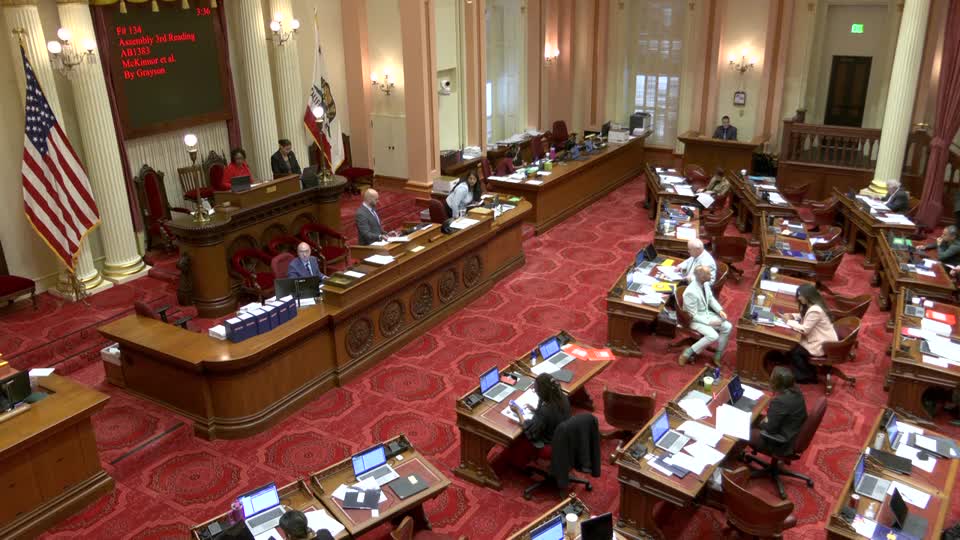 19MIN
Senate Floor
 8MIN
Senate Standing Committee on Appropriations
 57MIN
Senate Standing Committee on Labor, Public Employment and Retirement
 1MIN
Assembly Floor
 1H
Assembly Standing Committee on Public Employment and Retirement
Bill Author

Bill Co-Author(s):