AB 1460: Prescription drug pricing.
- Session Year: 2025-2026
- House: Assembly
- Latest Version Date: 2025-06-27
Current Status:
In Progress
(2025-07-16: In committee: Hearing postponed by committee.)
Introduced
In Committee
Awaiting First Chamber Vote
Passed First Chamber
In Committee
Awaiting Second Chamber Vote
Passed Second Chamber
Enacted
Existing federal law requires the United States Secretary of Health and Human Services to enter into an agreement with each manufacturer of covered outpatient drugs to ensure the amount a covered entity is required to pay for those drugs does not exceed the average manufacturer price of the drug under the federal Medicaid program. Existing state law requires a covered entity to dispense only drugs subject to these federal pricing requirements to Medi-Cal beneficiaries. Existing law prohibits a pharmacy benefit manager from discriminating against a covered entity or its pharmacy in connection with dispensing a drug subject to federal pricing requirements or preventing a covered entity from retaining the benefit of discounted pricing for those drugs.
This bill would prohibit a prescription drug manufacturer from engaging in discriminatory practices that would impose additional conditions, prohibit, restrict, deny, or interfere with a qualifying nonhospital 340B community clinics purchase or delivery of a drug subject to federal pricing requirements if the qualifying nonhospital 340B community clinic utilizes a specified pharmacy, including a contract pharmacy, that dispenses the drug to an eligible patient of the qualifying nonhospital 340B community clinic. The bill would define discriminatory practices and qualifying nonhospital 340B community clinic for these purposes. The bill would require qualifying nonhospital 340B community clinics to annually perform specified activities to ensure compliance with program rules and guidance from the federal Health Resources and Services Administration. The bill would make a related intent statement. related intent statements.
Existing federal law requires the United States Secretary of Health and Human Services to enter into an agreement with each manufacturer of covered outpatient drugs to ensure the amount a covered entity is required to pay for those drugs does not exceed the average manufacturer price of the drug under the federal Medicaid program. Existing state law requires a covered entity to dispense only drugs subject to these federal pricing requirements to Medi-Cal beneficiaries. Existing law prohibits a pharmacy benefit manager from discriminating against a covered entity or its pharmacy in connection with dispensing a drug subject to federal pricing requirements or preventing a covered entity from retaining the benefit of discounted pricing for those drugs.
This bill would prohibit a prescription drug manufacturer from engaging in discriminatory practices that would impose additional conditions, prohibit, restrict, deny, or interfere with a covered entitys qualifying nonhospital 340B community clinics purchase or delivery of a drug subject to federal pricing requirements if the covered entity qualifying nonhospital 340B community clinic utilizes a specified pharmacy, including a contract pharmacy, that dispenses the drug to an eligible patient of the covered entity. qualifying nonhospital 340B community clinic. The bill would define discriminatory practices and qualifying nonhospital 340B community clinic for these purposes. The bill would make a related intent statement.
Existing federal law requires the United States Secretary of Health and Human Services to enter into an agreement with each manufacturer of covered outpatient drugs to ensure the amount a covered entity is required to pay for those drugs does not exceed the average manufacturer price of the drug under the federal Medicaid program. Existing state law requires a covered entity to dispense only drugs subject to these federal pricing requirements to Medi-Cal beneficiaries. Existing law prohibits a pharmacy benefit manager from discriminating against a covered entity or its pharmacy in connection with dispensing a drug subject to federal pricing requirements or preventing a covered entity from retaining the benefit of discounted pricing for those drugs.
This bill would prohibit a prescription drug manufacturer from engaging in discriminatory practices that would impose additional conditions, prohibit, restrict, deny, or interfere with a covered entitys purchase or delivery of a drug subject to federal pricing requirements if the covered entity utilizes a specified pharmacy, including a contract pharmacy, that dispenses the drug to an eligible patient of the covered entity.
(a)A prescription drug manufacturer shall not engage in discriminatory practices that would impose additional conditions, prohibit, restrict, deny, or interfere with a qualifying nonhospital 340B community clinics purchase or delivery of a drug eligible for discounts under the federal pricing requirements set forth in Section 256b of Title 42 of the United States Code, Code if the qualifying nonhospital 340B community clinic utilizes a specified pharmacy, including a contract pharmacy, that dispenses the drug to an eligible patient of the qualifying nonhospital 340B community clinic.
(b)This section does not alter, change, or diminish existing state law.
(c)It is the intent of the Legislature that nothing in this section change the requirements imposed by Section 340B of the federal Public Health Service Act (42 U.S.C. Sec. 256b) and regulations pursuant to that act, including the requirement that a 340B covered entity is required to permit the United States Secretary of Health and Human Services (Secretary) and the manufacturer of a covered outpatient drug that is subject to an agreement with the entity pursuant to paragraph (1) of subdivision (a) of Section 340B, acting in accordance with procedures established by the Secretary relating to the number, duration, and scope of audits, to audit at the Secretarys or the manufacturers expense the records of the entity that directly pertain to the entitys compliance with the requirements to prohibit duplicate discounts or rebates and prohibit the resale of drugs with respect to drugs of the manufacturer.
(d)To ensure compliance with program rules and guidance from the federal Health Resources and Services Administration (HRSA), qualifying nonhospital 340B community clinics shall annually perform all of the following:
(1)Conduct annual audits on contract pharmacies to be carried out by an independent audit firm and take appropriate action to address any deficiencies.
(2)Identify how 340B savings are being used to support patient care and report to the HRSA.
(3)Recertify their status as a covered entity annually with the HRSA.
(d)(e)(1)For purposes of this section, discriminatory practices shall include, but are not limited to, limiting a qualifying nonhospital 340B community clinic to one contract pharmacy or restricting the number of contract pharmacies a qualifying nonhospital 340B community clinic may use to dispense drugs to an eligible patient, restricting a qualifying nonhospital 340B community clinic from using a contract pharmacy if it has an in-house pharmacy, restricting a nonhospital 340B community clinic from being able to ship to eligible patients over a certain distance if it has an in-house pharmacy, limiting the type of medications eligible for discounts, or adding arbitrary distance limitations.
(2)For purposes of this section, qualifying nonhospital 340B community clinic means a center or clinic that is licensed under subdivision (a) of Section 1204, or a clinic operated by a city, county, city and county, or hospital authority that is exempt from licensure under subdivision (b) of Section 1206, an intermittent clinic that is exempt from licensure under subdivision (h) of Section 1206, or a rural health clinic, as defined in paragraph (1) of subdivision (1) of Section 1396d Section 1396d(l)(1) of Title 42 of the United States Code, and that is a 340B covered entity pursuant to Section 256b of Title 42 of the United States Code.
(f)This section does not prohibit a prescription drug manufacturer from requesting a 340B covered entity to provide the invoice number, unique identifier, and coding associated with a claim for the purposes of identifying and investigating a duplicate discount, diversion, or validating the eligibility of a claim for the 340B price. Claims shall be deidentified and the provision of this information shall be consistent with federal and state medical privacy laws, including the federal Health Insurance Portability and Accountability Act of 1996 (Public Law 104-191). Prescription drug manufacturers shall only request this information on an annual basis and are prohibited from withholding 340B discounts while the claims data is being reconciled.
(a)A prescription drug manufacturer shall not engage in discriminatory practices that would impose additional conditions, prohibit, restrict, deny, or interfere with a covered entitys qualifying nonhospital 340B community clinics purchase or delivery of a drug eligible for discounts under the federal pricing requirements set forth in Section 256b of Title 42 of the United States Code, if the covered entity qualifying nonhospital 340B community clinic utilizes a specified pharmacy, including a contract pharmacy, that dispenses the drug to an eligible patient of the covered entity. qualifying nonhospital 340B community clinic.
(b)This section does not alter, change, or diminish existing state law.
(c)It is the intent of the Legislature that nothing in this section change the requirements imposed by Section 340B of the federal Public Health Service Act (42 U.S.C. Sec. 256b) and regulations pursuant to that act, including the requirement that a 340B covered entity is required to permit the United States Secretary of Health and Human Services (Secretary) and the manufacturer of a covered outpatient drug that is subject to an agreement with the entity pursuant to paragraph (1) of subdivision (a) of Section 340B, acting in accordance with procedures established by the Secretary relating to the number, duration, and scope of audits, to audit at the Secretarys or the manufacturers expense the records of the entity that directly pertain to the entitys compliance with the requirements to prohibit duplicate discounts or rebates and prohibit the resale of drugs with respect to drugs of the manufacturer.
(d)(1)For purposes of this section, discriminatory practices shall include, but are not limited to, limiting a qualifying nonhospital 340B community clinic to one contract pharmacy or restricting the number of contract pharmacies a qualifying nonhospital 340B community clinic may use to dispense drugs to an eligible patient, restricting a qualifying nonhospital 340B community clinic from using a contract pharmacy if it has an in-house pharmacy, restricting a nonhospital 340B community clinic from being able to ship to eligible patients over a certain distance if it has an in-house pharmacy, limiting the type of medications eligible for discounts, or adding arbitrary distance limitations.
(2)For purposes of this section, qualifying nonhospital 340B community clinic means a center or clinic that is licensed under subdivision (a) of Section 1204, or a clinic operated by a city, county, city and county, or hospital authority that is exempt from licensure under subdivision (b) of Section 1206, an intermittent clinic that is exempt from licensure under subdivision (h) of Section 1206, or a rural health clinic, as defined in paragraph (1) of subdivision (1) of Section 1396d of Title 42 of the United States Code, and that is a 340B covered entity pursuant to Section 256b of Title 42 of the United States Code.
A prescription drug manufacturer shall not engage in discriminatory practices that would impose additional conditions, prohibit, restrict, deny, or interfere with a covered entitys purchase or delivery of a drug eligible for discounts under the federal pricing requirements set forth in Section 256b of Title 42 of the United States Code, if the covered entity utilizes a specified pharmacy, including a contract pharmacy, that dispenses the drug to an eligible patient of the covered entity.
|
Date
|
Status
|
|---|---|
| Jul 16, 2025 | In committee: Hearing postponed by committee. |
| Jul 2, 2025 | In committee: Set, second hearing. Hearing canceled at the request of author. |
| Jun 27, 2025 | From committee chair, with author's amendments: Amend, and re-refer to committee. Read second time, amended, and re-referred to Com. on HEALTH. |
| Jun 25, 2025 | In committee: Set, first hearing. Hearing canceled at the request of author. |
| May 28, 2025 | Referred to Com. on HEALTH. |
| May 20, 2025 | In Senate. Read first time. To Com. on RLS. for assignment. |
| May 19, 2025 | Read third time. Passed. Ordered to the Senate. (Ayes 44. Noes 6. Page 1589.) |
| Apr 28, 2025 | Read second time. Ordered to third reading. |
| Apr 24, 2025 | Read second time and amended. Ordered returned to second reading. |
| Apr 23, 2025 | From committee: Amend, and do pass as amended. (Ayes 9. Noes 4.) (April 22). |
| Mar 24, 2025 | Referred to Com. on HEALTH. |
| Feb 24, 2025 | Read first time. |
| Feb 22, 2025 | From printer. May be heard in committee March 24. |
| Feb 21, 2025 | Introduced. To print. |
|
Date
|
Description
|
Location
|
Votes
|
|
|---|---|---|---|---|
| May 19, 2025 | AB 1460 Rogers Assembly Third Reading | Assembly Floor |
Passed |
|
| Apr 22, 2025 | Do pass as amended. | Assembly Standing Committee on Health |
Passed |
This list shows positions taken on this bill by organizations on the date displayed, which is linked to the original source.
Positions by individuals are not included.
|
Organization
|
Position
|
Date
|
|---|---|---|
| Achievable Health | ** Support | |
| ADAP Advocacy | ** Against | |
| Adventist Health | ** Support | |
| AiArthritis | ** Against | |
| Aids Healthcare Foundation | ** Support | |
| Alameda Health Consortium | ** Support | |
| Alexander Valley Healthcare | ** Support | |
| Aliados Health | ** Support | |
| Alliance Medical Center | ** Support | |
| AltaMed Medical Center | ** Support | |
| Altura Centers For Health | ** Support | |
| AMAAD Institute | ** Against | |
| APLA Health | ** Support | |
| Aria Community Health Center | ** Support | |
| Arming Minorities Against Addiction & Disease Institute | ** Against | |
| Arroyo Vista Family Health Center | ** Support | |
| Asian Health Services | ** Support | |
| Association of Hidradenitis Suppurativa and Inflammatory Diseases | ** Against | |
| Axis Advocacy | ** Against | |
| Axis Advocates | ** Against | |
| Bienestar Human Services | ** Support | |
| Biocom California | ** Against | |
| Biomarker Collaborative | ** Against | |
| Biotechnology Innovation Organization | ** Against | |
| Blackdoctor.org | ** Against | |
| Black Women's Health Imperative | ** Against | |
| California Academy of Child and Adolescent Psychiatry | ** Support | |
| CALIFORNIA ASSOCIATION OF PUBLIC HOSPITALS & HEALTH SYSTEMS | ** Support | |
| California ChildrenS Hospital Association | ** Support | |
| California Chronic Care Coalition | ** Against | |
| California Farmworker Foundation | ** Support | |
| California-Hawaii State Conference Of The Naacp | ** Against | |
| California Hospital Association | ** Support | |
| California Life Sciences Association | ** Against | |
| California Manufacturers And Technology Association | ** Against | |
| California Partnership For Health | ** Support | |
| CALIFORNIA PRIMARY CARE ASSOCIATION ADVOCATES | ** Support | |
| California Retired Teachers Association | ** Support | |
| California State Council of Service Employees International Union | ** Against | |
| California State League of United Latin American Citizens | ** Against | |
| CalPACE | ** Support | |
| Carrie's TOUCH | ** Against | |
| Center For Family Health and Education | ** Support | |
| Central Neighborhood Christian Health Clinics | ** Support | |
| Central Valley Health Network | ** Support | |
| Central Valley Opportunity Center | ** Support | |
| Chinatown Service Center | ** Support | |
| City and County of San Francisco | ** Support | |
| Clinica Romero | ** Support | |
| Clinicas Del Camino Real | ** Support | |
| Coalition of Hematology & Oncology Practices | ** Against | |
| Coalition of Orange County Community Health Centers | ** Support | |
| Coalition of State Rheumatology Organizations | ** Against | |
| Communicare+OLE | ** Support | |
| Community Access National Network | ** Against | |
| Community Clinic Association of Los Angeles County | ** Support | |
| Community Health Action Network | ** Against | |
| Community Health Centers Of The Central Coast | ** Support | |
| Community Health Partnership | ** Support | |
| Community Health Systems, Inc. | ** Support | |
| community oncology alliance | ** Against | |
| Comprehensive Community Health Centers | ** Support | |
| Connecting to Cure Crohn’s and Colitis | ** Against | |
| County of Merced | ** Support | |
| Desert AIDS Project | ** Support | |
| East Valley Community Health Center | ** Support | |
| Eisner Health | ** Support | |
| El Dorado Community Health Centers | ** Support | |
| El Proyecto del Barrio, Inc. | ** Support | |
| Exon 20 Group | ** Against | |
| Family Healthcare Network | ** Support | |
| Family Health Centers of San Diego | ** Support | |
| Gardner Family Health Network, Inc. | ** Support | |
| Gardner Health Services | ** Support | |
| Golden Valley Health Centers | ** Support | |
| Gracelight Community Health | ** Support | |
| Green Policy Initiative | ** Support | |
| Harbor Community Health Centers | ** Support | |
| Health Alliance of Northern California | ** Support | |
| Health and Life Organization, Inc. | ** Support | |
| Health Center Partners of Southern California | ** Support | |
| Hill Country Community Clinic | ** Support | |
| Hispanic Business Alliance | ** Against | |
| Humboldt County Board of Supervisors | ** Support | |
| ICAN, International Cancer Advocacy Network | ** Against | |
| Infusion Access Foundation | ** Against | |
| Innercare | ** Support | |
| International Cancer Advocacy Network | ** Against | |
| Johnson & Johnson Services, Inc. | ** Against | |
| JWCH Institute, Inc. | ** Support | |
| Kheir Clinic | ** Support | |
| La Clinica de la Raza | ** Support | |
| LA Maestra Family Clinic | ** Support | |
| Latino Coalition for a Healthy California | ** Support | |
| Latino Diabetes Association | ** Against | |
| Let's Kick Ass Palm Springs | ** Against | |
| Liver Coalition | ** Against | |
| Liver Health Foundation | ** Against | |
| Livingston Community Health | ** Support | |
| Loma Linda University Adventist Health Sciences Center | ** Support | |
| Los Angeles LGBT Center | ** Support | |
| Lupus and Allied Diseases Association, INC. | ** Against | |
| Lupus Foundation of Southern California | ** Against | |
| Lupus LA | ** Against | |
| Marin City Health and Wellness Clinic | ** Support | |
| MemorialCare Health System | ** Support | |
| Merced County Board of Supervisors | ** Support | |
| Merced Union High School District | ** Support | |
| Met Crusaders | ** Against | |
| Mexican American Opportunity Foundation | ** Against | |
| Mountain Valleys Health Centers | ** Support | |
| National Infusion Center Association | ** Against | |
| Neighborhood Healthcare | ** Support | |
| Neuropathy Action Foundation | ** Against | |
| North Coast Clinics Network | ** Support | |
| North East Medical Services | ** Support | |
| Northeast Valley Health Corporation | ** Support | |
| OCHIN, INC. | ** Support | |
| Omni Family Health | ** Support | |
| One Community Health | ** Support | |
| Open Door Community Health Centers | ** Support | |
| Patient Advocates United in San Diego County | ** Against | |
| Pd-l1 Amplifieds | ** Against | |
| Petaluma Health Center, Inc. | ** Support | |
| Pharmaceutical Research And Manufacturers Of America | ** Against | |
| Planned Parenthood Affiliates Of California | ** Support | |
| Providence St. Joseph Health | ** Support | |
| Rady Children's Hospital | ** Support | |
| Retiresafe | ** Against | |
| Ridgecrest Regional Hospital | ** Support | |
| Rural County Representatives of California | ** Support | |
| Saban Community Clinic | ** Support | |
| Saint Agnes Medical Center | ** Support | |
| Salud Para La Gente | ** Support | |
| Samuel Dixon Family Health Centers, Inc. | ** Support | |
| san fernando community health center | ** Support | |
| Santa Cruz Community Health | ** Support | |
| Santa Rosa Community Health | ** Support | |
| San Ysidro Health | ** Support | |
| Share Our Selves | ** Support | |
| Shasta Community Health Center | ** Support | |
| Shingletown Medical Center | ** Support | |
| South Central Family Health Center | ** Support | |
| Southside Coalition of Community Health Centers | ** Support | |
| Stanford Health Care | ** Support | |
| St. Jude Neighborhood Health Centers | ** Support | |
| St. Vincent De Paul Villages, Inc. | ** Support | |
| Sutter Health | ** Support | |
| Tarzana Treatment Centers, Inc. | ** Support | |
| The Children's Clinic | ** Support | |
| T.H.E. Health and Wellness Center | ** Support | |
| The Roads Foundation, Inc. | ** Support | |
| The Wall Las Memorias Project | ** Against | |
| TrueCare | ** Support | |
| United Health Centers | ** Support | |
| Universal Community Health Care | ** Support | |
| University of California | ** Support | |
| USC Keck School of Medicine | ** Support | |
| Valley Community Healthcare | ** Support | |
| Venice Family Clinic | ** Support | |
| Via Care Community Health Center | ** Support | |
| Vista Community Clinic | ** Support | |
| Watts Healthcare Corporation | ** Support | |
| Wellspace Health | ** Support | |
| Wesley Health Center | ** Support | |
| Westside Family Health Center | ** Support | |
| White Memorial Community Health Center | ** Support | |
| Wilmington Community Clinic | ** Support |
SENATE COMMITTEE ON HEALTH
Senator Caroline Menjivar, Chair
BILL NO: AB 1460
AUTHOR: | Rogers | ||
VERSION: | June 27, 2025 | ||
HEARING DATE: | July 16, 2025 | ||
CONSULTANT: | Jen Flory | ||
SUBJECT: Prescription drug pricing
SUMMARY:
Prohibits a prescription drug manufacturer from engaging in discriminatory practices that would impose additional conditions, prohibit, restrict, deny, or interfere with a community clinic’s purchase or delivery of a drug eligible for a 340b discount if a community clinic utilizes a specified pharmacy that dispenses the drug to an eligible patient of the clinic.
Existing state law:
- Defines 340B as the discount drug purchasing program described in federal law. [WIC §14105.46]
- Requires a covered entity to dispense only 340B drugs to Medi-Cal enrollees, and permits if a covered entity is unable to purchase a specific 340B drug, the covered entities to dispense a drug purchased at regular drug wholesale rates to a Medi-Cal beneficiary, and requires the covered entities to maintain documentation of their inability to obtain the 340B drug. Requires a covered entity to bill an amount not to exceed the entity’s actual acquisition cost for the drug, as charged by the manufacturer at a price consistent with federal law plus the professional fee, as specified, or the dispensing fee, as specified. [WIC §14105.46]
- Requires a covered entity to identify a 340B drug on the claim submitted to the Medi-Cal program for reimbursement. [WIC §14105.46]
- Authorizes reimbursement to outpatient pharmacies for drugs in the Medi-Cal program for the drug ingredient cost plus a professional dispensing fee $10.05 or $13.20, depending on number of claims per year. Limits the drug ingredient cost to the lowest of the actual acquisition cost, the federal upper limit, or the maximum allowable ingredient cost. [WIC §14105.45]
- Requires DHCS to establish, implement, and maintain a supplemental payment pool for nonhospital 340B community clinics, subject to an appropriation by the Legislature. [WIC §14105.467]
- Defines a “qualifying nonhospital 340B community clinic” (“340B clinic”) as a licensed center or clinic, as specified, or a clinic operated by a city, county, city and county, or hospital authority that is exempt from licensure, and that is a 340B covered entity under federal law for the duration of each applicable fiscal year for which DHCS implements a supplemental payment pool. [WIC §14105.467]
- Prohibits pharmacy benefit managers (PBMs) from imposing requirements, conditions, or exclusions that discriminate against covered entities or pharmacies in connection with dispensing 340B covered drugs or prevent a covered entity from retaining the benefit of discounted pricing for the purchase of 340B covered drugs. [HSC §127471]
Existing federal law:
- Requires drug manufacturers to limit the price of outpatient drugs purchased by a “covered entity” in order for the outpatient drugs to be covered by Medicaid. This is referred to as the federal 340B Drug Pricing Program (340B Program). [42 U.S.C. §256b]
- Defines “covered entity” that prohibits duplicate discounts or rebates related to the Medicaid program, prohibits resale or transfer of covered drugs to a person who is not a patient of the entity, allows auditing by the Secretary of the federal Department of Health and Human Services (HHS) and a manufacturer of a covered drug, and is subject to liability to manufacturers in an amount equal to the reduction in the price of the drug and is one of the following types of entities: Federally Qualified Health Centers (FQHCs); entities receiving a grant under specified federal law; family planning projects receiving a grant or contract under federal law; entities receiving a grant for outpatient early intervention services for HIV disease; state-operated AIDS drug purchasing assistance programs; black lung clinics; comprehensive hemophilia diagnostic treatment centers; Native Hawaiian Health Centers; urban Indian organizations; certified entities receiving federal assistance; certified entities receiving federal funding relating to treatment of sexually transmitted disease or tuberculosis; and a variety of specified hospitals. [42 U.S.C. §256b]
This bill:
- Prohibits a drug manufacturer from engaging in discriminatory practices that would impose additional conditions, or prohibit, restrict, deny or interfere with a 340B clinic’s purchase or delivery of a drug eligible for discounts under the federal 340B pricing requirements if the 340B clinic utilizes a specified pharmacy, including a contract pharmacy, that dispenses the drug to an eligible patient of the 340B clinic.
- Defines “discriminatory practices” as including, but not limited to, limiting a 340B clinic to one contract pharmacy or restricting the number of contract pharmacies a 340B clinic may use to dispense drugs to an eligible patient, restricting a 340B clinic from using a contract pharmacy if it has an in-house pharmacy, restricting a 340B clinic from being able to ship to eligible patients over a certain distance if it has an in-house pharmacy, limiting the type of medications eligible for discounts, or adding arbitrary distance limitations.
- Specifies that a drug manufacturer is not prohibited from requesting a 340B covered entity provide the invoice number, unique identifier, and coding associated with a claim for the purposes of identifying and investigating a duplicate discount, diversion, or validating the eligibility of a claim for the 340B price. Requires claims to be deidentified and the information to be provided in accordance with federal and state medical privacy laws. Prohibits drug manufacturers from requesting this information more often than annually or from withholding 340B discounts while claims data is being reconciled.
- Defines “340B clinic” as a 340B covered entity that is a licensed center or clinic; a clinic operated by a city, county, city and county, or hospital authority that is exempt from licensure; an intermittent clinic exempt from licensure; or, a rural health clinic.
- Specifies that this bill does not alter, change, or diminish existing state law.
- Specifies that to ensure compliance with the program rules and guidance from the federal Health Resources and Services Administration (HRSA), qualifying 340B clinics are required to perform the following annually:
- Conduct annual audits on contract pharmacies to be carried out by an independent audit firm and take appropriate action to address any deficiencies;
- Identify how 340B savings are being used to support patient care and report that information to HRSA; and
- Recertify their status as a covered entity.
- States the intent of the Legislature that this bill does not change the 340B requirements imposed by federal statute or regulations, including the requirement that a 340B covered entity is required to permit the HHS Secretary and the manufacturer of a covered outpatient drug that is subject to an 340B agreement with the entity to audit at the Secretary’s or manufacturer’s expense the records of the entity that directly pertain to the entity’s compliance with the requirements to prohibit duplicate discounts or rebates and prohibit the resale of the manufacturer’s drugs.
FISCAL EFFECT:
This bill is keyed non-fiscal.
PRIOR VOTES:
Assembly Floor: | 44 - 6 |
Assembly Health Committee: | 9 - 4 |
COMMENTS:
- Author’s statement. According to the author, during the height of the pandemic, when our health care system was most challenged, pharmaceutical companies began implementing contract pharmacy restrictions to limit access to the 340B program. These policies have been crippling to clinic systems that provide critical services to uninsured, underinsured, and vulnerable patients. Fewer contract pharmacy arrangements means less pass-through savings for clinics that are already struggling to meet the needs of their communities. Clinics rely on the pass-through savings from discount 340B drugs to fund a variety of patient centered services such as their unreimbursed/underfunded offerings, including having a sliding fee scale for patients with high deductible costs or no insurance, patient education, language access programs, expansion of hours, purchase of new equipment, meal programs, and patient transportation. And it’s not just contract pharmacy restrictions, drug companies are restricting the 340B programs in other ways, including placing arbitrary distance restrictions on pharmacies and limiting the types of medications that are eligible for discount. All of these restrictions conflict with the program’s intent which is to help clinics stretch scarce resources. At a time when we are facing a massive Medi-Cal shortfall and an increasingly uninsured and underinsured population, it would be negligent to allow pharmaceutical companies to continue restricting access to 340B pricing so that they can enjoy higher profits—especially when the state will be left to foot the bill.
- 340B program. According to a 2018 Legislative Analyst’s Office (LAO) analysis related to a Budget proposal from then-Governor Brown, the 340B program, established in 1992, requires drug manufacturers to provide discounts on the outpatient prescription drugs they sell to certain eligible health care providers, referred to as “covered entities.” Major health care providers that are generally eligible to participate in the program include certain hospitals that serve large numbers of low‑income patients (including both the uninsured and Medicaid enrollees), certain rural hospitals, and community health centers, such as FQHCs. Under the 340B program, discounted prescription drugs are available to a covered entity’s patients regardless of payer. As such, the 340B discounts apply regardless of whether the covered entity is ultimately reimbursed for the dispensed prescription drugs by Medicaid, Medicare, commercial health insurance, or the patient. The 340B program provides significant discounts for covered entities, and requires them to receive prescription drug discounts that reduce the prices they pay to at least the lower of: a) the best price offered to most public and private entities; or, b) the average manufacturer sales prices minus a percentage of between 13% and 23.1% (depending on the type of the prescription drug).
Covered entities retain 340B savings by charging external payers of 340B prescription drugs, such as health insurers, prices that are higher than the 340B prices at which they acquired the drugs. The 340B program does not place restrictions on how covered entities may use any retained savings. To the extent covered entities charge external payers lower prices for prescription drugs than they would have if the drugs had been purchased without the 340B discounts, then these external payers benefit from the 340B discounts as well.
According to a federal HRSA update, in calendar year 2023, 340B covered entities purchased $66.3 billion in covered outpatient drugs under the 340B Program, enabling safety-net providers to stretch scarce federal resources as far as possible, reaching more eligible patients and providing more comprehensive services for the communities that they serve. Of that amount, only $10.3 billion was purchased by nonhospital entities, which are the subject of this bill. The update notes that prescription drug spending overall increased by 8.4% that year from 2022 and that care has increasingly shifted from inpatient to outpatient settings, causing spending on outpatient drugs to increase. The top 10 drugs, in terms of 340B purchases by covered entities, represents one third of the total spending.
- Medi-Cal. Medi-Cal pharmacy services have been transitioned from managed care to fee-for-service under Medi-Cal Rx. Under Medi-Cal, 340B covered entities are required to identify a 340B drug on the claim submitted to the Medi-Cal program for reimbursement in order to avoid prohibited duplicate discounts. According to DHCS, California’s rebate invoicing system automatically removes pharmacy- and physician-administered drug claims that include the appropriate 340B identifiers from the drug manufacturer’s invoice. However, it is important to note that state law requires Medi-Cal Rx to pay for drugs with 340B discounts at their 340B discounted price, thus the covered entity cannot obtain revenues by charging Medi-Cal more than the discounted price of the drug, like they can for other payors.
Separate from the Medi-Cal Rx program change, starting in 2020, DHCS sent letters to all 340B covered entities in California that participate in the Medi-Cal program demanding a self-audit of 340B program overpayments for Medi-Cal fee-for-service drugs (not those covered by Medi-Cal plans). According to a question and answer document posted by DHCS, updated letters were sent to expand the original time period of the self-audit of December 1, 2016 to December 31, 2019 to December 1, 2016 to August 31, 2021. Thus far, no information has been released publicly as a result of these self-audits.
- Federal rules and audits. Participation in the 340B program has grown from nearly 9,700 covered entities in 2010 to 12,700 covered entities in 2020. According to HRSA, about 80% of covered entities are grantees (e.g., clinics), and 20% are hospitals. However, a covered entity may have multiple sites of operation, thus about 75% of the approximately 37,500 covered entity sites participating in the program are affiliated with hospitals. HRSA has issued interpretive guidance and statements of policy to assist covered entities in complying. For example, covered entities must maintain compliance with the statutory definitions pertaining to eligibility to continue participating in the program. Covered entities are also prohibited from diverting/transferring 340B drugs to individuals who are not eligible patients of the covered entities. Finally, covered entities cannot subject manufacturers to duplicate discounts by which drugs prescribed to Medicaid beneficiaries are subject to both the 340B price and a rebate through the Medicaid Drug Rebate Program. To oversee compliance with these requirements, in 2012 HRSA implemented a systematic approach for auditing covered entities. HRSA issues findings for noncompliance based on information gathered through this audit process. Covered entities must address findings to avoid termination from the program. In 2024, HRSA finalized 163 audits of covered entities: 14 resulted in termination from the 340B program; 120 resulted in no findings; and, 29 resulted in repayments to the manufacturer. Twelve in California were audited: one resulted in termination from the program; five resulted in no findings; and, six resulted in repayments to the manufacturer. That same year, HRSA audited five drug manufacturers: three resulted in no adverse findings and two resulted in repayments to covered entities.
- Contract pharmacies. The 2018 LAO report offered an example of complexities associated with the use of “contract pharmacies” in the 340B program. Contract pharmacies are pharmacies that are owned and operated separately from a covered entity but have a contract with a covered entity to dispense 340B drugs on the covered entity’s behalf. The use of contract pharmacies has increased significantly following federal guidance, released in 2010, that authorized their expanded use. (Contract pharmacies were initially excluded from the 340B program, and then until 2010, covered entities could only use one contract pharmacy.) While covered entity arrangements with contract pharmacies vary, according to the LAO, an example of how the use of a contract pharmacy can work is as follows: the contract pharmacy purchases a prescription drug from a manufacturer at a negotiated sales price ($13), which generally would be higher than the 340B price at which that drug would have been sold to a covered entity. An enrollee visits a covered entity for a medical appointment and obtains a prescription. The enrollee then visits the contract pharmacy, which dispenses the prescribed drug. Without identifying, at the time of the transaction, that the enrollee was a patient of a contracted covered entity, the contract pharmacy bills the enrollee’s plan at the customary non-340B drug reimbursement rate ($14) agreed to by the pharmacy and the plan. Later, the contract pharmacy and covered entity review the pharmacy’s records to determine whether any prescription drugs were dispensed to patients of the covered entity. After it is determined that the enrollee who obtained the prescription was a patient of the covered entity, the covered entity and the contract pharmacy go through a reconciliation process with the manufacturer that effectively lowers the purchase price of the dispensed drug to its 340B price ($10). The contract pharmacy and covered entity share in the savings.
- Pharmaceutical Research and Manufacturers of America (PhRMA) study. A 2020 study funded by PhRMA suggests that the 340B program has evolved into a “profit-centric corporate initiative” and that half of the twenty largest for-profit corporations in the U.S. are active participants through contract pharmacy arrangements. The study says the average profit margin on 340B medicines commonly dispensed through contract pharmacies is an estimated 72%, compared with just 22% for non-340B drugs dispensed through independent pharmacies. According to the PhRMA study, covered entities and their contracted pharmacies generated an estimated $23 billion in gross profits nationwide on 340B purchased medicines in 2018. The study says profits on 340B drugs are now distributed across a vertically integrated supply chain that includes covered entities, pharmacies, contract pharmacy administrators, PBMs, health plans, and employer groups. Covered entities are often in competition with contract pharmacies when these pharmacies offer lower cost-sharing to fill drugs than what a covered entity would charge at their own pharmacy. The study also says the outsized profit margins on 340B drugs may contribute to additional consolidation and vertical integration. According to the study, contract pharmacy administrators develop and operate the software algorithms that determine 340B eligibility and enable the for-profit pharmacies to influence which prescriptions are classified as 340B.
- Drug manufacturer restrictions on contract pharmacies. In 1996, HRSA issued guidelines that permitted covered entities to use a single point for pharmacy services, either in-house or contract. In 2010, HRSA issued new guidelines to allow for multiple pharmacy arrangements, including multiple contract pharmacies, so long as they comply with guidance developed to help ensure against diversion of the drugs, duplicate discounts on the same prescription, policies regarding the definition of patient, and they maintain auditable records to demonstrate compliance. In this guidance, many issues of compliance were left up to the covered entities themselves. However, the guidance stated that to the extent a manufacturer believes there is a reasonable basis to conclude that the covered entity is in breach of 340B program requirements, it may audit the covered entity. In 2020, restrictions on contract pharmacies by drug manufacturers became more widespread. Some manufacturers announced they would no longer ship discounted drugs to contract pharmacies, others would only ship to one contract pharmacy per covered entity, and some required contract pharmacies to be within a certain distance to the covered entity. Letters were separately sent by 246 members of Congress, 28 Senators, and 29 attorneys general to HHS requesting that it issue monetary penalties and new guidance to address these restrictions. The general counsel of HHS issued an advisory opinion, but this did not change the situation. In 2021, HRSA issued violation letters to several manufacturers, informing them that their policies violated the 340B statute and threatening civil penalties. Several manufacturers sued HRSA, resulting in two federal appellate courts finding that the agency had overstepped. On the other hand, when drug manufacturers sued to overturn a state law in Arkansas prohibiting restrictions on the use of contract pharmacies, a federal appellate court upheld the law, and the Supreme Court declined review of that decision. Fourteen other states have passed laws designed to prohibit restrictions on contract pharmacies, which have also been challenged by manufacturers. One has been overturned due to a restriction on the review of claims data which was found to be inseverable from the statute as a whole. In response, Idaho has enacted legislation with covered entity reporting and transparency requirements, and several other states are considering similar legislation this session.
- Related legislation. AB 1113 (Mark González) requires each FQHC to have an annual “mission spend ratio,” of no less than 90% and would provide a methodology for calculation of that ratio until the Department of Public Health has adopted a methodology for this purpose; requires each FQHC or its parent corporation to report total revenues; and, Exempts an FQHC participating in a bona fide labor-management cooperation committee. AB 1113 was made a two-year bill in the Assembly Appropriations Committee.
SB 41 (Wiener, Wahab) establishes licensing requirements on PBMs and implements a number of contract limitations their contracts with health plans, insurers, pharmacies, and drug manufacturers. SB 41 is pending in the Assembly Judiciary Committee.
AB 910 (Bonta) requires a PMB to hold a fiduciary duty in the performance of its contracted duties to a health plan, and specifies the obligations to carry out that duty. It requires PBMs to report to the Department of Managed Health Care (DMHC) specified information, and requires DMHC to compile the information into a report that demonstrates the overall effects of drug costs, rebates, PBMs, and their relationships with affiliated entities on health care costs. AB 910 was made a two-year bill in the Assembly Appropriations Committee.
- Prior legislation. SB 786 (Portantino, Chapter 414, Statutes of 2023) prohibits a PBM from imposing any requirements, conditions, or exclusions that discriminate against a 340B covered entity or a specified pharmacy in connection with dispensing covered drugs, or, prevent a covered entity from retaining the benefit of discounted pricing for the purchase of covered drugs.
SB 939 (Pan of 2022) would have prohibited payers and drug manufacturers from imposing requirements, conditions, or exclusions that discriminate against certain health care entities participating in the 340B program, including contracted pharmacies of the health care entities. SB 939 was not heard in the Assembly Health Committee at the request of the author.
AB 1050 (Gray of 2021) would have prohibited DHCS from taking any action that materially increases the administrative burden or cost of dispensing 340B drugs by FQHCs and rural health clinics, including, but not limited to, changes that adversely impact the use of contract pharmacy arrangements. AB 1050 would have required DHCS, before taking an action that materially impacts the 340B program, to prepare a detailed report describing the proposed action, including a determination that the action does not violate this provision. AB 1050 would have required the application for enrollment for Medi-Cal to include a statement that permits DHCS, the county welfare department, and a Medi-Cal managed care organization or health care provider to which the person is assigned to communicate with the applicant regarding appointment reminders or outreach efforts through Free to End User text messaging, unless the person opts out. AB 1050 was held in the Assembly Appropriations Committee.
AB 80 (Committee on Budget, Chapter 12, Statues of 2020) among other provisions, requires DHCS, contingent on an appropriation by the Legislature, to make available fee-for-service-based supplemental payments from a fixed-amount payment pool to qualifying nonhospital 340B community clinics, beginning January 1, 2021. AB 80 requires DHCS to establish a stakeholder process on or before July 15, 2020, to develop and implement the methodology for distribution of payments, including the eligibility criteria for receipt of payments, the aggregate amount of pool funding, the criteria for apportioning the funding, and timing of payments.
- Support. Co-sponsors, CPCA Advocates write that since 2020, many drug manufacturers have introduced restrictions that diminish the ability of covered entities to use 340B contract pharmacies to dispense medications to their patients. These restrictions often limit covered entities to one contract pharmacy location and restrict which drugs qualify for 340B pricing at those pharmacies. This makes it harder for covered entities to leverage contract pharmacies for greater access to affordable medications for their patients. They state that they are required to invest all 340B savings into activities that support the goal of expanding access for medically underserved patients. They also point out that recent changes to immigration policy have made patients who are undocumented or in mixed-status households are not coming in for care, thus access to additional pharmacies is more important. The Community Clinic Association of Los Angeles County write that as federal funding cuts threaten the viability of safety-net providers and affordability becomes a growing concern, access to contract pharmacies is vital. Such access not only enhances accessibility but also improves operational efficiency, allowing eligible providers to optimize their resources and deliver more comprehensive benefits and services to their communities.
- Opposition. PhRMA writes that there is little evidence to suggest that patients have benefited from contract pharmacy growth. In California, only 11% of contract pharmacies are located in medically underserved areas. Expanding the use of contract pharmacies will line the pockets of PBMs that own the vast majority of pharmacies and directly increase costs for employers due to reduced rebates from manufacturers. A number of chronic disease patient advocacy groups and SEIU California write to urge that any changes to the 340B program include transparency and accountability requirements to ensure that 340B dollars go directly to lowering medication costs and patient care rather than pharmacy benefit middlemen and executive salaries.
- Oppose unless amended. The Chronic Care Policy Alliance writes with similar concerns regarding contract pharmacies’ use of PBMs and requests an amendment that would limit payment to these managers to reasonable dispensing fees. The Alliance for Health Innovation writes requesting that covered entities be required to submit claims-level data and otherwise sharing the same concerns as the opposition.
SUPPORT AND OPPOSITION:
Support: California Partnership for Health (co-sponsor)
California Primary Care Association Advocates (co-sponsor)
Achievable Health
AIDS Healthcare Foundation
Alameda Health Consortium
Alexander Valley Healthcare
Aliados Health
Alliance Medical Center
AltaMed Medical Center
Altura Centers for Health
APLA Health
Aria Community Health Center
Arroyo Vista Family Health Center
Asian Health Services
Bienestar Human Services
California Academy of Child and Adolescent Psychiatry
California Farmworker Foundation
California Retired Teachers Association
CalPACE
Centers for Family Health and Education
Central Neighborhood Christian Health Clinics
Central Valley Health Network
Central Valley Opportunity Center
Chinatown Service Center
Clinica Romero
Clinicas del Camino Real
Coalition of Orange County Community Health Centers
CommuniCare+OLE
Community Clinic Association of Los Angeles County
Community Health Centers of the Central Coast
Community Health Partnership
Community Health Systems, Inc.
Comprehensive Community Health Centers
Desert AIDS Project
East Valley Community Health Center
Eisner Health
El Dorado Community Health Centers
El Proyecto Del Barrio, Inc.
Family Health Centers of San Diego
Gardner Health Services
Golden Valley Health Centers
Gracelight Community Health
Green Policy Initiative
Harbor Community Health Centers
Health Alliance of Northern California
Health and Life Organization, Inc.
Health Center Partners of Southern California
Hill County Community Clinic
Humboldt County Board of Supervisors
Innercare
JWCH Institute, Inc.
Kheir Clinic
La Clinica de la Raza
La Maestra Family Clinic
Latino Coalition for a Healthy California
Livingston Community Health
Loma Linda University Adventist Health Sciences Center
Los Angeles LGBT Center
Marin City Health and Wellness Clinics
Merced County Board of Supervisors
Merced Union High School District
Mountain Valleys Health Centers
Neighborhood Healthcare
North Coast Clinics Network
North East Medical Services
Northeast Valley Health Corporation
OCHIN, Inc.
Omni Family Health
One Community Health
Open Door Community Health Centers
Petaluma Health Center, Inc..
Planned Parenthood Affiliates of California
Rural County Representatives of California
Saban Community Clinic
Salud Para la Gente
Samuel Dixon Family Health Center, Inc.
San Fernando Community Health Center
San Ysidro Health
Santa Cruz Community Health
Santa Rosa Community Health
Share Our Selves
Shasta Community Health Center
Shingletown Medical Center
South Central Family Health Center
Southside Coalition of Community Health Centers
St. Jude Neighborhood Health Center
St. Vincent De Paul Villages, Inc.
T.H.E. Health and Wellness Centers
Tarzana Treatment Centers, Inc.
The Children's Clinic
The Roads Foundation, Inc.
TrueCare
United Health Centers
Universal Community Health Care
Valley Community Healthcare
Venice Family Clinic
Via Care Community Health Center
Vista Community Clinic
Watts Healthcare Corporation
WellSpace Health
Wesley Health Centers
Westside Family Health Center
White Memorial Community Health Center
Wilmington Community Clinic
Oppose: ADAP Advocacy
Alliance for Health Innovation (unless amended)
Aiarthritis
Arming Minorities Against Addiction & Disease Institute
Association of Hidradenitis Suppurativa and Inflammatory Diseases
Axis Advocates
Biocom California
Biomarker Collaborative
Biotechnology Innovation Organization
Black Women's Health Imperative
Blackdoctor.org
California Chronic Care Coalition
California Life Sciences Association
California Manufacturers and Technology Association
California-Hawaii State Conference of the NAACP
California State League of United Latin American Citizens
California State Council of Service Employees International Union (SEIU)
Carrie's Touch
Chronic Care Policy Alliance (unless amended)
Coalition of Hematology & Oncology Practices
Community Access National Network
Community Health Action Network
Community Oncology Alliance
Connecting to Cure Crohn’s and Colitis
Exon 20 Group
International Cancer Advocacy Network
Infusion Access Foundation
Johnson & Johnson Services, Inc.
Latino Diabetes Association
Let's Kick Ass Palm Springs
Liver Coalition
Liver Health Foundation
Lupus and Allied Diseases Association, Inc.
Lupus Foundation of Southern California
Lupus LA
Met Crusaders
Mexican American Opportunity Foundation
National Infusion Center Association
Neuropathy Action Foundation
Patient Advocates United in San Diego County
Pd-l1 Amplifieds
Pharmaceutical Research and Manufacturers of America
The Wall Las Memorias Project
Tigerlily Foundation (unless amended)
-- END --
SENATE COMMITTEE ON HEALTH
Senator Caroline Menjivar, Chair
BILL NO: AB 1460
AUTHOR: | Rogers | ||
VERSION: | April 24, 2025 | ||
HEARING DATE: | June 25, 2025 | ||
CONSULTANT: | Jen Flory | ||
SUBJECT: Prescription drug pricing
SUMMARY:
Prohibits a prescription drug manufacturer from engaging in discriminatory practices that would impose additional conditions, prohibit, restrict, deny, or interfere with a community clinic’s purchase or delivery of a drug eligible for a 340b discount if a community clinic utilizes a specified pharmacy that dispenses the drug to an eligible patient of the clinic.
Existing state law:
- Defines 340B as the discount drug purchasing program described in federal law. [WIC §14105.46]
- Requires a covered entity to dispense only 340B drugs to Medi-Cal enrollees, and permits if a covered entity is unable to purchase a specific 340B drug, the covered entities to dispense a drug purchased at regular drug wholesale rates to a Medi-Cal beneficiary, and requires the covered entities to maintain documentation of their inability to obtain the 340B drug. Requires a covered entity to bill an amount not to exceed the entity’s actual acquisition cost for the drug, as charged by the manufacturer at a price consistent with federal law plus the professional fee, as specified, or the dispensing fee, as specified. [WIC §14105.46]
- Requires a covered entity to identify a 340B drug on the claim submitted to the Medi-Cal program for reimbursement. [WIC §14105.46]
- Authorizes reimbursement to outpatient pharmacies for drugs in the Medi-Cal program for the drug ingredient cost plus a professional dispensing fee $10.05 or $13.20, depending on number of claims per year. Limits the drug ingredient cost to the lowest of the actual acquisition cost, the federal upper limit, or the maximum allowable ingredient cost. [WIC §14105.45]
- Requires DHCS to establish, implement, and maintain a supplemental payment pool for nonhospital 340B community clinics, subject to an appropriation by the Legislature. [WIC §14105.467]
- Defines a “qualifying nonhospital 340B community clinic” (“340B clinic”) as a licensed center or clinic, as specified, or a clinic operated by a city, county, city and county, or hospital authority that is exempt from licensure, and that is a 340B covered entity under federal law for the duration of each applicable fiscal year for which DHCS implements a supplemental payment pool. [WIC §14105.467]
- Prohibits pharmacy benefit managers (PBMs) from imposing requirements, conditions, or exclusions that discriminate against covered entities or pharmacies in connection with dispensing 340B covered drugs or prevent a covered entity from retaining the benefit of discounted pricing for the purchase of 340B covered drugs. [HSC §127471]
Existing federal law:
- Requires drug manufacturers to limit the price of outpatient drugs purchased by a “covered entity” in order for the outpatient drugs to be covered by Medicaid. This is referred to as the federal 340B Drug Pricing Program (340B Program). [42 U.S.C. §256b]
- Defines “covered entity” that prohibits duplicate discounts or rebates related to the Medicaid program, prohibits resale or transfer of covered drugs to a person who is not a patient of the entity, allows auditing by the Secretary of the federal Department of Health and Human Services (HHS) and a manufacturer of a covered drug, and is subject to liability to manufacturers in an amount equal to the reduction in the price of the drug and is one of the following types of entities: Federally Qualified Health Centers (FQHCs); entities receiving a grant under specified federal law; family planning projects receiving a grant or contract under federal law; entities receiving a grant for outpatient early intervention services for HIV disease; state-operated AIDS drug purchasing assistance programs; black lung clinics; comprehensive hemophilia diagnostic treatment centers; Native Hawaiian Health Centers; urban Indian organizations; certified entities receiving federal assistance; certified entities receiving federal funding relating to treatment of sexually transmitted disease or tuberculosis; and a variety of specified hospitals. [42 U.S.C. §256b]
This bill:
- Prohibits a drug manufacturer from engaging in discriminatory practices that would impose additional conditions, or prohibit, restrict, deny or interfere with a 340B clinic’s purchase or delivery of a drug eligible for discounts under the federal 340B pricing requirements if the 340B clinic utilizes a specified pharmacy, including a contract pharmacy, that dispenses the drug to an eligible patient of the 340B clinic.
- Defines “discriminatory practices” as including, but not limited to, limiting a 340B clinic to one contract pharmacy or restricting the number of contract pharmacies a 340B clinic may use to dispense drugs to an eligible patient, restricting a 340B clinic from using a contract pharmacy if it has an in-house pharmacy, restricting a 340B clinic from being able to ship to eligible patients over a certain distance if it has an in-house pharmacy, limiting the type of medications eligible for discounts, or adding arbitrary distance limitations.
- Defines “340B clinic” as a 340B covered entity that is a licensed center or clinic; a clinic operated by a city, county, city and county, or hospital authority that is exempt from licensure; an intermittent clinic exempt from licensure; or, a rural health clinic.
- Specifies that this bill does not alter, change, or diminish existing state law.
- States the intent of the Legislature that this bill does not change the 340B requirements imposed by federal statute or regulations, including the requirement that a 340B covered entity is required to permit the HHS Secretary and the manufacturer of a covered outpatient drug that is subject to an 340B agreement with the entity to audit at the Secretary’s or manufacturer’s expense the records of the entity that directly pertain to the entity’s compliance with the requirements to prohibit duplicate discounts or rebates and prohibit the resale of the manufacturer’s drugs.
FISCAL EFFECT:
This bill is keyed non-fiscal.
PRIOR VOTES:
Assembly Floor: | 44 - 6 |
Assembly Health Committee: | 9 - 4 |
COMMENTS:
- Author’s statement. According to the author, during the height of the pandemic, when our health care system was most challenged, pharmaceutical companies began implementing contract pharmacy restrictions to limit access to the 340B program. These policies have been crippling to clinic systems that provide critical services to uninsured, underinsured, and vulnerable patients. Fewer contract pharmacy arrangements means less pass-through savings for clinics that are already struggling to meet the needs of their communities. Clinics rely on the pass-through savings from discount 340B drugs to fund a variety of patient centered services such as their unreimbursed/underfunded offerings, including having a sliding fee scale for patients with high deductible costs or no insurance, patient education, language access programs, expansion of hours, purchase of new equipment, meal programs, and patient transportation. And it’s not just contract pharmacy restrictions, drug companies are restricting the 340B programs in other ways, including placing arbitrary distance restrictions on pharmacies and limiting the types of medications that are eligible for discount. All of these restrictions conflict with the program’s intent which is to help clinics stretch scarce resources. At a time when we are facing a massive Medi-Cal shortfall and an increasingly uninsured and underinsured population, it would be negligent to allow pharmaceutical companies to continue restricting access to 340B pricing so that they can enjoy higher profits—especially when the state will be left to foot the bill.
- 340B program. According to a 2018 Legislative Analyst’s Office (LAO) analysis related to a Budget proposal from then-Governor Brown, the 340B program, established in 1992, requires drug manufacturers to provide discounts on the outpatient prescription drugs they sell to certain eligible health care providers, referred to as “covered entities.” Major health care providers that are generally eligible to participate in the program include certain hospitals that serve large numbers of low‑income patients (including both the uninsured and Medicaid enrollees), certain rural hospitals, and community health centers, such as FQHCs. Under the 340B program, discounted prescription drugs are available to a covered entity’s patients regardless of payer. As such, the 340B discounts apply regardless of whether the covered entity is ultimately reimbursed for the dispensed prescription drugs by Medicaid, Medicare, commercial health insurance, or the patient. The 340B program provides significant discounts for covered entities, and requires them to receive prescription drug discounts that reduce the prices they pay to at least the lower of: a) the best price offered to most public and private entities; or, b) the average manufacturer sales prices minus a percentage of between 13% and 23.1% (depending on the type of the prescription drug).
Covered entities retain 340B savings by charging external payers of 340B prescription drugs, such as health insurers, prices that are higher than the 340B prices at which they acquired the drugs. The 340B program does not place restrictions on how covered entities may use any retained savings. To the extent covered entities charge external payers lower prices for prescription drugs than they would have if the drugs had been purchased without the 340B discounts, then these external payers benefit from the 340B discounts as well.
According to a federal Health Resources and Services Administration (HRSA) update, in calendar year 2023, 340B covered entities purchased $66.3 billion in covered outpatient drugs under the 340B Program, enabling safety-net providers to stretch scarce federal resources as far as possible, reaching more eligible patients and providing more comprehensive services for the communities that they serve. Of that amount, only $10.3 billion was purchased by nonhospital entities, which are the subject of this bill. The update notes that prescription drug spending overall increased by 8.4% that year from 2022 and that care has increasingly shifted from inpatient to outpatient settings, causing spending on outpatient drugs to increase. The top 10 drugs, in terms of 340B purchases by covered entities, represents one third of the total spending.
- Medi-Cal. Medi-Cal pharmacy services have been transitioned from managed care to fee-for-service under Medi-Cal Rx. Under Medi-Cal, 340B covered entities are required to identify a 340B drug on the claim submitted to the Medi-Cal program for reimbursement in order to avoid prohibited duplicate discounts. According to DHCS, California’s rebate invoicing system automatically removes pharmacy- and physician-administered drug claims that include the appropriate 340B identifiers from the drug manufacturer’s invoice. However, it is important to note that state law requires Medi-Cal Rx to pay for drugs with 340B discounts at their 340B discounted price, thus the covered entity cannot obtain revenues by charging Medi-Cal more than the discounted price of the drug, like they can for other payors.
Separate from the Medi-Cal Rx program change, starting in 2020, DHCS sent letters to all 340B covered entities in California that participate in the Medi-Cal program demanding a self-audit of 340B program overpayments for Medi-Cal fee-for-service drugs (not those covered by Medi-Cal plans). According to a question and answer document posted by DHCS, updated letters were sent to expand the original time period of the self-audit of December 1, 2016 to December 31, 2019 to December 1, 2016 to August 31, 2021. Thus far, no information has been released publicly as a result of these self-audits.
- Federal rules and audits. Participation in the 340B program has grown from nearly 9,700 covered entities in 2010 to 12,700 covered entities in 2020. According to HRSA, about 80% of covered entities are grantees (e.g., clinics), and 20% are hospitals. However, a covered entity may have multiple sites of operation, thus about 75% of the approximately 37,500 covered entity sites participating in the program are affiliated with hospitals. HRSA has issued interpretive guidance and statements of policy to assist covered entities in complying. For example, covered entities must maintain compliance with the statutory definitions pertaining to eligibility to continue participating in the program. Covered entities are also prohibited from diverting/transferring 340B drugs to individuals who are not eligible patients of the covered entities. Finally, covered entities cannot subject manufacturers to duplicate discounts by which drugs prescribed to Medicaid beneficiaries are subject to both the 340B price and a rebate through the Medicaid Drug Rebate Program. To oversee compliance with these requirements, in 2012 HRSA implemented a systematic approach for auditing covered entities. HRSA issues findings for noncompliance based on information gathered through this audit process. Covered entities must address findings to avoid termination from the program. In 2024, HRSA finalized 163 audits of covered entities: 14 resulted in termination from the 340B program; 120 resulted in no findings; and, 29 resulted in repayments to the manufacturer. Twelve in California were audited: one resulted in termination from the program; five resulted in no findings; and, six resulted in repayments to the manufacturer. That same year, HRSA audited five drug manufacturers: three resulted in no adverse findings and two resulted in repayments to covered entities.
- Contract pharmacies. The 2018 LAO report offered an example of complexities associated with the use of “contract pharmacies” in the 340B program. Contract pharmacies are pharmacies that are owned and operated separately from a covered entity but have a contract with a covered entity to dispense 340B drugs on the covered entity’s behalf. The use of contract pharmacies has increased significantly following federal guidance, released in 2010, that authorized their expanded use. (Contract pharmacies were initially excluded from the 340B program, and then until 2010, covered entities could only use one contract pharmacy.) While covered entity arrangements with contract pharmacies vary, according to the LAO, an example of how the use of a contract pharmacy can work is as follows: the contract pharmacy purchases a prescription drug from a manufacturer at a negotiated sales price ($13), which generally would be higher than the 340B price at which that drug would have been sold to a covered entity. An enrollee visits a covered entity for a medical appointment and obtains a prescription. The enrollee then visits the contract pharmacy, which dispenses the prescribed drug. Without identifying, at the time of the transaction, that the enrollee was a patient of a contracted covered entity, the contract pharmacy bills the enrollee’s plan at the customary non-340B drug reimbursement rate ($14) agreed to by the pharmacy and the plan. Later, the contract pharmacy and covered entity review the pharmacy’s records to determine whether any prescription drugs were dispensed to patients of the covered entity. After it is determined that the enrollee who obtained the prescription was a patient of the covered entity, the covered entity and the contract pharmacy go through a reconciliation process with the manufacturer that effectively lowers the purchase price of the dispensed drug to its 340B price ($10). The contract pharmacy and covered entity share in the savings.
- Pharmaceutical Research and Manufacturers of America (PhRMA) study. A 2020 study funded by PhRMA suggests that the 340B program has evolved into a “profit-centric corporate initiative” and that half of the twenty largest for-profit corporations in the U.S. are active participants through contract pharmacy arrangements. The study says the average profit margin on 340B medicines commonly dispensed through contract pharmacies is an estimated 72%, compared with just 22% for non-340B drugs dispensed through independent pharmacies. According to the PhRMA study, covered entities and their contracted pharmacies generated an estimated $23 billion in gross profits nationwide on 340B purchased medicines in 2018. The study says profits on 340B drugs are now distributed across a vertically integrated supply chain that includes covered entities, pharmacies, contract pharmacy administrators, PBMs, health plans, and employer groups. Covered entities are often in competition with contract pharmacies when these pharmacies offer lower cost-sharing to fill drugs than what a covered entity would charge at their own pharmacy. The study also says the outsized profit margins on 340B drugs may contribute to additional consolidation and vertical integration. According to the study, contract pharmacy administrators develop and operate the software algorithms that determine 340B eligibility and enable the for-profit pharmacies to influence which prescriptions are classified as 340B.
- Drug manufacturer restrictions on contract pharmacies. In 1996, HRSA issued guidelines that permitted covered entities to use a single point for pharmacy services, either in-house or contract. In 2010, HRSA issued new guidelines to allow for multiple pharmacy arrangements, including multiple contract pharmacies, so long as they comply with guidance developed to help ensure against diversion of the drugs, duplicate discounts on the same prescription, policies regarding the definition of patient, and they maintain auditable records to demonstrate compliance. In this guidance, many issues of compliance were left up to the covered entities themselves. However, the guidance stated that to the extent a manufacturer believes there is a reasonable basis to conclude that the covered entity is in breach of 340B program requirements, it may audit the covered entity. In 2020, restrictions on contract pharmacies by drug manufacturers became more widespread. Some manufacturers announced they would no longer ship discounted drugs to contract pharmacies, others would only ship to one contract pharmacy per covered entity, and some required contract pharmacies to be within a certain distance to the covered entity. Letters were separately sent by 246 members of Congress, 28 Senators, and 29 attorneys general to HHS requesting that it issue monetary penalties and new guidance to address these restrictions. The general counsel of HHS issued an advisory opinion, but this did not change the situation. In 2021, HRSA issued violation letters to several manufacturers, informing them that their policies violated the 340B statute and threatening civil penalties. Several manufacturers sued HRSA, resulting in two federal appellate courts finding that the agency had overstepped. On the other hand, when drug manufacturers sued to overturn a state law in Arkansas prohibiting restrictions on the use of contract pharmacies, a federal appellate court upheld the law, and the Supreme Court declined review of that decision. Fourteen other states have passed laws designed to prohibit restrictions on contract pharmacies, which have also been challenged by manufacturers. One has been overturned due to a restriction on the review of claims data which was found to be inseverable from the statute as a whole. In response, Idaho has enacted legislation with covered entity reporting and transparency requirements, and several other states are considering similar legislation this session.
- Related legislation. AB 1113 (Mark González) requires each FQHC to have an annual “mission spend ratio,” of no less than 90% and would provide a methodology for calculation of that ratio until the Department of Public Health has adopted a methodology for this purpose; requires each FQHC or its parent corporation to report total revenues; and, Exempts an FQHC participating in a bona fide labor-management cooperation committee. AB 1113 was made a two-year bill in the Assembly Appropriations Committee.
SB 41 (Wiener, Wahab) establishes licensing requirements on PBMs and implements a number of contract limitations their contracts with health plans, insurers, pharmacies, and drug manufacturers. SB 41 is pending in the Assembly Health Committee.
AB 910 (Bonta) requires a PMB to hold a fiduciary duty in the performance of its contracted duties to a health plan, and specifies the obligations to carry out that duty. It requires PBMs to report to the Department of Managed Health Care (DMHC) specified information, and requires DMHC to compile the information into a report that demonstrates the overall effects of drug costs, rebates, PBMs, and their relationships with affiliated entities on health care costs. AB 910 was made a two-year bill in the Assembly Appropriations Committee.
- Prior legislation. SB 786 (Portantino, Chapter 414, Statutes of 2023) prohibits a PBM from imposing any requirements, conditions, or exclusions that discriminate against a 340B covered entity or a specified pharmacy in connection with dispensing covered drugs, or, prevent a covered entity from retaining the benefit of discounted pricing for the purchase of covered drugs.
SB 939 (Pan of 2022) would have prohibited payers and drug manufacturers from imposing requirements, conditions, or exclusions that discriminate against certain health care entities participating in the 340B program, including contracted pharmacies of the health care entities. SB 939 was not heard in the Assembly Health Committee at the request of the author.
AB 1050 (Gray of 2021) would have prohibited DHCS from taking any action that materially increases the administrative burden or cost of dispensing 340B drugs by FQHCs and rural health clinics, including, but not limited to, changes that adversely impact the use of contract pharmacy arrangements. AB 1050 would have required DHCS, before taking an action that materially impacts the 340B program, to prepare a detailed report describing the proposed action, including a determination that the action does not violate this provision. AB 1050 would have required the application for enrollment for Medi-Cal to include a statement that permits DHCS, the county welfare department, and a Medi-Cal managed care organization or health care provider to which the person is assigned to communicate with the applicant regarding appointment reminders or outreach efforts through Free to End User text messaging, unless the person opts out. AB 1050 was held in the Assembly Appropriations Committee.
AB 80 (Committee on Budget, Chapter 12, Statues of 2020) among other provisions, requires DHCS, contingent on an appropriation by the Legislature, to make available fee-for-service-based supplemental payments from a fixed-amount payment pool to qualifying nonhospital 340B community clinics, beginning January 1, 2021. AB 80 requires DHCS to establish a stakeholder process on or before July 15, 2020, to develop and implement the methodology for distribution of payments, including the eligibility criteria for receipt of payments, the aggregate amount of pool funding, the criteria for apportioning the funding, and timing of payments.
- Support. Co-sponsors, CPCA Advocates write that since 2020, many drug manufacturers have introduced restrictions that diminish the ability of covered entities to use 340B contract pharmacies to dispense medications to their patients. These restrictions often limit covered entities to one contract pharmacy location and restrict which drugs qualify for 340B pricing at those pharmacies. This makes it harder for covered entities to leverage contract pharmacies for greater access to affordable medications for their patients. They state that they are required to invest all 340B savings into activities that support the goal of expanding access for medically underserved patients. They also point out that recent changes to immigration policy have made patients who are undocumented or in mixed-status households are not coming in for care, thus access to additional pharmacies is more important. The Community Clinic Association of Los Angeles County write that as federal funding cuts threaten the viability of safety-net providers and affordability becomes a growing concern, access to contract pharmacies is vital. Such access not only enhances accessibility but also improves operational efficiency, allowing eligible providers to optimize their resources and deliver more comprehensive benefits and services to their communities.
- Opposition. PhRMA writes that there is little evidence to suggest that patients have benefited from contract pharmacy growth. In California, only 11% of contract pharmacies are located in medically underserved areas. Expanding the use of contract pharmacies will line the pockets of PBMs that own the vast majority of pharmacies and directly increase costs for employers due to reduced rebates from manufacturers. A number of chronic disease patient advocacy groups and SEIU California write to urge that any changes to the 340B program include transparency and accountability requirements to ensure that 340B dollars go directly to lowering medication costs and patient care rather than pharmacy benefit middlemen and executive salaries.
- Oppose unless amended. The Chronic Care Policy Alliance writes with similar concerns regarding contract pharmacies’ use of PBMs and requests an amendment that would limit payment to these managers to reasonable dispensing fees. The Alliance for Health Innovation writes requesting that covered entities be required to submit claims-level data and otherwise sharing the same concerns as the opposition.
- Policy comment. HRSA guidance clearly allows covered entities to contract with many contract pharmacies and provides audit options for both drug manufacturers and HRSA. While this bill is silent on whether drug manufacturers should have access to claims data, opponents are also concerned that the provision regarding discriminatory practices could be broadly read to exclude this data. The author may want to consider resolving this issue in the language of the bill itself and consider the manner in which such data could be provided while incurring the least burden as the issue will continue to be contentious if the bill passes. Opponents’ other concerns about transparency appear to be based on how 340B revenues are spent, not whether proponents are entitled to them or how proponents’ contractors are compensated. As mentioned in related legislation, there are other bills this session regarding these issues.
SUPPORT AND OPPOSITION:
Support: California Primary Care Association Advocates (sponsor)
Achievable Health
Adventist Health
AIDS Healthcare Foundation
Alameda Health Consortium
Alexander Valley Healthcare
Aliados Health
Alliance Medical Center
AltaMed Medical Center
Altura Centers for Health
APLA Health
Aria Community Health Center
Arroyo Vista Family Health Center
Asian Health Services
Bienestar Human Services
California Academy of Child and Adolescent Psychiatry
California Association of Public Hospitals & Health Systems
California Children’s Hospital Association
California Farmworker Foundation
California Hospital Association
California Retired Teachers Association
CalPACE
Centers for Family Health and Education
Central Neighborhood Christian Health Clinics
Central Valley Health Network
Central Valley Opportunity Center
Chinatown Service Center
City and County of San Francisco
Clinica Romero
Clinicas del Camino Real
Coalition of Orange County Community Health Centers
CommuniCare+OLE
Community Clinic Association of Los Angeles County
Community Health Centers of the Central Coast
Community Health Partnership
Community Health Systems, Inc.
Comprehensive Community Health Centers
County of Humboldt
County of Merced
Desert AIDS Project
East Valley Community Health Center
Eisner Health
El Dorado Community Health Centers
El Proyecto Del Barrio, Inc.
Family Health Centers of San Diego
Gardner Health Services
Golden Valley Health Centers
Gracelight Community Health
Green Policy Initiative
Harbor Community Health Centers
Health Alliance of Northern California
Health and Life Organization, Inc.
Health Center Partners of Southern California
Hill County Community Clinic
Innercare
JWCH Institute, Inc.
Kheir Clinic
LA Clinica de la Raza
LA Maestra Family Clinic
Latino Coalition for a Healthy California
Livingston Community Health
Loma Linda University Adventist Health Sciences Center
Los Angeles LGBT Center
Marin City Health and Wellness Clinics
MemorialCare Health System
Merced Union High School District
Mountain Valleys Health Centers
Neighborhood Healthcare
North Coast Clinics Network
North East Medical Services
Northeast Valley Health Corporation
OCHIN, Inc.
Omni Family Health
One Community Health
Open Door Community Health Centers
Petaluma Health Center, Inc..
Planned Parenthood Affiliates of California
Providence St. Joseph Health
Rady Children's Hospital
Ridgecrest Regional Hospital
Rural County Representatives of California
Saban Community Clinic
Saint Agnes Medical Center
Salud Para LA Gente
Samuel Dixon Family Health Center, Inc.
San Fernando Community Health Center
San Ysidro Health
Santa Cruz Community Health
Santa Rosa Community Health
Share Our Selves
Shasta Community Health Center
Shingletown Medical Center
South Central Family Health Center
Southside Coalition of Community Health Centers
St. Jude Neighborhood Health Center
St. Vincent De Paul Villages, Inc.
Stanford Health Care
Sutter Health
T.H.E. Health and Wellness Centers
Tarzana Treatment Centers, Inc.
The Children's Clinic
The Roads Foundation, Inc.
TrueCare
United Health Centers
Universal Community Health Care
USC Keck School of Medicine
Valley Community Healthcare
Venice Family Clinic
Via Care Community Health Center
Watts Healthcare Corporation
WellSpace Health
Wesley Health Centers
Westside Family Health Center
White Memorial Community Health Center
Wilmington Community Clinic
Oppose: ADAP Advocacy
Alliance for Health Innovation (unless amended)
Aiarthritis
Arming Minorities Against Addiction & Disease Institute
Association of Hidradenitis Suppurativa and Inflammatory Diseases
Axis Advocates
Biocom California
Biomarker Collaborative
Biotechnology Innovation Organization
Black Women's Health Imperative
Blackdoctor.org
California Chronic Care Coalition
California Life Sciences Association
California Manufacturers and Technology Association
California-Hawaii State Conference of the NAACP
California State League of United Latin American Citizens
California State Council of Service Employees International Union
Carrie's Touch
Chronic Care Policy Alliance (unless amended)
Coalition of Hematology & Oncology Practices
Community Access National Network
Community Health Action Network
Community Oncology Alliance
Connecting to Cure Crohn’s and Colitis
Exon 20 Group
International Cancer Advocacy Network
Infusion Access Foundation
Johnson & Johnson Services, Inc.
Latino Diabetes Association
Let's Kick Ass Palm Springs
Liver Coalition
Liver Health Foundation
Lupus and Allied Diseases Association, Inc.
Lupus Foundation of Southern California
Lupus LA
Met Crusaders
Mexican American Opportunity Foundation
National Infusion Center Association
Neuropathy Action Foundation
Patient Advocates United in San Diego County
Pd-l1 Amplifieds
Pharmaceutical Research and Manufacturers of America
The Wall Las Memorias Project
Tigerlily Foundation (unless amended)
-- END --
SENATE COMMITTEE ON HEALTH
Senator Caroline Menjivar, Chair
BILL NO: AB 1460
AUTHOR: | Rogers | ||
VERSION: | April 24, 2025 | ||
HEARING DATE: | June 25, 2025 | ||
CONSULTANT: | Jen Flory | ||
SUBJECT: Prescription drug pricing
SUMMARY:
Prohibits a prescription drug manufacturer from engaging in discriminatory practices that would impose additional conditions, prohibit, restrict, deny, or interfere with a community clinic’s purchase or delivery of a drug eligible for a 340b discount if a community clinic utilizes a specified pharmacy that dispenses the drug to an eligible patient of the clinic.
Existing state law:
- Defines 340B as the discount drug purchasing program described in federal law. [WIC §14105.46]
- Requires a covered entity to dispense only 340B drugs to Medi-Cal enrollees, and permits if a covered entity is unable to purchase a specific 340B drug, the covered entities to dispense a drug purchased at regular drug wholesale rates to a Medi-Cal beneficiary, and requires the covered entities to maintain documentation of their inability to obtain the 340B drug. Requires a covered entity to bill an amount not to exceed the entity’s actual acquisition cost for the drug, as charged by the manufacturer at a price consistent with federal law plus the professional fee, as specified, or the dispensing fee, as specified. [WIC §14105.46]
- Requires a covered entity to identify a 340B drug on the claim submitted to the Medi-Cal program for reimbursement. [WIC §14105.46]
- Authorizes reimbursement to outpatient pharmacies for drugs in the Medi-Cal program for the drug ingredient cost plus a professional dispensing fee $10.05 or $13.20, depending on number of claims per year. Limits the drug ingredient cost to the lowest of the actual acquisition cost, the federal upper limit, or the maximum allowable ingredient cost. [WIC §14105.45]
- Requires DHCS to establish, implement, and maintain a supplemental payment pool for nonhospital 340B community clinics, subject to an appropriation by the Legislature. [WIC §14105.467]
- Defines a “qualifying nonhospital 340B community clinic” (“340B clinic”) as a licensed center or clinic, as specified, or a clinic operated by a city, county, city and county, or hospital authority that is exempt from licensure, and that is a 340B covered entity under federal law for the duration of each applicable fiscal year for which DHCS implements a supplemental payment pool. [WIC §14105.467]
- Prohibits pharmacy benefit managers (PBMs) from imposing requirements, conditions, or exclusions that discriminate against covered entities or pharmacies in connection with dispensing 340B covered drugs or prevent a covered entity from retaining the benefit of discounted pricing for the purchase of 340B covered drugs. [HSC §127471]
Existing federal law:
- Requires drug manufacturers to limit the price of outpatient drugs purchased by a “covered entity” in order for the outpatient drugs to be covered by Medicaid. This is referred to as the federal 340B Drug Pricing Program (340B Program). [42 U.S.C. §256b]
- Defines “covered entity” that prohibits duplicate discounts or rebates related to the Medicaid program, prohibits resale or transfer of covered drugs to a person who is not a patient of the entity, allows auditing by the Secretary of the federal Department of Health and Human Services (HHS) and a manufacturer of a covered drug, and is subject to liability to manufacturers in an amount equal to the reduction in the price of the drug and is one of the following types of entities: Federally Qualified Health Centers (FQHCs); entities receiving a grant under specified federal law; family planning projects receiving a grant or contract under federal law; entities receiving a grant for outpatient early intervention services for HIV disease; state-operated AIDS drug purchasing assistance programs; black lung clinics; comprehensive hemophilia diagnostic treatment centers; Native Hawaiian Health Centers; urban Indian organizations; certified entities receiving federal assistance; certified entities receiving federal funding relating to treatment of sexually transmitted disease or tuberculosis; and a variety of specified hospitals. [42 U.S.C. §256b]
This bill:
- Prohibits a drug manufacturer from engaging in discriminatory practices that would impose additional conditions, or prohibit, restrict, deny or interfere with a 340B clinic’s purchase or delivery of a drug eligible for discounts under the federal 340B pricing requirements if the 340B clinic utilizes a specified pharmacy, including a contract pharmacy, that dispenses the drug to an eligible patient of the 340B clinic.
- Defines “discriminatory practices” as including, but not limited to, limiting a 340B clinic to one contract pharmacy or restricting the number of contract pharmacies a 340B clinic may use to dispense drugs to an eligible patient, restricting a 340B clinic from using a contract pharmacy if it has an in-house pharmacy, restricting a 340B clinic from being able to ship to eligible patients over a certain distance if it has an in-house pharmacy, limiting the type of medications eligible for discounts, or adding arbitrary distance limitations.
- Defines “340B clinic” as a 340B covered entity that is a licensed center or clinic; a clinic operated by a city, county, city and county, or hospital authority that is exempt from licensure; an intermittent clinic exempt from licensure; or, a rural health clinic.
- Specifies that this bill does not alter, change, or diminish existing state law.
- States the intent of the Legislature that this bill does not change the 340B requirements imposed by federal statute or regulations, including the requirement that a 340B covered entity is required to permit the HHS Secretary and the manufacturer of a covered outpatient drug that is subject to an 340B agreement with the entity to audit at the Secretary’s or manufacturer’s expense the records of the entity that directly pertain to the entity’s compliance with the requirements to prohibit duplicate discounts or rebates and prohibit the resale of the manufacturer’s drugs.
FISCAL EFFECT:
This bill is keyed non-fiscal.
PRIOR VOTES:
Assembly Floor: | 44 - 6 |
Assembly Health Committee: | 9 - 4 |
COMMENTS:
- Author’s statement. According to the author, during the height of the pandemic, when our health care system was most challenged, pharmaceutical companies began implementing contract pharmacy restrictions to limit access to the 340B program. These policies have been crippling to clinic systems that provide critical services to uninsured, underinsured, and vulnerable patients. Fewer contract pharmacy arrangements means less pass-through savings for clinics that are already struggling to meet the needs of their communities. Clinics rely on the pass-through savings from discount 340B drugs to fund a variety of patient centered services such as their unreimbursed/underfunded offerings, including having a sliding fee scale for patients with high deductible costs or no insurance, patient education, language access programs, expansion of hours, purchase of new equipment, meal programs, and patient transportation. And it’s not just contract pharmacy restrictions, drug companies are restricting the 340B programs in other ways, including placing arbitrary distance restrictions on pharmacies and limiting the types of medications that are eligible for discount. All of these restrictions conflict with the program’s intent which is to help clinics stretch scarce resources. At a time when we are facing a massive Medi-Cal shortfall and an increasingly uninsured and underinsured population, it would be negligent to allow pharmaceutical companies to continue restricting access to 340B pricing so that they can enjoy higher profits—especially when the state will be left to foot the bill.
- 340B program. According to a 2018 Legislative Analyst’s Office (LAO) analysis related to a Budget proposal from then-Governor Brown, the 340B program, established in 1992, requires drug manufacturers to provide discounts on the outpatient prescription drugs they sell to certain eligible health care providers, referred to as “covered entities.” Major health care providers that are generally eligible to participate in the program include certain hospitals that serve large numbers of low‑income patients (including both the uninsured and Medicaid enrollees), certain rural hospitals, and community health centers, such as FQHCs. Under the 340B program, discounted prescription drugs are available to a covered entity’s patients regardless of payer. As such, the 340B discounts apply regardless of whether the covered entity is ultimately reimbursed for the dispensed prescription drugs by Medicaid, Medicare, commercial health insurance, or the patient. The 340B program provides significant discounts for covered entities, and requires them to receive prescription drug discounts that reduce the prices they pay to at least the lower of: a) the best price offered to most public and private entities; or, b) the average manufacturer sales prices minus a percentage of between 13% and 23.1% (depending on the type of the prescription drug).
Covered entities retain 340B savings by charging external payers of 340B prescription drugs, such as health insurers, prices that are higher than the 340B prices at which they acquired the drugs. The 340B program does not place restrictions on how covered entities may use any retained savings. To the extent covered entities charge external payers lower prices for prescription drugs than they would have if the drugs had been purchased without the 340B discounts, then these external payers benefit from the 340B discounts as well.
According to a federal Health Resources and Services Administration (HRSA) update, in calendar year 2023, 340B covered entities purchased $66.3 billion in covered outpatient drugs under the 340B Program, enabling safety-net providers to stretch scarce federal resources as far as possible, reaching more eligible patients and providing more comprehensive services for the communities that they serve. Of that amount, only $10.3 billion was purchased by nonhospital entities, which are the subject of this bill. The update notes that prescription drug spending overall increased by 8.4% that year from 2022 and that care has increasingly shifted from inpatient to outpatient settings, causing spending on outpatient drugs to increase. The top 10 drugs, in terms of 340B purchases by covered entities, represents one third of the total spending.
- Medi-Cal. Medi-Cal pharmacy services have been transitioned from managed care to fee-for-service under Medi-Cal Rx. Under Medi-Cal, 340B covered entities are required to identify a 340B drug on the claim submitted to the Medi-Cal program for reimbursement in order to avoid prohibited duplicate discounts. According to DHCS, California’s rebate invoicing system automatically removes pharmacy- and physician-administered drug claims that include the appropriate 340B identifiers from the drug manufacturer’s invoice. However, it is important to note that state law requires Medi-Cal Rx to pay for drugs with 340B discounts at their 340B discounted price, thus the covered entity cannot obtain revenues by charging Medi-Cal more than the discounted price of the drug, like they can for other payors.
Separate from the Medi-Cal Rx program change, starting in 2020, DHCS sent letters to all 340B covered entities in California that participate in the Medi-Cal program demanding a self-audit of 340B program overpayments for Medi-Cal fee-for-service drugs (not those covered by Medi-Cal plans). According to a question and answer document posted by DHCS, updated letters were sent to expand the original time period of the self-audit of December 1, 2016 to December 31, 2019 to December 1, 2016 to August 31, 2021. Thus far, no information has been released publicly as a result of these self-audits.
- Federal rules and audits. Participation in the 340B program has grown from nearly 9,700 covered entities in 2010 to 12,700 covered entities in 2020. According to HRSA, about 80% of covered entities are grantees (e.g., clinics), and 20% are hospitals. However, a covered entity may have multiple sites of operation, thus about 75% of the approximately 37,500 covered entity sites participating in the program are affiliated with hospitals. HRSA has issued interpretive guidance and statements of policy to assist covered entities in complying. For example, covered entities must maintain compliance with the statutory definitions pertaining to eligibility to continue participating in the program. Covered entities are also prohibited from diverting/transferring 340B drugs to individuals who are not eligible patients of the covered entities. Finally, covered entities cannot subject manufacturers to duplicate discounts by which drugs prescribed to Medicaid beneficiaries are subject to both the 340B price and a rebate through the Medicaid Drug Rebate Program. To oversee compliance with these requirements, in 2012 HRSA implemented a systematic approach for auditing covered entities. HRSA issues findings for noncompliance based on information gathered through this audit process. Covered entities must address findings to avoid termination from the program. In 2024, HRSA finalized 163 audits of covered entities: 14 resulted in termination from the 340B program; 120 resulted in no findings; and, 29 resulted in repayments to the manufacturer. Twelve in California were audited: one resulted in termination from the program; five resulted in no findings; and, six resulted in repayments to the manufacturer. That same year, HRSA audited five drug manufacturers: three resulted in no adverse findings and two resulted in repayments to covered entities.
- Contract pharmacies. The 2018 LAO report offered an example of complexities associated with the use of “contract pharmacies” in the 340B program. Contract pharmacies are pharmacies that are owned and operated separately from a covered entity but have a contract with a covered entity to dispense 340B drugs on the covered entity’s behalf. The use of contract pharmacies has increased significantly following federal guidance, released in 2010, that authorized their expanded use. (Contract pharmacies were initially excluded from the 340B program, and then until 2010, covered entities could only use one contract pharmacy.) While covered entity arrangements with contract pharmacies vary, according to the LAO, an example of how the use of a contract pharmacy can work is as follows: the contract pharmacy purchases a prescription drug from a manufacturer at a negotiated sales price ($13), which generally would be higher than the 340B price at which that drug would have been sold to a covered entity. An enrollee visits a covered entity for a medical appointment and obtains a prescription. The enrollee then visits the contract pharmacy, which dispenses the prescribed drug. Without identifying, at the time of the transaction, that the enrollee was a patient of a contracted covered entity, the contract pharmacy bills the enrollee’s plan at the customary non-340B drug reimbursement rate ($14) agreed to by the pharmacy and the plan. Later, the contract pharmacy and covered entity review the pharmacy’s records to determine whether any prescription drugs were dispensed to patients of the covered entity. After it is determined that the enrollee who obtained the prescription was a patient of the covered entity, the covered entity and the contract pharmacy go through a reconciliation process with the manufacturer that effectively lowers the purchase price of the dispensed drug to its 340B price ($10). The contract pharmacy and covered entity share in the savings.
- Pharmaceutical Research and Manufacturers of America (PhRMA) study. A 2020 study funded by PhRMA suggests that the 340B program has evolved into a “profit-centric corporate initiative” and that half of the twenty largest for-profit corporations in the U.S. are active participants through contract pharmacy arrangements. The study says the average profit margin on 340B medicines commonly dispensed through contract pharmacies is an estimated 72%, compared with just 22% for non-340B drugs dispensed through independent pharmacies. According to the PhRMA study, covered entities and their contracted pharmacies generated an estimated $23 billion in gross profits nationwide on 340B purchased medicines in 2018. The study says profits on 340B drugs are now distributed across a vertically integrated supply chain that includes covered entities, pharmacies, contract pharmacy administrators, PBMs, health plans, and employer groups. Covered entities are often in competition with contract pharmacies when these pharmacies offer lower cost-sharing to fill drugs than what a covered entity would charge at their own pharmacy. The study also says the outsized profit margins on 340B drugs may contribute to additional consolidation and vertical integration. According to the study, contract pharmacy administrators develop and operate the software algorithms that determine 340B eligibility and enable the for-profit pharmacies to influence which prescriptions are classified as 340B.
- Drug manufacturer restrictions on contract pharmacies. In 1996, HRSA issued guidelines that permitted covered entities to use a single point for pharmacy services, either in-house or contract. In 2010, HRSA issued new guidelines to allow for multiple pharmacy arrangements, including multiple contract pharmacies, so long as they comply with guidance developed to help ensure against diversion of the drugs, duplicate discounts on the same prescription, policies regarding the definition of patient, and they maintain auditable records to demonstrate compliance. In this guidance, many issues of compliance were left up to the covered entities themselves. However, the guidance stated that to the extent a manufacturer believes there is a reasonable basis to conclude that the covered entity is in breach of 340B program requirements, it may audit the covered entity. In 2020, restrictions on contract pharmacies by drug manufacturers became more widespread. Some manufacturers announced they would no longer ship discounted drugs to contract pharmacies, others would only ship to one contract pharmacy per covered entity, and some required contract pharmacies to be within a certain distance to the covered entity. Letters were separately sent by 246 members of Congress, 28 Senators, and 29 attorneys general to HHS requesting that it issue monetary penalties and new guidance to address these restrictions. The general counsel of HHS issued an advisory opinion, but this did not change the situation. In 2021, HRSA issued violation letters to several manufacturers, informing them that their policies violated the 340B statute and threatening civil penalties. Several manufacturers sued HRSA, resulting in two federal appellate courts finding that the agency had overstepped. On the other hand, when drug manufacturers sued to overturn a state law in Arkansas prohibiting restrictions on the use of contract pharmacies, a federal appellate court upheld the law, and the Supreme Court declined review of that decision. Fourteen other states have passed laws designed to prohibit restrictions on contract pharmacies, which have also been challenged by manufacturers. One has been overturned due to a restriction on the review of claims data which was found to be inseverable from the statute as a whole. In response, Idaho has enacted legislation with covered entity reporting and transparency requirements, and several other states are considering similar legislation this session.
- Related legislation. AB 1113 (Mark González) requires each FQHC to have an annual “mission spend ratio,” of no less than 90% and would provide a methodology for calculation of that ratio until the Department of Public Health has adopted a methodology for this purpose; requires each FQHC or its parent corporation to report total revenues; and, Exempts an FQHC participating in a bona fide labor-management cooperation committee. AB 1113 was made a two-year bill in the Assembly Appropriations Committee.
SB 41 (Wiener, Wahab) establishes licensing requirements on PBMs and implements a number of contract limitations their contracts with health plans, insurers, pharmacies, and drug manufacturers. SB 41 is pending in the Assembly Health Committee.
AB 910 (Bonta) requires a PMB to hold a fiduciary duty in the performance of its contracted duties to a health plan, and specifies the obligations to carry out that duty. It requires PBMs to report to the Department of Managed Health Care (DMHC) specified information, and requires DMHC to compile the information into a report that demonstrates the overall effects of drug costs, rebates, PBMs, and their relationships with affiliated entities on health care costs. AB 910 was made a two-year bill in the Assembly Appropriations Committee.
- Prior legislation. SB 786 (Portantino, Chapter 414, Statutes of 2023) prohibits a PBM from imposing any requirements, conditions, or exclusions that discriminate against a 340B covered entity or a specified pharmacy in connection with dispensing covered drugs, or, prevent a covered entity from retaining the benefit of discounted pricing for the purchase of covered drugs.
SB 939 (Pan of 2022) would have prohibited payers and drug manufacturers from imposing requirements, conditions, or exclusions that discriminate against certain health care entities participating in the 340B program, including contracted pharmacies of the health care entities. SB 939 was not heard in the Assembly Health Committee at the request of the author.
AB 1050 (Gray of 2021) would have prohibited DHCS from taking any action that materially increases the administrative burden or cost of dispensing 340B drugs by FQHCs and rural health clinics, including, but not limited to, changes that adversely impact the use of contract pharmacy arrangements. AB 1050 would have required DHCS, before taking an action that materially impacts the 340B program, to prepare a detailed report describing the proposed action, including a determination that the action does not violate this provision. AB 1050 would have required the application for enrollment for Medi-Cal to include a statement that permits DHCS, the county welfare department, and a Medi-Cal managed care organization or health care provider to which the person is assigned to communicate with the applicant regarding appointment reminders or outreach efforts through Free to End User text messaging, unless the person opts out. AB 1050 was held in the Assembly Appropriations Committee.
AB 80 (Committee on Budget, Chapter 12, Statues of 2020) among other provisions, requires DHCS, contingent on an appropriation by the Legislature, to make available fee-for-service-based supplemental payments from a fixed-amount payment pool to qualifying nonhospital 340B community clinics, beginning January 1, 2021. AB 80 requires DHCS to establish a stakeholder process on or before July 15, 2020, to develop and implement the methodology for distribution of payments, including the eligibility criteria for receipt of payments, the aggregate amount of pool funding, the criteria for apportioning the funding, and timing of payments.
- Support. Co-sponsors, CPCA Advocates write that since 2020, many drug manufacturers have introduced restrictions that diminish the ability of covered entities to use 340B contract pharmacies to dispense medications to their patients. These restrictions often limit covered entities to one contract pharmacy location and restrict which drugs qualify for 340B pricing at those pharmacies. This makes it harder for covered entities to leverage contract pharmacies for greater access to affordable medications for their patients. They state that they are required to invest all 340B savings into activities that support the goal of expanding access for medically underserved patients. They also point out that recent changes to immigration policy have made patients who are undocumented or in mixed-status households are not coming in for care, thus access to additional pharmacies is more important. The Community Clinic Association of Los Angeles County write that as federal funding cuts threaten the viability of safety-net providers and affordability becomes a growing concern, access to contract pharmacies is vital. Such access not only enhances accessibility but also improves operational efficiency, allowing eligible providers to optimize their resources and deliver more comprehensive benefits and services to their communities.
- Opposition. PhRMA writes that there is little evidence to suggest that patients have benefited from contract pharmacy growth. In California, only 11% of contract pharmacies are located in medically underserved areas. Expanding the use of contract pharmacies will line the pockets of PBMs that own the vast majority of pharmacies and directly increase costs for employers due to reduced rebates from manufacturers. A number of chronic disease patient advocacy groups and SEIU California write to urge that any changes to the 340B program include transparency and accountability requirements to ensure that 340B dollars go directly to lowering medication costs and patient care rather than pharmacy benefit middlemen and executive salaries.
- Oppose unless amended. The Chronic Care Policy Alliance writes with similar concerns regarding contract pharmacies’ use of PBMs and requests an amendment that would limit payment to these managers to reasonable dispensing fees. The Alliance for Health Innovation writes requesting that covered entities be required to submit claims-level data and otherwise sharing the same concerns as the opposition.
- Policy comment. HRSA guidance clearly allows covered entities to contract with many contract pharmacies and provides audit options for both drug manufacturers and HRSA. While this bill is silent on whether drug manufacturers should have access to claims data, opponents are also concerned that the provision regarding discriminatory practices could be broadly read to exclude this data. The author may want to consider resolving this issue in the language of the bill itself and consider the manner in which such data could be provided while incurring the least burden as the issue will continue to be contentious if the bill passes. Opponents’ other concerns about transparency appear to be based on how 340B revenues are spent, not whether proponents are entitled to them or how proponents’ contractors are compensated. As mentioned in related legislation, there are other bills this session regarding these issues.
SUPPORT AND OPPOSITION:
Support: California Primary Care Association Advocates (sponsor)
Achievable Health
Adventist Health
AIDS Healthcare Foundation
Alameda Health Consortium
Alexander Valley Healthcare
Aliados Health
Alliance Medical Center
AltaMed Medical Center
Altura Centers for Health
APLA Health
Aria Community Health Center
Arroyo Vista Family Health Center
Asian Health Services
Bienestar Human Services
California Academy of Child and Adolescent Psychiatry
California Association of Public Hospitals & Health Systems
California Children’s Hospital Association
California Farmworker Foundation
California Hospital Association
California Retired Teachers Association
CalPACE
Centers for Family Health and Education
Central Neighborhood Christian Health Clinics
Central Valley Health Network
Central Valley Opportunity Center
Chinatown Service Center
City and County of San Francisco
Clinica Romero
Clinicas del Camino Real
Coalition of Orange County Community Health Centers
CommuniCare+OLE
Community Clinic Association of Los Angeles County
Community Health Centers of the Central Coast
Community Health Partnership
Community Health Systems, Inc.
Comprehensive Community Health Centers
County of Humboldt
County of Merced
Desert AIDS Project
East Valley Community Health Center
Eisner Health
El Dorado Community Health Centers
El Proyecto Del Barrio, Inc.
Family Health Centers of San Diego
Gardner Health Services
Golden Valley Health Centers
Gracelight Community Health
Green Policy Initiative
Harbor Community Health Centers
Health Alliance of Northern California
Health and Life Organization, Inc.
Health Center Partners of Southern California
Hill County Community Clinic
Innercare
JWCH Institute, Inc.
Kheir Clinic
LA Clinica de la Raza
LA Maestra Family Clinic
Latino Coalition for a Healthy California
Livingston Community Health
Loma Linda University Adventist Health Sciences Center
Los Angeles LGBT Center
Marin City Health and Wellness Clinics
MemorialCare Health System
Merced Union High School District
Mountain Valleys Health Centers
Neighborhood Healthcare
North Coast Clinics Network
North East Medical Services
Northeast Valley Health Corporation
OCHIN, Inc.
Omni Family Health
One Community Health
Open Door Community Health Centers
Petaluma Health Center, Inc..
Planned Parenthood Affiliates of California
Providence St. Joseph Health
Rady Children's Hospital
Ridgecrest Regional Hospital
Rural County Representatives of California
Saban Community Clinic
Saint Agnes Medical Center
Salud Para LA Gente
Samuel Dixon Family Health Center, Inc.
San Fernando Community Health Center
San Ysidro Health
Santa Cruz Community Health
Santa Rosa Community Health
Share Our Selves
Shasta Community Health Center
Shingletown Medical Center
South Central Family Health Center
Southside Coalition of Community Health Centers
St. Jude Neighborhood Health Center
St. Vincent De Paul Villages, Inc.
Stanford Health Care
Sutter Health
T.H.E. Health and Wellness Centers
Tarzana Treatment Centers, Inc.
The Children's Clinic
The Roads Foundation, Inc.
TrueCare
United Health Centers
Universal Community Health Care
USC Keck School of Medicine
Valley Community Healthcare
Venice Family Clinic
Via Care Community Health Center
Watts Healthcare Corporation
WellSpace Health
Wesley Health Centers
Westside Family Health Center
White Memorial Community Health Center
Wilmington Community Clinic
Oppose: ADAP Advocacy
Alliance for Health Innovation (unless amended)
Aiarthritis
Arming Minorities Against Addiction & Disease Institute
Association of Hidradenitis Suppurativa and Inflammatory Diseases
Axis Advocates
Biocom California
Biomarker Collaborative
Biotechnology Innovation Organization
Black Women's Health Imperative
Blackdoctor.org
California Chronic Care Coalition
California Life Sciences Association
California Manufacturers and Technology Association
California-Hawaii State Conference of the NAACP
Carrie's Touch
Chronic Care Policy Alliance (unless amended)
Coalition of Hematology & Oncology Practices
Community Access National Network
Community Health Action Network
Community Oncology Alliance
Connecting to Cure Crohn’s and Colitis
Exon 20 Group
International Cancer Advocacy Network
Infusion Access Foundation
Johnson & Johnson Services, Inc.
Latino Diabetes Association
Let's Kick Ass Palm Springs
Liver Coalition
Liver Health Foundation
Lupus and Allied Diseases Association, Inc.
Lupus Foundation of Southern California
Lupus LA
Met Crusaders
Mexican American Opportunity Foundation
National Infusion Center Association
Neuropathy Action Foundation
Patient Advocates United in San Diego County
Pd-l1 Amplifieds
Pharmaceutical Research and Manufacturers of America
The Wall Las Memorias Project
Tigerlily Foundation (unless amended)
-- END --
SENATE COMMITTEE ON HEALTH
Senator Caroline Menjivar, Chair
BILL NO: AB 1460
AUTHOR: | Rogers | ||
VERSION: | April 24, 2025 | ||
HEARING DATE: | June 25, 2025 | ||
CONSULTANT: | Jen Flory | ||
SUBJECT: Prescription drug pricing
SUMMARY:
Prohibits a prescription drug manufacturer from engaging in discriminatory practices that would impose additional conditions, prohibit, restrict, deny, or interfere with a community clinic’s purchase or delivery of a drug eligible for a 340b discount if a community clinic utilizes a specified pharmacy that dispenses the drug to an eligible patient of the clinic.
Existing state law:
- Defines 340B as the discount drug purchasing program described in federal law. [WIC §14105.46]
- Requires a covered entity to dispense only 340B drugs to Medi-Cal enrollees, and permits if a covered entity is unable to purchase a specific 340B drug, the covered entities to dispense a drug purchased at regular drug wholesale rates to a Medi-Cal beneficiary, and requires the covered entities to maintain documentation of their inability to obtain the 340B drug. Requires a covered entity to bill an amount not to exceed the entity’s actual acquisition cost for the drug, as charged by the manufacturer at a price consistent with federal law plus the professional fee, as specified, or the dispensing fee, as specified. [WIC §14105.46]
- Requires a covered entity to identify a 340B drug on the claim submitted to the Medi-Cal program for reimbursement. [WIC §14105.46]
- Authorizes reimbursement to outpatient pharmacies for drugs in the Medi-Cal program for the drug ingredient cost plus a professional dispensing fee $10.05 or $13.20, depending on number of claims per year. Limits the drug ingredient cost to the lowest of the actual acquisition cost, the federal upper limit, or the maximum allowable ingredient cost. [WIC §14105.45]
- Requires DHCS to establish, implement, and maintain a supplemental payment pool for nonhospital 340B community clinics, subject to an appropriation by the Legislature. [WIC §14105.467]
- Defines a “qualifying nonhospital 340B community clinic” (“340B clinic”) as a licensed center or clinic, as specified, or a clinic operated by a city, county, city and county, or hospital authority that is exempt from licensure, and that is a 340B covered entity under federal law for the duration of each applicable fiscal year for which DHCS implements a supplemental payment pool. [WIC §14105.467]
- Prohibits pharmacy benefit managers (PBMs) from imposing requirements, conditions, or exclusions that discriminate against covered entities or pharmacies in connection with dispensing 340B covered drugs or prevent a covered entity from retaining the benefit of discounted pricing for the purchase of 340B covered drugs. [HSC §127471]
Existing federal law:
- Requires drug manufacturers to limit the price of outpatient drugs purchased by a “covered entity” in order for the outpatient drugs to be covered by Medicaid. This is referred to as the federal 340B Drug Pricing Program (340B Program). [42 U.S.C. §256b]
- Defines “covered entity” that prohibits duplicate discounts or rebates related to the Medicaid program, prohibits resale or transfer of covered drugs to a person who is not a patient of the entity, allows auditing by the Secretary of the federal Department of Health and Human Services (HHS) and a manufacturer of a covered drug, and is subject to liability to manufacturers in an amount equal to the reduction in the price of the drug and is one of the following types of entities: Federally Qualified Health Centers (FQHCs); entities receiving a grant under specified federal law; family planning projects receiving a grant or contract under federal law; entities receiving a grant for outpatient early intervention services for HIV disease; state-operated AIDS drug purchasing assistance programs; black lung clinics; comprehensive hemophilia diagnostic treatment centers; Native Hawaiian Health Centers; urban Indian organizations; certified entities receiving federal assistance; certified entities receiving federal funding relating to treatment of sexually transmitted disease or tuberculosis; and a variety of specified hospitals. [42 U.S.C. §256b]
This bill:
- Prohibits a drug manufacturer from engaging in discriminatory practices that would impose additional conditions, or prohibit, restrict, deny or interfere with a 340B clinic’s purchase or delivery of a drug eligible for discounts under the federal 340B pricing requirements if the 340B clinic utilizes a specified pharmacy, including a contract pharmacy, that dispenses the drug to an eligible patient of the 340B clinic.
- Defines “discriminatory practices” as including, but not limited to, limiting a 340B clinic to one contract pharmacy or restricting the number of contract pharmacies a 340B clinic may use to dispense drugs to an eligible patient, restricting a 340B clinic from using a contract pharmacy if it has an in-house pharmacy, restricting a 340B clinic from being able to ship to eligible patients over a certain distance if it has an in-house pharmacy, limiting the type of medications eligible for discounts, or adding arbitrary distance limitations.
- Defines “340B clinic” as a 340B covered entity that is a licensed center or clinic; a clinic operated by a city, county, city and county, or hospital authority that is exempt from licensure; an intermittent clinic exempt from licensure; or, a rural health clinic.
- Specifies that this bill does not alter, change, or diminish existing state law.
- States the intent of the Legislature that this bill does not change the 340B requirements imposed by federal statute or regulations, including the requirement that a 340B covered entity is required to permit the HHS Secretary and the manufacturer of a covered outpatient drug that is subject to an 340B agreement with the entity to audit at the Secretary’s or manufacturer’s expense the records of the entity that directly pertain to the entity’s compliance with the requirements to prohibit duplicate discounts or rebates and prohibit the resale of the manufacturer’s drugs.
FISCAL EFFECT:
This bill is keyed non-fiscal.
PRIOR VOTES:
Assembly Floor: | 44 - 6 |
Assembly Health Committee: | 9 - 4 |
COMMENTS:
- Author’s statement. According to the author, during the height of the pandemic, when our health care system was most challenged, pharmaceutical companies began implementing contract pharmacy restrictions to limit access to the 340B program. These policies have been crippling to clinic systems that provide critical services to uninsured, underinsured, and vulnerable patients. Fewer contract pharmacy arrangements means less pass-through savings for clinics that are already struggling to meet the needs of their communities. Clinics rely on the pass-through savings from discount 340B drugs to fund a variety of patient centered services such as their unreimbursed/underfunded offerings, including having a sliding fee scale for patients with high deductible costs or no insurance, patient education, language access programs, expansion of hours, purchase of new equipment, meal programs, and patient transportation. And it’s not just contract pharmacy restrictions, drug companies are restricting the 340B programs in other ways, including placing arbitrary distance restrictions on pharmacies and limiting the types of medications that are eligible for discount. All of these restrictions conflict with the program’s intent which is to help clinics stretch scarce resources. At a time when we are facing a massive Medi-Cal shortfall and an increasingly uninsured and underinsured population, it would be negligent to allow pharmaceutical companies to continue restricting access to 340B pricing so that they can enjoy higher profits—especially when the state will be left to foot the bill.
- 340B program. According to a 2018 Legislative Analyst’s Office (LAO) analysis related to a Budget proposal from then-Governor Brown, the 340B program, established in 1992, requires drug manufacturers to provide discounts on the outpatient prescription drugs they sell to certain eligible health care providers, referred to as “covered entities.” Major health care providers that are generally eligible to participate in the program include certain hospitals that serve large numbers of low‑income patients (including both the uninsured and Medicaid enrollees), certain rural hospitals, and community health centers, such as FQHCs. Under the 340B program, discounted prescription drugs are available to a covered entity’s patients regardless of payer. As such, the 340B discounts apply regardless of whether the covered entity is ultimately reimbursed for the dispensed prescription drugs by Medicaid, Medicare, commercial health insurance, or the patient. The 340B program provides significant discounts for covered entities, and requires them to receive prescription drug discounts that reduce the prices they pay to at least the lower of: a) the best price offered to most public and private entities; or, b) the average manufacturer sales prices minus a percentage of between 13% and 23.1% (depending on the type of the prescription drug).
Covered entities retain 340B savings by charging external payers of 340B prescription drugs, such as health insurers, prices that are higher than the 340B prices at which they acquired the drugs. The 340B program does not place restrictions on how covered entities may use any retained savings. To the extent covered entities charge external payers lower prices for prescription drugs than they would have if the drugs had been purchased without the 340B discounts, then these external payers benefit from the 340B discounts as well.
According to a federal Health Resources and Services Administration (HRSA) update, in calendar year 2023, 340B covered entities purchased $66.3 billion in covered outpatient drugs under the 340B Program, enabling safety-net providers to stretch scarce federal resources as far as possible, reaching more eligible patients and providing more comprehensive services for the communities that they serve. Of that amount, only $10.3 billion was purchased by nonhospital entities, which are the subject of this bill. The update notes that prescription drug spending overall increased by 8.4% that year from 2022 and that care has increasingly shifted from inpatient to outpatient settings, causing spending on outpatient drugs to increase. The top 10 drugs, in terms of 340B purchases by covered entities, represents one third of the total spending.
- Medi-Cal. Medi-Cal pharmacy services have been transitioned from managed care to fee-for-service under Medi-Cal Rx. Under Medi-Cal, 340B covered entities are required to identify a 340B drug on the claim submitted to the Medi-Cal program for reimbursement in order to avoid prohibited duplicate discounts. According to DHCS, California’s rebate invoicing system automatically removes pharmacy- and physician-administered drug claims that include the appropriate 340B identifiers from the drug manufacturer’s invoice. However, it is important to note that state law requires Medi-Cal Rx to pay for drugs with 340B discounts at their 340B discounted price, thus the covered entity cannot obtain revenues by charging Medi-Cal more than the discounted price of the drug, like they can for other payors.
Separate from the Medi-Cal Rx program change, starting in 2020, DHCS sent letters to all 340B covered entities in California that participate in the Medi-Cal program demanding a self-audit of 340B program overpayments for Medi-Cal fee-for-service drugs (not those covered by Medi-Cal plans). According to a question and answer document posted by DHCS, updated letters were sent to expand the original time period of the self-audit of December 1, 2016 to December 31, 2019 to December 1, 2016 to August 31, 2021. Thus far, no information has been released publicly as a result of these self-audits.
- Federal rules and audits. Participation in the 340B program has grown from nearly 9,700 covered entities in 2010 to 12,700 covered entities in 2020. According to HRSA, about 80% of covered entities are grantees (e.g., clinics), and 20% are hospitals. However, a covered entity may have multiple sites of operation, thus about 75% of the approximately 37,500 covered entity sites participating in the program are affiliated with hospitals. HRSA has issued interpretive guidance and statements of policy to assist covered entities in complying. For example, covered entities must maintain compliance with the statutory definitions pertaining to eligibility to continue participating in the program. Covered entities are also prohibited from diverting/transferring 340B drugs to individuals who are not eligible patients of the covered entities. Finally, covered entities cannot subject manufacturers to duplicate discounts by which drugs prescribed to Medicaid beneficiaries are subject to both the 340B price and a rebate through the Medicaid Drug Rebate Program. To oversee compliance with these requirements, in 2012 HRSA implemented a systematic approach for auditing covered entities. HRSA issues findings for noncompliance based on information gathered through this audit process. Covered entities must address findings to avoid termination from the program. In 2024, HRSA finalized 163 audits of covered entities: 14 resulted in termination from the 340B program; 120 resulted in no findings; and, 29 resulted in repayments to the manufacturer. Twelve in California were audited: one resulted in termination from the program; five resulted in no findings; and, six resulted in repayments to the manufacturer. That same year, HRSA audited five drug manufacturers: three resulted in no adverse findings and two resulted in repayments to covered entities.
- Contract pharmacies. The 2018 LAO report offered an example of complexities associated with the use of “contract pharmacies” in the 340B program. Contract pharmacies are pharmacies that are owned and operated separately from a covered entity but have a contract with a covered entity to dispense 340B drugs on the covered entity’s behalf. The use of contract pharmacies has increased significantly following federal guidance, released in 2010, that authorized their expanded use. (Contract pharmacies were initially excluded from the 340B program, and then until 2010, covered entities could only use one contract pharmacy.) While covered entity arrangements with contract pharmacies vary, according to the LAO, an example of how the use of a contract pharmacy can work is as follows: the contract pharmacy purchases a prescription drug from a manufacturer at a negotiated sales price ($13), which generally would be higher than the 340B price at which that drug would have been sold to a covered entity. An enrollee visits a covered entity for a medical appointment and obtains a prescription. The enrollee then visits the contract pharmacy, which dispenses the prescribed drug. Without identifying, at the time of the transaction, that the enrollee was a patient of a contracted covered entity, the contract pharmacy bills the enrollee’s plan at the customary non-340B drug reimbursement rate ($14) agreed to by the pharmacy and the plan. Later, the contract pharmacy and covered entity review the pharmacy’s records to determine whether any prescription drugs were dispensed to patients of the covered entity. After it is determined that the enrollee who obtained the prescription was a patient of the covered entity, the covered entity and the contract pharmacy go through a reconciliation process with the manufacturer that effectively lowers the purchase price of the dispensed drug to its 340B price ($10). The contract pharmacy and covered entity share in the savings.
- Pharmaceutical Research and Manufacturers of America (PhRMA) study. A 2020 study funded by PhRMA suggests that the 340B program has evolved into a “profit-centric corporate initiative” and that half of the twenty largest for-profit corporations in the U.S. are active participants through contract pharmacy arrangements. The study says the average profit margin on 340B medicines commonly dispensed through contract pharmacies is an estimated 72%, compared with just 22% for non-340B drugs dispensed through independent pharmacies. According to the PhRMA study, covered entities and their contracted pharmacies generated an estimated $23 billion in gross profits nationwide on 340B purchased medicines in 2018. The study says profits on 340B drugs are now distributed across a vertically integrated supply chain that includes covered entities, pharmacies, contract pharmacy administrators, PBMs, health plans, and employer groups. Covered entities are often in competition with contract pharmacies when these pharmacies offer lower cost-sharing to fill drugs than what a covered entity would charge at their own pharmacy. The study also says the outsized profit margins on 340B drugs may contribute to additional consolidation and vertical integration. According to the study, contract pharmacy administrators develop and operate the software algorithms that determine 340B eligibility and enable the for-profit pharmacies to influence which prescriptions are classified as 340B.
- Drug manufacturer restrictions on contract pharmacies. In 1996, HRSA issued guidelines that permitted covered entities to use a single point for pharmacy services, either in-house or contract. In 2010, HRSA issued new guidelines to allow for multiple pharmacy arrangements, including multiple contract pharmacies, so long as they comply with guidance developed to help ensure against diversion of the drugs, duplicate discounts on the same prescription, policies regarding the definition of patient, and they maintain auditable records to demonstrate compliance. In this guidance, many issues of compliance were left up to the covered entities themselves. However, the guidance stated that to the extent a manufacturer believes there is a reasonable basis to conclude that the covered entity is in breach of 340B program requirements, it may audit the covered entity. In 2020, restrictions on contract pharmacies by drug manufacturers became more widespread. Some manufacturers announced they would no longer ship discounted drugs to contract pharmacies, others would only ship to one contract pharmacy per covered entity, and some required contract pharmacies to be within a certain distance to the covered entity. Letters were separately sent by 246 members of Congress, 28 Senators, and 29 attorneys general to HHS requesting that it issue monetary penalties and new guidance to address these restrictions. The general counsel of HHS issued an advisory opinion, but this did not change the situation. In 2021, HRSA issued violation letters to several manufacturers, informing them that their policies violated the 340B statute and threatening civil penalties. Several manufacturers sued HRSA, resulting in two federal appellate courts finding that the agency had overstepped. On the other hand, when drug manufacturers sued to overturn a state law in Arkansas prohibiting restrictions on the use of contract pharmacies, a federal appellate court upheld the law, and the Supreme Court declined review of that decision. Fourteen other states have passed laws designed to prohibit restrictions on contract pharmacies, which have also been challenged by manufacturers. One has been overturned due to a restriction on the review of claims data which was found to be inseverable from the statute as a whole. In response, Idaho has enacted legislation with covered entity reporting and transparency requirements, and several other states are considering similar legislation this session.
- Related legislation. AB 1113 (Mark González) requires each FQHC to have an annual “mission spend ratio,” of no less than 90% and would provide a methodology for calculation of that ratio until the Department of Public Health has adopted a methodology for this purpose; requires each FQHC or its parent corporation to report total revenues; and, Exempts an FQHC participating in a bona fide labor-management cooperation committee. AB 1113 was made a two-year bill in the Assembly Appropriations Committee.
SB 41 (Wiener, Wahab) establishes licensing requirements on PBMs and implements a number of contract limitations their contracts with health plans, insurers, pharmacies, and drug manufacturers. SB 41 is pending in the Assembly Health Committee.
AB 910 (Bonta) requires a PMB to hold a fiduciary duty in the performance of its contracted duties to a health plan, and specifies the obligations to carry out that duty. It requires PBMs to report to the Department of Managed Health Care (DMHC) specified information, and requires DMHC to compile the information into a report that demonstrates the overall effects of drug costs, rebates, PBMs, and their relationships with affiliated entities on health care costs. AB 910 was made a two-year bill in the Assembly Appropriations Committee.
- Prior legislation. SB 786 (Portantino, Chapter 414, Statutes of 2023) prohibits a PBM from imposing any requirements, conditions, or exclusions that discriminate against a 340B covered entity or a specified pharmacy in connection with dispensing covered drugs, or, prevent a covered entity from retaining the benefit of discounted pricing for the purchase of covered drugs.
SB 939 (Pan of 2022) would have prohibited payers and drug manufacturers from imposing requirements, conditions, or exclusions that discriminate against certain health care entities participating in the 340B program, including contracted pharmacies of the health care entities. SB 939 was not heard in the Assembly Health Committee at the request of the author.
AB 1050 (Gray of 2021) would have prohibited DHCS from taking any action that materially increases the administrative burden or cost of dispensing 340B drugs by FQHCs and rural health clinics, including, but not limited to, changes that adversely impact the use of contract pharmacy arrangements. AB 1050 would have required DHCS, before taking an action that materially impacts the 340B program, to prepare a detailed report describing the proposed action, including a determination that the action does not violate this provision. AB 1050 would have required the application for enrollment for Medi-Cal to include a statement that permits DHCS, the county welfare department, and a Medi-Cal managed care organization or health care provider to which the person is assigned to communicate with the applicant regarding appointment reminders or outreach efforts through Free to End User text messaging, unless the person opts out. AB 1050 was held in the Assembly Appropriations Committee.
AB 80 (Committee on Budget, Chapter 12, Statues of 2020) among other provisions, requires DHCS, contingent on an appropriation by the Legislature, to make available fee-for-service-based supplemental payments from a fixed-amount payment pool to qualifying nonhospital 340B community clinics, beginning January 1, 2021. AB 80 requires DHCS to establish a stakeholder process on or before July 15, 2020, to develop and implement the methodology for distribution of payments, including the eligibility criteria for receipt of payments, the aggregate amount of pool funding, the criteria for apportioning the funding, and timing of payments.
- Support. Co-sponsors, CPCA Advocates write that since 2020, many drug manufacturers have introduced restrictions that diminish the ability of covered entities to use 340B contract pharmacies to dispense medications to their patients. These restrictions often limit covered entities to one contract pharmacy location and restrict which drugs qualify for 340B pricing at those pharmacies. This makes it harder for covered entities to leverage contract pharmacies for greater access to affordable medications for their patients. They state that they are required to invest all 340B savings into activities that support the goal of expanding access for medically underserved patients. They also point out that recent changes to immigration policy have made patients who are undocumented or in mixed-status households are not coming in for care, thus access to additional pharmacies is more important. The Community Clinic Association of Los Angeles County write that as federal funding cuts threaten the viability of safety-net providers and affordability becomes a growing concern, access to contract pharmacies is vital. Such access not only enhances accessibility but also improves operational efficiency, allowing eligible providers to optimize their resources and deliver more comprehensive benefits and services to their communities.
- Opposition. PhRMA writes that there is little evidence to suggest that patients have benefited from contract pharmacy growth. In California, only 11% of contract pharmacies are located in medically underserved areas. Expanding the use of contract pharmacies will line the pockets of PBMs that own the vast majority of pharmacies and directly increase costs for employers due to reduced rebates from manufacturers. A number of chronic disease patient advocacy groups and SEIU California write to urge that any changes to the 340B program include transparency and accountability requirements to ensure that 340B dollars go directly to lowering medication costs and patient care rather than pharmacy benefit middlemen and executive salaries.
- Oppose unless amended. The Chronic Care Policy Alliance writes with similar concerns regarding contract pharmacies’ use of PBMs and requests an amendment that would limit payment to these managers to reasonable dispensing fees. The Alliance for Health Innovation writes requesting that covered entities be required to submit claims-level data and otherwise sharing the same concerns as the opposition.
- Policy comment. HRSA guidance clearly allows covered entities to contract with many contract pharmacies and provides audit options for both drug manufacturers and HRSA. While this bill is silent on whether drug manufacturers should have access to claims data, opponents are also concerned that the provision regarding discriminatory practices could be broadly read to exclude this data. The author may want to consider resolving this issue in the language of the bill itself and consider the manner in which such data could be provided while incurring the least burden as the issue will continue to be contentious if the bill passes. Opponents’ other concerns about transparency appear to be based on how 340B revenues are spent, not whether proponents are entitled to them or how proponents’ contractors are compensated. As mentioned in related legislation, there are other bills this session regarding these issues.
SUPPORT AND OPPOSITION:
Support: California Primary Care Association Advocates (sponsor)
Achievable Health
Adventist Health
AIDS Healthcare Foundation
Alameda Health Consortium
Alexander Valley Healthcare
Aliados Health
Alliance Medical Center
AltaMed Medical Center
Altura Centers for Health
APLA Health
Aria Community Health Center
Arroyo Vista Family Health Center
Asian Health Services
Bienestar Human Services
California Academy of Child and Adolescent Psychiatry
California Association of Public Hospitals & Health Systems
California Children’s Hospital Association
California Farmworker Foundation
California Hospital Association
California Retired Teachers Association
CalPACE
Centers for Family Health and Education
Central Neighborhood Christian Health Clinics
Central Valley Health Network
Central Valley Opportunity Center
Chinatown Service Center
City and County of San Francisco
Clinica Romero
Clinicas del Camino Real
Coalition of Orange County Community Health Centers
CommuniCare+OLE
Community Clinic Association of Los Angeles County
Community Health Centers of the Central Coast
Community Health Partnership
Community Health Systems, Inc.
Comprehensive Community Health Centers
County of Humboldt
County of Merced
Desert AIDS Project
East Valley Community Health Center
Eisner Health
El Dorado Community Health Centers
El Proyecto Del Barrio, Inc.
Family Health Centers of San Diego
Gardner Health Services
Golden Valley Health Centers
Gracelight Community Health
Green Policy Initiative
Harbor Community Health Centers
Health Alliance of Northern California
Health and Life Organization, Inc.
Health Center Partners of Southern California
Hill County Community Clinic
Innercare
JWCH Institute, Inc.
Kheir Clinic
LA Clinica de la Raza
LA Maestra Family Clinic
Latino Coalition for a Healthy California
Livingston Community Health
Loma Linda University Adventist Health Sciences Center
Los Angeles LGBT Center
Marin City Health and Wellness Clinics
MemorialCare Health System
Merced Union High School District
Mountain Valleys Health Centers
Neighborhood Healthcare
North Coast Clinics Network
North East Medical Services
Northeast Valley Health Corporation
OCHIN, Inc.
Omni Family Health
One Community Health
Open Door Community Health Centers
Petaluma Health Center, Inc..
Planned Parenthood Affiliates of California
Providence St. Joseph Health
Rady Children's Hospital
Ridgecrest Regional Hospital
Rural County Representatives of California
Saban Community Clinic
Saint Agnes Medical Center
Salud Para LA Gente
Samuel Dixon Family Health Center, Inc.
San Fernando Community Health Center
San Ysidro Health
Santa Cruz Community Health
Santa Rosa Community Health
Share Our Selves
Shasta Community Health Center
Shingletown Medical Center
South Central Family Health Center
Southside Coalition of Community Health Centers
St. Jude Neighborhood Health Center
St. Vincent De Paul Villages, Inc.
Stanford Health Care
Sutter Health
T.H.E. Health and Wellness Centers
Tarzana Treatment Centers, Inc.
The Children's Clinic
The Roads Foundation, Inc.
TrueCare
United Health Centers
Universal Community Health Care
USC Keck School of Medicine
Valley Community Healthcare
Venice Family Clinic
Via Care Community Health Center
Watts Healthcare Corporation
WellSpace Health
Wesley Health Centers
Westside Family Health Center
White Memorial Community Health Center
Wilmington Community Clinic
Oppose: ADAP Advocacy
Alliance for Health Innovation (unless amended)
Aiarthritis
Arming Minorities Against Addiction & Disease Institute
Association of Hidradenitis Suppurativa and Inflammatory Diseases
Axis Advocates
Biocom California
Biomarker Collaborative
Biotechnology Innovation Organization
Black Women's Health Imperative
Blackdoctor.org
California Chronic Care Coalition
California Life Sciences Association
California Manufacturers and Technology Association
California State Council of Service Employees International
California-Hawaii State Conference of the NAACP
Carrie's Touch
Chronic Care Policy Alliance (unless amended)
Coalition of Hematology & Oncology Practices
Community Access National Network
Community Health Action Network
Community Oncology Alliance
Connecting to Cure Crohn’s and Colitis
Exon 20 Group
International Cancer Advocacy Network
Infusion Access Foundation
Johnson & Johnson Services, Inc.
Latino Diabetes Association
Let's Kick Ass Palm Springs
Liver Coalition
Liver Health Foundation
Lupus and Allied Diseases Association, Inc.
Lupus Foundation of Southern California
Lupus LA
Met Crusaders
Mexican American Opportunity Foundation
National Infusion Center Association
Neuropathy Action Foundation
Patient Advocates United in San Diego County
Pd-l1 Amplifieds
Pharmaceutical Research and Manufacturers of America
The Wall Las Memorias Project
Tigerlily Foundation (unless amended)
-- END --
ASSEMBLY THIRD READING
ATR Bill Id:AB 1460
Author:(Rogers)
As Amended Ver:April 24, 2025
Majority vote
SUMMARY
Prohibits a prescription drug manufacturer from engaging in discriminatory practices that would impose additional conditions, prohibit, restrict, deny, or interfere with a covered entity′s (CE), such as a federally qualified health center, a specified entity receiving a federal grant or federal funds, a state operated aids drug assistance program, or a specified hospital meeting certain criteria) purchase or delivery of a drug eligible for discounts under the federal pricing requirements set forth in the federal 340B program, if the CE utilizes a specified pharmacy, including a contract pharmacy, that dispenses the drug to an eligible patient of the CE.
Major Provisions
- Prohibits a prescription drug manufacturer from engaging in discriminatory practices that would impose additional conditions, prohibit, restrict, deny, or interfere with a qualifying non-hospital 340B community clinic′s (clinic′s) purchase or delivery of a drug eligible for discounts under the federal pricing requirements set forth in the federal 340B program, if the clinic utilizes a specified pharmacy, including a contract pharmacy, that dispenses the drug to an eligible patient of the clinic.
- States that this bill does not alter, change, or diminish existing state law.
- States the intent of the Legislature that nothing in this bill change the requirements imposed by Section 340B of the federal Public Health Service Act (42 U.S.C. Section 256b) and regulations pursuant to that act, including the requirement that a 340B covered entity is required to permit the United States Secretary of Health and Human Services (Secretary) and the manufacturer of a covered outpatient drug that is subject to an agreement with the entity pursuant to paragraph (1) of subdivision (a) of Section 340B, acting in accordance with procedures established by the Secretary relating to the number, duration, and scope of audits, to audit at the Secretary′s or the manufacturer′s expense the records of the entity that directly pertain to the entity′s compliance with the requirements to prohibit duplicate discounts or rebates and prohibit the resale of drugs with respect to drugs of the manufacturer.
- Specifies discriminatory practices include but are not limited to limiting a clinic to one contract pharmacy, or restricting the number of contract pharmacies a clinic may use to dispense drugs to an eligible patient, restricting a clinic from using a contract pharmacy if it has an in-house pharmacy, restricting a clinic from being able to ship to eligible patients over a certain distance if it has an in-house pharmacy, limiting the type of medications eligible for discounts, or adding arbitrary distance limitations.
- Defines ″qualifying nonhospital 340B community clinic″ (clinic) to mean a center or clinic that is licensed under subdivision (a) of Section 1204, or a clinic operated by a city, county, city and county, or hospital authority that is exempt from licensure under subdivision (b) of Section 1206, an intermittent clinic that is exempt from licensure under subdivision (h) of Section 1206, or a rural health clinic, as defined in paragraph (1) of subdivision (1) of Section 1396d of Title 42 of the United States Code, and that is a 340B covered entity pursuant to Section 256b of Title 42 of the United States Code.
COMMENTS
The 340B Program. The federal 340B program, administered by the federal Health Resources and Services Administration (HRSA) was established in 1992 to help safety-net providers improve access to affordable medicines and health care services. The 340B program requires drug manufacturers to provide discounts on the outpatient prescription drugs they sell to certain eligible health care providers, referred to as ″CEs″ which must recertify their eligibility yearly. HRSA identifies the CEs eligible to participate in the 340B Program to include the following entities: health centers; Ryan White HIV/AIDS Program Grantees; Hospitals; and specialized clinics, as specified.
CEs and Pharmacy Arrangements. CEs are authorized to dispense 340B drugs through in-house pharmacies they own, or through the use of contract pharmacy arrangements, in which they contract with outside pharmacies, or both. Since the 2010 change in HRSA guidance allowing CEs to have an unlimited number of contract pharmacies, there also has been a large increase in the number of contract pharmacies.
As recently as 2024, at least three prescription drug manufacturers established restrictions limiting a 340B drug to CEs to a single contract pharmacy.
This bill seeks to address this practice by prohibiting a prescription drug manufacturer from engaging in discriminatory practices that would impose additional conditions, prohibit, restrict, deny, or interfere with a qualifying non-hospital 340B community clinic′s purchase or delivery of a drug eligible for discounts under the federal pricing requirements set forth in the federal 340B program, if the CE utilizes a specified pharmacy, including a contract pharmacy, that dispenses the drug to an eligible patient of the CE.
Legislation in other states. Several other states including Maryland, Arkansas, West Virginia, Minnesota, South Dakota, North Dakota, Missouri, Utah, Nebraska, Louisiana and New Mexico have passed legislation prohibiting pharmaceutical manufacturers, distributors, logistics providers, and their affiliates from limiting or restricting the acquisition or delivery of a 340B drug to a pharmacy that is a under contract with a 340B CE.
According to the Author
The federal 340B discount medications program is a critical component of rural and urban healthcare. Not only does the program make medications more affordable for uninsured patients, it also provides pass-through savings to healthcare centers who serve under-insured and uninsured patients. The author continues that these pass-through savings help fund the essential operations of these clinics. The author notes that during the pandemic, while our country was in a public health crisis, pharmaceutical companies started imposing restrictions on how many contract pharmacies clinic systems could use to supply patients with 340B medications. The author notes that limiting clinic systems, such as those that serve his district, to only one contract pharmacy location has created a major roadblock for access to affordable medications for vulnerable populations. The author continues that clinic systems can be spread across large geographic areas, so limiting a system to one pharmacy location can make it effectively inaccessible to patients seen at clinics located far away from the one pharmacy their provider can contract with. The author notes that beyond contract pharmacy restrictions, drug companies are restricting the 340B programs in other ways, including placing arbitrary distance restrictions on pharmacies, requesting excessive claims data information, and limiting the types of medications that are eligible for discount.
The author notes that all of these restrictions conflict with the program′s intent, which is to help CE′s stretch scarce resources. The author contends that for community clinics with in-house pharmacies that operate as their sole pharmacy, there is grave concern that patients will not only miss appointments as immigration enforcement efforts continue, but also stop coming in to pick up their vital (and sometimes lifesaving) medications. The author notes that it is critical we ensure immigrant patients can maintain access to their medications, rather than limit access. The author concludes that at a time when we are facing a massive Medi-Cal shortfall of billions of dollars and an increasingly uninsured and underinsured population, it would be negligent to allow pharmaceutical companies to continue restricting access to 340B pricing so that they can enjoy higher profits—especially when the state will be left to foot the bill.
Arguments in Support
The California Primary Care Association (CPCA) and the California Partnership for Health (CPH) are the co-sponsors of this bill. CPCA and CPH state that the bill seeks to promote health equity and access to care by ensuring community health centers and other safety-net providers that qualify for the 340B drug pricing program can utilize contract pharmacies to dispense medications to their patients in underserved communities. CPCA and CPH note that since 2020, many drug manufacturers have introduced restrictions that diminish the ability of CEs to use 340B contract pharmacies to dispense medications to their patients. CPCA and CPH write that these restrictions often limit CEs to one contract pharmacy location and restrict which drugs qualify for 340B pricing at those pharmacies, making it harder for CEs to leverage contract pharmacies for greater access to affordable medications for their patients. CPCA and CPH notes that community health clinics (CHCs) are required by statute and regulation, as well as by mission – to invest all 340B savings into activities that support their federally-approved goal of expanding access to care for medically-underserved patients. These savings are a critical component of the funding infrastructure of CHCs and play a significant role in the ability of CHCs to serve all who enter through their doors.
At a time when threats to healthcare access are being made at the federal level, the sponsors state that California should be taking every opportunity available to ensure its most vulnerable patients can maintain access to services and lifesaving medication. CPCA and CPH conclude that this bill would prohibit these restrictions that are harming patients and would enable CEs to utilize more than one contract pharmacy, expanding access during this critical time.
Arguments in Opposition
California Life Sciences (CLS) opposes this bill on the grounds that it perpetuates the subversion of the 340B, which was intended to serve vulnerable patient populations. CLS states the exploitation of loopholes in the program has veered a well-intentioned program into one where certain entities are gaming the system to inappropriately exploit revenue-generating opportunities at the expense of patients. CLS argues that this bill requires biopharmaceutical manufacturers to ship 340B drugs to an unlimited number of pharmacies that contract with 340B CEs and prohibits drug manufacturers from requesting any data from CEs about the patients to whom the 340B drugs are being administered to and verifying whether they are eligible for 340B discounted drugs. Due to the lack of transparency in the 340B program, it has ballooned to the second largest federal prescription drug program behind Medicare Part D. From 2013 to 2021, 340B discounted drug revenue increased 374%, reaching $56.1 billion nationwide and the 340B program is now on pace to surpass Medicare Part D spending by 2027. CLS would like to continue working with the author to identify alternative approaches that provide state funding for rural clinics rather than the inefficient and flawed approach taken in this bill, which exacerbates the misuse of a well-intentioned program that ultimately shortchanges patients who need access to health care.
FISCAL COMMENTS
None
VOTES
ASM HEALTH: 9-4-3
YES: Bonta, Addis, Aguiar-Curry, Rogers, Carrillo, Mark González, Celeste Rodriguez, Schiavo, Sharp-Collins
NO: Flora, Krell, Patterson, Sanchez
ABS, ABST OR NV: Chen, Patel, Stefani
UPDATED
VERSION: April 24, 2025
CONSULTANT: Eliza Brooks / Riana King / HEALTH / (916) 319-2097 FN: 0000285
Date of Hearing: April 22, 2025
ASSEMBLY COMMITTEE ON HEALTH
Mia Bonta, Chair
ABPCA Bill Id:AB 1460
Author:(Rogers) – As Introduced Ver:February 21, 2025
SUBJECT: Prescription drug pricing.
SUMMARY: Prohibits a prescription drug manufacturer from engaging in discriminatory practices that would impose additional conditions, prohibit, restrict, deny, or interfere with a covered entity’s (CE), such as a federally qualified health center, a specified entity receiving a federal grant or federal funds, a state operated aids drug assistance program, or a specified hospital meeting certain criteria) purchase or delivery of a drug eligible for discounts under the federal pricing requirements set forth in the federal 340B program, if the CE utilizes a specified pharmacy, including a contract pharmacy, that dispenses the drug to an eligible patient of the CE.
EXISTING LAW:
Federal Law
- Establishes Section 340B(a)(1) of the Public Health Service Act (commonly referred to as 340B Program), which requires the Secretary of Health and Human Services (HHS) to enter into a pharmaceutical pricing agreement (PPA) with each manufacturer of covered outpatient drugs in which the manufacturer agrees to charge a price for covered outpatient drugs that will not exceed an amount determined under the statute (340B ceiling price). [42 United States Code (USC) § 256b]
- Requires each agreement entered under 1) above to require drug manufacturers to furnish the Secretary of HHS with reports, on a quarterly basis of the price of each covered outpatient drug, subject to that agreement, that, according to the manufacturer, represents the maximum price that CEs may be required to pay for the drug. [42 USC § 256b]
- Defines a ‘‘CE’’ under the federal 340B statute to mean an entity that meets specified federal requirements and is one of several entities listed in the federal 340B statute, including a federally qualified health center (FQHC), specified entities receiving a federal grant or federal funds (such as for services for HIV, sexually transmitted diseases, family planning, black lung clinic, a hemophilia diagnostic treatment center, a Native Hawaiian Health Center, an urban Indian Organization), a state-operated AIDS drug assistance program, and specified hospitals meeting certain criteria, including disproportionate share hospitals, children’s hospitals, free-standing cancer hospitals, critical access hospitals, a rural referral center, and a sole community hospital. [42 USC § 256b]
State Law
- Prohibits, under Medi-Cal, a CE from billing (in Medi-Cal) an amount exceeding the entity’s actual acquisition cost for a 340B drug, as charged by the manufacturer at a price consistent with federal 340B, plus one of two different professional dispensing fee amounts. Requires a CE to identify a 340B drug on the claim submitted to the Medi-Cal program for reimbursement. [Welfare and Institutions Code (WIC) § 14105.46]
- Requires the Department of Health Care Services (DHCS) to establish, implement, and maintain a supplemental payment pool for non-hospital 340B community clinics, subject to an appropriation by the Legislature. [WIC § 14105.467]
- Requires DHCS, beginning January 1, 2021, and any subsequent fiscal year to the extent funds are appropriated by the Legislature for this purpose, to make available fee-for-service (FFS)-based supplemental payments from a fixed-amount payment pool to qualifying non-hospital 340B community clinics. [Ibid.]
FISCAL EFFECT: This bill is keyed non-fiscal.
COMMENTS:
- PURPOSE OF THIS BILL. According to the author, the federal 340B discount medications program is a critical component of rural and urban healthcare. Not only does the program make medications more affordable for uninsured patients, it also provides pass-through savings to healthcare centers who serve under-insured and uninsured patients. The author continues that these pass-through savings help fund the essential operations of these clinics. The author notes that during the pandemic, while our country was in a public health crisis, pharmaceutical companies started imposing restrictions on how many contract pharmacies clinic systems could use to supply patients with 340B medications. The author notes that limiting clinic systems, such as those that serve his district, to only one contract pharmacy location has created a major roadblock for access to affordable medications for vulnerable populations. The author continues that clinic systems can be spread across large geographic areas, so limiting a system to one pharmacy location can make it effectively inaccessible to patients seen at clinics located far away from the one pharmacy their provider can contract with. The author notes that beyond contract pharmacy restrictions, drug companies are restricting the 340B programs in other ways, including placing arbitrary distance restrictions on pharmacies, requesting excessive claims data information, and limiting the types of medications that are eligible for discount.
The author notes that all of these restrictions conflict with the program’s intent, which is to help CE’s stretch scarce resources. The author contends that for community clinics with in-house pharmacies that operate as their sole pharmacy, there is grave concern that patients will not only miss appointments as immigration enforcement efforts continue, but also stop coming in to pick up their vital (and sometimes lifesaving) medications. The author notes that it is critical we ensure immigrant patients can maintain access to their medications, rather than limit access. The author concludes that at a time when we are facing a massive Medi-Cal shortfall of billions of dollars and an increasingly uninsured and underinsured population, it would be negligent to allow pharmaceutical companies to continue restricting access to 340B pricing so that they can enjoy higher profits—especially when the state will be left to foot the bill.
- BACKGROUND
- THE 340B PROGRAM. The federal 340B program was established in 1992 to increase access to health care for low-income and vulnerable patients. It is intended to help safety-net providers improve access to affordable medicines and health care services. The 340B program generates cost savings that are to be reinvested in health centers to meet the needs of the communities they serve. The 340B program is administered by the federal Health Resources and Services Administration (HRSA). The 340B program requires drug manufacturers to provide discounts on the outpatient prescription drugs they sell to certain eligible health care providers, referred to as “CEs” which must recertify their eligibility yearly. HRSA identifies the CEs eligible to participate in the 340B Program to include the following entities:
- Health Centers: FQHCs; FQHC Look-Alikes; Native Hawaiian Health Centers; Tribal/Urban Indian Health Centers;
- Ryan White HIV/AIDS Program Grantees;
- Hospitals: Children’s Hospitals, Critical Access Hospitals, Disproportionate Share Hospitals, Free Standing Cancer Hospitals, Rural Referral Centers, Sole Community Hospitals; and,
- Specialized Clinics: Black Lung Clinics, Comprehensive Hemophilia Diagnostic Treatment Centers, Title X Family Planning Clinics, Sexually Transmitted Disease Clinics, and Tuberculosis Clinics.
- The 340B program provides significant discounts for CEs. The 340B Program generally requires CEs to receive prescription drug discounts from drug manufacturers that reduce the prices paid by a CE to be at least the lower of: a) the best price offered to most public and private entities; or; b) the average manufacturer sales prices minus a percentage of between 13% and 23.1% (depending on the type of prescription drug).
- THE 340B PROGRAM. The federal 340B program was established in 1992 to increase access to health care for low-income and vulnerable patients. It is intended to help safety-net providers improve access to affordable medicines and health care services. The 340B program generates cost savings that are to be reinvested in health centers to meet the needs of the communities they serve. The 340B program is administered by the federal Health Resources and Services Administration (HRSA). The 340B program requires drug manufacturers to provide discounts on the outpatient prescription drugs they sell to certain eligible health care providers, referred to as “CEs” which must recertify their eligibility yearly. HRSA identifies the CEs eligible to participate in the 340B Program to include the following entities:
Under 340B, discounted prescription drugs are available to CEs’ patients regardless of payer. Under federal law, CEs may dispense or arrange for the dispensing of 340B prescription drugs to their own patients, regardless of who ultimately pays for the prescription drugs. According to a January 2020 Governmental Accountability Office (GAO) report titled, “340B Drug Discount Program: Oversight of the Intersection with the Medicaid Drug Rebate Program Needs Improvement,” from 2010 to 2019, the national number of CEs participating in the 340B Program increased from nearly 9,700 to nearly 13,000.
In addition to the annual recertification of CEs, the 340B program also requires CEs to ensure program integrity and maintain accurate records documenting compliance with all 340B Program requirements. The 340B Program requires audits of CEs and drug manufacturers. HRSA, on its own or pursuant to a request by a pharmaceutical manufacturer, is authorized to audit a CE. Only one audit of a CE is permitted at any one time. When HRSA has received a request from a manufacturer to conduct an audit, HRSA will determine whether an audit should be performed by the government or the manufacturer. A manufacturer is authorized to audit a CE in accordance with procedures established by HRSA relating to the number, duration, and scope of audits. These manufacturer audits must be conducted to ensure CE compliance of the following two requirements:
- Prohibition on Duplicate Discounts or Rebates. The 340B statute prohibits duplicate discounts, which occur when a CE obtains a 340B discount on a drug and a Medicaid agency obtains a discount in the form of a rebate from the manufacturer for the same medication. CEs must have mechanisms in place to prevent duplicate discounts.
- Resale or Diversion of Drugs. The 340B Program prohibits CEs from reselling or otherwise transferring 340B drugs to ineligible patients.
- CEs and Pharmacy Arrangements. CEs are authorized to dispense 340B drugs through in-house pharmacies they own, or through the use of contract pharmacy arrangements, in which they contract with outside pharmacies, or both.
Historically, according to a 2014 RAND Corporation perspective titled, “The 340B Prescription Drug Discount Program - Origins, Implementation, and Post-Reform Future,” at the inception of the 340B program, 340B covered drugs could only be dispensed through an in-house pharmacy. With less than 5% of CEs using an in-house pharmacy at the time of the inception of the 340B program, many CEs could not participate in 340B. Beginning in 1996, the 340B program allowed CEs without an in-house pharmacy to contract with a single outside pharmacy, also known as a contract pharmacy, to distribute 340B drugs to their patients. The use of contract pharmacies was expanded in 2010, when CEs were allowed to contract with an unlimited number of pharmacies to provide 340B-discounted drugs.
According to the aforementioned January 2020 GAO report from 2010 to 2019, since the change in HRSA guidance allowing CEs to have an unlimited number of contract pharmacies, there also has been a large increase in the number of contract pharmacies. Specifically, the national number of contract pharmacies increased from about 1,300 at the beginning of 2010 to around 23,000 in 2019. According to a October 2021 University of Southern California (USC) white paper on the 340B program titled, “The 340B Drug Pricing Program: Background, Ongoing Challenges, and Recent Developments,” the growth of contract pharmacies since 2010 has been controversial in part because they are not mentioned in the federal 340B statute, because HRSA guidance allows for an unlimited number of contract pharmacies, and because they were not originally meant to benefit financially from the 340B program.
Contract pharmacies provide a means for CEs without in-house pharmacies to access the 340B program, and for CEs with an in-house pharmacy to reach patients who opt to use external pharmacies.
As of July 2017, approximately one-third of CEs used a contract pharmacy and hospitals were more likely to have a contract pharmacy than other types of CEs. The share of major pharmacy chains such as Walgreens and CVS that serve as contract pharmacies has increased since 2010. Specifically, Walgreens, CVS, and Walmart accounted for 28%, 20% and 10% of contract pharmacy locations in 2020 (nearly 28,000 total).
- Financial arrangements between CEs, contract pharmacies, and third-party administrators.
- In-house pharmacies. A CE with an in-house pharmacy benefits from dispensing 340B drugs through its in-house pharmacy because it can bill health plans for the drug at the regular pharmacy reimbursement rate for a drug the CE acquired at the lower 340B price.
- Contract pharmacies. Contract pharmacy arrangements vary but generally
involve a contract pharmacy and the CE sharing in the savings resulting from the lower acquisition cost of a 340B prescription drug and the higher reimbursement provided by what a health plan or pharmaceutical benefit manufacturer (PBM) pays the contract pharmacy for a drug dispensed to a patient with commercial health plan coverage. The savings are shared between the contract pharmacy and the CE in order to encourage both entities to participate in the contract pharmacy 340B arrangement. A June 2018 GAO report titled, “Drug Discount Program: Federal Oversight of Compliance at 340B Contract Pharmacies Needs Improvement,” reviewed 30 contracts and found that all but one contract included provisions for the CE to pay the contract pharmacy a flat fee for each eligible prescription. The flat fees generally ranged from $6 to $15 per prescription, but varied by several factors, including the type of drug or patient’s insurance status. Some CEs also agreed to pay pharmacies a percentage of revenue generated by each prescription. The report noted that some CEs hire and pay a private company, referred to as a third-party administrator (TPA), to help determine patient eligibility and manage 340B inventory as a means to ensure compliance with 340B Program requirements at contract pharmacies. In these cases, the CE pays both the contract pharmacy and the TPA fees that they have negotiated for their roles in managing and distributing 340B drugs. These fees are typically deducted from the reimbursed amounts received from patients and their health insurers by the pharmacy and TPA, and then the balance is forwarded to the CE.
- Pass-through savings to patients. According to the aforementioned June 2018 GAO report, 30 of the 55 CEs reviewed reported providing low-income, uninsured patients discounts on 340B drugs at some or all of their contract pharmacies. Of the 30 CEs that provided discounts, 23 indicated that they pass on the full 340B discount to patients, resulting in patients paying the 340B price or less for drugs. Additionally, 14 of the 30 CEs said they determined patients’ eligibility for discounts based on whether their income was below a specified level, 11 reported providing discounts to all patients, and 5 determined eligibility for discounts on a case-by-case basis.
- Other uses of 340B savings. The sponsors of this bill provided information to the committee regarding examples of how clinics use their 340B savings. According to the sponsors, the Family Health Care Network based in the Central Valley (FHCN) experienced savings due to 340B participation through both in-house and contract pharmacies. The sponsors highlighted that FHCN’s activities as a result of 340B savings have included: reducing the price of pharmaceuticals and the nominal fee associated with outpatient office visits for patients through the sliding fee scale program; implementing door-to-door van routes (including new vans) in both Visalia and Porterville; supporting FHCN operations by helping to offset operating expenses of pharmacies, dispensaries, and health centers; expanding its hospitalist program to allow for better patient care and continuity between the hospital and outpatient settings, reducing the total cost of care to the system; and, adding mobile vision screening equipment (in conjunction with a grant).
- Financial arrangements between CEs, contract pharmacies, and third-party administrators.
The sponsors also cite state Open Door Health Centers’ activities as a result of 340B savings including: low-cost medications for all patients without coverage or high deductible costs; funding for residency programs; funding for clinical training programs for behavioral health clinicians to achieve licensure as licensed clinical social workers and medical assistants to achieve certification; mobile van services for medical, case management and behavioral health services; member services coordinators who help connect patients to insurance coverage and supportive services; patient education resources; and, recruitment and retention efforts related to educational expenses not covered by existing loan repayment programs for a variety of clinical positions.
- Pharmaceutical manufacturers and 340B. The 340B program has been the subject of litigation, Congressional hearings, and federal guidance. According to the October 2021 USC white paper on the issue, in 2020, both Eli Lilly and AstraZeneca announced they would limit distribution of 340B-priced drugs to CEs and their affiliate sites and would no longer distribute 340B-priced drugs to contract pharmacies. The USC white paper states Merck, Sanofi, and Novartis have taken a different approach, notifying CEs that they must provide contract pharmacy claims data to an entity to prevent duplicate discounts. Because these actions would essentially have manufacturers scaling back the 340B program, they were met with complaints from hospital and provider organizations such as the American Hospital Association, 340B Health, and 28 state Attorneys General. In response, the federal Department of Health and Human Services (HHS) issued advisory guidance stating that manufacturers participating in 340B must provide 340B discounts to CEs’ contract pharmacies. Eli Lilly, Sanofi, and AstraZeneca have all separately challenged the HHS guidance in court.
In a letter to one manufacturer, HRSA stated the 340B statute requires that manufacturers offer each CE to cover outpatient drugs for purchase at or below the applicable ceiling price, and this requirement is not restricted or qualified by the how the CE chooses to distribute the covered outpatient drugs. HRSA further stated the 340B statute does not permit manufacturers to impose conditions on CEs’ access to 340B pricing, including the production of claims data. Further, HRSA stated that manufacturers have signed a PPA to comply with 340B requirements, and the manufacturer is bound by the terms of the PPA and must ensure that the 340B ceiling price is available to all CEs. HRSA indicated to the manufacturer that the 340B statute provides a mechanism by which a manufacturer can address concerns with compliance issues arising from contract pharmacy arrangements by conducting an audit and submitting a claim through the Administrative Dispute Resolution process contained in the 340B statute, and that the 340B statute does not permit a manufacturer to impose industry-wide universal restrictions.
As recently as 2024, at least three prescription drug manufacturers established restrictions limiting a 340B drug to CEs to a single contract pharmacy.
- 340B and payors. The 340B Program was aimed at enabling certain health care providers that met the federal definition of CEs “to stretch scarce federal resources to reach more eligible patients or provide more comprehensive services.” Since its inception, the number of CEs has been expanded legislatively, and administrative actions authorized contract pharmacies, initially on a limited basis and then subsequently expanded without limit. The dollar volume and number of 340B drugs dispensed has grown significantly. As the program has expanded, payors have taken note of the lower prices and attempted to reduce reimbursements based on the availability of 340B prices, including PBMs, the federal Medicare program, and the State of California.
In California, existing law (for purposes of the Medi-Cal program), requires CEs to bill an amount not to exceed the entity’s actual acquisition cost for a drug, as charged by the manufacturer at a price consistent with 340B, plus the Medi-Cal pharmacy professional dispensing fee. CEs must also identify a 340B drug on the claim submitted to the Medi-Cal program for reimbursement.
In 2020, the state enacted AB 80 (described below) which authorized DHCS to implement a payment methodology to provide for supplemental payments to qualifying non-hospital 340B community clinics to secure, strengthen, and support the community clinic and health center delivery system for Medi-Cal beneficiaries. The state plan amendment submitted pursuant to AB 80 was approved in 2021 and became effective on January 1, 2022.
- Legislation in other states. Several other states including Maryland, Arkansas, West Virginia, Minnesota, South Dakota, North Dakota, Missouri, Utah, Nebraska, Louisiana and New Mexico have passed legislation prohibiting pharmaceutical manufacturers, distributors, logistics providers, and their affiliates from limiting or restricting the acquisition or delivery of a 340B drug to a pharmacy that is a under contract with a 340B CE.
- SUPPORT. The California Primary Care Association (CPCA) and the California Partnership for Health (CPH) are the co-sponsors of this bill. CPCA and CPH state that the bill seeks to promote health equity and access to care by ensuring community health centers and other safety-net providers that qualify for the 340B drug pricing program can utilize contract pharmacies to dispense medications to their patients in underserved communities. CPCA and CPH note that since 2020, many drug manufacturers have introduced restrictions that diminish the ability of CEs to use 340B contract pharmacies to dispense medications to their patients. CPCA and CPH write that these restrictions often limit CEs to one contract pharmacy location and restrict which drugs qualify for 340B pricing at those pharmacies, making it harder for CEs to leverage contract pharmacies for greater access to affordable medications for their patients. CPCA and CPH notes that community health clinics (CHCs) are required by statute and regulation, as well as by mission – to invest all 340B savings into activities that support their federally-approved goal of expanding access to care for medically-underserved patients. These savings are a critical component of the funding infrastructure of CHCs and play a significant role in the ability of CHCs to serve all who enter through their doors.
At a time when threats to healthcare access are being made at the federal level, the sponsors state that California should be taking every opportunity available to ensure its most vulnerable patients can maintain access to services and lifesaving medication. CPCA and CPH conclude that this bill would prohibit these restrictions that are harming patients and would enable CEs to utilize more than one contract pharmacy, expanding access during this critical time.
- OPPOSITION. California Life Sciences (CLS) opposes this bill on the grounds that it perpetuates the subversion of the 340B, which was intended to serve vulnerable patient populations. CLS states the exploitation of loopholes in the program has veered a well-intentioned program into one where certain entities are gaming the system to inappropriately exploit revenue-generating opportunities at the expense of patients. CLS argues that this bill requires biopharmaceutical manufacturers to ship 340B drugs to an unlimited number of pharmacies that contract with 340B CEs and prohibits drug manufacturers from requesting any data from CEs about the patients to whom the 340B drugs are being administered to and verifying whether they are eligible for 340B discounted drugs. Due to the lack of transparency in the 340B program, it has ballooned to the second largest federal prescription drug program behind Medicare Part D. From 2013 to 2021, 340B discounted drug revenue increased 374%, reaching $56.1 billion nationwide and the 340B program is now on pace to surpass Medicare Part D spending by 2027. CLS would like to continue working with the author to identify alternative approaches that provide state funding for rural clinics rather than the inefficient and flawed approach taken in this bill, which exacerbates the misuse of a well-intentioned program that ultimately shortchanges patients who need access to health care.
- PREVIOUS LEGISLATION.
- SB 786 (Portantino), Chapter 414, Statutes of 2023 prohibits a pharmacy benefit manager from discriminating against a CE or its pharmacy in connection with dispensing a drug subject to federal pricing requirements or preventing a CE from retaining the benefit of discounted pricing for those drugs.
- SB 939 (Pan) of 2022 would have prohibited a PBM from discriminating against a CE or its pharmacy in connection with dispensing a drug subject to federal pricing requirements or preventing a CE from retaining the benefit of discounted pricing for those drugs. Further, SB 939 would have prohibited a drug manufacturer that is subject to federal pricing requirements from imposing preconditions, limitations, delays, or other barriers to the purchase of covered drugs that are not required under federal law or regulations.
- AB 1050 (Gray) of 2021 would have prohibited the DHCS director from taking any action that materially increases the administrative burden or cost of dispensing 340B drugs by FQHCs and rural health clinics (RHCs), including, but not limited to, changes that adversely impact the use of contract pharmacy arrangements. The bill would have required the DHCS director, before taking an action that materially impacts the 340B drug program, to prepare a detailed report describing the proposed action, including a determination that the action does not violate this provision. AB 1050 was held in Assembly Appropriations Committee.
- AB 80 (Committee on Budget) Chapter 12, Statutes of 2020 authorizes DHCS to implement a payment methodology to provide for supplemental payments to qualifying non-hospital 340B community clinics to secure, strengthen, and support the community clinic and health center delivery system for Medi-Cal beneficiaries.
- SUGGESTED AMENDMENTS. This bill prohibits a prescription drug manufacturer from engaging in discriminatory practices that would impose additional conditions, prohibit, restrict, deny, or interfere with a CE’s purchase or delivery of a drug eligible for discounts under the federal pricing requirements set forth in the federal 340B program, if the CE utilizes a specified pharmacy, including a contract pharmacy, that dispenses the drug to an eligible patient of the CE. This bill does not define “discriminatory practice.” The Committee may wish to amend this bill by specifying the nature of discriminatory practices this bill refers to, such as prohibiting CEs from using more than one contract pharmacy, restricting the number of contract pharmacies a CE may use to dispense drugs to an eligible patient, restricting a CE from being able to use a contract pharmacy if the CE has an in-house pharmacy, restricting a non-hospital 340B clinic from being able to ship to eligible patients over a certain distance if the CE has an in-house pharmacy, imposing limitations on which drugs can be qualify for 340B pricing at contract pharmacies, and imposing arbitrary distance requirements on contract pharmacies. To address opposition concerns, the Committee may also wish to narrow the bill to only apply to clinics and clarify that this bill does not diminish federal and state laws with regard to 340B program.
Concerns have been raised to the Committee with regard to the financial arrangements between 340B CEs and contract pharmacies, as well as transparency with regard to the uses of 340B savings. It is important to note that the 340B program is a federal program intended to enable covered entities to stretch federal resources, reach more eligible patients, and provide more comprehensive services. As part of their participation in the program, covered entities are required to re-certify eligibility to participate in the program, prevent diversion to ineligible patients, prevent duplicate discounts, and maintain auditable records documenting compliance with 340B program requirements, which manufacturers or the federal government may audit. The Committee may also wish to clarify that federal requirements with regard to program integrity and auditing remain in place under this bill.
- REGISTERED SUPPORT / OPPOSITION:
Support
Achievable Health
AIDS Healthcare Foundation
AltaMed Health Services
APLA Health
Arroyo Vista Family Health Center
Asian Health Services
California Children's Hospital Assn
California Farmworker Foundation
California Hospital Association
California Retired Teachers Association
CalPACE
Centers for Family Health and Education
Central Neighborhood Christian Health Clinics
Central Valley Health Network
Central Valley Opportunity Center (CVOC)
Chinatown Service Center
Clinica Romero
Coalition of Orange County Community Health Centers
Community Clinic Association of Los Angeles County (CCALAC)
Community Health Centers of the Central Coast
Community Health Partnership
Community Health Systems, INC.
Comprehensive Community Health Centers
County of Humboldt
CPCA Advocates, Subsidiary of The California Primary Care Association
Desert Aids Project
East Valley Community Health Center
Eisner Health
Family Health Centers of San Diego
Family Healthcare Network
Gardner Family Health Network, Inc.
Gardner Health Services
Golden Valley Health Centers
Gracelight Community Health
Health Alliance of Northern California
Health Center Partners of Southern California
Hill Country Community Clinic
Innercare
LA Clinica De LA Raza, INC.
Latino Coalition for a Healthy California
Los Angeles LGBT Center
Marin City Health and Wellness Clinics
Merced County Board of Supervisors
Merced Union High School District
Neighborhood Healthcare
North Coast Clinics Network
North East Medical Services (NEMS)
Northeast Valley Health Corporation
Ochin, Inc.
Petaluma Health Center, Inc.
Planned Parenthood Affiliates of California
Providence St. Joseph Health
Ridgecrest Regional Hospital
Rural County Representatives of California (RCRC)
Saban Community Clinic
Salud Para LA Gente
San Fernando Community Health Center
San Ysidro Health
Santa Rosa Community Health
Share Our Selves
Southside Coalition of Community Health Centers
St. Jude Neighborhood Health Center
St. Vincent De Paul Villages, Inc.
Sutter Health
Tarzana Treatment Centers, Inc.
The Roads Foundation, Inc.
TrueCare
United Health Centers
University of California
Valley Community Healthcare
Venice Family Clinic
Via Care Community Health Center
Watts Healthcare Corporation
WellSpace Health
Wesley Health Centers
Westside Family Health Center
White Memorial Community Health Center
Wilmington Community Clinic
Opposition
ADAP Advocacy
Aiarthritis
AMAAD Institute (Arming Minorities Against Addiction & Disease)
Association of Hidradenitis Suppurativa and Inflammatory Diseases
Axis Advocacy
Biocom California
Biomarker Collaborative
Biotechnology Innovation Organization
Blackdoctor.org
California Life Sciences Association
California Manufacturers and Technology Association
California-Hawaii State Conference of the NAACP
Carrie's Touch
Coalition of Hematology & Oncology Practices
Coalition of State Rheumatology Organizations
Community Access National Network
Community Health Action Network
Community Oncology Alliance (COA)
Connecting to Cure Crohn’s and Colitis
Exon 20 Group
Hispanic Business Alliance
ICAN, International Cancer Advocacy Network
Infusion Access Foundation
Infusion Access Foundation (IAF)
Johnson & Johnson Services, Inc. and Affiliated Entities
Latino Diabetes Association
Let's Kick Ass (AIDS Survivor Syndrome) Palm Springs
Liver Coalition
Liver Health Foundation
Lupus and Allied Diseases Association, Inc.
Lupus Foundation of Southern California
Lupus LA
Met Crusaders
Mexican American Opportunity Foundation
National Infusion Center Association
Patient Advocates United in San Diego County
Pd-l1 Amplifieds
Retiresafe
The Wall Las Memorias Project
Analysis Prepared by: Eliza Brooks / HEALTH / (916) 319-2097
Discussed in Hearing
View Older Hearings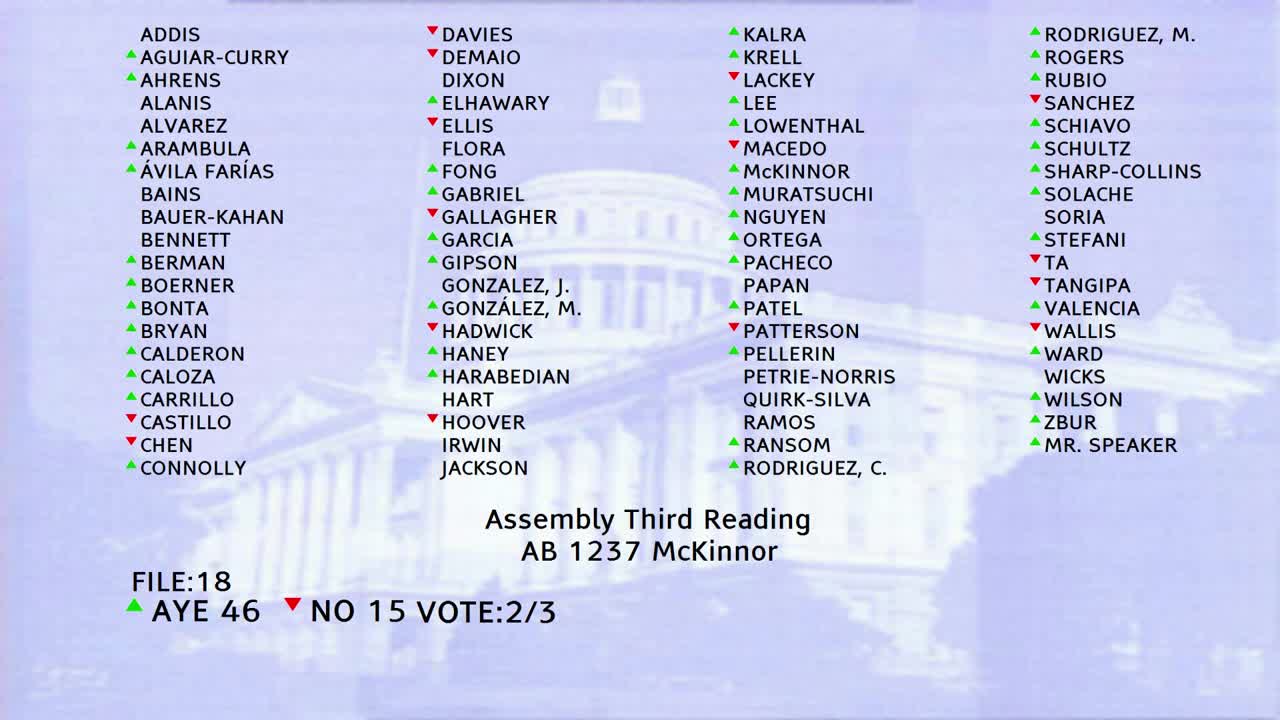
Bill Author