AB 1478: Used Mattress Recovery and Recycling Act: mattress recycling charge: consumer education.
- Session Year: 2025-2026
- House: Assembly
- Latest Version Date: 2025-07-28
Current Status:
Passed
(2025-07-28: Chaptered by Secretary of State - Chapter 70, Statutes of 2025.)
Introduced
In Committee
Awaiting First Chamber Vote
Passed First Chamber
In Committee
Awaiting Second Chamber Vote
Passed Second Chamber
Enacted
The Used Mattress Recovery and Recycling Act, administered by the Department of Resources Recycling and Recovery, authorizes a mattress recycling organization to be established by a qualified industry association to develop, implement, and administer a used mattress recycling program in the state. The act requires the organization to develop and submit to the department for approval a plan, including an annual budget to implement the plan, for the recovery and recycling of used mattresses. The act requires the plan to include, among other things, providing outreach efforts and education to consumers, manufacturers, and retailers, for the purpose of promoting the recycling of used mattresses and options available to consumers for the free dropoff or collection of used mattresses. The act requires the organization to set the state mattress recycling charge, which is added to the purchase price of a mattress, at an amount sufficient to fund the program. The act requires the charge to be clearly visible on the invoice, receipt, or functionally equivalent document by the seller to the consumer as a separate line item.
This bill would authorize the distributor, retailer, or seller to pay the applicable charge to the mattress recycling organization on behalf of the consumer or ultimate end user if the distributor, retailer, or seller enters into a written agreement with a mattress recycling organization to pay the charge directly to the mattress recycling organization, as provided. The bill would make a distributor, retailer, or seller responsible for educating the consumer or the ultimate end user of the mattress in the state on the recycling of used mattresses and options available to consumers for the free dropoff or collection of used mattresses.
The Used Mattress Recovery and Recycling Act, administered by the Department of Resources Recycling and Recovery, authorizes a mattress recycling organization to be established by a qualified industry association to develop, implement, and administer a used mattress recycling program in the state. The act requires the organization to develop and submit to the department for approval a plan, including an annual budget to implement the plan, for the recovery and recycling of used mattresses. The act requires the plan to include, among other things, providing outreach efforts and education to consumers, manufacturers, and retailers, for the purpose of promoting the recycling of used mattresses and options available to consumers for the free dropoff or collection of used mattresses. The act requires the organization to set the state mattress recycling charge, which is added to the purchase price of a mattress, at an amount sufficient to fund the program. The act requires the charge to be clearly visible on the invoice, receipt, or functionally equivalent document by the seller to the consumer as a separate line item.
This bill would authorize the retailer or distributor distributor, retailer, or seller to pay the applicable charge to the mattress recycling organization on behalf of the consumer or ultimate end user if the distributor, retailer, or seller enters into a written agreement with a mattress recycling organization to pay the charge directly to the mattress recycling organization, as provided. The bill would make a distributor, retailer, or seller responsible for educating the consumer or the ultimate end user of the mattress in the state on the recycling of used mattresses and options available to consumers for the free dropoff or collection of used mattresses.
The Used Mattress Recovery and Recycling Act, administered by the Department of Resources Recycling and Recovery, authorizes a mattress recycling organization to be established by a qualified industry association to develop, implement, and administer a used mattress recycling program in the state. The act requires the organization to develop and submit to the department for approval a plan, including an annual budget to implement the plan, for the recovery and recycling of used mattresses. The act requires the plan to include, among other things, providing outreach efforts and education to consumers, manufacturers, and retailers, for the purpose of promoting the recycling of used mattresses and options available to consumers for the free dropoff or collection of used mattresses. The act requires the organization to set the state mattress recycling charge, which is added to the purchase price of a mattress, at an amount sufficient to fund the program. The act requires the charge to be clearly visible on the invoice, receipt, or functionally equivalent document by the seller to the consumer as a separate line item.
This bill would authorize the retailer or distributor to pay the applicable charge to the mattress recycling organization on behalf of the consumer or ultimate end user and would exempt that retailer or distributor from the requirement to include the charge as a separate line item if the retailer or distributor fulfills certain requirements, including, among other things, that the retailer or distributor is not primarily engaged in the sale of mattresses to consumers or ultimate end users in the state. if the distributor, retailer, or seller enters into a written agreement with a mattress recycling organization to pay the charge directly to the mattress recycling organization, as provided. The bill would make a distributor, retailer, or seller responsible for educating the consumer or the ultimate end user of the mattress in the state on the recycling of used mattresses and options available to consumers for the free dropoff or collection of used mattresses.
The Used Mattress Recovery and Recycling Act, administered by the Department of Resources Recycling and Recovery, authorizes a mattress recycling organization to be established by a qualified industry association to develop, implement, and administer a used mattress recycling program in the state. The act requires the organization to develop and submit to the department for approval a plan, including a an annual budget to implement the plan, for the recovery and recycling of used mattresses. The act requires the organization to set the state mattress recycling charge, which is added to the purchase price of a mattress, at an amount sufficient to fund the program. The act requires the charge to be clearly visible on the invoice, receipt, or functionally equivalent document by the seller to the consumer as a separate line item.
This bill would make a nonsubstantive change to that provision. authorize the retailer or distributor to pay the applicable charge to the mattress recycling organization on behalf of the consumer or ultimate end user and would exempt that retailer or distributor from the requirement to include the charge as a separate line item if the retailer or distributor fulfills certain requirements, including, among other things, that the retailer or distributor is not primarily engaged in the sale of mattresses to consumers or ultimate end users in the state.
The Used Mattress Recovery and Recycling Act, administered by the Department of Resources Recycling and Recovery, authorizes a mattress recycling organization to be established by a qualified industry association to develop, implement, and administer a used mattress recycling program in the state. The act requires the organization to develop and submit to the department for approval a plan, including a budget to implement the plan, for the recovery and recycling of used mattresses. The act requires the organization to set the state mattress recycling charge, which is added to the purchase price of a mattress, at an amount sufficient to fund the program.
This bill would make a nonsubstantive change to that provision.
(a)Commencing 90 days after the date the department approves the budget pursuant to Section 42988.1, each manufacturer, renovator, retailer, or distributor that sells a mattress to a consumer or to the ultimate end user of the mattress in the state shall add the charge to the purchase price of the mattress. The charge shall be clearly visible on the invoice, receipt, or functionally equivalent document by the seller to the consumer as a separate line item.
(b)Notwithstanding subdivision (a), a distributor, retailer, or seller may directly pay the applicable charge to the mattress recycling organization on behalf of the consumer or ultimate end user of the mattress if the distributor, retailer, or seller enters into a written agreement with a mattress recycling organization to remit the charge directly to the mattress recycling organization on behalf of the consumer. The distributor, retailer, or seller may, but is not required to, make the charge clearly visible on the invoice, receipt, or in a functionally equivalent document.
(c)A distributor, retailer, or seller shall be responsible for educating the consumer or the ultimate end user of the mattress in the state as provided under subdivision (n) of Section 42987.1.
(d)The charges collected pursuant to this section shall be remitted to the mattress recycling organization in accordance with procedures established by the mattress recycling organization.
(e)For purposes of this section, functionally equivalent document means a document provided by a distributor, retailer, or seller to a consumer from the mattress recycling organization that includes information about the recycling charge and options available to consumers for the free dropoff or collection of used mattresses.
(a)Commencing 90 days after the date the department approves the budget pursuant to Section 42988.1, each manufacturer, renovator, retailer, or distributor that sells a mattress to a consumer or to the ultimate end user of the mattress in the state shall add the charge to the purchase price of the mattress. The charge shall be clearly visible on the invoice, receipt, or functionally equivalent document by the seller to the consumer as a separate line item.
(b)Notwithstanding subdivision (a), a retailer or distributor distributor, retailer, or seller may directly pay the applicable charge to the mattress recycling organization on behalf of the consumer or ultimate end user of the mattress if the distributor, retailer, or seller enters into a written agreement with a mattress recycling organization to remit the charge directly to the mattress recycling organization on behalf of the consumer. The retailer or distributor distributor, retailer, or seller may, but is not required to, make the charge clearly visible on the invoice, receipt, or in a functionally equivalent document.
(c)A distributor, retailer, or seller shall be responsible for educating the consumer or the ultimate end user of the mattress in the state as provided under subdivision (n) of Section 42987.1.
(d)The charges collected pursuant to this section shall be remitted to the mattress recycling organization in accordance with procedures established by the mattress recycling organization.
(e)For purposes of this section, functionally equivalent document means a document provided by a distributor, retailer, or seller to a consumer from the mattress recycling organization that includes information about the recycling charge and options available to consumers for the free dropoff or collection of used mattresses.
(a)Except as provided in subdivision (c), commencing Commencing 90 days after the date the department approves the budget pursuant to Section 42988.1, each manufacturer, renovator, retailer, or distributor that sells a mattress to a consumer or to the ultimate end user of the mattress in the state shall add the charge to the purchase price of the mattress. The charge shall be clearly visible on the invoice, receipt, or functionally equivalent document by the seller to the consumer as a separate line item.
(b)The charges collected pursuant to subdivision (a) shall be remitted to the mattress recycling organization in accordance with procedures established by the mattress recycling organization.(c)A(b)Notwithstanding subdivision (a), a retailer or distributor may directly pay the applicable charge to the mattress recycling organization on behalf of the consumer or ultimate end user of the mattress and is not required to include the charge on the invoice, receipt, or functionally equivalent document to the consumer as a separate line item if all of the following requirements are met: if the distributor, retailer, or seller enters into a written agreement with a mattress recycling organization to remit the charge directly to the mattress recycling organization on behalf of the consumer. The retailer or distributor may, but is not required to, make the charge clearly visible on the invoice, receipt, or in a functionally equivalent document.
(1)The retailer or distributor is not primarily engaged in the sale of mattresses to a consumer or ultimate end user of the mattress in the state.(2)The retailer or distributor provides proof to the mattress recycling organization that the charge is not being passed onto the consumer or the ultimate end user of the mattress in the state.(3)The charge for each mattress sold by the retailer or distributor is fully and timely paid to the mattress recycling organization.(4)The retailer or distributor promotes consumer awareness about available mattress recycling options to its customers, including, but not limited to, retailer take back programs, collection sites, and mattress collection programs in local communities.(c)A distributor, retailer, or seller shall be responsible for educating the consumer or the ultimate end user of the mattress in the state as provided under subdivision (n) of Section 42987.1.
(d)The charges collected pursuant to this section shall be remitted to the mattress recycling organization in accordance with procedures established by the mattress recycling organization.
(e)For purposes of this section, functionally equivalent document means a document provided by a distributor, retailer, or seller to a consumer from the mattress recycling organization that includes information about the recycling charge and options available to consumers for the free dropoff or collection of used mattresses.
(a)Commencing Except as provided in subdivision (c), commencing 90 days after the date the department approves the budget pursuant to Section 42988.1, each manufacturer, renovator, retailer, or distributor that sells a mattress to a consumer or to the ultimate end user of the mattress in the state shall add the charge to the purchase price of the mattress. The charge shall be clearly visible on the invoice, receipt, or functionally equivalent document by the seller to the consumer as a separate line item.
(b)The charges collected pursuant to subdivision (a) shall be remitted to the mattress recycling organization in accordance with procedures established by the mattress recycling organization.
(c)A retailer or distributor may directly pay the applicable charge to the mattress recycling organization on behalf of the consumer or ultimate end user of the mattress and is not required to include the charge on the invoice, receipt, or functionally equivalent document to the consumer as a separate line item if all of the following requirements are met:
(1)The retailer or distributor is not primarily engaged in the sale of mattresses to a consumer or ultimate end user of the mattress in the state.
(2)The retailer or distributor provides proof to the mattress recycling organization that the charge is not being passed onto the consumer or the ultimate end user of the mattress in the state.
(3)The charge for each mattress sold by the retailer or distributor is fully and timely paid to the mattress recycling organization.
(4)The retailer or distributor promotes consumer awareness about available mattress recycling options to its customers, including, but not limited to, retailer take back programs, collection sites, and mattress collection programs in local communities.
SECTION 1.Section 42989 of the Public Resources Code is amended to read:42989.(a)The mattress recycling organization shall set the amount of the mattress recycling charge that shall be added to the purchase price of a mattress at the point of sale and include the charge amount in the annual budget.(b)(1)The amount of the state mattress recycling charge shall be sufficient to fund the revenue requirements in the approved budget.(2)The mattress recycling organization shall set the charge as a flat rate and not as a percentage of the purchase price. The organization shall not set more than two different charges to accommodate mattress size differentials.(c)(1)The mattress recycling organization may change the amount of the charge in accordance with subdivision (b), but the mattress recycling organization shall not change the amount of the charge more frequently than annually, and shall provide no less than 180 days notice to the public before the change in the amount of the charge takes effect.(2)If the mattress recycling organization provides notice that it intends to reduce the charge, the organization shall provide the department with information about how it will effectively implement the program at the reduced fee. The department may disapprove that change within 60 days of the notice if the department finds that the reduction makes the organization unable to effectively implement the requirements or objectives of this chapter.(d)The charge shall be included in the annual program budget for approval by the department.(e)It is the intent of the Legislature to ensure the proceeds of the mattress recycling charge are used to prioritize the use of in-state processing facilities over the use of out-of-state processing facilities to the extent economically practical.(a)The mattress recycling organization shall set the amount of the mattress recycling charge that shall be added to the purchase price of a mattress at the point of sale and include the charge amount in the annual budget.
(b)(1)The amount of the state mattress recycling charge shall be sufficient to fund the revenue requirements set forth in the approved budget.
(2)The mattress recycling organization shall set the charge as a flat rate and not as a percentage of the purchase price. The organization shall not set more than two different charges to accommodate mattress size differentials.
(c)(1)The mattress recycling organization may change the amount of the charge in accordance with subdivision (b), but the mattress recycling organization shall not change the amount of the charge more frequently than annually, and shall provide no less than 180 days notice to the public before the change in the amount of the charge takes effect.
(2)If the mattress recycling organization provides notice that it intends to reduce the charge, the organization shall provide the department with information about how it will effectively implement the program at the reduced fee. The department may disapprove that change within 60 days of the notice if the department finds that the reduction makes the organization unable to effectively implement the requirements or objectives of this chapter.
(d)The charge shall be included in the annual program budget for approval by the department.
(e)It is the intent of the Legislature to ensure the proceeds of the mattress recycling charge are used to prioritize the use of in-state processing facilities over the use of out-of-state processing facilities to the extent economically practical.
|
Date
|
Status
|
|---|---|
| Jul 28, 2025 | Chaptered by Secretary of State - Chapter 70, Statutes of 2025. |
| Jul 28, 2025 | Approved by the Governor. |
| Jul 15, 2025 | Enrolled and presented to the Governor at 3:30 p.m. |
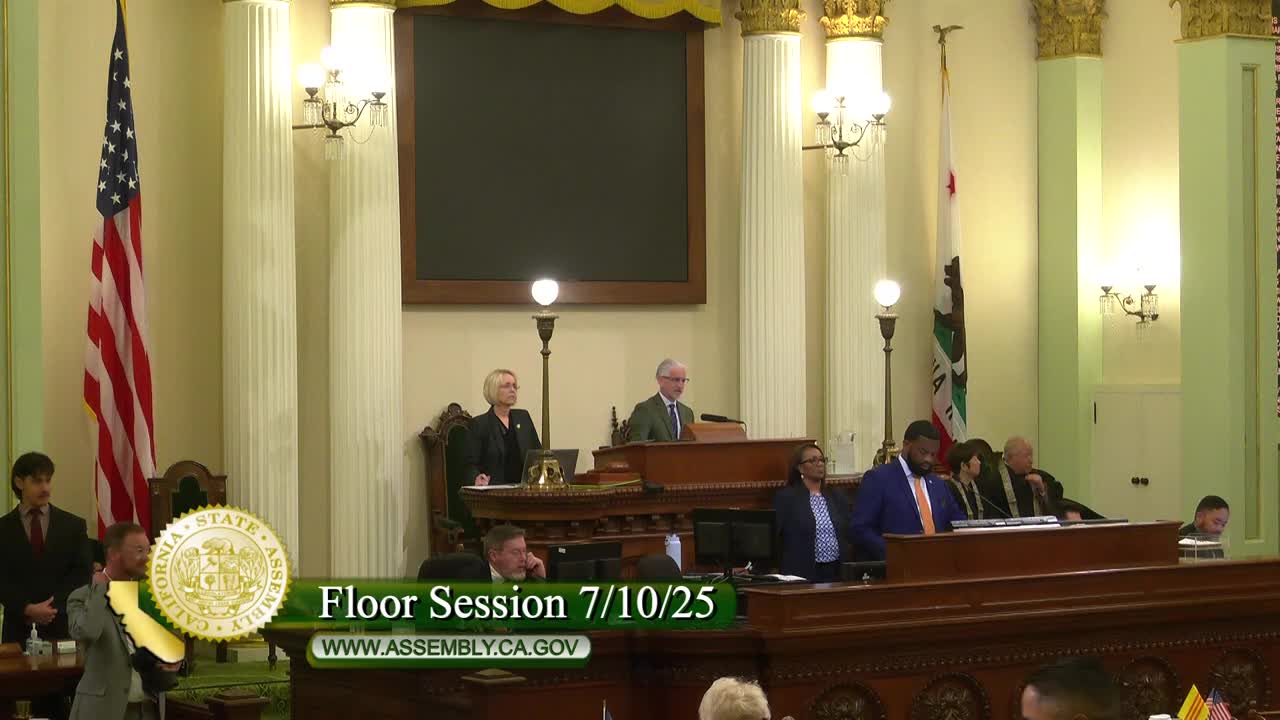
| Jul 10, 2025 | Senate amendments concurred in. To Engrossing and Enrolling. (Ayes 73. Noes 0. Page 2504.). |
| Jul 3, 2025 | In Assembly. Concurrence in Senate amendments pending. |
| Jul 3, 2025 | Read third time. Passed. Ordered to the Assembly. (Ayes 35. Noes 0. Page 1933.). |
| Jul 1, 2025 | Read second time. Ordered to Consent Calendar. |
| Jun 30, 2025 | From committee: Be ordered to second reading file pursuant to Senate Rule 28.8 and ordered to Consent Calendar. |
| Jun 18, 2025 | From committee: Do pass and re-refer to Com. on APPR. with recommendation: To Consent Calendar. (Ayes 6. Noes 0.) (June 18). Re-referred to Com. on APPR. |
| Jun 9, 2025 | From committee chair, with author's amendments: Amend, and re-refer to committee. Read second time, amended, and re-referred to Com. on E.Q. |
| May 28, 2025 | Referred to Com. on E.Q. |
| May 15, 2025 | In Senate. Read first time. To Com. on RLS. for assignment. |
| May 15, 2025 | Read third time. Passed. Ordered to the Senate. (Ayes 69. Noes 0. Page 1570.) |
| May 8, 2025 | Read second time. Ordered to Consent Calendar. |
| May 7, 2025 | From committee: Do pass. To Consent Calendar. (Ayes 15. Noes 0.) (May 7). |
| Apr 28, 2025 | Re-referred to Com. on APPR. |
| Apr 24, 2025 | Read second time and amended. |
| Apr 23, 2025 | From committee: Amend, and do pass as amended and re-refer to Com. on APPR. with recommendation: To Consent Calendar. (Ayes 14. Noes 0.) (April 21). |
| Mar 25, 2025 | Re-referred to Com. on NAT. RES. |
| Mar 24, 2025 | From committee chair, with author's amendments: Amend, and re-refer to Com. on NAT. RES. Read second time and amended. |
| Mar 24, 2025 | Referred to Com. on NAT. RES. |
| Feb 24, 2025 | Read first time. |
| Feb 22, 2025 | From printer. May be heard in committee March 24. |
| Feb 21, 2025 | Introduced. To print. |
|
Date
|
Description
|
Location
|
Votes
|
|
|---|---|---|---|---|
| Jul 10, 2025 | AB 1478 Hoover Concurrence in Senate Amendments | Assembly Floor |
Passed |
|
| Jul 3, 2025 | Consent Calendar 2nd AB1478 Hoover | Senate Floor |
Passed |
|
| Jun 18, 2025 | Do pass, but first be re-referred to the Committee on [Appropriations] with the recommendation: To Consent Calendar | Senate Standing Committee on Environmental Quality |
Passed |
|
| May 15, 2025 | AB 1478 Hoover Consent Calendar Second Day Regular Session | Assembly Floor |
Passed |
|
| May 7, 2025 | Do pass. To Consent Calendar. | Assembly Standing Committee on Appropriations |
Passed |
|
| Apr 21, 2025 | Do pass as amended, and be re-referred to the Committee on [Appropriations] with recommendation: To Consent Calendar | Assembly Standing Committee on Natural Resources |
Passed |
This list shows positions taken on this bill by organizations on the date displayed, which is linked to the original source.
Positions by individuals are not included.
|
Organization
|
Position
|
Date
|
|---|---|---|
| California Retailers Association | ** Support | |
| National Stewardship Action Council | ** Support | |
| Williams-Sonoma, INC. | ** Support |
SENATE COMMITTEE ON ENVIRONMENTAL QUALITY
Senator Blakespear, Chair
2025 - 2026 Regular
Bill No: AB 1478
Author: | Hoover | ||
Version: | 6/9/2025 | Hearing Date: | 6/18/2025 |
Urgency: | No | Fiscal: | Yes |
Consultant: | Brynn Cook | ||
SUBJECT: Used Mattress Recovery and Recycling Act: mattress recycling charge: consumer education
DIGEST: Amends the existing extended producer responsibility (EPR) program for used mattresses to allow a retailer or distributor to directly pay the state’s mattress recycling fee on behalf of a consumer, rather than including that fee on the consumer’s receipt.
ANALYSIS:
Existing law:
- Establishes the Used Mattress Recovery and Recycling Act (Act), which creates an extended producer responsibility (EPR) program (program) for used mattresses. Pursuant to the Act:
- Requires a mattress responsibility organization (MRO) to develop, implement, and administer the program;
- Requires the MRO to develop a plan for recycling used mattresses in the state;
- Requires the MRO as part of their used mattresses recycling plan to provide outreach efforts and education to consumers, manufacturers, and retailers to promote recycling and provide information on the program;
- Requires mattress retailers to offer consumers the option to have a used mattress picked up at the time of delivery of a new mattress, at no cost to the consumer, as specified; and
- Requires the MRO to set the charge to be added to the purchase price of a mattress at the point of sale that is sufficient to fund the revenue requirements of the program. Requires the charge to be clearly visible on the invoice, receipt, or functionally equivalent document by the seller to a consumer as a separate line item. (Public Resources Code 42985 et seq.)
This bill:
- Allows the retailer, distributor, or seller of a mattress to pay the applicable mattress charge to the MRO directly on behalf of consumers, and specifies that in this scenario, the retailer, distributor, or seller does not need to make the charge clearly visible on the invoice, receipt or “functionally equivalent document” as defined.
- Specifies that the distributor, retailer, or seller shall be responsible for educating the consumer on the program and mattress recycling.
Background
- California’s waste goals and EPR. Under the IWMA, CalRecycle is tasked with reducing the amount of waste that gets landfilled in California. The IWMA establishes a goal that 75% of solid waste generated in the state be diverted from landfills through source reduction, recycling, and composting by 2020. However, in 2022, the state’s recycling rate was just 41%, falling far short of the state’s goal. To advance California’s recycling goals, the Legislature has directed CalRecycle to establish several EPR programs. EPR is a strategy that places shared responsibility for end-of-life product management on producers and all entities involved in the product chain, instead of on the general public and local governments.
EPR programs rely on industry, often via a product stewardship organization (PRO), to develop and implement approaches to create a circular economy with oversight and enforcement provided by the government. EPR programs have traditionally been used to improve the recapture and recycling rate for challenging-to-recycle materials that can pose a risk to the waste stream, like pharmaceuticals and sharps, paints, and batteries. The state also oversees EPR programs for high-volume products including mattresses, carpets, and packaging. To be successful, every EPR program must contain some of the same basic elements. EPR programs must clearly delineate which products are included in the program. They must also set clear guidance on what criteria must be evaluated in the producer made stewardship plan, and can set “rates and dates” to achieve specific outcomes. EPR programs, which operate by utilizing industry expertise to develop plans for managing products, must also have a strong oversight and enforcement mechanism.
- California’s mattress stewardship program. Established in legislation in 2013, California’s used mattress program was developed to find alternatives to landfill disposal. Unlike most waste, mattresses clog up landfill machinery and are difficult to manage. Additionally, mattresses have been prone to illegal disposal, creating a public nuisance. The program is intended to ensure that used mattresses, box springs, and futons are reused, recycled, or properly disposed. The program is run by the Mattress Recycling Council (MRC), which acts as the MRO in the state. MRC’s program, which is called Bye Bye Mattress, provides free retail take-back or free drop off at numerous locations throughout the state. The program is funded by a consumer fee on mattress sales, which is currently $16.
According to the Department or Resources Recycling and Recovery (CalRecycle), the program has collected 11.1 million mattresses since its inception in 2016. CalRecycle has established recovery and recycling rates for the 2025-2029 years of program operation. CalRecycle has established recovery and recycling rates for the 2025-2029 years of program operation, with a recycling and renovation rate of 83% and a recycling efficiency rate (the weight of material that is used vs. sent to landfill) of 68%. The program reports that nearly 80% of mattresses have been diverted from landfill disposal through recycling, renovation, and biomass conversion. With 240 collection sites, more than 99% of California residents have “convenient access” to the program within 15 miles of their homes.
Comments
- Purpose of Bill. According to the author, “as it stands, the Used Mattress Recovery & Recycling Act requires the mattress recycling fee to be passed on to the consumer. With cost of living in California being unarguably far too high, consumers need support and relief now more than ever. Retailers wishing to provide this relief should not be barred from doing so. AB 1478 will allow certain retailers and distributors to absorb the required fee on behalf of their customers. This would alleviate an unnecessary burden, while maintaining the integrity of the program by keeping its educational components intact.”
- Visible vs. Hidden fees in EPR. EPR programs can have visible or hidden fees. Visible fees are explicitly displayed to the consumer at the point of sale, clearly showing the cost allocated to recycling or disposal of the product or its packaging. Hidden fees, on the other hand, are costs integrated into the overall product price without transparently itemizing the cost of the EPR program to consumers. These approaches have different tradeoffs: visible fees may raise awareness to consumers of the program and add transparency on the total costs passed on to consumers from the EPR program. However, externalized costs may be perceived negatively by the consumer: even though the EPR program is ultimately intended to lower costs on consumers by shifting the cost-burden of end of life management to producers, consumers may not be used to seeing end of life costs added to products up front (and the costs that consumers pay to manage products at the end of their life are removed from the product purchase itself, like higher trash collection fees or local taxes being used for litter abatement for illegally dumped mattresses).
Related/Prior Legislation
SB 254 (Hancock, Chapter 388, Statutes of 2013) established the Used Mattress Recovery and Recycling Act (Act), which requires mattress manufacturers and retailers to develop a mattress stewardships program to increase the recovery and recycling of used mattresses to reduce illegal dumping
SOURCE:
Williams Sonoma
SUPPORT:
California Retailers Association
National Stewardship Action Council
Williams-sonoma, INC.
OPPOSITION:
None received
-- END --
Date of Hearing: May 7, 2025
ASSEMBLY COMMITTEE ON APPROPRIATIONS
Buffy Wicks, Chair
ABPCA Bill Id:AB 1478
Author:(Hoover) – As Amended Ver:April 24, 2025
Policy Committee: | Natural Resources | Vote: | 14 - 0 |
|
| ||
|
|
Urgency: No State Mandated Local Program: No Reimbursable: No
SUMMARY:
This bill allows a retailer or distributor to directly pay the state’s mattress recycling fee on behalf of a consumer.
Specifically, this bill:
- Allows a retailer or distributor to directly pay the applicable charge to the mattress recycling organization (MRO) on behalf of the consumer or ultimate end user of the mattress if the distributor, retailer, or seller enters into a written agreement with the MRO to remit the charge directly to the MRO of behalf of the consumer.
- Allows the retailer or distributor to make the charge clearly visible on the invoice, receipt, or in a functionally equivalent document, as defined.
- Requires a distributor, retailer, or seller to be responsible for educating the consumer or the ultimate end user of the mattress in the state, as specified.
- Provides that the charges collected pursuant to this bill shall be remitted to the MRO in accordance with procedures established by the MRO.
FISCAL EFFECT:
CalRecycle reports minor and absorbable costs.
COMMENTS:
1) Purpose. According to the author:
As it stands, the Used Mattress Recovery & Recycling Act requires the mattress recycling fee to be passed on to the consumer. With cost of living in California being unarguably far too high, consumers need support and relief now more than ever. Retailers wishing to provide this relief should not be barred from doing so. AB 1478 will allow certain retailers and distributors to absorb the required fee on behalf of their customers. This would alleviate an unnecessary burden, while maintaining the integrity of the program by keeping its educational components intact.
2) Background. Extended producer responsibility (EPR) is a strategy that places shared responsibility for end-of-life product management on producers and all entities involved in the product chain, instead of on the general public and local governments. California’s mattress EPR program ensures used mattresses, box springs, and futons are reused, recycled, or properly disposed. CalRecycle oversees the program, which is run by the Mattress Recycling Council (MRC), the nonprofit MRO created by mattress manufacturers, renovators, and retailers. MRC’s program, called Bye Bye Mattress, provides free retail take-back or free drop off at numerous locations throughout the state. The program is funded by a consumer fee on mattress sales, which is currently $16.
According to CalRecycle, the program has collected 11.1 million mattresses since its inception in 2016. Of those mattresses, nearly 80% have been diverted from landfill disposal through recycling, renovation, and biomass conversion. With 240 collection sites, more than 99% of California residents have access to the program within 15 miles of their homes.
Current law requires the MRO to reimburse CalRecycle for its direct costs incurred to implement and enforce the mattress stewardship program. Based on the previous three years of invoiced costs, MRC anticipates the cost of CalRecycle reimbursement for 2024 and 2025 to be approximately $700,000 per year.
Ideally, EPR programs require producers to share in the costs associated with the end-of-life management of the products they produce. However, a number of the state’s EPR programs shift that cost directly to consumers by assessing a visible fee, or “charge,” at the point of purchase. This bill allows a retailer to pay the charge on behalf of a consumer. The California Retailers Association writes in support:
Under current law, mattress retailers are required to separately list and charge consumers for the recycling fee, which reduces flexibility and increases out-of-pocket costs for consumers. AB 1478 provides an alternative option for businesses to absorb this fee voluntarily, rather than passing it on directly to consumers—offering meaningful relief at a time when Californians are grappling with rising costs for essential goods.
Analysis Prepared by: Nikita Koraddi / APPR. / (916) 319-2081
Date of Hearing: April 21, 2025
ASSEMBLY COMMITTEE ON NATURAL RESOURCES
Isaac G. Bryan, Chair
ABPCA Bill Id:AB 1478 (
Author:Hoover) – As Amended Ver:March 24, 2025
SUBJECT: Used Mattress Recovery and Recycling Act: mattress recycling charge
SUMMARY: Allows a retailer or distributor to directly pay the mattress recycling charge (charge) on behalf of a consumer.
EXISTING LAW establishes the Used Mattress Recovery and Recycling Act (Act), which establishes an expanded producer responsibility (EPR) program (program) for used mattresses. Pursuant to the Act:
- Requires a mattress responsibility organization (MRO) to develop, implement, and administer the program.
- Requires the MRO to develop, submit, and administer a plan for recycling used mattresses, including mattresses, box springs, and futons, in the state.
- Requires mattress retailers to offer consumers the option to have a used mattress picked up at the time of delivery of a new mattress, at no cost to the consumer, as specified.
- Requires the MRO to set the charge to be added to the purchase price of a mattress at the point of sale that is sufficient to fund the revenue requirements of the program. Requires the charge to be clearly visible on the invoice, receipt, or functionally equivalent document by the seller to a consumer as a separate line item. (Public Resources Code 42985 et seq.)
THIS BILL:
- Allows a retailer or distributor to directly pay the applicable charge to the MRO on behalf of the consumer of the mattress.
- Specifies that the retailer or distributor who pays the charge on behalf of a consumer is not required to include the charge on the invoice, receipt, or functionally equivalent document as a separate line item.
- Specifies that in order for a retailer or distributor to pay the charge on behalf of a consumer, the following requirements must be met:
- The retailer or distributor is not primarily engaged in the sale of mattresses to a consumer or ultimate end user in the state;
- The retailer or distributor provides proof to the MRO that the charge is not being passed onto the consumer or the ultimate end user in the state;
- The charge for each mattress sold by the retailer or distributor is fully and timely paid to the MRO; and,
- The retailer or distributor promotes consumer awareness about available mattress recycling options to its customers, including, but not limited to, retailer take-back programs, collection sites, and mattress collection programs in local communities.
FISCAL EFFECT: Unknown
COMMENTS:
- California’s mattress stewardship program. Established in 2016, California’s program was developed to find alternatives to landfill disposal. Unlike most waste, mattresses clog up landfill machinery and are difficult to manage. Additionally, mattresses have been prone to illegal disposal, creating a public nuisance. The program is intended to ensure that used mattresses, box springs, and futons are reused, recycled, or properly disposed. The program is run by the Mattress Recycling Council (MRC), which acts as the MRO in the state. MRC’s program, which is called Bye Bye Mattress, provides free retail take-back or free drop off at numerous locations throughout the state. The program is funded by a consumer fee on mattress sales, which is currently $16.
According to the Department or Resources Recycling and Recovery (CalRecycle), the program has collected 11.1 million mattresses since its inception in 2016. Of those mattresses, nearly 80% have been diverted from landfill disposal through recycling, renovation, and biomass conversion. With 240 collection sites, more than 99% of California residents have “convenient access” to the program within 15 miles of their homes.
- This bill. Ideally, EPR programs require producers to share in the costs associated with the end-of-life management of the products they produce. However, a number of the state’s EPR programs shift that cost directly to consumers by assessing a visible fee, or “charge,” at the point of purchase.
This bill allows retailers to pay the charge on behalf of consumers if the retailer is “not primarily engaged in the sale of mattresses,” provides proof that the charge is not being passed on to the consumer, the charge is paid to the MRO, and the retailer promotes consumer awareness of mattress recycling options. This approach more closely aligns with a true EPR model and benefits consumers by reducing the purchase price of a new mattress from a participating retailer.
Should this bill move forward, the author should continue ongoing discussions with CalRecycle and stakeholders to ensure that terms such as “primarily engaged in the sale of mattresses” are clear and that charges paid by the retailer are reported accurately to CalRecycle and the MRO. - Author’s statement:
As it stands, the Used Mattress Recovery & Recycling Act requires the mattress recycling fee to be passed on to the consumer. With cost of living in California being unarguably far too high, consumers need support and relief now more than ever. Retailers wishing to provide this relief should not be barred from doing so. AB 1478 will allow certain retailers and distributors to absorb the required fee on behalf of their customers. This would alleviate an unnecessary burden, while maintaining the integrity of the program by keeping its educational components intact.
- Suggested amendments. The committee may wish to amend the bill to require retailers to enter into a written agreement with the MRO to remit the charge on behalf of consumers and define “functionally equivalent document” as documentation for consumers regarding the program.
REGISTERED SUPPORT / OPPOSITION:
Support
California Retailers Association
National Stewardship Action Council
Williams-Sonoma, INC.
Opposition
None on file
Analysis Prepared by: Elizabeth MacMillan / NAT. RES. /
Bill Author

Bill Co-Author(s):