AB 15: Open unsolved homicide: review and reinvestigation.
- Session Year: 2025-2026
- House: Assembly
- Latest Version Date: 2025-09-11
Current Status:
Failed
(2026-01-22: Consideration of Governor's veto stricken from file.)
Introduced
In Committee
Awaiting First Chamber Vote
Passed First Chamber
In Committee
Awaiting Second Chamber Vote
Passed Second Chamber
Enacted
Existing law defines murder as the unlawful killing of a human being, or a fetus, with malice aforethought. Existing law also defines manslaughter as the unlawful killing of a human being without malice, and establishes 3 kinds of manslaughter: voluntary, involuntary, and vehicular.
This bill would require a law enforcement agency to review the casefile regarding an open unsolved homicide upon written application by certain persons to determine if a reinvestigation would result in probative investigative leads, as specified. The bill would define a homicide to include murder and manslaughter and an open unsolved homicide as a homicide committed after January 1, 1990, but no less than 3 years prior to the date of the application for case review, that was investigated by a law enforcement agency, for which all probative investigative leads have been exhausted and for which no suspect has been identified. If the review determines that a reinvestigation would result in probative investigative leads, this bill would require a reinvestigation, as specified. The bill would allow only one reinvestigation from being undertaken at any one time with respect to the same victim.
By imposing new duties on local law enforcement agencies, this bill would impose a state-mandated local program.
The California Constitution requires the state to reimburse local agencies and school districts for certain costs mandated by the state. Statutory provisions establish procedures for making that reimbursement.
This bill would provide that, if the Commission on State Mandates determines that the bill contains costs mandated by the state, reimbursement for those costs shall be made pursuant to the statutory provisions noted above.
Existing law defines murder as the unlawful killing of a human being, or a fetus, with malice aforethought. Existing law also defines manslaughter as the unlawful killing of a human being without malice, and establishes 3 kinds of manslaughter: voluntary, involuntary, and vehicular.
This bill would require a law enforcement agency to review the casefile regarding an open unsolved murder homicide upon written application by certain persons to determine if a reinvestigation would result in probative investigative leads, as specified. The bill would define a homicide to include murder and manslaughter and an open unsolved murder homicide as a murder homicide committed after January 1, 1990, but no less than 3 years prior to the date of the application for case review, that was investigated by a law enforcement agency, for which all probative investigative leads have been exhausted and for which no suspect has been identified. If the review determines that a reinvestigation would result in probative investigative leads, this bill would require a reinvestigation, as specified. The bill would allow only one reinvestigation from being undertaken at any one time with respect to the same victim.
By imposing new duties on local law enforcement agencies, this bill would impose a state-mandated local program.
The California Constitution requires the state to reimburse local agencies and school districts for certain costs mandated by the state. Statutory provisions establish procedures for making that reimbursement.
This bill would provide that, if the Commission on State Mandates determines that the bill contains costs mandated by the state, reimbursement for those costs shall be made pursuant to the statutory provisions noted above.
Existing law defines murder as the unlawful killing of a human being, or a fetus, with malice aforethought.
This bill would require a law enforcement agency to review the casefile regarding an open unsolved murder upon written application by certain persons to determine if a reinvestigation would result in probative investigative leads, as specified. The bill would define an open unsolved murder as a murder committed after January 1, 1990, but no less than one year 3 years prior to the date of the application for case review, that was investigated by a law enforcement agency, for which all probative investigative leads have been exhausted and for which no suspect has been identified. If the review determines that a reinvestigation would result in probative investigative leads, this bill would require a reinvestigation, as specified. The bill would prohibit a reinvestigation from being conducted by a person who previously investigated the homicide at issue, as specified, and would allow only one reinvestigation from being undertaken at any one time with respect to the same victim.
By imposing new duties on local law enforcement agencies, this bill would impose a state-mandated local program.
The California Constitution requires the state to reimburse local agencies and school districts for certain costs mandated by the state. Statutory provisions establish procedures for making that reimbursement.
This bill would provide that, if the Commission on State Mandates determines that the bill contains costs mandated by the state, reimbursement for those costs shall be made pursuant to the statutory provisions noted above.
Existing law defines murder as the unlawful killing of a human being, or a fetus, with malice aforethought.
This bill would require a law enforcement agency to review the casefile regarding an open unsolved murder upon written application by certain persons to determine if a reinvestigation would result in probative investigative leads, as specified. The bill would define an open unsolved murder as a murder committed after January 1, 1990, but no less than one year prior to the date of the application for case review, that was investigated by a law enforcement agency, for which all probative investigative leads have been exhausted and for which no suspect has been identified. If the review determines that a reinvestigation would result in probative investigative leads, this bill would require a reinvestigation, as specified. The bill would prohibit a reinvestigation from being conducted by a person who previously investigated the homicide at issue, as specified, and would allow only one reinvestigation from being undertaken at any one time with respect to the same victim.
By imposing new duties on local law enforcement agencies, this bill would impose a state-mandated local program.
The California Constitution requires the state to reimburse local agencies and school districts for certain costs mandated by the state. Statutory provisions establish procedures for making that reimbursement.
This bill would provide that, if the Commission on State Mandates determines that the bill contains costs mandated by the state, reimbursement for those costs shall be made pursuant to the statutory provisions noted above.
Existing law, the California Values Act, prohibits a California law enforcement agency, defined as including both state and local agencies but excluding the Department of Corrections and Rehabilitation, from providing a persons release date or responding to a request for notification of a release date, unless that information is available to the public.The bill would prohibit the Department of Corrections and Rehabilitation from detaining on the basis of a hold request, providing an immigration authority with release date information, or responding to a notification request, transferring to an immigration authority, or facilitating or assisting with a transfer request any individual who is eligible for release pursuant to specified provisions, including, among others, youth offender, elderly, and medical parole releases.Existing law requires the Department of Corrections and Rehabilitation to cooperate with the United States Department of Homeland Security by providing the use of prison facilities, transportation, and general support, as needed, for the purposes of conducting and expediting deportation hearings and subsequent placement of deportation holds on undocumented immigrants who are incarcerated in state prison.Existing law requires the department to identify inmates serving terms in state prison who are undocumented aliens subject to deportation. Existing law would require the department, upon the enactment of any federal law requiring these persons to be incarcerated in federal prison, to provide this information to the federal government, as specified.This bill would repeal these provisions.Existing law, the California Values Act, prohibits a California law enforcement agency, defined as including both state and local agencies but excluding the Department of Corrections and Rehabilitation, from providing a persons release date or responding to a request for notification of a release date, unless that information is available to the public.
The bill would prohibit the Department of Corrections and Rehabilitation from detaining on the basis of a hold request, providing an immigration authority with release date information, or responding to a notification request, transferring to an immigration authority, or facilitating or assisting with a transfer request any individual who is eligible for release pursuant to specified provisions, including, among others, youth offender, elderly, and medical parole releases.
Existing law requires the Department of Corrections and Rehabilitation to cooperate with the United States Department of Homeland Security by providing the use of prison facilities, transportation, and general support, as needed, for the purposes of conducting and expediting deportation hearings and subsequent placement of deportation holds on undocumented immigrants who are incarcerated in state prison.
Existing law requires the department to identify inmates serving terms in state prison who are undocumented aliens subject to deportation. Existing law would require the department, upon the enactment of any federal law requiring these persons to be incarcerated in federal prison, to provide this information to the federal government, as specified.
This bill would repeal these provisions.
This chapter shall be known, and may be cited, as the California Homicide Victims Families Rights Act.
11484.As used in this chapter, the following definitions apply:
(a)Agency means a law enforcement entity in California.
(b)Applicable agency means a law enforcement agency that is investigating or has investigated the homicide of the victim.
(c)Designated person means an immediate family member, or their designated legal representative, who is a member in good standing with the State Bar of California.
(d)Homicide means a killing described in Section 187, 189, 191.5, 192, or 192.5.
(e)Immediate family member means a parent, parent-in-law, legal guardian, grandparent, grandparent-in-law, sibling, spouse, domestic partner, child, or stepchild of a homicide victim or any person who exercised in loco parentis control over a victim under 18 years of age.
(f)Open unsolved homicide means a homicide that meets all of the following requirements:
(1)The homicide was committed more than three years prior to the date of the application for a case review by a designated person under subdivision (c).
(2)The homicide was previously investigated by the applicable agency.
(3)All probative investigative leads have been exhausted.
(4)No suspect has been identified.
(5)The homicide was committed after January 1, 1990.
(g)Victim means the person against whom an open unsolved homicide was committed.
11485.(a)An applicable agency shall review the case file regarding an open unsolved homicide upon written application by a designated person to determine if a reinvestigation would result in probative investigative leads.
(b)The case file review may include, but is not limited to, all of the following:
(1)An analysis of the investigative steps or followup steps that may have been missed in the initial investigation.
(2)An assessment of whether witnesses should be interviewed or reinterviewed.
(3)An examination of physical evidence to see if all appropriate forensic testing and analysis was performed in the first instance or if additional testing might produce information relevant to the investigation.
(4)An update of the case file to bring it up to current investigative standards to the extent that doing so may help develop probative leads.
(c)The applicable agency shall confirm receipt of a request made under subdivision (a) in writing and provide notice of the applicants rights under this chapter.
(d)Only one case file review shall be undertaken at any one time with respect to the same open unsolved homicide case. If there is more than one investigative agency, each investigative agency shall coordinate its case file review such that there is only one case file review occurring at any given time.
(e)No later than 120 days after the receipt of the written application submitted pursuant to subdivision (a), the applicable agency shall conclude its case file review and reach a conclusion whether a reinvestigation under Section 11487 is warranted.
(f)The agency may extend the time limit in subdivision (e) for a period not to exceed 60 days if the agency makes a finding that the number of case files to be reviewed makes it impracticable to comply with said limit without unreasonably taking resources from other law enforcement activities. For cases for which the time limit in subdivision (e) is extended, the agency shall provide notice and an explanation of its reasoning to the designated person who filed the written application.
11486.(a)Each agency shall develop a written application for designated persons to request a case file review.
(b)Each agency shall assign an individual or department responsible for receiving and processing applications for case file reviews and ensuring that the agency meets all deadlines and obligations within this chapter generated by the application receipt.
11487.(a)The agency shall conduct a reinvestigation of the open unsolved homicide at issue if the review of the case file required by Section 11485 determines that a reinvestigation of the open unsolved homicide would result in probative investigative leads.
(b)A reinvestigation may include analyzing all evidence regarding the open unsolved homicide at issue for the purpose of developing probative investigative leads as to the suspect or suspects.
(c)If there is more than one investigative agency, each investigative agency shall coordinate its reinvestigation such that there is only one reinvestigation occurring at any given time.
11488.(a)The applicable agency shall provide the designated person who filed the written application with periodic updates during the case file review and reinvestigation.
(b)The applicable agency shall provide the designated person who filed the written application a written statement of the agencys decision on whether or not to engage in a reinvestigation at the conclusion of the case review. The agency may meet with the designated person to explain the agencys decision.
11489.(a)If a case file review is completed and a conclusion is reached not to conduct a reinvestigation, no additional case file review shall be undertaken for a period of five years, unless there is newly discovered, materially significant evidence. An agency may continue an investigation absent a designated persons application for a new case file review.
(b)If a reinvestigation is done and a suspect is not identified at its conclusion, no additional case file review or reinvestigation needs to be conducted for a period of five years, unless there is newly discovered, materially significant new evidence.
11490.Nothing in this chapter shall require an agency to provide information that would endanger the safety of any person, impede an ongoing investigation, violate a court order, or violate a legal obligation regarding privacy.
SEC. 2.If the Commission on State Mandates determines that this act contains costs mandated by the state, reimbursement to local agencies and school districts for those costs shall be made pursuant to Part 7 (commencing with Section 17500) of Division 4 of Title 2 of the Government Code.
This act chapter shall be known, and may be cited, as the California Homicide Victims Families Rights Act.
11484.As used in this chapter, the following definitions apply:
(a)Agency means a law enforcement entity in California.
(b)Applicable agency means a law enforcement agency that is investigating or has investigated the murder homicide of the victim.
(c)Designated person means an immediate family member or a similarly situated person, member, or their designated legal representative, who is a member in good standing with the State Bar of California.
(d)Homicide means a killing described in Section 187, 189, 191.5, 192, or 192.5.
(d)(e)Immediate family member means a parent, parent-in-law, legal guardian, grandparent, grandparent-in-law, sibling, spouse, domestic partner, child, or stepchild of a murder homicide victim or any person who exercised in loco parentis control over a victim under 18 years of age.
(e)Murder has the same meaning as in Section 187.(f)Open unsolved murder homicide means a murder homicide that meets all of the following requirements:
(1)The murder homicide was committed more than three years prior to the date of the application for a case review by a designated person under subdivision (d). (c).
(2)The murder homicide was previously investigated by the applicable agency.
(3)All probative investigative leads have been exhausted.
(4)No suspect has been identified.
(5)The murder homicide was committed after January 1, 1990.
(g)Victim means the person against whom an open unsolved murder homicide was committed.
11485.(a)An applicable agency shall review the case file regarding an open unsolved murder homicide upon written application by a designated person to determine if a reinvestigation would result in probative investigative leads.
(b)The case file review may include, but is not limited to, all of the following:
(1)An analysis of the investigative steps or followup steps that may have been missed in the initial investigation.
(2)An assessment of whether witnesses should be interviewed or reinterviewed.
(3)An examination of physical evidence to see if all appropriate forensic testing and analysis was performed in the first instance or if additional testing might produce information relevant to the investigation.
(4)An update of the case file to bring it up to current investigative standards to the extent that doing so may help develop probative leads.
(c)The applicable agency shall confirm receipt of a request made under subdivision (a) in writing and provide notice of the applicants rights under this act. chapter.
(d)Only one case file review shall be undertaken at any one time with respect to the same open unsolved murder homicide case. If there is more than one investigative agency, each investigative agency shall coordinate its case file review such that there is only one case file review occurring at any given time.
(e)No later than 120 days after the receipt of the written application submitted pursuant to subdivision (a), the applicable agency shall conclude its case file review and reach a conclusion whether a reinvestigation under Section 11487 is warranted.
(f)The agency may extend the time limit in subdivision (f) (e) for a period not to exceed 60 days if the agency makes a finding that the number of case files to be reviewed makes it impracticable to comply with said limit without unreasonably taking resources from other law enforcement activities. For cases for which the time limit in subdivision (f) (e) is extended, the agency shall provide notice and an explanation of its reasoning to the designated person who filed the written application.
11486.(a)Each agency shall develop a written application for designated persons to request a case file review.
(b)Each agency shall assign an individual or department responsible for receiving and processing applications for case file reviews and ensuring that the agency meets all deadlines and obligations within this act chapter generated by the application receipt.
11487.(a)The agency shall conduct a reinvestigation of the open unsolved murder homicide at issue if the review of the case file required by Section 11485 determines that a reinvestigation of the open unsolved murder homicide would result in probative investigative leads.
(b)A reinvestigation may include analyzing all evidence regarding the open unsolved murder homicide at issue for the purpose of developing probative investigative leads as to the suspect or suspects.
(c)If there is more than one investigative agency, each investigative agency shall coordinate its reinvestigation such that there is only one reinvestigation occurring at any given time.
11488.(a)The applicable agency shall provide the designated person who filed the written application with periodic updates during the case file review and reinvestigation.
(b)The applicable agency shall provide the designated person who filed the written application a written statement of the agencys decision on whether or not to engage in a reinvestigation at the conclusion of the case review. The agency may meet with the designated person to explain the agencys decision.
11489.(a)If a case file review is completed and a conclusion is reached not to conduct a reinvestigation, no additional case file review shall be undertaken for a period of five years, unless there is newly discovered, materially significant evidence. An agency may continue an investigation absent a designated persons application for a new case file review.
(b)If a reinvestigation is done and a suspect is not identified at its conclusion, no additional case file review or reinvestigation needs to be conducted for a period of five years, unless there is newly discovered, materially significant new evidence.
11490.Nothing in this act chapter shall require an agency to provide information that would endanger the safety of any person, impede an ongoing investigation, violate a court order, or violate a legal obligation regarding privacy.
SEC. 2.If the Commission on State Mandates determines that this act contains costs mandated by the state, reimbursement to local agencies and school districts for those costs shall be made pursuant to Part 7 (commencing with Section 17500) of Division 4 of Title 2 of the Government Code.
This act shall be known, and may be cited, as the California Homicide Victims Families Rights Act.
11484.As used in this chapter, the following definitions apply:
(a)Agency means a law enforcement entity in California.
(b)Applicable agency means a law enforcement agency that is investigating or has investigated the murder of the victim.
(c)Designated person means an immediate family member or a similarly situated person, or their designated legal representative, who is a member in good standing with the State Bar of California.
(d)Immediate family member means a parent, parent-in-law, legal guardian, grandparent, grandparent-in-law, sibling, spouse, child, or stepchild of a murder victim or any person who exercised in loco parentis control over a victim under 18 years of age.
(e)Murder has the same meaning as in Section 187.
(f)Open unsolved murder means a murder that meets all of the following requirements:
(1)The murder was committed more than one year three years prior to the date of the application for a case review by a designated person under subdivision (d).
(2)The murder was previously investigated by an the applicable agency.
(3)All probative investigative leads have been exhausted.
(4)No suspect has been identified.
(5)The murder was committed after January 1, 1990.
(g)Victim means the person against whom an open unsolved murder was committed.
11485.(a)An applicable agency shall review the case file regarding an open unsolved murder upon written application by a designated person to determine if a reinvestigation would result in probative investigative leads.
(b)The case file review shall may include, but is not limited to, all of the following:
(1)An analysis of the investigative steps or followup steps that may have been missed in the initial investigation.
(2)An assessment of whether witnesses should be interviewed or reinterviewed.
(3)An examination of physical evidence to see if all appropriate forensic testing and analysis was performed in the first instance or if additional testing might produce information relevant to the investigation.
(4)An update of the case file to bring it up to current investigative standards to the extent that doing so would may help develop probative leads.
(c)The person or persons performing the case file review required by this section shall not have previously investigated the murder.(d)(c)The applicable agency shall confirm receipt of a request made under subdivision (a) in writing and provide notice of the applicants rights under this act.
(e)(d)Only one case file review shall be undertaken at any one time with respect to the same open unsolved murder case. If there is more than one investigative agency, each investigative agency shall coordinate its case file review such that there is only one case file review occurring at any given time.
(f)(e)No later than 90 120 days after the receipt of the written application submitted pursuant to subdivision (a), the applicable agency shall conclude its case file review and reach a conclusion whether a reinvestigation under Section 11487 is warranted.
(g)(f)The agency may extend the time limit in subdivision (f) for a period not to exceed 45 60 days if the agency makes a finding that the number of case files to be reviewed makes it impracticable to comply with said limit without unreasonably taking resources from other law enforcement activities. For cases for which the time limit in subdivision (f) is extended, the agency shall provide notice and an explanation of its reasoning to the designated person who filed the written application.
11486.(a)Each agency shall develop a written application for designated persons to request a case file review.
(b)Each agency shall assign an individual or department responsible for receiving and processing applications for case file reviews and ensuring that the agency meets all deadlines and obligations within this act generated by the application receipt.
11487.(a)The agency shall conduct a reinvestigation of the open unsolved murder at issue if the review of the case file required by Section 11485 determines that a reinvestigation of the open unsolved murder would result in probative investigative leads.
(b)A reinvestigation shall may include analyzing all evidence regarding the open unsolved murder at issue for the purpose of developing probative investigative leads as to the suspect or suspects.
(c)The person or persons performing the reinvestigation required by subdivision (a) shall not have previously investigated the murder, except for the case file review.(d)(c)If there is more than one investigative agency, each investigative agency shall coordinate its reinvestigation such that there is only one reinvestigation occurring at any given time.
11488.(a)The applicable agency shall consult with provide the designated person who filed the written application and provide them with periodic updates during the case file review and reinvestigation.
(b)The applicable agency shall provide the designated person who filed the written application a written statement of the agencys decision on whether or not to engage in a reinvestigation at the conclusion of the case review. The agency shall meet with the designated person and discuss the evidence to explain to the designated person who filed the written application the agencys decision on whether or not to engage in a reinvestigation at the conclusion of the case file review. may meet with the designated person to explain the agencys decision.
11489.(a)If a case file review is completed and a conclusion is reached not to conduct a reinvestigation, no additional case file review shall be undertaken for a period of five years, unless there is newly discovered, materially significant evidence. An agency may continue an investigation absent a designated persons application for a new case file review.
(b)If a reinvestigation is done and a suspect is not identified at its conclusion, no additional case file review or reinvestigation needs to be conducted for a period of five years, unless there is newly discovered, materially significant new evidence.
11490.Nothing in this act shall require an agency to provide information that would endanger the safety of any person, unreasonably impede an ongoing investigation, violate a court order, or violate a legal obligation regarding privacy.
SEC. 2.If the Commission on State Mandates determines that this act contains costs mandated by the state, reimbursement to local agencies and school districts for those costs shall be made pursuant to Part 7 (commencing with Section 17500) of Division 4 of Title 2 of the Government Code.
This act shall be known, and may be cited, as the California Homicide Victims Families Rights Act.
11484.As used in this chapter, the following definitions apply:
(a)Agency means a law enforcement entity in California.
(b)Applicable agency means a law enforcement agency that is investigating or has investigated the murder of the victim.
(c)Designated person means an immediate family member or a similarly situated person, or their designated legal representative, who is a member in good standing with the State Bar of California.
(d)Immediate family member means a parent, parent-in-law, legal guardian, grandparent, grandparent-in-law, sibling, spouse, child, or stepchild of a murder victim or any person who exercised in loco parentis control over a victim under 18 years of age.
(e)Murder has the same meaning as in Section 187.
(f)Open unsolved murder means a murder that meets all of the following requirements:
(1)The murder was committed more than one year prior to the date of the application for a case review by a designated person under subdivision (d).
(2)The murder was previously investigated by an agency.
(3)All probative investigative leads have been exhausted.
(4)No suspect has been identified.
(5)The murder was committed after January 1, 1990.
(g)Victim means the person against whom an open unsolved murder was committed.
11485.(a)An applicable agency shall review the case file regarding an open unsolved murder upon written application by a designated person to determine if a reinvestigation would result in probative investigative leads.
(b)The case file review shall include, but is not limited to, all of the following:
(1)An analysis of the investigative steps or followup steps that may have been missed in the initial investigation.
(2)An assessment of whether witnesses should be interviewed or reinterviewed.
(3)An examination of physical evidence to see if all appropriate forensic testing and analysis was performed in the first instance or if additional testing might produce information relevant to the investigation.
(4)An update of the case file to bring it up to current investigative standards to the extent that doing so would help develop probative leads.
(c)The person or persons performing the case file review required by this section shall not have previously investigated the murder.
(d)The applicable agency shall confirm receipt of a request made under subdivision (a) in writing and provide notice of the applicants rights under this act.
(e)Only one case file review shall be undertaken at any one time with respect to the same open unsolved murder case. If there is more than one investigative agency, each investigative agency shall coordinate its case file review such that there is only one case file review occurring at any given time.
(f)No later than 90 days after the receipt of the written application submitted pursuant to subdivision (a), the applicable agency shall conclude its case file review and reach a conclusion whether a reinvestigation under Section 11487 is warranted.
(g)The agency may extend the time limit in subdivision (f) for a period not to exceed 45 days if the agency makes a finding that the number of case files to be reviewed makes it impracticable to comply with said limit without unreasonably taking resources from other law enforcement activities. For cases for which the time limit in subdivision (f) is extended, the agency shall provide notice and an explanation of its reasoning to the designated person who filed the written application.
11486.(a)Each agency shall develop a written application for designated persons to request a case file review.
(b)Each agency shall assign an individual or department responsible for receiving and processing applications for case file reviews and ensuring that the agency meets all deadlines and obligations within this act generated by the application receipt.
11487.(a)The agency shall conduct a reinvestigation of the open unsolved murder at issue if the review of the case file required by Section 11485 determines that a reinvestigation of the open unsolved murder would result in probative investigative leads.
(b)A reinvestigation shall include analyzing all evidence regarding the open unsolved murder at issue for the purpose of developing probative investigative leads as to the suspect or suspects.
(c)The person or persons performing the reinvestigation required by subdivision (a) shall not have previously investigated the murder, except for the case file review.
(d)If there is more than one investigative agency, each investigative agency shall coordinate its reinvestigation such that there is only one reinvestigation occurring at any given time.
11488.(a)The applicable agency shall consult with the designated person who filed the written application and provide them with periodic updates during the case file review and reinvestigation.
(b)The agency shall meet with the designated person and discuss the evidence to explain to the designated person who filed the written application the agencys decision on whether or not to engage in a reinvestigation at the conclusion of the case file review.
11489.(a)If a case file review is completed and a conclusion is reached not to conduct a reinvestigation, no additional case file review shall be undertaken for a period of five years, unless there is newly discovered, materially significant evidence. An agency may continue an investigation absent a designated persons application for a new case file review.
(b)If a reinvestigation is done and a suspect is not identified at its conclusion, no additional case file review or reinvestigation needs to be conducted for a period of five years, unless there is newly discovered, materially significant new evidence.
11490.Nothing in this act shall require an agency to provide information that would endanger the safety of any person, unreasonably impede an ongoing investigation, violate a court order, or violate a legal obligation regarding privacy.
SEC. 2.If the Commission on State Mandates determines that this act contains costs mandated by the state, reimbursement to local agencies and school districts for those costs shall be made pursuant to Part 7 (commencing with Section 17500) of Division 4 of Title 2 of the Government Code.
SECTION 1.The Legislature finds and declares all of the following:(a)Californias punitive carceral system unjustly and disproportionately harms Black, Latinx, Indigenous, and Asian and Pacific Islander American communities. The California prison population peaked at more than 165,000 in 2006 in a system designed to house just 85,000 individuals due to decades of draconian laws that over-criminalized children of color, applied one-size-fits-all sentencing laws, and provided little to no opportunities for rehabilitated individuals to be considered for release on parole by the Board of Parole Hearings.(b)In recent years, the Legislature and California voters have demonstrated a strong commitment to reforming our criminal system and ending mass incarceration by enacting the following landmark reforms. Through these reforms, certain incarcerated individuals have the opportunity to be considered for resentencing or release.(c)With the passing of Senate Bill 260 of the 201314 Regular Session of the Legislature, Senate Bill 261 of the 20152016 Regular Session of the Legislature, Senate Bill 394 of the 201718 Regular Session of the Legislature, and Assembly Bill 1308 of the 20172018 Regular Session of the Legislature, based on the brain development of young people, the hallmark features of youth, and the ability for incarcerated young people to grow and mature, California created a parole process for people who were 25 years of age or younger at the time of their commitment offenses, and sentenced to life sentences or long determinate sentences.(d)Through the elderly parole program, medical parole, and compassionate release processes, California acknowledged incarcerated populations who do not pose a threat to public safety and provided opportunities to be considered for release based on advanced age, fatal illness, or permanent incapacity.(e)Through the enactment of both the California Racial Justice Act of 2020, and the Racial Justice Act for All, the California Legislature recognized discrimination in our criminal justice system based on race, ethnicity, or national origin. The legislation created an opportunity to challenge convictions and sentences sought, obtained, or imposed on the basis of race, ethnicity, or national origin.(f)Acknowledging the injustice of convicting an individual of murder even if they did not kill anyone or intend to kill anyone, and that the felony murder legal theory has been weaponized to impose harsh convictions and sentences on persons of color and survivors of violence, the Legislature enacted Senate Bill 1437 of the 201718 Regular Session of the Legislature, which placed some limits on the legal basis for convicting someone of the crime of murder.(g)Recognizing that the relevant experiences of survivors of human trafficking, intimate partner violence, and sexual violence should be considered by courts when survivors come into contact with the criminal system, the Legislature enacted Assembly Bill 124 of the 202122 Regular Session of the Legislature.(h)Despite these reforms, when Californias jails and prisons voluntarily and unnecessarily transfer immigrant and refugee community members eligible for release from state or local custody to Immigration and Customs Enforcement (ICE) for immigration detention and deportation purposes, they subject these community members to double punishment and further trauma. Immigrant community members can be incarcerated by ICE, often for prolonged periods and with no right to bail, and deported, permanently banishing them from the country, from their families, their homes, their livelihoods and all that makes life worth living. Ng Fung Ho v. White, 259 U.S. 276, 284 (1922). The Supreme Court has repeatedly acknowledged that for many people deportation is a more severe penalty than any jail sentence. See, e.g., Lee v. U.S., 137 S.Ct. 1958, 1968 (2017); Padilla v. Kentucky, 559 U.S. 356, 364 (2010).(i)Community members transferred to ICE are refugees, lawful permanent residents, people who entered the United States as children, parents, caretakers, essential workers, or are otherwise valued California residents. Ending ICE transfers in California for individuals who have earned their release from county jail and individuals released from the Department of Corrections and Rehabilitation pursuant to the reforms described in subdivisions (c) through (g) is a reflection of the states commitment to ending racial injustice and mass incarceration.(j)The United States Constitution and the California Constitution protect all persons present within our borders from unreasonable searches and seizures, from deprivations of life, liberty or property without due process of law, from being deprived of equal protection under the law, including from being targeted on the basis of race or ethnicity. This act embodies and protects these values by ensuring that Californians, including refugees and immigrants, are treated equally by laws passed to advance much needed criminal justice reform. It is the intent of the Legislature to ensure the right of equal treatment under the United States Constitution, the California Constitution, and the above-referenced criminal justice reforms, which has been conferred to all immigrants and refugees in California.(k)To ensure an equitable opportunity for noncarceral, rehabilitative and diversionary dispositions or custody status to all persons involved in the criminal legal system, irrespective of immigration status, it is the intent of the Legislature to abrogate case law that is inconsistent with this value, including, but not limited to, People v. Sanchez (1987) 190 Cal.App.3d 224; People v. Cisneros (2000) 84 Cal.App.4th 352; People v. Espinoza (2003) 107 Cal.App.4th 1069; People v. Arce (2017) 11 Cal.App.5th 613.(l)This act shall be known, and may be cited, as the Harmonizing our Measures for Equality (HOME) Act.SEC. 2.Section 7284.11 is added to the Government Code, to read:7284.11.The Department of Corrections and Rehabilitation shall not detain on the basis of a hold request, provide an immigration authority with release date information, or respond to a notification request, transfer to an immigration authority, or facilitate or assist with a transfer request any individual who is eligible for release pursuant to Section 1172.2, 3051, 3055, or 3550 of the Penal Code, released after resentencing pursuant to Section 1172.6 of the Penal Code, released after having a conviction and sentence vacated, or a judgment modified, pursuant to Section 745 of the Penal Code, released after having a conviction and sentence vacated, or a judgment modified, pursuant to Section 236.14 or 236.15 of the Penal Code, released after resentencing pursuant to paragraph (8) of subdivision (d) of Section 1170 of the Penal Code, or released after being granted clemency from the Governor.SEC. 3.Section 5025 of the Penal Code, as amended by Section 5 of Chapter 565 of the Statutes of 1994, is repealed.SEC. 4.Section 5025 of the Penal Code, as amended by Section 49 of Chapter 296 of the Statutes of 2021, is repealed.SEC. 5.Section 5026 of the Penal Code is repealed.The Legislature finds and declares all of the following:
(a)Californias punitive carceral system unjustly and disproportionately harms Black, Latinx, Indigenous, and Asian and Pacific Islander American communities. The California prison population peaked at more than 165,000 in 2006 in a system designed to house just 85,000 individuals due to decades of draconian laws that over-criminalized children of color, applied one-size-fits-all sentencing laws, and provided little to no opportunities for rehabilitated individuals to be considered for release on parole by the Board of Parole Hearings.
(b)In recent years, the Legislature and California voters have demonstrated a strong commitment to reforming our criminal system and ending mass incarceration by enacting the following landmark reforms. Through these reforms, certain incarcerated individuals have the opportunity to be considered for resentencing or release.
(c)With the passing of Senate Bill 260 of the 201314 Regular Session of the Legislature, Senate Bill 261 of the 20152016 Regular Session of the Legislature, Senate Bill 394 of the 201718 Regular Session of the Legislature, and Assembly Bill 1308 of the 20172018 Regular Session of the Legislature, based on the brain development of young people, the hallmark features of youth, and the ability for incarcerated young people to grow and mature, California created a parole process for people who were 25 years of age or younger at the time of their commitment offenses, and sentenced to life sentences or long determinate sentences.
(d)Through the elderly parole program, medical parole, and compassionate release processes, California acknowledged incarcerated populations who do not pose a threat to public safety and provided opportunities to be considered for release based on advanced age, fatal illness, or permanent incapacity.
(e)Through the enactment of both the California Racial Justice Act of 2020, and the Racial Justice Act for All, the California Legislature recognized discrimination in our criminal justice system based on race, ethnicity, or national origin. The legislation created an opportunity to challenge convictions and sentences sought, obtained, or imposed on the basis of race, ethnicity, or national origin.
(f)Acknowledging the injustice of convicting an individual of murder even if they did not kill anyone or intend to kill anyone, and that the felony murder legal theory has been weaponized to impose harsh convictions and sentences on persons of color and survivors of violence, the Legislature enacted Senate Bill 1437 of the 201718 Regular Session of the Legislature, which placed some limits on the legal basis for convicting someone of the crime of murder.
(g)Recognizing that the relevant experiences of survivors of human trafficking, intimate partner violence, and sexual violence should be considered by courts when survivors come into contact with the criminal system, the Legislature enacted Assembly Bill 124 of the 202122 Regular Session of the Legislature.
(h)Despite these reforms, when Californias jails and prisons voluntarily and unnecessarily transfer immigrant and refugee community members eligible for release from state or local custody to Immigration and Customs Enforcement (ICE) for immigration detention and deportation purposes, they subject these community members to double punishment and further trauma. Immigrant community members can be incarcerated by ICE, often for prolonged periods and with no right to bail, and deported, permanently banishing them from the country, from their families, their homes, their livelihoods and all that makes life worth living. Ng Fung Ho v. White, 259 U.S. 276, 284 (1922). The Supreme Court has repeatedly acknowledged that for many people deportation is a more severe penalty than any jail sentence. See, e.g., Lee v. U.S., 137 S.Ct. 1958, 1968 (2017); Padilla v. Kentucky, 559 U.S. 356, 364 (2010).
(i)Community members transferred to ICE are refugees, lawful permanent residents, people who entered the United States as children, parents, caretakers, essential workers, or are otherwise valued California residents. Ending ICE transfers in California for individuals who have earned their release from county jail and individuals released from the Department of Corrections and Rehabilitation pursuant to the reforms described in subdivisions (c) through (g) is a reflection of the states commitment to ending racial injustice and mass incarceration.
(j)The United States Constitution and the California Constitution protect all persons present within our borders from unreasonable searches and seizures, from deprivations of life, liberty or property without due process of law, from being deprived of equal protection under the law, including from being targeted on the basis of race or ethnicity. This act embodies and protects these values by ensuring that Californians, including refugees and immigrants, are treated equally by laws passed to advance much needed criminal justice reform. It is the intent of the Legislature to ensure the right of equal treatment under the United States Constitution, the California Constitution, and the above-referenced criminal justice reforms, which has been conferred to all immigrants and refugees in California.
(k)To ensure an equitable opportunity for noncarceral, rehabilitative and diversionary dispositions or custody status to all persons involved in the criminal legal system, irrespective of immigration status, it is the intent of the Legislature to abrogate case law that is inconsistent with this value, including, but not limited to, People v. Sanchez (1987) 190 Cal.App.3d 224; People v. Cisneros (2000) 84 Cal.App.4th 352; People v. Espinoza (2003) 107 Cal.App.4th 1069; People v. Arce (2017) 11 Cal.App.5th 613.
(l)This act shall be known, and may be cited, as the Harmonizing our Measures for Equality (HOME) Act.
SEC. 2.Section 7284.11 is added to the Government Code, to read:7284.11.The Department of Corrections and Rehabilitation shall not detain on the basis of a hold request, provide an immigration authority with release date information, or respond to a notification request, transfer to an immigration authority, or facilitate or assist with a transfer request any individual who is eligible for release pursuant to Section 1172.2, 3051, 3055, or 3550 of the Penal Code, released after resentencing pursuant to Section 1172.6 of the Penal Code, released after having a conviction and sentence vacated, or a judgment modified, pursuant to Section 745 of the Penal Code, released after having a conviction and sentence vacated, or a judgment modified, pursuant to Section 236.14 or 236.15 of the Penal Code, released after resentencing pursuant to paragraph (8) of subdivision (d) of Section 1170 of the Penal Code, or released after being granted clemency from the Governor.
SEC. 3.Section 5025 of the Penal Code, as amended by Section 5 of Chapter 565 of the Statutes of 1994, is repealed.5025.(a)On or before July 1, 1993, the Department of Corrections shall implement and maintain procedures to identify inmates serving terms in state prison who are undocumented aliens subject to deportation. This identification procedure shall be completed, as to each inmate, within 90 days of the Department of Corrections having taken custody of the inmate.(b)The procedures implemented by the department, pursuant to subdivision (a), shall include, but not be limited to, the following criteria for determining the country of citizenship of any person serving a term in state prison:(1)Country of citizenship.(2)Place of birth.(3)Inmates statements.(4)Prior parole records.(5)Prior arrest records.(6)Probation Officers Report (POR).(7)Information from the Department of Justices Criminal Identification and Information Unit.(8)Other legal documents.(c)The Department of Corrections shall report annually to the Legislature the number of persons identified as undocumented aliens pursuant to subdivision (a). The reports shall contain the number of persons referred, the race, national origin, and national ancestry of persons referred, the offense or offenses for which the person was committed to state prison, and the disposition of the referral, if known.SEC. 4.Section 5025 of the Penal Code, as amended by Section 49 of Chapter 296 of the Statutes of 2021, is repealed.5025.(a)Immediately upon the effective date of the amendments to this section made at the 199394 First Extraordinary Session of the Legislature, the Department of Corrections and Rehabilitation and the Department of Youth and Community Restoration shall implement and maintain procedures to identify, within 90 days of assuming custody, inmates serving terms in state prison or wards of the Department of Youth and Community Restoration who are undocumented felons subject to deportation. The Department of Corrections and Rehabilitation and the Department of Youth and Community Restoration shall refer to the United States Department of Homeland Security the name and location of any inmate or ward who may be an undocumented immigrant and who may be subject to deportation for a determination of whether the inmate or ward is undocumented and subject to deportation. The Department of Corrections and Rehabilitation and the Department of Youth and Community Restoration shall make case files available to the United States Department of Homeland Security for purposes of investigation.(b)The procedures implemented by the department pursuant to subdivision (a) shall include, but not be limited to, the following criteria for determining the country of citizenship of any person serving a term in the state prison:(1)Country of citizenship.(2)Place of birth.(3)Inmates statements.(4)Prior parole records.(5)Prior arrest records.(6)Probation Officers Report (POR).(7)Information from the Department of Justices Criminal Identification and Information Unit.(8)Other legal documents.(c)Within 48 hours of identifying an inmate or ward as an undocumented felon pursuant to subdivision (a), the Department of Corrections and Rehabilitation and the Department of Youth and Community Restoration shall cause the inmate or ward to be transferred to the custody of the United States Attorney General for appropriate action. Once an inmate or ward has been identified as an undocumented felon by the United States Immigration and Naturalization Service, the inmate or ward shall not undergo any additional evaluation or classification procedures other than those required for the safety or security of the institution, the inmate or ward, or the public.(d)The Department of Corrections and Rehabilitation and the Department of Youth and Community Restoration shall report quarterly to the Legislature the number of persons referred to the United States Department of Homeland Security pursuant to subdivision (a). The report shall contain the number of persons transported, the race, national origin, and national ancestry of persons transported, the offense or offenses for which the persons were committed to state prison, and the facilities to which the persons were transported.(e)For purposes of this section, immigrant means a person who is not a citizen or national of the United States.SEC. 5.Section 5026 of the Penal Code is repealed.5026.(a)The Department of Corrections and Rehabilitation and the Department of Youth and Community Restoration shall cooperate with the United States Department of Homeland Security by providing the use of prison facilities, transportation, and general support, as needed, for the purposes of conducting and expediting deportation hearings and subsequent placement of deportation holds on undocumented immigrants who are incarcerated in state prison.(b)For purposes of this section, immigrant means a person who is not a citizen or national of the United States.|
Date
|
Status
|
|---|---|
| Jan 22, 2026 | Consideration of Governor's veto stricken from file. |
| Oct 11, 2025 | Consideration of Governor's veto pending. |
| Oct 11, 2025 | Vetoed by Governor. |
| Sep 16, 2025 | Enrolled and presented to the Governor at 2 p.m. |
| Sep 9, 2025 | Senate amendments concurred in. To Engrossing and Enrolling. (Ayes 72. Noes 0. Page 3099.). |
| Sep 8, 2025 | In Assembly. Concurrence in Senate amendments pending. |
| Sep 8, 2025 | Read third time. Passed. Ordered to the Assembly. (Ayes 30. Noes 0. Page 2600.). |
| Aug 29, 2025 | Read second time. Ordered to third reading. |
| Aug 29, 2025 | From committee: Do pass. (Ayes 5. Noes 0.) (August 29). |
| Aug 18, 2025 | In committee: Referred to suspense file. |
| Jul 16, 2025 | Read second time and amended. Re-referred to Com. on APPR. |
| Jul 15, 2025 | From committee: Amend, and do pass as amended and re-refer to Com. on APPR. (Ayes 5. Noes 0.) (July 15). |
| Jun 18, 2025 | Referred to Com. on PUB. S. |
| Jun 4, 2025 | In Senate. Read first time. To Com. on RLS. for assignment. |
| Jun 3, 2025 | Read third time. Passed. Ordered to the Senate. (Ayes 70. Noes 2. Page 2026.) |
| May 27, 2025 | Read second time. Ordered to third reading. |
| May 23, 2025 | Read second time and amended. Ordered returned to second reading. |
| May 23, 2025 | From committee: Amend, and do pass as amended. (Ayes 11. Noes 1.) (May 23). |
| May 23, 2025 | Assembly Rule 63 suspended. (Ayes 51. Noes 16. Page 1644.) |
| Apr 9, 2025 | In committee: Set, first hearing. Referred to APPR. suspense file. |
| Mar 4, 2025 | From committee: Do pass and re-refer to Com. on APPR. (Ayes 9. Noes 0.) (March 4). Re-referred to Com. on APPR. |
| Feb 25, 2025 | Re-referred to Com. on PUB. S. |
| Feb 24, 2025 | From committee chair, with author's amendments: Amend, and re-refer to Com. on PUB. S. Read second time and amended. |
| Feb 3, 2025 | Referred to Coms. on PUB. S. and JUD. |
| Dec 3, 2024 | From printer. May be heard in committee January 2. |
| Dec 2, 2024 | Read first time. To print. |
|
Date
|
Description
|
Location
|
Votes
|
|
|---|---|---|---|---|
| Sep 9, 2025 | AB 15 Gipson Concurrence in Senate Amendments | Assembly Floor |
Passed |
|
| Sep 8, 2025 | Assembly 3rd Reading AB15 Gipson et al. By Richardson | Senate Floor |
Passed |
|
| Aug 29, 2025 | Do pass | Senate Standing Committee on Appropriations |
Passed |
|
| Aug 18, 2025 | Placed on suspense file | Senate Standing Committee on Appropriations |
Passed |
|
| Jul 15, 2025 | Do pass as amended, but first amend, and re-refer to the Committee on [Appropriations] | Senate Standing Committee on Public Safety |
Passed |
|
| Jun 3, 2025 | AB 15 Gipson Assembly Third Reading | Assembly Floor |
Passed |
|
| May 23, 2025 | Do pass as amended. | Assembly Standing Committee on Appropriations |
Passed |
|
| Mar 4, 2025 | Do pass and be re-referred to the Committee on [Appropriations] | Assembly Standing Committee on Public Safety |
Passed |
This list shows positions taken on this bill by organizations on the date displayed, which is linked to the original source.
Positions by individuals are not included.
|
Organization
|
Position
|
Date
|
|---|---|---|
| California State Sheriffs' Association | ** Against | |
| Everytown for Gun Safety (co-source) | ** Support | |
| Los Angeles County SheriffS Department | ** Against | |
| Los Angeles Professional Peace Officers Association | ** Against | |
| Moms Demand Action (co-source) | ** Support | |
| Peace Officers Research Association Of California | ** Against | |
| San Diegans For Gun Violence Prevention | ** Support | |
| Smart Justice California | ** Support | |
| Students Demand Action (co-source) | ** Support | |
| Youth Alive | ** Support |
GOVERNOR′S VETO
GV Bill Id:AB 15
Author:(Gipson)
As Enrolled Ver:September 11, 2025
2/3 vote
SUMMARY
Requires a law enforcement agency ("LEA"), as specified, to perform a review of any open homicide investigation case file, upon written application by a designated person, as defined, to determine if reinvestigation would result in probative investigative leads.
Senate Amendments:
- Changed the term "murder" to "homicide," and defines homicide as first and second degree homicide and voluntary, involuntary, and vehicular manslaughter.
- Makes other technical, non-substantive changes.
Governor′s Veto Message
This bill requires law enforcement agencies to review case files regarding open unsolved homicides, upon application of a victim′s immediate family member, to determine if reinvestigation would result in probative investigative leads.
I strongly support the author′s goal of resolving these cases and ensuring justice and peace for survivors. However, unsolved cases are more often the result of a lack of evidence than a lack of diligence. To meet the timelines mandated under this bill, most law enforcement agencies would have to hire new personnel for case file review. Those that could not afford to do so would have to divert law enforcement personnel away from investigating active cases, including active homicides, to instead review case files. Diverting resources from active cases could lead to more unsolved crimes, not fewer, inadvertently undermining the intent of this bill.
COMMENTS
According to the Author
According to the author, "AB 15, the California Homicide Victims′ Families′ Right Act, would create a procedure for family members of homicide victims to request that law enforcement conduct a review of an open unsolved homicide case file to determine whether a full reinvestigation would result in new, probative investigative leads. This legislation is essential for the countless families that have lost a loved one to unlawful violence.
"Engaging with families of homicide victims in the review of an open unsolved homicide case is not only a step towards helping families heal. It can be a useful tool in addressing the impacts of gun violence on homicide case clearance rates and improving demographic disparities in case clearance rates.
"Homicides involving firearms are 22.1% less likely to be solved than homicides with other weapons.[1] A 10% increase in the proportion of firearm homicides decreases the clearance rate by 2.3%.[2] When the victim of gun violence is Black, the case is less likely to be cleared. Statistics vary slightly on the exact amount:
Fagan and Geller: Homicides with Black victims are 23.2% less likely to be cleared[3]
DeCarlo: Homicides with Black victims are 14.5% less likely to be cleared[4]
Korosec: Homicides with Black victims are 21.1% less likely to be cleared.[5]
"According to Cal DOJ′s OpenJustice database, California′s homicide case clearance rates have been at or below 65.7% for the last decade. Local department clearance rates are available on the FBI Crime Data Explorer page and reflect disparities across locations around the state. Many of California′s cities that are being hit the hardest by increases in gun violence also have homicide clearance rates well below the state average. Grieving families often want more information about the status of their loved one′s case, but there is no uniform process around the state for families to request further review of an unsolved case.
"AB 15 also brings a critical component of communication between law enforcement and homicide victims′ family members by requiring that the agency consult with the family member who requests a case file review, provide periodic updates to them, and meet with them to discuss the evidence and decision regarding whether to conduct a full reinvestigation. While communication touchpoints and transparency may be routine in some jurisdictions, there is no assurance they will occur in areas where there is mistrust between law enforcement and the community. This bill seeks to improve inequities in case clearance rates and the experiences of grieving families."
Arguments in Support
According to Youth ALIVE, " Too many families in California have lost their loved ones to homicide. Far too many wait year after year never getting answers, even though having closure is incredibly important for healing and breaking cycles of violence. Family members of homicide victims should have the right to request that law enforcement conduct an unsolved homicide case file review to determine whether a full reinvestigation could result in new leads.
"Under AB 15, a law enforcement agency would be required to review an unsolved homicide case file when they receive a request from an immediate family member of a homicide victim. The case file review will be conducted by a different person than the original investigator to bring a "fresh set of eyes" to the case. If the case reviewer decides that reinvestigation of the case would result in probative new leads, the law enforcement agency must conduct that reinvestigation. Importantly, the bill also requires updates to the families. Facing barriers to getting basic information about the status of a loved one′s case compounds grief and sorrow.
"With the procedures in AB 15, law enforcement can instead be part of victims′ families′ path towards healing and these procedures will improve trust between law enforcement and the communities they serve. The bill is largely based on the bipartisan federal Homicide Victims′ Families′ Rights Act, which President Biden signed into law in 2022. As the federal law only applies to homicides investigated by federal agencies, we need a state law to extend these rights to grieving families in California."
Arguments in Opposition
According to the California State Sheriffs′ Association, "We certainly appreciate the desire to solve cold cases, especially unsolved homicides. That said, this bill creates a rigid process in statute with little room for flexibility to address the particular realities of any specific case or investigating agency. Specifically, the bill triggers what would effectively be an automatic review if an immediate family member or a "similarly situated person" files an application. Notwithstanding the lack of clarity around the term "similarly situated person," the bill effectively moves this case review to the front of the line, without regard to available staff and fiscal resources and other law enforcement priorities, and requires that it be completed within 90 days, with the possibility of only a single 45-day extension. Further, designated persons could ask for this type of case review every five years, thereby compounding the challenges this bill creates.
"It is also worth noting a particular feature of the case review; specifically, the bill provides that the person or persons performing the case file review required by this bill shall not have previously investigated the homicide. This will be exceedingly problematic for small agencies who may not have multiple staff members who could complete such a review and for larger agencies who may have more staff resources, but when all relevant staff members participated in the original investigation."
FISCAL COMMENTS
According to the Senate Appropriations Committee, "Unknown, potentially significant reimbursable costs (local funds, General Fund) to state and local law enforcement agencies, possibly in the millions to tens of millions of dollars annually, to conduct the required case file reviews, reinvestigations, communications with requesting parties, and other duties required by this bill. Actual workload will depend on the number of open cases that meet the criteria for review, the number of requests for reinvestigation, and the amount of time needed to handle each request. For illustration, if 50 law enforcement agencies statewide must each hire an additional peace officer due to increased workload, at an average annual salary of $100,000, total annual costs would be about $5 million. Agencies may incur additional costs in processing and testing evidence during reinvestigations. General Fund costs will depend on whether the duties imposed by this bill constitute a reimbursable state mandate, as determined by the Commission on State Mandates."
VOTES
ASM PUBLIC SAFETY: 9-0-0
YES: Schultz, Alanis, Mark González, Haney, Harabedian, Lackey, Nguyen, Ramos, Sharp-Collins
ASM APPROPRIATIONS: 11-1-3
YES: Wicks, Arambula, Calderon, Caloza, Elhawary, Fong, Mark González, Hart, Pacheco, Pellerin, Solache
NO: Dixon
ABS, ABST OR NV: Sanchez, Ta, Tangipa
ASSEMBLY FLOOR: 70-2-7
YES: Addis, Aguiar-Curry, Ahrens, Alanis, Alvarez, Arambula, Ávila Farías, Bains, Bauer-Kahan, Bennett, Berman, Boerner, Bonta, Bryan, Caloza, Carrillo, Connolly, Davies, DeMaio, Elhawary, Ellis, Flora, Fong, Gabriel, Gallagher, Garcia, Gipson, Jeff Gonzalez, Mark González, Haney, Harabedian, Hart, Hoover, Jackson, Kalra, Krell, Lackey, Lee, Lowenthal, McKinnor, Muratsuchi, Nguyen, Ortega, Pacheco, Papan, Patel, Patterson, Pellerin, Petrie-Norris, Quirk-Silva, Ramos, Ransom, Celeste Rodriguez, Rogers, Blanca Rubio, Sanchez, Schiavo, Schultz, Sharp-Collins, Solache, Soria, Stefani, Ta, Valencia, Wallis, Ward, Wicks, Wilson, Zbur, Rivas
NO: Dixon, Irwin
ABS, ABST OR NV: Calderon, Castillo, Chen, Hadwick, Macedo, Michelle Rodriguez, Tangipa
SENATE FLOOR: 30-0-10
YES: Allen, Archuleta, Arreguín, Ashby, Becker, Blakespear, Cabaldon, Caballero, Cervantes, Cortese, Durazo, Gonzalez, Grayson, Hurtado, Laird, Limón, McGuire, McNerney, Menjivar, Padilla, Pérez, Reyes, Richardson, Rubio, Smallwood-Cuevas, Umberg, Valladares, Wahab, Weber Pierson, Wiener
ABS, ABST OR NV: Alvarado-Gil, Choi, Dahle, Grove, Jones, Niello, Ochoa Bogh, Seyarto, Stern, Strickland
ASSEMBLY FLOOR: 72-0-8
YES: Addis, Aguiar-Curry, Ahrens, Alanis, Alvarez, Arambula, Ávila Farías, Bains, Bauer-Kahan, Bennett, Berman, Boerner, Bonta, Bryan, Calderon, Caloza, Carrillo, Connolly, Davies, DeMaio, Elhawary, Ellis, Flora, Fong, Gabriel, Gallagher, Garcia, Gipson, Jeff Gonzalez, Mark González, Haney, Harabedian, Hart, Hoover, Jackson, Kalra, Krell, Lackey, Lee, Lowenthal, McKinnor, Muratsuchi, Nguyen, Ortega, Pacheco, Papan, Patel, Patterson, Pellerin, Petrie-Norris, Quirk-Silva, Ramos, Ransom, Celeste Rodriguez, Michelle Rodriguez, Rogers, Blanca Rubio, Sanchez, Schiavo, Schultz, Sharp-Collins, Solache, Soria, Stefani, Ta, Valencia, Wallis, Ward, Wicks, Wilson, Zbur, Rivas
ABS, ABST OR NV: Castillo, Chen, Dixon, Hadwick, Irwin, Johnson, Macedo, Tangipa
UPDATED
VERSION: September 11, 2025
CONSULTANT: Kimberly Horiuchi / PUB. S. / (916) 319-3744 FN: 0002169
Lauren Korosec, "The Changing Nature of Homicide and Its Impact on Homicide Clearance Rates: A Quantitative Analysis of Two Trends From 1984-2009," Electronic Thesis and Dissertation Repository, April 4, 2012, https://ir.lib.uwo.ca/etd/422. ↑
Graham C. Ousey and Matthew R. Lee, "To Know the Unknown: The Decline in Homicide Clearance Rates, 1980—2000," Criminal Justice Review 35, no. 2 (June 1, 2010): 141–58, https://doi.org/10.1177/0734016809348360. ↑
Jeffrey Fagan and Amanda Geller, "Police, Race, and the Production of Capital Homicides," Berkeley Journal of Criminal Law 23, no. 3 (2018): 261–313. ↑
Alonzo DeCarlo, "A Reason for Reasonable Doubt in Social Justice: The Weight of Poverty, Race and Gender in Lopsided Homicide Case Clearances Outcomes," Contemporary Social Science 11, no. 4 (October 1, 2016): 362–72, https://doi.org/10.1080/21582041.2014.997275. ↑
Lauren Korosec, "The Changing Nature of Homicide and Its Impact on Homicide Clearance Rates: A Quantitative Analysis of Two Trends From 1984-2009," Electronic Thesis and Dissertation Repository, April 4, 2012, https://ir.lib.uwo.ca/etd/422. See also: https://www.theguardian.com/us-news/2024/feb/21/black-homicide-clearance-rate-lower-than-white ↑
CONCURRENCE IN SENATE AMENDMENTS
CSA1 Bill Id:AB 15
Author:(Gipson)
As Amended Ver:July 16, 2025
Majority vote
SUMMARY
Requires a law enforcement agency ("LEA"), as specified, to perform a review of any open homicide investigation case file, upon written application by a designated person, as defined, to determine if reinvestigation would result in probative investigative leads.
Senate Amendments
- Changes the term "murder" to "homicide," and defines homicide as first and second degree homicide and voluntary, involuntary, and vehicular manslaughter.
- Makes other technical, non-substantive changes.
COMMENTS
As Passed by the Assembly: This bill requires a law enforcement agency ("LEA"), as specified, to perform a review of any open homicide investigation case file, upon written application by a designated person, as defined, to determine if reinvestigation would result in probative investigative leads.
Major Provisions
- Required any LEA must review an open unsolved homicide case file to determine if a reinvestigation would result in probative investigative leads, when requested pursuant to a written application by a designated person, as specified.
- Authorized a LEA case file review to include all of the following:
- An analysis of the investigative steps or follow-up steps that may have been missed in the initial investigation;
- An assessment of whether witnesses should be interviewed or re-interviewed;
- An examination of physical evidence to see if all appropriate forensic testing and analysis was performed in the first instance or if additional testing might produce information relevant to the investigation; and
- An update of the case file to bring it up to current investigative standards to the extent doing so would help develop probative leads.
- Required the applicable LEA to confirm receipt of a request to perform a case review and provide the applicant notice of their rights.
- Stated that only one case review may be undertaken at any one time with respect to the same open unsolved homicide victim.
- Mandated if more than one investigative agency is involved in a homicide investigation, each investigative agency shall coordinates its case file review such that there is only one case file review at a time.
- Stated no later than 120 days after the receipt of the written application for a case review, the applicant agency is required to conclude its case file review and reach a conclusion whether reinvestigation is warranted.
- Provided that a LEA may extend the 120 day time limit for a period not to exceed 60 days if the LEA makes a finding that the number of case files to be reviewed makes it impracticable to comply with said limits without unreasonably taking resources from other law enforcement activities.
- Stated for cases wherein the 120-day time limit is extended, the LEA shall provide notice and an extension of its reasoning to the designated person who filed the written application.
- Mandated each LEA develop a written application for a designated person to request a case file for review.
- Required each agency to assign a person or a department responsible for receiving and processing applications for case file reviews and ensuring that the agency meets all deadlines and obligations generated by the application receipt.
- Required any LEA to conduct a reinvestigation of the open unsolved homicide at issue if the review of the case file determines a reinvestigation of an open unsolved homicide would result in probative investigative leads.
- Provided that a reinvestigation may include analyzing all evidence regarding the open unsolved homicide at issue for the purpose of developing probative investigative leads as to the suspect or suspects.
- Required each LEA, if there is more than LEA, to coordinate its reinvestigation such that there is only one reinvestigation occurring at a time.
- Stated the applicable agency shall provide the designated person who filed the written application with periodic updates during the case file review and reinvestigation.
- Required the applicable agency to provide the designated person who filed the written application a written statement of the LEA's decision on whether or not to engage in a reinvestigation at the conclusion of the case review. The LEA may meet with the designated person to explain the LEA's decision.
- Stated if a case file is completed and the conclusion is not to conduct a re-investigation, no additional case file review shall be undertaken for a period of five years, unless there is newly discovered, materially significant evidence.
- Provided that an LEA is not required to provide information that would endanger the safety of any person, impede an ongoing investigation, violate a court order, or violate a legal obligation regarding privacy.
- Provided that a LEA may continue an investigation absent a designated person's application for a new case file review.
- Stated if a reinvestigation is done and a suspect is not identified at its conclusion, no additional case file review or reinvestigation needs to be conducted for a period of five years, unless there is newly discovered, materially significant, new evidence.
- Defined the following terms:
- "Agency" means any LEA in California.
- "Applicable Agency" means any LEA that is investigating or has investigated the homicide of the victim.
- "Designated person" means any immediate family member or similarly situated person, or their designed legal representative who is a member in good standing with the State Bar of California.
- "Immediate family member" means a parent, parent-in-law, legal guardian, grandparent, grandparent-in-law, sibling, spouse, child, or stepchild of a homicide victim or any person who exercised in loco parentis over a victim under 18 years of age.
- "Homicide" is defined as any violation of Penal Code sections 187, 189, 191.5, 192, or 192.5.
- "Open unsolved homicide" means a homicide that meets the following requirements:
- The homicide was committed more than three years prior to the date of the application for a case review by a designated person, as specified.
- The homicide was previously investigated by the applicable LEA.
- All probative investigative leads have been exhausted.
- No suspect has been identified;
- The homicide was committed after January 1, 1990.
- "Victim" means the person against whom an open homicide was committed.
According to the Author
According to the author, "AB 15, the California Homicide Victims' Families' Right Act, would create a procedure for family members of homicide victims to request that law enforcement conduct a review of an open unsolved homicide case file to determine whether a full reinvestigation would result in new, probative investigative leads. This legislation is essential for the countless families that have lost a loved one to unlawful violence.
"Engaging with families of homicide victims in the review of an open unsolved homicide case is not only a step towards helping families heal. It can be a useful tool in addressing the impacts of gun violence on homicide case clearance rates and improving demographic disparities in case clearance rates.
"Homicides involving firearms are 22.1% less likely to be solved than homicides with other weapons.[1] A 10% increase in the proportion of firearm homicides decreases the clearance rate by 2.3%.[2] When the victim of gun violence is Black, the case is less likely to be cleared. Statistics vary slightly on the exact amount:
Fagan and Geller: Homicides with Black victims are 23.2% less likely to be cleared[3]
DeCarlo: Homicides with Black victims are 14.5% less likely to be cleared[4]
Korosec: Homicides with Black victims are 21.1% less likely to be cleared.[5]
"According to Cal DOJ's OpenJustice database, California's homicide case clearance rates have been at or below 65.7% for the last decade. Local department clearance rates are available on the FBI Crime Data Explorer page and reflect disparities across locations around the state. Many of California's cities that are being hit the hardest by increases in gun violence also have homicide clearance rates well below the state average. Grieving families often want more information about the status of their loved one's case, but there is no uniform process around the state for families to request further review of an unsolved case.
"AB 15 also brings a critical component of communication between law enforcement and homicide victims' family members by requiring that the agency consult with the family member who requests a case file review, provide periodic updates to them, and meet with them to discuss the evidence and decision regarding whether to conduct a full reinvestigation. While communication touchpoints and transparency may be routine in some jurisdictions, there is no assurance they will occur in areas where there is mistrust between law enforcement and the community. This bill seeks to improve inequities in case clearance rates and the experiences of grieving families."
Arguments in Support
According to Youth ALIVE, " Too many families in California have lost their loved ones to homicide. Far too many wait year after year never getting answers, even though having closure is incredibly important for healing and breaking cycles of violence. Family members of homicide victims should have the right to request that law enforcement conduct an unsolved homicide case file review to determine whether a full reinvestigation could result in new leads.
"Under AB 15, a law enforcement agency would be required to review an unsolved homicide case file when they receive a request from an immediate family member of a homicide victim. The case file review will be conducted by a different person than the original investigator to bring a "fresh set of eyes" to the case. If the case reviewer decides that reinvestigation of the case would result in probative new leads, the law enforcement agency must conduct that reinvestigation. Importantly, the bill also requires updates to the families. Facing barriers to getting basic information about the status of a loved one's case compounds grief and sorrow.
"With the procedures in AB 15, law enforcement can instead be part of victims' families' path towards healing and these procedures will improve trust between law enforcement and the communities they serve. The bill is largely based on the bipartisan federal Homicide Victims' Families' Rights Act, which President Biden signed into law in 2022. As the federal law only applies to homicides investigated by federal agencies, we need a state law to extend these rights to grieving families in California."
Arguments in Opposition
According to the California State Sheriffs' Association, "We certainly appreciate the desire to solve cold cases, especially unsolved homicides. That said, this bill creates a rigid process in statute with little room for flexibility to address the particular realities of any specific case or investigating agency. Specifically, the bill triggers what would effectively be an automatic review if an immediate family member or a "similarly situated person" files an application. Notwithstanding the lack of clarity around the term "similarly situated person," the bill effectively moves this case review to the front of the line, without regard to available staff and fiscal resources and other law enforcement priorities, and requires that it be completed within 90 days, with the possibility of only a single 45-day extension. Further, designated persons could ask for this type of case review every five years, thereby compounding the challenges this bill creates.
"It is also worth noting a particular feature of the case review; specifically, the bill provides that the person or persons performing the case file review required by this bill shall not have previously investigated the homicide. This will be exceedingly problematic for small agencies who may not have multiple staff members who could complete such a review and for larger agencies who may have more staff resources, but when all relevant staff members participated in the original investigation."
FISCAL COMMENTS
According to the Senate Appropriations Committee, "Unknown, potentially significant reimbursable costs (local funds, General Fund) to state and local law enforcement agencies, possibly in the millions to tens of millions of dollars annually, to conduct the required case file reviews, reinvestigations, communications with requesting parties, and other duties required by this bill. Actual workload will depend on the number of open cases that meet the criteria for review, the number of requests for reinvestigation, and the amount of time needed to handle each request. For illustration, if 50 law enforcement agencies statewide must each hire an additional peace officer due to increased workload, at an average annual salary of $100,000, total annual costs would be about $5 million. Agencies may incur additional costs in processing and testing evidence during reinvestigations. General Fund costs will depend on whether the duties imposed by this bill constitute a reimbursable state mandate, as determined by the Commission on State Mandates."
VOTES:
ASM PUBLIC SAFETY: 9-0-0
YES: Schultz, Alanis, Mark González, Haney, Harabedian, Lackey, Nguyen, Ramos, Sharp-Collins
ASM APPROPRIATIONS: 11-1-3
YES: Wicks, Arambula, Calderon, Caloza, Elhawary, Fong, Mark González, Hart, Pacheco, Pellerin, Solache
NO: Dixon
ABS, ABST OR NV: Sanchez, Ta, Tangipa
ASSEMBLY FLOOR: 70-2-7
YES: Addis, Aguiar-Curry, Ahrens, Alanis, Alvarez, Arambula, Ávila Farías, Bains, Bauer-Kahan, Bennett, Berman, Boerner, Bonta, Bryan, Caloza, Carrillo, Connolly, Davies, DeMaio, Elhawary, Ellis, Flora, Fong, Gabriel, Gallagher, Garcia, Gipson, Jeff Gonzalez, Mark González, Haney, Harabedian, Hart, Hoover, Jackson, Kalra, Krell, Lackey, Lee, Lowenthal, McKinnor, Muratsuchi, Nguyen, Ortega, Pacheco, Papan, Patel, Patterson, Pellerin, Petrie-Norris, Quirk-Silva, Ramos, Ransom, Celeste Rodriguez, Rogers, Blanca Rubio, Sanchez, Schiavo, Schultz, Sharp-Collins, Solache, Soria, Stefani, Ta, Valencia, Wallis, Ward, Wicks, Wilson, Zbur, Rivas
NO: Dixon, Irwin
ABS, ABST OR NV: Calderon, Castillo, Chen, Hadwick, Macedo, Michelle Rodriguez, Tangipa
SENATE FLOOR: 30-0-10
YES: Allen, Archuleta, Arreguín, Ashby, Becker, Blakespear, Cabaldon, Caballero, Cervantes, Cortese, Durazo, Gonzalez, Grayson, Hurtado, Laird, Limón, McGuire, McNerney, Menjivar, Padilla, Pérez, Reyes, Richardson, Rubio, Smallwood-Cuevas, Umberg, Valladares, Wahab, Weber Pierson, Wiener
ABS, ABST OR NV: Alvarado-Gil, Choi, Dahle, Grove, Jones, Niello, Ochoa Bogh, Seyarto, Stern, Strickland
UPDATED
VERSION: July 16, 2025
CONSULTANT: Kimberly Horiuchi / PUB. S. / (916) 319-3744 FN: 0001919
Lauren Korosec, "The Changing Nature of Homicide and Its Impact on Homicide Clearance Rates: A Quantitative Analysis of Two Trends From 1984-2009," Electronic Thesis and Dissertation Repository, April 4, 2012, https://ir.lib.uwo.ca/etd/422. ↑
Graham C. Ousey and Matthew R. Lee, "To Know the Unknown: The Decline in Homicide Clearance Rates, 1980—2000," Criminal Justice Review 35, no. 2 (June 1, 2010): 141–58, https://doi.org/10.1177/0734016809348360. ↑
Jeffrey Fagan and Amanda Geller, "Police, Race, and the Production of Capital Homicides," Berkeley Journal of Criminal Law 23, no. 3 (2018): 261–313. ↑
Alonzo DeCarlo, "A Reason for Reasonable Doubt in Social Justice: The Weight of Poverty, Race and Gender in Lopsided Homicide Case Clearances Outcomes," Contemporary Social Science 11, no. 4 (October 1, 2016): 362–72, https://doi.org/10.1080/21582041.2014.997275. ↑
Lauren Korosec, "The Changing Nature of Homicide and Its Impact on Homicide Clearance Rates: A Quantitative Analysis of Two Trends From 1984-2009," Electronic Thesis and Dissertation Repository, April 4, 2012, https://ir.lib.uwo.ca/etd/422. See also: https://www.theguardian.com/us-news/2024/feb/21/black-homicide-clearance-rate-lower-than-white ↑
SENATE RULES COMMITTEE Office of Senate Floor Analyses (916) 651-1520 Fax: (916) 327-4478 | AB 15 |
THIRD READING
Bill No: AB 15
Author: Gipson (D), et al.
Amended: 7/16/25 in Senate
Vote: 21
SENATE PUBLIC SAFETY COMMITTEE: 5-0, 7/15/25
AYES: Arreguín, Caballero, Gonzalez, Pérez, Wiener
NO VOTE RECORDED: Seyarto
SENATE APPROPRIATIONS COMMITTEE: 5-0, 8/29/25
AYES: Caballero, Cabaldon, Grayson, Richardson, Wahab
NO VOTE RECORDED: Seyarto, Dahle
ASSEMBLY FLOOR: 70-2, 6/3/25 - See last page for vote
SUBJECT: Open unsolved homicide: review and reinvestigation
SOURCE: Everytown for Gun Safety; Moms Demand Action; Students Demand Action; Youth Alive!
DIGEST:
This bill requires a law enforcement agency to review the casefile regarding an open unsolved homicide, as defined, upon written application by certain persons to determine if a reinvestigation would result in probative investigative leads, as specified.
ANALYSIS:
Existing law:
- Establishes the Victim’s Bill of Rights – also known as “Marsy’s Law” – in the California Constitution, which sets forth various provisions regarding the rights of victims and their families in criminal cases. (California Constitution (Cal. Const.) Art.1, Sec.28.)
- Establishes the California Public Records Act (CPRA), which generally provides that access to information concerning the conduct of the people’s business is a fundamental and necessary right of every person in this state, and requires government agencies to disclose government records to the general public upon request, unless such records are exempted from disclosure. (Government (Gov.) Code, § 7920.000 et seq.)
- Provides that the CPRA does not require the disclosure of records of complaints to, or investigations conducted by, or records of intelligence information or security procedures of, the office of the Attorney General and the Department of Justice, the Office of Emergency Services and any state or local police agency, or any investigatory or security files compiled by any other state or local police agency, or any investigatory or security files compiled by any other state or local agency for correctional, law enforcement, or licensing purposes. (Gov. Code, § 7923.600.)
- Establishes various statutory rights for the victims and witnesses of crime, including the right to an expeditious disposition of the criminal action. (Pen. Code, § 679.02, subd. (a)(10).)
- Provides that prior to making any findings as to the manner and cause of death of a deceased individual with an identifiable history of being victimized by domestic violence, as specified, law enforcement investigators shall interview family members, such as parents, siblings, or other close friends or relatives of the decedent with relevant information regarding that history of domestic violence. (Penal (Pen.) Code, § 679.07, subd. (a).)
- Provides that in the event that a local law enforcement agency makes a finding that the death is not a homicide and closes the case in a case where the individual has an identifiable history of domestic violence, family members or their legal counsel shall have the right to request any and all records of the investigation currently available under the CPRA. (Pen. Code, § 679.07, subd. (e).)
- Provides that in the event of a death of a minor being investigated by law enforcement, the law enforcement agency that bears the primary responsibility for the investigation shall provide the victim’s parent or guardian with specified information, including information regarding the status of the investigation. (Pen. Code, § 679.09.)
- Defines murder as the unlawful killing of a human being, or a fetus, with malice aforethought. (Pen. Code, § 187, subd. (a).)
- Sets forth the types of murder that constitute murder in the first degree, and specifies that all other types of murder are murder in the second degree. (Pen. Code, § 189, subds. (a), (b).)
- Defines the crimes of gross vehicular manslaughter while intoxicated and vehicular manslaughter while intoxicated, and prescribes penalties for those crimes. (Pen. Code, § 191.5.)
- Defines the crimes of voluntary, involuntary and vehicular manslaughter. (Pen. Code, §§ 192, 192.5.)
This bill:
- Defines several terms used therein, as follows:
- “Agency” means a law enforcement entity in California.
- “Applicable agency” means a law enforcement agency that is investigating or has investigated the homicide of the victim.
- “Designated person” means an immediate family member or their designated legal representative, who is a member in good standing with the State Bar of California.
- “Immediate family member” means a parent, parent-in-law, legal guardian, grandparent, grandparent-in-law, sibling, spouse, domestic partner, child, or stepchild of a homicide victim or any person who exercised in loco parentis control over a victim under 18 years of age.
- “Homicide” means a killing that is meets the definition of murder or manslaughter under existing law.
- “Victim” means the person against whom an open unsolved homicide was committed.
- “Open unsolved homicide” means a homicide that meets all of the following requirements:
- The homicide was committed more than three years prior to the date of the application for a case review by a designated person.
- The homicide was previously investigated by the applicable agency.
- All probative investigative leads have been exhausted.
- No suspect has been identified.
- The homicide was committed after January 1, 1990.
- Requires an applicable agency to review the case file regarding an open unsolved homicide upon written application by a designated person to determine if a reinvestigation would result in probative investigative leads.
- Specifies that the case file review may include, but is not limited to, all of the following:
- An analysis of the investigative steps or follow-up steps that may have been missed in the initial investigation.
- An assessment of whether witnesses should be interviewed or reinterviewed.
- An examination of physical evidence to see if all appropriate forensic testing and analysis was performed in the first instance or if additional testing might produce information relevant to the investigation.
- An update of the case file to bring it up to current investigative standards to the extent that doing so may help develop probative leads.
- Provides that the applicable agency shall confirm receipt of a request to review an open unsolved homicide in writing and provide notice of the applicant’s rights.
- Specifies that only one case file review shall be undertaken at any one time with respect to the same open unsolved homicide case, and that if there is more than one investigative agency, each investigative agency shall coordinate its case file review such that there is only one case file review occurring at any given time.
- Provides that no later than 120 days after the receipt of the written application, the applicable agency shall conclude its review and reach a conclusion whether a reinvestigation is warranted, but may extend this time limit for a maximum of 60 days if the agency makes a finding that the number of case files to be reviewed makes it impracticable to comply with said limit without unreasonably taking resources from other law enforcement activities.
- Provides that in cases where the time limit is extended, the agency must provide notice and an explanation of its reasoning to the designated person who filed the application.
- Provides that each agency shall develop a written application for designated persons to request a case file review, and shall assign an individual or department responsible for receiving and processing applications for case file reviews, as specified.
- Requires the agency to conduct a reinvestigation of the open unsolved homicide at issue if the review of the casefile determines that a reinvestigation of the open unsolved homicide would result in probative investigative leads.
- Provides that a reinvestigation may include analyzing all evidence regarding the open unsolved homicide at issue for the purpose of developing probative investigative leads as to the suspect or suspects.
- Specifies that if there is more than one investigative agency, each investigative agency shall coordinate its reinvestigation such that there is only one reinvestigation occurring at any given time.
- Specifies that the applicable agency shall provide the designated person who filed the written application with periodic updates during the case file review and reinvestigation, and shall provide the designated person who filed the application a written statement whether or not to engage in a reinvestigation at the conclusion of the case review, as specified.
- Provides that if a case file review is completed and a conclusion is reached not to conduct a reinvestigation, no additional case file review shall be undertaken for a period of five years, unless there is newly discovered, materially significant evidence, although an agency may continue an investigation absent a designated person’s application for a new case file review.
- Provides that if a reinvestigation is done and a suspect is not identified at its conclusion, no additional case file review or reinvestigation needs to be conducted for a period of five years, unless there is newly discovered, materially significant new evidence.
- Specifies that it shall not require an agency to provide information that would endanger the safety of any person, impede an ongoing investigation, violate a court order, or violate a legal obligation regarding privacy.
Comments
In the November 2008 election, California voters approved Proposition 9, also known as the Victim’s Bill of Rights Act of 2008, or, more simply, “Marsy’s Law.” Prop 9 amended the California Constitution to provide additional rights to victims of crime, where a “victim” is defined as “a person who suffers direct or threatened physical, psychological, or financial harm as a result of the commission or attempted commission of a crime or delinquent act. The term ‘victim’ also includes the person’s spouse, parents, children, siblings, or guardian, and includes a lawful representative of a crime victim who is deceased, a minor, or physically or psychologically incapacitated. The term ‘victim’ does not include a person in custody for an offense, the accused, or a person whom the court finds would not act in the best interests of a minor victim.” Generally, Marsy’s law guarantees crime victims the rights to be treated with dignity and respect, to be notified of and participate in court proceedings, to be heard at key stages, and to receive restitution and protection from the accused.
While Marsy’s Law grants victims certain rights from the commission of the crime, most of its protections only take effect once the case is with the prosecuting agency. Prior to this phase, when a person dies due to suspected criminal behavior, existing law provides that it is generally the duty of the county coroner (and his or her deputies) to make a reasonable attempt to locate the family of a deceased person within 24 hours of taking custody of the body. Most county coroners’ websites include information for families regarding this and other associated duties, including obtaining the personal property of the deceased, authorizing an autopsy, and transferring possession of the body for interment. However, once these duties related to the deceased’s body are discharged, the coroner bears no legal or statutory responsibility for maintaining contact with the next of kin regarding any criminal investigation.
Although it is customary for law enforcement to attempt to maintain regular communication with the families of victims while investigating a case, the complexities and exigencies involved in those investigations often make such communication difficult. Beyond the coroner duties outlined above and what is disclosable under the CPRA, existing law contains few provisions granting the families of victims access to information during the investigation phase, much less requiring law enforcement agencies to affirmatively communicate with families. One such provision was enacted in 2022, when the Legislature passed SB 1268 (Caballero) Chapter 227, Statutes of 2022, which required law enforcement agencies to provide, upon request, the parent or guardian of a minor whose death is being investigated with specified information related to the investigation, except where such a disclosure would jeopardize or otherwise interfere with an ongoing investigation.
As the Author points out, “There is currently no uniform statewide process that is available for families to have the privilege of requesting a review of unsolved homicide cases. There is also no obligation for law enforcement to review old cases/files or even take time to consult with families.” The Author argues that the lack of cold case reviews exacerbates the racial disparity in homicide clearance rates, adducing data showing that murders with Black victims are between 14% and 23% less likely to be cleared. In an effort to address these issues, the Author submits this bill, which, upon written application by specified individuals who have a relationship to the victim, requires an agency to review an open unsolved homicide case file to determine if a reinvestigation would result in probative investigative leads. If the agency makes such a determination, this bill requires the agency to conduct a reinvestigation. Agencies conducting a review under this bill have 120 days to determine if a reinvestigation is necessary, but may extend that time limit by 60 days under specified conditions. Additionally, this bill provides that only one case file review shall be undertaken at any one time with respect to the same open unsolved homicide case, and that if the case file review concludes that no reinvestigation is necessary, or if the reinvestigation yields no new identified suspect, no additional case file review or reinvestigation is required for a period of 5 years, unless specified conditions are met.
FISCAL EFFECT: Appropriation: No Fiscal Com.: Yes Local: Yes
According to the Senate Appropriations Committee:
- Unknown, potentially significant reimbursable costs (local funds, General Fund) to state and local law enforcement agencies, possibly in the millions to tens of millions of dollars annually, to conduct the required case file reviews, reinvestigations, communications with requesting parties, and other duties required by this bill. Actual workload will depend on the number of open cases that meet the criteria for review, the number of requests for reinvestigation, and the amount of time needed to handle each request. For illustration, if 50 law enforcement agencies statewide must each hire an additional peace officer due to increased workload, at an average annual salary of $100,000, total annual costs would be about $5 million. Agencies may incur additional costs in processing and testing evidence during reinvestigations. General Fund costs will depend on whether the duties imposed by this bill constitute a reimbursable state mandate, as determined by the Commission on State Mandates.
SUPPORT: (Verified 8/29/25)
Everytown for Gun Safety (co-source)
Moms Demand Action (co-source)
Students Demand Action (co-source)
Youth Alive! (co-source)
San Diegans for Gun Violence Prevention
Smart Justice California
OPPOSITION: (Verified 8/29/25)
California State Sheriff’s Association
Los Angeles County Sheriff’s Department
Los Angeles Professional Peace Officers Association
Peace Officers Research Association of California
ASSEMBLY FLOOR: 70-2, 6/3/25
AYES: Addis, Aguiar-Curry, Ahrens, Alanis, Alvarez, Arambula, Ávila Farías, Bains, Bauer-Kahan, Bennett, Berman, Boerner, Bonta, Bryan, Caloza, Carrillo, Connolly, Davies, DeMaio, Elhawary, Ellis, Flora, Fong, Gabriel, Gallagher, Garcia, Gipson, Jeff Gonzalez, Mark González, Haney, Harabedian, Hart, Hoover, Jackson, Kalra, Krell, Lackey, Lee, Lowenthal, McKinnor, Muratsuchi, Nguyen, Ortega, Pacheco, Papan, Patel, Patterson, Pellerin, Petrie-Norris, Quirk-Silva, Ramos, Ransom, Celeste Rodriguez, Rogers, Blanca Rubio, Sanchez, Schiavo, Schultz, Sharp-Collins, Solache, Soria, Stefani, Ta, Valencia, Wallis, Ward, Wicks, Wilson, Zbur, Rivas
NOES: Dixon, Irwin
NO VOTE RECORDED: Calderon, Castillo, Chen, Hadwick, Macedo, Michelle Rodriguez, Tangipa
Prepared by: Alex Barnett / PUB. S. /
8/29/25 20:24:08
**** END ****
SENATE COMMITTEE ON APPROPRIATIONS
Senator Anna Caballero, Chair
2025 - 2026 Regular Session
AB 15 (Gipson) - Open unsolved homicide: review and reinvestigation
Version: July 16, 2025 | Policy Vote: PUB. S. 5 - 0 |
Urgency: No | Mandate: Yes |
Hearing Date: August 18, 2025 | Consultant: Liah Burnley |
Bill Summary:
AB 15 requires law enforcement agencies to review and reinvestigate open unsolved homicides at the request of the victim’s family member, as specified.
Fiscal Impact:
Unknown, potentially significant reimbursable costs (local funds, General Fund) to state and local law enforcement agencies, possibly in the millions to tens of millions of dollars annually, to conduct the required case file reviews, reinvestigations, communications with requesting parties, and other duties required by this bill. Actual workload will depend on the number of open cases that meet the criteria for review, the number of requests for reinvestigation, and the amount of time needed to handle each request. For illustration, if 50 law enforcement agencies statewide must each hire an additional peace officer due to increased workload, at an average annual salary of $100,000, total annual costs would be about $5 million. Agencies may incur additional costs in processing and testing evidence during reinvestigations. General Fund costs will depend on whether the duties imposed by this bill constitute a reimbursable state mandate, as determined by the Commission on State Mandates.
Background:
Generally, under existing state law, the law enforcement agency has discretion over when and how to investigate an open criminal case, and members of the public are not entitled to access investigative files and information while an investigation is ongoing. According to the Department of Justice’s most recent data, California’s homicide clearance rate in 2023 was 61.6%, meaning that 38.4% of homicide cases remained open and unsolved that year.
Proposed Law:
- Defines all of the following:
- “Agency” as a law enforcement entity in California;
- “Applicable agency” as a law enforcement agency that is investigating or has investigated the homicide of the victim;
- “Designated person” as an immediate family member, or their designated legal representative, who is a member in good standing with the State Bar of California;
- “Immediate family member” as a parent, parent-in-law, legal guardian, grandparent, grandparent-in-law, sibling, spouse, domestic partner, child, or stepchild of a homicide victim or any person who exercised in loco parentis control over a victim under 18 years of age;
- “Open unsolved homicide” as a homicide, as specified, that meets all of the following requirements:
- The homicide was committed more than three years prior to the date of the application for a case review by a designated person;
- The homicide was previously investigated by the applicable agency;
- All probative investigative leads have been exhausted;
- No suspect has been identified; and,
- The homicide was committed after January 1, 1990;
- “Victim” as the person against whom an open unsolved homicide was committed.
- Requires an applicable agency to review the case file regarding an open unsolved homicide upon written application by a designated person to determine if a reinvestigation would result in probative investigative leads.
- Provides that the case file review may include, but is not limited to, all of the following:
- An analysis of the investigative steps or follow up steps that may have been missed in the initial investigation;
- An assessment of whether witnesses should be interviewed or reinterviewed;
- An examination of physical evidence to see if all appropriate forensic testing and analysis was performed in the first instance or if additional testing might produce information relevant to the investigation; and,
- An update of the case file to bring it up to current investigative standards to the extent that doing so may help develop probative leads.
- Requires the applicable agency to confirm receipt of a request made under subdivision in writing and provide notice of the applicant’s rights.
- Provides that only one case file review shall be undertaken at any one time with respect to the same open unsolved homicide case. If there is more than one investigative agency, each investigative agency shall coordinate its case file review such that there is only one case file review occurring at any given time.
- Requires, no later than 120 days after the receipt of the written application, the applicable agency shall conclude its case file review and reach a conclusion whether a reinvestigation is warranted. The agency may extend the time limit for a period not to exceed 60 days if the agency makes a finding that the number of case files to be reviewed makes it impracticable to comply with said limit without unreasonably taking resources from other law enforcement activities. For cases for which the time limit is extended, the agency shall provide notice and an explanation of its reasoning to the designated person who filed the written application.
- Requires each agency to develop a written application for designated persons to request a case file review.
- Requires each agency to assign an individual or department responsible for receiving and processing applications for case file reviews and ensuring that the agency meets all deadlines and obligations within this chapter generated by the application receipt.
- Requires the agency to conduct a reinvestigation of the open unsolved homicide at issue if the review of the case determines that a reinvestigation of the open unsolved homicide would result in probative investigative leads.
- Provides that a reinvestigation may include analyzing all evidence regarding the open unsolved homicide at issue for the purpose of developing probative investigative leads as to the suspect or suspects. If there is more than one investigative agency, each investigative agency shall coordinate its reinvestigation such that there is only one reinvestigation occurring at any given time.
- Requires the applicable agency to provide the designated person who filed the written application with periodic updates during the case file review and reinvestigation and a written statement of the agency’s decision on whether or not to engage in a reinvestigation at the conclusion of the case review. The agency may meet with the designated person to explain the agency’s decision.
- Provides that, if a case file review is completed and a conclusion is reached not to conduct a reinvestigation, no additional case file review shall be undertaken for a period of five years, unless there is newly discovered, materially significant evidence. An agency may continue an investigation absent a designated person’s application for a new case file review.
- Provides that, if a reinvestigation is done and a suspect is not identified at its conclusion, no additional case file review or reinvestigation needs to be conducted for a period of five years, unless there is newly discovered, materially significant new evidence.
Related Legislation: AB 2913 (Gipson), of the 2023-24 Legislative Session, was substantially similar to this bill. AB 2913 was held on the Assembly Appropriations Committee’s suspense file.
-- END --
SENATE COMMITTEE ON PUBLIC SAFETY
Senator Jesse Arreguín, Chair
2025 - 2026 Regular
Bill No: AB 15 Hearing Date: July 15, 2025
Author: | Gipson | ||
Version: | May 23, 2025 | ||
Urgency: | No | Fiscal: | Yes |
Consultant: | AB | ||
Subject: Open unsolved murder: review and reinvestigation
HISTORY
Source: Everytown for Gun Safety
Moms Demand Action
Students Demand Action
Youth Alive!
Prior Legislation: AB 2913 (Gipson), held in Assembly Appropriations, 2024
AB 2944 (Waldron), held in Assembly Appropriations, 2024
SB 1268 (Caballero), Ch. 227, Stats. of 2022
Support: Smart Justice California
Opposition: California State Sheriff’s Association; Los Angeles County Sheriff’s Department; Los Angeles Professional Peace Officers Association
Assembly Floor Vote: 70 - 2
PURPOSE
The purpose of this bill is to require a law enforcement agency to review the casefile regarding an open unsolved murder, as defined, upon written application by certain persons to determine if a reinvestigation would result in probative investigative leads, as specified.
Existing law establishes the Victim’s Bill of Rights – also known as “Marsy’s Law” – in the California Constitution, which sets forth various provisions regarding the rights of victims and their families in criminal cases. (Cal. Const. Art.1, Sec.28.)
Existing law, for the purposes of Marsy’s Law, defines “victim” to include the spouse, parents, children, siblings or guardian of the person directly injured by a criminal act. (Cal. Const. Art. 1, Sec. 28, subd. (e).)
Existing law declares that criminal activity has a serious impact on the citizens of California and that the rights of victims and their families in criminal prosecutions are a subject of grave statewide concern. (Cal. Const. Art.1, Sec. 28, subd. (a)(1).)
Existing law provides that a victim is entitled to be involved and updated, upon request, at various phases of their criminal case. (Cal. Const. Art.1, Sec. 28, subd. (b).)
Existing law establishes the people’s right to transparency in government. (“The people have the right of access to information concerning the conduct of the people’s business, and therefore, the meetings of public bodies and the writings of public officials and agencies shall be open to public scrutiny...”) (Cal. Const., art. I, Sec. 3.)
Existing law establishes the California Public Records Act (CPRA), which generally provides that access to information concerning the conduct of the people’s business is a fundamental and necessary right of every person in this state, and requires government agencies to disclose government records to the general public upon request, unless such records are exempted from disclosure. (Gov. Code, § 7920.000 et seq.)
Existing law provides that the CPRA does not require the disclosure of records of complaints to, or investigations conducted by, or records of intelligence information or security procedures of, the office of the Attorney General and the Department of Justice, the Office of Emergency Services and any state or local police agency, or any investigatory or security files compiled by any other state or local police agency, or any investigatory or security files compiled by any other state or local agency for correctional, law enforcement, or licensing purposes. (Gov. Code, § 7923.600.)
Existing law establishes various statutory rights for the victims and witnesses of crime, including the right to an expeditious disposition of the criminal action. (Pen. Code, § 679.02, subd. (a)(10).)
Existing law provides that prior to making any findings as to the manner and cause of death of a deceased individual with an identifiable history of being victimized by domestic violence, as specified, law enforcement investigators shall interview family members, such as parents, siblings, or other close friends or relatives of the decedent with relevant information regarding that history of domestic violence. (Pen. Code, § 679.07, subd. (a).)
Existing law provides that in the event that a local law enforcement agency makes a finding that the death is not a homicide and closes the case in a case where the individual has an identifiable history of domestic violence, family members or their legal counsel shall have the right to request any and all records of the investigation currently available under the CPRA. (Pen. Code, § 679.07, subd. (e).)
Existing law provides that in the event of a death of a minor being investigated by law enforcement, the law enforcement agency that bears the primary responsibility for the investigation shall provide the victim’s parent or guardian with specified information, including information regarding the status of the investigation. (Pen. Code, § 679.09.)
Existing law defines murder as the unlawful killing of a human being, or a fetus, with malice aforethought. (Pen. Code, § 187, subd. (a).)
Existing law states that the CPRA does not require disclosure of records of complaints to, or investigations conducted by, or records of intelligence information or security procedures of, the office of the Attorney General and the Department of Justice, the California Office of Emergency Management (Cal OES), and any state or local police agency, or any investigatory or security files compiled by any other state or local police agency, or any investigatory or security files compiled by any other state or local agency for correctional, law enforcement, or licensing purposes. (Gov. Code, § 7923.600, subd. (a).)
Existing law establishes in Cal OES, a program of financial assistance to provide for statewide programs of education, training, and research for local public prosecutors and public defenders and all funds made available to Cal OES for the programming offered to prosecutors and public defenders shall be administered and distributed by the Director of Cal OES. (Pen. Code, § 11501.)
This bill defines several terms used therein, as follows:
- “Agency” means a law enforcement entity in California.
- “Applicable agency” means a law enforcement agency that is investigating or has investigated the murder of the victim.
- “Designated person” means an immediate family member or a similarly situated person, or their designated legal representative, who is a member in good standing with the State Bar of California.
- “Immediate family member” means a parent, parent-in-law, legal guardian, grandparent, grandparent-in-law, sibling, spouse, child, or stepchild of a murder victim or any person who exercised in loco parentis control over a victim under 18 years of age.
- “Murder” has the same meaning as set forth in existing law.
- “Victim” means the person against whom an open unsolved murder was committed.
- “Open unsolved murder” means a murder that meets all of the following requirements:
- The murder was committed more than three years prior to the date of the application for a case review by a designated person.
- The murder was previously investigated by the applicable agency.
- All probative investigative leads have been exhausted.
- No suspect has been identified.
- The murder was committed after January 1, 1990.
This bill requires an applicable agency to review the case file regarding an open unsolved murder upon written application by a designated person to determine if a reinvestigation would result in probative investigative leads.
This bill specifies that the case file review may include, but is not limited to, all of the following:
- An analysis of the investigative steps or follow-up steps that may have been missed in the initial investigation.
- An assessment of whether witnesses should be interviewed or reinterviewed.
- An examination of physical evidence to see if all appropriate forensic testing and analysis was performed in the first instance or if additional testing might produce information relevant to the investigation.
- An update of the case file to bring it up to current investigative standards to the extent that doing so may help develop probative leads.
This bill provides that the applicable agency shall confirm receipt of a request to review an open unsolved murder in writing and provide notice of the applicant’s rights.
This bill specifies that only one case file review shall be undertaken at any one time with respect to the same open unsolved murder case, and that if there is more than one investigative agency, each investigative agency shall coordinate its case file review such that there is only one case file review occurring at any given time.
This bill provides that no later than 120 days after the receipt of the written application, the applicable agency shall conclude its review and reach a conclusion whether a reinvestigation is warranted, but may extend this time limit for a maximum of 60 days if the agency makes a finding that the number of case files to be reviewed makes it impracticable to comply with said limit without unreasonably taking resources from other law enforcement activities.
This bill provides that in cases where the time limit is extended, the agency must provide notice and an explanation of its reasoning to the designated person who filed the application.
This bill provides that each agency shall develop a written application for designated persons to request a case file review, and shall assign an individual or department responsible for receiving and processing applications for case file reviews, as specified.
This bill requires the agency to conduct a reinvestigation of the open unsolved murder at issue if the review of the casefile determines that a reinvestigation of the open unsolved murder would result in probative investigative leads.
This bill provides that a reinvestigation may include analyzing all evidence regarding the open unsolved murder at issue for the purpose of developing probative investigative leads as to the suspect or suspects.
This bill specifies that if there is more than one investigative agency, each investigative agency shall coordinate its reinvestigation such that there is only one reinvestigation occurring at any given time.
This bill specifies that the applicable agency shall provide the designated person who filed the written application with periodic updates during the case file review and reinvestigation, and shall provide the designated person who filed the application a written statement whether or not to engage in a reinvestigation at the conclusion of the case review, as specified.
This bill provides that if a case file review is completed and a conclusion is reached not to conduct a reinvestigation, no additional case file review shall be undertaken for a period of five years, unless there is newly discovered, materially significant evidence, although an agency may continue an investigation absent a designated person’s application for a new case file review.
This bill provides that if a reinvestigation is done and a suspect is not identified at its conclusion, no additional case file review or reinvestigation needs to be conducted for a period of five years, unless there is newly discovered, materially significant new evidence.
This bill specifies that it shall not require an agency to provide information that would endanger the safety of any person, impede an ongoing investigation, violate a court order, or violate a legal obligation regarding privacy.
COMMENTS
- Need for This Bill
According to the Author:
AB 15, the California Homicide Victims’ Families’ Right Act, would create a procedure for family members of homicide victims to request that law enforcement conduct a review of an open unsolved homicide case file to determine whether a full reinvestigation would result in new, probative investigative leads. This legislation is essential for the countless families that have lost a loved one to unlawful violence. Engaging with families of homicide victims in the review of an open unsolved homicide case is not only a step towards helping families heal. It can be a useful tool in addressing the impacts of gun violence on homicide case clearance rates and improving demographic disparities in case clearance rates.
According to Cal DOJ’s Open Justice database, California’s homicide case clearance rates have been at or below 65.7% for the last decade. Local department clearance rates are available on the FBI Crime Data Explorer page and reflect disparities across locations around the state. Many of California’s cities that are being hit the hardest by increases in gun violence also have homicide clearance rates well below the state average. Grieving families often want more information about the status of their loved one’s case, but there is no uniform process around the state for families to request further review of an unsolved case. AB 15 also brings a critical component of communication between law enforcement and homicide victims’ family members by requiring that the agency consult with the family member who requests a case file review, provide periodic updates to them, and meet with them to discuss the evidence and decision regarding whether to conduct a full reinvestigation.
- Disclosure of Law Enforcement Investigation Records
In 1968, the Legislature passed the CPRA, declaring that “access to information concerning the conduct of the people’s business is a fundamental and necessary right of every person in the state.”[1] The purpose of the CPRA is to prevent secrecy in government and to contribute significantly to the public understanding of government activities.[2] Under the law, virtually all public records are open to public inspection unless express exempted in statute. However, even if a record is not expressly exempted, an agency may refuse to disclose records if on balance, the interest of nondisclosure outweighs disclosure. Generally, “records should be withheld from disclosure only where the public interest served by not making a record public outweighs the public interest served by the general policy of disclosure.”[3]
Under the CPRA, records of complaints, preliminary inquiries to determine if a crime has been committed, and full-scale investigations are considered “investigatory” records and are generally exempt from disclosure, as are “any investigatory or security files compiled by any other state or local police agency.”[4] However, even though investigative records themselves may be withheld, the CPRA mandates the disclosure of specified information about investigative activities – such as information about the suspect and their arrest – provided disclosure of any particular item does not endanger the safety of a person involved or would endanger the successful completion of the investigation or related investigation.[5] Further, the CPRA requires that even more detailed investigatory information be disclosable to the victims of an incident or their authorized representatives, unless the disclosure would endanger the safety of a witness or someone involved in the investigation, or the successful completion of the investigation or related investigation.[6] Law enforcement may also withhold information when investigative files reflect the analysis or conclusions of the investigating officer.[7]
In sum, while the CPRA does specifically provide for the disclosure of certain investigatory records and investigation-related information, the law gives law enforcement agencies wide latitude to deny record requests on the basis that they will endanger an individual or an investigation.
- Recent Federal Legislation
In 2021, Congress passed the Homicide Victims’ Families’ Rights Act (hereinafter, the “Act”), which provides a system for the review of “cold” case murder files by federal law enforcement agencies, and for carrying out further investigation as warranted, upon written application by a designated person.[8] The Act states that it solely applies to “cold cases,” which it defines as (a) committed more than three years prior to the application for case review; (b) previously investigated by federal law enforcement; (c) probative investigative leads have been exhausted; and (d) for which no likely perpetrator has been identified.
The Act includes several required components of a case file review, a specified time period in which the review must occur, and a process for a full reinvestigation of the case if the review results in a determination that such a reinvestigation would result in probative leads. Notably, if the agency receives an application but the case does not meet the definition of “cold case murder,” the Act requires the head of the agency to issue a written certification stating that final review is not necessary because all probative leads have been exhausted or because a likely perpetrator will not be identified. The federal statute is currently in the rulemaking process with the U.S. Department of Justice. Public comment for these regulations closed on March 24, 2025.[9]
Because federal law enforcement agencies investigate a very small proportion of homicides in the United States (the vast majority are investigated by state & local agencies), the Act’s applicability is narrow. In an effort to grant the families of California murder victims the benefit of a similar cold case murder review process, the Author has largely adapted the Act’s provisions for the purposes of this bill. Indeed, many of this bill’s requirements are drawn verbatim from the Act, including the types of cold cases to which the bill applies and the review process an agency must follow upon receiving an application.
- Marsy’s Law and Communications with Victims and Families
In the November 2008 election, California voters approved Proposition 9, also known as the Victim’s Bill of Rights Act of 2008, or, more simply, “Marsy’s Law.” Prop 9 amended the California Constitution to provide additional rights to victims of crime, where a “victim” is defined as “a person who suffers direct or threatened physical, psychological, or financial harm as a result of the commission or attempted commission of a crime or delinquent act. The term ‘victim’ also includes the person’s spouse, parents, children, siblings, or guardian, and includes a lawful representative of a crime victim who is deceased, a minor, or physically or psychologically incapacitated. The term ‘victim’ does not include a person in custody for an offense, the accused, or a person whom the court finds would not act in the best interests of a minor victim.”[10] Generally, Marsy’s law guarantees crime victims the rights to be treated with dignity and respect, to be notified of and participate in court proceedings, to be heard at key stages, and to receive restitution and protection from the accused.[11]
While Marsy’s Law grants victims certain rights from the commission of the crime, most of its protections only take effect once the case is with the prosecuting agency. Prior to this phase, when a person dies due to suspected criminal behavior, existing law provides that it is generally the duty of the county coroner (and his or her deputies) to make a reasonable attempt to locate the family of a deceased person within 24 hours of taking custody of the body.[12] Most county coroners’ websites include information for families regarding this and other associated duties, including obtaining the personal property of the deceased, authorizing an autopsy, and transferring possession of the body for interment.[13] However, once these duties related to the deceased’s body are discharged, the coroner bears no legal or statutory responsibility for maintaining contact with the next of kin regarding any criminal investigation.
Although it is customary for law enforcement to attempt to maintain regular communication with the families of victims while investigating a case, the complexities and exigencies involved in those investigations often make such communication difficult. Beyond the coroner duties outlined above and what is disclosable under the CPRA, existing law contains few provisions granting the families of victims access to information during the investigation phase, much less requiring law enforcement agencies to affirmatively communicate with families. One such provision was enacted in 2022, when the Legislature passed SB 1268 (Caballero) Chapter 227, Statutes of 2022, which required law enforcement agencies to provide, upon request, the parent or guardian of a minor whose death is being investigated with specified information related to the investigation, except where such a disclosure would jeopardize or otherwise interfere with an ongoing investigation.[14]
- Effect of This Bill
As the Author points out, “There is currently no uniform statewide process that is available for families to have the privilege of requesting a review of unsolved homicide cases. There is also no obligation for law enforcement to review old cases/files or even take time to consult with families.” The Author argues that the lack of cold case reviews exacerbates the racial disparity in homicide clearance rates, adducing data showing that murders with Black victims are between 14% and 23% less likely to be cleared.[15] In an effort to address these issues, the Author submits this bill, which, upon written application by specified individuals who have a relationship to the victim, requires an agency to review an open unsolved murder case file to determine if a reinvestigation would result in probative investigative leads. If the agency makes such a determination, the bill requires the agency to conduct a reinvestigation. Agencies conducting a review under the bill have 120 days to determine if a reinvestigation is necessary, but may extend that time limit by 60 days under specified conditions. Additionally, the bill provides that only one case file review shall be undertaken at any one time with respect to the same open unsolved murder case, and that if the case file review concludes that no reinvestigation is necessary, or if the reinvestigation yields no new identified suspect, no additional case file review or reinvestigation is required for a period of 5 years, unless specified conditions are met.
Some of this bill’s provisions raise questions that the Author and Committee may wish to consider. First, from a holistic perspective, it should be noted that, homicide units are, in most cases, intensely committed to solving a homicide no matter how old, and that many agencies have entire units dedicated to cold case homicides.[16] Many departments have specific policies related to cold case homicides which require a periodic review of each case for any new leads or resolution via DNA testing.[17] Additionally, as groups opposed to this bill point out, it is possible that the requirements of this bill will divert resources and attention from existing cases, for which resources are already stretched thin in some jurisdictions.
As mentioned above, the bill provides that an agency must review a cold case file upon written application by a “designated person,” and defines designated person as “an immediate family member or ‘similarly situated person.’” It is unclear what constitutes a “similarly situated person” in this context – is it a step-parent? Another person who has had a loved one die by homicide? A friend who was like a brother to the victim? Moreover, how does the agency determine that the individual requesting the case review is “similarly situated.” The Author and Committee may wish to clarify this.
Another issue raised by the bill is the types of killings to which it applies. The bill defines “murder” as it is defined in Penal Code Section 187, which prohibits “the unlawful killing of a human being, or a fetus, with malice aforethought.” However, the term “homicide,” which the Author often uses in describing the bill, is a more inclusive term encompassing various types of manslaughter (voluntary, involuntary, and vehicular) as well as justified murders.[18] In its current form, this bill does not authorize applications for casefile review or reinvestigation of homicides that are not technically “murders.” Is this the bill’s intent? If not, the Author and Committee may wish to amend the bill to clarify its applicability.
- Argument in Support
According to Smart Justice:
AB 15 would promote accountability for unsolved murder cases that are languishing. By requiring a review of the casefile (upon request by an immediate family member), this bill would provide a fresh perspective that can identify productive avenues of investigation. In addition to the possibility of investigative leads, this bill provides transparency to family members of the deceased by requiring law enforcement to provide them updates about the case file review and reinvestigation.
- Argument in Opposition
According to the Los Angeles County Professional Peace Officers Association:
While PPOA supports the intent behind AB 15, requiring agencies to review open homicide cases upon request could overwhelm already stretched investigative units, diverting resources from current and high-priority cases. Law enforcement agencies prioritize solving cases based on solid investigative techniques and available evidence. Requiring reviews outside of professional discretion might force agencies to pursue leads with little or no merit. Moreover, a mandated review does not guarantee that new evidence or leads will emerge. If cases are reviewed without producing results, it could create frustration and distrust among families and communities.
-- END –
Gov. Code, § 7921.000 ↑
City of San Jose v. Superior Court (1999) 74 Cal.App.4th 1008, 1016-1017. ↑
Gov. Code, § 7922.000 ↑
Gov. Code, § 7923.600 ↑
Gov. Code, § 7923.610 ↑
Gov. Code, § 7923.605, subd. (a). ↑
Gov. Code, § 7923.605, subd. (b); Williams v. Superior Court [Freedom Newspapers, Inc.] (1993) 5 Cal.4th 337, 349. ↑
Codified at 34 U.S.C. § 60901. For the full text of the law, see: PUBL164.PS ↑
28 CFR Part 95 [Docket No. OAG 182; AG Order No. 6144-2025]. Federal Register :: Homicide Victims' Families' Rights Act ↑
Cal. Const., art. I, § 28, subd. (e) ↑
Cal. Const., art. I, § 28, subd. (b) ↑
Gov. Code, § 27471; Health and Safety Code §§ 7104, 7104.1. ↑
For example, see https://coroner.saccounty.gov/Pages/FAQ.aspx ↑
Pen. Code, § 679.09 ↑
E.g. Fagan, Jeffrey and Amanda Geller. “Police, Race and the Production of Capital Homicides.” California Law Review. Issue 23:3. Fall 2018. California Law Review; Campedelli, Gian. “Homicides involving Black victims are less likely to be cleared in the United States.” Criminology. 21 February 2024. Homicides involving Black victims are less likely to be cleared in the United States - Campedelli - 2024 - Criminology - Wiley Online Library ↑
For instance, LAPD, within its Robbery-Homicide Division has a Cold Case Homicide Unit, consisting of 12 reserve officers supervised by one Detective Supervisor. These units regularly screen cold cases for DNA hits and conduct reanalysis. Robbery-Homicide Division RHD - LAPD Online ↑
For instance, see Seaside, CA Police Department Policy 601: Cold-Case-Homicide-Investigations ↑
See Pen. Code, §§ 191.5 – 197. ↑
ASSEMBLY THIRD READING
ATR Bill Id:AB 15
Author:(Gipson)
As Amended Ver:May 23, 2025
Majority vote
SUMMARY
Requires a law enforcement agency ("LEA"), as specified, to perform a review of any open homicide investigation case file, upon written application by a designated person, as defined, to determine if reinvestigation would result in probative investigative leads.
Major Provisions
- States any LEA must review an open unsolved homicide case file to determine if a reinvestigation would result in probative investigative leads, when requested pursuant to a written application by a designated person, as specified.
- Authorizes a LEA case file review to include all of the following:
- An analysis of the investigative steps or follow-up steps that may have been missed in the initial investigation;
- An assessment of whether witnesses should be interviewed or re-interviewed;
- An examination of physical evidence to see if all appropriate forensic testing and analysis was performed in the first instance or if additional testing might produce information relevant to the investigation; and
- An update of the case file to bring it up to current investigative standards to the extent doing so would help develop probative leads.
- Requires the applicable LEA to confirm receipt of a request to perform a case review and provide the applicant notice of their rights.
- States that only one case review may be undertaken at any one time with respect to the same open unsolved murder victim.
- Mandates if more than one investigative agency is involved in a homicide investigation, each investigative agency shall coordinates its case file review such that there is only one case file review at a time.
- States no later than 120 days after the receipt of the written application for a case review, the applicant agency is required to conclude its case file review and reach a conclusion whether reinvestigation is warranted.
- Provides that a LEA may extend the 120 day time limit for a period not to exceed 60 days if the LEA makes a finding that the number of case files to be reviewed makes it impracticable to comply with said limits without unreasonably taking resources from other law enforcement activities.
- States for cases wherein the 120-day time limit is extended, the LEA shall provide notice and an extension of its reasoning to the designated person who filed the written application.
- Mandates each LEA develop a written application for a designated person to request a case file for review.
- Requires each agency to assign a person or a department responsible for receiving and processing applications for case file reviews and ensuring that the agency meets all deadlines and obligations generated by the application receipt.
- Requires any LEA to conduct a reinvestigation of the open unsolved murder at issue if the review of the case file determines a reinvestigation of an open unsolved murder would result in probative investigative leads.
- Provides that a reinvestigation may include analyzing all evidence regarding the open unsolved murder at issue for the purpose of developing probative investigative leads as to the suspect or suspects.
- Requires each LEA, if there is more than LEA, to coordinate its reinvestigation such that there is only one reinvestigation occurring at a time.
- States the applicable agency shall provide the designated person who filed the written application with periodic updates during the case file review and reinvestigation.
- Requires the applicable agency to provide the designated person who filed the written application a written statement of the LEA's decision on whether or not to engage in a reinvestigation at the conclusion of the case review. The LEA may meet with the designated person to explain the LEA's decision.
- States if a case file is completed and the conclusion is not to conduct a re-investigation, no additional case file review shall be undertaken for a period of five years, unless there is newly discovered, materially significant evidence.
- Provides that an LEA is not required to provide information that would endanger the safety of any person, impede an ongoing investigation, violate a court order, or violate a legal obligation regarding privacy.
- Provides that a LEA may continue an investigation absent a designated person's application for a new case file review.
- States if a reinvestigation is done and a suspect is not identified at its conclusion, no additional case file review or reinvestigation needs to be conducted for a period of five years, unless there is newly discovered, materially significant, new evidence.
- Defines the following terms:
- "Agency" means any LEA in California.
- "Applicable Agency" means any LEA that is investigating or has investigated the murder of the victim.
- "Designated person" means any immediate family member or similarly situated person, or their designed legal representative who is a member in good standing with the State Bar of California.
- "Immediate family member" means a parent, parent-in-law, legal guardian, grandparent, grandparent-in-law, sibling, spouse, child, or stepchild of a murder victim or any person who exercised in loco parentis over a victim under 18 years of age.
- "Murder" is defined as any violation of Penal Code section 187.
- "Open unsolved murder" means a murder that meets the following requirements:
- The murder was committed more than three years prior to the date of the application for a case review by a designated person, as specified.
- The murder was previously investigated by the applicable LEA.
- All probative investigative leads have been exhausted.
- No suspect has been identified;
- The murder was committed after January 1, 1990.
- "Victim" means the person against whom an open homicide murder was committed.
COMMENTS
According to the Author
According to the author, "AB 15, the California Homicide Victims' Families' Right Act, would create a procedure for family members of homicide victims to request that law enforcement conduct a review of an open unsolved homicide case file to determine whether a full reinvestigation would result in new, probative investigative leads. This legislation is essential for the countless families that have lost a loved one to unlawful violence.
"Engaging with families of homicide victims in the review of an open unsolved homicide case is not only a step towards helping families heal. It can be a useful tool in addressing the impacts of gun violence on homicide case clearance rates and improving demographic disparities in case clearance rates.
"Homicides involving firearms are 22.1% less likely to be solved than homicides with other weapons.[1] A 10% increase in the proportion of firearm homicides decreases the clearance rate by 2.3%.[2] When the victim of gun violence is Black, the case is less likely to be cleared. Statistics vary slightly on the exact amount:
Fagan and Geller: Murders with Black victims are 23.2% less likely to be cleared[3]
DeCarlo: Murders with Black victims are 14.5% less likely to be cleared[4]
Korosec: Murders with Black victims are 21.1% less likely to be cleared.[5]
"According to Cal DOJ's OpenJustice database, California's homicide case clearance rates have been at or below 65.7% for the last decade. Local department clearance rates are available on the FBI Crime Data Explorer page and reflect disparities across locations around the state. Many of California's cities that are being hit the hardest by increases in gun violence also have homicide clearance rates well below the state average. Grieving families often want more information about the status of their loved one's case, but there is no uniform process around the state for families to request further review of an unsolved case.
"AB 15 also brings a critical component of communication between law enforcement and homicide victims' family members by requiring that the agency consult with the family member who requests a case file review, provide periodic updates to them, and meet with them to discuss the evidence and decision regarding whether to conduct a full reinvestigation. While communication touchpoints and transparency may be routine in some jurisdictions, there is no assurance they will occur in areas where there is mistrust between law enforcement and the community. This bill seeks to improve inequities in case clearance rates and the experiences of grieving families."
Arguments in Support
According to Youth ALIVE, "Too many families in California have lost their loved ones to homicide. Far too many wait year after year never getting answers, even though having closure is incredibly important for healing and breaking cycles of violence. Family members of murder victims should have the right to request that law enforcement conduct an unsolved homicide case file review to determine whether a full reinvestigation could result in new leads.
"Under AB 15, a law enforcement agency would be required to review an unsolved homicide case file when they receive a request from an immediate family member of a homicide victim. The case file review will be conducted by a different person than the original investigator to bring a "fresh set of eyes" to the case. If the case reviewer decides that reinvestigation of the case would result in probative new leads, the law enforcement agency must conduct that reinvestigation. Importantly, the bill also requires updates to the families. Facing barriers to getting basic information about the status of a loved one's case compounds grief and sorrow.
"With the procedures in AB 15, law enforcement can instead be part of victims' families' path towards healing and these procedures will improve trust between law enforcement and the communities they serve. The bill is largely based on the bipartisan federal Homicide Victims' Families' Rights Act, which President Biden signed into law in 2022. As the federal law only applies to homicides investigated by federal agencies, we need a state law to extend these rights to grieving families in California. "
Arguments in Opposition
According to the California State Sheriffs' Association, "We certainly appreciate the desire to solve cold cases, especially unsolved murders. That said, this bill creates a rigid process in statute with little room for flexibility to address the particular realities of any specific case or investigating agency. Specifically, the bill triggers what would effectively be an automatic review if an immediate family member or a "similarly situated person" files an application. Notwithstanding the lack of clarity around the term "similarly situated person," the bill effectively moves this case review to the front of the line, without regard to available staff and fiscal resources and other law enforcement priorities, and requires that it be completed within 90 days, with the possibility of only a single 45-day extension. Further, designated persons could ask for this type of case review every five years, thereby compounding the challenges this bill creates.
"It is also worth noting a particular feature of the case review; specifically, the bill provides that the person or persons performing the case file review required by this bill shall not have previously investigated the murder. This will be exceedingly problematic for small agencies who may not have multiple staff members who could complete such a review and for larger agencies who may have more staff resources, but when all relevant staff members participated in the original investigation."
FISCAL COMMENTS
According to the Assembly Appropriations Committee, "Workload costs (local funds, General Fund) of an unknown but likely significant amount for LEAs to conduct the required case file reviews, reinvestigations, communications with requesting parties, and other duties added by this bill. Actual workload costs will depend largely on the number of reviews and reinvestigations. LEAs may incur additional costs in processing and testing evidence during reinvestigations. The state must reimburse these local costs from the General Fund if the Commission on State Mandates determines the duties imposed by this bill constitute a reimbursable state mandate."
VOTES
ASM PUBLIC SAFETY: 9-0-0
YES: Schultz, Alanis, Mark González, Haney, Harabedian, Lackey, Nguyen, Ramos, Sharp-Collins
ASM APPROPRIATIONS: 11-1-3
YES: Wicks, Arambula, Calderon, Caloza, Elhawary, Fong, Mark González, Hart, Pacheco, Pellerin, Solache
NO: Dixon
ABS, ABST OR NV: Sanchez, Ta, Tangipa
UPDATED
VERSION: May 23, 2025
CONSULTANT: Kimberly Horiuchi / PUB. S. / (916) 319-3744 FN: 0000734
Lauren Korosec, "The Changing Nature of Homicide and Its Impact on Homicide Clearance Rates: A Quantitative Analysis of Two Trends From 1984-2009," Electronic Thesis and Dissertation Repository, April 4, 2012, https://ir.lib.uwo.ca/etd/422. ↑
Graham C. Ousey and Matthew R. Lee, "To Know the Unknown: The Decline in Homicide Clearance Rates, 1980—2000," Criminal Justice Review 35, no. 2 (June 1, 2010): 141–58, https://doi.org/10.1177/0734016809348360. ↑
Jeffrey Fagan and Amanda Geller, "Police, Race, and the Production of Capital Homicides," Berkeley Journal of Criminal Law 23, no. 3 (2018): 261–313. ↑
Alonzo DeCarlo, "A Reason for Reasonable Doubt in Social Justice: The Weight of Poverty, Race and Gender in Lopsided Homicide Case Clearances Outcomes," Contemporary Social Science 11, no. 4 (October 1, 2016): 362–72, https://doi.org/10.1080/21582041.2014.997275. ↑
Lauren Korosec, "The Changing Nature of Homicide and Its Impact on Homicide Clearance Rates: A Quantitative Analysis of Two Trends From 1984-2009," Electronic Thesis and Dissertation Repository, April 4, 2012, https://ir.lib.uwo.ca/etd/422. See also: https://www.theguardian.com/us-news/2024/feb/21/black-homicide-clearance-rate-lower-than-white ↑
Date of Hearing: April 9, 2025
ASSEMBLY COMMITTEE ON APPROPRIATIONS
Buffy Wicks, Chair
ABPCA Bill Id:AB 15
Author:(Gipson) – As Amended Ver:February 24, 2025
Policy Committee: | Public Safety | Vote: | 9 - 0 |
|
| ||
|
|
Urgency: No State Mandated Local Program: Yes Reimbursable: Yes
SUMMARY:
This bill requires a law enforcement agency (LEA) to review, upon request, an unsolved murder investigation case file for a homicide committed after January 1, 1990, to determine whether reinvestigation of the case would result in probative investigative leads.
Specifically, among other provisions, this bill:
- Requires, upon request by a designated person, an LEA to review an open unsolved homicide case file to determine if a reinvestigation would result in probative investigative leads.
- Requires the LEA’s review to include, among other tasks, an analysis of the investigative steps that may have been missed in the initial investigation; an assessment of whether witnesses should be interviewed or re-interviewed; and an examination of physical evidence.
- Specifies that a person performing the case review may not be a person that previously investigated the murder.
- Requires an LEA to make certain mandatory communications to the requesting party, including confirming receipt of the reporting party’s request, providing notice of the reporting party’s rights, providing notice if the LEA extends its case review deadline, and consulting with the requesting party and providing them with periodic updates during the case file review and reinvestigation.
- Requires an LEA to conduct a reinvestigation of a case if the LEA’s review of a case file indicates that reinvestigation of the case would result in probative investigative leads.
- Specifies timelines for future reviews if an LEA decides not to conduct a reinvestigation or its reinvestigation does not result in identification of a suspect.
FISCAL EFFECT:
Likely reimbursable workload costs (local funds, General Fund), possibly in the millions to tens of millions of dollars annually, for LEAs to conduct the required case file reviews, reinvestigations, communications with requesting parties, and other duties added by this bill. Actual workload will depend on the number of open cases that meet the criteria for review, the number of requests for reinvestigation, and the amount of time needed to handle each request. If 50 LEAs statewide must each hire an additional peace officer due to increased workload, at an average annual salary of $100,000, total annual costs would be about $5 million. LEAs may incur additional costs in processing and testing evidence during reinvestigations. General Fund costs will depend on whether the duties imposed by this bill constitute a reimbursable state mandate, as determined by the Commission on State Mandates.
COMMENTS:
- Purpose. According to the author:
This legislation is essential for the countless families that have lost a loved one to unlawful violence. Engaging with families of homicide victims in the review of an open unsolved homicide case is not only a step towards helping families heal. It can be a useful tool in addressing the impacts of gun violence on homicide case clearance rates and improving demographic disparities in case clearance rates.
- Background. Generally, under existing state law, an LEA has discretion over when and how to investigate open criminal cases, and members of the public are not entitled to access investigative files and information while an investigation is ongoing. According to the Department of Justice’s most recent data, California’s homicide clearance rate in 2023 was 61.6%, meaning that 38.4% of homicide cases remained open and unsolved that year.
This bill establishes a framework for the required review and reinvestigation of an unsolved murder case upon request by a victim’s family member or similarly situated person. As described above, if such a request is made about a case that is more than one year old, an LEA must review the case file to determine whether reinvestigating the case would lead to any probative investigative leads. If so, the agency must undertake a reinvestigation of the case. The bill also requires the agency to engage in ongoing communication with the requesting party, including discussion of the evidence in the case.
As discussed in the analysis of this bill by the Assembly Committee on Public Safety, there are a number of practical challenges posed by this bill. In pertinent part for this committee, the bill will add significant workload to LEAs with open murder cases. Many agencies will need to hire additional officers to handle these duties, particularly smaller agencies that do not already employ multiple homicide detectives who can provide the “fresh eyes” reviews required by the bill. These local workload costs will be reimbursed from the General Fund if the Commission on State Mandates determines they are reimbursable expenses.
- Prior Legislation. AB 2913 (Gipson), of the 2023-24 Legislative Session, was substantially similar to this bill. AB 2913 was held on this committee’s suspense file.
Analysis Prepared by: Annika Carlson / APPR. / (916) 319-2081
Date of Hearing:
Counsel: Kimberly Horiuchi
ASSEMBLY COMMITTEE ON PUBLIC SAFETY
Nick Schultz, Chair
ABPCA Bill Id:AB 15
Author:(Gipson) – As Amended Ver:February 24, 2025
SUMMARY:
Requires a law enforcement agency (“LEA”), as specified, to perform a review of any open homicide investigation case file, upon written application by a designated person, as defined, to determine if reinvestigation would result in probative investigative leads. Specifically, this bill:
- States any LEA must review an open unsolved homicide case file to determine if a reinvestigation would result in probative investigative leads, when requested pursuant to a written application by a designated person, as specified.
- Requires a LEA case file review to include all of the following:
- An analysis of the investigative steps or follow-up steps that may have been missed in the initial investigation;
- An assessment of whether witnesses should be interviewed or re-interviewed;
- An examination of physical evidence to see if all appropriate forensic testing and analysis was performed in the first instance or if additional testing might produce information relevant to the investigation; and
- An update of the case file to bring it up to current investigative standards to the extent doing so would help develop probative leads.
- An analysis of the investigative steps or follow-up steps that may have been missed in the initial investigation;
- Mandates any person performing the case review may not be a person that previously investigated the murder.
- Requires the applicable LEA to confirm receipt of a request to perform a case review and provide the applicant notice of their rights.
- States that only one case review may be undertaken at any one time with respect to the same open unsolved murder victim.
- Mandates if more than one investigative agency is involved in a homicide investigation, each investigative agency shall coordinates its case file review such that there is only one case file review at a time.
- States no later than 90 days after the receipt of the written application for a case review, the applicant agency is required to conclude its case file review and reach a conclusion whether reinvestigation is warranted.
- Provides that a LEA may extend the 90 day time limit for a period not to exceed 45 days if the LEA makes a finding that the number of case files to be reviewed makes it impracticable to comply with said limits without unreasonably taking resources from other law enforcement activities.
- States for cases wherein the 90-day time limit is extended, the LEA shall provide notice and an extension of its reasoning to the designated person who filed the written application.
- Mandates each LEA develop a written application for a designated person to request a case file for review.
- Requires each agency to assign a person or a department responsible for receiving and processing applications for case file reviews and ensuring that the agency meets all deadlines and obligations generated by the application receipt.
- Requires any LEA to conduct a reinvestigation of the open unsolved murder at issue if the review of the case file determines a reinvestigation of an open unsolved murder would result in probative investigative leads.
- Provides that a reinvestigation must include analyzing all evidence regarding the open unsolved murder at issue for the purpose of developing probative investigative leads as to the suspect or suspects.
- Provides that the person or persons performing the reinvestigation shall not have previously investigated the murder, except for the case file review.
- Requires each LEA, if there is more than LEA, to coordinate its reinvestigation such that there is only one reinvestigation occurring at a time.
- States the applicable agency shall consult with the designated person who filed the written application and provide them with periodic updates during the case file review and reinvestigation.
- Requires the LEA to meet with the designated person and discuss the evidence to explain to the designated person who filed the written application the agency’s decision on whether or not to engage in a reinvestigation at the conclusion of the case file review.
- States if a case file is completed and the conclusion is not to conduct a re-investigation, no additional case file review shall be undertaken for a period of five years, unless there is newly discovered, materially significant evidence.
- Provides that an LEA is not required to provide information that would endanger the safety of any person, unreasonably impede an ongoing investigation, violate a court order, or violate a legal obligation regarding privacy.
- Provides that a LEA may continue an investigation absent a designated person’s application for a new case file review.
- States if a reinvestigation is done and a suspect is not identified at its conclusion, no additional case file review or reinvestigation needs to be conducted for a period of five years, unless there is newly discovered, materially significant, new evidence.
- Defines the following terms:
- “Agency” means any LEA in California.
- “Applicable Agency” means any LEA that is investigating or has investigated the murder of the victim.
- “Designated person” means any immediate family member or similarly situated person, or their designed legal representative who is a member in good standing with the State Bar of California.
- “Immediate family member” means a parent, parent-in-law, legal guardian, grandparent, grandparent-in-law, sibling, spouse, child, or stepchild of a murder victim or any person who exercised in loco parentis over a victim under 18 years of age.
- “Murder” is defined as any violation of Penal Code section 187.
- “Open unsolved murder” means a murder that meets the following requirements:
- The murder was committed more than a year prior to the date of the application for a case review by a designated person, as specified.
- The murder was previously investigated by an LEA.
- All probative investigative leads have been exhausted.
- No suspect has been identified;
- The murder was committed after January 1, 1990.
- The murder was committed more than a year prior to the date of the application for a case review by a designated person, as specified.
- “Victim” means the person against whom an open homicide murder was committed.
- “Agency” means any LEA in California.
EXISTING LAW:
- Defines murder as the unlawful killing of a human being, or a fetus, with malice aforethought. (Pen. Code, § 187, subd. (a).)
- States the definition of murder does not apply to any person who commits an act that results in the death of a fetus if any of the following apply:
- Any action that complies with the former Therapeutic Abortion Act or the Reproductive Privacy Act;
- The action was committed by a holder of a physician’s and surgeon’s certificate, as defined in the Business and Professions Code, in a case where, to a medical certainty, the result of childbirth would be death of the person pregnant with the fetus or where the pregnant person’s death from childbirth, although not medically certain, would be substantially certain or more likely than not; or,
- It was an act or omission by the person pregnant with the fetus or was solicited, aided, abetted, or consented to by the person pregnant with the fetus.
- Any action that complies with the former Therapeutic Abortion Act or the Reproductive Privacy Act;
- Defines “express malice” as any time when there is manifested a deliberate intention to unlawfully take away the life of a fellow creature. (Pen. Code, § 188, subd. (a)(1).)
- Defines “implied malice” as when no considerable provocation appears, or when the circumstances attending the killing show an abandoned and malignant heart. (Pen. Code, § 188, subd. (a)(2).)
- States that if it is shown that the killing resulted from an intentional act with express or implied malice, no other mental state need be shown to establish the mental state of malice aforethought. Neither an awareness of the obligation to act within the general body of laws regulating society nor acting despite that awareness is included within the definition of malice. (Pen. Code, § 188, subd. (b).)
- States that the Public Records Act does not require disclosure of records of complaints to, or investigations conducted by, or records of intelligence information or security procedures of, the office of the Attorney General and the Department of Justice, the California Office of Emergency Management (Cal OES), and any state or local police agency, or any investigatory or security files compiled by any other state or local police agency, or any investigatory or security files compiled by any other state or local agency for correctional, law enforcement, or licensing purposes. (Gov. Code, § 7923.600, subd. (a).)
- Establishes in Cal OES, a program of financial assistance to provide for statewide programs of education, training, and research for local public prosecutors and public defenders and all funds made available to Cal OES for the programming offered to prosecutors and public defenders shall be administered and distributed by the Director of Cal OES. (Pen. Code, § 11501.)
FISCAL EFFECT:
Unknown
COMMENTS:
- Author's Statement: According to the author, "AB 15, the California Homicide Victims’ Families’ Right Act, would create a procedure for family members of homicide victims to request that law enforcement conduct a review of an open unsolved homicide case file to determine whether a full reinvestigation would result in new, probative investigative leads. This legislation is essential for the countless families that have lost a loved one to unlawful violence.
“Engaging with families of homicide victims in the review of an open unsolved homicide case is not only a step towards helping families heal. It can be a useful tool in addressing the impacts of gun violence on homicide case clearance rates and improving demographic disparities in case clearance rates.
“Homicides involving firearms are 22.1% less likely to be solved than homicides with other weapons.[1] A 10% increase in the proportion of firearm homicides decreases the clearance rate by 2.3%.[2] When the victim of gun violence is Black, the case is less likely to be cleared. Statistics vary slightly on the exact amount:
Fagan and Geller: Murders with Black victims are 23.2% less likely to be cleared[3]
DeCarlo: Murders with Black victims are 14.5% less likely to be cleared[4]
Korosec: Murders with Black victims are 21.1% less likely to be cleared.[5]
“According to Cal DOJ’s OpenJustice database, California’s homicide case clearance rates have been at or below 65.7% for the last decade. Local department clearance rates are available on the FBI Crime Data Explorer page and reflect disparities across locations around the state. Many of California’s cities that are being hit the hardest by increases in gun violence also have homicide clearance rates well below the state average. Grieving families often want more information about the status of their loved one’s case, but there is no uniform process around the state for families to request further review of an unsolved case.
“AB 15 also brings a critical component of communication between law enforcement and homicide victims’ family members by requiring that the agency consult with the family member who requests a case file review, provide periodic updates to them, and meet with them to discuss the evidence and decision regarding whether to conduct a full reinvestigation. While communication touchpoints and transparency may be routine in some jurisdictions, there is no assurance they will occur in areas where there is mistrust between law enforcement and the community. This bill seeks to improve inequities in case clearance rates and the experiences of grieving families.
- Requirements of Disclosure of Law Enforcement Investigation Records: Enacted in 1968, the California Public Records Act (CPRA) grants public access to public records held by state and local agencies. (Gov. Code, § 7920.000 et seq.)
“Modeled after the federal Freedom of Information Act (5 U.S.C. § 552 et seq.), the [CPRA] was enacted for the purpose of increasing freedom of information by giving members of the public access to records in the possession of state and local agencies. [Citation.] Such ‘access to information concerning the conduct of the people's business,’ the Legislature declared, ‘is a fundamental and necessary right of every person in this state.’”
(Castañares v. Superior Court (City of Chula Vista) (2023) 98 Cal.App.5th 295, 304, citing Los Angeles County Bd. of Supervisors v. Superior Court (ACLU of Southern California) (2016) 2 Cal.5th 282, 290.)
The CPRA generally prohibits disclosure of police investigation records unless the investigation is closed. (See Gov. Code, § 7923.600, subd. (a); former Gov. Code, § 6254, subd. (f).) A closed investigation is not the same as an investigation that may be slow or even cold. A closed investigation often means the suspect was identified and the police have passed that information on to the district attorney or the suspect was arrested and tried to resolution.
The CPRA police records provision requires LEAs to provide certain information derived from investigative records to the public and permits the withholding of information wherein disclosure: (a) would endanger the safety of a witness or other person, (b) would endanger the successful completion of an investigation, or (c) reflects the analysis or conclusions of investigating officers. (Williams v. Superior Court [Freedom Newspapers, Inc.] (1993) 5 Cal.4th 337, 349.)
This bill does not require disclosure of police investigative records, but it may require the police to provide details about the investigation as part of the rights granted to the family or designated person, as specified in the bill. As a general matter, that may include the “analysis or conclusions of investigating officers.” While this bill contains an exception that allows law enforcement to withhold information that “would endanger the safety of any person, unreasonably impede an ongoing investigation, violate a court order, or violate a legal obligation regarding privacy, (emphasis added)” it is not clear what is meant by “unreasonably” impeding an investigation. In some cases, any details being made public may impede an investigation. Therefore, it is unclear what effect, if any, this bill would have on the CPRA exemption for police investigation files or the differences in mandates between the obligation to conduct a reinvestigate review and withhold certain information.
- Public Law 117-164: In 2021, despite massive gridlock in Congress, a fairly non-controversial bill was signed into law – the Homicide Victims’ Families’ Rights Act. (See 34 U.S.C. § 60901.). Public Law 1174-164 requires a federal LEA to review a cold case file upon written application by a designated person. This bill appears modeled on the federal law; although there are some important differences.
First, the federal law states any review must be of a “cold case.” (See 34 U.S.C. § 60901, subd. (a).) “Cold case” is defined in the law as: (a) committed more than three years prior to the application for case review; (b) previously investigated by federal law enforcement; (c) probative investigative leads have been exhausted; and (d) for which no likely perpetrator has been identified. (See 34 U.S.C. § 60911, subd. (6)(A)-(D).) Second, the federal law contains an exception depending on the status of the case. Specifically, section 60901, subdivision (c) states:
“In any case in which a written application for review has been received under this Act by the agency, review shall be unnecessary where the case does not satisfy the criteria for a cold case murder. In such a case, the head of the agency shall issue a written certification, with a copy provided to the designed person that made the application under subsection (a), stating that final review is not necessary because all probative investigative leads have been exhausted or that a likely perpetrator will not be identified.”
The federal statute is currently in rulemaking with the U.S. Department of Justice (“USDOJ”) to implement the law. Public comment is set to close on March 24, 2025. USDOJ has broad authority to develop regulations of terms in order to implement the statute. (See 28 CFR Part 95 [Docket No. OAG 182; AG Order No. 6144-2025], RIN 1105-AB70.)[6]
This bill states that a person may demand a case review for any “open unsolved murder” meaning: (a) the murder was committed more than one year prior to the date of the application for a case review; (b) the murder was previously investigated by an agency; (c) all probative investigative leads have been exhausted; (d) no suspect has been identified; and (e) the murder was committed after January 1, 1990. (See proposed Pen. Code, §11484, subd. (f).)
As noted above, it is not clear in this bill whether a designated person is entitled to the specifics of a case file or records from the case file. However, proposed section 11488, subdivision (a) requires the LEA to discuss the evidence with the designated person. As noted above, the CPRA prevents disclosure of police investigation records where it: (a) would endanger the safety of a witness or other person, (b) would endanger the successful completion of an investigation, or (c) reflects the analyses or conclusions of investigating officers. Presumably, the LEA could simply reject the application as a violation of the CPRA if the discussion resulting from a case review involved details from records that are not otherwise subject to disclosure. (See generally, Fredericks v. Superior Court [City of San Diego] (2015) 233 Cal.App.4th 209, 217.)
- Possible Unintended Consequences: This bill is laudable in its intent – but there may be unintended consequences that may require further amendments to avoid. Most certainly, Black, Indigenous, and People of Color face unprecedented failure rates in solving homicides, particularly in more rural parts where there are far fewer resources. Indigenous women and girls and Trans women of color suffer the highest rates of homicide and one of the lowest solve rates.[7] However, it is not clear from this bill how those homicides will receive more attention and resources in order to close those cases and bring a perpetrator to justice. Additionally, homicide units are, in most cases, intensely committed to solving a homicide – no matter how old.
Furthermore, this bill allows a case review for any case that has not been solved in a year. That is a very short period of time for most LEAs depending on the nature of the homicide. For instance, homicides that occur during the commission of other criminal activity often require cooperation from people that either have no incentive to speak to a LEA or have an affirmative motive not to cooperate with a LEA for a host of reasons. As a result, it may take time to gather enough information sufficient to prosecute a defendant for the homicide when the LEA or the District Attorney has sufficient leverage to get people to share what they know.
On the other hand, stranger homicides, including serial homicides, may be very difficult to solve and require days, weeks, months, or even years of painstaking work to bring to a resolution. This bill requires a LEA to review a file after a year and where there is no “identified suspect.” However, in many cases, homicide detectives may have identified a “person of interest” who has become the focus of the investigation, but they do not yet have enough information to seek a search warrant or arrest warrant for the person. In other cases, law enforcement may not have a person of interest or a suspect, but have a DNA profile that has not been matched to an offender yet.
For instance, in the case of New York real estate mogul Robert Durst, he ultimately admitted killing multiple people after many years of being the NYPD’s and LAPD’s top person of interest in the killing of Durst’s first wife, Kathleen McCormack Durst and friend Susan Berman.[8] Another example is the Long Island Serial Killer case where the police spent over a decade searching for the killer before charging Rex Heuermann.[9] If this bill means to track the federal legislation, it should consider whether a review is only appropriate where there is no person of interest identified and only after several years have passed. As noted above, the federal law allows a case review after three years.
Also, most LEAs at this point have received state and federal grants to establish cold case units that re-examine older homicides that have not been solved. In many cases, LEAs have been able to close those cases with advancements in forensic testing, expansive digital surveillance, and a greater willingness of witnesses to talk after time has passed. It is not clear how this bill will affect statewide cold case units who may now have to divert resources spent running down leads and witnesses, to case reviews, as required by this bill. California has much greater state resources to solve cold cases than perhaps smaller states. The federal law may have been aimed more at smaller states with fewer resources.
Additionally, it is not clear how a LEA may respond if the designated person requesting a case review is a person of interest in the homicide – or at the very least has not been eliminated as a potential suspect. For instance, in many cases wherein a spouse is murdered, the other spouse is usually a person of interest that police seek to include or exclude early in the investigation. If a spouse is a person of interest, that person may seek a case review to determine how much progress law enforcement has made in solving the crime they, themselves, committed. Could that affect the integrity of the investigation if the spouse is ultimately arrested later? The author may wish to consider a more narrow approach that focuses on cases where several years have passed and the LEA has indicated it is inactive. It may also make sense to instead fund more conviction integrity units and LEA cold case squads to reinvestigate cases that may benefit from newer scientific methods or more up to date investigation practices. For the most part, homicide detectives in 2025 take investigations very seriously and will go to extraordinary lengths to solve those cases. Although, certainly, families may feel understandably frustrated by a perceived lack of effort and a lack of communication, when all the while, homicide detectives are working around the clock to solve the case.
Finally, this bill allows a designated person that is an “immediate family member or a similarly situated person” to request a case review. It is unclear who a “similarly situated person” is, but both this bill and the federal statute further define immediate family member. USDOJ appears to define “similarly situated” as a step-parent.[10] Therefore, “similarly situated person” may be interpreted as any person who had an immediate family member die by homicide since they are similarly situated in that respect. The author may wish to provide further detail on that language to ensure LEAs are not required to do case review for people who are not immediate family members, as defined.
- Argument in Support: According to Youth ALIVE: Too many families in California have lost their loved ones to homicide. Far too many wait year after year never getting answers, even though having closure is incredibly important for healing and breaking cycles of violence. Family members of murder victims should have the right to request that law enforcement conduct an unsolved homicide case file review to determine whether a full reinvestigation could result in new leads.
Under AB 15, a law enforcement agency would be required to review an unsolved homicide case file when they receive a request from an immediate family member of a homicide victim. The case file review will be conducted by a different person than the original investigator to bring a “fresh set of eyes” to the case. If the case reviewer decides that reinvestigation of the case would result in probative new leads, the law enforcement agency must conduct that reinvestigation. Importantly, the bill also requires updates to the families. Facing barriers to getting basic information about the status of a loved one’s case compounds grief and sorrow.
With the procedures in AB 15, law enforcement can instead be part of victims’ families’ path towards healing and these procedures will improve trust between law enforcement and the communities they serve. The bill is largely based on the bipartisan federal Homicide Victims’ Families’ Rights Act, which President Biden signed into law in 2022. As the federal law only applies to homicides investigated by federal agencies, we need a state law to extend these rights to grieving families in California.
- Argument in Opposition: According to the California State Sheriffs’ Association: We certainly appreciate the desire to solve cold cases, especially unsolved murders. That said, this bill creates a rigid process in statute with little room for flexibility to address the particular realities of any specific case or investigating agency. Specifically, the bill triggers what would effectively be an automatic review if an immediate family member or a “similarly situated person” files an application. Notwithstanding the lack of clarity around the term “similarly situated person,” the bill effectively moves this case review to the front of the line, without regard to available staff and fiscal resources and other law enforcement priorities, and requires that it be completed within 90 days, with the possibility of only a single 45-day extension. Further, designated persons could ask for this type of case review every five years, thereby compounding the challenges this bill creates.
It is also worth noting a particular feature of the case review; specifically, the bill provides that the person or persons performing the case file review required by this bill shall not have previously investigated the murder. This will be exceedingly problematic for small agencies who may not have multiple staff members who could complete such a review and for larger agencies who may have more staff resources, but when all relevant staff members participated in the original investigation.
- Prior Legislation:
- AB 2319 (Gipson), of the 2023-24 Legislative Session was substantially similar to this bill and was held on the Assembly Appropriations suspense file.
- AB 2944 (Waldron), of the 2023-24 Legislative Session would have authorized the Governor to appoint a Red Ribbon Panel to address the murdered or missing indigenous persons (MMIP) crisis, and require the panel to produce and submit, by January 1, 2026, a study with recommendations to address the MMIP crisis to tribes, California’s federal elected officials, the Legislature, counties, cities, and federal, tribal, state, county, and local law enforcement agencies. AB 2944 was held on the Assembly Appropriations suspense file.
- SB 16 (Skinner), Chapter 402, Statutes of 2021, expands the categories of police personnel records that are subject to disclosure under the CPRA and modifies existing provisions regarding the release of records subject to disclosure.
- SB 1421 (Skinner), Chapter 988, Statutes of 2018, permits inspection of specified peace and custodial officer records related to officer involved misconduct pursuant to the CPRA.
- AB 2319 (Gipson), of the 2023-24 Legislative Session was substantially similar to this bill and was held on the Assembly Appropriations suspense file.
REGISTERED SUPPORT / OPPOSITION:
Support
Youth Alive! (Co-Sponsor)
Oppose
California State Sheriffs' Association
Analysis Prepared by:
Kimberly Horiuchi / PUB. S. / (916) 319-3744
Lauren Korosec, “The Changing Nature of Homicide and Its Impact on Homicide Clearance Rates: A Quantitative Analysis of Two Trends From 1984-2009,” Electronic Thesis and Dissertation Repository, April 4, 2012, https://ir.lib.uwo.ca/etd/422. ↑
Graham C. Ousey and Matthew R. Lee, “To Know the Unknown: The Decline in Homicide Clearance Rates, 1980—2000,” Criminal Justice Review 35, no. 2 (June 1, 2010): 141–58, https://doi.org/10.1177/0734016809348360. ↑
Jeffrey Fagan and Amanda Geller, “Police, Race, and the Production of Capital Homicides,” Berkeley Journal of Criminal Law 23, no. 3 (2018): 261–313. ↑
Alonzo DeCarlo, “A Reason for Reasonable Doubt in Social Justice: The Weight of Poverty, Race and Gender in Lopsided Homicide Case Clearances Outcomes,” Contemporary Social Science 11, no. 4 (October 1, 2016): 362–72, https://doi.org/10.1080/21582041.2014.997275. ↑
Lauren Korosec, “The Changing Nature of Homicide and Its Impact on Homicide Clearance Rates: A Quantitative Analysis of Two Trends From 1984-2009,” Electronic Thesis and Dissertation Repository, April 4, 2012, https://ir.lib.uwo.ca/etd/422. See also: https://www.theguardian.com/us-news/2024/feb/21/black-homicide-clearance-rate-lower-than-white ↑
Located at https://www.federalregister.gov/documents/2025/01/21/2025-01159/homicide-victims-families-rights-act. Last visited February 20, 2025. ↑
See Sanctuary for Families (2023), “The Silent Epidemic of Femicide in the United States,” located at https://sanctuaryforfamilies.org/femicide-epidemic/#:~:text=Trans%20women%20and%20women%20of%20color%20face%20a%20disproportionate%20risk&text=For%20indigenous%20women%20and%20girls,for%2094%25%20of%20those%20homicides. ↑
McFadden, “Robert Durst, Real Estate Scion Convicted as Killer, Dies at 78,” New York Times, p. A1 (Jan. 11, 2022). ↑
George, “Giglo Beach Murders: Complete Timeline of Events Leading up to Rex Heuermann’s arrest,” https://abc7ny.com/gilgo-beach-murders-timeline-rex-heuermann/13516686/#:~:text=After%20over%20a%20decade%20with%20no%20suspects%2C%20an%20arrest%20is%20made.&text=Rex%20Heuermann%20is%20arrested%20in,death%20of%20Maureen%20Brainard%2DBarnes. ↑
See fn. 6, supra, 28 CFR Part 95, §95.2 – Definitions. ↑
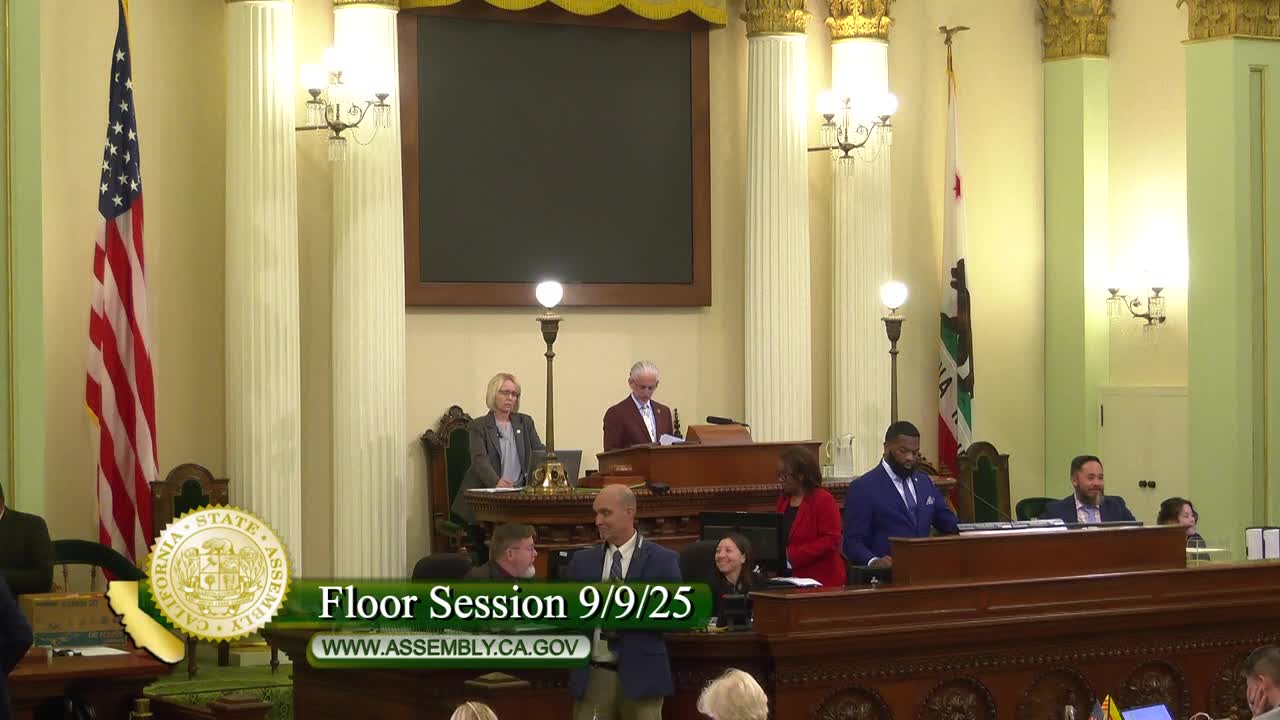
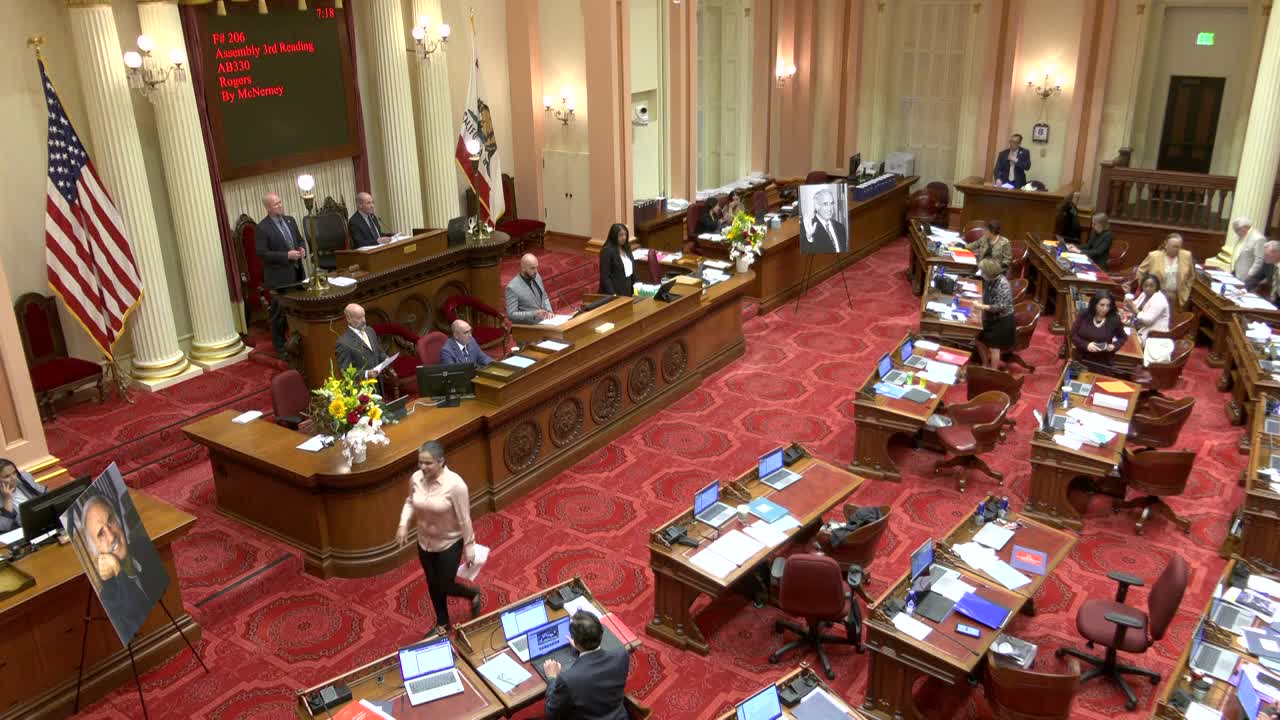
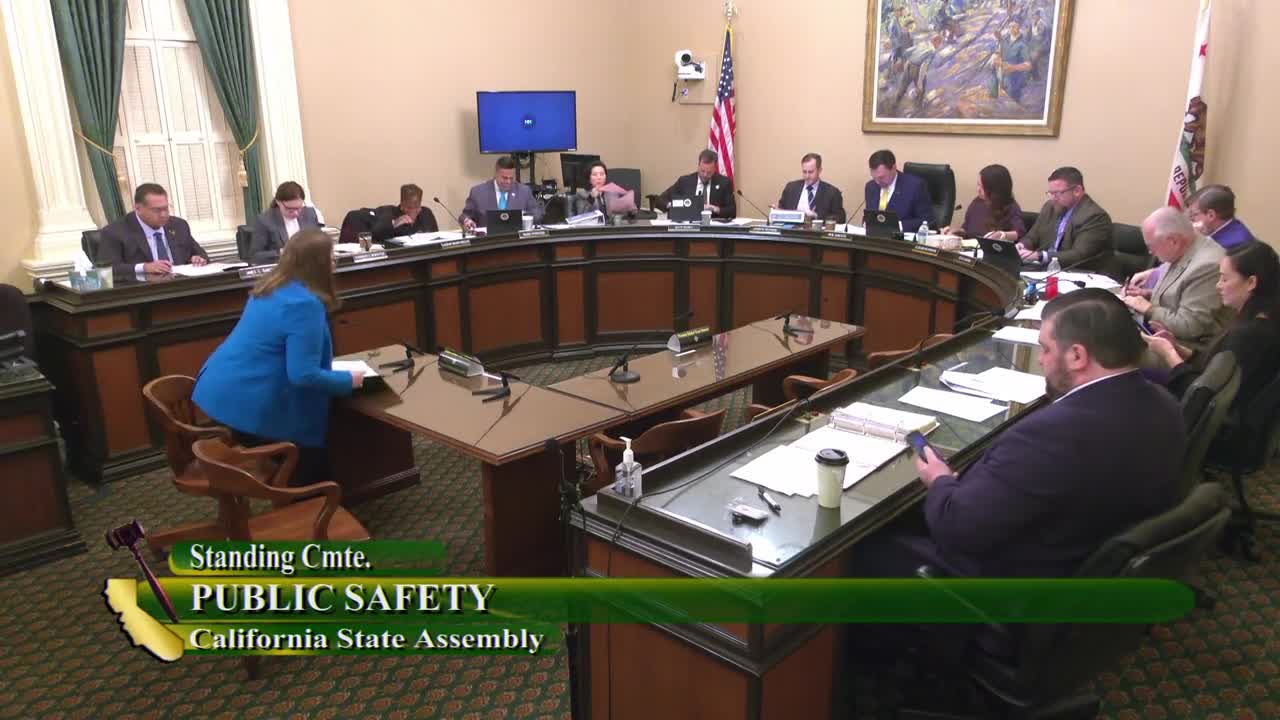
Bill Author