AB 1503: Pharmacy.
- Session Year: 2025-2026
- House: Assembly
- Latest Version Date: 2025-10-01
Current Status:
Passed
(2025-10-01: Chaptered by Secretary of State - Chapter 196, Statutes of 2025.)
Introduced
In Committee
Awaiting First Chamber Vote
Passed First Chamber
In Committee
Awaiting Second Chamber Vote
Passed Second Chamber
Enacted
(1)Existing law, the Pharmacy Law, requires the California State Board of Pharmacy within the Department of Consumer Affairs to license and regulate the practice of pharmacy, including pharmacists, pharmacy technicians, and pharmacies. Existing law authorizes the board, with the approval of the Director of Consumer Affairs, to appoint an executive officer to exercise certain powers and to perform certain duties delegated by the board, as specified. Existing law repeals the provisions establishing the board and authorizing the appointment of an executive officer on January 1, 2026, rendering the board subject to review by the appropriate policy committees of the Legislature.
This bill would provide that the board has exclusive authority to administer and enforce the Pharmacy Law related to the practice of pharmacy and the licensing of pharmacists and pharmacies, and would specify that its provisions do not prohibit the board from evaluating or acting regarding unlicensed activity, as provided. The bill would extend the repeal date of the above-described provisions to January 1, 2030. The bill would additionally require the board to establish a Pharmacy Technician Advisory Committee to advise and make recommendations to the board, as specified.
Existing law specifies the fees for issuance or renewal of licenses issued pursuant to the Pharmacy Law, including, among others, pharmacy licenses.
This bill would require the board to waive the application fee for a pharmacy operating a physical location in a medically underserved area, as defined, and would authorize the board to waive the fee for the annual renewal of a license if the licensee provides the board with certification of continued operation in the medically underserved area.
(2)Existing law authorizes a pharmacist to perform various procedures and functions, including those related to dispensing or furnishing drugs or devices, as specified. Existing law generally requires a pharmacists dispensing or furnishing drugs to be done pursuant to a valid prescription, except as provided in specified circumstances. Those exceptions include furnishing an FDA-approved opioid antagonist, emergency contraception drug therapy, self-administered hormonal contraceptives, nicotine replacement products, certain medications for individuals traveling outside of the United States, and certain HIV medications, as specified. Existing law requires certain conditions to be met for a pharmacist to authorize the initiation of a prescription under certain of those exceptions or to otherwise provide clinical advice, services, information, or patient consultation.
This bill would revise and recast the above-described provisions to authorize a pharmacist to, among other things, furnish dangerous devices, to furnish FDA-approved or authorized medications as part of preventative health care services that do not require a diagnosis, as specified, and to complete missing information on a prescription for a noncontrolled medication if there is evidence to support the change. The bill would require that a pharmacist provide those and other specified services or activities consistent with the accepted standard of care, defined to mean the degree of care a prudent and reasonable pharmacist licensed under the Pharmacy Law, with similar education, training, experience, resources, and setting, would use in a similar situation. The bill would make nonsubstantive, conforming changes.
Existing law requires the clinical advice, services, information, or patient consultation that a pharmacist provides to be provided to a health care professional or to a patient.
This bill would authorize a pharmacist to provide the clinical advice, services, information, or patient consultation to a patients agent.
Existing law, until January 1, 2026, authorizes a pharmacist to furnish COVID-19 oral therapeutics, as defined, following a positive test for SARS-CoV-2, the virus that causes COVID-19, in accordance with specified requirements.
This bill would delete the January 1, 2026, repeal date, thereby extending this authorization indefinitely.
Existing law prohibits a dangerous drug from being refilled without the authorization of the prescriber, except under specified circumstances. Under those circumstances, existing law requires a pharmacist to make every reasonable effort to contact the prescriber.
This bill would remove the above-described requirement that the pharmacist make every reasonable effort to contact the prescriber.
Existing law authorizes a pharmacist to dispense not more than a 90-day supply of a dangerous drug other than a controlled substance pursuant to a valid prescription that specifies an initial quantity of less than a 90-day supply followed by periodic refills of that amount if certain requirements are met. Existing law prohibits a pharmacist from dispensing a greater supply pursuant to that provision if the prescriber indicates that there is to be no change to the quantity of the refill, as specified.
This bill would remove that prohibition.
Existing law authorizes a pharmacy to dispense epinephrine auto-injectors to a prehospital emergency medical care person or lay rescuer for the purpose of rendering emergency care, as specified.
This bill would remove the above-described authorization.
(3)Existing law authorizes a licensed pharmacist to perform additional functions if the licensee is recognized by the board as an advanced practice pharmacist by meeting certain requirements. Those additional functions include, among others, performing patient assessments, ordering and interpreting drug therapy-related tests, and initiating, adjusting, or discontinuing drug therapy, as specified. The requirements for recognition as an advanced practice pharmacist include having completed a combination of specified certifications, postgraduate residencies, or experience under a collaborative practice agreement or protocol with a physician. Existing law also requires an advanced practice pharmacist to complete 10 hours of continuing education in addition to the continuing education otherwise required at the time of a second or subsequent license renewal.
This bill would revise those and other related provisions to refer to those licensees as advanced pharmacist practitioners, instead of as advanced practice pharmacists.
(4)Existing law prohibits any person from furnishing or dispensing any dangerous drug or device on the internet for delivery to any person in California without a prescription issued pursuant to a good faith prior examination, as provided.
This bill would instead refer to that examination as an appropriate prior examination.
(5)Existing law authorizes the board to issue citations containing fines and orders of abatement for violations of specified law, as provided. Existing law authorizes the board to bring an action against a chain community pharmacy under common ownership or management for fines for a violation of the Pharmacy Law that was expressly encouraged by the common owner or manager, as provided.
This bill would instead apply those fines for a violation that was expressly encouraged by any owner or manager of the chain community pharmacy.
Existing law authorizes the board to bring an action for fines for repeated violations of materially similar provisions of the Pharmacy Law within 5 years by 3 or more pharmacies operating under common ownership or management within a chain community pharmacy, as specified. Existing law provides a pharmacy with a defense if it establishes that the violation was contrary to a written policy that was communicated by the common owner or manager to all employees where the violation occurred. Existing law also provides a defense if the pharmacy establishes that, within 6 months after the violation, the common owner or manager corrected all unlawful policies, communicated the change in policies, and provided the board with proof of abatement of the violation, as specified.
This bill would, for the defense that the violation was contrary to a written policy, also require the entity to establish that it has complied with the policy. The bill would revise the above-described corrective-actions defense by allowing those actions to be undertaken by any owner or manager of the pharmacy. The bill would additionally authorize the board to bring an action for fines for repeated violations of materially similar provisions of the Pharmacy Law against a mail order pharmacy, defined as a nonresident pharmacy that dispenses medications and ships them to patients via the postal service or other mail delivery method, as provided. The bill would require the board, in determining the amount of the fine, to consider mitigating and aggregating factors, as specified.
(6)Existing law prohibits the board from issuing a pharmacy license to a person who has a shared community or financial interest with a person authorized to prescribe or write a prescription, as provided.
This bill would establish an exception to the above-described prohibition under which the applicant and the prescriber would be required to provide statements that the prescriber disavows any community or financial interest in the license and to transmute any interest in the license that is shared community property into the separate property of the applicant, as provided. The bill would prohibit a pharmacy granted a license pursuant to this exception from filling any prescriptions issued or prescribed by a person who shares a community or other financial interest with the licensee or a prescriber at the same place of business as that person if the prescriber owns an interest greater than 10% in the practice issuing the prescription.
Existing law authorizes the board to issue a retired license to a licensed pharmacist, as specified. Existing law authorizes the holder of a retired license to restore their license to active status by passing the examination that is required for initial licensure with the board.
This bill would instead authorize the holder of a retired license to request to restore their license to active status within 3 years of issuance of the retired license by paying a renewal fee and successfully completing certain continuing education within the 2 years preceding the request, as specified. If more than 3 years have elapsed since the issuance of the retired license, the bill would require the holder of the retired license to reapply for licensure as a pharmacist, as specified.
Existing law authorizes the board to deny a license application if the applicant has been convicted of a crime or subjected to formal discipline that would be grounds for denial of a federal registration to distribute controlled substances.
This bill would also authorize the board to deny a license application if the applicant has been convicted of a crime involving fraud in violation of state or federal laws related to health care or involving financial identity theft.
Existing law requires certain licensed facilities to perform a self-assessment evaluating compliance with specified provisions of the Pharmacy Law, as provided.
This bill would require all licensed facilities to complete a self-assessment every odd-numbered year and within 30 days of certain changes to the license, management personnel, and location, as provided. The bill would require this self-assessment to be signed under penalty of perjury, thereby imposing a state-mandated local program by expanding the crime of perjury.
(7)Existing law requires a pharmacy to designate a pharmacist-in-charge and notify the board within 30 days of that designation, as specified. Existing law authorizes the pharmacist-in-charge to, among other things, make staffing decisions and notify store management of dangerous conditions, as specified.
This bill would require the pharmacist-in-charge to determine the appropriate pharmacist-to-technician ratio, within prescribed limits, and prohibit anyone else from interfering with the exercise of the pharmacist-in-charges independent professional judgment in setting this ratio. The bill would additionally require the pharmacist-in-charge to notify the owner or hospital administrator of dangerous conditions, as specified.
Existing law provides for the licensing of nonresident pharmacies, as specified. Existing law prohibits a pharmacist at a nonresident pharmacy whose license has been revoked from prescribing a dangerous drug or providing other pharmacy-related services, as specified.
This bill would, beginning July 1, 2026, require a nonresident pharmacy, as a prerequisite to registering with the board and ongoing licensure, to identify a California-licensed pharmacist employed and working at the nonresident pharmacy to be proposed to serve as the pharmacist-in-charge. The bill would also require the nonresident pharmacy, within 90 days of designating a pharmacist-in-charge, to notify the board of the identity and license number of that pharmacist and the date they were designated, as specified. The bill would require the nonresident pharmacy, within 90 days, to notify the board of a pharmacist-in-charge ceasing to act as the pharmacist-in-charge and to propose another pharmacist to take over as the pharmacist-in-charge.
The bill would additionally, beginning July 1, 2026, prohibit a nonresident pharmacy from permitting a pharmacist-in-charge who is not licensed in California from working at a nonresident pharmacy. The bill would authorize the board to inspect a nonresident pharmacy. The bill would require a nonresident pharmacy to deposit a reasonable amount, as determined by the board, necessary to cover the boards estimated reasonable costs of performing the inspection, as specified.
(8)Existing law limits a pharmacy with only one pharmacist to one pharmacy technician performing packaging, manipulative, repetitive, or other nondiscretionary tasks.
This bill would increase this limit to 3 pharmacy technicians performing those tasks.
(9)Existing law requires a pharmacy to preserve certain records, as provided.
This bill would require a pharmacy to additionally maintain records related to prescribed policies and procedures in a readily retrievable format. The bill would also impose requirements related to electronically maintained records.
(10)This bill would incorporate additional changes to Section 4064.5 of the Business and Professions Code proposed by SB 418 to be operative only if this bill and SB 418 is enacted and this bill is enacted last.
This bill would incorporate additional changes to Section 4076 of the Business and Professions Code proposed by AB 260 to be operative only if this bill and AB 260 are enacted and this bill is enacted last.
(11)Because a violation of these provisions would be a crime, the bill would impose a state-mandated local program.
The California Constitution requires the state to reimburse local agencies and school districts for certain costs mandated by the state. Statutory provisions establish procedures for making that reimbursement.
This bill would provide that no reimbursement is required by this act for a specified reason.
(1)Existing law, the Pharmacy Law, requires the California State Board of Pharmacy within the Department of Consumer Affairs to license and regulate the practice of pharmacy, including pharmacists, pharmacy technicians, and pharmacies. Existing law authorizes the board, with the approval of the Director of Consumer Affairs, to appoint an executive officer to exercise certain powers and to perform certain duties delegated by the board, as specified. Existing law repeals the provisions establishing the board and authorizing the appointment of an executive officer on January 1, 2026, rendering the board subject to review by the appropriate policy committees of the Legislature.
This bill would provide that the board has exclusive authority to administer and enforce the Pharmacy Law related to the practice of pharmacy and the licensing of pharmacists and pharmacies, as specified. pharmacies, and would specify that its provisions do not prohibit the board from evaluating or acting regarding unlicensed activity, as provided. The bill would extend the repeal date of the above-described provisions to January 1, 2030. The bill would additionally require the board to establish a Pharmacy Technician Advisory Committee to advise and make recommendations to the board, as specified.
Existing law specifies the fees for issuance or renewal of licenses issued pursuant to the Pharmacy Law, including, among others, pharmacy licenses.
This bill would require the board to waive the application fee for a pharmacy operating a physical location in a medically underserved area, as defined, and would authorize the board to waive the fee for the annual renewal of a license if the licensee provides the board with certification of continued operation in the medically underserved area.
(2)Existing law authorizes a pharmacist to perform various procedures and functions, including those related to dispensing or furnishing drugs or devices, as specified. Existing law generally requires a pharmacists dispensing or furnishing drugs to be done pursuant to a valid prescription, except as provided in specified circumstances. Those exceptions include furnishing an FDA-approved opioid antagonist, emergency contraception drug therapy, self-administered hormonal contraceptives, nicotine replacement products, certain medications for individuals traveling outside of the United States, and certain HIV medications, as specified. Existing law requires certain conditions to be met for a pharmacist to authorize the initiation of a prescription under certain of those exceptions or to otherwise provide clinical advice, services, information, or patient consultation.
This bill would revise and recast the above-described provisions to authorize a pharmacist to, among other things, furnish dangerous devices, to furnish FDA-approved or authorized medications as part of preventative health care services that do not require a diagnosis, as specified, and to complete missing information on a prescription for a noncontrolled medication if there is evidence to support the change. The bill would require that a pharmacist provide those and other specified services or activities consistent with the accepted standard of care, defined to mean the degree of care a prudent and reasonable pharmacist licensed under the Pharmacy Law, with similar education, training, experience, resources, and setting, would use in a similar situation. The bill would make nonsubstantive, conforming changes.
Existing law requires the clinical advice, services, information, or patient consultation that a pharmacist provides to be provided to a health care professional or to a patient.
This bill would authorize a pharmacist to provide the clinical advice, services, information, or patient consultation to a patients agent.
Existing law, until January 1, 2026, authorizes a pharmacist to furnish COVID-19 oral therapeutics, as defined, following a positive test for SARS-CoV-2, the virus that causes COVID-19, in accordance with specified requirements.
This bill would delete the January 1, 2026, repeal date, thereby extending this authorization indefinitely.
Existing law prohibits a dangerous drug from being refilled without the authorization of the prescriber, except under specified circumstances. Under those circumstances, existing law requires a pharmacist to make every reasonable effort to contact the prescriber.
This bill would remove the above-described requirement that the pharmacist make every reasonable effort to contact the prescriber.
Existing law authorizes a pharmacist to dispense not more than a 90-day supply of a dangerous drug other than a controlled substance pursuant to a valid prescription that specifies an initial quantity of less than a 90-day supply followed by periodic refills of that amount if certain requirements are met. Existing law prohibits a pharmacist from dispensing a greater supply pursuant to that provision if the prescriber indicates that there is to be no change to the quantity of the refill, as specified.
This bill would remove that prohibition.
Existing law authorizes a pharmacy to dispense epinephrine auto-injectors to a prehospital emergency medical care person or lay rescuer for the purpose of rendering emergency care, as specified.
This bill would remove the above-described authorization.
(3)Existing law authorizes a licensed pharmacist to perform additional functions if the licensee is recognized by the board as an advanced practice pharmacist by meeting certain requirements. Those additional functions include, among others, performing patient assessments, ordering and interpreting drug therapy-related tests, and initiating, adjusting, or discontinuing drug therapy, as specified. The requirements for recognition as an advanced practice pharmacist include having completed a combination of specified certifications, postgraduate residencies, or experience under a collaborative practice agreement or protocol with a physician. Existing law also requires an advanced practice pharmacist to complete 10 hours of continuing education in addition to the continuing education otherwise required at the time of a second or subsequent license renewal.
This bill would revise those and other related provisions to refer to those licensees as advanced pharmacist practitioners, instead of as advanced practice pharmacists.
(4)Existing law prohibits any person from furnishing or dispensing any dangerous drug or device on the internet for delivery to any person in California without a prescription issued pursuant to a good faith prior examination, as provided.
This bill would instead refer to that examination as an appropriate prior examination.
(5)Existing law authorizes the board to issue citations containing fines and orders of abatement for violations of specified law, as provided. Existing law authorizes the board to bring an action against a chain community pharmacy under common ownership or management for fines for a violation of the Pharmacy Law that was expressly encouraged by the common owner or manager, as provided.
This bill would instead apply those fines for a violation that was expressly encouraged by any owner or manager of the chain community pharmacy.
Existing law authorizes the board to bring an action for fines for repeated violations of materially similar provisions of the Pharmacy Law within 5 years by 3 or more pharmacies operating under common ownership or management within a chain community pharmacy, as specified. Existing law provides a pharmacy with a defense if it establishes that the violation was contrary to a written policy that was communicated by the common owner or manager to all employees where the violation occurred. Existing law also provides a defense if the pharmacy establishes that, within 6 months after the violation, the common owner or manager corrected all unlawful policies, communicated the change in policies, and provided the board with proof of abatement of the violation, as specified.
This bill would, for the defense that the violation was contrary to a written policy, also require the entity to establish that it has complied with the policy. The bill would revise the above-described corrective-actions defense by allowing those actions to be undertaken by any owner or manager of the pharmacy. The bill would additionally authorize the board to bring an action for fines for repeated violations of materially similar provisions of the Pharmacy Law against a mail order pharmacy, defined as a nonresident pharmacy that dispenses medications and ships them to patients via the postal service or other mail delivery method, as provided. The bill would require the board, in determining the amount of the fine, to consider mitigating and aggregating factors, as specified.
(6)Existing law prohibits the board from issuing a pharmacy license to a person who has a shared community or financial interest with a person authorized to prescribe or write a prescription, as provided.
This bill would establish an exception to the above-described prohibition under which the applicant and the prescriber would be required to provide statements that the prescriber disavows any community or financial interest in the license and to transmute any interest in the license that is shared community property into the separate property of the applicant, as provided. The bill would prohibit a pharmacy granted a license pursuant to this exception from filling any prescriptions issued or prescribed by a person who shares a community or other financial interest with the licensee or a prescriber at the same place of business as that person if the prescriber owns an interest greater than 10% in the practice issuing the prescription.
Existing law authorizes the board to issue a retired license to a licensed pharmacist, as specified. Existing law authorizes the holder of a retired license to restore their license to active status by passing the examination that is required for initial licensure with the board.
This bill would instead authorize the holder of a retired license to request to restore their license to active status within 3 years of issuance of the retired license by paying a renewal fee and successfully completing certain continuing education within the 2 years preceding the request, as specified. If more than 3 years have elapsed since the issuance of the retired license, the bill would require the holder of the retired license to reapply for licensure as a pharmacist, as specified.
Existing law authorizes the board to deny a license application if the applicant has been convicted of a crime or subjected to formal discipline that would be grounds for denial of a federal registration to distribute controlled substances.
This bill would also authorize the board to deny a license application if the applicant has been convicted of a crime involving fraud in violation of state or federal laws related to health care or involving financial identity theft.
Existing law requires certain licensed facilities to perform a self-assessment evaluating compliance with specified provisions of the Pharmacy Law, as provided.
This bill would require all licensed facilities to complete a self-assessment every odd-numbered year and within 30 days of certain changes to the license, management personnel, and location, as provided. The bill would require this self-assessment to be signed under penalty of perjury, thereby imposing a state-mandated local program by expanding the crime of perjury.
(7)Existing law requires a pharmacy to designate a pharmacist-in-charge and notify the board within 30 days of that designation, as specified. Existing law authorizes the pharmacist-in-charge to, among other things, make staffing decisions and notify store management of dangerous conditions, as specified.
This bill would require the pharmacist-in-charge to determine the appropriate pharmacist-to-technician ratio, within prescribed limits, and prohibit anyone else from interfering with the exercise of the pharmacist-in-charges independent professional judgment in setting this ratio. The bill would additionally require the pharmacist-in-charge to notify the owner or hospital administrator of dangerous conditions, as specified.
Existing law provides for the licensing of nonresident pharmacies, as specified. Existing law prohibits a pharmacist at a nonresident pharmacy whose license has been revoked from prescribing a dangerous drug or providing other pharmacy-related services, as specified.
This bill would would, beginning July 1, 2026, require a nonresident pharmacy, as a prerequisite to registering with the board and ongoing licensure, to identify a California-licensed pharmacist employed and working at the nonresident pharmacy to be proposed to serve as the pharmacist-in-charge. The bill would also require the nonresident pharmacy, within 90 days of designating a pharmacist-in-charge, to notify the board of the identity and license number of that pharmacist and the date they were designated, as specified. The bill would require the nonresident pharmacy, within 90 days, to notify the board of a pharmacist-in-charge ceasing to act as the pharmacist-in-charge and to propose another pharmacist to take over as the pharmacist-in-charge. The
The bill would additionally additionally, beginning July 1, 2026, prohibit a nonresident pharmacy from permitting a pharmacist-in-charge who is not licensed in California from working at a nonresident pharmacy. The bill would authorize the board to inspect a nonresident pharmacy. The bill would require a nonresident pharmacy to deposit a reasonable amount, as determined by the board, necessary to cover the boards estimated reasonable costs of performing the inspection, as specified. The bill would make the changes described in this paragraph operative on July 1, 2026.
(8)Existing law limits a pharmacy with only one pharmacist to one pharmacy technician performing packaging, manipulative, repetitive, or other nondiscretionary tasks.
This bill would increase this limit to 3 pharmacy technicians performing those tasks.
(9)Existing law requires a pharmacy to preserve certain records, as provided.
This bill would require a pharmacy to additionally maintain records related to prescribed policies and procedures in a readily retrievable format. The bill would also impose requirements related to electronically maintained records.
(10)This bill would incorporate additional changes to Section 4064.5 of the Business and Professions Code proposed by SB 418 to be operative only if this bill and SB 418 is enacted and this bill is enacted last.
This bill would incorporate additional changes to Section 4076 of the Business and Professions Code proposed by AB 260 to be operative only if this bill and AB 260 are enacted and this bill is enacted last.
(10)(11)Because a violation of these provisions would be a crime, the bill would impose a state-mandated local program.
The California Constitution requires the state to reimburse local agencies and school districts for certain costs mandated by the state. Statutory provisions establish procedures for making that reimbursement.
This bill would provide that no reimbursement is required by this act for a specified reason.
(1)Existing law, the Pharmacy Law, requires the California State Board of Pharmacy within the Department of Consumer Affairs to license and regulate the practice of pharmacy, including pharmacists, pharmacy technicians, and pharmacies. Existing law authorizes the board, with the approval of the Director of Consumer Affairs, to appoint an executive officer to exercise certain powers and to perform certain duties delegated by the board, as specified. Existing law repeals the provisions establishing the board and authorizing the appointment of an executive officer on January 1, 2026, rendering the board subject to review by the appropriate policy committees of the Legislature.
This bill would provide that the board has exclusive authority to administer and enforce the Pharmacy Law related to the practice of pharmacy and the licensing of pharmacists and pharmacies, as specified. The bill would extend the repeal date of the above-described provisions to January 1, 2030. The bill would additionally require the board to establish a Pharmacy Technician Advisory Committee to advise and make recommendations to the board, as specified.
Existing law specifies the fees for issuance or renewal of licenses issued pursuant to the Pharmacy Law, including, among others, pharmacy licenses.
This bill would require the board to waive the application fee for a pharmacy operating a physical location in a medically underserved area, as defined, and would authorize the board to waive the fee for the annual renewal of a license if the licensee provides the board with certification of continued operation in the medically underserved area.
(2)Existing law authorizes a pharmacist to perform various procedures and functions, including those related to dispensing or furnishing drugs or devices, as specified. Existing law generally requires a pharmacists dispensing or furnishing drugs to be done pursuant to a valid prescription, except as provided in specified circumstances. Those exceptions include furnishing an FDA-approved opioid antagonist, emergency contraception drug therapy, self-administered hormonal contraceptives, nicotine replacement products, certain medications for individuals traveling outside of the United States, and certain HIV medications, as specified. Existing law requires certain conditions to be met for a pharmacist to authorize the initiation of a prescription under certain of those exceptions or to otherwise provide clinical advice, services, information, or patient consultation.
This bill would revise and recast the above-described provisions to authorize a pharmacist to, among other things, prescribe furnish dangerous devices, to furnish FDA-approved or -authorized authorized medications as part of preventative health care services that do not require a diagnosis, as specified, and to complete missing information on a prescription for a noncontrolled medication if there is evidence to support the change, and to adjust a prescription drug treatment regimen consistent with the current standard of care for the management of chronic conditions. change. The bill would require that a pharmacist provide those and other specified services or activities consistent with the accepted standard of care, defined to mean the degree of care a prudent and reasonable pharmacist licensed under the Pharmacy Law, with similar education, training, experience, resources, and setting, would use in a similar situation. The bill would make nonsubstantive, conforming changes.
Existing law requires the clinical advice, services, information, or patient consultation that a pharmacist provides to be provided to a health care professional or to a patient.
This bill would authorize a pharmacist to provide the clinical advice, services, information, or patient consultation to a patients agent.
Existing law, until January 1, 2026, authorizes a pharmacist to furnish COVID-19 oral therapeutics, as defined, following a positive test for SARS-CoV-2, the virus that causes COVID-19, in accordance with specified requirements.
This bill would delete the January 1, 2026, repeal date, thereby extending this authorization indefinitely.
Existing law prohibits a dangerous drug from being refilled without the authorization of the prescriber, except under specified circumstances. Under those circumstances, existing law requires a pharmacist to make every reasonable effort to contact the prescriber. Existing law also restricts the supply that a pharmacist is authorized to dispense, as specified.
This bill would remove the above-described requirement that the pharmacist make every reasonable effort to contact the prescriber.
Existing law authorizes a pharmacist to dispense not more than a 90-day supply of a dangerous drug other than a controlled substance pursuant to a valid prescription that specifies an initial quantity of less than a 90-day supply followed by periodic refills of that amount if certain requirements are met. Existing law prohibits a pharmacist from dispensing a greater supply pursuant to that provision if the prescriber indicates that there is to be no change to the quantity of the refill, as specified.
This bill would remove that prohibition.
Existing law authorizes a pharmacy to dispense epinephrine auto-injectors to a prehospital emergency medical care person or lay rescuer for the purpose of rendering emergency care, as specified.
This bill would remove the above-described authorization.
(3)Existing law authorizes a licensed pharmacist to perform additional functions if the licensee is recognized by the board as an advanced practice pharmacist by meeting certain requirements. Those additional functions include, among others, performing patient assessments, ordering and interpreting drug therapy-related tests, and initiating, adjusting, or discontinuing drug therapy, as specified. The requirements for recognition as an advanced practice pharmacist include having completed a combination of specified certifications, postgraduate residencies, or experience under a collaborative practice agreement or protocol with a physician. Existing law also requires an advanced practice pharmacist to complete 10 hours of continuing education in addition to the continuing education otherwise required at the time of a second or subsequent license renewal.
This bill would revise those and other related provisions to refer to those licensees as advanced pharmacist practitioners, instead of as advanced practice pharmacists.
(4)Existing law prohibits any person from furnishing or dispensing any dangerous drug or device on the internet for delivery to any person in California without a prescription issued pursuant to a good faith prior examination, as provided.
This bill would instead refer to that examination as an appropriate prior examination. The bill would require a pharmacy or an outsourcing facility to notify the board that it receives prescriptions from a telehealth platform, except as specified. The bill would require the notification to include a disclosure that discloses if the pharmacist-in-charge or the director of quality at the outsourcing facility has a financial relationship with the platform. The bill would also require the notification to include a certification of compliance with a specified provision prohibiting offering or receiving any remuneration to induce referrals for services. By expanding the crime of perjury, the bill would impose a state-mandated local program.
(5)Existing law authorizes the board to issue citations containing fines and orders of abatement for violations of specified law, as provided. Existing law authorizes the board to bring an action against a chain community pharmacy under common ownership or management for fines for a violation of the Pharmacy Law that was expressly encouraged by the common owner or manager, as provided.
This bill would instead apply those fines for a violation that was expressly encouraged by any owner or manager of the chain community pharmacy.
Existing law authorizes the board to bring an action for fines for repeated violations of materially similar provisions of the Pharmacy Law within 5 years by 3 or more pharmacies operating under common ownership or management within a chain community pharmacy, as specified. Existing law provides a pharmacy with a defense if it establishes that the violation was contrary to a written policy that was communicated by the common owner or manager to all employees where the violation occurred. Existing law also provides a defense if the pharmacy establishes that, within 6 months after the violation, the common owner or manager corrected all unlawful policies, communicated the change in policies, and provided the board with proof of abatement of the violation, as specified.
This bill would make those defenses instead be mitigating factors. The bill would, for the mitigating factor defense that the violation was contrary to a written policy, also require the entity to establish that it has complied with the policy. The bill would further revise those mitigating factors the above-described corrective-actions defense by allowing the above-described corrective those actions to be undertaken by any owner or manager of the pharmacy. The bill would additionally authorize the board to bring an action described above for fines for repeated violations of materially similar provisions of the Pharmacy Law against a mail order pharmacy for fines, pharmacy, defined as a nonresident pharmacy that dispenses medications and ships them to patients via the postal service or other mail delivery method, as provided.
This bill would authorize the board to bring a action for fines for similar, repeated violations against a mail order pharmacy, defined as a nonresident pharmacy that dispenses medications and ships them to patients via the postal service or other mail delivery method, as specified. provided. The bill would require the board, in determining the amount of the fine, to consider mitigating and aggregating factors, as specified.
(6)Existing law prohibits the board from issuing a pharmacy license to a person who has a shared community or financial interest with a person authorized to prescribe or write a prescription, as provided.
This bill would establish an exception to the above-described prohibition under which the applicant and the prescriber would be required to provide statements that the prescriber disavows any community or financial interest in the license and to transmute any interest in the license that is shared community property into the separate property of the applicant, as provided. The bill would prohibit a pharmacy granted a license pursuant to this exception from filling any prescriptions issued or prescribed by a person who shares a community or other financial interest with the licensee or a prescriber at the same place of business as that person if the prescriber owns an interest greater than 10% in the practice issuing the prescription.
Existing law authorizes the board to issue a retired license to a licensed pharmacist, as specified. Existing law authorizes the holder of a retired license to restore their license to active status by passing the examination that is required for initial licensure with the board.
This bill would instead authorize the holder of a retired license to request to restore their license to active status within 3 years of issuance of the retired license by paying a renewal fee and successfully completing certain continuing education within the 2 years preceding the request, as specified. If more than 3 years have elapsed since the issuance of the retired license, the bill would require the holder of the retired license to reapply for licensure as a pharmacist, as specified.
Existing law authorizes the board to deny a license application if the applicant has been convicted of a crime or subjected to formal discipline that would be grounds for denial of a federal registration to distribute controlled substances.
This bill would also authorize the board to deny a license application if the applicant has been convicted of a crime involving fraud in violation of state or federal laws related to health care or involving financial identity theft.
Existing law requires certain licensed facilities to perform a self-assessment, as defined, self-assessment evaluating compliance with specified provisions of the Pharmacy Law, as provided.
This bill would require all licensed facilities to complete a self-assessment every odd-numbered year and within 30 days of certain changes to the license, management personnel, and location, as provided. The bill would require this self-assessment to be signed under penalty of perjury, thereby imposing a state-mandated local program by expanding the crime of perjury.
(7)Existing law requires a pharmacy to designate a pharmacist-in-charge and notify the board within 30 days of that designation, as specified. Existing law authorizes the pharmacist-in-charge to, among other things, make staffing decisions. decisions and notify store management of dangerous conditions, as specified.
This bill would require the pharmacist-in-charge to determine the appropriate pharmacist-to-technician ratio, within prescribed limits, and prohibit anyone else from interfering with the exercise of the pharmacist-in-charges independent professional judgment in setting this ratio. The bill would additionally require the pharmacist-in-charge to notify the owner or hospital administrator of dangerous conditions, as specified.
Existing law provides for the licensing of nonresident pharmacies, as specified. Existing law prohibits a pharmacist at a nonresident pharmacy whose license has been revoked from prescribing a dangerous drug or providing other pharmacy-related services, as specified.
This bill would require a nonresident pharmacy, as a prerequisite to registering with the board and ongoing licensure, to identify a California-licensed pharmacist employed and working at the nonresident pharmacy to be proposed to serve as the pharmacist-in-charge. The bill would also require the nonresident pharmacy, within 90 days of designating a pharmacist-in-charge, to notify the board of the identity and license number of that pharmacist and the date they were designated, as specified. The bill would require the nonresident pharmacy, within 90 days, to notify the board of a pharmacist-in-charge ceasing to act as the pharmacist-in-charge and to propose another pharmacist to take over as the pharmacist-in-charge. The bill would additionally prohibit a nonresident pharmacy from permitting a pharmacist pharmacist-in-charge who is not licensed outside of in California from working at a nonresident pharmacy if they have not successfully passed either of 2 specified examinations. pharmacy. The bill would require a nonresident pharmacy to be inspected by the board as a condition of license renewal every 4 years, unless the board determines more frequent inspections are necessary. authorize the board to inspect a nonresident pharmacy. The bill would require a nonresident pharmacy to deposit a reasonable amount, as determined by the board, necessary to cover the boards estimated reasonable costs of performing the inspection, as specified. The bill would make the changes described in this paragraph operative on July 1, 2026.
(8)Existing law limits a pharmacy with only one pharmacist to one pharmacy technician performing packaging, manipulative, repetitive, or other nondiscretionary tasks. Existing law increases that ratio of pharmacy technicians performing those tasks to any additional pharmacist to 2:1, as specified.
This bill would increase the ratio of pharmacy technicians performing those tasks to a pharmacist to 4:1, regardless of the number of pharmacists. this limit to 3 pharmacy technicians performing those tasks.
(9)Existing law requires a pharmacy to preserve certain records, as provided.
This bill would require a pharmacy to additionally maintain records related to staffing and employees, as provided. prescribed policies and procedures in a readily retrievable format. The bill would also impose requirements related to electronically maintained records.
(10)Because a violation of these provisions would be a crime, the bill would impose a state-mandated local program.
The California Constitution requires the state to reimburse local agencies and school districts for certain costs mandated by the state. Statutory provisions establish procedures for making that reimbursement.
This bill would provide that no reimbursement is required by this act for a specified reason.
(1)Existing law, the Pharmacy Law, requires the California State Board of Pharmacy within the Department of Consumer Affairs to license and regulate the practice of pharmacy, including pharmacists, pharmacy technicians, and pharmacies. Existing law authorizes the board, with the approval of the Director of Consumer Affairs, to appoint an executive officer to exercise certain powers and to perform certain duties delegated by the board, as specified. Existing law repeals the provisions establishing the board and authorizing the appointment of an executive officer on January 1, 2026, rendering the board subject to review by the appropriate policy committees of the Legislature.
This bill would provide that the board has exclusive authority to administer and enforce the Pharmacy Law related to the practice of pharmacy and the licensing of pharmacists and pharmacies, as specified. The bill would extend the repeal date of the above-described provisions to January 1, 2030. The bill would additionally require the board to establish a Pharmacy Technician Advisory Committee to advise and make recommendations to the board, as specified.
Existing law specifies the fees for issuance or renewal of licenses issued pursuant to the Pharmacy Law, including, among others, pharmacy licenses.
This bill would require the board to waive the application fee for a pharmacy operating a physical location in a medically underserved area, as defined, and would authorize the board to waive the fee for the annual renewal of a license if the licensee provides the board with certification of continued operation in the medically underserved area.
(2)Existing law authorizes a pharmacist to perform various procedures and functions, including those related to dispensing or furnishing drugs or devices, as specified. Existing law generally requires a pharmacists dispensing or furnishing drugs to be done pursuant to a valid prescription, except as provided in specified circumstances. Those exceptions include furnishing an FDA-approved opioid antagonist, emergency contraception drug therapy, self-administered hormonal contraceptives, nicotine replacement products, certain medications for individuals traveling outside of the United States, and certain HIV medications, as specified. Existing law requires certain conditions to be met for a pharmacist to authorize the initiation of a prescription under certain of those exceptions or to otherwise provide clinical advice, services, information, or patient consultation.
This bill would revise and recast the above-described provisions to authorize a pharmacist to, among other things, prescribe dangerous devices, to furnish FDA-approved or -authorized medications as part of preventative health care services that do not require a diagnosis, to complete missing information on a prescription for a noncontrolled medication if there is evidence to support the change, and to adjust a prescription drug treatment regimen consistent with the current standard of care for the management of chronic conditions. The bill would require that a pharmacist provide those and other specified services or activities consistent with the accepted standard of care, defined to mean the degree of care a prudent and reasonable pharmacist licensed under the Pharmacy Law, with similar education, training, experience, resources, and setting, would use in a similar situation.
Existing law requires the clinical advice, services, information, or patient consultation that a pharmacist provides to be provided to a health care professional or to a patient.
This bill would authorize a pharmacist to provide the clinical advice, services, information, or patient consultation to a patients agent.
Existing law prohibits a dangerous drug from being refilled without the authorization of the prescriber, except under specified circumstances. Under those circumstances, existing law requires a pharmacist to make every reasonable effort to contact the prescriber. Existing law also restricts the supply that a pharmacist is authorized to dispense, as specified.
This bill would remove the above-described requirement that the pharmacist make every reasonable effort to contact the prescriber.
Existing law authorizes a pharmacist to dispense not more than a 90-day supply of a dangerous drug other than a controlled substance pursuant to a valid prescription that specifies an initial quantity of less than a 90-day supply followed by periodic refills of that amount if certain requirements are met. Existing law prohibits a pharmacist from dispensing a greater supply pursuant to that provision if the prescriber indicates that there is to be no change to the quantity of the refill, as specified.
This bill would remove that prohibition.
Existing law authorizes a pharmacy to dispense epinephrine auto-injectors to a prehospital emergency medical care person or lay rescuer for the purpose of rendering emergency care, as specified.
This bill would remove the above-described authorization.
(3)Existing law authorizes a licensed pharmacist to perform additional functions if the licensee is recognized by the board as an advanced practice pharmacist by meeting certain requirements. Those additional functions include, among others, performing patient assessments, ordering and interpreting drug therapy-related tests, and initiating, adjusting, or discontinuing drug therapy, as specified. The requirements for recognition as an advanced practice pharmacist include having completed a combination of specified certifications, postgraduate residencies, or experience under a collaborative practice agreement or protocol with a physician. Existing law also requires an advanced practice pharmacist to complete 10 hours of continuing education in addition to the continuing education otherwise required at the time of a second or subsequent license renewal.
This bill would revise those and other related provisions to refer to those licensees as advanced pharmacist practitioners, instead of as advanced practice pharmacists.
(4)Existing law prohibits any person from furnishing or dispensing any dangerous drug or device on the internet for delivery to any person in California without a prescription issued pursuant to a good faith prior examination, as provided.
This bill would instead refer to that examination as an appropriate prior examination. The bill would require a pharmacy or an outsourcing facility to notify the board that it receives prescriptions from a telehealth platform, except as specified. The bill would require the notification to include a disclosure that discloses if the pharmacist-in-charge or the director of quality at the outsourcing facility has a financial relationship with the platform. The bill would also require the notification to include a certification of compliance with a specified provision prohibiting offering or receiving any remuneration to induce referrals for services. By expanding the crime of perjury, the bill would impose a state-mandated local program.
(5)Existing law authorizes the board to issue citations containing fines and orders of abatement for violations of specified law, as provided. Existing law authorizes the board to bring an action against a chain community pharmacy under common ownership or management for fines for a violation of the Pharmacy Law that was expressly encouraged by the common owner or manager, as provided.
This bill would instead apply those fines for a violation that was expressly encouraged by any owner or manager of the chain community pharmacy.
Existing law authorizes the board to bring an action for fines for repeated violations of materially similar provisions of the Pharmacy Law within 5 years by 3 or more pharmacies operating under common ownership or management within a chain community pharmacy, as specified. Existing law provides a pharmacy with a defense if it establishes that the violation was contrary to a written policy that was communicated by the common owner or manager to all employees where the violation occurred. Existing law also provides a defense if the pharmacy establishes that, within 6 months after the violation, the common owner or manager corrected all unlawful policies, communicated the change in policies, and provided the board with proof of abatement of the violation, as specified.
This bill would make those defenses instead be mitigating factors. The bill would, for the mitigating factor that the violation was contrary to a written policy, also require the entity to establish that it has complied with the policy. The bill would further revise those mitigating factors by allowing the above-described corrective actions to be undertaken by any owner or manager of the pharmacy. The bill would additionally authorize the board to bring an action described above against a mail order pharmacy for fines, as provided.
This bill would authorize the board to bring a action for fines for similar, repeated violations against a mail order pharmacy, defined as a nonresident pharmacy that dispenses medications and ships them to patients via the postal service or other mail delivery method, as specified. The bill would require the board, in determining the amount of the fine, to consider mitigating and aggregating factors, as specified.
(6)Existing law prohibits the board from issuing a pharmacy license to a person who has a shared community or financial interest with a person authorized to prescribe or write a prescription, as provided.
This bill would establish an exception to the above-described prohibition under which the applicant and the prescriber would be required to provide statements that the prescriber disavows any community or financial interest in the license and to transmute any interest in the license that is shared community property into the separate property of the applicant, as provided. The bill would prohibit a pharmacy granted a license pursuant to this exception from filling any prescriptions issued or prescribed by a person who shares a community or other financial interest with the licensee or a prescriber at the same place of business as that person if the prescriber owns an interest greater than 10% in the practice issuing the prescription.
Existing law authorizes the board to issue a retired license to a licensed pharmacist, as specified. Existing law authorizes the holder of a retired license to restore their license to active status by passing the examination that is required for initial licensure with the board.
This bill would instead authorize the holder of a retired license to request to restore their license to active status within 3 years of issuance of the retired license by paying a renewal fee and successfully completing certain continuing education within the 2 years preceding the request, as specified. If more than 3 years have elapsed since the issuance of the retired license, the bill would require the holder of the retired license to reapply for licensure as a pharmacist, as specified.
Existing law authorizes the board to deny a license application if the applicant has been convicted of a crime or subjected to formal discipline that would be grounds for denial of a federal registration to distribute controlled substances.
This bill would also authorize the board to deny a license application if the applicant has been convicted of a crime involving fraud in violation of state or federal laws related to health care or involving financial identity theft.
Existing law requires certain licensed facilities to perform a self-assessment, as defined, evaluating compliance with specified provisions of the Pharmacy Law, as provided.
This bill would require all licensed facilities to complete a self-assessment every odd-numbered year and within 30 days of certain changes to the license, management personnel, and location, as provided. The bill would require this self-assessment be signed under penalty of perjury, thereby imposing a state-mandated local program by expanding the crime of perjury.
(7)Existing law requires a pharmacy to designate a pharmacist-in-charge and notify the board within 30 days of that designation, as specified. Existing law authorizes the pharmacist-in-charge to, among other things, make staffing decisions.
Existing law provides for the licensing of nonresident pharmacies, as specified, and requires a nonresident pharmacy to report to the board the location, names, and titles of its agent for service of process in this state, principal corporate officers, general partners, and pharmacists who are dispensing controlled substances, dangerous drugs, or dangerous devices to residents of this state. Existing law requires the nonresident pharmacy to make that report on an annual basis and within 30 days of any change of office, corporate officer, partner, or pharmacist. specified. Existing law prohibits a pharmacist at a nonresident pharmacy whose license has been revoked from prescribing a dangerous drug or providing other pharmacy-related services, as specified.
This bill would require a nonresident pharmacy, as a prerequisite to registering with the board and ongoing licensure, to identify a California-licensed pharmacist employed and working at the nonresident pharmacy to be proposed to serve as the pharmacist-in-charge. The bill would require a nonresident pharmacy to include in the above-described report the name of the pharmacist-in-charge. The bill would require the nonresident pharmacy to make the report within 30 days after a change of their pharmacist-in-charge. The bill would also require the nonresident pharmacy, within 90 days of designating a pharmacist-in-charge, to notify the board of the identity and license number of that pharmacist and the date they were designated, as specified. The bill would require the nonresident pharmacy, within 90 days, to notify the board of a pharmacist-in-charge ceasing to act as the pharmacist-in-charge and to propose another pharmacist to take over as the pharmacist-in-charge. The bill would additionally prohibit a nonresident pharmacy from permitting a pharmacist who is licensed outside of California from working at a nonresident pharmacy if they have not successfully passed either of 2 specified examinations. The bill would require a nonresident pharmacy to be inspected by the board as a condition of license renewal every 4 years, unless the board determines more frequent inspections are necessary. The bill would require a nonresident pharmacy to deposit a reasonable amount, as determined by the board, necessary to cover the boards estimated reasonable costs of performing the inspection, as specified. The bill would make the changes described in this paragraph operative on July 1, 2026.
(8)Existing law limits a pharmacy with only one pharmacist to one pharmacy technician performing packaging, manipulative, repetitive, or other nondiscretionary tasks. Existing law increases that ratio of pharmacy technicians performing those tasks to any additional pharmacist to 2:1, as specified.
This bill would increase the ratio of pharmacy technicians performing those tasks to a pharmacist to 4:1, regardless of the number of pharmacists.
(9)Existing law requires a pharmacy to preserve certain records, as provided.
This bill would require a pharmacy to additionally maintain records related to staffing and employees, as provided. The bill would also impose requirements related to electronically maintained records.
(10)Because a violation of these provisions would be a crime, the bill would impose a state-mandated local program.
The California Constitution requires the state to reimburse local agencies and school districts for certain costs mandated by the state. Statutory provisions establish procedures for making that reimbursement.
This bill would provide that no reimbursement is required by this act for a specified reason.
(1)Existing law, the Pharmacy Law, requires the California State Board of Pharmacy within the Department of Consumer Affairs to license and regulate the practice of pharmacy, including pharmacists, pharmacy technicians, and pharmacies. Existing law authorizes the board, with the approval of the Director of Consumer Affairs, to appoint an executive officer to exercise certain powers and to perform certain duties delegated by the board, as specified. Existing law repeals the provisions establishing the board and authorizing the appointment of an executive officer on January 1, 2026, rendering the board subject to review by the appropriate policy committees of the Legislature.
This bill would express the intent of the Legislature to evaluate the board through the joint legislative sunset review oversight process and to subsequently effectuate any recommendations produced through that process.This bill would provide that the board has exclusive authority to administer and enforce the Pharmacy Law related to the practice of pharmacy and the licensing of pharmacists and pharmacies, as specified. The bill would extend the repeal date of the above-described provisions to January 1, 2030. The bill would additionally require the board to establish a Pharmacy Technician Advisory Committee to advise and make recommendations to the board, as specified.
Existing law specifies the fees for issuance or renewal of licenses issued pursuant to the Pharmacy Law, including, among others, pharmacy licenses.
This bill would require the board to waive the application fee for a pharmacy operating a physical location in a medically underserved area, as defined, and would authorize the board to waive the fee for the annual renewal of a license if the licensee provides the board with certification of continued operation in the medically underserved area.
(2)Existing law authorizes a pharmacist to perform various procedures and functions, including those related to dispensing or furnishing drugs or devices, as specified. Existing law generally requires a pharmacists dispensing or furnishing drugs to be done pursuant to a valid prescription, except as provided in specified circumstances. Those exceptions include furnishing an FDA-approved opioid antagonist, emergency contraception drug therapy, self-administered hormonal contraceptives, nicotine replacement products, certain medications for individuals traveling outside of the United States, and certain HIV medications, as specified. Existing law requires certain conditions to be met for a pharmacist to authorize the initiation of a prescription under certain of those exceptions or to otherwise provide clinical advice, services, information, or patient consultation.
This bill would revise and recast the above-described provisions to authorize a pharmacist to, among other things, prescribe dangerous devices, to furnish FDA-approved or -authorized medications as part of preventative health care services that do not require a diagnosis, to complete missing information on a prescription for a noncontrolled medication if there is evidence to support the change, and to adjust a prescription drug treatment regimen consistent with the current standard of care for the management of chronic conditions. The bill would require that a pharmacist provide those and other specified services or activities consistent with the accepted standard of care, defined to mean the degree of care a prudent and reasonable pharmacist licensed under the Pharmacy Law, with similar education, training, experience, resources, and setting, would use in a similar situation.
Existing law requires the clinical advice, services, information, or patient consultation that a pharmacist provides to be provided to a health care professional or to a patient.
This bill would authorize a pharmacist to provide the clinical advice, services, information, or patient consultation to a patients agent.
Existing law prohibits a dangerous drug from being refilled without the authorization of the prescriber, except under specified circumstances. Under those circumstances, existing law requires a pharmacist to make every reasonable effort to contact the prescriber. Existing law also restricts the supply that a pharmacist is authorized to dispense, as specified.
This bill would remove the above-described requirement that the pharmacist make every reasonable effort to contact the prescriber.
Existing law authorizes a pharmacist to dispense not more than a 90-day supply of a dangerous drug other than a controlled substance pursuant to a valid prescription that specifies an initial quantity of less than a 90-day supply followed by periodic refills of that amount if certain requirements are met. Existing law prohibits a pharmacist from dispensing a greater supply pursuant to that provision if the prescriber indicates that there is to be no change to the quantity of the refill, as specified.
This bill would remove that prohibition.
Existing law authorizes a pharmacy to dispense epinephrine auto-injectors to a prehospital emergency medical care person or lay rescuer for the purpose of rendering emergency care, as specified.
This bill would remove the above-described authorization.
Existing(3)Existing law authorizes a licensed pharmacist to perform additional functions if the licensee is recognized by the board as an advanced practice pharmacist by meeting certain requirements. Those additional functions include, among others, performing patient assessments, ordering and interpreting drug therapy-related tests, and initiating, adjusting, or discontinuing drug therapy, as specified. The requirements for recognition as an advanced practice pharmacist include having completed a combination of specified certifications, postgraduate residencies, or experience under a collaborative practice agreement or protocol with a physician. Existing law also requires an advanced practice pharmacist to complete 10 hours of continuing education in addition to the continuing education otherwise required at the time of a second or subsequent license renewal.
This bill would revise those and other related provisions to refer to those licensees as advanced pharmacist practitioners, instead of as advanced practice pharmacists.
(4)Existing law prohibits any person from furnishing or dispensing any dangerous drug or device on the internet for delivery to any person in California without a prescription issued pursuant to a good faith prior examination, as provided.
This bill would instead refer to that examination as an appropriate prior examination. The bill would require a pharmacy or an outsourcing facility to notify the board that it receives prescriptions from a telehealth platform, except as specified. The bill would require the notification to include a disclosure that discloses if the pharmacist-in-charge or the director of quality at the outsourcing facility has a financial relationship with the platform. The bill would also require the notification to include a certification of compliance with a specified provision prohibiting offering or receiving any remuneration to induce referrals for services. By expanding the crime of perjury, the bill would impose a state-mandated local program.
(5)Existing law authorizes the board to issue citations containing fines and orders of abatement for violations of specified law, as provided. Existing law authorizes the board to bring an action against a chain community pharmacy under common ownership or management for fines for a violation of the Pharmacy Law that was expressly encouraged by the common owner or manager, as provided.
This bill would instead apply those fines for a violation that was expressly encouraged by any owner or manager of the chain community pharmacy.
Existing law authorizes the board to bring an action for fines for repeated violations of materially similar provisions of the Pharmacy Law within 5 years by 3 or more pharmacies operating under common ownership or management within a chain community pharmacy, as specified. Existing law provides a pharmacy with a defense if it establishes that the violation was contrary to a written policy that was communicated by the common owner or manager to all employees where the violation occurred. Existing law also provides a defense if the pharmacy establishes that, within 6 months after the violation, the common owner or manager corrected all unlawful policies, communicated the change in policies, and provided the board with proof of abatement of the violation, as specified.
This bill would make those defenses instead be mitigating factors. The bill would, for the mitigating factor that the violation was contrary to a written policy, also require the entity to establish that it has complied with the policy. The bill would further revise those mitigating factors by allowing the above-described corrective actions to be undertaken by any owner or manager of the pharmacy. The bill would additionally authorize the board to bring an action described above against a mail order pharmacy for fines, as provided.
This bill would authorize the board to bring a action for fines for similar, repeated violations against a mail order pharmacy, defined as a nonresident pharmacy that dispenses medications and ships them to patients via the postal service or other mail delivery method, as specified. The bill would require the board, in determining the amount of the fine, to consider mitigating and aggregating factors, as specified.
(6)Existing law prohibits the board from issuing a pharmacy license to a person who has a shared community or financial interest with a person authorized to prescribe or write a prescription, as provided.
This bill would establish an exception to the above-described prohibition under which the applicant and the prescriber would be required to provide statements that the prescriber disavows any community or financial interest in the license and to transmute any interest in the license that is shared community property into the separate property of the applicant, as provided. The bill would prohibit a pharmacy granted a license pursuant to this exception from filling any prescriptions issued or prescribed by a person who shares a community or other financial interest with the licensee or a prescriber at the same place of business as that person if the prescriber owns an interest greater than 10% in the practice issuing the prescription.
Existing law authorizes the board to issue a retired license to a licensed pharmacist, as specified. Existing law authorizes the holder of a retired license to restore their license to active status by passing the examination that is required for initial licensure with the board.
This bill would instead authorize the holder of a retired license to request to restore their license to active status within 3 years of issuance of the retired license by paying a renewal fee and successfully completing certain continuing education within the 2 years preceding the request, as specified. If more than 3 years have elapsed since the issuance of the retired license, the bill would require the holder of the retired license to reapply for licensure as a pharmacist, as specified.
Existing law authorizes the board to deny a license application if the applicant has been convicted of a crime or subjected to formal discipline that would be grounds for denial of a federal registration to distribute controlled substances.
This bill would also authorize the board to deny a license application if the applicant has been convicted of a crime involving fraud in violation of state or federal laws related to health care or involving financial identity theft.
Existing law requires certain licensed facilities to perform a self-assessment, as defined, evaluating compliance with specified provisions of the Pharmacy Law, as provided.
This bill would require all licensed facilities to complete a self-assessment every odd-numbered year and within 30 days of certain changes to the license, management personnel, and location, as provided. The bill would require this self-assessment be signed under penalty of perjury, thereby imposing a state-mandated local program by expanding the crime of perjury.
(7)Existing law requires a pharmacy to designate a pharmacist-in-charge and notify the board within 30 days of that designation, as specified. Existing law authorizes the pharmacist-in-charge to, among other things, make staffing decisions.
Existing law provides for the licensing of nonresident pharmacies, as specified, and requires a nonresident pharmacy to report to the board the location, names, and titles of its agent for service of process in this state, principal corporate officers, general partners, and pharmacists who are dispensing controlled substances, dangerous drugs, or dangerous devices to residents of this state. Existing law requires the nonresident pharmacy to make that report on an annual basis and within 30 days of any change of office, corporate officer, partner, or pharmacist. Existing law prohibits a pharmacist at a nonresident pharmacy whose license has been revoked from prescribing a dangerous drug or providing other pharmacy-related services, as specified.
This bill would require a nonresident pharmacy, as a prerequisite to registering with the board and ongoing licensure, to identify a California-licensed pharmacist employed and working at the nonresident pharmacy to be proposed to serve as the pharmacist-in-charge. The bill would require a nonresident pharmacy to include in the above-described report the name of the pharmacist-in-charge. The bill would require the nonresident pharmacy to make the report within 30 days after a change of their pharmacist-in-charge. The bill would also require the nonresident pharmacy, within 90 days of designating a pharmacist-in-charge, to notify the board of the identity and license number of that pharmacist and the date they were designated, as specified. The bill would require the nonresident pharmacy, within 90 days, to notify the board of a pharmacist-in-charge ceasing to act as the pharmacist-in-charge and to propose another pharmacist to take over as the pharmacist-in-charge. The bill would additionally prohibit a nonresident pharmacy from permitting a pharmacist who is licensed outside of California from working at a nonresident pharmacy if they have not successfully passed either of 2 specified examinations. The bill would require a nonresident pharmacy to be inspected by the board as a condition of license renewal every 4 years, unless the board determines more frequent inspections are necessary. The bill would require a nonresident pharmacy to deposit a reasonable amount, as determined by the board, necessary to cover the boards estimated reasonable costs of performing the inspection, as specified. The bill would make the changes described in this paragraph operative on July 1, 2026.
(8)Existing law limits a pharmacy with only one pharmacist to one pharmacy technician performing packaging, manipulative, repetitive, or other nondiscretionary tasks. Existing law increases that ratio of pharmacy technicians performing those tasks to any additional pharmacist to 2:1, as specified.
This bill would increase the ratio of pharmacy technicians performing those tasks to a pharmacist to 4:1, regardless of the number of pharmacists.
(9)Existing law requires a pharmacy to preserve certain records, as provided.
This bill would require a pharmacy to additionally maintain records related to staffing and employees, as provided. The bill would also impose requirements related to electronically maintained records.
(10)Because a violation of these provisions would be a crime, the bill would impose a state-mandated local program.
The California Constitution requires the state to reimburse local agencies and school districts for certain costs mandated by the state. Statutory provisions establish procedures for making that reimbursement.
This bill would provide that no reimbursement is required by this act for a specified reason.
Existing law, the Pharmacy Law, requires the California State Board of Pharmacy within the Department of Consumer Affairs to license and regulate the practice of pharmacy, including pharmacists, pharmacy technicians, and pharmacies. Existing law authorizes the board, with the approval of the Director of Consumer Affairs, to appoint an executive officer to exercise certain powers and to perform certain duties delegated by the board, as specified. Existing law repeals the provisions establishing the board and authorizing the appointment of an executive officer on January 1, 2026, rendering the board subject to review by the appropriate policy committees of the Legislature.
This bill would express the intent of the Legislature to evaluate the board through the joint legislative sunset review oversight process and to subsequently effectuate any recommendations produced through that process.
Existing law authorizes a licensed pharmacist to perform additional functions if the licensee is recognized by the board as an advanced practice pharmacist by meeting certain requirements. Those additional functions include, among others, performing patient assessments, ordering and interpreting drug therapy-related tests, and initiating, adjusting, or discontinuing drug therapy, as specified. The requirements for recognition as an advanced practice pharmacist include having completed a combination of specified certifications, postgraduate residencies, or experience under a collaborative practice agreement or protocol with a physician. Existing law also requires an advanced practice pharmacist to complete 10 hours of continuing education in addition to the continuing education otherwise required at the time of a second or subsequent license renewal.
This bill would revise those and other related provisions to refer to those licensees as advanced pharmacist practitioners, instead of as advanced practice pharmacists.
(a)There is in the Department of Consumer Affairs the California State Board of Pharmacy in which the administration and enforcement of this chapter is vested. The board consists of 13 members.
(b)The Governor shall appoint seven pharmacists who are licensees in good standing and who reside in different parts of the state to serve as members of the board. The Governor shall appoint four public members, and the Senate Committee on Rules and the Speaker of the Assembly shall each appoint a public member who shall not be a licensee of the board, any other board under this division, or any board referred to in Section 1000 or 3600. Each appointing authority has power to remove from office at any time any member of the board appointed by that authority pursuant to Section 106.
(c)At least five of the seven pharmacist appointees to the board shall be pharmacists who are actively engaged in the practice of pharmacy. Additionally, the membership of the board shall include at least one pharmacist representative from each of the following practice settings: an acute care hospital, an independent community pharmacy, a chain community pharmacy, a compounding pharmacy specializing in human drug preparations, and a long-term health care or skilled nursing facility. The pharmacist appointees shall also include a pharmacist who is a member of a labor union that represents pharmacists. For the purposes of this subdivision, a chain community pharmacy means a chain of 75 or more stores in California under the same ownership, and an independent community pharmacy means a pharmacy owned by a person or entity who owns no more than four pharmacies in California.
(d)Members of the board shall be appointed for a term of four years. No person shall serve as a member of the board for more than two consecutive terms. Each member shall hold office until the appointment and qualification of their successor or until one year shall have elapsed since the expiration of the term for which the member was appointed, whichever first occurs. Vacancies occurring shall be filled by appointment for the unexpired term.
(e)Each member of the board shall receive a per diem and expenses as provided in Section 103.
(f)This section shall remain in effect only until January 1, 2030, and as of that date is repealed. Notwithstanding any other law, the repeal of this section renders the board subject to review by the appropriate policy committees of the Legislature.
SEC. 2.Section 4001.5 is added to the Business and Professions Code, to read:4001.5.(a)The board shall establish and appoint a Pharmacy Technician Advisory Committee to advise and make recommendations to the board on matters relating to pharmacy technicians.
(b)The committee shall serve only in an advisory capacity to the board and the objectives, duties, and actions of the committee shall not be a substitute for, nor conflict with, any of the powers, duties, and responsibilities of the board.
(c)The committee shall consist of the following:
(1)Four licensed pharmacy technicians representing a range of practice settings to provide a diversity of perspectives.
(2)Two licensed pharmacists, of whom one shall be a member of the board and shall be appointed by the board president.
(3)One member of the public.
SEC. 3.Section 4003 of the Business and Professions Code is amended to read:4003.(a)The board, with the approval of the director, may appoint a person exempt from civil service who shall be designated as an executive officer and who shall exercise the powers and perform the duties delegated by the board and vested in them by this chapter. The executive officer shall not be a member of the board.
(b)The executive officer shall receive the compensation as established by the board with the approval of the Director of Finance. The executive officer shall also be entitled to travel and other expenses necessary in the performance of their duties.
(c)The executive officer shall maintain and update in a timely fashion records containing the names, titles, qualifications, and places of business of all persons subject to this chapter.
(d)The executive officer shall give receipts for all money received by them and pay it to the department, taking its receipt therefor. Besides the duties required by this chapter, the executive officer shall perform other duties pertaining to the office as may be required of them by the board.
(e)This section shall remain in effect only until January 1, 2030, and as of that date is repealed.
SEC. 4.Section 4014 is added to the Business and Professions Code, to read:4014.(a)The board shall have exclusive authority to interpret and enforce the provisions of this chapter regarding the practice of pharmacy and the licensing of pharmacists and pharmacies.
(b)Any violation of this chapter by a licensee of the board shall be determined exclusively by the board.
(c)The board shall have the sole authority to conduct investigations, hold hearings, and impose disciplinary actions for violations of this chapter by licensees of the board.
(d)Nothing in this section shall be construed to prohibit the board from evaluating or acting regarding unlicensed activity.
SEC. 5.Section 4016.5 of the Business and Professions Code is amended to read:4016.5.Advanced pharmacist practitioner means a licensed pharmacist who has been recognized as an advanced pharmacist practitioner by the board, pursuant to Section 4210. A board-recognized advanced pharmacist practitioner is entitled to practice advanced practice pharmacy, as described in Section 4052.6, within or outside of a licensed pharmacy as authorized by this chapter.
SEC. 6.Section 4036 of the Business and Professions Code is amended to read:4036.Pharmacist means a natural person to whom a license has been issued by the board, under Section 4200, except as specifically provided otherwise in this chapter. The holder of an unexpired and active pharmacist license issued by the board is entitled to practice pharmacy as defined by this chapter, within or outside of a licensed pharmacy.
SEC. 7.Section 4037 of the Business and Professions Code is amended to read:4037.(a)Pharmacy means an area, place, or premises licensed by the board in which the profession of pharmacist is practiced and where prescriptions are compounded. Pharmacy includes, but is not limited to, any area, place, or premises described in a license issued by the board wherein controlled substances, dangerous drugs, or dangerous devices are stored, possessed, prepared, manufactured, derived, compounded, or repackaged, and from which the controlled substances, dangerous drugs, or dangerous devices are furnished, sold, or dispensed at retail.
(b)Pharmacy shall not include any area in a facility licensed by the State Department of Public Health where floor supplies, ward supplies, operating room supplies, or emergency room supplies of dangerous drugs or dangerous devices are stored or possessed solely for treatment of patients registered for treatment in the facility or for treatment of patients receiving emergency care in the facility.
SEC. 8.Section 4038 of the Business and Professions Code is amended to read:4038.(a)Pharmacy technician means an individual who assists a pharmacist in a pharmacy in the performance of their pharmacy related duties, as specified in Section 4115.
(b)A pharmacy technician trainee is a person who is enrolled in a pharmacy technician training program operated by a California public postsecondary education institution or by a private postsecondary vocational institution approved by the Bureau for Private Postsecondary and Vocational Education or an accredited employer-based pharmacy technician training program.
SEC. 9.Section 4040 of the Business and Professions Code is amended to read:4040.(a)Prescription means an oral, written, or electronic transmission order that is both of the following:
(1)Given individually for the person or persons for whom ordered that includes all of the following:
(A)The name or names and address of the patient or patients.
(B)The name and quantity of the drug or device prescribed and the directions for use.
(C)The date of issue.
(D)Either rubber stamped, typed, or printed by hand or typeset, the name, address, and telephone number of the prescriber, the prescribers license classification, and the prescribers federal registry number, if a controlled substance is prescribed.
(E)A legible, clear notice of the condition or purpose for which the drug is being prescribed, if requested by the patient or patients.
(F)If in writing, signed by the prescriber issuing the order, or the certified nurse-midwife, nurse practitioner, physician assistant, or naturopathic doctor who issues a drug order pursuant to Section 2746.51, 2836.1, 3502.1, or 3640.5, respectively, or the pharmacist who issues a drug order pursuant to Section 4052, 4052.1, 4052.2, or 4052.6.
(2)Issued by a physician, dentist, optometrist, doctor of podiatric medicine, veterinarian, nurse practitioner practicing pursuant to Section 2837.103 or 2837.104, or naturopathic doctor pursuant to Section 3640.7 or, if a drug order is issued pursuant to Section 2746.51, 2836.1, 3502.1, or 3460.5, by a certified nurse-midwife, nurse practitioner, physician assistant, or naturopathic doctor licensed in this state, or pursuant to Section 4052, 4052.1, 4052.2, or 4052.6 by a pharmacist licensed in this state.
(b)Notwithstanding subdivision (a), a written order of the prescriber for a dangerous drug, except for any Schedule II controlled substance, that contains at least the name and signature of the prescriber, the name and address of the patient in a manner consistent with paragraph (2) of subdivision (a) of Section 11164 of the Health and Safety Code, the name and quantity of the drug prescribed, directions for use, and the date of issue may be treated as a prescription by the dispensing pharmacist as long as any additional information required by subdivision (a) is readily retrievable in the pharmacy. In the event of a conflict between this subdivision and Section 11164 of the Health and Safety Code, Section 11164 of the Health and Safety Code shall prevail.
(c)Electronic transmission prescription includes both image and data prescriptions. Electronic image transmission prescription means any prescription order for which a facsimile of the order is received by a pharmacy from a licensed prescriber. Electronic data transmission prescription means any prescription order, other than an electronic image transmission prescription, that is electronically transmitted from a licensed prescriber to a pharmacy.
(d)The use of commonly used abbreviations shall not invalidate an otherwise valid prescription.
SEC. 10.Section 4040.6 is added to the Business and Professions Code, to read:4040.6.Self-assessment process means the process of self-evaluation of a facilitys compliance with state and federal laws as a means to promote compliance through self-examination and education. The self-assessment process shall be performed on a form approved by the board in consultation with stakeholders and posted on its internet website.
SEC. 11.Section 4050 of the Business and Professions Code is amended to read:4050.(a)For the purposes of this section, state agency includes every state office, officer, department, division, bureau, board, authority, and commission.
(b)In recognition of and consistent with the decisions of the appellate courts of this state, the Legislature hereby declares the practice of pharmacy to be a profession.
(c)Pharmacist practice is a dynamic, patient-oriented health service that applies a scientific body of knowledge to improve and promote patient health by means of patient-care activities to optimize appropriate drug use, drug-related therapy, disease management and prevention, and communication for clinical and consultative purposes. Pharmacist practice is continually evolving to include more sophisticated and comprehensive patient care activities.
(d)The Legislature further declares that pharmacists are health care providers who have the authority to provide health care services.
(e)No state agency other than the board may define or interpret this chapter and its regulations for those licensed pursuant to this chapter or develop standardized procedures or protocols pursuant to this chapter, unless so authorized by this chapter, or specifically required under state or federal law.
SEC. 12.Section 4051 of the Business and Professions Code is amended to read:4051.(a)For the purposes of this section, accepted standard of care means the degree of care a prudent and reasonable pharmacist licensed pursuant to this chapter, with similar education, training, experience, resources, and setting, would exercise in a similar situation.
(b)Except as otherwise provided in this chapter, it is unlawful for any person to manufacture, compound, furnish, sell, or dispense a dangerous drug or dangerous device, or to dispense or compound a prescription pursuant to Section 4040 of a prescriber unless they are a pharmacist under this chapter.
(c)Notwithstanding any other law, a pharmacist may authorize the initiation of a prescription, pursuant to Section 4052, 4052.1, 4052.2, or 4052.6, and otherwise provide clinical advice, services, information, or patient consultation, as set forth in this chapter, if all of the following conditions are met:
(1)The clinical advice, services, information, or patient consultation is provided to a health care professional or to a patient or a patients agent.
(2)The pharmacist has access to prescription, patient profile, or other relevant medical information for purposes of patient and clinical consultation and advice.
(3)Access to the information described in paragraph (2) is secure from unauthorized access and use.
(4)The pharmacist provides the service or activity consistent with the accepted standard of care.
SEC. 13.Section 4052 of the Business and Professions Code is amended to read:4052.(a)Notwithstanding any other law, a pharmacist may do all of the following:
(1)Furnish a reasonable quantity of compounded drug product to a prescriber for office use by the prescriber.
(2)Transmit a valid prescription to another pharmacist.
(3)Administer drugs and biological products that have been ordered by a prescriber.
(4)Perform procedures or functions as authorized by Sections 4052.1 and 4052.2.
(5)Furnish epinephrine.
(6)Perform procedures or functions as authorized by Section 4052.6.
(7)Furnish, manufacture, measure, fit to the patient, or sell and repair dangerous devices, or furnish instructions to the patient or the patients representative concerning the use of those devices.
(8)Provide consultation, training, and education to patients about drug therapy, disease management, and disease prevention, and furnish over-the-counter medications if requested.
(9)Provide professional information, including clinical or pharmacological information, advice, or consultation to patients and health care professionals, and participate in multidisciplinary review of patient progress, including appropriate access to medical records.
(10)(A)Furnish FDA-approved or authorized medications as part of preventative health care services that do not require a diagnosis, including any of the following:
(i)Emergency contraception. A pharmacist shall not require a patient to provide individually identifiable medical information that is not specified in Section 1707.1 of Title 16 of the California Code of Regulations before initiating emergency contraception drug therapy pursuant to this subdivision.
(ii)Contraception.
(iii)Smoking cessation.
(iv)Travel medication.
(v)Anti-viral or anti-infective medications.
(B)The pharmacist shall notify the patients primary care provider of any drugs or devices furnished to the patient, or enter the appropriate information in a patient record system shared with the primary care provider, as permitted by that primary care provider. If the patient does not have a primary care provider, the pharmacist shall provide the patient with a written record of the drugs or devices furnished and advise the patient to consult a physician of the patients choice.
(C)Nothing in this section shall be construed as establishing an obligation on a pharmacist to report an over-the-counter medication sold to a patient that was not captured as a prescription.
(11)Order and interpret tests.
(12)Initiate, adjust, or discontinue drug therapy for a patient under either of the following:
(A)A collaborative practice agreement with any health care provider with prescriptive authority. The collaborative practice agreement may be between a single or multiple pharmacists and a single or multiple health care providers with prescriptive authority.
(B)An order or authorization made by the patients prescriber and in accordance with the policies, procedures, or protocols of the entity providing health care services, unless a patients treating prescriber otherwise prohibits the action.
(13)Furnish medication used to reverse opioid overdose and medication used to treat substance use disorder to the extent authorized by federal law.
(14)Complete missing information on a prescription for a noncontrolled medication if there is evidence to support the change.
(15)Initiate and administer immunizations for persons three years of age and older pursuant to this article.
(b)A pharmacist who is authorized to issue an order to initiate or adjust a controlled substance therapy pursuant to this section shall personally register with the federal Drug Enforcement Administration.
(c)This section does not affect the applicable requirements of law relating to either of the following:
(1)Maintaining the confidentiality of medical records.
(2)The licensing of a health care facility.
(d)Nothing in this section shall be construed as establishing an obligation on a pharmacist to perform or provide a service or function authorized by subdivision (a) if the pharmacist has made a professional determination that any of the following apply:
(1)The pharmacist lacks sufficient education, training, or expertise, or access to sufficient patient medical information, to perform the service or function properly or safely.
(2)Performing or providing the service or function would place a patient at risk.
(3)Pharmacist staffing at the pharmacy is insufficient to facilitate comprehensive patient care.
(e)A pharmacist shall notify a patients primary care provider of any drugs or devices furnished to the patient, or enter the appropriate information in a patient record system shared with the primary care provider, as permitted by that primary care provider. If the patient does not have a primary care provider or requests not to notify the primary care provider, the pharmacist shall provide the patient with a written or electronic record of the drugs or devices furnished and advise the patient to consult a physician of the patients choice.
(f)Nothing in this section shall be construed as establishing an obligation on a pharmacist to perform or provide authorized services without payment for the services, including payment directly by the patient, payment through a third-party payer, or payment of any required copayment by the patient.
SEC. 14.Section 4052.01 of the Business and Professions Code is repealed.SEC. 15.Section 4052.02 of the Business and Professions Code is repealed.SEC. 16.Section 4052.03 of the Business and Professions Code is repealed.SEC. 17.Section 4052.04 of the Business and Professions Code is amended to read:4052.04.(a)In addition to the authority provided in Section 4052, a pharmacist may furnish COVID-19 oral therapeutics following a positive test for SARS-CoV-2, the virus that causes COVID-19.
(b)Prior to furnishing COVID-19 oral therapeutics pursuant to subdivision (a), a pharmacist shall utilize relevant and appropriate evidence-based clinical guidelines published by the federal Food and Drug Administration in providing these patient care services.
(c)A pharmacist who furnishes COVID-19 oral therapeutics shall notify the patients primary care provider, or enter the appropriate information in a patient record system shared with the primary care provider, as permitted by that primary care provider. If the patient does not have a primary care provider, the pharmacist shall provide the patient with a written record of the drugs furnished and advise the patient to consult a physician of the patients choice.
(d)A pharmacist shall document, to the extent possible, the kind and amounts of COVID-19 oral therapeutics furnished pursuant to subdivision (a), as well as information regarding any testing services provided, in the patients record in the record system maintained by the pharmacy. The records shall be maintained for three years and shall be available for inspection by all properly authorized personnel of the board.
(e)For purposes of this section, COVID-19 oral therapeutics means drugs that are approved or authorized by the United States Food and Drug Administration for the treatment of COVID-19 and administered orally.
SEC. 18.Section 4052.3 of the Business and Professions Code is repealed.SEC. 19.Section 4052.6 of the Business and Professions Code is amended to read:4052.6.(a)A pharmacist recognized by the board as an advanced pharmacist practitioner may do all of the following:
(1)Perform patient assessments.
(2)Order and interpret drug therapy-related tests.
(3)Refer patients to other health care providers.
(4)Participate in the evaluation and management of diseases and health conditions in collaboration with other health care providers.
(5)Initiate, adjust, or discontinue drug therapy.
(b)A pharmacist who adjusts or discontinues drug therapy shall promptly transmit written notification to the patients diagnosing prescriber or enter the appropriate information in a patient record system shared with the prescriber, as permitted by that prescriber. A pharmacist who initiates drug therapy shall promptly transmit written notification to, or enter the appropriate information into, a patient record system shared with the patients primary care provider or diagnosing provider, as permitted by that provider.
(c)This section shall not interfere with a physicians order to dispense a prescription drug as written, or other order of similar meaning.
(d)Prior to initiating or adjusting a controlled substance therapy pursuant to this section, a pharmacist shall personally register with the federal Drug Enforcement Administration.
(e)A pharmacist who orders and interprets tests pursuant to paragraph (2) of subdivision (a) shall ensure that the ordering of those tests is done in coordination with the patients primary care provider or diagnosing prescriber, as appropriate, including promptly transmitting written notification to the patients diagnosing prescriber or entering the appropriate information in a patient record system shared with the prescriber, when available and as permitted by that prescriber.
SEC. 20.Section 4052.7 of the Business and Professions Code is amended and renumbered to read:4119.3.(a)A pharmacy may, at a patients request, repackage a drug previously dispensed to the patient or to the patients agent pursuant to a prescription.
(b)Any pharmacy providing repackaging services shall have in place policies and procedures for repackaging these drugs and shall label the repackaged prescription container with the following:
(1)All the information required by Section 4076.
(2)The name and address of the pharmacy repackaging the drug and the name and address of the pharmacy that initially dispensed the drug to the patient.
(c)The repackaging pharmacy and the pharmacy that initially dispensed the drug shall only be liable for its own actions in providing the drug to the patient or the patients agent.
SEC. 21.Section 4052.8 of the Business and Professions Code is repealed.SEC. 22.Section 4052.9 of the Business and Professions Code is repealed.SEC. 23.Section 4064 of the Business and Professions Code is amended to read:4064.(a)A prescription for a dangerous drug or dangerous device may be refilled without the prescribers authorization if the prescriber is unavailable to authorize the refill and if, in the pharmacists professional judgment, failure to refill the prescription might interrupt the patients ongoing care and have a significant adverse effect on the patients well-being.
(b)The pharmacist shall inform the patient that the prescription was refilled pursuant to this section.
(c)The pharmacist shall inform the prescriber within a reasonable period of time of any refills dispensed pursuant to this section.
(d)The prescriber shall not incur any liability as the result of a refilling of a prescription pursuant to this section.
(e)Notwithstanding Section 4060 or any other law, a person may possess a dangerous drug or dangerous device furnished without prescription pursuant to this section.
SEC. 24.Section 4064.5 of the Business and Professions Code is amended to read:4064.5.(a)A pharmacist may dispense not more than a 90-day supply of a dangerous drug other than a controlled substance pursuant to a valid prescription that specifies an initial quantity of less than a 90-day supply followed by periodic refills of that amount if all of the following requirements are satisfied:
(1)The patient has completed an initial 30-day supply of the dangerous drug.
(2)The total quantity of dosage units dispensed does not exceed the total quantity of dosage units authorized by the prescriber on the prescription, including refills.
(3)The prescriber has not specified on the prescription that dispensing the prescription in an initial amount followed by periodic refills is medically necessary.
(4)The pharmacist is exercising their professional judgment.
(b)For purposes of this section, if the prescription continues the same medication as previously dispensed in a 90-day supply, the initial 30-day supply under paragraph (1) of subdivision (a) is not required.
(c)A pharmacist dispensing an increased supply of a dangerous drug pursuant to this section shall notify the prescriber of the increase in the quantity of dosage units dispensed.
(d)This section shall not apply to psychotropic medication or psychotropic drugs as described in subdivision (d) of Section 369.5 of the Welfare and Institutions Code.
(e)This section does not apply to FDA-approved, self-administered hormonal contraceptives.
(1)A pharmacist shall furnish or dispense, at a patients request, up to a 12-month supply of an FDA-approved, self-administered hormonal contraceptive pursuant to a valid prescription that specifies an initial quantity followed by periodic refills.
(2)Nothing in this subdivision shall be construed to require a pharmacist to dispense or furnish a drug if it would result in a violation of Section 733.
(f)Nothing in this section shall be construed to require a health care service plan, health insurer, workers compensation insurance plan, pharmacy benefits manager, or any other person or entity, including, but not limited to, a state program or state employer, to provide coverage for a dangerous drug in a manner inconsistent with a beneficiarys plan benefit.
SEC. 24.5.Section 4064.5 of the Business and Professions Code is amended to read:4064.5.(a)A pharmacist may dispense not more than a 90-day supply of a dangerous drug other than a controlled substance pursuant to a valid prescription that specifies an initial quantity of less than a 90-day supply followed by periodic refills of that amount if all of the following requirements are satisfied:
(1)The patient has completed an initial 30-day supply of the dangerous drug.
(2)The total quantity of dosage units dispensed does not exceed the total quantity of dosage units authorized by the prescriber on the prescription, including refills.
(3)The prescriber has not specified on the prescription that dispensing the prescription in an initial amount followed by periodic refills is medically necessary.
(4)The pharmacist is exercising their professional judgment.
(b)For purposes of this section, if the prescription continues the same medication as previously dispensed in a 90-day supply, the initial 30-day supply under paragraph (1) of subdivision (a) is not required.
(c)A pharmacist dispensing an increased supply of a dangerous drug pursuant to this section shall notify the prescriber of the increase in the quantity of dosage units dispensed.
(d)This section shall not apply to psychotropic medication or psychotropic drugs as described in subdivision (d) of Section 369.5 of the Welfare and Institutions Code.
(e)This section does not apply to FDA-approved, self-administered hormonal contraceptives.
(1)A pharmacist shall furnish or dispense, at a patients request, up to a 12-month supply of an FDA-approved, self-administered hormonal contraceptive pursuant to a valid prescription that specifies an initial quantity followed by periodic refills.
(2)This subdivision does not require a pharmacist to dispense or furnish a drug if it would result in a violation of Section 733.
(f)Except for this subdivision, this section does not apply to an FDA-approved prescription hormone therapy.
(1)A pharmacist shall dispense, at a patients request, up to a 12-month supply of an FDA-approved prescription hormone therapy pursuant to a valid prescription that specifies an initial quantity followed by periodic refills, unless any of the following is true:
(A)The patient requests a smaller supply.
(B)The prescribing provider instructs that the patient must have a smaller supply.
(C)The prescribing provider temporarily limits refills to a 90-day supply due to an acute dispensing shortage.
(D)The prescription hormone therapy is a controlled substance. If the prescription hormone therapy is a controlled substance, the pharmacist shall dispense the maximum supply allowed under state and federal law to be obtained at one time by the patient.
(2)This subdivision does not require a pharmacist to dispense or furnish a drug if it would result in a violation of Section 733.
(3)For purposes of this subdivision, prescription hormone therapy has the same meaning as in Section 1367.253 of the Health and Safety Code.
(g)This section does not require a health care service plan, health insurer, workers compensation insurance plan, pharmacy benefits manager, or any other person or entity, including, but not limited to, a state program or state employer, to provide coverage for a dangerous drug in a manner inconsistent with a beneficiarys plan benefit.
SEC. 25.Section 4067 of the Business and Professions Code is amended to read:4067.(a)No person or entity shall dispense or furnish, or cause to be dispensed or furnished, dangerous drugs or dangerous devices, as defined in Section 4022, on the internet for delivery to any person in this state without a prescription issued pursuant to an appropriate prior examination of the human or animal for whom the prescription is meant if the person or entity either knew or reasonably should have known that the prescription was not issued pursuant to an appropriate prior examination of the human or animal, or if the person or entity did not act in accordance with Section 1761 of Title 16 of the California Code of Regulations.
(b)Notwithstanding any other provision of law, a violation of this section may subject the person or entity that has committed the violation to either a fine of up to twenty-five thousand dollars ($25,000) per occurrence pursuant to a citation issued by the board or a civil penalty of twenty-five thousand dollars ($25,000) per occurrence.
(c)The Attorney General may bring an action to enforce this section and to collect the fines or civil penalties authorized by subdivision (b).
(d)For notifications made on and after January 1, 2002, the Franchise Tax Board, upon notification by the Attorney General or the board of a final judgment in an action brought under this section, shall subtract the amount of the fine or awarded civil penalties from any tax refunds or lottery winnings due to the person who is a defendant in the action using the offset authority under Section 12419.5 of the Government Code, as delegated by the Controller, and the processes as established by the Franchise Tax Board for this purpose. That amount shall be forwarded to the board for deposit in the Pharmacy Board Contingent Fund.
(e)Nothing in this section shall be construed to permit the unlicensed practice of pharmacy, or to limit the authority of the board to enforce any other provision of this chapter.
(f)For the purposes of this section, appropriate prior examination includes the requirements for a physician and surgeon in Section 2242 and the requirements for a veterinarian in Section 4826.6.
SEC. 26.Section 4076 of the Business and Professions Code is amended to read:4076.(a)A pharmacist shall not dispense a prescription except in a container that meets the requirements of state and federal law and is correctly labeled with all of the following:
(1)Except when the prescriber or the certified nurse-midwife who functions pursuant to a standardized procedure or protocol described in Section 2746.51, the nurse practitioner who functions pursuant to a standardized procedure described in Section 2836.1 or protocol, the physician assistant who functions pursuant to Section 3502.1, the naturopathic doctor who functions pursuant to a standardized procedure or protocol described in Section 3640.5, or the pharmacist who functions pursuant to Section 4052 or pursuant to a policy, procedure, or protocol pursuant to Section 4052.1, 4052.2, or 4052.6 orders otherwise, either the manufacturers trade name of the drug or the generic name and the name of the manufacturer. Commonly used abbreviations may be used. Preparations containing two or more active ingredients may be identified by the manufacturers trade name or the commonly used name or the principal active ingredients.
(2)The directions for the use of the drug.
(3)The name of the patient or patients.
(4)The name of the prescriber or, if applicable, the name of the certified nurse-midwife who functions pursuant to a standardized procedure or protocol described in Section 2746.51, the nurse practitioner who functions pursuant to a standardized procedure described in Section 2836.1 or protocol, the physician assistant who functions pursuant to Section 3502.1, the naturopathic doctor who functions pursuant to a standardized procedure or protocol described in Section 3640.5, or the pharmacist who functions pursuant to Section 4052 or pursuant to a policy, procedure, or protocol pursuant to Section 4052.1, 4052.2, or 4052.6.
(5)The date of issue.
(6)The name and address of the pharmacy, and prescription number or other means of identifying the prescription.
(7)The strength of the drug or drugs dispensed.
(8)The quantity of the drug or drugs dispensed.
(9)The expiration date of the effectiveness of the drug dispensed.
(10)The condition or purpose for which the drug was prescribed if the condition or purpose is indicated on the prescription.
(11)(A)Commencing January 1, 2006, the physical description of the dispensed medication, including its color, shape, and any identification code that appears on the tablets or capsules, except as follows:
(i)Prescriptions dispensed by a veterinarian.
(ii)An exemption from the requirements of this paragraph shall be granted to a new drug for the first 120 days that the drug is on the market and for the 90 days during which the national reference file has no description on file.
(iii)Dispensed medications for which no physical description exists in a commercially available database.
(B)This paragraph applies to outpatient pharmacies only.
(C)The information required by this paragraph may be printed on an auxiliary label that is affixed to the prescription container.
(D)This paragraph shall not become operative if the board, prior to January 1, 2006, adopts regulations that mandate the same labeling requirements set forth in this paragraph.
(b)If a pharmacist dispenses a prescribed drug by means of a unit dose medication system, as defined by administrative regulation, for a patient in a skilled nursing, intermediate care, or other health care facility, the requirements of this section will be satisfied if the unit dose medication system contains the aforementioned information or the information is otherwise readily available at the time of drug administration.
(c)If a pharmacist dispenses a dangerous drug or device in a facility licensed pursuant to Section 1250 of the Health and Safety Code, it is not necessary to include on individual unit dose containers for a specific patient, the name of the certified nurse-midwife who functions pursuant to a standardized procedure or protocol described in Section 2746.51, the nurse practitioner who functions pursuant to a standardized procedure described in Section 2836.1 or protocol, the physician assistant who functions pursuant to Section 3502.1, the naturopathic doctor who functions pursuant to a standardized procedure or protocol described in Section 3640.5, or the pharmacist who functions pursuant to Section 4052 or pursuant to a policy, procedure, or protocol pursuant to Section 4052.1, 4052.2, or 4052.6.
(d)If a pharmacist dispenses a prescription drug for use in a facility licensed pursuant to Section 1250 of the Health and Safety Code, it is not necessary to include the information required in paragraph (11) of subdivision (a) when the prescription drug is administered to a patient by a person licensed under the Medical Practice Act (Chapter 5 (commencing with Section 2000)), the Nursing Practice Act (Chapter 6 (commencing with Section 2700)), or the Vocational Nursing Practice Act (Chapter 6.5 (commencing with Section 2840)), who is acting within the scope of practice.
(e)A pharmacist shall use professional judgment to provide a patient with directions for use that enhance the patients understanding of those directions, consistent with the prescribers instructions.
(f)Notwithstanding subdivision (a) or any other law, a pharmacist may dispense a drug prescribed pursuant to Section 120582 of the Health and Safety Code and label the drug without the name of an individual for whom the drug is intended if the prescription includes the words expedited partner therapy or the letters EPT.
(g)A pharmacist who prescribes, dispenses, furnishes, or otherwise renders EPT, as authorized in subdivision (f), shall not be liable in, and shall not be subject to, a civil, criminal, or administrative action, sanction, or penalty for rendering EPT, if the use of EPT is in compliance with this section, except in cases of intentional misconduct, gross negligence, or wanton or reckless activity.
(h)A pharmacist who provides EPT under this section shall provide written notification that describes the right of an individual who receives EPT to consult with a pharmacist about the medication dispensed and additional information regarding possible drug interactions.
SEC. 26.5.Section 4076 of the Business and Professions Code is amended to read:4076.(a)A pharmacist shall not dispense a prescription except in a container that meets the requirements of state and federal law and is correctly labeled with all of the following:
(1)Except when the prescriber or the certified nurse-midwife who functions pursuant to a standardized procedure or protocol described in Section 2746.51, the nurse practitioner who functions pursuant to a standardized procedure described in Section 2836.1 or protocol, the physician assistant who functions pursuant to Section 3502.1, the naturopathic doctor who functions pursuant to a standardized procedure or protocol described in Section 3640.5, or the pharmacist who functions pursuant to Section 4052 or pursuant to a policy, procedure, or protocol pursuant to Section 4052.1, 4052.2, or 4052.6 orders otherwise, either the manufacturers trade name of the drug or the generic name and the name of the manufacturer. Commonly used abbreviations may be used. Preparations containing two or more active ingredients may be identified by the manufacturers trade name or the commonly used name or the principal active ingredients.
(2)The directions for the use of the drug.
(3)The name of the patient or patients.
(4)The name of the prescriber or, if applicable, the name of the certified nurse-midwife who functions pursuant to a standardized procedure or protocol described in Section 2746.51, the nurse practitioner who functions pursuant to a standardized procedure described in Section 2836.1 or protocol, the physician assistant who functions pursuant to Section 3502.1, the naturopathic doctor who functions pursuant to a standardized procedure or protocol described in Section 3640.5, or the pharmacist who functions pursuant to Section 4052 or pursuant to a policy, procedure, or protocol pursuant to Section 4052.1, 4052.2, or 4052.6.
(5)The date of issue.
(6)The name and address of the pharmacy, and prescription number or other means of identifying the prescription.
(7)The strength of the drug or drugs dispensed.
(8)The quantity of the drug or drugs dispensed.
(9)The expiration date of the effectiveness of the drug dispensed.
(10)The condition or purpose for which the drug was prescribed if the condition or purpose is indicated on the prescription.
(11)(A)Commencing January 1, 2006, the physical description of the dispensed medication, including its color, shape, and any identification code that appears on the tablets or capsules, except as follows:
(i)Prescriptions dispensed by a veterinarian.
(ii)An exemption from the requirements of this paragraph shall be granted to a new drug for the first 120 days that the drug is on the market and for the 90 days during which the national reference file has no description on file.
(iii)Dispensed medications for which no physical description exists in a commercially available database.
(B)This paragraph applies to outpatient pharmacies only.
(C)The information required by this paragraph may be printed on an auxiliary label that is affixed to the prescription container.
(D)This paragraph shall not become operative if the board, prior to January 1, 2006, adopts regulations that mandate the same labeling requirements set forth in this paragraph.
(b)If a pharmacist dispenses a prescribed drug by means of a unit dose medication system, as defined by administrative regulation, for a patient in a skilled nursing, intermediate care, or other health care facility, the requirements of this section will be satisfied if the unit dose medication system contains the aforementioned information or the information is otherwise readily available at the time of drug administration.
(c)If a pharmacist dispenses a dangerous drug or device in a facility licensed pursuant to Section 1250 of the Health and Safety Code, it is not necessary to include on individual unit dose containers for a specific patient, the name of the certified nurse-midwife who functions pursuant to a standardized procedure or protocol described in Section 2746.51, the nurse practitioner who functions pursuant to a standardized procedure described in Section 2836.1 or protocol, the physician assistant who functions pursuant to Section 3502.1, the naturopathic doctor who functions pursuant to a standardized procedure or protocol described in Section 3640.5, or the pharmacist who functions pursuant to Section 4052 or pursuant to a policy, procedure, or protocol pursuant to Section 4052.1, 4052.2, or 4052.6.
(d)If a pharmacist dispenses a prescription drug for use in a facility licensed pursuant to Section 1250 of the Health and Safety Code, it is not necessary to include the information required in paragraph (11) of subdivision (a) when the prescription drug is administered to a patient by a person licensed under the Medical Practice Act (Chapter 5 (commencing with Section 2000)), the Nursing Practice Act (Chapter 6 (commencing with Section 2700)), or the Vocational Nursing Practice Act (Chapter 6.5 (commencing with Section 2840)), who is acting within the scope of practice.
(e)A pharmacist shall use professional judgment to provide a patient with directions for use that enhance the patients understanding of those directions, consistent with the prescribers instructions.
(f)(1)Notwithstanding subdivision (a) or any other law, a pharmacist may dispense a drug prescribed pursuant to Section 120582 of the Health and Safety Code and label the drug without the name of an individual for whom the drug is intended if the prescription includes the words expedited partner therapy or the letters EPT.
(2)A pharmacist who prescribes, dispenses, furnishes, or otherwise renders EPT, as authorized in subdivision (f), shall not be liable in, and shall not be subject to, a civil, criminal, or administrative action, sanction, or penalty for rendering EPT, if the use of EPT is in compliance with this section, except in cases of intentional misconduct, gross negligence, or wanton or reckless activity.
(3)A pharmacist who provides EPT under this section shall provide written notification that describes the right of an individual who receives EPT to consult with a pharmacist about the medication dispensed and additional information regarding possible drug interactions.
(g)(1)Notwithstanding subdivision (a) or any other law, a pharmacist may, at their discretion, dispense brand name or generic mifepristone or any drug used for medication abortion without the name of the patient as required in paragraph (3) of subdivision (a), the name of the prescriber as required in paragraph (4) of subdivision (a), or the name and address of the pharmacy as required in paragraph (6) of subdivision (a) if the prescription is labeled with a prescription number or other means of identifying the prescription.
(2)A pharmacist who dispenses, furnishes, or otherwise renders brand name or generic mifepristone or any drug used for medication abortion, as authorized in paragraph (1), shall maintain a log with the prescription numbers and the information required in paragraphs (1) to (10), inclusive, of subdivision (a).
(3)Notwithstanding Section 4081, all records maintained under paragraph (2) shall not be open to inspection by law enforcement without a valid, court-issued subpoena.
(4)This subdivision does not prohibit the investigation of an activity that is punishable as a crime under the laws of this state, provided that records maintained under paragraph (2) are not shared with an individual or entity from another state.
(5)A pharmacist shall inform the patient that the pharmacist is dispensing brand name or generic mifepristone or any drug used for medication abortion as authorized by this subdivision.
SEC. 27.Section 4081 of the Business and Professions Code is amended to read:4081.(a)All records of manufacture and of sale, acquisition, receipt, shipment, or disposition of dangerous drugs or dangerous devices shall be at all times during business hours open to inspection by authorized officers of the law, and shall be preserved for at least three years from the date of making. A current inventory shall be kept by every manufacturer, wholesaler, third-party logistics provider, pharmacy, veterinary food-animal drug retailer, outsourcing facility, physician, dentist, podiatrist, veterinarian, laboratory, licensed correctional clinic, as defined in Section 4187, clinic, hospital, institution, or establishment holding a currently valid and unrevoked certificate, license, permit, registration, or exemption under Division 2 (commencing with Section 1200) of the Health and Safety Code or under Part 4 (commencing with Section 16000) of Division 9 of the Welfare and Institutions Code who maintains a stock of dangerous drugs or dangerous devices.
(b)The owner, officer, and partner of a pharmacy, wholesaler, third-party logistics provider, or veterinary food-animal drug retailer shall be jointly responsible, with the pharmacist-in-charge, responsible manager, or designated representative-in-charge, for maintaining the records and inventory described in this section.
(c)The pharmacist-in-charge, responsible manager, or designated representative-in-charge shall not be criminally responsible for acts of the owner, officer, partner, or employee that violate this section and of which the pharmacist-in-charge, responsible manager, or designated representative-in-charge had no knowledge, or in which they did not knowingly participate.
(d)Pharmacies that dispense nonprescription diabetes test devices pursuant to prescriptions shall retain records of acquisition and sale of those nonprescription diabetes test devices for at least three years from the date of making. The records shall be at all times during business hours open to inspection by authorized officers of the law.
(e)(1)In addition to the records described in subdivision (a), records that shall be maintained include policies and procedures related to pharmacy personnel and pharmacy operations. Such records shall be maintained in a readily retrievable format.
(2)Records described in paragraph (1) that are maintained electronically shall provide an audit trail for revisions and updates of each record.
(3)Prior versions of each electronically maintained record described in paragraph (2) shall be maintained in a readily retrievable format and include changes to the document, identification of the individual who made the change, and the date of each change.
SEC. 28.Section 4102 is added to the Business and Professions Code, to read:4102.(a)(1)As provided in this section, all facilities licensed by the board shall complete the self-assessment process by July 1 of every odd-numbered year, unless otherwise established in this section.
(2)The self-assessment process shall be completed on a form provided by the board pursuant to this section.
(b)The form shall be completed to assess the facilitys compliance with federal and state laws identified on the form. For each no response, the facility shall undertake a written corrective action or action plan to come into compliance with the law.
(c)(1)The form shall be signed under penalty of perjury by the designated individual, pursuant to this section, and cosigned by the owner or authorized officer of the facility acknowledging they have read, reviewed, and completed the self-assessment to the best of their professional ability and acknowledge that failure to correct any deficiency identified could result in action by the board.
(2)The completed form shall be kept on file in the facility and made available to the board or its designee upon request.
(d)The facility shall use the appropriate designated form based on the type of license, as described in this subdivision and as posted on the boards internet website.
(1)The Community Pharmacy Self-Assessment/Hospital Outpatient Self-Assessment form shall be completed by the pharmacist-in-charge. In addition to the requirements in subdivision (a), the form shall be completed within 30 days of any of the following:
(A)A new pharmacy license is issued.
(B)There is a change of pharmacist-in-charge, and they become the new pharmacist-in-charge of a pharmacy.
(C)There is a change in the location of a pharmacy to a new address.
(2)The Hospital Pharmacy Self-Assessment form shall be completed by the pharmacist-in-charge. In addition to the requirements in subdivision (a), the form shall be completed within 30 days of any of the following:
(A)A new pharmacy license is issued.
(B)There is a change of pharmacist-in-charge, and they become the new pharmacist-in-charge of a pharmacy.
(C)There is a change in the location of a pharmacy to a new address.
(3)The Automated Drug Delivery System Self-Assessment form shall be completed by the pharmacist-in-charge of the pharmacy operating the system. In addition to the requirements in subdivision (a), the form shall be completed within 30 days of any of the following:
(A)A new pharmacy license is issued.
(B)There is a change of pharmacist-in-charge, and they become the new pharmacist-in-charge of a pharmacy.
(C)There is a change in the location of a pharmacy to a new address.
(4)The Compounding Self-Assessment form shall be completed by the pharmacist-in-charge of each pharmacy that compounds drug products. In addition to the requirements in subdivision (a), the form shall be completed within 30 days of any of the following:
(A)A new pharmacy license is issued.
(B)There is a change of pharmacist-in-charge, and they become the new pharmacist-in-charge of a pharmacy.
(C)There is a change in the location of a pharmacy to a new address.
(5)The Surgical Clinic Self-Assessment form shall be completed by the consulting pharmacist of the surgical clinic and cosigned by the professional director.
(6)The Wholesaler/Third-Party Logistics Provider Self-Assessment form shall be completed by the designated representative-in-charge or the wholesaler or responsible manager of the third-party logistics provider. In addition to the requirements in subdivision (a), the form shall be completed within 30 days of any of the following:
(A)A new license is issued.
(B)There is a change of designated representative-in-charge or responsible manager, and they become the new designated representative-in-charge or responsible manager.
(C)There is a change in the location to a new address.
(7)The Outsourcing Facility Self-Assessment form shall be completed by the designated quality control personnel. In addition to the requirements in subdivision (a), the form shall be completed within 30 days of any of the following:
(A)A new license is issued.
(B)There is a change in the designated quality control personnel.
(C)There is a change in the location to a new address.
SEC. 29.Section 4105 of the Business and Professions Code is amended to read:4105.(a)All records or other documentation required to be maintained pursuant to this chapter by any entity licensed by the board shall be retained on the licensed premises in a readily retrievable form.
(b)The licensee may remove the original records or documentation from the licensed premises on a temporary basis for license-related purposes. However, a duplicate set of those records or other documentation shall be retained on the licensed premises.
(c)The records required by this chapter shall be retained on the licensed premises for a period of three years from the date of making. Paper records may be converted into a digital format and maintained only in a noneditable format. Certification that the digitized documents have not been altered may be required by the board.
(d)(1)Any records that are maintained electronically shall be maintained so that the pharmacist-in-charge, or the pharmacist on duty if the pharmacist-in-charge is not on duty, shall, at all times during which the licensed premises are open for business, be able to produce a hardcopy, digitized copy, or electronic copy of all records required by this chapter to be maintained electronically.
(2)In the case of a veterinary food-animal drug retailer, wholesaler, or third-party logistics provider, any records that are maintained electronically shall be maintained so that the designated representative-in-charge or the responsible manager, or the designated representative on duty or the designated representative-3PL on duty if the designated representative-in-charge or responsible manager is not on duty, shall, at all times during which the licensed place of business is open for business, be able to produce a hardcopy, digitized copy, or electronic copy of all records of acquisition or disposition or other drug or dispensing-related records maintained electronically.
(e)(1)Notwithstanding subdivisions (a), (b), and (c), the board may, upon written request, grant to a licensee a waiver of the requirements that the records described in subdivisions (a), (b), and (c) be kept on the licensed premises.
(2)A waiver granted pursuant to this subdivision shall not affect the boards authority under this section or any other provision of this chapter.
(f)When requested by an authorized officer of the law or by an authorized representative of the board, the owner, corporate officer, or manager of an entity licensed by the board shall provide the board with the requested records within three business days of the time the request was made. The entity may request in writing an extension of this timeframe for a period not to exceed 14 calendar days from the date the records were requested. A request for an extension of time is subject to the approval of the board. An extension shall be deemed approved if the board fails to deny the extension request within two business days of the time the extension request was made directly to the board.
SEC. 30.Section 4111 of the Business and Professions Code is amended to read:4111.(a)Except as otherwise provided in paragraph (2), or in subdivision (b), (d), or (e), the board shall not issue or renew a license to conduct a pharmacy to any of the following:
(1)A person or persons authorized to prescribe or write a prescription, as specified in Section 4040, in the State of California.
(2)(A)Except as provided in subparagraph (B), a person or persons with whom a person or persons specified in paragraph (1) shares a community or other financial interest in the license sought.
(B)Subparagraph (A) shall not preclude the issuance of a new or renewal license to conduct a pharmacy if both of the following conditions are met:
(i)Both the person or persons specified in paragraph (1) and the person seeking the license provide statements that the person or persons specified in paragraph (1) disavow any community or financial interest in the license.
(ii)Any interest in the license that is shared community property, as defined in Section 65 of the Family Code, of a person specified in paragraph (1) and the person seeking the license is transmuted into the separate property of the person seeking the license.
(C)A pharmacy that is granted a license pursuant to the exception in subparagraph (B) shall not fill any prescriptions, emergency or otherwise, issued or prescribed by either of the following persons:
(i)A person specified in paragraph (1) who shares a community or other financial interest with the licensee.
(ii)A prescriber at the same place of business as a person specified in clause (i) if the prescriber owns an interest greater than 10 percent in the practice issuing the prescription.
(3)Any corporation that is controlled by, or in which 10 percent or more of the stock is owned by a person or persons prohibited from pharmacy ownership by paragraph (1) or (2).
(b)Subdivision (a) shall not preclude the issuance of a permit for an inpatient hospital pharmacy to the owner of the hospital in which it is located.
(c)The board may require any information the board deems is reasonably necessary for the enforcement of this section.
(d)Subdivision (a) shall not preclude the issuance of a new or renewal license for a pharmacy to be owned or owned and operated by a person licensed on or before August 1, 1981, under the Knox-Keene Health Care Service Plan Act of 1975 (Chapter 2.2 (commencing with Section 1340) of Division 2 of the Health and Safety Code) and qualified on or before August 1, 1981, under subsection (d) of Section 1310 of Title XIII of the federal Public Health Service Act, as amended, whose ownership includes persons defined pursuant to paragraphs (1) and (2) of subdivision (a).
(e)(1)Subdivision (a) shall not preclude the issuance of a new or renewal license for a pharmacy to be owned or owned and operated by a pharmacist.
(2)If the board issues a license pursuant to paragraph (1), the pharmacist owning or owning and operating the pharmacy shall do both of the following when issuing a drug order pursuant to Section 4052, 4052.1, 4052.2, or 4052.6:
(A)Offer to provide a prescription to the patient that the patient may elect to have filled by a pharmacy of the patients choice unless prohibited by the collaborative practice agreement.
(B)Provide a full patient consultation before issuing the drug order.
SEC. 31.Section 4112 of the Business and Professions Code is amended to read:4112.(a)Any pharmacy located outside this state that ships, mails, or delivers, in any manner, controlled substances, dangerous drugs, or dangerous devices into this state shall be considered a nonresident pharmacy.
(b)A person may not act as a nonresident pharmacy unless they have obtained a license from the board. The board may register a nonresident pharmacy that is organized as a limited liability company in the state in which it is licensed.
(c)A nonresident pharmacy shall disclose to the board the location, names, and titles of (1) its agent for service of process in this state, (2) all principal corporate officers, if any, (3) all general partners, if any, and (4) all pharmacists who are dispensing controlled substances, dangerous drugs, or dangerous devices to residents of this state. A report containing this information shall be made on an annual basis and within 30 days after any change of office, corporate officer, partner, or pharmacist.
(d)All nonresident pharmacies shall comply with all lawful directions and requests for information from the regulatory or licensing agency of the state in which it is licensed as well as with all requests for information made by the board pursuant to this section. The nonresident pharmacy shall maintain, at all times, a valid unexpired license, permit, or registration to conduct the pharmacy in compliance with the laws of the state in which it is a resident. As a prerequisite to registering with the board, the nonresident pharmacy shall submit a copy of the most recent inspection report resulting from an inspection conducted by the regulatory or licensing agency of the state in which it is located.
(e)All nonresident pharmacies shall maintain records of controlled substances, dangerous drugs, or dangerous devices dispensed to patients in this state so that the records are readily retrievable from the records of other drugs dispensed.
(f)Any pharmacy subject to this section shall, during its regular hours of operation, but not less than six days per week, and for a minimum of 40 hours per week, provide a toll-free telephone service to facilitate communication between patients in this state and a pharmacist at the pharmacy who has access to the patients records. This toll-free telephone number shall be disclosed on a label affixed to each container of drugs dispensed to patients in this state.
(g)A nonresident pharmacy shall not permit a pharmacist whose license has been revoked by the board to manufacture, compound, furnish, sell, dispense, or initiate the prescription of a dangerous drug or dangerous device, or to provide any pharmacy-related service, to a person residing in California.
(h)The board shall adopt regulations that apply the same requirements or standards for oral consultation to a nonresident pharmacy that operates pursuant to this section and ships, mails, or delivers any controlled substances, dangerous drugs, or dangerous devices to residents of this state, as are applied to an in-state pharmacy that operates pursuant to Section 4037 when the pharmacy ships, mails, or delivers any controlled substances, dangerous drugs, or dangerous devices to residents of this state. The board shall not adopt any regulations that require face-to-face consultation for a prescription that is shipped, mailed, or delivered to the patient. The regulations adopted pursuant to this subdivision shall not result in any unnecessary delay in patients receiving their medication.
(i)The registration fee shall be the fee specified in subdivision (a) of Section 4400.
(j)The registration requirements of this section shall apply only to a nonresident pharmacy that ships, mails, or delivers controlled substances, dangerous drugs, and dangerous devices into this state pursuant to a prescription.
(k)Nothing in this section shall be construed to authorize the dispensing of contact lenses by nonresident pharmacists except as provided by Section 4124.
(l)This section shall remain in effect only until July 1, 2026, and as of that date is repealed.
SEC. 32.Section 4112 is added to the Business and Professions Code, to read:4112.(a)Any pharmacy located outside this state that is involved in the preparation, dispensing, shipping, mailing, or delivery, in any manner, of controlled substances, dangerous drugs, or dangerous devices into this state shall be considered a nonresident pharmacy.
(b)A person shall not act as a nonresident pharmacy unless the person has obtained a license from the board. The board may register a nonresident pharmacy that is organized as a limited liability company in the state in which it is licensed.
(c)A nonresident pharmacy shall disclose to the board the location, names, and titles of (1) its agent for service of process in this state, (2) all principal corporate officers, if any, (3) all general partners, if any, and (4) all pharmacists who are dispensing controlled substances, dangerous drugs, or dangerous devices to residents of this state. The report shall be made on an annual basis and within 30 days after any change of office, corporate officer, partner, or pharmacist.
(d)All nonresident pharmacies shall comply with all lawful directions and requests for information from the regulatory or licensing agency of the state in which it is licensed as well as with all requests for information made by the board pursuant to this section. The nonresident pharmacy shall maintain, at all times, a valid unexpired license, permit, or registration to conduct the pharmacy in compliance with the laws of the state in which it is a resident. As a prerequisite to registering with the board and ongoing licensure, the nonresident pharmacy shall identify a California-licensed pharmacist employed and working at the nonresident pharmacy to be proposed to serve as the pharmacist-in-charge, and submit a copy of the most recent inspection report resulting from an inspection conducted by the regulatory or licensing agency of the state in which it is located.
(e)All nonresident pharmacies shall maintain records of controlled substances, dangerous drugs, or dangerous devices dispensed to patients in this state so that the records are readily retrievable from the records of other drugs dispensed.
(f)Any pharmacy subject to this section shall, during its regular hours of operation, but not less than six days per week, and for a minimum of 40 hours per week, provide a toll-free telephone service to facilitate communication between patients in this state and a pharmacist at the pharmacy who has access to the patients records. This toll-free telephone number shall be disclosed on a label affixed to each container of drugs dispensed to patients in this state.
(g)A nonresident pharmacy shall not permit a pharmacist to manufacture, compound, furnish, sell, dispense, or initiate the prescription of a dangerous drug or dangerous device, or to provide any pharmacy-related service, to California patients under either of the following conditions:
(1)The pharmacists license has been revoked by the jurisdiction and has not been subsequently reinstated.
(2)The pharmacist-in-charge of the pharmacy is not licensed in California.
(h)The board shall adopt regulations that apply the same requirements or standards for oral consultation to a nonresident pharmacy that operates pursuant to this section and ships, mails, or delivers any controlled substances, dangerous drugs, or dangerous devices to residents of this state, as are applied to an in-state pharmacy that operates pursuant to Section 4037 when the pharmacy ships, mails, or delivers any controlled substances, dangerous drugs, or dangerous devices to residents of this state. The board shall not adopt any regulations that require face-to-face consultation for a prescription that is shipped, mailed, or delivered to the patient. The regulations adopted pursuant to this subdivision shall not result in any unnecessary delay in patients receiving their medication.
(i)The registration fee shall be the fee specified in subdivision (a) of Section 4400.
(j)The registration requirements of this section shall apply only to a nonresident pharmacy that ships, mails, or delivers controlled substances, dangerous drugs, and dangerous devices into this state pursuant to a prescription.
(k)The board may inspect a nonresident pharmacy licensed pursuant to this section. In addition to paying the fees established in Section 4400, the nonresident pharmacy shall deposit, when notified by the board, a reasonable amount, as determined by the board, necessary to cover the boards estimated reasonable costs of performing the inspection. If the required deposit is not received or if the actual costs of the inspection exceed the amount deposited, the board shall issue an invoice for the remaining amount and shall not take action on the renewal application until the full amount has been paid to the board. If the amount deposited exceeds the amount of actual and necessary costs incurred, the board shall remit the difference to the applicant.
(l)Nothing in this section shall be construed to authorize the dispensing of contact lenses by nonresident pharmacists except as provided by Section 4124.
(m)This section shall become operative on July 1, 2026.
SEC. 33.Section 4113 of the Business and Professions Code is amended to read:4113.(a)(1)Every pharmacy shall designate a pharmacist-in-charge.
(2)A pharmacy licensed pursuant to Section 4110 shall, within 30 days of the designation in paragraph (1), notify the board in writing of the identity and license number of that pharmacist and the date they were designated.
(3)A pharmacy licensed pursuant to Section 4112 shall, within 90 days of the designation in paragraph (1), notify the board in writing of the identify and license number of that pharmacist and the date they were designated.
(b)The proposed pharmacist-in-charge shall be subject to approval by the board. The board shall not issue or renew a pharmacy license without identification of an approved pharmacist-in-charge for the pharmacy.
(c)(1)The pharmacist-in-charge shall be responsible for a pharmacys compliance with all state and federal laws and regulations pertaining to the practice of pharmacy.
(2)The pharmacist-in-charge shall make staffing decisions to ensure sufficient personnel are present in the pharmacy to prevent fatigue, distraction, or other conditions that may interfere with a pharmacists ability to practice competently and safely. If the pharmacist-in-charge is not available, a pharmacist on duty may adjust staffing according to workload if needed. This paragraph does not apply to facilities of the Department of Corrections and Rehabilitation.
(3)The determination of the appropriate pharmacist-to-technician ratio shall be made by the pharmacist-in-charge, provided that the ratio does not exceed the maximum ratio established in subdivision (g) of Section 4115. No other person, permittee, or licensee shall interfere with the exercise of the pharmacist-in-charges independent professional judgment in setting the pharmacist-to-technician ratio.
(d)(1)The pharmacist-in-charge or pharmacist on duty shall immediately notify store management or the building owner or a similar entity of any conditions that present an immediate risk of death, illness, or irreparable harm to patients, personnel, or pharmacy staff. Store management shall take immediate and reasonable steps to address and resolve the conditions that present an immediate risk of death, illness, or irreparable harm to patients, personnel, or pharmacy staff. If the conditions are not resolved within 24 hours, the pharmacist-in-charge or pharmacist on duty shall ensure the board is timely notified.
(2)Nothing in this subdivision shall be construed as presenting, limiting, or restraining a pharmacist-in-charge, pharmacy technician, or member of the public from communication with the board, including filing a complaint.
(3)The conditions that present an immediate risk of death, illness, or irreparable harm to patients, personnel, or pharmacy staff may include, but are not limited to, any of the following:
(A)Workplace safety and health hazards that present an immediate risk of death, illness, or irreparable harm to patients, personnel, or pharmacy staff.
(B)Sustained temperatures that could impact ambient temperature drug stability according to manufacturer data on acceptable drug storage conditions.
(C)Vermin infestation that poses a risk to the safety or efficacy of medicine.
(4)If, after receipt of a notice described in paragraph (1) and an evaluation and assessment of the relevant evidence, the executive officer has a reasonable belief that conditions within a pharmacy exist that present an immediate risk of death, illness, or irreparable harm to patients, personnel, or pharmacy staff, the executive officer may, in conformance with the processes set forth in subdivisions (b) and (c) of Section 4127.3, issue an order to the pharmacy to immediately cease and desist those pharmacy operations that are affected by the conditions at issue. The cease and desist order shall remain in effect until either the executive officer determines the conditions that presented an immediate risk of death, illness, or irreparable harm to patients, personnel, or pharmacy staff have been abated or for no more than 30 days, whichever is earlier. Evidence of corrective actions taken shall be submitted by the pharmacy to correct the conditions at issue. Failure to comply with a cease and desist order issued pursuant to this section shall be unprofessional conduct pursuant to Section 4156.
(5)Nothing in this paragraph shall prevent the owner of the licensed premises from closing a pharmacy to mitigate against a perceived immediate risk of death, illness, or irreparable harm to patients, personnel, or pharmacy staff.
(6)Facilities of the Department of Corrections and Rehabilitation shall be exempt from this subdivision.
(e)(1)Every pharmacy licensed pursuant to Section 4110 shall notify the board in writing, on a form designed by the board, within 30 days of the date when a pharmacist-in-charge ceases to act as the pharmacist-in-charge, and shall on the same form propose another pharmacist to take over as the pharmacist-in-charge.
(2)Every pharmacy licensed pursuant to Section 4112 shall notify the board in writing, on a form designed by the board, within 90 days of the date when a pharmacist-in-charge ceases to act as the pharmacist-in-charge, and shall on the same form propose another pharmacist to take over as the pharmacist-in-charge.
(3)The proposed replacement pharmacist-in-charge shall be subject to approval by the board. If disapproved, the pharmacy shall propose another replacement within 15 days of the date of disapproval and shall continue to name proposed replacements until a pharmacist-in-charge is approved by the board.
(f)If a pharmacy is unable, in the exercise of reasonable diligence, to identify within 30 days a permanent replacement pharmacist-in-charge to propose to the board on the notification form, the pharmacy may instead provide on that form the name of any pharmacist who is an employee, officer, or administrator of the pharmacy or the entity that owns the pharmacy and who is actively involved in the management of the pharmacy on a daily basis, to act as the interim pharmacist-in-charge for a period not to exceed 120 days. The pharmacy, or the entity that owns the pharmacy, shall be prepared during normal business hours to provide a representative of the board with the name of the interim pharmacist-in-charge with documentation of the active involvement of the interim pharmacist-in-charge in the daily management of the pharmacy, and with documentation of the pharmacys good faith efforts prior to naming the interim pharmacist-in-charge to obtain a permanent pharmacist-in-charge. By no later than 120 days following the identification of the interim pharmacist-in-charge, the pharmacy shall propose to the board the name of a pharmacist to serve as the permanent pharmacist-in-charge. The proposed permanent pharmacist-in-charge shall be subject to approval by the board. If disapproved, the pharmacy shall propose another replacement within 15 days of the date of disapproval, and shall continue to name proposed replacements until a pharmacist-in-charge is approved by the board.
SEC. 34.Section 4113.1 of the Business and Professions Code is amended to read:4113.1.(a)Except as specified in subdivision (e), a community pharmacy licensed pursuant to this article shall report, either directly or through a designated third party, including a component patient safety organization as defined in Section 3.20 of Title 42 of the Code of Federal Regulations, all medication errors to an entity approved by the board. A community pharmacy shall submit the report no later than 14 days following the date of discovery of the error. These reports are deemed confidential and are not subject to discovery, subpoena, or disclosure pursuant to the California Public Records Act (Division 10 (commencing with Section 7920.000) of Title 1 of the Government Code), except that the board may publish deidentified case summary information compiled from the data in the reports so long as deidentification is done in accordance with the requirements set forth in Section 164.514(b)(2) of Title 45 of the Code of Federal Regulations, and includes omitting the name of the reporting pharmacy. The community pharmacy shall maintain records demonstrating compliance with this requirement for three years and shall make these records immediately available at the request of an inspector. A medication error report made pursuant to this section shall not be subject to investigation, discipline, or other enforcement action by the board based solely on a report received pursuant to this section. However, if the board receives other information regarding the medication error independent of the medication error report, that information may serve as basis for discipline or other enforcement by the board.
(b)Any entity approved by the board shall have experience with the analysis of medication errors that occur in the outpatient setting.
(c)For purposes of this section, community pharmacy includes any pharmacy that dispenses medication to an outpatient, but does not include facilities of the Department of Corrections and Rehabilitation.
(d)For purposes of this section, medication error includes any variation from a prescription drug order not authorized by the prescriber, including, but not limited to, errors involving the wrong drug, the wrong dose, the wrong patient, the wrong directions, the wrong preparation, or the wrong route of administration. A medication error does not include any variation that is corrected prior to dispensing to the patient or patients agent or any variation allowed by law.
(e)An outpatient hospital pharmacy shall not be required to report a medication error that meets the requirements of an adverse event, as specified in subdivision (a), that has been reported to the State Department of Public Health pursuant to Section 1279.1 of the Health and Safety Code. The State Department of Public Health may share a report with the California State Board of Pharmacy.
(f)A pharmacy licensed pursuant to Section 4112 shall only be required to report medication errors related to prescriptions dispensed to California residents.
SEC. 35.Section 4113.6 of the Business and Professions Code is amended to read:4113.6.(a)A chain community pharmacy subject to Section 4113.5 shall be staffed at all times with at least one clerk or pharmacy technician fully dedicated to performing pharmacy-related services. The board shall not take action against a pharmacy for a violation of this subdivision if any of the following conditions apply:
(1)The pharmacist on duty waives the requirement in writing during specified hours based on workload need.
(2)The pharmacy is open beyond normal business hours, which is before 8:00 a.m. and after 7:00 p.m. During the hours before 8:00 a.m. and after 7:00 p.m., the requirement shall not apply.
(3)The pharmacys prescription volume per day on average is less than 75 prescriptions per day based on the average daily prescription volume for the past calendar year. However, if the pharmacist is also expected to provide additional pharmacy services such as immunizations, tests classified as waived under the federal Clinical Laboratory Improvement Amendments of 1988 (42 U.S.C. Sec. 263a), or any other ancillary services provided by law, this paragraph does not apply.
(b)Where staffing of pharmacist hours within a chain community pharmacy does not overlap sufficiently, scheduled closures for lunch time for all pharmacy staff shall be established and publicly posted and included on the outgoing telephone message.
(c)A chain community pharmacy shall post, in a prominent place for pharmacy personnel, a notice that provides information on how to file a complaint with the board.
SEC. 36.Section 4115 of the Business and Professions Code is amended to read:4115.(a)A pharmacy technician may perform packaging, manipulative, repetitive, or other nondiscretionary tasks only while assisting, and while under the direct supervision and control of, a pharmacist. The pharmacist shall be responsible for the duties performed under their supervision by a technician.
(b)(1)In addition to the tasks specified in subdivision (a), and where the pharmacy has scheduled another pharmacy technician to assist the pharmacist by performing the tasks provided in subdivision (a), a certified pharmacy technician as defined in Section 4202 may, under the direct supervision and control of a pharmacist, do any of the following:
(A)Prepare and administer influenza and COVID-19 vaccines via injection or intranasally, and prepare and administer epinephrine, provided that both of the following conditions are met:
(i)The pharmacy technician has successfully completed at least six hours of practical training approved by the Accreditation Council for Pharmacy Education and includes hands-on injection technique, the recognition and treatment of emergency reactions to vaccines, and an assessment of the pharmacy technicians injection technique prior to performing administration of vaccines.
(ii)The pharmacy technician is certified in basic life support.
(B)(i)Perform specimen collection for tests that are classified as CLIA.
(ii)CLIA means the federal Clinical Laboratory Improvement Amendments of 1988 (42 U.S.C. Sec. 263a; Public Law 100-578).
(C)Initiate and receive prescription transfers and accept clarification on prescriptions.
(c)This section does not authorize the performance of any tasks specified in subdivisions (a) and (b) by a pharmacy technician without a pharmacist on duty.
(d)This section does not authorize a pharmacy technician to perform any act requiring the exercise of professional judgment by a pharmacist.
(e)The board shall adopt regulations to specify tasks pursuant to subdivision (a) that a pharmacy technician may perform under the supervision of a pharmacist. Any pharmacy that employs a pharmacy technician shall do so in conformity with the regulations adopted by the board.
(f)A person shall not act as a pharmacy technician without first being licensed by the board as a pharmacy technician.
(g)(1)A pharmacy with only one pharmacist shall have no more than three pharmacy technicians performing the tasks specified in subdivision (a). A pharmacy with only one pharmacist shall have no more than one pharmacy technician performing the tasks specified in subdivision (b). If a pharmacy technician is performing the tasks specified in subdivision (b), a second pharmacy technician shall be assisting a pharmacist with performing tasks specified in subdivision (a). The ratio of pharmacy technicians performing the tasks specified in subdivision (a) to any additional pharmacist shall not exceed 3 to 1 except that this ratio shall not apply to personnel performing clerical functions pursuant to Section 4116 or 4117. This ratio is applicable to all practice settings, except for an inpatient of a licensed health facility, a patient of a licensed home health agency, as specified in paragraph (2), an inmate of a correctional facility of the Department of Corrections and Rehabilitation, and for a person receiving treatment in a facility operated by the State Department of State Hospitals, the State Department of Developmental Services, or the Department of Veterans Affairs.
(2)The board may adopt regulations establishing the ratio of pharmacy technicians performing the tasks specified in subdivision (a) to pharmacists applicable to the filling of prescriptions of an inpatient of a licensed health facility and for a patient of a licensed home health agency. Any ratio established by the board pursuant to this subdivision shall allow, at a minimum, at least one pharmacy technician for a single pharmacist in a pharmacy and two pharmacy technicians for each additional pharmacist, except that this ratio shall not apply to personnel performing clerical functions pursuant to Section 4116 or 4117.
(3)A pharmacist scheduled to supervise a second pharmacy technician may refuse to supervise a second pharmacy technician if the pharmacist determines, in the exercise of their professional judgment, that permitting the second pharmacy technician to be on duty would interfere with the effective performance of the pharmacists responsibilities under this chapter. A pharmacist assigned to supervise a second pharmacy technician shall notify the pharmacist-in-charge in writing of their determination, specifying the circumstances of concern with respect to the pharmacy or the pharmacy technician that have led to the determination, within a reasonable period, but not to exceed 24 hours, after the posting of the relevant schedule. An entity employing a pharmacist shall not discharge, discipline, or otherwise discriminate against any pharmacist in the terms and conditions of employment for exercising or attempting to exercise in good faith the right established pursuant to this paragraph.
(h)Notwithstanding subdivisions (a) to (c), inclusive, the board shall by regulation establish conditions to permit the temporary absence of a pharmacist for breaks and lunch periods pursuant to Section 512 of the Labor Code and the orders of the Industrial Welfare Commission without closing the pharmacy. During these temporary absences, a pharmacy technician may, at the discretion of the pharmacist, remain in the pharmacy but may only perform nondiscretionary tasks. The pharmacist shall be responsible for a pharmacy technician and shall review any task performed by a pharmacy technician during the pharmacists temporary absence. This subdivision shall not be construed to authorize a pharmacist to supervise pharmacy technicians in greater ratios than those described in subdivision (g).
(i)The pharmacist on duty shall be directly responsible for the conduct of a pharmacy technician supervised by that pharmacist.
(j)In a health care facility licensed under subdivision (a) of Section 1250 of the Health and Safety Code, a pharmacy technicians duties may include any of the following:
(1)Packaging emergency supplies for use in the health care facility and the hospitals emergency medical system or as authorized under Section 4119.
(2)Sealing emergency containers for use in the health care facility.
(3)Performing monthly checks of the drug supplies stored throughout the health care facility. Irregularities shall be reported within 24 hours to the pharmacist-in-charge and the director or chief executive officer of the health care facility in accordance with the health care facilitys policies and procedures.
(k)Notwithstanding subdivision (a) of Section 4038, a pharmacy technician may, outside of a licensed pharmacy, do both of the following:
(1)Perform compounding activities only under the direct supervision and control of a pharmacist. The supervising pharmacist of the location where such compounding activities occur shall notify the board in writing.
(2)Administer vaccinations only under the direct supervision and control of a pharmacist.
SEC. 37.Section 4115.5 of the Business and Professions Code is amended to read:4115.5.(a)Notwithstanding any other law, a pharmacy technician trainee may be placed in a pharmacy to complete an externship for the purpose of obtaining practical training required to become licensed as a pharmacy technician.
(b)(1)A pharmacy technician trainee participating in an externship as described in subdivision (a) may perform the duties described in subdivision (a) of Section 4115 only under the direct supervision and control of a pharmacist.
(2)A pharmacist supervising a pharmacy technician trainee participating in an externship as described in subdivision (a) shall be directly responsible for the conduct of the trainee.
(3)A pharmacist supervising a pharmacy technician trainee participating in an externship as described in subdivision (a) shall verify any prescription prepared by the trainee under supervision of the pharmacist by initialing the prescription label before the medication is disbursed to a patient or by engaging in other verification procedures that are specifically approved by board regulations.
(4)A pharmacist may only supervise one pharmacy technician trainee at any given time.
(5)A pharmacist supervising a pharmacy technician trainee participating in an externship as described in subdivision (a) shall certify attendance for the pharmacy technician trainee and certify that the pharmacy technician trainee has met the educational objectives established by the training program.
(c)(1)Except as described in paragraph (2), an externship in which a pharmacy technician trainee is participating as described in subdivision (a) shall be for a period of no fewer than 120 hours and no more than 140 hours.
(2)When an externship in which a pharmacy technician trainee is participating as described in subdivision (a) involves rotation between a community and hospital pharmacy for the purpose of training the student in distinct practice settings, the externship may be for a period of up to 340 hours.
(d)An externship in which a pharmacy technician trainee may participate as described in subdivision (a) shall be for a period of no more than six consecutive months in a community pharmacy and for a total of no more than 12 months if the externship involves rotation between a community and hospital pharmacy. The externship shall be completed while the trainee is enrolled in the training program.
(e)A pharmacy technician trainee participating in an externship as described in subdivision (a) shall wear identification that indicates the pharmacy technician trainees status as a trainee.
SEC. 38.Section 4118.5 of the Business and Professions Code is amended to read:4118.5.(a)A pharmacist at a hospital pharmacy shall obtain an accurate medication profile or list for each high-risk patient upon admission and discharge of the high-risk patient under the following conditions:
(1)The hospital has more than 100 beds.
(2)The accurate medication profile or list may be acquired by the pharmacist during the hospital pharmacys hours of operation.
(b)Notwithstanding any other law, a pharmacy technician or an intern pharmacist may perform the task of obtaining an accurate medication profile or list for a high-risk patient if both of the following conditions are satisfied:
(1)The hospital pharmacy has a quality assurance program to monitor competency.
(2)The hospital has established policies and procedures for training and proctoring pharmacy technicians or intern pharmacists by the hospital pharmacy department and the pharmacy technician or intern pharmacist has completed that training and proctoring.
(c)The hospital shall establish criteria regarding who is a high-risk patient for purposes of this section, and shall determine the timeframe for completion of the medication profile or list, based on the patient populations served by the hospital.
(d)The board may adopt rules and regulations to carry out the purposes and objectives of this section.
(e)This section shall not apply to the State Department of State Hospitals.
(f)Nothing in this section shall be construed to prohibit a healing arts licensee licensed pursuant to this division from obtaining an accurate medication profile or list.
SEC. 39.Section 4119.3 of the Business and Professions Code is repealed.SEC. 40.Section 4174 of the Business and Professions Code is amended to read:4174.Notwithstanding any other law, a pharmacist may dispense drugs or devices upon the drug order of a nurse practitioner practicing pursuant to Section 2836.1, 2837.103, or 2837.104, or a certified nurse-midwife functioning pursuant to Section 2746.51, a drug order of a physician assistant functioning pursuant to Section 3502.1 or a naturopathic doctor functioning pursuant to Section 3640.5, or the order of a pharmacist acting under Section 4052, 4052.04, 4052.1, 4052.2, or 4052.6.
SEC. 41.Section 4200.5 of the Business and Professions Code is amended to read:4200.5.(a)The board shall issue, upon application and payment of the fee established by Section 4400, a retired license to a pharmacist who has been licensed by the board. The board shall not issue a retired license to a pharmacist whose license has been revoked.
(b)The holder of a retired license issued pursuant to this section shall not engage in any activity for which an active pharmacists license is required. A pharmacist holding a retired license shall be permitted to use the titles retired pharmacist or pharmacist, retired.
(c)The holder of a retired license shall not be required to renew that license.
(d)(1)The holder of a retired license may request to restore their pharmacist license to active status within three years of issuance of the retired license.
(2)A request made pursuant to paragraph (1) shall be accompanied by the renewal fee established in subdivision (e) of Section 4400 and demonstration that, within the two years preceding the request for restoration, the pharmacist has successfully completed continuing education consistent with the requirements set forth in subdivision (b) of Section 4231.
(3)If more than three years have elapsed since the issuance of the retired license, in order for the holder of a retired license issued pursuant to this section to restore their license to active status, they shall reapply for licensure as a pharmacist consistent with the provisions of Section 4200.
SEC. 42.Section 4202.6 of the Business and Professions Code is amended to read:4202.6.Notwithstanding Section 480, the board may deny an application for licensure under this chapter if any of the following conditions apply:
(a)The applicant has been convicted of a crime or subjected to formal discipline that would be grounds for denial of a federal registration to distribute controlled substances.
(b)The applicant has been convicted of a crime involving fraud in violation of state or federal laws related to health care.
(c)The applicant has been convicted of a crime involving financial identify theft.
SEC. 43.Section 4210 of the Business and Professions Code is amended to read:4210.(a)A person who seeks recognition as an advanced pharmacist practitioner shall meet all of the following requirements:
(1)Hold an active license to practice pharmacy issued pursuant to this chapter that is in good standing.
(2)(A)Satisfy any two of the following criteria:
(i)Earn certification in a relevant area of practice, including, but not limited to, ambulatory care, critical care, geriatric pharmacy, nuclear pharmacy, nutrition support pharmacy, oncology pharmacy, pediatric pharmacy, pharmacotherapy, or psychiatric pharmacy, from an organization recognized by the Accreditation Council for Pharmacy Education or another entity recognized by the board.
(ii)Complete a postgraduate residency through an accredited postgraduate institution where at least 50 percent of the experience includes the provision of direct patient care services with interdisciplinary teams.
(iii)Have provided clinical services to patients for at least one year under a collaborative practice agreement or protocol with a physician, advanced pharmacist practitioner, pharmacist practicing collaborative drug therapy management, or health system.
(B)For purposes of this paragraph, if, as a condition of completion of one of the required criteria fulfillment of a second criterion is also required, that completion shall be deemed to satisfy this paragraph.
(3)File an application with the board for recognition as an advanced pharmacist practitioner.
(4)Pay the applicable fee to the board.
(b)An advanced pharmacist practitioner recognition issued pursuant to this section shall be valid for two years, coterminous with the certificate holders license to practice pharmacy.
(c)The board shall adopt regulations establishing the means of documenting completion of the requirements in this section.
(d)This section shall become operative on January 1, 2025.
SEC. 44.Section 4211 of the Business and Professions Code is amended to read:4211.(a)An applicant for renewal of an advanced pharmacist practitioner recognition shall maintain a current and active pharmacist license, and shall submit all of the following as part of the renewal:
(1)Application and payment of the renewal fees.
(2)(A)Proof satisfactory to the board that the licensee has completed 10 hours of continuing education pursuant to Section 4233.
(B)The 10 hours shall be in addition to the continuing education requirements necessary for a pharmacist license renewal pursuant to Section 4231.
(C)An advanced pharmacist practitioner shall retain documentation of completion of continuing education for four years.
(b)Notwithstanding subdivision (a), the board shall not require completion of continuing education for the first renewal cycle of an advanced pharmacist practitioner recognition.
(c)The board may issue an inactive advanced pharmacist practitioner recognition under any of the following conditions:
(1)The pharmacists license becomes inactive.
(2)The advanced pharmacist practitioner fails to provide documentation of the completion of the required continuing education.
(3)As part of an investigation or audit conducted by the board, the advanced pharmacist practitioner fails to provide documentation substantiating the completion of continuing education.
(d)The board shall reactivate an inactive advanced pharmacist practitioner recognition only if the advanced pharmacist practitioner pays the required renewal fees pursuant to Section 4210, submits satisfactory proof to the board of completion of the continuing education requirements under Section 4233, and meets all renewal requirements in this section.
SEC. 45.Section 4233 of the Business and Professions Code is amended to read:4233.A pharmacist who is recognized as an advanced pharmacist practitioner shall complete 10 hours of continuing education each renewal cycle in addition to the requirements of Section 4231. The subject matter shall be in one or more areas of practice relevant to the pharmacists clinical practice.
SEC. 46.Section 4303 of the Business and Professions Code is amended to read:4303.(a)The board may report any violation by a nonresident pharmacy of the laws and regulations of this state, any other state, or of the United States, including, but not limited to, any violation of this chapter or of the regulations established by the board, to any appropriate state or federal regulatory or licensing agency, including, but not limited to, the regulatory or licensing agency of the state in which the nonresident pharmacy is a resident or in which the pharmacist is licensed.
(b)The board may cancel, deny, revoke, or suspend a nonresident pharmacy registration, issue a citation or letter of admonishment to a nonresident pharmacy, or take any other action against a nonresident pharmacy that the board may take against a resident pharmacy license, on any of the same grounds upon which such action might be taken against a resident pharmacy.
(c)If the home state pharmacy license of a nonresident pharmacy is canceled, revoked, or suspended for any reason, any license issued pursuant to Section 4112 or 4127.2 shall be immediately canceled, revoked, or suspended by operation of law.
SEC. 47.Section 4317.5 of the Business and Professions Code is amended to read:4317.5.(a)The board may bring an action for fines for repeated violations of materially similar provisions of this chapter within five years by three or more pharmacies operating under common ownership or management within a chain community pharmacy for a third or subsequent violation, which may be punished by an administrative fine not to exceed one hundred thousand dollars ($100,000) per violation.
(b)The board may bring an action against a chain community pharmacy operating under common ownership or management for fines not to exceed one hundred fifty thousand dollars ($150,000) for any violation of this chapter demonstrated to be the result of a written policy or that was expressly encouraged by any owner or manager.
(c)The board shall not bring an action for fines pursuant to subdivision (a) until at least six months have elapsed from the date the board determines that a violation has occurred unless the violation giving rise to the action resulted in actual harm to any consumer or serious potential harm to the public.
(d)In an action brought by the board pursuant to subdivision (a), it shall be a defense for any pharmacy to establish either of the following:
(1)That the violation was contrary to a written policy that was communicated by any owner or manager to all employees of the pharmacies where the violation occurred, and that the pharmacy has complied with the policy.
(2)That, within six months after the violation, any owner or manager corrected all unlawful policies, communicated the change in policy or policies in writing to all pharmacies under its ownership or management, and provided proof of abatement of the violation to the board, so long as the violation did not result in actual harm to any consumer or serious potential harm to the public.
(e)In determining the amount of the fine sought in an action brought pursuant to this section, the board shall consider relevant mitigating and aggravating factors, including, but not limited to, the good faith of the licensee, the communication of written changes to unlawful policies, the gravity of the violation, the potential harm to patients, whether the violation affects the professional judgment or independence of pharmacists and pharmacy technicians, and the history of previous violations by the common owner or manager.
(f)The authority granted by this section is in addition to the authority of the board to institute any other administrative, civil, or criminal action.
(g)For purposes of this section, chain community pharmacy shall have the same meaning as defined in Section 4001.
(h)The fines in subdivisions (a) and (b) shall be imposed in accordance with Section 4314.
SEC. 48.Section 4317.6 is added to the Business and Professions Code, to read:4317.6.(a)For the purposes of this section, mail order pharmacy is defined as a nonresident pharmacy that dispenses medications and ships them to patients via the postal service or other mail delivery method.
(b)The board may bring an action for fines for repeated violations of materially similar provisions of this chapter within five years for a single mail order pharmacy, or multiple mail order pharmacies operating under common ownership or management for a third or subsequent violation, which may be punished by an administrative fine not to exceed one hundred thousand dollars ($100,000) per violation.
(c)The board shall not bring an action for fines pursuant to subdivision (b) until at least six months have elapsed from the date the board determines that a violation has occurred unless the violation giving rise to the action resulted in actual harm to any consumer or serious potential harm to the public.
(d)In determining the amount of the fine sought in an action brought pursuant to this section, the board shall consider relevant mitigating and aggregating factors, including, but not limited to, the good faith of the licensee, the communication of written changes to unlawful policies, the gravity of the violation, the potential harm to a patient, whether the violation affects the professional judgment or independence of pharmacists, and the history of previous violations by the mail order pharmacy, or in the case of multiple mail order pharmacies operating under common ownership or management, the history of the previous violations by the common ownership or control.
(e)The authority granted by this section is in addition to the authority of the board to institute any other administrative, civil, or criminal action.
(f)The fines in subdivision (b) shall be imposed in accordance with Section 4314.
SEC. 49.Section 4400 of the Business and Professions Code is amended to read:4400.The amount of fees and penalties prescribed by this chapter, except as otherwise provided, is that fixed by the board according to the following schedule:
(a)(1)The fee for a pharmacy license shall be seven hundred fifty dollars ($750) and may be increased to two thousand dollars ($2,000). The fee for the issuance of a temporary pharmacy permit shall be one thousand six hundred dollars ($1,600) and may be increased to two thousand seven hundred forty dollars ($2,740).
(2)The fee for a nonresident pharmacy license shall be two thousand four hundred twenty-seven dollars ($2,427) and may be increased to three thousand four hundred twenty-four dollars ($3,424). The fee for the issuance of a temporary nonresident pharmacy permit shall be two thousand dollars ($2,000) and may be increased to two thousand four hundred sixty-nine dollars ($2,469).
(b)(1)The fee for a pharmacy license annual renewal shall be one thousand twenty-five dollars ($1,025) and may be increased to two thousand dollars ($2,000).
(2)The fee for a nonresident pharmacy license annual renewal shall be one thousand twenty-five dollars ($1,025) and may be increased to two thousand dollars ($2,000).
(c)The fee for the pharmacist application and examination shall be two hundred sixty dollars ($260) and may be increased to two hundred eighty-five dollars ($285).
(d)The fee for regrading an examination shall be one hundred fifteen dollars ($115) and may be increased to two hundred dollars ($200). If an error in grading is found and the applicant passes the examination, the regrading fee shall be refunded.
(e)The fee for a pharmacist license shall be one hundred ninety-five dollars ($195) and may be increased to two hundred fifteen dollars ($215). The fee for a pharmacist biennial renewal shall be four hundred fifty dollars ($450) and may be reduced to three hundred sixty dollars ($360).
(f)The fee for a wholesaler or third-party logistics provider license and annual renewal shall be one thousand dollars ($1,000) and may be increased to one thousand four hundred eleven dollars ($1,411). A temporary license fee shall be seven hundred fifteen dollars ($715) and may be increased to one thousand nine dollars ($1,009).
(g)The fee for a hypodermic license shall be five hundred fifty dollars ($550) and may be increased to seven hundred seventy-five dollars ($775). The fee for a hypodermic license renewal shall be four hundred dollars ($400) and may be increased to five hundred sixty-one dollars ($561).
(h)(1)The fee for application, investigation, and issuance of a license as a designated representative pursuant to Section 4053, as a designated representative-3PL pursuant to Section 4053.1, or as a designated representative-reverse distributor pursuant to Section 4053.2 shall be three hundred forty-five dollars ($345) and may be increased to four hundred eighty-five dollars ($485).
(2)The fee for the annual renewal of a license as a designated representative, designated representative-3PL, or designated representative-reverse distributor shall be three hundred eighty-eight dollars ($388) and may be increased to five hundred forty-seven dollars ($547).
(i)(1)The fee for the application, investigation, and issuance of a license as a designated representative for a veterinary food-animal drug retailer pursuant to Section 4053 shall be three hundred forty-five dollars ($345) and may be increased to four hundred eighty-five dollars ($485).
(2)The fee for the annual renewal of a license as a designated representative for a veterinary food-animal drug retailer shall be three hundred eighty-eight dollars ($388) and may be increased to five hundred forty-seven dollars ($547).
(j)(1)The application fee for a nonresident wholesaler or third-party logistics provider license issued pursuant to Section 4161 shall be one thousand dollars ($1,000) and may be increased to one thousand four hundred eleven dollars ($1,411).
(2)A temporary license fee shall be seven hundred fifteen dollars ($715) and may be increased to one thousand nine dollars ($1,009).
(3)The annual renewal fee for a nonresident wholesaler license or third-party logistics provider license issued pursuant to Section 4161 shall be one thousand dollars ($1,000) and may be increased to one thousand four hundred eleven dollars ($1,411).
(k)The fee for evaluation of continuing education courses for accreditation shall be set by the board at an amount not to exceed forty dollars ($40) per course hour.
(l)The fee for an intern pharmacist license shall be one hundred seventy-five dollars ($175) and may be increased to two hundred forty-five dollars ($245). The fee for transfer of intern hours or verification of licensure to another state shall be one hundred twenty dollars ($120) and may be increased to one hundred sixty-eight dollars ($168).
(m)The board may waive or refund the additional fee for the issuance of a license where the license is issued less than 45 days before the next regular renewal date.
(n)The fee for the reissuance of any license, or renewal thereof, that has been lost or destroyed or reissued due to a name change shall be seventy-five dollars ($75) and may be increased to one hundred dollars ($100).
(o)(1)The fee for processing an application to change information on a premises license record shall be three hundred ninety-five dollars ($395) and may be increased to five hundred fifty-seven dollars ($557).
(2)The fee for processing an application to change a name or correct an address on a premises license record shall be two hundred six dollars ($206) and may be increased to two hundred eighty-two dollars ($282).
(3)The fee for processing an application to change a pharmacist-in-charge, designated representative-in-charge, or responsible manager on a premises license record shall be two hundred fifty dollars ($250) and may be increased to three hundred fifty-three dollars ($353).
(p)It is the intent of the Legislature that, in setting fees pursuant to this section, the board shall seek to maintain a reserve in the Pharmacy Board Contingent Fund equal to approximately one years operating expenditures.
(q)The fee for any applicant for a clinic license shall be six hundred twenty dollars ($620) and may be increased to eight hundred seventy-three dollars ($873). The annual fee for renewal of the license shall be four hundred dollars ($400) and may be increased to five hundred sixty-one dollars ($561).
(r)The fee for the issuance of a pharmacy technician license shall be one hundred twenty dollars ($120) and may be increased to one hundred sixty-five dollars ($165). The fee for renewal of a pharmacy technician license shall be one hundred eighty dollars ($180) and may be reduced to one hundred twenty-five dollars ($125).
(s)The fee for a veterinary food-animal drug retailer license shall be six hundred ten dollars ($610) and may be increased to eight hundred twenty-five dollars ($825). The annual renewal fee for a veterinary food-animal drug retailer license shall be four hundred sixty dollars ($460) and may be increased to five hundred sixty-one dollars ($561). The fee for the temporary license shall be five hundred twenty dollars ($520) and may be increased to seven hundred thirty-two dollars ($732).
(t)The fee for issuance of a retired license pursuant to Section 4200.5 shall be fifty dollars ($50) and may be increased to one hundred dollars ($100).
(u)The fee for issuance of a sterile compounding pharmacy license or a hospital satellite compounding pharmacy shall be three thousand eight hundred seventy-five dollars ($3,875) and may be increased to five thousand four hundred sixty-six dollars ($5,466). The fee for a temporary license shall be one thousand sixty-five dollars ($1,065) and may be increased to one thousand five hundred three dollars ($1,503). The annual renewal fee of the license shall be four thousand eighty-five dollars ($4,085) and may be increased to five thousand seven hundred sixty-two dollars ($5,762).
(v)The fee for the issuance of a nonresident sterile compounding pharmacy license shall be eight thousand five hundred dollars ($8,500) and may be increased to sixteen thousand five hundred two dollars ($16,502). The annual renewal of the license shall be eight thousand five hundred dollars ($8,500) and may be increased to seventeen thousand forty dollars ($17,040). In addition to paying that application fee, the nonresident sterile compounding pharmacy shall deposit, when submitting the application, a reasonable amount, as determined by the board, necessary to cover the boards estimated cost of performing the inspection required by Section 4127.2. If the required deposit is not submitted with the application, the application shall be deemed to be incomplete. If the actual cost of the inspection exceeds the amount deposited, the board shall provide to the applicant a written invoice for the remaining amount and shall not take action on the application until the full amount has been paid to the board. If the amount deposited exceeds the amount of actual and necessary costs incurred, the board shall remit the difference to the applicant. The fee for a temporary license shall be one thousand five hundred dollars ($1,500) and may be increased to two thousand dollars ($2,000).
(w)The fee for the issuance of an outsourcing facility license shall be twenty-five thousand dollars ($25,000) and may be increased to thirty-five thousand two hundred fifty-six dollars ($35,256). The fee for the renewal of an outsourcing facility license shall be twenty-five thousand dollars ($25,000) and may be increased to forty-one thousand three hundred sixty-six dollars ($41,366). The fee for a temporary outsourcing facility license shall be four thousand dollars ($4,000) and may be increased to five thousand six hundred forty-two dollars ($5,642).
(x)The fee for the issuance of a nonresident outsourcing facility license shall be twenty-eight thousand five hundred dollars ($28,500) and may be increased to forty-two thousand three hundred eighteen dollars ($42,318). The fee for the renewal of a nonresident outsourcing facility license shall be twenty-eight thousand five hundred dollars ($28,500) and may be increased to forty-six thousand three hundred fifty-three dollars ($46,353). In addition to paying that application fee, the nonresident outsourcing facility shall deposit, when submitting the application, a reasonable amount, as determined by the board, necessary to cover the boards estimated cost of performing the inspection required by Section 4129.2. If the required deposit is not submitted with the application, the application shall be deemed to be incomplete. If the actual cost of the inspection exceeds the amount deposited, the board shall provide to the applicant a written invoice for the remaining amount and shall not take action on the application until the full amount has been paid to the board. If the amount deposited exceeds the amount of actual and necessary costs incurred, the board shall remit the difference to the applicant. The fee for a temporary nonresident outsourcing license shall be four thousand dollars ($4,000) and may be increased to five thousand six hundred forty-two dollars ($5,642).
(y)The fee for the issuance of a centralized hospital packaging license shall be three thousand eight hundred fifteen dollars ($3,815) and may be increased to five thousand three hundred eighteen dollars ($5,318). The annual renewal of the license shall be two thousand nine hundred twelve dollars ($2,912) and may be increased to four thousand one hundred seven dollars ($4,107).
(z)(1)The fee for the issuance of a license to a correctional clinic pursuant to Article 13.5 (commencing with Section 4187) shall be six hundred twenty dollars ($620) and may be increased to eight hundred seventy-three dollars ($873). The annual renewal fee for that correctional clinic license shall be four hundred dollars ($400) and may be increased to five hundred sixty-one dollars ($561).
(2)The fee for the issuance of an ADDS license to a correctional clinic pursuant to Article 13.5 (commencing with Section 4187) shall be five hundred dollars ($500) and may be increased to seven hundred five dollars ($705). The annual renewal fee for the correctional clinic ADDS shall be four hundred dollars ($400) and may be increased to five hundred sixty-one dollars ($561).
(aa)The fee for an ADDS license shall be five hundred twenty-five dollars ($525) and may be increased to seven hundred forty-one dollars ($741). The fee for the annual renewal of the license shall be four hundred fifty-three dollars ($453) and may be increased to six hundred thirty-nine dollars ($639).
(ab)The application and initial license fee for a remote dispensing site pharmacy application shall be one thousand seven hundred thirty dollars ($1,730) and may be increased to two thousand four hundred forty dollars ($2,440). The fee for the annual renewal shall be one thousand twenty-five dollars ($1,025) and may be increased to two thousand dollars ($2,000). The fee for a temporary license shall be eight hundred ninety dollars ($890) and may be increased to one thousand one hundred ninety-nine dollars ($1,199).
(ac)The application and initial license fee to operate EMSADDS shall be one hundred fifty dollars ($150) and may be increased to three hundred eighty dollars ($380) per machine. The fee for the annual renewal shall be two hundred dollars ($200) and may be increased to two hundred seventy-three dollars ($273). The license fee may not be transferred to a different location if the EMSADDS is moved. The application and renewal fee for a licensed wholesaler that is also an emergency medical services provider agency shall be eight hundred ten dollars ($810) and may be increased to one thousand one hundred forty-three dollars ($1,143).
(ad)The fee for application and issuance of an initial license as a designated paramedic shall be three hundred fifty dollars ($350) and may be increased to four hundred ninety-four dollars ($494). The fee of biennial renewal shall be two hundred dollars ($200) and may be increased to two hundred ninety-two dollars ($292).
(ae)The fee for an application for an advanced pharmacist practitioner license and renewal of advanced pharmacist practitioner license shall be three hundred dollars ($300) and may be increased to four hundred eighteen dollars ($418).
(af)(1)For purposes of this subdivision, medically underserved area means a geographic area that does not have within 50 road miles a physical pharmacy that provides in-person patient care services by a pharmacist and serves the general public.
(2)The board shall waive the application fee for a pharmacy that opens a physical pharmacy operating and located in a medically underserved area.
(3)The board may waive the fee for the annual renewal of a license under this chapter if the licensee provides the board with certification of continued operation in the medically underserved area.
(ag)This section shall become operative on January 1, 2025.
SEC. 50.Section 24.5 of this bill incorporates amendments to Section 4064.5 of the Business and Professions Code proposed by this bill and Senate Bill 418. That section of this bill shall only become operative if (1) both bills are enacted and become effective on or before January 1, 2026, (2) each bill amends Section 4064.5 of the Business and Professions Code, and (3) this bill is enacted after Senate Bill 418, in which case Section 4064.5 of the Business and Professions Code, as amended by Senate Bill 418, shall remain operative only until the operative date of this bill, at which time Section 24.5 of this bill shall become operative, and Section 24 of this bill shall not become operative.
SEC. 51.Section 26.5 of this bill incorporates amendments to Section 4076 of the Business and Professions Code proposed by this bill and Assembly Bill 260. That section of this bill shall only become operative if (1) both bills are enacted and become effective on or before January 1, 2026, (2) each bill amends Section 4076 of the Business and Professions Code, and (3) this bill is enacted after Assembly Bill 260, in which case Section 4076 of the Business and Professions Code, as amended by Assembly Bill 260, shall remain operative only until the operative date of this bill, at which time Section 26.5 of this bill shall become operative, and Section 26 of this bill shall not become operative.
SEC. 52.No reimbursement is required by this act pursuant to Section 6 of Article XIIIB of the California Constitution because the only costs that may be incurred by a local agency or school district will be incurred because this act creates a new crime or infraction, eliminates a crime or infraction, or changes the penalty for a crime or infraction, within the meaning of Section 17556 of the Government Code, or changes the definition of a crime within the meaning of Section 6 of Article XIIIB of the California Constitution.
(a)There is in the Department of Consumer Affairs the California State Board of Pharmacy in which the administration and enforcement of this chapter is vested. The board consists of 13 members.
(b)The Governor shall appoint seven pharmacists who are licensees in good standing and who reside in different parts of the state to serve as members of the board. The Governor shall appoint four public members, and the Senate Committee on Rules and the Speaker of the Assembly shall each appoint a public member who shall not be a licensee of the board, any other board under this division, or any board referred to in Section 1000 or 3600. Each appointing authority has power to remove from office at any time any member of the board appointed by that authority pursuant to Section 106.
(c)At least five of the seven pharmacist appointees to the board shall be pharmacists who are actively engaged in the practice of pharmacy. Additionally, the membership of the board shall include at least one pharmacist representative from each of the following practice settings: an acute care hospital, an independent community pharmacy, a chain community pharmacy, a compounding pharmacy specializing in human drug preparations, and a long-term health care or skilled nursing facility. The pharmacist appointees shall also include a pharmacist who is a member of a labor union that represents pharmacists. For the purposes of this subdivision, a chain community pharmacy means a chain of 75 or more stores in California under the same ownership, and an independent community pharmacy means a pharmacy owned by a person or entity who owns no more than four pharmacies in California.
(d)Members of the board shall be appointed for a term of four years. No person shall serve as a member of the board for more than two consecutive terms. Each member shall hold office until the appointment and qualification of their successor or until one year shall have elapsed since the expiration of the term for which the member was appointed, whichever first occurs. Vacancies occurring shall be filled by appointment for the unexpired term.
(e)Each member of the board shall receive a per diem and expenses as provided in Section 103.
(f)This section shall remain in effect only until January 1, 2030, and as of that date is repealed. Notwithstanding any other law, the repeal of this section renders the board subject to review by the appropriate policy committees of the Legislature.
SEC. 2.Section 4001.5 is added to the Business and Professions Code, to read:4001.5.(a)The board shall establish and appoint a Pharmacy Technician Advisory Committee to advise and make recommendations to the board on matters relating to pharmacy technicians.
(b)The committee shall serve only in an advisory capacity to the board and the objectives, duties, and actions of the committee shall not be a substitute for, nor conflict with, any of the powers, duties, and responsibilities of the board.
(c)The committee shall consist of the following:
(1)Four licensed pharmacy technicians representing a range of practice settings to provide a diversity of perspectives.
(2)Two licensed pharmacists, of whom one shall be a member of the board and shall be appointed by the board president.
(3)One member of the public.
SEC. 3.Section 4003 of the Business and Professions Code is amended to read:4003.(a)The board, with the approval of the director, may appoint a person exempt from civil service who shall be designated as an executive officer and who shall exercise the powers and perform the duties delegated by the board and vested in them by this chapter. The executive officer shall not be a member of the board.
(b)The executive officer shall receive the compensation as established by the board with the approval of the Director of Finance. The executive officer shall also be entitled to travel and other expenses necessary in the performance of their duties.
(c)The executive officer shall maintain and update in a timely fashion records containing the names, titles, qualifications, and places of business of all persons subject to this chapter.
(d)The executive officer shall give receipts for all money received by them and pay it to the department, taking its receipt therefor. Besides the duties required by this chapter, the executive officer shall perform other duties pertaining to the office as may be required of them by the board.
(e)This section shall remain in effect only until January 1, 2030, and as of that date is repealed.
SEC. 4.Section 4014 is added to the Business and Professions Code, to read:4014.(a)The board shall have exclusive authority to interpret and enforce the provisions of this chapter regarding the practice of pharmacy and the licensing of pharmacists and pharmacies.
(b)Any violation of this chapter by a licensee of the board shall be determined exclusively by the board.
(c)The board shall have the sole authority to conduct investigations, hold hearings, and impose disciplinary actions for violations of this chapter by licensees of the board.
(d)Nothing in this section shall be construed to prohibit the board from evaluating or acting regarding unlicensed activity.
SEC. 5.Section 4016.5 of the Business and Professions Code is amended to read:4016.5.Advanced pharmacist practitioner means a licensed pharmacist who has been recognized as an advanced pharmacist practitioner by the board, pursuant to Section 4210. A board-recognized advanced pharmacist practitioner is entitled to practice advanced practice pharmacy, as described in Section 4052.6, within or outside of a licensed pharmacy as authorized by this chapter.
SEC. 6.Section 4036 of the Business and Professions Code is amended to read:4036.Pharmacist means a natural person to whom a license has been issued by the board, under Section 4200, except as specifically provided otherwise in this chapter. The holder of an unexpired and active pharmacist license issued by the board is entitled to practice pharmacy as defined by this chapter, within or outside of a licensed pharmacy.
SEC. 7.Section 4037 of the Business and Professions Code is amended to read:4037.(a)Pharmacy means an area, place, or premises licensed by the board in which the profession of pharmacist is practiced and where prescriptions are compounded. Pharmacy includes, but is not limited to, any area, place, or premises described in a license issued by the board wherein controlled substances, dangerous drugs, or dangerous devices are stored, possessed, prepared, manufactured, derived, compounded, or repackaged, and from which the controlled substances, dangerous drugs, or dangerous devices are furnished, sold, or dispensed at retail.
(b)Pharmacy shall not include any area in a facility licensed by the State Department of Public Health where floor supplies, ward supplies, operating room supplies, or emergency room supplies of dangerous drugs or dangerous devices are stored or possessed solely for treatment of patients registered for treatment in the facility or for treatment of patients receiving emergency care in the facility.
SEC. 8.Section 4038 of the Business and Professions Code is amended to read:4038.(a)Pharmacy technician means an individual who assists a pharmacist in a pharmacy in the performance of their pharmacy related duties, as specified in Section 4115.
(b)A pharmacy technician trainee is a person who is enrolled in a pharmacy technician training program operated by a California public postsecondary education institution or by a private postsecondary vocational institution approved by the Bureau for Private Postsecondary and Vocational Education or an accredited employer-based pharmacy technician training program.
SEC. 9.Section 4040 of the Business and Professions Code is amended to read:4040.(a)Prescription means an oral, written, or electronic transmission order that is both of the following:
(1)Given individually for the person or persons for whom ordered that includes all of the following:
(A)The name or names and address of the patient or patients.
(B)The name and quantity of the drug or device prescribed and the directions for use.
(C)The date of issue.
(D)Either rubber stamped, typed, or printed by hand or typeset, the name, address, and telephone number of the prescriber, the prescribers license classification, and the prescribers federal registry number, if a controlled substance is prescribed.
(E)A legible, clear notice of the condition or purpose for which the drug is being prescribed, if requested by the patient or patients.
(F)If in writing, signed by the prescriber issuing the order, or the certified nurse-midwife, nurse practitioner, physician assistant, or naturopathic doctor who issues a drug order pursuant to Section 2746.51, 2836.1, 3502.1, or 3640.5, respectively, or the pharmacist who issues a drug order pursuant to Section 4052, 4052.1, 4052.2, or 4052.6.
(2)Issued by a physician, dentist, optometrist, doctor of podiatric medicine, veterinarian, nurse practitioner practicing pursuant to Section 2837.103 or 2837.104, or naturopathic doctor pursuant to Section 3640.7 or, if a drug order is issued pursuant to Section 2746.51, 2836.1, 3502.1, or 3460.5, by a certified nurse-midwife, nurse practitioner, physician assistant, or naturopathic doctor licensed in this state, or pursuant to Section 4052, 4052.1, 4052.2, or 4052.6 by a pharmacist licensed in this state.
(b)Notwithstanding subdivision (a), a written order of the prescriber for a dangerous drug, except for any Schedule II controlled substance, that contains at least the name and signature of the prescriber, the name and address of the patient in a manner consistent with paragraph (2) of subdivision (a) of Section 11164 of the Health and Safety Code, the name and quantity of the drug prescribed, directions for use, and the date of issue may be treated as a prescription by the dispensing pharmacist as long as any additional information required by subdivision (a) is readily retrievable in the pharmacy. In the event of a conflict between this subdivision and Section 11164 of the Health and Safety Code, Section 11164 of the Health and Safety Code shall prevail.
(c)Electronic transmission prescription includes both image and data prescriptions. Electronic image transmission prescription means any prescription order for which a facsimile of the order is received by a pharmacy from a licensed prescriber. Electronic data transmission prescription means any prescription order, other than an electronic image transmission prescription, that is electronically transmitted from a licensed prescriber to a pharmacy.
(d)The use of commonly used abbreviations shall not invalidate an otherwise valid prescription.
SEC. 10.Section 4040.6 is added to the Business and Professions Code, to read:4040.6.Self-assessment process means the process of self-evaluation of a facilitys compliance with state and federal laws as a means to promote compliance through self-examination and education. The self-assessment process shall be performed on a form approved by the board in consultation with stakeholders and posted on its internet website.
SEC. 11.Section 4050 of the Business and Professions Code is amended to read:4050.(a)For the purposes of this section, state agency includes every state office, officer, department, division, bureau, board, authority, and commission.
(b)In recognition of and consistent with the decisions of the appellate courts of this state, the Legislature hereby declares the practice of pharmacy to be a profession.
(c)Pharmacist practice is a dynamic, patient-oriented health service that applies a scientific body of knowledge to improve and promote patient health by means of patient-care activities to optimize appropriate drug use, drug-related therapy, disease management and prevention, and communication for clinical and consultative purposes. Pharmacist practice is continually evolving to include more sophisticated and comprehensive patient care activities.
(d)The Legislature further declares that pharmacists are health care providers who have the authority to provide health care services.
(e)No state agency other than the board may define or interpret this chapter and its regulations for those licensed pursuant to this chapter or develop standardized procedures or protocols pursuant to this chapter, unless so authorized by this chapter, or specifically required under state or federal law.
SEC. 12.Section 4051 of the Business and Professions Code is amended to read:4051.(a)For the purposes of this section, accepted standard of care means the degree of care a prudent and reasonable pharmacist licensed pursuant to this chapter, with similar education, training, experience, resources, and setting, would exercise in a similar situation.
(b)Except as otherwise provided in this chapter, it is unlawful for any person to manufacture, compound, furnish, sell, or dispense a dangerous drug or dangerous device, or to dispense or compound a prescription pursuant to Section 4040 of a prescriber unless they are a pharmacist under this chapter.
(c)Notwithstanding any other law, a pharmacist may authorize the initiation of a prescription, pursuant to Section 4052, 4052.1, 4052.2, or 4052.6, and otherwise provide clinical advice, services, information, or patient consultation, as set forth in this chapter, if all of the following conditions are met:
(1)The clinical advice, services, information, or patient consultation is provided to a health care professional or to a patient or a patients agent.
(2)The pharmacist has access to prescription, patient profile, or other relevant medical information for purposes of patient and clinical consultation and advice.
(3)Access to the information described in paragraph (2) is secure from unauthorized access and use.
(4)The pharmacist provides the service or activity consistent with the accepted standard of care.
SEC. 13.Section 4052 of the Business and Professions Code is amended to read:4052.(a)Notwithstanding any other law, a pharmacist may do all of the following:
(1)Furnish a reasonable quantity of compounded drug product to a prescriber for office use by the prescriber.
(2)Transmit a valid prescription to another pharmacist.
(3)Administer drugs and biological products that have been ordered by a prescriber.
(4)Perform procedures or functions in a licensed health care facility as authorized by Section 4052.1. Sections 4052.1 and 4052.2.
(5)Perform procedures or functions as part of the care provided by a health care facility, a licensed home health agency, a licensed clinic in which there is physician oversight, a provider who contracts with a licensed health care service plan with regard to the care or services provided to the enrollees of that health care service plan, or a physician, as authorized by Section 4052.2.(5)Furnish epinephrine.
(6)Perform procedures or functions as authorized by Section 4052.6.
(7)Furnish, manufacture, measure, fit to the patient, or sell and repair dangerous devices, or furnish instructions to the patient or the patients representative concerning the use of those devices.
(8)Provide consultation, training, and education to patients about drug therapy, disease management, and disease prevention, and furnish over-the-counter medications if requested.
(9)Provide professional information, including clinical or pharmacological information, advice, or consultation to patients and health care professionals, and participate in multidisciplinary review of patient progress, including appropriate access to medical records.
(10)(A)Furnish FDA-approved or authorized medications as part of preventative health care services that do not require a diagnosis, including any of the following:
(i)Emergency contraception. A pharmacist shall not require a patient to provide individually identifiable medical information that is not specified in Section 1707.1 of Title 16 of the California Code of Regulations before initiating emergency contraception drug therapy pursuant to this subdivision.
(ii)Contraception.
(iii)Smoking cessation.
(iv)Travel medication.
(v)Anti-viral or anti-infective medications.
(B)The pharmacist shall notify the patients primary care provider of any drugs or devices furnished to the patient, or enter the appropriate information in a patient record system shared with the primary care provider, as permitted by that primary care provider. If the patient does not have a primary care provider, the pharmacist shall provide the patient with a written record of the drugs or devices furnished and advise the patient to consult a physician of the patients choice.
(C)Nothing in this section shall be construed as establishing an obligation on a pharmacist to report an over-the-counter medication sold to a patient that was not captured as a prescription.
(11)Order and interpret tests.
(12)Initiate, adjust, or discontinue drug therapy for a patient under either of the following:
(A)A collaborative practice agreement with any health care provider with prescriptive authority. The collaborative practice agreement may be between a single or multiple pharmacists and a single or multiple health care providers with prescriptive authority.
(B)An order or authorization made by the patients prescriber and in accordance with the policies, procedures, or protocols of the entity providing health care services, unless a patients treating prescriber otherwise prohibits the action.
(13)Furnish medication used to reverse opioid overdose and medication used to treat substance use disorder to the extent authorized by federal law.
(14)Complete missing information on a prescription for a noncontrolled medication if there is evidence to support the change.
(15)Initiate and administer any FDA-approved or authorized immunization immunizations for persons three years of age and older, consistent with best evidence-based practice. older pursuant to this article.
(b)A pharmacist who is authorized to issue an order to initiate or adjust a controlled substance therapy pursuant to this section shall personally register with the federal Drug Enforcement Administration.
(c)This section does not affect the applicable requirements of law relating to either of the following:
(1)Maintaining the confidentiality of medical records.
(2)The licensing of a health care facility.
(d)Nothing in this section shall be construed as establishing an obligation on a pharmacist to perform or provide a service or function authorized by subdivision (a) if the pharmacist has made a professional determination that any of the following apply:
(1)The pharmacist lacks sufficient education, training, or expertise, or access to sufficient patient medical information, to perform the service or function properly or safely.
(2)Performing or providing the service or function would place a patient at risk.
(3)Pharmacist staffing at the pharmacy is insufficient to facilitate comprehensive patient care.
(e)A pharmacist shall notify a patients primary care provider of any drugs or devices furnished to the patient, or enter the appropriate information in a patient record system shared with the primary care provider, as permitted by that primary care provider. If the patient does not have a primary care provider or requests not to notify the primary care provider, the pharmacist shall provide the patient with a written or electronic record of the drugs or devices furnished and advise the patient to consult a physician of the patients choice.
(f)Nothing in this section shall be construed as establishing an obligation on a pharmacist to perform or provide authorized services without payment for the services, including payment directly by the patient, payment through a third-party payer, or payment of any required copayment by the patient.
SEC. 14.Section 4052.01 of the Business and Professions Code is repealed.SEC. 15.Section 4052.02 of the Business and Professions Code is repealed.SEC. 16.Section 4052.03 of the Business and Professions Code is repealed.SEC. 17.Section 4052.04 of the Business and Professions Code is amended to read:4052.04.(a)In addition to the authority provided in Section 4052, a pharmacist may furnish COVID-19 oral therapeutics following a positive test for SARS-CoV-2, the virus that causes COVID-19.
(b)Prior to furnishing COVID-19 oral therapeutics pursuant to subdivision (a), a pharmacist shall utilize relevant and appropriate evidence-based clinical guidelines published by the federal Food and Drug Administration in providing these patient care services.
(c)A pharmacist who furnishes COVID-19 oral therapeutics shall notify the patients primary care provider, or enter the appropriate information in a patient record system shared with the primary care provider, as permitted by that primary care provider. If the patient does not have a primary care provider, the pharmacist shall provide the patient with a written record of the drugs furnished and advise the patient to consult a physician of the patients choice.
(d)A pharmacist shall document, to the extent possible, the kind and amounts of COVID-19 oral therapeutics furnished pursuant to subdivision (a), as well as information regarding any testing services provided, in the patients record in the record system maintained by the pharmacy. The records shall be maintained for three years and shall be available for inspection by all properly authorized personnel of the board.
(e)For purposes of this section, COVID-19 oral therapeutics means drugs that are approved or authorized by the United States Food and Drug Administration for the treatment of COVID-19 and administered orally.
SEC. 18.Section 4052.3 of the Business and Professions Code is repealed.SEC. 19.Section 4052.6 of the Business and Professions Code is amended to read:4052.6.(a)A pharmacist recognized by the board as an advanced pharmacist practitioner may do all of the following:
(1)Perform patient assessments.
(2)Order and interpret drug therapy-related tests.
(3)Refer patients to other health care providers.
(4)Participate in the evaluation and management of diseases and health conditions in collaboration with other health care providers.
(5)Initiate, adjust, or discontinue drug therapy.
(b)A pharmacist who adjusts or discontinues drug therapy shall promptly transmit written notification to the patients diagnosing prescriber or enter the appropriate information in a patient record system shared with the prescriber, as permitted by that prescriber. A pharmacist who initiates drug therapy shall promptly transmit written notification to, or enter the appropriate information into, a patient record system shared with the patients primary care provider or diagnosing provider, as permitted by that provider.
(c)This section shall not interfere with a physicians order to dispense a prescription drug as written, or other order of similar meaning.
(d)Prior to initiating or adjusting a controlled substance therapy pursuant to this section, a pharmacist shall personally register with the federal Drug Enforcement Administration.
(e)A pharmacist who orders and interprets tests pursuant to paragraph (2) of subdivision (a) shall ensure that the ordering of those tests is done in coordination with the patients primary care provider or diagnosing prescriber, as appropriate, including promptly transmitting written notification to the patients diagnosing prescriber or entering the appropriate information in a patient record system shared with the prescriber, when available and as permitted by that prescriber.
SEC. 20.Section 4052.7 of the Business and Professions Code is amended and renumbered to read:4119.3.(a)A pharmacy may, at a patients request, repackage a drug previously dispensed to the patient or to the patients agent pursuant to a prescription.
(b)Any pharmacy providing repackaging services shall have in place policies and procedures for repackaging these drugs and shall label the repackaged prescription container with the following:
(1)All the information required by Section 4076.
(2)The name and address of the pharmacy repackaging the drug and the name and address of the pharmacy that initially dispensed the drug to the patient.
(c)The repackaging pharmacy and the pharmacy that initially dispensed the drug shall only be liable for its own actions in providing the drug to the patient or the patients agent.
SEC. 21.Section 4052.8 of the Business and Professions Code is repealed.SEC. 22.Section 4052.9 of the Business and Professions Code is repealed.SEC. 23.Section 4064 of the Business and Professions Code is amended to read:4064.(a)A prescription for a dangerous drug or dangerous device may be refilled without the prescribers authorization if the prescriber is unavailable to authorize the refill and if, in the pharmacists professional judgment, failure to refill the prescription might interrupt the patients ongoing care and have a significant adverse effect on the patients well-being.
(b)The pharmacist shall inform the patient that the prescription was refilled pursuant to this section.
(c)The pharmacist shall inform the prescriber within a reasonable period of time of any refills dispensed pursuant to this section.
(d)The prescriber shall not incur any liability as the result of a refilling of a prescription pursuant to this section.
(e)Notwithstanding Section 4060 or any other law, a person may possess a dangerous drug or dangerous device furnished without prescription pursuant to this section.
SEC. 24.Section 4064.5 of the Business and Professions Code is amended to read:4064.5.(a)A pharmacist may dispense not more than a 90-day supply of a dangerous drug other than a controlled substance pursuant to a valid prescription that specifies an initial quantity of less than a 90-day supply followed by periodic refills of that amount if all of the following requirements are satisfied:
(1)The patient has completed an initial 30-day supply of the dangerous drug.
(2)The total quantity of dosage units dispensed does not exceed the total quantity of dosage units authorized by the prescriber on the prescription, including refills.
(3)The prescriber has not specified on the prescription that dispensing the prescription in an initial amount followed by periodic refills is medically necessary.
(4)The pharmacist is exercising their professional judgment.
(b)For purposes of this section, if the prescription continues the same medication as previously dispensed in a 90-day supply, the initial 30-day supply under paragraph (1) of subdivision (a) is not required.
(c)A pharmacist dispensing an increased supply of a dangerous drug pursuant to this section shall notify the prescriber of the increase in the quantity of dosage units dispensed.
(d)This section shall not apply to psychotropic medication or psychotropic drugs as described in subdivision (d) of Section 369.5 of the Welfare and Institutions Code.
(e)This section does not apply to FDA-approved, self-administered hormonal contraceptives.
(1)A pharmacist shall furnish or dispense, at a patients request, up to a 12-month supply of an FDA-approved, self-administered hormonal contraceptive pursuant to a valid prescription that specifies an initial quantity followed by periodic refills.
(2)Nothing in this subdivision shall be construed to require a pharmacist to dispense or furnish a drug if it would result in a violation of Section 733.
(f)Nothing in this section shall be construed to require a health care service plan, health insurer, workers compensation insurance plan, pharmacy benefits manager, or any other person or entity, including, but not limited to, a state program or state employer, to provide coverage for a dangerous drug in a manner inconsistent with a beneficiarys plan benefit.
SEC. 24.5.Section 4064.5 of the Business and Professions Code is amended to read:4064.5.(a)A pharmacist may dispense not more than a 90-day supply of a dangerous drug other than a controlled substance pursuant to a valid prescription that specifies an initial quantity of less than a 90-day supply followed by periodic refills of that amount if all of the following requirements are satisfied:
(1)The patient has completed an initial 30-day supply of the dangerous drug.
(2)The total quantity of dosage units dispensed does not exceed the total quantity of dosage units authorized by the prescriber on the prescription, including refills.
(3)The prescriber has not specified on the prescription that dispensing the prescription in an initial amount followed by periodic refills is medically necessary.
(4)The pharmacist is exercising his or her their professional judgment.
(b)For purposes of this section, if the prescription continues the same medication as previously dispensed in a 90-day supply, the initial 30-day supply under paragraph (1) of subdivision (a) is not required.
(c)A pharmacist dispensing an increased supply of a dangerous drug pursuant to this section shall notify the prescriber of the increase in the quantity of dosage units dispensed.
(d)In no case shall a pharmacist dispense a greater supply of a dangerous drug pursuant to this section if the prescriber personally indicates, either orally or in his or her own handwriting, No change to quantity, or words of similar meaning. Nothing in this subdivision shall prohibit a prescriber from checking a box on a prescription marked No change to quantity, provided that the prescriber personally initials the box or checkmark. To indicate that an increased supply shall not be dispensed pursuant to this section for an electronic data transmission prescription as defined in subdivision (c) of Section 4040, a prescriber may indicate No change to quantity, or words of similar meaning, in the prescription as transmitted by electronic data, or may check a box marked on the prescription No change to quantity. In either instance, it shall not be required that the prohibition on an increased supply be manually initialed by the prescriber. (e)(d)This section shall not apply to psychotropic medication or psychotropic drugs as described in subdivision (d) of Section 369.5 of the Welfare and Institutions Code.
(f)Except for the provisions of subdivision (d), this(e)This section does not apply to FDA-approved, self-administered hormonal contraceptives.
(1)A pharmacist shall furnish or dispense, at a patients request, up to a 12-month supply of an FDA-approved, self-administered hormonal contraceptive pursuant to a valid prescription that specifies an initial quantity followed by periodic refills.
(2)A pharmacist furnishing an FDA-approved, self-administered hormonal contraceptive pursuant to Section 4052.3 under protocols developed by the Board of Pharmacy may furnish, at the patients request, up to a 12-month supply at one time.(3)Nothing in this subdivision shall be construed to(2)This subdivision does not require a pharmacist to dispense or furnish a drug if it would result in a violation of Section 733.
(f)Except for this subdivision, this section does not apply to an FDA-approved prescription hormone therapy.
(1)A pharmacist shall dispense, at a patients request, up to a 12-month supply of an FDA-approved prescription hormone therapy pursuant to a valid prescription that specifies an initial quantity followed by periodic refills, unless any of the following is true:
(A)The patient requests a smaller supply.
(B)The prescribing provider instructs that the patient must have a smaller supply.
(C)The prescribing provider temporarily limits refills to a 90-day supply due to an acute dispensing shortage.
(D)The prescription hormone therapy is a controlled substance. If the prescription hormone therapy is a controlled substance, the pharmacist shall dispense the maximum supply allowed under state and federal law to be obtained at one time by the patient.
(2)This subdivision does not require a pharmacist to dispense or furnish a drug if it would result in a violation of Section 733.
(3)For purposes of this subdivision, prescription hormone therapy has the same meaning as in Section 1367.253 of the Health and Safety Code.
(g)Nothing in this section shall be construed to This section does not require a health care service plan, health insurer, workers compensation insurance plan, pharmacy benefits manager, or any other person or entity, including, but not limited to, a state program or state employer, to provide coverage for a dangerous drug in a manner inconsistent with a beneficiarys plan benefit.
SEC. 25.Section 4067 of the Business and Professions Code is amended to read:4067.(a)No person or entity shall dispense or furnish, or cause to be dispensed or furnished, dangerous drugs or dangerous devices, as defined in Section 4022, on the internet for delivery to any person in this state without a prescription issued pursuant to an appropriate prior examination of the human or animal for whom the prescription is meant if the person or entity either knew or reasonably should have known that the prescription was not issued pursuant to an appropriate prior examination of the human or animal, or if the person or entity did not act in accordance with Section 1761 of Title 16 of the California Code of Regulations.
(b)Notwithstanding any other provision of law, a violation of this section may subject the person or entity that has committed the violation to either a fine of up to twenty-five thousand dollars ($25,000) per occurrence pursuant to a citation issued by the board or a civil penalty of twenty-five thousand dollars ($25,000) per occurrence.
(c)The Attorney General may bring an action to enforce this section and to collect the fines or civil penalties authorized by subdivision (b).
(d)For notifications made on and after January 1, 2002, the Franchise Tax Board, upon notification by the Attorney General or the board of a final judgment in an action brought under this section, shall subtract the amount of the fine or awarded civil penalties from any tax refunds or lottery winnings due to the person who is a defendant in the action using the offset authority under Section 12419.5 of the Government Code, as delegated by the Controller, and the processes as established by the Franchise Tax Board for this purpose. That amount shall be forwarded to the board for deposit in the Pharmacy Board Contingent Fund.
(e)Nothing in this section shall be construed to permit the unlicensed practice of pharmacy, or to limit the authority of the board to enforce any other provision of this chapter.
(f)For the purposes of this section, appropriate prior examination includes the requirements for a physician and surgeon in Section 2242 and the requirements for a veterinarian in Section 4826.6.
SEC. 26.Section 4076 of the Business and Professions Code is amended to read:4076.(a)A pharmacist shall not dispense a prescription except in a container that meets the requirements of state and federal law and is correctly labeled with all of the following:
(1)Except when the prescriber or the certified nurse-midwife who functions pursuant to a standardized procedure or protocol described in Section 2746.51, the nurse practitioner who functions pursuant to a standardized procedure described in Section 2836.1 or protocol, the physician assistant who functions pursuant to Section 3502.1, the naturopathic doctor who functions pursuant to a standardized procedure or protocol described in Section 3640.5, or the pharmacist who functions pursuant to Section 4052 or pursuant to a policy, procedure, or protocol pursuant to Section 4052.1, 4052.2, or 4052.6 orders otherwise, either the manufacturers trade name of the drug or the generic name and the name of the manufacturer. Commonly used abbreviations may be used. Preparations containing two or more active ingredients may be identified by the manufacturers trade name or the commonly used name or the principal active ingredients.
(2)The directions for the use of the drug.
(3)The name of the patient or patients.
(4)The name of the prescriber or, if applicable, the name of the certified nurse-midwife who functions pursuant to a standardized procedure or protocol described in Section 2746.51, the nurse practitioner who functions pursuant to a standardized procedure described in Section 2836.1 or protocol, the physician assistant who functions pursuant to Section 3502.1, the naturopathic doctor who functions pursuant to a standardized procedure or protocol described in Section 3640.5, or the pharmacist who functions pursuant to Section 4052 or pursuant to a policy, procedure, or protocol pursuant to Section 4052.1, 4052.2, or 4052.6.
(5)The date of issue.
(6)The name and address of the pharmacy, and prescription number or other means of identifying the prescription.
(7)The strength of the drug or drugs dispensed.
(8)The quantity of the drug or drugs dispensed.
(9)The expiration date of the effectiveness of the drug dispensed.
(10)The condition or purpose for which the drug was prescribed if the condition or purpose is indicated on the prescription.
(11)(A)Commencing January 1, 2006, the physical description of the dispensed medication, including its color, shape, and any identification code that appears on the tablets or capsules, except as follows:
(i)Prescriptions dispensed by a veterinarian.
(ii)An exemption from the requirements of this paragraph shall be granted to a new drug for the first 120 days that the drug is on the market and for the 90 days during which the national reference file has no description on file.
(iii)Dispensed medications for which no physical description exists in a commercially available database.
(B)This paragraph applies to outpatient pharmacies only.
(C)The information required by this paragraph may be printed on an auxiliary label that is affixed to the prescription container.
(D)This paragraph shall not become operative if the board, prior to January 1, 2006, adopts regulations that mandate the same labeling requirements set forth in this paragraph.
(b)If a pharmacist dispenses a prescribed drug by means of a unit dose medication system, as defined by administrative regulation, for a patient in a skilled nursing, intermediate care, or other health care facility, the requirements of this section will be satisfied if the unit dose medication system contains the aforementioned information or the information is otherwise readily available at the time of drug administration.
(c)If a pharmacist dispenses a dangerous drug or device in a facility licensed pursuant to Section 1250 of the Health and Safety Code, it is not necessary to include on individual unit dose containers for a specific patient, the name of the certified nurse-midwife who functions pursuant to a standardized procedure or protocol described in Section 2746.51, the nurse practitioner who functions pursuant to a standardized procedure described in Section 2836.1 or protocol, the physician assistant who functions pursuant to Section 3502.1, the naturopathic doctor who functions pursuant to a standardized procedure or protocol described in Section 3640.5, or the pharmacist who functions pursuant to Section 4052 or pursuant to a policy, procedure, or protocol pursuant to Section 4052.1, 4052.2, or 4052.6.
(d)If a pharmacist dispenses a prescription drug for use in a facility licensed pursuant to Section 1250 of the Health and Safety Code, it is not necessary to include the information required in paragraph (11) of subdivision (a) when the prescription drug is administered to a patient by a person licensed under the Medical Practice Act (Chapter 5 (commencing with Section 2000)), the Nursing Practice Act (Chapter 6 (commencing with Section 2700)), or the Vocational Nursing Practice Act (Chapter 6.5 (commencing with Section 2840)), who is acting within the scope of practice.
(e)A pharmacist shall use professional judgment to provide a patient with directions for use that enhance the patients understanding of those directions, consistent with the prescribers instructions.
(f)Notwithstanding subdivision (a) or any other law, a pharmacist may dispense a drug prescribed pursuant to Section 120582 of the Health and Safety Code and label the drug without the name of an individual for whom the drug is intended if the prescription includes the words expedited partner therapy or the letters EPT.
(g)A pharmacist who prescribes, dispenses, furnishes, or otherwise renders EPT, as authorized in subdivision (f), shall not be liable in, and shall not be subject to, a civil, criminal, or administrative action, sanction, or penalty for rendering EPT, if the use of EPT is in compliance with this section, except in cases of intentional misconduct, gross negligence, or wanton or reckless activity.
(h)A pharmacist who provides EPT under this section shall provide written notification that describes the right of an individual who receives EPT to consult with a pharmacist about the medication dispensed and additional information regarding possible drug interactions.
SEC. 26.5.Section 4076 of the Business and Professions Code is amended to read:4076.(a)A pharmacist shall not dispense a prescription except in a container that meets the requirements of state and federal law and is correctly labeled with all of the following:
(1)Except when the prescriber or the certified nurse-midwife who functions pursuant to a standardized procedure or protocol described in Section 2746.51, the nurse practitioner who functions pursuant to a standardized procedure described in Section 2836.1 or protocol, the physician assistant who functions pursuant to Section 3502.1, the naturopathic doctor who functions pursuant to a standardized procedure or protocol described in Section 3640.5, or the pharmacist who functions pursuant to Section 4052 or pursuant to a policy, procedure, or protocol pursuant to Section 4052.1, 4052.2, or 4052.6 orders otherwise, either the manufacturers trade name of the drug or the generic name and the name of the manufacturer. Commonly used abbreviations may be used. Preparations containing two or more active ingredients may be identified by the manufacturers trade name or the commonly used name or the principal active ingredients.
(2)The directions for the use of the drug.
(3)The name of the patient or patients.
(4)The name of the prescriber or, if applicable, the name of the certified nurse-midwife who functions pursuant to a standardized procedure or protocol described in Section 2746.51, the nurse practitioner who functions pursuant to a standardized procedure described in Section 2836.1 or protocol, the physician assistant who functions pursuant to Section 3502.1, the naturopathic doctor who functions pursuant to a standardized procedure or protocol described in Section 3640.5, or the pharmacist who functions pursuant to Section 4052 or pursuant to a policy, procedure, or protocol pursuant to Section 4052.1, 4052.2, or 4052.6.
(5)The date of issue.
(6)The name and address of the pharmacy, and prescription number or other means of identifying the prescription.
(7)The strength of the drug or drugs dispensed.
(8)The quantity of the drug or drugs dispensed.
(9)The expiration date of the effectiveness of the drug dispensed.
(10)The condition or purpose for which the drug was prescribed if the condition or purpose is indicated on the prescription.
(11)(A)Commencing January 1, 2006, the physical description of the dispensed medication, including its color, shape, and any identification code that appears on the tablets or capsules, except as follows:
(i)Prescriptions dispensed by a veterinarian.
(ii)An exemption from the requirements of this paragraph shall be granted to a new drug for the first 120 days that the drug is on the market and for the 90 days during which the national reference file has no description on file.
(iii)Dispensed medications for which no physical description exists in a commercially available database.
(B)This paragraph applies to outpatient pharmacies only.
(C)The information required by this paragraph may be printed on an auxiliary label that is affixed to the prescription container.
(D)This paragraph shall not become operative if the board, prior to January 1, 2006, adopts regulations that mandate the same labeling requirements set forth in this paragraph.
(b)If a pharmacist dispenses a prescribed drug by means of a unit dose medication system, as defined by administrative regulation, for a patient in a skilled nursing, intermediate care, or other health care facility, the requirements of this section will be satisfied if the unit dose medication system contains the aforementioned information or the information is otherwise readily available at the time of drug administration.
(c)If a pharmacist dispenses a dangerous drug or device in a facility licensed pursuant to Section 1250 of the Health and Safety Code, it is not necessary to include on individual unit dose containers for a specific patient, the name of the certified nurse-midwife who functions pursuant to a standardized procedure or protocol described in Section 2746.51, the nurse practitioner who functions pursuant to a standardized procedure described in Section 2836.1 or protocol, the physician assistant who functions pursuant to Section 3502.1, the naturopathic doctor who functions pursuant to a standardized procedure or protocol described in Section 3640.5, or the pharmacist who functions pursuant to Section 4052 or pursuant to a policy, procedure, or protocol pursuant to Section 4052.1, 4052.2, or 4052.6.
(d)If a pharmacist dispenses a prescription drug for use in a facility licensed pursuant to Section 1250 of the Health and Safety Code, it is not necessary to include the information required in paragraph (11) of subdivision (a) when the prescription drug is administered to a patient by a person licensed under the Medical Practice Act (Chapter 5 (commencing with Section 2000)), the Nursing Practice Act (Chapter 6 (commencing with Section 2700)), or the Vocational Nursing Practice Act (Chapter 6.5 (commencing with Section 2840)), who is acting within the scope of practice.
(e)A pharmacist shall use professional judgment to provide a patient with directions for use that enhance the patients understanding of those directions, consistent with the prescribers instructions.
(f)(1)Notwithstanding subdivision (a) or any other law, a pharmacist may dispense a drug prescribed pursuant to Section 120582 of the Health and Safety Code and label the drug without the name of an individual for whom the drug is intended if the prescription includes the words expedited partner therapy or the letters EPT.
(g)(2)A pharmacist who prescribes, dispenses, furnishes, or otherwise renders EPT, as authorized in subdivision (f), shall not be liable in, and shall not be subject to, a civil, criminal, or administrative action, sanction, or penalty for rendering EPT, if the use of EPT is in compliance with this section, except in cases of intentional misconduct, gross negligence, or wanton or reckless activity.
(h)(3)A pharmacist who provides EPT under this section shall provide written notification that describes the right of an individual who receives EPT to consult with a pharmacist about the medication dispensed and additional information regarding possible drug interactions.
(g)(1)Notwithstanding subdivision (a) or any other law, a pharmacist may, at their discretion, dispense brand name or generic mifepristone or any drug used for medication abortion without the name of the patient as required in paragraph (3) of subdivision (a), the name of the prescriber as required in paragraph (4) of subdivision (a), or the name and address of the pharmacy as required in paragraph (6) of subdivision (a) if the prescription is labeled with a prescription number or other means of identifying the prescription.
(2)A pharmacist who dispenses, furnishes, or otherwise renders brand name or generic mifepristone or any drug used for medication abortion, as authorized in paragraph (1), shall maintain a log with the prescription numbers and the information required in paragraphs (1) to (10), inclusive, of subdivision (a).
(3)Notwithstanding Section 4081, all records maintained under paragraph (2) shall not be open to inspection by law enforcement without a valid, court-issued subpoena.
(4)This subdivision does not prohibit the investigation of an activity that is punishable as a crime under the laws of this state, provided that records maintained under paragraph (2) are not shared with an individual or entity from another state.
(5)A pharmacist shall inform the patient that the pharmacist is dispensing brand name or generic mifepristone or any drug used for medication abortion as authorized by this subdivision.
SEC. 27.Section 4081 of the Business and Professions Code is amended to read:4081.(a)All records of manufacture and of sale, acquisition, receipt, shipment, or disposition of dangerous drugs or dangerous devices shall be at all times during business hours open to inspection by authorized officers of the law, and shall be preserved for at least three years from the date of making. A current inventory shall be kept by every manufacturer, wholesaler, third-party logistics provider, pharmacy, veterinary food-animal drug retailer, outsourcing facility, physician, dentist, podiatrist, veterinarian, laboratory, licensed correctional clinic, as defined in Section 4187, clinic, hospital, institution, or establishment holding a currently valid and unrevoked certificate, license, permit, registration, or exemption under Division 2 (commencing with Section 1200) of the Health and Safety Code or under Part 4 (commencing with Section 16000) of Division 9 of the Welfare and Institutions Code who maintains a stock of dangerous drugs or dangerous devices.
(b)The owner, officer, and partner of a pharmacy, wholesaler, third-party logistics provider, or veterinary food-animal drug retailer shall be jointly responsible, with the pharmacist-in-charge, responsible manager, or designated representative-in-charge, for maintaining the records and inventory described in this section.
(c)The pharmacist-in-charge, responsible manager, or designated representative-in-charge shall not be criminally responsible for acts of the owner, officer, partner, or employee that violate this section and of which the pharmacist-in-charge, responsible manager, or designated representative-in-charge had no knowledge, or in which they did not knowingly participate.
(d)Pharmacies that dispense nonprescription diabetes test devices pursuant to prescriptions shall retain records of acquisition and sale of those nonprescription diabetes test devices for at least three years from the date of making. The records shall be at all times during business hours open to inspection by authorized officers of the law.
(e)(1)In addition to the records described in subdivision (a), records that shall be maintained include policies and procedures related to pharmacy personnel and pharmacy operations. Such records shall be maintained in a readily retrievable format.
(2)Records described in paragraph (1) that are maintained electronically shall provide an audit trail for revisions and updates of each record.
(3)Prior versions of each electronically maintained record described in paragraph (2) shall be maintained in a readily retrievable format and include changes to the document, identification of the individual who made the change, and the date of each change.
SEC. 28.Section 4102 is added to the Business and Professions Code, to read:4102.(a)(1)As provided in this section, all facilities licensed by the board shall complete the self-assessment process by July 1 of every odd-numbered year, unless otherwise established in this section.
(2)The self-assessment process shall be completed on a form provided by the board pursuant to this section.
(b)The form shall be completed to assess the facilitys compliance with federal and state laws identified on the form. For each no response, the facility shall undertake a written corrective action or action plan to come into compliance with the law.
(c)(1)The form shall be signed under penalty of perjury by the designated individual, pursuant to this section, and cosigned by the owner or authorized officer of the facility acknowledging they have read, reviewed, and completed the self-assessment to the best of their professional ability and acknowledge that failure to correct any deficiency identified could result in action by the board.
(2)The completed form shall be kept on file in the facility and made available to the board or its designee upon request.
(d)The facility shall use the appropriate designated form based on the type of license, as described in this subdivision and as posted on the boards internet website.
(1)The Community Pharmacy Self-Assessment/Hospital Outpatient Self-Assessment form shall be completed by the pharmacist-in-charge. In addition to the requirements in subdivision (a), the form shall be completed within 30 days of any of the following:
(A)A new pharmacy license is issued.
(B)There is a change of pharmacist-in-charge, and they become the new pharmacist-in-charge of a pharmacy.
(C)There is a change in the location of a pharmacy to a new address.
(2)The Hospital Pharmacy Self-Assessment form shall be completed by the pharmacist-in-charge. In addition to the requirements in subdivision (a), the form shall be completed within 30 days of any of the following:
(A)A new pharmacy license is issued.
(B)There is a change of pharmacist-in-charge, and they become the new pharmacist-in-charge of a pharmacy.
(C)There is a change in the location of a pharmacy to a new address.
(3)The Automated Drug Delivery System Self-Assessment form shall be completed by the pharmacist-in-charge of the pharmacy operating the system. In addition to the requirements in subdivision (a), the form shall be completed within 30 days of any of the following:
(A)A new pharmacy license is issued.
(B)There is a change of pharmacist-in-charge, and they become the new pharmacist-in-charge of a pharmacy.
(C)There is a change in the location of a pharmacy to a new address.
(4)The Compounding Self-Assessment form shall be completed by the pharmacist-in-charge of each pharmacy that compounds drug products. In addition to the requirements in subdivision (a), the form shall be completed within 30 days of any of the following:
(A)A new pharmacy license is issued.
(B)There is a change of pharmacist-in-charge, and they become the new pharmacist-in-charge of a pharmacy.
(C)There is a change in the location of a pharmacy to a new address.
(5)The Surgical Clinic Self-Assessment form shall be completed by the consulting pharmacist of the surgical clinic and cosigned by the professional director.
(6)The Wholesaler/Third-Party Logistics Provider Self-Assessment form shall be completed by the designated representative-in-charge or the wholesaler or responsible manager of the third-party logistics provider. In addition to the requirements in subdivision (a), the form shall be completed within 30 days of any of the following:
(A)A new license is issued.
(B)There is a change of designated representative-in-charge or responsible manager, and they become the new designated representative-in-charge or responsible manager.
(C)There is a change in the location to a new address.
(7)The Outsourcing Facility Self-Assessment form shall be completed by the designated quality control personnel. In addition to the requirements in subdivision (a), the form shall be completed within 30 days of any of the following:
(A)A new license is issued.
(B)There is a change in the designated quality control personnel.
(C)There is a change in the location to a new address.
SEC. 29.Section 4105 of the Business and Professions Code is amended to read:4105.(a)All records or other documentation required to be maintained pursuant to this chapter by any entity licensed by the board shall be retained on the licensed premises in a readily retrievable form.
(b)The licensee may remove the original records or documentation from the licensed premises on a temporary basis for license-related purposes. However, a duplicate set of those records or other documentation shall be retained on the licensed premises.
(c)The records required by this section chapter shall be retained on the licensed premises for a period of three years from the date of making. Paper records may be converted into a digital format and maintained only in a noneditable format. Certification that the digitized documents have not been altered may be required by the board.
(d)(1)Any records that are maintained electronically shall be maintained so that the pharmacist-in-charge, or the pharmacist on duty if the pharmacist-in-charge is not on duty, shall, at all times during which the licensed premises are open for business, be able to produce a hardcopy, digitized copy, or electronic copy of all records required by this chapter to be maintained electronically.
(2)In the case of a veterinary food-animal drug retailer, wholesaler, or third-party logistics provider, any records that are maintained electronically shall be maintained so that the designated representative-in-charge or the responsible manager, or the designated representative on duty or the designated representative-3PL on duty if the designated representative-in-charge or responsible manager is not on duty, shall, at all times during which the licensed place of business is open for business, be able to produce a hardcopy, digitized copy, or electronic copy of all records of acquisition or disposition or other drug or dispensing-related records maintained electronically.
(e)(1)Notwithstanding subdivisions (a), (b), and (c), the board may, upon written request, grant to a licensee a waiver of the requirements that the records described in subdivisions (a), (b), and (c) be kept on the licensed premises.
(2)A waiver granted pursuant to this subdivision shall not affect the boards authority under this section or any other provision of this chapter.
(f)When requested by an authorized officer of the law or by an authorized representative of the board, the owner, corporate officer, or manager of an entity licensed by the board shall provide the board with the requested records within three business days of the time the request was made. The entity may request in writing an extension of this timeframe for a period not to exceed 14 calendar days from the date the records were requested. A request for an extension of time is subject to the approval of the board. An extension shall be deemed approved if the board fails to deny the extension request within two business days of the time the extension request was made directly to the board.
SEC. 30.Section 4111 of the Business and Professions Code is amended to read:4111.(a)Except as otherwise provided in paragraph (2), or in subdivision (b), (d), or (e), the board shall not issue or renew a license to conduct a pharmacy to any of the following:
(1)A person or persons authorized to prescribe or write a prescription, as specified in Section 4040, in the State of California.
(2)(A)Except as provided in subparagraph (B), a person or persons with whom a person or persons specified in paragraph (1) shares a community or other financial interest in the license sought.
(B)Subparagraph (A) shall not preclude the issuance of a new or renewal license to conduct a pharmacy if both of the following conditions are met:
(i)Both the person or persons specified in paragraph (1) and the person seeking the license provide statements that the person or persons specified in paragraph (1) disavow any community or financial interest in the license.
(ii)Any interest in the license that is shared community property, as defined in Section 65 of the Family Code, of a person specified in paragraph (1) and the person seeking the license is transmuted into the separate property of the person seeking the license.
(C)A pharmacy that is granted a license pursuant to the exception in subparagraph (B) shall not fill any prescriptions, emergency or otherwise, issued or prescribed by either of the following persons:
(i)A person specified in paragraph (1) who shares a community or other financial interest with the licensee.
(ii)A prescriber at the same place of business as a person specified in clause (i) if the prescriber owns an interest greater than 10 percent in the practice issuing the prescription.
(3)Any corporation that is controlled by, or in which 10 percent or more of the stock is owned by a person or persons prohibited from pharmacy ownership by paragraph (1) or (2).
(b)Subdivision (a) shall not preclude the issuance of a permit for an inpatient hospital pharmacy to the owner of the hospital in which it is located.
(c)The board may require any information the board deems is reasonably necessary for the enforcement of this section.
(d)Subdivision (a) shall not preclude the issuance of a new or renewal license for a pharmacy to be owned or owned and operated by a person licensed on or before August 1, 1981, under the Knox-Keene Health Care Service Plan Act of 1975 (Chapter 2.2 (commencing with Section 1340) of Division 2 of the Health and Safety Code) and qualified on or before August 1, 1981, under subsection (d) of Section 1310 of Title XIII of the federal Public Health Service Act, as amended, whose ownership includes persons defined pursuant to paragraphs (1) and (2) of subdivision (a).
(e)(1)Subdivision (a) shall not preclude the issuance of a new or renewal license for a pharmacy to be owned or owned and operated by a pharmacist.
(2)If the board issues a license pursuant to paragraph (1), the pharmacist owning or owning and operating the pharmacy shall do both of the following when issuing a drug order pursuant to Section 4052, 4052.1, 4052.2, or 4052.6:
(A)Offer to provide a prescription to the patient that the patient may elect to have filled by a pharmacy of the patients choice unless prohibited by the collaborative practice agreement.
(B)Provide a full patient consultation before issuing the drug order.
SEC. 31.Section 4112 of the Business and Professions Code is amended to read:4112.(a)Any pharmacy located outside this state that ships, mails, or delivers, in any manner, controlled substances, dangerous drugs, or dangerous devices into this state shall be considered a nonresident pharmacy.
(b)A person may not act as a nonresident pharmacy unless they have obtained a license from the board. The board may register a nonresident pharmacy that is organized as a limited liability company in the state in which it is licensed.
(c)A nonresident pharmacy shall disclose to the board the location, names, and titles of (1) its agent for service of process in this state, (2) all principal corporate officers, if any, (3) all general partners, if any, and (4) all pharmacists who are dispensing controlled substances, dangerous drugs, or dangerous devices to residents of this state. A report containing this information shall be made on an annual basis and within 30 days after any change of office, corporate officer, partner, or pharmacist.
(d)All nonresident pharmacies shall comply with all lawful directions and requests for information from the regulatory or licensing agency of the state in which it is licensed as well as with all requests for information made by the board pursuant to this section. The nonresident pharmacy shall maintain, at all times, a valid unexpired license, permit, or registration to conduct the pharmacy in compliance with the laws of the state in which it is a resident. As a prerequisite to registering with the board, the nonresident pharmacy shall submit a copy of the most recent inspection report resulting from an inspection conducted by the regulatory or licensing agency of the state in which it is located.
(e)All nonresident pharmacies shall maintain records of controlled substances, dangerous drugs, or dangerous devices dispensed to patients in this state so that the records are readily retrievable from the records of other drugs dispensed.
(f)Any pharmacy subject to this section shall, during its regular hours of operation, but not less than six days per week, and for a minimum of 40 hours per week, provide a toll-free telephone service to facilitate communication between patients in this state and a pharmacist at the pharmacy who has access to the patients records. This toll-free telephone number shall be disclosed on a label affixed to each container of drugs dispensed to patients in this state.
(g)A nonresident pharmacy shall not permit a pharmacist whose license has been revoked by the board to manufacture, compound, furnish, sell, dispense, or initiate the prescription of a dangerous drug or dangerous device, or to provide any pharmacy-related service, to a person residing in California.
(h)The board shall adopt regulations that apply the same requirements or standards for oral consultation to a nonresident pharmacy that operates pursuant to this section and ships, mails, or delivers any controlled substances, dangerous drugs, or dangerous devices to residents of this state, as are applied to an in-state pharmacy that operates pursuant to Section 4037 when the pharmacy ships, mails, or delivers any controlled substances, dangerous drugs, or dangerous devices to residents of this state. The board shall not adopt any regulations that require face-to-face consultation for a prescription that is shipped, mailed, or delivered to the patient. The regulations adopted pursuant to this subdivision shall not result in any unnecessary delay in patients receiving their medication.
(i)The registration fee shall be the fee specified in subdivision (a) of Section 4400.
(j)The registration requirements of this section shall apply only to a nonresident pharmacy that ships, mails, or delivers controlled substances, dangerous drugs, and dangerous devices into this state pursuant to a prescription.
(k)Nothing in this section shall be construed to authorize the dispensing of contact lenses by nonresident pharmacists except as provided by Section 4124.
(l)This section shall remain in effect only until July 1, 2026, and as of that date is repealed.
SEC. 32.Section 4112 is added to the Business and Professions Code, to read:4112.(a)Any pharmacy located outside this state that is involved in the preparation, dispensing, shipping, mailing, or delivery, in any manner, of controlled substances, dangerous drugs, or dangerous devices into this state shall be considered a nonresident pharmacy.
(b)A person shall not act as a nonresident pharmacy unless the person has obtained a license from the board. The board may register a nonresident pharmacy that is organized as a limited liability company in the state in which it is licensed.
(c)A nonresident pharmacy shall disclose to the board the location, names, and titles of (1) its agent for service of process in this state, (2) all principal corporate officers, if any, (3) all general partners, if any, and (4) all pharmacists who are dispensing controlled substances, dangerous drugs, or dangerous devices to residents of this state. The report shall be made on an annual basis and within 30 days after any change of office, corporate officer, partner, or pharmacist.
(d)All nonresident pharmacies shall comply with all lawful directions and requests for information from the regulatory or licensing agency of the state in which it is licensed as well as with all requests for information made by the board pursuant to this section. The nonresident pharmacy shall maintain, at all times, a valid unexpired license, permit, or registration to conduct the pharmacy in compliance with the laws of the state in which it is a resident. As a prerequisite to registering with the board and ongoing licensure, the nonresident pharmacy shall identify a California-licensed pharmacist employed and working at the nonresident pharmacy to be proposed to serve as the pharmacist-in-charge, and submit a copy of the most recent inspection report resulting from an inspection conducted by the regulatory or licensing agency of the state in which it is located.
(e)All nonresident pharmacies shall maintain records of controlled substances, dangerous drugs, or dangerous devices dispensed to patients in this state so that the records are readily retrievable from the records of other drugs dispensed.
(f)Any pharmacy subject to this section shall, during its regular hours of operation, but not less than six days per week, and for a minimum of 40 hours per week, provide a toll-free telephone service to facilitate communication between patients in this state and a pharmacist at the pharmacy who has access to the patients records. This toll-free telephone number shall be disclosed on a label affixed to each container of drugs dispensed to patients in this state.
(g)A nonresident pharmacy shall not permit a pharmacist to manufacture, compound, furnish, sell, dispense, or initiate the prescription of a dangerous drug or dangerous device, or to provide any pharmacy-related service, to California patients under either of the following conditions:
(1)The pharmacists license has been revoked by the jurisdiction and has not been subsequently reinstated.
(2)The pharmacist-in-charge of the pharmacy is not licensed in California.
(h)The board shall adopt regulations that apply the same requirements or standards for oral consultation to a nonresident pharmacy that operates pursuant to this section and ships, mails, or delivers any controlled substances, dangerous drugs, or dangerous devices to residents of this state, as are applied to an in-state pharmacy that operates pursuant to Section 4037 when the pharmacy ships, mails, or delivers any controlled substances, dangerous drugs, or dangerous devices to residents of this state. The board shall not adopt any regulations that require face-to-face consultation for a prescription that is shipped, mailed, or delivered to the patient. The regulations adopted pursuant to this subdivision shall not result in any unnecessary delay in patients receiving their medication.
(i)The registration fee shall be the fee specified in subdivision (a) of Section 4400.
(j)The registration requirements of this section shall apply only to a nonresident pharmacy that ships, mails, or delivers controlled substances, dangerous drugs, and dangerous devices into this state pursuant to a prescription.
(k)The board may inspect a nonresident pharmacy licensed pursuant to this section. In addition to paying the fees established in Section 4400, the nonresident pharmacy shall deposit, when notified by the board, a reasonable amount, as determined by the board, necessary to cover the boards estimated reasonable costs of performing the inspection. If the required deposit is not received or if the actual costs of the inspection exceed the amount deposited, the board shall issue an invoice for the remaining amount and shall not take action on the renewal application until the full amount has been paid to the board. If the amount deposited exceeds the amount of actual and necessary costs incurred, the board shall remit the difference to the applicant.
(l)Nothing in this section shall be construed to authorize the dispensing of contact lenses by nonresident pharmacists except as provided by Section 4124.
(m)This section shall become operative on July 1, 2026.
SEC. 33.Section 4113 of the Business and Professions Code is amended to read:4113.(a)(1)Every pharmacy shall designate a pharmacist-in-charge.
(2)A pharmacy licensed pursuant to Section 4110 shall, within 30 days of the designation in paragraph (1), notify the board in writing of the identity and license number of that pharmacist and the date they were designated.
(3)A pharmacy licensed pursuant to Section 4112 shall, within 90 days of the designation in paragraph (1), notify the board in writing of the identify and license number of that pharmacist and the date they were designated.
(b)The proposed pharmacist-in-charge shall be subject to approval by the board. The board shall not issue or renew a pharmacy license without identification of an approved pharmacist-in-charge for the pharmacy.
(c)(1)The pharmacist-in-charge shall be responsible for a pharmacys compliance with all state and federal laws and regulations pertaining to the practice of pharmacy.
(2)The pharmacist-in-charge shall make staffing decisions to ensure sufficient personnel are present in the pharmacy to prevent fatigue, distraction, or other conditions that may interfere with a pharmacists ability to practice competently and safely. If the pharmacist-in-charge is not available, a pharmacist on duty may adjust staffing according to workload if needed. This paragraph does not apply to facilities of the Department of Corrections and Rehabilitation.
(3)The determination of the appropriate pharmacist-to-technician ratio shall be made by the pharmacist-in-charge, provided that the ratio does not exceed the maximum ratio established in subdivision (g) of Section 4115. No other person, permittee, or licensee shall interfere with the exercise of the pharmacist-in-charges independent professional judgment in setting the pharmacist-to-technician ratio.
(d)(1)The pharmacist-in-charge or pharmacist on duty shall immediately notify store management or the building owner or a similar entity of any conditions that present an immediate risk of death, illness, or irreparable harm to patients, personnel, or pharmacy staff. Store management shall take immediate and reasonable steps to address and resolve the conditions that present an immediate risk of death, illness, or irreparable harm to patients, personnel, or pharmacy staff. If the conditions are not resolved within 24 hours, the pharmacist-in-charge or pharmacist on duty shall ensure the board is timely notified.
(2)Nothing in this subdivision shall be construed as presenting, limiting, or restraining a pharmacist-in-charge, pharmacy technician, or member of the public from communication with the board, including filing a complaint.
(3)The conditions that present an immediate risk of death, illness, or irreparable harm to patients, personnel, or pharmacy staff may include, but are not limited to, any of the following:
(A)Workplace safety and health hazards that present an immediate risk of death, illness, or irreparable harm to patients, personnel, or pharmacy staff.
(B)Sustained temperatures that could impact ambient temperature drug stability according to manufacturer data on acceptable drug storage conditions.
(C)Vermin infestation that poses a risk to the safety or efficacy of medicine.
(4)If, after receipt of a notice described in paragraph (1) and an evaluation and assessment of the relevant evidence, the executive officer has a reasonable belief that conditions within a pharmacy exist that present an immediate risk of death, illness, or irreparable harm to patients, personnel, or pharmacy staff, the executive officer may, in conformance with the processes set forth in subdivisions (b) and (c) of Section 4127.3, issue an order to the pharmacy to immediately cease and desist those pharmacy operations that are affected by the conditions at issue. The cease and desist order shall remain in effect until either the executive officer determines the conditions that presented an immediate risk of death, illness, or irreparable harm to patients, personnel, or pharmacy staff have been abated or for no more than 30 days, whichever is earlier. Evidence of corrective actions taken shall be submitted by the pharmacy to correct the conditions at issue. Failure to comply with a cease and desist order issued pursuant to this section shall be unprofessional conduct pursuant to Section 4156.
(5)Nothing in this paragraph shall prevent the owner of the licensed premises from closing a pharmacy to mitigate against a perceived immediate risk of death, illness, or irreparable harm to patients, personnel, or pharmacy staff.
(6)Facilities of the Department of Corrections and Rehabilitation shall be exempt from this subdivision.
(e)(1)Every pharmacy licensed pursuant to Section 4110 shall notify the board in writing, on a form designed by the board, within 30 days of the date when a pharmacist-in-charge ceases to act as the pharmacist-in-charge, and shall on the same form propose another pharmacist to take over as the pharmacist-in-charge.
(2)Every pharmacy licensed pursuant to Section 4112 shall notify the board in writing, on a form designed by the board, within 90 days of the date when a pharmacist-in-charge ceases to act as the pharmacist-in-charge, and shall on the same form propose another pharmacist to take over as the pharmacist-in-charge.
(3)The proposed replacement pharmacist-in-charge shall be subject to approval by the board. If disapproved, the pharmacy shall propose another replacement within 15 days of the date of disapproval and shall continue to name proposed replacements until a pharmacist-in-charge is approved by the board.
(f)If a pharmacy is unable, in the exercise of reasonable diligence, to identify within 30 days a permanent replacement pharmacist-in-charge to propose to the board on the notification form, the pharmacy may instead provide on that form the name of any pharmacist who is an employee, officer, or administrator of the pharmacy or the entity that owns the pharmacy and who is actively involved in the management of the pharmacy on a daily basis, to act as the interim pharmacist-in-charge for a period not to exceed 120 days. The pharmacy, or the entity that owns the pharmacy, shall be prepared during normal business hours to provide a representative of the board with the name of the interim pharmacist-in-charge with documentation of the active involvement of the interim pharmacist-in-charge in the daily management of the pharmacy, and with documentation of the pharmacys good faith efforts prior to naming the interim pharmacist-in-charge to obtain a permanent pharmacist-in-charge. By no later than 120 days following the identification of the interim pharmacist-in-charge, the pharmacy shall propose to the board the name of a pharmacist to serve as the permanent pharmacist-in-charge. The proposed permanent pharmacist-in-charge shall be subject to approval by the board. If disapproved, the pharmacy shall propose another replacement within 15 days of the date of disapproval, and shall continue to name proposed replacements until a pharmacist-in-charge is approved by the board.
SEC. 34.Section 4113.1 of the Business and Professions Code is amended to read:4113.1.(a)Except as specified in subdivision (e), a community pharmacy licensed pursuant to this article shall report, either directly or through a designated third party, including a component patient safety organization as defined in Section 3.20 of Title 42 of the Code of Federal Regulations, all medication errors to an entity approved by the board. A community pharmacy shall submit the report no later than 14 days following the date of discovery of the error. These reports are deemed confidential and are not subject to discovery, subpoena, or disclosure pursuant to the California Public Records Act (Division 10 (commencing with Section 7920.000) of Title 1 of the Government Code), except that the board may publish deidentified case summary information compiled from the data in the reports so long as deidentification is done in accordance with the requirements set forth in Section 164.514(b)(2) of Title 45 of the Code of Federal Regulations, and includes omitting the name of the reporting pharmacy. The community pharmacy shall maintain records demonstrating compliance with this requirement for three years and shall make these records immediately available at the request of an inspector. A medication error report made pursuant to this section shall not be subject to investigation, discipline, or other enforcement action by the board based solely on a report received pursuant to this section. However, if the board receives other information regarding the medication error independent of the medication error report, that information may serve as basis for discipline or other enforcement by the board.
(b)Any entity approved by the board shall have experience with the analysis of medication errors that occur in the outpatient setting.
(c)For purposes of this section, community pharmacy includes any pharmacy that dispenses medication to an outpatient, but does not include facilities of the Department of Corrections and Rehabilitation.
(d)For purposes of this section, medication error includes any variation from a prescription drug order not authorized by the prescriber, including, but not limited to, errors involving the wrong drug, the wrong dose, the wrong patient, the wrong directions, the wrong preparation, or the wrong route of administration. A medication error does not include any variation that is corrected prior to dispensing to the patient or patients agent or any variation allowed by law.
(e)An outpatient hospital pharmacy shall not be required to report a medication error that meets the requirements of an adverse event, as specified in subdivision (a), that has been reported to the State Department of Public Health pursuant to Section 1279.1 of the Health and Safety Code. The State Department of Public Health may share a report with the California State Board of Pharmacy.
(f)A pharmacy licensed pursuant to Section 4112 shall only be required to report medication errors related to prescriptions dispensed to California residents.
SEC. 35.Section 4113.6 of the Business and Professions Code is amended to read:4113.6.(a)A chain community pharmacy subject to Section 4113.5 shall be staffed at all times with at least one clerk or pharmacy technician fully dedicated to performing pharmacy-related services. The board shall not take action against a pharmacy for a violation of this subdivision if any of the following conditions apply:
(1)The pharmacist on duty waives the requirement in writing during specified hours based on workload need.
(2)The pharmacy is open beyond normal business hours, which is before 8:00 a.m. and after 7:00 p.m. During the hours before 8:00 a.m. and after 7:00 p.m., the requirement shall not apply.
(3)The pharmacys prescription volume per day on average is less than 75 prescriptions per day based on the average daily prescription volume for the past calendar year. However, if the pharmacist is also expected to provide additional pharmacy services such as immunizations, tests classified as waived under the federal Clinical Laboratory Improvement Amendments of 1988 (42 U.S.C. Sec. 263a), or any other ancillary services provided by law, this paragraph does not apply.
(b)Where staffing of pharmacist hours within a chain community pharmacy does not overlap sufficiently, scheduled closures for lunch time for all pharmacy staff shall be established and publicly posted and included on the outgoing telephone message.
(c)A chain community pharmacy shall post, in a prominent place for pharmacy personnel, a notice that provides information on how to file a complaint with the board.
SEC. 36.Section 4115 of the Business and Professions Code is amended to read:4115.(a)A pharmacy technician may perform packaging, manipulative, repetitive, or other nondiscretionary tasks only while assisting, and while under the direct supervision and control of, a pharmacist. The pharmacist shall be responsible for the duties performed under their supervision by a technician.
(b)(1)In addition to the tasks specified in subdivision (a), and where the pharmacy has scheduled another pharmacy technician to assist the pharmacist by performing the tasks provided in subdivision (a), a certified pharmacy technician as defined in Section 4202 may, under the direct supervision and control of a pharmacist, do any of the following:
(A)Prepare and administer influenza and COVID-19 vaccines via injection or intranasally, and prepare and administer epinephrine, provided that both of the following conditions are met:
(i)The pharmacy technician has successfully completed at least six hours of practical training approved by the Accreditation Council for Pharmacy Education and includes hands-on injection technique, the recognition and treatment of emergency reactions to vaccines, and an assessment of the pharmacy technicians injection technique prior to performing administration of vaccines.
(ii)The pharmacy technician is certified in basic life support.
(B)(i)Perform specimen collection for tests that are classified as CLIA.
(ii)CLIA means the federal Clinical Laboratory Improvement Amendments of 1988 (42 U.S.C. Sec. 263a; Public Law 100-578).
(C)Initiate and receive prescription transfers and accept clarification on prescriptions.
(c)This section does not authorize the performance of any tasks specified in subdivisions (a) and (b) by a pharmacy technician without a pharmacist on duty.
(d)This section does not authorize a pharmacy technician to perform any act requiring the exercise of professional judgment by a pharmacist.
(e)The board shall adopt regulations to specify tasks pursuant to subdivision (a) that a pharmacy technician may perform under the supervision of a pharmacist. Any pharmacy that employs a pharmacy technician shall do so in conformity with the regulations adopted by the board.
(f)A person shall not act as a pharmacy technician without first being licensed by the board as a pharmacy technician.
(g)(1)A pharmacy with only one pharmacist shall have no more than three pharmacy technicians performing the tasks specified in subdivision (a). A pharmacy with only one pharmacist shall have no more than one pharmacy technician performing the tasks specified in subdivision (b). If a pharmacy technician is performing the tasks specified in subdivision (b), a second pharmacy technician shall be assisting a pharmacist with performing tasks specified in subdivision (a). The ratio of pharmacy technicians performing the tasks specified in subdivision (a) to any additional pharmacist shall not exceed 3 to 1 except that this ratio shall not apply to personnel performing clerical functions pursuant to Section 4116 or 4117. This ratio is applicable to all practice settings, except for an inpatient of a licensed health facility, a patient of a licensed home health agency, as specified in paragraph (2), an inmate of a correctional facility of the Department of Corrections and Rehabilitation, and for a person receiving treatment in a facility operated by the State Department of State Hospitals, the State Department of Developmental Services, or the Department of Veterans Affairs.
(2)The board may adopt regulations establishing the ratio of pharmacy technicians performing the tasks specified in subdivision (a) to pharmacists applicable to the filling of prescriptions of an inpatient of a licensed health facility and for a patient of a licensed home health agency. Any ratio established by the board pursuant to this subdivision shall allow, at a minimum, at least one pharmacy technician for a single pharmacist in a pharmacy and two pharmacy technicians for each additional pharmacist, except that this ratio shall not apply to personnel performing clerical functions pursuant to Section 4116 or 4117.
(3)A pharmacist scheduled to supervise a second pharmacy technician may refuse to supervise a second pharmacy technician if the pharmacist determines, in the exercise of their professional judgment, that permitting the second pharmacy technician to be on duty would interfere with the effective performance of the pharmacists responsibilities under this chapter. A pharmacist assigned to supervise a second pharmacy technician shall notify the pharmacist-in-charge in writing of their determination, specifying the circumstances of concern with respect to the pharmacy or the pharmacy technician that have led to the determination, within a reasonable period, but not to exceed 24 hours, after the posting of the relevant schedule. An entity employing a pharmacist shall not discharge, discipline, or otherwise discriminate against any pharmacist in the terms and conditions of employment for exercising or attempting to exercise in good faith the right established pursuant to this paragraph.
(h)Notwithstanding subdivisions (a) to (c), inclusive, the board shall by regulation establish conditions to permit the temporary absence of a pharmacist for breaks and lunch periods pursuant to Section 512 of the Labor Code and the orders of the Industrial Welfare Commission without closing the pharmacy. During these temporary absences, a pharmacy technician may, at the discretion of the pharmacist, remain in the pharmacy but may only perform nondiscretionary tasks. The pharmacist shall be responsible for a pharmacy technician and shall review any task performed by a pharmacy technician during the pharmacists temporary absence. This subdivision shall not be construed to authorize a pharmacist to supervise pharmacy technicians in greater ratios than those described in subdivision (g).
(i)The pharmacist on duty shall be directly responsible for the conduct of a pharmacy technician supervised by that pharmacist.
(j)In a health care facility licensed under subdivision (a) of Section 1250 of the Health and Safety Code, a pharmacy technicians duties may include any of the following:
(1)Packaging emergency supplies for use in the health care facility and the hospitals emergency medical system or as authorized under Section 4119.
(2)Sealing emergency containers for use in the health care facility.
(3)Performing monthly checks of the drug supplies stored throughout the health care facility. Irregularities shall be reported within 24 hours to the pharmacist-in-charge and the director or chief executive officer of the health care facility in accordance with the health care facilitys policies and procedures.
(k)Notwithstanding subdivision (a) of Section 4038, a pharmacy technician may, outside of a licensed pharmacy, do both of the following:
(1)Perform compounding activities only under the direct supervision and control of a pharmacist. The supervising pharmacist of the location where such compounding activities occur shall notify the board in writing.
(2)Administer vaccinations only under the direct supervision and control of a pharmacist.
SEC. 37.Section 4115.5 of the Business and Professions Code is amended to read:4115.5.(a)Notwithstanding any other law, a pharmacy technician trainee may be placed in a pharmacy to complete an externship for the purpose of obtaining practical training required to become licensed as a pharmacy technician.
(b)(1)A pharmacy technician trainee participating in an externship as described in subdivision (a) may perform the duties described in subdivision (a) of Section 4115 only under the direct supervision and control of a pharmacist.
(2)A pharmacist supervising a pharmacy technician trainee participating in an externship as described in subdivision (a) shall be directly responsible for the conduct of the trainee.
(3)A pharmacist supervising a pharmacy technician trainee participating in an externship as described in subdivision (a) shall verify any prescription prepared by the trainee under supervision of the pharmacist by initialing the prescription label before the medication is disbursed to a patient or by engaging in other verification procedures that are specifically approved by board regulations.
(4)A pharmacist may only supervise one pharmacy technician trainee at any given time.
(5)A pharmacist supervising a pharmacy technician trainee participating in an externship as described in subdivision (a) shall certify attendance for the pharmacy technician trainee and certify that the pharmacy technician trainee has met the educational objectives established by the training program.
(c)(1)Except as described in paragraph (2), an externship in which a pharmacy technician trainee is participating as described in subdivision (a) shall be for a period of no fewer than 120 hours and no more than 140 hours.
(2)When an externship in which a pharmacy technician trainee is participating as described in subdivision (a) involves rotation between a community and hospital pharmacy for the purpose of training the student in distinct practice settings, the externship may be for a period of up to 340 hours.
(d)An externship in which a pharmacy technician trainee may participate as described in subdivision (a) shall be for a period of no more than six consecutive months in a community pharmacy and for a total of no more than 12 months if the externship involves rotation between a community and hospital pharmacy. The externship shall be completed while the trainee is enrolled in the training program.
(e)A pharmacy technician trainee participating in an externship as described in subdivision (a) shall wear identification that indicates the pharmacy technician trainees status as a trainee.
SEC. 38.Section 4118.5 of the Business and Professions Code is amended to read:4118.5.(a)A pharmacist at a hospital pharmacy shall obtain an accurate medication profile or list for each high-risk patient upon admission and discharge of the high-risk patient under the following conditions:
(1)The hospital has more than 100 beds.
(2)The accurate medication profile or list may be acquired by the pharmacist during the hospital pharmacys hours of operation.
(b)Notwithstanding any other law, a pharmacy technician or an intern pharmacist may perform the task of obtaining an accurate medication profile or list for a high-risk patient if both of the following conditions are satisfied:
(1)The hospital pharmacy has a quality assurance program to monitor competency.
(2)The hospital has established policies and procedures for training and proctoring pharmacy technicians or intern pharmacists by the hospital pharmacy department and the pharmacy technician or intern pharmacist has completed that training and proctoring.
(c)The hospital shall establish criteria regarding who is a high-risk patient for purposes of this section, and shall determine the timeframe for completion of the medication profile or list, based on the patient populations served by the hospital.
(d)The board may adopt rules and regulations to carry out the purposes and objectives of this section.
(e)This section shall not apply to the State Department of State Hospitals.
(f)Nothing in this section shall be construed to prohibit a healing arts licensee licensed pursuant to this division from obtaining an accurate medication profile or list.
SEC. 39.Section 4119.3 of the Business and Professions Code is repealed.SEC. 40.Section 4174 of the Business and Professions Code is amended to read:4174.Notwithstanding any other law, a pharmacist may dispense drugs or devices upon the drug order of a nurse practitioner practicing pursuant to Section 2836.1, 2837.103, or 2837.104, or a certified nurse-midwife functioning pursuant to Section 2746.51, a drug order of a physician assistant functioning pursuant to Section 3502.1 or a naturopathic doctor functioning pursuant to Section 3640.5, or the order of a pharmacist acting under Section 4052, 4052.04, 4052.1, 4052.2, or 4052.6.
SEC. 41.Section 4200.5 of the Business and Professions Code is amended to read:4200.5.(a)The board shall issue, upon application and payment of the fee established by Section 4400, a retired license to a pharmacist who has been licensed by the board. The board shall not issue a retired license to a pharmacist whose license has been revoked.
(b)The holder of a retired license issued pursuant to this section shall not engage in any activity for which an active pharmacists license is required. A pharmacist holding a retired license shall be permitted to use the titles retired pharmacist or pharmacist, retired.
(c)The holder of a retired license shall not be required to renew that license.
(d)(1)The holder of a retired license may request to restore their pharmacist license to active status within three years of issuance of the retired license.
(2)A request made pursuant to paragraph (1) shall be accompanied by the renewal fee established in subdivision (e) of Section 4400 and demonstration that, within the two years preceding the request for restoration, the pharmacist has successfully completed continuing education consistent with the requirements set forth in subdivision (b) of Section 4231.
(3)If more than three years have elapsed since the issuance of the retired license, in order for the holder of a retired license issued pursuant to this section to restore their license to active status, they shall reapply for licensure as a pharmacist consistent with the provisions of Section 4200.
SEC. 42.Section 4202.6 of the Business and Professions Code is amended to read:4202.6.Notwithstanding Section 480, the board may deny an application for licensure under this chapter if any of the following conditions apply:
(a)The applicant has been convicted of a crime or subjected to formal discipline that would be grounds for denial of a federal registration to distribute controlled substances.
(b)The applicant has been convicted of a crime involving fraud in violation of state or federal laws related to health care.
(c)The applicant has been convicted of a crime involving financial identify theft.
SEC. 43.Section 4210 of the Business and Professions Code is amended to read:4210.(a)A person who seeks recognition as an advanced pharmacist practitioner shall meet all of the following requirements:
(1)Hold an active license to practice pharmacy issued pursuant to this chapter that is in good standing.
(2)(A)Satisfy any two of the following criteria:
(i)Earn certification in a relevant area of practice, including, but not limited to, ambulatory care, critical care, geriatric pharmacy, nuclear pharmacy, nutrition support pharmacy, oncology pharmacy, pediatric pharmacy, pharmacotherapy, or psychiatric pharmacy, from an organization recognized by the Accreditation Council for Pharmacy Education or another entity recognized by the board.
(ii)Complete a postgraduate residency through an accredited postgraduate institution where at least 50 percent of the experience includes the provision of direct patient care services with interdisciplinary teams.
(iii)Have provided clinical services to patients for at least one year under a collaborative practice agreement or protocol with a physician, advanced pharmacist practitioner, pharmacist practicing collaborative drug therapy management, or health system.
(B)For purposes of this paragraph, if, as a condition of completion of one of the required criteria fulfillment of a second criterion is also required, that completion shall be deemed to satisfy this paragraph.
(3)File an application with the board for recognition as an advanced pharmacist practitioner.
(4)Pay the applicable fee to the board.
(b)An advanced pharmacist practitioner recognition issued pursuant to this section shall be valid for two years, coterminous with the certificate holders license to practice pharmacy.
(c)The board shall adopt regulations establishing the means of documenting completion of the requirements in this section.
(d)This section shall become operative on January 1, 2025.
SEC. 44.Section 4211 of the Business and Professions Code is amended to read:4211.(a)An applicant for renewal of an advanced pharmacist practitioner recognition shall maintain a current and active pharmacist license, and shall submit all of the following as part of the renewal:
(1)Application and payment of the renewal fees.
(2)(A)Proof satisfactory to the board that the licensee has completed 10 hours of continuing education pursuant to Section 4233.
(B)The 10 hours shall be in addition to the continuing education requirements necessary for a pharmacist license renewal pursuant to Section 4231.
(C)An advanced pharmacist practitioner shall retain documentation of completion of continuing education for four years.
(b)Notwithstanding subdivision (a), the board shall not require completion of continuing education for the first renewal cycle of an advanced pharmacist practitioner recognition.
(c)The board may issue an inactive advanced pharmacist practitioner recognition under any of the following conditions:
(1)The pharmacists license becomes inactive.
(2)The advanced pharmacist practitioner fails to provide documentation of the completion of the required continuing education.
(3)As part of an investigation or audit conducted by the board, the advanced pharmacist practitioner fails to provide documentation substantiating the completion of continuing education.
(d)The board shall reactivate an inactive advanced pharmacist practitioner recognition only if the advanced pharmacist practitioner pays the required renewal fees pursuant to Section 4210, submits satisfactory proof to the board of completion of the continuing education requirements under Section 4233, and meets all renewal requirements in this section.
SEC. 45.Section 4233 of the Business and Professions Code is amended to read:4233.A pharmacist who is recognized as an advanced pharmacist practitioner shall complete 10 hours of continuing education each renewal cycle in addition to the requirements of Section 4231. The subject matter shall be in one or more areas of practice relevant to the pharmacists clinical practice.
SEC. 46.Section 4303 of the Business and Professions Code is amended to read:4303.(a)The board may report any violation by a nonresident pharmacy of the laws and regulations of this state, any other state, or of the United States, including, but not limited to, any violation of this chapter or of the regulations established by the board, to any appropriate state or federal regulatory or licensing agency, including, but not limited to, the regulatory or licensing agency of the state in which the nonresident pharmacy is a resident or in which the pharmacist is licensed.
(b)The board may cancel, deny, revoke, or suspend a nonresident pharmacy registration, issue a citation or letter of admonishment to a nonresident pharmacy, or take any other action against a nonresident pharmacy that the board may take against a resident pharmacy license, on any of the same grounds upon which such action might be taken against a resident pharmacy.
(c)If the home state pharmacy license of a nonresident pharmacy is canceled, revoked, or suspended for any reason, any license issued pursuant to Section 4112 or 4127.2 shall be immediately canceled, revoked, or suspended by operation of law.
SEC. 47.Section 4317.5 of the Business and Professions Code is amended to read:4317.5.(a)The board may bring an action for fines for repeated violations of materially similar provisions of this chapter within five years by three or more pharmacies operating under common ownership or management within a chain community pharmacy for a third or subsequent violation, which may be punished by an administrative fine not to exceed one hundred thousand dollars ($100,000) per violation.
(b)The board may bring an action against a chain community pharmacy operating under common ownership or management for fines not to exceed one hundred fifty thousand dollars ($150,000) for any violation of this chapter demonstrated to be the result of a written policy or that was expressly encouraged by any owner or manager.
(c)The board shall not bring an action for fines pursuant to subdivision (a) until at least six months have elapsed from the date the board determines that a violation has occurred unless the violation giving rise to the action resulted in actual harm to any consumer or serious potential harm to the public.
(d)In an action brought by the board pursuant to subdivision (a), it shall be a defense for any pharmacy to establish either of the following:
(1)That the violation was contrary to a written policy that was communicated by any owner or manager to all employees of the pharmacies where the violation occurred, and that the pharmacy has complied with the policy.
(2)That, within six months after the violation, any owner or manager corrected all unlawful policies, communicated the change in policy or policies in writing to all pharmacies under its ownership or management, and provided proof of abatement of the violation to the board, so long as the violation did not result in actual harm to any consumer or serious potential harm to the public.
(e)In determining the amount of the fine sought in an action brought pursuant to this section, the board shall consider relevant mitigating and aggravating factors, including, but not limited to, the good faith of the licensee, the communication of written changes to unlawful policies, the gravity of the violation, the potential harm to patients, whether the violation affects the professional judgment or independence of pharmacists and pharmacy technicians, and the history of previous violations by the common owner or manager.
(f)The authority granted by this section is in addition to the authority of the board to institute any other administrative, civil, or criminal action.
(g)For purposes of this section, chain community pharmacy shall have the same meaning as defined in Section 4001.
(h)The fines in subdivisions (a) and (b) shall be imposed in accordance with Section 4314.
SEC. 48.Section 4317.6 is added to the Business and Professions Code, to read:4317.6.(a)For the purposes of this section, mail order pharmacy is defined as a nonresident pharmacy that dispenses medications and ships them to patients via the postal service or other mail delivery method.
(b)The board may bring an action for fines for repeated violations of materially similar provisions of this chapter within five years for a single mail order pharmacy, or multiple mail order pharmacies operating under common ownership or management for a third or subsequent violation, which may be punished by an administrative fine not to exceed one hundred thousand dollars ($100,000) per violation.
(c)The board shall not bring an action for fines pursuant to subdivision (b) until at least six months have elapsed from the date the board determines that a violation has occurred unless the violation giving rise to the action resulted in actual harm to any consumer or serious potential harm to the public.
(d)In determining the amount of the fine sought in an action brought pursuant to this section, the board shall consider relevant mitigating and aggregating factors, including, but not limited to, the good faith of the licensee, the communication of written changes to unlawful policies, the gravity of the violation, the potential harm to a patient, whether the violation affects the professional judgment or independence of pharmacists, and the history of previous violations by the mail order pharmacy, or in the case of multiple mail order pharmacies operating under common ownership or management, the history of the previous violations by the common ownership or control.
(e)The authority granted by this section is in addition to the authority of the board to institute any other administrative, civil, or criminal action.
(f)The fines in subdivision (b) shall be imposed in accordance with Section 4314.
SEC. 49.Section 4400 of the Business and Professions Code is amended to read:4400.The amount of fees and penalties prescribed by this chapter, except as otherwise provided, is that fixed by the board according to the following schedule:
(a)(1)The fee for a pharmacy license shall be seven hundred fifty dollars ($750) and may be increased to two thousand dollars ($2,000). The fee for the issuance of a temporary pharmacy permit shall be one thousand six hundred dollars ($1,600) and may be increased to two thousand seven hundred forty dollars ($2,740).
(2)The fee for a nonresident pharmacy license shall be two thousand four hundred twenty-seven dollars ($2,427) and may be increased to three thousand four hundred twenty-four dollars ($3,424). The fee for the issuance of a temporary nonresident pharmacy permit shall be two thousand dollars ($2,000) and may be increased to two thousand four hundred sixty-nine dollars ($2,469).
(b)(1)The fee for a pharmacy license annual renewal shall be one thousand twenty-five dollars ($1,025) and may be increased to two thousand dollars ($2,000).
(2)The fee for a nonresident pharmacy license annual renewal shall be one thousand twenty-five dollars ($1,025) and may be increased to two thousand dollars ($2,000).
(c)The fee for the pharmacist application and examination shall be two hundred sixty dollars ($260) and may be increased to two hundred eighty-five dollars ($285).
(d)The fee for regrading an examination shall be one hundred fifteen dollars ($115) and may be increased to two hundred dollars ($200). If an error in grading is found and the applicant passes the examination, the regrading fee shall be refunded.
(e)The fee for a pharmacist license shall be one hundred ninety-five dollars ($195) and may be increased to two hundred fifteen dollars ($215). The fee for a pharmacist biennial renewal shall be four hundred fifty dollars ($450) and may be reduced to three hundred sixty dollars ($360).
(f)The fee for a wholesaler or third-party logistics provider license and annual renewal shall be one thousand dollars ($1,000) and may be increased to one thousand four hundred eleven dollars ($1,411). A temporary license fee shall be seven hundred fifteen dollars ($715) and may be increased to one thousand nine dollars ($1,009).
(g)The fee for a hypodermic license shall be five hundred fifty dollars ($550) and may be increased to seven hundred seventy-five dollars ($775). The fee for a hypodermic license renewal shall be four hundred dollars ($400) and may be increased to five hundred sixty-one dollars ($561).
(h)(1)The fee for application, investigation, and issuance of a license as a designated representative pursuant to Section 4053, as a designated representative-3PL pursuant to Section 4053.1, or as a designated representative-reverse distributor pursuant to Section 4053.2 shall be three hundred forty-five dollars ($345) and may be increased to four hundred eighty-five dollars ($485).
(2)The fee for the annual renewal of a license as a designated representative, designated representative-3PL, or designated representative-reverse distributor shall be three hundred eighty-eight dollars ($388) and may be increased to five hundred forty-seven dollars ($547).
(i)(1)The fee for the application, investigation, and issuance of a license as a designated representative for a veterinary food-animal drug retailer pursuant to Section 4053 shall be three hundred forty-five dollars ($345) and may be increased to four hundred eighty-five dollars ($485).
(2)The fee for the annual renewal of a license as a designated representative for a veterinary food-animal drug retailer shall be three hundred eighty-eight dollars ($388) and may be increased to five hundred forty-seven dollars ($547).
(j)(1)The application fee for a nonresident wholesaler or third-party logistics provider license issued pursuant to Section 4161 shall be one thousand dollars ($1,000) and may be increased to one thousand four hundred eleven dollars ($1,411).
(2)A temporary license fee shall be seven hundred fifteen dollars ($715) and may be increased to one thousand nine dollars ($1,009).
(3)The annual renewal fee for a nonresident wholesaler license or third-party logistics provider license issued pursuant to Section 4161 shall be one thousand dollars ($1,000) and may be increased to one thousand four hundred eleven dollars ($1,411).
(k)The fee for evaluation of continuing education courses for accreditation shall be set by the board at an amount not to exceed forty dollars ($40) per course hour.
(l)The fee for an intern pharmacist license shall be one hundred seventy-five dollars ($175) and may be increased to two hundred forty-five dollars ($245). The fee for transfer of intern hours or verification of licensure to another state shall be one hundred twenty dollars ($120) and may be increased to one hundred sixty-eight dollars ($168).
(m)The board may waive or refund the additional fee for the issuance of a license where the license is issued less than 45 days before the next regular renewal date.
(n)The fee for the reissuance of any license, or renewal thereof, that has been lost or destroyed or reissued due to a name change shall be seventy-five dollars ($75) and may be increased to one hundred dollars ($100).
(o)(1)The fee for processing an application to change information on a premises license record shall be three hundred ninety-five dollars ($395) and may be increased to five hundred fifty-seven dollars ($557).
(2)The fee for processing an application to change a name or correct an address on a premises license record shall be two hundred six dollars ($206) and may be increased to two hundred eighty-two dollars ($282).
(3)The fee for processing an application to change a pharmacist-in-charge, designated representative-in-charge, or responsible manager on a premises license record shall be two hundred fifty dollars ($250) and may be increased to three hundred fifty-three dollars ($353).
(p)It is the intent of the Legislature that, in setting fees pursuant to this section, the board shall seek to maintain a reserve in the Pharmacy Board Contingent Fund equal to approximately one years operating expenditures.
(q)The fee for any applicant for a clinic license shall be six hundred twenty dollars ($620) and may be increased to eight hundred seventy-three dollars ($873). The annual fee for renewal of the license shall be four hundred dollars ($400) and may be increased to five hundred sixty-one dollars ($561).
(r)The fee for the issuance of a pharmacy technician license shall be one hundred twenty dollars ($120) and may be increased to one hundred sixty-five dollars ($165). The fee for renewal of a pharmacy technician license shall be one hundred eighty dollars ($180) and may be reduced to one hundred twenty-five dollars ($125).
(s)The fee for a veterinary food-animal drug retailer license shall be six hundred ten dollars ($610) and may be increased to eight hundred twenty-five dollars ($825). The annual renewal fee for a veterinary food-animal drug retailer license shall be four hundred sixty dollars ($460) and may be increased to five hundred sixty-one dollars ($561). The fee for the temporary license shall be five hundred twenty dollars ($520) and may be increased to seven hundred thirty-two dollars ($732).
(t)The fee for issuance of a retired license pursuant to Section 4200.5 shall be fifty dollars ($50) and may be increased to one hundred dollars ($100).
(u)The fee for issuance of a sterile compounding pharmacy license or a hospital satellite compounding pharmacy shall be three thousand eight hundred seventy-five dollars ($3,875) and may be increased to five thousand four hundred sixty-six dollars ($5,466). The fee for a temporary license shall be one thousand sixty-five dollars ($1,065) and may be increased to one thousand five hundred three dollars ($1,503). The annual renewal fee of the license shall be four thousand eighty-five dollars ($4,085) and may be increased to five thousand seven hundred sixty-two dollars ($5,762).
(v)The fee for the issuance of a nonresident sterile compounding pharmacy license shall be eight thousand five hundred dollars ($8,500) and may be increased to sixteen thousand five hundred two dollars ($16,502). The annual renewal of the license shall be eight thousand five hundred dollars ($8,500) and may be increased to seventeen thousand forty dollars ($17,040). In addition to paying that application fee, the nonresident sterile compounding pharmacy shall deposit, when submitting the application, a reasonable amount, as determined by the board, necessary to cover the boards estimated cost of performing the inspection required by Section 4127.2. If the required deposit is not submitted with the application, the application shall be deemed to be incomplete. If the actual cost of the inspection exceeds the amount deposited, the board shall provide to the applicant a written invoice for the remaining amount and shall not take action on the application until the full amount has been paid to the board. If the amount deposited exceeds the amount of actual and necessary costs incurred, the board shall remit the difference to the applicant. The fee for a temporary license shall be one thousand five hundred dollars ($1,500) and may be increased to two thousand dollars ($2,000).
(w)The fee for the issuance of an outsourcing facility license shall be twenty-five thousand dollars ($25,000) and may be increased to thirty-five thousand two hundred fifty-six dollars ($35,256). The fee for the renewal of an outsourcing facility license shall be twenty-five thousand dollars ($25,000) and may be increased to forty-one thousand three hundred sixty-six dollars ($41,366). The fee for a temporary outsourcing facility license shall be four thousand dollars ($4,000) and may be increased to five thousand six hundred forty-two dollars ($5,642).
(x)The fee for the issuance of a nonresident outsourcing facility license shall be twenty-eight thousand five hundred dollars ($28,500) and may be increased to forty-two thousand three hundred eighteen dollars ($42,318). The fee for the renewal of a nonresident outsourcing facility license shall be twenty-eight thousand five hundred dollars ($28,500) and may be increased to forty-six thousand three hundred fifty-three dollars ($46,353). In addition to paying that application fee, the nonresident outsourcing facility shall deposit, when submitting the application, a reasonable amount, as determined by the board, necessary to cover the boards estimated cost of performing the inspection required by Section 4129.2. If the required deposit is not submitted with the application, the application shall be deemed to be incomplete. If the actual cost of the inspection exceeds the amount deposited, the board shall provide to the applicant a written invoice for the remaining amount and shall not take action on the application until the full amount has been paid to the board. If the amount deposited exceeds the amount of actual and necessary costs incurred, the board shall remit the difference to the applicant. The fee for a temporary nonresident outsourcing license shall be four thousand dollars ($4,000) and may be increased to five thousand six hundred forty-two dollars ($5,642).
(y)The fee for the issuance of a centralized hospital packaging license shall be three thousand eight hundred fifteen dollars ($3,815) and may be increased to five thousand three hundred eighteen dollars ($5,318). The annual renewal of the license shall be two thousand nine hundred twelve dollars ($2,912) and may be increased to four thousand one hundred seven dollars ($4,107).
(z)(1)The fee for the issuance of a license to a correctional clinic pursuant to Article 13.5 (commencing with Section 4187) shall be six hundred twenty dollars ($620) and may be increased to eight hundred seventy-three dollars ($873). The annual renewal fee for that correctional clinic license shall be four hundred dollars ($400) and may be increased to five hundred sixty-one dollars ($561).
(2)The fee for the issuance of an ADDS license to a correctional clinic pursuant to Article 13.5 (commencing with Section 4187) shall be five hundred dollars ($500) and may be increased to seven hundred five dollars ($705). The annual renewal fee for the correctional clinic ADDS shall be four hundred dollars ($400) and may be increased to five hundred sixty-one dollars ($561).
(aa)The fee for an ADDS license shall be five hundred twenty-five dollars ($525) and may be increased to seven hundred forty-one dollars ($741). The fee for the annual renewal of the license shall be four hundred fifty-three dollars ($453) and may be increased to six hundred thirty-nine dollars ($639).
(ab)The application and initial license fee for a remote dispensing site pharmacy application shall be one thousand seven hundred thirty dollars ($1,730) and may be increased to two thousand four hundred forty dollars ($2,440). The fee for the annual renewal shall be one thousand twenty-five dollars ($1,025) and may be increased to two thousand dollars ($2,000). The fee for a temporary license shall be eight hundred ninety dollars ($890) and may be increased to one thousand one hundred ninety-nine dollars ($1,199).
(ac)The application and initial license fee to operate EMSADDS shall be one hundred fifty dollars ($150) and may be increased to three hundred eighty dollars ($380) per machine. The fee for the annual renewal shall be two hundred dollars ($200) and may be increased to two hundred seventy-three dollars ($273). The license fee may not be transferred to a different location if the EMSADDS is moved. The application and renewal fee for a licensed wholesaler that is also an emergency medical services provider agency shall be eight hundred ten dollars ($810) and may be increased to one thousand one hundred forty-three dollars ($1,143).
(ad)The fee for application and issuance of an initial license as a designated paramedic shall be three hundred fifty dollars ($350) and may be increased to four hundred ninety-four dollars ($494). The fee of biennial renewal shall be two hundred dollars ($200) and may be increased to two hundred ninety-two dollars ($292).
(ae)The fee for an application for an advanced pharmacist practitioner license and renewal of advanced pharmacist practitioner license shall be three hundred dollars ($300) and may be increased to four hundred eighteen dollars ($418).
(af)(1)For purposes of this subdivision, medically underserved area means a geographic area that does not have within 50 road miles a physical pharmacy that provides in-person patient care services by a pharmacist and serves the general public.
(2)The board shall waive the application fee for a pharmacy that opens a physical pharmacy operating and located in a medically underserved area.
(3)The board may waive the fee for the annual renewal of a license under this chapter if the licensee provides the board with certification of continued operation in the medically underserved area.
(ag)This section shall become operative on January 1, 2025.
SEC. 50.Section 24.5 of this bill incorporates amendments to Section 4064.5 of the Business and Professions Code proposed by this bill and Senate Bill 418. That section of this bill shall only become operative if (1) both bills are enacted and become effective on or before January 1, 2026, (2) each bill amends Section 4064.5 of the Business and Professions Code, and (3) this bill is enacted after Senate Bill 418, in which case Section 4064.5 of the Business and Professions Code, as amended by Senate Bill 418, shall remain operative only until the operative date of this bill, at which time Section 24.5 of this bill shall become operative, and Section 24 of this bill shall not become operative.
SEC. 51.Section 26.5 of this bill incorporates amendments to Section 4076 of the Business and Professions Code proposed by this bill and Assembly Bill 260. That section of this bill shall only become operative if (1) both bills are enacted and become effective on or before January 1, 2026, (2) each bill amends Section 4076 of the Business and Professions Code, and (3) this bill is enacted after Assembly Bill 260, in which case Section 4076 of the Business and Professions Code, as amended by Assembly Bill 260, shall remain operative only until the operative date of this bill, at which time Section 26.5 of this bill shall become operative, and Section 26 of this bill shall not become operative.
SEC. 50.SEC. 52.No reimbursement is required by this act pursuant to Section 6 of Article XIIIB of the California Constitution because the only costs that may be incurred by a local agency or school district will be incurred because this act creates a new crime or infraction, eliminates a crime or infraction, or changes the penalty for a crime or infraction, within the meaning of Section 17556 of the Government Code, or changes the definition of a crime within the meaning of Section 6 of Article XIIIB of the California Constitution.
(a)There is in the Department of Consumer Affairs a the California State Board of Pharmacy in which the administration and enforcement of this chapter is vested. The board consists of 13 members.
(b)The Governor shall appoint seven pharmacists who are licensees in good standing and who reside in different parts of the state to serve as members of the board. The Governor shall appoint four public members, and the Senate Committee on Rules and the Speaker of the Assembly shall each appoint a public member who shall not be a licensee of the board, any other board under this division, or any board referred to in Section 1000 or 3600. Each appointing authority has power to remove from office at any time any member of the board appointed by that authority pursuant to Section 106.
(c)At least five of the seven pharmacist appointees to the board shall be pharmacists who are actively engaged in the practice of pharmacy. Additionally, the membership of the board shall include at least one pharmacist representative from each of the following practice settings: an acute care hospital, an independent community pharmacy, a chain community pharmacy, a compounding pharmacy specializing in human drug preparations, and a long-term health care or skilled nursing facility. The pharmacist appointees shall also include a pharmacist who is a member of a labor union that represents pharmacists. For the purposes of this subdivision, a chain community pharmacy means a chain of 75 or more stores in California under the same ownership, and an independent community pharmacy means a pharmacy owned by a person or entity who owns no more than four pharmacies in California.
(d)Members of the board shall be appointed for a term of four years. No person shall serve as a member of the board for more than two consecutive terms. Each member shall hold office until the appointment and qualification of their successor or until one year shall have elapsed since the expiration of the term for which the member was appointed, whichever first occurs. Vacancies occurring shall be filled by appointment for the unexpired term.
(e)Each member of the board shall receive a per diem and expenses as provided in Section 103.
(f)This section shall remain in effect only until January 1, 2030, and as of that date is repealed. Notwithstanding any other law, the repeal of this section renders the board subject to review by the appropriate policy committees of the Legislature.
SEC. 2.Section 4001.5 is added to the Business and Professions Code, to read:4001.5.(a)The board shall establish and appoint a Pharmacy Technician Advisory Committee to advise and make recommendations to the board on matters relating to pharmacy technicians.
(b)The committee shall serve only in an advisory capacity to the board and the objectives, duties, and actions of the committee shall not be a substitute for, nor conflict with, any of the powers, duties, and responsibilities of the board.
(c)The committee shall consist of the following:
(1)Four licensed pharmacy technicians. technicians representing a range of practice settings to provide a diversity of perspectives.
(2)Two licensed pharmacists, of whom one shall be a member of the board and shall be appointed by the board president.
(3)One member of the public.
SEC. 3.Section 4003 of the Business and Professions Code is amended to read:4003.(a)The board, with the approval of the director, may appoint a person exempt from civil service who shall be designated as an executive officer and who shall exercise the powers and perform the duties delegated by the board and vested in them by this chapter. The executive officer shall not be a member of the board.
(b)The executive officer shall receive the compensation as established by the board with the approval of the Director of Finance. The executive officer shall also be entitled to travel and other expenses necessary in the performance of their duties.
(c)The executive officer shall maintain and update in a timely fashion records containing the names, titles, qualifications, and places of business of all persons subject to this chapter.
(d)The executive officer shall give receipts for all money received by them and pay it to the department, taking its receipt therefor. Besides the duties required by this chapter, the executive officer shall perform other duties pertaining to the office as may be required of them by the board.
(e)This section shall remain in effect only until January 1, 2030, and as of that date is repealed.
SEC. 4.Section 4014 is added to the Business and Professions Code, to read:4014.(a)The board shall have exclusive authority to interpret and enforce the provisions of this chapter regarding the practice of pharmacy and the licensing of pharmacists and pharmacies.
(b)Any violation of this chapter by a licensee of the board shall be determined by exclusively by the board.
(c)The board shall have the sole authority to conduct investigations, hold hearings, and impose disciplinary actions for violations of this chapter. chapter by licensees of the board.
SEC. 5.Section 4016.5 of the Business and Professions Code is amended to read:4016.5.Advanced pharmacist practitioner means a licensed pharmacist who has been recognized as an advanced pharmacist practitioner by the board, pursuant to Section 4210. A board-recognized advanced pharmacist practitioner is entitled to practice advanced practice pharmacy, as described in Section 4052.6, within or outside of a licensed pharmacy as authorized by this chapter.
SEC. 6.Section 4036 of the Business and Professions Code is amended to read:4036.Pharmacist means a natural person to whom a license has been issued by the board, under Section 4200, except as specifically provided otherwise in this chapter. The holder of an unexpired and active pharmacist license issued by the board is entitled to practice pharmacy as defined by this chapter, within or outside of a licensed pharmacy.
SEC. 7.Section 4037 of the Business and Professions Code is amended to read:4037.(a)Pharmacy means an area, place, or premises licensed by the board in which the profession of pharmacist is practiced and where prescriptions are compounded. Pharmacy includes, but is not limited to, any area, place, or premises described in a license issued by the board wherein controlled substances, dangerous drugs, or dangerous devices are stored, possessed, prepared, manufactured, derived, compounded, or repackaged, and from which the controlled substances, dangerous drugs, or dangerous devices are furnished, sold, or dispensed at retail.
(b)Pharmacy shall not include any area in a facility licensed by the State Department of Public Health where floor supplies, ward supplies, operating room supplies, or emergency room supplies of dangerous drugs or dangerous devices are stored or possessed solely for treatment of patients registered for treatment in the facility or for treatment of patients receiving emergency care in the facility.
SEC. 8.Section 4038 of the Business and Professions Code is amended to read:4038.(a)Pharmacy technician means an individual who assists a pharmacist in a pharmacy in the performance of their pharmacy related duties, as specified in Section 4115.
(b)A pharmacy technician trainee is a person who is enrolled in a pharmacy technician training program operated by a California public postsecondary education institution or by a private postsecondary vocational institution approved by the Bureau for Private Postsecondary and Vocational Education or an accredited employer-based pharmacy technician training program.
SEC. 9.Section 4040 of the Business and Professions Code is amended to read:4040.(a)Prescription means an oral, written, or electronic transmission order that is both of the following:
(1)Given individually for the person or persons for whom ordered that includes all of the following:
(A)The name or names and address of the patient or patients.
(B)The name and quantity of the drug or device prescribed and the directions for use.
(C)The date of issue.
(D)Either rubber stamped, typed, or printed by hand or typeset, the name, address, and telephone number of the prescriber, the prescribers license classification, and the prescribers federal registry number, if a controlled substance is prescribed.
(E)A legible, clear notice of the condition or purpose for which the drug is being prescribed, if requested by the patient or patients.
(F)If in writing, signed by the prescriber issuing the order, or the certified nurse-midwife, nurse practitioner, physician assistant, or naturopathic doctor who issues a drug order pursuant to Section 2746.51, 2836.1, 3502.1, or 3640.5, respectively, or the pharmacist who issues a drug order pursuant to Section 4052 4052, 4052.1, 4052.2, or 4052.6.
(2)Issued by a physician, dentist, optometrist, doctor of podiatric medicine, veterinarian, nurse practitioner practicing pursuant to Section 2837.103 or 2837.104, or naturopathic doctor pursuant to Section 3640.7 or, if a drug order is issued pursuant to Section 2746.51, 2836.1, 3502.1, or 3460.5, by a certified nurse-midwife, nurse practitioner, physician assistant, or naturopathic doctor licensed in this state, or pursuant to Section 4052 4052, 4052.1, 4052.2, or 4052.6 by a pharmacist licensed in this state.
(b)Notwithstanding subdivision (a), a written order of the prescriber for a dangerous drug, except for any Schedule II controlled substance, that contains at least the name and signature of the prescriber, the name and address of the patient in a manner consistent with paragraph (2) of subdivision (a) of Section 11164 of the Health and Safety Code, the name and quantity of the drug prescribed, directions for use, and the date of issue may be treated as a prescription by the dispensing pharmacist as long as any additional information required by subdivision (a) is readily retrievable in the pharmacy. In the event of a conflict between this subdivision and Section 11164 of the Health and Safety Code, Section 11164 of the Health and Safety Code shall prevail.
(c)Electronic transmission prescription includes both image and data prescriptions. Electronic image transmission prescription means any prescription order for which a facsimile of the order is received by a pharmacy from a licensed prescriber. Electronic data transmission prescription means any prescription order, other than an electronic image transmission prescription, that is electronically transmitted from a licensed prescriber to a pharmacy.
(d)The use of commonly used abbreviations shall not invalidate an otherwise valid prescription.
SEC. 10.Section 4040.6 is added to the Business and Professions Code, to read:4040.6.Self-assessment process means the process of self-evaluation of a facilitys compliance with state and federal laws as a means to promote compliance through self-examination and education. The self-assessment process shall be performed on a form approved by the board in consultation with stakeholders and posted on its internet website.
SEC. 11.Section 4050 of the Business and Professions Code is amended to read:4050.(a)For the purposes of this section, state agency includes every state office, officer, department, division, bureau, board, authority, and commission.
(b)In recognition of and consistent with the decisions of the appellate courts of this state, the Legislature hereby declares the practice of pharmacy to be a profession.
(c)Pharmacist practice is a dynamic, patient-oriented health service that applies a scientific body of knowledge to improve and promote patient health by means of patient-care activities to optimize appropriate drug use, drug-related therapy, disease management and prevention, and communication for clinical and consultative purposes. Pharmacist practice is continually evolving to include more sophisticated and comprehensive patient care activities.
(d)The Legislature further declares that pharmacists are health care providers who have the authority to provide health care services.
(e)No state agency other than the board may define or interpret this chapter and its regulations for those licensed pursuant to this chapter or develop standardized procedures or protocols pursuant to this chapter, unless so authorized by this chapter, or specifically required under state or federal law.
SEC. 12.Section 4051 of the Business and Professions Code is amended to read:4051.(a)For the purposes of this section, accepted standard of care means the degree of care a prudent and reasonable pharmacist licensed pursuant to this chapter, with similar education, training, experience, resources, and setting, would exercise in a similar situation.
(b)Except as otherwise provided in this chapter, it is unlawful for any person to manufacture, compound, furnish, sell, or dispense a dangerous drug or dangerous device, or to dispense or compound a prescription pursuant to Section 4040 of a prescriber unless they are a pharmacist under this chapter.
(c)Notwithstanding any other law, a pharmacist may authorize the initiation of a prescription, pursuant to Section 4052 4052, 4052.1, 4052.2, or 4052.6, and otherwise provide clinical advice, services, information, or patient consultation, as set forth in this chapter, if all of the following conditions are met:
(1)The clinical advice, services, information, or patient consultation is provided to a health care professional or to a patient or a patients agent.
(2)The pharmacist has access to prescription, patient profile, or other relevant medical information for purposes of patient and clinical consultation and advice.
(3)Access to the information described in paragraph (2) is secure from unauthorized access and use.
(4)The pharmacist provides the service or activity consistent with the accepted standard of care.
SEC. 13.Section 4052 of the Business and Professions Code is amended to read:4052.(a)Notwithstanding any other law, a pharmacist may do all of the following:
(1)Furnish a reasonable quantity of compounded drug product to a prescriber for office use by the prescriber.
(2)Transmit a valid prescription to another pharmacist.
(3)Administer drugs and biological products that have been ordered by a prescriber.
(4)Initiate and perform routine patient assessment procedures, including skin puncture and clinical laboratory tests that are classified as waived pursuant to the federal Clinical Laboratory Improvement Amendments of 1988 (42 U.S.C. 263a) and the regulations adopted thereunder by the federal Health Care Financing Administration as authorized by Section 1206.5 or 1206.6.(5)Upon patient consent, perform therapeutic interchanges, unless the prescriber has indicated that the pharmacist is prohibited from performing therapeutic interchanges by writing Do not substitute, Do not alter, or similar words, or the medical literature does not support the change. The interchanges authorized by this paragraph include, but are not limited to, use of biosimilars, different dosage forms, drugs within the same drug classification, and generic substitutions intended to optimize patient care.(4)Perform procedures or functions in a licensed health care facility as authorized by Section 4052.1.
(5)Perform procedures or functions as part of the care provided by a health care facility, a licensed home health agency, a licensed clinic in which there is physician oversight, a provider who contracts with a licensed health care service plan with regard to the care or services provided to the enrollees of that health care service plan, or a physician, as authorized by Section 4052.2.
(6)Perform procedures or functions as authorized by Section 4052.6.
(7)Prescribe, Furnish, manufacture, measure, fit to the patient, or sell and repair dangerous devices, or furnish instructions to the patient or the patients representative concerning the use of those devices.
(8)Prescribe over-the-counter medications if requested.(8)Provide consultation, training, and education to patients about drug therapy, disease management, and disease prevention, and furnish over-the-counter medications if requested.
(9)Provide professional information, including clinical or pharmacological information, advice, or consultation to patients and health care professionals, and participate in multidisciplinary review of patient progress, including appropriate access to medical records.
(10)(A)Furnish FDA-approved or -authorized authorized medications as part of preventative health care services that do not require a diagnosis. diagnosis, including any of the following:
(i)Emergency contraception. A pharmacist shall not require a patient to provide individually identifiable medical information that is not specified in Section 1707.1 of Title 16 of the California Code of Regulations before initiating emergency contraception drug therapy pursuant to this subdivision.
(ii)Contraception.
(iii)Smoking cessation.
(iv)Travel medication.
(v)Anti-viral or anti-infective medications.
(B)The pharmacist shall notify the patients primary care provider of any drugs or devices furnished to the patient, or enter the appropriate information in a patient record system shared with the primary care provider, as permitted by that primary care provider. If the patient does not have a primary care provider, the pharmacist shall provide the patient with a written record of the drugs or devices furnished and advise the patient to consult a physician of the patients choice.
(C)This paragraph does not authorize a pharmacist to furnish a medication for off-label use unless current evidence-based standards of care support such off-label use.(11)(A)Furnish a federal FDA-approved or -authorized noncontrolled medication for the treatment of conditions that are either of the following:(i)Minor, nonchronic health conditions.(ii)Conditions for which a CLIA-waived test provides diagnosis and the treatment is limited in duration. For purposes of this clause, CLIA means the federal Clinical Laboratory Improvement Amendments of 1988 (42 U.S.C. Sec. 263a; Public Law 100-578).(B)The pharmacist shall notify the patients primary care provider of any drugs or devices furnished to the patient, or enter the appropriate information in a patient record system shared with the primary care provider, as permitted by that primary care provider. If the patient does not have a primary care provider, the pharmacist shall provide the patient with a written record of the drugs or devices furnished and advise the patient to consult a primary care provider.(C)This paragraph does not authorize a pharmacist to furnish a medication for off-label use.(C)Nothing in this section shall be construed as establishing an obligation on a pharmacist to report an over-the-counter medication sold to a patient that was not captured as a prescription.
(12)(11)Order and interpret tests.
(13)(12)Initiate, adjust, or discontinue drug therapy for a patient under either of the following:
(A)A collaborative practice agreement with any health care provider with prescriptive authority. The collaborative practice agreement may be between a single or multiple pharmacists and a single or multiple health care providers with prescriptive authority.
(B)An order or authorization made by the patients prescriber and in accordance with the policies, procedures, or protocols of the entity providing health care services, unless a patients treating prescriber otherwise prohibits the action.
(14)(13)Furnish medication used to treat substance use disorder to the extent authorized by federal law.
(15)(14)Complete missing information on a prescription for a noncontrolled medication if there is evidence to support the change.
(16)(15)Initiate and administer any FDA-approved or -authorized authorized immunization for persons three years of age and older, consistent with Advisory Committee on Immunization Practices recommendations. best evidence-based practice.
(17)Adjust prescription drug treatment regimens consistent with the current standard of care for the management of chronic conditions. The pharmacist shall make the adjustment in collaboration with a patients primary care provider or diagnosing prescriber, as appropriate.(b)A pharmacist who is authorized to issue an order to initiate or adjust a controlled substance therapy pursuant to this section shall personally register with the federal Drug Enforcement Administration.
(c)This section does not affect the applicable requirements of law relating to either of the following:
(1)Maintaining the confidentiality of medical records.
(2)The licensing of a health care facility.
(d)Nothing in this section shall be construed as establishing an obligation on a pharmacist to perform or provide a service or function authorized by subdivision (a) if the pharmacist has made a professional determination that any of the following apply:
(1)The pharmacist lacks sufficient education, training, or expertise, or access to sufficient patient medical information, to perform the service or function properly or safely.
(2)Performing or providing the service or function would place a patient at risk.
(3)Pharmacist staffing at the pharmacy is insufficient to facilitate comprehensive patient care.
(e)A pharmacist shall notify a patients primary care provider of any drugs or devices furnished to the patient, or enter the appropriate information in a patient record system shared with the primary care provider, as permitted by that primary care provider. If the patient does not have a primary care provider or requests not to notify the primary care provider, the pharmacist shall provide the patient with a written or electronic record of the drugs or devices furnished and advise the patient to consult a physician of the patients choice.
(f)Nothing in this section shall be construed as establishing an obligation on a pharmacist to perform or provide authorized services without payment for the services, including payment directly by the patient, payment through a third-party payer, or payment of any required copayment by the patient.
SEC. 14.Section 4052.01 of the Business and Professions Code is repealed.SEC. 15.Section 4052.02 of the Business and Professions Code is repealed.SEC. 16.Section 4052.03 of the Business and Professions Code is repealed.SEC. 17.Section 4052.04 of the Business and Professions Code is amended to read:4052.04.(a)In addition to the authority provided in Section 4052, a pharmacist may furnish COVID-19 oral therapeutics following a positive test for SARS-CoV-2, the virus that causes COVID-19.
(b)Prior to furnishing COVID-19 oral therapeutics pursuant to subdivision (a), a pharmacist shall utilize relevant and appropriate evidence-based clinical guidelines published by the federal Food and Drug Administration in providing these patient care services.
(c)A pharmacist who furnishes COVID-19 oral therapeutics shall notify the patients primary care provider, or enter the appropriate information in a patient record system shared with the primary care provider, as permitted by that primary care provider. If the patient does not have a primary care provider, the pharmacist shall provide the patient with a written record of the drugs furnished and advise the patient to consult a physician of the patients choice.
(d)A pharmacist shall document, to the extent possible, the kind and amounts of COVID-19 oral therapeutics furnished pursuant to subdivision (a), as well as information regarding any testing services provided, in the patients record in the record system maintained by the pharmacy. The records shall be maintained for three years and shall be available for inspection by all properly authorized personnel of the board.
(e)For purposes of this section, COVID-19 oral therapeutics means drugs that are approved or authorized by the United States Food and Drug Administration for the treatment of COVID-19 and administered orally.
(f)This section shall remain in effect only until January 1, 2026, and as of that date is repealed.SEC. 17.Section 4052.1 of the Business and Professions Code is repealed.SEC. 18.Section 4052.2 of the Business and Professions Code is repealed.SEC. 19.SEC. 18.Section 4052.3 of the Business and Professions Code is repealed.SEC. 20.Section 4052.4 of the Business and Professions Code is repealed.SEC. 21.Section 4052.5 of the Business and Professions Code is repealed.SEC. 22.SEC. 19.Section 4052.6 of the Business and Professions Code is amended to read:4052.6.(a)A pharmacist recognized by the board as an advanced pharmacist practitioner may do all of the following:
(1)Perform patient assessments.
(2)Order and interpret drug therapy-related tests.
(3)Refer patients to other health care providers.
(4)Participate in the evaluation and management of diseases and health conditions in collaboration with other health care providers.
(5)Initiate, adjust, or discontinue drug therapy.
(b)A pharmacist who adjusts or discontinues drug therapy shall promptly transmit written notification to the patients diagnosing prescriber or enter the appropriate information in a patient record system shared with the prescriber, as permitted by that prescriber. A pharmacist who initiates drug therapy shall promptly transmit written notification to, or enter the appropriate information into, a patient record system shared with the patients primary care provider or diagnosing provider, as permitted by that provider.
(c)This section shall not interfere with a physicians order to dispense a prescription drug as written, or other order of similar meaning.
(d)Prior to initiating or adjusting a controlled substance therapy pursuant to this section, a pharmacist shall personally register with the federal Drug Enforcement Administration.
(e)A pharmacist who orders and interprets tests pursuant to paragraph (2) of subdivision (a) shall ensure that the ordering of those tests is done in coordination with the patients primary care provider or diagnosing prescriber, as appropriate, including promptly transmitting written notification to the patients diagnosing prescriber or entering the appropriate information in a patient record system shared with the prescriber, when available and as permitted by that prescriber.
SEC. 23.SEC. 20.Section 4052.7 of the Business and Professions Code is amended and renumbered to read:4119.3.(a)A pharmacy may, at a patients request, repackage a drug previously dispensed to the patient or to the patients agent pursuant to a prescription.
(b)Any pharmacy providing repackaging services shall have in place policies and procedures for repackaging these drugs and shall label the repackaged prescription container with the following:
(1)All the information required by Section 4076.
(2)The name and address of the pharmacy repackaging the drug and the name and address of the pharmacy that initially dispensed the drug to the patient.
(c)The repackaging pharmacy and the pharmacy that initially dispensed the drug shall only be liable for its own actions in providing the drug to the patient or the patients agent.
SEC. 24.SEC. 21.Section 4052.8 of the Business and Professions Code is repealed.SEC. 25.SEC. 22.Section 4052.9 of the Business and Professions Code is repealed.SEC. 26.SEC. 23.Section 4064 of the Business and Professions Code is amended to read:4064.(a)A prescription for a dangerous drug or dangerous device may be refilled without the prescribers authorization if the prescriber is unavailable to authorize the refill and if, in the pharmacists professional judgment, failure to refill the prescription might interrupt the patients ongoing care and have a significant adverse effect on the patients well-being.
(b)The pharmacist shall inform the patient that the prescription was refilled pursuant to this section.
(c)The pharmacist shall inform the prescriber within a reasonable period of time of any refills dispensed pursuant to this section.
(d)The prescriber shall not incur any liability as the result of a refilling of a prescription pursuant to this section.
(e)Notwithstanding Section 4060 or any other law, a person may possess a dangerous drug or dangerous device furnished without prescription pursuant to this section.
SEC. 27.SEC. 24.Section 4064.5 of the Business and Professions Code is amended to read:4064.5.(a)A pharmacist may dispense not more than a 90-day supply of a dangerous drug other than a controlled substance pursuant to a valid prescription that specifies an initial quantity of less than a 90-day supply followed by periodic refills of that amount if all of the following requirements are satisfied:
(1)The patient has completed an initial 30-day supply of the dangerous drug.
(2)The total quantity of dosage units dispensed does not exceed the total quantity of dosage units authorized by the prescriber on the prescription, including refills.
(3)The prescriber has not specified on the prescription that dispensing the prescription in an initial amount followed by periodic refills is medically necessary.
(4)The pharmacist is exercising their professional judgment.
(b)For purposes of this section, if the prescription continues the same medication as previously dispensed in a 90-day supply, the initial 30-day supply under paragraph (1) of subdivision (a) is not required.
(c)A pharmacist dispensing an increased supply of a dangerous drug pursuant to this section shall notify the prescriber of the increase in the quantity of dosage units dispensed.
(d)This section shall not apply to psychotropic medication or psychotropic drugs as described in subdivision (d) of Section 369.5 of the Welfare and Institutions Code.
(e)This section does not apply to FDA-approved, self-administered hormonal contraceptives.
(1)A pharmacist shall furnish or dispense, at a patients request, up to a 12-month supply of an FDA-approved, self-administered hormonal contraceptive pursuant to a valid prescription that specifies an initial quantity followed by periodic refills.
(2)Nothing in this subdivision shall be construed to require a pharmacist to dispense or furnish a drug if it would result in a violation of Section 733.
(f)Nothing in this section shall be construed to require a health care service plan, health insurer, workers compensation insurance plan, pharmacy benefits manager, or any other person or entity, including, but not limited to, a state program or state employer, to provide coverage for a dangerous drug in a manner inconsistent with a beneficiarys plan benefit.
SEC. 28.SEC. 25.Section 4067 of the Business and Professions Code is amended to read:4067.(a)No person or entity shall dispense or furnish, or cause to be dispensed or furnished, dangerous drugs or dangerous devices, as defined in Section 4022, on the internet for delivery to any person in this state without a prescription issued pursuant to an appropriate prior examination of the human or animal for whom the prescription is meant if the person or entity either knew or reasonably should have known that the prescription was not issued pursuant to an appropriate prior examination of the human or animal, or if the person or entity did not act in accordance with Section 1761 of Title 16 of the California Code of Regulations.
(b)Notwithstanding any other provision of law, a violation of this section may subject the person or entity that has committed the violation to either a fine of up to twenty-five thousand dollars ($25,000) per occurrence pursuant to a citation issued by the board or a civil penalty of twenty-five thousand dollars ($25,000) per occurrence.
(c)The Attorney General may bring an action to enforce this section and to collect the fines or civil penalties authorized by subdivision (b).
(d)For notifications made on and after January 1, 2002, the Franchise Tax Board, upon notification by the Attorney General or the board of a final judgment in an action brought under this section, shall subtract the amount of the fine or awarded civil penalties from any tax refunds or lottery winnings due to the person who is a defendant in the action using the offset authority under Section 12419.5 of the Government Code, as delegated by the Controller, and the processes as established by the Franchise Tax Board for this purpose. That amount shall be forwarded to the board for deposit in the Pharmacy Board Contingent Fund.
(e)Nothing in this section shall be construed to permit the unlicensed practice of pharmacy, or to limit the authority of the board to enforce any other provision of this chapter.
(f)For the purposes of this section, appropriate prior examination includes the requirements for a physician and surgeon in Section 2242 and the requirements for a veterinarian in Section 4826.6.
SEC. 29.Section 4067.1 is added to the Business and Professions Code, to read:4067.1.(a)For the purposes of this section, platform means a platform intended to connect a patient to a prescriber and a pharmacy, including, but not limited to, a telehealth platform, a telehealth application, or a telemedicine application.(b)Except as provided in subdivision (c), a pharmacy or outsourcing facility licensed pursuant to this chapter shall notify the board that it receives prescriptions for dispensing to patients from a platform. As part of the notification, the pharmacist-in-charge of the pharmacy or director of quality at the outsourcing facility shall disclose if it has a financial relationship with the platform. The disclosure shall include all of the following:(1)Whether the platform is owned in whole or in part by an authorized prescriber and if the platform operates under common ownership, management and control.(2)Certification of compliance with the provisions of Section 650.(3)The platform owners geographic location, including their state, and contact information.(c)This section does not require notification for a telehealth platform used by a health care service plan as defined in subdivision (g) of Section 56.05 of the Civil Code.SEC. 30.Section 4073 of the Business and Professions Code is repealed.SEC. 31.Section 4073.5 of the Business and Professions Code is repealed.SEC. 26.Section 4076 of the Business and Professions Code is amended to read:4076.(a)A pharmacist shall not dispense a prescription except in a container that meets the requirements of state and federal law and is correctly labeled with all of the following:
(1)Except when the prescriber or the certified nurse-midwife who functions pursuant to a standardized procedure or protocol described in Section 2746.51, the nurse practitioner who functions pursuant to a standardized procedure described in Section 2836.1 or protocol, the physician assistant who functions pursuant to Section 3502.1, the naturopathic doctor who functions pursuant to a standardized procedure or protocol described in Section 3640.5, or the pharmacist who functions pursuant to Section 4052 or pursuant to a policy, procedure, or protocol pursuant to Section 4052.1, 4052.2, or 4052.6 orders otherwise, either the manufacturers trade name of the drug or the generic name and the name of the manufacturer. Commonly used abbreviations may be used. Preparations containing two or more active ingredients may be identified by the manufacturers trade name or the commonly used name or the principal active ingredients.
(2)The directions for the use of the drug.
(3)The name of the patient or patients.
(4)The name of the prescriber or, if applicable, the name of the certified nurse-midwife who functions pursuant to a standardized procedure or protocol described in Section 2746.51, the nurse practitioner who functions pursuant to a standardized procedure described in Section 2836.1 or protocol, the physician assistant who functions pursuant to Section 3502.1, the naturopathic doctor who functions pursuant to a standardized procedure or protocol described in Section 3640.5, or the pharmacist who functions pursuant to Section 4052 or pursuant to a policy, procedure, or protocol pursuant to Section 4052.1, 4052.2, or 4052.6.
(5)The date of issue.
(6)The name and address of the pharmacy, and prescription number or other means of identifying the prescription.
(7)The strength of the drug or drugs dispensed.
(8)The quantity of the drug or drugs dispensed.
(9)The expiration date of the effectiveness of the drug dispensed.
(10)The condition or purpose for which the drug was prescribed if the condition or purpose is indicated on the prescription.
(11)(A)Commencing January 1, 2006, the physical description of the dispensed medication, including its color, shape, and any identification code that appears on the tablets or capsules, except as follows:
(i)Prescriptions dispensed by a veterinarian.
(ii)An exemption from the requirements of this paragraph shall be granted to a new drug for the first 120 days that the drug is on the market and for the 90 days during which the national reference file has no description on file.
(iii)Dispensed medications for which no physical description exists in a commercially available database.
(B)This paragraph applies to outpatient pharmacies only.
(C)The information required by this paragraph may be printed on an auxiliary label that is affixed to the prescription container.
(D)This paragraph shall not become operative if the board, prior to January 1, 2006, adopts regulations that mandate the same labeling requirements set forth in this paragraph.
(b)If a pharmacist dispenses a prescribed drug by means of a unit dose medication system, as defined by administrative regulation, for a patient in a skilled nursing, intermediate care, or other health care facility, the requirements of this section will be satisfied if the unit dose medication system contains the aforementioned information or the information is otherwise readily available at the time of drug administration.
(c)If a pharmacist dispenses a dangerous drug or device in a facility licensed pursuant to Section 1250 of the Health and Safety Code, it is not necessary to include on individual unit dose containers for a specific patient, the name of the certified nurse-midwife who functions pursuant to a standardized procedure or protocol described in Section 2746.51, the nurse practitioner who functions pursuant to a standardized procedure described in Section 2836.1 or protocol, the physician assistant who functions pursuant to Section 3502.1, the naturopathic doctor who functions pursuant to a standardized procedure or protocol described in Section 3640.5, or the pharmacist who functions pursuant to Section 4052 or pursuant to a policy, procedure, or protocol pursuant to Section 4052.1, 4052.2, or 4052.6.
(d)If a pharmacist dispenses a prescription drug for use in a facility licensed pursuant to Section 1250 of the Health and Safety Code, it is not necessary to include the information required in paragraph (11) of subdivision (a) when the prescription drug is administered to a patient by a person licensed under the Medical Practice Act (Chapter 5 (commencing with Section 2000)), the Nursing Practice Act (Chapter 6 (commencing with Section 2700)), or the Vocational Nursing Practice Act (Chapter 6.5 (commencing with Section 2840)), who is acting within the scope of practice.
(e)A pharmacist shall use professional judgment to provide a patient with directions for use that enhance the patients understanding of those directions, consistent with the prescribers instructions.
(f)Notwithstanding subdivision (a) or any other law, a pharmacist may dispense a drug prescribed pursuant to Section 120582 of the Health and Safety Code and label the drug without the name of an individual for whom the drug is intended if the prescription includes the words expedited partner therapy or the letters EPT.
(g)A pharmacist who prescribes, dispenses, furnishes, or otherwise renders EPT, as authorized in subdivision (f), shall not be liable in, and shall not be subject to, a civil, criminal, or administrative action, sanction, or penalty for rendering EPT, if the use of EPT is in compliance with this section, except in cases of intentional misconduct, gross negligence, or wanton or reckless activity.
(h)A pharmacist who provides EPT under this section shall provide written notification that describes the right of an individual who receives EPT to consult with a pharmacist about the medication dispensed and additional information regarding possible drug interactions.
SEC. 32.SEC. 27.Section 4081 of the Business and Professions Code is amended to read:4081.(a)All records of manufacture and of sale, acquisition, receipt, shipment, or disposition of dangerous drugs or dangerous devices shall be at all times during business hours open to inspection by authorized officers of the law, and shall be preserved for at least three years from the date of making. A current inventory shall be kept by every manufacturer, wholesaler, third-party logistics provider, pharmacy, veterinary food-animal drug retailer, outsourcing facility, physician, dentist, podiatrist, veterinarian, laboratory, licensed correctional clinic, as defined in Section 4187, clinic, hospital, institution, or establishment holding a currently valid and unrevoked certificate, license, permit, registration, or exemption under Division 2 (commencing with Section 1200) of the Health and Safety Code or under Part 4 (commencing with Section 16000) of Division 9 of the Welfare and Institutions Code who maintains a stock of dangerous drugs or dangerous devices.
(b)The owner, officer, and partner of a pharmacy, wholesaler, third-party logistics provider, or veterinary food-animal drug retailer shall be jointly responsible, with the pharmacist-in-charge, responsible manager, or designated representative-in-charge, for maintaining the records and inventory described in this section.
(c)The pharmacist-in-charge, responsible manager, or designated representative-in-charge shall not be criminally responsible for acts of the owner, officer, partner, or employee that violate this section and of which the pharmacist-in-charge, responsible manager, or designated representative-in-charge had no knowledge, or in which they did not knowingly participate.
(d)Pharmacies that dispense nonprescription diabetes test devices pursuant to prescriptions shall retain records of acquisition and sale of those nonprescription diabetes test devices for at least three years from the date of making. The records shall be at all times during business hours open to inspection by authorized officers of the law.
(e)(1)In addition to the records described in subdivision (a), records that shall be maintained include staffing schedules,pharmacy personnel job duty statements, consultant reports, and policies and procedures related to pharmacy personnel and pharmacy operations. Such records shall be maintained in a readily retrievable format.
(2)Records described in paragraph (1) that are maintained electronically shall provide an audit trail for revisions and updates of each record.
(3)Prior versions of each electronically maintained record described in paragraph (2) shall be maintained in a readily retrievable format and include changes to the document, identification of the individual who made the change, and the date of each change.
SEC. 33.SEC. 28.Section 4102 is added to the Business and Professions Code, to read:4102.(a)(1)As provided in this section, all facilities licensed by the board shall complete the self-assessment process by July 1 of every odd-numbered year, unless otherwise established in this section.
(2)The self-assessment process shall be completed on a form provided by the board pursuant to this section.
(b)The form shall be completed to assess the facilitys compliance with federal and state laws identified on the form. For each no response, the facility shall undertake a written corrective action or action plan to come into compliance with the law.
(c)(1)The form shall be signed under penalty of perjury by the designated individual, pursuant to this section, and cosigned by the owner or authorized officer of the facility acknowledging they have read, reviewed, and completed the self-assessment to the best of their professional ability and acknowledge that failure to correct any deficiency identified could result in action by the board.
(2)The completed form shall be kept on file in the facility and made available to the board or its designee upon request.
(d)The facility shall use the appropriate designated form based on the type of license, as described in this subdivision and as posted on the boards internet website.
(1)The Community Pharmacy Self-Assessment/Hospital Outpatient Self-Assessment form shall be completed by the pharmacist-in-charge. In addition to the requirements in subdivision (a), the form shall be completed within 30 days of any of the following:
(A)A new pharmacy license is issued.
(B)There is a change of pharmacist-in-charge, and they become the new pharmacist-in-charge of a pharmacy.
(C)There is a change in the location of a pharmacy to a new address.
(2)The Hospital Pharmacy Self-Assessment form shall be completed by the pharmacist-in-charge. In addition to the requirements in subdivision (a), the form shall be completed within 30 days of any of the following:
(A)A new pharmacy license is issued.
(B)There is a change of pharmacist-in-charge, and they become the new pharmacist-in-charge of a pharmacy.
(C)There is a change in the location of a pharmacy to a new address.
(3)The Automated Drug Delivery System Self-Assessment form shall be completed by the pharmacist-in-charge of the pharmacy operating the system. In addition to the requirements in subdivision (a), the form shall be completed within 30 days of any of the following:
(A)A new pharmacy license is issued.
(B)There is a change of pharmacist-in-charge, and they become the new pharmacist-in-charge of a pharmacy.
(C)There is a change in the location of a pharmacy to a new address.
(4)The Compounding Self-Assessment form shall be completed by the pharmacist-in-charge of each pharmacy that compounds drug products. In addition to the requirements in subdivision (a), the form shall be completed within 30 days of any of the following:
(A)A new pharmacy license is issued.
(B)There is a change of pharmacist-in-charge, and they become the new pharmacist-in-charge of a pharmacy.
(C)There is a change in the location of a pharmacy to a new address.
(5)The Surgical Clinic Self-Assessment form shall be completed by the consulting pharmacist of the surgical clinic and cosigned by the professional director.
(6)The Wholesaler/Third-Party Logistics Provider Self-Assessment form shall be completed by the designated representative-in-charge or the wholesaler or responsible manager of the third-party logistics provider. In addition to the requirements in subdivision (a), the form shall be completed within 30 days of any of the following:
(A)A new license is issued.
(B)There is a change of designated representative-in-charge or responsible manager, and they become the new designated representative-in-charge or responsible manager.
(C)There is a change in the location to a new address.
(7)The Outsourcing Facility Self-Assessment form shall be completed by the designated quality control personnel. In addition to the requirements in subdivision (a), the form shall be completed within 30 days of any of the following:
(A)A new license is issued.
(B)There is a change in the designated quality control personnel.
(C)There is a change in the location to a new address.
SEC. 34.SEC. 29.Section 4105 of the Business and Professions Code is amended to read:4105.(a)All records or other documentation required to be maintained pursuant to this chapter by any entity licensed by the board shall be retained on the licensed premises in a readily retrievable form.
(b)The licensee may remove the original records or documentation from the licensed premises on a temporary basis for license-related purposes. However, a duplicate set of those records or other documentation shall be retained on the licensed premises.
(c)The records required by this section shall be retained on the licensed premises for a period of three years from the date of making. Paper records may be converted into a digital format and maintained only in a noneditable format. Certification that the digitized documents have not been altered may be required by the board.
(d)(1)Any records that are maintained electronically shall be maintained so that the pharmacist-in-charge, or the pharmacist on duty if the pharmacist-in-charge is not on duty, shall, at all times during which the licensed premises are open for business, be able to produce a hardcopy, digitized copy, or electronic copy of all records required by this chapter to be maintained electronically.
(2)In the case of a veterinary food-animal drug retailer, wholesaler, or third-party logistics provider, any records that are maintained electronically shall be maintained so that the designated representative-in-charge or the responsible manager, or the designated representative on duty or the designated representative-3PL on duty if the designated representative-in-charge or responsible manager is not on duty, shall, at all times during which the licensed place of business is open for business, be able to produce a hardcopy, digitized copy, or electronic copy of all records of acquisition or disposition or other drug or dispensing-related records maintained electronically.
(e)(1)Notwithstanding subdivisions (a), (b), and (c), the board may, upon written request, grant to a licensee a waiver of the requirements that the records described in subdivisions (a), (b), and (c) be kept on the licensed premises.
(2)A waiver granted pursuant to this subdivision shall not affect the boards authority under this section or any other provision of this chapter.
(f)When requested by an authorized officer of the law or by an authorized representative of the board, the owner, corporate officer, or manager of an entity licensed by the board shall provide the board with the requested records within three business days of the time the request was made. The entity may request in writing an extension of this timeframe for a period not to exceed 14 calendar days from the date the records were requested. A request for an extension of time is subject to the approval of the board. An extension shall be deemed approved if the board fails to deny the extension request within two business days of the time the extension request was made directly to the board.
SEC. 35.SEC. 30.Section 4111 of the Business and Professions Code is amended to read:4111.(a)Except as otherwise provided in paragraph (2), or in subdivision (b), (d), or (e), the board shall not issue or renew a license to conduct a pharmacy to any of the following:
(1)A person or persons authorized to prescribe or write a prescription, as specified in Section 4040, in the State of California.
(2)(A)Except as provided in subparagraph (B), a person or persons with whom a person or persons specified in paragraph (1) shares a community or other financial interest in the license sought.
(B)Subparagraph (A) shall not preclude the issuance of a new or renewal license to conduct a pharmacy if both of the following conditions are met:
(i)Both the person or persons specified in paragraph (1) and the person seeking the license provide statements that the person or persons specified in paragraph (1) disavow any community or financial interest in the license.
(ii)Any interest in the license that is shared community property, as defined in Section 65 of the Family Code, of a person specified in paragraph (1) and the person seeking the license is transmuted into the separate property of the person seeking the license.
(C)A pharmacy that is granted a license pursuant to the exception in subparagraph (B) shall not fill any prescriptions, emergency or otherwise, issued or prescribed by either of the following persons:
(i)A person specified in paragraph (1) who shares a community or other financial interest with the licensee.
(ii)A prescriber at the same place of business as a person specified in clause (i) if the prescriber owns an interest greater than 10 percent in the practice issuing the prescription.
(3)Any corporation that is controlled by, or in which 10 percent or more of the stock is owned by a person or persons prohibited from pharmacy ownership by paragraph (1) or (2).
(b)Subdivision (a) shall not preclude the issuance of a permit for an inpatient hospital pharmacy to the owner of the hospital in which it is located.
(c)The board may require any information the board deems is reasonably necessary for the enforcement of this section.
(d)Subdivision (a) shall not preclude the issuance of a new or renewal license for a pharmacy to be owned or owned and operated by a person licensed on or before August 1, 1981, under the Knox-Keene Health Care Service Plan Act of 1975 (Chapter 2.2 (commencing with Section 1340) of Division 2 of the Health and Safety Code) and qualified on or before August 1, 1981, under subsection (d) of Section 1310 of Title XIII of the federal Public Health Service Act, as amended, whose ownership includes persons defined pursuant to paragraphs (1) and (2) of subdivision (a).
(e)(1)Subdivision (a) shall not preclude the issuance of a new or renewal license for a pharmacy to be owned or owned and operated by a pharmacist.
(2)If the board issues a license pursuant to paragraph (1), the pharmacist owning or owning and operating the pharmacy shall do both of the following when issuing a drug order pursuant to Section 4052 4052, 4052.1, 4052.2, or 4052.6:
(A)Offer to provide a prescription to the patient that the patient may elect to have filled by a pharmacy of the patients choice unless prohibited by the collaborative practice agreement.
(B)Provide a full patient consultation before issuing the drug order.
SEC. 36.SEC. 31.Section 4112 of the Business and Professions Code is amended to read:4112.(a)Any pharmacy located outside this state that ships, mails, or delivers, in any manner, controlled substances, dangerous drugs, or dangerous devices into this state shall be considered a nonresident pharmacy.
(b)A person may not act as a nonresident pharmacy unless he or she has they have obtained a license from the board. The board may register a nonresident pharmacy that is organized as a limited liability company in the state in which it is licensed.
(c)A nonresident pharmacy shall disclose to the board the location, names, and titles of (1) its agent for service of process in this state, (2) all principal corporate officers, if any, (3) all general partners, if any, and (4) all pharmacists who are dispensing controlled substances, dangerous drugs, or dangerous devices to residents of this state. A report containing this information shall be made on an annual basis and within 30 days after any change of office, corporate officer, partner, or pharmacist.
(d)All nonresident pharmacies shall comply with all lawful directions and requests for information from the regulatory or licensing agency of the state in which it is licensed as well as with all requests for information made by the board pursuant to this section. The nonresident pharmacy shall maintain, at all times, a valid unexpired license, permit, or registration to conduct the pharmacy in compliance with the laws of the state in which it is a resident. As a prerequisite to registering with the board, the nonresident pharmacy shall submit a copy of the most recent inspection report resulting from an inspection conducted by the regulatory or licensing agency of the state in which it is located.
(e)All nonresident pharmacies shall maintain records of controlled substances, dangerous drugs, or dangerous devices dispensed to patients in this state so that the records are readily retrievable from the records of other drugs dispensed.
(f)Any pharmacy subject to this section shall, during its regular hours of operation, but not less than six days per week, and for a minimum of 40 hours per week, provide a toll-free telephone service to facilitate communication between patients in this state and a pharmacist at the pharmacy who has access to the patients records. This toll-free telephone number shall be disclosed on a label affixed to each container of drugs dispensed to patients in this state.
(g)A nonresident pharmacy shall not permit a pharmacist whose license has been revoked by the board to manufacture, compound, furnish, sell, dispense, or initiate the prescription of a dangerous drug or dangerous device, or to provide any pharmacy-related service, to a person residing in California.
(h)The board shall adopt regulations that apply the same requirements or standards for oral consultation to a nonresident pharmacy that operates pursuant to this section and ships, mails, or delivers any controlled substances, dangerous drugs, or dangerous devices to residents of this state, as are applied to an in-state pharmacy that operates pursuant to Section 4037 when the pharmacy ships, mails, or delivers any controlled substances, dangerous drugs, or dangerous devices to residents of this state. The board shall not adopt any regulations that require face-to-face consultation for a prescription that is shipped, mailed, or delivered to the patient. The regulations adopted pursuant to this subdivision shall not result in any unnecessary delay in patients receiving their medication.
(i)The registration fee shall be the fee specified in subdivision (a) of Section 4400.
(j)The registration requirements of this section shall apply only to a nonresident pharmacy that ships, mails, or delivers controlled substances, dangerous drugs, and dangerous devices into this state pursuant to a prescription.
(k)Nothing in this section shall be construed to authorize the dispensing of contact lenses by nonresident pharmacists except as provided by Section 4124.
(l)This section shall remain in effect only until July 1, 2026, and as of that date is repealed.
SEC. 37.SEC. 32.Section 4112 is added to the Business and Professions Code, to read:4112.(a)Any pharmacy located outside this state that is involved in the preparation, dispensing, shipping, mailing, or delivery, in any manner, of controlled substances, dangerous drugs, or dangerous devices into this state shall be considered a nonresident pharmacy.
(b)A person shall not act as a nonresident pharmacy unless the person has obtained a license from the board. The board may register a nonresident pharmacy that is organized as a limited liability company in the state in which it is licensed.
(c)A nonresident pharmacy shall disclose to the board the location, names, and titles of (1) its agent for service of process in this state, (2) all principal corporate officers, if any, (3) all general partners, if any, and (4) all pharmacists who are dispensing controlled substances, dangerous drugs, or dangerous devices to residents of this state. The report shall be made on an annual basis and within 30 days after any change of office, corporate officer, partner, or pharmacist.
(d)All nonresident pharmacies shall comply with all lawful directions and requests for information from the regulatory or licensing agency of the state in which it is licensed as well as with all requests for information made by the board pursuant to this section. The nonresident pharmacy shall maintain, at all times, a valid unexpired license, permit, or registration to conduct the pharmacy in compliance with the laws of the state in which it is a resident. As a prerequisite to registering with the board and ongoing licensure, the nonresident pharmacy shall identify a California-licensed pharmacist employed and working at the nonresident pharmacy to be proposed to serve as the pharmacist-in-charge, and submit a copy of the most recent inspection report resulting from an inspection conducted by the regulatory or licensing agency of the state in which it is located.
(e)All nonresident pharmacies shall maintain records of controlled substances, dangerous drugs, or dangerous devices dispensed to patients in this state so that the records are readily retrievable from the records of other drugs dispensed.
(f)Any pharmacy subject to this section shall, during its regular hours of operation, but not less than six days per week, and for a minimum of 40 hours per week, provide a toll-free telephone service to facilitate communication between patients in this state and a pharmacist at the pharmacy who has access to the patients records. This toll-free telephone number shall be disclosed on a label affixed to each container of drugs dispensed to patients in this state.
(g)A nonresident pharmacy shall not permit a pharmacist to manufacture, compound, furnish, sell, dispense, or initiate the prescription of a dangerous drug or dangerous device, or to provide any pharmacy-related service, to California patients under either of the following conditions:
(1)The pharmacists license has been revoked by the jurisdiction and has not been subsequently reinstated.
(2)The pharmacist pharmacist-in-charge of the pharmacy is not licensed in California and has not successfully passed the North American Pharmacist Licensure Examination or the Multistate Pharmacy Jurisprudence Examination. California.
(h)The board shall adopt regulations that apply the same requirements or standards for oral consultation to a nonresident pharmacy that operates pursuant to this section and ships, mails, or delivers any controlled substances, dangerous drugs, or dangerous devices to residents of this state, as are applied to an in-state pharmacy that operates pursuant to Section 4037 when the pharmacy ships, mails, or delivers any controlled substances, dangerous drugs, or dangerous devices to residents of this state. The board shall not adopt any regulations that require face-to-face consultation for a prescription that is shipped, mailed, or delivered to the patient. The regulations adopted pursuant to this subdivision shall not result in any unnecessary delay in patients receiving their medication.
(i)The registration fee shall be the fee specified in subdivision (a) of Section 4400.
(j)The registration requirements of this section shall apply only to a nonresident pharmacy that ships, mails, or delivers controlled substances, dangerous drugs, and dangerous devices into this state pursuant to a prescription.
(k)A The board may inspect a nonresident pharmacy licensed pursuant to this section shall be subject to inspection by the board as a condition of renewal once every four years, unless the board determines more frequent inspections are necessary. section. In addition to paying the fees established in Section 4400, the nonresident pharmacy shall deposit, when notified by the board, a reasonable amount, as determined by the board, necessary to cover the boards estimated reasonable costs of performing the inspection. If the required deposit is not received or if the actual costs of the inspection exceed the amount deposited, the board shall issue an invoice for the remaining amount and shall not take action on the renewal application until the full amount has been paid to the board. If the amount deposited exceeds the amount of actual and necessary costs incurred, the board shall remit the difference to the applicant.
(l)Nothing in this section shall be construed to authorize the dispensing of contact lenses by nonresident pharmacists except as provided by Section 4124.
(m)This section shall become operative on July 1, 2026.
SEC. 38.SEC. 33.Section 4113 of the Business and Professions Code is amended to read:4113.(a)(1)Every pharmacy shall designate a pharmacist-in-charge.
(2)A pharmacy licensed pursuant to Section 4110 shall, within 30 days of the designation in paragraph (1), notify the board in writing of the identity and license number of that pharmacist and the date they were designated.
(3)A pharmacy licensed pursuant to Section 4112 shall, within 90 days of the designation in paragraph (1), notify the board in writing of the identify and license number of that pharmacist and the date they were designated.
(b)The proposed pharmacist-in-charge shall be subject to approval by the board. The board shall not issue or renew a pharmacy license without identification of an approved pharmacist-in-charge for the pharmacy.
(c)(1)The pharmacist-in-charge shall be responsible for a pharmacys compliance with all state and federal laws and regulations pertaining to the practice of pharmacy.
(2)The pharmacist-in-charge shall make staffing decisions to ensure sufficient personnel are present in the pharmacy to prevent fatigue, distraction, or other conditions that may interfere with a pharmacists ability to practice competently and safely. If the pharmacist-in-charge is not available, a pharmacist on duty may adjust staffing according to workload if needed. This paragraph does not apply to facilities of the Department of Corrections and Rehabilitation.
(3)(A)The pharmacist-in-charge shall make the decision regarding how many pharmacy technicians may be present in the pharmacy and performing the tasks specified in subdivision (a) of Section 4115, provided that the 4:1 ratio of pharmacy technicians to each pharmacist in the pharmacy does not exceed the maximum ratio established in subdivision (g) of Section 4115.(B)The board shall adopt regulations to ensure that the judgment of the pharmacist-in-charge in making decisions pursuant to this paragraph is not subjected to inappropriate pressure or coercion by the owner or management of the pharmacy.(3)The determination of the appropriate pharmacist-to-technician ratio shall be made by the pharmacist-in-charge, provided that the ratio does not exceed the maximum ratio established in subdivision (g) of Section 4115. No other person, permittee, or licensee shall interfere with the exercise of the pharmacist-in-charges independent professional judgment in setting the pharmacist-to-technician ratio.
(d)(1)The pharmacist-in-charge or pharmacist on duty shall immediately notify store management or the building owner or a similar entity of any conditions that present an immediate risk of death, illness, or irreparable harm to patients, personnel, or pharmacy staff. Store management shall take immediate and reasonable steps to address and resolve the conditions that present an immediate risk of death, illness, or irreparable harm to patients, personnel, or pharmacy staff. If the conditions are not resolved within 24 hours, the pharmacist-in-charge or pharmacist on duty shall ensure the board is timely notified.
(2)Nothing in this subdivision shall be construed as presenting, limiting, or restraining a pharmacist-in-charge, pharmacy technician, or member of the public from communication with the board, including filing a complaint.
(3)The conditions that present an immediate risk of death, illness, or irreparable harm to patients, personnel, or pharmacy staff may include, but are not limited to, any of the following:
(A)Workplace safety and health hazards that present an immediate risk of death, illness, or irreparable harm to patients, personnel, or pharmacy staff.
(B)Sustained temperatures that could impact ambient temperature drug stability according to manufacturer data on acceptable drug storage conditions.
(C)Vermin infestation that poses a risk to the safety or efficacy of medicine.
(4)If, after receipt of a notice described in paragraph (1) and an evaluation and assessment of the relevant evidence, the executive officer has a reasonable belief that conditions within a pharmacy exist that present an immediate risk of death, illness, or irreparable harm to patients, personnel, or pharmacy staff, the executive officer may, in conformance with the processes set forth in subdivisions (b) and (c) of Section 4127.3, issue an order to the pharmacy to immediately cease and desist those pharmacy operations that are affected by the conditions at issue. The cease and desist order shall remain in effect until either the executive officer determines the conditions that presented an immediate risk of death, illness, or irreparable harm to patients, personnel, or pharmacy staff have been abated or for no more than 30 days, whichever is earlier. Evidence of corrective actions taken shall be submitted by the pharmacy to correct the conditions at issue. Failure to comply with a cease and desist order issued pursuant to this section shall be unprofessional conduct pursuant to Section 4156.
(5)Nothing in this paragraph shall prevent the owner of the licensed premises from closing a pharmacy to mitigate against a perceived immediate risk of death, illness, or irreparable harm to patients, personnel, or pharmacy staff.
(6)Facilities of the Department of Corrections and Rehabilitation shall be exempt from this subdivision.
(e)(1)Every pharmacy licensed pursuant to Section 4110 shall notify the board in writing, on a form designed by the board, within 30 days of the date when a pharmacist-in-charge ceases to act as the pharmacist-in-charge, and shall on the same form propose another pharmacist to take over as the pharmacist-in-charge.
(2)Every pharmacy licensed pursuant to Section 4112 shall notify the board in writing, on a form designed by the board, within 90 days of the date when a pharmacist-in-charge ceases to act as the pharmacist-in-charge, and shall on the same form propose another pharmacist to take over as the pharmacist-in-charge.
(3)The proposed replacement pharmacist-in-charge shall be subject to approval by the board. If disapproved, the pharmacy shall propose another replacement within 15 days of the date of disapproval and shall continue to name proposed replacements until a pharmacist-in-charge is approved by the board.
(f)If a pharmacy is unable, in the exercise of reasonable diligence, to identify within 30 days a permanent replacement pharmacist-in-charge to propose to the board on the notification form, the pharmacy may instead provide on that form the name of any pharmacist who is an employee, officer, or administrator of the pharmacy or the entity that owns the pharmacy and who is actively involved in the management of the pharmacy on a daily basis, to act as the interim pharmacist-in-charge for a period not to exceed 120 days. The pharmacy, or the entity that owns the pharmacy, shall be prepared during normal business hours to provide a representative of the board with the name of the interim pharmacist-in-charge with documentation of the active involvement of the interim pharmacist-in-charge in the daily management of the pharmacy, and with documentation of the pharmacys good faith efforts prior to naming the interim pharmacist-in-charge to obtain a permanent pharmacist-in-charge. By no later than 120 days following the identification of the interim pharmacist-in-charge, the pharmacy shall propose to the board the name of a pharmacist to serve as the permanent pharmacist-in-charge. The proposed permanent pharmacist-in-charge shall be subject to approval by the board. If disapproved, the pharmacy shall propose another replacement within 15 days of the date of disapproval, and shall continue to name proposed replacements until a pharmacist-in-charge is approved by the board.
SEC. 39.SEC. 34.Section 4113.1 of the Business and Professions Code is amended to read:4113.1.(a)Except as specified in subdivision (e), a community pharmacy licensed pursuant to this article shall report, either directly or through a designated third party, including a component patient safety organization as defined in Section 3.20 of Title 42 of the Code of Federal Regulations, all medication errors to an entity approved by the board. A community pharmacy shall submit the report no later than 14 days following the date of discovery of the error. These reports are deemed confidential and are not subject to discovery, subpoena, or disclosure pursuant to the California Public Records Act (Division 10 (commencing with Section 7920.000) of Title 1 of the Government Code), except that the board may publish deidentified case summary information compiled from the data in the reports so long as deidentification is done in accordance with the requirements set forth in Section 164.514(b)(2) of Title 45 of the Code of Federal Regulations, and includes omitting the name of the reporting pharmacy. The community pharmacy shall maintain records demonstrating compliance with this requirement for three years and shall make these records immediately available at the request of an inspector. A medication error report made pursuant to this section shall not be subject to investigation, discipline, or other enforcement action by the board based solely on a report received pursuant to this section. However, if the board receives other information regarding the medication error independent of the medication error report, that information may serve as basis for discipline or other enforcement by the board.
(b)Any entity approved by the board shall have experience with the analysis of medication errors that occur in the outpatient setting.
(c)For purposes of this section, community pharmacy includes any pharmacy that dispenses medication to an outpatient, but does not include facilities of the Department of Corrections and Rehabilitation.
(d)For purposes of this section, medication error includes any variation from a prescription drug order not authorized by the prescriber, including, but not limited to, errors involving the wrong drug, the wrong dose, the wrong patient, the wrong directions, the wrong preparation, or the wrong route of administration. A medication error does not include any variation that is corrected prior to dispensing to the patient or patients agent or any variation allowed by law.
(e)An outpatient hospital pharmacy shall not be required to report a medication error that meets the requirements of an adverse event, as specified in subdivision (a), that has been reported to the State Department of Public Health pursuant to Section 1279.1 of the Health and Safety Code. The State Department of Public Health may share a report with the California State Board of Pharmacy.
(f)A pharmacy licensed pursuant to Section 4112 shall only be required to report medication errors related to prescriptions dispensed to California residents.
SEC. 40.SEC. 35.Section 4113.6 of the Business and Professions Code is amended to read:4113.6.(a)A chain community pharmacy subject to Section 4113.5 shall be staffed at all times with at least one clerk or pharmacy technician fully dedicated to performing pharmacy-related services. The board shall not take action against a pharmacy for a violation of this subdivision if any of the following conditions apply:
(1)The pharmacist on duty waives the requirement in writing during specified hours based on workload need.
(2)The pharmacy is open beyond normal business hours, which is before 8:00 a.m. and after 7:00 p.m. During the hours before 8:00 a.m. and after 7:00 p.m., the requirement shall not apply.
(3)The pharmacys prescription volume per day on average is less than 75 prescriptions per day based on the average daily prescription volume for the past calendar year. However, if the pharmacist is also expected to provide additional pharmacy services such as immunizations, tests classified as waived under the federal Clinical Laboratory Improvement Amendments of 1988 (42 U.S.C. Sec. 263a), or any other ancillary services provided by law, this paragraph does not apply.
(b)A chain community pharmacy subject to Section 4113.5 shall be staffed with sufficient pharmacists with overlapping schedules when patient care services other than dispensing or immunizations are provided.(c)(b)Where staffing of pharmacist hours within a chain community pharmacy does not overlap sufficiently, scheduled closures for lunch time for all pharmacy staff shall be established and publicly posted and included on the outgoing telephone message.
(d)(c)A chain community pharmacy shall post, in a prominent place for pharmacy personnel, a notice that provides information on how to file a complaint with the board.
SEC. 41.SEC. 36.Section 4115 of the Business and Professions Code is amended to read:4115.(a)A pharmacy technician may perform packaging, manipulative, repetitive, or other nondiscretionary tasks only while assisting, and while under the direct supervision and control of, a pharmacist. The pharmacist shall be responsible for the duties performed under their supervision by a technician.
(b)(1)In addition to the tasks specified in subdivision (a), and where the pharmacy has scheduled another pharmacy technician to assist the pharmacist by performing the tasks provided in subdivision (a), a certified pharmacy technician as defined in Section 4202 may, under the direct supervision and control of a pharmacist, do any of the following:
(A)Prepare and administer influenza and COVID-19 vaccines via injection or intranasally, and prepare and administer epinephrine, provided that both of the following conditions are met:
(i)The pharmacy technician has successfully completed at least six hours of practical training approved by the Accreditation Council for Pharmacy Education and includes hands-on injection technique, the recognition and treatment of emergency reactions to vaccines, and an assessment of the pharmacy technicians injection technique prior to performing administration of vaccines.
(ii)The pharmacy technician is certified in basic life support.
(B)(i)Perform specimen collection for tests that are classified as CLIA.
(ii)CLIA means the federal Clinical Laboratory Improvement Amendments of 1988 (42 U.S.C. Sec. 263a; Public Law 100-578).
(C)Initiate and receive prescription transfers and accept clarification on prescriptions.
(c)This section does not authorize the performance of any tasks specified in subdivisions (a) and (b) by a pharmacy technician without a pharmacist on duty.
(d)This section does not authorize a pharmacy technician to perform any act requiring the exercise of professional judgment by a pharmacist.
(e)The board shall adopt regulations to specify tasks pursuant to subdivision (a) that a pharmacy technician may perform under the supervision of a pharmacist. Any pharmacy that employs a pharmacy technician shall do so in conformity with the regulations adopted by the board.
(f)A person shall not act as a pharmacy technician without first being licensed by the board as a pharmacy technician.
(g)(1)A pharmacy with only one pharmacist shall have no more than four three pharmacy technicians performing the tasks specified in subdivision (a). A pharmacy with only one pharmacist shall have no more than one pharmacy technician performing the tasks specified in subdivision (b). If a pharmacy technician is performing the tasks specified in subdivision (b), a second pharmacy technician shall be assisting a pharmacist with performing tasks specified in subdivision (a). The ratio of pharmacy technicians performing the tasks specified in subdivision (a) to any additional pharmacist shall not exceed 4:1, 3 to 1 except that this ratio shall not apply to personnel performing clerical functions pursuant to Section 4116 or 4117. This ratio is applicable to all practice settings, except for an inpatient of a licensed health facility, a patient of a licensed home health agency, as specified in paragraph (2), an inmate of a correctional facility of the Department of Corrections and Rehabilitation, and for a person receiving treatment in a facility operated by the State Department of State Hospitals, the State Department of Developmental Services, or the Department of Veterans Affairs.
(2)The board may adopt regulations establishing the ratio of pharmacy technicians performing the tasks specified in subdivision (a) to pharmacists applicable to the filling of prescriptions of an inpatient of a licensed health facility and for a patient of a licensed home health agency. Any ratio established by the board pursuant to this subdivision shall allow, at a minimum, at least one pharmacy technician for a single pharmacist in a pharmacy and two pharmacy technicians for each additional pharmacist, except that this ratio shall not apply to personnel performing clerical functions pursuant to Section 4116 or 4117.
(3)A pharmacist scheduled to supervise a second pharmacy technician may refuse to supervise a second pharmacy technician if the pharmacist determines, in the exercise of their professional judgment, that permitting the second pharmacy technician to be on duty would interfere with the effective performance of the pharmacists responsibilities under this chapter. A pharmacist assigned to supervise a second pharmacy technician shall notify the pharmacist-in-charge in writing of their determination, specifying the circumstances of concern with respect to the pharmacy or the pharmacy technician that have led to the determination, within a reasonable period, but not to exceed 24 hours, after the posting of the relevant schedule. An entity employing a pharmacist shall not discharge, discipline, or otherwise discriminate against any pharmacist in the terms and conditions of employment for exercising or attempting to exercise in good faith the right established pursuant to this paragraph.
(h)Notwithstanding subdivisions (a) to (c), inclusive, the board shall by regulation establish conditions to permit the temporary absence of a pharmacist for breaks and lunch periods pursuant to Section 512 of the Labor Code and the orders of the Industrial Welfare Commission without closing the pharmacy. During these temporary absences, a pharmacy technician may, at the discretion of the pharmacist, remain in the pharmacy but may only perform nondiscretionary tasks. The pharmacist shall be responsible for a pharmacy technician and shall review any task performed by a pharmacy technician during the pharmacists temporary absence. This subdivision shall not be construed to authorize a pharmacist to supervise pharmacy technicians in greater ratios than those described in subdivision (g).
(i)The pharmacist on duty shall be directly responsible for the conduct of a pharmacy technician supervised by that pharmacist.
(j)In a health care facility licensed under subdivision (a) of Section 1250 of the Health and Safety Code, a pharmacy technicians duties may include any of the following:
(1)Packaging emergency supplies for use in the health care facility and the hospitals emergency medical system or as authorized under Section 4119.
(2)Sealing emergency containers for use in the health care facility.
(3)Performing monthly checks of the drug supplies stored throughout the health care facility. Irregularities shall be reported within 24 hours to the pharmacist-in-charge and the director or chief executive officer of the health care facility in accordance with the health care facilitys policies and procedures.
(k)Notwithstanding subdivision (a) of Section 4038, a pharmacy technician may, outside of a licensed pharmacy, do both of the following:
(1)Perform compounding activities only under the direct supervision and control of a pharmacist. The supervising pharmacist of the location where such compounding activities occur shall notify the board in writing.
(2)Administer vaccinations only under the direct supervision and control of a pharmacist.
SEC. 42.SEC. 37.Section 4115.5 of the Business and Professions Code is amended to read:4115.5.(a)Notwithstanding any other law, a pharmacy technician trainee may be placed in a pharmacy to complete an externship for the purpose of obtaining practical training required to become licensed as a pharmacy technician.
(b)(1)A pharmacy technician trainee participating in an externship as described in subdivision (a) may perform the duties described in subdivision (a) of Section 4115 only under the direct supervision and control of a pharmacist.
(2)A pharmacist supervising a pharmacy technician trainee participating in an externship as described in subdivision (a) shall be directly responsible for the conduct of the trainee.
(3)A pharmacist supervising a pharmacy technician trainee participating in an externship as described in subdivision (a) shall verify any prescription prepared by the trainee under supervision of the pharmacist by initialing the prescription label before the medication is disbursed to a patient or by engaging in other verification procedures that are specifically approved by board regulations.
(4)A pharmacist may only supervise one pharmacy technician trainee at any given time.
(5)A pharmacist supervising a pharmacy technician trainee participating in an externship as described in subdivision (a) shall certify attendance for the pharmacy technician trainee and certify that the pharmacy technician trainee has met the educational objectives established by the training program.
(c)(1)Except as described in paragraph (2), an externship in which a pharmacy technician trainee is participating as described in subdivision (a) shall be for a period of no fewer than 120 hours and no more than 140 hours.
(2)When an externship in which a pharmacy technician trainee is participating as described in subdivision (a) involves rotation between a community and hospital pharmacy for the purpose of training the student in distinct practice settings, the externship may be for a period of up to 340 hours.
(d)An externship in which a pharmacy technician trainee may participate as described in subdivision (a) shall be for a period of no more than six consecutive months in a community pharmacy and for a total of no more than 12 months if the externship involves rotation between a community and hospital pharmacy. The externship shall be completed while the trainee is enrolled in the training program.
(e)A pharmacy technician trainee participating in an externship as described in subdivision (a) shall wear identification that indicates the pharmacy technician trainees status as a trainee.
SEC. 43.SEC. 38.Section 4118.5 of the Business and Professions Code is amended to read:4118.5.(a)A pharmacist at a hospital pharmacy shall obtain an accurate medication profile or list for each high-risk patient upon admission and discharge of the high-risk patient under the following conditions:
(1)The hospital has more than 100 beds.
(2)The accurate medication profile or list may be acquired by the pharmacist during the hospital pharmacys hours of operation.
(b)Notwithstanding any other law, a pharmacy technician or an intern pharmacist may perform the task of obtaining an accurate medication profile or list for a high-risk patient if both of the following conditions are satisfied:
(1)The hospital pharmacy has a quality assurance program to monitor competency.
(2)The hospital has established policies and procedures for training and proctoring pharmacy technicians or intern pharmacists by the hospital pharmacy department and the pharmacy technician or intern pharmacist has completed that training and proctoring.
(c)The hospital shall establish criteria regarding who is a high-risk patient for purposes of this section, and shall determine the timeframe for completion of the medication profile or list, based on the patient populations served by the hospital.
(d)The board may adopt rules and regulations to carry out the purposes and objectives of this section.
(e)This section shall not apply to the State Department of State Hospitals.
(f)Nothing in this section shall be construed to prohibit a healing arts licensee licensed pursuant to this division from obtaining an accurate medication profile or list.
SEC. 44.SEC. 39.Section 4119.3 of the Business and Professions Code is repealed.SEC. 40.Section 4174 of the Business and Professions Code is amended to read:4174.Notwithstanding any other law, a pharmacist may dispense drugs or devices upon the drug order of a nurse practitioner practicing pursuant to Section 2836.1, 2837.103, or 2837.104, or a certified nurse-midwife functioning pursuant to Section 2746.51, a drug order of a physician assistant functioning pursuant to Section 3502.1 or a naturopathic doctor functioning pursuant to Section 3640.5, or the order of a pharmacist acting under Section 4052, 4052.04, 4052.1, 4052.2, 4052.3, or 4052.6.
SEC. 45.SEC. 41.Section 4200.5 of the Business and Professions Code is amended to read:4200.5.(a)The board shall issue, upon application and payment of the fee established by Section 4400, a retired license to a pharmacist who has been licensed by the board. The board shall not issue a retired license to a pharmacist whose license has been revoked.
(b)The holder of a retired license issued pursuant to this section shall not engage in any activity for which an active pharmacists license is required. A pharmacist holding a retired license shall be permitted to use the titles retired pharmacist or pharmacist, retired.
(c)The holder of a retired license shall not be required to renew that license.
(d)(1)The holder of a retired license may request to restore their pharmacist license to active status within three years of issuance of the retired license.
(2)A request made pursuant to paragraph (1) shall be accompanied by the renewal fee established in subdivision (e) of Section 4400 and demonstration that, within the two years preceding the request for restoration, the pharmacist has successfully completed continuing education consistent with the requirements set forth in subdivision (b) of Section 4231.
(3)If more than three years have elapsed since the issuance of the retired license, in order for the holder of a retired license issued pursuant to this section to restore their license to active status, they shall reapply for licensure as a pharmacist consistent with the provisions of Section 4200.
SEC. 46.SEC. 42.Section 4202.6 of the Business and Professions Code is amended to read:4202.6.Notwithstanding Section 480, the board may deny an application for licensure under this chapter if any of the following conditions apply:
(a)The applicant has been convicted of a crime or subjected to formal discipline that would be grounds for denial of a federal registration to distribute controlled substances.
(b)The applicant has been convicted of a crime involving fraud in violation of state or federal laws related to health care.
(c)The applicant has been convicted of a crime involving financial identify theft.
SEC. 47.SEC. 43.Section 4210 of the Business and Professions Code is amended to read:4210.(a)A person who seeks recognition as an advanced pharmacist practitioner shall meet all of the following requirements:
(1)Hold an active license to practice pharmacy issued pursuant to this chapter that is in good standing.
(2)(A)Satisfy any two of the following criteria:
(i)Earn certification in a relevant area of practice, including, but not limited to, ambulatory care, critical care, geriatric pharmacy, nuclear pharmacy, nutrition support pharmacy, oncology pharmacy, pediatric pharmacy, pharmacotherapy, or psychiatric pharmacy, from an organization recognized by the Accreditation Council for Pharmacy Education or another entity recognized by the board.
(ii)Complete a postgraduate residency through an accredited postgraduate institution where at least 50 percent of the experience includes the provision of direct patient care services with interdisciplinary teams.
(iii)Have provided clinical services to patients for at least one year under a collaborative practice agreement or protocol with a physician, advanced pharmacist practitioner, pharmacist practicing collaborative drug therapy management, or health system.
(B)For purposes of this paragraph, if, as a condition of completion of one of the required criteria fulfillment of a second criterion is also required, that completion shall be deemed to satisfy this paragraph.
(3)File an application with the board for recognition as an advanced pharmacist practitioner.
(4)Pay the applicable fee to the board.
(b)An advanced pharmacist practitioner recognition issued pursuant to this section shall be valid for two years, coterminous with the certificate holders license to practice pharmacy.
(c)The board shall adopt regulations establishing the means of documenting completion of the requirements in this section.
(d)This section shall become operative on January 1, 2025.
SEC. 48.SEC. 44.Section 4211 of the Business and Professions Code is amended to read:4211.(a)An applicant for renewal of an advanced pharmacist practitioner recognition shall maintain a current and active pharmacist license, and shall submit all of the following as part of the renewal:
(1)Application and payment of the renewal fees.
(2)(A)Proof satisfactory to the board that the licensee has completed 10 hours of continuing education pursuant to Section 4233.
(B)The 10 hours shall be in addition to the continuing education requirements necessary for a pharmacist license renewal pursuant to Section 4231.
(C)An advanced pharmacist practitioner shall retain documentation of completion of continuing education for four years.
(b)Notwithstanding subdivision (a), the board shall not require completion of continuing education for the first renewal cycle of an advanced pharmacist practitioner recognition.
(c)The board may issue an inactive advanced pharmacist practitioner recognition under any of the following conditions:
(1)The pharmacists license becomes inactive.
(2)The advanced pharmacist practitioner fails to provide documentation of the completion of the required continuing education.
(3)As part of an investigation or audit conducted by the board, the advanced pharmacist practitioner fails to provide documentation substantiating the completion of continuing education.
(d)The board shall reactivate an inactive advanced pharmacist practitioner recognition only if the advanced pharmacist practitioner pays the required renewal fees pursuant to Section 4210, submits satisfactory proof to the board of completion of the continuing education requirements under Section 4233, and meets all renewal requirements in this section.
SEC. 49.SEC. 45.Section 4233 of the Business and Professions Code is amended to read:4233.A pharmacist who is recognized as an advanced pharmacist practitioner shall complete 10 hours of continuing education each renewal cycle in addition to the requirements of Section 4231. The subject matter shall be in one or more areas of practice relevant to the pharmacists clinical practice.
SEC. 50.SEC. 46.Section 4303 of the Business and Professions Code is amended to read:4303.(a)The board may report any violation by a nonresident pharmacy of the laws and regulations of this state, any other state, or of the United States, including, but not limited to, any violation of this chapter or of the regulations established by the board, to any appropriate state or federal regulatory or licensing agency, including, but not limited to, the regulatory or licensing agency of the state in which the nonresident pharmacy is a resident or in which the pharmacist is licensed.
(b)The board may cancel, deny, revoke, or suspend a nonresident pharmacy registration, issue a citation or letter of admonishment to a nonresident pharmacy, or take any other action against a nonresident pharmacy that the board may take against a resident pharmacy license, on any of the same grounds upon which such action might be taken against a resident pharmacy.
(c)If the home state pharmacy license of a nonresident pharmacy is canceled, revoked, or suspended for any reason, any license issued pursuant to Section 4112 or 4127.2 shall be immediately canceled, revoked, or suspended by operation of law.
SEC. 51.SEC. 47.Section 4317.5 of the Business and Professions Code is amended to read:4317.5.(a)The board may bring an action for fines for repeated violations of materially similar provisions of this chapter within five years by three or more pharmacies operating under common ownership or management within a chain community pharmacy for a third or subsequent violation, which may be punished by an administrative fine not to exceed one hundred thousand dollars ($100,000) per violation.
(b)The board may bring an action against a chain community pharmacy operating under common ownership or management for fines not to exceed one hundred fifty thousand dollars ($150,000) for any violation of this chapter demonstrated to be the result of a written policy or that was expressly encouraged by any owner or manager.
(c)The board shall not bring an action for fines pursuant to subdivision (a) until at least six months have elapsed from the date the board determines that a violation has occurred unless the violation giving rise to the action resulted in actual harm to any consumer or serious potential harm to the public.
(d)In an action brought by the board pursuant to subdivision (a), it shall be a mitigating factor defense for any pharmacy to establish either of the following:
(1)That the violation was contrary to a written policy that was communicated by any owner or manager of the pharmacy to all employees of the pharmacies where the violation occurred, and that the pharmacy has complied with the policy.
(2)That, within six months after the violation, any owner or manager corrected all unlawful policies, communicated the change in policy or policies in writing to all pharmacies under its ownership or management, and provided proof of abatement of the violation to the board, so long as the violation did not result in actual harm to any consumer or serious potential harm to the public.
(e)In determining the amount of the fine sought in an action brought pursuant to this section, the board shall consider relevant mitigating and aggravating factors, including, but not limited to, the good faith of the licensee, the communication of written changes to unlawful policies, the gravity of the violation, the potential harm to patients, whether the violation affects the professional judgment or independence of pharmacists and pharmacy technicians, and the history of previous violations by the common owner or manager.
(f)The authority granted by this section is in addition to the authority of the board to institute any other administrative, civil, or criminal action.
(g)For purposes of this section, chain community pharmacy shall have the same meaning as defined in Section 4001.
(h)The fines in subdivisions (a) and (b) shall be imposed in accordance with Section 4314.
SEC. 52.SEC. 48.Section 4317.6 is added to the Business and Professions Code, to read:4317.6.(a)For the purposes of this section, mail order pharmacy is defined as a nonresident pharmacy that dispenses medications and ships them to patients via the postal service or other mail delivery method.
(b)The board may bring an action for fines for repeated violations of materially similar provisions of this chapter within five years for a single mail order pharmacy, or multiple mail order pharmacies operating under common ownership or management for a third or subsequent violation, which may be punished by an administrative fine not to exceed one hundred thousand dollars ($100,000) per violation.
(c)The board shall not bring an action for fines pursuant to subdivision (a) (b) until at least six months have elapsed from the date the board determines that a violation has occurred unless the violation giving rise to the action resulted in actual harm to any consumer or serious potential harm to the public.
(d)In determining the amount of the fine sought in an action brought pursuant to this section, the board shall consider relevant mitigating and aggregating factors, including, but not limited to, the good faith of the licensee, the communication of written changes to unlawful policies, the gravity of the violation, the potential harm to a patient, whether the violation affects the professional judgment or independence of pharmacists, and the history of previous violations by the mail order pharmacy, or in the case of multiple mail order pharmacies operating under common ownership or management, the history of the previous violations by the common ownership or control.
(e)The authority granted by this section is in addition to the authority of the board to institute any other administrative, civil, or criminal action.
(f)The fines in subdivision (b) shall be imposed in accordance with Section 4314.
SEC. 53.SEC. 49.Section 4400 of the Business and Professions Code is amended to read:4400.The amount of fees and penalties prescribed by this chapter, except as otherwise provided, is that fixed by the board according to the following schedule:
(a)(1)The fee for a pharmacy license shall be seven hundred fifty dollars ($750) and may be increased to two thousand dollars ($2,000). The fee for the issuance of a temporary pharmacy permit shall be one thousand six hundred dollars ($1,600) and may be increased to two thousand seven hundred forty dollars ($2,740).
(2)The fee for a nonresident pharmacy license shall be two thousand four hundred twenty-seven dollars ($2,427) and may be increased to three thousand four hundred twenty-four dollars ($3,424). The fee for the issuance of a temporary nonresident pharmacy permit shall be two thousand dollars ($2,000) and may be increased to two thousand four hundred sixty-nine dollars ($2,469).
(b)(1)The fee for a pharmacy license annual renewal shall be one thousand twenty-five dollars ($1,025) and may be increased to two thousand dollars ($2,000).
(2)The fee for a nonresident pharmacy license annual renewal shall be one thousand twenty-five dollars ($1,025) and may be increased to two thousand dollars ($2,000).
(c)The fee for the pharmacist application and examination shall be two hundred sixty dollars ($260) and may be increased to two hundred eighty-five dollars ($285).
(d)The fee for regrading an examination shall be one hundred fifteen dollars ($115) and may be increased to two hundred dollars ($200). If an error in grading is found and the applicant passes the examination, the regrading fee shall be refunded.
(e)The fee for a pharmacist license shall be one hundred ninety-five dollars ($195) and may be increased to two hundred fifteen dollars ($215). The fee for a pharmacist biennial renewal shall be four hundred fifty dollars ($450) and may be reduced to three hundred sixty dollars ($360).
(f)The fee for a wholesaler or third-party logistics provider license and annual renewal shall be one thousand dollars ($1,000) and may be increased to one thousand four hundred eleven dollars ($1,411). A temporary license fee shall be seven hundred fifteen dollars ($715) and may be increased to one thousand nine dollars ($1,009).
(g)The fee for a hypodermic license shall be five hundred fifty dollars ($550) and may be increased to seven hundred seventy-five dollars ($775). The fee for a hypodermic license renewal shall be four hundred dollars ($400) and may be increased to five hundred sixty-one dollars ($561).
(h)(1)The fee for application, investigation, and issuance of a license as a designated representative pursuant to Section 4053, as a designated representative-3PL pursuant to Section 4053.1, or as a designated representative-reverse distributor pursuant to Section 4053.2 shall be three hundred forty-five dollars ($345) and may be increased to four hundred eighty-five dollars ($485).
(2)The fee for the annual renewal of a license as a designated representative, designated representative-3PL, or designated representative-reverse distributor shall be three hundred eighty-eight dollars ($388) and may be increased to five hundred forty-seven dollars ($547).
(i)(1)The fee for the application, investigation, and issuance of a license as a designated representative for a veterinary food-animal drug retailer pursuant to Section 4053 shall be three hundred forty-five dollars ($345) and may be increased to four hundred eighty-five dollars ($485).
(2)The fee for the annual renewal of a license as a designated representative for a veterinary food-animal drug retailer shall be three hundred eighty-eight dollars ($388) and may be increased to five hundred forty-seven dollars ($547).
(j)(1)The application fee for a nonresident wholesaler or third-party logistics provider license issued pursuant to Section 4161 shall be one thousand dollars ($1,000) and may be increased to one thousand four hundred eleven dollars ($1,411).
(2)A temporary license fee shall be seven hundred fifteen dollars ($715) and may be increased to one thousand nine dollars ($1,009).
(3)The annual renewal fee for a nonresident wholesaler license or third-party logistics provider license issued pursuant to Section 4161 shall be one thousand dollars ($1,000) and may be increased to one thousand four hundred eleven dollars ($1,411).
(k)The fee for evaluation of continuing education courses for accreditation shall be set by the board at an amount not to exceed forty dollars ($40) per course hour.
(l)The fee for an intern pharmacist license shall be one hundred seventy-five dollars ($175) and may be increased to two hundred forty-five dollars ($245). The fee for transfer of intern hours or verification of licensure to another state shall be one hundred twenty dollars ($120) and may be increased to one hundred sixty-eight dollars ($168).
(m)The board may waive or refund the additional fee for the issuance of a license where the license is issued less than 45 days before the next regular renewal date.
(n)The fee for the reissuance of any license, or renewal thereof, that has been lost or destroyed or reissued due to a name change shall be seventy-five dollars ($75) and may be increased to one hundred dollars ($100).
(o)(1)The fee for processing an application to change information on a premises license record shall be three hundred ninety-five dollars ($395) and may be increased to five hundred fifty-seven dollars ($557).
(2)The fee for processing an application to change a name or correct an address on a premises license record shall be two hundred six dollars ($206) and may be increased to two hundred eighty-two dollars ($282).
(3)The fee for processing an application to change a pharmacist-in-charge, designated representative-in-charge, or responsible manager on a premises license record shall be two hundred fifty dollars ($250) and may be increased to three hundred fifty-three dollars ($353).
(p)It is the intent of the Legislature that, in setting fees pursuant to this section, the board shall seek to maintain a reserve in the Pharmacy Board Contingent Fund equal to approximately one years operating expenditures.
(q)The fee for any applicant for a clinic license shall be six hundred twenty dollars ($620) and may be increased to eight hundred seventy-three dollars ($873). The annual fee for renewal of the license shall be four hundred dollars ($400) and may be increased to five hundred sixty-one dollars ($561).
(r)The fee for the issuance of a pharmacy technician license shall be one hundred twenty dollars ($120) and may be increased to one hundred sixty-five dollars ($165). The fee for renewal of a pharmacy technician license shall be one hundred eighty dollars ($180) and may be reduced to one hundred twenty-five dollars ($125).
(s)The fee for a veterinary food-animal drug retailer license shall be six hundred ten dollars ($610) and may be increased to eight hundred twenty-five dollars ($825). The annual renewal fee for a veterinary food-animal drug retailer license shall be four hundred sixty dollars ($460) and may be increased to five hundred sixty-one dollars ($561). The fee for the temporary license shall be five hundred twenty dollars ($520) and may be increased to seven hundred thirty-two dollars ($732).
(t)The fee for issuance of a retired license pursuant to Section 4200.5 shall be fifty dollars ($50) and may be increased to one hundred dollars ($100).
(u)The fee for issuance of a sterile compounding pharmacy license or a hospital satellite compounding pharmacy shall be three thousand eight hundred seventy-five dollars ($3,875) and may be increased to five thousand four hundred sixty-six dollars ($5,466). The fee for a temporary license shall be one thousand sixty-five dollars ($1,065) and may be increased to one thousand five hundred three dollars ($1,503). The annual renewal fee of the license shall be four thousand eighty-five dollars ($4,085) and may be increased to five thousand seven hundred sixty-two dollars ($5,762).
(v)The fee for the issuance of a nonresident sterile compounding pharmacy license shall be eight thousand five hundred dollars ($8,500) and may be increased to sixteen thousand five hundred two dollars ($16,502). The annual renewal of the license shall be eight thousand five hundred dollars ($8,500) and may be increased to seventeen thousand forty dollars ($17,040). In addition to paying that application fee, the nonresident sterile compounding pharmacy shall deposit, when submitting the application, a reasonable amount, as determined by the board, necessary to cover the boards estimated cost of performing the inspection required by Section 4127.2. If the required deposit is not submitted with the application, the application shall be deemed to be incomplete. If the actual cost of the inspection exceeds the amount deposited, the board shall provide to the applicant a written invoice for the remaining amount and shall not take action on the application until the full amount has been paid to the board. If the amount deposited exceeds the amount of actual and necessary costs incurred, the board shall remit the difference to the applicant. The fee for a temporary license shall be one thousand five hundred dollars ($1,500) and may be increased to two thousand dollars ($2,000).
(w)The fee for the issuance of an outsourcing facility license shall be twenty-five thousand dollars ($25,000) and may be increased to thirty-five thousand two hundred fifty-six dollars ($35,256). The fee for the renewal of an outsourcing facility license shall be twenty-five thousand dollars ($25,000) and may be increased to forty-one thousand three hundred sixty-six dollars ($41,366). The fee for a temporary outsourcing facility license shall be four thousand dollars ($4,000) and may be increased to five thousand six hundred forty-two dollars ($5,642).
(x)The fee for the issuance of a nonresident outsourcing facility license shall be twenty-eight thousand five hundred dollars ($28,500) and may be increased to forty-two thousand three hundred eighteen dollars ($42,318). The fee for the renewal of a nonresident outsourcing facility license shall be twenty-eight thousand five hundred dollars ($28,500) and may be increased to forty-six thousand three hundred fifty-three dollars ($46,353). In addition to paying that application fee, the nonresident outsourcing facility shall deposit, when submitting the application, a reasonable amount, as determined by the board, necessary to cover the boards estimated cost of performing the inspection required by Section 4129.2. If the required deposit is not submitted with the application, the application shall be deemed to be incomplete. If the actual cost of the inspection exceeds the amount deposited, the board shall provide to the applicant a written invoice for the remaining amount and shall not take action on the application until the full amount has been paid to the board. If the amount deposited exceeds the amount of actual and necessary costs incurred, the board shall remit the difference to the applicant. The fee for a temporary nonresident outsourcing license shall be four thousand dollars ($4,000) and may be increased to five thousand six hundred forty-two dollars ($5,642).
(y)The fee for the issuance of a centralized hospital packaging license shall be three thousand eight hundred fifteen dollars ($3,815) and may be increased to five thousand three hundred eighteen dollars ($5,318). The annual renewal of the license shall be two thousand nine hundred twelve dollars ($2,912) and may be increased to four thousand one hundred seven dollars ($4,107).
(z)(1)The fee for the issuance of a license to a correctional clinic pursuant to Article 13.5 (commencing with Section 4187) shall be six hundred twenty dollars ($620) and may be increased to eight hundred seventy-three dollars ($873). The annual renewal fee for that correctional clinic license shall be four hundred dollars ($400) and may be increased to five hundred sixty-one dollars ($561).
(2)The fee for the issuance of an ADDS license to a correctional clinic pursuant to Article 13.5 (commencing with Section 4187) shall be five hundred dollars ($500) and may be increased to seven hundred five dollars ($705). The annual renewal fee for the correctional clinic ADDS shall be four hundred dollars ($400) and may be increased to five hundred sixty-one dollars ($561).
(aa)The fee for an ADDS license shall be five hundred twenty-five dollars ($525) and may be increased to seven hundred forty-one dollars ($741). The fee for the annual renewal of the license shall be four hundred fifty-three dollars ($453) and may be increased to six hundred thirty-nine dollars ($639).
(ab)The application and initial license fee for a remote dispensing site pharmacy application shall be one thousand seven hundred thirty dollars ($1,730) and may be increased to two thousand four hundred forty dollars ($2,440). The fee for the annual renewal shall be one thousand twenty-five dollars ($1,025) and may be increased to two thousand dollars ($2,000). The fee for a temporary license shall be eight hundred ninety dollars ($890) and may be increased to one thousand one hundred ninety-nine dollars ($1,199).
(ac)The application and initial license fee to operate EMSADDS shall be one hundred fifty dollars ($150) and may be increased to three hundred eighty dollars ($380) per machine. The fee for the annual renewal shall be two hundred dollars ($200) and may be increased to two hundred seventy-three dollars ($273). The license fee may not be transferred to a different location if the EMSADDS is moved. The application and renewal fee for a licensed wholesaler that is also an emergency medical services provider agency shall be eight hundred ten dollars ($810) and may be increased to one thousand one hundred forty-three dollars ($1,143).
(ad)The fee for application and issuance of an initial license as a designated paramedic shall be three hundred fifty dollars ($350) and may be increased to four hundred ninety-four dollars ($494). The fee of biennial renewal shall be two hundred dollars ($200) and may be increased to two hundred ninety-two dollars ($292).
(ae)The fee for an application for an advanced pharmacist practitioner license and renewal of advanced pharmacist practitioner license shall be three hundred dollars ($300) and may be increased to four hundred eighteen dollars ($418).
(af)(1)For purposes of this subdivision, medically underserved area means a location geographic area that does not have within 50 road miles a physical pharmacy that provides in-person patient care services by a pharmacist and that serves the general public within 50 road miles of an existing pharmacy. public.
(2)The board shall waive the application fee for a pharmacy that opens a physical pharmacy operating and located in a medically underserved area.
(3)The board may waive the fee for the annual renewal of a license under this chapter if the licensee provides the board with certification of continued operation in the medically underserved area.
(ag)This section shall become operative on January 1, 2025.
SEC. 54.SEC. 50.No reimbursement is required by this act pursuant to Section 6 of Article XIIIB of the California Constitution because the only costs that may be incurred by a local agency or school district will be incurred because this act creates a new crime or infraction, eliminates a crime or infraction, or changes the penalty for a crime or infraction, within the meaning of Section 17556 of the Government Code, or changes the definition of a crime within the meaning of Section 6 of Article XIIIB of the California Constitution.
(a)There is in the Department of Consumer Affairs a California State Board of Pharmacy in which the administration and enforcement of this chapter is vested. The board consists of 13 members.
(b)The Governor shall appoint seven pharmacists who are licensees in good standing and who reside in different parts of the state to serve as members of the board. The Governor shall appoint four public members, and the Senate Committee on Rules and the Speaker of the Assembly shall each appoint a public member who shall not be a licensee of the board, any other board under this division, or any board referred to in Section 1000 or 3600. Each appointing authority has power to remove from office at any time any member of the board appointed by that authority pursuant to Section 106.
(c)At least five of the seven pharmacist appointees to the board shall be pharmacists who are actively engaged in the practice of pharmacy. Additionally, the membership of the board shall include at least one pharmacist representative from each of the following practice settings: an acute care hospital, an independent community pharmacy, a chain community pharmacy, a compounding pharmacy specializing in human drug preparations, and a long-term health care or skilled nursing facility. The pharmacist appointees shall also include a pharmacist who is a member of a labor union that represents pharmacists. For the purposes of this subdivision, a chain community pharmacy means a chain of 75 or more stores in California under the same ownership, and an independent community pharmacy means a pharmacy owned by a person or entity who owns no more than four pharmacies in California.
(d)Members of the board shall be appointed for a term of four years. No person shall serve as a member of the board for more than two consecutive terms. Each member shall hold office until the appointment and qualification of their successor or until one year shall have elapsed since the expiration of the term for which the member was appointed, whichever first occurs. Vacancies occurring shall be filled by appointment for the unexpired term.
(e)Each member of the board shall receive a per diem and expenses as provided in Section 103.
(f)This section shall remain in effect only until January 1, 2030, and as of that date is repealed. Notwithstanding any other law, the repeal of this section renders the board subject to review by the appropriate policy committees of the Legislature.
SEC. 2.Section 4001.5 is added to the Business and Professions Code, to read:4001.5.(a)The board shall establish and appoint a Pharmacy Technician Advisory Committee to advise and make recommendations to the board on matters relating to pharmacy technicians.
(b)The committee shall serve only in an advisory capacity to the board and the objectives, duties, and actions of the committee shall not be a substitute for, nor conflict with, any of the powers, duties, and responsibilities of the board.
(c)The committee shall consist of the following:
(1)Four licensed pharmacy technicians.
(2)Two licensed pharmacists, of whom one shall be a member of the board and shall be appointed by the board president.
(3)One member of the public.
SEC. 3.Section 4003 of the Business and Professions Code is amended to read:4003.(a)The board, with the approval of the director, may appoint a person exempt from civil service who shall be designated as an executive officer and who shall exercise the powers and perform the duties delegated by the board and vested in them by this chapter. The executive officer shall not be a member of the board.
(b)The executive officer shall receive the compensation as established by the board with the approval of the Director of Finance. The executive officer shall also be entitled to travel and other expenses necessary in the performance of their duties.
(c)The executive officer shall maintain and update in a timely fashion records containing the names, titles, qualifications, and places of business of all persons subject to this chapter.
(d)The executive officer shall give receipts for all money received by them and pay it to the department, taking its receipt therefor. Besides the duties required by this chapter, the executive officer shall perform other duties pertaining to the office as may be required of them by the board.
(e)This section shall remain in effect only until January 1, 2030, and as of that date is repealed.
SEC. 4.Section 4014 is added to the Business and Professions Code, to read:4014.(a)The board shall have exclusive authority to interpret and enforce the provisions of this chapter regarding the practice of pharmacy and the licensing of pharmacists and pharmacies.
(b)Any violation of this chapter shall be determined by exclusively by the board.
(c)The board shall have the sole authority to conduct investigations, hold hearings, and impose disciplinary actions for violations of this chapter.
SEC. 5.Section 4016.5 of the Business and Professions Code is amended to read:4016.5.Advanced pharmacist practitioner means a licensed pharmacist who has been recognized as an advanced pharmacist practitioner by the board, pursuant to Section 4210. A board-recognized advanced pharmacist practitioner is entitled to practice advanced practice pharmacy, as described in Section 4052.6, within or outside of a licensed pharmacy as authorized by this chapter.
SEC. 6.Section 4036 of the Business and Professions Code is amended to read:4036.Pharmacist means a natural person to whom a license has been issued by the board, under Section 4200, except as specifically provided otherwise in this chapter. The holder of an unexpired and active pharmacist license issued by the board is entitled to practice pharmacy as defined by this chapter, within or outside of a licensed pharmacy.
SEC. 7.Section 4037 of the Business and Professions Code is amended to read:4037.(a)Pharmacy means an area, place, or premises licensed by the board in which the profession of pharmacy pharmacist is practiced and where prescriptions are compounded. Pharmacy includes, but is not limited to, any area, place, or premises described in a license issued by the board wherein controlled substances, dangerous drugs, or dangerous devices are stored, possessed, prepared, manufactured, derived, compounded, or repackaged, and from which the controlled substances, dangerous drugs, or dangerous devices are furnished, sold, or dispensed at retail.
(b)Pharmacy shall not include any area in a facility licensed by the State Department of Public Health where floor supplies, ward supplies, operating room supplies, or emergency room supplies of dangerous drugs or dangerous devices are stored or possessed solely for treatment of patients registered for treatment in the facility or for treatment of patients receiving emergency care in the facility.
SEC. 7.SEC. 8.Section 4038 of the Business and Professions Code is amended to read:4038.(a)Pharmacy technician means an individual who assists a pharmacist in a pharmacy in the performance of their pharmacy related duties, as specified in Section 4115.
(b)A pharmacy technician trainee is a person who is enrolled in a pharmacy technician training program operated by a California public postsecondary education institution or by a private postsecondary vocational institution approved by the Bureau for Private Postsecondary and Vocational Education or an accredited employer-based pharmacy technician training program.
SEC. 8.SEC. 9.Section 4040 of the Business and Professions Code is amended to read:4040.(a)Prescription means an oral, written, or electronic transmission order that is both of the following:
(1)Given individually for the person or persons for whom ordered that includes all of the following:
(A)The name or names and address of the patient or patients.
(B)The name and quantity of the drug or device prescribed and the directions for use.
(C)The date of issue.
(D)Either rubber stamped, typed, or printed by hand or typeset, the name, address, and telephone number of the prescriber, the prescribers license classification, and the prescribers federal registry number, if a controlled substance is prescribed.
(E)A legible, clear notice of the condition or purpose for which the drug is being prescribed, if requested by the patient or patients.
(F)If in writing, signed by the prescriber issuing the order, or the certified nurse-midwife, nurse practitioner, physician assistant, or naturopathic doctor who issues a drug order pursuant to Section 2746.51, 2836.1, 3502.1, or 3640.5, respectively, or the pharmacist who issues a drug order pursuant to Section 4052. 4052 or 4052.6.
(2)Issued by a physician, dentist, optometrist, doctor of podiatric medicine, veterinarian, nurse practitioner practicing pursuant to Section 2837.103 or 2837.104, or naturopathic doctor pursuant to Section 3640.7 or, if a drug order is issued pursuant to Section 2746.51, 2836.1, 3502.1, or 3460.5, by a certified nurse-midwife, nurse practitioner, physician assistant, or naturopathic doctor licensed in this state, or pursuant to Section 4052 or 4052.6 by a pharmacist licensed in this state.
(b)Notwithstanding subdivision (a), a written order of the prescriber for a dangerous drug, except for any Schedule II controlled substance, that contains at least the name and signature of the prescriber, the name and address of the patient in a manner consistent with paragraph (2) of subdivision (a) of Section 11164 of the Health and Safety Code, the name and quantity of the drug prescribed, directions for use, and the date of issue may be treated as a prescription by the dispensing pharmacist as long as any additional information required by subdivision (a) is readily retrievable in the pharmacy. In the event of a conflict between this subdivision and Section 11164 of the Health and Safety Code, Section 11164 of the Health and Safety Code shall prevail.
(c)Electronic transmission prescription includes both image and data prescriptions. Electronic image transmission prescription means any prescription order for which a facsimile of the order is received by a pharmacy from a licensed prescriber. Electronic data transmission prescription means any prescription order, other than an electronic image transmission prescription, that is electronically transmitted from a licensed prescriber to a pharmacy.
(d)The use of commonly used abbreviations shall not invalidate an otherwise valid prescription.
SEC. 9.SEC. 10.Section 4040.6 is added to the Business and Professions Code, to read:4040.6.Self-assessment process means the process of self-evaluation of a facilitys compliance with state and federal laws as a means to promote compliance through self-examination and education. The self-assessment process shall be performed on a form approved by the board and posted on its internet website.
SEC. 10.SEC. 11.Section 4050 of the Business and Professions Code is amended to read:4050.(a)For the purposes of this section, state agency includes every state office, officer, department, division, bureau, board, authority, and commission.
(b)In recognition of and consistent with the decisions of the appellate courts of this state, the Legislature hereby declares the practice of pharmacy to be a profession.
(c)Pharmacist practice is a dynamic, patient-oriented health service that applies a scientific body of knowledge to improve and promote patient health by means of patient-care activities to optimize appropriate drug use, drug-related therapy, disease management and prevention, and communication for clinical and consultative purposes. Pharmacist practice is continually evolving to include more sophisticated and comprehensive patient care activities.
(d)The Legislature further declares that pharmacists are health care providers who have the authority to provide health care services.
(e)No state agency other than the board may define or interpret this chapter and its regulations for those licensed pursuant to this chapter or develop standardized procedures or protocols pursuant to this chapter, unless so authorized by this chapter, or specifically required under state or federal law.
SEC. 11.SEC. 12.Section 4051 of the Business and Professions Code is amended to read:4051.(a)For the purposes of this section, accepted standard of care means the degree of care a prudent and reasonable pharmacist licensed pursuant to this chapter, with similar education, training, experience, resources, and setting, would exercise in a similar situation.
(b)Except as otherwise provided in this chapter, it is unlawful for any person to manufacture, compound, furnish, sell, or dispense a dangerous drug or dangerous device, or to dispense or compound a prescription pursuant to Section 4040 of a prescriber unless they are a pharmacist under this chapter.
(c)Notwithstanding any other law, a pharmacist may authorize the initiation of a prescription, pursuant to Section 4052, 4052 or 4052.6, and otherwise provide clinical advice, services, information, or patient consultation, as set forth in this chapter, if all of the following conditions are met:
(1)The clinical advice, services, information, or patient consultation is provided to a health care professional or to a patient or a patients agent.
(2)The pharmacist has access to prescription, patient profile, or other relevant medical information for purposes of patient and clinical consultation and advice.
(3)Access to the information described in paragraph (2) is secure from unauthorized access and use.
(4)The pharmacist provides the service or activity consistent with the accepted standard of care.
SEC. 12.SEC. 13.Section 4052 of the Business and Professions Code is amended to read:4052.(a)Notwithstanding any other law, a pharmacist may do all of the following:
(1)Furnish a reasonable quantity of compounded drug product to a prescriber for office use by the prescriber.
(2)Transmit a valid prescription to another pharmacist.
(3)Administer drugs and biological products that have been ordered by a prescriber.
(4)Initiate and perform routine patient assessment procedures, including skin puncture and clinical laboratory tests that are classified as waived pursuant to the federal Clinical Laboratory Improvement Amendments of 1988 (42 U.S.C. 263a) and the regulations adopted thereunder by the federal Health Care Financing Administration as authorized by Section 1206.5 or 1206.6.
(5)Upon patient consent, perform therapeutic interchanges, unless the prescriber has indicated that the pharmacist is prohibited from performing therapeutic interchanges by writing Do not substitute, Do not alter, or similar words, or the medical literature does not support the change. The interchanges authorized by this paragraph include, but are not limited to, use of biosimilars, different dosage forms, drugs within the same drug classification, and generic substitutions intended to optimize patient care.
(6)Perform procedures or functions as authorized by Section 4052.6.
(7)Prescribe, manufacture, measure, fit to the patient, or sell and repair dangerous devices, or furnish instructions to the patient or the patients representative concerning the use of those devices.
(8)Prescribe over-the-counter medications if requested.
(9)Provide professional information, including clinical or pharmacological information, advice, or consultation to patients and health care professionals, and participate in multidisciplinary review of patient progress, including appropriate access to medical records.
(10)(A)Furnish FDA-approved or -authorized medications as part of preventative health care services that do not require a diagnosis.
(B)The pharmacist shall notify the patients primary care provider of any drugs or devices furnished to the patient, or enter the appropriate information in a patient record system shared with the primary care provider, as permitted by that primary care provider. If the patient does not have a primary care provider, the pharmacist shall provide the patient with a written record of the drugs or devices furnished and advise the patient to consult a physician of the patients choice.
(C)This paragraph does not authorize a pharmacist to furnish a medication for off-label use unless current evidence-based standards of care support such off-label use.
(11)(A)Furnish a federal FDA-approved or -authorized noncontrolled medication for the treatment of conditions that are either of the following:
(i)Minor, nonchronic health conditions.
(ii)Conditions for which a CLIA-waived test provides diagnosis and the treatment is limited in duration. For purposes of this clause, CLIA means the federal Clinical Laboratory Improvement Amendments of 1988 (42 U.S.C. Sec. 263a; Public Law 100-578).
(B)The pharmacist shall notify the patients primary care provider of any drugs or devices furnished to the patient, or enter the appropriate information in a patient record system shared with the primary care provider, as permitted by that primary care provider. If the patient does not have a primary care provider, the pharmacist shall provide the patient with a written record of the drugs or devices furnished and advise the patient to consult a primary care provider.
(C)This paragraph does not authorize a pharmacist to furnish a medication for off-label use.
(12)Order and interpret tests.
(13)Initiate, adjust, or discontinue drug therapy for a patient under either of the following:
(A)A collaborative practice agreement with any health care provider with prescriptive authority. The collaborative practice agreement may be between a single or multiple pharmacists and a single or multiple health care providers with prescriptive authority.
(B)An order or authorization made by the patients prescriber and in accordance with the policies, procedures, or protocols of the entity providing health care services, unless a patients treating prescriber otherwise prohibits the action.
(14)Furnish medication used to treat substance use disorder to the extent authorized by federal law.
(15)Complete missing information on a prescription for a noncontrolled medication if there is evidence to support the change.
(16)Initiate and administer any FDA-approved or -authorized immunization for persons three years of age and older, consistent with Advisory Committee on Immunization Practices recommendations.
(17)Adjust prescription drug treatment regimens consistent with the current standard of care for the management of chronic conditions. The pharmacist shall make the adjustment in collaboration with a patients primary care provider or diagnosing prescriber, if applicable. prescriber, as appropriate.
(b)A pharmacist who is authorized to issue an order to initiate or adjust a controlled substance therapy pursuant to this section shall personally register with the federal Drug Enforcement Administration.
(c)This section does not affect the applicable requirements of law relating to either of the following:
(1)Maintaining the confidentiality of medical records.
(2)The licensing of a health care facility.
(d)Nothing in this section shall be construed as establishing an obligation on a pharmacist to perform or provide a service or function authorized by subdivision (a) if the pharmacist has made a professional determination that any of the following apply:
(1)The pharmacist lacks sufficient education, training, or expertise, or access to sufficient patient medical information, to perform the service or function properly or safely.
(2)Performing or providing the service or function would place a patient at risk.
(3)Pharmacist staffing at the pharmacy is insufficient to facilitate comprehensive patient care.
(e)A pharmacist shall notify a patients primary care provider of any drugs or devices furnished to the patient, or enter the appropriate information in a patient record system shared with the primary care provider, as permitted by that primary care provider. If the patient does not have a primary care provider or requests not to notify the primary care provider, the pharmacist shall provide the patient with a written or electronic record of the drugs or devices furnished and advise the patient to consult a physician of the patients choice.
(f)Nothing in this section shall be construed as establishing an obligation on a pharmacist to perform or provide authorized services without payment for the services, including payment directly by the patient, payment through a third-party payer, or payment of any required copayment by the patient.
SEC. 13.SEC. 14.Section 4052.01 of the Business and Professions Code is repealed.SEC. 14.SEC. 15.Section 4052.02 of the Business and Professions Code is repealed.SEC. 15.SEC. 16.Section 4052.03 of the Business and Professions Code is repealed.SEC. 16.SEC. 17.Section 4052.1 of the Business and Professions Code is repealed.SEC. 17.SEC. 18.Section 4052.2 of the Business and Professions Code is repealed.SEC. 18.SEC. 19.Section 4052.3 of the Business and Professions Code is repealed.SEC. 19.SEC. 20.Section 4052.4 of the Business and Professions Code is repealed.SEC. 20.SEC. 21.Section 4052.5 of the Business and Professions Code is repealed.SEC. 21.SEC. 22.Section 4052.6 of the Business and Professions Code is amended to read:4052.6.(a)A pharmacist recognized by the board as an advanced pharmacist practitioner may do all of the following:
(1)Perform patient assessments.
(2)Order and interpret drug therapy-related tests.
(3)Refer patients to other health care providers.
(4)Participate in the evaluation and management of diseases and health conditions in collaboration with other health care providers.
(5)Initiate, adjust, or discontinue drug therapy.
(b)A pharmacist who adjusts or discontinues drug therapy shall promptly transmit written notification to the patients diagnosing prescriber or enter the appropriate information in a patient record system shared with the prescriber, as permitted by that prescriber. A pharmacist who initiates drug therapy shall promptly transmit written notification to, or enter the appropriate information into, a patient record system shared with the patients primary care provider or diagnosing provider, as permitted by that provider.
(c)This section shall not interfere with a physicians order to dispense a prescription drug as written, or other order of similar meaning.
(d)Prior to initiating or adjusting a controlled substance therapy pursuant to this section, a pharmacist shall personally register with the federal Drug Enforcement Administration.
(e)A pharmacist who orders and interprets tests pursuant to paragraph (2) of subdivision (a) shall ensure that the ordering of those tests is done in coordination with the patients primary care provider or diagnosing prescriber, as appropriate, including promptly transmitting written notification to the patients diagnosing prescriber or entering the appropriate information in a patient record system shared with the prescriber, when available and as permitted by that prescriber.
SEC. 22.SEC. 23.Section 4052.7 of the Business and Professions Code is amended and renumbered to read:4119.3.(a)A pharmacy may, at a patients request, repackage a drug previously dispensed to the patient or to the patients agent pursuant to a prescription.
(b)Any pharmacy providing repackaging services shall have in place policies and procedures for repackaging these drugs and shall label the repackaged prescription container with the following:
(1)All the information required by Section 4076.
(2)The name and address of the pharmacy repackaging the drug and the name and address of the pharmacy that initially dispensed the drug to the patient.
(c)The repackaging pharmacy and the pharmacy that initially dispensed the drug shall only be liable for its own actions in providing the drug to the patient or the patients agent.
SEC. 23.SEC. 24.Section 4052.8 of the Business and Professions Code is repealed.SEC. 24.SEC. 25.Section 4052.9 of the Business and Professions Code is repealed.SEC. 25.SEC. 26.Section 4064 of the Business and Professions Code is amended to read:4064.(a)A prescription for a dangerous drug or dangerous device may be refilled without the prescribers authorization if the prescriber is unavailable to authorize the refill and if, in the pharmacists professional judgment, failure to refill the prescription might interrupt the patients ongoing care and have a significant adverse effect on the patients well-being.
(b)The pharmacist shall inform the patient that the prescription was refilled pursuant to this section.
(c)The pharmacist shall inform the prescriber within a reasonable period of time of any refills dispensed pursuant to this section.
(d)The prescriber shall not incur any liability as the result of a refilling of a prescription pursuant to this section.
(e)Notwithstanding Section 4060 or any other law, a person may possess a dangerous drug or dangerous device furnished without prescription pursuant to this section.
SEC. 26.SEC. 27.Section 4064.5 of the Business and Professions Code is amended to read:4064.5.(a)A pharmacist may dispense not more than a 90-day supply of a dangerous drug other than a controlled substance pursuant to a valid prescription that specifies an initial quantity of less than a 90-day supply followed by periodic refills of that amount if all of the following requirements are satisfied:
(1)The patient has completed an initial 30-day supply of the dangerous drug.
(2)The total quantity of dosage units dispensed does not exceed the total quantity of dosage units authorized by the prescriber on the prescription, including refills.
(3)The prescriber has not specified on the prescription that dispensing the prescription in an initial amount followed by periodic refills is medically necessary.
(4)The pharmacist is exercising their professional judgment.
(b)For purposes of this section, if the prescription continues the same medication as previously dispensed in a 90-day supply, the initial 30-day supply under paragraph (1) of subdivision (a) is not required.
(c)A pharmacist dispensing an increased supply of a dangerous drug pursuant to this section shall notify the prescriber of the increase in the quantity of dosage units dispensed.
(d)This section shall not apply to psychotropic medication or psychotropic drugs as described in subdivision (d) of Section 369.5 of the Welfare and Institutions Code.
(e)This section does not apply to FDA-approved, self-administered hormonal contraceptives.
(1)A pharmacist shall furnish or dispense, at a patients request, up to a 12-month supply of an FDA-approved, self-administered hormonal contraceptive pursuant to a valid prescription that specifies an initial quantity followed by periodic refills.
(2)Nothing in this subdivision shall be construed to require a pharmacist to dispense or furnish a drug if it would result in a violation of Section 733.
(f)Nothing in this section shall be construed to require a health care service plan, health insurer, workers compensation insurance plan, pharmacy benefits manager, or any other person or entity, including, but not limited to, a state program or state employer, to provide coverage for a dangerous drug in a manner inconsistent with a beneficiarys plan benefit.
SEC. 27.SEC. 28.Section 4067 of the Business and Professions Code is amended to read:4067.(a)No person or entity shall dispense or furnish, or cause to be dispensed or furnished, dangerous drugs or dangerous devices, as defined in Section 4022, on the internet for delivery to any person in this state without a prescription issued pursuant to an appropriate prior examination of the human or animal for whom the prescription is meant if the person or entity either knew or reasonably should have known that the prescription was not issued pursuant to an appropriate prior examination of the human or animal, or if the person or entity did not act in accordance with Section 1761 of Title 16 of the California Code of Regulations.
(b)Notwithstanding any other provision of law, a violation of this section may subject the person or entity that has committed the violation to either a fine of up to twenty-five thousand dollars ($25,000) per occurrence pursuant to a citation issued by the board or a civil penalty of twenty-five thousand dollars ($25,000) per occurrence.
(c)The Attorney General may bring an action to enforce this section and to collect the fines or civil penalties authorized by subdivision (b).
(d)For notifications made on and after January 1, 2002, the Franchise Tax Board, upon notification by the Attorney General or the board of a final judgment in an action brought under this section, shall subtract the amount of the fine or awarded civil penalties from any tax refunds or lottery winnings due to the person who is a defendant in the action using the offset authority under Section 12419.5 of the Government Code, as delegated by the Controller, and the processes as established by the Franchise Tax Board for this purpose. That amount shall be forwarded to the board for deposit in the Pharmacy Board Contingent Fund.
(e)Nothing in this section shall be construed to permit the unlicensed practice of pharmacy, or to limit the authority of the board to enforce any other provision of this chapter.
(f)For the purposes of this section, appropriate prior examination includes the requirements for a physician and surgeon in Section 2242 and the requirements for a veterinarian in Section 4826.6.
SEC. 28.SEC. 29.Section 4067.1 is added to the Business and Professions Code, to read:4067.1.(a)For the purposes of this section, platform means a platform intended to connect a patient to a prescriber and a pharmacy, including, but not limited to, a telehealth platform, a telehealth application, or a telemedicine application.
(b)Except as provided in subdivision (c), a pharmacy or outsourcing facility licensed pursuant to this chapter shall notify the board that it receives prescriptions for dispensing to patients from a platform. As part of the notification, the pharmacist-in-charge of the pharmacy or director of quality at the outsourcing facility shall disclose if it has a financial relationship with the platform. The disclosure shall include all of the following:
(1)Whether the platform is owned in whole or in part by an authorized prescriber and if the platform operates under common ownership, management and control.
(2)Certification of compliance with the provisions of Section 650.
(3)The platform owners geographic location, including their state, and contact information.
(c)This section does not require notification for a telehealth platform used by a health care service plan as defined in subdivision (g) of Section 56.05 of the Civil Code.
SEC. 29.SEC. 30.Section 4073 of the Business and Professions Code is repealed.SEC. 30.SEC. 31.Section 4073.5 of the Business and Professions Code is repealed.SEC. 31.SEC. 32.Section 4081 of the Business and Professions Code is amended to read:4081.(a)All records of manufacture and of sale, acquisition, receipt, shipment, or disposition of dangerous drugs or dangerous devices shall be at all times during business hours open to inspection by authorized officers of the law, and shall be preserved for at least three years from the date of making. A current inventory shall be kept by every manufacturer, wholesaler, third-party logistics provider, pharmacy, veterinary food-animal drug retailer, outsourcing facility, physician, dentist, podiatrist, veterinarian, laboratory, licensed correctional clinic, as defined in Section 4187, clinic, hospital, institution, or establishment holding a currently valid and unrevoked certificate, license, permit, registration, or exemption under Division 2 (commencing with Section 1200) of the Health and Safety Code or under Part 4 (commencing with Section 16000) of Division 9 of the Welfare and Institutions Code who maintains a stock of dangerous drugs or dangerous devices.
(b)The owner, officer, and partner of a pharmacy, wholesaler, third-party logistics provider, or veterinary food-animal drug retailer shall be jointly responsible, with the pharmacist-in-charge, responsible manager, or designated representative-in-charge, for maintaining the records and inventory described in this section.
(c)The pharmacist-in-charge, responsible manager, or designated representative-in-charge shall not be criminally responsible for acts of the owner, officer, partner, or employee that violate this section and of which the pharmacist-in-charge, responsible manager, or designated representative-in-charge had no knowledge, or in which they did not knowingly participate.
(d)Pharmacies that dispense nonprescription diabetes test devices pursuant to prescriptions shall retain records of acquisition and sale of those nonprescription diabetes test devices for at least three years from the date of making. The records shall be at all times during business hours open to inspection by authorized officers of the law.
(e)(1)In addition to the records described in subdivision (a), records that shall be maintained include staffing schedules, pharmacy personnel job duty statements, consultant reports, and policies and procedures related to pharmacy personnel and pharmacy operations.
(2)Records described in paragraph (1) that are maintained electronically shall provide an audit trail for revisions and updates of each record.
(3)Prior versions of each electronically maintained record described in paragraph (2) shall be maintained in a readily retrievable format and include changes to the document, identification of the individual who made the change, and the date of each change.
SEC. 32.SEC. 33.Section 4102 is added to the Business and Professions Code, to read:4102.(a)(1)As provided in this section, all facilities licensed by the board shall complete the self-assessment process by July 1 of every odd-numbered year, unless otherwise established in this section.
(2)The self-assessment process shall be completed on a form provided by the board pursuant to this section.
(b)The form shall be completed to assess the facilitys compliance with federal and state laws identified on the form. For each no response, the facility shall undertake a written corrective action or action plan to come into compliance with the law.
(c)(1)The form shall be signed under penalty of perjury by the designated individual, pursuant to this section, and cosigned by the owner or authorized officer of the facility acknowledging they have read, reviewed, and completed the self-assessment to the best of their professional ability and acknowledge that failure to correct any deficiency identified could result in action by the board.
(2)The completed form shall be kept on file in the facility and made available to the board or its designee upon request.
(d)The facility shall use the appropriate designated form based on the type of license, as described in this subdivision and as posted on the boards internet website.
(1)The Community Pharmacy Self-Assessment/Hospital Outpatient Self-Assessment form shall be completed by the pharmacist-in-charge. In addition to the requirements in subdivision (a), the form shall be completed within 30 days of any of the following:
(A)A new pharmacy license is issued.
(B)There is a change of pharmacist-in-charge, and they become the new pharmacist-in-charge of a pharmacy.
(C)There is a change in the location of a pharmacy to a new address.
(2)The Hospital Pharmacy Self-Assessment form shall be completed by the pharmacist-in-charge. In addition to the requirements in subdivision (a), the form shall be completed within 30 days of any of the following:
(A)A new pharmacy license is issued.
(B)There is a change of pharmacist-in-charge, and they become the new pharmacist-in-charge of a pharmacy.
(C)There is a change in the location of a pharmacy to a new address.
(3)The Automated Drug Delivery System Self-Assessment form shall be completed by the pharmacist-in-charge of the pharmacy operating the system. In addition to the requirements in subdivision (a), the form shall be completed within 30 days of any of the following:
(A)A new pharmacy license is issued.
(B)There is a change of pharmacist-in-charge, and they become the new pharmacist-in-charge of a pharmacy.
(C)There is a change in the location of a pharmacy to a new address.
(4)The Compounding Self-Assessment form shall be completed by the pharmacist-in-charge of each pharmacy that compounds drug products. In addition to the requirements in subdivision (a), the form shall be completed within 30 days of any of the following:
(A)A new pharmacy license is issued.
(B)There is a change of pharmacist-in-charge, and they become the new pharmacist-in-charge of a pharmacy.
(C)There is a change in the location of a pharmacy to a new address.
(5)The Surgical Clinic Self-Assessment form shall be completed by the consulting pharmacist of the surgical clinic and cosigned by the professional director.
(6)The Wholesaler/Third-Party Logistics Provider Self-Assessment form shall be completed by the designated representative-in-charge or the wholesaler or responsible manager of the third-party logistics provider. In addition to the requirements in subdivision (a), the form shall be completed within 30 days of any of the following:
(A)A new license is issued.
(B)There is a change of designated representative-in-charge or responsible manager, and they become the new designated representative-in-charge or responsible manager.
(C)There is a change in the location to a new address.
(7)The Outsourcing Facility Self-Assessment form shall be completed by the designated quality control personnel. In addition to the requirements in subdivision (a), the form shall be completed within 30 days of any of the following:
(A)A new license is issued.
(B)There is a change in the designated quality control personnel.
(C)There is a change in the location to a new address.
SEC. 33.SEC. 34.Section 4105 of the Business and Professions Code is amended to read:4105.(a)All records or other documentation required to be maintained pursuant to this chapter by any entity licensed by the board shall be retained on the licensed premises in a readily retrievable form.
(b)The licensee may remove the original records or documentation from the licensed premises on a temporary basis for license-related purposes. However, a duplicate set of those records or other documentation shall be retained on the licensed premises.
(c)The records required by this section shall be retained on the licensed premises for a period of three years from the date of making. Paper records may be converted into a digital format and maintained only in a noneditable format. Certification that the digitized documents have not been altered may be required by the board.
(d)(1)Any records that are maintained electronically shall be maintained so that the pharmacist-in-charge, or the pharmacist on duty if the pharmacist-in-charge is not on duty, shall, at all times during which the licensed premises are open for business, be able to produce a hardcopy, digitized copy, or electronic copy of all records required by this chapter to be maintained electronically.
(2)In the case of a veterinary food-animal drug retailer, wholesaler, or third-party logistics provider, any records that are maintained electronically shall be maintained so that the designated representative-in-charge or the responsible manager, or the designated representative on duty or the designated representative-3PL on duty if the designated representative-in-charge or responsible manager is not on duty, shall, at all times during which the licensed place of business is open for business, be able to produce a hardcopy, digitized copy, or electronic copy of all records of acquisition or disposition or other drug or dispensing-related records maintained electronically.
(e)(1)Notwithstanding subdivisions (a), (b), and (c), the board may, upon written request, grant to a licensee a waiver of the requirements that the records described in subdivisions (a), (b), and (c) be kept on the licensed premises.
(2)A waiver granted pursuant to this subdivision shall not affect the boards authority under this section or any other provision of this chapter.
(f)When requested by an authorized officer of the law or by an authorized representative of the board, the owner, corporate officer, or manager of an entity licensed by the board shall provide the board with the requested records within three business days of the time the request was made. The entity may request in writing an extension of this timeframe for a period not to exceed 14 calendar days from the date the records were requested. A request for an extension of time is subject to the approval of the board. An extension shall be deemed approved if the board fails to deny the extension request within two business days of the time the extension request was made directly to the board.
SEC. 34.SEC. 35.Section 4111 of the Business and Professions Code is amended to read:4111.(a)Except as otherwise provided in paragraph (2), or in subdivision (b), (d), or (e), the board shall not issue or renew a license to conduct a pharmacy to any of the following:
(1)A person or persons authorized to prescribe or write a prescription, as specified in Section 4040, in the State of California.
(2)(A)Except as provided in subparagraph (B), a person or persons with whom a person or persons specified in paragraph (1) shares a community or other financial interest in the license sought.
(B)Subparagraph (A) shall not preclude the issuance of a new or renewal license to conduct a pharmacy if both of the following conditions are met:
(i)Both the person or persons specified in paragraph (1) and the person seeking the license provide statements that the person or persons specified in paragraph (1) disavow any community or financial interest in the license.
(ii)Any interest in the license that is shared community property, as defined in Section 65 of the Family Code, of a person specified in paragraph (1) and the person seeking the license is transmuted into the separate property of the person seeking the license.
(C)A pharmacy that is granted a license pursuant to the exception in subparagraph (B) shall not fill any prescriptions, emergency or otherwise, issued or prescribed by either of the following persons:
(i)A person specified in paragraph (1) who shares a community or other financial interest with the licensee.
(ii)A prescriber at the same place of business as a person specified in clause (i) if the prescriber owns an interest greater than 10 percent in the practice issuing the prescription.
(3)Any corporation that is controlled by, or in which 10 percent or more of the stock is owned by a person or persons prohibited from pharmacy ownership by paragraph (1) or (2).
(b)Subdivision (a) shall not preclude the issuance of a permit for an inpatient hospital pharmacy to the owner of the hospital in which it is located.
(c)The board may require any information the board deems is reasonably necessary for the enforcement of this section.
(d)Subdivision (a) shall not preclude the issuance of a new or renewal license for a pharmacy to be owned or owned and operated by a person licensed on or before August 1, 1981, under the Knox-Keene Health Care Service Plan Act of 1975 (Chapter 2.2 (commencing with Section 1340) of Division 2 of the Health and Safety Code) and qualified on or before August 1, 1981, under subsection (d) of Section 1310 of Title XIII of the federal Public Health Service Act, as amended, whose ownership includes persons defined pursuant to paragraphs (1) and (2) of subdivision (a).
(e)(1)Subdivision (a) shall not preclude the issuance of a new or renewal license for a pharmacy to be owned or owned and operated by a pharmacist.
(2)If the board issues a license pursuant to paragraph (1), the pharmacist owning or owning and operating the pharmacy shall do both of the following when issuing a drug order: order pursuant to Section 4052 or 4052.6:
(A)Offer to provide a prescription to the patient that the patient may elect to have filled by a pharmacy of the patients choice unless prohibited by the collaborative practice agreement.
(B)Provide a full patient consultation before issuing the drug order.
SEC. 35.Section 4112 of the Business and Professions Code is amended to read:4112.(a)Any pharmacy located outside this state that is involved in the preparation, dispensing, shipping, mailing, or delivery, in any manner, of controlled substances, dangerous drugs, or dangerous devices into this state shall be considered a nonresident pharmacy.(b)A person shall not act as a nonresident pharmacy unless the person has obtained a license from the board. The board may register a nonresident pharmacy that is organized as a limited liability company in the state in which it is licensed.(c)A nonresident pharmacy shall disclose to the board the location, names, and titles of (1) its agent for service of process in this state, (2) all principal corporate officers, if any, (3) all general partners, if any, and (4) all pharmacists who are dispensing controlled substances, dangerous drugs, or dangerous devices to residents of this state. A nonresident pharmacy shall also include the name of a California licensed pharmacist designated as the pharmacist-in-charge in the report made pursuant to this subdivision. The report shall be made on an annual basis and within 30 days after any change of office, corporate officer, partner, pharmacist-in-charge, or pharmacist.(d)All nonresident pharmacies shall comply with all lawful directions and requests for information from the regulatory or licensing agency of the state in which it is licensed as well as with all requests for information made by the board pursuant to this section. The nonresident pharmacy shall maintain, at all times, a valid unexpired license, permit, or registration to conduct the pharmacy in compliance with the laws of the state in which it is a resident. As a prerequisite to registering with the board and ongoing licensure, the nonresident pharmacy shall identify a California-licensed pharmacist employed and working at the nonresident pharmacy to be proposed to serve as the pharmacist-in-charge, and submit a copy of the most recent inspection report resulting from an inspection conducted by the regulatory or licensing agency of the state in which it is located.(e)All nonresident pharmacies shall maintain records of controlled substances, dangerous drugs, or dangerous devices dispensed to patients in this state so that the records are readily retrievable from the records of other drugs dispensed.(f)Any pharmacy subject to this section shall, during its regular hours of operation, but not less than six days per week, and for a minimum of 40 hours per week, provide a toll-free telephone service to facilitate communication between patients in this state and a pharmacist at the pharmacy who has access to the patients records. This toll-free telephone number shall be disclosed on a label affixed to each container of drugs dispensed to patients in this state.(g)A nonresident pharmacy shall not permit a pharmacist to manufacture, compound, furnish, sell, dispense, or initiate the prescription of a dangerous drug or dangerous device, or to provide any pharmacy-related service, to California patients under either of the following conditions:(1)The pharmacists license has been revoked by the jurisdiction and has not been subsequently reinstated.(2)The pharmacist is not licensed in California and has not successfully passed the North American Pharmacist Licensure Examination or the Multistate Jurisprudence Examination.(h)The board shall adopt regulations that apply the same requirements or standards for oral consultation to a nonresident pharmacy that operates pursuant to this section and ships, mails, or delivers any controlled substances, dangerous drugs, or dangerous devices to residents of this state, as are applied to an in-state pharmacy that operates pursuant to Section 4037 when the pharmacy ships, mails, or delivers any controlled substances, dangerous drugs, or dangerous devices to residents of this state. The board shall not adopt any regulations that require face-to-face consultation for a prescription that is shipped, mailed, or delivered to the patient. The regulations adopted pursuant to this subdivision shall not result in any unnecessary delay in patients receiving their medication.(i)The registration fee shall be the fee specified in subdivision (a) of Section 4400.(j)The registration requirements of this section shall apply only to a nonresident pharmacy that ships, mails, or delivers controlled substances, dangerous drugs, and dangerous devices into this state pursuant to a prescription.(k)A nonresident pharmacy licensed pursuant to this section shall be subject to inspection by the board as a condition of renewal once every four years, unless the board determines more frequent inspections are necessary. In addition to paying the fees established in Section 4400, the nonresident pharmacy shall deposit, when notified by the board, a reasonable amount, as determined by the board, necessary to cover the boards estimated reasonable costs of performing the inspection. If the required deposit is not received or if the actual costs of the inspection exceed the amount deposited, the board shall issue an invoice for the remaining amount and shall not take action on the renewal application until the full amount has been paid to the board. If the amount deposited exceeds the amount of actual and necessary costs incurred, the board shall remit the difference to the applicant.(l)Nothing in this section shall be construed to authorize the dispensing of contact lenses by nonresident pharmacists except as provided by Section 4124.(m)The changes made to this section by the act adding this subdivision shall become operative on July 1, 2026.SEC. 36.Section 4112 of the Business and Professions Code is amended to read:4112.(a)Any pharmacy located outside this state that ships, mails, or delivers, in any manner, controlled substances, dangerous drugs, or dangerous devices into this state shall be considered a nonresident pharmacy.
(b)A person may not act as a nonresident pharmacy unless he or she has obtained a license from the board. The board may register a nonresident pharmacy that is organized as a limited liability company in the state in which it is licensed.
(c)A nonresident pharmacy shall disclose to the board the location, names, and titles of (1) its agent for service of process in this state, (2) all principal corporate officers, if any, (3) all general partners, if any, and (4) all pharmacists who are dispensing controlled substances, dangerous drugs, or dangerous devices to residents of this state. A report containing this information shall be made on an annual basis and within 30 days after any change of office, corporate officer, partner, or pharmacist.
(d)All nonresident pharmacies shall comply with all lawful directions and requests for information from the regulatory or licensing agency of the state in which it is licensed as well as with all requests for information made by the board pursuant to this section. The nonresident pharmacy shall maintain, at all times, a valid unexpired license, permit, or registration to conduct the pharmacy in compliance with the laws of the state in which it is a resident. As a prerequisite to registering with the board, the nonresident pharmacy shall submit a copy of the most recent inspection report resulting from an inspection conducted by the regulatory or licensing agency of the state in which it is located.
(e)All nonresident pharmacies shall maintain records of controlled substances, dangerous drugs, or dangerous devices dispensed to patients in this state so that the records are readily retrievable from the records of other drugs dispensed.
(f)Any pharmacy subject to this section shall, during its regular hours of operation, but not less than six days per week, and for a minimum of 40 hours per week, provide a toll-free telephone service to facilitate communication between patients in this state and a pharmacist at the pharmacy who has access to the patients records. This toll-free telephone number shall be disclosed on a label affixed to each container of drugs dispensed to patients in this state.
(g)A nonresident pharmacy shall not permit a pharmacist whose license has been revoked by the board to manufacture, compound, furnish, sell, dispense, or initiate the prescription of a dangerous drug or dangerous device, or to provide any pharmacy-related service, to a person residing in California.
(h)The board shall adopt regulations that apply the same requirements or standards for oral consultation to a nonresident pharmacy that operates pursuant to this section and ships, mails, or delivers any controlled substances, dangerous drugs, or dangerous devices to residents of this state, as are applied to an in-state pharmacy that operates pursuant to Section 4037 when the pharmacy ships, mails, or delivers any controlled substances, dangerous drugs, or dangerous devices to residents of this state. The board shall not adopt any regulations that require face-to-face consultation for a prescription that is shipped, mailed, or delivered to the patient. The regulations adopted pursuant to this subdivision shall not result in any unnecessary delay in patients receiving their medication.
(i)The registration fee shall be the fee specified in subdivision (a) of Section 4400.
(j)The registration requirements of this section shall apply only to a nonresident pharmacy that ships, mails, or delivers controlled substances, dangerous drugs, and dangerous devices into this state pursuant to a prescription.
(k)Nothing in this section shall be construed to authorize the dispensing of contact lenses by nonresident pharmacists except as provided by Section 4124.
(l)This section shall remain in effect only until July 1, 2026, and as of that date is repealed.
SEC. 37.Section 4112 is added to the Business and Professions Code, to read:4112.(a)Any pharmacy located outside this state that is involved in the preparation, dispensing, shipping, mailing, or delivery, in any manner, of controlled substances, dangerous drugs, or dangerous devices into this state shall be considered a nonresident pharmacy.
(b)A person shall not act as a nonresident pharmacy unless the person has obtained a license from the board. The board may register a nonresident pharmacy that is organized as a limited liability company in the state in which it is licensed.
(c)A nonresident pharmacy shall disclose to the board the location, names, and titles of (1) its agent for service of process in this state, (2) all principal corporate officers, if any, (3) all general partners, if any, and (4) all pharmacists who are dispensing controlled substances, dangerous drugs, or dangerous devices to residents of this state. The report shall be made on an annual basis and within 30 days after any change of office, corporate officer, partner, or pharmacist.
(d)All nonresident pharmacies shall comply with all lawful directions and requests for information from the regulatory or licensing agency of the state in which it is licensed as well as with all requests for information made by the board pursuant to this section. The nonresident pharmacy shall maintain, at all times, a valid unexpired license, permit, or registration to conduct the pharmacy in compliance with the laws of the state in which it is a resident. As a prerequisite to registering with the board and ongoing licensure, the nonresident pharmacy shall identify a California-licensed pharmacist employed and working at the nonresident pharmacy to be proposed to serve as the pharmacist-in-charge, and submit a copy of the most recent inspection report resulting from an inspection conducted by the regulatory or licensing agency of the state in which it is located.
(e)All nonresident pharmacies shall maintain records of controlled substances, dangerous drugs, or dangerous devices dispensed to patients in this state so that the records are readily retrievable from the records of other drugs dispensed.
(f)Any pharmacy subject to this section shall, during its regular hours of operation, but not less than six days per week, and for a minimum of 40 hours per week, provide a toll-free telephone service to facilitate communication between patients in this state and a pharmacist at the pharmacy who has access to the patients records. This toll-free telephone number shall be disclosed on a label affixed to each container of drugs dispensed to patients in this state.
(g)A nonresident pharmacy shall not permit a pharmacist to manufacture, compound, furnish, sell, dispense, or initiate the prescription of a dangerous drug or dangerous device, or to provide any pharmacy-related service, to California patients under either of the following conditions:
(1)The pharmacists license has been revoked by the jurisdiction and has not been subsequently reinstated.
(2)The pharmacist is not licensed in California and has not successfully passed the North American Pharmacist Licensure Examination or the Multistate Pharmacy Jurisprudence Examination.
(h)The board shall adopt regulations that apply the same requirements or standards for oral consultation to a nonresident pharmacy that operates pursuant to this section and ships, mails, or delivers any controlled substances, dangerous drugs, or dangerous devices to residents of this state, as are applied to an in-state pharmacy that operates pursuant to Section 4037 when the pharmacy ships, mails, or delivers any controlled substances, dangerous drugs, or dangerous devices to residents of this state. The board shall not adopt any regulations that require face-to-face consultation for a prescription that is shipped, mailed, or delivered to the patient. The regulations adopted pursuant to this subdivision shall not result in any unnecessary delay in patients receiving their medication.
(i)The registration fee shall be the fee specified in subdivision (a) of Section 4400.
(j)The registration requirements of this section shall apply only to a nonresident pharmacy that ships, mails, or delivers controlled substances, dangerous drugs, and dangerous devices into this state pursuant to a prescription.
(k)A nonresident pharmacy licensed pursuant to this section shall be subject to inspection by the board as a condition of renewal once every four years, unless the board determines more frequent inspections are necessary. In addition to paying the fees established in Section 4400, the nonresident pharmacy shall deposit, when notified by the board, a reasonable amount, as determined by the board, necessary to cover the boards estimated reasonable costs of performing the inspection. If the required deposit is not received or if the actual costs of the inspection exceed the amount deposited, the board shall issue an invoice for the remaining amount and shall not take action on the renewal application until the full amount has been paid to the board. If the amount deposited exceeds the amount of actual and necessary costs incurred, the board shall remit the difference to the applicant.
(l)Nothing in this section shall be construed to authorize the dispensing of contact lenses by nonresident pharmacists except as provided by Section 4124.
(m)This section shall become operative on July 1, 2026.
SEC. 36.SEC. 38.Section 4113 of the Business and Professions Code is amended to read:4113.(a)(1)Every pharmacy shall designate a pharmacist-in-charge.
(2)A pharmacy licensed pursuant to Section 4110 shall, within 30 days of the designation in paragraph (1), notify the board in writing of the identity and license number of that pharmacist and the date they were designated.
(3)A pharmacy licensed pursuant to Section 4112 shall, within 90 days of the designation in paragraph (1), notify the board in writing of the identify and license number of that pharmacist and the date they were designated.
(b)The proposed pharmacist-in-charge shall be subject to approval by the board. The board shall not issue or renew a pharmacy license without identification of an approved pharmacist-in-charge for the pharmacy.
(c)(1)The pharmacist-in-charge shall be responsible for a pharmacys compliance with all state and federal laws and regulations pertaining to the practice of pharmacy.
(2)The pharmacist-in-charge shall make staffing decisions to ensure sufficient personnel are present in the pharmacy to prevent fatigue, distraction, or other conditions that may interfere with a pharmacists ability to practice competently and safely. If the pharmacist-in-charge is not available, a pharmacist on duty may adjust staffing according to workload if needed. This paragraph does not apply to facilities of the Department of Corrections and Rehabilitation.
(3)(A)The pharmacist-in-charge shall make the decision regarding how many pharmacy technicians may be present in the pharmacy and performing the tasks specified in subdivision (a) of Section 4115, provided that the 4:1 ratio of pharmacy technicians to each pharmacist in the pharmacy does not exceed the maximum ratio established in subdivision (g) of Section 4115.
(B)The board shall adopt regulations to ensure that the judgment of the pharmacist-in-charge in making decisions pursuant to this paragraph is not subjected to inappropriate pressure or coercion by the owner or management of the pharmacy.
(d)(1)The pharmacist-in-charge or pharmacist on duty shall immediately notify store management of any conditions that present an immediate risk of death, illness, or irreparable harm to patients, personnel, or pharmacy staff. Store management shall take immediate and reasonable steps to address and resolve the conditions that present an immediate risk of death, illness, or irreparable harm to patients, personnel, or pharmacy staff. If the conditions are not resolved within 24 hours, the pharmacist-in-charge or pharmacist on duty shall ensure the board is timely notified.
(2)Nothing in this subdivision shall be construed as presenting, limiting, or restraining a pharmacist-in-charge, pharmacy technician, or member of the public from communication with the board, including filing a complaint.
(3)The conditions that present an immediate risk of death, illness, or irreparable harm to patients, personnel, or pharmacy staff may include, but are not limited to, any of the following:
(A)Workplace safety and health hazards that present an immediate risk of death, illness, or irreparable harm to patients, personnel, or pharmacy staff.
(B)Sustained temperatures that could impact ambient temperature drug stability according to manufacturer data on acceptable drug storage conditions.
(C)Vermin infestation that poses a risk to the safety or efficacy of medicine.
(4)If, after receipt of a notice described in paragraph (1) and an evaluation and assessment of the relevant evidence, the executive officer has a reasonable belief that conditions within a pharmacy exist that present an immediate risk of death, illness, or irreparable harm to patients, personnel, or pharmacy staff, the executive officer may, in conformance with the processes set forth in subdivisions (b) and (c) of Section 4127.3, issue an order to the pharmacy to immediately cease and desist those pharmacy operations that are affected by the conditions at issue. The cease and desist order shall remain in effect until either the executive officer determines the conditions that presented an immediate risk of death, illness, or irreparable harm to patients, personnel, or pharmacy staff have been abated or for no more than 30 days, whichever is earlier. Evidence of corrective actions taken shall be submitted by the pharmacy to correct the conditions at issue. Failure to comply with a cease and desist order issued pursuant to this section shall be unprofessional conduct pursuant to Section 4156.
(5)Nothing in this paragraph shall prevent the owner of the licensed premises from closing a pharmacy to mitigate against a perceived immediate risk of death, illness, or irreparable harm to patients, personnel, or pharmacy staff.
(6)Facilities of the Department of Corrections and Rehabilitation shall be exempt from this subdivision.
(e)(1)Every pharmacy licensed pursuant to Section 4110 shall notify the board in writing, on a form designed by the board, within 30 days of the date when a pharmacist-in-charge ceases to act as the pharmacist-in-charge, and shall on the same form propose another pharmacist to take over as the pharmacist-in-charge.
(2)Every pharmacy licensed pursuant to Section 4112 shall notify the board in writing, on a form designed by the board, within 90 days of the date when a pharmacist-in-charge ceases to act as the pharmacist-in-charge, and shall on the same form propose another pharmacist to take over as the pharmacist-in-charge.
(3)The proposed replacement pharmacist-in-charge shall be subject to approval by the board. If disapproved, the pharmacy shall propose another replacement within 15 days of the date of disapproval and shall continue to name proposed replacements until a pharmacist-in-charge is approved by the board.
(f)If a pharmacy is unable, in the exercise of reasonable diligence, to identify within 30 days a permanent replacement pharmacist-in-charge to propose to the board on the notification form, the pharmacy may instead provide on that form the name of any pharmacist who is an employee, officer, or administrator of the pharmacy or the entity that owns the pharmacy and who is actively involved in the management of the pharmacy on a daily basis, to act as the interim pharmacist-in-charge for a period not to exceed 120 days. The pharmacy, or the entity that owns the pharmacy, shall be prepared during normal business hours to provide a representative of the board with the name of the interim pharmacist-in-charge with documentation of the active involvement of the interim pharmacist-in-charge in the daily management of the pharmacy, and with documentation of the pharmacys good faith efforts prior to naming the interim pharmacist-in-charge to obtain a permanent pharmacist-in-charge. By no later than 120 days following the identification of the interim pharmacist-in-charge, the pharmacy shall propose to the board the name of a pharmacist to serve as the permanent pharmacist-in-charge. The proposed permanent pharmacist-in-charge shall be subject to approval by the board. If disapproved, the pharmacy shall propose another replacement within 15 days of the date of disapproval, and shall continue to name proposed replacements until a pharmacist-in-charge is approved by the board.
SEC. 37.SEC. 39.Section 4113.1 of the Business and Professions Code is amended to read:4113.1.(a)Except as specified in subdivision (e), a community pharmacy licensed pursuant to this article shall report, either directly or through a designated third party, including a component patient safety organization as defined in Section 3.20 of Title 42 of the Code of Federal Regulations, all medication errors to an entity approved by the board. A community pharmacy shall submit the report no later than 14 days following the date of discovery of the error. These reports are deemed confidential and are not subject to discovery, subpoena, or disclosure pursuant to the California Public Records Act (Division 10 (commencing with Section 7920.000) of Title 1 of the Government Code), except that the board may publish deidentified case summary information compiled from the data in the reports so long as deidentification is done in accordance with the requirements set forth in Section 164.514(b)(2) of Title 45 of the Code of Federal Regulations, and includes omitting the name of the reporting pharmacy. The community pharmacy shall maintain records demonstrating compliance with this requirement for three years and shall make these records immediately available at the request of an inspector. A medication error report made pursuant to this section shall not be subject to investigation, discipline, or other enforcement action by the board based solely on a report received pursuant to this section. However, if the board receives other information regarding the medication error independent of the medication error report, that information may serve as basis for discipline or other enforcement by the board.
(b)Any entity approved by the board shall have experience with the analysis of medication errors that occur in the outpatient setting.
(c)For purposes of this section, community pharmacy includes any pharmacy that dispenses medication to an outpatient, but does not include facilities of the Department of Corrections and Rehabilitation.
(d)For purposes of this section, medication error includes any variation from a prescription drug order not authorized by the prescriber, including, but not limited to, errors involving the wrong drug, the wrong dose, the wrong patient, the wrong directions, the wrong preparation, or the wrong route of administration. A medication error does not include any variation that is corrected prior to dispensing to the patient or patients agent or any variation allowed by law.
(e)An outpatient hospital pharmacy shall not be required to report a medication error that meets the requirements of an adverse event, as specified in subdivision (a), that has been reported to the State Department of Public Health pursuant to Section 1279.1 of the Health and Safety Code. The State Department of Public Health may share a report with the California State Board of Pharmacy.
(f)A pharmacy licensed pursuant to Section 4112 shall only be required to report medication errors related to prescriptions dispensed to California residents.
SEC. 38.SEC. 40.Section 4113.6 of the Business and Professions Code is amended to read:4113.6.(a)A chain community pharmacy subject to Section 4113.5 shall be staffed at all times with at least one clerk or pharmacy technician fully dedicated to performing pharmacy-related services. The board shall not take action against a pharmacy for a violation of this subdivision if any of the following conditions apply:
(1)The pharmacist on duty waives the requirement in writing during specified hours based on workload need.
(2)The pharmacy is open beyond normal business hours, which is before 8:00 a.m. and after 7:00 p.m. During the hours before 8:00 a.m. and after 7:00 p.m., the requirement shall not apply.
(3)The pharmacys prescription volume per day on average is less than 75 prescriptions per day based on the average daily prescription volume for the past calendar year. However, if the pharmacist is also expected to provide additional pharmacy services such as immunizations, tests classified as waived under the federal Clinical Laboratory Improvement Amendments of 1988 (42 U.S.C. Sec. 263a), or any other ancillary services provided by law, this paragraph does not apply.
(b)A chain community pharmacy subject to Section 4113.5 shall be staffed with sufficient pharmacists with overlapping schedules when patient care services other than dispensing or immunizations are provided.
(c)Where staffing of pharmacist hours within a chain community pharmacy does not overlap sufficiently, scheduled closures for lunch time for all pharmacy staff shall be established and publicly posted and included on the outgoing telephone message.
(d)A chain community pharmacy shall post, in a prominent place for pharmacy personnel, a notice that provides information on how to file a complaint with the board.
SEC. 39.SEC. 41.Section 4115 of the Business and Professions Code is amended to read:4115.(a)A pharmacy technician may perform packaging, manipulative, repetitive, or other nondiscretionary tasks only while assisting, and while under the direct supervision and control of, a pharmacist. The pharmacist shall be responsible for the duties performed under their supervision by a technician.
(b)(1)In addition to the tasks specified in subdivision (a), and where the pharmacy has scheduled another pharmacy technician to assist the pharmacist by performing the tasks provided in subdivision (a), a certified pharmacy technician as defined in Section 4202 may, under the direct supervision and control of a pharmacist, do any of the following:
(A)Prepare and administer influenza and COVID-19 vaccines via injection or intranasally, and prepare and administer epinephrine, provided that both of the following conditions are met:
(i)The pharmacy technician has successfully completed at least six hours of practical training approved by the Accreditation Council for Pharmacy Education and includes hands-on injection technique, the recognition and treatment of emergency reactions to vaccines, and an assessment of the pharmacy technicians injection technique prior to performing administration of vaccines.
(ii)The pharmacy technician is certified in basic life support.
(B)(i)Perform specimen collection for tests that are classified as CLIA.
(ii)CLIA means the federal Clinical Laboratory Improvement Amendments of 1988 (42 U.S.C. Sec. 263a; Public Law 100-578).
(C)Initiate and receive prescription transfers and accept clarification on prescriptions.
(c)This section does not authorize the performance of any tasks specified in subdivisions (a) and (b) by a pharmacy technician without a pharmacist on duty.
(d)This section does not authorize a pharmacy technician to perform any act requiring the exercise of professional judgment by a pharmacist.
(e)The board shall adopt regulations to specify tasks pursuant to subdivision (a) that a pharmacy technician may perform under the supervision of a pharmacist. Any pharmacy that employs a pharmacy technician shall do so in conformity with the regulations adopted by the board.
(f)A person shall not act as a pharmacy technician without first being licensed by the board as a pharmacy technician.
(g)(1)A pharmacy with only one pharmacist shall have no more than four pharmacy technicians performing the tasks specified in subdivision (a). A pharmacy with only one pharmacist shall have no more than one pharmacy technician performing the tasks specified in subdivision (b). If a pharmacy technician is performing the tasks specified in subdivision (b), a second pharmacy technician shall be assisting a pharmacist with performing tasks specified in subdivision (a). The ratio of pharmacy technicians performing the tasks specified in subdivision (a) to any additional pharmacist shall not exceed 4:1, except that this ratio shall not apply to personnel performing clerical functions pursuant to Section 4116 or 4117. This ratio is applicable to all practice settings, except for an inpatient of a licensed health facility, a patient of a licensed home health agency, as specified in paragraph (2), an inmate of a correctional facility of the Department of Corrections and Rehabilitation, and for a person receiving treatment in a facility operated by the State Department of State Hospitals, the State Department of Developmental Services, or the Department of Veterans Affairs.
(2)The board may adopt regulations establishing the ratio of pharmacy technicians performing the tasks specified in subdivision (a) to pharmacists applicable to the filling of prescriptions of an inpatient of a licensed health facility and for a patient of a licensed home health agency. Any ratio established by the board pursuant to this subdivision shall allow, at a minimum, at least one pharmacy technician for a single pharmacist in a pharmacy and two pharmacy technicians for each additional pharmacist, except that this ratio shall not apply to personnel performing clerical functions pursuant to Section 4116 or 4117.
(3)A pharmacist scheduled to supervise a second pharmacy technician may refuse to supervise a second pharmacy technician if the pharmacist determines, in the exercise of their professional judgment, that permitting the second pharmacy technician to be on duty would interfere with the effective performance of the pharmacists responsibilities under this chapter. A pharmacist assigned to supervise a second pharmacy technician shall notify the pharmacist-in-charge in writing of their determination, specifying the circumstances of concern with respect to the pharmacy or the pharmacy technician that have led to the determination, within a reasonable period, but not to exceed 24 hours, after the posting of the relevant schedule. An entity employing a pharmacist shall not discharge, discipline, or otherwise discriminate against any pharmacist in the terms and conditions of employment for exercising or attempting to exercise in good faith the right established pursuant to this paragraph.
(h)Notwithstanding subdivisions (a) to (c), inclusive, the board shall by regulation establish conditions to permit the temporary absence of a pharmacist for breaks and lunch periods pursuant to Section 512 of the Labor Code and the orders of the Industrial Welfare Commission without closing the pharmacy. During these temporary absences, a pharmacy technician may, at the discretion of the pharmacist, remain in the pharmacy but may only perform nondiscretionary tasks. The pharmacist shall be responsible for a pharmacy technician and shall review any task performed by a pharmacy technician during the pharmacists temporary absence. This subdivision shall not be construed to authorize a pharmacist to supervise pharmacy technicians in greater ratios than those described in subdivision (g).
(i)The pharmacist on duty shall be directly responsible for the conduct of a pharmacy technician supervised by that pharmacist.
(j)In a health care facility licensed under subdivision (a) of Section 1250 of the Health and Safety Code, a pharmacy technicians duties may include any of the following:
(1)Packaging emergency supplies for use in the health care facility and the hospitals emergency medical system or as authorized under Section 4119.
(2)Sealing emergency containers for use in the health care facility.
(3)Performing monthly checks of the drug supplies stored throughout the health care facility. Irregularities shall be reported within 24 hours to the pharmacist-in-charge and the director or chief executive officer of the health care facility in accordance with the health care facilitys policies and procedures.
(k)Notwithstanding subdivision (a) of Section 4038, a pharmacy technician may, outside of a licensed pharmacy, do both of the following:
(1)Perform compounding activities only under the direct supervision and control of a pharmacist. The supervising pharmacist of the location where such compounding activities occur shall notify the board in writing.
(2)Administer vaccinations only under the direct supervision and control of a pharmacist.
SEC. 40.SEC. 42.Section 4115.5 of the Business and Professions Code is amended to read:4115.5.(a)Notwithstanding any other law, a pharmacy technician trainee may be placed in a pharmacy to complete an externship for the purpose of obtaining practical training required to become licensed as a pharmacy technician.
(b)(1)A pharmacy technician trainee participating in an externship as described in subdivision (a) may perform the duties described in subdivision (a) of Section 4115 only under the direct supervision and control of a pharmacist.
(2)A pharmacist supervising a pharmacy technician trainee participating in an externship as described in subdivision (a) shall be directly responsible for the conduct of the trainee.
(3)A pharmacist supervising a pharmacy technician trainee participating in an externship as described in subdivision (a) shall verify any prescription prepared by the trainee under supervision of the pharmacist by initialing the prescription label before the medication is disbursed to a patient or by engaging in other verification procedures that are specifically approved by board regulations.
(4)A pharmacist may only supervise one pharmacy technician trainee at any given time.
(5)A pharmacist supervising a pharmacy technician trainee participating in an externship as described in subdivision (a) shall certify attendance for the pharmacy technician trainee and certify that the pharmacy technician trainee has met the educational objectives established by the training program.
(c)(1)Except as described in paragraph (2), an externship in which a pharmacy technician trainee is participating as described in subdivision (a) shall be for a period of no fewer than 120 hours and no more than 140 hours.
(2)When an externship in which a pharmacy technician trainee is participating as described in subdivision (a) involves rotation between a community and hospital pharmacy for the purpose of training the student in distinct practice settings, the externship may be for a period of up to 340 hours.
(d)An externship in which a pharmacy technician trainee may participate as described in subdivision (a) shall be for a period of no more than six consecutive months in a community pharmacy and for a total of no more than 12 months if the externship involves rotation between a community and hospital pharmacy. The externship shall be completed while the trainee is enrolled in the training program.
(e)A pharmacy technician trainee participating in an externship as described in subdivision (a) shall wear identification that indicates the pharmacy technician trainees status as a trainee.
SEC. 41.SEC. 43.Section 4118.5 of the Business and Professions Code is amended to read:4118.5.(a)A pharmacist at a hospital pharmacy shall obtain an accurate medication profile or list for each high-risk patient upon admission and discharge of the high-risk patient under the following conditions:
(1)The hospital has more than 100 beds.
(2)The accurate medication profile or list may be acquired by the pharmacist during the hospital pharmacys hours of operation.
(b)Notwithstanding any other law, a pharmacy technician or an intern pharmacist may perform the task of obtaining an accurate medication profile or list for a high-risk patient if both of the following conditions are satisfied:
(1)The hospital pharmacy has a quality assurance program to monitor competency.
(2)The hospital has established policies and procedures for training and proctoring pharmacy technicians or intern pharmacists by the hospital pharmacy department and the pharmacy technician or intern pharmacist has completed that training and proctoring.
(c)The hospital shall establish criteria regarding who is a high-risk patient for purposes of this section, and shall determine the timeframe for completion of the medication profile or list, based on the patient populations served by the hospital.
(d)The board may adopt rules and regulations to carry out the purposes and objectives of this section.
(e)This section shall not apply to the State Department of State Hospitals.
(f)Nothing in this section shall be construed to prohibit a healing arts licensee licensed pursuant to this division from obtaining an accurate medication profile or list.
SEC. 42.SEC. 44.Section 4119.3 of the Business and Professions Code is repealed.SEC. 43.SEC. 45.Section 4200.5 of the Business and Professions Code is amended to read:4200.5.(a)The board shall issue, upon application and payment of the fee established by Section 4400, a retired license to a pharmacist who has been licensed by the board. The board shall not issue a retired license to a pharmacist whose license has been revoked.
(b)The holder of a retired license issued pursuant to this section shall not engage in any activity for which an active pharmacists license is required. A pharmacist holding a retired license shall be permitted to use the titles retired pharmacist or pharmacist, retired.
(c)The holder of a retired license shall not be required to renew that license.
(d)(1)The holder of a retired license may request to restore their pharmacist license to active status within three years of issuance of the retired license.
(2)A request made pursuant to paragraph (1) shall be accompanied by the renewal fee established in subdivision (e) of Section 4400 and demonstration that, within the two years preceding the request for restoration, the pharmacist has successfully completed continuing education consistent with the requirements set forth in subdivision (b) of Section 4231.
(3)If more than three years have elapsed since the issuance of the retired license, in order for the holder of a retired license issued pursuant to this section to restore their license to active status, they shall reapply for licensure as a pharmacist consistent with the provisions of Section 4200.
SEC. 44.SEC. 46.Section 4202.6 of the Business and Professions Code is amended to read:4202.6.Notwithstanding Section 480, the board may deny an application for licensure under this chapter if any of the following conditions apply:
(a)The applicant has been convicted of a crime or subjected to formal discipline that would be grounds for denial of a federal registration to distribute controlled substances.
(b)The applicant has been convicted of a crime involving fraud in violation of state or federal laws related to health care.
(c)The applicant has been convicted of a crime involving financial identify theft.
SEC. 45.SEC. 47.Section 4210 of the Business and Professions Code is amended to read:4210.(a)A person who seeks recognition as an advanced pharmacist practitioner shall meet all of the following requirements:
(1)Hold an active license to practice pharmacy issued pursuant to this chapter that is in good standing.
(2)(A)Satisfy any two of the following criteria:
(i)Earn certification in a relevant area of practice, including, but not limited to, ambulatory care, critical care, geriatric pharmacy, nuclear pharmacy, nutrition support pharmacy, oncology pharmacy, pediatric pharmacy, pharmacotherapy, or psychiatric pharmacy, from an organization recognized by the Accreditation Council for Pharmacy Education or another entity recognized by the board.
(ii)Complete a postgraduate residency through an accredited postgraduate institution where at least 50 percent of the experience includes the provision of direct patient care services with interdisciplinary teams.
(iii)Have provided clinical services to patients for at least one year under a collaborative practice agreement or protocol with a physician, advanced pharmacist practitioner, pharmacist practicing collaborative drug therapy management, or health system.
(B)For purposes of this paragraph, if, as a condition of completion of one of the required criteria fulfillment of a second criterion is also required, that completion shall be deemed to satisfy this paragraph.
(3)File an application with the board for recognition as an advanced pharmacist practitioner.
(4)Pay the applicable fee to the board.
(b)An advanced pharmacist practitioner recognition issued pursuant to this section shall be valid for two years, coterminous with the certificate holders license to practice pharmacy.
(c)The board shall adopt regulations establishing the means of documenting completion of the requirements in this section.
(d)This section shall become operative on January 1, 2025.
SEC. 46.SEC. 48.Section 4211 of the Business and Professions Code is amended to read:4211.(a)An applicant for renewal of an advanced pharmacist practitioner recognition shall maintain a current and active pharmacist license, and shall submit all of the following as part of the renewal:
(1)Application and payment of the renewal fees.
(2)(A)Proof satisfactory to the board that the licensee has completed 10 hours of continuing education pursuant to Section 4233.
(B)The 10 hours shall be in addition to the continuing education requirements necessary for a pharmacist license renewal pursuant to Section 4231.
(C)An advanced pharmacist practitioner shall retain documentation of completion of continuing education for four years.
(b)Notwithstanding subdivision (a), the board shall not require completion of continuing education for the first renewal cycle of an advanced pharmacist practitioner recognition.
(c)The board may issue an inactive advanced pharmacist practitioner recognition under any of the following conditions:
(1)The pharmacists license becomes inactive.
(2)The advanced pharmacist practitioner fails to provide documentation of the completion of the required continuing education.
(3)As part of an investigation or audit conducted by the board, the advanced pharmacist practitioner fails to provide documentation substantiating the completion of continuing education.
(d)The board shall reactivate an inactive advanced pharmacist practitioner recognition only if the advanced pharmacist practitioner pays the required renewal fees pursuant to Section 4210, submits satisfactory proof to the board of completion of the continuing education requirements under Section 4233, and meets all renewal requirements in this section.
SEC. 47.SEC. 49.Section 4233 of the Business and Professions Code is amended to read:4233.A pharmacist who is recognized as an advanced pharmacist practitioner shall complete 10 hours of continuing education each renewal cycle in addition to the requirements of Section 4231. The subject matter shall be in one or more areas of practice relevant to the pharmacists clinical practice.
SEC. 48.SEC. 50.Section 4303 of the Business and Professions Code is amended to read:4303.(a)The board may report any violation by a nonresident pharmacy of the laws and regulations of this state, any other state, or of the United States, including, but not limited to, any violation of this chapter or of the regulations established by the board, to any appropriate state or federal regulatory or licensing agency, including, but not limited to, the regulatory or licensing agency of the state in which the nonresident pharmacy is a resident or in which the pharmacist is licensed.
(b)The board may cancel, deny, revoke, or suspend a nonresident pharmacy registration, issue a citation or letter of admonishment to a nonresident pharmacy, or take any other action against a nonresident pharmacy that the board may take against a resident pharmacy license, on any of the same grounds upon which such action might be taken against a resident pharmacy.
(c)If the home state pharmacy license of a nonresident pharmacy is canceled, revoked, or suspended for any reason, any license issued pursuant to Section 4112 or 4127.2 shall be immediately canceled, revoked, or suspended by operation of law.
SEC. 49.SEC. 51.Section 4317.5 of the Business and Professions Code is amended to read:4317.5.(a)The board may bring an action for fines for repeated violations of materially similar provisions of this chapter within five years by three or more pharmacies operating under common ownership or management within a chain community pharmacy for a third or subsequent violation, which may be punished by an administrative fine not to exceed one hundred thousand dollars ($100,000) per violation.
(b)The board may bring an action against a chain community pharmacy operating under common ownership or management for fines not to exceed one hundred fifty thousand dollars ($150,000) for any violation of this chapter demonstrated to be the result of a written policy or that was expressly encouraged by any owner or manager.
(c)The board shall not bring an action for fines pursuant to subdivision (a) until at least six months have elapsed from the date the board determines that a violation has occurred unless the violation giving rise to the action resulted in actual harm to any consumer or serious potential harm to the public.
(d)In an action brought by the board pursuant to subdivision (a), it shall be a mitigating factor for any pharmacy to establish either of the following:
(1)That the violation was contrary to a written policy that was communicated by any owner or manager of the pharmacy to all employees of the pharmacies where the violation occurred, and that the pharmacy has complied with the policy.
(2)That, within six months after the violation, any owner or manager corrected all unlawful policies, communicated the change in policy or policies in writing to all pharmacies under its ownership or management, and provided proof of abatement of the violation to the board, so long as the violation did not result in actual harm to any consumer or serious potential harm to the public.
(e)In determining the amount of the fine sought in an action brought pursuant to this section, the board shall consider relevant mitigating and aggravating factors, including, but not limited to, the good faith of the licensee, the communication of written changes to unlawful policies, the gravity of the violation, the potential harm to patients, whether the violation affects the professional judgment or independence of pharmacists and pharmacy technicians, and the history of previous violations by the common owner or manager.
(f)The authority granted by this section is in addition to the authority of the board to institute any other administrative, civil, or criminal action.
(g)For purposes of this section, chain community pharmacy shall have the same meaning as defined in Section 4001.
(h)The fines in subdivisions (a) and (b) shall be imposed in accordance with Section 4314.
SEC. 50.SEC. 52.Section 4317.6 is added to the Business and Professions Code, to read:4317.6.(a)For the purposes of this section, mail order pharmacy is defined as a nonresident pharmacy that dispenses medications and ships them to patients via the postal service or other mail delivery method.
(b)The board may bring an action for fines for repeated violations of materially similar provisions of this chapter within five years for a single mail order pharmacy, or multiple mail order pharmacies operating under common ownership or management for a third or subsequent violation, which may be punished by an administrative fine not to exceed one hundred thousand dollars ($100,000) per violation.
(c)The board shall not bring an action for fines pursuant to subdivision (a) until at least six months have elapsed from the date the board determines that a violation has occurred unless the violation giving rise to the action resulted in actual harm to any consumer or serious potential harm to the public.
(d)In determining the amount of the fine sought in an action brought pursuant to this section, the board shall consider relevant mitigating and aggregating factors, including, but not limited to, the good faith of the licensee, the communication of written changes to unlawful policies, the gravity of the violation, the potential harm to a patient, whether the violation affects the professional judgment or independence of pharmacists, and the history of previous violations by the mail order pharmacy, or in the case of multiple mail order pharmacies operating under common ownership or management, the history of the previous violations by the common ownership or control.
(e)The authority granted by this section is in addition to the authority of the board to institute any other administrative, civil, or criminal action.
(f)The fines in subdivision (b) shall be imposed in accordance with Section 4314.
SEC. 51.SEC. 53.Section 4400 of the Business and Professions Code is amended to read:4400.The amount of fees and penalties prescribed by this chapter, except as otherwise provided, is that fixed by the board according to the following schedule:
(a)(1)The fee for a pharmacy license shall be seven hundred fifty dollars ($750) and may be increased to two thousand dollars ($2,000). The fee for the issuance of a temporary pharmacy permit shall be one thousand six hundred dollars ($1,600) and may be increased to two thousand seven hundred forty dollars ($2,740).
(2)The fee for a nonresident pharmacy license shall be two thousand four hundred twenty-seven dollars ($2,427) and may be increased to three thousand four hundred twenty-four dollars ($3,424). The fee for the issuance of a temporary nonresident pharmacy permit shall be two thousand dollars ($2,000) and may be increased to two thousand four hundred sixty-nine dollars ($2,469).
(b)(1)The fee for a pharmacy license annual renewal shall be one thousand twenty-five dollars ($1,025) and may be increased to two thousand dollars ($2,000).
(2)The fee for a nonresident pharmacy license annual renewal shall be one thousand twenty-five dollars ($1,025) and may be increased to two thousand dollars ($2,000).
(c)The fee for the pharmacist application and examination shall be two hundred sixty dollars ($260) and may be increased to two hundred eighty-five dollars ($285).
(d)The fee for regrading an examination shall be one hundred fifteen dollars ($115) and may be increased to two hundred dollars ($200). If an error in grading is found and the applicant passes the examination, the regrading fee shall be refunded.
(e)The fee for a pharmacist license shall be one hundred ninety-five dollars ($195) and may be increased to two hundred fifteen dollars ($215). The fee for a pharmacist biennial renewal shall be four hundred fifty dollars ($450) and may be reduced to three hundred sixty dollars ($360).
(f)The fee for a wholesaler or third-party logistics provider license and annual renewal shall be one thousand dollars ($1,000) and may be increased to one thousand four hundred eleven dollars ($1,411). A temporary license fee shall be seven hundred fifteen dollars ($715) and may be increased to one thousand nine dollars ($1,009).
(g)The fee for a hypodermic license shall be five hundred fifty dollars ($550) and may be increased to seven hundred seventy-five dollars ($775). The fee for a hypodermic license renewal shall be four hundred dollars ($400) and may be increased to five hundred sixty-one dollars ($561).
(h)(1)The fee for application, investigation, and issuance of a license as a designated representative pursuant to Section 4053, as a designated representative-3PL pursuant to Section 4053.1, or as a designated representative-reverse distributor pursuant to Section 4053.2 shall be three hundred forty-five dollars ($345) and may be increased to four hundred eighty-five dollars ($485).
(2)The fee for the annual renewal of a license as a designated representative, designated representative-3PL, or designated representative-reverse distributor shall be three hundred eighty-eight dollars ($388) and may be increased to five hundred forty-seven dollars ($547).
(i)(1)The fee for the application, investigation, and issuance of a license as a designated representative for a veterinary food-animal drug retailer pursuant to Section 4053 shall be three hundred forty-five dollars ($345) and may be increased to four hundred eighty-five dollars ($485).
(2)The fee for the annual renewal of a license as a designated representative for a veterinary food-animal drug retailer shall be three hundred eighty-eight dollars ($388) and may be increased to five hundred forty-seven dollars ($547).
(j)(1)The application fee for a nonresident wholesaler or third-party logistics provider license issued pursuant to Section 4161 shall be one thousand dollars ($1,000) and may be increased to one thousand four hundred eleven dollars ($1,411).
(2)A temporary license fee shall be seven hundred fifteen dollars ($715) and may be increased to one thousand nine dollars ($1,009).
(3)The annual renewal fee for a nonresident wholesaler license or third-party logistics provider license issued pursuant to Section 4161 shall be one thousand dollars ($1,000) and may be increased to one thousand four hundred eleven dollars ($1,411).
(k)The fee for evaluation of continuing education courses for accreditation shall be set by the board at an amount not to exceed forty dollars ($40) per course hour.
(l)The fee for an intern pharmacist license shall be one hundred seventy-five dollars ($175) and may be increased to two hundred forty-five dollars ($245). The fee for transfer of intern hours or verification of licensure to another state shall be one hundred twenty dollars ($120) and may be increased to one hundred sixty-eight dollars ($168).
(m)The board may waive or refund the additional fee for the issuance of a license where the license is issued less than 45 days before the next regular renewal date.
(n)The fee for the reissuance of any license, or renewal thereof, that has been lost or destroyed or reissued due to a name change shall be seventy-five dollars ($75) and may be increased to one hundred dollars ($100).
(o)(1)The fee for processing an application to change information on a premises license record shall be three hundred ninety-five dollars ($395) and may be increased to five hundred fifty-seven dollars ($557).
(2)The fee for processing an application to change a name or correct an address on a premises license record shall be two hundred six dollars ($206) and may be increased to two hundred eighty-two dollars ($282).
(3)The fee for processing an application to change a pharmacist-in-charge, designated representative-in-charge, or responsible manager on a premises license record shall be two hundred fifty dollars ($250) and may be increased to three hundred fifty-three dollars ($353).
(p)It is the intent of the Legislature that, in setting fees pursuant to this section, the board shall seek to maintain a reserve in the Pharmacy Board Contingent Fund equal to approximately one years operating expenditures.
(q)The fee for any applicant for a clinic license shall be six hundred twenty dollars ($620) and may be increased to eight hundred seventy-three dollars ($873). The annual fee for renewal of the license shall be four hundred dollars ($400) and may be increased to five hundred sixty-one dollars ($561).
(r)The fee for the issuance of a pharmacy technician license shall be one hundred twenty dollars ($120) and may be increased to one hundred sixty-five dollars ($165). The fee for renewal of a pharmacy technician license shall be one hundred eighty dollars ($180) and may be reduced to one hundred twenty-five dollars ($125).
(s)The fee for a veterinary food-animal drug retailer license shall be six hundred ten dollars ($610) and may be increased to eight hundred twenty-five dollars ($825). The annual renewal fee for a veterinary food-animal drug retailer license shall be four hundred sixty dollars ($460) and may be increased to five hundred sixty-one dollars ($561). The fee for the temporary license shall be five hundred twenty dollars ($520) and may be increased to seven hundred thirty-two dollars ($732).
(t)The fee for issuance of a retired license pursuant to Section 4200.5 shall be fifty dollars ($50) and may be increased to one hundred dollars ($100).
(u)The fee for issuance of a sterile compounding pharmacy license or a hospital satellite compounding pharmacy shall be three thousand eight hundred seventy-five dollars ($3,875) and may be increased to five thousand four hundred sixty-six dollars ($5,466). The fee for a temporary license shall be one thousand sixty-five dollars ($1,065) and may be increased to one thousand five hundred three dollars ($1,503). The annual renewal fee of the license shall be four thousand eighty-five dollars ($4,085) and may be increased to five thousand seven hundred sixty-two dollars ($5,762).
(v)The fee for the issuance of a nonresident sterile compounding pharmacy license shall be eight thousand five hundred dollars ($8,500) and may be increased to sixteen thousand five hundred two dollars ($16,502). The annual renewal of the license shall be eight thousand five hundred dollars ($8,500) and may be increased to seventeen thousand forty dollars ($17,040). In addition to paying that application fee, the nonresident sterile compounding pharmacy shall deposit, when submitting the application, a reasonable amount, as determined by the board, necessary to cover the boards estimated cost of performing the inspection required by Section 4127.2. If the required deposit is not submitted with the application, the application shall be deemed to be incomplete. If the actual cost of the inspection exceeds the amount deposited, the board shall provide to the applicant a written invoice for the remaining amount and shall not take action on the application until the full amount has been paid to the board. If the amount deposited exceeds the amount of actual and necessary costs incurred, the board shall remit the difference to the applicant. The fee for a temporary license shall be one thousand five hundred dollars ($1,500) and may be increased to two thousand dollars ($2,000).
(w)The fee for the issuance of an outsourcing facility license shall be twenty-five thousand dollars ($25,000) and may be increased to thirty-five thousand two hundred fifty-six dollars ($35,256). The fee for the renewal of an outsourcing facility license shall be twenty-five thousand dollars ($25,000) and may be increased to forty-one thousand three hundred sixty-six dollars ($41,366). The fee for a temporary outsourcing facility license shall be four thousand dollars ($4,000) and may be increased to five thousand six hundred forty-two dollars ($5,642).
(x)The fee for the issuance of a nonresident outsourcing facility license shall be twenty-eight thousand five hundred dollars ($28,500) and may be increased to forty-two thousand three hundred eighteen dollars ($42,318). The fee for the renewal of a nonresident outsourcing facility license shall be twenty-eight thousand five hundred dollars ($28,500) and may be increased to forty-six thousand three hundred fifty-three dollars ($46,353). In addition to paying that application fee, the nonresident outsourcing facility shall deposit, when submitting the application, a reasonable amount, as determined by the board, necessary to cover the boards estimated cost of performing the inspection required by Section 4129.2. If the required deposit is not submitted with the application, the application shall be deemed to be incomplete. If the actual cost of the inspection exceeds the amount deposited, the board shall provide to the applicant a written invoice for the remaining amount and shall not take action on the application until the full amount has been paid to the board. If the amount deposited exceeds the amount of actual and necessary costs incurred, the board shall remit the difference to the applicant. The fee for a temporary nonresident outsourcing license shall be four thousand dollars ($4,000) and may be increased to five thousand six hundred forty-two dollars ($5,642).
(y)The fee for the issuance of a centralized hospital packaging license shall be three thousand eight hundred fifteen dollars ($3,815) and may be increased to five thousand three hundred eighteen dollars ($5,318). The annual renewal of the license shall be two thousand nine hundred twelve dollars ($2,912) and may be increased to four thousand one hundred seven dollars ($4,107).
(z)(1)The fee for the issuance of a license to a correctional clinic pursuant to Article 13.5 (commencing with Section 4187) shall be six hundred twenty dollars ($620) and may be increased to eight hundred seventy-three dollars ($873). The annual renewal fee for that correctional clinic license shall be four hundred dollars ($400) and may be increased to five hundred sixty-one dollars ($561).
(2)The fee for the issuance of an ADDS license to a correctional clinic pursuant to Article 13.5 (commencing with Section 4187) shall be five hundred dollars ($500) and may be increased to seven hundred five dollars ($705). The annual renewal fee for the correctional clinic ADDS shall be four hundred dollars ($400) and may be increased to five hundred sixty-one dollars ($561).
(aa)The fee for an ADDS license shall be five hundred twenty-five dollars ($525) and may be increased to seven hundred forty-one dollars ($741). The fee for the annual renewal of the license shall be four hundred fifty-three dollars ($453) and may be increased to six hundred thirty-nine dollars ($639).
(ab)The application and initial license fee for a remote dispensing site pharmacy application shall be one thousand seven hundred thirty dollars ($1,730) and may be increased to two thousand four hundred forty dollars ($2,440). The fee for the annual renewal shall be one thousand twenty-five dollars ($1,025) and may be increased to two thousand dollars ($2,000). The fee for a temporary license shall be eight hundred ninety dollars ($890) and may be increased to one thousand one hundred ninety-nine dollars ($1,199).
(ac)The application and initial license fee to operate EMSADDS shall be one hundred fifty dollars ($150) and may be increased to three hundred eighty dollars ($380) per machine. The fee for the annual renewal shall be two hundred dollars ($200) and may be increased to two hundred seventy-three dollars ($273). The license fee may not be transferred to a different location if the EMSADDS is moved. The application and renewal fee for a licensed wholesaler that is also an emergency medical services provider agency shall be eight hundred ten dollars ($810) and may be increased to one thousand one hundred forty-three dollars ($1,143).
(ad)The fee for application and issuance of an initial license as a designated paramedic shall be three hundred fifty dollars ($350) and may be increased to four hundred ninety-four dollars ($494). The fee of biennial renewal shall be two hundred dollars ($200) and may be increased to two hundred ninety-two dollars ($292).
(ae)The fee for an application for an advanced pharmacist practitioner license and renewal of advanced pharmacist practitioner license shall be three hundred dollars ($300) and may be increased to four hundred eighteen dollars ($418).
(af)(1)For purposes of this subdivision, medically underserved area means a location that does not have a physical pharmacy that provides in-person patient care services by a pharmacist and that serves the general public within 50 road miles of an existing pharmacy.
(2)The board shall waive the application fee for a pharmacy that opens a physical pharmacy operating and located in a medically underserved area.
(3)The board may waive the fee for the annual renewal of a license under this chapter if the licensee provides the board with certification of continued operation in the medically underserved area.
(ag)This section shall become operative on January 1, 2025.
SEC. 52.SEC. 54.No reimbursement is required by this act pursuant to Section 6 of Article XIIIB of the California Constitution because the only costs that may be incurred by a local agency or school district will be incurred because this act creates a new crime or infraction, eliminates a crime or infraction, or changes the penalty for a crime or infraction, within the meaning of Section 17556 of the Government Code, or changes the definition of a crime within the meaning of Section 6 of Article XIIIB of the California Constitution.
(a)There is in the Department of Consumer Affairs a California State Board of Pharmacy in which the administration and enforcement of this chapter is vested. The board consists of 13 members.
(b)The Governor shall appoint seven pharmacists who are licensees in good standing and who reside in different parts of the state to serve as members of the board. The Governor shall appoint four public members, and the Senate Committee on Rules and the Speaker of the Assembly shall each appoint a public member who shall not be a licensee of the board, any other board under this division, or any board referred to in Section 1000 or 3600. Each appointing authority has power to remove from office at any time any member of the board appointed by that authority pursuant to Section 106.
(c)At least five of the seven pharmacist appointees to the board shall be pharmacists who are actively engaged in the practice of pharmacy. Additionally, the membership of the board shall include at least one pharmacist representative from each of the following practice settings: an acute care hospital, an independent community pharmacy, a chain community pharmacy, a compounding pharmacy specializing in human drug preparations, and a long-term health care or skilled nursing facility. The pharmacist appointees shall also include a pharmacist who is a member of a labor union that represents pharmacists. For the purposes of this subdivision, a chain community pharmacy means a chain of 75 or more stores in California under the same ownership, and an independent community pharmacy means a pharmacy owned by a person or entity who owns no more than four pharmacies in California.
(d)Members of the board shall be appointed for a term of four years. No person shall serve as a member of the board for more than two consecutive terms. Each member shall hold office until the appointment and qualification of their successor or until one year shall have elapsed since the expiration of the term for which the member was appointed, whichever first occurs. Vacancies occurring shall be filled by appointment for the unexpired term.
(e)Each member of the board shall receive a per diem and expenses as provided in Section 103.
(f)This section shall remain in effect only until January 1, 2026, 2030, and as of that date is repealed. Notwithstanding any other law, the repeal of this section renders the board subject to review by the appropriate policy committees of the Legislature.
SEC. 2.Section 4001.5 is added to the Business and Professions Code, to read:4001.5.(a)The board shall establish and appoint a Pharmacy Technician Advisory Committee to advise and make recommendations to the board on matters relating to pharmacy technicians.
(b)The committee shall serve only in an advisory capacity to the board and the objectives, duties, and actions of the committee shall not be a substitute for, nor conflict with, any of the powers, duties, and responsibilities of the board.
(c)The committee shall consist of the following:
(1)Four licensed pharmacy technicians.
(2)Two licensed pharmacists, of whom one shall be a member of the board and shall be appointed by the board president.
(3)One member of the public.
SEC. 3.Section 4003 of the Business and Professions Code is amended to read:4003.(a)The board, with the approval of the director, may appoint a person exempt from civil service who shall be designated as an executive officer and who shall exercise the powers and perform the duties delegated by the board and vested in them by this chapter. The executive officer shall not be a member of the board.
(b)The executive officer shall receive the compensation as established by the board with the approval of the Director of Finance. The executive officer shall also be entitled to travel and other expenses necessary in the performance of their duties.
(c)The executive officer shall maintain and update in a timely fashion records containing the names, titles, qualifications, and places of business of all persons subject to this chapter.
(d)The executive officer shall give receipts for all money received by them and pay it to the department, taking its receipt therefor. Besides the duties required by this chapter, the executive officer shall perform other duties pertaining to the office as may be required of them by the board.
(e)This section shall remain in effect only until January 1, 2026, 2030, and as of that date is repealed.
SEC. 4.Section 4014 is added to the Business and Professions Code, to read:4014.(a)The board shall have exclusive authority to interpret and enforce the provisions of this chapter regarding the practice of pharmacy and the licensing of pharmacists and pharmacies.
(b)Any violation of this chapter shall be determined by exclusively by the board.
(c)The board shall have the sole authority to conduct investigations, hold hearings, and impose disciplinary actions for violations of this chapter.
SEC. 2.SEC. 5.Section 4016.5 of the Business and Professions Code is amended to read:4016.5.Advanced pharmacist practitioner means a licensed pharmacist who has been recognized as an advanced pharmacist practitioner by the board, pursuant to Section 4210. A board-recognized advanced pharmacist practitioner is entitled to practice advanced practice pharmacy, as described in Section 4052.6, within or outside of a licensed pharmacy as authorized by this chapter.
SEC. 6.Section 4036 of the Business and Professions Code is amended to read:4036.Pharmacist means a natural person to whom a license has been issued by the board, under Section 4200, except as specifically provided otherwise in this chapter. The holder of an unexpired and active pharmacist license issued by the board is entitled to practice pharmacy as defined by this chapter, within or outside of a licensed pharmacy as authorized by this chapter. pharmacy.
SEC. 7.Section 4038 of the Business and Professions Code is amended to read:4038.(a)Pharmacy technician means an individual who assists a pharmacist in a pharmacy in the performance of his or her their pharmacy related duties, as specified in Section 4115.
(b)A pharmacy technician trainee is a person who is enrolled in a pharmacy technician training program operated by a California public postsecondary education institution or by a private postsecondary vocational institution approved by the Bureau for Private Postsecondary and Vocational Education. Education or an accredited employer-based pharmacy technician training program.
SEC. 8.Section 4040 of the Business and Professions Code is amended to read:4040.(a)Prescription means an oral, written, or electronic transmission order that is both of the following:
(1)Given individually for the person or persons for whom ordered that includes all of the following:
(A)The name or names and address of the patient or patients.
(B)The name and quantity of the drug or device prescribed and the directions for use.
(C)The date of issue.
(D)Either rubber stamped, typed, or printed by hand or typeset, the name, address, and telephone number of the prescriber, the prescribers license classification, and the prescribers federal registry number, if a controlled substance is prescribed.
(E)A legible, clear notice of the condition or purpose for which the drug is being prescribed, if requested by the patient or patients.
(F)If in writing, signed by the prescriber issuing the order, or the certified nurse-midwife, nurse practitioner, physician assistant, or naturopathic doctor who issues a drug order pursuant to Section 2746.51, 2836.1, 3502.1, or 3640.5, respectively, or the pharmacist who issues a drug order pursuant to Section 4052.1, 4052.2, or 4052.6. 4052.
(2)Issued by a physician, dentist, optometrist, doctor of podiatric medicine, veterinarian, nurse practitioner practicing pursuant to Section 2837.103 or 2837.104, or naturopathic doctor pursuant to Section 3640.7 or, if a drug order is issued pursuant to Section 2746.51, 2836.1, 3502.1, or 3460.5, by a certified nurse-midwife, nurse practitioner, physician assistant, or naturopathic doctor licensed in this state, or pursuant to Section 4052.1, 4052.2, or 4052.6 4052 by a pharmacist licensed in this state.
(b)Notwithstanding subdivision (a), a written order of the prescriber for a dangerous drug, except for any Schedule II controlled substance, that contains at least the name and signature of the prescriber, the name and address of the patient in a manner consistent with paragraph (2) of subdivision (a) of Section 11164 of the Health and Safety Code, the name and quantity of the drug prescribed, directions for use, and the date of issue may be treated as a prescription by the dispensing pharmacist as long as any additional information required by subdivision (a) is readily retrievable in the pharmacy. In the event of a conflict between this subdivision and Section 11164 of the Health and Safety Code, Section 11164 of the Health and Safety Code shall prevail.
(c)Electronic transmission prescription includes both image and data prescriptions. Electronic image transmission prescription means any prescription order for which a facsimile of the order is received by a pharmacy from a licensed prescriber. Electronic data transmission prescription means any prescription order, other than an electronic image transmission prescription, that is electronically transmitted from a licensed prescriber to a pharmacy.
(d)The use of commonly used abbreviations shall not invalidate an otherwise valid prescription.
SEC. 9.Section 4040.6 is added to the Business and Professions Code, to read:4040.6.Self-assessment process means the process of self-evaluation of a facilitys compliance with state and federal laws as a means to promote compliance through self-examination and education. The self-assessment process shall be performed on a form approved by the board and posted on its internet website.
SEC. 10.Section 4050 of the Business and Professions Code is amended to read:4050.(a)In For the purposes of this section, state agency includes every state office, officer, department, division, bureau, board, authority, and commission.
(b)In recognition of and consistent with the decisions of the appellate courts of this state, the Legislature hereby declares the practice of pharmacy to be a profession.
(b)Pharmacy(c)Pharmacist practice is a dynamic, patient-oriented health service that applies a scientific body of knowledge to improve and promote patient health by means of patient-care activities to optimize appropriate drug use, drug-related therapy, disease management and prevention, and communication for clinical and consultative purposes. Pharmacy Pharmacist practice is continually evolving to include more sophisticated and comprehensive patient care activities.
(c)(d)The Legislature further declares that pharmacists are health care providers who have the authority to provide health care services.
(e)No state agency other than the board may define or interpret this chapter and its regulations for those licensed pursuant to this chapter or develop standardized procedures or protocols pursuant to this chapter, unless so authorized by this chapter, or specifically required under state or federal law.
SEC. 11.Section 4051 of the Business and Professions Code is amended to read:4051.(a)Except For the purposes of this section, accepted standard of care means the degree of care a prudent and reasonable pharmacist licensed pursuant to this chapter, with similar education, training, experience, resources, and setting, would exercise in a similar situation.
(b)Except as otherwise provided in this chapter, it is unlawful for any person to manufacture, compound, furnish, sell, or dispense a dangerous drug or dangerous device, or to dispense or compound a prescription pursuant to Section 4040 of a prescriber unless he or she is they are a pharmacist under this chapter.
(b)(c)Notwithstanding any other law, a pharmacist may authorize the initiation of a prescription, pursuant to Section 4052.1, 4052.2, 4052.3, or 4052.6, 4052, and otherwise provide clinical advice, services, information, or patient consultation, as set forth in this chapter, if all of the following conditions are met:
(1)The clinical advice, services, information, or patient consultation is provided to a health care professional or to a patient. patient or a patients agent.
(2)The pharmacist has access to prescription, patient profile, or other relevant medical information for purposes of patient and clinical consultation and advice.
(3)Access to the information described in paragraph (2) is secure from unauthorized access and use.
(4)The pharmacist provides the service or activity consistent with the accepted standard of care.
SEC. 12.Section 4052 of the Business and Professions Code is amended to read:4052.(a)Notwithstanding any other law, a pharmacist may do all of the following:
(1)Furnish a reasonable quantity of compounded drug product to a prescriber for office use by the prescriber.
(2)Transmit a valid prescription to another pharmacist.
(3)Administer drugs and biological products that have been ordered by a prescriber.
(4)Perform procedures or functions in a licensed health care facility as authorized by Section 4052.1.(5)Perform procedures or functions as part of the care provided by a health care facility, a licensed home health agency, a licensed clinic in which there is physician oversight, a provider who contracts with a licensed health care service plan with regard to the care or services provided to the enrollees of that health care service plan, or a physician, as authorized by Section 4052.2.(4)Initiate and perform routine patient assessment procedures, including skin puncture and clinical laboratory tests that are classified as waived pursuant to the federal Clinical Laboratory Improvement Amendments of 1988 (42 U.S.C. 263a) and the regulations adopted thereunder by the federal Health Care Financing Administration as authorized by Section 1206.5 or 1206.6.
(5)Upon patient consent, perform therapeutic interchanges, unless the prescriber has indicated that the pharmacist is prohibited from performing therapeutic interchanges by writing Do not substitute, Do not alter, or similar words, or the medical literature does not support the change. The interchanges authorized by this paragraph include, but are not limited to, use of biosimilars, different dosage forms, drugs within the same drug classification, and generic substitutions intended to optimize patient care.
(6)Perform procedures or functions as authorized by Section 4052.6.
(7)Manufacture, Prescribe, manufacture, measure, fit to the patient, or sell and repair dangerous devices, or furnish instructions to the patient or the patients representative concerning the use of those devices.
(8)Provide consultation, training, and education to patients about drug therapy, disease management, and disease prevention.(8)Prescribe over-the-counter medications if requested.
(9)Provide professional information, including clinical or pharmacological information, advice, or consultation to other patients and health care professionals, and participate in multidisciplinary review of patient progress, including appropriate access to medical records.
(10)Furnish the medications described in subparagraph (A) in accordance with subparagraph (B):(A)(i)Emergency contraception drug therapy and self-administered hormonal contraceptives, as authorized by Section 4052.3.(ii)Nicotine replacement products, as authorized by Section 4052.9.(iii)Prescription medications not requiring a diagnosis that are recommended by the federal Centers for Disease Control and Prevention for individuals traveling outside of the United States.(iv)HIV preexposure prophylaxis, as authorized by Section 4052.02.(v)HIV postexposure prophylaxis, as authorized by Section 4052.03.(B)The pharmacist shall notify the patients primary care provider of any drugs or devices furnished to the patient, or enter the appropriate information in a patient record system shared with the primary care provider, as permitted by that primary care provider. If the patient does not have a primary care provider, the pharmacist shall provide the patient with a written record of the drugs or devices furnished and advise the patient to consult a physician of the patients choice.(11)Administer immunizations pursuant to a protocol with a prescriber.(10)(A)Furnish FDA-approved or -authorized medications as part of preventative health care services that do not require a diagnosis.
(B)The pharmacist shall notify the patients primary care provider of any drugs or devices furnished to the patient, or enter the appropriate information in a patient record system shared with the primary care provider, as permitted by that primary care provider. If the patient does not have a primary care provider, the pharmacist shall provide the patient with a written record of the drugs or devices furnished and advise the patient to consult a physician of the patients choice.
(C)This paragraph does not authorize a pharmacist to furnish a medication for off-label use unless current evidence-based standards of care support such off-label use.
(11)(A)Furnish a federal FDA-approved or -authorized noncontrolled medication for the treatment of conditions that are either of the following:
(i)Minor, nonchronic health conditions.
(ii)Conditions for which a CLIA-waived test provides diagnosis and the treatment is limited in duration. For purposes of this clause, CLIA means the federal Clinical Laboratory Improvement Amendments of 1988 (42 U.S.C. Sec. 263a; Public Law 100-578).
(B)The pharmacist shall notify the patients primary care provider of any drugs or devices furnished to the patient, or enter the appropriate information in a patient record system shared with the primary care provider, as permitted by that primary care provider. If the patient does not have a primary care provider, the pharmacist shall provide the patient with a written record of the drugs or devices furnished and advise the patient to consult a primary care provider.
(C)This paragraph does not authorize a pharmacist to furnish a medication for off-label use.
(12)Order and interpret tests for the purpose of monitoring and managing the efficacy and toxicity of drug therapies. A pharmacist who orders and interprets tests pursuant to this paragraph shall ensure that the ordering of those tests is done in coordination with the patients primary care provider or diagnosing prescriber, as appropriate, including promptly transmitting written notification to the patients diagnosing prescriber or entering the appropriate information in a patient record system shared with the prescriber, when available and as permitted by that prescriber. tests.
(13)Initiate, adjust, or discontinue drug therapy for a patient under a either of the following:
(A)A collaborative practice agreement with any health care provider with prescriptive authority. The collaborative practice agreement may be between a single or multiple pharmacists and a single or multiple health care providers with prescriptive authority.
(B)An order or authorization made by the patients prescriber and in accordance with the policies, procedures, or protocols of the entity providing health care services, unless a patients treating prescriber otherwise prohibits the action.
(14)Provide medication-assisted treatment pursuant to a state protocol, Furnish medication used to treat substance use disorder to the extent authorized by federal law.
(15)Complete missing information on a prescription for a noncontrolled medication if there is evidence to support the change.
(16)Initiate and administer any FDA-approved or -authorized immunization for persons three years of age and older, consistent with Advisory Committee on Immunization Practices recommendations.
(17)Adjust prescription drug treatment regimens consistent with the current standard of care for the management of chronic conditions. The pharmacist shall make the adjustment in collaboration with a patients primary care provider or diagnosing prescriber, if applicable.
(b)A pharmacist who is authorized to issue an order to initiate or adjust a controlled substance therapy pursuant to this section shall personally register with the federal Drug Enforcement Administration.
(c)This section does not affect the applicable requirements of law relating to either of the following:
(1)Maintaining the confidentiality of medical records.
(2)The licensing of a health care facility.
(d)Nothing in this section shall be construed as establishing an obligation on a pharmacist to perform or provide a service or function authorized by subdivision (a) if the pharmacist has made a professional determination that any of the following apply:
(1)The pharmacist lacks sufficient education, training, or expertise, or access to sufficient patient medical information, to perform the service or function properly or safely.
(2)Performing or providing the service or function would place a patient at risk.
(3)Pharmacist staffing at the pharmacy is insufficient to facilitate comprehensive patient care.
(e)A pharmacist shall notify a patients primary care provider of any drugs or devices furnished to the patient, or enter the appropriate information in a patient record system shared with the primary care provider, as permitted by that primary care provider. If the patient does not have a primary care provider or requests not to notify the primary care provider, the pharmacist shall provide the patient with a written or electronic record of the drugs or devices furnished and advise the patient to consult a physician of the patients choice.
(f)Nothing in this section shall be construed as establishing an obligation on a pharmacist to perform or provide authorized services without payment for the services, including payment directly by the patient, payment through a third-party payer, or payment of any required copayment by the patient.
SEC. 13.Section 4052.01 of the Business and Professions Code is repealed.4052.01.(a)Notwithstanding any other provision of law, a pharmacist may furnish federal Food and Drug Administration-approved opioid antagonist in accordance with standardized procedures or protocols developed and approved by both the board and the Medical Board of California, in consultation with the California Society of Addiction Medicine, the California Pharmacists Association, and other appropriate entities. In developing those standardized procedures or protocols, the board and the Medical Board of California shall include the following:(1)Procedures to ensure education of the person to whom the drug is furnished, including, but not limited to, opioid overdose prevention, recognition, and response, safe administration of opioid antagonists, potential side effects or adverse events, and the imperative to seek emergency medical care for the patient.(2)Procedures to ensure the education of the person to whom the drug is furnished regarding the availability of drug treatment programs.(3)Procedures for the notification of the patients primary care provider with patient consent of any drugs or devices furnished to the patient, or entry of appropriate information in a patient record system shared with the primary care provider, as permitted by that primary care provider, and with patient consent.(b)A pharmacist furnishing an opioid antagonist pursuant to this section shall not permit the person to whom the drug is furnished to waive the consultation required by the board and the Medical Board of California.(c)Prior to performing a procedure authorized under this section, a pharmacist shall complete a training program on the use of opioid antagonists that consists of at least one hour of approved continuing education on the use of opioid antagonists.(d)The board and the Medical Board of California are each authorized to ensure compliance with this section. Each board is specifically charged with enforcing this section with respect to its respective licensees. This section does not expand the authority of a pharmacist to prescribe any prescription medication.(e)The board may adopt emergency regulations to establish the standardized procedures or protocols. The adoption of regulations pursuant to this subdivision shall be deemed to be an emergency and necessary for the immediate preservation of the public peace, health, safety, or general welfare. The emergency regulations authorized by this subdivision are exempt from review by the Office of Administrative Law. The emergency regulations authorized by this subdivision shall be submitted to the Office of Administrative Law for filing with the Secretary of State and shall remain in effect until the earlier of 180 days following their effective date or the effective date of regulations adopted pursuant to subdivision (a).SEC. 14.Section 4052.02 of the Business and Professions Code is repealed.4052.02.(a)Notwithstanding any other law, a pharmacist may initiate and furnish HIV preexposure prophylaxis in accordance with this section.(b)For purposes of this section, preexposure prophylaxis means a prescription drug approved by the federal Food and Drug Administration or recommended by the federal Centers for Disease Control and Prevention to reduce a persons chance of contracting HIV.(c)For purposes of this section, CDC guidelines means the 2017 Preexposure Prophylaxis for the Prevention of HIV Infection in the United States2017 Update: A Clinical Practice Guideline, or any subsequent guidelines or recommendations published by the federal Centers for Disease Control and Prevention.(d)Before furnishing preexposure prophylaxis to a patient, a pharmacist shall complete a training program approved by the board, in consultation with the Medical Board of California, on the use of preexposure prophylaxis and postexposure prophylaxis. The training shall include information about financial assistance programs for preexposure prophylaxis and postexposure prophylaxis, including the HIV prevention program described in Section 120972 of the Health and Safety Code. The board shall consult with the Medical Board of California as well as relevant stakeholders, including, but not limited to, the Office of AIDS, within the State Department of Public Health, on training programs that are appropriate to meet the requirements of this subdivision.(e)A pharmacist may furnish up to a 90-day course of preexposure prophylaxis if all of the following conditions are met:(1)The patient is HIV negative, as documented by a negative HIV test result obtained consistent with CDC guidelines. If the patient does not provide evidence of a negative HIV test in accordance with this paragraph, the pharmacist shall order an HIV test. If the test results are not transmitted directly to the pharmacist, the pharmacist shall verify the test results to the pharmacists satisfaction. If the patient tests positive for HIV infection, the pharmacist or person administering the test shall direct the patient to a primary care provider and provide a list of providers and clinics in the region.(2)The patient does not report any signs or symptoms of acute HIV infection on a self-reported checklist of acute HIV infection signs and symptoms.(3)The patient does not report taking any contraindicated medications.(4)The pharmacist provides counseling to the patient on the ongoing use of preexposure prophylaxis, which may include education about side effects, safety during pregnancy and breastfeeding, adherence to recommended dosing, and the importance of timely testing and treatment, as applicable, for HIV, renal function, hepatitis B, hepatitis C, sexually transmitted diseases, and pregnancy for individuals of childbearing capacity.(5)The pharmacist notifies the patient that the patient may need to be seen by a primary care provider to receive subsequent prescriptions for preexposure prophylaxis and that a pharmacist may not furnish a 90-day course of preexposure prophylaxis to a single patient more than once every two years unless the pharmacist ensures that the patient receives testing and followup care consistent with CDC guidelines.(6)The pharmacist documents, to the extent possible, the services provided by the pharmacist in the patients record in the record system maintained by the pharmacy. The pharmacist shall maintain records of preexposure prophylaxis furnished to each patient.(7)The pharmacist does not furnish more than a 90-day course of preexposure prophylaxis to a single patient more than once every two years, unless directed otherwise by a prescriber.(8)The pharmacist notifies the patients primary care provider that the pharmacist completed the requirements specified in this subdivision. If the patient does not have a primary care provider, or refuses consent to notify the patients primary care provider, the pharmacist shall provide the patient a list of primary care providers in the region.(f)(1)A pharmacist may furnish preexposure prophylaxis beyond a 90-day course if all of the following conditions are met:(A)The pharmacist ensures that the patient receives testing and followup care consistent with CDC guidelines, which may include timely testing and treatment, as applicable, for HIV, renal function, hepatitis B, hepatitis C, sexually transmitted diseases, and pregnancy for individuals of childbearing capacity.(B)The pharmacist documents, to the extent possible, the services provided by the pharmacist in the patients record in the record system maintained by the pharmacy. The pharmacist shall maintain records of preexposure prophylaxis furnished to each patient.(C)The pharmacist notifies the patients primary care provider that the pharmacist completed the requirements specified in this subdivision. If the patient does not have a primary care provider, or refuses consent to notify the patients primary care provider, the pharmacist shall provide the patient a list of primary care providers in the region.(2)Notwithstanding paragraph (1), this section shall not be construed to expand the scope of practice of a pharmacist beyond that which is authorized by Sections 4052 and 4052.4.(g)A pharmacist initiating or furnishing preexposure prophylaxis shall not permit the person to whom the drug is furnished to waive the consultation required by the board.(h)The board, by October 31, 2024, shall adopt emergency regulations to implement this section in accordance with CDC guidelines. The adoption of regulations pursuant to this subdivision shall be deemed to be an emergency and necessary for the immediate preservation of the public peace, health, safety, or general welfare. The board shall consult with the Medical Board of California in developing regulations pursuant to this subdivision.SEC. 15.Section 4052.03 of the Business and Professions Code is repealed.4052.03.(a)Notwithstanding any other law, a pharmacist may initiate and furnish HIV postexposure prophylaxis in accordance with this section.(b)For purposes of this section, postexposure prophylaxis means any of the following:(1)Tenofovir disoproxil fumarate (TDF) (300 mg) with emtricitabine (FTC) (200 mg), taken once daily, in combination with either raltegravir (400 mg), taken twice daily, or dolutegravir (50 mg), taken once daily.(2)Tenofovir disoproxil fumarate (TDF) (300 mg) and emtricitabine (FTC) (200 mg), taken once daily, in combination with darunavir (800 mg) and ritonavir (100 mg), taken once daily.(3)Another drug or drug combination determined by the board to meet the same clinical eligibility recommendations provided in CDC guidelines.(c)For purposes of this section, CDC guidelines means the Updated Guidelines for Antiretroviral Postexposure Prophylaxis After Sexual, Injection Drug Use, or Other Nonoccupational Exposure to HIVUnited States, 2016, or any subsequent guidelines, published by the federal Centers for Disease Control and Prevention.(d)Before furnishing postexposure prophylaxis to a patient, a pharmacist shall complete a training program approved by the board, in consultation with the Medical Board of California, on the use of preexposure prophylaxis and postexposure prophylaxis. The training shall include information about financial assistance programs for preexposure prophylaxis and postexposure prophylaxis, including the HIV prevention program described in Section 120972 of the Health and Safety Code. The board shall consult with the Medical Board of California as well as relevant stakeholders, including, but not limited to, the Office of AIDS, within the State Department of Public Health, on training programs that are appropriate to meet the requirements of this subdivision.(e)A pharmacist shall furnish a complete course of postexposure prophylaxis if all of the following conditions are met:(1)The pharmacist screens the patient and determines the exposure occurred within the previous 72 hours and the patient otherwise meets the clinical criteria for postexposure prophylaxis consistent with CDC guidelines.(2)The pharmacist provides HIV testing that is classified as waived under the federal Clinical Laboratory Improvement Amendments of 1988 (42 U.S.C. Sec. 263a) or determines the patient is willing to undergo HIV testing consistent with CDC guidelines. If the patient refuses to undergo HIV testing but is otherwise eligible for postexposure prophylaxis under this section, the pharmacist may furnish postexposure prophylaxis.(3)The pharmacist provides counseling to the patient on the use of postexposure prophylaxis consistent with CDC guidelines, which may include education about side effects, safety during pregnancy and breastfeeding, adherence to recommended dosing, and the importance of timely testing and treatment, as applicable, for HIV and sexually transmitted diseases. The pharmacist shall also inform the patient of the availability of preexposure prophylaxis for persons who are at substantial risk of acquiring HIV.(4)The pharmacist notifies the patients primary care provider of the postexposure prophylaxis treatment. If the patient does not have a primary care provider, or refuses consent to notify the patients primary care provider, the pharmacist shall provide the patient a list of physicians and surgeons, clinics, or other health care service providers to contact regarding followup care for postexposure prophylaxis.(f)A pharmacist initiating or furnishing postexposure prophylaxis shall not permit the person to whom the drug is furnished to waive the consultation required by the board.(g)The board, by July 1, 2020, shall adopt emergency regulations to implement this section in accordance with CDC guidelines. The adoption of regulations pursuant to this subdivision shall be deemed to be an emergency and necessary for the immediate preservation of the public peace, health, safety, or general welfare. The board shall consult with the Medical Board of California in developing regulations pursuant to this subdivision.SEC. 16.Section 4052.1 of the Business and Professions Code is repealed.4052.1.(a)Notwithstanding any other provision of law, a pharmacist may perform the following procedures or functions in a licensed health care facility in accordance with policies, procedures, or protocols developed by health professionals, including physicians, pharmacists, and registered nurses, with the concurrence of the facility administrator:(1)Ordering or performing routine drug therapy-related patient assessment procedures including temperature, pulse, and respiration.(2)Ordering drug therapy-related laboratory tests.(3)Administering drugs and biologicals by injection pursuant to a prescribers order.(4)Initiating or adjusting the drug regimen of a patient pursuant to an order or authorization made by the patients prescriber and in accordance with the policies, procedures, or protocols of the licensed health care facility.(b)Prior to performing any procedure authorized by this section, a pharmacist shall have received appropriate training as prescribed in the policies and procedures of the licensed health care facility.SEC. 17.Section 4052.2 of the Business and Professions Code is repealed.4052.2.(a)Notwithstanding any other law, a pharmacist may perform the following procedures or functions as part of the care provided by a health care facility, a licensed home health agency, licensed correctional clinic, a licensed clinic in which there is physician oversight, a provider who contracts with a licensed health care service plan with regard to the care or services provided to the enrollees of that health care service plan, or a physician, in accordance with the policies, procedures, or protocols of that facility, home health agency, licensed correctional clinic, licensed clinic, health care service plan, or physician, and in accordance with subdivision (c):(1)Ordering or performing routine drug therapy-related patient assessment procedures including temperature, pulse, and respiration.(2)Ordering drug therapy-related laboratory tests.(3)Administering drugs and biologicals by injection pursuant to a prescribers order.(4)Initiating or adjusting the drug regimen of a patient pursuant to a specific written order or authorization made by the individual patients treating prescriber, and in accordance with the policies, procedures, or protocols of the health care facility, home health agency, licensed correctional clinic, licensed clinic, health care service plan, or physician. Adjusting the drug regimen does not include substituting or selecting a different drug, except as authorized by the protocol. The pharmacist shall provide written notification to the patients treating prescriber, or enter the appropriate information in an electronic patient record system shared by the prescriber, of any drug regimen initiated pursuant to this paragraph within 24 hours.(b)A patients treating prescriber may prohibit, by written instruction, any adjustment or change in the patients drug regimen by the pharmacist.(c)The policies, procedures, or protocols referred to in this subdivision shall be developed by health care professionals, including physicians, pharmacists, and registered nurses, and shall, at a minimum, do all of the following:(1)Require that the pharmacist function as part of a multidisciplinary group that includes physicians and direct care registered nurses. The multidisciplinary group shall determine the appropriate participation of the pharmacist and the direct care registered nurse.(2)Require that the medical records of the patient be available to both the patients treating prescriber and the pharmacist.(3)Require that the procedures to be performed by the pharmacist relate to a condition for which the patient has first been seen by a physician.(4)Except for procedures or functions provided by a health care facility, a licensed correctional clinic, as defined in Section 4187, a licensed clinic in which there is physician oversight, or a provider who contracts with a licensed health care plan with regard to the care or services provided to the enrollees of that health care service plan, require the procedures to be performed in accordance with a written, patient-specific protocol approved by the treating or supervising physician. Any change, adjustment, or modification of an approved preexisting treatment or drug therapy shall be provided in writing to the treating or supervising physician within 24 hours.(d)Prior to performing any procedure authorized by this section, a pharmacist shall have done either of the following:(1)Successfully completed clinical residency training.(2)Demonstrated clinical experience in direct patient care delivery.SEC. 18.Section 4052.3 of the Business and Professions Code is repealed.4052.3.(a)(1)Notwithstanding any other law, a pharmacist may furnish self-administered hormonal contraceptives in accordance with standardized procedures or protocols developed and approved by both the board and the Medical Board of California in consultation with the American Congress of Obstetricians and Gynecologists, the California Pharmacists Association, and other appropriate entities. The standardized procedure or protocol shall require that the patient use a self-screening tool that will identify patient risk factors for use of self-administered hormonal contraceptives, based on the current United States Medical Eligibility Criteria (USMEC) for Contraceptive Use developed by the federal Centers for Disease Control and Prevention, and that the pharmacist refer the patient to the patients primary care provider or, if the patient does not have a primary care provider, to nearby clinics, upon furnishing a self-administered hormonal contraceptive pursuant to this subdivision, or if it is determined that use of a self-administered hormonal contraceptive is not recommended.(2)The board and the Medical Board of California are both authorized to ensure compliance with this subdivision, and each board is specifically charged with the enforcement of this subdivision with respect to its respective licensees. This subdivision does not expand the authority of a pharmacist to prescribe any prescription medication.(b)(1)Notwithstanding any other law, a pharmacist may furnish emergency contraception drug therapy in accordance with either of the following:(A)Standardized procedures or protocols developed by the pharmacist and an authorized prescriber who is acting within his or her scope of practice.(B)Standardized procedures or protocols developed and approved by both the board and the Medical Board of California in consultation with the American Congress of Obstetricians and Gynecologists, the California Pharmacists Association, and other appropriate entities. The board and the Medical Board of California are both authorized to ensure compliance with this clause, and each board is specifically charged with the enforcement of this provision with respect to its respective licensees. This subdivision does not expand the authority of a pharmacist to prescribe any prescription medication.(2)Prior to performing a procedure authorized under this subdivision, a pharmacist shall complete a training program on emergency contraception that consists of at least one hour of approved continuing education on emergency contraception drug therapy.(3)A pharmacist, pharmacists employer, or pharmacists agent shall not directly charge a patient a separate consultation fee for emergency contraception drug therapy services initiated pursuant to this subdivision, but may charge an administrative fee not to exceed ten dollars ($10) above the retail cost of the drug. Upon an oral, telephonic, electronic, or written request from a patient or customer, a pharmacist or pharmacists employee shall disclose the total retail price that a consumer would pay for emergency contraception drug therapy. As used in this paragraph, total retail price includes providing the consumer with specific information regarding the price of the emergency contraception drugs and the price of the administrative fee charged. This limitation is not intended to interfere with other contractually agreed-upon terms between a pharmacist, a pharmacists employer, or a pharmacists agent, and a health care service plan or insurer. Patients who are insured or covered and receive a pharmacy benefit that covers the cost of emergency contraception shall not be required to pay an administrative fee. These patients shall be required to pay copayments pursuant to the terms and conditions of their coverage. This paragraph shall become inoperative for dedicated emergency contraception drugs if these drugs are reclassified as over-the-counter products by the federal Food and Drug Administration.(4)A pharmacist shall not require a patient to provide individually identifiable medical information that is not specified in Section 1707.1 of Title 16 of the California Code of Regulations before initiating emergency contraception drug therapy pursuant to this subdivision.(c)For each emergency contraception drug therapy or self-administered hormonal contraception initiated pursuant to this section, the pharmacist shall provide the recipient of the drug with a standardized factsheet that includes, but is not limited to, the indications and contraindications for use of the drug, the appropriate method for using the drug, the need for medical followup, and other appropriate information. The board shall develop this form in consultation with the State Department of Public Health, the American Congress of Obstetricians and Gynecologists, the California Pharmacists Association, and other health care organizations. This section does not preclude the use of existing publications developed by nationally recognized medical organizations.SEC. 19.Section 4052.4 of the Business and Professions Code is repealed.4052.4.(a)Notwithstanding Section 2038 or any other provision of law, a pharmacist may perform skin puncture in the course of performing routine patient assessment procedures or in the course of performing any procedure authorized under Section 1206.5 or 1206.6. For purposes of this section, routine patient assessment procedures means: (a) procedures that a patient could, with or without a prescription, perform for themselves, or (b) clinical laboratory tests that are classified as waived pursuant to the federal Clinical Laboratory Improvement Amendments of 1988 (42 U.S.C. Sec. 263a) and the regulations adopted thereunder by the federal Health Care Financing Administration, as authorized by paragraph (11) of subdivision (a) of Section 1206.5 or Section 1206.6. A pharmacist performing these functions shall report the results obtained from a test to the patient and any physician designated by the patient. Any pharmacist who performs the service authorized by this section shall not be in violation of Section 2052.(b)A pharmacist may perform any aspect of any FDA-approved or -authorized test that is classified as waived pursuant to the federal Clinical Laboratory Improvement Amendments of 1988 (42 U.S.C. Sec. 263a) and the regulations adopted thereunder by the federal Health Care Financing Administration, under all of the following conditions:(1)The test meets the criteria in subparagraph (A) or (B) and does not require the use of specimens collected by vaginal swab, venipuncture, or the collection of seminal fluid.(A)The test is used to detect or screen for any of the following illnesses, conditions, or diseases:(i)SARS-CoV-2 or other respiratory illness, condition or disease.(ii)Mononucleosis.(iii)Sexually transmitted infection.(iv)Strep throat.(v)Anemia.(vi)Cardiovasular health.(vii)Conjunctivitis.(viii)Urinary tract infection.(ix)Liver and kidney function or infection.(x)Thyroid function.(xi)Substance use disorder.(xii)Diabetes.(B)Other tests classified as waived under the federal Clinical Laboratory Improvement Amendments of 1988 (42 U.S.C. Sec. 263a) and the regulations adopted thereunder by the federal Health Care Financing Administration and approved by the board by regulation, in conjunction with the Medical Board of California and Laboratory Field Services in the State Department of Public Health.(2)The pharmacist completes the testing in a pharmacy laboratory that is appropriately licensed in California as a laboratory pursuant to Section 1265, unless otherwise authorized in law.(3)The pharmacist has completed necessary training as specified in the pharmacys policies and procedures maintained pursuant to subdivision (b) of Section 4119.10, and that allows the pharmacist to demonstrate sufficient knowledge of the illness, condition, or disease being tested, as applicable.SEC. 20.Section 4052.5 of the Business and Professions Code is repealed.4052.5.(a)In addition to the authority allowed under Section 4073, a pharmacist filling a prescription order for a drug product may select a different form of medication with the same active chemical ingredients of equivalent strength and duration of therapy as the prescribed drug product when the change will improve the ability of the patient to comply with the prescribed drug therapy.(b)In no case shall a selection be made pursuant to this section if the prescriber personally indicates, either orally or in his or her own handwriting, Do not substitute or words of similar meaning. Nothing in this subdivision shall prohibit a prescriber from checking a box on a prescription marked Do not substitute if the prescriber personally initials the box or checkmark.(c)Selection pursuant to this section is within the discretion of the pharmacist, except as provided in subdivision (b). The pharmacist who selects the drug product to be dispensed pursuant to this section shall assume the same responsibility for selecting the dispensed drug product as would be incurred in filling a prescription for a drug product using the prescribed form of medication. There shall be no liability on the prescriber for an act or omission by a pharmacist in selecting, preparing, or dispensing a drug product pursuant to this section.(d)This section shall apply to all prescriptions, including those presented by or on behalf of persons receiving assistance from the federal government or pursuant to the California Medical Assistance Program set forth in Chapter 7 (commencing with Section 14000) of Part 3 of Division 9 of the Welfare and Institutions Code.(e)When a substitution is made pursuant to this section, the use of the different form of medication shall be communicated to the patient, and the name of the dispensed drug product shall be indicated on the prescription label, unless the prescriber orders otherwise.(f)This section shall not permit substitution between long-acting and short-acting forms of a medication with the same chemical ingredients or between one drug product and two or more drug products with the same chemical ingredients.SEC. 3.SEC. 21.Section 4052.6 of the Business and Professions Code is amended to read:4052.6.(a)A pharmacist recognized by the board as an advanced pharmacist practitioner may do all of the following:
(1)Perform patient assessments.
(2)Order and interpret drug therapy-related tests.
(3)Refer patients to other health care providers.
(4)Participate in the evaluation and management of diseases and health conditions in collaboration with other health care providers.
(5)Initiate, adjust, or discontinue drug therapy.
(b)A pharmacist who adjusts or discontinues drug therapy shall promptly transmit written notification to the patients diagnosing prescriber or enter the appropriate information in a patient record system shared with the prescriber, as permitted by that prescriber. A pharmacist who initiates drug therapy shall promptly transmit written notification to, or enter the appropriate information into, a patient record system shared with the patients primary care provider or diagnosing provider, as permitted by that provider.
(c)This section shall not interfere with a physicians order to dispense a prescription drug as written, or other order of similar meaning.
(d)Prior to initiating or adjusting a controlled substance therapy pursuant to this section, a pharmacist shall personally register with the federal Drug Enforcement Administration.
(e)A pharmacist who orders and interprets tests pursuant to paragraph (2) of subdivision (a) shall ensure that the ordering of those tests is done in coordination with the patients primary care provider or diagnosing prescriber, as appropriate, including promptly transmitting written notification to the patients diagnosing prescriber or entering the appropriate information in a patient record system shared with the prescriber, when available and as permitted by that prescriber.
SEC. 22.Section 4052.7 of the Business and Professions Code is amended and renumbered to read:4052.7.4119.3.(a)A pharmacy may, at a patients request, repackage a drug previously dispensed to the patient or to the patients agent pursuant to a prescription.
(b)Any pharmacy providing repackaging services shall have in place policies and procedures for repackaging these drugs and shall label the repackaged prescription container with the following:
(1)All the information required by Section 4076.
(2)The name and address of the pharmacy repackaging the drug and the name and address of the pharmacy that initially dispensed the drug to the patient.
(c)The repackaging pharmacy and the pharmacy that initially dispensed the drug shall only be liable for its own actions in providing the drug to the patient or the patients agent.
SEC. 23.Section 4052.8 of the Business and Professions Code is repealed.4052.8.(a)In addition to the authority provided in paragraph (11) of subdivision (a) of Section 4052, a pharmacist may independently initiate and administer any vaccine that has been approved or authorized by the federal Food and Drug Administration and received a federal Advisory Committee on Immunization Practices individual vaccine recommendation published by the federal Centers for Disease Control and Prevention (CDC) for persons three years of age and older.(b)In order to initiate and administer an immunization described in subdivision (a), a pharmacist shall do all of the following:(1)Complete an immunization training program endorsed by the CDC or the Accreditation Council for Pharmacy Education that, at a minimum, includes hands-on injection technique, clinical evaluation of indications and contraindications of vaccines, and the recognition and treatment of emergency reactions to vaccines, and shall maintain that training.(2)Be certified in basic life support.(3)Comply with all state and federal recordkeeping and reporting requirements, including providing documentation to the patients primary care provider and entering information in the appropriate immunization registry designated by the immunization branch of the State Department of Public Health.(c)A pharmacist administering immunizations pursuant to this section, or paragraph (11) of subdivision (a) of Section 4052, may also initiate and administer epinephrine or diphenhydramine by injection for the treatment of a severe allergic reaction.SEC. 24.Section 4052.9 of the Business and Professions Code is repealed.4052.9.(a)A pharmacist may furnish nicotine replacement products approved by the federal Food and Drug Administration for use by prescription only in accordance with standardized procedures and protocols developed and approved by both the board and the Medical Board of California in consultation with other appropriate entities and provide smoking cessation services if all of the following conditions are met:(1)The pharmacist maintains records of all prescription drugs and devices furnished for a period of at least three years for purposes of notifying other health care providers and monitoring the patient.(2)The pharmacist notifies the patients primary care provider of any drugs or devices furnished to the patient, or enters the appropriate information in a patient record system shared with the primary care provider, as permitted by that primary care provider. If the patient does not have a primary care provider, the pharmacist provides the patient with a written record of the drugs or devices furnished and advises the patient to consult a physician of the patients choice.(3)The pharmacist is certified in smoking cessation therapy by an organization recognized by the board.(4)The pharmacist completes one hour of continuing education focused on smoking cessation therapy biennially.(b)The board and the Medical Board of California are both authorized to ensure compliance with this section, and each board is specifically charged with the enforcement of this section with respect to their respective licensees. Nothing in this section shall be construed to expand the authority of a pharmacist to prescribe any other prescription medication.SEC. 25.Section 4064 of the Business and Professions Code is amended to read:4064.(a)A prescription for a dangerous drug or dangerous device may be refilled without the prescribers authorization if the prescriber is unavailable to authorize the refill and if, in the pharmacists professional judgment, failure to refill the prescription might interrupt the patients ongoing care and have a significant adverse effect on the patients well-being.
(b)The pharmacist shall inform the patient that the prescription was refilled pursuant to this section.
(c)The pharmacist shall inform the prescriber within a reasonable period of time of any refills dispensed pursuant to this section.
(d)Prior to refilling a prescription pursuant to this section, the pharmacist shall make every reasonable effort to contact the prescriber. The pharmacist shall make an appropriate record, including the basis for proceeding under this section.(e)(d)The prescriber shall not incur any liability as the result of a refilling of a prescription pursuant to this section.
(f)(e)Notwithstanding Section 4060 or any other law, a person may possess a dangerous drug or dangerous device furnished without prescription pursuant to this section.
(g)During a proclaimed state of emergency, nothing in either this section or any other provision of this chapter prohibits a pharmacist, a clinic licensed under Section 4180, or a mobile pharmacy or clinic described in subdivision (c) of Section 4062 from refilling a prescription if the prescriber is unavailable, or if after a reasonable effort has been made, the pharmacist, clinic, or mobile pharmacy is unable to contact the prescriber.SEC. 26.Section 4064.5 of the Business and Professions Code is amended to read:4064.5.(a)A pharmacist may dispense not more than a 90-day supply of a dangerous drug other than a controlled substance pursuant to a valid prescription that specifies an initial quantity of less than a 90-day supply followed by periodic refills of that amount if all of the following requirements are satisfied:
(1)The patient has completed an initial 30-day supply of the dangerous drug.
(2)The total quantity of dosage units dispensed does not exceed the total quantity of dosage units authorized by the prescriber on the prescription, including refills.
(3)The prescriber has not specified on the prescription that dispensing the prescription in an initial amount followed by periodic refills is medically necessary.
(4)The pharmacist is exercising his or her their professional judgment.
(b)For purposes of this section, if the prescription continues the same medication as previously dispensed in a 90-day supply, the initial 30-day supply under paragraph (1) of subdivision (a) is not required.
(c)A pharmacist dispensing an increased supply of a dangerous drug pursuant to this section shall notify the prescriber of the increase in the quantity of dosage units dispensed.
(d)In no case shall a pharmacist dispense a greater supply of a dangerous drug pursuant to this section if the prescriber personally indicates, either orally or in his or her own handwriting, No change to quantity, or words of similar meaning. Nothing in this subdivision shall prohibit a prescriber from checking a box on a prescription marked No change to quantity, provided that the prescriber personally initials the box or checkmark. To indicate that an increased supply shall not be dispensed pursuant to this section for an electronic data transmission prescription as defined in subdivision (c) of Section 4040, a prescriber may indicate No change to quantity, or words of similar meaning, in the prescription as transmitted by electronic data, or may check a box marked on the prescription No change to quantity. In either instance, it shall not be required that the prohibition on an increased supply be manually initialed by the prescriber.(e)(d)This section shall not apply to psychotropic medication or psychotropic drugs as described in subdivision (d) of Section 369.5 of the Welfare and Institutions Code.
(f)Except for the provisions of subdivision (d), this(e)This section does not apply to FDA-approved, self-administered hormonal contraceptives.
(1)A pharmacist shall furnish or dispense, at a patients request, up to a 12-month supply of an FDA-approved, self-administered hormonal contraceptive pursuant to a valid prescription that specifies an initial quantity followed by periodic refills.
(2)A pharmacist furnishing an FDA-approved, self-administered hormonal contraceptive pursuant to Section 4052.3 under protocols developed by the Board of Pharmacy may furnish, at the patients request, up to a 12-month supply at one time.(3)(2)Nothing in this subdivision shall be construed to require a pharmacist to dispense or furnish a drug if it would result in a violation of Section 733.
(g)(f)Nothing in this section shall be construed to require a health care service plan, health insurer, workers compensation insurance plan, pharmacy benefits manager, or any other person or entity, including, but not limited to, a state program or state employer, to provide coverage for a dangerous drug in a manner inconsistent with a beneficiarys plan benefit.
SEC. 27.Section 4067 of the Business and Professions Code is amended to read:4067.(a)No person or entity shall dispense or furnish, or cause to be dispensed or furnished, dangerous drugs or dangerous devices, as defined in Section 4022, on the internet for delivery to any person in this state without a prescription issued pursuant to a good faith an appropriate prior examination of a the human or animal for whom the prescription is meant if the person or entity either knew or reasonably should have known that the prescription was not issued pursuant to a good faith an appropriate prior examination of a the human or animal, or if the person or entity did not act in accordance with Section 1761 of Title 16 of the California Code of Regulations.
(b)Notwithstanding any other provision of law, a violation of this section may subject the person or entity that has committed the violation to either a fine of up to twenty-five thousand dollars ($25,000) per occurrence pursuant to a citation issued by the board or a civil penalty of twenty-five thousand dollars ($25,000) per occurrence.
(c)The Attorney General may bring an action to enforce this section and to collect the fines or civil penalties authorized by subdivision (b).
(d)For notifications made on and after January 1, 2002, the Franchise Tax Board, upon notification by the Attorney General or the board of a final judgment in an action brought under this section, shall subtract the amount of the fine or awarded civil penalties from any tax refunds or lottery winnings due to the person who is a defendant in the action using the offset authority under Section 12419.5 of the Government Code, as delegated by the Controller, and the processes as established by the Franchise Tax Board for this purpose. That amount shall be forwarded to the board for deposit in the Pharmacy Board Contingent Fund.
(e)Nothing in this section shall be construed to permit the unlicensed practice of pharmacy, or to limit the authority of the board to enforce any other provision of this chapter.
(f)For the purposes of this section, good faith appropriate prior examination includes the requirements for a physician and surgeon in Section 2242 and the requirements for a veterinarian in Section 4826.6.
SEC. 28.Section 4067.1 is added to the Business and Professions Code, to read:4067.1.(a)For the purposes of this section, platform means a platform intended to connect a patient to a prescriber and a pharmacy, including, but not limited to, a telehealth platform, a telehealth application, or a telemedicine application.
(b)Except as provided in subdivision (c), a pharmacy or outsourcing facility licensed pursuant to this chapter shall notify the board that it receives prescriptions for dispensing to patients from a platform. As part of the notification, the pharmacist-in-charge of the pharmacy or director of quality at the outsourcing facility shall disclose if it has a financial relationship with the platform. The disclosure shall include all of the following:
(1)Whether the platform is owned in whole or in part by an authorized prescriber and if the platform operates under common ownership, management and control.
(2)Certification of compliance with the provisions of Section 650.
(3)The platform owners geographic location, including their state, and contact information.
(c)This section does not require notification for a telehealth platform used by a health care service plan as defined in subdivision (g) of Section 56.05 of the Civil Code.
SEC. 29.Section 4073 of the Business and Professions Code is repealed.4073.(a)A pharmacist filling a prescription order for a drug product prescribed by its trade or brand name may select another drug product with the same active chemical ingredients of the same strength, quantity, and dosage form, and of the same generic drug name as determined by the United States Adopted Names (USAN) and accepted by the federal Food and Drug Administration (FDA), of those drug products having the same active chemical ingredients.(b)In no case shall a selection be made pursuant to this section if the prescriber personally indicates, either orally or in his or her own handwriting, Do not substitute, or words of similar meaning. Nothing in this subdivision shall prohibit a prescriber from checking a box on a prescription marked Do not substitute; provided that the prescriber personally initials the box or checkmark. To indicate that a selection shall not be made pursuant to this section for an electronic data transmission prescription as defined in subdivision (c) of Section 4040, a prescriber may indicate Do not substitute, or words of similar meaning, in the prescription as transmitted by electronic data, or may check a box marked on the prescription Do not substitute. In either instance, it shall not be required that the prohibition on substitution be manually initialed by the prescriber.(c)Selection pursuant to this section is within the discretion of the pharmacist, except as provided in subdivision (b). The person who selects the drug product to be dispensed pursuant to this section shall assume the same responsibility for selecting the dispensed drug product as would be incurred in filling a prescription for a drug product prescribed by generic name. There shall be no liability on the prescriber for an act or omission by a pharmacist in selecting, preparing, or dispensing a drug product pursuant to this section. In no case shall the pharmacist select a drug product pursuant to this section unless the drug product selected costs the patient less than the prescribed drug product. Cost, as used in this subdivision, is defined to include any professional fee that may be charged by the pharmacist.(d)This section shall apply to all prescriptions, including those presented by or on behalf of persons receiving assistance from the federal government or pursuant to the California Medical Assistance Program set forth in Chapter 7 (commencing with Section 14000) of Part 3 of Division 9 of the Welfare and Institutions Code.(e)When a substitution is made pursuant to this section, the use of the cost-saving drug product dispensed shall be communicated to the patient and the name of the dispensed drug product shall be indicated on the prescription label, except where the prescriber orders otherwise.SEC. 30.Section 4073.5 of the Business and Professions Code is repealed.4073.5.(a)A pharmacist filling a prescription order for a prescribed biological product may select an alternative biological product only if all of the following:(1)The alternative biological product is interchangeable.(2)The prescriber does not personally indicate Do not substitute, or words of similar meaning, in the manner provided in subdivision (d).(b)Within five days following the dispensing of a biological product, a dispensing pharmacist or the pharmacists designee shall make an entry of the specific biological product provided to the patient, including the name of the biological product and the manufacturer. The communication shall be conveyed by making an entry that can be electronically accessed by the prescriber through one or more of the following electronic records systems:(1)An interoperable electronic medical records system.(2)An electronic prescribing technology.(3)A pharmacy benefit management system.(4)A pharmacy record.(c)Entry into an electronic records system as described in subdivision (b) is presumed to provide notice to the prescriber.(d)If the pharmacy does not have access to one or more of the entry systems in subdivision (b), the pharmacist or the pharmacists designee shall communicate the name of the biological product dispensed to the prescriber using facsimile, telephone, electronic transmission, or other prevailing means, except that communication shall not be required in this instance to the prescriber when either of the following apply:(1)There is no interchangeable biological product approved by the federal Food and Drug Administration for the product prescribed.(2)A refill prescription is not changed from the product dispensed on the prior filling of the prescription.(e)In no case shall a selection be made pursuant to this section if the prescriber personally indicates, either orally or in his or her own handwriting, Do not substitute, or words of similar meaning.(1)This subdivision shall not prohibit a prescriber from checking a box on a prescription marked Do not substitute, provided that the prescriber personally initials the box or checkmark.(2)To indicate that a selection shall not be made pursuant to this section for an electronic data transmission prescription, as defined in subdivision (c) of Section 4040, a prescriber may indicate Do not substitute, or words of similar meaning, in the prescription as transmitted by electronic data, or may check a box marked on the prescription Do not substitute. In either instance, it shall not be required that the prohibition on substitution be manually initialed by the prescriber.(f)Selection pursuant to this section is within the discretion of the pharmacist, except as provided in subdivision (e). A pharmacist who selects an alternative biological product to be dispensed pursuant to this section shall assume the same responsibility for substituting the biological product as would be incurred in filling a prescription for a biological product prescribed by name. There shall be no liability on the prescriber for an act or omission by a pharmacist in selecting, preparing, or dispensing a biological product pursuant to this section. In no case shall the pharmacist select a biological product that meets the requirements of subdivision (a) unless the cost to the patient of the biological product selected is the same or less than the cost of the prescribed biological product. Cost, as used in this subdivision, includes any professional fee that may be charged by the pharmacist.(g)This section shall apply to all prescriptions, including those presented by or on behalf of persons receiving assistance from the federal government or pursuant to the Medi-Cal Act set forth in Chapter 7 (commencing with Section 14000) of Part 3 of Division 9 of the Welfare and Institutions Code.(h)When a selection is made pursuant to this section, the substitution of a biological product shall be communicated to the patient.(i)The board shall maintain on its public Internet Web site a link to the current list, if available, of biological products determined by the federal Food and Drug Administration to be interchangeable.(j)For purposes of this section, the following terms shall have the following meanings:(1)Biological product has the same meaning that applies to that term under Section 351 of the federal Public Health Service Act (42 U.S.C. Sec. 262(i)).(2)Interchangeable means a biological product that the federal Food and Drug Administration has determined meets the standards set forth in Section 262(k)(4) of Title 42 of the United States Code, or has been deemed therapeutically equivalent by the federal Food and Drug Administration as set forth in the latest addition or supplement of the Approved Drug Products with Therapeutic Equivalence Evaluations.(3)Prescription, with respect to a biological product, means a prescription for a product that is subject to Section 503(b) of the Federal Food, Drug, and Cosmetic Act (21 U.S.C. Sec. 353(b)).(k)This section shall not prohibit the administration of immunizations, as permitted in Sections 4052 and 4052.8.(l)This section shall not prohibit a disability insurer or health care service plan from requiring prior authorization or imposing other appropriate utilization controls in approving coverage for any biological product.SEC. 31.Section 4081 of the Business and Professions Code is amended to read:4081.(a)All records of manufacture and of sale, acquisition, receipt, shipment, or disposition of dangerous drugs or dangerous devices shall be at all times during business hours open to inspection by authorized officers of the law, and shall be preserved for at least three years from the date of making. A current inventory shall be kept by every manufacturer, wholesaler, third-party logistics provider, pharmacy, veterinary food-animal drug retailer, outsourcing facility, physician, dentist, podiatrist, veterinarian, laboratory, licensed correctional clinic, as defined in Section 4187, clinic, hospital, institution, or establishment holding a currently valid and unrevoked certificate, license, permit, registration, or exemption under Division 2 (commencing with Section 1200) of the Health and Safety Code or under Part 4 (commencing with Section 16000) of Division 9 of the Welfare and Institutions Code who maintains a stock of dangerous drugs or dangerous devices.
(b)The owner, officer, and partner of a pharmacy, wholesaler, third-party logistics provider, or veterinary food-animal drug retailer shall be jointly responsible, with the pharmacist-in-charge, responsible manager, or designated representative-in-charge, for maintaining the records and inventory described in this section.
(c)The pharmacist-in-charge, responsible manager, or designated representative-in-charge shall not be criminally responsible for acts of the owner, officer, partner, or employee that violate this section and of which the pharmacist-in-charge, responsible manager, or designated representative-in-charge had no knowledge, or in which he or she they did not knowingly participate.
(d)Pharmacies that dispense nonprescription diabetes test devices pursuant to prescriptions shall retain records of acquisition and sale of those nonprescription diabetes test devices for at least three years from the date of making. The records shall be at all times during business hours open to inspection by authorized officers of the law.
(e)(1)In addition to the records described in subdivision (a), records that shall be maintained include staffing schedules, pharmacy personnel job duty statements, consultant reports, and policies and procedures related to pharmacy personnel and pharmacy operations.
(2)Records described in paragraph (1) that are maintained electronically shall provide an audit trail for revisions and updates of each record.
(3)Prior versions of each electronically maintained record described in paragraph (2) shall be maintained in a readily retrievable format and include changes to the document, identification of the individual who made the change, and the date of each change.
SEC. 32.Section 4102 is added to the Business and Professions Code, to read:4102.(a)(1)As provided in this section, all facilities licensed by the board shall complete the self-assessment process by July 1 of every odd-numbered year, unless otherwise established in this section.
(2)The self-assessment process shall be completed on a form provided by the board pursuant to this section.
(b)The form shall be completed to assess the facilitys compliance with federal and state laws identified on the form. For each no response, the facility shall undertake a written corrective action or action plan to come into compliance with the law.
(c)(1)The form shall be signed under penalty of perjury by the designated individual, pursuant to this section, and cosigned by the owner or authorized officer of the facility acknowledging they have read, reviewed, and completed the self-assessment to the best of their professional ability and acknowledge that failure to correct any deficiency identified could result in action by the board.
(2)The completed form shall be kept on file in the facility and made available to the board or its designee upon request.
(d)The facility shall use the appropriate designated form based on the type of license, as described in this subdivision and as posted on the boards internet website.
(1)The Community Pharmacy Self-Assessment/Hospital Outpatient Self-Assessment form shall be completed by the pharmacist-in-charge. In addition to the requirements in subdivision (a), the form shall be completed within 30 days of any of the following:
(A)A new pharmacy license is issued.
(B)There is a change of pharmacist-in-charge, and they become the new pharmacist-in-charge of a pharmacy.
(C)There is a change in the location of a pharmacy to a new address.
(2)The Hospital Pharmacy Self-Assessment form shall be completed by the pharmacist-in-charge. In addition to the requirements in subdivision (a), the form shall be completed within 30 days of any of the following:
(A)A new pharmacy license is issued.
(B)There is a change of pharmacist-in-charge, and they become the new pharmacist-in-charge of a pharmacy.
(C)There is a change in the location of a pharmacy to a new address.
(3)The Automated Drug Delivery System Self-Assessment form shall be completed by the pharmacist-in-charge of the pharmacy operating the system. In addition to the requirements in subdivision (a), the form shall be completed within 30 days of any of the following:
(A)A new pharmacy license is issued.
(B)There is a change of pharmacist-in-charge, and they become the new pharmacist-in-charge of a pharmacy.
(C)There is a change in the location of a pharmacy to a new address.
(4)The Compounding Self-Assessment form shall be completed by the pharmacist-in-charge of each pharmacy that compounds drug products. In addition to the requirements in subdivision (a), the form shall be completed within 30 days of any of the following:
(A)A new pharmacy license is issued.
(B)There is a change of pharmacist-in-charge, and they become the new pharmacist-in-charge of a pharmacy.
(C)There is a change in the location of a pharmacy to a new address.
(5)The Surgical Clinic Self-Assessment form shall be completed by the consulting pharmacist of the surgical clinic and cosigned by the professional director.
(6)The Wholesaler/Third-Party Logistics Provider Self-Assessment form shall be completed by the designated representative-in-charge or the wholesaler or responsible manager of the third-party logistics provider. In addition to the requirements in subdivision (a), the form shall be completed within 30 days of any of the following:
(A)A new license is issued.
(B)There is a change of designated representative-in-charge or responsible manager, and they become the new designated representative-in-charge or responsible manager.
(C)There is a change in the location to a new address.
(7)The Outsourcing Facility Self-Assessment form shall be completed by the designated quality control personnel. In addition to the requirements in subdivision (a), the form shall be completed within 30 days of any of the following:
(A)A new license is issued.
(B)There is a change in the designated quality control personnel.
(C)There is a change in the location to a new address.
SEC. 33.Section 4105 of the Business and Professions Code is amended to read:4105.(a)All records or other documentation of the acquisition and disposition of dangerous drugs and dangerous devices required to be maintained pursuant to this chapter by any entity licensed by the board shall be retained on the licensed premises in a readily retrievable form.
(b)The licensee may remove the original records or documentation from the licensed premises on a temporary basis for license-related purposes. However, a duplicate set of those records or other documentation shall be retained on the licensed premises.
(c)The records required by this section shall be retained on the licensed premises for a period of three years from the date of making. Paper records may be converted into a digital format and maintained only in a noneditable format. Certification that the digitized documents have not been altered may be required by the board.
(d)(1)Any records that are maintained electronically shall be maintained so that the pharmacist-in-charge, or the pharmacist on duty if the pharmacist-in-charge is not on duty, shall, at all times during which the licensed premises are open for business, be able to produce a hardcopy and hardcopy, digitized copy, or electronic copy of all records of acquisition or disposition or other drug or dispensing-related records required by this chapter to be maintained electronically.
(2)In the case of a veterinary food-animal drug retailer, wholesaler, or third-party logistics provider, any records that are maintained electronically shall be maintained so that the designated representative-in-charge or the responsible manager, or the designated representative on duty or the designated representative-3PL on duty if the designated representative-in-charge or responsible manager is not on duty, shall, at all times during which the licensed place of business is open for business, be able to produce a hardcopy and hardcopy, digitized copy, or electronic copy of all records of acquisition or disposition or other drug or dispensing-related records maintained electronically.
(e)(1)Notwithstanding subdivisions (a), (b), and (c), the board may, upon written request, grant to a licensee a waiver of the requirements that the records described in subdivisions (a), (b), and (c) be kept on the licensed premises.
(2)A waiver granted pursuant to this subdivision shall not affect the boards authority under this section or any other provision of this chapter.
(f)When requested by an authorized officer of the law or by an authorized representative of the board, the owner, corporate officer, or manager of an entity licensed by the board shall provide the board with the requested records within three business days of the time the request was made. The entity may request in writing an extension of this timeframe for a period not to exceed 14 calendar days from the date the records were requested. A request for an extension of time is subject to the approval of the board. An extension shall be deemed approved if the board fails to deny the extension request within two business days of the time the extension request was made directly to the board.
SEC. 34.Section 4111 of the Business and Professions Code is amended to read:4111.(a)Except as otherwise provided in paragraph (2), or in subdivision (b), (d), or (e), the board shall not issue or renew a license to conduct a pharmacy to any of the following:
(1)A person or persons authorized to prescribe or write a prescription, as specified in Section 4040, in the State of California.
(2)A (A)Except as provided in subparagraph (B), a person or persons with whom a person or persons specified in paragraph (1) shares a community or other financial interest in the permit license sought.
(B)Subparagraph (A) shall not preclude the issuance of a new or renewal license to conduct a pharmacy if both of the following conditions are met:
(i)Both the person or persons specified in paragraph (1) and the person seeking the license provide statements that the person or persons specified in paragraph (1) disavow any community or financial interest in the license.
(ii)Any interest in the license that is shared community property, as defined in Section 65 of the Family Code, of a person specified in paragraph (1) and the person seeking the license is transmuted into the separate property of the person seeking the license.
(C)A pharmacy that is granted a license pursuant to the exception in subparagraph (B) shall not fill any prescriptions, emergency or otherwise, issued or prescribed by either of the following persons:
(i)A person specified in paragraph (1) who shares a community or other financial interest with the licensee.
(ii)A prescriber at the same place of business as a person specified in clause (i) if the prescriber owns an interest greater than 10 percent in the practice issuing the prescription.
(3)Any corporation that is controlled by, or in which 10 percent or more of the stock is owned by a person or persons prohibited from pharmacy ownership by paragraph (1) or (2).
(b)Subdivision (a) shall not preclude the issuance of a permit for an inpatient hospital pharmacy to the owner of the hospital in which it is located.
(c)The board may require any information the board deems is reasonably necessary for the enforcement of this section.
(d)Subdivision (a) shall not preclude the issuance of a new or renewal license for a pharmacy to be owned or owned and operated by a person licensed on or before August 1, 1981, under the Knox-Keene Health Care Service Plan Act of 1975 (Chapter 2.2 (commencing with Section 1340) of Division 2 of the Health and Safety Code) and qualified on or before August 1, 1981, under subsection (d) of Section 1310 of Title XIII of the federal Public Health Service Act, as amended, whose ownership includes persons defined pursuant to paragraphs (1) and (2) of subdivision (a).
(e)(1)Subdivision (a) shall not preclude the issuance of a new or renewal license for a pharmacy to be owned or owned and operated by a pharmacist authorized to issue a drug order pursuant to Section 4052.1, 4052.2, or 4052.6. pharmacist.
(2)If the board issues a license pursuant to paragraph (1), the pharmacist owning or owning and operating the pharmacy shall do both of the following when issuing a drug order:
(A)Offer to provide a prescription to the patient that the patient may elect to have filled by a pharmacy of the patients choice unless prohibited by the collaborative practice agreement.
(B)Provide a full patient consultation before issuing the drug order.
SEC. 35.Section 4112 of the Business and Professions Code is amended to read:4112.(a)Any pharmacy located outside this state that ships, mails, or delivers, is involved in the preparation, dispensing, shipping, mailing, or delivery, in any manner, of controlled substances, dangerous drugs, or dangerous devices into this state shall be considered a nonresident pharmacy.
(b)A person may shall not act as a nonresident pharmacy unless he or she the person has obtained a license from the board. The board may register a nonresident pharmacy that is organized as a limited liability company in the state in which it is licensed.
(c)A nonresident pharmacy shall disclose to the board the location, names, and titles of (1) its agent for service of process in this state, (2) all principal corporate officers, if any, (3) all general partners, if any, and (4) all pharmacists who are dispensing controlled substances, dangerous drugs, or dangerous devices to residents of this state. A report containing this information A nonresident pharmacy shall also include the name of a California licensed pharmacist designated as the pharmacist-in-charge in the report made pursuant to this subdivision. The report shall be made on an annual basis and within 30 days after any change of office, corporate officer, partner, pharmacist-in-charge, or pharmacist.
(d)All nonresident pharmacies shall comply with all lawful directions and requests for information from the regulatory or licensing agency of the state in which it is licensed as well as with all requests for information made by the board pursuant to this section. The nonresident pharmacy shall maintain, at all times, a valid unexpired license, permit, or registration to conduct the pharmacy in compliance with the laws of the state in which it is a resident. As a prerequisite to registering with the board, board and ongoing licensure, the nonresident pharmacy shall identify a California-licensed pharmacist employed and working at the nonresident pharmacy to be proposed to serve as the pharmacist-in-charge, and submit a copy of the most recent inspection report resulting from an inspection conducted by the regulatory or licensing agency of the state in which it is located.
(e)All nonresident pharmacies shall maintain records of controlled substances, dangerous drugs, or dangerous devices dispensed to patients in this state so that the records are readily retrievable from the records of other drugs dispensed.
(f)Any pharmacy subject to this section shall, during its regular hours of operation, but not less than six days per week, and for a minimum of 40 hours per week, provide a toll-free telephone service to facilitate communication between patients in this state and a pharmacist at the pharmacy who has access to the patients records. This toll-free telephone number shall be disclosed on a label affixed to each container of drugs dispensed to patients in this state.
(g)A nonresident pharmacy shall not permit a pharmacist whose license has been revoked by the board to manufacture, compound, furnish, sell, dispense, or initiate the prescription of a dangerous drug or dangerous device, or to provide any pharmacy-related service, to a person residing in California. to manufacture, compound, furnish, sell, dispense, or initiate the prescription of a dangerous drug or dangerous device, or to provide any pharmacy-related service, to California patients under either of the following conditions:
(1)The pharmacists license has been revoked by the jurisdiction and has not been subsequently reinstated.
(2)The pharmacist is not licensed in California and has not successfully passed the North American Pharmacist Licensure Examination or the Multistate Jurisprudence Examination.
(h)The board shall adopt regulations that apply the same requirements or standards for oral consultation to a nonresident pharmacy that operates pursuant to this section and ships, mails, or delivers any controlled substances, dangerous drugs, or dangerous devices to residents of this state, as are applied to an in-state pharmacy that operates pursuant to Section 4037 when the pharmacy ships, mails, or delivers any controlled substances, dangerous drugs, or dangerous devices to residents of this state. The board shall not adopt any regulations that require face-to-face consultation for a prescription that is shipped, mailed, or delivered to the patient. The regulations adopted pursuant to this subdivision shall not result in any unnecessary delay in patients receiving their medication.
(i)The registration fee shall be the fee specified in subdivision (a) of Section 4400.
(j)The registration requirements of this section shall apply only to a nonresident pharmacy that ships, mails, or delivers controlled substances, dangerous drugs, and dangerous devices into this state pursuant to a prescription.
(k)A nonresident pharmacy licensed pursuant to this section shall be subject to inspection by the board as a condition of renewal once every four years, unless the board determines more frequent inspections are necessary. In addition to paying the fees established in Section 4400, the nonresident pharmacy shall deposit, when notified by the board, a reasonable amount, as determined by the board, necessary to cover the boards estimated reasonable costs of performing the inspection. If the required deposit is not received or if the actual costs of the inspection exceed the amount deposited, the board shall issue an invoice for the remaining amount and shall not take action on the renewal application until the full amount has been paid to the board. If the amount deposited exceeds the amount of actual and necessary costs incurred, the board shall remit the difference to the applicant.
(k)(l)Nothing in this section shall be construed to authorize the dispensing of contact lenses by nonresident pharmacists except as provided by Section 4124.
(m)The changes made to this section by the act adding this subdivision shall become operative on July 1, 2026.
SEC. 36.Section 4113 of the Business and Professions Code is amended to read:4113.(a)(1)Every pharmacy shall designate a pharmacist-in-charge and, within pharmacist-in-charge.
(2)A pharmacy licensed pursuant to Section 4110 shall, within 30 days thereof, shall of the designation in paragraph (1), notify the board in writing of the identity and license number of that pharmacist and the date they were designated.
(3)A pharmacy licensed pursuant to Section 4112 shall, within 90 days of the designation in paragraph (1), notify the board in writing of the identify and license number of that pharmacist and the date they were designated.
(b)The proposed pharmacist-in-charge shall be subject to approval by the board. The board shall not issue or renew a pharmacy license without identification of an approved pharmacist-in-charge for the pharmacy.
(c)(1)The pharmacist-in-charge shall be responsible for a pharmacys compliance with all state and federal laws and regulations pertaining to the practice of pharmacy.
(2)The pharmacist-in-charge may shall make staffing decisions to ensure sufficient personnel are present in the pharmacy to prevent fatigue, distraction, or other conditions that may interfere with a pharmacists ability to practice competently and safely. If the pharmacist-in-charge is not available, a pharmacist on duty may adjust staffing according to workload if needed. This paragraph does not apply to facilities of the Department of Corrections and Rehabilitation.
(3)(A)The pharmacist-in-charge shall make the decision regarding how many pharmacy technicians may be present in the pharmacy and performing the tasks specified in subdivision (a) of Section 4115, provided that the 4:1 ratio of pharmacy technicians to each pharmacist in the pharmacy does not exceed the maximum ratio established in subdivision (g) of Section 4115.
(B)The board shall adopt regulations to ensure that the judgment of the pharmacist-in-charge in making decisions pursuant to this paragraph is not subjected to inappropriate pressure or coercion by the owner or management of the pharmacy.
(d)(1)The pharmacist-in-charge or pharmacist on duty shall immediately notify store management of any conditions that present an immediate risk of death, illness, or irreparable harm to patients, personnel, or pharmacy staff. Store management shall take immediate and reasonable steps to address and resolve the conditions that present an immediate risk of death, illness, or irreparable harm to patients, personnel, or pharmacy staff. If the conditions are not resolved within 24 hours, the pharmacist-in-charge or pharmacist on duty shall ensure the board is timely notified.
(2)Nothing in this subdivision shall be construed as presenting, limiting, or restraining a pharmacist-in-charge, pharmacy technician, or member of the public from communication with the board, including filing a complaint.
(3)The conditions that present an immediate risk of death, illness, or irreparable harm to patients, personnel, or pharmacy staff may include, but are not limited to, any of the following:
(A)Workplace safety and health hazards that present an immediate risk of death, illness, or irreparable harm to patients, personnel, or pharmacy staff.
(B)Sustained temperatures that could impact ambient temperature drug stability according to manufacturer data on acceptable drug storage conditions.
(C)Vermin infestation that poses a risk to the safety or efficacy of medicine.
(4)If, after receipt of a notice described in paragraph (1) and an evaluation and assessment of the relevant evidence, the executive officer has a reasonable belief that conditions within a pharmacy exist that present an immediate risk of death, illness, or irreparable harm to patients, personnel, or pharmacy staff, the executive officer may, in conformance with the processes set forth in subdivisions (b) and (c) of Section 4127.3, issue an order to the pharmacy to immediately cease and desist those pharmacy operations that are affected by the conditions at issue. The cease and desist order shall remain in effect until either the executive officer determines the conditions that presented an immediate risk of death, illness, or irreparable harm to patients, personnel, or pharmacy staff have been abated or for no more than 30 days, whichever is earlier. Evidence of corrective actions taken shall be submitted by the pharmacy to correct the conditions at issue. Failure to comply with a cease and desist order issued pursuant to this section shall be unprofessional conduct pursuant to Section 4156.
(5)Nothing in this paragraph shall prevent the owner of the licensed premises from closing a pharmacy to mitigate against a perceived immediate risk of death, illness, or irreparable harm to patients, personnel, or pharmacy staff.
(6)Facilities of the Department of Corrections and Rehabilitation shall be exempt from this subdivision.
(e)(1)Every pharmacy licensed pursuant to Section 4110 shall notify the board in writing, on a form designed by the board, within 30 days of the date when a pharmacist-in-charge ceases to act as the pharmacist-in-charge, and shall on the same form propose another pharmacist to take over as the pharmacist-in-charge. The
(2)Every pharmacy licensed pursuant to Section 4112 shall notify the board in writing, on a form designed by the board, within 90 days of the date when a pharmacist-in-charge ceases to act as the pharmacist-in-charge, and shall on the same form propose another pharmacist to take over as the pharmacist-in-charge.
(3)The proposed replacement pharmacist-in-charge shall be subject to approval by the board. If disapproved, the pharmacy shall propose another replacement within 15 days of the date of disapproval and shall continue to name proposed replacements until a pharmacist-in-charge is approved by the board.
(f)If a pharmacy is unable, in the exercise of reasonable diligence, to identify within 30 days a permanent replacement pharmacist-in-charge to propose to the board on the notification form, the pharmacy may instead provide on that form the name of any pharmacist who is an employee, officer, or administrator of the pharmacy or the entity that owns the pharmacy and who is actively involved in the management of the pharmacy on a daily basis, to act as the interim pharmacist-in-charge for a period not to exceed 120 days. The pharmacy, or the entity that owns the pharmacy, shall be prepared during normal business hours to provide a representative of the board with the name of the interim pharmacist-in-charge with documentation of the active involvement of the interim pharmacist-in-charge in the daily management of the pharmacy, and with documentation of the pharmacys good faith efforts prior to naming the interim pharmacist-in-charge to obtain a permanent pharmacist-in-charge. By no later than 120 days following the identification of the interim pharmacist-in-charge, the pharmacy shall propose to the board the name of a pharmacist to serve as the permanent pharmacist-in-charge. The proposed permanent pharmacist-in-charge shall be subject to approval by the board. If disapproved, the pharmacy shall propose another replacement within 15 days of the date of disapproval, and shall continue to name proposed replacements until a pharmacist-in-charge is approved by the board.
SEC. 37.Section 4113.1 of the Business and Professions Code is amended to read:4113.1.(a)Except as specified in subdivision (e), a community pharmacy licensed pursuant to this article shall report, either directly or through a designated third party, including a component patient safety organization as defined in Section 3.20 of Title 42 of the Code of Federal Regulations, all medication errors to an entity approved by the board. A community pharmacy shall submit the report no later than 14 days following the date of discovery of the error. These reports are deemed confidential and are not subject to discovery, subpoena, or disclosure pursuant to the California Public Records Act (Division 10 (commencing with Section 7920.000) of Title 1 of the Government Code), except that the board may publish deidentified case summary information compiled from the data in the reports so long as deidentification is done in accordance with the requirements set forth in Section 164.514(b)(2) of Title 45 of the Code of Federal Regulations, and includes omitting the name of the reporting pharmacy. The community pharmacy shall maintain records demonstrating compliance with this requirement for three years and shall make these records immediately available at the request of an inspector. A medication error report made pursuant to this section shall not be subject to investigation, discipline, or other enforcement action by the board based solely on a report received pursuant to this section. However, if the board receives other information regarding the medication error independent of the medication error report, that information may serve as basis for discipline or other enforcement by the board.
(b)Any entity approved by the board shall have experience with the analysis of medication errors that occur in the outpatient setting.
(c)For purposes of this section, community pharmacy includes any pharmacy that dispenses medication to an outpatient, but does not include facilities of the Department of Corrections and Rehabilitation.
(d)For purposes of this section, medication error includes any variation from a prescription drug order not authorized by the prescriber, including, but not limited to, errors involving the wrong drug, the wrong dose, the wrong patient, the wrong directions, the wrong preparation, or the wrong route of administration. A medication error does not include any variation that is corrected prior to dispensing to the patient or patients agent or any variation allowed by law.
(e)An outpatient hospital pharmacy shall not be required to report a medication error that meets the requirements of an adverse event, as specified in subdivision (a), that has been reported to the State Department of Public Health pursuant to Section 1279.1 of the Health and Safety Code. The State Department of Public Health may share a report with the California State Board of Pharmacy.
(f)A pharmacy licensed pursuant to Section 4112 shall only be required to report medication errors related to prescriptions dispensed to California residents.
SEC. 38.Section 4113.6 of the Business and Professions Code is amended to read:4113.6.(a)A chain community pharmacy subject to Section 4113.5 shall be staffed at all times with at least one clerk or pharmacy technician fully dedicated to performing pharmacy-related services. The board shall not take action against a pharmacy for a violation of this subdivision if any of the following conditions apply:
(1)The pharmacist on duty waives the requirement in writing during specified hours based on workload need.
(2)The pharmacy is open beyond normal business hours, which is before 8:00 a.m. and after 7:00 p.m. During the hours before 8:00 a.m. and after 7:00 p.m., the requirement shall not apply.
(3)The pharmacys prescription volume per day on average is less than 75 prescriptions per day based on the average daily prescription volume for the past calendar year. However, if the pharmacist is also expected to provide additional pharmacy services such as immunizations, tests classified as waived under the federal Clinical Laboratory Improvement Amendments of 1988 (42 U.S.C. Sec. 263a), or any other ancillary services provided by law, this paragraph does not apply.
(b)A chain community pharmacy subject to Section 4113.5 shall be staffed with sufficient pharmacists with overlapping schedules when patient care services other than dispensing or immunizations are provided.
(b)(c)Where staffing of pharmacist hours within a chain community pharmacy does not overlap sufficiently, scheduled closures for lunch time for all pharmacy staff shall be established and publicly posted and included on the outgoing telephone message.
(d)A chain community pharmacy shall post, in a prominent place for pharmacy personnel, a notice that provides information on how to file a complaint with the board.
SEC. 39.Section 4115 of the Business and Professions Code is amended to read:4115.(a)A pharmacy technician may perform packaging, manipulative, repetitive, or other nondiscretionary tasks only while assisting, and while under the direct supervision and control of, a pharmacist. The pharmacist shall be responsible for the duties performed under their supervision by a technician.
(b)(1)In addition to the tasks specified in subdivision (a) a pharmacy technician may, under the direct supervision and control of a pharmacist, prepare and administer influenza and COVID-19 vaccines via injection or intranasally, prepare and administer epinephrine, perform specimen collection for tests that are classified as waived under CLIA, receive prescription transfers, and accept clarification on prescriptions under the following conditions:(A)The pharmacy has scheduled another pharmacy technician to assist the pharmacist by performing the tasks provided in subdivision (a).(B)The pharmacy technician is certified pursuant to paragraph (4) of subdivision (a) of Section 4202 and maintains that certification.(C)The pharmacy technician has successfully completed at least six hours of practical training approved by the Accreditation Council for Pharmacy Education and includes hands-on injection technique, the recognition and treatment of emergency reactions to vaccines, and an assessment of the pharmacy technicians injection technique.(D)The pharmacy technician is certified in basic life support.(2)CLIA means the federal Clinical Laboratory Improvement Amendments of 1988 (42 U.S.C. Sec. 263a; Public Law 100-578).(b)(1)In addition to the tasks specified in subdivision (a), and where the pharmacy has scheduled another pharmacy technician to assist the pharmacist by performing the tasks provided in subdivision (a), a certified pharmacy technician as defined in Section 4202 may, under the direct supervision and control of a pharmacist, do any of the following:
(A)Prepare and administer influenza and COVID-19 vaccines via injection or intranasally, and prepare and administer epinephrine, provided that both of the following conditions are met:
(i)The pharmacy technician has successfully completed at least six hours of practical training approved by the Accreditation Council for Pharmacy Education and includes hands-on injection technique, the recognition and treatment of emergency reactions to vaccines, and an assessment of the pharmacy technicians injection technique prior to performing administration of vaccines.
(ii)The pharmacy technician is certified in basic life support.
(B)(i)Perform specimen collection for tests that are classified as CLIA.
(ii)CLIA means the federal Clinical Laboratory Improvement Amendments of 1988 (42 U.S.C. Sec. 263a; Public Law 100-578).
(C)Initiate and receive prescription transfers and accept clarification on prescriptions.
(c)This section does not authorize the performance of any tasks specified in subdivisions (a) and (b) by a pharmacy technician without a pharmacist on duty.
(d)This section does not authorize a pharmacy technician to perform any act requiring the exercise of professional judgment by a pharmacist.
(e)The board shall adopt regulations to specify tasks pursuant to subdivision (a) that a pharmacy technician may perform under the supervision of a pharmacist. Any pharmacy that employs a pharmacy technician shall do so in conformity with the regulations adopted by the board.
(f)A person shall not act as a pharmacy technician without first being licensed by the board as a pharmacy technician.
(g)(1)A pharmacy with only one pharmacist shall have no more than one four pharmacy technician technicians performing the tasks specified in subdivision (a). A pharmacy with only one pharmacist shall have no more than one pharmacy technician performing the tasks specified in subdivision (b). If a pharmacy technician is performing the tasks specified in subdivision (b), a second pharmacy technician shall be assisting a pharmacist with performing tasks specified in subdivision (a). The ratio of pharmacy technicians performing the tasks specified in subdivision (a) to any additional pharmacist shall not exceed 2:1, 4:1, except that this ratio shall not apply to personnel performing clerical functions pursuant to Section 4116 or 4117. This ratio is applicable to all practice settings, except for an inpatient of a licensed health facility, a patient of a licensed home health agency, as specified in paragraph (2), an inmate of a correctional facility of the Department of Corrections and Rehabilitation, and for a person receiving treatment in a facility operated by the State Department of State Hospitals, the State Department of Developmental Services, or the Department of Veterans Affairs.
(2)The board may adopt regulations establishing the ratio of pharmacy technicians performing the tasks specified in subdivision (a) to pharmacists applicable to the filling of prescriptions of an inpatient of a licensed health facility and for a patient of a licensed home health agency. Any ratio established by the board pursuant to this subdivision shall allow, at a minimum, at least one pharmacy technician for a single pharmacist in a pharmacy and two pharmacy technicians for each additional pharmacist, except that this ratio shall not apply to personnel performing clerical functions pursuant to Section 4116 or 4117.
(3)A pharmacist scheduled to supervise a second pharmacy technician may refuse to supervise a second pharmacy technician if the pharmacist determines, in the exercise of their professional judgment, that permitting the second pharmacy technician to be on duty would interfere with the effective performance of the pharmacists responsibilities under this chapter. A pharmacist assigned to supervise a second pharmacy technician shall notify the pharmacist-in-charge in writing of their determination, specifying the circumstances of concern with respect to the pharmacy or the pharmacy technician that have led to the determination, within a reasonable period, but not to exceed 24 hours, after the posting of the relevant schedule. An entity employing a pharmacist shall not discharge, discipline, or otherwise discriminate against any pharmacist in the terms and conditions of employment for exercising or attempting to exercise in good faith the right established pursuant to this paragraph.
(h)Notwithstanding subdivisions (a) to (c), inclusive, the board shall by regulation establish conditions to permit the temporary absence of a pharmacist for breaks and lunch periods pursuant to Section 512 of the Labor Code and the orders of the Industrial Welfare Commission without closing the pharmacy. During these temporary absences, a pharmacy technician may, at the discretion of the pharmacist, remain in the pharmacy but may only perform nondiscretionary tasks. The pharmacist shall be responsible for a pharmacy technician and shall review any task performed by a pharmacy technician during the pharmacists temporary absence. This subdivision shall not be construed to authorize a pharmacist to supervise pharmacy technicians in greater ratios than those described in subdivision (g).
(i)The pharmacist on duty shall be directly responsible for the conduct of a pharmacy technician supervised by that pharmacist.
(j)In a health care facility licensed under subdivision (a) of Section 1250 of the Health and Safety Code, a pharmacy technicians duties may include any of the following:
(1)Packaging emergency supplies for use in the health care facility and the hospitals emergency medical system or as authorized under Section 4119.
(2)Sealing emergency containers for use in the health care facility.
(3)Performing monthly checks of the drug supplies stored throughout the health care facility. Irregularities shall be reported within 24 hours to the pharmacist-in-charge and the director or chief executive officer of the health care facility in accordance with the health care facilitys policies and procedures.
(k)Notwithstanding subdivision (a) of Section 4038, a pharmacy technician may, outside of a licensed pharmacy, do both of the following:
(1)Perform compounding activities only under the direct supervision and control of a pharmacist. The supervising pharmacist of the location where such compounding activities occur shall notify the board in writing.
(2)Administer vaccinations only under the direct supervision and control of a pharmacist.
SEC. 40.Section 4115.5 of the Business and Professions Code is amended to read:4115.5.(a)Notwithstanding any other law, a pharmacy technician trainee may be placed in a pharmacy to complete an externship for the purpose of obtaining practical training required to become licensed as a pharmacy technician.
(b)(1)A pharmacy technician trainee participating in an externship as described in subdivision (a) may perform the duties described in subdivision (a) of Section 4115 only under the direct supervision and control of a pharmacist.
(2)A pharmacist supervising a pharmacy technician trainee participating in an externship as described in subdivision (a) shall be directly responsible for the conduct of the trainee.
(3)A pharmacist supervising a pharmacy technician trainee participating in an externship as described in subdivision (a) shall verify any prescription prepared by the trainee under supervision of the pharmacist by initialing the prescription label before the medication is disbursed to a patient or by engaging in other verification procedures that are specifically approved by board regulations.
(4)A pharmacist may only supervise one pharmacy technician trainee at any given time.
(5)A pharmacist supervising a pharmacy technician trainee participating in an externship as described in subdivision (a) shall certify attendance for the pharmacy technician trainee and certify that the pharmacy technician trainee has met the educational objectives established by a California public postsecondary education institution or the private postsecondary vocational institution in which the trainee is enrolled, as established by the institution. the training program.
(c)(1)Except as described in paragraph (2), an externship in which a pharmacy technician trainee is participating as described in subdivision (a) shall be for a period of no fewer than 120 hours and no more than 140 hours.
(2)When an externship in which a pharmacy technician trainee is participating as described in subdivision (a) involves rotation between a community and hospital pharmacy for the purpose of training the student in distinct practice settings, the externship may be for a period of up to 340 hours.
(d)An externship in which a pharmacy technician trainee may participate as described in subdivision (a) shall be for a period of no more than six consecutive months in a community pharmacy and for a total of no more than 12 months if the externship involves rotation between a community and hospital pharmacy. The externship shall be completed while the trainee is enrolled in a course of instruction at the institution. the training program.
(e)A pharmacy technician trainee participating in an externship as described in subdivision (a) shall wear identification that indicates the pharmacy technician trainees status as a trainee.
SEC. 41.Section 4118.5 of the Business and Professions Code is amended to read:4118.5.(a)A pharmacist at a hospital pharmacy shall obtain an accurate medication profile or list for each high-risk patient upon admission and discharge of the high-risk patient under the following conditions:
(1)The hospital has more than 100 beds.
(2)The accurate medication profile or list may be acquired by the pharmacist during the hospital pharmacys hours of operation.
(b)Notwithstanding any other law, a pharmacy technician or an intern pharmacist may perform the task of obtaining an accurate medication profile or list for a high-risk patient if both of the following conditions are satisfied:
(1)The hospital pharmacy has a quality assurance program to monitor competency.
(2)The hospital has established policies and procedures for training and proctoring pharmacy technicians or intern pharmacists by the hospital pharmacy department and the pharmacy technician or intern pharmacist has completed that training and proctoring.
(c)The hospital shall establish criteria regarding who is a high-risk patient for purposes of this section, and shall determine the timeframe for completion of the medication profile or list, based on the patient populations served by the hospital.
(d)The board may adopt rules and regulations to carry out the purposes and objectives of this section.
(e)This section shall not apply to the State Department of State Hospitals.
(f)Nothing in this section shall be construed to prohibit a healing arts licensee licensed pursuant to this division from obtaining an accurate medication profile or list.
SEC. 42.Section 4119.3 of the Business and Professions Code is repealed.4119.3.(a)Notwithstanding any other law, a pharmacy may dispense epinephrine auto-injectors to a prehospital emergency medical care person or lay rescuer for the purpose of rendering emergency care in accordance with Section 1797.197a of the Health and Safety Code, if both of the following requirements are met:(1)A physician and surgeon provides a written order that specifies the quantity of epinephrine auto-injectors to be dispensed to a person described in subdivision (b) of Section 1797.197a of the Health and Safety Code. The physician and surgeon may issue the prescription only upon presentation of a current certificate demonstrating that the person is trained and qualified under Section 1797.197a of the Health and Safety Code to administer an epinephrine auto-injector to another person in an emergency situation. The prescription shall specify that the dispensed epinephrine auto-injector is for First Aid Purposes Only and that the named recipient is a Section 1797.197a Responder. A new prescription shall be written for any additional epinephrine auto-injectors required.(2)(A)The pharmacy shall label each epinephrine auto-injector dispensed with all of the following:(i)The name of the person to whom the prescription was issued.(ii)The designations Section 1797.197a Responder and First Aid Purposes Only.(iii)The dosage, use, and expiration date.(B)Each dispensed prescription shall include the manufacturers product information sheet for the epinephrine auto-injector.(b)The person described in subdivision (b) of Section 1797.197a of the Health and Safety Code receiving epinephrine auto-injectors pursuant to this section shall make and maintain a record for five years reflecting dates of receipt, use, and destruction of each auto-injector dispensed, the name of any person to whom epinephrine was administered using an auto-injector, and the circumstances and manner of destruction of any auto-injectors.(c)The epinephrine auto-injectors dispensed pursuant to this section may be used only for the purpose, and under the circumstances, described in Section 1797.197a of the Health and Safety Code.SEC. 43.Section 4200.5 of the Business and Professions Code is amended to read:4200.5.(a)The board shall issue, upon application and payment of the fee established by Section 4400, a retired license to a pharmacist who has been licensed by the board. The board shall not issue a retired license to a pharmacist whose license has been revoked.
(b)The holder of a retired license issued pursuant to this section shall not engage in any activity for which an active pharmacists license is required. A pharmacist holding a retired license shall be permitted to use the titles retired pharmacist or pharmacist, retired.
(c)The holder of a retired license shall not be required to renew that license.
(d)(1)The holder of a retired license may request to restore their pharmacist license to active status within three years of issuance of the retired license.
(2)A request made pursuant to paragraph (1) shall be accompanied by the renewal fee established in subdivision (e) of Section 4400 and demonstration that, within the two years preceding the request for restoration, the pharmacist has successfully completed continuing education consistent with the requirements set forth in subdivision (b) of Section 4231.
(d)In(3)If more than three years have elapsed since the issuance of the retired license, in order for the holder of a retired license issued pursuant to this section to restore his or her their license to active status, he or she they shall pass the examination that is required for initial licensure with the board. reapply for licensure as a pharmacist consistent with the provisions of Section 4200.
SEC. 44.Section 4202.6 of the Business and Professions Code is amended to read:4202.6.Notwithstanding Section 480, the board may deny an application for licensure under this chapter if the any of the following conditions apply:
(a)The applicant has been convicted of a crime or subjected to formal discipline that would be grounds for denial of a federal registration to distribute controlled substances.
(b)The applicant has been convicted of a crime involving fraud in violation of state or federal laws related to health care.
(c)The applicant has been convicted of a crime involving financial identify theft.
SEC. 4.SEC. 45.Section 4210 of the Business and Professions Code is amended to read:4210.(a)A person who seeks recognition as an advanced pharmacist practitioner shall meet all of the following requirements:
(1)Hold an active license to practice pharmacy issued pursuant to this chapter that is in good standing.
(2)(A)Satisfy any two of the following criteria:
(i)Earn certification in a relevant area of practice, including, but not limited to, ambulatory care, critical care, geriatric pharmacy, nuclear pharmacy, nutrition support pharmacy, oncology pharmacy, pediatric pharmacy, pharmacotherapy, or psychiatric pharmacy, from an organization recognized by the Accreditation Council for Pharmacy Education or another entity recognized by the board.
(ii)Complete a postgraduate residency through an accredited postgraduate institution where at least 50 percent of the experience includes the provision of direct patient care services with interdisciplinary teams.
(iii)Have provided clinical services to patients for at least one year under a collaborative practice agreement or protocol with a physician, advanced pharmacist practitioner, pharmacist practicing collaborative drug therapy management, or health system.
(B)For purposes of this paragraph, if, as a condition of completion of one of the required criteria fulfillment of a second criterion is also required, that completion shall be deemed to satisfy this paragraph.
(3)File an application with the board for recognition as an advanced pharmacist practitioner.
(4)Pay the applicable fee to the board.
(b)An advanced pharmacist practitioner recognition issued pursuant to this section shall be valid for two years, coterminous with the certificate holders license to practice pharmacy.
(c)The board shall adopt regulations establishing the means of documenting completion of the requirements in this section.
(d)This section shall become operative on January 1, 2025.
SEC. 5.SEC. 46.Section 4211 of the Business and Professions Code is amended to read:4211.(a)An applicant for renewal of an advanced pharmacist practitioner recognition shall maintain a current and active pharmacist license, and shall submit all of the following as part of the renewal:
(1)Application and payment of the renewal fees.
(2)(A)Proof satisfactory to the board that the licensee has completed 10 hours of continuing education pursuant to Section 4233.
(B)The 10 hours shall be in addition to the continuing education requirements necessary for a pharmacist license renewal pursuant to Section 4231.
(C)An advanced pharmacist practitioner shall retain documentation of completion of continuing education for four years.
(b)Notwithstanding subdivision (a), the board shall not require completion of continuing education for the first renewal cycle of an advanced pharmacist practitioner recognition.
(c)The board may issue an inactive advanced pharmacist practitioner recognition under any of the following conditions:
(1)The pharmacists license becomes inactive.
(2)The advanced pharmacist practitioner fails to provide documentation of the completion of the required continuing education.
(3)As part of an investigation or audit conducted by the board, the advanced pharmacist practitioner fails to provide documentation substantiating the completion of continuing education.
(d)The board shall reactivate an inactive advanced pharmacist practitioner recognition only if the advanced pharmacist practitioner pays the required renewal fees pursuant to Section 4210, submits satisfactory proof to the board of completion of the continuing education requirements under Section 4233, and meets all renewal requirements in this section.
SEC. 6.SEC. 47.Section 4233 of the Business and Professions Code is amended to read:4233.A pharmacist who is recognized as an advanced pharmacist practitioner shall complete 10 hours of continuing education each renewal cycle in addition to the requirements of Section 4231. The subject matter shall be in one or more areas of practice relevant to the pharmacists clinical practice.
SEC. 48.Section 4303 of the Business and Professions Code is amended to read:4303.(a)The board may report any violation by a nonresident pharmacy of the laws and regulations of this state, any other state, or of the United States, including, but not limited to, any violation of this chapter or of the regulations established by the board, to any appropriate state or federal regulatory or licensing agency, including, but not limited to, the regulatory or licensing agency of the state in which the nonresident pharmacy is a resident or in which the pharmacist is licensed.
(b)The board may cancel, deny, revoke, or suspend a nonresident pharmacy registration, issue a citation or letter of admonishment to a nonresident pharmacy, or take any other action against a nonresident pharmacy that the board may take against a resident pharmacy license, on any of the same grounds upon which such action might be taken against a resident pharmacy, provided that the grounds for the action are also grounds for action in the state in which the nonresident pharmacy is permanently located. pharmacy.
(c)If the home state pharmacy license of a nonresident pharmacy is canceled, revoked, or suspended for any reason, any license issued pursuant to Section 4112 or 4127.2 shall be immediately canceled, revoked, or suspended by operation of law.
SEC. 49.Section 4317.5 of the Business and Professions Code is amended to read:4317.5.(a)The board may bring an action for fines for repeated violations of materially similar provisions of this chapter within five years by three or more pharmacies operating under common ownership or management within a chain community pharmacy, as follows: pharmacy for a third and, or subsequent violation violation, which may be punished by an administrative fine not to exceed one hundred thousand dollars ($100,000) per violation.
(b)The board may bring an action against a chain community pharmacy operating under common ownership or management for fines not to exceed one hundred fifty thousand dollars ($150,000) for any violation of this chapter demonstrated to be the result of a written policy or which that was expressly encouraged by the common any owner or manager.
(c)The board shall not bring an action for fines pursuant to subdivision (a) until at least six months have elapsed from the date the board determines that a violation has occurred unless the violation giving rise to the action resulted in actual harm to any consumer or serious potential harm to the public.
(d)In an action brought by the board pursuant to subdivision (a), it shall be a defense mitigating factor for any pharmacy to establish either of the following:
(1)That the violation was contrary to a written policy that was communicated by the common any owner or manager of the pharmacy to all employees of the pharmacies where the violation occurred. occurred, and that the pharmacy has complied with the policy.
(2)That, within six months after the violation, the common any owner or manager corrected all unlawful policies, communicated the change in policy or policies in writing to all pharmacies under its ownership or management, and provided proof of abatement of the violation to the board, so long as the violation did not result in actual harm to any consumer or serious potential harm to the public.
(e)In determining the amount of the fine sought in an action brought pursuant to this section, the board shall consider relevant mitigating and aggravating factors, including, but not limited to, the good faith of the licensee, the communication of written changes to unlawful policies, the gravity of the violation, the potential harm to patients, whether the violation affects the professional judgment or independence of pharmacists and pharmacy technicians, and the history of previous violations by the common owner or manager.
(f)The authority granted by this section is in addition to the authority of the board to institute any other administrative, civil, or criminal action.
(g)For purposes of this section, chain community pharmacy shall have the same meaning as defined in Section 4001.
(h)The fines in subdivisions (a) and (b) shall be imposed in accordance with Section 4314.
(i)In connection with the boards first Joint Sunset Review Oversight Hearing pursuant to Section 9147.7 of the Government Code occurring after this section becomes operative, the board shall provide to the appropriate committees of the Legislature all of the following information:(1)The number of actions brought pursuant to this section.(2)The number of actions brought pursuant to this section that did not result in any fines.(3)The types of violations giving rise to actions brought pursuant to this section.SEC. 50.Section 4317.6 is added to the Business and Professions Code, to read:4317.6.(a)For the purposes of this section, mail order pharmacy is defined as a nonresident pharmacy that dispenses medications and ships them to patients via the postal service or other mail delivery method.
(b)The board may bring an action for fines for repeated violations of materially similar provisions of this chapter within five years for a single mail order pharmacy, or multiple mail order pharmacies operating under common ownership or management for a third or subsequent violation, which may be punished by an administrative fine not to exceed one hundred thousand dollars ($100,000) per violation.
(c)The board shall not bring an action for fines pursuant to subdivision (a) until at least six months have elapsed from the date the board determines that a violation has occurred unless the violation giving rise to the action resulted in actual harm to any consumer or serious potential harm to the public.
(d)In determining the amount of the fine sought in an action brought pursuant to this section, the board shall consider relevant mitigating and aggregating factors, including, but not limited to, the good faith of the licensee, the communication of written changes to unlawful policies, the gravity of the violation, the potential harm to a patient, whether the violation affects the professional judgment or independence of pharmacists, and the history of previous violations by the mail order pharmacy, or in the case of multiple mail order pharmacies operating under common ownership or management, the history of the previous violations by the common ownership or control.
(e)The authority granted by this section is in addition to the authority of the board to institute any other administrative, civil, or criminal action.
(f)The fines in subdivision (b) shall be imposed in accordance with Section 4314.
SEC. 7.SEC. 51.Section 4400 of the Business and Professions Code is amended to read:4400.The amount of fees and penalties prescribed by this chapter, except as otherwise provided, is that fixed by the board according to the following schedule:
(a)(1)The fee for a pharmacy license shall be seven hundred fifty dollars ($750) and may be increased to two thousand dollars ($2,000). The fee for the issuance of a temporary pharmacy permit shall be one thousand six hundred dollars ($1,600) and may be increased to two thousand seven hundred forty dollars ($2,740).
(2)The fee for a nonresident pharmacy license shall be two thousand four hundred twenty-seven dollars ($2,427) and may be increased to three thousand four hundred twenty-four dollars ($3,424). The fee for the issuance of a temporary nonresident pharmacy permit shall be two thousand dollars ($2,000) and may be increased to two thousand four hundred sixty-nine dollars ($2,469).
(b)(1)The fee for a pharmacy license annual renewal shall be one thousand twenty-five dollars ($1,025) and may be increased to two thousand dollars ($2,000).
(2)The fee for a nonresident pharmacy license annual renewal shall be one thousand twenty-five dollars ($1,025) and may be increased to two thousand dollars ($2,000).
(c)The fee for the pharmacist application and examination shall be two hundred sixty dollars ($260) and may be increased to two hundred eighty-five dollars ($285).
(d)The fee for regrading an examination shall be one hundred fifteen dollars ($115) and may be increased to two hundred dollars ($200). If an error in grading is found and the applicant passes the examination, the regrading fee shall be refunded.
(e)The fee for a pharmacist license shall be one hundred ninety-five dollars ($195) and may be increased to two hundred fifteen dollars ($215). The fee for a pharmacist biennial renewal shall be four hundred fifty dollars ($450) and may be reduced to three hundred sixty dollars ($360).
(f)The fee for a wholesaler or third-party logistics provider license and annual renewal shall be one thousand dollars ($1,000) and may be increased to one thousand four hundred eleven dollars ($1,411). A temporary license fee shall be seven hundred fifteen dollars ($715) and may be increased to one thousand nine dollars ($1,009).
(g)The fee for a hypodermic license shall be five hundred fifty dollars ($550) and may be increased to seven hundred seventy-five dollars ($775). The fee for a hypodermic license renewal shall be four hundred dollars ($400) and may be increased to five hundred sixty-one dollars ($561).
(h)(1)The fee for application, investigation, and issuance of a license as a designated representative pursuant to Section 4053, as a designated representative-3PL pursuant to Section 4053.1, or as a designated representative-reverse distributor pursuant to Section 4053.2 shall be three hundred forty-five dollars ($345) and may be increased to four hundred eighty-five dollars ($485).
(2)The fee for the annual renewal of a license as a designated representative, designated representative-3PL, or designated representative-reverse distributor shall be three hundred eighty-eight dollars ($388) and may be increased to five hundred forty-seven dollars ($547).
(i)(1)The fee for the application, investigation, and issuance of a license as a designated representative for a veterinary food-animal drug retailer pursuant to Section 4053 shall be three hundred forty-five dollars ($345) and may be increased to four hundred eighty-five dollars ($485).
(2)The fee for the annual renewal of a license as a designated representative for a veterinary food-animal drug retailer shall be three hundred eighty-eight dollars ($388) and may be increased to five hundred forty-seven dollars ($547).
(j)(1)The application fee for a nonresident wholesaler or third-party logistics provider license issued pursuant to Section 4161 shall be one thousand dollars ($1,000) and may be increased to one thousand four hundred eleven dollars ($1,411).
(2)A temporary license fee shall be seven hundred fifteen dollars ($715) and may be increased to one thousand nine dollars ($1,009).
(3)The annual renewal fee for a nonresident wholesaler license or third-party logistics provider license issued pursuant to Section 4161 shall be one thousand dollars ($1,000) and may be increased to one thousand four hundred eleven dollars ($1,411).
(k)The fee for evaluation of continuing education courses for accreditation shall be set by the board at an amount not to exceed forty dollars ($40) per course hour.
(l)The fee for an intern pharmacist license shall be one hundred seventy-five dollars ($175) and may be increased to two hundred forty-five dollars ($245). The fee for transfer of intern hours or verification of licensure to another state shall be one hundred twenty dollars ($120) and may be increased to one hundred sixty-eight dollars ($168).
(m)The board may waive or refund the additional fee for the issuance of a license where the license is issued less than 45 days before the next regular renewal date.
(n)The fee for the reissuance of any license, or renewal thereof, that has been lost or destroyed or reissued due to a name change shall be seventy-five dollars ($75) and may be increased to one hundred dollars ($100).
(o)(1)The fee for processing an application to change information on a premises license record shall be three hundred ninety-five dollars ($395) and may be increased to five hundred fifty-seven dollars ($557).
(2)The fee for processing an application to change a name or correct an address on a premises license record shall be two hundred six dollars ($206) and may be increased to two hundred eighty-two dollars ($282).
(3)The fee for processing an application to change a pharmacist-in-charge, designated representative-in-charge, or responsible manager on a premises license record shall be two hundred fifty dollars ($250) and may be increased to three hundred fifty-three dollars ($353).
(p)It is the intent of the Legislature that, in setting fees pursuant to this section, the board shall seek to maintain a reserve in the Pharmacy Board Contingent Fund equal to approximately one years operating expenditures.
(q)The fee for any applicant for a clinic license shall be six hundred twenty dollars ($620) and may be increased to eight hundred seventy-three dollars ($873). The annual fee for renewal of the license shall be four hundred dollars ($400) and may be increased to five hundred sixty-one dollars ($561).
(r)The fee for the issuance of a pharmacy technician license shall be one hundred twenty dollars ($120) and may be increased to one hundred sixty-five dollars ($165). The fee for renewal of a pharmacy technician license shall be one hundred eighty dollars ($180) and may be reduced to one hundred twenty-five dollars ($125).
(s)The fee for a veterinary food-animal drug retailer license shall be six hundred ten dollars ($610) and may be increased to eight hundred twenty-five dollars ($825). The annual renewal fee for a veterinary food-animal drug retailer license shall be four hundred sixty dollars ($460) and may be increased to five hundred sixty-one dollars ($561). The fee for the temporary license shall be five hundred twenty dollars ($520) and may be increased to seven hundred thirty-two dollars ($732).
(t)The fee for issuance of a retired license pursuant to Section 4200.5 shall be fifty dollars ($50) and may be increased to one hundred dollars ($100).
(u)The fee for issuance of a sterile compounding pharmacy license or a hospital satellite compounding pharmacy shall be three thousand eight hundred seventy-five dollars ($3,875) and may be increased to five thousand four hundred sixty-six dollars ($5,466). The fee for a temporary license shall be one thousand sixty-five dollars ($1,065) and may be increased to one thousand five hundred three dollars ($1,503). The annual renewal fee of the license shall be four thousand eighty-five dollars ($4,085) and may be increased to five thousand seven hundred sixty-two dollars ($5,762).
(v)The fee for the issuance of a nonresident sterile compounding pharmacy license shall be eight thousand five hundred dollars ($8,500) and may be increased to sixteen thousand five hundred two dollars ($16,502). The annual renewal of the license shall be eight thousand five hundred dollars ($8,500) and may be increased to seventeen thousand forty dollars ($17,040). In addition to paying that application fee, the nonresident sterile compounding pharmacy shall deposit, when submitting the application, a reasonable amount, as determined by the board, necessary to cover the boards estimated cost of performing the inspection required by Section 4127.2. If the required deposit is not submitted with the application, the application shall be deemed to be incomplete. If the actual cost of the inspection exceeds the amount deposited, the board shall provide to the applicant a written invoice for the remaining amount and shall not take action on the application until the full amount has been paid to the board. If the amount deposited exceeds the amount of actual and necessary costs incurred, the board shall remit the difference to the applicant. The fee for a temporary license shall be one thousand five hundred dollars ($1,500) and may be increased to two thousand dollars ($2,000).
(w)The fee for the issuance of an outsourcing facility license shall be twenty-five thousand dollars ($25,000) and may be increased to thirty-five thousand two hundred fifty-six dollars ($35,256). The fee for the renewal of an outsourcing facility license shall be twenty-five thousand dollars ($25,000) and may be increased to forty-one thousand three hundred sixty-six dollars ($41,366). The fee for a temporary outsourcing facility license shall be four thousand dollars ($4,000) and may be increased to five thousand six hundred forty-two dollars ($5,642).
(x)The fee for the issuance of a nonresident outsourcing facility license shall be twenty-eight thousand five hundred dollars ($28,500) and may be increased to forty-two thousand three hundred eighteen dollars ($42,318). The fee for the renewal of a nonresident outsourcing facility license shall be twenty-eight thousand five hundred dollars ($28,500) and may be increased to forty-six thousand three hundred fifty-three dollars ($46,353). In addition to paying that application fee, the nonresident outsourcing facility shall deposit, when submitting the application, a reasonable amount, as determined by the board, necessary to cover the boards estimated cost of performing the inspection required by Section 4129.2. If the required deposit is not submitted with the application, the application shall be deemed to be incomplete. If the actual cost of the inspection exceeds the amount deposited, the board shall provide to the applicant a written invoice for the remaining amount and shall not take action on the application until the full amount has been paid to the board. If the amount deposited exceeds the amount of actual and necessary costs incurred, the board shall remit the difference to the applicant. The fee for a temporary nonresident outsourcing license shall be four thousand dollars ($4,000) and may be increased to five thousand six hundred forty-two dollars ($5,642).
(y)The fee for the issuance of a centralized hospital packaging license shall be three thousand eight hundred fifteen dollars ($3,815) and may be increased to five thousand three hundred eighteen dollars ($5,318). The annual renewal of the license shall be two thousand nine hundred twelve dollars ($2,912) and may be increased to four thousand one hundred seven dollars ($4,107).
(z)(1)The fee for the issuance of a license to a correctional clinic pursuant to Article 13.5 (commencing with Section 4187) shall be six hundred twenty dollars ($620) and may be increased to eight hundred seventy-three dollars ($873). The annual renewal fee for that correctional clinic license shall be four hundred dollars ($400) and may be increased to five hundred sixty-one dollars ($561).
(2)The fee for the issuance of an ADDS license to a correctional clinic pursuant to Article 13.5 (commencing with Section 4187) shall be five hundred dollars ($500) and may be increased to seven hundred five dollars ($705). The annual renewal fee for the correctional clinic ADDS shall be four hundred dollars ($400) and may be increased to five hundred sixty-one dollars ($561).
(aa)The fee for an ADDS license shall be five hundred twenty-five dollars ($525) and may be increased to seven hundred forty-one dollars ($741). The fee for the annual renewal of the license shall be four hundred fifty-three dollars ($453) and may be increased to six hundred thirty-nine dollars ($639).
(ab)The application and initial license fee for a remote dispensing site pharmacy application shall be one thousand seven hundred thirty dollars ($1,730) and may be increased to two thousand four hundred forty dollars ($2,440). The fee for the annual renewal shall be one thousand twenty-five dollars ($1,025) and may be increased to two thousand dollars ($2,000). The fee for a temporary license shall be eight hundred ninety dollars ($890) and may be increased to one thousand one hundred ninety-nine dollars ($1,199).
(ac)The application and initial license fee to operate EMSADDS shall be one hundred fifty dollars ($150) and may be increased to three hundred eighty dollars ($380) per machine. The fee for the annual renewal shall be two hundred dollars ($200) and may be increased to two hundred seventy-three dollars ($273). The license fee may not be transferred to a different location if the EMSADDS is moved. The application and renewal fee for a licensed wholesaler that is also an emergency medical services provider agency shall be eight hundred ten dollars ($810) and may be increased to one thousand one hundred forty-three dollars ($1,143).
(ad)The fee for application and issuance of an initial license as a designated paramedic shall be three hundred fifty dollars ($350) and may be increased to four hundred ninety-four dollars ($494). The fee of biennial renewal shall be two hundred dollars ($200) and may be increased to two hundred ninety-two dollars ($292).
(ae)The fee for an application for an advanced pharmacist practitioner license and renewal of advanced pharmacist practitioner license shall be three hundred dollars ($300) and may be increased to four hundred eighteen dollars ($418).
(af)(1)For purposes of this subdivision, medically underserved area means a location that does not have a physical pharmacy that provides in-person patient care services by a pharmacist and that serves the general public within 50 road miles of an existing pharmacy.
(2)The board shall waive the application fee for a pharmacy that opens a physical pharmacy operating and located in a medically underserved area.
(3)The board may waive the fee for the annual renewal of a license under this chapter if the licensee provides the board with certification of continued operation in the medically underserved area.
(af)(ag)This section shall become operative on January 1, 2025.
SEC. 52.No reimbursement is required by this act pursuant to Section 6 of Article XIIIB of the California Constitution because the only costs that may be incurred by a local agency or school district will be incurred because this act creates a new crime or infraction, eliminates a crime or infraction, or changes the penalty for a crime or infraction, within the meaning of Section 17556 of the Government Code, or changes the definition of a crime within the meaning of Section 6 of Article XIIIB of the California Constitution.
It is the intent of the Legislature to evaluate the California State Board of Pharmacy through the joint legislative sunset review oversight process and to subsequently effectuate any recommendations produced through that process.
SEC. 2.Section 4016.5 of the Business and Professions Code is amended to read:4016.5.Advanced practice pharmacist pharmacist practitioner means a licensed pharmacist who has been recognized as an advanced practice pharmacist practitioner by the board, pursuant to Section 4210. A board-recognized advanced practice pharmacist practitioner is entitled to practice advanced practice pharmacy, as described in Section 4052.6, within or outside of a licensed pharmacy as authorized by this chapter.
SEC. 3.Section 4052.6 of the Business and Professions Code is amended to read:4052.6.(a)A pharmacist recognized by the board as an advanced practice pharmacist practitioner may do all of the following:
(1)Perform patient assessments.
(2)Order and interpret drug therapy-related tests.
(3)Refer patients to other health care providers.
(4)Participate in the evaluation and management of diseases and health conditions in collaboration with other health care providers.
(5)Initiate, adjust, or discontinue drug therapy.
(b)A pharmacist who adjusts or discontinues drug therapy shall promptly transmit written notification to the patients diagnosing prescriber or enter the appropriate information in a patient record system shared with the prescriber, as permitted by that prescriber. A pharmacist who initiates drug therapy shall promptly transmit written notification to, or enter the appropriate information into, a patient record system shared with the patients primary care provider or diagnosing provider, as permitted by that provider.
(c)This section shall not interfere with a physicians order to dispense a prescription drug as written, or other order of similar meaning.
(d)Prior to initiating or adjusting a controlled substance therapy pursuant to this section, a pharmacist shall personally register with the federal Drug Enforcement Administration.
(e)A pharmacist who orders and interprets tests pursuant to paragraph (2) of subdivision (a) shall ensure that the ordering of those tests is done in coordination with the patients primary care provider or diagnosing prescriber, as appropriate, including promptly transmitting written notification to the patients diagnosing prescriber or entering the appropriate information in a patient record system shared with the prescriber, when available and as permitted by that prescriber.
SEC. 4.Section 4210 of the Business and Professions Code is amended to read:4210.(a)A person who seeks recognition as an advanced practice pharmacist practitioner shall meet all of the following requirements:
(1)Hold an active license to practice pharmacy issued pursuant to this chapter that is in good standing.
(2)(A)Satisfy any two of the following criteria:
(i)Earn certification in a relevant area of practice, including, but not limited to, ambulatory care, critical care, geriatric pharmacy, nuclear pharmacy, nutrition support pharmacy, oncology pharmacy, pediatric pharmacy, pharmacotherapy, or psychiatric pharmacy, from an organization recognized by the Accreditation Council for Pharmacy Education or another entity recognized by the board.
(ii)Complete a postgraduate residency through an accredited postgraduate institution where at least 50 percent of the experience includes the provision of direct patient care services with interdisciplinary teams.
(iii)Have provided clinical services to patients for at least one year under a collaborative practice agreement or protocol with a physician, advanced practice pharmacist, pharmacist practitioner, pharmacist practicing collaborative drug therapy management, or health system.
(B)For purposes of this paragraph, if, as a condition of completion of one of the required criteria fulfillment of a second criterion is also required, that completion shall be deemed to satisfy this paragraph.
(3)File an application with the board for recognition as an advanced practice pharmacist. pharmacist practitioner.
(4)Pay the applicable fee to the board.
(b)An advanced practice pharmacist practitioner recognition issued pursuant to this section shall be valid for two years, coterminous with the certificate holders license to practice pharmacy.
(c)The board shall adopt regulations establishing the means of documenting completion of the requirements in this section.
(d)This section shall become operative on January 1, 2025.
SEC. 5.Section 4211 of the Business and Professions Code is amended to read:4211.(a)An applicant for renewal of an advanced practice pharmacist practitioner recognition shall maintain a current and active pharmacist license, and shall submit all of the following as part of the renewal:
(1)Application and payment of the renewal fees.
(2)(A)Proof satisfactory to the board that the licensee has completed 10 hours of continuing education pursuant to Section 4233.
(B)The 10 hours shall be in addition to the continuing education requirements necessary for a pharmacist license renewal pursuant to Section 4231.
(C)An advanced practice pharmacist practitioner shall retain documentation of completion of continuing education for four years.
(b)Notwithstanding subdivision (a), the board shall not require completion of continuing education for the first renewal cycle of an advanced practice pharmacist practitioner recognition.
(c)The board may issue an inactive advanced practice pharmacist practitioner recognition under any of the following conditions:
(1)The pharmacists license becomes inactive.
(2)The advanced practice pharmacist practitioner fails to provide documentation of the completion of the required continuing education.
(3)As part of an investigation or audit conducted by the board, the advanced practice pharmacist practitioner fails to provide documentation substantiating the completion of continuing education.
(d)The board shall reactivate an inactive advanced practice pharmacist practitioner recognition only if the advanced practice pharmacist practitioner pays the required renewal fees pursuant to Section 4210, submits satisfactory proof to the board of completion of the continuing education requirements under Section 4233, and meets all renewal requirements in this section.
SEC. 6.Section 4233 of the Business and Professions Code is amended to read:4233.A pharmacist who is recognized as an advanced practice pharmacist practitioner shall complete 10 hours of continuing education each renewal cycle in addition to the requirements of Section 4231. The subject matter shall be in one or more areas of practice relevant to the pharmacists clinical practice.
SEC. 7.Section 4400 of the Business and Professions Code is amended to read:4400.The amount of fees and penalties prescribed by this chapter, except as otherwise provided, is that fixed by the board according to the following schedule:
(a)(1)The fee for a pharmacy license shall be seven hundred fifty dollars ($750) and may be increased to two thousand dollars ($2,000). The fee for the issuance of a temporary pharmacy permit shall be one thousand six hundred dollars ($1,600) and may be increased to two thousand seven hundred forty dollars ($2,740).
(2)The fee for a nonresident pharmacy license shall be two thousand four hundred twenty-seven dollars ($2,427) and may be increased to three thousand four hundred twenty-four dollars ($3,424). The fee for the issuance of a temporary nonresident pharmacy permit shall be two thousand dollars ($2,000) and may be increased to two thousand four hundred sixty-nine dollars ($2,469).
(b)(1)The fee for a pharmacy license annual renewal shall be one thousand twenty-five dollars ($1,025) and may be increased to two thousand dollars ($2,000).
(2)The fee for a nonresident pharmacy license annual renewal shall be one thousand twenty-five dollars ($1,025) and may be increased to two thousand dollars ($2,000).
(c)The fee for the pharmacist application and examination shall be two hundred sixty dollars ($260) and may be increased to two hundred eighty-five dollars ($285).
(d)The fee for regrading an examination shall be one hundred fifteen dollars ($115) and may be increased to two hundred dollars ($200). If an error in grading is found and the applicant passes the examination, the regrading fee shall be refunded.
(e)The fee for a pharmacist license shall be one hundred ninety-five dollars ($195) and may be increased to two hundred fifteen dollars ($215). The fee for a pharmacist biennial renewal shall be four hundred fifty dollars ($450) and may be reduced to three hundred sixty dollars ($360).
(f)The fee for a wholesaler or third-party logistics provider license and annual renewal shall be one thousand dollars ($1,000) and may be increased to one thousand four hundred eleven dollars ($1,411). A temporary license fee shall be seven hundred fifteen dollars ($715) and may be increased to one thousand nine dollars ($1,009).
(g)The fee for a hypodermic license shall be five hundred fifty dollars ($550) and may be increased to seven hundred seventy-five dollars ($775). The fee for a hypodermic license renewal shall be four hundred dollars ($400) and may be increased to five hundred sixty-one dollars ($561).
(h)(1)The fee for application, investigation, and issuance of a license as a designated representative pursuant to Section 4053, as a designated representative-3PL pursuant to Section 4053.1, or as a designated representative-reverse distributor pursuant to Section 4053.2 shall be three hundred forty-five dollars ($345) and may be increased to four hundred eighty-five dollars ($485).
(2)The fee for the annual renewal of a license as a designated representative, designated representative-3PL, or designated representative-reverse distributor shall be three hundred eighty-eight dollars ($388) and may be increased to five hundred forty-seven dollars ($547).
(i)(1)The fee for the application, investigation, and issuance of a license as a designated representative for a veterinary food-animal drug retailer pursuant to Section 4053 shall be three hundred forty-five dollars ($345) and may be increased to four hundred eighty-five dollars ($485).
(2)The fee for the annual renewal of a license as a designated representative for a veterinary food-animal drug retailer shall be three hundred eighty-eight dollars ($388) and may be increased to five hundred forty-seven dollars ($547).
(j)(1)The application fee for a nonresident wholesaler or third-party logistics provider license issued pursuant to Section 4161 shall be one thousand dollars ($1,000) and may be increased to one thousand four hundred eleven dollars ($1,411).
(2)A temporary license fee shall be seven hundred fifteen dollars ($715) and may be increased to one thousand nine dollars ($1,009).
(3)The annual renewal fee for a nonresident wholesaler license or third-party logistics provider license issued pursuant to Section 4161 shall be one thousand dollars ($1,000) and may be increased to one thousand four hundred eleven dollars ($1,411).
(k)The fee for evaluation of continuing education courses for accreditation shall be set by the board at an amount not to exceed forty dollars ($40) per course hour.
(l)The fee for an intern pharmacist license shall be one hundred seventy-five dollars ($175) and may be increased to two hundred forty-five dollars ($245). The fee for transfer of intern hours or verification of licensure to another state shall be one hundred twenty dollars ($120) and may be increased to one hundred sixty-eight dollars ($168).
(m)The board may waive or refund the additional fee for the issuance of a license where the license is issued less than 45 days before the next regular renewal date.
(n)The fee for the reissuance of any license, or renewal thereof, that has been lost or destroyed or reissued due to a name change shall be seventy-five dollars ($75) and may be increased to one hundred dollars ($100).
(o)(1)The fee for processing an application to change information on a premises license record shall be three hundred ninety-five dollars ($395) and may be increased to five hundred fifty-seven dollars ($557).
(2)The fee for processing an application to change a name or correct an address on a premises license record shall be two hundred six dollars ($206) and may be increased to two hundred eighty-two dollars ($282).
(3)The fee for processing an application to change a pharmacist-in-charge, designated representative-in-charge, or responsible manager on a premises license record shall be two hundred fifty dollars ($250) and may be increased to three hundred fifty-three dollars ($353).
(p)It is the intent of the Legislature that, in setting fees pursuant to this section, the board shall seek to maintain a reserve in the Pharmacy Board Contingent Fund equal to approximately one years operating expenditures.
(q)The fee for any applicant for a clinic license shall be six hundred twenty dollars ($620) and may be increased to eight hundred seventy-three dollars ($873). The annual fee for renewal of the license shall be four hundred dollars ($400) and may be increased to five hundred sixty-one dollars ($561).
(r)The fee for the issuance of a pharmacy technician license shall be one hundred twenty dollars ($120) and may be increased to one hundred sixty-five dollars ($165). The fee for renewal of a pharmacy technician license shall be one hundred eighty dollars ($180) and may be reduced to one hundred twenty-five dollars ($125).
(s)The fee for a veterinary food-animal drug retailer license shall be six hundred ten dollars ($610) and may be increased to eight hundred twenty-five dollars ($825). The annual renewal fee for a veterinary food-animal drug retailer license shall be four hundred sixty dollars ($460) and may be increased to five hundred sixty-one dollars ($561). The fee for the temporary license shall be five hundred twenty dollars ($520) and may be increased to seven hundred thirty-two dollars ($732).
(t)The fee for issuance of a retired license pursuant to Section 4200.5 shall be fifty dollars ($50) and may be increased to one hundred dollars ($100).
(u)The fee for issuance of a sterile compounding pharmacy license or a hospital satellite compounding pharmacy shall be three thousand eight hundred seventy-five dollars ($3,875) and may be increased to five thousand four hundred sixty-six dollars ($5,466). The fee for a temporary license shall be one thousand sixty-five dollars ($1,065) and may be increased to one thousand five hundred three dollars ($1,503). The annual renewal fee of the license shall be four thousand eighty-five dollars ($4,085) and may be increased to five thousand seven hundred sixty-two dollars ($5,762).
(v)The fee for the issuance of a nonresident sterile compounding pharmacy license shall be eight thousand five hundred dollars ($8,500) and may be increased to sixteen thousand five hundred two dollars ($16,502). The annual renewal of the license shall be eight thousand five hundred dollars ($8,500) and may be increased to seventeen thousand forty dollars ($17,040). In addition to paying that application fee, the nonresident sterile compounding pharmacy shall deposit, when submitting the application, a reasonable amount, as determined by the board, necessary to cover the boards estimated cost of performing the inspection required by Section 4127.2. If the required deposit is not submitted with the application, the application shall be deemed to be incomplete. If the actual cost of the inspection exceeds the amount deposited, the board shall provide to the applicant a written invoice for the remaining amount and shall not take action on the application until the full amount has been paid to the board. If the amount deposited exceeds the amount of actual and necessary costs incurred, the board shall remit the difference to the applicant. The fee for a temporary license shall be one thousand five hundred dollars ($1,500) and may be increased to two thousand dollars ($2,000).
(w)The fee for the issuance of an outsourcing facility license shall be twenty-five thousand dollars ($25,000) and may be increased to thirty-five thousand two hundred fifty-six dollars ($35,256). The fee for the renewal of an outsourcing facility license shall be twenty-five thousand dollars ($25,000) and may be increased to forty-one thousand three hundred sixty-six dollars ($41,366). The fee for a temporary outsourcing facility license shall be four thousand dollars ($4,000) and may be increased to five thousand six hundred forty-two dollars ($5,642).
(x)The fee for the issuance of a nonresident outsourcing facility license shall be twenty-eight thousand five hundred dollars ($28,500) and may be increased to forty-two thousand three hundred eighteen dollars ($42,318). The fee for the renewal of a nonresident outsourcing facility license shall be twenty-eight thousand five hundred dollars ($28,500) and may be increased to forty-six thousand three hundred fifty-three dollars ($46,353). In addition to paying that application fee, the nonresident outsourcing facility shall deposit, when submitting the application, a reasonable amount, as determined by the board, necessary to cover the boards estimated cost of performing the inspection required by Section 4129.2. If the required deposit is not submitted with the application, the application shall be deemed to be incomplete. If the actual cost of the inspection exceeds the amount deposited, the board shall provide to the applicant a written invoice for the remaining amount and shall not take action on the application until the full amount has been paid to the board. If the amount deposited exceeds the amount of actual and necessary costs incurred, the board shall remit the difference to the applicant. The fee for a temporary nonresident outsourcing license shall be four thousand dollars ($4,000) and may be increased to five thousand six hundred forty-two dollars ($5,642).
(y)The fee for the issuance of a centralized hospital packaging license shall be three thousand eight hundred fifteen dollars ($3,815) and may be increased to five thousand three hundred eighteen dollars ($5,318). The annual renewal of the license shall be two thousand nine hundred twelve dollars ($2,912) and may be increased to four thousand one hundred seven dollars ($4,107).
(z)(1)The fee for the issuance of a license to a correctional clinic pursuant to Article 13.5 (commencing with Section 4187) shall be six hundred twenty dollars ($620) and may be increased to eight hundred seventy-three dollars ($873). The annual renewal fee for that correctional clinic license shall be four hundred dollars ($400) and may be increased to five hundred sixty-one dollars ($561).
(2)The fee for the issuance of an ADDS license to a correctional clinic pursuant to Article 13.5 (commencing with Section 4187) shall be five hundred dollars ($500) and may be increased to seven hundred five dollars ($705). The annual renewal fee for the correctional clinic ADDS shall be four hundred dollars ($400) and may be increased to five hundred sixty-one dollars ($561).
(aa)The fee for an ADDS license shall be five hundred twenty-five dollars ($525) and may be increased to seven hundred forty-one dollars ($741). The fee for the annual renewal of the license shall be four hundred fifty-three dollars ($453) and may be increased to six hundred thirty-nine dollars ($639).
(ab)The application and initial license fee for a remote dispensing site pharmacy application shall be one thousand seven hundred thirty dollars ($1,730) and may be increased to two thousand four hundred forty dollars ($2,440). The fee for the annual renewal shall be one thousand twenty-five dollars ($1,025) and may be increased to two thousand dollars ($2,000). The fee for a temporary license shall be eight hundred ninety dollars ($890) and may be increased to one thousand one hundred ninety-nine dollars ($1,199).
(ac)The application and initial license fee to operate EMSADDS shall be one hundred fifty dollars ($150) and may be increased to three hundred eighty dollars ($380) per machine. The fee for the annual renewal shall be two hundred dollars ($200) and may be increased to two hundred seventy-three dollars ($273). The license fee may not be transferred to a different location if the EMSADDS is moved. The application and renewal fee for a licensed wholesaler that is also an emergency medical services provider agency shall be eight hundred ten dollars ($810) and may be increased to one thousand one hundred forty-three dollars ($1,143).
(ad)The fee for application and issuance of an initial license as a designated paramedic shall be three hundred fifty dollars ($350) and may be increased to four hundred ninety-four dollars ($494). The fee of biennial renewal shall be two hundred dollars ($200) and may be increased to two hundred ninety-two dollars ($292).
(ae)The fee for an application for an advanced practice pharmacist practitioner license and renewal of advanced practice pharmacist practitioner license shall be three hundred dollars ($300) and may be increased to four hundred eighteen dollars ($418).
(af)This section shall become operative on January 1, 2025.
|
Date
|
Status
|
|---|---|
| Oct 1, 2025 | Chaptered by Secretary of State - Chapter 196, Statutes of 2025. |
| Oct 1, 2025 | Approved by the Governor. |
| Sep 22, 2025 | Enrolled and presented to the Governor at 3 p.m. |
| Sep 10, 2025 | Senate amendments concurred in. To Engrossing and Enrolling. (Ayes 63. Noes 2. Page 3243.). |
| Sep 9, 2025 | In Assembly. Concurrence in Senate amendments pending. |
| Sep 9, 2025 | Read third time. Passed. Ordered to the Assembly. (Ayes 39. Noes 0. Page 2706.). |
| Sep 8, 2025 | Read second time. Ordered to third reading. |
| Sep 5, 2025 | Read third time and amended. Ordered to second reading. |
| Aug 29, 2025 | Read second time. Ordered to third reading. |
| Aug 29, 2025 | From committee: Do pass. (Ayes 7. Noes 0.) (August 29). |
| Aug 18, 2025 | In committee: Referred to suspense file. |
| Jul 17, 2025 | Read second time and amended. Re-referred to Com. on APPR. |
| Jul 16, 2025 | From committee: Amend, and do pass as amended and re-refer to Com. on APPR. (Ayes 10. Noes 0.) (July 14). |
| Jun 26, 2025 | In committee: Hearing postponed by committee. |
| Jun 11, 2025 | Referred to Com. on B. P. & E.D. |
| Jun 3, 2025 | In Senate. Read first time. To Com. on RLS. for assignment. |
| Jun 2, 2025 | Read third time. Passed. Ordered to the Senate. (Ayes 54. Noes 1. Page 1893.) |
| May 27, 2025 | Read second time. Ordered to third reading. |
| May 23, 2025 | From committee: Do pass. (Ayes 11. Noes 1.) (May 23). |
| May 21, 2025 | Joint Rule 62(a), file notice suspended. (Page 1627.) |
| May 21, 2025 | In committee: Set, first hearing. Referred to APPR. suspense file. |
| May 14, 2025 | In committee: Hearing postponed by committee. |
| May 1, 2025 | Re-referred to Com. on APPR. |
| Apr 30, 2025 | Read second time and amended. |
| Apr 29, 2025 | From committee: Amend, and do pass as amended and re-refer to Com. on APPR. (Ayes 13. Noes 1.) (April 29). |
| Apr 22, 2025 | Re-referred to Com. on B. & P. |
| Apr 21, 2025 | From committee chair, with author's amendments: Amend, and re-refer to Com. on B. & P. Read second time and amended. |
| Mar 13, 2025 | Referred to Com. on B. & P. |
| Feb 25, 2025 | From printer. May be heard in committee March 27. |
| Feb 24, 2025 | Read first time. To print. |
|
Date
|
Description
|
Location
|
Votes
|
|
|---|---|---|---|---|
| Sep 10, 2025 | AB 1503 Berman Concurrence in Senate Amendments | Assembly Floor |
Passed |
|
| Sep 9, 2025 | Assembly 3rd Reading AB1503 Berman et al. By Ashby | Senate Floor |
Passed |
|
| Aug 29, 2025 | Do pass | Senate Standing Committee on Appropriations |
Passed |
|
| Aug 18, 2025 | Placed on suspense file | Senate Standing Committee on Appropriations |
Passed |
|
| Jul 14, 2025 | Do pass as amended, but first amend, and re-refer to the Committee on [Appropriations] | Senate Standing Committee on Business, Professions and Economic Development |
Passed |
|
| Jun 2, 2025 | AB 1503 Berman Assembly Third Reading | Assembly Floor |
Passed |
|
| May 23, 2025 | Do pass. | Assembly Standing Committee on Appropriations |
Passed |
|
| Apr 29, 2025 | Do pass as amended and be re-referred to the Committee on [Appropriations] | Assembly Standing Committee on Business and Professions |
Passed |
This list shows positions taken on this bill by organizations on the date displayed, which is linked to the original source.
Positions by individuals are not included.
|
Organization
|
Position
|
Date
|
|---|---|---|
| AMERICAN COLLEGE OF OBSTETRICIANS & GYNECOLOGISTS - DISTRICT IX | ** Against | |
| American Disease Prevention Coalition | ** Support | |
| Biocom California | ** Against | |
| California Community Pharmacy Coalition | ** Support | |
| California Medical Association | ** Against | |
| California Orthopaedic Association | ** Against | |
| California Pharmacists Association | ** Support | |
| California Retailers Association | ** Support | |
| California Rheumatology Alliance | ** Against | |
| California Society Of Pathologists | ** Against | |
| California Society Of Plastic Surgeons | ** Against | |
| California State Board of Pharmacy | ** Support | |
| Cedars-Sinai Medical Center | ** Support | |
| Komoto Pharmacy, INC | ** Support | |
| Latinx Physicians Of California | ** Against | |
| National Association Of Chain Drug Stores | ** Support | |
| National Community Pharmacists Association | ** Support | |
| Osteopathic Physicians And Surgeons Of California | ** Against | |
| Pharmaceutical Research And Manufacturers Of America | ** Against | |
| Psychiatric Physicians Alliance of California | ** Against | |
| UFCW - Western States Council | ** Support | |
| United Nurses Associations of California/Union of Health Care Professionals (UNAC) | ** Against |
CONCURRENCE IN SENATE AMENDMENTS
CSA1 Bill Id:AB 1503
Author:(Berman)
As Amended Ver:September 5, 2025
Majority vote
SUMMARY
Extends the sunset date for the California State Board of Pharmacy (BOP) until January 1, 2030 and makes additional technical changes, statutory improvements, and policy reforms in response to issues raised during the BOP's sunset review oversight process.
Senate Amendments
- Require the pharmacy technicians appointed to the newly established Pharmacy Technician Advisory Committee to represent a range of practice settings to provide a diversity of perspectives.
- Clarify that the BOP has exclusive authority to determine violations of the Pharmacy Law by licensees of the board, but that the BOP retains the ability to evaluate or act regarding unlicensed activity.
- Significantly narrow the services or activities a pharmacist may engage in under a standard of care practice model.
- Strike language requiring pharmacies to report to the BOP regarding financial relationships with telehealth platforms.
- Remove the requirement that pharmacies maintain records relating to staffing schedules, pharmacy personnel job duty statements, and consultant reports for inspection by the BOP.
- Require the BOP to consult with stakeholders in developing a self-assessment form.
- Strike the requirement that the pharmacist-in-charge appointed by a nonresident pharmacy have passed the North American Pharmacist Licensure Examination or the Multistate Pharmacy Jurisprudence Examination and delay the requirement that nonresident pharmacies identify a pharmacist-in-charge until July 1, 2026.
- Provide that the BOP may inspect a nonresident pharmacy but not automatically as a condition of renewal once every four years,
- Delete the requirement that a chain community be staffed with sufficient pharmacists with overlapping scheduled when patient care services other than dispensing or immunizations are provided.
- Lower the adjusted pharmacist-to-technician ratio from 4:1 to 3:1.
- Clarify the definition of "medically underserved area" for purposes of fee waivers established in the bill.
- Add language to resolve potential chaptering conflicts and make additional technical and nonsubstantive changes.
COMMENTS
Sunset review. In order to ensure that California's myriad professional boards and bureaus are meeting the state's public protection priorities, authorizing statutes for these regulatory bodies are subject to statutory dates of repeal, at which point the entity "sunsets" unless the date is extended by the Legislature. The sunset process provides a regular forum for discussion around the successes and challenges of various programs and the consideration of proposed changes to laws governing the regulation of professionals. Currently, the sunset review process applies to approximately three dozen different boards and bureaus under the Department of Consumer Affairs, as well as the Department of Real Estate and three nongovernmental nonprofit councils.
On a schedule averaging every four years, each entity is required to present a report to the Legislature's policy committees, which in return prepare a comprehensive background paper on the efficacy and efficiency of their licensing and enforcement programs. Both the Administration and regulated professional stakeholders actively engage in this process. Legislation is then subsequently introduced extending the repeal date for the entity along with any reforms identified during the sunset review process.
California State Board of Pharmacy. The BOP is the regulatory body within the Department of Consumer Affairs responsible for overseeing the practice of pharmacy in California. The BOP is currently estimated to regulate over 50,700 pharmacists, 1,300 advanced practice pharmacists, 4,400 intern pharmacists, and 65,700 pharmacy technicians across a total of 32 licensing programs. In addition to regulating professionals, the BOP oversees and licenses pharmacies, clinics, wholesalers, third-party logistic providers, and automated drug delivery systems.
Issues Raised during Sunset Review. The background paper for the BOP's sunset review oversight hearing contained a total of 32 issues and recommendations, each of which is eligible to result in statutory changes enacted through the BOP's sunset bill.
Board Member Expertise. Issue no. 1 in the sunset background paper for the BOP discussed whether existing law governing the membership composition of the BOP be amended to include a pharmacy technician. This bill would instead require the BOP to establish and appoint a Pharmacy Technician Advisory Committee to advise and make recommendations to the BOP on matters relating to pharmacy technicians. The committee would serve only in an advisory capacity to the BOP and the objectives, duties, and actions of the committee would not be a substitute for, nor conflict with, any of the powers, duties, and responsibilities of the BOP. The intent of this bill in establishing the committee would be to ensure that pharmacy technicians have a voice in BOP decision-making, even if they do not have a member on the BOP itself.
Standard of Care Model for Pharmacy Practice. Issue no. 12 in the sunset background paper for the BOP discussed whether the practice of pharmacy should transition to a standard of care model. The BOP's prior sunset bill in 2021 required the BOP to convene a workgroup of interested stakeholders to discuss whether moving to a standard of care enforcement model would be feasible and appropriate for the regulation of pharmacy. The BOP established a Standard of Care Ad Hoc Committee, which convened seven meetings and subsequently submitted a report to the Legislature with its findings and recommendations. The report concluded that patients would benefit from pharmacists gaining additional independent authority to provide patient care services, not limited to the traditional dispensing tasks performed at licensed facilities, consistent with their respective education, training, and experience.
The BOP's Licensing Committee developed language, much of which is currently included in this bill, in consultation with stakeholders over a series of public meetings to effectuate the BOP's recommendations. The legislative proposal seeks to transition many provisions of pharmacist care to a standard of care model in lieu of the current prescriptive model established. As an example, under the BOP's proposed language, a pharmacist would retain the ability to provide hormonal contraception, but would follow a standard of care approach, in lieu of following prescriptive rules established in the BOP's regulation.
Nonresident Pharmacies. Issue no. 14 in the sunset background paper for the BOP considered whether new requirements for nonresident pharmacies would aid in the BOP's efforts to ensure compliance with California law. Under current law, while a nonresident pharmacy is required to hold a nonresident pharmacy license issued by the BOP, neither the pharmacist-in-charge or other pharmacists are required to be licensed in California. The BOP argues that this stands in contrast to many other states which require such licensure.
In addition, the BOP has expressed concern about actions taken in a few jurisdictions to waive examination requirements for pharmacists. Through the BOP's discussion, members expressed concerns about the BOP's current inability to perform inspections at nonresident pharmacies and the disparity this creates. Members also expressed concern that a pharmacist-in-charge of a nonresident pharmacy has not established minimum competency with California law yet is responsible for operational and legal compliance with California pharmacy law. This bill would require the pharmacist-in-charge of a nonresident pharmacy to be licensed in California.
Pharmacist to Pharmacy Technician Ratio. Issue no. 19 in the sunset background paper for the BOP discussed whether provisions of the Pharmacy Law restricting the number of pharmacy technicians that may be utilized at a pharmacy relative to the number of pharmacists should be amended. The Pharmacy Law provides that "a pharmacy with only one pharmacist shall have no more than one pharmacy technician"; if more than one pharmacist is working in the pharmacy, that ratio increases to allow up to two pharmacy technicians per pharmacist. For a number of years, representatives of chain community pharmacies have advocated to change the ratio restrictions to allow for more pharmacy technicians to assist pharmacists in their pharmacies.
Despite ongoing concerns from representatives of practicing pharmacists about insufficient staffing in community pharmacies, there has been opposition to increasing the pharmacy technician ratio in these settings out of fear that pharmacies would displace their pharmacist workforce with additional pharmacy technicians. Concerns have also been raised about requiring pharmacists to supervise additional personnel. However, supporters of an expansion of the ratio argue that California continues to have one of the most restrictive ratios in the country, with over half of all states in the country allowing four or more pharmacy technicians per pharmacist. Meanwhile, the National Association of Boards of Pharmacy has recommended the eliminations of ratios entirely.
This bill would authorize the pharmacist-in-charge to determine the appropriate number of pharmacy technicians that should be working in the pharmacy. The maximum ratio would then be increased to up to three pharmacy technicians working per pharmacist. The bill would expressly provide that no other person, permittee, or licensee shall interfere with the exercise of the pharmacist-in-charge's independent professional judgment in setting the pharmacist-to-technician ratio.
Pharmacy Deserts. Issue no. 27 in the sunset background paper for the BOP discussed whether the BOP should waive application fees for pharmacies seeking to operate in a medically underserved area. The BOP estimates that there are over 100 "pharmacy deserts" in California, which the BOP proposes to define as a medically underserved area that does not have a physical pharmacy within 50 road miles. The BOP is proposing to waive the license fees associated with opening a new brick-and-mortar pharmacy in a pharmacy desert. Further, the BOP is proposing to use dedicated staff to serve as an ombudsperson to assist the pharmacy owner with pharmacy application requirements. The BOP's proposal, which is included in this bill, would allow pharmacies established in the pharmacy deserts to operate without paying fees to the BOP until such time as more than two pharmacies conduct business in the underserved area.
According to the Author
"This bill is the sunset review vehicle for the California State Board of Pharmacy. The bill extends the sunset date for the BOP and enacts technical changes, statutory improvements, and policy reforms in response to issues raised during the BOP's sunset review oversight process."
Arguments in Support
The California State Board of Pharmacy supports this bill, writing: "The Board appreciates the Committee's commitment to public safety and ensuring access to quality pharmaceutical care. AB 1503 reflects a thoughtful response to the concerns and recommendations raised in our Sunset Report." The BOP further writes: "These provisions are essential for ensuring that the Board can continue to fulfill its mission of protecting the health and safety of California consumers. We commend the Committee for its leadership, collaborative approach, and continued engagement with the Board throughout the review process. We look forward to working together to implement the proposed improvements and to support continued oversight of and innovation in the pharmacy profession."
Arguments in Opposition
The United Nurses Associations of California/Union of Health Care Professionals (UNAC) opposes this bill, specifically the provisions expanding the number of pharmacy technicians that may work in a pharmacy proportionate to the number of pharmacists. UNAC writes: "Pharmacists are already overworked and they work to fill their vital role as part of the health care access and delivery team in California. AB 1503 would impose on pharmacists an onerous new task of monitoring the work of up to four pharmacy technicians, which is orders of magnitude greater than their current supervisory obligations. While this might allow chain drug stores to process prescriptions more quickly, it greatly increases the risk of serious medication errors to the lack of adequate oversight by a licensed pharmacist. This bill would represent an extreme and dangerous change to health care in California."
FISCAL COMMENTS
According to the Senate Committee on Appropriations, the 2025-26 Budget Act provides approximately $36.446 million to support the continued operation of the BOP; the Office of Information Services within the Department of Consumer Affairs reports minor costs of approximately $4,000 to create new enforcement codes and update fee waiver codes, which is anticipated to be absorbable within existing resources.
VOTES:
ASM BUSINESS AND PROFESSIONS: 13-1-4
YES: Berman, Flora, Ahrens, Bauer-Kahan, Caloza, Elhawary, Wilson, Irwin, Jackson, Krell, Lowenthal, Nguyen, Pellerin
NO: Bains
ABS, ABST OR NV: Alanis, Chen, Hadwick, Macedo
ASM APPROPRIATIONS: 11-1-3
YES: Wicks, Arambula, Calderon, Caloza, Elhawary, Fong, Mark González, Hart, Pacheco, Pellerin, Solache
NO: Dixon
ABS, ABST OR NV: Sanchez, Ta, Tangipa
ASSEMBLY FLOOR: 54-1-24
YES: Addis, Aguiar-Curry, Ahrens, Alvarez, Ávila Farías, Bauer-Kahan, Bennett, Berman, Boerner, Bryan, Calderon, Caloza, Carrillo, Connolly, DeMaio, Elhawary, Flora, Fong, Gabriel, Garcia, Gipson, Mark González, Hadwick, Haney, Harabedian, Hart, Irwin, Jackson, Kalra, Krell, Lee, Lowenthal, McKinnor, Nguyen, Ortega, Pacheco, Papan, Pellerin, Petrie-Norris, Quirk-Silva, Ramos, Ransom, Celeste Rodriguez, Michelle Rodriguez, Rogers, Blanca Rubio, Schultz, Sharp-Collins, Solache, Soria, Stefani, Wicks, Wilson, Rivas
NO: Bains
ABS, ABST OR NV: Alanis, Arambula, Bonta, Castillo, Chen, Davies, Dixon, Ellis, Gallagher, Jeff Gonzalez, Hoover, Lackey, Macedo, Muratsuchi, Patel, Patterson, Sanchez, Schiavo, Ta, Tangipa, Valencia, Wallis, Ward, Zbur
UPDATED
VERSION: September 5, 2025
CONSULTANT: Robert Sumner / B. & P. / (916) 319-3301 FN: 0001975
SENATE RULES COMMITTEE Office of Senate Floor Analyses (916) 651-1520 Fax: (916) 327-4478 | AB 1503 |
THIRD READING
Bill No: AB 1503
Author: Berman (D)
Amended: 9/5/25 in Senate
Vote: 21
SENATE BUS., PROF. & ECON. DEV. COMMITTEE: 10-0, 7/14/25
AYES: Ashby, Choi, Archuleta, Arreguín, Grayson, Menjivar, Niello, Smallwood-Cuevas, Strickland, Umberg
NO VOTE RECORDED: Weber Pierson
SENATE APPROPRIATIONS COMMITTEE: 7-0, 8/29/25
AYES: Caballero, Seyarto, Cabaldon, Dahle, Grayson, Richardson, Wahab
ASSEMBLY FLOOR: 54-1, 6/2/25 - See last page for vote
SUBJECT: Pharmacy
SOURCE: Author
DIGEST:
This bill, the sunset bill for the Board of Pharmacy (Board), makes numerous changes to the Pharmacy Law and Board operations, including extending the Board for four years, stemming from the sunset review oversight for the Board.
Senate Floor Amendments of 9/5/25 resolve chaptering conflicts with SB 418 (Menjivar), AB 50 (Bonta), and AB 968 (Boerner); include numerous conforming changes to update code references and intent; clarify that pharmacists can furnish epinephrine and medication used to reverse opioid overdose and; delay implementation of nonresident pharmacy registration with the Board.
ANALYSIS:
Existing law establishes the Pharmacy Law and establishes the Board to enforce the Pharmacy Law until January 1, 2026. (Business and Professions Code (BPC) §§ 4000 et seq.)
This bill:
- Extends Board operations to January 1, 2030.
- Requires the Board to establish and appoint a Pharmacy Technician Advisory Committee to advise and make recommendations to the Board on matters relating to pharmacy technicians.
- Specifies that only the Board has the authority to interpret and enforce the provisions of the Pharmacy Law regarding the practice of pharmacy and the licensing of pharmacists and pharmacies, that any violation of the Pharmacy Law shall be determined exclusively by the Board, and that the Board has sole authority to conduct investigations, hold hearings, and impose disciplinary actions for violations of the Pharmacy Law. Prohibits a state agency other than the Board from defining or interpreting Pharmacy Law and its regulations for Board or licensees and from developing standardized procedures or protocols pursuant to the Pharmacy Law unless authorized or required.
- Authorizes pharmacy technician trainees to receive their training from an accredited employer-based pharmacy technician training program.
- Requires all Board-licensed to biannually complete a specified self-assessment process on a form approved by the Board, developed in consultation with stakeholders.
- Defines “accepted standard of care” as the degree of care a prudent and reasonable pharmacist licensed pursuant to the Pharmacy Law, with similar education, training, experience, resources, and setting, would exercise in a similar situation. Authorizes a pharmacist to furnish over-the-counter medications if requested. Authorizes a pharmacist to furnish Federal Drug Administration (FDA)- approved or - authorized medications as part of preventative health care services that do not require a diagnosis including emergency contraception, contraception, smoking cessation, travel medications, and anti-viral or anti-infective medications. Authorizes a pharmacist to broadly order and interpret tests. Authorizes a pharmacist to initiate and administer any FDA-approved or -authorized immunization for persons three years of age and older consistent with best evidence-based practice.
- Continues the authority for a pharmacist to authorize a pharmacist to furnish COVID-19 oral therapeutics following a positive test for SARS-CoV-2, the virus that causes COVID-19
- Requires an appropriate examination of a patient prior to the dispensing or furnishing of a dangerous drug or dangerous device on the internet for delivery to that patient, rather than a “good faith examination.”
- Requires pharmacies to maintain records of policies and procedures related to pharmacy personnel and pharmacy operations in a readily retrievable format that, if maintained electronically, provide an audit trail for revisions and updates of each record, in addition to existing record keeping requirements.
- Clarifies the prohibition against a person receiving a license from the Board who shares a community or other financial interest with person authorized to prescribe or write a prescription.
- Beginning July 1, 2026, requires pharmacies located in another state (nonresident pharmacies) to identify a California licensed pharmacist designated as the pharmacist-in-charge (PIC) employed and working at the nonresident pharmacy. Authorizes the Board to inspect and take action against a nonresident pharmacy on grounds that would not be grounds for action in the state in which the nonresident pharmacy is permanently located.
- Authorizes a PIC to make the decision regarding how many pharmacy technicians may be working in a pharmacy and allows for up to three pharmacy technicians to be working in the pharmacy for each pharmacist working in the pharmacy.
- Specifies that pharmacies are only required to report medication errors related to prescriptions dispensed to California residents.
- Requires a chain community pharmacy to post, in a prominent place for pharmacy personnel, a notice that provides information on how to file a complaint with the Board.
- Authorizes a pharmacy technician to perform compounding activities and administer vaccinations outside a licensed pharmacy under supervision.
- Requires a pharmacist at a hospital pharmacy to obtain an accurate medication profile or list for each high-risk patient upon discharge in addition to admission.
- Revises the process for restoring a retired license to active status.
- Authorizes the Board to deny an application for licensure if the applicant has been convicted of a crime involving fraud in violation of state or federal laws related to health care or a crime involving financial identify theft.
- Changes the title “advanced practice pharmacist” to “advanced pharmacist practitioner.”
- Revises Board authority to bring an action for increased fines against a chain community pharmacy for violations of the Pharmacy Law by allowing the Board to demonstrate that the violation was expressly encouraged by any owner or manager.
- Extends the Board’s authority to bring an action for increased fines against certain pharmacies for repeat violations of the Pharmacy Law to allow for similar actions to be brought against mail order pharmacies.
- Defines “medically underserved area” for purposes of the Pharmacy Law as a location that does not have a physical pharmacy that provides in-person patient care services by a pharmacist and that serves the general public within 50 road miles of an existing pharmacy. Requires the Board to waive the application fee, and authorizes the BOP to waive the renewal fee, for a pharmacy that opens or maintains a physical pharmacy operating and located in a medically underserved area.
Background
The Board is the regulatory body within the Department of Consumer Affairs responsible for overseeing the practice of pharmacy in California. The Board is currently estimated to regulate over 50,700 pharmacists, 1,300 advanced practice pharmacists, 4,400 intern pharmacists, and 65,700 pharmacy technicians across a total of 32 licensing programs. In addition to regulating professionals, the Board oversees and licenses pharmacies, clinics, wholesalers, third-party logistic providers, and automated drug delivery systems. In the face of persistent concerns such as the ongoing opioid crisis, the Board is empowered to ensure that dangerous drugs and controlled substances are dispensed and furnished only under lawful circumstances. Under regulations enforced by the Board, pharmacists are tasked with a corresponding responsibility for ensuring that the prescriptions they fill are legitimate and not for purposes of abuse. The background paper for the Board’s sunset review oversight hearing contained a total of 32 issues and recommendations, each of which is eligible to result in statutory changes enacted through the Board’s sunset bill.
Among other provisions, this bill continues Board operations for four years to January 1, 2030 in consideration of the Board’s critical public protection mission in its regulation of the pharmacy profession in California. This bill adds expertise to the Board’s work by establishing a Pharmacy Technician Advisory Committee and expands opportunities for individuals completing an accredited employer-based training program to be able to gain experience as a trainee to obtain practical experience. This bill reflects important discussions about pharmacists’ ability to provide safe access to care by revising certain provisions of Pharmacy Law related to practice authority. This bill centralizes the self-assessment requirement for licensees to ensure consistency in the Board’s approach to promoting self-compliance. This bill responds to discussions at the Board-level and concerns about nonresident pharmacies adequately understand California requirements and whether there is adequate oversight by the Board by expanding accountability measures for these licensed entities. This bill responds to rising number of complaints specifically related to mail order pharmacies by extending the Board’s authority to bring an action for increased fines against certain pharmacies for repeat violations of the Pharmacy Law to allow for similar actions to be brought against mail order pharmacies. This bill responds to significant issues with payor activities and practices that place patients at risk and resulting in the closures of pharmacies by specifying that only the Board has the authority to interpret and enforce the provisions of the Pharmacy Law regarding the practice of pharmacy and the licensing of pharmacists and pharmacies, that any violation of the Pharmacy Law shall be determined exclusively by the Board, and that the Board has sole authority to conduct investigations, hold hearings, and impose disciplinary actions for violations of the Pharmacy Law. This bill responds to ongoing concerns about insufficient pharmacy staffing by authorizing a PIC to make the decision regarding how many pharmacy technicians may be working in a pharmacy and allows for up to three pharmacy technicians to be working in the pharmacy for each pharmacist working in the pharmacy.
FISCAL EFFECT: Appropriation: No Fiscal Com.: Yes Local: Yes
According to the Senate Committee on Appropriations, the bill will result in annual revenue loss of approximately $15,000 from waived application fees for pharmacies operating in medically underserved areas, which is anticipated to be absorbable and minor and absorbable costs to update educational materials and repeal obsolete regulations. The Office of Information Services within the Department of Consumer Affairs reports minor costs of approximately $4,000 to create new enforcement codes and update fee waiver codes, which is anticipated to be absorbable within existing resources.
SUPPORT: (Verified 9/5/25)
California Community Pharmacy Coalition
California Pharmacists Association
California Retailers Association
California State Board of Pharmacy
National Association of Chain Drug Stores
OPPOSITION: (Verified 9/5/25)
None received.
ARGUMENTS IN SUPPORT: The California Retailers Association and California Community Pharmacy Coalition notes that “California's requirements for pharmacy technicians are some of the most stringent in the nation including completing at least 240 hours of instruction from an accredited program, passing a national exam, a formal license application process, including background check and 20 hours of continuing education every two years. California should expand its pharmacist-to-pharmacy technician ratio as our restrictive ratio limits the ability of pharmacies to optimize workflow, resulting in longer wait times and overburdened pharmacists. By allowing more flexibility and providing the PIC the ability to make these types of staffing decisions, as they can already do in other situations through existing California statute, pharmacists could focus more on clinical services like patient consultations while delegating routine tasks to technicians, improving efficiency and access to care without compromising safety.”
The National Association of Chain Drug Stores states that enacting AB 1503 will secure more value, drive innovation, and provide cost-effective healthcare services to improve the lives of California residents.
According to the Board, AB 1503 reflects Board conclusions about pharmacist practice stemming from its extensive review and evaluation of a number of areas of practice by removing some of the current prescriptive requirements while also seeking to address barriers to care.
The California Pharmacists Association notes “This bill demonstrates a thoughtful and timely effort to ensure that California’s pharmacy regulations align with contemporary healthcare delivery, improve patient access, and strengthen public safety through appropriate oversight and accountability. These regulatory updates collectively represent a significant step forward for pharmacy practice and public health in California; ultimately enhancing patient care by expanding access to essential health services, improving medication safety, and empowering pharmacists to play a more proactive role in disease prevention, chronic condition management, and timely intervention, especially in underserved communities.”
ASSEMBLY FLOOR: 54-1, 6/2/25
AYES: Addis, Aguiar-Curry, Ahrens, Alvarez, Ávila Farías, Bauer-Kahan, Bennett, Berman, Boerner, Bryan, Calderon, Caloza, Carrillo, Connolly, DeMaio, Elhawary, Flora, Fong, Gabriel, Garcia, Gipson, Mark González, Hadwick, Haney, Harabedian, Hart, Irwin, Jackson, Kalra, Krell, Lee, Lowenthal, McKinnor, Nguyen, Ortega, Pacheco, Papan, Pellerin, Petrie-Norris, Quirk-Silva, Ramos, Ransom, Celeste Rodriguez, Michelle Rodriguez, Rogers, Blanca Rubio, Schultz, Sharp-Collins, Solache, Soria, Stefani, Wicks, Wilson, Rivas
NOES: Bains
NO VOTE RECORDED: Alanis, Arambula, Bonta, Castillo, Chen, Davies, Dixon, Ellis, Gallagher, Jeff Gonzalez, Hoover, Lackey, Macedo, Muratsuchi, Patel, Patterson, Sanchez, Schiavo, Ta, Tangipa, Valencia, Wallis, Ward, Zbur
Prepared by: Sarah Mason / B., P. & E.D. /
9/8/25 21:46:08
**** END ****
SENATE RULES COMMITTEE Office of Senate Floor Analyses (916) 651-1520 Fax: (916) 327-4478 | AB 1503 |
THIRD READING
Bill No: AB 1503
Author: Berman (D)
Amended: 7/17/25 in Senate
Vote: 21
SENATE BUS., PROF. & ECON. DEV. COMMITTEE: 10-0, 7/14/25
AYES: Ashby, Choi, Archuleta, Arreguín, Grayson, Menjivar, Niello, Smallwood-Cuevas, Strickland, Umberg
NO VOTE RECORDED: Weber Pierson
SENATE APPROPRIATIONS COMMITTEE: 7-0, 8/29/25
AYES: Caballero, Seyarto, Cabaldon, Dahle, Grayson, Richardson, Wahab
ASSEMBLY FLOOR: 54-1, 6/2/25 - See last page for vote
SUBJECT: Pharmacy
SOURCE: Author
DIGEST:
This bill, the sunset bill for the Board of Pharmacy (Board), makes numerous changes to the Pharmacy Law and Board operations, including extending the Board for four years, stemming from the sunset review oversight for the Board.
ANALYSIS:
Existing law establishes the Pharmacy Law and establishes the Board to enforce the Pharmacy Law until January 1, 2026. (Business and Professions Code (BPC) §§ 4000 et seq.)
This bill:
- Extends Board operations to January 1, 2030.
- Requires the Board to establish and appoint a Pharmacy Technician Advisory Committee to advise and make recommendations to the Board on matters relating to pharmacy technicians.
- Specifies that only the Board has the authority to interpret and enforce the provisions of the Pharmacy Law regarding the practice of pharmacy and the licensing of pharmacists and pharmacies, that any violation of the Pharmacy Law shall be determined exclusively by the Board, and that the Board has sole authority to conduct investigations, hold hearings, and impose disciplinary actions for violations of the Pharmacy Law. Prohibits a state agency other than the Board from defining or interpreting Pharmacy Law and its regulations for Board or licensees and from developing standardized procedures or protocols pursuant to the Pharmacy Law unless authorized or required.
- Authorizes pharmacy technician trainees to receive their training from an accredited employer-based pharmacy technician training program.
- Requires all Board-licensed to biannually complete a specified self-assessment process on a form approved by the Board, developed in consultation with stakeholders.
- Defines “accepted standard of care” as the degree of care a prudent and reasonable pharmacist licensed pursuant to the Pharmacy Law, with similar education, training, experience, resources, and setting, would exercise in a similar situation. Authorizes a pharmacist to furnish over-the-counter medications if requested. Authorizes a pharmacist to furnish FDA- approved or - authorized medications as part of preventative health care services that do not require a diagnosis including emergency contraception, contraception, smoking cessation, travel medications, and anti-viral or anti-infective medications. Authorizes a pharmacist to broadly order and interpret tests. Authorizes a pharmacist to initiate and administer any FDA-approved or -authorized immunization for persons three years of age and older consistent with best evidence-based practice.
- Continues the authority for a pharmacist to authorize a pharmacist to furnish COVID-19 oral therapeutics following a positive test for SARS-CoV-2, the virus that causes COVID-19
- Requires an appropriate examination of a patient prior to the dispensing or furnishing of a dangerous drug or dangerous device on the internet for delivery to that patient, rather than a “good faith examination.”
- Requires pharmacies to maintain records of policies and procedures related to pharmacy personnel and pharmacy operations in a readily retrievable format that, if maintained electronically, provide an audit trail for revisions and updates of each record, in addition to existing record keeping requirements.
- Clarifies the prohibition against a person receiving a license from the Board who shares a community or other financial interest with person authorized to prescribe or write a prescription.
- Beginning July 1, 2026, requires pharmacies located in another state (nonresident pharmacies) to identify a California licensed pharmacist designated as the PIC employed and working at the nonresident pharmacy. Authorizes the Board to inspect and take action against a nonresident pharmacy on grounds that would not be grounds for action in the state in which the nonresident pharmacy is permanently located.
- Authorizes a pharmacist-in-charge (PIC) to make the decision regarding how many pharmacy technicians may be working in a pharmacy and allows for up to three pharmacy technicians to be working in the pharmacy for each pharmacist working in the pharmacy.
- Specifies that pharmacies are only required to report medication errors related to prescriptions dispensed to California residents.
- Requires a chain community pharmacy to post, in a prominent place for pharmacy personnel, a notice that provides information on how to file a complaint with the Board.
- Authorizes a pharmacy technician to perform compounding activities and administer vaccinations outside a licensed pharmacy under supervision.
- Requires a pharmacist at a hospital pharmacy to obtain an accurate medication profile or list for each high-risk patient upon discharge in addition to admission.
- Revises the process for restoring a retired license to active status.
- Authorizes the Board to deny an application for licensure if the applicant has been convicted of a crime involving fraud in violation of state or federal laws related to health care or a crime involving financial identify theft.
- Changes the title “advanced practice pharmacist” to “advanced pharmacist practitioner.”
- Revises Board authority to bring an action for increased fines against a chain community pharmacy for violations of the Pharmacy Law by allowing the Board to demonstrate that the violation was expressly encouraged by any owner or manager.
- Extends the Board’s authority to bring an action for increased fines against certain pharmacies for repeat violations of the Pharmacy Law to allow for similar actions to be brought against mail order pharmacies.
- Defines “medically underserved area” for purposes of the Pharmacy Law as a location that does not have a physical pharmacy that provides in-person patient care services by a pharmacist and that serves the general public within 50 road miles of an existing pharmacy. Requires the Board to waive the application fee, and authorizes the BOP to waive the renewal fee, for a pharmacy that opens or maintains a physical pharmacy operating and located in a medically underserved area.
Background
The Board is the regulatory body within the Department of Consumer Affairs responsible for overseeing the practice of pharmacy in California. The Board is currently estimated to regulate over 50,700 pharmacists, 1,300 advanced practice pharmacists, 4,400 intern pharmacists, and 65,700 pharmacy technicians across a total of 32 licensing programs. In addition to regulating professionals, the Board oversees and licenses pharmacies, clinics, wholesalers, third-party logistic providers, and automated drug delivery systems. In the face of persistent concerns such as the ongoing opioid crisis, the Board is empowered to ensure that dangerous drugs and controlled substances are dispensed and furnished only under lawful circumstances. Under regulations enforced by the Board, pharmacists are tasked with a corresponding responsibility for ensuring that the prescriptions they fill are legitimate and not for purposes of abuse. The background paper for the Board’s sunset review oversight hearing contained a total of 32 issues and recommendations, each of which is eligible to result in statutory changes enacted through the Board’s sunset bill.
Among other provisions, this bill continues Board operations for four years to January 1, 2030 in consideration of the Board’s critical public protection mission in its regulation of the pharmacy profession in California. The bill adds expertise to the Board’s work by establishing a Pharmacy Technician Advisory Committee and expands opportunities for individuals completing an accredited employer-based training program to be able to gain experience as a trainee to obtain practical experience. The bill reflects important discussions about pharmacists’ ability to provide safe access to care by revising certain provisions of Pharmacy Law related to practice authority. The bill centralizes the self-assessment requirement for licensees to ensure consistency in the Board’s approach to promoting self-compliance. The bill responds to discussions at the Board-level and concerns about nonresident pharmacies adequately understand California requirements and whether there is adequate oversight by the Board by expanding accountability measures for these licensed entities. The bill responds to rising number of complaints specifically related to mail order pharmacies by extending the Board’s authority to bring an action for increased fines against certain pharmacies for repeat violations of the Pharmacy Law to allow for similar actions to be brought against mail order pharmacies. The bill responds to significant issues with payor activities and practices that place patients at risk and resulting in the closures of pharmacies by specifying that only the Board has the authority to interpret and enforce the provisions of the Pharmacy Law regarding the practice of pharmacy and the licensing of pharmacists and pharmacies, that any violation of the Pharmacy Law shall be determined exclusively by the Board, and that the Board has sole authority to conduct investigations, hold hearings, and impose disciplinary actions for violations of the Pharmacy Law. The bill responds to ongoing concerns about insufficient pharmacy staffing by authorizing a PIC to make the decision regarding how many pharmacy technicians may be working in a pharmacy and allows for up to three pharmacy technicians to be working in the pharmacy for each pharmacist working in the pharmacy.
Comments
The California Community Pharmacy Coalition requests additional amendments related to nonresident pharmacy inspections, suggesting that the Board accept other states’ inspection reports that are similar or follow the National Association of Boards of Pharmacy (NABP) pharmacy inspection blueprint or consider approving third party inspection programs, such as those offered by NABP and other pharmacy inspection specialists. The organization also notes, related to enforcement, that it is “unreasonable to hold a permit holder responsible for the actions of an individual licensee who violates state laws and regulations, especially when the violation would not have occurred had the licensee adhered to the company’s written policy.”
FISCAL EFFECT: Appropriation: No Fiscal Com.: Yes Local: Yes
According to the Senate Committee on Appropriations, the bill will result in annual revenue loss of approximately $15,000 from waived application fees for pharmacies operating in medically underserved areas, which is anticipated to be absorbable and minor and absorbable costs to update educational materials and repeal obsolete regulations. The Office of Information Services within the Department of Consumer Affairs reports minor costs of approximately $4,000 to create new enforcement codes and update fee waiver codes, which is anticipated to be absorbable within existing resources.
SUPPORT: (Verified 8/29/25)
California Pharmacists Association
California State Board of Pharmacy
National Association of Chain Drug Stores
OPPOSITION: (Verified 8/29/25)
None received for the current version of this bill.
ARGUMENTS IN SUPPORT:
The National Association of Chain Drug Stores states that enacting AB 1503 will secure more value, drive innovation, and provide cost-effective healthcare services to improve the lives of California residents.
According to the Board, AB 1503 reflects Board conclusions about pharmacist practice stemming from its extensive review and evaluation of a number of areas of practice by removing some of the current prescriptive requirements while also seeking to address barriers to care.
The California Pharmacists Association notes “This bill demonstrates a thoughtful and timely effort to ensure that California’s pharmacy regulations align with contemporary healthcare delivery, improve patient access, and strengthen public safety through appropriate oversight and accountability. These regulatory updates collectively represent a significant step forward for pharmacy practice and public health in California; ultimately enhancing patient care by expanding access to essential health services, improving medication safety, and empowering pharmacists to play a more proactive role in disease prevention, chronic condition management, and timely intervention, especially in underserved communities.”
ASSEMBLY FLOOR: 54-1, 6/2/25
AYES: Addis, Aguiar-Curry, Ahrens, Alvarez, Ávila Farías, Bauer-Kahan, Bennett, Berman, Boerner, Bryan, Calderon, Caloza, Carrillo, Connolly, DeMaio, Elhawary, Flora, Fong, Gabriel, Garcia, Gipson, Mark González, Hadwick, Haney, Harabedian, Hart, Irwin, Jackson, Kalra, Krell, Lee, Lowenthal, McKinnor, Nguyen, Ortega, Pacheco, Papan, Pellerin, Petrie-Norris, Quirk-Silva, Ramos, Ransom, Celeste Rodriguez, Michelle Rodriguez, Rogers, Blanca Rubio, Schultz, Sharp-Collins, Solache, Soria, Stefani, Wicks, Wilson, Rivas
NOES: Bains
NO VOTE RECORDED: Alanis, Arambula, Bonta, Castillo, Chen, Davies, Dixon, Ellis, Gallagher, Jeff Gonzalez, Hoover, Lackey, Macedo, Muratsuchi, Patel, Patterson, Sanchez, Schiavo, Ta, Tangipa, Valencia, Wallis, Ward, Zbur
Prepared by: Sarah Mason / B., P. & E.D. /
8/30/25 18:46:18
**** END ****
SENATE COMMITTEE ON
Senator Anna Caballero, Chair
2025 - 2026 Regular Session
AB 1503 (Berman) - Pharmacy
Version: | Policy Vote: |
Urgency: | Mandate: |
Hearing Date: | Consultant: |
Bill Summary:
AB 1503 is the sunset bill for the Board of Pharmacy and extends the operation of the Board until January 1, 2030 as well as makes changes recommended during the joint sunset review of the Board.
Fiscal Impact:
- The 2025-26 Budget Act provides approximately $36.446 million (Pharmacy Board Contingent Fund) and 140.6 positions to support the continued operation of the Board. The Board notes the following other fiscal impacts resulting from the provisions of this bill:
- Annual revenue loss of approximately $15,000 from waived application fees for pharmacies operating in medically underserved areas, which is anticipated to be absorbable.
- Minor and absorbable costs to update educational materials and repeal obsolete regulations.
- The Office of Information Services within the Department of Consumer Affairs reports minor costs of approximately $4,000 to create new enforcement codes and update fee waiver codes, which is anticipated to be absorbable within existing resources.
Background:
In March 2025, the Senate Business, Professions and Economic Development Committee and the Assembly Committee on Business and Professions (Committees) began their comprehensive sunset review oversight of ten regulatory entities, including the Board. The Committees conducted three oversight hearings. This bill and the accompanying sunset bills are intended to implement legislative changes as recommended by staff of the Committees, and which are reflected in the Background Papers prepared by Committee staff for each agency and program reviewed this year.
Proposed Law:
Extends Board operations to January 1, 2030 and makes various changes to the Pharmacy Law, which include, among others:
- Revise the pharmacy technician to pharmacist ratio to allow up to three pharmacy technicians to work in a pharmacy for each pharmacist.
- Define “accepted standard of care” as the degree of care a prudent and reasonable pharmacist licensed pursuant to the Pharmacy Law, with similar education, training, experience, resources, and setting, would exercise in a similar situation. Requires pharmacists to provide specified services and activities consistent with the accepted standard of care, including when authorizing the initiation of a prescription.
- Repeal various statutes providing pharmacists with specific authority to perform certain services or functions and instead amends the Pharmacy Law to more broadly authorize pharmacists to perform various services and functions, subject to specified conditions, unless the pharmacist has made a professional determination that the pharmacist would not be able to perform the service or function properly or safely.
- Require the Board to establish and appoint a Pharmacy Technician Advisory Committee to advise and make recommendations to the Board on matters relating to pharmacy technicians.
- Authorize pharmacy technician trainees to receive their training from an accredited employer-based pharmacy technician training program
- Require the Board to waive the application fee, and authorize the Board to waive the renewal fee, for a pharmacy that opens or maintains a physical pharmacy operating and located in a medically underserved area.
- Revise Board authority to bring an action for increased fines against a chain community pharmacy for violations of the Pharmacy Law by allowing the Board to demonstrate that the violation was expressly encouraged by any owner or manager.
- Extend the Board’s authority to bring an action for increased fines against certain pharmacies for repeat violations of the Pharmacy Law to allow for similar actions to be brought against mail order pharmacies.
- Clarify that violations of Pharmacy Law by a Board licensee shall be determined exclusively by the Board.
- Authorize a pharmacist to furnish FDA- approved or authorized medications as part of preventative health care services that to not require a diagnosis including emergency contraception, contraception, smoking cessation, travel medications, and anti-viral or anti-infective medications.
- Authorize a pharmacist to initiate and administer any FDA-approved or authorized immunization for persons three years of age and older consistent with best evidenced based practice.
- Continue the authority for a pharmacist to authorize a pharmacist to furnish COVID-19 oral therapeutics following a positive test for SARS-CoV-2, the virus that causes COVID-19.
Related Legislation:
SB 774 (Ashby, 2025) is the Department of Real Estate and Bureau of Real Estate Appraisers sunset bill. SB 774 is pending in the Assembly Appropriations Committee.
SB 775 (Ashby, 2025) is the Board of Psychology and Board of Behavioral Sciences sunset bill. SB 775 is pending in the Assembly Appropriations Committee.
SB 776 (Ashby, 2025) is the Board of Optometry sunset bill. SB 776 is pending in the Assembly Appropriations Committee.
AB 1501 (Berman, 2025) is the Physician Assistant Board and Podiatric Medical Board of California sunset bill. AB 1501 is pending in this committee.
AB 1502 (Berman, 2025) is the California Veterinary Medical Board sunset bill. AB 1502 is pending in this committee.
AB 1504 (Berman, 2025) is the California Massage Therapy Council sunset bill. AB 1504 is pending in this committee.
-- END --
SENATE COMMITTEE ON
BUSINESS, PROFESSIONS AND ECONOMIC DEVELOPMENT
Senator Angelique Ashby, Chair
2025 - 2026 Regular
Bill No: Hearing Date: July 14, 2025
Author: | |||
Version: | April 30, 2025 | ||
Urgency: | No | Fiscal: | Yes |
Consultant: | Sarah Mason | ||
Subject:
SUMMARY:
The sunset bill for the Board of Pharmacy (Board), this bill makes numerous changes to the Pharmacy Law and Board operations, including extending the Board for four years, stemming from the sunset review oversight for the Board.
Existing law establishes the Pharmacy Law and establishes the Board to enforce the Pharmacy Law until January 1, 2026. (Business and Professions Code (BPC) §§ 4000 et seq.)
This bill:
- Extends Board operations to January 1, 2030.
- Authorizes a pharmacist-in-charge (PIC) to make the decision regarding how many pharmacy technicians may be working in a pharmacy and allows for up to four pharmacy technicians to be working in the pharmacy for each pharmacist working in the pharmacy. Requires the Board to adopt regulations to ensure that the judgment of the PIC in making staffing decisions related to pharmacy technicians is not subjected to inappropriate pressure or coercion by the owner or management of the pharmacy.
- Defines “accepted standard of care” as the degree of care a prudent and reasonable pharmacist licensed pursuant to the Pharmacy Law, with similar education, training, experience, resources, and setting, would exercise in a similar situation. Requires pharmacists to provide specified services and activities consistent with the accepted standard of care, including when authorizing the initiation of a prescription.
- Repeals various statutes providing pharmacists with specific authority to perform certain services or functions and instead amends the Pharmacy Law to more broadly authorize pharmacists to perform various services and functions, subject to specified conditions, unless the pharmacist has made a professional determination that the pharmacist would not be able to perform the service or function properly or safely.
- Requires the Board to establish and appoint a Pharmacy Technician Advisory Committee to advise and make recommendations to the Board on matters relating to pharmacy technicians.
- Specifies that only the Board has the authority to interpret and enforce the provisions of the Pharmacy Law regarding the practice of pharmacy and the licensing of pharmacists and pharmacies, that any violation of the Pharmacy Law shall be determined exclusively by the Board, and that the Board has sole authority to conduct investigations, hold hearings, and impose disciplinary actions for violations of the Pharmacy Law. Prohibits a state agency other than the Board from defining or interpreting Pharmacy Law and its regulations for Board or licensees and from developing standardized procedures or protocols pursuant to the Pharmacy Law unless authorized or required.
- Changes the title “advanced practice pharmacist” to “advanced pharmacist practitioner.”
- Authorizes pharmacy technician trainees to receive their training from an accredited employer-based pharmacy technician training program.
- Requires all Board-licensed to biannually complete a specified self-assessment process on a form approved by the Board.
- Requires pharmacies or outsourcing facilities to notify the Board if they receive prescriptions for dispensing to patients from a telehealth platform, as defined, and requires the disclosure of any financial relationship between the pharmacy or outsourcing facility and the platform.
- Expands the types of records that must be maintained by pharmacies to include staffing schedules, pharmacy personnel job duty statements, consultant reports, and policies and procedures related to pharmacy personnel and pharmacy operations.
- Allows paper records to be converted into a digital format and maintained in a noneditable digital format.
- Clarifies the prohibition against a person receiving a license from the Board who shares a community or other financial interest with person authorized to prescribe or write a prescription.
- Requires pharmacies located in another state (nonresident pharmacies) to identify a California licensed pharmacist designated as the PIC employed and working at the nonresident pharmacy. Requires the Board to inspect a licensed nonresident pharmacy as a condition of renewal once every four years, unless the board determines more frequent inspections are necessary and requires the nonresident pharmacy to pay the costs associated with this inspection. Authorizes the Board to take action against a nonresident pharmacy on grounds that would not be grounds for action in the state in which the nonresident pharmacy is permanently located.
- Requires an appropriate examination of a patient prior to the dispensing or furnishing of a dangerous drug or dangerous device on the internet for delivery to that patient, rather than a “good faith examination.”
- Specifies that pharmacies are only required to report medication errors related to prescriptions dispensed to California residents.
- Requires certain chain community pharmacies to be staffed with sufficient pharmacists with overlapping schedules when patient care services other than dispensing or immunizations are provided.
- Requires a chain community pharmacy to post, in a prominent place for pharmacy personnel, a notice that provides information on how to file a complaint with the Board.
- Authorizes a pharmacy technician to perform compounding activities and administer vaccinations outside a licensed pharmacy under supervision.
- Requires a pharmacist at a hospital pharmacy to obtain an accurate medication profile or list for each high-risk patient upon discharge in addition to admission.
- Revises the process for restoring a retired license to active status.
- Authorizes the Board to deny an application for licensure if the applicant has been convicted of a crime involving fraud in violation of state or federal laws related to health care or a crime involving financial identify theft.
- Revises Board authority to bring an action for increased fines against a chain community pharmacy for violations of the Pharmacy Law by allowing the Board to demonstrate that the violation was expressly encouraged by any owner or manager.
- Provides that it is a mitigating factor, not a defense, in an action for increased fines for a pharmacy to establish that the violation was contrary to a written policy, and requires that the pharmacy demonstrate compliance with that policy.
- Extends the Board’s authority to bring an action for increased fines against certain pharmacies for repeat violations of the Pharmacy Law to allow for similar actions to be brought against mail order pharmacies.
- Defines “medically underserved area” for purposes of the Pharmacy Law as a location that does not have a physical pharmacy that provides in-person patient care services by a pharmacist and that serves the general public within 50 road miles of an existing pharmacy.
- Requires the BOP to waive the application fee, and authorizes the BOP to waive the renewal fee, for a pharmacy that opens or maintains a physical pharmacy operating and located in a medically underserved area.
FISCAL EFFECT: This bill is keyed fiscal by Legislative Counsel. According to the Assembly Committee on Appropriations, the Board states this bill will have minor and absorbable fiscal impact as it relates to education on the changes in law, and the repeal of regulations that are no longer required. By extending the Board, this bill costs the state approximately $38.8 million per year, based on fiscal year 2025-26 budgeted expenditures. In addition, the Department of Consumer Affairs Office of Information Services estimates absorbable costs of $4,000 to update its online licensing and enforcement system.
COMMENTS:
- Purpose. The Author is the Sponsor of this bill. According to the Author, the bill extends the sunset date for the Board and enacts technical changes, statutory improvements, and policy reforms in response to issues raised during the Board’s sunset review oversight process.
- Oversight Hearings and Sunset Review of Licensing Boards and Programs. In early 2025, the Senate Committee on Business, Professions and Economic Development and the Assembly Committee on Business and Professions (Committees) began their comprehensive sunset review oversight of 10 regulatory entities. The Committees conducted three oversight hearings in March of this year. This bill and the accompanying sunset bills aim to implement legislative proposals which are reflected in the background papers prepared by Committee staff for each agency and program reviewed this year, along with those proposals raised in the sunset review reports and those discussed during the sunset review oversight hearings.
- Board of Pharmacy. The Board is the regulatory body within the Department of Consumer Affairs responsible for overseeing the practice of pharmacy in California. The Board is currently estimated to regulate over 50,700 pharmacists, 1,300 advanced practice pharmacists, 4,400 intern pharmacists, and 65,700 pharmacy technicians across a total of 32 licensing programs. In addition to regulating professionals, the Board oversees and licenses pharmacies, clinics, wholesalers, third-party logistic providers, and automated drug delivery systems. In the face of persistent concerns such as the ongoing opioid crisis, the Board is empowered to ensure that dangerous drugs and controlled substances are dispensed and furnished only under lawful circumstances. Under regulations enforced by the Board, pharmacists are tasked with a corresponding responsibility for ensuring that the prescriptions they fill are legitimate and not for purposes of abuse.
The Pharmacy Law provides that the Board consists of thirteen members, seven of which are licensees of the Board and six of which are unlicensed members of the public. The Governor is responsible for appointing the pharmacist members, who are required to reside in different parts of the state, as well as four public members. The Speaker of the Assembly and the Senate Committee on Rules are responsible for appointing one additional public member each. Of the seven professional members on the Board, at least five are required to be actively engaged in the practice of pharmacy. The Board is also required to include at least one pharmacist representative from each of the following practice settings: an acute care hospital, an independent community pharmacy, a chain community pharmacy, a compounding pharmacy specializing in human drug preparations, and a long-term health care or skilled nursing facility. At least one of the professional members must also be a pharmacist who is a member of a labor union.
- Review of the Board. The background paper for the Board’s sunset review oversight hearing contained a total of 32 issues and recommendations, each of which is eligible to result in statutory changes enacted through the Board’s sunset bill.
- Issue 1: Board Member Expertise.
The Pharmacy Law requires at least five of the pharmacist appointees to be actively engaged in the practice of pharmacy, with specific representatives required for identified practice settings. While the Board’s membership was amended during its last sunset review to further specify the practice settings that must be represented among the pharmacist members, an identifiable lack of representation on the Board continues to be the absence of a pharmacy technician member. In addition to overseeing the licensure of pharmacists, the Board is also responsible for regulating pharmacy technicians. However, the professional membership of the Board currently only includes pharmacists. Other healing arts boards are often allotted one or two appointments for associated licensed auxiliaries and allied professionals; it may be worthy of consideration that a technician be added to the current Board to ensure that it is conscious of distinct issues impacting that occupation. This bill requires the Board to establish and appoint a Pharmacy Technician Advisory Committee to advise and make recommendations to the Board on matters relating to pharmacy technicians.
- Issue 10: Pharmacy Technician Training
Currently, the Pharmacy Law provides for several different pathways to licensure as a pharmacy technician, including through completion of a training program. The Pharmacy Law defines a “pharmacy technician trainee” as a person who is enrolled in a pharmacy technician training program. Under current law, these programs must be operated by a California public postsecondary education institution or by a private postsecondary vocational institution approved by the Bureau for Private Postsecondary Education. The Board has determined that the current definition of pharmacy technician trainee is too limited, arguing that individuals completing an accredited employer-based training program should also be able to gain experience as a trainee to obtain practical experience. This bill authorizes pharmacy technician trainees to receive their training from an accredited employer-based pharmacy technician training program.
- Issue 11: Pharmacies Operating Under Common Ownership
Historically, the Pharmacy Law holds each pharmacy and its PIC responsible for operations at the individual site, even if that pharmacy is part of a larger chain. However, in many cases, administrative or disciplinary action at an individual store may be the result of policies set at a corporate level. During the Board’s most recent sunset review, the Committees considered whether the Board should be better empowered to take enforcement action against the owners and operators of pharmacies under common ownership and control for system-wide violations of law.
Subsequently, the Board’s sunset bill was amended to include language authorizing the Board to bring an action for increased civil penalties for repeated violations of the Pharmacy Law by one or more chain community pharmacies operating under common ownership or management. Additionally, the bill authorized the Board to bring an action against a pharmacy operating under common ownership or management for civil penalties not to exceed $150,000 for any violation of the Pharmacy Law demonstrated to be the result of a policy or which was otherwise encouraged by the common owner or manager.
Since enactment of these provisions, the Board reports that it has issued 195 citations under this new authority. The Board reports that the vast majority of the citations issued by the Board under this authority are appealed. The Board states that it has experienced some challenges in utilizing the authority granted in its most recent sunset bill, including what appears to be attempts to apply the law inconsistent with the policy goals of the legislation. This bill provides that it is a mitigating factor, not a defense, in an action for increased fines for a pharmacy to establish that the violation was contrary to a written policy, and requires that the pharmacy demonstrate compliance with that policy.
- Issue 12: Standard of Care Model for Pharmacy Practice.
During the Board’s prior review, the Committees discussed whether there should be consideration of the Board transitioning to a standard of care model in its enforcement activities. A number of healing arts boards are granted a substantial amount of flexibility in investigations when determining whether a licensee should be subject to discipline. Rather than enforcing strict adherence to codified practice requirements, boards may instead focus on the question of whether a licensee followed the “standard of care” and acted reasonably under the circumstances as a trained professional.
Representatives of the profession have advocated that a similar model should be enacted for the Board in regards to its actions against its licensees. The Board established a Standard of Care Ad Hoc Committee, which convened seven meetings and subsequently submitted a report to the Legislature with its findings and recommendations. The Board concluded that California patients would benefit from pharmacists gaining additional independent authority to provide patient care services, not limited to the traditional dispensing tasks performed at licensed facilities, consistent with their respective education, training, and experience. The Board further recommended revisions to certain provisions detailing a pharmacist’s authorized scope of practice for specified clinical patient care services and transition to a standard of care model for specified patient care services, where sufficient safeguards are in place to ensure pharmacists retain autonomy to utilize professional judgment in making patient care decisions.
This bill defines “accepted standard of care” as the degree of care a prudent and reasonable pharmacist licensed pursuant to the Pharmacy Law, with similar education, training, experience, resources, and setting, would exercise in a similar situation. The bill also requires pharmacists to provide specified services and activities consistent with the accepted standard of care, including when authorizing the initiation of a prescription, The bill repeals various statutes providing pharmacists with specific authority to perform certain services or functions and instead amends the Pharmacy Law to more broadly authorize pharmacists to perform various services and functions, subject to specified conditions, unless the pharmacist has made a professional determination that the pharmacist would not be able to perform the service or function properly or safely.
- Issue 13: Self-Assessment Processes
The Board requires completion of a self-assessment form for a number of its licensed businesses as a means to promote self-evaluation and compliance through self-examination and education. These self-assessment forms include a compilation of relevant laws applicable to the license type—for example, community pharmacy, hospital pharmacy, sterile compounding license, surgical clinic, and so forth. In each instance, the law establishes the process to be followed, the frequency with which the self-assessment must be completed, and the required signatories of the form. The Board is proposing to centralize the self-assessment requirement into statute to ensure consistency in the Board’s approach to promoting self-compliance. This bill requires all Board-licensed to biannually complete a specified self-assessment process on a form approved by the Board.
- Issue 14: Nonresident Pharmacies
Any pharmacy located outside of California that ships, mails, or delivers, in any manner, controlled substances, dangerous drugs, or dangerous devices into California must obtain a license from the Board. During recent public meetings, the Board has expressed concern about whether these pharmacies adequately understand California requirements, and whether there is adequate oversight by the Board. Under current law, while a nonresident pharmacy is required to hold a nonresident pharmacy license issued by the Board, neither the pharmacist-in-charge or other pharmacists are required to be licensed in California. The Board argues that this stands in contrast to many other states which require such licensure. This bill requires nonresident pharmacies to identify a California licensed pharmacist designated as the PIC employed and working at the nonresident pharmacy. The bill also requires the Board to inspect a licensed nonresident pharmacy as a condition of renewal once every four years, unless the board determines more frequent inspections are necessary and requires the nonresident pharmacy to pay the costs associated with this inspection. This bill authorizes the Board to take action against a nonresident pharmacy on grounds that would not be grounds for action in the state in which the nonresident pharmacy is permanently located.
- Issue 15: Mail Order Pharmacies
Mail order pharmacies offer insurers and patients a different option to provide pharmacy care. The Board believes that while there are benefits to this pharmacy model, it also creates unique challenges in meeting patient care issues. The Board also notes a significant number of investigations involving mail order pharmacies, where patients are required to use such services in lieu of the pharmacy of their choice at the direction of their health insurer or face higher costs. Faced with this, many patients accept the payor-driven pharmacy model and use the services of a mail order pharmacy to receive their prescription medications. The Board reports that it has received a significant number of complaints specifically related to mail order pharmacies, including delays in therapy and concerns about storage of medications throughout the shipping and delivery process. Mail order pharmacies arguably create unique challenges for patients attempting to resolve issues in part because of difficulties speaking with a pharmacist.
Under the Board’s current authority, the maximum fine the Board can assess is $5,000 per investigation. The Board argues the current $5,000 maximum fine amount has not been sufficient to bring about changes in the practice to align with legal requirements, similar to challenges previously faced in pursuing enforcement against pharmacies operating under common ownership by major
corporate chains that resulted in language in its previous sunset bill. The Board is requesting similar enhanced enforcement authority where it can demonstrate a pattern of similar violations over a period of time. This bill extends the Board’s authority to bring an action for increased fines against certain pharmacies for repeat violations of the Pharmacy Law to allow for similar actions to be brought against mail order pharmacies.
- Issue 16: Online Health Platforms
As new telehealth technologies have emerged in recent years, the Committees have routinely sought to balance consumer convenience and increased access to care with the potential risks of harm that may be associated with patients receiving less direct, in-person care from providers. In its report to the Committees, the Board states that it has become aware of telehealth platforms that steer patients to a pharmacy owned and operated by the telehealth platform. At a minimum, this practice potentially violates the intent of the anti-kickback statute prohibiting offering or receiving any remuneration to induce referrals for services.
The Board has expressed concerns over the fact that telehealth platforms may not have full visibility into the patient’s history, including underlying medical conditions, and medication use, including over-the-counter and prescription medications. The Board is concerned that this can lead to contraindications and duplication in therapies being overlooked, placing patients at risk. The Board has stated its belief that, at a minimum, patient protection must be addressed to avoid potential patient steering or other violations of anti-kickback provisions. This bill requires pharmacies or outsourcing facilities to notify the Board if they receive prescriptions for dispensing to patients from a telehealth platform, as defined, and requires the disclosure of any financial relationship between the pharmacy or outsourcing facility and the platform.
- Issue 17: Payor Activities
Over the past several years, the Board has become increasingly concerned about the emergence of payor practices that it believes negatively impact patient care. The Board argues that these payor practices appear to go unresolved and continue to place patients at risk. There are two general areas where payor practices have drawn concern: failure to comply with existing requirements of the law, including mandates for health insurers to reimburse for pharmacy services; as well as unfair practices by pharmacy benefit managers placing patients at risk. Legislation has been introduced to address some payor practices, including those of pharmacy benefit managers (PBMs). The Board does not believe it has the current authority to prevent certain payor driven practice, which it worries can result in challenges in coordinating care and delays in therapy.
The Board routinely receives complaints from consumers indicating that a pharmacy delayed dispensing of a medication in violation of the law. Through the Board’s investigation however, the Board frequently discovers that the delay was not caused by the actions of a pharmacy but rather, the delays were caused by payor requirements for things such as prior authorizations, for which there is no enforcement of provisions that such authorizations be approved within a specified time frame. The Board has also been advised that some payors, as part of their audit process, claw back payments based on a determination by the auditor that the pharmacy has violated the Pharmacy Law or has otherwise not met requirements the payor believes are appropriate. The Board believes that many of these payor practices are placing patients at risk and are resulting in the closures of pharmacies, creating pharmacy deserts and barriers to care. The Board asks that these issues be addressed to protect patients and ensure patients have access to pharmacist care in all communities. This bill specifies that only the Board has the authority to interpret and enforce the provisions of the Pharmacy Law regarding the practice of pharmacy and the licensing of pharmacists and pharmacies, that any violation of the Pharmacy Law shall be determined exclusively by the Board, and that the Board has sole authority to conduct investigations, hold hearings, and impose disciplinary actions for violations of the Pharmacy Law. Prohibits a state agency other than the Board from defining or interpreting Pharmacy Law and its regulations for Board or licensees and from developing standardized procedures or protocols pursuant to the Pharmacy Law unless authorized or required.
- Issue 19: Pharmacist to Pharmacy Technician Ratio.
The Pharmacy Law authorizes pharmacies to employ pharmacy technicians, who assist pharmacists by performing “packaging, manipulative, repetitive, or other nondiscretionary tasks only while assisting, and while under the direct supervision and control of, a pharmacist.” Current law limits the number of pharmacy technicians that may work in a pharmacy at any given time relative to the number of pharmacists working in the pharmacy at that time. Specifically, the Pharmacy Law provides that “a pharmacy with only one pharmacist shall have no more than one pharmacy technician”—however, if more than one pharmacist is working in the pharmacy, that ratio increases to allow up to two pharmacy technicians per pharmacist.
The pharmacist to pharmacy technician ratio does have some exceptions. The ratio does not apply to certain practice settings, including an inpatient of a licensed health facility, a patient of a licensed home health agency, an inmate of a correctional facility of the Department of Corrections and Rehabilitation, and to persons receiving treatment in a facility operated by the Department of State Hospitals, the Department of Developmental Services, or the Department of Veterans Affairs. The Board is authorized to adopt regulations establishing a greater ratio applicable to the filling of prescriptions of an inpatient of a licensed health facility and for a patient of a licensed home health agency.
Additionally, if a pharmacy technician is only performing clerical functions, they are not counted toward the ratio. Finally, Assembly Bill 1286 (Haney) allowed pharmacy technicians who have received additional training to perform additional functions, such as administering vaccines or collecting specimens for certain lab tests. If a pharmacy technician is performing these advanced tasks in the pharmacy, a second pharmacy technician is both authorized and required to assist the pharmacist.
For a number of years, representatives of chain community pharmacies have advocated to change the ratio restrictions to allow for more pharmacy technicians to assist pharmacists in their pharmacies. Despite ongoing concerns from representatives of practicing pharmacists about insufficient staffing in community pharmacies, there has been opposition to increasing the pharmacy technician ratio in these settings out of fear that pharmacies would displace their pharmacist workforce with additional pharmacy technicians. Concerns have also been raised about requiring overworked pharmacists to supervise additional personnel. However, supporters of an expansion of the ratio argue that California continues to have one of the most restrictive pharmacist to pharmacy technician ratios in the country, with over half of all states in the country allowing four or more pharmacy technicians per pharmacist. Meanwhile, the National Association of Boards of Pharmacy has recommended the eliminations of ratios entirely. The Board is recommending language that would authorize the Board to adopt regulations establishing, for different community pharmacy practice settings, a ratio different than what the Pharmacy Law currently allows. The Board believes that this approach, which would mirror the regulatory discretion that is already provided for inpatient settings, would allow for continued discussion among stakeholders about what ratio is appropriate for certain pharmacies, and for the outcome of these discussions to be effectuated through the rulemaking process rather than necessitating further statutory change. This bill authorizes a PIC to make the decision regarding how many pharmacy technicians may be working in a pharmacy and allows for up to four pharmacy technicians to be working in the pharmacy for each pharmacist working in the pharmacy. The bill requires the Board to adopt regulations to ensure that the judgment of the PIC in making staffing decisions related to pharmacy technicians is not subjected to inappropriate pressure or coercion by the owner or management of the pharmacy.
- Issue 29: Stop Dangerous Pharmacies Act.
In 2023, the Legislature enacted Assembly Bill 1286 (Haney, Chapter 470, Statutes of 2023), which was sponsored by the Board and established a number of new requirements aimed at increasing worker and patient safety at community pharmacies. Among other provisions, the bill authorized PICs to make staffing decisions in a pharmacy; required a PIC or pharmacist on duty to notify store management of any conditions that present an immediate risk of death, illness, or irreparable harm, and required store management to take action to address and resolve those conditions, and authorized the Board to close a pharmacy if the conditions aren’t resolved; and required a chain community pharmacy to be staffed with at least one clerk or pharmacy technician fully dedicated to performing pharmacy-related services. The bill also authorized pharmacy technicians with specified training to perform additional tasks under supervision, including administering influenza and COVID-19 vaccines and epinephrine and performing specimen collection for laboratory tests. The Board reports that, as it has moved forward with implementation of Assembly Bill 1286, it has received public comments from interested stakeholders suggesting that clarification is needed on authorized tasks for pharmacy technicians, specifically those related to the transfer of prescriptions. This bill requires certain chain community pharmacies to be staffed with sufficient pharmacists with overlapping schedules when patient care services other than dispensing or immunizations are provided.
- Issue 30: No Pharmacist Left Alone Law.
The Legislature enacted Senate Bill 1442 (Wiener) in 2018, which prohibited a community pharmacy from requiring a pharmacist employee to engage in the practice of pharmacy at any time the pharmacy is open to the public, unless another employee is made available to assist the pharmacist at all times. Following the completion of the Board’s rulemaking to implement the bill, it reports that it has received a number of allegations of non-compliance with the legal requirements regarding pharmacy operations, including staffing requirements and quota prohibitions. The Board is proposing updates to the Pharmacy Law to explicitly state that additional records must be maintained and made available to the Board upon request. The types of records would include job duty statements, which would confirm whether an individual meets the requirements of the Board’s regulation; staffing schedules that would demonstrate compliance with staffing requirements and performance metrics; and training records that confirm an individual meets the requirements to perform specified tasks, among other records. The Board argues that clear access to these records will aid in its implementation and enforcement of Senate Bill 1442 to ensure that its intent is achieved. This bill expands the types of records that must be maintained by pharmacies to include staffing schedules, pharmacy personnel job duty statements, consultant reports, and policies and procedures related to pharmacy personnel and pharmacy operations.
- Issue 32: Continued Regulation.
In consideration of the Board’s critical public protection mission in its regulation of the pharmacy profession in California, it is likely that the committees will ultimately determine that the Board’s repeal date should be extended for an additional term. This bill extends Board operations to January 1, 2030.
- Remote Processing. While this bill comprehensively addresses the myriad issues raised throughout the Board’s sunset review oversight, stakeholders and the Board alike continue to request updates to Pharmacy Law based on the sunset review oversight.
One issue in particular may benefit from being addressed this year, specifically whether prescriptions should be able to be processed remotely outside of a hospital setting. “Remote Processing” means entering an order or prescription into a computer from outside of the pharmacy or hospital for a licensed pharmacy. The Board previously issued a “Remote Processing Waiver” as part of its response to the COVID-19 public health emergency. While the Pharmacy Law does not explicitly require a pharmacist performing verification of medication orders to do so onsite, there was not any clear authority for this form of remote processing to occur. The Board’s waiver expressly provided legal authorization for remote processing in order to allow for greater flexibility under pandemic conditions. The waiver allowed that pharmacists performing remote processing could also receive, interpret, evaluate, clarify, and approve medication orders and prescriptions, including medication orders and prescriptions for controlled substances. Under the waiver, remote processing also included order entry, other data entry, performing prospective drug utilization review, interpreting clinical data, insurance processing, performing therapeutic interventions, providing drug information services, and authorizing release of medication for administration. The waiver did not permit dispensing of a drug or final product verification by remote processing. Further, the waiver expanded the authority for remote processing by pharmacy technicians and pharmacy interns to include nondiscretionary tasks, including prescription or order entry, other data entry, and insurance processing of prescriptions and medication orders for which supervision by a pharmacist was provided using technology that facilitates remote supervision.
Following the formal end to the COVID-19 pandemic, the Board sought legislation to continue allowing for remote verification of medication orders. In 2023, the Board sponsored Assembly Bill 1557 (Flora), which maintained the authorization for a licensed pharmacist to verify medication chart orders on behalf of a licensed hospital, from a location outside of the hospital. However, remote processing outside of a hospital setting continues to be prohibited since the expiration of the waiver, and some stakeholders have raised concerns about the impact on the pharmacist workforce in California. In order to allow for continued flexibility and expanded authority for pharmacy services to be provided efficiently, moving forward, the Author should consider amending the bill to allow for remote processing that is not dependent on one particular setting.
- Arguments in Support. The American Disease Prevention Coalition strongly supports the provisions in AB 1503 that would increase California’s pharmacist to pharmacy technician ratio in retail pharmacy settings from 1:2 to 1:4, writing “AB 1503 will support pharmacies’ continued ability to meet public demand for pharmacy vaccine services by allowing pharmacies to implement staffing models that maximize the full pharmacy team to effectively meet the public’s growing pharmacy care needs – including vaccinations.”
The California Pharmacists Association notes that pharmacists “are highly trained professionals with specialized expertise in medication management, chronic disease treatment, and evidence-based clinical decision-making. A clear and recognized standard of care enables pharmacists to collaborate more effectively within interdisciplinary healthcare teams. By sharing responsibilities such as medication adjustments, therapeutic monitoring, and patient counseling, pharmacists significantly reduce the burden on physicians, allowing them to focus on diagnosis and more complex care decisions.” The organization also supports: extending the Board’s sunset date; creating a Pharmacy Technician Advisory Committee; waiving application and renewal fees for pharmacies operating in underserved communities directly supports healthcare equity and the expansion of pharmacy services where they are most needed; applying fair, clear, and enforceable standards to chain and mail-order pharmacies ensures public protection without hindering innovation or service delivery; requiring pharmacist-in-charge designation and compliance with California standards for out-of-state operations promotes safety and consistency in patient care; increasing the technician-to-pharmacist ratio; maintaining staffing records and clarifying digital recordkeeping ensures accountability.”
The National Association of Chain Drug Stores “is especially supportive of AB 1503’s provision to increase the pharmacy technician-to-pharmacist ratio from 1:1 to 4:1. This adjustment reflects the evolving demands of pharmacy practice, and by safely expanding the allowable ratio, AB 1503 helps ensure that pharmacies can more efficiently meet patient needs, reduce wait times, and enhance the quality of care through improved workflow and task delegation. NACDS supports this provision as a meaningful step toward optimizing the use of trained pharmacy technicians, and allowing pharmacists to spend more time on pharmacy services that require their clinical expertise. NACDS also commends the elements of the bill that institute a “standard of care” to guide pharmacy practice. A standard of care approach encourages innovation, pharmacists’ professional judgment, and responsiveness to emerging health needs and challenges, while still holding licensees accountable for patient safety. The modernization provided by this provision would improve patient outcomes and strengthen the pharmacy profession’s ability to improve health across the state.”
- Arguments in Opposition. A coalition of organizations representing physicians states “We recognize the invaluable role pharmacists play in connecting their patients with needed treatments. However, pharmacists should continue to practice within the scope of their training, education and expertise. Many of the services proposed in the bill go beyond the existing education and training requirements of pharmacists, which raises patient safety concerns. This bill contains numerous, inappropriate scope expansions by allowing pharmacists to furnish prescription medications without a prescription. Currently, this bill includes authorization for pharmacists to furnish medications for minor nonchronic health conditions, for conditions identified by CLIA-waived tests, for substance use disorder, and for preventative health care services that do not require a diagnosis. These authorizations are governed under the same vague standard of care model, with no defined guardrails to ensure patient safety or to preserve physicians’ ability to coordinate and manage their patients’ care.”
The United Nurses Associations of California/Union of Health Care Professionals is opposed to updating the pharmacist to pharmacist technician ratio, stating “Pharmacists are already overworked and they work to fill their vital role as part of the health care access and delivery team in California. AB 1503 would impose on pharmacists an onerous new task of monitoring the work of up to four pharmacy technicians, which is orders of magnitude greater than their current supervisory obligations. While this might allow chain drug stores to process prescriptions more quickly, it greatly increases the risk of serious medication errors to the lack of adequate oversight by a licensed pharmacist. This bill would represent an extreme and dangerous change to health care in California.”
Pharmaceutical Research and Manufacturers of America (PhRMA) is concerned with changes to existing law related to therapeutic substation, noting that “therapeutic interchange assumes that each drug product in the same class is an identical product, whether brand or generic. A therapeutic class may have many different prescription drugs to treat a similar clinical indication, but drugs in the same class can have significant differences in their chemical formulas and mechanism of action to provide the drug’s benefits. Switching drugs in a class, without the authorization or oversight of the prescriber, can pose significant danger to patient health if there are possible side effects or a patient has additional health conditions. The prescriber, not the pharmacist, has the benefit of knowing the medical background of their patient, what therapies have worked for that patient, the current clinical guidelines to treat their conditions and more. This unique perspective is essential in ensuring the patient receives the appropriate medicine safely.”
- Additional Comments. ATA Action, the American Telemedicine Association’s affiliated trade association focused on advocacy, writes that language in the bill related to new requirements for pharmacies or outsourcing facilities to notify the Board if they receive prescriptions for dispensing to patients from a telehealth platform, among other specifications, “create substantial, if not infeasible, compliance challenges on pharmacies, given that pharmacies possess neither the authority to direct nor the capacity to influence prescribers' decisions regarding telehealth versus in-person care delivery.” The organization notes concerns that underlying premise of these new requirements suggests that prescriptions from a telehealth entity somehow warrant additional scrutiny. “Clinically, a valid prescription is a valid prescription.”
The California Community Pharmacy Coalition (CPCC) supports the pharmacist to pharmacy technician ratio updates this bill but believes the proposed requirement to require a California retail pharmacy to be staffed with sufficient pharmacists with overlapping schedules when patient care services other than dispensing or immunizations are provided “suggests that two pharmacists would be required for additional clinical services like testing, Medication Therapy Management (MTM), adherence-based calls and prescribing. This would limit clinical services that are already offered at retail pharmacies in the state and would make the addition of other clinical services cost prohibitive.” The organization is particularly concerned that these new requirements would create substantial administrative and financial burdens for pharmacies dispensing essential medications, without providing meaningful benefits to California patients. CPCC is also concerned about provisions in AB 1503 related to telehealth platforms and believes that record keeping requirements are burdensome, noting “aach document must have an audit trail, including who made the change and when. In a practical sense, an individual is not responsible for changes to these documents (changes are done by committee) and personnel statements and policy and procedure revisions are not kept at the store level.” CPCC is opposed to the Board of Pharmacy’s proposed language which would change “defense” to “mitigating factor”, noting “This will have a significant impact on retail pharmacy business…If this change is adopted in AB 1503 there will be a significant increase in CA retail pharmacies’ liability when a board-licensed pharmacist disregards retail pharmacy company policies and procedures.”
- Proposed Amendments. In order to clarify numerous provisions, respond to various stakeholder concerns, and continue to advance the Board’s patient protection efforts while recognizing the significant training, experience, and safe practice pharmacists offer patients throughout the state, the bill will be amended to do the following:
- Ensure pharmacy technicians appointed to the new Pharmacy Technician Advisory Committee represent a range of practice settings to provide a diversity of perspectives.
- Clarify that violations of Pharmacy Law by a Board licensee shall be determined exclusively by the Board.
- Require the Board to consult with stakeholders in developing a self-assessment form.
- Revert to existing pharmacist authority related to administering various tests; existing authority to order and interpret tests; existing authority to substitute medication under specific conditions and; various other existing practice authority specified in the Pharmacy Law.
- Authorize a pharmacist to furnish FDA- approved or – authorized medications as part of preventative health care services that to not require a diagnosis including emergency contraception, contraception, smoking cessation, travel medications, and anti-viral or anti-infective medications.
- Authorize a pharmacist to initiate and administer any FDA-approved or –authorized immunization for persons three years of age and older consistent with best evidenced based practice.
- Continue the authority for a pharmacist to authorize a pharmacist to furnish COVID-19 oral therapeutics following a positive test for SARS-CoV-2, the virus that causes COVID-19.
- Delete the requirement for a pharmacy to maintain specific records on staffing schedules, job statements, and consultant reports and specifies that records shall be maintained in a readily retrievable format.
- Delete new requirements for telehealth platforms.
- Delete the requirement that the Board inspect nonresident pharmacies as a condition of renewal.
- Delete the authority for the Board to adopt regulations to ensure that PIC judgment in making staffing decisions is not subjected to inappropriate pressure or coercion by the owner or management of a pharmacy and specifies that the PIC shall determine the appropriate pharmacist to pharmacy technician ratio, provided the ratio does not exceed the maximum ratio.
- Update the ratio to allow three pharmacy technicians to be working in the pharmacy for each pharmacist working in the pharmacy.
- Delete the requirement that a chain community shall be staffed with sufficient pharmacists with overlapping scheduled when patient care services other than dispensing or immunizations are provided.
- Revert to existing law specifying that in an action brought against the board, it shall be a defense for a pharmacy to establish various specifications about the violation.
- Make various technical and conforming changes.
SUPPORT AND OPPOSITION:
Support:
American Disease Prevention Coalition
California State Board of Pharmacy
Komoto Pharmacy, INC
National Association of Chain Drug Stores
National Community Pharmacists Association
UFCW - Western States Council
Opposition:
American College of Obstetricians & Gynecologists - District IX
Biocom California
California Medical Association
California Orthopaedic Association
California Rheumatology Alliance
California Society of Pathologists
California Society of Plastic Surgeons
Latinx Physicians of California
Osteopathic Physicians and Surgeons of California
Pharmaceutical Research and Manufacturers of America
Psychiatric Physicians Alliance of California
United Nurses Associations of California/union of Health Care Professionals
-- END --
ASSEMBLY THIRD READING
ATR Bill Id:AB 1503
Author:(Berman)
As Amended Ver:April 30, 2025
Majority vote
SUMMARY
Extends the sunset date for the California State Board of Pharmacy (BOP) until January 1, 2030 and makes additional technical changes, statutory improvements, and policy reforms in response to issues raised during the BOP's sunset review oversight process.
Major Provisions
- Extends the sunset date for the BOP until January 1, 2030.
- Requires the BOP to establish and appoint a Pharmacy Technician Advisory Committee to advise and make recommendations to the BOP on matters relating to pharmacy technicians.
- Requires all facilities licensed by the BOP to biannually complete a specified self-assessment process on a form approved by the BOP.
- Defines "accepted standard of care" as the degree of care a prudent and reasonable pharmacist licensed pursuant to the Pharmacy Law, with similar education, training, experience, resources, and setting, would exercise in a similar situation.
- Requires pharmacists to provide specified services and activities consistent with the accepted standard of care, including when authorizing the initiation of a prescription.
- Repeals various statutes providing pharmacists with specific authority to perform certain services or functions and instead amends the Pharmacy Law to more broadly authorize pharmacists to perform various services and functions, subject to specified conditions, unless the pharmacist has made a professional determination that the pharmacist would not be able to perform the service or function properly or safely.
- Requires pharmacies or outsourcing facilities to notify the BOP if they receive prescriptions for dispensing to patients from a telehealth platform, as defined, and requires the disclosure of any financial relationship between the pharmacy or outsourcing facility and the platform.
- Requires nonresident pharmacies to identify a California licensed pharmacist designated as the pharmacist-in-charge employed and working at the nonresident pharmacy and subjects nonresident pharmacies to inspections by the BOP.
- Authorizes the pharmacist-in-charge to make the decision regarding how many pharmacy technicians may be working in the pharmacy and allows for up to four pharmacy technicians to be working in the pharmacy for each pharmacist working in the pharmacy.
- Requires the BOP to adopt regulations to ensure that the judgment of the pharmacist-in-charge in making staffing decisions related to pharmacy technicians is not subjected to inappropriate pressure or coercion by the owner or management of the pharmacy.
- Authorizes a pharmacy technician to perform compounding activities and administer vaccinations outside a licensed pharmacy under supervision.
- Requires a pharmacist at a hospital pharmacy to obtain an accurate medication profile or list for each high-risk patient upon discharge in addition to admission.
- Authorizes the BOP to deny an application for licensure if the applicant has been convicted of a crime involving fraud in violation of state or federal laws related to health care or a crime involving financial identify theft.
- Extends the BOP's authority to bring an action for increased fines against certain pharmacies for repeat violations of the Pharmacy Law to allow for similar actions to be brought against mail order pharmacies.
- Defines "medically underserved area" for purposes of the Pharmacy Law as a location that does not have a physical pharmacy that provides in-person patient care services by a pharmacist and that serves the general public within 50 road miles of an existing pharmacy.
- Requires the BOP to waive the application fee, and authorizes the BOP to waive the renewal fee, for a pharmacy that opens or maintains a physical pharmacy operating and located in a medically underserved area.
- Makes various additional changes to provisions of the Pharmacy Law.
COMMENTS
Sunset review. In order to ensure that California's myriad professional boards and bureaus are meeting the state's public protection priorities, authorizing statutes for these regulatory bodies are subject to statutory dates of repeal, at which point the entity "sunsets" unless the date is extended by the Legislature. The sunset process provides a regular forum for discussion around the successes and challenges of various programs and the consideration of proposed changes to laws governing the regulation of professionals. Currently, the sunset review process applies to approximately three dozen different boards and bureaus under the Department of Consumer Affairs, as well as the Department of Real Estate and three nongovernmental nonprofit councils.
On a schedule averaging every four years, each entity is required to present a report to the Legislature's policy committees, which in return prepare a comprehensive background paper on the efficacy and efficiency of their licensing and enforcement programs. Both the Administration and regulated professional stakeholders actively engage in this process. Legislation is then subsequently introduced extending the repeal date for the entity along with any reforms identified during the sunset review process.
California State Board of Pharmacy. The BOP is the regulatory body within the Department of Consumer Affairs responsible for overseeing the practice of pharmacy in California. The BOP is currently estimated to regulate over 50,700 pharmacists, 1,300 advanced practice pharmacists, 4,400 intern pharmacists, and 65,700 pharmacy technicians across a total of 32 licensing programs. In addition to regulating professionals, the BOP oversees and licenses pharmacies, clinics, wholesalers, third-party logistic providers, and automated drug delivery systems.
Issues Raised during Sunset Review. The background paper for the BOP's sunset review oversight hearing contained a total of 32 issues and recommendations, each of which is eligible to result in statutory changes enacted through the BOP's sunset bill.
Board Member Expertise. Issue #1 in the sunset background paper for the BOP discussed whether existing law governing the membership composition of the BOP be amended to include a pharmacy technician. This bill would instead require the BOP to establish and appoint a Pharmacy Technician Advisory Committee to advise and make recommendations to the BOP on matters relating to pharmacy technicians. The committee would serve only in an advisory capacity to the BOP and the objectives, duties, and actions of the committee would not be a substitute for, nor conflict with, any of the powers, duties, and responsibilities of the BOP. The intent of this bill in establishing the committee would be to ensure that pharmacy technicians have a voice in BOP decision-making, even if they do not have a member on the BOP itself.
Standard of Care Model for Pharmacy Practice. Issue #12 in the sunset background paper for the BOP discussed whether the practice of pharmacy should transition to a standard of care model. The BOP's prior sunset bill in 2021 required the BOP to convene a workgroup of interested stakeholders to discuss whether moving to a standard of care enforcement model would be feasible and appropriate for the regulation of pharmacy. The BOP established a Standard of Care Ad Hoc Committee, which convened seven meetings and subsequently submitted a report to the Legislature with its findings and recommendations. The report concluded that patients would benefit from pharmacists gaining additional independent authority to provide patient care services, not limited to the traditional dispensing tasks performed at licensed facilities, consistent with their respective education, training, and experience.
The BOP's Licensing Committee has developed language, which is currently included in this bill, in consultation with stakeholders over a series of public meetings to effectuate the BOP's recommendations. The legislative proposal seeks to transition many provisions of pharmacist care to a standard of care model in lieu of the current prescriptive model established. As an example, under the BOP's proposed language, a pharmacist would retain the ability to provide hormonal contraception, but would follow a standard of care approach, in lieu of following prescriptive rules established in the BOP's regulation.
Some stakeholders have raised concerns about pharmacists' ability to maintain sufficient autonomy in some community pharmacy settings, while others have raised potential issues with the proposed authority for pharmacists to provide additional services. The BOP believes its proposal strikes a balance by creating an option for pharmacists to perform services, while maintaining current provisions to allow for such services to be performed under a collaborative practice agreement. The BOP further argues that the language underscores a pharmacist's self-determination in deciding what services they are appropriately educated and trained to perform. The BOP believes this approach is like other health care professions that, under the law, can perform all functions for which they possess the requisite education and training to perform.
Nonresident Pharmacies. Issue #14 in the sunset background paper for the BOP considered whether new requirements for nonresident pharmacies would aid in the BOP's efforts to ensure compliance with California law. Under current law, while a nonresident pharmacy is required to hold a nonresident pharmacy license issued by the BOP, neither the pharmacist-in-charge or other pharmacists are required to be licensed in California. The BOP argues that this stands in contrast to many other states which require such licensure.
In addition, the BOP has expressed concern about actions taken in a few jurisdictions to waive examination requirements for pharmacists. Through the BOP's discussion, members expressed concerns about the BOP's current inability to perform inspections at nonresident pharmacies and the disparity this creates. Members also expressed concern that a pharmacist-in-charge of a nonresident pharmacy has not established minimum competency with California law yet is responsible for operational and legal compliance with California pharmacy law. Among other new requirements, this bill would require the pharmacist-in-charge of a nonresident pharmacy to be licensed in California.
Online Health Platforms. Issue #16 in the sunset background paper for the BOP discussed whether the BOP has sufficient authority to ensure that telehealth platforms are not potentially violating existing anti-kickback provisions. The BOP has stated its belief that, at a minimum, patient protection must be addressed to avoid potential patient steering or other violations of anti-kickback provisions. While the BOP is likely not the appropriate entity to engage in larger scale oversight of telehealth platforms, it does believe that statutory changes would enhance its ability to oversee pharmacies that are involved in this business practice, including a notification requirement to the BOP. The BOP's proposal is included in this bill.
Pharmacist to Pharmacy Technician Ratio. Issue #19 in the sunset background paper for the BOP discussed whether provisions of the Pharmacy Law restricting the number of pharmacy technicians that may be utilized at a pharmacy relative to the number of pharmacists should be amended. The Pharmacy Law provides that "a pharmacy with only one pharmacist shall have no more than one pharmacy technician"; if more than one pharmacist is working in the pharmacy, that ratio increases to allow up to two pharmacy technicians per pharmacist. For a number of years, representatives of chain community pharmacies have advocated to change the ratio restrictions to allow for more pharmacy technicians to assist pharmacists in their pharmacies.
Despite ongoing concerns from representatives of practicing pharmacists about insufficient staffing in community pharmacies, there has been opposition to increasing the pharmacy technician ratio in these settings out of fear that pharmacies would displace their pharmacist workforce with additional pharmacy technicians. Concerns have also been raised about requiring pharmacists to supervise additional personnel. However, supporters of an expansion of the ratio argue that California continues to have one of the most restrictive ratios in the country, with over half of all states in the country allowing four or more pharmacy technicians per pharmacist. Meanwhile, the National Association of Boards of Pharmacy has recommended the eliminations of ratios entirely.
This bill would authorize the pharmacist-in-charge to determine the appropriate number of pharmacy technicians that should be working in the pharmacy. The maximum ratio would then be increased to up to four pharmacy technicians working per pharmacist. The BOP would additionally be required to adopt regulations to ensure that the judgment of the pharmacist-in-charge in making that decision is not subjected to inappropriate pressure or coercion by the owner or management of the pharmacy.
Pharmacy Deserts. Issue #27 in the sunset background paper for the BOP discussed whether the BOP should waive application fees for pharmacies seeking to operate in a medically underserved area. The BOP estimates that there are over 100 "pharmacy deserts" in California, which the BOP proposes to define as a medically underserved area that does not have a physical pharmacy within 50 road miles. The BOP is proposing to waive the license fees associated with opening a new brick-and-mortar pharmacy in a pharmacy desert. Further, the BOP is proposing to use dedicated staff to serve as an ombudsperson to assist the pharmacy owner with pharmacy application requirements. The BOP's proposal, which is included in this bill, would allow pharmacies established in the pharmacy deserts to operate without paying fees to the BOP until such time as more than two pharmacies conduct business in the underserved area.
According to the Author
"This bill is the sunset review vehicle for the California State Board of Pharmacy. The bill extends the sunset date for the BOP and enacts technical changes, statutory improvements, and policy reforms in response to issues raised during the BOP's sunset review oversight process."
Arguments in Support
The California State Board of Pharmacy supports this bill, writing: "The Board appreciates the Committee's commitment to public safety and ensuring access to quality pharmaceutical care. AB 1503 reflects a thoughtful response to the concerns and recommendations raised in our Sunset Report." The BOP further writes: "These provisions are essential for ensuring that the Board can continue to fulfill its mission of protecting the health and safety of California consumers. We commend the Committee for its leadership, collaborative approach, and continued engagement with the Board throughout the review process. We look forward to working together to implement the proposed improvements and to support continued oversight of and innovation in the pharmacy profession."
The California Pharmacists Association (CPhA) also supports this bill, writing: "This bill demonstrates a thoughtful and timely effort to ensure that California's pharmacy regulations align with contemporary healthcare delivery, improve patient access and strengthen public safety through appropriate oversight and accountability. These regulatory updates collectively represent a significant step forward for pharmacy practice and public health in California; ultimately enhancing patient care by expanding access to essential health services, improving medication safety and empowering pharmacists to play a more proactive role in disease prevention, chronic condition management and timely intervention, especially in underserved communities. As our healthcare system continues to face growing demands, recognizing and utilizing the full capabilities of pharmacists through a defined standard of care is a necessary and impactful step toward alleviating strain on providers and improving patient outcomes.
Arguments in Opposition
The United Nurses Associations of California/Union of Health Care Professionals (UNAC) opposes this bill, specifically the provisions expanding the number of pharmacy technicians that may work in a pharmacy proportionate to the number of pharmacists. UNAC writes: "Pharmacists are already overworked and they work to fill their vital role as part of the health care access and delivery team in California. AB 1503 would impose on pharmacists an onerous new task of monitoring the work of up to four pharmacy technicians, which is orders of magnitude greater than their current supervisory obligations. While this might allow chain drug stores to process prescriptions more quickly, it greatly increases the risk of serious medication errors to the lack of adequate oversight by a licensed pharmacist. This bill would represent an extreme and dangerous change to health care in California."
The California Medical Association (CMA) opposes this bill unless amended, writing: "We oppose the sections of this legislation authorizing the Board of Pharmacy to adopt a standard of care enforcement model for pharmacists. Notably, the board is not simply proposing to transition pharmacy practice to a standard of care; rather, the board is proposing to significantly expand the pharmacist scope of practice and then regulate these new services under a loosely defined standard of care. CMA recognizes the invaluable role pharmacists play in connecting their patients with needed treatments. However, pharmacists should continue to practice within the scope of their training, education and expertise. Many of the services proposed in the bill go beyond the existing education and training requirements of pharmacists, which raises patient safety concerns."
FISCAL COMMENTS
According to the Assembly Committee on Appropriations, the BOP estimates a minor and absorbable fiscal impact for changes in the bill; extending the BOP would continue annual costs of approximately $38.8 million per year, based on fiscal year 2025-26 budgeted expenditures; additional absorbable costs to the Department of Consumer Affairs.
VOTES
ASM BUSINESS AND PROFESSIONS: 13-1-4
YES: Berman, Flora, Ahrens, Bauer-Kahan, Caloza, Elhawary, Wilson, Irwin, Jackson, Krell, Lowenthal, Nguyen, Pellerin
NO: Bains
ABS, ABST OR NV: Alanis, Chen, Hadwick, Macedo
ASM APPROPRIATIONS: 11-1-3
YES: Wicks, Arambula, Calderon, Caloza, Elhawary, Fong, Mark González, Hart, Pacheco, Pellerin, Solache
NO: Dixon
ABS, ABST OR NV: Sanchez, Ta, Tangipa
UPDATED
VERSION: April 30, 2025
CONSULTANT: Robert Sumner / B. & P. / (916) 319-3301 FN: 0000540
Date of Hearing: May 21, 2025
ASSEMBLY COMMITTEE ON APPROPRIATIONS
Buffy Wicks, Chair
ABPCA Bill Id:AB 1503
Author:(Berman) – As Amended Ver:April 30, 2025
Policy Committee: | Business and Professions | Vote: | 13 - 1 |
|
| ||
|
|
Urgency: No State Mandated Local Program: Yes Reimbursable: No
SUMMARY:
- This bill, the sunset bill for the Board of Pharmacy (BOP), extends the operations of the BOP until January 1, 2030 and makes numerous changes in response to issues raised in the sunset review process.
- Specifically, this bill does the following, among other things:
- Extends the repeal date for the BOP and its authority to appoint an executive officer until January 1, 2030.
- Requires the BOP to establish and appoint a Pharmacy Technician Advisory Committee to advise and make recommendations relating to pharmacy technicians to the BOP.
- Authorizes pharmacy technician trainees to receive their training from an accredited employer-based pharmacy technician training program.
- Requires pharmacists to provide specified services and activities consistent with the accepted standard of care, as defined, including when authorizing the initiation of a prescription.
- Repeals various statutes providing pharmacists with specific authority to perform certain services or functions and instead amends the Pharmacy Law to more broadly authorize pharmacists to perform various services and functions, subject to specified conditions, unless the pharmacist has determined that the pharmacist would not be able to perform the service or function properly or safely.
- Requires a pharmacy or outsourcing facility to notify the BOP if it receives prescriptions for dispensing to patients from a telehealth platform, as defined, and requires the disclosure of a financial relationship between the pharmacy or outsourcing facility and the platform, as specified.
- Expands the types of records that pharmacies must maintain to include staffing schedules, pharmacy personnel job duty statements, consultant reports, and policies and procedures related to pharmacy personnel and pharmacy operations.
- Requires a nonresident pharmacy to identify a California licensed pharmacist designated as the pharmacist-in-charge employed and working at the nonresident pharmacy and subjects nonresident pharmacies to inspections by the BOP.
- Authorizes the pharmacist-in-charge to decide how many pharmacy technicians may work in the pharmacy and allows up to four pharmacy technicians for each pharmacist working in the pharmacy.
- Requires the BOP to adopt regulations to ensure that the judgment of the pharmacist-in-charge in making staffing decisions related to pharmacy technicians is not subjected to inappropriate pressure or coercion by the owner or management of the pharmacy.
- Requires certain chain community pharmacies be staffed with sufficient pharmacists with overlapping schedules when patient care services other than dispensing or immunizations are provided.
- Authorizes a pharmacy technician to perform compounding activities and administer vaccinations outside a licensed pharmacy under supervision.
- Revises the authority of the BOP to bring an action for increased fines against a chain community pharmacy for violations of the Pharmacy Law by allowing the BOP to demonstrate that the violation was expressly encouraged by any owner or manager.
- Extends the BOP’s authority to bring an action for increased fines against certain pharmacies for repeat violations of the Pharmacy Law to allow similar actions to be brought against mail order pharmacies.
For a more thorough enumeration of the bill’s provisions, please see the Assembly Business and Professions Committee analysis.
FISCAL EFFECT:
The BOP states this bill will have minor and absorbable fiscal impact as it relates to education on the changes in law, and the repeal of regulations that are no longer required. By extending the BOP, this bill costs the state approximately $38.8 million per year, based on fiscal year 2025-26 budgeted expenditures (Pharmacy Board Contingent Fund).
In addition, the Department of Consumer Affairs Office of Information Services estimates absorbable costs of $4,000 to update its online licensing and enforcement system.
COMMENTS:
- Purpose and Background. Each year, the Assembly Committee on Business and Professions and the Senate Committee on Business, Professions, and Economic Development hold joint sunset review oversight hearings to review the licensing boards under the DCA. The DCA boards are responsible for protecting consumers and the public and regulating the professionals they license. The sunset review process provides an opportunity for the Legislature, DCA, boards, and stakeholders to discuss the boards’ performance and make recommendations for improvements.
Each board subject to review has an enacting statute with a repeal date. Each board’s authority must be extended by the Legislature before the repeal date; otherwise the board will lose its statutory mandate. This bill extends the repeal date for the BOP. - Support. The BOP supports this bill, writing the bill is “essential for ensuring the [BOP] can continue to fulfill its mission of protecting the health and safety of California consumers.” The California Pharmacists Association (CPhA) also supports this bill, writing the bill’s
regulatory updates
collectively represent a significant step forward for pharmacy practice and public health in California; ultimately enhancing patient care by expanding access to essential health services, improving medication safety and empowering pharmacists to play a more proactive role in disease prevention, chronic condition management and timely intervention, especially in underserved communities. As our healthcare system continues to face growing demands, recognizing and utilizing the full capabilities of pharmacists through a defined standard of care is a necessary and impactful step toward alleviating strain on providers and improving patient outcomes.
- Opposition. United Nurses Associations of California/Union of Health Care Professionals (UNAC) opposes the provisions expanding the number of pharmacy technicians that may work in a pharmacy proportionate to the number of pharmacists. UNAC writes:
Pharmacists are already overworked and they work to fill their vital role as part of the health care access and delivery team in California. AB 1503 would impose on pharmacists an onerous new task of monitoring the work of up to four pharmacy technicians, which is …greater than their current supervisory obligations. While this might allow chain drug stores to process prescriptions more quickly, it greatly increases the risk of serious medication errors to the lack of adequate oversight by a licensed pharmacist. This bill would represent an extreme and dangerous change to health care in California.
The California Medical Association opposes this bill unless amended, stating:
We oppose the sections of this legislation authorizing [BOP] to adopt a standard of care enforcement model for pharmacists. Notably, the board is not simply proposing to transition pharmacy practice to a standard of care; rather, the board is proposing to significantly expand the pharmacist scope of practice and then regulate these new services under a loosely defined standard of care…[P]harmacists should continue to practice within the scope of their training, education and expertise. Many of the services proposed in the bill go beyond the existing education and training requirements of pharmacists, which raises patient safety concerns.
Analysis Prepared by: Allegra Kim / APPR. / (916) 319-2081
Date of Hearing: April 29, 2025
ASSEMBLY COMMITTEE ON BUSINESS AND PROFESSIONS
Marc Berman, Chair
ABPCA Bill Id:AB 1503
Author:(Committee on Business and Professions) – As Amended Ver:April 21, 2025
SUBJECT: Pharmacy.
SUMMARY: Extends the sunset date for the California State Board of Pharmacy (BOP) until January 1, 2030 and makes additional technical changes, statutory improvements, and policy reforms in response to issues raised during the BOP’s sunset review oversight process.
EXISTING LAW:
- Establishes the Pharmacy Law. (Business and Professions Code (BPC) §§ 4000 et seq.)
- Establishes the BOP to administer and enforce the Pharmacy Law, comprised of seven pharmacists and six public members, subject to repeal on January 1, 2026. (BPC § 4001)
- Provides that protection of the public shall be the highest priority for the BOP in exercising its licensing, regulatory, and disciplinary functions. (BPC § 4001.1)
- Authorizes the BOP to appoint an executive officer, subject to repeal on January 1, 2026. (BPC § 4003)
- Authorizes the BOP to adopt rules and regulations as may be necessary for the protection of the public. (BPC § 4005)
- Defines “pharmacy” as an area, place, or premises licensed by the BOP in which the profession of pharmacy is practiced and where prescriptions are compounded. (BPC § 4037)
- Defines “pharmacy technician” as an individual who assists a pharmacist in a pharmacy in the performance of their pharmacy-related duties. (BPC § 4038(a))
- Defines “pharmacy technician trainee” as a person who is enrolled in a pharmacy technician training program operated by a California public postsecondary education institution or by a private postsecondary vocational institution approved by the Bureau for Private Postsecondary and Vocational Education. (BPC § 4038(b))
- Declares pharmacy practice to be “a dynamic, patient-oriented health service that applies a scientific body of knowledge to improve and promote patient health by means of appropriate drug use, drug-related therapy, and communication for clinical and consultative purposes” and that “pharmacy practice is continually evolving to include more sophisticated and comprehensive patient care activities.” (BPC § 4050)
- Defines “pharmacist” as a natural person to whom a license has been issued by the BOP which is required for any person to manufacture, compound, furnish, sell, or dispense a dangerous drug or dangerous device, or to dispense or compound a prescription; allows a pharmacist to authorize the initiation of a prescription under certain conditions. (BPC § 4036; § 4051)
- Authorizes a pharmacist to do all of the following, among other permissible activities, as part of their scope of practice:
- Provide consultation, training, and education to patients about drug therapy, disease management, and disease prevention.
- Provide professional information, including clinical or pharmacological information, advice, or consultation to other health care professionals, and participate in multidisciplinary review of patient progress, including appropriate access to medical records.
- Order and interpret tests for the purpose of monitoring and managing the efficacy and toxicity of drug therapies in coordination with the patient’s provider or prescriber.
- Administer immunizations pursuant to a protocol with a prescriber.
- Furnish emergency contraception drug therapy, self-administered hormonal contraceptives, HIV preexposure and postexposure prophylaxis, and nicotine replacement products, subject to specified requirements.
- Administer drugs and biological products that have been ordered by a prescriber.
- (BPC § 4052)
- Authorizes a pharmacist to furnish an approved opioid antagonist in accordance with standardized procedures or protocols developed and approved by the BOP and the Medical Board of California, in consultation with stakeholders. (BPC § 4052.01)
- Authorizes a pharmacist to initiate and furnish preexposure prophylaxis. (BPC § 4052.02)
- Authorizes a pharmacist to initiate and furnish postexposure prophylaxis. (BPC § 4052.03)
- Authorizes a pharmacist to perform the following procedures or functions in certain licensed health care facility in accordance with policies, procedures, or protocols developed by health professionals, including physicians, pharmacists, and registered nurses, with the concurrence of the facility administrator:
- Ordering or performing routine drug therapy-related patient assessment procedures including temperature, pulse, and respiration.
- Ordering drug therapy-related laboratory tests.
- Administering drugs and biologicals by injection pursuant to a prescriber’s order.
- Initiating or adjusting the drug regimen of a patient pursuant to an order or authorization made by the patient’s prescriber and in accordance with the policies, procedures, or protocols of the licensed health care facility.
- (BPC § 4052.2)
- Authorizes a pharmacist to furnish self-administered hormonal contraceptives in accordance with standardized procedures or protocols developed and approved by both the BOP and the Medical Board of California in consultation with the American Congress of Obstetricians and Gynecologists, the California Pharmacists Association, and other appropriate entities, and sets additional requirements for the furnishing of self-administered hormonal contraceptives by pharmacists. (BPC § 4052.3)
- Authorizes a pharmacist to perform skin puncture in the course of performing routine patient assessment procedures. (BPC § 4052.4)
- Authorizes an advanced practice pharmacist engage in additional activities, including those under a collaborative practice agreement with any health care provider with appropriate prescriptive authority. (BPC § 4052.6)
- Authorizes a pharmacist to independently initiate and administer any vaccine that has been approved or authorized by the federal Food and Drug Administration (FDA) and received a federal Advisory Committee on Immunization Practices individual vaccine recommendation published by the federal Centers for Disease Control and Prevention for persons three years of age and older. (BPC § 4052.8)
- Authorizes a pharmacist to furnish nicotine replacement products for use by prescription only in accordance with standardized procedures and protocols developed and approved by both the BOP and the Medical Board of California in consultation with other appropriate entities and provide smoking cessation services, under certain conditions. (BPC § 4052.9)
- Authorizes a pharmacist to refill a prescription for a dangerous drug or dangerous device without the prescriber’s authorization if the prescriber is unavailable to authorize the refill and if, in the pharmacist’s professional judgment, failure to refill the prescription might interrupt the patient’s ongoing care and have a significant adverse effect on the patient’s well-being, subject to additional requirements. (BPC § 4064)
- Authorizes a pharmacist to furnish up to a 12-month supply of an FDA-approved, self-administered hormonal contraceptive at the patient’s request under protocols developed by the BOP. (BPC § 4064.5)
- Prohibits the dispensing or furnishing of a dangerous drug or dangerous device on the internet for delivery to any person in this state without a prescription issued pursuant to a good faith prior examination of the patient. (BPC § 4067)
- Requires records of manufacture and of sale, acquisition, receipt, shipment, or disposition of dangerous drugs or dangerous devices to be at all times during business hours open to inspection by authorized officers of the law, and preserved for at least three years from the date of making. (BPC § 4081)
- Requires all records or other documentation of the acquisition and disposition of dangerous drugs and dangerous devices by any entity licensed by the BOP to be retained on the licensed premises in a readily retrievable form and retained on the licensed premises for a period of three years from the date of making. (BPC § 4105)
- Prohibits the BOP from issuing or renewing a pharmacy license to certain persons, including a person authorized to prescribe or write a prescription, or a person or persons with whom a person or persons authorized to prescribe or write a prescription shares a community or other financial interest in the permit license sought. (BPC § 4111)
- Provides for the licensing of nonresident pharmacies and establishes specific requirements for a nonresident pharmacy license. (BPC § 4112)
- Requires each pharmacy to designate a pharmacist-in-charge, subject to approval by the BOP, who is responsible for a pharmacy’s compliance with all state and federal laws and regulations pertaining to the practice of pharmacy. (BPC § 4113)
- Requires a community pharmacy to report, either directly or through a designated third party, including a component patient safety organization, all medication errors to an entity approved by the BOP. (BPC § 4113.1)
- Prohibits a community pharmacy from requiring a pharmacist employee to engage in the practice of pharmacy at any time the pharmacy is open to the public, unless either another employee of the pharmacy or, if the pharmacy is located within another establishment, an employee of the establishment within which the pharmacy is located, is made available to assist the pharmacist at all times. (BPC § 4113.5)
- Requires a chain community pharmacy to be staffed at all times with at least one clerk or pharmacy technician fully dedicated to performing pharmacy-related services, except under specified conditions. (BPC § 4113.6)
- Authorizes a pharmacy technician to perform packaging, manipulative, repetitive, or other nondiscretionary tasks only while assisting, and while under the direct supervision and control of, a pharmacist; holds the pharmacist responsible for the duties performed under their supervision by a technician. (BPC § 4115(a))
- Additionally authorizes a pharmacy technician to, under the direct supervision and control of a pharmacist, prepare and administer influenza and COVID-19 vaccines via injection or intranasally, prepare and administer epinephrine, perform specimen collection for tests that are classified as waived under CLIA, receive prescription transfers, and accept clarification on prescriptions under specified conditions. (BPC § 4115(b))
- Limits a pharmacy with only one pharmacist to no more than one pharmacy technician, and states that the total ratio of pharmacy technicians to any additional pharmacist shall not exceed 2:1. (BPC § 4115(g))
- Authorizes a pharmacy technician trainee to be placed in a pharmacy to complete an externship for the purpose of obtaining practical training required to become licensed as a pharmacy technician. (BPC § 4115.5)
- Requires a pharmacist at a hospital pharmacy to obtain an accurate medication profile or list for each high-risk patient upon admission of the high-risk patient under specified conditions. (BPC § 4118.5)
- Requires every pharmacy to establish a quality assurance program that shall, at a minimum, document medication errors attributable, in whole or in part, to the pharmacy or its personnel. (BPC § 4125)
- Requires clinics to retain a consulting pharmacist to approve policies and procedures and to certify in writing quarterly that the clinic is, or is not, operating in compliance with the requirements of the Pharmacy Law. (BPC § 4192)
- Allows for a pharmacist to obtain a retired license from the BOP. (BPC § 4200.5)
- Authorizes the BOP to deny an application for licensure if the applicant has been convicted of a crime or subjected to formal discipline that would be grounds for denial of a federal registration to distribute controlled substances. (BPC § 4202.6)
- Authorizes a pharmacist to seek recognition as an advanced practice pharmacist if they meet certain education and training requirements. (BPC § 4210)
- Establishes the process for a pharmacist to gain recognition as an advanced practice pharmacist. (BPC 4211)
- Requires advanced practice pharmacists to complete 10 additional hours of continuing education each renewal cycle. (BPC § 4233)
- Provides that the BOP shall take action against any licensee who is guilty of unprofessional conduct, with various specific examples provided. (BPC § 4301)
- Authorizes the BOP to cancel, deny, revoke, or suspend a nonresident pharmacy registration, issue a citation or letter of admonishment to a nonresident pharmacy, or take any other action against a nonresident pharmacy that the BOP may take against a resident pharmacy license, on any of the same grounds upon which such action might be taken against a resident pharmacy, provided that the grounds for the action are also grounds for action in the state in which the nonresident pharmacy is permanently located. (BPC § 4303)
- Subjects a licensed pharmacist to formal discipline for unprofessional conduct that includes acts or omissions that involve the following:
- Inappropriate exercise of their education, training, or experience as a pharmacist.
- The failure to exercise or implement their best professional judgment or corresponding responsibility with regard to the dispensing or furnishing of controlled substances, dangerous drugs, or dangerous devices, or the provision of services.
- The failure to consult appropriate patient, prescription, and other records pertaining to the performance of any pharmacy function.
- The failure to fully maintain and retain appropriate patient-specific information pertaining to the performance of any pharmacy function.
- (BPC § 4306.5)
- Authorizes the BOP to bring an action for administrative fines up to $100,000 per violation for three or more violations of materially similar provisions of the Pharmacy Law within five years by three or more pharmacies operating under common ownership or management within a chain community pharmacy. (BPC § 4317.5(a))
- Authorizes the BOP to bring an action against a chain community pharmacy operating under common ownership or management for fines not to exceed $150,000 for any violation of the Pharmacy Law demonstrated to be the result of a written policy or which was expressly encouraged by the common owner or manager. (BPC § 4317.5(b))
- Provides that in an action brought by the BOP for increased penalties for repeat violations, it is a defense for the pharmacy to establish that the violation was contrary to a written policy that was communicated by the common owner or manager to all employees of the pharmacies where the violation occurred, or that any unlawful policies were corrected within six months of the violation. (BPC § 4317.5(d))
- Specifies various fees and penalties that may be charged by the BOP to applicants and licensees. (BPC § 4400)
THIS BILL:
- Extends the repeal date for the BOP and its authority to appoint an executive officer until January 1, 2030.
- Requires the BOP to establish and appoint a Pharmacy Technician Advisory Committee to advise and make recommendations to the BOP on matters relating to pharmacy technicians.
- Expressly provides that only the BOP has the authority to interpret and enforce the provisions of the Pharmacy Law regarding the practice of pharmacy and the licensing of pharmacists and pharmacies, that any violation of the Pharmacy Law shall be determined exclusively by the BOP, and that the BOP has sole authority to conduct investigations, hold hearings, and impose disciplinary actions for violations of the Pharmacy Law.
- Further provides that no state agency other than the BOP may define or interpret the Pharmacy Law and its regulations for licensees of the BOP or develop standardized procedures or protocols pursuant to the Pharmacy Law unless authorized or required.
- Changes the title “advanced practice pharmacist” to “advanced pharmacist practitioner.”
- Authorizes pharmacy technician trainees to receive their training from an accredited employer-based pharmacy technician training program.
- Requires all facilities licensed by the BOP to biannually complete a specified self-assessment process on a form approved by the BOP.
- Defines “accepted standard of care” as the degree of care a prudent and reasonable pharmacist licensed pursuant to the Pharmacy Law, with similar education, training, experience, resources, and setting, would exercise in a similar situation.
- Requires pharmacists to provide specified services and activities consistent with the accepted standard of care, including when authorizing the initiation of a prescription.
- Repeals various statutes providing pharmacists with specific authority to perform certain services or functions and instead amends the Pharmacy Law to more broadly authorize pharmacists to perform various services and functions, subject to specified conditions, unless the pharmacist has made a professional determination that the pharmacist would not be able to perform the service or function properly or safely.
- Requires an appropriate examination of a patient prior to the dispensing or furnishing of a dangerous drug or dangerous device on the internet for delivery to that patient, rather than a “good faith examination.”
- Requires pharmacies or outsourcing facilities to notify the BOP if they receive prescriptions for dispensing to patients from a telehealth platform, as defined, and requires the disclosure of any financial relationship between the pharmacy or outsourcing facility and the platform.
- Expands the types of records that must be maintained by pharmacies to include staffing schedules, pharmacy personnel job duty statements, consultant reports, and policies and procedures related to pharmacy personnel and pharmacy operations.
- Allows for paper records to be converted into a digital format and maintained in a noneditable digital format.
- Clarifies the application of the prohibition against a person receiving a license from the BOP who shares a community or other financial interest with person authorized to prescribe or write a prescription.
- Requires nonresident pharmacies to identify a California licensed pharmacist designated as the pharmacist-in-charge employed and working at the nonresident pharmacy and subjects nonresident pharmacies to inspections by the BOP.
- Authorizes the pharmacist-in-charge to make the decision regarding how many pharmacy technicians may be working in the pharmacy and allows for up to four pharmacy technicians to be working in the pharmacy for each pharmacist working in the pharmacy.
- Requires the BOP to adopt regulations to ensure that the judgment of the pharmacist-in-charge in making staffing decisions related to pharmacy technicians is not subjected to inappropriate pressure or coercion by the owner or management of the pharmacy.
- Specifies that pharmacies are only required to report medication errors related to prescriptions dispensed to California residents.
- Requires certain chain community pharmacies to be staffed with sufficient pharmacists with overlapping schedules when patient care services other than dispensing or immunizations are provided.
- Requires a chain community pharmacy to post, in a prominent place for pharmacy personnel, a notice that provides information on how to file a complaint with the BOP.
- Authorizes a pharmacy technician to perform compounding activities and administer vaccinations outside a licensed pharmacy under supervision.
- Requires a pharmacist at a hospital pharmacy to obtain an accurate medication profile or list for each high-risk patient upon discharge in addition to admission.
- Revises the process for restoring a retired license to active status.
- Authorizes the BOP to deny an application for licensure if the applicant has been convicted of a crime involving fraud in violation of state or federal laws related to health care or a crime involving financial identify theft.
- Authorizes the BOP to take action against a nonresident pharmacy on grounds that would not be grounds for action in the state in which the nonresident pharmacy is permanently located.
- Revises the authority of the BOP to bring an action for increased fines against a chain community pharmacy for violations of the Pharmacy Law by allowing the BOP to demonstrate that the violation was expressly encouraged by any owner or manager.
- Provides that it is a mitigating factor, not a defense, in an action for increased fines for a pharmacy to establish that the violation was contrary to a written policy, and requires that the pharmacy demonstrate compliance with that policy.
- Extends the BOP’s authority to bring an action for increased fines against certain pharmacies for repeat violations of the Pharmacy Law to allow for similar actions to be brought against mail order pharmacies.
- Defines “medically underserved area” for purposes of the Pharmacy Law as a location that does not have a physical pharmacy that provides in-person patient care services by a pharmacist and that serves the general public within 50 road miles of an existing pharmacy.
- Requires the BOP to waive the application fee, and authorizes the BOP to waive the renewal fee, for a pharmacy that opens or maintains a physical pharmacy operating and located in a medically underserved area.
FISCAL EFFECT: Unknown; this bill is keyed fiscal by the Legislative Counsel.
COMMENTS:
Purpose. This bill is the sunset review vehicle for the California State Board of Pharmacy, authored by the Assembly Committee on Business and Professions. The bill extends the sunset date for the BOP and enacts technical changes, statutory improvements, and policy reforms in response to issues raised during the BOP’s sunset review oversight process.
Background.
Sunset review. In order to ensure that California’s myriad professional boards and bureaus are meeting the state’s public protection priorities, authorizing statutes for these regulatory bodies are subject to statutory dates of repeal, at which point the entity “sunsets” unless the date is extended by the Legislature. The sunset process provides a regular forum for discussion around the successes and challenges of various programs and the consideration of proposed changes to laws governing the regulation of professionals. Currently, the sunset review process applies to approximately three dozen different boards and bureaus under the Department of Consumer Affairs, as well as the Department of Real Estate and three nongovernmental nonprofit councils.
On a schedule averaging every four years, each entity is required to present a report to the Legislature’s policy committees, which in return prepare a comprehensive background paper on the efficacy and efficiency of their licensing and enforcement programs. Both the Administration and regulated professional stakeholders actively engage in this process. Legislation is then subsequently introduced extending the repeal date for the entity along with any reforms identified during the sunset review process.
California State Board of Pharmacy. The BOP is the regulatory body within the Department of Consumer Affairs responsible for overseeing the practice of pharmacy in California. The BOP is currently estimated to regulate over 50,700 pharmacists, 1,300 advanced practice pharmacists, 4,400 intern pharmacists, and 65,700 pharmacy technicians across a total of 32 licensing programs. In addition to regulating professionals, the BOP oversees and licenses pharmacies, clinics, wholesalers, third-party logistic providers, and automated drug delivery systems.
Issues Raised during Sunset Review. The background paper for the BOP’s sunset review oversight hearing contained a total of 32 issues and recommendations, each of which is eligible to result in statutory changes enacted through the BOP’s sunset bill.[1]
Board Member Expertise. Issue #1 in the sunset background paper for the BOP discussed whether existing law governing the membership composition of the BOP be amended to include a pharmacy technician. In addition to overseeing the licensure of pharmacists, the BOP is also responsible for regulating pharmacy technicians. However, the professional membership of the BOP currently only includes pharmacists. In 2017, Senate Bill 716 (Hernandez) proposed to add a pharmacy technician member to the BOP, along with an additional public member, but this bill encountered opposition and failed to pass. Other healing arts boards are often allotted one or two appointments for associated licensed auxiliaries and allied professionals; it may be worthy of consideration that a technician be added to the current Board to ensure that it is conscious of distinct issues impacting that occupation.
This bill would not add a pharmacy technician to the BOP. Instead, it would require the BOP to establish and appoint a Pharmacy Technician Advisory Committee to advise and make recommendations to the BOP on matters relating to pharmacy technicians. The committee would serve only in an advisory capacity to the BOP and the objectives, duties, and actions of the committee would not be a substitute for, nor conflict with, any of the powers, duties, and responsibilities of the BOP. The intent of this bill in establishing the committee would be to ensure that pharmacy technicians have a voice in BOP decision-making, even if they do not have a member on the BOP itself.
Advanced Practice Pharmacists. Issue #4 in the sunset background paper for the BOP discussed whether the license classification established for pharmacists authorized to provide additional services should be retitled to better reflect the practice. In 2013, Senate Bill 493 was signed into law in 2013, creating a new license type under the BOP known as the “advanced practice pharmacist.” This class of highly educated and trained health care professionals is intended to further the role of pharmacists in providing direct patient care, and advanced practice pharmacists are authorized to perform additional procedures often unavailable in many parts of the state. To implement the bill, the BOP adopted regulations setting training and certification requirements for advanced practice pharmacists.
Historically, fewer individuals successfully applied to become advanced practice pharmacists than anticipated. During the BOP’s most recent sunset review, the Committees solicited recommendations from the BOP on ways to address unnecessarily complicated or onerous qualifications and overly limited independence in practice. The BOP proposed language to recast the requirements for licensure as an advanced practice pharmacist, which was incorporated into its sunset bill. Over the years since the effective date of that legislation, the number of advanced practice pharmacists in California has grown from 871 in FY 2020-21 to 1,383 as of September 2024.
As the state’s population of advanced practice pharmacists grows, the BOP has suggested that current terminology used to describe these professionals does not appropriately reflect their ability to engage in advanced health care functions. Specifically, the BOP recommends retitling the license category to “Advanced Pharmacist Practitioner.” While largely a technical change, this update would arguably enhance the accuracy of statute and help elevate these professionals as advanced health care providers. This bill would make that change.
Ownership Prohibitions. Issue #7 in the sunset background paper for the BOP considered whether provisions of the Pharmacy Law prohibiting the BOP from issuing a pharmacy license to a person with specified financial interests should be clarified. The Pharmacy Law prohibits the BOP from issuing or renewing a pharmacy license to an individual authorized to prescribe; a person who shares a community or other financial interest with a prescriber; or to any corporation that is controlled by 10 percent or more of stock owned by a person or persons prohibited from pharmacy ownership. In its report to the Committees, the BOP notes that because California is a community property state, property acquired by either spouse during a marriage is presumed to be equally owned by both spouses. This has raised questions of how the ownership interest prohibition applies when an applicant’s or licensee’s spouse is a prescriber or other prohibited person, including in cases where a prenuptial or postnuptial agreement exists.
As the BOP’s application and assessment process has evolved in response to changes in the ownership assessment process, Board staff began looking deeper into the financial arrangements between the applicant spouse and the prescriber spouse and came to the realization and understanding that pre- or post-nuptial agreements would not necessarily resolve the issue of having a community or financial interest in the pharmacy. As explained by the BOP, the sole focus on the financial aspects of the property does not take into account policy considerations such as financial incentives for a prescriber to direct prescriptions to their spouse’s pharmacy, or pharmacists exercising their duty of corresponding responsibility and whether that duty would be impacted when reviewing a prescription written by a pharmacist’s spouse or the spouse’s practice group. The BOP has proposed amendments to the Pharmacy Law to clarify provisions relevant to this subject consistent with this analysis, which this bill includes.
Retired Pharmacist License. Issue #8 in the sunset background paper for the BOP discussed whether the process for restoring a retired pharmacist license is unnecessarily burdensome. The Pharmacy Law provides for pharmacists to have their license placed on a retired status. Retired licensees are not authorized to engage in any activity for which an active license is required. Under the current requirements, the holder of a retired pharmacist license may only restore their license to an active status after passing the pharmacist licensure examination required for initial licensure.
In recent discussions, the BOP determined that the requirements to restore a retired pharmacist license to active status were actually more burdensome than the requirements for a pharmacist whose license is lapsed for nonrenewal, or those seeking to reactivate their inactive pharmacist license. Seeking to address this inequity, and to establish a less burdensome manner for recently retired pharmacists to restore their pharmacist license, the BOP has identified changes to pharmacy law that provides parity for restoring a retired pharmacist license through completion of continuing education and payment of a fee, which are included in this bill.
Fair Chance Licensing Act. Issue #9 in the sunset background paper for the BOP considered whether provisions of law enacted through Assembly Bill 2138 (Chiu/Low) in 2018 should be amended to establish additional acts as cause for denial of a license by the BOP. Under AB 2138 an application may only be denied on the basis of prior misconduct if the applicant was formally convicted of a substantially related crime or was subject to formal discipline by a licensing board. Further, prior conviction and discipline histories are ineligible for disqualification of applications after seven years, with the exception of serious and registerable felonies, as well as financial crimes for certain boards. Among other provisions, the bill additionally requires each board to report data on license denials, publish its criteria on determining if a prior offense is substantially related to licensure, and provide denied applicants with information about how to appeal the decision and how to request a copy of their conviction history. These provisions went into effect on July 1, 2020.
During its prior sunset review, the BOP requested that a list of additional crimes be exempted from the seven-year washout provided in the Fair Chance Licensing Act, but this language was not included in its sunset bill. The BOP is once again requesting broader discretion to deny an application for licensure, specifically requesting that it have latitude to consider the following acts as disqualifying:
- An act involving fraud in violation of state or federal laws related to healthcare, e.g. Medi-Cal or Medicare billing fraud, etc.
- Conviction of a crime involving financial identity theft.
- An act of dishonesty related to academic institutions or attempts to subvert examinations, even where convictions do not occur, or subsequent dismissal is provided.
- Acts involving serious or repeated use of a controlled substance or alcoholic beverages to the extent or manner as to be dangerous or injurious to themselves or others.
Accompanying its request, the BOP has provided specific examples of cases where applicants were determined to have engaged in serious misconduct but the BOP lacked the authority to deny a license. The Legislature’s intent in enacting the Fair Chance Licensing Act reflected a cogent desire to expand economic opportunity for individuals with prior criminal histories as a means of facilitating rehabilitation. However, the Committees considered the BOP’s request to allow for additional acts to be considered for purposes of disqualifying applicants for licensure, and included two additional causes for disqualification of a license in this bill, allowing for a license to be denied because the applicant was previously convicted of either a crime involving fraud in violation of state or federal laws related to health care or a crime involving financial identify theft.
Pharmacy Technician Trainees. Issue #10 in the sunset background paper for the BOP discussed whether accredited employer-based training programs should be included in the licensure pathway utilized by pharmacy technician trainees. Currently, the Pharmacy Law provides for several different pathways to licensure as a pharmacy technician, including through completion of a training program. The Pharmacy Law defines a “pharmacy technician trainee” as a person who is enrolled in a pharmacy technician training program. Under current law, these programs must be operated by a California public postsecondary education institution or by a private postsecondary vocational institution approved by the Bureau for Private Postsecondary Education.
The BOP states that as part of its ongoing review and evaluation of the pharmacy technician licensing program, the BOP has received presentations from various pharmacy technician training program providers describing the requirements for their respective certification or accreditation programs that provide a pathway to licensure for individuals seeking licensure as a pharmacy technician. However, the BOP has determined that the current definition of pharmacy technician trainee is too limited, arguing that individuals completing an accredited employer-based training program should also be able to gain experience as a trainee to obtain practical experience. The BOP has proposed updates to the law that it believes could increase learning and training opportunities while also reducing a potential barrier to entry for individuals seeking licensure as pharmacy technicians, which are included in this bill.
Pharmacies Operating Under Common Ownership. Issue #11 in the sunset background paper for the BOP inquired as to whether the BOP had effectively utilized its new authority to take more robust enforcement action against the owners and operators of pharmacies under common ownership and control for system-wide violations of law. Historically, the Pharmacy Law holds each pharmacy and its pharmacist-in-charge responsible for operations at the individual site, even if that pharmacy is part of a larger chain. However, in many cases, administrative or disciplinary action at an individual store may be the result of policies set at a corporate level. During the BOP’s most recent sunset review, the Committees considered whether the BOP should be better empowered to take enforcement action against the owners and operators of pharmacies under common ownership and control for system-wide violations of law.
Subsequently, the BOP’s sunset bill was amended to include language authorizing the BOP to bring an action for increased civil penalties for repeated violations of the Pharmacy Law by one or more chain community pharmacies operating under common ownership or management. Additionally, the bill authorized the BOP to bring an action against a pharmacy operating under common ownership or management for civil penalties not to exceed $150,000 for any violation of the Pharmacy Law demonstrated to be the result of a policy or which was otherwise encouraged by the common owner or manager. The provisions of this bill went into effect on January 1, 2022.
Since enactment of these provisions, the BOP reports that it has issued 195 citations under this new authority. Implementation of the provisions has been discussed on an annual basis as part of the BOP’s Enforcement and Compounding Committee. Most recent data for FY 2023-24 indicates that the BOP issued 115 citations. Fines issued range based on a variety of factors including the seriousness of the violation, prior history of the specific pharmacy license, license history of pharmacies under common control where the same violation may have occurred, and other factors. The BOP reports that the vast majority of the citations issued by the BOP under this authority are appealed.
The BOP states that it has experienced some challenges in utilizing the authority granted in its most recent sunset bill, including what appears to be attempts to apply the law inconsistent with the policy goals of the legislation. The BOP has suggested amendments to the language to ensure the BOP’s regulated public has a clear understanding of the obligations on both the BOP and on licensees when issuing citations pursuant to these provisions, to remove duplicative language, and to ensure consistency in the terms used throughout the Pharmacy Law. The BOP provided language to this effect, some of which has been included in this bill.
Standard of Care Model for Pharmacy Practice. Issue #12 in the sunset background paper for the BOP discussed whether the practice of pharmacy should transition to a standard of care model. During the BOP’s prior review, the Committees discussed whether there should be consideration of the BOP transitioning to a standard of care model in its enforcement activities. A number of healing arts boards are granted a substantial amount of flexibility in investigations when determining whether a licensee should be subject to discipline. Rather than enforcing strict adherence to codified practice requirements, boards may instead focus on the question of whether a licensee followed the “standard of care” and acted reasonably under the circumstances as a trained professional.
Representatives of the profession have advocated that a similar model should be enacted for the BOP in regards to its actions against its licensees. During its prior sunset review, it was determined that the BOP currently employed 56 licensed pharmacists who assisted with investigations as professional experts; therefore, it was argued that something resembling the standard of care is already applied when the BOP is determining whether an investigation should result in an action for discipline. The BOP’s sunset bill was ultimately amended to require the BOP to convene a workgroup of interested stakeholders to discuss whether moving to a standard of care enforcement model would be feasible and appropriate for the regulation of pharmacy.
The BOP established a Standard of Care Ad Hoc Committee, which convened seven meetings and subsequently submitted a report to the Legislature with its findings and recommendations. The BOP concluded that California patients would benefit from pharmacists gaining additional independent authority to provide patient care services, not limited to the traditional dispensing tasks performed at licensed facilities, consistent with their respective education, training, and experience. The BOP further recommended revisions to certain provisions detailing a pharmacist’s authorized scope of practice for specified clinical patient care services and transition to a standard of care model for specified patient care services, where sufficient safeguards are in place to ensure pharmacists retain autonomy to utilize professional judgment in making patient care decisions. Under those conditions, the BOP believes that transitioning to greater use of a standard of care model in the provision of specified patient care services could benefit patients by providing expanded and timely access to patient care.
The BOP’s Licensing Committee has developed language, which is currently included in this bill, in consultation with stakeholders over a series of public meetings to effectuate the BOP’s recommendations. The legislative proposal seeks to transition many provisions of pharmacist care to a standard of care model in lieu of the current prescriptive model established. As an example, under the BOP’s proposed language, a pharmacist would retain the ability to provide hormonal contraception, but would follow a standard of care approach, in lieu of following prescriptive rules established in the BOP’s regulation.
Some stakeholders have raised concerns about pharmacists’ ability to maintain sufficient autonomy in some community pharmacy settings, while others have raised potential issues with the proposed authority for pharmacists to provide additional services. The BOP believes its proposal strikes a balance by creating an option for pharmacists to perform services, while maintaining current provisions to allow for such services to be performed under a collaborative practice agreement. The BOP further argues that the language underscores a pharmacist’s self-determination in deciding what services they are appropriately educated and trained to perform. The BOP believes this approach is like other health care professions, such as physicians that, under the law, can perform all functions for which they possess the requisite education and training to perform.
Self-Assessment Processes. Issue #13 in the sunset background paper for the BOP discussed whether self-assessment should be more consistently required for licensees of the BOP. As explained by the BOP in its report to the Committees, the BOP requires completion of a self-assessment form for a number of its licensed businesses as a means to promote self-evaluation and compliance through self-examination and education. These self-assessment forms include a compilation of relevant laws applicable to the license type—for example, community pharmacy, hospital pharmacy, sterile compounding license, surgical clinic, and so forth. In each instance, the law establishes the process to be followed, the frequency with which the self-assessment must be completed, and the required signatories of the form.
The BOP states that it believes the self-assessment process is an important tool and it believes requirements should apply to all facility license types issued by the BOP. Currently the BOP’s self-assessment requirements are in various provisions of pharmacy law and regulations. The BOP is proposing to centralize the self-assessment requirement into statute to ensure consistency in the BOP’s approach to promoting self-compliance, which is included in this bill.
Nonresident Pharmacies. Issue #14 in the sunset background paper for the BOP considered whether new requirements for nonresident pharmacies would aid in the BOP’s efforts to ensure compliance with California law. The Pharmacy Law provides that any pharmacy located outside of California that ships, mails, or delivers, in any manner, controlled substances, dangerous drugs, or dangerous devices into California is considered a nonresident pharmacy. These pharmacies must obtain a license from the BOP. During recent public meetings, the BOP has expressed concern about whether these pharmacies adequately understand California requirements, and whether there is adequate oversight by the BOP.
Under current law, while a nonresident pharmacy is required to hold a nonresident pharmacy license issued by the BOP, neither the pharmacist-in-charge or other pharmacists are required to be licensed in California. The BOP argues that this stands in contrast to many other states which require such licensure. In addition, the BOP has expressed concern about actions taken in a few jurisdictions to waive examination requirements for pharmacists. Through the BOP’s discussion, members expressed concerns about the BOP’s current inability to perform inspections at nonresident pharmacies and the disparity this creates. Members also expressed concern that a pharmacist-in-charge of a nonresident pharmacy has not established minimum competency with California law yet is responsible for operational and legal compliance with California pharmacy law.
In response to these concerns, the BOP has proposed several changes to the Pharmacy Law that are included in this bill, including the addition of the following requirements:
- Require the pharmacist-in-charge of a nonresident pharmacy to be licensed in California.
- Require the BOP to conduct inspections at nonresident pharmacies at least once every four years as a condition of renewal.
- Require pharmacists providing services to California patients to meet minimum examination requirements.
- Clarify that nonresident pharmacies are required to comply with California law.
Mail Order Pharmacies. Issue #15 in the sunset background paper for the BOP discussed whether the BOP should be provided with increased fine authority for mail order pharmacies engaged in a pattern of repeated violations of the law. As described by the BOP in its report to the Committees, mail order pharmacies offer insurers and patients a different option to provide pharmacy care. The BOP believes that while there are benefits to this pharmacy model, it also creates unique challenges in meeting patient care issues. The BOP also notes a significant number of investigations involving mail order pharmacies, where patients are required to use such services in lieu of the pharmacy of their choice at the direction of their health insurer or face higher costs. Faced with this, many patients accept the payor-driven pharmacy model and use the services of a mail order pharmacy to receive their prescription medications.
The BOP has some regulations governing mail order pharmacies which seek to ensure patients have ready access to a pharmacist and which impose threshold requirements for patients to receive patient consultations. However, the BOP reports that it has received a significant number of complaints specifically related to mail order pharmacies, including delays in therapy and concerns about storage of medications throughout the shipping and delivery process. Mail order pharmacies arguably create unique challenges for patients attempting to resolve issues in part because of difficulties speaking with a pharmacist.
Under the BOP’s current authority, the maximum fine the BOP can assess is $5,000 per investigation. The BOP argues the current $5,000 maximum fine amount has not been sufficient to bring about changes in the practice to align with legal requirements, similar to challenges previously faced in pursuing enforcement against pharmacies operating under common ownership by major corporate chains that resulted in language in its previous sunset bill. The BOP is requesting similar enhanced enforcement authority where it can demonstrate a pattern of similar violations over a period of time. Language providing for enhanced enforcement authority is included in this bill.
Online Health Platforms. Issue #16 in the sunset background paper for the BOP discussed whether the BOP has sufficient authority to ensure that telehealth platforms are not potentially violating existing anti-kickback provisions. As new telehealth technologies have emerged in recent years, the Committees have routinely sought to balance consumer convenience and increased access to care with the potential risks of harm that may be associated with patients receiving less direct, in-person care from providers. In its report to the Committees, the BOP states that it has become aware of telehealth platforms that steer patients to a pharmacy owned and operated by the telehealth platform. At a minimum, this practice potentially violates the intent of the anti-kickback statute prohibiting offering or receiving any remuneration to induce referrals for services.
The BOP has expressed concerns over the fact that telehealth platforms may not have full visibility into the patient’s history, including underlying medical conditions, and medication use, including over-the-counter and prescription medications. The BOP is concerned that this can lead to contraindications and duplication in therapies being overlooked, placing patients at risk. The BOP has stated its belief that, at a minimum, patient protection must be addressed to avoid potential patient steering or other violations of anti-kickback provisions. While the BOP is likely not the appropriate entity to engage in larger scale oversight of telehealth platforms, it does believe that statutory changes would enhance its ability to oversee pharmacies that are involved in this business practice, including a notification requirement to the BOP. The BOP’s proposal is included in this bill.
Payor Activities. Issue #17 in the sunset background paper for the BOP considered whether the BOP should be empowered to enforce additional prohibitions and requirements on pharmacy benefit managers and other payors. Part of this discussion related to information provided by the BOP that some payors, as part of their audit process, claw back payments based on a determination by the auditor that the pharmacy has violated the Pharmacy Law or has otherwise not met requirements the payor believes are appropriate. The BOP provided the Committees with several examples, such as instances involving pharmacies that dispense HIV postexposure prophylaxis, which is a 28-day treatment but often sold by drug manufacturers in a 30-day supply. When payors claw back payments based on unavoidable, technical, or disputable violations of the law in the opinion of the payor, pharmacies may ultimately pay for the patient’s medication without any reimbursements. The BOP argues that such a business model is neither fair nor sustainable.
The BOP believes that many of these payor practices are placing patients at risk and are resulting in the closures of pharmacies, creating pharmacy deserts and barriers to care. The BOP asks that these issues be addressed to protect patients and ensure patients have access to pharmacist care in all communities. The BOP has recommended a number of statutory changes to address these issues; some of that language, pertaining to the BOP’s exclusive right to enforce the Pharmacy Law, have been included in this bill.
Medication-Assisted Treatments. Issue #18 in the sunset background paper for the BOP considered whether a statewide protocol is necessary for pharmacists to safely provide non-opioid medication for treatment of opioid use disorder. Statute allows for pharmacists to furnish certain medications directly to a patient, including self-administered hormonal contraceptives, nicotine replacement products, and preexposure and postexposure prophylaxis. During the BOP’s prior sunset review, the Committees considered whether to establish similar authority for pharmacists to directly furnish non-opioid medication-assisted treatment (MAT) to patients pursuant to a statewide protocol. MAT is the use of medications, in combination with counseling and behavioral therapies, to treat substance use disorders. While some forms of MAT are themselves a type of opioid, other forms of MAT do not contain opioids.
Ultimately, the BOP’s sunset bill was amended to include language authorizing pharmacists to provide non-opioid MAT, pursuant to a statewide protocol. However, the BOP reports that there have been challenges to achieving the benefits of this authority. The BOP reports that delays in the rulemaking process have hampered implementation of the provisions. Additionally, the BOP has stated that it believes MAT to be an outdated term, and that the term “medication assisted treatment” should be replaced with the term “medication for treatment of opioid use disorder.” This bill would make that change in the terminology used in the Pharmacy Law.
Pharmacist to Pharmacy Technician Ratio. Issue #19 in the sunset background paper for the BOP discussed whether provisions of the Pharmacy Law restricting the number of pharmacy technicians that may be utilized at a pharmacy relative to the number of pharmacists should be amended. The Pharmacy Law authorizes pharmacies to employ pharmacy technicians, who assist pharmacists by performing “packaging, manipulative, repetitive, or other nondiscretionary tasks only while assisting, and while under the direct supervision and control of, a pharmacist.” Current law limits the number of pharmacy technicians that may work in a pharmacy at any given time relative to the number of pharmacists working in the pharmacy at that time. Specifically, the Pharmacy Law provides that “a pharmacy with only one pharmacist shall have no more than one pharmacy technician”—however, if more than one pharmacist is working in the pharmacy, that ratio increases to allow up to two pharmacy technicians per pharmacist.
The pharmacist to pharmacy technician ratio does have some exceptions. The ratio does not apply to certain practice settings, including an inpatient of a licensed health facility, a patient of a licensed home health agency, an inmate of a correctional facility of the Department of Corrections and Rehabilitation, and to persons receiving treatment in a facility operated by the Department of State Hospitals, the Department of Developmental Services, or the Department of Veterans Affairs. The BOP is authorized to adopt regulations establishing a greater ratio applicable to the filling of prescriptions of an inpatient of a licensed health facility and for a patient of a licensed home health agency.
Additionally, if a pharmacy technician is only performing clerical functions, they are not counted toward the ratio. Finally, Assembly Bill 1286 (Haney) allows pharmacy technicians who have received additional training to perform additional functions, such as administering vaccines or collecting specimens for certain lab tests. If a pharmacy technician is performing these advanced tasks in the pharmacy, a second pharmacy technician is both authorized and required to assist the pharmacist.
For a number of years, representatives of chain community pharmacies have advocated to change the ratio restrictions to allow for more pharmacy technicians to assist pharmacists in their pharmacies. In 2017, Assembly Bill 1589 (Bocanegra) was amended to increase the ratio from 1:1 to 4:1, but the bill failed to pass out of the Assembly. A similar proposal was introduced in 2018 through Senate Bill 1286 (Pan), which was not subsequently heard in committee. The following year, Senate Bill 617 (Glazer) proposed to increase the ratio to 3:1, subject to an agreement between the pharmacy employer and the labor organization representing its pharmacists; this bill was held on the Senate Appropriations Committee’s suspense file. Most recently, Senate Bill 1365 (Glazer) was introduced to increase the ratio to 6:1, but this bill also failed to pass out of the Senate, even after being amended down to a 4:1 ratio.
Despite ongoing concerns from representatives of practicing pharmacists about insufficient staffing in community pharmacies, there has been opposition to increasing the pharmacy technician ratio in these settings out of fear that pharmacies would displace their pharmacist workforce with additional pharmacy technicians. Concerns have also been raised about requiring overworked pharmacists to supervise additional personnel. However, supporters of an expansion of the ratio argue that California continues to have one of the most restrictive pharmacist to pharmacy technician ratios in the country, with over half of all states in the country allowing four or more pharmacy technicians per pharmacist. Meanwhile, the National Association of Boards of Pharmacy has recommended the eliminations of ratios entirely.
In March 2024, the BOP released a survey that solicited feedback on the current ratio requirements in both the outpatient and inpatient pharmacy settings, receiving over 4,510 responses from pharmacists. According to the BOP, the survey results revealed consensus among pharmacists, irrespective of their role within the pharmacy, that the current 1:1 ratio is not appropriate. The BOP further concluded from the survey data that, in the outpatient setting, the majority of respondents believe that a ratio of one pharmacist to two pharmacy technicians (1:2) is appropriate.
Following its analysis of the survey results, the BOP discussed a proposal to expand the pharmacist to pharmacy technician ratio, which it included in its report to the Committees. Specifically, the BOP recommended language that would authorize the BOP to adopt regulations establishing, for different community pharmacy practice settings, a ratio different than what the Pharmacy Law currently allows. This bill does not include that language, but would instead authorize the pharmacist-in-charge to determine the appropriate number of pharmacy technicians that should be working in the pharmacy, within an increased maximum ratio of four pharmacy technicians working per pharmacist. The BOP would additionally be required to adopt regulations to ensure that the judgment of the pharmacist-in-charge in making that decision is not subjected to inappropriate pressure or coercion by the owner or management of the pharmacy.
Pharmacy Technicians Compounding Outside a Pharmacy. Issue #20 in the sunset background paper for the BOP considered whether pharmacy technicians should be authorized to perform specified tasks outside a pharmacy setting. The Pharmacy Law specifies that a pharmacy technician is an individual who assists a pharmacist “in a pharmacy.” However, the BOP states that it is aware of many instances in which an individual who possesses a pharmacy technician license is hired by a prescriber to perform compounding outside of a pharmacy, including in unlicensed settings such as hydration clinics and wellness spas. Although the BOP does not generally license these locations, consistent with the BOP’s authority, inspector staff have inspected such practices and noted significant deviations from the national compounding standards in violation of federal law.
The BOP has expressed its grave concern about these deviations and the potential for harm to patients. The BOP provided multiple examples of deviations, including using nonsterile ingredients and repacking the nonsterile ingredient, adding water, and then labeling the end product as a sterile injectable product. Another provided example of serious patient harm included a pharmacy technician who was working in a pain management clinic compounding non-sterile to sterile compounded preparations for intrathecal injection in an unsafe environment and in an unsafe matter.
While the BOP states that pharmacy technicians play an integral role in assisting pharmacists with performing their duties, it notes that they only do so under the direct supervision and control of a pharmacist. In the BOP’s review and assessment of the various locations where a pharmacy technician is working outside of a pharmacy, it is concerned that no such direct supervision and control of the pharmacy technician’s practice appears to occur. In response to these concerns, the BOP is recommending an amendment to the Pharmacy Law to provide authority for a pharmacy technician to work outside of a pharmacy, providing that such practice can only be undertaken under the direct supervision and control of a pharmacist. This bill includes the language recommended by the BOP.
Digital Recordkeeping. Issue #22 in the sunset background paper for the BOP discussed whether licensees should be authorized to meet recordkeeping requirements by converting paper records to an electronic format and preserving them digitally. As explained by the BOP in its report to the Committees, the Pharmacy Law requires the maintenance of records for three years from the date of making. Depending on the size of a facility, storage of paper records may become challenging. Licensees are seeking a means to convert paper records to an electronic format. The BOP believes preservation of records in an electronic or digitized manner is appropriate, if the entity ensures that the records cannot be edited from the original version. This bill would effectuate that recommendation.
Health System Pharmacies. Issue #26 in the sunset background paper for the BOP considered whether there should be greater distinction in the Pharmacy Law between community pharmacies and health system pharmacies. Historically, the various provisions of the Pharmacy Law are generally applicable to the practice of pharmacy in most settings, regardless of whether medication is being dispensed at a local retail store or within a hospital. Various requirements have traditionally not applied when medication is dispensed as part of inpatient care, and recently-enacted legislation, specifically related to workforce conditions, has specified their applicability to community pharmacies. However, there are still a number of provisions that apply equally to health system settings and community pharmacy settings, and some of these provisions may not be an appropriate “one size fits all” solution to patient protection.
As new proposals are introduced in the Legislature, the Committees determined that it may be appropriate to evaluate whether they are appropriately tailored in their applicability. Currently, no language is included in this bill to that effect. However, this bill does incorporate one recommendation from the BOP, which would be to require a pharmacist at a hospital pharmacy to obtain an accurate medication profile or list for each high-risk patient upon discharge of the high-risk patient under the conditions that currently require that action upon admission.
Pharmacy Deserts. Issue #27 in the sunset background paper for the BOP discussed whether the BOP should waive application fees for pharmacies seeking to operate in a medically underserved area. As frequently discussed in this committee, California has long faced significant gaps and inequities in its health care workforce. There has historically been a persistent shortage of accessible health professionals overall, which disproportionately impacts communities with concentrated populations of immigrant families and people of color. A recent study found that between 2010 and 2019, the number of primary care physicians in proportion to population remained largely unchanged nationally. Meanwhile, counties with a higher proportion of minorities saw a decline during that period.
In response to these challenges, policymakers have repeatedly turned to pharmacists to help fill the provider gap in parts of the state where primary care providers can be inaccessible but local pharmacies are more readily available. Exercising their training and judgment, pharmacists are often relied upon to administer vaccines, furnish time sensitive medication like hormonal contraception and HIV prevention drugs, and ensure that there is no delay in care. However, the BOP reports that there are still parts of the state where even pharmacies can be difficult to access. According to the BOP, there has been over a 117 percent increase in community chain pharmacy closures over the last three years; over that same time, the overall licensee population of pharmacies has also been reduced by seven percent.
The BOP estimates that there are over 100 “pharmacy deserts” in California, which the BOP proposes to define as a medically underserved area that does not have a physical pharmacy within 50 road miles. The BOP is proposing to waive the license fees associated with opening a new brick-and-mortar pharmacy in a pharmacy desert. Further, the BOP is proposing to use dedicated staff to serve as an ombudsperson to assist the pharmacy owner with pharmacy application requirements. The BOP’s proposal, which is included in this bill, would allow pharmacies established in the pharmacy deserts to operate without paying fees to the BOP until such time as more than two pharmacies conduct business in the underserved area.
Stop Dangerous Pharmacies Act. Issue #29 in the sunset background paper for the BOP questioned whether, as the BOP works to implement the provisions of Assembly Bill 1286 (Haney), it identified the need for clarifying or corrective amendments. In 2023, the Legislature enacted Assembly Bill 1286 (Haney), which was sponsored by the BOP and established a number of new requirements aimed at increasing worker and patient safety at community pharmacies. Among other provisions, the bill authorized pharmacists-in-charge to make staffing decisions in a pharmacy; required a pharmacist-in-charge or pharmacist on duty to notify store management of any conditions that present an immediate risk of death, illness, or irreparable harm, and required store management to take action to address and resolve those conditions, and authorized the BOP to close a pharmacy if the conditions aren’t resolved; and required a chain community pharmacy to be staffed with at least one clerk or pharmacy technician fully dedicated to performing pharmacy-related services. The bill also authorized pharmacy technicians with specified training to perform additional tasks under supervision, including administering influenza and COVID-19 vaccines and epinephrine and performing specimen collection for laboratory tests.
The BOP reports that, as it has moved forward with implementation of Assembly Bill 1286, it has received public comments from interested stakeholders suggesting that clarification is needed on authorized tasks for pharmacy technicians, specifically those related to the transfer of prescriptions. In addition, stakeholders have reportedly requested changes to clarify some of the current requirements for these specially trained pharmacy technicians. This bill would make some of those changes, along with others recommended by the BOP to aid in its implementation and enforcement of the bill.
No Pharmacist Left Alone Law. Issue #30 in the sunset background paper for the BOP inquired as to whether the BOP’s access to records needs to be strengthened to allow for effective enforcement of Senate Bill 1442 (Wiener). The Legislature enacted Senate Bill 1442 (Wiener) in 2018, which prohibited a community pharmacy from requiring a pharmacist employee to engage in the practice of pharmacy at any time the pharmacy is open to the public, unless another employee is made available to assist the pharmacist at all times. SB 1442’s findings and declarations cited reports that “licensed pharmacists are left alone for indeterminate periods of time in the pharmacy and are, simultaneously, required by such establishments to perform nonpharmacist functions such as staffing cash registers and assisting consumers in purchasing prescriptions, groceries, and other nonpharmacy goods.” The bill was intended to ensure minimum staffing at community pharmacies to ensure that pharmacists have the time and resources “to perform their licensed functions safely and lawfully, exercise their professional discretion, and comply with their legal and ethical obligations to protect the health and well-being of patients.”
Following the completion of the BOP’s rulemaking to implement the bill, it reports that it has received a number of allegations of non-compliance with the legal requirements regarding pharmacy operations, including staffing requirements and quota prohibitions. The BOP reports that investigating these complaints has been challenging in part because some pharmacies refuse to provide the BOP with records requested because they allege the records sought go beyond the specific types of records expressly found in statute. The BOP indicates that such challenges create barriers to conducting complete and timely investigations.
To address these challenges, the BOP is proposing updates to the Pharmacy Law contained in this bill to explicitly state that additional records must be maintained and made available to the BOP upon request. The types of records would include job duty statements, which would confirm whether an individual meets the requirements of the BOP’s regulation; staffing schedules that would demonstrate compliance with staffing requirements and performance metrics; and training records that confirm an individual meets the requirements to perform specified tasks, among other records. The BOP argues that clear access to these records will aid in its implementation and enforcement of Senate Bill 1442 to ensure that its intent is achieved.
Technical Cleanup. Issue #31 in the sunset background paper for the BOP noted that the BOP should recommend cleanup amendments for inclusion in its sunset bill. As requested, the BOP provided a series of suggested amendments. This bill contains a number of those technical changes recommended by the BOP.
Continued Regulation. Issue #32 in the sunset background paper for the BOP posed the traditional question of whether the licensing of pharmacy professionals should be continued and be regulated by the BOP. In consideration of the BOP’s critical public protection mission in its regulation of the pharmacy profession in California, the Committees determined that the BOP’s repeal date should likely be extended for an additional term. This bill would extend the BOP’s sunset date by four years.
Current Related Legislation. AB 1501 (Committee on Business and Professions) is the sunset bill for the Physician Assistant Board and the Podiatric Medical Board of California. This bill is pending in this committee.
AB 1502 (Committee on Business and Professions) is the sunset bill for the California Veterinary Medical Board. This bill is pending in this committee.
AB 1504 (Committee on Business and Professions) is the sunset bill for the California Massage Therapy Council. This bill is pending in this committee.
SB 774 (Ashby) is the sunset bill for the Department of Real Estate and the Bureau of Real Estate Appraisers. This bill is pending in the Senate Committee on Business, Professions, and Economic Development.
SB 775 (Ashby) is the sunset bill for the Board of Behavioral Sciences and the California Board of Psychology. This bill is pending in the Senate Committee on Business, Professions, and Economic Development.
SB 776 (Ashby) is the sunset bill for the California Board of Optometry. This bill is pending in the Senate Committee on Business, Professions, and Economic Development.
Prior Related Legislation. AB 1286 (Haney), Chapter 470, Statutes of 2023 authorized a pharmacist-in-charge to make staffing decisions in a pharmacy and made a number of other changes to the Pharmacy Law.
SB 524 (Caballero) of 2023 would have authorized a pharmacist to furnish prescription medications pursuant to the result from a test performed by the pharmacist that is used to guide diagnosis or clinical decisionmaking. This bill died on the Senate Committee on Appropriations suspense file.
SB 523 (Leyva), Chapter 630, Statutes of 2022 established the Contraceptive Equity Act of 2022, which required a health plan or insurer to provide point-of-sale coverage for over-the-counter FDA-approved contraceptive drugs at in-network pharmacies without cost-sharing.
AB 1533 (Committee on Business and Professions), Chapter 629, Statutes of 2021 extended the sunset date for the BOP until January 1, 2026 and made additional technical changes, statutory improvements, and policy reforms in response to issues raised during the BOP’s sunset review oversight process.
SB 362 (Newman), Chapter 334, Statutes of 2021 prohibited a community pharmacy from establishing quotas to numerically measure or evaluate a pharmacist or pharmacy technician's performance of duties requiring a license.
AB 1064 (Fong), Chapter 655, Statutes of 2021 expanded the authority of a pharmacist to initiate and administer immunizations.
SB 159 (Wiener), Chapter 532, Statutes of 2019 authorized a pharmacist to initiate and furnish HIV preexposure prophylaxis and postexposure prophylaxis.
SB 1442 (Wiener), Chapter 569, Statutes of 2018 prohibited a community pharmacy from requiring a pharmacist employee to engage in the practice of pharmacy at any time the pharmacy is open to the public, unless another employee is made available to assist the pharmacist at all times.
SB 493 (Hernandez), Chapter, 469, Statutes of 2013 expanded the scope of practice of a pharmacist to recognize an “advanced practice pharmacist”; permitted pharmacists to furnish certain hormonal contraceptives, nicotine replacement products, and prescription medications for travel, as specified; and authorized pharmacists to independently initiate and administer certain vaccines and treatments for severe allergic reactions.
ARGUMENTS IN SUPPORT:
The California State Board of Pharmacy supports this bill, writing: “The Board appreciates the Committee’s commitment to public safety and ensuring access to quality pharmaceutical care. AB 1503 reflects a thoughtful response to the concerns and recommendations raised in our Sunset Report.” The BOP further writes: “These provisions are essential for ensuring that the Board can continue to fulfill its mission of protecting the health and safety of California consumers. We commend the Committee for its leadership, collaborative approach, and continued engagement with the Board throughout the review process. We look forward to working together to implement the proposed improvements and to support continued oversight of and innovation in the pharmacy profession.”
The California Pharmacists Association (CPhA) also supports this bill, writing: “This bill demonstrates a thoughtful and timely effort to ensure that California’s pharmacy regulations align with contemporary healthcare delivery, improve patient access and strengthen public safety through appropriate oversight and accountability. These regulatory updates collectively represent a significant step forward for pharmacy practice and public health in California; ultimately enhancing patient care by expanding access to essential health services, improving medication safety and empowering pharmacists to play a more proactive role in disease prevention, chronic condition management and timely intervention, especially in underserved communities. As our healthcare system continues to face growing demands, recognizing and utilizing the full capabilities of pharmacists through a defined standard of care is a necessary and impactful step toward alleviating strain on providers and improving patient outcomes.
ARGUMENTS IN OPPOSITION:
The United Nurses Associations of California/Union of Health Care Professionals (UNAC) opposes this bill, specifically the provisions expanding the number of pharmacy technicians that may work in a pharmacy proportionate to the number of pharmacists. UNAC writes: “Pharmacists are already overworked and they work to fill their vital role as part of the health care access and delivery team in California. AB 1503 would impose on pharmacists an onerous new task of monitoring the work of up to four pharmacy technicians, which is orders of magnitude greater than their current supervisory obligations. While this might allow chain drug stores to process prescriptions more quickly, it greatly increases the risk of serious medication errors to the lack of adequate oversight by a licensed pharmacist. This bill would represent an extreme and dangerous change to health care in California.”
The California Medical Association (CMA) opposes this bill unless amended, writing: “We oppose the sections of this legislation authorizing the Board of Pharmacy to adopt a standard of care enforcement model for pharmacists. Notably, the board is not simply proposing to transition pharmacy practice to a standard of care; rather, the board is proposing to significantly expand the pharmacist scope of practice and then regulate these new services under a loosely defined standard of care. CMA recognizes the invaluable role pharmacists play in connecting their patients with needed treatments. However, pharmacists should continue to practice within the scope of their training, education and expertise. Many of the services proposed in the bill go beyond the existing education and training requirements of pharmacists, which raises patient safety concerns.”
AMENDMENTS:
Make various technical and clarifying changes, including an amendment changing the author of the bill from the Committee on Business and Professions to Assemblymember Marc Berman.
REGISTERED SUPPORT:
California Pharmacists Association
California State Board of Pharmacy
Cedars-Sinai Medical Center
7 Individuals
REGISTERED OPPOSITION:
California Medical Association
Pharmaceutical Research and Manufacturers of America
United Nurses Associations of California/Union of Health Care Professionals
Analysis Prepared by: Robert Sumner / B. & P. / (916) 319-3301
https://abp.assembly.ca.gov/media/1231 ↑
Discussed in Hearing
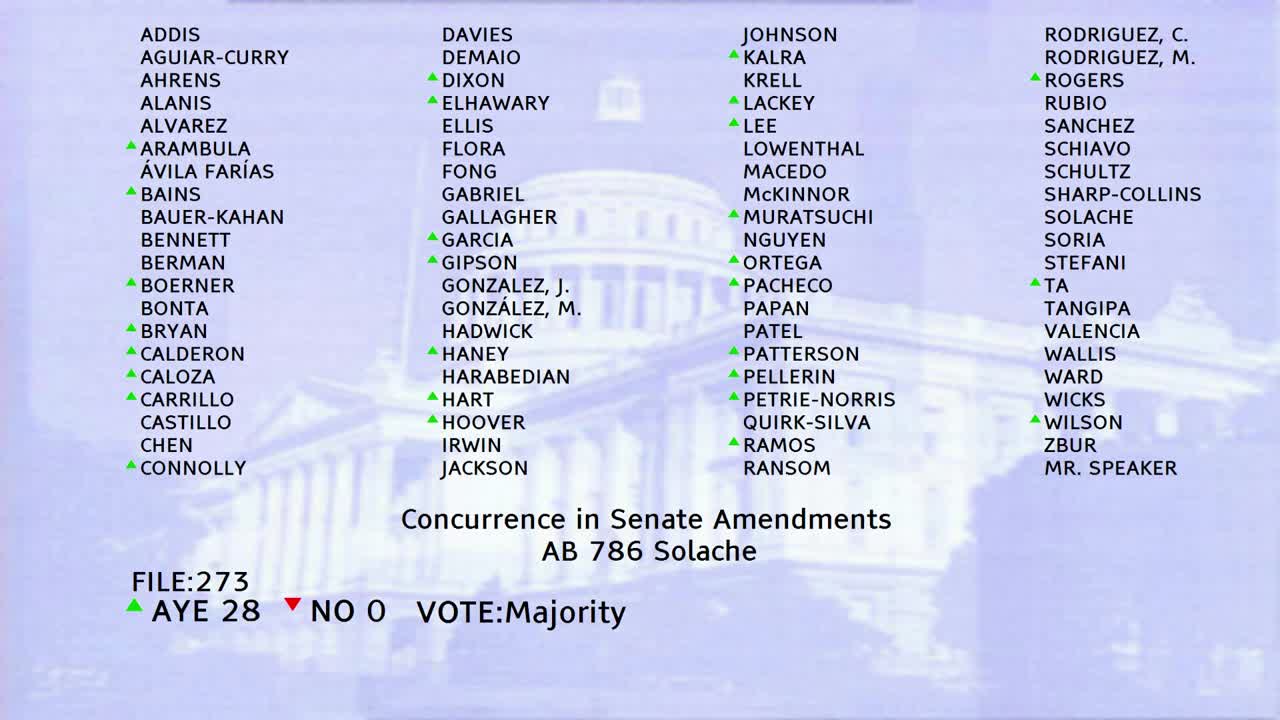 6MIN
Assembly Floor
 3MIN
Senate Floor
 11MIN
Senate Standing Committee on Business, Professions and Economic Development
 2MIN
Assembly Floor
 11MIN
Assembly Standing Committee on Business and Professions
Bill Author

Bill Co-Author(s):