AB 1524: Courts: fees.
- Session Year: 2025-2026
- House: Assembly
- Latest Version Date: 2025-10-03
Current Status:
Passed
(2025-10-03: Chaptered by Secretary of State - Chapter 306, Statutes of 2025.)
Introduced
In Committee
Awaiting First Chamber Vote
Passed First Chamber
In Committee
Awaiting Second Chamber Vote
Passed Second Chamber
Enacted
Existing law, the Uniform Civil Fees and Standard Fee Schedule Act of 2005, establishes a set fee schedule for courts to implement for, among other things, filings, service, and changes of venue.
Existing law authorizes the court to charge a reasonable fee that does not exceed the costs of providing the service or product, if the Judicial Council approves the fee, as specified.
The bill would instead prohibit the court from charging a fee that exceeds the cost to the court of providing the service or product. The bill would require any fee not explicitly authorized by statute or rule to be approved by the Judicial Council. The bill would also require the Judicial Council, by December 1, 2027, to report to the Legislature, as specified, regarding each fee charged by a superior court in the 202627 fiscal year for which the revenue collected by and distributed to the court as a result of the fee exceeds the courts cost of providing the service or product. The bill would also require the Judicial Council, by December 1, 2028, and December 1, 2029, to report certain data to the Legislature, as specified, regarding the 202728 and 202829 fiscal years, respectively.
Existing law authorizes trial court records to be created, maintained, and preserved in any form of communication or representation, including paper, optical, electronic, magnetic, micrographic, or photographic media or other technology. Existing law requires those court records be made reasonably accessible to the public for viewing and duplication, with a reasonable provision controlling for the costs of duplication, as specified.
This bill would require court records maintained in electronic form to be viewable at the court and be available for duplication at a cost, as specified. The bill would allow a member of the public to request to view or duplicate accessible records, on the premises of the court and with the requesters equipment in a manner that does not make physical contact with the record, without being charged any fees or costs to reproduce the record, unless reproduction would result in, among other things, damage to the record or unauthorized access to the courts computer systems or networks, as specified. The bill would authorize the court to impose reasonable limits on the use of the requesters equipment that are necessary to protect the safety of the records or prevent the copying of the records from being an unreasonable burden, as specified.
Existing law, the Uniform Civil Fees and Standard Fee Schedule Act of 2005, establishes a set fee schedule for courts to implement for, among other things, filings, service, and changes of venue.
Existing law authorizes courts that have made videoconferencing services available to charge a reasonable fee to cover the costs of permitting the parties to appear by videoconference and requires that fee to be deposited into the Trial Court Trust Fund.This bill would instead prohibit the court from charging a fee to appear by videoconference that exceeds the pro rata cost to the court, as defined, of providing the service.Existing law authorizes the court to charge a reasonable fee that does not exceed the costs of providing the service or product, if the Judicial Council approves the fee, as specified.
The bill would instead prohibit the court from charging a fee that exceeds the pro rata cost to the court of providing the service or product. The bill would require any fee not explicitly authorized by statute or rule to be approved by the Judicial Council. The bill would also require the Judicial Council, by March December 1, 2027, to report to the Legislature, as specified, regarding each fee charged by a superior court prior to December 31, 2026, that was not explicitly authorized or prohibited by statute or rule. in the 202627 fiscal year for which the revenue collected by and distributed to the court as a result of the fee exceeds the courts cost of providing the service or product. The bill would also require the Judicial Council, by March 1, 2028, and March 1 of each year thereafter, by December 1, 2028, and December 1, 2029, to report certain data to the Legislature, as specified, regarding each new fee charged by a superior court in the preceding calendar year. the 202728 and 202829 fiscal years, respectively.
Existing law authorizes trial court records to be created, maintained, and preserved in any form of communication or representation, including paper, optical, electronic, magnetic, micrographic, or photographic media or other technology. Existing law requires those court records be made reasonably accessible to the public for viewing and duplication, with a reasonable provision controlling for the costs of duplication, as specified.
This bill would require court records maintained in electronic form to be viewable at the court and be available for duplication at a cost, as specified. The bill would give allow a member of the public the right to request to view or duplicate accessible records, on the premises of the court and with the requesters equipment in a manner that does not make physical contact with the record, without being charged any fees or costs to reproduce the record, unless reproduction would result in in, among other things, damage to the record or unauthorized access to the agencys courts computer systems or networks, as specified. The bill would authorize the court to impose reasonable limits on the use of the requesters equipment that are necessary to protect the safety of the records or prevent the copying of the records from being an unreasonable burden, as specified.
Existing law, the Uniform Civil Fees and Standard Fee Schedule Act of 2005, establishes a set fee schedule for courts to implement for, among other things, filings, service, and changes of venue.
Existing law authorizes courts that have made videoconferencing services available to charge a reasonable fee to cover the costs of permitting the parties to appear by videoconference and requires that fee to be deposited into the Trial Court Trust Fund.
This bill would instead prohibit the court from charging a fee to appear by videoconference that exceeds the pro rata cost to the court, as defined, of providing the service.
Existing law authorizes the court to charge a reasonable fee that does not exceed the costs of providing the service or product, if the Judicial Council approves the fee, as specified.
The bill would instead prohibit the court from charging a fee that exceeds the pro rata cost to the court of providing the service or product. The bill would require any fee not explicitly authorized by statute or rule to be approved by the Judicial Council. The bill would also require the Judicial Council, by March 1, 2027, to report to the Legislature, as specified, regarding each fee charged by a superior court prior to December 31, 2026, that was not explicitly authorized or prohibited by statute or rule. The bill would also require the Judicial Council, by March 1, 2028, and March 1 of each year thereafter, to report to the Legislature, as specified, regarding each new fee charged by a superior court in the preceding calendar year.
Existing law authorizes trial court records to be created, maintained, and preserved in any form of communication or representation, including paper, optical, electronic, magnetic, micrographic, or photographic media or other technology. Existing law requires those court records be made reasonably accessible to the public for viewing and duplication, with a reasonable provision controlling for the costs of duplication, as specified.
This bill would require court records maintained in electronic form to be viewable at the court and be available for duplication at a cost, as specified. The bill would give a member of the public the right to request to view or duplicate accessible records, on the premises of the court and with the requesters equipment in a manner that does not make physical contact with the record, without being charged any fees or costs to reproduce the record, unless reproduction would result in damage to the record or unauthorized access to the agencys computer systems or networks, as specified. The bill would authorize the court to impose reasonable limits on the use of the requesters equipment that are necessary to protect the safety of the records or prevent the copying of the records from being an unreasonable burden, as specified.
Existing law, the Uniform Civil Fees and Standard Fee Schedule Act of 2005, establishes a set fee schedule for courts to implement for, among other things, filings, service, and changes of venue.
Existing law authorizes courts that have made videoconferencing services available to charge a reasonable fee to cover the costs of permitting the parties to appear by videoconference and requires that fee to be deposited into the Trial Court Trust Fund.
This bill would instead prohibit the court from charging a fee to appear by videoconference that exceeds the pro rata cost to the court, as defined, of providing the service.
Existing law authorizes the court to charge a reasonable fee that does not exceed the costs of providing the service or product, if the Judicial Council approves the fee, as specified.
The bill would instead prohibit the court from charging a fee that exceeds the pro rata cost to the court of providing the service or product. The bill would require any fee not explicitly authorized by statute or rule to be approved by the Judicial Council. The bill would also require the Judicial Council, by March 1, 2027, to report to the Legislature, as specified, regarding each fee charged by a superior court prior to December 31, 2026, that was not explicitly authorized or prohibited by statute or rule. The bill would also require the Judicial Council, by March 1, 2028, and March 1 of each year thereafter, to report to the Legislature, as specified, regarding each new fee charged by a superior court in the preceding calendar year.
(a)Trial court records may be created, maintained, and preserved in any form or forms of communication or representation, including paper, optical, electronic, magnetic, micrographic, or photographic media or other technology pursuant to the rules adopted by the Judicial Council pursuant to subdivision (c).
(b)(1)This section does not apply to court reporters transcripts or to specifications for electronic recordings made as the official record of oral proceedings. These records shall be governed by the California Rules of Court.
(2)This section does not apply to original wills and codicils delivered to the clerk of the court under Section 8200 of the Probate Code. Original wills and codicils shall be retained as provided in Section 26810.
(c)The Judicial Council shall adopt rules to establish the standards or guidelines for the creation, maintenance, reproduction, or preservation of court records, including records that must be preserved permanently. The standards or guidelines shall reflect industry standards for each medium used, if those standards exist. The standards or guidelines shall ensure that court records are created and maintained in a manner that ensures accuracy and preserves the integrity of the records throughout their maintenance. They shall also ensure that the records are stored and preserved in a manner that will protect them against loss and ensure preservation for the required period of time. Standards and guidelines for the electronic creation, maintenance, and preservation of court records shall ensure that the public can access and reproduce records with at least the same amount of convenience as paper records previously provided.
(d)Additions, deletions, or changes shall not be made to the content of court records, except as authorized by statute or the California Rules of Court.
(e)Court records shall be indexed for convenient access.
(f)A copy of a court record created, maintained, preserved, or reproduced according to subdivisions (a) and (c) shall be deemed an original court record and may be certified as a true and correct copy of the original record. The clerk of the court may certify a copy of the record by electronic or other technological means, if the means adopted by the court reasonably ensures that the certified copy is a true and correct copy of the original record, or of a specified part of the original record.
(g)Any notice, order, judgment, decree, decision, ruling, opinion, memorandum, warrant, certificate of service, writ, subpoena, or other legal process or similar document issued by a trial court or by a judicial officer of a trial court may be signed, subscribed, or verified using a computer or other technology in accordance with procedures, standards, and guidelines established by the Judicial Council pursuant to this section. Notwithstanding any other law, all notices, orders, judgments, decrees, decisions, rulings, opinions, memoranda, warrants, certificates of service, writs, subpoenas, or other legal process or similar documents that are signed, subscribed, or verified by computer or other technological means pursuant to this subdivision shall have the same validity, and the same legal force and effect, as paper documents signed, subscribed, or verified by a trial court or a judicial officer of the court.
(h)A court record created, maintained, preserved, or reproduced in accordance with subdivisions (a) and (c) shall be stored in a manner and in a place that reasonably ensures its preservation against loss, theft, defacement, or destruction for the prescribed retention period under Section 68152.
(i)A court record that was created, maintained, preserved, or reproduced in accordance with subdivisions (a) and (c) may be disposed of in accordance with the procedure under Section 68153, unless it is either of the following:
(1)A comprehensive historical and sample superior court record preserved for research under the California Rules of Court.
(2)A court record that is required to be preserved permanently.
(j)Instructions for access to data stored on a medium other than paper shall be documented.
(k)Each court shall conduct a periodic review of the media in which the court records are stored to ensure that the storage medium is not obsolete and that current technology is capable of accessing and reproducing the records. The court shall reproduce records before the expiration of their estimated lifespan for the medium in which they are stored according to the standards or guidelines established by the Judicial Council.
(l)(1)Unless access is otherwise restricted by law, court records created, maintained, preserved, or reproduced under subdivisions (a) and (c) shall be made reasonably accessible to all members of the public for viewing and duplication as the paper records would have been accessible. Unless access is otherwise restricted by law, court records maintained in electronic form shall be viewable at the court, regardless of whether they are also accessible remotely. Reasonable provision shall be made for duplicating the records at cost. Cost shall consist of all costs associated with duplicating the records as determined by the court.
(2)Unless access is otherwise restricted by law, court records maintained in electronic form shall be viewable at the court, regardless of whether they are also accessible remotely. Reasonable provision shall be made for duplicating the records at cost. Cost shall consist of all costs associated with duplicating the records as determined by the court.
(3)(A)A member of the public requesting to view and duplicate on the premises of the court a record that is accessible to the public shall be allowed to use the requesters equipment on those premises, without being charged any fees or costs, to photograph or otherwise copy or reproduce the record in a manner that does not require the equipment to make physical contact with the record, unless the means of copy or reproduction would result in any of the following:
(i)Damage to the record.
(ii)Unauthorized access to the courts computer systems or secured networks by using software, equipment, or any other technology capable of accessing, altering, or compromising the courts electronic records.
(iii)The use of equipment that would require the assistance of court staff to operate, or a wired electrical or wired internet connection, or that would obstruct the ability of other court users to access case files, terminals, or other court resources because of the size of the equipment.
(B)The court may impose reasonable limits on the use of the requesters equipment that are necessary to protect the safety of the records or to prevent the copying of records from being an unreasonable burden to the orderly function of the court and its employees. In addition, the court may impose any limit that is necessary to maintain the integrity of, or ensure the long-term preservation of, historic or high-value records.
(C)The court shall not subject a requester who seeks to use their own equipment to copy records in compliance with this paragraph to any more restrictions than the restrictions that apply to court users who seek to inspect court records. The court also shall not impose a time limit on a requesters ability to copy records with their own equipment that differs from the time limit that would apply to the inspection of court records.
(4)The intent of paragraph (3) is to facilitate the copying of records with a requesters own equipment and not to affect court rules that are intended to protect the safety or security of the court facility, court personnel, or court users. Paragraph (3) does not affect court rules that address either of the following:
(A)The use of cameras in areas or other equipment in court facilities for purposes other than to copy court records.
(B)Impose time limits on a requesters ability to access case files, terminals, or other court resources by which the public is able to access court records for the purpose of making copies of the records with their own equipment, so long as the time limits also apply to requesters seeking to inspect, but not copy, court records. A time limit on a requesters use of their own equipment to prevent the copying of records from being an unreasonable burden to the orderly function of the court and its employees is reasonable when the time required for a requester to make copies of records with their own equipment would be greater than the time required for them to obtain the copies by means of court-provided resources and allowing the requester to have additional time to make copies of records with their own equipment would interfere with the ability of other requesters to access court records.
SEC. 2.Section 70631 of the Government Code is amended to read:70631.(a)In the absence of a statute or rule explicitly authorizing or prohibiting a fee by the superior court for a particular service or product, the court may charge a fee not to exceed the cost to the court of providing the service or product. A fee not explicitly authorized by statute or rule shall be approved by the Judicial Council. The fee shall be distributed to the court in which it was collected.
(b)By December 1, 2027, the Judicial Council shall submit a report to the Legislature, in compliance with Section 9795, regarding each fee charged by a superior court that in the 202627 fiscal year for which the revenue collected by and distributed to the court as a result of the fee exceeds the courts cost of providing the service or product, includes all of the following information:
(1)The particular service or product that is provided by payment of the fee.
(2)The amount of the fee.
(3)The cost to the court in the 202627 fiscal year for providing the particular service or product. If it is not feasible for the court to determine the exact cost, despite its good faith effort to do so, the court shall provide the cost basis on which the fee was calculated.
(4)The revenue collected by and distributed to the court in the 202627 fiscal year as a result of the fee.
(5)The number of persons who used the service or product in the 202627 fiscal year. If it is not feasible for the court to determine the exact number of persons who used the service or product, despite its good faith effort to do so, the court shall provide a good faith estimate of the number of persons who used the service or product in the 202627 fiscal year.
(c)By December 1, 2028, and December 1, 2029, the Judicial Council shall submit a report to the Legislature regarding fiscal years 202728 and 202829 that includes the information specified in subdivision (b). The report shall be submitted in compliance with Section 9795.
(a)Trial court records may be created, maintained, and preserved in any form or forms of communication or representation, including paper, optical, electronic, magnetic, micrographic, or photographic media or other technology pursuant to the rules adopted by the Judicial Council pursuant to subdivision (c).
(b)(1)This section does not apply to court reporters transcripts or to specifications for electronic recordings made as the official record of oral proceedings. These records shall be governed by the California Rules of Court.
(2)This section does not apply to original wills and codicils delivered to the clerk of the court under Section 8200 of the Probate Code. Original wills and codicils shall be retained as provided in Section 26810.
(c)The Judicial Council shall adopt rules to establish the standards or guidelines for the creation, maintenance, reproduction, or preservation of court records, including records that must be preserved permanently. The standards or guidelines shall reflect industry standards for each medium used, if those standards exist. The standards or guidelines shall ensure that court records are created and maintained in a manner that ensures accuracy and preserves the integrity of the records throughout their maintenance. They shall also ensure that the records are stored and preserved in a manner that will protect them against loss and ensure preservation for the required period of time. Standards and guidelines for the electronic creation, maintenance, and preservation of court records shall ensure that the public can access and reproduce records with at least the same amount of convenience as paper records previously provided.
(d)Additions, deletions, or changes shall not be made to the content of court records, except as authorized by statute or the California Rules of Court.
(e)Court records shall be indexed for convenient access.
(f)A copy of a court record created, maintained, preserved, or reproduced according to subdivisions (a) and (c) shall be deemed an original court record and may be certified as a true and correct copy of the original record. The clerk of the court may certify a copy of the record by electronic or other technological means, if the means adopted by the court reasonably ensures that the certified copy is a true and correct copy of the original record, or of a specified part of the original record.
(g)Any notice, order, judgment, decree, decision, ruling, opinion, memorandum, warrant, certificate of service, writ, subpoena, or other legal process or similar document issued by a trial court or by a judicial officer of a trial court may be signed, subscribed, or verified using a computer or other technology in accordance with procedures, standards, and guidelines established by the Judicial Council pursuant to this section. Notwithstanding any other law, all notices, orders, judgments, decrees, decisions, rulings, opinions, memoranda, warrants, certificates of service, writs, subpoenas, or other legal process or similar documents that are signed, subscribed, or verified by computer or other technological means pursuant to this subdivision shall have the same validity, and the same legal force and effect, as paper documents signed, subscribed, or verified by a trial court or a judicial officer of the court.
(h)A court record created, maintained, preserved, or reproduced in accordance with subdivisions (a) and (c) shall be stored in a manner and in a place that reasonably ensures its preservation against loss, theft, defacement, or destruction for the prescribed retention period under Section 68152.
(i)A court record that was created, maintained, preserved, or reproduced in accordance with subdivisions (a) and (c) may be disposed of in accordance with the procedure under Section 68153, unless it is either of the following:
(1)A comprehensive historical and sample superior court record preserved for research under the California Rules of Court.
(2)A court record that is required to be preserved permanently.
(j)Instructions for access to data stored on a medium other than paper shall be documented.
(k)Each court shall conduct a periodic review of the media in which the court records are stored to ensure that the storage medium is not obsolete and that current technology is capable of accessing and reproducing the records. The court shall reproduce records before the expiration of their estimated lifespan for the medium in which they are stored according to the standards or guidelines established by the Judicial Council.
(l)(1)Unless access is otherwise restricted by law, court records created, maintained, preserved, or reproduced under subdivisions (a) and (c) shall be made reasonably accessible to all members of the public for viewing and duplication as the paper records would have been accessible. Unless access is otherwise restricted by law, court records maintained in electronic form shall be viewable at the court, regardless of whether they are also accessible remotely. Reasonable provision shall be made for duplicating the records at cost. Cost shall consist of all costs associated with duplicating the records as determined by the court.
(2)Unless access is otherwise restricted by law, court records maintained in electronic form shall be viewable at the court, regardless of whether they are also accessible remotely. Reasonable provision shall be made for duplicating the records at cost. Cost shall consist of all costs associated with duplicating the records as determined by the court.
(3)(A)A member of the public requesting to view and duplicate on the premises of the court a record that is accessible to the public shall be allowed to use the requesters equipment on those premises, without being charged any fees or costs, to photograph or otherwise copy or reproduce the record in a manner that does not require the equipment to make physical contact with the record, unless the means of copy or reproduction would result in any of the following:
(i)Damage to the record.
(ii)Unauthorized access to the courts computer systems or secured networks by using software, equipment, or any other technology capable of accessing, altering, or compromising the courts electronic records.
(iii)The use of equipment that would require more than one person or the assistance of court staff to operate, or that would require a wired electrical or internet connection. wired internet connection, or that would obstruct the ability of other court users to access case files, terminals, or other court resources because of the size of the equipment.
(B)The court may impose reasonable limits on the use of the requesters equipment that are necessary to protect the safety of the records or to prevent the copying of records from being an unreasonable burden to the orderly function of the court and its employees. In addition, the court may impose any limit that is necessary to maintain the integrity of, or ensure the long-term preservation of, historic or high-value records.
(C)The court shall not subject a requester who seeks to use their own equipment to copy records in compliance with this paragraph to any more restrictions than the restrictions that apply to court users who seek to inspect court records. The court also shall not impose a time limit on a requesters ability to copy records with their own equipment that differs from the time limit that would apply to the inspection of court records.
(4)The intent of paragraph (3) is to facilitate the copying of records with a requesters own equipment and not to affect court rules that are intended to protect the safety or security of the court facility, court personnel, or court users. Paragraph (3) does not affect court rules that address either of the following:
(A)The use of cameras in areas or other equipment in court facilities for purposes other than to copy court records.
(B)Impose time limits on a requesters ability to access case files, terminals, or other court resources by which the public is able to access court records for the purpose of making copies of the records with their own equipment, so long as the time limits also apply to requesters seeking to inspect, but not copy, court records. A time limit on a requesters use of their own equipment to prevent the copying of records from being an unreasonable burden to the orderly function of the court and its employees is reasonable when the time required for a requester to make copies of records with their own equipment would be greater than the time required for them to obtain the copies by means of court-provided resources and allowing the requester to have additional time to make copies of records with their own equipment would interfere with the ability of other requesters to access court records.
SEC. 2.Section 70631 of the Government Code is amended to read:70631.(a)In the absence of a statute or rule explicitly authorizing or prohibiting a fee by the superior court for a particular service or product, the court may charge a fee not to exceed the cost to the court of providing the service or product. A fee not explicitly authorized by statute or rule shall be approved by the Judicial Council. The fee shall be distributed to the court in which it was collected.
(b)By December 1, 2027, the Judicial Council shall submit a report to the Legislature, in compliance with Section 9795, regarding each fee charged by a superior court that in the 202627 fiscal year for which the revenue collected by and distributed to the court as a result of the fee exceeds the courts cost of providing the service or product, includes all of the following information:
(1)The particular service or product that is provided by payment of the fee.
(2)The amount of the fee.
(3)The cost to the court in the 202627 fiscal year for providing the particular service or product. If it is not feasible for the court to determine the exact cost, despite its good faith effort to do so, the court shall provide the cost basis on which the fee was calculated.
(4)The revenue collected by and distributed to the court in the 202627 fiscal year as a result of the fee.
(5)The number of persons who used the service or product in the 202627 fiscal year. If it is not feasible for the court to determine the exact number of persons who used the service or product, despite its good faith effort to do so, the court shall provide a good faith estimate of the number of persons who used the service or product in the 202627 fiscal year.
(c)By December 1, 2028, and December 1, 2029, the Judicial Council shall submit a report to the Legislature regarding fiscal years 202728 and 202829 that includes the information specified in subdivision (b). The report shall be submitted in compliance with Section 9795.
(a)Trial court records may be created, maintained, and preserved in any form or forms of communication or representation, including paper, optical, electronic, magnetic, micrographic, or photographic media or other technology pursuant to the rules adopted by the Judicial Council pursuant to subdivision (c).
(b)(1)This section does not apply to court reporters transcripts or to specifications for electronic recordings made as the official record of oral proceedings. These records shall be governed by the California Rules of Court.
(2)This section does not apply to original wills and codicils delivered to the clerk of the court under Section 8200 of the Probate Code. Original wills and codicils shall be retained as provided in Section 26810.
(c)The Judicial Council shall adopt rules to establish the standards or guidelines for the creation, maintenance, reproduction, or preservation of court records, including records that must be preserved permanently. The standards or guidelines shall reflect industry standards for each medium used, if those standards exist. The standards or guidelines shall ensure that court records are created and maintained in a manner that ensures accuracy and preserves the integrity of the records throughout their maintenance. They shall also ensure that the records are stored and preserved in a manner that will protect them against loss and ensure preservation for the required period of time. Standards and guidelines for the electronic creation, maintenance, and preservation of court records shall ensure that the public can access and reproduce records with at least the same amount of convenience as paper records previously provided.
(d)Additions, deletions, or changes shall not be made to the content of court records, except as authorized by statute or the California Rules of Court.
(e)Court records shall be indexed for convenient access.
(f)A copy of a court record created, maintained, preserved, or reproduced according to subdivisions (a) and (c) shall be deemed an original court record and may be certified as a true and correct copy of the original record. The clerk of the court may certify a copy of the record by electronic or other technological means, if the means adopted by the court reasonably ensures that the certified copy is a true and correct copy of the original record, or of a specified part of the original record.
(g)Any notice, order, judgment, decree, decision, ruling, opinion, memorandum, warrant, certificate of service, writ, subpoena, or other legal process or similar document issued by a trial court or by a judicial officer of a trial court may be signed, subscribed, or verified using a computer or other technology in accordance with procedures, standards, and guidelines established by the Judicial Council pursuant to this section. Notwithstanding any other law, all notices, orders, judgments, decrees, decisions, rulings, opinions, memoranda, warrants, certificates of service, writs, subpoenas, or other legal process or similar documents that are signed, subscribed, or verified by computer or other technological means pursuant to this subdivision shall have the same validity, and the same legal force and effect, as paper documents signed, subscribed, or verified by a trial court or a judicial officer of the court.
(h)A court record created, maintained, preserved, or reproduced in accordance with subdivisions (a) and (c) shall be stored in a manner and in a place that reasonably ensures its preservation against loss, theft, defacement, or destruction for the prescribed retention period under Section 68152.
(i)A court record that was created, maintained, preserved, or reproduced in accordance with subdivisions (a) and (c) may be disposed of in accordance with the procedure under Section 68153, unless it is either of the following:
(1)A comprehensive historical and sample superior court record preserved for research under the California Rules of Court.
(2)A court record that is required to be preserved permanently.
(j)Instructions for access to data stored on a medium other than paper shall be documented.
(k)Each court shall conduct a periodic review of the media in which the court records are stored to ensure that the storage medium is not obsolete and that current technology is capable of accessing and reproducing the records. The court shall reproduce records before the expiration of their estimated lifespan for the medium in which they are stored according to the standards or guidelines established by the Judicial Council.
(l)(1)Unless access is otherwise restricted by law, court records created, maintained, preserved, or reproduced under subdivisions (a) and (c) shall be made reasonably accessible to all members of the public for viewing and duplication as the paper records would have been accessible. Unless access is otherwise restricted by law, court records maintained in electronic form shall be viewable at the court, regardless of whether they are also accessible remotely. Reasonable provision shall be made for duplicating the records at cost. Cost shall consist of all costs associated with duplicating the records as determined by the court.
(2)Unless access is otherwise restricted by law, court records maintained in electronic form shall be viewable at the court, regardless of whether they are also accessible remotely. Reasonable provision shall be made for duplicating the records at cost. Cost shall consist of all costs associated with duplicating the records as determined by the court.
(3)(A)A member of the public requesting to view and duplicate on the premises of the court a record that is accessible pursuant to this section has the right to the public shall be allowed to use the requesters equipment on those premises, without being charged any fees or costs, to photograph or otherwise copy or reproduce the record in a manner that does not require the equipment to make physical contact with the record, unless the means of copy or reproduction would result in either any of the following:
(i)Damage to the record.
(ii)Unauthorized access to the agencys courts computer systems or secured networks by using software, equipment, or any other technology capable of accessing, altering, or compromising the agencys courts electronic records.
(iii)The use of equipment that would require more than one person or the assistance of court staff to operate, or that would require a wired electrical or internet connection.
(B)The court may impose any reasonable limits on the use of the requesters equipment that are necessary to protect the safety of the records or to prevent the copying of records from being an unreasonable burden to the orderly function of the court and its employees. In addition, the court may impose any limit that is necessary to maintain the integrity of, or ensure the long-term preservation of, historic or high-value records.
(C)The court shall not subject a requester who seeks to use their own equipment to copy records in compliance with this paragraph to any more restrictions than the restrictions that apply to court users who seek to inspect court records. The court also shall not impose a time limit on a requesters ability to copy records with their own equipment that differs from the time limit that would apply to the inspection of court records.
(4)The intent of paragraph (3) is to facilitate the copying of records with a requesters own equipment and not to affect court rules that are intended to protect the safety or security of the court facility, court personnel, or court users. Paragraph (3) does not affect court rules that address either of the following:
(A)The use of cameras in areas or other equipment in court facilities for purposes other than to copy court records.
(B)Impose time limits on a requesters ability to access case files, terminals, or other court resources by which the public is able to access court records for the purpose of making copies of the records with their own equipment, so long as the time limits also apply to requesters seeking to inspect, but not copy, court records. A time limit on a requesters use of their own equipment to prevent the copying of records from being an unreasonable burden to the orderly function of the court and its employees is reasonable when the time required for a requester to make copies of records with their own equipment would be greater than the time required for them to obtain the copies by means of court-provided resources and allowing the requester to have additional time to make copies of records with their own equipment would interfere with the ability of other requesters to access court records.
SEC. 2.Section 70630 of the Government Code is amended to read:70630.(a)If the court has made videoconferencing services available, the clerk of the court shall not charge a fee for the parties to appear by videoconferencing that exceeds the pro rata cost to the court of providing the videoconferencing service. This fee shall be deposited into the Trial Court Trust Fund.(b)Pro rata cost to the court has the same meaning as in Section 70631.SEC. 3.SEC. 2.Section 70631 of the Government Code is amended to read:70631.(a)In the absence of a statute or rule explicitly authorizing or prohibiting a fee by the superior court for a particular service or product, the court may charge a reasonable fee not to exceed the pro rata cost to the court of providing the service or product. A fee not explicitly authorized by statute or rule shall be approved by the Judicial Council. The fee shall be distributed to the court in which it was collected.
(b)By March December 1, 2027, the Judicial Council shall submit a report to the Legislature, in compliance with Section 9795, regarding each fee charged by a superior court as of December 31, 2026, that is not explicitly authorized or prohibited by statute or rule, that in the 202627 fiscal year for which the revenue collected by and distributed to the court as a result of the fee exceeds the courts cost of providing the service or product, includes all of the following information:
(1)The particular service or product that is provided by payment of the fee.
(2)The amount of the fee.
(3)Whether the fee was approved by the Judicial Council, and the date of the approval, if any.(4)(3)The annual cost to the court in the 202627 fiscal year for providing the particular service or product. If it is not feasible for the court to determine the exact cost, despite its good faith effort to do so, the court may shall provide a good faith estimate of its cost. the cost basis on which the fee was calculated.
(4)The revenue collected by and distributed to the court in the 202627 fiscal year as a result of the fee.
(5)The number of persons who used the service or product each calendar year. in the 202627 fiscal year. If it is not feasible for the court to determine the exact number of persons who used the service or product, despite its good faith effort to do so, the court may shall provide a good faith estimate of the number of persons who used the service or product that calendar year. in the 202627 fiscal year.
(6)The cost to the court of providing the fee or service, determined by dividing the cost of paragraph (4) by the number of users in paragraph (5).(c)By March December 1, 2028, and March 1 of each year thereafter, December 1, 2029, the Judicial Council shall submit a report to the Legislature regarding each new fee charged by a superior court during the preceding calendar year fiscal years 202728 and 202829 that includes the information specified in subdivision (b). The report shall be submitted in compliance with Section 9795.
(d)For purposes of this section, pro rata cost to the court means a reasonable estimate of the amount of money that a fee or service costs for the court to provide to an individual court user that is not funded, reimbursed, or directly paid by the Legislature.(a)Trial court records may be created, maintained, and preserved in any form or forms of communication or representation, including paper, optical, electronic, magnetic, micrographic, or photographic media or other technology pursuant to the rules adopted by the Judicial Council pursuant to subdivision (c).
(b)(1)This section does not apply to court reporters transcripts or to specifications for electronic recordings made as the official record of oral proceedings. These records shall be governed by the California Rules of Court.
(2)This section does not apply to original wills and codicils delivered to the clerk of the court under Section 8200 of the Probate Code. Original wills and codicils shall be retained as provided in Section 26810.
(c)The Judicial Council shall adopt rules to establish the standards or guidelines for the creation, maintenance, reproduction, or preservation of court records, including records that must be preserved permanently. The standards or guidelines shall reflect industry standards for each medium used, if those standards exist. The standards or guidelines shall ensure that court records are created and maintained in a manner that ensures accuracy and preserves the integrity of the records throughout their maintenance. They shall also ensure that the records are stored and preserved in a manner that will protect them against loss and ensure preservation for the required period of time. Standards and guidelines for the electronic creation, maintenance, and preservation of court records shall ensure that the public can access and reproduce records with at least the same amount of convenience as paper records previously provided.
(d)Additions, deletions, or changes shall not be made to the content of court records, except as authorized by statute or the California Rules of Court.
(e)Court records shall be indexed for convenient access.
(f)A copy of a court record created, maintained, preserved, or reproduced according to subdivisions (a) and (c) shall be deemed an original court record and may be certified as a true and correct copy of the original record. The clerk of the court may certify a copy of the record by electronic or other technological means, if the means adopted by the court reasonably ensures that the certified copy is a true and correct copy of the original record, or of a specified part of the original record.
(g)Any notice, order, judgment, decree, decision, ruling, opinion, memorandum, warrant, certificate of service, writ, subpoena, or other legal process or similar document issued by a trial court or by a judicial officer of a trial court may be signed, subscribed, or verified using a computer or other technology in accordance with procedures, standards, and guidelines established by the Judicial Council pursuant to this section. Notwithstanding any other law, all notices, orders, judgments, decrees, decisions, rulings, opinions, memoranda, warrants, certificates of service, writs, subpoenas, or other legal process or similar documents that are signed, subscribed, or verified by computer or other technological means pursuant to this subdivision shall have the same validity, and the same legal force and effect, as paper documents signed, subscribed, or verified by a trial court or a judicial officer of the court.
(h)A court record created, maintained, preserved, or reproduced in accordance with subdivisions (a) and (c) shall be stored in a manner and in a place that reasonably ensures its preservation against loss, theft, defacement, or destruction for the prescribed retention period under Section 68152.
(i)A court record that was created, maintained, preserved, or reproduced in accordance with subdivisions (a) and (c) may be disposed of in accordance with the procedure under Section 68153, unless it is either of the following:
(1)A comprehensive historical and sample superior court record preserved for research under the California Rules of Court.
(2)A court record that is required to be preserved permanently.
(j)Instructions for access to data stored on a medium other than paper shall be documented.
(k)Each court shall conduct a periodic review of the media in which the court records are stored to ensure that the storage medium is not obsolete and that current technology is capable of accessing and reproducing the records. The court shall reproduce records before the expiration of their estimated lifespan for the medium in which they are stored according to the standards or guidelines established by the Judicial Council.
(l)(1)Unless access is otherwise restricted by law, court records created, maintained, preserved, or reproduced under subdivisions (a) and (c) shall be made reasonably accessible to all members of the public for viewing and duplication as the paper records would have been accessible. Unless access is otherwise restricted by law, court records maintained in electronic form shall be viewable at the court, regardless of whether they are also accessible remotely. Reasonable provision shall be made for duplicating the records at cost. Cost shall consist of all costs associated with duplicating the records as determined by the court.
(2)Unless access is otherwise restricted by law, court records maintained in electronic form shall be viewable at the court, regardless of whether they are also accessible remotely. Reasonable provision shall be made for duplicating the records at cost. Cost shall consist of all costs associated with duplicating the records as determined by the court.
(3)(A)A member of the public requesting to view and duplicate on the premises of the court a record that is accessible pursuant to this section has the right to use the requesters equipment on those premises, without being charged any fees or costs, to photograph or otherwise copy or reproduce the record in a manner that does not require the equipment to make physical contact with the record, unless the means of copy or reproduction would result in either of the following:
(i)Damage to the record.
(ii)Unauthorized access to the agencys computer systems or secured networks by using software, equipment, or any other technology capable of accessing, altering, or compromising the agencys electronic records.
(B)The court may impose any reasonable limits on the use of the requesters equipment that are necessary to protect the safety of the records or to prevent the copying of records from being an unreasonable burden to the orderly function of the court and its employees. In addition, the court may impose any limit that is necessary to maintain the integrity of, or ensure the long-term preservation of, historic or high-value records.
SECTION 1.SEC. 2.Section 70630 of the Government Code is amended to read:70630.(a)If the court has made videoconferencing services available, the clerk of the court shall not charge a fee for the parties to appear by videoconferencing that exceeds the pro rata cost to the court of providing the videoconferencing service. This fee shall be deposited into the Trial Court Trust Fund.
(b)Pro rata cost to the court has the same meaning as in Section 70631.
SEC. 2.SEC. 3.Section 70631 of the Government Code is amended to read:70631.(a)In the absence of a statute or rule explicitly authorizing or prohibiting a fee by the superior court for a particular service or product, the court may charge a reasonable fee not to exceed the pro rata cost to the court of providing the service or product. A fee not explicitly authorized by statute or rule shall be approved by the Judicial Council. The fee shall be distributed to the court in which it was collected.
(b)By March 1, 2027, the Judicial Council shall submit a report to the Legislature, in compliance with Section 9795, regarding each fee charged by a superior court as of December 31, 2026, that is not explicitly authorized or prohibited by statute or rule, that includes all of the following information:
(1)The particular service or product that is provided by payment of the fee.
(2)The amount of the fee.
(3)Whether the fee was approved by the Judicial Council, and the date of the approval, if any.
(4)The annual cost to the court for providing the particular service or product. If it is not feasible for the court to determine the exact cost, despite its good faith effort to do so, the court may provide a good faith estimate of its cost.
(5)The number of persons who used the service or product each calendar year. If it is not feasible for the court to determine the exact number of persons who used the service or product, despite its good faith effort to do so, the court may provide a good faith estimate of the number of persons who used the service or product that calendar year.
(6)The cost to the court of providing the fee or service, determined by dividing the cost of paragraph (4) by the number of users in paragraph (5).
(c)By March 1, 2028, and March 1 of each year thereafter, the Judicial Council shall submit a report to the Legislature regarding each new fee charged by a superior court during the preceding calendar year that includes the information specified in subdivision (b). The report shall be submitted in compliance with Section 9795.
(d)For purposes of this section, pro rata cost to the court means a reasonable estimate of the amount of money that a fee or service costs for the court to provide to an individual court user that is not funded, reimbursed, or directly paid by the Legislature.
(a)If the court has made videoconferencing services available, the clerk of the court shall not charge a reasonable fee to cover the costs of permitting parties to appear by videoconferencing. a fee for the parties to appear by videoconferencing that exceeds the pro rata cost to the court of providing the videoconferencing service. This fee shall be deposited into the Trial Court Trust Fund.
(b)Pro rata cost to the court has the same meaning as in Section 70631.
SEC. 2.Section 70631 of the Government Code is amended to read:70631.(a)In the absence of a statute or rule explicitly authorizing or prohibiting a fee by the superior court for a particular service or product, the court may charge a reasonable fee not to exceed the costs pro rata cost to the court of providing the service or product, if the Judicial Council approves the fee. product. A fee not explicitly authorized by statute or rule shall be approved by the Judicial Council. The fee shall be distributed to the court in which it was collected.
(b)By March 1, 2027, the Judicial Council shall submit a report to the Legislature, in compliance with Section 9795, regarding each fee charged by a superior court as of December 31, 2026, that is not explicitly authorized or prohibited by statute or rule, that includes all of the following information:
(1)The particular service or product that is provided by payment of the fee.
(2)The amount of the fee.
(3)Whether the fee was approved by the Judicial Council, and the date of the approval, if any.
(4)The annual cost to the court for providing the particular service or product. If it is not feasible for the court to determine the exact cost, despite its good faith effort to do so, the court may provide a good faith estimate of its cost.
(5)The number of persons who used the service or product each calendar year. If it is not feasible for the court to determine the exact number of persons who used the service or product, despite its good faith effort to do so, the court may provide a good faith estimate of the number of persons who used the service or product that calendar year.
(6)The cost to the court of providing the fee or service, determined by dividing the cost of paragraph (4) by the number of users in paragraph (5).
(c)By March 1, 2028, and March 1 of each year thereafter, the Judicial Council shall submit a report to the Legislature regarding each new fee charged by a superior court during the preceding calendar year that includes the information specified in subdivision (b). The report shall be submitted in compliance with Section 9795.
(d)For purposes of this section, pro rata cost to the court means a reasonable estimate of the amount of money that a fee or service costs for the court to provide to an individual court user that is not funded, reimbursed, or directly paid by the Legislature.
|
Date
|
Status
|
|---|---|
| Oct 3, 2025 | Chaptered by Secretary of State - Chapter 306, Statutes of 2025. |
| Oct 3, 2025 | Approved by the Governor. |
| Sep 24, 2025 | Enrolled and presented to the Governor at 3 p.m. |
| Sep 12, 2025 | Senate amendments concurred in. To Engrossing and Enrolling. (Ayes 79. Noes 0. Page 3422.). |
| Sep 12, 2025 | In Assembly. Concurrence in Senate amendments pending. |
| Sep 11, 2025 | Read third time. Passed. Ordered to the Assembly. (Ayes 40. Noes 0. Page 2932.). |
| Sep 9, 2025 | Ordered to special consent calendar. |
| Sep 2, 2025 | Read second time. Ordered to third reading. |
| Aug 29, 2025 | Read second time and amended. Ordered returned to second reading. |
| Aug 29, 2025 | From committee: Amend, and do pass as amended. (Ayes 7. Noes 0.) (August 29). |
| Jul 14, 2025 | In committee: Referred to APPR. suspense file. |
| Jul 2, 2025 | From committee: Do pass and re-refer to Com. on APPR. with recommendation: To Consent Calendar. (Ayes 13. Noes 0.) (July 1). Re-referred to Com. on APPR. |
| Jun 19, 2025 | From committee chair, with author's amendments: Amend, and re-refer to committee. Read second time, amended, and re-referred to Com. on JUD. |
| Jun 11, 2025 | Referred to Com. on JUD. |
| Jun 3, 2025 | In Senate. Read first time. To Com. on RLS. for assignment. |
| Jun 2, 2025 | Read third time. Passed. Ordered to the Senate. (Ayes 79. Noes 0. Page 1894.) |
| May 27, 2025 | Read second time. Ordered to third reading. |
| May 23, 2025 | From committee: Do pass. (Ayes 14. Noes 0.) (May 23). |
| May 14, 2025 | In committee: Set, first hearing. Referred to APPR. suspense file. |
| Apr 24, 2025 | Re-referred to Com. on APPR. |
| Apr 23, 2025 | Read second time and amended. |
| Apr 22, 2025 | From committee: Amend, and do pass as amended and re-refer to Com. on APPR. with recommendation: To Consent Calendar. (Ayes 12. Noes 0.) (April 22). |
| Mar 24, 2025 | Referred to Com. on JUD. |
| Mar 19, 2025 | From printer. May be heard in committee April 18. |
| Mar 18, 2025 | Read first time. To print. |
|
Date
|
Description
|
Location
|
Votes
|
|
|---|---|---|---|---|
| Sep 12, 2025 | AB 1524 JUD. Concurrence in Senate Amendments By KALRA | Assembly Floor |
Passed |
|
| Sep 11, 2025 | Special Consent AB1524 JUD. (Kalra) | Senate Floor |
Passed |
|
| Aug 29, 2025 | Do pass as amended | Senate Standing Committee on Appropriations |
Passed |
|
| Jul 14, 2025 | Placed on suspense file | Senate Standing Committee on Appropriations |
Passed |
|
| Jul 1, 2025 | Do pass, but first be re-referred to the Committee on [Appropriations] with the recommendation: To Consent Calendar | Senate Standing Committee on Judiciary |
Passed |
|
| Jun 2, 2025 | AB 1524 Judiciary Assembly Third Reading By KALRA | Assembly Floor |
Passed |
|
| May 23, 2025 | Do pass. | Assembly Standing Committee on Appropriations |
Passed |
|
| Apr 22, 2025 | Do pass as amended, and be re-referred to the Committee on [Appropriations] with recommendation: To Consent Calendar | Assembly Standing Committee on Judiciary |
Passed |
This list shows positions taken on this bill by organizations on the date displayed, which is linked to the original source.
Positions by individuals are not included.
|
Organization
|
Position
|
Date
|
|---|---|---|
| California Lulac State Organization | ** Support | |
| Electronic Frontier Foundation | ** Support | |
| First Amendment Coalition | ** Support | |
| Freedom Of The Press Foundation | ** Support | |
| Oakland Privacy | ** Support | |
| Orange County Press Club | ** Support | |
| Pacific Media Workers Guild | ** Support | |
| Public Justice | ** Support | |
| Radio Television Digital News Association | ** Support | |
| San Diego Pro Chapter of The Society of Professional Journalists | ** Support | |
| Society of Professional Journalists, Greater Los Angeles Chapter | ** Support | |
| Society of Professional Journalists, Northern California Chapter | ** Support |
CONCURRENCE IN SENATE AMENDMENTS
CSA1 Bill Id:AB 1524
Author:(Committee on Judiciary)
As Amended Ver:August 29, 2025
Majority vote
SUMMARY
Allows the public to use their own equipment to copy court records, subject to specified conditions; provides that in the absence of a statute or rule explicitly authorizing or prohibiting a fee by the superior court for a particular service or product, the court may charge a fee not to exceed the cost to the court of providing the service or product; and requires the Judicial Council to report to the Legislature specific information about each fee charged by a superior court in specified fiscal years for which the revenue collected by and distributed to the court as a result of the fee exceeds the court's cost of providing the service or product.
Major Provisions
- Requires, by December 1, 2027, the Judicial Council to submit a report to the Legislature, in compliance with existing laws for submission of reports to the Legislature, the following information about each fee charged by a superior court in the 2026–27 fiscal year for which the revenue collected by and distributed to the court as a result of the fee exceeds the court's cost of providing the service or product:
- The particular service or product that is provided by payment of the fee.
- The amount of the fee.
- The cost to the court in the 2026–27 fiscal year for providing the particular service or product. If it is not feasible for the court to determine the exact cost, despite its good faith effort to do so, the court shall provide the cost basis on which the fee was calculated.
- The revenue collected by and distributed to the court in the 2026–27 fiscal year as a result of the fee.
- The number of persons who used the service or product in the 2026–27 fiscal year. If it is not feasible for the court to determine the exact number of persons who used the service or product, despite its good faith effort to do so, the court shall provide a good faith estimate of the number of persons who used the service or product in the 2026–27 fiscal year.
- Requires, by December 1, 2028, and December 1, 2029, the Judicial Council to submit a report to the Legislature regarding fiscal years 2027–28 and 2028–29 that includes the information specified in 1). The report shall be submitted in compliance with Government Code Section 9795.
- Provides that a member of the public requesting to view and duplicate on the premises of the court a record that is accessible under this section shall be allowed to use the requester's equipment on those premises, without being charged any fees or costs, to photograph or otherwise copy or reproduce the record in a manner that does not require the equipment to make physical contact with the record, unless the means of copy or reproduction would result in either of the following:
- Damage to the record.
- Unauthorized access to the agency's computer systems or secured networks by using software, equipment, or any other technology capable of accessing, altering, or compromising the agency's electronic records.
- The use of equipment that would require the assistance of court staff to operate, or a wired electrical or wired internet connection, or that would obstruct the ability of other court users to access case files, terminals, or other court resources because of the size of the equipment.
- Allows a court to impose any reasonable limits on the use of the requester's equipment that are necessary to protect the safety of the records or to prevent the copying of records from being an unreasonable burden to the orderly function of the court and its employees. In addition, the court may impose any limit that is necessary to maintain the integrity of, or ensure the long-term preservation of, historic or high-value records.
- Provides that the court shall not subject a requester who seeks to use their own equipment to copy records in compliance with this paragraph to any more restrictions than the restrictions that apply to court users who seek to inspect court records. The court also shall not impose a time limit on a requester's ability to copy records with their own equipment that differs from the time limit that would apply to the inspection of court records.
- States that the intent of 8) is to facilitate the copying of records with a requester's own equipment and not to affect court rules that are intended to protect the safety or security of the court facility, court personnel, or court users.
- Clarifies that 8) does not affect court rules that address either of the following:
- The use of cameras in areas or other equipment in court facilities for purposes other than to copy court records.
- Impose time limits on a requester's ability to access case files, terminals, or other court resources by which the public is able to access court records for the purpose of making copies of the records with their own equipment, so long as the time limits also apply to requesters seeking to inspect, but not copy, court records. A time limit on a requester's use of their own equipment to prevent the copying of records from being an unreasonable burden to the orderly function of the court and its employees is reasonable when the time required for a requester to make copies of records with their own equipment would be greater than the time required for them to obtain the copies by means of court-provided resources and allowing the requester to have additional time to make copies of records with their own equipment would interfere with the ability of other requesters to access court records.
Senate Amendments
- Revise and recast fee provisions that referred to the pro rata cost of court products and services.
- Revise and recast the dates of the mandatory reports to the Legislature about court fees.
- Add the following exception to the requirement that members of the public be allowed to use personal equipment to make copies of records:
The use of equipment that would require the assistance of court staff to operate, or a wired electrical or wired internet connection, or that would obstruct the ability of other court users to access case files, terminals, or other court resources because of the size of the equipment.
- Add a prohibition on a court subjecting a requester who seeks to use their own equipment to copy records in compliance with this paragraph to any more restrictions than the restrictions that apply to court users who seek to inspect court records. The court also shall not impose a time limit on a requester's ability to copy records with their own equipment that differs from the time limit that would apply to the inspection of court records.
- State that the intent of 4) is to facilitate the copying of records with a requester's own equipment and not to affect court rules that are intended to protect the safety or security of the court facility, court personnel, or court users.
- Clarify that 4) does not affect court rules that address either of the following:
- The use of cameras in areas or other equipment in court facilities for purposes other than to copy court records.
- Impose time limits on a requester's ability to access case files, terminals, or other court resources by which the public is able to access court records for the purpose of making copies of the records with their own equipment, so long as the time limits also apply to requesters seeking to inspect, but not copy, court records. A time limit on a requester's use of their own equipment to prevent the copying of records from being an unreasonable burden to the orderly function of the court and its employees is reasonable when the time required for a requester to make copies of records with their own equipment would be greater than the time required for them to obtain the copies by means of court-provided resources and allowing the requester to have additional time to make copies of records with their own equipment would interfere with the ability of other requesters to access court records.
COMMENTS
This bill does several things to ensure that fees charged to the public by the courts for their services and products are fair and reasonable.
Case law limits on courts charging excessive fees to civil litigants. It is a fundamental principle of our civil justice system that excessive court costs and fees imposed upon litigants prevent meaningful access to justice.
Where the suitor was allowed to prosecute in forma pauperis, all the rights which were open to him upon the payment of fees were open to him by virtue of the order, and every officer was required to perform his duty without the payment of fees as fully as though the legal fees had been paid. … Therefore we will not say that a suitor who … cannot pay court fees must be content to go to trial without a jury. The law does not say this, and we will not read such a declaration into the law. (Martin v. Superior Court (1917) 176 Cal. 289, 297–298.)
Existing statutory limits on court charging excessive fees to civil litigants. Existing law provides that, in the absence of a statute or rule authorizing or prohibiting a fee by the superior court for a particular service or product, the court may charge a reasonable fee not to exceed the costs of providing the service or product. (Government Code Section 70631.) However, any fee is required to be approved by the Judicial Council of California (JCC). (Ibid.)
Notwithstanding the statutory limits and approval process in current law detailed above, it appears that the fees charged by the courts for basic services and access to justice may be excessive. Existing law authorizes the court to charge a reasonable fee that does not exceed the costs of providing the service or product, if the JCC approves the fee.
Some courts also prohibit members of the public who are seeking to obtain copies of court records from using their own equipment, such as a cell phone camera, to make copies. According to information provided to the Judiciary Committee by a professional journalist, the Alameda County Superior Court, Renee C. Davidson courthouse on Fallon Street prohibits the use of cameras to photograph records that are public. The journalist had to pay $.50 per page for copies of search warrants, then had to return to the courthouse when she later discovered that several pages of the document had not been copied as requested, which was a waste of both her time and her money. The Judiciary Committee received reports from other journalists that at least a half dozen other courts have the same policy. It also is noteworthy that courts routinely charge $.50 per page for each copy, while most public agencies charge no more than $.10 per page.
While existing law requires public agencies to allow the public to use their own equipment to copy public records, it does not apply to courts or court records because a court is not a "public agency." (See Government Code Section 7920.525.)
This bill would allow members of the public to use their own equipment to copy court records, subject to a number of modest and reasonable exceptions, largely modeled on existing law governing records of public agencies. The bill would also require the JCC, by December 1, 2027, to report to the Legislature, specified information about each fee charged by a superior court in the 2026–27 fiscal year for which the revenue collected by and distributed to the court as a result of the fee exceeds the court's cost of providing the service or product. By December 1, 2028, and December 1, 2029, the bill requires Judicial Council to submit a report to the Legislature regarding fiscal years 2027–28 and 2028–29 that includes the information specified above. The reports must be submitted to the Legislature, like any other report, study, or audit required or requested by law, in compliance with Government Code Section 9795.
According to the Author
AB 1524 prohibits courts from charging more for the services and products they provide than the amount that it costs the courts to provide those services and products. It also enacts reasonable reporting requirements to ensure legislative oversight of the fees that courts are charging to court users; and it authorizes the public to use their own equipment to make copies of court records that are accessible to the public. These provisions will help to protect and promote fair and equitable access to the civil justice system.
Arguments in Support
The First Amendment Coalition points out why the bill will help to address the negative impact that excessive copying fees have on journalists (and other members of the public):
AB 1524 is a modest but meaningful bill needed to resolve inconsistent practices and policies of Superior Courts. Currently, when members of the press or public visit a court's clerk's office or a records room to exercise their right of access to nonconfidential court records, they are often forced to pay costs of $0.50 per page for copies of records. Our staff hears of this concern from members of the press and others who use our free educational resources to learn about their right to government records. Reporters and editors have reported various courts have adopted formal policies or enforced practices that prevented them from taking a photograph of a public court record they have inspected on premises — either on digital copy viewed at a public access computer terminal or a paper record court staff has retrieved. This often presents an untenable choice: pay high costs to the court or leave without a copy of the record — a record that may only be available at the physical premises of the courthouse, as many court California court records are not available online. . . . For most of the public, and for many journalists who do the important work of informing the public about developments in our courts, such copying fees are in practical effect a complete barrier to copying public court records.
Arguments in Opposition
None on file
FISCAL COMMENTS
The Senate Appropriations Committee writes regarding the fiscal impact:
- Revenue loss (Trial Court Trust Fund, General Fund) of an unknown but potentially significant amount to the courts. Given the number of courts and the apparent ubiquity of these fees, and the significant declines in fine and fee revenue to the courts in recent years, the impact of lost revenue resulting from this bill may be significant and may increase the demand for General Fund backfill to the Trial Court Trust Fund.
- Workload costs (Trial Court Trust Fund, General Fund) of an unknown amount to the courts to comply with the bill's provisions regarding public access to court records, and to Judicial Council to complete the required reports.
VOTES:
ASM JUDICIARY: 12-0-0
YES: Kalra, Dixon, Bauer-Kahan, Bryan, Connolly, Harabedian, Macedo, Pacheco, Lee, Sanchez, Stefani, Zbur
ASM APPROPRIATIONS: 14-0-1
YES: Wicks, Arambula, Calderon, Caloza, Dixon, Elhawary, Fong, Mark González, Hart, Pacheco, Pellerin, Solache, Ta, Tangipa
ABS, ABST OR NV: Sanchez
ASSEMBLY FLOOR: 79-0-0
YES: Addis, Aguiar-Curry, Ahrens, Alanis, Alvarez, Arambula, Ávila Farías, Bains, Bauer-Kahan, Bennett, Berman, Boerner, Bonta, Bryan, Calderon, Caloza, Carrillo, Castillo, Chen, Connolly, Davies, DeMaio, Dixon, Elhawary, Ellis, Flora, Fong, Gabriel, Gallagher, Garcia, Gipson, Jeff Gonzalez, Mark González, Hadwick, Haney, Harabedian, Hart, Hoover, Irwin, Jackson, Kalra, Krell, Lackey, Lee, Lowenthal, Macedo, McKinnor, Muratsuchi, Nguyen, Ortega, Pacheco, Papan, Patel, Patterson, Pellerin, Petrie-Norris, Quirk-Silva, Ramos, Ransom, Celeste Rodriguez, Michelle Rodriguez, Rogers, Blanca Rubio, Sanchez, Schiavo, Schultz, Sharp-Collins, Solache, Soria, Stefani, Ta, Tangipa, Valencia, Wallis, Ward, Wicks, Wilson, Zbur, Rivas
UPDATED
VERSION: August 29, 2025
CONSULTANT: Alison Merrilees / JUD. / (916) 319-2334 FN: 0001723
SENATE RULES COMMITTEE Office of Senate Floor Analyses (916) 651-1520 Fax: (916) 327-4478 | AB 1524 |
THIRD READING
Bill No: AB 1524
Author: Committee on Judiciary
Amended: 8/29/25 in Senate
Vote: 21
SENATE JUDICIARY COMMITTEE: 13-0, 7/1/25
AYES: Umberg, Niello, Allen, Arreguín, Ashby, Caballero, Durazo, Laird, Stern, Valladares, Wahab, Weber Pierson, Wiener
ASSEMBLY FLOOR: 79-0, 6/2/25 - See last page for vote
SUBJECT: Courts: fees
SOURCE: Author
DIGEST:
This bill (1) requires court records maintained in electronic form to be viewable at the court, regardless of whether they are also accessible remotely. This bill (2) requires a member of the public requesting to view and duplicate a public court record on the premises of the court to be allowed to use the requester’s equipment to photograph or otherwise copy or reproduce the record, with certain exceptions. This bill (3) prohibits a court from charging a fee for services not specifically authorized by rule or statute that exceeds the cost to the court of providing that service or product. This bill also (4) requires the Judicial Council of California (Judicial Council) to submit a report to the Legislature regarding specified fees charged during certain fiscal years, as provided.
ANALYSIS: Existing law:
- Provides, pursuant to the California Constitution, that the people have the right of access to information concerning the conduct of the people’s business, and, therefore, the meetings of public bodies and the writings of public officials and agencies are required to be open to public scrutiny. (California Constitution, art. I, § 3 (b)(1).)
- Governs the disclosure of information collected and maintained by public agencies pursuant to the California Public Records Act (CPRA). (Government (Gov.) Code §§ 7920.000 et seq.) Provides that all public records are accessible to the public upon request, unless the record requested is exempt from public disclosure. (Gov. Code § 7922.525.) Defines “state agency” as every state office, officer, department, division, bureau, board, and commission or other state body or agency, except those agencies provided for in Article IV (except Section 20 thereof) or Article VI of the California Constitution. (Gov. Code § 7920.540.)
- Provides that, unless otherwise prohibited by law, any agency that has information that constitutes an identifiable public record not exempt from disclosure pursuant to this division that is in an electronic format shall make that information available in an electronic format when requested by any person. (Gov. Code § 7922.570.)
- Requires that the cost of duplication of an electronic record to be limited to the direct cost of producing a copy of a record in an electronic format. (Gov. Code § 7922.575(a).)
- Provides the requester is required to bear the cost of producing a copy of the record, including the cost to construct a record and the cost of programming and computer services necessary to produce a copy of the record, when certain factors exist. (Id. at (b).)
- Provides that a member of the public who inspects a disclosable record on the premises of a public agency has the right to use the requester's equipment on those premises, without being charged any fees or costs, to photograph or otherwise copy or reproduce the record in a manner that does not require the equipment to make physical contact with the record, unless the means of copy or reproduction would result in either of the following: damage to the record; or unauthorized access to the agency's computer systems or secured networks by using software, equipment, or any other technology capable of accessing, altering, or compromising the agency's electronic records. (Gov. Code § 7922.530(b).)
- Allows a public agency to impose any reasonable limits on the use of the requester's equipment that are necessary to protect the safety of the records or to prevent the copying of records from being an unreasonable burden to the orderly function of the agency and its employees. (Gov. Code § 7922.530(c).)
- Allows a public agency to impose any limit on the use of the requester's equipment that is necessary to maintain the integrity or ensure the long-term preservation of historic or high-value records. (Ibid.)
- Authorizes trial court records to be created, maintained, and preserved in any form or forms of communication or representation, including paper, optical, electronic, magnetic, micrographic, or photographic media or other technology pursuant to the rules adopted by the Judicial Council. (Gov. Code § 68150(a).)
- Provides that in the absence of a statute or rule authorizing or prohibiting a fee by the superior court for a particular service or product, the court may charge a reasonable fee not to exceed the costs of providing the service or product, if the Judicial Council approves the fee; requires the fee to be distributed to the court in which it was collected. (Gov. Code § 70631.)
This bill:
- Authorizes the court, in the absence of a statute or rule explicitly authorizing or prohibiting a fee by the superior court for a particular service or product, to charge a fee not to exceed the cost to the court of providing the service or product. A fee not explicitly authorized by statute or rule must be approved by the Judicial Council.
- Requires, by December 1, 2027, the Judicial Council to submit a report to the Legislature, as provided, regarding each fee currently charged by a superior court in the 2026-27 fiscal year for which the revenue collected by and distributed to the court as a result of the fee exceeds the court’s cost of providing the service or product, that includes certain information.
- Requires Judicial Council, by December 1, 2028, and December 1, 2029, to submit a report to the Legislature regarding fiscal years 2027-28 and 2028-29 that includes specified information specified, as provided.
- Requires a member of the public requesting to view and duplicate a public court record on the premises of the court to be allowed to use the requester’s equipment on those premises, without being charged any fees or costs, to photograph or otherwise copy or reproduce the record in a manner that does not require the equipment to make physical contact with the record, unless the means of copy or reproduction would result in any of the following:
- damage to the record;
- unauthorized access to the agency’s computer systems or secured networks by using software, equipment, or any other technology capable of accessing, altering, or compromising the agency’s electronic records; or
- the use of equipment would require the assistance of court staff to operate, or a wired electrical or wired internet connection, or would obstruct the ability of other court users or resources due to the size of the equipment.
- Allows a court to impose reasonable limits on the use of the requester’s equipment that are necessary to protect the safety of the records or to prevent the copying of records from being an unreasonable burden to the orderly function of the court and its employees. In addition, the court may impose any limit that is necessary to maintain the integrity of, or ensure the long-term preservation of, historic or high-value records.
- Prohibits the court from subjecting a requester who seeks to use their own equipment to any more restrictions than those that apply to court users who seek to inspect court records.
Comment
Access to information concerning the conduct of the people’s business is a fundamental and necessary right of every person in this state, as provided by both the California Constitution and statue. As has been repeatedly noted by the author, some courts charge the public to access court records posted online in an electronic format, which acts as an impediment to the public being able to assert their right to access public records. Additionally, excessive court costs and fees imposed upon litigants can prevent meaningful access to justice. The author believes that existing law may not adequately ensure that the amount of fees charged to civil litigants is fair, equitable, and affordable.
Even though the CPRA does not specifically apply to court records, the California Supreme Court has held that there is a common law right of access to court records in which there is a legitimate public interest, if not outweighed by strong countervailing reasons, and further noted that “the general principles regarding public access to the records of public entities established in the statutes and [applicable] case law […] continue to apply in the context of court records.” [1] (Sander v. State Bar of California, (2013) 58 Cal.4th 300, 318-323.) The court has found that the Constitutional provisions related to the people having the right of access to information regarding the people’s business and the mandate that limitation on access be narrowly construed also applies to court records. (see Savaglio v. Wal-Mart Stores, Inc., (2007) 149 Cal. App. 4th 588, 597.)
Some courts in the state charge the public to access to their public court records which are posted online in an electronic format. The Judicial Council states the reason is to cover costs associated with the creation, maintenance, and management of their electronic systems that allow for public access to those electronic records. The Assembly Judiciary Committee analysis of this bill notes that:
According to the JCC, in 2021, 16 counties in the state provided online access to electronic civil case records. Ten of those 16 courts charged $22.7 million in fees to the public who accessed court records during that two-year period. The JCC states that the reason why courts charge fees is to “cover costs associated with the creation, maintenance, and management of their electronic systems that allow for public access to those electronic records.” If all 58 trial courts were able to “recover costs” at this rate, the estimated statewide total fees would add up to approximately $32 million per year. Given that the state funds the court’s computer systems and personnel expenses in the Budget process, it is difficult to understand how and why such fees are justified.[2]
Some courts prohibit members of the public from taking photos of records with their own equipment. As described in the Assembly Judiciary Committee Analysis of this bill, a professional journalist provided the following information about their experience at the Alameda County Superior Court:
On March 10, I went to the Alameda County Superior Court, Renee C. Davidson courthouse on Fallon Street. I inspected records on a public access terminal in the records room, where the public can access non-confidential electronic records at no cost. A sign above the clerk's window said either, "no phones", "no electronic devices," or "no cameras." I requested to make a copy of the court record of interest by taking an iphone photo of the computer screen, and was told no, it was prohibited, as the sign said. So I went through the process of asking the clerk to conduct her own search for the same record, a search warrant package that was public. She then printed it and charged me at [$0].50 per page, per fee schedule: https://www.alameda.courts.ca.gov/system/files/list-charges-records.pdf[3]
The Assembly Judiciary Committee notes that they received reports from other journalists as well that indicate at least half a dozen other courts have a similar policy, and that most public agencies charge no more than $0.10 per page for making copies.[4]
Existing law provides that, in the absence of a statute or rule authorizing or prohibiting a fee by the superior court for a particular service or product, the court may charge a reasonable fee, not to exceed the costs of providing the service or product, and that fee must be approved by the Judicial Council of California (Judicial Council). (Gov. Code § 70631.) The author notes that, despite these requirements, courts are charging the public fees for products and services that far exceed the amount that courts pay for them.
In light of the above, this bill seeks to do several things. First, it provides that court records maintained in electronic format must be viewable at the court, regardless of whether they are also accessible remotely, unless the law otherwise restricts access to the record. This bill requires the court to make reasonable provisions for duplicating the records at cost. In regards to court fees, this bill provides that in the absence of a statute or rule explicitly authorizing or prohibiting a fee by the superior court for a particular service or product, the court may charge a fee not to exceed the cost to the court of providing that service or product. This bill also requires Judicial Council to submit a report to the Legislature regarding each fee currently charged by a superior court in the 2026-27 fiscal year for which the revenue collected by and distributed to the court as a result of the fee exceeds the court’s cost of providing the service or product.
FISCAL EFFECT: Appropriation: No Fiscal Com.: Yes Local: No
The Senate Appropriations Committee writes regarding the fiscal impact:
- Revenue loss (Trial Court Trust Fund, General Fund) of an unknown but potentially significant amount to the courts. Given the number of courts and the apparent ubiquity of these fees, and the significant declines in fine and fee revenue to the courts in recent years, the impact of lost revenue resulting from this bill may be significant and may increase the demand for General Fund backfill to the Trial Court Trust Fund.
- Workload costs (Trial Court Trust Fund, General Fund) of an unknown amount to the courts to comply with the bill’s provisions regarding public access to court records, and to Judicial Council to complete the required reports.
SUPPORT: (Verified 8/29/25)
California LULAC State Organization
Electronic Frontier Foundation
First Amendment Coalition
Freedom of the Press Foundation
Oakland Privacy
Orange County Press Club
Pacific Media Workers Guild
Public Justice
Radio Television Digital News Association
San Diego Pro Chapter of the Society of Professional Journalists
Society of Professional Journalists, Greater Los Angeles Chapter
Society of Professional Journalists, Northern California Chapter
OPPOSITION: (Verified 8/29/25)
None received
ARGUMENTS IN SUPPORT: The author writes:
In order to ensure access to justice, fees charged for court services and products, including fees for copies of court records, must be reasonable. Fees certainly should not be an opportunity for courts to profit from members of the public who need these vital services and products. AB 1524 addresses this issue in two ways. First, it authorizes the public to use their own equipment to make copies of public court records. This provision is similar to, and modeled on, a provision in the California Public Records Act that allows the public to copy public records with their own equipment on the premises of a public agency. Second, AB 1524 requires the courts to report to the Legislature information about any revenue-generating fees that they charge the public in order to ensure legislative oversight of these fees. By means of these provisions, AB 1524 will protect and promote fair and equitable access to the civil justice system.
A coalition of first amendment advocates and organizations representing the press, including the First Amendment Coalition, Oakland Privacy, the Freedom of the Press Foundation, and the Radio Television Digital News Association, write in support stating:
[…] AB 1524 is needed to resolve inconsistent practices and policies of Superior Courts. Currently, when members of the press or public visit a court’s clerk’s office or a records room to exercise their right of access to nonconfidential court records, they are often forced to pay costs of $0.50 per page for copies of records. Our staff hears of this concern from members of the press and others who use our free educational resources to learn about their right to government records.
Reporters and editors across the state have encountered courts that have formal policies or enforced practices preventing them from taking a photograph of a public court record they have inspected on premises — either on digital copy viewed at a public access computer terminal or a paper record court staff has retrieved. This often presents an untenable choice: pay high costs to the court or leave without a copy of the record — a record that may only be available at the physical premises of the courthouse, as many court California court records are not available online. Staff of the First Amendment Coalition have also experienced this when inspecting records in multiple courthouses.
For most of the public, and for many journalists who do the important work of informing the public about developments in our courts, such copying fees are in practical effect a barrier to meaningful access to court records.[…]
AB 1524 will ensure the public isn’t priced out of public records and ensure journalists can do the important work of keeping Californians informed. And we are certain that through continued conversations with stakeholders, this bill properly balances the public’s interest with courts’ interest in being able to still regulate electronic device use consistent with security and privacy needs.[…]
ASSEMBLY FLOOR: 79-0, 6/2/25
AYES: Addis, Aguiar-Curry, Ahrens, Alanis, Alvarez, Arambula, Ávila Farías, Bains, Bauer-Kahan, Bennett, Berman, Boerner, Bonta, Bryan, Calderon, Caloza, Carrillo, Castillo, Chen, Connolly, Davies, DeMaio, Dixon, Elhawary, Ellis, Flora, Fong, Gabriel, Gallagher, Garcia, Gipson, Jeff Gonzalez, Mark González, Hadwick, Haney, Harabedian, Hart, Hoover, Irwin, Jackson, Kalra, Krell, Lackey, Lee, Lowenthal, Macedo, McKinnor, Muratsuchi, Nguyen, Ortega, Pacheco, Papan, Patel, Patterson, Pellerin, Petrie-Norris, Quirk-Silva, Ramos, Ransom, Celeste Rodriguez, Michelle Rodriguez, Rogers, Blanca Rubio, Sanchez, Schiavo, Schultz, Sharp-Collins, Solache, Soria, Stefani, Ta, Tangipa, Valencia, Wallis, Ward, Wicks, Wilson, Zbur, Rivas
Prepared by: Amanda Mattson / JUD. / (916) 651-4113
9/2/25 18:22:39
**** END ****
See also City of San Jose v. Superior Court, (2017) 2 Cal.5th 608, 617; American Civil Liberties Union Foundation of Southern California v. Superior Court, (2017) 3 Cal.5th 1032, 1036-37. ↑
Asm. Jud. Comm. analysis of AB 1524 (2025-26 reg. sess.) as amended Mar. 18, 2025 at p. 5. ↑
Id. at p. 5-6. ↑
Id. at 6. ↑
SENATE COMMITTEE ON
Senator Anna Caballero, Chair
2025 - 2026 Regular Session
AB 1524 (Committee on Judiciary) - Courts: fees
Version: | Policy Vote: |
Urgency: | Mandate: |
Hearing Date: | Consultant: |
Bill Summary:
Prohibits a court from charging a fee for services not specifically authorized by rule or statute that exceeds the cost to the court of providing that service or product.
*********** ANALYSIS ADDENDUM – SUSPENSE FILE ***********
The following information is revised to reflect amendments
adopted by the committee on August 29, 2025
Fiscal Impact:
The Judicial Council estimates a minor fiscal impact to court budgets for AB 1524. There is an anticipated minor revenue impact associated with the allowance for free personal photographing or copying of court records. Staff time will still be needed to assist those using their own equipment under the bill’s provisions, which would normally be captured in the cost recovery model for those requesting copies of those records. However, any notable lost revenue may be accounted for in the annual budget negotiations for Trial Court backfill related to legislative efforts to reduce court user fees. The Judicial Council estimates a minor and absorbable impact to prepare the required legislative report. Overall, the bill does not create fiscal concerns for the judicial branch.
Author Amendments:
Provide that, a member of the public requesting to view court records on the premises of the court, shall be allowed to use their equipment as specified, unless the use of equipment would require the assistance of court staff to operate or a wired electrical or internet connection, or that would obstruct the ability of other court users to access case files, terminals, or other court resources because of the size of the equipment.
-- END --
SENATE COMMITTEE ON APPROPRIATIONS
Senator Anna Caballero, Chair
2025 - 2026 Regular Session
AB 1524 (Committee on Judiciary) - Courts: fees
Version: June 19, 2025 | Policy Vote: JUD. 13 - 0 |
Urgency: No | Mandate: No |
Hearing Date: July 14, 2025 | Consultant: Liah Burnley |
Bill Summary:
AB 1524 prohibits a court from charging a fee for services not specifically authorized by rule or statute that exceeds the cost to the court of providing that service or product.
Fiscal Impact:
- Revenue loss (Trial Court Trust Fund, General Fund) of an unknown but potentially significant amount to the courts. Given the number of courts and the apparent ubiquity of these fees, and the significant declines in fine and fee revenue to the courts in recent years, the impact of lost revenue resulting from this bill may be significant and may increase the demand for General Fund backfill to the Trial Court Trust Fund.
- Workload costs (Trial Court Trust Fund, General Fund) of an unknown amount to the courts to comply with the bill’s provisions regarding public access to court records, and to Judicial Council to complete the required reports.
Background:
Some courts in the state charge the public to access to their public court records which are posted online in an electronic format. The Judicial Council states the reason is to cover costs associated with the creation, maintenance, and management of their electronic systems that allow for public access to those electronic records. The Assembly Judiciary Committee analysis of this bill notes that:
According to the JCC, in 2021, 16 counties in the state provided online access to electronic civil case records. Ten of those 16 courts charged $22.7 million in fees to the public who accessed court records during that two-year period. The JCC states that the reason why courts charge fees is to “cover costs associated with the creation, maintenance, and management of their electronic systems that allow for public access to those electronic records.” If all 58 trial courts were able to “recover costs” at this rate, the estimated statewide total fees would add up to approximately $32 million per year. Given that the state funds the court’s computer systems and personnel expenses in the Budget process, it is difficult to understand how and why such fees are justified.
Proposed Law:
- Authorizes the court, in the absence of a statute or rule explicitly authorizing or prohibiting a fee by the superior court for a particular service or product, to charge a fee not to exceed the cost to the court of providing the service or product. A fee not explicitly authorized by statute or rule must be approved by the Judicial Council.
- Requires, by December 1, 2027, the Judicial Council to submit a report to the Legislature, as provided, regarding each fee currently charged by a superior court in the 2026-27 fiscal year for which the revenue collected by and distributed to the court as a result of the fee exceeds the court’s cost of providing the service or product. Requires Judicial Council, by December 1, 2028, and December 1, 2029, to submit a report to the Legislature regarding fiscal years 2027-28 and 2028-29 that includes the information.
- Requires a member of the public requesting to view and duplicate a public court record on the premises of the court to be allowed to use the requester’s equipment on those premises, without being charged any fees or costs, to photograph or otherwise copy or reproduce the record in a manner that does not require the equipment to make physical contact with the record, as specified.
Related Legislation:
AB 1758 (Committee on Judiciary), of the 2023-24 Legislative Session, would have prohibited the superior courts from collecting any fee not authorized by statute. AB 1758 was held on this Committee’s suspense file.
-- END --
Senator Thomas Umberg, Chair
2025-2026 Regular Session
Bill No: AB 1524 (Author:Committee on Judiciary)
Version: June 19, 2025
Hearing Date: July 1, 2025
Fiscal: Yes
Urgency: No
Consultant: AM
SUBJECT
Courts: fees
DIGEST
This bill requires court records maintained in electronic form to be viewable at the court, regardless of whether they are also accessible remotely. The bill requires a member of the public requesting to view and duplicate a public court record on the premises of the court to be allowed to use the requester’s equipment to photograph or otherwise copy or reproduce the record, with certain exceptions. The bill prohibits a court from charging a fee for services not specifically authorized by rule or statute that exceeds the cost to the court of providing that service or product. The bill also requires the Judicial Council of California (Judicial Council) to submit a report to the Legislature regarding specified fees charged during certain fiscal years, as provided.
EXECUTIVE SUMMARY
Access to information concerning the conduct of the people’s business is a fundamental and necessary right of every person in this state, as provided by both the California Constitution and statue. As has been repeatedly noted by the author,[1] some courts charge the public to access court records posted online in an electronic format, which acts as an impediment to the public being able to assert their right to access public records. Additionally, excessive court costs and fees imposed upon litigants can prevent meaningful access to justice. The author believes that existing law may not adequately ensure that the amount of fees charged to civil litigants is fair, equitable, and affordable. This bill is author sponsored. The bill is author sponsored and supported by a coalition of first amendment advocates and organizations representing the press. The Committee did not receive any timely opposition.
PROPOSED CHANGES TO THE LAW
Existing law:
- Provides, pursuant to the California Constitution, that the people have the right of access to information concerning the conduct of the people’s business, and, therefore, the meetings of public bodies and the writings of public officials and agencies are required to be open to public scrutiny. (Cal. Const. art. I, § 3 (b)(1).)
- Requires a statute that limits the public’s right of access to be adopted with findings demonstrating the interest protected by the limitation and the need for protecting that interest. (Cal. const. art. I, § 3(b)(1).)
- Requires a statute to be broadly construed if it furthers the people’s right of access, and narrowly construed if it limits the right of access. (Cal. const. art. I, § 3(b)(1).)
- Governs the disclosure of information collected and maintained by public agencies pursuant to the California Public Records Act (CPRA). (Gov. Code §§ 7920.000 et seq.)
- Provides that all public records are accessible to the public upon request, unless the record requested is exempt from public disclosure. (Gov. Code § 7922.525.)
- Defines “public records” as any writing containing information relating to the conduct of the public’s business prepared, owned, used, or retained by any state or local agency regardless of physical form or characteristics. (Gov. Code § 7920.530.)
- Defines “public agency” as any state or local agency. (Gov. Code § 7920.525(a).)
- Defines “state agency” as every state office, officer, department, division, bureau, board, and commission or other state body or agency, except those agencies provided for in Article IV (except Section 20 thereof) or Article VI of the California Constitution. (Gov. Code § 7920.540.)
- Requires that, unless otherwise prohibited by law, any agency that has information that constitutes an identifiable public record not exempt from disclosure pursuant to this division that is in an electronic format shall make that information available in an electronic format when requested by any person. (Gov. Code § 7922.570.)
- Requires that the cost of duplication of an electronic record to be limited to the direct cost of producing a copy of a record in an electronic format. (Gov. Code § 7922.575(a).)
- Provides the requester is required to bear the cost of producing a copy of the record, including the cost to construct a record and the cost of programming and computer services necessary to produce a copy of the record, when either of the following applies:
- in order to comply with the CPRA the public agency would be required to produce a copy of an electronic record and the record is one that is produced only at otherwise regularly scheduled intervals; or
- the request would require data compilation, extraction, or programming to produce the record. (Id. at (b).)
- Provides that a member of the public who inspects a disclosable record on the premises of a public agency has the right to use the requester's equipment on those premises, without being charged any fees or costs, to photograph or otherwise copy or reproduce the record in a manner that does not require the equipment to make physical contact with the record, unless the means of copy or reproduction would result in either of the following:
- damage to the record; or
- unauthorized access to the agency's computer systems or secured networks by using software, equipment, or any other technology capable of accessing, altering, or compromising the agency's electronic records. (Gov. Code § 7922.530(b).)
- Allows a public agency to impose any reasonable limits on the use of the requester's equipment that are necessary to protect the safety of the records or to prevent the copying of records from being an unreasonable burden to the orderly function of the agency and its employees. (Gov. Code § 7922.530(c).)
- Allows a public agency to impose any limit on the use of the requester's equipment that is necessary to maintain the integrity or ensure the long-term preservation of historic or high-value records. (Ibid.)
- Authorizes trial court records to be created, maintained, and preserved in any form or forms of communication or representation, including paper, optical, electronic, magnetic, micrographic, or photographic media or other technology pursuant to the rules adopted by the Judicial Council. (Gov. Code § 68150(a).)
- Provides that in the absence of a statute or rule authorizing or prohibiting a fee by the superior court for a particular service or product, the court may charge a reasonable fee not to exceed the costs of providing the service or product, if the Judicial Council approves the fee; requires the fee to be distributed to the court in which it was collected. (Gov. Code § 70631.)
This bill:
- Authorizes the court, in the absence of a statute or rule explicitly authorizing or prohibiting a fee by the superior court for a particular service or product, to charge a fee not to exceed the cost to the court of providing the service or product. A fee not explicitly authorized by statute or rule must be approved by the Judicial Council.
- Requires, by December 1, 2027, the Judicial Council to submit a report to the Legislature, as provided, regarding each fee currently charged by a superior court in the 2026-27 fiscal year for which the revenue collected by and distributed to the court as a result of the fee exceeds the court’s cost of providing the service or product, that includes all of the following information:
- the particular service or product that is provided by payment of the fee;
- the amount of the fee;
- the cost to the court in the 2026-27 fiscal year for providing the particular service or product; however, if it is not feasible for the court to determine the exact cost, despite its good faith effort to do so, the court shall provide the cost basis on which the fee was calculated;
- the revenue collected by and distributed to the court in the 2026-27 fiscal year as a result of the fee; and
- the number of persons who used the service or product in the 2026-27 fiscal year; however, if it is not feasible for the court to determine the exact number of persons who used the service or product, despite its good faith effort to do so, the court shall provide a good faith estimate of the number of persons who used the service or product in that fiscal year.
- Requires Judicial Council, by December 1, 2028, and December 1, 2029, to submit a report to the Legislature regarding fiscal years 2027-28 and 2028-29 that includes the information specified in 2, above, as provided.
- Requires a member of the public requesting to view and duplicate a public court record on the premises of the court to be allowed to use the requester’s equipment on those premises, without being charged any fees or costs, to photograph or otherwise copy or reproduce the record in a manner that does not require the equipment to make physical contact with the record, unless the means of copy or reproduction would result in any of the following:
- damage to the record;
- unauthorized access to the agency’s computer systems or secured networks by using software, equipment, or any other technology capable of accessing, altering, or compromising the agency’s electronic records; or
- the use of equipment would require more than one person or the assistance of court staff to operate, or that would require a wired electrical or internet connection.
- Allows a court to impose reasonable limits on the use of the requester’s equipment that are necessary to protect the safety of the records or to prevent the copying of records from being an unreasonable burden to the orderly function of the court and its employees. In addition, the court may impose any limit that is necessary to maintain the integrity of, or ensure the long-term preservation of, historic or high-value records.
- Prohibits the court from subjecting a requester who seeks to use their own equipment to any more restrictions than those that apply to court users who seek to inspect court records. Prohibits the court from imposing a time limit on a requester’s ability to copy records with their own equipment that differs from the time limit that would apply to the inspection of court records.
- States that the intent of the provision in 4), above, is to facilitate the copying of records with a requester’s own equipment and to affect court rules that are intended to protect the safety or security of the court facility, court personnel, or court users.
- Provides that the provision in 4), above, does not affect court rules that address either of the following:
- the use of cameras in areas or other equipment in court facilities for purposes other than to copy court records; or
- the imposition of time limits on a requester’s ability to access case files, terminals, or other resources by which the public is able to access court records for the purpose of making copies of the records with their own equipment, so long as the time limits also apply to requesters seeking to inspect, but not copy, court records.
- A time limit on a requester’s use of their own equipment to prevent the copying of records from being an unreasonable burden to the orderly function of the court and its employees is reasonable when the time required for a requester to make copies or records with their own equipment would be greater than the time required for them to obtain the copies by means of court-provided resources and allowing the requester to have additional time to make copies of records with their own equipment would interfere with the ability of other requesters to access court records.
COMMENTS
- Stated need for the bill
The author writes:
In order to ensure access to justice, fees charged for court services and products, including fees for copies of court records, must be reasonable. Fees certainly should not be an opportunity for courts to profit from members of the public who need these vital services and products. AB 1524 addresses this issue in two ways. First, it authorizes the public to use their own equipment to make copies of public court records. This provision is similar to, and modeled on, a provision in the California Public Records Act that allows the public to copy public records with their own equipment on the premises of a public agency. Second, AB 1524 requires the courts to report to the Legislature information about any revenue-generating fees that they charge the public in order to ensure legislative oversight of these fees. By means of these provisions, AB 1524 will protect and promote fair and equitable access to the civil justice system.
- Court fees and access to public records
- Access to information concerning the conduct of the people’s business is a fundamental and necessary right of every person in this state
Access to information concerning the conduct of the people’s business is a fundamental and necessary right of every person in this state. (Gov. Code § 7921.000.) In 2004, the right of public access was enshrined in the California Constitution (hereafter Constitution) with the passage of Proposition 59 (Nov. 3, 2004, statewide gen. elec.),[2] which amended the Constitution to specifically protect the right of the public to access and obtain government records: “The people have the right of access to information concerning the conduct of the people’s business, and therefore the meetings of public bodies and the writings of public officials and agencies shall be open to public scrutiny.” (Cal. Const., art. I, sec. 3 (b)(1).) The Constitution mandates that a statute, court rule, or other authority is to be broadly construed if it furthers the people’s right of access, and narrowly construed if it limits the right of access. (Ibid.) Additionally, it requires a statute that limits the public’s right of access to be adopted with findings demonstrating the interest protected by the limitation and the need for protecting that interest. (Ibid.) Under the CPRA, a public record is defined as any writing containing information relating to the conduct of the public’s business prepared, owned, used, or retained by any public agency regardless of physical form or characteristics. (Gov. Code § 7920.530.) A “state agency” is defined as every state office, officer, department, division, bureau, board, and commission or other state body or agency, except those agencies provided for in Article IV (except Section 20 thereof) or Article VI of the California Constitution.[3] (Gov. Code § 7920.540.) The CPRA therefore specifically exempts its provisions from applying to the courts.
Even though the CPRA does not specifically apply to court records, the California Supreme Court has held that there is a common law right of access to court records in which there is a legitimate public interest, if not outweighed by strong countervailing reasons, and further noted that “the general principles regarding public access to the records of public entities established in the statutes and [applicable] case law […] continue to apply in the context of court records.[4]” (Sander v. State Bar of California, (2013) 58 Cal.4th 300, 318-323.) The court has found that the Constitutional provisions related to the people having the right of access to information regarding the people’s business and the mandate that limitation on access be narrowly construed also applies to court records. In Savaglio v. Wal-Mart Stores, Inc., the court stated: “With the passage of Proposition 59 effective November 3, 2004, the people's right of access to information in public settings now has state constitutional stature, grounding the presumption of openness in civil court proceedings with state constitutional roots.” ((2007) 149 Cal. App. 4th 588, 597.) In Sander v. State Bar of California, the California Supreme Court recognized that Article I, § 3 of the California Constitution applies to records of the judicial branch and applied the narrow construction rule to certain State Bar records at issue in that case. (Sander v. State Bar of California, supra at 312-313.)
Under the CPRA, a member of the public has the right to use their equipment to photograph or otherwise copy or reproduce a disclosable record on the premises of the public agency in a manner that does not require the equipment to make physical contact with the record without having to pay any fees or costs. (Gov. Code § 7922.530(b).) The CPRA provides exceptions to this if the means of copying or reproducing the record would result in either: (1) damage to the record, or (2) unauthorized access to the agency's computer systems or secured networks by using software, equipment, or any other technology that is capable of accessing, altering, or compromising the agency's electronic records. (Gov. Code § 7922.530(b).)
- Some courts charge the public to access public court records posted online in an electronic format, prevent the public from taking photos of records accessible at the court, and charge high fees for copies
Some courts in the state charge the public to access to their public court records which are posted online in an electronic format. The Judicial Council states the reason is to cover costs associated with the creation, maintenance, and management of their electronic systems that allow for public access to those electronic records. The Assembly Judiciary Committee analysis of this bill notes that:
According to the JCC, in 2021, 16 counties in the state provided online access to electronic civil case records. Ten of those 16 courts charged $22.7 million in fees to the public who accessed court records during that two-year period. The JCC states that the reason why courts charge fees is to “cover costs associated with the creation, maintenance, and management of their electronic systems that allow for public access to those electronic records.” If all 58 trial courts were able to “recover costs” at this rate, the estimated statewide total fees would add up to approximately $32 million per year. Given that the state funds the court’s computer systems and personnel expenses in the Budget process, it is difficult to understand how and why such fees are justified.[5]
Under the CPRA, public agencies are prohibited from charging the public more than the “direct cost of producing a copy of a record in an electronic format,” and generally cannot charge for the staff costs of searching for records, redacting nonpublic information, or monitoring the public viewing of records, even though such costs can be substantial. (Gov. Code 7922.575.) Some courts prohibit members of the public from taking photos of records with their own equipment. As described in the Assembly Judiciary Committee Analysis of this bill, a professional journalist provided the following information about their experience at the Alameda County Superior Court:
On March 10, I went to the Alameda County Superior Court, Renee C. Davidson courthouse on Fallon Street. I inspected records on a public access terminal in the records room, where the public can access non-confidential electronic records at no cost. A sign above the clerk's window said either, "no phones", "no electronic devices," or "no cameras." I requested to make a copy of the court record of interest by taking an iphone photo of the computer screen, and was told no, it was prohibited, as the sign said. So I went through the process of asking the clerk to conduct her own search for the same record, a search warrant package that was public. She then printed it and charged me at [$0].50 per page, per fee schedule: https://www.alameda.courts.ca.gov/system/files/list-charges-records.pdf[6]
The Assembly Judiciary Committee notes that they received reports from other journalists as well that indicate at least half a dozen other courts have a similar policy, and that most public agencies charge no more than $0.10 per page for making copies.[7]
- Prior legislation addressing access to court records
This Committee has heard both AB 1758 (Committee on Judiciary, 2023) and AB 2962 (Committee on Judiciary, 2022), both of which would have required a court to make public court records that are maintained in an electronic format available to the public for inspection and copying at a courthouse during hours when the courthouse is open to the public and would have prohibited a court that provides the public with remote access to records from charging a fee to search for, download, or copy the records. AB 2962 passed this Committee on a vote of 10 to 0 with amendments to address several issues raised by stakeholders and the Judicial Council, but was held in the Senate Appropriations Committee. AB 1758 passed this Committee on a vote of 11 to 0, but was also held in the Senate Appropriations Committee.
- Other court fees
Existing law provides that, in the absence of a statute or rule authorizing or prohibiting a fee by the superior court for a particular service or product, the court may charge a reasonable fee, not to exceed the costs of providing the service or product, and that fee must be approved by the Judicial Council of California (Judicial Council). (Gov. Code § 70631.) The author notes that, despite these requirements, courts are charging the public fees for products and services that far exceed the amount that courts pay for them.
- This bill seeks to address issues related to court fees and access to court records
In light of the above, this bill seeks to do several things. First, it provides that court records maintained in electronic format must be viewable at the court, regardless of whether they are also accessible remotely, unless the law otherwise restricts access to the record. The bill requires the court to make reasonable provisions for duplicating the records at cost. Under the bill, cost consists of all costs associated with duplicating the records as determined by the court. Second, the bill requires members of the public to be allowed to use their own equipment to photograph or otherwise copy or reproduce a court record, with certain exceptions and limitations. Under the bill, if copying or reproducing the record would damage the record or provide unauthorized access to the court’s computer systems or secured networks by using software, equipment, or any other technology capable of accessing, altering, or compromising the court’s electronic records then access can be denied. Additionally, if the use of equipment would require more than one person or the assistance of court staff to operate, or would require a wired electrical or internet connection, then access to copying or reproducing the record can be denied.
The bill authorizes the court to impose any reasonable limits on the use of the requester’s equipment that are necessary to protect the safety of the records or to prevent the copying of records from being an unreasonable burden to the orderly function of the court and its employees. Additionally, the bill provides that the court may impose any limit that is necessary to maintain the integrity of, or ensure the long-term preservation of, historic or high-value records. The bill prohibits the court from subjecting a requester who seeks to use their own equipment to any more restrictions than those that apply to court users who seek to inspect court records. Further, the bill prohibits the court from imposing a time limit on a requester’s ability to copy records with their own equipment that differs from the time limit that would apply to the inspection of court records.
In regards to court fees, the bill provides that in the absence of a statute or rule explicitly authorizing or prohibiting a fee by the superior court for a particular service or product, the court may charge a fee not to exceed the cost to the court of providing that service or product. The bill also requires Judicial Council to submit a report to the Legislature regarding each fee currently charged by a superior court in the 2026-27 fiscal year for which the revenue collected by and distributed to the court as a result of the fee exceeds the court’s cost of providing the service or product. The report is to contain certain information including: the amount of the fee; the service or product provided by the fee; if the fee was approved and the date of approval; and the revenue collected and distributed to the court in the 2026-27 fiscal year as a result of the fee. The bill would require a similar report be submitted for the 2027-28 and 2028-29 fiscal years.
- Statements in support
A coalition of first amendment advocates and organizations representing the press, including the First Amendment Coalition, Oakland Privacy, the Freedom of the Press Foundation, and the Radio Television Digital News Association, write in support stating:
[…] AB 1524 is needed to resolve inconsistent practices and policies of Superior Courts. Currently, when members of the press or public visit a court’s clerk’s office or a records room to exercise their right of access to nonconfidential court records, they are often forced to pay costs of $0.50 per page for copies of records. Our staff hears of this concern from members of the press and others who use our free educational resources to learn about their right to government records.
Reporters and editors across the state have encountered courts that have formal policies or enforced practices preventing them from taking a photograph of a public court record they have inspected on premises — either on digital copy viewed at a public access computer terminal or a paper record court staff has retrieved. This often presents an untenable choice: pay high costs to the court or leave without a copy of the record — a record that may only be available at the physical premises of the courthouse, as many court California court records are not available online. Staff of the First Amendment Coalition have also experienced this when inspecting records in multiple courthouses.
For most of the public, and for many journalists who do the important work of informing the public about developments in our courts, such copying fees are in practical effect a barrier to meaningful access to court records.[…]
AB 1524 will ensure the public isn’t priced out of public records and ensure journalists can do the important work of keeping Californians informed. And we are certain that through continued conversations with stakeholders, this bill properly balances the public’s interest with courts’ interest in being able to still regulate electronic device use consistent with security and privacy needs.[…]
SUPPORT
First Amendment Coalition
Freedom of the Press Foundation
Oakland Privacy
Orange County Press Club
Pacific Media Workers Guild
Radio Television Digital News Association
San Diego Pro Chapter of the Society of Professional Journalists
Society of Professional Journalists, Greater Los Angeles Chapter
Society of Professional Journalists, Northern California Chapter
OPPOSITION
None received
RELATED LEGISLATION
Pending Legislation: None known.
Prior Legislation:
AB 1758 ((Committee on Judiciary, 2023) would have required a court to make public court records that are maintained in an electronic format available to the public for inspection and copying at a courthouse during hours when the courthouse is open to the public and would have prohibited a court that provides the public with remote access to records from charging a fee to search for, download, or copy the records. AB 1758 was held in the Senate Appropriations Committee.
AB 2962 (Committee on Judiciary, 2022) was substantially similar to AB 1758. AB 2962 was held in the Senate Appropriations Committee.
PRIOR VOTES
Assembly Floor (Ayes 79, Noes 0)
Assembly Appropriations Committee (Ayes 14, Noes 0)
Assembly Judiciary Committee (Ayes 12, Noes 0)
**************
See Comment 2)(c), below. ↑
Prop. 59 was placed on the ballot by a unanimous vote of both houses of the Legislature. (SCA 1 (Burton, Ch. 1, Stats. 2004). ↑
The CPRA does specifically provide that an itemized statement of the total expenditures and disbursement of any agency provided for in Article VI of the California Constitution shall be open for inspection. (Gov. Code § 7928.720.) ↑
See also City of San Jose v. Superior Court, (2017) 2 Cal.5th 608, 617; American Civil Liberties Union Foundation of Southern California v. Superior Court, (2017) 3 Cal.5th 1032, 1036-37. ↑
Asm. Jud. Comm. analysis of AB 1524 (2025-26 reg. sess.) as amended Mar. 18, 2025 at p. 5. ↑
Id. at p. 5-6. ↑
Id. at 6. ↑
ASSEMBLY THIRD READING
ATR Bill Id:AB 1524
Author:(Committee on Judiciary)
As Amended Ver:April 23, 2025
Majority vote
SUMMARY
Prohibits courts from charging more to court users for court products and services than the court’s cost for those products and services; requires the courts to keep the Legislature updated about the fees it charges to the public; and allows the public to use their own equipment to copy court records, subject to specified conditions.
Major Provisions
- Provides that if the court has made videoconferencing services available, the clerk of the court shall not charge a fee for the parties to appear by videoconferencing that exceeds the pro rata cost to the court of providing the videoconferencing service. This fee shall be deposited into the Trial Court Trust Fund.
- Provides that in the absence of a statute or rule explicitly authorizing or prohibiting a fee by the superior court for a particular service or product, the court may charge a reasonable fee not to exceed the pro rata cost to the court of providing the service or product; and that a fee not explicitly authorized by statute or rule shall be approved by the Judicial Council. The fee shall be distributed to the court in which it was collected.
- Requires, by March 1, 2027, the Judicial Council to submit a report to the Legislature, in compliance with existing laws for submission of reports to the Legislature, regarding each fee currently charged by a superior court as of December 31, 2026, that is not explicitly authorized or prohibited by statute or rule, that includes all of the following information:
- The particular service or product that is provided by payment of the fee.
- The amount of the fee.
- Whether the fee was approved by the Judicial Council, and the date of the approval, if any.
- The annual cost to the court for providing the particular service or product. If it is not feasible for the court to determine the exact cost, despite its good faith effort to do so, the court may provide a good faith estimate of its cost.
- The number of persons who used the service or product each calendar year. If it is not feasible for the court to determine the exact number of persons who used the service or product, despite its good faith effort to do so, the court may provide a good faith estimate of the number of persons who used the service or product that calendar year.
- The cost to the court of providing the fee or service, determined by dividing the cost of d) by the number of users in e).
- Requires by March 1, 2028, and March 1 of each year thereafter, the Judicial Council to submit a report to the Legislature regarding each new fee charged by a superior court during the preceding calendar year that includes the information specified in 3); and requires the report to be submitted in compliance with existing law governing submission of reports to the Legislature (Government Code Section 9795).
- Defines, for purposes of the bill, "pro rata cost to the court" to mean a reasonable estimate of the amount of money that a fee or service costs for the court to provide to an individual court user that is not funded, reimbursed, or directly paid by the Legislature.
- Provides that a member of the public requesting to view and duplicate on the premises of the court a record that is accessible under this section has the right to use the requester's equipment on those premises, without being charged any fees or costs, to photograph or otherwise copy or reproduce the record in a manner that does not require the equipment to make physical contact with the record, unless the means of copy or reproduction would result in either of the following:
- Damage to the record.
- Unauthorized access to the agency's computer systems or secured networks by using software, equipment, or any other technology capable of accessing, altering, or compromising the agency's electronic records.
- Allows a court to impose any reasonable limits on the use of the requester's equipment that are necessary to protect the safety of the records or to prevent the copying of records from being an unreasonable burden to the orderly function of the court and its employees. In addition, the court may impose any limit that is necessary to maintain the integrity of, or ensure the long-term preservation of, historic or high-value records.
COMMENTS
This bill does several things to ensure that fees charged to the public by the courts for their services and products are fair and reasonable.
Case law limits on courts charging excessive fees to civil litigants. It is a fundamental principle of our civil justice system that excessive court costs and fees imposed upon litigants prevent meaningful access to justice.
Where the suitor was allowed to prosecute in forma pauperis, all the rights which were open to him upon the payment of fees were open to him by virtue of the order, and every officer was required to perform his duty without the payment of fees as fully as though the legal fees had been paid. … Therefore we will not say that a suitor who … cannot pay court fees must be content to go to trial without a jury. The law does not say this, and we will not read such a declaration into the law. (Martin v. Superior Court (1917) 176 Cal. 289, 297–298.)
Thus, a court's general policy of not providing official court reporters in most civil trials while permitting privately retained court reporters for parties who can afford to pay for them is inconsistent with the general teaching of prior California in forma pauperis judicial decisions and the public policy of facilitating equal access to the courts. (Jameson v. Desta (2018) 5 Cal. 5th 594, 599.) In Desta, for example, the California Supreme Court ruled that, notwithstanding a statutory scheme that requires court fees to cover a court’s cost of providing its services, courts retain the discretion -- and have a duty, in order to provide equal access to the courts and justice -- to reduce or eliminate fees for low-income litigants. (Id., at p. 604.)
Existing statutory limits on court charging excessive fees to civil litigants. Existing law provides that, in the absence of a statute or rule authorizing or prohibiting a fee by the superior court for a particular service or product, the court may charge a reasonable fee not to exceed the costs of providing the service or product. (Government Code Section 70631.) However, any fee is required to be approved by the Judicial Council of California (JCC). (Ibid.)
Notwithstanding the statutory limits and approval process in current law detailed above, it appears that the fees charged by the courts for basic services and access to justice may be excessive. Existing law authorizes the court to charge a reasonable fee that does not exceed the costs of providing the service or product, if the JCC approves the fee. Despite these requirements, courts have been charging the public fees for products and services that far exceed the amount that courts pay for them. For example, some courts now charge civil litigants $25.00 per videoconference appearance (and naturally, multiple litigants may have to pay that fee for appearing on the same videoconference), despite the fact that the cost for the videoconferencing service is paid by the state. According to information provided to the Judiciary Committee by the JCC, the $25.00 fee was approved by the JCC.
Similarly, as the Judiciary Committee has repeatedly noted and tried to curtail by means of legislation (AB 2962 in 2021 and AB 1758 in 2023, both of which were held in the Senate Appropriations Committee), some courts in the state charge fees to the public for the ability to access public court records that are posted online in an electronic format. According to the JCC, in 2021, 16 counties in the state provided online access to electronic civil case records. Ten of those 16 courts charged $22.7 million in fees to the public who accessed court records during that two-year period. The JCC states that the reason why courts charge fees is to "cover costs associated with the creation, maintenance, and management of their electronic systems that allow for public access to those electronic records." If all 58 trial courts were able to "recover costs" at this rate, the estimated statewide total fees would add up to approximately $32 million per year. Given that the state funds the court's computer systems and personnel expenses in the Budget process, it is difficult to understand how and why such fees are justified.
Some courts also prohibit members of the public who are seeking to obtain copies of court records from using their own equipment, such as a cell phone camera, to make copies. According to information provided to the Judiciary Committee by a professional journalist, the Alameda County Superior Court, Renee C. Davidson courthouse on Fallon Street prohibits the use of cameras to photograph records that are public. The journalist had to pay $.50 per page for copies of search warrants, then had to return to the courthouse when she later discovered that several pages of the document had not been copied as requested, which was a waste of both her time and her money. The Judiciary Committee received reports from other journalists that at least a half dozen other courts have the same policy. It also is noteworthy that courts routinely charge $.50 per page for each copy, while most public agencies charge no more than $.10 per page.
Existing law explicitly authorizes the public to make copies of public records (but not court records) with their own equipment. As a result of AB 1819 (Assembly Judiciary), Chapter 695, Statutes of 2019, a member of the public has a statutory right to make a copy of a public record on the premises of a public agency with their own equipment, as long as copying the record would not cause damage to the record, or allow unauthorized access to the agency's computer systems or electronic records. (Originally codified as Government Code Section 6253(d)(1), but recodified as Section 7922.530(b).) AB 1819 clarified that a public agency may impose reasonable limits on the use of the requester's equipment that are necessary to protect the safety of the records or to prevent the copying of records from being an unreasonable burden to the orderly function of the agency and its employees. (Government Code Section 7922.530(c).) In addition, AB 1819 allowed a public agency to impose any limit on copying that is necessary to maintain the integrity of certain fragile or sensitive records—such as historic or high-value documents—including by prohibiting the use of equipment that could cause long-term harm to those records. (Ibid.) This language provides reasonable guidance to both public agencies and the public about the circumstances that justify limits on the right of the public to make copies of records with their own equipment. While the provisions of AB 1819 applied to all public agencies and their public records, it did not apply to courts or court records because a court is not a "public agency" (See Government Code Section 7920.525).
Notwithstanding compliance with the statutory scheme, all of the above-described fees – for videoconferencing, for access to and copies of court records posted online, and for hardcopies of records that could be photographed for free – appear to compensate the courts for significantly more than their costs, indicating that the existing statutory limit and JCC approval process may not adequately ensure that the amount of fees charged to civil litigants is fair, equitable, and affordable.
This bill would allow members of the public to use their own equipment to copy court records, prohibit courts from charging a fee for providing a service or product, including but not limited to a fee for parties to appear by videoconferencing, that exceeds the pro rata cost paid by the court to provide the service or product. The bill would require the JCC, by March 1, 2027, to report to the Legislature, specified information about each fee charged by a superior court prior to December 31, 2026, that was not explicitly authorized or prohibited by statute or rule. The bill also would require the JCC to report to the Legislature, as specified, information about all new fees charged by the courts in the preceding calendar year that includes all of the information required to be submitted about existing fees. The reports must be submitted to the Legislature, like any other report, study, or audit required or requested by law, in compliance with Government Code Section 9795.
According to the Author
AB 1524 prohibits courts from charging more for the services and products they provide than the amount that it costs the courts to provide those services and products. It also enacts reasonable reporting requirements to ensure legislative oversight of the fees that courts are charging to court users; and it authorizes the public to use their own equipment to make copies of court records that are accessible to the public. These provisions will help to protect and promote fair and equitable access to the civil justice system.
Arguments in Support
The First Amendment Coalition points out why the bill will help to address the negative impact that excessive copying fees have on journalists (and other members of the public):
AB 1524 is a modest but meaningful bill needed to resolve inconsistent practices and policies of Superior Courts. Currently, when members of the press or public visit a court’s clerk’s office or a records room to exercise their right of access to nonconfidential court records, they are often forced to pay costs of $0.50 per page for copies of records. Our staff hears of this concern from members of the press and others who use our free educational resources to learn about their right to government records. Reporters and editors have reported various courts have adopted formal policies or enforced practices that prevented them from taking a photograph of a public court record they have inspected on premises — either on digital copy viewed at a public access computer terminal or a paper record court staff has retrieved. This often presents an untenable choice: pay high costs to the court or leave without a copy of the record — a record that may only be available at the physical premises of the courthouse, as many court California court records are not available online. . . . For most of the public, and for many journalists who do the important work of informing the public about developments in our courts, such copying fees are in practical effect a complete barrier to copying public court records.
Arguments in Opposition
None on file
FISCAL COMMENTS
According to the Assembly Appropriations Committee:
- Revenue loss (Trial Court Trust Fund, General Fund) of an unknown but potentially significant amount to the courts. This committee was unable to determine the number of fees currently charged by superior courts that will be affected by this bill and the amount of revenue to the courts generated by those fees, and as of the time this analysis was prepared, Judicial Council was unable to provide a fiscal estimate for the bill. However, given the number of courts and the apparent ubiquity of these fees, and the significant declines in fine and fee revenue to the courts in recent years, the impact of lost revenue resulting from this bill may be significant and may increase the demand for General Fund backfill to the Trial Court Trust Fund. The fiscal year 2024-25 state budget provides $37.3 million ongoing General Fund to backfill declining revenue to the Trial Court Trust Fund.
- Workload costs (Trial Court Trust Fund, General Fund) of an unknown amount to the courts to comply with the bill’s provisions regarding public access to court records, and to Judicial Council to complete the required reports.
VOTES
ASM JUDICIARY: 12-0-0
YES: Kalra, Dixon, Bauer-Kahan, Bryan, Connolly, Harabedian, Macedo, Pacheco, Lee, Sanchez, Stefani, Zbur
ASM APPROPRIATIONS: 14-0-1
YES: Wicks, Arambula, Calderon, Caloza, Dixon, Elhawary, Fong, Mark González, Hart, Pacheco, Pellerin, Solache, Ta, Tangipa
ABS, ABST OR NV: Sanchez
UPDATED
VERSION: April 23, 2025
CONSULTANT: Alison Merrilees / JUD. / (916) 319-2334 FN: 0000550
Date of Hearing: May 14, 2025
ASSEMBLY COMMITTEE ON APPROPRIATIONS
Buffy Wicks, Chair
ABPCA Bill Id:AB 1524
Author:(Committee on Judiciary) – As Amended Ver:April 23, 2025
Policy Committee: | Judiciary | Vote: | 12 - 0 |
|
| ||
|
|
Urgency: No State Mandated Local Program: No Reimbursable: No
SUMMARY:
This bill prohibits a superior court from charging a fee for a service or product that exceeds the pro rata cost to the court for providing the service or product, and requires Judicial Council to report to the Legislature about specified fees charged by superior courts.
Specifically, among other provisions, this bill:
- Provides that if the court has made videoconferencing services available, the clerk of the court shall not charge a fee for the parties to appear by videoconferencing that exceeds the pro rata cost to the court of providing the videoconferencing service, as defined in the bill. Requires these fees be deposited into the Trial Court Trust Fund.
- Provides that in the absence of a statute or rule explicitly authorizing or prohibiting a fee by the superior court for a particular service or product, the court may charge a reasonable fee not to exceed the pro rata cost to the court of providing the service or product, and requires Judicial Council to approve any fee not explicitly authorized by statute or rule. Requires each of these fees be distributed to the court in which it was collected.
- Requires, by March 1, 2027, the Judicial Council to submit a report to the Legislature regarding each fee currently charged by a superior court as of December 31, 2026, that is not explicitly authorized or prohibited by statute or rule.
- Requires, by March 1, 2028, and annually thereafter, the Judicial Council to submit a report to the Legislature regarding each new fee charged by a superior court during the preceding calendar year.
- Provides that a member of the public requesting to view and duplicate on the premises of the court a record that is accessible under this section has the right to use the requester’s equipment on those premises, without being charged any fees or costs, to photograph or otherwise copy or reproduce the record in a manner that does not require the equipment to make physical contact with the record, with specified exceptions.
- Defines “pro rata cost the court” to mean a reasonable estimate of the amount of money that a fee or service costs for the court to provide to an individual court user that is not funded, reimbursed, or directly paid by the Legislature.
FISCAL EFFECT:
- Revenue loss (Trial Court Trust Fund, General Fund) of an unknown but potentially significant amount to the courts. This committee was unable to determine the number of fees currently charged by superior courts that will be affected by this bill and the amount of revenue to the courts generated by those fees, and as of the time this analysis was prepared, Judicial Council was unable to provide a fiscal estimate for the bill. However, given the number of courts and the apparent ubiquity of these fees, and the significant declines in fine and fee revenue to the courts in recent years, the impact of lost revenue resulting from this bill may be significant and may increase the demand for General Fund backfill to the Trial Court Trust Fund. The fiscal year 2024-25 state budget provides $37.3 million ongoing General Fund to backfill declining revenue to the Trial Court Trust Fund.
- Workload costs (Trial Court Trust Fund, General Fund) of an unknown amount to the courts to comply with the bill’s provisions regarding public access to court records, and to Judicial Council to complete the required reports.
COMMENTS:
- Purpose. According to the chair of the Assembly Committee on Judiciary:
In order to ensure access to justice, fees charged for court services and products must be reasonable. They certainly should not be an opportunity for courts to profit from members of the public who need these vital services and products.
- Background. Under existing law, if there is no statute or rule authorizing a superior court to charge a fee for providing a service or product, the court may charge a reasonable fee to exceed the costs of providing the service or product, provided the fee is approved by the Judicial Council. However, according to the Assembly Committee on Judiciary, “it appears that the fees charged by the courts for basic services and access to justice may be excessive.” The committee reports:
[S]ome courts now charge civil litigants $25.00 per videoconference appearance (and naturally, multiple litigants may have to pay that fee for appearing on the same videoconference), despite the fact that the cost for the videoconferencing service is paid by the state.
This bill would instead limit a fee charged by a superior court for videoconferencing, or any other service or product, to the court’s pro rata cost for providing the service, as defined above, unless another fee amount is authorized in statute. The bill also requires Judicial Council to report to the Legislature about each fee the council has approved as of the end of 2026, and to provide annual reports on any fees approved by the council in the future.
- Prior Legislation. AB 1758 (Committee on Judiciary), of the 2023-24 Legislative Session, would have prohibited the superior courts from collecting any fee not authorized by statute. AB 1758 was held on the Senate Appropriations Committee’s suspense file.
Analysis Prepared by: Annika Carlson / APPR. / (916) 319-2081
Date of Hearing: April 22, 2025
ASSEMBLY COMMITTEE ON JUDICIARY
Ash Kalra, Chair
ABPCA Bill Id:AB 1524
Author:(Committee on Judiciary) – As Introduced Ver:March 18, 2025
PROPOSED CONSENT (As Proposed to be Amended)
SUBJECT: Courts: fees
KEY ISSUES:
- SHOULD A COURT BE PROHIBITED FROM CHARGING A FEE TO COURT USERS FOR ITS PRODUCTS AND SERVICES THAT EXCEED THE COURT’S costs; AND SHOULD courts BE REQUIRED TO ACCOUNT FOR both the FEES THEY currently charge to court users, and for the fees they PROPOSE TO CHARGE IN THE FUTURE?
- should a member of the public be able to use their own equipment to make copies of court records, as they can under current law to make copies of public agency records, subject to specified conditions?
SYNOPSIS
It is a fundamental principle of our civil justice system that excessive court costs and fees imposed upon litigants prevent meaningful access to justice. Nevertheless, courts have been charging the public fees for products and services that far exceed the amount that courts pay for those products and services. For example, some courts now charge civil litigants $25.00 per videoconference appearance (and naturally, multiple litigants may have to pay that fee for appearing on the same videoconference), despite the fact that the court’s costs for the videoconference service is paid by the state. Similarly, as this Committee has repeatedly noted and tried to curtail by means of legislation, some courts charge fees to the public for the ability to access public court records that are posted online in an electronic format. Some courts also prohibit members of the public seeking to obtain copies of records that are accessible to the public from using their own equipment, such as a cell phone camera, to make copies of records, even though it costs the court nothing to allow them to do so, and charge a per page copying fee that far exceeds the amount charged by public agencies.
This bill does several things to ensure that fees charged by the courts for their services and products are fair and reasonable. First, it would prohibit the courts from charging a fee for providing a service or product, including but not limited to a fee for parties to appear by videoconferencing, that exceeds the pro rata cost to the court of providing the service or product. The bill would also require the Judicial Council to report information to the Legislature, specified information about each fee charged by a superior court prior to December 31, 2026, and to annually report information about all new fees charged by the courts in the preceding calendar year. Finally, as proposed to be amended, the bill would also ensure that a member of the public is able to use their own equipment to make copies of court records that are accessible to the public on the premises of a courthouse, just as they can on the premises of a public agency, with reasonable restrictions for doing so. The amendments are included in the SUMMARY, below, and explained in the analysis. The bill is supported by the First Amendment Coalition and has no opposition on file.
SUMMARY: Prohibits courts from charging more to court users for court products and services than the court’s cost for those products and services; requires the courts to keep the Legislature updated about the fees it charges to the public; and allows the public to use their own equipment to copy court records, subject to specified conditions. Specifically, this bill:
- Provides that if the court has made videoconferencing services available, the clerk of the court shall not charge a fee for the parties to appear by videoconferencing that exceeds the pro rata cost to the court of providing the videoconferencing service. This fee shall be deposited into the Trial Court Trust Fund.
- Provides that in the absence of a statute or rule explicitly authorizing or prohibiting a fee by the superior court for a particular service or product, the court may charge a reasonable fee not to exceed the pro rata cost to the court of providing the service or product; and that a fee not explicitly authorized by statute or rule shall be approved by the Judicial Council. The fee shall be distributed to the court in which it was collected.
- Requires, by March 1, 2027, the Judicial Council to submit a report to the Legislature, in compliance with existing laws for submission of reports to the Legislature, regarding each fee currently charged by a superior court as of December 31, 2026, that is not explicitly authorized or prohibited by statute or rule, that includes all of the following information:
- The particular service or product that is provided by payment of the fee.
- The amount of the fee.
- Whether the fee was approved by the Judicial Council, and the date of the approval, if any.
- The annual cost to the court for providing the particular service or product. If it is not feasible for the court to determine the exact cost, despite its good faith effort to do so, the court may provide a good faith estimate of its cost.
- The number of persons who used the service or product each calendar year. If it is not feasible for the court to determine the exact number of persons who used the service or product, despite its good faith effort to do so, the court may provide a good faith estimate of the number of persons who used the service or product that calendar year.
- The cost to the court of providing the fee or service, determined by dividing the cost of d) by the number of users in e).
- Requires by March 1, 2028, and March 1 of each year thereafter, the Judicial Council to submit a report to the Legislature regarding each new fee charged by a superior court during the preceding calendar year that includes the information specified in 3); and requires the report to be submitted in compliance with existing law governing submission of reports to the Legislature (Government Code Section 9795).
- Defines, for purposes of the bill, “pro rata cost to the court” to mean a reasonable estimate of the amount of money that a fee or service costs for the court to provide to an individual court user that is not funded, reimbursed, or directly paid by the Legislature.
- Provides that a member of the public requesting to view and duplicate on the premises of the court a record that is accessible under this section has the right to use the requester’s equipment on those premises, without being charged any fees or costs, to photograph or otherwise copy or reproduce the record in a manner that does not require the equipment to make physical contact with the record, unless the means of copy or reproduction would result in either of the following:
- Damage to the record.
- Unauthorized access to the agency’s computer systems or secured networks by using software, equipment, or any other technology capable of accessing, altering, or compromising the agency’s electronic records.
- Allows a court to impose any reasonable limits on the use of the requester’s equipment that are necessary to protect the safety of the records or to prevent the copying of records from being an unreasonable burden to the orderly function of the court and its employees. In addition, the court may impose any limit that is necessary to maintain the integrity of, or ensure the long-term preservation of, historic or high-value records.
EXISTING LAW:
- Provides that if the court has made videoconferencing services available, the clerk of the court shall charge a reasonable fee to cover the costs of permitting parties to appear by videoconferencing; and requires the fee to be deposited into the Trial Court Trust Fund. (Government Code Section 70630. All further statutory references are to the Government Code, unless otherwise indicated.)
- Provides that in the absence of a statute or rule authorizing or prohibiting a fee by the superior court for a particular service or product, the court may charge a reasonable fee not to exceed the costs of providing the service or product, if the Judicial Council approves the fee; requires the fee to be distributed to the court in which it was collected. (Section 70631.)
- Requires any report, study, or audit required or requested by law, or identified in the Legislative Analyst’s Supplemental Report of the Budget Act, to be submitted as a printed copy to the Secretary of the Senate, as an electronic copy to the Chief Clerk of the Assembly, and as an electronic or printed copy to the Legislative Counsel and to be further distributed, made public, and posted on an Internet website as specified. (Section 9795.)
- Provides general rules for how trial records may be created, maintained, and preserved in any form or forms of communication or representation, including paper, optical, electronic, magnetic, micrographic, or photographic media or other technology pursuant to the rules adopted by the Judicial Council. (Section 68150.)
- Specifies that unless access is otherwise restricted by law, court records created, maintained, preserved, or reproduced as specified shall be made reasonably accessible to all members of the public for viewing and duplication as the paper records would have been accessible. (Section 68150 (l).)
- Provides that a member of the public who inspects a disclosable record on the premises of a public agency has the right to use the requester's equipment on those premises, without being charged any fees or costs, to photograph or otherwise copy or reproduce the record in a manner that does not require the equipment to make physical contact with the record, unless the means of copy or reproduction would result in either of the following:
- Damage to the record.
- Unauthorized access to the agency's computer systems or secured networks by using software, equipment, or any other technology capable of accessing, altering, or compromising the agency's electronic records. (Section 7922.530 (b).)
- Allows a public agency to impose any reasonable limits on the use of the requester's equipment that are necessary to protect the safety of the records or to prevent the copying of records from being an unreasonable burden to the orderly function of the agency and its employees. (Section 7922.530 (c).)
- Allows a public agency to impose any limit on the use of the requester's equipment that is necessary to maintain the integrity or ensure the long-term preservation of historic or high-value records. (Ibid.)
FISCAL EFFECT: As currently in print this bill is keyed fiscal.
COMMENTS: This bill does several things to ensure that fees charged to the public by the courts for their services and products are fair and reasonable. According to the Chair of the Committee, which is the author of the bill:
In order to ensure access to justice, fees charged for court services and products must be reasonable. They certainly should not be an opportunity for courts to profit from members of the public who need these vital services and products. AB 1524 prohibits courts from charging more for the services and products they provide than the amount that it costs the courts to provide those services and products. It also enacts reasonable reporting requirements to ensure legislative oversight of the fees that courts are charging to court users; and it authorizes the public to use their own equipment to make copies of court records that are accessible to the public. These provisions will help to protect and promote fair and equitable access to the civil justice system.
Case law limits on courts charging excessive fees to civil litigants. It is a fundamental principle of our civil justice system that excessive court costs and fees imposed upon litigants prevent meaningful access to justice.
Where the suitor was allowed to prosecute in forma pauperis, all the rights which were open to him upon the payment of fees were open to him by virtue of the order, and every officer was required to perform his duty without the payment of fees as fully as though the legal fees had been paid. … Therefore we will not say that a suitor who … cannot pay court fees must be content to go to trial without a jury. The law does not say this, and we will not read such a declaration into the law. (Martin v. Superior Court (1917) 176 Cal. 289, 297–298.)
Thus, a court’s general policy of not providing official court reporters in most civil trials while permitting privately retained court reporters for parties who can afford to pay for them is inconsistent with the general teaching of prior California in forma pauperis judicial decisions and the public policy of facilitating equal access to the courts. (Jameson v. Desta (2018) 5 Cal. 5th 594, 599.) In Desta, for example, the California Supreme Court ruled that, notwithstanding a statutory scheme that requires court fees to cover a court’s cost of providing its services, courts retain the discretion -- and have a duty, in order to provide equal access to the courts and justice -- to reduce or eliminate fees for low-income litigants. (Id., at p. 604.)
Existing statutory limits on court charging excessive fees to civil litigants. Existing law provides that, in the absence of a statute or rule authorizing or prohibiting a fee by the superior court for a particular service or product, the court may charge a reasonable fee not to exceed the costs of providing the service or product. (Section 70631.) However, such a fee must be approved by the Judicial Council of California (JCC). (Ibid.)
Notwithstanding the statutory limits and approval process in current law detailed above, it appears that the fees charged by the courts for basic services and access to justice may be excessive. Existing law authorizes the court to charge a reasonable fee that does not exceed the costs of providing the service or product, if the Judicial Council approves the fee. Despite these requirements, courts have been charging the public fees for products and services that far exceed the amount that courts pay for them. For example, some courts now charge civil litigants $25.00 per videoconference appearance (and naturally, multiple litigants may have to pay that fee for appearing on the same videoconference), despite the fact that the cost for the videoconferencing service is paid by the state. According to information provided to the Committee by the JCC, the $25.00 fee was approved by the JCC.
Similarly, as this Committee has repeatedly noted and tried to curtail by means of legislation (AB 2962 in 2021 and AB 1758 in 2023, both of which were held in the Senate Appropriations Committee), some courts in the state charge fees to the public for the ability to access public court records that are posted online in an electronic format. According to the JCC, in 2021, 16 counties in the state provided online access to electronic civil case records. Ten of those 16 courts charged $22.7 million in fees to the public who accessed court records during that two-year period. The JCC states that the reason why courts charge fees is to “cover costs associated with the creation, maintenance, and management of their electronic systems that allow for public access to those electronic records.” If all 58 trial courts were able to “recover costs” at this rate, the estimated statewide total fees would add up to approximately $32 million per year. Given that the state funds the court’s computer systems and personnel expenses in the Budget process, it is difficult to understand how and why such fees are justified.
Some courts also prohibit members of the public who are seeking to obtain copies of court records from using their own equipment, such as a cell phone camera, to make copies. According to information provided to the Committee by a professional journalist:
On March 10, I went to the Alameda County Superior Court, Renee C. Davidson courthouse on Fallon Street. I inspected records on a public access terminal in the records room, where the public can access non-confidential electronic records at no cost.
A sign above the clerk's window said either, "no phones", "no electronic devices," or "no cameras." I requested to make a copy of the court record of interest by taking an iphone photo of the computer screen, and was told no, it was prohibited, as the sign said.
So I went through the process of asking the clerk to conduct her own search for the same record, a search warrant package that was public. She then printed it and charged me at .50 per page, per fee schedule: https://www.alameda.courts.ca.gov/system/files/list-charges-records.pdf
According to the journalist, she had to return to the courthouse against later for copies of the same documents because, after leaving the premises, she realized that the clerk had not copied all of the pages of the search warrant package that she had requested to be copied. She had to pay $.50 per page for copies of the pages that had been omitted from her original request, which was a waste of both her time and her money. The Committee received reports from other journalists that at least a half dozen other courts have the same policy. It also is noteworthy that courts routinely charge $.50 per page for each copy, while most public agencies charge no more than $.10 per page.
Existing law explicitly authorizes the public to make copies of public records (but not court records) with their own equipment. As a result of a Committee-authored bill, AB 1819 (Assembly Judiciary), Chap. 695, Stats. 2019, a member of the public has a statutory right to make a copy of a public record on the premises of a public agency with their own equipment, as long as copying the record would not cause damage to the record, or allow unauthorized access to the agency's computer systems or electronic records. (Originally codified as Section 6253 (d)(1), but recodified as Section 7922.530 (b).) AB 1819 clarified that a public agency may impose reasonable limits on the use of the requester's equipment that are necessary to protect the safety of the records or to prevent the copying of records from being an unreasonable burden to the orderly function of the agency and its employees. (Section 7922.530 (c).) In addition, the AB 1819 allowed a public agency to impose any limit on copying that is necessary to maintain the integrity of certain fragile or sensitive records—such as historic or high-value documents—including by prohibiting the use of equipment that could cause long-term harm to those records. (Ibid.) This language provides reasonable guidance to both public agencies and the public about the circumstances that justify limits on the right of the public to make copies of records with their own equipment. While the provisions of AB 1819 applied to all public agencies and their public records, it did not apply to courts or court records because a court is not a “public agency” (See Section 7920.525).
Notwithstanding compliance with the statutory scheme, all of the above-described fees – for videoconferencing, for access to and copies of court records posted online, and for hardcopies of records that could be photographed for free – appear to compensate the courts which are charging the fees for significantly more than their costs, indicating that the existing statutory limit and JCC approval process may not adequately ensure that the amount of fees charged to civil litigants is fair, equitable, and affordable.
This bill would prohibit courts from charging a fee for providing a service or product, including but not limited to a fee for parties to appear by videoconferencing, that exceeds the pro rata cost paid by the court to provide the service or product. The bill would require the Judicial Council, by March 1, 2027, to report to the Legislature, specified information about each fee charged by a superior court prior to December 31, 2026, that was not explicitly authorized or prohibited by statute or rule. The bill also would require the Judicial Council to report to the Legislature, as specified, information about all new fees charged by the courts in the preceding calendar year that includes all of the information required to be submitted about existing fees. The reports must be submitted to the Legislature, like any other report, study, or audit required or requested by law, in compliance with Section 9795.
Author’s amendments. In order to ensure that a member of the public is able to use their own equipment to make copies of court records that are accessible to the public on the premises of a courthouse, just as they can on the premises of a public agency, the author proposes to amend subdivision (l) of Section 68150, which specifies that court records created, maintained, preserved, or reproduced under as specified shall be made reasonably accessible to all members of the public for viewing and duplication as the paper records would have been accessible, unless otherwise restricted by law. (Section 68150 (l).) The proposed amendments, which are almost identical to the language that AB 1819 added to Section 6253 (d) [now Section 7922.530 (b)], read as follows:
(1) Unless access is otherwise restricted by law, court records maintained in electronic form shall be viewable at the court, regardless of whether they are also accessible remotely. Reasonable provision shall be made for duplicating the records at cost. Cost shall consist of all costs associated with duplicating the records as determined by the court.
(2) (A) A member of the public requesting to view and duplicate on the premises of the court a record that is accessible pursuant to this section has the right to use the requester’s equipment on those premises, without being charged any fees or costs, to photograph or otherwise copy or reproduce the record in a manner that does not require the equipment to make physical contact with the record, unless the means of copy or reproduction would result in either of the following:
(i) Damage to the record.
(ii) Unauthorized access to the agency’s computer systems or secured networks by using software, equipment, or any other technology capable of accessing, altering, or compromising the agency’s electronic records.
(B) The court may impose any reasonable limits on the use of the requester’s equipment that are necessary to protect the safety of the records or to prevent the copying of records from being an unreasonable burden to the orderly function of the court and its employees. In addition, the court may impose any limit that is necessary to maintain the integrity of, or ensure the long-term preservation of, historic or high-value records.
Prior Similar Legislation: AB 2962 (Assembly Judiciary, 2021-22) would have prohibited the courts from charging the public a fee that exceeds the court’s direct costs of duplication for public users of the website to search for, download, or copy public court records. The bill authorized a court to charge a fee to a commercial user for viewing, searching, duplicating, downloading, or printing public court records in an electronic format, and required the Judicial Council to develop a rule of court establishing statewide commercial user fees or a process for courts to use in developing commercial user fees by January 1, 2024. Status: Held on Suspense, Senate Appropriations.
AB 1758 (Assembly Judiciary, 2023-24) would have required a court to provide remote access to all public court records about civil cases that are maintained by the court in an electronic format, as specified. The bill prohibited a court that provides the public with remote access to these records from charging a fee to search for, download, or copy the records. It authorized a court to charge a fee to a commercial user for viewing, searching, duplicating, downloading, or printing public court records in an electronic format, and required the Judicial Council, by January 1, 2026, to develop a rule of court establishing statewide commercial user fees or a process for courts to use in developing commercial user fees. Status: Held on Suspense, Senate Appropriations.
ARGUMENTS IN SUPPORT: The First Amendment Coalition points out why the bill will help to address the negative impact that excessive copying fees have on journalists (and other members of the public):
AB 1524 is a modest but meaningful bill needed to resolve inconsistent practices and policies of Superior Courts. Currently, when members of the press or public visit a court’s clerk’s office or a records room to exercise their right of access to nonconfidential court records, they are often forced to pay costs of $0.50 per page for copies of records. Our staff hears of this concern from members of the press and others who use our free educational resources to learn about their right to government records. Reporters and editors have reported various courts have adopted formal policies or enforced practices that prevented them from taking a photograph of a public court record they have inspected on premises — either on digital copy viewed at a public access computer terminal or a paper record court staff has retrieved. This often presents an untenable choice: pay high costs to the court or leave without a copy of the record — a record that may only be available at the physical premises of the courthouse, as many court California court records are not available online. Staff of the First Amendment Coalition have also experienced this when inspecting records, including recently at an Alameda County courthouse location in Oakland.
For most of the public, and for many journalists who do the important work of informing the public about developments in our courts, such copying fees are in practical effect a complete barrier to copying public court records.
REGISTERED SUPPORT / OPPOSITION:
Support
First Amendment Coalition
Opposition
None on file
Analysis Prepared by: Alison Merrilees / JUD. / (916) 319-2334
Discussed in Hearing
View Older Hearings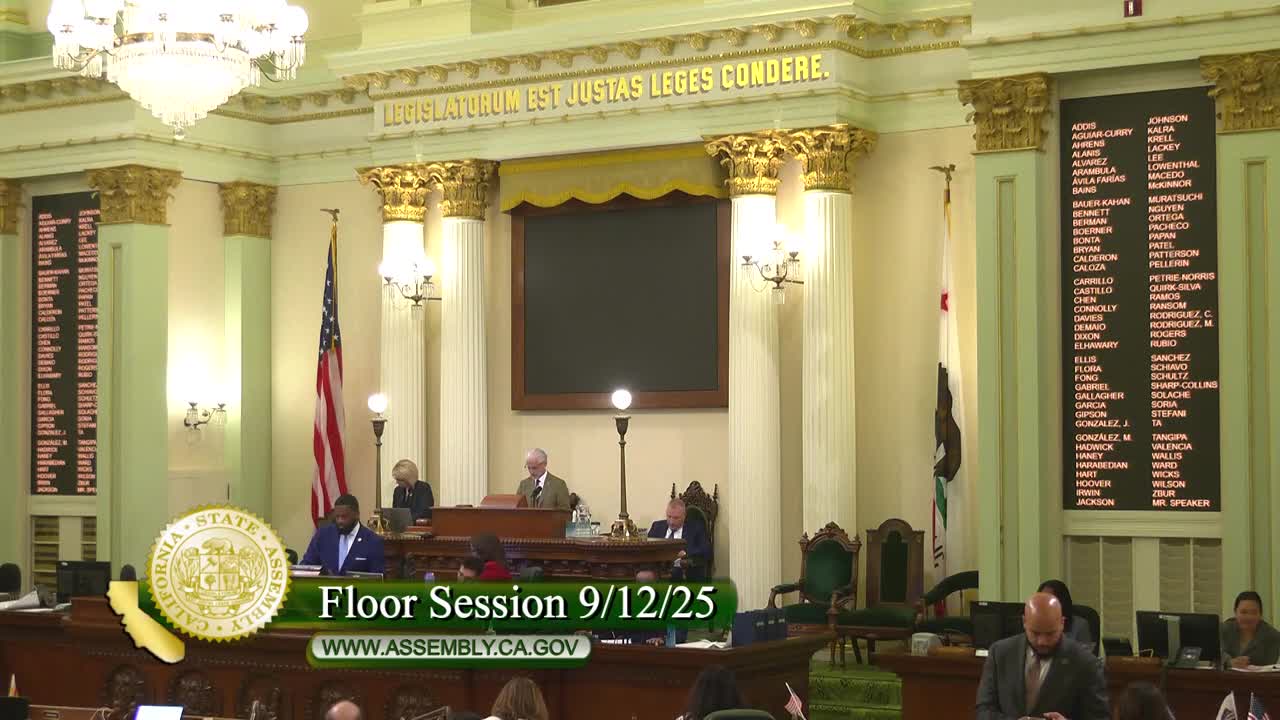
Bill Author
Bill Co-Author(s):