AB 1531: Office of Emergency Services: comprehensive wildfire mitigation program.
- Session Year: 2025-2026
- House: Assembly
- Latest Version Date: 2025-10-01
Current Status:
Passed
(2025-10-01: Chaptered by Secretary of State - Chapter 204, Statutes of 2025.)
Introduced
In Committee
Awaiting First Chamber Vote
Passed First Chamber
In Committee
Awaiting Second Chamber Vote
Passed Second Chamber
Enacted
Existing law, the Joint Exercise of Powers Act, authorizes 2 or more public agencies, if authorized by their legislative or other governing bodies, to enter into an agreement to jointly exercise any power common to the contracting parties, as provided. That act requires, among other things, that the agreement state the purpose of agreement or power to be exercised and provide for the method by which the purpose will be accomplished or the manner in which the power will be exercised.
Existing law, operative until July 1, 2029, requires the Office of Emergency Services to enter into a joint powers agreement with the Department of Forestry and Fire Protection to develop and administer a comprehensive wildfire mitigation program to, among other things, encourage cost-effective structure hardening and retrofitting to create fire-resistant homes, businesses, and public buildings. That law requires the joint powers authority to develop eligibility criteria for property owners, community organizations, and local governments that may receive financial assistance under the wildfire mitigation program.
This bill would require, on or before July 1, 2026, the Department of Insurance to be added as an ex officio nonvoting member to the California Wildfire Mitigation Program Board created pursuant to the joint powers agreement.
Existing law, the Joint Exercise of Powers Act, authorizes 2 or more public agencies, if authorized by their legislative or other governing bodies, to enter into an agreement to jointly exercise any power common to the contracting parties, as provided. That act requires, among other things, that the agreement state the purpose of agreement or power to be exercised and provide for the method by which the purpose will be accomplished or the manner in which the power will be exercised.
Existing law, operative until July 1, 2029, requires the Office of Emergency Services to enter into a joint powers agreement with the Department of Forestry and Fire Protection to develop and administer a comprehensive wildfire mitigation program to, among other things, encourage cost-effective structure hardening and retrofitting to create fire-resistant homes, businesses, and public buildings. That law requires the joint powers authority to develop eligibility criteria for property owners, community organizations, and local governments that may receive financial assistance under the wildfire mitigation program.
This bill would require, on or before July 1, 2026, the Department of Insurance to be added to, and to appoint 2 members to, as an ex officio nonvoting member to the California Wildfire Mitigation Program Board created pursuant to the joint powers agreement.
Existing law, the Joint Exercise of Powers Act, authorizes 2 or more public agencies, if authorized by their legislative or other governing bodies, to enter into an agreement to jointly exercise any power common to the contracting parties, as provided. That act requires, among other things, that the agreement state the purpose of agreement or power to be exercised and provide for the method by which the purpose will be accomplished or the manner in which the power will be exercised.
Existing law, operative until July 1, 2029, requires the Office of Emergency Services to enter into a joint powers agreement with the Department of Forestry and Fire Protection to develop and administer a comprehensive wildfire mitigation program to, among other things, encourage cost-effective structure hardening and retrofitting to create fire-resistant homes, businesses, and public buildings. That law requires the joint powers authority to develop eligibility criteria for property owners, community organizations, and local governments that may receive financial assistance under the wildfire mitigation program.
This bill would require, on or before July 1, 2026, the Department of Insurance to be added to to, and to appoint 2 members to, the California Wildfire Mitigation Program Board created pursuant to the joint powers agreement.
Existing law, the Joint Exercise of Powers Act, authorizes 2 or more public agencies, if authorized by their legislative or other governing bodies, to enter into an agreement to jointly exercise any power common to the contracting parties, as provided. That act requires, among other things, that the agreement state the purpose of agreement or power to be exercised and provide for the method by which the purpose will be accomplished or the manner in which the power will be exercised.
Existing law, operative until July 1, 2029, requires the Office of Emergency Services to enter into a joint powers agreement with the Department of Forestry and Fire Protection to develop and administer a comprehensive wildfire mitigation program to, among other things, encourage cost-effective structure hardening and retrofitting to create fire-resistant homes, businesses, and public buildings. That law requires the joint powers authority to develop eligibility criteria for property owners, community organizations, and local governments that may receive financial assistance under the wildfire mitigation program.
This bill would require, on or before July 1, 2026, the Department of Insurance to be added to the California Wildfire Mitigation Program Board created pursuant to the joint powers agreement.
(a)The Office of Emergency Services shall enter into a joint powers agreement, in accordance with the Joint Exercise of Powers Act (Chapter 5 (commencing with Section 6500) of Division 7 of Title 1) and this article, with the Department of Forestry and Fire Protection to develop and administer a comprehensive wildfire mitigation program to do both of the following:
(1)Encourage cost-effective structure hardening and retrofitting that creates fire-resistant homes, businesses, and public buildings.
(2)Facilitate vegetation management, the creation and maintenance of defensible space, and other fuel modification activities that provide neighborhood or communitywide benefits against wildfire.
(b)The Department of Forestry and Fire Protection shall delegate its duties and responsibilities for this program to the Office of the State Fire Marshal.
(c)On or before July 1, 2026, the Department of Insurance shall be added as an ex officio nonvoting member to the California Wildfire Mitigation Program Board created pursuant to the joint powers agreement described in subdivision (a).
(a)The Office of Emergency Services shall enter into a joint powers agreement, in accordance with the Joint Exercise of Powers Act (Chapter 5 (commencing with Section 6500) of Division 7 of Title 1) and this article, with the Department of Forestry and Fire Protection to develop and administer a comprehensive wildfire mitigation program to do both of the following:
(1)Encourage cost-effective structure hardening and retrofitting that creates fire-resistant homes, businesses, and public buildings.
(2)Facilitate vegetation management, the creation and maintenance of defensible space, and other fuel modification activities that provide neighborhood or communitywide benefits against wildfire.
(b)The Department of Forestry and Fire Protection shall delegate its duties and responsibilities for this program to the Office of the State Fire Marshal.
(c)On or before July 1, 2026, the Department of Insurance shall be added to, and shall appoint two members to, as an ex officio nonvoting member to the California Wildfire Mitigation Program Board created pursuant to the joint powers agreement described in subdivision (a).
(a)The Office of Emergency Services shall enter into a joint powers agreement, in accordance with the Joint Exercise of Powers Act (Chapter 5 (commencing with Section 6500) of Division 7 of Title 1) and this article, with the Department of Forestry and Fire Protection to develop and administer a comprehensive wildfire mitigation program to do both of the following:
(1)Encourage cost-effective structure hardening and retrofitting that creates fire-resistant homes, businesses, and public buildings.
(2)Facilitate vegetation management, the creation and maintenance of defensible space, and other fuel modification activities that provide neighborhood or communitywide benefits against wildfire.
(b)The Department of Forestry and Fire Protection shall delegate its duties and responsibilities for this program to the Office of the State Fire Marshal.
(c)On or before July 1, 2026, the Department of Insurance shall be added to to, and shall appoint two members to, the California Wildfire Mitigation Program Board created pursuant to the joint powers agreement described in subdivision (a).
(a)The Office of Emergency Services shall enter into a joint powers agreement, in accordance with the Joint Exercise of Powers Act (Chapter 5 (commencing with Section 6500) of Division 7 of Title 1) and this article, with the Department of Forestry and Fire Protection to develop and administer a comprehensive wildfire mitigation program to do both of the following:
(1)Encourage cost-effective structure hardening and retrofitting that creates fire-resistant homes, businesses, and public buildings.
(2)Facilitate vegetation management, the creation and maintenance of defensible space, and other fuel modification activities that provide neighborhood or communitywide benefits against wildfire.
(b)The Department of Forestry and Fire Protection shall delegate its duties and responsibilities for this program to the Office of the State Fire Marshal.
(c)On or before July 1, 2026, the Department of Insurance shall be added to the California Wildfire Mitigation Program Board created pursuant to the joint powers agreement described in subdivision (a).
|
Date
|
Status
|
|---|---|
| Oct 1, 2025 | Chaptered by Secretary of State - Chapter 204, Statutes of 2025. |
| Oct 1, 2025 | Approved by the Governor. |
| Sep 22, 2025 | Enrolled and presented to the Governor at 3 p.m. |
| Sep 10, 2025 | Senate amendments concurred in. To Engrossing and Enrolling. (Ayes 79. Noes 0. Page 3185.). |
| Sep 8, 2025 | In Assembly. Concurrence in Senate amendments pending. |
| Sep 8, 2025 | Read third time. Passed. Ordered to the Assembly. (Ayes 39. Noes 0. Page 2626.). |
| Sep 4, 2025 | Read second time. Ordered to third reading. |
| Sep 3, 2025 | Read third time and amended. Ordered to second reading. |
| Sep 3, 2025 | Ordered to third reading. |
| Sep 3, 2025 | From special consent calendar. |
| Sep 2, 2025 | Ordered to special consent calendar. |
| Aug 29, 2025 | Read second time. Ordered to third reading. |
| Aug 29, 2025 | From committee: Do pass. (Ayes 7. Noes 0.) (August 29). |
| Aug 18, 2025 | In committee: Referred to suspense file. |
| Jul 14, 2025 | Read second time and amended. Re-referred to Com. on APPR. |
| Jul 10, 2025 | From committee: Amend, and do pass as amended and re-refer to Com. on APPR. with recommendation: To Consent Calendar. (Ayes 7. Noes 0.) (July 8). |
| Jun 24, 2025 | From committee: Do pass and re-refer to Com. on N.R. & W. with recommendation: To Consent Calendar. (Ayes 15. Noes 0.) (June 24). Re-referred to Com. on N.R. & W. |
| Jun 4, 2025 | Referred to Coms. on G.O. and N.R. & W. |
| May 23, 2025 | In Senate. Read first time. To Com. on RLS. for assignment. |
| May 23, 2025 | Read third time. Passed. Ordered to the Senate. (Ayes 71. Noes 0. Page 1665.) |
| May 15, 2025 | Read second time. Ordered to Consent Calendar. |
| May 14, 2025 | From committee: Do pass. To Consent Calendar. (Ayes 15. Noes 0.) (May 14). |
| Apr 30, 2025 | From committee: Do pass and re-refer to Com. on APPR. with recommendation: To Consent Calendar. (Ayes 16. Noes 0.) (April 30). Re-referred to Com. on APPR. |
| Apr 29, 2025 | From committee: Do pass and re-refer to Com. on INS. (Ayes 7. Noes 0.) (April 28). Re-referred to Com. on INS. |
| Apr 21, 2025 | (Pending re-refer to Com. on INS.) |
| Apr 21, 2025 | Assembly Rule 56 suspended. (Page 1163.) |
| Mar 28, 2025 | Referred to Coms. on E.M and INS. |
| Mar 27, 2025 | From printer. May be heard in committee April 26. |
| Mar 26, 2025 | Read first time. To print. |
|
Date
|
Description
|
Location
|
Votes
|
|
|---|---|---|---|---|
| Sep 10, 2025 | AB 1531 Emergency Management Concurrence in Senate Amendments By RANSOM | Assembly Floor |
Passed |
|
| Sep 8, 2025 | Assembly 3rd Reading AB1531 E.M. (Ransom) By Padilla | Senate Floor |
Passed |
|
| Aug 29, 2025 | Do pass | Senate Standing Committee on Appropriations |
Passed |
|
| Aug 18, 2025 | Placed on suspense file | Senate Standing Committee on Appropriations |
Passed |
|
| Jul 8, 2025 | Do pass as amended, but first amend, and re-refer to the Committee on [Appropriations] with the recommendation: To Consent Calendar | Senate Standing Committee on Natural Resources and Water |
Passed |
|
| Jun 24, 2025 | Do pass, but first be re-referred to the Committee on [Natural Resources and Water] with the recommendation: To Consent Calendar | Senate Standing Committee on Governmental Organization |
Passed |
|
| May 23, 2025 | AB 1531 E.M. Consent Calendar Second Day Regular Session | Assembly Floor |
Passed |
|
| May 14, 2025 | Do pass. To Consent Calendar. | Assembly Standing Committee on Appropriations |
Passed |
|
| Apr 30, 2025 | Do pass and be re-referred to the Committee on [Appropriations] with recommendation: To Consent Calendar | Assembly Standing Committee on Insurance |
Passed |
|
| Apr 28, 2025 | Do pass and be re-referred to the Committee on [Insurance] | Assembly Standing Committee on Emergency Management |
Passed |
This list shows positions taken on this bill by organizations on the date displayed, which is linked to the original source.
Positions by individuals are not included.
|
Organization
|
Position
|
Date
|
|---|---|---|
| CAL Fire | ** Support | |
| California Office of Emergency Services | ** Support | |
| Insurance Commissioner Ricardo Lara | ** Support | |
| Office of the State Fire Marshal | ** Support |
CONCURRENCE IN SENATE AMENDMENTS
CSA1 Bill Id:AB 1531
Author:(Committee on Emergency Management)
As Amended Ver:September 3, 2025
Majority vote
SUMMARY
Adds a representative of the California Department of Insurance to the California Wildfire Mitigation Program Board (CWMPB), on or before July 1, 2026.
Senate Amendments
Adds the California Department of Insurance as an ex-officio member, as opposed to two members, to the CWMPB.
COMMENTS
Equity Impact: According to the author's staff, "people of low socioeconomic status are more likely to live in homes that are vulnerable to disasters and to have their homes damaged or destroyed in the event of a disaster. They are also less likely to be able to afford home hardening or other mitigation projects on their own."
California Wildfire Mitigation Program (CWMP): In 2019, AB 38 (Wood), required Cal OES and Cal FIRE to establish a Joint Powers Authority (JPA) to administer the CWMP. The purpose of the CWMP is to harden homes and establish defensible space in high risk, socially vulnerable communities; and provide financial assistance for low- and moderate-income households. These efforts encourage cost-effective wildfire resilience and hazard mitigation measures to create fire-resistant homes, businesses, public buildings, and public spaces.
The 2020 Budget Act provided $21.9 million General Fund to match federal Hazard Mitigation Grant Program (HMPG) dollars earmarked for the CWMP. The Federal Emergency Management Agency (FEMA) Hazard Mitigation Grant Program (HMGP) is a post- disaster funding program that funds up to 75% of the costs of eligible hazard mitigation projects. Cal OES is working closely with FEMA to use the $21.9 million General Fund to cover the required 25 percent non-federal cost share for communities to participate in hazard mitigation programs.
By matching federal grant dollars, California is increasing the dollars available for the creation of defensible space and wildfire home hardening
In coordination with state and local partners, Cal OES and CAL FIRE are establishing a state wildfire home hardening framework that can be modeled throughout vulnerable California communities. The framework will provide the opportunity for California communities to leverage state and federal resources and develop local wildfire home hardening programs that address community resiliency needs. To help expedite local wildfire home hardening program development and inform build-out of the state's framework, Cal OES and CAL FIRE will provide state funding, resources, and support for demonstration communities to implement community wildfire home hardening projects in areas with high social vulnerability and wildfire risk.
According to the Author
In January 2025, Los Angeles experienced the most catastrophic wildfires in its history. The wildfires that ravaged L.A. County ultimately consumed 55,082 acres. The Palisades and Eaton Fires were the most destructive, burning 23,700 and 14,000 acres, respectively. The fires have claimed at least 29 lives and destroyed over 16,251 structures. Total property and capital losses from the L.A. wildfires could range between $76 billion and $131 billion, with insured losses estimated at $45 billion. These estimates are subject to uncertainty due to a number of factors, including the dynamic nature of wildfires, housing prices, and fire suppression and recovery costs.
California is struggling with an ongoing insurance crisis, where companies are boosting rates, limiting coverage or pulling out completely from regions susceptible to wildfires and other natural disasters. In 2023, several major insurance companies either paused or restricted new business in the state, saying they can't truly price the risk on properties as wildfires become more common and destructive due to climate change.
Arguments in Support
According to the sponsor of the bill, "In an ongoing effort to mitigate the impacts of climate change and the threat of catastrophic wildfires, the California Office of Emergency Services, in collaboration with the CAL FIRE and the Office of the State Fire Marshal, manage California Wildfire Mitigation Board. One of the goals of this board is to leverage federal hazard mitigation funds to harden homes and make communities more wildfire resilient. Given the intersection of wildfire risk and insurance, adding the California Department of Insurance to the Wildfire Mitigation Board makes sense and will ensure a more comprehensive approach to investments in wildfire hazard mitigation projects."
Arguments in Opposition
None on file.
FISCAL COMMENTS
According to the Senate Committee on Appropriations, "Unknown potentially significant costs, likely ranging in the tens to low hundreds of thousands of dollars, for CDI to appoint members to and participate on the CWMP Board (Insurance Fund). The California Department of Forestry and Fire Protection (CAL FIRE) and the Office of Emergency Services (OES) do not anticipate a fiscal impact."
VOTES:
ASM EMERGENCY MANAGEMENT: 7-0-0
YES: Ransom, Hadwick, Arambula, Bains, Bennett, Calderon, DeMaio
ASM INSURANCE: 16-0-1
YES: Calderon, Wallis, Addis, Alvarez, Ávila Farías, Berman, Chen, Ellis, Gipson, Hadwick, Harabedian, Krell, Nguyen, Petrie-Norris, Michelle Rodriguez, Valencia
ABS, ABST OR NV: Ortega
ASM APPROPRIATIONS: 15-0-0
YES: Wicks, Sanchez, Arambula, Calderon, Caloza, Dixon, Elhawary, Fong, Mark González, Hart, Pacheco, Pellerin, Solache, Ta, Tangipa
ASSEMBLY FLOOR: 71-0-8
YES: Addis, Aguiar-Curry, Ahrens, Alanis, Alvarez, Arambula, Ávila Farías, Bains, Bauer-Kahan, Bennett, Berman, Boerner, Bonta, Calderon, Caloza, Carrillo, Castillo, Connolly, Davies, DeMaio, Dixon, Elhawary, Flora, Fong, Gabriel, Gallagher, Garcia, Gipson, Jeff Gonzalez, Mark González, Hadwick, Haney, Harabedian, Hart, Hoover, Irwin, Jackson, Kalra, Krell, Lackey, Lee, Lowenthal, Macedo, McKinnor, Muratsuchi, Ortega, Pacheco, Papan, Patel, Patterson, Pellerin, Petrie-Norris, Quirk-Silva, Ramos, Ransom, Celeste Rodriguez, Michelle Rodriguez, Rogers, Blanca Rubio, Schiavo, Solache, Soria, Stefani, Ta, Tangipa, Valencia, Wallis, Ward, Wilson, Zbur, Rivas
ABS, ABST OR NV: Bryan, Chen, Ellis, Nguyen, Sanchez, Schultz, Sharp-Collins, Wicks
UPDATED
VERSION: September 3, 2025
CONSULTANT: Mike Dayton / E.M. / (916) 319-3802 FN: 0001651
SENATE RULES COMMITTEE Office of Senate Floor Analyses (916) 651-1520 Fax: (916) 327-4478 | AB 1531 |
THIRD READING
Bill No: AB 1531
Author: Committee on Emergency Management
Amended: 9/3/25 in Senate
Vote: 21
SENATE GOVERNMENTAL ORG. COMMITTEE: 15-0, 6/24/25
AYES: Padilla, Archuleta, Ashby, Blakespear, Cervantes, Choi, Dahle, Hurtado, Jones, Ochoa Bogh, Richardson, Rubio, Smallwood-Cuevas, Wahab, Weber Pierson
SENATE NATURAL RES. & WATER COMMITTEE: 7-0, 7/8/25
AYES: Limón, Seyarto, Allen, Grove, Hurtado, Laird, Stern
SENATE APPROPRIATIONS COMMITTEE: 7-0, 8/29/25
AYES: Caballero, Seyarto, Cabaldon, Dahle, Grayson, Richardson, Wahab
ASSEMBLY FLOOR: 71-0, 5/23/25 (Consent) - See last page for vote
SUBJECT: Office of Emergency Services: comprehensive wildfire mitigation program
SOURCE: Author
DIGEST:
This bill adds the Department of Insurance (CDI) to the California Wildfire Mitigation Program (CWMP) Board, as specified.
Senate Floor Amendments of 9/3/25 specify that the CDI be an ex officio nonvoting member of the CWMP Board.
ANALYSIS:
Existing law requires, operative until July 1, 2029, the Office of Emergency Services (OES) to enter into a joint powers agreement with the Department of Forestry and Fire Protection (Cal FIRE) to develop and administer a comprehensive wildfire mitigation program to, among other things, encourage cost-effective structure hardening and retrofitting to create fire-resistant homes, businesses, and public buildings, as specified.
This bill requires, on or before July 1, 2026, the CDI to be added as an ex officio nonvoting member to the CWMP Board, as specified.
Background
Author Statement. According to the author’s office, “in January 2025, Los Angeles experienced the most catastrophic wildfires in its history. The wildfires that ravaged L.A. County ultimately consumed 55,082 acres. The Palisades and Eaton Fires were the most destructive, burning 23,700 and 14,000 acres, respectively. The fires have claimed at least 29 lives and destroyed over 16,251 structures. Total property and capital losses from the L.A. wildfires could range between $76 billion and $131 billion, with insured losses estimated at $45 billion. These estimates are subject to uncertainty due to a number of factors, including the dynamic nature of wildfires, housing prices, and fire suppression and recovery costs.”
Further, “California is struggling with an ongoing insurance crisis, where companies are boosting rates, limiting coverage or pulling out completely from regions susceptible to wildfires and other natural disasters. In 2023, several major insurance companies either paused or restricted new business in the state, saying they can't truly price the risk on properties as wildfires become more common and destructive due to climate change.”
And lastly, “in an ongoing effort to mitigate the impacts of climate change and the threat of catastrophic wildfires, the California Office of Emergency Services, in collaboration with the CAL FIRE and the Office of the State Fire Marshal, manage California Wildfire Mitigation Board. One of the goals of this board is to leverage federal hazard mitigation funds to harden homes and make communities more wildfire resilient. Given the intersection of wildfire risk and insurance, adding the California Department of Insurance to the Wildfire Mitigation Board makes sense and will ensure a more comprehensive approach to investments in wildfire hazard mitigation projects.”
California Wildfire Mitigation Program. AB 38 (Wood, Chapter 391, Statutes of 2019) requires OES to enter into a joint powers agreement with Cal FIRE to develop and administer a comprehensive wildfire mitigation program to encourage cost-effective structure hardening and retrofitting and to facilitate vegetation management, as specified. Known as the CWMP, this effort encourages cost-effective wildfire resilience measures to create fire-resistant homes, businesses, public buildings, and public spaces. Mitigation measures such as home hardening, vegetation management, defensible space, and other fuel modification activities provide neighborhood and community-wide benefits against wildfire.
As part of the 2020 Budget Act, the state committed $21.9 million from the General Fund (GF) to help unlock federal funding through the Federal Emergency Management Agency’s (FEMA) Hazard Mitigation Grant Program (HMGP), which covers up to 75% of the cost for eligible hazard mitigation projects. OES has been partnering with FEMA to use the state’s $21.9 million contribution to meet the 25% non-federal match requirement – making it easier for communities across California to access these critical funds.
By matching federal dollars, California is stretching the investment further, putting more resources on the ground for wildfire home hardening and the creation of defensible space. Working hand-in-hand with local and state partners, OES and Cal FIRE are building a statewide wildfire home hardening framework that can be adapted for use in fire-prone communities across California. The goal is to help communities tap into state and federal funding to build local programs that strengthen wildfire resilience. To jumpstart the effort, the state is providing funding and hands-on support to demonstration communities, targeting areas with the highest wildfire risk and social vulnerability. Community-scale home hardening pilot projects will inform the statewide model. Existing law repeals the CWMP on July 1, 2029.
The CWMP Board meets every third Tuesday of every month at the California Natural Resources Agency building in downtown Sacramento. The meetings are open to the public except when specifically noticed otherwise in accordance with the Bagley-Keene open Meeting Act. The virtual meeting waiting room opens 15 minutes before via Zoom. This bill adds the CDI to the CWMP Board.
California Department of Insurance. The CDI was created in 1868 as part of a national system of state-based insurance regulation. The insurance marketplace has changed dramatically over time, but consumer protection continues to be the core of CDI’s mission. The CDI is the consumer protection agency for the nation’s largest insurance marketplace and safeguards all of the state’s consumers by regulating the insurance industry. Under the Insurance Commissioner’s direction, the CDI uses its authority to protect Californians from insurance rates that are excessive, inadequate, or unfairly discriminatory, oversee insurer solvency to pay claims, set standards for agents and broker licensing, perform market conduct reviews of insurance companies, resolve consumer complaints, and investigate and prosecute insurance fraud.
Wildfire Driven Insurance Crisis. In the wake of increasingly destructive wildfires over the previous decade or so, several major insurers have started to pull out of the California market. Last year, State Farm – California’s largest insurer – announced it would stop issuing new policies in the state. Recently, the company took it a step further saying it will drop coverage for 72,000 homes and apartment buildings over the next year.
Many of those households will likely end up on the California FAIR Plan, the state’s insurer of last resort. Since 2019, the number of homes and commercial properties in wildfire-prone areas covered by the FAIR Plan has more than doubled. As a result, the plan’s liability exposure has skyrocketed to approximately $340 billion as of this winter, according to the FAIR Plan president.
In response, Insurance Commissioner Ricardo Lara has announced a major overhaul of the state’s home insurance rules. New regulations are already in the works to speed up the approval process for rate increases and to allow insurers to use catastrophe modeling in their filings. These changes are expected to take effect by the end of the year.
In 2022, CDI rolled out its “Safer from Wildfires” framework, a first-of-its-kind regulation requiring insurance companies to offer discounts to homeowners and businesses that take specific wildfire mitigation steps. The framework was developed in coordination with Cal FIRE, OES, the Governor’s Office of Planning and Research, and the California Public Utility Commission.
Insurance companies must update their rate filings to reflect these new safety standards and offer transparent risk information. That includes sharing a property’s wildfire risk score with consumers and giving them the rights to appeal that score if they believe it is inaccurate. Under the regulation, the more “Safer from Wildfires” steps a consumer takes, the more likely they may be able to save on their insurance.
Once fully implemented, this approach should help shift the insurance market toward rewarding resilience, giving homeowners a clearer path to both lower premiums and safer homes. Some of the steps property owners can take under the “Safer from Wildfires” framework include:
a. Class-A fire rated roof.
b. Five-foot ember resistant zones.
c. Ember- and fire-resistant vents.
d. Non-combustible six inches at the bottom of exterior walls.
e. Enclosed eaves.
f. Upgraded windows.
g. Cleared vegetation, weeds, and debris from under decks.
h. Removal of combustible sheds and other buildings to a distance of 30 feet.
i. Defensible space compliance.
Back to the Future. This bill is similar to, while narrower than, AB 2983 (Rodriguez, 2024) of last year. That bill would have added CDI to the CWMP Board as well as requiring the CWMP to assess the extent to which a project or proposal under the program would increase the availability of insurance policies covering damage from fire, as specified. That bill was vetoed by Governor Newsom who wrote, in part:
While I appreciate the author’s goal to add insurance considerations to the Board’s work, this bill could lead to misleading expectations for homeowners as there is no guarantee that the additional assessments required by this bill would result in increased access to insurance. Further, the additional requirements for proposals or projects could lead some communities to opt out of critical wildfire mitigation work that could help prevent a homeowner from ever having to file an insurance claim, which ultimately supports the market and market rate stability.
Related/Prior Legislation
AB 2983 (Rodriguez, 2024) would have required CDI to be added to the CWMP Board and would have required the CWMP to assess the extent to which a project or proposal under the program would increase the availability of insurance policies covering damage from fire, as specified. (Vetoed by Governor Newsom)
AB 9 (Wood, Chapter 225, Statutes of 2021) established, among other things, the Community Wildfire Mitigation Assistance Program to coordinate regional and local efforts with state policies, strategies, and programs for community wildfire mitigation in order to improve wildfire preparedness and prevention, with an emphasis on the most vulnerable communities, as specified.
AB 38 (Wood, Chapter 391, Statutes of 2019) required, among other things, OES to enter into a joint powers agreement with Cal FIRE to administer a comprehensive wildfire mitigation and assistance program to encourage cost-effective structure hardening and facilitate vegetation management, as specified.
FISCAL EFFECT: Appropriation: No Fiscal Com.: Yes Local: No
According to the Senate Appropriations Committee, unknown potentially significant costs, likely ranging in the tens to low hundreds of thousands of dollars, for CDI to appoint members to and participate on the CWMP Board (Insurance Fund).
SUPPORT: (Verified 9/4/25)
Insurance Commissioner Ricardo Lara
OPPOSITION: (Verified 9/4/25)
None received
ARGUMENTS IN SUPPORT: In support of this bill, California’s Insurance Commissioner Ricard Lara writes that, “AB 1531 aligns with CDI’s ongoing initiatives, including my Sustainable Insurance Strategy and first-in-the-nation Safer from Wildfires regulations. The Sustainable Insurance Strategy represents a pivotal effort to get our state’s insurance market back on track, ensuring it thrives for the benefit of all Californians while helping address the impact of climate change on our state. CDI has a track record of actively addressing insurance market challenges to benefit consumers and facing evolving market challenges, particularly in the context of climate change. I believe my Department serving on the CWMP Board would provide a vital link between our state’s mitigation funding efforts and provide perspective on the impact of climate change and mitigation measures on insurance availability and affordability.”
ASSEMBLY FLOOR: 71-0, 5/23/25
AYES: Addis, Aguiar-Curry, Ahrens, Alanis, Alvarez, Arambula, Ávila Farías, Bains, Bauer-Kahan, Bennett, Berman, Boerner, Bonta, Calderon, Caloza, Carrillo, Castillo, Connolly, Davies, DeMaio, Dixon, Elhawary, Flora, Fong, Gabriel, Gallagher, Garcia, Gipson, Jeff Gonzalez, Mark González, Hadwick, Haney, Harabedian, Hart, Hoover, Irwin, Jackson, Kalra, Krell, Lackey, Lee, Lowenthal, Macedo, McKinnor, Muratsuchi, Ortega, Pacheco, Papan, Patel, Patterson, Pellerin, Petrie-Norris, Quirk-Silva, Ramos, Ransom, Celeste Rodriguez, Michelle Rodriguez, Rogers, Blanca Rubio, Schiavo, Solache, Soria, Stefani, Ta, Tangipa, Valencia, Wallis, Ward, Wilson, Zbur, Rivas
NO VOTE RECORDED: Bryan, Chen, Ellis, Nguyen, Sanchez, Schultz, Sharp-Collins, Wicks
Prepared by: Brian Duke / G.O. / (916) 651-1530
9/6/25 10:40:12
**** END ****
SENATE RULES COMMITTEE Office of Senate Floor Analyses (916) 651-1520 Fax: (916) 327-4478 | AB 1531 |
THIRD READING
Bill No: AB 1531
Author: Committee on Emergency Management
Amended: 7/14/25 in Senate
Vote: 21
SENATE GOVERNMENTAL ORG. COMMITTEE: 15-0, 6/24/25
AYES: Padilla, Archuleta, Ashby, Blakespear, Cervantes, Choi, Dahle, Hurtado, Jones, Ochoa Bogh, Richardson, Rubio, Smallwood-Cuevas, Wahab, Weber Pierson
SENATE NATURAL RES. & WATER COMMITTEE: 7-0, 7/8/25
AYES: Limón, Seyarto, Allen, Grove, Hurtado, Laird, Stern
SENATE APPROPRIATIONS COMMITTEE: 7-0, 8/29/25
AYES: Caballero, Seyarto, Cabaldon, Dahle, Grayson, Richardson, Wahab
ASSEMBLY FLOOR: 71-0, 5/23/25 (Consent) - See last page for vote
SUBJECT: Office of Emergency Services: comprehensive wildfire mitigation program
SOURCE: Author
DIGEST:
This bill adds the Department of Insurance (CDI) to the California Wildfire Mitigation Program (CWMP) Board, as specified.
ANALYSIS:
Existing law:
- Requires, operative until July 1, 2029, the Office of Emergency Services (OES) to enter into a joint powers agreement with the Department of Forestry and Fire Protection (Cal FIRE) to develop and administer a comprehensive wildfire mitigation program to, among other things, encourage cost-effective structure hardening and retrofitting to create fire-resistant homes, businesses, and public buildings, as specified.
- This bill requires, on or before July 1, 2026, the CDI to be added to the CWMP Board, as specified.
Background
Author Statement. According to the author’s office, “in January 2025, Los Angeles experienced the most catastrophic wildfires in its history. The wildfires that ravaged L.A. County ultimately consumed 55,082 acres. The Palisades and Eaton Fires were the most destructive, burning 23,700 and 14,000 acres, respectively. The fires have claimed at least 29 lives and destroyed over 16,251 structures. Total property and capital losses from the L.A. wildfires could range between $76 billion and $131 billion, with insured losses estimated at $45 billion. These estimates are subject to uncertainty due to a number of factors, including the dynamic nature of wildfires, housing prices, and fire suppression and recovery costs.”
Further, “California is struggling with an ongoing insurance crisis, where companies are boosting rates, limiting coverage or pulling out completely from regions susceptible to wildfires and other natural disasters. In 2023, several major insurance companies either paused or restricted new business in the state, saying they can't truly price the risk on properties as wildfires become more common and destructive due to climate change.”
And lastly, “in an ongoing effort to mitigate the impacts of climate change and the threat of catastrophic wildfires, the California Office of Emergency Services, in collaboration with the CAL FIRE and the Office of the State Fire Marshal, manage California Wildfire Mitigation Board. One of the goals of this board is to leverage federal hazard mitigation funds to harden homes and make communities more wildfire resilient. Given the intersection of wildfire risk and insurance, adding the California Department of Insurance to the Wildfire Mitigation Board makes sense and will ensure a more comprehensive approach to investments in wildfire hazard mitigation projects.”
California Wildfire Mitigation Program. AB 38 (Wood, Chapter 391, Statutes of 2019) requires OES to enter into a joint powers agreement with Cal FIRE to develop and administer a comprehensive wildfire mitigation program to encourage cost-effective structure hardening and retrofitting and to facilitate vegetation management, as specified. Known as the CWMP, this effort encourages cost-effective wildfire resilience measures to create fire-resistant homes, businesses, public buildings, and public spaces. Mitigation measures such as home hardening, vegetation management, defensible space, and other fuel modification activities provide neighborhood and community-wide benefits against wildfire.
As part of the 2020 Budget Act, the state committed $21.9 million from the General Fund (GF) to help unlock federal funding through the Federal Emergency Management Agency’s (FEMA) Hazard Mitigation Grant Program (HMGP), which covers up to 75% of the cost for eligible hazard mitigation projects. OES has been partnering with FEMA to use the state’s $21.9 million contribution to meet the 25% non-federal match requirement – making it easier for communities across California to access these critical funds.
By matching federal dollars, California is stretching the investment further, putting more resources on the ground for wildfire home hardening and the creation of defensible space. Working hand-in-hand with local and state partners, OES and Cal FIRE are building a statewide wildfire home hardening framework that can be adapted for use in fire-prone communities across California. The goal is to help communities tap into state and federal funding to build local programs that strengthen wildfire resilience. To jumpstart the effort, the state is providing funding and hands-on support to demonstration communities, targeting areas with the highest wildfire risk and social vulnerability. Community-scale home hardening pilot projects will inform the statewide model. Existing law repeals the CWMP on July 1, 2029.
The CWMP Board meets every third Tuesday of every month at the California Natural Resources Agency building in downtown Sacramento. The meetings are open to the public except when specifically noticed otherwise in accordance with the Bagley-Keene open Meeting Act. The virtual meeting waiting room opens 15 minutes before via Zoom. This bill adds the CDI to the CWMP Board.
California Department of Insurance. The CDI was created in 1868 as part of a national system of state-based insurance regulation. The insurance marketplace has changed dramatically over time, but consumer protection continues to be the core of CDI’s mission. The CDI is the consumer protection agency for the nation’s largest insurance marketplace and safeguards all of the state’s consumers by regulating the insurance industry. Under the Insurance Commissioner’s direction, the CDI uses its authority to protect Californians from insurance rates that are excessive, inadequate, or unfairly discriminatory, oversee insurer solvency to pay claims, set standards for agents and broker licensing, perform market conduct reviews of insurance companies, resolve consumer complaints, and investigate and prosecute insurance fraud.
Wildfire Driven Insurance Crisis. In the wake of increasingly destructive wildfires over the previous decade or so, several major insurers have started to pull out of the California market. Last year, State Farm – California’s largest insurer – announced it would stop issuing new policies in the state. Recently, the company took it a step further saying it will drop coverage for 72,000 homes and apartment buildings over the next year.
Many of those households will likely end up on the California FAIR Plan, the state’s insurer of last resort. Since 2019, the number of homes and commercial properties in wildfire-prone areas covered by the FAIR Plan has more than doubled. As a result, the plan’s liability exposure has skyrocketed to approximately $340 billion as of this winter, according to the FAIR Plan president.
In response, Insurance Commissioner Ricardo Lara has announced a major overhaul of the state’s home insurance rules. New regulations are already in the works to speed up the approval process for rate increases and to allow insurers to use catastrophe modeling in their filings. These changes are expected to take effect by the end of the year.
In 2022, CDI rolled out its “Safer from Wildfires” framework, a first-of-its-kind regulation requiring insurance companies to offer discounts to homeowners and businesses that take specific wildfire mitigation steps. The framework was developed in coordination with Cal FIRE, OES, the Governor’s Office of Planning and Research, and the California Public Utility Commission.
Insurance companies must update their rate filings to reflect these new safety standards and offer transparent risk information. That includes sharing a property’s wildfire risk score with consumers and giving them the rights to appeal that score if they believe it is inaccurate. Under the regulation, the more “Safer from Wildfires” steps a consumer takes, the more likely they may be able to save on their insurance.
Once fully implemented, this approach should help shift the insurance market toward rewarding resilience, giving homeowners a clearer path to both lower premiums and safer homes. Some of the steps property owners can take under the “Safer from Wildfires” framework include:
a. Class-A fire rated roof.
b. Five-foot ember resistant zones.
c. Ember- and fire-resistant vents.
d. Non-combustible six inches at the bottom of exterior walls.
e. Enclosed eaves.
f. Upgraded windows.
g. Cleared vegetation, weeds, and debris from under decks.
h. Removal of combustible sheds and other buildings to a distance of 30 feet.
i. Defensible space compliance.
Back to the Future. This bill is similar to, while narrower than, AB 2983 (Rodriguez, 2024) of last year. That bill would have added CDI to the CWMP Board as well as requiring the CWMP to assess the extent to which a project or proposal under the program would increase the availability of insurance policies covering damage from fire, as specified.
That bill was vetoed by Governor Newsom who wrote, in part:
While I appreciate the author’s goal to add insurance considerations to the Board’s work, this bill could lead to misleading expectations for homeowners as there is no guarantee that the additional assessments required by this bill would result in increased access to insurance. Further, the additional requirements for proposals or projects could lead some communities to opt out of critical wildfire mitigation work that could help prevent a homeowner from ever having to file an insurance claim, which ultimately supports the market and market rate stability.
Prior/Related Legislation
AB 2983 (Rodriguez, 2024) would have required CDI to be added to the CWMP Board and would have required the CWMP to assess the extent to which a project or proposal under the program would increase the availability of insurance policies covering damage from fire, as specified. (Vetoed by Governor Newsom)
AB 9 (Wood, Chapter 225, Statutes of 2021) among other things, established the Community Wildfire Mitigation Assistance Program to coordinate regional and local efforts with state policies, strategies, and programs for community wildfire mitigation in order to improve wildfire preparedness and prevention, with an emphasis on the most vulnerable communities, as specified.
AB 38 (Wood, Chapter 391, Statutes of 2019) among other things, required OES to enter into a joint powers agreement with Cal FIRE to administer a comprehensive wildfire mitigation and assistance program to encourage cost-effective structure hardening and facilitate vegetation management, as specified.
FISCAL EFFECT: Appropriation: No Fiscal Com.: Yes Local: No
According to the Senate Appropriations Committee, unknown potentially significant costs, likely ranging in the tens to low hundreds of thousands of dollars, for CDI to appoint members to and participate on the CWMP Board (Insurance Fund).
CAL FIRE and OES do not anticipate a fiscal impact.
SUPPORT: (Verified 8/29/25)
Insurance Commissioner Ricardo Lara
OPPOSITION: (Verified 8/29/25)
None received
ARGUMENTS IN SUPPORT: In support of this bill, California’s Insurance Commissioner Ricard Lara writes that, “AB 1531 aligns with CDI’s ongoing initiatives, including my Sustainable Insurance Strategy and first-in-the-nation Safer from Wildfires regulations. The Sustainable Insurance Strategy represents a pivotal effort to get our state’s insurance market back on track, ensuring it thrives for the benefit of all Californians while helping address the impact of climate change on our state. CDI has a track record of actively addressing insurance market challenges to benefit consumers and facing evolving market challenges, particularly in the context of climate change. I believe my Department serving on the CWMP Board would provide a vital link between our state’s mitigation funding efforts and provide perspective on the impact of climate change and mitigation measures on insurance availability and affordability.”
ASSEMBLY FLOOR: 71-0, 5/23/25
AYES: Addis, Aguiar-Curry, Ahrens, Alanis, Alvarez, Arambula, Ávila Farías, Bains, Bauer-Kahan, Bennett, Berman, Boerner, Bonta, Calderon, Caloza, Carrillo, Castillo, Connolly, Davies, DeMaio, Dixon, Elhawary, Flora, Fong, Gabriel, Gallagher, Garcia, Gipson, Jeff Gonzalez, Mark González, Hadwick, Haney, Harabedian, Hart, Hoover, Irwin, Jackson, Kalra, Krell, Lackey, Lee, Lowenthal, Macedo, McKinnor, Muratsuchi, Ortega, Pacheco, Papan, Patel, Patterson, Pellerin, Petrie-Norris, Quirk-Silva, Ramos, Ransom, Celeste Rodriguez, Michelle Rodriguez, Rogers, Blanca Rubio, Schiavo, Solache, Soria, Stefani, Ta, Tangipa, Valencia, Wallis, Ward, Wilson, Zbur, Rivas
NO VOTE RECORDED: Bryan, Chen, Ellis, Nguyen, Sanchez, Schultz, Sharp-Collins, Wicks
Prepared by: Brian Duke / G.O. / (916) 651-1530
8/29/25 21:25:01
**** END ****
SENATE COMMITTEE ON APPROPRIATIONS
Senator Anna Caballero, Chair
2025 - 2026 Regular Session
AB 1531 (Committee on Emergency Management) - Office of Emergency Services: comprehensive wildfire mitigation program
Version: July 14, 2025 | Policy Vote: G.O. 15 - 0, N.R. & W. 7 - 0 |
Urgency: No | Mandate: No |
Hearing Date: August 18, 2025 | Consultant: Janelle Miyashiro |
Bill Summary:
AB 1531 requires, by July 1, 2026, the California Department of Insurance (CDI) to appoint two members to and participate on the California Wildfire Mitigation Program (CWMP) Board.
Fiscal Impact:
- Unknown potentially significant costs, likely ranging in the tens to low hundreds of thousands of dollars, for CDI to appoint members to and participate on the CWMP Board (Insurance Fund).
- The California Department of Forestry and Fire Protection (CAL FIRE) and the Office of Emergency Services (OES) do not anticipate a fiscal impact.
Background:
AB 38 (Wood, Chapter 391, Statutes of 2019) requires OES to enter into a joint powers agreement with Cal FIRE to develop and administer a comprehensive wildfire mitigation program to encourage cost-effective structure hardening and retrofitting and to facilitate vegetation management, as specified. Known as the CWMP, this effort encourages cost-effective wildfire resilience measures to create fire-resistant homes, businesses, public buildings, and public spaces. Mitigation measures such as home hardening, vegetation management, defensible space, and other fuel modification activities provide neighborhood and community-wide benefits against wildfire.
The CWMP Board meets every third Tuesday of every month at the California Natural Resources Agency building in downtown Sacramento. The meetings are open to the public except when specifically noticed otherwise in accordance with the Bagley-Keene open Meeting Act. The virtual meeting waiting room opens 15 minutes before via Zoom.
Proposed Law:
Requires, by July 1, 2026, CDI to be added to, and appoint two members to, the CWMP Board created by the joint powers agreement between OES and CAL FIRE.
-- END --
SENATE COMMITTEE ON GOVERNMENTAL ORGANIZATION
Senator Steve Padilla
Chair
2025 - 2026 Regular
Bill No: 1531 Hearing Date: 6/24/2025
Author: | |||
Version: | 3/26/2025 Introduced | ||
Urgency: | No | Fiscal: | Yes |
Consultant: | Brian Duke | ||
SUBJECT: Office of Emergency Services: comprehensive wildfire mitigation program
DIGEST: This bill adds the Department of Insurance (CDI) to the California Wildfire Mitigation Program (CWMP) Board, as specified.
ANALYSIS:
Existing law:
- Requires, operative until July 1, 2029, the Office of Emergency Services (OES) to enter into a joint powers agreement with the Department of Forestry and Fire Protection (Cal FIRE) to develop and administer a comprehensive wildfire mitigation program to, among other things, encourage cost-effective structure hardening and retrofitting to create fire-resistant homes, businesses, and public buildings, as specified.
- Requires the joint powers authority to develop eligibility criteria for property owners, community organizations, and local governments that may receive financial assistance under the wildfire mitigation program, as specified.
This bill requires, on or before July 1, 2026, the CDI to be added to the CWMP Board, as specified.
Background
Author Statement. According to the author’s office, “in January 2025, Los Angeles experienced the most catastrophic wildfires in its history. The wildfires that ravaged L.A. County ultimately consumed 55,082 acres. The Palisades and Eaton Fires were the most destructive, burning 23,700 and 14,000 acres, respectively. The fires have claimed at least 29 lives and destroyed over 16,251 structures. Total property and capital losses from the L.A. wildfires could range between $76 billion and $131 billion, with insured losses estimated at $45 billion. These estimates are subject to uncertainty due to a number of factors, including the dynamic nature of wildfires, housing prices, and fire suppression and recovery costs.”
Further, “California is struggling with an ongoing insurance crisis, where companies are boosting rates, limiting coverage or pulling out completely from regions susceptible to wildfires and other natural disasters. In 2023, several major insurance companies either paused or restricted new business in the state, saying they can't truly price the risk on properties as wildfires become more common and destructive due to climate change.”
And lastly, “in an ongoing effort to mitigate the impacts of climate change and the threat of catastrophic wildfires, the California Office of Emergency Services, in collaboration with the CAL FIRE and the Office of the State Fire Marshal, manage California Wildfire Mitigation Board. One of the goals of this board is to leverage federal hazard mitigation funds to harden homes and make communities more wildfire resilient. Given the intersection of wildfire risk and insurance, adding the California Department of Insurance to the Wildfire Mitigation Board makes sense and will ensure a more comprehensive approach to investments in wildfire hazard mitigation projects.”
California Wildfire Mitigation Program. AB 38 (Wood, Chapter 391, Statutes of 2019) requires OES to enter into a joint powers agreement with Cal FIRE to develop and administer a comprehensive wildfire mitigation program to encourage cost-effective structure hardening and retrofitting and to facilitate vegetation management, as specified. Known as the CWMP, this effort encourages cost-effective wildfire resilience measures to create fire-resistant homes, businesses, public buildings, and public spaces. Mitigation measures such as home hardening, vegetation management, defensible space, and other fuel modification activities provide neighborhood and community-wide benefits against wildfire.
As part of the 2020 Budget Act, the state committed $21.9 million from the General Fund (GF) to help unlock federal funding through the Federal Emergency Management Agency’s (FEMA) Hazard Mitigation Grant Program (HMGP), which covers up to 75% of the cost for eligible hazard mitigation projects. OES has been partnering with FEMA to use the state’s $21.9 million contribution to meet the 25% non-federal match requirement – making it easier for communities across California to access these critical funds.
By matching federal dollars, California is stretching the investment further, putting more resources on the ground for wildfire home hardening and the creation of defensible space. Working hand-in-hand with local and state partners, OES and Cal FIRE are building a statewide wildfire home hardening framework that can be adapted for use in fire-prone communities across California. The goal is to help communities tap into state and federal funding to build local programs that strengthen wildfire resilience. To jumpstart the effort, the state is providing funding and hands-on support to demonstration communities, targeting areas with the highest wildfire risk and social vulnerability. Community-scale home hardening pilot projects will inform the statewide model. Existing law repeals the CWMP on July 1, 2029.
The CWMP Board meets every third Tuesday of every month at the California Natural Resources Agency building in downtown Sacramento. The meetings are open to the public except when specifically noticed otherwise in accordance with the Bagley-Keene open Meeting Act. The virtual meeting waiting room opens 15 minutes before via Zoom. This bill adds the CDI to the CWMP Board.
California Department of Insurance. The CDI was created in 1868 as part of a national system of state-based insurance regulation. The insurance marketplace has changed dramatically over time, but consumer protection continues to be the core of CDI’s mission. The CDI is the consumer protection agency for the nation’s largest insurance marketplace and safeguards all of the state’s consumers by regulating the insurance industry. Under the Insurance Commissioner’s direction, the CDI uses its authority to protect Californians from insurance rates that are excessive, inadequate, or unfairly discriminatory, oversee insurer solvency to pay claims, set standards for agents and broker licensing, perform market conduct reviews of insurance companies, resolve consumer complaints, and investigate and prosecute insurance fraud.
Wildfire Driven Insurance Crisis. In the wake of increasingly destructive wildfires over the previous decade or so, several major insurers have started to pull out of the California market. Last year, State Farm – California’s largest insurer – announced it would stop issuing new policies in the state. Recently, the company took it a step further saying it will drop coverage for 72,000 homes and apartment buildings over the next year.
Many of those households will likely end up on the California FAIR Plan, the state’s insurer of last resort. Since 2019, the number of homes and commercial properties in wildfire-prone areas covered by the FAIR Plan has more than doubled. As a result, the plan’s liability exposure has skyrocketed to approximately $340 billion as of this winter, according to the FAIR Plan president.
In response, Insurance Commissioner Ricardo Lara has announced a major overhaul of the state’s home insurance rules. New regulations are already in the works to speed up the approval process for rate increases and to allow insurers to use catastrophe modeling in their filings. These changes are expected to take effect by the end of the year.
In 2022, CDI rolled out its “Safer from Wildfires” framework, a first-of-its-kind regulation requiring insurance companies to offer discounts to homeowners and businesses that take specific wildfire mitigation steps. The framework was developed in coordination with Cal FIRE, OES, the Governor’s Office of Planning and Research, and the California Public Utility Commission.
Insurance companies must update their rate filings to reflect these new safety standards and offer transparent risk information. That includes sharing a property’s wildfire risk score with consumers and giving them the rights to appeal that score if they believe it is inaccurate. Under the regulation, the more “Safer from Wildfires” steps a consumer takes, the more likely they may be able to save on their insurance.
Once fully implemented, this approach should help shift the insurance market toward rewarding resilience, giving homeowners a clearer path to both lower premiums and safer homes. Some of the steps property owners can take under the “Safer from Wildfires” framework include:
a. Class-A fire rated roof.
b. Five-foot ember resistant zones.
c. Ember- and fire-resistant vents.
d. Non-combustible six inches at the bottom of exterior walls.
e. Enclosed eaves.
f. Upgraded windows.
g. Cleared vegetation, weeds, and debris from under decks.
h. Removal of combustible sheds and other buildings to a distance of 30 feet.
i. Defensible space compliance.
Back to the Future. This bill is similar to, while narrower than, AB 2983 (Rodriguez, 2024) of last year. That bill would have added CDI to the CWMP Board as well as requiring the CWMP to assess the extent to which a project or proposal under the program would increase the availability of insurance policies covering damage from fire, as specified.
That bill was vetoed by Governor Newsom who wrote, in part:
While I appreciate the author’s goal to add insurance considerations to the Board’s work, this bill could lead to misleading expectations for homeowners as there is no guarantee that the additional assessments required by this bill would result in increased access to insurance. Further, the additional requirements for proposals or projects could lead some communities to opt out of critical wildfire mitigation work that could help prevent a homeowner from ever having to file an insurance claim, which ultimately supports the market and market rate stability.
Prior/Related Legislation
AB 2983 (Rodriguez, 2024) would have required CDI to be added to the CWMP Board and would have required the CWMP to assess the extent to which a project or proposal under the program would increase the availability of insurance policies covering damage from fire, as specified. (Vetoed by Governor Newsom)
AB 9 (Wood, Chapter 225, Statutes of 2021) among other things, established the Community Wildfire Mitigation Assistance Program to coordinate regional and local efforts with state policies, strategies, and programs for community wildfire mitigation in order to improve wildfire preparedness and prevention, with an emphasis on the most vulnerable communities, as specified.
AB 38 (Wood, Chapter 391, Statutes of 2019) among other things, required OES to enter into a joint powers agreement with Cal FIRE to administer a comprehensive wildfire mitigation and assistance program to encourage cost-effective structure hardening and facilitate vegetation management, as specified.
FISCAL EFFECT: Appropriation: Fiscal Com.: Local:
SUPPORT:
None received
OPPOSITION:
None received
DUAL-REFERRAL: Senate Committee on Governmental Organization and Senate Committee on Natural Resources & Water
Date of Hearing: May 14, 2025
ASSEMBLY COMMITTEE ON APPROPRIATIONS
Buffy Wicks, Chair
ABPCA Bill Id:AB 1531
Author:(Committee on Emergency Management) – As Introduced Ver:March 26, 2025
Policy Committee: | Emergency Management | Vote: | 7 - 0 |
Insurance | 16 - 0 | ||
|
|
Urgency: No State Mandated Local Program: No Reimbursable: No
SUMMARY:
This bill requires, by July 1, 2026, the addition of the Department of Insurance (CDI) to the California Wildfire Mitigation Program Board (CWMP Board).
FISCAL EFFECT:
Costs of approximately $32,000 in fiscal year (FY) 2025-26, $133,000 in FY 2026-27, and $64,000 in FY 2027-28 and annually thereafter to CDI to participate on the CWMP Board (Insurance Fund).
COMMENTS:
- Purpose. According to the author:
One of the goals of [the CWMP Board] is to leverage federal hazard mitigation funds to harden homes and make communities more wildfire resilient. Given the intersection of wildfire risk and insurance, adding [CDI] to the [CWMP Board] makes sense and will ensure a more comprehensive approach to investments in wildfire hazard mitigation projects.
- California Wildfire Mitigation Program (CWMP). AB 38 (Wood), Chapter 391, Statutes of 2019, created the CWMP, a joint powers authority between the Office of Emergency Services (OES) and the Department of Forestry and Fire Protection (CAL FIRE) to develop and administer a comprehensive wildfire mitigation program to encourage cost-effective structure hardening and retrofitting in high-risk, socially vulnerable communities and provide financial assistance for low- and moderate-income households.
The CWMP Board is comprised by two members each from OES and CAL FIRE. The Budget Act of 2020 provided $21.9 million General Fund to match federal Hazard Mitigation Grant Program (HMGP) funds earmarked for the CWMP. HMGP is a post-disaster Federal Emergency Management Agency (FEMA) funding program that provides up to 75% of the costs of eligible hazard mitigation projects. After conducting a statewide assessment of regions with elevated wildfire threat and social vulnerability, OES and CAL FIRE chose six counties as initial pilot sites for the CWMP. However, as part of HMGP requirements, projects must comply with federal and state environmental and historic preservation laws and complete a review and approval process before FEMA may obligate HMGP funds and OES may encumber the money. The CWMP was originally slated to sunset on July 1, 2025, before the completion of approved pilot projects, but AB 2469 (Committee on Emergency Management), Chapter 402, Statutes of 2024, extended the sunset date to July 1, 2029. This bill adds CDI to the CWMP Board to oversee program administration.
- Related Legislation. AB 441 (Hadwick) eliminates the July 1, 2029, repeal date of the CWMP. AB 441 is pending on this committee’s suspense file.
- Prior Legislation. AB 2983 (Rodriguez), of the 2023-24 Legislative Session, would have required the CWMP Board to assess the extent to which a project would increase the availability of insurance policies covering fire damage and also contained this bill’s provision to add CDI to the CWMP Board. AB 2983 was vetoed by Governor Newsom, but the veto message focused on AB 2983’s assessment provisions.
Analysis Prepared by: Irene Ho / APPR. / (916) 319-2081
Date of Hearing: April 30, 2025
ASSEMBLY COMMITTEE ON INSURANCE
Lisa Calderon, Chair
ABPCA Bill Id:AB 1531 (
Author:Committee on Emergency Management) – As Introduced Ver:March 26, 2025
SUBJECT: Office of Emergency Services: comprehensive wildfire mitigation program
SUMMARY: Requires the California Department of Insurance (CDI) to be added to the California Wildfire Mitigation Program (CWMP) Board on or before July 1, 2026.
EXISTING LAW:
- Provides for the regulation of insurers, agents and brokers, and other insurance-like organizations by the Insurance Commissioner, and imposes a broad range of financial solvency, licensing, and market behavior requirements, as set forth in the Insurance Code.
- Establishes the “Safer from Wildfires” Framework. (Section 2644.9 of Title 10 of the California Code of Regulations)
- Under the California Emergency Services Act, establishes the California Office of Emergency Services (Cal OES) within the office of the Governor for the purpose of mitigating the effects of natural, manmade, or war-caused emergencies. (Government Code, Section 8550)
- Requires CAL OES to enter into a joint powers agreement with the Department of Forestry and Fire Protection, to develop and administer a comprehensive wildfire mitigation program to, among other things, encourage cost-effective structure hardening and retrofitting to create fire-resistant homes, businesses, and public buildings. (Government Code, Section 8654.4)
- Requires the joint powers authority (JPA) to develop eligibility criteria for property owners, community organizations, and local governments that may receive financial assistance under the wildfire mitigation program. (Government Code, Section 8654.4)
FISCAL EFFECT: Unknown
COMMENTS:
- Purpose of the bill: According to the committee authors of this measure, “In January 2025, Los Angeles experienced the most catastrophic wildfires in its history. The wildfires that ravaged L.A. County ultimately consumed 55,082 acres. The Palisades and Eaton Fires were the most destructive, burning 23,700 and 14,000 acres, respectively. The fires have claimed at least 29 lives and destroyed over 16,251 structures. Total property and capital losses from the L.A. wildfires could range between $76 billion and $131 billion, with insured losses estimated at $45 billion. These estimates are subject to uncertainty due to a number of factors, including the dynamic nature of wildfires, housing prices, and fire suppression and recovery costs.
California is struggling with an ongoing insurance crisis, where companies are boosting rates, limiting coverage or pulling out completely from regions susceptible to wildfires and other natural disasters. In 2023, several major insurance companies either paused or restricted new business in the state, saying they can't truly price the risk on properties as wildfires become more common and destructive due to climate change.
In an ongoing effort to mitigate the impacts of climate change and the threat of catastrophic wildfires, the California Office of Emergency Services, in collaboration with CAL FIRE and the Office of the State Fire Marshal, manage the California Wildfire Mitigation Board. One of the goals of this board is to leverage federal hazard mitigation funds to harden homes and make communities more wildfire resilient. Given the intersection of wildfire risk and insurance, adding the California Department of Insurance to the Wildfire Mitigation Board makes sense and will ensure a more comprehensive approach to investments in wildfire hazard mitigation projects.”
- Background: In 2019, AB 38 (Wood) required Cal OES and Cal FIRE to establish a JPA to administer the California Wildfire Mitigation Program (CWMP). The purpose of the CWMP is to harden homes and establish defensible space in high risk, socially vulnerable communities; and provide financial assistance for low- and moderate-income households. These efforts encourage cost-effective wildfire resilience and hazard mitigation.
The CWMP board consists of two members appointed by Cal OES and two members appointed by CAL FIRE.
This measure would add CDI to this board. The goal of this board aligns well with CDI objectives, specifically the Safer from Wildfires framework.
- CDI Safer from Wildfires Framework: In 2022, CDI announced the “Safer from Wildfires” framework, which directs insurers to provide discounts to consumers and businesses if they take specified mitigation measures. In crafting this regulation, CDI worked with emergency preparedness agencies in the Governor’s Administration, including CAL FIRE, Cal OES, the Governor’s Office of Planning and Research, and the California Public Utilities Commission.
The framework provides a list of home and community wildfire mitigation measures that consumers and businesses can take to provide protection for the structure, the immediate surroundings, and the community. Under the regulation, the more “Safer from Wildfires” steps a consumer takes the, more they may be able to save on their insurance.
The regulation requires insurance companies to submit new rate filings incorporating the wildfire safety standards created by CDI and also requires insurance companies to provide consumers with their property’s “wildfire risk score” and a right to appeal that score. Once the regulation is fully implemented, it should help protect consumers. Steps a consumer can take to help mitigate their property under this framework include:
- Class-A fire rated roof: Most roofs qualify including asphalt shingles, concrete, brick, or masonry tiles, and metal shingles or sheets.
- 5-foot ember resistant zone, including fencing: Removing greenery and replacing wood chips with stone or decomposed granite 5 feet around your home prevents fire from getting a foot in the door.
- Ember- and fire-resistant vents: Installing 1/16 to 1/8 inch noncombustible, corrosion-resistant metal mesh screens over exterior vents can keep wind-blown embers out of your house.
- Non-combustible 6 inches at the bottom of exterior walls: Having a minimum of 6 vertical inches measured from the ground up and from any attached horizontal surface like a deck can stop embers from accumulating and igniting your walls. Noncombustible materials include brick, stone, fiber-cement siding or concrete.
- Enclosed eaves: Installing soffits under your eaves can prevent heat and embers from getting trapped and igniting. When enclosing eaves, non-combustible or ignition resistant materials are recommended.
- Upgraded windows: Multi-paned windows are more resistant to breaking during a wildfire, which helps keep flames from entering. Multi-paned glass or added shutters all qualify.
- Cleared vegetation, weeds and debris from under decks: Noncombustible materials like concrete, gravel, or bare soil are permitted.
- Removal of combustible sheds and other outbuildings to at least a distance of 30 feet: These include sheds, gazebos, accessory dwelling units (ADUs), open covered structures with a solid roof, dog houses and playhouses.
- Defensible space compliance: Following state and local laws requiring defensible space including trimming trees and removal of brush and debris from yard.
- Previous Legislation: AB 2983 (Rodriguez & Calderon) of 2024 would have required Cal OES, the Cal FIRE, and CDI to assess the extent to which wildfire mitigation projects will increase wildfire insurance availability, and would have added a CDI representative to the Wildfire Mitigation Program Board.
AB 1569 (Committee on Emergency Management) of the 2021-2022 Session would have required Cal OES to report annually on how Hazard Mitigation Funds are invested and how disaster risks were reduced.
AB 38 (Wood), Chapter 391, Statutes of 2019. Established a program to help individuals make their homes more resistant to fires and to establish defensible space.
- Double referral: This measure was heard in the Assembly Emergency Management Committee.
REGISTERED SUPPORT / OPPOSITION:
Support
None on file.
Opposition
None on file.
Analysis Prepared by: Kathleen O'Malley / INS. / (916) 319-2086
Date of Hearing: April 28, 2025
ASSEMBLY COMMITTEE ON EMERGENCY MANAGEMENT
Rhodesia Ransom, Chair
ABPCA Bill Id:AB 1531 (
Author:Committee on Emergency Management) – As Introduced Ver:March 26, 2025
SUBJECT: Office of Emergency Services: comprehensive wildfire mitigation program
SUMMARY: Adds a representative of the California Department of Insurance to the California Wildfire Mitigation Program Board (CWMPB), by July 1, 2026. Specifically, this bill:
- Adds a representative of the California Department of Insurance to the California Wildfire Mitigation Program Board (CWMPB), on or before July 1, 2026.
EXISTING LAW:
- Under the California Emergency Services Act, establishes the California Office of Emergency Services (Cal OES) within the office of the Governor for the purpose of mitigating the effects of natural, manmade, or war-caused emergencies. (Government Code 8550)
- Requires the Office of Emergency Services to enter into a joint powers agreement with the Department of Forestry and Fire Protection, until July 1, 2025, to develop and administer a comprehensive wildfire mitigation program to, among other things, encourage cost-effective structure hardening and retrofitting to create fire-resistant homes, businesses, and public buildings. (Government Code 8654.4)
- Requires the joint powers authority to develop eligibility criteria for property owners, community organizations, and local governments that may receive financial assistance under the wildfire mitigation program. (Government Code 8654.4)
- Under the Robert T. Stafford Disaster Relief and Emergency Assistance Act (Public Law 100-707), authorizes the Federal Emergency Management Agency (FEMA) to provide emergency assistance to states and local entities impacted by disasters. In any emergency, the President may, among other things, authorize public assistance programs aimed at providing essential emergency assistance, repairing and restoring damaged public facilities and removing debris.
- Establishes, under Section 404 of the Stafford Act, the HMPG, which is administered by FEMA and provides grants to States and local governments to implement long-term hazard mitigation measures after a major disaster declaration.
- Establishes the Hazard Mitigation Grant Program (42 U.S.C. Sec 5170c) to finance up to 75% of the cost of hazard mitigation measures determined to be cost effective and that substantially reduce the risk of, or increase resilience to, future damage, hardship, loss, or suffering in any area affected by a major disaster, or any area affected by a fire for which assistance was provided under specified federal law.
FISCAL EFFECT: Unknown. This bill has not been analyzed by a fiscal committee yet.
COMMENTS:
Purpose of the bill: According to the author, “In January 2025, Los Angeles experienced the most catastrophic wildfires in its history. The wildfires that ravaged L.A. County ultimately consumed 55,082 acres. The Palisades and Eaton Fires were the most destructive, burning 23,700 and 14,000 acres, respectively. The fires have claimed at least 29 lives and destroyed over 16,251 structures. Total property and capital losses from the L.A. wildfires could range between $76 billion and $131 billion, with insured losses estimated at $45 billion. These estimates are subject to uncertainty due to a number of factors, including the dynamic nature of wildfires, housing prices, and fire suppression and recovery costs.
California is struggling with an ongoing insurance crisis, where companies are boosting rates, limiting coverage or pulling out completely from regions susceptible to wildfires and other natural disasters. In 2023, several major insurance companies either paused or restricted new business in the state, saying they can't truly price the risk on properties as wildfires become more common and destructive due to climate change.
In an ongoing effort to mitigate the impacts of climate change and the threat of catastrophic wildfires, the California Office of Emergency Services, in collaboration with the CAL FIRE and the Office of the State Fire Marshal, manage California Wildfire Mitigation Board. One of the goals of this board is to leverage federal hazard mitigation funds to harden homes and make communities more wildfire resilient. Given the intersection of wildfire risk and insurance, adding the California Department of Insurance to the Wildfire Mitigation Board makes sense and will ensure a more comprehensive approach to investments in wildfire hazard mitigation projects.”
Equity Impact: According to the author’s staff, “people of low socioeconomic status are more likely to live in homes that are vulnerable to disasters and to have their homes damaged or destroyed in the event of a disaster. They are also less likely to be able to afford home hardening or other mitigation projects on their own.”
California Wildfire Mitigation Program (CWMP): In 2019, AB 38 (Wood), required Cal OES and Cal FIRE to establish a Joint Powers Authority (JPA) to administer the CWMP. The purpose of the CWMP is to harden homes and establish defensible space in high risk, socially vulnerable communities; and provide financial assistance for low- and moderate-income households. These efforts encourage cost-effective wildfire resilience and hazard mitigation measures to create fire-resistant homes, businesses, public buildings, and public spaces.
The 2020 Budget Act provided $21.9 million General Fund to match federal Hazard Mitigation Grant Program (HMPG) dollars earmarked for the CWMP. The Federal Emergency Management Agency (FEMA) Hazard Mitigation Grant Program (HMGP) is a post- disaster funding program that funds up to 75 percent of the costs of eligible hazard mitigation projects. Cal OES is working closely with FEMA to use the $21.9 million General Fund to cover the required 25 percent non-federal cost share for communities to participate in hazard mitigation programs.
By matching federal grant dollars, California is increasing the dollars available for the creation of defensible space and wildfire home hardening.
In coordination with state and local partners, Cal OES and CAL FIRE are establishing a state wildfire home hardening framework that can be modeled throughout vulnerable California communities. The framework will provide the opportunity for California communities to leverage state and federal resources and develop local wildfire home hardening programs that address community resiliency needs. To help expedite local wildfire home hardening program development and inform build-out of the state’s framework, Cal OES and CAL FIRE will provide state funding, resources, and support for demonstration communities to implement community wildfire home hardening projects in areas with high social vulnerability and wildfire risk.
January 2025 Firestorms in Los Angeles: On January 7, 2025, as a result of consistent forecasts for dangerous fire weather conditions, the Los Angeles Fire Department pre-deploys and pre-positions resources, including fire engines, command teams, brush patrols, water tenders and air operations personnel at 8:00am. Thirty minutes later, a hiker near the source of the Palisades Fire reports smelling smoke. At 10:20am, an AlertCalifornia wildfire detection camera, detects smoke rising. CAL FIRE reports the Palisades Fire has started southeast of Palisades Drive in the Pacific Palisades at 10:30am.The Palisades Fire erupts, growing from 10 to 200 acres within a half hour and prompting evacuation warnings and orders.
Governor Gavin Newsom proclaimed a State of Emergency in Los Angeles and Ventura Counties due to fire and windstorm conditions. The Palisades Fire has grown to 1,200 acres at the time of his declaration.[1] By 2:30pm, the Palisades Fire has spread to 700 acres and is making a run towards the Pacific Coast Highway. According to the Los Angeles Fire Department, 10,000 houses are threatened and there are 250 city firefighters on scene in addition to 100 Los Angeles County Fire Department Firefighters deployed to assist. Extreme fire behavior, including short and long-range spotting, continues to challenge firefighting efforts for the Palisades Fire. CAL FIRE Incident Management Team II is activated to assist Los Angeles County Fire and Los Angeles City Fire Departments as winds gust up to 60 mph and the fire grows to 1,262 acres by 4:00pm.[2]
At 6:18pm, CAL FIRE reports the Eaton Fire has begun in Altadena, describing the incident as a "fast-moving fire burning brush fueled by high winds," prompting evacuation orders.[3] Given the dire conditions of simultaneous conflagrations, the Los Angeles Fire Department calls on all of its firefighters to report for duty and the LA County Fire Department’s incident commander orders 10 strike teams (50 engines) to help contain the Eaton Fire.
Palisades and Eaton Fires: At its height, the fires placed an estimated 331,335 people on an evacuation advisory, with nearly 192,000 residents facing mandatory evacuation and roughly 140,000 subject to warnings. The blazes burned a combined 37,469 acres and leveled entire communities in the Pacific Palisades and Altadena neighborhoods of LA County.
The Eaton Fire became the second most destructive fire in California history after destroying 9,418 buildings. The Palisades Fire is the third most destructive fire in state history with 6,837 structures destroyed. As firefighters were battling the largest conflagrations, additional fires broke out in the Los Angeles area. Crews were able to stop the forward spread and contain the blazes. These fires included the Lidia, Archer, Woodley, Sunset, Kenneth, Hurst and Auto fires, which burned close to 2,400 acres between them.
Two weeks after the initial fires, the Hughes Fire began near Castaic Lake in northern Los Angeles County on January 22 and quickly grew to over 10,000 acres. It was fully contained on January 30 after covering 10,425 acres.
After the wildfires were fully contained, LA City inspectors assessed more than 15,000 structures in the Palisades. Once these inspections were completed, the focus shifted to ensuring hazardous debris is safely removed. This process is currently underway with the help of the U.S. Environmental Protection Agency (EPA) and the Army Corps of Engineers.
Major Presidential Disaster Declaration: On January 8, 2025, President Biden approves a Major Disaster Declaration for California, which makes federal disaster assistance to supplement recovery efforts in the areas affected by wildfires and straight-line winds from Jan. 7, 2025 through January 31, 2025.
The President's action makes federal funding available to affected individuals in Los Angeles County. Assistance can include grants for temporary housing and home repairs, low-cost loans to cover uninsured property losses and other programs to help individuals and business owners recover from the effects of the disaster. Federal funding is also available to state, tribal and eligible local governments and certain private nonprofit organizations on a cost-sharing basis for debris removal and emergency protective measures, including direct federal assistance.
Wildfire Insurance Crisis: Given these estimates and the devastating fires since 2018, some insurers have left the California market. State Farm, the state’s largest insurer, declared last year it wouldn’t issue new policies in California. Last week, the company announced it will begin shedding coverage of 72,000 California homes and apartment buildings over the next year. These customers are expected to end up on the California FAIR Plan, which is the state’s last-resort insurance plan. The number of homes and commercial properties in high-risk wildfire areas covered by the California FAIR Plan has more than doubled, from 154,000 in 2019 to 375,000. As a result, liability exposure has increased from $50 billion in 2018 to $336 billion in February, according to Victoria Roach, the President of the FAIR Plan.
Last fall, Insurance Commissioner Ricardo Lara last fall announced plans for a major overhaul of the state’s home insurance regulations and already has rolled out proposed new rules to speed approval of rate increases and allow computer catastrophe modeling to factor into them. It is anticipated that these changes will occur by the end of this year.
Insurance discounts for wildfire protection measures: According to CDI, the home-hardening credit program is still in its early stages and that once fully implemented, it will provide consumers with important new benefits. They’ll get financial rewards for every step they take to fireproof their property, and transparency from insurers on what they see as wildfire risk concerns so homeowners can make changes or challenge their risk scoring.
The FAIR Plan offers a two-tiered home hardening discount program. Homeowners can get a 10% discount for structural wildfire hardening of their home, and a 5% discount for hardening the home’s immediate surroundings. Those who meet requirements of both can get a total of 14.5% off their bill. And those who live in areas that implement broader “Firewise Community” protections can qualify for an additional 10% discount.
To qualify for the structural discount, homeowners must meet all of five of the following criteria:
- A “Class A” rated roof of asphalt fiberglass composition shingles, stone, concrete or clay tile, or metal.
- Noncombustible material such as concrete or metal along the bottom six inches of all exterior walls.
- Vents must be ember or fire resistant with approved wire mesh coverings.
- Windows must be multipaned or fully covered by shutters.
- Eaves must be enclosed.
To qualify for the immediate surroundings hardening discount, homeowners must meet these four criteria:
- Maintain an ember-resistant zone of clearance within 5 feet of the entire dwelling.
- Clear vegetation and debris from under decks.
- Remove combustible sheds or other outbuildings within 30 feet of the home.
- Regularly trim trees, clear brush and remove debris from their yard.
Hazard Mitigation Grant Program (HMGP): FEMA’s Hazard Mitigation Grant Program provides funding to state, local, tribal and territorial governments so they can develop hazard mitigation plans and rebuild in a way that reduces, or mitigates, future disaster losses in their communities. This grant funding is available after a presidentially declared disaster. In this program, homeowners and businesses cannot apply for a grant. However, a local community may apply for funding on their behalf. All state, local, tribal and territorial governments must develop and adopt hazard mitigation plans to receive funding for hazard mitigation project application.
Eligible Risk Reduction Projects under the HMPG: Hazard mitigation includes long-term efforts to reduce risk and the potential impact of future disasters. HMGP assists communities in rebuilding in a better, stronger, and safer way in order to become more resilient overall. The grant program can fund a wide variety of mitigation projects. These can include:
1) Planning & Enforcement: Developing and adopting hazard mitigation plans, which are required for state, local, tribal and territorial governments to receive funding for their hazard mitigation projects. Acquisition of hazard prone homes and businesses which enable owners to relocate to safer areas (acquisition). Post-disaster code enforcement.
2) Flood Protection: Protecting homes and businesses with permanent barriers to prevent floodwater from entering (levees, floodwalls, floodproofing). Elevating structures above known flood levels to prevent and reduce losses (elevation). Reconstructing a damaged dwelling on an elevated foundation to prevent and reduce future flood losses. Drainage improvement projects to reduce flooding (flood risk reduction projects).
3) Retrofitting: Structural retrofits to make a building more resistant to floods, earthquakes, wind, wildfire and other natural hazards. Retrofits to utilities and other infrastructure to enhance resistance to natural hazards (utility retrofits).
4) Construction: Construction of safe rooms for both communities and individual residences in areas prone to hurricane and tornado activity. Slope stabilization projects to prevent and reduce losses to structures.
California’s State Hazard Mitigation Plan: The California (CA) State Hazard Mitigation Plan (SHMP) represents the state’s primary hazard mitigation guidance document - providing an updated analysis of the state’s historical and current hazards, hazard mitigation goals and objectives, and hazard mitigation strategies and actions. The plan represents the state’s overall commitment to supporting a comprehensive mitigation strategy to reduce or eliminate potential risks and impacts of disasters in order to promote faster recovery after disasters and, overall, a more resilient state.
Significance of the State Hazard Mitigation Plan (SHMP): The SHMP sets the mitigation priorities, strategies, and actions for the state. The plan also describes how risk assessment and mitigation strategy information is coordinated and linked from local mitigation plans into the SHMP, and provides a resource for local planners of risk information that may affect their planning area. States are required to review and revise its SHMP and resubmit it for FEMA approval at least every five years to ensure the continued eligibility of Stafford Act funding. This includes eligibility for FEMA's hazard mitigation assistance programs: Hazard Mitigation Grant Program (HMGP), Pre-Disaster Mitigation (PDM), and Flood Mitigation Assistance (FMA). This also includes eligibility for the Fire Management Assistance Grant (FMAG) Program and Public Assistance (PA) grants (Categories C-G). Additionally, with an approved and adopted SHMP, the state remains eligible for the reduced cost share for grants awarded under the Flood Mitigation Assistance grant programs.
Local Hazard Mitigation Planning: Because of the history of disasters throughout California, encouraging communities to adopt Local Hazard Mitigation Plans (LHMPs) is a priority. The Federal Disaster Mitigation Act of 2000 (DMA 2000) requires that states review LHMPs as part of their state hazard mitigation planning process. The intent is three‐fold:
1) To gather hazard, vulnerability, and mitigation information from the local level for use in state‐level planning
2) To ensure that state and local hazard mitigation planning is coordinated to the greatest extent practical
3) To ensure that local jurisdictions are made aware of the hazards and vulnerabilities within their jurisdiction and to develop strategies to reduce those vulnerabilities
This process ensures that mitigation actions are based on sound planning processes that account for the risks and capabilities of California communities. Mitigation plans form the foundation for a community’s long term strategy to reduce disaster losses and break the cycle of disaster damage, reconstruction, and repeated damage.
Double referral: Should the Assembly Committee on Emergency Management approve this bill, it will be referred to the Assembly Committee on Insurance.
Prior legislation: AB 2983 (Rodriguez) of the 2023-24 Session. Would have requires the California Office of Emergency Services (Cal OES), the Department of Forestry and Fire Protection (Cal FIRE), and California Department of Insurance (CDI) to assess the extent to which wildfire mitigation projects will increase wildfire insurance availability and add a CDI representative to the Wildfire Mitigation Program Board. (Vetoed by the Governor)
AB 1569 (Committee on Emergency Management) of the 2021-2022 Session. Would have required Cal OES to report annually on Hazard Mitigation Funds are invested and how disaster risks were reduced. (Died in the Assembly Committee on Appropriations)
AB 38 (Wood), Chapter 391, Statutes of 2019. Established a program to help individuals make their homes more resistant to fires and to establish defensible space.
REGISTERED SUPPORT / OPPOSITION:
Support
None on file.
Opposition
None on file.
Analysis Prepared by: Mike Dayton / E.M. / (916) 319-3802
https://www.gov.ca.gov/2025/01/07/governor-newsom-proclaims-state-of-emergency-meets-with-first-responders-in-pacific-palisades-amid-dangerous-fire-weather/ ↑
https://www.fire.ca.gov/incidents/2025/1/7/palisades-fire/updates/b5ee529b-be05-4c4a-8892-5463128f2c1d ↑
https://www.fire.ca.gov/incidents/2025/1/7/eaton-fire/updates/35f4cb4c-4023-4484-a7b2-d0c2a40a5880 ↑
Discussed in Hearing
View Older Hearings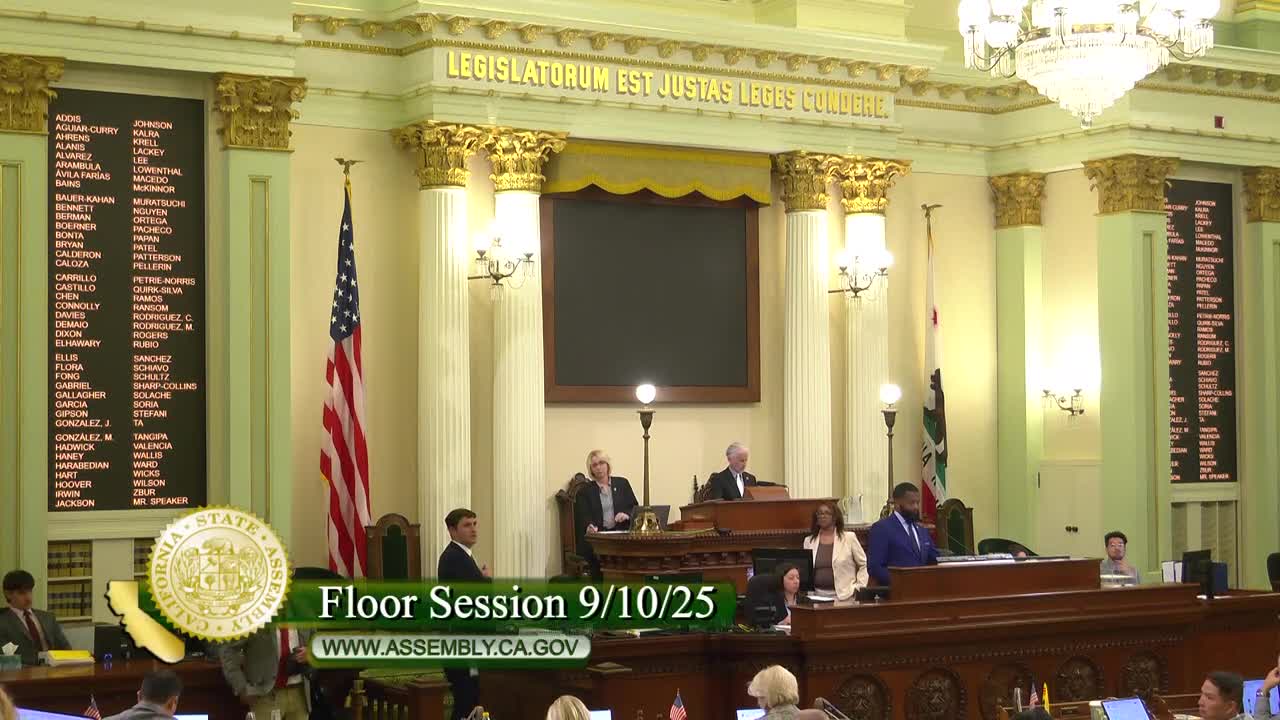
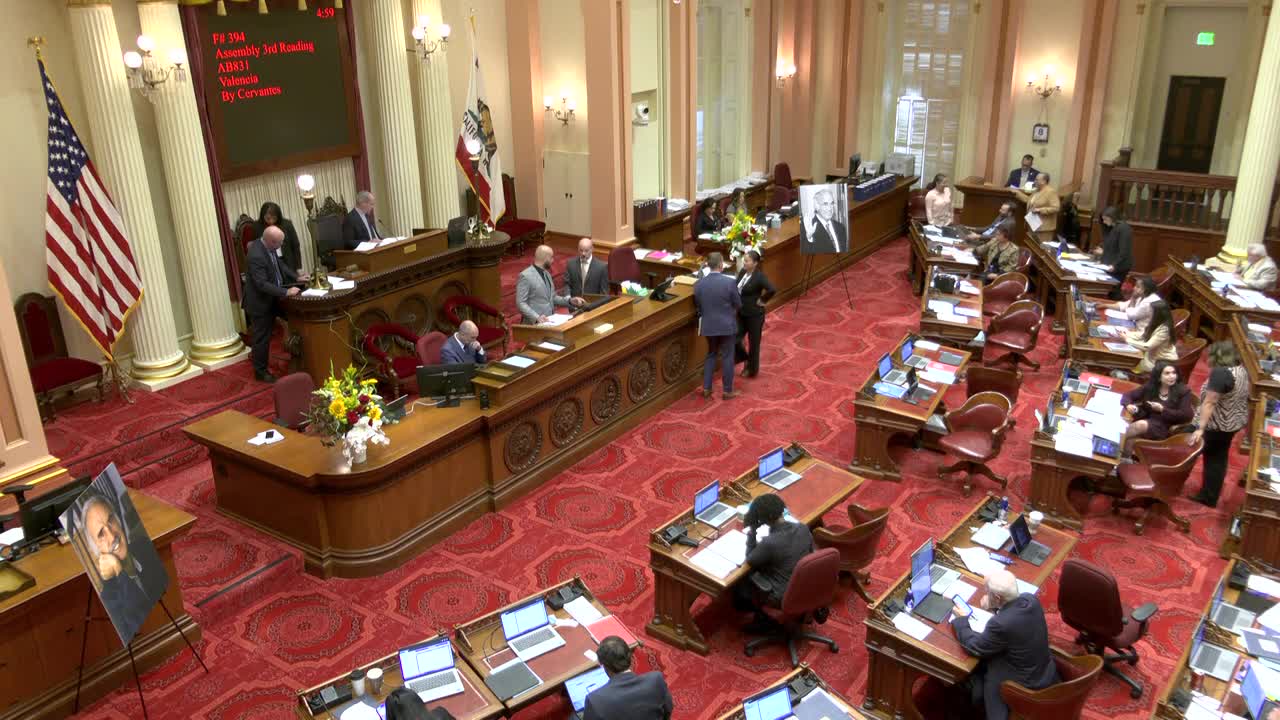
Bill Author
Bill Co-Author(s):