AB 1573: Land use: housing elements: target population.
- Session Year: 2025-2026
- House: Assembly
- Latest Version Date: 2026-09-27
Current Status:
Passed
(2026-09-27: Chaptered by Secretary of State - Chapter 524, Statutes of 2026.)
Introduced
In Committee
Awaiting First Chamber Vote
Passed First Chamber
In Committee
Awaiting Second Chamber Vote
Passed Second Chamber
Enacted
The Planning and Zoning Law requires a city or county to adopt a general plan for land use development that includes, among other things, a housing element containing specified information, including an analysis of its special housing, emergency shelter, and supportive housing needs, as defined. Existing law defines the term target population for purposes of requirements applicable to the housing element to include certain persons, including persons with low incomes who have one or more disabilities and individuals eligible for specified developmental disability services.
This bill, the Unseen and Unheard Housing Act, would provide that the definition of the term target population for the purposes of requirements applicable to the housing element, as described above, may include victims of domestic violence, victims of sexual assault, and victims of human trafficking, as specified.
The Planning and Zoning Law requires a city or county to adopt a general plan for land use development that includes, among other things, a housing element containing specified information, including an analysis of its special housing, emergency shelter, and supportive housing needs, as defined. Existing law defines the term target population for purposes of requirements applicable to the housing element to include certain persons, including persons with low incomes who have one or more disabilities and individuals eligible for specified developmental disability services.
This bill bill, the Unseen and Unheard Housing Act, would provide that the definition of the term target population for the purposes of requirements applicable to the housing element, as described above, may include victims of domestic violence, victims of sexual assault, and victims of human trafficking, as specified.
The Planning and Zoning Law requires a city or county to adopt a general plan for land use development that includes, among other things, a housing element containing specified information, including an analysis of its special housing, emergency shelter, and supportive housing needs, as defined. Existing law defines the term target population for purposes of requirements applicable to the housing element to include certain persons, including persons with low incomes who have one or more disabilities and individuals eligible for specified developmental disability services.
This bill would expand provide that the definition of the term target population for the purposes of requirements applicable to the housing element, as described above, to may include victims of domestic violence, victims of sexual assault, and victims of human trafficking, as specified. By imposing additional requirements on local governments with regard to their housing element, this bill would impose a state-mandated local program.
The California Constitution requires the state to reimburse local agencies and school districts for certain costs mandated by the state. Statutory provisions establish procedures for making that reimbursement.This bill would provide that, if the Commission on State Mandates determines that the bill contains costs mandated by the state, reimbursement for those costs shall be made pursuant to the statutory provisions noted above.The Planning and Zoning Law requires a city or county to adopt a general plan for land use development that includes, among other things, a housing element containing specified information, including an analysis of its special housing, emergency shelter, and supportive housing needs, as defined. Existing law defines the term target population for purposes of requirements applicable to the housing element to include certain persons, including persons with low incomes who have one or more disabilities and individuals eligible for specified developmental disability services.
This bill would expand the definition of the term target population for the purposes of requirements applicable to the housing element, as described above, to include victims of domestic violence, as specified. By imposing additional requirements on local governments with regard to their housing element, this bill would impose a state-mandated local program.
The California Constitution requires the state to reimburse local agencies and school districts for certain costs mandated by the state. Statutory provisions establish procedures for making that reimbursement.
This bill would provide that, if the Commission on State Mandates determines that the bill contains costs mandated by the state, reimbursement for those costs shall be made pursuant to the statutory provisions noted above.
This act shall be known, and may be cited, as the Unseen and Unheard Housing Act.
SEC. 2.Section 65582 of the Government Code is amended to read:65582.As used in this article, the following definitions apply unless specified otherwise:
(a)Above moderate income means income exceeding the moderate-income level described in Section 50093 of the Health and Safety Code.
(b)Acutely low income has the same meaning as in Section 50063.5 of the Health and Safety Code.
(c)All income levels or all household income levels means lower income, moderate income, and above moderate income levels.
(d)Community, locality, local government, or jurisdiction means a city, city and county, or county.
(e)Council of governments means a single or multicounty council created by a joint powers agreement pursuant to Chapter 5 (commencing with Section 6500) of Division 7 of Title 1.
(f)Department means the Department of Housing and Community Development.
(g)Emergency shelter has the same meaning as defined in subdivision (e) of Section 50801 of the Health and Safety Code.
(h)Extremely low income means the income for households exceeding the income limit for acutely low income households, as defined in this section, and does not exceed the limit for extremely low income households, as defined in Section 50106 of the Health and Safety Code.
(i)Frequent user coordinated care housing services means housing combined with other supportive services for homeless persons identified by a city or county as the most costly, frequent users of publicly funded emergency services.
(j)Housing element or element means the housing element of the communitys general plan, as required pursuant to this article and subdivision (c) of Section 65302.
(k)Low income means the income for households exceeding the income limit for very low income households, as defined in this section, and does not exceed the income limit for lower income households, as defined in subdivision (a) of Section 50079.5 of the Health and Safety Code.
(l)Lower income means income that is low income, very low income, extremely low income, or acutely low income.
(m)Moderate income means the income for households exceeding the limit for lower income households, as defined in this section, and does not exceed the income limit for moderate-income households, as defined in Section 50093 of the Health and Safety Code.
(n)Supportive housing means housing with no limit on length of stay, that is occupied by the target population, and that is linked to an onsite or offsite service that assists the supportive housing resident in retaining the housing, improving their health status, and maximizing their ability to live and, when possible, work in the community.
(o)Supportive services include, but are not limited to, a combination of subsidized, permanent housing, intensive case management, medical and mental health care, substance abuse treatment, employment services, and benefits advocacy.
(p)Target population means persons with low incomes who have one or more disabilities, including mental illness, HIV or AIDS, substance abuse, or other chronic health conditions, or individuals eligible for services provided pursuant to the Lanterman Developmental Disabilities Services Act (Division 4.5 (commencing with Section 4500) of the Welfare and Institutions Code), and may include, among other populations, adults, emancipated minors, families with children, elderly persons, young adults aging out of the foster care system, individuals exiting from institutional settings, veterans, victims of domestic violence, as defined in Section 6211 of the Family Code, victims of crimes involving sexual assault, as described in Section 261, 261.5, 286, 287, or 289 of the Penal Code, or victims of human trafficking, as that crime is described in Section 236.1 of the Penal Code, and homeless people.
(q)Transitional housing means buildings configured as rental housing developments, but operated under program requirements that require the termination of assistance and recirculating of the assisted unit to another eligible program recipient at a predetermined future point in time that shall be no less than six months from the beginning of the assistance.
(r)Very low income means income for households exceeding the income limit for extremely low income households, as defined in this section, and does not exceed the income limit for very low income households, as defined in Section 50105 of the Health and Safety Code.
This act shall be known, and may be cited, as the Unseen and Unheard Housing Act.
SECTION 1.SEC. 2.Section 65582 of the Government Code is amended to read:65582.As used in this article, the following definitions apply unless specified otherwise:
(a)Above moderate income means income exceeding the moderate-income level described in Section 50093 of the Health and Safety Code.
(b)Acutely low income has the same meaning as in Section 50063.5 of the Health and Safety Code.
(c)All income levels or all household income levels means lower income, moderate income, and above moderate income levels.
(d)Community, locality, local government, or jurisdiction means a city, city and county, or county.
(e)Council of governments means a single or multicounty council created by a joint powers agreement pursuant to Chapter 5 (commencing with Section 6500) of Division 7 of Title 1.
(f)Department means the Department of Housing and Community Development.
(g)Emergency shelter has the same meaning as defined in subdivision (e) of Section 50801 of the Health and Safety Code.
(h)Extremely low income means the income for households exceeding the income limit for acutely low income households, as defined in this section, and does not exceed the limit for extremely low income households, as defined in Section 50106 of the Health and Safety Code.
(i)Frequent user coordinated care housing services means housing combined with other supportive services for homeless persons identified by a city or county as the most costly, frequent users of publicly funded emergency services.
(j)Housing element or element means the housing element of the communitys general plan, as required pursuant to this article and subdivision (c) of Section 65302.
(k)Low income means the income for households exceeding the income limit for very low income households, as defined in this section, and does not exceed the income limit for lower income households, as defined in subdivision (a) of Section 50079.5 of the Health and Safety Code.
(l)Lower income means income that is low income, very low income, extremely low income, or acutely low income.
(m)Moderate income means the income for households exceeding the limit for lower income households, as defined in this section, and does not exceed the income limit for moderate-income households, as defined in Section 50093 of the Health and Safety Code.
(n)Supportive housing means housing with no limit on length of stay, that is occupied by the target population, and that is linked to an onsite or offsite service that assists the supportive housing resident in retaining the housing, improving their health status, and maximizing their ability to live and, when possible, work in the community.
(o)Supportive services include, but are not limited to, a combination of subsidized, permanent housing, intensive case management, medical and mental health care, substance abuse treatment, employment services, and benefits advocacy.
(p)Target population means persons with low incomes who have one or more disabilities, including mental illness, HIV or AIDS, substance abuse, or other chronic health conditions, or individuals eligible for services provided pursuant to the Lanterman Developmental Disabilities Services Act (Division 4.5 (commencing with Section 4500) of the Welfare and Institutions Code), and may include, among other populations, adults, emancipated minors, families with children, elderly persons, young adults aging out of the foster care system, individuals exiting from institutional settings, veterans, victims of domestic violence, as defined in Section 6211 of the Family Code, victims of crimes involving sexual assault, as described in Section 261, 261.5, 286, 287, or 289 of the Penal Code, or victims of human trafficking, as that crime is described in Section 236.1 of the Penal Code, and homeless people.
(q)Transitional housing means buildings configured as rental housing developments, but operated under program requirements that require the termination of assistance and recirculating of the assisted unit to another eligible program recipient at a predetermined future point in time that shall be no less than six months from the beginning of the assistance.
(r)Very low income means income for households exceeding the income limit for extremely low income households, as defined in this section, and does not exceed the income limit for very low income households, as defined in Section 50105 of the Health and Safety Code.
As used in this article, the following definitions apply unless specified otherwise:
(a)Above moderate income means income exceeding the moderate-income level described in Section 50093 of the Health and Safety Code.
(b)Acutely low income has the same meaning as in Section 50063.5 of the Health and Safety Code.
(c)All income levels or all household income levels means lower income, moderate income, and above moderate income levels.
(d)Community, locality, local government, or jurisdiction means a city, city and county, or county.
(e)Council of governments means a single or multicounty council created by a joint powers agreement pursuant to Chapter 5 (commencing with Section 6500) of Division 7 of Title 1.
(f)Department means the Department of Housing and Community Development.
(g)Emergency shelter has the same meaning as defined in subdivision (e) of Section 50801 of the Health and Safety Code.
(h)Extremely low income means the income for households exceeding the income limit for acutely low income households, as defined in this section, and does not exceed the limit for extremely low income households, as defined in Section 50106 of the Health and Safety Code.
(i)Frequent user coordinated care housing services means housing combined with other supportive services for homeless persons identified by a city or county as the most costly, frequent users of publicly funded emergency services.
(j)Housing element or element means the housing element of the communitys general plan, as required pursuant to this article and subdivision (c) of Section 65302.
(k)Low income means the income for households exceeding the income limit for very low income households, as defined in this section, and does not exceed the income limit for lower income households, as defined in subdivision (a) of Section 50079.5 of the Health and Safety Code.
(l)Lower income means income that is low income, very low income, extremely low income, or acutely low income.
(m)Moderate income means the income for households exceeding the limit for lower income households, as defined in this section, and does not exceed the income limit for moderate-income households, as defined in Section 50093 of the Health and Safety Code.
(n)Supportive housing means housing with no limit on length of stay, that is occupied by the target population, and that is linked to an onsite or offsite service that assists the supportive housing resident in retaining the housing, improving their health status, and maximizing their ability to live and, when possible, work in the community.
(o)Supportive services include, but are not limited to, a combination of subsidized, permanent housing, intensive case management, medical and mental health care, substance abuse treatment, employment services, and benefits advocacy.
(p)Target population means persons with low incomes who have one or more disabilities, including mental illness, HIV or AIDS, substance abuse, or other chronic health condition, conditions, or individuals eligible for services provided pursuant to the Lanterman Developmental Disabilities Services Act (Division 4.5 (commencing with Section 4500) of the Welfare and Institutions Code), or victims of domestic violence as defined in Section 6211 of the Family Code, and may include, among other populations, adults, emancipated minors, families with children, elderly persons, young adults aging out of the foster care system, individuals exiting from institutional settings, veterans, victims of domestic violence, as defined in Section 6211 of the Family Code, victims of crimes involving sexual assault, as described in Section 261, 261.5, 286, 287, or 289 of the Penal Code, or victims of human trafficking, as that crime is described in Section 236.1 of the Penal Code, and homeless people.
(q)Transitional housing means buildings configured as rental housing developments, but operated under program requirements that require the termination of assistance and recirculating of the assisted unit to another eligible program recipient at a predetermined future point in time that shall be no less than six months from the beginning of the assistance.
(r)Very low income means income for households exceeding the income limit for extremely low income households, as defined in this section, and does not exceed the income limit for very low income households, as defined in Section 50105 of the Health and Safety Code.
SEC. 2.If the Commission on State Mandates determines that this act contains costs mandated by the state, reimbursement to local agencies and school districts for those costs shall be made pursuant to Part 7 (commencing with Section 17500) of Division 4 of Title 2 of the Government Code.As used in this article, the following definitions apply unless specified otherwise:
(a)Above moderate income means income exceeding the moderate-income level described in Section 50093 of the Health and Safety Code.
(b)Acutely low income has the same meaning as in Section 50063.5 of the Health and Safety Code.
(c)All income levels or all household income levels means lower income, moderate income, and above moderate income levels.
(d)Community, locality, local government, or jurisdiction means a city, city and county, or county.
(e)Council of governments means a single or multicounty council created by a joint powers agreement pursuant to Chapter 5 (commencing with Section 6500) of Division 1 7 of Title 1.
(f)Department means the Department of Housing and Community Development.
(g)Emergency shelter has the same meaning as defined in subdivision (e) of Section 50801 of the Health and Safety Code.
(h)Extremely low income means the income for households exceeding the income limit for acutely low income households, as defined in this section, and does not exceed the limit for extremely low income households, as defined in Section 50106 of the Health and Safety Code.
(i)Frequent user coordinated care housing services means housing combined with other supportive services for homeless persons identified by a city or county as the most costly, frequent users of publicly funded emergency services.
(j)Housing element or element means the housing element of the communitys general plan, as required pursuant to this article and subdivision (c) of Section 65302.
(k)Low income means the income for households exceeding the income limit for very low income households, as defined in this section, and does not exceed the income limit for lower income households, as defined in subdivision (a) of Section 50079.5 of the Health and Safety Code.
(l)Lower income means income that is low income, very low income, extremely low income, or acutely low income.
(m)Moderate income means the income for households exceeding the limit for lower income households, as defined in this section, and does not exceed the income limit for moderate-income households, as defined in Section 50093 of the Health and Safety Code.
(n)Supportive housing means housing with no limit on length of stay, that is occupied by the target population, and that is linked to an onsite or offsite service that assists the supportive housing resident in retaining the housing, improving their health status, and maximizing their ability to live and, when possible, work in the community.
(o)Supportive services include, but are not limited to, a combination of subsidized, permanent housing, intensive case management, medical and mental health care, substance abuse treatment, employment services, and benefits advocacy.
(p)Target population means persons with low incomes who have one or more disabilities, including mental illness, HIV or AIDS, substance abuse, or other chronic health condition, or individuals eligible for services provided pursuant to the Lanterman Developmental Disabilities Services Act (Division 4.5 (commencing with Section 4500) of the Welfare and Institutions Code) Code), or victims of domestic violence as defined in Section 6211 of the Family Code, and may include, among other populations, adults, emancipated minors, families with children, elderly persons, young adults aging out of the foster care system, individuals exiting from institutional settings, veterans, and homeless people.
(q)Transitional housing means buildings configured as rental housing developments, but operated under program requirements that require the termination of assistance and recirculating of the assisted unit to another eligible program recipient at a predetermined future point in time that shall be no less than six months from the beginning of the assistance.
(r)Very low income means income for households exceeding the income limit for extremely low income households, as defined in this section, and does not exceed the income limit for very low income households, as defined in Section 50105 of the Health and Safety Code.
SEC. 2.If the Commission on State Mandates determines that this act contains costs mandated by the state, reimbursement to local agencies and school districts for those costs shall be made pursuant to Part 7 (commencing with Section 17500) of Division 4 of Title 2 of the Government Code.
|
Date
|
Status
|
|---|---|
| Sep 27, 2026 | Chaptered by Secretary of State - Chapter 524, Statutes of 2026. |
| Sep 27, 2026 | Approved by the Governor. |
| Aug 28, 2026 | Enrolled and presented to the Governor at 3:30 p.m. |
| Aug 24, 2026 | Senate amendments concurred in. To Engrossing and Enrolling. (Ayes 78. Noes 0. Page 6400.). |
| Aug 24, 2026 | Senate amendments concurred in. To Engrossing and Enrolling. (Ayes 78. Noes 0.). |
| Aug 24, 2026 | Senate amendments concurred in. To Engrossing and Enrolling. |
| Aug 20, 2026 | In Assembly. Concurrence in Senate amendments pending. |
| Aug 20, 2026 | Read third time. Passed. Ordered to the Assembly. (Ayes 37. Noes 0. Page 5578.). |
| Aug 20, 2026 | Read third time. Passed. Ordered to the Assembly. (Ayes 37. Noes 0.). |
| Jun 15, 2026 | Read second time. Ordered to third reading. |
| Jun 11, 2026 | From committee: Do pass. (Ayes 10. Noes 0.) (June 10). |
| Jun 1, 2026 | From committee chair, with author's amendments: Amend, and re-refer to committee. Read second time, amended, and re-referred to Com. on HOUSING. |
| May 13, 2026 | Referred to Com. on HOUSING. |
| May 5, 2026 | In Senate. Read first time. To Com. on RLS. for assignment. |
| May 4, 2026 | Read third time. Passed. Ordered to the Senate. (Ayes 73. Noes 0. Page 4918.) |
| May 4, 2026 | Read third time. Passed. Ordered to the Senate. (Ayes 73. Noes 0.) |
| May 4, 2026 | Read third time. Passed. Ordered to the Senate. |
| Apr 27, 2026 | Read second time. Ordered to Consent Calendar. |
| Apr 23, 2026 | From committee: Do pass. To Consent Calendar. (Ayes 10. Noes 0.) (April 22). |
| Mar 25, 2026 | From committee: Do pass and re-refer to Com. on L. GOV. with recommendation: To Consent Calendar. (Ayes 12. Noes 0.) (March 25). Re-referred to Com. on L. GOV. |
| Mar 17, 2026 | Re-referred to Com. on H. & C.D. |
| Mar 16, 2026 | From committee chair, with author's amendments: Amend, and re-refer to Com. on H. & C.D. Read second time and amended. |
| Feb 9, 2026 | Referred to Coms. on H. & C.D. and L. GOV. |
| Jan 13, 2026 | From printer. May be heard in committee February 12. |
| Jan 12, 2026 | Read first time. To print. |
|
Date
|
Description
|
Location
|
Votes
|
|
|---|---|---|---|---|
| Aug 24, 2026 | AB 1573 Bryan Concurrence in Senate Amendments | Assembly Floor |
Passed |
|
| Aug 20, 2026 | Assembly 3rd Reading AB1573 Bryan et al. By Wahab | Senate Floor |
Passed |
|
| Jun 10, 2026 | Do pass | Senate Standing Committee on Housing |
Passed |
|
| May 4, 2026 | AB 1573 Bryan Consent Calendar Second Day Regular Session | Assembly Floor |
Passed |
|
| Apr 22, 2026 | Do pass. To Consent Calendar. | Assembly Standing Committee on Local Government |
Passed |
|
| Mar 25, 2026 | Do pass and be re-referred to the Committee on [Local Government] with recommendation: To Consent Calendar | Assembly Standing Committee on Housing and Community Development |
Passed |
This list shows positions taken on this bill by organizations on the date displayed, which is linked to the original source.
Positions by individuals are not included.
|
Organization
|
Position
|
Date
|
|---|---|---|
| Abode Services | ** Support | |
| Beverly Hills Synagogue | ** Support | |
| California Partnership To End Domestic Violence | ** Support | |
| Central City Association Of Los Angeles | ** Support | |
| Coalition to Abolish Slavery and Trafficking | ** Support | |
| Community Forward SF | ** Support | |
| Community Forward Sf, INC. | ** Support | |
| Corporation For Supportive Housing | ** Support | |
| Democrats for Israel Los Angeles | ** Support | |
| Domestic Violence & Homeless Services Coalition | ** Support | |
| Downtown Women's Center | ** Support | |
| Empower Tehama | ** Support | |
| Family Violence Law Center | ** Support | |
| Good Shepherd Shelter | ** Support | |
| Hadassah, the Women's Zionist of America, INC. | ** Support | |
| Hillel of San Diego | ** Support | |
| Housing California | ** Support | |
| Hub for Urban Initiatives | ** Support | |
| JCC/Federation of San Luis Obispo | ** Support | |
| JCRC Bay Area | ** Support | |
| JCRC, Jewish Long Beach | ** Support | |
| JCRC Santa Barbara County | ** Support | |
| Jenesse Center | ** Support | |
| Jewish California | ** Support | |
| Jewish Center for Justice | ** Support | |
| Jewish Council for Public Affairs | ** Support | |
| Jewish Democratic Club of Marin | ** Support | |
| Jewish Family Service LA | ** Support | |
| Jewish Family Service of San Diego | ** Support | |
| Jewish Family Service of the Desert | ** Support | |
| Jewish Family Services of Silicon Valley | ** Support | |
| Jewish Federation Bay Area | ** Support | |
| Jewish Federation of Greater Santa Barbara | ** Support | |
| Jewish Federation of Orange County | ** Support | |
| Jewish Federation of the Desert | ** Support | |
| Jewish Federation of The Greater San Gabriel and Pomona Valleys | ** Support | |
| Jewish Partisan Educational Foundation | ** Support | |
| JFCS East Bay | ** Support | |
| JFCS Long Beach and Orange County | ** Support | |
| John Burton Advocates for Youth | ** Support | |
| JVS Bay Area | ** Support | |
| Los Angeles County | ** Support | |
| los angeles homeless services authority | ** Support | |
| Loyola Law School, the Sunita Jain Anti-trafficking Initiative | ** Support | |
| National Alliance to End Homelessness | ** Support | |
| National Council of Jewish Women -sf | ** Support | |
| National Women's Shelter Network, INC. | ** Support | |
| Office of Los Angeles County Supervisor Lindsey P. Horvath | ** Support | |
| Peace Over Violence | ** Support | |
| Race & Equity in All Planning Coalition (REP-SF) | ** Support | |
| Safe Place For Youth | ** Support | |
| San Francisco Safehouse | ** Support | |
| San Francisco Women's Housing Coalition | ** Support | |
| San Francisco Women’s Housing Coalition | ** Support | |
| Southern California Association of Nonprofit Housing | ** Support | |
| Su Casa - Ending Domestic Violence | ** Support | |
| Supportive Housing Alliance | ** Support | |
| Survivor Justice Center | ** Support | |
| The People Concern | ** Support | |
| The Public Interest Law Project | ** Support | |
| The Purple Monarchs | ** Support | |
| Weingart Center Association | ** Support | |
| Western Center on Law and Poverty, Inc. | ** Support | |
| Women of Color Breast Cancer Survivors Support Project | ** Support |
CONCURRENCE IN SENATE AMENDMENTS
CSA1 Bill Id:AB 1573
Author:(Bryan)
As Amended Ver:June 1, 2026
Majority vote
SUMMARY
Adds "victims of domestic violence" and "victims of human trafficking" to the definition of "target population" in Housing Element Law.
Senate Amendments
Names the changes in the bill, the Unseen and Unheard Housing Act.
COMMENTS
Domestic Violence Victims: In 2024, over 187,000 people in California experienced homelessness on a single night. Domestic violence, frequently referred to as intimate partner violence (IPV), (i.e., physical, sexual, emotional, or financial violence or abuse by a current or former intimate partner), is a common precipitant of homelessness, particularly among women (and their minor children). Intimate partner violence is common; 47% of women and 44% of men report experiencing sexual violence, physical violence, or stalking by an intimate partner at some point in their lifetime. For one in five unhoused women in California, domestic violence is a precursor to homelessness. Californians with a history of homelessness were three times more likely than those without to report sexual violence (20% vs 7%) in the past year.
Adoption and Implementation of Housing Elements: One important tool in addressing the state's housing crisis is to ensure that all of the state's 540 cities and counties appropriately plan for new housing. Such planning is required through the housing element of each community's General Plan, which outlines a long-term plan for meeting the community's existing and projected housing needs. Cities and counties are required to update their housing elements every eight years in most highly populated parts of the state, and five years in areas with smaller populations. Local governments must adopt a legally valid housing element by their statutory deadline for adoption. Failure to do so can result in certain escalating penalties, including exposure to the "builder's remedy" as well as public or private lawsuits, financial penalties, potential loss of permitting authority, or court receivership.
It is critical that local jurisdictions adopt legally compliant housing elements on time in order to meet statewide housing goals and create the environment locally for the successful construction of desperately needed housing at all income levels. Unless communities plan for the production and preservation of affordable housing, new housing construction will be slow to materialize. Adequate zoning, removal of regulatory barriers, protection of existing housing stock, and targeting resources are essential to obtaining a sufficient permanent supply of housing affordable to all economic segments of the community. Although it does not require the community to actually develop the housing, Housing Element Law requires the community to plan for housing and set the regulatory landscape to facilitate housing development. Recognizing that local governments may lack adequate resources to house all those in need, the law nevertheless requires jurisdictions to make a good-faith effort to accommodate housing needs and to avoid exclusionary zoning practices or actions that perpetuate patterns of housing discrimination or impede fair housing.
Target population definition: Housing Element Law defines "target population" to mean persons with low incomes who have one or more disabilities, including mental illness, HIV or AIDS, substance abuse, or other chronic health condition, or individuals eligible for services provided pursuant to the Lanterman Developmental Disabilities Services Act. The definition outlines who may be considered as a target population to include, among other adults, emancipated minors, families with children, elderly persons, young adults aging out of the foster care system, individuals exiting from institutional settings, veterans, and homeless people.
The target population definition is included in Housing Element Law to identify those individuals that may require supportive housing, housing at an affordable cost with supportive services. As part of the housing element, a city and county must include an analysis of the needs of special populations, such as those of the elderly, persons with disabilities, including a developmental disability, extremely low-income households, large families, farmworkers, families with female heads of households, and families and persons in need of emergency shelter. This requires the city and county to determine the number of people in each subpopulation and factor their housing needs into the overall housing element. Cities and counties are required to analyze the programs available for special populations. They also can analyze the housing needs of special populations by looking at data from the homelessness management information system (HMIS), which identifies the number of people experiencing homelessness who are living in shelters or who are unsheltered. There is no requirement to identify victims of domestic violence or human trafficking as part of the data collected for HMIS, though some Continuums of Care do collect this data.
Although victims of domestic violence and human trafficking are not called out in the definition of target population or special population, they would be represented in the larger population of lower income households, acutely low income, extremely low-income households, families with female heads of household, and families and persons needing emergency shelter. Adding them to the definition of target population will not cause harm, but will not necessarily result in more supportive housing or shelter specifically for this group, as they can access supportive housing and emergency shelters made available to the broader population.
According to the Author
According to the author, "Survivors of domestic violence, sexual assault, and human trafficking are overrepresented in the unhoused population, and the data shows that they stay unhoused for longer, return to homeless services more frequently, and have a lower rate of receiving permanent housing than the unhoused population at large. Clearly, the status quo does not adequately support survivors, and it needs to change. AB 1573 takes an important step by ensuring that survivors of domestic violence, sexual assault, and human trafficking are included in the definition of the target populations of the housing element when cities and counties generate their general plan."
Arguments in Support
According to the Downtown Women's Center, "today, city and county assessments of supportive housing services do not consider these vulnerable populations. This bill will ensure that local jurisdictions do their due diligence when formulating their housing element within their general plan to include survivors of domestic violence, human trafficking, and sexual assault, allowing for urgently needed safe housing protection and support while strengthening communities and reducing homelessness. AB 1573 will ensure that survivors of domestic violence, human trafficking, and sexual assault are included in the definition of the target populations in the assessment of supportive housing in a city's or county's general plan. This legislation would move California toward a more inclusive housing framework and affirm that these populations have unique needs that justify targeted supportive services and housing solutions beyond what is currently available. In doing so, AB 1573 will uphold California's commitment to supporting survivors in rebuilding their lives while strengthening the health, safety, and resilience of communities statewide."
Arguments in Opposition
None on file.
FISCAL COMMENTS
None. This bill is keyed non-fiscal.
VOTES:
ASM HOUSING AND COMMUNITY DEVELOPMENT: 12-0-0
YES: Haney, Patterson, Ávila Farías, Caloza, Garcia, Kalra, Lee, Quirk-Silva, Ta, Tangipa, Wicks, Wilson
ASM LOCAL GOVERNMENT: 10-0-0
YES: Carrillo, Ta, Johnson, Pacheco, Ramos, Ransom, Blanca Rubio, Stefani, Ward, Wilson
ASSEMBLY FLOOR: 73-0-7
YES: Addis, Aguiar-Curry, Ahrens, Alanis, Alvarez, Ávila Farías, Bains, Bauer-Kahan, Berman, Boerner, Bonta, Bryan, Calderon, Carrillo, Castillo, Connolly, Davies, DeMaio, Dixon, Elhawary, Ellis, Fong, Gabriel, Gallagher, Garcia, Gipson, Jeff Gonzalez, Mark González, Hadwick, Haney, Harabedian, Hart, Hoover, Irwin, Jackson, Johnson, Kalra, Krell, Lackey, Lee, Lowenthal, Macedo, McKinnor, Muratsuchi, Nguyen, Ortega, Pacheco, Papan, Patel, Patterson, Pellerin, Petrie-Norris, Quirk-Silva, Ramos, Ransom, Celeste Rodriguez, Michelle Rodriguez, Rogers, Blanca Rubio, Sanchez, Schiavo, Schultz, Sharp-Collins, Solache, Soria, Stefani, Ta, Tangipa, Valencia, Ward, Wicks, Zbur, Rivas
ABS, ABST OR NV: Arambula, Bennett, Caloza, Chen, Flora, Wallis, Wilson
UPDATED
VERSION: June 1, 2026
CONSULTANT: Lisa Engel / H. & C.D. / (916) 319-2085 FN: 0003801
SENATE RULES COMMITTEE Office of Senate Floor Analyses (916) 651-4171 | AB 1573 |
THIRD READING
Bill No: AB 1573
Author: Bryan (D), et al.
Amended: 6/1/26 in Senate
Vote: 21
SENATE HOUSING COMMITTEE: 10-0, 6/10/26
AYES: Arreguín, Seyarto, Cabaldon, Caballero, Cortese, Durazo, Grayson, Ochoa Bogh, Padilla, Pérez
ASSEMBLY FLOOR: 73-0, 5/4/26 (Consent) - See last page for vote
SUBJECT: Land use: housing elements: target population
SOURCE: Downtown Women’s Center
San Francisco Women’s Housing Coalition
Western Center on Law and Poverty
DIGEST:
This bill adds victims of domestic violence, sexual assault, and human trafficking to the definition of “target population” in Housing Element Law.
ANALYSIS:
Existing law:
- Defines “target population” for the purpose of Housing Element Law to mean persons with low incomes who have one or more disabilities, including mental illness, HIV or AIDS, substance abuse, or other chronic health condition, or individuals eligible for services provided pursuant to the Lanterman Developmental Disabilities Services Act; and may include, among other populations, adults, emancipated minors, families with children, elderly persons, young adults aging out of the foster care system, individuals exiting from institutional settings, veterans, and homeless people.
- Defines “supportive housing” as housing with no limit on length of stay, that is occupied by the target population, and that is linked to an onsite or offsite service that assists the supportive housing resident in retaining the housing, improving their health status, and maximizing their ability to live and, when possible, work in the community.
- Requires each jurisdiction to prepare and adopt a General Plan, including a housing element, to guide the future growth of a community.
- Requires each adopted housing element to contain specified information, programs, and objectives, including:
- An assessment of housing needs and an inventory of resources and constraints relevant to the meeting of these needs, including a quantification of the locality’s existing and projected housing needs for all income levels; an inventory of land suitable and available for residential development; an analysis of potential and actual governmental and nongovernmental constraints upon the maintenance, improvement, or development of housing for all income levels; and a demonstration of local efforts to remove constraints that hinder the locality from meeting its share of the Regional Housing Needs Allocation, among other things;
- A statement of the community’s goals, quantified objectives, and policies relative to affirmatively furthering fair housing and to the maintenance, preservation, improvement, and development of housing; and,
- A program that sets forth a schedule of actions during the planning period, and timelines for implementation, that the local government is undertaking to implement the policies and achieve the goals and objectives of the housing element, including actions that will be taken to make sites available during the planning period with appropriate zoning and development standards and with services and facilities to accommodate that portion of the local government’s share of the regional housing need for each income level that could not be accommodated on sites identified in the sites inventory without rezoning, among other things.
- Requires each city and county to include an analysis of any special housing needs in the housing element, such as those of the elderly; persons with disabilities, including a developmental disability; extremely low income households; large families; farmworkers; families with female heads of households; and families and persons in need of emergency shelter.
- Requires the need for emergency shelter to be assessed based on the capacity necessary to accommodate the most recent homeless point-in-time count conducted before the start of the planning period, the need for emergency shelter based on number of beds available on a year-round and seasonal basis, the number of shelter beds that go unused on an average monthly basis within a one-year period, and the percentage of those in emergency shelters that move to permanent housing solutions. Provides that the need for emergency shelter may be reduced by the number of supportive housing units that are identified in an adopted 10-year plan to end chronic homelessness and are either vacant or for which funding has been identified to allow construction during the planning period. An analysis of special housing needs by a city or county may include an analysis of the need for frequent user coordinated care housing services. Further requires, for the seventh and subsequent revisions of the housing element, the analysis to include the housing needs of acutely low income and extremely low income households.
This bill:
- Provides the definition of “target population,” for the purposes of requirements applicable to the housing element, may include victims of domestic violence, sexual assault, and human trafficking, as defined.
Background
Adoption and Implementation of Housing Elements. One important tool in addressing the state’s housing crisis is to ensure that all of the state’s 540 cities and counties appropriately plan for new housing. Such planning is required through the housing element of each community’s General Plan, which outlines a long-term plan for meeting the community’s existing and projected housing needs. Cities and counties are required to update their housing elements every eight years in most highly populated parts of the state, and five years in areas with smaller populations. It is critical that local jurisdictions adopt legally compliant housing elements on time in order to meet statewide housing goals and create the environment for the successful construction of desperately needed housing at all income levels. Unless communities plan for the production and preservation of affordable housing, new housing construction will be slow to materialize. Adequate zoning, removal of regulatory barriers, protection of existing housing stock, and targeted resources are essential to obtain a sufficient permanent supply of housing affordable to all socioeconomic levels of the community. Although it does not require the community to actually develop the housing itself, Housing Element Law requires the community to plan for housing and set the regulatory landscape to facilitate necessary housing development. Recognizing that local governments may lack adequate resources to house all those in need, the law nevertheless requires jurisdictions to make a good-faith effort to accommodate housing needs and to avoid exclusionary zoning practices or actions that perpetuate patterns of housing discrimination or impede fair housing.
Comments
Author’s statement. “Survivors of domestic violence, sexual assault, and human trafficking are overrepresented in the unhoused population, and the data shows that they stay unhoused for longer, return to homeless services more frequently, and have a lower rate of receiving permanent housing than the unhoused population at large. Clearly, the status quo does not adequately support survivors, and it needs to change. AB 1573 takes an important step by ensuring that survivors of domestic violence, sexual assault, and human trafficking are included in the definition of the target populations of the housing element when cities and counties generate their general plan.”
Intersectional Drivers of Homelessness. Domestic violence, sexual assault, and human trafficking are all common precursors to survivors experiencing homelessness and housing insecurity. To better understand the experiences of people experiencing homelessness throughout California, the UCSF Benioff Homelessness and Housing Initiative conducted the California Statewide Study of People Experiencing Homelessness (CASPEH), the largest representative study of homelessness since the 1990s.
Among the study’s extensive findings, it found the following about intimate partner violence as a precursor to homelessness:
“Among all CASPEH participants, 8% experienced IPV [Intimate Partner Violence] in the six months prior to homelessness (3% cisgender men and 17% cisgender women). Our limited data on transgender, gender non-conforming, and non-binary people indicated that they may experience IPV prior to homelessness more frequently than cisgender peers. 17 Participants described that they experienced multiple forms of IPV (physical, sexual, or financial coercion). For many, these occurred during the same time period. Of the participants who experienced IPV prior to homelessness, 94% experienced physical violence, 26% experienced sexual violence, and 46% experienced financial coercion or abuse. Intimate partner violence increased participants’ risk of losing their housing. In many cases, participants fled for their safety. Although IPV impacts people from all economic strata–not all people who flee IPV become homeless. Many CASPEH participants experienced homelessness due to the combined effects of IPV and limited economic resources. Among all participants, 13% noted that one of the reasons they left their last housing was abuse or violence within the home. 18 Cisgender women (20%) reported this more frequently than cisgender men (9%). 5% indicated violence was the primary reason for leaving. Among those who experienced IPV in the six months prior to homelessness, 40% indicated violence was a reason for leaving their last housing; 20% noted it was the primary reason for leaving.”[1]
Target Population. Housing Element Law defines “target population” to mean persons with low incomes who have one or more disabilities, including mental illness, HIV or AIDS, substance abuse, or other chronic health condition, or individuals eligible for services provided pursuant to the Lanterman Developmental Disabilities Services Act. The definition also outlines who may be considered as a target population to include, among other adults, emancipated minors, families with children, elderly persons, young adults aging out of the foster care system, individuals exiting from institutional settings, veterans, and homeless people. The target population definition is included in Housing Element Law to identify those individuals that may require supportive housing (housing at an affordable cost with supportive services). This requires the jurisdiction to determine the number of people in each subpopulation and factor their housing needs into the overall housing element, along with analysis of all of the programs available for each population. Jurisdictions can further analyze the housing needs of these populations by looking at data from the homelessness management information system (HMIS), which identifies the number of people experiencing homelessness who are living in shelters or who are unsheltered. Currently, there is no requirement to identify victims of domestic violence, sexual assault, or human trafficking as part of the data collected for HMIS, though some Continuums of Care do collect this data.
Due to intersecting identities (e.g., socioeconomic status and domestic violence survivor), many survivors of domestic violence, sexual assault, and human trafficking may already be part of other target populations that a jurisdiction’s housing element must identify and find ways to meet the supportive housing needs of. For instance, many women who flee domestic violence and become homeless are also low-income and considered the head of household, which means they already belong to two other target populations. While this bill seems well-intended to increase attention paid to the unique housing needs of survivors of domestic violence, sexual assault, and human trafficking, because many of these individuals will likely fall into other existing target population categories, which jurisdictions are already planning for, survivors may already have their housing needs met in the eyes of a planning jurisdiction.
FISCAL EFFECT: Appropriation: No Fiscal Com.: No Local: No
SUPPORT: (Verified 6/11/26)
Downtown Women's Center (co-source)
San Francisco Women’s Housing Coalition (co-source)
Western Center on Law & Poverty, INC. (co-source)
Abode Services
Beverly Hills Synagogue
California Partnership to End Domestic Violence
Central City Association of Los Angeles
Coalition to Abolish Slavery and Trafficking
Community Forward Sf
Democrats for Israel Los Angeles
Domestic Violence & Homeless Services Coalition
Family Violence Law Center
Hadassah, the Women's Zionist of America, INC.
Hillel of San Diego
Housing California
Jcc/federation of San Luis Obispo
Jcrc Bay Area
Jcrc Santa Barbara County
Jcrc, Jewish Long Beach
Jenesse Center
Jewish California (formerly Jpac)
Jewish Center for Justice
Jewish Council for Public Affairs
Jewish Democratic Club of Marin
Jewish Family Service LA
Jewish Family Service of San Diego
Jewish Family Service of the Desert
Jewish Family Services of Silicon Valley
Jewish Federation Bay Area
Jewish Federation of Greater Santa Barbara
Jewish Federation of Orange County
Jewish Federation of the Desert
Jewish Federation of the Greater San Gabriel and Pomona Valleys
Jewish Partisan Educational Foundation
Jfcs East Bay
Jfcs Long Beach and Orange County
John Burton Advocates for Youth
Jvs Bay Area
Los Angeles County
National Alliance to End Homelessness
National Council of Jewish Women -sf
Race & Equity in All Planning Coalition (REP-SF)
San Francisco Safehouse
Su Casa - Ending Domestic Violence
Supportive Housing Alliance
The People Concern
The Public Interest Law Project
Women of Color Breast Cancer Survivors Support Project
OPPOSITION: (Verified 6/11/26)
None received.
ARGUMENTS IN SUPPORT: Writing in support, the Western Center on Law and Poverty expressed that this bill will ensure that survivors of domestic violence, human trafficking, and sexual assault are included in the definition of the target populations in the assessment of supportive housing in a city’s or county's general plan. This legislation would move California toward a more inclusive housing framework and affirms that these populations have unique needs that need to be better understood. In doing so, AB 1573 will uphold California’s commitment to supporting survivors in rebuilding their lives while strengthening the health, safety, and resilience of communities statewide.
ASSEMBLY FLOOR: 73-0, 5/4/26
AYES: Addis, Aguiar-Curry, Ahrens, Alanis, Alvarez, Ávila Farías, Bains, Bauer-Kahan, Berman, Boerner, Bonta, Bryan, Calderon, Carrillo, Castillo, Connolly, Davies, DeMaio, Dixon, Elhawary, Ellis, Fong, Gabriel, Gallagher, Garcia, Gipson, Jeff Gonzalez, Mark González, Hadwick, Haney, Harabedian, Hart, Hoover, Irwin, Jackson, Johnson, Kalra, Krell, Lackey, Lee, Lowenthal, Macedo, McKinnor, Muratsuchi, Nguyen, Ortega, Pacheco, Papan, Patel, Patterson, Pellerin, Petrie-Norris, Quirk-Silva, Ramos, Ransom, Celeste Rodriguez, Michelle Rodriguez, Rogers, Blanca Rubio, Sanchez, Schiavo, Schultz, Sharp-Collins, Solache, Soria, Stefani, Ta, Tangipa, Valencia, Ward, Wicks, Zbur, Rivas
NO VOTE RECORDED: Arambula, Bennett, Caloza, Chen, Flora, Wallis, Wilson
Prepared by: Ryan Hardmeyer / HOUSING / (916) 651-4124
6/12/26 12:49:58
**** END ****
UCSF Benioff Housing and Homelessness Initiative. Toward Safety - Understanding Intimate Partner Violence and Homelessness Toward Safety - Findings from the California Statewide Study of People Experiencing Homelessness. Accessible here: https://homelessness.ucsf.edu/sites/default/files/2026-04/IPV%20Report%202024.pdf. January 2024. ↑
SENATE COMMITTEE ON HOUSING
Senator Jesse Arreguín, Chair
2025 - 2026 Regular
Bill No: AB 1573 Hearing Date: 6/10/2026
Author: | Bryan | ||
Version: | 6/1/2026 Amended | ||
Urgency: | No | Fiscal: | No |
Consultant: | Ryan Hardmeyer | ||
SUBJECT: Land use: housing elements: target population
DIGEST: This bill adds victims of domestic violence, sexual assault, and human trafficking to the definition of “target population” in Housing Element Law.
ANALYSIS:
Existing law:
- Defines “target population” for the purpose of Housing Element Law to mean persons with low incomes who have one or more disabilities, including mental illness, HIV or AIDS, substance abuse, or other chronic health condition, or individuals eligible for services provided pursuant to the Lanterman Developmental Disabilities Services Act; and may include, among other populations, adults, emancipated minors, families with children, elderly persons, young adults aging out of the foster care system, individuals exiting from institutional settings, veterans, and homeless people.
- Defines “supportive housing” as housing with no limit on length of stay, that is occupied by the target population, and that is linked to an onsite or offsite service that assists the supportive housing resident in retaining the housing, improving their health status, and maximizing their ability to live and, when possible, work in the community.
- Requires each jurisdiction to prepare and adopt a General Plan, including a housing element, to guide the future growth of a community.
- Requires each adopted housing element to contain specified information, programs, and objectives, including:
- An assessment of housing needs and an inventory of resources and constraints relevant to the meeting of these needs, including a quantification of the locality’s existing and projected housing needs for all income levels; an inventory of land suitable and available for residential development; an analysis of potential and actual governmental and nongovernmental constraints upon the maintenance, improvement, or development of housing for all income levels; and a demonstration of local efforts to remove constraints that hinder the locality from meeting its share of the RHNA, among other things;
- A statement of the community’s goals, quantified objectives, and policies relative to affirmatively furthering fair housing and to the maintenance, preservation, improvement, and development of housing; and,
- A program that sets forth a schedule of actions during the planning period, and timelines for implementation, that the local government is undertaking to implement the policies and achieve the goals and objectives of the housing element, including actions that will be taken to make sites available during the planning period with appropriate zoning and development standards and with services and facilities to accommodate that portion of the local government’s share of the regional housing need for each income level that could not be accommodated on sites identified in the sites inventory without rezoning, among other things.
- Requires each city and county to include an analysis of any special housing needs in the housing element, such as those of the elderly; persons with disabilities, including a developmental disability; extremely low income households; large families; farmworkers; families with female heads of households; and families and persons in need of emergency shelter.
- Requires the need for emergency shelter to be assessed based on the capacity necessary to accommodate the most recent homeless point-in-time count conducted before the start of the planning period, the need for emergency shelter based on number of beds available on a year-round and seasonal basis, the number of shelter beds that go unused on an average monthly basis within a one-year period, and the percentage of those in emergency shelters that move to permanent housing solutions. Provides that the need for emergency shelter may be reduced by the number of supportive housing units that are identified in an adopted 10-year plan to end chronic homelessness and are either vacant or for which funding has been identified to allow construction during the planning period. An analysis of special housing needs by a city or county may include an analysis of the need for frequent user coordinated care housing services. Further requires, for the seventh and subsequent revisions of the housing element, the analysis to include the housing needs of acutely low income (ALI) and extremely low income (ELI) households.
This bill:
- Provides the definition of “target population,” for the purposes of requirements applicable to the housing element, may include victims of domestic violence, sexual assault, and human trafficking, as defined.
Background
Adoption and Implementation of Housing Elements. One important tool in addressing the state’s housing crisis is to ensure that all of the state’s 540 cities and counties appropriately plan for new housing. Such planning is required through the housing element of each community’s General Plan, which outlines a long-term plan for meeting the community’s existing and projected housing needs. Cities and counties are required to update their housing elements every eight years in most highly populated parts of the state, and five years in areas with smaller populations. It is critical that local jurisdictions adopt legally compliant housing elements on time in order to meet statewide housing goals and create the environment for the successful construction of desperately needed housing at all income levels. Unless communities plan for the production and preservation of affordable housing, new housing construction will be slow to materialize. Adequate zoning, removal of regulatory barriers, protection of existing housing stock, and targeted resources are essential to obtain a sufficient permanent supply of housing affordable to all socioeconomic levels of the community. Although it does not require the community to actually develop the housing itself, Housing Element Law requires the community to plan for housing and set the regulatory landscape to facilitate necessary housing development. Recognizing that local governments may lack adequate resources to house all those in need, the law nevertheless requires jurisdictions to make a good-faith effort to accommodate housing needs and to avoid exclusionary zoning practices or actions that perpetuate patterns of housing discrimination or impede fair housing.
Comments
- Author’s statement. “Survivors of domestic violence, sexual assault, and human trafficking are overrepresented in the unhoused population, and the data shows that they stay unhoused for longer, return to homeless services more frequently, and have a lower rate of receiving permanent housing than the unhoused population at large. Clearly, the status quo does not adequately support survivors, and it needs to change. AB 1573 takes an important step by ensuring that survivors of domestic violence, sexual assault, and human trafficking are included in the definition of the target populations of the housing element when cities and counties generate their general plan.”
- Intersectional Drivers of Homelessness. Domestic violence, sexual assault, and human trafficking are all common precursors to survivors experiencing homelessness and housing insecurity. To better understand the experiences of people experiencing homelessness throughout California, the UCSF Benioff Homelessness and Housing Initiative conducted the California Statewide Study of People Experiencing Homelessness (CASPEH), the largest representative study of homelessness since the 1990s.
Among the study’s extensive findings, it found the following about intimate partner violence as a precursor to homelessness:
“Among all CASPEH participants, 8% experienced IPV [Intimate Partner Violence] in the six months prior to homelessness (3% cisgender men and 17% cisgender women). Our limited data on transgender, gender non-conforming, and non-binary people indicated that they may experience IPV prior to homelessness more frequently than cisgender peers. 17 Participants described that they experienced multiple forms of IPV (physical, sexual, or financial coercion). For many, these occurred during the same time period. Of the participants who experienced IPV prior to homelessness, 94% experienced physical violence, 26% experienced sexual violence, and 46% experienced financial coercion or abuse. Intimate partner violence increased participants’ risk of losing their housing. In many cases, participants fled for their safety. Although IPV impacts people from all economic strata–not all people who flee IPV become homeless. Many CASPEH participants experienced homelessness due to the combined effects of IPV and limited economic resources. Among all participants, 13% noted that one of the reasons they left their last housing was abuse or violence within the home. 18 Cisgender women (20%) reported this more frequently than cisgender men (9%). 5% indicated violence was the primary reason for leaving. Among those who experienced IPV in the six months prior to homelessness, 40% indicated violence was a reason for leaving their last housing; 20% noted it was the primary reason for leaving.”[1]
- Target Population. Housing Element Law defines “target population” to mean persons with low incomes who have one or more disabilities, including mental illness, HIV or AIDS, substance abuse, or other chronic health condition, or individuals eligible for services provided pursuant to the Lanterman Developmental Disabilities Services Act. The definition also outlines who may be considered as a target population to include, among other adults, emancipated minors, families with children, elderly persons, young adults aging out of the foster care system, individuals exiting from institutional settings, veterans, and homeless people. The target population definition is included in Housing Element Law to identify those individuals that may require supportive housing (housing at an affordable cost with supportive services). This requires the jurisdiction to determine the number of people in each subpopulation and factor their housing needs into the overall housing element, along with analysis of all of the programs available for each population. Jurisdictions can further analyze the housing needs of these populations by looking at data from the homelessness management information system (HMIS), which identifies the number of people experiencing homelessness who are living in shelters or who are unsheltered. Currently, there is no requirement to identify victims of domestic violence, sexual assault, or human trafficking as part of the data collected for HMIS, though some Continuums of Care do collect this data.
Due to intersecting identities (e.g., socioeconomic status and domestic violence survivor), many survivors of domestic violence, sexual assault, and human trafficking may already be part of other target populations that a jurisdiction’s housing element must identify and find ways to meet the supportive housing needs of. For instance, many women who flee domestic violence and become homeless are also low-income and considered the head of household, which means they already belong to two other target populations. While this bill seems well-intended to increase attention paid to the unique housing needs of survivors of domestic violence, sexual assault, and human trafficking, because many of these individuals will likely fall into other existing target population categories, which jurisdictions are already planning for, survivors may already have their housing needs met in the eyes of a planning jurisdiction.
Related/Prior Legislation
AB 3093 (Ward, Chapter 282, Statutes of 2024) — created two new income categories, Acutely Low Income (ALI) and Extremely Low Income (ELI), in the RHNA process and throughout Housing Element law.
FISCAL EFFECT: Appropriation: Fiscal Com.: Local:
POSITIONS: (Communicated to the committee before noon on Wednesday, June 3rd, 2026.)
SUPPORT:
Western Center on Law & Poverty, INC. (Co-Sponsor)
Abode Services
Beverly Hills Synagogue
California Partnership to End Domestic Violence
Central City Association of Los Angeles
Coalition to Abolish Slavery and Trafficking
Community Forward Sf
Democrats for Israel Los Angeles
Domestic Violence & Homeless Services Coalition
Downtown Women's Center
Family Violence Law Center
Hadassah, the Women's Zionist of America, INC.
Hillel of San Diego
Housing California
Jcc/federation of San Luis Obispo
Jcrc Bay Area
Jcrc Santa Barbara County
Jcrc, Jewish Long Beach
Jenesse Center
Jewish California (formerly Jpac)
Jewish Center for Justice
Jewish Council for Public Affairs
Jewish Democratic Club of Marin
Jewish Family Service LA
Jewish Family Service of San Diego
Jewish Family Service of the Desert
Jewish Family Services of Silicon Valley
Jewish Federation Bay Area
Jewish Federation of Greater Santa Barbara
Jewish Federation of Orange County
Jewish Federation of the Desert
Jewish Federation of the Greater San Gabriel and Pomona Valleys
Jewish Partisan Educational Foundation
Jfcs East Bay
Jfcs Long Beach and Orange County
John Burton Advocates for Youth
Jvs Bay Area
National Alliance to End Homelessness
National Council of Jewish Women -sf
Race & Equity in All Planning Coalition (REP-SF)
San Francisco Safehouse
Su Casa - Ending Domestic Violence
Supportive Housing Alliance
The People Concern
The Public Interest Law Project
Women of Color Breast Cancer Survivors Support Project
OPPOSITION:
None Received.
-- END --
UCSF Benioff Housing and Homelessness Initiative. Toward Safety - Understanding Intimate Partner Violence and Homelessness Toward Safety - Findings from the California Statewide Study of People Experiencing Homelessness. Accessible here: https://homelessness.ucsf.edu/sites/default/files/2026-04/IPV%20Report%202024.pdf. January 2024. ↑
0SENATE COMMITTEE ON HOUSING
Senator Jesse Arreguín, Chair
2025 - 2026 Regular
Bill No: AB 1573 Hearing Date: 6/10/2026
Author: | Bryan | ||
Version: | 6/1/2026 Amended | ||
Urgency: | No | Fiscal: | No |
Consultant: | Ryan Hardmeyer | ||
SUBJECT: Land use: housing elements: target population
DIGEST: This bill adds victims of domestic violence, sexual assault, and human trafficking to the definition of “target population” in Housing Element Law.
ANALYSIS:
Existing law:
- Defines “target population” for the purpose of Housing Element Law to mean persons with low incomes who have one or more disabilities, including mental illness, HIV or AIDS, substance abuse, or other chronic health condition, or individuals eligible for services provided pursuant to the Lanterman Developmental Disabilities Services Act; and may include, among other populations, adults, emancipated minors, families with children, elderly persons, young adults aging out of the foster care system, individuals exiting from institutional settings, veterans, and homeless people.
- Defines “supportive housing” as housing with no limit on length of stay, that is occupied by the target population, and that is linked to an onsite or offsite service that assists the supportive housing resident in retaining the housing, improving their health status, and maximizing their ability to live and, when possible, work in the community.
- Requires each jurisdiction to prepare and adopt a General Plan, including a housing element, to guide the future growth of a community.
- Requires each adopted housing element to contain specified information, programs, and objectives, including:
- An assessment of housing needs and an inventory of resources and constraints relevant to the meeting of these needs, including a quantification of the locality’s existing and projected housing needs for all income levels; an inventory of land suitable and available for residential development; an analysis of potential and actual governmental and nongovernmental constraints upon the maintenance, improvement, or development of housing for all income levels; and a demonstration of local efforts to remove constraints that hinder the locality from meeting its share of the RHNA, among other things;
- A statement of the community’s goals, quantified objectives, and policies relative to affirmatively furthering fair housing and to the maintenance, preservation, improvement, and development of housing; and,
- A program that sets forth a schedule of actions during the planning period, and timelines for implementation, that the local government is undertaking to implement the policies and achieve the goals and objectives of the housing element, including actions that will be taken to make sites available during the planning period with appropriate zoning and development standards and with services and facilities to accommodate that portion of the local government’s share of the regional housing need for each income level that could not be accommodated on sites identified in the sites inventory without rezoning, among other things.
- Requires each city and county to include an analysis of any special housing needs in the housing element, such as those of the elderly; persons with disabilities, including a developmental disability; extremely low income households; large families; farmworkers; families with female heads of households; and families and persons in need of emergency shelter.
- Requires the need for emergency shelter to be assessed based on the capacity necessary to accommodate the most recent homeless point-in-time count conducted before the start of the planning period, the need for emergency shelter based on number of beds available on a year-round and seasonal basis, the number of shelter beds that go unused on an average monthly basis within a one-year period, and the percentage of those in emergency shelters that move to permanent housing solutions. Provides that the need for emergency shelter may be reduced by the number of supportive housing units that are identified in an adopted 10-year plan to end chronic homelessness and are either vacant or for which funding has been identified to allow construction during the planning period. An analysis of special housing needs by a city or county may include an analysis of the need for frequent user coordinated care housing services. Further requires, for the seventh and subsequent revisions of the housing element, the analysis to include the housing needs of acutely low income (ALI) and extremely low income (ELI) households.
This bill:
- Provides the definition of “target population,” for the purposes of requirements applicable to the housing element, may include victims of domestic violence, sexual assault, and human trafficking, as defined.
Background
Adoption and Implementation of Housing Elements. One important tool in addressing the state’s housing crisis is to ensure that all of the state’s 540 cities and counties appropriately plan for new housing. Such planning is required through the housing element of each community’s General Plan, which outlines a long-term plan for meeting the community’s existing and projected housing needs. Cities and counties are required to update their housing elements every eight years in most highly populated parts of the state, and five years in areas with smaller populations. It is critical that local jurisdictions adopt legally compliant housing elements on time in order to meet statewide housing goals and create the environment for the successful construction of desperately needed housing at all income levels. Unless communities plan for the production and preservation of affordable housing, new housing construction will be slow to materialize. Adequate zoning, removal of regulatory barriers, protection of existing housing stock, and targeted resources are essential to obtain a sufficient permanent supply of housing affordable to all socioeconomic levels of the community. Although it does not require the community to actually develop the housing itself, Housing Element Law requires the community to plan for housing and set the regulatory landscape to facilitate necessary housing development. Recognizing that local governments may lack adequate resources to house all those in need, the law nevertheless requires jurisdictions to make a good-faith effort to accommodate housing needs and to avoid exclusionary zoning practices or actions that perpetuate patterns of housing discrimination or impede fair housing.
Comments
- Author’s statement. “Survivors of domestic violence, sexual assault, and human trafficking are overrepresented in the unhoused population, and the data shows that they stay unhoused for longer, return to homeless services more frequently, and have a lower rate of receiving permanent housing than the unhoused population at large. Clearly, the status quo does not adequately support survivors, and it needs to change. AB 1573 takes an important step by ensuring that survivors of domestic violence, sexual assault, and human trafficking are included in the definition of the target populations of the housing element when cities and counties generate their general plan.”
- Intersectional Drivers of Homelessness. Domestic violence, sexual assault, and human trafficking are all common precursors to survivors experiencing homelessness and housing insecurity. To better understand the experiences of people experiencing homelessness throughout California, the UCSF Benioff Homelessness and Housing Initiative conducted the California Statewide Study of People Experiencing Homelessness (CASPEH), the largest representative study of homelessness since the 1990s.
Among the study’s extensive findings, it found the following about intimate partner violence as a precursor to homelessness:
“Among all CASPEH participants, 8% experienced IPV [Intimate Partner Violence] in the six months prior to homelessness (3% cisgender men and 17% cisgender women). Our limited data on transgender, gender non-conforming, and non-binary people indicated that they may experience IPV prior to homelessness more frequently than cisgender peers. 17 Participants described that they experienced multiple forms of IPV (physical, sexual, or financial coercion). For many, these occurred during the same time period. Of the participants who experienced IPV prior to homelessness, 94% experienced physical violence, 26% experienced sexual violence, and 46% experienced financial coercion or abuse. Intimate partner violence increased participants’ risk of losing their housing. In many cases, participants fled for their safety. Although IPV impacts people from all economic strata–not all people who flee IPV become homeless. Many CASPEH participants experienced homelessness due to the combined effects of IPV and limited economic resources. Among all participants, 13% noted that one of the reasons they left their last housing was abuse or violence within the home. 18 Cisgender women (20%) reported this more frequently than cisgender men (9%). 5% indicated violence was the primary reason for leaving. Among those who experienced IPV in the six months prior to homelessness, 40% indicated violence was a reason for leaving their last housing; 20% noted it was the primary reason for leaving.”[1]
- Target Population. Housing Element Law defines “target population” to mean persons with low incomes who have one or more disabilities, including mental illness, HIV or AIDS, substance abuse, or other chronic health condition, or individuals eligible for services provided pursuant to the Lanterman Developmental Disabilities Services Act. The definition also outlines who may be considered as a target population to include, among other adults, emancipated minors, families with children, elderly persons, young adults aging out of the foster care system, individuals exiting from institutional settings, veterans, and homeless people. The target population definition is included in Housing Element Law to identify those individuals that may require supportive housing (housing at an affordable cost with supportive services). This requires the jurisdiction to determine the number of people in each subpopulation and factor their housing needs into the overall housing element, along with analysis of all of the programs available for each population. Jurisdictions can further analyze the housing needs of these populations by looking at data from the homelessness management information system (HMIS), which identifies the number of people experiencing homelessness who are living in shelters or who are unsheltered. Currently, there is no requirement to identify victims of domestic violence, sexual assault, or human trafficking as part of the data collected for HMIS, though some Continuums of Care do collect this data.
Due to intersecting identities (e.g., socioeconomic status and domestic violence survivor), many survivors of domestic violence, sexual assault, and human trafficking may already be part of other target populations that a jurisdiction’s housing element must identify and find ways to meet the supportive housing needs of. For instance, many women who flee domestic violence and become homeless are also low-income and considered the head of household, which means they already belong to two other target populations. While this bill seems well-intended to increase attention paid to the unique housing needs of survivors of domestic violence, sexual assault, and human trafficking, because many of these individuals will likely fall into other existing target population categories, which jurisdictions are already planning for, survivors may already have their housing needs met in the eyes of a planning jurisdiction.
Related/Prior Legislation
AB 3093 (Ward, Chapter 282, Statutes of 2024) — created two new income categories, Acutely Low Income (ALI) and Extremely Low Income (ELI), in the RHNA process and throughout Housing Element law.
FISCAL EFFECT: Appropriation: Fiscal Com.: Local:
POSITIONS: (Communicated to the committee before noon on Wednesday, June 3rd, 2026.)
SUPPORT:
Western Center on Law & Poverty, INC. (Co-Sponsor)
Abode Services
Beverly Hills Synagogue
California Partnership to End Domestic Violence
Central City Association of Los Angeles
Coalition to Abolish Slavery and Trafficking
Community Forward Sf
Democrats for Israel Los Angeles
Domestic Violence & Homeless Services Coalition
Downtown Women's Center
Family Violence Law Center
Hadassah, the Women's Zionist of America, INC.
Hillel of San Diego
Housing California
Jcc/federation of San Luis Obispo
Jcrc Bay Area
Jcrc Santa Barbara County
Jcrc, Jewish Long Beach
Jenesse Center
Jewish California (formerly Jpac)
Jewish Center for Justice
Jewish Council for Public Affairs
Jewish Democratic Club of Marin
Jewish Family Service LA
Jewish Family Service of San Diego
Jewish Family Service of the Desert
Jewish Family Services of Silicon Valley
Jewish Federation Bay Area
Jewish Federation of Greater Santa Barbara
Jewish Federation of Orange County
Jewish Federation of the Desert
Jewish Federation of the Greater San Gabriel and Pomona Valleys
Jewish Partisan Educational Foundation
Jfcs East Bay
Jfcs Long Beach and Orange County
John Burton Advocates for Youth
Jvs Bay Area
National Alliance to End Homelessness
National Council of Jewish Women -sf
Race & Equity in All Planning Coalition (REP-SF)
San Francisco Safehouse
Su Casa - Ending Domestic Violence
Supportive Housing Alliance
The People Concern
The Public Interest Law Project
Women of Color Breast Cancer Survivors Support Project
OPPOSITION:
None Received.
-- END --
UCSF Benioff Housing and Homelessness Initiative. Toward Safety - Understanding Intimate Partner Violence and Homelessness Toward Safety - Findings from the California Statewide Study of People Experiencing Homelessness. Accessible here: https://homelessness.ucsf.edu/sites/default/files/2026-04/IPV%20Report%202024.pdf. January 2024. ↑
Date of Hearing: April 22, 2026
ASSEMBLY COMMITTEE ON LOCAL GOVERNMENT
Juan Carrillo, Chair
ABPCA Bill Id:AB 1573 (
Author:Bryan) – As Amended Ver:March 16, 2026
SUBJECT: Land use: housing elements: target population
SUMMARY: Adds “victims of domestic violence” and “victims of human trafficking” to the definition of “target population” in Housing Element Law.
EXISTING LAW:
- Defines “Domestic violence” as abuse perpetrated against any of the following persons:
- A spouse or former spouse;
- A cohabitant or former cohabitant, as defined;
- A person with whom the respondent is having or has had a dating or engagement relationship;
- A person with whom the respondent has had a child, where the presumption applies that the male parent is the father of the child of the female parent;
- A child of a party or a child who is the subject of an action under the Uniform Parentage Act, where the presumption applies that the male parent is the father of the child to be protected; and
- Any other person related by consanguinity or affinity within the second degree. (Family Code Section 6211)
- Defines “victims of human trafficking” to mean the definition of human trafficking in this section is equivalent to the federal definition of a severe form of trafficking found in Section 7102(11) of Title 22 of the United States Code. (Penal Code 236.1)
- Defines “target population” for purpose of Housing Element Law to mean persons with low incomes who have one or more disabilities, including mental illness, HIV or AIDS, substance abuse, or other chronic health condition, or individuals eligible for services provided pursuant to the Lanterman Developmental Disabilities Services Act and may include, among other populations, adults, emancipated minors, families with children, elderly persons, young adults aging out of the foster care system, individuals exiting from institutional settings, veterans, and homeless people. [Government Code Section (GOV) § 65582]
- Requires each jurisdiction to prepare and adopt a General Plan, including a housing element, to guide the future growth of a community. The housing element must identify and analyze existing and projected housing needs, including the jurisdiction’s share of the regional housing needs allocation (RHNA); identify adequate sites with appropriate zoning to meet the housing needs of all income segments of the community; and demonstrate local efforts to remove governmental and nongovernmental constraints that hinder the jurisdiction from meeting its share of the regional housing need, among other requirements. (GOV § 65583)
FISCAL EFFECT: None.
COMMENTS:
- Summary and Author’s Statement. This bill adds “victims of domestic violence” and “victims of human trafficking” to the definition of “target population” in Housing Element Law. This bill is sponsored by the Downtown Women’s Center.
According to the author, “Survivors of domestic violence, sexual assault, and human trafficking are overrepresented in the unhoused population, and the data shows that they stay unhoused for longer, return to homeless services more frequently, and have a lower rate of receiving permanent housing than the unhoused population at large. Clearly, the status quo does not adequately support survivors, and it needs to change.
“AB 1573 takes an important step by ensuring that survivors of domestic violence, sexual assault, and human trafficking are included in the definition of the target populations of the housing element when cities and counties generate their general plan.”
- Survivors of Domestic Violence. In 2024, over 187,000 people in California experienced homelessness on a single night. Domestic violence, frequently referred to as intimate partner violence (IPV), (i.e., physical, sexual, emotional, or financial violence or abuse by a current or former intimate partner), is a common precipitant of homelessness, particularly among women (and their minor children). Intimate partner violence is common; 47% of women and 44% of men report experiencing sexual violence, physical violence, or stalking by an intimate partner at some point in their lifetime. For one in five unhoused women in California, domestic violence is a precursor to homelessness. Californians with a history of homelessness were three times more likely than those without to report sexual violence (20% vs 7%) in the past year.
- Planning and Zoning Law. State law provides powers and duties for cities and counties regarding land use. The Planning and Zoning Law requires every county and city to adopt a general plan that sets out planned uses for all of the areas covered by the plan. A general plan must include specified mandatory “elements,” including a housing element that establishes the locations and densities of housing, and a land use element that describes the general categories of uses (such as multifamily residential, single family residential, retail commercial, and open space) that are allowed in specific portions of a jurisdiction. Cities’ and counties’ major land use decisions—including zoning ordinances and other aspects of development permitting—must be consistent with their general plans. General plans also include policies, standards, and mitigation measures that developments must comply with, to protect against flood hazards, fire hazards, and climate change, and to further environmental justice, among other state goals.
Local governments use their police power to enact zoning ordinances that establish the types of land uses that are allowed or authorized in an area. Zoning ordinances also contain provisions to physically shape development and impose other requirements, such as setting maximum heights and densities for housing units, minimum numbers of required parking spaces, setbacks, and lot coverage ratios. These ordinances can also include conditions on development to address aesthetics, community impacts, or other particular site-specific considerations. - Adoption and Implementation of Housing Elements. One of California’s key tools for addressing the housing crisis is requiring all 539 cities and counties to plan for their current and future housing needs. This is done through the Housing Element—a mandatory component of each jurisdiction’s general plan—which provides a long-term strategy to meet projected housing demand across all income levels. Most jurisdictions in high-population areas must update their Housing Elements every eight years, while those in smaller-population regions must update every five years. We are currently in the 6th Housing Element Cycle (2021–2029), with the 7th Cycle (2029–2037) on the horizon.
A critical part of each Housing Element is showing how a jurisdiction will accommodate its share of the RHNA. RHNA figures are based on the RHND, which HCD establishes using demographic and housing data—developed in consultation with DOF and each region’s COG. The RHND identifies the total housing need for a region, which the COG then distributes to local governments via RHNA. Housing allocations are divided into four income categories: very low-income [0-50% of Area Median Income (AMI)], low-income (50-80% of AMI), moderate income (80-120% of AMI), and above moderate income (120% or more of AMI). Each city or county must demonstrate, through its Housing Element, how it will zone for its assigned housing units at each income level, while also addressing fair housing and special needs populations.
- Target Population Definition. Housing Element Law defines “target population” to mean persons with low incomes who have one or more disabilities, including mental illness, HIV or AIDS, substance abuse, or other chronic health condition, or individuals eligible for services provided pursuant to the Lanterman Developmental Disabilities Services Act. The definition outlines who may be considered as a target population to include, among other adults, emancipated minors, families with children, elderly persons, young adults aging out of the foster care system, individuals exiting from institutional settings, veterans, and homeless people.
The target population definition is included in Housing Element Law to identify those individuals that may require supportive housing, housing at an affordable cost with supportive services. As part of the housing element, a city and county must include an analysis of the needs of special populations, such as those of the elderly, persons with disabilities, including a developmental disability, extremely low-income households, large families, farmworkers, families with female heads of households, and families and persons in need of emergency shelter. This requires the city and county to determine the number of people in each subpopulation and factor their housing needs into the overall housing element. Cities and counties are required to analyze the programs available for special populations. They also can analyze the housing needs of special populations by looking at data from the homelessness management information system (HMIS), which identifies the number of people experiencing homelessness who are living in shelters or who are unsheltered. There is no requirement to identify victims of domestic violence or human trafficking as part of the data collected for HMIS, though some Continuums of Care do collect this data. - Related Legislation. AB 2351 (Bonta) requires local jurisdictions, beginning with the annual progress report (APR) that is due April 1, 2028, to report the number of emergency shelter beds and permanent housing units in the jurisdiction. This bill is pending in this committee.
- Arguments in Support. Downtown Women’s Center, sponsor of the bill, writes in support, “In California, cities and counties are expected to develop a General Plan that serves as a blueprint for future development. Each plan consists of chapters, which are called ‘elements.’ The housing chapter or element includes an analysis of various forms of special housing, emergency shelter, and supportive housing needs for a particular city or county.
“The definition for the target population was placed in the Housing Element Law in 2014. The target population in existing law includes low-income people, veterans, people with developmental and physical disabilities, those with mental illness, chronic health conditions like HIV or AIDS, elderly persons, young adults aging out of the foster care system, individuals exiting from institutional settings, and homeless people.
“AB 1573 will ensure that survivors of domestic violence, human trafficking, and sexual assault are included in the definition of the target populations in the assessment of supportive housing in a city’s or county's general plan. This legislation would move California toward a more inclusive housing framework and affirm that these populations have unique needs that justify targeted supportive services and housing solutions beyond what is currently available. In doing so, AB 1573 will uphold California’s commitment to supporting survivors in rebuilding their lives while strengthening the health, safety, and resilience of communities statewide.” - Arguments in Opposition. None on file.
- Double-Referral. This bill is double-referred to the Assembly Housing and Community Development Committee, where it passed on a 12-0 vote on March 25, 2026.
REGISTERED SUPPORT / OPPOSITION:
Support
Downtown Women's Center- SPONSOR
Abode Services
California Partnership to End Domestic Violence
Central City Association of Los Angeles
Coalition to Abolish Slavery and Trafficking
Community Forward SF, INC.
Corporation for Supportive Housing
Domestic Violence & Homeless Services Coalition
Empower Tehama
Family Violence Law Center
Good Shepherd Shelter
Housing California
Hub for Urban Initiatives
Jenesse Center
Los Angeles Homeless Services Authority
Loyola Law School, the Sunita Jain Anti-trafficking Initiative
National Alliance to End Homelessness
National Women's Shelter Network, INC.
Office of Los Angeles County Supervisor Lindsey P. Horvath
Peace Over Violence
Safe Place for Youth
San Francisco Safehouse
San Francisco Women's Housing Coalition
Southern California Association of Nonprofit Housing
Su Casa - Ending Domestic Violence
Supportive Housing Alliance
Survivor Justice Center
The People Concern
The Purple Monarchs
Weingart Center Association
Western Center on Law & Poverty, INC.
Women of Color Breast Cancer Survivors Support Project
Opposition
None on file.
Analysis Prepared by: Linda Rios / L. GOV. / (916) 319-3958
Date of Hearing: March 25, 2026
ASSEMBLY COMMITTEE ON HOUSING AND COMMUNITY DEVELOPMENT
Matt Haney, Chair
ABPCA Bill Id:AB 1573 (
Author:Bryan) – As Amended Ver:March 16, 2026
SUBJECT: Land use: housing elements: target population
SUMMARY: Adds “victims of domestic violence” and “victims of human trafficking” to the definition of “target population” in Housing Element Law.
EXISTING LAW:
- Defines “Domestic violence” as abuse perpetrated against any of the following persons:
- A spouse or former spouse;
- A cohabitant or former cohabitant, as defined;
- A person with whom the respondent is having or has had a dating or engagement relationship;
- A person with whom the respondent has had a child, where the presumption applies that the male parent is the father of the child of the female parent;
- A child of a party or a child who is the subject of an action under the Uniform Parentage Act, where the presumption applies that the male parent is the father of the child to be protected; and
- Any other person related by consanguinity or affinity within the second degree. (Family Code Section 6211)
- Defines “victims of human trafficking” to mean the definition of human trafficking in this section is equivalent to the federal definition of a severe form of trafficking found in Section 7102(11) of Title 22 of the United States Code. (Penal Code 236.1)
- Defines “target population” for purpose of Housing Element Law to mean persons with low incomes who have one or more disabilities, including mental illness, HIV or AIDS, substance abuse, or other chronic health condition, or individuals eligible for services provided pursuant to the Lanterman Developmental Disabilities Services Act and may include, among other populations, adults, emancipated minors, families with children, elderly persons, young adults aging out of the foster care system, individuals exiting from institutional settings, veterans, and homeless people. (Government Code Section (GOV) 65582)
- Requires each jurisdiction to prepare and adopt a General Plan, including a housing element, to guide the future growth of a community. The housing element must identify and analyze existing and projected housing needs, including the jurisdiction’s share of the regional housing needs allocation (RHNA); identify adequate sites with appropriate zoning to meet the housing needs of all income segments of the community; and demonstrate local efforts to remove governmental and nongovernmental constraints that hinder the jurisdiction from meeting its share of the regional housing need, among other requirements. (GOV 65583)
- Requires a local government’s housing element to include an assessment of housing needs and an inventory of resources and constraints that are relevant to meeting these needs, including an analysis of potential and actual governmental constraints upon the maintenance, improvement, or development of housing for all income levels, including special needs housing, which must analyze land use controls, building codes and their enforcement, site improvements, fees and exactions, local processing and permit procedures, historic preservation practices and policies, and any locally adopted ordinances that directly impact the cost and supply of residential development. Further requires the analysis to demonstrate local efforts to remove governmental constraints that hinder the locality from meeting its share of RHNA, and from meeting the need for housing for persons with disabilities, supportive housing, transitional housing, and emergency shelters, as specified. (GOV 65583)
- Requires each city and county to adopt a housing element, which must contain specified information, programs, and objectives, including:
- An assessment of housing needs and an inventory of resources and constraints relevant to the meeting of these needs, including a quantification of the locality’s existing and projected housing needs for all income levels; an inventory of land suitable and available for residential development; an analysis of potential and actual governmental and nongovernmental constraints upon the maintenance, improvement, or development of housing for all income levels; and a demonstration of local efforts to remove constraints that hinder the locality from meeting its share of the RHNA, among other things;
- A statement of the community’s goals, quantified objectives, and policies relative to affirmatively furthering fair housing and to the maintenance, preservation, improvement, and development of housing; and
- A program that sets forth a schedule of actions during the planning period, and timelines for implementation, that the local government is undertaking to implement the policies and achieve the goals and objectives of the housing element, including actions that will be taken to make sites available during the planning period with appropriate zoning and development standards and with services and facilities to accommodate that portion of the local government’s share of the regional housing need for each income level that could not be accommodated on sites identified in the sites inventory without rezoning, among other things. (GOV 65583)
- Requires each city and county to include an analysis of any special housing needs in the housing element, such as those of the elderly; persons with disabilities, including a developmental disability, extremely low income households; large families; farmworkers; families with female heads of households; and families and persons in need of emergency shelter. (GOV 65583)
- Requires the need for emergency shelter to be assessed based on the capacity necessary to accommodate the most recent homeless point-in-time count conducted before the start of the planning period, the need for emergency shelter based on number of beds available on a year-round and seasonal basis, the number of shelter beds that go unused on an average monthly basis within a one-year period, and the percentage of those in emergency shelters that move to permanent housing solutions. Provides that the need for emergency shelter may be reduced by the number of supportive housing units that are identified in an adopted 10-year plan to end chronic homelessness and that are either vacant or for which funding has been identified to allow construction during the planning period. An analysis of special housing needs by a city or county may include an analysis of the need for frequent user coordinated care housing services. Requires for the seventh and subsequent revisions of the housing element, the analysis to include the housing needs of acutely and extremely low income households. (GOV 65583)
FISCAL EFFECT: Unknown.
COMMENTS:
Author’s statement: According to the author, “Survivors of domestic violence, sexual assault, and human trafficking are overrepresented in the unhoused population, and the data shows that they stay unhoused for longer, return to homeless services more frequently, and have a lower rate of receiving permanent housing than the unhoused population at large. Clearly, the status quo does not adequately support survivors, and it needs to change. AB 1573 takes an important step by ensuring that survivors of domestic violence, sexual assault, and human trafficking are included in the definition of the target populations of the housing element when cities and counties generate their general plan.”
Domestic Violence Victims: In 2024, over 187,000 people in California experienced homelessness on a single night. Domestic violence, frequently referred to as intimate partner violence (IPV), (i.e., physical, sexual, emotional, or financial violence or abuse by a current or former intimate partner), is a common precipitant of homelessness, particularly among women (and their minor children). Intimate partner violence is common; 47% of women and 44% of men report experiencing sexual violence, physical violence, or stalking by an intimate partner at some point in their lifetime. For one in five unhoused women in California, domestic violence is a precursor to homelessness. Californians with a history of homelessness were three times more likely than those without to report sexual violence (20% vs 7%) in the past year.
Adoption and Implementation of Housing Elements: One important tool in addressing the state’s housing crisis is to ensure that all of the state’s 540 cities and counties appropriately plan for new housing. Such planning is required through the housing element of each community’s General Plan, which outlines a long-term plan for meeting the community’s existing and projected housing needs. Cities and counties are required to update their housing elements every eight years in most highly populated parts of the state, and five years in areas with smaller populations. Local governments must adopt a legally valid housing element by their statutory deadline for adoption. Failure to do so can result in certain escalating penalties, including exposure to the “builder’s remedy” as well as public or private lawsuits, financial penalties, potential loss of permitting authority, or court receivership.
It is critical that local jurisdictions adopt legally compliant housing elements on time in order to meet statewide housing goals and create the environment locally for the successful construction of desperately needed housing at all income levels. Unless communities plan for the production and preservation of affordable housing, new housing construction will be slow to materialize. Adequate zoning, removal of regulatory barriers, protection of existing housing stock, and targeting resources are essential to obtaining a sufficient permanent supply of housing affordable to all economic segments of the community. Although it does not require the community to actually develop the housing, Housing Element Law requires the community to plan for housing and set the regulatory landscape to facilitate housing development. Recognizing that local governments may lack adequate resources to house all those in need, the law nevertheless requires jurisdictions to make a good-faith effort to accommodate housing needs and to avoid exclusionary zoning practices or actions that perpetuate patterns of housing discrimination or impede fair housing.
Target population definition: Housing Element Law defines “target population” to mean persons with low incomes who have one or more disabilities, including mental illness, HIV or AIDS, substance abuse, or other chronic health condition, or individuals eligible for services provided pursuant to the Lanterman Developmental Disabilities Services Act. The definition outlines who may be considered as a target population to include, among other adults, emancipated minors, families with children, elderly persons, young adults aging out of the foster care system, individuals exiting from institutional settings, veterans, and homeless people.
The target population definition is included in Housing Element Law to identify those individuals that may require supportive housing, housing at an affordable cost with supportive services. As part of the housing element, a city and county must include an analysis of the needs of special populations, such as those of the elderly, persons with disabilities, including a developmental disability, extremely low-income households, large families, farmworkers, families with female heads of households, and families and persons in need of emergency shelter. This requires the city and county to determine the number of people in each subpopulation and factor their housing needs into the overall housing element. Cities and counties are required to analyze the programs available for special populations. They also can analyze the housing needs of special populations by looking at data from the homelessness management information system (HMIS), which identifies the number of people experiencing homelessness who are living in shelters or who are unsheltered. There is no requirement to identify victims of domestic violence or human trafficking as part of the data collected for HMIS, though some Continuums of Care do collect this data.
Although victims of domestic violence and human trafficking are not called out in the definition of target population or special population, they would be represented in the larger population of lower income households, acutely low income, extremely low-income households, families with female heads of household, and families and persons needing emergency shelter. Adding them to the definition of target population will not cause harm, but will not necessarily result in more supportive housing or shelter specifically for this group, as they can access supportive housing and emergency shelters made available to the broader population.
Arguments in Support: According to the Downtown Women’s Center, “today, city and county assessments of supportive housing services do not consider these vulnerable populations. This bill will ensure that local jurisdictions do their due diligence when formulating their housing element within their general plan to include survivors of domestic violence, human trafficking, and sexual assault, allowing for urgently needed safe housing protection and support while strengthening communities and reducing homelessness. AB 1573 will ensure that survivors of domestic violence, human trafficking, and sexual assault are included in the definition of the target populations in the assessment of supportive housing in a city’s or county's general plan. This legislation would move California toward a more inclusive housing framework and affirm that these populations have unique needs that justify targeted supportive services and housing solutions beyond what is currently available. In doing so, AB 1573 will uphold California’s commitment to supporting survivors in rebuilding their lives while strengthening the health, safety, and resilience of communities statewide.”
Arguments in Opposition: None on file.
Double-Referred: This bill was also referred to the Committee on Local Government, where it will be heard should it pass out of this Committee.
REGISTERED SUPPORT / OPPOSITION:
Support
Downtown Women's Center (Sponsor)
California Partnership to End Domestic Violence
Community Forward Sf, INC.
Domestic Violence & Homeless Services Coalition
Empower Tehama
Family Violence Law Center
Hub for Urban Initiatives
Jenesse Center
Loyola Law School, the Sunita Jain Anti-trafficking Initiative
Peace Over Violence
Safe Place for Youth
San Francisco Safehouse
San Francisco Women's Housing Coalition
Southern California Association of Nonprofit Housing
Supportive Housing Alliance
Survivor Justice Center
The People Concern
The Purple Monarchs
Weingart Center Association
Western Center on Law & Poverty, INC.
Women of Color Breast Cancer Survivors Support Project
Opposition
None on file.
Analysis Prepared by: Lisa Engel / H. & C.D. / (916) 319-2085
Discussed in Hearing
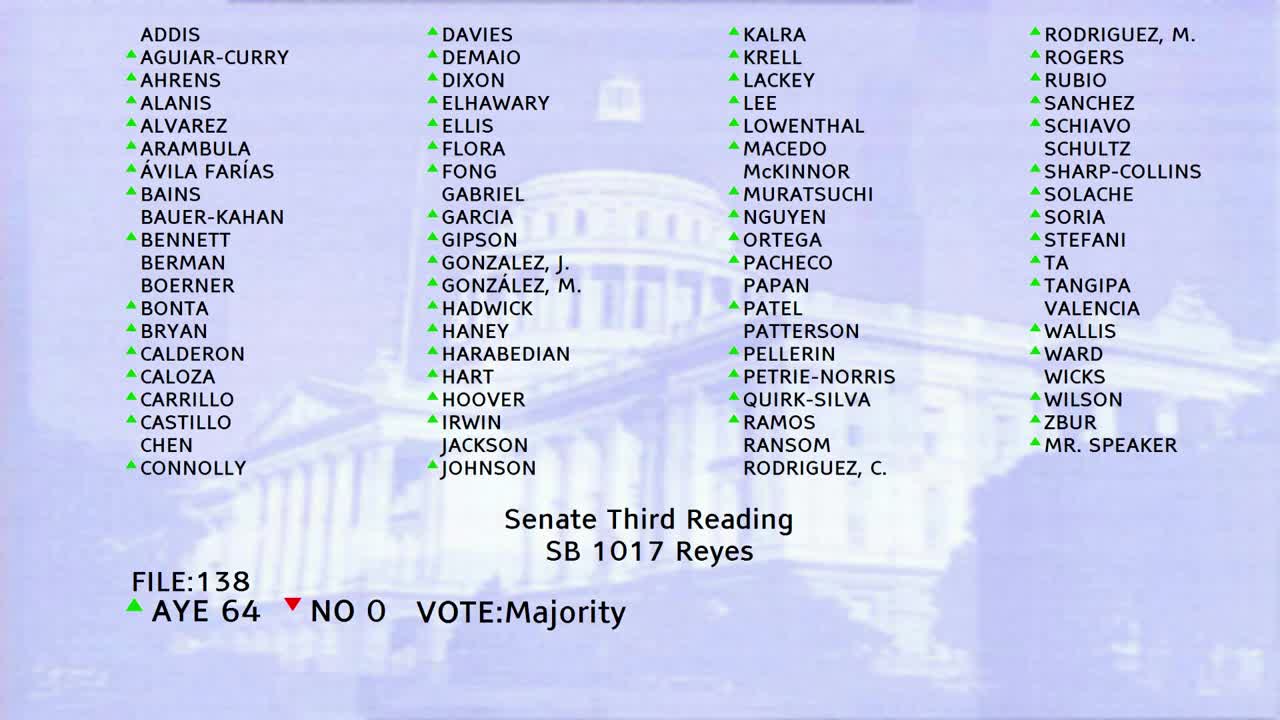 55SEC
Assembly Floor
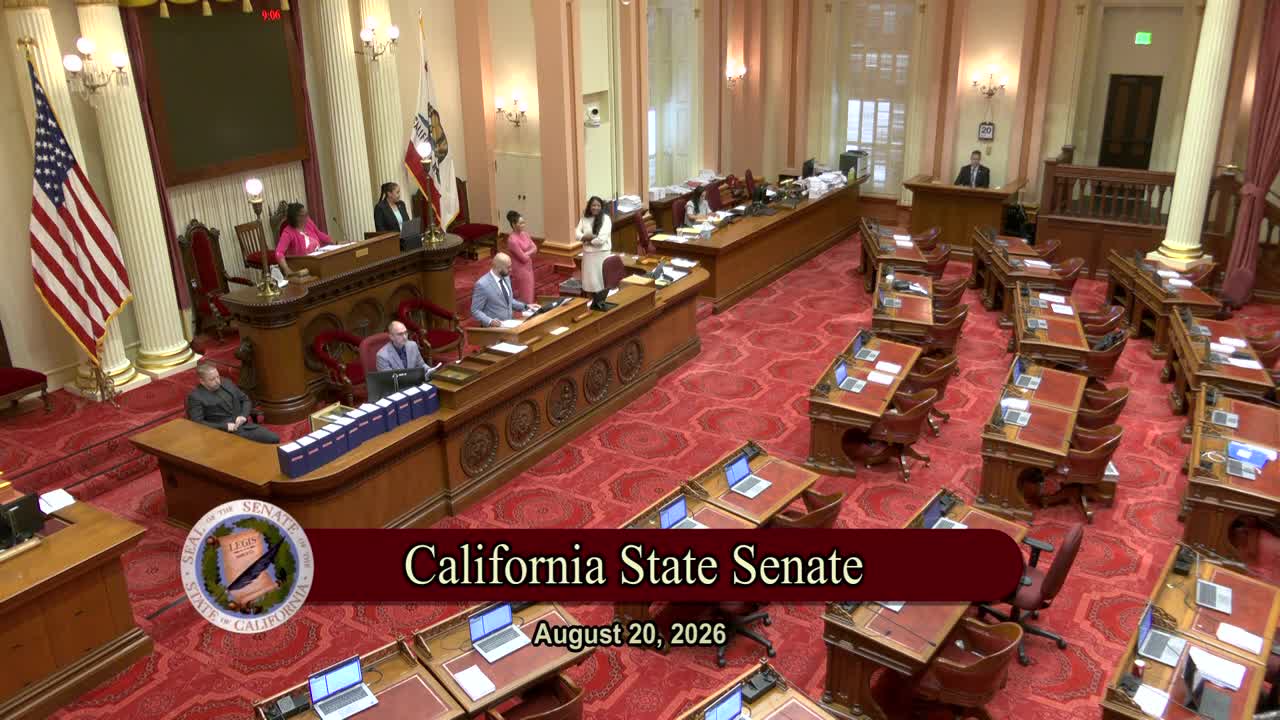 2MIN
Senate Floor
 22MIN
Senate Standing Committee on Housing
Bill Author

Bill Co-Author(s):