AB 1581: Pupils: data reporting: American Indian and Alaska Native pupils.
- Session Year: 2025-2026
- House: Assembly
- Latest Version Date: 2026-09-30
Current Status:
Passed
(2026-09-30: Chaptered by Secretary of State - Chapter 881, Statutes of 2026.)
Introduced
In Committee
Awaiting First Chamber Vote
Passed First Chamber
In Committee
Awaiting Second Chamber Vote
Passed Second Chamber
Enacted
Existing law creates, in the State Department of Education, the American Indian Education Unit to provide technical support to, and proper administrative oversight of, American Indian education programs established by the state in order to ensure that American Indian pupils attending California public schools are able to meet specified challenging academic standards.
Existing law establishes the California Longitudinal Pupil Achievement Data System (CALPADS), which is maintained by the State Department of Education and consists of pupil data from elementary and secondary schools, as specified, relating to demographic, program participation, enrollment, and statewide assessments, among other things. Existing law requires the system to be used to accomplish specified goals, including to provide school districts and the department access to data, including demographic data, necessary to comply with federal reporting requirements.This bill would require the department to, on or before July 1, 2028, and each July 1 thereafter, post, on the departments internet website, statewide aggregate educational outcome data for the prior school year for pupils who identify as American Indian or Alaska Native, as specified.
Existing law creates, in the State Department of Education, the American Indian Education Unit to provide technical support to, and proper administrative oversight of, American Indian education programs established by the state in order to ensure that American Indian pupils attending California public schools are able to meet specified challenging academic standards.
Existing law establishes the California Longitudinal Pupil Achievement Data System (CALPADS), which is maintained by the State Department of Education and consists of pupil data from elementary and secondary schools, as specified, relating to demographic, program participation, enrollment, and statewide assessments, among other things. Existing law requires the system to be used to accomplish specified goals, including to provide school districts and the department access to data, including demographic data, necessary to comply with federal reporting requirements.This bill would require the department to, beginning with the 202728 school year, define and collect, as part of CALPADS, a record of the tribal affiliation of each pupil who identifies as American Indian or Alaska Native, as provided. The bill would require a school district, county office of education, or charter school, beginning with the 202728 school year, to collect and report in CALPADS the tribal affiliation of each pupil who identifies as American Indian or Alaska Native, as provided. The bill would require the department to provide technical assistance to those local educational agencies in implementing these provisions. To the extent this bill imposes additional duties on local educational agencies in collecting and reporting additional data through CALPADS, the bill would impose a state-mandated local program.The California Constitution requires the state to reimburse local agencies and school districts for certain costs mandated by the state. Statutory provisions establish procedures for making that reimbursement.This bill would provide that, if the Commission on State Mandates determines that the bill contains costs mandated by the state, reimbursement for those costs shall be made pursuant to the statutory provisions noted above.This bill would require the department to, on or before July 1, 2028, and each July 1 thereafter, post, on the departments internet website, statewide aggregate educational outcome data for the prior school year for pupils who identify as American Indian or Alaska Native, as specified.
Existing law establishes the California Longitudinal Pupil Achievement Data System (CALPADS), which is maintained by the State Department of Education and consists of pupil data from elementary and secondary schools, as specified, relating to demographic, program participation, enrollment, and statewide assessments, among other things. Existing law requires the system to be used to accomplish specified goals, including to provide school districts and the department access to data, including demographic data, necessary to comply with federal reporting requirements.
This bill would require the department to, beginning with the 202728 school year, require, define and collect, as part of CALPADS, a record of the tribal affiliation of each pupil new to a school district, county office of education, or charter school who identifies as American Indian or Alaska Native, as provided. The bill would require a school district, county office of education, or charter school to, on or before July 1, 2027, school, beginning with the 202728 school year, to collect and report in CALPADS the tribal affiliation of each pupil enrolled in the 202627 school year who identifies as American Indian or Alaska Native, as provided. The bill would require the department to provide technical assistance to school districts, county offices of education, and charter schools those local educational agencies in implementing these provisions. To the extent this bill imposes additional duties on local educational agencies in collecting and reporting additional data through CALPADS, the bill would impose a state-mandated local program.
The California Constitution requires the state to reimburse local agencies and school districts for certain costs mandated by the state. Statutory provisions establish procedures for making that reimbursement.
This bill would provide that, if the Commission on State Mandates determines that the bill contains costs mandated by the state, reimbursement for those costs shall be made pursuant to the statutory provisions noted above.
Existing law establishes the California Longitudinal Pupil Achievement Data System (CALPADS), which is maintained by the State Department of Education and consists of pupil data from elementary and secondary schools, as specified, relating to demographic, program participation, enrollment, and statewide assessments, among other things. Existing law requires the system to be used to accomplish specified goals, including to provide school districts and the department access to data, including demographic data, necessary to comply with federal reporting requirements.
This bill would require the department to, beginning with the 202728 school year, require, as part of CALPADS, a record of the tribal affiliation of each pupil new to a school district, county office of education, or charter school who identifies as American Indian or Alaska Native, as provided. The bill would require a school district, county office of education, or charter school to, on or before July 1, 2027, collect and report in CALPADS the tribal affiliation of each pupil enrolled in the 202627 school year who identifies as American Indian or Alaska Native, as provided. The bill would require the department to provide technical assistance to school districts, county offices of education, and charter schools in implementing these provisions. To the extent this bill imposes additional duties on local educational agencies in collecting and reporting additional data through CALPADS, the bill would impose a state-mandated local program.
The California Constitution requires the state to reimburse local agencies and school districts for certain costs mandated by the state. Statutory provisions establish procedures for making that reimbursement.
This bill would provide that, if the Commission on State Mandates determines that the bill contains costs mandated by the state, reimbursement for those costs shall be made pursuant to the statutory provisions noted above.
The Legislature finds and declares all of the following:
(a)The accurate identification of American Indian and Alaska Native pupils in California is a critical issue that significantly affects the allocation of educational resources and the development of culturally responsive programs.
(b)In 1997, the Office of Management and Budget revised its Statistical Policy Directive 15 to require two separate race and ethnicity questions, with the ethnicity question, Are you Hispanic or Latino?, collected first before a more specific race question.
(c)The aforementioned questions have inadvertently led to many American Indian and Alaska Native pupils being misclassified or overlooked, particularly when they select Hispanic or Latino in the first question, as responses are often not disaggregated.
SEC. 2.Section 33318.7 is added to the Education Code, to read:33318.7.(a)For purposes of this section, pupils means pupils who identify as American Indian or Alaska Native only, and pupils who identify as American Indian or Alaska Native in addition to another race or ethnicity.
(b)(1)On or before July 1, 2028, and each July 1 thereafter, the department shall post, on the departments internet website, statewide aggregate educational outcome data for the prior school year for pupils, with information on each of the following indicators:
(A)The number of pupils.
(B)The academic achievement of pupils, as determined by quantitative data currently collected.
(C)The rate of suspension and expulsion of pupils.
(D)The rate of chronic absenteeism of pupils.
(E)The four- and five-year cohort graduation rates of pupils.
(2)In meeting the requirement of paragraph (1), the department shall use data, where appropriate, reported pursuant to existing law.
The Legislature finds and declares all of the following:
(a)The accurate identification of American Indian and Alaska Native pupils in California is a critical issue that significantly affects the allocation of educational resources and the development of culturally responsive programs.
(b)In 1997, the Office of Management and Budget revised its Statistical Policy Directive 15 to require two separate race and ethnicity questions, with the ethnicity question, Are you Hispanic or Latino?, collected first before a more specific race question.
(c)The aforementioned questions have inadvertently led to many American Indian and Alaska Native pupils being misclassified or overlooked, particularly when they select Hispanic or Latino in the first question, as responses are often not disaggregated.
(d)The inadequate data collection methods currently employed by the State Department of Education leads to underrepresentation, lack of proper resource allocation, and cultural disconnect for American Indian and Alaska Native pupils.SEC. 2.Section 60900.4 is added to the Education Code, to read:60900.4.(a)Beginning with the 202728 school year, the department shall define and collect, as part of the California Longitudinal Pupil Achievement Data System, a record of the tribal affiliation of each pupil who identifies as American Indian or Alaska Native, including a pupil who identifies as American Indian or Alaska Native in addition to another race or ethnicity.(b)Beginning with the 202728 school year, any time a school district, county office of education, or charter school collects race or ethnicity information for the purposes of California Longitudinal Pupil Achievement Data System reporting, the school district, county office of education, or charter school shall also collect and report in the California Longitudinal Pupil Achievement Data System the tribal affiliation of each pupil enrolled who identifies as American Indian or Alaska Native, including a pupil who identifies as American Indian or Alaska Native in addition to another race or ethnicity.(c)The department shall provide technical assistance to school districts, county offices of education, and charter schools in implementing this section.SEC. 3.If the Commission on State Mandates determines that this act contains costs mandated by the state, reimbursement to local agencies and school districts for those costs shall be made pursuant to Part 7 (commencing with Section 17500) of Division 4 of Title 2 of the Government Code.SEC. 2.Section 33318.7 is added to the Education Code, to read:33318.7.(a)For purposes of this section, pupils means pupils who identify as American Indian or Alaska Native only, and pupils who identify as American Indian or Alaska Native in addition to another race or ethnicity.
(b)(1)On or before July 1, 2028, and each July 1 thereafter, the department shall post, on the departments internet website, statewide aggregate educational outcome data for the prior school year for pupils, with information on each of the following indicators:
(A)The number of pupils.
(B)The academic achievement of pupils, as determined by quantitative data currently collected.
(C)The rate of suspension and expulsion of pupils.
(D)The rate of chronic absenteeism of pupils.
(E)The four- and five-year cohort graduation rates of pupils.
(2)In meeting the requirement of paragraph (1), the department shall use data, where appropriate, reported pursuant to existing law.
The Legislature finds and declares all of the following:
(a)The accurate identification of American Indian and Alaska Native pupils in California is a critical issue that significantly affects the allocation of educational resources and the development of culturally responsive programs.
(b)In 1997, the Office of Management and Budget revised its Statistical Policy Directive 15 to require two separate race and ethnicity questions, with the ethnicity question, Are you Hispanic or Latino?, collected first before a more specific race question.
(c)The aforementioned questions have inadvertently led to many American Indian and Alaska Native pupils being misclassified or overlooked, particularly when they select Hispanic or Latino in the first question, as responses are often not disaggregated.
(d)The inadequate data collection methods currently employed by the State Department of Education leads to underrepresentation, lack of proper resource allocation, and cultural disconnect for American Indian and Alaska Native pupils.
SEC. 2.Section 60900.4 is added to the Education Code, to read:60900.4.(a)Beginning with the 202728 school year, the department shall require, define and collect, as part of the California Longitudinal Pupil Achievement Data System, a record of the tribal affiliation of each pupil new to a school district, county office of education, or charter school who identifies as American Indian or Alaska Native, including a pupil who identifies as American Indian or Alaska Native in addition to another race or ethnicity.
(b)On or before July 1, 2027, a Beginning with the 202728 school year, any time a school district, county office of education, or charter school collects race or ethnicity information for the purposes of California Longitudinal Pupil Achievement Data System reporting, the school district, county office of education, or charter school shall also collect and report in the California Longitudinal Pupil Achievement Data System the tribal affiliation of each pupil enrolled in the 202627 school year who identifies as American Indian or Alaska Native, including a pupil who identifies as American Indian or Alaska Native in addition to another race or ethnicity.
(c)The department shall provide technical assistance to school districts, county offices of education, and charter schools in implementing this section.
SEC. 3.If the Commission on State Mandates determines that this act contains costs mandated by the state, reimbursement to local agencies and school districts for those costs shall be made pursuant to Part 7 (commencing with Section 17500) of Division 4 of Title 2 of the Government Code.
The Legislature finds and declares all of the following:
(a)The accurate identification of American Indian and Alaska Native pupils in California is a critical issue that significantly affects the allocation of educational resources and the development of culturally responsive programs.
(b)In 1997, the Office of Management and Budget revised its Statistical Policy Directive 15 to require two separate race and ethnicity questions, with the ethnicity question, Are you Hispanic or Latino?, collected first before a more specific race question.
(c)The aforementioned questions have inadvertently led to many American Indian and Alaska Native pupils being misclassified or overlooked, particularly when they select Hispanic or Latino in the first question, as responses are often not disaggregated.
(d)The inadequate data collection methods currently employed by the State Department of Education leads to underrepresentation, lack of proper resource allocation, and cultural disconnect for American Indian and Alaska Native pupils.
SEC. 2.Section 60900.4 is added to the Education Code, to read:60900.4.(a)Beginning with the 202728 school year, the department shall require, as part of the California Longitudinal Pupil Achievement Data System, a record of the tribal affiliation of each pupil new to a school district, county office of education, or charter school who identifies as American Indian or Alaska Native, including a pupil who identifies as American Indian or Alaska Native in addition to another race or ethnicity.
(b)On or before July 1, 2027, a school district, county office of education, or charter school shall collect and report in the California Longitudinal Pupil Achievement Data System the tribal affiliation of each pupil enrolled in the 202627 school year who identifies as American Indian or Alaska Native, including a pupil who identifies as American Indian or Alaska Native in addition to another race or ethnicity.
(c)The department shall provide technical assistance to school districts, county offices of education, and charter schools in implementing this section.
SEC. 3.If the Commission on State Mandates determines that this act contains costs mandated by the state, reimbursement to local agencies and school districts for those costs shall be made pursuant to Part 7 (commencing with Section 17500) of Division 4 of Title 2 of the Government Code.
|
Date
|
Status
|
|---|---|
| Sep 30, 2026 | Chaptered by Secretary of State - Chapter 881, Statutes of 2026. |
| Sep 30, 2026 | Approved by the Governor. |
| Sep 8, 2026 | Enrolled and presented to the Governor at 3:30 p.m. |
| Aug 28, 2026 | Senate amendments concurred in. To Engrossing and Enrolling. (Ayes 77. Noes 0. Page 6788.). |
| Aug 28, 2026 | Senate amendments concurred in. To Engrossing and Enrolling. (Ayes 77. Noes 0.). |
| Aug 27, 2026 | In Assembly. Concurrence in Senate amendments pending. |
| Aug 27, 2026 | Read third time. Passed. Ordered to the Assembly. (Ayes 40. Noes 0. Page 5993.). |
| Aug 27, 2026 | Read third time. Passed. Ordered to the Assembly. (Ayes 40. Noes 0.). |
| Aug 26, 2026 | From committee: That the measure be returned to Senate Floor for consideration. (Ayes 7. Noes 0.) (August 26) |
| Aug 24, 2026 | From committee: Be re-referred to Com. on ED. pursuant to Senate Rule 29.10 (b). (Ayes 5. Noes 0.) Re-referred to Com. on ED. |
| Aug 24, 2026 | Re-referred to Com. on RLS. pursuant to Senate Rule 29.10 (b). |
| Aug 24, 2026 | Read second time. Ordered to third reading. |
| Aug 21, 2026 | Read third time and amended. Ordered to second reading. |
| Aug 13, 2026 | Read second time. Ordered to third reading. |
| Aug 13, 2026 | From committee: Do pass. (Ayes 7. Noes 0.) (August 13). |
| Jun 22, 2026 | In committee: Referred to APPR. suspense file. |
| Jun 10, 2026 | From committee: Do pass and re-refer to Com. on APPR. (Ayes 7. Noes 0.) (June 10). Re-referred to Com. on APPR. |
| May 27, 2026 | Referred to Com. on ED. |
| May 14, 2026 | In Senate. Read first time. To Com. on RLS. for assignment. |
| May 14, 2026 | Read third time. Passed. Ordered to the Senate. (Ayes 77. Noes 0. Page 5042.) |
| May 14, 2026 | Read third time. Passed. Ordered to the Senate. (Ayes 77. Noes 0.) |
| May 7, 2026 | Read second time. Ordered to third reading. |
| May 6, 2026 | From committee: Do pass. (Ayes 14. Noes 0.) (May 6). |
| Mar 24, 2026 | Re-referred to Com. on APPR. |
| Mar 23, 2026 | Read second time and amended. |
| Mar 19, 2026 | From committee: Amend, and do pass as amended and re-refer to Com. on APPR. (Ayes 8. Noes 0.) (March 18). |
| Feb 2, 2026 | Referred to Com. on ED. |
| Jan 14, 2026 | From printer. May be heard in committee February 13. |
| Jan 13, 2026 | Read first time. To print. |
|
Date
|
Description
|
Location
|
Votes
|
|
|---|---|---|---|---|
| Aug 28, 2026 | AB 1581 Ramos Concurrence in Senate Amendments | Assembly Floor |
Passed |
|
| Aug 27, 2026 | Assembly 3rd Reading AB1581 Ramos et al. | Senate Floor |
Passed |
|
| Aug 26, 2026 | That the measure be returned to Senate Floor for consideration. Ordered to third reading. | Senate Standing Committee on Education |
Passed |
|
| Aug 13, 2026 | Do pass | Senate Standing Committee on Appropriations |
Passed |
|
| Jun 22, 2026 | Placed on suspense file | Senate Standing Committee on Appropriations |
Passed |
|
| Jun 10, 2026 | Do pass, but first be re-referred to the Committee on [Appropriations] | Senate Standing Committee on Education |
Passed |
|
| May 14, 2026 | AB 1581 Ramos Assembly Third Reading | Assembly Floor |
Passed |
|
| May 6, 2026 | Do pass. | Assembly Standing Committee on Appropriations |
Passed |
|
| Mar 18, 2026 | Do pass as amended and be re-referred to the Committee on [Appropriations] | Assembly Standing Committee on Education |
Passed |
This list shows positions taken on this bill by organizations on the date displayed, which is linked to the original source.
Positions by individuals are not included.
|
Organization
|
Position
|
Date
|
|---|---|---|
| California Charter Schools Association | ** Support | |
| California Charter Schools Association | ** Support | |
| California Commission on the Status of Women and Girls | ** Support | |
| California Commission on the Status of Women and Girls | ** Support | |
| California Tribal Business Alliance | ** Support | |
| Hispanas Organized for Political Equality | ** Support | |
| Hispanas Organized for Political Equality | ** Support | |
| Morongo Band Of Mission Indians | ** Support | |
| Morongo Band Of Mission Indians | ** Support | |
| Rancho Santiago Community College District | ** Support | |
| Rancho Santiago Community College District | ** Support | |
| SEIU California | ** Support | |
| SEIU California | ** Support | |
| Soboba Band Of Luiseno Indians | ** Support | |
| Yurok Tribe | ** Support | |
| Yurok Tribe | ** Support |
CONCURRENCE IN SENATE AMENDMENTS
CSA1 Bill Id:AB 1581
Author:(Ramos and Patel)
As Amended Ver:August 21, 2026
Majority vote
SUMMARY
Require the California Department of Education (CDE) starting on July 1, 2028, and annually thereafter, to post, on its website, specified statewide aggregate educational outcome data for the prior school year for pupils who identify as American Indian/Alaska Native only, and pupils who identify as American Indian/Alaska Native in addition to another race or ethnicity.
Senate Amendments
- Strike the prior contents of the bill and instead require the CDE starting on July 1, 2028, and by July 1 annually thereafter, to post on its website statewide aggregate educational outcome data for the prior school year for pupils who identify as American Indian/Alaska Native only, and pupils who identify as American Indian/Alaska Native in addition to another race or ethnicity, including:
- The number of pupils;
- The academic achievement of pupils, as determined by quantitative data currently collected;
- The rate of suspension and expulsion of pupils;
- The rate of chronic absenteeism of pupils; and
- The four- and five-year cohort graduation rates of pupils.
- Requires the CDE, in meeting this requirement, to use data, where appropriate, reported pursuant to existing law.
COMMENTS
Nine out of ten American Indian/Alaska Native students are not identified as such in California. A 2023 report by the American Institutes for Research and the Indigenous Education State Leaders Network (AIR/IESLN), Indigenous Students Count: A Landscape Analysis of American Indian and Alaska Native Student Data in U.S. K–12 Public Schools, found that while Indigenous students in the United States are currently estimated to be about 1% of the total K–12 student population in public schools, the data used to arrive at these percentages are almost certainly inaccurate. The report notes that the undercounting of Indigenous students may be as high as 70% nationwide.
According to this report, nearly nine out of ten indigenous California students are not counted as such. California has the largest number of students undercounted, estimated to be nearly 156,000.
Why does this undercount occur? According to the AIR/IESLN report, in the K–12 public education system, race/ethnicity data are collected and reported using guidelines adopted by the U.S. Department of Education in 2007 and aligned with the Office of Management and Budget's (OMB's) 1997 Standards for Maintaining, Collecting and Presenting Federal Data on Race and Ethnicity.
The question used in most forms to collect racial/ethnic data is known as the "two-part question" because it asks respondents to identify first their ethnicity ("Are you Hispanic or Latino?") and then their race.
Data from the 2020 U.S. Census show that 61% of American Indians and Alaska Natives are multiracial. According to the Brookings Institution, this is a legacy of the complex effects that hundreds of years of colonization have had on the identities of Native Americans.
Student data are collected by districts and reported by states to the U.S. Department of Education in the aggregate, using the following method of tabulating students who identify as AI/AN and shown in the chart below:
- All students indicating that they are Hispanic or Latino, regardless of race, are counted and reported as Hispanic.
- Non-Hispanic students who select AI/AN as their only race are counted and reported as AI/AN.
- Non-Hispanic students who select AI/AN and another race are counted and reported as "two or more races."
Why does an accurate count matter? The AIR/IESLN report notes that inaccurate student counts in the public K–12 school system are problematic because they:
- Limit the ability of state education agencies and districts to effectively use performance and accountability data to understand where systems might be failing to serve Indigenous students or locate new opportunities, innovative programming, and supports;
- Inaccurately represent the number of districts that may be required to engage in consultation with tribal governments and agencies as required under the Every Student Succeeds Act (ESSA);
- Obscure district and school eligibility for federal funds designated to serve Indigenous students and the need for American Indian Parent Advisory Committees to inform such federally funded programs;
- Reduce or minimize state and district political will to support Indigenous student needs; and
- Fail to provide teachers and Tribes with the information they need to appropriately support their students.
Additionally, the AIR/IESLN report notes that collecting tribal affiliation data makes it possible to distinguish between students affiliated with those tribes to which the federal government recognizes its treaty responsibility and the wide range of other indigenous peoples included in the federal AI/AN definition. It also enables tribes to receive disaggregated data on their students; districts to know which tribes should be engaged in consultation and understand their students' cultural backgrounds.
In California, failure to be counted has other consequences. According to the CDE, only students identified as AI/AN Non-Hispanic are included in the that student group on the California School Dashboard and DataQuest reports. AI/AN/Hispanic and Two or More Races/Hispanic students appear in the Hispanic category on these reports and AI/AN students who are of two or more races are reported as Two or More Races.
The California School Dashboard is used to monitor school and student subgroup progress, and this data is used for accountability purposes and for identification for support. The Assembly may wish to consider that it is unlikely that LEAs will ever be identified for support on the basis of the performance of AI/AN students if they continue to be undercounted, because they are already a small subset of the overall enrollment of the state, and LEAs must enroll a minimum of 30 students to count as a subgroup for accountability purposes.
According to the Author
"California is undercounting almost 90% of its Native American students. That is a grave and obscenely ridiculous undercount of a population that is severely underserved. The undercount results in inadequate allocation of resources to serve these students with the culturally responsive programs they need to succeed and thrive in school and broader community. Our state should not continue a centuries-old tradition of neglect or worse to its First People. An accurate demographic count is the first step toward adequately serving all Californians."
Arguments in Support
The Soboba Band of Luiseno Indians writes, "The accurate identification of Native American students in California is a critical issue that directly affects the allocation of educational resources and the development of culturally responsive programs. The current practice for collecting ethnicity and race data creates significant challenges in accurately identifying students' tribal affiliation. As a result, Native students are frequently undercounted or misclassified, particularly when Hispanic or Latino is selected in the first reporting category and responses are not meaningfully disaggregated.
Additionally, the absence of standardized fields to capture tribal affiliation or enrollment results in incomplete and inconsistent data statewide. Without reliable data, it is difficult for state and local education leaders to understand the true scope of need or to design programs that reflect the cultural identities and academic realities of Native students. AB 1581 establishes a thoughtful framework to improve and standardize this data collection process. By strengthening California Longitudinal Pupil Achievement Data System (CALPADS) reporting requirements, the bill enables the California Department of Education to enhance the collection of tribal data and ensure that Native students are accurately represented within the system.
As a federally recognized tribal government, Soboba understands firsthand the importance of ensuring that our children are seen, counted, and supported within California's education system. Accurate data is not merely technical; it is foundational to equity, accountability, and opportunity."
Arguments in Opposition
None on file
FISCAL COMMENTS
According to the Senate Appropriations Committee on the version of this bill amended on March 23, 2026, the CDE estimates General Fund costs of $610,000 each year and 4.0 positions for data collection, the ongoing monitoring and management of tribal information within CALPADS, and providing ongoing technical assistance to LEAs.
VOTES:
ASM EDUCATION: 8-0-0
YES: Patel, Hoover, Alvarez, Bonta, Castillo, Garcia, Lowenthal, Zbur
ASM APPROPRIATIONS: 14-0-1
YES: Wicks, Hoover, Aguiar-Curry, Caloza, Dixon, Fong, Mark González, Krell, Pacheco, Pellerin, Sharp-Collins, Solache, Ta, Tangipa
ABS, ABST OR NV: Arambula
ASSEMBLY FLOOR: 77-0-3
YES: Addis, Aguiar-Curry, Ahrens, Alanis, Alvarez, Ávila Farías, Bains, Bauer-Kahan, Bennett, Berman, Boerner, Bonta, Bryan, Calderon, Caloza, Carrillo, Castillo, Chen, Connolly, Davies, DeMaio, Dixon, Elhawary, Ellis, Fong, Gabriel, Gallagher, Garcia, Gipson, Jeff Gonzalez, Mark González, Hadwick, Haney, Harabedian, Hart, Hoover, Irwin, Jackson, Johnson, Kalra, Krell, Lackey, Lee, Lowenthal, Macedo, McKinnor, Muratsuchi, Nguyen, Ortega, Pacheco, Papan, Patel, Patterson, Pellerin, Petrie-Norris, Quirk-Silva, Ramos, Ransom, Michelle Rodriguez, Rogers, Blanca Rubio, Sanchez, Schiavo, Schultz, Sharp-Collins, Solache, Soria, Stefani, Ta, Tangipa, Valencia, Wallis, Ward, Wicks, Wilson, Zbur, Rivas
ABS, ABST OR NV: Arambula, Flora, Celeste Rodriguez
UPDATED
VERSION: August 21, 2026
CONSULTANT: Tanya Lieberman / ED. / (916) 319-2087 FN: 0004381
SENATE COMMITTEE ON EDUCATION
Senator Sasha Renée Pérez, Chair
2025 - 2026 Regular
Bill No: Hearing Date: August 26, 2026
Author: | |||
Version: |
| ||
Urgency: | Fiscal: | ||
Consultant: | |||
Subject:
NOTE: This bill has been amended to replace its contents, and this is the first time the bill is being heard in its current form.
SUMMARY
This bill requires the California Department of Education (CDE), beginning on July 1, 2028, to annually post statewide aggregate educational outcome data for the prior school year for American Indian or Alaska Native (AI/AN) pupils, as defined, on the CDE’s website, including, but not limited to, the number of pupils, the academic achievement of pupils, and the rate of suspension, expulsion, and chronic absenteeism of pupils.
BACKGROUND
Existing law:
- Establishes a longitudinal data system known as the California Longitudinal Pupil Achievement Data System (CALPADS) to:
- Provide school districts and the CDE access to data necessary to comply with federal reporting requirements.
- Provide a better means of evaluating educational progress and investments over time.
- Provide local educational agencies (LEAs) with the data needed to improve pupil achievement, including college and career readiness.
- Provide an efficient, flexible, and secure means of maintaining longitudinal statewide pupil level data between and among the state’s educational segments and operational tools, as defined.
- Facilitate the ability of the state to publicly report data.
- Ensure that any data access provided to researchers, as required, is provided only to the extent that the data access is in compliance with the federal Family Educational Rights and Privacy Act of 1974. (Education Code (EC) § 60900)
- Requires, pursuant to the federal Every Student Succeeds Act, specified LEAs to consult with appropriate officials from American Indian tribes or tribal organizations approved by the tribes located in the area served by the LEA prior to its submission of a required plan or application for a covered program under the Act. (United States Code, Title 20 § 7918)
- Establishes the California American Indian education centers program to serve as community-based educational resource centers for American Indian pupils, parents, guardians, and public schools in order to promote the academic and cultural achievement of American Indian pupils. (EC § 33381)
- Encourages LEAs to form California Indian Education Task Forces with California Indian tribes local to their region or tribes historically located in the region. (EC § 33391)
- Requires the CDE, by June 1, 2022, in collaboration with, and subject to the approval of, the executive director of the State Board of Education, to use specified funding to enter into a contract with a county office of education (COE) or a consortium of COEs for the purposes of developing a model curriculum related to Native American studies by September 1, 2025. Requires that the model curriculum be housed on the platform developed and maintained by the California History-Social Science Project. (EC § 51226.9)
ANALYSIS
This bill:
- Defines “pupils”, for purposes of this bill, as pupils who identify as AI/AN only, and pupils who identify as AI/AN in addition to another race or ethnicity.
- Requires the CDE, beginning with July 1, 2028, to post statewide aggregate educational outcome data for the prior school year for AI/AN pupils, as specified, on CDE’s website every year on July 1, which includes:
- The number of pupils.
- The academic achievement of pupils, as determined by quantitative data currently collected.
- The rate of suspension and expulsion of pupils.
- The rate of chronic absenteeism of pupils.
- The four- and five-year cohort graduation rates of pupils.
- Requires CDE to use data, where appropriate, reported pursuant to existing law to meet the requirements of this bill.
- Makes findings and declarations related to the importance of accurate identification of AI/AN pupils in California.
STAFF COMMENTS
- Need for the bill. According to the author, “Due to federal guidelines, California is undercounting almost 90% of its Native American students. That is a grave and obscenely ridiculous undercount of a population that is severely underserved. The undercount results in inadequate allocation of resources to serve these students with the culturally responsive programs they need to succeed and thrive in school and broader community. Our state should not continue a centuries-old tradition of neglect or worse to its First People. By requiring this report, we can utilize an inclusive count of Native students on important metrics which could help inform policy decisions.”
- A 2023 report highlighted issues with accurate representation of AI/AN national and state pupil data, which is collected and reported based on federal guidelines and standards. A 2023 report by the American Institutes for Research (AIR) and the Indigenous Education State Leaders Network (IESLN)—called “Indigenous Students Count: A Landscape Analysis of American Indian and Alaska Native Student Data in U.S. K–12 Public Schools”—found that though Indigenous students in the country are estimated to be about 1% of the K–12 student population in public schools, the “undercounting of Indigenous students may be as high as 70% nationwide.” The author has indicated that this bill is aimed at addressing the findings of this report.
- Report focuses on two issues for accurately representing AI/AN pupils in national and state data. The AIR and IESLN report states that in the K–12 public education system, race and ethnicity data are collected and reported using guidelines adopted by the U.S. Department of Education (USDE) in 2007 and aligned with the Office of Management and Budget’s (OMB’s) 1997 standards. Specifically, in 1997, the OMB introduced the following format known as the “two-part question”:
- Are you Hispanic or Latino?
- What is your race? (check all that apply)
The report indicates two primary mechanisms for which AI/AN pupils are underrepresented in national and state data (see the graphic below from the report for a visual representation of this undercount):
- For a parent or guardian of a pupil answering “yes” to the first part of the “two-part question”, then the pupil is considered Hispanic or Latino regardless of how they answer the question about race. This means an AI/AN pupil who also identifies as Hispanic or Latino is included as part of the count of Hispanic or Latino pupils and is not recorded as AI/AN in demographic data.
- For a parent or a guardian of a pupil answering “no” to the first part of the “two-part question”, but identifying two or more races, then the pupil is considered in the “two or more races” category only. This means a pupil who identifies their race as both AI/AN and White is part of the count of multi-racial pupils and is not recorded as AI/AN in demographic data.

The report indicates that a more “inclusive” definition of AI/AN would count students who are indicating that their race is AI/AN, even if they are also indicating they are Hispanic or Latino or if they identify as multi-racial.
- The federal government planned changes in March 2024 to its collection and reporting of federal data on race and ethnicity, but implementation has stalled under the current Administration. Beginning in June 2022, the OMB began working on a set of revisions to its Statistical Policy Directive No. 15 (SPD 15), which are its standards for maintaining, collecting, and presenting federal data on race and ethnicity, to develop recommendations for improving the quality and usefulness of federal race and ethnicity data. These revisions would be the first to SPD 15 since 1997. By March 2024, the OMB published key revisions to SPD 15, including:
- Using one combined question for race and ethnicity (instead of the “two-part question”), and encouraging respondents to select as many options as apply to how they identify.
- Adding Middle Eastern or North African as a new minimum category. (The new set of minimum race and/or ethnicity categories would be: AI/AN; Asian; Black or African American; Hispanic or Latino; Middle Eastern or North African; Native Hawaiian or Pacific Islander; and White.)
- Requiring the collection of additional details beyond the minimum required race and ethnicity categories for most situations, to ensure further disaggregation in the collection, tabulation, and presentation of data when useful and appropriate.
One of the primary goals of SPD 15 is to ensure consistent and comparable race and ethnicity data across the federal government. To help meet that goal, the revisions to SPD 15 instruct federal agencies to begin updating their surveys and administrative forms as quickly as possible, and federal agencies were given until 2029 to adopt these changes, ahead of the 2030 Census. However, according to the CDE, guidance that the USDE had intended to send to state educational agencies in September 2025 was indicated to be delayed due to the federal shutdown. It is currently unclear when CDE and other state educational agencies will receive updated guidance on SPD 15 from the federal government, which would govern data collection and reporting of these data, especially given the significant reductions in force at USDE and the President’s plans to abolish the department.
Moreover, according to a December 2025 article from National Public Radio, the OMB stated that the Administration has started a new review of the SPD 15 standards and how the 2024 revisions were approved, signaling the possibility that the Administration may not adopt the 2024 revisions to SPD 15 for federal government data more broadly.
- Federal guidelines ultimately dictate how race and ethnicity data is collected by the states. The author identifies an important issue regarding how AI/AN data is counted and how the current rules aggregating the data can lead to a misrepresentation or underrepresentation of AI/AN data, especially given how that data informs federal program allocations.
Due to federal guidelines on how states must collect and report data related to race and ethnicity, the State of California is limited in how it can address this problem from a data collection and reporting standpoint, specifically. Federal guidelines exist, in part, because of a desire for the data to be comparable across states and to build a national dataset with all states using the same standards. The AIR and IESLN report highlights a national problem that points to federal requirements as its root cause, not a problem that is specific to what the state is doing or that the state could fix on its own. If the State of California decided to deviate from federal guidelines (i.e., not ask the “two-part question”), the state would be out of compliance, which could put federal funds for CDE at risk. Absent changes at the federal level, state legislation would not be able to ultimately change how these data are collected and reported to address the underrepresentation of AI/AN pupils that is referenced in the 2023 report.
However, even if data collection and reporting is subject to federal guidelines, CDE and districts can still look at underlying data to shine a light and report on data using other definitions of race and ethnicity data, including for AI/AN pupils. This bill attempts to do that by requiring CDE to post statewide aggregate educational outcome data for AI/AN pupils, by using a revised definition of AI/AN pupils that is considered more inclusive.
For an example of how this may work, AI/AN pupils—whose data is currently reported to the federal government as Hispanic or Latino or as multi-racial—would be included in the CDE’s annual post of statewide educational outcome data on AI/AN pupils, which would be more consistent with the recommendations of the 2023 report.
SUPPORT
Soboba Band of Luiseño Indians (source)
California Charter Schools Association
California Commission on the Status of Women and Girls
Hispanas Organized for Political Equality
Morongo Band of Mission Indians
Rancho Santiago Community College District
SEIU California
Yurok Tribe
OPPOSITION
None received
-- END --
SENATE RULES COMMITTEE Office of Senate Floor Analyses (916) 651-4171 | AB 1581 |
THIRD READING
Bill No: AB 1581
Author: Ramos (D) and Patel (D), et al.
Amended: 8/21/26 in Senate
Vote: 21
PRIOR SENATE VOTES NOT RELEVANT
SENATE EDUCATION COMMITTEE: 7-0, 8/26/26
AYES: Pérez, Ochoa Bogh, Cabaldon, Choi, Cortese, Gonzalez, Reyes
ASSEMBLY FLOOR: 77-0, 5/14/26 - See last page for vote
SUBJECT: Pupils: data reporting: American Indian and Alaska Native pupils
SOURCE: Soboba Band of Luiseño Indians
DIGEST:
This bill requires the California Department of Education (CDE), beginning on July 1, 2028, to annually post statewide aggregate educational outcome data for the prior school year for American Indian or Alaska Native (AI/AN) pupils, as defined, on the CDE’s website, including, but not limited to, the number of pupils, the academic achievement of pupils, and the rate of suspension, expulsion, and chronic absenteeism of pupils.
ANALYSIS:
Existing law:
- Establishes a longitudinal data system known as the California Longitudinal Pupil Achievement Data System (CALPADS) to:
- Provide school districts and the CDE access to data necessary to comply with federal reporting requirements.
- Provide a better means of evaluating educational progress and investments over time.
- Provide local educational agencies (LEAs) with the data needed to improve pupil achievement, including college and career readiness.
- Provide an efficient, flexible, and secure means of maintaining longitudinal statewide pupil level data between and among the state’s educational segments and operational tools, as defined.
- Facilitate the ability of the state to publicly report data.
- Ensure that any data access provided to researchers, as required, is provided only to the extent that the data access is in compliance with the federal Family Educational Rights and Privacy Act of 1974. (Education Code (EC) § 60900)
- Requires, pursuant to the federal Every Student Succeeds Act, specified LEAs to consult with appropriate officials from American Indian tribes or tribal organizations approved by the tribes located in the area served by the LEA prior to its submission of a required plan or application for a covered program under the Act. (United States Code, Title 20 § 7918)
- Establishes the California American Indian education centers program to serve as community-based educational resource centers for American Indian pupils, parents, guardians, and public schools in order to promote the academic and cultural achievement of American Indian pupils. (EC § 33381)
- Encourages LEAs to form California Indian Education Task Forces with California Indian tribes local to their region or tribes historically located in the region. (EC § 33391)
- Requires the CDE, by June 1, 2022, in collaboration with, and subject to the approval of, the executive director of the State Board of Education, to use specified funding to enter into a contract with a county office of education (COE) or a consortium of COEs for the purposes of developing a model curriculum related to Native American studies by September 1, 2025. Requires that the model curriculum be housed on the platform developed and maintained by the California History-Social Science Project. (EC § 51226.9)
This bill:
- Defines “pupils”, for purposes of this bill, as pupils who identify as AI/AN only, and pupils who identify as AI/AN in addition to another race or ethnicity.
- Requires the CDE, beginning with July 1, 2028, to post statewide aggregate educational outcome data for the prior school year for AI/AN pupils, as specified, on CDE’s website every year on July 1, which includes:
- The number of pupils.
- The academic achievement of pupils, as determined by quantitative data currently collected.
- The rate of suspension and expulsion of pupils.
- The rate of chronic absenteeism of pupils.
- The four- and five-year cohort graduation rates of pupils.
- Requires CDE to use data, where appropriate, reported pursuant to existing law to meet the requirements of this bill.
- Makes findings and declarations related to the importance of accurate identification of AI/AN pupils in California.
Comments
- Need for the bill. According to the author, “Due to federal guidelines, California is undercounting almost 90% of its Native American students. That is a grave and obscenely ridiculous undercount of a population that is severely underserved. The undercount results in inadequate allocation of resources to serve these students with the culturally responsive programs they need to succeed and thrive in school and broader community. Our state should not continue a centuries-old tradition of neglect or worse to its First People. By requiring this report, we can utilize an inclusive count of Native students on important metrics which could help inform policy decisions.”
- A 2023 report highlighted issues with accurate representation of AI/AN national and state pupil data, which is collected and reported based on federal guidelines and standards. A 2023 report by the American Institutes for Research (AIR) and the Indigenous Education State Leaders Network (IESLN)—called “Indigenous Students Count: A Landscape Analysis of American Indian and Alaska Native Student Data in U.S. K–12 Public Schools”—found that though Indigenous students in the country are estimated to be about 1% of the K–12 student population in public schools, the “undercounting of Indigenous students may be as high as 70% nationwide.” The author has indicated that this bill is aimed at addressing the findings of this report.
- Report focuses on two issues for accurately representing AI/AN pupils in national and state data. The AIR and IESLN report states that in the K–12 public education system, race and ethnicity data are collected and reported using guidelines adopted by the U.S. Department of Education (USDE) in 2007 and aligned with the Office of Management and Budget’s (OMB’s) 1997 standards. Specifically, in 1997, the OMB introduced the following format known as the “two-part question”:
- Are you Hispanic or Latino?
- What is your race? (check all that apply)
The report indicates two primary mechanisms for which AI/AN pupils are underrepresented in national and state data (see the graphic below from the report for a visual representation of this undercount):
- For a parent or guardian of a pupil answering “yes” to the first part of the “two-part question”, then the pupil is considered Hispanic or Latino regardless of how they answer the question about race. This means an AI/AN pupil who also identifies as Hispanic or Latino is included as part of the count of Hispanic or Latino pupils and is not recorded as AI/AN in demographic data.
- For a parent or a guardian of a pupil answering “no” to the first part of the “two-part question”, but identifying two or more races, then the pupil is considered in the “two or more races” category only. This means a pupil who identifies their race as both AI/AN and White is part of the count of multi-racial pupils and is not recorded as AI/AN in demographic data.
The report indicates that a more “inclusive” definition of AI/AN would count students who are indicating that their race is AI/AN, even if they are also indicating they are Hispanic or Latino or if they identify as multi-racial.
- The federal government planned changes in March 2024 to its collection and reporting of federal data on race and ethnicity, but implementation has stalled under the current Administration. Beginning in June 2022, the OMB began working on a set of revisions to its Statistical Policy Directive No. 15 (SPD 15), which are its standards for maintaining, collecting, and presenting federal data on race and ethnicity, to develop recommendations for improving the quality and usefulness of federal race and ethnicity data. These revisions would be the first to SPD 15 since 1997. By March 2024, the OMB published key revisions to SPD 15, including:
- Using one combined question for race and ethnicity (instead of the “two-part question”), and encouraging respondents to select as many options as apply to how they identify.
- Adding Middle Eastern or North African as a new minimum category. (The new set of minimum race and/or ethnicity categories would be: AI/AN; Asian; Black or African American; Hispanic or Latino; Middle Eastern or North African; Native Hawaiian or Pacific Islander; and White.)
- Requiring the collection of additional details beyond the minimum required race and ethnicity categories for most situations, to ensure further disaggregation in the collection, tabulation, and presentation of data when useful and appropriate.
One of the primary goals of SPD 15 is to ensure consistent and comparable race and ethnicity data across the federal government. To help meet that goal, the revisions to SPD 15 instruct federal agencies to begin updating their surveys and administrative forms as quickly as possible, and federal agencies were given until 2029 to adopt these changes, ahead of the 2030 Census. However, according to the CDE, guidance that the USDE had intended to send to state educational agencies in September 2025 was indicated to be delayed due to the federal shutdown. It is currently unclear when CDE and other state educational agencies will receive updated guidance on SPD 15 from the federal government, which would govern data collection and reporting of these data, especially given the significant reductions in force at USDE and the President’s plans to abolish the department.
Moreover, according to a December 2025 article from National Public Radio, the OMB stated that the Administration has started a new review of the SPD 15 standards and how the 2024 revisions were approved, signaling the possibility that the Administration may not adopt the 2024 revisions to SPD 15 for federal government data more broadly.
- Federal guidelines ultimately dictate how race and ethnicity data is collected by the states. The author identifies an important issue regarding how AI/AN data is counted and how the current rules aggregating the data can lead to a misrepresentation or underrepresentation of AI/AN data, especially given how that data informs federal program allocations.
Due to federal guidelines on how states must collect and report data related to race and ethnicity, the State of California is limited in how it can address this problem from a data collection and reporting standpoint, specifically. Federal guidelines exist, in part, because of a desire for the data to be comparable across states and to build a national dataset with all states using the same standards. The AIR and IESLN report highlights a national problem that points to federal requirements as its root cause, not a problem that is specific to what the state is doing or that the state could fix on its own. If the State of California decided to deviate from federal guidelines (i.e., not ask the “two-part question”), the state would be out of compliance, which could put federal funds for CDE at risk. Absent changes at the federal level, state legislation would not be able to ultimately change how these data are collected and reported to address the underrepresentation of AI/AN pupils that is referenced in the 2023 report.
However, even if data collection and reporting is subject to federal guidelines, CDE and districts can still look at underlying data to shine a light and report on data using other definitions of race and ethnicity data, including for AI/AN pupils. This bill attempts to do that by requiring CDE to post statewide aggregate educational outcome data for AI/AN pupils, by using a revised definition of AI/AN pupils that is considered more inclusive.
For an example of how this may work, AI/AN pupils—whose data is currently reported to the federal government as Hispanic or Latino or as multi-racial—would be included in the CDE’s annual post of statewide educational outcome data on AI/AN pupils, which would be more consistent with the recommendations of the 2023 report.
FISCAL EFFECT: Appropriation: No Fiscal Com.: Yes Local: No
According to the Senate Appropriations Committee on the version of this bill amended on March 23, 2026:
The CDE estimates General Fund costs of $610,000 each year and 4.0 positions for data collection, the ongoing monitoring and management of tribal information within CALPADS, and providing ongoing technical assistance to LEAs.
SUPPORT: (Verified 8/26/26)
Soboba Band of Luiseño Indians (source)
California Charter Schools Association
California Commission on the Status of Women and Girls
Hispanas Organized for Political Equality
Morongo Band of Mission Indians
Rancho Santiago Community College District
SEIU California
Yurok Tribe
OPPOSITION: (Verified 8/26/26)
None received
ASSEMBLY FLOOR: 77-0, 5/14/26
AYES: Addis, Aguiar-Curry, Ahrens, Alanis, Alvarez, Ávila Farías, Bains, Bauer-Kahan, Bennett, Berman, Boerner, Bonta, Bryan, Calderon, Caloza, Carrillo, Castillo, Chen, Connolly, Davies, DeMaio, Dixon, Elhawary, Ellis, Fong, Gabriel, Gallagher, Garcia, Gipson, Jeff Gonzalez, Mark González, Hadwick, Haney, Harabedian, Hart, Hoover, Irwin, Jackson, Johnson, Kalra, Krell, Lackey, Lee, Lowenthal, Macedo, McKinnor, Muratsuchi, Nguyen, Ortega, Pacheco, Papan, Patel, Patterson, Pellerin, Petrie-Norris, Quirk-Silva, Ramos, Ransom, Michelle Rodriguez, Rogers, Blanca Rubio, Sanchez, Schiavo, Schultz, Sharp-Collins, Solache, Soria, Stefani, Ta, Tangipa, Valencia, Wallis, Ward, Wicks, Wilson, Zbur, Rivas
NO VOTE RECORDED: Arambula, Flora, Celeste Rodriguez
Prepared by: Michelle Nguyen / ED. / (916) 651-4105
8/26/26 19:51:42
**** END ****
SENATE RULES COMMITTEE Office of Senate Floor Analyses (916) 651-4171 | AB 1581 |
THIRD READING
Bill No: AB 1581
Author: Ramos (D) and Patel (D), et al.
Amended: 8/21/26 in Senate
Vote: 21
SENATE EDUCATION COMMITTEE: 7-0, 6/10/26
AYES: Pérez, Ochoa Bogh, Cabaldon, Choi, Cortese, Menjivar, Reyes
SENATE APPROPRIATIONS COMMITTEE: 7-0, 8/13/26
AYES: Cervantes, Seyarto, Cabaldon, Dahle, Grayson, Richardson, Wahab
ASSEMBLY FLOOR: 77-0, 5/14/26 - See last page for vote
SUBJECT: Pupils: data reporting: American Indian and Alaska Native pupils
SOURCE: Soboba Band of Luiseño Indians
DIGEST:
This bill requires the California Department of Education (CDE), beginning with July 1, 2028, to annually post statewide aggregate educational outcome data for American Indian or Alaska Native (AI/AN) pupils, as defined, on CDE’s website, including, but not limited to, the number of pupils, the academic achievement of pupils, and the rate of suspension, expulsion, and chronic absenteeism of pupils.
Senate Floor Amendments of 8/21/26 remove the requirements of the bill as amended on March 23, 2026, and instead require CDE, beginning with July 1, 2028, to annually post statewide aggregate educational outcome data for the prior school year for AI/AN pupils, as defined, on CDE’s website. The amendments also remove a finding and declaration that describes CDE’s data collection methods as inadequate.
ANALYSIS:
Existing law:
- Establishes a longitudinal data system known as California Longitudinal Pupil Achievement Data System (CALPADS) to:
- Provide school districts and the CDE access to data necessary to comply with federal reporting requirements.
- Provide a better means of evaluating educational progress and investments over time.
- Provide local educational agencies (LEAs) with the data needed to improve pupil achievement, including college and career readiness.
- Provide an efficient, flexible, and secure means of maintaining longitudinal statewide pupil level data between and among the state’s educational segments and operational tools, as defined.
- Facilitate the ability of the state to publicly report data.
- Ensure that any data access provided to researchers, as required, is provided only to the extent that the data access is in compliance with the federal Family Educational Rights and Privacy Act of 1974. (Education Code (EC) § 60900)
- Requires, pursuant to the federal Every Student Succeeds Act, specified LEAs to consult with appropriate officials from American Indian tribes or tribal organizations approved by the tribes located in the area served by the LEA prior to its submission of a required plan or application for a covered program under the Act. (United States Code, Title 20 § 7918)
- Establishes the California American Indian education centers program to serve as community-based educational resource centers for American Indian pupils, parents, guardians, and public schools in order to promote the academic and cultural achievement of American Indian pupils. (EC § 33381)
- Encourages LEAs to form California Indian Education Task Forces with California Indian tribes local to their region or tribes historically located in the region. (EC § 33391)
- Requires the CDE, by June 1, 2022, in collaboration with, and subject to the approval of, the executive director of the State Board of Education, to use specified funding to enter into a contract with a county office of education (COE) or a consortium of COEs for the purposes of developing a model curriculum related to Native American studies by September 1, 2025. Requires that the model curriculum be housed on the platform developed and maintained by the California History-Social Science Project. (EC § 51226.9)
This bill:
- Defines “pupils”, for purposes of this bill, as pupils who identify as AI/AN only, and pupils who identify as AI/AN in addition to another race or ethnicity.
- Requires the CDE, beginning with July 1, 2028, to post statewide aggregate educational outcome data for the prior school year for AI/AN pupils, as specified, on CDE’s website every year on July 1, which includes:
- The number of pupils.
- The academic achievement of pupils, as determined by quantitative data currently collected.
- The rate of suspension and expulsion of pupils.
- The rate of chronic absenteeism of pupils.
- The four- and five-year cohort graduation rates of pupils.
- Requires CDE to use data, where appropriate, reported pursuant to existing law to meet the requirements of this bill.
- Makes findings and declarations related to the importance of accurate identification of AI/AN pupils in California.
Comments
Need for the bill. According to the author, “The accurate identification of Native American students in California is a critical issue that significantly affects the allocation of educational resources and the development of culturally responsive programs. The current practice to collect ethnicity and race data creates challenges in accurately counting students’ tribal affiliation. Inaccurate counting results in underrepresentation and a failure to address the unique needs of Native students.”
A 2023 report highlighted issues with accurate representation of AI/AN national and state pupil data, which is collected and reported based on federal guidelines and standards. A 2023 report by the American Institutes for Research (AIR) and the Indigenous Education State Leaders Network (IESLN)—called “Indigenous Students Count: A Landscape Analysis of American Indian and Alaska Native Student Data in U.S. K–12 Public Schools”—found that though Indigenous students in the country are estimated to be about 1% of the K–12 student population in public schools, the “undercounting of Indigenous students may be as high as 70% nationwide.” The author has indicated that this bill is aimed at addressing the findings of this report.
Report focuses on two issues for accurately representing AI/AN pupils in national and state data. The AIR and IESLN report states that in the K–12 public education system, race and ethnicity data are collected and reported using guidelines adopted by the U.S. Department of Education (USDE) in 2007 and aligned with the Office of Management and Budget’s (OMB’s) 1997 standards. Specifically, in 1997, the OMB introduced the following format known as the “two-part question”:
- Are you Hispanic or Latino?
- What is your race? (check all that apply)
The report indicates two primary mechanisms for which AI/AN pupils are underrepresented in national and state data (see the graphic below from the report for a visual representation of this undercount):
- For a parent or guardian of a pupil answering “yes” to the first part of the “two-part question”, then the pupil is considered Hispanic or Latino regardless of how they answer the question about race. This means an AI/AN pupil who also identifies as Hispanic or Latino is included as part of the count of Hispanic or Latino pupils and is not recorded as AI/AN in demographic data.
- For a parent or a guardian of a pupil answering “no” to the first part of the “two-part question”, but identifying two or more races, then the pupil is considered in the “two or more races” category only. This means a pupil who identifies their race as both AI/AN and White is part of the count of multi-racial pupils and is not recorded as AI/AN in demographic data.
The report indicates that a more “inclusive” definition of AI/AN would count students who are indicating that their race is AI/AN, even if they are also indicating they are Hispanic or Latino or if they identify as multi-racial.
The federal government planned changes in March 2024 to its collection and reporting of federal data on race and ethnicity, but implementation has stalled under the current Administration. Beginning in June 2022, the OMB began working on a set of revisions to its Statistical Policy Directive No. 15 (SPD 15), which are its standards for maintaining, collecting, and presenting federal data on race and ethnicity, to develop recommendations for improving the quality and usefulness of federal race and ethnicity data. These revisions would be the first to SPD 15 since 1997. By March 2024, the OMB published key revisions to SPD 15, including:
- Using one combined question for race and ethnicity (instead of the “two-part question”), and encouraging respondents to select as many options as apply to how they identify.
- Adding Middle Eastern or North African as a new minimum category. (The new set of minimum race and/or ethnicity categories would be: AI/AN; Asian; Black or African American; Hispanic or Latino; Middle Eastern or North African; Native Hawaiian or Pacific Islander; and White.)
- Requiring the collection of additional details beyond the minimum required race and ethnicity categories for most situations, to ensure further disaggregation in the collection, tabulation, and presentation of data when useful and appropriate.
One of the primary goals of SPD 15 is to ensure consistent and comparable race and ethnicity data across the federal government. To help meet that goal, the revisions to SPD 15 instruct federal agencies to begin updating their surveys and administrative forms as quickly as possible, and federal agencies were given until 2029 to adopt these changes, ahead of the 2030 Census. However, according to the CDE, guidance that the USDE had intended to send to state educational agencies in September 2025 was indicated to be delayed due to the federal shutdown. It is currently unclear when CDE and other state educational agencies will receive updated guidance on SPD 15 from the federal government, which would govern data collection and reporting of these data, especially given the significant reductions in force at USDE and the President’s plans to abolish the department.
Moreover, according to a December 2025 article from National Public Radio, the OMB stated that the Administration has started a new review of the SPD 15 standards and how the 2024 revisions were approved, signaling the possibility that the Administration may not adopt the 2024 revisions to SPD 15 for federal government data more broadly.
Federal guidelines ultimately dictate how race and ethnicity data is collected by the states. The author identifies an important issue regarding how AI/AN data is counted and how the current rules aggregating the data can lead to a misrepresentation or underrepresentation of AI/AN data, especially given how that data informs federal program allocations.
However, due to federal guidelines on how states must collect and report data related to race and ethnicity, the State of California is limited in how it can address this problem from a data collection and reporting standpoint, specifically. Federal guidelines exist, in part, because of a desire for the data to be comparable across states and to build a national dataset with all states using the same standards. The AIR and IESLN report highlights a national problem that points to federal requirements as its root cause, not a problem that is specific to what the state is doing or that the state could fix on its own. If the State of California decided to deviate from federal guidelines (i.e., not ask the “two-part question”), the state would be out of compliance, which could put federal funds for CDE at risk. Absent changes at the federal level, state legislation would not be able to ultimately change how these data are collected and reported to address the underrepresentation of AI/AN pupils that is referenced in the 2023 report.
However, even if data collection and reporting is subject to federal guidelines, CDE and districts can still look at underlying data to shine a light on what may be a better definition of race and ethnicity data, including for AI/AN pupils. This bill attempts to do that by requiring CDE to post statewide aggregate educational outcome data for AI/AN pupils, by using a revised definition of AI/AN pupils that is considered more inclusive.
For an example of how this may work, AI/AN pupils—whose data is currently reported to the federal government as Hispanic or Latino or as multi-racial—would be included in the CDE’s annual post of statewide educational outcome data on AI/AN pupils, which would be more consistent with the recommendations of the 2023 report.
FISCAL EFFECT: Appropriation: No Fiscal Com.: Yes Local: Yes
According to the Senate Appropriations Committee on the version of this bill amended on March 23, 2026:
The CDE estimates General Fund costs of $610,000 each year and 4.0 positions for data collection, the ongoing monitoring and management of tribal information within CALPADS, and providing ongoing technical assistance to LEAs.
SUPPORT: (Verified 8/24/26)
Soboba Band of Luiseño Indians (source)
California Charter Schools Association
California Commission on the Status of Women and Girls
Hispanas Organized for Political Equality
Morongo Band of Mission Indians
Rancho Santiago Community College District
SEIU California
Yurok Tribe
OPPOSITION: (Verified 8/24/26)
None received
ASSEMBLY FLOOR: 77-0, 5/14/26
AYES: Addis, Aguiar-Curry, Ahrens, Alanis, Alvarez, Ávila Farías, Bains, Bauer-Kahan, Bennett, Berman, Boerner, Bonta, Bryan, Calderon, Caloza, Carrillo, Castillo, Chen, Connolly, Davies, DeMaio, Dixon, Elhawary, Ellis, Fong, Gabriel, Gallagher, Garcia, Gipson, Jeff Gonzalez, Mark González, Hadwick, Haney, Harabedian, Hart, Hoover, Irwin, Jackson, Johnson, Kalra, Krell, Lackey, Lee, Lowenthal, Macedo, McKinnor, Muratsuchi, Nguyen, Ortega, Pacheco, Papan, Patel, Patterson, Pellerin, Petrie-Norris, Quirk-Silva, Ramos, Ransom, Michelle Rodriguez, Rogers, Blanca Rubio, Sanchez, Schiavo, Schultz, Sharp-Collins, Solache, Soria, Stefani, Ta, Tangipa, Valencia, Wallis, Ward, Wicks, Wilson, Zbur, Rivas
NO VOTE RECORDED: Arambula, Flora, Celeste Rodriguez
Prepared by: Michelle Nguyen / ED. / (916) 651-4105
8/24/26 13:56:27
**** END ****
SENATE RULES COMMITTEE Office of Senate Floor Analyses (916) 651-4171 | AB 1581 |
THIRD READING
Bill No: AB 1581
Author: Ramos (D) and Patel (D), et al.
Amended: 3/23/26 in Assembly
Vote: 21
SENATE EDUCATION COMMITTEE: 7-0, 6/10/26
AYES: Pérez, Ochoa Bogh, Cabaldon, Choi, Cortese, Menjivar, Reyes
SENATE APPROPRIATIONS COMMITTEE: 7-0, 8/13/26
AYES: Cervantes, Seyarto, Cabaldon, Dahle, Grayson, Richardson, Wahab
ASSEMBLY FLOOR: 77-0, 5/14/26 - See last page for vote
SUBJECT: Pupils: data reporting: American Indian and Alaska Native pupils
SOURCE: Soboba Band of Luiseño Indians
DIGEST:
This bill requires, beginning with the 2027–28 school year: (1) the California Department of Education (CDE) to define and collect, as part of the California Longitudinal Pupil Achievement Data System (CALPADS), a record of the tribal affiliation of each pupil who identifies as American Indian or Alaska Native (AI/AN), and (2) a local educational agency (LEA) to collect and report in CALPADS the tribal affiliation of each pupil enrolled who identifies as AI/AN, when an LEA collects race or ethnicity information for purposes of CALPADS reporting.
ANALYSIS:
Existing law:
- Establishes a longitudinal data system known as CALPADS to:
- Provide school districts and the CDE access to data necessary to comply with federal reporting requirements.
- Provide a better means of evaluating educational progress and investments over time.
- Provide LEAs with the data needed to improve pupil achievement, including college and career readiness.
- Provide an efficient, flexible, and secure means of maintaining longitudinal statewide pupil level data between and among the state’s educational segments and operational tools, as defined.
- Facilitate the ability of the state to publicly report data.
- Ensure that any data access provided to researchers, as required, is provided, only to the extent that the data access is in compliance with the federal Family Educational Rights and Privacy Act of 1974. (Education Code (EC) § 60900)
- Requires, pursuant to the federal Every Student Succeeds Act, specified LEAs to consult with appropriate officials from American Indian tribes or tribal organizations approved by the tribes located in the area served by the LEA prior to its submission of a required plan or application for a covered program under the Act. (United States Code, Title 20 § 7918)
- Establishes the California American Indian education centers program to serve as community-based educational resource centers for American Indian pupils, parents, guardians, and public schools in order to promote the academic and cultural achievement of American Indian pupils. (EC § 33381)
- Encourages LEAs to form California Indian Education Task Forces with California Indian tribes local to their region or tribes historically located in the region. (EC § 33391)
- Requires the CDE, by June 1, 2022, in collaboration with, and subject to the approval of, the executive director of the State Board of Education, to use specified funding to enter into a contract with a county office of education (COE) or a consortium of COEs for the purposes of developing a model curriculum related to Native American studies by September 1, 2025. Requires that the model curriculum be housed on the platform developed and maintained by the California History-Social Science Project. (EC § 51226.9)
This bill:
- Requires the CDE, beginning with the 2027–28 school year, to define and collect, as part of CALPADS, a record of the tribal affiliation of each pupil who identifies as AI/AN, including a pupil who identifies as AI/AN and another race or ethnicity.
- Requires, beginning with the 2027–28 school year, an LEA to collect and report in CALPADS the tribal affiliation of each pupil enrolled who identifies as AI/AN, including a pupil who identifies as AI/AN and another race or ethnicity, when an LEA collects race or ethnicity information for the purposes of CALPADS reporting.
- Requires CDE to provide technical assistance to LEAs in implementing this section.
- Makes findings and declarations related to the inadequate data collection methods relating to AI/AN pupils.
Comments
Need for the bill. According to the author, “The accurate identification of Native American students in California is a critical issue that significantly affects the allocation of educational resources and the development of culturally responsive programs. The current practice to collect ethnicity and race data creates challenges in accurately counting students’ tribal affiliation. Inaccurate counting results in underrepresentation and a failure to address the unique needs of Native students.”
A 2023 report highlighted issues with accurate representation of AI/AN national and state pupil data, which is collected and reported based on federal guidelines and standards. A 2023 report by the American Institutes for Research (AIR) and the Indigenous Education State Leaders Network (IESLN)—called “Indigenous Students Count: A Landscape Analysis of American Indian and Alaska Native Student Data in U.S. K–12 Public Schools”—found that though Indigenous students in the country are estimated to be about 1% of the K–12 student population in public schools, the “undercounting of Indigenous students may be as high as 70% nationwide.” The author has indicated that this bill is aimed at addressing the findings of this report.
Report focuses on two issues for accurately representing AI/AN pupils in national and state data. The AIR and IESLN report states that in the K–12 public education system, race and ethnicity data are collected and reported using guidelines adopted by the U.S. Department of Education (USDE) in 2007 and aligned with the Office of Management and Budget’s (OMB’s) 1997 standards. Specifically, in 1997, the OMB introduced the following format known as the “two-part question”:
- Are you Hispanic or Latino?
- What is your race? (check all that apply)
The report indicates two primary mechanisms for which AI/AN pupils are underrepresented in national and state data (see the graphic below from the report for a visual representation of this undercount):
- For a parent or guardian of a pupil answering “yes” to the first part of the “two-part question”, then the pupil is considered Hispanic or Latino regardless of how they answer the question about race. This means an AI/AN pupil who also identifies as Hispanic or Latino is included as part of the count of Hispanic or Latino pupils and is not recorded as AI/AN in demographic data.
- For a parent or a guardian of a pupil answering “no” to the first part of the “two-part question”, but identifying two or more races, then the pupil is considered in the “two or more races” category only. This means a pupil who identifies their race as both AI/AN and White is part of the count of multi-racial pupils and is not recorded as AI/AN in demographic data.
The report indicates that a more “inclusive” definition of AI/AN would count students who are indicating that their race is AI/AN, even if they are also indicating they are Hispanic or Latino or if they identify as multi-racial.
The federal government planned changes in March 2024 to its collection and reporting of federal data on race and ethnicity, but implementation has stalled under the current Administration. Beginning in June 2022, the OMB began working on a set of revisions to its Statistical Policy Directive No. 15 (SPD 15), which are its standards for maintaining, collecting, and presenting federal data on race and ethnicity, to develop recommendations for improving the quality and usefulness of federal race and ethnicity data. These revisions would be the first to SPD 15 since 1997. By March 2024, the OMB published key revisions to SPD 15, including:
- Using one combined question for race and ethnicity (instead of the “two-part question”), and encouraging respondents to select as many options as apply to how they identify.
- Adding Middle Eastern or North African as a new minimum category. (The new set of minimum race and/or ethnicity categories would be: AI/AN; Asian; Black or African American; Hispanic or Latino; Middle Eastern or North African; Native Hawaiian or Pacific Islander; and White.)
- Requiring the collection of additional details beyond the minimum required race and ethnicity categories for most situations, to ensure further disaggregation in the collection, tabulation, and presentation of data when useful and appropriate.
One of the primary goals of SPD 15 is to ensure consistent and comparable race and ethnicity data across the federal government. To help meet that goal, the revisions to SPD 15 instruct federal agencies to begin updating their surveys and administrative forms as quickly as possible, and federal agencies were given until 2029 to adopt these changes, ahead of the 2030 Census. However, according to the CDE, guidance that the USDE had intended to send to state educational agencies in September 2025 was indicated to be delayed due to the federal shutdown. It is currently unclear when CDE and other state educational agencies will receive updated guidance on SPD 15 from the federal government, which would govern data collection and reporting of these data, especially given the significant reductions in force at USDE and the President’s plans to abolish the department.
Moreover, according to a December 2025 article from National Public Radio, the OMB stated that the Administration has started a new review of the SPD 15 standards and how the 2024 revisions were approved, signaling the possibility that the Administration may not adopt the 2024 revisions to SPD 15 for federal government data more broadly.
Federal guidelines ultimately dictate how race and ethnicity data is collected by the states. In putting forward this bill, the author is identifying an important issue regarding how AI/AN data is counted and how the current rules aggregating the data can lead to a misrepresentation or underrepresentation of AI/AN data, especially given how that data informs federal program allocations.
However, due to federal guidelines on how states must collect and report data related to race and ethnicity, the State of California is limited in how it can address this problem from a data collection and reporting standpoint, specifically. Federal guidelines exist, in part, because of a desire for the data to be comparable across states and to build a national dataset with all states using the same standards. The AIR and IESLN report highlights a national problem that points to federal requirements as its root cause, not a problem that is specific to what the state is doing or that the state could fix on its own. If the State of California decided to deviate from federal guidelines (i.e., not ask the “two-part question”), the state would be out of compliance, which could put federal funds for CDE at risk. This bill would not be able to ultimately change how these data are collected and reported to address the underrepresentation of AI/AN pupils that is referenced in the 2023 report.
This bill specifically requires defining, collecting, and reporting of tribal affiliation for each pupil who identifies as AI/AN, including if that pupil identified as AI/AN and another race. In this case, collecting and reporting more granular data on the tribal affiliation of AI/AN pupils would also not address the problem of underrepresentation in the number of AI/AN pupils. Moreover, this could potentially be a rather onerous task at both the state and local levels to update data systems and train staff on a requirement to collect tribal affiliation data, especially because there are currently over 600 federally recognized tribes.
Finally, even if data collection and reporting is subject to federal guidelines, CDE and districts can still look at underlying data to shine a light on what may be a better definition of race and ethnicity data, including for AI/AN pupils. For example, if the data being collected and reported to the federal government indicates that a pupil—who answered “yes” to identifying as Hispanic or Latino and also checked the box for identifying as AI/AN—is part of the Hispanic or Latino group, these underlying responses are recorded in district and statewide databases, and the data can be disaggregated to reflect that this pupil identifies as AI/AN, if desired. This analysis can be done on an ad hoc basis, or as directed by statute, by CDE for specific state-level programs or metrics.
FISCAL EFFECT: Appropriation: No Fiscal Com.: Yes Local: Yes
According to the Senate Appropriations Committee:
The CDE estimates General Fund costs of $610,000 each year and 4.0 positions for data collection, the ongoing monitoring and management of tribal information within CALPADS, and providing ongoing technical assistance to LEAs.
SUPPORT: (Verified 8/14/26)
Soboba Band of Luiseño Indians (Source)
California Charter Schools Association
California Commission on the Status of Women and Girls
Hispanas Organized for Political Equality
Morongo Band of Mission Indians
Rancho Santiago Community College District
SEIU California
Yurok Tribe
OPPOSITION: (Verified 8/14/26)
None received
ASSEMBLY FLOOR: 77-0, 5/14/26
AYES: Addis, Aguiar-Curry, Ahrens, Alanis, Alvarez, Ávila Farías, Bains, Bauer-Kahan, Bennett, Berman, Boerner, Bonta, Bryan, Calderon, Caloza, Carrillo, Castillo, Chen, Connolly, Davies, DeMaio, Dixon, Elhawary, Ellis, Fong, Gabriel, Gallagher, Garcia, Gipson, Jeff Gonzalez, Mark González, Hadwick, Haney, Harabedian, Hart, Hoover, Irwin, Jackson, Johnson, Kalra, Krell, Lackey, Lee, Lowenthal, Macedo, McKinnor, Muratsuchi, Nguyen, Ortega, Pacheco, Papan, Patel, Patterson, Pellerin, Petrie-Norris, Quirk-Silva, Ramos, Ransom, Michelle Rodriguez, Rogers, Blanca Rubio, Sanchez, Schiavo, Schultz, Sharp-Collins, Solache, Soria, Stefani, Ta, Tangipa, Valencia, Wallis, Ward, Wicks, Wilson, Zbur, Rivas
NO VOTE RECORDED: Arambula, Flora, Celeste Rodriguez
Prepared by: Michelle Nguyen / ED. / (916) 651-4105
8/15/26 16:23:41
**** END ****
SENATE COMMITTEE ON
Senator Sabrina Cervantes, Chair
2025 - 2026 Regular Session
AB 1581 (Ramos) - Pupils: data reporting: American Indian and Alaska Native pupils
Version: | Policy Vote: |
Urgency: | Mandate: |
Hearing Date: | Consultant: |
Bill Summary:
This bill requires the California Department of Education (CDE) to define and collect, as part of the California Longitudinal Pupil Achievement Data System (CALPADS), a record of the tribal affiliation of each pupil who identifies as American Indian or Alaska Native (AI/AN). This bill also requires a local educational agency (LEA) to collect and report in CALPADS the tribal affiliation of each pupil enrolled who identifies as AI/AN.
Fiscal Impact:
The CDE estimates General Fund costs of $610,000 each year and 4.0 positions for data collection, the ongoing monitoring and management of tribal information within CALPADS, and providing ongoing technical assistance to LEAs.
Background:
Existing law establishes CALPADS to among other things, provide school districts and the CDE access to data necessary to comply with federal reporting requirements and a better means of evaluating educational progress and investments over time. It also provides LEAs with the data needed to improve pupil achievement, including college and career readiness. CALPADS provide an efficient, flexible, and secure means of maintaining longitudinal statewide pupil level data between and among the state’s educational segments and operational tools, as defined.
Existing law, pursuant to the federal Every Student Succeeds Act, requires specified LEAs to consult with appropriate officials from American Indian tribes or tribal organizations approved by the tribes located in the area served by the LEA prior to its submission of a required plan or application for a covered program under the Act.
Existing law establishes the California American Indian education centers program to serve as community-based educational resource centers for American Indian pupils, parents, guardians, and public schools in order to promote the academic and cultural achievement of American Indian pupils.
Existing law encourages LEAs to form California Indian Education Task Forces with California Indian tribes local to their region or tribes historically located in the region.
Proposed Law:
This bill requires CDE, beginning with the 2027-28 school year, to define and collect, as part of CALPADS, a record of the tribal affiliation of each pupil who identifies as AI/AN, including a pupil who identifies as AI/AN and another race or ethnicity. The bill also requires an LEA to collect and report in CALPADS the tribal affiliation of each pupil enrolled who identifies as AI/AN, including a pupil who identifies as AI/AN and another race or ethnicity, when an LEA collects race or ethnicity information for the purposes of CALPADS reporting.
This bill requires CDE to provide technical assistance to LEAs in implementing this section.
Related Legislation:
AB 1821 (Ramos, Chapter 658, Statutes of 2024) requires instruction on the Spanish colonization of California and the Gold Rush Era to include instruction regarding the treatment of Native Americans during those periods within the History and Social Sciences course of study for grades 1 to 6 and 7 to 12.
AB 1703 (Ramos, Chapter 477, Statutes of 2022) establishes the California Indian Education Act and encourages LEAs to form California Indian Education Task Forces with California Indian tribes local to their respective regions for purposes of discussing issues of mutual concern and to undertake certain work.
Staff Comments:
According to the analysis of this bill by the Senate Education Committee, a 2023 report by the American Institutes for Research (AIR) and the Indigenous Education State Leaders Network (IESLN) found that although Indigenous students in the country are estimated to be about 1% of the K-12 student population in public schools, the “undercounting of Indigenous students may be as high as 70% nationwide.” The author has indicated that this bill is aimed at addressing the findings of this report. According to the author, “the accurate identification of Native American students in California is a critical issue that significantly affects the allocation of educational resources and the development of culturally responsive programs. The current practice to collect ethnicity and race data creates challenges in accurately counting students’ tribal affiliation. Inaccurate counting results in underrepresentation and a failure to address the unique needs of Native students.
The current way of collecting data has inadvertently led to many students being misclassified or overlooked, particularly when identified as Hispanic/Latino, as responses are often not disaggregated. Furthermore, the lack of fields to capture tribal affiliation or enrollment results in incomplete data, making it difficult to allocate resources effectively or tailor educational programs to their specific cultural and academic needs.
By leveraging [recent revisions to OMB’s Statistical Policy Directive No. 15], the CDE can implement policies to standardize and enhance the collection of tribal data, ensuring that Native students are accurately represented and receive the resources they need.”
-- END --
SENATE COMMITTEE ON EDUCATION
Senator Sasha Renée Pérez, Chair
2025 - 2026 Regular
Bill No: Hearing Date: June 10, 2026
Author: | |||
Version: |
| ||
Urgency: | Fiscal: | ||
Consultant: | |||
Subject: .
SUMMARY
This bill requires, beginning with the 2027-28 school year: (1) the California Department of Education (CDE) to define and collect, as part of the California Longitudinal Pupil Achievement Data System (CALPADS), a record of the tribal affiliation of each pupil who identifies as American Indian or Alaska Native (AI/AN), and (2) a local educational agency (LEA) to collect and report in CALPADS the tribal affiliation of each pupil enrolled who identifies as AI/AN, when an LEA collects race or ethnicity information for purposes of CALPADS reporting.
BACKGROUND
Existing law:
- Establishes a longitudinal data system known as CALPADS to:
- Provide school districts and the CDE access to data necessary to comply with federal reporting requirements.
- Provide a better means of evaluating educational progress and investments over time.
- Provide LEAs with the data needed to improve pupil achievement, including college and career readiness.
- Provide an efficient, flexible, and secure means of maintaining longitudinal statewide pupil level data between and among the state’s educational segments and operational tools, as defined.
- Facilitate the ability of the state to publicly report data.
- Ensure that any data access provided to researchers, as required, is provided, only to the extent that the data access is in compliance with the federal Family Educational Rights and Privacy Act of 1974. (Education Code (EC) § 60900)
- Requires, pursuant to the federal Every Student Succeeds Act, specified LEAs to consult with appropriate officials from American Indian tribes or tribal organizations approved by the tribes located in the area served by the LEA prior to its submission of a required plan or application for a covered program under the Act. (United States Code, Title 20 § 7918)
- Establishes the California American Indian education centers program to serve as community-based educational resource centers for American Indian pupils, parents, guardians, and public schools in order to promote the academic and cultural achievement of American Indian pupils. (EC § 33381)
- Encourages LEAs to form California Indian Education Task Forces with California Indian tribes local to their region or tribes historically located in the region. (EC § 33391)
- Requires the CDE, by June 1, 2022, in collaboration with, and subject to the approval of, the executive director of the State Board of Education, to use specified funding to enter into a contract with a county office of education (COE) or a consortium of COEs for the purposes of developing a model curriculum related to Native American studies by September 1, 2025. Requires that the model curriculum be housed on the platform developed and maintained by the California History-Social Science Project. (EC § 51226.9)
ANALYSIS
This bill:
- Requires the CDE, beginning with the 2027-28 school year, to define and collect, as part of CALPADS, a record of the tribal affiliation of each pupil who identifies as AI/AN, including a pupil who identifies as AI/AN and another race or ethnicity.
- Requires, beginning with the 2027-28 school year, an LEA to collect and report in CALPADS the tribal affiliation of each pupil enrolled who identifies as AI/AN, including a pupil who identifies as AI/AN and another race or ethnicity, when an LEA collects race or ethnicity information for the purposes of CALPADS reporting.
- Requires CDE to provide technical assistance to LEAs in implementing this section.
- Makes findings and declarations related to the inadequate data collection methods relating to AI/AN pupils.
STAFF COMMENTS
- Need for the bill. According to the author, “The accurate identification of Native American students in California is a critical issue that significantly affects the allocation of educational resources and the development of culturally responsive programs. The current practice to collect ethnicity and race data creates challenges in accurately counting students’ tribal affiliation. Inaccurate counting results in underrepresentation and a failure to address the unique needs of Native students.
The current way of collecting data has inadvertently led to many students being misclassified or overlooked, particularly when identified as Hispanic/Latino, as responses are often not disaggregated. Furthermore, the lack of fields to capture tribal affiliation or enrollment results in incomplete data, making it difficult to allocate resources effectively or tailor educational programs to their specific cultural and academic needs.
By leveraging [recent revisions to OMB’s Statistical Policy Directive No. 15], the CDE can implement policies to standardize and enhance the collection of tribal data, ensuring that Native students are accurately represented and receive the resources they need.”
- A 2023 report highlighted issues with accurate representation of AI/AN national and state pupil data, which is collected and reported based on federal guidelines and standards. A 2023 report by the American Institutes for Research (AIR) and the Indigenous Education State Leaders Network (IESLN)—called “Indigenous Students Count: A Landscape Analysis of American Indian and Alaska Native Student Data in U.S. K-12 Public Schools”—found that though Indigenous students in the country are estimated to be about 1% of the K-12 student population in public schools, the “undercounting of Indigenous students may be as high as 70% nationwide.” The author has indicated that this bill is aimed at addressing the findings of this report.
- Report focuses on two issues for accurately representing AI/AN pupils in national and state data. The AIR and IESLN report states that in the K-12 public education system, race and ethnicity data are collected and reported using guidelines adopted by the U.S. Department of Education (USDE) in 2007 and aligned with the Office of Management and Budget’s (OMB’s) 1997 standards. Specifically, in 1997, the OMB introduced the following format known as the “two-part question”:
1. Are you Hispanic or Latino?
2. What is your race? (check all that apply)
The report indicates two primary mechanisms for which AI/AN pupils are underrepresented in national and state data (see the graphic below from the report for a visual representation of this undercount):
- For a parent or guardian of a pupil answering “yes” to the first part of the “two-part question”, then the pupil is considered Hispanic or Latino regardless of how they answer the question about race. This means an AI/AN pupil who also identifies as Hispanic or Latino is included as part of the count of Hispanic or Latino pupils and is not recorded as AI/AN in demographic data.
- For a parent or a guardian of a pupil answering “no” to the first part of the “two-part question”, but identifying two or more races, then the pupil is considered in the “two or more races” category only. This means a pupil who identifies their race as both AI/AN and White is part of the count of multi-racial pupils and is not recorded as AI/AN in demographic data. The report indicates that a more inclusive definition would count AI/AN students
The report indicates that a more “inclusive” definition of AI/AN would count students who are indicating that their race is AI/AN, even if they are also indicating they are Hispanic or Latino or if they identify as multi-racial.
- The federal government planned changes in March 2024 to its collection and reporting of federal data on race and ethnicity, but implementation has stalled under the current Administration. Beginning in June 2022, the OMB began working on a set of revisions to its Statistical Policy Directive No. 15 (SPD 15), which are its standards for maintaining, collecting, and presenting federal data on race and ethnicity, to develop recommendations for improving the quality and usefulness of federal race and ethnicity data. These revisions would be the first to SPD 15 since 1997. By March 2024, the OMB published key revisions to SPD 15, including:
- Using one combined question for race and ethnicity (instead of the “two-part question”), and encouraging respondents to select as many options as apply to how they identify.
- Adding Middle Eastern or North African as a new minimum category. (The new set of minimum race and/or ethnicity categories would be: AI/AN; Asian; Black or African American; Hispanic or Latino; Middle Eastern or North African; Native Hawaiian or Pacific Islander; and White.)
- Requiring the collection of additional details beyond the minimum required race and ethnicity categories for most situations, to ensure further disaggregation in the collection, tabulation, and presentation of data when useful and appropriate.
One of the primary goals of SPD 15 is to ensure consistent and comparable race and ethnicity data across the federal government. To help meet that goal, the revisions to SPD 15 instruct federal agencies to begin updating their surveys and administrative forms as quickly as possible, and federal agencies were given until 2029 to adopt these changes, ahead of the 2030 Census. However, according to the CDE, guidance that the USDE had intended to send to state educational agencies in September 2025 was indicated to be delayed due to the federal shutdown. It is currently unclear when CDE and other state educational agencies will receive updated guidance on SPD 15 from the federal government, which would govern data collection and reporting of these data, especially given the significant reductions in force at USDE and the President’s plans to abolish the department.
Moreover, according to a December 2025 article from National Public Radio, the OMB stated that the Administration has started a new review of the SPD 15 standards and how the 2024 revisions were approved, signaling the possibility that the Administration may not adopt the 2024 revisions to SPD 15 for federal government data more broadly.
- Federal guidelines ultimately dictate how race and ethnicity data is collected by the states. In putting forward this bill, the author is identifying an important issue regarding how AI/AN data is counted and how the current rules aggregating the data can lead to a misrepresentation or underrepresentation of AI/AN data, especially given how that data informs federal program allocations.
However, due to federal guidelines on how states must collect and report data related to race and ethnicity, the state of California is limited in how it can address this problem from a data collection and reporting standpoint, specifically. Federal guidelines exist, in part, because of a desire for the data to be comparable across states and to build a national dataset with all states using the same standards. The AIR and IESLN report highlights a national problem that points to federal requirements as its root cause, not a problem that is specific to what the state is doing or that the state could fix on its own. If the state of California decided to deviate from federal guidelines (i.e., not ask the “two-part question”), the state would be out of compliance, which could put federal funds for CDE at risk. This bill would not be able to ultimately change how these data are collected and reported to address the underrepresentation of AI/AN pupils that is referenced in the 2023 report.
This bill specifically requires defining, collecting, and reporting of tribal affiliation for each pupil who identifies as AI/AN, including if that pupil identified as AI/AN and another race. In this case, collecting and reporting more granular data on the tribal affiliation of AI/AN pupils would also not address the problem of underrepresentation in the number of AI/AN pupils. Moreover, this could potentially be a rather onerous task at both the state and local levels to update data systems and train staff on a requirement to collect tribal affiliation data, especially because there are currently over 600 federally recognized tribes.
Finally, even if data is being collected and reported according to federal guidelines, CDE and districts can still look at the underlying data to shine a light on what may be a better definition of race and ethnicity data, including for AI/AN pupils. For example, if the data being collected and reported to the federal government indicates that a pupil—who answered “yes” to identifying as Hispanic or Latino and also checked the box for identifying as AI/AN—is part of the Hispanic or Latino group, these underlying responses are recorded in district and statewide databases, and the data can be disaggregated to reflect that this pupil identifies as AI/AN, if desired. This analysis can be done on an ad hoc basis, or as directed by statute, by CDE for specific state-level programs or metrics.
This Committee may wish to consider the following questions when discussing this bill:
- Though federal guidelines direct how race and ethnicity can be collected and reported at the state level, given that the state is still able to pull out and analyze the underlying data for the AI/AN population, what questions does the state want answered if they used a more inclusive definition of AI/AN pupils?
- Are there certain programs that would change how the program is implemented, funded, or allocated with a more inclusive definition of AI/AN pupils? Are there certain metrics that would be better understood with a more inclusive definition of AI/AN pupils?
- Would using a more inclusive definition of AI/AN pupils mean that other racial and ethnic groups would want a more inclusive definition for their communities?
- Related and Prior Legislation.
AB 1821 (Ramos, Chapter 658, Statutes of 2024) requires, that any instruction on the Spanish colonization of California and the Gold Rush Era, include instruction regarding the treatment of Native Americans during those periods within the History and Social Sciences course of study for grades 1 to 6 and 7 to 12.
AB 1703 (Ramos, Chapter 477, Statutes of 2022) establishes the California Indian Education Act and encourages LEAs to form California Indian Education Task Forces with California Indian tribes local to their respective regions for purposes of discussing issues of mutual concern and to undertake certain work.
SUPPORT
Soboba Band of Luiseño Indians (sponsor)
California Commission on the Status of Women and Girls
SEIU California
OPPOSITION
None received
-- END --
ASSEMBLY THIRD READING
ATR Bill Id:AB 1581
Author:(Ramos and Patel)
As Amended Ver:March 23, 2026
Majority vote
SUMMARY
Requires the California Department of Education (CDE), beginning with the 2027–28 school year, to require, as part of the California Longitudinal Pupil Achievement Data System (CALPADS), a record of the tribal affiliation of each student new to a local educational agency (LEA) or charter school who identifies as American Indian or Alaska Native (AI/AN), and requires LEAs and charter schools to collect and report this information in CALPADS.
Major Provisions
- Requires, beginning with the 2027–28 school year, the CDE to define and collect, as part of the CALPADS, a record of the tribal affiliation of each pupil who identifies as AI/AN, including a pupil who identifies as AI/AN in addition to another race or ethnicity.
- Requires, beginning with the 2027–28 school year, that any time an LEA or charter school collects race or ethnicity information for the purposes of CALPADS reporting, it also collect and report the tribal affiliation of each student enrolled who identifies as AI/AN, including a student who identifies as AI/AN in addition to another race or ethnicity.
- Requires the CDE to provide technical assistance to LEAs and charter schools in implementing this section.
COMMENTS
Nine out of ten American Indian/Alaska Native students are not identified as such in California. This bill would require LEAs and charter schools to collect tribal affiliation data for AI/AN students, and would require that it be recorded in the state CALPADS system.
A 2023 report by the American Institutes for Research and the Indigenous Education State Leaders Network (AIR/IESLN), Indigenous Students Count: A Landscape Analysis of American Indian and Alaska Native Student Data in U.S. K–12 Public Schools, found that while Indigenous students in the United States are currently estimated to be about 1% of the total K–12 student population in public schools, the data used to arrive at these percentages are almost certainly inaccurate. The report notes that the undercounting of Indigenous students may be as high as 70% nationwide.
According to this report, nearly nine out of ten indigenous California students are not counted as such. California has the largest number of students undercounted, estimated to be nearly 156,000.
Why does this undercount occur? According to the AIR/IESLN report, in the K–12 public education system, race/ethnicity data are collected and reported using guidelines adopted by the U.S. Department of Education in 2007 and aligned with the Office of Management and Budget's (OMB's) 1997 Standards for Maintaining, Collecting and Presenting Federal Data on Race and Ethnicity.
The question used in most forms to collect racial/ethnic data is known as the "two-part question" because it asks respondents to identify first their ethnicity ("Are you Hispanic or Latino?") and then their race.
Data from the 2020 U.S. Census show that 61% of American Indians and Alaska Natives are multiracial. According to the Brookings Institution, this is a legacy of the complex effects that hundreds of years of colonization have had on the identities of Native Americans.
Student data are collected by districts and reported by states to the U.S. Department of Education in the aggregate, using the following method of tabulating students who identify as AI/AN and shown in the chart below:
- All students indicating that they are Hispanic or Latino, regardless of race, are counted and reported as Hispanic.
- Non-Hispanic students who select AI/AN as their only race are counted and reported as AI/AN.
- Non-Hispanic students who select AI/AN and another race are counted and reported as "two or more races."
Why does an accurate count matter? The AIR/IESLN report notes that inaccurate student counts in the public K–12 school system are problematic because they:
- Limit the ability of state education agencies and districts to effectively use performance and accountability data to understand where systems might be failing to serve Indigenous students or locate new opportunities, innovative programming, and supports;
- Inaccurately represent the number of districts that may be required to engage in consultation with tribal governments and agencies as required under the Every Student Succeeds Act (ESSA);
- Obscure district and school eligibility for federal funds designated to serve Indigenous students and the need for American Indian Parent Advisory Committees to inform such federally funded programs;
- Reduce or minimize state and district political will to support Indigenous student needs; and
- Fail to provide teachers and Tribes with the information they need to appropriately support their students.
Additionally, the AIR/IESLN report notes that collecting tribal affiliation data makes it possible to distinguish between students affiliated with those tribes to which the federal government recognizes its treaty responsibility and the wide range of other indigenous peoples included in the federal AI/AN definition. It also enables tribes to receive disaggregated data on their students; districts to know which tribes should be engaged in consultation and understand their students' cultural backgrounds.
In California, failure to be counted has other consequences. According to the CDE, only students identified as AI/AN Non-Hispanic are included in the that student group on the California School Dashboard and DataQuest reports. AI/AN/Hispanic and Two or More Races/Hispanic students appear in the Hispanic category on these reports and AI/AN students who are of two or more races are reported as Two or More Races.
The California School Dashboard is used to monitor school and student subgroup progress, and this data is used for accountability purposes and for identification for support. The Assembly may wish to consider that it is unlikely that LEAs will ever be identified for support on the basis of the performance of AI/AN students if they continue to be undercounted, because they are already a small subset of the overall enrollment of the state, and LEAs must enroll a minimum of 30 students to count as a subgroup for accountability purposes.
Other states use an "inclusive count" which more accurately records the number of AI/AN students, as proposed by this bill. This bill requires the collection and reporting of tribal affiliation data, reflecting the approach other states have taken to achieve a more accurate count of AI/AN students. According to the AIR/IESLN report, an "inclusive count" is the total number of all students identifying as AI/AN, including students who also identify as Hispanic or other races. At least six states are implementing inclusive count policies.
According to the Author
"California is undercounting almost 90% of its Native American students. That is a grave and obscenely ridiculous undercount of a population that is severely underserved. The undercount results in inadequate allocation of resources to serve these students with the culturally responsive programs they need to succeed and thrive in school and broader community. Our state should not continue a centuries-old tradition of neglect or worse to its First People. An accurate demographic count is the first step toward adequately serving all Californians."
Arguments in Support
The Soboba Band of Luiseno Indians writes, "The accurate identification of Native American students in California is a critical issue that directly affects the allocation of educational resources and the development of culturally responsive programs. The current practice for collecting ethnicity and race data creates significant challenges in accurately identifying students' tribal affiliation. As a result, Native students are frequently undercounted or misclassified, particularly when Hispanic or Latino is selected in the first reporting category and responses are not meaningfully disaggregated.
Additionally, the absence of standardized fields to capture tribal affiliation or enrollment results in incomplete and inconsistent data statewide. Without reliable data, it is difficult for state and local education leaders to understand the true scope of need or to design programs that reflect the cultural identities and academic realities of Native students. AB 1581 establishes a thoughtful framework to improve and standardize this data collection process. By strengthening CALPADS reporting requirements, the bill enables the California Department of Education to enhance the collection of tribal data and ensure that Native students are accurately represented within the system.
As a federally recognized tribal government, Soboba understands firsthand the importance of ensuring that our children are seen, counted, and supported within California's education system. Accurate data is not merely technical; it is foundational to equity, accountability, and opportunity."
Arguments in Opposition
None on file
FISCAL COMMENTS
According to the Assembly Appropriations Committee, minor and absorbable costs to the CDE and LEAs.
VOTES
ASM EDUCATION: 8-0-0
YES: Patel, Hoover, Alvarez, Bonta, Castillo, Garcia, Lowenthal, Zbur
ASM APPROPRIATIONS: 14-0-1
YES: Wicks, Hoover, Aguiar-Curry, Caloza, Dixon, Fong, Mark González, Krell, Pacheco, Pellerin, Sharp-Collins, Solache, Ta, Tangipa
ABS, ABST OR NV: Arambula
UPDATED
VERSION: March 23, 2026
CONSULTANT: Tanya Lieberman / ED. / (916) 319-2087 FN: 0002530
Date of Hearing: May 6, 2026
ASSEMBLY COMMITTEE ON APPROPRIATIONS
Buffy Wicks, Chair
ABPCA Bill Id:AB 1581
Author:(Ramos) – As Amended Ver:March 23, 2026
Policy Committee: | Education | Vote: | 8 - 0 |
|
| ||
|
|
Urgency: No State Mandated Local Program: Yes Reimbursable: Yes
SUMMARY:
This bill requires the California Department of Education (CDE), commencing with the 2027-28 school year, to collect, and for local educational agencies (LEAs) to report, as part of existing reporting done within the California Longitudinal Pupil Achievement Data System (CALPADS), the tribal affiliation of each pupil who identifies as American Indian or Alaska Native (AI/AN), including pupils who identify as AI/AN in addition to another race or ethnicity.
FISCAL EFFECT:
Minor and absorbable costs to CDE and LEAs.
COMMENTS:
- Purpose. According to the author:
California is undercounting almost 90% of its Native American students. That is a grave and obscenely ridiculous undercount of a population that is severely underserved. The undercount results in inadequate allocation of resources to serve these students with the culturally responsive programs they need to succeed and thrive in school and broader community. Our state should not continue a centuries-old tradition of neglect or worse to its First People. An accurate demographic count is the first step toward adequately serving all Californians.
- Background. Undercounting of AI/AN Students. LEAs throughout the country collect race and ethnicity data of their students, including information regarding tribal affiliation of their AI/AN students. However, according to the American Institute for Research (AIR) and the Indigenous Education State Leaders Network (IESLN), undercounting of indigenous students may be as high as 70% nationally, with almost 90% of indigenous California students not counted accurately. This undercounting occurs because student data collection uses guidelines adopted by the United States Department of Education and the Office of Management and Budget (OMB) in 2007 and 1997, respectively, which results in the question of whether a student is Hispanic or Latino coming first, known as the “two-part question.” Then, once a student responds that they are of Hispanic or Latino ethnicity, regardless of what race they later report, including AI/AN, they are counted as Hispanic.
This grouping of AI/AN within other racial and ethnic groups results in significant undercounting in California and, according to the CDE, means that only AI/AN non-Hispanic students appear as a distinct student group on the California School Dashboard and DataQuest reporting. Otherwise AI/AN students appear in the Hispanic category or the Two or More Races category. The state uses the California School Dashboard to monitor which schools and student subgroups within those schools may need additional technical assistance and support determined by progress across various standardized metrics. However, a subgroup must enroll a minimum of 30 students to appear as a distinct subgroup for purposes of accountability on the California School Dashboard. Therefore, while it is unlikely in many LEAs for there to be enough enrolled AI/AN students to trigger distinct subgroup status on the Dashboard, the current undercounting only exacerbates this reality and fails to accurately capture AI/AN students and their academic progress relative to their peers.
Solutions to Improve Identification. At least six states currently are in the process of implementing more inclusive student count policies. Additionally, in 2024 the OMB issued revisions to the previous race and ethnic data collection guidelines adopted in 1997, which included the removal of the two-part question thereby allowing respondents to select multiple categories of identification. However, it is unclear if this change will fully alleviate the undercounting specifically as it relates to AI/AN students who report two or more races. Further complicating matters, the OMB provided all federal agencies until 2029 to adopt these changes and with the changes to staffing at the U.S. Department of Education under the current presidential administration it is unclear how swiftly implementation will occur. This bill would require, beginning with the 2027-28 school year, the reporting of tribal affiliation for each pupil at an LEA who identifies as AI/AN, even if they also identify as another race or ethnicity.
Analysis Prepared by: Aaron Heredia / APPR. / (916) 319-2081
Date of Hearing: March 18, 2026
ASSEMBLY COMMITTEE ON EDUCATION
Darshana Patel, Chair
ABPCA Bill Id:AB 1581 (
Author:Ramos) – As Introduced Ver:January 13, 2026
SUBJECT: Pupils: data reporting: American Indian and Alaska Native pupils
SUMMARY: Requires the California Department of Education (CDE), beginning with the 2027–28 school year, to require, as part of the California Longitudinal Pupil Achievement Data System (CALPADS), a record of the tribal affiliation of each pupil new to a local educational agencies (LEAs) or charter school who identifies as American Indian or Alaska Native (AI/AN), and requires LEAs and charter schools to collect and report this information in CALPADS. Specifically, this bill:
- Requires the CDE, beginning with the 2027–28 school year, to require, as part of the CALPADS, a record of the tribal affiliation of each pupil new to a school district, COE, or charter school who identifies as AI/AN, including a pupil who identifies AI/AN in addition to another race or ethnicity.
- Requires that, on or before July 1, 2027, a school district, COE, or charter school collect and report in the CALPADS the tribal affiliation of each pupil enrolled in the 2026–27 school year who identifies as AI/AN, including a pupil who identifies as AI/AN in addition to another race or ethnicity.
- Requires the CDE to provide technical assistance to school districts, COEs, and charter schools in implementing this section.
EXISTING LAW:
- Establishes the CALPADS system, to:
- Provide school districts and the CDE access to data necessary to comply with federal reporting requirements;
- Provide a better means of evaluating educational progress and investments over time;
- Provide LEAs with the data needed to improve pupil achievement, including college and career readiness;
- Provide an efficient, flexible, and secure means of maintaining longitudinal statewide pupil level data;
- Facilitate the ability of the state to publicly report data; and
- Ensure that any data access provided to researchers, to the extent that the data access is in compliance with the federal Family Educational Rights and Privacy Act of 1974. (Education Code (EC) 60900)
- The federal Every Student Succeeds Act (ESSA) requires specified LEAs to consult with appropriate officials from American Indian tribes or tribal organizations approved by the tribes located in the area served by the LEA prior to its submission of a required plan or application for a covered program under the Act. (20 U.S. Code section 7918)
- Establishes the American Indian Education Centers (AIEC) program to provide community-based educational resource centers to American Indian students, parents, guardians, and public schools in order to promote the academic and cultural achievement of American Indian students. (EC 33381)
- Encourages LEAs and charter schools to form California Indian Education Task Forces with California Indian tribes local to their region or tribes historically located in the region. (EC 33391)
- Requires the CDE, by June 1, 2022, to enter into a contract with a COE or a consortium of COEs for the purpose of developing a model curriculum related to Native American studies by September 1, 2025. Requires that the model curriculum be housed on the platform developed and maintained by the California History-Social Science Project. (EC 51226.9)
FISCAL EFFECT: This bill has been keyed as a possible state-mandated local program by the Office of Legislative Counsel.
COMMENTS:
Need for the bill. The author states, “California is undercounting almost 90% of its Native American students. That is a grave and obscenely ridiculous undercount of a population that is severely underserved. The undercount results in inadequate allocation of resources to serve these students with the culturally responsive programs they need to succeed and thrive in school and broader community. Our state should not continue a centuries-old tradition of neglect or worse to its First People. An accurate demographic count is the first step toward adequately serving all Californians.”
Nine out of ten American Indian/Alaska Native students are not identified as such in California. This bill would require LEAs and charter schools to collect tribal affiliation data for AI/AN students, and would require that it be recorded in the state CALPADS system. This is proposed so that California can get an accurate count of AI/AN students.
A 2023 report by the American Institutes for Research (AIR) and the Indigenous Education State Leaders Network (IESLN), Indigenous Students Count: A Landscape Analysis of American Indian and Alaska Native Student Data in U.S. K–12 Public Schools, found that while Indigenous students in the United States are currently estimated to be about 1% of the total K–12 student population in public schools, the data used to arrive at these percentages are almost certainly inaccurate. The report notes that the undercounting of Indigenous students may be as high as 70% nationwide.
According to this report, nearly nine out of ten indigenous California students are not counted as such. California has the largest number of students undercounted, estimated to be nearly 156,000, as shown in the chart below:
Undercount Estimates by State, 2017-2021

Source: IESLN/AIR, 2023
Why does this undercount occur? According to the IESLN/AIR report, in the K–12 public education system, race/ethnicity data are collected and reported using guidelines adopted by the U.S. Department of Education in 2007 and aligned with the Office of Management and Budget’s (OMB’s) 1997 Standards for Maintaining, Collecting and Presenting Federal Data on Race and Ethnicity.
The question used in most forms to collect racial/ethnic data is known as the “two-part question” because it asks respondents to identify first their ethnicity (“Are you Hispanic or Latino?”) and then their race.
The IESLN/AIR report notes that race and ethnicity are cultural constructs, not biological realities, so race/ethnicity data are based on self-identification by students or families on school or district registration forms.
Data from the 2020 U.S. Census show that 61% of American Indians and Alaska Natives are multiracial. According to the Brookings Institution, this is a legacy of the complex effects that hundreds of years of colonization have had on the identities of Native Americans.
Student data are collected by districts and reported by states to the U.S. Department of Education in the aggregate, using the following method of tabulating students who identify as AI/AN and shown in the chart below:

- All students indicating that they are Hispanic or Latino, regardless of race, are counted and reported as Hispanic.
- Non-Hispanic students who select AI/AN as their only race are counted and reported as AI/AN.
- Non-Hispanic students who select AI/AN and another race are counted and reported as “two or more races."
To illustrate this effect, the report shares some student examples, shown below:
- Juan: Juan’s mother is Guatemalan and his father is an enrolled member of the Tohono O’odham Nation. Juan’s family identifies his ethnicity as “Hispanic or Latino” and his race as “American Indian or Alaska Native” on forms. When his school reports student outcome data, Juan is included with the Hispanic students.
- Kiva: Kiva and her mother are enrolled members of the Eastern Cherokee Tribe of Georgia, and her father was raised with a cultural and community affiliation with the Muscogee Nation, though he is not enrolled. Kiva identifies her ethnicity as “Not Hispanic or Latino” and her race as “American Indian or Alaska Native” and “White” on forms. When Kiva’s school reports student outcome data, Kiva is included with the “two or more races” students.
In California, the vast majority of AI/AN students are categorized as Hispanic. The following chart, published by the CDE, shows the effect of this categorization on the identification of AI/AN students in 2022-23:
Enrollment year | American Indian/Alaska Native - Only | American Indian/Alaska Native | American Indian/Alaska Native | Total |
2022-23 | 26,106 | 35,187 | 327,400 | 388,693 |
Source: CDE
Why does an accurate count matter? The IESLN/AIR report notes that inaccurate student counts in the public K–12 school system are problematic because they:
- Limit the ability of state education agencies and districts to effectively use performance and accountability data to understand where systems might be failing to serve Indigenous students or locate new opportunities, innovative programming, and supports;
- Inaccurately represent the number of districts that may be required to engage in Consultation with Tribal governments and agencies as required under the ESSA;
- Obscure district and school eligibility for federal funds designated to serve Indigenous students and the need for American Indian Parent Advisory Committees to inform such federally funded programs;
- Reduce or minimize state and district political will to support Indigenous student needs; and
- Fail to provide teachers and Tribes with the information they need to appropriately support their students.
Additionally, the IESLN/AIR report notes that collecting tribal affiliation data makes it possible to distinguish between students affiliated with those Tribes to which the federal government recognizes its treaty responsibility and the wide range of other Indigenous peoples included in the federal AI/AN definition. It also enables Tribes to receive disaggregated data on their students; districts to know which Tribes should be engaged in Consultation and understand their students’ cultural backgrounds.
In California, failure to be counted has other consequences. According to the CDE, only students identified as AI/AN Non-Hispanic are included in the that student group on the California School Dashboard and DataQuest reports. AI/AN/Hispanic and Two or More Races/Hispanic students appear in the Hispanic category on these reports and AI/AN students who are of two or more races are reported as Two or More Races.
The California School Dashboard is used to monitor school and student subgroup progress, and this data is used for accountability purposes and for identification for support. The Committee may wish to consider that it is unlikely that LEAs will ever be identified for support on the basis of the performance of AI/AN students if they continue to be undercounted, especially because they are already a small subset of the overall enrollment of the state, and LEAs must enroll a minimum of 30 students to count as a subgroup for accountability purposes.
Other states use an “inclusive count” which more accurately records the number of AI/AN students, as proposed by this bill. This bill requires the collection and reporting of tribal affiliation data, reflecting the approach other states have taken to achieve a more accurate count of AI/AN students.
 According to the AIR report, an “inclusive count” is the total number of all students identifying as AI/AN, including students who also identify as Hispanic or other races. At least six states are implementing inclusive count policies. The effect of these data collection practices on the count of AI/AN students in three such states is shown below:
Source: IESLN/AIR, 2023
Will recent changes to the federal race/ethnicity data collection go into effect? In 2024, the OMB issued the first major revisions to the collection of race/ethnicity since 1997. Among the changes was the removal of the two-part question format, and a combining of race and ethnicity into a single question, allowing respondents to select multiple categories with which they identify. Federal agencies were given until 2029 to adopt these changes.
While this change would likely address the practice of recording all AI/ANs who report Hispanic ethnicity as Hispanic, the effect on the recording as two or more races is unclear.
It is also unclear when and if this policy will go into effect under the current federal administration. In December, 2025, the Trump administration announced a possible rollback of these changes, and initiated a review of the changes and how they were approved.
Additionally, the staff of the U.S. Department of Education, through various actions by the Trump administration, has been decimated and multiple functions have been transferred to other federal departments. As a result it is unclear whether capacity still exists to implement the changes to race/ethnicity data collection.
Demographics of American Indian students in California.
California schools enrolled 24,822 AI/AN students during the 2024-25 school year, representing 0.4% of total enrollment. This represents the number of students who reported American Indian as their sole race; those indicating more than one race were not included in this number. The enrollment of AI/AN students has declined significantly in recent years, as shown in the chart on this page.
As of 2016, California had the third-largest population of American Indian students in the country, but a below-average percentage enrollment of American Indian students (National Center for Education Statistics).
According to the CDE, enrollment of American Indian students is more concentrated in rural areas. While the number of American Indian students is highest in large population centers such as Los Angeles and San Diego, some rural areas have higher numbers and percentages of students. For example, in 2022-23, rural and sparsely populated Humboldt County had American Indian enrollment (1,567) exceeding that of Los Angeles Unified School District (557), the second largest school district in the country. While statewide American Indian enrollment is just over one-half of one percent, in Humboldt County, American Indian students comprise nearly 10% of enrollment. According to the CDE, 32.1% of California AI/AN children living in regions of 10,000 or more are living in poverty.
Data show achievement gap between Native American students and their peers. Data from the CDE show a significant achievement gap between American Indian students and statewide averages. Gaps in graduation, absenteeism, suspension, and college/career readiness are shown in the chart below.
In addition, data from the 2019 state summative assessments show that on the California Assessment of Student Performance and Progress (CAASPP) test of English language arts, 38% of AI/AN students scored at “met standard” or above, compared to 51% of all students. On the mathematics assessment, 26% of AI/AN students scored at the “met standard” or above level, compared to 40% of all students.
Tribal consultation requirements under the ESSA. The ESSA requires specified LEAs to consult with appropriate officials from American Indian tribes or tribal organizations approved by the tribes located in the area served by the LEA prior to its submission of a required plan or application for a program authorized by the ESSA. LEAs subject to this requirement are those that:
- Received an Indian education formula grant under the federal Title VI Indian Education formula grant program in the previous fiscal year that exceeds $40,000; or
- Have 50% or more of its student enrollment made up of AI/AN students.
CDE has identified 101 LEAs (school districts and COEs) as currently subject to the consultation requirement.
The ESSA requires the consultation to be done in a manner and at a time that provides the opportunity for the appropriate officials from American Indian tribes or tribal organizations to meaningfully and substantively contribute to that plan. The CDE defines consultation as meaningful and timely dialogue with appropriate officials and representatives of tribal governments which emphasizes trust, respect, and shared responsibility, the open exchange of information, full and candid expression of mutual views, and a commitment to fully consider other views during decision making, leading to mutual understanding. The CDE notes that consultation occurs in a government-to-government relationship.
In 2021, the CDE published a tribal consultation toolkit for schools and tribal governments and held an informational webinar on this topic for schools.
Recommended Committee amendments. Staff recommends that the bill be amended to:
- Require that local collection of tribal affiliation data commence in the 2027-28 school year, instead of the 2026-27 school year; and
- Require local reporting of this data upon re-enrollment, if the LEA or charter school collects race/ethnicity data in their re-enrollment process.
Arguments in support. The Soboba Band of Luiseno Indians writes, “The accurate identification of Native American students in California is a critical issue that directly affects the allocation of educational resources and the development of culturally responsive programs. The current practice for collecting ethnicity and race data creates significant challenges in accurately identifying students’ tribal affiliation. As a result, Native students are frequently undercounted or misclassified, particularly when Hispanic or Latino is selected in the first reporting category and responses are not meaningfully disaggregated.
Additionally, the absence of standardized fields to capture tribal affiliation or enrollment results in incomplete and inconsistent data statewide. Without reliable data, it is difficult for state and local education leaders to understand the true scope of need or to design programs that reflect the cultural identities and academic realities of Native students. AB 1581 establishes a thoughtful framework to improve and standardize this data collection process. By strengthening CALPADS reporting requirements, the bill enables the California Department of Education to enhance the collection of tribal data and ensure that Native students are accurately represented within the system.
As a federally recognized tribal government, Soboba understands firsthand the importance of ensuring that our children are seen, counted, and supported within California’s education system. Accurate data is not merely technical; it is foundational to equity, accountability, and opportunity.”
Related legislation. AB 1369 (Ramos), Chapter 133, Statutes of 2025, clarifies the existing authorization for students to wear specified adornments at school graduation ceremonies by explicitly authorizing students and their families to determine what adornments are deemed to be traditional tribal regalia or recognized objects of religious or cultural significance. Prohibits LEAs from (1) requiring students to undergo a preapproval process in order to exercise the right described above and (2) requiring students to wear a graduation cap if it is incompatible with the specified adornment.
AB 1821 (Ramos), Chapter 65, Statutes of 2024, adds the treatment and perspectives of Native Americans during the Spanish colonization of California and the Gold Rush Era to the courses of study for grades 1 through 6 and 7 through 12.
AB 1703 (Ramos), Chapter 477, Statutes of 2022, encourages LEAs and charter schools to form California Indian Education Task Forces to develop curricular materials on the history, culture, and government of local tribes, and requires the Task Forces to submit a report of findings to the CDE.
AB 1554 (Ramos) of the 2021-22 Session would have stated the intent of the Legislature to enact future legislation that supports the academic growth and well-being of Native American students in California by expanding the AIECs program, supporting and promoting meaningful and timely consultation between LEAs and tribal governments, and ensuring an adequate level of staffing at the CDE to support LEAs and tribes in supporting Native American students and meeting the requirements of state and federal law. This bill was held in the Assembly Education Committee.
ACA 6 (Ramos) of the 2021-22 Session would have required that, in all of the public elementary and secondary schools of the state, the social studies curriculum for grades 3, 4, 8, and 11 include significant material on the history and culture of California Native Americans. Would have required that the Superintendent of Public Instruction (SPI) ensure that appropriate instructional materials are available to LEAs and to private schools that wish to obtain these instructional materials.
AB 1055 (Ramos), Chapter 287, Statutes of 2021, revises the definition of students in foster care for purposes of the Local Control Funding Formula (LCFF) and for purposes of specified educational rights of students in foster care, to include those students subject to a voluntary placement agreement and by eliminating the requirement that a dependent child of the court of an Indian tribe also meet the definition of a dependent child of a county court.
AB 1962 (Wood), Chapter 748, Statutes of 2018, amended the definition of foster youth for LCFF purposes to include a dependent child of the court of an Indian tribe, consortium of tribes, or tribal organization who is the subject of a petition filed in the tribal court pursuant to the tribal court’s jurisdiction in accordance with the tribe’s law, provided that the child would also meet one of the descriptions in Section 300 of the Welfare and Institutions Code (WIC), describing when a child may be adjudged a dependent child of the juvenile court.
AB 945 (Ramos), Chapter 285, Statutes of 2021, establishes the Task Force to Study and Develop Best Practices to Protect Student Rights to Wear Traditional Tribal Regalia or Recognized Objects of Religious or Cultural Significance as an Adornment at School Graduation Ceremonies.
AB 1962 (Wood), Chapter 748, Statutes of 2018, amends the definition of foster youth for LCFF purposes to include a dependent child of the court of an Indian tribe, consortium of tribes, or tribal organization who is the subject of a petition filed in the tribal court pursuant to the tribal court’s jurisdiction in accordance with the tribe’s law, provided that the child would also meet one of the descriptions in Section 300 of the WIC, describing when a child may be adjudged a dependent child of the juvenile court.
SB 911 (Hertzberg), Chapter 490, Statutes of 2016, deletes the January 1, 2017 sunset on the AIEC program.
REGISTERED SUPPORT / OPPOSITION:
Support
California Charter Schools Association
California Tribal Business Alliance
Soboba Band of Luiseno Indians
Opposition
None on file
Analysis Prepared by: Tanya Lieberman / ED. / (916) 319-2087
Date of Hearing: March 18, 2026
ASSEMBLY COMMITTEE ON EDUCATION
Al Muratsuchi, Chair
ABPCA Bill Id:AB 1581 (
Author:Ramos) – As Introduced Ver:January 13, 2026
SUBJECT: Pupils: data reporting: American Indian and Alaska Native pupils
SUMMARY: Requires the California Department of Education (CDE), beginning with the 2027–28 school year, to require, as part of the California Longitudinal Pupil Achievement Data System (CALPADS), a record of the tribal affiliation of each pupil new to a local educational agencies (LEAs) or charter school who identifies as American Indian or Alaska Native (AI/AN), and requires LEAs and charter schools to collect and report this information in CALPADS. Specifically, this bill:
- Requires the CDE, beginning with the 2027–28 school year, to require, as part of the CALPADS, a record of the tribal affiliation of each pupil new to a school district, COE, or charter school who identifies as AI/AN, including a pupil who identifies AI/AN in addition to another race or ethnicity.
- Requires that, on or before July 1, 2027, a school district, COE, or charter school collect and report in the CALPADS the tribal affiliation of each pupil enrolled in the 2026–27 school year who identifies as AI/AN, including a pupil who identifies as AI/AN in addition to another race or ethnicity.
- Requires the CDE to provide technical assistance to school districts, COEs, and charter schools in implementing this section.
EXISTING LAW:
- Establishes the CALPADS system, to:
- Provide school districts and the CDE access to data necessary to comply with federal reporting requirements;
- Provide a better means of evaluating educational progress and investments over time;
- Provide LEAs with the data needed to improve pupil achievement, including college and career readiness;
- Provide an efficient, flexible, and secure means of maintaining longitudinal statewide pupil level data;
- Facilitate the ability of the state to publicly report data; and
- Ensure that any data access provided to researchers, to the extent that the data access is in compliance with the federal Family Educational Rights and Privacy Act of 1974. (Education Code (EC) 60900)
- The federal Every Student Succeeds Act (ESSA) requires specified LEAs to consult with appropriate officials from American Indian tribes or tribal organizations approved by the tribes located in the area served by the LEA prior to its submission of a required plan or application for a covered program under the Act. (20 U.S. Code section 7918)
- Establishes the American Indian Education Centers (AIEC) program to provide community-based educational resource centers to American Indian students, parents, guardians, and public schools in order to promote the academic and cultural achievement of American Indian students. (EC 33381)
- Encourages LEAs and charter schools to form California Indian Education Task Forces with California Indian tribes local to their region or tribes historically located in the region. (EC 33391)
- Requires the CDE, by June 1, 2022, to enter into a contract with a COE or a consortium of COEs for the purpose of developing a model curriculum related to Native American studies by September 1, 2025. Requires that the model curriculum be housed on the platform developed and maintained by the California History-Social Science Project. (EC 51226.9)
FISCAL EFFECT: This bill has been keyed as a possible state-mandated local program by the Office of Legislative Counsel.
COMMENTS:
Need for the bill. The author states, “California is undercounting almost 90% of its Native American students. That is a grave and obscenely ridiculous undercount of a population that is severely underserved. The undercount results in inadequate allocation of resources to serve these students with the culturally responsive programs they need to succeed and thrive in school and broader community. Our state should not continue a centuries-old tradition of neglect or worse to its First People. An accurate demographic count is the first step toward adequately serving all Californians.”
Nine out of ten American Indian/Alaska Native students are not identified as such in California. This bill would require LEAs and charter schools to collect tribal affiliation data for AI/AN students, and would require that it be recorded in the state CALPADS system. This is proposed so that California can get an accurate count of AI/AN students.
A 2023 report by the American Institutes for Research (AIR) and the Indigenous Education State Leaders Network (IESLN), Indigenous Students Count: A Landscape Analysis of American Indian and Alaska Native Student Data in U.S. K–12 Public Schools, found that while Indigenous students in the United States are currently estimated to be about 1% of the total K–12 student population in public schools, the data used to arrive at these percentages are almost certainly inaccurate. The report notes that the undercounting of Indigenous students may be as high as 70% nationwide.
According to this report, nearly nine out of ten indigenous California students are not counted as such. California has the largest number of students undercounted, estimated to be nearly 156,000, as shown in the chart below:
Undercount Estimates by State, 2017-2021
Source: IESLN/AIR, 2023
Why does this undercount occur? According to the IESLN/AIR report, in the K–12 public education system, race/ethnicity data are collected and reported using guidelines adopted by the U.S. Department of Education in 2007 and aligned with the Office of Management and Budget’s (OMB’s) 1997 Standards for Maintaining, Collecting and Presenting Federal Data on Race and Ethnicity.
The question used in most forms to collect racial/ethnic data is known as the “two-part question” because it asks respondents to identify first their ethnicity (“Are you Hispanic or Latino?”) and then their race.
The IESLN/AIR report notes that race and ethnicity are cultural constructs, not biological realities, so race/ethnicity data are based on self-identification by students or families on school or district registration forms.
Data from the 2020 U.S. Census show that 61% of American Indians and Alaska Natives are multiracial. According to the Brookings Institution, this is a legacy of the complex effects that hundreds of years of colonization have had on the identities of Native Americans.
Student data are collected by districts and reported by states to the U.S. Department of Education in the aggregate, using the following method of tabulating students who identify as AI/AN and shown in the chart below:
- All students indicating that they are Hispanic or Latino, regardless of race, are counted and reported as Hispanic.
- Non-Hispanic students who select AI/AN as their only race are counted and reported as AI/AN.
- Non-Hispanic students who select AI/AN and another race are counted and reported as “two or more races."
To illustrate this effect, the report shares some student examples, shown below:
- Juan: Juan’s mother is Guatemalan and his father is an enrolled member of the Tohono O’odham Nation. Juan’s family identifies his ethnicity as “Hispanic or Latino” and his race as “American Indian or Alaska Native” on forms. When his school reports student outcome data, Juan is included with the Hispanic students.
- Kiva: Kiva and her mother are enrolled members of the Eastern Cherokee Tribe of Georgia, and her father was raised with a cultural and community affiliation with the Muscogee Nation, though he is not enrolled. Kiva identifies her ethnicity as “Not Hispanic or Latino” and her race as “American Indian or Alaska Native” and “White” on forms. When Kiva’s school reports student outcome data, Kiva is included with the “two or more races” students.
In California, the vast majority of AI/AN students are categorized as Hispanic. The following chart, published by the CDE, shows the effect of this categorization on the identification of AI/AN students in 2022-23:
Enrollment year | American Indian/Alaska Native - Only | American Indian/Alaska Native | American Indian/Alaska Native | Total |
2022-23 | 26,106 | 35,187 | 327,400 | 388,693 |
Source: CDE
Why does an accurate count matter? The IESLN/AIR report notes that inaccurate student counts in the public K–12 school system are problematic because they:
- Limit the ability of state education agencies and districts to effectively use performance and accountability data to understand where systems might be failing to serve Indigenous students or locate new opportunities, innovative programming, and supports;
- Inaccurately represent the number of districts that may be required to engage in Consultation with Tribal governments and agencies as required under the ESSA;
- Obscure district and school eligibility for federal funds designated to serve Indigenous students and the need for American Indian Parent Advisory Committees to inform such federally funded programs;
- Reduce or minimize state and district political will to support Indigenous student needs; and
- Fail to provide teachers and Tribes with the information they need to appropriately support their students.
Additionally, the IESLN/AIR report notes that collecting tribal affiliation data makes it possible to distinguish between students affiliated with those Tribes to which the federal government recognizes its treaty responsibility and the wide range of other Indigenous peoples included in the federal AI/AN definition. It also enables Tribes to receive disaggregated data on their students; districts to know which Tribes should be engaged in Consultation and understand their students’ cultural backgrounds.
In California, failure to be counted has other consequences. According to the CDE, only students identified as AI/AN Non-Hispanic are included in the that student group on the California School Dashboard and DataQuest reports. AI/AN/Hispanic and Two or More Races/Hispanic students appear in the Hispanic category on these reports and AI/AN students who are of two or more races are reported as Two or More Races.
The California School Dashboard is used to monitor school and student subgroup progress, and this data is used for accountability purposes and for identification for support. The Committee may wish to consider that it is unlikely that LEAs will ever be identified for support on the basis of the performance of AI/AN students if they continue to be undercounted, especially because they are already a small subset of the overall enrollment of the state, and LEAs must enroll a minimum of 30 students to count as a subgroup for accountability purposes.
Other states use an “inclusive count” which more accurately records the number of AI/AN students, as proposed by this bill. This bill requires the collection and reporting of tribal affiliation data, reflecting the approach other states have taken to achieve a more accurate count of AI/AN students.
According to the AIR report, an “inclusive count” is the total number of all students identifying as AI/AN, including students who also identify as Hispanic or other races. At least six states are implementing inclusive count policies. The effect of these data collection practices on the count of AI/AN students in three such states is shown below:
Source: IESLN/AIR, 2023
Will recent changes to the federal race/ethnicity data collection go into effect? In 2024, the OMB issued the first major revisions to the collection of race/ethnicity since 1997. Among the changes was the removal of the two-part question format, and a combining of race and ethnicity into a single question, allowing respondents to select multiple categories with which they identify. Federal agencies were given until 2029 to adopt these changes.
While this change would likely address the practice of recording all AI/ANs who report Hispanic ethnicity as Hispanic, the effect on the recording as two or more races is unclear.
It is also unclear when and if this policy will go into effect under the current federal administration. In December, 2025, the Trump administration announced a possible rollback of these changes, and initiated a review of the changes and how they were approved.
Additionally, the staff of the U.S. Department of Education, through various actions by the Trump administration, has been decimated and multiple functions have been transferred to other federal departments. As a result it is unclear whether capacity still exists to implement the changes to race/ethnicity data collection.
Demographics of American Indian students in California.
California schools enrolled 24,822 AI/AN students during the 2024-25 school year, representing 0.4% of total enrollment. This represents the number of students who reported American Indian as their sole race; those indicating more than one race were not included in this number. The enrollment of AI/AN students has declined significantly in recent years, as shown in the chart on this page.
As of 2016, California had the third-largest population of American Indian students in the country, but a below-average percentage enrollment of American Indian students (National Center for Education Statistics).
According to the CDE, enrollment of American Indian students is more concentrated in rural areas. While the number of American Indian students is highest in large population centers such as Los Angeles and San Diego, some rural areas have higher numbers and percentages of students. For example, in 2022-23, rural and sparsely populated Humboldt County had American Indian enrollment (1,567) exceeding that of Los Angeles Unified School District (557), the second largest school district in the country. While statewide American Indian enrollment is just over one-half of one percent, in Humboldt County, American Indian students comprise nearly 10% of enrollment. According to the CDE, 32.1% of California AI/AN children living in regions of 10,000 or more are living in poverty.
Data show achievement gap between Native American students and their peers. Data from the CDE show a significant achievement gap between American Indian students and statewide averages. Gaps in graduation, absenteeism, suspension, and college/career readiness are shown in the chart below.
In addition, data from the 2019 state summative assessments show that on the California Assessment of Student Performance and Progress (CAASPP) test of English language arts, 38% of AI/AN students scored at “met standard” or above, compared to 51% of all students. On the mathematics assessment, 26% of AI/AN students scored at the “met standard” or above level, compared to 40% of all students.
Tribal consultation requirements under the ESSA. The ESSA requires specified LEAs to consult with appropriate officials from American Indian tribes or tribal organizations approved by the tribes located in the area served by the LEA prior to its submission of a required plan or application for a program authorized by the ESSA. LEAs subject to this requirement are those that:
- Received an Indian education formula grant under the federal Title VI Indian Education formula grant program in the previous fiscal year that exceeds $40,000; or
- Have 50% or more of its student enrollment made up of AI/AN students.
CDE has identified 101 LEAs (school districts and COEs) as currently subject to the consultation requirement.
The ESSA requires the consultation to be done in a manner and at a time that provides the opportunity for the appropriate officials from American Indian tribes or tribal organizations to meaningfully and substantively contribute to that plan. The CDE defines consultation as meaningful and timely dialogue with appropriate officials and representatives of tribal governments which emphasizes trust, respect, and shared responsibility, the open exchange of information, full and candid expression of mutual views, and a commitment to fully consider other views during decision making, leading to mutual understanding. The CDE notes that consultation occurs in a government-to-government relationship.
In 2021, the CDE published a tribal consultation toolkit for schools and tribal governments and held an informational webinar on this topic for schools.
Recommended Committee amendments. Staff recommends that the bill be amended to:
- Require that local collection of tribal affiliation data commence in the 2027-28 school year, instead of the 2026-27 school year; and
- Require local reporting of this data upon re-enrollment, if the LEA or charter school collects race/ethnicity data in their re-enrollment process.
Arguments in support. The Soboba Band of Luiseno Indians writes, “The accurate identification of Native American students in California is a critical issue that directly affects the allocation of educational resources and the development of culturally responsive programs. The current practice for collecting ethnicity and race data creates significant challenges in accurately identifying students’ tribal affiliation. As a result, Native students are frequently undercounted or misclassified, particularly when Hispanic or Latino is selected in the first reporting category and responses are not meaningfully disaggregated.
Additionally, the absence of standardized fields to capture tribal affiliation or enrollment results in incomplete and inconsistent data statewide. Without reliable data, it is difficult for state and local education leaders to understand the true scope of need or to design programs that reflect the cultural identities and academic realities of Native students. AB 1581 establishes a thoughtful framework to improve and standardize this data collection process. By strengthening CALPADS reporting requirements, the bill enables the California Department of Education to enhance the collection of tribal data and ensure that Native students are accurately represented within the system.
As a federally recognized tribal government, Soboba understands firsthand the importance of ensuring that our children are seen, counted, and supported within California’s education system. Accurate data is not merely technical; it is foundational to equity, accountability, and opportunity.”
Related legislation. AB 1369 (Ramos), Chapter 133, Statutes of 2025, clarifies the existing authorization for students to wear specified adornments at school graduation ceremonies by explicitly authorizing students and their families to determine what adornments are deemed to be traditional tribal regalia or recognized objects of religious or cultural significance. Prohibits LEAs from (1) requiring students to undergo a preapproval process in order to exercise the right described above and (2) requiring students to wear a graduation cap if it is incompatible with the specified adornment.
AB 1821 (Ramos), Chapter 65, Statutes of 2024, adds the treatment and perspectives of Native Americans during the Spanish colonization of California and the Gold Rush Era to the courses of study for grades 1 through 6 and 7 through 12.
AB 1703 (Ramos), Chapter 477, Statutes of 2022, encourages LEAs and charter schools to form California Indian Education Task Forces to develop curricular materials on the history, culture, and government of local tribes, and requires the Task Forces to submit a report of findings to the CDE.
AB 1554 (Ramos) of the 2021-22 Session would have stated the intent of the Legislature to enact future legislation that supports the academic growth and well-being of Native American students in California by expanding the AIECs program, supporting and promoting meaningful and timely consultation between LEAs and tribal governments, and ensuring an adequate level of staffing at the CDE to support LEAs and tribes in supporting Native American students and meeting the requirements of state and federal law. This bill was held in the Assembly Education Committee.
ACA 6 (Ramos) of the 2021-22 Session would have required that, in all of the public elementary and secondary schools of the state, the social studies curriculum for grades 3, 4, 8, and 11 include significant material on the history and culture of California Native Americans. Would have required that the Superintendent of Public Instruction (SPI) ensure that appropriate instructional materials are available to LEAs and to private schools that wish to obtain these instructional materials.
AB 1055 (Ramos), Chapter 287, Statutes of 2021, revises the definition of students in foster care for purposes of the Local Control Funding Formula (LCFF) and for purposes of specified educational rights of students in foster care, to include those students subject to a voluntary placement agreement and by eliminating the requirement that a dependent child of the court of an Indian tribe also meet the definition of a dependent child of a county court.
AB 1962 (Wood), Chapter 748, Statutes of 2018, amended the definition of foster youth for LCFF purposes to include a dependent child of the court of an Indian tribe, consortium of tribes, or tribal organization who is the subject of a petition filed in the tribal court pursuant to the tribal court’s jurisdiction in accordance with the tribe’s law, provided that the child would also meet one of the descriptions in Section 300 of the Welfare and Institutions Code (WIC), describing when a child may be adjudged a dependent child of the juvenile court.
AB 945 (Ramos), Chapter 285, Statutes of 2021, establishes the Task Force to Study and Develop Best Practices to Protect Student Rights to Wear Traditional Tribal Regalia or Recognized Objects of Religious or Cultural Significance as an Adornment at School Graduation Ceremonies.
AB 1962 (Wood), Chapter 748, Statutes of 2018, amends the definition of foster youth for LCFF purposes to include a dependent child of the court of an Indian tribe, consortium of tribes, or tribal organization who is the subject of a petition filed in the tribal court pursuant to the tribal court’s jurisdiction in accordance with the tribe’s law, provided that the child would also meet one of the descriptions in Section 300 of the WIC, describing when a child may be adjudged a dependent child of the juvenile court.
SB 911 (Hertzberg), Chapter 490, Statutes of 2016, deletes the January 1, 2017 sunset on the AIEC program.
REGISTERED SUPPORT / OPPOSITION:
Support
California Charter Schools Association
California Tribal Business Alliance
Soboba Band of Luiseno Indians
Opposition
None on file
Analysis Prepared by: Tanya Lieberman / ED. / (916) 319-2087
Discussed in Hearing
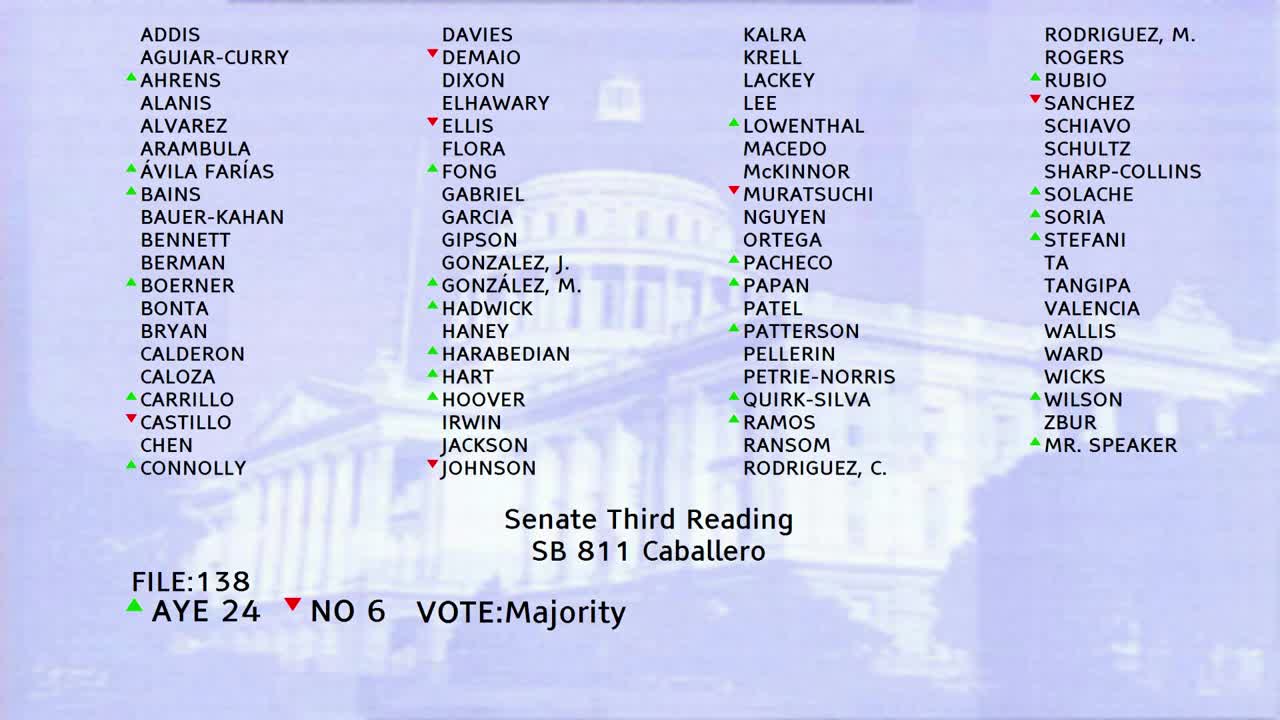 48SEC
Assembly Floor
 2MIN
Senate Floor
 2MIN
Senate Standing Committee on Education
 16SEC
Senate Standing Committee on Appropriations
 32MIN
Senate Standing Committee on Education
 1MIN
Assembly Floor
 11MIN
Assembly Standing Committee on Education


Bill Co-Author(s):
