AB 1592: California Indian Heritage Center support organization.
- Session Year: 2025-2026
- House: Assembly
- Latest Version Date: 2026-09-25
Current Status:
Passed
(2026-09-25: Chaptered by Secretary of State - Chapter 451, Statutes of 2026.)
Introduced
In Committee
Awaiting First Chamber Vote
Passed First Chamber
In Committee
Awaiting Second Chamber Vote
Passed Second Chamber
Enacted
Existing law authorizes the Department of Parks and Recreation to enter into a statewide agreement with a park support organization to facilitate the implementation of reforms recommended by the Parks Forward Commission and to develop and secure expertise, services, resources, and projects that are not readily available to the state park system for specified purposes.
Existing law provides for the departments development of a California Indian Heritage Center for cultural preservation, learning and exchange, land stewardship, and a place to engage all visitors in celebrating the living cultures of California Native American tribes.
This bill would authorize the department to enter into an agreement with a California Indian Heritage Center support organization, as defined, for the purpose of creating a collaborative partnership between California Native American tribes and the department to achieve specified purposes in support of the California Indian Heritage Center. The bill would require the California Indian Heritage Center support organization to be overseen by a board of directors, with designated membership, and led by a chief executive officer, as provided.
For purposes of this article, the following definitions apply:
(a)Board means the board of directors established pursuant to Section 570.4.
(b)CIHC means the California Indian Heritage Center established pursuant to Chapter 1.78 (commencing with Section 5097.999) of Division 5.
(c)CIHC support organization means a nonprofit organization established for the purpose of creating a collaborative partnership between California Native American tribes and the department in support of the CIHC.
570.2.The Legislature finds and declares both of the following:
(a)In reflection of historical wrongs committed against California Native American tribes and in the spirit of truth and healing, the operations and programming of the CIHC located in West Sacramento must be meaningfully informed by and benefit California Native American tribes and serve as a place for sharing and learning between tribes and the public.
(b)The unique relationship between California Native American tribes, tribal governments, and the department, as well as the shared vision and purpose of the CIHC, merits a special partnership uniquely established for this historic collaborative partnership.
570.4.(a)A CIHC support organization shall meet all of the following requirements:
(1)Be exempt from taxation pursuant to Section 501(c)(3) of the Internal Revenue Code.
(2)Comply with the Supervision of Trustees and Fundraisers for Charitable Purposes Act (Article 7 (commencing with Section 12580) of Chapter 6 of Part 2 of Division 3 of Title 2 of the Government Code).
(3)Not be a state agency or body.
(4)Not directly manage state capital outlay projects.
(b)The department may enter into an agreement with a CIHC support organization to achieve all of the following purposes:
(1)To partner in the operation and programming of the CIHC to achieve the collective mission of establishing partnerships with California Native American tribes.
(2)To recruit, hire, and retain more diversity of CIHC staff with personal experience and knowledge of California Native American culture and history.
(3)To enter into staff-sharing agreements to use essential skills and abilities of state and nonstate employees, subject to all of the following requirements:
(A)State employees shall not be paid or otherwise compensated directly by the CIHC support organization.
(B)State employees shall not be directly supervised or managed by employees of the CIHC support organization.
(C)All staff-sharing agreements shall include conflict-of-interest provisions for state employees that clearly outline roles and responsibilities to support ethical conduct, trust, and transparency.
(4)To develop and engage new sources of nonstate public and private funding for the support of the CIHC, including donations and fundraising efforts, when appropriate.
(5)To apply for, receive, and expend state funds in support of the CIHC.
(6)To support ongoing capital improvement projects managed by the department.
(7)To provide financial stability and ethical integrity through oversight and accountability.
(8)To support marketing and communications activities that promote the programs, amenities, and resources of the CIHC.
(9)To support projects and programs that facilitate access and visitation and enhance educational opportunities, especially for young and more diverse audiences.
(10)To establish, improve, and support the completion of projects that establish or improve CIHC visitor amenities and facilities.
(c)(1)The CIHC support organization shall be led by a chief executive officer who shall report to the board established pursuant to paragraph (2).
(2)(A)The CIHC support organization shall be overseen by a board. The board shall consist of no more than 25 members, with at least 51 percent of the boards members representing California Native American tribes.
(B)In addition to the members appointed pursuant to subparagraph (A), the following may serve as ex officio, nonvoting members of the board to assist in providing effective communication and coordination of efforts between the department and the CIHC support organization.
(i)The Director of the Department of Parks and Recreation, or the directors designee.
(ii)The Director of Finance, or the directors designee.
(iii)The Tribal Affairs Secretary who leads the Governors Office of Tribal Affairs, or the secretarys designee.
(d)The CIHC support organizations charter and articles of incorporation, as approved by the California Indian Heritage Center task force established pursuant to Executive Order B-60-18 issued on December 20, 2018, shall set forth all other organizational terms of the CIHC support organization and the board not provided in this article, including, but not limited to, the selection of the boards members, organizational structures, responsibilities, terms of office, board member roles, meeting requirements, and other core governance details. The board may subsequently amend the CIHC support organizations charter and articles of incorporation by majority vote.
570.6.(a)In order to advance the purposes described in subdivision (b) of Section 570.4, an agreement between the department and the CIHC support organization pursuant to Section 570.4 shall, at a minimum, include all of the following:
(1)Clear goals and objectives.
(2)Any commitments of oversight, staffing, and coordination that may be needed to accomplish the goals and objectives.
(3)A requirement that the department and the CIHC support organization annually hold a joint public meeting regarding the operation of the CIHC and the activities of the CIHC support organization.
(b)(1)The department may develop and enter into supplementary agreements with the CIHC support organization for the purposes of securing any expertise, capacity, or financial resources that may be needed to identify, plan, develop, or implement strategic initiatives and projects for the CIHC. These agreements may include, but are not limited to, grants, contracts, memoranda of understanding, staff-sharing agreements, leases, and rights of entry onto state park property.
(2)Notwithstanding Part 2 (commencing with Section 10100) of Division 2 of the Public Contract Code, any agreements entered into by the department pursuant to this subdivision shall be under the control of the department and shall not be subject to any advertising or competitive bidding requirements applicable to public works or other public projects.
(3)Any construction, alteration, demolition, installation, or repair work undertaken by or on behalf of the CIHC support organization for the CIHC on property owned by the state pursuant to this subdivision shall constitute a public work for purposes of Chapter 1 (commencing with Section 1720) of Part 7 of Division 2 of the Labor Code.
(c)The Department of Finance shall have 60 days to review and approve or disapprove any agreement, or substantial amendment to an agreement, proposed under subdivision (a). Upon approval of the agreement or substantial amendment, the director may enter into supplementary agreements as authorized under subdivision (b).
570.8.This article does not commit, obligate, or require state funds to be provided in support of the CIHC support organization.
For purposes of this article, the following definitions apply:
(a)Board means the board of directors established pursuant to Section 528.4. 570.4.
(b)CIHC means the California Indian Heritage Center established pursuant to Chapter 1.78 (commencing with Section 5097.999) of Division 5.
(c)CIHC support organization means a nonprofit organization established for the purpose of creating a collaborative partnership between California Native American tribes and the department in support of the CIHC.
528.2.570.2.The Legislature finds and declares both of the following:
(a)In reflection of historical wrongs committed against California Native American tribes and in the spirit of truth and healing, the operations and programming of the CIHC located in West Sacramento must be meaningfully informed by and benefit California Native American tribes, tribes and serve as a place for sharing and learning between tribes and the public.
(b)The unique relationship between California Native American tribes, tribal governments, and the department, as well as the shared vision and purpose of the CIHC, merits a special partnership uniquely established for this historic collaborative partnership.
528.4.570.4.(a)A CIHC support organization shall meet all of the following requirements:
(1)Be exempt from taxation pursuant to Section 501(c)(3) of the Internal Revenue Code.
(2)Comply with the Supervision of Trustees and Fundraisers for Charitable Purposes Act (Article 7 (commencing with Section 12580) of Chapter 6 of Part 2 of Division 3 of Title 2 of the Government Code).
(3)Not be a state agency or body.
(4)Not directly manage state capital outlay projects.
(b)The department may enter into an agreement with a CIHC support organization to achieve all of the following purposes:
(1)To partner in the operation and programming of the CIHC to achieve the collective mission of establishing partnerships with California Native American tribes.
(2)To recruit, hire, and retain more diversity of CIHC staff with personal experience and knowledge of California Native American culture and history.
(3)To enter into staff-sharing agreements to use essential skills and abilities of state and nonstate employees, subject to all of the following requirements:
(A)State employees shall not be paid or otherwise compensated directly by the CIHC support organization.
(B)State employees shall not be directly supervised or managed by employees of the CIHC support organization.
(C)All staff sharing staff-sharing agreements shall include conflict of interest conflict-of-interest provisions for state employees that clearly outline roles and responsibilities to support ethical conduct, trust, and transparency.
(4)To develop and engage new sources of nonstate public and private funding for the support of the CIHC, including donations and fundraising efforts, when appropriate.
(5)To apply for, receive, and expend state funds in support of the CIHC.
(6)To support ongoing capital improvement projects managed by the department.
(7)To provide financial stability and ethical integrity through oversight and accountability.
(8)To support marketing and communications activities that promote the programs, amenities, and resources of the CIHC.
(9)To support projects and programs that facilitate access and visitation and enhance educational opportunities, especially for young and more diverse audiences.
(10)To establish, improve, and support the completion of projects that establish or improve CIHC visitor amenities and facilities.
(c)(1)The CIHC support organization shall be led by a chief executive officer who shall report to the board established pursuant to paragraph (2).
(2)(A)The CIHC support organization shall be overseen by a board. The board shall consist of no more than 25 members, with at least 51 percent of the boards members representing California Native American tribes.
(B)In addition to the members appointed pursuant to subparagraph (A), the following may serve as ex officio, nonvoting members of the board to assist in providing effective communication and coordination of efforts between the department and the CIHC support organization.
(i)The Director of the Department of Parks and Recreation, or the directors designee.
(ii)The Director of Finance, or the directors designee.
(iii)The Tribal Affairs Secretary who leads the Governors Office of Tribal Affairs, or the secretarys designee.
(d)The CIHC support organizations charter and articles of incorporation, as approved by the California Indian Heritage Center task force established pursuant to Executive Order B-60-18 issued on December 20, 2018, shall set forth all other organizational terms of the CIHC support organization and the board not provided in this article, including, but not limited to, the selection of the boards members, organizational structures, responsibilities, terms of office, board member roles, meeting requirements, and other core governance details. The board may subsequently amend the CIHC support organizations charter and articles of incorporation by majority vote.
528.6.570.6.(a)In order to advance the purposes described in subdivision (b) of Section 528.4, 570.4, an agreement between the department and the CIHC support organization pursuant to Section 528.4 570.4 shall, at a minimum, include both all of the following:
(1)Clear goals and objectives.
(2)Any commitments of oversight, staffing, and coordination that may be needed to accomplish the goals and objectives.
(3)A requirement that the department and the CIHC support organization annually hold a joint public meeting regarding the operation of the CIHC and the activities of the CIHC support organization.
(b)(1)The department may develop and enter into supplementary agreements with the CIHC support organization for the purposes of securing any expertise, capacity, or financial resources that may be needed to identify, plan, develop, or implement strategic initiatives and projects for the CIHC. These agreements may include, but are not limited to, grants, contracts, memoranda of understanding, staff-sharing agreements, leases, and rights of entry onto state park property.
(2)Notwithstanding Part 2 (commencing with Section 10100) of Division 2 of the Public Contract Code, any agreements entered into by the department pursuant to this subdivision shall be under the control of the department and shall not be subject to any advertising or competitive bidding requirements applicable to public works or other public projects.
(3)Any construction, alteration, demolition, installation, or repair work undertaken by or on behalf of the CIHC support organization for the CIHC on property owned by the state pursuant to this subdivision shall constitute a public work for purposes of Chapter 1 (commencing with Section 1720) of Part 7 of Division 2 of the Labor Code.
(c)The Department of Finance shall have 60 days to review and approve or disapprove any agreement, or substantial amendment to an agreement, proposed under subdivision (a). Upon approval of the agreement or substantial amendment, the director may enter into supplementary agreements as authorized under subdivision (b).
528.8.570.8.This article does not commit, obligate, or require state funds to be provided in support of the CIHC support organization.
CORRECTIONS: TextPage 2.For purposes of this article, the following definitions apply:
(a)Board means the board of directors established pursuant to Section 528.4.
(b)CIHC means the California Indian Heritage Center established pursuant to Chapter 1.78 (commencing with Section 5097.999) of Division 5.
(c)CIHC support organization means a nonprofit organization established for the purpose of creating a collaborative partnership between California Native American tribes and the department in support of the CIHC.
528.2.The Legislature finds and declares both of the following:
(a)In reflection of historical wrongs committed against California Native American tribes and in the spirit of truth and healing, the operations and programming of the CIHC located in West Sacramento must be meaningfully informed by and benefit California Native American tribes, and serve as a place for sharing and learning between tribes and the public.
(b)The unique relationship between California Native American tribes, tribal governments, and the department, as well as the shared vision and purpose of the CIHC, merits a special partnership uniquely established for this historic collaborative partnership.
528.4.(a)A CIHC support organization shall meet all of the following requirements:
(1)Be exempt from taxation pursuant to Section 501(c)(3) of the Internal Revenue Code.
(2)Comply with the Supervision of Trustees and Fundraisers for Charitable Purposes Act (Article 7 (commencing with Section 12580) of Chapter 6 of Part 2 of Division 3 of Title 2 of the Government Code).
(3)Not be a state agency or body.
(4)Not directly manage state capital outlay projects.
(b)The department may enter into an agreement with a CIHC support organization to achieve all of the following purposes:
(1)To partner in the operation and programming of the CIHC to achieve the collective mission of establishing partnerships with California Native American tribes.
(2)To recruit, hire, and retain more diversity of CIHC staff with personal experience and knowledge of California Native American culture and history.
(3)To enter into staff-sharing agreements to use essential skills and abilities of state and nonstate employees, subject to all of the following requirements:
(A)State employees shall not be paid or otherwise compensated directly by the CIHC support organization.
(B)State employees shall not be directly supervised or managed by employees of the CIHC support organization.
(C)All staff sharing agreements shall include conflict of interest provisions for state employees that clearly outline roles and responsibilities to support ethical conduct, trust, and transparency.
(4)To develop and engage new sources of nonstate public and private funding for the support of the CIHC, including donations and fundraising efforts, when appropriate.
(5)To apply for, receive, and expend state funds in support of the CIHC.
(6)To support ongoing capital improvement projects managed by the department.
(7)To provide financial stability and ethical integrity through oversight and accountability.
(8)To support marketing and communications activities that promote the programs, amenities, and resources of the CIHC.
(9)To support projects and programs that facilitate access and visitation and enhance educational opportunities, especially for young and more diverse audiences.
(10)To establish, improve, and support the completion of projects that establish or improve CIHC visitor amenities and facilities.
(c)(1)The CIHC support organization shall be led by a chief executive officer who shall report to the board established pursuant to paragraph (2).
(2)(A)The CIHC support organization shall be overseen by a board. The board shall consist of no more than 25 members, with at least 51 percent of the boards members representing California Native American tribes.
(B)In addition to the members appointed pursuant to subparagraph (A), the following may serve as ex officio, nonvoting members of the board to assist in providing effective communication and coordination of efforts between the department and the CIHC support organization.
(i)The Director of the Department of Parks and Recreation, or the directors designee.
(ii)The Director of Finance, or the directors designee.
(iii)The Tribal Affairs Secretary who leads the Governors Office of Tribal Affairs, or the secretarys designee.
(d)The CIHC support organizations charter and articles of incorporation, as approved by the California Indian Heritage Center task force established pursuant to Executive Order B-60-18 issued on December 20, 2018, shall set forth all other organizational terms of the CIHC support organization and the board not provided in this article, including, but not limited to, the selection of the boards members, organizational structures, responsibilities, terms of office, board member roles, meeting requirements, and other core governance details. The board may subsequently amend the CIHC support organizations charter and articles of incorporation by majority vote.
528.6.(a)In order to advance the purposes described in subdivision (b) of Section 528.4, an agreement between the department and the CIHC support organization pursuant to Section 528.4 shall, at a minimum, include both of the following:
(1)Clear goals and objectives.
(2)Any commitments of oversight, staffing, and coordination that may be needed to accomplish the goals and objectives.
(b)(1)The department may develop and enter into supplementary agreements with the CIHC support organization for the purposes of securing any expertise, capacity, or financial resources that may be needed to identify, plan, develop, or implement strategic initiatives and projects for the CIHC. These agreements may include, but are not limited to, grants, contracts, memoranda of understanding, staff-sharing agreements, leases, and rights of entry onto state park property.
(2)Notwithstanding Part 2 (commencing with Section 10100) of Division 2 of the Public Contract Code, any agreements entered into by the department pursuant to this subdivision shall be under the control of the department and shall not be subject to any advertising or competitive bidding requirements applicable to public works or other public projects.
(3)Any construction, alteration, demolition, installation, or repair work undertaken by or on behalf of the CIHC support organization for the CIHC on property owned by the state pursuant to this subdivision shall constitute a public work for purposes of Chapter 1 (commencing with Section 1720) of Part 7 of Division 2 of the Labor Code.
(c)The Department of Finance shall have 60 days to review and approve or disapprove any agreement, or substantial amendment an agreement, proposed under subdivision (a). Upon approval of the agreement or substantial amendment, the director may enter into supplementary agreements as authorized under subdivision (b).
528.8.This article does not commit, obligate, or require state funds to be provided in support of the CIHC support organization.
|
Date
|
Status
|
|---|---|
| Sep 25, 2026 | Chaptered by Secretary of State - Chapter 451, Statutes of 2026. |
| Sep 25, 2026 | Approved by the Governor. |
| Aug 27, 2026 | Enrolled and presented to the Governor at 4 p.m. |
| Aug 20, 2026 | In Assembly. Ordered to Engrossing and Enrolling. |
| Aug 20, 2026 | Read third time. Passed. Ordered to the Assembly. (Ayes 39. Noes 0. Page 5589.). |
| Aug 20, 2026 | Read third time. Passed. Ordered to the Assembly. (Ayes 39. Noes 0.). |
| Aug 18, 2026 | Ordered to special consent calendar. |
| Aug 13, 2026 | Read second time. Ordered to third reading. |
| Aug 13, 2026 | From committee: Do pass. (Ayes 7. Noes 0.) (August 13). |
| Aug 3, 2026 | In committee: Referred to APPR. suspense file. |
| Jun 24, 2026 | From committee: Do pass and re-refer to Com. on APPR. with recommendation: To Consent Calendar. (Ayes 7. Noes 0.) (June 23). Re-referred to Com. on APPR. |
| Jun 3, 2026 | Referred to Com. on N.R. & W. |
| May 22, 2026 | In Senate. Read first time. To Com. on RLS. for assignment. |
| May 22, 2026 | Read third time. Passed. Ordered to the Senate. (Ayes 76. Noes 0. Page 5254.) |
| May 22, 2026 | Read third time. Passed. Ordered to the Senate. (Ayes 76. Noes 0.) |
| May 18, 2026 | Read second time. Ordered to third reading. |
| May 14, 2026 | From committee: Do pass. (Ayes 15. Noes 0.) (May 14). |
| Apr 10, 2026 | Measure version as amended on March 25 corrected. |
| Apr 8, 2026 | In committee: Set, first hearing. Referred to APPR. suspense file. |
| Mar 26, 2026 | Re-referred to Com. on APPR. |
| Mar 25, 2026 | Read second time and amended. |
| Mar 24, 2026 | From committee: Amend, and do pass as amended and re-refer to Com. on APPR. (Ayes 12. Noes 0.) (March 24). |
| Feb 2, 2026 | Referred to Com. on W. P., & W. |
| Jan 16, 2026 | From printer. May be heard in committee February 15. |
| Jan 15, 2026 | Read first time. To print. |
|
Date
|
Description
|
Location
|
Votes
|
|
|---|---|---|---|---|
| Aug 20, 2026 | Special Consent AB1592 Ramos et al. | Senate Floor |
Passed |
|
| Aug 13, 2026 | Do pass | Senate Standing Committee on Appropriations |
Passed |
|
| Aug 3, 2026 | Placed on suspense file | Senate Standing Committee on Appropriations |
Passed |
|
| Jun 23, 2026 | Do pass, but first be re-referred to the Committee on [Appropriations] with the recommendation: To Consent Calendar | Senate Standing Committee on Natural Resources and Water |
Passed |
|
| May 22, 2026 | AB 1592 Ramos Assembly Third Reading | Assembly Floor |
Passed |
|
| May 14, 2026 | Do pass. | Assembly Standing Committee on Appropriations |
Passed |
|
| Mar 24, 2026 | Do pass as amended and be re-referred to the Committee on [Appropriations] | Assembly Standing Committee on Water, Parks, and Wildlife |
Passed |
This list shows positions taken on this bill by organizations on the date displayed, which is linked to the original source.
Positions by individuals are not included.
|
Organization
|
Position
|
Date
|
|---|---|---|
| California State Parks Foundation | ** Support | |
| California Tribal Business Alliance | ** Support | |
| Habematolel Pomo Of Upper Lake | ** Support | |
| Jamul Indian Village of California | ** Support | |
| Morongo Band Of Mission Indians | ** Support | |
| Scotts Valley Band of Pomo Indians | ** Support | |
| The Trust For Public Land | ** Support | |
| Yocha Dehe Wintun Nation | ** Support | |
| Yuhaaviatam of San Manuel Nation | ** Support |
SENATE RULES COMMITTEE Office of Senate Floor Analyses (916) 651-4171 | AB 1592 |
THIRD READING
Bill No: AB 1592
Author: Ramos (D), et al.
Amended: 3/25/26 in Assembly
Vote: 21
SENATE NATURAL RES. & WATER COMMITTEE: 7-0, 6/23/26
AYES: Becker, Seyarto, Allen, Cabaldon, Grove, Laird, Stern
SENATE APPROPRIATIONS COMMITTEE: 7-0, 8/13/26
AYES: Cervantes, Seyarto, Cabaldon, Dahle, Grayson, Richardson, Wahab
ASSEMBLY FLOOR: 76-0, 5/22/26 - See last page for vote
SUBJECT: California Indian Heritage Center support organization
SOURCE: Jamul Indian Village of California
DIGEST:
This bill authorizes the Department of Parks and Recreation (DPR) to enter into an agreement with the California Indian Heritage Center (CIHC) support organization and requires the agreement to meet certain requirements.
ANALYSIS:
Existing law:
- Provides it is the intent of the Legislature that DPR develop a CIHC for cultural preservation, learning and exchange, land stewardship, and a place to engage all visitors in celebrating the living cultures of California tribes.
- Creates the nine-member CIHC Task Force in DPR to, among other things, make recommendations about the siting of the CIHC, establish communication between tribes, museums, and local, state, and federal agencies, and develop a governing structure for the CIHC.
- This bill:
- Defines a CIHC support organization as a nonprofit organization established to create a collaborative partnership between California Native American tribes and DPR in support of the CIHC.
- Requires a CIHC support organization to:
- Be exempt from taxation pursuant to Section 501(c)(3) of the Internal Revenue Code.
- Comply with the Supervision of Trustees and Fundraisers for Charitable Purposes Act.
- Not be a state agency or body.
- Not directly manage state capital outlay projects.
- Authorizes DPR to enter into an agreement with a CIHC support organization to:
- Partner in operating and programming the CIHC to establish partnerships with California Native American tribes.
- Recruit, hire, and retain more diversity of CIHC staff with personal experience and knowledge of California Native American culture.
- Enter into staff-sharing agreements to use essential skills and abilities of state and nonstate employees, provided state employees are not paid or compensated directly by the CIHC support organization.
- Develop and engage new sources of nonstate public and private funding to support the CIHC.
- Apply for, receive, and spend state funds in support of the CIHC.
- Support ongoing capital improvement projects managed by DPR.
- Provide financial stability and ethical integrity through oversight and accountability.
- Support marketing and communications activities that promote the programs, amenities, and resources of the CIHC.
- Support projects and programs to increase access and enhance educational opportunities, especially for young and diverse audiences.
- Establish, improve, and support the completion of projects that establish or improve CIHC visitor amenities and facilities.
4) Requires the agreement between DPR and the CIHC support organization to, among other things:
- Set clear goals and objectives.
- Detail commitments of oversight, staffing, and coordination that may be needed to accomplish the goals and objectives.
- Ensure DPR and the CIHC support organization hold a joint public meeting each year regarding the operation of the CIHC and the activities of the CIHC support organization.
- Authorizes DPR to develop and enter into supplementary agreements with the CIHC support organization to secure any expertise, capacity, or financial resources needed to identify, plan, develop, or implement strategic initiatives and projects for the CIHC.
- Requires any agreements entered into by DPR pursuant to the above-described supplementary agreements to be under DPR’s control and not be subject to any advertising or competitive bidding requirements applicable to public works projects or other public projects.
- Requires any construction, alteration, demolition, installation, or repair work undertaken by or on behalf of the CIHC support organization for the CIHC on property owned by the state to constitute a public work
- Requires the Department of Finance to review and approve or reject any supplemental agreement, or substantial amendment to an agreement, within 60 days.
Background
California Indian Heritage Center. In 2018, SB 854 (Committee on Budget and Fiscal Review, Chapter 51, Statutes of 2018) declared the intent of the Legislature and DPR to develop CIHC for cultural preservation, learning and exchange, land stewardship, and a place to engage all visitors in celebrating the living cultures of California tribes. SB 854 appropriated $100 million from the Natural Resources and Parks Preservation Fund for the design of the CIHC. The CIHC site is comprised of 51-acres and will be at the confluence of the American and Sacramento Rivers in West Sacramento.
In December 2018, former Governor Edmund Brown, Jr, issued Executive Order B-60-18, directing the Tribal Advisor to establish a task force to oversee the development of the CIHC. The Tribal Advisor established the CIHC Task Force of California Native American tribal and community leaders in 2019 to oversee the development of the CIHC, including decisions about governance of the completed CIHC.
According to the CIHC’s website, the vision of the CIHC is to partner with tribal communities, regional cultural centers, and museums to present a statewide perspective on California’s diverse Indian cultural legacy.
Comments
Purpose of the bill. According to the author, “[t]he California Indian Heritage Center will become a cultural landmark for our state, a place where visitors from all around the world can learn about the true history of California First People and be educated on the living cultures that continue to shape this land. It will be a space for tribal communities from across the state to connect with their past, their present, and the future of their tribes. A place where our ancestors will be honored and celebrated for years to come. This bill would help pave the way for this goal by advancing a top priority of ensuring this center is run by tribes for tribes by allowing for Department of Parks and Recreation to enter into an agreement with a support organization. This collaborative partnership would advance the creation of the California Indian Heritage Center.”
Implementing a Recommendation. As charged by the Legislature, the role of DPR’s CIHC Task Force was to oversee the development of the CIHC, including decisions about governance of the completed CIHC.
In 2005, the CIHC Task Force recommended the CIHC be developed and operated through a formal collaboration between DPR and a new nonprofit organization, and that the CIHC Task Force prepare and approve bylaws for the new organization. This bill implements that recommendation.
FISCAL EFFECT: Appropriation: No Fiscal Com.: Yes Local: No
According to the Senate Appropriations Committee analysis, this bill will create ongoing cost pressure of an unknown amount, likely in excess of $150,000 for DPR to enter into an agreement with a nonprofit in support of the CIHC.
SUPPORT: (Verified 8/14/26)
Jamul Indian Village of California (sponsor)
California State Parks Foundation
California Tribal Business Alliance
Habematolel Pomo of Upper Lake
Morongo Band of Mission Indians
Scotts Valley Band of Pomo Indians
The Trust for Public Land
Yocha Dehe Wintun Nation
Yuhaaviatam of San Manuel Nation
OPPOSITION: (Verified 8/14/26)
None received
ASSEMBLY FLOOR: 76-0, 5/22/26
AYES: Addis, Aguiar-Curry, Ahrens, Alanis, Alvarez, Ávila Farías, Bains, Bauer-Kahan, Bennett, Berman, Boerner, Bonta, Bryan, Calderon, Caloza, Carrillo, Castillo, Connolly, Davies, DeMaio, Dixon, Elhawary, Ellis, Flora, Fong, Gallagher, Garcia, Gipson, Jeff Gonzalez, Mark González, Hadwick, Haney, Harabedian, Hart, Hoover, Irwin, Jackson, Johnson, Kalra, Krell, Lackey, Lee, Lowenthal, Macedo, McKinnor, Muratsuchi, Nguyen, Ortega, Pacheco, Papan, Patel, Patterson, Pellerin, Petrie-Norris, Quirk-Silva, Ramos, Ransom, Michelle Rodriguez, Rogers, Blanca Rubio, Sanchez, Schiavo, Schultz, Sharp-Collins, Solache, Soria, Stefani, Ta, Tangipa, Valencia, Wallis, Ward, Wicks, Wilson, Zbur, Rivas
NO VOTE RECORDED: Arambula, Chen, Gabriel, Celeste Rodriguez
Prepared by: Evan Goldberg / N.R. & W. / (916) 651-4116
8/15/26 14:20:54
**** END ****
SENATE COMMITTEE ON
Senator Sabrina Cervantes, Chair
2025 - 2026 Regular Session
AB 1592 (Ramos) - California Indian Heritage Center support organization
Version: | Policy Vote: |
Urgency: | Mandate: |
Hearing Date: | Consultant: |
Bill Summary:
This bill would authorize the Department of Parks and Recreation (State Parks) to enter into an agreement with a nonprofit California Indian Heritage Center (CIHC) support organization.
Fiscal Impact:
- Ongoing cost pressure of an unknown amount, likely in excess of $150,000 (General Fund, State Parks and Recreation Fund [SPRF], or other special or bond fund), for State Parks to enter into an agreement with a nonprofit in support of the CIHC. While the establishment of an operating agreement may preliminarily be absorbable within State Parks’ existing resources, and while the bill language states that the bill “does not commit, obligate, or require state funds to be provided in support of the CIHC support organization,” given the broad scope and depth of the collaborative partnership envisioned in the bill, it is conceivable that the department may require additional funding for its role as the CIHC project progresses.
Background:
According to State Parks, the 51-acre CIHC site is located in West Sacramento, at the confluence of the American and Sacramento Rivers. In June 2019, the City of West Sacramento completed the transfer of its 43-acre parcel to State Parks to realize the decadeslong-desired buildout of the CIHC. The completed CIHC will be a unit of the state parks system, and the development is proceeding with engagement between State Parks and tribal communities. State Parks notes the CIHC is intended to serve as a center of “statewide significance for cultural preservation, learning and exchange, land stewardship based on Native American values, and a place to engage all visitors in celebrating the living cultures of California tribe communities.”
In 2018, an executive order issued by Governor Brown directed the state’s Tribal Advisor to establish a task force to oversee the development of the CIHC, including decisions about governance of the completed center. In 2005, the CIHC Task Force recommended that the CIHC be developed and operated through a formal collaboration between State Parks and a new nonprofit organization, and that the CIHC Task Force prepare and approve bylaws for the new organization.
Proposed Law:
This bill, among other things, would:
- Authorize State Parks to enter into an agreement with a CIHC support organization to achieve numerous specified purposes, such as to partner in the operation and programming of the CIHC to achieve the collective mission of establishing partnerships with California Native American tribes; to recruit, hire, and retain more diversity of CIHC staff with personal experience and knowledge of California Native American culture and history; to apply for, receive, and expend state funds in support of the CIHC; and to enter into staff-sharing agreements to use essential skills and abilities of state and nonstate employees, as specified.
- Require a CIHC support organization to meet specified requirements; would outline numerous requirements for the structure, membership, and operation of the CIHC support organization; and would enumerate requirements for any agreement made between State Parks and the CIHC support organization, including that State Parks and the CIHC support organization annually hold a joint public meeting regarding the operation of the CIHC and the activities of the CIHC support organization.
- Authorize State Parks to enter into supplementary agreements with the CIHC support organization to secure any expertise, capacity, or financial resources necessary to identify, plan, develop, or implement strategic initiatives and projects for the CIHC. Would specify that these agreements would not be subject to advertising or competitive bidding requirements applicable to public works or other public projects. Would provide that the Department of Finance would have 60 days to review and approve or disapprove any agreement or substantial amendment to an agreement between State Parks and a CIHC support organization.
- Specify that any construction, alteration, demolition, installation, or repair work undertaken by or on behalf of the CIHC support organization for the CIHC on property owned by the state would constitute a public work, as specified.
- State that this bill would not commit, obligate, or require state funds to be provided in support of the CIHC support organization.
Related Legislation:
SB 101 (Wiener, Chapter 4, Statutes of 2025), the Budget Act of 2025, among other provisions, appropriates $6 million for working drawings and $3 million for construction of the CIHC.
AB 107 (Gabriel, Chapter 22, Statutes of 2024), the Budget Act of 2024, among other provisions, appropriates an additional $3,488,000 for preliminary plans of the CIHC.
AB 1150 (Water, Parks, and Wildlife, Chapter 831, Statutes of 2023) authorizes State Parks to enter into community access agreements with eligible entities.
SB 74 (Mitchell, Chapter 6, Statutes of 2020), the Budget Act of 2020, among other provisions reverts the balances of the appropriations for working drawings and construction of the CIHC, totaling $95,310,000, leaving $4,690,000 for preliminary plans.
SB 854 (Budget and Fiscal Review, Chapter 51, Statutes of 2018) states the intent of the Legislature that State Parks develop a CIHC for cultural preservation, learning and exchange, land stewardship, and a place to engage all visitors in celebrating the living cultures of California tribes.
SB 840 (Mitchell, Chapter 29, Statutes of 2018), the Budget Act of 2018, among other provisions, appropriates $100 million for the design and construction of the CIHC.
AB 1820 (Budget, 2017) would have stated that it was the intent of the Legislature that State Parks develop a CIHC and would have appropriated $100 million for the design and construction of the CIHC. AB 1820 was held on the Senate floor.
SB 1111 (Pavley, Chapter 540, Statutes of 2016) authorizes State Parks to enter into a statewide agreement with a park support organization.
SB 204 (Pavley, Chapter 573, Statutes of 2015) authorizes State Parks to enter into operating agreements for entire park units even if unnecessary to avoid closure of that park unit.
AB 42 (Huffman, Chapter 450, Statutes of 2011) authorizes State Parks to enter into operating agreements with qualified nonprofit organizations for the development, improvement, restoration, care, maintenance, administration, or operation of a unit or units, or a portion of a unit, of the state park system.
SB 1264 (Natural Resources and Water, Chapter 286, Statutes of 2004) renames the California Indian Cultural Center and Museum Task Force the CIHC Task Force.
SB 2063 (Brulte, Chapter 290, Statutes of 2002) establishes the California Indian Cultural Center and Museum Task Force and tasks it with making recommendations to State Parks on the siting, design, and governance of the cultural center.
Staff Comments:
The total project cost of the CIHC is $200 million; the state’s share is $100 million, and a campaign is underway to raise a matching donation of $100 million for the phased buildout. To date, the state has provided approximately $13.2 million (General Fund) for the CIHC project – specifically for preliminary plans, working drawings, and initial construction. As part of Governor’s FY 2026-27 budget, State Parks is requesting $842,000 General Fund in FY 2026-27, $805,000 General Fund in FY 2027-28 and ongoing, and three permanent positions to support the CIHC, enhance public access, and improve visitor recreation experience at the site. In addition, State Parks is requesting a transfer of $2.1 million in FY 2026-27 from the General Fund to the Natural Resources and Parks Preservation Fund for the construction phase of the CIHC project.
-- END --
SENATE COMMITTEE ON NATURAL RESOURCES AND WATER
Senator Josh Becker, Chair
2025 - 2026 Regular
Bill No: AB Hearing Date: June 23, 2026
Author: | |||
Version: | Amended | ||
Urgency: | Fiscal: | ||
Consultant: | |||
Subject: California Indian Heritage Center support organization
SUMMARY
This bill would authorize the Department of Parks and Recreation to enter into an agreement with the California Indian Heritage Center (CIHC) support organization and places requirements of the structure of the CIHC support organization and any agreements made.
BACKGROUND AND EXISTING LAW
California Indian Heritage Center.
In 2018, SB 854 (Committee on Budget and Fiscal Review, Chapter 51, Statutes of 2018) declared the intent of the Legislature and the Department of Parks and Recreation (State Parks) to develop a California Indian Heritage Center (CIHC) for cultural preservation, learning and exchange, land stewardship, and a place to engage all visitors in celebrating the living cultures of California tribes. SB 854 further appropriated $100 million from the Natural Resources and Parks Preservation Fund for the design of the CIHC. The CIHC site is comprised of 51-acres and will be at the confluence of the American and Sacramento Rivers in West Sacramento.

In December 2018, former Governor Edmund Brown, Jr, issued Executive Order B-60-18, directing the Tribal Advisor to establish a task force to oversee the development of the CIHC. The Tribal Advisor established the CIHC Task Force of California Native American tribal and community leaders in 2019 to oversee the development of the CIHC, including decisions about governance of the completed CIHC. (There was another CIHC Task Force created within State Parks in 2004, see Existing law section below.)
According to the CIHC’s website, the vision of the CIHC is to partner with tribal communities, regional cultural centers, and museum to present a statewide perspective on California’s diverse Indian cultural legacy; to enhance public understanding of the traditional and spiritual beliefs, practices, and contributions to promote dialogue between generations; and to provide educational opportunities to research and understand California’s Indian history, cultures, and impact of contemporary issues. Its guiding principles include:
- Creating a place that represents and celebrates all California Indian Cultures, while remaining nameless, faceless, and neutral;
- Honoring and respecting local tribal protocols and traditions for welcoming other tribes;
- Building a Center on the premise of healing the land, demonstrating traditional values for land stewardship and environmental consciousness;
- Encouraging understanding of Indian values through site design, reinforcing the message of California Indian Culture as a living culture and injecting California Indian values in all aspects of site development;
- Developing the site and facilities with a natural character, using natural materials and a light footprint on the land, and embracing the river and seasons;
- Providing integrated indoor and outdoor spaces to facilitate transfer of culture, education, and preservation of traditions, and enable site flexibility, allowing different event formats;
- Providing safe and comfortable spaces for all visitors, emphasizing easy pedestrian circulation; and
- Creating a center that is a good neighbor through community engagement.
In an April 14, 2026, press release, Governor Newsom announced the groundbreaking for Phase One of the center, which will create an outdoor welcome area with cultural and educational information, amphitheater-style seating, restrooms, and parking to welcome tribal and non-tribal communities. Phase One is expected to be completed this fall.
Existing law:
- Provides that it is the intent of the Legislature that State Parks develop a CIHC for cultural preservation, learning and exchange, land stewardship, and a place to engage all visitors in celebrating the living cultures of California tribes (Public Resources Code (PRC) §5097.999).
- Creates the CIHC Task Force within State Parks to:
- Make recommendations to State Parks regarding potential siting of the CIHC;
- Advise and make recommendations to State Parks on the cultural concepts and designs of the CIHC;
- Establish and maintain communication between tribes, museums, and local, state, and federal agencies;
- Request and utilize the advice and services of tribes, museums, and local, state, and federal agencies;
- Develop and recommend to State Parks a governing structure for the ongoing operation of the CIHC; and
- Prepare and submit to the Legislature an annual report detailing the task force’s activities and progress towards establishing the CIHC (PRC §5097.998 (e)).
- Make recommendations to State Parks regarding potential siting of the CIHC;
- Specifies that the CIHC Task Force shall consist of nine members, with five representing California Indian tribes (PRC § 5097.998 (b)).
- Specifies that the CIHC Task Force’s responsibilities shall be complete and its duties discharged when the CIHC is completed and State Parks has adopted a governing structure for the completed CIHC (PRC § 5097.998 (f)).
PROPOSED LAW
This bill would:
- Define a CIHC support organization as a nonprofit organization established for the purpose of creating a collaborative partnership between California Native American tribes and State Parks in support of the CIHC.
- Require a CIHC support organization to meet all of the following:
- Be exempt from taxation pursuant to Section 501(c)(3) of the Internal Revenue Code.
- Comply with the Supervision of Trustees and Fundraisers for Charitable Purposes Act.
- Not be a state agency or body.
- Not directly manage state capital outlay projects.
- Be exempt from taxation pursuant to Section 501(c)(3) of the Internal Revenue Code.
- Authorize State Parks to enter into an agreement with a CIHC support organization to achieve the following:
- To partner in the operation and programming of the CIHC to achieve the collective mission of establishing partnerships with California Native American tribes.
- To recruit, hire, and retain more diversity of CIHC staff with personal experience and knowledge of California Native American culture and history.
- To enter into staff-sharing agreements to use essential skills and abilities of state and nonstate employees, subject to the following:
- State employees shall not be paid or otherwise compensated directly by the CIHC support organization.
- State employees shall not be directly supervised or managed by employees of the CIHC support organization.
- All staff-sharing agreements shall include conflict-of-interest provisions for state employees that clearly outlines roles and responsibilities to support ethical conduct, trust, and transparency.
- State employees shall not be paid or otherwise compensated directly by the CIHC support organization.
- To develop and engage new sources of nonstate public and private funding for the support of the CIHC.
- To apply for, receive, and expend state funds in support of the CIHC.
- To support ongoing capital improvement projects managed by State Parks.
- To provide financial stability and ethical integrity through oversight and accountability.
- To support marketing and communications activities that promote the programs, amenities, and resources of the CIHC.
- To support projects and programs that facilitate access and visitation and enhance educational opportunities, especially for young and more diverse audiences.
- To establish, improve, and support the completion of projects that establish or improve CIHC visitor amenities and facilities.
- To partner in the operation and programming of the CIHC to achieve the collective mission of establishing partnerships with California Native American tribes.
- Require the CIHC support organization to be led by a chief executive officer and require the chief executive officer to report to the board, which would be established by the bill.
- Require the CIHC support organization to be overseen by a board, which shall consist of no more than 25 members with at least 51 percent of the board’s members representing California Native American tribes.
- In addition to the above-appointed members, allows the following to serve as ex officio, nonvoting members to assist in proving effective communication and coordination efforts between State Parks and the CIHC support organization:
- Director of State Parks, or their designee.
- Director of the Department of Finance, or their designee.
- The Tribal Affairs Secretary who leads the Governor’s Office of Tribal Affairs, or their designee.
- Director of State Parks, or their designee.
- In addition to the above-appointed members, allows the following to serve as ex officio, nonvoting members to assist in proving effective communication and coordination efforts between State Parks and the CIHC support organization:
- Require the CIHC support organization’s charter and articles of incorporation, as approved by the CIHC task force, to set forth all other organizational terms of the CIHC support organization and the board not provided in this article.
- Authorize the board to subsequently amend the CIHC’s support organization’s charter and articles of incorporation by majority vote.
- Require the agreement between State Parks and the CIHC support organization to include, at a minimum:
- Clear goals and objectives.
- Any commitments of oversight, staffing, and coordination that may be needed to accomplish the goals and objectives.
- A requirement that State Parks and the CIHC support organization annually hold a joint public meeting regarding the operation of the CIHC and the activities of the CIHC support organization.
- Clear goals and objectives.
- Authorize State Parks to develop and enter into supplementary agreements with the CIHC support organization for the purpose of securing any expertise, capacity, or financial resources that may be needed to identify, plan, develop, or implement strategic initiatives and projects for the CIHC.
- Require any agreements entered into by State Parks pursuant to the above-described supplementary agreements to be under the control of State Parks and not be subject to any advertising or competitive bidding requirements applicable to public works projects or other public projects.
- Require any construction, alteration, demolition, installation, or repair work undertaken by or on behalf of the CIHC support organization for the CIHC on property owned by the state to constitute a public work.
- Require the Department of Finance to review and approve or disapprove any supplemental agreement, or substantial amendment to an agreement, within 60 days.
- Specify that the bill does not commit, obligate, or require state funds to be provided in support of the CIHC support organization.
ARGUMENTS IN SUPPORT
According to the author, “[t]he California Indian Heritage Center will become a cultural landmark for our state, a place where visitors from all around the world can learn about the true history of California First People and be educated on the living cultures that continue to shape this land. It will be a space for tribal communities from across the state to connect with their past, their present, and the future of their tribes. A place where our ancestors will be honored and celebrated for years to come. This bill would help pave the way for this goal by advancing a top priority of ensuring this center is run by tribes for tribes by allowing for Department of Parks and Recreation to enter into an agreement with a support organization. This collaborative partnership would advance the creation of the California Indian Heritage Center.”
ARGUMENTS IN OPPOSITION
None received
COMMENTS
This bill. As charged by the Legislature, the role of the State Parks’ CIHC Task Force was to oversee the development of the CIHC, including decisions about governance of the completed CIHC. In 2005, the CIHC Task Force recommended that the CIHC be developed and operated through a formal collaboration between State Parks and a new nonprofit organization, and that the CIHC Task Force prepare and approve bylaws for the new organization. This bill would implement that recommendation.
Related legislation
SB 101 (Wiener, Chapter 4, Statutes of 2025), the Budget Act of 2025, among other provisions, appropriates $6 million for working drawings and $3 million for construction of the CIHC.
AB 107 (Gabriel, Chapter 22, Statutes of 2024), the Budget Act of 2024, among other provisions, appropriates an additional $3,488,000 for preliminary plans of the CIHC.
AB 1150 (Water, Parks, and Wildlife, Chapter 831, Statutes of 2023) authorizes State Parks to enter into community access agreements with eligible entities.
SB 74 (Mitchell, Chapter 6, Statutes of 2020), the Budget Act of 2020, among other provisions reverts the balances of the appropriations for working drawings and construction of the CIHC, totaling $95,310,000, leaving $4,690,000 for preliminary plans.
SB 854 (Budget and Fiscal Review, Chapter 51, Statutes of 2018) states the intent of the Legislature that State Parks develop a CIHC for cultural preservation, learning and exchange, land stewardship, and a place to engage all visitors in celebrating the living cultures of California tribes.
SB 840 (Mitchell, Chapter 29, Statutes of 2018), the Budget Act of 2018, among other provisions, appropriates $100 million for the design and construction of the CIHC.
AB 1820 (Budget, 2017) would have stated that it was the intent of the Legislature that State Parks develop a CIHC and would have appropriated $100 million for the design and construction of the CIHC. AB 1820 was held on the Senate floor.
SB 1111 (Pavley, Chapter 540, Statutes of 2016) authorizes State Parks to enter into a statewide agreement with a park support organization.
SB 204 (Pavley, Chapter 573, Statutes of 2015) authorizes State Parks to enter into operating agreements for entire park units even if unnecessary to avoid closure of that park unit.
AB 42 (Huffman, Chapter 450, Statutes of 2011) authorizes State Parks to enter into operating agreements with qualified nonprofit organizations for the development, improvement, restoration, care, maintenance, administration, or operation of a unit or units, or a portion of a unit, of the state park system.
SB 1264 (Natural Resources and Water, Chapter 286, Statutes of 2004) renames the California Indian Cultural Center and Museum Task Force the CIHC Task Force.
SB 2063 (Brulte, Chapter 290, Statutes of 2002) establishes the California Indian Cultural Center and Museum Task Force and tasks it with making recommendations to State Parks on the siting, design, and governance of the cultural center.
SUGGESTED AMENDMENTS: none
SUPPORT
Jamul Indian Village of California (sponsor)
California State Parks Foundation
California Tribal Business Alliance
Habematolel Pomo of Upper Lake
Morongo Band of Mission Indians
Scotts Valley Band of Pomo Indians
The Trust for Public Land
Yocha Dehe Wintun Nation
Yuhaaviatam of San Manuel Nation
OPPOSITION
None Received
-- END --
ASSEMBLY THIRD READING
ATR Bill Id:AB 1592
Author:(Ramos)
As Amended Ver:March 25, 2026
Majority vote
SUMMARY
Authorizes the Department of Parks and Recreation (State Parks) to enter into an agreement with a California Indian Heritage Center (CIHC) support organization and places requirements on the structure of the CIHC support organization and any agreements made.
Major Provisions
- Authorizes State Parks to enter into an agreement with a CIHC support organization to achieve various purposes, including partnering in the operation and programming of the CIHC; recruiting, hiring, and retaining more diversity of CIHC staff with personal experience and knowledge of California Native American culture and history; entering into staff-sharing agreements; and developing funding sources for, and supporting the development and operation of, the CIHC.
- Requires that a CIHC support organization be a qualified nonprofit organization, as specified, and not directly pay, manage, or supervise state employees or directly manage state capital outlay projects.
- Provides that agreements between State Parks and a CIHC support organization are subject to approval by the Department of Finance and must include clear goals and objectives; commitments of oversight, staffing, and coordination needed to accomplish the goals and objectives; and a requirement that State Parks and the CIHC support organization annually hold a joint public meeting.
- Provides that agreements between State Parks and a CIHC support organization are not subject to advertising or competitive bidding requirements.
- Specifies that any construction, alteration, demolition, installation, or repair work undertaken by or on behalf of the CIHC support organization for the CIHC on property owned by the state constitutes a public work.
- States that this bill does not commit, obligate, or require state funds to be provided in support of the CIHC support organization.
COMMENTS
The CIHC project aims to establish a center of statewide significance to celebrate the living cultures of California tribal communities. The CIHC will be located on a 51-acre site in West Sacramento at the confluence of the American and Sacramento Rivers. The completed CIHC will be a unit of the state park system, and the development is proceeding with engagement between State Parks and tribal communities.
In 1940, the State Indian Museum was established at Sutter's Fort State Historic Park, and remains open today, telling the story of California's diverse indigenous cultures across three major themes: Nature, Spirit, and Family. As early as 1960, State Parks identified a need for a new and expanded alternative to the State Indian Museum. In 1991, pursuant to the Budget Act of 1990 (Chapter 467, Statutes of 1990), State Parks submitted the "California Indian Museum Study" to the Legislature based on extensive public input with targeted outreach to members of the California Indian community. The study found a high level of interest in a new California Indian Museum as a hub of a statewide network of regional facilities and events. In 2002, SB 2063 (Brulte, Chapter 290, Statutes of 2002) established the California Indian Cultural Center and Museum Task Force [renamed the CIHC Task Force in 2004 by SB 1264 (Natural Resources and Water) Chapter 286, Statutes of 2004] to oversee the development of the CIHC.
In 2007, the CIHC Task Force recommended the West Sacramento site for the CIHC, and this recommendation was accepted by State Parks. In 2008, State Parks, the City of West Sacramento, and the City of West Sacramento Redevelopment Agency reached a master agreement for the transfer of the future CIHC property from the City of West Sacramento Redevelopment Agency to State Parks. In 2011, the State Park and Recreation Commission approved the Final General Plan and Environmental Impact Report for the CIHC.
In 2018, the pace of progress increased, as the Budget Act (Mitchell), Chapter 29, Statutes of 2018, provided $100 million for the development and construction of the CIHC (although much of this appropriation was later reverted), SB 854 (Budget and Fiscal Review), Chapter 51, Statutes of 2018, provided that it was the intent of the Legislature that State Parks develop the CIHC, and Governor Edmund G. Brown Jr. issued Executive Order B-60-18 ordering the Tribal Advisor to establish the CIHC Task Force and coordinate statewide efforts to engage California Native Americans in consultations on the CIHC. Public input and design are ongoing as the phased buildout commences in 2022, a design firm was selected for the site, in 2023–2024 a statewide outreach campaign was conducted, and in 2025 public input was solicited on Phase 1 design. Phase 1 construction began in April 2026, with completion of the Phase 1 welcome center expected in fall 2026.
As charged by the Legislature, the role of the CIHC Task Force is to oversee the development of the CIHC, including decisions about governance of the completed CIHC. In 2005, the CIHC Task Force recommended that the CIHC be developed and operated through a formal collaboration between State Parks and a new nonprofit organization, and that the CIHC Task Force prepare and approve bylaws for the new organization.
According to the Author
According to the author, "The [CIHC] will become a cultural landmark for our state, a place where visitors from all around the world can learn about the true history of California's First People and be educated on the living cultures that continue to shape this land. It will be a space for tribal communities from across the state to connect with their past, their present, and the future of their tribes. A place where our ancestors will be honored and celebrated for years to come. This bill would help pave the way for this goal by advancing a top priority of ensuring this center is run by tribes for tribes by allowing for [State Parks] to enter into an agreement with a support organization. This collaborative partnership would advance the creation of the [CIHC]."
Arguments in Support
The Jamul Indian Village writes: "We believe this legislation is essential to advancing the development of the [CIHC] and ensuring that tribal voices remain central to its vision and governance." The California Tribal Business Alliance adds: "Establishing this structure will help position [the] CIHC to cultivate partnerships, philanthropic support, and other non-state resources that may help advance the project and sustain its programming and public mission over time."
Arguments in Opposition
None on file.
FISCAL COMMENTS
According to the Assembly Appropriations Committee, this bill has the following fiscal impact:
Ongoing cost pressure of an unknown amount, likely in excess of $150,000 (General Fund or special fund), for State Parks to enter into an agreement with a nonprofit in support of the CIHC. While the establishment of an operating agreement may preliminarily be absorbable within State Parks' existing resources, and while the bill language states that this bill "does not commit, obligate, or require state funds to be provided in support of the CIHC support organization," given the broad scope and depth of the collaborative partnership envisioned in this bill, it is conceivable that State Parks may require additional funding for its role as the CIHC project progresses.
The total project cost of the CIHC is $200 million; the state's share is $100 million, and a campaign is underway to raise a matching donation of $100 million for the phased buildout. To date, the state has provided approximately $13.2 million (General Fund) for the CIHC project – specifically for preliminary plans, working drawings, and initial construction. As part of Governor's FY 2026-27 budget, State Parks is requesting $842,000 General Fund in FY 2026-27, $805,000 General Fund in FY 2027-28 and ongoing, and three permanent positions to support the CIHC, enhance public access, and improve visitor recreation experience at the site. In addition, State Parks is requesting a transfer of $2.1 million in FY 2026-27 from the General Fund to the Natural Resources and Parks Preservation Fund for the construction phase of the CIHC project.
The Legislative Analyst's Office recently warned of General Fund structural deficits of around $35 billion per year in the 2027-28 FY and ongoing.
VOTES
ASM WATER, PARKS, AND WILDLIFE: 12-0-1
YES: Papan, Jeff Gonzalez, Alanis, Alvarez, Bains, Bennett, Boerner, Caloza, Gallagher, Hart, Ward, Rogers
ABS, ABST OR NV: Ávila Farías
ASM APPROPRIATIONS: 15-0-0
YES: Wicks, Hoover, Aguiar-Curry, Calderon, Caloza, Dixon, Fong, Mark González, Krell, Pacheco, Pellerin, Sharp-Collins, Solache, Ta, Tangipa
UPDATED
VERSION: March 25, 2026
CONSULTANT: Sean Clair / W., P., & W. / (916) 319-2096 FN: 0002710
Date of Hearing: April 8, 2026
ASSEMBLY COMMITTEE ON APPROPRIATIONS
Buffy Wicks, Chair
ABPCA Bill Id:AB 1592
Author:(Ramos) – As Amended Ver:March 25, 2026
Policy Committee: | Water, Parks and Wildlife | Vote: | 12 - 0 |
|
| ||
|
|
Urgency: No State Mandated Local Program: No Reimbursable: No
SUMMARY:
This bill authorizes the Department of Parks and Recreation (State Parks) to enter into an agreement with a nonprofit California Indian Heritage Center (CIHC) support organization.
Specifically, this bill, among other things:
- Authorizes State Parks to enter into an agreement with a CIHC support organization to achieve numerous specified purposes, such as to partner in the operation and programming of the CIHC to achieve the collective mission of establishing partnerships with California Native American tribes; to recruit, hire, and retain more diversity of CIHC staff with personal experience and knowledge of California Native American culture and history; to apply for, receive, and expend state funds in support of the CIHC; and to enter into staff-sharing agreements to use essential skills and abilities of state and nonstate employees, as specified.
- Requires a CIHC support organization to meet specified requirements; outlines numerous requirements for the structure, membership, and operation of the CIHC support organization; and enumerates requirements for any agreement made between State Parks and the CIHC support organization, including that State Parks and the CIHC support organization annually hold a joint public meeting regarding the operation of the CIHC and the activities of the CIHC support organization.
- Authorizes State Parks to enter into supplementary agreements with the CIHC support organization to secure any expertise, capacity, or financial resources necessary to identify, plan, develop, or implement strategic initiatives and projects for the CIHC. Specifies that these agreements are not subject to advertising or competitive bidding requirements applicable to public works or other public projects. Provides that the Department of Finance shall have 60 days to review and approve or disapprove any agreement or substantial amendment to an agreement between State Parks and a CIHC support organization.
- Specifies that any construction, alteration, demolition, installation, or repair work undertaken by or on behalf of the CIHC support organization for the CIHC on property owned by the state constitutes a public work, as specified.
- States that this bill does not commit, obligate, or require state funds to be provided in support of the CIHC support organization.
FISCAL EFFECT:
Ongoing cost pressure of an unknown amount, likely in excess of $150,000 (General Fund or special fund), for State Parks to enter into an agreement with a nonprofit in support of the CIHC. While the establishment of an operating agreement may preliminarily be absorbable within State Parks’ existing resources, and while the bill language states that the bill “does not commit, obligate, or require state funds to be provided in support of the CIHC support organization,” given the broad scope and depth of the collaborative partnership envisioned in the bill, it is conceivable that the department may require additional funding for its role as the CIHC project progresses.
The total project cost of the CIHC is $200 million; the state’s share is $100 million, and a campaign is underway to raise a matching donation of $100 million for the phased buildout. To date, the state has provided approximately $13.2 million (General Fund) for the CIHC project – specifically for preliminary plans, working drawings, and initial construction. As part of Governor’s FY 2026-27 budget, State Parks is requesting $842,000 General Fund in FY 2026-27, $805,000 General Fund in FY 2027-28 and ongoing, and three permanent positions to support the CIHC, enhance public access, and improve visitor recreation experience at the site. In addition, State Parks is requesting a transfer of $2.1 million in FY 2026-27 from the General Fund to the Natural Resources and Parks Preservation Fund for the construction phase of the CIHC project.
The Legislative Analyst’s Office recently warned of General Fund structural deficits of around $35 billion per year in the 2027-28 FY and ongoing.
COMMENTS:
1) Purpose. According to the author:
The [CIHC] will become a cultural landmark for our state, a place where visitors from all around the world can learn about the true history of California’s First People and be educated on the living cultures that continue to shape this land…This bill would help pave the way for this goal by advancing a top priority of ensuring this center is run by tribes for tribes by allowing for [State Parks] to enter into an agreement with a support organization. This collaborative partnership would advance the creation of the [CIHC].
2) Background. CIHC. According to State Parks, the 51-acre CIHC site is located in West Sacramento, at the confluence of the American and Sacramento Rivers. In June 2019, the City of West Sacramento completed the transfer of its 43-acre parcel to State Parks to realize the decadeslong-desired buildout of the CIHC. The completed CIHC will be a unit of the state parks system, and the development is proceeding with engagement between State Parks and tribal communities. State Parks notes the CIHC is intended to serve as a center of “statewide significance for cultural preservation, learning and exchange, land stewardship based on Native American values, and a place to engage all visitors in celebrating the living cultures of California tribe communities.”
CIHC Task Force. In 2018, an executive order issued by Governor Brown directed the state’s Tribal Advisor to establish a task force to oversee the development of the CIHC, including decisions about governance of the completed center. In 2005, the CIHC Task Force recommended that the CIHC be developed and operated through a formal collaboration between State Parks and a new nonprofit organization, and that the CIHC Task Force prepare and approve bylaws for the new organization.
Analysis Prepared by: Nikita Koraddi / APPR. / (916) 319-2081
Date of Hearing: March 24, 2026
ASSEMBLY COMMITTEE ON WATER, PARKS, AND WILDLIFE
Diane Papan, Chair
ABPCA Bill Id:AB 1592 (
Author:Ramos) – As Introduced Ver:January 15, 2026
SUBJECT: California Indian Heritage Center support organization
SUMMARY: Authorizes the Department of Parks and Recreation (State Parks) to enter into an agreement with a California Indian Heritage Center (CIHC) support organization and places requirements on the structure of the CIHC support organization and any agreements made. Specifically, this bill:
- Defines a CIHC support organization as a nonprofit organization established for the purpose of creating a collaborative partnership between California Native American tribes and State Parks in support of the CIHC.
- Authorizes State Parks to enter into an agreement with a CIHC support organization to achieve all of the following purposes:
- To partner in the operation and programming of the CIHC to achieve the collective mission of establishing partnerships with California Native American tribes;
- To recruit, hire, and retain more diversity of CIHC staff with personal experience and knowledge of California Native American culture and history;
- To enter into staff-sharing agreements to use essential skills and abilities of state and nonstate employees, subject to conflict of interest provisions;
- To develop and engage new sources of nonstate public and private funding for the support of the CIHC;
- To apply for, receive, and expend state funds in support of the CIHC;
- To support ongoing capital improvement projects managed by State Parks;
- To provide financial stability and ethical integrity through oversight and accountability;
- To support marketing and communications activities that promote the programs, amenities, and resources of the CIHC;
- To support projects and programs that facilitate access and visitation and enhance educational opportunities, especially for young and more diverse audiences; and
- To establish, improve, and support the completion of projects that establish or improve CIHC visitor amenities and facilities.
- Provides that the Department of Finance shall have 60 days to review and approve or disapprove any agreement or substantial amendment to an agreement between State Parks and a CIHC support organization.
- Authorizes State Parks to enter into supplemental agreements with a CIHC support organization for the purposes of securing any expertise, capacity, or financial resources that may be needed to identify, plan, develop, or implement strategic initiatives and projects for the CIHC.
- Requires that a CIHC support organization must:
- Be exempt from taxation pursuant to 26 United States Code (USC) § 501(c)(3);
- Comply with the Supervision of Trustees and Fundraisers for Charitable Purposes Act (Government Code §§ 12580 et seq.);
- Be overseen by a board of no more than 25 members, with at least 51% of the board’s members representing California Native American tribes;
- Be led by a chief executive officer who reports to the board; and
- Have a charter and articles of incorporation approved by the CIHC Task Force (see Existing Law #2).
- Provides that the director of State Parks, Director of Finance, and the Tribal Affairs Secretary who leads the Governor’s Office of Tribal Affairs, or their respective designees, may serve as nonvoting ex officio members of the board of the CIHC support organization.
- Requires that the CIHC support organization and its employees must not:
- Be a state agency or body;
- Directly manage state capital outlay projects;
- Directly pay or otherwise compensate state employees; or
- Supervise or manage state employees.
- Specifies that agreements between State Parks and a CIHC support organization are not subject to advertising or competitive bidding requirements applicable to public works or other public projects.
- Specifies that any construction, alteration, demolition, installation, or repair work undertaken by or on behalf of the CIHC support organization for the CIHC on property owned by the state constitutes a public work for the purposes of Labor Code §§ 1720 et seq.
- Provides this bill does not commit, obligate, or require state funds to be provided in support of the CIHC support organization.
- Makes findings and declarations regarding the historical wrongs committed against California Native American tribes and the merits of a unique partnership needed to achieve the vision and purpose of the CIHC.
EXISTING LAW:
- Provides that it is the intent of the Legislature that State Parks develop a CIHC for cultural preservation, learning and exchange, land stewardship, and a place to engage all visitors in celebrating the living cultures of California tribes [Public Resources Code (PRC) § 5097.999].
- Creates the CIHC Task Force within State Parks to:
- Make recommendations to State Parks regarding potential siting of the CIHC;
- Advise and make recommendations to State Parks on the cultural concepts and designs of the CIHC;
- Establish and maintain communication between tribes, museums, and local, state, and federal agencies;
- Request and utilize the advice and services of tribes, museums, and local, state, and federal agencies;
- Develop and recommend to State Parks a governing structure for the ongoing operation of the CIHC; and
- Prepare and submit to the Legislature an annual report detailing the task force’s activities and progress towards establishing the CIHC [PRC § 5097.998 (e)].
- Specifies that the CIHC Task Force shall consist of nine members, with five representing California Indian tribes [PRC § 5097.998 (b)].
- Specifies that the CIHC Task Force’s responsibilities shall be complete and its duties discharged when the CIHC is completed and State Parks has adopted a governing structure for the completed CIHC [PRC § 5097.998 (f)].
- Authorizes State Parks to enter into an operating agreement with a qualified nonprofit organization for the development, improvement, restoration, care, maintenance, administration, or operation of a unit or units, or portion of a unit, of the state park system, and
- Defines a qualified nonprofit organization as an organization that is exempt from taxation pursuant to 26 USC § 501(c)(3), complies with the Supervision of Trustees and Fundraisers for Charitable Purposes Act (Government Code §§ 12580 et seq.), and has as its principal purpose and activity to provide visitor services in state parks, facilitate public access to park resources, improve park facilities, provide interpretive and educational services, or provide direct protection or stewardship of natural, cultural, or historical lands, or resources;
- Requires the nonprofit organization to submit an annual report to State Parks; and
- Requires the nonprofit organization and State Parks to hold a public meeting to discuss the report (PRC § 5080.42).
- Authorizes State Parks to enter into a statewide agreement with a park support organization to facilitate the implementation of reforms recommended by the Parks Forward Commission and to develop and secure expertise, services, resources, and projects that are not readily available to the state park system (PRC §§ 520–525).
- Authorizes State Parks to enter into a community access agreement with an eligible entity to use property within the state park system and department personnel services to provide interpretive services and visitor services at units of the state parks system to underserved park users (PRC § 5009.5).
FISCAL EFFECT: Unknown. This bill is keyed fiscal.
COMMENTS:
- Purpose of this bill. According to the author: “The [CIHC] will become a cultural landmark for our state, a place where visitors from all around the world can learn about the true history of California’s First People and be educated on the living cultures that continue to shape this land. It will be a space for tribal communities from across the state to connect with their past, their present, and the future of their tribes. A place where our ancestors will be honored and celebrated for years to come. This bill would help pave the way for this goal by advancing a top priority of ensuring this center is run by tribes for tribes by allowing for [State Parks] to enter into an agreement with a support organization. This collaborative partnership would advance the creation of the [CIHC].”
- Background. The CIHC project aims to establish a center of statewide significance to celebrate the living cultures of California tribal communities. The CIHC will be located on a 51-acre site in West Sacramento at the confluence of the American and Sacramento Rivers. The completed CIHC will be a unit of the state parks system, and the development is proceeding with engagement between State Parks and tribal communities.
Early progress towards a CIHC. In 1940, the State Indian Museum was established at Sutter’s Fort State Historic Park, and remains open today, telling the story of California’s diverse indigenous cultures across three major themes: Nature, Spirit, and Family. As early as 1960, State Parks identified a need for a new and expanded alternative to the State Indian Museum. In 1991, pursuant to the Budget Act of 1990 (Chapter 467, Statutes of 1990), State Parks submitted the “California Indian Museum Study” to the Legislature based on extensive public input with targeted outreach to members of the California Indian community. The study found a high level of interest in a new California Indian Museum as a hub of a statewide network of regional facilities and events. In 2002, SB 2063 (Brulte, Chapter 290, Statutes of 2002) established the California Indian Cultural Center and Museum Task Force [renamed the CIHC Task Force in 2004 by SB 1264 (Natural Resources and Water) Chapter 286, Statutes of 2004] to oversee the development of the CIHC.
Development of the CIHC in West Sacramento. In 2007, the CIHC Task Force recommended the West Sacramento site for the CIHC, and this recommendation was accepted by State Parks. In 2008, State Parks, the City of West Sacramento, and the City of West Sacramento Redevelopment Agency reached a master agreement for the transfer of the future CIHC property from the City of West Sacramento Redevelopment Agency to State Parks. In 2011, the State Parks and Recreation Commission approved the Final General Plan and Environmental Impact Report for the CIHC.
In 2018, the pace of progress increased, as the Budget Act (Mitchell), Chapter 29, Statutes of 2018, provided $100 million for the development and construction of the CIHC (although much of this appropriation was later reverted), SB 854 (Budget and Fiscal Review), Chapter 51, Statutes of 2018, provided that it was the intent of the Legislature that State Parks develop the CIHC, and Governor Edmund G. Brown Jr. issued Executive Order B-60-18 ordering the Tribal Advisor to establish the CIHC Task Force and coordinate statewide efforts to engage California Native Americans in consultations on the CIHC. Public input and design are ongoing: in 2022, a design firm was selected for the site, in 2023–2024 a statewide outreach campaign was conducted, and in 2025 public input was solicited on Phase 1 design.
The CIHC Task Force recommended a governance structure. As charged by the Legislature, the role of the CIHC Task Force is to oversee the development of the CIHC, including decisions about governance of the completed CIHC. In 2005, the CIHC Task Force recommended that the CIHC be developed and operated through a formal collaboration between State Parks and a new nonprofit organization, and that the CIHC Task Force prepare and approve bylaws for the new organization. - Proposed committee amendment. This bill does not require public engagement or reporting on behalf of State Parks or the CIHC support organization, in contrast to the established practice for other formal agreements between State Parks and nonprofit partners, which require various degrees of public reporting and engagement. For example, when State Parks enters into an operating agreement with a nonprofit partner, the nonprofit organization is required to submit an annual report to State Parks, and State Parks and the nonprofit organization are required to jointly hold a public meeting for discussion of the report. To keep this agreement in line with the standards of existing agreements with State Parks, the committee may wish to consider the following amendment:
PRC § 528.6 (a). In order to advance the purposes described in subdivision (b) of Section 528.4, an agreement between the department and the CIHC support organization pursuant to Section 528.4 shall, at a minimum, include both all of the following:
(1) Clear goals and objectives.
(2) Any commitments of oversight, staffing, and coordination that may be needed to accomplish the goals and objectives.
(3) A requirement that the department and the CIHC support organization annually hold a joint public meeting regarding the operation of the CIHC and the activities of the CIHC support organization.
- Arguments in support. The Trust for Public Land writes: “[This bill] would authorize [State Parks] to enter into an agreement with the CIHC support organization to establish a collaborative partnership between California Native American tribes and [State Parks] in support of the ongoing development of the CIHC facility.” The California Tribal Business Alliance adds: “Establishing this structure will help position [the] CIHC to cultivate partnerships, philanthropic support, and other non-state resources that may help advance the project and sustain its programming and public mission over time.”
- Related legislation. SB 101 (Wiener), Chapter 4, Statutes of 2025, the Budget Act of 2025, among other provisions appropriates $6 million for working drawings and $3 million for construction of the CIHC.
AB 107 (Gabriel), Chapter 22, Statutes of 2024, the Budget Act of 2024, among other provisions appropriates an additional $3,488,000 for preliminary plans of the CIHC.
AB 1150 (Water, Parks, and Wildlife), Chapter 831, Statutes of 2023, authorizes State Parks to enter into community access agreements with eligible entities.
SB 74 (Mitchell), Chapter 6, Statutes of 2020, the Budget Act of 2020, among other provisions reverts the balances of the appropriations for working drawings and construction of the CIHC, totaling $95,310,000, leaving $4,690,000 for preliminary plans.
SB 854 (Budget and Fiscal Review), Chapter 51, Statutes of 2018, states the intent of the Legislature that State Parks develop a CIHC for cultural preservation, learning and exchange, land stewardship, and a place to engage all visitors in celebrating the living cultures of California tribes.
SB 840 (Mitchell), Chapter 29, Statutes of 2018, the Budget Act of 2018, among other provisions appropriates $100 million for the design and construction of the CIHC.
AB 1820 (Budget) of 2017 would have stated that it was the intent of the Legislature that State Parks develop a CIHC and would have appropriated $100 million for the design and construction of the CIHC. AB 1820 was held on the Senate floor.
SB 1111 (Pavley), Chapter 540, Statutes of 2016, authorizes State Parks to enter into a statewide agreement with a park support organization.
SB 204 (Pavley), Chapter 573, Statutes of 2015, authorizes State Parks to enter into operating agreements for entire park units even if unnecessary to avoid closure of that park unit.
AB 42 (Huffman), Chapter 450, Statutes of 2011, authorizes State Parks to enter into operating agreements with qualified nonprofit organizations for the development, improvement, restoration, care, maintenance, administration, or operation of a unit or units, or a portion of a unit, of the state park system.
SB 1264 (Natural Resources and Water), Chapter 286, Statutes of 2004, renames the California Indian Cultural Center and Museum Task Force the CIHC Task Force.
SB 2063 (Brulte), Chapter 290, Statutes of 2002, establishes the California Indian Cultural Center and Museum Task Force and tasks it with making recommendations to State Parks on the siting, design, and governance of the cultural center.
REGISTERED SUPPORT / OPPOSITION:
Support
Jamul Indian Village of California (sponsor)
California Tribal Business Alliance
Morongo Band of Mission Indians
The Trust for Public Land
Opposition
None on file
Analysis Prepared by: Sean Clair / W., P., & W. / (916) 319-2096
Discussed in Hearing
 51SEC
Senate Standing Committee on Appropriations
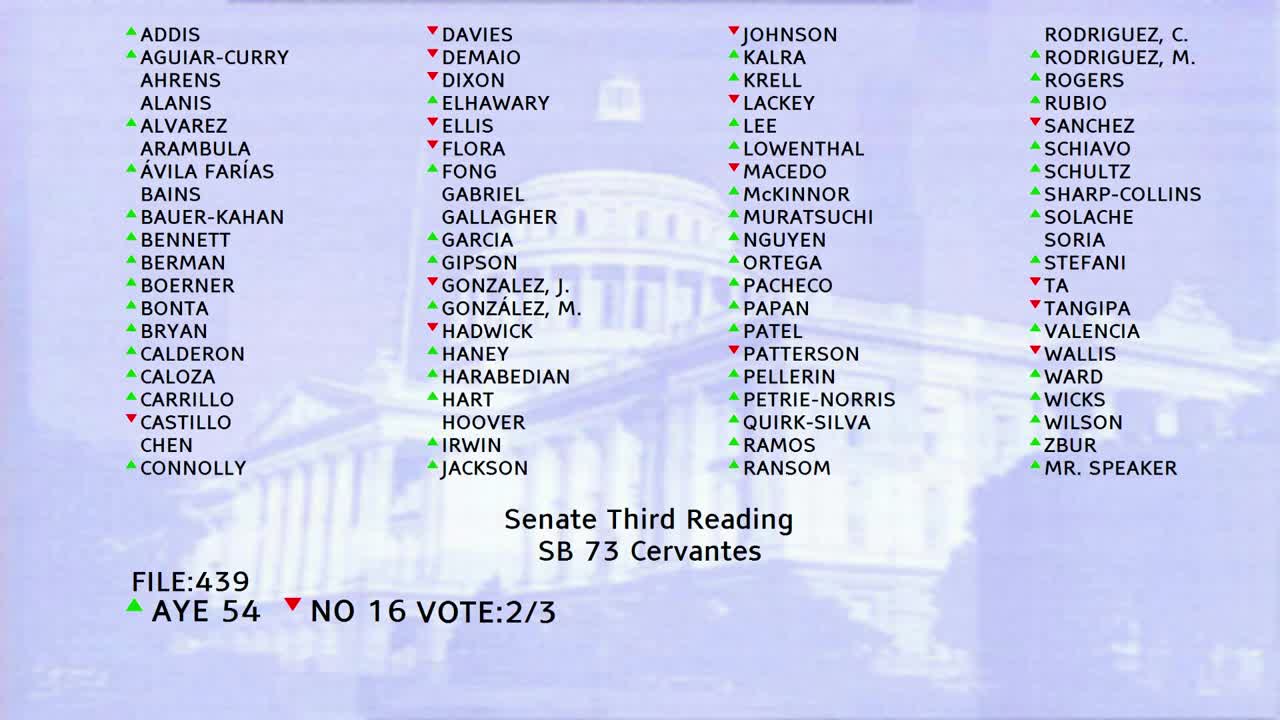 1MIN
Assembly Floor
 8MIN
Assembly Standing Committee on Water, Parks, and Wildlife
 2MIN
Assembly Standing Committee on Health
Bill Author

Bill Co-Author(s):
