AB 1595: Criminal procedure: writs of habeas corpus and motions to vacate.
- Session Year: 2025-2026
- House: Assembly
- Latest Version Date: 2026-08-30
Current Status:
Failed
(2026-09-20: Vetoed by Governor.)
Introduced
In Committee
Awaiting First Chamber Vote
Passed First Chamber
In Committee
Awaiting Second Chamber Vote
Passed Second Chamber
Enacted
Existing law allows a person who is unlawfully imprisoned or restrained of their liberty to prosecute a writ of habeas corpus to inquire into the cause of their imprisonment or restraint. Existing law allows a writ of habeas corpus to be prosecuted on several bases, including on the basis of false evidence that is material on the issue of guilt or punishment, as specified, or the discovery of new evidence that exists that is presented without substantial delay, is admissible, and that has not been previously presented and heard at trial and has been discovered after trial. Existing law creates a presumption in favor of granting relief through habeas when the district attorney in the county of the conviction or the Attorney General concedes or stipulates to a legal or factual basis for habeas relief.
This bill would revise the above-described standards to no longer require false evidence to be material and would instead require that the evidence create any reasonable likelihood it could have affected the outcome of the case. The bill would also change the new evidence standard to instead require that there be a reasonable probability it would have produced a different result sufficient to undermine confidence in the outcome of the case. The bill would revise the presumption in favor of granting relief to instead make a stipulation binding on the parties, if certain conditions are met, unless the moving party proves by a preponderance of the evidence that the other party violated the terms or the state withheld evidence, as specified. The bill would also revise the process for a concession and instead prohibit a party from withdrawing a concession if the concession is contained in a return or other written filing signed by counsel for respondent, as specified.
Existing law allows a person who is no longer unlawfully imprisoned or restrained to prosecute a motion to vacate a judgment on the basis of newly discovered evidence of fraud by a government official that completely undermines the prosecutions case, is conclusive, and points unerringly to their innocence, newly discovered evidence that a government official testified falsely at trial that resulted in the conviction and that the testimony was substantially probative on the issue of guilt or punishment, or newly discovered evidence of misconduct by a government official committed in the underlying case that resulted in fabrication of evidence that was substantially material and probative on the issue of guilt or punishment.
The bill would revise the above-described standards to instead require a demonstration that there is a reasonable probability the evidence would have produced a different result sufficient to undermine confidence in the outcome of the case, as specified.
The bill would make other conforming changes.
The bill would make related findings and declarations.
Existing law allows a person who is unlawfully imprisoned or restrained of their liberty to prosecute a writ of habeas corpus to inquire into the cause of their imprisonment or restraint. Existing law allows a writ of habeas corpus to be prosecuted on several bases, including on the basis of false evidence that is material on the issue of guilt or punishment, as specified, or the discovery of new evidence that exists that is presented without substantial delay, is admissible, and that has not been previously presented and heard at trial and has been discovered after trial. Existing law creates a presumption in favor of granting relief through habeas when the district attorney in the county of the conviction or the Attorney General concedes or stipulates to a legal or factual basis for habeas relief.
This bill would revise the above-described standards to no longer require false evidence to be material and would instead require that the evidence create any reasonable likelihood it could have affected the outcome of the case. The bill would also change the new evidence standard to instead require that there be a reasonable probability it would have produced a different result sufficient to undermine confidence in the outcome of the case. The bill would revise the presumption in favor of granting relief to instead make a stipulation binding on the parties parties, if certain conditions are met, unless the moving party proves by a preponderance of the evidence that the other party violated the terms or the state withheld evidence, as specified. The bill would also revise the process for a concession and instead prohibit a party from withdrawing a concession made in open court, or in a pleading, as specified. The bill would additionally authorize the petitioner, in order to overcome a procedural bar to relief based on untimeliness or successiveness, to identify changes in law or new evidence that create a reasonable probability of a different result sufficient to undermine confidence in the outcome of the case. if the concession is contained in a return or other written filing signed by counsel for respondent, as specified.
Existing law allows a person who is no longer unlawfully imprisoned or restrained to prosecute a motion to vacate a judgment on the basis of newly discovered evidence of fraud by a government official that completely undermines the prosecutions case, is conclusive, and points unerringly to their innocence, newly discovered evidence that a government official testified falsely at trial that resulted in the conviction and that the testimony was substantially probative on the issue of guilt or punishment, or newly discovered evidence of misconduct by a government official committed in the underlying case that resulted in fabrication of evidence that was substantially material and probative on the issue of guilt or punishment.
The bill would revise the above-described standards to instead require a demonstration that there is a reasonable probability the evidence would have produced a different result sufficient to undermine confidence in the outcome of the case, as specified.
The bill would make other conforming changes.
The bill would make related findings and declarations.
Existing law allows a person who is unlawfully imprisoned or restrained of their liberty to prosecute a writ of habeas corpus to inquire into the cause of their imprisonment or restraint. Existing law allows a writ of habeas corpus to be prosecuted on several bases, including on the basis of false evidence that is material on the issue of guilt or punishment, as specified, or the discovery of new evidence that exists that is presented without substantial delay, is admissible, and that has not been previously presented and heard at trial and has been discovered after trial. Existing law creates a presumption in favor of granting relief through habeas when the district attorney in the county of the conviction or the Attorney General concedes or stipulates to a legal or factual basis for habeas relief.
This bill would revise the above-described standards to no longer require false evidence to be material and would instead require that the evidence create any reasonable likelihood it could have affected the outcome of the case. The bill would also change the new evidence standard to instead require that there be a reasonable probability it would have produced a different result sufficient to undermine confidence in the outcome of the case. The bill would revise the presumption in favor of granting relief to instead make a stipulation binding on the parties unless the moving party proves by a preponderance of the evidence that the other party violated the terms or the state withheld evidence, as specified. The bill would also revise the process for a concession and instead prohibit a party from withdrawing a concession made in open court, or in a pleading, as specified. The bill would additionally authorize the petitioner, in order to overcome a procedural bar to relief based on untimeliness or successiveness, to identify changes in law or new evidence that create a reasonable probability of a different result sufficient to undermine confidence in the outcome of the case.
Existing law allows a person who is no longer unlawfully imprisoned or restrained to prosecute a motion to vacate a judgment on the basis of newly discovered evidence of fraud by a government official that completely undermines the prosecutions case, is conclusive, and points unerringly to their innocence, newly discovered evidence that a government official testified falsely at trial that resulted in the conviction and that the testimony was substantially probative on the issue of guilt or punishment, or newly discovered evidence of misconduct by a government official committed in the underlying case that resulted in fabrication of evidence that was substantially material and probative on the issue of guilt or punishment.
The bill would revise the above-described standards to instead require a demonstration that there is a reasonable probability the evidence would have produced a different result sufficient to undermine confidence in the outcome of the case, as specified.
Existing law requires the Department of Corrections and Rehabilitation to assist a person who is exonerated as to a conviction for which the person is serving a state prison sentence in accessing specified public services, including enrollment in certain programs. Existing law defines exonerated to include a writ of habeas corpus was granted on the basis that the evidence unerringly points to innocence, or the persons conviction was reversed on appeal on the basis of insufficient evidence.The bill would revise that definition to no longer include that the writ was granted on the basis that the evidence unerringly points to innocence. The bill would additionally require the department to provide that assistance to a person exonerated of a juvenile delinquency adjudication for which the person is serving a sentence as a result of that adjudication at the time of exoneration.The bill would make other conforming changes.
The bill would make related findings and declarations.
Existing law allows a person who is unlawfully imprisoned or restrained of their liberty to prosecute a writ of habeas corpus to inquire into the cause of their imprisonment or restraint. Existing law allows a writ of habeas corpus to be prosecuted on several bases, including on the basis of false evidence that is material on the issue of guilt or punishment, as specified, or the discovery of new evidence that exists that is presented without substantial delay, is admissible, and that has not been previously presented and heard at trial and has been discovered after trial. Existing law creates a presumption in favor of granting relief through habeas when the district attorney in the county of the conviction or the Attorney General concedes or stipulates to a legal or factual basis for habeas relief.
This bill would revise the above-described standards to no longer require false evidence to be material and would instead require that the evidence create any reasonable likelihood it could have affected the outcome of the case. The bill would also change the new evidence standard to instead require that there be a reasonable probability it would have produced a different result sufficient to undermine confidence in the outcome of the case. The bill would revise the presumption in favor of granting relief to instead make a stipulation binding on the parties unless the moving party proves by a preponderance of the evidence that the other party violated the terms or the state withheld evidence, as specified. The bill would also revise the process for a concession and instead prohibit a party from withdrawing a concession made in open court, or in a pleading, as specified. The bill would additionally authorize the petitioner, in order to overcome a procedural bar to relief based on untimeliness or successiveness, to identify changes in law or new evidence that create a reasonable probability of a different result sufficient to undermine confidence in the outcome of the case.
Existing law allows a person who is no longer unlawfully imprisoned or restrained to prosecute a motion to vacate a judgment on the basis of newly discovered evidence of fraud by a government official that completely undermines the prosecutions case, is conclusive, and points unerringly to their innocence, newly discovered evidence that a government official testified falsely at trial that resulted in the conviction and that the testimony was substantially probative on the issue of guilt or punishment, or newly discovered evidence of misconduct by a government official committed in the underlying case that resulted in fabrication of evidence that was substantially material and probative on the issue of guilt or punishment.
The bill would revise the above-described standards to instead require a demonstration that there is a reasonable probability the evidence would have produced a different result sufficient to undermine confidence in the outcome of the case, as specified.
Existing law requires the Department of Corrections and Rehabilitation to assist a person who is exonerated as to a conviction for which the person is serving a state prison sentence in accessing specified public services, including enrollment in certain programs. Existing law defines exonerated to include a writ of habeas corpus was granted on the basis that the evidence unerringly points to innocence, or the persons conviction was reversed on appeal on the basis of insufficient evidence.
The bill would revise that definition to no longer include that the writ was granted on the basis that the evidence unerringly points to innocence. The bill would additionally require the department to provide that assistance to a person exonerated of a juvenile delinquency adjudication for which the person is serving a sentence as a result of that adjudication at the time of exoneration.
The bill would make other conforming changes.
The bill would make related findings and declarations.
Existing law allows a person who is unlawfully imprisoned or restrained of their liberty to prosecute a writ of habeas corpus to inquire into the cause of their imprisonment or restraint. Existing law allows a writ of habeas corpus to be prosecuted on several bases, including on the basis of false evidence that is material on the issue of guilt or punishment, as specified, or the discovery of new evidence that exists that is presented without substantial delay, is admissible, and that has not been previously presented and heard at trial and has been discovered after trial. Existing law creates a presumption in favor of granting relief through habeas when the district attorney in the county of the conviction or the Attorney General concedes or stipulates to a legal or factual basis for habeas relief.
This bill would revise the above-described standards to no longer require false evidence to be material and would instead require that the evidence create any reasonable likelihood it could have affected the outcome of the case. The bill would also change the new evidence standard to instead require that there be a reasonable probability it would have produced a different result sufficient to undermine confidence in the outcome of the case. The bill would revise the presumption in favor of granting relief to instead make a stipulation binding on the parties unless the moving party proves by a preponderance of the evidence that the other party violated the terms or the state withheld evidence, as specified. The bill would also revise the process for a concession and instead prohibit a party from withdrawing a concession made in open court, or in a pleading, as specified.
Existing law allows a person who is no longer unlawfully imprisoned or restrained to prosecute a motion to vacate a judgment on the basis of newly discovered evidence of fraud by a government official that completely undermines the prosecutions case, is conclusive, and points unerringly to their innocence, newly discovered evidence that a government official testified falsely at trial that resulted in the conviction and that the testimony was substantially probative on the issue of guilt or punishment, or newly discovered evidence of misconduct by a government official committed in the underlying case that resulted in fabrication of evidence that was substantially material and probative on the issue of guilt or punishment.
The bill would revise the above-described standards to instead require a demonstration that there is a reasonable probability the evidence would have produced a different result sufficient to undermine confidence in the outcome of the case, as specified.
Existing law requires the Department of Corrections and Rehabilitation to assist a person who is exonerated as to a conviction for which the person is serving a state prison sentence in accessing specified public services, including enrollment in certain programs. Existing law defines exonerated to include a writ of habeas corpus was granted on the basis that the evidence unerringly points to innocence, or the persons conviction was reversed on appeal on the basis of insufficient evidence.
The bill would revise that definition to no longer include that the writ was granted on the basis that the evidence unerringly points to innocence.
The bill would make other conforming changes.
The bill would make related findings and declarations.
The Legislature finds and declares all of the following:
(a)According to the 2024 Annual Report from the Committee on Revision of the Penal Code, the Penal Code contains inconsistent and unclear standards for obtaining relief for habeas corpus claims and motions to vacate based on new evidence. The committee also recognized that courts rarely exercise their broad authority to dismiss a criminal action in the furtherance of justice when ruling on a habeas petition, and that often leads to years of unnecessary legal limbo and litigation while the district attorney reviews the case and determines whether to retry the case. The court ruling on the habeas petition typically has enough evidence before it to make a determination about whether the action should be dismissed with prejudice.
(b)It is the intent of the Legislature that courts assessing statutory habeas corpus claims and motions to vacate based on new evidence determine whether the new evidence shows there is a reasonable probability of a different result sufficient to undermine confidence in the outcome of the case. That standard is the same as the one articulated in Strickland v. Washington (1984) 466 U.S. 668 to evaluate claims of ineffective assistance of counsel, and People v. Salazar (2005) 35 Cal.4th 1031 to evaluate violations of Brady v. Maryland (1963) 373 U.S. 83.
(c)Courts considering habeas corpus claims across California do not provide discovery after an order to show cause issues in a consistent manner.
(d)Harmonizing the standard for evaluating these claims, clarifying when courts should allow discovery, and establishing a clear standard to overcome rigid procedural bars that can prevent courts from adjudicating meritorious claims will help correct wrongful convictions and sentences and be a more efficient use of court and other resources. This act reaffirms the Legislatures intolerance for wrongful convictions and rejection of prior case laws requirement that innocent people produce evidence that points unerringly to innocence and undermines the prosecutions entire case.
(e)Harmonizing the standard for evaluating these claims and clarifying when courts should allow discovery will help correct wrongful convictions and sentences and promote more efficient use of court and other resources.
SEC. 2.Section 1376 of the Penal Code is amended to read:1376.(a)As used in this section, the following definitions shall apply:
(1)Intellectual disability means the condition of significantly subaverage general intellectual functioning existing concurrently with deficits in adaptive behavior and manifested before the end of the developmental period, as defined by clinical standards.
(2)Manifested before the end of the developmental period means that the deficits were present during the developmental period. It does not require a formal diagnosis of intellectual disability, or tests of intellectual functioning in the intellectual disability range, before the end of the developmental period.
(3)Prima facie showing of intellectual disability means that the defendants allegation of intellectual disability is based on the type of evidence typically relied on by a qualified expert in diagnosing intellectual disability, as defined in current clinical standards, or when a qualified expert provides a declaration diagnosing the defendant as a person with intellectual disability.
(4)The prosecution refers to the prosecuting agency at trial and to the respondent in a habeas corpus proceeding.
(b)A person with an intellectual disability is ineligible for the death penalty.
(c)(1)When the prosecution seeks the death penalty, the defendant may, at a reasonable time prior to the commencement of trial, apply for an order directing that a hearing to determine intellectual disability be conducted. Upon a prima facie showing that the defendant is a person with an intellectual disability, the court shall order a hearing to determine whether the defendant is a person with an intellectual disability. At the request of the defendant, the court shall conduct the hearing without a jury prior to the commencement of the trial. The defendants request for a court hearing prior to trial shall constitute a waiver of a jury hearing on the issue of intellectual disability. If the defendant does not request a court hearing, the court shall order a jury hearing to determine if the defendant is a person with an intellectual disability. The jury hearing on intellectual disability shall occur at the conclusion of the phase of the trial in which the jury has found the defendant guilty with a finding that one or more of the special circumstances enumerated in Section 190.2 are true. Except as provided in paragraph (3), the same jury shall make a finding that the defendant is a person with an intellectual disability or that the defendant does not have an intellectual disability.
(2)For the purposes of the procedures set forth in this section, the court or jury shall decide only the question of the defendants intellectual disability. The defendant shall present evidence in support of the claim that they are a person with an intellectual disability. The prosecution shall present its case regarding the issue of whether the defendant is a person with an intellectual disability. Each party may offer rebuttal evidence. The court, for good cause in furtherance of justice, may permit either party to reopen its case to present evidence in support of or opposition to the claim of intellectual disability. A statement made by the defendant during an examination ordered by the court shall not be admissible in the trial on the defendants guilt.
(3)At the close of evidence, the prosecution shall make its final argument, and the defendant shall conclude with their final argument. The burden of proof shall be on the defense to prove by a preponderance of the evidence that the defendant is a person with an intellectual disability. The jury shall return a verdict that either the defendant is a person with an intellectual disability or the defendant does not have an intellectual disability. The verdict of the jury shall be unanimous. When the jury is unable to reach a unanimous verdict that the defendant is a person with an intellectual disability, and does not reach a unanimous verdict that the defendant does not have an intellectual disability, the court shall dismiss the jury and enter a finding that the defendant is ineligible for the death penalty pursuant to this section.
(d)When the hearing is conducted before the court prior to the commencement of the trial, the following shall apply:
(1)If the court finds that the defendant is a person with an intellectual disability, the court shall preclude the death penalty and the criminal trial thereafter shall proceed as in any other case in which a sentence of death is not sought by the prosecution. If the defendant is found guilty of murder in the first degree, with a finding that one or more of the special circumstances enumerated in Section 190.2 are true, the court shall sentence the defendant to confinement in the state prison for life without the possibility of parole. The jury shall not be informed of the prior proceedings or the findings concerning the defendants claim of intellectual disability unless the defendant elects to present that information at trial.
(2)If the court finds that the defendant does not have an intellectual disability, the trial court shall proceed as in any other case in which a sentence of death is sought by the prosecution. The jury shall not be informed of the prior proceedings or the findings concerning the defendants claim of intellectual disability.
(e)When the hearing is conducted before the jury after the defendant is found guilty with a finding that one or more of the special circumstances enumerated in Section 190.2 are true, the following shall apply:
(1)If the jury finds that the defendant is a person with an intellectual disability, the court shall preclude the death penalty and shall sentence the defendant to confinement in the state prison for life without the possibility of parole.
(2)If the jury finds that the defendant does not have an intellectual disability, the trial shall proceed as in any other case in which a sentence of death is sought by the prosecution.
(f)When the defendant has not requested a court hearing as provided in subdivision (c), and has entered a plea of not guilty by reason of insanity under Sections 190.4 and 1026, the hearing on intellectual disability shall occur at the conclusion of the sanity trial if the defendant is found sane.
(g)A person in custody pursuant to a judgment of death may apply for an order directing that a hearing to determine intellectual disability be conducted as part of a petition for a writ of habeas corpus. When the claim of intellectual disability is raised in a petition for habeas corpus and a petitioner makes a prima facie showing of intellectual disability, the reviewing court shall issue an order to show cause if the petitioner has met the prima facie standard. The petitioner bears the burden of proving by a preponderance of the evidence that the petitioner is a person with an intellectual disability. The prosecution may present its case regarding the issue of whether the petitioner is a person with an intellectual disability. Each party may offer rebuttal evidence. During an evidentiary hearing under this subdivision, an expert may testify about the contents of out-of-court statements, including documentary evidence and statements from witnesses when those types of statements are accepted by the medical community as relevant to a diagnosis of intellectual disability if the expert relied upon these statements as the basis for their opinion.
(h)The results of a test measuring intellectual functioning shall not be changed or adjusted based on race, ethnicity, national origin, or socioeconomic status.
(i)(1)When a court has concluded a hearing under this section is necessary, that court may order a defendant or petitioner to submit to testing by a qualified prosecution expert only if the prosecution presents a reasonable factual basis that the intellectual functioning testing presented by the defendant or petitioner is unreliable. Any order requiring the defendant or petitioner to submit to testing by a qualified prosecution expert shall be limited to tests directly related to the determination of the defendant or petitioners intellectual functioning. Any such order shall also prohibit the expert from questioning the defendant or petitioner about the facts of the case, shall permit the defendant or petitioner to have their attorney nearby during the examination and to consult with their attorney during the examination if they choose, and shall, upon request by the defendant or petitioners counsel, require that the prosecution experts examination be recorded in a manner agreed upon by the parties and the court.
(2)The prosecution shall submit a proposed list of the tests its expert wishes to administer so that the defendant or petitioner may raise any objections before testing is ordered. The Legislature finds and declares that this paragraph is declaratory of existing law.
(j)Intellectual disability is a question of fact. The parties to a trial or habeas proceeding may stipulate that a defendant or petitioner is a person with intellectual disability as defined in clinical standards and in this section. The prosecutions stipulation or concession in a habeas proceeding pursuant to this section is governed by subdivision (f) of Section 1473. After a prima facie showing of intellectual disability has been made, whenever the prosecution stipulates or concedes that the defendant or petitioner has an intellectual disability, the court shall accept the stipulation or concession unless it finds that the stipulation or concession is not supported by documentary evidence that provides a factual basis for concluding by a preponderance of the evidence that the person has an intellectual disability. If the court declines to accept a stipulation or concession, it shall state its factual and legal rationale for doing so on the record, and it may not rely upon facts or factors that are unrelated or irrelevant to the factual question of whether the defendant or petitioner has an intellectual disability.
SEC. 3.Section 1473 of the Penal Code is amended to read:1473.(a)A person unlawfully imprisoned or restrained of their liberty, under any pretense, may prosecute a writ of habeas corpus to inquire into the cause of the imprisonment or restraint.
(b)(1)A writ of habeas corpus may be prosecuted for, but not limited to, the following reasons:
(A)(i)False evidence on the issue of guilt or punishment was introduced against a person at a hearing or trial relating to the persons incarceration and created any reasonable likelihood it could have affected the outcome of the case.
(ii)For purposes of this subdivision, false evidence includes opinions of experts that have either been repudiated by the expert who originally provided the opinion at a hearing or trial or that have been undermined by the state of scientific knowledge or later scientific research or technological advances.
(B)False physical evidence, believed by a person to be factual or probative on the issue of guilt, which was known by the person at the time of entering a plea of guilty, and which was a material factor directly related to the plea of guilty by the person.
(C)(i)New evidence exists and there is a reasonable probability it would have produced a different result sufficient to undermine confidence in the outcome of the case.
(ii)For purposes of this section, new evidence means evidence that has not previously been presented and heard at trial and has been discovered after trial.
(D)A significant dispute exists in the petitioners favor regarding expert medical, scientific, or forensic testimony that was introduced at trial or a hearing, there is a reasonable probability that the expert testimony affected the outcome of the case, and the significant dispute was not previously presented and heard at trial.
(i)For purposes of this section, the expert medical, scientific, or forensic testimony includes the experts conclusion or the scientific, forensic, or medical facts upon which their opinion is based.
(ii)For purposes of this section, the significant dispute may be as to the reliability or validity of the diagnosis, technique, methods, theories, research, or studies upon which a medical, scientific, or forensic expert based their testimony.
(iii)Under this section, a significant dispute can be established by admissible expert testimony or declaration that undermines the reliability or validity of the diagnosis, technique, methods, theories, research, or studies upon which a medical, scientific, or forensic expert at trial, or a hearing, based their testimony. A significant dispute can also be established by peer reviewed literature showing that experts in the relevant medical, scientific, or forensic community, substantial in number or expertise, have concluded that developments have occurred that undermine the reliability or validity of the diagnosis, technique, methods, theories, research, or studies upon which a medical, scientific, or forensic expert at trial, or a hearing, based their testimony.
(iv)In assessing whether a dispute is significant, the court shall give great weight to evidence that a consensus has developed in the relevant medical, scientific, or forensic community undermining the reliability or validity of the diagnosis, technique, methods, theories, research, or studies upon which a medical, scientific, or forensic expert based their testimony or that there is a lack of consensus as to the reliability or validity of the diagnosis, technique, methods, theories, research, or studies upon which a medical, scientific, or forensic expert based their testimony.
(v)The significant dispute shall exist within the relevant medical, scientific, or forensic community, which includes the scientific community and all fields of scientific knowledge on which those fields or disciplines rely and shall not be limited to practitioners or proponents of a particular scientific or technical field or discipline.
(vi)If the petitioner makes a prima facie showing that they are entitled to relief, the court shall issue an order to show cause why relief shall not be granted. To obtain relief, all the elements of this subparagraph shall be established by a preponderance of the evidence.
(2)Any allegation that the prosecution knew or should have known of the false nature of the evidence is unnecessary for the prosecution of a writ of habeas corpus brought under subparagraph (A) or (B) of paragraph (1). If, however, the prosecution knew or should have known of the false nature of the evidence and failed to correct it at trial, the burden shall shift to the respondent to demonstrate that there is no likelihood that the false evidence impacted the verdict.
(3)This subdivision does not create additional liabilities, beyond those already recognized, for an expert who repudiates the original opinion provided at a hearing or trial or whose opinion has been undermined by scientific research, technological advancements, or because of a reasonable dispute within the experts relevant scientific community as to the validity of the methods, theories, research, or studies upon which the expert based their opinion.
(c)This section does not limit the grounds for which a writ of habeas corpus may be prosecuted or preclude the use of any other remedies.
(d)Notwithstanding any other law, a writ of habeas corpus may also be prosecuted after judgment has been entered based on evidence that a criminal conviction or sentence was sought, obtained, or imposed in violation of subdivision (a) of Section 745, if that section applies based on the date of judgment as provided in subdivision (j) of Section 745.
(1)Any and all definitions and legal thresholds specified in Section 745 are controlling for purposes of claims alleging a violation of subdivision (a) of Section 745 contained within a habeas petition filed under this section.
(2)A petitioner, or their counsel, may file a motion for relevant evidence under subdivision (d) of Section 745 upon the prosecution of a petition under this subdivision, or in preparation to file a petition.
(3)A petition raising a claim of this nature for the first time, or on the basis of new discovery provided by the state or other new evidence that could not have been previously known by the petitioner with due diligence, shall not be deemed a successive or abusive petition.
(4)If the petitioner has a habeas corpus petition pending in state court, but it has not yet been decided, the petitioner may amend the existing petition with a claim that the petitioners conviction or sentence was sought, obtained, or imposed in violation of subdivision (a) of Section 745.
(5)The petition shall state if the petitioner requests appointment of counsel and the court shall appoint counsel if the petitioner cannot afford counsel and either the petition pleads a plausible allegation of a violation of subdivision (a) of Section 745 or the State Public Defender requests counsel be appointed. Newly appointed counsel may amend a petition filed before their appointment.
(6)If the defendant is represented by an attorney and the petition alleges a violation of paragraph (1) or (2) of subdivision (a) of Section 745, based in whole or in part on the conduct of one or more law enforcement officers, the attorney shall serve a copy of the motion on the law enforcement agency or agencies that employed the officer or officers.
(7)(A)The court shall review a petition raising a claim pursuant to Section 745 and shall determine if the petitioner has made a prima facie showing. A prima facie determination shall be based on the petitioners showing and the record. The court may request an informal response from the state.
(B)If the petitioner makes a prima facie showing, the court shall issue an order to show cause why relief shall not be granted and hold an evidentiary hearing, unless the state declines to show cause. The defendant may appear remotely, and the court may conduct the hearing through the use of remote technology, unless counsel indicates that the defendants presence in court is needed.
(C)If the court determines that the petitioner has not established a prima facie showing, the court shall state the factual and legal basis for its conclusion on the record or issue a written order detailing the factual and legal basis for its conclusion.
(8)If the court finds a violation of subdivision (a), the court shall impose one or more of the applicable remedies as outlined in subdivision (e) of Section 745.
(e)If the court holds an evidentiary hearing and the petitioner is incarcerated in state prison, the petitioner may choose not to appear for the hearing with a signed or oral waiver on record, or they may appear remotely through the use of remote technology, unless counsel indicates that the defendants presence in court is needed.
(f)(1)For purposes of this section, if the district attorney in the county of conviction or the Attorney General concedes to a factual basis for habeas relief, that concession is binding on the parties. A concession pursuant to this subdivision is binding only if the concession is contained in a return or other filing signed by counsel for respondent and expressly identifies the factual basis for the concession. That concession cannot be withdrawn and is deemed a forfeiture of the right to put forth rebuttal evidence.
(2)If the district attorney or Attorney General stipulates to a factual or legal basis for habeas relief, that stipulation is binding on the parties only if it is filed with the court, signed by counsel for both parties, and expressly identifies the factual or legal basis being stipulated to. A stipulation is deemed a forfeiture of the right to put forth rebuttal evidence. A stipulation may be withdrawn only if the moving party proves by a preponderance of the evidence that the other party violated the stipulations terms or that the state withheld evidence that reasonably could have affected the petitioners decision to enter into the stipulation.
(3)For purposes of this section, if the district attorney in the county of conviction or the Attorney General concedes or stipulates to a factual or legal basis for habeas relief, there shall be a presumption in favor of granting relief. This presumption may be overcome only if the record before the court contradicts the concession or stipulation or if it would lead to the court issuing an order contrary to law.
(g)(1)If after the court grants postconviction relief under this section and the prosecuting agency elects to retry the petitioner, the petitioners postconviction counsel may be appointed as counsel or cocounsel to represent the petitioner on the retrial if both of the following requirements are met:
(A)The petitioner and postconviction counsel both agree for postconviction counsel to be appointed.
(B)Postconviction counsel is qualified to handle trials.
(2)Counsel shall be paid under the applicable pay scale for appointed counsel. Otherwise, the court shall appoint other appropriate counsel.
SEC. 4.Section 1473.6 of the Penal Code is amended to read:1473.6.(a)A person no longer unlawfully imprisoned or restrained may prosecute a motion to vacate a judgment for any of the following reasons:
(1)New evidence of fraud by a government official that demonstrates a reasonable probability it would have produced a different result sufficient to undermine confidence in the outcome of the case.
(2)New evidence that a government official testified falsely at the trial that resulted in the conviction and that there is a reasonable probability the testimony of the government official would have produced a different result sufficient to undermine confidence in the outcome of the case.
(3)New evidence of misconduct by a government official committed in the underlying case that resulted in fabrication of evidence that resulted in the conviction and that there is a reasonable probability the testimony of the government official would have produced a different result sufficient to undermine confidence in the outcome of the case.
(b)For purposes of this section, new evidence is evidence that has not previously been presented and heard at trial, and has been discovered after trial.
(c)The procedure for bringing and adjudicating a motion under this section, including the burden of producing evidence and the burden of proof, shall be the same as for prosecuting a writ of habeas corpus.
(d)A motion pursuant to this section shall be filed within one year of the later of the following:
(1)The date the moving party discovered additional evidence of the misconduct or fraud by a government official beyond the moving partys personal knowledge.
(2)The effective date of this section or any relevant amendments thereto.
SEC. 5.Section 1473.7 of the Penal Code is amended to read:1473.7.(a)A person who is no longer in criminal custody may file a motion to vacate a conviction or sentence for any of the following reasons:
(1)The conviction or sentence is legally invalid due to prejudicial error damaging the moving partys ability to meaningfully understand, defend against, or knowingly accept the actual or potential adverse immigration consequences of a conviction or sentence. A finding of legal invalidity may, but need not, include a finding of ineffective assistance of counsel.
(2)New evidence exists that demonstrates a reasonable probability it would have produced a different result sufficient to undermine confidence in the outcome of the case.
(3)(A)A conviction or sentence was sought, obtained, or imposed on the basis of race, ethnicity, or national origin in violation of subdivision (a) of Section 745.
(B)If the motion alleges a violation of paragraph (1) or (2) of subdivision (a) of Section 745, based in whole or in part on the conduct of one or more law enforcement officers, the person shall serve a copy of the motion on the law enforcement agency or agencies that employed the officer or officers.
(b)(1)Except as provided in paragraph (2), a motion pursuant to paragraph (1) of subdivision (a) shall be deemed timely filed at any time in which the individual filing the motion is no longer in criminal custody.
(2)A motion pursuant to paragraph (1) of subdivision (a) may be deemed untimely filed if it was not filed with reasonable diligence after the later of the following:
(A)The moving party receives a notice to appear in immigration court or other notice from immigration authorities that asserts the conviction or sentence as a basis for removal or the denial of an application for an immigration benefit, lawful status, or naturalization.
(B)Notice that a final removal order has been issued against the moving party, based on the existence of the conviction or sentence that the moving party seeks to vacate.
(c)A motion pursuant to paragraph (2) or (3) of subdivision (a) shall be filed without undue delay from the date the moving party discovered, or could have discovered with the exercise of due diligence, the evidence that provides a basis for relief under this section or Section 745.
(d)All motions shall be entitled to a hearing. Upon the request of the moving party, the court may hold the hearing without the personal presence of the moving party provided that it finds good cause as to why the moving party cannot be present. If the prosecution has no objection to the motion, the court may grant the motion to vacate the conviction or sentence without a hearing.
(e)In preparation for the filing of a motion pursuant to paragraph (3) of subdivision (a), the defendant may file a motion to obtain discovery as outlined in subdivision (d) of Section 745.
(f)When ruling on the motion:
(1)The court shall grant the motion to vacate the conviction or sentence if the moving party establishes, by a preponderance of the evidence, the existence of any of the grounds for relief specified in subdivision (a). For a motion made pursuant to paragraph (1) of subdivision (a), the moving party shall also establish that the conviction or sentence being challenged is currently causing or has the potential to cause removal or the denial of an application for an immigration benefit, lawful status, or naturalization.
(2)There is a presumption of legal invalidity for the purposes of paragraph (1) of subdivision (a) if the moving party pleaded guilty or nolo contendere pursuant to a statute that provided that, upon completion of specific requirements, the arrest and conviction shall be deemed never to have occurred, where the moving party complied with these requirements, and where the disposition under the statute has been, or potentially could be, used as a basis for adverse immigration consequences.
(3)If the court grants the motion to vacate a conviction or sentence obtained through a plea of guilty or nolo contendere, the court shall allow the moving party to withdraw the plea.
(4)When ruling on a motion under paragraph (1) of subdivision (a), the only finding that the court is required to make is whether the conviction is legally invalid due to prejudicial error damaging the moving partys ability to meaningfully understand, defend against, or knowingly accept the actual or potential adverse immigration consequences of a conviction or sentence. When ruling on a motion under paragraph (2) of subdivision (a), the court shall specify the basis for its conclusion.
(5)If the court grants a motion made pursuant to paragraph (3) of subdivision (a), the court shall impose one or more of the applicable remedies as outlined in subdivision (e) of Section 745.
(g)An order granting or denying the motion is appealable under subdivision (b) of Section 1237 as an order after judgment affecting the substantial rights of a party.
(h)A court may only issue a specific finding of ineffective assistance of counsel as a result of a motion brought under paragraph (1) of subdivision (a) if the attorney found to be ineffective was given timely advance notice of the motion hearing by the moving party or the prosecutor, pursuant to Section 416.90 of the Code of Civil Procedure.
SEC. 6.Section 1484 of the Penal Code is amended to read:1484.(a)The party brought before the court or judge, on the filing of the return of the writ, may deny or controvert any of the material facts or matters set forth in the return, or except to the sufficiency thereof, or allege any fact to show either that their imprisonment or detention is unlawful, or that they are entitled to discharge.
(b)On the filing of the return of the writ, the court or judge has full power and authority to require and compel production of discovery for good cause or the attendance of witnesses, by process of subpoena and attachment, and to do and perform all other acts and things necessary to a full and fair hearing and determination of the case.
(c)After the return and denial are filed and formal briefing is complete, the court or judge shall thereupon proceed in a summary way to hear such proof as may be produced for or against imprisonment or detention. The court has broad authority to fashion appropriate relief if granting relief from a habeas petition. A court, in exercising its discretion pursuant to Section 1385, may dismiss the pending action with or without prejudice.
The Legislature finds and declares all of the following:
(a)According to the 2024 Annual Report from the Committee on Revision of the Penal Code, the Penal Code contains inconsistent and unclear standards for obtaining relief for habeas corpus claims and motions to vacate based on new evidence. The committee also recognized that courts rarely exercise their broad authority to dismiss a criminal action in the furtherance of justice when ruling on a habeas petition, and that often leads to years of unnecessary legal limbo and litigation while the district attorney reviews the case and determines whether to retry the case. The court ruling on the habeas petition typically has enough evidence before it to make a determination about whether the action should be dismissed with prejudice.
(b)It is the intent of the Legislature that courts assessing statutory habeas corpus claims and motions to vacate based on new evidence determine whether the new evidence shows there is a reasonable probability of a different result sufficient to undermine confidence in the outcome of the case. That standard is the same as the one articulated in Strickland v. Washington (1984) 466 U.S. 668 to evaluate claims of ineffective assistance of counsel, and People v. Salazar (2005) 35 Cal.4th 1031 to evaluate violations of Brady v. Maryland (1963) 373 U.S. 83.
(c)Courts considering habeas corpus claims across California do not provide discovery after an order to show cause issues in a consistent manner.
(d)Harmonizing the standard for evaluating these claims, clarifying when courts should allow discovery, and establishing a clear standard to overcome rigid procedural bars that can prevent courts from adjudicating meritorious claims will help correct wrongful convictions and sentences and be a more efficient use of court and other resources. This act reaffirms the Legislatures intolerance for wrongful convictions and rejection of prior case laws requirement that innocent people produce evidence that points unerringly to innocence and undermines the prosecutions entire case.
(e)Harmonizing the standard for evaluating these claims and clarifying when courts should allow discovery will help correct wrongful convictions and sentences and promote more efficient use of court and other resources.
SEC. 2.Section 1376 of the Penal Code is amended to read:1376.(a)As used in this section, the following definitions shall apply:
(1)Intellectual disability means the condition of significantly subaverage general intellectual functioning existing concurrently with deficits in adaptive behavior and manifested before the end of the developmental period, as defined by clinical standards.
(2)Manifested before the end of the developmental period means that the deficits were present during the developmental period. It does not require a formal diagnosis of intellectual disability, or tests of intellectual functioning in the intellectual disability range, before the end of the developmental period.
(3)Prima facie showing of intellectual disability means that the defendants allegation of intellectual disability is based on the type of evidence typically relied on by a qualified expert in diagnosing intellectual disability, as defined in current clinical standards, or when a qualified expert provides a declaration diagnosing the defendant as a person with intellectual disability.
(4)The prosecution refers to the prosecuting agency at trial and to the respondent in a habeas corpus proceeding.
(b)A person with an intellectual disability is ineligible for the death penalty.
(c)(1)When the prosecution seeks the death penalty, the defendant may, at a reasonable time prior to the commencement of trial, apply for an order directing that a hearing to determine intellectual disability be conducted. Upon a prima facie showing that the defendant is a person with an intellectual disability, the court shall order a hearing to determine whether the defendant is a person with an intellectual disability. At the request of the defendant, the court shall conduct the hearing without a jury prior to the commencement of the trial. The defendants request for a court hearing prior to trial shall constitute a waiver of a jury hearing on the issue of intellectual disability. If the defendant does not request a court hearing, the court shall order a jury hearing to determine if the defendant is a person with an intellectual disability. The jury hearing on intellectual disability shall occur at the conclusion of the phase of the trial in which the jury has found the defendant guilty with a finding that one or more of the special circumstances enumerated in Section 190.2 are true. Except as provided in paragraph (3), the same jury shall make a finding that the defendant is a person with an intellectual disability or that the defendant does not have an intellectual disability.
(2)For the purposes of the procedures set forth in this section, the court or jury shall decide only the question of the defendants intellectual disability. The defendant shall present evidence in support of the claim that they are a person with an intellectual disability. The prosecution shall present its case regarding the issue of whether the defendant is a person with an intellectual disability. Each party may offer rebuttal evidence. The court, for good cause in furtherance of justice, may permit either party to reopen its case to present evidence in support of or opposition to the claim of intellectual disability. A statement made by the defendant during an examination ordered by the court shall not be admissible in the trial on the defendants guilt.
(3)At the close of evidence, the prosecution shall make its final argument, and the defendant shall conclude with their final argument. The burden of proof shall be on the defense to prove by a preponderance of the evidence that the defendant is a person with an intellectual disability. The jury shall return a verdict that either the defendant is a person with an intellectual disability or the defendant does not have an intellectual disability. The verdict of the jury shall be unanimous. When the jury is unable to reach a unanimous verdict that the defendant is a person with an intellectual disability, and does not reach a unanimous verdict that the defendant does not have an intellectual disability, the court shall dismiss the jury and enter a finding that the defendant is ineligible for the death penalty pursuant to this section.
(d)When the hearing is conducted before the court prior to the commencement of the trial, the following shall apply:
(1)If the court finds that the defendant is a person with an intellectual disability, the court shall preclude the death penalty and the criminal trial thereafter shall proceed as in any other case in which a sentence of death is not sought by the prosecution. If the defendant is found guilty of murder in the first degree, with a finding that one or more of the special circumstances enumerated in Section 190.2 are true, the court shall sentence the defendant to confinement in the state prison for life without the possibility of parole. The jury shall not be informed of the prior proceedings or the findings concerning the defendants claim of intellectual disability unless the defendant elects to present that information at trial.
(2)If the court finds that the defendant does not have an intellectual disability, the trial court shall proceed as in any other case in which a sentence of death is sought by the prosecution. The jury shall not be informed of the prior proceedings or the findings concerning the defendants claim of intellectual disability.
(e)When the hearing is conducted before the jury after the defendant is found guilty with a finding that one or more of the special circumstances enumerated in Section 190.2 are true, the following shall apply:
(1)If the jury finds that the defendant is a person with an intellectual disability, the court shall preclude the death penalty and shall sentence the defendant to confinement in the state prison for life without the possibility of parole.
(2)If the jury finds that the defendant does not have an intellectual disability, the trial shall proceed as in any other case in which a sentence of death is sought by the prosecution.
(f)When the defendant has not requested a court hearing as provided in subdivision (c), and has entered a plea of not guilty by reason of insanity under Sections 190.4 and 1026, the hearing on intellectual disability shall occur at the conclusion of the sanity trial if the defendant is found sane.
(g)A person in custody pursuant to a judgment of death may apply for an order directing that a hearing to determine intellectual disability be conducted as part of a petition for a writ of habeas corpus. When the claim of intellectual disability is raised in a petition for habeas corpus and a petitioner makes a prima facie showing of intellectual disability, the reviewing court shall issue an order to show cause if the petitioner has met the prima facie standard. The petitioner bears the burden of proving by a preponderance of the evidence that the petitioner is a person with an intellectual disability. The prosecution may present its case regarding the issue of whether the petitioner is a person with an intellectual disability. Each party may offer rebuttal evidence. During an evidentiary hearing under this subdivision, an expert may testify about the contents of out-of-court statements, including documentary evidence and statements from witnesses when those types of statements are accepted by the medical community as relevant to a diagnosis of intellectual disability if the expert relied upon these statements as the basis for their opinion.
(h)The results of a test measuring intellectual functioning shall not be changed or adjusted based on race, ethnicity, national origin, or socioeconomic status.
(i)(1)When a court has concluded a hearing under this section is necessary, that court may order a defendant or petitioner to submit to testing by a qualified prosecution expert only if the prosecution presents a reasonable factual basis that the intellectual functioning testing presented by the defendant or petitioner is unreliable. Any order requiring the defendant or petitioner to submit to testing by a qualified prosecution expert shall be limited to tests directly related to the determination of the defendant or petitioners intellectual functioning. Any such order shall also prohibit the expert from questioning the defendant or petitioner about the facts of the case, shall permit the defendant or petitioner to have their attorney nearby during the examination and to consult with their attorney during the examination if they choose, and shall, upon request by the defendant or petitioners counsel, require that the prosecution experts examination be recorded in a manner agreed upon by the parties and the court.
(2)The prosecution shall submit a proposed list of the tests its expert wishes to administer so that the defendant or petitioner may raise any objections before testing is ordered. The Legislature finds and declares that this paragraph is declaratory of existing law.
(j)Intellectual disability is a question of fact. The parties to a trial or habeas proceeding may stipulate that a defendant or petitioner is a person with intellectual disability as defined in clinical standards and in this section. The prosecutions stipulation or concession in a habeas proceeding pursuant to this section is governed by subdivision (f) of Section 1473. After a prima facie showing of intellectual disability has been made, whenever the prosecution stipulates or concedes that the defendant or petitioner has an intellectual disability, the court shall accept the stipulation or concession as set forth in subdivision (g) of Section 1473. unless it finds that the stipulation or concession is not supported by documentary evidence that provides a factual basis for concluding by a preponderance of the evidence that the person has an intellectual disability. If the court declines to accept a stipulation or concession, it shall state its factual and legal rationale for doing so on the record, and it may not rely upon facts or factors that are unrelated or irrelevant to the factual question of whether the defendant or petitioner has an intellectual disability, and the procedure set forth in paragraph (3) of subdivision (g) of Section 1473 shall apply. disability.
SEC. 3.Section 1473 of the Penal Code is amended to read:1473.(a)A person unlawfully imprisoned or restrained of their liberty, under any pretense, may prosecute a writ of habeas corpus to inquire into the cause of the imprisonment or restraint.
(b)(1)A writ of habeas corpus may be prosecuted for, but not limited to, the following reasons:
(A)(i)False evidence on the issue of guilt or punishment was introduced against a person at a hearing or trial relating to the persons incarceration and created any reasonable likelihood it could have affected the outcome of the case.
(ii)For purposes of this subdivision, false evidence includes opinions of experts that have either been repudiated by the expert who originally provided the opinion at a hearing or trial or that have been undermined by the state of scientific knowledge or later scientific research or technological advances.
(B)False physical evidence, believed by a person to be factual or probative on the issue of guilt, which was known by the person at the time of entering a plea of guilty, and which was a material factor directly related to the plea of guilty by the person.
(C)(i)New evidence exists and there is a reasonable probability it would have produced a different result sufficient to undermine confidence in the outcome of the case.
(ii)For purposes of this section, new evidence means evidence that has not previously been presented and heard at trial and has been discovered after trial.
(D)A significant dispute exists in the petitioners favor regarding expert medical, scientific, or forensic testimony that was introduced at trial or a hearing, there is a reasonable probability that the expert testimony affected the outcome of the case, and the significant dispute was not previously presented and heard at trial.
(i)For purposes of this section, the expert medical, scientific, or forensic testimony includes the experts conclusion or the scientific, forensic, or medical facts upon which their opinion is based.
(ii)For purposes of this section, the significant dispute may be as to the reliability or validity of the diagnosis, technique, methods, theories, research, or studies upon which a medical, scientific, or forensic expert based their testimony.
(iii)Under this section, a significant dispute can be established by qualified admissible expert testimony or declaration, or declaration that undermines the reliability or validity of the diagnosis, technique, methods, theories, research, or studies upon which a medical, scientific, or forensic expert at trial, or a hearing, based their testimony. A significant dispute can also be established by peer reviewed literature showing that experts in the relevant medical, scientific, or forensic community, substantial in number or expertise, have concluded that developments have occurred that undermine the reliability or validity of the diagnosis, technique, methods, theories, research, or studies upon which a medical, scientific, or forensic expert at trial, or a hearing, based their testimony.
(iv)In assessing whether a dispute is significant, the court shall give great weight to evidence that a consensus has developed in the relevant medical, scientific, or forensic community undermining the reliability or validity of the diagnosis, technique, methods, theories, research, or studies upon which a medical, scientific, or forensic expert based their testimony or that there is a lack of consensus as to the reliability or validity of the diagnosis, technique, methods, theories, research, or studies upon which a medical, scientific, or forensic expert based their testimony.
(v)The significant dispute shall exist within the relevant medical, scientific, or forensic community, which includes the scientific community and all fields of scientific knowledge on which those fields or disciplines rely and shall not be limited to practitioners or proponents of a particular scientific or technical field or discipline.
(vi)If the petitioner makes a prima facie showing that they are entitled to relief, the court shall issue an order to show cause why relief shall not be granted. To obtain relief, all the elements of this subparagraph shall be established by a preponderance of the evidence.
(2)Any allegation that the prosecution knew or should have known of the false nature of the evidence is unnecessary for the prosecution of a writ of habeas corpus brought under subparagraph (A) or (B) of paragraph (1). If, however, the prosecution knew or should have known of the false nature of the evidence and failed to correct it at trial, the burden shall shift to the respondent to demonstrate that there is no likelihood that the false evidence impacted the verdict.
(3)This subdivision does not create additional liabilities, beyond those already recognized, for an expert who repudiates the original opinion provided at a hearing or trial or whose opinion has been undermined by scientific research, technological advancements, or because of a reasonable dispute within the experts relevant scientific community as to the validity of the methods, theories, research, or studies upon which the expert based their opinion.
(c)In order to overcome a procedural bar to relief based on untimeliness or successiveness in a habeas petition, the petitioner may either identify changes in law or new evidence, or establish that the allegations in the petition, taken as true, combined with any other evidence now before the court, create a reasonable probability of a different result sufficient to undermine confidence in the outcome of the case.(d)(c)This section does not limit the grounds for which a writ of habeas corpus may be prosecuted or preclude the use of any other remedies.
(e)(d)Notwithstanding any other law, a writ of habeas corpus may also be prosecuted after judgment has been entered based on evidence that a criminal conviction or sentence was sought, obtained, or imposed in violation of subdivision (a) of Section 745, if that section applies based on the date of judgment as provided in subdivision (j) of Section 745.
(1)Any and all definitions and legal thresholds specified in Section 745 are controlling for purposes of claims alleging a violation of subdivision (a) of Section 745 contained within a habeas petition filed under this section.
(2)A petitioner, or their counsel, may file a motion for relevant evidence under subdivision (d) of Section 745 upon the prosecution of a petition under this subdivision, or in preparation to file a petition.
(3)A petition raising a claim of this nature for the first time, or on the basis of new discovery provided by the state or other new evidence that could not have been previously known by the petitioner with due diligence, shall not be deemed a successive or abusive petition.
(4)If the petitioner has a habeas corpus petition pending in state court, but it has not yet been decided, the petitioner may amend the existing petition with a claim that the petitioners conviction or sentence was sought, obtained, or imposed in violation of subdivision (a) of Section 745.
(5)The petition shall state if the petitioner requests appointment of counsel and the court shall appoint counsel if the petitioner cannot afford counsel and either the petition pleads a plausible allegation of a violation of subdivision (a) of Section 745 or the State Public Defender requests counsel be appointed. Newly appointed counsel may amend a petition filed before their appointment.
(6)If the defendant is represented by an attorney and the petition alleges a violation of paragraph (1) or (2) of subdivision (a) of Section 745, based in whole or in part on the conduct of one or more law enforcement officers, the attorney shall serve a copy of the motion on the law enforcement agency or agencies that employed the officer or officers.
(7)(A)The court shall review a petition raising a claim pursuant to Section 745 and shall determine if the petitioner has made a prima facie showing. A prima facie determination shall be based on the petitioners showing and the record. The court may request an informal response from the state.
(B)If the petitioner makes a prima facie showing, the court shall issue an order to show cause why relief shall not be granted and hold an evidentiary hearing, unless the state declines to show cause. The defendant may appear remotely, and the court may conduct the hearing through the use of remote technology, unless counsel indicates that the defendants presence in court is needed.
(C)If the court determines that the petitioner has not established a prima facie showing, the court shall state the factual and legal basis for its conclusion on the record or issue a written order detailing the factual and legal basis for its conclusion.
(8)If the court finds a violation of subdivision (a), the court shall impose one or more of the applicable remedies as outlined in subdivision (e) of Section 745.
(f)(e)If the court holds an evidentiary hearing and the petitioner is incarcerated in state prison, the petitioner may choose not to appear for the hearing with a signed or oral waiver on record, or they may appear remotely through the use of remote technology, unless counsel indicates that the defendants presence in court is needed.
(g)(f)(1)For purposes of this section, if the district attorney in the county of conviction or the Attorney General concedes to a factual basis for habeas relief, that concession is binding on the parties. A concession in open court, or in a pleading, including an informal response or a return to an order to show cause, cannot be withdrawn. pursuant to this subdivision is binding only if the concession is contained in a return or other filing signed by counsel for respondent and expressly identifies the factual basis for the concession. That concession cannot be withdrawn and is deemed a forfeiture of the right to put forth rebuttal evidence.
(2)If the district attorney or Attorney General stipulates to a factual or legal basis for habeas relief, that stipulation is binding on the parties. parties only if it is filed with the court, signed by counsel for both parties, and expressly identifies the factual or legal basis being stipulated to. A stipulation is deemed a forfeiture of the right to put forth rebuttal evidence. A stipulation may be withdrawn only if the moving party proves by a preponderance of the evidence that the other party violated the stipulations terms or that the state withheld evidence that reasonably could have affected the petitioners decision to enter into the stipulation.
(3)The court shall grant relief based on a concession or stipulation unless doing so would be contrary to law. If the court rejects a concession or stipulation, it shall issue a written order explaining its legal and factual basis, and that order is appealable.(3)For purposes of this section, if the district attorney in the county of conviction or the Attorney General concedes or stipulates to a factual or legal basis for habeas relief, there shall be a presumption in favor of granting relief. This presumption may be overcome only if the record before the court contradicts the concession or stipulation or if it would lead to the court issuing an order contrary to law.
(h)(g)(1)If after the court grants postconviction relief under this section and the prosecuting agency elects to retry the petitioner, the petitioners postconviction counsel may be appointed as counsel or cocounsel to represent the petitioner on the retrial if both of the following requirements are met:
(A)The petitioner and postconviction counsel both agree for postconviction counsel to be appointed.
(B)Postconviction counsel is qualified to handle trials.
(2)Counsel shall be paid under the applicable pay scale for appointed counsel. Otherwise, the court shall appoint other appropriate counsel.
SEC. 4.Section 1473.6 of the Penal Code is amended to read:1473.6.(a)A person no longer unlawfully imprisoned or restrained may prosecute a motion to vacate a judgment for any of the following reasons:
(1)New evidence of fraud by a government official that demonstrates a reasonable probability it would have produced a different result sufficient to undermine confidence in the outcome of the case.
(2)New evidence that a government official testified falsely at the trial that resulted in the conviction and that there is a reasonable probability the testimony of the government official would have produced a different result sufficient to undermine confidence in the outcome of the case.
(3)New evidence of misconduct by a government official committed in the underlying case that resulted in fabrication of evidence that resulted in the conviction and that there is a reasonable probability the testimony of the government official would have produced a different result sufficient to undermine confidence in the outcome of the case.
(b)For purposes of this section, new evidence is evidence that has not previously been presented and heard at trial, and has been discovered after trial.
(c)The procedure for bringing and adjudicating a motion under this section, including the burden of producing evidence and the burden of proof, shall be the same as for prosecuting a writ of habeas corpus.
(d)A motion pursuant to this section shall be filed within one year of the later of the following:
(1)The date the moving party discovered additional evidence of the misconduct or fraud by a government official beyond the moving partys personal knowledge.
(2)The effective date of this section or any relevant amendments thereto.
SEC. 5.Section 1473.7 of the Penal Code is amended to read:1473.7.(a)A person who is no longer in criminal custody may file a motion to vacate a conviction or sentence for any of the following reasons:
(1)The conviction or sentence is legally invalid due to prejudicial error damaging the moving partys ability to meaningfully understand, defend against, or knowingly accept the actual or potential adverse immigration consequences of a conviction or sentence. A finding of legal invalidity may, but need not, include a finding of ineffective assistance of counsel.
(2)New evidence exists that demonstrates a reasonable probability it would have produced a different result sufficient to undermine confidence in the outcome of the case.
(3)(A)A conviction or sentence was sought, obtained, or imposed on the basis of race, ethnicity, or national origin in violation of subdivision (a) of Section 745.
(B)If the motion alleges a violation of paragraph (1) or (2) of subdivision (a) of Section 745, based in whole or in part on the conduct of one or more law enforcement officers, the person shall serve a copy of the motion on the law enforcement agency or agencies that employed the officer or officers.
(b)(1)Except as provided in paragraph (2), a motion pursuant to paragraph (1) of subdivision (a) shall be deemed timely filed at any time in which the individual filing the motion is no longer in criminal custody.
(2)A motion pursuant to paragraph (1) of subdivision (a) may be deemed untimely filed if it was not filed with reasonable diligence after the later of the following:
(A)The moving party receives a notice to appear in immigration court or other notice from immigration authorities that asserts the conviction or sentence as a basis for removal or the denial of an application for an immigration benefit, lawful status, or naturalization.
(B)Notice that a final removal order has been issued against the moving party, based on the existence of the conviction or sentence that the moving party seeks to vacate.
(c)A motion pursuant to paragraph (2) or (3) of subdivision (a) shall be filed without undue delay from the date the moving party discovered, or could have discovered with the exercise of due diligence, the evidence that provides a basis for relief under this section or Section 745.
(d)All motions shall be entitled to a hearing. Upon the request of the moving party, the court may hold the hearing without the personal presence of the moving party provided that it finds good cause as to why the moving party cannot be present. If the prosecution has no objection to the motion, the court may grant the motion to vacate the conviction or sentence without a hearing.
(e)In preparation for the filing of a motion pursuant to paragraph (3) of subdivision (a), the defendant may file a motion to obtain discovery as outlined in subdivision (d) of Section 745.
(f)When ruling on the motion:
(1)The court shall grant the motion to vacate the conviction or sentence if the moving party establishes, by a preponderance of the evidence, the existence of any of the grounds for relief specified in subdivision (a). For a motion made pursuant to paragraph (1) of subdivision (a), the moving party shall also establish that the conviction or sentence being challenged is currently causing or has the potential to cause removal or the denial of an application for an immigration benefit, lawful status, or naturalization.
(2)There is a presumption of legal invalidity for the purposes of paragraph (1) of subdivision (a) if the moving party pleaded guilty or nolo contendere pursuant to a statute that provided that, upon completion of specific requirements, the arrest and conviction shall be deemed never to have occurred, where the moving party complied with these requirements, and where the disposition under the statute has been, or potentially could be, used as a basis for adverse immigration consequences.
(3)If the court grants the motion to vacate a conviction or sentence obtained through a plea of guilty or nolo contendere, the court shall allow the moving party to withdraw the plea.
(4)When ruling on a motion under paragraph (1) of subdivision (a), the only finding that the court is required to make is whether the conviction is legally invalid due to prejudicial error damaging the moving partys ability to meaningfully understand, defend against, or knowingly accept the actual or potential adverse immigration consequences of a conviction or sentence. When ruling on a motion under paragraph (2) of subdivision (a), the court shall specify the basis for its conclusion.
(5)If the court grants a motion made pursuant to paragraph (3) of subdivision (a), the court shall impose one or more of the applicable remedies as outlined in subdivision (e) of Section 745.
(g)An order granting or denying the motion is appealable under subdivision (b) of Section 1237 as an order after judgment affecting the substantial rights of a party.
(h)A court may only issue a specific finding of ineffective assistance of counsel as a result of a motion brought under paragraph (1) of subdivision (a) if the attorney found to be ineffective was given timely advance notice of the motion hearing by the moving party or the prosecutor, pursuant to Section 416.90 of the Code of Civil Procedure.
SEC. 6.Section 1484 of the Penal Code is amended to read:1484.(a)The party brought before the court or judge, on the filing of the return of the writ, may deny or controvert any of the material facts or matters set forth in the return, or except to the sufficiency thereof, or allege any fact to show either that their imprisonment or detention is unlawful, or that they are entitled to discharge.
(b)On the filing of the return of the writ, the court or judge has full power and authority to require and compel production of discovery for good cause or the attendance of witnesses, by process of subpoena and attachment, and to do and perform all other acts and things necessary to a full and fair hearing and determination of the case.
(c)After the return and denial are filed and formal briefing is complete, the court or judge shall thereupon proceed in a summary way to hear such proof as may be produced for or against imprisonment or detention. The court has broad authority to fashion appropriate relief if granting relief from a habeas petition. A court, in exercising its discretion pursuant to Section 1385, may dismiss the pending action with or without prejudice.
The Legislature finds and declares all of the following:
(a)According to the 2024 Annual Report from the Committee on Revision of the Penal Code, the Penal Code contains inconsistent and unclear standards for obtaining relief for habeas corpus claims and motions to vacate based on new evidence. The committee also recognized that courts rarely exercise their broad authority to dismiss a criminal action in the furtherance of justice when ruling on a habeas petition, and that often leads to years of unnecessary legal limbo and litigation while the district attorney reviews the case and determines whether to retry the case. The court ruling on the habeas petition typically has enough evidence before it to make a determination about whether the action should be dismissed with prejudice.
(b)It is the intent of the Legislature that courts assessing statutory habeas corpus claims and motions to vacate based on new evidence determine whether the new evidence shows there is a reasonable probability of a different result sufficient to undermine confidence in the outcome of the case. That standard is the same as the one articulated in Strickland v. Washington (1984) 466 U.S. 668 to evaluate claims of ineffective assistance of counsel, and People v. Salazar (2005) 35 Cal.4th 1031 to evaluate violations of Brady v. Maryland (1963) 373 U.S. 83.
(c)Courts considering habeas corpus claims across California do not provide discovery after an order to show cause issues in a consistent manner.
(d)Harmonizing the standard for evaluating these claims, clarifying when courts should allow discovery, and establishing a clear standard to overcome rigid procedural bars that can prevent courts from adjudicating meritorious claims will help correct wrongful convictions and sentences and be a more efficient use of court and other resources.
SEC. 2.Section 1376 of the Penal Code is amended to read:1376.(a)As used in this section, the following definitions shall apply:
(1)Intellectual disability means the condition of significantly subaverage general intellectual functioning existing concurrently with deficits in adaptive behavior and manifested before the end of the developmental period, as defined by clinical standards.
(2)Manifested before the end of the developmental period means that the deficits were present during the developmental period. It does not require a formal diagnosis of intellectual disability, or tests of intellectual functioning in the intellectual disability range, before the end of the developmental period.
(3)Prima facie showing of intellectual disability means that the defendants allegation of intellectual disability is based on the type of evidence typically relied on by a qualified expert in diagnosing intellectual disability, as defined in current clinical standards, or when a qualified expert provides a declaration diagnosing the defendant as a person with intellectual disability.
(4)The prosecution refers to the prosecuting agency at trial and to the respondent in a habeas corpus proceeding.
(b)A person with an intellectual disability is ineligible for the death penalty.
(c)(1)When the prosecution seeks the death penalty, the defendant may, at a reasonable time prior to the commencement of trial, apply for an order directing that a hearing to determine intellectual disability be conducted. Upon a prima facie showing that the defendant is a person with an intellectual disability, the court shall order a hearing to determine whether the defendant is a person with an intellectual disability. At the request of the defendant, the court shall conduct the hearing without a jury prior to the commencement of the trial. The defendants request for a court hearing prior to trial shall constitute a waiver of a jury hearing on the issue of intellectual disability. If the defendant does not request a court hearing, the court shall order a jury hearing to determine if the defendant is a person with an intellectual disability. The jury hearing on intellectual disability shall occur at the conclusion of the phase of the trial in which the jury has found the defendant guilty with a finding that one or more of the special circumstances enumerated in Section 190.2 are true. Except as provided in paragraph (3), the same jury shall make a finding that the defendant is a person with an intellectual disability or that the defendant does not have an intellectual disability.
(2)For the purposes of the procedures set forth in this section, the court or jury shall decide only the question of the defendants intellectual disability. The defendant shall present evidence in support of the claim that they are a person with an intellectual disability. The prosecution shall present its case regarding the issue of whether the defendant is a person with an intellectual disability. Each party may offer rebuttal evidence. The court, for good cause in furtherance of justice, may permit either party to reopen its case to present evidence in support of or opposition to the claim of intellectual disability. A statement made by the defendant during an examination ordered by the court shall not be admissible in the trial on the defendants guilt.
(3)At the close of evidence, the prosecution shall make its final argument, and the defendant shall conclude with their final argument. The burden of proof shall be on the defense to prove by a preponderance of the evidence that the defendant is a person with an intellectual disability. The jury shall return a verdict that either the defendant is a person with an intellectual disability or the defendant does not have an intellectual disability. The verdict of the jury shall be unanimous. When the jury is unable to reach a unanimous verdict that the defendant is a person with an intellectual disability, and does not reach a unanimous verdict that the defendant does not have an intellectual disability, the court shall dismiss the jury and enter a finding that the defendant is ineligible for the death penalty pursuant to this section.
(d)When the hearing is conducted before the court prior to the commencement of the trial, the following shall apply:
(1)If the court finds that the defendant is a person with an intellectual disability, the court shall preclude the death penalty and the criminal trial thereafter shall proceed as in any other case in which a sentence of death is not sought by the prosecution. If the defendant is found guilty of murder in the first degree, with a finding that one or more of the special circumstances enumerated in Section 190.2 are true, the court shall sentence the defendant to confinement in the state prison for life without the possibility of parole. The jury shall not be informed of the prior proceedings or the findings concerning the defendants claim of intellectual disability unless the defendant elects to present that information at trial.
(2)If the court finds that the defendant does not have an intellectual disability, the trial court shall proceed as in any other case in which a sentence of death is sought by the prosecution. The jury shall not be informed of the prior proceedings or the findings concerning the defendants claim of intellectual disability.
(e)When the hearing is conducted before the jury after the defendant is found guilty with a finding that one or more of the special circumstances enumerated in Section 190.2 are true, the following shall apply:
(1)If the jury finds that the defendant is a person with an intellectual disability, the court shall preclude the death penalty and shall sentence the defendant to confinement in the state prison for life without the possibility of parole.
(2)If the jury finds that the defendant does not have an intellectual disability, the trial shall proceed as in any other case in which a sentence of death is sought by the prosecution.
(f)When the defendant has not requested a court hearing as provided in subdivision (c), and has entered a plea of not guilty by reason of insanity under Sections 190.4 and 1026, the hearing on intellectual disability shall occur at the conclusion of the sanity trial if the defendant is found sane.
(g)A person in custody pursuant to a judgment of death may apply for an order directing that a hearing to determine intellectual disability be conducted as part of a petition for a writ of habeas corpus. When the claim of intellectual disability is raised in a petition for habeas corpus and a petitioner makes a prima facie showing of intellectual disability, the reviewing court shall issue an order to show cause if the petitioner has met the prima facie standard. The petitioner bears the burden of proving by a preponderance of the evidence that the petitioner is a person with an intellectual disability. The prosecution may present its case regarding the issue of whether the petitioner is a person with an intellectual disability. Each party may offer rebuttal evidence. During an evidentiary hearing under this subdivision, an expert may testify about the contents of out-of-court statements, including documentary evidence and statements from witnesses when those types of statements are accepted by the medical community as relevant to a diagnosis of intellectual disability if the expert relied upon these statements as the basis for their opinion.
(h)The results of a test measuring intellectual functioning shall not be changed or adjusted based on race, ethnicity, national origin, or socioeconomic status.
(i)(1)When a court has concluded a hearing under this section is necessary, that court may order a defendant or petitioner to submit to testing by a qualified prosecution expert only if the prosecution presents a reasonable factual basis that the intellectual functioning testing presented by the defendant or petitioner is unreliable. Any order requiring the defendant or petitioner to submit to testing by a qualified prosecution expert shall be limited to tests directly related to the determination of the defendant or petitioners intellectual functioning. Any such order shall also prohibit the expert from questioning the defendant or petitioner about the facts of the case, shall permit the defendant or petitioner to have their attorney nearby during the examination and to consult with their attorney during the examination if they choose, and shall, upon request by the defendant or petitioners counsel, require that the prosecution experts examination be recorded in a manner agreed upon by the parties and the court.
(2)The prosecution shall submit a proposed list of the tests its expert wishes to administer so that the defendant or petitioner may raise any objections before testing is ordered. The Legislature finds and declares that this paragraph is declaratory of existing law.
(j)Intellectual disability is a question of fact. The parties to a trial or habeas proceeding may stipulate that a defendant or petitioner is a person with intellectual disability as defined in clinical standards and in this section. After a prima facie showing of intellectual disability has been made, whenever the prosecution stipulates or concedes that the defendant or petitioner has an intellectual disability, the court shall accept the stipulation or concession as set forth in subdivision (g) of Section 1473. If the court declines to accept a stipulation or concession, it may not rely upon facts or factors that are unrelated or irrelevant to the factual question of whether the defendant or petitioner has an intellectual disability, and the procedure set forth in paragraph (3) of subdivision (g) of Section 1473 shall apply.
SEC. 3.Section 1473 of the Penal Code is amended to read:1473.(a)A person unlawfully imprisoned or restrained of their liberty, under any pretense, may prosecute a writ of habeas corpus to inquire into the cause of the imprisonment or restraint.
(b)(1)A writ of habeas corpus may be prosecuted for, but not limited to, the following reasons:
(A)(i)False evidence on the issue of guilt or punishment was introduced against a person at a hearing or trial relating to the persons incarceration and created any reasonable likelihood it could have affected the outcome of the case.
(ii)For purposes of this subdivision, false evidence includes opinions of experts that have either been repudiated by the expert who originally provided the opinion at a hearing or trial or that have been undermined by the state of scientific knowledge or later scientific research or technological advances.
(B)False physical evidence, believed by a person to be factual or probative on the issue of guilt, which was known by the person at the time of entering a plea of guilty, and which was a material factor directly related to the plea of guilty by the person.
(C)(i)New evidence exists and there is a reasonable probability it would have produced a different result sufficient to undermine confidence in the outcome of the case.
(ii)For purposes of this section, new evidence means evidence that has not previously been presented and heard at trial and has been discovered after trial.
(D)A significant dispute exists in the petitioners favor regarding expert medical, scientific, or forensic testimony that was introduced at trial or a hearing and there hearing, there is a reasonable probability that the expert testimony affected the outcome of the case. case, and the significant dispute was not previously presented and heard at trial.
(i)For purposes of this section, the expert medical, scientific, or forensic testimony includes the experts conclusion or the scientific, forensic, or medical facts upon which their opinion is based.
(ii)For purposes of this section, the significant dispute may be as to the reliability or validity of the diagnosis, technique, methods, theories, research, or studies upon which a medical, scientific, or forensic expert based their testimony.
(iii)Under this section, a significant dispute can be established by qualified expert testimony or declaration, or by peer reviewed literature showing that experts in the relevant medical, scientific, or forensic community, substantial in number or expertise, have concluded that developments have occurred that undermine the reliability or validity of the diagnosis, technique, methods, theories, research, or studies upon which a medical, scientific, or forensic expert based their testimony.
(iv)In assessing whether a dispute is significant, the court shall give great weight to evidence that a consensus has developed in the relevant medical, scientific, or forensic community undermining the reliability or validity of the diagnosis, technique, methods, theories, research, or studies upon which a medical, scientific, or forensic expert based their testimony or that there is a lack of consensus as to the reliability or validity of the diagnosis, technique, methods, theories, research, or studies upon which a medical, scientific, or forensic expert based their testimony.
(v)The significant dispute shall exist within the relevant medical, scientific, or forensic community, which includes the scientific community and all fields of scientific knowledge on which those fields or disciplines rely and shall not be limited to practitioners or proponents of a particular scientific or technical field or discipline.
(vi)If the petitioner makes a prima facie showing that they are entitled to relief, the court shall issue an order to show cause why relief shall not be granted. To obtain relief, all the elements of this subparagraph shall be established by a preponderance of the evidence.
(2)Any allegation that the prosecution knew or should have known of the false nature of the evidence is unnecessary for the prosecution of a writ of habeas corpus brought under subparagraph (A) or (B) of paragraph (1). If, however, the prosecution knew or should have known of the false nature of the evidence and failed to correct it at trial, the burden shall shift to the respondent to demonstrate that there is no likelihood that the false evidence impacted the verdict.
(3)This subdivision does not create additional liabilities, beyond those already recognized, for an expert who repudiates the original opinion provided at a hearing or trial or whose opinion has been undermined by scientific research, technological advancements, or because of a reasonable dispute within the experts relevant scientific community as to the validity of the methods, theories, research, or studies upon which the expert based their opinion.
(c)In order to overcome a procedural bar to relief based on untimeliness or successiveness in a habeas petition, the petitioner may either identify changes in law or new evidence, or establish that the allegations in the petition, taken as true, combined with any other evidence now before the court, create a reasonable probability of a different result sufficient to undermine confidence in the outcome of the case.
(d)This section does not limit the grounds for which a writ of habeas corpus may be prosecuted or preclude the use of any other remedies.
(e)Notwithstanding any other law, a writ of habeas corpus may also be prosecuted after judgment has been entered based on evidence that a criminal conviction or sentence was sought, obtained, or imposed in violation of subdivision (a) of Section 745, if that section applies based on the date of judgment as provided in subdivision (j) of Section 745.
(1)Any and all definitions and legal thresholds specified in Section 745 are controlling for purposes of claims alleging a violation of subdivision (a) of Section 745 contained within a habeas petition filed under this section.
(2)A petitioner, or their counsel, may file a motion for relevant evidence under subdivision (d) of Section 745 upon the prosecution of a petition under this subdivision, or in preparation to file a petition.
(3)A petition raising a claim of this nature for the first time, or on the basis of new discovery provided by the state or other new evidence that could not have been previously known by the petitioner with due diligence, shall not be deemed a successive or abusive petition.
(4)If the petitioner has a habeas corpus petition pending in state court, but it has not yet been decided, the petitioner may amend the existing petition with a claim that the petitioners conviction or sentence was sought, obtained, or imposed in violation of subdivision (a) of Section 745.
(5)The petition shall state if the petitioner requests appointment of counsel and the court shall appoint counsel if the petitioner cannot afford counsel and either the petition pleads a plausible allegation of a violation of subdivision (a) of Section 745 or the State Public Defender requests counsel be appointed. Newly appointed counsel may amend a petition filed before their appointment.
(6)If the defendant is represented by an attorney and the petition alleges a violation of paragraph (1) or (2) of subdivision (a) of Section 745, based in whole or in part on the conduct of one or more law enforcement officers, the attorney shall serve a copy of the motion on the law enforcement agency or agencies that employed the officer or officers.
(7)(A)The court shall review a petition raising a claim pursuant to Section 745 and shall determine if the petitioner has made a prima facie showing. A prima facie determination shall be based on the petitioners showing and the record. The court may request an informal response from the state.
(B)If the petitioner makes a prima facie showing, the court shall issue an order to show cause why relief shall not be granted and hold an evidentiary hearing, unless the state declines to show cause. The defendant may appear remotely, and the court may conduct the hearing through the use of remote technology, unless counsel indicates that the defendants presence in court is needed.
(C)If the court determines that the petitioner has not established a prima facie showing, the court shall state the factual and legal basis for its conclusion on the record or issue a written order detailing the factual and legal basis for its conclusion.
(8)If the court finds a violation of subdivision (a), the court shall impose one or more of the applicable remedies as outlined in subdivision (e) of Section 745.
(f)If the court holds an evidentiary hearing and the petitioner is incarcerated in state prison, the petitioner may choose not to appear for the hearing with a signed or oral waiver on record, or they may appear remotely through the use of remote technology, unless counsel indicates that the defendants presence in court is needed.
(g)(1)For purposes of this section, if the district attorney in the county of conviction or the Attorney General concedes to a factual basis for habeas relief, that concession is binding on the parties. A concession in open court, or in a pleading, including an informal response or a return to an order to show cause, cannot be withdrawn.
(2)If the district attorney or Attorney General stipulates to a factual or legal basis for habeas relief, that stipulation is binding on the parties. A stipulation may be withdrawn only if the moving party proves by a preponderance of the evidence that the other party violated the stipulations terms or that the state withheld evidence that reasonably could have affected the petitioners decision to enter into the stipulation.
(3)The court shall grant relief based on a concession or stipulation unless doing so would be contrary to law. If the court rejects a concession or stipulation, it shall issue a written order explaining its legal and factual basis, and that order is appealable.
(h)(1)If after the court grants postconviction relief under this section and the prosecuting agency elects to retry the petitioner, the petitioners postconviction counsel may be appointed as counsel or cocounsel to represent the petitioner on the retrial if both of the following requirements are met:
(A)The petitioner and postconviction counsel both agree for postconviction counsel to be appointed.
(B)Postconviction counsel is qualified to handle trials.
(2)Counsel shall be paid under the applicable pay scale for appointed counsel. Otherwise, the court shall appoint other appropriate counsel.
SEC. 4.Section 1473.6 of the Penal Code is amended to read:1473.6.(a)A person no longer unlawfully imprisoned or restrained may prosecute a motion to vacate a judgment for any of the following reasons:
(1)New evidence of fraud by a government official that demonstrates a reasonable probability it would have produced a different result sufficient to undermine confidence in the outcome of the case.
(2)New evidence that a government official testified falsely at the trial that resulted in the conviction and that there is a reasonable probability the testimony of the government official would have produced a different result sufficient to undermine confidence in the outcome of the case.
(3)New evidence of misconduct by a government official committed in the underlying case that resulted in fabrication of evidence that resulted in the conviction and that there is a reasonable probability the testimony of the government official would have produced a different result sufficient to undermine confidence in the outcome of the case.
(b)For purposes of this section, new evidence is evidence that has not previously been presented and heard at trial, and has been discovered after trial.
(c)The procedure for bringing and adjudicating a motion under this section, including the burden of producing evidence and the burden of proof, shall be the same as for prosecuting a writ of habeas corpus.
(d)A motion pursuant to this section shall be filed within one year of the later of the following:
(1)The date the moving party discovered additional evidence of the misconduct or fraud by a government official beyond the moving partys personal knowledge.
(2)The effective date of this section or any relevant amendments thereto.
SEC. 5.Section 1473.7 of the Penal Code is amended to read:1473.7.(a)A person who is no longer in criminal custody may file a motion to vacate a conviction or sentence for any of the following reasons:
(1)The conviction or sentence is legally invalid due to prejudicial error damaging the moving partys ability to meaningfully understand, defend against, or knowingly accept the actual or potential adverse immigration consequences of a conviction or sentence. A finding of legal invalidity may, but need not, include a finding of ineffective assistance of counsel.
(2)New evidence exists that demonstrates a reasonable probability it would have produced a different result sufficient to undermine confidence in the outcome of the case.
(3)(A)A conviction or sentence was sought, obtained, or imposed on the basis of race, ethnicity, or national origin in violation of subdivision (a) of Section 745.
(B)If the motion alleges a violation of paragraph (1) or (2) of subdivision (a) of Section 745, based in whole or in part on the conduct of one or more law enforcement officers, the person shall serve a copy of the motion on the law enforcement agency or agencies that employed the officer or officers.
(b)(1)Except as provided in paragraph (2), a motion pursuant to paragraph (1) of subdivision (a) shall be deemed timely filed at any time in which the individual filing the motion is no longer in criminal custody.
(2)A motion pursuant to paragraph (1) of subdivision (a) may be deemed untimely filed if it was not filed with reasonable diligence after the later of the following:
(A)The moving party receives a notice to appear in immigration court or other notice from immigration authorities that asserts the conviction or sentence as a basis for removal or the denial of an application for an immigration benefit, lawful status, or naturalization.
(B)Notice that a final removal order has been issued against the moving party, based on the existence of the conviction or sentence that the moving party seeks to vacate.
(c)A motion pursuant to paragraph (2) or (3) of subdivision (a) shall be filed without undue delay from the date the moving party discovered, or could have discovered with the exercise of due diligence, the evidence that provides a basis for relief under this section or Section 745.
(d)All motions shall be entitled to a hearing. Upon the request of the moving party, the court may hold the hearing without the personal presence of the moving party provided that it finds good cause as to why the moving party cannot be present. If the prosecution has no objection to the motion, the court may grant the motion to vacate the conviction or sentence without a hearing.
(e)In preparation for the filing of a motion pursuant to paragraph (3) of subdivision (a), the defendant may file a motion to obtain discovery as outlined in subdivision (d) of Section 745.
(f)When ruling on the motion:
(1)The court shall grant the motion to vacate the conviction or sentence if the moving party establishes, by a preponderance of the evidence, the existence of any of the grounds for relief specified in subdivision (a). For a motion made pursuant to paragraph (1) of subdivision (a), the moving party shall also establish that the conviction or sentence being challenged is currently causing or has the potential to cause removal or the denial of an application for an immigration benefit, lawful status, or naturalization.
(2)There is a presumption of legal invalidity for the purposes of paragraph (1) of subdivision (a) if the moving party pleaded guilty or nolo contendere pursuant to a statute that provided that, upon completion of specific requirements, the arrest and conviction shall be deemed never to have occurred, where the moving party complied with these requirements, and where the disposition under the statute has been, or potentially could be, used as a basis for adverse immigration consequences.
(3)If the court grants the motion to vacate a conviction or sentence obtained through a plea of guilty or nolo contendere, the court shall allow the moving party to withdraw the plea.
(4)When ruling on a motion under paragraph (1) of subdivision (a), the only finding that the court is required to make is whether the conviction is legally invalid due to prejudicial error damaging the moving partys ability to meaningfully understand, defend against, or knowingly accept the actual or potential adverse immigration consequences of a conviction or sentence. When ruling on a motion under paragraph (2) of subdivision (a), the court shall specify the basis for its conclusion.
(5)If the court grants a motion made pursuant to paragraph (3) of subdivision (a), the court shall impose one or more of the applicable remedies as outlined in subdivision (e) of Section 745.
(g)An order granting or denying the motion is appealable under subdivision (b) of Section 1237 as an order after judgment affecting the substantial rights of a party.
(h)A court may only issue a specific finding of ineffective assistance of counsel as a result of a motion brought under paragraph (1) of subdivision (a) if the attorney found to be ineffective was given timely advance notice of the motion hearing by the moving party or the prosecutor, pursuant to Section 416.90 of the Code of Civil Procedure.
SEC. 6.Section 1484 of the Penal Code is amended to read:1484.(a)The party brought before the court or judge, on the filing of the return of the writ, may deny or controvert any of the material facts or matters set forth in the return, or except to the sufficiency thereof, or allege any fact to show either that their imprisonment or detention is unlawful, or that they are entitled to discharge.
(b)On the filing of the return of the writ, the court or judge has full power and authority to require and compel production of discovery for good cause or the attendance of witnesses, by process of subpoena and attachment, and to do and perform all other acts and things necessary to a full and fair hearing and determination of the case.
(c)After the return and denial are filed and formal briefing is complete, the court or judge shall thereupon proceed in a summary way to hear such proof as may be produced for or against imprisonment or detention. The court has broad authority to fashion appropriate relief if granting relief from a habeas petition. A court, in exercising its discretion pursuant to Section 1385, may dismiss the pending action with or without prejudice.
SEC. 7.Section 3007.05 of the Penal Code is amended to read:3007.05.(a)(1)The Department of Corrections and Rehabilitation and the Department of Motor Vehicles shall ensure that an eligible incarcerated person, as defined under subdivision (b), released from a state prison has a valid identification card, issued pursuant to Article 5 (commencing with Section 13000) of Chapter 1 of Division 6 of the Vehicle Code.(2)To the extent administratively feasible and within available resources, the Department of Corrections and Rehabilitation shall facilitate the process between the incarcerated person and the agencies holding documentation required for an incarcerated person identified under subdivision (b) to obtain a California identification card, such as a birth certificate or social security number, including, but not limited to, the provision of any necessary notary services, assistance with obtaining necessary forms, and correspondence.(b)For purposes of this section, eligible incarcerated person means an incarcerated person who is applying for an original or replacement identification card and meets all of the requirements described under subdivision (c) or (d).(c)(1)The incarcerated person has previously held a California drivers license or identification card.(2)(A)The incarcerated person has a usable photo on file with the Department of Motor Vehicles.(B)If the photo is deemed unusable, the incarcerated person shall have a new photo taken.(3)The incarcerated person has provided, and the Department of Motor Vehicles has verified, all of the following information:(A)The incarcerated persons true full name.(B)The incarcerated persons date of birth.(C)The incarcerated persons social security number.(D)The incarcerated persons legal presence in the United States or, upon implementation of paragraph (2) of subdivision (a) of Section 12801.9 of the Vehicle Code, if the incarcerated person is unable to submit satisfactory proof that their presence in the United States is authorized under federal law, the incarcerated person has provided proof of their identity pursuant to Section 12801.9 of the Vehicle Code.(E)California residency.(d)(1)The incarcerated person has not previously held a California drivers license or identification card.(2)The incarcerated person has signed and verified their application for an identification card under the penalty of perjury.(3)The incarcerated person has a usable photo taken.(4)The incarcerated person has provided a legible print of their thumb or finger.(5)The incarcerated person has provided acceptable proof of the information described under subparagraphs (A) to (E), inclusive, of paragraph (3) of subdivision (c), and that information is subject to verification by the Department of Motor Vehicles.(e)The fee for an original or replacement identification card issued to an eligible incarcerated person pursuant to this section shall be consistent with the fee set forth under subdivision (h) of Section 14902 of the Vehicle Code.(f)(1)The Department of Corrections and Rehabilitation and Department of Motor Vehicles may provide a renewed drivers license in lieu of an identification card if the incarcerated person meets the eligibility criteria specified in Section 12814.5 of the Vehicle Code and is otherwise eligible for the issuance of a drivers license. An incarcerated person receiving a drivers license shall be responsible for paying the difference between the cost of the drivers license and the reduced fee for a California identification card.(2)This subdivision shall apply to an incarcerated person whose driving privilege was valid within the prior 10 years.(3)Nothing in this section shall be interpreted as removing the examination discretion of the Department of Motor Vehicles under Section 12814 of the Vehicle Code.(g)If a valid California identification card is not obtained before release, the Department of Corrections and Rehabilitation shall provide the incarcerated person with a photo prison identification card. It is the intent of the Legislature that as many incarcerated persons as possible be provided with a valid California identification card or drivers license.(h)The Department of Corrections and Rehabilitation shall assist a person who is exonerated as to a conviction or juvenile delinquency adjudication for which the person is serving a state prison sentence or a sentence pursuant to a juvenile delinquency adjudication at the time of exoneration with all of the following:(1)Transitional services, including housing assistance, job training, and mental health services, as applicable. The services shall be offered within the first week of an individuals exoneration and again within the first 30 days of exoneration. Services shall be provided for a period of not less than six months and not more than one year from the date of release unless the exonerated person qualifies for services beyond one year under existing law.(2)Enrollment in the Medi-Cal program established pursuant to Chapter 7 (commencing with Section 14000) of Part 3 of Division 9 of the Welfare and Institutions Code.(3)(A)Enrollment in the CalFresh program established pursuant to Chapter 10 (commencing with Section 18900) of Part 6 of Division 9 of the Welfare and Institutions Code.(B)Exonerated persons who are ineligible for CalFresh benefits pursuant to the federal Supplemental Nutrition Assistance Program limitation specified in Section 2015(o) of Title 7 of the United States Code shall be given priority for receipt of the 15-percent exemption specified in Section 2015(o)(6) of Title 7 of the United States Code. The State Department of Social Services shall issue guidance to counties regarding that requirement.(4)Referral to the Employment Development Department and applicable regional planning units for workforce services.(5)Enrollment in the federal Supplemental Security Income benefits program pursuant to Title XVI of the federal Social Security Act (42 U.S.C. Sec. 1381 et seq.) and state supplemental program pursuant to Title XVI of the federal Social Security Act and Chapter 3 (commencing with Section 12000) of Part 3 of Division 9 of the Welfare and Institutions Code.(i)(1)In addition to any other payment to which the person is entitled to by law, a person who is exonerated shall be paid the sum of one thousand dollars ($1,000) upon release, from funds to be made available upon appropriation by the Legislature for this purpose.(2)In addition to any other payment to which the person is entitled to by law, a person who is exonerated shall be paid the sum of five thousand dollars ($5,000) upon release, to be used for housing, including, but not limited to, hotel costs, mortgage expenses, a downpayment, security deposit, or any payment necessary to secure and maintain rental housing or other housing accommodations. The exonerated person shall also be entitled to receive direct payment or reimbursement for reasonable housing costs for a period of not more than four years following release from custody. The Department of Corrections and Rehabilitation shall disburse payments or reimbursements pursuant to this paragraph from funds to be made available upon appropriation by the Legislature for this purpose.(3)As used in paragraph (2), the term reasonable housing costs means all of the following:(A)For hotel costs, the cost of lodging, not to exceed 25 percent above the federal General Services Administrations per diem lodging reimbursement rate.(B)For payments necessary to secure and maintain rental housing, both of the following:(i)The actual cost of any security deposits necessary to secure a rental housing unit.(ii)The cost of rent, not to exceed 25 percent above the fair market value as defined by the United States Department of Housing and Urban Development.(C)For mortgage expenses, the cost of mortgage payments, not to exceed 25 percent above the Federal Housing Administrations area loan limits.(j)For the purposes of this section, exonerated means the person has been convicted or adjudicated as a delinquent and subsequently one of the following occurred:(1)A writ of habeas corpus concerning the person was granted pursuant to Section 1473, either resulting in dismissal of the criminal charges or juvenile delinquency adjudication for which the person was incarcerated or following a determination that the person is entitled to release on the persons own recognizance, or to bail, pending retrial or pending appeal, or the persons conviction was reversed on appeal on the basis of insufficient evidence.(2)The person was given an absolute pardon by the Governor on the basis that the person was innocent.The Legislature finds and declares all of the following:
(a)According to the 2024 Annual Report from the Committee on Revision of the Penal Code, the Penal Code contains inconsistent and unclear standards for obtaining relief for habeas corpus claims and motions to vacate based on new evidence. The committee also recognized that courts rarely exercise their broad authority to dismiss a criminal action in the furtherance of justice when ruling on a habeas petition, and that often leads to years of unnecessary legal limbo and litigation while the district attorney reviews the case and determines whether to retry the case. The court ruling on the habeas petition typically has enough evidence before it to make a determination about whether the action should be dismissed with prejudice.
(b)It is the intent of the Legislature that courts assessing statutory habeas corpus claims and motions to vacate based on new evidence determine whether the new evidence shows there is a reasonable probability of a different result sufficient to undermine confidence in the outcome of the case. That standard is the same as the one articulated in Strickland v. Washington (1984) 466 U.S. 668 to evaluate claims of ineffective assistance of counsel, and People v. Salazar (2005) 35 Cal.4th 1031 to evaluate violations of Brady v. Maryland (1963) 373 U.S. 83.
(c)Courts considering habeas corpus claims across California do not provide discovery after an order to show cause issues in a consistent manner.
(d)Harmonizing the standard for evaluating these claims, clarifying when courts should allow discovery, and establishing a clear standard to overcome rigid procedural bars that can prevent courts from adjudicating meritorious claims will help correct wrongful convictions and sentences and be a more efficient use of court and other resources.
SEC. 2.Section 1376 of the Penal Code is amended to read:1376.(a)As used in this section, the following definitions shall apply:
(1)Intellectual disability means the condition of significantly subaverage general intellectual functioning existing concurrently with deficits in adaptive behavior and manifested before the end of the developmental period, as defined by clinical standards.
(2)Manifested before the end of the developmental period means that the deficits were present during the developmental period. It does not require a formal diagnosis of intellectual disability, or tests of intellectual functioning in the intellectual disability range, before the end of the developmental period.
(3)Prima facie showing of intellectual disability means that the defendants allegation of intellectual disability is based on the type of evidence typically relied on by a qualified expert in diagnosing intellectual disability, as defined in current clinical standards, or when a qualified expert provides a declaration diagnosing the defendant as a person with intellectual disability.
(4)The prosecution refers to the prosecuting agency at trial and to the respondent in a habeas corpus proceeding.
(b)A person with an intellectual disability is ineligible for the death penalty.
(c)(1)When the prosecution seeks the death penalty, the defendant may, at a reasonable time prior to the commencement of trial, apply for an order directing that a hearing to determine intellectual disability be conducted. Upon a prima facie showing that the defendant is a person with an intellectual disability, the court shall order a hearing to determine whether the defendant is a person with an intellectual disability. At the request of the defendant, the court shall conduct the hearing without a jury prior to the commencement of the trial. The defendants request for a court hearing prior to trial shall constitute a waiver of a jury hearing on the issue of intellectual disability. If the defendant does not request a court hearing, the court shall order a jury hearing to determine if the defendant is a person with an intellectual disability. The jury hearing on intellectual disability shall occur at the conclusion of the phase of the trial in which the jury has found the defendant guilty with a finding that one or more of the special circumstances enumerated in Section 190.2 are true. Except as provided in paragraph (3), the same jury shall make a finding that the defendant is a person with an intellectual disability or that the defendant does not have an intellectual disability.
(2)For the purposes of the procedures set forth in this section, the court or jury shall decide only the question of the defendants intellectual disability. The defendant shall present evidence in support of the claim that they are a person with an intellectual disability. The prosecution shall present its case regarding the issue of whether the defendant is a person with an intellectual disability. Each party may offer rebuttal evidence. The court, for good cause in furtherance of justice, may permit either party to reopen its case to present evidence in support of or opposition to the claim of intellectual disability. A statement made by the defendant during an examination ordered by the court shall not be admissible in the trial on the defendants guilt.
(3)At the close of evidence, the prosecution shall make its final argument, and the defendant shall conclude with their final argument. The burden of proof shall be on the defense to prove by a preponderance of the evidence that the defendant is a person with an intellectual disability. The jury shall return a verdict that either the defendant is a person with an intellectual disability or the defendant does not have an intellectual disability. The verdict of the jury shall be unanimous. When the jury is unable to reach a unanimous verdict that the defendant is a person with an intellectual disability, and does not reach a unanimous verdict that the defendant does not have an intellectual disability, the court shall dismiss the jury and enter a finding that the defendant is ineligible for the death penalty pursuant to this section.
(d)When the hearing is conducted before the court prior to the commencement of the trial, the following shall apply:
(1)If the court finds that the defendant is a person with an intellectual disability, the court shall preclude the death penalty and the criminal trial thereafter shall proceed as in any other case in which a sentence of death is not sought by the prosecution. If the defendant is found guilty of murder in the first degree, with a finding that one or more of the special circumstances enumerated in Section 190.2 are true, the court shall sentence the defendant to confinement in the state prison for life without the possibility of parole. The jury shall not be informed of the prior proceedings or the findings concerning the defendants claim of intellectual disability unless the defendant elects to present that information at trial.
(2)If the court finds that the defendant does not have an intellectual disability, the trial court shall proceed as in any other case in which a sentence of death is sought by the prosecution. The jury shall not be informed of the prior proceedings or the findings concerning the defendants claim of intellectual disability.
(e)When the hearing is conducted before the jury after the defendant is found guilty with a finding that one or more of the special circumstances enumerated in Section 190.2 are true, the following shall apply:
(1)If the jury finds that the defendant is a person with an intellectual disability, the court shall preclude the death penalty and shall sentence the defendant to confinement in the state prison for life without the possibility of parole.
(2)If the jury finds that the defendant does not have an intellectual disability, the trial shall proceed as in any other case in which a sentence of death is sought by the prosecution.
(f)When the defendant has not requested a court hearing as provided in subdivision (c), and has entered a plea of not guilty by reason of insanity under Sections 190.4 and 1026, the hearing on intellectual disability shall occur at the conclusion of the sanity trial if the defendant is found sane.
(g)A person in custody pursuant to a judgment of death may apply for an order directing that a hearing to determine intellectual disability be conducted as part of a petition for a writ of habeas corpus. When the claim of intellectual disability is raised in a petition for habeas corpus and a petitioner makes a prima facie showing of intellectual disability, the reviewing court shall issue an order to show cause if the petitioner has met the prima facie standard. The petitioner bears the burden of proving by a preponderance of the evidence that the petitioner is a person with an intellectual disability. The prosecution may present its case regarding the issue of whether the petitioner is a person with an intellectual disability. Each party may offer rebuttal evidence. During an evidentiary hearing under this subdivision, an expert may testify about the contents of out-of-court statements, including documentary evidence and statements from witnesses when those types of statements are accepted by the medical community as relevant to a diagnosis of intellectual disability if the expert relied upon these statements as the basis for their opinion.
(h)The results of a test measuring intellectual functioning shall not be changed or adjusted based on race, ethnicity, national origin, or socioeconomic status.
(i)(1)When a court has concluded a hearing under this section is necessary, that court may order a defendant or petitioner to submit to testing by a qualified prosecution expert only if the prosecution presents a reasonable factual basis that the intellectual functioning testing presented by the defendant or petitioner is unreliable. Any order requiring the defendant or petitioner to submit to testing by a qualified prosecution expert shall be limited to tests directly related to the determination of the defendant or petitioners intellectual functioning. Any such order shall also prohibit the expert from questioning the defendant or petitioner about the facts of the case, shall permit the defendant or petitioner to have their attorney nearby during the examination and to consult with their attorney during the examination if they choose, and shall, upon request by the defendant or petitioners counsel, require that the prosecution experts examination be recorded in a manner agreed upon by the parties and the court.
(2)The prosecution shall submit a proposed list of the tests its expert wishes to administer so that the defendant or petitioner may raise any objections before testing is ordered. The Legislature finds and declares that this paragraph is declaratory of existing law.
(j)Intellectual disability is a question of fact. The parties to a trial or habeas proceeding may stipulate that a defendant or petitioner is a person with intellectual disability as defined in clinical standards and in this section. After a prima facie showing of intellectual disability has been made, whenever the prosecution stipulates or concedes that the defendant or petitioner has an intellectual disability, the court shall accept the stipulation or concession as set forth in subdivision (g) of Section 1473. If the court declines to accept a stipulation or concession, it may not rely upon facts or factors that are unrelated or irrelevant to the factual question of whether the defendant or petitioner has an intellectual disability, and the procedure set forth in paragraph (3) of subdivision (g) of Section 1473 shall apply.
SEC. 3.Section 1473 of the Penal Code is amended to read:1473.(a)A person unlawfully imprisoned or restrained of their liberty, under any pretense, may prosecute a writ of habeas corpus to inquire into the cause of the imprisonment or restraint.
(b)(1)A writ of habeas corpus may be prosecuted for, but not limited to, the following reasons:
(A)(i)False evidence on the issue of guilt or punishment was introduced against a person at a hearing or trial relating to the persons incarceration and created any reasonable likelihood it could have affected the outcome of the case.
(ii)For purposes of this subdivision, false evidence includes opinions of experts that have either been repudiated by the expert who originally provided the opinion at a hearing or trial or that have been undermined by the state of scientific knowledge or later scientific research or technological advances.
(B)False physical evidence, believed by a person to be factual or probative on the issue of guilt, which was known by the person at the time of entering a plea of guilty, and which was a material factor directly related to the plea of guilty by the person.
(C)(i)New evidence exists and there is a reasonable probability it would have produced a different result sufficient to undermine confidence in the outcome of the case.
(ii)For purposes of this section, new evidence means evidence that has not previously been presented and heard at trial and has been discovered after trial.
(D)A significant dispute exists in the petitioners favor regarding expert medical, scientific, or forensic testimony that was introduced at trial or a hearing and there is a reasonable probability that the expert testimony affected the outcome of the case.
(i)For purposes of this section, the expert medical, scientific, or forensic testimony includes the experts conclusion or the scientific, forensic, or medical facts upon which their opinion is based.
(ii)For purposes of this section, the significant dispute may be as to the reliability or validity of the diagnosis, technique, methods, theories, research, or studies upon which a medical, scientific, or forensic expert based their testimony.
(iii)Under this section, a significant dispute can be established by qualified expert testimony or declaration, or by peer reviewed literature showing that experts in the relevant medical, scientific, or forensic community, substantial in number or expertise, have concluded that developments have occurred that undermine the reliability or validity of the diagnosis, technique, methods, theories, research, or studies upon which a medical, scientific, or forensic expert based their testimony.
(iv)In assessing whether a dispute is significant, the court shall give great weight to evidence that a consensus has developed in the relevant medical, scientific, or forensic community undermining the reliability or validity of the diagnosis, technique, methods, theories, research, or studies upon which a medical, scientific, or forensic expert based their testimony or that there is a lack of consensus as to the reliability or validity of the diagnosis, technique, methods, theories, research, or studies upon which a medical, scientific, or forensic expert based their testimony.
(v)The significant dispute shall exist within the relevant medical, scientific, or forensic community, which includes the scientific community and all fields of scientific knowledge on which those fields or disciplines rely and shall not be limited to practitioners or proponents of a particular scientific or technical field or discipline.
(vi)If the petitioner makes a prima facie showing that they are entitled to relief, the court shall issue an order to show cause why relief shall not be granted. To obtain relief, all the elements of this subparagraph shall be established by a preponderance of the evidence.
(2)Any allegation that the prosecution knew or should have known of the false nature of the evidence is unnecessary for the prosecution of a writ of habeas corpus brought under subparagraph (A) or (B) of paragraph (1). If, however, the prosecution knew or should have known of the false nature of the evidence and failed to correct it at trial, the burden shall shift to the respondent to demonstrate that there is no likelihood that the false evidence impacted the verdict.
(3)This subdivision does not create additional liabilities, beyond those already recognized, for an expert who repudiates the original opinion provided at a hearing or trial or whose opinion has been undermined by scientific research, technological advancements, or because of a reasonable dispute within the experts relevant scientific community as to the validity of the methods, theories, research, or studies upon which the expert based their opinion.
(c)In order to overcome a procedural bar to relief based on untimeliness or successiveness in a habeas petition, the petitioner shall may either identify changes in law or new evidence, or establish that the allegations in the petition, taken as true, combined with any other evidence now before the court, create a reasonable probability of a different result sufficient to undermine confidence in the outcome of the case.
(d)This section does not limit the grounds for which a writ of habeas corpus may be prosecuted or preclude the use of any other remedies.
(e)Notwithstanding any other law, a writ of habeas corpus may also be prosecuted after judgment has been entered based on evidence that a criminal conviction or sentence was sought, obtained, or imposed in violation of subdivision (a) of Section 745, if that section applies based on the date of judgment as provided in subdivision (j) of Section 745.
(1)Any and all definitions and legal thresholds specified in Section 745 are controlling for purposes of claims alleging a violation of subdivision (a) of Section 745 contained within a habeas petition filed under this section.
(2)A petitioner, or their counsel, may file a motion for relevant evidence under subdivision (d) of Section 745 upon the prosecution of a petition under this subdivision, or in preparation to file a petition.
(3)A petition raising a claim of this nature for the first time, or on the basis of new discovery provided by the state or other new evidence that could not have been previously known by the petitioner with due diligence, shall not be deemed a successive or abusive petition.
(4)If the petitioner has a habeas corpus petition pending in state court, but it has not yet been decided, the petitioner may amend the existing petition with a claim that the petitioners conviction or sentence was sought, obtained, or imposed in violation of subdivision (a) of Section 745.
(5)The petition shall state if the petitioner requests appointment of counsel and the court shall appoint counsel if the petitioner cannot afford counsel and either the petition pleads a plausible allegation of a violation of subdivision (a) of Section 745 or the State Public Defender requests counsel be appointed. Newly appointed counsel may amend a petition filed before their appointment.
(6)If the defendant is represented by an attorney and the petition alleges a violation of paragraph (1) or (2) of subdivision (a) of Section 745, based in whole or in part on the conduct of one or more law enforcement officers, the attorney shall serve a copy of the motion on the law enforcement agency or agencies that employed the officer or officers.
(7)(A)The court shall review a petition raising a claim pursuant to Section 745 and shall determine if the petitioner has made a prima facie showing. A prima facie determination shall be based on the petitioners showing and the record. The court may request an informal response from the state.
(B)If the petitioner makes a prima facie showing, the court shall issue an order to show cause why relief shall not be granted and hold an evidentiary hearing, unless the state declines to show cause. The defendant may appear remotely, and the court may conduct the hearing through the use of remote technology, unless counsel indicates that the defendants presence in court is needed.
(C)If the court determines that the petitioner has not established a prima facie showing, the court shall state the factual and legal basis for its conclusion on the record or issue a written order detailing the factual and legal basis for its conclusion.
(8)If the court finds a violation of subdivision (a), the court shall impose one or more of the applicable remedies as outlined in subdivision (e) of Section 745.
(f)If the court holds an evidentiary hearing and the petitioner is incarcerated in state prison, the petitioner may choose not to appear for the hearing with a signed or oral waiver on record, or they may appear remotely through the use of remote technology, unless counsel indicates that the defendants presence in court is needed.
(g)(1)For purposes of this section, if the district attorney in the county of conviction or the Attorney General concedes to a factual basis for habeas relief, that concession is binding on the parties. A concession in open court, or in a pleading, including an informal response or a return to an order to show cause, cannot be withdrawn.
(2)If the district attorney or Attorney General stipulates to a factual or legal basis for habeas relief, that stipulation is binding on the parties. A stipulation may be withdrawn only if the moving party proves by a preponderance of the evidence that the other party violated the stipulations terms or that the state withheld evidence that reasonably could have affected the petitioners decision to enter into the stipulation.
(3)The court shall grant relief based on a concession or stipulation unless doing so would be contrary to law. If the court rejects a concession or stipulation, it shall issue a written order explaining its legal and factual basis, and that order is appealable.
(h)(1)If after the court grants postconviction relief under this section and the prosecuting agency elects to retry the petitioner, the petitioners postconviction counsel may be appointed as counsel or cocounsel to represent the petitioner on the retrial if both of the following requirements are met:
(A)The petitioner and postconviction counsel both agree for postconviction counsel to be appointed.
(B)Postconviction counsel is qualified to handle trials.
(2)Counsel shall be paid under the applicable pay scale for appointed counsel. Otherwise, the court shall appoint other appropriate counsel.
SEC. 4.Section 1473.6 of the Penal Code is amended to read:1473.6.(a)A person no longer unlawfully imprisoned or restrained may prosecute a motion to vacate a judgment for any of the following reasons:
(1)New evidence of fraud by a government official that demonstrates a reasonable probability it would have produced a different result sufficient to undermine confidence in the outcome of the case.
(2)New evidence that a government official testified falsely at the trial that resulted in the conviction and that there is a reasonable probability the testimony of the government official would have produced a different result sufficient to undermine confidence in the outcome of the case.
(3)New evidence of misconduct by a government official committed in the underlying case that resulted in fabrication of evidence that resulted in the conviction and that there is a reasonable probability the testimony of the government official would have produced a different result sufficient to undermine confidence in the outcome of the case.
(b)For purposes of this section, new evidence is evidence that has not previously been presented and heard at trial, and has been discovered after trial.
(c)The procedure for bringing and adjudicating a motion under this section, including the burden of producing evidence and the burden of proof, shall be the same as for prosecuting a writ of habeas corpus.
(d)A motion pursuant to this section shall be filed within one year of the later of the following:
(1)The date the moving party discovered additional evidence of the misconduct or fraud by a government official beyond the moving partys personal knowledge.
(2)The effective date of this section or any relevant amendments thereto.
SEC. 5.Section 1473.7 of the Penal Code is amended to read:1473.7.(a)A person who is no longer in criminal custody may file a motion to vacate a conviction or sentence for any of the following reasons:
(1)The conviction or sentence is legally invalid due to prejudicial error damaging the moving partys ability to meaningfully understand, defend against, or knowingly accept the actual or potential adverse immigration consequences of a conviction or sentence. A finding of legal invalidity may, but need not, include a finding of ineffective assistance of counsel.
(2)New evidence exists that demonstrates a reasonable probability it would have produced a different result sufficient to undermine confidence in the outcome of the case.
(3)(A)A conviction or sentence was sought, obtained, or imposed on the basis of race, ethnicity, or national origin in violation of subdivision (a) of Section 745.
(B)If the motion alleges a violation of paragraph (1) or (2) of subdivision (a) of Section 745, based in whole or in part on the conduct of one or more law enforcement officers, the person shall serve a copy of the motion on the law enforcement agency or agencies that employed the officer or officers.
(b)(1)Except as provided in paragraph (2), a motion pursuant to paragraph (1) of subdivision (a) shall be deemed timely filed at any time in which the individual filing the motion is no longer in criminal custody.
(2)A motion pursuant to paragraph (1) of subdivision (a) may be deemed untimely filed if it was not filed with reasonable diligence after the later of the following:
(A)The moving party receives a notice to appear in immigration court or other notice from immigration authorities that asserts the conviction or sentence as a basis for removal or the denial of an application for an immigration benefit, lawful status, or naturalization.
(B)Notice that a final removal order has been issued against the moving party, based on the existence of the conviction or sentence that the moving party seeks to vacate.
(c)A motion pursuant to paragraph (2) or (3) of subdivision (a) shall be filed without undue delay from the date the moving party discovered, or could have discovered with the exercise of due diligence, the evidence that provides a basis for relief under this section or Section 745.
(d)All motions shall be entitled to a hearing. Upon the request of the moving party, the court may hold the hearing without the personal presence of the moving party provided that it finds good cause as to why the moving party cannot be present. If the prosecution has no objection to the motion, the court may grant the motion to vacate the conviction or sentence without a hearing.
(e)In preparation for the filing of a motion pursuant to paragraph (3) of subdivision (a), the defendant may file a motion to obtain discovery as outlined in subdivision (d) of Section 745.
(f)When ruling on the motion:
(1)The court shall grant the motion to vacate the conviction or sentence if the moving party establishes, by a preponderance of the evidence, the existence of any of the grounds for relief specified in subdivision (a). For a motion made pursuant to paragraph (1) of subdivision (a), the moving party shall also establish that the conviction or sentence being challenged is currently causing or has the potential to cause removal or the denial of an application for an immigration benefit, lawful status, or naturalization.
(2)There is a presumption of legal invalidity for the purposes of paragraph (1) of subdivision (a) if the moving party pleaded guilty or nolo contendere pursuant to a statute that provided that, upon completion of specific requirements, the arrest and conviction shall be deemed never to have occurred, where the moving party complied with these requirements, and where the disposition under the statute has been, or potentially could be, used as a basis for adverse immigration consequences.
(3)If the court grants the motion to vacate a conviction or sentence obtained through a plea of guilty or nolo contendere, the court shall allow the moving party to withdraw the plea.
(4)When ruling on a motion under paragraph (1) of subdivision (a), the only finding that the court is required to make is whether the conviction is legally invalid due to prejudicial error damaging the moving partys ability to meaningfully understand, defend against, or knowingly accept the actual or potential adverse immigration consequences of a conviction or sentence. When ruling on a motion under paragraph (2) of subdivision (a), the court shall specify the basis for its conclusion.
(5)If the court grants a motion made pursuant to paragraph (3) of subdivision (a), the court shall impose one or more of the applicable remedies as outlined in subdivision (e) of Section 745.
(g)An order granting or denying the motion is appealable under subdivision (b) of Section 1237 as an order after judgment affecting the substantial rights of a party.
(h)A court may only issue a specific finding of ineffective assistance of counsel as a result of a motion brought under paragraph (1) of subdivision (a) if the attorney found to be ineffective was given timely advance notice of the motion hearing by the moving party or the prosecutor, pursuant to Section 416.90 of the Code of Civil Procedure.
SEC. 6.Section 1484 of the Penal Code is amended to read:1484.(a)The party brought before the court or judge, on the filing of the return of the writ, may deny or controvert any of the material facts or matters set forth in the return, or except to the sufficiency thereof, or allege any fact to show either that their imprisonment or detention is unlawful, or that they are entitled to discharge.
(b)On the filing of the return of the writ, the court or judge has full power and authority to require and compel production of discovery for good cause or the attendance of witnesses, by process of subpoena and attachment, and to do and perform all other acts and things necessary to a full and fair hearing and determination of the case.
(c)After the return and denial are filed and formal briefing is complete, the court or judge shall thereupon proceed in a summary way to hear such proof as may be produced for or against imprisonment or detention. The court has broad authority to fashion appropriate relief if granting relief from a habeas petition. A court, in exercising its discretion pursuant to Section 1385, may dismiss the pending action with or without prejudice.
SEC. 7.Section 3007.05 of the Penal Code is amended to read:3007.05.(a)(1)The Department of Corrections and Rehabilitation and the Department of Motor Vehicles shall ensure that an eligible incarcerated person, as defined under subdivision (b), released from a state prison has a valid identification card, issued pursuant to Article 5 (commencing with Section 13000) of Chapter 1 of Division 6 of the Vehicle Code.
(2)To the extent administratively feasible and within available resources, the Department of Corrections and Rehabilitation shall facilitate the process between the incarcerated person and the agencies holding documentation required for an incarcerated person identified under subdivision (b) to obtain a California identification card, such as a birth certificate or social security number, including, but not limited to, the provision of any necessary notary services, assistance with obtaining necessary forms, and correspondence.
(b)For purposes of this section, eligible incarcerated person means an incarcerated person who is applying for an original or replacement identification card and meets all of the requirements described under subdivision (c) or (d).
(c)(1)The incarcerated person has previously held a California drivers license or identification card.
(2)(A)The incarcerated person has a usable photo on file with the Department of Motor Vehicles.
(B)If the photo is deemed unusable, the incarcerated person shall have a new photo taken.
(3)The incarcerated person has provided, and the Department of Motor Vehicles has verified, all of the following information:
(A)The incarcerated persons true full name.
(B)The incarcerated persons date of birth.
(C)The incarcerated persons social security number.
(D)The incarcerated persons legal presence in the United States or, upon implementation of paragraph (2) of subdivision (a) of Section 12801.9 of the Vehicle Code, if the incarcerated person is unable to submit satisfactory proof that their presence in the United States is authorized under federal law, the incarcerated person has provided proof of their identity pursuant to Section 12801.9 of the Vehicle Code.
(E)California residency.
(d)(1)The incarcerated person has not previously held a California drivers license or identification card.
(2)The incarcerated person has signed and verified their application for an identification card under the penalty of perjury.
(3)The incarcerated person has a usable photo taken.
(4)The incarcerated person has provided a legible print of their thumb or finger.
(5)The incarcerated person has provided acceptable proof of the information described under subparagraphs (A) to (E), inclusive, of paragraph (3) of subdivision (c), and that information is subject to verification by the Department of Motor Vehicles.
(e)The fee for an original or replacement identification card issued to an eligible incarcerated person pursuant to this section shall be consistent with the fee set forth under subdivision (h) of Section 14902 of the Vehicle Code.
(f)(1)The Department of Corrections and Rehabilitation and Department of Motor Vehicles may provide a renewed drivers license in lieu of an identification card if the incarcerated person meets the eligibility criteria specified in Section 12814.5 of the Vehicle Code and is otherwise eligible for the issuance of a drivers license. An incarcerated person receiving a drivers license shall be responsible for paying the difference between the cost of the drivers license and the reduced fee for a California identification card.
(2)This subdivision shall apply to an incarcerated person whose driving privilege was valid within the prior 10 years.
(3)Nothing in this section shall be interpreted as removing the examination discretion of the Department of Motor Vehicles under Section 12814 of the Vehicle Code.
(g)If a valid California identification card is not obtained before release, the Department of Corrections and Rehabilitation shall provide the incarcerated person with a photo prison identification card. It is the intent of the Legislature that as many incarcerated persons as possible be provided with a valid California identification card or drivers license.
(h)The Department of Corrections and Rehabilitation shall assist a person who is exonerated as to a conviction or juvenile delinquency adjudication for which the person is serving a state prison sentence or a sentence pursuant to a juvenile delinquency adjudication at the time of exoneration with all of the following:
(1)Transitional services, including housing assistance, job training, and mental health services, as applicable. The services shall be offered within the first week of an individuals exoneration and again within the first 30 days of exoneration. Services shall be provided for a period of not less than six months and not more than one year from the date of release unless the exonerated person qualifies for services beyond one year under existing law.
(2)Enrollment in the Medi-Cal program established pursuant to Chapter 7 (commencing with Section 14000) of Part 3 of Division 9 of the Welfare and Institutions Code.
(3)(A)Enrollment in the CalFresh program established pursuant to Chapter 10 (commencing with Section 18900) of Part 6 of Division 9 of the Welfare and Institutions Code.
(B)Exonerated persons who are ineligible for CalFresh benefits pursuant to the federal Supplemental Nutrition Assistance Program limitation specified in Section 2015(o) of Title 7 of the United States Code shall be given priority for receipt of the 15-percent exemption specified in Section 2015(o)(6) of Title 7 of the United States Code. The State Department of Social Services shall issue guidance to counties regarding that requirement.
(4)Referral to the Employment Development Department and applicable regional planning units for workforce services.
(5)Enrollment in the federal Supplemental Security Income benefits program pursuant to Title XVI of the federal Social Security Act (42 U.S.C. Sec. 1381 et seq.) and state supplemental program pursuant to Title XVI of the federal Social Security Act and Chapter 3 (commencing with Section 12000) of Part 3 of Division 9 of the Welfare and Institutions Code.
(i)(1)In addition to any other payment to which the person is entitled to by law, a person who is exonerated shall be paid the sum of one thousand dollars ($1,000) upon release, from funds to be made available upon appropriation by the Legislature for this purpose.
(2)In addition to any other payment to which the person is entitled to by law, a person who is exonerated shall be paid the sum of five thousand dollars ($5,000) upon release, to be used for housing, including, but not limited to, hotel costs, mortgage expenses, a downpayment, security deposit, or any payment necessary to secure and maintain rental housing or other housing accommodations. The exonerated person shall also be entitled to receive direct payment or reimbursement for reasonable housing costs for a period of not more than four years following release from custody. The Department of Corrections and Rehabilitation shall disburse payments or reimbursements pursuant to this paragraph from funds to be made available upon appropriation by the Legislature for this purpose.
(3)As used in paragraph (2), the term reasonable housing costs means all of the following:
(A)For hotel costs, the cost of lodging, not to exceed 25 percent above the federal General Services Administrations per diem lodging reimbursement rate.
(B)For payments necessary to secure and maintain rental housing, both of the following:
(i)The actual cost of any security deposits necessary to secure a rental housing unit.
(ii)The cost of rent, not to exceed 25 percent above the fair market value as defined by the United States Department of Housing and Urban Development.
(C)For mortgage expenses, the cost of mortgage payments, not to exceed 25 percent above the Federal Housing Administrations area loan limits.
(j)For the purposes of this section, exonerated means the person has been convicted or adjudicated as a delinquent and subsequently one of the following occurred:
(1)A writ of habeas corpus concerning the person was granted pursuant to Section 1473, either resulting in dismissal of the criminal charges or juvenile delinquency adjudication for which the person was incarcerated or following a determination that the person is entitled to release on the persons own recognizance, or to bail, pending retrial or pending appeal, or the persons conviction was reversed on appeal on the basis of insufficient evidence.
(2)The person was given an absolute pardon by the Governor on the basis that the person was innocent.
The Legislature finds and declares all of the following:
(a)According to the 2024 Annual Report from the Committee on Revision of the Penal Code, the Penal Code contains inconsistent and unclear standards for obtaining relief for habeas corpus claims and motions to vacate based on new evidence. The committee also recognized that courts rarely exercise their broad authority to dismiss a criminal action in the furtherance of justice when ruling on a habeas petition, and that often leads to years of unnecessary legal limbo and litigation while the district attorney reviews the case and determines whether to retry the case. The court ruling on the habeas petition typically has enough evidence before it to make a determination about whether the action should be dismissed with prejudice.
(b)It is the intent of the Legislature that courts assessing statutory habeas corpus claims and motions to vacate based on new evidence determine whether the new evidence shows there is a reasonable probability of a different result sufficient to undermine confidence in the outcome of the case. That standard is the same as the one articulated in Strickland v. Washington (1984) 466 U.S. 668 to evaluate claims of ineffective assistance of counsel, and People v. Salazar (2005) 35 Cal.4th 1031 to evaluate violations of Brady v. Maryland (1963) 373 U.S. 83.
(c)Courts considering habeas corpus claims across California do not provide discovery after an order to show cause issues in a consistent manner.
(d)Harmonizing the standard for evaluating these claims, clarifying when courts should allow discovery, and establishing a clear standard to overcome rigid procedural bars that can prevent courts from adjudicating meritorious claims will help correct wrongful convictions and sentences and be a more efficient use of court and other resources.
SEC. 2.Section 1376 of the Penal Code is amended to read:1376.(a)As used in this section, the following definitions shall apply:
(1)Intellectual disability means the condition of significantly subaverage general intellectual functioning existing concurrently with deficits in adaptive behavior and manifested before the end of the developmental period, as defined by clinical standards.
(2)Manifested before the end of the developmental period means that the deficits were present during the developmental period. It does not require a formal diagnosis of intellectual disability, or tests of intellectual functioning in the intellectual disability range, before the end of the developmental period.
(3)Prima facie showing of intellectual disability means that the defendants allegation of intellectual disability is based on the type of evidence typically relied on by a qualified expert in diagnosing intellectual disability, as defined in current clinical standards, or when a qualified expert provides a declaration diagnosing the defendant as a person with intellectual disability.
(4)The prosecution refers to the prosecuting agency at trial and to the respondent in a habeas corpus proceeding.
(b)A person with an intellectual disability is ineligible for the death penalty.
(c)(1)When the prosecution seeks the death penalty, the defendant may, at a reasonable time prior to the commencement of trial, apply for an order directing that a hearing to determine intellectual disability be conducted. Upon a prima facie showing that the defendant is a person with an intellectual disability, the court shall order a hearing to determine whether the defendant is a person with an intellectual disability. At the request of the defendant, the court shall conduct the hearing without a jury prior to the commencement of the trial. The defendants request for a court hearing prior to trial shall constitute a waiver of a jury hearing on the issue of intellectual disability. If the defendant does not request a court hearing, the court shall order a jury hearing to determine if the defendant is a person with an intellectual disability. The jury hearing on intellectual disability shall occur at the conclusion of the phase of the trial in which the jury has found the defendant guilty with a finding that one or more of the special circumstances enumerated in Section 190.2 are true. Except as provided in paragraph (3), the same jury shall make a finding that the defendant is a person with an intellectual disability or that the defendant does not have an intellectual disability.
(2)For the purposes of the procedures set forth in this section, the court or jury shall decide only the question of the defendants intellectual disability. The defendant shall present evidence in support of the claim that they are a person with an intellectual disability. The prosecution shall present its case regarding the issue of whether the defendant is a person with an intellectual disability. Each party may offer rebuttal evidence. The court, for good cause in furtherance of justice, may permit either party to reopen its case to present evidence in support of or opposition to the claim of intellectual disability. A statement made by the defendant during an examination ordered by the court shall not be admissible in the trial on the defendants guilt.
(3)At the close of evidence, the prosecution shall make its final argument, and the defendant shall conclude with their final argument. The burden of proof shall be on the defense to prove by a preponderance of the evidence that the defendant is a person with an intellectual disability. The jury shall return a verdict that either the defendant is a person with an intellectual disability or the defendant does not have an intellectual disability. The verdict of the jury shall be unanimous. When the jury is unable to reach a unanimous verdict that the defendant is a person with an intellectual disability, and does not reach a unanimous verdict that the defendant does not have an intellectual disability, the court shall dismiss the jury and enter a finding that the defendant is ineligible for the death penalty pursuant to this section.
(d)When the hearing is conducted before the court prior to the commencement of the trial, the following shall apply:
(1)If the court finds that the defendant is a person with an intellectual disability, the court shall preclude the death penalty and the criminal trial thereafter shall proceed as in any other case in which a sentence of death is not sought by the prosecution. If the defendant is found guilty of murder in the first degree, with a finding that one or more of the special circumstances enumerated in Section 190.2 are true, the court shall sentence the defendant to confinement in the state prison for life without the possibility of parole. The jury shall not be informed of the prior proceedings or the findings concerning the defendants claim of intellectual disability unless the defendant elects to present that information at trial.
(2)If the court finds that the defendant does not have an intellectual disability, the trial court shall proceed as in any other case in which a sentence of death is sought by the prosecution. The jury shall not be informed of the prior proceedings or the findings concerning the defendants claim of intellectual disability.
(e)When the hearing is conducted before the jury after the defendant is found guilty with a finding that one or more of the special circumstances enumerated in Section 190.2 are true, the following shall apply:
(1)If the jury finds that the defendant is a person with an intellectual disability, the court shall preclude the death penalty and shall sentence the defendant to confinement in the state prison for life without the possibility of parole.
(2)If the jury finds that the defendant does not have an intellectual disability, the trial shall proceed as in any other case in which a sentence of death is sought by the prosecution.
(f)When the defendant has not requested a court hearing as provided in subdivision (c), and has entered a plea of not guilty by reason of insanity under Sections 190.4 and 1026, the hearing on intellectual disability shall occur at the conclusion of the sanity trial if the defendant is found sane.
(g)A person in custody pursuant to a judgment of death may apply for an order directing that a hearing to determine intellectual disability be conducted as part of a petition for a writ of habeas corpus. When the claim of intellectual disability is raised in a petition for habeas corpus and a petitioner makes a prima facie showing of intellectual disability, the reviewing court shall issue an order to show cause if the petitioner has met the prima facie standard. The petitioner bears the burden of proving by a preponderance of the evidence that the petitioner is a person with an intellectual disability. The prosecution may present its case regarding the issue of whether the petitioner is a person with an intellectual disability. Each party may offer rebuttal evidence. During an evidentiary hearing under this subdivision, an expert may testify about the contents of out-of-court statements, including documentary evidence and statements from witnesses when those types of statements are accepted by the medical community as relevant to a diagnosis of intellectual disability if the expert relied upon these statements as the basis for their opinion.
(h)The results of a test measuring intellectual functioning shall not be changed or adjusted based on race, ethnicity, national origin, or socioeconomic status.
(i)(1)When a court has concluded a hearing under this section is necessary, that court may order a defendant or petitioner to submit to testing by a qualified prosecution expert only if the prosecution presents a reasonable factual basis that the intellectual functioning testing presented by the defendant or petitioner is unreliable. Any order requiring the defendant or petitioner to submit to testing by a qualified prosecution expert shall be limited to tests directly related to the determination of the defendant or petitioners intellectual functioning. Any such order shall also prohibit the expert from questioning the defendant or petitioner about the facts of the case, shall permit the defendant or petitioner to have their attorney nearby during the examination and to consult with their attorney during the examination if they choose, and shall, upon request by the defendant or petitioners counsel, require that the prosecution experts examination be recorded in a manner agreed upon by the parties and the court.
(2)The prosecution shall submit a proposed list of the tests its expert wishes to administer so that the defendant or petitioner may raise any objections before testing is ordered. The Legislature finds and declares that this paragraph is declaratory of existing law.
(j)Intellectual disability is a question of fact. The parties to a trial or habeas proceeding may stipulate that a defendant or petitioner is a person with intellectual disability as defined in clinical standards and in this section. After a prima facie showing of intellectual disability has been made, whenever the prosecution stipulates or concedes that the defendant or petitioner has an intellectual disability, the court shall accept the stipulation or concession unless it finds that the stipulation or concession is not supported by documentary evidence that provides a factual basis for concluding by a preponderance of the evidence that the person has an intellectual disability. as set forth in subdivision (g) of Section 1473. If the court declines to accept a stipulation, it must state its factual and legal rationale for doing so on the record, and stipulation or concession, it may not rely upon facts or factors that are unrelated or irrelevant to the factual question of whether the defendant or petitioner has an intellectual disability. disability, and the procedure set forth in paragraph (3) of subdivision (g) of Section 1473 shall apply.
SEC. 3.Section 1473 of the Penal Code is amended to read:1473.(a)A person unlawfully imprisoned or restrained of their liberty, under any pretense, may prosecute a writ of habeas corpus to inquire into the cause of the imprisonment or restraint.
(b)(1)A writ of habeas corpus may be prosecuted for, but not limited to, the following reasons:
(A)(i)False evidence that is material on the issue of guilt or punishment was introduced against a person at a hearing or trial relating to the persons incarceration. incarceration and created any reasonable likelihood it could have affected the outcome of the case.
(ii)For purposes of this subdivision, false evidence includes opinions of experts that have either been repudiated by the expert who originally provided the opinion at a hearing or trial or that have been undermined by the state of scientific knowledge or later scientific research or technological advances.
(B)False physical evidence, believed by a person to be factual, probative, or material factual or probative on the issue of guilt, which was known by the person at the time of entering a plea of guilty, and which was a material factor directly related to the plea of guilty by the person.
(C)(i)New evidence exists that is presented without substantial delay, is admissible, and is sufficiently material and credible that it more likely than not would have changed the and there is a reasonable probability it would have produced a different result sufficient to undermine confidence in the outcome of the case.
(ii)For purposes of this section, new evidence means evidence that has not previously been presented and heard at trial and has been discovered after trial.
(D)A significant dispute has emerged or further developed exists in the petitioners favor regarding expert medical, scientific, or forensic testimony that was introduced at trial or a hearing and that there is a reasonable probability that the expert testimony more likely than not affected the outcome of the case.
(i)For purposes of this section, the expert medical, scientific, or forensic testimony includes the experts conclusion or the scientific, forensic, or medical facts upon which their opinion is based.
(ii)For purposes of this section, the significant dispute may be as to the reliability or validity of the diagnosis, technique, methods, theories, research, or studies upon which a medical, scientific, or forensic expert based their testimony.
(iii)Under this section, a significant dispute can be established by credible qualified expert testimony or declaration, or by peer reviewed literature showing that experts in the relevant medical, scientific, or forensic community, substantial in number or expertise, have concluded that developments have occurred that undermine the reliability or validity of the diagnosis, technique, methods, theories, research, or studies upon which a medical, scientific, or forensic expert based their testimony.
(iv)In assessing whether a dispute is significant, the court shall give great weight to evidence that a consensus has developed in the relevant medical, scientific, or forensic community undermining the reliability or validity of the diagnosis, technique, methods, theories, research, or studies upon which a medical, scientific, or forensic expert based their testimony or that there is a lack of consensus as to the reliability or validity of the diagnosis, technique, methods, theories, research, or studies upon which a medical, scientific, or forensic expert based their testimony.
(v)The significant dispute must have emerged or further developed shall exist within the relevant medical, scientific, or forensic community, which includes the scientific community and all fields of scientific knowledge on which those fields or disciplines rely and shall not be limited to practitioners or proponents of a particular scientific or technical field or discipline.
(vi)If the petitioner makes a prima facie showing that they are entitled to relief, the court shall issue an order to show cause why relief shall not be granted. To obtain relief, all the elements of this subparagraph must shall be established by a preponderance of the evidence.
(2)For purposes of this subdivision, false evidence includes opinions of experts that have either been repudiated by the expert who originally provided the opinion at a hearing or trial or that have been undermined by the state of scientific knowledge or later scientific research or technological advances.(3)(2)Any allegation that the prosecution knew or should have known of the false nature of the evidence is immaterial to unnecessary for the prosecution of a writ of habeas corpus brought under subparagraph (A) or (B) of paragraph (1). If, however, the prosecution knew or should have known of the false nature of the evidence and failed to correct it at trial, the burden shall shift to the respondent to demonstrate that there is no likelihood that the false evidence impacted the verdict.
(4)(3)This subdivision does not create additional liabilities, beyond those already recognized, for an expert who repudiates the original opinion provided at a hearing or trial or whose opinion has been undermined by scientific research, technological advancements, or because of a reasonable dispute within the experts relevant scientific community as to the validity of the methods, theories, research, or studies upon which the expert based their opinion.
(c)This section does not change the existing procedures for habeas relief, except as provided in subdivision (e).(c)In order to overcome a procedural bar to relief based on untimeliness or successiveness in a habeas petition, the petitioner shall establish that the allegations in the petition, taken as true, combined with any other evidence now before the court, create a reasonable probability of a different result sufficient to undermine confidence in the outcome of the case.
(d)This section does not limit the grounds for which a writ of habeas corpus may be prosecuted or preclude the use of any other remedies.
(e)Notwithstanding any other law, a writ of habeas corpus may also be prosecuted after judgment has been entered based on evidence that a criminal conviction or sentence was sought, obtained, or imposed in violation of subdivision (a) of Section 745, if that section applies based on the date of judgment as provided in subdivision (j) of Section 745.
(1)Any and all definitions and legal thresholds specified in Section 745 are controlling for purposes of claims alleging a violation of subdivision (a) of Section 745 contained within a habeas petition filed under this section.
(2)A petitioner, or their counsel, may file a motion for relevant evidence under subdivision (d) of Section 745 upon the prosecution of a petition under this subdivision, or in preparation to file a petition.
(3)A petition raising a claim of this nature for the first time, or on the basis of new discovery provided by the state or other new evidence that could not have been previously known by the petitioner with due diligence, shall not be deemed a successive or abusive petition.
(4)If the petitioner has a habeas corpus petition pending in state court, but it has not yet been decided, the petitioner may amend the existing petition with a claim that the petitioners conviction or sentence was sought, obtained, or imposed in violation of subdivision (a) of Section 745.
(5)The petition shall state if the petitioner requests appointment of counsel and the court shall appoint counsel if the petitioner cannot afford counsel and either the petition pleads a plausible allegation of a violation of subdivision (a) of Section 745 or the State Public Defender requests counsel be appointed. Newly appointed counsel may amend a petition filed before their appointment.
(6)If the defendant is represented by an attorney and the petition alleges a violation of paragraph (1) or (2) of subdivision (a) of Section 745, based in whole or in part on the conduct of one or more law enforcement officers, the attorney shall serve a copy of the motion on the law enforcement agency or agencies that employed the officer or officers.
(7)(A)The court shall review a petition raising a claim pursuant to Section 745 and shall determine if the petitioner has made a prima facie showing. A prima facie determination shall be based on the petitioners showing and the record. The court may request an informal response from the state.
(B)If the petitioner makes a prima facie showing, the court shall issue an order to show cause why relief shall not be granted and hold an evidentiary hearing, unless the state declines to show cause. The defendant may appear remotely, and the court may conduct the hearing through the use of remote technology, unless counsel indicates that the defendants presence in court is needed.
(C)If the court determines that the petitioner has not established a prima facie showing, the court shall state the factual and legal basis for its conclusion on the record or issue a written order detailing the factual and legal basis for its conclusion.
(8)If the court finds a violation of subdivision (a), the court shall impose one or more of the applicable remedies as outlined in subdivision (e) of Section 745.
(f)If the court holds an evidentiary hearing and the petitioner is incarcerated in state prison, the petitioner may choose not to appear for the hearing with a signed or oral waiver on record, or they may appear remotely through the use of remote technology, unless counsel indicates that the defendants presence in court is needed.
(g)(1)For purposes of this section, if the district attorney in the county of conviction or the Attorney General concedes or stipulates to a factual or legal basis for habeas relief, there shall be a presumption in favor of granting relief. This presumption may be overcome only if the record before the court contradicts the concession or stipulation or it would lead to the court issuing an order contrary to law. to a factual basis for habeas relief, that concession is binding on the parties. A concession in open court, or in a pleading, including an informal response or a return to an order to show cause, cannot be withdrawn.
(2)If the district attorney or Attorney General stipulates to a factual or legal basis for habeas relief, that stipulation is binding on the parties. A stipulation may be withdrawn only if the moving party proves by a preponderance of the evidence that the other party violated the stipulations terms or that the state withheld evidence that reasonably could have affected the petitioners decision to enter into the stipulation.
(3)The court shall grant relief based on a concession or stipulation unless doing so would be contrary to law. If the court rejects a concession or stipulation, it shall issue a written order explaining its legal and factual basis, and that order is appealable.
(h)(1)If after the court grants postconviction relief under this section and the prosecuting agency elects to retry the petitioner, the petitioners postconviction counsel may be appointed as counsel or cocounsel to represent the petitioner on the retrial if both of the following requirements are met:
(A)The petitioner and postconviction counsel both agree for postconviction counsel to be appointed.
(B)Postconviction counsel is qualified to handle trials.
(2)Counsel shall be paid under the applicable pay scale for appointed counsel. Otherwise, the court shall appoint other appropriate counsel.
SEC. 4.Section 1473.6 of the Penal Code is amended to read:1473.6.(a)Any A person no longer unlawfully imprisoned or restrained may prosecute a motion to vacate a judgment for any of the following reasons:
(1)Newly discovered New evidence of fraud by a government official that completely undermines the prosecutions case, is conclusive, and points unerringly to his or her innocence. demonstrates a reasonable probability it would have produced a different result sufficient to undermine confidence in the outcome of the case.
(2)Newly discovered New evidence that a government official testified falsely at the trial that resulted in the conviction and that the testimony of the government official was substantially probative on the issue of guilt or punishment. there is a reasonable probability the testimony of the government official would have produced a different result sufficient to undermine confidence in the outcome of the case.
(3)Newly discovered New evidence of misconduct by a government official committed in the underlying case that resulted in fabrication of evidence that was substantially material and probative on the issue of guilt or punishment. Evidence of misconduct in other cases is not sufficient to warrant relief under this paragraph. resulted in the conviction and that there is a reasonable probability the testimony of the government official would have produced a different result sufficient to undermine confidence in the outcome of the case.
(b)For purposes of this section, newly discovered new evidence is evidence that could not have been discovered with reasonable diligence prior to judgment. has not previously been presented and heard at trial, and has been discovered after trial.
(c)The procedure for bringing and adjudicating a motion under this section, including the burden of producing evidence and the burden of proof, shall be the same as for prosecuting a writ of habeas corpus.
(d)A motion pursuant to this section must shall be filed within one year of the later of the following:
(1)The date the moving party discovered, or could have discovered with the exercise of due diligence, discovered additional evidence of the misconduct or fraud by a government official beyond the moving partys personal knowledge.
(2)The effective date of this section. section or any relevant amendments thereto.
SEC. 5.Section 1473.7 of the Penal Code is amended to read:1473.7.(a)A person who is no longer in criminal custody may file a motion to vacate a conviction or sentence for any of the following reasons:
(1)The conviction or sentence is legally invalid due to prejudicial error damaging the moving partys ability to meaningfully understand, defend against, or knowingly accept the actual or potential adverse immigration consequences of a conviction or sentence. A finding of legal invalidity may, but need not, include a finding of ineffective assistance of counsel.
(2)Newly discovered evidence of actual innocence exists that requires vacation of the conviction or sentence as a matter of law or in the interests of justice.(2)New evidence exists that demonstrates a reasonable probability it would have produced a different result sufficient to undermine confidence in the outcome of the case.
(3)(A)A conviction or sentence was sought, obtained, or imposed on the basis of race, ethnicity, or national origin in violation of subdivision (a) of Section 745.
(B)If the motion alleges a violation of paragraph (1) or (2) of subdivision (a) of Section 745, based in whole or in part on the conduct of one or more law enforcement officers, the person shall serve a copy of the motion on the law enforcement agency or agencies that employed the officer or officers.
(b)(1)Except as provided in paragraph (2), a motion pursuant to paragraph (1) of subdivision (a) shall be deemed timely filed at any time in which the individual filing the motion is no longer in criminal custody.
(2)A motion pursuant to paragraph (1) of subdivision (a) may be deemed untimely filed if it was not filed with reasonable diligence after the later of the following:
(A)The moving party receives a notice to appear in immigration court or other notice from immigration authorities that asserts the conviction or sentence as a basis for removal or the denial of an application for an immigration benefit, lawful status, or naturalization.
(B)Notice that a final removal order has been issued against the moving party, based on the existence of the conviction or sentence that the moving party seeks to vacate.
(c)A motion pursuant to paragraph (2) or (3) of subdivision (a) shall be filed without undue delay from the date the moving party discovered, or could have discovered with the exercise of due diligence, the evidence that provides a basis for relief under this section or Section 745.
(d)All motions shall be entitled to a hearing. Upon the request of the moving party, the court may hold the hearing without the personal presence of the moving party provided that it finds good cause as to why the moving party cannot be present. If the prosecution has no objection to the motion, the court may grant the motion to vacate the conviction or sentence without a hearing.
(e)In preparation for the filing of a motion pursuant to paragraph (3) of subdivision (a), the defendant may file a motion to obtain discovery as outlined in subdivision (d) of Section 745.
(f)When ruling on the motion:
(1)The court shall grant the motion to vacate the conviction or sentence if the moving party establishes, by a preponderance of the evidence, the existence of any of the grounds for relief specified in subdivision (a). For a motion made pursuant to paragraph (1) of subdivision (a), the moving party shall also establish that the conviction or sentence being challenged is currently causing or has the potential to cause removal or the denial of an application for an immigration benefit, lawful status, or naturalization.
(2)There is a presumption of legal invalidity for the purposes of paragraph (1) of subdivision (a) if the moving party pleaded guilty or nolo contendere pursuant to a statute that provided that, upon completion of specific requirements, the arrest and conviction shall be deemed never to have occurred, where the moving party complied with these requirements, and where the disposition under the statute has been, or potentially could be, used as a basis for adverse immigration consequences.
(3)If the court grants the motion to vacate a conviction or sentence obtained through a plea of guilty or nolo contendere, the court shall allow the moving party to withdraw the plea.
(4)When ruling on a motion under paragraph (1) of subdivision (a), the only finding that the court is required to make is whether the conviction is legally invalid due to prejudicial error damaging the moving partys ability to meaningfully understand, defend against, or knowingly accept the actual or potential adverse immigration consequences of a conviction or sentence. When ruling on a motion under paragraph (2) of subdivision (a), the court shall specify the basis for its conclusion.
(5)If the court grants a motion made pursuant to paragraph (3) of subdivision (a), the court shall impose one or more of the applicable remedies as outlined in subdivision (e) of Section 745.
(g)An order granting or denying the motion is appealable under subdivision (b) of Section 1237 as an order after judgment affecting the substantial rights of a party.
(h)A court may only issue a specific finding of ineffective assistance of counsel as a result of a motion brought under paragraph (1) of subdivision (a) if the attorney found to be ineffective was given timely advance notice of the motion hearing by the moving party or the prosecutor, pursuant to Section 416.90 of the Code of Civil Procedure.
SEC. 6.Section 1484 of the Penal Code is amended to read:1484.(a)The party brought before the Court or Judge, court or judge, on the filing of the return of the writ, may deny or controvert any of the material facts or matters set forth in the return, or except to the sufficiency thereof, or allege any fact to show either that his their imprisonment or detention is unlawful, or that he is they are entitled to his discharge. The Court or Judge must
(b)On the filing of the return of the writ, the court or judge has full power and authority to require and compel production of discovery for good cause or the attendance of witnesses, by process of subpoena and attachment, and to do and perform all other acts and things necessary to a full and fair hearing and determination of the case.
(c)After the return and denial are filed and formal briefing is complete, the court or judge shall thereupon proceed in a summary way to hear such proof as may be produced against such imprisonment or detention, or in favor of the same, and to dispose of such party as the justice of the case may require, and have full power and authority to require and compel the attendance of witnesses, by process of subpoena and attachment, and to do and perform all other acts and things necessary to a full and fair hearing and determination of the case. for or against imprisonment or detention. The court has broad authority to fashion appropriate relief if granting relief from a habeas petition. A court, in exercising its discretion pursuant to Section 1385, may dismiss the pending action with or without prejudice.
SEC. 7.Section 3007.05 of the Penal Code is amended to read:3007.05.(a)(1)The Department of Corrections and Rehabilitation and the Department of Motor Vehicles shall ensure that an eligible inmate, incarcerated person, as defined under subdivision (b), released from a state prison has a valid identification card, issued pursuant to Article 5 (commencing with Section 13000) of Chapter 1 of Division 6 of the Vehicle Code.
(2)To the extent administratively feasible and within available resources, the Department of Corrections and Rehabilitation shall facilitate the process between the inmate incarcerated person and the agencies holding documentation required for an inmate incarcerated person identified under subdivision (b) to obtain a California identification card, such as a birth certificate or social security number, including, but not limited to, the provision of any necessary notary services, assistance with obtaining necessary forms, and correspondence.
(b)For purposes of this section, eligible inmate incarcerated person means an inmate incarcerated person who is applying for an original or replacement identification card and meets all of the requirements described under subdivision (c) or (d).
(c)(1)The inmate incarcerated person has previously held a California drivers license or identification card.
(2)(A)The inmate incarcerated person has a usable photo on file with the Department of Motor Vehicles.
(B)If the photo is deemed unusable, the inmate incarcerated person shall have a new photo taken.
(3)The inmate incarcerated person has provided, and the Department of Motor Vehicles has verified, all of the following information:
(A)The inmates incarcerated persons true full name.
(B)The inmates incarcerated persons date of birth.
(C)The inmates incarcerated persons social security number.
(D)The inmates incarcerated persons legal presence in the United States or, upon implementation of paragraph (2) of subdivision (a) of Section 12801.9 of the Vehicle Code, if the inmate incarcerated person is unable to submit satisfactory proof that their presence in the United States is authorized under federal law, the inmate incarcerated person has provided proof of their identity pursuant to Section 12801.9 of the Vehicle Code.
(E)California residency.
(d)(1)The inmate incarcerated person has not previously held a California drivers license or identification card.
(2)The inmate incarcerated person has signed and verified their application for an identification card under the penalty of perjury.
(3)The inmate incarcerated person has a usable photo taken.
(4)The inmate incarcerated person has provided a legible print of their thumb or finger.
(5)The inmate incarcerated person has provided acceptable proof of the information described under subparagraphs (A) to (E), inclusive, of paragraph (3) of subdivision (c), and that information is subject to verification by the Department of Motor Vehicles.
(e)The fee for an original or replacement identification card issued to an eligible inmate incarcerated person pursuant to this section shall be consistent with the fee set forth under subdivision (h) of Section 14902 of the Vehicle Code.
(f)(1)The Department of Corrections and Rehabilitation and Department of Motor Vehicles may provide a renewed drivers license in lieu of an identification card if the inmate incarcerated person meets the eligibility criteria specified in Section 12814.5 of the Vehicle Code and is otherwise eligible for the issuance of a drivers license. An inmate incarcerated person receiving a drivers license shall be responsible for paying the difference between the cost of the drivers license and the reduced fee for a California identification card.
(2)This subdivision shall apply to an inmate incarcerated person whose driving privilege was valid within the prior 10 years.
(3)Nothing in this section shall be interpreted as removing the examination discretion of the Department of Motor Vehicles under Section 12814 of the Vehicle Code.
(g)If a valid California identification card is not obtained before release, the Department of Corrections and Rehabilitation shall provide the inmate incarcerated person with a photo prison identification card. It is the intent of the Legislature that as many inmates incarcerated persons as possible be provided with a valid California identification card or drivers license.
(h)The Department of Corrections and Rehabilitation shall assist a person who is exonerated as to a conviction for which the person is serving a state prison sentence at the time of exoneration with all of the following:
(1)Transitional services, including housing assistance, job training, and mental health services, as applicable. The services shall be offered within the first week of an individuals exoneration and again within the first 30 days of exoneration. Services shall be provided for a period of not less than six months and not more than one year from the date of release unless the exonerated person qualifies for services beyond one year under existing law.
(2)Enrollment in the Medi-Cal program established pursuant to Chapter 7 (commencing with Section 14000) of Part 3 of Division 9 of the Welfare and Institutions Code.
(3)(A)Enrollment in the CalFresh program established pursuant to Chapter 10 (commencing with Section 18900) of Part 6 of Division 9 of the Welfare and Institutions Code.
(B)Exonerated persons who are ineligible for CalFresh benefits pursuant to the federal Supplemental Nutrition Assistance Program limitation specified in Section 2015(o) of Title 7 of the United States Code shall be given priority for receipt of the 15-percent exemption specified in Section 2015(o)(6) of Title 7 of the United States Code. The State Department of Social Services shall issue guidance to counties regarding that requirement.
(4)Referral to the Employment Development Department and applicable regional planning units for workforce services.
(5)Enrollment in the federal Supplemental Security Income benefits program pursuant to Title XVI of the federal Social Security Act (42 U.S.C. Sec. 1381 et seq.) and state supplemental program pursuant to Title XVI of the federal Social Security Act and Chapter 3 (commencing with Section 12000) of Part 3 of Division 9 of the Welfare and Institutions Code.
(i)(1)In addition to any other payment to which the person is entitled to by law, a person who is exonerated shall be paid the sum of one thousand dollars ($1,000) upon release, from funds to be made available upon appropriation by the Legislature for this purpose.
(2)In addition to any other payment to which the person is entitled to by law, a person who is exonerated shall be paid the sum of five thousand dollars ($5,000) upon release, to be used for housing, including, but not limited to, hotel costs, mortgage expenses, a downpayment, security deposit, or any payment necessary to secure and maintain rental housing or other housing accommodations. The exonerated person shall also be entitled to receive direct payment or reimbursement for reasonable housing costs for a period of not more than four years following release from custody. The Department of Corrections and Rehabilitation shall disburse payments or reimbursements pursuant to this paragraph from funds to be made available upon appropriation by the Legislature for this purpose.
(3)As used in paragraph (2), the term reasonable housing costs means all of the following:
(A)For hotel costs, the cost of lodging, not to exceed 25 percent above the federal General Services Administrations per diem lodging reimbursement rate.
(B)For payments necessary to secure and maintain rental housing, both of the following:
(i)The actual cost of any security deposits necessary to secure a rental housing unit.
(ii)The cost of rent, not to exceed 25 percent above the fair market value as defined by the United States Department of Housing and Urban Development.
(C)For mortgage expenses, the cost of mortgage payments, not to exceed 25 percent above the Federal Housing Administrations area loan limits.
(j)For the purposes of this section, exonerated means the person has been convicted and subsequently one of the following occurred:
(1)A writ of habeas corpus concerning the person was granted on the basis that the evidence unerringly points to innocence, or the persons conviction was reversed on appeal on the basis of insufficient evidence.(2)(1)A writ of habeas corpus concerning the person was granted pursuant to Section 1473, either resulting in dismissal of the criminal charges for which the person was incarcerated or following a determination that the person is entitled to release on the persons own recognizance, or to bail, pending retrial or pending appeal. appeal, or the persons conviction was reversed on appeal on the basis of insufficient evidence.
(3)(2)The person was given an absolute pardon by the Governor on the basis that the person was innocent.
|
Date
|
Status
|
|---|---|
| Sep 20, 2026 | Vetoed by Governor. |
| Sep 3, 2026 | Enrolled and presented to the Governor at 4 p.m. |
| Aug 26, 2026 | Senate amendments concurred in. To Engrossing and Enrolling. (Ayes 63. Noes 13. Page 6627.). |
| Aug 26, 2026 | Senate amendments concurred in. To Engrossing and Enrolling. (Ayes 63. Noes 13.). |
| Aug 26, 2026 | In Assembly. Concurrence in Senate amendments pending. |
| Aug 26, 2026 | Read third time. Passed. Ordered to the Assembly. (Ayes 30. Noes 8. Page 5859.). |
| Aug 26, 2026 | Read third time. Passed. Ordered to the Assembly. (Ayes 30. Noes 8.). |
| Aug 20, 2026 | Read second time. Ordered to third reading. |
| Aug 19, 2026 | Read third time and amended. Ordered to second reading. |
| Aug 13, 2026 | Read second time. Ordered to third reading. |
| Aug 13, 2026 | From committee: Do pass. (Ayes 5. Noes 2.) (August 13). |
| Aug 3, 2026 | In committee: Referred to APPR. suspense file. |
| Jun 24, 2026 | From committee: Do pass and re-refer to Com. on APPR. (Ayes 5. Noes 1.) (June 23). Re-referred to Com. on APPR. |
| Jun 3, 2026 | Referred to Com. on PUB. S. |
| May 27, 2026 | In Senate. Read first time. To Com. on RLS. for assignment. |
| May 26, 2026 | Read third time. Passed. Ordered to the Senate. (Ayes 61. Noes 14. Page 5356.) |
| May 26, 2026 | Read third time. Passed. Ordered to the Senate. (Ayes 61. Noes 14.) |
| May 26, 2026 | Read third time. Passed. Ordered to the Senate. |
| May 19, 2026 | Read second time. Ordered to third reading. |
| May 18, 2026 | Read second time and amended. Ordered returned to second reading. |
| May 14, 2026 | From committee: Amend, and do pass as amended. (Ayes 12. Noes 3.) (May 14). |
| Apr 8, 2026 | In committee: Set, first hearing. Referred to APPR. suspense file. |
| Mar 4, 2026 | From committee: Do pass and re-refer to Com. on APPR. (Ayes 8. Noes 0.) (March 3). Re-referred to Com. on APPR. |
| Feb 24, 2026 | Re-referred to Com. on PUB. S. |
| Feb 23, 2026 | From committee chair, with author's amendments: Amend, and re-refer to Com. on PUB. S. Read second time and amended. |
| Feb 2, 2026 | Referred to Com. on PUB. S. |
| Jan 17, 2026 | From printer. May be heard in committee February 16. |
| Jan 16, 2026 | Read first time. To print. |
|
Date
|
Description
|
Location
|
Votes
|
|
|---|---|---|---|---|
| Aug 26, 2026 | AB 1595 Schultz Concurrence in Senate Amendments | Assembly Floor |
Passed |
|
| Aug 26, 2026 | Assembly 3rd Reading AB1595 Schultz By Cortese | Senate Floor |
Passed |
|
| Aug 13, 2026 | Do pass | Senate Standing Committee on Appropriations |
Passed |
|
| Aug 3, 2026 | Placed on suspense file | Senate Standing Committee on Appropriations |
Passed |
|
| Jun 23, 2026 | Do pass, but first be re-referred to the Committee on [Appropriations] | Senate Standing Committee on Public Safety |
Passed |
|
| May 26, 2026 | AB 1595 Schultz Assembly Third Reading | Assembly Floor |
Passed |
|
| May 14, 2026 | Do pass as amended. | Assembly Standing Committee on Appropriations |
Passed |
|
| Mar 3, 2026 | Do pass and be re-referred to the Committee on [Appropriations] | Assembly Standing Committee on Public Safety |
Passed |
This list shows positions taken on this bill by organizations on the date displayed, which is linked to the original source.
Positions by individuals are not included.
|
Organization
|
Position
|
Date
|
|---|---|---|
| Aclu California Action | ** Support | |
| After Innocence | ** Support | |
| Bridges of Hope CA | ** Support | |
| California Attorneys For Criminal Justice | ** Support | |
| California District Attorneys Association | ** Against | |
| California Innocence Coalition | ** Support | |
| California Innocence Coalition (source) | ** Support | |
| California Public Defenders Association | ** Support | |
| Communities United for Restorative Youth Justice (CURYJ) | ** Support | |
| Courage California | ** Support | |
| Ella Baker Center For Human Rights | ** Support | |
| Exonerated Nation | ** Support | |
| Friends Committee On Legislation Of California | ** Support | |
| Initiate Justice | ** Support | |
| Justice2jobs Coalition | ** Support | |
| LA Defensa | ** Support | |
| Legal Services for Prisoners With Children / All of Us or None | ** Support | |
| Los Angeles County Public Defender’s Union, Local 148 | ** Support | |
| Peace Officers Research Association Of California | ** Against | |
| Riverside County District Attorney | ** Against | |
| Rubicon Programs | ** Support | |
| San Francisco Public Defender | ** Support | |
| San Quentin Skunkworks | ** Support | |
| Sister Warriors Freedom Coalition | ** Support | |
| Smart Justice California | ** Support | |
| The Change Parallel Project | ** Support | |
| Western Center on Law & Poverty, INC. | ** Support | |
| Youth for Innocence | ** Support |
GOVERNOR'S VETO
GV Bill Id:AB 1595
Author:(Schultz)
As Enrolled Ver:August 30, 2026
2/3 vote
SUMMARY
Authorizes a habeas petition on grounds of false evidence related to a petitioner's guilt or punishment where there is any reasonable likelihood the evidence would have affected the outcome of the case.
Senate Amendments:
- Remove the authorization for a petitioner for habeas corpus relief, in order to overcome a procedural bar to relief based on untimeliness or successiveness, to identify changes in law or new evidence that create a reasonable probability of a different result sufficient to undermine confidence in the outcome of the case.
- Mandate that, whenever the prosecution stipulates or concedes that the defendant or petitioner has an intellectual disability, the court accept the stipulation or concession unless it finds the stipulation or concession is not supported by documentary evidence that provides a factual basis for concluding by a preponderance of the evidence that the person has an intellectual disability.
- State if the court declines to accept a stipulation or concession, it must state its factual and legal rationale for doing so on the record.
- Clarify that a significant dispute about evidence admitted as to guilt or sentencing may be established by qualified admissible expert testimony or declaration, or declaration that undermines the reliability or validity of the diagnosis, technique, methods, theories, research, or studies upon which a medical, scientific, or forensic expert at trial, or a hearing, based their testimony, as well as citation peer reviewed literature undermining reliability.
- Eliminate language related to the evidence necessary to overcome the procedural bar to relief based on untimeliness or successiveness.
- Clarify that a concession is binding only if the concession is contained in a return or other filing signed by counsel for respondent and expressly identifies the factual basis for the concession. That concession cannot be withdrawn and is deemed a forfeiture of the right to put forth rebuttal evidence.
- State that if a prosecutor stipulates to a factual or legal basis for habeas relief, the stipulation is binding on the parties only if it is filed with the court, signed by counsel for both parties, and expressly identifies the factual or legal basis being stipulated to. A stipulation is deemed a forfeiture of the right to put forth rebuttal evidence.
- Remove a requirement that a court grant relief based on a concession or stipulation unless doing so would be contrary to law.
Provide that if the prosecutor in the county of conviction or the Attorney General concedes or stipulates to a factual or legal basis for habeas relief, there shall be a presumption in favor of granting relief. This presumption may be overcome only if the record before the court contradicts the concession or stipulation or if it would lead to the court issuing an order contrary to law.
Governor's Veto Message
"This bill would substantially expand circumstances in which a person who has been convicted of a criminal offense may file petitions for writs of habeas corpus.
"Due to the expanded pleading standards, this bill will result in additional workload costs to various state and local entities including the Department of Justice, the Department of Corrections and Rehabilitation, the Department of State Hospitals, and local public defender and district attorney offices. Additionally, the bill would add to the trial courts' caseload, potentially causing court backlogs and creating pressure on the General Fund to handle the increased caseload.
"In partnership with the Legislature this year, my administration has enacted a balanced budget that recognizes the challenging fiscal landscape our state faces while maintaining our commitment to working families and our most vulnerable communities. With significant fiscal pressures and the federal government's hostile economic policies, it is vital we remain disciplined when considering bills with significant fiscal implications that are not included in the budget, such as this measure."
COMMENTS
As Passed by the Assembly, this bill: Authorized a petitioner for habeas corpus relief, in order to overcome a procedural bar to relief based on untimeliness or successiveness, to identify changes in law or new evidence that create a reasonable probability of a different result sufficient to undermine confidence in the outcome of the case.
Major Provisions
- Stated a habeas petition may be prosecuted for false evidence relating to a person's guilt or punishment where there is any reasonable likelihood that the evidence would have affected the outcome of the case.
- Revised the definition of "false evidence" in the listed grounds for a habeas petition to include "opinions of expert that have either been repudiated by the experts who originally provided the opinion at a hearing or trial that may have undermined the state of scientific knowledge or later scientific research or technological advances."
- Clarified that new evidence exists for purposes of a habeas petition if there is a reasonable probability it would have produced a different result sufficient to undermine confidence in the outcome of the case.
- Stated that where a significant dispute exists in a petitioner's favor regarding expert medical, scientific, or forensic testimony introduced at trial or a hearing, that there need only be a reasonable probability that the expert testimony affected the outcome of the case and the significant dispute at issue was not previously presented and heard at trial.
- Required if a prosecutor knew or should have known evidence was false and failed to correct it at trial, the burden to shift to the respondent (or state) to demonstrate there is no likelihood the false evidence impacted the jury.
- Stated that to overcome a procedural bar to relief based on untimeliness or successiveness in a habeas petition, the petitioner may either identify changes in law or new evidence, or establish that the allegations in the petition, if taken as true, create a reasonable probability of a different result sufficient to undermine confidence in the outcome of the case.
- Stated that if the Attorney General or district attorney stipulates or concedes to any factual basis for habeas relief, that concession is binding on the parties. A concession in open court, or in a pleading including an informal response or a return to an order to show cause, cannot be withdrawn. A stipulation may be withdrawn only if the moving party proves by a preponderance of the evidence that the other party violated the stipulation's terms or that the state withheld evidence that reasonably could have affected the petitioner's decision to enter into the stipulation.
- Required a court to grant relief based on a concession or stipulation unless doing so would be contrary to law. If the court rejects a concession or stipulation, it should issue a written order explaining its legal and factual basis, and that order is appealable.
- Clarified that a person may file a motion to vacate, as specified:
- Where there is new evidence of fraud by a government official that demonstrates a reasonable probability, it would have produced a different result to undermine confidence in the outcome of the case.
- Where there is new evidence that a government official testified falsely at trial that resulted in the conviction and that there is a reasonable probability the testimony of the government official would have produced a different result sufficient to undermine confidence in the outcome of the case.
- Stated new evidence is evidence that has not previously been presented and heard at trial and has been discovered after trial without reference to whether the evidence could have been discovered with reasonable diligence prior to judgement.
- Stated when filing a return of a habeas writ, as specified, the court has the full power and authority to require and compel production of discovery for good cause or witness attendance, by subpoena, and any other necessary acts to ensure a full and fair hearing on determination of the case.
- Required the court, after a habeas writ is returned and denied following formal briefing, to proceed to a hearing on any proof for or against imprisonment and to resolve the case as justice requires and in a manner that is appropriate and equitable based on the reasons for granting the writ and authorizes the court to dismiss a pending action with or without prejudice.
- Included other clarifying changes to harmonize various provisions related to various habeas petitions or motions to vacate a conviction or juvenile adjudication pertaining to new or false evidence.
According to the Author
"AB 1595 strengthens California's criminal legal system by ensuring courts have clear and consistent authority to review credible claims supported by new evidence while preserving long-standing principles of finality and judicial discretion. Over the past decade, amendments to habeas corpus and related post-conviction statutes have produced inconsistent legal standards, conflicting burdens of proof, and uncertainty regarding discovery. These inconsistencies can result in similarly situated individuals being treated differently across jurisdictions and can require courts to expend significant resources resolving procedural disputes rather than evaluating the merits of a claim.
"This bill clarifies the standard courts apply when assessing whether new evidence undermines confidence in the outcome of a conviction, aligns post-conviction review with well-established constitutional principles, and clarifies courts' authority to order discovery for good cause after issuing an order to show cause. AB 1595 also promotes transparency by requiring courts to state their reasons when declining to accept a factual or legal concession from a prosecuting agency, while fully preserving the court's role as the ultimate decision-maker.
"Importantly, AB 1595 does not expand relief or mandate that courts grant petitions. Instead, it ensures courts retain the discretion necessary to distinguish between non-meritorious claims and those that warrant careful judicial review. By reducing unnecessary litigation over threshold procedural issues, the bill helps conserve limited judicial resources and allows courts to focus on claims that meaningfully call the integrity of a conviction into question.
"A consistent statewide framework promotes equal treatment for both represented and self-represented petitioners and reinforces public confidence in the justice system. Ensuring that courts can evaluate credible new evidence helps protect the integrity of convictions, supports victims by promoting accuracy and accountability, and strengthens public safety by helping ensure that the correct person is held responsible for the crime.
"AB 1595 is a measured, procedural clarification that improves fairness, efficiency, and transparency in California's post-conviction process while respecting the balance between finality and justice."
Arguments in Support
According to the California Innocence Coalition, "Over the past decade, California's post-conviction statutes governing Habeas Corpus have been repeatedly amended, crowding California policy with unnecessary litigation that results in inconsistent legal standards for evaluating wrongful conviction claims, conflicting burdens of proof depending on custody status or statutory pathways, unpredictable access to discovery even after courts issue orders to show cause, and rigid procedural bars that can prevent courts from hearing meritorious claims of innocence.
"Due to these inconsistent legal standards, individuals are treated differently depending on the court and district their cases are heard under. Additionally, courts expend significant resources on evaluating procedural issues rather than contents of the cases themselves, and credible claims of wrongful conviction are either delayed or never heard despite merit. For example, new evidence, not available or not able to be discovered with reasonable diligence at the time of conviction, may surface that undermines or directly contradicts key facts present at trial. In California, a court may or may not meaningfully consider this new evidence depending on which post-conviction statute applies, the defendant's custody status, or if procedural rules bar the claim altogether.
"AB 1595 provides guidelines that would undermine these inconsistent legal standards. In clarifying the standard to be applied to post-conviction review; allowing courts to reach the merits of otherwise barred claims when new evidence undermines the original conviction's validity in meeting the burden of proof; requiring courts to state reasons if a concession by the District Attorney or Attorney General on a factual or legal basis for relief is rejected; clarifying courts' authority to order discovery for good cause after an order to show cause issue; simplifying access to identification, transitional services, health care, and housing support for exonerated people, AB 1595 helps to amend current legal inconsistencies and their unfair ramifications for defendants navigating the California legal system.
"In wanting to align California law with well-established Constitutional principles and fundamental fairness, we support AB 1595, a bill clarifying habeas corpus, which will result in justice for thousands of innocent people who are currently unfairly reliant on which court or district might hear them rather than if their case has merit."
Arguments in Opposition
According to the California District Attorneys Association, "One of the goals of this legislation is to align the "new evidence" standards with the standard for "ineffective assistance of counsel" set forth in Strickland v. Washington,[1] which is a "reasonable probability of a different result sufficient to undermine confidence in the outcome of the case." This standard, according to the 2024 Annual Report from the Committee on Revision of the Penal Code, is applied in only four other states. This limited application likely stems from Strickland itself,[2] which explains that its standard should not apply to new evidence claims.
"Instead, our Supreme Court explained that the standard for new evidence claims should be higher. And the Legislature has already corrected course in 2016 through SB 1134 by establishing the current new evidence standard, that it be "credible, material, presented without substantial delay, and of such decisive force and value that it would have more likely than not changed the outcome at trial." In fact, the analysis prepared for the Assembly Committee on Public Safety on SB 1134 stated that this standard was consistent with other standards of post-conviction relief such as ineffective assistance of counsel and would make California's post-conviction standard consistent with 43 other states. For this reason, we suggest amendments that apply our current new evidence standard consistently in 1473, 1473.6 and 1473.7.
"Another concern is the potential impact on the courts with the amendments to lower the standards exempting a petitioner from the requirement that petitions not be successive and untimely. This could result in overburdening the court with repetitive piecemeal petitions that should be procedurally barred. An additional consideration relating to the court is the requirement that the court and parties be bound by a stipulation or concession by the District Attorney or Attorney General granting relief which divests the court of its current discretion to determine first whether the stipulation or concession is valid based on the record. The related mandate that the court grant relief unless it demonstrates by written opinion why doing so would be contrary to law may also create another burden for the court.
"Other concerns relate to the bill's addition of language shifting the burden to the prosecution to prove there is no likelihood that known false evidence impacted the verdict as well as the proposed deletion of the word "credible" replaced with "qualified" to describe expert testimony. This appears to broaden habeas claims to include those where the evidence in support of the claim is not credible or reliable. Further, replacing the phrase, "newly discovered" with "new" and deleting language that "new evidence" be defined as evidence "that could not have been discovered with reasonable diligence prior to judgment" (also from SB 1134) could impact a defendant's right to a fair trial where it appears to disincentivize the exercise of diligence by counsel to investigate a case fully knowing that habeas no longer requires it.
"Moreover, where the court already has broad powers to fashion appropriate remedies tailored to the specific violation, it appears unnecessary to encourage dismissal with prejudice as a remedy where like others, it is included in the panoply of remedies that already exists. And while the findings and declarations state that this provision is supported by the 2024 Annual Report's findings that judges rarely use their 1385 authority in habeas proceedings "which leads to years of unnecessary legal limbo and litigation while the district attorney reviews the case and determines whether to retry the case" that information does not appear in that Annual Report. Lastly, the amendments to 3007.05 which appears to expand the definition of exonerated person eligible for benefits poses fiscal concerns."
FISCAL COMMENTS
According to the Senate Appropriations Committee, "Estimated $6 million annually for trial court workload cost pressure. Removing procedural bars that are typically administrative reasons for petitions to be dismissed prior to a merit-based determination, the Judicial Council (JC) estimates a major increase in workload associated with these petitions at the superior court, Court of Appeal, and Supreme Court levels. JC estimates each petition that would currently be dismissed on a procedural bar will require a full merit-based review which can vary in complexity and length and will require review by an experienced attorney and a significant increase in personnel. While the courts are not funded on a workload basis, an increase in workload of this magnitude would result in delayed court services and would put pressure on the General Fund to fund additional staff and resources. The FY 2026-27 Budget appropriated $70 million General Fund for this purpose (Trial Court Trust Fund, General Fund).
"Increasing the ease to file writs of habeas corpus will likely invite more petitions from Department of State Hospital (DSH) patients challenging their commitment, underlying conviction, or conditions of confinement. It would also increase the number of cases that require the court to solicit responses and or hold an evidentiary hearing rather than summarily dismissing them. Often, committing counties report lack of resources to respond to writs. As the custodian of the patient, DSH must respond and is required to obtain representation from the Department of Justice (DOJ). It would also increase workload for DSH attorneys who review all petitions, draft formal and informal responses, and coordinate with county District Attorney's offices. This bill would increase DSH workload, requiring additional resources. (General Fund)
"The cost for DOJ to represent DSH is approximately $30,000 per petition. Petitions that would otherwise be dismissed would now require consideration and response. Assuming an additional four habeas petitions filed per year will lead to an annual increase of $120,000 in DOJ for DSH. Additionally, DSH estimates it will need an attorney III position at an annual cost of $272,000 to address internal workload. In total, DSH estimates annual costs of $392,000. (General Fund)
"Potentially significant costs to the Department of Corrections and Rehabilitation (CDCR) due to increasing post-conviction litigation workload. To the extent incarcerated individuals file additional writs, CDCR could experience increased workload across many institutional Litigation Coordinator offices, who handle most requests for
information related to resentencing efforts, including responding to subpoenas from district attorneys and defense counsel, processing additional records requests, and coordinating confidential legal visits and legal calls. (General Fund)."
VOTES
ASM PUBLIC SAFETY: 8-0-1
YES: Schultz, Alanis, Mark González, Haney, Harabedian, Lackey, Ramos, Wilson
ABS, ABST OR NV: Nguyen
ASM APPROPRIATIONS: 12-3-0
YES: Wicks, Aguiar-Curry, Calderon, Caloza, Fong, Mark González, Krell, Pacheco, Pellerin, Sharp-Collins, Solache, Ta
NO: Hoover, Dixon, Tangipa
ASSEMBLY FLOOR: 61-14-5
YES: Addis, Aguiar-Curry, Ahrens, Alanis, Alvarez, Arambula, Ávila Farías, Bains, Bauer-Kahan, Bennett, Berman, Boerner, Bonta, Bryan, Calderon, Caloza, Carrillo, Chen, Connolly, Elhawary, Fong, Gabriel, Gallagher, Garcia, Gipson, Mark González, Haney, Harabedian, Hart, Irwin, Jackson, Kalra, Krell, Lackey, Lee, Lowenthal, McKinnor, Nguyen, Ortega, Pacheco, Papan, Patel, Pellerin, Petrie-Norris, Quirk-Silva, Ramos, Michelle Rodriguez, Rogers, Blanca Rubio, Schiavo, Schultz, Sharp-Collins, Solache, Stefani, Ta, Valencia, Ward, Wicks, Wilson, Zbur, Rivas
NO: Castillo, Davies, DeMaio, Dixon, Ellis, Jeff Gonzalez, Hadwick, Hoover, Johnson, Macedo, Patterson, Sanchez, Tangipa, Wallis
ABS, ABST OR NV: Flora, Muratsuchi, Ransom, Celeste Rodriguez, Soria
SENATE FLOOR: 30-8-2
YES: Allen, Archuleta, Arreguín, Ashby, Becker, Blakespear, Cabaldon, Caballero, Cervantes, Cortese, Durazo, Gonzalez, Grayson, Hurtado, Laird, Limón, McGuire, McNerney, Menjivar, Padilla, Pérez, Reyes, Richardson, Rubio, Smallwood-Cuevas, Stern, Umberg, Wahab, Weber Pierson, Wiener
NO: Alvarado-Gil, Choi, Dahle, Grove, Jones, Niello, Seyarto, Strickland
ABS, ABST OR NV: Ochoa Bogh, Valladares
ASSEMBLY FLOOR: 63-13-3
YES: ddis, Aguiar-Curry, Ahrens, Alanis, Alvarez, Arambula, Ávila Farías, Bains, Bauer-Kahan, Bennett, Berman, Boerner, Bonta, Bryan, Calderon, Caloza, Carrillo, Connolly, Elhawary, Fong, Gabriel, Garcia, Gipson, Mark González, Haney, Harabedian, Hart, Irwin, Jackson, Kalra, Krell, Lackey, Lee, Lowenthal, McKinnor, Muratsuchi, Nguyen, Ortega, Pacheco, Papan, Patel, Pellerin, Petrie-Norris, Quirk-Silva, Ramos, Ransom, Celeste Rodriguez, Michelle Rodriguez, Rogers, Blanca Rubio, Schiavo, Schultz, Sharp-Collins, Solache, Stefani, Ta, Valencia, Wallis, Ward, Wicks, Wilson, Zbur, Rivas
NO: Castillo, Chen, Davies, DeMaio, Dixon, Ellis, Jeff Gonzalez, Hadwick, Johnson, Macedo, Patterson, Sanchez, Tangipa
ABS, ABST OR NV: Flora, Hoover, Soria
UPDATED
VERSION: August 30, 2026
CONSULTANT: Kimberly Horiuchi / PUB. S. / (916) 319-3744 FN: 0004581
CONCURRENCE IN SENATE AMENDMENTS
CSA1 Bill Id:AB 1595
Author:(Schultz)
As Amended Ver:August 19, 2026
Majority vote
SUMMARY
Authorizes a habeas petition on grounds of false evidence related to a petitioner's guilt or punishment where there is any reasonable likelihood the evidence would have affected the outcome of the case.
Senate Amendments
- Remove the authorization for a petitioner for habeas corpus relief, in order to overcome a procedural bar to relief based on untimeliness or successiveness, to identify changes in law or new evidence that create a reasonable probability of a different result sufficient to undermine confidence in the outcome of the case.
- Mandate that, whenever the prosecution stipulates or concedes that the defendant or petitioner has an intellectual disability, the court accept the stipulation or concession unless it finds the stipulation or concession is not supported by documentary evidence that provides a factual basis for concluding by a preponderance of the evidence that the person has an intellectual disability.
- State if the court declines to accept a stipulation or concession, it must state its factual and legal rationale for doing so on the record.
- Clarify that a significant dispute about evidence admitted as to guilt or sentencing may be established by qualified admissible expert testimony or declaration, or declaration that undermines the reliability or validity of the diagnosis, technique, methods, theories, research, or studies upon which a medical, scientific, or forensic expert at trial, or a hearing, based their testimony, as well as citation peer reviewed literature undermining reliability.
- Eliminate language related to the evidence necessary to overcome the procedural bar to relief based on untimeliness or successiveness.
- Clarify that a concession is binding only if the concession is contained in a return or other filing signed by counsel for respondent and expressly identifies the factual basis for the concession. That concession cannot be withdrawn and is deemed a forfeiture of the right to put forth rebuttal evidence.
- State that if a prosecutor stipulates to a factual or legal basis for habeas relief, the stipulation is binding on the parties only if it is filed with the court, signed by counsel for both parties, and expressly identifies the factual or legal basis being stipulated to. A stipulation is deemed a forfeiture of the right to put forth rebuttal evidence.
- Remove a requirement that a court grant relief based on a concession or stipulation unless doing so would be contrary to law.
- Provide that if the prosecutor in the county of conviction or the Attorney General concedes or stipulates to a factual or legal basis for habeas relief, there shall be a presumption in favor of granting relief. This presumption may be overcome only if the record before the court contradicts the concession or stipulation or if it would lead to the court issuing an order contrary to law.
COMMENTS
As Passed by the Assembly
Authorized a petitioner for habeas corpus relief, in order to overcome a procedural bar to relief based on untimeliness or successiveness, to identify changes in law or new evidence that create a reasonable probability of a different result sufficient to undermine confidence in the outcome of the case.
Major Provisions
- Stated a habeas petition may be prosecuted for false evidence relating to a person's guilt or punishment where there is any reasonable likelihood that the evidence would have affected the outcome of the case.
- Revised the definition of "false evidence" in the listed grounds for a habeas petition to include "opinions of expert that have either been repudiated by the experts who originally provided the opinion at a hearing or trial that may have undermined the state of scientific knowledge or later scientific research or technological advances."
- Clarified that new evidence exists for purposes of a habeas petition if there is a reasonable probability it would have produced a different result sufficient to undermine confidence in the outcome of the case.
- Stated that where a significant dispute exists in a petitioner's favor regarding expert medical, scientific, or forensic testimony introduced at trial or a hearing, that there need only be a reasonable probability that the expert testimony affected the outcome of the case and the significant dispute at issue was not previously presented and heard at trial.
- Required if a prosecutor knew or should have known evidence was false and failed to correct it at trial, the burden to shift to the respondent (or state) to demonstrate there is no likelihood the false evidence impacted the jury.
- Stated that to overcome a procedural bar to relief based on untimeliness or successiveness in a habeas petition, the petitioner may either identify changes in law or new evidence, or establish that the allegations in the petition, if taken as true, create a reasonable probability of a different result sufficient to undermine confidence in the outcome of the case.
- Stated that if the Attorney General or district attorney stipulates or concedes to any factual basis for habeas relief, that concession is binding on the parties. A concession in open court, or in a pleading including an informal response or a return to an order to show cause, cannot be withdrawn. A stipulation may be withdrawn only if the moving party proves by a preponderance of the evidence that the other party violated the stipulation's terms or that the state withheld evidence that reasonably could have affected the petitioner's decision to enter into the stipulation.
- Required a court to grant relief based on a concession or stipulation unless doing so would be contrary to law. If the court rejects a concession or stipulation, it should issue a written order explaining its legal and factual basis, and that order is appealable.
- Clarified that a person may file a motion to vacate, as specified:
- Where there is new evidence of fraud by a government official that demonstrates a reasonable probability, it would have produced a different result to undermine confidence in the outcome of the case.
- Where there is new evidence that a government official testified falsely at trial that resulted in the conviction and that there is a reasonable probability the testimony of the government official would have produced a different result sufficient to undermine confidence in the outcome of the case.
- Stated new evidence is evidence that has not previously been presented and heard at trial and has been discovered after trial without reference to whether the evidence could have been discovered with reasonable diligence prior to judgement.
- Stated when filing a return of a habeas writ, as specified, the court has the full power and authority to require and compel production of discovery for good cause or witness attendance, by subpoena, and any other necessary acts to ensure a full and fair hearing on determination of the case.
- Required the court, after a habeas writ is returned and denied following formal briefing, to proceed to a hearing on any proof for or against imprisonment and to resolve the case as justice requires and in a manner that is appropriate and equitable based on the reasons for granting the writ and authorizes the court to dismiss a pending action with or without prejudice.
- Included other clarifying changes to harmonize various provisions related to various habeas petitions or motions to vacate a conviction or juvenile adjudication pertaining to new or false evidence.
According to the Author
"AB 1595 strengthens California's criminal legal system by ensuring courts have clear and consistent authority to review credible claims supported by new evidence while preserving long-standing principles of finality and judicial discretion. Over the past decade, amendments to habeas corpus and related post-conviction statutes have produced inconsistent legal standards, conflicting burdens of proof, and uncertainty regarding discovery. These inconsistencies can result in similarly situated individuals being treated differently across jurisdictions and can require courts to expend significant resources resolving procedural disputes rather than evaluating the merits of a claim.
"This bill clarifies the standard courts apply when assessing whether new evidence undermines confidence in the outcome of a conviction, aligns post-conviction review with well-established constitutional principles, and clarifies courts' authority to order discovery for good cause after issuing an order to show cause. AB 1595 also promotes transparency by requiring courts to state their reasons when declining to accept a factual or legal concession from a prosecuting agency, while fully preserving the court's role as the ultimate decision-maker.
"Importantly, AB 1595 does not expand relief or mandate that courts grant petitions. Instead, it ensures courts retain the discretion necessary to distinguish between non-meritorious claims and those that warrant careful judicial review. By reducing unnecessary litigation over threshold procedural issues, the bill helps conserve limited judicial resources and allows courts to focus on claims that meaningfully call the integrity of a conviction into question.
"A consistent statewide framework promotes equal treatment for both represented and self-represented petitioners and reinforces public confidence in the justice system. Ensuring that courts can evaluate credible new evidence helps protect the integrity of convictions, supports victims by promoting accuracy and accountability, and strengthens public safety by helping ensure that the correct person is held responsible for the crime.
"AB 1595 is a measured, procedural clarification that improves fairness, efficiency, and transparency in California's post-conviction process while respecting the balance between finality and justice."
Arguments in Support
According to the California Innocence Coalition, "Over the past decade, California's post-conviction statutes governing Habeas Corpus have been repeatedly amended, crowding California policy with unnecessary litigation that results in inconsistent legal standards for evaluating wrongful conviction claims, conflicting burdens of proof depending on custody status or statutory pathways, unpredictable access to discovery even after courts issue orders to show cause, and rigid procedural bars that can prevent courts from hearing meritorious claims of innocence.
"Due to these inconsistent legal standards, individuals are treated differently depending on the court and district their cases are heard under. Additionally, courts expend significant resources on evaluating procedural issues rather than contents of the cases themselves, and credible claims of wrongful conviction are either delayed or never heard despite merit. For example, new evidence, not available or not able to be discovered with reasonable diligence at the time of conviction, may surface that undermines or directly contradicts key facts present at trial. In California, a court may or may not meaningfully consider this new evidence depending on which post-conviction statute applies, the defendant's custody status, or if procedural rules bar the claim altogether.
"AB 1595 provides guidelines that would undermine these inconsistent legal standards. In clarifying the standard to be applied to post-conviction review; allowing courts to reach the merits of otherwise barred claims when new evidence undermines the original conviction's validity in meeting the burden of proof; requiring courts to state reasons if a concession by the District Attorney or Attorney General on a factual or legal basis for relief is rejected; clarifying courts' authority to order discovery for good cause after an order to show cause issue; simplifying access to identification, transitional services, health care, and housing support for exonerated people, AB 1595 helps to amend current legal inconsistencies and their unfair ramifications for defendants navigating the California legal system.
"In wanting to align California law with well-established Constitutional principles and fundamental fairness, we support AB 1595, a bill clarifying habeas corpus, which will result in justice for thousands of innocent people who are currently unfairly reliant on which court or district might hear them rather than if their case has merit."
Arguments in Opposition
According to the California District Attorneys Association, "One of the goals of this legislation is to align the "new evidence" standards with the standard for "ineffective assistance of counsel" set forth in Strickland v. Washington,[1] which is a "reasonable probability of a different result sufficient to undermine confidence in the outcome of the case." This standard, according to the 2024 Annual Report from the Committee on Revision of the Penal Code, is applied in only four other states. This limited application likely stems from Strickland itself,[2] which explains that its standard should not apply to new evidence claims.
"Instead, our Supreme Court explained that the standard for new evidence claims should be higher. And the Legislature has already corrected course in 2016 through SB 1134 by establishing the current new evidence standard, that it be "credible, material, presented without substantial delay, and of such decisive force and value that it would have more likely than not changed the outcome at trial." In fact, the analysis prepared for the Assembly Committee on Public Safety on SB 1134 stated that this standard was consistent with other standards of post-conviction relief such as ineffective assistance of counsel and would make California's post-conviction standard consistent with 43 other states. For this reason, we suggest amendments that apply our current new evidence standard consistently in 1473, 1473.6 and 1473.7.
"Another concern is the potential impact on the courts with the amendments to lower the standards exempting a petitioner from the requirement that petitions not be successive and untimely. This could result in overburdening the court with repetitive piecemeal petitions that should be procedurally barred. An additional consideration relating to the court is the requirement that the court and parties be bound by a stipulation or concession by the District Attorney or Attorney General granting relief which divests the court of its current discretion to determine first whether the stipulation or concession is valid based on the record. The related mandate that the court grant relief unless it demonstrates by written opinion why doing so would be contrary to law may also create another burden for the court.
"Other concerns relate to the bill's addition of language shifting the burden to the prosecution to prove there is no likelihood that known false evidence impacted the verdict as well as the proposed deletion of the word "credible" replaced with "qualified" to describe expert testimony. This appears to broaden habeas claims to include those where the evidence in support of the claim is not credible or reliable. Further, replacing the phrase, "newly discovered" with "new" and deleting language that "new evidence" be defined as evidence "that could not have been discovered with reasonable diligence prior to judgment" (also from SB 1134) could impact a defendant's right to a fair trial where it appears to disincentivize the exercise of diligence by counsel to investigate a case fully knowing that habeas no longer requires it.
"Moreover, where the court already has broad powers to fashion appropriate remedies tailored to the specific violation, it appears unnecessary to encourage dismissal with prejudice as a remedy where like others, it is included in the panoply of remedies that already exists. And while the findings and declarations state that this provision is supported by the 2024 Annual Report's findings that judges rarely use their 1385 authority in habeas proceedings "which leads to years of unnecessary legal limbo and litigation while the district attorney reviews the case and determines whether to retry the case" that information does not appear in that Annual Report. Lastly, the amendments to 3007.05 which appears to expand the definition of exonerated person eligible for benefits poses fiscal concerns."
FISCAL COMMENTS
According to the Senate Appropriations Committee, "Estimated $6 million annually for trial court workload cost pressure. Removing procedural bars that are typically administrative reasons for petitions to be dismissed prior to a merit-based determination, the Judicial Council (JC) estimates a major increase in workload associated with these petitions at the superior court, Court of Appeal, and Supreme Court levels. JC estimates each petition that would currently be dismissed on a procedural bar will require a full merit-based review which can vary in complexity and length and will require review by an experienced attorney and a significant increase in personnel. While the courts are not funded on a workload basis, an increase in workload of this magnitude would result in delayed court services and would put pressure on the General Fund to fund additional staff and resources. The FY 2026-27 Budget appropriated $70 million General Fund for this purpose (Trial Court Trust Fund, General Fund).
"Increasing the ease to file writs of habeas corpus will likely invite more petitions from Department of State Hospital (DSH) patients challenging their commitment, underlying conviction, or conditions of confinement. It would also increase the number of cases that require the court to solicit responses and or hold an evidentiary hearing rather than summarily dismissing them. Often, committing counties report lack of resources to respond to writs. As the custodian of the patient, DSH must respond and is required to obtain representation from the Department of Justice (DOJ). It would also increase workload for DSH attorneys who review all petitions, draft formal and informal responses, and coordinate with county District Attorney's offices. This bill would increase DSH workload, requiring additional resources. (General Fund)
"The cost for DOJ to represent DSH is approximately $30,000 per petition. Petitions that would otherwise be dismissed would now require consideration and response. Assuming an additional four habeas petitions filed per year will lead to an annual increase of $120,000 in DOJ for DSH. Additionally, DSH estimates it will need an attorney III position at an annual cost of $272,000 to address internal workload. In total, DSH estimates annual costs of $392,000. (General Fund)
"Potentially significant costs to the Department of Corrections and Rehabilitation (CDCR) due to increasing post-conviction litigation workload. To the extent incarcerated individuals file additional writs, CDCR could experience increased workload across many institutional Litigation Coordinator offices, who handle most requests for
information related to resentencing efforts, including responding to subpoenas from district attorneys and defense counsel, processing additional records requests, and coordinating confidential legal visits and legal calls. (General Fund)."
VOTES:
ASM PUBLIC SAFETY: 8-0-1
YES: Schultz, Alanis, Mark González, Haney, Harabedian, Lackey, Ramos, Wilson
ABS, ABST OR NV: Nguyen
ASM APPROPRIATIONS: 12-3-0
YES: Wicks, Aguiar-Curry, Calderon, Caloza, Fong, Mark González, Krell, Pacheco, Pellerin, Sharp-Collins, Solache, Ta
NO: Hoover, Dixon, Tangipa
ASSEMBLY FLOOR: 61-14-5
YES: Addis, Aguiar-Curry, Ahrens, Alanis, Alvarez, Arambula, Ávila Farías, Bains, Bauer- Kahan, Bennett, Berman, Boerner, Bonta, Bryan, Calderon, Caloza, Carrillo, Chen, Connolly, Elhawary, Fong, Gabriel, Gallagher, Garcia, Gipson, Mark González, Haney, Harabedian, Hart, Irwin, Jackson, Kalra, Krell, Lackey, Lee, Lowenthal, McKinnor, Nguyen, Ortega, Pacheco, Papan, Patel, Pellerin, Petrie-Norris, Quirk-Silva, Ramos, Michelle Rodriguez, Rogers, Blanca Rubio, Schiavo, Schultz, Sharp-Collins, Solache, Stefani, Ta, Valencia, Ward, Wicks, Wilson, Zbur, Rivas
NO: Castillo, Davies, DeMaio, Dixon, Ellis, Jeff Gonzalez, Hadwick, Hoover, Johnson, Macedo, Patterson, Sanchez, Tangipa, Wallis
ABS, ABST OR NV: Flora, Muratsuchi, Ransom, Celeste Rodriguez, Soria
UPDATED
VERSION: August 19, 2026
CONSULTANT: Kimberly Horiuchi / PUB. S. / (916) 319-3744 FN: 0004262
SENATE RULES COMMITTEE Office of Senate Floor Analyses (916) 651-4171 | AB 1595 |
THIRD READING
Bill No: AB 1595
Author: Schultz (D)
Amended: 8/19/26 in Senate
Vote: 21
SENATE PUBLIC SAFETY COMMITTEE: 5-1, 6/23/26
AYES: Arreguín, Caballero, Cortese, Pérez, Wiener
NOES: Seyarto
SENATE APPROPRIATIONS COMMITTEE: 5-2, 8/13/26
AYES: Cervantes, Cabaldon, Grayson, Richardson, Wahab
NOES: Seyarto, Dahle
ASSEMBLY FLOOR: 61-14, 5/26/26 - See last page for vote
SUBJECT: Criminal procedure: writs of habeas corpus and motions to vacate
SOURCE: California Innocence Coalition
DIGEST:
This bill revises the existing standards pertaining to habeas corpus; provides that a prosecutorial concession to a factual basis or stipulation to a factual or legal basis for habeas relief is binding, except as specified; and specifies that one of the remedies available to the court in a habeas proceeding is a dismissal of charges that bars further prosecution.
Senate Floor Amendments of 8/19/26 create a presumption in favor of granting relief if the district attorney in the county of conviction or the Attorney General concedes or stipulates to a factual or legal basis for habeas relief that may be overcome if the record before the court contradicts the concession or stipulation or would lead to the court issuing an order contrary to law; create an exception to the requirement that the court accept a stipulation or concession on the issue of intellectual disability; and strike the provision pertaining to a petitioner’s ability to overcome a procedural bar to habeas relief based on untimeliness or successiveness.
ANALYSIS:
Existing law:
- Authorizes a person unlawfully imprisoned or restrained of their liberty, under any pretense, to prosecute a writ of habeas corpus to inquire into the cause of the imprisonment or restraint. (Penal (Pen.) Code, § 1473, subd. (a).)
- Provides that a writ of habeas corpus may be prosecuted for, but not limited to, the following reasons:
- False evidence that is material on the issue of guilt or punishment was introduced against a person at a hearing or trial relating to the person’s incarceration.
- False physical evidence, believed by a person to be factual, probative, or material on the issue of guilt, which was known by the person at the time of entering a plea of guilty, which was a material factor directly related to the plea of guilty by the person.
- New evidence exists that is presented without substantial delay, is admissible, and is sufficiently material and credible that it more likely than not would have changed the outcome of the case. Provides that “new evidence” means evidence that has not previously been presented and heard at trial and has been discovered after trial.
- A significant dispute has emerged or further developed in the petitioner’s favor regarding expert medical, scientific, or forensic testimony that was introduced at trial or a hearing and that expert testimony more likely than not affected the outcome of the case. Provides that expert medical, scientific, or forensic testimony includes the expert’s conclusion or the scientific, forensic, or medical facts upon which their opinion is based. (Pen. Code, § 1473, subd. (b)(1)(A)-(D).)
- Provides that a significant dispute may be as to the reliability or validity of the diagnosis, technique, methods, theories, research, or studies upon which a medical, scientific, or forensic expert based their testimony. (Pen. Code, § 1473, subd. (b)(1)(D)(ii).)
- Provides that a significant dispute can be established by credible expert testimony or declaration, or by peer reviewed literature showing that experts in the relevant medical, scientific, or forensic community, substantial in number or expertise, have concluded that developments have occurred that undermine the reliability or validity of the diagnosis, technique, methods, theories, research, or studies upon which a medical, scientific, or forensic expert based their testimony. (Pen. Code, § 1473, subd. (b)(1)(D)(iii).)
- Provides that in assessing whether a dispute is significant, the court shall give great weight to evidence that a consensus has developed in the relevant medical, scientific, or forensic community undermining the reliability or validity of the diagnosis, technique, methods, theories, research, or studies upon which a medical, scientific, or forensic expert based their testimony or that there is a lack of consensus as to the reliability or validity of the diagnosis, technique, methods, theories, research, or studies upon which a medical, scientific, or forensic expert based their testimony. (Pen. Code, § 1473, subd. (b)(1)(D)(iv).)
- Provides that the significant dispute must have emerged or further developed within the relevant medical, scientific, or forensic community, which includes the scientific community and all fields of scientific knowledge on which those fields or disciplines rely and shall not be limited to practitioners or proponents of a particular scientific or technical field or discipline. (Pen. Code, § 1473, subd. (b)(1)(D)(v).)
- Requires the court, if the petitioner makes a prima facie showing that they are entitled to relief due to a significant dispute that has emerged or developed, to issue an order to show cause why relief shall not be granted. Provides that to obtain relief, all the elements must be established by a preponderance of the evidence. (Pen. Code, § 1473, subd. (b)(1)(D)(vi).)
- Provides that “false evidence” includes opinions of experts that have either been repudiated by the expert who originally provided the opinion at a hearing or trial or that have been undermined by the state of scientific knowledge or later scientific research or technological advances. (Pen. Code, § 1473, subd. (a)(2).)
- Provides that the above provisions do not change the existing procedures for habeas relief, except as provided. (Pen. Code, § 1473, subd. (c).)
- Provides that for purposes of a habeas petition, if the district attorney in the county of conviction or the Attorney General concedes or stipulates to a factual or legal basis for habeas relief, there is a presumption in favor of granting relief. Provides that this presumption may be overcome only if the record before the court contradicts the concession or stipulation, or it would lead to the court issuing an order contrary to law. (Pen. Code, § 1473, subd. (g).)
- Provides that any person no longer unlawfully imprisoned or restrained may prosecute a motion to vacate a judgment for any of the following reasons:
- Newly discovered evidence of fraud by a government official that completely undermines the prosecution’s case, is conclusive, and points unerringly to his or her innocence.
- Newly discovered evidence that a government official testified falsely at the trial that resulted in the conviction and that the testimony of the government official was substantially probative on the issue of guilt or punishment.
- Newly discovered evidence of misconduct by a government official committed in the underlying case that resulted in fabrication of evidence that was substantially material and probative on the issue of guilt or punishment. Specifies that evidence of misconduct in other cases is not sufficient to warrant relief under this provision of law. (Pen. Code, § 1473.6, subd. (a).)
- Provides that “newly discovered evidence” is evidence that could not have been discovered with reasonable diligence prior to judgment. (Pen. Code, § 1473.6, subd. (b).)
- Provides that the procedure for bringing and adjudicating a motion to vacate a judgment, including the burden of producing evidence and the burden of proof, is the same as for prosecuting a writ of habeas corpus. (Pen. Code, § 1473.6, subd. (c).)
- Provides that a motion to vacate a judgment must be filed within one year of the date the moving party discovered, or could have discovered with the exercise of due diligence, additional evidence of the misconduct or fraud by a government official beyond the moving party’s personal knowledge. (Pen. Code, § 1473.6, subd. (d).)
- Provides that a person who is no longer in criminal custody may file a motion to vacate a conviction or sentence for any of the following reasons:
- The conviction or sentence is legally invalid due to prejudicial error damaging the moving party’s ability to meaningfully understand, defend against, or knowingly accept the actual or potential adverse immigration consequences of a conviction or sentence. Provides that a finding of legal invalidity may, but need not, include a finding of ineffective assistance of counsel.
- Newly discovered evidence of actual innocence exists that requires vacation of the conviction or sentence as a matter of law or in the interests of justice.
- A conviction or sentence was sought, obtained, or imposed on the basis of race, ethnicity, or national origin, as specified. (Pen. Code, § 1473.7, subd. (a).)
- Provides that a motion to vacate a conviction or sentence is timely if filed at any time in which the individual filing the motion is no longer in criminal custody, except as specified. (Pen. Code, § 1473.7, subd. (b).)
- Requires the court to grant the motion to vacate the conviction or sentence if the moving party establishes, by a preponderance of the evidence, the existence of any of the grounds for relief outlined above. (Pen. Code, § 1473.7, subd. (f)(1).)
- Provides that the party brought before the court, on the return of the writ, may deny or controvert any of the material facts or matters set forth in the return, or except to the sufficiency thereof, or allege any fact to show either that the imprisonment or detention is unlawful, or that he is entitled to his discharge. Requires the court to proceed in a summary way to hear such proof as may be produced against such imprisonment or detention, or in favor of the same, and to dispose of such party as the justice of the case may require, and have full power and authority to require and compel the attendance of witnesses, by process of subpoena and attachment, and to do and perform all other acts and things necessary to a full and fair hearing and determination of the case. (Pen. Code, § 1484.)
This bill:
- Provides a habeas petition may be prosecuted for false evidence relating to a person’s guilt or punishment where there is any reasonable likelihood that the evidence would have affected the outcome of the case.
- Provides that new evidence exists for purposes of a habeas petition if there is a reasonable probability it would have produced a different result sufficient to undermine confidence in the outcome of the case.
- Provides that a significant dispute regarding expert testimony need only exist, there is a reasonable probability that the testimony affected the outcome of the case, and the significant dispute was not previously presented and heard at trial.
- Requires if a prosecutor knew or should have known evidence was false and failed to correct it at trial, the burden to shift to the respondent to demonstrate there is no likelihood the false evidence impacted the jury.
- Provides that if the Attorney General or district attorney stipulates or concedes to any factual basis for habeas relief, that concession or stipulation is binding on the parties. Provides that a concession in open court, or in a pleading including an informal response or a return to an order to show cause, cannot be withdrawn. Provides that a stipulation may be withdrawn only if the moving party proves by a preponderance of the evidence that the other party violated the stipulation’s terms or that the state withheld evidence that reasonably could have affected the petitioner’s decision to enter into the stipulation.
- Requires a court to grant relief based on a concession or stipulation unless doing so would be contrary to law. Requires the court to issue a written order explaining its legal and factual basis if the court rejects a concession or stipulation. Provides that the order is appealable.
- Provides that a person may file a motion to vacate, as specified:
- Where there is new evidence of fraud by a government official that demonstrates a reasonable probability it would have produced a different result sufficient to undermine confidence in the outcome of the case.
- Where there is new evidence that a government official testified falsely at trial that resulted in the conviction and that there is a reasonable probability the testimony of the government official would have produced a different result sufficient to undermine confidence in the outcome of the case.
- Where there is new evidence of misconduct by a government official committed in the underlying case that resulted in fabrication of evidence that resulted in the conviction and that there is a reasonable probability the testimony of the government official would have produced a different result sufficient to undermine confidence in the outcome of the case.
- Provides that new evidence is evidence that has not previously been presented and heard at trial and has been discovered after trial.
- Provides when filing a return of a habeas writ, as specified, the court has the full power and authority to require and compel production of discovery for good cause or witness attendance, by subpoena, and any other necessary acts to ensure a full and fair hearing on determination of the case.
- Requires the court, after a habeas writ is returned and denied following formal briefing, to proceed to a hearing on any proof for or against imprisonment. Provides that the court has broad authority to fashion appropriate relief if granting relief from a habeas petition. Authorizes the court to dismiss a pending action with or without prejudice.
- Includes other clarifying changes to harmonize various provisions related to various habeas petitions or motions to vacate a conviction or juvenile adjudication pertaining to new or false evidence.
Comments
This bill seeks to unify the standards between habeas petitions based on new evidence and false testimony, requiring a showing of a reasonable probability of a different outcome in the case. This bill specifies that where the prosecutor concedes to a factual basis or stipulates to a factual or legal basis forming the basis of a habeas petition, it is binding on the parties and may not generally be withdrawn. This bill provides that a stipulation may only be withdrawn if the moving party proves beyond a preponderance of evidence that the other party violated the stipulation’s terms or that the state withheld evidence that reasonably could have affected the petitioner’s decision to enter into the stipulation. Finally, this bill specifies that one of the remedies available to the court in a habeas proceeding is a dismissal of charges that bars further prosecution.
FISCAL EFFECT: Appropriation: No Fiscal Com.: Yes Local: No
According to the Senate Appropriations Committee:
Estimated $6 million annually for trial court workload cost pressure. Removing procedural bars that are typically administrative reasons for petitions to be dismissed prior to a merit-based determination, the Judicial Council (JC) estimates a major increase in workload associated with these petitions at the superior court, Court of Appeal, and Supreme Court levels. JC estimates each petition that would currently be dismissed on a procedural bar will require a full merit-based review which can vary in complexity and length and will require review by an experienced attorney and a significant increase in personnel. While the courts are not funded on a workload basis, an increase in workload of this magnitude would result in delayed court services and would put pressure on the General Fund to fund additional staff and resources. The FY 2026-27 Budget appropriated $70 million General Fund for this purpose (Trial Court Trust Fund, General Fund).
Increasing the ease to file writs of habeas corpus will likely invite more petitions from Department of State Hospital (DSH) patients challenging their commitment, underlying conviction, or conditions of confinement. It would also increase the number of cases that require the court to solicit responses and or hold an evidentiary hearing rather than summarily dismissing them. Often, committing counties report lack of resources to respond to writs. As the custodian of the patient, DSH must respond and is required to obtain representation from the Department of Justice (DOJ). It would also increase workload for DSH attorneys who review all petitions, draft formal and informal responses, and coordinate with county District Attorney’s offices. This bill would increase DSH workload, requiring additional resources. (General Fund)
The cost for DOJ to represent DSH is approximately $30,000 per petition. Petitions that would otherwise be dismissed would now require consideration and response. Assuming an additional four habeas petitions filed per year will lead to an annual increase of $120,000 in DOJ for DSH. Additionally, DSH estimates it will need an attorney III position at an annual cost of $272,000 to address internal workload. In total, DSH estimates annual costs of $392,000. (General Fund)
Potentially significant costs to the Department of Corrections and Rehabilitation (CDCR) due to increasing post-conviction litigation workload. To the extent incarcerated individuals file additional writs, CDCR could experience increased workload across many institutional Litigation Coordinator offices, who handle most requests for information related to resentencing efforts, including responding to subpoenas from district attorneys and defense counsel, processing additional records requests, and coordinating confidential legal visits and legal calls. (General Fund).
SUPPORT: (Verified 8/19/26)
California Innocence Coalition (source)
ACLU California Action
California Attorneys for Criminal Justice
California Public Defenders Association
Ella Baker Center for Human Rights
Exonerated Nation
Friends Committee on Legislation of California
Initiate Justice
Justice2Jobs Coalition
La Defensa
Los Angeles County Public Defender’s Union, Local 148
San Quentin Skunkworks
Smart Justice California
Youth for Innocence
OPPOSITION: (Verified 8/19/26)
California District Attorneys Association
Peace Officers Research Association of California
Riverside County District Attorney
ASSEMBLY FLOOR: 61-14, 5/26/26
AYES: Addis, Aguiar-Curry, Ahrens, Alanis, Alvarez, Arambula, Ávila Farías, Bains, Bauer-Kahan, Bennett, Berman, Boerner, Bonta, Bryan, Calderon, Caloza, Carrillo, Chen, Connolly, Elhawary, Fong, Gabriel, Gallagher, Garcia, Gipson, Mark González, Haney, Harabedian, Hart, Irwin, Jackson, Kalra, Krell, Lackey, Lee, Lowenthal, McKinnor, Nguyen, Ortega, Pacheco, Papan, Patel, Pellerin, Petrie-Norris, Quirk-Silva, Ramos, Michelle Rodriguez, Rogers, Blanca Rubio, Schiavo, Schultz, Sharp-Collins, Solache, Stefani, Ta, Valencia, Ward, Wicks, Wilson, Zbur, Rivas
NOES: Castillo, Davies, DeMaio, Dixon, Ellis, Jeff Gonzalez, Hadwick, Hoover, Johnson, Macedo, Patterson, Sanchez, Tangipa, Wallis
NO VOTE RECORDED: Flora, Muratsuchi, Ransom, Celeste Rodriguez, Soria
Prepared by: Stephanie Jordan / PUB. S. /
8/20/26 10:48:56
**** END ****
SENATE RULES COMMITTEE Office of Senate Floor Analyses (916) 651-4171 | AB 1595 |
THIRD READING
Bill No: AB 1595
Author: Schultz (D)
Amended: 5/18/26 in Assembly
Vote: 21
SENATE PUBLIC SAFETY COMMITTEE: 5-1, 6/23/26
AYES: Arreguín, Caballero, Cortese, Pérez, Wiener
NOES: Seyarto
SENATE APPROPRIATIONS COMMITTEE: 5-2, 8/13/26
AYES: Cervantes, Cabaldon, Grayson, Richardson, Wahab
NOES: Seyarto, Dahle
ASSEMBLY FLOOR: 61-14, 5/26/26 - See last page for vote
SUBJECT: Criminal procedure: writs of habeas corpus and motions to vacate
SOURCE: California Innocence Coalition
DIGEST:
This bill (1) authorizes a petitioner for habeas corpus relief, in order to overcome a procedural bar to relief based on untimeliness or successiveness, to identify changes in law or new evidence that create a reasonable probability of a different result sufficient to undermine confidence in the outcome of the case; (2) provides that a prosecutorial concession to a factual basis or stipulation to a factual or legal basis for habeas relief is binding, except as specified; and (3) specifies that one of the remedies available to the court in a habeas proceeding is a dismissal of charges that bars further prosecution.
ANALYSIS:
Existing law:
- Authorizes a person unlawfully imprisoned or restrained of their liberty, under any pretense, to prosecute a writ of habeas corpus to inquire into the cause of the imprisonment or restraint. (Penal (Pen.) Code, § 1473, subd. (a).)
- Provides that a writ of habeas corpus may be prosecuted for, but not limited to, the following reasons:
- False evidence that is material on the issue of guilt or punishment was introduced against a person at a hearing or trial relating to the person’s incarceration.
- False physical evidence, believed by a person to be factual, probative, or material on the issue of guilt, which was known by the person at the time of entering a plea of guilty, which was a material factor directly related to the plea of guilty by the person.
- New evidence exists that is presented without substantial delay, is admissible, and is sufficiently material and credible that it more likely than not would have changed the outcome of the case. Provides that “new evidence” means evidence that has not previously been presented and heard at trial and has been discovered after trial.
- A significant dispute has emerged or further developed in the petitioner’s favor regarding expert medical, scientific, or forensic testimony that was introduced at trial or a hearing and that expert testimony more likely than not affected the outcome of the case. Provides that expert medical, scientific, or forensic testimony includes the expert’s conclusion or the scientific, forensic, or medical facts upon which their opinion is based. (Pen. Code, § 1473, subd. (b)(1)(A)-(D).)
- Provides that a significant dispute may be as to the reliability or validity of the diagnosis, technique, methods, theories, research, or studies upon which a medical, scientific, or forensic expert based their testimony. (Pen. Code, § 1473, subd. (b)(1)(D)(ii).)
- Provides that a significant dispute can be established by credible expert testimony or declaration, or by peer reviewed literature showing that experts in the relevant medical, scientific, or forensic community, substantial in number or expertise, have concluded that developments have occurred that undermine the reliability or validity of the diagnosis, technique, methods, theories, research, or studies upon which a medical, scientific, or forensic expert based their testimony. (Pen. Code, § 1473, subd. (b)(1)(D)(iii).)
- Provides that in assessing whether a dispute is significant, the court shall give great weight to evidence that a consensus has developed in the relevant medical, scientific, or forensic community undermining the reliability or validity of the diagnosis, technique, methods, theories, research, or studies upon which a medical, scientific, or forensic expert based their testimony or that there is a lack of consensus as to the reliability or validity of the diagnosis, technique, methods, theories, research, or studies upon which a medical, scientific, or forensic expert based their testimony. (Pen. Code, § 1473, subd. (b)(1)(D)(iv).)
- Provides that the significant dispute must have emerged or further developed within the relevant medical, scientific, or forensic community, which includes the scientific community and all fields of scientific knowledge on which those fields or disciplines rely and shall not be limited to practitioners or proponents of a particular scientific or technical field or discipline. (Pen. Code, § 1473, subd. (b)(1)(D)(v).)
- Requires the court, if the petitioner makes a prima facie showing that they are entitled to relief due to a significant dispute that has emerged or developed, to issue an order to show cause why relief shall not be granted. Provides that to obtain relief, all the elements must be established by a preponderance of the evidence. (Pen. Code, § 1473, subd. (b)(1)(D)(vi).)
- Provides that “false evidence” includes opinions of experts that have either been repudiated by the expert who originally provided the opinion at a hearing or trial or that have been undermined by the state of scientific knowledge or later scientific research or technological advances. (Pen. Code, § 1473, subd. (a)(2).)
- Provides that the above provisions do not change the existing procedures for habeas relief, except as provided. (Pen. Code, § 1473, subd. (c).)
- Provides that for purposes of a habeas petition, if the district attorney in the county of conviction or the Attorney General concedes or stipulates to a factual or legal basis for habeas relief, there is a presumption in favor of granting relief. Provides that this presumption may be overcome only if the record before the court contradicts the concession or stipulation, or it would lead to the court issuing an order contrary to law. (Pen. Code, § 1473, subd. (g).)
- Provides that any person no longer unlawfully imprisoned or restrained may prosecute a motion to vacate a judgment for any of the following reasons:
- Newly discovered evidence of fraud by a government official that completely undermines the prosecution’s case, is conclusive, and points unerringly to his or her innocence.
- Newly discovered evidence that a government official testified falsely at the trial that resulted in the conviction and that the testimony of the government official was substantially probative on the issue of guilt or punishment.
- Newly discovered evidence of misconduct by a government official committed in the underlying case that resulted in fabrication of evidence that was substantially material and probative on the issue of guilt or punishment. Specifies that evidence of misconduct in other cases is not sufficient to warrant relief under this provision of law. (Pen. Code, § 1473.6, subd. (a).)
- Provides that “newly discovered evidence” is evidence that could not have been discovered with reasonable diligence prior to judgment. (Pen. Code, § 1473.6, subd. (b).)
- Provides that the procedure for bringing and adjudicating a motion to vacate a judgment, including the burden of producing evidence and the burden of proof, is the same as for prosecuting a writ of habeas corpus. (Pen. Code, § 1473.6, subd. (c).)
- Provides that a motion to vacate a judgment must be filed within one year of the date the moving party discovered, or could have discovered with the exercise of due diligence, additional evidence of the misconduct or fraud by a government official beyond the moving party’s personal knowledge. (Pen. Code, § 1473.6, subd. (d).)
- Provides that a person who is no longer in criminal custody may file a motion to vacate a conviction or sentence for any of the following reasons:
- The conviction or sentence is legally invalid due to prejudicial error damaging the moving party’s ability to meaningfully understand, defend against, or knowingly accept the actual or potential adverse immigration consequences of a conviction or sentence. Provides that a finding of legal invalidity may, but need not, include a finding of ineffective assistance of counsel.
- Newly discovered evidence of actual innocence exists that requires vacation of the conviction or sentence as a matter of law or in the interests of justice.
- A conviction or sentence was sought, obtained, or imposed on the basis of race, ethnicity, or national origin, as specified. (Pen. Code, § 1473.7, subd. (a).)
- Provides that a motion to vacate a conviction or sentence is timely if filed at any time in which the individual filing the motion is no longer in criminal custody, except as specified. (Pen. Code, § 1473.7, subd. (b).)
- Requires the court to grant the motion to vacate the conviction or sentence if the moving party establishes, by a preponderance of the evidence, the existence of any of the grounds for relief outlined above. (Pen. Code, § 1473.7, subd. (f)(1).)
- Provides that the party brought before the court, on the return of the writ, may deny or controvert any of the material facts or matters set forth in the return, or except to the sufficiency thereof, or allege any fact to show either that the imprisonment or detention is unlawful, or that he is entitled to his discharge. Requires the court to proceed in a summary way to hear such proof as may be produced against such imprisonment or detention, or in favor of the same, and to dispose of such party as the justice of the case may require, and have full power and authority to require and compel the attendance of witnesses, by process of subpoena and attachment, and to do and perform all other acts and things necessary to a full and fair hearing and determination of the case. (Pen. Code, § 1484.)
This bill:
- Provides a habeas petition may be prosecuted for false evidence relating to a person’s guilt or punishment where there is any reasonable likelihood that the evidence would have affected the outcome of the case.
- Provides that new evidence exists for purposes of a habeas petition if there is a reasonable probability it would have produced a different result sufficient to undermine confidence in the outcome of the case.
- Provides that a significant dispute regarding expert testimony need only exist, there is a reasonable probability that the testimony affected the outcome of the case, and the significant dispute was not previously presented and heard at trial.
- Requires if a prosecutor knew or should have known evidence was false and failed to correct it at trial, the burden to shift to the respondent to demonstrate there is no likelihood the false evidence impacted the jury.
- Provides that to overcome a procedural bar to relief based on untimeliness or successiveness in a habeas petition, the petitioner may either identify changes in law or new evidence, or establish that the allegations in the petition, if taken as true, create a reasonable probability of a different result sufficient to undermine confidence in the outcome of the case.
- Provides that if the Attorney General or district attorney stipulates or concedes to any factual basis for habeas relief, that concession or stipulation is binding on the parties. Provides that a concession in open court, or in a pleading including an informal response or a return to an order to show cause, cannot be withdrawn. Provides that a stipulation may be withdrawn only if the moving party proves by a preponderance of the evidence that the other party violated the stipulation’s terms or that the state withheld evidence that reasonably could have affected the petitioner’s decision to enter into the stipulation.
- Requires a court to grant relief based on a concession or stipulation unless doing so would be contrary to law. Requires the court to issue a written order explaining its legal and factual basis if the court rejects a concession or stipulation. Provides that the order is appealable.
- Provides that a person may file a motion to vacate, as specified:
- Where there is new evidence of fraud by a government official that demonstrates a reasonable probability it would have produced a different result sufficient to undermine confidence in the outcome of the case.
- Where there is new evidence that a government official testified falsely at trial that resulted in the conviction and that there is a reasonable probability the testimony of the government official would have produced a different result sufficient to undermine confidence in the outcome of the case.
- Where there is new evidence of misconduct by a government official committed in the underlying case that resulted in fabrication of evidence that resulted in the conviction and that there is a reasonable probability the testimony of the government official would have produced a different result sufficient to undermine confidence in the outcome of the case.
- Provides that new evidence is evidence that has not previously been presented and heard at trial and has been discovered after trial.
- Provides when filing a return of a habeas writ, as specified, the court has the full power and authority to require and compel production of discovery for good cause or witness attendance, by subpoena, and any other necessary acts to ensure a full and fair hearing on determination of the case.
- Requires the court, after a habeas writ is returned and denied following formal briefing, to proceed to a hearing on any proof for or against imprisonment. Provides that the court has broad authority to fashion appropriate relief if granting relief from a habeas petition. Authorizes the court to dismiss a pending action with or without prejudice.
- Includes other clarifying changes to harmonize various provisions related to various habeas petitions or motions to vacate a conviction or juvenile adjudication pertaining to new or false evidence.
Comments
This bill seeks to unify the standards between habeas petitions based on new evidence and false testimony, requiring a showing of a reasonable probability of a different outcome in the case. This bill authorizes a habeas petitioner, in order to overcome a procedural bar to relief based on untimeliness or successiveness, to demonstrate that the allegations in the petition, if taken as true, combined with any other evidence before the court, including any new or changed law, creates a reasonable probability of a different result sufficient to undermine confidence in the outcome of the case. This bill also specifies that where the prosecutor concedes to a factual basis or stipulates to a factual or legal basis forming the basis of a habeas petition, it is binding on the parties and may not generally be withdrawn. This bill provides that a stipulation may only be withdrawn if the moving party proves beyond a preponderance of evidence that the other party violated the stipulation’s terms or that the state withheld evidence that reasonably could have affected the petitioner’s decision to enter into the stipulation. Finally, this bill specifies that one of the remedies available to the court in a habeas proceeding is a dismissal of charges that bars further prosecution.
FISCAL EFFECT: Appropriation: No Fiscal Com.: Yes Local: No
According to the Senate Appropriations Committee:
Estimated $6 million annually for trial court workload cost pressure. Removing procedural bars that are typically administrative reasons for petitions to be dismissed prior to a merit-based determination, the Judicial Council (JC) estimates a major increase in workload associated with these petitions at the superior court, Court of Appeal, and Supreme Court levels. JC estimates each petition that would currently be dismissed on a procedural bar will require a full merit-based review which can vary in complexity and length and will require review by an experienced attorney and a significant increase in personnel. While the courts are not funded on a workload basis, an increase in workload of this magnitude would result in delayed court services and would put pressure on the General Fund to fund additional staff and resources. The FY 2026-27 Budget appropriated $70 million General Fund for this purpose (Trial Court Trust Fund, General Fund).
Increasing the ease to file writs of habeas corpus will likely invite more petitions from Department of State Hospital (DSH) patients challenging their commitment, underlying conviction, or conditions of confinement. It would also increase the number of cases that require the court to solicit responses and or hold an evidentiary hearing rather than summarily dismissing them. Often, committing counties report lack of resources to respond to writs. As the custodian of the patient, DSH must respond and is required to obtain representation from the Department of Justice (DOJ). It would also increase workload for DSH attorneys who review all petitions, draft formal and informal responses, and coordinate with county District Attorney’s offices. This bill would increase DSH workload, requiring additional resources. (General Fund)
The cost for DOJ to represent DSH is approximately $30,000 per petition. Petitions that would otherwise be dismissed would now require consideration and response. Assuming an additional four habeas petitions filed per year will lead to an annual increase of $120,000 in DOJ for DSH. Additionally, DSH estimates it will need an attorney III position at an annual cost of $272,000 to address internal workload. In total, DSH estimates annual costs of $392,000. (General Fund)
Potentially significant costs to the Department of Corrections and Rehabilitation (CDCR) due to increasing post-conviction litigation workload. To the extent incarcerated individuals file additional writs, CDCR could experience increased workload across many institutional Litigation Coordinator offices, who handle most requests for
information related to resentencing efforts, including responding to subpoenas from district attorneys and defense counsel, processing additional records requests, and coordinating confidential legal visits and legal calls. (General Fund).
SUPPORT: (Verified 8/13/26)
California Innocence Coalition (source)
ACLU California Action
California Attorneys for Criminal Justice
California Public Defenders Association
Ella Baker Center for Human Rights
Exonerated Nation
Friends Committee on Legislation of California
Initiate Justice
Justice2Jobs Coalition
La Defensa
Los Angeles County Public Defender’s Union, Local 148
San Quentin Skunkworks
Smart Justice California
OPPOSITION: (Verified 8/13/26)
California District Attorneys Association
Peace Officers Research Association of California
ASSEMBLY FLOOR: 61-14, 5/26/26
AYES: Addis, Aguiar-Curry, Ahrens, Alanis, Alvarez, Arambula, Ávila Farías, Bains, Bauer-Kahan, Bennett, Berman, Boerner, Bonta, Bryan, Calderon, Caloza, Carrillo, Chen, Connolly, Elhawary, Fong, Gabriel, Gallagher, Garcia, Gipson, Mark González, Haney, Harabedian, Hart, Irwin, Jackson, Kalra, Krell, Lackey, Lee, Lowenthal, McKinnor, Nguyen, Ortega, Pacheco, Papan, Patel, Pellerin, Petrie-Norris, Quirk-Silva, Ramos, Michelle Rodriguez, Rogers, Blanca Rubio, Schiavo, Schultz, Sharp-Collins, Solache, Stefani, Ta, Valencia, Ward, Wicks, Wilson, Zbur, Rivas
NOES: Castillo, Davies, DeMaio, Dixon, Ellis, Jeff Gonzalez, Hadwick, Hoover, Johnson, Macedo, Patterson, Sanchez, Tangipa, Wallis
NO VOTE RECORDED: Flora, Muratsuchi, Ransom, Celeste Rodriguez, Soria
Prepared by: Stephanie Jordan / PUB. S. /
8/14/26 10:29:00
**** END ****
SENATE COMMITTEE ON
Senator Sabrina Cervantes, Chair
2025 - 2026 Regular Session
AB 1595 (Schultz) - Criminal procedure: writs of habeas corpus and motions to vacate
Version: | Policy Vote: |
Urgency: | Mandate: |
Hearing Date: | Consultant: |
Bill Summary:
AB 1595 would expand opportunities for persons to seek post conviction relief.
Fiscal Impact:
Estimated $6 million annually for trial court workload cost pressure. Removing procedural bars that are typically administrative reasons for petitions to be dismissed prior to a merit-based determination, the Judicial Council (JC) estimates a major increase in workload associated with these petitions at the superior court, Court of Appeal, and Supreme Court levels. JC estimates each petition that would currently be dismissed on a procedural bar will require a full merit-based review which can vary in complexity and length and will require review by an experienced attorney and a significant increase in personnel. While the courts are not funded on a workload basis, an increase in workload of this magnitude would result in delayed court services and would put pressure on the General Fund to fund additional staff and resources. The FY 2026-27 Budget appropriated $70 million General Fund for this purpose (Trial Court Trust Fund, General Fund).
Increasing the ease to file writs of habeas corpus will likely invite more petitions from Department of State Hospital (DSH) patients challenging their commitment, underlying conviction, or conditions of confinement. It would also increase the number of cases that require the court to solicit responses and or hold an evidentiary hearing rather than summarily dismissing them. Often, committing counties report lack of resources to respond to writs. As the custodian of the patient, DSH must respond and is required to obtain representation from the Department of Justice (DOJ). It would also increase workload for DSH attorneys who review all petitions, draft formal and informal responses, and coordinate with county District Attorney’s offices. This bill would increase DSH workload, requiring additional resources. (General Fund)
The cost for DOJ to represent DSH is approximately $30,000 per petition. Petitions that would otherwise be dismissed would now require consideration and response. Assuming an additional four habeas petitions filed per year will lead to an annual increase of $120,000 in DOJ for DSH. Additionally, DSH estimates it will need an attorney III position at an annual cost of $272,000 to address internal workload. In total, DSH estimates annual costs of $392,000. (General Fund)
Potentially significant costs to the Department of Corrections and Rehabilitation (CDCR) due to increasing post-conviction litigation workload. To the extent incarcerated individuals file additional writs, CDCR could experience increased workload across many institutional Litigation Coordinator offices, who handle most requests for
information related to resentencing efforts, including responding to subpoenas from district attorneys and defense counsel, processing additional records requests, and coordinating confidential legal visits and legal calls. (General Fund).
Background:
This bill seeks to unify the standards between habeas petitions based on new evidence and false testimony, requiring a showing of a reasonable probability of a different outcome in the case. This bill authorizes a habeas petitioner, in order to overcome a procedural bar to relief based on untimeliness or successiveness, to demonstrate that the allegations in the petition, if taken as true, combined with any other evidence before the court, including any new or changed law, creates a reasonable probability of a different result sufficient to undermine confidence in the outcome of the case. This bill also specifies that where the prosecutor concedes to a factual basis or stipulates to a factual or legal basis forming the basis of a habeas petition, it is binding on the parties and may not generally be withdrawn. This bill provides that a stipulation may only be withdrawn if the moving party proves beyond a preponderance of evidence that the other party violated the stipulation’s terms or that the state withheld evidence that reasonably could have affected the petitioner’s decision to enter into the stipulation. Finally, this bill specifies that one of the remedies available to the court in a habeas proceeding is a dismissal of charges that bars further prosecution.
Related Legislation:
AB 3088 (Friedman) 2024 proposes requiring habeas corpus petition to be considered by a court on its merits and not dismissed on grounds that it is untimely or successive if, the allegations in the petition taken as true, establish by a preponderance of evidence that at least one juror would not have convicted the petitioner in light of the new evidence. AB 3088 was held on the committee’s suspense file.
Staff Comments: Judicial Council notes that, if funding is not provided for the new workload created by this bill, it could result in delays and prioritization of court cases and may impact access to justice and that the effective date of this measure should be aligned with the state budget process, July 1, 2027, to ensure the judicial branch has the resources available to implement this bill.
SENATE COMMITTEE ON PUBLIC SAFETY
Senator Jesse Arreguín, Chair
2025 - 2026 Regular
Bill No: AB 1595 Hearing Date: June 23, 2026
Author: | Schultz | ||
Version: | May 18, 2026 | ||
Urgency: | No | Fiscal: | Yes |
Consultant: | SJ | ||
Subject: Criminal procedure: writs of habeas corpus and motions to vacate
HISTORY
Source: California Innocence Coalition
Prior Legislation: AB 3088 (Friedman), held in Senate Appropriations, 2024
SB 97 (Wiener), Ch. 381, Stats. of 2023
SB 467 (Wiener), Ch. 982, Stats. of 2022
SB 1134 (Leno), Ch. 785, Stats. of 2016
SB 1058 (Leno), Ch. 623, Stats. of 2014
SB 1391 (Burton), Ch. 1105, Stats. of 2002
Support: ACLU California Action; California Attorneys for Criminal Justice; California Public Defenders Association; Ella Baker Center for Human Rights; Exonerated Nation; Friends Committee on Legislation of California; Justice2Jobs Coalition; La Defensa; Los Angeles County Public Defender’s Union, Local 148; San Quentin Skunkworks; Smart Justice California
Opposition: California District Attorneys Association; Peace Officers Research Association of California
Assembly Floor Vote: 61 - 14
PURPOSE
The purposes of this bill are to authorize a petitioner for habeas corpus relief, in order to overcome a procedural bar to relief based on untimeliness or successiveness, to identify changes in law or new evidence that create a reasonable probability of a different result sufficient to undermine confidence in the outcome of the case; provide that a prosecutorial concession to a factual basis or stipulation to a factual or legal basis for habeas relief is binding, except as specified; and specify that one of the remedies available to the court in a habeas proceeding is a dismissal of charges that bars further prosecution.
Existing law authorizes a person unlawfully imprisoned or restrained of their liberty, under any pretense, to prosecute a writ of habeas corpus to inquire into the cause of the imprisonment or restraint. (Pen. Code, § 1473, subd. (a).)
Existing law provides that a writ of habeas corpus may be prosecuted for, but not limited to, the following reasons:
- False evidence that is material on the issue of guilt or punishment was introduced against a person at a hearing or trial relating to the person’s incarceration.
- False physical evidence, believed by a person to be factual, probative, or material on the issue of guilt, which was known by the person at the time of entering a plea of guilty, which was a material factor directly related to the plea of guilty by the person.
- New evidence exists that is presented without substantial delay, is admissible, and is sufficiently material and credible that it more likely than not would have changed the outcome of the case. Provides that “new evidence” means evidence that has not previously been presented and heard at trial and has been discovered after trial.
- A significant dispute has emerged or further developed in the petitioner’s favor regarding expert medical, scientific, or forensic testimony that was introduced at trial or a hearing and that expert testimony more likely than not affected the outcome of the case. Provides that expert medical, scientific, or forensic testimony includes the expert’s conclusion or the scientific, forensic, or medical facts upon which their opinion is based. (Pen. Code, § 1473, subd. (b)(1)(A)-(D).)
Existing law provides that a significant dispute may be as to the reliability or validity of the diagnosis, technique, methods, theories, research, or studies upon which a medical, scientific, or forensic expert based their testimony. (Pen. Code, § 1473, subd. (b)(1)(D)(ii).)
Existing law provides that a significant dispute can be established by credible expert testimony or declaration, or by peer reviewed literature showing that experts in the relevant medical, scientific, or forensic community, substantial in number or expertise, have concluded that developments have occurred that undermine the reliability or validity of the diagnosis, technique, methods, theories, research, or studies upon which a medical, scientific, or forensic expert based their testimony. (Pen. Code, § 1473, subd. (b)(1)(D)(iii).)
Existing law provides that in assessing whether a dispute is significant, the court shall give great weight to evidence that a consensus has developed in the relevant medical, scientific, or forensic community undermining the reliability or validity of the diagnosis, technique, methods, theories, research, or studies upon which a medical, scientific, or forensic expert based their testimony or that there is a lack of consensus as to the reliability or validity of the diagnosis, technique, methods, theories, research, or studies upon which a medical, scientific, or forensic expert based their testimony. (Pen. Code, § 1473, subd. (b)(1)(D)(iv).)
Existing law provides that the significant dispute must have emerged or further developed within the relevant medical, scientific, or forensic community, which includes the scientific community and all fields of scientific knowledge on which those fields or disciplines rely and shall not be limited to practitioners or proponents of a particular scientific or technical field or discipline. (Pen. Code, § 1473, subd. (b)(1)(D)(v).)
Existing law requires the court, if the petitioner makes a prima facie showing that they are entitled to relief due to a significant dispute that has emerged or developed, to issue an order to show cause why relief shall not be granted. Provides that to obtain relief, all the elements must be established by a preponderance of the evidence. (Pen. Code, § 1473, subd. (b)(1)(D)(vi).)
Existing law provides that “false evidence” includes opinions of experts that have either been repudiated by the expert who originally provided the opinion at a hearing or trial or that have been undermined by the state of scientific knowledge or later scientific research or technological advances. (Pen. Code, § 1473, subd. (a)(2).)
Existing law provides that the above provisions do not change the existing procedures for habeas relief, except as provided. (Pen. Code, § 1473, subd. (c).)
Existing law provides that for purposes of a habeas petition, if the district attorney in the county of conviction or the Attorney General concedes or stipulates to a factual or legal basis for habeas relief, there is a presumption in favor of granting relief. Provides that this presumption may be overcome only if the record before the court contradicts the concession or stipulation, or it would lead to the court issuing an order contrary to law. (Pen. Code, § 1473, subd. (g).)
Existing law provides that any person no longer unlawfully imprisoned or restrained may prosecute a motion to vacate a judgment for any of the following reasons:
- Newly discovered evidence of fraud by a government official that completely undermines the prosecution’s case, is conclusive, and points unerringly to his or her innocence.
- Newly discovered evidence that a government official testified falsely at the trial that resulted in the conviction and that the testimony of the government official was substantially probative on the issue of guilt or punishment.
- Newly discovered evidence of misconduct by a government official committed in the underlying case that resulted in fabrication of evidence that was substantially material and probative on the issue of guilt or punishment. Specifies that evidence of misconduct in other cases is not sufficient to warrant relief under this provision of law. (Pen. Code, § 1473.6, subd. (a).)
Existing law provides that “newly discovered evidence” is evidence that could not have been discovered with reasonable diligence prior to judgment. (Pen. Code, § 1473.6, subd. (b).)
Existing law provides that the procedure for bringing and adjudicating a motion to vacate a judgment, including the burden of producing evidence and the burden of proof, is the same as for prosecuting a writ of habeas corpus. (Pen. Code, § 1473.6, subd. (c).)
Existing law provides that a motion to vacate a judgment must be filed within one year of the date the moving party discovered, or could have discovered with the exercise of due diligence, additional evidence of the misconduct or fraud by a government official beyond the moving party’s personal knowledge. (Pen. Code, § 1473.6, subd. (d).)
Existing law provides that a person who is no longer in criminal custody may file a motion to vacate a conviction or sentence for any of the following reasons:
- The conviction or sentence is legally invalid due to prejudicial error damaging the moving party’s ability to meaningfully understand, defend against, or knowingly accept the actual or potential adverse immigration consequences of a conviction or sentence. Provides that a finding of legal invalidity may, but need not, include a finding of ineffective assistance of counsel.
- Newly discovered evidence of actual innocence exists that requires vacation of the conviction or sentence as a matter of law or in the interests of justice.
- A conviction or sentence was sought, obtained, or imposed on the basis of race, ethnicity, or national origin, as specified. (Pen. Code, § 1473.7, subd. (a).)
Existing law provides that a motion to vacate a conviction or sentence is timely if filed at any time in which the individual filing the motion is no longer in criminal custody, except as specified. (Pen. Code, § 1473.7, subd. (b).)
Existing law requires the court to grant the motion to vacate the conviction or sentence if the moving party establishes, by a preponderance of the evidence, the existence of any of the grounds for relief outlined above. (Pen. Code, § 1473.7, subd. (f)(1).)
Existing law provides that the party brought before the court, on the return of the writ, may deny or controvert any of the material facts or matters set forth in the return, or except to the sufficiency thereof, or allege any fact to show either that the imprisonment or detention is unlawful, or that he is entitled to his discharge. Requires the court to proceed in a summary way to hear such proof as may be produced against such imprisonment or detention, or in favor of the same, and to dispose of such party as the justice of the case may require, and have full power and authority to require and compel the attendance of witnesses, by process of subpoena and attachment, and to do and perform all other acts and things necessary to a full and fair hearing and determination of the case. (Pen. Code, § 1484.)
This bill provides a habeas petition may be prosecuted for false evidence relating to a person’s guilt or punishment where there is any reasonable likelihood that the evidence would have affected the outcome of the case.
This bill provides that new evidence exists for purposes of a habeas petition if there is a reasonable probability it would have produced a different result sufficient to undermine confidence in the outcome of the case.
This bill provides that a significant dispute regarding expert testimony need only exist, there is a reasonable probability that the testimony affected the outcome of the case, and the significant dispute was not previously presented and heard at trial.
This bill requires if a prosecutor knew or should have known evidence was false and failed to correct it at trial, the burden to shift to the respondent to demonstrate there is no likelihood the false evidence impacted the jury.
This bill provides that to overcome a procedural bar to relief based on untimeliness or successiveness in a habeas petition, the petitioner may either identify changes in law or new evidence, or establish that the allegations in the petition, if taken as true, create a reasonable probability of a different result sufficient to undermine confidence in the outcome of the case.
This bill provides that if the Attorney General or district attorney stipulates or concedes to any factual basis for habeas relief, that concession or stipulation is binding on the parties. Provides that a concession in open court, or in a pleading including an informal response or a return to an order to show cause, cannot be withdrawn. Provides that a stipulation may be withdrawn only if the moving party proves by a preponderance of the evidence that the other party violated the stipulation’s terms or that the state withheld evidence that reasonably could have affected the petitioner’s decision to enter into the stipulation.
This bill requires a court to grant relief based on a concession or stipulation unless doing so would be contrary to law. Requires the court to issue a written order explaining its legal and factual basis if the court rejects a concession or stipulation. Provides that the order is appealable.
This bill provides that a person may file a motion to vacate, as specified:
- Where there is new evidence of fraud by a government official that demonstrates a reasonable probability it would have produced a different result sufficient to undermine confidence in the outcome of the case.
- Where there is new evidence that a government official testified falsely at trial that resulted in the conviction and that there is a reasonable probability the testimony of the government official would have produced a different result sufficient to undermine confidence in the outcome of the case.
- Where there is new evidence of misconduct by a government official committed in the underlying case that resulted in fabrication of evidence that resulted in the conviction and that there is a reasonable probability the testimony of the government official would have produced a different result sufficient to undermine confidence in the outcome of the case.
This bill provides that new evidence is evidence that has not previously been presented and heard at trial and has been discovered after trial.
This bill provides when filing a return of a habeas writ, as specified, the court has the full power and authority to require and compel production of discovery for good cause or witness attendance, by subpoena, and any other necessary acts to ensure a full and fair hearing on determination of the case.
This bill requires the court, after a habeas writ is returned and denied following formal briefing, to proceed to a hearing on any proof for or against imprisonment. Provides that the court has broad authority to fashion appropriate relief if granting relief from a habeas petition. Authorizes the court to dismiss a pending action with or without prejudice.
This bill includes other clarifying changes to harmonize various provisions related to various habeas petitions or motions to vacate a conviction or juvenile adjudication pertaining to new or false evidence.
This bill includes legislative findings and declarations.
COMMENTS
- Need For This Bill
According to the author:
… Over the past decade, amendments to habeas corpus and related post-conviction statutes have produced inconsistent legal standards, conflicting burdens of proof, and uncertainty regarding discovery. These inconsistencies can result in similarly situated individuals being treated differently across jurisdictions and can require courts to expend significant resources resolving procedural disputes rather than evaluating the merits of a claim.
This bill clarifies the standard courts apply when assessing whether new evidence undermines confidence in the outcome of a conviction, aligns post-conviction review with well-established constitutional principles, and clarifies courts’ authority to order discovery for good cause after issuing an order to show cause. AB 1595 also promotes transparency by requiring courts to state their reasons when declining to accept a factual or legal concession from a prosecuting agency, while fully preserving the court’s role as the ultimate decision-maker.
Importantly, AB 1595 does not expand relief or mandate that courts grant petitions. Instead, it ensures courts retain the discretion necessary to distinguish between non-meritorious claims and those that warrant careful judicial review. By reducing unnecessary litigation over threshold procedural issues, the bill helps conserve limited judicial resources and allows courts to focus on claims that meaningfully call the integrity of a conviction into question.
A consistent statewide framework promotes equal treatment for both represented and self-represented petitioners and reinforces public confidence in the justice system. Ensuring that courts can evaluate credible new evidence helps protect the integrity of convictions, supports victims by promoting accuracy and accountability, and strengthens public safety by helping ensure that the correct person is held responsible for the crime. …
- Habeas Corpus
Habeas corpus, also known as “the Great Writ,” is a process guaranteed by both the federal and state constitutions to obtain prompt judicial relief from unlawful restraint. The function of a writ is set forth in Penal Code section 1473, subdivision (a): “Every person unlawfully imprisoned or restrained of his or her liberty, under any pretense whatever, may prosecute a writ of habeas corpus, to inquire into the cause of such imprisonment or restraint.” Penal Code section 1473 specifies that it “does not limit the grounds for which a writ of habeas corpus may be prosecuted or preclude the use of any other remedies.” (Pen. Code, § 1473, subd. (d).)
A writ of habeas corpus may be prosecuted for, but not limited to, the following reasons: false evidence that is material or probative on the issue of guilt or punishment was introduced against a person at any hearing or trial relating to the person’s incarceration; false physical evidence believed by a person to be factual, probative, or material on the issue of guilt, which was known by the person at the time of entering a plea of guilty and which was a material factor directly related to the plea of guilty by the person; new evidence exists that is sufficiently material and credible that it more likely than not would have changed the outcome of the case; or a significant dispute has emerged or further developed in the petitioner’s favor regarding expert medical, scientific, or forensic testimony that was introduced at trial or a hearing and that expert testimony more likely than not affected the outcome of the case. (Pen. Code, § 1473, subd. (b)(1).) Any allegation that the prosecution knew or should have known of the false nature of the evidence is immaterial to the prosecution of a writ of habeas corpus based on false evidence. (Pen. Code, § 1473, subd. (b)(3).)
A habeas corpus claim of false testimony requires proof that false evidence was introduced against petitioner at their trial and that such evidence was material or probative on the issue of the person’s guilt. (In re Bell (2007) 42 Cal.4th 630, 637.) A habeas writ may also be prosecuted based on newly discovered evidence. The new evidence must be presented without substantial delay, admissible, and sufficiently material and credible that it more likely than not would have changed the outcome of the case. (Pen. Code, §1473, subd. (b)(1)(C).) Additionally, new evidence “means evidence that has not previously been presented and heard at trial and has been discovered after trial.” (Ibid.)
The Legislature has also codified the right to prosecute a petition for writ of habeas corpus when evidence of intimate partner battering was not presented at trial. (Pen. Code, § 1473.5.) Again, the evidence must be of such substance that had it been presented there is a “reasonable probability, sufficient to undermine confidence in the judgment of conviction or sentence, that the result of the proceedings would have been different.” (Pen. Code, § 1473.5, subd. (a).)
- Habeas Petitions Based on False or New Evidence
As stated above, a habeas petition may be prosecuted on the grounds that that the state adduced false evidence at trial. False evidence may include false witness or victim testimony as well as faulty forensic or scientific evidence. According to a report from UC Berkeley School of Law and the University of Pennsylvania Law School, erroneous convictions cost California taxpayers over $282 million between 1989 and 2012.[1]
False or misleading forensic evidence was a contributing factor in 29% of all wrongful convictions nationally, according to the National Registry of Exonerations, which tracks both DNA and non-DNA based exonerations.[2] This includes convictions based on forensic evidence that is unreliable or invalid and expert testimony that is misleading. It also includes mistakes made by practitioners and in some cases misconduct by forensic analysts. In some cases, scientific testimony that was generally accepted at the time of a conviction has since been undermined by new scientific advancements in disciplines including:
- Hair comparisons: Microscopic hair analysis involves comparing hair found at a crime scene with the hair of the defendant. A 2009 National Academy of Sciences report stated that microscopic hair comparisons could not be used to match hair with a specific individual.[3] In 2015, the FBI announced that its hair microscopy experts overstated the probability of a match between hair evidence and the defendant’s hair in at least 90 percent of the 268 cases it had reviewed.[4]
- Arson: Decades of fire research has debunked evidence that was used to convict
people of arson. The 1992 publication of National Fire Protection Association (NFPA) 921 noted that many of the physical artifacts previously thought to occur only in intentional fires—such as “alligatoring” of wood, crazed glass, and sagged furniture springs—could actually occur in accidental fires.[5] NFPA 921 only became generally accepted by the relevant scientific community in the early 2000’s.
- Comparative Bullet Lead Analysis: Comparative Bullet Lead Analysis (“CBLA”) was believed to be able to link bullets found at a crime scene to bullets possessed by a suspect based on the assumption that the lead composition in a bullet was unique and limited to the batch that it came from. Since the early 1980’s, the FBI conducted bullet lead examinations in over 2,500 cases. The FBI stopped using CBLA after a 2002 National Academy of Sciences (NAS) report found problems with interpretations of the results of these analyses.[6]
- Bitemark Analysis: Bitemark analysis is a forensic technique in which marks on the skin of a biting victim are compared with the teeth of a suspected biter. In 2022, the National Institute of Standards and Technology (NIST) published a report which concluded: “[F]orensic bitemark analysis lacks a sufficient scientific foundation because the three key premises of the field are not supported by the data. … [H]uman anterior dental patterns have not been shown to be unique at the individual level. … [T]hose patterns are not accurately transferred to human skin consistently. … [I]t has not been shown that defining characteristics of those patterns can be accurately analyzed to exclude or not exclude individuals as the source of a bitemark.”[7]
In a habeas petition based on false evidence, a court considering the effect of false evidence must consider whether the evidence was material, and not whether substantial evidence supported the conviction absent the false evidence. (In re Richards (2016) 63 Cal.4th 291, 312; In re Sassounian (1995) 9 Cal.4th 535, 546, 550, fn. 13.)
Under the materiality standard of Napue v. Illinois (1959) 360 U.S. 264, a conviction must be reversed where a reasonable likelihood exists that the false testimony could have affected the judgment of the jury. Applying this standard, the U.S. Supreme Court held in Glossip v. Oklahoma:
As Napue made clear, however, “‘[a] lie is a lie, no matter what its subject.’” Napue, 360 U. S., at 269-270, (internal citation omitted)). Nothing in Napue requires ignoring the fact of Sneed’s perjury in the prejudice analysis. To the contrary, materiality instead always requires courts to assess whether “the error complained of” could have contributed to the verdict. See Chapman v. California (1967) 386 U. S. 18, 24; U.S. v. Bagley (1985) 473 U. S. 667, 680, fn. 9. Here, the prosecutor’s failure to correct Sneed’s false testimony is the relevant error, so the Court asks whether a correction could have made a material difference. The answer is clearly yes. (Glossip v. Oklahoma (2025) 604 U.S. 226, 253.)
In its 2024 report, the Committee on the Revision of the Penal Code recommended that the Legislature adopt a unified standard for post-conviction claims based on new evidence that allows relief if the defendant shows a reasonable probability that the outcome of the case would have been different considering the new or false evidence. To support this recommendation, the Committee provided:
The [habeas corpus] statutory scheme was not updated again until 2014 but has been regularly amended since then … without any uniformity in the standards.
As a result of these changes, in order to vacate a conviction, some claims require showing (in order of difficulty for the petitioner) a ‘reasonable probability’ of a different result, others require showing that a different result is ‘more likely than not’ that is, by a preponderance of evidence, and at least one path to relief requires evidence that ‘completely undermines the prosecution’s case, is conclusive, and points unerringly to [the person’s] innocence.’ (See In re Richards, supra, 63 Cal.4th 312-313; People v. Watson (1956) 46 Cal.2d 818; Pen. Code, §§1473, subd. (b)(1)(C-D); 1473.6, subd. (a)(1).) It is also unclear what someone with new evidence of innocence must prove to have a conviction vacated if they are no longer in custody as the language for this type of petition is different from all the others.[8]
- Timeliness and Successive Habeas Petitions Based on New Evidence
Under existing law, a person who wants to challenge their conviction by filing a petition for a writ of habeas corpus in state court must present each claim in a timely fashion.[9] There is no express time period in which to seek state habeas corpus relief in a non-capital criminal case. (In re Douglas (2011) 200 Cal.App.4th 236, 242.) Whether a claim has been timely presented is assessed based on an indeterminate reasonableness standard. A petition is timely if filed “within a reasonable time.” (Evans v. Chavis (2006) 546 U.S. 189, 191-192.)
Generally, delay in seeking habeas corpus relief in a non-capital case is measured from the time a petitioner or petitioner’s counsel becomes aware of the grounds for relief, which may be as early as the date of conviction. (Douglas, supra, 200 Cal.App.4th at 243.) To show that there was not a substantial delay in filing a habeas petition, the “petitioner must allege, with specificity, facts showing when information offered in support of the claim was obtained, and that the information neither was known, nor reasonably should have been known, at any earlier time.” (In re Reno (2012) 55 Cal.4th 428, 461.)
There are exceptions to the general rule. California courts allow a longer delay if the petitioner demonstrates good cause which may be established “by showing particular circumstances to justify substantial delay.” (In re Robbins (1998) 18 Cal.4th 770, 780.) A petitioner can also bring an untimely habeas petition if they can show “error of constitutional magnitude led to a trial that was so fundamentally unfair that absent the error no reasonable judge or jury would have convicted the petitioner;” that they are “actually innocent of the crime or crimes of which he or she was convicted;” or that they were “convicted or sentenced under an invalid statute.” (In re Reno (2012) 55 Cal.4th 428, 460; In re Clark (1993) 5 Cal.4th 750, 797-98.)
Pursuant to the “actual innocence” exception to the court’s timeliness rules for subsequent petitions for writs of habeas corpus in death penalty cases, evidence relevant only to an issue already disputed at trial, which does no more than conflict with trial evidence, does not constitute new evidence that fundamentally undermines the judgment. Rather, a petitioner must show the evidence of innocence could not have been, and presently cannot be, refuted.
- Effect of This Bill
This bill seeks to unify the standards between habeas petitions based on new evidence and false testimony, requiring a showing of a reasonable probability of a different outcome in the case. This bill authorizes a habeas petitioner, in order to overcome a procedural bar to relief based on untimeliness or successiveness, to demonstrate that the allegations in the petition, if taken as true, combined with any other evidence before the court, including any new or changed law, creates a reasonable probability of a different result sufficient to undermine confidence in the outcome of the case. This bill also specifies that where the prosecutor concedes to a factual basis or stipulates to a factual or legal basis forming the basis of a habeas petition, it is binding on the parties and may not generally be withdrawn. This bill provides that a stipulation may only be withdrawn if the moving party proves beyond a preponderance of evidence that the other party violated the stipulation’s terms or that the state withheld evidence that reasonably could have affected the petitioner’s decision to enter into the stipulation. Finally, this bill specifies that one of the remedies available to the court in a habeas proceeding is a dismissal of charges that bars further prosecution.
- Argument in Support
The California Innocence Coalition, the bill’s sponsor, writes:
Over the past decade, California’s post-conviction statutes governing habeas corpus have been repeatedly amended, crowding California policy with unnecessary litigation that results in inconsistent legal standards for evaluating wrongful conviction claims, conflicting burdens of proof depending on custody status or statutory pathways, unpredictable access to discovery even after courts issue orders to show cause, and rigid procedural bars that can prevent courts from hearing meritorious claims of innocence.
Due to these inconsistent legal standards, individuals are treated differently depending on the court their cases are heard. Additionally, courts expend significant resources on evaluating procedural issues rather than contents of the cases themselves, and credible claims of wrongful conviction are either delayed or never heard despite merit. For example, new evidence, not available or not able to be discovered with reasonable diligence at the time of conviction, may surface that undermines or directly contradicts key facts present at trial. In California, a court may or may not meaningfully consider this new evidence depending on which post-conviction statute applies, the defendant’s custody status, or if procedural rules bar the claim altogether.
AB 1595 provides guidelines that would undermine these inconsistent legal standards. In clarifying the standard to be applied to post-conviction review; allowing courts to reach the merits of otherwise barred claims when new evidence undermines the original conviction’s validity in meeting the burden of proof; requiring courts to state reasons if a concession by the District Attorney or Attorney General on a factual or legal basis for relief is rejected; clarifying courts’ authority to order discovery for good cause after an order to show cause issue, AB 1595 helps to amend current legal inconsistencies and their unfair ramifications for petitioners navigating the California legal system.
To align California law with well-established Constitutional principles and fundamental fairness, we sponsor AB 1595, a bill clarifying habeas corpus, which will result in justice for hundreds of innocent people who are currently unfairly reliant on which court might hear them rather than if their case has merit.
- Argument in Opposition
According to the California District Attorney Association:
While CDAA agrees that consistency of certain standards for petitions for writ of habeas corpus and motions to vacate is a laudable goal, our concern remains that the new standards that this bill seeks to apply uniformly, are too great an erosion of the proper standard for post-conviction newly discovered evidence or false evidence claims. The proposed standards import pre-conviction language around Brady and Napue violations but those standards do not equally apply in the post-conviction context.
This bill attempts to simplify differing standards, but where the nature of certain claims differ, the standards also differ. Convictions are presumed valid, and courts and victims have an interest in the finality of convictions. The change in standard could generate re-litigation of prior habeas claims and motions to vacate without procedural barriers to piecemeal litigation. We are also concerned with the necessity of language encouraging dismissals with prejudice, which may raise separation of powers issues. There are sufficient guardrails preventing undue delay in refiling. Dismissal with prejudice is not an apt remedy for any such delay. Lastly, we also have concern with the legal validity of language binding a court or a party by the concession or stipulation of another.
Again, we are greatly appreciative of the opportunities for discussion we have had around this bill. However, we believe several of these proposed changes are incongruent with well settled law, could unduly burden the court, divest the court of discretion, and result in increased litigation and re-litigation of old claims which would have a significant fiscal impact on the court.
-- END --
Silbert et al., Criminal Injustice: A Cost Analysis of Wrongful Convictions, Errors, and Failed Prosecutions in California’s Criminal Justice System (2015), p. 6 available at <https://papers.ssrn.com/sol3/papers.cfm?abstract_id=2741863>. ↑
National Registry of Exonerations, Percentage Exonerations by Contributing Factor, available at <https://exonerationregistry.org/exonerations-contributing-factor>. ↑
National Academy of Sciences, Strengthening Forensic Science in the United States: A Path Forward (2009) available at <https://www.ncjrs.gov/pdffiles1/nij/grants/228091.pdf>. ↑
FBI, FBI Testimony on Microscopic Hair Analysis Contained Errors in at Least 90 Percent of Cases in Ongoing Review (Apr. 20, 2015) available at <https://www.fbi.gov/news/press-releases/fbi-testimony-on-microscopic-hair-analysis-contained-errors-in-at-least-90-percent-of-cases-in-ongoing-review>. ↑
NFPA 921 Fire & Explosion Investigations Guide (2004), https://studylib.net/doc/18648668/national-fire-protection-association--nfpa-921--guide-for ↑
FBI, FBI Laboratory Announces Discontinuation of Bullet Lead Examinations
(Sept. 1, 2005) available at <https://archives.fbi.gov/archives/news/pressrel/press-releases/fbi-laboratory-announces-discontinuation-of-bullet-lead-examinations>. ↑
NIST, Forensic Bitemark Analysis Not Supported by Sufficient Data, NIST Draft Review Finds (Oct. 11, 2022) available at <https:// www.nist.gov/news-events/news/2022/10/forensic-bitemark-analysis-not-supported-sufficient-data-nist-draft-review>. ↑
Committee on Revision of the Penal Code, Annual Report and Recommendations, 2024 (Dec. 2024), pp. 13-14 available at <https://clrc.ca.gov/CRPC/Pub/Reports/CRPC_AR2024.pdf>. ↑
The changes made by this bill would apply to non-capital cases only. Proposition 66, codified as California Penal Code section 1509, provides that the initial habeas petition in a death penalty case must be filed within one year of the order in which habeas corpus counsel was appointed. (See also, Briggs v. Brown (2017) 3 Cal.5th 808.) ↑
ASSEMBLY THIRD READING
ATR Bill Id:AB 1595
Author:(Schultz)
As Amended Ver:May 18, 2026
Majority vote
SUMMARY
Authorizes a petitioner for habeas corpus relief, in order to overcome a procedural bar to relief based on untimeliness or successiveness, to identify changes in law or new evidence that create a reasonable probability of a different result sufficient to undermine confidence in the outcome of the case.
Major Provisions
- States a habeas petition may be prosecuted for false evidence relating to a person's guilt or punishment where there is any reasonable likelihood that the evidence would have affected the outcome of the case.
- Revises the definition of "false evidence" in the listed grounds for a habeas petition to include "opinions of expert that have either been repudiated by the experts who originally provided the opinion at a hearing or trial that may have undermined the state of scientific knowledge or later scientific research or technological advances."
- Clarifies that new evidence exists for purposes of a habeas petition if there is a reasonable probability it would have produced a different result sufficient to undermine confidence in the outcome of the case.
- States that where a significant dispute exists in a petitioner's favor regarding expert medical, scientific, or forensic testimony introduced at trial or a hearing, that there need only be a reasonable probability that the expert testimony affected the outcome of the case and the significant dispute at issue was not previously presented and heard at trial.
- Requires if a prosecutor knew or should have known evidence was false and failed to correct it at trial, the burden to shift to the respondent (or state) to demonstrate there is no likelihood the false evidence impacted the jury.
- States that to overcome a procedural bar to relief based on untimeliness or successiveness in a habeas petition, the petitioner may either identify changes in law or new evidence, or establish that the allegations in the petition, if taken as true, create a reasonable probability of a different result sufficient to undermine confidence in the outcome of the case.
- States that if the Attorney General or district attorney stipulates or concedes to any factual basis for habeas relief, that concession is binding on the parties. A concession in open court, or in a pleading including an informal response or a return to an order to show cause, cannot be withdrawn. A stipulation may be withdrawn only if the moving party proves by a preponderance of the evidence that the other party violated the stipulation's terms or that the state withheld evidence that reasonably could have affected the petitioner's decision to enter into the stipulation.
- Requires a court to grant relief based on a concession or stipulation unless doing so would be contrary to law. If the court rejects a concession or stipulation, it shall issue a written order explaining its legal and factual basis, and that order is appealable.
- Clarifies that a person may file a motion to vacate, as specified:
- Where there is new evidence of fraud by a government official that demonstrates a reasonable probability, it would have produced a different result to undermine confidence in the outcome of the case.
- Where there is new evidence that a government official testified falsely at trial that resulted in the conviction and that there is a reasonable probability the testimony of the government official would have produced a different result sufficient to undermine confidence in the outcome of the case.
- States new evidence is evidence that has not previously been presented and heard at trial and has been discovered after trial without reference to whether the evidence could have been discovered with reasonable diligence prior to judgement.
- States when filing a return of a habeas writ, as specified, the court has the full power and authority to require and compel production of discovery for good cause or witness attendance, by subpoena, and any other necessary acts to ensure a full and fair hearing on determination of the case.
- Requires the court, after a habeas writ is returned and denied following formal briefing, to proceed to a hearing on any proof for or against imprisonment and to resolve the case as justice requires and in a manner that is appropriate and equitable based on the reasons for granting the writ and authorizes the court to dismiss a pending action with or without prejudice.
- Includes other clarifying changes to harmonize various provisions related to various habeas petitions or motions to vacate a conviction or juvenile adjudication pertaining to new or false evidence.
COMMENTS
According to the Author
"AB 1595 strengthens California's criminal legal system by ensuring courts have clear and consistent authority to review credible claims supported by new evidence while preserving long-standing principles of finality and judicial discretion. Over the past decade, amendments to habeas corpus and related post-conviction statutes have produced inconsistent legal standards, conflicting burdens of proof, and uncertainty regarding discovery. These inconsistencies can result in similarly situated individuals being treated differently across jurisdictions and can require courts to expend significant resources resolving procedural disputes rather than evaluating the merits of a claim."
"This bill clarifies the standard courts apply when assessing whether new evidence undermines confidence in the outcome of a conviction, aligns post-conviction review with well-established constitutional principles, and clarifies courts' authority to order discovery for good cause after issuing an order to show cause. AB 1595 also promotes transparency by requiring courts to state their reasons when declining to accept a factual or legal concession from a prosecuting agency, while fully preserving the court's role as the ultimate decision-maker."
"Importantly, AB 1595 does not expand relief or mandate that courts grant petitions. Instead, it ensures courts retain the discretion necessary to distinguish between non-meritorious claims and those that warrant careful judicial review. By reducing unnecessary litigation over threshold procedural issues, the bill helps conserve limited judicial resources and allows courts to focus on claims that meaningfully call the integrity of a conviction into question."
"A consistent statewide framework promotes equal treatment for both represented and self-represented petitioners and reinforces public confidence in the justice system. Ensuring that courts can evaluate credible new evidence helps protect the integrity of convictions, supports victims by promoting accuracy and accountability, and strengthens public safety by helping ensure that the correct person is held responsible for the crime."
"AB 1595 is a measured, procedural clarification that improves fairness, efficiency, and transparency in California's post-conviction process while respecting the balance between finality and justice."
Arguments in Support
According to the California Innocence Coalition, "Over the past decade, California's post-conviction statutes governing Habeas Corpus have been repeatedly amended, crowding California policy with unnecessary litigation that results in inconsistent legal standards for evaluating wrongful conviction claims, conflicting burdens of proof depending on custody status or statutory pathways, unpredictable access to discovery even after courts issue orders to show cause, and rigid procedural bars that can prevent courts from hearing meritorious claims of innocence."
"Due to these inconsistent legal standards, individuals are treated differently depending on the court and district their cases are heard under. Additionally, courts expend significant resources on evaluating procedural issues rather than contents of the cases themselves, and credible claims of wrongful conviction are either delayed or never heard despite merit. For example, new evidence, not available or not able to be discovered with reasonable diligence at the time of conviction, may surface that undermines or directly contradicts key facts present at trial. In California, a court may or may not meaningfully consider this new evidence depending on which post-conviction statute applies, the defendant's custody status, or if procedural rules bar the claim altogether."
"AB 1595 provides guidelines that would undermine these inconsistent legal standards. In clarifying the standard to be applied to post-conviction review; allowing courts to reach the merits of otherwise barred claims when new evidence undermines the original conviction's validity in meeting the burden of proof; requiring courts to state reasons if a concession by the District Attorney or Attorney General on a factual or legal basis for relief is rejected; clarifying courts' authority to order discovery for good cause after an order to show cause issue; simplifying access to identification, transitional services, health care, and housing support for exonerated people, AB 1595 helps to amend current legal inconsistencies and their unfair ramifications for defendants navigating the California legal system."
"In wanting to align California law with well-established Constitutional principles and fundamental fairness, we support AB 1595, a bill clarifying habeas corpus, which will result in justice for thousands of innocent people who are currently unfairly reliant on which court or district might hear them rather than if their case has merit."
Arguments in Opposition
According to the California District Attorneys Association, "One of the goals of this legislation is to align the "new evidence" standards with the standard for "ineffective assistance of counsel" set forth in Strickland v. Washington,[1] which is a "reasonable probability of a different result sufficient to undermine confidence in the outcome of the case." This standard, according to the 2024 Annual Report from the Committee on Revision of the Penal Code, is applied in only four other states. This limited application likely stems from Strickland itself,[2] which explains that its standard should not apply to new evidence claims."
"Instead, our Supreme Court explained that the standard for new evidence claims should be higher. And the Legislature has already corrected course in 2016 through SB 1134 by establishing the current new evidence standard, that it be "credible, material, presented without substantial delay, and of such decisive force and value that it would have more likely than not changed the outcome at trial." In fact, the analysis prepared for the Assembly Committee on Public Safety on SB 1134 stated that this standard was consistent with other standards of post-conviction relief such as ineffective assistance of counsel and would make California's post-conviction standard consistent with 43 other states. For this reason, we suggest amendments that apply our current new evidence standard consistently in 1473, 1473.6 and 1473.7."
"Another concern is the potential impact on the courts with the amendments to lower the standards exempting a petitioner from the requirement that petitions not be successive and untimely. This could result in overburdening the court with repetitive piecemeal petitions that should be procedurally barred. An additional consideration relating to the court is the requirement that the court and parties be bound by a stipulation or concession by the District Attorney or Attorney General granting relief which divests the court of its current discretion to determine first whether the stipulation or concession is valid based on the record. The related mandate that the court grant relief unless it demonstrates by written opinion why doing so would be contrary to law may also create another burden for the court."
"Other concerns relate to the bill's addition of language shifting the burden to the prosecution to prove there is no likelihood that known false evidence impacted the verdict as well as the proposed deletion of the word "credible" replaced with "qualified" to describe expert testimony. This appears to broaden habeas claims to include those where the evidence in support of the claim is not credible or reliable. Further, replacing the phrase, "newly discovered" with "new" and deleting language that "new evidence" be defined as evidence "that could not have been discovered with reasonable diligence prior to judgment" (also from SB 1134) could impact a defendant's right to a fair trial where it appears to disincentivize the exercise of diligence by counsel to investigate a case fully knowing that habeas no longer requires it.
"Moreover, where the court already has broad powers to fashion appropriate remedies tailored to the specific violation, it appears unnecessary to encourage dismissal with prejudice as a remedy where like others, it is included in the panoply of remedies that already exists. And while the findings and declarations state that this provision is supported by the 2024 Annual Report's findings that judges rarely use their 1385 authority in habeas proceedings "which leads to years of unnecessary legal limbo and litigation while the district attorney reviews the case and determines whether to retry the case" that information does not appear in that Annual Report. Lastly, the amendments to 3007.05 which appears to expand the definition of exonerated person eligible for benefits poses fiscal concerns."
FISCAL COMMENTS
According to the Assembly Appropriations Committee:
- Unknown, but potentially significant costs (General Fund and Trial Court Trust Fund) to the judicial branch. By expanding access to post-conviction relief, the bill is likely to increase the volume and complexity of habeas corpus petitions and related post-conviction filings across superior courts, courts of appeal, and the California Supreme Court. The Judicial Council points to SB 1134 (Leno, Chapter 785, Statutes 2016) as a reasonable point on comparison, which was estimated to result in ongoing workload impacts in the low millions of dollars. More recent data, however, suggests that habeas filings have declined since that time. At the same time, lower filing volumes do not necessarily translate into reduced workload, as remaining cases may be more complex and resource-intensive to adjudicate.
- Potentially significant annual cost (General Fund) to the Department of Justice due to increases in workload to the extent a greater number of persons are allowed to prosecute writs of habeas corpus under the existence of new evidence, as redefined. Resources could be required for post-verdict investigations, to litigate retrials, appeals, and collateral challenges.
The Legislative Analyst's Office recently warned of General Fund structural deficits of around $35 billion per year beginning in the 2027-28 fiscal year.
VOTES
ASM PUBLIC SAFETY: 8-0-1
YES: Schultz, Alanis, Mark González, Haney, Harabedian, Lackey, Ramos, Wilson
ABS, ABST OR NV: Nguyen
ASM APPROPRIATIONS: 12-3-0
YES: Wicks, Aguiar-Curry, Calderon, Caloza, Fong, Mark González, Krell, Pacheco, Pellerin, Sharp-Collins, Solache, Ta
NO: Hoover, Dixon, Tangipa
UPDATED
VERSION: May 18, 2026
CONSULTANT: Kimberly Horiuchi / PUB. S. / (916) 319-3744 FN: 0002897
Date of Hearing: April 8, 2026
ASSEMBLY COMMITTEE ON APPROPRIATIONS
Buffy Wicks, Chair
ABPCA Bill Id:AB 1595
Author:(Schultz) – As Amended Ver:February 23, 2026
Policy Committee: | Public Safety | Vote: | 8 - 0 |
|
| ||
|
|
Urgency: No State Mandated Local Program: No Reimbursable: No
SUMMARY:
This bill expands access to post-conviction relief by making it easier for people to challenge convictions based on false evidence, new scientific developments, or newly discovered evidence.
Specifically, this bill:
- Broadens habeas relief for false or unreliable evidence, including expert opinions later repudiated or undermined in advances in science of technology.
- Eases procedural barriers to habeas petitions, allowing relief when new evidence or changes in law create a reasonable probability the outcome would have been different.
- Shifts the burden to the state if the prosecutors knew or should have known evidence was false but failed to correct it at trial.
- Makes prosecutorial concessions binding, requiring courts to grant relief based on stipulated facts unless doing so would be unlawful.
- Expands post-exoneration support, requiring the California Department of Corrections (CDCR) to provide reentry assistance to people exonerated from both criminal convictions and juvenile adjudications.
FISCAL EFFECT:
- Unknown but potentially significant costs (General Fund) to the California Department of Corrections and Rehabilitation (CDCR) by increasing post-conviction litigation workload and expanding eligibility for exoneration services beyond individuals previously confined in CDCR institutions. This bill, to the extent there is an increase in incarcerated individuals filing writs, could result in increased workload for CDCR’s institutional Litigation Coordinator offices. Potential workload impacts may include increased subpoenas from district attorneys and defense counsel, additional records requests, and increased requests for confidential legal visits and legal calls. The magnitude of this impact is currently unknown.
- This bill could create unknown, potentially significant costs to CDCR by requiring the department to provide exoneration reentry services to individuals whose underlying case involved a juvenile delinquency adjudication, which may include individuals who were never housed in a CDCR institution. Current law related to the provision of exoneree services applies to persons exonerated from a CDCR commitment. As a result, CDCR could incur additional costs associated with transitional services, housing assistance, and direct payments (including the $1,000 release payment and the $5,000 housing payment), as well as potential reimbursement of reasonable housing costs for up to four years following release. The number of eligible individuals is unknown; however, to the extent this bill expands eligibility beyond CDCR’s historical exoneration population, ongoing costs could increase correspondingly and may create additional General Fund pressures.
- Unknown, but potentially significant costs (General Fund and Trial Court Trust Fund) to the judicial branch. By expanding access to post-conviction relief, the bill is likely to increase the volume and complexity of habeas corpus petitions and related post-conviction filings across superior courts, courts of appeal, and the California Supreme Court. The Judicial Council points to SB 1134 (Leno, Chapter 785, Statutes 2016) as a reasonable point on comparison, which was estimated to result in ongoing workload impacts in the low millions of dollars. More recent data, however, suggests that habeas filings have declined since that time. At the same time, lower filing volumes do not necessarily translate into reduced workload, as remaining cases may be more complex and resource-intensive to adjudicate.
- Potentially significant annual cost (General Fund) to the Department of Justice due to increases in workload to the extent a greater number of persons are allowed to prosecute writs of habeas corpus under the existence of new evidence, as redefined. Resources could be required for post-verdict investigations, to litigate retrials, appeals, and collateral challenges.
The Legislative Analyst’s Office recently warned of General Fund structural deficits of around $35 billion per year beginning in the 2027-28 fiscal year.
COMMENTS:
- Purpose. As explained by the author,
Over the past decade, amendments to habeas corpus and related post-conviction statutes have produced inconsistent legal standards, conflicting burdens of proof, and uncertainty regarding discovery. These inconsistencies can result in similarly situated individuals being treated differently across jurisdictions and can require courts to expend significant resources resolving procedural disputes rather than evaluating the merits of a claim… Ensuring that courts can evaluate credible new evidence helps protect the integrity of convictions, supports victims by promoting accuracy and accountability, and strengthens public safety by helping ensure that the correct person is held responsible for the crime.
- Background. As discussed in detail in the Public Safety Committee’s analysis of this measure, a writ of habeas corpus, often called the “Great Writ,” is a constitutional procedure that allows a person in custody to ask a court to review whether their imprisonment is lawful. Under existing law, a person may file a habeas petition if their conviction or sentence was based on constitutional error, including false evidence, newly discovered evidence, or other fundamental legal violations. However, habeas petitions are subject to procedural limits: they must generally be filed within a reasonable time after the claim becomes known, and courts may reject petitions that are untimely or repetitive unless the petitioner shows good cause, actual innocence, or another narrow exception.
This bill makes several changes designed to expand access to habeas and clarify the standards courts apply. It would unify the legal standard for many claims—requiring courts to grant relief when new evidence, false testimony, or changes in law create a reasonable probability that the result would have been different, rather than requiring the higher or inconsistent standards currently standards applied in some cases. The bill also makes it easier to overcome procedural barriers such as untimeliness or repeat petitions when credible new evidence or legal developments undermine confidence in the conviction.
In fiscal year 2024-2025, there were 3,758 criminal habeas corpus filings in California superior courts. The clearance rate for these cases is 51 percent, meaning courts are clearing only about half the cases coming in, so the number of unresolved cases is rapidly growing.
- Prior Legislation. AB 3088 (Friedman), of the 2023-24 Legislative Session, required a habeas corpus petition to be considered on the merits and not dismissed on grounds that it is untimely or successive if the allegations in the petition, taken as true, establish by a preponderance of evidence that at least one juror would not have convicted the petitioner in light of the new evidence. AB 3088 was held in the Senate Committee on Appropriations suspense file.
SB 1134 (Leno, Chapter 785, Statutes 2016) expanded the grounds for habeas corpus relief by authorizing claims based on newly discovered evidence that is credible, material, timely presented, and likely to have changed the outcome at trial.
Analysis Prepared by: Shiran Zohar / APPR. / (916) 319-2081
Date of Hearing: March 3, 2026
Counsel: Kimberly Horiuchi
ASSEMBLY COMMITTEE ON PUBLIC SAFETY
Nick Schultz, Chair
ABPCA Bill Id:AB 1595
Author:(Schultz) – As Amended Ver:February 23, 2026
SUMMARY:
Authorizes a petitioner for habeas corpus relief, in order to overcome a procedural bar to relief based on untimeliness or successiveness, to identify changes in law or new evidence that create a reasonable probability of a different result sufficient to undermine confidence in the outcome of the case. Specifically, this bill:
- States a habeas petition may be prosecuted for false evidence relating to a person’s guilt or punishment where there is any reasonable likelihood that the evidence would have affected the outcome of the case.
- Revises the definition of “false evidence” in the listed grounds for a habeas petition to include “opinions of expert that have either been repudiated by the experts who originally provided the opinion at a hearing or trial that may have undermined the state of scientific knowledge or later scientific research or technological advances.”
- Clarifies that new evidence exists for purposes of a habeas petition if there is a reasonable probability it would have produced a different result sufficient to undermine confidence in the outcome of the case.
- Provides that a significant dispute regarding expert testimony need only exist and there is a reasonable probability that the testimony affected the outcome of the case.
- Requires if a prosecutor knew or should have known evidence was false and failed to correct it at trial, the burden to shift to the respondent (or state) to demonstrate there is no likelihood the false evidence impacted the jury.
- States that to overcome a procedural bar to relief based on untimeliness or successiveness in a habeas petition, the petitioner may either identify changes in law or new evidence, or establish that the allegations in the petition, if taken as true, create a reasonable probability of a different result sufficient to undermine confidence in the outcome of the case.
- States that if the Attorney General or district attorney stipulates or concedes to any factual basis for habeas relief, that concession is binding on the parties. A concession in open court, or in a pleading including an informal response or a return to an order to show cause, cannot be withdrawn. A stipulation may be withdrawn only if the moving party proves by a preponderance of the evidence that the other party violated the stipulation’s terms or that the state withheld evidence that reasonably could have affected the petitioner’s decision to enter into the stipulation.
- Requires a court to grant relief based on a concession or stipulation unless doing so would be contrary to law. If the court rejects a concession or stipulation, it shall issue a written order explaining its legal and factual basis, and that order is appealable.
- Clarifies that a person may file a motion to vacate, as specified:
- Where there is new evidence of fraud by a government official that demonstrates a reasonable probability, it would have produced a different result to undermine confidence in the outcome of the case.
- Where there is new evidence that a government official testified falsely at trial that resulted in the conviction and that there is a reasonable probability the testimony of the government official would have produced a different result sufficient to undermine confidence in the outcome of the case.
- Where there is new evidence of fraud by a government official that demonstrates a reasonable probability, it would have produced a different result to undermine confidence in the outcome of the case.
- States new evidence is evidence that has not previously been presented and heard at trial and has been discovered after trial without reference to whether the evidence could have been discovered with reasonable diligence prior to judgement.
- States when filing a return of a habeas writ, as specified, the court has the full power and authority to require and compel production of discovery for good cause or witness attendance, by subpoena, and any other necessary acts to ensure a full and fair hearing on determination of the case.
- Requires the court, after a habeas writ is returned and denied following formal briefing, to proceed to a hearing on any proof for or against imprisonment and to resolve the case as justice requires and in a manner that is appropriate and equitable based on the reasons for granting the writ and authorizes the court to dismiss a pending action with or without prejudice.
- States for purposes of providing resources related housing and compensation for exonerated people, exonerated also means any person whose conviction or juvenile adjudication is reversed on appeal on the basis of insufficient evidence.
- Provides that the Department of Corrections and Rehabilitation (CDCR) must assist a person who is exonerated from a juvenile adjudication as well as a conviction with a variety of exoneration services.
- Includes other clarifying changes to harmonize various provisions related to various habeas petitions or motions to vacate a conviction or juvenile adjudication pertaining to new or false evidence.
EXISTING LAW:
- Authorizes a person unlawfully imprisoned or restrained of their liberty, under any pretense, to prosecute a writ of habeas corpus to inquire into the cause of the imprisonment or restraint. (Pen. Code, § 1473, subd. (a).)
- States a writ of habeas corpus may be prosecuted for, but not limited to, the following reasons:
- False evidence that is material on the issue of guilt or punishment was introduced against a person at a hearing or trial relating to the person’s incarceration.
- False physical evidence, believed by a person to be factual, probative, or material on the issue of guilt, which was known by the person at the time of entering a plea of guilty, which was a material factor directly related to the plea of guilty by the person.
- New evidence exists that is presented without substantial delay, is admissible, and is sufficiently material and credible that it more likely than not would have changed the outcome of the case. “New evidence” means evidence that has not previously been presented and heard at trial and has been discovered after trial.
- A significant dispute has emerged or further developed in the petitioner’s favor regarding expert medical, scientific, or forensic testimony that was introduced at trial or a hearing and that expert testimony more likely than not affected the outcome of the case. Expert medical, scientific, or forensic testimony includes the expert’s conclusion or the scientific, forensic, or medical facts upon which their opinion is based.
- A significant dispute may be as to the reliability or validity of the diagnosis, technique, methods, theories, research, or studies upon which a medical, scientific, or forensic expert based their testimony.
- A significant dispute can be established by credible expert testimony or declaration, or by peer reviewed literature showing that experts in the relevant medical, scientific, or forensic community, substantial in number or expertise, have concluded that developments have occurred that undermine the reliability or validity of the diagnosis, technique, methods, theories, research, or studies upon which a medical, scientific, or forensic expert based their testimony.
- In assessing whether a dispute is significant, the court shall give great weight to evidence that a consensus has developed in the relevant medical, scientific, or forensic community undermining the reliability or validity of the diagnosis, technique, methods, theories, research, or studies upon which a medical, scientific, or forensic expert based their testimony or that there is a lack of consensus as to the reliability or validity of the diagnosis, technique, methods, theories, research, or studies upon which a medical, scientific, or forensic expert based their testimony.
- The significant dispute must have emerged or further developed within the relevant medical, scientific, or forensic community, which includes the scientific community and all fields of scientific knowledge on which those fields or disciplines rely and shall not be limited to practitioners or proponents of a particular scientific or technical field or discipline. (Pen. Code, § 1473, subd. (b)(1)(A-D).)
- A significant dispute may be as to the reliability or validity of the diagnosis, technique, methods, theories, research, or studies upon which a medical, scientific, or forensic expert based their testimony.
- False evidence that is material on the issue of guilt or punishment was introduced against a person at a hearing or trial relating to the person’s incarceration.
- Specifies “false evidence” includes opinions of experts that have either been repudiated by the expert who originally provided the opinion at a hearing or trial or that have been undermined by the state of scientific knowledge or later scientific research or technological advances. (Pen. Code, § 1473, subd. (a)(2).)
- States that for purpose of a habeas petition, if the district attorney in the county of conviction or the Attorney General concedes or stipulates to a factual or legal basis for habeas relief, there shall be a presumption in favor of granting relief. This presumption may be overcome only if the record before the court contradicts the concession or stipulation, or it would lead to the court issuing an order contrary to law. (Pen. Code, § 1473, subd. (g).)
FISCAL EFFECT:
Unknown
COMMENTS:
- Author's Statement: According to the author, "AB 1595 strengthens California’s criminal legal system by ensuring courts have clear and consistent authority to review credible claims supported by new evidence while preserving long-standing principles of finality and judicial discretion. Over the past decade, amendments to habeas corpus and related post-conviction statutes have produced inconsistent legal standards, conflicting burdens of proof, and uncertainty regarding discovery. These inconsistencies can result in similarly situated individuals being treated differently across jurisdictions and can require courts to expend significant resources resolving procedural disputes rather than evaluating the merits of a claim.
“This bill clarifies the standard courts apply when assessing whether new evidence undermines confidence in the outcome of a conviction, aligns post-conviction review with well-established constitutional principles, and clarifies courts’ authority to order discovery for good cause after issuing an order to show cause. AB 1595 also promotes transparency by requiring courts to state their reasons when declining to accept a factual or legal concession from a prosecuting agency, while fully preserving the court’s role as the ultimate decision-maker.
“Importantly, AB 1595 does not expand relief or mandate that courts grant petitions. Instead, it ensures courts retain the discretion necessary to distinguish between non-meritorious claims and those that warrant careful judicial review. By reducing unnecessary litigation over threshold procedural issues, the bill helps conserve limited judicial resources and allows courts to focus on claims that meaningfully call the integrity of a conviction into question.
“A consistent statewide framework promotes equal treatment for both represented and self-represented petitioners and reinforces public confidence in the justice system. Ensuring that courts can evaluate credible new evidence helps protect the integrity of convictions, supports victims by promoting accuracy and accountability, and strengthens public safety by helping ensure that the correct person is held responsible for the crime.
“AB 1595 is a measured, procedural clarification that improves fairness, efficiency, and transparency in California’s post-conviction process while respecting the balance between finality and justice.”
- Habeas Petitions Generally: Habeas corpus, also known as “the Great Writ,” is a process guaranteed by both the federal and state constitutions to obtain prompt judicial relief from unlawful restraint. The function of a writ is set forth in Penal Code section 1473, subdivision (a): “Every person unlawfully imprisoned or restrained of his or her liberty, under any pretense whatever, may prosecute a writ of habeas corpus, to inquire into the cause of such imprisonment or restraint.” Penal Code section 1473, subdivision (d) specifies that “nothing in this section shall be construed as limiting the grounds for which a writ of habeas corpus may be prosecuted.”
A writ of habeas corpus may be prosecuted for, but not limited to, the following reasons: false evidence that is substantially material or probative on the issue of guilt, or punishment was introduced against a person at any hearing or trial relating to his incarceration; or false physical evidence believed by a person to be factual, material or probative on the issue of guilt, which was known by the person at the time of entering a plea of guilty and which was a material factor directly related to the plea of guilty by the person. (Pen. Code, § 1473, subd. (b)(1) & (2).) Any allegation that the prosecution knew or should have known of the false nature of the evidence is immaterial to the prosecution of a writ of habeas corpus based on false evidence. (Pen. Code, § 1473, subd. (c).)
A habeas corpus claim of false testimony requires proof that false evidence was introduced against petitioner at his or her trial and that such evidence was material or probative on the issue of his or her guilt. (In re Bell (2007) 42 Cal.4th 630, 637.) A habeas writ may also be prosecuted based on newly discovered evidence. The new evidence must be “credible, material, presented without substantial delay, and of such decisive force and value that it would have more likely than not changed the outcome at trial.” (Pen. Code, §1473, subd. (b)(3).)
The Legislature has also codified the right to prosecute a petition for writ of habeas corpus when evidence of intimate partner battering was not presented at trial. (Pen. Code, § 1473.5.) Again, the evidence must be of such substance that had it been presented there is a “reasonable probability, sufficient to undermine confidence in the judgment of conviction or sentence, that the result of the proceedings would have been different.” (Pen. Code, § 1473.5, subd. (a).)
- Habeas Petitions Based on False or New Evidence: Habeas petitions may be prosecuted on the grounds that that the state adduced false evidence at trial. False evidence may include false witness or victim testimony and faulty forensic or scientific evidence. According to a report from UC Berkeley School of Law and the University of Pennsylvania Law School, erroneous convictions cost California taxpayers over $282 million between 1989 and 2012.
False or misleading forensic evidence was a contributing factor in 24% of all wrongful convictions nationally, according to the National Registry of Exonerations, which tracks both DNA and non-DNA based exonerations.[1]
This includes convictions based on forensic evidence that is unreliable or invalid and expert testimony that is misleading. It also includes mistakes made by practitioners and in some cases misconduct by forensic analysts. In some cases, scientific testimony that was generally accepted at the time of a conviction has since been undermined by new scientific advancements in disciplines including:
- Hair comparisons: Microscopic hair analysis involves comparing hair found at a crime scene with the hair of the defendant. A 2009 National Academy of Sciences report stated that microscopic hair comparisons could not be used to match hair with a specific individual. In 2015, the FBI announced that its hair microscopy experts overstated the probability of a match between hair evidence and the defendant’s hair in 95 percent of the 268 cases it had reviewed.[2]
- Arson: Two decades of fire research has debunked evidence that was used to convict
people of arson. The 1992 publication of National Fire Protection Association (NFPA) 921 noted that many of the physical artifacts previously thought to occur only in intentional fires—such as “alligatoring” of wood, crazed glass, and sagged furniture springs—could actually occur in accidental fires.[3] NFPA 921 only became generally accepted by the relevant scientific community in the early 2000’s.
- Comparative Bullet Lead Analysis: Comparative Bullet Lead Analysis (“CBLA”) was believed to be able to link bullets found at a crime scene to bullets possessed by a suspect based on the assumption that the lead composition in a bullet was unique and limited to the batch that it came from. Since the early 1980’s the FBI conducted bullet lead examined in over 2,500 cases. The FBI stopped using CLBA after a 2002 National Academy of Sciences (NAS) report found problems with interpretations of the results of these analyses.[4]”
In a habeas petition based on false evidence, a court considering the effect of false evidence must consider whether the evidence was material, and not whether substantial evidence supported the conviction absent the false evidence. (In re Richards (2016) 63 C.4th 291, 309; In re Sassounian (1995) 9 Cal.4th 535, 546, 550, fn. 13.)
Under the materiality standard of Napue v. Illinois (1959) 360 U.S. 264, a conviction must be reversed where a reasonable likelihood exists that the false testimony could have affected the judgment of the jury. (See Glossip v. Oklahoma (2024) 604 U.S. 226.) That standard is equivalent to the “harmless beyond a reasonable doubt” standard for determining whether constitutional error is prejudicial (see 6 Cal. Crim. Law (5th), Reversible Error, § 11 et seq.).
As Napue made clear, however, “‘[a] lie is a lie, no matter what its subject.’” Napue, 360 U. S., at 269-270, (internal citation omitted)). Nothing in Napue requires ignoring the fact of Sneed’s perjury in the prejudice analysis. To the contrary, materiality instead always requires courts to assess whether “the error complained of” could have contributed to the verdict. See Chapman v. California (1967) 386 U. S. 18, 24; U.S. v. Bagley (1985) 473 U. S. 667, 680, fn. 9. Here, the prosecutor’s failure to correct Sneed’s false testimony is the relevant error, so the Court asks whether a correction could have made a material difference. The answer is clearly yes. (Glossip, supra, 604 U.S., at 253.)
According to the Committee on the Revision on the Penal Code in its 2024 Report:
As a result of these changes, in order to vacate a conviction, some claims require showing (in order of difficulty for the petitioner) a ‘reasonable probability’ of a different result, others require showing that a different result is ‘more likely than not’ that is, by a preponderance of evidence, and at least one path to relief requires evidence that ‘completely undermines the prosecution’s case, is conclusive, and points unerringly to [the person’s] innocence.’ (See In re Richards, supra, 63 Cal.4th 312-313; People v. Watson (1956) 46 Cal.2d 818; Pen. Code, §§1473, subd. (b)(1)(C-D); 1473.6, subd. (a)(1).) It is also unclear what someone with new evidence of innocence must prove to have a conviction vacated if they are no longer in custody as the language for this type of petition is different from all the others.[5]
This bill seeks to unify the standards between habeas petitions based on new evidence and false testimony requiring a showing of a reasonable probability of a different outcome in the case. The “reasonable probability” standard currently applies to “false testimony” claims in existing habeas statutes and is used to “assess state-law errors on appeal and important federal constitutional rights, including the ineffective assistance of counsel and claims that the prosecution did not disclose important evidence.” (See Glossip, supra, 604 U.S., at pp. 251-52; see fn. 5, supra, p. 14.)
- Untimeliness and Successiveness in Habeas Petitions Based on New Evidence: Under existing law, a person who wishes to challenge their conviction by filing a petition for a writ of habeas corpus in state court must present each claim in a timely fashion.[6] There is no express time period in which to seek state habeas corpus relief in a non-capital criminal case. (In re Douglas (2011) 200 Cal.App.4th 236, 242.) Whether a claim has been timely presented is assessed based on an indeterminate reasonableness standard. A petition is timely if filed “within a reasonable time.” (Evans v. Chavis (2006) 546 U.S. 189, 191-192.)
Generally, delay in seeking habeas corpus relief in a non-capital case is measured from the time a petitioner or petitioner’s counsel becomes aware of the grounds for relief, which may be as early as the date of conviction. (Douglas, supra, 200 Cal.App.4th at 243.) To show that there was not a substantial delay in filing a habeas petition, the “petitioner must allege, with specificity, facts showing when information offered in support of the claim was obtained, and that the information neither was known, nor reasonably should have been known, at any earlier time.” (In re Reno (2012) 55 Cal.4th 428, 461.)
There are exceptions to the rule. California courts allow a longer delay if the petitioner demonstrates good cause. (In re Robbins (1998) 18 Cal.4th 770, 780.) “A petitioner may establish good cause by showing particular circumstances to justify substantial delay.” (Ibid.) A petitioner can also bring an untimely habeas petition if they can show “error of constitutional magnitude led to a trial that was so fundamentally unfair that absent the error no reasonable judge or jury would have convicted the petitioner”; that they are “actually innocent of the crime or crimes of which he or she was convicted”; or that they were “convicted or sentenced under an invalid statute.” (In re Reno (2012) 55 Cal.4th 428, 460; In re Clark (1993) 5 Cal.4th 750, 797–98.)
Pursuant to the “actual innocence” exception to the court's timeliness rules for subsequent petitions for writs of habeas corpus in death penalty cases, evidence relevant only to an issue already disputed at trial, which does no more than conflict with trial evidence, does not constitute new evidence that fundamentally undermines the judgment. Rather, a petitioner must show the evidence of innocence could not have been, and presently cannot be, refuted.
This bill authorizes a habeas petitioner, in order to overcome a procedural bar to relief based on untimeliness or successiveness, to demonstrate that the allegations in the petition, if taken as true, combined with any other evidence before the court, including any new or changed law, creates a reasonable probability of a different result sufficient to undermine confidence in the outcome of the case. Finally, this bill also specifies that where the prosecutor concedes or stipulates to a factual basis forming the basis of a habeas petition, it is binding on the parties and may not generally be withdrawn. A stipulation may only be withdrawn if the moving party proves beyond a preponderance of evidence that the other party violated the stipulation’s terms or that the state withheld evidence that reasonably could have affected the petitioner’s decision to enter into the stipulation.
- Argument in Support: According to the California Innocence Coalition, “Over the past decade, California’s post-conviction statutes governing Habeas Corpus have been repeatedly amended, crowding California policy with unnecessary litigation that results in inconsistent legal standards for evaluating wrongful conviction claims, conflicting burdens of proof depending on custody status or statutory pathways, unpredictable access to discovery even after courts issue orders to show cause, and rigid procedural bars that can prevent courts from hearing meritorious claims of innocence.
“Due to these inconsistent legal standards, individuals are treated differently depending on the court and district their cases are heard under. Additionally, courts expend significant resources on evaluating procedural issues rather than contents of the cases themselves, and credible claims of wrongful conviction are either delayed or never heard despite merit. For example, new evidence, not available or not able to be discovered with reasonable diligence at the time of conviction, may surface that undermines or directly contradicts key facts present at trial. In California, a court may or may not meaningfully consider this new evidence depending on which post-conviction statute applies, the defendant’s custody status, or if procedural rules bar the claim altogether.
“AB 1595 provides guidelines that would undermine these inconsistent legal standards. In clarifying the standard to be applied to post-conviction review; allowing courts to reach the merits of otherwise barred claims when new evidence undermines the original conviction’s validity in meeting the burden of proof; requiring courts to state reasons if a concession by the District Attorney or Attorney General on a factual or legal basis for relief is rejected; clarifying courts’ authority to order discovery for good cause after an order to show cause issue; simplifying access to identification, transitional services, health care, and housing support for exonerated people, AB 1595 helps to amend current legal inconsistencies and their unfair ramifications for defendants navigating the California legal system.
“In wanting to align California law with well-established Constitutional principles and fundamental fairness, we support AB 1595, a bill clarifying habeas corpus, which will result in justice for thousands of innocent people who are currently unfairly reliant on which court or district might hear them rather than if their case has merit.”
- Argument in Opposition: According to the California District Attorneys Association, “One of the goals of this legislation is to align the “new evidence” standards with the standard for “ineffective assistance of counsel” set forth in Strickland v. Washington,[7] which is a “reasonable probability of a different result sufficient to undermine confidence in the outcome of the case.” This standard, according to the 2024 Annual Report from the Committee on Revision of the Penal Code, is applied in only four other states. This limited application likely stems from Strickland itself,[8] which explains that its standard should not apply to new evidence claims.
“Instead, our Supreme Court explained that the standard for new evidence claims should be higher. And the Legislature has already corrected course in 2016 through SB 1134 by establishing the current new evidence standard, that it be “credible, material, presented without substantial delay, and of such decisive force and value that it would have more likely than not changed the outcome at trial.” In fact, the analysis prepared for the Assembly Committee on Public Safety on SB 1134 stated that this standard was consistent with other standards of post-conviction relief such as ineffective assistance of counsel and would make California’s post-conviction standard consistent with 43 other states. For this reason, we suggest amendments that apply our current new evidence standard consistently in 1473, 1473.6 and 1473.7.
“Another concern is the potential impact on the courts with the amendments to lower the standards exempting a petitioner from the requirement that petitions not be successive and untimely. This could result in overburdening the court with repetitive piecemeal petitions that should be procedurally barred. An additional consideration relating to the court is the requirement that the court and parties be bound by a stipulation or concession by the District Attorney or Attorney General granting relief which divests the court of its current discretion to determine first whether the stipulation or concession is valid based on the record. The related mandate that the court grant relief unless it demonstrates by written opinion why doing so would be contrary to law may also create another burden for the court.
“Other concerns relate to the bill’s addition of language shifting the burden to the prosecution to prove there is no likelihood that known false evidence impacted the verdict as well as the proposed deletion of the word “credible” replaced with “qualified” to describe expert testimony. This appears to broaden habeas claims to include those where the evidence in support of the claim is not credible or reliable. Further, replacing the phrase, “newly discovered” with “new” and deleting language that “new evidence” be defined as evidence “that could not have been discovered with reasonable diligence prior to judgment” (also from SB 1134) could impact a defendant’s right to a fair trial where it appears to disincentivize the exercise of diligence by counsel to investigate a case fully knowing that habeas no longer requires it.
“Moreover, where the court already has broad powers to fashion appropriate remedies tailored to the specific violation, it appears unnecessary to encourage dismissal with prejudice as a remedy where like others, it is included in the panoply of remedies that already exists. And while the findings and declarations state that this provision is supported by the 2024 Annual Report’s findings that judges rarely use their 1385 authority in habeas proceedings “which leads to years of unnecessary legal limbo and litigation while the district attorney reviews the case and determines whether to retry the case” that information does not appear in that Annual Report. Lastly, the amendments to 3007.05 which appears to expand the definition of exonerated person eligible for benefits poses fiscal concerns.”
- Related Legislation: AB 2014 (Elhawary) authorizes a writ of habeas corpus to be prosecuted on the basis that gender-biased evidence or argument was admitted or relied upon by the prosecution at trial in a manner that created a reasonable probability that the outcome would have been different if such evidence was not admitted, or argument offered. AB 2014 is pending referral.
- Prior Legislation:
- AB 3088 (Friedman), of the 2023-24 Legislative Session, requires a habeas corpus petition to be considered on the merits and not dismissed on grounds that it is untimely or successive if, the allegations in the petition taken as true, establish by a preponderance of evidence that at least one juror would not have convicted the petitioner in light of the new evidence. AB 3088 was held in the Senate Committee on Appropriations suspense file.
- SB 97 (Wiener), Chapter 381, Statutes of 2023, authorizes a broader basis for the prosecution of a writ of habeas corpus when new evidence is discovered after plea or trial, creates a presumption in favor of granting relief if the prosecution stipulates to a factual or legal basis for the relief, and provides for continuity of counsel on retrial.
- SB 467 (Wiener), Chapter 982, Statutes of 2022, permits a person to bring a habeas writ where a significant dispute has developed regarding expert medical, scientific, or forensic testimony that would have more likely than not changed the outcome of their trial, and expands the definition of false evidence for the purpose of a habeas writ.
- SB 1134 (Leno), Chapter 785, Statutes of 2016, codified a standard for habeas corpus petitions filed on the basis of new evidence.
- SB 1058 (Leno), Chapter 623, Statutes of 2014, allows a writ of habeas corpus to be prosecuted when evidence given at trial has subsequently been repudiated by the expert that testified or undermined by later scientific research or technological advances.
- AB 3088 (Friedman), of the 2023-24 Legislative Session, requires a habeas corpus petition to be considered on the merits and not dismissed on grounds that it is untimely or successive if, the allegations in the petition taken as true, establish by a preponderance of evidence that at least one juror would not have convicted the petitioner in light of the new evidence. AB 3088 was held in the Senate Committee on Appropriations suspense file.
REGISTERED SUPPORT / OPPOSITION:
Support
After Innocence
Bridges of Hope CA
California Attorneys for Criminal Justice
California Innocence Coalition
California Public Defenders Association
Communities United for Restorative Youth Justice (CURYJ)
Courage California
Ella Baker Center for Human Rights
Exonerated Nation
Friends Committee on Legislation of California
Initiate Justice
Justice2jobs Coalition
LA Defensa
Legal Services for Prisoners With Children / All of US or None
Local 148 LA County Public Defenders Union
Rubicon Programs
San Francisco Public Defender
Sister Warriors Freedom Coalition
Smart Justice California, a Project of Beyond Impact
The Change Parallel Project
Western Center on Law & Poverty, INC.
3 private Individuals
Opposition
California District Attorneys Association
Analysis Prepared by:
Kimberly Horiuchi / PUB. S. / (916) 319-3744
See https://www.law.umich.edu/special/exoneration/Pages/browse.aspx?View={B8342AE7-6520-4A32-8A06-4B326208BAF8}&FilterField1=Contributing_x0020_Factors_x0020&FilterValue1=False%20or%20Misleading%20Forensic%20Evidence. ↑
https://www.ncjrs.gov/pdffiles1/nij/grants/228091.pdf ↑
NFPA 921 Fire & Explosion Investigations Guide (2004), https://studylib.net/doc/18648668/national-fire-protection-association--nfpa-921--guide-for ↑
https://archives.fbi.gov/archives/news/pressrel/press-releases/fbi-laboratory-announces-discontinuation-of-bullet-lead-examinations ↑
Committee on Revision of the Penal Code, 2024 Annual Report, pp. 13-14. ↑
The changes made by this bill would apply to non-capitol cases only. Proposition 66, codified as California Penal Code section 1509, provides that the initial habeas petition in a death penalty case must be filed within one year of the order in which habeas corpus counsel was appointed. (See also, Briggs v. Brown (2017) 3 Cal.5th 808.) ↑
Strickland v. Washington (1984) 466 U.S. 668. ↑
Strickland, supra, at p. 694. ↑
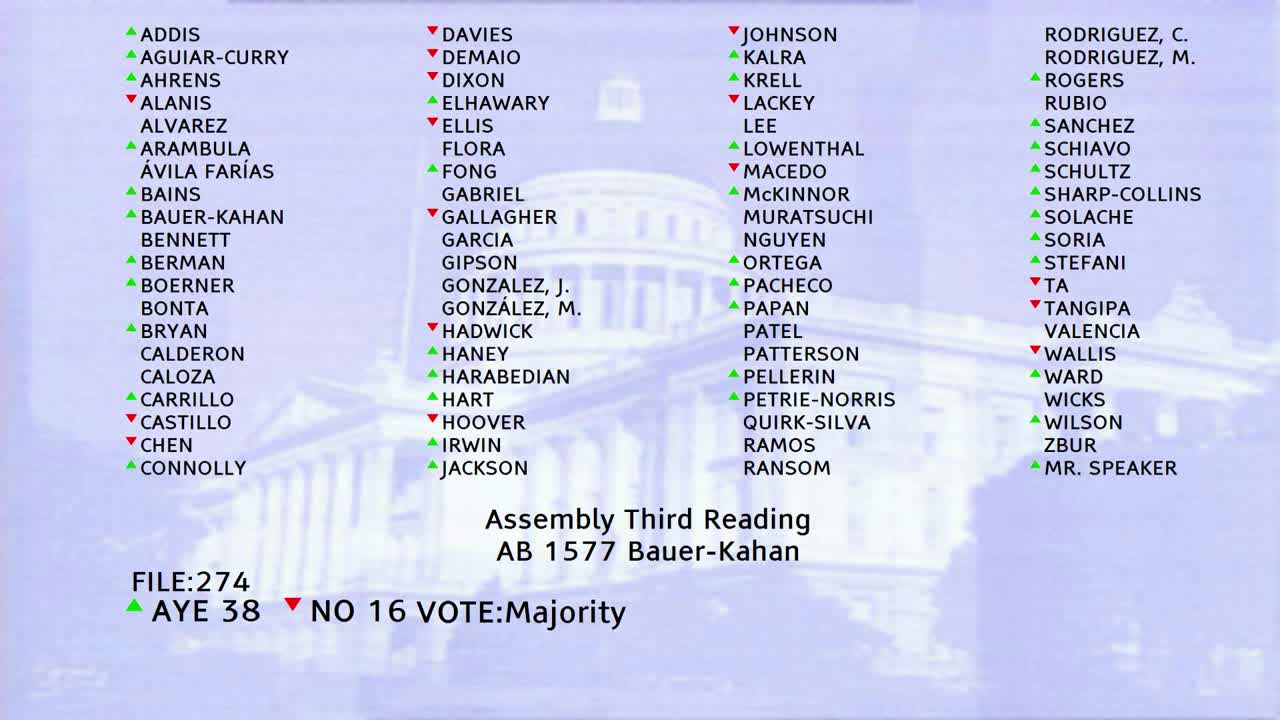
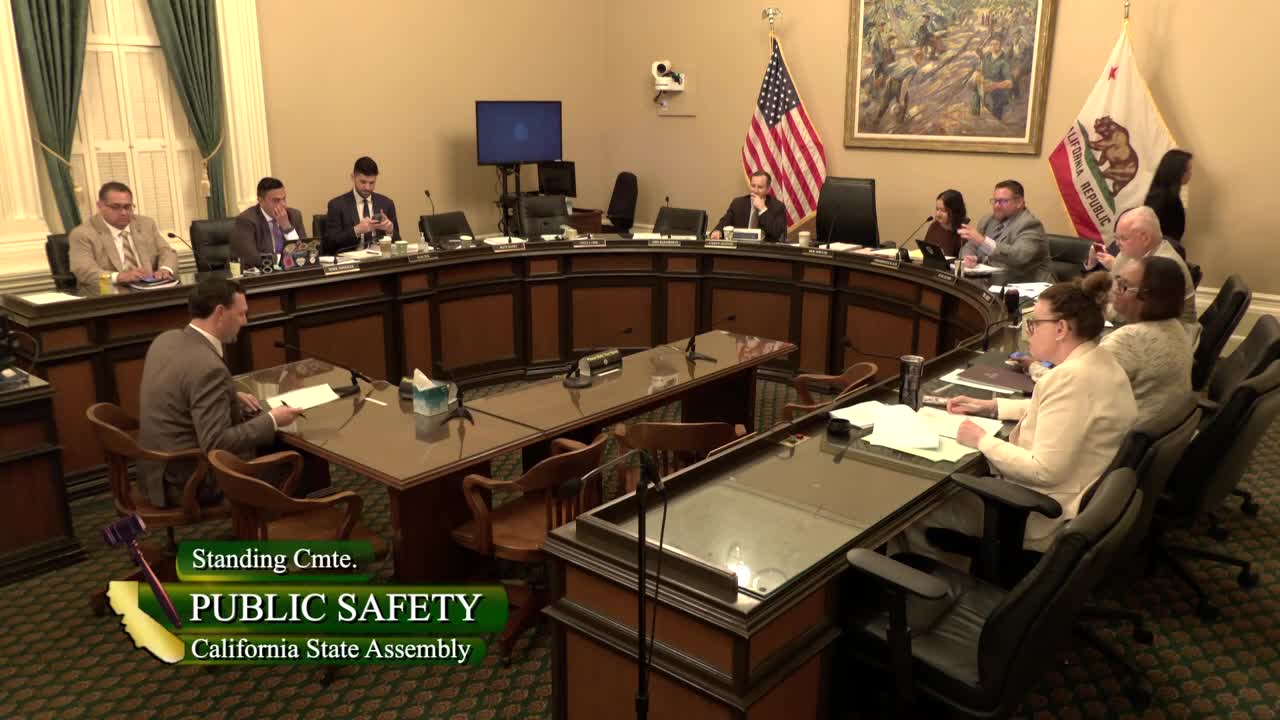
Bill Author

Bill Co-Author(s):