AB 1601: County employees’ retirement: cost-of-living adjustments.
- Session Year: 2025-2026
- House: Assembly
- Latest Version Date: 2026-09-27
Current Status:
Passed
(2026-09-27: Chaptered by Secretary of State - Chapter 530, Statutes of 2026.)
Introduced
In Committee
Awaiting First Chamber Vote
Passed First Chamber
In Committee
Awaiting Second Chamber Vote
Passed Second Chamber
Enacted
The County Employees Retirement Law of 1937 authorizes counties to establish retirement systems for county employees, authorizes counties to establish a board of retirement, and authorizes the board of retirement to provide cost-of-living adjustments and certain supplemental cost-of-living allowances. Existing law, applicable to Sonoma County and Imperial County, authorizes the board of retirement, with approval of the county board of supervisors, to grant a cost-of-living adjustment on a prefunded basis to the retirement allowances, optional death allowances, or annual death allowances payable to or on account of eligible members.
This bill would permit the board of supervisors for Sonoma County, on an annual basis, to authorize a cost-of-living adjustment to the retirement allowances, optional death allowances, or annual death allowances payable by the retirement system. Before authorizing a cost-of-living adjustment, the bill would require the county board of supervisors to take various actions, including collaborating with the retirement board to identify the eligible retired members, survivors, beneficiaries, or successors in interest designated, or a subset of those benefit recipients, to receive the cost-of-living adjustment, the amount thereof, and the funding source.
This bill would make legislative findings and declarations as to the necessity of a special statute for Sonoma County.
The County Employees Retirement Law of 1937 authorizes counties to establish retirement systems for county employees, authorizes counties to establish a board of retirement, and authorizes the board of retirement to provide cost-of-living adjustments and certain supplemental cost-of-living allowances. Existing law, applicable to Sonoma County and Imperial County, authorizes the board of retirement, with approval of the county board of supervisors, to grant a cost-of-living adjustment on a prefunded basis to the retirement allowances, optional death allowances, or annual death allowances payable to or on account of eligible members.
This bill would permit the county board of supervisors for Sonoma County to authorize a cost-of-living adjustment to the retirement allowances, optional death allowances, or annual death allowances payable by the retirement system. Before authorizing a cost-of-living adjustment, the bill would require the county board of supervisors to take various actions, including collaborating with the retirement board to identify the eligible retired members, survivors, beneficiaries, or successors in interest designated, or a subset of those benefit recipients, to receive the cost-of-living adjustment, the amount thereof, and the funding source.
This bill would make legislative findings and declarations as to the necessity of a special statute for Sonoma County.
(a)Notwithstanding any other provision of law, on an annual basis, the county board of supervisors may authorize a cost-of-living adjustment to the retirement allowances, optional death allowances, or annual death allowances payable by the retirement system. The action by the board of supervisors may specify a date as of which the adjustment shall be effective and, if no effective date is specified, the adjustment shall be made in allowances payable for the time commencing on the first day of the month following the action by the county board of supervisors.
(b)Prior to the authorization of a cost-of-living adjustment under this section, the county board of supervisors shall collaborate with the retirement board to identify the eligible retired members, survivors, beneficiaries, or successors in interest designated, or a subset of those benefit recipients, to receive the cost-of-living adjustment, the amount of the cost-of-living adjustment, and the funding source. A statement of the actuarial impact upon future annual costs, prepared by an enrolled actuary, shall be provided and reported in accordance with Sections 31515.5 and 31516.
(c)The county board of supervisors may authorize a cost-of-living adjustment under any section in this article and Article 16.6 (commencing with Section 31875) of Chapter 3 of Part 3 of Division 4 of Title 3 or may specify the adjustment provided by this section shall be payable only to those eligible retired members, survivors, beneficiaries, or successors in interest whose accumulated loss of purchasing power equals or exceeds an amount specified by the board of supervisors as of January 1 of the year the board of supervisors takes action pursuant to this section. Loss of purchasing power shall be determined by the board of supervisors based on the difference between the following:
(1)The initial retirement allowance, optional death allowance, or annual death allowance as it would have been increased by the cumulative total effect of the annual changes, rounded to the nearest one-half of 1 percent, in the Consumer Price Index for All Urban Consumers for the area in which the county seat is situated.
(2)The retirement allowance, optional death allowance, or annual death allowance as actually increased by cost-of-living adjustments previously granted with respect to the allowance, if any.
(d)A cost-of-living adjustment granted pursuant to this section shall become part of the retirement allowance, optional death allowance, or annual death allowance to be increased by any subsequent cost-of-living adjustments. The granting of an increase pursuant to this section in any particular year does not create any continuing entitlement to additional increases in subsequent years and does not create any claim by a retired member, survivor, beneficiary, or successor in interest against the county, district, or retirement fund for any increase in any allowance paid or payable prior to the effective date of the action by the county board of supervisors pursuant to this section.
(e)This section shall only apply to a county of the 19th class, as defined by Sections 28020 and 28040, as amended by Chapter 1204 of the Statutes of 1971.
SEC. 2.The Legislature finds and declares that a special statute is necessary and that a general statute cannot be made applicable within the meaning of Section 16 of Article IV of the California Constitution because of the unique circumstances facing Sonoma County.
|
Date
|
Status
|
|---|---|
| Sep 27, 2026 | Chaptered by Secretary of State - Chapter 530, Statutes of 2026. |
| Sep 27, 2026 | Approved by the Governor. |
| Aug 24, 2026 | Enrolled and presented to the Governor at 4:30 p.m. |
| Aug 18, 2026 | In Assembly. Ordered to Engrossing and Enrolling. |
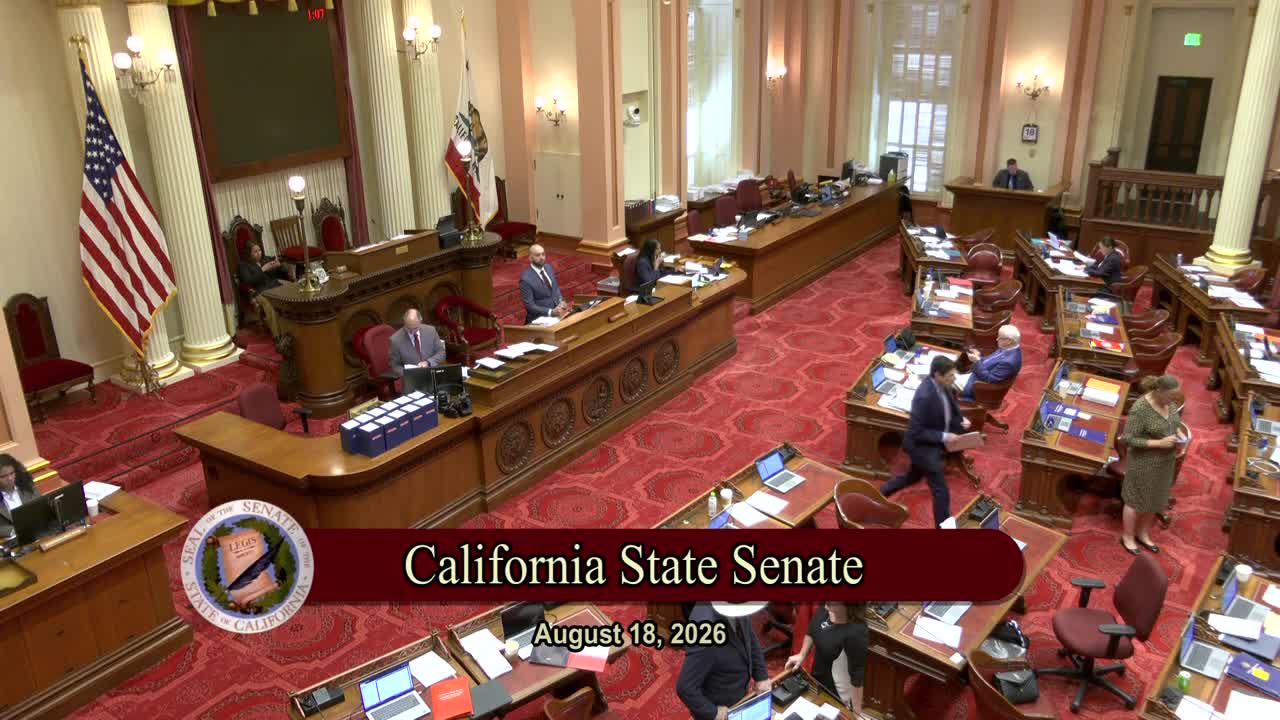
| Aug 18, 2026 | Read third time. Passed. Ordered to the Assembly. (Ayes 36. Noes 0. Page 5520.). |
| Aug 18, 2026 | Read third time. Passed. Ordered to the Assembly. (Ayes 36. Noes 0.). |
| Jun 11, 2026 | Read second time. Ordered to third reading. |
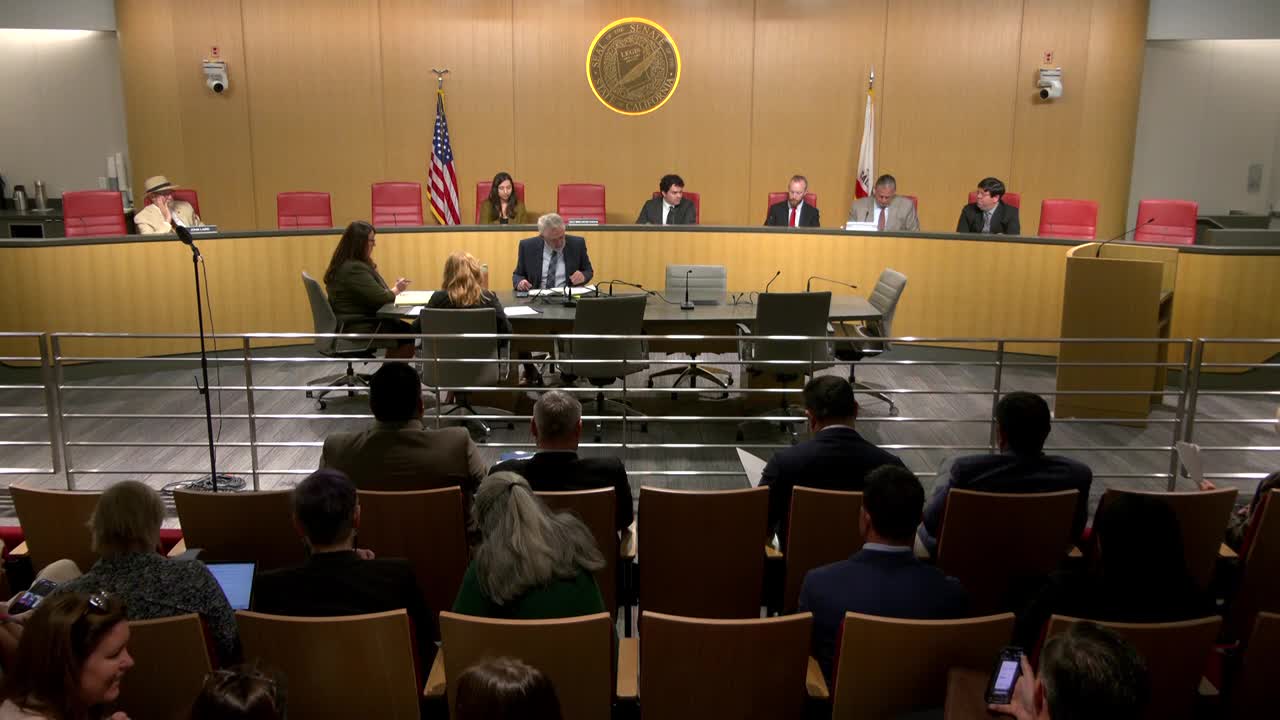
| Jun 10, 2026 | From committee: Do pass. (Ayes 5. Noes 0.) (June 10). |
| May 6, 2026 | Referred to Com. on L., P.E. & R. |
| Apr 16, 2026 | In Senate. Read first time. To Com. on RLS. for assignment. |
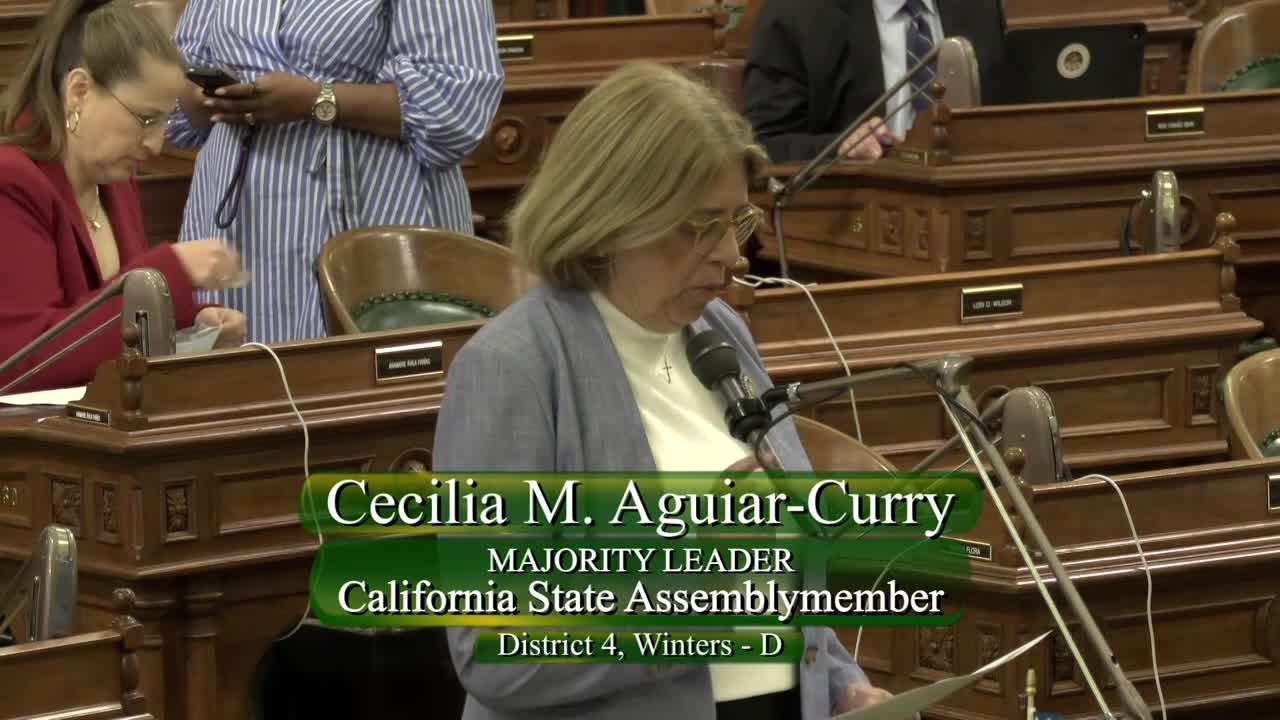
| Apr 16, 2026 | Read third time. Passed. Ordered to the Senate. (Ayes 60. Noes 3. Page 4679.) |
| Apr 16, 2026 | Read third time. Passed. Ordered to the Senate. (Ayes 60. Noes 3.) |
| Apr 9, 2026 | Read second time. Ordered to third reading. |
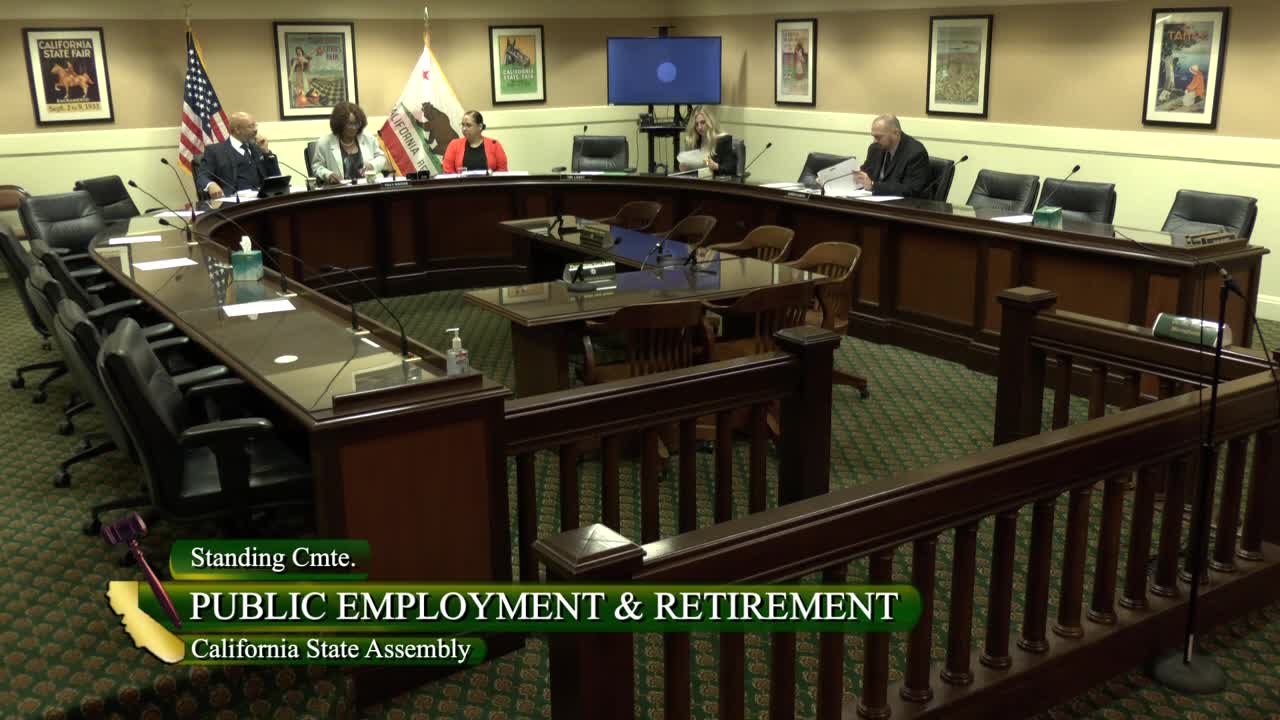
| Apr 8, 2026 | From committee: Do pass. (Ayes 6. Noes 0.) (April 8). |
| Feb 2, 2026 | Referred to Com. on P. E. & R. |
| Jan 17, 2026 | From printer. May be heard in committee February 16. |
| Jan 16, 2026 | Read first time. To print. |
|
Date
|
Description
|
Location
|
Votes
|
|
|---|---|---|---|---|
| Aug 18, 2026 | Assembly 3rd Reading AB1601 Rogers By Cabaldon | Senate Floor |
Passed |
|
| Jun 10, 2026 | Do pass | Senate Standing Committee on Labor, Public Employment and Retirement |
Passed |
|
| Apr 16, 2026 | AB 1601 Rogers Assembly Third Reading | Assembly Floor |
Passed |
|
| Apr 8, 2026 | Do pass. | Assembly Standing Committee on Public Employment and Retirement |
Passed |
This list shows positions taken on this bill by organizations on the date displayed, which is linked to the original source.
Positions by individuals are not included.
|
Organization
|
Position
|
Date
|
|---|---|---|
| California Retired County Employees Association | ** Support | |
| County of Sonoma | ** Support | |
| Service Employees International Union | ** Support | |
| Sonoma County Association of Retired Employees | ** Support | |
| Sonoma County BOS | ** Support |
SENATE RULES COMMITTEE Office of Senate Floor Analyses (916) 651-4171 | AB 1601 |
THIRD READING
Bill No: AB 1601
Author: Rogers (D)
Introduced: 1/16/26
Vote: 21
SENATE LABOR, PUB. EMP. & RET. COMMITTEE: 5-0, 6/10/26
AYES: Smallwood-Cuevas, Strickland, Cortese, Durazo, Laird
ASSEMBLY FLOOR: 60-3, 4/16/26 - See last page for vote
SUBJECT: County employees’ retirement: cost-of-living adjustments
SOURCE: Service Employees International Union
DIGEST:
This bill authorizes the Sonoma County board of supervisors greater flexibility to provide annual and unrestricted cost-of-living adjustments (COLAs) to the retirement allowances, optional death allowances, or annual death allowances payable by the Sonoma County Employees’ Retirement System (SCERA).
ANALYSIS:
Existing law:
- Establishes the County Employees Retirement Law of 1937 (commonly referred to as the “CERL,” “1937 Act,” or “’37 Act”), which governs 20 independent county retirement associations and provides for retirement systems for county and district employees in those counties adopting its provisions. Currently, 20 counties operate retirement systems under the CERL, including Sonoma County. (Government Code § 31450 et seq.)
- Denominates Sonoma County “a county of the nineteenth class”. (Government Code § 28020 and § 28040)
- Vests the management of a CERL retirement system in its retirement board, consisting of five members, one of whom shall be the county treasurer. (Government Code § 31520)
- Provides under the state constitution that public pension fund retirement boards have the sole and exclusive fiduciary authority over the investment and sole and exclusive responsibility over the administration of their respective retirement systems. (CA CONST art. XVI, § 17)
- Requires the retirement board to annually determine whether there has been an increase or decrease in the cost of living and adjust retirees’ allowances accordingly, as specified, but not by more than 2 percent. (Government Code § 31870)
- Requires the retirement board to annually determine whether there has been an increase or decrease in the cost of living and adjust retirees’ allowances accordingly, as specified, but not by more than 3 percent. (Government Code § 31870.1)
- Requires the retirement board to annually determine whether there has been an increase or decrease in the cost of living and adjust retirees’ allowances accordingly, as specified, but not by more than 5 percent. (Government Code § 31870.2)
- Requires the retirement board to annually determine whether there has been an increase or decrease in the cost of living and adjust retirees’ allowances accordingly, as specified, but not by more than 4 percent. (Government Code § 31870.3)
- Provides that the board of supervisors may make the above specified COLAs applicable on the date specified in the adopting ordinance, or if no such date is specified, on the first day of the month after the effective date of an ordinance adopted by the board, provided that an actuarial survey of the retirement system has been made by the adopting county prior to the ordinance’s passage. (Government Code § 31874)
- Provides that nothing prevents the retirement system from the use and expenditure of surplus, as specified, to fund any part or all of any increases in allowances otherwise permitted after the county has adopted the specified COLA provisions. (Government Code § 31874)
- Requires a CERL system to fund a COLA equal to all or part of the excess of the Consumer Price Index (CPI) over 3 percent whenever CPI exceeds 3 percent, as specified. This provision is only operative if adopted by a majority vote of the board of supervisors. (Government Code § 31874.1)
- Authorizes the board of supervisors in any county, by a majority vote, to enact an ordinance providing that the maximum annual change pursuant to specified CERL COLA provisions shall be increased to 4, 5, or 6 percent, as determined by the board, on the operative date of such ordinance. (Government Code § 31874.2)
- Allows a CERL system where the board of supervisors has adopted specified CERL COLAs to pay a supplemental COLA if CPI exceeds those COLA benefits. Requires that the supplemental COLA not exceed an amount that can be paid from earnings of the retirement fund that are in excess of the total interest credited to contributions and reserves plus 1 percent of the total assets of the retirement fund. (Government Code § 31874.3)
- Provides that the Sonoma County and Imperial County retirement boards, with the approval of their respective county board supervisors, may provide on a prefunded basis a COLA to retirees whose pension allowances have dropped to 80 percent of their original purchasing power provided that a qualified actuary determines the COLA’s cost and the retirement board determines that the cost can be provided from earnings of the retirement fund that are in excess of the total interest credited to contributions and reserves plus 1 percent of the total assets of the retirement fund. (Government Code § 31874.6)
- Provides that the COLA becomes a permanent part of eligible retirees’ allowances but that it does not create any continuing entitlement to additional increases in subsequent years, and does not create any claim against the county, district, or retirement fund for any increase in any allowance paid or payable prior to the effective date of the board’s action to grant the COLA. (Government Code § 31874.6 (d))
- Requires the board of supervisors to appropriate annually from the proper county funds the amount necessary to defray the entire expense of administration of the retirement system based upon budget estimates prepared by the treasurer. (Government Code § 31580)
This bill:
- Allows the Sonoma County board of supervisors (Supervisors), annually, to authorize a COLA to the retirement allowances, optional death allowances, or annual death allowances payable by the retirement system.
- Allows the Supervisors to specify the COLA’s effective date and provides that if they do not, the effective date shall commence on the first day of the month following the Supervisor’s action authorizing the COLA.
- Requires the Supervisors to collaborate with the Sonoma County retirement board prior to authorizing a COLA pursuant to this bill’s provisions to identify the following: the eligible COLA recipients, the COLA amount, and its funding source.
- Requires the Supervisors to provide a statement prepared by an enrolled actuary of the actuarial impact upon future annual costs, as specified.
- Permits the Supervisors to authorize any COLA under the CERL, as specified, not only the COLA for persons whose allowance value has fallen to 80 percent of its original purchasing power.
- Allows the Supervisors to specify that the COLA may only be available to persons whose allowance value has lost purchasing power and allows the Supervisors to specify the percentage of lost purchasing power qualifies the person for a COLA.
- Specifies how the Supervisors shall measure purchasing power.
- Requires the COLA to become part of the person’s allowance’s base which are to be increased by any subsequent COLAs.
- Provides that the granting of a COLA in any particular year does not create any continuing entitlement to additional COLAs in subsequent years nor creates any claim by a retired member, survivor, beneficiary, or successor in interest against the county, district, or retirement fund for any increase in any allowance paid or payable prior to the effective date of the Supervisor’s action authorizing the COLA.
- Specifies that the bill’s provisions only apply to Sonoma County.
- Finds and declares that a special statute is necessary and that a general statute cannot be made applicable within the meaning of Section 16 of Article IV of the California Constitution because of the unique circumstances facing Sonoma County.
Background
Existing law grants county boards of supervisors the authority to adopt specialized CERL provisions to apply to their respective retirement systems through the adoption of a county ordinance. This structure allows the CERL to provide flexibility for the different needs and demands of the 20 county retirement systems that the CERL authorizes. In effect, the CERL offers a flexible menu of benefits within a greater framework of established benefits as reformed by the Public Employees’ Pension Reform Act (PEPRA). However, existing law also vests the management of a CERL retirement system in the board of retirement, consisting of five members, one of whom is the county treasurer. The retirement board must determine that expenditures for specified benefits are prudent pursuant to their fiduciary responsibility before the retirement board can recommend the benefit, e.g. a COLA, to the board of supervisors for approval. According to the author, the Sonoma County board of supervisors never authorized automatic annual COLAs and provides COLAs only on an ad hoc basis.
The CERL authorizes several COLA benefits subject to adoption by the county board of supervisors, including a 2 %, 3%, 4%, 5%, 6%, and supplemental COLA benefits if CPI exceeds the selected COLA benefit. The COLA benefits have different requirements subject to funding provisions, with some available from any funds and others only available from excess funds, as specified.
According to the author, SCERA has just two authorized COLA options: an across the board flat COLA ranging from 2-6% for all retirees and a variable purchasing power protection COLA to restore retirees who have fallen below 80 percent purchasing power back to 80 percent.
Under the first option, if there is a COLA, SCERA must give it to all eligible retirees, not just those that have lost purchasing power. Consequently, the only way to provide a COLA to the neediest retirees is to offer an ad hoc COLA to all retirees, which can prove cost prohibitive.
Under the second option, SCERA can only fund a COLA for retirees who have fallen below 80 percent of their purchasing power if the system has excess earnings, which is defined as investment earnings left over after interest is credited to reserves, including a contingency reserve (aka rainy day fund) of 1% of the plan’s assets. SCERA has not met that hurdle since 2008 and does not foresee doing so in the near future. In effect, the fiscally prudent requirement to fund existing pension obligations and the rainy day fund is preventing the board of supervisors from giving a targeted COLA to its neediest retirees.
This bill appears to provide an alternative COLA option that would allow the board of supervisors to overcome SCERA’s existing obligations so that it could target a COLA to specific groups of retirees and allow SCERA to fund the COLA from any source, not just from excess earnings (e.g., increased employer and employee contributions, amortization of increased unfunded liability, etc.). Proponents argue that SCERA is well-funded and can absorb the costs of any additional COLA.
Related/Prior Legislation
AB 392 (Ducheny, Chapter 392, Statutes of 2008) extended the same authorization provided to Sonoma County in AB 2894 (Wiggins, Chapter 435, Statutes of 2004) to Imperial County.
AB 2894 (Wiggins, Chapter 435, Statutes of 2004) authorized the Sonoma County retirement board upon approval from the county board of supervisors to provide a COLA to retirees whose pension allowance had fallen to 80 percent of its purchasing power without first having to provide a COLA to all retirees, provided that it could do so from excess investment returns, as specified.
FISCAL EFFECT: Appropriation: No Fiscal Com.: No Local: No
SUPPORT: (Verified 06/10/26)
Service Employees International Union (Source)
California Retired County Employees Association
County of Sonoma
Sonoma County Association of Retired Employees
OPPOSITION: (Verified 06/10/26)
None received
ARGUMENTS IN SUPPORT: According to Service Employees International Union, California:
“Under current law, Sonoma County does not have a prefunded COLA structure and has not experienced excess investment earnings sufficient to grant adjustments under existing statutory mechanisms. As a result, retirees have seen the purchasing power of their fixed incomes diminished by years of inflation without a viable pathway for relief.”
“This bill provides flexibility for Sonoma County and its retirement system to collaborate annually and designate the recipients, amount, and funding source of a cost-of-living increase and require the actuarial impact on future annual costs to be reported in accordance with existing law before any benefit increases are authorized.”
According to the Sonoma County Board of Supervisors:
“AB 1601 would provide the County of Sonoma with a narrowly tailored authority to consider a COLA for eligible retirees and beneficiaries. This authority would balance local decision-making with appropriate actuarial review regarding fiscal impacts.”
“AB 1601 does not mandate changes but allows the County of Sonoma to responsibly address retiree purchasing power when fiscally feasible. In addition, providing this authority through a special statute acknowledges the County of Sonoma’s specific circumstances and ensures that any action taken will be considered within the County’s fiscal framework.”
“AB 1601 would provide the County of Sonoma and the Sonoma County Employees’ Retirement Association (SCERA) with flexibility to evaluate each year whether a COLA should be granted, who would receive it, the amount of the adjustment, and how it would be funded. The bill preserves existing safeguards by requiring actuarial analysis of the impact on future costs before any benefit increase is approved.”
ASSEMBLY FLOOR: 60-3, 4/16/26
AYES: Addis, Aguiar-Curry, Ahrens, Alanis, Alvarez, Ávila Farías, Bains, Bauer-Kahan, Bennett, Boerner, Bryan, Calderon, Caloza, Carrillo, Chen, Connolly, Davies, Elhawary, Fong, Gabriel, Gallagher, Garcia, Gipson, Jeff Gonzalez, Mark González, Haney, Irwin, Jackson, Kalra, Krell, Lee, Lowenthal, Macedo, McKinnor, Muratsuchi, Nguyen, Ortega, Pacheco, Papan, Patel, Patterson, Pellerin, Petrie-Norris, Quirk-Silva, Ramos, Ransom, Michelle Rodriguez, Rogers, Blanca Rubio, Schultz, Sharp-Collins, Solache, Stefani, Ta, Wallis, Ward, Wicks, Wilson, Zbur, Rivas
NOES: DeMaio, Johnson, Sanchez
NO VOTE RECORDED: Arambula, Berman, Bonta, Castillo, Dixon, Ellis, Flora, Hadwick, Harabedian, Hart, Hoover, Lackey, Celeste Rodriguez, Schiavo, Soria, Tangipa, Valencia
Prepared by: Glenn Miles / L., P.E. & R. / (916) 651-1556
6/12/26 12:50:00
**** END ****
SENATE COMMITTEE ON LABOR, PUBLIC EMPLOYMENT AND RETIREMENT
Senator Lola Smallwood-Cuevas, Chair
2025 - 2026 Regular
Bill No: AB 1601 Hearing Date: June 10, 2026
Author: | Rogers | ||
Version: | January 16, 2026 | ||
Urgency: | No | Fiscal: | No |
Consultant: | Glenn Miles | ||
SUBJECT: County employees’ retirement: cost-of-living adjustments.
KEY ISSUE
This bill authorizes the Sonoma County board of supervisors greater flexibility to provide annual and unrestricted cost-of-living adjustments (COLAs) to the retirement allowances, optional death allowances, or annual death allowances payable by the Sonoma County Employees’ Retirement System (SCERA).
ANALYSIS
Existing law:
- Establishes the County Employees Retirement Law of 1937 (commonly referred to as the “CERL,” “1937 Act,” or “’37 Act”), which governs 20 independent county retirement associations and provides for retirement systems for county and district employees in those counties adopting its provisions. Currently, 20 counties operate retirement systems under the CERL, including Sonoma County. (Government Code § 31450 et seq.)
- Denominates Sonoma County “a county of the nineteenth class”. (Government Code § 28020 and § 28040)
- Vests the management of a CERL retirement system in its retirement board, consisting of five members, one of whom shall be the county treasurer. (Government Code § 31520)
- Provides under the state constitution that public pension fund retirement boards have the sole and exclusive fiduciary authority over the investment and sole and exclusive responsibility over the administration of their respective retirement systems. (CA CONST art. XVI, § 17)
- Requires the retirement board to annually determine whether there has been an increase or decrease in the cost of living and adjust retirees’ allowances accordingly, as specified, but not by more than 2 percent. (Government Code § 31870)
- Requires the retirement board to annually determine whether there has been an increase or decrease in the cost of living and adjust retirees’ allowances accordingly, as specified, but not by more than 3 percent. (Government Code § 31870.1)
- Requires the retirement board to annually determine whether there has been an increase or decrease in the cost of living and adjust retirees’ allowances accordingly, as specified, but not by more than 5 percent. (Government Code § 31870.2)
- Requires the retirement board to annually determine whether there has been an increase or decrease in the cost of living and adjust retirees’ allowances accordingly, as specified, but not by more than 4 percent. (Government Code § 31870.3)
- Provides that the board of supervisors may make the above specified COLAs applicable on the date specified in the adopting ordinance, or if no such date is specified, on the first day of the month after the effective date of an ordinance adopted by the board, provided that an actuarial survey of the retirement system has been made by the adopting county prior to the ordinance’s passage. (Government Code § 31874)
- Provides that nothing prevents the retirement system from the use and expenditure of surplus, as specified, to fund any part or all of any increases in allowances otherwise permitted after the county has adopted the specified COLA provisions. (Government Code § 31874)
- Requires a CERL system to fund a COLA equal to all or part of the excess of the Consumer Price Index (CPI) over 3 percent whenever CPI exceeds 3 percent, as specified. This provision is only operative if adopted by a majority vote of the board of supervisors. (Government Code § 31874.1)
- Authorizes the board of supervisors in any county, by a majority vote, to enact an ordinance providing that the maximum annual change pursuant to specified CERL COLA provisions shall be increased to 4, 5, or 6 percent, as determined by the board, on the operative date of such ordinance. (Government Code § 31874.2)
- Allows a CERL system where the board of supervisors has adopted specified CERL COLAs to pay a supplemental COLA if CPI exceeds those COLA benefits. Requires that the supplemental COLA not exceed an amount that can be paid from earnings of the retirement fund that are in excess of the total interest credited to contributions and reserves plus 1 percent of the total assets of the retirement fund. (Government Code § 31874.3)
- Provides that the Sonoma County and Imperial County retirement boards, with the approval of their respective county board supervisors, may provide on a prefunded basis a COLA to retirees whose pension allowances have dropped to 80 percent of their original purchasing power provided that a qualified actuary determines the COLA’s cost and the retirement board determines that the cost can be provided from earnings of the retirement fund that are in excess of the total interest credited to contributions and reserves plus 1 percent of the total assets of the retirement fund. (Government Code § 31874.6)
- Provides that the COLA becomes a permanent part of eligible retirees’ allowances but that it does not create any continuing entitlement to additional increases in subsequent years, and does not create any claim against the county, district, or retirement fund for any increase in any allowance paid or payable prior to the effective date of the board’s action to grant the COLA. (Government Code § 31874.6 (d))
- Requires the board of supervisors to appropriate annually from the proper county funds the amount necessary to defray the entire expense of administration of the retirement system based upon budget estimates prepared by the treasurer. (Government Code § 31580)
This bill:
- Allows the Sonoma County board of supervisors (Supervisors), annually, to authorize a COLA to the retirement allowances, optional death allowances, or annual death allowances payable by the retirement system.
- Allows the Supervisors to specify the COLA’s effective date and provides that if they do not, the effective date shall commence on the first day of the month following the Supervisor’s action authorizing the COLA.
- Requires the Supervisors to collaborate with the Sonoma County retirement board prior to authorizing a COLA pursuant to this bill’s provisions to identify the following: the eligible COLA recipients, the COLA amount, and its funding source.
- Requires the Supervisors to provide a statement prepared by an enrolled actuary of the actuarial impact upon future annual costs, as specified.
- Permits the Supervisors to authorize any COLA under the CERL, as specified, not only the COLA for persons whose allowance value has fallen to 80 percent of its original purchasing power.
- Allows the Supervisors to specify that the COLA may only be available to persons whose allowance value has lost purchasing power and allows the Supervisors to specify the percentage of lost purchasing power qualifies the person for a COLA.
- Specifies how the Supervisors shall measure purchasing power.
- Requires the COLA to become part of the person’s allowance’s base which are to be increased by any subsequent COLAs.
- Provides that the granting of a COLA in any particular year does not create any continuing entitlement to additional COLAs in subsequent years nor creates any claim by a retired member, survivor, beneficiary, or successor in interest against the county, district, or retirement fund for any increase in any allowance paid or payable prior to the effective date of the Supervisor’s action authorizing the COLA.
- Specifies that the bill’s provisions only apply to Sonoma County.
- Finds and declares that a special statute is necessary and that a general statute cannot be made applicable within the meaning of Section 16 of Article IV of the California Constitution because of the unique circumstances facing Sonoma County.
COMMENTS
1. Background
Existing law grants county boards of supervisors the authority to adopt specialized CERL provisions to apply to their respective retirement systems through the adoption of a county ordinance. This structure allows the CERL to provide flexibility for the different needs and demands of the 20 county retirement systems that the CERL authorizes. In effect, the CERL offers a flexible menu of benefits within a greater framework of established benefits as reformed by the Public Employees’ Pension Reform Act (PEPRA). However, existing law also vests the management of a CERL retirement system in the board of retirement, consisting of five members, one of whom is the county treasurer. The retirement board must determine that expenditures for specified benefits are prudent pursuant to their fiduciary responsibility before the retirement board can recommend the benefit, e.g. a COLA, to the board of supervisors for approval. According to the author, the Sonoma County board of supervisors never authorized automatic annual COLAs and provides COLAs only on an ad hoc basis.
The CERL authorizes several COLA benefits subject to adoption by the county board of supervisors, including a 2 %, 3%, 4%, 5%, 6%, and supplemental COLA benefits if CPI exceeds the selected COLA benefit. The COLA benefits have different requirements subject to funding provisions, with some available from any funds and others only available from excess funds, as specified.
According to the author, SCERA has just two authorized COLA options: an across the board flat COLA ranging from 2-6% for all retirees and a variable purchasing power protection COLA to restore retirees who have fallen below 80 percent purchasing power back to 80 percent.
Under the first option, if there is a COLA, SCERA must give it to all eligible retirees, not just those that have lost purchasing power. Consequently, the only way to provide a COLA to the neediest retirees is to offer an ad hoc COLA to all retirees, which can prove cost prohibitive.
Under the second option, SCERA can only fund a COLA for retirees who have fallen below 80 percent of their purchasing power if the system has excess earnings, which is defined as investment earnings left over after interest is credited to reserves, including a contingency reserve (aka rainy day fund) of 1% of the plan’s assets. SCERA has not met that hurdle since 2008 and does not foresee doing so in the near future. In effect, the fiscally prudent requirement to fund existing pension obligations and the rainy day fund is preventing the board of supervisors from giving a targeted COLA to its neediest retirees.
This bill appears to provide an alternative COLA option that would allow the board of supervisors to overcome SCERA’s existing obligations so that it could target a COLA to specific groups of retirees and allow SCERA to fund the COLA from any source, not just from excess earnings (e.g., increased employer and employee contributions, amortization of increased unfunded liability, etc.). Proponents argue that SCERA is well-funded and can absorb the costs of any additional COLA.
2. Need for this bill?
According to the author:
“Currently, The County of Sonoma has not had a COLA increase since 2008. The County Board of Supervisors and the Retirement Board want to work with actuaries to assess what a COLA would be for 2027 for targeted, eligible retired members. The County of Sonoma is only one of few counties in California that must have approval from the state to initiate action to identify a new COLA.”
“This bill would help support the County of Sonoma as the Board of Supervisors cannot do a targeted COLA for eligible retired members, survivors, beneficiaries, or successors in interest designated, or a subset of those benefit recipients since they would need the state to authorize this activity. Sonoma County is unique because it’s the only 1937 Act County Pension System that does not offer an automatic, yearly Pension Cost of Living Adjustment (COLA) to retirees and their beneficiaries. It is important to note this is a District bill pertaining to the County of Sonoma only.”
3. Proponent Arguments
According to Service Employees International Union, California:
“Under current law, Sonoma County does not have a prefunded COLA structure and has not experienced excess investment earnings sufficient to grant adjustments under existing statutory mechanisms. As a result, retirees have seen the purchasing power of their fixed incomes diminished by years of inflation without a viable pathway for relief.
This bill provides flexibility for Sonoma County and its retirement system to collaborate annually and designate the recipients, amount, and funding source of a cost-of-living increase and require the actuarial impact on future annual costs to be reported in accordance with existing law before any benefit increases are authorized.”
According to the Sonoma County Board of Supervisors:
“AB 1601 would provide the County of Sonoma with a narrowly tailored authority to consider a COLA for eligible retirees and beneficiaries. This authority would balance local decision-making with appropriate actuarial review regarding fiscal impacts.”
“AB 1601 does not mandate changes but allows the County of Sonoma to responsibly address retiree purchasing power when fiscally feasible. In addition, providing this authority through a special statute acknowledges the County of Sonoma’s specific circumstances and ensures that any action taken will be considered within the County’s fiscal framework.”
“AB 1601 would provide the County of Sonoma and the Sonoma County Employees’ Retirement Association (SCERA) with flexibility to evaluate each year whether a COLA should be granted, who would receive it, the amount of the adjustment, and how it would be funded. The bill preserves existing safeguards by requiring actuarial analysis of the impact on future costs before any benefit increase is approved.”
4. Opponent Arguments:
None received.
5. Prior Legislation:
AB 392 (Ducheny, Chapter 392, Statutes of 2008) extended the same authorization provided to Sonoma County in AB 2894 (2004) to Imperial County.
AB 2894 (Wiggins, Chapter 435, Statutes of 2004) authorized the Sonoma County retirement board upon approval from the county board of supervisors to provide a COLA to retirees whose pension allowance had fallen to 80 percent of its purchasing power without first having to provide a COLA to all retirees, provided that it could do so from excess investment returns, as specified.
SUPPORT
Service Employees International Union, California (Sponsor)
California Retired County Employees Association
County of Sonoma
Sonoma County Association of Retired Employees
OPPOSITION
None received
-- END --
ASSEMBLY THIRD READING
ATR Bill Id:AB 1601
Author:(Rogers)
As Introduced Ver:January 16, 2026
Majority vote
SUMMARY
Amends the County Employees Retirement Law of 1937 (CERL) relating to cost-of-living adjustments (COLA) for certain retired members of the Sonoma County Employees' Retirement Association (SCERA), among other provisions.
Major Provisions
- Authorizes the Sonoma County Board of Supervisors (BOS) to authorize a COLA on retirement, optional death, or annual death allowances payable by the SCERA, and where the action by the BOS may specify the date in which the COLA is effective, and if no date is specified, the COLA must be made on allowances as of the first day of the month following the BOS' action.
- Requires, prior to the COLA authorization, the BOS to collaborate with the SCERA Board of Retirement (BOR) to identify eligible retired members, survivors, beneficiaries, or successors in interest designated, or a subset of those benefit recipients, to receive the COLA, the amount of the COLA, and the COLA's funding source, and a statement of the actuarial impact of the COLA on future annual costs to be prepared by an enrolled actuary.
- Authorizes the BOS to authorize a retrospective COLA that must be payable to those eligible retired members, survivors, beneficiaries, or successors in interest whose accumulated purchasing power equals or exceeds an amount specified by the BOS as of January 1 of the year that the BOS took action, and prescribes the manner how the BOS must determine the loss of purchasing power.
- Establishes that a COLA granted pursuant to the above-described provisions must become part of the retirement, optional death, or annual death allowance and to be increased by any subsequent COLA. However, such increases do not create a continuing entitlement to additional increases in the future, nor create a claim against the county, district, or retirement fund for any increase in any allowance paid or payable prior to the effective date of the BOS action.
- Provides that the above-described provisions only apply to Sonoma County.
COMMENTS
Brief background regarding the CERL
In addition to what was previously stated under "Existing Law," the CERL establishes "classes" of each county operating a retirement system, which mirrors the population of each county as ascertained and determined pursuant to Section 28020 of the Government Code. For example, under the CERL, Los Angeles County is of the first class; Orange County is of the second class; San Diego County is the third class; Alameda County is the fourth class; and so forth. Under the CERL, none of these counties are within the same class.[1] Currently, there are 20 such systems in counties that have adopted the CERL, and the SCERA is of the 19th class.[2]
Where the Public Employees' Retirement Law and the Teachers' Retirement Law for the statewide public employee retirement systems establish uniform standards that commonly apply to members, participating agencies and school districts governed by those laws, respectively, the CERL provides uniform standards in the administration of retirement benefits by all CERL systems, but also recognizes and allows for a modicum of variation in the administration of retirement benefits among them since each county and CERL system is separate and unique.
Each CERL system operates pursuant to the CERL and on occasion, an issue might arise related to the administration of retirement benefits. However, the issue may only be applicable to an individual system due to its interpretation of a provision in the CERL, variation of administration when compared to other systems, or interpretation of a CERL provision that is specific to that jurisdiction. For example, Assembly Bill 2076, (Rodriguez) Chapter 97, Statutes of 2018 provides authority to the Los Angeles County Employees Retirement Association (LACERA) – a CERL system – to reconsider its decisions regarding the effective date of a disability retirement during a specific period. That measure only applied to LACERA because the issue sought to be addressed only existed in that system.
Although a modicum of variation has resulted in concerning substantial challenges that, in one instance, required subsequent actions by many, but not all, CERL systems to align their administration of retirement to the requirements of the PEPRA following a decision by the California Supreme Court,[3] the practical and operational mechanics of the CERL permit such variation.
This Bill
Recognizing the variations among each CERL jurisdiction and that the CERL provides for a modicum of variation among CERL systems, this bill would only apply to the County of Sonoma and the SCERA.
Consistency in Equitable Consideration and Treatment is Paramount
Whereas existing law pursuant to Gov. Code Section 31874.6 authorizes the BOR to grant COLAs with the approval of the BOS, this bill proposes to afford certain eligible retired members, survivors, beneficiaries, or successors in interest, including a subset of those benefit recipients, a COLA through a novel approach requiring a collaborative effort of the BOS and BOR to identify those individuals.
To the extent that, as proposed, the collaborative BOS-BOR effort identifies those who are eligible to receive a COLA based on a consistent set of factors, they must ensure consistency in equitable consideration and treatment in that identification. In this regard, this bill not only prescribes the authority of the BOS relating to a COLA, but also specifically prescribes the criteria to be used when identifying eligibles, i.e., "… whose accumulated loss of purchasing power equals or exceeds an amount specified by the board…," and, "…[l]oss of purchasing power shall be determined by the board based on the difference between…."[4] If, however, efforts to identify those who are eligible breach equitable consideration and treatment through use of random or nonrelevant factors to identify all eligibles in the same manner, or other factors are used beyond those specifically prescribed in this bill, the lack of consistency in equitable consideration and treatment may result in concern and could serve as the basis for a legal cause of action.
Please see the policy committee analysis for a full discussion of this bill.
According to the Author
"[This bill] provides Sonoma County with limited and responsible flexibility to address the erosion of purchasing power experienced by county retirees who have not received a cost-of-living adjustment since 2008. Under current law, Sonoma County does not have a prefunded COLA structure and has not experienced excess investment earnings sufficient to grant adjustments under existing statutory mechanisms. As a result, retirees have seen their fixed incomes diminished by years of inflation without a viable pathway for relief. This bill does not mandate a [COLA], nor does it create any ongoing entitlement to future increases. Instead, it authorizes the Sonoma County [BOS], in collaboration with the Retirement Board, to evaluate on an annual basis whether a COLA is fiscally appropriate. Prior to authorizing any adjustment, the county must identify the eligible recipients, determine the amount, designate the funding source, and obtain a statement from an enrolled actuary analyzing the impact on future annual costs in accordance with existing law. [This bill] maintains fiscal safeguards by requiring actuarial transparency and preserving local discretion. It creates a narrowly tailored statutory framework specific to Sonoma County's unique circumstances while ensuring that any adjustments are responsibly evaluated for long-term sustainability. This bill is key to helping the lowest paid retirees live in the community they served."
Arguments in Support
In part, the Service Employees International Union of California states, "[u]nder current law, Sonoma County does not have a prefunded COLA structure and has not experienced excess investment earnings sufficient to grant adjustments under existing statutory mechanisms. As a result, retirees have seen the purchasing power of their fixed incomes diminished by years of inflation without a viable pathway for relief. This bill provides flexibility for Sonoma County and its retirement system to collaborate annually and designate the recipients, amount, and funding source of a cost-of-living increase and require the actuarial impact on future annual costs to be reported in accordance with existing law before any benefit increases are authorized."
The Sonoma County BOS states, "[this bill] would provide the County of Sonoma with a narrowly tailored authority to consider a COLA for eligible retirees and beneficiaries. This authority would balance local decision-making with appropriate actuarial review regarding fiscal impacts. [It] does not mandate changes but allows the County of Sonoma to responsibly address retiree purchasing power when fiscally feasible. In addition, providing this authority through a special statute acknowledges the County of Sonoma's specific circumstances and ensures that any action taken will be considered within the County's fiscal framework [,and] would provide the County of Sonoma and the [SCERA] with flexibility to evaluate each year whether a COLA should be granted, who would receive it, the amount of the adjustment, and how it would be funded. The bill preserves existing safeguards by requiring actuarial analysis of the impact on future costs before any benefit increase is approved."
Among other things, the California Retired County Employees Association states, "[the] employees of Sonoma County put in 20 to 30 years of service after which they receive a pension benefit. Unfortunately, after another 10 or 20 or 30 years into retirement, that benefit has effectively diminished as the costs of inflation eat away at it. This legislation continues to recognize those retirees for their service to the citizens by allowing the County of Sonoma and the [SCERA] to work together to provide a cost-of-living adjustment to those retirees in an attempt to keep their spending power in line with the current inflation."
Arguments in Opposition
None on file.
FISCAL COMMENTS
None.
VOTES
ASM PUBLIC EMPLOYMENT AND RETIREMENT: 6-0-1
YES: McKinnor, Lackey, Boerner, Garcia, Nguyen, Michelle Rodriguez
ABS, ABST OR NV: Alanis
UPDATED
VERSION: January 16, 2026
CONSULTANT: Michael Bolden / P. E. & R. / (916) 319-3957 FN: 0002346
Section 28020, Gov. Code. ↑
Subdivision (e) of this bill explicitly states applicability only to a county of the 19th class. This statutory designation specifically refers to Sonoma County pursuant to Section 28020, and the population range of counties pursuant to Section 28040, Gov. Code. ↑
Alameda County Deputy Sheriff's Assn. v. Alameda County Employees' Retirement Assn. (2020) 9 Cal.5th 1032. Three separate, but similar legal cases were consolidated into a single case (Alameda) by the C. Sup. Ct. They were Alameda, (id.); Contra Costa County Deputy Sheriffs Assn. v. Contra Costa County Employees' Ret. Assn., and American Fed. of State, County and Municipal Employees v. Merced County Employees' Retirement Assn. ↑
See subdivision (c), inclusive. ↑
Date of Hearing: April 8, 2026
ASSEMBLY COMMITTEE ON PUBLIC EMPLOYMENT AND RETIREMENT
Tina S. McKinnor, Chair
ABPCA Bill Id:AB 1601 (
Author:Rogers) – As Introduced Ver:January 16, 2026
SUBJECT: County employees’ retirement: cost-of-living adjustments
SUMMARY: Amends the County Employees Retirement Law of 1937 (CERL) relating to cost-of-living adjustments (COLA) for certain retired members of the Sonoma County Employees’ Retirement Association (SCERA), among other provisions. Specifically, this bill:
- Authorizes the Sonoma County Board of Supervisors (BOS) to authorize a COLA on retirement, optional death, or annual death allowances payable by the SCERA, and where the action by the BOS may specify the date in which the COLA is effective, and if no date is specified, the COLA must be made on allowances as of the first day of the month following the BOS’ action.
- Requires, prior to the COLA authorization, the BOS to collaborate with the SCERA Board of Retirement (BOR) to identify eligible retired members, survivors, beneficiaries, or successors in interest designated, or a subset of those benefit recipients, to receive the COLA, the amount of the COLA, and the COLA’s funding source.
- Requires a statement of the actuarial impact of the COLA on future annual costs to be prepared by an enrolled actuary and provided, as stipulated.
- Authorizes the BOS to authorize a retrospective COLA, as provided, that must be payable to those eligible retired members, survivors, beneficiaries, or successors in interest whose accumulated purchasing power equals or exceeds an amount specified by the BOS as of January 1 of the year that the BOS took action.
- Prescribes the manner how the BOS must determine the loss of purchasing power.
- Establishes that a COLA granted pursuant to the above-described provisions must become part of the retirement, optional death, or annual death allowance and to be increased by any subsequent COLA. However, such increases do not create a continuing entitlement to additional increases in the future, nor create a claim against the county, district, or retirement fund for any increase in any allowance paid or payable prior to the effective date of the BOS action.
- Specifies that the above-described provisions only apply to Sonoma County.
- Includes a pro forma legislative finding and declaration relating to the necessity of a special statue for Sonoma County.
EXISTING LAW:
- Establishes the County Employees Retirement Law of 1937 (commonly referred to as the “CERL,” “1937 Act,” or “’37 Act”), which governs 20 independent county retirement associations and provides for retirement systems for county and district employees in those counties adopting its provisions. Currently, 20 counties operate retirement systems under the CERL, including Sonoma County.
Further establishes that the purpose of the CERL is to recognize a public obligation to county and district employees who become incapacitated by age or long service in public employment and its accompanying physical disabilities by making provision for retirement compensation and death benefits as additional elements of compensation for future services, and to provide a means by which public employees who become incapacitated may be replaced by more capable employees to the betterment of public service without prejudice and without inflicting a hardship upon the employees removed. (Sections 31450 et seq., Gov. Code.)
- Provides, pursuant to Section 17, art. XVI of the California Constitution, that the boards of California's public retirement systems have "plenary authority and fiduciary responsibility for [the] investment of monies and administration of the system." Among other things, "[t]he members of the retirement board of a public pension or retirement system shall discharge their duties with respect to the system solely in the interest of, and for the exclusive purposes of providing benefits to, participants and their beneficiaries, minimizing employer contributions thereto, and defraying reasonable expenses of administrating the system…[and] the board shall diversify the investments of the system so as to minimize the risk of loss and to maximize the rate of return unless under the circumstances it is clearly prudent to do so."
- Authorizes various COLA adjustments and certain supplemental COLAs. (Sections 31870, et seq, Gov. Code.)
- Applicable to Sonoma County and Imperial County and subject to a determination of a qualified actuary, authorizes the BOR, with the approval of the county BOS, to grant a COLA on a prefunded basis to the retirement, optional death, or annual death allowances payable to, or on account of, eligible members, as provided. Further, provides that the COLA must only be payable to those retired members, survivors, beneficiaries, or successors in interest whose accumulated loss of purchasing power equals or exceeds 20 percent as of January 1 of the year that the BOR takes action to provide a COLA, and prescribes the manner that a BOR must calculate the COLA. (Section 31874.6, Gov. Code.)
FISCAL EFFECT: None. This bill is keyed nonfiscal by Legislative Counsel.
COMMENTS:
Background
Among other things, information provided by the author states, “[c]urrently, the County of Sonoma has not had a [COLA] increase since 2008. As a result of that, many retired county employees are struggling with the increased cost of living in the region. The County [BOS] would like to target a future COLA at the retirees at the low end of the pay spectrum. Current state law prohibits a targeted COLA, allowing only a COLA for all retired employees. This bill would help support the County of Sonoma as the [BOS] cannot do a targeted COLA for eligible retired members, survivors, beneficiaries, or successors in interest designated, or a subset of those benefit recipients since they would need a change in state law to authorize this activity.”
Brief background regarding the CERL
In addition to what was previously stated under “Existing Law,” the CERL establishes “classes” of each county operating a retirement system, which mirrors the population of each county as ascertained and determined pursuant to Section 28020 of the Gov. Code. For example, under the CERL, Los Angeles County is of the first class; Orange County is of the second class; San Diego County is the third class; Alameda County is the fourth class; and so forth. Under the CERL, none of these counties are within the same class.[1] Currently, there are 20 such systems in counties that have adopted the CERL, and the SCERA is of the 19th class.[2]
Where the Public Employees’ Retirement Law and the Teachers’ Retirement Law for the statewide public employee retirement systems establish uniform standards that commonly apply to members, participating agencies and school districts governed by those laws, respectively, the CERL provides uniform standards in the administration of retirement benefits by all CERL systems, but also recognizes and allows for a modicum of variation in the administration of retirement benefits among them since each county and CERL system is separate and unique.
Each CERL system operates pursuant to the CERL and on occasion, an issue might arise related to the administration of retirement benefits. However, the issue may only be applicable to an individual system due to its interpretation of a provision in the CERL, variation of administration when compared to other systems, or interpretation of a CERL provision that is specific to that jurisdiction. For example, Chapter 97, Statutes of 2018 (Assembly Bill 2076, Rodriguez) provides authority to the Los Angeles County Employees Retirement Association (LACERA) – a CERL system – to reconsider its decisions regarding the effective date of a disability retirement during a specific period. That measure only applied to LACERA because the issue sought to be addressed only existed in that system.
Although a modicum of variation has resulted in concerning substantial challenges that, in one instance, required subsequent actions by many, but not all, CERL systems to align their administration of retirement to the requirements of the PEPRA following a decision by the California Supreme Court,[3] the practical and operational mechanics of the CERL permit such variation.
This Bill
Recognizing the variations among each CERL jurisdiction and that the CERL provides for a modicum of variation among CERL systems, this bill would only apply to the County of Sonoma and the SCERA.
Consistency in equitable consideration and treatment is paramount
Whereas existing law pursuant to Gov. Code Section 31874.6 authorizes the BOR to grant COLAs with the approval of the BOS, this bill proposes to afford certain eligible retired members, survivors, beneficiaries, or successors in interest, including a subset of those benefit recipients, a COLA through a novel approach requiring a collaborative effort of the BOS and BOR to identify those individuals.
To the extent that, as proposed, the collaborative BOS-BOR effort identifies those who are eligible to receive a COLA based on a consistent set of factors, they must ensure consistency in equitable consideration and treatment in that identification. In this regard, this bill not only prescribes the authority of the BOS relating to a COLA, but also specifically prescribes the criteria to be used when identifying eligibles, i.e., “… whose accumulated loss of purchasing power equals or exceeds an amount specified by the board…,” and, “…[l]oss of purchasing power shall be determined by the board based on the difference between….”[4] If, however, efforts to identify those who are eligible breach equitable consideration and treatment through use of random or nonrelevant factors to identify all eligibles in the same manner, or other factors are used beyond those specifically prescribed in this bill, the lack of consistency in equitable consideration and treatment may result in concern and could serve as the basis for a legal cause of action.
Author’s Statement
“[This bill] provides Sonoma County with limited and responsible flexibility to address the erosion of purchasing power experienced by county retirees who have not received a cost-of-living adjustment since 2008. Under current law, Sonoma County does not have a prefunded COLA structure and has not experienced excess investment earnings sufficient to grant adjustments under existing statutory mechanisms. As a result, retirees have seen their fixed incomes diminished by years of inflation without a viable pathway for relief. This bill does not mandate a [COLA], nor does it create any ongoing entitlement to future increases. Instead, it authorizes the Sonoma County [BOS], in collaboration with the Retirement Board, to evaluate on an annual basis whether a COLA is fiscally appropriate. Prior to authorizing any adjustment, the county must identify the eligible recipients, determine the amount, designate the funding source, and obtain a statement from an enrolled actuary analyzing the impact on future annual costs in accordance with existing law. [This bill] maintains fiscal safeguards by requiring actuarial transparency and preserving local discretion. It creates a narrowly tailored statutory framework specific to Sonoma County’s unique circumstances while ensuring that any adjustments are responsibly evaluated for long-term sustainability. This bill is key to helping the lowest paid retirees live in the community they served.”
Comments by Supporters
In part, the Service Employees International Union of California states, “[u]nder current law, Sonoma County does not have a prefunded COLA structure and has not experienced excess investment earnings sufficient to grant adjustments under existing statutory mechanisms. As a result, retirees have seen the purchasing power of their fixed incomes diminished by years of inflation without a viable pathway for relief. This bill provides flexibility for Sonoma County and its retirement system to collaborate annually and designate the recipients, amount, and funding source of a cost-of-living increase and require the actuarial impact on future annual costs to be reported in accordance with existing law before any benefit increases are authorized.”
The Sonoma County BOS states, “[this bill] would provide the County of Sonoma with a narrowly tailored authority to consider a COLA for eligible retirees and beneficiaries. This authority would balance local decision-making with appropriate actuarial review regarding fiscal impacts. [It] does not mandate changes but allows the County of Sonoma to responsibly address retiree purchasing power when fiscally feasible. In addition, providing this authority through a special statute acknowledges the County of Sonoma’s specific circumstances and ensures that any action taken will be considered within the County’s fiscal framework [,and] would provide the County of Sonoma and the [SCERA] with flexibility to evaluate each year whether a COLA should be granted, who would receive it, the amount of the adjustment, and how it would be funded. The bill preserves existing safeguards by requiring actuarial analysis of the impact on future costs before any benefit increase is approved.”
Among other things, the California Retired County Employees Association states, “[the] employees of Sonoma County put in 20 to 30 years of service after which they receive a pension benefit. Unfortunately, after another 10 or 20 or 30 years into retirement, that benefit has effectively diminished as the costs of inflation eat away at it. This legislation continues to recognize those retirees for their service to the citizens by allowing the County of Sonoma and the [SCERA] to work together to provide a cost-of-living adjustment to those retirees in an attempt to keep their spending power in line with the current inflation.”
Comments by Opponents
None on file.
Prior or related legislation
Chapter 202, Statutes of 2008 (Senate Bill 392, Ducheny) following enactment of Chapter 435, Statutes of 2004 below, extended authority to the Imperial County BOR to increase the monthly allowances of county retirees to a maximum of 80 percent of the purchasing power of the initial monthly allowances, if approved by the Imperial County BOS.
Chapter 22, Statutes of 2005 (Senate Bill 1108, Senate Committee on Judiciary) made technical and clarifying changes to Gov. Code Section 31874.6 after enactment of Chapter 435, Statutes of 2004, below.
Chapter 435, Statutes of 2004 (Assembly Bill 2894, Wiggins) authorized the SCERA BOR to
increase the monthly allowances of Sonoma County retirees to a maximum of 80 percent of the purchasing power of the initial monthly allowances, if approved by the Sonoma County BOS.
REGISTERED SUPPORT / OPPOSITION:
Support
California State Council of Service Employees International Union (Sponsor)
California Retired County Employees Association
County of Sonoma
Opposition
None on file.
Analysis Prepared by: Michael Bolden / P. E. & R. / (916) 319-3957
Section 28020, Gov. Code. ↑
Subdivision (e) of this bill explicitly states applicability only to a county of the 19th class. This statutory designation specifically refers to Sonoma County pursuant to Section 28020, and the population range of counties pursuant to Section 28040, Gov. Code. ↑
Alameda County Deputy Sheriff’s Assn. v. Alameda County Employees’ Retirement Assn. (2020) 9 Cal.5th 1032. Three separate, but similar legal cases were consolidated into a single case (Alameda) by the C. Sup. Ct. They were Alameda, (id.); Contra Costa County Deputy Sheriffs Assn. v. Contra Costa County Employees’ Ret. Assn., and American Fed. of State, County and Municipal Employees v. Merced County Employees’ Retirement Assn. ↑
See subdivision (c), inclusive. ↑
Discussed in Hearing
 2MIN
Senate Floor
 8MIN
Senate Standing Committee on Labor, Public Employment and Retirement
 1MIN
Assembly Floor
 11MIN
Assembly Standing Committee on Public Employment and Retirement
Bill Author

Bill Co-Author(s):