AB 1624: Public Lands Protection Act.
- Session Year: 2025-2026
- House: Assembly
- Latest Version Date: 2026-01-22
Current Status:
In Progress
(2026-08-28: Re-referred to Com. on RLS. pursuant to Assembly Rule 96.)
Introduced
In Committee
Awaiting First Chamber Vote
Passed First Chamber
In Committee
Awaiting Second Chamber Vote
Passed Second Chamber
Enacted
The Planning and Zoning Law requires each county and city to adopt a comprehensive, long-term general plan for the physical development of the county or city, and of any land outside its boundaries that bears relation to its planning. Existing law authorizes the legislative body of a county or city to adopt ordinances that, among other things, regulate the use of buildings, structures, and land as between industry, business, residences, open space, and other purposes, as provided. For these purposes, existing law authorizes the legislative body to divide a county or city into zones, but requires that regulations adopted be uniform for each class or kind of building or use of land throughout each zone. The California Environmental Quality Act (CEQA) requires a lead agency, as defined, to prepare an environmental impact report on a project that it proposes to carry out or approve that may have a significant effect on the environment or to adopt a negative declaration if it finds that the project will not have that effect.
This bill, the Public Lands Protection Act, would, upon transfer to any private or nonfederal entity of a parcel of land located within the state that is owned by the United States government on or after January 1, 2025, and that has been designated in an adopted general plan or zoning ordinance as open space, public land, resource conservation, or an equivalent conservation-oriented designation, immediately subject that parcel to the zoning designation and associated state and local restrictions. The bill would also, upon transfer of a parcel of land located within the state that is owned by the United States government on or after January 1, 2025, and that has not been designated in an adopted general plan or zoning ordinance at the time of transfer to any private or nonfederal entity, automatically subject that parcel to the most restrictive conservation-oriented zoning designation currently applied in the jurisdiction, by operation of law. The bill would prohibit a parcel of land governed by these provisions from being rezoned, subdivided, or granted any development entitlement that is inconsistent with a conservation-oriented zoning designation, unless certain requirements are satisfied, including that a full environmental impact report is completed in accordance with CEQA. Notwithstanding these provisions, the bill would require electric infrastructure and clean energy facilities necessary to achieve Californias climate and decarbonization goals to be deemed permitted uses in a conservation-oriented zoning designation if certain conditions are met. The bill would also exempt certain other parcels from these provisions.
This bill would include findings that changes proposed by this bill address a matter of statewide concern rather than a municipal affair and, therefore, apply to all cities, including charter cities.
This bill would make these provisions severable.
This bill would declare that it is to take effect immediately as an urgency statute.
This act shall be known, and may be cited, as the Public Lands Protection Act.
SEC. 2.The Legislature finds and declares all of the following:
(a)California is home to millions of acres of federally owned land that include critical habitat, public recreation areas, culturally significant landscapes, and open space vital to the states biodiversity, environmental resilience, and quality of life.
(b)Many such lands fall outside the jurisdiction of local zoning ordinances and environmental review processes due to their federal status.
(c)In 2025, federal lawmakers introduced sweeping land divestiture proposals as part of the federal One Big Beautiful Bill Act (Public Law 119-21), which would have authorized the sale or disposal of up to 258,000,000 acres of federal public land, including at least 3,000,000 acres within five years, with limited restrictions on postsale use.
(d)These lands include United States Bureau of Land Management tracts, wilderness study areas, United States Forest Service inholdings, and other undeveloped properties in California that are currently unzoned and vulnerable to incompatible development.
(e)Due to the explicit interest shown by the federal government in selling off public lands to private entities, it is therefore necessary for California to adopt proactive zoning protections that automatically apply to any such lands upon transfer to nonfederal ownership.
(f)Without protections, the federal government could sell undeveloped lands that include valuable scenic and cultural public resources to industries, including oil drilling, logging, and manufacturing with intense pollutants.
(g)The Legislature finds it is necessary to enact provisions that will protect California public lands. Without protections, public land under the authority of the federal government can be sold and have harmful impacts on areas with ecological, cultural, scenic, or recreational value.
SEC. 3.Section 65852.10 is added to the Government Code, to read:65852.10.(a)Any parcel of land located within the state that is owned by the United States government on or after January 1, 2025, and that has been designated in an adopted general plan or zoning ordinance as open space, public land, resource conservation, or an equivalent conservation-oriented designation shall, upon transfer to any private or nonfederal entity, immediately be subject to the zoning designation and associated state and local restrictions, including, but not limited to, limitations on development, subdivision, grading, building permits, and incompatible uses.
(b)Any parcel of land located within the state that is owned by the United States government on or after January 1, 2025, and that has not been designated in an adopted general plan or zoning ordinance at the time of transfer to any private or nonfederal entity shall, upon transfer of the parcel, automatically be subject to the most restrictive conservation-oriented zoning designation currently applied within the jurisdiction, by operation of law, unless rezoned, subdivided, or granted a development entitlement pursuant to subdivision (c).
(c)A parcel governed by this section shall not be rezoned, subdivided, or granted any development entitlement that is inconsistent with a conservation-oriented zoning designation under subdivision (a) or (b), as applicable, unless all of the following apply:
(1)A full environmental impact report is completed in accordance with the California Environmental Quality Act (Division 13 (commencing with Section 21000) of the Public Resources Code).
(2)The governing body of the local agency adopts the rezoning, subdivision, or development entitlement by a two-thirds vote after public hearing.
(3)The rezoning, subdivision, or development entitlement serves a compelling public interest and includes permanent mitigation or conservation offsets of equal or greater ecological value.
(4)The rezoning, subdivision, or development entitlement complies with all applicable state and local development regulations.
(d)Notwithstanding any other provision of this section, electric infrastructure and clean energy facilities necessary to achieve Californias climate and decarbonization goals shall be deemed permitted uses in a conservation-oriented zoning designation, provided that:
(1)The parcel is governed by this section.
(2)All impacts to habitat and natural resources are minimized and mitigated to the maximum extent feasible.
(e)This section shall not apply to any of the following:
(1)Any parcel that, at the time of transfer, contains operational buildings, hospitals, military installations, or similar infrastructure that collectively covers more than 50 percent of the land area.
(2)Lands held in trust by the United States for the benefit of federally recognized Native American tribes or individuals, consistent with principles of tribal sovereignty.
(3)Any parcel located within a city and for which the surrounding parcels are developed with housing or contain commercial or government infrastructure that cover more than 50 percent of the floor area ratio of the parcel.
(f)Nothing in this section shall preclude local agencies from adopting more protective zoning designations, land use restrictions, or conservation measures than those established by this section.
(g)The Legislature finds and declares that preservation of open space to achieve Californias climate targets and clean energy infrastructure that aligns with conservation values is a matter of statewide concern and is not a municipal affair as that term is used in Section 5 of Article XI of the California Constitution. Therefore, this section applies to all cities, including charter cities.
(h)The provisions of this section are severable. If any provision of this section or its application is held invalid, that invalidity shall not affect other provisions or applications that can be given effect without the invalid provision or application.
SEC. 4.This act is an urgency statute necessary for the immediate preservation of the public peace, health, or safety within the meaning of Article IV of the California Constitution and shall go into immediate effect. The facts constituting the necessity are:
(a)Federal actions to privatize public land represent an imminent threat to Californias environmental and recreational assets.
(b)Many lands targeted by these efforts are currently unprotected by zoning or California Environmental Quality Act (Division 13 (commencing with Section 21000) of the Public Resources Code) oversight and may be lost to irreversible development.
(c)Immediate action is needed to preserve natural resources, uphold public trust values, and maintain compliance with statewide conservation and climate goals.
|
Date
|
Status
|
|---|---|
| Aug 28, 2026 | Re-referred to Com. on RLS. pursuant to Assembly Rule 96. |
| Apr 15, 2026 | In committee: Set, first hearing. Hearing canceled at the request of author. |
| Mar 16, 2026 | Referred to Coms. on L. GOV. and NAT. RES. |
| Jan 23, 2026 | From printer. May be heard in committee February 22. |
| Jan 22, 2026 | Read first time. To print. |
This list shows positions taken on this bill by organizations on the date displayed, which is linked to the original source.
Positions by individuals are not included.
|
Organization
|
Position
|
Date
|
|---|---|---|
| California Building Industry Association | ** Against | |
| California Cattlemen'S Association | ** Support | |
| California State Parks Foundation | ** Support | |
| East Bay Regional Park District | ** Support | |
| Environment California | ** Support | |
| Sempervirens Fund | ** Support | |
| Sustainable Rossmoor | ** Support | |
| Trout Unlimited | ** Support |
Date of Hearing: April 15, 2026
ASSEMBLY COMMITTEE ON LOCAL GOVERNMENT
Juan Carrillo, Chair
ABPCA Bill Id:AB 1624 (
Author:Zbur) – As Introduced Ver:January 22, 2026
SUBJECT: Public Lands Protection Act
SUMMARY: Requires that any parcel of land that is owned by the United States government on or after January 1, 2025 that is transferred to a private or nonfederal entity receive a conservation-oriented zoning or designation and prohibits the land from being rezoned, subdivided, or developed for purposes that are not consistent with conservation-oriented designation, except under certain conditions. Specifically, this bill:
- Makes various findings a declarations. Requires any parcel of land located within the state that is owned by the United States government (federal government) on or after January 1, 2025, and was transferred to a private or nonfederal entity to be immediately be subject to the zoning designation and associated state and local restrictions, including, but not limited to, limitations on development, subdivision, grading, building permits, and incompatible uses if the land has been designated in an adopted general plan or zoning ordinance as:
- Open space;
- Public land;
- Resource conservation; or
- Equivalent conversation-oriented designation.
- Requires any parcel of land located within the state that is owned by the federal government on or after January 1, 2025, and that has not been designated in an adopted general plan or zoning ordinance at the time of transfer to any private or nonfederal entity to, upon transfer of the parcel, be subject to the most restrictive conservation-oriented zoning designation currently applied within the jurisdiction, by operation of law, unless rezoned, subdivided, or granted a development entitlement pursuant to 4).Prohibits any parcel governed by this bill from being rezoned, subdivided, or granted any development entitlement that is inconsistent with a conservation-oriented zoning designation as described above, unless all the following apply:
- A full environmental impact report is completed in accordance with the California Environmental Quality Act (CEQA).
- The governing body of the local agency adopts the rezoning, subdivision, or development entitlement by a two-thirds vote after a public hearing.
- The rezoning, subdivision, or development entitlement serves a compelling public interest and includes permanent mitigation or conservation offsets of equal or greater ecological value.
- The rezoning, subdivision, or development entitlement complies with all applicable state and local development regulations.
- Requires, notwithstanding any other provision of the bill, that electric infrastructure and clean energy facilities necessary to achieve California’s climate and decarbonization goals to be deemed permitted uses in a conservation-oriented zoning designation, provided that:
- The parcel is governed by this bill.
- All impacts to habitat and natural resources are minimized and mitigated to the maximum extent feasible.
- Provides that the bill does not apply to any of the following:
- Any parcel, at the time of transfer, contains operational buildings, hospitals, military installations, or similar infrastructure that collectively covers more than 50% of the land area.
- Lands held in trust by the United State for the benefit of federally recognized Native American tribes or individuals, consistent with principles of tribal sovereignty.
- Any parcel located within a city and for which the surrounding parcels are developed with housing or contain commercial or government infrastructure that cover more than 50% of the floor area ratio of the parcel.
- Provides that nothing in the bill precludes local agencies from adopting more protective zoning designations, land use restrictions, or conservation measures than those established by this bill.
- Finds and declares that preservation of open space to achieve California’s climate targets and clean energy infrastructure that aligns with conservation values is a matter of statewide concern and is not a municipal affair as that term is used in Section 5 of Article XI of the California Constitution. Therefore, this bill applies to all cities, including charter cities.
- Provides a severability clause. If any provision of the bill or its application is held invalid, that invalidity shall not affect other provisions or applications that can be given effect without the invalid provision or application
- Provides an urgency clause. This bill is an urgent statute necessary for the immediate preservation of the public peace, health, or safety within the meaning of Article IV of the California Constitution and shall go into immediate effect. The facts constituting the necessity are:
- Federal actions to privatize public land represent an imminent threat to California’s environmental and recreational assets.
- Many lands targeted by these efforts are currently unprotected by zoning or CEQA oversight and may be lost to irreversible development.
- Immediate action is needed to preserve natural resources, uphold public trust values, and maintain compliance with statewide conservation and climate goals.
FISCAL EFFECT: None.
COMMENTS:
- Bill Summary. This bill requires land that was is by the federal government on or after January 1, 2026, and transferred to a private or non-federal entity to be zoned or designated as the highest and most protective public land, open space, conservation, or conservation-oriented equivalent designation. The bill prohibits land subject to this bill from being rezoned, subdivided, or granted a development entitlement unless all of the following apply:
- A full EIR is completed in accordance with CEQA.
- The governing body of the local agency adopts the rezoning, subdivision, or development entitlement by a two-thirds vote after a public hearing.
- The rezoning, subdivision, or development entitlement serves a compelling public interest and includes permanent mitigation or conservation offsets of equal or greater ecological value.
- The rezoning, subdivision, or development entitlement complies with all applicable state and local development regulations.
This bill requires electric infrastructure and clean energy facilities necessary to achieve California’s climate and decarbonization goals to be deemed permitted uses in a conservation-oriented zoning designation, provided that the parcel is subject to this bill and all impacts to habitat and natural resources are minimized and mitigated to the maximum extent feasible.
The bill also includes exemptions from the provisions of the bill. The bill does not apply to the following:
- Parcels that at the time of transfer contain operational buildings, hospitals, military installations, or similar infrastructure that collectively covers more than 50% of the land use area.
- Lands held in trust by the United States for the benefit of federally recognized Native American tribes or individuals, consistent with principles of tribal sovereignty.
- Any parcel located within a city and for which the surrounding parcels are developed with housing or contain commercial or government infrastructure that covers more than 50% of the floor area ratio of the parcel.
The bill also includes an urgency clause.
This bill is sponsored by Trout Unlimited and Environment California.
- Author’s Statement. According to the author, “California is home to millions of acres of federally owned public land — lands that support wildlife, outdoor recreation, clean water, cultural heritage, and local economies. Last year, the federal government proposed the sale of millions of acres of public lands and such proposals have put critical California open space at profound risk of privatization, exploitation, and irreversible development. AB 1624 takes a proactive, commonsense approach to reduce the risk if similar proposals are revived in the future. This bill ensures that if public lands are sold in California, they are held to local land-use standards aimed at protecting environmental, cultural, scenic, recreational, and natural resources. AB 1624 honors our shared commitment to conservation, climate resilience, respect of tribal and community interests, and preservation of public lands for future generations.”
- Local Planning. Every county and city must adopt a general plan with seven mandatory elements: land use, circulation, housing, conservation, open space, noise, and safety. General plans must also either include an eighth element on environmental justice or incorporate environmental justice concerns throughout the other elements. Most of cities′ and counties′ major land use decisions – subdivisions, zoning, public works projects, use permits, etc. – must be consistent with their general plans. Development decisions must carry out and not obstruct a general plan′s policies.
- General plans. The California Constitution allows cities and counties to “make and enforce within its limits, all local, police, sanitary and other ordinances and regulations not in conflict with general laws.” It is from this fundamental power (commonly called the police power) that cities and counties derive their authority to regulate behavior to preserve the health, safety, and welfare of the public—including land use authority.
Every county and city must adopt a general plan with seven mandatory elements: land use, circulation, housing, conservation, open space, noise, and safety. General plans must also either include an eighth element on environmental justice, or incorporate environmental justice concerns throughout the other elements. Cities and counties may adopt optional elements that address issues of their choosing, and once adopted, those elements have the same legal force as the mandatory elements. The general plan must be “internally consistent,” which means the various elements cannot have conflicting information or assumptions. Cities’ and counties’ major land use decisions—including zoning ordinances and development permitting—must be consistent with their general plans. In this way, the general plan is a blueprint for future development. Although state law spells out the plans’ minimum contents, it also says that local officials can address these topics to the extent to which they exist in their cities and counties, and with a specificity and level of detail that reflects local circumstances. - Conservation Element. The conservation element is one of the seven elements a local government is required to include in its long-range general plan. This element must address the conservation, development, and use of natural resources including water, forests, soils, waterways, wildlife, and mineral deposits. The element must also consider the effect of development within the jurisdiction on natural resources located on public lands, including military installations. A local government may also consider issues related to flood control, water pollution, erosion, and watershed protection.
- Open-space element. The open-space element of a general plan, also known as a local open-space plan, designates land to be kept largely unimproved to serve uses that require open spaces, including environmental preservation, natural resource production, outdoor recreation, and protection of historical sites and tribal resources. The open-space plan must include an inventory of certain categories of open-space lands and an action plan that lays out how the city or county will implement the open-space plan through specific programs. Furthermore, cities can’t take land use actions, such as approving a building permit or subdivision map or adopting an open-space zoning ordinance, unless it is consistent with the local open-space plan.
- Wildlife Connectivity. In 2020, the Department of Fish and Wildlife (DFW) conducted an initial assessment of priority barriers to wildlife movement throughout the state. The assessment identified 61 barriers as high priorities for remediation. AB 2344 (Friedman, 2022) required the California Department of Transportation (Caltrans), in consultation with the DFW, to establish an inventory of connectivity needs on the state highway systems where the implementation of wildlife passage features could reduce wildlife-vehicle collision or enhance wildlife connectivity.
DFW updated their assessment in 2022 in a report entitled Restoring California's Wildlife Connectivity 2022. In 2022, DFW reviewed and reevaluated each 2020 wildlife barrier segment, updated the list of priority wildlife barriers in each region, identified additional wildlife barriers across the state, and identified the two top priority barriers in each region. As of June 2022, approximately 150 segments of linear infrastructure have been identified as wildlife barriers. Of those barrier segments, 62 were identified as priority wildlife barriers in 2022 and 12 were included on the statewide top priority list. Nearly all the known barriers are associated with the State Highway System, but some include railroads, canals, high-speed rail alignments, and local roads. Some segments may be impacted by more than one infrastructure type (i.e., a high-speed rail alignment along a highway). - 30x30 goal. The 30x30 initiative is a global movement; scientists say protecting at least 30 percent of the world's oceans and lands by 2030 (and 50 percent by 2050) is necessary to prevent mass extinctions and ecological collapse. In October 2020, Governor Newsom signed his Nature Based Solutions Executive Order (EO) N-82-20, elevating the role of natural and working lands in the fight against climate change and advancing biodiversity conservation as an administration priority. As part of this EO, California is committed to the goal of conserving 30% of its lands and coastal waters by 2030.
- Pathways to 30x30 (Pathways). The California National Resources Agency (CNRA) released the Pathways strategy in April 2022 and it outlines actions for achieving the 30x30 goal. The Pathways report finds that California has conserved approximately 24 percent of California’s lands and 16 percent of its coastal waters. The Pathways strategy:
- Describes the key objectives and core commitments in California's 30x30 conservation framework;
- Defines conservation for the purpose of California's 30x30 initiative and establishes a current baseline of conserved areas;
- Outlines strategic actions necessary to achieve 30x30; and,
- Introduces CA Nature, a suite of publicly available applications to identify conservation opportunities and track collective progress.
The Pathways report also acknowledges the importance of habitat connectivity and includes actions related to increase connectivity between habitat areas:
- “Action 2.5. Strategically coordinate acquisitions to increase connectivity between conserved or restored habitats to provide wildlife corridors” and
- “Action 6.6. Implement watershed-scale restoration projects that connect land and coastal water habitats; fish and wildlife corridors to connect already conserved landscapes and waterways.”
- California Essential Habitat Connectivity (CEHC) Project. Caltrans and DFW commissioned the CEHC project in 2010 to identify and assess wildlife corridors in California. The effort also identifies tools and strategies to protect and enhance wildlife corridors and inform local and regional land-use planning agencies. CEHC led to the development of a publicly available map that depicts large, relatively natural habitat blocks that support native biodiversity and areas essential for ecological connectivity between them.
- Surplus Land Act. Public agencies are major landlords in some communities, owning significant pieces of real estate. When properties become surplus to an agency’s needs, public officials want to dispose, which means to sell or lease for fifteen years or longer, the land to recoup their investments. The Surplus Land Act spells out the steps local agencies must follow when they want to dispose of land. It requires local governments to give a “first right of refusal” to other public agencies, nonprofit housing developers, schools, and parks and recreation departments. After notifying these groups that the land is available, the disposing agency must negotiate in good faith with these interested parties to try to come to agreement for 90 days before the local agency can dispose of the surplus land.
- Policy Considerations. The Committee may wish to consider the following:
- Public Agencies and Use of Land. The prohibition on rezoning, subdividing, and granting a development entitlement applies to non-federal or private entities, which includes local agencies. Under the Surplus Land Act, local agencies are required to use that land for agency work or operations or the land, if the land is not actively being used, is planned to be used pursuant to a written plan adopted by the local agency’s governing board. A local agency’s use may not include commercial or industrial uses or activities, including nongovernmental retail, entertainment, or office development. If a local agency decides that land is surplus to its needs and wants to sell or lease the land for a term longer than 15 years, the land must go through the process for disposition in the Surplus Land Act. This process gives a “first pass” at public land to affordable housing, park and open space purposes, and school districts. Considering that a local agency is limited in its use of land that it owns and must undergo statutorily required process for disposing of the land, the Committee may wish to consider if it is prudent to further limit a local agency’s use of the land.
- Planning for Parks and Access to Open Space. Under General Plan Law, cities and counties have to plan for the needs of the community including for parks, open space, and conservation purpose. AB 1889 (Friedman), Chapter 689, Statutes of 2024, also required that cities and counties consider the impact of development on the movement of wildlife and habitat connectivity as part of the conservation element of its general plan. Recent efforts by the state have attempted to address the wildlife connectivity, preservation of habitat, and protection of sensitive areas. The efforts have required collaboration between the state and locals to address these goals. The Committee may wish to consider if additional work is needed on behalf of the state and local agencies to not only plan for the needs of the community but also the needs of the environment.
- Local Agency Procedures. This bill immediately applies the highest and most restrictive conservation-oriented zoning or designation to land that was once owned by the federal government and transferred to a private or non-federal entity. This bill also requires, that before a local agency subdivides, rezones, or grants a development entitlement, an EIR be completed, the governing body of the agency take a two-thirds vote, provide a compelling public interest for the action, and include permanent mitigation or conservation offsets of equal or greater ecological value. The Committee may wish to consider if establishing these standards on a local agency’s processes will impose additional administrative burden in the execution of regular business.
- Providing Additional Clarity. This bill exempts land that contains operational building, hospitals, military installations, or similar infrastructure that collectively covers more than 50% of the land use area. The term “operational” is undefined and could mean that the building is occupied or that the building is structurally sound. The bill also exempts lands held in trust by the federal government for federally recognized Native American tribes or individuals. Land that is held in trust is technically still owned by the federal government. It is unclear if the bill does not apply to land that was once held in trust for a tribe and is being transferred into non-federal ownership. The Committee may wish to consider clarifying what land the bill applies to.
Lastly, the bill exempts any parcel located within a city and for which the surrounding parcels are developed with housing or contain commercial or government infrastructure that cover more than 50% of the floor area ratio of the parcel. This exemption for land in an urbanized area is solely applied to land within a city. The Committee may wish to consider if this exemption should also apply to land in an urbanized area within a county’s jurisdiction.
- Committee Amendments. The Committee may wish to consider the following amendments to address the policy considerations above:
- Revise and recast (a) through (e) of Section 3 of the bill.
- Create the following definitions:
- “Impacted land” means any parcel of land located within the state that is owned by the United States government on or after January 1, 2025, if any of the following conditions or designations applied to the land as of January 1, 2025:
- Federally designated wilderness, as defined under the Wilderness Act of 1964 (16 U.S.C. Sec. 1131 et seq.).
- National park, as established or designated under federal law and administered by the National Park Service.
- National monument, as proclaimed under the Antiquities Act of 1906 (54 U.S.C. Sec. 320301 et seq.) or designated by an act of Congress.
- National recreation area, as designated by an act of Congress.
- Designated waterfowl production area, as established pursuant to the Wetlands Loan Act (16 U.S.C. Sec. 715k-3 et seq.) or other federal authority.
- National wildlife refuge, as designated under the National Wildlife Refuge System Administration Act of 1966 (16 U.S.C. Sec. 668dd et seq.).
- Wilderness study area, as designated under Section 603 of the Federal Land Policy and Management Act of 1976 (43 U.S.C. Sec. 1782) or other federal authority.
- National conservation area, as designated by an act of Congress.
- National seashore, as designated by an act of Congress and administered by the National Park Service.
- National lakeshore, as designated by an act of Congress and administered by the National Park Service.
- National preserve, as designated by an act of Congress and administered by the National Park Service.
- National natural landmark or national historic landmark, as designated by the Secretary of the Interior pursuant to federal law.
- Area of critical environmental concern, as designated by the Bureau of Land Management pursuant to 43 C.F.R. Section 1610.7-2 or successor regulation.
- Federally owned parcels that are immediately adjacent to and contiguous with a river or river segment designated as a component of the National Wild and Scenic Rivers System under the Wild and Scenic Rivers Act (16 U.S.C. Sec. 1271 et seq.).
- Federally owned parcels that are immediately adjacent to and contiguous with a National scenic trail, as designated under the National Trails System Act (16 U.S.C. Sec. 1241 et seq.).
- Federally owned parcels that are immediately adjacent to and contiguous with a National recreation trail, as designated under the National Trails System Act (16 U.S.C. Sec. 1241 et seq.).
- Federally owned parcels that are immediately adjacent to and contiguous with a National historic trail, as designated under the National Trails System Act (16 U.S.C. Sec. 1241 et seq.).
- “Public agency” means:
- The State or any department or agency thereof.
- Every city, whether organized under general law or by charter, county, city and county, district, including school, sewer, water, utility, and local and regional park districts of any kind or class, joint powers authority, successor agency to a former redevelopment agency, housing authority, or other political subdivision of this state and any instrumentality thereof that is empowered to acquire and hold real property
- “Transfer” means any sale, conveyance, exchange, disposal, or other transfer of title or ownership interest from the United States to any individual, corporation, or private entity. For purposes of this section, a private entity shall not include or be construed to include a “public agency”.
- “Impacted land” means any parcel of land located within the state that is owned by the United States government on or after January 1, 2025, if any of the following conditions or designations applied to the land as of January 1, 2025:
- Prohibit impacted land that is transferred to a private entity or individual from being rezoned, subdivided, or granted any development entitlement that is inconsistent with an open space, public recreation, conservation, or equivalent zoning designation before January 1, 2029.
- Allow a local agency to rezone, subdivide, or grant a development entitlement to impacted land consistent with any applicable state or local laws beginning January 1, 2029.
- Provide that the bill shall not apply to impacted lands subject to a zoning ordinance, a general plan, specific plan, designation, or other form of land use plan adopted by a public agency.
- Provide that nothing in the bill precludes local agencies from adopting more protective zoning designations, land use restrictions, or conservation measures than those established by the bill.
- Previous Legislation. AB 1889 (Friedman), Chapter 689, Statutes of 2024, enacts the Room to Roam Act, which requires a city or county to consider the impact of development on the movement of wildlife and habitat connectivity as part of the conservation element of its general plan.
AB 2344 (Friedman), Chapter 964, Statutes of 2022, required Caltrans in consultation with the DFW and other appropriate agencies, to take actions to address wildlife connectivity needs related to the state highway system. - Arguments in Support. Environment California and Trout Unlimited, sponsors of the bill, write, “Our organizations oppose and are deeply concerned by increasing efforts in Washington D.C. to sell, transfer, or otherwise divest federal public lands to private, corporate or state ownership. Assembly Bill 1624 responds to ongoing proposals to transfer or sell federal public lands, including lands and waters with significant habitat and sporting values, by establishing safeguards that discourage the sale or transfer of public lands.
“Congress has recently misused the Congressional review act to roll back management plans for public lands in other states, leaving the agencies that manage them without clear guardrails for managing conservation, recreation and extraction like mining and drilling. Without management, these lands may be more likely to be proposed for sale.
“If our federal lands are sold and paved over, nature will suffer. Wildlife habitat will be carved up, harming animals that need room to roam. Clear streams will be polluted by toxic runoff from paved roads or pesticides from lawns. And Californians will lose the first come, first serve campsites, the quiet of the deep woods and the spiritual renewal that can be found in our desert.
“This legislation serves as a necessary and critical stopgap. Assembly Bill 1624 would ensure that if federal land is sold off to the highest bidder, that existing protections remain in place to protect these places. We urge your support for Assembly Bill 1624 - Public Lands Protection Act.” - Arguments in Opposition. The California Building Industry Association writes in opposition, “While we understand that significant amendments are under consideration, our concern is that AB 1624 would lock in permanent state land-use restrictions in response to risks that remain largely speculative. The federal proposals referenced in the bill’s findings were not enacted as proposed, and we are not aware of any significant pending federal land sales or disposal transactions involving parcels in California. In this context, enacting permanent restrictions to address an unspecified, diminishing federal threat does not appear warranted.
“More broadly, if at some point in the future the federal government were to sell parcels of federal lands at fair market value in a manner consistent with federal law, our members would not want to see California impose heightened barriers to the subsequent use of that land. AB 1624, as introduced, would impose automatic application of the most restrictive local conservation zoning, supermajority vote requirements for any rezoning or development approval, a mandatory full environmental impact report regardless of project circumstances, and open-ended conservation offset requirements. Taken together, these provisions would create a framework that effectively forecloses productive use of transferred federal land, even where development would be consistent with local planning, state housing goals, and sound environmental review.
“We believe that if the Legislature determines state action is warranted on this topic, the
response should be carefully tailored to address actual, identified threats to specific lands
rather than imposing broad restrictions that may impair California’s ability to meet its
housing and infrastructure needs for decades to come…”
REGISTERED SUPPORT / OPPOSITION:
Support
Environment California -SPONSOR
Trout Unlimited- SPONSOR
California Cattlemen's Association (If Amended)
California State Parks Foundation
East Bay Regional Park District
Sempervirens Fund
Sustainable Rossmoor
Opposition
California Building Industry Association
Analysis Prepared by: Linda Rios / L. GOV. / (916) 319-3958
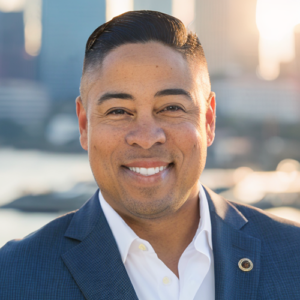
Bill Author