AB 1645: Corrections: Humanizing and Uniting Generations Safely Act of 2026.
- Session Year: 2025-2026
- House: Assembly
- Latest Version Date: 2026-09-30
Current Status:
Passed
(2026-09-30: Chaptered by Secretary of State - Chapter 885, Statutes of 2026.)
Introduced
In Committee
Awaiting First Chamber Vote
Passed First Chamber
In Committee
Awaiting Second Chamber Vote
Passed Second Chamber
Enacted
Existing law authorizes the Secretary of the Department of Corrections and Rehabilitation to prescribe and amend rules and regulations for the administration of prisons and requires regulations, which are adopted by the Department of Corrections and Rehabilitation, to recognize and consider the value of incarcerated person visitation as a means of increasing safety in prisons, maintaining family and community connections, and preparing incarcerated persons for successful release and rehabilitation. Existing regulations create the framework for establishing a visitation process in prisons that is conducted in as accommodating a manner as possible, subject to the need to maintain order, the safety of persons, the security of institutions and facilities, and required prison activities and operations.
This bill, the Humanizing and Uniting Generations Safely Act of 2026, would additionally require those regulations pertaining to incarcerated person visits to recognize and consider the importance of physical contact in incarcerated person visitation. The bill would prohibit the department from unreasonably restricting the ability of incarcerated persons or their visitors to engage in certain types of nonsexual physical contact throughout the visit, as provided. The bill would prohibit the department from taking disciplinary action based on alleged inappropriate physical contact, without first providing a warning and a reasonable opportunity to immediately correct the conduct.
Existing law authorizes the Secretary of the Department of Corrections and Rehabilitation to prescribe and amend rules and regulations for the administration of prisons and requires regulations, which are adopted by the Department of Corrections and Rehabilitation, to recognize and consider the value of incarcerated person visitation as a means of increasing safety in prisons, maintaining family and community connections, and preparing incarcerated persons for successful release and rehabilitation. Existing regulations create the framework for establishing a visitation process in prisons that is conducted in as accommodating a manner as possible, subject to the need to maintain order, the safety of persons, the security of institutions and facilities, and required prison activities and operations.
This bill, the Humanizing and Uniting Generations Safely (HUGS) Act of 2026, would additionally require those regulations pertaining to incarcerated person visits to recognize and consider the importance of physical contact in incarcerated person visitation. The bill would prohibit the department from unreasonably restricting the ability of incarcerated persons or their visitors to engage in certain types of nonsexual physical contact throughout the visit, as provided. The bill would prohibit the department from taking disciplinary action based on alleged inappropriate physical contact, without first providing a warning and a reasonable opportunity to immediately correct the conduct.
Existing law authorizes the Secretary of the Department of Corrections and Rehabilitation to prescribe and amend rules and regulations for the administration of prisons and requires regulations, which are adopted by the Department of Corrections and Rehabilitation, to recognize and consider the value of incarcerated person visitation as a means of increasing safety in prisons, maintaining family and community connections, and preparing incarcerated persons for successful release and rehabilitation. Existing regulations create the framework for establishing a visitation process in prisons that is conducted in as accommodating a manner as possible, subject to the need to maintain order, the safety of persons, the security of institutions and facilities, and required prison activities and operations.
This bill, the Humanizing and Uniting Generations Safely (HUGS) Act of 2026, would additionally require those regulations pertaining to incarcerated person visits to recognize and consider the importance of physical contact in incarcerated person visitation. The bill would prohibit the department from unreasonably restricting the ability of incarcerated persons or their visitors to engage in certain types of nonsexual physical contact throughout the visit, as provided.
This act shall be known, and may be cited, as the Humanizing and Uniting Generations Safely Act of 2026.
SEC. 2.(a)The Legislature finds and declares all of the following:
(1)The United States Supreme Court has recognized a constitutional right to maintain parent-child relationships absent a compelling government interest, such as protecting a child from an unfit parent (Santosky v. Kramer (1982) 455 U.S. 745, 753). The United States Court of Appeals for the Ninth Circuit has recognized that this constitutional right logically encompasses a right to maintain a relationship with a life partner (U.S. v. Wolf Child (2012) 699 F.3d 1082, 1091).
(2)In 2009, the Legislature passed Senate Concurrent Resolution No. 20 (Resolution Chapter 88 of the Statutes of 2009), which encouraged the Department of Corrections and Rehabilitation to use the bill of rights created by the San Francisco Children of Incarcerated Parents Partnership as a framework for analysis and determination of procedures when making decisions about services for the children of incarcerated parents.
(3)The bill of rights created by the San Francisco Children of Incarcerated Parents Partnership includes all of the following:
(A)A child has the right to speak with, see, and touch their parents. Actions to realize this right include, but are not limited to, providing access to visiting rooms that are child-centered, nonintimidating, and conducive to bonding, considering proximity to family when locating prisons and assigning incarcerated persons, and encouraging child welfare departments to facilitate contact.
(B)A child has the right to support as that child faces a parents incarceration. Actions to realize this right include, but are not limited to, training adults who work with young people to recognize the needs and concerns of children whose parents are incarcerated, providing access to specially trained therapists, counselors, and mentors, and allocating 5 percent of the corrections-related budget to support the families of incarcerated persons.
(C)A child has a right to a lifelong relationship with their parent. Actions to realize this right include, but are not limited to, reexamining the federal Adoption and Safe Families Act of 1997, designating a family services coordinator at prisons and jails, supporting incarcerated parents on reentry, and focusing on rehabilitation and alternatives to incarceration.
(4)The principles announced in the bill of rights created by the San Francisco Children of Incarcerated Parents Partnership additionally apply to close family members and loved ones of incarcerated people, including individuals with family-like relationships who are often excluded under unduly narrow legal definitions of family members.
(5)In resolution A/RES/70/175 (December 2015), the General Assembly of the United Nations adopted the United Nations Standard Minimum Rules for the Treatment of Prisoners, known as the Nelson Mandela Rules. The Nelson Mandela Rules require that incarcerated persons be permitted to maintain regular communication with family and friends by visits, telephone, electronic or digital communications, and mail (Rule 58). Further, the Mandela Rules provide that disciplinary sanctions or restrictive measures shall not include the prohibition of family contact (Rule 43).
(6)Article 16(3) of the Universal Declaration of Human Rights and Article 23(1) of the International Covenant on Civil and Political Rights establish the family as the natural and fundamental group unit of society and is entitled to protection by society and the State.
(7)Family bonds extend through prison gates and must be protected during periods of incarceration by promoting in-person contact and regular communication between incarcerated persons and their families.
(8)From 1975 until 1997, Section 2601 of the Penal Code listed the right to have personal visits among the civil rights retained by incarcerated persons.
(9)(A)The American Bar Association established the Criminal Justice Standards on the Treatment of Prisoners (February 2010), which requires correctional authorities to provide incarcerated people with conditions conducive to maintaining healthy relationships with their families (Standard 23-1.2(a)(vi)).
(B)Standard 23-8.5(b) directs correctional authorities to implement visiting policies that support maintaining healthy family relationships by providing sufficient visiting space, convenient visiting times, and family-friendly environments.
(C)Standard 23-8.5(c) directs that visitors not be unreasonably excluded on the basis of past criminal convictions.
(D)Standard 23-8.5(e) directs that contact visits be provided to persons incarcerated for more than 30 days absent an individual determination that a contact visit between a particular incarcerated person and a particular visitor poses a specified danger. Prison officials should develop other forms of communication, including video visits, provided that such options are not a replacement for opportunities for in-person contact.
(10)(A)Family support and connections can help promote an incarcerated persons reentry into society and reduce recidivism. Protecting and promoting in-person family contact for an incarcerated person and their family can help to maintain those connections and that support.
(B)As early as January 1972, a study by the then-California Department of Corrections Research Division identified its central finding as the discovery of a strong and consistently positive relationship between parole success and the maintenance of strong family ties while in prison. . . . evidence suggests that the [incarcerated persons] family should be viewed as the prime treatment agent and family contacts as a major correctional technique. (Research Report No. 46, Explorations in Inmate-Family Relationships, in collaboration with the Research Division of the California Department of Corrections at 111113).
(C)A review of 50 years of empirical research by the Prison Policy Initiative (December 2021) found that researchers in multiple states consistently concluded that visitation, mail, telephone, and other forms of contact between incarcerated people and their families have positive impacts for both the incarcerated person and their family, including better health, reduced recidivism, and improvement in childrens school performance. In particular, the review affirmed In-person visitation is incredibly beneficial, reducing recidivism and improving health and behavior.
(D)Research shows that visits and family programming reduce disciplinary infractions, increase the chances of successful parole, and decrease recidivism rates upon release and reentry into the community. Many incarcerated people rely on their families immediately after release to overcome reentry obstacles, including unemployment, debt, and homelessness.
(11)Research confirms that incarceration imposes heavy burdens on the families of incarcerated people, including trauma for the children of incarcerated parents, as recognized on the adverse childhood experience index, in addition to the high costs of maintaining contact by telephone and visits. Consistent visits also have the potential for reducing the likelihood of intergenerational criminality and incarceration.
(12)Isolation from lack of visits and limited telephone communications adversely affects the mental health of incarcerated people and contributes to mental suffering and conflict within prisons.
(13)Incarcerated people could be denied parole due to writeups based on excessive contact during visits. This can include hugging for too long, helping to adjust a loved ones clothing, touching the face of a mother or child, and feeding each other. Denying an incarcerated person parole for engaging in healthy and normal human behavior is harmful and expensive. According to the Legislative Analysts Office, it costs $127,788 per year to incarcerate a person through the California Department of Corrections and Rehabilitation. People who are denied parole may be denied for between 3 to 15 years (with parole dates allowed to be advanced to 18 months). If someone is denied parole due to contact during visiting, it costs the state a minimum of $191,682 to continue incarcerating someone for this reason.
(14)The COVID-19 pandemic has exacerbated these burdens for families and adverse effects of isolation for incarcerated persons. From March 2020 to April 2021, in-person visits were canceled. In-person visits were severely restricted thereafter and were canceled intermittently due to periodic COVID-19 outbreaks. In September 2022, COVID-19 restrictions for in-person visits were lifted.
(b)Therefore, it is the intent of the Legislature to strengthen and protect the ability of incarcerated persons to have meaningful physical contact with their loved ones to support the emotional health of Californians and their incarcerated loved ones, to improve in-custody conduct, and to reduce recidivism.
(c)It is the Legislatures further intent to limit the circumstances under which nonsexual physical contact engaged in during an in-person visitation between an incarcerated person and their family can be denied, restricted, terminated, or suspended, and to ensure that appropriate and healthy physical contact between incarcerated people and their loved ones is not punished.
SEC. 3.Section 6400 of the Penal Code is amended to read:6400.Any amendments to existing regulations and any future regulations adopted by the Department of Corrections and Rehabilitation that may impact the visitation of incarcerated persons shall do all of the following:
(a)Recognize and consider the value of visiting as a means to improve the safety of prisons for both staff and incarcerated persons.
(b)Recognize and consider the important role of incarcerated person visitation in establishing and maintaining a meaningful connection with family and community.
(c)Recognize and consider the important role of incarcerated person visitation in preparing an incarcerated person for successful release and rehabilitation.
(d)Recognize and consider the importance of nonsexual physical contact in incarcerated person visitation.
SEC. 4.Section 6406 is added to the Penal Code, to read:6406.(a)The Department of Corrections and Rehabilitation, in amending existing regulations and adopting future regulations pursuant to Section 6400, shall ensure that regulations related to nonsexual physical contact in incarcerated person visitation, for individuals entering department facilities and for incarcerated persons receiving visitors, are not excessive or unnecessarily punitive. These regulations shall not unreasonably restrict the ability of incarcerated persons or their visitors to have nonsexual physical contact during the visit.
(b)Nonsexual physical contact, as described in subdivision (a), includes, but is not limited to, all of the following actions:
(1)Holding of the incarcerated persons minor children and holding of their minor children while accompanied by an adult.
(2)Feeding of the incarcerated persons minor children.
(3)Feeding of the incarcerated person by minor children.
(4)Hand holding.
(5)Linking arms.
(6)In-movement or transitory touching that any reasonable person would define as nonsexual and appropriate.
(7)Brief touching of the face or hair.
(8)An embrace at the beginning and end of the visit and lateral holding or side-to-side contact during the duration of the visit.
(9)Kissing at the beginning and end of the visit, and brief kisses on the cheek or forehead during the visit.
(c)Physical contact authorized by this section shall be limited to conduct that is nonsexual and appropriate for visitation.
(d)Before terminating a visit, issuing a rules violation, or taking other disciplinary action based on alleged minor violations of inappropriate physical contact, department staff shall provide a clear verbal warning and a reasonable opportunity to immediately correct the conduct. If the contact continues, or there are excessive or unlawful activities occurring, the department may take action appropriate for the situation.
(e)This section does not prohibit or discourage other forms of nonsexual physical contact that department staff determine is reasonable, appropriate, and consistent with this section.
(f)This section does not limit the departments authority to conduct searches, supervise visits, or impose restrictions necessary to prevent the introduction or exchange of contraband.
This act shall be known, and may be cited, as the Humanizing and Uniting Generations Safely (HUGS) Act of 2026.
SEC. 2.(a)The Legislature finds and declares all of the following:
(1)The United States Supreme Court has recognized a constitutional right to maintain parent-child relationships absent a compelling government interest, such as protecting a child from an unfit parent (Santosky v. Kramer (1982) 455 U.S. 745, 753). The United States Court of Appeals for the Ninth Circuit has recognized that this constitutional right logically encompasses a right to maintain a relationship with a life partner (U.S. v. Wolf Child (2012) 699 F.3d 1082, 1091).
(2)In 2009, the Legislature passed Senate Concurrent Resolution No. 20 (Resolution Chapter 88 of the Statutes of 2009), which encouraged the Department of Corrections and Rehabilitation to use the bill of rights created by the San Francisco Children of Incarcerated Parents Partnership as a framework for analysis and determination of procedures when making decisions about services for the children of incarcerated parents.
(3)The bill of rights created by the San Francisco Children of Incarcerated Parents Partnership includes all of the following:
(A)A child has the right to speak with, see, and touch their parents. Actions to realize this right include, but are not limited to, providing access to visiting rooms that are child-centered child-centered, nonintimidating, and conducive to bonding, considering proximity to family when locating prisons and assigning incarcerated persons, and encouraging child welfare departments to facilitate contact.
(B)A child has the right to support as that child faces a parents incarceration. Actions to realize this right include, but are not limited to, training adults who work with young people to recognize the needs and concerns of children whose parents are incarcerated, providing access to specially trained therapists, counselors, and mentors, and allocating 5 percent of the corrections-related budget to support the families of incarcerated persons.
(C)A child has a right to a lifelong relationship with their parent. Actions to realize this right include, but are not limited to, reexamining the federal Adoption and Safe Families Act of 1997, designating a family services coordinator at prisons and jails, supporting incarcerated parents on reentry, and focusing on rehabilitation and alternatives to incarceration.
(4)The principles announced in the bill of rights created by the San Francisco Children of Incarcerated Parents Partnership additionally apply to close family members and loved ones of incarcerated people, including individuals with family-like relationships who are often excluded under unduly narrow legal definitions of family members.
(5)In resolution A/RES/70/175 (December 2015), the General Assembly of the United Nations adopted the United Nations Standard Minimum Rules for the Treatment of Prisoners, known as the Mandela Nelson Mandela Rules. The Nelson Mandela Rules require that incarcerated persons be permitted to maintain regular communication with family and friends by visits, telephone, electronic or digital communications, and mail (Rule 58). Further, the Mandela Rules provide that disciplinary sanctions or restrictive measures shall not include the prohibition of family contact (Rule 43).
(6)Article 16(3) of the Universal Declaration of Human Rights and Article 23(1) of the International Covenant on Civil and Political Rights establish the family as the natural and fundamental group unit of society and is entitled to protection by society and the State.
(7)Family bonds extend through prison gates and must be protected during periods of incarceration by promoting in-person contact and regular communication between incarcerated persons and their families.
(8)From 1975 until 1997, Section 2601 of the Penal Code listed the right to receive have personal visits among the civil rights retained by incarcerated persons.
(9)(A)The American Bar Association established the Criminal Justice Standards on the Treatment of Prisoners (February 2010), which requires correctional authorities to provide incarcerated people with conditions conducive to maintaining healthy relationships with their families (Standard 23-1.2(a)(vi)).
(B)Standard 23-8.5(b) directs correctional authorities to implement visiting policies that support maintaining healthy family relationships by providing sufficient visiting space, convenient visiting times, and family-friendly environments.
(C)Standard 23-8.5(c) directs that visitors not be unreasonably excluded on the basis of past criminal convictions.
(D)Standard 23-8.5(e) directs that contact visits be provided to persons incarcerated for more than 30 days absent an individual determination that a contact visit between a particular incarcerated person and a particular visitor poses a specified danger. Prison officials should develop other forms of communication, including video visits, provided that such options are not a replacement for opportunities for in-person contact.
(10)(A)Family support and connections can help promote an incarcerated persons reentry into society and reduce recidivism. Protecting and promoting in-person family contact for an incarcerated person and their family can help to maintain those connections and that support.
(B)As early as January 1972, a study by the then-California Department of Corrections Research Division identified its central finding as the discovery of a strong and consistently positive relationship between parole success and the maintenance of strong family ties while in prison. . . . evidence suggests that the [incarcerated persons] family should be viewed as the prime treatment agent and family contacts as a major correctional technique. (Research Report No. 46, Explorations in Inmate-Family Relationships, in collaboration with the Research Division of the California Department of Corrections at 111113).
(C)A review of 50 years of empirical research by the Prison Policy Initiative (December 2021) found that researchers in multiple states consistently concluded that visitation, mail, telephone, and other forms of contact between incarcerated people and their families have positive impacts for both the incarcerated person and their family, including better health, reduced recidivism, and improvement in childrens school performance. In particular, the review affirmed In-person visitation is incredibly beneficial, reducing recidivism and improving health and behavior.
(D)Research shows that visits and family programming reduce disciplinary infractions, increase the chances of successful parole, and decrease recidivism rates upon release and reentry into the community. Many incarcerated people rely on their families immediately after release to overcome reentry obstacles, including unemployment, debt, and homelessness.
(11)Research confirms that incarceration imposes heavy burdens on the families of incarcerated people, including trauma for the children of incarcerated parents, as recognized on the adverse childhood experience index, in addition to the high costs of maintaining contact by telephone and visits. Consistent visits also have the potential for reducing the likelihood of intergenerational criminality and incarceration.
(12)Isolation from lack of visits and limited telephone communications adversely affects the mental health of incarcerated people and contributes to mental suffering and conflict within prisons.
(13)Incarcerated people are regularly could be denied parole due to writeups based on excessive contact during visits. This can include hugging for too long, helping to adjust a loved ones clothing, touching the face of a mother or child, and feeding each other. Denying an incarcerated person parole for engaging in healthy and normal human behavior is harmful and expensive. According to the Legislative Analysts Office, it costs $127,788 per year to incarcerate a person through the California Department of Corrections and Rehabilitation. People who are denied parole may be denied for between 3 to 15 years (with parole dates allowed to be advanced to 18 months). If someone is denied parole due to contact during visiting, it costs the state a minimum of $191,682 to continue incarcerating someone for this reason.
(14)The COVID-19 pandemic has exacerbated these burdens for families and adverse effects of isolation for incarcerated persons. From March 2020 to April 2021, in-person visits were canceled. In-person visits were severely restricted thereafter and were canceled intermittently due to periodic COVID-19 outbreaks. In September 2022, COVID-19 restrictions for in-person visits were lifted.
(b)Therefore, it is the intent of the Legislature to strengthen and protect the ability of incarcerated persons to have meaningful and uninhibited physical contact with their loved ones to support the emotional health of Californians and their incarcerated loved ones, to improve in-custody conduct, and to reduce recidivism.
(c)It is the Legislatures further intent to limit the circumstances under which nonsexual physical contact engaged in during an in-person visitation between an incarcerated person and their family can be denied, restricted, terminated, or suspended, and to ensure that appropriate and healthy physical contact between incarcerated people and their loved ones is not punished.
SEC. 3.Section 6400 of the Penal Code is amended to read:6400.Any amendments to existing regulations and any future regulations adopted by the Department of Corrections and Rehabilitation that may impact the visitation of incarcerated persons shall do all of the following:
(a)Recognize and consider the value of visiting as a means to improve the safety of prisons for both staff and incarcerated persons.
(b)Recognize and consider the important role of incarcerated person visitation in establishing and maintaining a meaningful connection with family and community.
(c)Recognize and consider the important role of incarcerated person visitation in preparing an incarcerated person for successful release and rehabilitation.
(d)Recognize and consider the importance of nonsexual physical contact in incarcerated person visitation.
SEC. 4.Section 6406 is added to the Penal Code, to read:6406.(a)The Department of Corrections and Rehabilitation, in amending existing regulations and adopting future regulations pursuant to Section 6400, shall ensure that regulations related to nonsexual physical contact in incarcerated person visitation, for individuals entering department facilities and for incarcerated persons receiving visitors, are not excessive or unnecessarily punitive. These regulations shall not unreasonably restrict the ability of incarcerated persons or their visitors to have nonsexual physical contact throughout during the visit.
(b)Nonsexual physical contact, as described in subdivision (a), includes, but is not limited to, all of the following actions:
(1)Hand holding.(2)Kissing.(3)Hugging and lateral holding or side-to-side contact.(4)Linking arms.(5)In-movement or transitory touching.(6)Touching of the face or hair.(7)Adjusting each others clothing without removing articles of clothing.(8)Holding of the incarcerated persons minor children and holding of their minor children while accompanied by an adult.(9)Feeding of the incarcerated persons minor children.(10)Feeding of the incarcerated person by minor children.(11)Any other physical touch that a reasonable person would define as nonsexual and appropriate.(1)Holding of the incarcerated persons minor children and holding of their minor children while accompanied by an adult.
(2)Feeding of the incarcerated persons minor children.
(3)Feeding of the incarcerated person by minor children.
(4)Hand holding.
(5)Linking arms.
(6)In-movement or transitory touching that any reasonable person would define as nonsexual and appropriate.
(7)Brief touching of the face or hair.
(8)An embrace at the beginning and end of the visit and lateral holding or side-to-side contact during the duration of the visit.
(9)Kissing at the beginning and end of the visit, and brief kisses on the cheek or forehead during the visit.
(c)Physical contact authorized by this section shall be limited to conduct that is nonsexual and appropriate for visitation.
(d)Before terminating a visit, issuing a rules violation, or taking other disciplinary action based on alleged minor violations of inappropriate physical contact, department staff shall provide a clear verbal warning and a reasonable opportunity to immediately correct the conduct. If the contact continues, or there are excessive or unlawful activities occurring, the department may take action appropriate for the situation.
(e)This section does not prohibit or discourage other forms of nonsexual physical contact that department staff determine is reasonable, appropriate, and consistent with this section.
(f)This section does not limit the departments authority to conduct searches, supervise visits, or impose restrictions necessary to prevent the introduction or exchange of contraband.
This act shall be known, and may be cited, as the Humanizing and Uniting Generations Safely (HUGS) Act of 2026.
SEC. 2.(a)The Legislature finds and declares all of the following:
(1)The United States Supreme Court has recognized a constitutional right to maintain parent-child relationships absent a compelling government interest, such as protecting a child from an unfit parent (Santosky v. Kramer (1982) 455 U.S. 745, 753). The United States Court of Appeals for the Ninth Circuit has recognized that this constitutional right logically encompasses a right to maintain a relationship with a life partner (U.S. v. Wolf Child (2012) 699 F.3d 1082, 1091).
(2)In 2009, the Legislature passed Senate Concurrent Resolution No. 20 (Resolution Chapter 88 of the Statutes of 2009), which encouraged the Department of Corrections and Rehabilitation to use the bill of rights created by the San Francisco Children of Incarcerated Parents Partnership as a framework for analysis and determination of procedures when making decisions about services for the children of incarcerated parents.
(3)The bill of rights created by the San Francisco Children of Incarcerated Parents Partnership includes all of the following:
(A)A child has the right to speak with, see, and touch their parents. Actions to realize this right include, but are not limited to, providing access to visiting rooms that are child-centered nonintimidating, and conducive to bonding, considering proximity to family when locating prisons and assigning incarcerated persons, and encouraging child welfare departments to facilitate contact.
(B)A child has the right to support as that child faces a parents incarceration. Actions to realize this right include, but are not limited to, training adults who work with young people to recognize the needs and concerns of children whose parents are incarcerated, providing access to specially trained therapists, counselors, and mentors, and allocating 5 percent of the corrections-related budget to support the families of incarcerated persons.
(C)A child has a right to a lifelong relationship with their parent. Actions to realize this right include, but are not limited to, reexamining the federal Adoption and Safe Families Act of 1997, designating a family services coordinator at prisons and jails, supporting incarcerated parents on reentry, and focusing on rehabilitation and alternatives to incarceration.
(4)The principles announced in the bill of rights created by the San Francisco Children of Incarcerated Parents Partnership additionally apply to close family members and loved ones of incarcerated people, including individuals with family-like relationships who are often excluded under unduly narrow legal definitions of family members.
(5)In resolution A/RES/70/175 (December 2015), the General Assembly of the United Nations adopted the United Nations Standard Minimum Rules for the Treatment of Prisoners, known as the Mandela Rules. The Mandela Rules require that incarcerated persons be permitted to maintain regular communication with family and friends by visits, telephone, electronic or digital communications, and mail (Rule 58). Further, the Mandela Rules provide that disciplinary sanctions or restrictive measures shall not include the prohibition of family contact (Rule 43).
(6)Article 16(3) of the Universal Declaration of Human Rights and Article 23(1) of the International Covenant on Civil and Political Rights establish the family as the natural and fundamental group unit of society and is entitled to protection by society and the State.
(7)Family bonds extend through prison gates and must be protected during periods of incarceration by promoting in-person contact and regular communication between incarcerated persons and their families.
(8)From 1975 until 1997, Section 2601 of the Penal Code listed the right to receive personal visits among the civil rights retained by incarcerated persons.
(9)(A)The American Bar Association established the Criminal Justice Standards on the Treatment of Prisoners (February 2010), which requires correctional authorities to provide incarcerated people with conditions conducive to maintaining healthy relationships with their families (Standard 23-1.2(a)(vi)).
(B)Standard 23-8.5(b) directs correctional authorities to implement visiting policies that support maintaining healthy family relationships by providing sufficient visiting space, convenient visiting times, and family-friendly environments.
(C)Standard 23-8.5(c) directs that visitors not be unreasonably excluded on the basis of past criminal convictions.
(D)Standard 23-8.5(e) directs that contact visits be provided to persons incarcerated for more than 30 days absent an individual determination that a contact visit between a particular incarcerated person and a particular visitor poses a specified danger. Prison officials should develop other forms of communication, including video visits, provided that such options are not a replacement for opportunities for in-person contact.
(10)(A)Family support and connections can help promote an incarcerated persons reentry into society and reduce recidivism. Protecting and promoting in-person family contact for an incarcerated person and their family can help to maintain those connections and that support.
(B)As early as January 1972, a study by the then-California Department of Corrections Research Division identified its central finding as the discovery of a strong and consistently positive relationship between parole success and the maintenance of strong family ties while in prison. . . . evidence suggests that the [incarcerated persons] family should be viewed as the prime treatment agent and family contacts as a major correctional technique. (Research Report No. 46, Explorations in Inmate-Family Relationships, in collaboration with the Research Division of the California Department of Corrections at 111113).
(C)A review of 50 years of empirical research by the Prison Policy Initiative (December 2021) found that researchers in multiple states consistently concluded that visitation, mail, telephone, and other forms of contact between incarcerated people and their families have positive impacts for both the incarcerated person and their family, including better health, reduced recidivism, and improvement in childrens school performance. In particular, the review affirmed In-person visitation is incredibly beneficial, reducing recidivism and improving health and behavior.
(D)Research shows that visits and family programming reduce disciplinary infractions, increase the chances of successful parole, and decrease recidivism rates upon release and reentry into the community. Many incarcerated people rely on their families immediately after release to overcome reentry obstacles, including unemployment, debt, and homelessness.
(11)Research confirms that incarceration imposes heavy burdens on the families of incarcerated people, including trauma for the children of incarcerated parents, as recognized on the adverse childhood experience index, in addition to the high costs of maintaining contact by telephone and visits. Consistent visits also have the potential for reducing the likelihood of intergenerational criminality and incarceration.
(12)Isolation from lack of visits and limited telephone communications adversely affects the mental health of incarcerated people and contributes to mental suffering and conflict within prisons.
(13)Incarcerated people are regularly denied parole due to writeups based on excessive contact during visits. This can include hugging for too long, helping to adjust a loved ones clothing, touching the face of a mother or child, and feeding each other. Denying an incarcerated person parole for engaging in healthy and normal human behavior is harmful and expensive. According to the Legislative Analysts Office, it costs $127,788 per year to incarcerate a person through the California Department of Corrections and Rehabilitation. People who are denied parole may be denied for between 3 to 15 years (with parole dates allowed to be advanced to 18 months). If someone is denied parole due to contact during visiting, it costs the state a minimum of $191,682 to continue incarcerating someone for this reason.
(14)The COVID-19 pandemic has exacerbated these burdens for families and adverse effects of isolation for incarcerated persons. From March 2020 to April 2021, in-person visits were canceled. In-person visits were severely restricted thereafter and were canceled intermittently due to periodic COVID-19 outbreaks. In September 2022, COVID-19 restrictions for in-person visits were lifted.
(b)Therefore, it is the intent of the Legislature to strengthen and protect the ability of incarcerated persons to have meaningful and uninhibited physical contact with their loved ones to support the emotional health of Californians and their incarcerated loved ones, to improve in-custody conduct, and to reduce recidivism.
(c)It is the Legislatures further intent to limit the circumstances under which nonsexual physical contact engaged in during an in-person visitation between an incarcerated person and their family can be denied, restricted, terminated, or suspended, and to ensure that appropriate and healthy physical contact between incarcerated people and their loved ones is not punished.
SEC. 3.Section 6400 of the Penal Code is amended to read:6400.Any amendments to existing regulations and any future regulations adopted by the Department of Corrections which that may impact the visitation of inmates incarcerated persons shall do all of the following:
(a)Recognize and consider the value of visiting as a means to improve the safety of prisons for both staff and inmates. incarcerated persons.
(b)Recognize and consider the important role of inmate incarcerated person visitation in establishing and maintaining a meaningful connection with family and community.
(c)Recognize and consider the important role of inmate incarcerated person visitation in preparing an inmate incarcerated person for successful release and rehabilitation.
(d)Recognize and consider the importance of nonsexual physical contact in incarcerated person visitation.
SEC. 4.Section 6406 is added to the Penal Code, to read:6406.(a)The Department of Corrections and Rehabilitation, in amending existing regulations and adopting future regulations pursuant to Section 6400, shall ensure that regulations related to nonsexual physical contact in incarcerated person visitation, for individuals entering department facilities and for incarcerated persons receiving visitors, are not excessive or unnecessarily punitive. These regulations shall not unreasonably restrict the ability of incarcerated persons or their visitors to have nonsexual physical contact throughout the visit.
(b)Nonsexual physical contact, as described in subdivision (a), includes, but is not limited to, all of the following actions:
(1)Hand holding.
(2)Kissing.
(3)Hugging and lateral holding or side-to-side contact.
(4)Linking arms.
(5)In-movement or transitory touching.
(6)Touching of the face or hair.
(7)Adjusting each others clothing without removing articles of clothing.
(8)Holding of the incarcerated persons minor children and holding of their minor children while accompanied by an adult.
(9)Feeding of the incarcerated persons minor children.
(10)Feeding of the incarcerated person by minor children.
(11)Any other physical touch that a reasonable person would define as nonsexual and appropriate.
CORRECTIONS: HeadingLines 1 and 2. REVISIONS: HeadingLines 1 and 2.|
Date
|
Status
|
|---|---|
| Sep 30, 2026 | Chaptered by Secretary of State - Chapter 885, Statutes of 2026. |
| Sep 30, 2026 | Approved by the Governor. |
| Aug 31, 2026 | Enrolled and presented to the Governor at 4 p.m. |
| Aug 25, 2026 | Senate amendments concurred in. To Engrossing and Enrolling. (Ayes 76. Noes 2. Page 6461.). |
| Aug 25, 2026 | Senate amendments concurred in. To Engrossing and Enrolling. (Ayes 76. Noes 2.). |
| Aug 24, 2026 | In Assembly. Concurrence in Senate amendments pending. |
| Aug 24, 2026 | Read third time. Passed. Ordered to the Assembly. (Ayes 40. Noes 0. Page 5707.). |
| Aug 24, 2026 | Read third time. Passed. Ordered to the Assembly. (Ayes 40. Noes 0.). |
| Aug 17, 2026 | Read second time. Ordered to third reading. |
| Aug 13, 2026 | Read second time and amended. Ordered returned to second reading. |
| Aug 13, 2026 | From committee: Amend, and do pass as amended. (Ayes 7. Noes 0.) (August 13). |
| Jun 29, 2026 | In committee: Referred to APPR. suspense file. |
| Jun 16, 2026 | From committee: Do pass and re-refer to Com. on APPR. with recommendation: To Consent Calendar. (Ayes 6. Noes 0.) (June 16). Re-referred to Com. on APPR. |
| Jun 3, 2026 | Referred to Com. on PUB. S. |
| May 22, 2026 | In Senate. Read first time. To Com. on RLS. for assignment. |
| May 22, 2026 | Read third time. Passed. Ordered to the Senate. (Ayes 73. Noes 2. Page 5255.) |
| May 22, 2026 | Read third time. Passed. Ordered to the Senate. (Ayes 73. Noes 2.) |
| May 18, 2026 | Read second time. Ordered to third reading. |
| May 14, 2026 | From committee: Do pass. (Ayes 14. Noes 1.) (May 14). |
| Apr 8, 2026 | In committee: Set, first hearing. Referred to APPR. suspense file. |
| Mar 5, 2026 | Introduced measure version corrected. |
| Mar 4, 2026 | From committee: Do pass and re-refer to Com. on APPR. with recommendation: To Consent Calendar. (Ayes 9. Noes 0.) (March 3). Re-referred to Com. on APPR. |
| Mar 4, 2026 | Coauthors revised. |
| Feb 9, 2026 | Referred to Com. on PUB. S. |
| Jan 28, 2026 | From printer. May be heard in committee February 27. |
| Jan 27, 2026 | Read first time. To print. |
|
Date
|
Description
|
Location
|
Votes
|
|
|---|---|---|---|---|
| Aug 25, 2026 | AB 1645 Mark González Concurrence in Senate Amendments | Assembly Floor |
Passed |
|
| Aug 24, 2026 | Assembly 3rd Reading AB1645 Mark González et al. By Weber Pierson | Senate Floor |
Passed |
|
| Aug 13, 2026 | Do pass as amended | Senate Standing Committee on Appropriations |
Passed |
|
| Jun 29, 2026 | Placed on suspense file | Senate Standing Committee on Appropriations |
Passed |
|
| Jun 16, 2026 | Do pass, but first be re-referred to the Committee on [Appropriations] with the recommendation: To Consent Calendar | Senate Standing Committee on Public Safety |
Passed |
|
| May 22, 2026 | AB 1645 Mark González Assembly Third Reading | Assembly Floor |
Passed |
|
| May 14, 2026 | Do pass. | Assembly Standing Committee on Appropriations |
Passed |
|
| Mar 3, 2026 | Do pass and be re-referred to the Committee on [Appropriations] with recommendation: To Consent Calendar | Assembly Standing Committee on Public Safety |
Passed |
This list shows positions taken on this bill by organizations on the date displayed, which is linked to the original source.
Positions by individuals are not included.
|
Organization
|
Position
|
Date
|
|---|---|---|
| Aclu California Action | ** Support | |
| All of US or None (HQ) | ** Support | |
| A New PATH | ** Support | |
| A New Way of Life Re-Entry Project | ** Support | |
| Anti Recidivism Coalition | ** Support | |
| Bridges of Hope | ** Support | |
| Bridges of Hope CA | ** Support | |
| California | ** Support | |
| California Attorneys For Criminal Justice | ** Support | |
| California Coalition for Women Prisoners | ** Support | |
| California Community Foundation | ** Support | |
| Californians for Safety and Justice (CSJ) | ** Support | |
| Californians United for a Responsible Budget | ** Support | |
| California Public Defenders Association | ** Support | |
| Center for Employment Opportunities | ** Support | |
| Center for Employment Opportunities, INC. | ** Support | |
| Communities United for Restorative Youth Justice | ** Support | |
| Community Works West | ** Support | |
| Congregations Organized for Prophetic Engagement | ** Support | |
| Courage California | ** Support | |
| Defy Ventures | ** Support | |
| Democracy Beyond Bars | ** Support | |
| Ella Baker Center For Human Rights | ** Support | |
| Empowering Women Impacted by Incarceration | ** Support | |
| Essie Justice Group | ** Support | |
| Fair Chance Project | ** Support | |
| Felony Murder Elimination Project | ** Support | |
| Fresh Lifelines for Youth | ** Support | |
| Friends Committee On Legislation Of California | ** Support | |
| Glide | ** Support | |
| Grip Training Institute | ** Support | |
| Honoring Resilience | ** Support | |
| Humane Prison Hospice Project | ** Support | |
| Initiate Justice | ** Support | |
| Inland Equity Partnership | ** Support | |
| Jesse's Place Non Profit Organization | ** Support | |
| Jesse's Place Non-Profit Organization | ** Support | |
| Jesse's Place Org | ** Support | |
| Justice2jobs Coalition | ** Support | |
| LA Defensa | ** Support | |
| Legal Services for Prisoners with Children | ** Support | |
| Local 148 Los Angeles County Public Defender's Union | ** Support | |
| Milpa Collective | ** Support | |
| New Way of Life Re-Entry Project | ** Support | |
| Peace and Justice Law Center | ** Support | |
| Peacemakers' Alliance | ** Support | |
| Poetic Justice | ** Support | |
| Project Rebound, San Francisco State University | ** Support | |
| Restoring Hope California | ** Support | |
| Rubicon Programs | ** Support | |
| San Francisco Public Defender | ** Support | |
| Showing Up for Racial Justice - San Francisco (surj Sf) | ** Support | |
| Smart Justice California, a Project of Beyond Impact | ** Support | |
| Starting Over Inc. | ** Support | |
| The Change Parallel Project | ** Support | |
| The Collective for Liberatory Lawyering | ** Support | |
| The Place4grace | ** Support | |
| Transformative Programming Works | ** Support | |
| Universidad Popular | ** Support | |
| We Got Us Now | ** Support | |
| Youth Leadership Institute | ** Support |
CONCURRENCE IN SENATE AMENDMENTS
CSA1 Bill Id:AB 1645
Author:(Mark González and Bryan)
As Amended Ver:August 13, 2026
Majority vote
SUMMARY
Prohibits the Department of Corrections and Rehabilitation (CDCR) regulations from unreasonably restricting nonsexual physical contact between incarcerated persons and their visitors during contact visits.
Senate Amendments
- Limits kissing to the beginning and end of the visit, and brief kisses on the cheek or forehead during the visit, and limits an embrace to the beginning and end of the visit.
- Provide that, before terminating a visit, issuing a rules violation, or taking other disciplinary action based on alleged minor violations of inappropriate physical contact, department staff shall provide a clear verbal warning and a reasonable opportunity to immediately correct the conduct. If the contact continues, or there are excessive or unlawful activities occurring, the department may take action appropriate for the situation.
- Provide that this section does not prohibit or discourage other forms of nonsexual physical contact that department staff determine is reasonable, appropriate, and consistent with this section.
- Provide that this section does not limit the department′s authority to conduct searches, supervise visits, or impose restrictions necessary to prevent the introduction or exchange of contraband.
COMMENTS
As Passed by the Assembly, this bill: Prohibited the Department of Corrections and Rehabilitation (CDCR) regulations from unreasonably restricting nonsexual physical contact between incarcerated persons and their visitors during contact visits.
Major Provisions
- Required CDCR, in amending existing regulations and adopting future regulations, as specified, to ensure that regulations related to nonsexual physical contact in incarcerated person visitation, for individuals entering department facilities and for incarcerated persons receiving visitors, are not excessive or unnecessarily punitive.
- Provided that these regulations shall not unreasonably restrict the ability of incarcerated persons or their visitors to have nonsexual physical contact throughout the visit.
- Defined ″nonsexual physical contact″ to include, but not be limited to, all of the following:
- Hand holding;
- Kissing;
- Hugging and lateral holding or side-to-side contact;
- Linking arms;
- In-movement or transitory touching;
- Touching of the face or hair;
- Adjusting each other′s clothing without removing articles of clothing;
- Holding of the incarcerated person′s minor children and holding of their minor children while accompanied by an adult;
- Feeding of the incarcerated person′s minor children;
- Feeding of the incarcerated person by minor children; and,
- Any other physical touch that a reasonable person would define as nonsexual and appropriate.
- Required CDCR, in amending existing regulations or adopting future regulations impacting visitation, to recognize and consider the importance of nonsexual physical contact in incarcerated person visitation.
According to the Author
″Across state prisons, there is no standard definition or enforcement for ′excessive contact,′ which has led to widespread confusion for both visitors and incarcerated people. In practice, ′excessive contact′ can include a mother holding their child or kissing their cheek for just a second too long. A hug can result in the immediate suspension of visiting privileges and harsh disciplinary action, including the denial of parole. After weeks, months or even years apart, incarcerated people and families simply want to reunite normally – hugging, holding hands, running into their mom or dad′s arms. Physical touch is more than a kind gesture; it′s human-to-human connection with your loved ones. That moment can remind an incarcerated person about the world outside and the life they can work towards. It can incentivize good behavior in prison to keep their visitation privileges and motivate their road to recovery.″
Arguments in Support
According to Empowering Women Impacted by Incarceration, a co-sponsor of this bill, ″Families often arrive at visits unsure of what is allowed and fearful that normal expressions of care could result in a warning, a terminated visit, or the loss of future visiting privileges. Actions such as holding a child, adjusting clothing, or offering comfort through physical touch have been cited as violations under the vague standard of ″excessive contact.″ This lack of clarity places families, especially children, in an impossible position.″
″AB 1645 offers a reasonable and necessary solution. By clearly defining what nonviolent and nonsexual physical contact is permitted during visits, the bill creates consistency, fairness, and predictability for families and staff alike. Allowing appropriate physical contact, including holding hands, hugging, and caring for children, recognizes the reality of family relationships and the developmental needs of children.″
″Research shows that maintaining meaningful family connections supports better emotional outcomes for children, reduces misconduct within facilities, and lowers recidivism. For the families we serve, visitation is not a casual activity. It is one of the few ways they can preserve family bonds and support successful rehabilitation and reentry.″
″AB 1645 affirms that dignity, humanity, and clarity belong in the visitation process.″
Arguments in Opposition
None submitted.
FISCAL COMMENTS
According to the Senate Appropriations Committee, ″Unknown, potentially major costs to CDCR to enhance visitation monitoring, screening and contraband interdiction activities if visitation related physical contact is expanded. Expanded physical contact allowances and the requirement that such contact shall be permitted during the visit may require operational adjustments to maintain institutional safety and security (General Fund).″
VOTES:
ASM PUBLIC SAFETY: 9-0-0
YES: Schultz, Alanis, Mark González, Haney, Harabedian, Lackey, Nguyen, Ramos, Wilson
ASM APPROPRIATIONS: 14-1-0
YES: Wicks, Hoover, Aguiar-Curry, Calderon, Caloza, Dixon, Fong, Mark González, Krell, Pacheco, Pellerin, Sharp-Collins, Solache, Ta
NO: Tangipa
ASSEMBLY FLOOR: 73-2-5
YES: Addis, Aguiar-Curry, Ahrens, Alanis, Alvarez, Ávila Farías, Bains, Bauer-Kahan, Bennett, Berman, Boerner, Bonta, Bryan, Calderon, Caloza, Carrillo, Castillo, Connolly, Davies, Dixon, Elhawary, Ellis, Flora, Fong, Gallagher, Garcia, Gipson, Jeff Gonzalez, Mark González, Hadwick, Haney, Harabedian, Hart, Hoover, Irwin, Jackson, Johnson, Kalra, Krell, Lackey, Lee, Lowenthal, Macedo, McKinnor, Muratsuchi, Nguyen, Ortega, Pacheco, Papan, Patel, Pellerin, Petrie-Norris, Quirk-Silva, Ramos, Ransom, Michelle Rodriguez, Rogers, Blanca Rubio, Sanchez, Schiavo, Schultz, Sharp-Collins, Solache, Soria, Stefani, Ta, Valencia, Wallis, Ward, Wicks, Wilson, Zbur, Rivas
NO: DeMaio, Tangipa
ABS, ABST OR NV: Arambula, Chen, Gabriel, Patterson, Celeste Rodriguez
SENATE FLOOR: 40-0-0
YES: Allen, Alvarado-Gil, Archuleta, Arreguín, Ashby, Becker, Blakespear, Cabaldon, Caballero, Cervantes, Choi, Cortese, Dahle, Durazo, Gonzalez, Grayson, Grove, Hurtado, Jones, Laird, Limón, McGuire, McNerney, Menjivar, Niello, Ochoa Bogh, Padilla, Pérez, Reyes, Richardson, Rubio, Seyarto, Smallwood-Cuevas, Stern, Strickland, Umberg, Valladares, Wahab, Weber Pierson, Wiener
UPDATED
VERSION: August 13, 2026
CONSULTANT: Andrew Ironside / PUB. S. / (916) 319-3744 FN: 0004069
perforSENATE RULES COMMITTEE Office of Senate Floor Analyses (916) 651-4171 | AB 1645 |
THIRD READING
Bill No: AB 1645
Author: Mark González (D) and Bryan (D), et al.
Amended: 8/13/26 in Senate
Vote: 21
SENATE PUBLIC SAFETY COMMITTEE: 6-0, 6/16/26
AYES: Arreguín, Seyarto, Caballero, Cortese, Pérez, Wiener
SENATE APPROPRIATIONS COMMITTEE: 7-0, 8/13/26
AYES: Cervantes, Seyarto, Cabaldon, Dahle, Grayson, Richardson, Wahab
ASSEMBLY FLOOR: 73-2, 5/22/26 - See last page for vote
SUBJECT: Corrections: Humanizing and Uniting Generations Safely Act of 2026
SOURCE: Essie Justice Group; Bridges of Hope; Empowering Women Impacted by Incarceration
DIGEST:
This bill requires that any future regulations adopted by the California Department of Corrections and Rehabilitation (CDCR) that may impact the visitation of incarcerated persons recognize and consider the importance of nonsexual physical contact in incarcerated person visitation; ensures that regulations related to nonsexual physical contact in incarcerated person visitations are not excessive or unnecessarily punitive; and prohibits the regulations from unreasonably restricting the ability of incarcerated persons or their visitors to have nonsexual physical contact throughout the visit.
ANALYSIS:
Existing Law
- Requires that any amendments to existing regulations and any future regulations adopted by CDCR that may impact visitation of incarcerated persons do all of the following:
- Recognize and consider the value of visiting as a means to improve the safety of prisons for both staff and incarcerated persons;
- Recognize and consider the important role of incarcerated person visitation in establishing and maintaining a meaningful connection with family and community;
- Recognize and consider the important role of incarcerated person visitation in preparing an incarcerated person for successful release and rehabilitation. (Penal (Pen.) Code, § 6400, subds. (a)-(c).)
- States that, except for the following, no bodily contact is permitted during visitation:
- Accompanying adults shall ensure that minors remain under their constant control and supervision;
- Nursing mothers shall be discreet and covered when breast-feeding their children in the visiting area, and failure to do so shall result in termination of visiting for that day;
- Incarcerated persons and their visitors may hold hands;
- At the beginning and end of each visit, incarcerated persons and their visitors may briefly embrace and/or kiss; and
- An incarcerated person may hold their minor children, and may hold minor children accompanied by an adult. (California Code of Regulations (Cal. Code Regs.), tit. 15, § 3175, subds. (b)-(g).)
- Requires, at intake, every incarcerated person to be asked whom they want on their approved visitor list. (Pen. Code, § 6400.)
- Provides that incarcerated persons shall not be prohibited from family visits based solely on the fact the incarcerated person was sentenced to life without the possibility of parole or was sentenced to life and is without a parole date established by the Board of Parole Hearings. (Pen. Code, § 6404.)
- Requires CDCR, for an in-person visit, to allow a visitor with an infant or toddler to bring items related to the care of the child. (Pen. Code, § 6405, subd. (b).)
- States that any person seeking entry into an institution/facility for the purpose of visiting an incarcerated person shall be subject to all applicable laws, rules and regulations. Any person violating a law, rule, or regulation while visiting shall be subject to warning, termination, suspension, and/or revocation, as specified. (Cal. Code Regs., tit. 15, § 3176.1.)
This Bill:
- Makes findings and declarations.
- Requires that any amendments to existing regulations and any future regulations adopted by CDCR that may impact the visitation of incarcerated persons recognize and consider the importance of nonsexual physical contact in incarcerated person visitation.
- Requires CDCR, in amending existing regulations and adopting future regulations, as specified, to ensure that regulations related to nonsexual physical contact in incarcerated person visitation, for individuals entering department facilities and for incarcerated persons receiving visitors, are not excessive or unnecessarily punitive.
- Provides that these regulations shall not unreasonably restrict the ability of incarcerated persons or their visitors to have nonsexual physical contact during the visit.
- Defines “nonsexual physical contact” to include, but not be limited to, all of the following:
- Holding of the incarcerated person’s minor children and holding of their minor children while accompanied by an adult.
- Feeding of the incarcerated person’s minor children.
- Feeding of the incarcerated person by minor children.
- Hand holding.
- Linking arms.
- In-movement or transitory touching that any reasonable person would define as nonsexual and appropriate.
- Brief touching of the face or hair.
- An embrace at the beginning and end of the visit and lateral holding or side-to-side contact during the duration of the visit.
- Kissing at the beginning and end of the visit and brief kisses on the cheek or forehead during the visit.
- States that physical contact authorized by this bill shall be limited to conduct that is nonsexual and appropriate for visitation.
- Requires that before terminating a visit, issuing a rules violation, or taking other disciplinary action based on alleged minor violations of inappropriate physical contact, department staff shall provide a clear verbal warning and a reasonable opportunity to immediately correct the conduct.
- Specifies that if the contact continues after a warning, or there are excessive or unlawful activities occurring, the department may take action appropriate to the situation.
- Clarifies that this bill does not prohibit or discourage other forms of nonsexual physical contact that department staff determine is reasonable, appropriate, and consistent with this section.
- Clarifies that this bill does not limit the department’s authority to conduct searches, supervise visits, or impose restrictions necessary to prevent the introduction or exchange of contraband.
Background
Under existing law, there generally are three types of visitation—in-person visits, in-person non-contact visits, and family visits. According to CDCR: “Most incarcerated people in the general population may participate in an in-person visit. These visits allow the incarcerated person to sit together with their visitor(s) in a designated shared space, usually furnished with tables and chairs. In-person visits are limited to five visitors at a time and are not limited in duration except for normal visiting hours or terminations caused by overcrowding.” (Cal. Dept. of Corrections & Rehabilitation, CDCR Visitation Updates and Information <https://www.cdcr.ca.gov/visitors/ [as of Jun. 3, 2026].) In-person non-contact visits are for incarcerated people in reception or in segregation. “Non-contact visits occur with a glass partition between the incarcerated person and his/her visitors. The incarcerated person is escorted in handcuffs by staff to the visit. The handcuffs are removed only after the incarcerated person is secured in his/her side of the visiting booth… Non-contact visits are restricted to three visitors and are limited in time.” (Ibid.) Finally, family visits (or overnight visitation) are visits where the incarcerated person and members of their immediate family are permitted to spend time in private, apartment-like facilities on prison grounds, for a duration that lasts approximately 30 to 40 hours. Incarcerated persons sentenced to death, convicted for sex offenses, still in reception, or under disciplinary restrictions are not permitted to have family visits. (Ibid.)
During visits, CDCR limits the amount of physical interaction between incarcerated people and their visitors. CDCR regulations provide that no bodily contact is permitted during visitation, except:
- Hand holding between an incarcerated person and their visitors,
- A brief embrace and/or kiss between an incarcerated person and their visitors at the beginning and end of each visit, and
- Incarcerated persons may hold their minor children and may hold children accompanied by an adult. (Cal. Code Regs., tit. 15, § 3175, subds. (b)-(g).)
CDCR’s website states:
Physical contact between a prisoner and visitor beyond that described previously, is considered “excessive” and can be cause for staff to terminate the visit and, in some cases, to either suspend the visiting privileges of the visitor for some period and/or to discipline the incarcerated person. Although most staff will use common sense and not overreact to transitory non-sexual touching (an incarcerated person physically guiding his/her wife/husband away from an obstacle as they walk, a mother brushing dirt off an incarcerated person’s shirt), behaviors such as feeding each other, touching each other’s faces, adjusting each other’s clothing, and the like should be avoided. (Cal. Dept. of Corrections & Rehabilitation, In the Visiting Room <https://www.cdcr.ca.gov/visitors/in-the-visiting-room/ [as of Jun. 3, 2026].)
CDCR regulations state that any person violating a law, rule or regulation while visiting shall be subject to warning, termination, suspension, and/or revocation of visitation privileges. (Cal. Code Regs., tit. 15, § 3176.1.) CDCR may also suspend visitation privileges of an incarcerated person for up to six months for rule violations. (Cal. Code Regs., tit. 15, § 3176.4.)
The author and sponsors argue that current policies leave too much discretion and inconsistency regarding how existing contact policies are applied. According to the author and sponsors, although hugging at the end of visits is allowed in CDCR guidance, visitors hugging their loved ones has resulted in 6-month visitation suspensions. Visitors have had their visitation privileges terminated or suspended for several months for such “excessive contact.” Additionally, incarcerated persons’ parole hearings have been delayed at least 3 months for such conduct, and parole itself has been denied because of excessive contact write-ups. Furthermore, incarcerated people have had their canteen, yard time, and other privileges suspended due to “excessive contact.”
This bill prohibits CDCR regulations from unreasonably restricting the ability of incarcerated persons or their visitors to have nonsexual physical contact throughout the visit. This bill requires CDCR to ensure that regulations related to nonsexual physical contact in incarcerated person visitation, for individuals entering department facilities and for incarcerated persons receiving visitors, are not excessive or unnecessarily punitive. The bill also requires that any amendments to existing regulations and any future regulations adopted by CDCR that may impact the visitation of incarcerated persons recognize and consider the importance of nonsexual physical contact in incarcerated person visitation.
The bill defines “nonsexual physical contact” to include, but not be limited to:
holding of the incarcerated person’s minor children and holding of their minor children while accompanied by an adult; feeding of the incarcerated person’s minor children; feeding of the incarcerated person by minor children; hand holding; linking arms; in-movement or transitory touching that any reasonable person would define as nonsexual and appropriate; brief touching of the face or hair; an embrace at the beginning and end of the visit and lateral holding or side-to-side contact during the duration of the visit; and kissing at the beginning and end of the visit and brief kisses on the cheek or forehead during the visit.
This bill further states that physical contact authorized by this bill shall be limited to conduct that is nonsexual and appropriate for visitation. The bill also requires that before terminating a visit, issuing a rules violation, or taking other disciplinary action based on alleged minor violations of inappropriate physical contact, department staff shall provide a clear verbal warning and a reasonable opportunity to immediately correct the conduct. If the contact continues after a warning, or there are excessive or unlawful activities occurring, the department may take action appropriate to the situation. This bill clarifies that this bill’s provisions do not prohibit or discourage other forms of nonsexual physical contact that department staff determine is reasonable, appropriate, and consistent with this section. Finally, the bill also clarifies that its provisions do not limit the department’s authority to conduct searches, supervise visits, or impose restrictions necessary to prevent the introduction or exchange of contraband.
FISCAL EFFECT: Appropriation: No Fiscal Com.: Yes Local: No
Unknown, potentially major costs to CDCR to enhance visitation monitoring, screening and contraband interdiction activities if visitation related physical contact is expanded. Expanded physical contact allowances and the requirement that such contact shall be permitted during the visit may require operational adjustments to maintain institutional safety and security (General Fund).
SUPPORT: (Verified 8/13/26)
Bridges of Hope (co-source)
Empowering Women Impacted by Incarceration (co-source)
Essie Justice Group (co-source)
A New Way of Life Re-entry Project
ACLU California Action
All of US or None (HQ)
Anti Recidivism Coalition
California Attorneys for Criminal Justice
California Coalition for Women Prisoners
California Community Foundation
California Public Defenders Association
Californians United for a Responsible Budget
Center for Employment Opportunities
Center for Employment Opportunities, INC.
Communities United for Restorative Youth Justice
Congregations Organized for Prophetic Engagement
Courage California
Defy Ventures
Ella Baker Center for Human Rights
Felony Murder Elimination Project
Fresh Lifelines for Youth
Friends Committee on Legislation of California
Glide
Grip Training Institute
Honoring Resilience
Humane Prison Hospice Project
Initiate Justice
Inland Equity Partnership
Jesse's Place Non Profit Organization
Justice2jobs Coalition
LA Defensa
Legal Services for Prisoners With Children
Local 148 Los Angeles County Public Defender's Union
Milpa Collective
Peace and Justice Law Center
Peacemakers' Alliance
Poetic Justice
Project Rebound, San Francisco State University
Restoring Hope California
Rubicon Programs
San Francisco Public Defender
Smart Justice California, a Project of Beyond Impact
Starting Over INC.
The Collective for Liberatory Lawyering
Transformative Programming Works
We Got US Now
Youth Leadership Institute
OPPOSITION: (Verified 8/13/26)
None received
ASSEMBLY FLOOR: 73-2, 5/22/26
AYES: Addis, Aguiar-Curry, Ahrens, Alanis, Alvarez, Ávila Farías, Bains, Bauer-Kahan, Bennett, Berman, Boerner, Bonta, Bryan, Calderon, Caloza, Carrillo, Castillo, Connolly, Davies, Dixon, Elhawary, Ellis, Flora, Fong, Gallagher, Garcia, Gipson, Jeff Gonzalez, Mark González, Hadwick, Haney, Harabedian, Hart, Hoover, Irwin, Jackson, Johnson, Kalra, Krell, Lackey, Lee, Lowenthal, Macedo, McKinnor, Muratsuchi, Nguyen, Ortega, Pacheco, Papan, Patel, Pellerin, Petrie-Norris, Quirk-Silva, Ramos, Ransom, Michelle Rodriguez, Rogers, Blanca Rubio, Sanchez, Schiavo, Schultz, Sharp-Collins, Solache, Soria, Stefani, Ta, Valencia, Wallis, Ward, Wicks, Wilson, Zbur, Rivas
NOES: DeMaio, Tangipa
NO VOTE RECORDED: Arambula, Chen, Gabriel, Patterson, Celeste Rodriguez
Prepared by: Marshal Lawler / PUB. S. /
8/17/26 10:38:04
**** END ****
SENATE COMMITTEE ON
Senator Sabrina Cervantes, Chair
2025 - 2026 Regular Session
AB 1645 (Mark González) - Corrections: Humanizing and Uniting Generations Safely (HUGS) Act of 2026
Version: | Policy Vote: |
Urgency: | Mandate: |
Hearing Date: | Consultant: |
Bill Summary:
AB 1645 would enact the Humanizing and Uniting Generations Safely (HUGS) Act of 2026 to require California Department of Corrections and Rehabilitation (CDCR) regulations recognize the importance of physical contact in incarcerated person visitations. CDCR would be prohibited from unreasonably restricting the ability of incarcerated persons or their visitors to engage in certain types of nonsexual physical contact during the visit.
*********** ANALYSIS ADDENDUM – SUSPENSE FILE ***********
The following information is revised to reflect amendments
adopted by the committee on August 13, 2026
Fiscal Impact:
Unknown, potentially major costs to CDCR to enhance visitation monitoring, screening and contraband interdiction activities if visitation related physical contact is expanded. Expanded physical contact allowances and the requirement that such contact shall be permitted during the visit may require operational adjustments to maintain institutional safety and security (General Fund).
Author Amendments:
- Provided nonsexual physical contact includes, but is not limited to, all the following actions:
- Holding of the incarcerated person’s minor children and holding of their minor children while accompanied by an adult.
- Feeding of the incarcerated person’s minor children.
- Feeding of the incarcerated person by minor children.
- Hand holding.
- Linking arms.
- In-movement or transitory touching that any reasonable person would define as nonsexual and appropriate.
- Brief touching of the face or hair.
- An embrace at the beginning and end of the visit and lateral holding or side-to-side contact during the duration of the visit.
- Kissing at the beginning and end of the visit, and brief kisses on the cheek or forehead during the visit.
- Clarify that physical contact shall be limited to conduct that is nonsexual and appropriate for visitation.
- Provide that, before terminating a visit, issuing a rules violation, or taking other disciplinary action based on alleged minor violations of inappropriate physical contact, department staff shall provide a clear verbal warning and a reasonable opportunity to immediately correct the conduct. If the contact continues, or there are excessive or unlawful activities occurring, the department may take action appropriate for the situation.
- Clarify that these provisions do not prohibit or discourage other forms of nonsexual physical contact that department staff determine is reasonable, appropriate, and consistent.
- Clarify that these provisions do not limit the authority of CDCR to conduct searches, supervise visits, or impose restrictions necessary to prevent the introduction or exchange of contraband.
-- END --
SENATE COMMITTEE ON
Senator Sabrina Cervantes, Chair
2025 - 2026 Regular Session
AB 1645 (Mark González) - Corrections: Humanizing and Uniting Generations Safely (HUGS) Act of 2026
Version: | Policy Vote: |
Urgency: | Mandate: |
Hearing Date: | Consultant: |
Bill Summary:
AB 1645 would enact the Humanizing and Uniting Generations Safely (HUGS) Act of 2026 to require California Department of Corrections and Rehabilitation (CDCR) regulations recognize the importance of physical contact in incarcerated person visitations. CDCR would be prohibited from unreasonably restricting the ability of incarcerated persons or their visitors to engage in certain types of nonsexual physical contact during the visit.
Fiscal Impact:
Unknown, potentially major costs to CDCR to enhance visitation monitoring, screening and contraband interdiction activities if visitation related physical contact is expanded. Expanded physical contact allowances and the requirement that such contact shall be permitted during the visit may require operational adjustments to maintain institutional safety and security (General Fund).
Background:
Existing law requires CDCR regulations to recognize and consider the value of visiting as a means to improve the safety of prisons for both staff and incarcerated persons, and the important role of incarcerated person visitation in establishing and maintaining a meaningful connection with family and community.
CDCR facilities must provide at least 12 hours of visiting per week and requires regular visiting days to be consecutive and include Saturday and Sunday.
There generally are three types of visitation: in-person visits, in-person non-contact visits, and family visits. According to CDCR most incarcerated people in the general population may participate in an in-person visit. These visits allow the incarcerated person to sit together with their visitor(s) in a designated shared space, usually furnished with tables and chairs. In-person visits are limited to five visitors at a time and are not limited in duration except for normal visiting hours or terminations caused by overcrowding.
In-person non-contact visits are for incarcerated people in reception or in segregation. Non-contact visits occur with a glass partition between the incarcerated person and the visitor. The incarcerated person is escorted in handcuffs by staff. The handcuffs are removed only after the incarcerated person is secured to their side of the visiting booth. Non-contact visits are restricted to three visitors and are limited in time.
Family visits (overnight visitation) are visits where the incarcerated person and immediate family members are permitted to spend time in private facilities on prison grounds, for a duration of approximately 30 to 40 hours. Incarcerated persons sentenced to death, convicted for sex offenses, still in reception, or under disciplinary restrictions are not permitted to have family visits.
Proposed Law:
This bill adds Penal Code 6406 to define nonsexual physical contact, as all the following actions:
(1) Hand holding.
(2) Kissing.
(3) Hugging and lateral holding or side-to-side contact.
(4) Linking arms.
(5) In-movement or transitory touching.
(6) Touching of the face or hair.
(7) Adjusting each other’s clothing without removing articles of clothing.
(8) Holding of the incarcerated person’s minor children and holding of their minor children while accompanied by an adult.
(9) Feeding of the incarcerated person’s minor children.
(10) Feeding of the incarcerated person by minor children.
(11) Any other physical touch that a reasonable person would define as nonsexual and appropriate.
CDCR regulations permit kissing and hugging at the beginning and at the end of in-person visits and the feeding or the incarcerated person’s minor children and the feeding of the incarcerated person by minor children. Conflicts will likely arise as reasonable persons differ over what is nonsexual and appropriate physical touching and what operational adjustments CDCR makes in response.
Related Legislation:
AB 1646 (Bryan), the Hugs Act, would require that all youth confined in a juvenile facility have the right to engage in certain types of nonsexual physical contact during in-person visits. The bill would require all juvenile facilities to establish regulations and procedures consistent with these provisions. To the extent that this bill would impose a higher level of service on local facilities, it would impose a state-mandated local program. AB 1646 will be heard in this committee August 3, 2026.
SENATE COMMITTEE ON PUBLIC SAFETY
Senator Jesse Arreguín, Chair
2025 - 2026 Regular
Bill No: AB 1645 Hearing Date: June 16, 2026
Author: | Mark González | ||
Version: | January 27, 2026 | ||
Urgency: | No | Fiscal: | Yes |
Consultant: | ML | ||
Subject: Corrections: Humanizing and Uniting Generations Safely (HUGS) Act of 2026
HISTORY
Source: Essie Justice Group; Bridges of Hope; Empowering Women Impacted by Incarceration
Prior Legislation: AB 1226 (Haney), Ch. 98, Stats. of 2023
AB 958 (Santiago), held in Assembly Appropriations, 2023
AB 990 (Santiago), vetoed, 2021
SB 1008 (Becker), Ch. 827, Stats. of 2022
SB 1139 (Kamlager), Ch. 837, Stats. of 2022
AB 964 (Medina), held in Assembly Appropriations, 2019
SB 843 (Committee on Budget), Ch. 33, Stats. of 2016
SB 1157 (Mitchell), vetoed, 2015
SCR 20 (Liu), Ch. 88, Stats. of 2009
AB 2133 (Goldberg), Ch. 238, Stats. of 2002
Support: New Way of Life Re-Entry Project; ACLU California Action; All of Us or None;
Anti Recidivism Coalition; California Attorneys for Criminal Justice; California; Coalition for Women Prisoners; California Community Foundation; California Public Defenders Association; Californians United for a Responsible Budget; Center for Employment Opportunities; Communities United for Restorative Youth Justice; Congregations Organized for Prophetic Engagement; Courage California; Defy Ventures; Ella Baker Center for Human Rights; Felony Murder Elimination Project; Fresh Lifelines for Youth; Friends Committee on Legislation of California; Glide; GRIP Training Institute; Honoring Resilience; Humane Prison Hospice Project; Inland Equity Partnership; Jesse’s Place Non-Profit Organization; Justice2Jobs Coalition; La Defensa; Legal Services for Prisoners With Children; Local 148 Los Angeles County Public Defender’s Union; Milpa Collective; Peacemakers’ Alliance; Poetic Justice; Project Rebound, San Francisco State University; Restoring Hope California; Rubicon Programs; San Francisco Public Defender; Smart Justice California; Starting Over; The Collective for Liberatory Lawyering; Transformative Programming Works; We Got Us Now; Youth Leadership Institute
Opposition: None known
Assembly Floor Vote: 73 - 2
PURPOSE
The purpose of this bill is to require that any future regulations adopted by the California Department of Corrections and Rehabilitation (CDCR) that may impact the visitation of incarcerated persons recognize and consider the importance of nonsexual physical contact in incarcerated person visitation; to ensure that regulations related to nonsexual physical contact in incarcerated person visitations are not excessive or unnecessarily punitive; and to prohibit the regulations from unreasonably restricting the ability of incarcerated persons or their visitors to have nonsexual physical contact throughout the visit.
Existing law requires that any amendments to existing regulations and any future regulations adopted by CDCR that may impact visitation of incarcerated persons do all of the following:
- Recognize and consider the value of visiting as a means to improve the safety of prisons for both staff and incarcerated persons;
- Recognize and consider the important role of incarcerated person visitation in establishing and maintaining a meaningful connection with family and community;
- Recognize and consider the important role of incarcerated person visitation in preparing an incarcerated person for successful release and rehabilitation. (Pen. Code, § 6400, subds. (a)-(c).)
Existing law states that, except for the following, no bodily contact is permitted during visitation:
- Accompanying adults shall ensure that minors remain under their constant control and supervision;
- Nursing mothers shall be discreet and covered when breast-feeding their children in the visiting area, and failure to do so shall result in termination of visiting for that day;
- Incarcerated persons and their visitors may hold hands;
- At the beginning and end of each visit, incarcerated persons and their visitors may briefly embrace and/or kiss; and,
- An incarcerated person may hold their minor children, and may hold minor children accompanied by an adult. (Cal. Code Regs., tit. 15, § 3175, subd. (b)-(g).)
Existing law requires, at intake, every incarcerated person to be asked whom they want on their approved visitor list. (Pen. Code, § 6400.)
Existing law requires CDCR to develop policies related to the department’s contraband interdiction efforts for individuals entering CDCR detention facilities, including among others:
- Application to all individuals, including visitors;
- Use of methods to ensure that profiling is not practiced during random searches or searches of all individuals entering the prison at that time;
- Establishment of unpredictable, random search efforts and methods;
- All visitors attempting to enter a CDCR detention facility shall be informed that they may refuse to be searched by a passive alert dog; and,
- All visitors attempting to enter a CDCR detention facility, who have a positive alert for contraband by an electronic drug detection device, a passive alert dog, or other technology, shall be informed of further potential search or visitation options. (Pen. Code, § 6404, subds. (a)-(e).)
Existing law provides that incarcerated persons shall not be prohibited from family visits based solely on the fact the incarcerated person was sentenced to life without the possibility of parole or was sentenced to life and is without a parole date established by the Board of Parole Hearings. (Pen. Code, § 6404.)
Existing law requires CDCR to expedite a family visitation application process for incarcerated pregnant persons in order to prevent delays for visitation for the incarcerated mother and newborn child following delivery. (Pen. Code, § 6404.5, subd. (a).)
Existing law requires CDCR, for an in-person visit, to allow a visitor with an infant or toddler to bring items related to the care of the child. (Pen. Code, § 6405, subd. (b).)
Existing law states that any person seeking entry into an institution/facility for the purpose of visiting an incarcerated person shall be subject to all applicable laws, rules and regulations. Any person violating a law, rule or regulation while visiting shall be subject to warning, termination, suspension, and/or revocation, as specified. (Cal. Code Regs., tit. 15, § 3176.1.)
Existing law states that a hearing officer conducting an administrative rules violation hearing may restrict an incarcerated person's visiting privileges for up to 30 days when the incarcerated person is found guilty of visiting-related misconduct. (Cal. Code Regs., tit. 15, § 3176.4, subd. (b).)
Existing law states an official conducting a disciplinary hearing may suspend or restrict an incarcerated person's visiting privileges for up to 90 days, when the incarcerated person is found guilty of any of the following serious rule violations:
- Possession of $5.00 or more without authorization.
- Visiting-related violations presenting a security threat, as specified
- Serious or repeated violations of visiting regulations or procedures. (Cal. Code Regs., tit. 15, § 3176.4, subd. (d).)
Existing law states that a classification committee may suspend and restrict the visiting privileges of an incarcerated person found guilty of multiple visiting-related violations. Authorizes the committee to impose the following suspensions and restrictions:
- Suspension of visiting privileges for up to 90 days, to be followed by non-contact visiting for up to 180 days for any second offense which occurs within two years from the date of a previous offense.
- Suspension of visiting privileges for up to 180 days, to be followed by non-contact visiting for up to 180 days for any third offense which occurs within two years from the date of a first offense. (Cal. Code Regs., tit. 15, § 3176.1, subd. (e).)
This bill makes findings and declarations stating that it is the intent of the Legislature to strengthen and protect the ability of incarcerated persons to have meaningful and uninhibited physical contact with their loved ones to support the emotional health of Californians and their incarcerated loved ones, to improve in-custody conduct, and to reduce recidivism. States that it is the Legislature’s further intent to limit the circumstances under which nonsexual physical contact engaged in during an in-person visitation between an incarcerated person and their family can be denied, restricted, terminated, or suspended, and to ensure that appropriate and healthy physical contact between incarcerated people and their loved ones is not punished.
This bill requires that any amendments to existing regulations and any future regulations adopted by CDCR that may impact the visitation of incarcerated persons recognize and consider the importance of nonsexual physical contact in incarcerated person visitation.
This bill requires CDCR, in amending existing regulations and adopting future regulations, as specified, to ensure that regulations related to nonsexual physical contact in incarcerated person visitation, for individuals entering department facilities and for incarcerated persons receiving visitors, are not excessive or unnecessarily punitive.
This bill provides that these regulations shall not unreasonably restrict the ability of incarcerated persons or their visitors to have nonsexual physical contact throughout the visit.
This bill defines “nonsexual physical contact” to include, but not be limited to, all of the following:
- Hand holding;
- Kissing;
- Hugging and lateral holding or side-to-side contact;
- Linking arms;
- In-movement or transitory touching;
- Touching of the face or hair;
- Adjusting each other’s clothing without removing articles of clothing;
- Holding of the incarcerated person’s minor children and holding of their minor children while accompanied by an adult;
- Feeding of the incarcerated person’s minor children;
- Feeding of the incarcerated person by minor children; and,
- Any other physical touch that a reasonable person would define as nonsexual and appropriate.
COMMENTS
- Need for This Bill
The author writes:
Across state prisons, there is no standard definition or enforcement for “excessive contact,” which has led to widespread confusion for both visitors and incarcerated people. In practice, “excessive contact” can include a mother holding their child or kissing their cheek for just a second too long. A hug can result in the immediate suspension of visiting privileges and harsh disciplinary action, including the denial of parole. After weeks, months or even years apart, incarcerated people and families simply want to reunite normally – hugging, holding hands, running into their mom or dad’s arms. Physical touch is more than a kind gesture; it’s a human-to-human connection with your loved ones. That moment can remind an incarcerated person about the world outside and the life they can work towards. It can incentivize good behavior in prison to keep their visitation privileges and motivate their road to recovery.
AB 1645 will address these unreasonably harsh physical contact limitations by clarifying the definition of “excessive contact” to allow for normal behavior, non-sexual behavior such as handholding, hugging, and holding one’s child. California is meant to lead the nation by example, and AB 1645 is the right step forward to use the carceral system for recovery, not retaliation.
- Existing CDCR Visitation Rules
The importance of visitation for incarcerated people and their families is well recognized. On its website, CDCR affirmatively states that visitation helps incarcerated people maintain family connection and community ties. (Cal. Dept. of Corrections & Rehabilitation, CDCR Visitation Updates and Information <https://www.cdcr.ca.gov/visitors/> [as of Jun. 3, 2026].) Existing law requires CDCR regulations to recognize and consider the value of visiting as a means to improve the safety of prisons for both staff and incarcerated persons, and the important role of incarcerated person visitation in establishing and maintaining a meaningful connection with family and community. (Pen. Code, § 6400, subds. (a), (b).) Existing law also recognizes the important role of incarcerated person visitation in preparing an incarcerated person for successful release and rehabilitation. (Pen. Code, § 6400, subds. (a), (b).)
Other provisions of law similarly suggest the state’s commitment to the above principles. For example, existing law provides that incarcerated persons shall not be prohibited from family visits based solely on the fact the incarcerated person was sentenced to life without the possibility of parole or was sentenced to life and is without a parole date established by the Board of Parole Hearings. (Pen. Code, § 6404.) It also requires CDCR to expedite a family visitation application process for incarcerated pregnant persons in order to prevent delays for visitation for the incarcerated mother and newborn child following delivery. (Pen. Code, § 6404.5, subd. (a).)
CDCR facilities must provide at least 12 hours of visiting per week, and requires regular visiting days to be consecutive and include Saturday and Sunday. CDCR facilities must make public the visiting schedules, including for regular visiting days, holiday visiting days, and visiting appointments. Existing regulations also require that, when a specified holiday occurs on a day not regularly scheduled for visiting, each facility must nevertheless provide the same number of hours of visiting on that day as for any regularly scheduled visiting day. (Cal. Code Regs., tit. 15, § 3172.2, subd. (a)-(c).)
There generally are three types of visitation—in-person visits, in-person non-contact visits, and family visits. According to CDCR: “Most incarcerated people in the general population may participate in an in-person visit. These visits allow the incarcerated person to sit together with their visitor(s) in a designated shared space, usually furnished with tables and chairs. In-person visits are limited to five visitors at a time and are not limited in duration except for normal visiting hours or terminations caused by overcrowding.” (Cal. Dept. of Corrections & Rehabilitation, CDCR Visitation Updates and Information <https://www.cdcr.ca.gov/visitors/> [as of Jun. 3, 2026].) In-person non-contact visits are for incarcerated people in reception or in
segregation. “Non-contact visits occur with a glass partition between the incarcerated person and his/her visitors. The incarcerated person is escorted in handcuffs by staff to the visit. The handcuffs are removed only after the incarcerated person is secured in his/her side of the visiting booth… Non-contact visits are restricted to three visitors and are limited in time.”(Ibid.) Finally, family visits (or overnight visitation) are visits where the incarcerated person and members of their immediate family are permitted to spend time in private, apartment-like facilities on prison grounds, for a duration that lasts approximately 30 to 40 hours. Incarcerated persons sentenced to death, convicted for sex offenses, still in reception, or under disciplinary restrictions are not permitted to have family visits. (Ibid.)
CDCR must approve visitors before incarcerated person visitation can be scheduled. Existing law requires, at intake, every incarcerated person to be asked whom they want on their approved visitor list. (Pen. Code, § 6400, subd. (a)(1).) CDCR approval requires a potential visitor to fill out a visitor questionnaire, which asks applicants for a list of all criminal convictions and arrests, even if the applicant was never charged or convicted following arrest. CDCR conducts background checks for arrests and convictions of all visitors and will deny anybody who fails to disclose a prior arrest or conviction. (Cal. Dept. of Corrections & Rehabilitation, How to Get Approved to Visit an Incarcerated Person <https://www.cdcr.ca.gov/visitors/how-to-get-approved-to-visit-an-incarcerated-person/> [as of Jun. 3, 2026].) Once approved, an in-person visit in a CDCR facility can be scheduled.
CDCR imposes restrictions on the day of visiting as well. Among other things, all adults must present identification when being processed to visit; children under 18 years old must be accompanied by an adult; visitors must comply with attire restrictions; and visitors may only bring a “strictly limited” set of items to the visit without prior approval. (Cal. Dept. of Corrections & Rehabilitation, Prepare to Visit <https://www.cdcr.ca.gov/visitors/prepare-to-visit/> [as of Jun. 3, 2026].) CDCR will also search people visiting a CDCR facility for contraband and to maintain facility security. Inspection may include a search of the visitor’s person, personal property and vehicle(s) when there is reasonable suspicion to believe the visitor may be attempting to introduce contraband or unauthorized items or substances into, or out of, the institution or facility. (Cal. Code Regs., tit. 15, § 3173.2, subd. (a); see Pen. Code, § 6404, subds. (a)-(e).) All visitors must submit to metal detection device(s) and/or electronic drug detectors, and may have to submit to passive alert canine search. (Cal. Code Regs., tit. 15, § 3173.2, subd. (c).) Other searches include a hand-held wand inspection, a clothed body search, and unclothed body searches when there is a reasonable suspicion that the visitor may be carrying contraband. (Cal. Code Regs., tit. 15, § 3173.2, subd. (d)(5)-(7).)
During visits, CDCR limits the amount of physical interaction between incarcerated people and their visitors. CDCR regulations provide that no bodily contact is permitted during visitation, except:
- Hand holding between an incarcerated person and their visitors,
- A brief embrace and/or kiss between an incarcerated person and their visitors at the beginning and end of each visit, and
- Incarcerated persons may hold their minor children and may hold children accompanied by an adult. (Cal. Code Regs., tit. 15, § 3175, subd. (b)-(g).)
CDCR’s website states:
Physical contact between a prisoner and visitor beyond that described previously, is considered “excessive” and can be cause for staff to terminate the visit and, in some cases, to either suspend the visiting privileges of the visitor for some period and/or to discipline the incarcerated person. Although most staff will use common sense and not overreact to transitory non-sexual touching (an incarcerated person physically guiding his/her wife/husband away from an obstacle as they walk, a mother brushing dirt off an incarcerated person’s shirt), behaviors such as feeding each other, touching each other’s faces, adjusting each other’s clothing, and the like should be avoided. (Cal. Dept. of Corrections & Rehabilitation, In the Visiting Room <https://www.cdcr.ca.gov/visitors/in-the-visiting-room/> [as of Jun. 3, 2026].)
CDCR regulations state that any person violating a law, rule or regulation while visiting shall be subject to warning, termination, suspension, and/or revocation of visitation privileges. (Cal. Code Regs., tit. 15, § 3176.1.) CDCR may also suspend visitation privileges of an incarcerated person for up to six months for rule violations. (Cal. Code Regs., tit. 15, § 3176.4.)
The author and sponsors argue that current policies leave too much discretion and inconsistency regarding how existing contact policies are applied. Each guard and facility may have a different definition of excessive contact, making visitation inconsistent and making visitors fearful of any contact whatsoever. According to the author and sponsors, although hugging at the end of visits is allowed in CDCR guidance, visitors hugging their loved ones has resulted in 6-month visitation suspensions. Visitors have had their visitation privileges terminated or suspended for several months for such “excessive contact.” Additionally, incarcerated persons’ parole hearings have been delayed at least 3 months for such conduct, and parole itself has been denied because of excessive contact write-ups. Furthermore, incarcerated people will get their canteen, yard time, and other privileges suspended due to “excessive contact.”
- Effect of This Bill
This bill prohibits CDCR regulations from unreasonably restricting the ability of incarcerated persons or their visitors to have nonsexual physical contact throughout the visit. This bill requires CDCR to ensure that regulations related to nonsexual physical contact in incarcerated person visitation, for individuals entering department facilities and for incarcerated persons receiving visitors, are not excessive or unnecessarily punitive. The bill also requires that any amendments to existing regulations and any future regulations adopted by CDCR that may impact the visitation of incarcerated persons recognize and consider the importance of nonsexual physical contact in incarcerated person visitation.
The bill defines “nonsexual physical contact” to include, but not be limited to, “hand holding, kissing, hugging, lateral holding or side-to-side contact, linking arms, in-movement or transitory touching of the face or hair, adjusting each other’s clothing without removing articles of clothing, holding of the incarcerated person’s minor children and holding of their minor children while accompanied by an adult, feeding of the incarcerated person’s minor children, feeding of the incarcerated person by minor children, and any other physical touch that a reasonable person would define as nonsexual and appropriate.”
- Argument in Support
The GRIP Training Institute writes:
CDCR’s visitation system is governed by vague, inconsistent standards, and unclear policies that leave women, children, and families vulnerable and facilities largely unaccountable. Women, particularly Black women, are the primary visitors of incarcerated people. National research shows that 1 in 4 women, and 1 in 2 Black women, have a family member in prison. Research has also found that 195,000 children have parents incarcerated in California state prisons. Visitation is one of the few lifelines between incarcerated people and their families.
CDCR’s existing physical contact policy is restrictive, dehumanizing, and inconsistently enforced. While regulations technically permit brief embraces, kisses at the start and end of visits, hand-holding, and holding children (Cal. Code Regs. Tit. 15, § 3175), those actions have at times been classified as “excessive” at the discretion of individual facilities and correctional officers. In practice, even explicitly permitted activities have been arbitrarily classified as “excessive,” often resulting in abrupt visit terminations, and restrictions on future visits. Enforcement varies widely not just between different facilities, but day-to-day within the same facility.
This ambiguity has devastating consequences for women, children, and families, who navigate every visit with fear and uncertainty. The most extreme consequence can be the denial of a person’s freedom through a visiting-related rules violation, which can be issued for conduct as simple as a hug deemed too long by a correctional officer. Children visiting incarcerated parents need physical connection for healthy emotional and behavioral development, yet current policies discourage the very interactions that support these critical bonds. When basic human touch is policed unpredictably, visitation becomes a source of trauma and anxiety rather than connection.
-- END --
ASSEMBLY THIRD READING
ATR Bill Id:AB 1645
Author:(Mark González and Bryan)
As Introduced Ver:January 27, 2026
Majority vote
SUMMARY
Prohibits the Department of Corrections and Rehabilitation (CDCR) regulations from unreasonably restricting nonsexual physical contact between incarcerated persons and their visitors during contact visits.
Major Provisions
- Requires CDCR, in amending existing regulations and adopting future regulations, as specified, to ensure that regulations related to nonsexual physical contact in incarcerated person visitation, for individuals entering department facilities and for incarcerated persons receiving visitors, are not excessive or unnecessarily punitive.
- Provides that these regulations shall not unreasonably restrict the ability of incarcerated persons or their visitors to have nonsexual physical contact throughout the visit.
- Defines "nonsexual physical contact" to include, but not be limited to, all of the following:
- Hand holding;
- Kissing;
- Hugging and lateral holding or side-to-side contact;
- Linking arms;
- In-movement or transitory touching;
- Touching of the face or hair;
- Adjusting each other's clothing without removing articles of clothing;
- Holding of the incarcerated person's minor children and holding of their minor children while accompanied by an adult;
- Feeding of the incarcerated person's minor children;
- Feeding of the incarcerated person by minor children; and,
- Any other physical touch that a reasonable person would define as nonsexual and appropriate.
- Requires CDCR, in amending existing regulations or adopting future regulations impacting visitation, to recognize and consider the importance of nonsexual physical contact in incarcerated person visitation.
COMMENTS
According to the Author
"Across state prisons, there is no standard definition or enforcement for 'excessive contact,' which has led to widespread confusion for both visitors and incarcerated people. In practice, 'excessive contact' can include a mother holding their child or kissing their cheek for just a second too long. A hug can result in the immediate suspension of visiting privileges and harsh disciplinary action, including the denial of parole. After weeks, months or even years apart, incarcerated people and families simply want to reunite normally – hugging, holding hands, running into their mom or dad's arms. Physical touch is more than a kind gesture; it's human-to-human connection with your loved ones. That moment can remind an incarcerated person about the world outside and the life they can work towards. It can incentivize good behavior in prison to keep their visitation privileges and motivate their road to recovery.
Arguments in Support
According to Empowering Women Impacted by Incarceration, a co-sponsor of this bill, "Families often arrive at visits unsure of what is allowed and fearful that normal expressions of care could result in a warning, a terminated visit, or the loss of future visiting privileges. Actions such as holding a child, adjusting clothing, or offering comfort through physical touch have been cited as violations under the vague standard of "excessive contact." This lack of clarity places families, especially children, in an impossible position."
"AB 1645 offers a reasonable and necessary solution. By clearly defining what nonviolent and nonsexual physical contact is permitted during visits, the bill creates consistency, fairness, and predictability for families and staff alike. Allowing appropriate physical contact, including holding hands, hugging, and caring for children, recognizes the reality of family relationships and the developmental needs of children."
"Research shows that maintaining meaningful family connections supports better emotional outcomes for children, reduces misconduct within facilities, and lowers recidivism. For the families we serve, visitation is not a casual activity. It is one of the few ways they can preserve family bonds and support successful rehabilitation and reentry."
"AB 1645 affirms that dignity, humanity, and clarity belong in the visitation process."
Arguments in Opposition
None submitted.
FISCAL COMMENTS
According to the Assembly Appropriations Committee, "CDCR anticipates cost pressures (General Fund) of an unknown, but potentially significant amount, to enhance visitation monitoring, screening, and contraband interdiction activities if visitation-related physical contact is expanded. According to CDCR, expanded physical contact allowances and the requirement that such contact be permitted throughout the visit may require operational adjustments to maintain institutional safety and security."
"These cost pressures may be overstated because CDCR already operates a comprehensive visitor screening and monitoring system, and existing regulations already contemplate contact visitation in many circumstances. Because the existing operational model already accommodates in-person contact visitation—with supervision and screening procedures designed for that setting—this measure appears to clarify the type of permissible contact rather than creating an entirely new visitation system."
"The Legislative Analyst's Office recently warned of General Fund structural deficits of around $35 billion per year in the 2027-28 fiscal year and ongoing."
VOTES
ASM PUBLIC SAFETY: 9-0-0
YES: Schultz, Alanis, Mark González, Haney, Harabedian, Lackey, Nguyen, Ramos, Wilson
ASM APPROPRIATIONS: 14-1-0
YES: Wicks, Hoover, Aguiar-Curry, Calderon, Caloza, Dixon, Fong, Mark González, Krell, Pacheco, Pellerin, Sharp-Collins, Solache, Ta
NO: Tangipa
UPDATED
VERSION: January 27, 2026
CONSULTANT: Andrew Ironside / PUB. S. / (916) 319-3744 FN: 0002802
Date of Hearing: April 8, 2026
ASSEMBLY COMMITTEE ON APPROPRIATIONS
Buffy Wicks, Chair
ABPCA Bill Id:AB 1645
Author:(Mark González) – As Introduced Ver:January 27, 2026
Policy Committee: | Public Safety | Vote: | 9 - 0 |
|
| ||
|
|
Urgency: No State Mandated Local Program: No Reimbursable: No
This bill prohibits the Department of Corrections and Rehabilitation (CDCR) regulations from unreasonably restricting nonsexual physical contact between incarcerated persons and their visitors during contact visits.
Specifically, this bill:
- Requires CDCR, in amending existing regulations and adopting future regulations to ensure that regulations related to nonsexual physical contact in incarcerated person visitation are not excessive or unnecessarily punitive.
- Defines “nonsexual physical contact” as including:
- Hand holding
- Kissing
- Touching of the face or hair
- Holding and feeding of the incarcerated person’s minor children
- Holding of the incarcerated person’s minor children and holding of their minor children while accompanied by an adult.
- Requires CDCR, in amending existing regulations or adopting future regulations impacting visitation, to recognize and consider the importance of nonsexual physical contact in incarcerated person visitation.
FISCAL EFFECT:
CDCR anticipates cost pressures (General Fund) of an unknown, but potentially significant amount, to enhance visitation monitoring, screening, and contraband interdiction activities if visitation-related physical contact is expanded. According to CDCR, expanded physical contact allowances and the requirement that such contact be permitted throughout the visit may require operational adjustments to maintain institutional safety and security.
These cost pressures may be overstated because CDCR already operates a comprehensive visitor screening and monitoring system, and existing regulations already contemplate contact visitation in many circumstances. Because the existing operational model already accommodates in-person contact visitation—with supervision and screening procedures designed for that setting—this measure appears to clarify the type of permissible contact rather than creating an entirely new visitation system.
The Legislative Analyst’s Office recently warned of General Fund structural deficits of around $35 billion per year in the 2027-28 fiscal year and ongoing.
COMMENTS:
- Purpose. The importance of visitation for incarcerated people and their families is well recognized. On its website, CDCR affirmatively states that visitation helps incarcerated people maintain family connection and community ties and existing law requires CDCR regulations to recognize and consider the value of visitation for successful release and rehabilitation. During visits, CDCR restricts the time and manner of physical interaction between incarcerated people and their visitors: CDCR regulations provide that no bodily contact is permitted during visitation, except hand holding between an incarcerated person and their visitors and a brief embrace or kiss between an incarcerated person and their visitors at the beginning and end of each visit, and an incarcerated person may hold their minor children and may hold children accompanied by an adult.
This bill would prohibit CDCR regulations from unreasonably restricting the ability of incarcerated persons or their visitors to have nonsexual physical contact throughout the visit, replacing the existing prohibition on bodily contact with limited exceptions.
As explained by the author, “AB 1645 affirms that dignity, humanity, and clarity belong in the visitation process.”
- Related Legislation: AB 1646 (Bryan) would provide that all youth confined in a juvenile facility have the right to engage in physical contact with visitors during in-person visits that a reasonable person would find nonsexual and appropriate under the circumstances. AB 1646 is currently pending before this committee.
Analysis Prepared by: Shiran Zohar / APPR. / (916) 319-2081
Date of Hearing:
Chief Counsel: Andrew Ironside
ASSEMBLY COMMITTEE ON
Nick Schultz, Chair
ABPCA Bill Id:
Author:() – As Ver:
SUMMARY:
Prohibits the Department of Corrections and Rehabilitation (CDCR) regulations from unreasonably restricting nonsexual physical contact between incarcerated persons and their visitors during contact visits. Specifically, this bill:
- Requires CDCR, in amending existing regulations and adopting future regulations, as specified, to ensure that regulations related to nonsexual physical contact in incarcerated person visitation, for individuals entering department facilities and for incarcerated persons receiving visitors, are not excessive or unnecessarily punitive.
- Provides that these regulations shall not unreasonably restrict the ability of incarcerated persons or their visitors to have nonsexual physical contact throughout the visit.
- Defines “nonsexual physical contact” to include, but not be limited to, all of the following:
- Hand holding;
- Kissing;
- Hugging and lateral holding or side-to-side contact;
- Linking arms;
- In-movement or transitory touching;
- Touching of the face or hair;
- Adjusting each other’s clothing without removing articles of clothing;
- Holding of the incarcerated person’s minor children and holding of their minor children while accompanied by an adult;
- Feeding of the incarcerated person’s minor children;
- Feeding of the incarcerated person by minor children; and,
- Any other physical touch that a reasonable person would define as nonsexual and appropriate.
- Hand holding;
- Requires CDCR, in amending existing regulations or adopting future regulations impacting visitation, to recognize and consider the importance of nonsexual physical contact in incarcerated person visitation.
EXISTING LAW:
- Provides that any amendments to existing regulations and any future regulations adopted by CDCR that may impact visitation of incarcerated persons shall do all of the following:
- Recognize and consider the value of visiting as a means to improve the safety of prisons for both staff and incarcerated persons;
- Recognize and consider the important role of incarcerated person visitation in establishing and maintaining a meaningful connection with family and community;
- Recognize and consider the important role of incarcerated person visitation in preparing an incarcerated person for successful release and rehabilitation. (Pen. Code, § 6400, subds. (a)-(c).)
- Recognize and consider the value of visiting as a means to improve the safety of prisons for both staff and incarcerated persons;
- States that, except for the following, no bodily contact is permitted during visitation:
- Accompanying adults shall ensure that minors remain under their constant control and supervision;
- Nursing mothers shall be discreet and covered when breast-feeding their children in the visiting area, and failure to do so shall result in termination of visiting for that day;
- Incarcerated persons and their visitors may hold hands;
- At the beginning and end of each visit, incarcerated persons and their visitors may briefly embrace and/or kiss; and,
- An incarcerated person may hold their minor children, and may hold minor children accompanied by an adult. (Cal. Code Regs., tit. 15, § 3175, subd. (b)-(g).)
- Accompanying adults shall ensure that minors remain under their constant control and supervision;
- Requires, at intake, every incarceration person to be asked whom they want on their approved visitor list. (Pen. Code, § 6400.)
- Requires CDCR to develop policies related to the department’s contraband interdiction efforts for individuals entering CDCR detention facilities, including among others:
- Application to all individuals, including visitors;
- Use of methods to ensure that profiling is not practiced during random searches or searches of all individuals entering the prison at that time;
- Establishment of unpredictable, random search efforts and methods;
- All visitors attempting to enter a CDCR detention facility shall be informed that they may refuse to be searched by a passive alert dog; and,
- All visitors attempting to enter a CDCR detention facility, who have a positive alert for contraband by an electronic drug detection device, a passive alert dog, or other technology, shall be informed of further potential search or visitation options. (Pen. Code, § 6404, subds (a)-(e).)
- Application to all individuals, including visitors;
- Provides that incarcerated persons shall not be prohibited from family visits based solely on the fact the incarcerated person was sentenced to life without the possibility of parole or was sentenced to life and is without a parole date established by the Board of Parole Hearings. (Pen. Code, § 6404.)
- Requires CDCR to expedite a family visitation application process for incarcerated pregnant persons in order to prevent delays for visitation for the incarcerated mother and newborn child following delivery. (Pen. Code, § 6404.5, subd. (a).)
- Requires CDCR, for an in-person visit, to all allow a visitor with an infant or toddler to bring items related to the care of the child. (Pen. Code, § 6405, subd. (b).)
FISCAL EFFECT:
Unknown
COMMENTS:
- Author's Statement: According to the author, “Across state prisons, there is no standard definition or enforcement for ‘excessive contact,’ which has led to widespread confusion for both visitors and incarcerated people. In practice, ‘excessive contact’ can include a mother holding their child or kissing their cheek for just a second too long. A hug can result in the immediate suspension of visiting privileges and harsh disciplinary action, including the denial of parole. After weeks, months or even years apart, incarcerated people and families simply want to reunite normally – hugging, holding hands, running into their mom or dad’s arms. Physical touch is more than a kind gesture; it’s human-to-human connection with your loved ones. That moment can remind an incarcerated person about the world outside and the life they can work towards. It can incentivize good behavior in prison to keep their visitation privileges and motivate their road to recovery.
“AB 1645 will address these unreasonably harsh physical contact limitations by clarifying the definition of ‘excessive contact’ to allow for normal behavior, non-sexual behavior such as handholding, hugging, and holding one’s child. California is meant to lead the nation by example and AB 1645 right step forward to use the carceral system for recovery, not retaliation.”
- Incarcerated Person Visitation and the Effect of the bill: The importance of visitation for incarcerated people and their families is well recognized. On its website, CDCR affirmatively states that visitation helps incarcerated people maintain family connection and community ties.[1] Existing law requires CDCR regulations to recognize and consider the value of visiting as a means to improve the safety of prisons for both staff and incarcerated persons, and the important role of incarcerated person visitation in establishing and maintaining a meaningful connection with family and community. (Pen. Code, § 6400, subds. (a) & (b).) Existing law also recognizes the important role of incarcerated person visitation in preparing an incarcerated person for successful release and rehabilitation. (Pen. Code, § 6400, subds. (a) & (b).)
Other provisions of law similarly suggest the state’s commitment to the above principles. For example, existing law provides that incarcerated persons shall not be prohibited from family visits based solely on the fact the incarcerated person was sentenced to life without the possibility of parole or was sentenced to life and is without a parole date established by the Board of Parole Hearings. (Pen. Code, § 6404.) It also requires CDCR to expedite a family visitation application process for incarcerated pregnant persons in order to prevent delays for visitation for the incarcerated mother and newborn child following delivery. (Pen. Code, § 6404.5, subd. (a).)
CDCR facilities must provide at least 12 hours of visiting per week, and requires regular visiting days to be consecutive and include Saturday and Sunday. CDCR facilities must make public the visiting schedules, including for regular visiting days, holiday visiting days, and visiting appointments. Existing regulations also require that, when a specified holiday occurs on a day not regularly scheduled for visiting, each facility must nevertheless provide the same number of hours of visiting on that day as for any regularly scheduled visting day.[2]
There generally are three types of visitation—in-person visits, in-person non-contact visits, and family visits. According to CDCR: “Most incarcerated people in the general population may participate in an in-person visit. These visits allow the incarcerated person to sit together with their visitor(s) in a designated shared space, usually furnished with tables and chairs. In-person visits are limited to five visitors at a time and are not limited in duration except for normal visiting hours or terminations caused by overcrowding.”[3] In-person non-contact visits are for incarcerated people in reception or in segregation. “Non-contact visits occur with a glass partition between the incarcerated person and his/her visitors. The incarcerated person is escorted in handcuffs by staff to the visit. The handcuffs are removed only after the incarcerated person is secured in his/her side of the visiting booth… Non-contact visits are restricted to three visitors and are limited in time.”[4] Finally, family visits (or overnight visitation) are visits where the incarcerated person and members of their immediate family are permitted to spend time in private, apartment-like facilities on prison grounds, for a duration that lasts approximately 30 to 40 hours. Incarcerated persons sentenced to death, convicted for sex offenses, still in reception, or under disciplinary restrictions are not permitted to have family visits.[5]
CDCR must approve visitors before incarcerated person visitation can be scheduled. Existing law requires, at intake, every incarcerated person to be asked whom they want on their approved visitor list. (Pen. Code, § 6400, subd. (a)(1).) CDCR approval requires a potential visitor to fill out a visitor questionnaire, which asks applicants for a list of all criminal convictions and arrests, even if the applicant was never charged or convicted following arrest. CDCR conducts background checks for arrests and convictions of all visitors and will deny anybody who fails to disclose a prior arrest or conviction.[6] Once approved, an in-person visit in a CDCR facility can be scheduled.
CDCR imposes restrictions on the day of visiting as well. Among other things, all adults must present identification when being processed to visit; children under 18 years old must be accompanied by an adult; visitors must comply with attire restrictions; and visitors may only bring a “strictly limited” set of items to the visit without prior approval.[7] CDCR will also search people visiting a CDCR facility for contraband and to maintain facility security. Inspection may include a search of the visitor’s person, personal property and vehicle(s) when there is reasonable suspicion to believe the visitor may be attempting to introduce contraband or unauthorized items or substances into, or out of, the institution or facility. (Cal. Code Regs., tit. 15, § 3173.2, subd. (a); see Pen. Code, § 6404, subds (a)-(e).) All visitors must submit to metal detection device(s) and/or electronic drug detectors, and may have to submit to passive alert canine search. (Cal. Code Regs., tit. 15, § 3173.2, subd. (c).) Other searches include a hand-held wand inspection, a clothed body search, and unclothed body searches when there is a reasonable suspicion that the visitor may be carrying contraband. (Cal. Code Regs., tit. 15, § 3173.2, subd. (d)(5)-(7).)
During visits, CDCR limits the amount of physical interaction between incarcerated people and their visitors. CDCR regulations provide that no bodily contact is permitted during visitation, except hand holding between an incarcerated person and their visitors, a brief embrace and/or kiss between an incarcerated person and their visitors at the beginning and end of each visit, and incarcerated person may hold their minor children and may hold children accompanied by an adult. (Cal. Code Regs., tit. 15, § 3175, subd. (b)-(g).)
Instead of prohibition on bodily contact with limited exceptions, this bill would prohibit CDCR regulations from unreasonably restricting the ability of incarcerated persons or their visitors to have nonsexual physical contact throughout the visit. This bill would require CDCR to ensure that regulations related to nonsexual physical contact in incarcerated person visitation, for individuals entering department facilities and for incarcerated persons receiving visitors, are not excessive or unnecessarily punitive. It defines “nonsexual physical contact” to include, but not be limited to, “hand holding, kissing, hugging, lateral holding or side-to-side contact, linking arms, in-movement or transitory touching of the face or hair, adjusting each other’s clothing without removing articles of clothing, holding of the incarcerated person’s minor children and holding of their minor children while accompanied by an adult, feeding of the incarcerated person’s minor children, feeding of the incarcerated person by minor children, and any other physical touch that a reasonable person would define as nonsexual and appropriate.”
- Argument in Support: According to Empowering Women Impacted by Incarceration, a co-sponsor of this bill, “Families often arrive at visits unsure of what is allowed and fearful that normal expressions of care could result in a warning, a terminated visit, or the loss of future visiting privileges. Actions such as holding a child, adjusting clothing, or offering comfort through physical touch have been cited as violations under the vague standard of “excessive contact.” This lack of clarity places families, especially children, in an impossible position.
“AB 1645 offers a reasonable and necessary solution. By clearly defining what nonviolent and nonsexual physical contact is permitted during visits, the bill creates consistency, fairness, and predictability for families and staff alike. Allowing appropriate physical contact, including holding hands, hugging, and caring for children, recognizes the reality of family relationships and the developmental needs of children.
“Research shows that maintaining meaningful family connections supports better emotional outcomes for children, reduces misconduct within facilities, and lowers recidivism. For the families we serve, visitation is not a casual activity. It is one of the few ways they can preserve family bonds and support successful rehabilitation and reentry.
“AB 1645 affirms that dignity, humanity, and clarity belong in the visitation process.”
- Related Legislation: AB 1646 (Bryan) would provide that all youth confined in a juvenile facility have the right to engage in physical contact with visitors during in-person visits that a reasonable person would find nonsexual and appropriate under the circumstances. AB 1646 is set to be heard by the Committee today.
- Prior Legislation:
- AB 1226 (Haney), Chapter 98, Statutes of 2023, required the California Department of Corrections and Rehabilitation (CDCR) to assign or reassign an incarcerated person in the correctional institution or facility that is located nearest to the primary place of residence of the person’s child, except as specified.
- AB 958 (Santiago), of the 2023-2024 Legislative Session, would make the right to visitation in correctional facilities a civil right, as specified. AB 958 was held in suspense in the Assembly Appropriations Committee.
- AB 990 (Santiago), of the 2021-2022 Legislative Session, would have made the right to visitation in correctional facilities a civil right, as specified. AB 990 was vetoed.
- SB 1008 (Becker) Chapter 827, Statutes of 2022, requires CDCR to provide voice communication services to incarcerated persons free of charge.
- SB 1139 (Kamlager) Chapter 837, Statutes of 2022, requires, among other things, emergency in-person contact visits and video calls to be made available whenever an incarcerated person is hospitalized or moved to a medical unit within the facility and the incarcerated person is in a critical or more serious medical condition.
- AB 964 (Medina), of the 2019-2020 Legislative Session, would have required all local detention facilities to offer in-person visitation. AB 964 was held on the Assembly Appropriations suspense file.
- SB 843 (Committee on Budget), Chapter 33, Statutes of 2016, barred prohibiting incarcerated persons from family visits based solely on the fact that the incarcerated person is sentenced to life without the possibility of parole or is sentenced to life and is without a parole date.
- SB 1157 (Mitchell), of the 2015-2016 Legislative Session, would have prohibited local correctional facilities and juvenile facilities from replacing in-person visits with video or other types of electronic visitation. SB 1157 was vetoed.
- SCR 20, Chapter 88, Statutes of 2009, encouraged correctional facilities to distribute the Children of Incarcerated Parents Bill of Rights to children of incarcerated parents, and to use the bill of rights as a framework for analysis and determination of procedures when making decisions about services for these children.
- AB 2133 (Goldberg), Chapter 238, Statutes of 2002, required that any amendments to regulations adopted by CDCR which may impact the visitation of incarcerated persons recognize and consider the value of visitation as a means of increasing safety in prisons, maintaining family and community connections, and preparing inmates for successful release and rehabilitation.
- AB 1226 (Haney), Chapter 98, Statutes of 2023, required the California Department of Corrections and Rehabilitation (CDCR) to assign or reassign an incarcerated person in the correctional institution or facility that is located nearest to the primary place of residence of the person’s child, except as specified.
REGISTERED SUPPORT / OPPOSITION:
Support
Essie Justice Group (Co-Sponsor)
A New Path
A New Way of Life Re-entry Project
Bridges of Hope CA
California Community Foundation
Californians for Safety and Justice (CSJ)
Californians United for a Responsible Budget
Communities United for Restorative Youth Justice (CURYJ)
Community Works West
Courage California
Democracy Beyond Bars
Ella Baker Center for Human Rights
Empowering Women Impacted by Incarceration
Fair Chance Project
Friends Committee on Legislation of California
Glide
Initiate Justice
Jesse's Place Org
Justice2jobs Coalition
LA Defensa
Legal Services for Prisoners With Children / All of US or None
Local 148 LA County Public Defenders Union
Restoring Hope California
San Francisco Public Defender
Showing Up for Racial Justice - San Francisco (surj Sf)
The Change Parallel Project
The Place4grace
Universidad Popular
Youth Leadership Institute
119 Private Individuals
Opposition
None Submitted
Analysis Prepared by:
Cal. Code Regs., tit. 15, § 3172.2, subd. (a)-(c). ↑
Ibid. ↑
https://www.cdcr.ca.gov/visitors/how-to-get-approved-to-visit-an-incarcerated-person/ ↑
Discussed in Hearing
View Older Hearings
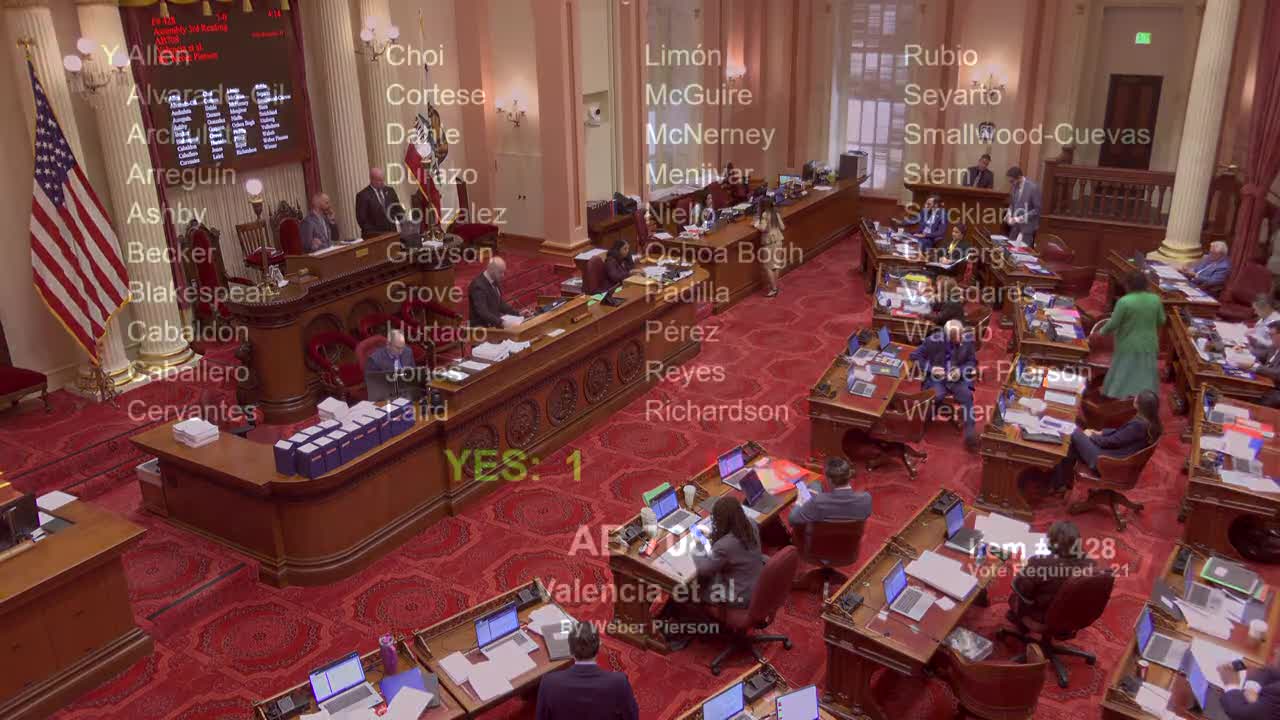
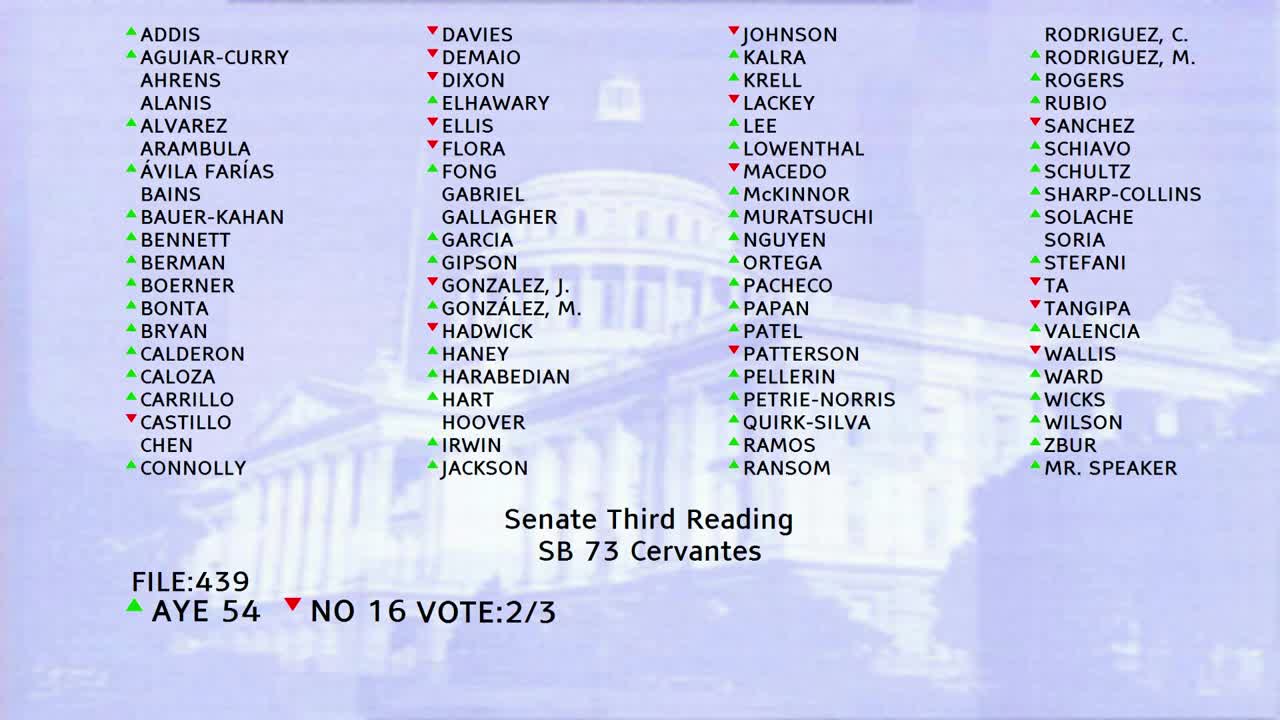



Bill Co-Author(s):