AB 1650: Rental vehicles: law enforcement.
- Session Year: 2025-2026
- House: Assembly
- Latest Version Date: 2026-09-29
Current Status:
Passed
(2026-09-29: Chaptered by Secretary of State - Chapter 741, Statutes of 2026.)
Introduced
In Committee
Awaiting First Chamber Vote
Passed First Chamber
In Committee
Awaiting Second Chamber Vote
Passed Second Chamber
Enacted
Existing law generally regulates the business of renting passenger vehicles to the public. The law prohibits a rental company from taking various actions, including requiring the purchase of a damage waiver, optional insurance, or another optional good or service, and using electronic surveillance technology to track a renter in order to impose fines or surcharges relating to the renters use of a rental vehicle.
This bill would require any privately owned vehicle rented by, or furnished to, any federal, state, or local law enforcement agency for the use of detaining, arresting, or transporting persons who have violated, or are suspected of having violated, any law, to display a temporary decal displaying the agency name and logo, as specified. The bill would authorize certain attorneys, including the Attorney General, to pursue a civil action against the entity renting the vehicle from the private owner for failure to comply with these provisions. The bill would require the rental car contract to include a term that compliance with state law is mandatory. The bill would exempt privately owned vehicles rented or otherwise furnished or loaned to a law enforcement agency for specified purposes and rental car contracts entered into prior to January 1, 2027, from these provisions.
The bill would make related findings and declarations.
Existing law generally regulates the business of renting passenger vehicles to the public. The law prohibits a rental company from taking various actions, including requiring the purchase of a damage waiver, optional insurance, or another optional good or service, and using electronic surveillance technology to track a renter in order to impose fines or surcharges relating to the renters use of a rental vehicle.
This bill would require any privately owned vehicle rented by, or furnished to, any federal, state, or local law enforcement agency for the use of detaining, arresting, or transporting persons who have violated, or are suspected of having violated, any law, to display a temporary decal displaying the agency name and logo, as specified. The bill would authorize certain attorneys, including the Attorney General, to pursue a civil action against the entity renting the vehicle from the private owner for failure to comply with these provisions. The bill would require the rental car contract to include a term that compliance with these provisions state law is mandatory. The bill would exempt privately owned vehicles rented or otherwise furnished or loaned to a law enforcement agency for specified purposes and rental car contracts entered into prior to January 1, 2027, from these provisions.
The bill would make related findings and declarations.
Existing law generally regulates the business of renting passenger vehicles to the public. The law prohibits a rental company from taking various actions, including requiring the purchase of a damage waiver, optional insurance, or another optional good or service, and using electronic surveillance technology to track a renter in order to impose fines or surcharges relating to the renters use of a rental vehicle.
This bill would require any privately owned vehicle rented by, or furnished to, any federal, state, or local law enforcement agency for the use of detaining, arresting, or transporting persons who have violated, or are suspected of having violated, any law, to display a temporary decal displaying the agency name and logo, as specified. The bill would authorize certain attorneys, including the Attorney General, to pursue a civil action against the entity renting the vehicle from the private owner for failure to comply with these provisions. The bill would require the rental car contract to include a term that compliance with these provisions is mandatory. The bill would exempt privately owned vehicles rented or otherwise furnished or loaned to a law enforcement agency for specified purposes and rental car contracts entered into prior to January 1, 2027, from these provisions.
The bill would make related findings and declarations.
Existing law generally regulates the business of renting passenger vehicles to the public. The law prohibits a rental company from taking various actions, including requiring the purchase of a damage waiver, optional insurance, or another optional good or service, and using electronic surveillance technology to track a renter in order to impose fines or surcharges relating to the renters use of a rental vehicle.
This bill would require any privately owned vehicle rented by, or furnished to, any federal, state, or local law enforcement agency for the use of detaining, arresting, or transporting persons who have violated, or are suspected of having violated, any law, to display a temporary decal displaying the agency name and logo, as specified. The bill would authorize certain attorneys, including the Attorney General, to pursue a civil action against the entity renting the vehicle from the private owner for failure to comply with these provisions. The bill would require the rental car contract to include a term that compliance with these provisions is mandatory. The bill would exempt rental car contracts entered into prior to January 1, 2027, from these provisions.
The bill would make related findings and declarations.
Existing law generally regulates the business of renting passenger vehicles to the public. The law prohibits a rental company from taking various actions, including requiring the purchase of a damage waiver, optional insurance, or another optional good or service, and using electronic surveillance technology to track a renter in order to impose fines or surcharges relating to the renters use of a rental vehicle.
This bill would require any privately owned vehicle rented by, or furnished to, any federal, state, or local law enforcement agency for the use of detaining, arresting, or transporting persons who have violated, or are suspected of having violated, any law, to display a temporary decal displaying the agency name and logo, as specified. The bill would authorize certain attorneys, including the Attorney General, to pursue a civil action against the entity renting the vehicle, vehicle from the private owner for failure to comply with these provisions. The bill would require the rental car contract to include a term that compliance with these provisions is mandatory. The bill would exempt rental car contracts entered into prior to January 1, 2027, from these provisions.
The bill would make related findings and declarations.
Existing law generally regulates the business of renting passenger vehicles to the public. The law prohibits a rental company from taking various actions, including requiring the purchase of a damage waiver, optional insurance, or another optional good or service, and using electronic surveillance technology to track a renter in order to impose fines or surcharges relating to the renters use of a rental vehicle.
Existing law imposes specific requirements on drivers and pedestrians when an authorized emergency vehicle is sounding a siren and exhibiting its red lights. Existing law also exempts an authorized emergency vehicle or a driver of an authorized emergency vehicle from certain requirements while the vehicle is responding to an emergency. Existing law defines an authorized emergency vehicle as, among other things, a publicly owned vehicle operated by any forestry or fire department of any public agency.This bill would expand the definition of authorized emergency vehicle for these purposes to include require any privately owned vehicle rented by, or furnished to, any federal, state, or local law enforcement agency for the use of investigating, monitoring, detaining, arresting, or transporting persons who have violated, or are suspected of having violated, any law. The bill would require that these vehicles be permanently equipped with burning or flashing red and blue lights and a decal that identifies the law enforcement agency that procured the vehicle, except as specified. any law, to display a temporary decal displaying the agency name and logo, as specified. The bill would authorize certain attorneys, including the Attorney General, to pursue a civil penalty starting at $3,000 for the first violation, or an injunction, action against the entity renting the vehicle, for failure to comply with these provisions. The bill would exempt rental car contracts entered into prior to January 1, 2027, from these provisions.
The bill would make related findings and declarations.
The bill would declare that its provisions are severable.Existing law generally regulates the business of renting passenger vehicles to the public. The law prohibits a rental company from taking various actions, including requiring the purchase of a damage waiver, optional insurance, or another optional good or service, and using electronic surveillance technology to track a renter in order to impose fines or surcharges relating to the renters use of a rental vehicle.
This bill would prohibit a rental company from renting a vehicle to the United States Immigration and Customs Enforcement.Existing law imposes specific requirements on drivers and pedestrians when an authorized emergency vehicle is sounding a siren and exhibiting its red lights. Existing law also exempts an authorized emergency vehicle or a driver of an authorized emergency vehicle from certain requirements while the vehicle is responding to an emergency. Existing law defines an authorized emergency vehicle as, among other things, a publicly owned vehicle operated by any forestry or fire department of any public agency.
This bill would expand the definition of authorized emergency vehicle for these purposes to include any privately owned vehicle rented by, or furnished to, any federal, state, or local law enforcement agency for the use of investigating, monitoring, detaining, arresting, or transporting persons who have violated, or are suspected of having violated, any law. The bill would require that these vehicles be permanently equipped with burning or flashing red and blue lights and a decal that identifies the law enforcement agency that procured the vehicle, except as specified. The bill would authorize certain attorneys, including the Attorney General, to pursue a civil penalty starting at $3,000 for the first violation, or an injunction, for failure to comply with these provisions. The bill would exempt rental car contracts entered into prior to January 1, 2027, from these provisions.
The bill would make related findings and declarations.
The bill would declare that its provisions are severable.
Existing law generally regulates the business of renting passenger vehicles to the public. The law prohibits a rental company from taking various actions, including requiring the purchase of a damage waiver, optional insurance, or another optional good or service, and using electronic surveillance technology to track a renter in order to impose fines or surcharges relating to the renters use of a rental vehicle.
This bill would prohibit a rental company from renting a vehicle to the United States Immigration and Customs Enforcement.
The Legislature finds and declares all of the following:
(a)Public safety depends in substantial part on the clear, immediate, and reliable identification of vehicles operated for law enforcement purposes. Members of the public must be able to readily distinguish vehicles exercising police authority, particularly those engaged in detaining, transporting, or otherwise exercising custody over an individual, from ordinary vehicles.
(b)The use of rental vehicles by law enforcement agencies, while often necessary for operational flexibility, can create ambiguity when those vehicles lack standardized visual indicators of official status. Absent clear identification, individuals may be uncertain whether they are being lawfully stopped or approached by legitimate authorities, which can lead to escalation of conflict, delays in compliance, or unsafe interactions.
(c)Ensuring that rental vehicles used by law enforcement agencies are appropriately marked and equipped aligns with the public interest in preventing the unauthorized exercise or appearance of police authority.
(d)Properly marked vehicles equipped with visible identification thus service a critical safety function. Those vehicles provide notice of lawful authority, thereby preventing impersonation, promoting orderly interactions with law enforcement, and reducing misunderstanding.
SEC. 2.Section 1939.36 is added to the Civil Code, to read:1939.36.(a)(1)Any privately owned vehicle rented by, or furnished to, any federal, state, or local law enforcement agency for the use of detaining, arresting, or transporting persons who have violated, or are suspected of having violated, any law, shall be required to have a temporary decal displaying the agency name and logo.
(2)The indicia or name of the governmental entity operating the vehicle shall be displayed in sharp contrast to the background on the front door panels and shall be of such size, shape, and color as to be readily legible during daylight hours from a distance of 50 feet. The governmental entity shall create and affix the temporary decal to the vehicle.
(b)Subdivision (a) does not apply to privately owned vehicles rented or otherwise furnished or loaned to any federal, state, or local law enforcement agency for any of the following purposes:
(1)An officer engaged in plainclothes operations.
(2)Exigent circumstances involving an imminent danger to persons or property, the escape of a perpetrator, or the destruction of evidence, including if the officer is responding to one of these circumstances while off duty.
(3)Privately owned vehicles rented to, or otherwise furnished or loaned to, a Special Weapons and Tactics or tactical team unit that is actively performing their tactical team responsibilities, including predeployment, staging, and training use.
(4)Privately owned vehicles rented to, or otherwise furnished or loaned to, an officer engaged in protective operations involving elected officials, judicial officers, or other designated dignitaries if the display of identification would compromise the safety, anonymity, or tactical effectiveness of the protection detail.
(5)An officer engaged in surveillance, active undercover operations, or investigative activities.
(6)(A)When the vehicle is used solely for the transport of a person who is already in lawful custodial status following arrest pursuant to a judicial warrant issued by a court of competent jurisdiction, or pursuant to a judicially issued extradition order, and is being transported to or from a custodial facility or transportation hub.
(B)This paragraph shall apply only where the officer reasonably determines that the display of a decal would compromise officer safety, public safety, or the security of the person being transported.
(C)This paragraph does not apply to the initial detention or arrest of an individual in the field.
(D)For purposes of this paragraph, judicial warrant or judicially issued extradition order does not include any civil, administrative, or executive warrant, detainer, or order not issued by a court of competent jurisdiction.
(c)(1)A failure to display a decal in accordance with this section shall subject the entity renting the vehicle from the private owner to liability that shall be enforced by a civil action, brought in the name of the people of California by the Attorney General, a district attorney, county counsel, or a city attorney, who may seek injunctive or declaratory relief.
(2)A prevailing plaintiff in an action shall be entitled to all reasonable attorneys fees and costs.
(d)The terms and conditions of the rental car contract shall specify that compliance with state law is mandatory. The contract may include a term requiring the law enforcement agency to indemnify the owner of the private vehicle.
(e)Subdivisions (a) and (d) do not apply to any rental car contract entered into prior to January 1, 2027.
The Legislature finds and declares all of the following:
(a)Public safety depends in substantial part on the clear, immediate, and reliable identification of vehicles operated for law enforcement purposes. Members of the public must be able to readily distinguish vehicles exercising police authority, particularly those engaged in detaining, transporting, or otherwise exercising custody over an individual, from ordinary vehicles.
(b)The use of rental vehicles by law enforcement agencies, while often necessary for operational flexibility, can create ambiguity when those vehicles lack standardized visual indicators of official status. Absent clear identification, individuals may be uncertain whether they are being lawfully stopped or approached by legitimate authorities, which can lead to escalation of conflict, delays in compliance, or unsafe interactions.
(c)Ensuring that rental vehicles used by law enforcement agencies are appropriately marked and equipped aligns with the public interest in preventing the unauthorized exercise or appearance of police authority.
(d)Properly marked vehicles equipped with visible identification thus service a critical safety function. Those vehicles provide notice of lawful authority, thereby preventing impersonation, promoting orderly interactions with law enforcement, and reducing misunderstanding.
SEC. 2.Section 1939.36 is added to the Civil Code, to read:1939.36.(a)(1)Any privately owned vehicle rented by, or furnished to, any federal, state, or local law enforcement agency for the use of detaining, arresting, or transporting persons who have violated, or are suspected of having violated, any law, shall be required to have a temporary decal displaying the agency name and logo.
(2)The indicia or name of the governmental entity operating the vehicle shall be displayed in sharp contrast to the background on the front door panels and shall be of such size, shape, and color as to be readily legible during daylight hours from a distance of 50 feet. The governmental entity shall create and affix the temporary decal to the vehicle.
(b)Subdivision (a) does not apply to privately owned vehicles rented or otherwise furnished or loaned to any federal, state, or local law enforcement agency for any of the following purposes:
(1)An officer engaged in plainclothes operations who is employed by the Business, Consumer Services, and Housing Agency, the Office of Law Enforcement Support, the California Health and Human Services Agency, the Labor and Workforce Development Agency, the Natural Resources Agency, the Department of Corrections and Rehabilitation, the Transportation Agency, the California Environmental Protection Agency, the Government Operations Agency, or by any department, board, commission, or other entity within those agencies or the federal equivalent of these state agencies. operations.
(2)Exigent circumstances involving an imminent danger to persons or property, the escape of a perpetrator, or the destruction of evidence, including if the officer is responding to one of these circumstances while off duty.
(3)Privately owned vehicles rented to, or otherwise furnished or loaned to to, a Special Weapons and Tactics or tactical team unit that is actively performing their tactical team responsibilities. responsibilities, including predeployment, staging, and training use.
(4)Privately owned vehicles rented to, or otherwise furnished or loaned to, an officer engaged in protective operations involving elected officials, judicial officers, or other designated dignitaries if the display of identification would compromise the safety, anonymity, or tactical effectiveness of the protection detail.
(5)An officer engaged in surveillance, active undercover operations operations, or investigative activities.
(6)(A)When the vehicle is used solely for the transport of a person who is already in lawful custodial status following arrest pursuant to a judicial warrant issued by a court of competent jurisdiction, or pursuant to a judicially issued extradition order, and is being transported to or from a custodial facility or transportation hub.
(B)This paragraph shall apply only where the officer reasonably determines that the display of a decal would compromise officer safety, public safety, or the security of the person being transported.
(C)This paragraph does not apply to the initial detention or arrest of an individual in the field.
(D)For purposes of this paragraph, judicial warrant or judicially issued extradition order does not include any civil, administrative, or executive warrant, detainer, or order not issued by a court of competent jurisdiction.
(c)(1)A failure to display a decal in accordance with this section shall subject the entity renting the vehicle from the private owner to liability that shall be enforced by a civil action, brought in the name of the people of California by the Attorney General, a district attorney, county counsel, or a city attorney, who may seek injunctive or declaratory relief.
(2)A prevailing plaintiff in an action shall be entitled to all reasonable attorneys fees and costs.
(d)The terms and conditions of the rental car contract shall specify that compliance with state law is mandatory. The contract may include a term requiring the law enforcement agency to indemnify the owner of the private vehicle.
(e)Subdivisions (a) and (d) do not apply to any rental car contract entered into prior to January 1, 2027.
The Legislature finds and declares all of the following:
(a)Public safety depends in substantial part on the clear, immediate, and reliable identification of vehicles operated for law enforcement purposes. Members of the public must be able to readily distinguish vehicles exercising police authority, particularly those engaged in detaining, transporting, or otherwise exercising custody over an individual, from ordinary vehicles.
(b)The use of rental vehicles by law enforcement agencies, while often necessary for operational flexibility, can create ambiguity when those vehicles lack standardized visual indicators of official status. Absent clear identification, individuals may be uncertain whether they are being lawfully stopped or approached by legitimate authorities, which can lead to escalation of conflict, delays in compliance, or unsafe interactions.
(c)Ensuring that rental vehicles used by law enforcement agencies are appropriately marked and equipped aligns with the public interest in preventing the unauthorized exercise or appearance of police authority.
(d)Properly marked vehicles equipped with visible identification thus service a critical safety function. Those vehicles provide notice of lawful authority, thereby preventing impersonation, promoting orderly interactions with law enforcement, and reducing misunderstanding.
SEC. 2.Section 1939.36 is added to the Civil Code, to read:1939.36.(a)(1)Any privately owned vehicle rented by, or furnished to, any federal, state, or local law enforcement agency for the use of detaining, arresting, or transporting persons who have violated, or are suspected of having violated, any law, shall be required to have a temporary decal displaying the agency name and logo.
(2)The indicia or name of the governmental entity operating the vehicle shall be displayed in sharp contrast to the background on the front door panels and shall be of such size, shape, and color as to be readily legible during daylight hours from a distance of 50 feet. The governmental entity shall create and affix the temporary decal to the vehicle.
(b)Subdivision (a) does not apply to privately owned vehicles rented or otherwise furnished or loaned to any federal, state, or local law enforcement agency for any of the following purposes:
(1)An officer engaged in plainclothes operations who is employed by the Business, Consumer Services, and Housing Agency, the Office of Law Enforcement Support, the California Health and Human Services Agency, the Labor and Workforce Development Agency, the Natural Resources Agency, the Department of Corrections and Rehabilitation, the Transportation Agency, the California Environmental Protection Agency, the Government Operations Agency, or by any department, board, commission, or other entity within those agencies or the federal equivalent of these state agencies.
(2)Exigent circumstances involving an imminent danger to persons or property, the escape of a perpetrator, or the destruction of evidence, including if the officer is responding to one of these circumstances while off duty.
(3)Privately owned vehicles rented to, or otherwise furnished or loaned to a Special Weapons and Tactics or tactical team unit that is actively performing their tactical team responsibilities.
(4)Privately owned vehicles rented to, or otherwise furnished or loaned to, an officer engaged in protective operations involving elected officials, judicial officers, or other designated dignitaries if the display of identification would compromise the safety, anonymity, or tactical effectiveness of the protection detail.
(5)An officer engaged in active undercover operations or investigative activities.
(6)(A)When the vehicle is used solely for the transport of a person who is already in lawful custodial status following arrest pursuant to a judicial warrant issued by a court of competent jurisdiction, or pursuant to a judicially issued extradition order, and is being transported to or from a custodial facility or transportation hub.
(B)This paragraph shall apply only where the officer reasonably determines that the display of a decal would compromise officer safety, public safety, or the security of the person being transported.
(C)This paragraph does not apply to the initial detention or arrest of an individual in the field.
(D)For purposes of this paragraph, judicial warrant or judicially issued extradition order does not include any civil, administrative, or executive warrant, detainer, or order not issued by a court of competent jurisdiction.
(c)(1)A failure to display a decal in accordance with this section shall subject the entity renting the vehicle from the private owner to liability that shall be enforced by a civil action, brought in the name of the people of California by the Attorney General, a district attorney, county counsel, or a city attorney, who may seek injunctive or declaratory relief.
(2)A prevailing plaintiff in an action shall be entitled to all reasonable attorneys fees and costs.
(d)The terms and conditions of the rental car contract shall specify that compliance with the temporary decal requirement in subdivision (a) state law is mandatory. The contract may include a term requiring the law enforcement agency to indemnify the owner of the private vehicle.
(e)Subdivision (a) does Subdivisions (a) and (d) do not apply to any rental car contract entered into prior to January 1, 2027.
The Legislature finds and declares all of the following:
(a)Public safety depends in substantial part on the clear, immediate, and reliable identification of vehicles operated for law enforcement purposes. Members of the public must be able to readily distinguish vehicles exercising police authority, particularly those engaged in detaining, transporting, or otherwise exercising custody over an individual, from ordinary vehicles.
(b)The use of rental vehicles by law enforcement agencies, while often necessary for operational flexibility, can create ambiguity when those vehicles lack standardized visual indicators of official status. Absent clear identification, individuals may be uncertain whether they are being lawfully stopped or approached by legitimate authorities, which can lead to escalation of conflict, delays in compliance, or unsafe interactions.
(c)Ensuring that rental vehicles used by law enforcement agencies are appropriately marked and equipped aligns with the public interest in preventing the unauthorized exercise or appearance of police authority.
(d)Properly marked vehicles equipped with visible identification thus service a critical safety function. Those vehicles provide notice of lawful authority, thereby preventing impersonation, promoting orderly interactions with law enforcement, and reducing misunderstanding.
SEC. 2.Section 1939.36 is added to the Civil Code, to read:1939.36.(a)(1)Any privately owned vehicle rented by, or furnished to, any federal, state, or local law enforcement agency for the use of detaining, arresting, or transporting persons who have violated, or are suspected of having violated, any law, shall be required to have a temporary decal displaying the agency name and logo.
(2)The indicia or name of the governmental entity operating the vehicle shall be displayed in sharp contrast to the background on the front door panels and shall be of such size, shape, and color as to be readily legible during daylight hours from a distance of 50 feet. The governmental entity shall create and affix the temporary decal to the vehicle.
(b)Subdivision (a) does not apply to privately owned vehicles rented or otherwise furnished or loaned to any federal, state, or local law enforcement agency for any of the following purposes:
(1)An officer engaged in plainclothes operations who is employed by the Business, Consumer Services, and Housing Agency, the Office of Law Enforcement Support, the California Health and Human Services Agency, the Labor and Workforce Development Agency, the Natural Resources Agency, the Department of Corrections and Rehabilitation, the Transportation Agency, the California Environmental Protection Agency, the Government Operations Agency, or by any department, board, commission, or other entity within those agencies or the federal equivalent of these state agencies.
(2)Exigent circumstances involving an imminent danger to persons or property, the escape of a perpetrator, or the destruction of evidence, including if the officer is responding to one of these circumstances while off duty.
(3)Privately owned vehicles rented to, or otherwise furnished or loaned to a Special Weapons and Tactics or tactical team unit that is actively performing their tactical team responsibilities.
(4)Privately owned vehicles rented to, or otherwise furnished or loaned to, an officer engaged in protective operations involving elected officials, judicial officers, or other designated dignitaries if the display of identification would compromise the safety, anonymity, or tactical effectiveness of the protection detail.
(5)An officer engaged in active undercover operations or investigative activities.
(6)(A)When the vehicle is used solely for the transport of a person who is already in lawful custodial status following arrest pursuant to a judicial warrant issued by a court of competent jurisdiction, or pursuant to a judicially issued extradition order, and is being transported to or from a custodial facility or transportation hub.
(B)This paragraph shall apply only where the officer reasonably determines that the display of a decal would compromise officer safety, public safety, or the security of the person being transported.
(C)This paragraph does not apply to the initial detention or arrest of an individual in the field.
(D)For purposes of this paragraph, judicial warrant or judicially issued extradition order does not include any civil, administrative, or executive warrant, detainer, or order not issued by a court of competent jurisdiction.
(c)(1)A failure to display a decal in accordance with this section shall subject the entity renting the vehicle from the private owner to liability that shall be enforced by a civil action, brought in the name of the people of California by the Attorney General, a district attorney, county counsel, or a city attorney, who may seek injunctive or declaratory relief.
(2)A prevailing plaintiff in an action shall be entitled to all reasonable attorneys fees and costs.
(d)The terms and conditions of the rental car contract shall specify that compliance with the temporary decal requirement in subdivision (a) is mandatory. The contract may include a term requiring the law enforcement agency to indemnify the owner of the private vehicle.
(e)Subdivision (a) does not apply to any rental car contract entered into prior to January 1, 2027.
The Legislature finds and declares all of the following:
(a)Public safety depends in substantial part on the clear, immediate, and reliable identification of vehicles operated for law enforcement purposes. Members of the public must be able to readily distinguish vehicles exercising police authority, particularly those engaged in detaining, transporting, or otherwise exercising custody over an individual, from ordinary vehicles.
(b)The use of rental vehicles by law enforcement agencies, while often necessary for operational flexibility, can create ambiguity when those vehicles lack standardized visual indicators of official status. Absent clear identification, individuals may be uncertain whether they are being lawfully stopped or approached by legitimate authorities, which can lead to escalation of conflict, delays in compliance, or unsafe interactions.
(c)Ensuring that rental vehicles used by law enforcement agencies are appropriately marked and equipped aligns with the public interest in preventing the unauthorized exercise or appearance of police authority.
(d)Properly marked vehicles equipped with visible identification thus service a critical safety function. Those vehicles provide notice of lawful authority, thereby preventing impersonation, promoting orderly interactions with law enforcement, and reducing misunderstanding.
SEC. 2.Section 1939.36 is added to the Civil Code, to read:1939.36.(a)(1)Any privately owned vehicle rented by, or furnished to, any federal, state, or local law enforcement agency for the use of detaining, arresting, or transporting persons who have violated, or are suspected of having violated, any law, shall be required to have a temporary decal displaying the agency name and logo.
(2)The indicia or name of the governmental entity operating the vehicle shall be displayed in sharp contrast to the background on the front door panels and shall be of such size, shape, and color as to be readily legible during daylight hours from a distance of 50 feet. The governmental entity shall create and affix the temporary decal to the vehicle.
(b)Subdivision (a) does not apply to privately owned vehicles rented or otherwise furnished or loaned to any federal, state, or local law enforcement agency for any of the following purposes:
(1)An officer engaged in plainclothes operations who is employed by the Business, Consumer Services, and Housing Agency, the Office of Law Enforcement Support, the California Health and Human Services Agency, the Labor and Workforce Development Agency, the Natural Resources Agency, the Department of Corrections and Rehabilitation, the Transportation Agency, the California Environmental Protection Agency, the Government Operations Agency, or by any department, board, commission, or other entity within those agencies or the federal equivalent of these state agencies.
(2)Exigent circumstances involving an imminent danger to persons or property, the escape of a perpetrator, or the destruction of evidence, including if the officer is responding to one of these circumstances while off duty.
(3)Privately owned vehicles rented to, or otherwise furnished or loaned to a Special Weapons and Tactics or tactical team unit that is actively performing their tactical team responsibilities.
(4)Privately owned vehicles rented to, or otherwise furnished or loaned to, an officer engaged in protective operations involving elected officials, judicial officers, or other designated dignitaries if the display of identification would compromise the safety, anonymity, or tactical effectiveness of the protection detail.
(5)An officer engaged in active undercover operations or investigative activities.
(c)(1)A failure to display a decal in accordance with this section shall subject the entity renting the vehicle from the private owner to liability that shall be enforced by a civil action, brought in the name of the people of California by the Attorney General, a district attorney, county counsel, or a city attorney, who may seek injunctive or declaratory relief.
(2)A prevailing plaintiff in an action shall be entitled to all reasonable attorneys fees and costs.
(d)The terms and conditions of the rental car contract shall specify that compliance with the temporary decal requirement in subdivision (a) is mandatory. The contract may include a term requiring the law enforcement agency to indemnify the owner of the private vehicle.
(e)Subdivision (a) does not apply to any rental car contract entered into prior to January 1, 2027.
The Legislature finds and declares all of the following:
(a)Public safety depends in substantial part on the clear, immediate, and reliable identification of vehicles operated for law enforcement purposes. Members of the public must be able to readily distinguish vehicles exercising police authority, particularly those engaged in detaining, transporting, or otherwise exercising custody over an individual, from ordinary vehicles.
(b)The use of rental vehicles by law enforcement agencies, while often necessary for operational flexibility, can create ambiguity when those vehicles lack standardized visual indicators of official status. Absent clear identification, individuals may be uncertain whether they are being lawfully stopped or approached by legitimate authorities, which can lead to escalation of conflict, delays in compliance, or unsafe interactions.
(c)Ensuring that rental vehicles used by law enforcement agencies are appropriately marked and equipped aligns with the public interest in preventing the unauthorized exercise or appearance of police authority.
(d)Properly marked vehicles equipped with visible identification thus service a critical safety function. Those vehicles provide notice of lawful authority, thereby preventing impersonation, promoting orderly interactions with law enforcement, and reducing misunderstanding.
SEC. 2.Section 1939.36 is added to the Civil Code, to read:1939.36.(a)(1)Any privately owned vehicle rented by, or furnished to, any federal, state, or local law enforcement agency for the use of detaining, arresting, or transporting persons who have violated, or are suspected of having violated, any law, shall be required to have a temporary decal displaying the agency name and logo.
(2)The indicia or name of the governmental entity operating the vehicle shall be displayed in sharp contrast to the background on the front door panels and shall be of such size, shape, and color as to be readily legible during daylight hours from a distance of 50 feet. The governmental entity shall create and affix the temporary decal to the vehicle.
(b)Subdivision (a) does not apply to privately owned vehicles rented or otherwise furnished or loaned to any federal, state, or local law enforcement agency for any of the following purposes:
(1)An officer engaged in plainclothes operations who is employed by the Business, Consumer Services, and Housing Agency, the Office of Law Enforcement Support, the California Health and Human Services Agency, the Labor and Workforce Development Agency, the Natural Resources Agency, the Department of Corrections and Rehabilitation, the Transportation Agency, the California Environmental Protection Agency, the Government Operations Agency, or by any department, board, commission, or other entity within those agencies or the federal equivalent of these state agencies.
(2)Exigent circumstances involving an imminent danger to persons or property, the escape of a perpetrator, or the destruction of evidence, including if the officer is responding to one of these circumstances while off duty.
(3)Privately owned vehicles rented to, or otherwise furnished or loaned to a Special Weapons and Tactics or tactical team unit that is actively performing their tactical team responsibilities.
(4)Privately owned vehicles rented to, or otherwise furnished or loaned to, an officer engaged in protective operations involving elected officials, judicial officers, or other designated dignitaries if the display of identification would compromise the safety, anonymity, or tactical effectiveness of the protection detail.
(c)(1)A failure to display a decal in accordance with this section shall subject the entity renting the vehicle from the private owner to liability that shall be enforced by a civil action, brought in the name of the people of California by the Attorney General, a district attorney, county counsel, or a city attorney, who may seek injunctive or declaratory relief.
(2)A prevailing plaintiff in an action shall be entitled to all reasonable attorneys fees and costs.
(d)The terms and conditions of the rental car contract shall specify that compliance with the temporary decal requirement in subdivision (a) is mandatory. The contract may include a term requiring the law enforcement agency to indemnify the owner of the private vehicle.
(d)(e)Subdivision (a) does not apply to any rental car contract entered into prior to January 1, 2027.
The Legislature finds and declares all of the following:
(a)The federal government has launched broad immigration enforcement efforts in California, deploying personnel from various federal agencies.(b)All of the following have raised concerns for public safety:(1)The increasing use of facial coverings.(2)The absence of visible identifying markings on the vehicles used during the detainment and arrest of a person.(3)The absence of clearly and conspicuously identified vehicles that are utilized by law enforcement.(4)The use of unmarked vehicles during enforcement activities.(5)The lack of safety lights on vehicles used by officers during enforcement activities.(c)Both the individuals involved and onlookers have reported confusion and fear that they were experiencing or witnessing a crime.(d)In a widely reported incident, when two plainclothes federal officers wearing masks tackled a woman on the sidewalk and forcibly placed her in an unmarked vehicle, the womans family called 911 to report a kidnapping.(e)Several news outlets have reported incidents of individuals impersonating federal law enforcement officers to harass or detain others and that impersonation undermines public trust in law enforcement, especially among vulnerable individuals.(f)Charges filed against individuals include all of the following:(1)Kidnapping and impersonating a law enforcement officer after allegedly detaining a group of Latino men.(2)Impersonating a law enforcement officer on a university campus.(3)Impersonating a law enforcement officer in connection with the sexual assault of a woman while threatening her with deportation.(g)While the federal government has publicly condemned impersonations, the lack of consistent and visible personal and agency identification is making it difficult for individuals and state and local law enforcement to distinguish between authorized personnel and bad actors.(h)The State of California has both the authority and responsibility, pursuant to its police powers, to maintain order and protect the safety and well-being of all people within its jurisdiction.(i)In order to carry out this duty, the State of California has the authority to establish identification and vehicle requirements for law enforcement operating within the state so that the public and its law enforcement can distinguish between individuals who are exercising law enforcement authority and those who are not, particularly in situations where a person is engaging in potentially unlawful behavior.(j)Therefore, the state has a compelling interest in identifying and verifying who is, and who is not, validly claiming or operating pursuant to law enforcement authority within the state. The state also has a compelling interest in requiring that privately owned vehicles used in law enforcement activities meet certain safety and identifying characteristics.(a)Public safety depends in substantial part on the clear, immediate, and reliable identification of vehicles operated for law enforcement purposes. Members of the public must be able to readily distinguish vehicles exercising police authority, particularly those engaged in detaining, transporting, or otherwise exercising custody over an individual, from ordinary vehicles.
(b)The use of rental vehicles by law enforcement agencies, while often necessary for operational flexibility, can create ambiguity when those vehicles lack standardized visual indicators of official status. Absent clear identification, individuals may be uncertain whether they are being lawfully stopped or approached by legitimate authorities, which can lead to escalation of conflict, delays in compliance, or unsafe interactions.
(c)Ensuring that rental vehicles used by law enforcement agencies are appropriately marked and equipped aligns with the public interest in preventing the unauthorized exercise or appearance of police authority.
(d)Properly marked vehicles equipped with visible identification thus service a critical safety function. Those vehicles provide notice of lawful authority, thereby preventing impersonation, promoting orderly interactions with law enforcement, and reducing misunderstanding.
SEC. 2.Section 30 of the Vehicle Code is repealed.SEC. 3.Section 30 is added to the Vehicle Code, to read:30.The Legislature declares all of the following as a matter of legislative policy:(a)Red lights and sirens on vehicles should be restricted to authorized emergency vehicles engaged in police, fire, and lifesaving services.(b)Privately owned cars rented to law enforcement agencies are equipped with proper lights to ensure public safety.(c)Other types of vehicles that are engaged in activities that create special hazards upon the highways should be equipped with flashing amber warning lamps.SEC. 4.Section 165 of the Vehicle Code is amended to read:165.An authorized emergency vehicle is:(a)Any publicly owned and operated ambulance, lifeguard, or lifesaving equipment or any privately owned or operated ambulance licensed by the Commissioner of the California Highway Patrol to operate in response to emergency calls.(b)Any publicly owned vehicle operated by the following persons, agencies, or organizations:(1)Any federal, state, or local agency, department, or district employing peace officers as that term is defined in Chapter 4.5 (commencing with Section 830) of Part 2 of Title 3 of the Penal Code, for use by those officers in the performance of their duties.(2)Any forestry or fire department of any public agency or fire department organized as provided in the Health and Safety Code.(c)Any vehicle owned by the state, or any bridge and highway district, and equipped and used either for fighting fires, or towing or servicing other vehicles, caring for injured persons, or repairing damaged lighting or electrical equipment.(d)Any state-owned vehicle used in responding to emergency fire, rescue, or communications calls and operated either by the Office of Emergency Services or by any public agency or industrial fire department to which the Office of Emergency Services has assigned the vehicle.(e)(1)Any vehicle owned or operated by a federally recognized Indian tribe used in responding to emergency, fire, ambulance, or lifesaving calls. For the purposes of this section and the provisions of Sections 2501 and 2510, a vehicle used in responding to emergency, fire, ambulance, or lifesaving calls owned or operated by a federally recognized Indian tribe is considered an authorized emergency vehicle.(2)Any vehicle owned or operated by any department or agency of the United States government when the vehicle is used in responding to emergency fire, ambulance, or lifesaving calls or is actively engaged in law enforcement work.(f)Any vehicle for which an authorized emergency vehicle permit has been issued by the Commissioner of the California Highway Patrol.(g)Any privately owned vehicle rented by, or furnished to, any federal, state, or local law enforcement agency for the use of investigating, monitoring, detaining, arresting, or transporting persons who have violated, or are suspected of having violated, any law.SEC. 5.Section 25252 of the Vehicle Code is amended to read:25252.(a)(1)Every authorized emergency vehicle shall be equipped with at least one steady burning red warning lamp visible from at least 1,000 feet to the front of the vehicle to be used as provided in this code.In (2)In addition, authorized emergency vehicles may display revolving, flashing, or steady red warning lights to the front, sides or rear of the vehicles.(b)(1)An authorized emergency vehicle, as defined in subdivision (g) of Section 165, shall be equipped with burning or flashing red and blue lights permanently affixed to the vehicle and visible to the front, side, and rear, above the roofline of the vehicle.(2)An authorized emergency vehicle, as defined in subdivision (g) of Section 165, shall be equipped with decals identifying the law enforcement agency that procured the vehicle.(c)Notwithstanding Section 21055, subdivision (b) does not apply to privately owned vehicles rented or otherwise furnished or loaned to any federal, state, or local law enforcement agency for any of the following purposes:(1)An officer engaged in plainclothes operations who is employed by the Business, Consumer Services, and Housing Agency, the Office of Law Enforcement Support, the California Health and Human Services Agency, the Labor and Workforce Development Agency, the Natural Resources Agency, the Department of Corrections and Rehabilitation, the Transportation Agency, the California Environmental Protection Agency, the Government Operations Agency, or by any department, board, commission, or other entity within those agencies or the federal equivalent of these state agencies.(2)Exigent circumstances involving an imminent danger to persons or property, the escape of a perpetrator, or the destruction of evidence, including if the officer is responding to one of these circumstances while off duty.(3)Privately owned vehicles rented to, or otherwise furnished or loaned to a Special Weapons and Tactics or tactical team unit that is actively performing their tactical team responsibilities.(4)Privately owned vehicles rented to, or otherwise furnished or loaned to, an officer engaged in protective operations involving elected officials, judicial officers, or other designated dignitaries if the display of identification would compromise the safety, anonymity, or tactical effectiveness of the protection detail.(d)Renting or otherwise furnishing or loaning a privately owned vehicle to any federal, state, or local law enforcement agency, with the knowledge that the vehicle would be used in violation of subdivision (b) is punishable by a civil penalty as described in subdivision (e).(e)If there is reasonable cause to believe there has been a violation pursuant to subdivision (d), the Attorney General or a city, county, or city and county attorney may bring a civil action for injunctive and other equitable relief against a rental car company or any person or entity. The Attorney General or a city, county, or city and county attorney who brings a civil action pursuant to this section may also seek civil penalties in the amount of three thousand dollars ($3,000) for the first violation or any single violation within a 24-month period, ten thousand dollars ($10,000) for a second violation within the preceding 24 months, and fifteen thousand dollars ($15,000) for the third and any subsequent violation within the preceding 24 months.(f)The driver of an authorized emergency vehicle is exempt from Chapter 2 (commencing with Section 21350), Chapter 3 (commencing with Section 21650), Chapter 4 (commencing with Section 21800), Chapter 5 (commencing with Section 21950), Chapter 6 (commencing with Section 22100), Chapter 7 (commencing with Section 22348), Chapter 8 (commencing with Section 22450), Chapter 9 (commencing with Section 22500), and Chapter 10 (commencing with Section 22650) of Division 12, and Article 3 (commencing with Section 38305) and Article 4 (commencing with Section 38312) of Chapter 5 of Division 16.5. (g)Subdivision (b) does not apply to any rental car contract entered into prior to January 1, 2027.SEC. 6.The provisions of this act are severable. If any provision of this act or its application is held invalid, that invalidity shall not affect other provisions or applications that can be given effect without the invalid provision or application.SEC. 2.Section 1939.36 is added to the Civil Code, to read:1939.36.(a)(1)Any privately owned vehicle rented by, or furnished to, any federal, state, or local law enforcement agency for the use of detaining, arresting, or transporting persons who have violated, or are suspected of having violated, any law, shall be required to have a temporary decal displaying the agency name and logo.
(2)The indicia or name of the governmental entity operating the vehicle shall be displayed in sharp contrast to the background on the front door panels and shall be of such size, shape, and color as to be readily legible during daylight hours from a distance of 50 feet. The governmental entity shall create and affix the temporary decal to the vehicle.
(b)Subdivision (a) does not apply to privately owned vehicles rented or otherwise furnished or loaned to any federal, state, or local law enforcement agency for any of the following purposes:
(1)An officer engaged in plainclothes operations who is employed by the Business, Consumer Services, and Housing Agency, the Office of Law Enforcement Support, the California Health and Human Services Agency, the Labor and Workforce Development Agency, the Natural Resources Agency, the Department of Corrections and Rehabilitation, the Transportation Agency, the California Environmental Protection Agency, the Government Operations Agency, or by any department, board, commission, or other entity within those agencies or the federal equivalent of these state agencies.
(2)Exigent circumstances involving an imminent danger to persons or property, the escape of a perpetrator, or the destruction of evidence, including if the officer is responding to one of these circumstances while off duty.
(3)Privately owned vehicles rented to, or otherwise furnished or loaned to a Special Weapons and Tactics or tactical team unit that is actively performing their tactical team responsibilities.
(4)Privately owned vehicles rented to, or otherwise furnished or loaned to, an officer engaged in protective operations involving elected officials, judicial officers, or other designated dignitaries if the display of identification would compromise the safety, anonymity, or tactical effectiveness of the protection detail.
(c)(1)A failure to display a decal in accordance with this section shall subject the entity renting the vehicle to liability that shall be enforced by a civil action, brought in the name of the people of California by the Attorney General, a district attorney, county counsel, or a city attorney, who may seek injunctive or declaratory relief.
(2)A prevailing plaintiff in an action shall be entitled to all reasonable attorneys fees and costs.
(d)Subdivision (a) does not apply to any rental car contract entered into prior to January 1, 2027.
The Legislature finds and declares all of the following:
(a)The federal government has launched broad immigration enforcement efforts in California, deploying personnel from various federal agencies.
(b)All of the following have raised concerns for public safety:
(1)The increasing use of facial coverings.
(2)The absence of visible identifying markings on the vehicles used during the detainment and arrest of a person.
(3)The absence of clearly and conspicuously identified vehicles that are utilized by law enforcement.
(4)The use of unmarked vehicles during enforcement activities.
(5)The lack of safety lights on vehicles used by officers during enforcement activities.
(c)Both the individuals involved and onlookers have reported confusion and fear that they were experiencing or witnessing a crime.
(d)In a widely reported incident, when two plainclothes federal officers wearing masks tackled a woman on the sidewalk and forcibly placed her in an unmarked vehicle, the womans family called 911 to report a kidnapping.
(e)Several news outlets have reported incidents of individuals impersonating federal law enforcement officers to harass or detain others and that impersonation undermines public trust in law enforcement, especially among vulnerable individuals.
(f)Charges filed against individuals include all of the following:
(1)Kidnapping and impersonating a law enforcement officer after allegedly detaining a group of Latino men.
(2)Impersonating a law enforcement officer on a university campus.
(3)Impersonating a law enforcement officer in connection with the sexual assault of a woman while threatening her with deportation.
(g)While the federal government has publicly condemned impersonations, the lack of consistent and visible personal and agency identification is making it difficult for individuals and state and local law enforcement to distinguish between authorized personnel and bad actors.
(h)The State of California has both the authority and responsibility, pursuant to its police powers, to maintain order and protect the safety and well-being of all people within its jurisdiction.
(i)In order to carry out this duty, the State of California has the authority to establish identification and vehicle requirements for law enforcement operating within the state so that the public and its law enforcement can distinguish between individuals who are exercising law enforcement authority and those who are not, particularly in situations where a person is engaging in potentially unlawful behavior.
(j)Therefore, the state has a compelling interest in identifying and verifying who is, and who is not, validly claiming or operating pursuant to law enforcement authority within the state. The state also has a compelling interest in requiring that privately owned vehicles used in law enforcement activities meet certain safety and identifying characteristics.
SEC. 2.Section 30 of the Vehicle Code is repealed.30.It is declared as a matter of legislative policy that red lights and sirens on vehicles should be restricted to authorized emergency vehicles engaged in police, fire and lifesaving services; and that other types of vehicles which are engaged in activities which create special hazards upon the highways should be equipped with flashing amber warning lamps.SEC. 3.Section 30 is added to the Vehicle Code, to read:30.The Legislature declares all of the following as a matter of legislative policy:
(a)Red lights and sirens on vehicles should be restricted to authorized emergency vehicles engaged in police, fire, and lifesaving services.
(b)Privately owned cars rented to law enforcement agencies are equipped with proper lights to ensure public safety.
(c)Other types of vehicles that are engaged in activities that create special hazards upon the highways should be equipped with flashing amber warning lamps.
SEC. 4.Section 165 of the Vehicle Code is amended to read:165.An authorized emergency vehicle is:
(a)Any publicly owned and operated ambulance, lifeguard, or lifesaving equipment or any privately owned or operated ambulance licensed by the Commissioner of the California Highway Patrol to operate in response to emergency calls.
(b)Any publicly owned vehicle operated by the following persons, agencies, or organizations:
(1)Any federal, state, or local agency, department, or district employing peace officers as that term is defined in Chapter 4.5 (commencing with Section 830) of Part 2 of Title 3 of the Penal Code, for use by those officers in the performance of their duties.
(2)Any forestry or fire department of any public agency or fire department organized as provided in the Health and Safety Code.
(c)Any vehicle owned by the state, or any bridge and highway district, and equipped and used either for fighting fires, or towing or servicing other vehicles, caring for injured persons, or repairing damaged lighting or electrical equipment.
(d)Any state-owned vehicle used in responding to emergency fire, rescue, or communications calls and operated either by the Office of Emergency Services or by any public agency or industrial fire department to which the Office of Emergency Services has assigned the vehicle.
(e)(1)Any vehicle owned or operated by a federally recognized Indian tribe used in responding to emergency, fire, ambulance, or lifesaving calls. For the purposes of this section and the provisions of Sections 2501 and 2510, a vehicle used in responding to emergency, fire, ambulance, or lifesaving calls owned or operated by a federally recognized Indian tribe is considered an authorized emergency vehicle.
(2)Any vehicle owned or operated by any department or agency of the United States government when the vehicle is used in responding to emergency fire, ambulance, or lifesaving calls or is actively engaged in law enforcement work.
(f)Any vehicle for which an authorized emergency vehicle permit has been issued by the Commissioner of the California Highway Patrol.
(g)Any privately owned vehicle rented by, or furnished to, any federal, state, or local law enforcement agency for the use of investigating, monitoring, detaining, arresting, or transporting persons who have violated, or are suspected of having violated, any law.
SEC. 5.Section 25252 of the Vehicle Code is amended to read:25252.(a)(1)Every authorized emergency vehicle shall be equipped with at least one steady burning red warning lamp visible from at least 1,000 feet to the front of the vehicle to be used as provided in this code.
In
(2)In addition, authorized emergency vehicles may display revolving, flashing, or steady red warning lights to the front, sides or rear of the vehicles.
(b)(1)An authorized emergency vehicle, as defined in subdivision (g) of Section 165, shall be equipped with burning or flashing red and blue lights permanently affixed to the vehicle and visible to the front, side, and rear, above the roofline of the vehicle.
(2)An authorized emergency vehicle, as defined in subdivision (g) of Section 165, shall be equipped with decals identifying the law enforcement agency that procured the vehicle.
(c)Notwithstanding Section 21055, subdivision (b) does not apply to privately owned vehicles rented or otherwise furnished or loaned to any federal, state, or local law enforcement agency for any of the following purposes:
(1)An officer engaged in plainclothes operations who is employed by the Business, Consumer Services, and Housing Agency, the Office of Law Enforcement Support, the California Health and Human Services Agency, the Labor and Workforce Development Agency, the Natural Resources Agency, the Department of Corrections and Rehabilitation, the Transportation Agency, the California Environmental Protection Agency, the Government Operations Agency, or by any department, board, commission, or other entity within those agencies or the federal equivalent of these state agencies.
(2)Exigent circumstances involving an imminent danger to persons or property, the escape of a perpetrator, or the destruction of evidence, including if the officer is responding to one of these circumstances while off duty.
(3)Privately owned vehicles rented to, or otherwise furnished or loaned to a Special Weapons and Tactics or tactical team unit that is actively performing their tactical team responsibilities.
(4)Privately owned vehicles rented to, or otherwise furnished or loaned to, an officer engaged in protective operations involving elected officials, judicial officers, or other designated dignitaries if the display of identification would compromise the safety, anonymity, or tactical effectiveness of the protection detail.
(d)Renting or otherwise furnishing or loaning a privately owned vehicle to any federal, state, or local law enforcement agency, with the knowledge that the vehicle would be used in violation of subdivision (b) is punishable by a civil penalty as described in subdivision (e).
(e)If there is reasonable cause to believe there has been a violation pursuant to subdivision (d), the Attorney General or a city, county, or city and county attorney may bring a civil action for injunctive and other equitable relief against a rental car company or any person or entity. The Attorney General or a city, county, or city and county attorney who brings a civil action pursuant to this section may also seek civil penalties in the amount of three thousand dollars ($3,000) for the first violation or any single violation within a 24-month period, ten thousand dollars ($10,000) for a second violation within the preceding 24 months, and fifteen thousand dollars ($15,000) for the third and any subsequent violation within the preceding 24 months.
(f)The driver of an authorized emergency vehicle is exempt from Chapter 2 (commencing with Section 21350), Chapter 3 (commencing with Section 21650), Chapter 4 (commencing with Section 21800), Chapter 5 (commencing with Section 21950), Chapter 6 (commencing with Section 22100), Chapter 7 (commencing with Section 22348), Chapter 8 (commencing with Section 22450), Chapter 9 (commencing with Section 22500), and Chapter 10 (commencing with Section 22650) of Division 12, and Article 3 (commencing with Section 38305) and Article 4 (commencing with Section 38312) of Chapter 5 of Division 16.5.
(g)Subdivision (b) does not apply to any rental car contract entered into prior to January 1, 2027.
SEC. 6.The provisions of this act are severable. If any provision of this act or its application is held invalid, that invalidity shall not affect other provisions or applications that can be given effect without the invalid provision or application.
SECTION 1.Section 1939.36 is added to the Civil Code, to read:1939.36.A rental company shall not rent a vehicle to the United States Immigration and Customs Enforcement.A rental company shall not rent a vehicle to the United States Immigration and Customs Enforcement.
|
Date
|
Status
|
|---|---|
| Sep 29, 2026 | Chaptered by Secretary of State - Chapter 741, Statutes of 2026. |
| Sep 29, 2026 | Approved by the Governor. |
| Sep 4, 2026 | Enrolled and presented to the Governor at 4 p.m. |
| Aug 27, 2026 | Senate amendments concurred in. To Engrossing and Enrolling. (Ayes 55. Noes 19. Page 6737.). |
| Aug 27, 2026 | Senate amendments concurred in. To Engrossing and Enrolling. (Ayes 55. Noes 19.). |
| Aug 27, 2026 | In Assembly. Concurrence in Senate amendments pending. |
| Aug 27, 2026 | Read third time. Passed. Ordered to the Assembly. (Ayes 29. Noes 11. Page 5948.). |
| Aug 27, 2026 | Read third time. Passed. Ordered to the Assembly. (Ayes 28. Noes 10.). |
| Aug 17, 2026 | Read second time. Ordered to third reading. |
| Aug 13, 2026 | Read second time and amended. Ordered returned to second reading. |
| Aug 13, 2026 | From committee: Amend, and do pass as amended. (Ayes 5. Noes 2.) (August 13). |
| Aug 3, 2026 | In committee: Referred to APPR. suspense file. |
| Jul 1, 2026 | From committee: Do pass and re-refer to Com. on APPR. (Ayes 5. Noes 1.) (June 30). Re-referred to Com. on APPR. |
| Jun 24, 2026 | From committee: Do pass and re-refer to Com. on PUB. S. (Ayes 11. Noes 2.) (June 23). Re-referred to Com. on PUB. S. |
| Jun 15, 2026 | From committee chair, with author's amendments: Amend, and re-refer to committee. Read second time, amended, and re-referred to Com. on JUD. |
| Jun 10, 2026 | Referred to Coms. on JUD. and PUB. S. |
| May 28, 2026 | In Senate. Read first time. To Com. on RLS. for assignment. |
| May 27, 2026 | Read third time. Passed. Ordered to the Senate. (Ayes 59. Noes 20. Page 5428.) |
| May 27, 2026 | Read third time. Passed. Ordered to the Senate. (Ayes 59. Noes 20.) |
| May 27, 2026 | Read third time. Passed. Ordered to the Senate. |
| May 20, 2026 | Read third time and amended. Ordered to third reading. (Page 5167.) |
| May 20, 2026 | Read third time and amended. Ordered to third reading. |
| May 18, 2026 | Read second time. Ordered to third reading. |
| May 14, 2026 | From committee: Do pass. (Ayes 11. Noes 4.) (May 14). |
| May 6, 2026 | In committee: Set, first hearing. Referred to APPR. suspense file. |
| Apr 27, 2026 | Re-referred to Com. on APPR. |
| Apr 23, 2026 | Read second time and amended. |
| Apr 22, 2026 | From committee: Amend, and do pass as amended and re-refer to Com. on APPR. (Ayes 7. Noes 2.) (April 21). |
| Apr 20, 2026 | Re-referred to Com. on PUB. S. |
| Apr 16, 2026 | Read second time and amended. |
| Apr 15, 2026 | From committee: Amend, and do pass as amended and re-refer to Com. on PUB. S. (Ayes 9. Noes 3.) (April 14). |
| Apr 6, 2026 | Re-referred to Coms. on JUD. and PUB. S. pursuant to Assembly Rule 96. |
| Apr 6, 2026 | From committee chair, with author's amendments: Amend, and re-refer to Com. on TRANS. Read second time and amended. |
| Mar 24, 2026 | Re-referred to Com. on TRANS. |
| Mar 23, 2026 | From committee chair, with author's amendments: Amend, and re-refer to Com. on TRANS. Read second time and amended. |
| Mar 23, 2026 | Referred to Coms. on TRANS., JUD. and PUB. S. |
| Jan 29, 2026 | From printer. May be heard in committee February 28. |
| Jan 28, 2026 | Read first time. To print. |
|
Date
|
Description
|
Location
|
Votes
|
|
|---|---|---|---|---|
| Aug 27, 2026 | AB 1650 Caloza Concurrence in Senate Amendments | Assembly Floor |
Passed |
|
| Aug 27, 2026 | Assembly 3rd Reading AB1650 Caloza et al. By Pérez | Senate Floor |
Passed |
|
| Aug 13, 2026 | Do pass as amended | Senate Standing Committee on Appropriations |
Passed |
|
| Aug 3, 2026 | Placed on suspense file | Senate Standing Committee on Appropriations |
Passed |
|
| Jun 30, 2026 | Do pass, but first be re-referred to the Committee on [Appropriations] | Senate Standing Committee on Public Safety |
Passed |
|
| Jun 23, 2026 | Do pass, but first be re-referred to the Committee on [Public Safety] | Senate Standing Committee on Judiciary |
Passed |
|
| May 27, 2026 | AB 1650 Caloza Assembly Third Reading | Assembly Floor |
Passed |
|
| May 14, 2026 | Do pass. | Assembly Standing Committee on Appropriations |
Passed |
|
| Apr 21, 2026 | Do pass as amended and be re-referred to the Committee on [Appropriations] | Assembly Standing Committee on Public Safety |
Passed |
|
| Apr 14, 2026 | Do pass as amended and be re-referred to the Committee on [Public Safety] | Assembly Standing Committee on Judiciary |
Passed |
This list shows positions taken on this bill by organizations on the date displayed, which is linked to the original source.
Positions by individuals are not included.
|
Organization
|
Position
|
Date
|
|---|---|---|
| AAPI Equity Alliance | ** Support | |
| AAPI Equity Alliance (UNREG) | ** Support | |
| Associated Students of the University of California | ** Support | |
| Associated Students UCSB | ** Support | |
| California Chamber Of Commerce | ** Against | |
| California Community Foundation | ** Support | |
| California Faculty Association | ** Support | |
| California School Employees Association | ** Support | |
| California State Sheriff’s Association | ** Against | |
| California State Sheriffs Association | ** Against | |
| Central American Resource Center of California | ** Support | |
| CFT – a Union of Educators & Classified Professionals, AFT, AFL-CIO | ** Support | |
| Coalition for Humane Immigrant Rights | ** Support | |
| Homies Unidos | ** Support | |
| Homies Unidos Inc | ** Support | |
| Initiate Justice | ** Support | |
| International Institute of Los Angeles | ** Support | |
| Peace Officers Research Association Of California | ** Against | |
| pilipino workers center | ** Support | |
| SEIU California | ** Support | |
| UCLA Undergraduate Student Association Council | ** Support | |
| United Domestic Workers/AFSCME Local 3930 | ** Support |
CONCURRENCE IN SENATE AMENDMENTS
CSA1 Bill Id:AB 1650
Author:(Caloza)
As Amended Ver:August 13, 2026
Majority vote
SUMMARY
Requires a law enforcement agency that rents a vehicle for the purpose of detaining, arresting, or transporting persons who have violated, or are suspected of having violated, any law to display a decal on the side of the vehicle.
Major Provisions
- Requires any privately owned vehicle rented by, or furnished to, any federal, state, or local law enforcement agency for the use of detaining, arresting, or transporting persons who have violated, or are suspected of having violated, any law, to have a temporary decal displaying the agency name and logo.
- Requires the decal described in 1) to display in sharp contrast to the background on the front door panels and shall be of such size, shape, and color as to be readily legible during daylight hours from a distance of 50 feet the indica or name of the law enforcement entity.
- Provides that the provisions of 1) do not apply to the following circumstances:
- An officer engaged in plainclothes operations;
- Exigent circumstances involving an imminent danger to persons or property, the escape of a perpetrator, or the destruction of evidence, including if the officer is responding to one of these circumstances while off duty;
- Privately owned vehicles rented to, or otherwise furnished or loaned to a Special Weapons and Tactics or tactical team unit that is actively performing their tactical team responsibilities, including predeployment staging and training use;
- Privately owned vehicles rented to, or otherwise furnished or loaned to, an officer engaged in protective operations involving elected officials, judicial officers, or other designated dignitaries if the display of identification would compromise the safety, anonymity, or tactical effectiveness of the protection detail;
- An officer engaged in active surveillance undercover operations or investigative activities; or
- When the vehicle is used solely for the transport of a person who is already in lawful custody pursuant to an arrest conducted in accordance with a judicial warrant issued by a court of competent jurisdiction, as specified.
- Requires the terms and conditions of the rental car contract to specify compliance with the temporary decal requirement and permits the contract terms to require the law enforcement agency to indemnify the owner of the private vehicle.
- Provides that a failure to display a decal in accordance with this section shall subject the entity renting the vehicle from the private owner to liability that shall be enforced by a civil action, brought in the name of the people of California by the Attorney General, a district attorney, county counsel, or a city attorney, who may seek injunctive or declaratory relief.
- Provides that a prevailing plaintiff in an action brought pursuant to 5) is entitled to reasonable attorney's fees and costs.
- Makes various findings and declarations.
- Provides that the bill only applies to cars rented on or after January 1, 2027.
Senate Amendments
Clarify the bill's exemptions for undercover, training, and surveillance operations.
COMMENTS
Since returning to office in January of 2025, the Trump Administration has prioritized aggressive and unprecedented crackdowns against undocumented immigrants, immigrants with lawful status, and American citizens who stand-up to protect their neighbors. The U.S. Immigration and Customs Enforcement's own website brags about arresting and commencing deportation proceedings against 26,000 people in 2025. Even more troubling than the arbitrary nature of the federal government's immigration crackdown are the reckless tactics utilized by many federal law enforcement officers.
One troubling tactic has been the use of unmarked rental vehicles for immigration enforcement. These unmarked vehicles stalk suspected immigrants and those who seek to protect them. Because these rental vehicles are unmarked, it is not at all apparent that a person is being followed by law enforcement. Accordingly, this bill would require all law enforcement agencies renting vehicles in California for the purpose of conducting law enforcement activity to display a temporary decal on the side of the vehicle denoting the vehicle as belonging to law enforcement.
The use of rental vehicles has become a hallmark of federal immigration enforcement. While the massive rollout of immigration enforcement is clearly being coordinated and managed through the White House to target cities that particularly displease the President, like many actions undertaken by the Trump Administration, some aspects of the current immigration enforcement scheme can be described as haphazard at best. Because federal officials likely lacked sufficient vehicles and other resources to meet the scale of President Trump's immigration enforcement demands, the agency has had to rely on rented vehicles. From agents jumping out of yellow Penske rental trucks in Los Angeles like wannabe commandos (Border patrol agents use unmarked rental truck to ambush people at LA Home Depot – video, The Guardian (Aug. 6, 2025) available at: https://www.theguardian.com/us-news/video/2025/aug/06/border-patrol-agents-use-unmarked-rental-truck-to-ambush-people-at-la-home-depot-video) to agents clearly driving around midwestern cities in rental cars procured from airport rental facilities, the almost comical nature of some federal law enforcement actions belies the dangers that these actions pose to impacted communities.
For example, the Illinois Secretary of State discovered that federal agents were swapping the license plates of rental vehicles to avoid detection during Operation Midway Blitz, a targeted enforcement campaign aimed at predominantly Latino neighborhoods in Chicago. (Natasha Korecki, Illinois officials warn rental car companies that it is illegal for immigration agents to swap license plates, NBC News (Dec. 2, 2025) available at: https://www.nbcnews.com/news/us-news/illinois-rental-car-license-plates-immigration-agents-illegal-rcna246115.) Not only is swapping license plates a violation of Illinois law, the tacit made it harder for rental car companies to track their own vehicles. This is on top of the terror that unmarked vehicles plucking unsuspecting people from their streets inflicted on communities.
While many early efforts to stop this behavior, including those originally taken by the Illinois Secretary of State, targeted at rental car companies, the companies themselves note it is nearly impossible to stop federal law enforcement from utilizing their vehicles. For starters, even if a vehicle is booked through a corporate account, the desk staff at a rental agency may not know the car was rented by law enforcement. Furthermore, there is nothing to stop federal agents from renting cars in their personal capacity and then using them for federal law enforcement. Accordingly, safeguards must be aimed at the renter of the vehicle and not the car rental company who may not be aware of the purpose for renting a vehicle.
This bill requires all law enforcement, not just the federal government, to identify itself when using rental vehicles in enforcement actions. Existing California law, found in several sections of the Vehicle Code, establishes a statutory scheme whereby law enforcement vehicles operating in this state must be readily identifiable. This protects both law enforcement, as they are easily identifiable, and the public who know a vehicle represents a government official. However, when law enforcement utilizes unmarked rental vehicles for official law enforcement activities, this statutory scheme becomes frustrated and the danger to individual law enforcement officers and the general public grows.
Accordingly, this bill requires all law enforcement agencies, from the local level to the federal government, to apply a temporary decal to a rental vehicle with the law enforcement agency's insignia or name prominently displayed. This would apply only when the vehicle is being utilized to detain, arrest, or transport persons who have violated, or are suspected of having violated, any law. Thus, this bill would not apply to a police officer renting a vehicle to attend a conference or other non-enforcement related use. The bill provides carveouts for certain plain clothes, surveillance, and undercover operations as well as exigent circumstances when an officer has no choice but to detain a person to deter an imminent threat to public safety, or uses a vehicle to transport a previously detained person so long as the detention was conducted pursuant to a valid judicial warrant.
The bill makes the decal provisions enforceable by a civil action brought by the Attorney General, district attorneys, and local civil prosecutors. Finally, amendments require the rental car company to specify in rental agreements that the decal is mandatory and provides the rental car company with the ability to seek indemnity should they be inadvertently brought into litigation surrounding this bill.
According to the Author
Immigration and Customs Enforcement (ICE) is terrorizing our communities—in our schools, businesses, places of worship, neighborhoods, and our own homes. The practice of using privately-owned rented vehicles in ICE raids creates confusion as to whether ICE agents are acting with lawful authority and places motorists and pedestrians in danger. AB 1650 enhances the safety of all persons present during an ICE raid. AB 1650 holds the Trump Administration accountable and lets them know that if they come for one of us, they come for all of us. While ICE is tearing families apart and kidnapping children, Trump is building a multi-million dollar ballroom and is cutting billions of dollars in healthcare. As leaders and legislators, we should be working to fix our broken immigration system with humanity, not advancing policies that deny dignity, opportunity, and justice for all.
Arguments in Support
This bill is supported by several immigration advocates, labor organizations, and student groups. In support of the bill, Homies Unidos writes:
Since the summer of 2025, ICE agents have been raiding the streets, targeting immigrant communities, families, and innocent civilians. Starting with the raids in Los Angeles, suspect ICE enforcement activities have spread throughout California, including in San Diego, Sacramento, San Francisco, and other cities. Advocacy campaigns and public debates have exposed that rental companies provide vehicles for ICE operations, prompting protests and calls for corporate accountability.
Homies Unidos strongly support AB 1650 because in the Westlake, Koreatown and Pico Union, we have seen our community terrified by masked ICE agents coming out of rental trucks and snatching people like kidnappers in countries our immigrants are fleeing from. Our community has concerns that ICE, with the millions of dollars allocated should drive their own vehicles to be recognized.
Prohibiting rental vehicles from being used in activities that violate people's rights prevents the misuse of commercial services and enhances community trust.
Arguments in Opposition
In opposition the California Chamber of Commerce writes:
AB 1650 creates new requirements for rental cars such that, if they are used by law enforcement (including immigration detention) for "detaining, arresting, or transporting persons who have violated ... any law," then they must have decals that clearly delineate the agency using the vehicle. Then, AB 1650 creates limited exceptions for certain agencies and circumstances.
To enforce its provisions, AB 1650 then gives enforcement authority to the Attorney General, district attorneys, city attorneys, or county counsel to sue the renting company and allows the recovery of attorney's fees and costs.
Notably, AB 1650 makes no consideration for if a renting individual or agency rents a vehicle with appropriate decals but then removes them. In other words – AB 1650 is an attempt to prevent federal law enforcement from using rental vehicles – but places the burden on the rental car company to determine the purposes for which the vehicle will be used, and to potentially refuse service to such law enforcement. Obviously, this comes in the context of federal immigration enforcement – but the law is not limited to such specific activities or to this administration.
FISCAL COMMENTS
According to the Senate Appropriations Committee:
Up to $1.4 million in fiscal year (FY) 2025-27 and up to $2.5 million annually to investigate and pursue civil action against the entity renting vehicle from the private owner for failure to comply with the display requirements of the bill.
Unknown, potentially significant costs to the courts to adjudicate new penalties depending on many unknowns, including the numbers of people charged and the factors unique to each case. An eight-hour court day costs approximately $10,500 based on the hourly rate of court personnel including at minimum the judge, clerk, bailiff, court reporter, jury administrator, administrative staff, and jury per-diems. While the courts are not funded on a workload basis, an increase in workload could result in delayed court services and would put pressure on the General Fund to fund additional staff and resources. The FY 2026-27 Budget appropriated $70 million General Fund for this purpose (Trial Court Trust Fund, General Fund).
VOTES:
ASM JUDICIARY: 9-3-0
YES: Kalra, Bauer-Kahan, Bryan, Connolly, Harabedian, Pacheco, Papan, Stefani, Zbur
NO: Macedo, Dixon, Sanchez
ASM PUBLIC SAFETY: 7-2-0
YES: Schultz, Mark González, Haney, Harabedian, Nguyen, Ramos, Sharp-Collins
NO: Alanis, Lackey
ASM APPROPRIATIONS: 11-4-0
YES: Wicks, Aguiar-Curry, Calderon, Caloza, Fong, Mark González, Krell, Pacheco, Pellerin, Sharp-Collins, Solache
NO: Hoover, Dixon, Ta, Tangipa
ASSEMBLY FLOOR: 59-20-1
YES: Addis, Aguiar-Curry, Ahrens, Alvarez, Arambula, Ávila Farías, Bains, Bauer-Kahan, Bennett, Berman, Boerner, Bonta, Bryan, Calderon, Caloza, Carrillo, Connolly, Elhawary, Fong, Gabriel, Garcia, Gipson, Mark González, Haney, Harabedian, Hart, Irwin, Jackson, Kalra, Krell, Lee, Lowenthal, McKinnor, Muratsuchi, Nguyen, Ortega, Pacheco, Papan, Patel, Pellerin, Petrie-Norris, Quirk-Silva, Ramos, Ransom, Michelle Rodriguez, Rogers, Blanca Rubio, Schiavo, Schultz, Sharp-Collins, Solache, Soria, Stefani, Valencia, Ward, Wicks, Wilson, Zbur, Rivas
NO: Alanis, Castillo, Chen, Davies, DeMaio, Dixon, Ellis, Flora, Gallagher, Jeff Gonzalez, Hadwick, Hoover, Johnson, Lackey, Macedo, Patterson, Sanchez, Ta, Tangipa, Wallis
ABS, ABST OR NV: Celeste Rodriguez
UPDATED
VERSION: August 13, 2026
CONSULTANT: Nicholas Liedtke / JUD. / (916) 319-2334 FN: 0004047
SENATE RULES COMMITTEE Office of Senate Floor Analyses (916) 651-4171 | AB 1650 |
THIRD READING
Bill No: AB 1650
Author: Caloza (D), et al.
Amended: 8/13/26 in Senate
Vote: 21
SENATE JUDICIARY COMMITTEE: 11-2, 6/23/26
AYES: Umberg, Allen, Ashby, Caballero, Durazo, Laird, Reyes, Stern, Wahab, Weber Pierson, Wiener
NOES: Niello, Valladares
SENATE PUBLIC SAFETY COMMITTEE: 5-1, 6/30/26
AYES: Arreguín, Caballero, Cortese, Pérez, Wiener
NOES: Seyarto
SENATE APPROPRIATIONS COMMITTEE: 5-2, 8/13/26
AYES: Cervantes, Cabaldon, Grayson, Richardson, Wahab
NOES: Seyarto, Dahle
ASSEMBLY FLOOR: 59-20, 5/27/26 - See last page for vote
SUBJECT: Rental vehicles: law enforcement
SOURCE: Author
DIGEST:
This bill requires any privately owned vehicle rented by, or furnished to, any federal, state, or local law enforcement agency for use in detaining, arresting, or transporting persons suspected of violating any law to display a temporary decal displaying the agency name and logo, as specified.
ANALYSIS:
Existing law:
- Requires every authorized emergency vehicle to be equipped with at least one steady burning red warning lamp visible from at least 1,000 feet to the front of the vehicle, as specified. (Vehicle (Veh.) Code § 25252.)
- Provides that a rental company and a renter may agree that the renter will be responsible for no more than all of the following:
- Physical or mechanical damage to the rented vehicle up to its fair market value, as determined in the customary market for the sale of that vehicle, resulting from a collision, regardless of the cause of the damage;
- Loss due to theft of the rented vehicle up to its fair market value, as determined in the customary market for the sale of that vehicle, provided that the rental company establishes by clear and convincing evidence that the renter or the authorized driver failed to exercise ordinary care while in possession of the vehicle, as specified;
- Physical damage to the rented vehicle up to its fair market value, as determined in the customary market for the sale of that vehicle, resulting from vandalism occurring after, or in connection with, the theft of the rented vehicle;
- Physical damage to the rented vehicle up to a total of five hundred dollars ($500) resulting from vandalism unrelated to the theft of the rented vehicle;
- Actual charges for towing, storage, and impound fees paid by the rental company if the renter is liable for damage or loss; and
- An administrative charge, which includes the cost of appraisal and all other costs and expenses incident to the damage, loss, repair, or replacement of the rented vehicle. (Civ. Code § 1939.03.)
- Specifies the content of optional damage waivers in a rental car contract. (Civil (Civ.) Code § 1939.09 (c).)
- Defines the following terms, for the purposes of various provisions regulating vehicle rentals:
- “rental company” to mean a person or entity in the business of renting passenger vehicles to the public;
- “renter” to mean any person in a manner obligated under a contract for the lease or hire of a passenger vehicle from a rental company for a period of less than 30 days. (Civ. Code § 1939.01.)
This bill:
- Makes various findings and declarations related to public safety and the need to appropriately mark rental vehicles used by law enforcement agencies.
- Specifies that any privately owned vehicle rented by, or furnished to, any federal, state, or local law enforcement agency for the use of detaining, arresting, or transporting persons who have violated, or are suspected of having violated, any law, must be required to have a temporary decal displaying the agency name and logo.
- Requires that the indicia or name of the governmental entity operating the vehicle be displayed in sharp contrast to the background on the front door panels and must be of such size, shape, and color as to be readily legible during daylight hours from a distance of 50 feet. Requires the governmental entity to create and affix the temporary decal to the vehicle.
- Specifies that the requirement described in (2) and (3), above, does not apply to:
- an officer engaged in plainclothes operations;
- exigent circumstances involving an imminent danger to persons or property, the escape of a perpetrator, or the destruction of evidence, including if the officer is responding while off duty;
- a Special Weapons and Tactics or tactical team unit that is actively performing their tactical team responsibilities, including predeployment, staging, and training use;
- an officer engaged in protective operations involving elected officials, judicial officers, or other designated dignitaries if the display of identification would compromise the safety, anonymity, or tactical effectiveness of the protection detail;
- an officer engaged in surveillance, active undercover operations, or investigative activities; or
- when the vehicle is used solely for the transport of a person who is already in lawful custodial status following arrest pursuant to a judicial warrant issued by a court of competent jurisdiction, or pursuant to a judicially issued extradition order, and is being transported to or from a custodial facility or transportation hub, where the officer reasonably determines that the display of a decal would compromise officer safety, public safety, or the security of the person being transported, as specified.
- Specifies that a failure to display a decal in accordance with these provisions shall subject the entity renting the vehicle to liability to be enforced in a civil action by the Attorney General, a district attorney, county counsel, or a city attorney. Permits such suits to be for injunctive or declaratory relief, and provides that a prevailing party is entitled to all reasonable attorney’s fees and costs.
- Requires the terms and conditions of the rental car contract to specify that compliance with the temporary decal requirement is mandatory, and permits the contract to include a term requiring the law enforcement agency to indemnify the owner of the private vehicle.
- Specifies that these provisions do not apply to any rental car contract entered into prior to January 1, 2027.
FISCAL EFFECT: Appropriation: No Fiscal Com.: Yes Local: No
According to the Senate Appropriations Committee:
Up to $1.4 million in FY 2025-27 and up to $2.5 million annually to investigate and pursue civil action against the entity renting vehicle from the private owner for failure to comply with the display requirements of the bill.
Unknown, potentially significant costs to the courts to adjudicate new penalties depending on many unknowns, including the numbers of people charged and the factors unique to each case. An eight-hour court day costs approximately $10,500 based on the hourly rate of court personnel including at minimum the judge, clerk, bailiff, court reporter, jury administrator, administrative staff, and jury per-diems. While the courts are not funded on a workload basis, an increase in workload could result in delayed court services and would put pressure on the General Fund to fund additional staff and resources. The FY 2026-27 Budget appropriated $70 million General Fund for this purpose (Trial Court Trust Fund, General Fund).
SUPPORT: (Verified 8/12/26)
California Faculty Association
California School Employees Association
CFT – a Union of Educators & Classified Professionals, AFT, AFL-CIO
Coalition for Humane Immigrant Rights
SEIU California
United Domestic Workers/AFSCME Local 3930
OPPOSITION: (Verified 8/12/26)
California State Sheriff’s Association
ARGUMENTS IN SUPPORT:
According to SEIU California, which supports AB 1650:
The Supreme Court of the United States ruled that targeting service workers was justified. That is why it should be no surprise that, in the recent raids in Minnesota, over 30 service workers who are members of our union were arrested and detained. Since the summer of 2025, ICE raids targeting immigrant communities and families that began in Los Angeles have spread to San Diego, Sacramento, San Francisco, and other cities.
Among the locations that rental car companies operate out of are airports where SEIU United Service Workers West (USWW) members work. Requiring temporary decals would likely reduce the likelihood these workers would encounter immigration enforcement activity.
ARGUMENTS IN OPPOSITION:
According to the California State Sheriff’s Association, which is opposed to AB 1650:
[AB 1650] would require any privately owned vehicle rented by, or furnished to, any law enforcement agency for the use of detaining, arresting, or transporting persons who have violated, or are suspected of having violated, any law, shall be required to have a temporary decal displaying the agency name and logo.
AB 1650 acknowledges that its provisions would create a security problem that burdens law enforcement agencies and attempts to address that notion by exempting several situations from the bill’s reach. Unfortunately, there are other scenarios that are not excluded that create problems for law enforcement (e.g., cars used by local officers engaged in plainclothes operations or driven by the elected sheriff).
Also, all indications are that this bill is focused on federal immigration authorities and their enforcement practices. This is one of a number of bills that attempts to regulate federal practices and at the same time implicates state and local law enforcement. As we have already seen with bills enacted during this session, it is not uncommon for courts to eliminate such bills’ application to federal entities, thereby leaving the measures to only apply to state and/or local agencies.
ASSEMBLY FLOOR: 59-20, 5/27/26
AYES: Addis, Aguiar-Curry, Ahrens, Alvarez, Arambula, Ávila Farías, Bains, Bauer-Kahan, Bennett, Berman, Boerner, Bonta, Bryan, Calderon, Caloza, Carrillo, Connolly, Elhawary, Fong, Gabriel, Garcia, Gipson, Mark González, Haney, Harabedian, Hart, Irwin, Jackson, Kalra, Krell, Lee, Lowenthal, McKinnor, Muratsuchi, Nguyen, Ortega, Pacheco, Papan, Patel, Pellerin, Petrie-Norris, Quirk-Silva, Ramos, Ransom, Michelle Rodriguez, Rogers, Blanca Rubio, Schiavo, Schultz, Sharp-Collins, Solache, Soria, Stefani, Valencia, Ward, Wicks, Wilson, Zbur, Rivas
NOES: Alanis, Castillo, Chen, Davies, DeMaio, Dixon, Ellis, Flora, Gallagher, Jeff Gonzalez, Hadwick, Hoover, Johnson, Lackey, Macedo, Patterson, Sanchez, Ta, Tangipa, Wallis
NO VOTE RECORDED: Celeste Rodriguez
Prepared by: Ian Dougherty / JUD. / (916) 651-4113
8/17/26 13:58:34
**** END ****
SENATE COMMITTEE ON
Senator Sabrina Cervantes, Chair
2025 - 2026 Regular Session
AB 1650 (Caloza) - Rental vehicles: law enforcement
Version: | Policy Vote: |
Urgency: | Mandate: |
Hearing Date: | Consultant: |
Bill Summary:
AB 1650 would require any privately owned vehicle rented by, or furnished to, any federal, state or local law enforcement agency for use detaining, arresting, or transporting persons who have violated or are suspected of violating any law, to display a temporary decal displaying the agency name and logo
*********** ANALYSIS ADDENDUM – SUSPENSE FILE ***********
The following information is revised to reflect amendments
adopted by the committee on August 13, 2026
Fiscal Impact:
Up to $1.4 million in FY 2025-27 and up to $2.5 million annually to investigate and pursue civil action against the entity renting vehicle from the private owner for failure to comply with the display requirements of the bill.
Unknown, potentially significant costs to the courts to adjudicate new penalties depending on many unknowns, including the numbers of people charged and the factors unique to each case. An eight-hour court day costs approximately $10,500 based on the hourly rate of court personnel including at minimum the judge, clerk, bailiff, court reporter, jury administrator, administrative staff, and jury per-diems. While the courts are not funded on a workload basis, an increase in workload could result in delayed court services and would put pressure on the General Fund to fund additional staff and resources. The FY 2026-27 Budget appropriated $70 million General Fund for this purpose (Trial Court Trust Fund, General Fund).
Author Amendments:
- Strikes the exemption for an officer engaged in plainclothes operations who is employed by the Business, Consumer Services, and Housing Agency, the Office of Law Enforcement Support, the California Health and Human Services Agency, the Labor and Workforce Development Agency, the Natural Resources Agency, the Department of Corrections and Rehabilitation, the Transportation Agency, the California Environmental Protection Agency, the Government Operations Agency, or by any department, board, commission, or other entity within those agencies or the federal equivalent of these state agencies, and instead exempts all plainclothes officers.
- Make technical, clarifying changes.
-- END --
SENATE COMMITTEE ON
Senator Sabrina Cervantes, Chair
2025 - 2026 Regular Session
AB 1650 (Caloza) - Rental vehicles: law enforcement
Version: | Policy Vote: |
Urgency: | Mandate: |
Hearing Date: | Consultant: |
Bill Summary:
AB 1650 would require any privately owned vehicle rented by, or furnished to, any federal, state or local law enforcement agency for use detaining, arresting, or transporting persons who have violated or are suspected of violating any law, to display a temporary decal displaying the agency name and logo.
Fiscal Impact:
Up to $1.4 million in FY 2025-27 and up to $2.5 million annually to investigate and pursue civil action against the entity renting vehicle from the private owner for failure to comply with the display requirements of the bill.
Unknown, potentially significant costs to the courts to adjudicate new penalties depending on many unknowns, including the numbers of people charged and the factors unique to each case. An eight-hour court day costs approximately $10,500 based on the hourly rate of court personnel including at minimum the judge, clerk, bailiff, court reporter, jury administrator, administrative staff, and jury per-diems. While the courts are not funded on a workload basis, an increase in workload could result in delayed court services and would put pressure on the General Fund to fund additional staff and resources. The FY 2026-27 Budget appropriated $70 million General Fund for this purpose (Trial Court Trust Fund, General Fund).
Proposed Law:
A failure to display a decal with the agency name and logo in accordance with this section shall subject the entity renting the vehicle from the private owner to liability that shall be enforced by a civil action, brought in the name of the people of California by the Attorney General, a district attorney, county counsel, or a city attorney, who may seek injunctive or declaratory relief.
A prevailing plaintiff in an action shall be entitled to all reasonable attorney’s fees and costs.
The indicia or name of the governmental entity operating the vehicle shall be displayed in sharp contrast to the background on the front door panels and shall be of such size, shape, and color as to be readily legible during daylight hours from a distance of 50 feet. The governmental entity shall create and affix the temporary decal to the vehicle.
The bill provides an exemption from the posting requirements for vehicles used by federal, state and local law enforcement for specified purposes.
The terms and conditions of the rental car contract shall specify that compliance with state law is mandatory. The contract may include a term requiring the law enforcement agency to indemnify the owner of the private vehicle.
SENATE COMMITTEE ON PUBLIC SAFETY
Senator Jesse Arreguín, Chair
2025 - 2026 Regular
Bill No: AB 1650 Hearing Date: June 30, 2026
Author: | Caloza | ||
Version: | June 15, 2026 | ||
Urgency: | No | Fiscal: | Yes |
Consultant: | AB | ||
Subject: Rental vehicles: law enforcement
HISTORY
Source: Author
Prior Legislation: SB 805 (Perez), Ch. 126, Stats. of 2025
SB 627 (Wiener), Ch. 125, Stats. of 2025
AB 798 (Ramos), Ch. 282, Stats. of 2021
SB 54 (De Leon), Ch. 495, Stats. of 2017
AB 1654 (Conway), not heard in Assembly Education, 2009
Support: California Community Foundation; California Faculty Association; California School Employees Association; Central American Resource Center of California; Coalition for Humane Immigrant Rights; Initiate Justice; SEIU California; United Domestic Workers/AFSCME Local 3930
Opposition: California State Sheriffs Association; Peace Officers Research Association of California
Assembly Floor Vote: 59 - 20
PURPOSE
The purpose of this bill is to require any privately owned vehicle rented by, or furnished to, any federal, state, or local law enforcement agency for the use of detaining, arresting, or transporting persons who have violated or are suspected of violating any law, to display a temporary decal displaying the agency name and logo.
Existing law requires uniformed peace officers to wear a badge, nameplate, or other device that bears clearly on its face the identification number or name of the officer. (Pen. Code, § 830.10.)
Existing law requires a non-uniformed peace officer or federal law enforcement officer operating in California, as specified, to visibly display identification that includes their agency and either a name or badge number or both name and badge number when performing their enforcement duties, subject to specified exemptions, including for an officer engaged in active undercover operations or investigative activities. (Pen. Code, § 13654, subd. (a).)
Existing law requires a law enforcement agency operating in California, including any federal law enforcement agency, to maintain and publicly post a written policy on the visible identification of sworn personnel that must include specified exemptions, such as for officers engaged in active undercover operations or investigative activities. (Gov. Code, § 7288, subd. (a).)
Existing law makes it a misdemeanor to operate a motor vehicle and willfully flee or elude a pursuing peace officer’s motor vehicle only if the peace officer’s vehicle exhibits at least one lighted red lamp, is sounding a siren as may be reasonably necessary, is distinctively marked, and the peace officer is wearing a distinctive uniform. (Veh. Code, § 2800.1, subd. (a).)
Existing law defines an authorized emergency vehicle to include, among other things, any publicly owned vehicle operated by any federal, state, or local agency, department, or district employing peace officers as defined, for use by those officers in the performance of their duties, as well as any vehicle owned or operated by any department or agency of the United States government when the vehicle is used in responding to emergency fire, ambulance, or lifesaving calls or is actively engaged in law enforcement work. (Veh. Code, § 165, subds. (b)(1) & (f).)
Existing law provides, as a matter of legislative policy, that red lights and sirens on vehicles should be restricted to authorized emergency vehicles engaged in police, fire, and lifesaving services; and that other types of vehicles which are engaged in activities which create special hazards upon the highways should be equipped with flashing amber warning lamps. (Veh. Code, § 30.)
Existing law requires that every authorized emergency vehicle be equipped with at least one steady burning red warning lamp visible from at least 1,000 feet to the front of the vehicle, as specified, and provides that emergency vehicles may display revolving, flashing, or steady red warning lights to the front, sides, or rear of the vehicles. (Veh. Code, § 25252.)
Existing law authorizes an authorized emergency vehicle to be equipped with a system that flashes the upper-beam headlamps of the vehicle, with the flashes occurring alternately from the front headlamp on one side of the vehicle to the front headlamp on the other side of the vehicle, as specified. (Veh. Code, § 25252.5, subd. (a).)
Existing law authorizes an authorized emergency vehicle, where the vehicle is being driven in response to an emergency call, as specified, and the driver sounds a siren and displays a lighted red lamp, to display a flashing white light from a gaseous discharge lamp designed and used for the purpose of controlling official traffic control signals. (Veh. Code, § 25258, subd. (a).)
Existing law authorizes an authorized emergency vehicle used by a specified peace officer or probation officer, in the performance of the peace officer’s duties, to additionally display a steady or flashing blue warning light visible from the front, sides, or rear of the vehicle. (Veh. Code, § 25258, subd. (b)(1).)
Existing law authorizes an authorized emergency vehicle to display flashing amber warning lights to the front, sides, or rear, and authorizes a vehicle operated by a police or traffic officer while in the actual performance of their duties to display steady burning or flashing white lights to either side mounted above the roofline of the vehicle. (Veh. Code, § 25259, subds. (a)-(b).)
Existing law states that the driver of an authorized emergency vehicle is exempt from a variety of specified Vehicle Code requirements, including specified traffic laws, under all of the following conditions:
- If the vehicle is being driven in response to an emergency call or while engaged in rescue operations or is being used in the immediate pursuit of an actual or suspected violator of the law or is responding to, but not returning from, a fire alarm, except that fire department vehicles are exempt whether directly responding to an emergency call or operated from one place to another as rendered desirable or necessary by reason of an emergency call and operated to the scene of the emergency or operated from one fire station to another or to some other location by reason of the emergency call.
- If the driver of the vehicle sounds a siren as may be reasonably necessary and the vehicle displays a lighted red lamp visible from the front as a warning to other drivers and pedestrians. (Veh. Code, § 21055.)
- This exemption does not relieve the driver of a vehicle from the duty to drive with due regard for the safety of all persons using the highway, as specified. (Veh. Code, § 21056.)
Existing law exempts an authorized emergency vehicle from any requirement to pay a toll, as specified, if the vehicle is properly displaying an exempt California license plate and is properly identified or marked as an authorized emergency vehicle, as specified, is being driven while responding to or returning from an emergency call, and the driver determines the use of the toll facility improves the availability or response and arrival time of the vehicle. (Veh. Code, § 23301.5, subd. (a).)
Existing law provides that a public employee is not liable for civil damages on account of personal injury to or death of any person or damage to property resulting from the operation, in the line of duty, of an authorized emergency vehicle while responding to an emergency call or when in the immediate pursuit of an actual or suspected violator of the law, or when responding to but not upon returning from a fire alarm or other emergency call. (Veh. Code, § 17004.)
Existing law authorizes the Department of Motor Vehicles (DMV) to issue license plates for vehicles exempt from registration fees in the same series as plates issued for nonexempt vehicles, where the plates may be issued for a one–year period and only upon the certification of the DMV that the issuance of the plates has been requested by the head of a criminal justice or a law enforcement agency of a city, county, or state or federal department, that the vehicle is assigned to persons responsible for investigating actual or suspected violations of the law or for supervisor, as specified, and is intended for use in the line of duty. (Veh. Code, § 5001.)
Existing law requires the DMV to maintain a record of the registration of exempt vehicles with regular series plates, which record shall not be open to public inspection, except as specified. (Veh. Code, § 5003.)
This bill provides that any privately owned vehicle rented by, or furnished to, any federal, state, or local law enforcement agency for the use of detaining, arresting, or transporting persons who have violated, or are suspected of having violated, any law, shall be required to have a temporary decal displaying the agency name and logo.
This bill provides that the indicia or name of the governmental entity operating the vehicle shall be displayed in sharp contrast to the background on the front door panels and shall be of such size, shape, and color as to be readily legible during daylight hours from a distance of 50 feet, and that the governmental entity shall create and affix the temporary decal to the vehicle.
This bill provides that the requirements above do not apply to privately owned vehicles rented or otherwise furnished or loaned to any federal, state, or local law enforcement agency for any of the following purposes:
- An officer engaged in plainclothes operations who is employed by the Business, Consumer Services, and Housing Agency, the Office of Law Enforcement Support, the California Health and Human Services Agency, the Labor and Workforce Development Agency, the Natural Resources Agency, the Department of Corrections and Rehabilitation, the Transportation Agency, the California Environmental Protection Agency, the Government Operations Agency, or by any department, board, commission, or other entity within those agencies or the federal equivalent of these state agencies.
- Exigent circumstances involving an imminent danger to persons or property, the escape of a perpetrator, or the destruction of evidence, including if the officer is responding to one of these circumstances while off duty.
- Privately owned vehicles rented to, or otherwise furnished or loaned to a Special Weapons and Tactics or tactical team unit that is actively performing their tactical team responsibilities.
- Privately owned vehicles rented to, or otherwise furnished or loaned to, an officer engaged in protective operations involving elected officials, judicial officers, or other designated dignitaries if the display of identification would compromise the safety, anonymity, or tactical effectiveness of the protection detail.
- An officer engaged in active undercover operations or investigative activities.
- When the vehicle is used solely for the transport of a person who is already in lawful custodial status following arrest pursuant to a judicial warrant issued by a court of competent jurisdiction, or pursuant to a judicially issued extradition order, and is being transported to or from a custodial facility or transportation hub.
- This exemption only applies where the officer reasonably determines that the display of a decal would compromise officer safety, public safety, or the security of the person being transported, and does not apply to the initial detention or arrest of an individual in the field.
- For the purposes of this exemption, “judicial warrant” or “judicially issued extradition order” does not include any civil, administrative, or executive warrant, detainer, or order not issued by a court of competent jurisdiction.
This bill specifies that failure to display a decal in accordance with this section shall subject the entity renting the vehicle from the private owner to liability that shall be enforced by a civil action, brought in the name of the people of California by the Attorney General, a district attorney, county counsel, or a city attorney, who may seek injunctive or declaratory relief.
This bill provides that a prevailing plaintiff shall be entitled to reasonable attorney’s fees and costs.
This bill specifies that the terms and conditions of the rental car contract shall specify that compliance with state law is mandatory, and the contract may include a term requiring the law enforcement agency to indemnify the owner of the vehicle.
This bill specifies that the above provision and the temporary decal requirement do not apply to any rental car contract entered into prior to January 1, 2027.
COMMENTS
- Need for This Bill
According to the author:
Since the summer of 2025, enforcement activities by ICE have intensified across our state. From Sacramento and San Francisco to Los Angeles and San Diego, we have seen growing concern on the use of unmarked rental vehicles in enforcement operations that have involved arrest, detention, and transport of members of our community. When vehicles used by government agencies lack proper identification, it becomes difficult for the public to distinguish between legitimate law enforcement and bad actors. These practices create not just confusion, but fear—fear for the public and fear for those who are being illegally faced with governmental force and violence.
AB 1650 delivers a necessary and urgent step to safeguard our communities. It is not about restriction–it’s about restoring trust, enforcing accountability, and ensuring that every act of law enforcement is grounded in the protection of basic human rights. No one should have to fear that a vehicle simply approaching them could put their safety at risk and cause them CBP harm. This uncertainty has no place in California nor our government, entrusted to leaders who have sworn to protect and serve the people.
- Recent Federal Immigration Actions
From the outset of President Trump’s second term, his Administration has expanded immigration enforcement and altered the immigration system at an unprecedented scale. Through various executive actions, President Trump has declared a national emergency at the southern border to limit lawful entries, halted refugee admission, expanded who immigration enforcement officers can prioritize for deportation, expanded expedited removal, increased the hiring of immigration officers, expanded immigration detention, and attempted to significantly curtail the availability of various immigration visas and statuses.[1] On January 25, 2025, Immigration and Customs Enforcement (ICE) field offices were told that each office must detain at least 75 noncitizens every day, or more than 1,800 per day nationwide.[2] To hold more detainees, the Trump Administration opened Guantanamo Bay and sent detained individuals there in February, and has also started sending detained individuals to a mega-prison in El Salvador, in many cases before their due process rights can be vindicated.[3]
The Trump Administration’s ramp-up of immigration enforcement has been accompanied by aggressive recruitment efforts, including attempts by federal immigration agencies to lure state peace officers.[4] ICE has taken steps to significantly expand hiring, such as giving out $50,000 signing bonuses, offering student loan forgiveness, lowering the age limit for recruits from 21 to 18, and waiving the 37-year-old hiring cap, among others.[5] But amid this hiring surge, evidence has surfaced that ICE had misrepresented the rigor of its training for new officers, including legal training over whether they are permitted to use deadly force. According to a recent whistleblower account, training for new officers has been pared down to the point where it is “deficient, defective and broken.”[6] Moreover, a recent review by the Associated Press found that at least two dozen ICE employees and contractors have been charged with crimes since 2020, including 9 such instances in 2025 alone.[7] According to the report, while most cases happened before the passage of the OBB Act, “experts say such crimes could accelerate given the volume of new employees and their empowerment to use aggressive tactics to deport people.”[8]
Indeed, aggressive tactics have been one of the hallmarks of federal immigration enforcement during President Trump’s second term, especially here in California. Hundreds of federal agents conducted raids and immigration sweeps across Los Angeles, detaining and arresting individuals through “at large” arrests on the street, and often through blatant racial profiling.[9] Federal agents often conducted raids in civilian clothing or military uniforms, and often while masked, heavily armed, and without providing identification.[10] There have also been numerous reports of federal agents using excessive force and causing injury and property damage while conducting these raids, as well as reports that agents have denied those detained access to legal counsel.[11] Such tactics were also on full display during Operation Metro Surge, a joint operation of ICE and Customs and Border Patrol (CBP) that took place throughout Minnesota (though primarily in the Twin Cities area) beginning in December 2025 and concluding early February 2026. During this operation, federal immigration officials employed harsh, confrontational, and arguably illegal tactics to make arrests, serve warrants, conduct raids and contain protesters.[12] Operation Metro Surge also resulted in the shooting of three civilians by federal immigration agents, two of which were fatal: the killings of Alex Pretti and Renee Good.[13]
The Trump Administration ramp-up of immigration enforcement has also been associated with an increased use of unmarked and unidentified rental vehicles by federal immigration authorities. Last year, CBP agents conducting an immigration raid outside Home Depot in Los Angeles utilized an unmarked Penske rental truck to arrest more than a dozen people.[14] In Illinois, during Operation Midway Blitz, there were reports of public complaints of immigration agents switching license plates on rented vehicles in order evade detection by the public.[15] Not only was this unlawful, but it made it difficult for the rental companies to track their vehicles. This conduct ultimately led the Illinois Secretary of State’s office to issue letters to at least 19 car rental companies about this unlawful practice.[16]
- Effect of This Bill
This bill is of a piece with other recent legislation aimed at curbing perceived excesses by both federal immigration officers and California peace officers. Last year, the Legislature passed SB 627 (Wiener) Chapter 125, Statutes of 2025 and SB 805 (Perez) Chapter 126, Statutes of 2025. SB 627 sought to prohibit law enforcement officers, including federal officers, from wearing a facial covering, as defined, in the course of their duties, and required law enforcement agencies to develop a corresponding facial covering policy.[17] Relatedly, SB 805 required both California peace officers and federal law enforcement officers that are not uniformed to visibly display identification, as specified, while performing their enforcement duties. Like SB 627, SB 805 required agencies to develop and publicly post a written policy on the visible identification of sworn personnel.[18] Both SB 627 and SB 805 included exemptions from their central prohibitions for a range of law enforcement activities, including undercover operations, plainclothes officers from specified state agencies, when officer health or safety requires protective equipment that prevents compliance, exigent circumstances, SWAT or tactical operations, and various others.[19]
This bill requires any vehicle rented by or furnished to any federal, state or local law enforcement agency for the use of detaining, arresting or transporting individuals who have violated or are suspected of violating the law to have a temporary decal placed on the vehicle displaying the agency name and logo. The bill specifies that the name of the agency must be displayed on the front door panels and be readily legible during daylight hours from 50 feet away. Like SB 627 and SB 805, the bill includes exemptions for plainclothes operations by specified state agencies or their federal equivalents, exigent circumstances, SWAT and tactical operations, specified protection details, undercover operations, and instances when the vehicle is used for the transport of a person in lawful custodial status following arrest pursuant to judicial warrant.[20] The requirements of this bill may be enforced via a civil action brought by the Attorney General, a district attorney, county counsel, or a city attorney, who may seek injunctive or declaratory relief.
- Constitutional Considerations
State laws that conflict with federal laws or attempt to regulate the federal government may be invalided for several reasons. The Supremacy Clause of the U.S. Constitution provides that federal law “shall be the supreme Law of the Land; and the Judges in every State shall be bound thereby, any Thing in the Constitution or Laws of any State to the Contrary notwithstanding.”[21] The doctrine of intergovernmental immunity is derived from the Supremacy Clause of the Constitution, and demands that “the activities of the Federal Government are free from regulation by any state.”[22] This makes a state regulation invalid if it “regulates the United States directly or discriminates against the Federal Government or those with whom it deals.”[23] Whether a state law “directly regulates” the federal government demands a functional inquiry into whether the regulations at issue “interfere with or control the operations of the federal government.”[24] Moreover, “a state or local law discriminates against the federal government if it treats a state entity more favorably than it treats a comparable federal entity.”[25] There is no de minimis exception to a discriminatory burden – any such burden is impermissible.[26] However, it is well settled that generally applicable state laws can apply to federal entities.[27] It should be noted that “the scope of a federal contractor’s protection from state law under the Supremacy Clause is substantially narrower than that of a federal employee or other federal instrumentality.”[28]
Crucially, the Ninth Circuit Court of Appeals’ recently issued a ruling with regard to SB 805 (Perez), Chapter 126, Statutes of 2025, reversing a prior decision by the United States District Court for the Central District of California in the case of United States v. California. In that case, the court enjoined enforcement of SB 627 (Wiener), Chapter 125, Statutes of 2025, because it unlawfully discriminated against the federal government in violation of the intergovernmental immunity doctrine, but upheld SB 805.[29] The district court also found that the United States was unlikely to succeed on its claim that the two bills unlawfully directly regulated the federal government, and the United States therefore appealed the ruling to the Ninth Circuit, seeking to enjoin SB 805’s requirements on federal law enforcement.[30]
On April 22, 2026, the Ninth Circuit granted the federal government’s injunction, finding that the United States was likely to succeed on its claim that SB 805’s requirement that federal officers visibly display identification when performing their duties was an unlawful direct regulation of the federal government in violation of the intergovernmental immunity doctrine.[31] The Ninth Circuit’s discussion of what constitutes a direct regulation under intergovernmental immunity is instructive here. Specifically, the Ninth Circuit rejected the district court’s reasoning that direct regulation of the federal government demands a functional inquiry into whether the regulation interferes with or controls the operation of the federal government, stating that this particular standard pertains to the regulation of federal contractors and third-party employers, but is not the standard that governs direct regulation of United States governmental activities.[32] Instead, the Ninth Circuit articulated a far more stringent standard for what constitutes a direct regulation under intergovernmental immunity, stating that intergovernmental immunity “forbids States from regulating the federal government qua government and from controlling federal governmental functions in any manner and to any degree.” (Id. at pp. 13-14) As the panel reasoned:
A direct regulation is one that "lays hold of" federal officers "in their specific attempt to obey orders and requires qualifications in addition to those that the [federal] Government has pronounced sufficient." It imposes conditions upon "a function of government," and regulates "the right to carry on the business" of the federal government. […] [I]f a state law directly regulates the conduct of the United States, it is void irrespective of whether the regulated activities are essential to federal functions or operations, and irrespective of the degree to which the state law interferes with federal functions or operations.[33]
In the instant case, the bill’s primary requirement regarding the display of temporary agency decals on cars rented by or furnished to a law enforcement agency expressly places an affirmative duty on federal agencies that rent vehicles in California. Although the bill’s application to federal, state and local agencies may cut against the argument that the bill discriminates against the federal government, the bill’s explicit inclusion of federal agencies in the decal requirement seems to fall squarely within the Ninth Circuit’s exacting definition of what constitutes a “direct regulation” of the federal government. Given this potential vulnerability to a constitutional challenge, the author and Committee may wish to consider inserting a severability clause in the bill to preserve its application to state and local agencies in the event that application to federal agencies is enjoined by a court.
- Argument in Support
According to the Coalition for Humane Immigrant Rights:
AB 1650 balances the rights of rental car companies to conduct business in California while ensuring that rented vehicles that are used to arrest, detain, or transport persons contain specific identification characteristics. CHIRLA is a statewide membership-based organization that seeks to advance the human, civil, and labor rights of immigrants in California by advocating for immigrant communities at all levels of government. Since the summer of 2025, ICE agents have been raiding the streets, targeting immigrant communities, families, and innocent civilians. Starting with the raids in Los Angeles, suspect ICE enforcement activities have spread throughout California, including in San Diego, Sacramento, San Francisco, and other cities. Advocacy campaigns and public debates have exposed that rental companies provide vehicles for ICE operations, prompting protests and calls for corporate accountability.
CHIRLA supports AB 1650 (Caloza) because it increases transparency and accountability when law enforcement, including ICE, uses rental vehicles in our communities. By requiring clear identification, this bill helps prevent confusion, fear and potential abuse, ensuring community members can recognize legitimate authority and stay safe. At a time when concerns about the intersection of private industry and federal enforcement activities are growing nationwide, California has an opportunity to lead with a policy that prioritizes safety, clarity, and respect for community trust. AB 1650 is a reasonable, targeted response that helps ensure enforcement activities are conducted in a manner consistent with these values.
- Argument in Opposition
According to the Peace Officers Research Association of California:
While PORAC supports transparency and public trust in law enforcement, this measure raises significant concerns related to safety, operational effectiveness, and unintended consequences.
First, the bill requires certain privately owned vehicles rented or furnished to law enforcement agencies to display identifying decals when used for detention, arrest, or certain transportation activities, except in limited circumstances. While intended to promote transparency, these requirements could limit the ability of officers to effectively conduct certain operations, including investigative, surveillance, and enforcement activities that rely on discretion. Even with exemptions, the scope of the bill introduces uncertainty and may hinder timely and appropriate responses in dynamic situations.
Second, law enforcement agencies frequently rely on temporary or rented vehicles for specialized operations, task force activities, emergency deployments, and other public safety needs. The bill's requirements may reduce operational flexibility and create uncertainty regarding when and how those vehicles may be used, particularly in rapidly evolving situations.
While recent amendments create a limited exemption for the transportation of individuals already in lawful custody pursuant to a judicial warrant or extradition order, the exemption does not apply to many field operations, detentions, or arrests where officer safety and operational considerations remain equally important. For example, narcotics investigators often utilize temporary or rented vehicles during controlled-buy operations and other enforcement activities where maintaining a low-profile presence is critical to officer safety and the success of the investigation. Requiring agency-identifying decals on those vehicles increases the likelihood that suspects or associates will identify law enforcement involvement before an operation is completed.
Similarly, law enforcement agencies may utilize rented vehicles to transport high-risk offenders, including gang members or individuals with a history of violence, when agency transport vehicles are unavailable or operational circumstances require flexibility. In these situations, maintaining a low-profile vehicle can be an important component of ensuring the safety of officers, the public, and the individual being transported.
Finally, the bill authorizes civil enforcement actions for noncompliance, creating additional legal and administrative burdens for both law enforcement agencies and vehicle providers. These provisions may have the unintended effect of discouraging participation by vehicle providers and reducing flexibility for agencies that rely on temporary vehicles for specialized operations, emergency responses, or other public safety needs.
-- END --
Proclamation 10888. 20 January 2025. 90 Fed. Register 8333-8336; U.S. Const. Art. IV, Section 4.
Executive Order 14159. 20 January 2025. 90 Fed. Register 8443. https://www.whitehouse.gov/presidential- actions/2025/01/protecting-the-american-people-against-invasion/ ↑
Washington Post, Trump Officials Issue Quotas to ICE Officers to Ramp up Arrests, January 26, 2025, https://www.washingtonpost.com/immigration/2025/01/26/ice-arrests-raids-trump-quota ↑
M. Lee, AP News, Immigration Officials Defend Authority to Hold Migrants at Guantanamo Bay, March 10, 2025, https://apnews.com/article/us-immigration-detention-guantanamo-bay-d4fe8f0d051e0cd7e3f04ce02c8e7564; M. Aleman, AP News, Venezuelan Migrants Deported by the US Ended up in a Salvadoran Prison. This is Their Legal Status, March 25, 2025, https://apnews.com/article/el-salvador-trump-tren-de-aragua-venezuela-dde4259e5dcd502101b7b8fbd3c03659 ↑
“ICE offers big bucks – but California police officers prove tough to poach.” Los Angeles Times 22 September 2025, available at: https://www.latimes.com/california/story/2025-09-22/ice-poaching-cops ↑
Ray and Sanchez, “ICE expansion has outpaced accountability. What are the remedies?” Brookings 26 January 2026. Available at: https://www.brookings.edu/articles/ice-expansion-has-outpaced-accountability-what-are-the-remedies/ ↑
“ICE whistleblower accuses agency of ‘deficient, defective and broken’ training amid hiring surge.” The Hill. 23 February 2026. https://thehill.com/homenews/administration/5751455-ice-officer-training-whistleblower/ ↑
“Takeaways from AP’s review of recent criminal cases against ICE employees and contractors.” Associated Press. 10 February 2026. https://apnews.com/article/ice-agents-arrested-misconduct-abuse-corruption-charged-d3aeb8c20191fa357f87078fc169cc17 ↑
Ibid. ↑
“Trump’s immigration crackdown upended life in California. It continues as the new year begins,” Cal Matters, 29 December 2025. https://calmatters.org/justice/2025/12/immigration-2025-year-in-review/. ↑
Ibid. ↑
Ibid. ↑
“Minneapolis, MN: Operation Metro Surge. Sanctuary Information, December 2025.” Immigrant Legal Resource Center. https://www.ilrc.org/immigration-enforcement/federal-tracking/large-scale-raids/minneapolis-mn-operation-metro-surge ; “Judge Partially Blocks Operation Metro Surge Tactics Against Protesters in Minnesota.” JURIST News. 17 January 2024, https://www.jurist.org/news/2026/01/judge-partially-blocks-operation-metro-surge-tactics-against-protesters-in-minnesota/ ↑
“Minneapolis ICE shooting: A minute-by-minute timeline of how Renee Nicole Good died.”
ABC News. 9 January 2026 https://abcnews.com/US/minneapolis-ice-shooting-minute-minute-timeline-renee-nicole/story?id=129021809 ; “A minute-by-minute timeline of the fatal shooting of Alex Pretti involving federal agents.” ABC News 26 January 2026, https://abcnews.com/Politics/minute-minute-timeline-fatal-shooting-alex-pretti-federal/story?id=129547199 ↑
“Border patrol agents jump out of rental truck and ambush people at LA Home Depot.” The Guardian. 6 August 2025, https://www.theguardian.com/us-news/2025/aug/06/ice-border-patrol-home-depot-los-angeles ↑
“Illinois officials warn rental car companies that it is illegal for immigration agents to swap license plates.” 2 December 2025, https://www.nbcnews.com/news/us-news/illinois-rental-car-license-plates-immigration-agents-illegal-rcna246115 ↑
Ibid. ↑
Gov. Code, § 7289; Pen. Code, § 185.5. ↑
Gov. Code, § 7288; Pen. Code, §§ 13653, 13654. ↑
See Pen. Code, §§ 13654, subd. (b), § 185.5, subd. (b)(2); Gov. Code, § 7289, subd. (b)(3). ↑
This last exemption only applies if the officer determines that the display of the decal would compromise officer or public safety, or the security of the person being transported. ↑
U.S. Const., art. VI, Cl 2. ↑
United States v. California (9th Cir. 2019) 921 F.3d 865, 879. ↑
N.D. v. United States (1990) 495 U.S. 423, 435; Boeing Co. v. Movassaghi (9th Cir. 2014) 768 F.3d 832, 839. ↑
United States v. Washington, (2022) 596 U.S. 832, 838. ↑
Boeing, supra, 768 F.3d at p. 842, quoting United States v. City of Arcata (9th Cir. 2010) 629 F.3d 986, 991. ↑
United States v. California, supra, 921 F.3d at 880. ↑
See United States ex rel. Drury v. Lewis, 200 U.S. 1, 7-8 (1906); Johnson v. Maryland, 254 U.S. 51, 56 (1920). ↑
Geo Grp., Inc. v. Newsom (2022) 50 F.4th 745, 755. ↑
United States v. California (C.D.Cal. 2026) 819 F.Supp. 3d 1109; SB 805 (Pérez), which was substantially similar to SB 627 in its application to the federal government but did not contain such an exemption for state law enforcement officers, was not challenged by the Trump Administration as unlawful discrimination against the federal government, see p. 35, fn. 9. ↑
United States v. California, supra, 819 F.Supp.3d at p. 35; United States v. California (9th Cir. 2026) 173 F.4th 1060, 7-8, fn. 4. ↑
Id. at pp. 3, 16. ↑
Id. at pp. 11-12. ↑
Id. at pp. 10, 12. ↑
Senator Thomas Umberg, Chair
2025-2026 Regular Session
Bill No: AB 1650 (Author:Caloza)
Version: June 15, 2026
Hearing Date: June 23, 2026
Fiscal: Yes
Urgency: No
Consultant: ID
SUBJECT
Rental vehicles: law enforcement
DIGEST
This bill requires any privately owned vehicle rented by, or furnished to, any federal, state, or local law enforcement agency for use in detaining, arresting, or transporting persons suspected of violating any law to display a temporary decal displaying the agency name and logo, as specified.
EXECUTIVE SUMMARY
In the past year, the federal government has conducted unprecedented immigration enforcement sweeps and raids in cities across California. There have been numerous reports of federal agents using excessive force and causing injury and property damage while conducting these raids, and officers have often conducted such raids without identification and while using unmarked vehicles. In numerous instances, agents have used rented vehicles or vans to conduct these raids, further concealing their identities and evading accountability. This bill would require any privately owned vehicle that is rented by, or furnished to, a federal, state, or local law enforcement agency for the detention, arrest, or transporting of persons suspected of violating any law to display a temporary decal displaying the agency name and logo. AB 1650 places specified requirements on the decal appearance and visibility, and requires the government entity using the vehicles to create and affix the decal. It makes a failure to display this decal unlawful, and authorizes the Attorney General, a district attorney, county counsel, or a city attorney to bring a suit for injunctive and declaratory relief for such a violation, and provides a prevailing plaintiff their reasonable attorney’s fees and costs.
AB 1650 is author-sponsored, and is supported by SEIU California, the California Faculty Association, California School Employees Association, and UDW/AFSCME Local 3930. It is opposed by the Peace Officers Research Association of California and the California State Sheriff’s Association.
PROPOSED CHANGES TO THE LAW
Existing law:
- Requires every authorized emergency vehicle to be equipped with at least one steady burning red warning lamp visible from at least 1,000 feet to the front of the vehicle, as specified. (Veh. Code § 25252.)
- Provides that a rental company and a renter may agree that the renter will be responsible for no more than all of the following:
- Physical or mechanical damage to the rented vehicle up to its fair market value, as determined in the customary market for the sale of that vehicle, resulting from a collision, regardless of the cause of the damage;
- Loss due to theft of the rented vehicle up to its fair market value, as determined in the customary market for the sale of that vehicle, provided that the rental company establishes by clear and convincing evidence that the renter or the authorized driver failed to exercise ordinary care while in possession of the vehicle, as specified;
- Physical damage to the rented vehicle up to its fair market value, as determined in the customary market for the sale of that vehicle, resulting from vandalism occurring after, or in connection with, the theft of the rented vehicle;
- Physical damage to the rented vehicle up to a total of five hundred dollars ($500) resulting from vandalism unrelated to the theft of the rented vehicle;
- Actual charges for towing, storage, and impound fees paid by the rental company if the renter is liable for damage or loss; and
- An administrative charge, which includes the cost of appraisal and all other costs and expenses incident to the damage, loss, repair, or replacement of the rented vehicle. (Civ. Code § 1939.03.)
- Specifies the content of optional damage waivers in a rental car contract. (Civ. Code § 1939.09 (c).)
- Defines the following terms, for the purposes of various provisions regulating vehicle rentals:
- “rental company” to mean a person or entity in the business of renting passenger vehicles to the public;
- “renter” to mean any person in a manner obligated under a contract for the lease or hire of a passenger vehicle from a rental company for a period of less than 30 days. (Civ. Code § 1939.01.)
This bill:
- Makes various findings and declarations related to public safety and the need to appropriately mark rental vehicles used by law enforcement agencies.
- Specifies that any privately owned vehicle rented by, or furnished to, any federal, state, or local law enforcement agency for the use of detaining, arresting, or transporting persons who have violated, or are suspected of having violated, any law, must be required to have a temporary decal displaying the agency name and logo.
- Requires that the indicia or name of the governmental entity operating the vehicle be displayed in sharp contrast to the background on the front door panels and must be of such size, shape, and color as to be readily legible during daylight hours from a distance of 50 feet. Requires the governmental entity to create and affix the temporary decal to the vehicle.
- Specifies that the requirement described in (2) and (3), above, does not apply to:
- an officer engaged in plainclothes operations who is employed by the Business, Consumer Services, and Housing Agency, the Office of Law Enforcement Support, the California Health and Human Services Agency, the Labor and Workforce Development Agency, the Natural Resources Agency, the Department of Corrections and Rehabilitation, the Transportation Agency, the California Environmental Protection Agency, the Government Operations Agency, or by any department, board, commission, or other entity within those agencies or the federal equivalent;
- exigent circumstances involving an imminent danger to persons or property, the escape of a perpetrator, or the destruction of evidence, including if the officer is responding while off duty;
- a Special Weapons and Tactics or tactical team unit that is actively performing their tactical team responsibilities;
- an officer engaged in protective operations involving elected officials, judicial officers, or other designated dignitaries if the display of identification would compromise the safety, anonymity, or tactical effectiveness of the protection detail;
- an officer engaged in active undercover operations or investigative activities; or
- when the vehicle is used solely for the transport of a person who is already in lawful custodial status following arrest pursuant to a judicial warrant issued by a court of competent jurisdiction, or pursuant to a judicially issued extradition order, and is being transported to or from a custodial facility or transportation hub, where the officer reasonably determines that the display of a decal would compromise officer safety, public safety, or the security of the person being transported, as specified.
- Specifies that a failure to display a decal in accordance with these provisions shall subject the entity renting the vehicle to liability to be enforced in a civil action by the Attorney General, a district attorney, county counsel, or a city attorney. Permits such suits to be for injunctive or declaratory relief, and provides that a prevailing party is entitled to all reasonable attorney’s fees and costs.
- Requires the terms and conditions of the rental car contract to specify that compliance with the temporary decal requirement is mandatory, and permits the contract to include a term requiring the law enforcement agency to indemnify the owner of the private vehicle.
- Specifies that these provisions do not apply to any rental car contract entered into prior to January 1, 2027.
COMMENTS
- Author’s statement
In support of this bill, the author states:
It has been one year since ICE began its reign of terror against immigrant communities across Los Angeles and our nation. Since then, families have lived in fear, parents have worried about their children and loved ones, and small businesses have struggled under the weight of uncertainty and intimidation. That is why I am proud to work alongside my community to author AB 1650, the Slam the Brakes on ICE Act. This bill sends a clear message: ICE should not operate from the shadows. If a government agency is carrying out enforcement actions in our neighborhoods, the vehicles they use should be clearly marked, identifiable, and accountable to the public. Transparency builds trust, and Californians deserve both. No one should have to fear an unmarked vehicle in their own neighborhood.
- ICE has been utilizing unmarked vehicles as part of its unprecedented reign of terror
Since the start of its second term, the Trump Administration has expanded immigration enforcement and immigration detention to an unprecedented scale. In early 2025, the administration announced an arrest quota of 3,000 arrests a day.[1] To fund this effort, the budget reconciliation bill signed into law by President Trump in July 2025 included 170 billion dollars for immigration detention and enforcement, including 85 billion dollars for ICE.[2] That windfall represents an eight-fold increase in ICE’s budget from previous years.
As part of its effort, ICE and CBP have conducted massive immigration enforcement sweeps and raids of entire communities and cities across the United States, specifically targeting states run by Democrats and sanctuary cities. In May of 2025, hundreds of federal agents began conducting raids and immigration sweeps across Los Angeles, detaining and arresting hundreds of individuals through “at large” arrests on the street, and often through blatant racial profiling.[3] These raids often targeted places where Latino people often work, frequent, and live, including Home Depot parking lots where day laborers look for work.[4] Federal agents often conducted these raids in civilian clothing or military uniforms, and often while masked, heavily armed, and without providing identification.[5] There have also been numerous reports of federal agents using excessive force and causing injury and property damage while conducting these raids, as well as reports that agents have denied those detained access to legal counsel.[6] As a result of these raids, there was a four-fold increase in arrests by ICE in 2025, including a record 14,000 arrests in Los Angeles alone.[7]
Many of the arrests that resulted from the Los Angeles immigration raids were made on the basis of an individual’s perceived race or ethnicity, that the individual was speaking Spanish or speaking English with an accent, the individual’s presence at a certain business like a tow yard or car wash, or on the basis of the individual’s occupation. In July 2025, a U.S. District Court judge found that these bases were not enough for reasonable suspicion to justify such stops, and ordered the federal government to stop such indiscriminate stops and arrests in Southern California.[8] However, the U.S. Supreme Court inexplicably overturned this ruling in September 2025, holding that such reasons, including the individual’s race or ethnicity, can be sufficient to justify such stops.[9]
ICE and CBP have also utilized unmarked vehicles and rental cars for this reign of terror. In one raid, masked agents in military gear and carrying military-style weapons raided two garment facilities in downtown Los Angeles, arresting over 40 workers and loading them into unmarked vans.[10] In another, absurd example, CBP agents jumped out of a large rental truck to ambush and arrest a dozen people in a Home Depot parking lot.[11] In Illinois, there were reports that ICE agents were renting cars and then switching the license plates in violation of state law, in order to evade detection and accountability.[12] All of these incidents have led to protests across the areas where ICE has conducted raids against both ICE and the rental car companies that have been complicit in ICE’s actions.
- California has worked to require accountability and transparency in the conduct of immigration enforcement
In the wake of these troubling and fascist tactics by immigration officers, California has taken the lead in enacting laws to ensure accountability and transparency when immigration enforcement is conducted in this state. The Legislature passed SB 627 (Weiner, Ch. 125, Stats. 2025) to prohibit a law enforcement officer from wearing a mask while performing their law enforcement functions, except in limited circumstances. The Legislature also passed SB 805 (Pérez, Ch. 126, Stats. 2025) to require that federal law enforcement officers visibly display identification while they are performing federal law enforcement duties in the state. Unfortunately, both laws were blocked from going into effect by the courts.[13]
- AB 1650 requires rental cars utilized for immigration enforcement to display a temporary decal indicating the agency using the vehicle
AB 1650 requires vehicles rented or furnished to any federal, state, or local law enforcement agency for detaining, arresting, or transporting individuals suspected of having violated a law to display a temporary decal displaying the agency name and logo of the agency using the vehicle. It requires this decal to be readily legible, and requires that the government agency renting the vehicle create and affix this decal. If an appropriate decal is not displayed, the Attorney General, a district attorney, county counsel, or a city attorney may enforce the requirement against the entity that rented the vehicle by seeking injunctive or declaratory relief in court. A prevailing plaintiff in such a suit would also be entitled to reasonable attorney’s fees and costs. AB 1650 also requires that the terms and conditions of the rental car contract specify that compliance with the temporary decal requirement is mandatory, and permits the vehicle owner to require the law enforcement agency to indemnify the owner of the vehicle.
AB 1650 does not apply in all circumstances. It provides exceptions for: certain plainclothes officers; exigent circumstances involving imminent danger, the escape of a perpetrator, or the destruction of evidence; vehicles rented to a Special Weapons and Tactics unit; vehicles rented to an officer for protective operations for elected officials; an officer engaged in undercover or investigative operations; and for vehicles used solely to transport a person already in lawful custody following arrest pursuant to a judicial warrant.
AB 1650’s requirements and exceptions are a reasonable step toward greater accountability for any law enforcement agency that engages in law enforcement work using rental vehicles. The ability for the public and individuals detained by law enforcement to identify the agency and officers conducting law enforcement activity is essential for public safety and public trust. In light of the unconscionable and unaccountable tactics of officers conducting immigration enforcement in the past year, such transparency and accountability is more important than ever.
- Arguments in support
According to SEIU California, which supports AB 1650:
The Supreme Court of the United States ruled that targeting service workers was justified. That is why it should be no surprise that, in the recent raids in Minnesota, over 30 service workers who are members of our union were arrested and detained. Since the summer of 2025, ICE raids targeting immigrant communities and families that began in Los Angeles have spread to San Diego, Sacramento, San Francisco, and other cities.
Among the locations that rental car companies operate out of are airports where SEIU United Service Workers West (USWW) members work. Requiring temporary decals would likely reduce the likelihood these workers would encounter immigration enforcement activity.
- Arguments in opposition
According to the California Chamber of Commerce, which is opposed to AB 1650:
AB 1650 would require certain privately owned vehicles rented by or furnished to law enforcement agencies to display temporary agency-identifying decals and authorizes civil enforcement actions for noncompliance.
While PORAC supports transparency and public trust in law enforcement, this measure raises significant concerns related to safety, operational effectiveness, and unintended consequences.
First, the bill requires certain privately owned vehicles rented or furnished to law enforcement agencies to display identifying decals when used for detention, arrest, or certain transportation activities, except in limited circumstances. While intended to promote transparency, these requirements could limit the ability of officers to effectively conduct certain operations, including investigative, surveillance, and enforcement activities that rely on discretion. Even with exemptions, the scope of the bill introduces uncertainty and may hinder timely and appropriate responses in dynamic situations.
Second, law enforcement agencies frequently rely on temporary or rented vehicles for specialized operations, task force activities, emergency deployments, and other public safety needs. The bill’s requirements may reduce operational flexibility and create uncertainty regarding when and how those vehicles may be used, particularly in rapidly evolving situations.
While recent amendments create a limited exemption for the transportation of individuals already in lawful custody pursuant to a judicial warrant or extradition order, the exemption does not apply to many field operations, detentions, or arrests where officer safety and operational considerations remain equally important. […]
Finally, the bill authorizes civil enforcement actions for noncompliance, creating additional legal and administrative burdens for both law enforcement agencies and vehicle providers. These provisions may have the unintended effect of discouraging participation by vehicle providers and reducing the flexibility of agencies that rely on temporary vehicles for specialized operations, emergency responses, or other public safety needs.
SUPPORT
California Faculty Association
California School Employees Association
SEIU California
United Domestic Workers/AFSCME Local 3930
OPPOSITION
California State Sheriffs' Association
Peace Officers Research Association of California (PORAC)
RELATED LEGISLATION
Pending Legislation:
SB 1257 (Arreguín, 2026) requires the Attorney General to submit to the Legislature and post on its internet website, on or before October 30, 2027, and annually thereafter, a report regarding immigration enforcement incidents and activities conducted at designated safe locations, as specified. SB 1257 is currently pending in the Assembly Public Safety Committee.
SB 1103 (Pérez, 2026) requires a large home improvement retailer, as defined, to provide the Attorney General specified documents and records related to immigration enforcement activities on the retailer’s premises within 72 hours of receipt of an administrative subpoena from the Attorney General, requires a large home improvement retailer to post on its website a daily record of immigration enforcement activities occurring on its premises and any policy or procedures the retailer maintains regarding immigration enforcement activities, and permits the Attorney General and any person acting in the public interest to bring a suit for injunctive relief for violations of those requirements. SB 1103 is currently pending before the Assembly Judiciary Committee.
AB 1807 (Gabriel, 2026) prohibits the use of state-owned property for purposes of immigration enforcement, including for staging, assembling, mobilizing, or deploying vehicles, equipment, or personnel, and requires the Department of General Services to identify state-owned property previously or likely to be used for immigration enforcement purposes. It also requires state agencies to take various actions to limit access to such state-owned property for immigration enforcement purposes, as specified. AB 1807 is currently pending before the Senate Committee on Government Organization.
AB 1806 (Gabriel, 2026) requires the state prosecutor to conduct an independent, transparent, and thorough investigation of incidents of federal immigration enforcement officer-involved shooting of a civilian, and permits the state prosecutor to criminally prosecute the federal immigration enforcement officer. AB 1806 also requires the state prosecutor to post and maintain each written report regarding the incident on a public website. AB 1806 is currently pending before the Senate Public Safety Committee.
Prior Legislation:
SB 805 (Pérez, Ch. 126, Stats. 2025) required a law enforcement officer operating in California that is not uniformed to visibly display identification that includes their agency and either their name or badge number, and made a violation of this requirement a misdemeanor, among other provisions. SB 805 also required, among other provisions, that any law enforcement agency operating in California maintain and publicly post a written policy on the visible identification of sworn personnel, as specified. See Comment 3.
SB 627 (Weiner, Ch. 125, Stats. 2025) made it a crime for a law enforcement officer to wear a facial covering in the performance of their duties, except as provided, made a violation of this prohibition punishable as an infraction or misdemeanor, and required any law enforcement agency operating in California to maintain and publicly post by July 1, 2026 a written policy limiting the use of facial coverings. See Comment 3.
SB 54 (De León, Ch. 495, Stats. 2017) prohibited state and local law enforcement agencies from using money or personnel to investigate, interrogate, detain, detect, or arrest persons for immigration enforcement purposes, subject to exception, and required the issuance and adoption by various entities of model policies limiting assistance with immigration enforcement and limiting the availability of information for immigration enforcement.
PRIOR VOTES:
Assembly Floor (Ayes 59, Noes 20)
Assembly Appropriations Committee (Ayes 11, Noes 4)
Assembly Public Safety Committee (Ayes 7, Noes 2)
Assembly Judiciary Committee (Ayes 9, Noes 3)
**************
José Olivares, “Trump Administration sets quota to arrest 3,000 people a day in anti-immigration agenda,” The Guardian (May 29, 2025), https://www.theguardian.com/us-news/2025/may/29/trump-ice-arrest-quota. ↑
Bill Chappel, “How ICE grew to be the highest-funded U.S. law enforcement agency,” NPR (Jan. 21, 2026) https://www.npr.org/2026/01/21/nx-s1-5674887/ice-budget-funding-congress-trump. ↑
Wendy Fry, “Trump’s immigration crackdown upended life in California. It continues as the new year begins,” Cal Matters (Dec. 29, 2025) https://calmatters.org/justice/2025/12/immigration-2025-year-in-review/. ↑
Human Rights Watch, Report: US: ICE Abuses in Los Angeles Set Stage for Other Cities (Nov. 4, 2025), available at https://www.hrw.org/news/2025/11/04/us-ice-abuses-in-los-angeles-set-stage-for-other-cities. ↑
Id. ↑
Id. ↑
Elly Yu and Jordan Rynning, “ICE arrests tripled last year in LA – and more than half of those arrested had no criminal record,” LAist (Mar. 31, 2026), https://laist.com/news/ice-arrests-tripled-los-angeles-immigration-customs-enforcement-data. ↑
The Associated Press, “Appeals court keeps order blocking indiscriminate immigration sweeps,” NPR (Aug. 2, 2025), https://www.npr.org/2025/08/02/g-s1-80737/appeals-court-block-administration-immigration-sweeps. ↑
Pedro Vasquez Perdomo v. Kristi Noem (2025) 146 S. Ct. 1, 2025 U.S. LEXIS 2779. This unsigned per curiam decision included a brief concurrence by Justice Kavanaugh that stated that apparent ethnicity may be a relevant factor supporting reasonable suspicion to stop an individual and inquire about their immigration status, creating the now-infamous “Kavanaugh stop” that permits racial profiling in detentive stops by ICE or CBP. ↑
Human Rights Watch, supra note 4. ↑
LA Tenants Union, “Border patrol agents use unmarked rental truck to ambush people at LA Home Depot,” The Guardian (Aug. 6, 2025), https://www.theguardian.com/us-news/video/2025/aug/06/border-patrol-agents-use-unmarked-rental-truck-to-ambush-people-at-la-home-depot-video. ↑
Matthew Chapman, “Rental car companies hit with warning they can’t let ICE agents tamper with license plates,” Raw Story (Dec. 2, 2025), https://www.rawstory.com/ice-license-plates/. ↑
U.S. v. California (2026) 173 F.4th 1060. ↑
ASSEMBLY THIRD READING
ATR Bill Id:AB 1650
Author:(Caloza)
As Amended Ver:May 20, 2026
Majority vote
SUMMARY
Requires a law enforcement agency that rents a vehicle for the purpose of detaining, arresting, or transporting persons who have violated, or are suspected of having violated, any law to display a decal on the side of the vehicle.
Major Provisions
- Requires any privately owned vehicle rented by, or furnished to, any federal, state, or local law enforcement agency for the use of detaining, arresting, or transporting persons who have violated, or are suspected of having violated, any law, to have a temporary decal displaying the agency name and logo.
- Requires the decal described in 1) to display in sharp contrast to the background on the front door panels and shall be of such size, shape, and color as to be readily legible during daylight hours from a distance of 50 feet the indica or name of the law enforcement entity.
- Provides that the provisions of 1) do not apply to the following circumstances:
- An officer engaged in plainclothes operations who is employed by the Business, Consumer Services, and Housing Agency, the Office of Law Enforcement Support, the California Health and Human Services Agency, the Labor and Workforce Development Agency, the Natural Resources Agency, the Department of Corrections and Rehabilitation, the Transportation Agency, the California Environmental Protection Agency, the Government Operations Agency, or by any department, board, commission, or other entity within those agencies or the federal equivalent of these state agencies;
- Exigent circumstances involving an imminent danger to persons or property, the escape of a perpetrator, or the destruction of evidence, including if the officer is responding to one of these circumstances while off duty;
- Privately owned vehicles rented to, or otherwise furnished or loaned to a Special Weapons and Tactics or tactical team unit that is actively performing their tactical team responsibilities;
- Privately owned vehicles rented to, or otherwise furnished or loaned to, an officer engaged in protective operations involving elected officials, judicial officers, or other designated dignitaries if the display of identification would compromise the safety, anonymity, or tactical effectiveness of the protection detail;
- An officer engaged in active undercover operations or investigative activities; or
- When the vehicle is used solely for the transport of a person who is already in lawful custody pursuant to an arrest conducted in accordance with a judicial warrant issued by a court of competent jurisdiction, as specified.
- Requires the terms and conditions of the rental car contract to specify compliance with the temporary decal requirement and permits the contract terms to require the law enforcement agency to indemnify the owner of the private vehicle.
- Provides that a failure to display a decal in accordance with this section shall subject the entity renting the vehicle from the private owner to liability that shall be enforced by a civil action, brought in the name of the people of California by the Attorney General, a district attorney, county counsel, or a city attorney, who may seek injunctive or declaratory relief.
- Provides that a prevailing plaintiff in an action brought pursuant to 5) is entitled to reasonable attorney's fees and costs.
- Makes various findings and declarations.
- Provides that the bill only applies to cars rented on or after January 1, 2027.
COMMENTS
Since returning to office in January of 2025, the Trump Administration has prioritized aggressive and unprecedented crackdowns against undocumented immigrants, immigrants with lawful status, and American citizens who stand-up to protect their neighbors. The U.S. Immigration and Customs Enforcement's own website brags about arresting and commencing deportation proceedings against 26,000 people in 2025. Even more troubling than the arbitrary nature of the federal government's immigration crackdown are the reckless tactics utilized by many federal law enforcement officers.
One troubling tactic has been the use of unmarked rental vehicles for immigration enforcement. These unmarked vehicles stalk suspected immigrants and those who seek to protect them. Because these rental vehicles are unmarked, it is not at all apparent that a person is being followed by law enforcement. Accordingly, this bill would require all law enforcement agencies renting vehicles in California for the purpose of conducting law enforcement activity to display a temporary decal on the side of the vehicle denoting the vehicle as belonging to law enforcement.
The use of rental vehicles has become a hallmark of federal immigration enforcement. While the massive rollout of immigration enforcement is clearly being coordinated and managed through the White House to target cities that particularly displease the President, like many actions undertaken by the Trump Administration, some aspects of the current immigration enforcement scheme can be described as haphazard at best. Because federal officials likely lacked sufficient vehicles and other resources to meet the scale of President Trump's immigration enforcement demands, the agency has had to rely on rented vehicles. From agents jumping out of yellow Penske rental trucks in Los Angeles like wannabe commandos (Border patrol agents use unmarked rental truck to ambush people at LA Home Depot – video, The Guardian (Aug. 6, 2025) available at: https://www.theguardian.com/us-news/video/2025/aug/06/border-patrol-agents-use-unmarked-rental-truck-to-ambush-people-at-la-home-depot-video) to agents clearly driving around midwestern cities in rental cars procured from airport rental facilities, the almost comical nature of some federal law enforcement actions belies the dangers that these actions pose to impacted communities.
For example, the Illinois Secretary of State discovered that federal agents were swapping the license plates of rental vehicles to avoid detection during Operation Midway Blitz, a targeted enforcement campaign aimed at predominantly Latino neighborhoods in Chicago. (Natasha Korecki, Illinois officials warn rental car companies that it is illegal for immigration agents to swap license plates, NBC News (Dec. 2, 2025) available at: https://www.nbcnews.com/news/us-news/illinois-rental-car-license-plates-immigration-agents-illegal-rcna246115.) Not only is swapping license plates a violation of Illinois law, the tacit made it harder for rental car companies to track their own vehicles. This is on top of the terror that unmarked vehicles plucking unsuspecting people from their streets inflicted on communities.
While many early efforts to stop this behavior, including those originally taken by the Illinois Secretary of State, targeted at rental car companies, the companies themselves note it is nearly impossible to stop federal law enforcement from utilizing their vehicles. For starters, even if a vehicle is booked through a corporate account, the desk staff at a rental agency may not know the car was rented by law enforcement. Furthermore, there is nothing to stop federal agents from renting cars in their personal capacity and then using them for federal law enforcement. Accordingly, safeguards must be aimed at the renter of the vehicle and not the car rental company who may not be aware of the purpose for renting a vehicle.
This bill requires all law enforcement, not just the federal government, to identify itself when using rental vehicles in enforcement actions. Existing California law, found in several sections of the Vehicle Code, establishes a statutory scheme whereby law enforcement vehicles operating in this state must be readily identifiable. This protects both law enforcement, as they are easily identifiable, and the public who know a vehicle represents a government official. However, when law enforcement utilizes unmarked rental vehicles for official law enforcement activities, this statutory scheme becomes frustrated and the danger to individual law enforcement officers and the general public grows.
Accordingly, this bill requires all law enforcement agencies, from the local level to the federal government, to apply a temporary decal to a rental vehicle with the law enforcement agency's insignia or name prominently displayed. This would apply only when the vehicle is being utilized to detain, arrest, or transport persons who have violated, or are suspected of having violated, any law. Thus, this bill would not apply to a police officer renting a vehicle to attend a conference or other non-enforcement related use. The bill provides carveouts for certain plain clothes and undercover operations as well as exigent circumstances when an officer has no choice but to detain a person to deter an imminent threat to public safety, or uses a vehicle to transport a previously detained person so long as the detention was conducted pursuant to a valid judicial warrant.
The bill makes the decal provisions enforceable by a civil action brought by the Attorney General, district attorneys, and local civil prosecutors. Finally, amendments require the rental car company to specify in rental agreements that the decal is mandatory and provides the rental car company with the ability to seek indemnity should they be inadvertently brought into litigation surrounding this bill.
According to the Author
Immigration and Customs Enforcement (ICE) is terrorizing our communities—in our schools, businesses, places of worship, neighborhoods, and our own homes. The practice of using privately-owned rented vehicles in ICE raids creates confusion as to whether ICE agents are acting with lawful authority and places motorists and pedestrians in danger. AB 1650 enhances the safety of all persons present during an ICE raid. AB 1650 holds the Trump Administration accountable and lets them know that if they come for one of us, they come for all of us. While ICE is tearing families apart and kidnapping children, Trump is building a multi-million dollar ballroom and is cutting billions of dollars in healthcare. As leaders and legislators, we should be working to fix our broken immigration system with humanity, not advancing policies that deny dignity, opportunity, and justice for all.
Arguments in Support
This bill is supported by several immigration advocates, labor organizations, and student groups. In support of the bill, Homies Unidos writes:
Since the summer of 2025, ICE agents have been raiding the streets, targeting immigrant communities, families, and innocent civilians. Starting with the raids in Los Angeles, suspect ICE enforcement activities have spread throughout California, including in San Diego, Sacramento, San Francisco, and other cities. Advocacy campaigns and public debates have exposed that rental companies provide vehicles for ICE operations, prompting protests and calls for corporate accountability.
Homies Unidos strongly support AB 1650 because in the Westlake, Koreatown and Pico Union, we have seen our community terrified by masked ICE agents coming out of rental trucks and snatching people like kidnappers in countries our immigrants are fleeing from. Our community has concerns that ICE, with the millions of dollars allocated should drive their own vehicles to be recognized.
Prohibiting rental vehicles from being used in activities that violate people's rights prevents the misuse of commercial services and enhances community trust.
Arguments in Opposition
This bill is opposed by the California Chamber of Commerce and the Peace Officers Research Association of California. In opposition the Chamber writes:
AB 1650 creates new requirements for rental cars such that, if they are used by law enforcement (including immigration detention) for "detaining, arresting, or transporting persons who have violated ... any law," then they must have decals that clearly delineate the agency using the vehicle. Then, AB 1650 creates limited exceptions for certain agencies and circumstances.
To enforce its provisions, AB 1650 then gives enforcement authority to the Attorney General, district attorneys, city attorneys, or county counsel to sue the renting company and allows the recovery of attorney's fees and costs.
Notably, AB 1650 makes no consideration for if a renting individual or agency rents a vehicle with appropriate decals but then removes them. In other words – AB 1650 is an attempt to prevent federal law enforcement from using rental vehicles – but places the burden on the rental car company to determine the purposes for which the vehicle will be used, and to potentially refuse service to such law enforcement. Obviously, this comes in the context of federal immigration enforcement – but the law is not limited to such specific activities or to this administration.
FISCAL COMMENTS
According to the Assembly Appropriations Committee:
- Possible costs (General Fund, special funds) to the Department of Justice (DOJ) of an unknown amount. Actual costs will depend on whether the Attorney General pursues enforcement actions, and, if so, the level of additional staffing needed by DOJ to handle the related workload. If DOJ hires staff to handle enforcement actions authorized by this bill, the department would incur significant workload costs, likely in the low hundreds of thousands of dollars annually at a minimum. If DOJ does not pursue enforcement as authorized by this bill, the department would likely not incur any costs.
- Cost pressures (Trial Court Trust Fund, General Fund) of an unknown but potentially significant amount to the trial courts to adjudicate matters under the bill. One hour of court time has an estimated cost of approximately $1,000; even a small number of contested matters could generate court costs exceeding the $150,000 suspense threshold. Although courts are not funded on the basis of workload, increased pressure on the Trial Court Trust Fund may create a need for increased funding for courts from the General Fund. The state budget provides annual General Fund backfills to the Trial Court Trust Fund to offset revenue reductions, totaling approximately $117.3 million in 2025-26.
The Legislative Analyst's Office recently warned of General Fund structural deficits of around $35 billion per year beginning in the 2027-28 fiscal year.
VOTES
ASM JUDICIARY: 9-3-0
YES: Kalra, Bauer-Kahan, Bryan, Connolly, Harabedian, Pacheco, Papan, Stefani, Zbur
NO: Macedo, Dixon, Sanchez
ASM PUBLIC SAFETY: 7-2-0
YES: Schultz, Mark González, Haney, Harabedian, Nguyen, Ramos, Sharp-Collins
NO: Alanis, Lackey
ASM APPROPRIATIONS: 11-4-0
YES: Wicks, Aguiar-Curry, Calderon, Caloza, Fong, Mark González, Krell, Pacheco, Pellerin, Sharp-Collins, Solache
NO: Hoover, Dixon, Ta, Tangipa
UPDATED
VERSION: May 20, 2026
CONSULTANT: Nicholas Liedtke / JUD. / (916) 319-2334 FN: 0003090
ASSEMBLY THIRD READING
ATR Bill Id:AB 1650
Author:(Caloza)
As Amended Ver:April 23, 2026
Majority vote
SUMMARY
Requires a law enforcement agency that rents a vehicle for the purpose of detaining, arresting, or transporting persons who have violated, or are suspected of having violated, any law to display a decal on the side of the vehicle.
Major Provisions
- Requires any privately owned vehicle rented by, or furnished to, any federal, state, or local law enforcement agency for the use of detaining, arresting, or transporting persons who have violated, or are suspected of having violated, any law, to have a temporary decal displaying the agency name and logo.
- Requires the decal described in 1) to display in sharp contrast to the background on the front door panels and shall be of such size, shape, and color as to be readily legible during daylight hours from a distance of 50 feet the indica or name of the law enforcement entity.
- Provides that the provisions of 1) do not apply to the following circumstances:
- An officer engaged in plainclothes operations who is employed by the Business, Consumer Services, and Housing Agency, the Office of Law Enforcement Support, the California Health and Human Services Agency, the Labor and Workforce Development Agency, the Natural Resources Agency, the Department of Corrections and Rehabilitation, the Transportation Agency, the California Environmental Protection Agency, the Government Operations Agency, or by any department, board, commission, or other entity within those agencies or the federal equivalent of these state agencies;
- Exigent circumstances involving an imminent danger to persons or property, the escape of a perpetrator, or the destruction of evidence, including if the officer is responding to one of these circumstances while off duty;
- Privately owned vehicles rented to, or otherwise furnished or loaned to a Special Weapons and Tactics or tactical team unit that is actively performing their tactical team responsibilities; or
- Privately owned vehicles rented to, or otherwise furnished or loaned to, an officer engaged in protective operations involving elected officials, judicial officers, or other designated dignitaries if the display of identification would compromise the safety, anonymity, or tactical effectiveness of the protection detail.
- An officer engaged in active undercover operations or investigative activities.
- Requires the terms and conditions of the rental car contract to specify compliance with the temporary decal requirement and permits the contract terms to require the law enforcement agency to indemnify the owner of the private vehicle.
- Provides that a failure to display a decal in accordance with this section shall subject the entity renting the vehicle from the private owner to liability that shall be enforced by a civil action, brought in the name of the people of California by the Attorney General, a district attorney, county counsel, or a city attorney, who may seek injunctive or declaratory relief.
- Provides that a prevailing plaintiff in an action brought pursuant to 5) is entitled to reasonable attorney's fees and costs.
- Makes various findings and declarations.
- Provides that the bill only applies to cars rented on or after January 1, 2027.
COMMENTS
Since returning to office in January of 2025, the Trump Administration has prioritized aggressive and unprecedented crackdowns against undocumented immigrants, immigrants with lawful status, and American citizens who stand-up to protect their neighbors. The U.S. Immigration and Customs Enforcement's own website brags about arresting and commencing deportation proceedings against 26,000 people in 2025. Even more troubling than the arbitrary nature of the federal government's immigration crackdown are the reckless tactics utilized by many federal law enforcement officers.
One troubling tactic has been the use of unmarked rental vehicles for immigration enforcement. These unmarked vehicles stalk suspected immigrants and those who seek to protect them. Because these rental vehicles are unmarked, it is not at all apparent that a person is being followed by law enforcement. Accordingly, this bill would require all law enforcement agencies renting vehicles in California for the purpose of conducting law enforcement activity to display a temporary decal on the side of the vehicle denoting the vehicle as belonging to law enforcement.
The use of rental vehicles has become a hallmark of federal immigration enforcement. While the massive rollout of immigration enforcement is clearly being coordinated and managed through the White House to target cities that particularly displease the President, like many actions undertaken by the Trump Administration, some aspects of the current immigration enforcement scheme can be described as haphazard at best. Because federal officials likely lacked sufficient vehicles and other resources to meet the scale of President Trump's immigration enforcement demands, the agency has had to rely on rented vehicles. From agents jumping out of yellow Penske rental trucks in Los Angeles like wannabe commandos (Border patrol agents use unmarked rental truck to ambush people at LA Home Depot – video, The Guardian (Aug. 6, 2025) available at: https://www.theguardian.com/us-news/video/2025/aug/06/border-patrol-agents-use-unmarked-rental-truck-to-ambush-people-at-la-home-depot-video) to agents clearly driving around midwestern cities in rental cars procured from airport rental facilities, the almost comical nature of some federal law enforcement actions belies the dangers that these actions pose to impacted communities.
For example, the Illinois Secretary of State discovered that federal agents were swapping the license plates of rental vehicles to avoid detection during Operation Midway Blitz, a targeted enforcement campaign aimed at predominantly Latino neighborhoods in Chicago. (Natasha Korecki, Illinois officials warn rental car companies that it is illegal for immigration agents to swap license plates, NBC News (Dec. 2, 2025) available at: https://www.nbcnews.com/news/us-news/illinois-rental-car-license-plates-immigration-agents-illegal-rcna246115.) Not only is swapping license plates a violation of Illinois law, the tacit made it harder for rental car companies to track their own vehicles. This is on top of the terror that unmarked vehicles plucking unsuspecting people from their streets inflicted on communities.
While many early efforts to stop this behavior, including those originally taken by the Illinois Secretary of State, targeted at rental car companies, the companies themselves note it is nearly impossible to stop federal law enforcement from utilizing their vehicles. For starters, even if a vehicle is booked through a corporate account, the desk staff at a rental agency may not know the car was rented by law enforcement. Furthermore, there is nothing to stop federal agents from renting cars in their personal capacity and then using them for federal law enforcement. Accordingly, safeguards must be aimed at the renter of the vehicle and not the car rental company who may not be aware of the purpose for renting a vehicle.
This bill requires all law enforcement, not just the federal government, to identify itself when using rental vehicles in enforcement actions. Existing California law, found in several sections of the Vehicle Code, establishes a statutory scheme whereby law enforcement vehicles operating in this state must be readily identifiable. This protects both law enforcement, as they are easily identifiable, and the public who know a vehicle represents a government official. However, when law enforcement utilizes unmarked rental vehicles for official law enforcement activities, this statutory scheme becomes frustrated and the danger to individual law enforcement officers and the general public grows.
Accordingly, this bill requires all law enforcement agencies, from the local level to the federal government, to apply a temporary decal to a rental vehicle with the law enforcement agency's insignia or name prominently displayed. This would apply only when the vehicle is being utilized to detain, arrest, or transport persons who have violated, or are suspected of having violated, any law. Thus, this bill would not apply to a police officer renting a vehicle to attend a conference or other non-enforcement related use. The bill provides carveouts for certain plain clothes and undercover operations as well as exigent circumstances when an officer has no choice but to detain a person to deter an imminent threat to public safety.
The bill makes the decal provisions enforceable by a civil action brought by the Attorney General, district attorneys, and local civil prosecutors. Finally, amendments require the rental car company to specify in rental agreements that the decal is mandatory and provides the rental car company the ability to seek indemnity should they be inadvertently brought into litigation surrounding this bill.
According to the Author
ICE is terrorizing our communities—in our schools, businesses, places of worship, neighborhoods, and our own homes. The practice of using privately-owned rented vehicles in ICE raids creates confusion as to whether ICE agents are acting with lawful authority and places motorists and pedestrians in danger. AB 1650 enhances the safety of all persons present during an ICE raid. AB 1650 holds the Trump Administration accountable and lets them know that if they come for one of us, they come for all of us. While ICE is tearing families apart and kidnapping children, Trump is building a multi-million dollar ballroom and is cutting billions of dollars in healthcare. As leaders and legislators, we should be working to fix our broken immigration system with humanity, not advancing policies that deny dignity, opportunity, and justice for all.
Arguments in Support
This bill is supported by several immigration advocates, labor organizations, and student groups. In support of the bill, Homies Unidos writes:
Since the summer of 2025, ICE agents have been raiding the streets, targeting immigrant communities, families, and innocent civilians. Starting with the raids in Los Angeles, suspect ICE enforcement activities have spread throughout California, including in San Diego, Sacramento, San Francisco, and other cities. Advocacy campaigns and public debates have exposed that rental companies provide vehicles for ICE operations, prompting protests and calls for corporate accountability.
Homies Unidos strongly support AB 1650 because in the Westlake, Koreatown and Pico Union, we have seen our community terrified by masked ICE agents coming out of rental trucks and snatching people like kidnappers in countries our immigrants are fleeing from. Our community has concerns that ICE, with the millions of dollars allocated should drive their own vehicles to be recognized.
Prohibiting rental vehicles from being used in activities that violate people's rights prevents the misuse of commercial services and enhances community trust.
Arguments in Opposition
This bill is opposed by the California Chamber of Commerce and the Peace Officers Research Association of California. In opposition the Chamber writes:
AB 1650 creates new requirements for rental cars such that, if they are used by law enforcement (including immigration detention) for "detaining, arresting, or transporting persons who have violated ... any law," then they must have decals that clearly delineate the agency using the vehicle. Then, AB 1650 creates limited exceptions for certain agencies and circumstances.
To enforce its provisions, AB 1650 then gives enforcement authority to the Attorney General, district attorneys, city attorneys, or county counsel to sue the renting company and allows the recovery of attorney's fees and costs.
Notably, AB 1650 makes no consideration for if a renting individual or agency rents a vehicle with appropriate decals but then removes them. In other words – AB 1650 is an attempt to prevent federal law enforcement from using rental vehicles – but places the burden on the rental car company to determine the purposes for which the vehicle will be used, and to potentially refuse service to such law enforcement. Obviously, this comes in the context of federal immigration enforcement – but the law is not limited to such specific activities or to this administration.
FISCAL COMMENTS
According to the Assembly Appropriations Committee:
- Possible costs (General Fund, special funds) to the Department of Justice (DOJ) of an unknown amount. Actual costs will depend on whether the Attorney General pursues enforcement actions, and, if so, the level of additional staffing needed by DOJ to handle the related workload. If DOJ hires staff to handle enforcement actions authorized by this bill, the department would incur significant workload costs, likely in the low hundreds of thousands of dollars annually at a minimum. If DOJ does not pursue enforcement as authorized by this bill, the department would likely not incur any costs.
- Cost pressures (Trial Court Trust Fund, General Fund) of an unknown but potentially significant amount to the trial courts to adjudicate matters under the bill. One hour of court time has an estimated cost of approximately $1,000; even a small number of contested matters could generate court costs exceeding the $150,000 suspense threshold. Although courts are not funded on the basis of workload, increased pressure on the Trial Court Trust Fund may create a need for increased funding for courts from the General Fund. The state budget provides annual General Fund backfills to the Trial Court Trust Fund to offset revenue reductions, totaling approximately $117.3 million in 2025-26.
The Legislative Analyst's Office recently warned of General Fund structural deficits of around $35 billion per year beginning in the 2027-28 fiscal year.
VOTES
ASM JUDICIARY: 9-3-0
YES: Kalra, Bauer-Kahan, Bryan, Connolly, Harabedian, Pacheco, Papan, Stefani, Zbur
NO: Macedo, Dixon, Sanchez
ASM PUBLIC SAFETY: 7-2-0
YES: Schultz, Mark González, Haney, Harabedian, Nguyen, Ramos, Sharp-Collins
NO: Alanis, Lackey
ASM APPROPRIATIONS: 11-4-0
YES: Wicks, Aguiar-Curry, Calderon, Caloza, Fong, Mark González, Krell, Pacheco, Pellerin, Sharp-Collins, Solache
NO: Hoover, Dixon, Ta, Tangipa
UPDATED
VERSION: April 23, 2026
CONSULTANT: Nicholas Liedtke / JUD. / (916) 319-2334 FN: 0002599
ASSEMBLY THIRD READING
ATR Bill Id:AB 1650
Author:(Caloza)
As Amended Ver:May 20, 2026
Majority vote
SUMMARY
Requires a law enforcement agency that rents a vehicle for the purpose of detaining, arresting, or transporting persons who have violated, or are suspected of having violated, any law to display a decal on the side of the vehicle.
Major Provisions
- Requires any privately owned vehicle rented by, or furnished to, any federal, state, or local law enforcement agency for the use of detaining, arresting, or transporting persons who have violated, or are suspected of having violated, any law, to have a temporary decal displaying the agency name and logo.
- Requires the decal described in 1) to display in sharp contrast to the background on the front door panels and shall be of such size, shape, and color as to be readily legible during daylight hours from a distance of 50 feet the indica or name of the law enforcement entity.
- Provides that the provisions of 1) do not apply to the following circumstances:
- An officer engaged in plainclothes operations who is employed by the Business, Consumer Services, and Housing Agency, the Office of Law Enforcement Support, the California Health and Human Services Agency, the Labor and Workforce Development Agency, the Natural Resources Agency, the Department of Corrections and Rehabilitation, the Transportation Agency, the California Environmental Protection Agency, the Government Operations Agency, or by any department, board, commission, or other entity within those agencies or the federal equivalent of these state agencies;
- Exigent circumstances involving an imminent danger to persons or property, the escape of a perpetrator, or the destruction of evidence, including if the officer is responding to one of these circumstances while off duty;
- Privately owned vehicles rented to, or otherwise furnished or loaned to a Special Weapons and Tactics or tactical team unit that is actively performing their tactical team responsibilities;
- Privately owned vehicles rented to, or otherwise furnished or loaned to, an officer engaged in protective operations involving elected officials, judicial officers, or other designated dignitaries if the display of identification would compromise the safety, anonymity, or tactical effectiveness of the protection detail;
- An officer engaged in active undercover operations or investigative activities; or
- When the vehicle is used solely for the transport of a person who is already in lawful custody pursuant to an arrest conducted in accordance with a judicial warrant issued by a court of competent jurisdiction, as specified.
- Requires the terms and conditions of the rental car contract to specify compliance with the temporary decal requirement and permits the contract terms to require the law enforcement agency to indemnify the owner of the private vehicle.
- Provides that a failure to display a decal in accordance with this section shall subject the entity renting the vehicle from the private owner to liability that shall be enforced by a civil action, brought in the name of the people of California by the Attorney General, a district attorney, county counsel, or a city attorney, who may seek injunctive or declaratory relief.
- Provides that a prevailing plaintiff in an action brought pursuant to 5) is entitled to reasonable attorney's fees and costs.
- Makes various findings and declarations.
- Provides that the bill only applies to cars rented on or after January 1, 2027.
COMMENTS
Since returning to office in January of 2025, the Trump Administration has prioritized aggressive and unprecedented crackdowns against undocumented immigrants, immigrants with lawful status, and American citizens who stand-up to protect their neighbors. The U.S. Immigration and Customs Enforcement's own website brags about arresting and commencing deportation proceedings against 26,000 people in 2025. Even more troubling than the arbitrary nature of the federal government's immigration crackdown are the reckless tactics utilized by many federal law enforcement officers.
One troubling tactic has been the use of unmarked rental vehicles for immigration enforcement. These unmarked vehicles stalk suspected immigrants and those who seek to protect them. Because these rental vehicles are unmarked, it is not at all apparent that a person is being followed by law enforcement. Accordingly, this bill would require all law enforcement agencies renting vehicles in California for the purpose of conducting law enforcement activity to display a temporary decal on the side of the vehicle denoting the vehicle as belonging to law enforcement.
The use of rental vehicles has become a hallmark of federal immigration enforcement. While the massive rollout of immigration enforcement is clearly being coordinated and managed through the White House to target cities that particularly displease the President, like many actions undertaken by the Trump Administration, some aspects of the current immigration enforcement scheme can be described as haphazard at best. Because federal officials likely lacked sufficient vehicles and other resources to meet the scale of President Trump's immigration enforcement demands, the agency has had to rely on rented vehicles. From agents jumping out of yellow Penske rental trucks in Los Angeles like wannabe commandos (Border patrol agents use unmarked rental truck to ambush people at LA Home Depot – video, The Guardian (Aug. 6, 2025) available at: https://www.theguardian.com/us-news/video/2025/aug/06/border-patrol-agents-use-unmarked-rental-truck-to-ambush-people-at-la-home-depot-video) to agents clearly driving around midwestern cities in rental cars procured from airport rental facilities, the almost comical nature of some federal law enforcement actions belies the dangers that these actions pose to impacted communities.
For example, the Illinois Secretary of State discovered that federal agents were swapping the license plates of rental vehicles to avoid detection during Operation Midway Blitz, a targeted enforcement campaign aimed at predominantly Latino neighborhoods in Chicago. (Natasha Korecki, Illinois officials warn rental car companies that it is illegal for immigration agents to swap license plates, NBC News (Dec. 2, 2025) available at: https://www.nbcnews.com/news/us-news/illinois-rental-car-license-plates-immigration-agents-illegal-rcna246115.) Not only is swapping license plates a violation of Illinois law, the tacit made it harder for rental car companies to track their own vehicles. This is on top of the terror that unmarked vehicles plucking unsuspecting people from their streets inflicted on communities.
While many early efforts to stop this behavior, including those originally taken by the Illinois Secretary of State, targeted at rental car companies, the companies themselves note it is nearly impossible to stop federal law enforcement from utilizing their vehicles. For starters, even if a vehicle is booked through a corporate account, the desk staff at a rental agency may not know the car was rented by law enforcement. Furthermore, there is nothing to stop federal agents from renting cars in their personal capacity and then using them for federal law enforcement. Accordingly, safeguards must be aimed at the renter of the vehicle and not the car rental company who may not be aware of the purpose for renting a vehicle.
This bill requires all law enforcement, not just the federal government, to identify itself when using rental vehicles in enforcement actions. Existing California law, found in several sections of the Vehicle Code, establishes a statutory scheme whereby law enforcement vehicles operating in this state must be readily identifiable. This protects both law enforcement, as they are easily identifiable, and the public who know a vehicle represents a government official. However, when law enforcement utilizes unmarked rental vehicles for official law enforcement activities, this statutory scheme becomes frustrated and the danger to individual law enforcement officers and the general public grows.
Accordingly, this bill requires all law enforcement agencies, from the local level to the federal government, to apply a temporary decal to a rental vehicle with the law enforcement agency's insignia or name prominently displayed. This would apply only when the vehicle is being utilized to detain, arrest, or transport persons who have violated, or are suspected of having violated, any law. Thus, this bill would not apply to a police officer renting a vehicle to attend a conference or other non-enforcement related use. The bill provides carveouts for certain plain clothes and undercover operations as well as exigent circumstances when an officer has no choice but to detain a person to deter an imminent threat to public safety, or uses a vehicle to transport a previously detained person so long as the detention was conducted pursuant to a valid judicial warrant.
The bill makes the decal provisions enforceable by a civil action brought by the Attorney General, district attorneys, and local civil prosecutors. Finally, amendments require the rental car company to specify in rental agreements that the decal is mandatory and provides the rental car company with the ability to seek indemnity should they be inadvertently brought into litigation surrounding this bill.
According to the Author
Immigration and Customs Enforcement (ICE) is terrorizing our communities—in our schools, businesses, places of worship, neighborhoods, and our own homes. The practice of using privately-owned rented vehicles in ICE raids creates confusion as to whether ICE agents are acting with lawful authority and places motorists and pedestrians in danger. AB 1650 enhances the safety of all persons present during an ICE raid. AB 1650 holds the Trump Administration accountable and lets them know that if they come for one of us, they come for all of us. While ICE is tearing families apart and kidnapping children, Trump is building a multi-million dollar ballroom and is cutting billions of dollars in healthcare. As leaders and legislators, we should be working to fix our broken immigration system with humanity, not advancing policies that deny dignity, opportunity, and justice for all.
Arguments in Support
This bill is supported by several immigration advocates, labor organizations, and student groups. In support of the bill, Homies Unidos writes:
Since the summer of 2025, ICE agents have been raiding the streets, targeting immigrant communities, families, and innocent civilians. Starting with the raids in Los Angeles, suspect ICE enforcement activities have spread throughout California, including in San Diego, Sacramento, San Francisco, and other cities. Advocacy campaigns and public debates have exposed that rental companies provide vehicles for ICE operations, prompting protests and calls for corporate accountability.
Homies Unidos strongly support AB 1650 because in the Westlake, Koreatown and Pico Union, we have seen our community terrified by masked ICE agents coming out of rental trucks and snatching people like kidnappers in countries our immigrants are fleeing from. Our community has concerns that ICE, with the millions of dollars allocated should drive their own vehicles to be recognized.
Prohibiting rental vehicles from being used in activities that violate people's rights prevents the misuse of commercial services and enhances community trust.
Arguments in Opposition
This bill is opposed by the California Chamber of Commerce and the Peace Officers Research Association of California. In opposition the Chamber writes:
AB 1650 creates new requirements for rental cars such that, if they are used by law enforcement (including immigration detention) for "detaining, arresting, or transporting persons who have violated ... any law," then they must have decals that clearly delineate the agency using the vehicle. Then, AB 1650 creates limited exceptions for certain agencies and circumstances.
To enforce its provisions, AB 1650 then gives enforcement authority to the Attorney General, district attorneys, city attorneys, or county counsel to sue the renting company and allows the recovery of attorney's fees and costs.
Notably, AB 1650 makes no consideration for if a renting individual or agency rents a vehicle with appropriate decals but then removes them. In other words – AB 1650 is an attempt to prevent federal law enforcement from using rental vehicles – but places the burden on the rental car company to determine the purposes for which the vehicle will be used, and to potentially refuse service to such law enforcement. Obviously, this comes in the context of federal immigration enforcement – but the law is not limited to such specific activities or to this administration.
FISCAL COMMENTS
According to the Assembly Appropriations Committee:
- Possible costs (General Fund, special funds) to the Department of Justice (DOJ) of an unknown amount. Actual costs will depend on whether the Attorney General pursues enforcement actions, and, if so, the level of additional staffing needed by DOJ to handle the related workload. If DOJ hires staff to handle enforcement actions authorized by this bill, the department would incur significant workload costs, likely in the low hundreds of thousands of dollars annually at a minimum. If DOJ does not pursue enforcement as authorized by this bill, the department would likely not incur any costs.
- Cost pressures (Trial Court Trust Fund, General Fund) of an unknown but potentially significant amount to the trial courts to adjudicate matters under the bill. One hour of court time has an estimated cost of approximately $1,000; even a small number of contested matters could generate court costs exceeding the $150,000 suspense threshold. Although courts are not funded on the basis of workload, increased pressure on the Trial Court Trust Fund may create a need for increased funding for courts from the General Fund. The state budget provides annual General Fund backfills to the Trial Court Trust Fund to offset revenue reductions, totaling approximately $117.3 million in 2025-26.
The Legislative Analyst's Office recently warned of General Fund structural deficits of around $35 billion per year beginning in the 2027-28 fiscal year.
VOTES
ASM JUDICIARY: 9-3-0
YES: Kalra, Bauer-Kahan, Bryan, Connolly, Harabedian, Pacheco, Papan, Stefani, Zbur
NO: Macedo, Dixon, Sanchez
ASM PUBLIC SAFETY: 7-2-0
YES: Schultz, Mark González, Haney, Harabedian, Nguyen, Ramos, Sharp-Collins
NO: Alanis, Lackey
ASM APPROPRIATIONS: 11-4-0
YES: Wicks, Aguiar-Curry, Calderon, Caloza, Fong, Mark González, Krell, Pacheco, Pellerin, Sharp-Collins, Solache
NO: Hoover, Dixon, Ta, Tangipa
UPDATED
VERSION: May 20, 2026
CONSULTANT: Nicholas Liedtke / JUD. / (916) 319-2334 FN: 0003090
Date of Hearing: May 6, 2026
ASSEMBLY COMMITTEE ON APPROPRIATIONS
Buffy Wicks, Chair
ABPCA Bill Id:AB 1650
Author:(Caloza) – As Amended Ver:April 23, 2026
Policy Committee: | Judiciary | Vote: | 9 - 3 |
Public Safety | 7 - 2 | ||
|
|
Urgency: No State Mandated Local Program: No Reimbursable: No
SUMMARY:
This bill requires any privately owned vehicle rented by, or furnished to, a federal, state, or local law enforcement agency for use in detaining, arresting, or transporting persons to display a temporary decal showing the agency name and logo, subject to specified exceptions, and authorizes the Attorney General, district attorneys, county counsel, and city attorneys to bring civil actions for injunctive or declaratory relief against agencies that fail to comply.
Specifically, this bill:
- Exempts plainclothes operations by specified state agencies and their federal equivalents, exigent circumstances, SWAT and tactical team operations, dignitary protection details where identification would compromise the operation, and active undercover operations or investigative activities.
- Authorizes the Attorney General, district attorneys, county counsel, or city attorneys to bring civil actions for injunctive or declaratory relief against the renting agency and entitles a prevailing plaintiff to reasonable attorney’s fees and costs.
- Requires rental car contracts to specify that decal compliance is mandatory and permits contracts to require the law enforcement agency to indemnify the rental owner.
- Applies only to rental car contracts entered into on or after January 1, 2027.
FISCAL EFFECT:
- Possible costs (General Fund, special funds) to the Department of Justice (DOJ) of an unknown amount. Actual costs will depend on whether the Attorney General pursues enforcement actions, and, if so, the level of additional staffing needed by DOJ to handle the related workload. If DOJ hires staff to handle enforcement actions authorized by this bill, the department would incur significant workload costs, likely in the low hundreds of thousands of dollars annually at a minimum. If DOJ does not pursue enforcement as authorized by this bill, the department would likely not incur any costs.
- Cost pressures (Trial Court Trust Fund, General Fund) of an unknown but potentially significant amount to the trial courts to adjudicate matters under the bill. One hour of court time has an estimated cost of approximately $1,000; even a small number of contested matters could generate court costs exceeding the $150,000 suspense threshold. Although courts are not funded on the basis of workload, increased pressure on the Trial Court Trust Fund may create a need for increased funding for courts from the General Fund. The state budget provides annual General Fund backfills to the Trial Court Trust Fund to offset revenue reductions, totaling approximately $117.3 million in 2025-26.
The Legislative Analyst’s Office recently warned of General Fund structural deficits of around $35 billion per year beginning in the 2027-28 fiscal year.
COMMENTS:
- Purpose. According to the author:
Since the summer of 2025, enforcement activities by ICE have intensified across our state… we have seen growing concern on the use of unmarked rental vehicles in enforcement operations that have involved arrest, detention, and transport of members of our community. When vehicles used by government agencies lack proper identification, it becomes difficult for the public to distinguish between legitimate law enforcement and bad actors.
- Background. California law generally requires that authorized emergency vehicles operated by law enforcement agencies be readily identifiable, including through standardized warning lamps, sirens, and other identification features. SB 805 (Pérez), Chapter 126, Statutes of 2025, required non-uniformed peace officers and federal law enforcement officers operating in California to visibly display identification while performing enforcement duties. The Ninth Circuit enjoined the federal-officer application on April 22, 2026, on intergovernmental immunity grounds.
Use of unmarked rental vehicles by federal law enforcement, including U.S. Immigration and Customs Enforcement and U.S. Customs and Border Protection, has drawn public attention in the context of federal immigration enforcement operations in California beginning in summer 2025. The Public Safety Committee analysis cites incidents in Los Angeles in which Border Patrol agents conducted enforcement operations using unmarked rental trucks, and reporting from Illinois that federal agents were swapping license plates on rental vehicles to avoid detection.
The bill responds by requiring privately owned vehicles rented by or furnished to federal, state, or local law enforcement agencies for use in detention, arrest, or transport to display a temporary agency-identification decal, subject to exceptions for plainclothes, undercover, tactical, exigent, and protective operations modeled after the exceptions in SB 805. To the extent the bill is challenged in court, any defense costs would be borne by the Department of Justice.
Analysis Prepared by: Shiran Zohar / APPR. / (916) 319-2081
Date of Hearing:
Counsel: Ilan Zur
ASSEMBLY COMMITTEE ON
Nick Schultz, Chair
ABPCA Bill Id:
Author:() – As Ver:
As Proposed to be Amended in Committee
SUMMARY:
- Requires a privately owned vehicle rented by any federal, state, or local law enforcement agency for the use of detaining, arresting, or transporting persons suspected of violating the law to have a temporary decal displaying the agency name and logo. Specifically, this bill:
- Requires any privately owned vehicle rented by, or furnished to, any federal, state, or local law enforcement agency for the use of detaining, arresting, or transporting persons who have violated, or are suspected of having violated, any law, to have a temporary decal displaying the agency name and logo.
- Requires the indicia or name of the governmental entity operating the vehicle to be displayed in sharp contrast to the background on the front door panels and shall be of such size, shape, and color as to be readily legible during daylight hours from a distance of 50 feet, and requires the governmental entity to create and affix the temporary decal to the vehicle.
- Specifies that this requirement to have a temporary decal displaying the agency name and logo does not apply to privately owned vehicles rented or otherwise furnished or loaned to any federal, state, or local law enforcement agency for any of the following purposes:
- An officer engaged in plainclothes operations who is employed by the Business, Consumer Services, and Housing Agency, the Office of Law Enforcement Support, the California Health and Human Services Agency, the Labor and Workforce Development Agency, the Natural Resources Agency, the Department of Corrections and Rehabilitation, the Transportation Agency, the California Environmental Protection Agency, the Government Operations Agency, or by any department, board, commission, or other entity within those agencies or the federal equivalent of these state agencies.
- Exigent circumstances involving an imminent danger to persons or property, the escape of a perpetrator, or the destruction of evidence, including if the officer is responding to one of these circumstances while off duty.
- Privately owned vehicles rented to, or otherwise furnished or loaned to, a Special Weapons and Tactics (SWAT) or tactical team unit that is actively performing their tactical team responsibilities.
- Privately owned vehicles rented to, or otherwise furnished or loaned to, an officer engaged in protective operations involving elected officials, judicial officers, or other designated dignitaries if the display of identification would compromise the safety, anonymity, or tactical effectiveness of the protection detail.
- An officer engaged in active undercover operations or investigative activities.
- Specifies that any failure to display a decal in accordance with this bill shall subject the entity renting the vehicle from the private owner to liability that shall be enforced by a civil action, brought in the name of the people of California by the Attorney General (AG), a district attorney, county counsel, or a city attorney, who may seek injunctive or declaratory relief, and entitles a prevailing plaintiff in an action to all reasonable attorney’s fees and costs.
- Requires the terms and conditions of the rental car contract to specify that compliance with the temporary decal requirement is mandatory, and provides that the contract may include a term requiring the law enforcement agency to indemnify the owner of the private vehicle.
- Specifies that the requirement to have a temporary decal displaying the agency name and logo does not apply to any rental car contract entered into prior to January 1, 2027.
EXISTING LAW:
- Requires uniformed peace officers to wear a badge, nameplate, or other device that bears clearly on its face the identification number or name of the officer. (Pen. Code, § 830.10.)
- Requires an non-uniformed peace officer or federal law enforcement officer operating in California, as specified, to visibly display identification that includes their agency and either a name or badge number or both name and badge number when performing their enforcement duties, subject to specified exemptions, including for an officer engaged in active undercover operations or investigative activities. (Pen. Code, § 13654, subd. (a).)
- Requires a law enforcement agency operating in California, including any federal law enforcement agency, to maintain and publicly post a written policy on the visible identification of sworn personnel that must include specified exemptions, such as for officers engaged in active undercover operations or investigative activities. (Gov. Code, § 7288, subd. (a).)
- Makes it a misdemeanor to operate a motor vehicle and willfully flee or elude a pursuing peace officer’s motor vehicle only if the peace officer’s vehicle exhibits at least one lighted red lamp, is sounding a siren as may be reasonably necessary, is distinctively marked, and the peace officer is wearing a distinctive uniform. (Veh. Code, § 2800.1, subd. (a).)
- Defines an authorized emergency vehicle to include, among other things, any publicly owned vehicle operated by any federal, state, or local agency, department, or district employing peace officers as defined, for use by those officers in the performance of their duties, as well as any vehicle owned or operated by any department or agency of the United States government when the vehicle is used in responding to emergency fire, ambulance, or lifesaving calls or is actively engaged in law enforcement work. (Veh. Code, § 165, subds. (b)(1) & (f).)
- Provides, as a matter of legislative policy, that red lights and sirens on vehicles should be restricted to authorized emergency vehicles engaged in police, fire, and lifesaving services; and that other types of vehicles which are engaged in activities which create special hazards upon the highways should be equipped with flashing amber warning lamps. (Vehicle Code Section 30.)
- Requires that every authorized emergency vehicle be equipped with at least one steady burning red warning lamp visible from at least 1,000 feet to the front of the vehicle, as specified, and provides that emergency vehicles may display revolving, flashing, or steady red warning lights to the front, sides, or rear of the vehicles. (Veh. Code, § 25252.)
- Authorizes an authorized emergency vehicle to be equipped with a system that flashes the upper-beam headlamps of the vehicle, with the flashes occurring alternately from the front headlamp on one side of the vehicle to the front headlamp on the other side of the vehicle, as specified. (Veh. Code, § 25252.5, subd. (a).)
- Authorizes an authorized emergency vehicle, where the vehicle is being driven in response to an emergency call, as specified, and the driver sounds a siren and displays a lighted red lamp, to display a flashing white light from a gaseous discharge lamp designed and used for the purpose of controlling official traffic control signals. (Veh. Code, § 25258, subd. (a).)
- Authorizes an authorized emergency vehicle used by a specified peace officer or probation officer, in the performance of the peace officer’s duties, to additionally display a steady or flashing blue warning light visible from the front, sides, or rear of the vehicle. (Veh. Code, § 25258, subd. (b)(1).)
- Authorizes an authorized emergency vehicle to display flashing amber warning lights to the front, sides, or rear, and authorizes a vehicle operated by a police or traffic officer while in the actual performance of their duties to display steady burning or flashing white lights to either side mounted above the roofline of the vehicle. (Veh. Code, § 25259, subds. (a)-(b).)
- States that the driver of an authorized emergency vehicle is exempt from a variety of specified Vehicle Code requirements, including specified traffic laws, under all of the following conditions:
- If the vehicle is being driven in response to an emergency call or while engaged in rescue operations or is being used in the immediate pursuit of an actual or suspected violator of the law or is responding to, but not returning from, a fire alarm, except that fire department vehicles are exempt whether directly responding to an emergency call or operated from one place to another as rendered desirable or necessary by reason of an emergency call and operated to the scene of the emergency or operated from one fire station to another or to some other location by reason of the emergency call.
- If the driver of the vehicle sounds a siren as may be reasonably necessary and the vehicle displays a lighted red lamp visible from the front as a warning to other drivers and pedestrians. (Veh. Code, § 21055.)
- Provides that this exemption does not relieve the driver of a vehicle from the duty to drive with due regard for the safety of all persons using the highway, as specified. (Veh. Code, § 21056.)
- Exempts an authorized emergency vehicle from any requirement to pay a toll, as specified, if the vehicle is properly displaying an exempt California license plate and is properly identified or marked as an authorized emergency vehicle, as specified, is being driven while responding to or returning from an emergency call, and the driver determines the use of the toll facility improves the availability or response and arrival time of the vehicle. (Veh. Code, § 23301.5, subd. (a).)
- Provides that a public employee is not liable for civil damages on account of personal injury to or death of any person or damage to property resulting from the operation, in the line of duty, of an authorized emergency vehicle while responding to an emergency call or when in the immediate pursuit of an actual or suspected violator of the law, or when responding to but not upon returning from a fire alarm or other emergency call. (Veh. Code, § 17004.)
- Authorizes the DMV to issue license plates for vehicles exempt from registration fees in the same series as plates issued for nonexempt vehicles, where the plates may be issued for a one–year period and only upon the certification of the DMV that the issuance of the plates has been requested by the head of a criminal justice or a law enforcement agency of a city, county, or state or federal department, that the vehicle is assigned to persons responsible for investigating actual or suspected violations of the law or for supervisor, as specified, and is intended for use in the line of duty. (Veh. Code, § 5001.)
- Requires the DMV to maintain a record of the registration of exempt vehicles with regular series plates, which record shall not be open to public inspection, except as specified. (Veh. Code, § 5003.)
FISCAL EFFECT:
Unknown
COMMENTS:
- Author's Statement: According to the author, “Since the summer of 2025, enforcement activities by ICE have intensified across our state. From Sacramento and San Francisco to Los Angeles and San Diego, we have seen growing concern on the use of unmarked rental vehicles in enforcement operations that have involved arrest, detention, and transport of members of our community.
“When vehicles used by government agencies lack proper identification, it becomes difficult for the public to distinguish between legitimate law enforcement and bad actors. These practices create not just confusion, but fear—fear for the public and fear for those who are being illegally faced with governmental force and violence.
“AB 1650 delivers a necessary and urgent step to safeguard our communities. It is not about restriction–it’s about restoring trust, enforcing accountability, and ensuring that every act of law enforcement is grounded in the protection of basic human rights. No one should have to fear that a vehicle simply approaching them could put their safety at risk and cause them harm. This uncertainty has no place in California nor our government, entrusted to leaders who have sworn to protect and serve the people.”
- Background: Increased Federal Immigration Enforcement Efforts: President Trump has vowed to carry out the largest deportation program in U.S. history during his second term. The White House previously set a goal of 1 million annual deportations.[1] On January 20, 2025, the President issued an order titled “Protecting the American People Against Invasion.” The order states that “[i]t is the policy of the United States to faithfully execute the immigration laws against all inadmissible and removable aliens, particularly those aliens who threaten the safety or security of the American people. Further, it is the policy of the United States to achieve the total and efficient enforcement of those laws, including through lawful incentives and detention capabilities.”[2] Notable provisions of this order include: 1) directing the Department of Homeland Security (DHS) to set enforcement priorities, emphasizing criminal histories; 2) establishing Homeland Security Task Forces in each state; 3) requiring all noncitizens to register with DHS, with civil and criminal penalties for failure to register; 4) directing DHS to collect all civil fines and penalties from undocumented individuals, such as for unlawful entry or attempted unlawful entry; 5) expanding the use of expedited removal; 6) building more detention facilities; 7) encouraging federal/state cooperation, as specified; 8) encouraging voluntary departure, as specified; 9) limiting access to humanitarian parole and Temporary Protected Status; 10) directing the U.S. Attorney General and DHS to ensure that “sanctuary” jurisdictions do not receive access to federal funds; 11) reviewing federal grants to non-profits assisting undocumented persons and denying public benefits to undocumented persons; and 12) hiring more U.S. Immigration and Customs Enforcement (ICE) and Customs and Border Patrol (CBP) officers.[3]
Immigration arrests have significantly increased since President Trump’s second term began.[4] ICE removals in California were substantially similar to the numbers from the previous year in the first few months of Trump’s second term; however, beginning in the summer, removals significantly ramped up.[5] Data indicates that ICE deported at least 8,250 people from California in the first nine months of 2025.[6] From June 6 to June 22, 2025, federal immigration enforcement teams arrested 1,618 immigrants for deportation in Los Angeles and the surrounding Southern California regions.[7] In response to the protests, President Trump deployed National Guard troops and Marines to L.A. over the objections of state officials.[8] In September and October of 2025, federal immigration officers arrested more than twice as many people in the region of San Diego as they did in the entirety of 2024.[9] Such aggressive immigration enforcement efforts have resulted in an uptick in immigration-enforcement-related deaths, including the January 24, 2026, shooting of Alex Pretti by U.S. CBP officers.[10] Recent reporting found that it is the deadliest year for those in immigration detention in over two decades.[11] Since October 23rd, 2025, more people have died in ICE custody than in the entire prior fiscal year.[12] The rapid increase in immigration arrests has contributed to overcrowding, unsanitary conditions, and issues related to healthcare and food access in detention centers.[13]
The increase in federal immigration enforcement under the Trump Administration has also been associated with an increased use of unmarked and unidentified rental vehicles for immigration enforcement purposes. Last year, U.S. border patrol agents conducting an immigration raid outside Home Depot in Los Angeles utilized an unmarked Penske rental truck to arrest more than a dozen people.[14] In Illinois, there were reports of public complaints of immigration agents switching license plates on rented vehicles in order to disguise the vehicles.[15] This led the Illinois Secretary of State’s office to issue letters to at least 19 rental car companies about this unlawful practice.[16]
- Effect of this Bill: This bill seeks to address the use of unmarked vehicles for federal immigration enforcement purposes by requiring any privately owned vehicle rented by a federal, state, or local law enforcement agency, for the detention, arrest, or transportation of persons who have violated the law, or who are suspected of violating the law, to have a temporary decal displaying the agency name or logo. The identifying information must be displayed in a sharp contrast to the background on the front door panels and must be readily legible during the day from a distance of 50 feet. The government entity is responsible for creating and affixing the decal to the vehicle. Any failure to comply with this requirement may be enforced by a civil action, as specified. This would not apply to any rental car contract entered into prior to January 1, 2027.
The bill additionally establishes specified public safety exemptions to this temporary decal requirement. Specifically, this requirement would not apply to a privately owned vehicle rented to any federal, state, or local law enforcement agency for any of the following purposes: 1) an officer engaged in plainclothes operations who is employed by specified state agencies, such as the Business, Consumer Services, and Housing Agency and the Department of Corrections and Rehabilitation, among others, or by any department, board, commission, or other entity within those agencies or the federal equivalent of these state agencies; 2) exigent circumstances involving an imminent danger to persons or property, the escape of a perpetrator, or the destruction of evidence, including if the officer is responding to one of these circumstances while off duty; 3) privately owned vehicles rented to, or otherwise furnished or loaned to, a SWAT or tactical team unit that is actively performing their tactical team responsibilities; 4) privately owned vehicles rented to an officer engaged in protective operations involving elected officials, judicial officers, or other designated dignitaries if the display of identification would compromise the safety, anonymity, or tactical effectiveness of the protection detail; and 5) an officer engaged in active undercover operations or investigative activities.
These exemptions are largely modelled after similar public safety exemptions that exist for requirements that law enforcement display identification on their person, as established by SB 805 (Pérez), Chapter 126, Statutes of 2025. SB 805 required non-uniformed peace officers and federal law enforcement officers operating in California to visibly display identification that includes their agency and either a name or badge number, or both name and badge number, when performing their enforcement duties. (Pen. Code, § 13654, subds. (a) & (d)(2).) It similarly exempted officers engaging in active undercover operations, officers engaging in plainclothes operations for specified state agencies and their federal equivalents, officers responding in exigent circumstances, officers assigned to SWAT, and officers engaged in protective operations involving elected officials and judicial officers. (Pen. Code, § 13654, subd. (b)(2), (4), & (5).)
- Argument in Support: According to the Coalition for Humane Immigrant Rights, CHIRLA, “Since the summer of 2025, ICE agents have been raiding the streets, targeting immigrant communities, families, and innocent civilians. Starting with the raids in Los Angeles, suspect ICE enforcement activities have spread throughout California, including in San Diego, Sacramento, San Francisco, and other cities. Advocacy campaigns and public debates have exposed that rental companies provide vehicles for ICE operations, prompting protests and calls for corporate accountability.
“CHIRLA supports AB 1650 (Caloza) because it increases transparency and accountability when law enforcement, including ICE, uses rental vehicles in our communities. By requiring clear identification, this bill helps prevent confusion, fear and potential abuse, ensuring community members can recognize legitimate authority and stay safe.
“At a time when concerns about the intersection of private industry and federal enforcement activities are growing nationwide, California has an opportunity to lead with a policy that prioritizes safety, clarity, and respect for community trust. AB 1650 is a reasonable, targeted response that helps ensure enforcement activities are conducted in a manner consistent with these values.”
- Argument in Opposition: According to the California Chamber of Commerce, “At a philosophical level, we do not believe that businesses should be compelled to participate in disagreements between California policymakers and the federal policies of the present – or any future – administration. Were the situation reversed, and federal law attempted to prohibit businesses from serving a California agency – for example, a law prohibiting all software providers from contracting with California’s Labor and Workforce Development Agency – we would be equally opposed, for the reasons outlined below.
“First, such political differences are necessarily short-term. Presidential administrations must end, and policies may be changed even within a President’s term. The laws passed in response, however, will linger long after a given federal policy ends or is changed. Practically speaking, if AB 1650 were to pass, but the federal administration’s policies on immigration enforcement were to change, this law would nevertheless remain in effect indefinitely.
“Second, this kind of law invites difficult state-to-state and state-vs-national conflicts for national companies, which we oppose. Here, California may pass a law aimed at preventing a business from contracting with a federal agency – because California understandably disapproves of the conduct at issue. Conversely, another state may pass a law punishing companies who do not fully support a federal policy – and punishing those who comply with California’s law. In other words: businesses end up stuck between competing political priorities for different politicians in different regions when the business is merely trying to continue to operate. We oppose such “rock-and-a-hard-place" choices for businesses operating in California…
“We also have practical concerns about how a rental car company would safely comply and avoid violations. For example, a front desk clerk for the rental car company may be required to confront a group of armed federal agents if they demand to rent a car in violation of the statute. We do not want to put employees in this position.
“Furthermore, we have concerns with how rental car companies are expected to identify such agents where there is no indication they are ICE agents. Online bookings, for example, will not indicate that such individuals are law enforcement agents, and certainly will not identify the purpose for which the vehicle will be used. Again, clerks will be forced to confront potentially armed agents and refuse them service after they have booked a vehicle and arrive to collect it.
“Finally, we have concerns that the bill does not consider whether a vehicle that was properly rented with appropriate decals might have its decals removed by the renter. Instead, the bill would appear to continue to place legal liability on the rental car business.”
- Prior Legislation:
- SB 805 (Pérez), Chapter 126, Statutes of 2025, requires law enforcement agencies to adopt policies on visible display of identification, requires specified law enforcement officers operating in California who are not uniformed to visibly display identification that includes either a name or badge number to the public when performing their duties, and expands the crime of false personation of a peace officer.
- SB 627 (Wiener), Chapter 125, Statutes of 2025, makes it a crime for specified law enforcement officers, including federal officers, to wear a facial covering in the performance of the duties, except as specified, and requires any law enforcement agency operating in California to maintain and publicly post a written policy limiting the use of facial coverings, as specified.
- AB 798 (Ramos), Chapter 282, Statutes of 2021, authorizes federally recognized tribes to operate, inspect, maintain, and drive emergency vehicles used in responding to emergency calls for fire or law enforcement.
- AB 1654 (Conway), of the 2009-2010 Legislative Session, would have authorized school district governing boards that do not operate security or police departments to provide and maintain motor vehicles for the use of the district in emergency situations, and would have specified that these vehicles would be authorized emergency vehicles. AB 1654 was never heard in the Assembly Committee on Education.
REGISTERED SUPPORT / OPPOSITION:
Support
Aapi Equity Alliance (UNREG)
Associated Students of the University of California
Associated Students Ucsb
California Community Foundation
Cft – a Union of Educators & Classified Professionals, Aft, Afl-cio
Coalition for Humane Immigrant Rights (CHIRLA)
Homies Unidos INC
Initiate Justice
International Institute of Los Angeles
Pilipino Workers Center
Ucla Undergraduate Student Association Council
Oppose
California Chamber of Commerce
Peace Officers Research Association of California (PORAC)
Analysis Prepared by:
Politico, Trump got $170 billion for immigration. Now he has to enact it (July 5, 2025), available at: https://www.politico.com/news/2025/07/05/trump-got-170-billion-for-immigration-now-he-has-to-enact-it-00439785 ↑
The White House, Protecting the American People Against Invasion (Jan. 20, 2025), available at: https://www.whitehouse.gov/presidential-actions/2025/01/protecting-the-american-people-against-invasion/ ↑
Ibid. ↑
Albert Sun, Immigration Arrests Are Up Sharply in Every State. Here Are the Numbers, New York Times (June 27, 2025), available at: https://www.nytimes.com/interactive/2025/06/27/us/ice-arrests-trump.html ↑
Mathew Miranda, ICE deportations in California surged in the thousands as 2025 went on, Sacramento Bee (Jan. 12, 2026), available at: https://www.sacbee.com/news/california/article314213552.html ↑
Ibid. ↑
Andrea Castillo, More than 1600 immigrants detained in Southern California this month, DHS says, Los Angeles Times (June 25, 2025), available at: https://www.latimes.com/politics/story/2025-06-25/more-than-1-600-immigrants-detained-in-southern-california-this-month-dhs-says ↑
Bill Hutchinson, LA protests timeline: How ICE raids sparked demonstrations and Trump to send in the military, ABC News (June 11, 2025), available at: https://abcnews.go.com/US/timeline-ice-raids-sparked-la-protests-prompted-trump/story?id=122688437.) ↑
Fry and Uzcategui-Ligget, Immigration Arrests surge by 1,500% in San Diego: ‘I feel the temperature rising’, Cal Matters (Jan. 29, 2026), available at: https://calmatters.org/justice/2026/01/san-diego-immigration-arrest-surge/ ↑
David McSwane, Two CBP Agents Identified in Alex Pretti Shooting, ProPublica (Feb. 1, 2026), available at: https://www.propublica.org/article/alex-pretti-shooting-cbp-agents-identified-jesus-ochoa-raymundo-gutierrez ↑
Bustillo and Mukherjee, Immigration detention on track for deadliest fiscal year since 2004, NPR (March 10, 2026), available at: https://www.npr.org/2026/03/10/g-s1-111238/immigration-detention-deaths-custody ↑
Ibid. ↑
Ibid. ↑
Sam Levin, Border patrol agents jump out of rental truck and ambush people at LA Home Depot (Aug. 6, 2025), available at: https://www.theguardian.com/us-news/2025/aug/06/ice-border-patrol-home-depot-los-angeles ↑
Natasha Korecki, Illinois officials warn rental car companies that it is illegal for immigration agents to swap license plates (Dec. 2, 2025), available at: https://www.nbcnews.com/news/us-news/illinois-rental-car-license-plates-immigration-agents-illegal-rcna246115 ↑
Ibid. ↑
Date of Hearing: April 14, 2026
ASSEMBLY COMMITTEE ON JUDICIARY
Ash Kalra, Chair
ABPCA Bill Id:AB 1650
Author:(Caloza) – As Amended Ver:April 6, 2026
As Proposed to be Amended
SUBJECT: Rental vehicles: law enforcement
KEY ISSUE: should law enforcement be required to affix a temporary identifying decal to any rental vehicle used for law enforcement operations in the state?
SYNOPSIS
Since returning to power in January 2025, the Trump Administration’s aggressive immigration enforcement activities have wrought fear and frustration in communities across the country. Because federal authorities appeared wholly unprepared to tackle the sweeping scale of immigration enforcement while employing the public intimidation tactics favored by the President, they have been forced to utilize rental vehicles to carry out law enforcement activities. While this has produced at-times comical images of federal agents falling out of the back of U-Haul trucks or toddling around midwestern neighborhoods in entry-level rental cars, these enforcement techniques carry significant threats to public safety. These risks are why existing state law recognizes that it is imperative for law enforcement to identify themselves. Accordingly, California law requires law enforcement vehicles to be readily recognizable to the general public by mandating the use of flashing lights and various official emblems.
Building on existing California law, this bill would require all rental cars used in law enforcement activities in the state to display a temporary decal on the vehicle with the agency’s name or insignia. This requirement would only attach when the vehicle is being used for enforcement activities. The bill would exempt plain clothes and undercover operations as well as exigent circumstances. As proposed to be amended, the bill requires rental car companies to explain the decal mandate in a rental contract and permits the rental car company to require the law enforcement agency to indemnify them for any violations the law enforcement agency may commit. Finally, the bill adopts standard public prosecutor civil penalty provisions.
This bill is supported by a range of immigrant advocates, labor groups, and student associations. The proponents contend this bill will help keep California communities safer by requiring law enforcement to identify themselves when conducting enforcement activities. The bill is opposed by the California Chamber of Commerce who argues businesses should not have to stand in between a policy dispute between the state and federal government. The Peace Officers Research Association of California opposed a prior version of this measure and it is unclear if the current version as in print, and as proposed to be amended, is still objectionable to the group and its front-line law enforcement members. Should this bill be approved by this Committee it will subsequently be heard by the Committee on Public Safety.
SUMMARY: Requires a law enforcement agency that rents a vehicle for the purpose of detaining, arresting, or transporting persons who have violated, or are suspected of having violated, any law to display a decal on the side of the vehicle. Specifically, this bill:
- Requires any privately owned vehicle rented by, or furnished to, any federal, state, or local law enforcement agency for the use of detaining, arresting, or transporting persons who have violated, or are suspected of having violated, any law, to have a temporary decal displaying the agency name and logo.
- Requires the decal described in 1) to display in sharp contrast to the background on the front door panels and shall be of such size, shape, and color as to be readily legible during daylight hours from a distance of 50 feet the indica or name of the law enforcement entity.
- Provides that the provisions of 1) do not apply to the following circumstances:
- An officer engaged in plainclothes operations who is employed by the Business, Consumer Services, and Housing Agency, the Office of Law Enforcement Support, the California Health and Human Services Agency, the Labor and Workforce Development Agency, the Natural Resources Agency, the Department of Corrections and Rehabilitation, the Transportation Agency, the California Environmental Protection Agency, the Government Operations Agency, or by any department, board, commission, or other entity within those agencies or the federal equivalent of these state agencies;
- Exigent circumstances involving an imminent danger to persons or property, the escape of a perpetrator, or the destruction of evidence, including if the officer is responding to one of these circumstances while off duty;
- Privately owned vehicles rented to, or otherwise furnished or loaned to a Special Weapons and Tactics or tactical team unit that is actively performing their tactical team responsibilities; or
- Privately owned vehicles rented to, or otherwise furnished or loaned to, an officer engaged in protective operations involving elected officials, judicial officers, or other designated dignitaries if the display of identification would compromise the safety, anonymity, or tactical effectiveness of the protection detail.
- Requires the terms and conditions of the rental car contract to specify compliance with the temporary decal requirement and permits the contract terms to require the law enforcement agency to indemnify the owner of the private vehicle.
- Provides that a failure to display a decal in accordance with this section shall subject the entity renting the vehicle from the private owner to liability that shall be enforced by a civil action, brought in the name of the people of California by the Attorney General, a district attorney, county counsel, or a city attorney, who may seek injunctive or declaratory relief.
- Provides that a prevailing plaintiff in an action brought pursuant to 5) is entitled to reasonable attorney’s fees and costs.
- Makes various findings and declarations.
- Provides that the bill only applies to cars rented on or after January 1, 2027.
EXISTING LAW:
- Provides, as a matter of legislative policy, that red lights and sirens on vehicles should be restricted to authorized emergency vehicles engaged in police, fire and lifesaving services; and that other types of vehicles which are engaged in activities which create special hazards upon the highways should be equipped with flashing amber warning lamps. (Vehicle Code Section 30.)
- Requires every authorized emergency vehicle to be equipped with at least one steady burning red warning lamp visible from at least 1,000 feet to the front of the vehicle, as specified. (Vehicle Code Section 25252.)
- Provides that a rental company and a renter may agree that the renter will be responsible for no more than all of the following:
- Physical or mechanical damage to the rented vehicle up to its fair market value, as determined in the customary market for the sale of that vehicle, resulting from collision regardless of the cause of the damage;
- Loss due to theft of the rented vehicle up to its fair market value, as determined in the customary market for the sale of that vehicle, provided that the rental company establishes by clear and convincing evidence that the renter or the authorized driver failed to exercise ordinary care while in possession of the vehicle, as specified;
- Physical damage to the rented vehicle up to its fair market value, as determined in the customary market for the sale of that vehicle, resulting from vandalism occurring after, or in connection with, the theft of the rented vehicle;
- Physical damage to the rented vehicle up to a total of five hundred dollars ($500) resulting from vandalism unrelated to the theft of the rented vehicle;
- Actual charges for towing, storage, and impound fees paid by the rental company if the renter is liable for damage or loss; and
- An administrative charge, which includes the cost of appraisal and all other costs and expenses incident to the damage, loss, repair, or replacement of the rented vehicle. (Civil Code Section 1939.03.)
- Specifies the content of optional damage waivers in a rental car contract. (Civil Code Section 1939.09 (c).)
- Defines the following terms:
- “Rental company” means a person or entity in the business of renting passenger vehicles to the public;
- “Renter” means any person in a manner obligated under a contract for the lease or hire of a passenger vehicle from a rental company for a period of less than 30 days. (Civil Code Section 1939.01.)
- Defines a “passenger vehicle” as any motor vehicle, other than a motortruck, truck tractor, or a bus and used or maintained for the transportation of persons. (Vehicle Code Section 465.)
FISCAL EFFECT: As currently in print this bill is keyed fiscal.
COMMENTS: Since returning to office in January of 2025, the Trump Administration has prioritized aggressive and unprecedented crackdowns against undocumented immigrants, immigrants with lawful status, and American citizens who stand-up to protect their neighbors. The U.S. Immigration and Customs Enforcement’s own website brags about arresting and commencing deportation proceedings against 26,000 people in 2025. Even more troubling than the arbitrary nature of the federal government’s immigration crackdown is the reckless tactics utilized by many federal law enforcement officers.
One troubling tactic has been the use of unmarked rental vehicles for immigration enforcement. These unmarked vehicles stalk suspected immigrants and those who seek to protect them. Because these rental vehicles are unmarked, it is not at all apparent that a person is being followed by law enforcement. Accordingly, this bill would require all law enforcement agencies renting vehicles in California for the purpose of conducting law enforcement activity to display a temporary decal on the side of the vehicle denoting the vehicle as belonging to law enforcement. In support of this common sense measure, the author states:
ICE is terrorizing our communities—in our schools, businesses, places of worship, neighborhoods, and our own homes. The practice of using privately-owned rented vehicles in ICE raids creates confusion as to whether ICE agents are acting with lawful authority and places motorists and pedestrians in danger. AB 1650 enhances the safety of all persons present during an ICE raid. AB 1650 holds the Trump Administration accountable and lets them know that if they come for one of us, they come for all of us. While ICE is tearing families apart and kidnapping children, Trump is building a multi-million dollar ballroom and is cutting billions of dollars in healthcare. As leaders and legislators, we should be working to fix our broken immigration system with humanity, not advancing policies that deny dignity, opportunity, and justice for all.
The use of rental vehicles has become a hallmark of federal immigration enforcement. While the massive rollout of immigration enforcement is clearly being coordinated and managed through the White House to target cities that particularly displease the President, like many actions undertaken by the Trump Administration, some aspects of the current immigration enforcement scheme can be described as haphazard at best. Because federal officials likely lacked sufficient vehicles and other resources to meet the scale of President Trump’s immigration enforcement demands, the agency has had to rely on rented vehicles. From agents jumping out of yellow Penske rental trucks in Los Angeles like wannabe commandos (Border patrol agents use unmarked rental truck to ambush people at LA Home Depot – video, The Guardian (Aug. 6, 2025) available at: https://www.theguardian.com/us-news/video/2025/aug/06/border-patrol-agents-use-unmarked-rental-truck-to-ambush-people-at-la-home-depot-video) to agents clearly driving around midwestern cities in rental cars procured from airport rental facilities, the almost comical nature of some federal law enforcement actions belies the dangers that these actions pose to impacted communities.
For example, the Illinois Secretary of State discovered that federal agents were swapping the license plates of rental vehicles to avoid detection during Operation Midway Blitz, a targeted enforcement campaign aimed at predominantly Latino neighborhoods in Chicago. (Natasha Korecki, Illinois officials warn rental car companies that it is illegal for immigration agents to swap license plates, NBC News (Dec. 2, 2025) available at: https://www.nbcnews.com/news/us-news/illinois-rental-car-license-plates-immigration-agents-illegal-rcna246115.) Not only is swapping license plates a violation of Illinois law, the tacit made it harder for rental car companies to track their own vehicles. This is on top of the terror that unmarked vehicles plucking unsuspecting people from their streets inflicted on communities.
While many early efforts to stop this behavior, including those originally taken by the Illinois Secretary of State, targeted ire at rental car companies, the companies themselves note it is nearly impossible to stop federal law enforcement from utilizing their vehicles. For starters, even if a vehicle is booked through a corporate account, the desk staff at a rental agency may not know the car was rented by law enforcement. Furthermore, there is nothing stopping federal agents from renting cars in their personal capacity and then using them for federal law enforcement. Accordingly, safeguards must be aimed at the renter of the vehicle and not the car rental company who may not be aware of the purpose for renting a vehicle.
This bill would require all law enforcement, not just the federal government, to identify itself when using rental vehicles in enforcement actions. Existing California law, found in several sections of the Vehicle Code, establishes a statutory scheme whereby law enforcement vehicles operating in this state must be readily identifiable. This protects both law enforcement, as they are easily identifiable, and the public who know a vehicle represents a government official. However, when law enforcement utilizes unmarked rental vehicles for official law enforcement activities, this statutory scheme becomes frustrated and the danger to individual law enforcement officers and the general public grows.
Accordingly, this bill would require all law enforcement agencies, from the local level to the federal government, to apply a temporary decal to a rental vehicle with the law enforcement agency’s insignia or name prominently displayed. This would apply only when the vehicle is being utilized to detain, arrest, or transport persons who have violated, or are suspected of having violated, any law. Thus, this bill would not apply to a police officer renting a vehicle to attend a conference or other non-enforcement related use. The bill provides carveouts for certain plain clothes and undercover operations as well as exigent circumstances when an officer has no choice but to detain a person to deter an imminent threat to public safety.
The bill makes the decal provisions enforceable by a civil action brought by the Attorney General, district attorneys, and local civil prosecutors. Finally, proposed amendments require the rental car company to specify in rental agreements that the decal is mandatory and provides the rental car company the ability to seek indemnity should they be inadvertently brought into litigation surrounding this bill.
Proposed amendments seek to clarify that liability for violating this bill falls onto the law enforcement agency and not the rental car provider. The bill is opposed by the California Chamber of Commerce who contends, “we do not believe that businesses should be compelled to participate in disagreements between California policymakers and the federal policies of the present – or any future – administration.” This point is well taken and the author notes that recent amendments were designed to ensure that the rental car company would not have to be at the forefront of enforcing state law.
However, the author recognizes that the bill in print may contain sufficient ambiguity as to require rental car agencies to have to proactively enforce this bill or incur liability. The author proposes two amendments to seek to mollify the business community’s concerns.
First, to clarify that liability only attaches to the law enforcement entity renting the vehicle, the civil action section of the bill is being amended to read:
(c) (1) A failure to display a decal in accordance with this section shall subject the entity renting the vehicle from the private owner to liability that shall be enforced by a civil action, brought in the name of the people of California by the Attorney General, a district attorney, county counsel, or a city attorney, who may seek injunctive or declaratory relief.
Additional amendments will require the rental agency to add to the terms of all rental agreement provisions noting that if the vehicle is utilized for law enforcement activities a decal must be applied. Secondly, the bill clarifies that the rental agency may require a law enforcement agency to indemnify them for all harms committed by a law enforcement agency renting a vehicle. That new subdivision will read:
(d) The terms and conditions of the rental car contract shall specify that compliance with the temporary decal requirement of subdivision (a) is mandatory. The contract may include a term requiring the law enforcement agency to indemnify the owner of the private vehicle.
It is not clear if these amendments fully address opposition concerns, but they are designed to signal that the business community is not the target of the measure and that the author is willing to address their concerns.
ARGUMENTS IN SUPPORT: This bill is supported by several immigration advocates, labor organizations, and student groups. In support of the bill, Homies Unidos writes:
Since the summer of 2025, ICE agents have been raiding the streets, targeting immigrant communities, families, and innocent civilians. Starting with the raids in Los Angeles, suspect ICE enforcement activities have spread throughout California, including in San Diego, Sacramento, San Francisco, and other cities. Advocacy campaigns and public debates have exposed that rental companies provide vehicles for ICE operations, prompting protests and calls for corporate accountability.
Homies Unidos strongly support AB 1650 because in the Westlake, Koreatown and Pico Union, we have seen our community terrified by masked ICE agents coming out of rental trucks and snatching people like kidnappers in countries our immigrants are fleeing from. Our community has concerns that ICE, with the millions of dollars allocated should drive their own vehicles to be recognized.
Prohibiting rental vehicles from being used in activities that violate people’s rights prevents the misuse of commercial services and enhances community trust.
ARGUMENTS IN OPPOSITION: As noted this bill is opposed by the California Chamber of Commerce and the Peace Officers Research Association of California. In opposition the Chamber writes:
AB 1650 creates new requirements for rental cars such that, if they are used by law enforcement (including immigration detention) for “detaining, arresting, or transporting persons who have violated ... any law,” then they must have decals that clearly delineate the agency using the vehicle. Then, AB 1650 creates limited exceptions for certain agencies and circumstances.
To enforce its provisions, AB 1650 then gives enforcement authority to the Attorney General, district attorneys, city attorneys, or county counsel to sue the renting company and allows the recovery of attorney’s fees and costs.
Notably, AB 1650 makes no consideration for if a renting individual or agency rents a vehicle with appropriate decals but then removes them. In other words – AB 1650 is an attempt to prevent federal law enforcement from using rental vehicles – but places the burden on the rental car company to determine the purposes for which the vehicle will be used, and to potentially refuse service to such law enforcement. Obviously, this comes in the context of federal immigration enforcement – but the law is not limited to such specific activities or to this administration.
REGISTERED SUPPORT / OPPOSITION:
Support
AAPI Equity Alliance
Associated Students of the University of California
Associated Students UCSB
California Community Foundation
CFT – a Union of Educators & Classified Professionals, AFT, AFL-CIO
Homies Unidos INC
International Institute of Los Angeles
Pilipino Workers Center
UCLA Undergraduate Student Association Council
Opposition
California Chamber of Commerce
Peace Officers Research Association of California (prior version)
Analysis Prepared by: Nicholas Liedtke / JUD. / (916) 319-2334
Discussed in Hearing
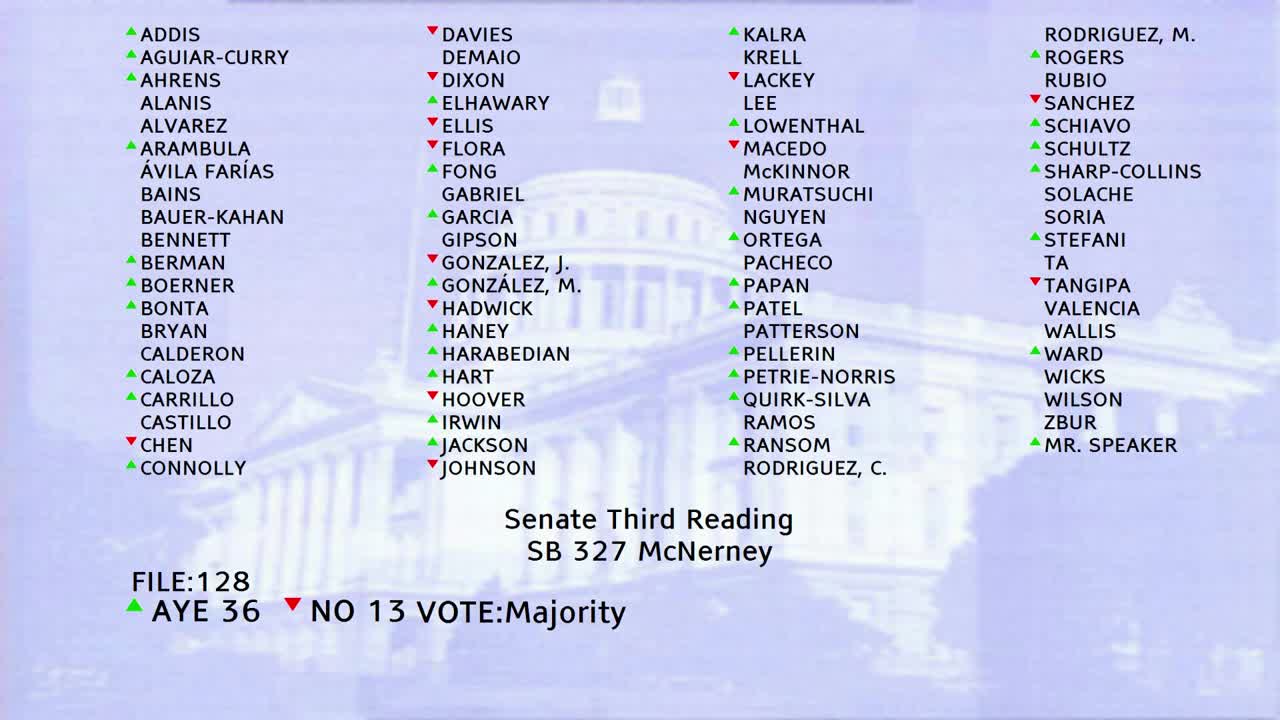 1MIN
Assembly Floor
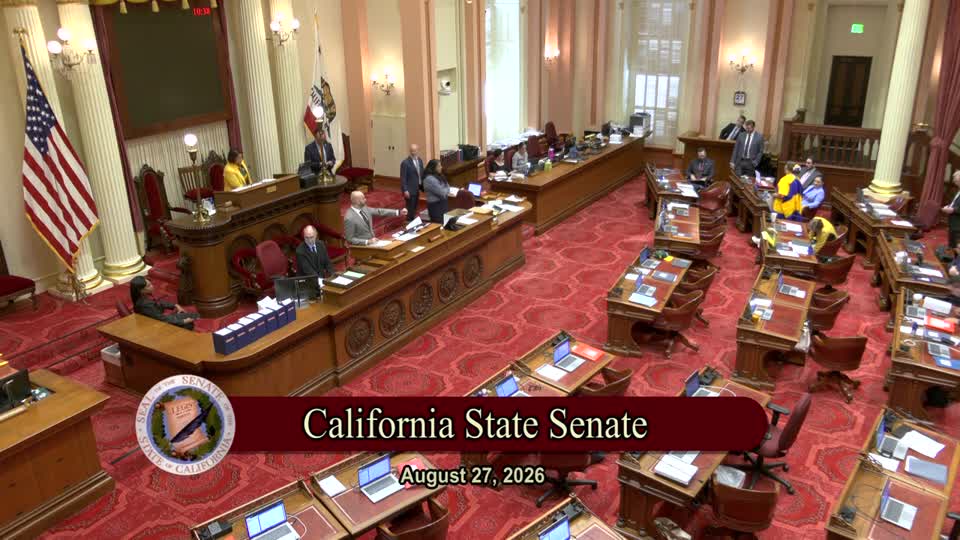 4MIN
Senate Floor
 18MIN
Senate Standing Committee on Public Safety
 10MIN
Senate Standing Committee on Judiciary
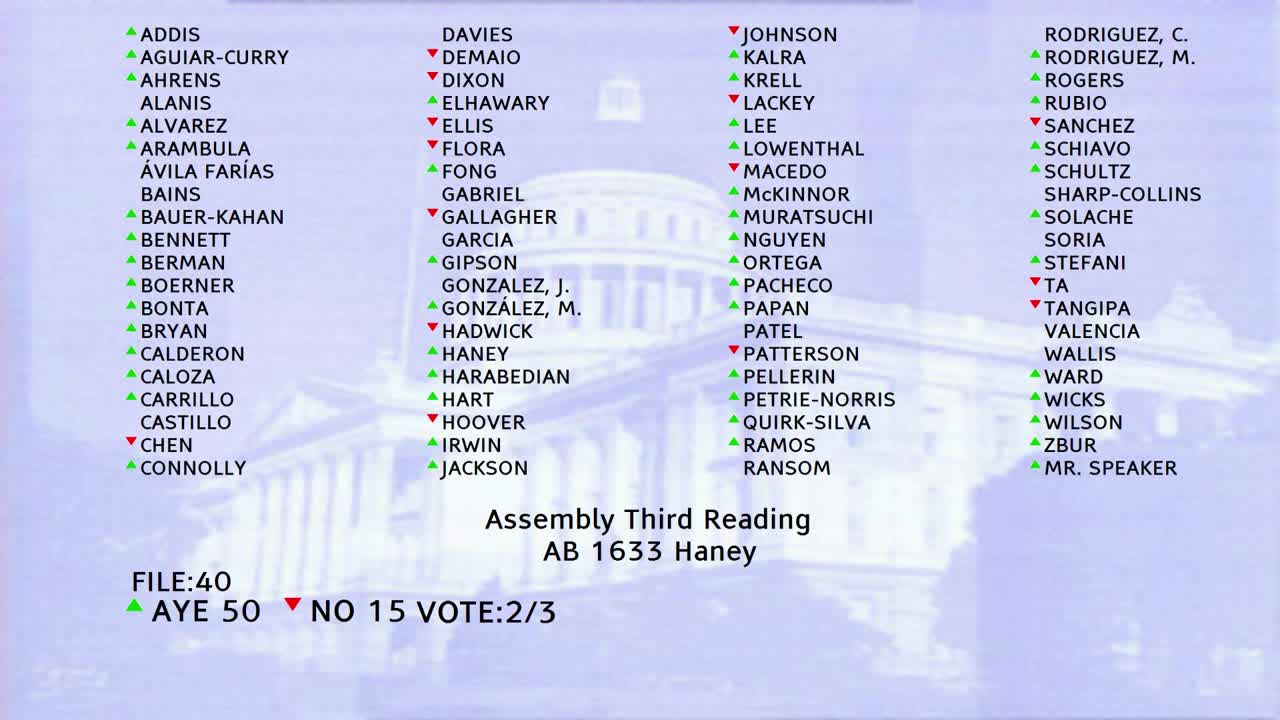 2MIN
Assembly Floor
 7MIN
Assembly Standing Committee on Public Safety
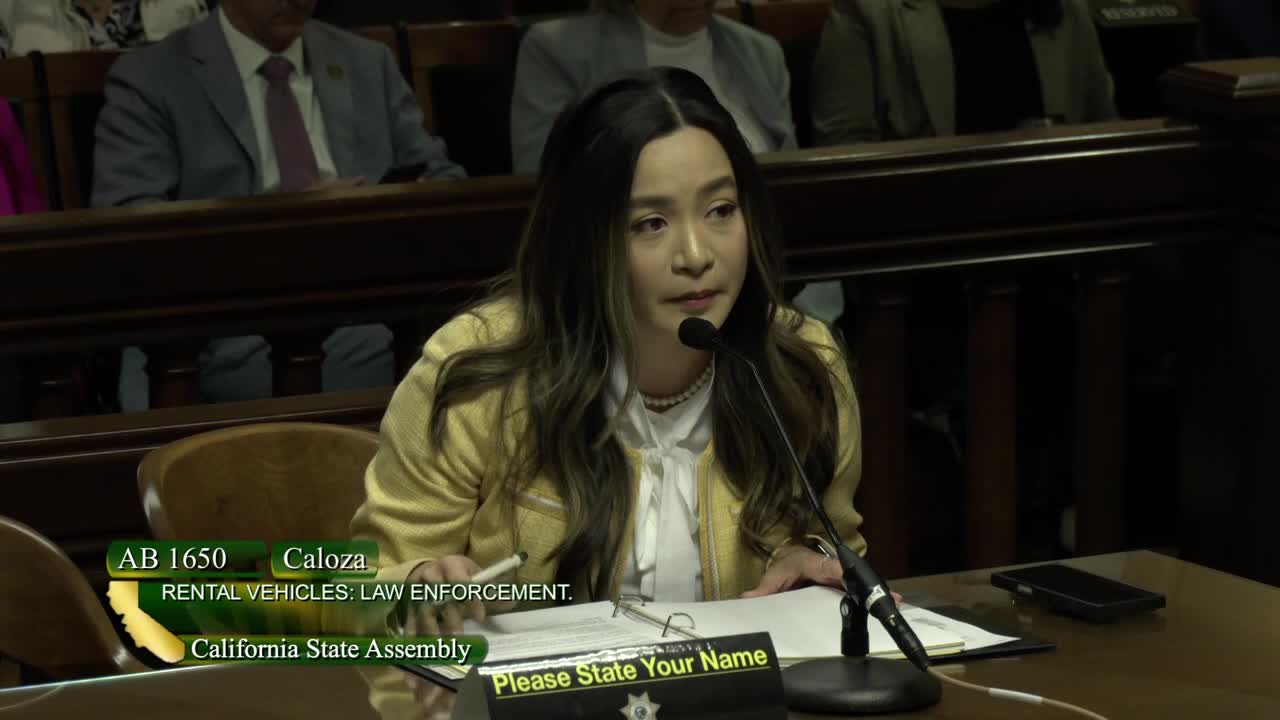 12MIN
Assembly Standing Committee on Judiciary
Bill Author