AB 1688: Child abuse or neglect: reporting.
- Session Year: 2025-2026
- House: Assembly
- Latest Version Date: 2026-09-30
Current Status:
Passed
(2026-09-30: Chaptered by Secretary of State - Chapter 888, Statutes of 2026.)
Introduced
In Committee
Awaiting First Chamber Vote
Passed First Chamber
In Committee
Awaiting Second Chamber Vote
Passed Second Chamber
Enacted
Existing law, the Child Abuse and Neglect Reporting Act, establishes procedures for the reporting and investigation of suspected child abuse or neglect. Existing law requires certain professionals, including specified health practitioners and social workers, known as mandated reporters, to report known or suspected child abuse or neglect to a local law enforcement agency or a county welfare or probation department, as specified. Existing law requires an employee of those agencies, in certain circumstances, to send or have sent, within 36 hours, a copy of a report made pursuant to these provisions to the attorney who represents the child, who is the subject of the report, in dependency court. Existing law requires the agency to maintain a copy of the written report and provide all information requested by the attorney for the child or the childs guardian ad litem within 30 days of the request.
This bill would require, if a county welfare agency substantiates a report for an incident that occurred in an out-of-home placement, including, but not limited to, placement in foster or congregate care, or if a child is removed from an out-of-home placement due to abuse or neglect, a county welfare agency to send notice, containing specified information, of the report to the attorney who represents a parent or legal guardian of the child in dependency court and, in the case of an Indian child, the tribal representative. The bill would make that requirement inapplicable to a parent whose parental rights have been terminated. The bill would require, if a county welfare agency substantiates a report for an incident that occurred in an out-of-home placement, including, but not limited to, placement in foster or congregate care, or if a child is removed from an out-of-home placement due to abuse or neglect, the agency to send a notice of the report, as specified, to all attorneys who represent a child with an open dependency case in that placement, as provided. By expanding the duties of local agencies that receive reports alleging abuse or neglect of children, this bill would impose a state-mandated local program.
The California Constitution requires the state to reimburse local agencies and school districts for certain costs mandated by the state. Statutory provisions establish procedures for making that reimbursement.
This bill would provide that no reimbursement is required by this act for a specified reason.
Existing law, the Child Abuse and Neglect Reporting Act, establishes procedures for the reporting and investigation of suspected child abuse or neglect. Existing law requires certain professionals, including specified health practitioners and social workers, known as mandated reporters, to report known or suspected child abuse or neglect to a local law enforcement agency or a county welfare or probation department, as specified. Existing law requires an employee of those agencies, in certain circumstances, to send or have sent, within 36 hours, a copy of a report made pursuant to these provisions to the attorney who represents the child, who is the subject of the report, in dependency court. Existing law requires the agency to maintain a copy of the written report and provide all information requested by the attorney for the child or the childs guardian ad litem within 30 days of the request.
If a substantiated incident occurs in an out-of-home placement or a child is removed from an out-of-home placement due to abuse or neglect, this bill would requireThis bill would require, if a county welfare agency substantiates a report for an incident that occurred in an out-of-home placement, including, but not limited to, placement in foster or congregate care, or if a child is removed from an out-of-home placement due to abuse or neglect, a county welfare agency to send notice notice, containing specified information, of the report to the attorney who represents a parent or legal guardian of the child in dependency court and, in the case of an Indian child, the tribal representative. The bill would make that requirement inapplicable to a parent whose parental rights have been terminated. The bill would prohibit the notice from disclosing the substance of the report, as specified. If substantiated abuse or neglect occurred in a placement or a child is removed from an out-of-home placement due to abuse or neglect, the bill would require The bill would require, if a county welfare agency substantiates a report for an incident that occurred in an out-of-home placement, including, but not limited to, placement in foster or congregate care, or if a child is removed from an out-of-home placement due to abuse or neglect, the agency to send a copy of the report notice of the report, as specified, to all attorneys who represent a child with an open dependency case in that placement, as provided. By expanding the duties of local agencies that receive reports alleging abuse or neglect of children, this bill would impose a state-mandated local program.
The California Constitution requires the state to reimburse local agencies and school districts for certain costs mandated by the state. Statutory provisions establish procedures for making that reimbursement.
This bill would provide that no reimbursement is required by this act for a specified reason.
Existing law, the Child Abuse and Neglect Reporting Act, establishes procedures for the reporting and investigation of suspected child abuse or neglect. Existing law requires certain professionals, including specified health practitioners and social workers, known as mandated reporters, to report known or suspected child abuse or neglect to a local law enforcement agency or a county welfare or probation department, as specified. Existing law requires an employee of those agencies, in certain circumstances, to send or have sent, within 36 hours, a copy of a report made pursuant to these provisions to the attorney who represents the child, who is the subject of the report, in dependency court. Existing law requires the agency to maintain a copy of the written report and provide all information requested by the attorney for the child or the childs guardian ad litem within 30 days of the request.
If an a substantiated incident occurs in an out-of-home placement, placement or a child is removed from an out-of-home placement due to abuse or neglect, this bill would require a county welfare agency to send notice of the report to the attorney who represents a parent or legal guardian of the child in dependency court. court and, in the case of an Indian child, the tribal representative. The bill would make that requirement inapplicable to a parent whose parental rights have been terminated. The bill would prohibit the notice from disclosing the substance of the report, as specified. If the suspected substantiated abuse or neglect occurred in a placement, placement or a child is removed from an out-of-home placement due to abuse or neglect, the bill would require a county welfare agency to send a copy of the report to all attorneys who represent a child with an open dependency case in that placement, as provided. By expanding the duties of local agencies that receive reports alleging abuse or neglect of children, this bill would impose a state-mandated local program.
The California Constitution requires the state to reimburse local agencies and school districts for certain costs mandated by the state. Statutory provisions establish procedures for making that reimbursement.
This bill would provide that no reimbursement is required by this act for a specified reason.
Existing law, the Child Abuse and Neglect Reporting Act, establishes procedures for the reporting and investigation of suspected child abuse or neglect. Existing law requires certain professionals, including specified health practitioners and social workers, known as mandated reporters, to report known or suspected child abuse or neglect to a local law enforcement agency or a county welfare or probation department, as specified. Existing law requires an employee of those agencies, in certain circumstances, to send or have sent, within 36 hours, a copy of a report made pursuant to these provisions to the attorney who represents the child, who is the subject of the report, in dependency court. Existing law requires the agency to maintain a copy of the written report and provide all information requested by the attorney for the child or the childs guardian ad litem within 30 days of the request.
This
If an incident occurs in an out-of-home placement, this bill would require an employee of those agencies to additionally a county welfare agency to send notice of the report to the attorney who represents a parent or legal guardian of the child, as specified. Under the bill, child in dependency court. The bill would make that requirement would not apply inapplicable to a parent whose parental rights have been terminated. The bill would prohibit the notice from disclosing the substance of the report, as specified. The If the suspected abuse or neglect occurred in a placement, the bill would require an employee of the a county welfare agency to send a copy of the report to all attorneys who represent children a child with an open dependency case in that placement if the suspected abuse or neglect occurred in a placement, as provided. By expanding the duties of local agencies that receive reports alleging abuse or neglect of children, this bill would impose a state-mandated local program.
The California Constitution requires the state to reimburse local agencies and school districts for certain costs mandated by the state. Statutory provisions establish procedures for making that reimbursement.
This bill would provide that no reimbursement is required by this act for a specified reason.
Existing law, the Child Abuse and Neglect Reporting Act, establishes procedures for the reporting and investigation of suspected child abuse or neglect. Existing law requires certain professionals, including specified health practitioners and social workers, known as mandated reporters, to report known or suspected child abuse or neglect to a local law enforcement agency or a county welfare or probation department, as specified. Existing law requires an employee of those agencies, in certain circumstances, to send or have sent, within 36 hours, a copy of a report made pursuant to these provisions to the attorney who represents the child, who is the subject of the report, in dependency court. Existing law requires the agency to maintain a copy of the written report and provide all information requested by the attorney for the child or the childs guardian ad litem within 30 days of the request.
This bill would require an employee of those agencies to additionally send a copy notice of the report to the attorney who represents a parent or legal guardian of the child, as specified. Under the bill, that requirement would not apply to a parent whose parental rights have been terminated. The bill would prohibit the notice from disclosing the substance of the report, as specified. The bill would require an employee of the agency to send a copy of the report to all attorneys who represent children with an open dependency case in that placement if the suspected abuse or neglect occurred in a placement, as provided. By expanding the duties of local agencies that receive reports alleging abuse or neglect of children, this bill would impose a state-mandated local program.
The California Constitution requires the state to reimburse local agencies and school districts for certain costs mandated by the state. Statutory provisions establish procedures for making that reimbursement.
This bill would provide that no reimbursement is required by this act for a specified reason.
Existing law, the Child Abuse and Neglect Reporting Act, establishes procedures for the reporting and investigation of suspected child abuse or neglect. Existing law requires certain professionals, including specified health practitioners and social workers, known as mandated reporters, to report known or suspected child abuse or neglect to a local law enforcement agency or a county welfare or probation department, as specified. Existing law requires an employee of those agencies, in certain circumstances, to send or have sent, within 36 hours, a copy of a report made pursuant to these provisions to the attorney who represents the child, who is the subject of the report, in dependency court. Existing law requires the agency to maintain a copy of the written report and provide all information requested by the attorney for the child or the childs guardian ad litem within 30 days of the request.
This bill would require an employee of those agencies to additionally send a copy of the report to the attorney who represents a parent or legal guardian of the child, as specified. Under the bill, that requirement would not apply to a parent whose parental rights have been terminated. The bill would require an employee of the agency to send a copy of the report to all attorneys who represent children with an open dependency case in that placement if the suspected abuse or neglect occurred in a placement, as provided. By expanding the duties of local agencies that receive reports alleging abuse or neglect of children, this bill would impose a state-mandated local program.
The California Constitution requires the state to reimburse local agencies and school districts for certain costs mandated by the state. Statutory provisions establish procedures for making that reimbursement.
This bill would provide that no reimbursement is required by this act for a specified reason.
(a)(1)An agency shall notify the licensing office with jurisdiction over the facility within 24 hours after the agency receives a report pursuant to Section 11166 that contains either of the following:
(A)A report of abuse alleged to have occurred in a facility licensed to care for children by the State Department of Social Services.
(B)A report of the death of a child who was, at the time of death, living at, enrolled in, or regularly attending a facility licensed to care for children by the State Department of Social Services unless the circumstances of the childs death are clearly unrelated to the childs care at the facility.
(2)The agency shall send the licensing agency a copy of its investigation and any other pertinent materials.
(b)(1)An employee of an agency specified in Section 11165.9 who has knowledge of, or observes in their professional capacity or within the scope of their employment, a child in protective custody whom the employee knows or reasonably suspects has been the victim of child abuse or neglect shall, within 36 hours, send or have sent to the attorney who represents the child in dependency court, a copy of the report prepared in accordance with Section 11166. The agency shall maintain a copy of the written report. All information requested by the attorney for the child or the childs guardian ad litem shall be provided by the agency within 30 days of the request.
(2)(A)When a county welfare agency substantiates a report made pursuant to paragraph (1) for an incident that occurred in an out-of-home placement, or a child is removed from an out-of-home placement due to abuse or neglect, the agency shall, within 36 hours, provide notice of the report to the attorney who represents a parent or legal guardian of the child in dependency court and, in the case of an Indian child, the tribal representative.
(B)For purposes of this paragraph, an out-of-home placement includes, but is not limited to, placement in foster care or congregate care, placement in a short-term residential therapeutic program facility, or a relative placement.
(3)(A)The notification requirement in paragraph (2) shall consist of notice that a report has been substantiated and shall not disclose the identity of the reporting party or any person named or referenced in the report, except as provided in this paragraph.
(B)The notice shall not disclose any personal information, as defined in subdivision (a) of Section 1798.3 of the Civil Code, or confidential information concerning a child, victim, witness, or another person except as otherwise authorized by law.
(C)The notice shall include the name of the child at issue.
(4)The requirement in paragraph (2) does not apply to a parent whose parental rights have been terminated pursuant to Section 366.26 of the Welfare and Institutions Code.
(5)(A)When a county welfare agency substantiates a report made pursuant to paragraph (1) for an incident that occurred in an out-of-home placement, or a child is removed from an out-of-home placement due to abuse or neglect, the agency shall, within 36 hours, provide notice of the report to all the attorneys who represent a child with an open dependency case in that placement.
(B)For purposes of this paragraph, an out-of-home placement includes, but is not limited to, placement in foster care or congregate care, placement in a short-term residential therapeutic program facility, or a relative placement.
(6)The notification requirement in paragraph (5) shall consist of notice that a report has been substantiated and shall not disclose the identity of the reporting party or any person named or referenced in the report. The notice shall not disclose any of the following:
(A)Information concerning the substance of the report.
(B)Information contained in an unfounded or inconclusive report.
(C)Personal information as defined in subdivision (a) of Section 1798.3 of the Civil Code.
(D)Confidential information concerning a child, victim, witness, or another person except as otherwise authorized by law.
(c)(1)When an agency receives a report pursuant to Section 11166 alleging abuse or neglect of the child of a minor parent or a nonminor dependent parent, the agency shall, within 36 hours, provide notice of the report to the attorney who represents the minor parent or nonminor dependent in dependency court.
(2)For purposes of this subdivision, minor parent and nonminor dependent parent have the same meaning as in Section 16002.5 of the Welfare and Institutions Code.
(d)Notwithstanding Chapter 3.5 (commencing with Section 11340) of Part 1 of Division 3 of Title 2 of the Government Code, the State Department of Social Services may implement, interpret, or make specific the amendments to this section made by Assembly Bill 1688 of the 202526 Regular Session of the Legislature, in whole or in part, by means of all-county letters or similar written instructions, without taking any further regulatory action. These all-county letters or similar written instructions shall have the same force and effect as regulations.
SEC. 2.To the extent that this act has an overall effect of increasing the costs already borne by a local agency for programs or levels of service mandated by the 2011 Realignment Legislation within the meaning of Section 36 of Article XIII of the California Constitution, it shall apply to local agencies only to the extent that the state provides annual funding for the cost increase. Any new program or higher level of service provided by a local agency pursuant to this act above the level for which funding has been provided shall not require a subvention of funds by the state or otherwise be subject to Section 6 of Article XIIIB of the California Constitution.
(a)(1)An agency shall notify the licensing office with jurisdiction over the facility within 24 hours after the agency receives a report pursuant to Section 11166 that contains either of the following:
(A)A report of abuse alleged to have occurred in a facility licensed to care for children by the State Department of Social Services.
(B)A report of the death of a child who was, at the time of death, living at, enrolled in, or regularly attending a facility licensed to care for children by the State Department of Social Services unless the circumstances of the childs death are clearly unrelated to the childs care at the facility.
(2)The agency shall send the licensing agency a copy of its investigation and any other pertinent materials.
(b)(1)An employee of an agency specified in Section 11165.9 who has knowledge of, or observes in their professional capacity or within the scope of their employment, a child in protective custody whom the employee knows or reasonably suspects has been the victim of child abuse or neglect shall, within 36 hours, send or have sent to the attorney who represents the child in dependency court, a copy of the report prepared in accordance with Section 11166. The agency shall maintain a copy of the written report. All information requested by the attorney for the child or the childs guardian ad litem shall be provided by the agency within 30 days of the request.
(2)(A)When a county welfare agency receives a substantiated substantiates a report made pursuant to paragraph (1) for an incident that occurred in an out-of-home placement, or a child is removed from an out-of-home placement due to abuse or neglect, the agency shall, within 36 hours, provide notice of the report to the attorney who represents a parent or legal guardian of the child in dependency court and, in the case of an Indian child, the tribal representative.
(B)For purposes of this paragraph, an out-of-home placement includes, but is not limited to, placement in foster care or congregate care, placement in a short-term residential therapeutic program facility, or a relative placement.
(3)The notification requirement in paragraph (2) shall consist of notice that a report has been made and shall not disclose any information concerning the substance of the report, including the identity of a person named or referenced in the report.(3)(A)The notification requirement in paragraph (2) shall consist of notice that a report has been substantiated and shall not disclose the identity of the reporting party or any person named or referenced in the report, except as provided in this paragraph.
(B)The notice shall not disclose any personal information, as defined in subdivision (a) of Section 1798.3 of the Civil Code, or confidential information concerning a child, victim, witness, or another person except as otherwise authorized by law.
(C)The notice shall include the name of the child at issue.
(4)The requirement in paragraph (2) does not apply to a parent whose parental rights have been terminated pursuant to Section 366.26 of the Welfare and Institutions Code.
(5)(A)If substantiated abuse or neglect occurred in a placement, or a child has been removed from an out-of-home placement due to abuse or neglect, all attorneys who represent a child with an open dependency case in that placement shall receive the notice described in paragraph (2) from the county welfare agency.(5)(A)When a county welfare agency substantiates a report made pursuant to paragraph (1) for an incident that occurred in an out-of-home placement, or a child is removed from an out-of-home placement due to abuse or neglect, the agency shall, within 36 hours, provide notice of the report to all the attorneys who represent a child with an open dependency case in that placement.
(B)For purposes of this paragraph, a an out-of-home placement includes, but is not limited to, placement in foster care or congregate care, placement in a short-term residential therapeutic program facility, or a relative placement.
(6)The notification requirement in paragraph (5) shall consist of notice that a report has been substantiated and shall not disclose the identity of the reporting party or any person named or referenced in the report. The notice shall not disclose any of the following:
(A)Information concerning the substance of the report.
(B)Information contained in an unfounded or inconclusive report.
(C)Personal information as defined in subdivision (a) of Section 1798.3 of the Civil Code.
(D)Confidential information concerning a child, victim, witness, or another person except as otherwise authorized by law.
(c)(1)When an agency receives a report pursuant to Section 11166 alleging abuse or neglect of the child of a minor parent or a nonminor dependent parent, the agency shall, within 36 hours, provide notice of the report to the attorney who represents the minor parent or nonminor dependent in dependency court.
(2)For purposes of this subdivision, minor parent and nonminor dependent parent have the same meaning as in Section 16002.5 of the Welfare and Institutions Code.
(d)Notwithstanding Chapter 3.5 (commencing with Section 11340) of Part 1 of Division 3 of Title 2 of the Government Code, the State Department of Social Services may implement, interpret, or make specific the amendments to this section made by Assembly Bill 1688 of the 202526 Regular Session of the Legislature, in whole or in part, by means of all-county letters or similar written instructions, without taking any further regulatory action. These all-county letters or similar written instructions shall have the same force and effect as regulations.
SEC. 2.To the extent that this act has an overall effect of increasing the costs already borne by a local agency for programs or levels of service mandated by the 2011 Realignment Legislation within the meaning of Section 36 of Article XIII of the California Constitution, it shall apply to local agencies only to the extent that the state provides annual funding for the cost increase. Any new program or higher level of service provided by a local agency pursuant to this act above the level for which funding has been provided shall not require a subvention of funds by the state or otherwise be subject to Section 6 of Article XIIIB of the California Constitution.
(a)(1)An agency shall notify the licensing office with jurisdiction over the facility within 24 hours after the agency receives a report pursuant to Section 11166 that contains either of the following:
(A)A report of abuse alleged to have occurred in a facility licensed to care for children by the State Department of Social Services.
(B)A report of the death of a child who was, at the time of death, living at, enrolled in, or regularly attending a facility licensed to care for children by the State Department of Social Services unless the circumstances of the childs death are clearly unrelated to the childs care at the facility.
(2)The agency shall send the licensing agency a copy of its investigation and any other pertinent materials.
(b)(1)An employee of an agency specified in Section 11165.9 who has knowledge of, or observes in their professional capacity or within the scope of their employment, a child in protective custody whom the employee knows or reasonably suspects has been the victim of child abuse or neglect shall, within 36 hours, send or have sent to the attorney who represents the child in dependency court, a copy of the report prepared in accordance with Section 11166. The agency shall maintain a copy of the written report. All information requested by the attorney for the child or the childs guardian ad litem shall be provided by the agency within 30 days of the request.
(2)When a county welfare agency receives a substantiated report pursuant to paragraph (1) for an incident that occurred in an out-of-home placement, placement, or a child is removed from an out-of-home placement due to abuse or neglect, the agency shall, within 36 hours, provide notice of the report to the attorney who represents a parent or legal guardian of the child in dependency court. court and, in the case of an Indian child, the tribal representative.
(3)The notification requirement in paragraph (2) shall consist of notice that a report has been made and shall not disclose any information concerning the substance of the report, including the identity of a person named or referenced in the report.
(4)The requirement in paragraph (2) does not apply to a parent whose parental rights have been terminated pursuant to Section 366.26 of the Welfare and Institutions Code.
(5)(A)If the suspected substantiated abuse or neglect occurred in a placement, placement, or a child has been removed from an out-of-home placement due to abuse or neglect, all attorneys who represent a child with an open dependency case in that placement shall receive the notice described in paragraph (2) from the county welfare agency.
(B)For purposes of this paragraph, a placement includes, but is not limited to, placement in foster care or congregate care, placement in a short-term residential therapeutic program facility, or a relative placement.
(c)(1)When an agency receives a report pursuant to Section 11166 alleging abuse or neglect of the child of a minor parent or a nonminor dependent parent, the agency shall, within 36 hours, provide notice of the report to the attorney who represents the minor parent or nonminor dependent in dependency court.
(2)For purposes of this subdivision, minor parent and nonminor dependent parent have the same meaning as in Section 16002.5 of the Welfare and Institutions Code.
SEC. 2.To the extent that this act has an overall effect of increasing the costs already borne by a local agency for programs or levels of service mandated by the 2011 Realignment Legislation within the meaning of Section 36 of Article XIII of the California Constitution, it shall apply to local agencies only to the extent that the state provides annual funding for the cost increase. Any new program or higher level of service provided by a local agency pursuant to this act above the level for which funding has been provided shall not require a subvention of funds by the state or otherwise be subject to Section 6 of Article XIIIB of the California Constitution.
(a)(1)When an agency receives a report pursuant to Section 11166 that contains either of the following, it shall, within 24 hours, notify the licensing office with jurisdiction over the facility:
(A)A report of abuse alleged to have occurred in facilities a facility licensed to care for children by the State Department of Social Services.
(B)A report of the death of a child who was, at the time of death, living at, enrolled in, or regularly attending a facility licensed to care for children by the State Department of Social Services, Services unless the circumstances of the childs death are clearly unrelated to the childs care at the facility.
(2)The agency shall send the licensing agency a copy of its investigation and any other pertinent materials.
(b)(1)Any An employee of an agency specified in Section 11165.9 who has knowledge of, or observes in their professional capacity or within the scope of their employment, a child in protective custody whom the employee knows or reasonably suspects has been the victim of child abuse or neglect shall, within 36 hours, send or have sent to the attorney who represents the child in dependency court, a copy of the report prepared in accordance with Section 11166. The agency shall maintain a copy of the written report. All information requested by the attorney for the child or the childs guardian ad litem shall be provided by the agency within 30 days of the request.
(2)When an a county welfare agency receives a report pursuant to paragraph (1), (1) for an incident that occurred in an out-of-home placement, the agency shall, within 36 hours, provide notice of the report to the attorney who represents a parent or legal guardian of the child in dependency court.
(3)The notification requirement in paragraph (2) shall consist of notice that a report has been made and shall not disclose any information concerning the substance of the report, including the identity of any a person named or referenced in the report.
(4)The requirement in paragraph (2) shall does not apply to a parent whose parental rights have been terminated pursuant to Section 366.26 of the Welfare and Institutions Code.
(5)(A)If the suspected abuse or neglect occurred in any a placement, all attorneys who represent children a child with an open dependency case in that placement shall receive the notice described in paragraph (2). For (2) from the county welfare agency.
(B)For purposes of this paragraph, a placement includes, but is not limited to, placement in foster care or congregate care, placement in a short-term residential therapeutic program facility, or a relative placement.
(c)(1)When an agency receives a report pursuant to Section 11166 alleging abuse or neglect of the child of a minor parent or a nonminor dependent parent, the agency shall, within 36 hours, provide notice of the report to the attorney who represents the minor parent or nonminor dependent in dependency court.
(2)For purposes of this subdivision, minor parent and nonminor dependent parent have the same meaning as in Section 16002.5 of the Welfare and Institutions Code.
SEC. 2.To the extent that this act has an overall effect of increasing the costs already borne by a local agency for programs or levels of service mandated by the 2011 Realignment Legislation within the meaning of Section 36 of Article XIII of the California Constitution, it shall apply to local agencies only to the extent that the state provides annual funding for the cost increase. Any new program or higher level of service provided by a local agency pursuant to this act above the level for which funding has been provided shall not require a subvention of funds by the state or otherwise be subject to Section 6 of Article XIIIB of the California Constitution.
(a)(1)When an agency receives a report pursuant to Section 11166 that contains either of the following, it shall, within 24 hours, notify the licensing office with jurisdiction over the facility:
(A)A report of abuse alleged to have occurred in facilities licensed to care for children by the State Department of Social Services.
(B)A report of the death of a child who was, at the time of death, living at, enrolled in, or regularly attending a facility licensed to care for children by the State Department of Social Services, unless the circumstances of the childs death are clearly unrelated to the childs care at the facility.
(2)The agency shall send the licensing agency a copy of its investigation and any other pertinent materials.
(b)(1)Any employee of an agency specified in Section 11165.9 who has knowledge of, or observes in their professional capacity or within the scope of their employment, a child in protective custody whom the employee knows or reasonably suspects has been the victim of child abuse or neglect shall, within 36 hours, send or have sent to the attorney who represents the child in dependency court, a copy of the report prepared in accordance with Section 11166. The agency shall maintain a copy of the written report. All information requested by the attorney for the child or the childs guardian ad litem shall be provided by the agency within 30 days of the request.
(2)When an agency receives a report pursuant to paragraph (1), the agency shall, within 36 hours, provide notice of the report to the attorney who represents a parent or legal guardian of the child in dependency court.
(3)The notification requirement in paragraph (2) shall consist of notice that a report has been made and shall not disclose any information concerning the substance of the report, including the identity of any person named or referenced in the report.
(3)(4)The requirement in paragraph (2) shall not apply to a parent whose parental rights have been terminated pursuant to Section 366.26 of the Welfare and Institutions Code.
(4)(5)If the suspected abuse or neglect occurred in any placement, all attorneys who represent children with an open dependency case in that placement shall receive the notice described in paragraph (2). For purposes of this paragraph, a placement includes, but is not limited to, placement in foster care or congregate care, placement in a short-term residential therapeutic program facility, or a relative placement.
(c)(1)When an agency receives a report pursuant to Section 11166 alleging abuse or neglect of the child of a minor parent or a nonminor dependent parent, the agency shall, within 36 hours, provide notice of the report to the attorney who represents the minor parent or nonminor dependent in dependency court.
(2)For purposes of this subdivision, minor parent and nonminor dependent parent have the same meaning as in Section 16002.5 of the Welfare and Institutions Code.
SEC. 2.To the extent that this act has an overall effect of increasing the costs already borne by a local agency for programs or levels of service mandated by the 2011 Realignment Legislation within the meaning of Section 36 of Article XIII of the California Constitution, it shall apply to local agencies only to the extent that the state provides annual funding for the cost increase. Any new program or higher level of service provided by a local agency pursuant to this act above the level for which funding has been provided shall not require a subvention of funds by the state or otherwise be subject to Section 6 of Article XIIIB of the California Constitution.
(a)(1)When an agency receives a report pursuant to Section 11166 that contains either of the following, it shall, within 24 hours, notify the licensing office with jurisdiction over the facility:
(A)A report of abuse alleged to have occurred in facilities licensed to care for children by the State Department of Social Services.
(B)A report of the death of a child who was, at the time of death, living at, enrolled in, or regularly attending a facility licensed to care for children by the State Department of Social Services, unless the circumstances of the childs death are clearly unrelated to the childs care at the facility.
(2)The agency shall send the licensing agency a copy of its investigation and any other pertinent materials.
(b)(1)Any employee of an agency specified in Section 11165.9 who has knowledge of, or observes in their professional capacity or within the scope of their employment, a child in protective custody whom the employee knows or reasonably suspects has been the victim of child abuse or neglect shall, within 36 hours, send or have sent to the attorney who represents the child in dependency court, a copy of the report prepared in accordance with Section 11166. The agency shall maintain a copy of the written report. All information requested by the attorney for the child or the childs guardian ad litem shall be provided by the agency within 30 days of the request.
(2)When an agency receives a report pursuant to paragraph (1), the agency shall, within 36 hours, provide notice of the report to the attorney who represents a parent or legal guardian of the child in dependency court.
(3)The requirement in paragraph (2) shall not apply to a parent whose parental rights have been terminated pursuant to Section 366.26 of the Welfare and Institutions Code.
(4)If the suspected abuse or neglect occurred in any placement, all attorneys who represent children with an open dependency case in that placement shall receive the notice described in paragraph (2). For purposes of this paragraph, a placement includes, but is not limited to, placement in foster care or congregate care, placement in a short-term residential therapeutic program facility, or a relative placement.
(c)(1)When an agency receives a report pursuant to Section 11166 alleging abuse or neglect of the child of a minor parent or a nonminor dependent parent, the agency shall, within 36 hours, provide notice of the report to the attorney who represents the minor parent or nonminor dependent in dependency court.
(2)For purposes of this subdivision, minor parent and nonminor dependent parent have the same meaning as in Section 16002.5 of the Welfare and Institutions Code.
SEC. 2.To the extent that this act has an overall effect of increasing the costs already borne by a local agency for programs or levels of service mandated by the 2011 Realignment Legislation within the meaning of Section 36 of Article XIII of the California Constitution, it shall apply to local agencies only to the extent that the state provides annual funding for the cost increase. Any new program or higher level of service provided by a local agency pursuant to this act above the level for which funding has been provided shall not require a subvention of funds by the state or otherwise be subject to Section 6 of Article XIIIB of the California Constitution.
|
Date
|
Status
|
|---|---|
| Sep 30, 2026 | Chaptered by Secretary of State - Chapter 888, Statutes of 2026. |
| Sep 30, 2026 | Approved by the Governor. |
| Sep 3, 2026 | Enrolled and presented to the Governor at 4 p.m. |
| Aug 26, 2026 | Senate amendments concurred in. To Engrossing and Enrolling. (Ayes 79. Noes 0. Page 6655.). |
| Aug 26, 2026 | Senate amendments concurred in. To Engrossing and Enrolling. (Ayes 79. Noes 0.). |
| Aug 26, 2026 | In Assembly. Concurrence in Senate amendments pending. |
| Aug 26, 2026 | Read third time. Passed. Ordered to the Assembly. (Ayes 39. Noes 0. Page 5850.). |
| Aug 26, 2026 | Read third time. Passed. Ordered to the Assembly. (Ayes 39. Noes 0.). |
| Aug 24, 2026 | Read second time. Ordered to third reading. |
| Aug 21, 2026 | Read third time and amended. Ordered to second reading. |
| Aug 17, 2026 | Read second time. Ordered to third reading. |
| Aug 13, 2026 | Read second time and amended. Ordered returned to second reading. |
| Aug 13, 2026 | From committee: Amend, and do pass as amended. (Ayes 7. Noes 0.) (August 13). |
| Aug 3, 2026 | In committee: Referred to APPR. suspense file. |
| Jun 29, 2026 | From committee: Do pass and re-refer to Com. on APPR. (Ayes 5. Noes 0.) (June 29). Re-referred to Com. on APPR. |
| Jun 17, 2026 | Read second time and amended. Re-referred to Com. on HUMAN S. |
| Jun 16, 2026 | From committee: Amend, and do pass as amended and re-refer to Com. on HUMAN S. with recommendation: To Consent Calendar. (Ayes 6. Noes 0.) (June 16). |
| Jun 3, 2026 | Referred to Coms. on PUB. S. and HUMAN S. |
| May 22, 2026 | In Senate. Read first time. To Com. on RLS. for assignment. |
| May 22, 2026 | Read third time. Passed. Ordered to the Senate. (Ayes 76. Noes 0. Page 5255.) |
| May 22, 2026 | Read third time. Passed. Ordered to the Senate. (Ayes 76. Noes 0.) |
| May 18, 2026 | Read second time. Ordered to third reading. |
| May 14, 2026 | From committee: Do pass. (Ayes 15. Noes 0.) (May 14). |
| Apr 29, 2026 | In committee: Set, first hearing. Referred to APPR. suspense file. |
| Apr 15, 2026 | From committee: Do pass and re-refer to Com. on APPR. with recommendation: To Consent Calendar. (Ayes 9. Noes 0.) (April 14). Re-referred to Com. on APPR. |
| Mar 16, 2026 | Re-referred to Com. on PUB. S. |
| Mar 12, 2026 | Read second time and amended. |
| Mar 11, 2026 | From committee: Amend, and do pass as amended and re-refer to Com. on PUB. S. (Ayes 6. Noes 0.) (March 10). |
| Feb 17, 2026 | Referred to Coms. on HUM. S. and PUB. S. |
| Feb 4, 2026 | From printer. May be heard in committee March 6. |
| Feb 3, 2026 | Read first time. To print. |
|
Date
|
Description
|
Location
|
Votes
|
|
|---|---|---|---|---|
| Aug 26, 2026 | AB 1688 Carrillo Concurrence in Senate Amendments | Assembly Floor |
Passed |
|
| Aug 26, 2026 | Assembly 3rd Reading AB1688 Carrillo et al. By Wahab | Senate Floor |
Passed |
|
| Aug 13, 2026 | Do pass as amended | Senate Standing Committee on Appropriations |
Passed |
|
| Aug 3, 2026 | Placed on suspense file | Senate Standing Committee on Appropriations |
Passed |
|
| Jun 29, 2026 | Do pass, but first be re-referred to the Committee on [Appropriations] | Senate Standing Committee on Human Services |
Passed |
|
| Jun 16, 2026 | Do pass as amended, but first amend, and re-refer to the Committee on [Human Services] with the recommendation: To Consent Calendar | Senate Standing Committee on Public Safety |
Passed |
|
| May 22, 2026 | AB 1688 Carrillo Assembly Third Reading | Assembly Floor |
Passed |
|
| May 14, 2026 | Do pass. | Assembly Standing Committee on Appropriations |
Passed |
|
| Apr 14, 2026 | Do pass and be re-referred to the Committee on [Appropriations] with recommendation: To Consent Calendar | Assembly Standing Committee on Public Safety |
Passed |
|
| Mar 10, 2026 | Do pass as amended and be re-referred to the Committee on [Public Safety] | Assembly Standing Committee on Human Services |
Passed |
This list shows positions taken on this bill by organizations on the date displayed, which is linked to the original source.
Positions by individuals are not included.
|
Organization
|
Position
|
Date
|
|---|---|---|
| 11:11 Media Impact | ** Support | |
| 1 Private Individual | ** Support | |
| Alliance for Children's Rights | ** Support | |
| California Alliance Of Child And Family Services | ** Support | |
| California Lawyers Association, Family Law Section | ** Support | |
| California Public Defenders Association | ** Support | |
| Children'S Law Center Of California | ** Support | |
| Children's Law Center of California (Co-Sponsor) | ** Support | |
| Dependency Legal Services | ** Support | |
| Dependency Legal Services (Co-Sponsor) | ** Support | |
| Families Inspiring Reentry & Reunification 4 Everyone (FIR4E) | ** Support | |
| Los Angeles Dependency Lawyers, Inc. | ** Support | |
| Public Counsel | ** Support | |
| Riverside County Sheriff’s Office | ** Against |
CONCURRENCE IN SENATE AMENDMENTS
CSA1 Bill Id:AB 1688
Author:(Carrillo)
As Amended Ver:August 21, 2026
Majority vote
SUMMARY
Requires a county welfare agency, within 36 hours, to notify the attorney representing a child's parent in dependency court when the agency substantiates a report of abuse or neglect that occurred in the child's out-of-home placement or when a child is removed from a placement due to abuse or neglect. Requires the agency to provide the same notice to all attorneys representing children with open dependency cases in that placement. Limits the notice to the fact that a report has been substantiated, barring disclosure of the reporting party's identity, anyone named in the report, and personal or confidential information.
Senate Amendments
- Narrow conditions for when parent's counsel is notified from whenever an agency receives a report about a child in protective custody to now include two circumstances: when the county welfare agency has substantiated a report for an incident that occurred in an out-of-home placement, or when a child is removed from an out-of-home placement due to abuse or neglect.
- Limit duty to notify specifically to county welfare agencies instead of any agency.
- Add the requirement for a tribal representative to also receive notice to parent's counsel in the case of an Indian child.
- Replace the requirement for a copy of the report to other children's attorneys with a notice of the report within 36 hours.
- Enumerate what the notice may and may not contain.
- Allow the California Department of Social Services (CDSS) to implement, interpret, or make specific the bill's changes by all-county letter or similar written instruction without further regulatory action.
- Make conforming and technical changes.
COMMENTS
Reports of Suspected Abuse and Neglect. California's child welfare services system exists to protect children from abuse and neglect, and in doing so, to provide for their health, safety, and overall well-being. When suspicions of abuse or neglect arise, Child Protective Services is tasked with investigating the allegations reported to agencies by mandated reporters and others.
When there is alleged abuse in a facility licensed by CDSS or a report of the death of a child who was living in a CDSS licensed facility during the time of death, agencies are required to notify CDSS' licensing office within 24 hours of receiving a report of abuse.
Under existing law, a report filed that alleges suspected abuse or neglect, known as the Suspected Child Abuse Report (SCAR), must include specified information about the incident, person reporting, the involved parties, information regarding a description of the incident and narrative, and must be cross reported between law enforcement and child welfare.
Current law requires that when an agency receives a report of reasonably suspected abuse or neglect, there is a process to determine whether that child is in protective custody, meaning there is an open dependency case, or they are already in a foster care placement. If protective custody status is confirmed, the agency has 36 hours to send a copy of the report to the attorney representing the child in dependency court.
Maltreatment in Foster Care. CDSS monitors the safety of youth in foster care by specifically tracking reports made against foster parents, kinship caregivers, or congregate care staff in order to ensure that children are safer in their placements than they were in their original homes.
The Children's Bureau, part of the federal Office of the Administration for Children and Families (ACF), found in 2022 that 169 California children were victims of abuse or maltreatment by their foster parents. Nationally, six children were killed by foster parents in that same year.
According to the Child Maltreatment 2024 report published by ACF, California recorded 44,943 total substantiated victims of maltreatment across the state. And according to the California Child Welfare Indicators Project, the rate of maltreatment in California occurring specifically while children were in foster care was 8.57 per 100,000 days of care. This rate is better than the national performance standard of 9.07, but still troubling to have any child re-traumatized as wards of the state.
Attorneys in Dependency Cases. Under existing law, attorneys are provided to parents and the children of those with dependency cases. In all stages of dependency proceedings, parents are entitled to appointed counsel if they are unable to afford private representation, and children are entitled to independent legal counsel. County public defender offices, conflict panels, or contracted nonprofit law offices typically provide representation, depending on the county, with funding administered at the county level, with significant variation in caseloads, compensation rates, and quality across California's 58 counties.
The child's attorney has an independent duty to investigate and advocate for the child's legal interests, which can differ from the child's expressed wishes. Children may also have a Court Appointed Special Advocate (CASA), in addition to legal counsel, and those roles are distinct and non-duplicative. Where the child's expressed preferences conflict with the attorney's assessment of the child's best interests, the attorney must exercise independent professional judgment consistent with applicable Rules of Professional Conduct.
Under current law, the child's attorney in a dependency case receives a copy of the SCAR within 36 hours of its submission to an agency.
The parent's attorney is appointed to represent the parent's legal interests throughout the dependency proceedings which are centered on reunification with the child or, where reunification is not pursued, on protecting the parent's legal rights regarding termination of parental rights, visitation, and case planning. Because the parent's primary legal interest in most dependency cases is reunification, the parent's attorney may raise placement-related arguments whenever the placement directly affects the feasibility or quality of reunification services and contact.
Currently, there isn't a process or requirement to provide notice to the attorneys of other children placed in the same home to receive notice of reasonable suspicion of allegations of abuse or neglect. Existing law does not require, if the alleged abuse occurred in a foster home, the attorneys for other foster children in the home to be notified that a report has been filed.
Prior Legislation. AB 1192 (Carrillo) of 2025 was similar to this bill but required a redacted copy of the SCAR to be provided to the parent's attorney and all attorneys representing children in that placement. The redacted copy required personal identifying information to be removed. AB 1192 was held on the Committee on Appropriations suspense file. Advocates contend that this bill removed the requirement for a full copy of a report and instead requires only a notice of the report; therefore, it circumvents the need for redaction because no personally identifying information is included in a notice.
According to the Author
"Each year, 60,000 children move in and out of the foster care system in California, with more than half residing in Southern California. These youth have often experienced abuse, neglect, and trauma, which can have lasting effects on their well-being. However, gaps in reporting requirements leave them vulnerable to further harm. [This bill] reinforces California's commitment to protecting foster youth by strengthening notice requirements to ensure that all relevant parties are informed. Greater transparency in reporting cases of abuse or neglect is essential to safeguarding foster youth, and this bill reflects our shared responsibility to protect the most vulnerable children in our state."
Arguments in Support
The California Public Defenders Association writes, "Meaningful representation is best served when attorneys receive timely access to information affecting their clients. Dependency proceedings involve some of the most consequential decisions our courts make, including decisions that may result in the separation of families or the permanent termination of parental rights. Timely access to information allows attorneys to advise clients, investigate concerns, engage supportive services, and advocate effectively on behalf of children and families."
Arguments in Opposition
None on file.
FISCAL COMMENTS
According to the Senate Appropriations Committee on August 13, 2026, up to $2.4 million for county social workers to send required reports. (General Fund)
Estimated one time information technology upgrade costs of $825,000 to CDSS. (General Fund).
VOTES:
ASM HUMAN SERVICES: 6-0-1
YES: Lee, Castillo, Calderon, Elhawary, Jackson, Tangipa
ABS, ABST OR NV: Celeste Rodriguez
ASM PUBLIC SAFETY: 9-0-0
YES: Schultz, Alanis, Mark González, Haney, Harabedian, Lackey, Nguyen, Ramos, Sharp-Collins
ASM APPROPRIATIONS: 15-0-0
YES: Wicks, Hoover, Aguiar-Curry, Calderon, Caloza, Dixon, Fong, Mark González, Krell, Pacheco, Pellerin, Sharp-Collins, Solache, Ta, Tangipa
ASSEMBLY FLOOR: 76-0-4
YES: Addis, Aguiar-Curry, Ahrens, Alanis, Alvarez, Ávila Farías, Bains, Bauer-Kahan, Bennett, Berman, Boerner, Bonta, Bryan, Calderon, Caloza, Carrillo, Castillo, Connolly, Davies, DeMaio, Dixon, Elhawary, Ellis, Flora, Fong, Gallagher, Garcia, Gipson, Jeff Gonzalez, Mark González, Hadwick, Haney, Harabedian, Hart, Hoover, Irwin, Jackson, Johnson, Kalra, Krell, Lackey, Lee, Lowenthal, Macedo, McKinnor, Muratsuchi, Nguyen, Ortega, Pacheco, Papan, Patel, Patterson, Pellerin, Petrie-Norris, Quirk-Silva, Ramos, Ransom, Michelle Rodriguez, Rogers, Blanca Rubio, Sanchez, Schiavo, Schultz, Sharp-Collins, Solache, Soria, Stefani, Ta, Tangipa, Valencia, Wallis, Ward, Wicks, Wilson, Zbur, Rivas
ABS, ABST OR NV: Arambula, Chen, Gabriel, Celeste Rodriguez
UPDATED
VERSION: August 21, 2026
CONSULTANT: Jessica Langtry / HUM. S. / (916) 319-2089 FN: 0004298
SENATE RULES COMMITTEE Office of Senate Floor Analyses (916) 651-4171 | AB 1688 |
THIRD READING
Bill No: AB 1688
Author: Carrillo (D), et al.
Amended: 8/21/26 in Senate
Vote: 21
SENATE PUBLIC SAFETY COMMITTEE: 6-0, 6/16/26
AYES: Arreguín, Seyarto, Caballero, Cortese, Pérez, Wiener
SENATE HUMAN SERVICES COMMITTEE: 5-0, 6/29/26
AYES: Becker, Ochoa Bogh, Laird, Pérez, Weber Pierson
ASSEMBLY FLOOR: 76-0, 5/22/26 - See last page for vote
SUBJECT: Child abuse or neglect: reporting
SOURCE: Children’s Law Center of California
Dependency Legal Services
DIGEST:
This bill mandates information sharing regarding substantiated abuse or neglect that occurred in an out-of-home placement or removal of a child from an out-of-home placement due to abuse or neglect with attorneys who represent the parents of the child in dependency court or with a tribal representative, as well as with attorneys or representatives for children who may not be involved with the allegations but are residing in a placement where abuse or neglect occurred, as specified.
Senate Floor Amendments of 08/21/26 shift responsibility for substantiating a report of abuse or neglect to the county welfare agency, provide a limited definition of out-of-home placement, require that the notice provided to attorneys not include any personal information, as specified, hinge notification to attorneys on the county welfare agency’s substantiation of the report rather than when the agency receives the substantiated report, and authorize the State Department of Social Servies to implement, interpret, or make specific the provisions of this bill by means of all-county letters or similar written instructions without taking any further regulatory action, as specified.
ANALYSIS:
Existing law:
- Establishes Child Abuse and Neglect Reporting Act (CANRA) to protect children from abuse and neglect by requiring certain individuals, known as mandated reporters, to report known cases of child abuse or neglect to designated agencies. (Penal (Pen.) Code, §§ 11164 et seq.)
- Requires mandated reporters to make a report to any agency whenever in the mandated reporter’s professional capacity or within the scope of the mandated reporter’s employment the mandated reporter has knowledge of or observes a child whom they know, or reasonably suspect, has been the victim of child abuse or neglect. (Pen. Code, § 11165.9; Pen. Code, § 11166, subd. (a).)
- Enumerates the types of conduct that must be reported, establishes confidentiality for reporters, and authorizes the agency receiving the report to evaluate and determine if an investigation and removal of the child from their home shall take place. (Pen. Code, §§ 11165.1-11165.6.)
- Requires the initial report to be made by telephone to the agency immediately or as soon as is practicably possible, and to prepare and send, fax, or electronically transmit a written follow-up report within 36 hours of receiving the information concerning the incident. (Pen. Code, § 11166, subd. (a).)
- Requires an agency that receives a report from a mandated reporter that contains either a report of abuse to have occurred in facilities licensed to care for children by the California Department of Social Services (CDSS) or a report of death of a child who was, at the time of death, living at, enrolled or regularly attending a facility licensed to care for children by CDSS – unless the circumstances of the child’s death are clearly unrelated to the child’s care – to, within 24 hours, notify the licensing office with jurisdiction over the facility and to send the licensing agency a copy of its investigation. (Pen. Code, § 11166.1, subd. (a).)
- Requires any employee of an agency who has knowledge of, or observes in their professional capacity or within the scope of their employment, a child in protective custody whom the employee knows or reasonably suspects has been the victim of child abuse or neglect to, within 36 hours, send to the attorney who represents the child in dependency court, a copy of the report prepared in accordance with the CANRA. (Pen. Code, § 11166.1, subd. (b).)
- Requires the agency to maintain a copy of the written report and for all information requested by the attorney for the child to be provided by the agency within 30 days of the request. (Pen. Code, § 11166.1, subd. (b).)
- Requires that a child’s counsel makes representations of the child’s interests and empowers counsel to make or cause to have made any further investigations that they deem in good faith to be reasonably necessary to ascertain the facts, including investigating the interests of the child beyond the juvenile proceedings and reporting those interests to the court should the child need to be protected. (Welfare & Institutions Code, § 317, subd. (e).)
This bill:
- Provides that, when a county welfare agency substantiates a report for an incident that occurred in an out-of-home placement, or a child is removed from an out-of-home placement due to abuse or neglect, the agency shall, within 36 hours, provide notice of the report to the attorney who represents a parent or legal guardian of the child in dependency court and, in the case of an Indian child, the tribal representative.
- Requires that the above notice to the attorney who represents a parent or legal guardian of a child consist of notice that a report has been substantiated, does not disclose the identity of the reporting party or any person named or reference in the report, including the personal information or confidential information concerning a child, victim, witness, or other person except as otherwise authorized by law, and does include the name of the child at issue.
- Provides that if the county welfare agency substantiates a report abuse or neglect occurred in a placement, or a child has been removed from an out-of-home placement due to abuse or neglect, all attorneys who represent a child with an open dependency case in that placement shall receive the notice.
- Requires that the notice to all attorneys who represent children in that placement, as specified above, states only that a report has been substantiated, and forbids the disclosure of the identity of the reporting party or any person named or reference in the report, any information regarding the substance of the report, information contained in an unfounded or inconclusive report, certain personal information, and confidential information concerning a child, victim, witness, or another person except as authorized by law.
- Defines “out-of-home placement” to be inclusive of placement in foster care or congregate care, placement in a short-term residential therapeutic program facility, or a relative placement.
- Does not apply to a parent whose parental rights have been terminated, as specified.
- Authorizes the State Department of Social Servies to implement, interpret, or make specific the provisions of this bill using all-county letters or similar written instructions, without taking any further regulatory action, and requires those letters or instructions to have the same force and effect as regulations.
Background
Current Reporting Requirements. California’s child welfare services system exists to protect children from abuse and neglect, and in doing so, to provide for their health, safety, and overall well-being. When suspicions of abuse or neglect arise, Child Protective Services (CPS) is tasked with investigating the allegations reported to agencies by mandated reporters and others. When there is alleged abuse in a facility licensed by CDSS or a report of the death of a child who was living in a CDSS licensed facility during the time of death, agencies are required to notify CDSS' licensing office within 24 hours of receiving a report of abuse. A report filed that alleges suspected abuse or neglect, known as the Suspected Child Abuse Report (SCAR), must include specific information about the involved parties and incident and must be cross reported between law enforcement and child welfare.
The Children’s Bureau, part of the federal Office of the Administration for Children and Families (ACF), found, in 2022, that 169 California children were victims of abuse or maltreatment by their foster parents. According to the Child Maltreatment 2024 report published by ACF, California recorded 44,943 total substantiated victims of maltreatment across the state. Further, according to the California Child Welfare Indicators Project, the rate of maltreatment in California occurring specifically while children were in foster care was 8.57 per 100,000 days of care.
Current Rights to Representation. Under existing law, attorneys are provided to parents and children of those with dependency cases. The child’s attorney has an independent duty to investigate and advocate for the child’s legal interests, which can differ from the child’s expressed wishes. Where the child’s expressed preferences conflict with the attorney’s assessment of the child's best interests, the attorney must exercise independent professional judgment consistent with applicable Rules of Professional Conduct. Under current law, the child’s attorney in a dependency case receives a copy of the SCAR within 36 hours of its submission to an agency.
The parent’s attorney is appointed to represent the parent’s legal interests throughout the dependency proceedings which are centered on reunification with the child or, where reunification is not pursued, on protecting the parent's legal rights regarding termination of parental rights, visitation, and case planning. Because the parent’s primary legal interest in most dependency cases is reunification, the parent’s attorney may raise placement-related arguments whenever the placement directly affects the feasibility or quality of reunification services and contact. Alleged abuse or wrongdoing occurring in a placement directly impacts a child’s interest and may affect the outcome of dependency proceedings.
FISCAL EFFECT: Appropriation: No Fiscal Com.: Yes Local: Yes
According to the Senate Committee on Appropriations:
Up to $2.4 million for county social workers to send required reports. (General Fund). Estimated one time information technology upgrade costs of $825,000 to CDSS. (General Fund)
SUPPORT: (Verified 8/21/26)
California Alliance of Child and Family Services
California Lawyers Association, Family Law Section
California Public Defenders Association
Children's Law Center of California
Dependency Legal Services
Public Counsel
OPPOSITION: (Verified 8/21/26)
None received
ASSEMBLY FLOOR: 76-0, 5/22/26
AYES: Addis, Aguiar-Curry, Ahrens, Alanis, Alvarez, Ávila Farías, Bains, Bauer-Kahan, Bennett, Berman, Boerner, Bonta, Bryan, Calderon, Caloza, Carrillo, Castillo, Connolly, Davies, DeMaio, Dixon, Elhawary, Ellis, Flora, Fong, Gallagher, Garcia, Gipson, Jeff Gonzalez, Mark González, Hadwick, Haney, Harabedian, Hart, Hoover, Irwin, Jackson, Johnson, Kalra, Krell, Lackey, Lee, Lowenthal, Macedo, McKinnor, Muratsuchi, Nguyen, Ortega, Pacheco, Papan, Patel, Patterson, Pellerin, Petrie-Norris, Quirk-Silva, Ramos, Ransom, Michelle Rodriguez, Rogers, Blanca Rubio, Sanchez, Schiavo, Schultz, Sharp-Collins, Solache, Soria, Stefani, Ta, Tangipa, Valencia, Wallis, Ward, Wicks, Wilson, Zbur, Rivas
NO VOTE RECORDED: Arambula, Chen, Gabriel, Celeste Rodriguez
Prepared by: Natalia DaSilva Telles / PUB. S. /916-651-4118
8/24/26 11:01:36
**** END ****
SENATE RULES COMMITTEE Office of Senate Floor Analyses (916) 651-4171 | AB 1688 |
THIRD READING
Bill No: AB 1688
Author: Carrillo (D), et al.
Amended: 8/13/26 in Senate
Vote: 21
SENATE PUBLIC SAFETY COMMITTEE: 6-0, 6/16/26
AYES: Arreguín, Seyarto, Caballero, Cortese, Pérez, Wiener
SENATE HUMAN SERVICES COMMITTEE: 5-0, 6/29/26
AYES: Becker, Ochoa Bogh, Laird, Pérez, Weber Pierson
SENATE APPROPRIATIONS COMMITTEE: 7-0, 8/13/26
AYES: Cervantes, Seyarto, Cabaldon, Dahle, Grayson, Richardson, Wahab
ASSEMBLY FLOOR: 76-0, 5/22/26 - See last page for vote
SUBJECT: Child abuse or neglect: reporting
SOURCE: Children’s Law Center of California; Dependency Legal Services
DIGEST:
This bill mandates information sharing regarding substantiated abuse or neglect that occurred in an out-of-home placement or removal of a child from an out-of-home placement due to abuse or neglect with attorneys who represent the parents of the child in dependency court or with a tribal representative, as well as with attorneys or representatives for children who may not be involved with the allegations but are residing in a placement where abuse or neglect occurred, as specified.
ANALYSIS:
Existing law:
- Establishes Child Abuse and Neglect Reporting Act (CANRA) to protect children from abuse and neglect by requiring certain individuals, known as mandated reporters, to report known cases of child abuse or neglect to designated agencies. (Penal (Pen.) Code, §§ 11164 et seq.)
- Requires mandated reporters to make a report to any agency whenever in the mandated reporter’s professional capacity or within the scope of the mandated reporter’s employment the mandated reporter has knowledge of or observes a child whom they know, or reasonably suspect, has been the victim of child abuse or neglect. (Pen. Code, § 11165.9; Pen. Code, § 11166, subd. (a).)
- Enumerates the types of conduct that must be reported, establishes confidentiality for reporters, and authorizes the agency receiving the report to evaluate and determine if an investigation and removal of the child from their home shall take place. (Pen. Code, §§ 11165.1-11165.6.)
- Requires the initial report to be made by telephone to the agency immediately or as soon as is practicably possible, and to prepare and send, fax, or electronically transmit a written follow-up report within 36 hours of receiving the information concerning the incident. (Pen. Code, § 11166, subd. (a).)
- Requires an agency that receives a report from a mandated reporter that contains either a report of abuse to have occurred in facilities licensed to care for children by the California Department of Social Services (CDSS) or a report of death of a child who was, at the time of death, living at, enrolled or regularly attending a facility licensed to care for children by CDSS – unless the circumstances of the child’s death are clearly unrelated to the child’s care – to, within 24 hours, notify the licensing office with jurisdiction over the facility and to send the licensing agency a copy of its investigation. (Pen. Code, § 11166.1, subd. (a).)
- Requires any employee of an agency who has knowledge of, or observes in their professional capacity or within the scope of their employment, a child in protective custody whom the employee knows or reasonably suspects has been the victim of child abuse or neglect to, within 36 hours, send to the attorney who represents the child in dependency court, a copy of the report prepared in accordance with the CANRA. (Pen. Code, § 11166.1, subd. (b).)
- Requires the agency to maintain a copy of the written report and for all information requested by the attorney for the child to be provided by the agency within 30 days of the request. (Pen. Code, § 11166.1, subd. (b).)
- Requires that a child’s counsel makes representations of the child’s interests and empowers counsel to make or cause to have made any further investigations that they deem in good faith to be reasonably necessary to ascertain the facts, including investigating the interests of the child beyond the juvenile proceedings and reporting those interests to the court should the child need to be protected. (Welfare & Institutions Code, § 317, subd. (e).)
This bill:
- Provides that, when a county welfare agency receives a substantiated report for an incident that occurred in an out-of-home placement, or a child is removed from an out-of-home placement due to abuse or neglect, the agency shall, within 36 hours, provide notice of the report to the attorney who represents a parent or legal guardian of the child independency court. court and, in the case of an Indian child, the tribal representative.
- Provides that if the substantiated abuse or neglect occurred in a placement, or a child has been removed from an out-of-home placement due to abuse or neglect, all attorneys who represent a child with an open dependency case in that placement shall receive the notice.
- Requires that the notice states only that a report has been made and shall not disclose any information concerning the substance of the report.
- Does not apply to a parent whose parental rights have been terminated, as specified.
Background
Current Reporting Requirements. California’s child welfare services system exists to protect children from abuse and neglect, and in doing so, to provide for their health, safety, and overall well-being. When suspicions of abuse or neglect arise, Child Protective Services (CPS) is tasked with investigating the allegations reported to agencies by mandated reporters and others. When there is alleged abuse in a facility licensed by CDSS or a report of the death of a child who was living in a CDSS licensed facility during the time of death, agencies are required to notify CDSS' licensing office within 24 hours of receiving a report of abuse. A report filed that alleges suspected abuse or neglect, known as the Suspected Child Abuse Report (SCAR), must include specific information about the involved parties and incident and must be cross reported between law enforcement and child welfare.
The Children’s Bureau, part of the federal Office of the Administration for Children and Families (ACF), found, in 2022, that 169 California children were victims of abuse or maltreatment by their foster parents. According to the Child Maltreatment 2024 report published by ACF, California recorded 44,943 total substantiated victims of maltreatment across the state. Further, according to the California Child Welfare Indicators Project, the rate of maltreatment in California occurring specifically while children were in foster care was 8.57 per 100,000 days of care.
Current Rights to Representation. Under existing law, attorneys are provided to parents and children of those with dependency cases. The child’s attorney has an independent duty to investigate and advocate for the child’s legal interests, which can differ from the child’s expressed wishes. Where the child’s expressed preferences conflict with the attorney’s assessment of the child's best interests, the attorney must exercise independent professional judgment consistent with applicable Rules of Professional Conduct. Under current law, the child’s attorney in a dependency case receives a copy of the SCAR within 36 hours of its submission to an agency.
The parent’s attorney is appointed to represent the parent’s legal interests throughout the dependency proceedings which are centered on reunification with the child or, where reunification is not pursued, on protecting the parent's legal rights regarding termination of parental rights, visitation, and case planning. Because the parent’s primary legal interest in most dependency cases is reunification, the parent’s attorney may raise placement-related arguments whenever the placement directly affects the feasibility or quality of reunification services and contact. Alleged abuse or wrongdoing occurring in a placement directly impacts a child’s interest and may affect the outcome of dependency proceedings.
FISCAL EFFECT: Appropriation: No Fiscal Com.: Yes Local: Yes
According to the Senate Committee on Appropriations:
Up to $2.4 million for county social workers to send required reports. (General Fund)
Estimated one time information technology upgrade costs of $825,000 to CDSS. (General Fund)
SUPPORT: (Verified 8/13/26)
Children's Law Center of California (source)
California Alliance of Child and Family Services
California Lawyers Association, Family Law Section
California Public Defenders Association
Dependency Legal Services
Public Counsel
OPPOSITION: (Verified 8/13/26)
None received
ASSEMBLY FLOOR: 76-0, 5/22/26
AYES: Addis, Aguiar-Curry, Ahrens, Alanis, Alvarez, Ávila Farías, Bains, Bauer-Kahan, Bennett, Berman, Boerner, Bonta, Bryan, Calderon, Caloza, Carrillo, Castillo, Connolly, Davies, DeMaio, Dixon, Elhawary, Ellis, Flora, Fong, Gallagher, Garcia, Gipson, Jeff Gonzalez, Mark González, Hadwick, Haney, Harabedian, Hart, Hoover, Irwin, Jackson, Johnson, Kalra, Krell, Lackey, Lee, Lowenthal, Macedo, McKinnor, Muratsuchi, Nguyen, Ortega, Pacheco, Papan, Patel, Patterson, Pellerin, Petrie-Norris, Quirk-Silva, Ramos, Ransom, Michelle Rodriguez, Rogers, Blanca Rubio, Sanchez, Schiavo, Schultz, Sharp-Collins, Solache, Soria, Stefani, Ta, Tangipa, Valencia, Wallis, Ward, Wicks, Wilson, Zbur, Rivas
NO VOTE RECORDED: Arambula, Chen, Gabriel, Celeste Rodriguez
Prepared by: Natalia DaSilva Telles / PUB. S. /
8/17/26 10:38:10
**** END ****
SENATE COMMITTEE ON
Senator Sabrina Cervantes, Chair
2025 - 2026 Regular Session
AB 1688 (Carrillo) - Child abuse or neglect: reporting
Version: | Policy Vote: |
Urgency: | Mandate: |
Hearing Date: | Consultant: |
Bill Summary:
AB 1688 would require notice of incidents of reasonably suspected abuse or neglect, alleged to have occurred in a facility licensed by the Department of Social Services (CDSS) to be provided to attorneys who represent the parents of the child as well as to attorneys who represent a child in that placement, as specified. By expanding the duties of local agencies that receive reports alleging abuse or neglect to children, this bill would impose a state mandated local program.
*********** ANALYSIS ADDENDUM – SUSPENSE FILE ***********
The following information is revised to reflect amendments
adopted by the committee on August 13, 2026
Fiscal Impact:
Up to $2.4 million for county social workers to send required reports. (General Fund)
Estimated one time information technology upgrade costs of $825,000 to CDSS. (General Fund).
Author Amendments:
- Provide that, when a county welfare agency receives a substantiated report for an incident that occurred in an out-of-home placement, or a child is removed from an out-of-home placement due to abuse or neglect, the agency shall, within 36 hours, provide notice of the report to the attorney who represents a parent or legal guardian of the child independency court. court and, in the case of an Indian child, the tribal representative.
- Provide that, if the substantiated abuse or neglect occurred in a placement, or a child has been removed from an out-of-home placement due to abuse or neglect, all attorneys who represent a child with an open dependency case in that placement shall receive the notice.
-- END --
SENATE COMMITTEE ON
Senator Sabrina Cervantes, Chair
2025 - 2026 Regular Session
AB 1688 (Carrillo) - Child abuse or neglect: reporting
Version: | Policy Vote: |
Urgency: | Mandate: |
Hearing Date: | Consultant: |
Bill Summary:
AB 1688 would require notice of incidents of reasonably suspected abuse or neglect, alleged to have occurred in a facility licensed by the Department of Social Services (CDSS) to be provided to attorneys who represent the parents of the child as well as to attorneys who represent a child in that placement, as specified. By expanding the duties of local agencies that receive reports alleging abuse or neglect to children, this bill would impose a state mandated local program.
Fiscal Impact:
Up to $2.4 million for county social workers to send required reports. (General Fund)
Estimated one time information technology upgrade costs of $825,000 to CDSS. (General Fund).
Background:
In 2022, CDSS data indicates 170 children were victims of abuse or neglect by their foster parents. The notice requirement may be larger than the number of individual children as the bill would require the county welfare agency to send a copy to attorneys who represent a child with an open dependency case in that placement, which would include foster care, congregate care, placement in a short term residential therapeutic program facility, or a relative placement.
Proposed Law: The administrative cost of the notice requirement is estimated, as follows:
- The number of reports leading to an open case is unknown. As such, the estimate reflects a cost per 10,000 children to illustrate the potential impact of the bill. Actual costs will depend on the number of children impacted.
- Social workers will require 2.5 hours to send notice of the report.
- The social worker cost is $99.46 per hour.
- Total $2.4 million General Fund; the amount of federal funding is based on the federal medical assistance percentage of 50 percent for administrative costs for those cases that are federally eligible. The percent of federally eligible cases is 53 percent in FY 2026-27.
Additionally, this bill will have a one-time automation impact for the required updates to the Child Welfare Services - California Automated Response and Engagement System (CWS-CARES). This includes enabling functionality to redact and send a notice of the report to attorneys and others specified. Enabling the creation of the notice and sending this notice to the attorneys and others specified requires adding additional functionality. These updates will occur in FY 2027-28, as the requirements within this bill will not be available within CWS-CARES Version 1, which is scheduled to go live October 2026. The estimated implementation of this bill to accommodate the required updates is in Version 2, which is scheduled to go live April 2028.
Related Legislation:
AB 1192 (Carrillo), 2026, was similar to this bill but required a redacted copy of the report be provided to the parent’s attorney and all attorneys representing children in that placement. The redacted copy required personal identifying information be removed. AB 1192 was held on the Assembly Appropriations Committee Suspense File.
Staff Comments:
This bill will result in a major local assistance fiscal impact to CDSS. This cost reflects creating the notice, identifying the proper contacts, and sending notices to parents’ and other children’s attorneys for their review. The number of abuse or neglect allegations or reports that are received and lead to an open child welfare services case is unknown. Approximately one in six children reported for abuse or neglect have allegations substantiated. However, this figure is for all children and not specifically for children with open cases.
Although these are state-mandated costs, they are not reimbursable, but instead must be funded by the state pursuant to Proposition 30, which requires legislation enacted after September 30, 2012, that has an overall effect of increasing the costs already borne by a local agency for programs or levels of service mandated by realignment (including child welfare services and foster care) to apply to local agencies only to the extent the state provides annual funding for the cost increase.
Proposed Author Amendments: The author has suspense file amendments which would implement language specifying the notice would be for substantiated reports, clarify out-of-home placement terminology and provide guardrails that maintain the confidentiality of each party if a notice is sent.
SENATE COMMITTEE ON HUMAN SERVICES
Senator Becker, Chair
2025 - 2026 Regular
Bill No: | AB 1688 | ||
Author: | Carrillo | ||
Version: | June 17, 2026 | Hearing Date: | June 29, 2026 |
Urgency: | No | Fiscal: | Yes |
Consultant: | Heather Hopkins | ||
Subject: Child abuse or neglect: reporting
SUMMARY
This bill requires notice of reports of suspected abuse or neglect of a child in out of home placement to be sent to the child’s parent’s attorney as well as the attorneys of all other children in the placement.
ABSTRACT
Existing Law:
- Requires a mandated reporter to make a report to any agency, whenever in the mandated reporter’s professional capacity or within the scope of the mandated reporter’s employment, the mandated reporter has knowledge of or observes a child whom they know, or reasonably suspect has been the victim of child abuse or neglect. Requires the initial report to be made by telephone to the agency immediately or as soon as is practicably possible, and to prepare and send, fax, or electronically transmit a written follow-up report within 36 hours of receiving the information concerning the incident. (Penal Code [PEN] 11166(a))
- Requires an agency that receives a report from a mandated reporter that contains either of the following, to, within 24 hours, notify the licensing office with jurisdiction over the facility and to send the licensing agency a copy of its investigation:
- A report of abuse alleged to have occurred in facilities licensed to care for children by the California Department of Social Services (CDSS); or,
- A report of the death of a child who was, at the time of death, living at, enrolled in, or regularly attending a facility licensed to care for children by CDSS, unless the circumstances of the child’s death are clearly unrelated to the child’s care at the facility. (PEN 11166.1(a))
- Requires any employee of an agency who has knowledge of, or observes in their professional capacity or within the scope of their employment, a child in protective custody whom the employee knows or reasonably suspects has been the victim of child abuse or neglect to, within 36 hours, send to the attorney who represents the child in dependency court, a copy of the report prepared in accordance with the Child Abuse and Neglect Reporting Act (CANRA). Requires the agency to maintain a copy of the written report and for all information requested by the attorney for the child to be provided by the agency within 30 days of the request. (PEN 11166.1(b))
- Establishes CANRA to protect children under 18 years of age from abuse and neglect by requiring certain individuals, known as mandated reporters, to report known cases of child abuse or neglect to designated agencies. Enumerates the types of conduct that must be reported, establishes confidentiality for reporters, and authorizes the agency receiving the report to evaluate and determine if an investigation and removal of the child from their home shall take place. (PEN 1164-1174.3)
- Establishes a state and local system of child welfare services, including foster care, for children who have been adjudged by the court to be at risk of abuse and neglect or to have been abused or neglected, as specified. (Welfare and Institutions Code [WIC] 202)
- States that the purpose of foster care law is to provide maximum safety and protection for children who are currently being physically, sexually, emotionally abused, neglected, or exploited, and to ensure the safety, protection, and physical and emotional well-being of children who are at risk of harm. (WIC 300.2)
- Requires the court to appoint counsel for a parent if they are unable to afford one and the child has been placed in out-of-home care. The court is also required to appoint counsel for the child unless it finds that the child would not benefit from such an appointment. (WIC 317)
This Bill:
- Provides that when a child welfare agency receives a report regarding abuse or neglect of a child in an out of home placement, the agency shall, within 36 hours, provide notice of the report to the attorney who represents a parent or legal guardian of the child in dependency court.
- Provides that this notification shall consist of notice that a report has been made and shall not disclose any information concerning the substance of the report, including the identity of any person named or referenced in the report.
- Provides that the notice requirement does not apply to a parent whose parental rights have been terminated.
- Provides that if the suspected abuse or neglect occurred in any placement, all attorneys who represent children with an open dependency case in that placement shall be notified by the county welfare agency. Provides that placement includes, but is not limited to, placement in foster care or congregate care, placement in a short-term residential therapeutic program facility, or a relative placement.
FISCAL IMPACT
According to the Assembly Appropriations Committee
- Estimated General Fund (GF) costs to counties of an unknown amount, potentially in the mid-tens of thousands of dollars annually to meet the notification requirements. Costs will depend on the number of reported incidents of abuse in foster homes or licensed facilities and the amount of time needed to identify contact information and prepare and send notices to multiple attorneys. For context, data from 2022 indicates approximately 170 children were victims of abuse by their foster parents. If a social worker spent three hours on each of the 170 cases, annual costs would be approximately $51,000.
Although these are state-mandated costs, they are not reimbursable, but instead must be funded by the state pursuant to Proposition 30, which requires legislation enacted after September 30, 2012, that has an overall effect of increasing the costs already borne by a local agency for programs or levels of service mandated by realignment (including child welfare services and foster care) to apply to local agencies only to the extent the state provides annual funding for the cost increase.
- Estimated one-time automation costs to CDSS of an unknown amount but likely in the low- to mid-hundreds of thousands of dollars to generate a notice of the report to attorneys.
BACKGROUND AND DISCUSSION
Purpose of the Bill:
According to the author, “Each year, 60,000 children move in and out of the foster care system in California, with more than half residing in Southern California. These youth have often experienced abuse, neglect, and trauma, which can have lasting effects on their well-being. However, gaps in reporting requirements leave them vulnerable to further harm. AB 1688 reinforces California's commitment to protecting foster youth by strengthening notice requirements to ensure that all relevant parties are informed. Greater transparency in reporting cases of abuse or neglect is essential to safeguarding foster youth, and this bill reflects our shared responsibility to protect the most vulnerable children in our state.”
Child Welfare System
The CWS is the system of intervention of child abuse and neglect. This system provides services to children who have been abused or neglected and their families. The goal of this system is to keep children in their home when it is safe, and when the child is at risk, to develop an alternative plan as quickly as possible[1]. Social workers in each county receive reports of abuse or neglect, and work to investigate and resolve those reports. When the investigation substantiates the allegations of abuse or neglect, a family is either provided with services to ensure a child’s wellbeing and avoid court involvement, or a child is removed from the family and placed into foster care. In 2025, the state’s child welfare agencies received 398,861 reports of abuse or neglect. Of these, 45,856 reports contained substantiated allegations, and 17,886 children were removed from their homes and placed into foster care via the CWS system.
After the county child welfare department becomes involved with families, approximately 12 months of services may be provided to children who are able to remain safely in their homes while the family receives “family preservation” services. If the family receives family preservation services, the child does not come under the jurisdiction of the juvenile dependency court during this time.
If a child is removed from their home, they are temporarily within the jurisdiction of the child welfare system until a court makes a determination. Within 48 hours of removal, the social worker must file a petition with the court requesting a detention hearing. The detention hearing is the first court date in a CWS case. This hearing must take place within 48 hours of the petition being filed. At the detention hearing, the social worker outlines the allegations and why the children should be removed. The court then determines if removal is in the best interest of the child. If the court makes that determination, a jurisdiction hearing must take place within 15 days.
If it is determined that a child cannot remain safely in the home, even with family preservation and support services, the child comes under the jurisdiction of the county’s juvenile dependency court while the family is served by a CWS social worker. This system seeks to ensure the safety and protection of these children and, where possible, preserve and strengthen families through visitation and family reunification. It is the state’s goal to reunify a foster child or youth with their biological family whenever possible.
Mandatory Reporters
California requires that a number of professions have a duty to report suspected child abuse or neglect, so-called mandatory reporters. Mandatory reporters include social workers, foster parents, group home personnel, teachers, physicians, peace officers, medical examiners, alcohol and drug counselors, and child visitation monitors, among many more professions. Reports of suspected child abuse or neglect must be made by mandated reporters to any police department or sheriff's department (not including a school district police or security department), the county probation department (if designated by the county to receive mandated reports), or the county welfare department and must be made immediately or as soon as practically possible by telephone and a written report must be made within 36 hours of receiving the information concerning the incident. The Suspected Child Abuse Report, or SCAR, requires information regarding the reporting party, the victim and all involved parties, as well as specific incident information.
Reports of Abuse in Placement and Notification Requirements
The above reporting requirements also apply to children who are in the custody of child welfare services and placed in foster homes. Under existing law, when a report of suspected abuse or neglect is made on a child placed in out of home care, only the attorney for that child receives notice and a copy of the report. Under this bill, the child’s attorney would continue to be the only party to receive an actual copy of the report. This bill would expand who receives notice that a report has been filed to include the parents’ attorney, so long as their parental rights have not been terminated, and the attorneys for any other children in that same placement. Those attorneys would then be on notice that abuse or neglect has been reasonably suspected in the out of home placement and do their own investigation, or place the matter on the court’s calendar to discuss with the dependency court judge to potentially remove the child from the placement or seek other remedies.
Related/Prior Legislation:
AB 1192 (Carrillo, 2025) would have required reports of abuse or neglect of a foster youth alleged to have occurred in facilities or placements licensed by CDSS to be sent to the attorney who represents a parent of the dependent child, as well as the attorneys who represent the remaining children in that placement. This bill was held in the Assembly Appropriations Committee.
AB 670 (Calderon, Chapter 585, Statutes of 2021) required, when a report alleging abuse or neglect of the child of a dependent of the juvenile court is made, the agency that received the report to notify the attorney representing the dependent within 36 hours.
COMMENTS
Under existing law, if a report is made regarding suspected abuse or neglect of a child in a foster home, notice of that report and the report itself is only sent to the child’s attorney. This happens even if there are other children placed in that home. This bill increases transparency by requiring notice that a report has been filed to be provided to the attorneys of other children placed in the home as well as the parent’s attorney, so long as their parental rights have not been terminated. This bill provides a valuable tool for the protection of the child or children in the foster home by notifying all attorneys a report has been filed. This gives all parties who have a stake in protecting these vulnerable young people the opportunity to take any and all necessary action.
SUPPORT/OPPOSITION
Arguments in Support:
Children’s Law Center of California writes, “Currently, California law under Penal Code Section 11166.1 requires social service agencies to notify a minor’s attorney when there is a reasonable suspicion that the minor has been abused or neglected. However, this requirement does not extend to the attorneys of other foster children residing in the same placement or to the attorneys of the abused child’s parents. As a result, children may continue to be placed at risk, and parents are left unaware of crucial information affecting their children’s well-being.
“AB 1688 will address these deficiencies by implementing two key reforms: ‘Notifying a Minor’s Attorney When Another Child in the Same Placement is Suspected to Have Been Abused’ If abuse is suspected in a foster home, all attorneys representing foster children residing in that placement must be notified. This allows attorneys to take appropriate action, such as filing for removal, requesting court intervention, or conducting their own investigation, to ensure their client’s safety. ‘Notifying a Parent’s Attorney When There is a Reasonable Suspicion That Their Child Has Been Abused in Out-of-Home Care’ Parents have a fundamental right to protect and advocate for their children’s safety. Without proper notification, parents and their legal counsel are left unaware of potential harm occurring in foster care, limiting their ability to intervene or seek appropriate legal remedies. Foster care is intended to be a refuge for children who have experienced abuse or neglect. Yet, data reveals that some foster placements fail in their fundamental duty to protect these children: In 2022, the Children’s Bureau reported that 169 California children were victims of abuse or maltreatment by their foster parents. Nationally, six children lost their lives due to abuse by foster parents that same year.”
PRIOR VOTES
Senate Public Safety Committee: | 6 - 0 |
Assembly Floor: | 76 - 0 |
Assembly Appropriations Committee: | 15 - 0 |
Assembly Human Services Committee: | 6 - 0 |
POSITIONS
Support:
Children's Law Center of California (Co-Sponsor)
Dependency Legal Services (Co-Sponsor)
California Alliance of Child and Family Services
California Public Defenders Association
Public Counsel
Oppose:
None received
-- END --
https://www.cdss.ca.gov/inforesources/child-welfare-protection/policies ↑
SENATE COMMITTEE ON PUBLIC SAFETY
Senator Jesse Arreguín, Chair
2025 - 2026 Regular
Bill No: AB 1688 Hearing Date: June 16, 2026
Author: | Carrillo | ||
Version: | March 12, 2026 | ||
Urgency: | No | Fiscal: | Yes |
Consultant: | NDT | ||
Subject: Child abuse or neglect: reporting
HISTORY
Source: Children’s Law Center of California
Dependency Legal Services
Prior Legislation: AB 601 (Jackson), held in Senate Appropriations, 2025
AB 970 (McKinnor), held in Assembly Public Safety, 2025
AB 1192 (Carrillo), held in Assembly Appropriations, 2025
AB 670 (Calderon), Ch. 585, Stats. of 2021
Support: California Alliance of Child and Family Services; California Lawyers Association, Family Law Section; California Public Defenders Association; Public Counsel
Opposition: Riverside County Sheriff’s Office
Assembly Floor Vote: 76 - 0
PURPOSE
The purpose of this bill is to share information regarding incidents of reasonably suspected abuse or neglect, alleged to have occurred in a facility licensed to care for children by the State Department of Social Services, with attorneys who represent the parents of the child in dependency court, as well as with attorneys for children who may not be involved with the allegations but are residing in a placement where abuse or neglect has been alleged.
Existing law establishes Child Abuse and Neglect Reporting Act (CANRA) to protect children from abuse and neglect by requiring certain individuals, known as mandated reporters, to report known cases of child abuse or neglect to designated agencies. (Pen. Code, §§ 11164 et seq.)
Existing law defines mandated reporters and enumerates exceptions for certain professionals. (Pen. Code, § 11165.7, subd. (a); Pen. Code § 11166, subd. (d).)
Existing law requires mandated reporters make a report to any agency whenever in the mandated reporter’s professional capacity or within the scope of the mandated reporter’s employment the mandated reporter has knowledge of or observes a child whom they know, or reasonably suspect, has been the victim of child abuse or neglect. (Pen. Code, § 11165.9; Pen. Code, § 11166, subd. (a).)
Existing law enumerates the types of conduct that must be reported, establishes confidentiality for reporters, and authorizes the agency receiving the report to evaluate and determine if an investigation and removal of the child from their home shall take place. (Pen. Code, §§ 11165.1-11165.6.)
Existing law requires the initial report to be made by telephone to the agency immediately or as soon as is practicably possible, and to prepare and send, fax, or electronically transmit a written follow-up report within 36 hours of receiving the information concerning the incident. (Pen. Code, § 11166, subd. (a).)
Existing law requires an agency that receives a report from a mandated reporter that contains either a report of abusee to have occurred in facilities licensed to care for children by the California Department of Social Services (CDSS) or a report of death of a child who was, at the time of death, living at, enrolled or regularly attending a facility licensed to care for children by CDSS – unless the circumstances of the child’s death are clearly unrelated to the child’s care – to, within 24 hours, notify the licensing office with jurisdiction over the facility and to send the licensing agency a copy of its investigation. (Pen. Code, § 11166.1, subd. (a).)
Existing law requires any employee of an agency who has knowledge of, or observes in their professional capacity or within the scope of their employment, a child in protective custody whom the employee knows or reasonably suspects has been the victim of child abuse or neglect to, within 36 hours, send to the attorney who represents the child in dependency court, a copy of the report prepared in accordance with the CANRA. (Pen. Code, § 11166.1, subd. (b).)
Existing law requires the court to appoint counsel for a parent if they are unable to afford one and their child has been placed in out-of-home care. (Welf. & Inst. Code, § 317, subds. (a),(b).)
Existing law requires the court to appoint counsel for the child placed in out-of-home care unless the court finds that the child would not benefit from such an appointment. (Welf. & Inst. Code § 317, subd. (c).)
Existing law requires the child’s counsel to make representations of the child’s interests and empowers counsel to make or cause to have made any further investigations that they deem in good faith to be reasonably necessary to ascertain the facts, including investigating the interests of the child beyond the juvenile proceedings and reporting those interests to the court should the child need to be protected. (Welf. & Inst. Code, § 317, subd. (e).)
Existing law requires the agency to maintain a copy of the written report and for all information requested by the attorney for the child to be provided by the agency within 30 days of the request. (Pen. Code, § 11166.1, subd. (b).)
This bill expands the 36-hour notification requirement for reports of neglect or abuse alleged to have occurred in CDSS-licensed facilities to require notice of the report be given to the attorney who represents a parent or legal guardian of the child in dependency court.
This bill requires that the notice states only that a report has been made and shall not disclose any information concerning the substance of the report.
This bill specifies that the notification requirement does not apply to a parent whose parental rights have been terminated or a parent who is not entitled to reunification services.
This bill requires that if neglect or abuse was alleged to have occurred in a placement, all attorneys who represent children with an open dependency case in that placement to receive notice of the report.
COMMENTS
- Need For This Bill
According to the author:
Each year, 60,000 children move in and out of the foster care system in California, with more than half residing in Southern California. These youth have often experienced abuse, neglect, and trauma, which can have lasting effects on their well-being. However, gaps in reporting requirements leave them vulnerable to further harm. AB 1688 reinforces California's commitment to protecting foster youth by strengthening notice requirements to ensure that all relevant parties are informed. Greater transparency in reporting cases of abuse or neglect is essential to safeguarding foster youth, and this bill reflects our shared responsibility to protect the most vulnerable children in our state.
- Current Reporting Requirements
California’s child welfare services system exists to protect children from abuse and neglect, and in doing so, to provide for their health, safety, and overall well-being. When suspicions of abuse or neglect arise, Child Protective Services (CPS) is tasked with investigating the allegations reported to agencies by mandated reporters and others.
When there is alleged abuse in a facility licensed by CDSS or a report of the death of a child who was living in a CDSS licensed facility during the time of death, agencies are required to notify CDSS' licensing office within 24 hours of receiving a report of abuse.
Under existing law, a report filed that alleges suspected abuse or neglect, known as the Suspected Child Abuse Report (SCAR), must include all of the following and must be cross reported between law enforcement and child welfare:
- Full name of the mandated reporter (non-mandated reporters who make voluntary reports are not required to provide their names and the identity of all reporters is confidential);
- Business address and daytime telephone number of the mandated reporter;
- Professional capacity or category that makes the person a mandated reporter (e.g., teacher, physician, social worker, licensed clinical social worker, law enforcement officer);
- Whether the mandated reporter personally witnessed the incident;
- The specific information that gave rise to the knowledge or reasonable suspicion of child abuse or neglect; and,
- The source or sources of that information.
The following child-specific information, if known to the reporter, must also be included:
- Child’s name (last, first, middle);
- Child’s date of birth or approximate age;
- Child’s sex and ethnicity;
- Child’s home address;
- Child’s present location at time of report;
- School name, class, and grade (if applicable); and,
- Whether the child has a disability.
Information about the involved parties:
- Names, addresses, and telephone numbers of the child’s parents or legal guardians;
- The relationship between each parent or guardian to the child;
- Name, address, telephone number, and other relevant personal information about the person(s) the mandated reporter knows or reasonably suspects to have abused or neglected the child; and,
- The suspect's relationship with the child (e.g., parent, caregiver, other household member, non-household member).
Information regarding a description of the incident and narrative:
- Date, time, and specific location of the incident or the most recent known incident;
- Type of abuse or neglect alleged (physical abuse, sexual abuse, emotional abuse, general neglect, severe neglect, exploitation);
- Description of the injuries or condition(s) observed, including observable evidence;
- Description of similar prior incidents involving the same victim or suspect, if known; and,
- Any nonprivileged documentary evidence the mandated reporter possesses relating to the
incident.
Current law requires that when an agency receives a report of reasonably suspected abuse or neglect, there is a process to determine whether that child is in protective custody, meaning there is an open dependency case, or they are already in a foster care placement. If protective custody status is confirmed, the agency has 36 hours to send a copy of the report to the attorney representing the child in dependency court.
- Current Rights to Representation
Under existing law, attorneys are provided to parents and children of those with dependency cases. In all stages of dependency proceedings, parents are entitled to appointed counsel if they are unable to afford private representation, and children are entitled to independent legal counsel. County public defender offices, conflict panels, or contracted nonprofit law offices typically provide representation, depending on the county, with funding administered at the county level, with significant variation in caseloads, compensation rates, and quality across California's 58 counties.
The child’s attorney has an independent duty to investigate and advocate for the child’s legal interests, which can differ from the child’s expressed wishes. Children may also have a Court Appointed Special Advocate (CASA), in addition to legal counsel, and those roles are distinct and non-duplicative. Where the child’s expressed preferences conflict with the attorney’s assessment of the child's best interests, the attorney must exercise independent professional judgment consistent with applicable Rules of Professional Conduct. Under current law, the child’s attorney in a dependency case receives a copy of the SCAR within 36 hours of its submission to an agency.
The parent’s attorney is appointed to represent the parent’s legal interests throughout the dependency proceedings which are centered on reunification with the child or, where reunification is not pursued, on protecting the parent's legal rights regarding termination of parental rights, visitation, and case planning. Because the parent’s primary legal interest in most dependency cases is reunification, the parent’s attorney may raise placement-related arguments whenever the placement directly affects the feasibility or quality of reunification services and contact.
- Effect of this Bill
Increased Transparency in Foster Care Placements
CDSS monitors the safety of youth in foster care by specifically tracking reports made against foster parents, kinship caregivers, or congregate care staff in order to ensure that children are safer in their placements than they were in their original homes.
The Children’s Bureau, part of the federal Office of the Administration for Children and Families (ACF), found, in 2022, that 169 California children were victims of abuse or maltreatment by their foster parents. Nationally, six children were killed by foster parents in that same year. According to the Child Maltreatment 2024 report published by ACF, California recorded 44,943 total substantiated victims of maltreatment across the state. Further, according to the California Child Welfare Indicators Project, the rate of maltreatment in California occurring specifically while children were in foster care was 8.57 per 100,000 days of care. This rate is better than the national performance standard of 9.07, but still troubling to have any child re-traumatized as wards of the state. Similarly, the American Medical Association Journal of Ethics tracked an alarming disparity of treatment based on the child’s racial, ethnic, or class disparities.[1]
Currently, there is not a process or requirement to provide notice of reasonable suspicion of allegations of abuse or neglect to the attorneys of other children placed in the home where the alleged abuse is occurring. Currently, there is not a process or requirement to provide notice of reasonable suspicion of allegations of abuse or neglect to the attorneys of the parents of children placed in homes where alleged abuse is occurring.
This bill expands this requirement by requiring the agency to provide, within 36 hours, notice of the report to the attorney representing the parent(s) of the foster youth, as well as the attorneys for any other child in the same placement where the abuse or neglect has been alleged to have taken place.
This bill specifies that a placement includes placement in foster care, congregate care, in an Short-Term Residential Therapeutic Program, or with a relative. Under this bill, the notification requirement does not apply to parents whose parental rights have been terminated.
This bill increases transparency and access to justice for children living in CDSS placements, ensuring safe out-of-home care for all children.
Higher Quality Legal Representation for Families in Dependency Proceedings
Children are often unable to articulate wrongdoing or abuse that they may observe. Attorneys of children in dependency proceedings are charged not only to generally represent a child’s interests, but to also report to the court any other interests of the child that may need to be protected by the court through the institution of other administrative or judicial proceedings.
Attorneys are therefore charged with investigating and analyzing the child’s interests. Alleged abuse or wrongdoing occurring in a placement directly impacts a child’s interest and may affect the outcome of dependency proceedings. Attorneys for parents involved in dependency proceedings, likewise, have an interest in understanding placement quality when arguing for reunification, as parents have a right to protect and advocate for the safety of their child.
Without all the facts, attorneys may be unable to zealously advocate for the parents and children that they represent.
- Argument in Support
According to Children’s Law Center of California:
Currently, California law under Penal Code Section 11166.1 requires social service agencies to notify a minor’s attorney when there is a reasonable suspicion that the minor has been abused or neglected. However, this requirement does not extend to the attorneys of other foster children residing in the same placement or to the attorneys of the abused child’s parents. As a result, children may continue to be placed at risk, and parents are left unaware of crucial information affecting their children’s well-being.
AB 1688 will address these deficiencies by implementing two key reforms:
1. Notifying a Minor’s Attorney When Another Child in the Same Placement is Suspected to Have Been Abused
- If abuse is suspected in a foster home, all attorneys representing foster children residing in that placement must be notified.
- This allows attorneys to take appropriate action, such as filing for removal, requesting court intervention, or conducting their own investigation, to ensure their client’s safety.
- 2. Notifying a Parent’s Attorney When There is a Reasonable Suspicion That Their Child Has Been Abused in Out-of-Home Care
- Parents have a fundamental right to protect and advocate for their children’s safety.
- Without proper notification, parents and their legal counsel are left unaware of potential harm occurring in foster care, limiting their ability to intervene or seek appropriate legal remedies.
Foster care is intended to be a refuge for children who have experienced abuse or neglect. Yet, data reveals that some foster placements fail in their fundamental duty to protect these children:
- In 2022, the Children’s Bureau reported that 169 California children were victims of abuse or maltreatment by their foster parents.
- Nationally, six children lost their lives due to abuse by foster parents that same year.
These statistics underscore the need for robust oversight and accountability. Attorneys for foster children and their parents play an indispensable role in safeguarding children’s welfare, but they cannot fulfill this role without access to essential information.
AB 1688 aligns with Welfare and Institutions Code Section 317(e), which tasks children’s attorneys with making recommendations concerning their client’s welfare. It is impossible for attorneys to fulfill this duty if they are unaware of abuse occurring in their client’s placement.
By expanding the current notification framework, AB 1688 ensures that attorneys have the information they need to:
- Advocate for a child’s removal from an unsafe placement
- Seek court intervention to address systemic failures
- Provide parents with the opportunity to protect their children
- Argument in Opposition
According to Riverside County Sheriff’s Office:
As written, AB 1688 requires notification to be issued within 36 hours of a report of suspected abuse or neglect being received, regardless of whether the allegation has been investigated, corroborated, or determined to be credible. A report may ultimately be found to be unfounded, mistaken, or unsupported by the facts. Nevertheless, local agencies would be required to initiate notification to multiple attorneys before any meaningful assessment of the allegation can occur.
[…]
From an operational standpoint, AB 1688 creates substantial implementation challenges. The bill assumes that the investigating agency will be able to identify all attorneys entitled to notice and provide notification within the prescribed timeframe. However, neither the bill nor existing law establishes a reliable mechanism for law enforcement agencies to obtain that information. In reality, dependency courts, county welfare departments, and attorneys of record are in a far better position to identify counsel representing the various parties in dependency proceedings. AB 1688 effectively transforms local law enforcement agencies into notification clearinghouses for dependency counsel despite law enforcement having neither primary responsibility for dependency case management nor direct access to the information necessary to efficiently carry out that function.
-- END --
America Medical Association Journal of Ethics, (Feb. 2023). How Should Clinicians and Health Care Organizations Promote Equity in Child Abuse and Neglect, Suspicion, Evaluation and Reporting? https://journalofethics.ama-assn.org/article/how-should-clinicians-and-health-care-organizations-promote-equity-child-abuse-and-neglect-suspicion/2023-02 ↑
ASSEMBLY THIRD READING
ATR Bill Id:AB 1688
Author:(Carrillo)
As Amended Ver:March 12, 2026
Majority vote
SUMMARY
Expands notification requirements regarding reports alleging abuse or neglect of a child in foster care to include the attorney representing the child's parent and to all attorneys representing children in the same placement where the report of the suspected abuse was made.
Major Provisions
- Requires, when a report of suspected neglect and abuse has been made to a police department or sheriff's department, county probation department, or county welfare department (collectively referred to as an agency), the agency to provide notice of the report to the attorney representing the child's parent in dependency court within 36 hours. Specifies that this requirement does not apply to a parent whose parental rights have been terminated.
- Requires the notice to consist of notification that a report has been made and shall not disclose any information concerning the substance of the report, including the identity of any person named or referenced in the report.
- Requires, if the suspected abuse or neglect occurred in any placement, all attorneys who represent children with an open dependency case in that placement to receive the notice described 1), above.
- Specifies that a placement includes, but is not limited to, placement in foster care or congregate care, placement in a short-term residential therapeutic program (STRTP) facility, or a relative placement.
COMMENTS
Reports of Suspected Abuse and Neglect. California's child welfare services system exists to protect children from abuse and neglect, and in doing so, to provide for their health, safety, and overall well-being. When suspicions of abuse or neglect arise, Child Protective Services is tasked with investigating the allegations reported to agencies by mandated reporters and others.
When there is alleged abuse in a facility licensed by CDSS or a report of the death of a child who was living in a CDSS licensed facility during the time of death, agencies are required to notify CDSS' licensing office within 24 hours of receiving a report of abuse.
Under existing law, a report filed that alleges suspected abuse or neglect, known as the Suspected Child Abuse Report (SCAR), must include all of the following and must be cross reported between law enforcement and child welfare:
- Full name of the mandated reporter (non-mandated reporters who make voluntary reports are not required to provide their names and the identity of all reporters is confidential)
- Business address and daytime telephone number of the mandated reporter
- Professional capacity or category that makes the person a mandated reporter (e.g., teacher, physician, social worker, licensed clinical social worker, law enforcement officer)
- Whether the mandated reporter personally witnessed the incident
- The specific information that gave rise to the knowledge or reasonable suspicion of child abuse or neglect
- The source or sources of that information
The following child-specific information, if known to the reporter, must also be included:
- Child's name (last, first, middle)
- Child's date of birth or approximate age
- Child's sex and ethnicity
- Child's home address
- Child's present location at time of report
- School name, class, and grade (if applicable)
- Whether the child has a disability
Information about the involved parties:
- Names, addresses, and telephone numbers of the child’s parents or legal guardians
- The relationship between each parent or guardian to the child
- Name, address, telephone number, and other relevant personal information about the person(s) the mandated reporter knows or reasonably suspects to have abused or neglected the child
- The suspect's relationship with the child (e.g., parent, caregiver, other household member, non-household member)
Information regarding a description of the incident and narrative:
- Date, time, and specific location of the incident or the most recent known incident
- Type of abuse or neglect alleged (physical abuse, sexual abuse, emotional abuse, general neglect, severe neglect, exploitation)
- Description of the injuries or condition(s) observed, including observable evidence
- Description of similar prior incidents involving the same victim or suspect, if known
- Any nonprivileged documentary evidence the mandated reporter possesses relating to the
incident
Current law requires that when an agency receives a report of reasonably suspected abuse or neglect, there is a process to determine whether that child is in protective custody, meaning there is an open dependency case, or they are already in a foster care placement. If protective custody status is confirmed, the agency has 36 hours to send a copy of the report to the attorney representing the child in dependency court.
This bill would expand this requirement by requiring the agency to provide, within 36 hours, notice of the report to the attorney representing the parent(s) of the foster youth, as well as the attorneys for any other child in the same placement where the abuse or neglect has been alleged to have taken place.
This bill specifies that a placement includes placement in foster care, congregate care, in an STRTP, or with a relative. Under this bill, the notification requirement will not apply to parents whose parental rights have been terminated.
Maltreatment in Foster Care. CDSS monitors the safety of youth in foster care by specifically tracking reports made against foster parents, kinship caregivers, or congregate care staff in order to ensure that children are safer in their placements than they were in their original homes.
The Children's Bureau, part of the federal Office of the Administration for Children and Families (ACF), found in 2022 that 169 California children were victims of abuse or maltreatment by their foster parents. Nationally, six children were killed by foster parents in that same year.
According to the Child Maltreatment 2024 report published by ACF, California recorded 44,943 total substantiated victims of maltreatment across the state. And according to the California Child Welfare Indicators Project, the rate of maltreatment in California occurring specifically while children were in foster care was 8.57 per 100,000 days of care. This rate is better than the national performance standard of 9.07, but still troubling to have any child re-traumatized as wards of the state.
Attorneys in Dependency Cases. Under existing law, attorneys are provided to parents and the children of those with dependency cases. In all stages of dependency proceedings, parents are entitled to appointed counsel if they are unable to afford private representation, and children are entitled to independent legal counsel. County public defender offices, conflict panels, or contracted nonprofit law offices typically provide representation, depending on the county, with funding administered at the county level, with significant variation in caseloads, compensation rates, and quality across California's 58 counties.
The child's attorney has an independent duty to investigate and advocate for the child’s legal interests, which can differ from the child's expressed wishes. Children may also have a Court Appointed Special Advocate (CASA), in addition to legal counsel, and those roles are distinct and non-duplicative. Where the child's expressed preferences conflict with the attorney's assessment of the child's best interests, the attorney must exercise independent professional judgment consistent with applicable Rules of Professional Conduct.
Under current law, the child’s attorney in a dependency case receives a copy of the SCAR within 36 hours of its submission to an agency. This bill would require an agency, when it receives a report of a child in foster care, to provide notice of the report to the attorney who represents the parent, as well as all attorneys representing children in that same placement.
The parent's attorney is appointed to represent the parent's legal interests throughout the dependency proceedings which are centered on reunification with the child or, where reunification is not pursued, on protecting the parent's legal rights regarding termination of parental rights, visitation, and case planning. Because the parent's primary legal interest in most dependency cases is reunification, the parent’s attorney may raise placement-related arguments whenever the placement directly affects the feasibility or quality of reunification services and contact.
Currently, there isn't a process or requirement to provide notice to the attorneys of other children placed in the same home to receive notice of reasonable suspicion of allegations of abuse or neglect. Existing law does not require, if the alleged abuse occurred in a foster home, the attorneys for other foster children in the home to be notified that a report has been filed.
Prior Legislation. AB 1192 (Carrillo) of 2025 was similar to this bill but required a redacted copy of the SCAR to be provided to the parent’s attorney and all attorneys representing children in that placement. The redacted copy required personal identifying information to be removed. AB 1192 was held on the Committee on Appropriations suspense file. Advocates contend that this bill removed the requirement for a full copy of a report and instead requires only a notice of the report; therefore, it circumvents the need for redaction because no personally identifying information is included in a notice.
According to the Author
"Each year, 60,000 children move in and out of the foster care system in California, with more than half residing in Southern California. These youth have often experienced abuse, neglect, and trauma, which can have lasting effects on their well-being. However, gaps in reporting requirements leave them vulnerable to further harm. [This bill] reinforces California's commitment to protecting foster youth by strengthening notice requirements to ensure that all relevant parties are informed. Greater transparency in reporting cases of abuse or neglect is essential to safeguarding foster youth, and this bill reflects our shared responsibility to protect the most vulnerable children in our state."
Arguments in Support
Children's Law Center of California, a co-sponsor, writes, "[This bill] is a vital step toward reinforcing protections for California's most vulnerable children. By ensuring that attorneys representing foster children and parents receive timely notification of suspected abuse, this bill empowers legal advocates to act swiftly in the best interests of their clients."
Arguments in Opposition
None on file.
FISCAL COMMENTS
According to the Assembly Appropriations Committee on April 29, 2026:
- Estimated General Fund (GF) costs to counties of an unknown amount, potentially in the mid-tens of thousands of dollars annually to meet the notification requirements. Costs will depend on the number of reported incidents of abuse in foster homes or licensed facilities and the amount of time needed to identify contact information and prepare and send notices to multiple attorneys. For context, data from 2022 indicates approximately 170 children were victims of abuse by their foster parents. If a social worker spent three hours on each of the 170 cases, annual costs would be approximately $51,000.
Although these are state-mandated costs, they are not reimbursable, but instead must be funded by the state pursuant to Proposition 30, which requires legislation enacted after September 30, 2012, that has an overall effect of increasing the costs already borne by a local agency for programs or levels of service mandated by realignment (including child welfare services and foster care) to apply to local agencies only to the extent the state provides annual funding for the cost increase.
- Estimated one-time automation costs to CDSS of an unknown amount but likely in the low- to mid-hundreds of thousands of dollars to generate a notice of the report to attorneys.
VOTES
ASM HUMAN SERVICES: 6-0-1
YES: Lee, Castillo, Calderon, Elhawary, Jackson, Tangipa
ABS, ABST OR NV: Celeste Rodriguez
ASM PUBLIC SAFETY: 9-0-0
YES: Schultz, Alanis, Mark González, Haney, Harabedian, Lackey, Nguyen, Ramos, Sharp-Collins
ASM APPROPRIATIONS: 15-0-0
YES: Wicks, Hoover, Aguiar-Curry, Calderon, Caloza, Dixon, Fong, Mark González, Krell, Pacheco, Pellerin, Sharp-Collins, Solache, Ta, Tangipa
UPDATED
VERSION: March 12, 2026
CONSULTANT: Jessica Langtry / HUM. S. / (916) 319-2089 FN: 0002757
Date of Hearing: April 29, 2026
ASSEMBLY COMMITTEE ON APPROPRIATIONS
Buffy Wicks, Chair
ABPCA Bill Id:AB 1688
Author:(Carrillo) – As Amended Ver:March 12, 2026
Policy Committee: | Human Services | Vote: | 6 - 0 |
Public Safety | 9 - 0 | ||
|
|
Urgency: No State Mandated Local Program: Yes Reimbursable: No
SUMMARY:
This bill requires notice of reports of abuse or neglect of a foster youth alleged to have occurred in facilities or placements licensed by the California Department of Social Services (CDSS) to be sent to the attorney who represents a parent of the dependent child, as well as the attorneys who represent the remaining children in that placement.
Specifically, this bill:
- Expands the 36-hour notification requirement for reports of neglect or abuse alleged to have occurred in CDSS-licensed facilities, to also require notice of the report be given to the attorney who represents a parent or legal guardian of the child in dependency court.
- Specifies the notification requirement consist of a notice that a report has been made and may not disclose any information concerning the substance of the report.
- Specifies the notification requirement does not apply to a parent whose parental rights have been terminated or a parent who is not entitled to reunification services.
- Requires, if the neglect or abuse was alleged to have occurred in a placement, all attorneys who represent foster youth in that placement to receive notice of the report. For these purposes, a placement includes, but is not limited to, placement in foster care or congregate care, placement in a short-term residential therapeutic program facility, or relative placement.
FISCAL EFFECT:
- Estimated General Fund (GF) costs to counties of an unknown amount, potentially in the mid-tens of thousands of dollars annually to meet the notification requirements. Costs will depend on the number of reported incidents of abuse in foster homes or licensed facilities and the amount of time needed to identify contact information and prepare and send notices to multiple attorneys. For context, data from 2022 indicates approximately 170 children were victims of abuse by their foster parents. If a social worker spent three hours on each of the 170 cases, annual costs would be approximately $51,000.
Although these are state-mandated costs, they are not reimbursable, but instead must be funded by the state pursuant to Proposition 30, which requires legislation enacted after September 30, 2012, that has an overall effect of increasing the costs already borne by a local agency for programs or levels of service mandated by realignment (including child welfare services and foster care) to apply to local agencies only to the extent the state provides annual funding for the cost increase.
- Estimated one-time automation costs to CDSS of an unknown amount but likely in the low- to mid-hundreds of thousands of dollars to generate a notice of the report to attorneys.
COMMENTS:
- Purpose. According to the author:
[Foster] youth have often experienced abuse, neglect, and trauma, which can have lasting effects on their well-being. However, gaps in reporting requirements leave them vulnerable to further harm. [This bill] strengthens notice requirements to ensure all relevant parties are informed. Greater transparency in reporting cases of abuse or neglect is essential to safeguarding foster youth. This bill reflects our shared responsibility to protect the most vulnerable children in our state.
- Background. California’s child welfare services system exists to protect children from abuse and neglect, and in doing so, to provide for their health, safety, and overall well-being. When suspicions of abuse or neglect arise, Child Protective Services (CPS) is tasked with investigating the allegations reported to them by mandated reporters and others.
Existing law requires a local law enforcement agency or a county social services or probation department to notify the CDSS licensing office within 24 hours of receiving a report of abuse that is alleged to have occurred in a facility licensed by CDSS, or when there is a report of the death of a child who was, at the time of death, living in a facility licensed by CDSS.
Additionally, these agencies or departments are required to notify, within 36 hours, a minor’s attorney when there is a reasonable suspicion that the minor has been abused or neglected. However, this requirement does not extend to the attorney of the child’s parents or to the attorneys of other foster children residing in the same placement.
The Children’s Bureau, part of the federal Office of the Administration for Children and Families (ACF), found in 2022 that 169 California children were victims of abuse or maltreatment by their foster parents. Nationally, six children were killed by foster parents in that same year. According to the California Child Welfare Indicators Project, the rate of maltreatment in California occurring specifically while children were in foster care was 8.57 per 100,000 days of care.
Under existing law, a foster youth’s attorney must make recommendations to the court concerning the child's welfare. Advocates assert, without basic information of suspected abuse, attorneys cannot render informed recommendations to the court and, without this notice, attorneys for other foster youth cannot take action to ensure the safety and protection of their clients.
- Related Legislation. AB 1192 (Carrillo), of this legislative session, was similar to this bill but required a redacted copy of the report be provided to the parent’s attorney and all attorneys representing children in that placement. The redacted copy required personal identifying information be removed. AB 1192 was held on this committee’s suspense file. This bill instead requires only a notice of the report.
Analysis Prepared by: Jennifer Swenson / APPR. / (916) 319-2081
Date of Hearing:
Counsel: Dustin Weber
ASSEMBLY COMMITTEE ON
Nick Schultz, Chair
ABPCA Bill Id:
Author:() – As Ver:
SUMMARY:
- Specifies that the notification requirement for mandated reports be sent to the attorneys representing the child in dependency court and shall not disclose any information concerning the substance of the report. Specifically, this bill:
- States that when an agency receives a report, the agency shall, within 36 hours, provide notice of the report to the attorney who represents a parent or legal guardian of the child in dependency court.
- Establishes that the notification requirement for mandated reports shall consist of notice that a report has been made and shall not disclose any information concerning the substance of the report, including the identity of any person named or referenced in the report.
- Provides that the notification requirement shall not apply to a parent whose parental rights have been terminated.
- States that if suspected abuse or neglect occurred in a placement, all attorneys who represent children with an open dependency case in that placement shall receive the notice. For purposes of this paragraph, a placement includes, but is not limited to, placement in foster care or congregate care, placement in a short-term residential therapeutic program facility, or a relative placement.
EXISTING LAW:
- Establishes that any employee of a specified agency who has knowledge of a child in protective custody whom the employee knows, or reasonably suspects, has been the victim of abuse or neglect shall, within 36 hours, send or have sent to the attorney who represents the child in dependency court, a copy of the report. All information requested by the attorney for the child or the child’s guardian ad litem shall be provided by the agency within 30 days of the request. (Pen. Code, § 1116.1, subd. (b).)
- States that when a specified agency receives a report alleging abuse or neglect of the child of a minor parent or a nonminor dependent parent, the agency shall, within 36 hours, provide notice of the report to the attorney who represents the minor parent or nonminor dependent in dependency court. (Pen. Code, § 1116.1, subd. (c)(1).)
- States that a mandated reporter shall make a mandated report to a specified agency whenever the mandated reporter has knowledge of a child whom the mandated reporter knows, or reasonably suspects, has been the victim of abuse or neglect. (Pen. Code, § 11166, subd. (a).)
- Provides that if, after reasonable efforts, a mandated reporter is unable to submit an initial report, the mandated reporter shall immediately or as soon as is practicably possible, make a one-time automated written report on the form prescribed by the Department of Justice (DOJ). (Pen. Code, § 11166, subd. (b).)
- Establishes that a mandated reporter who fails to report an incident of known or reasonably suspected child abuse or neglect as required is guilty of a misdemeanor punishable by up to six months confinement in a county jail or by a fine of $1,000 or by both that imprisonment and fine. (Pen. Code, § 11166, subd. (c).)
- States that any mandated reporter who knows or reasonably suspects that the home or institution in which a child resides is unsuitable for the child because of abuse or neglect shall bring the condition to the attention to specified agencies at the same time as submitting the mandated report. (Pen. Code, § 11166, subd. (f).)
- States that when a specified agency receives a mandated report that contains either of the following, it shall, within 24 hours, notify the licensing office with jurisdiction over the facility:
- A report of abuse alleged to have occurred in facilities licensed to care for children by the State Department of Social Services (DSS).
- A report of the death of a child who was, at the time of death, living at, enrolled in, or regularly attending a facility licensed to care for children by the DSS unless the circumstances of the child’s death are clearly unrelated to the child’s care at the facility. (Pen. Code, § 1116.1, subd. (a)(1).)
- Defines “reasonable suspicion” as that it is objectively reasonable for a person to entertain a suspicion, based upon facts that could cause a reasonable person in a like position, drawing, when appropriate, on the person’s training and experience, to suspect child abuse or neglect. “Reasonable suspicion” does not require certainty that child abuse or neglect has occurred nor does it require a specific medical indication of child abuse or neglect; any “reasonable suspicion” is sufficient. (Pen. Code, § 11166, subd. (a)(1).)
- Defines “minor parent” as a dependent child who is also a parent. (Pen. Code, § 1116.1, subd. (c)(2).)
- Defines “nonminor dependent parent” as a foster child who is a current dependent child or ward of the juvenile court, or who is a nonminor under the transition jurisdiction of the juvenile court, as defined, who is also a parent. (Pen. Code, § 1116.1, subd. (c)(2).)
FISCAL EFFECT:
Unknown
COMMENTS:
- Author's Statement: According to the author, “Each year, 60,000 children move in and out of the foster care system in California, with more than half residing in Southern California. These youth have often experienced abuse, neglect, and trauma, which can have lasting effects on their well-being. However, gaps in reporting requirements leave them vulnerable to further harm. AB 1688 reinforces California's commitment to protecting foster youth by strengthening notice requirements to ensure that all relevant parties are informed. Greater transparency in reporting cases of abuse or neglect is essential to safeguarding foster youth, and this bill reflects our shared responsibility to protect the most vulnerable children in our state.”
- Effect of the Bill: AB 1688 would update part of California’s child welfare reporting laws. California’s child welfare services system exists to protect children from abuse and neglect, and in doing so, to provide for their health, safety, and overall well-being. When suspicions of abuse or neglect arise, Child Protective Services (CPS) are tasked with investigating the allegations reported to them by mandated reporters and others.
Current law requires an agency to notify the DSS licensing office within 24 hours of receiving a report of abuse that is alleged to have occurred in a facility licensed by DSS, or when there is a report of the death of a child who was, at the time of death, living in a facility licensed by DSS. (Pen. Code, § 11166.1, subd. (a).) Additionally, all employees of DSS who have knowledge of, or observe in their professional capacity or within the scope of their employment, a child in protective custody whom the employee knows or reasonably suspects has been the victim of child abuse or neglect, are required, within 36 hours, to send or have sent to the attorney who represents the child in dependency court a copy of the report alleging the abuse. (Pen. Code, § 11166.1, subd. (b).) There is no current requirement to provide notice to a child's parents or the attorneys of other children placed in the same home to receive notice of reasonable suspicion of allegations of abuse or neglect.
This gap in reporting requirements could harm foster youth who may be vulnerable to abuse or neglect in a foster care placement that is meant to protect children from such maltreatment. Without this notice, the attorneys for those other foster youth, who may not be subject to abuse and neglect, cannot take action to ensure the child's safety and protection simply because they were not made aware of the conditions in that placement. Under existing law, counsel appointed for foster youth are tasked with doing their own investigation to represent their client's general interests and to make recommendations to the court concerning the child's welfare. Absent basic information about child abuse occurring in the home, however, attorneys cannot render informed recommendations to the court and fully protect their clients.
AB 1688 would expand that notification requirement to include the attorney representing the foster youth as well as the attorneys for any other child in the same placement where the abuse or neglect allegedly took place. This notification requirement would not apply to parents whose parental rights have been terminated.
- The Child Abuse and Neglect Reporting Act (CANRA): This bill would add to our child abuse and neglect reporting laws by clarifying that notification of mandated reports regarding a child be sent to the attorneys representing that child in dependency court.
The mandatory reporting statute was named the Child Abuse and Neglect Reporting Act (CANRA) in 1987. (Matthews v. Becerra (2019) 8 Cal.5th 756, 763.) CANRA was enacted to address the problem where many instances of child abuse were going unreported. (B.H. v. County of San Bernardino (2015) 62 Cal.4th 168, 190.) Oftentimes, reporting by third parties is the only way the authorities become aware of an incident of child abuse. (Ibid.) The law imposes duties on mandated reporters to report known or suspected instances of child abuse within defined periods and specifies further details of an individual’s reporting obligations. (B.H., supra, at p. 193.) CANRA categorizes reports of child abuse and neglect into three areas: unfounded, inconclusive, and substantiated. (In re D.P. (2023) 14 Cal.5th 266, 279.) Mandated reporters’ reporting duties are governed by an objective standard. (B.H., supra, at p. 193.) In other words, “the duty to report arises not on the basis of the mandated reporter's personal assessment of the facts known, but on the basis of what a reasonable person would suspect based on those facts.” (Ibid.) The existence of sufficiently suspicious circumstances produces the mandatory duty to report the circumstances to a designated agency. (Ibid.) The agency receiving the report is required to investigate suspected abuse and determine whether abuse occurred. (Ibid.)
AB 1688 would provide attorneys representing children in dependency court notification that any reports filed about the children being represented.
- The Impact of Reporting: Current law provides a comprehensive reporting scheme to identify victims of child abuse. CANRA includes 50 different reporter types that specify designated as mandated reporters. (Pen. Code, § 11165.7, subd. (a).) Mandated reporters are required to make a report to a designated agency, specifically any police or sheriff's department, county welfare department, or designated county probation departments. (Pen. Code, § 11165.9.) Any of those agencies are required to accept a report of suspected child abuse or neglect whether offered by a mandated reporter or another person. (Ibid.)
According to data from the California Child Welfare Indicators Project (CCWIP), a collaboration between California Department of Social Services (CDSS) and the University of California, Berkeley, allegations of child maltreatment have hovered between 400,000-500,000 per year over the last decade.[1] The most recent data from 2024 shows there was a total of 417,513 allegations of maltreatment and the most frequent allegation type reported was for general neglect with 186,129 instances being reported.[2]
Data from CCWIP show that in 2024 only 46,457 (11.1%) reports of abuse were substantiated.[3] Another 108,722 were inconclusive, 100,859 were unfounded, 145,464 had an assessment only/were evaluated out, and 16,011 were categorized as not yet determined.[4] Since nearly 90% of allegations are unsubstantiated, overreporting unnecessarily exposes hundreds of thousands of families to the scrutiny of CPS, which can be a traumatic experience for families. The Legislative Analyst’s Office (LAO) found that California’s child welfare system-involved families are disproportionately Black, Native American, and come from families with low incomes, which is a demographic trend that has persisted for years.[5]
AB 1688 clarifies that notification of a mandated report be sent to an attorney for children they represent in a dependency proceeding, which could help reduce further harm to already vulnerable children.
- Argument in Support: According to Public Counsel, “Currently, California law under Penal Code Section 11166.1 requires social service agencies to notify a minor’s attorney when there is a reasonable suspicion that the minor has been abused or neglected. However, this requirement does not extend to the attorneys of other foster children residing in the same placement or to the attorneys of the abused child’s parents. As a result, children may continue to be placed at risk, and parents are left unaware of crucial information affecting their children’s well-being.
“AB 1688 will address these deficiencies by implementing two key reforms:
- Notifying a Minor’s Attorney When Another Child in the Same Placement is Suspected to Have Been Abused
- If abuse is suspected in a foster home, all attorneys representing foster children residing in that placement must be notified.
- This allows attorneys to take appropriate action, such as filing for removal, requesting court intervention, or conducting their own investigation, to ensure their client’s safety.
- Notifying a Parent’s Attorney When There is a Reasonable Suspicion That Their Child Has Been Abused in Out-of-Home Care
- Parents have a fundamental right to protect and advocate for their children’s safety.
- Without proper notification, parents and their legal counsel are left unaware of potential harm occurring in foster care, limiting their ability to intervene or seek appropriate legal remedies.
- Notifying a Minor’s Attorney When Another Child in the Same Placement is Suspected to Have Been Abused
“Foster care is intended to be a refuge for children who have experienced abuse or neglect. Yet, data reveals that some foster placements fail in their fundamental duty to protect these children:
- In 2022, the Children’s Bureau reported that 169 California children were victims of abuse or maltreatment by their foster parents.
- Nationally, six children lost their lives due to abuse by foster parents that same year.
“These statistics underscore the need for robust oversight and accountability. Attorneys for foster children and their parents play a critical role in safeguarding children’s welfare, but they cannot fulfill this role without access to essential information.
“AB 1688 aligns with Welfare and Institutions Code Section 317(e), which tasks children’s attorneys with making recommendations concerning their client’s welfare. It is impossible for attorneys to fulfill this duty if they are unaware of abuse occurring in their client’s placement.
“By expanding the current notification framework, AB 1688 ensures that attorneys have the information they need to:
- Advocate for a child’s removal from an unsafe placement
- Seek court intervention to address systemic failures
- Provide parents with the opportunity to protect their children
“AB 1688 is a critical step toward reinforcing protections for California’s most vulnerable children. By ensuring that attorneys representing foster children and parents receive timely notification of suspected abuse, this bill empowers legal advocates to act swiftly in the best interests of their clients. For these reasons, Public Counsel strongly urges the Assembly Human Services Committee to support AB 1688.”
- Argument in Opposition: None submitted.
- Related Legislation: AB 1566 (Jackson) would change the definition of “severe neglect” to mean if any person, having the care or custody of a child, willfully causes or permits serious illness or serious injury to the child, willfully causes or permits the death of the child, or causes the child to be placed at imminent risk of serious illness, serious injury, or death, including, but not limited to, the willful failure to provide adequate food, clothing, shelter, or medical care. AB 1566 is pending a vote on the Assembly floor.
- Prior Legislation:
- SB 848 (Perez), Chapter 460, Statutes of 2025, requires a comprehensive school plan to include child abuse or neglect reporting procedures and would additionally require a comprehensive school safety plan, when it is next reviewed and updated to include procedures specifically designed to address the supervision and protection of children from child abuse or neglect and sex offenses.
- AB 653 (Lackey), Chapter 379, Statutes of 2025, added an individual employed as a talent agent, talent manager, or talent coach, who provides services to a minor, to the list of individuals who are mandated reporters.
- AB 601 (Jackson), of the 2025-26 Legislative Session, would have required the State Department of Social Services to develop a standardized curriculum for mandated reporters, and to make that training available on its internet website. AB 601 was held in the Senate Appropriations Committee.
- AB 970 (McKinnor), of the 2025-26 Legislative Session, would have authorized a two-year pilot project in Los Angeles County to deploy an online decision-support tool for aiding mandated reporters in their reporting responsibilities. AB 970 was held in the Assembly Public Safety Committee.
- AB 1192 (Carrillo), of the 2025-26 Legislative Session, would have required an employee of specified agencies to send a copy of a mandated report to the attorney who represents a parent or legal guardian of the child, as specified. AB 1192 was held in the Assembly Appropriations Committee.
- SB 47 (Roth), of the 2023-24 Legislative Session, would have required a county child welfare services department that receives a report of a child being endangered by abuse, neglect, or exploitation in which the alleged perpetrator is a person responsible for the child, as specified, to evaluate the report immediately and if the report contains sufficient information to warrant an investigation, require the department to make its best effort to commence an investigation of an allegation of imminent risk of physical harm to the child within 2 hours, but no later than 72 hours after receiving any report. SB 47 was held in the Senate Public Safety Committee.
- AB 391 (Jones Sawyer), Chapter 434, Statutes of 2023, would require an agency receiving a report from a nonmandated reporter to ask the reporter to provide specified information, including their name, telephone number, and the information that gave rise to the knowledge or reasonable suspicion of child abuse or neglect.
- AB 1544 (Lackey), of the 2023-24 Legislative Session, would authorize a police or sheriff’s department to which a report of suspected child abuse or severe neglect is made on or after January 1, 2024, to forward to the Department of Justice a report in writing of its investigation of known or suspected child abuse or severe neglect that is determined to be substantiated. AB 1544 was held in the Senate Public Safety Committee.
- AB 1799 (Jackson), of the 2023-24 Legislative Session, would have authorized a mandated reporter who knows or reasonably suspects that a child has been the victim of general neglect to make a report to one or more community-based agencies or service providers that will provide the parent, guardian, or Indian custodian of the child with services and supports the reporter reasonably believes will ameliorate the conditions impacting that individual’s ability to provide adequate food, shelter, medical care, or supervision to the child. AB 1799’s Senate amendments were voted down in the Assembly Public Safety Committee.
- AB 2085 (Holden), Chapter 770, Statutes of 2022, redefines general neglect for purposes of CANRA by excluding a person's economic disadvantage.
REGISTERED SUPPORT / OPPOSITION:
Support
Children's Law Center of California (Sponsor)
Dependency Legal Services (Co-Sponsor)
11:11 Media Impact
Alliance for Children's Rights
California Lawyers Association, Family Law Section
Families Inspiring Reentry & Reunification 4 Everyone (FIR4E)
Los Angeles Dependency Lawyers, INC.
Public Counsel
1 Private Individual
Opposition
None submitted.
Analysis Prepared by:
California Child Population (0-17) and Children with Child Maltreatment Allegations, California Child Welfare Indicators Project (CCWIP) <https://ccwip.berkeley.edu/childwelfare/reports/AllegationRates/MTSG/r/rts/l > [as of Feb. 23, 2026]. ↑
Ibid. ↑
Ibid. ↑
Ibid. ↑
California's Child Welfare System: Addressing Disproportionalities and Disparities (Apr. 2024) Legislative Analyst’s Office <https://lao.ca.gov/Publications/Report/4897> [as of Feb. 23, 2026]. ↑
Date of Hearing: March 10, 2026
ASSEMBLY COMMITTEE ON HUMAN SERVICES
Alex Lee, Chair
ABPCA Bill Id:AB 1688 (
Author:Carrillo) – As Introduced Ver:February 3, 2026
SUBJECT: Child abuse or neglect: reporting
SUMMARY: Expands notification requirements regarding reports alleging abuse or neglect of a child in foster care to include the attorney representing the child’s parent and to all attorneys representing children in the same placement where the report of the suspected abuse was made. Specifically, this bill:
- Requires, when a report of suspected neglect and abuse has been made to a police department or sheriff’s department, county probation department, or county welfare department (collectively referred to as an agency), the agency to provide notice of the report to the attorney representing the child’s parent in dependency court within 36 hours. Specifies that this requirement does not apply to a parent whose parental rights have been terminated.
- Requires, if the suspected abuse or neglect occurred in any placement, all attorneys who represent children with an open dependency case in that placement to receive the notice described 1), above.
- Specifies that a placement includes, but is not limited to, placement in foster care or congregate care, placement in a short-term residential therapeutic program (STRTP) facility, or a relative placement.
EXISTING LAW:
- Requires a mandated reporter to make a report to any agency, whenever in the mandated reporter’s professional capacity or within the scope of the mandated reporter’s employment, the mandated reporter has knowledge of or observes a child whom they know, or reasonably suspect has been the victim of child abuse or neglect. Requires the initial report to be made by telephone to the agency immediately or as soon as is practicably possible, and to prepare and send, fax, or electronically transmit a written follow-up report within 36 hours of receiving the information concerning the incident. (Penal Code [PEN] § 11166(a))
- Requires an agency that receives a report from a mandated reporter that contains either of the following, to, within 24 hours, notify the licensing office with jurisdiction over the facility and to send the licensing agency a copy of its investigation:
- A report of abuse alleged to have occurred in facilities licensed to care for children by the California Department of Social Services (CDSS); or,
- A report of the death of a child who was, at the time of death, living at, enrolled in, or regularly attending a facility licensed to care for children by CDSS, unless the circumstances of the child’s death are clearly unrelated to the child’s care at the facility. (PEN § 11166.1(a))
- Requires any employee of an agency who has knowledge of, or observes in their professional capacity or within the scope of their employment, a child in protective custody whom the employee knows or reasonably suspects has been the victim of child abuse or neglect to, within 36 hours, send to the attorney who represents the child in dependency court, a copy of the report prepared in accordance with the Child Abuse and Neglect Reporting Act (CANRA). Requires the agency to maintain a copy of the written report and for all information requested by the attorney for the child to be provided by the agency within 30 days of the request. (PEN § 11166.1(b))
- Establishes CANRA to protect children under 18 years of age from abuse and neglect by requiring certain individuals, known as mandated reporters, to report known cases of child abuse or neglect to designated agencies. Enumerates the types of conduct that must be reported, establishes confidentiality for reporters, and authorizes the agency receiving the report to evaluate and determine if an investigation and removal of the child from their home shall take place. (PEN §§ 1164-1174.3)
- Establishes a state and local system of child welfare services, including foster care, for children who have been adjudged by the court to be at risk of abuse and neglect or to have been abused or neglected, as specified. (Welfare and Institutions Code [WIC] § 202)
- States that the purpose of foster care law is to provide maximum safety and protection for children who are currently being physically, sexually, emotionally abused, neglected, or exploited, and to ensure the safety, protection, and physical and emotional well-being of children who are at risk of harm. (WIC § 300.2)
- Requires the court to appoint counsel for a parent if they are unable to afford one and the child has been placed in out-of-home care. The court is also required to appoint counsel for the child unless it finds that the child would not benefit from such an appointment. (WIC § 317)
FISCAL EFFECT: Unknown, this bill has not been analyzed by a fiscal committee.
COMMENTS: This analysis only discusses policy issues germane to the jurisdiction of the Assembly Committee on Human Services.
Reports of Suspected Abuse and Neglect. California’s child welfare services system exists to protect children from abuse and neglect, and in doing so, to provide for their health, safety, and overall well-being. When suspicions of abuse or neglect arise, Child Protective Services is tasked with investigating the allegations reported to agencies by mandated reporters and others.
When there is alleged abuse in a facility licensed by CDSS or a report of the death of a child who was living in a CDSS licensed facility during the time of death, agencies are required to notify CDSS’ licensing office within 24 hours of receiving a report of abuse.
Under existing law, a report filed that alleges suspected abuse or neglect, known as the Suspected Child Abuse Report (SCAR), must include all of the following and must be cross reported between law enforcement and child welfare:
- Full name of the mandated reporter (non-mandated reporters who make voluntary reports are not required to provide their names and the identity of all reporters is confidential)
- Business address and daytime telephone number of the mandated reporter
- Professional capacity or category that makes the person a mandated reporter (e.g., teacher, physician, social worker, licensed clinical social worker, law enforcement officer)
- Whether the mandated reporter personally witnessed the incident
- The specific information that gave rise to the knowledge or reasonable suspicion of child abuse or neglect
- The source or sources of that information
The following child-specific information, if known to the reporter, must also be included:
- Child’s name (last, first, middle)
- Child’s date of birth or approximate age
- Child’s sex and ethnicity
- Child’s home address
- Child’s present location at time of report
- School name, class, and grade (if applicable)
- Whether the child has a disability
Information about the involved parties:
- Names, addresses, and telephone numbers of the child’s parents or legal guardians
- The relationship between each parent or guardian to the child
- Name, address, telephone number, and other relevant personal information about the person(s) the mandated reporter knows or reasonably suspects to have abused or neglected the child
- The suspect’s relationship with the child (e.g., parent, caregiver, other household member, non-household member)
Information regarding a description of the incident and narrative:
- Date, time, and specific location of the incident or the most recent known incident
- Type of abuse or neglect alleged (physical abuse, sexual abuse, emotional abuse, general neglect, severe neglect, exploitation)
- Description of the injuries or condition(s) observed, including observable evidence
- Description of similar prior incidents involving the same victim or suspect, if known
- Any nonprivileged documentary evidence the mandated reporter possesses relating to the
incident
Current law requires, when an agency receives a report of reasonably suspected abuse or neglect, there is a process to determine whether that child is in protective custody, meaning there is an open dependency case, or they are already in a foster care placement. If protective custody status is confirmed, the agency has 36 hours to send a copy of the report to the attorney representing the child in dependency court.
This bill would expand this requirement by requiring the agency to provide, within 36 hours, notice of the report to the attorney representing the parent(s) of the foster youth, as well as the attorneys for any other child in the same placement where the abuse or neglect has been alleged to have taken place.
This bill specifies that a placement includes placement in foster care, congregate care, in an STRTP, or with a relative. Under this bill, the notification requirement will not apply to parents whose parental rights have been terminated.
Maltreatment in Foster Care. CDSS monitors the safety of youth in foster care by specifically tracking reports made against foster parents, kinship caregivers, or congregate care staff in order to ensure that children are safer in their placements than they were in their original homes.
The Children’s Bureau, part of the federal Office of the Administration for Children and Families (ACF), found in 2022 that 169 California children were victims of abuse or maltreatment by their foster parents. Nationally, six children were killed by foster parents in that same year.
According to the Child Maltreatment 2024 report published by ACF, California recorded 44,943 total substantiated victims of maltreatment across the state. And according to the California Child Welfare Indicators Project, the rate of maltreatment in California occurring specifically while children were in foster care was 8.57 per 100,000 days of care. This rate is better than the national performance standard of 9.07, but still troubling to have any child re-traumatized as wards of the state.
Attorneys in Dependency Cases. Under existing law, attorneys are provided to parents and the children of those with dependency cases. In all stages of dependency proceedings, parents are entitled to appointed counsel if they are unable to afford private representation, and children are entitled to independent legal counsel. County public defender offices, conflict panels, or contracted nonprofit law offices typically provide representation, depending on the county, with funding administered at the county level, with significant variation in caseloads, compensation rates, and quality across California’s 58 counties.
The child’s attorney has an independent duty to investigate and advocate for the child’s legal interests, which can differ from the child’s expressed wishes. Children may also have a Court Appointed Special Advocate (CASA), in addition to legal counsel, and those roles are distinct and non-duplicative. Where the child’s expressed preferences conflict with the attorney’s assessment of the child’s best interests, the attorney must exercise independent professional judgment consistent with applicable Rules of Professional Conduct.
Under current law, the child’s attorney in a dependency case receives a copy of the SCAR within 36 hours of its submission to an agency. This bill would require an agency, when it receives a report of a child in foster care, to provide notice of the report to the attorney who represents the parent, as well as all attorneys representing children in that same placement.
The parent’s attorney is appointed to represent the parent’s legal interests throughout the dependency proceedings which are centered on reunification with the child or, where reunification is not pursued, on protecting the parent’s legal rights regarding termination of parental rights, visitation, and case planning. Because the parent’s primary legal interest in most dependency cases is reunification, the parent’s attorney may raise placement-related arguments whenever the placement directly affects the feasibility or quality of reunification services and contact.
Currently, there isn't a process or requirement to provide notice to the attorneys of other children placed in the same home to receive notice of reasonable suspicion of allegations of abuse or neglect. Existing law does not require, if the alleged abuse occurred in a foster home, the attorneys for other foster children in the home to be notified that a report has been filed.
Prior Legislation. AB 1192 (Carrillo) of 2025 was similar to this bill but required a redacted copy of the SCAR to be provided to the parent’s attorney and all attorneys representing children in that placement. The redacted copy required personal identifying information to be removed. AB 1192 was held on the Committee on Appropriations suspense file. Advocates contend that this bill removed the requirement for a full copy of a report and instead requires only a notice of the report; therefore, it circumvents the need for redaction because no personally identifying information is included in a notice.
Author’s Statement: According to the Author, “Each year, 60,000 children move in and out of the foster care system in California, with more than half residing in Southern California. These youth have often experienced abuse, neglect, and trauma, which can have lasting effects on their well-being. However, gaps in reporting requirements leave them vulnerable to further harm. [This bill] reinforces California's commitment to protecting foster youth by strengthening notice requirements to ensure that all relevant parties are informed. Greater transparency in reporting cases of abuse or neglect is essential to safeguarding foster youth, and this bill reflects our shared responsibility to protect the most vulnerable children in our state.”
Equity Implications: The provisions of this bill seek to expand the parties who are notified when reports alleging abuse or neglect of a foster youth have been submitted to an agency. Currently, there is no process or requirement to provide notice to a child's parents via their attorney or attorneys of other children placed in the same foster home when allegations of abuse or neglect have been made. By sharing information regarding incidents of reasonably suspected allegations of abuse or neglect in a foster home, attorneys of parents who have children in foster care, as well as attorneys for children who may not be subject to the allegations but are residing in a placement where abuse or neglect has been alleged, this bill would increase transparency among all impacted parties. Currently, there is an inequity of information being shared resulting in the unnecessary vulnerability of foster youth and their parents, who have a right to know whether incidents of abuse and neglect are being alleged in their placements.
Policy Considerations: The provisions of this bill require an agency to provide “notice” of a report to the attorney representing a parent in a dependency case, as well as the attorneys who represent children with an open dependency case in that placement, within 36 hours of the report being made. It is unclear what constitutes a “notice” and what the scope of the information the agencies will communicate to the attorneys will be.
Should this bill move forward, the Author may wish to consider clarifying what is included in the notice that will be provided to the parent’s attorney and all other attorneys in the placement where the abuse or neglect has been alleged, and that no other identifying information from the report will be shared.
Proposed Committee Amendments:
The Committee proposes amendments to address policy considerations stated above to do the following:
- Clarify what is in the notice that would be provided to specified attorneys when a report has been made.
- Clarify that the notice shall not disclose any information concerning the substance or identities of those in the report.
Double referral: Should this bill pass out of this committee, it will be referred to the Assembly Committee on Public Safety.
RELATED AND PRIOR LEGISLATION:
AB 1192 (Carrillo) of 2025, see comments above.
AB 670 (Calderon), Chapter 585, Statutes of 2021, required, when a report alleging abuse or neglect of the child of a dependent of the juvenile court is made, the agency that received the report to notify the attorney representing the dependent within 36 hours.
REGISTERED SUPPORT / OPPOSITION:
Support
Children's Law Center of California (Co-Sponsor)
Dependency Legal Services (Co-Sponsor)
Alliance for Children's Rights
California Lawyers Association, Family Law Section
Los Angeles Dependency Lawyers, INC.
Public Counsel
Opposition
No opposition on file.
Analysis Prepared by: Jessica Langtry / HUM. S. / (916) 319-2089
Discussed in Hearing
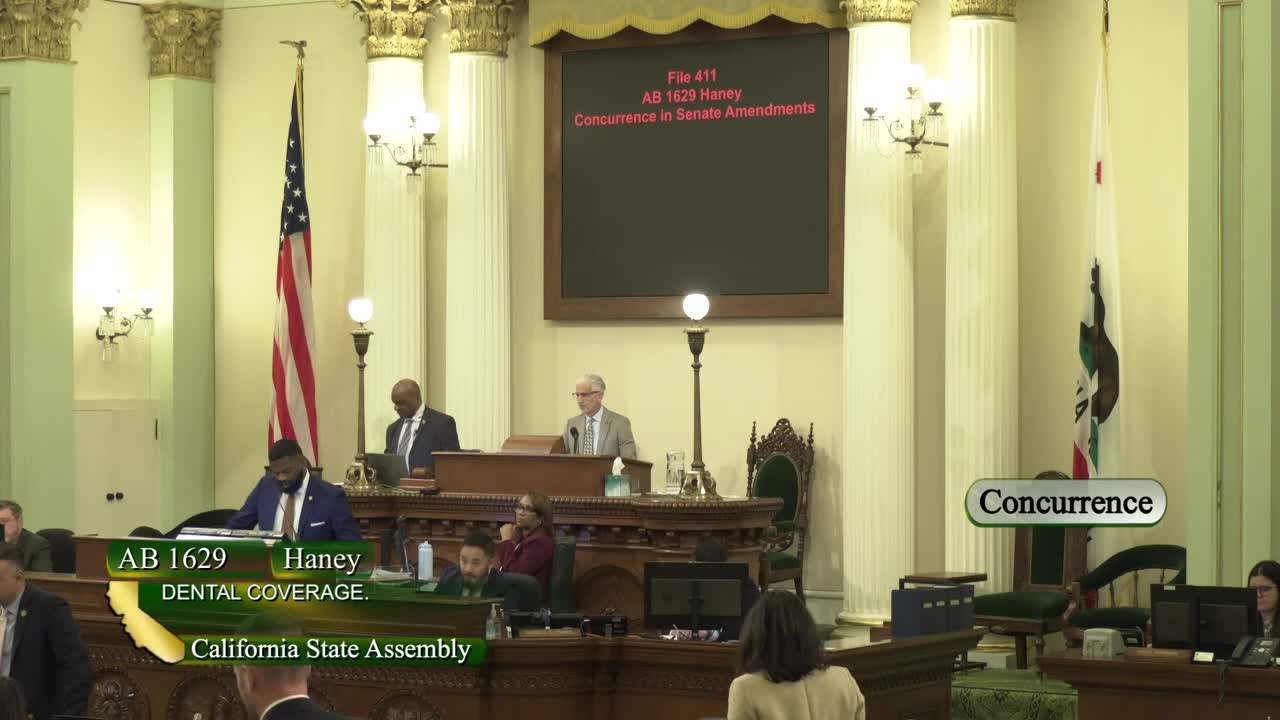 1MIN
Assembly Floor
 1MIN
Senate Floor
 45SEC
Senate Standing Committee on Appropriations
 5MIN
Senate Standing Committee on Human Services
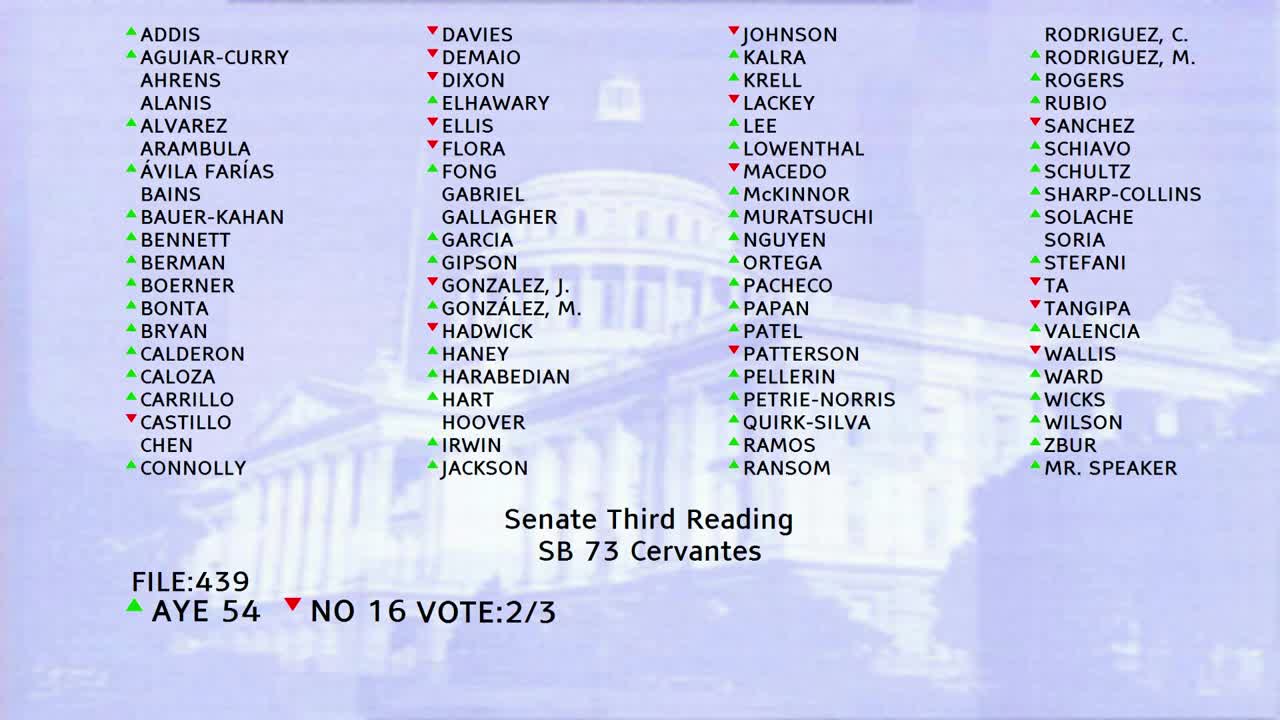 1MIN
Assembly Floor
 8MIN
Assembly Standing Committee on Human Services
Bill Author

Bill Co-Author(s):
