AB 1693: Accelerated retailer building plan approval: tenant improvements.
- Session Year: 2025-2026
- House: Assembly
- Latest Version Date: 2026-09-30
Current Status:
Passed
(2026-09-30: Chaptered by Secretary of State - Chapter 827, Statutes of 2026.)
Introduced
In Committee
Awaiting First Chamber Vote
Passed First Chamber
In Committee
Awaiting Second Chamber Vote
Passed Second Chamber
Enacted
Existing law, the California Building Standards Law, establishes the California Building Standards Commission within the Department of General Services. Existing law requires the commission to approve and adopt building standards and to codify those standards in the California Building Standards Code. Existing law authorizes local governments to enact ordinances or regulations that make building standards amendments to the California Building Standards Code, as specified. Existing law establishes a streamlined approval process for a local permit for a tenant improvement related to a restaurant, as defined.
This bill would establish a similar streamlined approval process for a local permit for a tenant improvement relating to a retailer, as defined. In this regard, the bill would require a local building department, upon the request and at the expense of the permit applicant, to allow a qualified professional certifier, defined as a licensed architect or engineer who meets certain requirements, to certify that the plans and specifications of the tenant improvement comply with all applicable building, health, and safety codes, as specified, unless otherwise provided by specified provisions. The bill would require a qualified professional certifier, or the applicant, as applicable, to prepare certain affidavits related to the tenant improvement under penalty of perjury. The bill would require the local building department to approve or deny the permit application within 20 business days of receiving a complete application. The bill would also authorize the applicant to resubmit corrected plans addressing the deficiencies identified in the initial denial, would limit the local building departments review of each subsequent resubmission to the deficiencies identified in the initial denial, and would require the local building department to approve or deny each subsequent resubmission within 10 business days of receipt. The bill would require each local building department to conduct audits of tenant improvements submitted for certification, as specified. The bill would authorize a city or county to adopt additional qualifications or requirements for qualified professional certifiers, including penalties or reasonable administrative fines for certain actions. The bill would make qualified professional certifiers liable for any damages arising from negligent plan review. The bill would also require the applicant to indemnify the local agency from any property damage or personal injury arising from construction permitted under the above-described provisions. The bill would further require the use of a qualified professional certifier to be temporary in cases in which there is an excessive delay, as defined.
Existing law establishes the California Architects Board and the Board for Professional Engineers, Land Surveyors, and Geologists to administer the licensure and regulation of architects and engineers, respectively. Existing law specifies grounds for disciplinary action by the boards.
This bill would deem making a false statement in a certification described above to be grounds for disciplinary action against a licensee who serves as a qualified professional certifier.
Existing law, the Government Claims Act, establishes the liability and immunity of a public entity for its acts or omissions that cause harm to persons. Where a public entity is under a mandatory duty imposed by an enactment that is designed to protect against the risk of a particular kind of injury, the act makes the public entity liable for an injury of that kind proximately caused by its failure to discharge the duty unless the public entity establishes that it exercised reasonable diligence to discharge the duty.
This bill, notwithstanding the above-described liability of a public entity for failure to discharge certain mandatory duties, would provide that a public entity or public employee is not liable for an injury caused by their discretionary or ministerial acts or omissions relating to the issuance or denial of a permit pursuant to the bills provisions.
Existing law, the California Environmental Quality Act (CEQA), requires a lead agency, as defined, to prepare, or cause to be prepared, and certify the completion of, an environmental impact report on a project that it proposes to carry out or approve that may have a significant effect on the environment or to adopt a negative declaration if it finds that the project will not have that effect. CEQA does not apply to the approval of ministerial projects.
To the extent that the streamlined, ministerial review processes established by the bill would apply to final, discretionary approval of a tenant improvement, the bill would exempt those projects from CEQA.
This bill would also make related findings and declarations.
The bill would include findings that changes proposed by this bill address a matter of statewide concern rather than a municipal affair and, therefore, apply to all cities, including charter cities.
By adding to the duties of local officials with respect to the review and approval of tenant improvements for retailers, and by expanding the scope of various crimes related to these provisions, this bill would impose a state-mandated local program.
The California Constitution requires the state to reimburse local agencies and school districts for certain costs mandated by the state. Statutory provisions establish procedures for making that reimbursement.
This bill would provide that no reimbursement is required by this act for specified reasons.
Existing law, the California Building Standards Law, establishes the California Building Standards Commission within the Department of General Services. Existing law requires the commission to approve and adopt building standards and to codify those standards in the California Building Standards Code. Existing law authorizes local governments to enact ordinances or regulations that make building standards amendments to the California Building Standards Code, as specified. Existing law establishes a streamlined approval process for a local permit for a tenant improvement related to a restaurant, as defined.
This bill would establish a similar streamlined approval process for a local permit for a tenant improvement relating to a retailer, as defined. In this regard, the bill would require a local building department, upon the request and at the expense of the permit applicant, to allow a qualified professional certifier, defined as a licensed architect or engineer who meets certain requirements, to certify that the plans and specifications of the tenant improvement comply with all applicable building, health, and safety codes, as specified. specified, unless otherwise provided by specified provisions. The bill would require a qualified professional certifier, or the applicant, as applicable, to prepare certain affidavits related to the tenant improvement under penalty of perjury. The bill would require the local building department to approve or deny the permit application within 20 business days of receiving a complete application. The bill would also authorize the applicant to resubmit corrected plans addressing the deficiencies identified in the initial denial, would limit the local building departments review of each subsequent resubmission to the deficiencies identified in the initial denial, and would require the local building department to approve or deny each subsequent resubmission within 10 business days of receipt. The bill would require each local building department to conduct audits of tenant improvements submitted for certification, as specified. The bill would authorize a city or county to adopt additional qualifications or requirements for qualified professional certifiers, including penalties or reasonable administrative fines for certain actions. The bill would make qualified professional certifiers liable for any damages arising from negligent plan review. The bill would also require the applicant to indemnify the local agency from any property damage or personal injury arising from construction permitted under the above-described provisions. The bill would further require the use of a qualified professional certifier to be temporary in cases in which there is an excessive delay, as defined.
Existing law establishes the California Architects Board and the Board for Professional Engineers, Land Surveyors, and Geologists to administer the licensure and regulation of architects and engineers, respectively. Existing law specifies grounds for disciplinary action by the boards.
This bill would deem making a false statement in a certification described above to be grounds for disciplinary action against a licensee who serves as a qualified professional certifier.
Existing law, the Government Claims Act, establishes the liability and immunity of a public entity for its acts or omissions that cause harm to persons. Where a public entity is under a mandatory duty imposed by an enactment that is designed to protect against the risk of a particular kind of injury, the act makes the public entity liable for an injury of that kind proximately caused by its failure to discharge the duty unless the public entity establishes that it exercised reasonable diligence to discharge the duty.
This bill, notwithstanding the above-described liability of a public entity for failure to discharge certain mandatory duties, would provide that a public entity or public employee is not liable for an injury caused by their discretionary or ministerial acts or omissions relating to the issuance or denial of a permit pursuant to the bills provisions.
Existing law, the California Environmental Quality Act (CEQA), requires a lead agency, as defined, to prepare, or cause to be prepared, and certify the completion of, an environmental impact report on a project that it proposes to carry out or approve that may have a significant effect on the environment or to adopt a negative declaration if it finds that the project will not have that effect. CEQA does not apply to the approval of ministerial projects.
To the extent that the streamlined, ministerial review processes established by the bill would apply to final, discretionary approval of a tenant improvement, the bill would exempt those projects from CEQA.
This bill would also make related findings and declarations.
The bill would include findings that changes proposed by this bill address a matter of statewide concern rather than a municipal affair and, therefore, apply to all cities, including charter cities.
By adding to the duties of local officials with respect to the review and approval of tenant improvements for retailers, and by expanding the scope of various crimes related to these provisions, this bill would impose a state-mandated local program.
The California Constitution requires the state to reimburse local agencies and school districts for certain costs mandated by the state. Statutory provisions establish procedures for making that reimbursement.
This bill would provide that no reimbursement is required by this act for specified reasons.
Existing law, the California Building Standards Law, establishes the California Building Standards Commission within the Department of General Services. Existing law requires the commission to approve and adopt building standards and to codify those standards in the California Building Standards Code. Existing law authorizes local governments to enact ordinances or regulations that make building standards amendments to the California Building Standards Code, as specified. Existing law establishes a streamlined approval process for a local permit for a tenant improvement related to a restaurant, as defined.
This bill would establish a similar streamlined approval process for a local permit for a tenant improvement relating to a retailer, as defined. In this regard, the bill would require a local building department, upon the request and at the expense of the permit applicant, to allow a qualified professional certifier, defined as a licensed architect or engineer who meets certain requirements, to certify that the plans and specifications of the tenant improvement comply with all applicable building, health, and safety codes, as specified. The bill would require a qualified professional certifier, or the applicant, as applicable, to prepare certain affidavits related to the tenant improvement under penalty of perjury. The bill would require the local building department to approve or deny the permit application within 20 business days of receiving a complete application. The bill would also authorize the applicant to resubmit corrected plans addressing the deficiencies identified in the initial denial, would limit the local building departments review of each subsequent resubmission to the deficiencies identified in the initial denial, and would require the local building department to approve or deny each subsequent resubmission within 10 business days of receipt. The bill would require each local building department to conduct audits of tenant improvements submitted for certification, as specified. The bill would authorize a city or county to adopt additional qualifications or requirements for qualified professional certifiers, including penalties or reasonable administrative fines for certain actions. The bill would make qualified professional certifiers liable for any damages arising from negligent plan review. The bill would also require the applicant to indemnify the local agency from any property damage or personal injury arising from construction permitted under the above-described provisions. The bill would further require the use of a qualified professional certifier to be temporary in cases in which there is an excessive delay, as defined.
Existing law establishes the California Architects Board and the Board for Professional Engineers, Land Surveyors, and Geologists to administer the licensure and regulation of architects and engineers, respectively. Existing law specifies grounds for disciplinary action by the boards.
This bill would deem making a false statement in a certification described above to be grounds for disciplinary action against a licensee who serves as a qualified professional certifier.
Existing law, the Government Claims Act, establishes the liability and immunity of a public entity for its acts or omissions that cause harm to persons. Where a public entity is under a mandatory duty imposed by an enactment that is designed to protect against the risk of a particular kind of injury, the act makes the public entity liable for an injury of that kind proximately caused by its failure to discharge the duty unless the public entity establishes that it exercised reasonable diligence to discharge the duty.
This bill, notwithstanding the above-described liability of a public entity for failure to discharge certain mandatory duties, would provide that a public entity or public employee is not liable for an injury caused by their discretionary or ministerial acts or omissions relating to the issuance or denial of a permit pursuant to the bills provisions.
Existing law, the California Environmental Quality Act (CEQA), requires a lead agency, as defined, to prepare, or cause to be prepared, and certify the completion of, an environmental impact report on a project that it proposes to carry out or approve that may have a significant effect on the environment or to adopt a negative declaration if it finds that the project will not have that effect. CEQA does not apply to the approval of ministerial projects.
To the extent that the streamlined, ministerial review processes established by the bill would apply to final, discretionary approval of a tenant improvement, the bill would exempt those projects from CEQA.
This bill would also make related findings and declarations.
The bill would include findings that changes proposed by this bill address a matter of statewide concern rather than a municipal affair and, therefore, apply to all cities, including charter cities.
By adding to the duties of local officials with respect to the review and approval of tenant improvements for retailers, and by expanding the scope of various crimes related to these provisions, this bill would impose a state-mandated local program.
The California Constitution requires the state to reimburse local agencies and school districts for certain costs mandated by the state. Statutory provisions establish procedures for making that reimbursement.
This bill would provide that no reimbursement is required by this act for specified reasons.
Existing law, the California Building Standards Law, establishes the California Building Standards Commission within the Department of General Services. Existing law requires the commission to approve and adopt building standards and to codify those standards in the California Building Standards Code. Existing law authorizes local governments to enact ordinances or regulations that make building standards amendments to the California Building Standards Code, as specified. Existing law establishes a streamlined approval process for a local permit for a tenant improvement related to a restaurant, as defined.
This bill would establish a similar streamlined approval process for a local permit for a tenant improvement relating to a retailer, as defined. In this regard, the bill would require a local building department, upon the request and at the expense of the permit applicant, to allow a qualified professional certifier, defined as a licensed architect or engineer who meets certain requirements, to certify that the plans and specifications of the tenant improvement comply with all applicable building, health, and safety codes, as specified. The bill would require a qualified professional certifier, or the applicant, as applicable, to prepare certain affidavits related to the tenant improvement under penalty of perjury. The bill would require the local building department to approve or deny the permit application within 20 business days of receiving a complete application and would deem the plan approved for permitting purposes if the local building department does not approve or deny the application within that timeframe. application. The bill would also authorize the applicant to resubmit corrected plans addressing the deficiencies identified in the initial denial, would limit the local building departments review of each subsequent resubmission to the deficiencies identified in the initial denial, and would require the local building department to approve or deny each subsequent resubmission within 10 business days of receipt. The bill would require each local building department to conduct audits of tenant improvements submitted for certification, as specified. The bill would authorize a city or county to adopt additional qualifications or requirements for qualified professional certifiers, including penalties or reasonable administrative fines for certain actions. The bill would make qualified professional certifiers liable for any damages arising from negligent plan review. The bill would also require the applicant to indemnify the local agency from any property damage or personal injury arising from construction permitted under the above-described provisions.
Existing law establishes the California Architects Board and the Board for Professional Engineers, Land Surveyors, and Geologists to administer the licensure and regulation of architects and engineers, respectively. Existing law specifies grounds for disciplinary action by the boards.
This bill would deem making a false statement in a certification described above to be grounds for disciplinary action against a licensee who serves as a qualified professional certifier.
Existing law, the Government Claims Act, establishes the liability and immunity of a public entity for its acts or omissions that cause harm to persons. Where a public entity is under a mandatory duty imposed by an enactment that is designed to protect against the risk of a particular kind of injury, the act makes the public entity liable for an injury of that kind proximately caused by its failure to discharge the duty unless the public entity establishes that it exercised reasonable diligence to discharge the duty.
This bill, notwithstanding the above-described liability of a public entity for failure to discharge certain mandatory duties, would provide that a public entity or public employee is not liable for an injury caused by their discretionary or ministerial acts or omissions relating to the issuance or denial of a permit pursuant to the bills provisions.
Existing law, the California Environmental Quality Act (CEQA), requires a lead agency, as defined, to prepare, or cause to be prepared, and certify the completion of, an environmental impact report on a project that it proposes to carry out or approve that may have a significant effect on the environment or to adopt a negative declaration if it finds that the project will not have that effect. CEQA does not apply to the approval of ministerial projects.
To the extent that the streamlined, ministerial review processes established by the bill would apply to final, discretionary approval of a tenant improvement, the bill would exempt those projects from CEQA.
This bill would also make related findings and declarations.
The bill would include findings that changes proposed by this bill address a matter of statewide concern rather than a municipal affair and, therefore, apply to all cities, including charter cities.
By adding to the duties of local officials with respect to the review and approval of tenant improvements for retailers, and by expanding the scope of various crimes related to these provisions, this bill would impose a state-mandated local program.
The California Constitution requires the state to reimburse local agencies and school districts for certain costs mandated by the state. Statutory provisions establish procedures for making that reimbursement.
This bill would provide that no reimbursement is required by this act for specified reasons.
Existing law, the California Building Standards Law, establishes the California Building Standards Commission within the Department of General Services. Existing law requires the commission to approve and adopt building standards and to codify those standards in the California Building Standards Code. Existing law authorizes local governments to enact ordinances or regulations that make building standards amendments to the California Building Standards Code, as specified. Existing law establishes a streamlined approval process for a local permit for a tenant improvement related to a restaurant, as defined.
This bill would establish a similar streamlined approval process for a local permit for a tenant improvement relating to a retailer, as defined. In this regard, the bill would require a local building department, upon the request and at the expense of the permit applicant, to allow a qualified professional certifier, defined as a licensed architect or engineer who meets certain requirements, to certify that the plans and specifications of the tenant improvement comply with all applicable building, health, and safety codes, as specified. The bill would require a qualified professional certifier, or the applicant, as applicable, to prepare certain affidavits related to the tenant improvement under penalty of perjury. The bill would require the local building department to approve or deny the permit application within 20 business days of receiving a complete application and would deem the plan approved for permitting purposes if the local building department does not approve or deny the application within that timeframe. The bill would also authorize the applicant to resubmit corrected plans addressing the deficiencies identified in the initial denial, would limit the local building departments review of each subsequent resubmission to the deficiencies identified in the initial denial, and would require the local building department to approve or deny each subsequent resubmission within 10 business days of receipt. The bill would require each local building department to conduct audits of tenant improvements submitted for certification, as specified. The bill would authorize a city or county to adopt additional qualifications or requirements for qualified professional certifiers, including penalties or reasonable administrative fines for certain actions. The bill would make qualified professional certifiers liable for any damages arising from negligent plan review. The bill would also require the applicant to indemnify the local agency from any property damage or personal injury arising from construction permitted under the above-described provisions.
Existing law establishes the California Architects Board and the Board for Professional Engineers, Land Surveyors, and Geologists to administer the licensure and regulation of architects and engineers, respectively. Existing law specifies grounds for disciplinary action by the boards.
This bill would deem making a false statement in a certification described above to be grounds for disciplinary action against a licensee who serves as a qualified professional certifier.
Existing law, the Government Claims Act, establishes the liability and immunity of a public entity for its acts or omissions that cause harm to persons. Where a public entity is under a mandatory duty imposed by an enactment that is designed to protect against the risk of a particular kind of injury, the act makes the public entity liable for an injury of that kind proximately caused by its failure to discharge the duty unless the public entity establishes that it exercised reasonable diligence to discharge the duty.
This bill, notwithstanding the above-described liability of a public entity for failure to discharge certain mandatory duties, would provide that a public entity or public employee is not liable for an injury caused by their discretionary or ministerial acts or omissions relating to the issuance or denial of a permit pursuant to the bills provisions.
Existing law, the California Environmental Quality Act (CEQA), requires a lead agency, as defined, to prepare, or cause to be prepared, and certify the completion of, an environmental impact report on a project that it proposes to carry out or approve that may have a significant effect on the environment or to adopt a negative declaration if it finds that the project will not have that effect. CEQA does not apply to the approval of ministerial projects.
To the extent that the streamlined, ministerial review processes established by the bill would apply to final, discretionary approval of a tenant improvement, the bill would exempt those projects from CEQA.
This bill would also make related findings and declarations.
The bill would include findings that changes proposed by this bill address a matter of statewide concern rather than a municipal affair and, therefore, apply to all cities, including charter cities.
By adding to the duties of local officials with respect to the review and approval of tenant improvements for retailers, and by expanding the scope of various crimes related to these provisions, this bill would impose a state-mandated local program.
The California Constitution requires the state to reimburse local agencies and school districts for certain costs mandated by the state. Statutory provisions establish procedures for making that reimbursement.
This bill would provide that no reimbursement is required by this act for specified reasons.
The fact that the holder of a license who serves as a qualified professional certifier, as defined in Section 66345.1 or 66350.1 of the Government Code, makes any false statement in a certification submission pursuant to Chapter 14 (commencing with Section 66345) or Chapter 15 (commencing with Section 66350) of Division 1 of Title 7 of the Government Code constitutes grounds for disciplinary action.
SEC. 2.Section 6775 of the Business and Professions Code is amended to read:6775.The board may, upon its own initiative or upon the receipt of a complaint, investigate the actions of any professional engineer licensed under this chapter and make findings thereon.
By a majority vote, the board may publicly reprove, suspend for a period not to exceed two years, or revoke the certificate of any professional engineer licensed under this chapter on any of the following grounds:
(a)Any conviction of a crime substantially related to the qualifications, functions, and duties of a licensed professional engineer, in which case the certified record of conviction shall be conclusive evidence thereof.
(b)Any deceit, misrepresentation, or fraud in their practice.
(c)Any negligence or incompetence in their practice.
(d)A breach or violation of a contract to provide professional engineering services.
(e)Any fraud, deceit, or misrepresentation in obtaining their certificate as a professional engineer.
(f)Aiding or abetting any person in the violation of any provision of this chapter or any regulation adopted by the board pursuant to this chapter.
(g)For a licensee who serves as a qualified professional certifier, as defined in Section 66345.1 or 66350.1 of the Government Code, making any false statement in a certification submission pursuant to Chapter 14 (commencing with Section 66345) or Chapter 15 (commencing with Section 66350) of Division 1 of Title 7 of the Government Code.
(h)A violation in the course of the practice of professional engineering of a rule or regulation of unprofessional conduct adopted by the board.
(i)A violation of any provision of this chapter or any other law relating to or involving the practice of professional engineering.
SEC. 3.Chapter 15 (commencing with Section 66350) is added to Division 1 of Title 7 of the Government Code, to read:15.Accelerated Retailer Building Plan Approval66350.The Legislature finds and declares all of the following:
(a)Retailers, particularly independent and family-owned retailers, are essential to Californias economic growth, support jobs for workers, and serve as real-world, in-person gathering points in communities.
(b)Family-owned retailers serve as business, cultural, and economic anchors in their communities, preserving and sharing diverse offerings while also creating spaces for community gatherings and connections.
(c)The retail industry is one of Californias largest small business employers, providing jobs, career advancement opportunities, and pathways to business ownership for new and immigrant entrepreneurs and historically underserved communities.
(d)Californias retail sector is a vital component of the states economy and tourism industry, generating substantial economic activity in communities throughout the state.
(e)The retail industry directly employs over 3,000,000 Californians across over 500,000 retail establishments, bolstering economies of local communities throughout the state.
(f)Delays in building plan review processes can create significant economic hardship for employers in the retail sector.
(g)Qualified licensed architects and engineers can supplement municipal plan review capacity while maintaining public safety standards.
(h)The Legislature, by enactment of Chapter 470 of the Statutes of 2025, created an expedited review process for restaurants to open with less delay. An expedited review process for retail establishments will similarly promote economic development while ensuring compliance with all applicable health and safety requirements.
66350.1.For purposes of this chapter, all of the following definitions apply:
(a)Qualified professional certifier means an architect licensed pursuant to Chapter 3 (commencing with Section 5500) of Division 3 of the Business and Professions Code, or a professional engineer licensed pursuant to Chapter 7 (commencing with Section 6700) of Division 3 of the Business and Professions Code, who meets both of the following conditions:
(1)Has at least five years of experience in commercial building design or plan review.
(2)Maintains professional liability insurance in an amount not less than two million dollars ($2,000,000) per occurrence.
(b)Retailer means any person that is engaged in the business of making retail sales directly to the general public. Retailer does not include a retail food establishment that prepares, serves, and vends food directly to the consumer, or a fast food restaurant, as that term is defined in Section 1474 of the Labor Code.
(c)Tenant improvement means a change to the interior of an existing building.
66350.2.(a)(1)Unless otherwise provided in Chapter 14 (commencing with Section 66345), a local building department shall allow, upon request from an applicant for a permit for a tenant improvement relating to a retailer, a qualified professional certifier to certify, at the applicants expense, compliance with all applicable building, health, and safety codes, including, but not limited to, building standards approved by the California Building Standards Commission and local building standards, for the tenant improvement.
(2)A tenant improvement relating to a retailer certified pursuant to this chapter shall comply with all applicable building, health, and safety codes, including, but not limited to, building standards approved by the California Building Standards Commission and local building standards, in effect at the time the application for a permit is submitted.
(b)(1)(A)A qualified professional certifier shall prepare an affidavit, under penalty of perjury, attesting that the tenant improvement plans and specifications comply with all applicable building, health, and safety codes, including, but not limited to, building standards approved by the California Building Standards Commission and local building standards.
(B)A qualified professional certifier or the applicant shall prepare an affidavit, under penalty of perjury, attesting that the retailer for which the tenant improvement is constructed meets the requirements of subdivision (b) of Section 66350.1.
(2)The local building department shall approve or deny the application within 20 business days of receiving a complete application, including the affidavits specified in paragraph (1).
(3)If a complete application is denied within the 20-business-day period described in paragraph (2), the applicant may resubmit corrected plans addressing the deficiencies identified in the initial denial. The local building departments review of each subsequent resubmission shall be limited to correcting the deficiencies identified in the initial denial. The local building department shall approve or deny each subsequent resubmission within 10 business days of receipt.
(c)(1)Each local building department shall conduct a random audit of no less than 20 percent of all tenant improvements submitted per week for certification under this chapter.
(2)Audits shall be initiated within five business days following permit issuance and shall include a review of the submitted plans for compliance with all applicable building, health, and safety codes, including, but not limited to, building standards approved by the California Building Standards Commission and local building standards.
(3)If an audit reveals material noncompliance, the local building department shall provide a plan check correction notice within 10 business days of the audits initiation.
(d)Certification under this chapter does not exempt a tenant improvement from other mandatory construction inspections, including, but not limited to, fire, health, and structural inspections conducted during or after construction.
(e)Any false statement in a certification submission made under this chapter shall be grounds for disciplinary action by the California Architects Board, pursuant to Section 5586.5 of the Business and Professions Code, or the Board for Professional Engineers, Land Surveyors, and Geologists, pursuant to Section 6775 of the Business and Professions Code, as applicable.
(f)A city or county may adopt, by ordinance, additional qualifications or requirements for a qualified professional certifier, including, but not limited to, any of the following:
(1)A requirement to register with the city or county prior to certifying plans pursuant to this chapter.
(2)Training requirements that must be completed prior to certifying plans pursuant to this chapter.
(3)Payment of fees not to exceed the reasonable cost of implementing this chapter.
(4)Penalties that may include decertification as a qualified professional certifier in that jurisdiction or reasonable administrative fines for either of the following:
(A)Willful noncompliance with the requirements of this chapter.
(B)Two or more instances in which the qualified professional certifier attested to certifying noncompliant plans pursuant to this chapter.
(g)A city or county may adopt requirements that do either of the following, provided that the requirements do not prohibit or effectively prohibit the use of a qualified professional certifier pursuant to this section:
(1)Limit the size of an eligible structure to no less than 10,000 square feet.
(2)Specify the types of businesses or occupancies that are eligible.
66350.3.This chapter does not prohibit a local building department from charging permit fees for applications utilizing a qualified professional certifier.
66350.4.(a)Qualified professional certifiers shall be liable for any damages arising from negligent plan review pursuant to this chapter.
(b)The applicant shall indemnify the local agency from any property damage or personal injury arising from construction permitted pursuant to this chapter.
(c)Notwithstanding Section 815.6, a public entity or public employee is not liable for an injury caused by their discretionary or ministerial acts or omissions relating to the issuance or denial of any permit pursuant to this chapter.
66350.5.Nothing in this chapter shall be construed to authorize the displacement of public employees. Local agencies shall not reduce, eliminate, or fail to fill budgeted civil service positions within the building department as a result of the use of a qualified professional certifier pursuant to this section.
66350.6.If there is an excessive delay, as defined in paragraph (2) of subdivision (f) of Section 19837 of the Health and Safety Code, the use of a qualified professional certifier by a local agency shall be temporary and not exceed the time required to complete the review of a tenant improvement application.
SEC. 4.The Legislature finds and declares that retailers role in the states economy and tourism industry is a matter of statewide concern and is not a municipal affair as that term is used in Section 5 of Article XI of the California Constitution. Therefore, Section 3 of this act adding Chapter 15 (commencing with Section 66350) to Division 1 of Title 7 of the Government Code applies to all cities, including charter cities.
SEC. 5.No reimbursement is required by this act pursuant to Section 6 of Article XIIIB of the California Constitution because a local agency or school district has the authority to levy service charges, fees, or assessments sufficient to pay for the program or level of service mandated by this act or because costs that may be incurred by a local agency or school district will be incurred because this act creates a new crime or infraction, eliminates a crime or infraction, or changes the penalty for a crime or infraction, within the meaning of Section 17556 of the Government Code, or changes the definition of a crime within the meaning of Section 6 of Article XIIIB of the California Constitution.
The fact that the holder of a license who serves as a qualified professional certifier, as defined in Section 66345.1 or 66350.1 of the Government Code, makes any false statement in a certification submission pursuant to Chapter 14 (commencing with Section 66345) or Chapter 15 (commencing with Section 66350) of Division 1 of Title 7 of the Government Code constitutes grounds for disciplinary action.
SEC. 2.Section 6775 of the Business and Professions Code is amended to read:6775.The board may, upon its own initiative or upon the receipt of a complaint, investigate the actions of any professional engineer licensed under this chapter and make findings thereon.
By a majority vote, the board may publicly reprove, suspend for a period not to exceed two years, or revoke the certificate of any professional engineer licensed under this chapter on any of the following grounds:
(a)Any conviction of a crime substantially related to the qualifications, functions, and duties of a licensed professional engineer, in which case the certified record of conviction shall be conclusive evidence thereof.
(b)Any deceit, misrepresentation, or fraud in their practice.
(c)Any negligence or incompetence in their practice.
(d)A breach or violation of a contract to provide professional engineering services.
(e)Any fraud, deceit, or misrepresentation in obtaining their certificate as a professional engineer.
(f)Aiding or abetting any person in the violation of any provision of this chapter or any regulation adopted by the board pursuant to this chapter.
(g)For a licensee who serves as a qualified professional certifier, as defined in Section 66345.1 or 66350.1 of the Government Code, making any false statement in a certification submission pursuant to Chapter 14 (commencing with Section 66345) or Chapter 15 (commencing with Section 66350) of Division 1 of Title 7 of the Government Code.
(h)A violation in the course of the practice of professional engineering of a rule or regulation of unprofessional conduct adopted by the board.
(i)A violation of any provision of this chapter or any other law relating to or involving the practice of professional engineering.
SEC. 3.Chapter 15 (commencing with Section 66350) is added to Division 1 of Title 7 of the Government Code, to read:15.Accelerated Retailer Building Plan Approval66350.The Legislature finds and declares all of the following:
(a)Retailers, particularly independent and family-owned retailers, are essential to Californias economic growth, support jobs for workers, and serve as real-world, in-person gathering points in communities.
(b)Family-owned retailers serve as business, cultural, and economic anchors in their communities, preserving and sharing diverse offerings while also creating spaces for community gatherings and connections.
(c)The retail industry is one of Californias largest small business employers, providing jobs, career advancement opportunities, and pathways to business ownership for new and immigrant entrepreneurs and historically underserved communities.
(d)Californias retail sector is a vital component of the states economy and tourism industry, generating substantial economic activity in communities throughout the state.
(e)The retail industry directly employs over 3,000,000 Californians across over 500,000 retail establishments, bolstering economies of local communities throughout the state.
(f)Delays in building plan review processes can create significant economic hardship for employers in the retail sector.
(g)Qualified licensed architects and engineers can supplement municipal plan review capacity while maintaining public safety standards.
(h)The Legislature, by enactment of Chapter 470 of the Statutes of 2025, created an expedited review process for restaurants to open with less delay. An expedited review process for retail establishments will similarly promote economic development while ensuring compliance with all applicable health and safety requirements.
66350.1.For purposes of this chapter, all of the following definitions apply:
(a)Qualified professional certifier means an architect licensed pursuant to Chapter 3 (commencing with Section 5500) of Division 3 of the Business and Professions Code, or a professional engineer licensed pursuant to Chapter 7 (commencing with Section 6700) of Division 3 of the Business and Professions Code, who meets both of the following conditions:
(1)Has at least five years of experience in commercial building design or plan review.
(2)Maintains professional liability insurance in an amount not less than two million dollars ($2,000,000) per occurrence.
(b)Retailer means any person that is engaged in the business of making retail sales direct directly to the general public. Retailer does not include a retail food establishment that prepares, serves, and vends food directly to the consumer, or a fast food restaurant, as that term is defined in Section 1474 of the Labor Code.
(c)Tenant improvement means a change to the interior of an existing building.
66350.2.(a)(1)Notwithstanding any other law, Unless otherwise provided in Chapter 14 (commencing with Section 66345), a local building department shall allow, upon request from an applicant for a permit for a tenant improvement relating to a retailer, a qualified professional certifier to certify, at the applicants expense, compliance with all applicable building, health, and safety codes, including, but not limited to, building standards approved by the California Building Standards Commission and local building standards, for the tenant improvement.
(2)A tenant improvement relating to a retailer certified pursuant to this chapter shall comply with all applicable building, health, and safety codes, including, but not limited to, building standards approved by the California Building Standards Commission and local building standards, in effect at the time the application for a permit is submitted.
(b)(1)(A)A qualified professional certifier shall prepare an affidavit, under penalty of perjury, attesting that the tenant improvement plans and specifications comply with all applicable building, health, and safety codes, including, but not limited to, building standards approved by the California Building Standards Commission and local building standards.
(B)A qualified professional certifier or the applicant shall prepare an affidavit, under penalty of perjury, attesting that the retailer for which the tenant improvement is constructed meets the requirements of subdivision (b) of Section 66350.1.
(2)The local building department shall approve or deny the application within 20 business days of receiving a complete application, including the affidavits specified in paragraph (1).
(3)If a complete application is denied within the 20-business-day period described in paragraph (2), the applicant may resubmit corrected plans addressing the deficiencies identified in the initial denial. The local building departments review of each subsequent resubmission shall be limited to correcting the deficiencies identified in the initial denial. The local building department shall approve or deny each subsequent resubmission within 10 business days of receipt.
(c)(1)Each local building department shall conduct a random audit of no less than 20 percent of all tenant improvements submitted per week for certification under this chapter.
(2)Audits shall be initiated within five business days following permit issuance and shall include a review of the submitted plans for compliance with all applicable building, health, and safety codes, including, but not limited to, building standards approved by the California Building Standards Commission and local building standards.
(3)If an audit reveals material noncompliance, the local building department shall provide a plan check correction notice within 10 business days of the audits initiation.
(d)Certification under this chapter does not exempt a tenant improvement from other mandatory construction inspections, including, but not limited to, fire, health, and structural inspections conducted during or after construction.
(e)Any false statement in a certification submission made under this chapter shall be grounds for disciplinary action by the California Architects Board, pursuant to Section 5586.5 of the Business and Professions Code, or the Board for Professional Engineers, Land Surveyors, and Geologists, pursuant to Section 6775 of the Business and Professions Code, as applicable.
(f)A city or county may adopt, by ordinance, additional qualifications or requirements for a qualified professional certifier, including, but not limited to, any of the following:
(1)A requirement to register with the city or county prior to certifying plans pursuant to this chapter.
(2)Training requirements that must be completed prior to certifying plans pursuant to this chapter.
(3)Payment of fees not to exceed the reasonable cost of implementing this chapter.
(4)Penalties that may include decertification as a qualified professional certifier in that jurisdiction or reasonable administrative fines for either of the following:
(A)Willful noncompliance with the requirements of this chapter.
(B)Two or more instances in which the qualified professional certifier attested to certifying noncompliant plans pursuant to this chapter.
(g)A city or county may adopt requirements that do either of the following, provided that the requirements do not prohibit or effectively prohibit the use of a qualified professional certifier pursuant to this section:
(1)Limit the size of an eligible structure to no less than 10,000 square feet.
(2)Specify the types of businesses or occupancies that are eligible.
66350.3.This chapter does not prohibit a local building department from charging permit fees for applications utilizing a qualified professional certifier.
66350.4.(a)Qualified professional certifiers shall be liable for any damages arising from negligent plan review pursuant to this chapter.
(b)The applicant shall indemnify the local agency from any property damage or personal injury arising from construction permitted pursuant to this chapter.
(c)Notwithstanding Section 815.6, a public entity or public employee is not liable for an injury caused by their discretionary or ministerial acts or omissions relating to the issuance or denial of any permit pursuant to this chapter.
66350.5.Nothing in this chapter shall be construed to authorize the displacement of public employees. Local agencies shall not reduce, eliminate, or fail to fill budgeted civil service positions within the building department as a result of the use of a qualified professional certifier pursuant to this section.
66350.6.If there is an excessive delay, as defined in paragraph (2) of subdivision (f) of Section 19837 of the Health and Safety Code, the use of a qualified professional certifier by a local agency shall be temporary and not exceed the time required to complete the review of a tenant improvement application.
SEC. 4.The Legislature finds and declares that retailers role in the states economy and tourism industry is a matter of statewide concern and is not a municipal affair as that term is used in Section 5 of Article XI of the California Constitution. Therefore, Section 3 of this act adding Chapter 15 (commencing with Section 66350) to Division 1 of Title 7 of the Government Code applies to all cities, including charter cities.
SEC. 5.No reimbursement is required by this act pursuant to Section 6 of Article XIIIB of the California Constitution because a local agency or school district has the authority to levy service charges, fees, or assessments sufficient to pay for the program or level of service mandated by this act or because costs that may be incurred by a local agency or school district will be incurred because this act creates a new crime or infraction, eliminates a crime or infraction, or changes the penalty for a crime or infraction, within the meaning of Section 17556 of the Government Code, or changes the definition of a crime within the meaning of Section 6 of Article XIIIB of the California Constitution.
The fact that the holder of a license who serves as a qualified professional certifier, as defined in Section 66345.1 or 66350.1 of the Government Code, makes any false statement in a certification submission pursuant to Chapter 14 (commencing with Section 66345) or Chapter 15 (commencing with Section 66350) of Division 1 of Title 7 of the Government Code constitutes grounds for disciplinary action.
SEC. 2.Section 6775 of the Business and Professions Code is amended to read:6775.The board may, upon its own initiative or upon the receipt of a complaint, investigate the actions of any professional engineer licensed under this chapter and make findings thereon.
By a majority vote, the board may publicly reprove, suspend for a period not to exceed two years, or revoke the certificate of any professional engineer licensed under this chapter on any of the following grounds:
(a)Any conviction of a crime substantially related to the qualifications, functions, and duties of a licensed professional engineer, in which case the certified record of conviction shall be conclusive evidence thereof.
(b)Any deceit, misrepresentation, or fraud in their practice.
(c)Any negligence or incompetence in their practice.
(d)A breach or violation of a contract to provide professional engineering services.
(e)Any fraud, deceit, or misrepresentation in obtaining their certificate as a professional engineer.
(f)Aiding or abetting any person in the violation of any provision of this chapter or any regulation adopted by the board pursuant to this chapter.
(g)For a licensee who serves as a qualified professional certifier, as defined in Section 66345.1 or 66350.1 of the Government Code, making any false statement in a certification submission pursuant to Chapter 14 (commencing with Section 66345) or Chapter 15 (commencing with Section 66350) of Division 1 of Title 7 of the Government Code.
(h)A violation in the course of the practice of professional engineering of a rule or regulation of unprofessional conduct adopted by the board.
(i)A violation of any provision of this chapter or any other law relating to or involving the practice of professional engineering.
SEC. 3.Chapter 15 (commencing with Section 66350) is added to Division 1 of Title 7 of the Government Code, to read:15.Accelerated Retailer Building Plan Approval66350.The Legislature finds and declares all of the following:
(a)Retailers, particularly independent and family-owned retailers, are essential to Californias economic growth, support jobs for workers, and serve as real-world, in-person gathering points in communities.
(b)Family-owned retailers serve as business, cultural, and economic anchors in their communities, preserving and sharing diverse offerings while also creating spaces for community gatherings and connections.
(c)The retail industry is one of Californias largest small business employers, providing jobs, career advancement opportunities, and pathways to business ownership for new and immigrant entrepreneurs and historically underserved communities.
(d)Californias retail sector is a vital component of the states economy and tourism industry, generating substantial economic activity in communities throughout the state.
(e)The retail industry directly employs over 3,000,000 Californians across over 500,000 retail establishments, bolstering economies of local communities throughout the state.
(f)Delays in building plan review processes can create significant economic hardship for employers in the retail sector.
(g)Qualified licensed architects and engineers can supplement municipal plan review capacity while maintaining public safety standards.
(h)The Legislature, by enactment of Chapter 470 of the Statutes of 2025, created an expedited review process for restaurants to open with less delay. An expedited review process for retail establishments will similarly promote economic development while ensuring compliance with all applicable health and safety requirements.
66350.1.For purposes of this chapter, all of the following definitions apply:
(a)Qualified professional certifier means an architect licensed pursuant to Chapter 3 (commencing with Section 5500) of Division 3 of the Business and Professions Code, or a professional engineer licensed pursuant to Chapter 7 (commencing with Section 6700) of Division 3 of the Business and Professions Code, who meets both of the following conditions:
(1)Has at least five years of experience in commercial building design or plan review.
(2)Maintains professional liability insurance in an amount not less than two million dollars ($2,000,000) per occurrence.
(b)Retailer means any person that is engaged in the business of making retail sales direct to the general public.
(c)Tenant improvement means a change to the interior of an existing building.
66350.2.(a)(1)Notwithstanding any other law, a local building department shall allow, upon request from an applicant for a permit for a tenant improvement relating to a retailer, a qualified professional certifier to certify, at the applicants expense, compliance with all applicable building, health, and safety codes, including, but not limited to, building standards approved by the California Building Standards Commission and local building standards, for the tenant improvement.
(2)A tenant improvement relating to a retailer certified pursuant to this chapter shall comply with all applicable building, health, and safety codes, including, but not limited to, building standards approved by the California Building Standards Commission and local building standards, in effect at the time the application for a permit is submitted.
(b)(1)(A)A qualified professional certifier shall prepare an affidavit, under penalty of perjury, attesting that the tenant improvement plans and specifications comply with all applicable building, health, and safety codes, including, but not limited to, building standards approved by the California Building Standards Commission and local building standards.
(B)A qualified professional certifier or the applicant shall prepare an affidavit, under penalty of perjury, attesting that the retailer for which the tenant improvement is constructed meets the requirements of subdivision (b) of Section 66350.1.
(2)The local building department shall approve or deny the application within 20 business days of receiving a complete application, including the affidavits specified in paragraph (1).
(3)If a complete application is denied within the 20-business-day period described in paragraph (2), the applicant may resubmit corrected plans addressing the deficiencies identified in the initial denial. The local building departments review of each subsequent resubmission shall be limited to correcting the deficiencies identified in the initial denial. The local building department shall approve or deny each subsequent resubmission within 10 business days of receipt.
(c)(1)Each local building department shall conduct a random audit of no less than 20 percent of all tenant improvements submitted per week for certification under this chapter.
(2)Audits shall be initiated within five business days following permit issuance and shall include a review of the submitted plans for compliance with all applicable building, health, and safety codes, including, but not limited to, building standards approved by the California Building Standards Commission and local building standards.
(3)If an audit reveals material noncompliance, the local building department shall provide a plan check correction notice within 10 business days of the audits initiation.
(d)Certification under this chapter does not exempt a tenant improvement from other mandatory construction inspections, including, but not limited to, fire, health, and structural inspections conducted during or after construction.
(e)Any false statement in a certification submission made under this chapter shall be grounds for disciplinary action by the California Architects Board, pursuant to Section 5586.5 of the Business and Professions Code, or the Board for Professional Engineers, Land Surveyors, and Geologists, pursuant to Section 6775 of the Business and Professions Code, as applicable.
(f)A city or county may adopt, by ordinance, additional qualifications or requirements for a qualified professional certifier, including, but not limited to, any of the following:
(1)A requirement to register with the city or county prior to certifying plans pursuant to this chapter.
(2)Training requirements that must be completed prior to certifying plans pursuant to this chapter.
(3)Payment of fees not to exceed the reasonable cost of implementing this chapter.
(4)Penalties that may include decertification as a qualified professional certifier in that jurisdiction or reasonable administrative fines for either of the following:
(A)Willful noncompliance with the requirements of this chapter.
(B)Two or more instances in which the qualified professional certifier attested to certifying noncompliant plans pursuant to this chapter.
(g)A city or county may adopt requirements that do either of the following, provided that the requirements do not prohibit or effectively prohibit the use of a qualified professional certifier pursuant to this section:
(1)Limit the size of an eligible structure to no less than 10,000 square feet.
(2)Specify the types of businesses or occupancies that are eligible.
66350.3.This chapter does not prohibit a local building department from charging permit fees for applications utilizing a qualified professional certifier.
66350.4.(a)Qualified professional certifiers shall be liable for any damages arising from negligent plan review pursuant to this chapter.
(b)The applicant shall indemnify the local agency from any property damage or personal injury arising from construction permitted pursuant to this chapter.
(c)Notwithstanding Section 815.6, a public entity or public employee is not liable for an injury caused by their discretionary or ministerial acts or omissions relating to the issuance or denial of any permit pursuant to this chapter.
66350.5.Nothing in this chapter shall be construed to authorize the displacement of public employees. The use of a qualified professional certifier shall be strictly temporary in nature. Local agencies shall not reduce, eliminate, or fail to fill budgeted civil service positions within the building department as a result of the use of a qualified professional certifier pursuant to this section.
66350.6.If there is an excessive delay, as defined in paragraph (2) of subdivision (f) of Section 19837 of the Health and Safety Code, the use of a qualified professional certifier by a local agency shall be temporary and not exceed the time required to complete the review of a tenant improvement application.
SEC. 4.The Legislature finds and declares that retailers role in the states economy and tourism industry is a matter of statewide concern and is not a municipal affair as that term is used in Section 5 of Article XI of the California Constitution. Therefore, Section 3 of this act adding Chapter 15 (commencing with Section 66350) to Division 1 of Title 7 of the Government Code applies to all cities, including charter cities.
SEC. 5.No reimbursement is required by this act pursuant to Section 6 of Article XIIIB of the California Constitution because a local agency or school district has the authority to levy service charges, fees, or assessments sufficient to pay for the program or level of service mandated by this act or because costs that may be incurred by a local agency or school district will be incurred because this act creates a new crime or infraction, eliminates a crime or infraction, or changes the penalty for a crime or infraction, within the meaning of Section 17556 of the Government Code, or changes the definition of a crime within the meaning of Section 6 of Article XIIIB of the California Constitution.
The fact that the holder of a license who serves as a qualified professional certifier, as defined in Sections Section 66345.1 or 66350.1 of the Government Code, makes any false statement in a certification submission pursuant to Chapter 14 (commencing with Section 66345) or Chapter 15 (commencing with Section 66350) of Division 1 of Title 7 of the Government Code constitutes grounds for disciplinary action.
SEC. 2.Section 6775 of the Business and Professions Code is amended to read:6775.The board may, upon its own initiative or upon the receipt of a complaint, investigate the actions of any professional engineer licensed under this chapter and make findings thereon.
By a majority vote, the board may publicly reprove, suspend for a period not to exceed two years, or revoke the certificate of any professional engineer licensed under this chapter on any of the following grounds:
(a)Any conviction of a crime substantially related to the qualifications, functions, and duties of a licensed professional engineer, in which case the certified record of conviction shall be conclusive evidence thereof.
(b)Any deceit, misrepresentation, or fraud in their practice.
(c)Any negligence or incompetence in their practice.
(d)A breach or violation of a contract to provide professional engineering services.
(e)Any fraud, deceit, or misrepresentation in obtaining their certificate as a professional engineer.
(f)Aiding or abetting any person in the violation of any provision of this chapter or any regulation adopted by the board pursuant to this chapter.
(g)For a licensee who serves as a qualified professional certifier, as defined in Sections Section 66345.1 or 66350.1 of the Government Code, making any false statement in a certification submission pursuant to Chapter 14 (commencing with Section 66345) or Chapter 15 (commencing with Section 66350) of Division 1 of Title 7 of the Government Code.
(h)A violation in the course of the practice of professional engineering of a rule or regulation of unprofessional conduct adopted by the board.
(i)A violation of any provision of this chapter or any other law relating to or involving the practice of professional engineering.
SEC. 3.Chapter 15 (commencing with Section 66350) is added to Division 1 of Title 7 of the Government Code, to read:15.Accelerated Retailer Building Plan Approval66350.The Legislature finds and declares all of the following:
(a)Retailers, particularly independent and family-owned retailers, are essential to Californias economic growth, support jobs for workers, and serve as real-world, in-person gathering points in communities.
(b)Family-owned retailers serve as business, cultural, and economic anchors in their communities, preserving and sharing diverse offerings while also creating spaces for community gatherings and connections.
(c)The retail industry is one of Californias largest small business employers, providing jobs, career advancement opportunities, and pathways to business ownership for new and immigrant entrepreneurs and historically underserved communities.
(d)Californias retail sector is a vital component of the states economy and tourism industry, generating substantial economic activity in communities throughout the state.
(e)The retail industry directly employs over 3,000,000 Californians across over 500,000 retail establishments, bolstering economies of local communities throughout the state.
(f)Delays in building plan review processes can create significant economic hardship for employers in the retail sector.
(g)Qualified licensed architects and engineers can supplement municipal plan review capacity while maintaining public safety standards.
(h)The Legislature, by enactment of Chapter 470 of the Statutes of 2025, created an expedited review process for restaurants to open with less delay. An expedited review process for retail establishments will similarly promote economic development while ensuring compliance with all applicable health and safety requirements.
66350.1.For purposes of this chapter, all of the following definitions apply:
(a)Qualified professional certifier means an architect licensed pursuant to Chapter 3 (commencing with Section 5500) of Division 3 of the Business and Professions Code, or a professional engineer licensed pursuant to Chapter 7 (commencing with Section 6700) of Division 3 of the Business and Professions Code, who meets both of the following conditions:
(1)Has at least five years of experience in commercial building design or plan review.
(2)Maintains professional liability insurance in an amount not less than two million dollars ($2,000,000) per occurrence.
(b)Retailer means any person that is engaged in the business of making retail sales direct to the general public.
(c)Tenant improvement means a change to the interior of an existing building.
66350.2.(a)(1)Notwithstanding any other law, a local building department shall allow, upon request from an applicant for a permit for a tenant improvement relating to a retailer, a qualified professional certifier to certify, at the applicants expense, compliance with all applicable building, health, and safety codes, including, but not limited to, building standards approved by the California Building Standards Commission and local building standards, for the tenant improvement.
(2)A tenant improvement relating to a retailer certified pursuant to this chapter shall comply with all applicable building, health, and safety codes, including, but not limited to, building standards approved by the California Building Standards Commission and local building standards, in effect at the time the application for a permit is submitted.
(b)(1)(A)A qualified professional certifier shall prepare an affidavit, under penalty of perjury, attesting that the tenant improvement plans and specifications comply with all applicable building, health, and safety codes, including, but not limited to, building standards approved by the California Building Standards Commission and local building standards.
(B)A qualified professional certifier or the applicant shall prepare an affidavit, under penalty of perjury, attesting that the retailer for which the tenant improvement is constructed meets the requirements of subdivision (b) of Section 66350.1.
(2)The local building department shall approve or deny the application within 20 business days of receiving a complete application, including the affidavits specified in paragraph (1).
(3)If the local building department does not approve or deny the application within 20 business days of receiving a complete application, including the affidavits specified in paragraph (1), a certified plan shall be deemed approved for permitting purposes, provided that all fees and required documents have been submitted.(4)(3)If a complete application is denied within the 20-business-day period described in paragraph (2), the applicant may resubmit corrected plans addressing the deficiencies identified in the initial denial. The local building departments review of each subsequent resubmission shall be limited to correcting the deficiencies identified in the initial denial. The local building department shall approve or deny each subsequent resubmission within 10 business days of receipt.
(c)(1)Each local building department shall conduct a random audit of no less than 20 percent of all tenant improvements submitted per week for certification under this chapter.
(2)Audits shall be initiated within five business days following permit issuance and shall include a review of the submitted plans for compliance with all applicable building, health, and safety codes, including, but not limited to, building standards approved by the California Building Standards Commission and local building standards.
(3)If an audit reveals material noncompliance, the local building department shall provide a plan check correction notice within 10 business days of the audits initiation.
(d)Certification under this chapter does not exempt a tenant improvement from other mandatory construction inspections, including, but not limited to, fire, health, and structural inspections conducted during or after construction.
(e)Any false statement in a certification submission made under this chapter shall be grounds for disciplinary action by the California Architects Board, pursuant to Section 5586.5 of the Business and Professions Code, or the Board for Professional Engineers, Land Surveyors, and Geologists, pursuant to Section 6775 of the Business and Professions Code, as applicable.
(f)A city or county may adopt, by ordinance, additional qualifications or requirements for a qualified professional certifier, including, but not limited to, any of the following:
(1)A requirement to register with the city or county prior to certifying plans pursuant to this chapter.
(2)Training requirements that must be completed prior to certifying plans pursuant to this chapter.
(3)Payment of fees not to exceed the reasonable cost of implementing this chapter.
(4)Penalties that may include decertification as a qualified professional certifier in that jurisdiction or reasonable administrative fines for either of the following:
(A)Willful noncompliance with the requirements of this chapter.
(B)Two or more instances in which the qualified professional certifier attested to certifying noncompliant plans pursuant to this chapter.
(g)A city or county may adopt requirements that do either of the following, provided that the requirements do not prohibit or effectively prohibit the use of a qualified professional certifier pursuant to this section:
(1)Limit the size of an eligible structure to no less than 10,000 square feet.
(2)Specify the types of businesses or occupancies that are eligible.
66350.3.This chapter does not prohibit a local building department from charging permit fees for applications utilizing a qualified professional certifier.
66350.4.(a)Qualified professional certifiers shall be liable for any damages arising from negligent plan review pursuant to this chapter.
(b)The applicant shall indemnify the local agency from any property damage or personal injury arising from construction permitted pursuant to this chapter.
(c)Notwithstanding Section 815.6, a public entity or public employee is not liable for an injury caused by their discretionary or ministerial acts or omissions relating to the issuance or denial of any permit pursuant to this chapter.
66350.5.Nothing in this chapter shall be construed to authorize the displacement of public employees. The use of a qualified professional certifier shall be strictly temporary in nature. Local agencies shall not reduce, eliminate, or fail to fill budgeted civil service positions within the building department as a result of the use of a qualified professional certifier pursuant to this section.
SEC. 4.The Legislature finds and declares that retailers role in the states economy and tourism industry is a matter of statewide concern and is not a municipal affair as that term is used in Section 5 of Article XI of the California Constitution. Therefore, Section 3 of this act adding Chapter 15 (commencing with Section 66350) to Division 1 of Title 7 of the Government Code applies to all cities, including charter cities.
SEC. 5.No reimbursement is required by this act pursuant to Section 6 of Article XIIIB of the California Constitution because a local agency or school district has the authority to levy service charges, fees, or assessments sufficient to pay for the program or level of service mandated by this act or because costs that may be incurred by a local agency or school district will be incurred because this act creates a new crime or infraction, eliminates a crime or infraction, or changes the penalty for a crime or infraction, within the meaning of Section 17556 of the Government Code, or changes the definition of a crime within the meaning of Section 6 of Article XIIIB of the California Constitution.
The fact that the holder of a license who serves as a qualified professional certifier, as defined in Section Sections 66345.1 or 66350.1 of the Government Code, makes any false statement in a certification submission pursuant to Chapter 14 (commencing with Section 66345) or Chapter 15 (commencing with Section 66350) of Division 1 of Title 7 of the Government Code constitutes grounds for disciplinary action.
SEC. 2.Section 6775 of the Business and Professions Code is amended to read:6775.The board may, upon its own initiative or upon the receipt of a complaint, investigate the actions of any professional engineer licensed under this chapter and make findings thereon.
By a majority vote, the board may publicly reprove, suspend for a period not to exceed two years, or revoke the certificate of any professional engineer licensed under this chapter on any of the following grounds:
(a)Any conviction of a crime substantially related to the qualifications, functions, and duties of a licensed professional engineer, in which case the certified record of conviction shall be conclusive evidence thereof.
(b)Any deceit, misrepresentation, or fraud in their practice.
(c)Any negligence or incompetence in their practice.
(d)A breach or violation of a contract to provide professional engineering services.
(e)Any fraud, deceit, or misrepresentation in obtaining their certificate as a professional engineer.
(f)Aiding or abetting any person in the violation of any provision of this chapter or any regulation adopted by the board pursuant to this chapter.
(g)For a licensee who serves as a qualified professional certifier, as defined in Section Sections 66345.1 or 66350.1 of the Government Code, making any false statement in a certification submission pursuant to Chapter 14 (commencing with Section 66345) or Chapter 15 (commencing with Section 66350) of Division 1 of Title 7 of the Government Code.
(h)A violation in the course of the practice of professional engineering of a rule or regulation of unprofessional conduct adopted by the board.
(i)A violation of any provision of this chapter or any other law relating to or involving the practice of professional engineering.
SEC. 3.Chapter 15 (commencing with Section 66350) is added to Division 1 of Title 7 of the Government Code, to read:15.Accelerated Retailer Building Plan Approval66350.The Legislature finds and declares all of the following:
(a)Retailers, particularly independent and family-owned retailers, are essential to Californias economic growth, support jobs for workers, and serve as real-world, in-person gathering points in communities.
(b)Family-owned retailers serve as business, cultural, and economic anchors in their communities, preserving and sharing diverse offerings while also creating spaces for community gatherings and connections.
(c)The retail industry is one of Californias largest small business employers, providing jobs, career advancement opportunities, and pathways to business ownership for new and immigrant entrepreneurs and historically underserved communities.
(d)Californias retail sector is a vital component of the states economy and tourism industry, generating substantial economic activity in communities throughout the state.
(e)The retail industry directly employs over 3,000,000 Californians across over 500,000 retail establishments, bolstering economies of local communities throughout the state.
(f)Delays in building plan review processes can create significant economic hardship for employers in the retail sector.
(g)Qualified licensed architects and engineers can supplement municipal plan review capacity while maintaining public safety standards.
(h)The Legislature, by enactment of Chapter 470 of the Statutes of 2025, created an expedited review process for restaurants to open with less delay. An expedited review process for retail establishments will similarly promote economic development while ensuring compliance with all applicable health and safety requirements.
66350.1.For purposes of this chapter, all of the following definitions apply:
(a)Qualified professional certifier means an architect licensed pursuant to Chapter 3 (commencing with Section 5500) of Division 3 of the Business and Professions Code, or a professional engineer licensed pursuant to Chapter 7 (commencing with Section 6700) of Division 3 of the Business and Professions Code, who meets both of the following conditions:
(1)Has at least five years of experience in commercial building design or plan review.
(2)Maintains professional liability insurance in an amount not less than two million dollars ($2,000,000) per occurrence.
(b)Retailer means any person that is engaged in the business of making retail sales direct to the general public.
(c)Tenant improvement means a change to the interior of an existing building.
66350.2.(a)(1)Notwithstanding any other law, a local building department shall allow, upon request from an applicant for a permit for a tenant improvement relating to a retailer, a qualified professional certifier to certify, at the applicants expense, compliance with all applicable building, health, and safety codes, including, but not limited to, building standards approved by the California Building Standards Commission and local building standards, for the tenant improvement.
(2)A tenant improvement relating to a retailer certified pursuant to this chapter shall comply with all applicable building, health, and safety codes, including, but not limited to, building standards approved by the California Building Standards Commission and local building standards, in effect at the time the application for a permit is submitted.
(b)(1)(A)A qualified professional certifier shall prepare an affidavit, under penalty of perjury, attesting that the tenant improvement plans and specifications comply with all applicable building, health, and safety codes, including, but not limited to, building standards approved by the California Building Standards Commission and local building standards.
(B)A qualified professional certifier or the applicant shall prepare an affidavit, under penalty of perjury, attesting that the retailer for which the tenant improvement is constructed meets the requirements of subdivision (b) of Section 66350.1.
(2)The local building department shall approve or deny the application within 20 business days of receiving a complete application, including the affidavits specified in paragraph (1).
(3)If the local building department does not approve or deny the application within 20 business days of receiving a complete application, including the affidavits specified in paragraph (1), a certified plan shall be deemed approved for permitting purposes, provided that all fees and required documents have been submitted.
(4)If a complete application is denied within the 20-business-day period described in paragraph (2), the applicant may resubmit corrected plans addressing the deficiencies identified in the initial denial. The local building departments review of each subsequent resubmission shall be limited to correcting the deficiencies identified in the initial denial. The local building department shall approve or deny each subsequent resubmission within 10 business days of receipt.
(c)(1)Each local building department shall conduct a random audit of no less than 20 percent of all tenant improvements submitted per week for certification under this chapter.
(2)Audits shall be initiated within five business days following permit issuance and shall include a review of the submitted plans for compliance with all applicable building, health, and safety codes, including, but not limited to, building standards approved by the California Building Standards Commission and local building standards.
(3)If an audit reveals material noncompliance, the local building department shall provide a plan check correction notice within 10 business days of the audits initiation.
(d)Certification under this chapter does not exempt a tenant improvement from other mandatory construction inspections, including, but not limited to, fire, health, and structural inspections conducted during or after construction.
(e)Any false statement in a certification submission made under this chapter shall be grounds for disciplinary action by the California Architects Board, pursuant to Section 5586.5 of the Business and Professions Code, or the Board for Professional Engineers, Land Surveyors, and Geologists, pursuant to Section 6775 of the Business and Professions Code, as applicable.
(f)A city or county may adopt, by ordinance, additional qualifications or requirements for a qualified professional certifier, including, but not limited to, any of the following:
(1)A requirement to register with the city or county prior to certifying plans pursuant to this chapter.
(2)Training requirements that must be completed prior to certifying plans pursuant to this chapter.
(3)Payment of fees not to exceed the reasonable cost of implementing this chapter.
(4)Penalties that may include decertification as a qualified professional certifier in that jurisdiction or reasonable administrative fines for either of the following:
(A)Willful noncompliance with the requirements of this chapter.
(B)Two or more instances in which the qualified professional certifier attested to certifying noncompliant plans pursuant to this chapter.
66350.3.This chapter does not prohibit a local building department from charging permit fees for applications utilizing a qualified professional certifier.
66350.4.(a)Qualified professional certifiers shall be liable for any damages arising from negligent plan review pursuant to this chapter.
(b)The applicant shall indemnify the local agency from any property damage or personal injury arising from construction permitted pursuant to this chapter.
(c)Notwithstanding Section 815.6, a public entity or public employee is not liable for an injury caused by their discretionary or ministerial acts or omissions relating to the issuance or denial of any permit pursuant to this chapter.
SEC. 4.The Legislature finds and declares that retailers role in the states economy and tourism industry is a matter of statewide concern and is not a municipal affair as that term is used in Section 5 of Article XI of the California Constitution. Therefore, Section 3 of this act adding Chapter 15 (commencing with Section 66350) to Division 1 of Title 7 of the Government Code applies to all cities, including charter cities.
SEC. 5.No reimbursement is required by this act pursuant to Section 6 of Article XIIIB of the California Constitution because a local agency or school district has the authority to levy service charges, fees, or assessments sufficient to pay for the program or level of service mandated by this act or because costs that may be incurred by a local agency or school district will be incurred because this act creates a new crime or infraction, eliminates a crime or infraction, or changes the penalty for a crime or infraction, within the meaning of Section 17556 of the Government Code, or changes the definition of a crime within the meaning of Section 6 of Article XIIIB of the California Constitution.
|
Date
|
Status
|
|---|---|
| Sep 30, 2026 | Chaptered by Secretary of State - Chapter 827, Statutes of 2026. |
| Sep 30, 2026 | Approved by the Governor. |
| Sep 3, 2026 | Enrolled and presented to the Governor at 4 p.m. |
| Aug 26, 2026 | Senate amendments concurred in. To Engrossing and Enrolling. (Ayes 79. Noes 0. Page 6634.). |
| Aug 26, 2026 | Senate amendments concurred in. To Engrossing and Enrolling. (Ayes 79. Noes 0.). |
| Aug 26, 2026 | In Assembly. Concurrence in Senate amendments pending. |
| Aug 26, 2026 | Read third time. Passed. Ordered to the Assembly. (Ayes 39. Noes 0. Page 5848.). |
| Aug 26, 2026 | Read third time. Passed. Ordered to the Assembly. (Ayes 39. Noes 0.). |
| Aug 24, 2026 | Read second time. Ordered to third reading. |
| Aug 21, 2026 | Read third time and amended. Ordered to second reading. |
| Aug 20, 2026 | Read second time. Ordered to third reading. |
| Aug 19, 2026 | Read third time and amended. Ordered to second reading. |
| Aug 4, 2026 | Read second time. Ordered to third reading. |
| Aug 3, 2026 | From committee: Be ordered to second reading pursuant to Senate Rule 28.8. |
| Jul 1, 2026 | From committee: Do pass and re-refer to Com. on APPR. (Ayes 12. Noes 0.) (June 30). Re-referred to Com. on APPR. |
| Jun 25, 2026 | From committee chair, with author's amendments: Amend, and re-refer to committee. Read second time, amended, and re-referred to Com. on JUD. |
| Jun 22, 2026 | From committee: Do pass and re-refer to Com. on JUD. (Ayes 10. Noes 0.) (June 22). Re-referred to Com. on JUD. |
| Jun 17, 2026 | From committee: Do pass and re-refer to Com. on B. P. & E.D. (Ayes 6. Noes 0.) (June 17). Re-referred to Com. on B. P. & E.D. |
| Jun 3, 2026 | Referred to Coms. on L. GOV., B. P. & E.D. and JUD. |
| May 14, 2026 | In Senate. Read first time. To Com. on RLS. for assignment. |
| May 14, 2026 | Read third time. Passed. Ordered to the Senate. (Ayes 77. Noes 0. Page 5044.) |
| May 14, 2026 | Read third time. Passed. Ordered to the Senate. (Ayes 77. Noes 0.) |
| May 7, 2026 | Read second time. Ordered to third reading. |
| May 6, 2026 | From committee: Do pass. (Ayes 14. Noes 0.) (May 6). |
| Apr 21, 2026 | From committee: Do pass and re-refer to Com. on APPR. (Ayes 18. Noes 0.) (April 21). Re-referred to Com. on APPR. |
| Apr 16, 2026 | From committee: Do pass and re-refer to Com. on B. & P. (Ayes 10. Noes 0.) (April 15). Re-referred to Com. on B. & P. |
| Mar 16, 2026 | Referred to Coms. on L. GOV., NAT. RES. and JUD. |
| Feb 4, 2026 | From printer. May be heard in committee March 6. |
| Feb 3, 2026 | Read first time. To print. |
|
Date
|
Description
|
Location
|
Votes
|
|
|---|---|---|---|---|
| Aug 26, 2026 | AB 1693 Zbur Concurrence in Senate Amendments | Assembly Floor |
Passed |
|
| Aug 26, 2026 | Assembly 3rd Reading AB1693 Zbur et al. By Grayson | Senate Floor |
Passed |
|
| Jun 30, 2026 | Do pass, but first be re-referred to the Committee on [Appropriations] | Senate Standing Committee on Judiciary |
Passed |
|
| Jun 22, 2026 | Do pass, but first be re-referred to the Committee on [Judiciary] | Senate Standing Committee on Business, Professions and Economic Development |
Passed |
|
| Jun 17, 2026 | Do pass, but first be re-referred to the Committee on [Business, Professions and Economic Development] | Senate Standing Committee on Local Government |
Passed |
|
| May 14, 2026 | AB 1693 Zbur Assembly Third Reading | Assembly Floor |
Passed |
|
| May 6, 2026 | Do pass. | Assembly Standing Committee on Appropriations |
Passed |
|
| Apr 21, 2026 | Do pass and be re-referred to the Committee on [Appropriations] | Assembly Standing Committee on Business and Professions |
Passed |
|
| Apr 15, 2026 | Do pass and be re-referred to the Committee on [Business and Professions] | Assembly Standing Committee on Local Government |
Passed |
This list shows positions taken on this bill by organizations on the date displayed, which is linked to the original source.
Positions by individuals are not included.
|
Organization
|
Position
|
Date
|
|---|---|---|
| California Building Officials | ** Against | |
| California Chamber Of Commerce | ** Support | |
| California Downtown Association | ** Support | |
| California Retailers Association | ** Support | |
| City of Camarillo | ** Against | |
| Construction Employers' Association | ** Support | |
| Greater Conejo Valley Chamber of Commerce | ** Support | |
| South Pasadena Residents for Responsible Growth | ** Support | |
| UNITED CHAMBER ADVOCACY NETWORK UCAN | ** Support | |
| Westside Council Of Chambers Of Commerce | ** Support | |
| Westside Council of Chambers of Commerce (WC3) | ** Support |
CONCURRENCE IN SENATE AMENDMENTS
CSA1 Bill Id:AB 1693
Author:(Zbur)
As Amended Ver:August 21, 2026
Majority vote
SUMMARY
Requires a local building department to allow a qualified professional certifier to certify compliance with applicable building, health, and safety codes for a tenant improvement relating to a retailer.
Senate Amendments
- Remove a requirement that, if a local building department does not approve or deny an application within 20 business days of receiving a complete application, a certified plan shall be deemed approved for permitting purposes, as specified.
- Provide that a city or county may adopt requirements that do either of the following, provided that the requirements do not prohibit or effectively prohibit the use of a qualified professional certifier pursuant to this bill:
- Limit the size of an eligible structure to no less than 10,000 square feet.
- Specify the types of businesses or occupancies that are eligible.
- Provide that nothing in this bill shall be construed to authorize the displacement of public employees. The use of a qualified professional certifier shall be strictly temporary in nature. Local agencies shall not reduce, eliminate, or fail to fill budgeted civil service positions within the building department as a result of the use of a qualified professional certifier pursuant to this bill.
- Provide that, if there is an excessive delay in checking plans and specifications, as defined in existing law, the use of a qualified professional certifier by a local agency shall be temporary and not exceed the time required to complete the review of a tenant improvement application.
- Make additional technical and clarifying changes.
COMMENTS
The California Building Standards Code contains building standards and regulations adopted by the CBSC to protect the health and safety of people and property. The code regulates the design, construction, quality of materials, use and occupancy, location, and maintenance of all buildings and structures in the state, and includes standards for building safety, fire safety standards, energy efficiency standards, and standards for green buildings. Local government building and planning departments enforce the code.
Existing law requires a local building department or permitting agency to contract with or employ a private entity or persons on a temporary basis to perform plan-checking functions, such as compliance with building, health, and safety codes, upon the request of an applicant when there is an "excessive delay" in checking the applicant's plans and specifications. For a nonresidential permit for the remodeling or tenant improvements of a building, excessive delay generally means the local building department has taken more than 50 days after receiving a complete application to complete the structural building safety plan check.
AB 671 (Wicks and Gabriel), Chapter 470, Statutes of 2025, authorized qualified professional certifiers to self-certify that tenant improvement plans for restaurants comply with all applicable building, health, and safety codes, and required local building departments to approve or reject those plans within 20 days. Plans that are not acted upon within that period are approved by default.
According to the Author
"Brick-and-mortar retailers are essential to vibrant neighborhoods and local economic recovery, but too often businesses—especially small and family-owned ones—face months-long permitting delays just to make interior improvements to existing buildings. Those delays hurt workers, communities, and commercial corridors still recovering from the pandemic, recent fires, and prolonged vacancies. AB 1693 offers a commonsense solution. For interior improvement projects, it allows licensed architects or engineers to certify that plans meet all building and safety codes, while requiring local governments to act on complete applications within clear, predictable timelines—with full oversight intact. At a time when retailers are competing with online shopping and navigating real economic challenges, we owe them a permitting process that is fair, efficient, and predictable."
Arguments in Support
The California Retailers Association, sponsor of this measure, writes, "CRA members have conveyed to us that permit turnaround times for tenant improvements routinely stretch into multiple months across California counties, with average processing times around 12 weeks and maximums reaching as high as 31 weeks in some jurisdictions. Retailers continue to experience recurring challenges, including extended review periods, multiple rounds of comments, use of third-party reviewers, portal outages, and unanticipated intake requirements. These lengthy review periods significantly delay basic interior buildouts, store openings, and remodels, forcing retailers to carry rent and financing costs for many additional months before they can generate revenue or hire workers.
"Throughout the state, the retail industry faces unpredictable local permitting processes for tenant improvements that create significant hardship, such as increased project costs, delayed business operations, and stagnant economic activity. Current law (AB 671, Chapter 470, California Statutes 2025) creates a streamlined approval process for restaurants seeking these types of projects, establishing a similar model for retail projects will be essential for small businesses to thrive in California.
"AB 1693 helps address this by requiring local building departments to allow a licensed architect or engineer serving as a qualified professional certifier to review tenant improvements and certify those improvements for applicable building, health, and safety code. The bill would require the local building department to approve or deny the tenant improvement permit application within 20 business days of receiving a complete application and would deem the plan approved for permitting purposes if the local building department does not approve or deny the application within that timeframe.
"This legislation is critical as reducing these permitting delays will promote economic activity within California's small business community while maintaining appropriate safety and compliance standards."
Arguments in Opposition
The California Building Officials, in opposition, state, "By way of background, California Building Officials (CALBO) is the organization of local building departments. CALBO members are primarily responsible for enforcing building code requirements in an estimated 95% of the buildings constructed in California. Accordingly, we have a solid understanding of building and life safety codes, their applicability, and overall enforcement of such standards. We see ourselves as an integral part of local government and seek to promote the best for California communities.
"As you know, AB 1693 has been composed in a similar 'spirit' to last year's AB 671, which we were also unable to support. While we understand that AB 1693 is limited in scope to retail tenant- improvements, in the name of public safety, the person designing the plans should not be the one offering final approval.
"We appreciate the perimeters and limitations you have outlined with your measure, but self-certification is an unsavory practice that leads to large-scale concerns in the short- and long-term life of a commercial structure. Local jurisdictions, at a minimum, need to offer approvals and assurances that state and local building, fire, and life safety codes have been met. Allowing someone who has been hired to draw plans with an economic incentive for their expedited approval is not a responsible practice – regardless of the scale of the development project.
"For the aforementioned reasons, we are unable to support AB 1693. We appreciate having the opportunity to share our professional perspective relative to the measure."
FISCAL COMMENTS
According to the Senate Appropriations Committee, pursuant to Senate Rule 28.8, negligible state costs.
VOTES:
ASM LOCAL GOVERNMENT: 10-0-0
YES: Carrillo, Ta, Johnson, Pacheco, Ramos, Ransom, Blanca Rubio, Stefani, Ward, Wilson
ASM BUSINESS AND PROFESSIONS: 18-0-1
YES: Berman, Johnson, Addis, Ahrens, Alanis, Bains, Bauer-Kahan, Chen, Elhawary, Hadwick, Haney, Hart, Irwin, Jackson, Lowenthal, Macedo, Nguyen, Pellerin
ABS, ABST OR NV: Caloza
ASM APPROPRIATIONS: 14-0-1
YES: Wicks, Hoover, Aguiar-Curry, Caloza, Dixon, Fong, Mark González, Krell, Pacheco, Pellerin, Sharp-Collins, Solache, Ta, Tangipa
ABS, ABST OR NV: Arambula
ASSEMBLY FLOOR: 77-0-3
YES: Addis, Aguiar-Curry, Ahrens, Alanis, Ávila Farías, Bains, Bauer-Kahan, Bennett, Berman, Boerner, Bonta, Bryan, Calderon, Caloza, Carrillo, Castillo, Chen, Connolly, Davies, DeMaio, Dixon, Elhawary, Ellis, Flora, Fong, Gabriel, Gallagher, Garcia, Gipson, Jeff Gonzalez, Mark González, Hadwick, Haney, Harabedian, Hart, Hoover, Irwin, Jackson, Johnson, Kalra, Krell, Lackey, Lee, Lowenthal, Macedo, McKinnor, Muratsuchi, Nguyen, Ortega, Pacheco, Papan, Patel, Patterson, Pellerin, Petrie-Norris, Quirk-Silva, Ramos, Ransom, Michelle Rodriguez, Rogers, Blanca Rubio, Sanchez, Schiavo, Schultz, Sharp-Collins, Solache, Soria, Stefani, Ta, Tangipa, Valencia, Wallis, Ward, Wicks, Wilson, Zbur, Rivas
ABS, ABST OR NV: Alvarez, Arambula, Celeste Rodriguez
UPDATED
VERSION: June 25, 2026
CONSULTANT: Angela Mapp / L. GOV. / (916) 319-3958 FN: 0004143
SENATE RULES COMMITTEE Office of Senate Floor Analyses (916) 651-4171 | AB 1693 |
THIRD READING
Bill No: AB 1693
Author: Zbur (D), et al.
Amended: 8/21/26 in Senate
Vote: 21
SENATE LOCAL GOVERNMENT COMMITTEE: 6-0, 6/17/26
AYES: Durazo, Choi, Arreguín, Cervantes, Laird, Seyarto
NO VOTE RECORDED: Ashby
SENATE BUS., PROF. & ECON. DEV. COMMITTEE: 10-0, 6/22/26
AYES: Wahab, Choi, Archuleta, Arreguín, Caballero, Menjivar, Niello, Richardson, Strickland, Umberg
NO VOTE RECORDED: Smallwood-Cuevas
SENATE JUDICIARY COMMITTEE: 12-0, 6/30/26
AYES: Umberg, Niello, Allen, Ashby, Caballero, Durazo, Laird, Reyes, Valladares, Wahab, Weber Pierson, Wiener
NO VOTE RECORDED: Stern
SENATE APPROPRIATIONS COMMITTEE: Senate Rule 28.8
ASSEMBLY FLOOR: 77-0, 5/14/26 - See last page for vote
SUBJECT: Accelerated retailer building plan approval: tenant improvements
SOURCE: California Retailers Association
DIGEST:
This bill requires a local building or permitting department to allow an applicant to have a qualified professional certifier self-certify plans for a tenant improvement relating to a retailer, as specified.
Senate Floor Amendments of 8/21/26 exclude from the definition of retailer, a retail food establishment or fast-food restaurant, and make conforming changes.
ANALYSIS:
Existing law:
- Allows, under the California Constitution, cities and counties to “make and enforce within its limits, all local, police, sanitary and other ordinances and regulations not in conflict with general laws.” It is from this fundamental power (commonly called the police power) that cities and counties derive their authority to regulate behavior to preserve the health, safety, and welfare of the public.
- Establishes the California Building Standards Code (Title 24 of the California Code of Regulations), which contains building standards and regulations as adopted by the California Building Standards Commission (BSC). These standards include, among other requirements, structural standards for building safety (the Building Code), fire safety standards (the Fire Code), energy efficiency standards (the Energy Code), and standards for green buildings (CalGreen). The BSC updates the Building Standards Code on a three-year cycle—the BSC published new standards that went into effect on January 1, 2026. Once adopted at the state level, cities and counties in California then enact an ordinance to adopt the codes. New construction and improvements to existing buildings must comply with the current building codes, and improvements to an existing building may trigger additional code upgrades for other parts of a building.
- Requires local agencies to contract with a private entity on a temporary basis to perform the plan checking function, upon request of an applicant for a building permit, if there is an excessive delay in checking plans for a building permit for construction or a remodel or tenant improvement to non-residential buildings of up to three stories. Excessive delay means 50 days after submission of a complete application, or a total of 60 days if there was a resubmittal of the application. Local agencies that are required to contract out can charge an applicant fees in an amount necessary to defray costs directly attributable to hiring someone to perform plan checking services.
- Requires, pursuant to AB 671 (Wicks, Chapter 470, Statutes of 2025), a local building or permitting department to allow an applicant to have a qualified professional certifier certify that the plans for a tenant improvement relating to a restaurant comply with applicable building, health, and safety codes. The law applies to restaurants, defined as a retail food establishment that prepares, serves, and vends food directly to the consumer. The law excludes fast food restaurants and tenant improvements subject to plan review requirements under the California Retail Food Code.
- Specifies qualifications for qualified professional certifiers and procedures for submitting an application. It also requires the local building department to approve or deny an application within 20 business days of receiving it. If the local building department does not approve or deny the application within this time period, the certified plan is deemed approved for permitting purposes, provided that all fees and required documents have been submitted. AB 671 also establishes various enforcement measures, required the qualified professional certifier to be liable for damages or injury, and waives local government liability.
This bill:
- Requires, notwithstanding any other law, a local building or permitting department to allow an applicant to have a qualified professional certifier certify that the plans for a tenant improvement relating to a retailer comply with applicable building, health, and safety codes.
- Defines “retailer” as any person that is engaged in the business of making retail sales direct to the general public, but excludes a retail food establishment or a fast food restaurant.
- Defines “tenant improvement” as any change to the interior of the building. It also requires the qualified professional certifier to be a licensed engineer or architect that has specified liability insurance coverage and five years of experience in commercial design or plan checking.
- Requires the tenant improvements proposed to be permitted pursuant to this bill to comply with all applicable building, health, and safety codes. The professional certifier must prepare an affidavit attesting that the tenant improvement plans comply with all applicable laws and regulations, and either the certifier or the applicant must attest that the retailer is eligible for the program.
- Requires the local building department to approve or deny the application within 20 business days of receiving a complete application.
- Provides that, if a complete application is denied during that period, the applicant may resubmit corrected plans addressing the deficiencies identified in the denial. The local building department must approve or deny each subsequent resubmission within 10 business days of receipt. This bill provides that self-certification does not exempt a tenant improvement from other mandatory construction inspections, including, but not limited to, fire, health, and structural inspections conducted during or after construction.
- Allows local building departments can charge permit fees to applications using a qualified professional certifier.
- Requires local building or permitting departments must conduct a random audit of no less than 20% of all tenant improvements submitted for self-certification every week. Those audits must be initiated within five business days after the permit is issued and must review the submitted plans for compliance with applicable laws. If an audit reveals material noncompliance, the local building department or local permitting department must provide a plan check correction notice within 10 business days of the audit’s initiation.
- Allows a city or county to adopt:
- By ordinance, additional qualifications or requirements for a qualified professional certifier, including, but not limited to, any of the following:
- A requirement to register with the city or county prior to certifying plans under the program;
- Training requirements that must be completed prior to certifying plans under the program;
- Payment of fees not to exceed the reasonable cost of implementing the program; and
- Penalties that may include decertification as a qualified professional certifier in that jurisdiction or reasonable administrative fines for either willful noncompliance or two or more instances in which the qualified professional certifier attested to certifying noncompliant plans.
- Requirements that do either of the following, provided that the requirements do not prohibit or effectively prohibit the use of a qualified professional certifier:
- Limit the size of an eligible structure to no less than 10,000 square feet; and
- Specify the types of businesses or occupancies that are eligible.
- By ordinance, additional qualifications or requirements for a qualified professional certifier, including, but not limited to, any of the following:
- Provides that a qualified professional certifier is liable for any damages arising from negligent plan review, requires that the applicant indemnify the local agency from any injury arising from construction, and provides that a public entity or public employee is not liable for an injury caused by their actions related to a permit issued under the program. It also establishes making a false statement in a certification as grounds for disciplinary action by specified state licensing bodies against a qualified professional certifier.
- Provides that this bill does not authorize the displacement of public employees.
- Prohibits local agencies from reducing, eliminating, or failing to fill budgeted civil service positions within the building department as a result of the use of a qualified professional certifier.
- Specifies that if there is an excessive delay, the use of a qualified professional certifier by a local agency must be temporary and not exceed the time required to complete the review of a tenant improvement application.
- Includes findings and declarations to support its purposes.
Background
Administrative permit approvals. A builder may need a range of administrative permits from the local agency in order to actually complete the work to construct or modify a building. These permits can include building permits and other permits for: demolition; grading; excavation; electrical, plumbing, or mechanical work; encroachment in the public right-of-way; roofing; water and sewer connections or septic systems; fire sprinklers; and home occupations.
City and county building departments enforce the provisions of State Housing Law, the California Building Standards Code, and local zoning codes that specify the allowable forms and uses of buildings within a city or county’s jurisdiction. Within building departments, the positions responsible for evaluating building permits for compliance include building officials, inspectors, plan checkers, and civil engineers. State law also allows local agencies to hire private entities on a temporary basis to perform plan checking services. Some agencies contract out a portion of their workload during especially busy times, or certain portions of the building permit review process, such as reviewing compliance with energy efficiency requirements. Other local agencies contract out nearly all plan checking functions to a private firm.
Retailers. According to some estimates, California is home to over 500,000 retailers across approximately 1.1 billion square feet of space. In general, a retailer is any person or business that sells tangible personal property in the course of business for purposes other than resale. Retailer is a very broad category encompassing many types of businesses, such as general retail, food, beverage, and dining, vehicle and fuel-related businesses, specialized or regulated goods retailers, and service-based retailers.
Tenant improvements. While specific definitions vary across local governments, tenant improvements generally include commercial additions, or remodels of the interior of an existing building or structure. This can range from minor changes to interiors to complete changes in use from one type of business to another. Tenant improvements generally require building permits and often other health and safety reviews to ensure that the spaces that the public occupies are safe. Tenant improvements can revitalize commercial areas by allowing new businesses in, help existing local businesses stabilize and grow their physical footprint, or modernizing to make spaces more attractive.
Retailers report that plan reviews for tenant improvements can take months. Data provided by the California Retailers Association shows that one member sees significant variation in permit approval times for tenant improvements, ranging from as long as seven months to as short as one week. On average, a permit for this retailer took on average eight weeks to be approved in 2025. The California Retailers Association wants the Legislature to require local governments to allow self-certification of tenant improvements for retailers.
Comments
Purpose of the bill. According to the author, “Brick-and-mortar retailers are essential to vibrant neighborhoods and local economic recovery, but too often businesses—especially small and family-owned ones—face months-long permitting delays just to make interior improvements to existing buildings. Those delays hurt workers, communities, and commercial corridors still recovering from the pandemic, recent fires, and prolonged vacancies. AB 1693 offers a commonsense solution. For interior improvement projects, it allows licensed architects or engineers to certify that plans meet all building and safety codes, while requiring local governments to act on complete applications within clear, predictable timelines—with full oversight intact. At a time when retailers are competing with online shopping and navigating real economic challenges, we owe them a permitting process that is fair, efficient, and predictable.”
Help me help you. Cities and counties compete to attract land uses that generate local revenues and shun land uses that need expensive public services. This “fiscalization of land use” has been documented since at least the mid-1980s. According to a 2025 paper, “Studies on the fiscalization of land use have highlighted the desirability of retail uses— particularly shopping centers, car dealerships, and big-box retail—because, in addition to generating property tax revenue, retail generates sales and payroll taxes and has lower service demands compared to residential development.” As a result, cities and counties may deprioritize approval of housing and favor commercial development. AB 1693 proposes to accelerate tenant improvements by truncating local review of permits by deeming a permit approved if the local agency doesn’t move quickly enough. This approach implies that absent a disincentive, local governments may let tenant improvement permits languish. However, it is unclear whether willful obstinance on the part of local governments leads to delay for these projects, given their fiscal incentives. Instead, local building departments are often underfunded and short-staffed. An alternative approach to assist local agencies in expediting permitting for tenant improvements would be to enhance local government revenues to ensure that they can retain enough competent staff.
Too soon? Cities and counties have only been required to allow self-certification of restaurant tenant improvements under AB 671 since January 1, 2026. AB 1693 applies essentially identical requirements and procedures to tenant improvements for a wide variety of businesses after just over six months. Without a longer track record of restaurant tenant improvements under AB 671, the Legislature may not have sufficient information to evaluate whether the program is working and what pitfalls may emerge. Is AB 1693 premature?
FISCAL EFFECT: Appropriation: No Fiscal Com.: Yes Local: Yes
SUPPORT: (Verified 8/21/26)
California Retailers Association (source)
California Chamber of Commerce
California Downtown Association
Construction Employers' Association
Greater Conejo Valley Chamber of Commerce
South Pasadena Residents for Responsible Growth
United Chamber Advocacy Network Ucan
Westside Council of Chambers of Commerce
OPPOSITION: (Verified 8/21/26)
California Building Officials
City of Camarillo
ASSEMBLY FLOOR: 77-0, 5/14/26
AYES: Addis, Aguiar-Curry, Ahrens, Alanis, Ávila Farías, Bains, Bauer-Kahan, Bennett, Berman, Boerner, Bonta, Bryan, Calderon, Caloza, Carrillo, Castillo, Chen, Connolly, Davies, DeMaio, Dixon, Elhawary, Ellis, Flora, Fong, Gabriel, Gallagher, Garcia, Gipson, Jeff Gonzalez, Mark González, Hadwick, Haney, Harabedian, Hart, Hoover, Irwin, Jackson, Johnson, Kalra, Krell, Lackey, Lee, Lowenthal, Macedo, McKinnor, Muratsuchi, Nguyen, Ortega, Pacheco, Papan, Patel, Patterson, Pellerin, Petrie-Norris, Quirk-Silva, Ramos, Ransom, Michelle Rodriguez, Rogers, Blanca Rubio, Sanchez, Schiavo, Schultz, Sharp-Collins, Solache, Soria, Stefani, Ta, Tangipa, Valencia, Wallis, Ward, Wicks, Wilson, Zbur, Rivas
NO VOTE RECORDED: Alvarez, Arambula, Celeste Rodriguez
Prepared by: Anton Favorini-Csorba / L. GOV. / (916) 651-4119
8/24/26 13:44:08
**** END ****
SENATE RULES COMMITTEE Office of Senate Floor Analyses (916) 651-4171 | AB 1693 |
THIRD READING
Bill No: AB 1693
Author: Zbur (D), et al.
Amended: 8/19/26 in Senate
Vote: 21
SENATE LOCAL GOVERNMENT COMMITTEE: 6-0, 6/17/26
AYES: Durazo, Choi, Arreguín, Cervantes, Laird, Seyarto
NO VOTE RECORDED: Ashby
SENATE BUS., PROF. & ECON. DEV. COMMITTEE: 10-0, 6/22/26
AYES: Wahab, Choi, Archuleta, Arreguín, Caballero, Menjivar, Niello, Richardson, Strickland, Umberg
NO VOTE RECORDED: Smallwood-Cuevas
SENATE JUDICIARY COMMITTEE: 12-0, 6/30/26
AYES: Umberg, Niello, Allen, Ashby, Caballero, Durazo, Laird, Reyes, Valladares, Wahab, Weber Pierson, Wiener
NO VOTE RECORDED: Stern
SENATE APPROPRIATIONS COMMITTEE: Senate Rule 28.8
ASSEMBLY FLOOR: 77-0, 5/14/26 - See last page for vote
SUBJECT: Accelerated retailer building plan approval: tenant improvements
SOURCE: California Retailers Association
DIGEST:
This bill requires a local building or permitting department to allow an applicant to have a qualified professional certifier self-certify plans for a tenant improvement relating to a retailer, as specified.
Senate Floor Amendments of 8/19/26 recast the requirement in this bill that use of a qualified professional certifier must be temporary.
ANALYSIS:
Existing law:
- Allows, under the California Constitution, cities and counties to “make and enforce within its limits, all local, police, sanitary and other ordinances and regulations not in conflict with general laws.” It is from this fundamental power (commonly called the police power) that cities and counties derive their authority to regulate behavior to preserve the health, safety, and welfare of the public.
- Establishes the California Building Standards Code (Title 24 of the California Code of Regulations), which contains building standards and regulations as adopted by the California Building Standards Commission (BSC). These standards include, among other requirements, structural standards for building safety (the Building Code), fire safety standards (the Fire Code), energy efficiency standards (the Energy Code), and standards for green buildings (CalGreen). The BSC updates the Building Standards Code on a three-year cycle—the BSC published new standards that went into effect on January 1, 2026. Once adopted at the state level, cities and counties in California then enact an ordinance to adopt the codes. New construction and improvements to existing buildings must comply with the current building codes, and improvements to an existing building may trigger additional code upgrades for other parts of a building.
- Requires local agencies to contract with a private entity on a temporary basis to perform the plan checking function, upon request of an applicant for a building permit, if there is an excessive delay in checking plans for a building permit for construction or a remodel or tenant improvement to non-residential buildings of up to three stories. Excessive delay means 50 days after submission of a complete application, or a total of 60 days if there was a resubmittal of the application. Local agencies that are required to contract out can charge an applicant fees in an amount necessary to defray costs directly attributable to hiring someone to perform plan checking services.
- Requires, pursuant to AB 671 (Wicks, Chapter 470, Statutes of 2025), a local building or permitting department to allow an applicant to have a qualified professional certifier certify that the plans for a tenant improvement relating to a restaurant comply with applicable building, health, and safety codes. The law applies to restaurants, defined as a retail food establishment that prepares, serves, and vends food directly to the consumer. The law excludes fast food restaurants and tenant improvements subject to plan review requirements under the California Retail Food Code.
- Specifies qualifications for qualified professional certifiers and procedures for submitting an application. It also requires the local building department to approve or deny an application within 20 business days of receiving it. If the local building department does not approve or deny the application within this time period, the certified plan is deemed approved for permitting purposes, provided that all fees and required documents have been submitted. AB 671 also establishes various enforcement measures, required the qualified professional certifier to be liable for damages or injury, and waives local government liability.
This bill:
- Requires, notwithstanding any other law, a local building or permitting department to allow an applicant to have a qualified professional certifier certify that the plans for a tenant improvement relating to a retailer comply with applicable building, health, and safety codes.
- Defines “retailer” as any person that is engaged in the business of making retail sales direct to the general public and “tenant improvement” as any change to the interior of the building. It also requires the qualified professional certifier to be a licensed engineer or architect that has specified liability insurance coverage and five years of experience in commercial design or plan checking.
- Requires the tenant improvements proposed to be permitted pursuant to this bill to comply with all applicable building, health, and safety codes. The professional certifier must prepare an affidavit attesting that the tenant improvement plans comply with all applicable laws and regulations, and either the certifier or the applicant must attest that the retailer is eligible for the program.
- Requires the local building department to approve or deny the application within 20 business days of receiving a complete application.
- Provides that, if a complete application is denied during that period, the applicant may resubmit corrected plans addressing the deficiencies identified in the denial. The local building department must approve or deny each subsequent resubmission within 10 business days of receipt. This bill provides that self-certification does not exempt a tenant improvement from other mandatory construction inspections, including, but not limited to, fire, health, and structural inspections conducted during or after construction.
- Allows local building departments can charge permit fees to applications using a qualified professional certifier.
- Requires local building or permitting departments must conduct a random audit of no less than 20% of all tenant improvements submitted for self-certification every week. Those audits must be initiated within five business days after the permit is issued and must review the submitted plans for compliance with applicable laws. If an audit reveals material noncompliance, the local building department or local permitting department must provide a plan check correction notice within 10 business days of the audit’s initiation.
- Allows a city or county to adopt:
- By ordinance, additional qualifications or requirements for a qualified professional certifier, including, but not limited to, any of the following:
- A requirement to register with the city or county prior to certifying plans under the program;
- Training requirements that must be completed prior to certifying plans under the program;
- Payment of fees not to exceed the reasonable cost of implementing the program; and
- Penalties that may include decertification as a qualified professional certifier in that jurisdiction or reasonable administrative fines for either willful noncompliance or two or more instances in which the qualified professional certifier attested to certifying noncompliant plans.
- Requirements that do either of the following, provided that the requirements do not prohibit or effectively prohibit the use of a qualified professional certifier:
- Limit the size of an eligible structure to no less than 10,000 square feet; and
- Specify the types of businesses or occupancies that are eligible.
- By ordinance, additional qualifications or requirements for a qualified professional certifier, including, but not limited to, any of the following:
- Provides that a qualified professional certifier is liable for any damages arising from negligent plan review, requires that the applicant indemnify the local agency from any injury arising from construction, and provides that a public entity or public employee is not liable for an injury caused by their actions related to a permit issued under the program. It also establishes making a false statement in a certification as grounds for disciplinary action by specified state licensing bodies against a qualified professional certifier.
- Provides that this bill does not authorize the displacement of public employees.
- Prohibits local agencies from reducing, eliminating, or failing to fill budgeted civil service positions within the building department as a result of the use of a qualified professional certifier.
- Specifies that if there is an excessive delay, the use of a qualified professional certifier by a local agency must be temporary and not exceed the time required to complete the review of a tenant improvement application.
- Includes findings and declarations to support its purposes.
Background
Administrative permit approvals. A builder may need a range of administrative permits from the local agency in order to actually complete the work to construct or modify a building. These permits can include building permits and other permits for: demolition; grading; excavation; electrical, plumbing, or mechanical work; encroachment in the public right-of-way; roofing; water and sewer connections or septic systems; fire sprinklers; and home occupations.
City and county building departments enforce the provisions of State Housing Law, the California Building Standards Code, and local zoning codes that specify the allowable forms and uses of buildings within a city or county’s jurisdiction. Within building departments, the positions responsible for evaluating building permits for compliance include building officials, inspectors, plan checkers, and civil engineers. State law also allows local agencies to hire private entities on a temporary basis to perform plan checking services. Some agencies contract out a portion of their workload during especially busy times, or certain portions of the building permit review process, such as reviewing compliance with energy efficiency requirements. Other local agencies contract out nearly all plan checking functions to a private firm.
Retailers. According to some estimates, California is home to over 500,000 retailers across approximately 1.1 billion square feet of space. In general, a retailer is any person or business that sells tangible personal property in the course of business for purposes other than resale. Retailer is a very broad category encompassing many types of businesses, such as general retail, food, beverage, and dining, vehicle and fuel-related businesses, specialized or regulated goods retailers, and service-based retailers.
Tenant improvements. While specific definitions vary across local governments, tenant improvements generally include commercial additions, or remodels of the interior of an existing building or structure. This can range from minor changes to interiors to complete changes in use from one type of business to another. Tenant improvements generally require building permits and often other health and safety reviews to ensure that the spaces that the public occupies are safe. Tenant improvements can revitalize commercial areas by allowing new businesses in, help existing local businesses stabilize and grow their physical footprint, or modernizing to make spaces more attractive.
Retailers report that plan reviews for tenant improvements can take months. Data provided by the California Retailers Association shows that one member sees significant variation in permit approval times for tenant improvements, ranging from as long as seven months to as short as one week. On average, a permit for this retailer took on average eight weeks to be approved in 2025. The California Retailers Association wants the Legislature to require local governments to allow self-certification of tenant improvements for retailers.
Comments
Purpose of the bill. According to the author, “Brick-and-mortar retailers are essential to vibrant neighborhoods and local economic recovery, but too often businesses—especially small and family-owned ones—face months-long permitting delays just to make interior improvements to existing buildings. Those delays hurt workers, communities, and commercial corridors still recovering from the pandemic, recent fires, and prolonged vacancies. AB 1693 offers a commonsense solution. For interior improvement projects, it allows licensed architects or engineers to certify that plans meet all building and safety codes, while requiring local governments to act on complete applications within clear, predictable timelines—with full oversight intact. At a time when retailers are competing with online shopping and navigating real economic challenges, we owe them a permitting process that is fair, efficient, and predictable.”
Help me help you. Cities and counties compete to attract land uses that generate local revenues and shun land uses that need expensive public services. This “fiscalization of land use” has been documented since at least the mid-1980s. According to a 2025 paper, “Studies on the fiscalization of land use have highlighted the desirability of retail uses— particularly shopping centers, car dealerships, and big-box retail—because, in addition to generating property tax revenue, retail generates sales and payroll taxes and has lower service demands compared to residential development.” As a result, cities and counties may deprioritize approval of housing and favor commercial development. AB 1693 proposes to accelerate tenant improvements by truncating local review of permits by deeming a permit approved if the local agency doesn’t move quickly enough. This approach implies that absent a disincentive, local governments may let tenant improvement permits languish. However, it is unclear whether willful obstinance on the part of local governments leads to delay for these projects, given their fiscal incentives. Instead, local building departments are often underfunded and short-staffed. An alternative approach to assist local agencies in expediting permitting for tenant improvements would be to enhance local government revenues to ensure that they can retain enough competent staff.
Too soon? Cities and counties have only been required to allow self-certification of restaurant tenant improvements under AB 671 since January 1, 2026. AB 1693 applies essentially identical requirements and procedures to tenant improvements for a wide variety of businesses after just over six months. Without a longer track record of restaurant tenant improvements under AB 671, the Legislature may not have sufficient information to evaluate whether the program is working and what pitfalls may emerge. Is AB 1693 premature?
FISCAL EFFECT: Appropriation: No Fiscal Com.: Yes Local: Yes
SUPPORT: (Verified 8/19/26)
California Retailers Association (source)
California Chamber of Commerce
California Downtown Association
Construction Employers' Association
Greater Conejo Valley Chamber of Commerce
South Pasadena Residents for Responsible Growth
United Chamber Advocacy Network Ucan
Westside Council of Chambers of Commerce
OPPOSITION: (Verified 8/19/26)
California Building Officials
City of Camarillo
ASSEMBLY FLOOR: 77-0, 5/14/26
AYES: Addis, Aguiar-Curry, Ahrens, Alanis, Ávila Farías, Bains, Bauer-Kahan, Bennett, Berman, Boerner, Bonta, Bryan, Calderon, Caloza, Carrillo, Castillo, Chen, Connolly, Davies, DeMaio, Dixon, Elhawary, Ellis, Flora, Fong, Gabriel, Gallagher, Garcia, Gipson, Jeff Gonzalez, Mark González, Hadwick, Haney, Harabedian, Hart, Hoover, Irwin, Jackson, Johnson, Kalra, Krell, Lackey, Lee, Lowenthal, Macedo, McKinnor, Muratsuchi, Nguyen, Ortega, Pacheco, Papan, Patel, Patterson, Pellerin, Petrie-Norris, Quirk-Silva, Ramos, Ransom, Michelle Rodriguez, Rogers, Blanca Rubio, Sanchez, Schiavo, Schultz, Sharp-Collins, Solache, Soria, Stefani, Ta, Tangipa, Valencia, Wallis, Ward, Wicks, Wilson, Zbur, Rivas
NO VOTE RECORDED: Alvarez, Arambula, Celeste Rodriguez
Prepared by: Anton Favorini-Csorba / L. GOV. / (916) 651-4119
8/20/26 10:38:10
**** END ****
SENATE RULES COMMITTEE Office of Senate Floor Analyses (916) 651-4171 | AB 1693 |
THIRD READING
Bill No: AB 1693
Author: Zbur (D), et al.
Amended: 6/25/26 in Senate
Vote: 21
SENATE LOCAL GOVERNMENT COMMITTEE: 6-0, 6/17/26
AYES: Durazo, Choi, Arreguín, Cervantes, Laird, Seyarto
NO VOTE RECORDED: Ashby
SENATE BUS., PROF. & ECON. DEV. COMMITTEE: 10-0, 6/22/26
AYES: Wahab, Choi, Archuleta, Arreguín, Caballero, Menjivar, Niello, Richardson, Strickland, Umberg
NO VOTE RECORDED: Smallwood-Cuevas
SENATE JUDICIARY COMMITTEE: 12-0, 6/30/26
AYES: Umberg, Niello, Allen, Ashby, Caballero, Durazo, Laird, Reyes, Valladares, Wahab, Weber Pierson, Wiener
NO VOTE RECORDED: Stern
SENATE APPROPRIATIONS COMMITTEE: Senate Rule 28.8
ASSEMBLY FLOOR: 77-0, 5/14/26 - See last page for vote
SUBJECT: Accelerated retailer building plan approval: tenant improvements
SOURCE: California Retailers Association
DIGEST:
This bill requires a local building or permitting department to allow an applicant to have a qualified professional certifier self-certify plans for a tenant improvement relating to a retailer, as specified.
ANALYSIS:
Existing law:
- Allows, under the California Constitution, cities and counties to “make and enforce within its limits, all local, police, sanitary and other ordinances and regulations not in conflict with general laws.” It is from this fundamental power (commonly called the police power) that cities and counties derive their authority to regulate behavior to preserve the health, safety, and welfare of the public.
- Establishes the California Building Standards Code (Title 24 of the California Code of Regulations), which contains building standards and regulations as adopted by the California Building Standards Commission (BSC). These standards include, among other requirements, structural standards for building safety (the Building Code), fire safety standards (the Fire Code), energy efficiency standards (the Energy Code), and standards for green buildings (CalGreen). The BSC updates the Building Standards Code on a three-year cycle—the BSC published new standards that went into effect on January 1, 2026. Once adopted at the state level, cities and counties in California then enact an ordinance to adopt the codes. New construction and improvements to existing buildings must comply with the current building codes, and improvements to an existing building may trigger additional code upgrades for other parts of a building.
- Requires local agencies to contract with a private entity on a temporary basis to perform the plan checking function, upon request of an applicant for a building permit, if there is an excessive delay in checking plans for a building permit for construction or a remodel or tenant improvement to non-residential buildings of up to three stories. Excessive delay means 50 days after submission of a complete application, or a total of 60 days if there was a resubmittal of the application. Local agencies that are required to contract out can charge an applicant fees in an amount necessary to defray costs directly attributable to hiring someone to perform plan checking services.
- Requires, pursuant to AB 671 (Wicks, 2025), a local building or permitting department to allow an applicant to have a qualified professional certifier certify that the plans for a tenant improvement relating to a restaurant comply with applicable building, health, and safety codes. The law applies to restaurants, defined as a retail food establishment that prepares, serves, and vends food directly to the consumer. The law excludes fast food restaurants and tenant improvements subject to plan review requirements under the California Retail Food Code.
- Specifies qualifications for qualified professional certifiers and procedures for submitting an application. It also requires the local building department to approve or deny an application within 20 business days of receiving it. If the local building department does not approve or deny the application within this time period, the certified plan is deemed approved for permitting purposes, provided that all fees and required documents have been submitted. AB 671 also establishes various enforcement measures, required the qualified professional certifier to be liable for damages or injury, and waives local government liability.
This bill:
- Requires, notwithstanding any other law, a local building or permitting department to allow an applicant to have a qualified professional certifier certify that the plans for a tenant improvement relating to a retailer comply with applicable building, health, and safety codes.
- Defines “retailer” as any person that is engaged in the business of making retail sales direct to the general public and “tenant improvement” as any change to the interior of the building. It also requires the qualified professional certifier to be a licensed engineer or architect that has specified liability insurance coverage and five years of experience in commercial design or plan checking.
- Requires the tenant improvements proposed to be permitted pursuant to the bill to comply with all applicable building, health, and safety codes. The professional certifier must prepare an affidavit attesting that the tenant improvement plans comply with all applicable laws and regulations, and either the certifier or the applicant must attest that the retailer is eligible for the program.
- Requires the local building department to approve or deny the application within 20 business days of receiving a complete application.
- Provides that, if a complete application is denied during that period, the applicant may resubmit corrected plans addressing the deficiencies identified in the denial. The local building department must approve or deny each subsequent resubmission within 10 business days of receipt. This bill provides that self-certification does not exempt a tenant improvement from other mandatory construction inspections, including, but not limited to, fire, health, and structural inspections conducted during or after construction.
- Allows local building departments can charge permit fees to applications using a qualified professional certifier.
- Requires local building or permitting departments must conduct a random audit of no less than 20% of all tenant improvements submitted for self-certification every week. Those audits must be initiated within five business days after the permit is issued and must review the submitted plans for compliance with applicable laws. If an audit reveals material noncompliance, the local building department or local permitting department must provide a plan check correction notice within 10 business days of the audit’s initiation.
- Allows a city or county to adopt:
- By ordinance, additional qualifications or requirements for a qualified professional certifier, including, but not limited to, any of the following:
- A requirement to register with the city or county prior to certifying plans under the program;
- Training requirements that must be completed prior to certifying plans under the program;
- Payment of fees not to exceed the reasonable cost of implementing the program; and
- Penalties that may include decertification as a qualified professional certifier in that jurisdiction or reasonable administrative fines for either willful noncompliance or two or more instances in which the qualified professional certifier attested to certifying noncompliant plans.
- Requirements that do either of the following, provided that the requirements do not prohibit or effectively prohibit the use of a qualified professional certifier:
- Limit the size of an eligible structure to no less than 10,000 square feet; and
- Specify the types of businesses or occupancies that are eligible.
- By ordinance, additional qualifications or requirements for a qualified professional certifier, including, but not limited to, any of the following:
- Provides that a qualified professional certifier is liable for any damages arising from negligent plan review, requires that the applicant indemnify the local agency from any injury arising from construction, and provides that a public entity or public employee is not liable for an injury caused by their actions related to a permit issued under the program. It also establishes making a false statement in a certification as grounds for disciplinary action by specified state licensing bodies against a qualified professional certifier.
- Provides that the bill does not authorize the displacement of public employees.
- Requires the use of a qualified professional certifier shall be strictly temporary in nature, and prohibits local agencies from reducing, eliminating, or failing to fill budgeted civil service positions within the building department as a result of the use of a qualified professional certifier.
- Includes findings and declarations to support its purposes.
Background
Administrative permit approvals. A builder may need a range of administrative permits from the local agency in order to actually complete the work to construct or modify a building. These permits can include building permits and other permits for: demolition; grading; excavation; electrical, plumbing, or mechanical work; encroachment in the public right-of-way; roofing; water and sewer connections or septic systems; fire sprinklers; and home occupations.
City and county building departments enforce the provisions of State Housing Law, the California Building Standards Code, and local zoning codes that specify the allowable forms and uses of buildings within a city or county’s jurisdiction. Within building departments, the positions responsible for evaluating building permits for compliance include building officials, inspectors, plan checkers, and civil engineers. State law also allows local agencies to hire private entities on a temporary basis to perform plan checking services. Some agencies contract out a portion of their workload during especially busy times, or certain portions of the building permit review process, such as reviewing compliance with energy efficiency requirements. Other local agencies contract out nearly all plan checking functions to a private firm.
Retailers. According to some estimates, California is home to over 500,000 retailers across approximately 1.1 billion square feet of space. In general, a retailer is any person or business that sells tangible personal property in the course of business for purposes other than resale. Retailer is a very broad category encompassing many types of businesses, such as general retail, food, beverage, and dining, vehicle and fuel-related businesses, specialized or regulated goods retailers, and service-based retailers.
Tenant improvements. While specific definitions vary across local governments, tenant improvements generally include commercial additions, or remodels of the interior of an existing building or structure. This can range from minor changes to interiors to complete changes in use from one type of business to another. Tenant improvements generally require building permits and often other health and safety reviews to ensure that the spaces that the public occupies are safe. Tenant improvements can revitalize commercial areas by allowing new businesses in, help existing local businesses stabilize and grow their physical footprint, or modernizing to make spaces more attractive.
Retailers report that plan reviews for tenant improvements can take months. Data provided by the California Retailers Association shows that one member sees significant variation in permit approval times for tenant improvements, ranging from as long as seven months to as short as one week. On average, a permit for this retailer took on average eight weeks to be approved in 2025. The California Retailers Association wants the Legislature to require local governments to allow self-certification of tenant improvements for retailers.
Comments
Purpose of the bill. According to the author, “Brick-and-mortar retailers are essential to vibrant neighborhoods and local economic recovery, but too often businesses—especially small and family-owned ones—face months-long permitting delays just to make interior improvements to existing buildings. Those delays hurt workers, communities, and commercial corridors still recovering from the pandemic, recent fires, and prolonged vacancies. AB 1693 offers a commonsense solution. For interior improvement projects, it allows licensed architects or engineers to certify that plans meet all building and safety codes, while requiring local governments to act on complete applications within clear, predictable timelines—with full oversight intact. At a time when retailers are competing with online shopping and navigating real economic challenges, we owe them a permitting process that is fair, efficient, and predictable.”
Help me help you. Cities and counties compete to attract land uses that generate local revenues and shun land uses that need expensive public services. This “fiscalization of land use” has been documented since at least the mid-1980s. According to a 2025 paper, “Studies on the fiscalization of land use have highlighted the desirability of retail uses— particularly shopping centers, car dealerships, and big-box retail—because, in addition to generating property tax revenue, retail generates sales and payroll taxes and has lower service demands compared to residential development.” As a result, cities and counties may deprioritize approval of housing and favor commercial development. AB 1693 proposes to accelerate tenant improvements by truncating local review of permits by deeming a permit approved if the local agency doesn’t move quickly enough. This approach implies that absent a disincentive, local governments may let tenant improvement permits languish. However, it is unclear whether willful obstinance on the part of local governments leads to delay for these projects, given their fiscal incentives. Instead, local building departments are often underfunded and short-staffed. An alternative approach to assist local agencies in expediting permitting for tenant improvements would be to enhance local government revenues to ensure that they can retain enough competent staff.
Too soon? Cities and counties have only been required to allow self-certification of restaurant tenant improvements under AB 671 since January 1, 2026. AB 1693 applies essentially identical requirements and procedures to tenant improvements for a wide variety of businesses after just over six months. Without a longer track record of restaurant tenant improvements under AB 671, the Legislature may not have sufficient information to evaluate whether the program is working and what pitfalls may emerge. Is AB 1693 premature?
FISCAL EFFECT: Appropriation: No Fiscal Com.: Yes Local: Yes
SUPPORT: (Verified 8/4/26)
California Retailers Association (source)
California Chamber of Commerce
California Downtown Association
Construction Employers' Association
Greater Conejo Valley Chamber of Commerce
South Pasadena Residents for Responsible Growth
United Chamber Advocacy Network Ucan
Westside Council of Chambers of Commerce (WC3)
OPPOSITION: (Verified 8/4/26)
California Building Officials
City of Camarillo
ASSEMBLY FLOOR: 77-0, 5/14/26
AYES: Addis, Aguiar-Curry, Ahrens, Alanis, Ávila Farías, Bains, Bauer-Kahan, Bennett, Berman, Boerner, Bonta, Bryan, Calderon, Caloza, Carrillo, Castillo, Chen, Connolly, Davies, DeMaio, Dixon, Elhawary, Ellis, Flora, Fong, Gabriel, Gallagher, Garcia, Gipson, Jeff Gonzalez, Mark González, Hadwick, Haney, Harabedian, Hart, Hoover, Irwin, Jackson, Johnson, Kalra, Krell, Lackey, Lee, Lowenthal, Macedo, McKinnor, Muratsuchi, Nguyen, Ortega, Pacheco, Papan, Patel, Patterson, Pellerin, Petrie-Norris, Quirk-Silva, Ramos, Ransom, Michelle Rodriguez, Rogers, Blanca Rubio, Sanchez, Schiavo, Schultz, Sharp-Collins, Solache, Soria, Stefani, Ta, Tangipa, Valencia, Wallis, Ward, Wicks, Wilson, Zbur, Rivas
NO VOTE RECORDED: Alvarez, Arambula, Celeste Rodriguez
Prepared by: Anton Favorini-Csorba / L. GOV. / (916) 651-4119
8/5/26 14:57:36
**** END ****
Senator Thomas Umberg, Chair
2025-2026 Regular Session
Bill No: AB 1693 (Author:Zbur)
Version: June 25, 2026
Hearing Date: June 30, 2026
Fiscal: Yes
Urgency: No
Consultant: ID
SUBJECT
Accelerated retailer building plan approval: tenant improvements
DIGEST
This bill allows permit applicants for a tenant improvement relating to a retailer to utilize a qualified professional certifier to review and certify that the tenant improvement plan is in compliance with all applicable building, health, and safety codes, as specified, and requires that the local building department approve or deny an application for a certified tenant improvement within 20 business days.
EXECUTIVE SUMMARY
There are more than 500,000 retail establishments in California, contributing about $304 billion to the state’s GDP and employing about 3.6 million Californians. Retail covers a broad range of businesses, from general retail stores like drug stores and clothing stores, grocery stores, restaurants and liquor stores, to commercial equipment retailers, cannabis and firearms sellers, and barber shops or other service-based retail industries. Tenant improvements include remodels or additions to the interior of a building for the purposes or requirements of a commercial tenant. For many tenant improvements, the builder may need a permit from the local building agency before beginning work to ensure that the renovations meet any applicable building, health, and safety codes. AB 1693 requires local building departments to allow an applicant for a permit for a tenant improvement relating to a retailer to utilize a qualified professional certifier, at the applicant’s expense, to certify the tenant improvement’s compliance with all applicable building, health, and safety codes. It also requires the local building department to approve or deny an application for a certified tenant improvement within 20 days.
AB 1693 is sponsored by the California Retailers Association, and is supported by business groups and various chambers of commerce. It is opposed by the City of Camarillo. AB 1693 was triple referred, and previously passed the Senate Local Government Committee by a vote of 6 to 0 and the Senate Business, Professions and Economic Development Committee by a vote of 10 to 0.
PROPOSED CHANGES TO THE LAW
Existing law:
- Establishes the Architects Practice Act, administered and enforced by the California Architects Board (CAB) within the Department of Consumer Affairs (DCA) to regulate the practice of architecture in California. (Bus. & Prof. Code §§ 5501 et seq.)
- Defines “architect” as a person who is licensed to practice architecture in this state. (Bus. & Prof. Code § 5500.)
- Establishes the Professional Engineers Act, administered and enforced by the Board of Professional Engineers, Land Surveyors and Geologists (BPELSG) within the DCA to regulate the practices of civil, electrical, and mechanical engineering. (Bus. & Prof. Code §§ 6700 et seq.)
- Defines a “professional engineer” as a person engaged in the professional practice of rendering service or creative work requiring education, training, and experience in engineering sciences and the application of special knowledge of the mathematical, physical, and engineering sciences in such professional or creative work as consultation, investigation, evaluation, planning or design of public or private utilities, structures, machines, processes, circuits, buildings, equipment, or projects, and supervision of construction to secure compliance with specifications and design for any such work. (Bus. & Prof. Code § 6701.)
- Defines “qualified professional certifier” as a licensed architect or a licensed professional engineer who has at least five years of experience in commercial building design or plan review and maintains professional liability insurance in an amount not less than two million dollars ($2,000,000) per occurrence. (Gov. Code § 66345.1.)
- Requires a local building department to allow, upon request from an applicant for a permit for a tenant improvement relating to a restaurant, a qualified professional certifier to certify, at the applicant’s expense, compliance with all applicable building, health, and safety codes, including, but not limited to, building standards approved by the California Building Standards Commission (CBSC) and local building standards, for the tenant improvement. (Gov. Code § 66345.2 (a).)
- Requires a qualified professional certifier to prepare an affidavit, under penalty of perjury, attesting that the tenant improvement plans and specifications comply with all applicable building, health, and safety codes, including, but not limited to, building standards approved by the CBSC and local building standards. (Bus. & Prof. § 66345.2 (b).)
- Allows the governing body of a local agency to authorize its enforcement agency to contract with or employ a private entity or persons on a temporary basis to perform plan checking functions, as specified. (Health & Saf. Code § 19837.)
- Requires a local agency to contract with or employ a private entity or persons on a temporary basis to perform plan checking functions upon the request of an applicant for a nonresidential permit for the remodeling or tenant improvements of a building, as specified, where there is an “excessive delay” in checking the plans and specifications that are submitted as a part of the application. (Health & Saf. Code § 19837.)
- Establishes the Government Claims Act, and specifies that, except as provided by statute, a public entity is not liable for an injury, whether such injury arises out of an act or omission of a public entity or a public employee or any other person, and specifies that the liability created in various relevant provisions is subject to an immunity of the public entity provided by statute, and is subject to any defenses that would be available to the public entity if it were a private person. (Gov. Code § 815.)
- Specifies that a public entity is liable for injury proximately caused by an act or omission of an employee of the public entity within the scope of their employment if the act or omission would, apart from this section, have given rise to a cause of action against that employee or their personal representative. Provides that a public entity is not liable for the act or omission of an employee where the employee is immune from liability. (Gov. Code § 815.2.)
This bill:
- Defines, for the purposes of its provisions:
- “qualified professional certifier” as an architect licensed by CAB or a professional engineer licensed by BPELSG who has at least five years of experience in commercial building design or plan review and maintains professional liability insurance in an amount not less than $2,00,000 per occurrence;
- “retailer” as any person that is engaged in the business of making retail sales direct to the general public; and
- “tenant improvement” as a change to the interior of an existing building.
- Requires a local building department to allow, upon request from an applicant for a permit for a tenant improvement relating to a retailer, a qualified professional certifier to certify, at the applicant’s expense, compliance with all applicable building, health, and safety codes, including, but not limited to, building standards approved by the CBSC and local building standards, for the tenant improvement.
- Requires a qualified professional certifier to prepare an affidavit, under penalty of perjury, attesting that the tenant improvement plans and specifications comply with all applicable building, health, and safety codes, including, but not limited to, building standards approved by the CBSC and local building standards, and that the retailer is a retailer under these provisions.
- Requires the local building department to approve or deny a complete application within 20 business days of receipt, or the certified plan is deemed approved for permitting purposes, provided that all fees and documents have been submitted.
- Allows an applicant whose certified plan is denied to resubmit corrected plans addressing any deficiencies, and requires the local building department to approve or deny the resubmission within 10 business days of receipt.
- Requires each local building department to conduct a random audit of no less than 20 percent of all tenant improvements submitted per week for certification, initiate the audit within five business days following permit issuance, and include a review of the submitted plans for compliance with all applicable building, health, and safety codes, including building standards approved by CBSC. Requires the local building department to provide a plan check correction notice within 10 business days of the audit’s initiation if an audit reveals material noncompliance.
- Provides that certification does not exempt a tenant improvement from other mandatory construction inspections, including those related to fire, health, and structural inspections conducted during or after construction.
- Provides that a false statement in a certification by a licensed architect or a licensed professional engineer who serves as a “qualified professional certifier” is cause for disciplinary action by CAB or BPELSG, as applicable.
- Authorizes a city or county to adopt ordinances to require additional qualifications to be met by the qualified professional certifier, including, but not limited to:
- 1) a requirement to register with the city or county prior to certifying plans;
- 2) completing required training prior to certifying plans;
- 3) payment of fees not to exceed the reasonable cost of implementing this bill; and
- 4) being subject to penalties that may include decertification as a qualified professional certifier in that jurisdiction or reasonable administrative fines for willful noncompliance with the requirements of this bill and when there are two or more instances in which the qualified professional certifier attests to noncompliant plans.
- Specifies that a local building department is not prohibited from charging permit fees for applications using a qualified professional certifier.
- Makes a qualified professional certifier liable for any damages arising from negligent plan review, requires the applicant to indemnify the local agency from any property damage or personal injury arising from construction permitted under an affidavit filed by a qualified professional certifier, and exempts from liability a public entity or employee for an injury caused by their discretionary or ministerial acts or omissions relating to issuance or denial of a permit.
- Makes legislative findings and declarations relating to the importance of the retail sector’s contributions to California’s economy, as well as the consequences stemming from retail establishment building plan review delays, which are meant to be addressed by this bill’s expedited review process.
COMMENTS
- Author’s statement
According to the author:
Brick-and-mortar retailers are essential to vibrant neighborhoods and local economic recovery, but too often businesses—especially small and family-owned ones—face months-long permitting delays just to make interior improvements to existing buildings. Those delays hurt workers, communities, and commercial corridors still recovering from the pandemic, recent fires, and prolonged vacancies. AB 1693 offers a commonsense solution. For interior improvement projects, it allows licensed architects or engineers to certify that plans meet all building and safety codes, while requiring local governments to act on complete applications within clear, predictable timelines—with full oversight intact. At a time when retailers are competing with online shopping and navigating real economic challenges, we owe them a permitting process that is fair, efficient, and predictable.
- Retailers in California cover a broad range of businesses
There are more than 500,000 retail establishments in California, contributing to about $304 billion to the state’s GDP and employing about 3.6 million Californians.[1] Retail accounts for or supports an estimated 25 percent of all jobs in the state. Retail covers a broad range of businesses, from general retail stores like drug stores and clothing stores, bookstores, grocery stores, restaurants and liquor stores, to commercial equipment retailers, cannabis and firearms sellers, and barber shops or other service-based retail industries. These retailers can range from small businesses and main street store fronts to large, mega-stores and multinational companies. However, more than 98 percent of retailers have fewer than 50 employees, accounting for 40 percent of all retail jobs in the U.S.[2]
- The Building Codes and permitting process for tenant improvements
All buildings in the state must comply with various building standards and regulations set out in the California Building Standards Code (24 Cal. Code Regs.) and adopted by the California Building Standards Commission. These standards include structural and health and safety requirements, including the Building Code, the Fire Code, and emergency efficiency and green buildings standards. The building codes are published every three years. Local governments must enact ordinances to adopt the Building Standards Code, though they can make additions or enact stricter local requirements for the building codes.
Tenant improvements include remodels or additions to the interior of a building for the purposes or requirements of a commercial tenant. They can help an existing tenant business revamp the space, or can remake the space to the requirements of a new tenant. For many tenant improvements, the builder may need a permit from the local building agency before beginning work. These permits ensure that the building or renovations meet the California Building Standards Code, local building codes, and other requirements for the structure or improvement made. Under current law, a local agency must contract with a private entity to check a business’s remodeling or tenant improvement plan for which a permit is required when there has been an excessive delay in the issuance of the permit. (Health & Saf. Code § 19837.) Excessive delay means 50 days after the submission of the permit application.
- Last year’s AB 671
Last year, in an attempt to help expedite tenant improvements for restaurants, the Legislature passed AB 671 (Wicks, Ch. 470, Stats. 2025). AB 671 requires a local building or permitting department to allow a permit applicant to have a qualified professional certifier certify that the applicant’s plans for tenant improvements for a restaurant to comply with the applicable building, health, and safety codes. AB 671 excluded fast food restaurants from its provisions.
AB 671 placed a number of requirements on these qualified professional certifiers meant to ensure they are qualified to make such determinations. However, the professional certifiers are hired by the permit applicant, who pays the fees for the certifier’s services in reviewing and approving or denying their plans. AB 671 also placed a strict timeline on local jurisdictions to approve or deny a permit application, requiring the local building department to approve or deny an application within 20 business days of receiving it. If the building department fails to make a decision within that time period, the certified plan is deemed approved.
AB 671 also included provisions relating to the liability of the local agency and the professional certifier. It required the certifier to carry professional liability insurance in an amount not less than $2,000,000 per occurrence, and required the permit applicant to indemnify the local agency from any property damage or personal injury arising from construction permitted by its provisions. (Health & Saf. Code §§ 66345.1, 66345.4.) It also provided that a public entity or employee issuing or denying of a permit under the bill’s requirements is not liability for an injury caused by their discretionary or ministerial acts or omissions. (Health & Saf. Code § 66345.4.) Instead, it specified that the professional certifier is to be liable for any damages arising from any negligent plan review.
- AB 1693 proposes a similar self-certification for retailers
AB 1693 proposes a similar program as the program created by AB 671, but applies it to tenant improvements to a building related to a retailer. For its purposes, a retailer is any person engaged in the business of making retail sales direct to the general public. Under the program, the local building department must allow a permit applicant for a tenant improvement relating to a retailer to utilize a qualified professional certifier to certify that the improvement complies with all applicable building, health, and safety codes, including, but not limited to, building standards approved by the California Building Standards Commission and local building standards. The qualified professional certifier must prepare an affidavit, signed under penalty of perjury, attesting that the tenant improvement complies with the applicable building, health, and safety codes, and that the permit applicant is a retailer eligible under the bill.
Like AB 671, AB 1693 requires the local building department to approve or deny the permit applicant’s application within 20 business days, including the affidavits from the qualified professional certifier. If the building department does not, the certified plan is deemed approved for permitting purposes, as long as all fees and required documents have been submitted. If the building department denies the application within the 20-day timeline, the applicant is allowed to resubmit corrected plans to correct deficiencies, and the building department would then have 10 business days to approve or deny the resubmission.
AB 1693 would require that local building departments conduct random audits of at least 20 percent of the tenant improvements that use its professional certifier process. The audits would occur within five business days of the issuance of the permit, and would review the plan for compliance with the applicable building, health, and safety codes, and if the audit finds noncompliance, require the building department to provide a correction notice within 10 business days.
- AB 1693’s enforcement and liability provisions
AB 1693 also includes a number of provisions regarding liability. It requires that the qualified professional certifier be a licensed architect or professional engineer and have at least five years of experience in commercial building design or plan review. In addition, the professional certifier must carry professional liability insurance of at least $2,000,000 per occurrence.
In addition, it specifies that a public entity or public employee is not liable for an injury caused by the discretionary or ministerial acts or omissions related to issuing or denying a permit under its certified process. Under the Government Claims Act, a public entity is not liable for an injury, whether such injury arises out of an act or omission of the public entity or a public employee or any other person, except as otherwise provided by statute. (Gov. Code § 815.) However, the Government Code specifically provides that a “public entity is liable for injury proximately caused by an act or omission of an employee of the public entity within the scope of their employment” if the conduct would have otherwise given rise to a cause of action against that employee. (Gov. Code § 815.2.) By specifying that a public entity or employee is not liable for any injury from acts relating to the issuance or denial of permit under its provisions, AB 1693 provides the local housing agency with immunity from suit for any injury that results from its issuance of any permit that was approved or deemed approved through AB 1693’s professional certifier process, including any tortious conduct of a public employee.
Instead, AB 1693 places the liability upon the qualified professional certifier. It specifies that the professional certifier is liable for any damages that result from a certifier’s negligent plan review. For negligence, a plaintiff must show that the defendant owed a duty of care to the plaintiff, that the defendant breached this duty of care, and that the breach was the proximate cause of the plaintiff’s injury. While AB 1693 specifies that a professional certifier is liable for their negligent review of the tenant improvement plan, there is little reason to believe that a harmed party would not otherwise be able to bring a negligence claim against a professional certifier for negligent actions in their review or attestation of a plan’s compliance. It should also be noted that, while beyond the jurisdiction of this Committee, AB 1693 also requires the professional certifier to make their attestation under penalty of perjury, which potentially exposes the certifier to criminal charges for lying on the attestation.
- Amendments
The author agreed to amendments in the Senate Local Government Committee that remove the provisions that deem a permit application approved if the local building department does not approve or deny the application within the required 20-day timeline. The amendments also permit a city or county to adopt requirements, provided that they do not prohibit or effectively prohibit the use of a qualified professional certifier, limit the size of an eligible structure to a limit of no less than 10,000 square feet, or specify the types of businesses or occupancies that are eligible. Amendments also clarify that nothing in the bill is to be construed to authorize the displacement of public employees, that the use of a qualified professional certifier must be strictly temporary, and that local agencies shall not reduce, eliminate, or fail to fill budgeted civil service positions within the building department as a result of the use of qualified professional certifiers. Due to timing, these amendments will be taken in this Committee.
- Arguments in support
According to the California Retailer’s Association, which is the sponsor of AB 1693:
CRA members have conveyed to us that permit turnaround times for tenant improvements routinely stretch into multiple months across California counties, with average processing times around 12 weeks and maximums reaching as high as 31 weeks in some jurisdictions. Retailers continue to experience recurring challenges, including extended review periods, multiple rounds of comments, use of third-party reviewers, portal outages, and unanticipated intake requirements. These lengthy review periods significantly delay basic interior buildouts, store openings, and remodels, forcing retailers to carry rent and financing costs for many additional months before they can generate revenue or hire workers.
Throughout the state, the retail industry faces unpredictable local permitting processes for tenant improvements that create significant hardship, such as increased project costs, delayed business operations, and stagnant economic activity. Current law (AB 671, Chapter 470, California Statutes 2025) creates a streamlined approval process for restaurants seeking these types of projects, establishing a similar model for retail projects will be essential for small businesses to thrive in California.
AB 1693 helps address this by requiring local building departments to allow a licensed architect or engineer serving as a qualified professional certifier to review tenant improvements and certify those improvements for applicable building, health, and safety code. The bill would require the local building department to approve or deny the tenant improvement permit application within 20 business days of receiving a complete application.
- Arguments in opposition
According to the City of Camarillo, which is opposed to AB 1693:
AB 1693 raises significant concerns regarding local oversight, accountability, and the integrity of the building plan review process. While intended to streamline permitting, this bill substantially limits the ability of local building departments to independently verify compliance with state and local building, fire, health, accessibility, and life-safety standards.
Local building officials play a critical role in protecting public safety and ensuring projects comply with adopted codes and regulations. Allowing project designers or consultants with a financial relationship to the applicant to effectively self-certify compliance creates potential conflicts of interest and undermines the independent review process that municipalities rely upon to safeguard occupants, businesses, and the broader community.
The city is also concerned that the bill’s mandatory timelines and deemed-approved provisions may create operational challenges for local agencies managing varying project complexities, staffing limitations, and workload demands. Additionally, the requirement for local jurisdictions to conduct random audits of certified projects would impose additional administrative responsibilities without corresponding funding or reimbursement.
While the city appreciates efforts to support economic activity and streamline permitting for retailers, AB 1693 shifts substantial responsibility and liability away from independent public oversight while limiting local discretion necessary to ensure safe and code compliant development.
SUPPORT
California Retailers Association (sponsor)
California Chamber of Commerce
Greater Conejo Valley Chamber of Commerce
Westside Council of Chambers of Commerce
OPPOSITION
City of Camarillo
RELATED LEGISLATION
Pending Legislation: AB 660 (Wilson, 2025) expedites plan review for houses by restricting the number of plan check and specification reviews for building permits and stipulates that the permit applicant may employ a qualified professional to verify the plans and specifications if the application is not reviewed within a specified time frame. AB 660 was held in the Senate Appropriations Committee.
Prior Legislation:
AB 671 (Wicks, Ch. 470, Stats. 2025) See Comment 4.
AB 253 (Ward, Ch. 487, Stats. 2025) enacted the California Residential Private Permitting Review Act to allow an applicant for specified residential building permits to employ a private professional provider to check plans and specifications in the event that a building department is unable to complete, or estimates being unable to complete, the check in 30 days.
AB 2433 (Quirk-Silva, 2024) would have enacted the Private Permitting Review and Inspection Act in 2024 to require a local agency to complete plan-checking services for a building permit within 30 business days of a request from an applicant. If the local agency was unable to complete the plan-checking services in the 30 days, AB 2433 would have permitted the applicant to request that the local agency employ a private professional to perform plan-checking services. AB 2433 was held in Senate Local Government Committee.
PRIOR VOTES:
Senate Business, Professions and Economic Development Committee (Ayes 10, Noes 0)
Senate Local Government Committee (Ayes 6, Noes 0)
Assembly Floor (Ayes 77, Noes 0)
Assembly Appropriations Committee (Ayes 14, Noes 0)
Assembly Business and Professions Committee (Ayes 18, Noes 0)
Assembly Local Government Committee (Ayes 10, Noes 0)
**************
National Retail Federation, “Retail’s Impact: California” (accessed Jun. 20 2026) https://nrf.com/research-insights/retails-impact/california. ↑
Marianne Wilson, “Retail industry continues as nation’s largest private-sector employer,” (2024) https://chainstoreage.com/retail-industry-continues-nations-largest-private-sector-employer. ↑
SENATE COMMITTEE ON
BUSINESS, PROFESSIONS AND ECONOMIC DEVELOPMENT
Senator Dr. Aisha Wahab, Chair
2025 - 2026 Regular
Bill No: Hearing Date: June 22, 2026
Author: | |||
Version: |
| ||
Urgency: | Fiscal: | ||
Consultant: | |||
Subject:
SUMMARY:
Requires a local building or permitting department to allow an applicant to have a qualified professional certifier certify that the plans for a tenant improvement relating to a retail establishment comply with applicable building, health, and safety codes and approve the plans within specified timelines. Authorizes an architect licensed by the California Architects Board or a professional engineer licensed by the Board for Professional Engineers, Land Surveyors and Geologists to serve as a qualified professional certifier after meeting specified requirements. Provides that making false statements on a certification is cause for disciplinary action by the qualified professional certifier’s respective licensing board.
NOTE:
This bill is triple referred. This bill was previously heard in the Senate Committee on Local Government on June 17, 2026, and passed with a vote of 6-0. This bill is referred to the Senate Committee on Judiciary, third.
Existing law:
- Establishes the Architects Practice Act, administered and enforced by the California Architects Board (CAB) withing the Department of Consumer Affairs (DCA) to regulate the practice of architecture in California. (Business and Professions Code (BPC) § 5501 et seq.)
- Defines “architect” as a person who is licensed to practice architecture in this state. (BPC § 5500)
- Establishes the Professional Engineers Act, administered and enforced by the Board of Professional Engineers, Land Surveyors and Geologists (BPELSG) within the DCA to regulate the practices of civil, electrical, and mechanical engineering. (BPC § 6700 et seq.)
- Defines a “professional engineer” as a person engaged in the professional practice of rendering service or creative work requiring education, training, and experience in engineering sciences and the application of special knowledge of the mathematical, physical, and engineering sciences in such professional or creative work as consultation, investigation, evaluation, planning or design of public or private utilities, structures, machines, processes, circuits, buildings, equipment or projects, and supervision of construction to secure compliance with specifications and design for any such work. (BPC § 6701)
- Defines “qualified professional certifier” as a licensed architect or a licensed professional engineer who has at least five years of experience in commercial building design or plan review and maintains professional liability insurance in an amount not less than two million dollars ($2,000,000) per occurrence. (Government Code (GC) § 66345.1)
- Requires a local building department to allow, upon request from an applicant for a permit for a tenant improvement relating to a restaurant, a qualified professional certifier to certify, at the applicant’s expense, compliance with all applicable building, health, and safety codes, including, but not limited to, building standards approved by the California Building Standards Commission (CBSC) and local building standards, for the tenant improvement. (GC § 66345.2 (a))
- Requires a qualified professional certifier to prepare an affidavit, under penalty of perjury, attesting that the tenant improvement plans and specifications comply with all applicable building, health, and safety codes, including, but not limited to, building standards approved by the CBSC and local building standards. (BPC § 66345.2 (b))
- Provides that a licensed architect who serves as a qualified professional certifier, as defined in GC § 66345.1, and makes any false statement in a certification submission for a tenant improvement relating to a restaurant constitutes grounds for disciplinary action. (BPC § 5586.5)
- Provides that BPELGS may suspend a license for up to two years or revoke the certificate of a licensed engineer who serves as a “qualified professional certifier,” as defined in GC § 66345.1, who makes any false statement in a certification submission for a tenant improvement relating to a restaurant. (BPC § 6775)
- Provides that any false statement in a certification submission shall be grounds for disciplinary action by the California Architects Board, or the Board for Professional Engineers, Land Surveyors, and Geologists, as applicable. (GC § 66345.2 (e))
- Establishes the California Building Standards Commission (CBSC) within the Department of General Services and requires the CBSC to administer the processes related to the adoption, approval, publication, and implementation of California’s building codes, which serve as the basis for the design and construction of buildings in California. (Health and Safety Code (HSC) §§ 18901 et seq.)
- Allows the governing body of a local agency to authorize its enforcement agency to contract with or employ a private entity or persons on a temporary basis to perform plan checking functions, as specified. (HSC § 19837)
- Requires a local agency to contract with or employ a private entity or persons on a temporary basis to perform plan checking functions upon the request of an applicant for a nonresidential permit for the remodeling or tenant improvements of a building, as specified, where there is an “excessive delay” in checking the plans and specifications that are submitted as a part of the application. (HSC § 19837)
This bill:
- Defines a “qualified professional certifier” as an architect licensed by CAB or a professional engineer licensed by BPELSG who has at least five years of experience in commercial building design or plan review and maintains professional liability insurance in an amount not less than two million dollars per occurrence.
- Defines “retailer” as any person that is engaged in the business of making retail sales direct to the general public.
- Defines “tenant improvement” as a change to the interior of an existing building.
- Requires a local building department to allow, upon request from an applicant for a permit for a tenant improvement relating to a retailer, a qualified professional certifier to certify, at the applicant’s expense, compliance with all applicable building, health, and safety codes, including, but not limited to, building standards approved by the CBSC and local building standards, for the tenant improvement.
- Requires a qualified professional certifier to prepare an affidavit, under penalty of perjury, attesting that the tenant improvement plans and specifications comply with all applicable building, health, and safety codes, including, but not limited to, building standards approved by the CBSC and local building standards.
- Requires the local building department to approve or deny a complete application, including affidavits, within 20 business days of receipt or the certified plan is deemed approved for permitting purposes, provided all fees and documents have been submitted.
- Allows an applicant whose certified plan is denied to resubmit corrected plans addressing deficiencies. Requires the local building department to approve or deny the resubmission within 10 business days of receipt.
- Requires each local building department to conduct a random audit of no less than 20 percent of all tenant improvements submitted per week for certification, initiate the audit within five business days following permit issuance, and include a review of the submitted plans for compliance with all applicable building, health, and safety codes, including building standards approved by CBSC. Requires the local building department to provide a plan check correction notice within 10 business days of the audit’s initiation if an audit reveals material noncompliance.
- Provides that certification does not exempt a tenant improvement from other mandatory construction inspections, including those related to fire, health, and structural inspections conducted during or after construction.
- Provides that a false statement in a certification by a licensed architect or a licensed professional engineer who serves as a “qualified professional certifier” is cause for disciplinary action by CAB or BPELSG, as applicable.
- Authorizes a city or county, to adopt ordinances to require additional qualifications to be met by the qualified professional certifier, including, but not limited to: 1) a requirement to register with the city or county prior to certifying plans; 2) completing required training prior to certifying plans; 3) payment of fees not to exceed the reasonable cost of implementing this bill; and 4) being subject to penalties that may include decertification as a qualified professional certifier in that jurisdiction or reasonable administrative fines for willful noncompliance with the requirements of this bill and when there are two or more instances in which the qualified professional certifier attests to noncompliant plans.
- Specifies that a local building department is not prohibited from charging permit fees for applications using a qualified professional certifier.
- Names the qualified professional certifier liable for any damages arising from negligent plan review, requires the applicant to indemnify the local agency from any property damage or personal injury arising from construction permitted under an affidavit filed by a qualified professional certifier; and exempts from liability a public entity or employee for an injury caused by their discretionary or ministerial acts or omissions relating to issuance or denial of a permit.
- Makes Legislative findings and declarations relating to the importance of the retail sector’s contributions to California’s economy, as well as the consequences stemming from retail establishment building plan review delays, which are meant to be addressed by this bill’s expedited review process.
FISCAL EFFECT:
This bill is keyed fiscal by Legislative Counsel. According to the Assembly Committee on Appropriations, CAB anticipates minor and absorbable costs associated with an increase in complaints and BPELSG does not anticipate additional costs. Local building departments may incur costs to perform audits of tenant improvements submitted for certification, and to review reports received from private providers and issue or deny building permits within 20 days of receiving such a report or within 10 days upon resubmittal. Because the cost to use a qualified professional certifier will be borne by the applicant (not the local agency), local agency costs to review reports will be offset to the extent savings accrue from performing fewer plan-checking functions. Local costs resulting from this bill are not reimbursable by the state because local agencies have general authority to charge and adjust planning and permitting fees to cover their administrative expenses associated with new planning mandates.
COMMENTS:
- Purpose. This bill is co-sponsored by the California Retailers Association and the Westside Council of Chambers of Commerce. The Author states, “Brick-and-mortar retailers are essential to vibrant neighborhoods and local economic recovery, but too often businesses—especially small and family-owned ones—face months-long permitting delays just to make interior improvements to existing buildings. Those delays hurt workers, communities, and commercial corridors still recovering from the pandemic, recent fires, and prolonged vacancies. AB 1693 offers a commonsense solution. For interior improvement projects, it allows licensed architects or engineers to certify that plans meet all building and safety codes, while requiring local governments to act on complete applications within clear, predictable timelines—with full oversight intact. At a time when retailers are competing with online shopping and navigating real economic challenges, we owe them a permitting process that is fair, efficient, and predictable.”
- Background.
California Architects Board and Board for Professional Engineers, Land Surveyors and Geologists. The Architects Board is a program within the DCA charged with administering the Architect Practice Act, including setting licensing standards and taking enforcement action when provisions of the Act are violated. Enforcement action can include discipline against the license that includes suspension, revocation, etc. The Architects Board currently licenses more than 21,000 licensed architects and the mission is to protect consumers by establishing qualifications, ensuring competence through examinations, setting practice standards, and enforcing the Architects Practice Act.
The Architects Practice Act defines the practice of architecture as offering or performing, or being in responsible control of, professional services which require the skills of an architect in the planning of sites, and the design, in whole or in part, of buildings, or groups of buildings and structures (BPC § 5500.1). Those professional services may include: investigation, evaluation, consultation, and advice; planning, schematic and preliminary studies, designs, working drawings, and specifications; coordination of the work of technical and special consultants; compliance with generally applicable codes and regulations, and assistance in the governmental review process; technical assistance in the preparation of bid documents and agreements between clients and contractors; contract administration; and construction observation.
BPELSG is charged with safeguarding life, health, property, and public welfare by providing for the licensure and regulation of professional engineers (in addition to land surveyors and geologists) operating in California. The BPELSG ensures professional engineers have adequate training and competency necessary to perform their duties and enforces violations of the Professional engineers Act. BPELSG licenses more than 83,000 professional engineers.
The Professional Engineers Act states a professional engineer is a person engaged in the professional practice of rendering service or creative work requiring education, training and experience in engineering sciences and the application of special knowledge of the mathematical, physical and engineering sciences in such professional or creative work as consultation, investigation, evaluation, planning or design of public or private utilities, structures, machines, processes, circuits, buildings, equipment or projects, and supervision of construction for the purpose of securing compliance with specifications and design for any such work (BPC § 6701).
Permitting process and timelines. California has an extensive and lengthy permitting process for commercial facilities that need improvements. Frequent and common delays in municipal building plan review processes often place undue costs and pressure on small-business owners who face cumbersome hurdles to opening retail establishments. Delays also result in longer recovery times for areas impacted by natural disasters or other damage, longer unemployment periods for staff, and discourage investment in affected areas.
This bill would fast-track plan review and approval by allowing licensed architects and professional engineers to certify that retail establishment improvements meet all applicable building codes. The cost of the certification would be assumed by the retailer to avoid subjecting the local jurisdiction to fiscal impact. This bill also incorporates randomized audits and maintains mandatory construction inspections to allow retailers to open sooner without diminishing public safety standards.
Improves upon existing expedited permitting. Health and Safety Code (HSC) § 19837 allows the governing body of a local agency to authorize its enforcement agency to contract with or employ a private entity or persons on a temporary basis to perform plan checking functions for a nonresidential permit other than a hotel or motel when there is an excessive delay in checking plans, as specified. However, this law does not require the private entity or person to be a licensee with knowledge of building laws of this state or meet other criteria to perform plan-checking functions.
Last year, AB 671 (Wicks, Chapter 470, Statutes of 2025) enacted a nearly identical expedited plan review program for restaurants that this bill proposes for retailers. Effective on January 1, 2026, it may be too early to evaluate if AB 671 has effectively reduced plan review wait times and whether the reviews are conducted properly. However, unlike HSC § 19837, this bill provides expedited plan review while ensuring that the review is conducted by qualified licensees who have demonstrated their knowledge of the building laws of this state through passing license examination, obtained experience in commercial building design or plan review, have liability insurance, and are required to certify on an affidavit that their statements are true and correct. Consequently, licensees are aware that their license could be subject to disciplinary action should they act negligently or fraudulently by making statements that are untrue on certifications. Thus, this bill is intended to provide a greater level of accountability in contracted plan reviews than existing law that allows a local agency to contract with a private entity or persons without the same assurances of knowledge and accountability.
- Related Legislation. AB 1915 (Gabriel of 2026) would authorize a licensed contractor to self-certify that a qualifying like-for-like installation or replacement of commercial food equipment, as specified, complies with all applicable building, electrical, mechanical, plumbing, fire, and health and safety codes in effect at the time of installation by submitting an affidavit to that effect. (Status: This bill is currently in the Senate Committee on Housing.)
AB 671 (Wicks, Chapter 470, Statutes of 2025) requires a local building or permitting department to allow an applicant to have a qualified professional certifier certify the plans for a restaurant tenant improvement comply with applicable building, health, and safety codes and approve the plans within specified timelines; authorizes an architect licensed by CAB or a professional engineer licensed by BPELSG to serve as a qualified professional certifier after meeting specified requirements; and subjects a qualified professional certifier to disciplinary action for making false statements on a certification by their respective licensing board.
AB 253 (Ward, Chapter 487, Statutes of 2025) enacted the California Residential Private Permitting Review Act, which allows an applicant for specified residential building permits to employ a private professional provider to check plans and specifications in the event that a building department is unable to complete, or estimates being unable to complete, the check in 30 days.
AB 660 (Wilson of 2025) would have expedited plan review for houses by restricting the number of plan check and specification reviews for building permits to two and stipulated that the permit applicant may employ a qualified professional to verify the plans and specifications if the application is not reviewed within a specified time frame. (Status: This bill was held in the Senate Committee on Appropriations.)
AB 2433 (Quirk-Silva and Ward of 2024) would have enacted the Private Permitting Review and Inspection Act in 2024. This bill would have required a local agency to complete plan-checking services for a building permit within 30 business days of a request from an applicant. If the local agency were unable to complete the plan-checking services in the 30 days, the applicant would have been able to request that the local agency employ a private professional to perform plan-checking services. (Status: This bill was never heard in a policy committee of the Senate.)
- Arguments in Support. The California Retailers Association (sponsor) and the California Chamber of Commerce write, “Throughout the state, the retail industry faces unpredictable local permitting processes for tenant improvements that create significant hardship, such as increased project costs, delayed business operations, and stagnant economic activity. AB 1693 helps address this by requiring local building departments to allow a licensed architect or engineer serving as a qualified professional certifier to review tenant improvements and certify those improvements for applicable building, health, and safety code. This legislation is critical as reducing these permitting delays will promote economic activity within California’s small business community while maintaining appropriate safety and compliance standards.”
The California Downtown Association writes, “As downtowns continue to recover from the economic impacts of the COVID-19 pandemic, the 2025 fires, and shifting consumer behavior, retailers must be able to quickly make tenant improvements to attract customers and revitalize commercial corridors. Unfortunately, delays in building plan review processes can create months-long setbacks that discourage investment, exacerbate vacancies, and undermine recovery. AB 1693 reduces these barriers by requiring local building departments to allow a properly qualified outside certifier to review tenant improvements and certify compliance with applicable building, health, and safety codes.”
The Greater Cornejo Valley Chamber of Commerce writes, “AB 1693 protects local government resources through robust self-certification audit requirements, clear liability frameworks for certifiers, and applicant indemnification provisions, all while providing the modern regulatory speed our economy demands. By removing costly administrative backlogs, this measure encourages commercial innovation and lowers the barrier to entry for economic development in our region.”
- Arguments in Opposition. The City of Camarillo writes in opposition to this bill, “AB 1693 raises significant concerns regarding local oversight, accountability, and the integrity of the building plan review process. While intended to streamline permitting, this bill substantially limits the ability of local building departments to independently verify compliance with state and local building, fire, health, accessibility, and life-safety standards.”
- Comments and Previously Accepted Author Amendments.
This bill was heard in the Senate Committee on Local Government, at which time, the Author agreed to amendments that would:
- Strike the provision that deems a permit automatically approved after 20 business days if the building department does not approve or disapprove the complete application.
- Allow local governments to impose caps on the size of an eligible structure to no less than 10,000 sq feet and to specify the types of eligible businesses or occupancies, provided the requirements do not effectively prohibit the program through these regulations.
- Add language to communicate the intent is not to authorize displacement of public employees, the use of qualified professional certifiers shall be temporary in nature, and local agencies are not to reduce, eliminate, or fail to fill vacant position as a result of this bill.
In order to facilitate the measure being heard prior to Legislative deadlines, the amendments are expected to be in print prior to a hearing in the Senate Judiciary Committee.
SUPPORT AND OPPOSITION:
Support:
California Chamber of Commerce
California Downtown Association
California Retailers Association
Greater Conejo Valley Chamber of Commerce
Opposition:
City of Camarillo
-- END --
SENATE COMMITTEE ON LOCAL GOVERNMENT
Senator María Elena Durazo, Chair
2025 - 2026 Regular
Bill No: | AB 1693 | Hearing Date: | 6/17/26 |
Author: | Zbur | Fiscal: | Yes |
Version: | 2/3/26 | Consultant: | Favorini-Csorba |
Accelerated retailer building plan approval: tenant improvements
Requires a local building or permitting department to allow an applicant to have a qualified professional certifier self-certify plans for a tenant improvement relating to a retailer.
Background
The California Constitution allows cities and counties to “make and enforce within its limits, all local, police, sanitary and other ordinances and regulations not in conflict with general laws.” It is from this fundamental power (commonly called the police power) that cities and counties derive their authority to regulate behavior to preserve the health, safety, and welfare of the public.
Building codes. The California Building Standards Code (Title 24 of the California Code of Regulations) contains building standards and regulations as adopted by the California Building Standards Commission (BSC). These standards include, among other requirements, structural standards for building safety (the Building Code), fire safety standards (the Fire Code), energy efficiency standards (the Energy Code), and standards for green buildings (CalGreen). The BSC updates the Building Standards Code on a three-year cycle—the BSC published new standards that went into effect on January 1, 2026. Once adopted at the state level, cities and counties in California then enact an ordinance to adopt the codes. New construction and improvements to existing buildings must comply with the current building codes, and improvements to an existing building may trigger additional code upgrades for other parts of a building.
Administrative permit approvals. A builder may need a range of administrative permits from the local agency in order to actually complete the work to construct or modify a building. These permits can include building permits and other permits for: demolition; grading; excavation; electrical, plumbing, or mechanical work; encroachment in the public right-of-way; roofing; water and sewer connections or septic systems; fire sprinklers; and home occupations.
City and county building departments enforce the provisions of State Housing Law, the California Building Standards Code, and local zoning codes that specify the allowable forms and uses of buildings within a city or county’s jurisdiction. Within building departments, the positions responsible for evaluating building permits for compliance include building officials, inspectors, plan checkers, and civil engineers. State law also allows local agencies to hire private entities on a temporary basis to perform plan checking services. Some agencies contract out a portion of their workload during especially busy times, or certain portions of the building permit review process, such as reviewing compliance with energy efficiency requirements. Other local agencies contract out nearly all plan checking functions to a private firm.
Excessive delay. State law requires local agencies to contract with a private entity on a temporary basis to perform the plan checking function, upon request of an applicant for a building permit, if there is an excessive delay in checking plans for a building permit for construction or a remodel or tenant improvement to non-residential buildings of up to three stories. Excessive delay means 50 days after submission of a complete application, or a total of 60 days if there was a resubmittal of the application. Local agencies that are required to contract out can charge an applicant fees in an amount necessary to defray costs directly attributable to hiring someone to perform plan checking services.
Retailers. According to some estimates, California is home to over 500,000 retailers across approximately 1.1 billion square feet of space.[1] In general, a retailer is any person or business that sells tangible personal property in the course of business for purposes other than resale. Retailer is a very broad category encompassing many types of businesses. The California Department of Tax and Fee Administration (CDTFA), which issues permits to retailers, identifies dozens of types of retailers, which fall roughly into the following categories:
- General retail. This includes general merchandise stores, drug stores, clothing stores, and specialty item retailers;
- Food, beverage, and dining. This includes retailers such as grocery stores, restaurants and food vendors, caterers, liquor stores, and alcohol producers;
- Vehicles, transportation, and fuel. This includes motor vehicle dealers, auto parts stores, tire centers, repair garages, vehicle or equipment rental companies, and gas stations;
- Home, construction, and agriculture. This includes building material and garden supply stores, home furnishing stores, construction contractors, farm suppliers, and commercial equipment retailers;
- Specialized or regulated goods. This includes cannabis businesses, cigarette and tobacco retailers, and firearm and ammunition sellers; and
- Service-based. This includes service industry businesses that sell related retail products, such as veterinary offices, optometrists, barbers and salons, photographers and videographers, massage parlors, tailors selling clothing, and elective ultrasound providers.
Tenant improvements. While specific definitions vary across local governments, tenant improvements generally include commercial additions, or remodels of the interior of an existing building or structure. This can range from minor changes to interiors to complete changes in use from one type of business to another. Tenant improvements generally require building permits and often other health and safety reviews to ensure that the spaces that the public occupies are safe. Tenant improvements can revitalize commercial areas by allowing new businesses in, help existing local businesses stabilize and grow their physical footprint, or modernizing to make spaces more attractive.
Some cities, including San Diego, have developed programs to fast-track the permitting and approval process for tenant improvement projects. San Diego’s Office Tenant Improvement Professional Certification Permit program requires, among other things, that plans be stamped and signed by a California licensed architect or engineer and that the project:
- Be under 20,000 square feet and a Group B occupancy (offices or service businesses);
- Not be a first-generation tenant improvement;
- Not alter, remove, or add plumbing fixtures;
- Not make changes to the exterior of the building;
- Not alter or change stairways or stair vestibules;
- Not include new floor openings;
- Not reduce accessibility; and
- Not require special inspections.
San Diego’s program offers issuance of a permit within the same day that a virtual appointment with building department staff is completed.
AB 671 (Wicks, 2025). In an effort to expedite tenant improvements for restaurants, the Legislature approved AB 671 (Wicks, 2025), which requires a local building or permitting department to allow an applicant to have a qualified professional certifier certify that the plans for a tenant improvement relating to a restaurant comply with applicable building, health, and safety codes. The law applies to restaurants, defined as a retail food establishment that prepares, serves, and vends food directly to the consumer. The law excludes fast food restaurants and tenant improvements subject to plan review requirements under the California Retail Food Code.
AB 671 specifies qualifications for qualified professional certifiers and procedures for submitting an application. It also requires the local building department to approve or deny an application within 20 business days of receiving it. If the local building department does not approve or deny the application within this time period, the certified plan is deemed approved for permitting purposes, provided that all fees and required documents have been submitted. AB 671 also established various enforcement measures, required the qualified professional certifier to be liable for damages or injury, and waives local government liability.
Retailers report that plan reviews for tenant improvements can take months. Data provided by the California Retailers Association shows that one member sees significant variation in permit approval times for tenant improvements, ranging from as long as seven months to as short as one week. On average, a permit for this retailer took on average eight weeks to be approved in 2025. The California Retailers Association wants the Legislature to require local governments to allow self-certification of tenant improvements for retailers.
Proposed Law
Assembly Bill 1693 requires, notwithstanding any other law, a local building or permitting department to allow an applicant to have a qualified professional certifier certify that the plans for a tenant improvement relating to a retailer comply with applicable building, health, and safety codes.
Definitions. AB 1693 defines “retailer” as any person that is engaged in the business of making retail sales direct to the general public and “tenant improvement” as any change to the interior of the building. It also requires the qualified professional certifier to be a licensed engineer or architect that has specified liability insurance coverage and five years of experience in commercial design or plan checking.
Review process. AB 1693 requires the tenant improvements proposed to be permitted pursuant to the bill to comply with all applicable building, health, and safety codes. The professional certifier must prepare an affidavit attesting that the tenant improvement plans comply with all applicable laws and regulations, and either the certifier or the applicant must attest that the retailer is eligible for the program.
AB 1693 requires the local building department to approve or deny the application within 20 business days of receiving a complete application. If the local building department does not approve or deny the application within 20 business days of receiving a complete application, the certified plan is deemed approved for permitting purposes, provided that all fees and required documents have been submitted.
If a complete application is denied during that period, the applicant may resubmit corrected plans addressing the deficiencies identified in the denial. The local building department must approve or deny each subsequent resubmission within 10 business days of receipt. The bill provides that self-certification does not exempt a tenant improvement from other mandatory construction inspections, including, but not limited to, fire, health, and structural inspections conducted during or after construction.
Local building departments can charge permit fees to applications using a qualified professional certifier.
Audits. Local building or permitting departments must conduct a random audit of no less than 20% of all tenant improvements submitted for self-certification every week. Those audits must be initiated within five business days after the permit is issued and must review the submitted plans for compliance with applicable laws. If an audit reveals material noncompliance, the local building department or local permitting department must provide a plan check correction notice within 10 business days of the audit’s initiation.
Enforcement. AB 1693 allows a city or county to adopt, by ordinance, additional qualifications or requirements for a qualified professional certifier, including, but not limited to, any of the following:
- A requirement to register with the city or county prior to certifying plans under the program;
- Training requirements that must be completed prior to certifying plans under the program;
- Payment of fees not to exceed the reasonable cost of implementing the program; and
- Penalties that may include decertification as a qualified professional certifier in that jurisdiction or reasonable administrative fines for either willful noncompliance or two or more instances in which the qualified professional certifier attested to certifying noncompliant plans.
AB 1693 provides that a qualified professional certifier is liable for any damages arising from negligent plan review, requires that the applicant indemnify the local agency from any injury arising from construction, and provides that a public entity or public employee is not liable for an injury caused by their actions related to a permit issued under the program. It also establishes making a false statement in a certification as grounds for disciplinary action by specified state licensing bodies against a qualified professional certifier.
The bill includes findings and declarations to support its purposes.
Comments
1. Purpose of the bill. According to the author, “Brick-and-mortar retailers are essential to vibrant neighborhoods and local economic recovery, but too often businesses—especially small and family-owned ones—face months-long permitting delays just to make interior improvements to existing buildings. Those delays hurt workers, communities, and commercial corridors still recovering from the pandemic, recent fires, and prolonged vacancies. AB 1693 offers a commonsense solution. For interior improvement projects, it allows licensed architects or engineers to certify that plans meet all building and safety codes, while requiring local governments to act on complete applications within clear, predictable timelines—with full oversight intact. At a time when retailers are competing with online shopping and navigating real economic challenges, we owe them a permitting process that is fair, efficient, and predictable.”
2. Tradeoffs. The building code reflects decades of evolving safety requirements established to prevent injury and loss of life. Ensuring the safety of buildings that employees and the public occupy is a core municipal responsibility, carried out by public officials whose primary duty is to protect the public and who have specific expertise in building, health, and safety requirements, including local code provisions. In the usual course of business, project proponents hire designers to develop plans for tenant improvements, and building departments act as a second set of eyes on those plans to ensure they meet legal requirements, acting as a safety net to catch problems before construction begins. This review provides two benefits: preventing costly corrections in the middle of the construction process if a building inspector notices a safety issue and ensuring the safety of the final constructed structure.
AB 1693 shifts the responsibility for plan review from these public officials to a private certifier who is hired by the applicant and can also be the person who designed the plans. This creates a potential conflict of interest, as the certifier may have an economic incentive for the plan’s expedited approval. Further, if a permit is deemed approved without a building official looking at it, that project loses out on the independent review by disinterested public officials. AB 1693 makes these changes in the interest of expediting tenant improvements for retailers. It is unclear whether the need for quicker construction of retailers justifies the changes that the bill makes to take public health and safety reviews of building plans out of the hands of public officials. To ensure that local governments that want a building official to sign off on a project, the Committee may wish to consider amending AB 1693 to remove the provision that deems a permit approved if not acted upon within the timeframe required by the bill.
3. Help me help you. Cities and counties compete to attract land uses that generate local revenues and shun land uses that need expensive public services. This “fiscalization of land use” has been documented since at least the mid-1980s. According to a 2025 paper, “Studies on the fiscalization of land use have highlighted the desirability of retail uses— particularly shopping centers, car dealerships, and big-box retail—because, in addition to generating property tax revenue, retail generates sales and payroll taxes and has lower service demands compared to residential development.”[2] As a result, cities and counties may deprioritize approval of housing and favor commercial development. AB 1693 proposes to accelerate tenant improvements by truncating local review of permits by deeming a permit approved if the local agency doesn’t move quickly enough. This approach implies that absent a disincentive, local governments may let tenant improvement permits languish. However, it is unclear whether willful obstinance on the part of local governments leads to delay for these projects, given their fiscal incentives. Instead, local building departments are often underfunded and short-staffed. An alternative approach to assist local agencies in expediting permitting for tenant improvements would be to enhance local government revenues to ensure that they can retain enough competent staff.
4. Too soon? Cities and counties have only been required to allow self-certification of restaurant tenant improvements under AB 671 since January 1, 2026. AB 1693 applies essentially identical requirements and procedures to tenant improvements for a wide variety of businesses after just over six months. Without a longer track record of restaurant tenant improvements under AB 671, the Legislature may not have sufficient information to evaluate whether the program is working and what pitfalls may emerge. The Committee may wish to consider whether AB 1693 is premature.
5. Guns and roses. Many types of businesses of all sizes are classified as retailers because they engage in some form of retail sales. For example, CDTFA lists retailers as disparate as auto repair shops, florists, and firearms dealers. AB 1693 applies without limitation to any type of retailer that wants to make any change to the interior of a building. This poses several concerns:
- First, AB 1693 allows retailers to use their own certifiers for review of their plans if they meet certain requirements. This means that local governments may prioritize processing these applications so they are not deemed approved by AB 1693, effectively allowing applicants that use professional certifiers to skip the line for review of their plans ahead of others. Smaller, independent businesses may not have the resources to hire a certifier that has the professional certifications and liability insurance required by the bill, while large, well-capitalized chains with multiple locations may be better positioned to spread the cost over their affiliated storefronts. It could also encourage cities and counties to prioritize review of commercial projects over residential projects that are not subject to a deemed approved remedy. As a result, AB 1693’s approach may disproportionately benefit these larger entities over smaller “mom-and-pop” establishments or other types of development with a greater public purpose;
- Second, the definition of retailer in AB 1693 may capture businesses that, due to their size or the nature of their activities, present greater risk to occupants if a code violation escapes notice during the permitting process. For example, larger structures that can accommodate more occupants often need to meet stricter fire safety requirements; and
- Third, local governments that have voluntarily adopted self-certification programs have generally established narrow parameters for the program that exclude most types of occupancies and prohibit changes in use, structural or plumbing changes, and other changes that go beyond minor alterations. These limitations ensure that complex projects get greater scrutiny. AB 1693 does not include similar safeguards.
To minimize potential risk and avoid disadvantaging smaller businesses, the Committee may wish to consider amending AB 1693 to narrow the types of retailers that the bill applies to and the scope of tenant improvements that can be permitted via this process.
6. Sure, but will it work? Even the best architects or engineers may make mistakes in preparing plans. Consistent with AB 671’s self-certification program for restaurant improvements, AB 1693 requires qualified professional certifiers to certify that the building plans meet all applicable code requirements and indemnify cities and counties in the case of errors. This exposes those professionals to liability. As noted by the American Society of Civil Engineers Member Insurance Program, similar requirements for a self-certification program for fire rebuilds in Los Angeles County increase “not only the design professional’s liability exposure, but also the design professional’s potentially uninsured exposure.”[3] Will self-certification be an attractive option for design professionals given the liability risk?
7. Mandate. The California Constitution requires the state to reimburse local governments for the costs of new or expanded state mandated local programs. Because AB 1693 expands the crime of perjury and imposes new duties on local officials, Legislative Counsel says that it imposes a new state mandate. AB 1693 disclaims the state’s responsibility for providing reimbursement by citing local governments’ authority to charge for the costs of implementing the bill’s provisions and because the bill creates a new crime.
8. Charter city. The California Constitution allows cities that adopt charters to control their own “municipal affairs.” In all other matters, charter cities must follow the general, statewide laws. Because the Constitution doesn’t define “municipal affairs,” the courts determine whether a topic is a municipal affair or whether it’s an issue of statewide concern. AB 1693 says that it applies to all cities, including charter cities. To support this assertion, the bill includes a legislative finding and declaration that that retailers’ role in the state’s economy and tourism industry is a matter of statewide concern.
9. Triple referral. The Senate Rules Committee has ordered a triple referral of AB 1693: first to the Committee on Local Government to hear issues related to local approval processes, second to the Committee on Business, Professions, and Economic Development, and finally to the Committee on Judiciary.
10. Related legislation. AB 2418 (Gonzalez), which is also referred to the Committee, allows an applicant for a nonresidential building permit to hire a private plan checker to review their application if they experience an excessive delay in review of their permit, and deems the permit approved if the city or county doesn’t act on the permit within 10 business days.
Assembly Actions
Assembly Local Government Committee: 10-0
Assembly Business and Professions Committee: 18-0
Assembly Appropriations Committee: 14-0
Assembly Floor: 77-0
Support and Opposition
(6/12/2026)
Support: California Retailers Association (Sponsor)
California Chamber of Commerce
California Downtown Association
Construction Employers' Association
Greater Conejo Valley Chamber of Commerce
South Pasadena Residents for Responsible Growth
United Chamber Advocacy Network Ucan
Westside Council of Chambers of Commerce (WC3)
Opposition: California Building Officials
City of Camarillo
-- END --
https://www.teamca.org/ca-economy/key-industries/retail; https://www.biscred.com/state/california ↑
Laura Schmahmann. “City Competition for E-Commerce Sales Tax Revenue: Qualitative Evidence on the Politics of Land Fiscalization in California.” Economic Development Quarterly. Volume 39, Issue 3, August 2025. ↑
Sarah Johnson, Esq. “L.A.’s Self-Certification Pilot Program – Enter at Your Own Risk.” ↑
ASSEMBLY THIRD READING
ATR Bill Id:AB 1693
Author:(Zbur)
As Introduced Ver:February 3, 2026
Majority vote
SUMMARY
Requires a local building department to allow a qualified professional certifier to certify compliance with applicable building, health, and safety codes for a tenant improvement relating to a retailer.
Major Provisions
- Defines a ″qualified professional certifier″ as an architect or professional engineer licensed pursuant to the Business and Professions Code, who has at least five years of experience in commercial building design or plan review and maintains professional liability insurance of at least $2 million per occurrence.
- Defines ″tenant improvement″ as a change to the interior of an existing building.
- Requires a local building department to allow, upon request from an applicant for a permit for a tenant improvement relating to a retailer, a qualified professional certifier to certify at the applicant′s expense compliance with applicable building, health, and safety codes for the tenant improvement.
- Requires a tenant improvement relating to a retailer certified pursuant to this bill to comply with building standards approved by the California Building Standards Commission (CBSC) and local building standards in effect at the time the applicant submits the application for a permit.
- Requires a qualified professional certifier to prepare an affidavit, under penalty of perjury, attesting the tenant improvement plans and specifications comply with all applicable laws and regulations.
- Deems a certified plan approved for permitting purposes, provided all fees and required documents have been submitted, if the local building or permitting department does not approve or deny the application within 20 business days of receiving a complete application, including the affidavit specified in item 5, above, or within 10 business days of receiving resubmitted corrected plans.
- Requires each local building or permitting department to conduct a random audit of at least 20% of all tenant improvements submitted per week for certification under this bill, as specified.
- Provides that any false statement in a certification submission made under this bill is grounds for disciplinary action by the California Architects Board or the Board for Professional Engineers, Land Surveyors, and Geologists, as applicable.
- Authorizes local jurisdictions to impose reasonable administrative penalties, including fines, for willful noncompliance with the requirements of this bill.
- Provides that qualified professional certifiers are liable for any damages arising from negligent plan review.
COMMENTS
The California Building Standards Code contains building standards and regulations adopted by the CBSC to protect the health and safety of people and property. The code regulates the design, construction, quality of materials, use and occupancy, location, and maintenance of all buildings and structures in the state, and includes standards for building safety, fire safety standards, energy efficiency standards, and standards for green buildings. Local government building and planning departments enforce the code.
Existing law requires a local building department or permitting agency to contract with or employ a private entity or persons on a temporary basis to perform plan-checking functions, such as compliance with building, health, and safety codes, upon the request of an applicant when there is an ″excessive delay″ in checking the applicant′s plans and specifications. For a nonresidential permit for the remodeling or tenant improvements of a building, excessive delay generally means the local building department has taken more than 50 days after receiving a complete application to complete the structural building safety plan check.
AB 671 (Wicks and Gabriel), Chapter 470, Statutes of 2025, authorized qualified professional certifiers to self-certify that tenant improvement plans for restaurants comply with all applicable building, health, and safety codes, and required local building departments to approve or reject those plans within 20 days. Plans that are not acted upon within that period are approved by default.
Modeled after AB 671, this bill authorizes qualified professional certifiers to self-certify tenant improvement plans for retailers.
According to the Author
Brick-and-mortar retailers are essential to vibrant neighborhoods and local economic recovery, but too often businesses—especially small and family-owned ones—face months-long permitting delays just to make interior improvements to existing buildings. Those delays hurt workers, communities, and commercial corridors still recovering from the pandemic, recent fires, and prolonged vacancies. AB 1693 offers a commonsense solution. For interior improvement projects, it allows licensed architects or engineers to certify that plans meet all building and safety codes, while requiring local governments to act on complete applications within clear, predictable timelines—with full oversight intact. At a time when retailers are competing with online shopping and navigating real economic challenges, we owe them a permitting process that is fair, efficient, and predictable.
Arguments in Support
The California Retailers Association, sponsor of this measure, writes, ″CRA members have conveyed to us that permit turnaround times for tenant improvements routinely stretch into multiple months across California counties, with average processing times around 12 weeks and maximums reaching as high as 31 weeks in some jurisdictions. Retailers continue to experience recurring challenges, including extended review periods, multiple rounds of comments, use of third-party reviewers, portal outages, and unanticipated intake requirements. These lengthy review periods significantly delay basic interior buildouts, store openings, and remodels, forcing retailers to carry rent and financing costs for many additional months before they can generate revenue or hire workers.
″Throughout the state, the retail industry faces unpredictable local permitting processes for tenant improvements that create significant hardship, such as increased project costs, delayed business operations, and stagnant economic activity. Current law (AB 671, Chapter 470, California Statutes 2025) creates a streamlined approval process for restaurants seeking these types of projects, establishing a similar model for retail projects will be essential for small businesses to thrive in California.
″AB 1693 helps address this by requiring local building departments to allow a licensed architect or engineer serving as a qualified professional certifier to review tenant improvements and certify those improvements for applicable building, health, and safety code. The bill would require the local building department to approve or deny the tenant improvement permit application within 20 business days of receiving a complete application and would deem the plan approved for permitting purposes if the local building department does not approve or deny the application within that timeframe.
″This legislation is critical as reducing these permitting delays will promote economic activity within California′s small business community while maintaining appropriate safety and compliance standards.″
Arguments in Opposition
The California Building Officials, in opposition, state, ″By way of background, California Building Officials (CALBO) is the organization of local building departments. CALBO members are primarily responsible for enforcing building code requirements in an estimated 95% of the buildings constructed in California. Accordingly, we have a solid understanding of building and life safety codes, their applicability, and overall enforcement of such standards. We see ourselves as an integral part of local government and seek to promote the best for California communities.
″As you know, AB 1693 has been composed in a similar ′spirit′ to last year′s AB 671, which we were also unable to support. While we understand that AB 1693 is limited in scope to retail tenant- improvements, in the name of public safety, the person designing the plans should not be the one offering final approval.
″We appreciate the perimeters and limitations you have outlined with your measure, but self-certification is an unsavory practice that leads to large-scale concerns in the short- and long-term life of a commercial structure. Local jurisdictions, at a minimum, need to offer approvals and assurances that state and local building, fire, and life safety codes have been met. Allowing someone who has been hired to draw plans with an economic incentive for their expedited approval is not a responsible practice – regardless of the scale of the development project.
″For the aforementioned reasons, we are unable to support AB 1693. We appreciate having the opportunity to share our professional perspective relative to the measure.″
FISCAL COMMENTS
- The California Architects Board (CAB) anticipates minor and absorbable costs (special fund) associated with an increase in complaints and the Board for Professional Engineers, Land Surveyors, and Geologists (BPELSG) anticipates no additional costs.
- Local building departments may incur costs to perform audits of tenant improvements submitted for certification, and to review reports received from private providers and issue or deny building permits within 20 days of receiving such a report or within 10 days upon resubmittal. Because the cost to use a qualified professional certifier will be borne by the applicant (not the local agency), local agency costs to review reports will be offset to the extent savings accrue from performing fewer plan-checking functions.
Local costs resulting from this bill are not reimbursable by the state because local agencies have general authority to charge and adjust planning and permitting fees to cover their administrative expenses associated with new planning mandates.
VOTES
ASM LOCAL GOVERNMENT: 10-0-0
YES: Carrillo, Ta, Johnson, Pacheco, Ramos, Ransom, Blanca Rubio, Stefani, Ward, Wilson
ASM BUSINESS AND PROFESSIONS: 18-0-1
YES: Berman, Johnson, Addis, Ahrens, Alanis, Bains, Bauer-Kahan, Chen, Elhawary, Hadwick, Haney, Hart, Irwin, Jackson, Lowenthal, Macedo, Nguyen, Pellerin
ABS, ABST OR NV: Caloza
ASM APPROPRIATIONS: 14-0-1
YES: Wicks, Hoover, Aguiar-Curry, Caloza, Dixon, Fong, Mark González, Krell, Pacheco, Pellerin, Sharp-Collins, Solache, Ta, Tangipa
ABS, ABST OR NV: Arambula
UPDATED
VERSION: February 3, 2026
CONSULTANT: Angela Mapp / L. GOV. / (916) 319-3958 FN: 0002513
Date of Hearing: May 6, 2026
ASSEMBLY COMMITTEE ON APPROPRIATIONS
Buffy Wicks, Chair
ABPCA Bill Id:AB 1693
Author:(Zbur) – As Introduced Ver:February 3, 2026
Policy Committee: | Local Government | Vote: | 10 - 0 |
Business and Professions | 18 - 0 | ||
|
|
Urgency: No State Mandated Local Program: Yes Reimbursable: No
SUMMARY:
This bill requires a local building department to allow a qualified professional certifier, defined as a licensed architect or engineer, to certify compliance with applicable building, health, and safety codes for a tenant improvement plan related to a retailer.
Among its provisions, this bill:
- Defines a “qualified professional certifier” as an architect or professional engineer licensed pursuant to the Business and Professions Code, who has at least five years of experience in commercial building design or plan review and maintains professional liability insurance of at least $2 million per occurrence.
- Defines “tenant improvement” as a change to the interior of an existing building.
- Requires a local building department to allow, upon request from an applicant for permit for a tenant improvement relating to a retailer, a qualified professional certifier to certify at the applicant’s expense compliance with applicable building, health, and safety codes for the tenant improvement.
- Requires a tenant improvement relating to a retailer certified pursuant to this bill to comply with building standards approved by the California Building Standards Commission (CBSC) and local building standards in effect at the time the applicant submits the application for a permit.
- Requires a qualified professional certifier to prepare an affidavit, under penalty of perjury, attesting the tenant improvement plans and specifications comply with all applicable laws and regulations.
- If the local building or permitting department does not approve or deny the application within 20 business days of receiving a complete application, including the affidavit specified in item 5, above, or within 10 business days of receiving resubmitted corrected plans, deems a certified plan approved for permitting purposes, provided all fees and required documents have been submitted.
- Requires each local building or permitting department to conduct a random audit of at least 20% of all tenant improvements submitted per week for certification under this bill, as specified.
- Provides that any false statement in a certification submission made under this bill is grounds for disciplinary action by the California Architects Board or the Board for Professional Engineers, Land Surveyors, and Geologists, as applicable.
- Authorizes local jurisdictions to impose reasonable administrative penalties, including fines, for willful noncompliance with the requirements of this bill.
- Provides that qualified professional certifiers are liable for any damages arising from negligent plan review.
FISCAL EFFECT:
- The California Architects Board (CAB) anticipates minor and absorbable costs (special fund) associated with an increase in complaints and the Board for Professional Engineers, Land Surveyors, and Geologists (BPELSG) anticipates no additional costs.
- Local building departments may incur costs to perform audits of tenant improvements submitted for certification, and to review reports received from private providers and issue or deny building permits within 20 days of receiving such a report or within 10 days upon resubmittal. Because the cost to use a qualified professional certifier will be borne by the applicant (not the local agency), local agency costs to review reports will be offset to the extent savings accrue from performing fewer plan-checking functions.
Local costs resulting from this bill are not reimbursable by the state because local agencies have general authority to charge and adjust planning and permitting fees to cover their administrative expenses associated with new planning mandates.
COMMENTS:
- Purpose. According to the author:
Brick-and-mortar retailers are essential to vibrant neighborhoods and local economic recovery, but too often businesses—especially small and family-owned ones—face months-long permitting delays just to make interior improvements to existing buildings. Those delays hurt workers, communities, and commercial corridors still recovering from the pandemic, recent fires, and prolonged vacancies. [This bill], for interior improvement projects, allows licensed architects or engineers to certify that plans meet all building and safety codes, while requiring local governments to act on complete applications within clear, predictable timelines—with full oversight intact.
- Background. California Building Standards Code. The California Building Standards Code contains building standards and regulations adopted by the CBSC to protect the health and safety of people and property. The code regulates the design, construction, quality of materials, use and occupancy, location, and maintenance of all buildings and structures in the state, and includes standards for building safety, fire safety standards, energy efficiency standards, and standards for green buildings. Local government building and planning departments enforce the code.
Existing law requires a local building department or permitting agency to contract with or employ a private entity or persons on a temporary basis to perform plan-checking functions, such as compliance with building, health, and safety codes, upon the request of an applicant when there is an “excessive delay” in checking the applicant’s plans and specifications. For a nonresidential permit for the remodeling or tenant improvements of a building, excessive delay generally means the local building department has taken more than 50 days after receiving a complete application to complete the structural building safety plan check.
Last year, AB 671 (Wicks and Gabriel), Chapter 470, Statutes of 2025, authorized qualified professional certifiers to self-certify that tenant improvement plans for restaurants comply with all applicable building, health, and safety codes, and required local building departments to approve or reject those plans within 20 days. Plans that are not acted upon within that period are approved by default.
Modeled after AB 671, this bill authorizes qualified professional certifiers to self-certify tenant improvement plans for retailers, as well. According to the author, this bill will allow family-owned and small businesses to open more quickly and avoid unnecessary costs and delays.
Qualified Professional Certifiers. Consistent with existing law pursuant to AB 671, this bill defines a “qualified professional certifier” as an architect or professional engineer licensed by the CAB or the BPELSG who has at least five years of experience in commercial building design or plan review and maintains professional liability insurance, as specified. The CAB is responsible for licensing and regulating architects in California. The BPELSG is responsible for licensing and regulating professional engineers in California.
- Support and Opposition. The California Retailers Association and Westside Council of Chambers of Commerce, cosponsors of the bill, assert this bill will reduce permitting delays and promote economic activity within California’s small business community while maintaining appropriate safety and compliance standards.
The California Building Officials are opposed to this bill and assert:
Local jurisdictions, at a minimum, need to offer approvals and assurances that state and local building, fire, and life safety codes have been met. Allowing someone who has been hired to draw plans with an economic incentive for their expedited approval is not a responsible practice – regardless of the scale of the development project.
- Related Legislation. AB 1915 (Gabriel), of this legislative session, as it relates to this bill, establishes a streamlined approval process for local permits for like-for-like equipment installations at restaurants. AB 1915 is pending in this committee.
Analysis Prepared by: Jennifer Swenson / APPR. / (916) 319-2081
Date of Hearing: April 21, 2026
ASSEMBLY COMMITTEE ON BUSINESS AND PROFESSIONS
Marc Berman, Chair
ABPCA Bill Id:AB 1693
Author:(Zbur) – As Introduced Ver:February 3, 2026
NOTE: This bill is double-referred and passed the Assembly Local Government Committee on April 15, 2026, on a 10-0-0 vote.
SUBJECT: Accelerated retailer building plan approval: tenant improvements.
SUMMARY: Requires a local building department to allow a “qualified professional certifier,” as specified, to certify compliance with appliance building, health, and safety codes for a tenant improvement plan related to a retailer, as defined, and requires the local building department to approve or deny the permit application within 20 business days.
EXISTING LAW:
- Establishes the Architects Practice Act to regulate the practice of architecture in California. (Business and Professions Code (BPC) § 5501 et seq.)
- Establishes the California Architects Board (CAB) within the Department of Consumer Affairs (DCA) to administer the Architects Practice Act until January 1, 2029. (BPC § 5510)
- Defines “architect” as a person who is licensed to practice architecture in this state. (Business and Professions Code (BPC) § 5500)
- Provides for the regulation of professional engineering in California under the Professional Engineers Act. (BPC § 6700 et seq.)
- Establishes the Board for Professional Engineers, Land Surveyors, and Geologists (BPELSG) within the DCA to administer the Professional Engineers Act until January 1, 2029. (BPC §§ 6710 et seq.)
- Defines a “professional engineer” as a person engaged in the professional practice of rendering service or creative work requiring education, training, and experience in engineering sciences and the application of special knowledge of the mathematical, physical, and engineering sciences in such professional or creative work as consultation, investigation, evaluation, planning or design of public or private utilities, structures, machines, processes, circuits, buildings, equipment or projects, and supervision of construction to secure compliance with specifications and design for any such work. (BPC § 6701)
- Establishes the Permit Streamlining Act, which, among other things, establishes time limits within which state and local government agencies must either approve or disapprove permits authorizing a development. (Government Code (GOV) §§ 65920–65964.5)
- Establishes the California Building Standards Commission (CBSC) within the Department of General Services and requires the CBSC to administer the processes related to the adoption, approval, publication, and implementation of California’s building codes, which serve as the basis for the design and construction of buildings in California. (Health and Safety Code (HSC) §§ 18901 et seq.)
- Allows the governing body of a local agency to authorize its enforcement agency to contract with or employ a private entity or persons on a temporary basis to perform plan-checking functions, as specified. (Health and Safety Code (HSC) § 19837)
- Requires a local agency to contract with or employ a private entity or persons on a temporary basis to perform plan-checking functions upon the request of an applicant for a nonresidential permit for the remodeling or tenant improvements of a building, as specified, where there is an “excessive delay” in checking the plans and specifications that are submitted as a part of the application. (HSC § 19837)
- Defines, for a nonresidential permit for a building other than a hotel or motel that is three stories or less, “excessive delay” to mean the building department or building division of the local agency has taken more than 50 days after submitting a complete application to complete the structural building safety plan check of the applicant’s set of plans and specifications that are suitable for checking. (HSC § 19837)
- Defines “Qualified professional certifier” to mean a licensed architect or engineer who meets both of the following conditions:
- Has at least five years of experience in commercial building design or plan review.
- Maintains professional liability insurance in an amount not less than two million dollars ($2,000,000) per occurrence.
(GOV § 66345.1(a))
- Defines “restaurant” to mean a retail food establishment that prepares, serves, and vends food directly to the consumer and is not a fast food restaurant. (GOV § 66345.1(b))
- Defines “tenant improvement” as a change to the interior of an existing building. (GOV § 66345.1(c))
- Requires a local building department to allow, upon request from an applicant for a permit for a tenant improvement relating to a restaurant, a qualified professional certifier to certify, at the applicant’s expense, compliance with all applicable building, health, and safety codes, including, but not limited to, building standards approved by the California Building Standards Commission and local building standards, for the tenant improvement. (GOV § 66345.2(a)(1))
- Requires a certified tenant improvement relating to a restaurant to comply with all applicable building, health, and safety codes, including, but not limited to, building standards approved by the California Building Standards Commission and local building standards, in effect at the time the application for a permit is submitted. (GOV § 66345.1(a)(2))
- Requires a qualified professional certifier to prepare an affidavit, under penalty of perjury, attesting that the tenant improvement plans and specifications comply with all applicable building, health, and safety codes, including, but not limited to, building standards approved by the California Building Standards Commission and local building standards. (GOV § 66345.1(b)(1)(A))
- Requires a qualified professional certifier or the applicant to prepare an affidavit, under penalty of perjury, attesting that the restaurant for which the tenant improvement is constructed meets the definition of “restaurant.” (GOV § 66345.1(b)(1)(B))
- Provides that a qualified professional certifier making any false statement in a certification constitutes grounds for disciplinary action. (BPC §§ 5586.5 and 6775(g))
- Requires the local building department to approve or deny the application within 20 business days of receiving a complete application, including the affidavits specified above. If the local building department does not approve or deny the application within 20 business days of receiving a complete application, including the affidavits, a certified plan shall be deemed approved for permitting purposes, provided that all fees and required documents have been submitted. (GOV § 66345.1(b)(1)-(2))
- Specifies that if a complete application is denied within the 20-business-day period, the applicant may resubmit corrected plans addressing the deficiencies identified in the initial denial. The local building department’s review of each subsequent resubmission shall be limited to correcting the deficiencies identified in the initial denial. The local building department shall approve or deny each subsequent resubmission within 10 business days of receipt. (GOV § 66345.1(b)(4))
- Requires each local building department to conduct a random audit of no less than 20 percent of all tenant improvements submitted per week for certification, as specified. (GOV § 66345.1(c))
- Provides that certification does not exempt a tenant improvement from other mandatory construction inspections, including, but not limited to, fire, health, and structural inspections conducted during or after construction. (GOV § 66345.1(d)(1))
- Specifies that any false statement in a certification submission made is grounds for disciplinary action by the CAB or the BPELSG, and Geologists, as applicable. (GOV § 66345.1(e))
- Authorizes a city or county to adopt, by ordinance, additional qualifications or requirements for a qualified professional certifier, including, but not limited to, any of the following:
- A requirement to register with the city or county prior to certifying plans.
- Training requirements that must be completed prior to certifying plans.
- Payment of fees, as specified.
- Penalties that may include decertification as a qualified professional certifier in that jurisdiction or reasonable administrative fines for either of the following:
- Willful noncompliance with the requirements of this chapter.
- Two or more instances in which the qualified professional certifier attested to certifying noncompliant plans.
- Provides that a local building department may charge permit fees for applications utilizing a qualified professional certifier. (GOV 66345.3)
- Makes qualified professional certifiers liable for any damages arising from negligent plan review. (GOV 66345.4(a))
- Requires the applicant to indemnify the local agency from any property damage or personal injury arising from construction. (GOV 66345.4(b))
- Provides that a public entity or public employee is not liable for an injury caused by their discretionary or ministerial acts or omissions relating to the issuance or denial of any permit. (GOV 66345.4(c))
THIS BILL:
- Requires, notwithstanding any other law, a local building department to allow, upon request from an applicant for a permit for a tenant improvement relating to a retailer, a qualified professional certifier to certify, at the applicant’s expense, compliance with all applicable building, health, and safety codes, including, but not limited to, building standards approved by the California Building Standards Commission (CBSC) and local building standards, for the tenant improvement.
- Provides that a tenant improvement relating to a retailer certified pursuant to this bill shall comply with all applicable building, health, and safety codes, including, but not limited to, building standards approved by the California Building Standards Commission and local building standards, in effect at the time the application for a permit is submitted.
- Requires a qualified professional certifier to prepare an affidavit, under penalty of perjury, attesting that the tenant improvement plans and specifications comply with all applicable building, health, and safety codes, including, but not limited to, building standards approved by the CBSC and local building standards.
- Requires a qualified professional certifier or the applicant to prepare an affidavit, under penalty of perjury, attesting that the retailer for which the tenant improvement is constructed meets the requirements of the definition of “retailer” as provided pursuant to this bill.
- Requires the local building department to approve or deny the application within 20 business days of receiving a complete application, including the required affidavits.
- Specifies that, if the local building department does not approve or deny the application within 20 business days of receiving a complete application, including the required affidavits, a certified plan is to be deemed approved for permitting purposes, provided that all fees and required documents have been submitted.
- Allows, if a complete application is denied within the 20-business-day period described above, the applicant to resubmit corrected plans addressing the deficiencies identified in the initial denial; requires that the local building department’s review of each subsequent resubmission be limited to correcting the deficiencies identified in the initial denial, and that the department shall approve or deny each subsequent resubmission within 10 business days of receipt.
- Requires each local building department to conduct a random audit of no less than 20 percent of all tenant improvements submitted per week for certification under this bill.
- Requires audits to be initiated within five business days following permit issuance and to include a review of the submitted plans for compliance with all applicable building, health, and safety codes, including, but not limited to, building standards approved by the CBSC and local building standards.
- Requires, if an audit reveals material noncompliance, the local building department to provide a plan check correction notice within 10 business days of the audit’s initiation.
- Provides that certification under this bill does not exempt a tenant improvement from other mandatory construction inspections, including, but not limited to, fire, health, and structural inspections conducted during or after construction.
- Requires any false statement in a certification submission made under this bill to be grounds for disciplinary action by the CAB or the BPELSG, as specified.
- Allows a city or county to adopt, by ordinance, additional qualifications or requirements for a qualified professional certifier, including, but not limited to, any of the following:
- A requirement to register with the city or county prior to certifying plans pursuant to this chapter.
- Training requirements that must be completed prior to certifying plans pursuant to this chapter.
- Payment of fees not to exceed the reasonable cost of implementing this chapter.
- Penalties that may include decertification as a qualified professional certifier in that jurisdiction or reasonable administrative fines for either of the following:
- Willful noncompliance with the requirements of this chapter.
- Two or more instances in which the qualified professional certifier attested to certifying noncompliant plans pursuant to this chapter.
- Provides that this bill does not prohibit a local building department from charging permit fees for applications utilizing a qualified professional certifier.
- Requires qualified professional certifiers to be liable for any damages arising from negligent plan review pursuant to this bill.
- Requires the applicant to indemnify the local agency from any property damage or personal injury arising from construction permitted pursuant to this bill.
- Provides that, notwithstanding Section 815.6, a public entity or public employee is not liable for an injury caused by their discretionary or ministerial acts or omissions relating to the issuance or denial of any permit pursuant to this bill.
- Provides the following definitions for the purposes of this bill:
- “Qualified professional certifier” means an architect licensed pursuant to Chapter 3 (commencing with Section 5500) of Division 3 of the Business and Professions Code, or a professional engineer licensed pursuant to Chapter 7 (commencing with Section 6700) of Division 3 of the Business and Professions Code, who meets both of the following conditions:
- Has at least five years of experience in commercial building design or plan review.
- Maintains professional liability insurance in an amount not less than two million dollars ($2,000,000) per occurrence.
- “Retailer” means any person who is engaged in the business of making retail sales directly to the general public. “Retailer” does not include a retail food establishment that prepares, serves, or vends food directly to the consumer, or a fast food restaurant, as specified.
- “Tenant improvement” means a change to the interior of an existing building.
- “Qualified professional certifier” means an architect licensed pursuant to Chapter 3 (commencing with Section 5500) of Division 3 of the Business and Professions Code, or a professional engineer licensed pursuant to Chapter 7 (commencing with Section 6700) of Division 3 of the Business and Professions Code, who meets both of the following conditions:
- Finds and declares that retailers’ role in the state’s economy and tourism industry is a matter of statewide concern and is not a municipal affair as that term is used in Section 5 of Article XI of the California Constitution. Therefore, Section 3 of this act adding Chapter 15 (commencing with Section 66350) to Division 1 of Title 7 of the Government Code applies to all cities, including charter cities.
- Provides that no reimbursement is required by this bill pursuant to Section 6 of Article XIII B of the California Constitution because a local agency or school district has the authority to levy service charges, fees, or assessments sufficient to pay for the program or level of service mandated by this bill or because costs that may be incurred by a local agency or school district will be incurred because this bill creates a new crime or infraction, eliminates a crime or infraction, or changes the penalty for a crime or infraction, within the meaning of Section 17556 of the Government Code, or changes the definition of a crime within the meaning of Section 6 of Article XIII B of the California Constitution.
FISCAL EFFECT: Unknown; this bill is keyed fiscal by the Legislative Counsel.
COMMENTS:
Purpose. This bill is sponsored by the California Retailers Association and the Westside Council of Chambers of Commerce. According to the author:
Brick-and-mortar retailers are essential to vibrant neighborhoods and local economic recovery, but too often businesses—especially small and family-owned ones—face months-long permitting delays just to make interior improvements to existing buildings. Those delays hurt workers, communities, and commercial corridors still recovering from the pandemic, recent fires, and prolonged vacancies. AB 1693 offers a commonsense solution. For interior improvement projects, it allows licensed architects or engineers to certify that plans meet all building and safety codes, while requiring local governments to act on complete applications within clear, predictable timelines—with full oversight intact. At a time when retailers are competing with online shopping and navigating real economic challenges, we owe them a permitting process that is fair, efficient, and predictable.
Background.
California Building Standards Code. The California Building Standards Code (Cal. Code Regs., Title 24) regulates the design, construction, quality of materials, use and occupancy, location, and maintenance of all buildings and structures in the state, and includes standards for building safety (the Building Code), fire safety standards (the Fire Code), energy efficiency standards (the Energy Code), and standards for green buildings (CalGreen). The 2025 Building Standards Code took effect on January 1, 2026. Improvements to existing buildings must comply with the current standards and may trigger additional code updates for other parts of the building. Local building departments and enforcement agencies enforce the California Building Standards Code.
Building Permit Process. Retailers may be required to obtain various permits from the local building department prior to constructing or modifying a building. Local building departments enforce state and local building standards and zoning laws and are responsible for evaluating plans for compliance. Building departments may contract with a private entity to provide plan-checking services. The Permit Streamlining Act requires public agencies to determine within 30 days whether development project applications are complete or require additional information. Applications that are not approved or rejected within 30 days are approved by default. Once entitled (i.e., approved), applicants are required to obtain a range of non-discretionary post-entitlement permits, including building, health, and safety permits, that are not subject to the timelines established by the Permit Streamlining Act. Tenant improvements may or may not require discretionary permits, subject to the Permit Streamlining Act, but are still required to obtain post-entitlement permits.
Existing law requires a local building department or permitting agency to contract with or employ a private entity or persons on a temporary basis to perform plan-checking functions, such as compliance with building, health, and safety codes, upon the request of an applicant when there is an "excessive delay" in checking the applicant's plans and specifications. For a nonresidential permit for the remodeling or tenant improvements of a building, excessive delay generally means the local building department has taken more than 50 days after receiving a complete application to complete the structural building safety plan check. “Excessive delay” can also be claimed if the agency takes more than 60 days to check the initial application and check resubmitted corrected plans and specifications after the agency returned the plans to the applicant for correction.
Last year, AB 671 (Wicks and Gabriel), Chapter 470, Statutes of 2025, authorized qualified professional certifiers to self-certify that tenant improvement plans for restaurants comply with all applicable building, health, and safety codes, and required local building departments to approve or reject those plans within 20 days. Plans that are not acted upon within that period are approved by default. This bill authorizes qualified professional certifiers to self-certify tenant improvement plans for retailers, as well. According to the author, this bill will allow family-owned and small businesses to open more quickly and avoid unnecessary costs and delays.
Qualified Professional Certifiers. Consistent with existing law pursuant to AB 671, this bill defines a “qualified professional certifier” as an architect or professional engineer licensed by the CAB or the BPELSG who has at least five years of experience in commercial building design or plan review and maintains professional liability insurance, as specified.
The CAB is responsible for licensing and regulating architects in California. An applicant for an architect license must be at least 18 years old or the equivalent of a high school graduate, pass the Architect Registration Examination and the California Supplemental Examination, and complete eight years of architectural training and education. Licensed architects must complete continuing education as a condition of license renewal. The California Architects Board is responsible for taking enforcement action against architects and unlicensed individuals who violate the Architects Practice Act. Enforcement action ranges from citations and fines to license revocation.
The BPELSG is responsible for licensing and regulating professional engineers in California. As noted on the Board’s website:
There are three categories of Professional Engineer licensure available in California: (1) practice act, (2) title act, and (3) title authority. The practice acts are Civil, Electrical, and Mechanical Engineering. Practice act means that only a person appropriately licensed with the Board may practice or offer to practice these branches of engineering. The title acts are Agricultural, Chemical, Control Systems, Fire Protection, Industrial, Metallurgical, Nuclear, Petroleum, and Traffic Engineering. Title act means that only a person licensed by the Board in that branch of engineering may use the title in any manner. The title authorities exist for two sub-branches of Civil Engineering: Structural Engineering and Geotechnical Engineering. A title authority indicates a proficiency in that field greater than what is required for Civil Engineering licensure.
There are two pathways to licensure under the Professional Engineers Act; applicants may qualify with six years’ engineering work experience or completion of a bachelor’s degree in engineering and 12 to 48 months of professional work experience, depending on the highest level of degree completion (e.g., bachelor's or master's) and whether the degree was obtained from a Board-approved school. Applicants for licensure must pass the Fundamentals of Engineering Examination and the Principles and Practice of Engineering Examination administered by the National Council of Examiners for Engineering and Surveying, and/or another examination developed and administered by the Board, depending on the branch of engineering. The Board is empowered to take enforcement action against licensees and individuals engaged in unlicensed practice, ranging from citations and fines to formal discipline, including license revocation.
This bill makes any false statement in a certification submitted to a local building department pursuant to this bill grounds for disciplinary action by the appropriate licensing board.
Current Related Legislation. AB 1915 (Gabriel), as it relates to this bill, would establish a streamlined approval process for local permits for like-for-like equipment installations at restaurants. AB 1915 is pending in this committee.
Prior Related Legislation. AB 671 (Wicks and Gabriel), Chapter 470, Statutes of 2025, requires a local building department or permitting department to allow a qualified professional certifier to self-certify that tenant improvement plans relating to a restaurant comply with all applicable building, health, and safety codes, and requires local building departments to approve or reject those plans within 20 days.
ARGUMENTS IN SUPPORT:
As the co-sponsor of this bill, the California Retailers Association writes in support:
[California Retailers Association] members have conveyed to us that permit turnaround times for tenant improvements routinely stretch into multiple months across California counties, with average processing times around 12 weeks and maximums reaching as high as 31 weeks in some jurisdictions. Retailers continue to experience recurring challenges, including extended review periods, multiple rounds of comments, use of third-party reviewers, portal outages, and unanticipated intake requirements. These lengthy review periods significantly delay basic interior buildouts, store openings, and remodels, forcing retailers to carry rent and financing costs for many additional months before they can generate revenue or hire workers. Throughout the state, the retail industry faces unpredictable local permitting processes for tenant improvements that create significant hardship, such as increased project costs, delayed business operations, and stagnant economic activity…This legislation is critical as reducing these permitting delays will promote economic activity within California’s small business community while maintaining appropriate safety and compliance standards.
As a co-sponsor of this bill, the Westside Council of Chambers of Commerce adds in support:
[This bill] will help reduce permitting delays for retailers looking to open and renovate their stores and support their operation through a predictable and efficient process. Specifically, the bill permits retailers to hire licensed architects or engineers to certify that tenant improvement plans comply with applicable building, health, and safety codes. Municipal building departments are required to approve or deny permit applications within 20 business days. Additionally, municipalities retain the authority and requirement to conduct audits to ensure accountability and public safety and there are penalties for non-compliance or other misconduct by private certifiers. Like AB 671 which was signed into law last year and created a nearly identical system for restaurants, creating a streamlined, predictable path forward for retailers to open in a timely manner will support a vibrant business community, particularly for small business.
ARGUMENTS IN OPPOSITION:
In opposition, the California Building Officials write:
[This bill] has been composed in a similar “spirit” to last year’s AB 671, which we were also unable to support. While we understand that AB 1693 is limited in scope to retail tenant-improvements, in the name of public safety, the person designing the plans should not be the one offering final approval. We appreciate the perimeters and limitations you have outlined with your measure, but self-certification is an unsavory practice that leads to large-scale concerns in the short- and long-term life of a commercial structure. Local jurisdictions, at a minimum, need to offer approvals and assurances that state and local building, fire, and life safety codes have been met. Allowing someone who has been hired to draw plans with an economic incentive for their expedited approval is not a responsible practice – regardless of the scale of the development project.
POLICY ISSUES FOR CONSIDERATION:
Conflict of interest. This bill authorizes licensed professional certifiers to sign off on their own work despite their financial interest in certifying tenant improvement plans.
IMPLEMENTATION ISSUES FOR CONSIDERATION:
Potential for costly errors and delays. Although this bill is intended to expedite the permitting process, retailers may face significant costs and delays downstream to the extent that corrections are necessary after construction has begun or been completed.
Qualifications of a “qualified professional certifier.” This bill would allow any licensed architect or professional engineer with at least five years of experience in commercial building design or plan review, and who maintains a $2 million professional liability insurance policy, to submit tenant improvement plans for retailer establishments under this bill. However, what constitutes “commercial building design or plan review” is unclear. Qualified professional certifiers could have vastly different levels of experience due to the vagueness of the criterion. Moreover, it is unclear how local building departments would verify that a qualified professional certifier meets that requirement. Additionally, the author may wish to require the architect or professional engineer to hold a valid license in good standing.
Enforcement. Under this bill, any false statement in a certification submission would be grounds for disciplinary action by the CAB or BPELSG, but neither the licensee nor the local building department is required to notify the appropriate board.
REGISTERED SUPPORT:
California Retailers Association (Co-sponsor)
Westside Council of Chambers of Commerce (Co-sponsor)
California Chamber of Commerce
California Downtown Association
Construction Employers' Association
South Pasadena Residents for Responsible Growth
United Chamber Advocacy Network
REGISTERED OPPOSITION:
California Building Officials
Analysis Prepared by: Kaitlin Curry / B. & P. / (916) 319-3301
Date of Hearing: April 15, 2026
ASSEMBLY COMMITTEE ON LOCAL GOVERNMENT
Juan Carrillo, Chair
ABPCA Bill Id:AB 1693 (
Author:Zbur) – As Introduced Ver:February 3, 2026
SUBJECT: Accelerated retailer building plan approval: tenant improvements.
SUMMARY: Requires a local building department to allow a qualified professional certifier to certify compliance with applicable building, health, and safety codes for a tenant improvement relating to a retailer. Specifically, this bill:
- Requires, notwithstanding any other law, a local building department to allow, upon request from an applicant for a permit for a tenant improvement relating to a retailer, a qualified professional certifier to certify, at the applicant’s expense, compliance with all applicable building, health, and safety codes, including, but not limited to, building standards approved by the California Building Standards Commission (CBSC) and local building standards, for the tenant improvement.
- Provides that a tenant improvement relating to a retailer certified pursuant to this bill shall comply with all applicable building, health, and safety codes, including, but not limited to, building standards approved by the California Building Standards Commission and local building standards, in effect at the time the application for a permit is submitted.
- Requires a qualified professional certifier to prepare an affidavit, under penalty of perjury, attesting that the tenant improvement plans and specifications comply with all applicable building, health, and safety codes, including, but not limited to, building standards approved by the CBSC and local building standards.
- Requires a qualified professional certifier or the applicant to prepare an affidavit, under penalty of perjury, attesting that the retailer for which the tenant improvement is constructed meets the requirements of the definition of “retailer” as provided pursuant to this bill.
- Requires the local building department to approve or deny the application within 20 business days of receiving a complete application, including the affidavits required by this bill.
- Requires, if the local building department does not approve or deny the application within 20 business days of receiving a complete application, including the affidavits required by this bill, a certified plan to be deemed approved for permitting purposes, provided that all fees and required documents have been submitted.
- Allows, if a complete application is denied within the 20-business-day period described above, the applicant to resubmit corrected plans addressing the deficiencies identified in the initial denial. The local building department’s review of each subsequent resubmission shall be limited to correcting the deficiencies identified in the initial denial. The local building department shall approve or deny each subsequent resubmission within 10 business days of receipt.
- Requires each local building department to conduct a random audit of no less than 20 percent of all tenant improvements submitted per week for certification under this bill.
- Requires audits to be initiated within five business days following permit issuance and to include a review of the submitted plans for compliance with all applicable building, health, and safety codes, including, but not limited to, building standards approved by the CBSC and local building standards.
- Requires, if an audit reveals material noncompliance, the local building department to provide a plan check correction notice within 10 business days of the audit’s initiation.
- Provides that certification under this bill does not exempt a tenant improvement from other mandatory construction inspections, including, but not limited to, fire, health, and structural inspections conducted during or after construction.
- Requires any false statement in a certification submission made under this bill to be grounds for disciplinary action by the California Architects Board or the Board for Professional Engineers, Land Surveyors, and Geologists, as specified.
- Allows a city or county to adopt, by ordinance, additional qualifications or requirements for a qualified professional certifier, including, but not limited to, any of the following:
- A requirement to register with the city or county prior to certifying plans pursuant to this chapter.
- Training requirements that must be completed prior to certifying plans pursuant to this chapter.
- Payment of fees not to exceed the reasonable cost of implementing this chapter.
- Penalties that may include decertification as a qualified professional certifier in that jurisdiction or reasonable administrative fines for either of the following:
- Willful noncompliance with the requirements of this chapter.
- Two or more instances in which the qualified professional certifier attested to certifying noncompliant plans pursuant to this chapter.
- Provides that this bill does not prohibit a local building department from charging permit fees for applications utilizing a qualified professional certifier.
- Requires qualified professional certifiers to be liable for any damages arising from negligent plan review pursuant to this bill.
- Requires the applicant to indemnify the local agency from any property damage or personal injury arising from construction permitted pursuant to this bill.
- Provides that, notwithstanding Section 815.6, a public entity or public employee is not liable for an injury caused by their discretionary or ministerial acts or omissions relating to the issuance or denial of any permit pursuant to this bill.
- Provides the following definitions for the purposes of this bill:
- “Qualified professional certifier” means an architect licensed pursuant to Chapter 3 (commencing with Section 5500) of Division 3 of the Business and Professions Code, or a professional engineer licensed pursuant to Chapter 7 (commencing with Section 6700) of Division 3 of the Business and Professions Code, who meets both of the following conditions:
- Has at least five years of experience in commercial building design or plan review.
- Maintains professional liability insurance in an amount not less than two million dollars ($2,000,000) per occurrence.
- “Retailer” means any person that is engaged in the business of making retail sales direct to the general public.
- “Tenant improvement” means a change to the interior of an existing building.
- “Qualified professional certifier” means an architect licensed pursuant to Chapter 3 (commencing with Section 5500) of Division 3 of the Business and Professions Code, or a professional engineer licensed pursuant to Chapter 7 (commencing with Section 6700) of Division 3 of the Business and Professions Code, who meets both of the following conditions:
- Finds and declares that retailers’ role in the state’s economy and tourism industry is a matter of statewide concern and is not a municipal affair as that term is used in Section 5 of Article XI of the California Constitution. Therefore, Section 3 of this act adding Chapter 15 (commencing with Section 66350) to Division 1 of Title 7 of the Government Code applies to all cities, including charter cities.
- Provides that no reimbursement is required by this bill pursuant to Section 6 of Article XIII B of the California Constitution because a local agency or school district has the authority to levy service charges, fees, or assessments sufficient to pay for the program or level of service mandated by this bill or because costs that may be incurred by a local agency or school district will be incurred because this bill creates a new crime or infraction, eliminates a crime or infraction, or changes the penalty for a crime or infraction, within the meaning of Section 17556 of the Government Code, or changes the definition of a crime within the meaning of Section 6 of Article XIII B of the California Constitution.
EXISTING LAW:
- Defines an “architect” as a person who is licensed to practice architecture in this state. [Business and Professions Code (BPC) § 5500]
- Defines a “professional engineer” as a person engaged in the professional practice of rendering service or creative work requiring education, training and experience in engineering sciences and the application of special knowledge of the mathematical, physical and engineering sciences in such professional or creative work as consultation, investigation, evaluation, planning or design of public or private utilities, structures, machines, processes, circuits, buildings, equipment or projects, and supervision of construction for the purpose of securing compliance with specifications and design for any such work. (BPC § 6701)
- Establishes the CBSC within the Department of General Services (DGS), and requires any building standard adopted or proposed by state agencies to be submitted to, and approved or adopted by, the CBSC prior to codification. [Health and Safety Code (HSC) § 18930]
- Establishes the Permit Streamlining Act (PSA), which, among other things, establishes time limits within which state and local government agencies must either approve or disapprove permits to entitle a development. [Government Code (GOV) §§ 65920 - 65964.5]
- Allows the governing body of a local agency to authorize its enforcement agency to contract with or employ a private entity or persons on a temporary basis to perform plan-checking functions, as specified. (HSC § 19837)
- Requires a local agency to contract with or employ a private entity or persons on a temporary basis to perform plan-checking functions upon the request of an applicant for a nonresidential permit for the remodeling or tenant improvements of a building, as specified, where there is an “excessive delay” in checking the plans and specifications that are submitted as a part of the application. (HSC § 19837)
- Generally defines, for a nonresidential permit for a building other than a hotel or motel that is three stories or less, “excessive delay” to mean the building department or building division of the local agency has taken more than 50 days after submitting a complete application to complete the structural building safety plan check of the applicant’s set of plans and specifications that are suitable for checking. (HSC § 19837)
- Requires, pursuant to AB 671 (Wicks), Chapter 470, Statutes of 2025, a local building department or permitting department to allow a qualified professional certifier to certify compliance with applicable building, health, and safety codes for a tenant improvement relating to a restaurant, as specified. (GOV §§ 66345 - 66345.4)
FISCAL EFFECT: This bill is keyed fiscal and contains a state-mandated local program.
COMMENTS:
- Author’s Statement. According to the author, “Brick-and-mortar retailers are essential to vibrant neighborhoods and local economic recovery, but too often businesses—especially small and family-owned ones—face months-long permitting delays just to make interior improvements to existing buildings. Those delays hurt workers, communities, and commercial corridors still recovering from the pandemic, recent fires, and prolonged vacancies. AB 1693 offers a commonsense solution. For interior improvement projects, it allows licensed architects or engineers to certify that plans meet all building and safety codes, while requiring local governments to act on complete applications within clear, predictable timelines—with full oversight intact. At a time when retailers are competing with online shopping and navigating real economic challenges, we owe them a permitting process that is fair, efficient, and predictable.”
- Police Power. The California Constitution allows cities and counties to “make and enforce within its limits, all local, police, sanitary and other ordinances and regulations not in conflict with general laws.” It is from this fundamental power (commonly called the police power) that cities and counties derive their authority to regulate behavior to preserve the health, safety, and welfare of the public—including land use authority.
- Building Codes. The California Building Standards Code (Title 24 of the California Code of Regulations) contains building standards and regulations as adopted by the CBSC. These standards include, among other requirements, structural standards for building safety (the Building Code), fire safety standards (the Fire Code), energy efficiency standards (the Energy Code), and standards for green buildings (CalGreen). The CBSC updates the Building Standards Code on a three-year cycle—the CBSC published new standards that went into effect on January 1, 2023. Once adopted at the state level, cities and counties in California then enact an ordinance to adopt the codes. Improvements to existing buildings must comply with the current building codes, and may trigger additional code upgrades for other parts of the building.
- Building Permit Approvals. A builder may need a range of administrative permits from the local agency to actually complete the work to construct or modify a building. These permits can include building permits and other permits for: demolition; grading; excavation; electrical, plumbing, or mechanical work; encroachment in the public right-of-way; roofing; water and sewer connections or septic systems; fire sprinklers; and home occupations.
City and county building departments enforce the provisions of the State Housing Law, the California Building Standards Code, and local zoning codes that specify the allowable forms and uses of buildings within a city or county’s jurisdiction. Within building departments, the positions responsible for evaluating building permits for compliance include building officials, inspectors, plan checkers, and civil engineers. State Housing Law also allows local agencies to hire private entities on a temporary basis to perform plan checking services. Some agencies contract out a portion of their workload during especially busy times, or certain portions of the building permit review process, such as reviewing compliance with energy efficiency requirements. Other local agencies contract out nearly all plan checking functions to a private firm.
- The Permit Streamlining Act (PSA). The PSA requires public agencies to act fairly and promptly on applications for development proposals. Under the PSA, public agencies have 30 days to determine whether applications for development projects are complete and request additional information; failure to act results in an application being “deemed complete.” The PSA applies to the discretionary approval phase of a development review process; this is the phase where the agency, in its discretion, decides whether it approves of the concept outlined in the development proposal. Because the local agency is exercising discretion, these approval decisions are subject to CEQA. Discretionary permits often apply to new developments, significant renovation, or changes in use that may impact the community. Tenant improvements may or may not require discretionary permits.
- Post-entitlement Permits. A development proposal that does not require any discretionary approvals, or has been approved and entitled by a local agency, is still required to obtain approval for a range of post-entitlement permits, including building, health, and safety permits. This stage of the review process is often ministerial, as these post-entitlement permits are typically objective in nature.
In order to expedite this stage of the development approval process for housing developments, AB 2234 (Robert Rivas), Chapter 651, Statutes of 2022, established parameters for a local agency’s review of non-discretionary post-entitlement phase permits, including requiring a local agency to determine whether an application for a post-entitlement building permit is complete within 15 days of the agency receiving the application. Post-entitlement building permits must be approved by local agencies within 30 days for small housing development projects and 60 days for large housing development projects.
AB 1114 (Haney), Chapter 753, Statutes of 2023, expanded the post-entitlement permits subject to the expedited review process and timelines established by AB 2234 to include all building permits and other permits issued under the California Building Standards Code, or any applicable local building code for the construction, demolition, or alteration of buildings, whether discretionary or nondiscretionary.
AB 301 (Schiavo and Rivas), Chapter 488, Statutes of 2025, extended these postentitlement phase permitting provisions to state agencies.
- Excessive Delays for Plan Checks. Existing law requires a local agency to contract with or employ a private entity or persons on a temporary basis to perform plan-checking functions upon the request of an applicant when there is an “excessive delay” in checking the applicant’s plans and specifications. Plan-checking includes items such as compliance with building, health, and safety codes.
For a nonresidential permit for the remodeling or tenant improvements of a building, “excessive delay” generally means the building department of the local agency has taken more than 50 days after receiving a complete application to check the applicant’s plans and specifications. “Excessive delay” can also be claimed if the agency takes more than 60 days to check the initial application and check resubmitted corrected plans and specifications after the agency returned the plans to the applicant for correction.
- Local Fast-Tracking of Tenant Improvement Projects. Some cities, including San Diego and Los Angeles, have developed programs to fast-track the permitting and approval process for tenant improvement projects. According to the Building Owners and Manufactures Association of Greater Los Angeles (BOMA/GLA), “During the height of the crisis of the pandemic, Los Angeles Department of Building and Safety (LADBS) met with the American Institute of Architects (AIALA), BOMA/GLA, and the California Construction Authority (CCA) to identify a proactive approach to ensure that the private sector could more effectively and more expeditiously respond to the urgent need to reconfigure, retrofit, and/or reprogram existing workplaces, retail sites, and commercial office buildings to adapt to new market conditions and demands for healthy, safer, and more equitable interior spaces.”
Los Angeles’ Fast-Track Office Tenant Improvement Program and San Diego’s Office Tenant Improvement Professional Certification Permit program require plans to be stamped and signed by a California licensed architect or engineer. The Los Angeles Program additionally requires that the project does not involve a change of use or additional floor area and does not require approval from other city or county departments. The San Diego program requires, among other things, that the project is not a first-generation tenant improvement, does not alter, remove, or add plumbing fixtures, does not make changes to the exterior of the building, does not alter or change stairways or stair vestibules, does not include new floor openings, does not reduce accessibility, and does not require special inspections. The Los Angeles program has a goal of completing plan review within two business days of plan-check fees payment, while San Diego’s program offers issuance of a permit within the same day that a virtual appointment is completed.
- AB 671 (Wicks) of 2026. In an effort to expedite tenant improvements for restaurants, the Legislature approved AB 671 (Wicks), Chapter 470, Statutes of 2025, which required a local building or permitting department to allow an applicant to have a qualified professional certifier certify that the plans for a tenant improvement relating to a restaurant comply with applicable building, health, and safety codes. The bill applied to restaurants, defined as a retail food establishment that prepares, serves, and vends food directly to the consumer. Fast food restaurants were specifically excluded from the bill, as were tenant improvements subject to plan review requirements under the California Retail Food Code.
AB 671 required a qualified professional certifier to be a licensed engineer or architect that has specified liability insurance coverage and has five years of experience in commercial design or plan checking. The tenant improvements must comply with state and local building standards, and the professional certifier must prepare an affidavit attesting that the tenant improvement plans comply with all applicable laws and regulations. The certifier or the applicant must attest that the restaurant is eligible for the program.
AB 671 required the local building department to approve or deny an application within 20 business days of receiving it. If the local building department does not approve or deny the application within this time period, the certified plan is deemed approved for permitting purposes, provided that all fees and required documents have been submitted. The bill also allowed an applicant to resubmit corrected plans addressing deficiencies if denied. The local building department must approve or deny each subsequent resubmission within 10 business days of receipt, and review of each subsequent resubmission must be limited to correcting the deficiencies identified in the initial denial.
AB 671 allowed local building departments to charge permit fees for applications using a qualified professional certifier, and required random audits of no less than 20% of all tenant improvements submitted for self-certification every week.
AB 671 also established various enforcement measures. A city or county may adopt additional qualifications or requirements for a qualified professional certifier, including:
- A requirement to register with the city or county prior to certifying plans.
- Training requirements that must be completed prior to certifying plans.
- Payment of fees not to exceed the reasonable cost of implementing the requirements of the bill.
- Penalties that may include decertification as a qualified professional certifier in that jurisdiction or reasonable administrative fines for either willful noncompliance or two or more instances in which the qualified professional certifier attested to certifying noncompliant plans.
AB 671 provided that a qualified professional certifier is liable for any damages arising from negligent plan review, required the applicant to indemnify the local agency from any injury arising from construction, and provided that a public entity or public employee is not liable for an injury caused by their actions related to a permit issued under the bill.
- Bill Summary. This bill applies most of the same requirements and parameters that were established via AB 671 to retailers generally. It requires a local building department to allow a qualified professional certifier, defined as a professional architect or engineer who meets certain requirements, to certify compliance with applicable building, health, and safety codes for a tenant improvement relating to a retailer. The tenant improvement is required to comply with building standards approved by the CBSC and local building standards in effect at the time the application for a permit is submitted, and the applicant must bear the expense of the certification.
This bill requires the qualified professional certifier to prepare an affidavit under penalty of perjury attesting that the tenant improvement plans and specifications comply with all applicable building, health, and safety codes including CBSC-approved building standards and local building standards. The local building department must approve or deny the application within 20 business days of receiving a complete application. If this does not occur, the certified plan is deemed approved for permitting purposes, provided that all fees and required documents have been submitted. The bill allows an applicant to resubmit corrected plans if an application is denied, and limits review of resubmissions to correcting deficiencies identified in the denial. The building department must approve or deny resubmissions within 10 business days.
This bill requires a local building department to conduct a random audit of at least 20% of all tenant improvements submitted per week within five business days of permit issuance. If non-compliance is found, the local building department must provide a correction notice within 10 business days of the audit’s initiation.
This bill provides that certification for a tenant improvement via a qualified professional certifier does not exempt a tenant improvement from other mandatory construction inspections during or after construction. It also makes qualified professional certifiers subject to disciplinary action by their respective licensing boards for false statements in a certification submission.
This bill allows cities or counties to adopt additional qualifications or requirements for a qualified professional certifier via ordinance, including such items as prior registration, training requirements, payment of fees, and penalties or fines for willful noncompliance or two or more instances in which the certifier attested to noncompliant plans. The bill also specifies that it does not prohibit a local building department from charging permit fees for applications that use a qualified professional certifier.
This bill also requires qualified professional certifiers to be liable for damages arising from negligent plan review, and requires the applicant to indemnify the local agency from property damage or personal injury arising from construction permitted pursuant to the bill. It also specifies that a public entity or public employee is not liable for an injury caused by their discretionary or ministerial acts or omissions relating to the issuance or denial of any permit pursuant to this bill.
This bill is sponsored by the California Retailers Association.
- Policy Consideration and Committee Amendments. This bill creates a new chapter in the Government Code separate from the chapter that was added via AB 671. Given current language in the bill, this new chapter could effectively cancel out the provisions of AB 671, rendering them moot and eliminating some of the protections in AB 671 crafted specifically for restaurants. To ensure that the provisions of AB 671 remain intact, the Committee may wish to adopt the following amendments:
Amend 66350.1. (b) as follows:
“Retailer” means any person that is engaged in the business of making retail sales direct directly to the general public. “Retailer” does not include a retail food establishment that prepares, serves, and vends food directly to the consumer, or a fast food restaurant, as that term is defined in Section 1474 of the Labor Code.
Amend 66350.2. (a) (1) as follows:
Notwithstanding any other law, Unless otherwise provided in Chapter 14 (commencing with Section 66345), a local building department shall allow, upon request from an applicant for a permit for a tenant improvement relating to a retailer, a qualified professional certifier to certify, at the applicant’s expense, compliance with all applicable building, health, and safety codes, including, but not limited to, building standards approved by the California Building Standards Commission and local building standards, for the tenant improvement.
- Related Legislation. AB 2418 (Mark González) requires, until January 1, 2037, local agencies to contract with or employ, or allow an applicant to retain, a private provider to check plans and specifications for specified nonresidential buildings if there is an excessive delay in the local agency’s estimate or performance of this function; specifies requirements for fees that local agencies may prescribe for nonresidential building permits; and, requires inspections of specified nonresidential buildings or structures to be conducted within 10 business days of a notice of completion of permitted work for those projects. AB 2418 is pending in this Committee.
AB 1621 (Wilson) makes several changes to law governing the approval and issuance of postentitlement phase permits by state and local agencies for housing development projects. AB 1621 is pending in the Appropriations Committee.
- Previous Legislation. AB 253 (Ward), Chapter 487, Statutes of 2025, allowed, until January 1, 2036, an applicant for specified residential building permits to contract with or employ a private professional provider to check plans and specifications if the county or city estimates a timeframe for this plan-checking function that exceeds 30 days, or does not complete this plan-checking function within 30 days.
AB 301 AB 301 (Schiavo), Chapter 488, Statutes of 2025, established specific timeframes for state departments to review and approve any required permits and approvals in the post-entitlement phase for housing development projects.
AB 660 (Wilson) would have various changes to the time limits and procedures for local agency review and approval of post-entitlement permits. AB 660 was held in the Senate Appropriations Committee.
AB 671 (Wicks), Chapter 470, Statutes of 2025, required a local building department or permitting department to allow a qualified professional certifier to certify compliance with applicable building, health, and safety codes for a tenant improvement relating to a restaurant.
AB 1007 (Blanca Rubio), Chapter 502, Statutes of 2025, expedited timelines for approval or disapproval by a public agency acting as the "responsible agency" for residential and mixed-use development projects.
AB 1308 (Hoover), Chapter 509, Statutes of 2025, required the building department of every city or county to conduct an inspection of permitted work within 10 business days of receiving notice of the completion of permitted work authorized by a building permit issued for specified housing projects.
AB 2433 (Quirk-Silva) of 2024 would have required a local agency to complete plan checking services for a building permit within 30 business days of a request from an applicant or employ a private professional to perform plan checking services. AB 2433 was held in the Senate Local Government Committee.
AB 281 (Grayson and Robert Rivas), Chapter 735, Statutes of 2023, required special districts to comply with specified timeframes, similar to those for cities and counties, when reviewing and approving postentitlement phase permit applications from housing developers.
AB 1114 (Haney), Chapter 753, Statutes of 2023, expanded the scope of postentitlement phase permits subject to mandated processing timelines and other requirements to include discretionary permits.
AB 2234 (Robert Rivas), Chapter 651, Statutes of 2022, required local agencies to process non-discretionary permits within 30 days for small housing development projects and 60 days for large housing development projects.
- Arguments in Support. The California Retailers Association, sponsor of this measure, writes, “CRA members have conveyed to us that permit turnaround times for tenant improvements routinely stretch into multiple months across California counties, with average processing times around 12 weeks and maximums reaching as high as 31 weeks in some jurisdictions. Retailers continue to experience recurring challenges, including extended review periods, multiple rounds of comments, use of third-party reviewers, portal outages, and unanticipated intake requirements. These lengthy review periods significantly delay basic interior buildouts, store openings, and remodels, forcing retailers to carry rent and financing costs for many additional months before they can generate revenue or hire workers.
“Throughout the state, the retail industry faces unpredictable local permitting processes for tenant improvements that create significant hardship, such as increased project costs, delayed business operations, and stagnant economic activity. Current law (AB 671, Chapter 470, California Statutes 2025) creates a streamlined approval process for restaurants seeking these types of projects, establishing a similar model for retail projects will be essential for small businesses to thrive in California.
“AB 1693 helps address this by requiring local building departments to allow a licensed architect or engineer serving as a qualified professional certifier to review tenant improvements and certify those improvements for applicable building, health, and safety code. The bill would require the local building department to approve or deny the tenant improvement permit application within 20 business days of receiving a complete application and would deem the plan approved for permitting purposes if the local building department does not approve or deny the application within that timeframe.
“This legislation is critical as reducing these permitting delays will promote economic activity within California’s small business community while maintaining appropriate safety and compliance standards.”
- Arguments in Opposition. The California Building Officials, in opposition, state, “By way of background, California Building Officials (CALBO) is the organization of local building departments. CALBO members are primarily responsible for enforcing building code requirements in an estimated 95% of the buildings constructed in California. Accordingly, we have a solid understanding of building and life safety codes, their applicability, and overall enforcement of such standards. We see ourselves as an integral part of local government and seek to promote the best for California communities.
“As you know, AB 1693 has been composed in a similar ‘spirit’ to last year’s AB 671, which we were also unable to support. While we understand that AB 1693 is limited in scope to retail tenant- improvements, in the name of public safety, the person designing the plans should not be the one offering final approval.
“We appreciate the perimeters and limitations you have outlined with your measure, but self-certification is an unsavory practice that leads to large-scale concerns in the short- and long-term life of a commercial structure. Local jurisdictions, at a minimum, need to offer approvals and assurances that state and local building, fire, and life safety codes have been met. Allowing someone who has been hired to draw plans with an economic incentive for their expedited approval is not a responsible practice – regardless of the scale of the development project.
“For the aforementioned reasons, we are unable to support AB 1693. We appreciate having the opportunity to share our professional perspective relative to the measure.”
- Double-Referral. This bill is double-referred to the Business and Professions Committee.
REGISTERED SUPPORT / OPPOSITION:
Support
California Retailers Association [SPONSOR]
California Chamber of Commerce
Construction Employers' Association
South Pasadena Residents for Responsible Growth
Opposition
California Building Officials
Analysis Prepared by: Angela Mapp / L. GOV. / (916) 319-3958
Discussed in Hearing
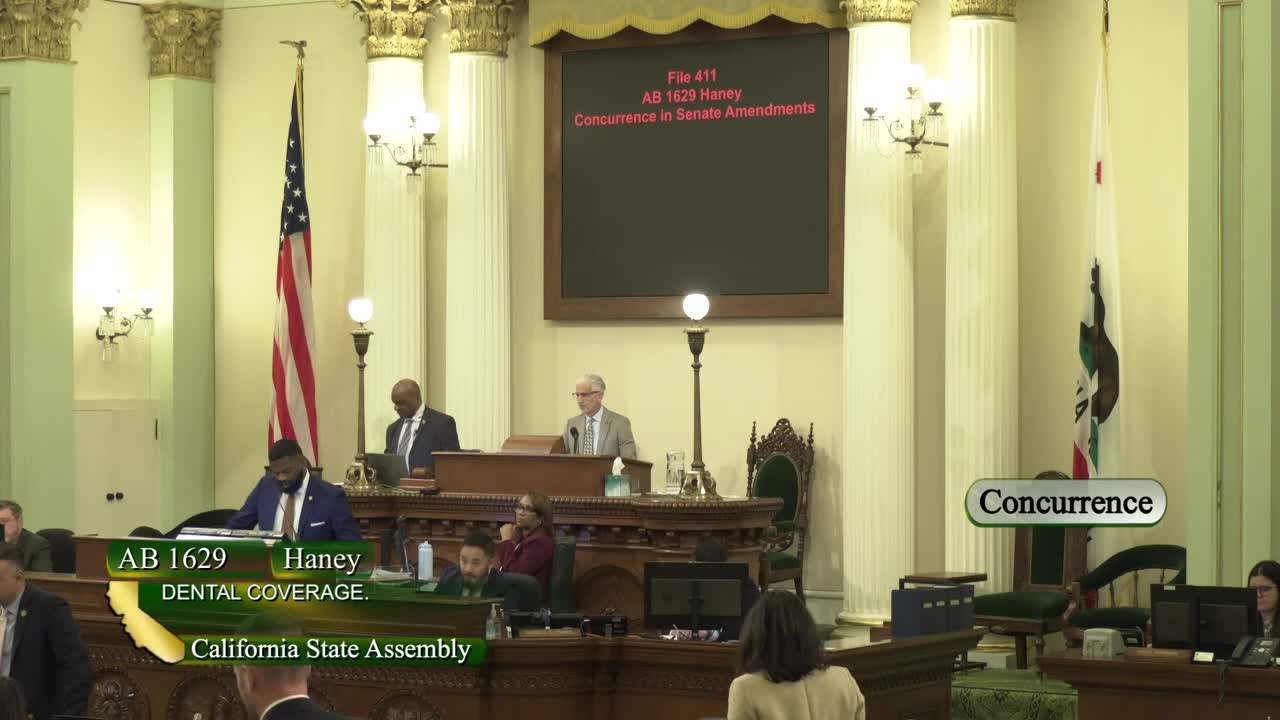 46SEC
Assembly Floor
 59SEC
Senate Floor
 5MIN
Senate Standing Committee on Judiciary
 11MIN
Senate Standing Committee on Business, Professions and Economic Development
 8MIN
Senate Standing Committee on Local Government
 2MIN
Assembly Floor
 5MIN
Assembly Standing Committee on Business and Professions
 7MIN
Assembly Standing Committee on Local Government
Bill Author