AB 1708: Homeless Housing, Assistance, and Prevention program: round 8: smaller jurisdictions.
- Session Year: 2025-2026
- House: Assembly
- Latest Version Date: 2026-04-06
Current Status:
In Progress
(2026-05-14: In committee: Held under submission.)
Introduced
In Committee
Awaiting First Chamber Vote
Passed First Chamber
In Committee
Awaiting Second Chamber Vote
Passed Second Chamber
Enacted
Existing law establishes the Homeless Housing, Assistance, and Prevention (HHAP) program for the purpose of providing jurisdictions with grant funds to support regional coordination and expand or develop local capacity to address their immediate homelessness challenges, as specified. Existing law provides for the allocation of funding under the program among continuums of care, cities, counties, and tribes in 6 rounds, with rounds 1 to 5, inclusive, administered by the Interagency Council on Homelessness and round 6 administered by the Department of Housing and Community Development, as provided. Existing law establishes round 7 of the program and states the intent of the Legislature to enact future legislation that specifies the parameters, as specified. Existing law, effective July 1, 2026, appropriates $500,000,000, as specified, provided that these funds be disbursed in accordance with specified requirements, including that funds from this appropriation be disbursed to a city, county, tribe, or continuum of care for round 7 of the program after a declaration by the director of the department, in consultation with the Director of Finance, that the department has substantially completed its initial disbursement of round 6 funds to the city, county, tribe, or continuum of care and that the city, county, tribe, or continuum of care has obligated at least 50% of its total round 6 award. Existing law requires the department, during the 202526 fiscal year, to prepare to administer round 7 of the program with the goal that initial round 7 disbursements will be available to grantees meeting the statutory provisions for disbursement beginning September 1, 2026, as specified. To be eligible for round 5 or round 6 base program allocation, existing law requires a jurisdiction that is not a tribe to apply as part of a region and be signatory to a regionally coordinated homelessness action plan that meets specified requirements.
This bill would require a continuum of care receiving funding pursuant to round 7, as described above, to allocate funds to a smaller jurisdiction, defined as a city with a population under 300,000. The bill would require a smaller jurisdiction, in order to be eligible for funding, to, among other things, adopt a resolution, as specified, have a compliant housing element, and have adopted a local encampment policy, as described. The bill would require a continuum of care to accept applications for funding in accordance with specified procedures. apply to the allocation of funding available under round 8 of the program and require a round 8 regionally coordinated homelessness action plan to include certain components, including a description of programs and interventions provided by smaller jurisdictions, as defined, that serve the objects and goals of the program, as specified. The bill would authorize a region receiving funding under round 8 to allocate a portion of that funding to smaller jurisdictions to support those programs. The bill would prescribe requirements for a smaller jurisdiction to be eligible to receive funding pursuant to these provisions.
Existing law establishes the Homeless Housing, Assistance, and Prevention (HHAP) program for the purpose of providing jurisdictions with grant funds to support regional coordination and expand or develop local capacity to address their immediate homelessness challenges, as specified. Existing law provides for the allocation of funding under the program among continuums of care, cities, counties, and tribes in 6 rounds, with rounds 1 to 5, inclusive, administered by the Interagency Council on Homelessness and round 6 administered by the Department of Housing and Community Development, as provided. Existing law establishes round 7 of the program and states the intent of the Legislature to enact future legislation that specifies the parameters, as specified. Existing law, effective July 1, 2026, appropriates $500,000,000, as specified, provided that these funds be disbursed in accordance with specified requirements, including that funds from this appropriation be disbursed to a city, county, tribe, or continuum of care for round 7 of the program after a declaration by the director of the department, in consultation with the Director of Finance, that the department has substantially completed its initial disbursement of round 6 funds to the city, county, tribe, or continuum of care and that the city, county, tribe, or continuum of care has obligated at least 50% of its total round 6 award. Existing law requires the department, during the 202526 fiscal year, to prepare to administer round 7 of the program with the goal that initial round 7 disbursements will be available to grantees meeting the statutory provisions for disbursement beginning September 1, 2026, as specified.
This bill would require a continuum of care receiving funding pursuant to round 7, as described above, to allocate funds to a smaller jurisdiction, defined as a city with a population under 300,000. The bill would require a smaller jurisdiction, in order to be eligible for funding, to, among other things, adopt a resolution, as specified, have a compliant housing element, and have adopted a local encampment policy, as described. The bill would require a continuum of care to accept applications for funding in accordance with specified procedures.
The Legislature finds and declares all of the following:
(a)Rounds 5, 6, and 7 of the Regionally Coordinated Homelessness Housing, Assistance and Prevention Program recognized that smaller jurisdictions that participate in and commit to complying with the regionally coordinated homelessness action plan would benefit from an allocation of resources from program funding.
(b)In round 6, 30 percent of the funding was available to continuums of care, 42 percent was available to each city, or a city that is also a county, that has a population of 300,000 or more, and 28 percent was available to each county.
(c)Cities with a population under 300,000 can plan an important role in the development of the regionally coordinated homelessness action plan by identifying local projects and by coordinating the financing of these projects with other sources of local, state, and federal funding.
SEC. 2.Article 4 (commencing with Section 50248) is added to Chapter 6.5 of Part 1 of Division 31 of the Health and Safety Code, to read:4.Smaller Jurisdictions in Round 8 of the Homeless Housing, Assistance, and Prevention Program50248.(a)This section shall apply to the allocation of funding available under round 8 of the Homeless Housing, Assistance, and Prevention program.
(b)For purposes of this article, smaller jurisdiction means a city with a population under 300,000.
(c)A round 8 regionally coordinated homelessness action plan shall include both of the following components:
(1)A description of programs and interventions provided by smaller jurisdictions that serve the objectives and goals of the Homeless Housing, Assistance, and Prevention program, which shall be informed by coordinated outreach to smaller jurisdictions that includes, but is not limited to, all of the following:
(A)An opportunity for those jurisdictions to identify existing programs, gaps, and financial needs.
(B)Ongoing and documented engagement with those jurisdictions.
(C)Opportunities for those jurisdictions to participate in the identification of funding priorities in addition to program identification.
(2)An analysis that contains all of the following:
(A)An analysis of how local, state, and federal funding, and funding available under round 8, can be allocated to support programs identified pursuant to paragraph (1).
(B)An analysis of how funding provided by the region will enable smaller jurisdictions to expand or sustain existing state or locally funded projects, partnerships with nonprofits, or partnerships with other small cities.
(C)An evaluation of the feasibility of allocating a target percentage of funds to support smaller jurisdictions that is consistent with regional needs, priorities, and available resources.
(d)A region receiving funding under round 8 may allocate a portion of that funding to smaller jurisdictions to support the programs identified in paragraph (1) of subdivision (c).
(e)A region shall establish a transparent and publicly available process through which smaller jurisdictions may apply for or otherwise access funding that includes, but is not limited to, timelines, evaluation criteria, and decisionmaking formulas.
(f)To be eligible to receive funding pursuant to this section, a smaller jurisdiction shall do all of the following:
(1)Have a compliant housing element.
(2)Have adopted a local encampment policy consistent with administration guidance.
(3)Demonstrate how its past actions, programs, and appropriation of funds have served the objectives and goals of the adopted regionally coordinated homelessness action plan and the intent of the Homeless Housing, Assistance, and Prevention program to prevent and expeditiously reduce unsheltered homelessness through homelessness prevention activities.
(4)Adopt a resolution that does both of the following:
(A)Commits to participating in, and complying with, the regionally coordinated homelessness action plan.
(B)Directs the mayor to sign the memorandum of understanding that reflects the regionally coordinated homelessness action plan.
SECTION 1.Section 50246 is added to the Health and Safety Code, to read:50246.(a)A continuum of care receiving funding pursuant to paragraph (2) of subdivision (b) of Section 50245 shall allocate funds to smaller jurisdictions pursuant to this section.(b)In order to be eligible to receive funding pursuant to this section, the smaller jurisdiction shall comply with each of the following: (1)(A)Adopt a resolution that does both of the following: (i)Commits to participating in, and complying with, the regionally coordinated homelessness action plan.(ii)Directs the mayor to sign the memorandum of understanding that reflects the regionally coordinated homelessness action plan.(B)(i)Prior to adopting the resolution described in this paragraph, the smaller jurisdiction shall hold a public hearing to consider the regionally coordinated homelessness action plan. (ii)At least 30 days prior to the public hearing, the smaller jurisdiction shall post on its internet website the proposed, approved, and amended regionally coordinated homelessness action plan. (2)Have a compliant housing element. (3)Have adopted a local encampment policy consistent with administration guidance. (4)Demonstrate how its past actions, programs, and appropriation of funds have served the objectives and goals of the adopted regionally coordinated homelessness action plan and the intent of the Homeless Housing, Assistance, and Prevention program to prevent and expeditiously reduce unsheltered homelessness through homelessness prevention activities. (c)A continuum of care shall accept applications for funding in accordance with the following procedure: (1)During an initial period of 30 days, for round 7 funding, a continuum of care shall accept only applications from smaller jurisdictions determined to be eligible pursuant to subdivision (b). (2)(A)The continuum of care shall evaluate the applications submitted pursuant to paragraph (1) and award funds in compliance with all round 7 rules and regulations. (B)The continuum of care shall prioritize applications in which a smaller jurisdiction agrees to utilize round 7 funding in partnership with a nonprofit, another smaller jurisdiction, or other private organization eligible for round 7 funding. (3)If funding remains after the awards made pursuant to paragraph (2), the continuum of care shall accept and evaluate applications from other eligible applicants.(d)For purposes of this section, smaller jurisdiction means a city with a population under 300,000.(a)A continuum of care receiving funding pursuant to paragraph (2) of subdivision (b) of Section 50245 shall allocate funds to smaller jurisdictions pursuant to this section.
(b)In order to be eligible to receive funding pursuant to this section, the smaller jurisdiction shall comply with each of the following:
(1)(A)Adopt a resolution that does both of the following:
(i)Commits to participating in, and complying with, the regionally coordinated homelessness action plan.
(ii)Directs the mayor to sign the memorandum of understanding that reflects the regionally coordinated homelessness action plan.
(B)(i)Prior to adopting the resolution described in this paragraph, the smaller jurisdiction shall hold a public hearing to consider the regionally coordinated homelessness action plan.
(ii)At least 30 days prior to the public hearing, the smaller jurisdiction shall post on its internet website the proposed, approved, and amended regionally coordinated homelessness action plan.
(2)Have a compliant housing element.
(3)Have adopted a local encampment policy consistent with administration guidance.
(4)Demonstrate how its past actions, programs, and appropriation of funds have served the objectives and goals of the adopted regionally coordinated homelessness action plan and the intent of the Homeless Housing, Assistance, and Prevention program to prevent and expeditiously reduce unsheltered homelessness through homelessness prevention activities.
(c)A continuum of care shall accept applications for funding in accordance with the following procedure:
(1)During an initial period of 30 days, for round 7 funding, a continuum of care shall accept only applications from smaller jurisdictions determined to be eligible pursuant to subdivision (b).
(2)(A)The continuum of care shall evaluate the applications submitted pursuant to paragraph (1) and award funds in compliance with all round 7 rules and regulations.
(B)The continuum of care shall prioritize applications in which a smaller jurisdiction agrees to utilize round 7 funding in partnership with a nonprofit, another smaller jurisdiction, or other private organization eligible for round 7 funding.
(3)If funding remains after the awards made pursuant to paragraph (2), the continuum of care shall accept and evaluate applications from other eligible applicants.
(d)For purposes of this section, smaller jurisdiction means a city with a population under 300,000.
|
Date
|
Status
|
|---|---|
| May 14, 2026 | In committee: Held under submission. |
| May 6, 2026 | In committee: Set, first hearing. Referred to APPR. suspense file. |
| Apr 23, 2026 | From committee: Do pass and re-refer to Com. on APPR. (Ayes 6. Noes 0.) (April 23). Re-referred to Com. on APPR. |
| Apr 15, 2026 | From committee: Do pass and re-refer to Com. on HUM. S. (Ayes 12. Noes 0.) (April 15). Re-referred to Com. on HUM. S. |
| Apr 7, 2026 | Re-referred to Com. on H. & C.D. |
| Apr 6, 2026 | From committee chair, with author's amendments: Amend, and re-refer to Com. on H. & C.D. Read second time and amended. |
| Mar 16, 2026 | In committee: Hearing postponed by committee. |
| Feb 23, 2026 | Referred to Coms. on H. & C.D. and HUM. S. |
| Feb 5, 2026 | From printer. May be heard in committee March 7. |
| Feb 4, 2026 | Read first time. To print. |
|
Date
|
Description
|
Location
|
Votes
|
|
|---|---|---|---|---|
| Apr 23, 2026 | Do pass and be re-referred to the Committee on [Appropriations] | Assembly Standing Committee on Human Services |
Passed |
|
| Apr 15, 2026 | Do pass and be re-referred to the Committee on [Human Services] | Assembly Standing Committee on Housing and Community Development |
Passed |
This list shows positions taken on this bill by organizations on the date displayed, which is linked to the original source.
Positions by individuals are not included.
|
Organization
|
Position
|
Date
|
|---|---|---|
| California Contract Cities Association | ** Support | |
| City of Alameda | ** Support | |
| City of Albany | ** Support | |
| City of Arcata | ** Support | |
| City of Artesia | ** Support | |
| City Of Azusa | ** Support | |
| City of Baldwin Park | ** Support | |
| City of Bellflower | ** Support | |
| City of Bell Gardens | ** Support | |
| City Of Beverly Hills | ** Support | |
| City of Big Bear Lake | ** Support | |
| City Of Brawley | ** Support | |
| City Of Buellton | ** Support | |
| City of Buena Park | ** Support | |
| City Of Burlingame | ** Support | |
| city of carlsbad | ** Support | |
| City of Carpinteria | ** Support | |
| City Of Chula Vista | ** Support | |
| City of Cloverdale | ** Support | |
| City Of Coachella | ** Support | |
| City of Colton | ** Support | |
| city of Cypress | ** Support | |
| City Of Delano | ** Support | |
| City of Diamond Bar | ** Support | |
| City of Duarte | ** Support | |
| City of Elk Grove | ** Support | |
| City of Encinitas | ** Support | |
| City of Eureka | ** Support | |
| City Of Folsom | ** Support | |
| City of Folsom, California | ** Support | |
| City Of Fullerton | ** Support | |
| City Of Garden Grove | ** Support | |
| City of Glendora | ** Support | |
| City of Grand Terrace | ** Support | |
| City of Grover Beach | ** Support | |
| City of Hawaiian Gardens | ** Support | |
| City of Huntington Park | ** Support | |
| City Of Lake Forest | ** Support | |
| City of Lakeport | ** Support | |
| City of Lakewood | ** Support | |
| City of Lakewood CA | ** Support | |
| City Of Lancaster | ** Support | |
| City of La Palma | ** Support | |
| City of Lemon Grove | ** Support | |
| City Of Lomita | ** Support | |
| City Of Los Angeles | ** Against | |
| City of Maywood | ** Support | |
| City Of Mission Viejo | ** Support | |
| City of Modesto | ** Support | |
| City of Montclair | ** Support | |
| City of Moreno Valley | ** Support | |
| City of Mountain View | ** Support | |
| City of Needles | ** Support | |
| City of Norwalk | ** Support | |
| City of Oceanside | ** Support | |
| City of Oroville | ** Support | |
| City of Pacifica | ** Support | |
| City Of Palmdale | ** Support | |
| City of Palm Desert | ** Support | |
| City Of Palo Alto | ** Support | |
| city of paramount | ** Support | |
| City of Paso Robles | ** Support | |
| City of Perris | ** Support | |
| City of Petaluma | ** Support | |
| City of Pico Rivera | ** Support | |
| City Of Placentia | ** Support | |
| City Of Redlands | ** Support | |
| City of Redondo Beach | ** Support | |
| City of Riverbank | ** Support | |
| City of Rocklin | ** Support | |
| City of Rohnert Park | ** Support | |
| City Of Salinas | ** Support | |
| City Of San Bernardino | ** Support | |
| City of San Luis Obispo | ** Support | |
| City of Santa Barbara | ** Support | |
| City of Santa Cruz, CA | ** Support | |
| City of Santa Monica | ** Support | |
| City of Simi Valley | ** Support | |
| city of south gate | ** Support | |
| City of Stanton | ** Support | |
| City Of Temecula | ** Support | |
| City of Thousand Oaks | ** Support | |
| City of Torrance | ** Support | |
| City Of Tracy | ** Support | |
| City of Tulare | ** Support | |
| City of Union City | ** Support | |
| City of Vacaville | ** Support | |
| city of ventura | ** Support | |
| City of Victorville | ** Support | |
| City of Vista | ** Support | |
| City of Walnut Creek | ** Support | |
| City of West Hollywood | ** Support | |
| City Of Westminster | ** Support | |
| Corporation For Supportive Housing | ** Against | |
| Dignitymoves | ** Support | |
| League Of California Cities | ** Support | |
| Los Angeles County Division, League of California Cities | ** Support | |
| los angeles homeless services authority | ** Against | |
| Los Angeles Mayor Karen Bass | ** Against | |
| Mayor Michael Hannon, City of Newark | ** Support | |
| National Alliance to End Homelessness | ** Against | |
| San Bernardino Council of Governments | ** Support | |
| San Bernardino County Transportation Authority | ** Support | |
| Town of Apple Valley | ** Support |
Date of Hearing: May 6, 2026
ASSEMBLY COMMITTEE ON APPROPRIATIONS
Buffy Wicks, Chair
ABPCA Bill Id:AB 1708
Author:(Solache) – As Amended Ver:April 6, 2026
Policy Committee: | Housing and Community Development | Vote: | 12 - 0 |
Human Services | 6 - 0 | ||
|
|
Urgency: No State Mandated Local Program: No Reimbursable: No
SUMMARY:
This bill, beginning with funding allocations under round 8 of the Homeless Housing, Assistance, and Prevention (HHAP) program, requires a round 8 regionally coordinated homelessness action plan to include certain components necessary to allocate a portion of the funding to smaller jurisdictions.
Specifically, this bill:
- Defines “smaller jurisdiction” to mean a city with a population under 300,000.
- Requires HHAP round 8 to include a description of programs and interventions provided by smaller jurisdictions that serve the objectives and goals of HHAP, as specified.
- Requires HHAP round 8 to include an analysis that contains, among other items, an analysis of how local, state, and federal funding can be allocated to support programs identified for smaller jurisdictions.
- Allows a region receiving funding under HHAP round 8 to allocate a portion of that funding to smaller jurisdictions to support the programs in the regional plan.
- Requires a region to establish a transparent and publicly available process through which smaller jurisdictions may apply for or otherwise access funding that includes, but is not limited to, timelines, evaluation criteria, and decision-making formulas.
- Requires a smaller jurisdiction to do the following to be eligible for HHAP round 8 funding: (a) have a compliant housing element, (b) have adopted a local encampment policy consistent with administration guidance, (c) demonstrate how its past actions, programs, and appropriation of funds have served the objectives and goals of the regionally coordinated homelessness action plan and the intent of the HHAP, and (d) adopt a resolution that commits to participating in, and complying with, the regionally coordinated homelessness action plan.
FISCAL EFFECT:
The Governor’s proposed 2026-27 budget does not stipulate funding for HHAP round 8.
Should funding be provided, the Department of Housing and Community Development (HCD) would likely require additional General Fund resources in the hundreds of thousands of dollars for added workload associated with new round 8 program requirements, including an increase in the number of requests for technical assistance by local jurisdictions.
The Budget Act of 2025 provided $500 million for HHAP round 7. The Governor’s proposed 2026-27 budget maintains the $500 million appropriation but provides no additional funding.
The Legislative Analyst’s Office recently warned of General Fund structural deficits of around $35 billion per year in the 2027-28 fiscal year and ongoing.
COMMENTS:
- Purpose. According to the author:
Currently, only 14 of the state’s 483 cities can access HHAP funding directly. There is no statutory requirement for direct recipients to equitably or meaningfully allocate funds to smaller cities in their region. As a result, many small and mid-sized cities lack a clear pathway to these existing state resources, even as they invest their own limited local dollars to address homelessness. As the state continues to demand meaningful results in addressing homelessness across California, [this bill], offers equitable opportunities for cities of all sizes to access state funding to supplement the work they are already doing to support their unhoused residents.
- Background. HHAP is a flexible grant program to address homelessness at the local level. First established in 2019, HHAP provides direct funding to counties, large cities, and CoCs to support regional coordination and expand local capacity to address homelessness through a range of interventions including interim housing, permanent supportive housing, outreach, homelessness prevention, and supportive services. Eligible recipients are the state's 58 counties, 14 cities with populations over 300,000, and 44 CoCs.
HHAP applicants must submit regionally coordinated action plans to HCD identifying each jurisdiction's roles and responsibilities in addressing homelessness. While cities with populations under 300,000 may participate in these plans, counties and CoCs, are encouraged, but not required, to allocate HHAP funding to those cities.
Since 2019, HHAP has received 7 rounds of funding totaling $5.45 billion. Of this amount $3.9 billion has been awarded. Round 6 of HHAP, funded at $1 billion, is in the awards phase. As of April 2026, HCD has awarded more than $724 million across 31 of 42 regional applications submitted. Round 7 of HHAP received a reduced $500 million in the Budget Act of 2025, contingent on additional accountability, with a commitment that funds will go out in an expedited fashion. The Governor’s proposed 2026-27 budget maintains the $500 million round 7 appropriation but provides no funding for round 8.
This bill establishes a process for smaller jurisdictions to access round 8 funding, should funding be allocated in the state budget.
- Support and Opposition. This bill is sponsored by the League of California Cities and supported by numerous small and medium-sized cities across California. They assert, because there is no requirement to engage or allocate HHAP resources to small and medium-sized cities, many cities lack a pathway to access HHAP funding, even as they invest significant General Fund resources to prevent and reduce homelessness in their communities.
This bill is opposed by Los Angeles Mayor Karen Bass and the Corporation for Supportive Housing, who share the goal of expanding HHAP small cities, but argue that goal should be achieved by increasing overall funding. They assert this bill instead dilutes an already reduced pool of funding, increases administrative burden on CoCs, and risks destabilizing existing programs.
Analysis Prepared by: Jennifer Swenson / APPR. / (916) 319-2081
Date of Hearing: April 23, 2026
ASSEMBLY COMMITTEE ON HUMAN SERVICES
Alex Lee, Chair
ABPCA Bill Id:AB 1708 (
Author:Solache) – As Amended Ver:April 6, 2026
SUBJECT: Homeless Housing, Assistance, and Prevention program: round 8: smaller jurisdictions
SUMMARY: Establishes criteria for funding under Round 8 of the Homeless Housing, Assistance, and Prevention program (HHAP) to allow a portion of that funding to be allocated to smaller jurisdictions. Specifically, this bill:
- Applies the following to the allocation of funding available under Round 8 of HHAP:
- Defines a “smaller jurisdiction” to mean a city with a population under 300,00.
- Requires a regionally coordinated homelessness action plan to include both of the following components:
- A description of programs and interventions provided by smaller jurisdictions that serve the objectives and goals of HHAP, which shall be informed by coordinated outreach to smaller jurisdictions that includes, but is not limited to, all of the following:
- An opportunity for those jurisdictions to identify existing programs, gaps, and financial needs;
- Ongoing and documented engagement with those jurisdictions; and,
- Opportunities for those jurisdictions to participate in the identification of funding priorities in addition to program identification;
- An analysis that contains all of the following:
- An analysis of how local, state, and federal funding, and funding available under Round 8, can be allocated to support programs identified pursuant to subparagraph i) above;
- An analysis of how funding provided by the region will enable smaller jurisdictions to expand or sustain existing state or locally funded projects, partnerships with nonprofits, or partnerships with other small cities; and,
- An evaluation of the feasibility of allocating a target percentage of funds to support smaller jurisdictions that is consistent with regional needs, priorities, and available resources.
- Permits a region receiving funding under Round 8 to allocate a portion of that funding to smaller jurisdictions to support specified programs;
- Requires a region to establish a transparent and publicly available process through which smaller jurisdictions may apply for or otherwise access funding that includes, but is not limited to, timelines, evaluation criteria, and decisionmaking formulas;
- Requires a smaller jurisdiction to do all of the following to be eligible to receive funding:
- Have a compliant housing element;
- Have adopted a local encampment policy consistent with administration guidance;
- Demonstrate how its past actions, programs, and appropriation of funds have served the objectives and goals of the adopted regionally coordinated homelessness action plan and the intent of HHAP to prevent and expeditiously reduce unsheltered homelessness through homelessness prevention activities; and,
- Adopt a resolution that commits to participating in, and complying with, the regionally coordinated homelessness action plan and directs the mayor to sign the memorandum of understanding that reflects the regionally coordinated homelessness action plan.
- Makes the following legislative findings and declarations:
- Rounds 5, 6, and 7 of the Regionally Coordinated Homelessness Housing, Assistance and Prevention Program recognized that smaller jurisdictions that participate in, and commit to complying with, the regionally coordinated homelessness action plan would benefit from an allocation of resources from program funding;
- In Round 6, 30% of the funding was available to continuums of care (CoCs), 42% was available to each city, or a city that is also a county, that has a population of 300,000 or more, and 28% was available to each county; and,
- Cities with a population under 300,000 can plan an important role in the development of the regionally coordinated homelessness action plan by identifying local projects and by coordinating the financing of these projects with other sources of local, state, and federal funding.
EXISTING LAW:
- Established HHAP to provide jurisdictions with one-time grant funds to support regional coordination and expand or develop local capacity to address their immediate homelessness challenges, informed by a best-practices framework focused on moving homeless individuals and families into permanent housing and supporting the efforts of those individuals and families to maintain their permanent housing. (Health and Safety Code [HSC] § 50216)
- Requires HHAP to be used for evidence-based solutions that address and prevent homelessness among eligible populations, including any of the following:
- Rapid rehousing, including rental subsidies and incentives to landlords, such as security deposits and holding fees;
- Operating subsidies in new and existing affordable or supportive housing units, emergency shelters, and navigation centers. Operating subsidies may include operating reserves;
- Street outreach to assist persons experiencing homelessness to access permanent housing and services;
- Services coordination, which may include access to workforce, education, and training programs, or other services needed to promote housing stability in supportive housing;
- Systems support for activities necessary to create regional partnerships and maintain a homeless services and housing delivery system, particularly for vulnerable populations, including families and homeless youth;
- Delivery of permanent housing and innovative housing solutions, such as hotel and motel conversions;
- Prevention and shelter diversion to permanent housing, including rental subsidies; and,
- Interim sheltering, limited to newly developed clinically enhanced congregate shelters, new or existing noncongregate shelters, and operations of existing navigation centers and shelters based on demonstrated need. Demonstrated need for purposes of this paragraph shall be based on the following:
- The number of available shelter beds in the city, county, or region served by a CoC;
- The number of people experiencing unsheltered homelessness in the homeless Point-in-Time count;
- Shelter vacancy rate in the summer and winter months;
- Percentage of exits from emergency shelters to permanent housing solutions; and,
- A plan to connect residents to permanent housing. (HSC § 50220.7)
- Requires, beginning with the third round of HHAP, applicants to provide the following information for all rounds of program allocations through a data collection, reporting, performance monitoring, and accountability framework:
- Data on the applicant’s progress towards meeting their outcome goals, which must be submitted annually on December 31 of each year through the duration of the program;
- If the applicant has not made significant progress toward their outcome goals, the applicant must submit a description of barriers and possible solutions to those barriers;
- Applicants that do not demonstrate significant progress towards meeting outcome goals must accept technical assistance from the California Interagency Council on Homelessness (Cal ICH), and may also be required to limit the allowable uses of these program funds, as determined by Cal ICH;
- A quarterly fiscal report of program funds expended and obligated in each allowable budget category approved in their application for program funds; and,
- If the applicant has not made significant progress toward their outcome goals, then the applicant must report on their outcome goals in their quarterly report. (HSC § 50220.7)
- Establishes Cal ICH, formerly known as the Homelessness Coordinating and Financing Council (HCFC), to oversee and coordinate the implementation of the Housing First guidelines and regulations in California and to identify resources and services that can be accessed to prevent and end homelessness in California. This includes ensuring that local jurisdictions and state agencies align their services with statutory core components that prioritize permanent housing placement without service-participation requirements or other preconditions. (Welfare and Institutions Code § 8255 et seq.)
FISCAL EFFECT: Unknown, this bill has not been analyzed by a fiscal committee.
COMMENTS: This analysis only reflects policy issues germane to the Assembly Committee on Human Services.
Background: The Homeless Housing, Assistance, and Prevention program is a flexible grant program to address homelessness at the local level. First established in 2019, HHAP provides direct funding to counties, large cities, and CoCs to support regional coordination and expand local capacity to address homelessness through a range of interventions including interim housing, permanent supportive housing, outreach, homelessness prevention, and supportive services. Eligible recipients are the state's 58 counties, 14 cities with populations over 300,000, and 44 CoCs. Currently, only 14 of California's 483 cities have a direct allocation pathway under HHAP.
HHAP was originally administered by Cal ICH, which served as the state's coordinating body across homelessness-related programs and agencies. Beginning with Round 6, administration of HHAP was transferred to the California Department of Housing and Community Development (HCD), with Cal ICH refocused on statewide policy development and coordination. Cal ICH continues to serve as the state's primary coordinating body, but its role has shifted significantly to focus on statewide policy, cross-departmental alignment, and data integration.
Although HHAP administration transferred from Cal ICH to HCD beginning with Round 6, Cal ICH maintains the Homeless Data Integration System, which aggregates Homeless Management Information System (HMIS) data from all HHAP grantees and serves as the primary statewide data infrastructure for tracking homelessness program outcomes. Cal ICH also provides technical assistance to grantees on data and reporting requirements and plays a cross-agency coordinating function that encompasses child welfare, CalWORKs housing, and youth homelessness programs.
Since 2019, the Legislature and the Governor have committed approximately $5 billion across six rounds of HHAP funding. Funding levels and program requirements have evolved across different rounds. Round 1 was a $650 million appropriation with limited accountability requirements. Rounds 2 through 4, totaling approximately $1.95 billion combined, were administered by Cal ICH to strengthen regional planning requirements. Round 5 established the regionally coordinated homelessness action plan framework that requires jurisdictions to apply as part of a region. Round 6, the most recent completed round, appropriated $1 billion and was administered by HCD, with enhanced accountability measures including compliant housing element requirements, clawback provisions for underperforming grantees, and mandatory HMIS data reporting.[1]
According to Cal ICH’s May 2024 Homeless HHAP Rounds 1-4 Grantee Data Snapshot, data show that HHAP has produced measurable outcomes. From Rounds 1 through 4, the program funded over 1,559 projects, provided services to over 300,000 people, and placed over 90,000 people into permanent housing. From January 2023 through September 2025, over 100,000 Californians were permanently housed with HHAP support, contributing to a 9% reduction in unsheltered homelessness statewide, the first such reduction in over 15 years.
Round 6 Status. Round 6 of HHAP, funded at $1 billion, is currently in the awards phase. As of April 2026, HCD has awarded more than $724 million across 31 of 42 regional applications submitted, with awards announced in three tranches: $419 million to the Los Angeles, San Diego, and San Francisco regions in January 2026; $159.3 million to 20 additional regions in March 2026; and $145.4 million to eight additional regions including Sacramento, Yolo, and Santa Clara in April 2026.[2]
According to the Legislative Analyst’s Office publication on February 18, 2026, Overview of Homeless Housing, Assistance, and Prevention Program Funding and Accountability, Round 7 of HHAP has been appropriated at $500 million in the 2025-26 Budget Act, effective July 1, 2026 which is a 50% reduction from the $1 billion provided in each of the prior two rounds. The Round 7 appropriation is contingent on grantees meeting enhanced accountability and performance requirements, including maintaining a compliant housing element and adopting encampment policies aligned with Administration guidance. HCD is directed to prepare for Round 7 administration with the goal of making initial disbursements available beginning September 1, 2026, with parameters for the round to be specified through subsequent legislation.
The proposed 2026-27 Governor's Budget maintains the $500 million Round 7 appropriation, with no new appropriation proposed for Round 8. This bill applies to Round 8, which does not yet have an appropriation.
Round 8. The provisions of this bill seek to establish a framework for smaller jurisdiction access to Round 8 funding, defined as a city with a population under 300,000.
This bill requires that the Round 8 regionally coordinated homelessness action plan include two components: first, a description of programs and interventions provided by smaller jurisdictions that serve HHAP's objectives, informed by coordinated outreach that gives those jurisdictions an opportunity to identify programs, gaps, and funding needs; and second, an analysis of how local, state, and federal funding can support those programs, how Round 8 funding could enable smaller jurisdictions to expand or sustain existing projects, and an evaluation of the feasibility of allocating a target percentage of funds to smaller jurisdictions consistent with regional needs.
Regions receiving Round 8 funding would be allowed, but are not required to, allocate a portion of that funding to smaller jurisdictions. Regions must also establish a transparent, publicly available application process for smaller jurisdictions that includes timelines, evaluation criteria, and decision-making formulas. To be eligible, a smaller jurisdiction must have a compliant housing element, have adopted a local encampment policy consistent with Administration guidance, demonstrate alignment with the regional plan, and adopt a resolution committing to participate in the regionally coordinated action plan
Author’s Statement: According to the Author, “To effectively serve unhoused Californians, we must empower communities with the resources needed to meet this moment with compassion and deliver local solutions. [This bill] would create a clearly defined pathway for cities with populations under 300,000 to access the Homeless Housing, Assistance, and Prevention Grant Program (HHAP) while requiring clear accountability metrics aligned with the state’s goals.
“Currently, only 14 of the state’s 483 cities can access HHAP funding directly. There is no statutory requirement for direct recipients to equitably or meaningfully allocate funds to smaller cities in their region. As a result, many small and mid-sized cities lack a clear pathway to these existing state resources, even as they invest their own limited local dollars to address homelessness. As the state continues to demand meaningful results in addressing homelessness across California, [this bill], offers equitable opportunities for cities of all sizes to access state funding to supplement the work they are already doing to support their unhoused residents.”
Equity Implications: The provisions of this bill seek to ensure that the people most in need can access services where they live. Currently, the size of a city determines whether its unhoused residents can access state-funded services in their own community. In smaller cities, individuals experiencing homelessness may find that the nearest HHAP-funded shelter bed, access center, or rapid rehousing program is located in a neighboring larger jurisdiction. By creating a structured pathway for smaller cities to participate meaningfully in the regional homelessness response and access HHAP funding, this bill may limit the impact that geography has on determining whether a person can get help.
Double referral: This bill was previously heard in the Assembly Committee on Housing and Community Development on April 15, 2026, and was approved on a 12-0 vote.
Arguments in Support: The League of California Cities, the sponsor of this bill, writes, “According to a 2024 Cal Cities survey, nearly 90% of cities are investing their own general fund revenues to address homelessness, and 60% of cities have been unable to access HHAP funding as subrecipients. Nine in 10 cities are concerned about sustaining existing homelessness services over the long term, and 81% say inconsistent state funding has hindered their ability to address homelessness.
“Cal Cities recognizes the impact of the HHAP program, which has placed more than 90,000 people into permanent housing since 2023. Cities of all sizes have consistently supported sustained funding for HHAP, even though most will never receive program funds, because they recognize its value in reducing homelessness statewide. [This bill] strikes a thoughtful balance, ensuring smaller cities are engaged in the regional process while maintaining local flexibility to allocate funding in ways that support these communities without disrupting existing programs.”
Arguments in Opposition: Opponents of this bill, including Los Angeles Mayor Karen Bass and the Corporation for Supportive Housing, argue that creating a sub-allocation pathway for smaller jurisdictions risks diluting an already reduced pool of funding, increasing administrative burden on CoCs, and encouraging jurisdictional siloing of services that reduces program effectiveness. Mayor Bass's letter notes that in the LA CoC, more than 60% of people experiencing homelessness are located within the City of Los Angeles, and that a requirement to carve out resources for smaller jurisdictions in that context would divert funding from documented need.
RELATED AND PRIOR LEGISLATION:
AB 1220 (Luz Rivas), Chapter 398, Statutes of 2021, renamed the HCFC to Cal ICH, named the Secretary of the California Health and Human Services Agency as a co-chair, reconstituted the Cal ICH membership, and required the Cal ICH to meet at least twice yearly with an advisory committee, among other things.
SB 918 (Wiener), Chapter 841, Statutes of 2018, established the Homeless Youth Act of 2018 to better serve the state’s homeless youth population and required the HCFC to take on additional related responsibilities, including setting goals to prevent and end homelessness among youth in the state, defining outcome measures, and gathering data related to those goals.
SB 1380 (Mitchell), Chapter 847, Statutes of 2016, created the HCFC to implement Housing First policies throughout the state.
REGISTERED SUPPORT / OPPOSITION:
Support
League of California Cities (Sponsor)
City of Alameda
City of Albany
City of Arcata
City of Artesia
City of Bellflower
City of Beverly Hills
City of Big Bear Lake
City of Brawley
City of Buellton
City of Buena Park
City of Carlsbad
City of Carpinteria
City of Chula Vista
City of Coachella
City of Delano
City of Diamond Bar
City of Elk Grove
City of Encinitas
City of Eureka
City of Fullerton
City of Garden Grove
City of Grand Terrace
City of Huntington Park
City of Lake Forest
City of Lemon Grove
City of Modesto
City of Mountain View
City of Needles
City of Oceanside
City of Oroville
City of Pacifica
City of Palmdale
City of Palo Alto
City of Paramount
City of Paso Robles
City of Petaluma
City of Pico Rivera
City of Placentia
City of Redondo Beach
City of Rocklin
City of Salinas
City of San Bernardino
City of Santa Barbara
City of Santa Monica
City of Simi Valley
City of South Gate
City of Stanton
City of Temecula
City of Thousand Oaks
City of Torrance
City of Union City
City of Vacaville
City of Ventura
City of Victorville
City of Walnut Creek
City of West Hollywood
City of Westminster
DignityMoves
Los Angeles County Division, League of California Cities
San Bernardino Council of Governments
San Bernardino County Transportation Authority
Opposition:
City of Los Angeles
Los Angeles Homeless Services Authority
Office of Los Angeles Mayor Karen Bass
Oppose Unless Amended
Corporation for Supportive Housing
National Alliance to End Homelessness
Analysis Prepared by: Jessica Langtry / HUM. S. / (916) 319-2089
Date of Hearing: April 15, 2026
ASSEMBLY COMMITTEE ON HOUSING AND COMMUNITY DEVELOPMENT
Matt Haney, Chair
ABPCA Bill Id:AB 1708 (
Author:Solache) – As Amended Ver:April 6, 2026
SUBJECT: Homeless Housing, Assistance, and Prevention program: round 8: smaller jurisdictions
SUMMARY: Requires a regionally coordinated homelessness action plan developed for Homeless Housing, Assistance, and Prevention Program (HHAP) Round 8 to include specified information regarding smaller jurisdictions. Specifically, this bill:
- Defines “smaller jurisdiction” to mean a city with a population under 300,000.
- Requires HHAP Round 8 to include a description of programs and interventions provided by smaller jurisdictions that serve the objectives and goals of HHAP, which shall include:
- An opportunity for smaller jurisdictions to identify existing programs, gaps, and financial needs;
- Ongoing and documented engagement with smaller jurisdictions; and
- Opportunities for smaller jurisdictions to participate in the identification of funding priorities in addition to program identification.
- Requires HHAP Round 8 to include an analysis that contains all of the following:
- An analysis of how local, state, and federal funding can be allocated to support programs identified for smaller jurisdictions;
- An analysis of how funding provided by the region will enable smaller jurisdictions to expand or sustain existing state or locally funded projects, partnerships with nonprofits, or partnerships with other small cities; and
- An evaluation of the feasibility of allocating a targeted percentage of funds to support smaller jurisdictions, consistent with regional needs, priorities, and available resources.
- Allows a region receiving funding under HHAP Round 8 to allocate a portion of that funding to smaller jurisdictions to support the programs in the regional plan.
- Requires a region to establish a transparent and publicly available process through which smaller jurisdictions may apply for or otherwise access funding that includes, but is not limited to, timelines, evaluation criteria, and decision-making formulas.
- Requires a smaller jurisdiction to do all of the following to be eligible for funding from HHAP Round 8:
- Have a compliant housing element;
- Have adopted a local encampment policy consistent with administration guidance;
- Demonstrate how its past actions, programs, and appropriation of funds have served the objectives and goals of the adopted regionally coordinated homelessness action plan and the intent of the Homeless Housing, Assistance, and Prevention program to prevent and expeditiously reduce unsheltered homelessness through homelessness prevention activities; and
- Adopt a resolution that commits to participating in, and complying with, the regionally coordinated homelessness action plan and directs the mayor to sign the memorandum of understanding that reflects the regionally coordinated homelessness action plan.
EXISTING LAW:
- Established HHAP to provide jurisdictions with one-time grant funds to support regional coordination and expand or develop local capacity to address their immediate homelessness challenges, informed by a best-practices framework focused on moving homeless individuals and families into permanent housing and supporting the efforts of those individuals and families to maintain their permanent housing. (Health and Safety Code Section (HSC) 50216)
- Requires HHAP to be used for evidence-based solutions that address and prevent homelessness among eligible populations, including any of the following:
- Rapid rehousing, including rental subsidies and incentives to landlords, such as security deposits and holding fees;
- Operating subsidies in new and existing affordable or supportive housing units, emergency shelters, and navigation centers. Operating subsidies may include operating reserves;
- Street outreach to assist persons experiencing homelessness to access permanent housing and services;
- Services coordination, which may include access to workforce, education, and training programs, or other services needed to promote housing stability in supportive housing;
- Systems support for activities necessary to create regional partnerships and maintain a homeless services and housing delivery system, particularly for vulnerable populations, including families and homeless youth;
- Delivery of permanent housing and innovative housing solutions, such as hotel and motel conversions;
- Prevention and shelter diversion to permanent housing, including rental subsidies; and
- Interim sheltering, limited to newly developed clinically enhanced congregate shelters, new or existing noncongregate shelters, and operations of existing navigation centers and shelters based on demonstrated need. Demonstrated need for purposes of this paragraph shall be based on the following:
- The number of available shelter beds in the city, county, or region served by a Continuum of Care (CoC);
- The number of people experiencing unsheltered homelessness in the homeless Point-in-Time (PIT) count;
- Shelter vacancy rate in the summer and winter months;
- Percentage of exits from emergency shelters to permanent housing solutions; and
- A plan to connect residents to permanent housing. (HSC 50220.7)
- Requires, beginning with the third round of HHAP, applicants to provide the following information for all rounds of program allocations through a data collection, reporting, performance monitoring, and accountability framework:
- Data on the applicant’s progress towards meeting their outcome goals, which must be submitted annually on December 31 of each year through the duration of the program;
- If the applicant has not made significant progress toward their outcome goals, the applicant must submit a description of barriers and possible solutions to those barriers;
- Applicants that do not demonstrate significant progress towards meeting outcome goals must accept technical assistance from Cal-ICH and may also be required to limit the allowable uses of these program funds, as determined by the council;
- A quarterly fiscal report of program funds expended and obligated in each allowable budget category approved in their application for program funds; and
- If the applicant has not made significant progress toward their outcome goals, then the applicant must report on their outcome goals in their quarterly report. (HSC 50220.7)
FISCAL EFFECT: Unknown.
COMMENTS:
Author’s Statement: According to the author, “To effectively serve unhoused Californians, we must empower communities with the resources needed to meet this moment with compassion and deliver local solutions. AB 1708 would create a clearly defined pathway for cities with populations under 300,000 to access the Homeless Housing, Assistance, and Prevention Grant Program (HHAP) while requiring clear accountability metrics aligned with the state’s goals.
Currently, only 14 of the state’s 483 cities can access HHAP funding directly. There is no statutory requirement for direct recipients to equitably or meaningfully allocate funds to smaller cities in their region. As a result, many small and mid-sized cities lack a clear pathway to these existing state resources, even as they invest their own limited local dollars to address homelessness. As the state continues to demand meaningful results in addressing homelessness across California, AB 1708, offers equitable opportunities for cities of all sizes to access state funding to supplement the work they are already doing to support their unhoused residents.”
HHAP: Beginning in 2018, in response to a growing number of people experiencing unsheltered homelessness, the state began investing significantly in the local homelessness response system through HHAP. HHAP provides one-time grants to cities with populations over 300,000 (big cities), CoCs, and counties to support regional coordination and expand or develop local capacity to address their immediate homelessness challenges. Investments are informed by a best-practices framework focused on moving homeless individuals and families into permanent housing and supporting the efforts of those individuals and families to maintain their permanent housing. Big cities, CoCs, and counties can use HHAP for operating subsidies for shelters and supportive housing; construction of shelter, interim housing, supportive housing, landlord incentives, rental assistance, rapid rehousing, homelessness prevention, shelter diversion; street outreach, and services coordination. The program has received 7 rounds of funding totaling $5.45 billion from 2019-2025, of that. $3.9 billion has been awarded. and $2.3 billion has been expended. Round 6 of HHAP is available to applicants. and an additional $500 million was included in this year’s budget, contingent on more accountability, with a commitment that funds would go out in an expedited fashion. Homelessness in California has gone down by 9% since the state started investing in the homelessness response system though HHAP. Data shows that HHAP has helped 100,000 people be permanently housed from January 2023 to September 2025.
HHAP funding has significant accountability measures attached to it. Applicants must submit monthly fiscal reports and regular reporting on metrics designed to move people experiencing homelessness into permanent housing. Applicants must develop regional plans that identify how multiple sources of funds can be used to support a best-practices framework to move homeless individuals and families into permanent housing. Local Action Plans require HHAP recipients to set outcome goals that prevent and reduce homelessness over a three-year period, informed by the findings from a local landscape analysis and the jurisdiction's base system performance measure from 2020 calendar year data in the Homeless Data Integration System (HDIS). The outcome goals included defined metrics, based on HUD’s system performance measures, to do the following:
- Reduce the number of people experiencing homelessness;
- Reduce the number of people who become homeless for the first time;
- Increase the number of people exiting homelessness into permanent housing;
- Reduce the length of time people remain homeless;
- Reduce the number of people who return to homelessness after exiting homelessness to permanent housing; and
- Increase successful placements from street outreach.
Small Jurisdictions and HHAP: Big cities, CoCs, and counties are required to develop a regionally coordinated homelessness action plan and sign Memorandums of Understanding (MOUs) agreeing to participate and comply with the action plan. Smaller jurisdictions in the region may also sign the MOU and commit to participation in and comply with the regionally coordinated homelessness action plan. Counties are encouraged to allocate resources from program funding to smaller jurisdictions that participate in and commit to complying with the regionally coordinated homelessness action plan. If HHAP recipients are not making progress toward meeting their performance metrics listed above, HCD may require them to develop a system performance and improvement plan. If smaller jurisdictions participate in the regional plan, they would be part of the system performance and improvement plan, which requires the applicants to develop a timeframe for steps and completion of each key action, the methods of measuring the success of each key action, and related system performance measures that will demonstrate success of the key action.
This Bill: Some counties are already providing HHAP funds to smaller jurisdictions; however, counties are not required to allocate funds to smaller cities. This bill would not require any of the HHAP applicants to grant funds to smaller cities. It would provide for a more robust process for cities to engage in the regional plan that all applicants are required to complete and update to receive HHAP funds. It would require more engagement and outreach to smaller cities than what is currently required. Smaller jurisdictions that receive HHAP funds would be required to adopt a resolution that commits to participating in, and complying with, the regionally coordinated homelessness action plan. The mayor would be required to sign the MOU that reflects the regionally coordinated homelessness action plan. This bill would apply to Round 8 of HHAP, which has yet to be funded.
Arguments in Support: According to the sponsor, the League of Cities, “Currently HHAP applicants must submit regionally coordinated action plans to the Department of Housing and Community Development (HCD), identifying each jurisdiction's roles and responsibilities in addressing homelessness. While cities with populations under 300,000 may participate in these plans, direct recipients are encouraged, but not required, to allocate HHAP funding to those cities. As a result, there is no requirement to meaningfully engage or allocate these critical resources to small and medium-sized cities. Many of these cities lack a clear and consistent pathway to access HHAP funding, even as they invest significant General Fund resources to prevent and reduce homelessness in their communities. AB 1708 would address this by requiring CoCs, prior to allocating funding to other subrecipients in their region, to accept applications for a period of 30 days only from cities with populations under 300,000.”
Arguments in Opposition: The National Alliance to End homelessness has an oppose unless amended position on the bill, writing the bill “would result in more of our homelessness funding going to support local bureaucracy and planning instead of funding the programs that are producing meaningful results.” “When funding is balkanized among many smaller cities that keep programs within their borders, service delivery becomes fragmented and less effective, and funding amounts become too small for programs to reach an optimal scale.”
Double-Referred: This bill was also referred to the Assembly Committee on Human Services where it will be heard should it pass out of this committee.
REGISTERED SUPPORT / OPPOSITION:
Support
League of California Cities (Sponsor)
California Contract Cities Association
City of Alameda
City of Arcata
City of Artesia, California
City of Azusa
City of Baldwin Park
City of Bell Gardens
City of Bellflower
City of Beverly Hills
City of Big Bear Lake
City of Brawley
City of Buellton
City of Buena Park
City of Burlingame
City of Carlsbad
City of Carpinteria
City of Chula Vista
City of Cloverdale
City of Coachella
City of Colton
City of Cypress
City of Delano
City of Diamond Bar
City of Duarte
City of Elk Grove
City of Encinitas
City of Eureka
City of Folsom
City of Folsom, California
City of Fullerton
City of Garden Grove
City of Glendora
City of Grand Terrace
City of Grover Beach
City of Huntington Park
City of Hawaiian Gardens
City of LA Palma
City of Lake Forest
City of Lakeport
City of Lakewood
City of Lakewood CA
City of Lancaster
City of Lomita
City of Maywood
City of Mission Viejo
City of Modesto
City of Montclair
City of Moreno Valley
City of Mountain View
City of Needles
City of Norwalk
City of Oceanside
City of Oroville
City of Pacifica
City of Palm Desert
City of Palmdale
City of Palo Alto
City of Paramount
City of Paso Robles
City of Perris
City of Petaluma
City of Pico Rivera
City of Placentia
City of Redlands
City of Redondo Beach
City of Riverbank
City of Rocklin
City of Rohnert Park
City of Salinas
City of San Bernardino
City of San Luis Obispo
City of Santa Barbara
City of Santa Cruz, CA
City of Santa Monica
City of South Gate
City of Stanton
City of Temecula
City of Thousand Oaks
City of Torrance
City of Tracy
City of Tulare
City of Union City
City of Vacaville
City of Ventura
City of Vista
City of Walnut Creek
City of Westminster
DignityMoves
Los Angeles County Division, League of California Cities
Mayor Michael Hannon, City of Newark
Town of Apple Valley
West Hollywood/Hernan Molina, Governmental Affairs Liaison
Opposition
Los Angeles Homeless Services Authority
Office of Los Angeles Mayor Karen Bass
Individuals (2)
Oppose Unless Amended
Corporation for Supportive Housing
National Alliance to End Homelessness
Analysis Prepared by: Lisa Engel / H. & C.D. / (916) 319-2085
Discussed in Hearing
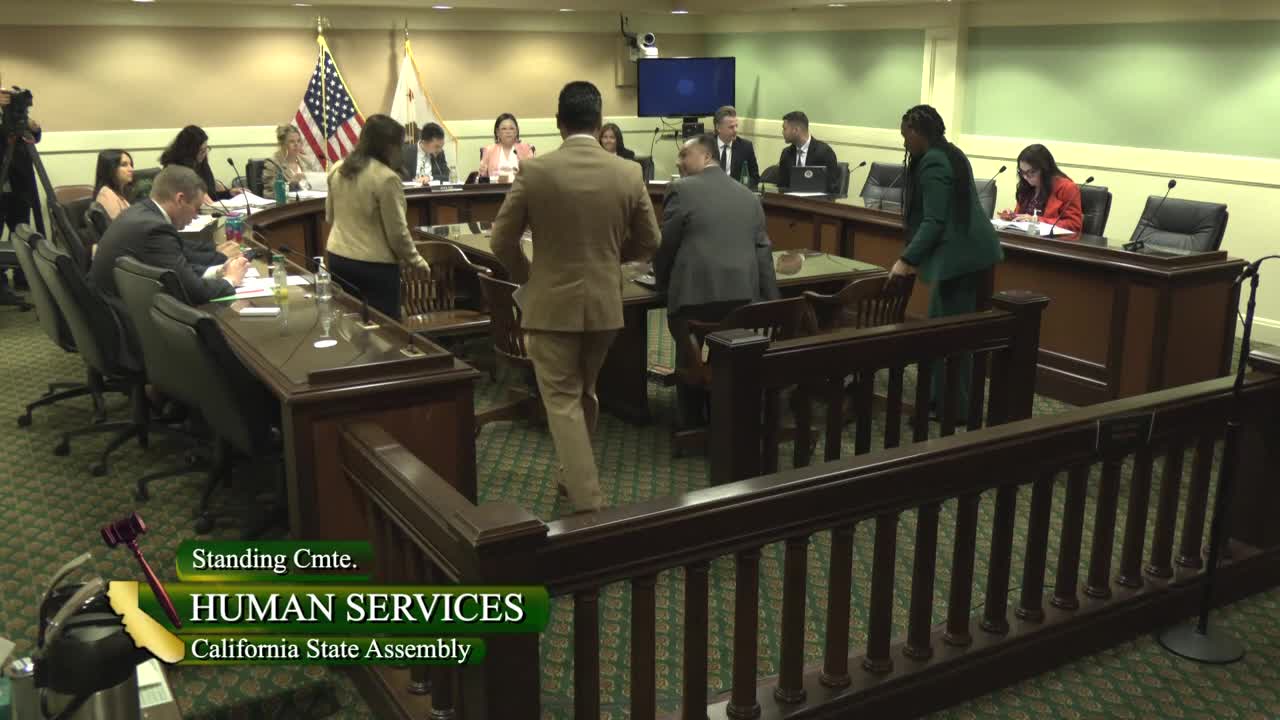 15MIN
Assembly Standing Committee on Human Services
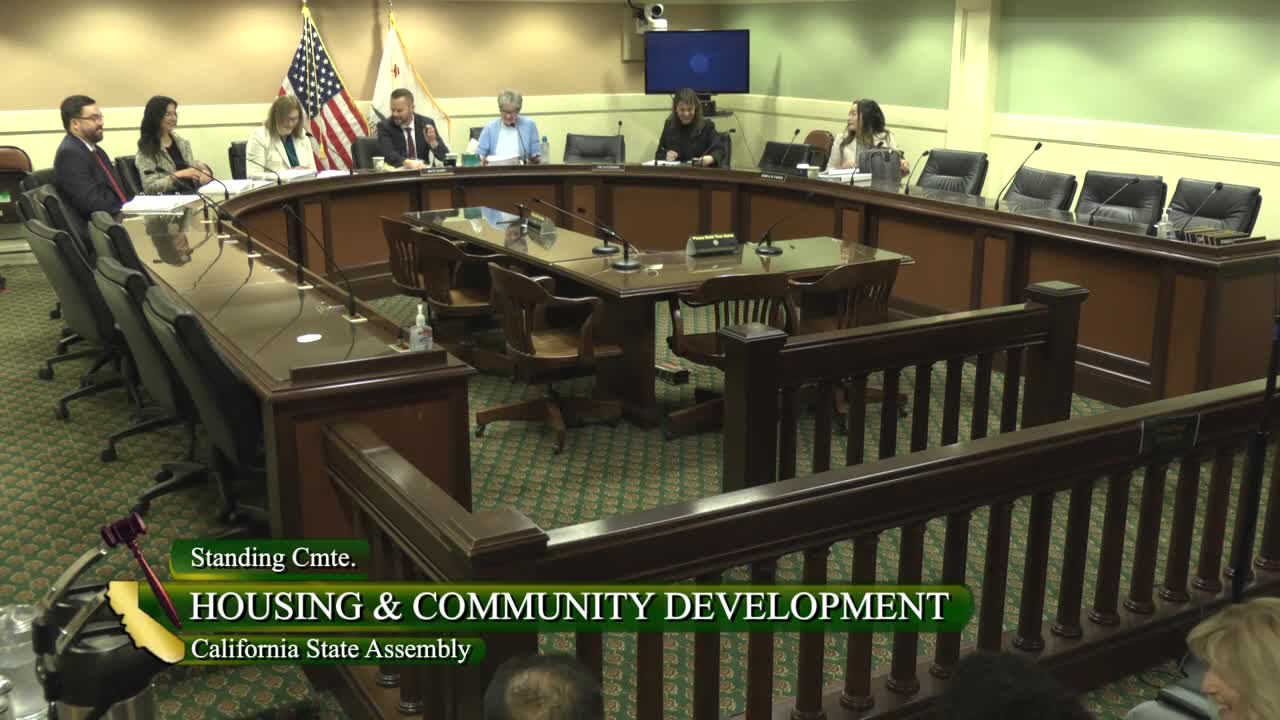 16MIN
Assembly Standing Committee on Housing and Community Development
Bill Author

Bill Co-Author(s):