AB 1731: Office of Farm to Fork: Healthy Food for California Public Institutions Program.
- Session Year: 2025-2026
- House: Assembly
- Latest Version Date: 2026-09-28
Current Status:
Passed
(2026-09-28: Chaptered by Secretary of State - Chapter 718, Statutes of 2026.)
Introduced
In Committee
Awaiting First Chamber Vote
Passed First Chamber
In Committee
Awaiting Second Chamber Vote
Passed Second Chamber
Enacted
Existing law creates the Office of Farm to Fork within the Department of Food and Agriculture, and requires the office, to the extent that resources are available, to work with various entities, including, among others, the agricultural industry and other organizations involved in promoting food access, to increase the amount of agricultural products available to underserved communities and schools in the state.
This bill would require the office, upon appropriation by the Legislature, to establish the Healthy Food for California Public Institutions Program for the purpose of identifying vendors in California that have the capacity to provide healthy foods to California public institutions, as defined. The bill would require the office, to the extent that funding is available, to implement initiatives under the program, including, but not limited to, an initiative to develop a list of approved vendors that public institutions can use to procure food products that are whole or minimally processed and are grown or produced in California using climate-smart agriculture practices and climate-smart agriculture production systems.
Existing law creates the Office of Farm to Fork within the Department of Food and Agriculture, and requires the office, to the extent that resources are available, to work with various entities, including, among others, the agricultural industry and other organizations involved in promoting food access, to increase the amount of agricultural products available to underserved communities and schools in the state.
This bill would require the office, upon appropriation by the Legislature, to establish the California Healthy Food Procurement Fund for California Public Institutions Program for purposes of cultivating equity, nurturing students, building climate resilience, supporting California agriculture, and creating scalable and sustainable change in the school food system. The bill would require that the program increase procurement of healthy food products, including for institutions serving pupils in kindergarten and grades 1 to 12, inclusive. the purpose of identifying vendors in California that have the capacity to provide healthy foods to California public institutions, as defined. The bill would require the office, to the extent that funding is available, to implement initiatives under the program, including, but not limited to, an initiative that would, among other things, provide funding to approved vendors to procure only food products that are whole or are minimally processed and are grown or produced in California using climate-smart agriculture practices and climate-smart agriculture production systems, as specified. The bill would create the California Healthy Food Procurement Account in the Department of Food and Agriculture Fund, consisting of moneys from federal, state, industry, philanthropic, and private sources, which the bill would make available to the department upon appropriation by the Legislature for the purposes of the program. to develop a list of approved vendors that public institutions can use to procure food products that are whole or minimally processed and are grown or produced in California using climate-smart agriculture practices and climate-smart agriculture production systems.
Existing law creates the Office of Farm to Fork within the Department of Food and Agriculture, and requires the office, to the extent that resources are available, to work with various entities, including, among others, the agricultural industry and other organizations involved in promoting food access, to increase the amount of agricultural products available to underserved communities and schools in the state.
This bill would require the office, on or before January 1, 2028, upon appropriation by the Legislature, to establish the California Healthy Food Procurement Fund Program for purposes of cultivating equity, nurturing students, building climate resilience, supporting California agriculture, and creating scalable and sustainable change in the school food system. The bill would require that the program increase procurement of healthy food products, including for institutions serving pupils in kindergarten and grades 1 to 12, inclusive. The bill would require the office, to the extent that funding is available, to implement initiatives under the program, including, but not limited to, an initiative that would, among other things, provide funding to approved vendors to procure only food products that are whole or are minimally processed and are grown or produced in California using climate-smart agriculture practices and climate-smart agriculture production systems, as specified. The bill would create the California Healthy Food Procurement Account in the Department of Food and Agriculture Fund, consisting of moneys from federal, state, industry, philanthropic, and private sources, which the bill would make available to the department upon appropriation by the Legislature for the purposes of the program.
Existing law creates the Office of Farm to Fork within the Department of Food and Agriculture, and requires the office, to the extent that resources are available, to work with various entities, including, among others, the agricultural industry and other organizations involved in promoting food access, to increase the amount of agricultural products available to underserved communities and schools in the state.
This bill would require the office, on or before January 1, 2028, to establish the California Healthy Food Procurement Fund Program for purposes of cultivating equity, nurturing students, building climate resilience, supporting California agriculture, and creating scalable and sustainable change in the school food system. The bill would require that the program increase procurement of healthy foods, food products, including for institutions serving pupils in kindergarten and grades 1 to 12, inclusive. The bill would authorize require the office, to the extent that funding is available, to implement initiatives under the program, including, but not limited to, an initiative to that would, among other things, provide funding to approved vendors to procure foods only food products that are whole or are minimally processed and are grown or produced in California using climate-smart agriculture practices and climate-smart agriculture production systems, as specified. The bill would create the California Healthy Food Procurement Account in the Department of Food and Agriculture Fund, consisting of moneys from federal, state, industry, philanthropic, and private sources, which the bill would make available to the department upon appropriation by the Legislature for the purposes of the program.
Existing law creates the Office of Farm to Fork within the Department of Food and Agriculture, and requires the office, to the extent that resources are available, to work with various entities, including, among others, the agricultural industry and other organizations involved in promoting food access, to increase the amount of agricultural products available to underserved communities and schools in the state.
This bill would require the office, on or before January 1, 2028, to establish the California Healthy Food Procurement Fund Program for purposes of cultivating equity, nurturing students, building climate resilience, supporting California agriculture, and creating scalable and sustainable change in the school food system. The bill would require that the program increase procurement of healthy foods, including for institutions serving pupils in kindergarten and grades 1 to 12, inclusive. The bill would authorize the office, to the extent that funding is available, to implement initiatives under the program, including, but not limited to, an initiative to provide funding to approved vendors to procure foods that are whole or are minimally processed and are grown or produced in California using climate-smart agriculture practices and climate-smart agriculture production systems, as specified. The bill would create the California Healthy Food Procurement Account in the Department of Food and Agriculture Fund, consisting of moneys from federal, state, industry, philanthropic, and private sources, which the bill would make available to the department upon appropriation by the Legislature for the purposes of the program.
This chapter shall be known, and may be cited, as the Healthy Food for California Public Institutions Act.
49027.For purposes of this chapter, all of the following definitions apply:
(a)Local educational agency has the same meaning as defined in Section 49557.5 of the Education Code.
(b)Office means the Office of Farm to Fork created pursuant to Section 49001.
(c)Program means the Healthy Food for California Public Institutions Program established pursuant to Section 49028.
(d)Public institution means any state, city, city and county, or county agency, including a public postsecondary educational institution and a local educational agency.
(e)Public postsecondary educational institution means the California Community Colleges and the California State University, but not the University of California.
49028.(a)Upon an appropriation by the Legislature for purposes of this chapter, the Office of Farm to Fork shall establish the Healthy Food for California Public Institutions Program for the purpose of identifying vendors in California that have the capacity to provide healthy foods to California public institutions.
(b)To the extent that funding is available, the office shall implement initiatives under the program, including, but not limited to, an initiative to do all of the following:
(1)Develop a list of approved vendors that public institutions can use to procure food products that are whole or minimally processed and are grown or produced in California using climate-smart agriculture practices and climate-smart agriculture production systems.
(2)Establish an application process to approve vendors that meet all of the following requirements:
(A)The vendor sources and distributes food products that are whole or are minimally processed, and are grown or produced in California using climate-smart agriculture practices and climate-smart agriculture production systems. If the vendor sources food products from multiple farms and ranches, 50 percent or more of the total farmers and ranchers that the vendor sources food products from are California farms and ranches using climate-smart agriculture practices and climate-smart agriculture production systems.
(B)The vendor is capable of serving public institutions.
(C)The vendor tracks and readily provides itemized source identification information, including the farm or ranch of origin, and certifications to the office.
(D)The vendor keeps records of purchase invoices from sourced farms and ranches. After a vendor is approved, the vendor may be subject to an audit of its purchasing.
(E)The vendor aligns with the priorities of the office.
(F)The vendor maintains robust compliance that ensures the farms and ranches that the vendor sources food products from comply with all laws, rules, and regulations, including food safety requirements and standards.
(3)Publish the list of approved vendors on the departments internet website, including the region that each vendor serves and their contact information.
(4)Ensure that vendors throughout the geographic regions of the state are selected.
49029.Within one year of the office establishing the program, and every three years thereafter, the office shall submit a report on the status of the program to the Legislature, in accordance with Section 9795 of the Government Code. The report shall include information on the progress of the program, including, but not limited to, all of the following:
(a)The number and type of public institutions served by approved vendors, and the volumes of food products provided to each public institution.
(b)The number and type, with respect to business model, of vendors on the approved vendor list.
(c)The benefits and challenges experienced by public institutions using the program.
This chapter shall be known, and may be cited, as the California Healthy Food Procurement for California Public Institutions Act.
49027.For purposes of this chapter, both all of the following definitions apply:
(a)Local educational agency has the same meaning as defined in Section 49557.5 of the Education Code.
(a)(b)Office means the Office of Farm to Fork created pursuant to Section 49001.
(b)(c)Program means the California Healthy Food Procurement Fund for California Public Institutions Program established pursuant to Section 49028.
(d)Public institution means any state, city, city and county, or county agency, including a public postsecondary educational institution and a local educational agency.
(e)Public postsecondary educational institution means the California Community Colleges and the California State University, but not the University of California.
49028.(a)Upon an appropriation by the Legislature for purposes of this chapter, the Office of Farm to Fork shall establish the California Healthy Food Procurement Fund for California Public Institutions Program for purposes of cultivating equity, nurturing students, building climate resilience, supporting California agriculture, and creating scalable and sustainable change in the school food system. The program shall increase the procurement of healthy foods, including for institutions serving pupils in kindergarten and grades 1 to 12, inclusive. the purpose of identifying vendors in California that have the capacity to provide healthy foods to California public institutions.
(b)To the extent that funding is available, the office shall implement initiatives under the program, including, but not limited to, an initiative to do all of the following:
(1)Provide funding to approved vendors to procure only food products that are whole or are minimally processed, and are grown or produced in California using climate-smart agriculture practices and climate-smart agriculture production systems, so that the approved vendors can contract with institutions serving pupils in kindergarten and grades 1 to 12, inclusive, to deliver procured food products at no cost.(1)Develop a list of approved vendors that public institutions can use to procure food products that are whole or minimally processed and are grown or produced in California using climate-smart agriculture practices and climate-smart agriculture production systems.
(2)Establish an application process to approve vendors that meet all of the following requirements:
(A)The vendor sources and distributes food products that are whole or are minimally processed, and are grown or produced in California using climate-smart agriculture practices and climate-smart agriculture production systems. If the vendor sources food products from multiple farms and ranches, 50 percent or more of the total farmers and ranchers that the vendor sources food products from are California farms and ranches using climate-smart agriculture practices and climate-smart agriculture production systems.
(B)The vendor serves institutions serving pupils in kindergarten and grades 1 to 12, inclusive. is capable of serving public institutions.
(C)The vendor tracks and readily provides itemized source identification information, including the farm or ranch of origin, and certifications to the office.
(D)The vendor keeps records of purchase invoices from sourced farms and ranches. After a vendor is approved, the vendor may be subject to an audit of its purchasing.
(E)The vendor aligns with the priorities of the office.
(F)The vendor maintains robust compliance that ensures the farms and ranches that the vendor sources food products from comply with all laws, rules, and regulations, including food safety, labor, and environmental safety requirements and standards.
(3)Publish the list of approved vendors on the departments internet website, including the region that each vendor serves and their contact information.
(4)Conduct outreach to institutions serving pupils in kindergarten and grades 1 to 12, inclusive, to promote contracting with approved vendors.(5)(4)Ensure that vendors throughout the geographic regions of the state are selected. The office may establish limits on vendor participation to maintain a competitive and diverse marketplace.
49029.The California Healthy Food Procurement Account is hereby created in the Department of Food and Agriculture Fund. The account shall consist of moneys from federal, state, industry, philanthropic, and private sources. Moneys in the account shall be available to the department, upon appropriation by the Legislature, for the purposes of the program.49030.49029.Within one year of the office establishing the program, and every three years thereafter, the office shall submit a report on the status of the program to the Legislature, in accordance with Section 9795 of the Government Code. The report shall include information on the progress of the program, including, but not limited to, all of the following:
(a)The number and type, with respect to size, ownership, and production practices, of farms and ranches from which food products were sourced.(b)(a)The number and type of public institutions served by approved vendors, and the volumes of food products provided to each public institution.
(c)(b)The number and type, with respect to business model, of vendors providing food products to institutions. on the approved vendor list.
(d)The amount of funds distributed to each vendor and to each institution.(c)The benefits and challenges experienced by public institutions using the program.
This chapter shall be known, and may be cited, as the California Healthy Food Procurement Act.
49027.For purposes of this chapter, both of the following definitions apply:
(a)Office means the Office of Farm to Fork created pursuant to Section 49001.
(b)Program means the California Healthy Food Procurement Fund Program established pursuant to Section 49028.
49028.(a)On or before January 1, 2028, Upon an appropriation by the Legislature for purposes of this chapter, the Office of Farm to Fork shall establish the California Healthy Food Procurement Fund Program for purposes of cultivating equity, nurturing students, building climate resilience, supporting California agriculture, and creating scalable and sustainable change in the school food system. The program shall increase the procurement of healthy foods, including for institutions serving pupils in kindergarten and grades 1 to 12, inclusive.
(b)To the extent that funding is available, the office shall implement initiatives under the program, including, but not limited to, an initiative to do all of the following:
(1)Provide funding to approved vendors to procure only food products that are whole or are minimally processed, and are grown or produced in California using climate-smart agriculture practices and climate-smart agriculture production systems, so that the approved vendors can contract with institutions serving pupils in kindergarten and grades 1 to 12, inclusive, to deliver procured food products at no cost.
(2)Establish an application process to approve vendors that meet all of the following requirements:
(A)The vendor sources and distributes food products that are whole or are minimally processed, and are grown or produced in California using climate-smart agriculture practices and climate-smart agriculture production systems. If the vendor sources food products from multiple farms and ranches, 50 percent or more of the total farmers and ranchers that the vendor sources food products from are California farms and ranches using climate-smart agriculture practices and climate-smart agriculture production systems.
(B)The vendor serves institutions serving pupils in kindergarten and grades 1 to 12, inclusive.
(C)The vendor tracks and readily provides itemized source identification information, including the farm or ranch of origin, and certifications to the office.
(D)The vendor keeps records of purchase invoices from sourced farms and ranches. After a vendor is approved, the vendor may be subject to an audit of its purchasing.
(E)The vendor aligns with the priorities of the office.
(F)The vendor maintains robust compliance that ensures the farms and ranches that the vendor sources food products from comply with all laws, rules, and regulations, including food safety, labor, and environmental requirements and standards.
(3)Publish the list of approved vendors on the departments internet website, including the region that each vendor serves and their contact information.
(4)Conduct outreach to institutions serving pupils in kindergarten and grades 1 to 12, inclusive, to promote contracting with approved vendors.
(5)Ensure that vendors throughout the state are selected. The office may establish limits on vendor participation to maintain a competitive and diverse marketplace.
49029.The California Healthy Food Procurement Account is hereby created in the Department of Food and Agriculture Fund. The account shall consist of moneys from federal, state, industry, philanthropic, and private sources. Moneys in the account shall be available to the department, upon appropriation by the Legislature, for the purposes of the program.
49030.On or before January 1, 2029, Within one year of the office establishing the program, and every three years thereafter, the office shall submit a report on the status of the program to the Legislature, in accordance with Section 9795 of the Government Code. The report shall include information on the progress of the program, including, but not limited to, all of the following:
(a)The number and type, with respect to size, ownership, and production practices, of farms and ranches from which food products were sourced.
(b)The number and type of institutions served by approved vendors, and the volumes of food products provided to each institution.
(c)The number and type, with respect to business model, of vendors providing food products to institutions.
(d)The amount of funds distributed to each vendor and to each institution.
This chapter shall be known, and may be cited, as the California Healthy Food Procurement Act.
49027.For purposes of this chapter, both of the following definitions apply:
(a)Office means the Office of Farm to Fork created pursuant to Section 49001.
(b)Program means the California Healthy Food Procurement Fund Program established pursuant to Section 49028.
49028.(a)On or before January 1, 2028, the Office of Farm to Fork shall establish the California Healthy Food Procurement Fund Program for purposes of cultivating equity, nurturing students, building climate resilience, supporting California agriculture, and creating scalable and sustainable change in the school food system. The program shall increase the procurement of healthy foods, including for institutions serving pupils in kindergarten and grades 1 to 12, inclusive.
(b)To the extent that funding is available, the office may shall implement initiatives under the program, including, but not limited to, an initiative to do any all of the following:
(1)Provide funding to approved vendors to procure foods only food products that are whole or are minimally processed, and are grown or produced in California using climate-smart agriculture practices and climate-smart agriculture production systems, so that the approved vendors can contract with institutions serving pupils in kindergarten and grades 1 to 12, inclusive, to deliver procured foods food products at no cost.
(2)Establish an application process to approve vendors that meet all of the following requirements:
(A)The vendor sources and distributes foods food products that are whole or are minimally processed, and are grown or produced in California using climate-smart agriculture practices and climate-smart agriculture production systems. If the vendor sources food products from multiple farms and ranches, 50 percent or more of the total farmers and ranchers that the vendor sources food products from are California farms and ranches using climate-smart agriculture practices and climate-smart agriculture production systems.
(B)The vendor serves institutions serving pupils in kindergarten and grades 1 to 12, inclusive.
(C)The vendor tracks and readily provides itemized source identification information, including the producer or processor farm or ranch of origin, and certifications to the office.
(D)The vendor keeps records of purchase invoices from sourced farms and ranches. After a vendor is approved, the vendor may be subject to an audit of its purchasing.
(D)(E)The vendor aligns with the priorities of the office.
(F)The vendor maintains robust compliance that ensures the farms and ranches that the vendor sources food products from comply with all laws, rules, and regulations, including food safety, labor, and environmental requirements and standards.
(3)Publish the list of approved vendors on the departments internet website, including the region that each vendor serves and their contact information.
(4)Conduct outreach to institutions serving pupils in kindergarten and grades 1 to 12, inclusive, to promote contracting with approved vendors.
(5)Ensure that vendors throughout the state are selected. The office may establish limits on vendor participation to maintain a competitive and diverse marketplace.
49029.The California Healthy Food Procurement Account is hereby created in the Department of Food and Agriculture Fund. The account shall consist of moneys from federal, state, industry, philanthropic, and private sources. Moneys in the account shall be available to the department, upon appropriation by the Legislature, for the purposes of the program.
49030.On or before January 1, 2029, and annually every three years thereafter, the office shall submit a report on the status of the program to the Legislature, in accordance with Section 9795 of the Government Code. The report shall include information on the progress of the program, including, but not limited to, all of the following:
(a)The number and type, with respect to size, ownership, and production practices, of farms and ranches from which food products were sourced.
(b)The number and type of institutions served by approved vendors, and the volumes of food products provided to each institution.
(c)The number and type, with respect to business model, of vendors providing food products to institutions.
(d)The amount of funds distributed to each vendor and to each institution.
REVISIONS: HeadingLine 2.This chapter shall be known, and may be cited, as the California Healthy Food Procurement Act.
49027.For purposes of this chapter, both of the following definitions apply:
(a)Office means the Office of Farm to Fork created pursuant to Section 49001.
(b)Program means the California Healthy Food Procurement Fund Program established pursuant to Section 49028.
49028.(a)On or before January 1, 2028, the Office of Farm to Fork shall establish the California Healthy Food Procurement Fund Program for purposes of cultivating equity, nurturing students, building climate resilience, supporting California agriculture, and creating scalable and sustainable change in the school food system. The program shall increase the procurement of healthy foods, including for institutions serving pupils in kindergarten and grades 1 to 12, inclusive.
(b)To the extent that funding is available, the office may implement initiatives under the program, including, but not limited to, an initiative to do any of the following:
(1)Provide funding to approved vendors to procure foods that are whole or are minimally processed, and are grown or produced in California using climate-smart agriculture practices and climate-smart agriculture production systems, so that the approved vendors can contract with institutions serving pupils in kindergarten and grades 1 to 12, inclusive, to deliver procured foods at no cost.
(2)Establish an application process to approve vendors that meet all of the following requirements:
(A)The vendor sources and distributes foods that are whole or are minimally processed, and are grown or produced in California using climate-smart agriculture practices and climate-smart agriculture production systems.
(B)The vendor serves institutions serving pupils in kindergarten and grades 1 to 12, inclusive.
(C)The vendor tracks and readily provides itemized source identification information, including the producer or processor of origin, and certifications to the office.
(D)The vendor aligns with the priorities of the office.
(3)Publish the list of approved vendors on the departments internet website, including the region that each vendor serves and their contact information.
(4)Conduct outreach to institutions serving pupils in kindergarten and grades 1 to 12, inclusive, to promote contracting with approved vendors.
49029.The California Healthy Food Procurement Account is hereby created in the Department of Food and Agriculture Fund. The account shall consist of moneys from federal, state, industry, philanthropic, and private sources. Moneys in the account shall be available to the department, upon appropriation by the Legislature, for the purposes of the program.
49030.On or before January 1, 2029, and annually thereafter, the office shall submit a report on the status of the program to the Legislature, in accordance with Section 9795 of the Government Code. The report shall include information on the progress of the program, including, but not limited to, all of the following:
(a)The number and type, with respect to size, ownership, and production practices, of farms and ranches from which food products were sourced.
(b)The number and type of institutions served by approved vendors, and the volumes of food products provided to each institution.
(c)The number and type, with respect to business model, of vendors providing food products to institutions.
(d)The amount of funds distributed to each vendor and to each institution.
|
Date
|
Status
|
|---|---|
| Sep 28, 2026 | Chaptered by Secretary of State - Chapter 718, Statutes of 2026. |
| Sep 28, 2026 | Approved by the Governor. |
| Sep 4, 2026 | Enrolled and presented to the Governor at 4 p.m. |
| Aug 27, 2026 | Senate amendments concurred in. To Engrossing and Enrolling. (Ayes 78. Noes 0. Page 6676.). |
| Aug 27, 2026 | Senate amendments concurred in. To Engrossing and Enrolling. (Ayes 78. Noes 0.). |
| Aug 25, 2026 | In Assembly. Concurrence in Senate amendments pending. |
| Aug 25, 2026 | Read third time. Passed. Ordered to the Assembly. (Ayes 39. Noes 0. Page 5762.). |
| Aug 25, 2026 | Read third time. Passed. Ordered to the Assembly. (Ayes 39. Noes 0.). |
| Aug 17, 2026 | Read second time. Ordered to third reading. |
| Aug 13, 2026 | Read second time and amended. Ordered returned to second reading. |
| Aug 13, 2026 | From committee: Amend, and do pass as amended. (Ayes 7. Noes 0.) (August 13). |
| Aug 3, 2026 | In committee: Referred to APPR. suspense file. |
| Jun 30, 2026 | From committee: Do pass and re-refer to Com. on APPR. (Ayes 5. Noes 0.) (June 30). Re-referred to Com. on APPR. |
| Jun 3, 2026 | Referred to Com. on AGRI. |
| May 27, 2026 | In Senate. Read first time. To Com. on RLS. for assignment. |
| May 26, 2026 | Read third time. Passed. Ordered to the Senate. (Ayes 78. Noes 0. Page 5358.) |
| May 26, 2026 | Read third time. Passed. Ordered to the Senate. (Ayes 78. Noes 0.) |
| May 26, 2026 | Read third time. Passed. Ordered to the Senate. |
| May 19, 2026 | Read second time. Ordered to third reading. |
| May 18, 2026 | Read second time and amended. Ordered returned to second reading. |
| May 14, 2026 | From committee: Amend, and do pass as amended. (Ayes 11. Noes 0.) (May 14). |
| Apr 15, 2026 | In committee: Set, first hearing. Referred to APPR. suspense file. |
| Apr 8, 2026 | In committee: Hearing postponed by committee. |
| Mar 26, 2026 | From committee: Do pass and re-refer to Com. on APPR. (Ayes 8. Noes 0.) (March 25). Re-referred to Com. on APPR. |
| Mar 26, 2026 | Coauthors revised. |
| Mar 23, 2026 | Re-referred to Com. on AGRI. |
| Mar 19, 2026 | From committee chair, with author's amendments: Amend, and re-refer to Com. on AGRI. Read second time and amended. |
| Mar 2, 2026 | Referred to Com. on AGRI. |
| Feb 6, 2026 | From printer. May be heard in committee March 8. |
| Feb 5, 2026 | Read first time. To print. |
|
Date
|
Description
|
Location
|
Votes
|
|
|---|---|---|---|---|
| Aug 27, 2026 | AB 1731 Wilson Concurrence in Senate Amendments | Assembly Floor |
Passed |
|
| Aug 25, 2026 | Assembly 3rd Reading AB1731 Wilson et al. By Hurtado | Senate Floor |
Passed |
|
| Aug 13, 2026 | Do pass as amended | Senate Standing Committee on Appropriations |
Passed |
|
| Aug 3, 2026 | Placed on suspense file | Senate Standing Committee on Appropriations |
Passed |
|
| Jun 30, 2026 | Do pass, but first be re-referred to the Committee on [Appropriations] | Senate Standing Committee on Agriculture |
Passed |
|
| May 26, 2026 | AB 1731 Wilson Assembly Third Reading | Assembly Floor |
Passed |
|
| May 14, 2026 | Do pass as amended. | Assembly Standing Committee on Appropriations |
Passed |
|
| Mar 25, 2026 | Do pass and be re-referred to the Committee on [Appropriations] | Assembly Standing Committee on Agriculture |
Passed |
This list shows positions taken on this bill by organizations on the date displayed, which is linked to the original source.
Positions by individuals are not included.
|
Organization
|
Position
|
Date
|
|---|---|---|
| 68 Produce, Llc. | ** Support | |
| 6 Degrees Collective | ** Support | |
| Abundant Harvest Organics | ** Support | |
| Admiral Maltings | ** Support | |
| Alba | ** Support | |
| Alexandre Family Farm | ** Support | |
| Alex Boldt Farms | ** Support | |
| All STAR Organics | ** Support | |
| Almeria Farms | ** Support | |
| American Academy Of Pediatrics, California | ** Support | |
| Angela’s Ranch | ** Support | |
| Apple Creek Vineyard Farm | ** Support | |
| A Voice for Choice Advocacy | ** Support | |
| Ayoquezco Organic Produce | ** Support | |
| Baba Small Batch, LLC | ** Support | |
| Bayard Fox Selections | ** Support | |
| Benalinad Organic Farm LLC Dba Aglady Microgreens | ** Support | |
| Better-produce, INC. | ** Support | |
| Blossom Bluff Orchards | ** Support | |
| Blossom Vineyards | ** Support | |
| Blue Bottle Coffee | ** Support | |
| Box 7 Imports | ** Support | |
| Burnett and Son Food Manufacturing Facility | ** Support | |
| Cabrillo College Horticulture Department | ** Support | |
| Cali Berry | ** Support | |
| California Against Waste | ** Support | |
| California Certified Organic Farmers (Ccof) | ** Support | |
| California Climate & Agriculture Network (CALCAN) | ** Support | |
| California Fairs Alliance | ** Support | |
| California Farm Bureau Federation | ** Support | |
| California Food and Farming Network | ** Support | |
| California Health Coalition Advocacy | ** Support | |
| Californians for Pesticide Reform | ** Support | |
| California School Nutrition Association | ** Support | |
| Campodonico Olive Farm | ** Support | |
| Center for Good Food Purchasing | ** Support | |
| Central Coast Organic Berries | ** Support | |
| Certified Quality Assurance LLC | ** Support | |
| Chinchiolo Family Farms | ** Support | |
| Coastal Roots Farm | ** Support | |
| Coke Farm | ** Support | |
| Conscious Kitchen | ** Support | |
| Creekside Organics INC | ** Support | |
| Cultivo Mixteco 953 Organic Farm | ** Support | |
| Del Rey Avocado | ** Support | |
| Desert Vista Ranches | ** Support | |
| Devine Organics | ** Support | |
| Domaine Helena | ** Support | |
| Double D Ranch | ** Support | |
| Duncan Peak Wines | ** Support | |
| Eckert Cold Storage | ** Support | |
| Eel River Produce | ** Support | |
| Esperanza Community Farms | ** Support | |
| Etto Pastificio | ** Support | |
| Farm2people | ** Support | |
| Ferrari Farms INC. | ** Support | |
| Ferrari Ranch | ** Support | |
| Food Safety & Process Technology Group. INC. | ** Support | |
| Four Elements Organics | ** Support | |
| Fresno Unified School District | ** Support | |
| Fullwell | ** Support | |
| Global Life Partners | ** Support | |
| Gold Ridge Organic Farms | ** Support | |
| Green Farmersland | ** Support | |
| Green Gold Organic Farms | ** Support | |
| Green Planet Organics | ** Support | |
| Hass Heights Growers, INC. | ** Support | |
| Herencia Organic Farm | ** Support | |
| Homeless Garden Project | ** Support | |
| Hummingbird Ranch | ** Support | |
| Jacobs Farm | ** Support | |
| Jessie’s Organic Farms | ** Support | |
| J.l Adrich Ranch | ** Support | |
| Johnson Farms | ** Support | |
| Jsm Organics, INC. | ** Support | |
| Keystone Land and Livestock | ** Support | |
| Ladyhawke Farm | ** Support | |
| L and a Farms | ** Support | |
| LA Purisima LLC | ** Support | |
| LaRocca Vineyards | ** Support | |
| Latham Avocados | ** Support | |
| Leftcoast Grassfed LLC | ** Support | |
| Le Prunier | ** Support | |
| Let's Go Farm | ** Support | |
| Limón Orchards | ** Support | |
| Liviaone™ Probiotics | ** Support | |
| Lone Willow Ranch | ** Support | |
| Los Prismas Organic Farms | ** Support | |
| Lucky Strike Farms | ** Support | |
| Lundberg Family Farms | ** Support | |
| Maha Estate | ** Support | |
| Maha Vineyards | ** Support | |
| Maisie Jane's California Sunshine Products | ** Support | |
| Melanin Farms | ** Support | |
| Mesa Grande Bdc - the Golden Eagle Farm | ** Support | |
| Mesa Vineyard Management INC. | ** Support | |
| Michael O'gorman Farming | ** Support | |
| Miles Garrett Wines | ** Support | |
| Mixteco Produce Organic Farm | ** Support | |
| Molino Creek LLC | ** Support | |
| Murray Vineyards | ** Support | |
| Myrna Helen Trotter Estate | ** Support | |
| Nana Joes Granola | ** Support | |
| Napa County School District | ** Support | |
| Neukom Family Farms | ** Support | |
| Nuevo Amanecer Farms | ** Support | |
| Olivino INC. Organic Olive Mill | ** Support | |
| Organic Body Essentials | ** Support | |
| Pacha | ** Support | |
| Palmdale School District | ** Support | |
| Panther Ridge Vineyard | ** Support | |
| Pelican LLC | ** Support | |
| Pleasant Grove Farms | ** Support | |
| Port Rotta Operations LLC | ** Support | |
| Quinco | ** Support | |
| Rock Front Ranch Products LLC | ** Support | |
| Rodale Institute | ** Support | |
| Rojas Tepetitla Organic Farms | ** Support | |
| Ronald Martella Farms, INC. | ** Support | |
| Root Down Rise Up Ag | ** Support | |
| Roots of Change | ** Support | |
| Rural County Representatives of California | ** Support | |
| Salerno Family Farms | ** Support | |
| San Diego Food System Alliance | ** Support | |
| San Francisco Unified School District | ** Support | |
| Santa Cruz Climate Action Network | ** Support | |
| Santa Cruz Permaculture | ** Support | |
| Sei Querce Vineyards | ** Support | |
| Sierra Harvest | ** Support | |
| Sierra Orchards | ** Support | |
| Sierra Vista Ranches | ** Support | |
| Silvia Organic Farm | ** Support | |
| Smartsville Organics | ** Support | |
| Sonoma State University | ** Support | |
| Starbright Acres Family Farm | ** Support | |
| Starwalker Organic Farms | ** Support | |
| Strawhouse | ** Support | |
| Sun Grown Organics | ** Support | |
| Sunleaf Foods | ** Support | |
| Sunrise Fresh, LLC | ** Support | |
| Sunstone Winery | ** Support | |
| Sweetwater Farm | ** Support | |
| Tablas Creek Vineyard | ** Support | |
| Taylor Farms | ** Support | |
| T&D Willey Farms | ** Support | |
| The Farmhand Foundation | ** Support | |
| The Queen of Vegetables Organic Farm | ** Support | |
| Three Feathers Farm | ** Support | |
| Tierra H&r Organic Farms LLC | ** Support | |
| Tikvah Organics | ** Support | |
| Torres Organic Farms | ** Support | |
| Tres Sabores Winery | ** Support | |
| Triangle S Farms | ** Support | |
| Valley View Dairy | ** Support | |
| Valliwide Marketing INC | ** Support | |
| Veritable Vegetable | ** Support | |
| Vitoli | ** Support | |
| Water Grass Flats Jv | ** Support | |
| Western Fairs Association | ** Support | |
| Wild Roots Market, INC | ** Support | |
| Windmill Pacific LLC | ** Support |
CONCURRENCE IN SENATE AMENDMENTS
CSA1 Bill Id:AB 1731
Author:(Wilson)
As Amended Ver:August 13, 2026
Majority vote
SUMMARY
Would require the Office of Farm to Fork (Office) within the California Department of Food and Agriculture (CDFA), upon appropriation by the Legislature, to establish the California Healthy Food Procurement Fund Program (CHFPFP) to cultivate equity, nurture students, build climate resilience, support California Agriculture, and create scalable and sustainable change in the school food system. The bill would require the office to implement initiatives that would provide funding for approved vendors to procure only food products that are whole or are minimally processed and are grown or produced in California using climate-smart agriculture practices and production systems. Finally, the bill would, within one year of the office establishing the program, and every three years thereafter, require the Office to submit a report on the status of the program to the Legislature.
Senate Amendments
Change the bill from a Fund that distributes grants for the purchase of food and instead requires CDFA's Office of Farm to Fork to develop a list of food vendors who meet the criteria to be a Healthy Food Vendor for California Public Institutions. The amendments also expand the scope of the bill to include not just K-12, but all public institutions, as defined.
The criteria for being a Healthy Food Vendor is as follows:
- Source food that is 1) whole or minimally processed 2) grown in California using climate smart agricultural practices and climate smart ag production systems, and 3) 50% of the farms and ranches that the vendor sources from (if more than 1 source) are CA farms that use climate smart ag practices and climate smart ag production systems.
- Vendor is capable of serving public institutions.
- Vendor tracks supply chain information.
- Vendor keeps required records.
- Vendor aligns with the priorities of the office.
- Vendor maintains robust compliance that ensure farms comply with food safety requirements.
COMMENTS
Senate amendments limit the scope of the bill to just publishing a list, rather than implementing a program, but Members may wish to consider whether ambiguity in some of the terminology should be addressed.
First, "Climate Smart Agricultural Practices" and "Climate Smart Agricultural Production Systems" are undefined. What practices qualify – is it only state approved, what about Federal, what about 3rd party, other countries or international bodies? What is the difference between Climate Smart Agricultural Practices and Climate Smart Agricultural Production Systems? The plain meaning of the language would imply that one can use Climate Smart Agricultural Practices but NOT be in a Climate Smart Agricultural Production System, as both must be satisfied.
Second, what does "Vendor aligns with the priorities of the Office" mean? What are the priorities of the Office of Farm to Fork and how does a vendor align with them in a public Request for Proposal? Will they be published ahead of time, concurrently, or not at all? Will they change with each new Director of the Office? What if they conflict with the priorities of the Secretary?
Lastly, the requirement that at least 50 percent of the vendor-sourced farms and ranches be from California and practice climate smart agriculture in a climate smart agricultural production system does not apply to the food sourced. Thus, even if half of the vendors satisfy this requirement, the other half does not have to. Therefore, in practice, most, if not all, of the food could come from non-compliant farms and ranches and the vendor would still benefit from the moniker bestowed by this program.
According to the Author
"Supporting our farmers as they face stability challenges, while ensuring our state's children have access to nutritious foods, is not just important, it's essential. AB 1731 is a powerful step forward, empowering California's farmers to give back to their communities with healthier food options, and ensuring our children thrive with the nourishment they deserve."
Arguments in Support
Supporters include a large coalition of organic farms, technical assistance providers, and NGOs who state that, "AB 1731 responds to a pivotal moment for California's food system, which faces two urgent and interconnected challenges: the rapid loss of California's small and mid-sized farms and the need for schools to transition away from ultra-processed foods."
Arguments in Opposition
None on File.
FISCAL COMMENTS
According to the Seante Appropriations Committee, CDFA's administrative costs associated with this bill have yet to be identified but could reach the low hundreds of thousands of dollars, annually.
VOTES:
ASM AGRICULTURE: 8-0-0
YES: Soria, Hadwick, Aguiar-Curry, Alanis, Connolly, Jeff Gonzalez, Irwin, Ransom
ASM APPROPRIATIONS: 11-0-4
YES: Wicks, Aguiar-Curry, Calderon, Caloza, Fong, Mark González, Krell, Pacheco, Pellerin, Sharp-Collins, Solache
ABS, ABST OR NV: Hoover, Dixon, Ta, Tangipa
ASSEMBLY FLOOR: 78-0-2
YES: Addis, Aguiar-Curry, Ahrens, Alanis, Alvarez, Arambula, Ávila Farías, Bains, Bauer-Kahan, Bennett, Berman, Boerner, Bonta, Bryan, Calderon, Caloza, Carrillo, Castillo, Chen, Connolly, Davies, DeMaio, Dixon, Elhawary, Ellis, Flora, Fong, Gabriel, Gallagher, Garcia, Gipson, Jeff Gonzalez, Mark González, Hadwick, Haney, Harabedian, Hart, Hoover, Irwin, Jackson, Johnson, Kalra, Krell, Lackey, Lee, Lowenthal, Macedo, McKinnor, Nguyen, Ortega, Pacheco, Papan, Patel, Patterson, Pellerin, Petrie-Norris, Quirk-Silva, Ramos, Ransom, Michelle Rodriguez, Rogers, Blanca Rubio, Sanchez, Schiavo, Schultz, Sharp-Collins, Solache, Soria, Stefani, Ta, Tangipa, Valencia, Wallis, Ward, Wicks, Wilson, Zbur, Rivas
ABS, ABST OR NV: Muratsuchi, Celeste Rodriguez
UPDATED
VERSION: August 13, 2026
CONSULTANT: Jim Houston / AGRI. / (916) 319-2084 FN: 0003755
SENATE RULES COMMITTEE Office of Senate Floor Analyses (916) 651-4171 | AB 1731 |
THIRD READING
Bill No: AB 1731
Author: Wilson (D), et al.
Amended: 8/13/26 in Senate
Vote: 21
SENATE AGRICULTURE COMMITTEE: 5-0, 6/30/26
AYES: Caballero, Alvarado-Gil, Ashby, McNerney, Padilla
SENATE APPROPRIATIONS COMMITTEE: 7-0, 8/13/26
AYES: Cervantes, Seyarto, Cabaldon, Dahle, Grayson, Richardson, Wahab
ASSEMBLY FLOOR: 78-0, 5/26/26 - See last page for vote
SUBJECT: Office of Farm to Fork: Healthy Food for California Public Institutions Program
SOURCE: Author
DIGEST:
This bill requires the Office of Farm to Fork (Office) within the California Department of Food and Agriculture (CDFA), upon appropriation by the Legislature, to establish the Healthy Food for California Public Institutions Program for the purpose of, among other initiatives, identifying vendors in California that have the capacity to provide healthy foods to California public institutions, as defined.
ANALYSIS:
Existing law:
- Establishes the Office within CDFA and requires the Office, to the extent that resources are available, to work with various entities, including, among others, the agricultural industry and other organizations involved in promoting food access, to increase the amount of agricultural products.
- Establishes the Farm to Community Food Hubs Grant Program to provide competitive grants to organizations developing and expanding community food hubs in California.
This bill:
- Defines:
- “Local educational agency” to have the same meaning as defined in Section 49557.5 of the Education Code.
- “Office” to mean the Office of Farm to Fork created pursuant to Section 49001.
- “Program” to mean the Healthy Food for California Public Institutions Program established pursuant to Section 49028.
- “Public institution” to mean any state, city, city and county, or county agency, including a public postsecondary educational institution and a local educational agency.
- “Public postsecondary educational institution” to mean the California Community Colleges and the California State University, but not the University of California.
- Requires the Office, upon appropriation, to implement initiatives including, but not limited to developing a list of approved vendors that public institutions can use to procure food products that are whole or minimally processed and are grown or produced in California using climate-smart agricultural practices and climate-smart agricultural production systems, as specified.
- Requires the Office to establish an application process to approve vendors that meet all the following requirements:
- The vendor sources and distributes food products that are whole or are minimally processed, and are grown or produced in California using climate-smart agriculture practices and climate-smart agriculture production systems.
- If the vendor sources food products from multiple farms and ranches, 50% or more of the total farmers and ranchers that the vendor sources from are California farms and ranches using climate-smart agriculture practices and climate-smart agriculture production systems.
- The vendor is capable of serving public institutions.
- The vendor tracks and readily provides itemized source identification information, including the farm or ranch of origin, and certifications to the Office.
- The vendor keeps records of purchase invoices from sourced farms and ranches. After a vendor is approved, the vendor may be subject to an audit of its purchasing.
- The vendor aligns with the priorities of the Office.
- The vendor maintains robust compliance that ensures the farms and ranches that the vendor sources food products from comply with all laws, rules, and regulations, including food safety requirements and standards.
- The vendor sources and distributes food products that are whole or are minimally processed, and are grown or produced in California using climate-smart agriculture practices and climate-smart agriculture production systems.
- Requires the Office to publish the list of approved vendors on the department’s internet website, including the region that each vendor serves and their contact information.
- Requires the Office to ensure that vendors throughout the geographic regions of the state are selected.
- Requires the Office to submit a report on the status of the program to the legislature within one year of the Office establishing the program. The report shall include, but not be limited to:
- The number and type of public institutions served by approved vendors, and the volumes of food products provided to each public institution.
- The number and type, with respect to business model, of vendors on the approved vendor list.
- The benefits and challenges experienced by public institutions using the program.
FISCAL EFFECT: Appropriation: No Fiscal Com.: Yes Local: No
According to the Senate Committee on Appropriations:
“CDFA’s administrative costs have yet to be identified but could reach the low hundreds of thousands of dollars annually. (General Fund or special fund)”
SUPPORT: (Verified 8/14/26)
California Fairs Alliance
California Farm Bureau Federation
Rural County Representatives of California
Western Fairs Association
OPPOSITION: (Verified 8/14/26)
None received
ARGUMENTS IN SUPPORT: According to the author:
“Supporting our farmers as they face stability challenges, while ensuring our state’s children have access to nutritious foods, is not just important, it’s essential. AB 1731 is a powerful step forward, empowering California’s farmers to give back to their communities with healthier food options, and ensuring our children thrive with the nourishment they deserve.”
The California Health Coalition Advocacy (CHCA) wrote in support, stating:
“CHCA is an organization that represents thousands of Californians and advocates on issues that impact their health and wellbeing. With approximately 5 million meals being served at California schools each day, it is important that healthy, minimally processed foods are provided to students. CHCA supported AB 1264 (Gabriel), enacted in 2025, which requires schools to phase out ultra-processed foods. AB 1731 supports the implementation of AB 1264 and would make healthy food more affordable for schools and more accessible to students, while also supporting local farms.”
ASSEMBLY FLOOR: 78-0, 5/26/26
AYES: Addis, Aguiar-Curry, Ahrens, Alanis, Alvarez, Arambula, Ávila Farías, Bains, Bauer-Kahan, Bennett, Berman, Boerner, Bonta, Bryan, Calderon, Caloza, Carrillo, Castillo, Chen, Connolly, Davies, DeMaio, Dixon, Elhawary, Ellis, Flora, Fong, Gabriel, Gallagher, Garcia, Gipson, Jeff Gonzalez, Mark González, Hadwick, Haney, Harabedian, Hart, Hoover, Irwin, Jackson, Johnson, Kalra, Krell, Lackey, Lee, Lowenthal, Macedo, McKinnor, Nguyen, Ortega, Pacheco, Papan, Patel, Patterson, Pellerin, Petrie-Norris, Quirk-Silva, Ramos, Ransom, Michelle Rodriguez, Rogers, Blanca Rubio, Sanchez, Schiavo, Schultz, Sharp-Collins, Solache, Soria, Stefani, Ta, Tangipa, Valencia, Wallis, Ward, Wicks, Wilson, Zbur, Rivas
NO VOTE RECORDED: Muratsuchi, Celeste Rodriguez
Prepared by: Reichel Everhart / AGRI. / (916) 651-1508
8/17/26 10:42:48
**** END ****
SENATE COMMITTEE ON
Senator Sabrina Cervantes, Chair
2025 - 2026 Regular Session
AB 1731 (Wilson) - Office of Farm to Fork: California Healthy Food Procurement Fund Program
Version: | Policy Vote: |
Urgency: | Mandate: |
Hearing Date: | Consultant: |
Bill Summary:
AB 1731 would require the Office of Farm to Fork within the California Department of Food and Agriculture (CDFA), upon appropriation by the Legislature, to establish the California Healthy Food Procurement Fund Program (CHFPFP), as specified. Additionally, the bill would (1) require the Office to implement initiatives that would provide funding for approved vendors to procure only food products that are whole or are minimally processed and are grown or produced in California using climate-smart agriculture practices and production systems, and (2) require the Office to report to the Legislature, specified.
*********** ANALYSIS ADDENDUM – SUSPENSE FILE ***********
The following information is revised to reflect amendments
adopted by the committee on August 13, 2026
Fiscal Impact:
- CDFA’s administrative costs have yet to be identified but could reach the low hundreds of thousands of dollars annually. (General Fund or special fund)
Author Amendments:
- Rename the program as the Healthy Food for California Public Institutions Program, as specified.
- Require the Office, to the extent that funding is available, to implement initiatives including, but not limited to developing a list of approved vendors that public institutions can use to procure food products that are whole or minimally processed and are grown or produced in California using climate-smart agricultural practices and climate-smart agricultural production systems, as specified.
-- END --
SENATE COMMITTEE ON
Senator Sabrina Cervantes, Chair
2025 - 2026 Regular Session
AB 1731 (Wilson) - Office of Farm to Fork: California Healthy Food Procurement Fund Program
Version: | Policy Vote: |
Urgency: | Mandate: |
Hearing Date: | Consultant: |
Bill Summary:
AB 1731 would require the Office of Farm to Fork within the California Department of Food and Agriculture (CDFA), upon appropriation by the Legislature, to establish the California Healthy Food Procurement Fund Program (CHFPFP), as specified. Additionally, the bill would (1) require the Office to implement initiatives that would provide funding for approved vendors to procure only food products that are whole or are minimally processed and are grown or produced in California using climate-smart agriculture practices and production systems, and (2) require the Office to report to the Legislature, specified.
Fiscal Impact:
- CDFA indicates this bill would result in both one-time and ongoing administrative costs to establish and implement the new program, including creating and administering a dedicated fund (General Fund, special fund, or future bonds). The magnitude of these costs would depend on factors such as the amount appropriated, program complexity, and the volume of applications received. One-time costs would include fund and account establishment, program development, and necessary modifications to existing information technology systems. Ongoing costs would include personnel, accounting and fund administration, application review, grant management, monitoring and compliance activities, execution and amendment of grant agreements, and processing grantee payments.
- Additionally, CDFA would incur a cost pressure, likely in the millions of dollars annually, for CDFA to provide funding to approved vendors to contract with institutions serving pupils in K-12 schools to deliver procured foods at no cost (General Fund, special fund, or future bond funds).
Background:
CDFA’s Office of Farm to Fork administers the State's farm-to-school and food access initiatives, including grant programs that promote procurement of California-grown foods, strengthen connections between schools and agricultural producers, and support local food system development. Since its establishment, the Legislature has provided ongoing General Fund support to expand the Office's staffing and statewide capacity, including funding in the 2020-21 and 2022-23 Budget Acts.
Beginning in 2020, the Legislature provided funding for CDFA to establish and administer the California Farm to School Incubator Grant Program. Between 2021 and 2024, the department awarded approximately $90 million for roughly 375 projects statewide to support local food procurement, food education, and related infrastructure. The 2026-27 enacted budget includes an increase of $24.6 million General Fund in 2026-27 ($25.2 million ongoing) and statutory changes to provide ongoing funding for the Farm to School supply chain. The Farm to School Incubator Grant program increases the number of California schools offering children access to local, climate smart, and nutritious food, as well as nutritional education programs. Additionally, this proposal supports farmers in the adoption of climate smart agricultural practices and market development to ensure they can access their local school food procurement programs.
The Office also administers the Farm to Community Food Hubs Program, which received a one-time General Fund appropriation of $13.75 million to support the development and expansion of regional food hubs through competitive grants. CDFA awarded grant funding under the program in 2025.
In addition to state funding, California previously received approximately $23 million in federal funding through the U.S. Department of Agriculture's Local Food for Schools program to support school purchases of locally produced foods and expand market opportunities for local, regional, and socially disadvantaged agricultural producers. That funding has since been terminated by the federal administration.
Proposed Law:
This bill would, among other things, do the following:
- Require the Office of Farm to Fork, upon appropriation by the Legislature, to establish the California Healthy Food Procurement Fund Program for purposes of cultivating equity, nurturing students, building climate resilience, supporting California agriculture, and creating scalable and sustainable change in the school food system.
- Require that the program increase procurement of healthy food products, including for institutions serving pupils in kindergarten and grades 1 to 12, inclusive.
- Require the office, to the extent that funding is available, to implement initiatives under the program, including, but not limited to, an initiative that would, among other things, provide funding to approved vendors to procure only food products that are whole or are minimally processed and are grown or produced in California using climate-smart agriculture practices and climate-smart agriculture production systems, as specified.
- Create the California Healthy Food Procurement Account in the Department of Food and Agriculture Fund, consisting of moneys from federal, state, industry, philanthropic, and private sources, which the bill would make available to the department upon appropriation by the Legislature for the purposes of the program.
- Require the Office to submit a report on the status of the CHFPFP to the Legislature, as specified.
-- END --
SENATE COMMITTEE ON AGRICULTURE
Senator Anna Caballero, Chair
2025 - 2026 Regular
Bill No: AB 1731 Hearing Date: 6/30/26
Author: | Wilson | ||
Version: | 5/18/26 | ||
Urgency: | No | Fiscal: | Yes |
Consultant: | Reichel Everhart | ||
Subject: Office of Farm to Fork: California Healthy Food Procurement Fund Program
SUMMARY
:
This bill would require the Office of Farm to Fork (Office) within the California Department of Food and Agriculture (CDFA), upon appropriation by the Legislature, to establish the California Healthy Food Procurement Fund Program (CHFPFP) to cultivate equity, nurture students, build climate resilience, support California Agriculture, and create scalable and sustainable change in the school food system. The bill would require the office to implement initiatives that would provide funding for approved vendors to procure only food products that are whole or are minimally processed and are grown or produced in California using climate-smart agriculture practices and production systems. Finally the bill would, within one year of the office establishing the program, and every three years thereafter, require the Office to submit a report on the status of the program to the Legislature.
BACKGROUND AND EXISTING LAW
:
Existing law:
- Establishes the Office of Farm to Fork within CDFA and requires the Office, to the extent that resources are available, to work with various entities, including, among others, the agricultural industry and other organizations involved in promoting food access, to increase the amount of agricultural products.
PROPOSED LAW
:
This bill:
- Creates the California Healthy Food Procurement Fund Program (CHFPFP).
- Defines the following:
- “Office” to mean the Office of Farm To Fork.
- “Program” means the California Healthy Food Procurement Fund Program (CHFPFP).
- Requires the Office, by January 1, 2028, to establish CHFPFP for purposes of cultivating equity, nurturing students, building climate resilience, supporting California agriculture, and creating scalable and sustainable changes in the school food system.
- Requires the CHFPFP increase the procurement of healthy foods, including institutions serving pupils in kindergarten and grades 1 to 12, inclusive.
- Requires the Office, if funding is available, to implement initiatives under the CHFPFP, including, but not limited to, an initiative to do any of the following:
- Provide funding to approved vendors to procure foods that are whole or are minimally processed and are grown or produced in California using climate-smart agriculture practices and climate-smart agriculture production systems, so that the approved vendors can contract with institutions serving pupils in kindergarten and grades 1 to 12, inclusive, to deliver procured foods at no cost.
- Establish an application process to approve vendors that meet all the following requirements:
- The vendor sources and distributes foods that are whole or are minimally processed and are grown or produced in California using climate-smart agriculture practices and climate-smart agriculture production systems.
- If the vendor sources products from multiple farms, 50% or more of the total producers that the vendor purchases from are California farms using climate-smart agriculture practices and climate-smart agriculture production systems.
- The vendor serves institutions serving pupils in kindergarten and grades 1 to 12, inclusive.
- The vendor tracks and readily provides itemized source identification information, including the producer or processor of origin, and certifications to the office. The vendor keeps records of purchase invoices from sourced entities and may be subject to audit of purchasing.
- The vendor aligns with the priorities of the office.
- The vendor maintains robust compliance that ensures the farms and ranches with which it works comply with all laws, rules, and regulations, including food safety, labor, and environmental requirements and standards.
- Requires the Office to ensure that vendors throughout the state are selected, and may establish limits on vendor participation to maintain a competitive and diverse marketplace .
- Requires the Office to publish the list of approved vendors on the department’s internet website, including the region that each vendor serves and their contact information.
- Requires the Office to conduct outreach to institutions serving pupils in kindergarten and grades 1 to 12, inclusive, to promote contracting with approved vendors.
- Creates the California Healthy Food Procurement Account in CDFA Fund. Requires this account consists of moneys from federal, state, industry, philanthropic, and private sources. Requires moneys in this account to be available to CDFA, upon appropriation by the Legislature, for the purposes of CHFPFP.
- Requires the Office to submit a report on the status of the CHFPFP to the Legislature every three years. The report shall include information on the progress of the program, including, but not limited to, all the following:
- The number and type, with respect to size, ownership, and production practices, of farms and ranches from which food products were sourced.
- The number and type of institutions served by approved vendors, and the volumes of food products provided to each institution.
- The number and type, with respect to business model, of vendors providing food products to institutions.
- The amount of funds distributed to each vendor and to each institution.
ARGUMENTS IN SUPPORT: According to the author:
“Supporting our farmers as they face stability challenges, while ensuring our state’s children have access to nutritious foods, is not just important, it’s essential. AB 1731 is a powerful step forward, empowering California’s farmers to give back to their communities with healthier food options, and ensuring our children thrive with the nourishment they deserve.”
The California Health Coalition Advocacy (CHCA) wrote in support, stating:
“CHCA is an organization that represents thousands of Californians and advocates on issues that impact their health and wellbeing. With approximately 5 million meals being served at California schools each day, it is important that healthy, minimally processed foods are provided to students. CHCA supported AB 1264 (Gabriel), enacted in 2025, which requires schools to phase out ultra-processed foods. AB 1731 supports the implementation of AB 1264 and would make healthy food more affordable for schools and more accessible to students, while also supporting local farms.”
ARGUMENTS IN OPPOSITION:
None received.
PRIOR ACTIONS
:
Assembly Floor: | 78 - 0 |
Assembly Appropriations Committee: | 11 - 0 |
Assembly Agriculture Committee: | 8 - 0 |
SUPPORT
:
California Health Coalition Advocacy
California School Nutrition Association
Fresno Unified School District
Sunrise Fresh, LLC
OPPOSITION
:
None received
-- END --
ASSEMBLY THIRD READING
ATR Bill Id:AB 1731
Author:(Wilson)
As Amended Ver:May 18, 2026
Majority vote
SUMMARY
This bill would require the Department of Food and Agriculture's (CDFA) Office of Farm to Fork (OF2F), to establish the California Healthy Food Procurement Fund Program (CHFPFP) for purposes of cultivating equity, nurturing students, building climate resilience, supporting California agriculture, and creating scalable and sustainable changes in the school food system upon an appropriation by the Legislature.
Major Provisions
- Requires OF2F to establish CHFPFP for purposes of cultivating equity, nurturing students, building climate resilience, supporting California agriculture, and creating scalable and sustainable changes in the school food system.
- Creates the California Healthy Food Procurement Account in CDFA Fund. Requires this account consists of moneys from federal, state, industry, philanthropic, and private sources. Requires moneys in this account to be available to CDFA, upon appropriation by the Legislature, for the purposes of CHFPFP.
COMMENTS
This bill responds to a pivotal moment for California's food system, which faces two urgent and interconnected challenges: the rapid loss of California's small and mid-sized farms and the need for schools to transition away from ultra-processed foods following the passage of AB 1264 (Gabriel, 2024). To successfully implement this transition and ensure that California's farmers - rather than national suppliers - are providing the healthy food that schools will require, schools need reliable access to minimally processed foods and regional supply chains capable of providing them.
California has made significant investments in farm-to-school infrastructure through programs administered by CDFA, including the Farm to School Program and the California Food Hubs Program.
These popular programs help schools build the capacity to prepare fresh food and support the development of regional food distribution networks. They are heavily oversubscribed, with nearly 2.5 times the demand for Farm to School funding and more than 11 times the demand for Food Hub funding in the most recent grant cycles. However, CDFA's most recent Farm to School Program evaluation found that most grant funding is currently used for kitchen infrastructure and equipment as schools transition from "heat-and-serve" models toward scratch cooking. As a result, only a small share of funds is spent on buying food from farmers.
The evaluation recommends establishing a dedicated procurement fund to bridge this gap and ensure the success of the state's Farm to School investments. In addition, for the state's investments in regional food hubs to succeed in the long-term, food hubs must have consistent market opportunities, including the ability to participate in school food purchasing.
According to the Author
Supporting our farmers as they face stability challenges, while ensuring our state's children have access to nutritious foods, is not just important, it's essential. This bill is a powerful step forward, empowering California's farmers to give back to their communities with healthier food options, and ensuring our children thrive with the nourishment they deserve.
Arguments in Support
This bill builds a streamlined pathway for schools to purchase whole and minimally processed foods grown by California farmers using sustainable practices through local and regional distributors. The bill addresses a critical gap at a time when schools are transitioning away from ultra processed foods under this bill, ensuring that California's own agricultural producers are positioned to meet that rising demand rather than ceding it to national supply chains.
Arguments in Opposition
None on File
FISCAL COMMENTS
- One-time and ongoing cost pressures of an unknown amount, possibly in the low- to mid-hundreds of thousands of dollars (General Fund, special fund, or future bonds) for CDFA to establish and administer the procurement program. CDFA notes its exact resource needs are unknown at this time and will depend on the level of appropriation provided for the procurement program, the scope and complexity of the program, the level of interest and number of applications received, and other factors. Establishment of the program is subject to an appropriation by the Legislature.
- Ongoing cost pressures of an unknown but potentially significant amount (General Fund, special fund, or future bond funds), likely in the millions of dollars, for CDFA to provide funding to approved vendors to contract with institutions serving pupils in K-12 schools to deliver procured foods at no cost. For the 2024–25 academic year, there were approximately 9,985 public schools (including charter schools) in California.
The Legislative Analyst’s Office recently warned of General Fund structural deficits of around $35 billion per year in the 2027-28 fiscal year (FY) and ongoing.
The author has submitted a budget request for FY 2026-27 for $15 million in one-time funding for implementation of this bill.
VOTES
ASM AGRICULTURE: 8-0-0
YES: Soria, Hadwick, Aguiar-Curry, Alanis, Connolly, Jeff Gonzalez, Irwin, Ransom
ASM APPROPRIATIONS: 11-0-4
YES: Wicks, Aguiar-Curry, Calderon, Caloza, Fong, Mark González, Krell, Pacheco, Pellerin, Sharp-Collins, Solache
ABS, ABST OR NV: Hoover, Dixon, Ta, Tangipa
UPDATED
VERSION: May 18, 2026
CONSULTANT: Victor Francovich / AGRI. / (916) 319-2084 FN: 0002734
Date of Hearing: April 15, 2026
ASSEMBLY COMMITTEE ON APPROPRIATIONS
Buffy Wicks, Chair
ABPCA Bill Id:AB 1731
Author:(Wilson) – As Amended Ver:March 19, 2026
Policy Committee: | Agriculture | Vote: | 8 - 0 |
|
| ||
|
|
Urgency: No State Mandated Local Program: No Reimbursable: No
SUMMARY:
This bill requires the Office of Farm to Fork (Office) within the California Department of Food and Agriculture (CDFA) to establish the California Healthy Food Procurement Fund Program (procurement program).
Specifically, this bill, among other things:
- Requires the Office, by January 1, 2028, to establish the procurement program to cultivate equity, nurture students, build climate resilience, support California agriculture, and create scalable and sustainable changes in the school food system and requires the procurement program to increase the procurement of healthy foods, including for institutions serving pupils in kindergarten and grades one to 12, inclusive (K-12 schools).
- Requires the Office, to the extent funding is available, to implement initiatives under the procurement program, including to:
- Provide funding to approved vendors to procure foods that are whole or minimally processed and grown or produced in California using climate-smart agriculture practices and climate-smart agriculture production systems, so that the approved vendors can contract with institutions serving pupils in K-12 schools to deliver procured foods at no cost.
- Establish an application process to approve vendors that meet numerous specified requirements, publish the list of approved vendors on CDFA’s website, conduct outreach to K-12 schools to promote contracting with approved vendors, and ensure vendors throughout the state are selected.
- Creates the California Healthy Food Procurement Account (Account) in the CDFA Fund consisting of moneys from federal, state, industry, philanthropic, and private sources and makes moneys in the account available to CDFA, upon appropriation by the Legislature, for the procurement program.
- Requires the Office, by January 1, 2029, and every three years thereafter, to submit a report to the Legislature on the status of the procurement program and requires the report to include specified information on the progress of the program.
FISCAL EFFECT:
1) One-time and ongoing costs of an unknown amount, possibly in the low- to mid-hundreds of thousands of dollars (General Fund, special fund, or future bonds) for CDFA to establish and administer the procurement program. CDFA notes its exact resource needs are unknown at this time and will depend on the level of appropriation provided for the procurement program, the scope and complexity of the program, the level of interest and number of applications received, and other factors.
2) Ongoing cost pressures of an unknown but potentially significant amount (General Fund, special fund, or future bond funds), likely in the millions of dollars, for CDFA to provide funding to approved vendors to contract with institutions serving pupils in K-12 schools to deliver procured foods at no cost. For the 2024–25 academic year, there were approximately 9,985 public schools (including charter schools) in California.
The Legislative Analyst’s Office recently warned of General Fund structural deficits of around $35 billion per year in the 2027-28 fiscal year (FY) and ongoing.
The author has submitted a budget request for FY 2026-27 for $15 million in one-time funding for implementation of this bill.
COMMENTS:
1) Purpose. According to the author:
Supporting our farmers as they face stability challenges, while ensuring our state’s children have access to nutritious foods, is not just important, it’s essential. AB 1731 is a powerful step forward, empowering California’s farmers to give back to their communities with healthier food options, and ensuring our children thrive with the nourishment they deserve.
2) Background. Office of Farm to Fork. The Office administers food access and farm-to-school grant programs, connects school districts and community members directly with California's farmers and ranchers, and provides information and other resources. The FY 2020-21 budget approved $1.5 million in ongoing funding (General Fund) to the Office to hire four permanent staff. The FY 2022‑23 budget approved an additional $2.9 million in ongoing funding for the Office to hire eight regional network leads and eight producer engagement specialists to further support local planning and implementation. As part of the Governor’s budget for FY 2026-27, CDFA has proposed trailer bill language codifying its Farm to School Program.
Farm to School Incubator Grant Program. The Office received funding in the 2020, 2021 and 2022 budgets to establish and administer the California Farm to School Incubator Grant Program. Between 2021 and 2024, CDFA awarded almost $90 million in grant funding to about 375 farm-to-school projects across the state. As part of the Governor’s budget for FY 2026-27, CDFA has a budget change proposal (BCP) requesting about $25 million (General Fund) in ongoing funding (which includes 10 permanent positions) for the incubator grant program to “improve health outcomes for California’s children, ensure access to institutional markets for sustainably grown foods, and develop infrastructure for robust local food systems, particularly for small farmers.” CDFA notes this program provides flexible funding to schools, farms, food hubs, and technical assistance organizations to increase local food procurement and hands-on food education opportunities for students. While the incubator grant program funds schools to purchase local food, this bill proposes funding vendors to then provide food to schools at no cost.
In light of the state’s difficult budget condition, the Legislative Analyst’s Office (LAO) recommends the Legislature reject the aforementioned BCP, arguing it does not meet a critical health and safety concern or a pressing time‑sensitive objective. The LAO further contends that the state and federal governments provide nearly $5 billion annually for school nutrition programs, and that over the past few years, the state has allocated supplemental funds to schools to improve their ability to provide more healthy meals, procure California‑grown foods, and incorporate more freshly prepared foods.
The Farm to Community Food Hubs Program. This program, also administered by the Office, received one-time funding of $13.75 million to award competitive grants for organizations developing and expanding community food hubs in California. CDFA awarded projects in 2025.
Federal Funding. Previously, the U.S. Department of Agriculture (USDA) had allocated $23 million in Local Food for Schools funding to the California Department of Education to help increase local food purchases in schools and build and expand economic opportunity for local and regional, small and socially disadvantaged farmers and ranchers. Unfortunately, the Trump administration terminated this funding.
Support. Writing in support, a large coalition of organizations argues this bill responds to a pivotal moment for California’s food system, “which faces two urgent and interconnected challenges: the rapid loss of California’s small and mid-sized farms and the need for schools to transition away from ultra-processed foods.” As described by the coalition, under the program proposed in the bill, local suppliers, such as food hubs, farms with their own distribution capacity, and regional food distributors, will receive funding to provide K-12 schools with healthy food. Approved vendors must source foods that are California-grown, whole or minimally processed, and produced using verified climate-smart practices, including certified organic and transitioning to organic. The coalition states that for California’s farmers and food distribution businesses, the approved vendor program creates a pathway to sell into the school market that has traditionally been served by large national suppliers.
Analysis Prepared by: Nikita Koraddi / APPR. / (916) 319-2081
Date of Hearing: March 25, 2026
ASSEMBLY COMMITTEE ON AGRICULTURE
Esmeralda Soria, Chair
ABPCA Bill Id:AB 1731
Author:Wilson – As Amended Ver:March 19, 2026
SUBJECT: Office of Farm to Fork: California Healthy Food Procurement Fund Program
SUMMARY: This bill would require the Department of Food and Agriculture’s (CDFA) Office of Farm to Fork (OF2F), to establish the California Healthy Food Procurement Fund Program (CHFPFP) for purposes of cultivating equity, nurturing students, building climate resilience, supporting California agriculture, and creating scalable and sustainable changes in the school food system by or before January 1, 2028. Specifically, this bill:
- Creates the Program with in OF2F.
- Defines the following for this chapter:
- “Office” means OF2F.
- “Program” means the California Healthy Food Procurement Fund Program.
- Requires OF2F, by January 1, 2028, to establish CHFPFP for purposes of cultivating equity, nurturing students, building climate resilience, supporting California agriculture, and creating scalable and sustainable changes in the school food system.
- Requires the CHFPFP increase the procurement of healthy foods, including institutions serving pupils in kindergarten and grades 1 to 12, inclusive.
- Requires the CHFPFP increase the procurement of healthy foods, including institutions serving pupils in kindergarten and grades 1 to 12, inclusive.
- Requires OF2F, if funding is available, to implement initiatives under the CHFPFP, including, but not limited to, an initiative to do any of the following:
- Provide funding to approved vendors to procure foods that are whole or are minimally processed and are grown or produced in California using climate-smart agriculture practices and climate-smart agriculture production systems, so that the approved vendors can contract with institutions serving pupils in kindergarten and grades 1 to 12, inclusive, to deliver procured foods at no cost.
- Establish an application process to approve vendors that meet all the following requirements:
- The vendor sources and distributes foods that are whole or are minimally processed and are grown or produced in California using climate-smart agriculture practices and climate-smart agriculture production systems. If the vendor sources products from multiple farms, 50% or more of the total producers that the vendor purchases from are California farms using climate-smart agriculture practices and climate-smart agriculture production systems.
- The vendor serves institutions serving pupils in kindergarten and grades 1 to 12, inclusive.
- The vendor tracks and readily provides itemized source identification information, including the producer or processor of origin, and certifications to the office. The vendor keeps records of purchase invoices from sourced entities and may be subject to audit of purchasing.
- The vendor aligns with the priorities of the office.
- The vendor maintains robust compliance that ensures the farms and ranches with which it works comply with all laws, rules, and regulations, including food safety, labor, and environmental requirements and standards.
- Requires OF2F to ensure that vendors throughout the state are selected, and may establish limits on vendor participation to maintain a competitive and diverse marketplace .
- Publish the list of approved vendors on the department’s internet website, including the region that each vendor serves and their contact information.
- Conduct outreach to institutions serving pupils in kindergarten and grades 1 to 12, inclusive, to promote contracting with approved vendors.
- Provide funding to approved vendors to procure foods that are whole or are minimally processed and are grown or produced in California using climate-smart agriculture practices and climate-smart agriculture production systems, so that the approved vendors can contract with institutions serving pupils in kindergarten and grades 1 to 12, inclusive, to deliver procured foods at no cost.
- Creates the California Healthy Food Procurement Account in CDFA Fund. Requires this account consists of moneys from federal, state, industry, philanthropic, and private sources. Requires moneys in this account to be available to CDFA, upon appropriation by the Legislature, for the purposes of CHFPFP.
- Requires OF2F to submit a report on the status of the CHFPFP to the Legislature every three years. The report shall include information on the progress of the program, including, but not limited to, all the following:
- The number and type, with respect to size, ownership, and production practices, of farms and ranches from which food products were sourced.
- The number and type of institutions served by approved vendors, and the volumes of food products provided to each institution.
- The number and type, with respect to business model, of vendors providing food products to institutions.
- The amount of funds distributed to each vendor and to each institution.
EXISTING LAW:
- Creates OF2F within CDFA, and requires OF2F, to the extent that resources are available, to work with various entities, including, among others, the agricultural industry and other organizations involved in promoting food access, to increase the amount of agricultural products available to underserved communities and schools in the state. (Food and Agriculture code 49001)
FISCAL EFFECT: Unknown
COMMENTS: This bill responds to a pivotal moment for California’s food system, which faces two urgent and interconnected challenges: the rapid loss of California’s small and mid-sized farms and the need for schools to transition away from ultra-processed foods following the passage of AB 1264 (Gabriel, 2024). To successfully implement this transition and ensure that California’s farmers - rather than national suppliers - are providing the healthy food that schools will require, schools need reliable access to minimally processed foods and regional supply chains capable of providing them.
California has made significant investments in farm-to-school infrastructure through programs administered by CDFA, including the Farm to School Program and the California Food Hubs Program.
These popular programs help schools build the capacity to prepare fresh food and support the development of regional food distribution networks. They are heavily oversubscribed, with nearly 2.5 times the demand for Farm to School funding and more than 11 times the demand for Food Hub funding in the most recent grant cycles. However, CDFA’s most recent Farm to School Program evaluation found that most grant funding is currently used for kitchen infrastructure and equipment as schools transition from “heat-and-serve” models toward scratch cooking. As a result, only a small share of funds is spent on buying food from farmers.
The evaluation recommends establishing a dedicated procurement fund to bridge this gap and ensure the success of the state’s Farm to School investments. In addition, for the state’s investments in regional food hubs to succeed in the long-term, food hubs must have consistent market opportunities, including the ability to participate in school food purchasing.
This bill implements this recommendation by establishing a procurement fund and approved vendor program designed to facilitate school purchasing of whole or minimally processed foods sourced from California farms using climate-smart practices. The approved vendor program removes the administrative burden of sourcing, verifying, and tracking farm-level procurement from schools, while enabling regional food hubs and distributors to participate in school markets.
By helping farmers adopt climate smart practices and stay in business, this bill also advances state climate goals (AB 1757, Garcia).
According to the author, supporting our farmers as they face stability challenges, while ensuring our state’s children have access to nutritious foods, is not just important, it’s essential. This bill is a powerful step forward, empowering California’s farmers to give back to their communities with healthier food options, and ensuring our children thrive with the nourishment they deserve.
Supporters state, this bill builds a streamlined pathway for schools to purchase whole and minimally processed foods grown by California farmers using sustainable practices through local and regional distributors. The bill addresses a critical gap at a time when schools are transitioning away from ultra processed foods under this bill, ensuring that California's own agricultural producers are positioned to meet that rising demand rather than ceding it to national supply chains.
REGISTERED SUPPORT / OPPOSITION:
Support
6 Degrees Collective
68 Produce, Llc.
A Voice for Choice Advocacy
Abundant Harvest Organics
Admiral Maltings
Alba
Alex Boldt Farms
Alexandre Family Farm
All STAR Organics
Almeria Farms
American Academy of Pediatrics, California
Angela’s Ranch
Apple Creek Vineyard Farm
Ayoquezco Organic Produce
Baba Small Batch, LLC
Bayard Fox Selections
Benalinad Organic Farm LLC Dba Aglady Microgreens
Better-produce, INC.
Blossom Bluff Orchards
Blossom Vineyards
Blue Bottle Coffee
Box 7 Imports
Burnett and Son Food Manufacturing Facility
Cabrillo College Horticulture Department
Cali Berry
California Against Waste
California Certified Organic Farmers (CCOF)
California Climate & Agriculture Network (CALCAN)
California Food and Farming Network
Californians for Pesticide Reform
Campodonico Olive Farm
Center for Good Food Purchasing
Central Coast Organic Berries
Certified Quality Assurance LLC
Chinchiolo Family Farms
Coastal Roots Farm
Coke Farm
Conscious Kitchen
Creekside Organics INC
Cultivo Mixteco 953 Organic Farm
Del Rey Avocado
Desert Vista Ranches
Devine Organics
Domaine Helena
Double D Ranch
Duncan Peak Wines
Eckert Cold Storage
Eel River Produce
Esperanza Community Farms
Etto Pastificio
Farm2people
Ferrari Farms INC.
Ferrari Ranch
Food Safety & Process Technology Group. INC.
Four Elements Organics
Fresno Unified School District
Fullwell
Global Life Partners
Gold Ridge Organic Farms
Green Farmersland
Green Gold Organic Farms
Green Planet Organics
Hass Heights Growers, INC.
Herencia Organic Farm
Homeless Garden Project
Hummingbird Ranch
J.l Adrich Ranch
Jacobs Farm
Jessie's Organic Farms
Johnson Farms
Jsm Organics, INC.
Keystone Land and Livestock
L and a Farms
LA Purisima LLC
Ladyhawke Farm
Larocca Vineyards
Latham Avocados
Le Prunier
Leftcoast Grassfed LLC
Let's Go Farm
Limón Orchards
Liviaone™ Probiotics
Lone Willow Ranch
Los Prismas Organic Farms
Lucky Strike Farms
Lundberg Family Farms
Maha Estate
Maha Vineyards
Maisie Jane's California Sunshine Products
Melanin Farms
Mesa Grande Bdc - the Golden Eagle Farm
Mesa Vineyard Management INC.
Michael O'gorman Farming
Miles Garrett Wines
Mixteco Produce Organic Farm
Molino Creek LLC
Murray Vineyards
Myrna Helen Trotter Estate
Nana Joes Granola
Napa County School District
Neukom Family Farms
Nuevo Amanecer Farms
Olivino INC. Organic Olive Mill
Organic Body Essentials
Pacha
Palmdale School District
Panther Ridge Vineyard
Pelican LLC
Pleasant Grove Farms
Port Rotta Operations LLC
Quinco
Rock Front Ranch Products LLC
Rodale Institute
Rojas Tepetitla Organic Farms
Ronald Martella Farms, INC.
Root Down Rise Up Ag
Roots of Change
Salerno Family Farms
San Diego Food System Alliance
San Francisco Unified School District
Santa Cruz Climate Action Network
Santa Cruz Permaculture
Sei Querce Vineyards
Sierra Harvest
Sierra Orchards
Sierra Vista Ranches
Silvia Organic Farm
Smartsville Organics
Sonoma State University
Starbright Acres Family Farm
Starwalker Organic Farms
Strawhouse
Sun Grown Organics
Sunleaf Foods
Sunstone Winery
Sweetwater Farm
T&d Willey Farms
Tablas Creek Vineyard
Taylor Farms
The Farmhand Foundation
The Queen of Vegetables Organic Farm
Three Feathers Farm
Tierra H&r Organic Farms LLC
Tikvah Organics
Torres Organic Farms
Tres Sabores Winery
Triangle S Farms
Valley View Dairy
Valliwide Marketing INC
Veritable Vegetable
Vitoli
Water Grass Flats Jv
Wild Roots Market, INC
Windmill Pacific LLC
Opposition
None on file
Analysis Prepared by: Victor Francovich / AGRI. / (916) 319-2084
Discussed in Hearing
 1MIN
Assembly Floor
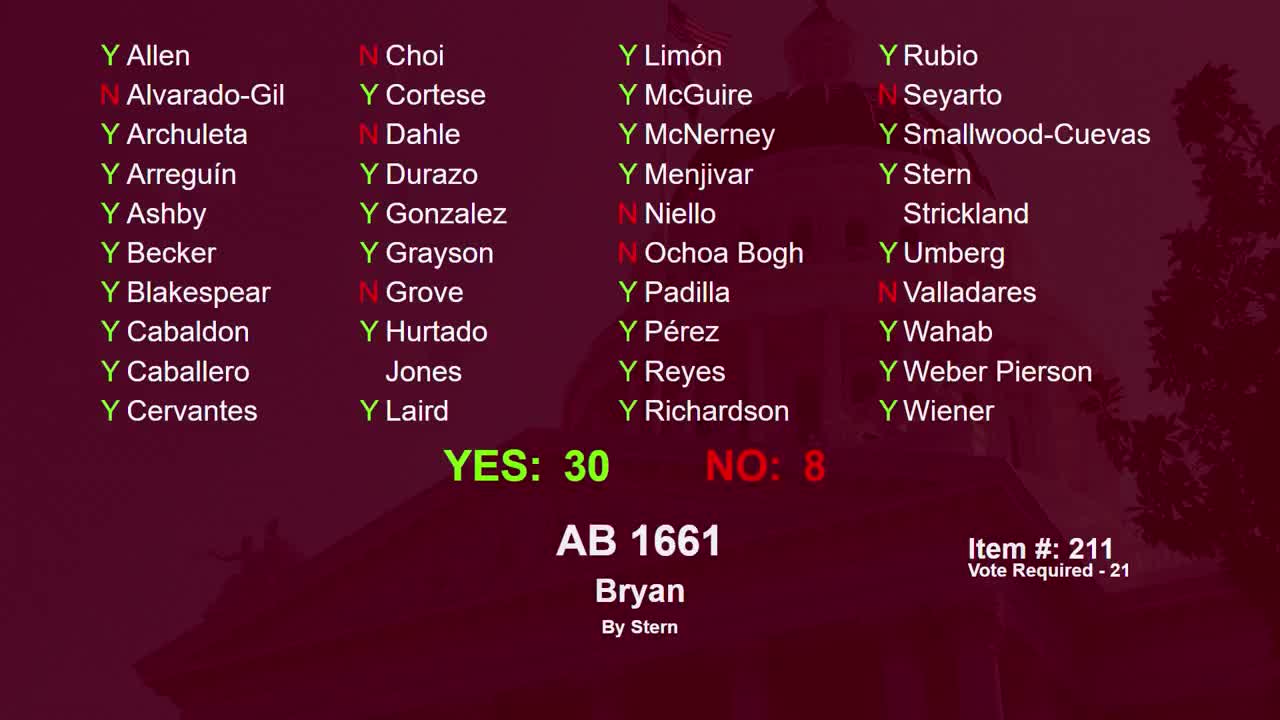 1MIN
Senate Floor
 1MIN
Senate Standing Committee on Appropriations
 24MIN
Senate Standing Committee on Agriculture
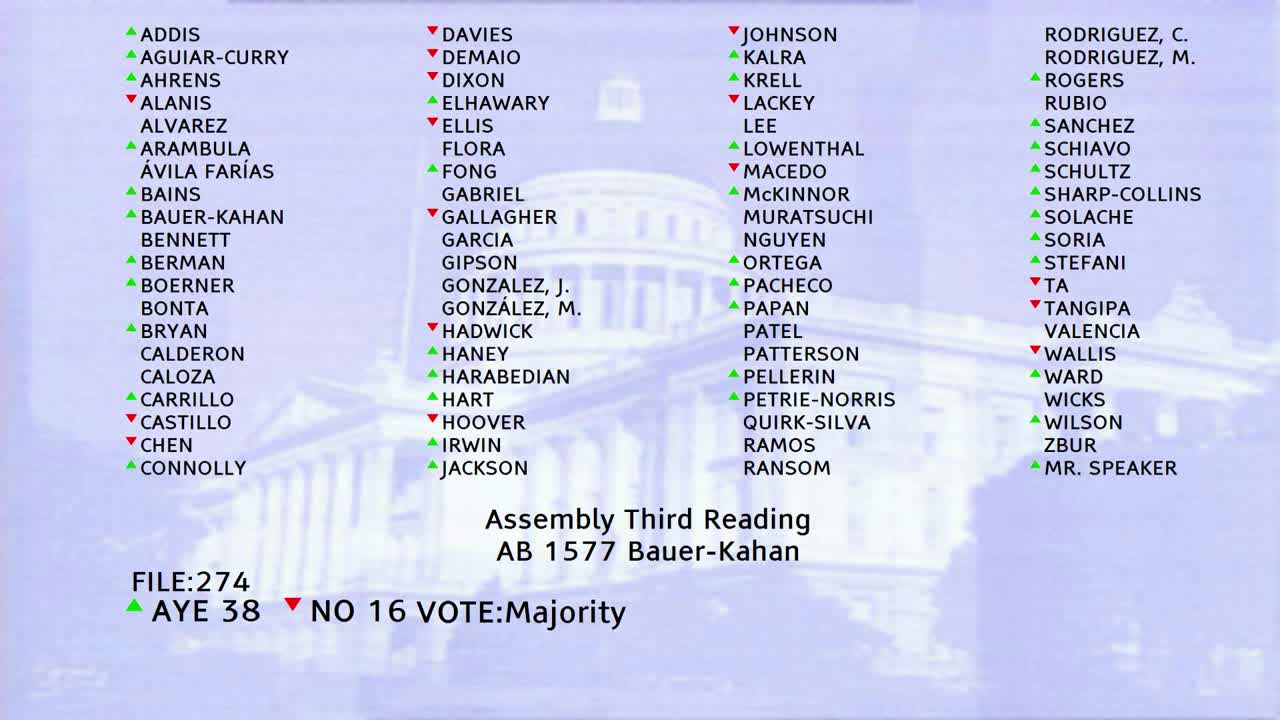 1MIN
Assembly Floor
 15MIN
Assembly Standing Committee on Agriculture
Bill Author