AB 1734: Count Hunger Act.
- Session Year: 2025-2026
- House: Assembly
- Latest Version Date: 2026-06-15
Current Status:
In Progress
(2026-08-13: In committee: Held under submission.)
Introduced
In Committee
Awaiting First Chamber Vote
Passed First Chamber
In Committee
Awaiting Second Chamber Vote
Passed Second Chamber
Enacted
Existing law declares the established policy of the state that every human being has the right to access sufficient affordable and healthy food. Existing law defines food insecurity as the occasional or constant lack of access to the food one needs to live a healthy life and the uncertainty of being able to acquire enough food to meet the needs of an individual or household due to insufficient money or other resources.
Existing law requires the State Department of Public Health to consider the above-described state policy when establishing grant criteria pertinent to the distribution of sufficient affordable food. Existing law requires the department to administer or oversee various programs addressing nutrition, including, among other things, pupil access to healthy food and the California Special Supplemental Nutrition Program for Women, Infants, and Children.This bill, the Count Hunger Act, would require the department to establish a 2-year pilot program, in collaboration with the University of California at Los Angeles (UCLA), to ensure that certain sets of questions linked to food insecurity are funded and covered within the California Health Interview Survey (CHIS). The bill would define CHIS as the statewide health survey administered by UCLA and conducted annually through interviews with thousands of households in the state, as specified. Under the bill, the CHIS portion relating to food insecurity would apply to all households whose income is at or below 400% of the federal poverty level. The bill would require UCLA, in collaboration with the department, to publish any available statewide-, regional-, and county-level data, as feasible, that are linked to the food insecurity portion, as specified.The bill would condition implementation of these provisions on an appropriation by the Legislature and a resolution by the Regents of the University of California, for implementation in the 2027 and 2028 calendar years or as otherwise specified. The bill would specify the intent of the Legislature that an appropriation for these purposes consist of grants or other contributions from local, private, or philanthropic sources for the purposes of the bill.Existing law establishes the University of California, under the administration of the Regents of the University of California, as one of the segments of public postsecondary education within this state. The University of California comprises 10 institutions of higher education located at various campuses, including in the City of Los Angeles.
This bill, the Count Hunger Act, would encourage the University of California, Los Angeles, in administering the California Health Interview Survey, to expand the portion of the survey relating to food insecurity to include households with incomes at or below 400% of the federal poverty level. The bill would further encourage the University of California, Los Angeles, to make available statewide, regional, and county-level data regarding food insecurity among households with incomes at or below 400% of the federal poverty level through the AskCHIS reporting tool or a successor public reporting platform, as specified. The bill would encourage these provisions to be undertaken only to the extent that the University of California, Los Angeles, determines sufficient resources are available.
Existing law declares the established policy of the state that every human being has the right to access sufficient affordable and healthy food. Existing law defines food insecurity as the occasional or constant lack of access to the food one needs to live a healthy life and the uncertainty of being able to acquire enough food to meet the needs of an individual or household due to insufficient money or other resources.
Existing law requires the State Department of Public Health to consider the above-described state policy when establishing grant criteria pertinent to the distribution of sufficient affordable food. Existing law requires the department to administer or oversee various programs addressing nutrition, including, among other things, pupil access to healthy food and the California Special Supplemental Nutrition Program for Women, Infants, and Children.
This bill, the Count Hunger Act, would require the department to establish a 2-year pilot program, in collaboration with the University of California at Los Angeles (UCLA), to ensure that certain sets of questions linked to food insecurity are funded and covered within the California Health Interview Survey (CHIS). The bill would define CHIS as the statewide health survey administered by UCLA and conducted annually through interviews with thousands of households in the state, as specified.
Under the bill, the CHIS portion relating to food insecurity would apply to all households whose income is at or below 400% of the federal poverty level. The bill would require UCLA, in collaboration with the department, to publish any available statewide-, regional-, and county-level data, as feasible, that are linked to the food insecurity portion, as specified.
The bill would condition implementation of these provisions on an appropriation by the Legislature and a resolution by the Regents of the University of California, for implementation in the 2027 and 2028 calendar years or as otherwise specified. The bill would specify the intent of the Legislature that an appropriation for these purposes consist of grants or other contributions from local, private, or philanthropic sources for the purposes of the bill.
Existing law declares the established policy of the state that every human being has the right to access sufficient affordable and healthy food. Existing law defines food insecurity as the occasional or constant lack of access to the food one needs to live a healthy life and the uncertainty of being able to acquire enough food to meet the needs of an individual or household due to insufficient money or other resources.
Existing law requires the State Department of Public Health to consider the above-described state policy when establishing grant criteria pertinent to the distribution of sufficient affordable food. Existing law requires the department to administer or oversee various programs addressing nutrition, including, among other things, pupil access to healthy food and the California Special Supplemental Nutrition Program for Women, Infants, and Children.
This bill, the Count Hunger Act, would require the department to establish a 2-year pilot program, in collaboration with the University of California at Los Angeles (UCLA), to ensure that certain sets of questions linked to food insecurity are funded and covered within the California Health Interview Survey (CHIS). The bill would define CHIS as the statewide health survey administered by UCLA and conducted annually through interviews with thousands of households in the state, as specified.
Under the bill, the CHIS portion relating to food insecurity would apply to all households whose income is at or below 400% of the federal poverty level. The bill would require UCLA, in collaboration with the department, to publish any available statewide-, regional-, and county-level data, as feasible, that are linked to the food insecurity portion, as specified.
The bill would condition implementation of these provisions on an appropriation by the Legislature and a resolution by the Regents of the University of California, for implementation in the 2027 and 2028 calendar years or as otherwise specified.
This act shall be known, and may be cited, as the Count Hunger Act.
SEC. 2.Chapter 26 (commencing with Section 28050) is added to Division 20 of the Health and Safety Code, to read:26.California Health Interview Survey28050.For purposes of this chapter, California Health Interview Survey or CHIS means the statewide health survey administered by the University of California at Los Angeles (UCLA) in collaboration with state departments and other agencies, and conducted annually through interviews with thousands of households in the state. The survey addresses various health matters, including, but not limited to, use of and access to health care, health conditions and behaviors, and a range of topics that influence health, such as public program participation, housing, income and employment, climate change, food, gun violence, and adverse childhood experiences.28051.(a)The State Department of Public Health shall establish a two-year pilot program, in collaboration with UCLA, to ensure that the sets of questions linked to food insecurity, as those sets were implemented in the California Health Interview Survey for the 2025 calendar year, are funded and covered within the CHIS for purposes of the two years of the pilot program as described in paragraph (3) of subdivision (d).(b)Within the sample of households surveyed for CHIS purposes, the CHIS portion relating to food insecurity, as described in subdivision (a), shall apply to all households whose income is at or below 400 percent of the federal poverty level.(c)(1)UCLA, in collaboration with the department and upon receipt of funding pursuant to subdivision (d), shall publish any available statewide-, regional-, and county-level data, as feasible, that are linked to the food insecurity portion described in subdivision (a). UCLA shall post those data on the AskCHIS reporting tool of the CHIS internet website in a manner accessible to the public.(2)Data published or posted pursuant to paragraph (1) shall exclude any personally identifiable information.(d)(1)(A)This section shall be implemented upon an appropriation made by the Legislature for this purpose.(B)It is the intent of the Legislature that an appropriation pursuant to subparagraph (A) consist of moneys from grants or other contributions from local, private, or philanthropic sources for the purposes expressed in this chapter.(2)This section shall not be applicable to UCLA unless the Regents of the University of California, by resolution, make this section applicable.(3)The two-year pilot program described in this section shall be implemented for the 2027 and 2028 calendar years, or two subsequent calendar years, whichever is earlier based on when the appropriation described in paragraph (1) is made available.SEC. 2.Chapter 26 (commencing with Section 28050) is added to Division 20 of the Health and Safety Code, to read:26.California Health Interview Survey28050.(a)The Legislature finds and declares that food insecurity is an urgent, nutrition-related health crisis for Californians that experience it.
(b)The Legislature further funds and declares that the statewide health survey administered by the University of California, Los Angeles, known as the California Health Interview Survey or CHIS, is a critical measure of food insecurity in California.
28051.(a)The Legislature encourages the University of California, Los Angeles, in administering the California Health Interview Survey, to expand the portion of the survey relating to food insecurity to include households with incomes at or below 400 percent of the federal poverty level.
(b)The Legislature further encourages the University of California, Los Angeles, to make available, to the extent feasible and in a manner that does not include personally identifiable information, statewide, regional, and county-level data regarding food insecurity among households with incomes at or below 400 percent of the federal poverty level through the AskCHIS reporting tool or a successor public reporting platform.
(c)The Legislature encourages the activities described in this section to be undertaken only to the extent that the University of California, Los Angeles, determines that sufficient resources are available. Nothing in this section shall be construed to require the appropriation of state funds or create an entitlement to state funding.
This act shall be known, and may be cited, as the Count Hunger Act.
SEC. 2.Chapter 26 (commencing with Section 28050) is added to Division 20 of the Health and Safety Code, to read:26.California Health Interview Survey28050.For purposes of this chapter, California Health Interview Survey or CHIS means the statewide health survey administered by the University of California at Los Angeles (UCLA) in collaboration with state departments and other agencies, and conducted annually through interviews with thousands of households in the state. The survey addresses various health matters, including, but not limited to, use of and access to health care, health conditions and behaviors, and a range of topics that influence health, such as public program participation, housing, income and employment, climate change, food, gun violence, and adverse childhood experiences.
28051.(a)The State Department of Public Health shall establish a two-year pilot program, in collaboration with UCLA, to ensure that the sets of questions linked to food insecurity, as those sets were implemented in the California Health Interview Survey for the 2025 calendar year, are funded and covered within the CHIS for purposes of the two years of the pilot program as described in paragraph (3) of subdivision (d).
(b)Within the sample of households surveyed for CHIS purposes, the CHIS portion relating to food insecurity, as described in subdivision (a), shall apply to all households whose income is at or below 400 percent of the federal poverty level.
(c)(1)UCLA, in collaboration with the department and upon receipt of funding pursuant to subdivision (d), shall publish any available statewide-, regional-, and county-level data, as feasible, that are linked to the food insecurity portion described in subdivision (a). UCLA shall post those data on the AskCHIS reporting tool of the CHIS internet website in a manner accessible to the public.
(2)Data published or posted pursuant to paragraph (1) shall exclude any personally identifiable information.
(d)(1)(A)This section shall be implemented upon an appropriation made by the Legislature for this purpose.
(B)It is the intent of the Legislature that an appropriation pursuant to subparagraph (A) consist of moneys from grants or other contributions from local, private, or philanthropic sources for the purposes expressed in this chapter.
(2)This section shall not be applicable to UCLA unless the Regents of the University of California, by resolution, make this section applicable.
(3)The two-year pilot program described in this section shall be implemented for the 2027 and 2028 calendar years, or two subsequent calendar years, whichever is earlier based on when the appropriation described in paragraph (1) is made available.
This act shall be known, and may be cited, as the Count Hunger Act.
SEC. 2.Chapter 26 (commencing with Section 28050) is added to Division 20 of the Health and Safety Code, to read:26.California Health Interview Survey28050.For purposes of this chapter, California Health Interview Survey or CHIS means the statewide health survey administered by the University of California at Los Angeles (UCLA) in collaboration with state departments and other agencies, and conducted annually through interviews with thousands of households in the state. The survey addresses various health matters, including, but not limited to, use of and access to health care, health conditions and behaviors, and a range of topics that influence health, such as public program participation, housing, income and employment, climate change, food, gun violence, and adverse childhood experiences.
28051.(a)The State Department of Public Health shall establish a two-year pilot program, in collaboration with UCLA, to ensure that the sets of questions linked to food insecurity, as those sets were implemented in the California Health Interview Survey for the 2025 calendar year, are funded and covered within the CHIS for purposes of the two years of the pilot program as described in paragraph (3) of subdivision (d).
(b)Within the sample of households surveyed for CHIS purposes, the CHIS portion relating to food insecurity, as described in subdivision (a), shall apply to all households whose income is at or below 400 percent of the federal poverty level.
(c)(1)UCLA, in collaboration with the department, department and upon receipt of funding pursuant to subdivision (d), shall publish any available statewide-, regional-, and county-level data, as feasible, that are linked to the food insecurity portion described in subdivision (a). UCLA shall post those data on the AskCHIS reporting tool of the CHIS internet website in a manner accessible to the public.
(2)Data published or posted pursuant to paragraph (1) shall exclude any personally identifiable information.
(d)(1)This section shall be implemented upon an appropriation made by the Legislature for this purpose.
(2)This section shall not be applicable to UCLA unless the Regents of the University of California, by resolution, make this section applicable.
(3)The two-year pilot program described in this section shall be implemented for the 2027 and 2028 calendar years, or two subsequent calendar years, whichever is earlier based on when the appropriation described in paragraph (1) is made available.
This act shall be known, and may be cited, as the Count Hunger Act.
SEC. 2.Chapter 26 (commencing with Section 28050) is added to Division 20 of the Health and Safety Code, to read:26.California Health Interview Survey28050.For purposes of this chapter, California Health Interview Survey or CHIS means the statewide health survey administered by the University of California at Los Angeles in collaboration with state departments and other agencies, and conducted annually through interviews with thousands of households in the state. The survey addresses various health matters, including, but not limited to, use of and access to health care, health conditions and behaviors, and a range of topics that influence health, such as public program participation, housing, income and employment, climate change, food, gun violence, and adverse childhood experiences.
28051.(a)The State Department of Public Health shall establish a two-year pilot program, in collaboration with UCLA, to ensure that the sets of questions linked to food insecurity, as those sets were implemented in the California Health Interview Survey for the 2025 calendar year, are funded and covered within the CHIS for purposes of the two years of the pilot program as described in paragraph (3) of subdivision (d).
(b)Within the sample of households surveyed for CHIS purposes, the CHIS portion relating to food insecurity, as described in subdivision (a), shall apply to all households whose income is at or below 400 percent of the federal poverty level.
(c)(1)UCLA, in collaboration with the department, shall publish any available statewide-, regional-, and county-level data, as feasible, that are linked to the food insecurity portion described in subdivision (a). UCLA shall post those data on the AskCHIS reporting tool of the CHIS internet website in a manner accessible to the public.
(2)Data published or posted pursuant to paragraph (1) shall exclude any personally identifiable information.
(d)(1)This section shall be implemented upon appropriation made by the Legislature for this purpose.
(2)This section shall not be applicable to UCLA unless the Regents of the University of California, by resolution, make this section applicable.
(3)The two-year pilot program described in this section shall be implemented for the 2027 and 2028 calendar years, or two subsequent calendar years, whichever is earlier based on when the appropriation described in paragraph (1) is made available.
|
Date
|
Status
|
|---|---|
| Aug 13, 2026 | In committee: Held under submission. |
| Jun 29, 2026 | In committee: Referred to APPR. suspense file. |
| Jun 17, 2026 | From committee: Do pass and re-refer to Com. on APPR. (Ayes 7. Noes 0.) (June 17). Re-referred to Com. on APPR. |
| Jun 15, 2026 | Read second time and amended. Re-referred to Com. on ED. |
| Jun 11, 2026 | From committee: Amend, and do pass as amended and re-refer to Com. on ED. (Ayes 10. Noes 0.) (June 10). |
| Jun 3, 2026 | Referred to Coms. on HEALTH and ED. |
| May 27, 2026 | In Senate. Read first time. To Com. on RLS. for assignment. |
| May 26, 2026 | Read third time. Passed. Ordered to the Senate. (Ayes 71. Noes 1. Page 5359.) |
| May 26, 2026 | Read third time. Passed. Ordered to the Senate. (Ayes 71. Noes 1.) |
| May 26, 2026 | Read third time. Passed. Ordered to the Senate. |
| May 19, 2026 | Read second time. Ordered to third reading. |
| May 18, 2026 | Read second time and amended. Ordered returned to second reading. |
| May 14, 2026 | From committee: Amend, and do pass as amended. (Ayes 12. Noes 0.) (May 14). |
| Apr 29, 2026 | In committee: Set, first hearing. Referred to APPR. suspense file. |
| Apr 20, 2026 | Re-referred to Com. on APPR. |
| Apr 16, 2026 | Read second time and amended. |
| Apr 15, 2026 | From committee: Amend, and do pass as amended and re-refer to Com. on APPR. (Ayes 7. Noes 1.) (April 14). |
| Mar 18, 2026 | From committee: Do pass and re-refer to Com. on HIGHER ED. with recommendation: To Consent Calendar. (Ayes 16. Noes 0.) (March 17). Re-referred to Com. on HIGHER ED. |
| Mar 9, 2026 | Referred to Coms. on HEALTH and HIGHER ED. |
| Feb 6, 2026 | From printer. May be heard in committee March 8. |
| Feb 5, 2026 | Read first time. To print. |
|
Date
|
Description
|
Location
|
Votes
|
|
|---|---|---|---|---|
| Jun 29, 2026 | Placed on suspense file | Senate Standing Committee on Appropriations |
Passed |
|
| Jun 17, 2026 | Do pass, but first be re-referred to the Committee on [Appropriations] | Senate Standing Committee on Education |
Passed |
|
| Jun 10, 2026 | Do pass as amended, but first amend, and re-refer to the Committee on [Education] | Senate Standing Committee on Health |
Passed |
|
| May 26, 2026 | AB 1734 Stefani Assembly Third Reading | Assembly Floor |
Passed |
|
| May 14, 2026 | Do pass as amended. | Assembly Standing Committee on Appropriations |
Passed |
|
| Apr 14, 2026 | Do pass as amended and be re-referred to the Committee on [Appropriations] | Assembly Standing Committee on Higher Education |
Passed |
|
| Mar 17, 2026 | Do pass and be re-referred to the Committee on [Higher Education] with recommendation: To Consent Calendar | Assembly Standing Committee on Health |
Passed |
This list shows positions taken on this bill by organizations on the date displayed, which is linked to the original source.
Positions by individuals are not included.
|
Organization
|
Position
|
Date
|
|---|---|---|
| AARP | ** Support | |
| Beverly Hills Synagogue | ** Support | |
| Boys & Girls Clubs of San Francisco | ** Support | |
| California Association of Food Banks (Co-Sponsor) | ** Support | |
| California Food and Farming Network | ** Support | |
| California Food Recovery Coalition | ** Support | |
| California Grocers Association | ** Support | |
| California Immigrant Policy Center | ** Support | |
| Californians Against Waste | ** Support | |
| Californians for SSI | ** Support | |
| Californians for Supplemental Security Income | ** Support | |
| Children's Council of San Francisco | ** Support | |
| City and County of San Francisco | ** Support | |
| City of Emeryville | ** Support | |
| Community Action Marin | ** Support | |
| County of Marin | ** Support | |
| County of Napa | ** Support | |
| County of Santa Clara | ** Support | |
| County Welfare Directors Association of California | ** Support | |
| Democrats for Israel Los Angeles | ** Support | |
| Doordash | ** Support | |
| Edgewood Center for Children and Families | ** Support | |
| Extrafood | ** Support | |
| First 5 California | ** Support | |
| First 5 La | ** Support | |
| Five Keys | ** Support | |
| Food for People, the Food Bank for Humboldt County | ** Support | |
| Glad Tidings Church | ** Support | |
| Glad Tidings Church — Assemblies of God | ** Support | |
| Glide | ** Support | |
| Hadassah, the Women's Zionist of America, INC. | ** Support | |
| Hillel of San Diego | ** Support | |
| JCC-Federation of San Luis Obispo | ** Support | |
| JCRC Jewish Long Beach | ** Support | |
| JCRC Santa Barbara County | ** Support | |
| Jewish California | ** Support | |
| Jewish Center for Justice | ** Support | |
| Jewish Community Relations Council (JCRC) Bay Area | ** Support | |
| Jewish Council for Public Affairs | ** Support | |
| Jewish Democratic Club of Marin | ** Support | |
| Jewish Family and Children's Services | ** Support | |
| Jewish Family & Community Services (JFCS) East Bay | ** Support | |
| Jewish Family Service of San Diego | ** Support | |
| Jewish Family Services of Silicon Valley | ** Support | |
| Jewish Federation Bay Area | ** Support | |
| Jewish Federation of Greater Santa Barbara | ** Support | |
| Jewish Federation of Orange County | ** Support | |
| Jewish Federation of the Desert | ** Support | |
| Jewish Federation of The Greater San Gabriel and Pomona Valleys | ** Support | |
| Jewish Partisan Educational Foundation | ** Support | |
| Jewish Silicon Valley | ** Support | |
| JFCS Long Beach and Orange County | ** Support | |
| Justice in Aging | ** Support | |
| JVS SoCal | ** Support | |
| Los Angeles Regional Food Bank | ** Support | |
| Marin Food Policy Council | ** Support | |
| Mazon: A Jewish Response to Hunger | ** Support | |
| Menorah Park | ** Support | |
| Mission Language Vocational School | ** Support | |
| Mom’s Meal | ** Support | |
| National Council of Jewish Women of San Francisco | ** Support | |
| North Marin Community Services | ** Support | |
| Nourish California | ** Support | |
| One individual | ** Support | |
| Ritter Center | ** Support | |
| San Francisco Food Security Task Force | ** Support | |
| San Francisco-Marin Food Bank | ** Support | |
| San Francisco-Marin Food Bank (co-sponsor) | ** Support | |
| Second Harvest Food Bank of Orange County | ** Support | |
| StopWaste | ** Support | |
| The Richmond Neighborhood Center | ** Support | |
| Westside Food Bank | ** Support |
SENATE COMMITTEE ON
Senator Sabrina Cervantes, Chair
2025 - 2026 Regular Session
AB 1734 (Stefani) - Count Hunger Act
Version: | Policy Vote: |
Urgency: | Mandate: |
Hearing Date: | Consultant: |
Bill Summary:
AB 1734 would encourage the University of California, Los Angeles (UCLA), in administering the California Health Interview Survey (CHIS), to expand the portion of the survey relating to food insecurity to include households with incomes at or below 400 percent of the federal poverty level.
Fiscal Impact:
General Fund cost pressures, likely low hundreds of thousands, to the extent that non-General Fund moneys are unavailable to support the survey. UCLA estimates costs of $287,570 to conduct a food insecurity survey for households with incomes at or below 400 percent of the federal poverty level.
Background:
CHIS is conducted by the UCLA Center for Health Policy Research, in collaboration with the California Department of Public Health and the Department of Health Care Services and is considered to be the nation’s largest state health survey and a primary source of information regarding the health and health care needs of Californians. CHIS conducts ongoing surveys of randomly selected households across all 58 counties in California, and collects information on a broad range of topics, including health status, health care access, health insurance coverage, public program participation, mental health, food insecurity, employment, income, and other demographic and health-related characteristics. The survey data are used by policymakers, researchers, state and local agencies, community organizations, and others to better understand health trends and inform policy decisions. UCLA makes CHIS data available through several public data tools, including AskCHIS, which provides statewide, regional, and county-level health statistics derived from survey responses. In 2024, CHIS reported that 47.2 percent of California adults with incomes below 200 percent of the federal poverty level indicated they could not afford enough food.
Proposed Law:
Specific provisions of the bill would:
- Encourage the UCLA, in administering the CHIS, to expand the portion of the survey relating to food insecurity to include households with incomes at or below 400 percent of the federal poverty level.
- Encourage the UCLA, to make available, to the extent feasible and in a manner that does not include personally identifiable information, statewide, regional, and county-level data regarding food insecurity among households with incomes at or below 400 percent of the federal poverty level through the AskCHIS reporting tool or a successor public reporting platform.
- Encourage the activities to be undertaken only to the extent that the UCLA determines that sufficient resources are available: and specify that the provisions are not to be construed to require the appropriation of state funds or create an entitlement to state funding.
-- END --
SENATE COMMITTEE ON EDUCATION
Senator Sasha Renée Pérez, Chair
2025 - 2026 Regular
Bill No: Hearing Date: June 17, 2026
Author: | |||
Version: | June 15 | ||
Urgency: | Fiscal: | ||
Consultant: | |||
Subject: .
SUMMARY
This bill encourages the University of California, Los Angeles (UCLA), when administering the California Health Interview Survey (CHIS), to expand the portion of the survey relating to food insecurity to include households with incomes below 400 percent of the federal poverty level and only to the extent sufficient resources are available for that purpose.
BACKGROUND
Existing law:
- Establishes a state policy that every human being has the right to access
sufficient affordable, and healthy food. The policy defines food insecurity as the occasional or constant lack of access to the amount of food a person needs to live a healthy life. The policy further defines food insecurity as the uncertainty of being able to acquire enough food to meet the needs of a person or a household due to insufficient funds or resources. Requires all state agencies to consider this state policy when revising, adopting, or establishing policies, regulations, and grant criteria when the policy, regulation, or grant pertains to the distribution of sufficient affordable food. The policy does not expand the obligation of the state to provide food or nutrition assistance or to require the expenditure of additional resources to develop food infrastructures. (Welfare and Institutions Code § 18700)
2) Establishes the University of California (UC) as a public trust to be administered by the Regents and grants the Regents full powers of organization and governance subject only to legislative control as necessary to ensure the security of funds, compliance with terms of its endowments, and the statutory requirements around competitive bidding and contracts, sales of property, and the purchase of materials, goods, and services. (California Constitution Article IX, § (9) (a))
3) Establishes the distinctive and differentiated mission and functions of California’s public and independent segments and their respective institutions of higher education. Specifically, the UC may provide undergraduate and graduate instruction in the liberal arts and sciences and the profession, including teaching professions. The UC will have exclusive jurisdiction in public higher education over the professions of law, medicine, dentistry, and veterinary medicine. The UC will be the primary state-supported academic agency for research. (Education Code § 66010.4, Subdivision (c))
ANALYSIS
This bill:
- Encourages the UCLA in administering CHIS to expand the portion of the survey relating to food insecurity to include households with incomes at or below 400 percent of the federal poverty level.
- Encourages UCLA to make available, to the extent feasible and in a manner that does not include personally identifiable information, statewide, regional, and county-level data regarding food insecurity among households with incomes at or below 400 percent of the federal poverty level through the AskCHIS reporting tool or a successor public reporting platform.
- Encourages the activities described in the bill to be undertaken only to the extent that UCLA determines that sufficient resources are available and specifies that the bill is not to be construed as requiring the appropriation of state funds or creating an entitlement of state funding.
- States that the Legislature finds and declares:
- That food insecurity is an urgent, nutrition-related health crisis for
Californians that experience it.
- That the statewide health survey administered by UCLA, known as the “California Health Interview Survey,” or “CHIS,” is a critical measure of food insecurity in California.
STAFF COMMENTS
- Need for the bill. According to the author, “The California Health Interview Survey (CHIS) fills a critical gap in understanding food insecurity and the needs of Californian families. University of California, Los Angeles (UCLA) administers this survey to 25,000 households annually, collecting data on income, demographics, health, and food insecurity that directly shapes safety net policies and resource allocation. The CHIS study, unique to California, has been a valuable supplement alongside the U.S. Department of Agriculture (USDA) Hunger Survey. Conducted annually by UCLA’s Center for Health Policy Research. CHIS also measures food security, and it is able to reach several Asian and Latine subpopulations that the USDA survey could not. It also enabled analysis of the relationships between food security and health or social conditions, as well as comparisons of counties and regions within the state.
“However, with the impacts of federal cuts to these social safety net programs and the uncertain future for CHIS funding for future years, this survey too may be in jeopardy. Without sustainable funding for this program, California may lose a critical tool and second dataset for identifying Californians experiencing hunger. CHIS previously administered the food security screener only to California households below 200% Federal Poverty Level (FPL), approximately $64,000 for a family of four. This cutoff excludes a substantial share of Californians living above 200% FPL yet below their county’s cost-of-living threshold, which has been identified as the majority of working households. According to the Brookings Institution, 1/3 of all households that are food insecure are above the 200% FPL.”
- California Health Interview Survey. CHIS is conducted by the UCLA Center for Health Policy Research, in collaboration with the California Department of Public Health and the Department of Health Care Services and is considered to be the nation’s largest state health survey and a primary source of information regarding the health and health care needs of Californians. CHIS conducts ongoing surveys of randomly selected households across all 58 counties in California, and collects information on a broad range of topics, including health status, health care access, health insurance coverage, public program participation, mental health, food insecurity, employment, income, and other demographic and health-related characteristics. The survey data are used by policymakers, researchers, state and local agencies, community organizations, and others to better understand health trends and inform policy decisions. UCLA makes CHIS data available through several public data tools, including AskCHIS, which provides statewide, regional, and county-level health statistics derived from survey responses. This bill encourages UCLA to expand the food insecurity component of CHIS to include households with incomes at or below 400 percent of the federal poverty level and, to the extent feasible, make the resulting data publicly available through AskCHIS.
- Food insecurity data collection. According to a report published by the Center in 2025, CHIS has measured food insecurity since 2001 and has been used to evaluate which populations are most affected and how policy changes may affect food access. Current CHIS food insecurity reporting primarily focuses on low-income households, below 200 percent of the federal poverty level. This bill encourages UCLA to expand food insecurity data collection and reports to include households with incomes at or below 400 percent of the federal poverty level. Expanding the available data may provide additional information regarding food insecurity among households that may not traditionally be considered low-income but nevertheless experience challenges with food expenses due to the high cost of living in California.
- Encourages UC. As noted in the background of this analysis, the California Constitution establishes the UC as a public trust to be administered by the Regents and grants the Regents full powers of organization and governance, subject only to limited legislative control. Consistent with UC’s constitutional autonomy, this bill does not require changes to be made to the survey; rather, it encourages that changes be undertaken and only to the extent that UCLA determines that sufficient resources are available.
SUPPORT
San Francisco-Marin Food Bank (co-sponsor)
AARP
California Immigrant Policy Center
City of Emeryville
County of Santa Clara
County Welfare Directors Association of California
First 5 LA
StopWaste
OPPOSITION
None received
-- END --
SENATE COMMITTEE ON HEALTH
Senator Akilah Weber Pierson, Chair
BILL NO: AB 1734
AUTHOR: | Stefani | ||
VERSION: | May 18, 2026 | ||
HEARING DATE: | June 10, 2026 | ||
CONSULTANT: | Jen Flory | ||
SUBJECT: Count Hunger Act.
SUMMARY:
Requires the California Department of Public Health to establish a two-year pilot program in collaboration with University of California at Los Angeles to ensure that questions regarding food insecurity remain part of the California Health Interview Survey, subject to appropriation and outside funding.
Existing law:
- Establishes the California Department of Public Health (CDPH), directed by a state Public Health Officer, to be vested with all the duties, powers, purposes, functions, responsibilities, and jurisdiction as they relate to public health and licensing of health facilities, as specified. [HSC §131050]
- Authorizes the director of CDPH to accept gifts of money from public agencies or from organizations or associations organized for scientific, educational, or charitable purposes. [HSC §131057]
- Defines “food insecurity” as the occasional or constant lack of access to the food one needs to live a healthy life and the uncertainty of being able to acquire enough food to meet the needs of an individual or household due to insufficient money or other resources. [WIC §187000]
- Declares that it is established state policy that every human being has the right to access sufficient affordable and healthy food and requires all relevant state agencies, including CDPH, to consider this state policy when revising, adopting, or establishing policies, regulations, and grant criteria when those policies, regulations, and grant criteria are pertinent to the distribution of sufficient affordable food. [WIC §187000]
- Establishes the University of California (UC) as a public trust, to be administered by the existing corporation known as “The Regents of the University of California,” with full powers of organization and government, subject only to such legislative control as may be necessary to insure the security of its funds and compliance with the terms of the endowments of the UC and such competitive bidding procedures as may be made applicable to the UC by statute for the letting of construction contracts, sales of real property, and purchasing of materials, goods, and services. [CONS Article IX §9(a)]
This bill:
- Defines the “California Health Interview Survey” (CHIS) as the statewide health survey administered by the University of California at Los Angeles (UCLA) in collaboration with state departments and other agencies, and conducted annually through interviews with thousands of households in the state. The survey addresses various health matters, including, but not limited to, use of and access to health care, health conditions and behaviors, and a range of topics that influence health, such as public program participation, housing, income and employment, climate change, food, gun violence, and adverse childhood experiences.
- Requires CDPH to establish a two-year pilot program, in collaboration with UCLA, to ensure that the sets of questions linked to food insecurity, as those sets were implemented in the CHIS for the 2025 calendar year, are funded and covered within the CHIS for the 2027 and 2028 calendar years, or two subsequent calendar years, whichever is earlier based on the availability of appropriated funds.
- Requires that within the sample of households surveyed for CHIS purposes, the CHIS portion relating to food insecurity applies to all households whose income is at or below 400% of the federal poverty level (FPL).
- Requires UCLA, in collaboration with CDPH, and upon receipt of funding pursuant to this bill, to publish any available statewide-, regional-, and county-level data, as feasible, that are linked to the food insecurity portion on the AskCHIS reporting tool of the CHIS website in a manner accessible to the public and that excludes any personally identifiable information.
- Conditions implementation of this bill on: a) an appropriation made by the Legislature for this purpose; b) the appropriation consists of moneys from grants or other contributions from local, private, or philanthropic sources for the purposes expressed in this chapter; and, c) the UC Regents adopt this bill by resolution with regards to the portions pertaining to UCLA.
FISCAL EFFECT:
According to the Assembly Appropriations Committee this bill would have one-time General Fund costs of approximately $300,000. The author states the CHIS team at UCLA determined the cost of returning the food insecurity screener portion of the survey and expanding it to those who are 400% FPL would cost $287,570.
PRIOR VOTES:
Assembly Floor: | 71 - 1 |
Assembly Appropriations Committee: | 12 - 0 |
Assembly Higher Education Committee | 7 - 1 |
Assembly Health Committee: | 16 - 0 |
COMMENTS:
- Author’s statement. According to the author, this bill creates a pilot to secure funding to the CHIS’s food insecurity questionnaire. This pilot will survey thousands of food insecure Californians and adapt current research methods to account for the high cost of living in the state. With nationwide social safety net program changes, our most vulnerable are at risk of falling through the cracks. This bill ensures that California will continue to Count Hunger because food insecurity doesn’t disappear when you stop measuring it, it just becomes easier to ignore.
- Cancellation of the US Department of Agriculture (USDA) Household Food Security report. The USDA has tracked food insecurity in the United States through its annual Household Food Security report since 1995. According to the latest 2024 report, an estimated 18.3 million households (13.7%) were food insecure. In September of 2025, the USDA announced it would terminate future Household Food Security reports, calling the reports subjective, liberal fodder; and stating that trends in the prevalence of food insecurity have remained virtually unchanged despite an 87% increase in the federal Supplemental Nutrition Assistance Program (SNAP, or CalFresh in California) spending between 2019 and 2023. However, according to an October 15, 2025 blog post by the Harvard T.H. Chan School of Public Health, the survey actually showed that food insecurity dropped to its lowest level in 2021 (10.2% of households), thanks largely to the economic stimulus measures implemented during the COVID-19 pandemic. Yet once the assistance expired, two years later, the rates went up to 13.5% of households. Months before the USDA announcement, H.R. 1 was enacted which made significant changes to SNAP including expanding work requirements, narrowing noncitizen eligibility, ending nutrition education, and limiting how maximum benefits would be calculated in the future, along with a number of measures designed to shift costs of the program to the state. Such changes are expected to decrease the number of people who have access to food assistance through the program.
- CHIS collection of food insecurity in California. According to UCLA, CHIS interviews over 20,000 households a year on a wide range of health matters, including health care coverage, health conditions, and topics that influence health such, as housing, income, employment, climate change, gun violence, and adverse childhood experiences. CHIS has asked questions about food security since its launch in 2001. In 2024, 47.2% of California adults with incomes below 200% FPL said they could not afford enough food. This bill is intended to ensure that this survey continues as well as expand which Californians would be interviewed to include those with incomes up to 400% FPL.
- Double referral. This bill is double referred. Should it pass out of this committee, it will be referred to the Senate Committee on Education.
- Related legislation. SB 1025 (Hurtado) establishes the Office of Food Security and Affordability to coordinate statewide food insecurity outreach, cooperate with research organizations, establish best practices for food banks and emergency food responders and develop a strategic plan to address gaps in food assistance, among other things. SB 1025 is set for hearing on June 16, 2026 in the Assembly Human Services Committee.
AB 1618 (Rogers) requires the California Department of Social Services (CDSS) to annually conduct a statewide survey to assess food insecurity in California, modeled after a specified federal survey, unless a comparable federal survey is conducted that year. AB 1618 was held on the Assembly Appropriations suspense file.
- Prior legislation. AB 1967 (Jackson of 2024) would have established a Food Insecurity Officer within CDSS to coordinate and address food insecurity across state government operations and prepare an annual report on food insecurity in California. AB 1967 was held on the Senate Appropriations Committee suspense file.
SB 628 (Hurtado, Chapter 879, Statutes of 2023) declares the established policy of the state that every human being has the right to access sufficient affordable and healthy food and requires relevant state agencies to consider this policy when revising, adopting, or establishing policies, regulations, and grant criteria when pertinent to the distribution of sufficient affordable food.
- Support. Co-sponsors the California Association of Food Banks and the San Francisco-Marin Food Bank write that CHIS’s collection of food security information provides both county-level data and data on several Asian and Latine populations that USDA survey data could not. They also point to Brookings Institute and USDA data showing that anywhere from 20% to 33% of food insecure households are in higher income households than is currently being captured, thus asking the questions to individuals in households of up to 400% of the federal poverty level is warranted. They also state that this bill helps to fill the gap left by the cancellation of the federal USDA food security.
- Policy comment. While securing funding for state data tracking food insecurity at a time that both the federal food assistance program and federal data on the scope of the problem have been cut makes sense, as currently drafted, this bill adds layers of complexity to securing funding for the issue. This bill would require a legislative appropriation of funds that are private, philanthropic, or local for a small grant to be administered by CDPH. An outside grant directly to UCLA would likely be easier and more timely to obtain.
SUPPORT AND OPPOSITION:
Support: California Association of Food Banks (co-sponsor)
San Francisco-Marin Food Bank (co-sponsor)
AARP
Beverly Hills Synagogue
Boys & Girls Clubs of San Francisco
California Food and Farming Network
California Food Recovery Coalition
California Grocers Association
California Immigrant Policy Center
Californians Against Waste
Californians for Supplemental Security Income
Children's Council of San Francisco
City and County of San Francisco
City of Emeryville
Community Action Marin
County of Marin
County of Napa
County of Santa Clara
County Welfare Directors Association of California
Democrats for Israel Los Angeles
DoorDash
Edgewood Center for Children and Families
ExtraFood
First 5 California
Five Keys
Food for People, the Food Bank for Humboldt County
Glad Tidings Church
GLIDE
Hadassah, the Women's Zionist of America, Inc.
Hillel of San Diego
JCC-Federation of San Luis Obispo
Jewish Community Relations Council (JCRC) Bay Area
JCRC Santa Barbara County
JCRC Jewish Long Beach
Jewish California
Jewish Center for Justice
Jewish Council for Public Affairs
Jewish Democratic Club of Marin
Jewish Family and Children's Services
Jewish Family Service of San Diego
Jewish Family Services of Silicon Valley
Jewish Federation Bay Area
Jewish Federation of Greater Santa Barbara
Jewish Federation of Orange County
Jewish Federation of the Desert
Jewish Federation of the Greater San Gabriel and Pomona Valleys
Jewish Partisan Educational Foundation
Jewish Silicon Valley
Jewish Family & Community Services (JFCS) East Bay
JFCS Long Beach and Orange County
Justice in Aging
Jewish Vocational Services (JVS) Bay Area
JVS SoCal
Los Angeles Regional Food Bank
Marin Food Policy Council
Mazon: a Jewish Response to Hunger
Menorah Park
Mission Language Vocational School
Mom’s Meal
National Council of Jewish Women of San Francisco
North Marin Community Services
Nourish California
Ritter Center
San Francisco Food Security Task Force
Second Harvest Food Bank of Orange County
StopWaste
The Richmond Neighborhood Center
Westside Food Bank
One individual
Oppose: None received
-- END --
ASSEMBLY THIRD READING
ATR Bill Id:AB 1734
Author:(Stefani)
As Amended Ver:May 18, 2026
Majority vote
SUMMARY
Requires the State Department of Public Health (DPH) to establish a two-year pilot program in collaboration with the University of California, Los Angeles (UCLA) to ensure that the sets of questions and data linked to food insecurity within the California Health Interview Survey (CHIS) administered by UCLA are funded and covered.
Major Provisions
- Requires this bill to be known and authorizes it to be cited as the Count Hunger Act.
- Defines ″California Health Interview Survey″ or ″CHIS″ to mean the statewide health survey administered by UCLA, in collaboration with state departments and other agencies, and conducted annually through interviews with thousands of households in the state. The survey addresses various health matters, including, but not limited to, use of and access to health care, health conditions and behaviors, and a range of topics that influence health, such as public program participation, housing, income and employment, climate change, food, gun violence, and adverse childhood experiences.
- Requires DPH to establish a two-year pilot program, in collaboration with UCLA, to ensure that the sets of questions linked to food insecurity, as those sets were implemented in the California Health Interview Survey for the 2025 calendar year, are funded and covered within the CHIS for purposes of the two years of the pilot program as described in 10) below.
- Requires the portion of the CHIS survey relating to food insecurity to apply to all households whose income is at or below 400% of the federal poverty level (FPL).
- Requires UCLA, in collaboration with DPH and upon receipt of funding pursuant to 8) below to publish any available statewide-, regional- and county-level data, as feasible, that are linked to the food insecurity portion of the CHIS.
- Requires UCLA to post the data described in 5) above on the AskCHIS reporting tool of the CHIS internet website in a manner accessible to the public.
- Requires data published or posted pursuant to this bill to exclude any personally identifiable information.
- Requires this bill to be implemented upon appropriation made by the Legislature for this purpose. States the intent of the legislature that an appropriation for purposes of this bill consist of grants or other contributions from local, private or philanthropic sources.
- Prohibits this bill from being applicable to UCLA unless the Regents of the University of California (UC), by resolution, make this section applicable.
- Requires the two-year pilot program described in this bill to be implemented for the 2027 and 2028 calendar years, or two subsequent calendar years, whichever is earlier based on when the appropriation described in 8) above made available.
COMMENTS
Food Insecurity. SB 628 (Hurtado), Chapter 879, Statutes of 2023 defines food insecurity as the occasional or constant lack of access to the food one needs to live a healthy life and the uncertainty of being able to acquire enough food to meet the needs of an individual or household due to insufficient money or other resources. According to a 2026 article published in the Journal of Nutrition titled, ″Impacts of Nutrition Policy on Food Insecurity and Individual Health in the United States: A Narrative Review,″ food insecurity is both a consequence and a driver of structural inequities, reflecting not only economic hardship but also shaping long-term health outcomes. The article further notes that food insecurity contributes to higher rates of chronic conditions such as obesity, type 2 diabetes, cardiovascular disease, and depression—conditions often exacerbated by limited access to affordable, nutritious food, and culturally appropriate care.
Data Sources on Food Insecurity.
- United States (U.S.) Department of Agriculture (USDA) Food Security Supplement. On September 20, 2025, the USDA announced the termination of future Household Food Security Reports. The reports had tracked food insecurity data since 1995. According to a 2025 article published by the Harvard T.H. Chan School of Public Health titled ″Cancellation of food insecurity survey a blow to understanding hunger in the U.S.,″ the household food insecurity data has served as a consistent national benchmark, guiding solutions and bringing attention to areas of greatest need. The article highlights that the data had been used by policymakers to assess the performance of federal nutrition assistance programs, by researchers to study food insecurity to inform policy recommendations, and, by nonprofit organizations and advocacy groups to identify regions and populations with the highest rates of food insecurity, target interventions, and allocate resources efficiently. The article also notes that the data supports outreach and public awareness campaigns, helping to mobilize support for efforts to reduce food insecurity. The announcement on the USDA government website characterized the reports as ″redundant, costly, politicized, and extraneous studies″ that ″do nothing more than fear monger.″
- CHIS. In California, the UCLA Center for Health Policy Research, in collaboration with DPH and the Department of Health Care Services (DHCS), conducts CHIS. According to the UC, CHIS interviews more than 20,000 households each year on a wide range of health matters, from use of and access to health care, to health conditions and behaviors, to a range of topics that influence health: public program participation, housing, income and employment, climate change, food, adverse childhood experiences, and much more. CHIS is the largest population health state survey in the nation.
Data collected is publicly available using the AskCHIS tool. Topics can be viewed across a range of sociodemographic factors, including: race and ethnicity, age, gender, sexual orientation and gender identity, education, citizenship, language, veteran status, and more.
According to the UC, major funders of this survey include DHCS, DHCS Community Service Division, DPH, California Civil Rights Department, California Health Benefit Exchange, First 5 California, The California Endowment, California Health Care Foundation, and the California Rural Indian Health Board. Each organization generally provides funding for specific topics on the CHIS survey, and costs for questions are based on a proportional division of the total program costs according to the length of their specific questions.
CHIS includes a set of questions related to food insecurity. This set of questions is funded by DPH and is currently targeted at households with income at or below 200% of the FPL. For context, the FPL is a measure of income updated each year by the federal Department of Health and Human Services that is used to determine eligibility for certain federal programs and benefits such as Medicaid and the Supplemental Nutrition Assistance Program (SNAP). The questions center on the ability of the household to afford food. Please see the Assembly Health Committee analysis for additional background, including a summary of the survey questions intended to be covered and funded by this bill.
According to the UC, UCLA was informed that cuts in federal funds could put the funding for the survey in jeopardy.
Prevalence of food insecurity. According to a publication by the USDA titled ″Food Security in the United States – Key Statistics & Graphics″, 13.7% (18.3 million) of U.S. households were food insecure at some time during 2024. Household food insecurity affected 18.4% (6.7 million) of households with children in 2024.
According to the 2024 CHIS, 47.2% of California adults earning less than 200% of the FPL — $30,120 for a single adult and $62,400 for a family of four — were food insecure.
What does this bill do? This bill requires DPH to establish a two-year pilot in collaboration with UCLA to fund the food security questions within CHIS. The bill also requires UCLA to publish the data available statewide, regional and county level data as feasible and post the data on the AskCHIS reporting tool in a manner accessible to the public, which is already an existing practice. Further, this bill also expands the range of households sampled from 200% up to 400% of FPL. This expansion would capture a larger range of households who may be experiencing food insecurity. The bill is contingent upon appropriation by the Legislature and is not applicable to UCLA unless approved by the UC Regents.
Accompanying budget request. The author has submitted a budget request to fund the food insecurity questions and expand the range of households from 200% to 400% FPL.
According to the Author
This bill will create a pilot to restore funding to CHIS′ food insecurity questionnaire, an existing survey which asks up to 25,000 Californians questions to understand the unmet needs in our communities. The author continues that this bill also accounts for the high cost of living in California by increasing the threshold in which food insecurity questions are asked to respondents from 200% FPL to 400% FPL. The author concludes that hunger doesn′t disappear when people stop measuring it, it just becomes easier to ignore.
Arguments in Support
This bill is sponsored by the California Association of Food Banks (CAFB) and the San Francisco-Marin Food Bank (SFMFB), who write in support that the CHIS study, unique to California, has been a valuable supplement alongside the CPS-FSS. CAFB and SFMFB continue that CHIS also measures food security and it is able to reach several Asian and Latine subpopulations that the USDA survey could not, and has also enabled analyses of the relationships between food security and health or social conditions, as well as comparisons of counties and regions within the state. CAFB and SFMFB highlight that in early January 2026, it was announced that funding to conduct the food insecurity screener by CHIS was also cut, resulting from the loss of SNAP-Ed funding. CAFB and SFMFB state that this removes a second key source of data on food security in California. CAFB and SFMFB highlight that it is imperative that we not only bring back the ability of CHIS to measure food security but also expand the range of households sampled from 200% up to 400% of FPL. CAFB and SMFBMB note that the Brookings Institution estimates that one-third of all food-insecure households have incomes over 200% FPL, and a USDA study shows that households earning more than 1.85 times the federal poverty threshold make up about 20% of all food-insecure households, meaning many families earning nearly twice the 200% FPL benchmark, or roughly $128,000 for a family of four, still struggle. By funding and expanding CHIS to include households up to 400% FPL, California would retain the tools needed to better understand and combat food insecurity for a larger share of the population at risk. CAFB and SFMFB conclude that California cannot stand by while harmful federal policies eliminate critical tools in our ability to understand and design proven solutions to hunger.
Arguments in Opposition
None on file.
FISCAL COMMENTS
According to the Assembly Appropriations Committee, one-time General Fund costs of approximately $300,000. The author states the CHIS team at UCLA determined the cost of returning the food insecurity screener portion of the survey and expanding it to those who are 400% FPL would cost $287,570.
VOTES
ASM HEALTH: 16-0-0
YES: Bonta, Chen, Addis, Aguiar-Curry, Ahrens, Caloza, Carrillo, Mark González, Johnson, Patel, Patterson, Rogers, Sanchez, Schiavo, Sharp-Collins, Stefani
ASM HIGHER EDUCATION: 7-1-2
YES: Fong, Boerner, Jeff Gonzalez, Jackson, Muratsuchi, Patel, Sharp-Collins
NO: DeMaio
ABS, ABST OR NV: Celeste Rodriguez, Tangipa
ASM APPROPRIATIONS: 12-0-3
YES: Wicks, Hoover, Aguiar-Curry, Calderon, Caloza, Fong, Mark González, Krell, Pacheco, Pellerin, Sharp-Collins, Solache
ABS, ABST OR NV: Dixon, Ta, Tangipa
UPDATED
VERSION: May 18, 2026
CONSULTANT: Eliza Brooks / HEALTH / (916) 319-2097 FN: 0003032
Date of Hearing: April 29, 2026
ASSEMBLY COMMITTEE ON APPROPRIATIONS
Buffy Wicks, Chair
ABPCA Bill Id:AB 1734
Author:(Stefani) – As Amended Ver:April 16, 2026
Policy Committee: | Health | Vote: | 16 - 0 |
Higher Education | 7 - 1 | ||
|
|
Urgency: No State Mandated Local Program: No Reimbursable: No
SUMMARY:
This bill establishes the Count Hunger Act. The bill requires, upon an appropriation, the California Department of Public Health (CDPH), in collaboration with the University of California at Los Angeles (UCLA), establish a two-year pilot program to include food insecurity questions on the California Health Interview Survey (CHIS).
Specifically, this bill:
- Requires CDPH, in collaboration with UCLA, establish a two-year pilot program to include food insecurity questions that were included in the 2025 CHIS, for the 2027 and 2028 calendar years.
- Requires the food insecurity questions apply to all households whose income is at or below 400% of the federal poverty level (FPL).
- Requires UCLA, in collaboration with CDPH and upon receipt of funding, publish available statewide-, regional-, and county-level food insecurity data, as feasible, on the AskCHIS reporting tool of the CHIS internet website in a manner accessible to the public.
- Conditions implementation upon an appropriation made by the Legislature and resolution by the Regents of the University of California.
- Requires CDPH implement the pilot program in the 2027 and 2028 calendar years, or two subsequent calendar years, depending on the availability of the appropriation.
FISCAL EFFECT:
One-time General Fund costs of approximately $300,000. The author states the CHIS team at UCLA determined the cost of returning the food insecurity screener portion of the survey and expanding it to those who are 400% FPL would cost $287,570. The author has submitted a request for this amount in the state budget to fund the pilot program.
The Legislative Analyst’s Office recently warned of General Fund structural deficits of around $35 billion per year in the 2027-28 fiscal year and ongoing.
COMMENTS:
- Purpose. This bill is sponsored by the California Association of Food Banks (CAFB) and the San Francisco-Marin Food Bank (SFMFB). According to the author:
This bill will create a pilot to restore funding [for a food insecurity questionnaire on CHIS], an existing survey which asks up to 25,000 Californians questions to understand the unmet needs in our communities. This bill also accounts for the high cost of living in California by increasing the threshold in which food insecurity questions are asked to respondents from 200% FPL to 400% FPL. Hunger doesn’t disappear when you stop measuring it, it just becomes easier to ignore.
- Background. UCLA’s Center for Health Policy and Research states it conducts CHIS to provide data to help target funding, programs, and resources to improve the health outcomes for all Californians. CHIS is conducted online and via telephone to more than 20,000 households, in seven languages, in all 58 counties. Each survey covers a wide range of health topics. Results from the survey are available through a free online tool that allows a user to customize or disaggregate the data by city, county, zip code, and legislative district. UCLA publishes an annual report with a narrative about the data collected by CHIS. Major funders of CHIS include numerous state agencies, including CDPH, and The California Endowment, California Health Care Foundation, and the California Rural Indian Health Board. Each organization generally provides funding for specific topics on the CHIS survey, and costs for questions are based on a proportional division of the total program costs.
On September 20, 2025, the U.S. Department of Agriculture (USDA) announced the termination of future Household Food Security Reports. The reports had tracked food insecurity data since 1995. According to a 2025 article published by the Harvard T.H. Chan School of Public Health, the household food insecurity data has served as a consistent national benchmark, guiding solutions and bringing attention to areas of greatest need. The article states the data had been used by policymakers to assess the performance of federal nutrition assistance programs, by researchers to study food insecurity, and by nonprofit organizations and advocacy groups to identify regions and populations with the highest rates of food insecurity, target interventions, and allocate resources efficiently. The article also notes the data supported outreach and public awareness campaigns, helping to mobilize support for efforts to reduce food insecurity.
CAFB and SFMFB note CHIS also measured food security and reached several Asian and Latino subpopulations that the USDA survey could not, and enables analyses of the relationships between food security and health or social conditions. CAFB and SFMFB state funding for CHIS to conduct the food insecurity screener was also recently cut due to the loss of federal Supplemental Nutrition Assistance Program Education (SNAP-Ed) grant funding, removing a second key source of data on food security in California.
Analysis Prepared by: Allegra Kim / APPR. / (916) 319-2081
Date of Hearing: April 14, 2026
ASSEMBLY COMMITTEE ON HIGHER EDUCATION
Mike Fong, Chair
ABPCA Bill Id:AB 1734 (
Author:Stefani) – As Introduced Ver:February 5, 2026
SUBJECT: Count Hunger Act
SUMMARY: Requires the State Department of Public Health to establish a two-year pilot program with the University of California, Los Angeles to properly fund and conduct the annual California Health Interview Survey with a specified set of questions on food insecurity. Specifically, this bill:
- Establishes the Count Hunger Act.
- Defines, for purpose of the County Hunger Act, the following terms:
- “California Health Interview Survey” or “CHIS” to mean the statewide health survey administered by University of California, Los Angeles (UCLA) in collaboration with state departments and other agencies. California Health Interview Survey is conducted annually through interviews with thousands of households in the state. This California Health Interview Survey topics include various health matters, including, but not limited to: use of and access to health care, health conditions and behaviors, and a range of topics that influence a person’s health. The range of topics include public program participation, housing, income and employment, climate change, access to food, gun violence, and adverse childhood experiences.
- Authorizes the California Department of Public Health to establish a two-year pilot program with UCLA to ensure the sets of questions linked to food insecurity in the 2025 California Health Interview Survey are included, funded, and covered in the California Health Interview Survey for two years following the implementation of the pilot.
- Requires the California Health Interview Survey to apply the food insecurity questions as described in (3) to all sampled households of the survey, whose income is at or below 400 percent of the federal poverty level.
- Requires UCLA, in collaboration with the California Department of Public Health, to publish any available statewide, regional, and county level data linked to the food insecurity portion of the California Health Interview Survey. UCLA will post the data on the ASKCHIS reporting tool of the CHIS internet website in a manner accessible to the public. The data will be reported in a manner that excludes personally identifiable information.
- Subjects the implementation of the pilot program described above to appropriation by the Legislature for the intended purpose of the pilot program.
- Subjects the involvement of UCLA upon the Regents of the University of California (UC) by resolution adopting provisions to permit UCLA’s involvement in the pilot program.
- Clarifies the two-year pilot program will commence for the 2027 and 2028 calendar year or in the two subsequent calendar years after the pilot program is funded by the Legislature.
EXISTING LAW:
- Establishes a state policy that every human being has the right to access sufficient affordable and healthy food. The policy defines food insecurity as the occasional or constant lack of access to the amount of food a person needs to live a healthy life. The policy further defines food insecurity as the uncertainty of being able to acquire enough food to meet the needs of a person or a household due to insufficient funds or resources. Requires all state agencies to consider this state policy when revising, adopting, or establishing policies, regulations, and grant criteria when the policy, regulation, or grant pertains to the distribution of sufficient affordable food. The policy does not expand the obligation of the state to provide food or nutrition assistance or to require the expenditure of additional resources to develop food infrastructures (Welfare and Institutions Code Section 18700).
- Establishes the UC as a public trust to be administered by the Regents and grants the Regents full powers of organization and governance subject only to legislative control as necessary to ensure the security of funds, compliance with terms of its endowments, and the statutory requirements around competitive bidding and contracts, sales of property, and the purchase of materials, goods, and services (Article IX, Section (9) (a) of the California Constitution).
- Establishes the distinctive and differentiated mission and functions of California’s public and independent segments and their respective institutions of higher education. Specifically, the UC may provide undergraduate and graduate instruction in the liberal arts and sciences and the profession, including teaching professions. The UC will have exclusive jurisdiction in public higher education over the professions of law, medicine, dentistry, and veterinary medicine. The UC will be the primary state-supported academic agency for research (Education code Section 66010.4, Subdivision (c)).
FISCAL EFFECT: Unknown.
COMMENTS: Double referral. AB 1734 (Stefani) was heard by the Assembly Committee on Health on March 17, 2025, where it passed a vote of 16 - 0.
Author’s intent. As stated by the author, “this bill will create a pilot to restore funding to the California Health Interview Survey’s food insecurity questionnaire, an existing survey which asks up to 25,000 Californians questions to understand the unmet needs in our communities. This bill also accounts for the high cost of living in California by increasing the threshold in which food insecurity questions are asked to respondents from 200% FPL to 400% FPL. Hunger doesn’t disappear when you stop measuring it, it just becomes easier to ignore.”
University of California (UC). The ten-campus UC system was created in 1886 with the passing of the Organic Act in California.[1] As a public trust, the UC Board of Regents has full power of the organization and governance of the system and therefore enjoys autonomy from the State Legislature. The UC Regents have the authority to:
- Establish and spend the UC budget;
- Decide the type of majors to be taught;
- Establish new campuses;
- Determine academic and administrative appointments and promotions; and,
- Set student tuition and fees.1
Despite constitutional autonomy, the State still has authority over the funds it provides to the UC. Specifically, if the State provides specific allocations for specific purposes, the UC is obligated to expend and fulfill the purpose the monies were allocated to accomplish.
AB 1734 (Stefani) preserves the constitutional autonomy of the UC in two ways: (1) the measure permits the enactment of a two-year pilot upon appropriation; and (2) conditioning UCLA’s involvement in the pilot program upon the approval of the UC Regents.
UCLA and the California Health Interview Survey. UCLA located in Los Angeles, California is a flagship campus for the UC. UCLA is a globally recognized postsecondary education leader in academics, research, healthcare, and athletics.[2] UCLA currently enrolls 33,534 undergraduate students, 13,898 graduate students, and 1,581 interns and residents in medicine and dentistry.[3] UCLA’s Center for Health Policy and Research annual conducts the California Health Interview Survey (survey). The survey is considered a “leading source of credible and comprehensive data on the health and health care needs of California’s large and diverse population.”[4] The purpose of the survey is to provide actionable data elements to decisionmakers to help target funding, programs, and resources to improve the health outcomes for all Californians.
The survey is conducted either online or via the telephone to more than 20,000 households in seven different languages. Each survey covers a wide range of health topics including:
“access to and use of health care, health insurance, health status, health conditions (asthma, diabetes, cancer, etc.), health behaviors (smoking, alcohol use, diet, etc.), public program participation (Medi-Cal, food stamps, CalWorks, etc.), mental health, oral health, immigrant health, intimate partner violence, food, childcare and school, employment, income, discrimination, and much more. Many core questions are repeated in each survey in order to measure significant shifts over time. New questions are also added each survey year to address emerging concerns that are important for planning and policy development. Over the last few years, CHIS has added a series of questions on COVID-19, gun violence, housing, climate change, encounters with police, adverse childhood experiences, and much more.”[5]
The survey contains data from households within all 58 counties in California. The results from the survey are available on a free online tool that allows a person to customize or disaggregate the data by city, county, zip code, and legislative district.[6] Each year UCLA publishes a report with a narration of the data collected by the survey. The latest report from 2025, included topics on the access to childcare, mental health services, healthcare access, the rise of hate in California, and the adverse impacts to being exposed to wildfires.[7]
Need for the measure. According to the author’s office, the California Department for Public Health has indicated that the funding for the survey is in not confirmed, specifically for the food insecurity questions. The author has expressed there is a need to not only maintain the data collected by the survey for food insecurity, but to expand the data pool from those households identifying at 200% below the poverty line to those who are at or below 400% of the poverty line. The author has submitted a budget request to fund the food insecurity questions and expand the range of households from 200% to 400% FPL.
Furthermore, in September 2025 the U.S. Department of Agriculture cancelled national studies on food insecurity.[8] With a cut in the national collection of data on food insecurity, it is imperative California preserve a survey that not only produces credible and actionable data on food insecurity, but to ensure the data encapsulates all those who are experiencing food insecurity by California’s definitions.
Arguments in support. As the co-sponsor of the Legislation, the California Association of Food Banks, expresses the need for the measure as “until recently, the annual Current Population Survey – Food Security Supplement (CPS-FSS) provided crucial insight on food insecurity for the nation and individual states. It asked key questions about food security status (including childhood food insecurity), use of food programs such as SNAP and WIC, barriers to food security, and socioeconomic data such as race, ethnicity, and income. This survey informed critical research and policy decisions, including datasets like Map the Meal Gap, and its longstanding nature enabled us to track food security trends over time and assess policy impacts. Unfortunately, in October 2025, the Trump administration canceled the national survey for this year and all future years. The CHIS study, unique to California, has been a valuable supplement alongside the CPS-FSS. Conducted annually by UCLA’s Center for Health Policy Research, CHIS also measures food security and it is able to reach several Asian and Latine subpopulations that the USDA survey could not. It also enabled analyses of the relationships between food security and health or social conditions, as well as comparisons of counties and regions within the state. Yet in early January 2026, it was announced that funding to conduct the food insecurity screener by CHIS was also cut, resulting from the loss of SNAP Ed funding. This removes a second key source of data on food security in California.”
The California Association of Food Banks, further contends, “it is imperative that we not only bring back the ability of CHIS to measure food security but also expand the range of households sampled from 200% up to 400% of FPL. The Brookings Institution estimates that one-third of all food-insecure households have incomes over 200% FPL, and a USDA study shows that households earning more than 1.85 times the federal poverty threshold make up about 20% of all food-insecure households (Brookings Institution). This means many families earning nearly twice the 200% FPL benchmark, or roughly $128,000 for a family of four, still struggle. By funding and expanding CHIS to include households up to 400% FPL, California would retain the tools needed to better understand and combat food insecurity for a larger share of the population at risk.”
Requested clarifying amendment. To make it clear that UCLA is only required to publish data online if funding is provided to UCLA, the Committee has suggested, and the Author has agreed to the following amendment:
- Amends Section 28050, subdivision (c), paragraph (1) to read as follows:
(c) (1) UCLA, in collaboration with the department and upon receipt of funding pursuant to subdivision (d), shall publish any available statewide-, regional-, and county-level data, as feasible, that are linked to the food insecurity portion described in subdivision (a). UCLA shall post those data on the AskCHIS reporting tool of the CHIS internet website in a manner accessible to the public.
REGISTERED SUPPORT / OPPOSITION:
Support
AARP
Boys & Girls Clubs of San Francisco
California Association of Food Banks
California Food and Farming Network
California Food Recovery Coalition
California Immigrant Policy Center
Californians Against Waste
Californians for Ssi
Children's Council of San Francisco
City and County of San Francisco
Community Action Marin
Doordash
Edgewood Center for Children and Families
Extrafood
Five Keys
Food for People, the Food Bank for Humboldt County
Glad Tidings Church — assemblies of God
Glide
Jewish Family and Children's Services of San Francisco, the Peninsula, Marin and Sonoma Counties
Justice in Aging
Los Angeles Regional Food Bank
Marin County Board of Supervisors
Marin Food Policy Council
Menorah Park
Mission Language Vocational School
Napa County
North Marin Community Services
Nourish California
Ritter Center
San Francisco-marin Food Bank
Second Harvest Food Bank of Orange County
Stopwaste
The Richmond Neighborhood Center
Opposition
None on file.
Analysis Prepared by: Ellen Cesaretti-Monroy / HIGHER ED. / (916) 319-3960
https://www.library.ca.gov/crb/quick-hits/uc-history/origin/ ↑
https://newsroom.ucla.edu/ucla-fast-facts ↑
https://apb.ucla.edu/campus-statistics/enrollment ↑
https://healthpolicy.ucla.edu/our-work/california-health-interview-survey-chis/about-chis ↑
https://healthpolicy.ucla.edu/our-work/california-health-interview-survey-chis/about-chis - What health topics are covered by CHIS? ↑
https://healthpolicy.ucla.edu/our-work/askchis and https://healthpolicy.ucla.edu/our-work/askchis-ne ↑
https://healthpolicy.ucla.edu/our-work/publications/california-health-interview-survey-chis-2025-making-impact ↑
https://www.usda.gov/about-usda/news/press-releases/2025/09/20/usda-terminates-redundant-food-insecurity-survey ↑
Date of Hearing: March 17, 2026
ASSEMBLY COMMITTEE ON HEALTH
Mia Bonta, Chair
ABPCA Bill Id:AB 1734
Author:(Stefani) – As Introduced Ver:February 5, 2026
SUBJECT: Count Hunger Act.
SUMMARY: Requires the State Department of Public Health (DPH) to establish a two-year pilot program in collaboration with the University of California, Los Angeles (UCLA) to ensure that the sets of questions and data linked to food insecurity within the California Health Interview Survey (CHIS) administered by UCLA are funded and covered. Specifically, this bill:
- Requires this bill to be known and authorizes it to be cited as the Count Hunger Act.
- Defines “California Health Interview Survey” or “CHIS” to mean the statewide health survey administered by UCLA, in collaboration with state departments and other agencies, and conducted annually through interviews with thousands of households in the state. The survey addresses various health matters, including, but not limited to, use of and access to health care, health conditions and behaviors, and a range of topics that influence health, such as public program participation, housing, income and employment, climate change, food, gun violence, and adverse childhood experiences.
- Requires DPH to establish a two-year pilot program, in collaboration with UCLA, to ensure that the sets of questions linked to food insecurity, as those sets were implemented in the California Health Interview Survey for the 2025 calendar year, are funded and covered within the CHIS for purposes of the two years of the pilot program as described in 10) below.
- Requires the portion of the CHIS survey relating to food insecurity to apply to all households whose income is at or below 400% of the federal poverty level (FPL).
- Requires UCLA, in collaboration with DPH, to publish any available statewide-, regional- and county-level data, as feasible, that are linked to the food insecurity portion of the CHIS.
- Requires UCLA to post the data described in 5) above on the AskCHIS reporting tool of the CHIS internet website in a manner accessible to the public.
- Requires data published or posted pursuant to this bill to exclude any personally identifiable information.
- Requires this bill to be implemented upon appropriation made by the Legislature for this purpose.
- Prohibits this bill from being applicable to UCLA unless the Regents of the University of California (UC), by resolution, make this section applicable.
- Requires the two-year pilot program described in this bill to be implemented for the 2027 and 2028 calendar years, or two subsequent calendar years, whichever is earlier based on when the appropriation described in 8) above made available.
EXISTING LAW:
- Declares the established policy of the state that every human being has the right to access sufficient affordable and healthy food. [Welfare and Institutions Code (WIC) § 18700]
- Defines food insecurity as the occasional or constant lack of access to the food one needs to live a healthy life and the uncertainty of being able to acquire enough food to meet the needs of an individual or household due to insufficient money or other resources. [Ibid.]
- Requires DPH to consider the state policy described in 1) above when establishing grant criteria pertinent to the distribution of sufficient affordable food. [Ibid.]
- Establishes the UC as a public trust to be administered by the Regents and grants the Regents full powers of organization and governance subject only to legislative control as necessary to ensure the security of funds, compliance with terms of its endowments, and the statutory requirements around competitive bidding and contracts, sales of property, and the purchase of materials, goods, and services. (Article IX, § (9) (a) of the California Constitution).
FISCAL EFFECT: Unknown. This bill has not been analyzed by a fiscal committee.
COMMENTS:
- PURPOSE OF THIS BILL. According to the author, this bill will create a pilot to restore funding to CHIS’ food insecurity questionnaire, an existing survey which asks up to 25,000 Californians questions to understand the unmet needs in our communities. The author continues that this bill also accounts for the high cost of living in California by increasing the threshold in which food insecurity questions are asked to respondents from 200% FPL to 400% FPL. The author concludes that hunger doesn’t disappear when people stop measuring it, it just becomes easier to ignore.
- BACKGROUND.
- Food Insecurity. SB 628 (Hurtado), Chapter 879, Statutes of 2023 defines food insecurity as the occasional or constant lack of access to the food one needs to live a healthy life and the uncertainty of being able to acquire enough food to meet the needs of an individual or household due to insufficient money or other resources. According to a 2026 article published in the Journal of Nutrition titled, “Impacts of Nutrition Policy on Food Insecurity and Individual Health in the United States: A Narrative Review,” food insecurity is both a consequence and a driver of structural inequities, reflecting not only economic hardship but also shaping long-term health outcomes. The article further notes that food insecurity contributes to higher rates of chronic conditions such as obesity, type 2 diabetes, cardiovascular disease, and depression—conditions often exacerbated by limited access to affordable, nutritious food, and culturally appropriate care.
- Data Sources on Food Insecurity.
- United States (U.S.) Department of Agriculture (USDA) Food Security Supplement. On September 20, 2025, the USDA announced the termination of future Household Food Security Reports. The reports had tracked food insecurity data since 1995. According to a 2025 article published by the Harvard T.H. Chan School of Public Health titled “Cancellation of food insecurity survey a blow to understanding hunger in the U.S.,” the household food insecurity data has served as a consistent national benchmark, guiding solutions and bringing attention to areas of greatest need. The article highlights that the data had been used by policymakers to assess the performance of federal nutrition assistance programs, by researchers to study food insecurity to inform policy recommendations, and, by nonprofit organizations and advocacy groups to identify regions and populations with the highest rates of food insecurity, target interventions, and allocate resources efficiently. The article also notes that the data supports outreach and public awareness campaigns, helping to mobilize support for efforts to reduce food insecurity. The announcement on the USDA government website characterized the reports as “redundant, costly, politicized, and extraneous studies” that “do nothing more than fear monger.”
- CHIS. In California, the UCLA Center for Health Policy Research, in collaboration with DPH and the Department of Health Care Services (DHCS), conducts CHIS. According to the UC, CHIS interviews more than 20,000 households each year on a wide range of health matters, from use of and access to health care, to health conditions and behaviors, to a range of topics that influence health: public program participation, housing, income and employment, climate change, food, adverse childhood experiences, and much more. CHIS is the largest population health state survey in the nation.
Data collected is publicly available using the AskCHIS tool. Topics can be viewed across a range of sociodemographic factors, including: race and ethnicity, age, gender, sexual orientation and gender identity, education, citizenship, language, veteran status, and more.
According to the UC, major funders of this survey include DHCS, DHCS Community Service Division, DPH, California Civil Rights Department, California Health Benefit Exchange, First 5 California, The California Endowment, California Health Care Foundation, and the California Rural Indian Health Board. Each organization generally provides funding for specific topics on the CHIS survey, and costs for questions are based on a proportional division of the total program costs according to the length of their specific questions.
CHIS includes a set of questions related to food insecurity. This set of questions is funded by DPH and is currently targeted at households with income at or below 200% of the FPL. For context, the FPL is a measure of income updated each year by the federal Department of Health and Human Services that is used to determine eligibility for certain federal programs and benefits such as Medicaid and the Supplemental Nutrition Assistance Program (SNAP). The questions center on the ability of the household to afford food. The survey questions intended to be covered and funded by this bill are summarized below:
- In the last 12 months, how often did food not last?
- In the last 12 months, how often could you not afford balanced meals?
- In the last 12 months, did you or other adults cut the size of your meals or skip meals because there wasn’t enough money for food? How often did this happen?
- In the last 12 months, did you ever eat less than you felt you should because there wasn’t enough money to buy food?
- In the last 12 months, were you ever hungry but didn’t eat because you couldn’t afford enough food?
For further details, the survey questions are available on UCLA’s CHIS website.
According to the UC, DPH announced to the UC that the funding for the food insecurity questions is in jeopardy. According to information provided by the author and sponsors, the loss in funding is a result of the federal HR 1’s elimination of the SNAP-Education (SNAP-Ed) program, a federally funded nutrition education program.
- Prevalence of food insecurity. According to a publication by the USDA titled “Food Security in the United States – Key Statistics & Graphics”, 13.7% (18.3 million) of U.S. households were food insecure at some time during 2024. Household food insecurity affected 18.4% (6.7 million) of households with children in 2024.
According to the 2024 CHIS, 47.2% of California adults earning less than 200% of the FPL — $30,120 for a single adult and $62,400 for a family of four — were food insecure.
- What does this bill do? This bill requires DPH to establish a two-year pilot in collaboration with UCLA to fund the food security questions within CHIS. The bill also requires UCLA to publish the data available statewide, regional and county level data as feasible and post the data on the AskCHIS reporting tool in a manner accessible to the public, which is already an existing practice. Further, this bill also expands the range of households sampled from 200% up to 400% of FPL. This expansion would capture a larger range of households who may be experiencing food insecurity. The bill is contingent upon appropriation by the Legislature and is not applicable to UCLA unless approved by the UC Regents.
- Accompanying budget request. The author has submitted a budget request to fund the food insecurity questions and expand the range of households from 200% to 400% FPL.
- SUPPORT. This bill is sponsored by the California Association of Food Banks (CAFB) and the San Francisco-Marin Food Bank (SFMFB), who write in support that the CHIS study, unique to California, has been a valuable supplement alongside the CPS-FSS. CAFB and SFMFB continue that CHIS also measures food security and it is able to reach several Asian and Latine subpopulations that the USDA survey could not, and has also enabled analyses of the relationships between food security and health or social conditions, as well as comparisons of counties and regions within the state. CAFB and SFMFB highlight that in early January 2026, it was announced that funding to conduct the food insecurity screener by CHIS was also cut, resulting from the loss of SNAP-Ed funding. CAFB and SFMFB state that this removes a second key source of data on food security in California. CAFB and SFMFB highlight that it is imperative that we not only bring back the ability of CHIS to measure food security but also expand the range of households sampled from 200% up to 400% of FPL. CAFB and SMFBMB note that the Brookings Institution estimates that one-third of all food-insecure households have incomes over 200% FPL, and a USDA study shows that households earning more than 1.85 times the federal poverty threshold make up about 20% of all food-insecure households, meaning many families earning nearly twice the 200% FPL benchmark, or roughly $128,000 for a family of four, still struggle. By funding and expanding CHIS to include households up to 400% FPL, California would retain the tools needed to better understand and combat food insecurity for a larger share of the population at risk. CAFB and SFMFB conclude that California cannot stand by while harmful federal policies eliminate critical tools in our ability to understand and design proven solutions to hunger.
- RELATED LEGISLATION.
- AB 1618 (Rogers) would require the State Department of Social Services (DSS) to conduct an annual survey on food insecurity across the state. AB 1618 passed the Assembly Human Services Committee with a vote of 6-0 on March 10, 2026.
- SB 1025 (Hurtado) would establish the Office of Food Security and Affordability to coordinate statewide food insecurity outreach, partnerships, research, and emergency response efforts, as specified. Would create the Food Security and Affordability Fund for the receipt and deposit of moneys from federal, state, local, or private sources, and upon appropriation by the Legislature, authorizes the office to use those moneys to implement and administer these provisions. SB 1025 is pending before the Senate Human Services and Governmental Organization Committees.
- PREVIOUS LEGISLATION.
- AB 1967 (Jackson) of 2024, would have established a Food Insecurity Officer within DSS to coordinate and address food insecurity across state government operations. AB 1967 was held on the Senate Appropriations Committee suspense file.
- SB 628 referenced in the Background section above declares that it is the established policy of the state that every human being has the right to access sufficient affordable and healthy food. Requires all relevant state agencies to consider this state policy when revising, adopting, or establishing policies, regulations, and grant criteria when those policies, regulations, and grant criteria are pertinent to the distribution of sufficient affordable food.
- DOUBLE REFERRAL. This bill is double referred, upon passage in this Committee, it will be referred to the Assembly Committee on Higher Education.
REGISTERED SUPPORT / OPPOSITION:
Support
California Association of Food Banks (sponsor)
San Francisco-Marin Food Bank (sponsor)
California Food Recovery Coalition
Californians for SSI
Community Action Marin
Edgewood Center for Children and Families
Extrafood
Food for People, the Food Bank for Humboldt County
Glad Tidings Church — Assemblies of God
GLIDE
Jewish Family and Children's Services of San Francisco, the Peninsula, Marin and Sonoma Counties
Justice in Aging
Menorah Park
Mission Language Vocational School
North Marin Community Services
Nourish California
Ritter Center
Second Harvest Food Bank of Orange County
The Richmond Neighborhood Center
Numerous individuals
Opposition
None on file
Analysis Prepared by: Eliza Brooks / HEALTH / (916) 319-2097
Discussed in Hearing
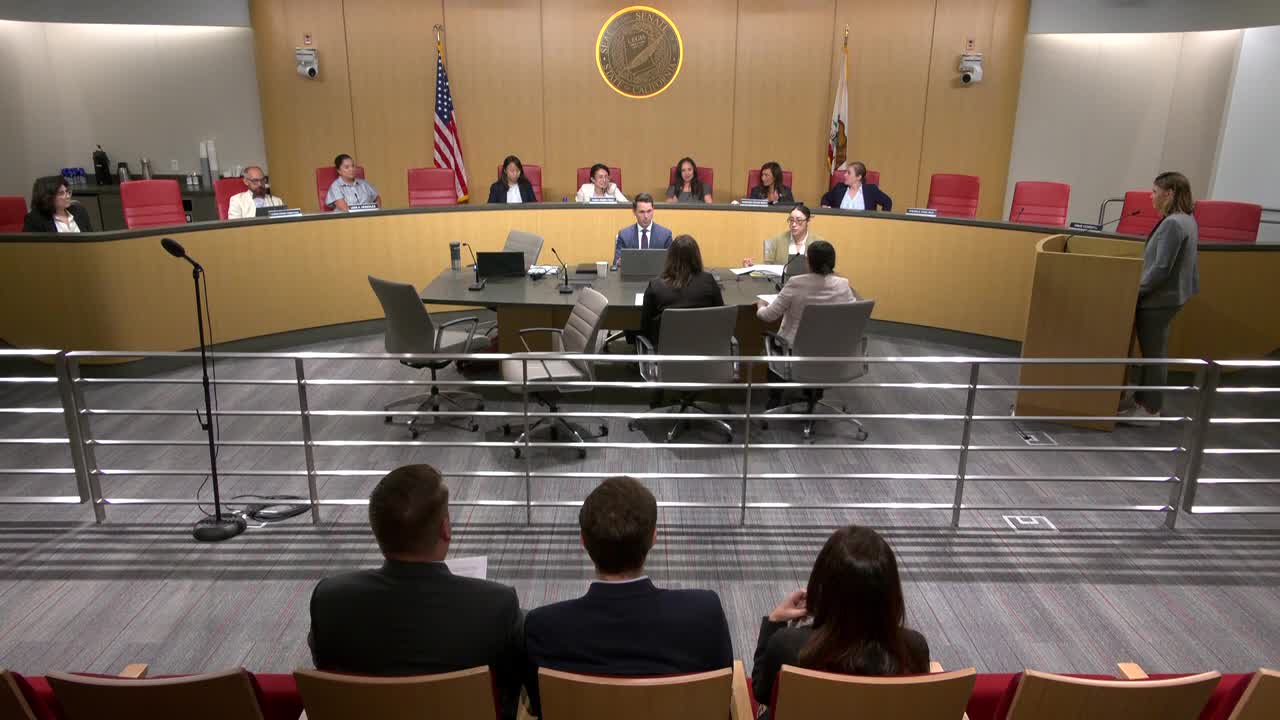 6MIN
Senate Standing Committee on Education
 7MIN
Senate Standing Committee on Health
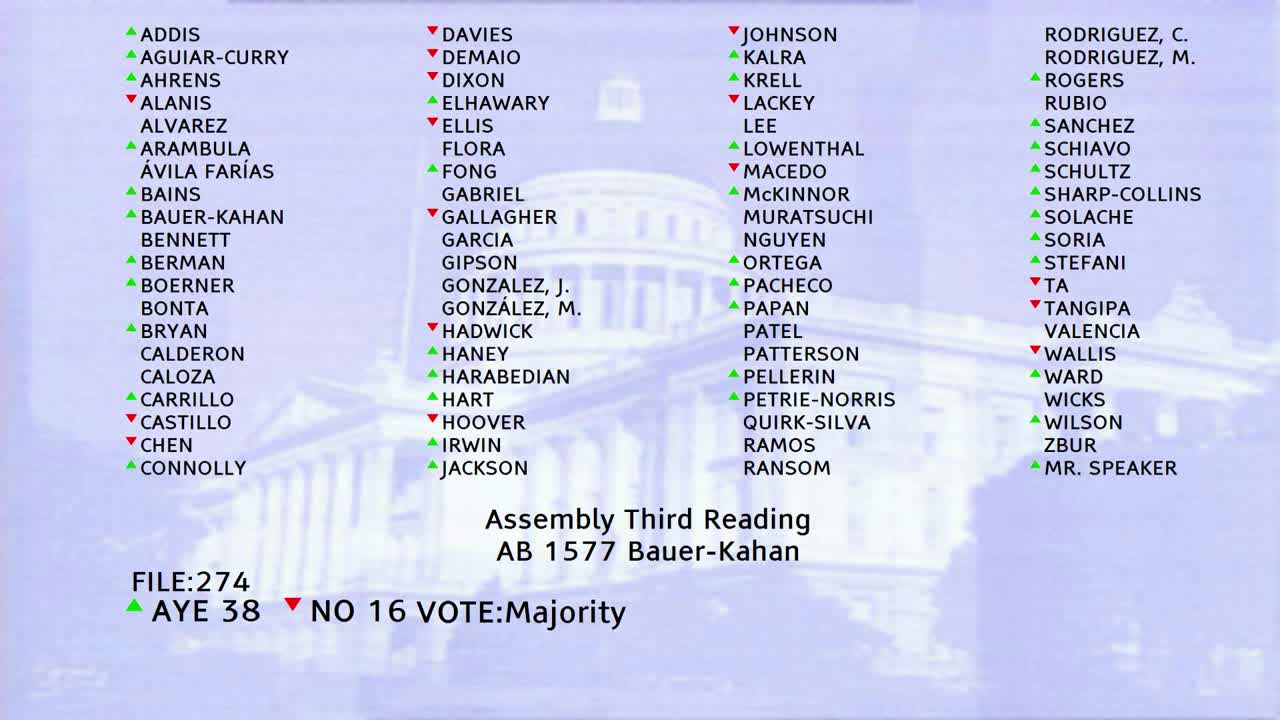 1MIN
Assembly Floor
 21MIN
Assembly Standing Committee on Higher Education
Bill Author