AB 1741: Sexual battery.
- Session Year: 2025-2026
- House: Assembly
- Latest Version Date: 2026-09-20
Current Status:
Passed
(2026-09-20: Chaptered by Secretary of State - Chapter 374, Statutes of 2026.)
Introduced
In Committee
Awaiting First Chamber Vote
Passed First Chamber
In Committee
Awaiting Second Chamber Vote
Passed Second Chamber
Enacted
Existing law defines sexual battery as the touching of any intimate part of another person, if the touching is against the will of the person touched and for the purpose of sexual arousal, gratification, or abuse. A violation of this provision is punishable as a misdemeanor.
This bill would make a violation of the above provision punishable as a misdemeanor or a felony if the person entered an inhabited dwelling house or trailer coach, as defined, or the inhabited portion of any other building without consent and committed sexual battery while in the dwelling house, trailer coach, or inhabited portion of any other building. By creating a new crime, this bill would impose a state-mandated local program. The bill would make other technical, conforming changes.
The California Constitution requires the state to reimburse local agencies and school districts for certain costs mandated by the state. Statutory provisions establish procedures for making that reimbursement.
This bill would provide that no reimbursement is required by this act for a specified reason.
Existing law defines sexual battery as the touching of any intimate part of another person, if the touching is against the will of the person touched and for the purpose of sexual arousal, gratification, or abuse. A violation of this provision is punishable as a misdemeanor.
This bill would make a violation of the above provision punishable as a misdemeanor or a felony if the person entered an inhabited dwelling house or trailer coach, as defined, or the inhabited portion of any other building without consent. consent and committed sexual battery while in the dwelling house, trailer coach, or inhabited portion of any other building. By creating a new crime, this bill would impose a state-mandated local program. The bill would make other technical, conforming changes.
The California Constitution requires the state to reimburse local agencies and school districts for certain costs mandated by the state. Statutory provisions establish procedures for making that reimbursement.
This bill would provide that no reimbursement is required by this act for a specified reason.
Existing law defines sexual battery as the touching of any intimate part of another person, if the touching is against the will of the person touched and for the purpose of sexual arousal, gratification, or abuse. A violation of this provision is punishable as a misdemeanor.
This bill would add to the definition of sexual battery the entering of an inhabited dwelling, as defined, and touching the intimate part of another against the will of the person touched for the purpose of sexual arousal, gratification, or abuse. The bill would make this offense punishable as a misdemeanor or a felony. This bill would make a violation of the above provision punishable as a misdemeanor or a felony if the person entered an inhabited dwelling house or trailer coach, as defined, or the inhabited portion of any other building without consent. By creating a new crime, this bill would impose a state-mandated local program. The bill would make other technical, conforming changes.
The California Constitution requires the state to reimburse local agencies and school districts for certain costs mandated by the state. Statutory provisions establish procedures for making that reimbursement.
This bill would provide that no reimbursement is required by this act for a specified reason.
Existing law defines sexual battery as the touching of any intimate part of another person, if the touching is against the will of the person touched and for the purpose of sexual arousal, gratification, or abuse. A violation of this provision is punishable as a misdemeanor.
This bill would add to the definition of sexual battery the entering of an inhabited dwelling, as defined, and touching the intimate part of another against the will of the person touched for the purpose of sexual arousal, gratification, or abuse. The bill would make this offense punishable as a misdemeanor or a felony. By creating a new crime, this bill would impose a state-mandated local program. The bill would make other technical, conforming changes.
The California Constitution requires the state to reimburse local agencies and school districts for certain costs mandated by the state. Statutory provisions establish procedures for making that reimbursement.
This bill would provide that no reimbursement is required by this act for a specified reason.
(a)Any psychotherapist or employer of a psychotherapist who becomes aware through a client that the client had alleged sexual intercourse or alleged sexual behavior or sexual contact with a previous psychotherapist during the course of a prior treatment shall provide to the client a brochure developed pursuant to Section 337 that delineates the rights of, and remedies for, clients who have been involved sexually with their psychotherapists. Further, the psychotherapist or employer shall discuss the brochure with the client.
(b)Failure to comply with this section constitutes unprofessional conduct.
(c)For the purpose of this section, the following definitions apply:
(1)Psychotherapist means any of the following:
(A)A physician and surgeon specializing in the practice of psychiatry or practicing psychotherapy.
(B)A psychologist licensed pursuant to Chapter 6.6 (commencing with Section 2900).
(C)A psychological assistant.
(D)A registered psychologist.
(E)A trainee under the supervision of a licensed psychologist.
(F)A marriage and family therapist.
(G)An associate marriage and family therapist.
(H)A marriage and family therapist trainee.
(I)A licensed educational psychologist.
(J)A clinical social worker.
(K)An associate clinical social worker.
(L)A licensed professional clinical counselor.
(M)An associate professional clinical counselor, as specified in Chapter 16 (commencing with Section 4999.10).
(N)A clinical counselor trainee, as specified in Chapter 16 (commencing with Section 4999.10).
(2)Sexual behavior means inappropriate contact or communication of a sexual nature. Sexual behavior does not include the provision of appropriate therapeutic interventions relating to sexual issues.
(3)Sexual contact means the touching of an intimate part of another person.
(4)Intimate part and touching have the same meanings as defined in subdivisions (h) and (e), respectively, of Section 243.4 of the Penal Code.
(5)The course of a prior treatment means the period of time during which a client first commences treatment for services that a psychotherapist is authorized to provide under their scope of practice, or that the psychotherapist represents to the client as being within their scope of practice, until the psychotherapist-client relationship is terminated.
SEC. 2.Section 43.93 of the Civil Code is amended to read:43.93.(a)For the purposes of this section the following definitions are applicable:
(1)Psychotherapy means the professional treatment, assessment, or counseling of a mental or emotional illness, symptom, or condition.
(2)Psychotherapist means a physician and surgeon specializing in the practice of psychiatry, a psychologist, a psychological assistant, a marriage and family therapist, a registered marriage and family therapist intern or trainee, an educational psychologist, an associate clinical social worker, a licensed clinical social worker, a professional clinical counselor, or a registered clinical counselor intern or trainee.
(3)Sexual contact means the touching of an intimate part of another person. Intimate part and touching have the same meanings as defined in subdivisions (h) and (e), respectively, of Section 243.4 of the Penal Code. For the purposes of this section, sexual contact includes sexual intercourse, sodomy, and oral copulation.
(4)Therapeutic relationship exists during the time the patient or client is rendered professional service by the psychotherapist.
(5)Therapeutic deception means a representation by a psychotherapist that sexual contact with the psychotherapist is consistent with or part of the patients or former patients treatment.
(b)A cause of action against a psychotherapist for sexual contact exists for a patient or former patient for injury caused by sexual contact with the psychotherapist, if the sexual contact occurred under any of the following conditions:
(1)During the period the patient was receiving psychotherapy from the psychotherapist.
(2)Within two years following termination of therapy.
(3)By means of therapeutic deception.
(c)The patient or former patient may recover damages from a psychotherapist who is found liable for sexual contact. It is not a defense to the action that sexual contact with a patient occurred outside a therapy or treatment session or that it occurred off the premises regularly used by the psychotherapist for therapy or treatment sessions. No cause of action shall exist between spouses within a marriage.
(d)In an action for sexual contact, evidence of the plaintiffs sexual history is not subject to discovery and is not admissible as evidence except in either of the following situations:
(1)The plaintiff claims damage to sexual functioning.
(2)The defendant requests a hearing prior to conducting discovery and makes an offer of proof of the relevancy of the history, and the court finds that the history is relevant and the probative value of the history outweighs its prejudicial effect.
The court shall allow the discovery or introduction as evidence only of specific information or examples of the plaintiffs conduct that are determined by the court to be relevant. The courts order shall detail the information or conduct that is subject to discovery.
SEC. 3.Section 243.4 of the Penal Code is amended to read:243.4.(a)Any person who touches an intimate part of another person while that person is unlawfully restrained by the accused or an accomplice, and if the touching is against the will of the person touched and is for the purpose of sexual arousal, sexual gratification, or sexual abuse, is guilty of sexual battery. A violation of this subdivision is punishable by imprisonment in a county jail for not more than one year, and by a fine not exceeding two thousand dollars ($2,000); or by imprisonment in the state prison for two, three, or four years, and by a fine not exceeding ten thousand dollars ($10,000).
(b)Any person who touches an intimate part of another person who is institutionalized for medical treatment and who is seriously disabled or medically incapacitated, if the touching is against the will of the person touched, and if the touching is for the purpose of sexual arousal, sexual gratification, or sexual abuse, is guilty of sexual battery. A violation of this subdivision is punishable by imprisonment in a county jail for not more than one year, and by a fine not exceeding two thousand dollars ($2,000); or by imprisonment in the state prison for two, three, or four years, and by a fine not exceeding ten thousand dollars ($10,000).
(c)Any person who touches an intimate part of another person for the purpose of sexual arousal, sexual gratification, or sexual abuse, and the victim is at the time unconscious of the nature of the act because the perpetrator fraudulently represented that the touching served a professional purpose, is guilty of sexual battery. A violation of this subdivision is punishable by imprisonment in a county jail for not more than one year, and by a fine not exceeding two thousand dollars ($2,000); or by imprisonment in the state prison for two, three, or four years, and by a fine not exceeding ten thousand dollars ($10,000).
(d)Any person who, for the purpose of sexual arousal, sexual gratification, or sexual abuse, causes another, against that persons will while that person is unlawfully restrained either by the accused or an accomplice, or is institutionalized for medical treatment and is seriously disabled or medically incapacitated, to masturbate or touch an intimate part of either of those persons or a third person, is guilty of sexual battery. A violation of this subdivision is punishable by imprisonment in a county jail for not more than one year, and by a fine not exceeding two thousand dollars ($2,000); or by imprisonment in the state prison for two, three, or four years, and by a fine not exceeding ten thousand dollars ($10,000).
(e)(1)Any person who touches an intimate part of another person, if the touching is against the will of the person touched, and is for the specific purpose of sexual arousal, sexual gratification, or sexual abuse, or any person who, for the purpose of sexual arousal, sexual gratification, or sexual abuse, causes another, against that persons will, to masturbate or touch an intimate part of either of those persons or a third person, is guilty of misdemeanor sexual battery, punishable by a fine not exceeding two thousand dollars ($2,000), or by imprisonment in a county jail not exceeding six months, or by both that fine and imprisonment. However, if the defendant was an employer and the victim was an employee of the defendant, the misdemeanor sexual battery shall be punishable by a fine not exceeding three thousand dollars ($3,000), by imprisonment in a county jail not exceeding six months, or by both that fine and imprisonment. Notwithstanding any other provision of law, any amount of a fine above two thousand dollars ($2,000) which is collected from a defendant for a violation of this subdivision shall be transmitted to the State Treasury and, upon appropriation by the Legislature, distributed to the Civil Rights Department for the purpose of enforcement of the California Fair Employment and Housing Act (Part 2.8 (commencing with Section 12900) of Division 3 of Title 2 of the Government Code), including, but not limited to, laws that proscribe sexual harassment in places of employment. However, in no event shall an amount over two thousand dollars ($2,000) be transmitted to the State Treasury until all fines, including any restitution fines that may have been imposed upon the defendant, have been paid in full.
(2)As used in this subdivision, touches means physical contact with another person, whether accomplished directly, through the clothing of the person committing the offense, or through the clothing of the victim.
(f)A person who violates this section, after having entered, without consent, an inhabited dwelling house or trailer coach, as defined in Section 635 of the Vehicle Code, or the inhabited portion of any other building and commits the violation while in the dwelling house, trailer coach, or inhabited portion of any other building, shall be punished by imprisonment in the state prison for two, three, or four years and by a fine not exceeding ten thousand dollars ($10,000), or by imprisonment in a county jail not exceeding one year and by a fine not exceeding five thousand dollars ($5,000).
(g)As used in subdivisions (a), (b), (c), and (d), touches means physical contact with the skin of another person whether accomplished directly or through the clothing of the person committing the offense.
(h)As used in this section, the following terms have the following meanings:
(1)Intimate part means the sexual organ, anus, groin, or buttocks of any person, and the breast of a female.
(2)Sexual battery does not include the crimes defined in Section 261 or 289.
(3)Seriously disabled means a person with severe physical or sensory disabilities.
(4)Medically incapacitated means a person who is incapacitated as a result of prescribed sedatives, anesthesia, or other medication.
(5)Institutionalized means a person who is located voluntarily or involuntarily in a hospital, medical treatment facility, nursing home, acute care facility, or mental hospital.
(6)Minor means a person under 18 years of age.
(i)This section does not limit or prevent prosecution under any other law which also proscribes a course of conduct that also is proscribed by this section.
(j)In the case of a felony conviction for a violation of this section, the fact that the defendant was an employer and the victim was an employee of the defendant shall be a factor in aggravation in sentencing.
(k)In the case of a felony conviction for a violation of this section, the fact that the defendant was employed at a hospital, as defined in Section 243.2, where the offense occurred and the victim was in the defendants care or seeking medical care at the hospital shall be a factor in aggravation in sentencing.
(l)A person who commits a violation of subdivision (a), (b), (c), or (d) against a minor when the person has a prior felony conviction for a violation of this section shall be guilty of a felony, punishable by imprisonment in the state prison for two, three, or four years and a fine not exceeding ten thousand dollars ($10,000).
SEC. 4.No reimbursement is required by this act pursuant to Section 6 of Article XIIIB of the California Constitution because the only costs that may be incurred by a local agency or school district will be incurred because this act creates a new crime or infraction, eliminates a crime or infraction, or changes the penalty for a crime or infraction, within the meaning of Section 17556 of the Government Code, or changes the definition of a crime within the meaning of Section 6 of Article XIIIB of the California Constitution.
(a)Any psychotherapist or employer of a psychotherapist who becomes aware through a client that the client had alleged sexual intercourse or alleged sexual behavior or sexual contact with a previous psychotherapist during the course of a prior treatment shall provide to the client a brochure developed pursuant to Section 337 that delineates the rights of, and remedies for, clients who have been involved sexually with their psychotherapists. Further, the psychotherapist or employer shall discuss the brochure with the client.
(b)Failure to comply with this section constitutes unprofessional conduct.
(c)For the purpose of this section, the following definitions apply:
(1)Psychotherapist means any of the following:
(A)A physician and surgeon specializing in the practice of psychiatry or practicing psychotherapy.
(B)A psychologist licensed pursuant to Chapter 6.6 (commencing with Section 2900).
(C)A psychological assistant.
(D)A registered psychologist.
(E)A trainee under the supervision of a licensed psychologist.
(F)A marriage and family therapist.
(G)An associate marriage and family therapist.
(H)A marriage and family therapist trainee.
(I)A licensed educational psychologist.
(J)A clinical social worker.
(K)An associate clinical social worker.
(L)A licensed professional clinical counselor.
(M)An associate professional clinical counselor, as specified in Chapter 16 (commencing with Section 4999.10).
(N)A clinical counselor trainee, as specified in Chapter 16 (commencing with Section 4999.10).
(2)Sexual behavior means inappropriate contact or communication of a sexual nature. Sexual behavior does not include the provision of appropriate therapeutic interventions relating to sexual issues.
(3)Sexual contact means the touching of an intimate part of another person.
(4)Intimate part and touching have the same meanings as defined in subdivisions (h) and (e), respectively, of Section 243.4 of the Penal Code.
(5)The course of a prior treatment means the period of time during which a client first commences treatment for services that a psychotherapist is authorized to provide under their scope of practice, or that the psychotherapist represents to the client as being within their scope of practice, until the psychotherapist-client relationship is terminated.
SEC. 2.Section 43.93 of the Civil Code is amended to read:43.93.(a)For the purposes of this section the following definitions are applicable:
(1)Psychotherapy means the professional treatment, assessment, or counseling of a mental or emotional illness, symptom, or condition.
(2)Psychotherapist means a physician and surgeon specializing in the practice of psychiatry, a psychologist, a psychological assistant, a marriage and family therapist, a registered marriage and family therapist intern or trainee, an educational psychologist, an associate clinical social worker, a licensed clinical social worker, a professional clinical counselor, or a registered clinical counselor intern or trainee.
(3)Sexual contact means the touching of an intimate part of another person. Intimate part and touching have the same meanings as defined in subdivisions (h) and (e), respectively, of Section 243.4 of the Penal Code. For the purposes of this section, sexual contact includes sexual intercourse, sodomy, and oral copulation.
(4)Therapeutic relationship exists during the time the patient or client is rendered professional service by the psychotherapist.
(5)Therapeutic deception means a representation by a psychotherapist that sexual contact with the psychotherapist is consistent with or part of the patients or former patients treatment.
(b)A cause of action against a psychotherapist for sexual contact exists for a patient or former patient for injury caused by sexual contact with the psychotherapist, if the sexual contact occurred under any of the following conditions:
(1)During the period the patient was receiving psychotherapy from the psychotherapist.
(2)Within two years following termination of therapy.
(3)By means of therapeutic deception.
(c)The patient or former patient may recover damages from a psychotherapist who is found liable for sexual contact. It is not a defense to the action that sexual contact with a patient occurred outside a therapy or treatment session or that it occurred off the premises regularly used by the psychotherapist for therapy or treatment sessions. No cause of action shall exist between spouses within a marriage.
(d)In an action for sexual contact, evidence of the plaintiffs sexual history is not subject to discovery and is not admissible as evidence except in either of the following situations:
(1)The plaintiff claims damage to sexual functioning.
(2)The defendant requests a hearing prior to conducting discovery and makes an offer of proof of the relevancy of the history, and the court finds that the history is relevant and the probative value of the history outweighs its prejudicial effect.
The court shall allow the discovery or introduction as evidence only of specific information or examples of the plaintiffs conduct that are determined by the court to be relevant. The courts order shall detail the information or conduct that is subject to discovery.
SEC. 3.Section 243.4 of the Penal Code is amended to read:243.4.(a)Any person who touches an intimate part of another person while that person is unlawfully restrained by the accused or an accomplice, and if the touching is against the will of the person touched and is for the purpose of sexual arousal, sexual gratification, or sexual abuse, is guilty of sexual battery. A violation of this subdivision is punishable by imprisonment in a county jail for not more than one year, and by a fine not exceeding two thousand dollars ($2,000); or by imprisonment in the state prison for two, three, or four years, and by a fine not exceeding ten thousand dollars ($10,000).
(b)Any person who touches an intimate part of another person who is institutionalized for medical treatment and who is seriously disabled or medically incapacitated, if the touching is against the will of the person touched, and if the touching is for the purpose of sexual arousal, sexual gratification, or sexual abuse, is guilty of sexual battery. A violation of this subdivision is punishable by imprisonment in a county jail for not more than one year, and by a fine not exceeding two thousand dollars ($2,000); or by imprisonment in the state prison for two, three, or four years, and by a fine not exceeding ten thousand dollars ($10,000).
(c)Any person who touches an intimate part of another person for the purpose of sexual arousal, sexual gratification, or sexual abuse, and the victim is at the time unconscious of the nature of the act because the perpetrator fraudulently represented that the touching served a professional purpose, is guilty of sexual battery. A violation of this subdivision is punishable by imprisonment in a county jail for not more than one year, and by a fine not exceeding two thousand dollars ($2,000); or by imprisonment in the state prison for two, three, or four years, and by a fine not exceeding ten thousand dollars ($10,000).
(d)Any person who, for the purpose of sexual arousal, sexual gratification, or sexual abuse, causes another, against that persons will while that person is unlawfully restrained either by the accused or an accomplice, or is institutionalized for medical treatment and is seriously disabled or medically incapacitated, to masturbate or touch an intimate part of either of those persons or a third person, is guilty of sexual battery. A violation of this subdivision is punishable by imprisonment in a county jail for not more than one year, and by a fine not exceeding two thousand dollars ($2,000); or by imprisonment in the state prison for two, three, or four years, and by a fine not exceeding ten thousand dollars ($10,000).
(e)(1)Any person who touches an intimate part of another person, if the touching is against the will of the person touched, and is for the specific purpose of sexual arousal, sexual gratification, or sexual abuse, or any person who, for the purpose of sexual arousal, sexual gratification, or sexual abuse, causes another, against that persons will, to masturbate or touch an intimate part of either of those persons or a third person, is guilty of misdemeanor sexual battery, punishable by a fine not exceeding two thousand dollars ($2,000), or by imprisonment in a county jail not exceeding six months, or by both that fine and imprisonment. However, if the defendant was an employer and the victim was an employee of the defendant, the misdemeanor sexual battery shall be punishable by a fine not exceeding three thousand dollars ($3,000), by imprisonment in a county jail not exceeding six months, or by both that fine and imprisonment. Notwithstanding any other provision of law, any amount of a fine above two thousand dollars ($2,000) which is collected from a defendant for a violation of this subdivision shall be transmitted to the State Treasury and, upon appropriation by the Legislature, distributed to the Civil Rights Department for the purpose of enforcement of the California Fair Employment and Housing Act (Part 2.8 (commencing with Section 12900) of Division 3 of Title 2 of the Government Code), including, but not limited to, laws that proscribe sexual harassment in places of employment. However, in no event shall an amount over two thousand dollars ($2,000) be transmitted to the State Treasury until all fines, including any restitution fines that may have been imposed upon the defendant, have been paid in full.
(2)As used in this subdivision, touches means physical contact with another person, whether accomplished directly, through the clothing of the person committing the offense, or through the clothing of the victim.
(f)A person who violates this section section, after having entered, without consent, an inhabited dwelling house or trailer coach, as defined in Section 635 of the Vehicle Code, or the inhabited portion of any other building, building and commits the violation while in the dwelling house, trailer coach, or inhabited portion of any other building, shall be punished by imprisonment in the state prison for two, three, or four years and by a fine not exceeding ten thousand dollars ($10,000), or by imprisonment in a county jail not exceeding one year and by a fine not exceeding five thousand dollars ($5,000).
(g)As used in subdivisions (a), (b), (c), and (d), touches means physical contact with the skin of another person whether accomplished directly or through the clothing of the person committing the offense.
(h)As used in this section, the following terms have the following meanings:
(1)Intimate part means the sexual organ, anus, groin, or buttocks of any person, and the breast of a female.
(2)Sexual battery does not include the crimes defined in Section 261 or 289.
(3)Seriously disabled means a person with severe physical or sensory disabilities.
(4)Medically incapacitated means a person who is incapacitated as a result of prescribed sedatives, anesthesia, or other medication.
(5)Institutionalized means a person who is located voluntarily or involuntarily in a hospital, medical treatment facility, nursing home, acute care facility, or mental hospital.
(6)Minor means a person under 18 years of age.
(i)This section does not limit or prevent prosecution under any other law which also proscribes a course of conduct that also is proscribed by this section.
(j)In the case of a felony conviction for a violation of this section, the fact that the defendant was an employer and the victim was an employee of the defendant shall be a factor in aggravation in sentencing.
(k)In the case of a felony conviction for a violation of this section, the fact that the defendant was employed at a hospital, as defined in Section 243.2, where the offense occurred and the victim was in the defendants care or seeking medical care at the hospital shall be a factor in aggravation in sentencing.
(l)A person who commits a violation of subdivision (a), (b), (c), or (d) against a minor when the person has a prior felony conviction for a violation of this section shall be guilty of a felony, punishable by imprisonment in the state prison for two, three, or four years and a fine not exceeding ten thousand dollars ($10,000).
SEC. 4.No reimbursement is required by this act pursuant to Section 6 of Article XIIIB of the California Constitution because the only costs that may be incurred by a local agency or school district will be incurred because this act creates a new crime or infraction, eliminates a crime or infraction, or changes the penalty for a crime or infraction, within the meaning of Section 17556 of the Government Code, or changes the definition of a crime within the meaning of Section 6 of Article XIIIB of the California Constitution.
(a)Any psychotherapist or employer of a psychotherapist who becomes aware through a client that the client had alleged sexual intercourse or alleged sexual behavior or sexual contact with a previous psychotherapist during the course of a prior treatment shall provide to the client a brochure developed pursuant to Section 337 that delineates the rights of, and remedies for, clients who have been involved sexually with their psychotherapists. Further, the psychotherapist or employer shall discuss the brochure with the client.
(b)Failure to comply with this section constitutes unprofessional conduct.
(c)For the purpose of this section, the following definitions apply:
(1)Psychotherapist means any of the following:
(A)A physician and surgeon specializing in the practice of psychiatry or practicing psychotherapy.
(B)A psychologist licensed pursuant to Chapter 6.6 (commencing with Section 2900).
(C)A psychological assistant.
(D)A registered psychologist.
(E)A trainee under the supervision of a licensed psychologist.
(F)A marriage and family therapist.
(G)An associate marriage and family therapist.
(H)A marriage and family therapist trainee.
(I)A licensed educational psychologist.
(J)A clinical social worker.
(K)An associate clinical social worker.
(L)A licensed professional clinical counselor.
(M)An associate professional clinical counselor, as specified in Chapter 16 (commencing with Section 4999.10).
(N)A clinical counselor trainee, as specified in Chapter 16 (commencing with Section 4999.10).
(2)Sexual behavior means inappropriate contact or communication of a sexual nature. Sexual behavior does not include the provision of appropriate therapeutic interventions relating to sexual issues.
(3)Sexual contact means the touching of an intimate part of another person.
(4)Intimate part and touching have the same meanings as defined in subdivisions (h) and (e), respectively, of Section 243.4 of the Penal Code.
(5)The course of a prior treatment means the period of time during which a client first commences treatment for services that a psychotherapist is authorized to provide under their scope of practice, or that the psychotherapist represents to the client as being within their scope of practice, until the psychotherapist-client relationship is terminated.
SEC. 2.Section 43.93 of the Civil Code is amended to read:43.93.(a)For the purposes of this section the following definitions are applicable:
(1)Psychotherapy means the professional treatment, assessment, or counseling of a mental or emotional illness, symptom, or condition.
(2)Psychotherapist means a physician and surgeon specializing in the practice of psychiatry, a psychologist, a psychological assistant, a marriage and family therapist, a registered marriage and family therapist intern or trainee, an educational psychologist, an associate clinical social worker, a licensed clinical social worker, a professional clinical counselor, or a registered clinical counselor intern or trainee.
(3)Sexual contact means the touching of an intimate part of another person. Intimate part and touching have the same meanings as defined in subdivisions (h) and (e), respectively, of Section 243.4 of the Penal Code. For the purposes of this section, sexual contact includes sexual intercourse, sodomy, and oral copulation.
(4)Therapeutic relationship exists during the time the patient or client is rendered professional service by the psychotherapist.
(5)Therapeutic deception means a representation by a psychotherapist that sexual contact with the psychotherapist is consistent with or part of the patients or former patients treatment.
(b)A cause of action against a psychotherapist for sexual contact exists for a patient or former patient for injury caused by sexual contact with the psychotherapist, if the sexual contact occurred under any of the following conditions:
(1)During the period the patient was receiving psychotherapy from the psychotherapist.
(2)Within two years following termination of therapy.
(3)By means of therapeutic deception.
(c)The patient or former patient may recover damages from a psychotherapist who is found liable for sexual contact. It is not a defense to the action that sexual contact with a patient occurred outside a therapy or treatment session or that it occurred off the premises regularly used by the psychotherapist for therapy or treatment sessions. No cause of action shall exist between spouses within a marriage.
(d)In an action for sexual contact, evidence of the plaintiffs sexual history is not subject to discovery and is not admissible as evidence except in either of the following situations:
(1)The plaintiff claims damage to sexual functioning.
(2)The defendant requests a hearing prior to conducting discovery and makes an offer of proof of the relevancy of the history, and the court finds that the history is relevant and the probative value of the history outweighs its prejudicial effect.
The court shall allow the discovery or introduction as evidence only of specific information or examples of the plaintiffs conduct that are determined by the court to be relevant. The courts order shall detail the information or conduct that is subject to discovery.
SEC. 3.Section 243.4 of the Penal Code is amended to read:243.4.(a)Any person who touches an intimate part of another person while that person is unlawfully restrained by the accused or an accomplice, and if the touching is against the will of the person touched and is for the purpose of sexual arousal, sexual gratification, or sexual abuse, is guilty of sexual battery. A violation of this subdivision is punishable by imprisonment in a county jail for not more than one year, and by a fine not exceeding two thousand dollars ($2,000); or by imprisonment in the state prison for two, three, or four years, and by a fine not exceeding ten thousand dollars ($10,000).
(b)Any person who touches an intimate part of another person who is institutionalized for medical treatment and who is seriously disabled or medically incapacitated, if the touching is against the will of the person touched, and if the touching is for the purpose of sexual arousal, sexual gratification, or sexual abuse, is guilty of sexual battery. A violation of this subdivision is punishable by imprisonment in a county jail for not more than one year, and by a fine not exceeding two thousand dollars ($2,000); or by imprisonment in the state prison for two, three, or four years, and by a fine not exceeding ten thousand dollars ($10,000).
(c)Any person who touches an intimate part of another person for the purpose of sexual arousal, sexual gratification, or sexual abuse, and the victim is at the time unconscious of the nature of the act because the perpetrator fraudulently represented that the touching served a professional purpose, is guilty of sexual battery. A violation of this subdivision is punishable by imprisonment in a county jail for not more than one year, and by a fine not exceeding two thousand dollars ($2,000); or by imprisonment in the state prison for two, three, or four years, and by a fine not exceeding ten thousand dollars ($10,000).
(d)Any person who, for the purpose of sexual arousal, sexual gratification, or sexual abuse, causes another, against that persons will while that person is unlawfully restrained either by the accused or an accomplice, or is institutionalized for medical treatment and is seriously disabled or medically incapacitated, to masturbate or touch an intimate part of either of those persons or a third person, is guilty of sexual battery. A violation of this subdivision is punishable by imprisonment in a county jail for not more than one year, and by a fine not exceeding two thousand dollars ($2,000); or by imprisonment in the state prison for two, three, or four years, and by a fine not exceeding ten thousand dollars ($10,000).
(e)(1)Any person who touches an intimate part of another person, if the touching is against the will of the person touched, and is for the specific purpose of sexual arousal, sexual gratification, or sexual abuse, or any person who, for the purpose of sexual arousal, sexual gratification, or sexual abuse, causes another, against that persons will, to masturbate or touch an intimate part of either of those persons or a third person, is guilty of misdemeanor sexual battery, punishable by a fine not exceeding two thousand dollars ($2,000), or by imprisonment in a county jail not exceeding six months, or by both that fine and imprisonment. However, if the defendant was an employer and the victim was an employee of the defendant, the misdemeanor sexual battery shall be punishable by a fine not exceeding three thousand dollars ($3,000), by imprisonment in a county jail not exceeding six months, or by both that fine and imprisonment. Notwithstanding any other provision of law, any amount of a fine above two thousand dollars ($2,000) which is collected from a defendant for a violation of this subdivision shall be transmitted to the State Treasury and, upon appropriation by the Legislature, distributed to the Civil Rights Department for the purpose of enforcement of the California Fair Employment and Housing Act (Part 2.8 (commencing with Section 12900) of Division 3 of Title 2 of the Government Code), including, but not limited to, laws that proscribe sexual harassment in places of employment. However, in no event shall an amount over two thousand dollars ($2,000) be transmitted to the State Treasury until all fines, including any restitution fines that may have been imposed upon the defendant, have been paid in full.
(2)As used in this subdivision, touches means physical contact with another person, whether accomplished directly, through the clothing of the person committing the offense, or through the clothing of the victim.
(f)(1)Any person who enters the inhabited dwelling, within the meaning of subdivision (a) of Section 460, of another person without being a lawful occupant, resident, or guest and touches an intimate part of another person against the will of the person touched for the purpose of sexual arousal, sexual gratification, or sexual abuse, is guilty of sexual battery. A violation of this subdivision is punishable by imprisonment in a county jail for not more than one year, and by a fine not exceeding two thousand dollars ($2,000), or by imprisonment in the state prison for two, three, or four years, and by a fine not exceeding ten thousand dollars ($10,000).(2)As used in this subdivision, touches means physical contact with another person, whether accomplished directly, through the clothing of the person committing the offense, or through the clothing of the victim.(f)A person who violates this section after having entered, without consent, an inhabited dwelling house or trailer coach, as defined in Section 635 of the Vehicle Code, or the inhabited portion of any other building, shall be punished by imprisonment in the state prison for two, three, or four years and by a fine not exceeding ten thousand dollars ($10,000), or by imprisonment in a county jail not exceeding one year and by a fine not exceeding five thousand dollars ($5,000).
(g)As used in subdivisions (a), (b), (c), and (d), touches means physical contact with the skin of another person whether accomplished directly or through the clothing of the person committing the offense.
(h)As used in this section, the following terms have the following meanings:
(1)Intimate part means the sexual organ, anus, groin, or buttocks of any person, and the breast of a female.
(2)Sexual battery does not include the crimes defined in Section 261 or 289.
(3)Seriously disabled means a person with severe physical or sensory disabilities.
(4)Medically incapacitated means a person who is incapacitated as a result of prescribed sedatives, anesthesia, or other medication.
(5)Institutionalized means a person who is located voluntarily or involuntarily in a hospital, medical treatment facility, nursing home, acute care facility, or mental hospital.
(6)Minor means a person under 18 years of age.
(i)This section does not limit or prevent prosecution under any other law which also proscribes a course of conduct that also is proscribed by this section.
(j)In the case of a felony conviction for a violation of this section, the fact that the defendant was an employer and the victim was an employee of the defendant shall be a factor in aggravation in sentencing.
(k)In the case of a felony conviction for a violation of this section, the fact that the defendant was employed at a hospital, as defined in Section 243.2, where the offense occurred and the victim was in the defendants care or seeking medical care at the hospital shall be a factor in aggravation in sentencing.
(l)A person who commits a violation of subdivision (a), (b), (c), or (d) against a minor when the person has a prior felony conviction for a violation of this section shall be guilty of a felony, punishable by imprisonment in the state prison for two, three, or four years and a fine not exceeding ten thousand dollars ($10,000).
SEC. 4.No reimbursement is required by this act pursuant to Section 6 of Article XIIIB of the California Constitution because the only costs that may be incurred by a local agency or school district will be incurred because this act creates a new crime or infraction, eliminates a crime or infraction, or changes the penalty for a crime or infraction, within the meaning of Section 17556 of the Government Code, or changes the definition of a crime within the meaning of Section 6 of Article XIIIB of the California Constitution.
(a)Any psychotherapist or employer of a psychotherapist who becomes aware through a client that the client had alleged sexual intercourse or alleged sexual behavior or sexual contact with a previous psychotherapist during the course of a prior treatment shall provide to the client a brochure developed pursuant to Section 337 that delineates the rights of, and remedies for, clients who have been involved sexually with their psychotherapists. Further, the psychotherapist or employer shall discuss the brochure with the client.
(b)Failure to comply with this section constitutes unprofessional conduct.
(c)For the purpose of this section, the following definitions apply:
(1)Psychotherapist means any of the following:
(A)A physician and surgeon specializing in the practice of psychiatry or practicing psychotherapy.
(B)A psychologist licensed pursuant to Chapter 6.6 (commencing with Section 2900).
(C)A psychological assistant.
(D)A registered psychologist.
(E)A trainee under the supervision of a licensed psychologist.
(F)A marriage and family therapist.
(G)An associate marriage and family therapist.
(H)A marriage and family therapist trainee.
(I)A licensed educational psychologist.
(J)A clinical social worker.
(K)An associate clinical social worker.
(L)A licensed professional clinical counselor.
(M)An associate professional clinical counselor, as specified in Chapter 16 (commencing with Section 4999.10).
(N)A clinical counselor trainee, as specified in Chapter 16 (commencing with Section 4999.10).
(2)Sexual behavior means inappropriate contact or communication of a sexual nature. Sexual behavior does not include the provision of appropriate therapeutic interventions relating to sexual issues.
(3)Sexual contact means the touching of an intimate part of another person.
(4)Intimate part and touching have the same meanings as defined in subdivisions (g) (h) and (e), respectively, of Section 243.4 of the Penal Code.
(5)The course of a prior treatment means the period of time during which a client first commences treatment for services that a psychotherapist is authorized to provide under his or her their scope of practice, or that the psychotherapist represents to the client as being within his or her their scope of practice, until the psychotherapist-client relationship is terminated.
SEC. 2.Section 43.93 of the Civil Code is amended to read:43.93.(a)For the purposes of this section the following definitions are applicable:
(1)Psychotherapy means the professional treatment, assessment, or counseling of a mental or emotional illness, symptom, or condition.
(2)Psychotherapist means a physician and surgeon specializing in the practice of psychiatry, a psychologist, a psychological assistant, a marriage and family therapist, a registered marriage and family therapist intern or trainee, an educational psychologist, an associate clinical social worker, a licensed clinical social worker, a professional clinical counselor, or a registered clinical counselor intern or trainee.
(3)Sexual contact means the touching of an intimate part of another person. Intimate part and touching have the same meanings as defined in subdivisions (f) and (d), (h) and (e), respectively, of Section 243.4 of the Penal Code. For the purposes of this section, sexual contact includes sexual intercourse, sodomy, and oral copulation.
(4)Therapeutic relationship exists during the time the patient or client is rendered professional service by the psychotherapist.
(5)Therapeutic deception means a representation by a psychotherapist that sexual contact with the psychotherapist is consistent with or part of the patients or former patients treatment.
(b)A cause of action against a psychotherapist for sexual contact exists for a patient or former patient for injury caused by sexual contact with the psychotherapist, if the sexual contact occurred under any of the following conditions:
(1)During the period the patient was receiving psychotherapy from the psychotherapist.
(2)Within two years following termination of therapy.
(3)By means of therapeutic deception.
(c)The patient or former patient may recover damages from a psychotherapist who is found liable for sexual contact. It is not a defense to the action that sexual contact with a patient occurred outside a therapy or treatment session or that it occurred off the premises regularly used by the psychotherapist for therapy or treatment sessions. No cause of action shall exist between spouses within a marriage.
(d)In an action for sexual contact, evidence of the plaintiffs sexual history is not subject to discovery and is not admissible as evidence except in either of the following situations:
(1)The plaintiff claims damage to sexual functioning.
(2)The defendant requests a hearing prior to conducting discovery and makes an offer of proof of the relevancy of the history, and the court finds that the history is relevant and the probative value of the history outweighs its prejudicial effect.
The court shall allow the discovery or introduction as evidence only of specific information or examples of the plaintiffs conduct that are determined by the court to be relevant. The courts order shall detail the information or conduct that is subject to discovery.
SEC. 3.Section 243.4 of the Penal Code is amended to read:243.4.(a)Any person who touches an intimate part of another person while that person is unlawfully restrained by the accused or an accomplice, and if the touching is against the will of the person touched and is for the purpose of sexual arousal, sexual gratification, or sexual abuse, is guilty of sexual battery. A violation of this subdivision is punishable by imprisonment in a county jail for not more than one year, and by a fine not exceeding two thousand dollars ($2,000); or by imprisonment in the state prison for two, three, or four years, and by a fine not exceeding ten thousand dollars ($10,000).
(b)Any person who touches an intimate part of another person who is institutionalized for medical treatment and who is seriously disabled or medically incapacitated, if the touching is against the will of the person touched, and if the touching is for the purpose of sexual arousal, sexual gratification, or sexual abuse, is guilty of sexual battery. A violation of this subdivision is punishable by imprisonment in a county jail for not more than one year, and by a fine not exceeding two thousand dollars ($2,000); or by imprisonment in the state prison for two, three, or four years, and by a fine not exceeding ten thousand dollars ($10,000).
(c)Any person who touches an intimate part of another person for the purpose of sexual arousal, sexual gratification, or sexual abuse, and the victim is at the time unconscious of the nature of the act because the perpetrator fraudulently represented that the touching served a professional purpose, is guilty of sexual battery. A violation of this subdivision is punishable by imprisonment in a county jail for not more than one year, and by a fine not exceeding two thousand dollars ($2,000); or by imprisonment in the state prison for two, three, or four years, and by a fine not exceeding ten thousand dollars ($10,000).
(d)Any person who, for the purpose of sexual arousal, sexual gratification, or sexual abuse, causes another, against that persons will while that person is unlawfully restrained either by the accused or an accomplice, or is institutionalized for medical treatment and is seriously disabled or medically incapacitated, to masturbate or touch an intimate part of either of those persons or a third person, is guilty of sexual battery. A violation of this subdivision is punishable by imprisonment in a county jail for not more than one year, and by a fine not exceeding two thousand dollars ($2,000); or by imprisonment in the state prison for two, three, or four years, and by a fine not exceeding ten thousand dollars ($10,000).
(e)(1)Any person who touches an intimate part of another person, if the touching is against the will of the person touched, and is for the specific purpose of sexual arousal, sexual gratification, or sexual abuse, or any person who, for the purpose of sexual arousal, sexual gratification, or sexual abuse, causes another, against that persons will, to masturbate or touch an intimate part of either of those persons or a third person, is guilty of misdemeanor sexual battery, punishable by a fine not exceeding two thousand dollars ($2,000), or by imprisonment in a county jail not exceeding six months, or by both that fine and imprisonment. However, if the defendant was an employer and the victim was an employee of the defendant, the misdemeanor sexual battery shall be punishable by a fine not exceeding three thousand dollars ($3,000), by imprisonment in a county jail not exceeding six months, or by both that fine and imprisonment. Notwithstanding any other provision of law, any amount of a fine above two thousand dollars ($2,000) which is collected from a defendant for a violation of this subdivision shall be transmitted to the State Treasury and, upon appropriation by the Legislature, distributed to the Civil Rights Department for the purpose of enforcement of the California Fair Employment and Housing Act (Part 2.8 (commencing with Section 12900) of Division 3 of Title 2 of the Government Code), including, but not limited to, laws that proscribe sexual harassment in places of employment. However, in no event shall an amount over two thousand dollars ($2,000) be transmitted to the State Treasury until all fines, including any restitution fines that may have been imposed upon the defendant, have been paid in full.
(2)As used in this subdivision, touches means physical contact with another person, whether accomplished directly, through the clothing of the person committing the offense, or through the clothing of the victim.
(f)(1)Any person who enters the inhabited dwelling, within the meaning of subdivision (a) of Section 460, of another person without being a lawful occupant, resident, or guest and touches an intimate part of another person against the will of the person touched for the purpose of sexual arousal, sexual gratification, or sexual abuse, is guilty of sexual battery. A violation of this subdivision is punishable by imprisonment in a county jail for not more than one year, and by a fine not exceeding two thousand dollars ($2,000), or by imprisonment in the state prison for two, three, or four years, and by a fine not exceeding ten thousand dollars ($10,000).
(2)As used in this subdivision, touches means physical contact with another person, whether accomplished directly, through the clothing of the person committing the offense, or through the clothing of the victim.
(f)(g)As used in subdivisions (a), (b), (c), and (d), touches means physical contact with the skin of another person whether accomplished directly or through the clothing of the person committing the offense.
(g)(h)As used in this section, the following terms have the following meanings:
(1)Intimate part means the sexual organ, anus, groin, or buttocks of any person, and the breast of a female.
(2)Sexual battery does not include the crimes defined in Section 261 or 289.
(3)Seriously disabled means a person with severe physical or sensory disabilities.
(4)Medically incapacitated means a person who is incapacitated as a result of prescribed sedatives, anesthesia, or other medication.
(5)Institutionalized means a person who is located voluntarily or involuntarily in a hospital, medical treatment facility, nursing home, acute care facility, or mental hospital.
(6)Minor means a person under 18 years of age.
(h)(i)This section does not limit or prevent prosecution under any other law which also proscribes a course of conduct that also is proscribed by this section.
(i)(j)In the case of a felony conviction for a violation of this section, the fact that the defendant was an employer and the victim was an employee of the defendant shall be a factor in aggravation in sentencing.
(j)(k)In the case of a felony conviction for a violation of this section, the fact that the defendant was employed at a hospital, as defined in Section 243.2, where the offense occurred and the victim was in the defendants care or seeking medical care at the hospital shall be a factor in aggravation in sentencing.
(k)(l)A person who commits a violation of subdivision (a), (b), (c), or (d) against a minor when the person has a prior felony conviction for a violation of this section shall be guilty of a felony, punishable by imprisonment in the state prison for two, three, or four years and a fine not exceeding ten thousand dollars ($10,000).
SEC. 4.No reimbursement is required by this act pursuant to Section 6 of Article XIIIB of the California Constitution because the only costs that may be incurred by a local agency or school district will be incurred because this act creates a new crime or infraction, eliminates a crime or infraction, or changes the penalty for a crime or infraction, within the meaning of Section 17556 of the Government Code, or changes the definition of a crime within the meaning of Section 6 of Article XIIIB of the California Constitution.
|
Date
|
Status
|
|---|---|
| Sep 20, 2026 | Chaptered by Secretary of State - Chapter 374, Statutes of 2026. |
| Sep 20, 2026 | Approved by the Governor. |
| Sep 8, 2026 | Enrolled and presented to the Governor at 3:30 p.m. |
| Aug 28, 2026 | Senate amendments concurred in. To Engrossing and Enrolling. (Ayes 75. Noes 0. Page 6809.). |
| Aug 28, 2026 | Senate amendments concurred in. To Engrossing and Enrolling. (Ayes 75. Noes 0.). |
| Aug 27, 2026 | In Assembly. Concurrence in Senate amendments pending. |
| Aug 27, 2026 | Read third time. Passed. Ordered to the Assembly. (Ayes 40. Noes 0. Page 6032.). |
| Aug 27, 2026 | Reconsideration granted. (Ayes 40. Noes 0. Page 6036.) |
| Aug 27, 2026 | Read third time. Passed. Ordered to the Assembly. (Ayes 38. Noes 0.). |
| Aug 27, 2026 | Reconsideration granted. (Ayes 40. Noes 0.) |
| Aug 27, 2026 | Read third time. Passed. Ordered to the Assembly. (Ayes 39. Noes 0.). |
| Aug 13, 2026 | Read second time. Ordered to third reading. |
| Aug 13, 2026 | From committee: Do pass. (Ayes 7. Noes 0.) (August 13). |
| Jun 29, 2026 | In committee: Referred to APPR. suspense file. |
| Jun 17, 2026 | Read second time and amended. Re-referred to Com. on APPR. |
| Jun 16, 2026 | From committee: Amend, and do pass as amended and re-refer to Com. on APPR. (Ayes 6. Noes 0.) (June 16). |
| Jun 3, 2026 | Referred to Com. on PUB. S. |
| May 22, 2026 | In Senate. Read first time. To Com. on RLS. for assignment. |
| May 22, 2026 | Read third time. Passed. Ordered to the Senate. (Ayes 70. Noes 0. Page 5257.) |
| May 22, 2026 | Read third time. Passed. Ordered to the Senate. (Ayes 70. Noes 0.) |
| May 18, 2026 | Read second time. Ordered to third reading. |
| May 14, 2026 | From committee: Do pass. (Ayes 15. Noes 0.) (May 14). |
| Apr 8, 2026 | In committee: Set, first hearing. Referred to APPR. suspense file. |
| Mar 12, 2026 | Re-referred to Com. on APPR. |
| Mar 11, 2026 | Read second time and amended. |
| Mar 10, 2026 | From committee: Amend, and do pass as amended and re-refer to Com. on APPR. (Ayes 9. Noes 0.) (March 10). |
| Feb 23, 2026 | Referred to Com. on PUB. S. |
| Feb 6, 2026 | From printer. May be heard in committee March 8. |
| Feb 5, 2026 | Read first time. To print. |
|
Date
|
Description
|
Location
|
Votes
|
|
|---|---|---|---|---|
| Aug 28, 2026 | AB 1741 Pacheco Concurrence in Senate Amendments | Assembly Floor |
Passed |
|
| Aug 27, 2026 | Assembly 3rd Reading AB1741 Pacheco By Rubio | Senate Floor |
Passed |
|
| Aug 27, 2026 | Assembly 3rd Reading AB1741 Pacheco By Rubio Reconsider | Senate Floor |
Passed |
|
| Aug 27, 2026 | Assembly 3rd Reading AB1741 Pacheco By Rubio | Senate Floor |
Passed |
|
| Aug 13, 2026 | Do pass | Senate Standing Committee on Appropriations |
Passed |
|
| Jun 29, 2026 | Placed on suspense file | Senate Standing Committee on Appropriations |
Passed |
|
| Jun 16, 2026 | Do pass as amended, but first amend, and re-refer to the Committee on [Appropriations] | Senate Standing Committee on Public Safety |
Passed |
|
| May 22, 2026 | AB 1741 Pacheco Assembly Third Reading | Assembly Floor |
Passed |
|
| May 14, 2026 | Do pass. | Assembly Standing Committee on Appropriations |
Passed |
|
| Mar 10, 2026 | Do pass as amended and be re-referred to the Committee on [Appropriations] | Assembly Standing Committee on Public Safety |
Passed |
This list shows positions taken on this bill by organizations on the date displayed, which is linked to the original source.
Positions by individuals are not included.
|
Organization
|
Position
|
Date
|
|---|---|---|
| Aclu California Action | ** Against | |
| Arcadia Police Officers' Association | ** Support | |
| Brea Police Association | ** Support | |
| Burbank Police Officers' Association | ** Support | |
| California Association of School Police Chiefs | ** Support | |
| California Attorneys For Criminal Justice | ** Against | |
| California Coalition of School Safety Professionals | ** Support | |
| California Crime Victims Assistance Association | ** Support | |
| California District Attorneys Association | ** Support | |
| California Narcotic Officers' Association | ** Support | |
| California Public Defenders Association | ** Against | |
| California Reserve Peace Officers Association | ** Support | |
| California State Sheriffs' Association | ** Support | |
| California State Sheriffs’ Association | ** Support | |
| CLAREMONT POLICE OFFICERS ASSOCIATION | ** Support | |
| Corona Police Officers Association | ** Support | |
| Culver City Police Officers' Association | ** Support | |
| Ella Baker Center For Human Rights | ** Against | |
| Fullerton Police Officers' Association | ** Support | |
| Initiate Justice | ** Against | |
| Justice2jobs Coalition | ** Against | |
| LA Defensa | ** Against | |
| Local 148 Los Angeles County Public Defender's Union | ** Against | |
| Los Angeles County Sheriff'S Department | ** Support | |
| Los Angeles School Police Management Association | ** Support | |
| los angeles school police officers association | ** Support | |
| Murrieta Police Officers' Association | ** Support | |
| Newport Beach Police Association | ** Support | |
| Palos Verdes Police Officers' Association | ** Support | |
| PLACER COUNTY DEPUTY SHERIFFS ASSOCIATION | ** Support | |
| Pomona Police Officers' Association | ** Support | |
| Riverside County District Attorney | ** Support | |
| Riverside County District Attorney Office | ** Support | |
| Riverside County District Attorney's Office | ** Support | |
| RIVERSIDE POLICE OFFICERS ASSOCIATION | ** Support | |
| Riverside Sheriffs' Association | ** Support | |
| San Francisco Public Defender | ** Against |
CONCURRENCE IN SENATE AMENDMENTS
CSA1 Bill Id:AB 1741
Author:(Pacheco)
As Amended Ver:June 17, 2026
Majority vote
SUMMARY
Makes sexual battery when committed after having entered an inhabited dwelling, without consent, punishable as an alternate felony-misdemeanor.
Senate Amendments
- Clarify that the sexual battery must have been committed while in the dwelling house, trailer coach, or inhabited portion of any other building.
COMMENTS
As passed by the Assembly, this bill: Made sexual battery when committed after having entered an inhabited dwelling, without consent, punishable as an alternate felony-misdemeanor.
Major Provisions
- Stated that every person who commits a sexual battery offense after having entered, without consent, an inhabited dwelling house, trailer coach, or the inhabited portion of any other building is guilty of an alternate felony-misdemeanor.
- Punished a violation of the above by imprisonment in a county jail for not more than one year, and a fine not exceeding $2,000; or by imprisonment in the state prison for two, three, or four years, and by a fine not exceeding $10,000.
According to the Author
″Current gaps in California′s Penal Code allow some cases of sexual battery committed during a residential break-in to be charged only as misdemeanors unless additional factors are present. This means that someone who enters a home and sexually touches a victim may avoid felony charges simply because they did not intend to steal or commit another felony.″
″That outcome does not reflect the seriousness of invading a person′s home to commit a sexual offense. A person′s home should be a place of safety and privacy. Entering that space to commit sexual battery is an extreme violation of personal autonomy and security.″
″AB 1741 closes this loophole by ensuring that sexual battery committed during a home break-in may be charged as a felony wobbler, giving prosecutors and courts discretion to seek penalties that reflect the severity of the crime. The bill does not change the definition of sexual battery; it ensures that when this conduct occurs in the context of a residential intrusion, the law recognizes the heightened harm of the offense.″
Arguments in Support
According to the Riverside County District Attorney′s Office, the sponsor of this bill, ″While burglary statutes and certain sex offense statutes provide strong penalties, they fail to cover scenarios where an offender enters a home solely to commit sexual battery without intent to steal or commit another felony.
″For instance, under Penal Code section 647.6 (annoy/molest a child) and Penal Code section 314 (indecent exposure), if an individual breaks into a victim′s home to commit these sex offenses, they may be charged with a felony wobbler offense. By contrast, if an individual breaks into a victim′s home and sexually touches the victim (Penal Code 243.4), they cannot be charged with a felony wobbler offense. Unless the victim is under 15, or we can prove there was restraint or an intent to commit rape, this sex offender can only be charged with misdemeanor sexual battery. Quite simply, this makes no sense.
″As prosecutors, we have encountered cases where an assailant breaks into a victim′s home at night and gropes a sleeping victim. In one such Riverside County case, a victim was asleep in her bedroom with her husband when an unknown male entered their apartment via a sliding glass door. The victim awoke to the unknown male rubbing her buttocks. Due to current limitations in the statute, this egregious act could only be prosecuted as a misdemeanor. This loophole undermines public safety and denies justice to victims of deeply invasive crimes.
″AB 1741 closes this loophole by amending Penal Code Section 243.4 to allow felony wobbler charges when sexual touching occurs after a residential break-in. This change ensures that prosecutors have the necessary tools to pursue the proper penalties for offenders who violate a victim′s bodily autonomy within their most sacred haven – home.″
Arguments in Opposition
According to the California Public Defenders Association, ″Under the scenario offered by the bill′s sponsors, ″An assailant breaks into a victim′s home who is sleeping and sexually touches the victim ″ individuals are charged everyday by prosecutors in California with a violation of Penal Code section 220 (assaulting another with the intent to commit mayhem, rape, sodomy, oral copulation) which is punishable by two, four or six years in state prison. It is also frequently charged as an attempted rape. As public defenders who represent 80-90% of all criminal defendants in California we have a unique overview of the charging of criminal offenses.
″We also oppose this bill because it is vague on temporal and definitional grounds creating a potential felony requiring sex registration even if the person entered the inhabited dwelling without the intent to commit a sexual battery and the sexual battery occurs hours or days later. By contrast, to be guilty of a residential burglary, the person must enter an inhabited dwelling with the intent to commit a felony. Moreover, there is no legal definition of ″guest″. If a friend is invited to someone′s house and brings another person, is the other person a guest?
″AB 1741 is overbroad casting too large of a net. If a person attends a large party at the home of someone they do not know, along with a group of friends who were invited to the party, and then later commits a misdemeanor sexual battery at the party, their misdemeanor conduct could be charged as a felony simply because it occurred inside of a house and the person might not be considered a guest.
FISCAL COMMENTS
According to the Senate Appropriations Committee, ″Unknown costs to the California Department of Corrections and Rehabilitation (CDCR) to incarcerate if the felony sentence is imposed. Unknown costs to the counties to incarcerate if a one year misdemeanor sentence is imposed. Unknown, potentially significant costs to the courts to adjudicate new penalties depending on many unknowns, including the numbers of people charged and the factors unique to each case. Likely minor and absorbable costs to local law enforcement agencies for increased reporting of sex offender data to the Department of Justice Megan′s Law website (local funds).″
VOTES:
ASM PUBLIC SAFETY: 9-0-0
YES: Schultz, Alanis, Mark González, Haney, Harabedian, Lackey, Nguyen, Ramos, Sharp-Collins
ASM APPROPRIATIONS: 15-0-0
YES: Wicks, Hoover, Aguiar-Curry, Calderon, Caloza, Dixon, Fong, Mark González, Krell, Pacheco, Pellerin, Sharp-Collins, Solache, Ta, Tangipa
ASSEMBLY FLOOR: 70-0-10
YES: Addis, Aguiar-Curry, Ahrens, Alanis, Alvarez, Ávila Farías, Bains, Bauer-Kahan, Bennett, Berman, Boerner, Bonta, Calderon, Caloza, Carrillo, Castillo, Connolly, Davies, DeMaio, Dixon, Ellis, Flora, Fong, Gallagher, Gipson, Jeff Gonzalez, Mark González, Hadwick, Haney, Harabedian, Hart, Hoover, Irwin, Jackson, Johnson, Kalra, Krell, Lackey, Lee, Lowenthal, Macedo, McKinnor, Muratsuchi, Nguyen, Ortega, Pacheco, Papan, Patel, Patterson, Petrie-Norris, Quirk-Silva, Ramos, Ransom, Michelle Rodriguez, Rogers, Blanca Rubio, Sanchez, Schiavo, Schultz, Sharp-Collins, Solache, Soria, Stefani, Tangipa, Valencia, Wallis, Ward, Wilson, Zbur, Rivas
ABS, ABST OR NV: Arambula, Bryan, Chen, Elhawary, Gabriel, Garcia, Pellerin, Celeste Rodriguez, Ta, Wicks
SENATE FLOOR: 40-0-0
YES: Allen, Alvarado-Gil, Archuleta, Arreguín, Ashby, Becker, Blakespear, Cabaldon, Caballero, Cervantes, Choi, Cortese, Dahle, Durazo, Gonzalez, Grayson, Grove, Hurtado, Jones, Laird, Limón, McGuire, McNerney, Menjivar, Niello, Ochoa Bogh, Padilla, Pérez, Reyes, Richardson, Rubio, Seyarto, Smallwood-Cuevas, Stern, Strickland, Umberg, Valladares, Wahab, Weber Pierson, Wiener
SENATE FLOOR: 38-0-2
YES: Allen, Alvarado-Gil, Archuleta, Arreguín, Ashby, Becker, Blakespear, Cabaldon, Caballero, Cervantes, Choi, Cortese, Dahle, Durazo, Gonzalez, Grayson, Grove, Hurtado, Jones, Laird, Limón, McGuire, McNerney, Menjivar, Niello, Ochoa Bogh, Padilla, Pérez, Richardson, Rubio, Seyarto, Stern, Strickland, Umberg, Valladares, Wahab, Weber Pierson, Wiener
ABS, ABST OR NV: Reyes, Smallwood-Cuevas
UPDATED
VERSION: June 17, 2026
CONSULTANT: Stella Choe / PUB. S. / (916) 319-3744 FN: 0004421
SENATE RULES COMMITTEE Office of Senate Floor Analyses (916) 651-4171 | AB 1741 |
THIRD READING
Bill No: AB 1741
Author: Pacheco (D)
Amended: 6/17/26 in Senate
Vote: 21
SENATE PUBLIC SAFETY COMMITTEE: 6-0, 6/16/26
AYES: Arreguín, Seyarto, Caballero, Cortese, Pérez, Wiener
SENATE APPROPRIATIONS COMMITTEE: 7-0, 8/13/26
AYES: Cervantes, Seyarto, Cabaldon, Dahle, Grayson, Richardson, Wahab
ASSEMBLY FLOOR: 70-0, 5/22/26 - See last page for vote
SUBJECT: Sexual battery
SOURCE: Riverside District Attorney’s Office
DIGEST:
This bill makes sexual battery, when committed after having entered an inhabited dwelling without consent, punishable as an alternate felony-misdemeanor.
ANALYSIS:
Existing law:
- States that any person who touches the intimate body part of another person while that person is unlawfully restrained by the accused or accomplice, and if the touching is against the will of the person touched and is for the purpose of sexual arousal, sexual gratification, or sexual abuse, is guilty of sexual battery. This act is punishable as an alternate felony-misdemeanor by imprisonment in a county jail for not more than one year, and by a fine not exceeding $2,000; or by imprisonment in the state prison for 2, 3, or 4 years, and by a fine not exceeding $10,000. (Penal [Pen.] Code, § 243.4, subd. (a).)
- States that sexual battery of another person who is institutionalized for medical treatment and who is seriously disabled or medically incapacitated is punishable as an alternate felony-misdemeanor by imprisonment in a county jail for not more than one year, and by a fine not exceeding $2,000; or by imprisonment in the state prison for 2, 3, or 4 years, and by a fine not exceeding $10,000. (Pen. Code, § 243.4, subd. (b).)
- States that sexual battery of another person when the perpetrator fraudulently represented that the touching served a professional purpose is punishable as an alternate felony-misdemeanor by imprisonment in a county jail for not more than one year, and by a fine not exceeding $2,000; or by imprisonment in the state prison for 2, 3, or 4 years, and by a fine not exceeding $10,000. (Pen. Code, § 243.4, subd. (c).)
- States that sexual battery of a person while that person is unlawfully restrained either by the accused or an accomplice, or is institutionalized for medical treatment and is seriously disabled or medically incapacitated, to masturbate or touch an intimate part of either of those persons or a third person is punishable as an alternate felony-misdemeanor by imprisonment in a county jail for not more than one year, and by a fine not exceeding $2,000; or by imprisonment in the state prison for 2, 3, or 4 years, and by a fine not exceeding $10,000. (Pen. Code, § 243.4, subd. (d).)
- Makes all other types of sexual battery, including causing a person to masturbate or touch an intimate part of those persons or a third person against the victim’s will, punishable as a misdemeanor by a fine not exceeding $2,000, or by imprisonment in a county jail not exceeding six months, or by both that fine and imprisonment. (Pen. Code, § 243.4, subd. (e)(1).)
- Provides that “touches,” for the purpose of sexual battery, means physical contact with another person, whether accomplished directly, through the clothing of the person committing the offense, or through the clothing of the victim. (Pen. Code, § 243.4, subd. (e)(2).)
- Defines “intimate part” for purposes of sexual battery as the sexual organ, anus, groin, or buttocks of any person, and the breast of a female. (Pen. Code, § 243.4, subd. (g)(1).)
- Specifies that “sexual battery” does not include rape or sexual penetration. (Pen. Code, § 243.4, subd. (g)(2).)
- Requires a person convicted of sexual battery to register as a sex offender. (Pen. Code, § 290, subd. (c).)
- Specifies that the punishment for indecent exposure after having entered, without consent, an inhabited dwelling house, trailer coach, or the inhabited portion of any other building, is either imprisonment in the state prison, or in the county jail not exceeding one year. (Pen. Code, § 314.)
- Specifies that the punishment for annoying or molesting a child under 18 after having entered, without consent, an inhabited dwelling house, or trailer coach, or the inhabited portion of any other building, is either by imprisonment in the state prison, or in a county jail not exceeding one year, and by a fine not exceeding $5,000. (Pen. Code, § 647.6, subd. (b).)
- Provides that every person who enters any house, room, apartment, tenement, shop, warehouse, store, mill, barn, stable, outhouse or other building, tent, vessel, floating home, railroad car, locked or sealed cargo container, any house car, inhabited camper, vehicle when the doors are locked, aircraft, or mine or any underground portion thereof, with intent to commit grand or petit larceny or any felony is guilty of burglary. (Pen. Code, § 459, subd. (a).)
- Defines “inhabited” for purposes of burglary to mean currently being used for dwelling purposes, whether occupied or not. (Ibid.)
- States that every burglary of an inhabited dwelling house, vessel that is inhabited and designed for habitation, floating home, or trailer coach, or the inhabited portion of any other building, is burglary of the first degree. (Pen. Code, § 460, subd. (a).)
This bill:
- Makes sexual battery when committed after having entered an inhabited dwelling or trailer coach, as defined, or the inhabited portion of any other building without consent an alternate felony-misdemeanor.
- Requires that the sexual battery be committed in the dwelling house, trailer coach, or inhabited portion of any other building for this provision to apply.
Background
California’s sexual battery statute, Penal Code section 243.4, includes five subdivisions that define sexual battery based on the defendant’s conduct and set the punishment for each respective situation. Subdivisions (a), (b), and (c) cover situations where the defendant touches the intimate parts of the victim while the victim is unlawfully restrained, institutionalized for medical treatment, or not conscious of the sexual nature of the act because of a fraudulent representation. (Pen. Code, § 243.4, subds. (a)-(c).) Subdivisions (a), (b), and (c) are wobblers (i.e., either a felony or misdemeanor).
Subdivision (d) proscribes conduct different from the other sexual batteries. Subdivision (d) covers the situation where the defendant causes the victim to masturbate or touch the intimate part of the defendant or another person. Subdivision (d) is a wobbler, and like the other wobblers, subdivision (d) requires that the victim is unlawfully restrained or institutionalized for medical treatment, and the “touching” requires the victim to touch the skin of the defendant or another person’s intimate parts. (Pen. Code, § 243.4, subds. (d), (f).)
Subdivision (e) is misdemeanor sexual battery. (Pen. Code, § 243.4, subd. (e).) This subdivision covers situations where the defendant touches the intimate parts of the victim. For misdemeanor sexual battery, unlike subdivisions (a), (b), and (c), there is no requirement that the victim be unlawfully restrained, institutionalized for medical treatment, or not conscious of the sexual nature of the act. These differences make the misdemeanor definition broader than the wobbler definition, and as such, subdivision (e) proscribes a wider variety of conduct than subdivisions (a), (b), and (c).
Additionally, every person who enters any house, room, apartment, tenement, shop, warehouse, store, mill, barn, stable, outhouse or other building, tent, vessel, floating home, railroad car, locked or sealed cargo container, any house car, inhabited camper, vehicle when the doors are locked, aircraft, or mine or any underground portion thereof, with intent to commit grand or petit larceny or any felony is guilty of burglary. (Pen. Code, § 459, subd. (a).) “Inhabited” for purposes of burglary means currently being used for dwelling purposes, whether occupied or not. (Ibid.) Every burglary of an inhabited dwelling house, vessel which is inhabited and designed for habitation, floating home, or trailer coach, or the inhabited portion of any other building, is burglary of the first degree. (Pen. Code, § 460, subd. (a).)
This bill adds to the existing sexual battery statute a circumstance where a person commits an act of sexual battery after having entered an inhabited dwelling without consent. This offense would be punishable as a wobbler. This bill requires that the sexual battery be committed in the dwelling for this provision to apply.
Notably, there is already an existing statute that may be used to punish this conduct. Subdivision (b) of Penal Code section 220 makes a person who assaults another with intent to commit rape, sodomy, oral copulation, lewd and lascivious acts, or sexual penetration guilty of a felony. This crime is punishable by imprisonment in the state prison for two, four, or six years. If the victim is under 18 years of age, the punishment is five, seven, or nine years. If the person commits this crime via first degree burglary, the punishment is life with the possibility of parole. For example, in one case in Fresno, a man entered an occupied home and groped a woman as she slept. He was charged with felony assault with intent to commit a sex offense. (Fresno Man Arrested for Home Invasion, Groping Sleeping Woman, GV Wire (July 18, 2025) <https://gvwire.com/2025/07/18/fresno-man-arrested-for-home-invasion-groping-sleeping-woman/ [as of Jun. 5, 2026].)
FISCAL EFFECT: Appropriation: No Fiscal Com.: Yes Local: Yes
According to the Senate Appropriations Committee:
Unknown costs to the California Department of Corrections and Rehabilitation (CDCR) to incarcerate if the felony sentence is imposed. Unknown costs to the counties to incarcerate if a one year misdemeanor sentence is imposed. Unknown, potentially significant costs to the courts to adjudicate new penalties depending on many unknowns, including the numbers of people charged and the factors unique to each case. Likely minor and absorbable costs to local law enforcement agencies for increased reporting of sex offender data to the Department of Justice Megan’s Law website (local funds).
SUPPORT: (Verified 8/13/26)
Riverside County District Attorney Office (source)
California District Attorneys Association
California State Sheriffs' Association
Los Angeles County Sheriff's Department
OPPOSITION: (Verified 8/13/26)
ACLU California Action
California Public Defenders Association
Ella Baker Center for Human Rights
Initiate Justice
Local 148 Los Angeles County Public Defender's Union
ASSEMBLY FLOOR: 70-0, 5/22/26
AYES: Addis, Aguiar-Curry, Ahrens, Alanis, Alvarez, Ávila Farías, Bains, Bauer-Kahan, Bennett, Berman, Boerner, Bonta, Calderon, Caloza, Carrillo, Castillo, Connolly, Davies, DeMaio, Dixon, Ellis, Flora, Fong, Gallagher, Gipson, Jeff Gonzalez, Mark González, Hadwick, Haney, Harabedian, Hart, Hoover, Irwin, Jackson, Johnson, Kalra, Krell, Lackey, Lee, Lowenthal, Macedo, McKinnor, Muratsuchi, Nguyen, Ortega, Pacheco, Papan, Patel, Patterson, Petrie-Norris, Quirk-Silva, Ramos, Ransom, Michelle Rodriguez, Rogers, Blanca Rubio, Sanchez, Schiavo, Schultz, Sharp-Collins, Solache, Soria, Stefani, Tangipa, Valencia, Wallis, Ward, Wilson, Zbur, Rivas
NO VOTE RECORDED: Arambula, Bryan, Chen, Elhawary, Gabriel, Garcia, Pellerin, Celeste Rodriguez, Ta, Wicks
Prepared by: Marshal Lawler / PUB. S. /
8/15/26 12:03:12
**** END ****
SENATE COMMITTEE ON
Senator Sabrina Cervantes, Chair
2025 - 2026 Regular Session
AB 1741 (Pacheco) - Sexual battery
Version: | Policy Vote: |
Urgency: | Mandate: |
Hearing Date: | Consultant: |
Bill Summary:
AB 1741 would make sexual battery when committed after having entered an inhabited dwelling, without consent, an alternate felony-misdemeanor,
Fiscal Impact:
Unknown costs to the California Department of Corrections and Rehabilitation (CDCR) to incarcerate if the felony sentence is imposed. This felony is punishable by 2-3-4 years in prison. The CDCR FY 2026-27 per capita cost is estimated at $138,000 (General Fund).
Unknown costs to the counties to incarcerate if a one year misdemeanor sentence is imposed. The average annual cost to incarcerate one person in county jail is approximately $77,250. In 2021 Los Angeles County budgeted $1.3 billion for jail costs with $89,580 per incarcerated person. Actual incarceration costs to counties will depend on the number of convictions and the length of each sentence. Generally, county incarceration costs are not reimbursable state mandates pursuant to Proposition 30 (2012).
Unknown, potentially significant costs to the courts to adjudicate new penalties depending on many unknowns, including the numbers of people charged and the factors unique to each case. An eight-hour court day costs approximately $10,500 based on the hourly rate of court personnel including at minimum the judge, clerk, bailiff, court reporter, jury administrator, administrative staff, and jury per-diems. While the courts are not funded on a workload basis, an increase in workload could result in delayed court services and would put pressure on the General Fund to fund additional staff and resources. The FY 2026-27 Budget appropriated $70 million General Fund for this purpose (Trial Court Trust Fund, General Fund).
Likely minor and absorbable costs to local law enforcement agencies for increased reporting of sex offender data to the Department of Justice Megan’s Law website (local funds).
Proposed Law:
This bill adds to the existing sexual battery statute a circumstance where a person commits an act of sexual battery after having entered an inhabited dwelling without consent. This offense would be punishable as a wobbler.
This bill increases the punishment for sexual battery when the conduct occurred after entering another person’s residence without their consent. Depending on the circumstances, this conduct may not rise to the level of first-degree burglary, which requires evidence that the defendant entered a dwelling place with intent to commit larceny or any felony. The sponsor of this bill argues that because a person who enters a dwelling place to commit misdemeanor sexual battery does not have the intent to commit larceny or a felony, the person may not be guilty of burglary or first degree burglary. If there were any evidence that the defendant restrained the victim to accomplish the sexual battery or tried to get the victim to touch the defendant for purposes of sexual arousal, the defendant could be charged with a felony and likely burglary.
Additionally, by punishing this type of sexual battery as a wobbler, this bill could also indirectly expand the circumstances under which first degree burglary could be charged because the burglary statute punishes the entering of an inhabited dwelling with the intent to commit a felony.
Staff Comments:
Taking Three Strikes into account, this crime is not a strike so the possible 25 years to life sentence, in the circumstance where the violator has two prior strikes, would not apply. If the violator has any prior strike, the penalty would be 4-6-8 years in prison.
SENATE COMMITTEE ON PUBLIC SAFETY
Senator Jesse Arreguín, Chair
2025 - 2026 Regular
Bill No: AB 1741 Hearing Date: June 16, 2026
Author: | Pacheco | ||
Version: | March 11, 2026 | ||
Urgency: | No | Fiscal: | Yes |
Consultant: | ML | ||
Subject: Sexual battery
HISTORY
Source: Riverside District Attorney’s Office
Prior Legislation: SB 848 (Soria), Ch. 625, Stats. of 2025
SB 442 (Limon), Ch. 981, Stats. of 2024
SB 1421 (Romero), Ch. 302, Stats. of 2002
Support: California District Attorneys Association; California State Sheriffs’ Association
Opposition: ACLU California Action; California Public Defenders Association; Ella Baker Center for Human Rights; Los Angeles County Public Defender’s Union, Local 148
Assembly Floor Vote: 70 - 0
PURPOSE
The purpose of this bill is to make sexual battery when committed after having entered an inhabited dwelling, without consent, punishable as an alternate felony-misdemeanor.
Existing law states that any person who touches the intimate body part of another person while that person is unlawfully restrained by the accused or accomplice, and if the touching is against the will of the person touched and is for the purpose of sexual arousal, sexual gratification, or sexual abuse, is guilty of sexual battery. This act is punishable as an alternate felony-misdemeanor by imprisonment in a county jail for not more than one year, and by a fine not exceeding $2,000; or by imprisonment in the state prison for 2, 3, or 4 years, and by a fine not exceeding $10,000. (Pen. Code, § 243.4, subd. (a).)
Existing law states that sexual battery of another person who is institutionalized for medical treatment and who is seriously disabled or medically incapacitated is punishable as an alternate felony-misdemeanor by imprisonment in a county jail for not more than one year, and by a fine not exceeding $2,000; or by imprisonment in the state prison for 2, 3, or 4 years, and by a fine not exceeding $10,000. (Pen. Code, § 243.4, subd. (b).)
Existing law states that sexual battery of another person when the perpetrator fraudulently represented that the touching served a professional purpose is punishable as an alternate felony-misdemeanor by imprisonment in a county jail for not more than one year, and by a fine not exceeding $2,000; or by imprisonment in the state prison for 2, 3, or 4 years, and by a fine not exceeding $10,000. (Pen. Code, § 243.4, subd. (c).)
Existing law states that sexual battery of a person while that person is unlawfully restrained either by the accused or an accomplice, or is institutionalized for medical treatment and is seriously disabled or medically incapacitated, to masturbate or touch an intimate part of either of those persons or a third person is punishable as an alternate felony-misdemeanor by imprisonment in a county jail for not more than one year, and by a fine not exceeding $2,000; or by imprisonment in the state prison for 2, 3, or 4 years, and by a fine not exceeding $10,000. (Pen. Code, § 243.4, subd. (d).)
Existing law makes all other types of sexual battery, including causing a person to masturbate or touch an intimate part of those persons or a third person against the victim’s will, punishable as a misdemeanor by a fine not exceeding $2,000, or by imprisonment in a county jail not exceeding six months, or by both that fine and imprisonment. (Pen. Code, § 243.4, subd. (e)(1).)
Existing law provides that “touches,” for the purpose of sexual battery, means physical contact with another person, whether accomplished directly, through the clothing of the person committing the offense, or through the clothing of the victim. (Pen. Code, § 243.4, subd. (e)(2).)
Existing law defines “intimate part” for purposes of sexual battery as the sexual organ, anus, groin, or buttocks of any person, and the breast of a female. (Pen. Code, § 243.4, subd. (g)(1).)
Existing law specifies that “sexual battery” does not include rape or sexual penetration. (Pen. Code, § 243.4, subd. (g)(2).)
Existing law requires a person convicted of sexual battery to register as a sex offender. (Pen. Code, § 290, subd. (c).)
Existing law specifies that the punishment for indecent exposure after having entered, without consent, an inhabited dwelling house, or trailer coach, or the inhabited portion of any other building, is either imprisonment in the state prison, or in the county jail not exceeding one year. (Pen. Code, § 314.)
Existing law specifies that the punishment for annoying or molesting a child under 18 after having entered, without consent, an inhabited dwelling house, or trailer coach, or the inhabited portion of any other building, is either by imprisonment in the state prison, or in a county jail not exceeding one year, and by a fine not exceeding $5,000. (Pen. Code, § 647.6, subd. (b).)
Existing law provides that every person who enters any house, room, apartment, tenement, shop, warehouse, store, mill, barn, stable, outhouse or other building, tent, vessel, floating home, railroad car, locked or sealed cargo container, any house car, inhabited camper, vehicle when the doors are locked, aircraft, or mine or any underground portion thereof, with intent to commit grand or petit larceny or any felony is guilty of burglary. (Pen. Code, § 459, subd. (a).)
Existing law defines “inhabited” for purposes of burglary to mean currently being used for dwelling purposes, whether occupied or not. (Ibid.)
Existing law states that every burglary of an inhabited dwelling house, vessel which is inhabited and designed for habitation, floating home, or trailer coach, or the inhabited portion of any other building, is burglary of the first degree. (Pen. Code, § 460, subd. (a).)
This bill makes sexual battery when committed after having entered an inhabited dwelling, without consent, punishable as an alternate felony-misdemeanor.
COMMENTS
- Need for This Bill
The author writes:
Current gaps in California’s Penal Code allow some cases of sexual battery committed during a residential break-in to be charged only as misdemeanors unless additional factors are present. This means that someone who enters a home and sexually touches a victim may avoid felony charges simply because they did not intend to steal or commit another felony.
That outcome does not reflect the seriousness of invading a person’s home to commit a sexual offense. A person’s home should be a place of safety and privacy. Entering that space to commit sexual battery is an extreme violation of personal autonomy and security.
AB 1741 closes this loophole by ensuring that sexual battery committed during a home break-in may be charged as a felony wobbler, giving prosecutors and courts discretion to seek penalties that reflect the severity of the crime. The bill does not change the definition of sexual battery; it ensures that when this conduct occurs in the context of a residential intrusion, the law recognizes the heightened harm of the offense.
- Sexual Battery
California’s sexual battery statute, Penal Code section 243.4, includes five subdivisions that define sexual battery based on the defendant’s conduct and set the punishment for each respective situation. Subdivisions (a), (b), and (c) cover situations where the defendant touches the intimate parts of the victim while the victim is unlawfully restrained, institutionalized for medical treatment, or not conscious of the sexual nature of the act because of a fraudulent representation. (Pen. Code, § 243.4, subds. (a)-(c).) Subdivisions (a), (b), and (c) are wobblers (i.e., either a felony or misdemeanor).
Subdivision (d) proscribes conduct different from the other sexual batteries. Subdivision (d) covers the situation where the defendant causes the victim to masturbate or touch the intimate part of the defendant or another person. Subdivision (d) is a wobbler, and like the other wobblers, subdivision (d) requires that the victim is unlawfully restrained or institutionalized for medical treatment, and the “touching” requires the victim to touch the skin of the defendant or another person’s intimate parts. (Pen. Code, § 243.4, subds. (d), (f).)
Subdivision (e) is misdemeanor sexual battery. (Pen. Code, § 243.4, subd. (e).) This subdivision covers situations where the defendant touches the intimate parts of the victim. For misdemeanor sexual battery, unlike subdivisions (a), (b), and (c), there is no requirement that the victim be unlawfully restrained, institutionalized for medical treatment, or not conscious of the sexual nature of the act. These differences make the misdemeanor definition broader than the wobbler definition, and as such, subdivision (e) proscribes a wider variety of conduct than subdivisions (a), (b), and (c).
- Burglary
Every person who enters any house, room, apartment, tenement, shop, warehouse, store, mill, barn, stable, outhouse or other building, tent, vessel, floating home, railroad car, locked or sealed cargo container, any house car, inhabited camper, vehicle when the doors are locked, aircraft, or mine or any underground portion thereof, with intent to commit grand or petit larceny or any felony is guilty of burglary. (Pen. Code, § 459, subd. (a).) “Inhabited” for purposes of burglary means currently being used for dwelling purposes, whether occupied or not. (Ibid.) Every burglary of an inhabited dwelling house, vessel which is inhabited and designed for habitation, floating home, or trailer coach, or the inhabited portion of any other building, is burglary of the first degree. (Pen. Code, § 460, subd. (a).)
- Effect of This Bill
This bill adds to the existing sexual battery statute a circumstance where a person commits an act of sexual battery after having entered an inhabited dwelling without consent. This offense would be punishable as a wobbler.
Notably, there is already an existing statute that may be used to punish this conduct. Subdivision (b) of Penal Code section 220 makes a person who assaults another with intent to commit rape, sodomy, oral copulation, lewd and lascivious acts, or sexual penetration guilty of a felony. This crime is punishable by imprisonment in the state prison for two, four, or six years. If the victim is under 18 years of age, the punishment is five, seven, or nine years. If the person commits this crime via first degree burglary, the punishment is life with the possibility of parole. For example, in one case in Fresno, a man entered an occupied home and groped a woman as she slept. He was charged with felony assault with intent to commit a sex offense. (Fresno Man Arrested for Home Invasion, Groping Sleeping Woman, GV Wire (July 18, 2025) <https://gvwire.com/2025/07/18/fresno-man-arrested-for-home-invasion-groping-sleeping-woman/> [as of Jun. 5, 2026].)
This bill increases the punishment for sexual battery when the conduct occurred after entering another person’s residence without their consent. Depending on the circumstances, this conduct may not rise to the level of first-degree burglary, which requires evidence that the defendant entered a dwelling place with intent to commit larceny or any felony. (Pen. Code, § 459, 460.) The sponsor of this bill argues that because a person who enters a dwelling place to commit misdemeanor sexual battery does not have the intent to commit larceny or a felony, the person may not be guilty of burglary or first degree burglary. If there were any evidence that the defendant restrained the victim to accomplish the sexual battery or tried to get the victim to touch the defendant for purposes of sexual arousal, the defendant could be charged with a felony and likely burglary. (Pen. Code, § 243.4, subds. (a) & (d).)
There are similar provisions in existing law that punish indecent exposure (Pen. Code, § 314) and annoying or molesting a minor (Pen. Code, § 647.6, subd. (b)), which are generally punished as misdemeanors, or as wobblers when committed after entering an inhabited dwelling without consent. In interpreting the inhabited dwelling provision in Penal Code § 647.6, the appellate court in People v. Mendoza (2004) 118 Cal.App.4th 571, 574 provided the following background and rationale of the amended laws:
The dwelling house provision was added to section 647.6 (then section 647a) in 1982 by the same enactment that added identical language to California’s indecent exposure law, section 314. (Stats. 1982, ch. 1113, §§ 2–3, p. 4032.) By this amendment, the Legislature treated residential indecent exposure and child molestation more seriously than such acts occurring in other environments “in recognition of the sanctity of one’s residence and the inherent danger presented by residential intruders.” (People v. Rehmeyer (1993) 19 Cal.App.4th 1758, 1768 [24 Cal.Rptr.2d 321] [discussing legislative intent underlying amendment to section 314].)
While the court found that the act does not need to occur inside the inhabited dwelling to warrant a conviction, only that the act occur after entry into an inhabited dwelling without consent, the court ruled that “a clear nexus between the residential entry and the molesting conduct is required.” (Id. at p. 576.) The court went on to say that “if the Legislature had meant to require that the offense occur within the dwelling in order to qualify as a felony, it easily could have said so.” (Ibid.)
This raises a concern that the bill, when considered alongside existing law, renders the offense considered here too vague. What is a “clear nexus between the residential entry and the molesting conduct”? If someone enters a home as an uninvited guest at a dinner party, then commits sexual battery days later outside the structure, would they be guilty of this crime? To address this concern, the Committee may consider limiting the bill to only apply to conduct that occurs while trespassing inside the dwelling structure, where there is a heightened expectation of privacy. Additionally, the Committee may consider imposing an intent requirement, similar to burglary, such that the person must enter the home with the intent of committing sexual battery.
Additionally, by punishing this type of sexual battery as a wobbler, this bill could also indirectly expand the circumstances under which first degree burglary could be charged because the burglary statute punishes the entering of an inhabited dwelling with the intent to commit a felony.
- Argument in Support
The Riverside District Attorney’s Office writes:
Under existing Penal Code provisions, individuals who break into a residence and commit sexual touching face inadequate consequences. While burglary statutes and certain sex offense statutes provide strong penalties, they fail to cover scenarios where an offender enters a home and commits sexual battery without intent to steal or commit another felony.
For instance, under Penal Code section 647.6 (annoy/molest a child) and Penal Code section 314 (indecent exposure), if an individual breaks into a victim’s home and commits these sex offenses, they may be charged with a felony wobbler offense. By contrast, if an individual breaks into a victim’s home and sexually touches the victim (Penal Code 243.4), they cannot be charged with a felony wobbler offense. Unless the victim is under 15, or we can prove there was restraint or an intent to commit rape, this sex offender can only be charged with misdemeanor sexual battery. Quite simply, this makes no sense.
As prosecutors, we have encountered cases where an assailant breaks into a victim’s home at night and gropes a sleeping victim. In one such Riverside County case, a victim was asleep in her bedroom with her husband when an unknown male entered their apartment via a sliding glass door. The victim awoke to the unknown male rubbing her buttocks. Due to current limitations in the statute, this egregious act could only be prosecuted as a misdemeanor. This loophole undermines public safety and denies justice to victims of deeply invasive crimes.
AB 1741 closes this loophole by amending Penal Code Section 243.4 to allow felony wobbler charges when sexual touching occurs after a residential break-in. This change ensures that prosecutors have the necessary tools to pursue the proper penalties for offenders who violate a victim’s bodily autonomy within their most sacred haven – home.
- Argument in Opposition
The California Public Defenders Association writes:
Under the scenario offered by the bill’s sponsors, “An assailant breaks into a victim’s home who is sleeping and sexually touches the victim” individuals are charged everyday by prosecutors in California with a violation of Penal Code section 220 (assaulting another with the intent to commit mayhem, rape, sodomy, oral copulation) which is punishable by two, four or six years in state prison. It is also frequently charged as an attempted rape. As public defenders who represent 80-90% of all criminal defendants in California we have a unique overview of the charging of criminal offenses.
We also oppose this bill because it is vague on temporal and definitional grounds creating a potential felony requiring sex registration and punishable with up to four years in prison even if the person entered the inhabited dwelling without the intent to commit a sexual battery and the sexual battery occurs hours or days after the person entered the dwelling. By contrast, to be guilty of a residential burglary, the person must enter an inhabited dwelling with the intent to commit a felony or theft offense at the time of the entry.
AB 1741 is overbroad casting too large of a net. A misdemeanor sexual battery can include relatively minor contact, including an unwanted kiss or pressing too close to a dance partner while dancing. In a very common scenario for young adults, a person will attend a large party at the home of someone they do not know, along with a group of friends. If later at the party the person commits a misdemeanor sexual battery at the party – and unwanted kiss or attempting to “grind” another person on the dance floor, their misdemeanor conduct could be charged as a felony simply because it occurred inside of a house and the owner did not expressly consent to the person being in the house.
-- END --
ASSEMBLY THIRD READING
ATR Bill Id:AB 1741
Author:(Pacheco)
As Amended Ver:March 11, 2026
Majority vote
SUMMARY
Makes sexual battery when committed after having entered an inhabited dwelling, without consent, punishable as an alternate felony-misdemeanor.
Major Provisions
- States that every person who commits a sexual battery offense after having entered, without consent, an inhabited dwelling house, trailer coach, or the inhabited portion of any other building is guilty of an alternate felony-misdemeanor.
- Punishes a violation of the above by imprisonment in a county jail for not more than one year, and a fine not exceeding $2,000; or by imprisonment in the state prison for two, three, or four years, and by a fine not exceeding $10,000.
COMMENTS
According to the Author
"Current gaps in California's Penal Code allow some cases of sexual battery committed during a residential break-in to be charged only as misdemeanors unless additional factors are present. This means that someone who enters a home and sexually touches a victim may avoid felony charges simply because they did not intend to steal or commit another felony."
"That outcome does not reflect the seriousness of invading a person's home to commit a sexual offense. A person's home should be a place of safety and privacy. Entering that space to commit sexual battery is an extreme violation of personal autonomy and security."
"AB 1741 closes this loophole by ensuring that sexual battery committed during a home break-in may be charged as a felony wobbler, giving prosecutors and courts discretion to seek penalties that reflect the severity of the crime. The bill does not change the definition of sexual battery; it ensures that when this conduct occurs in the context of a residential intrusion, the law recognizes the heightened harm of the offense."
Arguments in Support
According to the Riverside County District Attorney's Office, the sponsor of this bill, "While burglary statutes and certain sex offense statutes provide strong penalties, they fail to cover scenarios where an offender enters a home solely to commit sexual battery without intent to steal or commit another felony."
"For instance, under Penal Code section 647.6 (annoy/molest a child) and Penal Code section 314 (indecent exposure), if an individual breaks into a victim's home to commit these sex offenses, they may be charged with a felony wobbler offense. By contrast, if an individual breaks into a victim's home and sexually touches the victim (Penal Code 243.4), they cannot be charged with a felony wobbler offense. Unless the victim is under 15, or we can prove there was restraint or an intent to commit rape, this sex offender can only be charged with misdemeanor sexual battery. Quite simply, this makes no sense."
"As prosecutors, we have encountered cases where an assailant breaks into a victim’s home at night and gropes a sleeping victim. In one such Riverside County case, a victim was asleep in her bedroom with her husband when an unknown male entered their apartment via a sliding glass door. The victim awoke to the unknown male rubbing her buttocks. Due to current limitations in the statute, this egregious act could only be prosecuted as a misdemeanor. This loophole undermines public safety and denies justice to victims of deeply invasive crimes."
"AB 1741 closes this loophole by amending Penal Code Section 243.4 to allow felony wobbler charges when sexual touching occurs after a residential break-in. This change ensures that prosecutors have the necessary tools to pursue the proper penalties for offenders who violate a victim’s bodily autonomy within their most sacred haven – home."
Arguments in Opposition
According to the California Public Defenders Association, "Under the scenario offered by the bill's sponsors, "An assailant breaks into a victim’s home who is sleeping and sexually touches the victim " individuals are charged everyday by prosecutors in California with a violation of Penal Code section 220 (assaulting another with the intent to commit mayhem, rape, sodomy, oral copulation) which is punishable by two, four or six years in state prison. It is also frequently charged as an attempted rape. As public defenders who represent 80-90% of all criminal defendants in California we have a unique overview of the charging of criminal offenses."
"We also oppose this bill because it is vague on temporal and definitional grounds creating a potential felony requiring sex registration even if the person entered the inhabited dwelling without the intent to commit a sexual battery and the sexual battery occurs hours or days later. By contrast, to be guilty of a residential burglary, the person must enter an inhabited dwelling with the intent to commit a felony. Moreover, there is no legal definition of "guest". If a friend is invited to someone's house and brings another person, is the other person a guest?"
"AB 1741 is overbroad casting too large of a net. If a person attends a large party at the home of someone they do not know, along with a group of friends who were invited to the party, and then later commits a misdemeanor sexual battery at the party, their misdemeanor conduct could be charged as a felony simply because it occurred inside of a house and the person might not be considered a guest."
FISCAL COMMENTS
According to the Assembly Appropriations Committee, "Incarceration costs (local funds, General Fund) to the counties and the California Department of Corrections and Rehabilitation. Actual incarceration costs will depend on the number of convictions, the length of each sentence, and whether each sentence must be served in county jail or state prison.
"The average annual cost to incarcerate one person in county jail is approximately $29,000, though costs are higher in larger counties. The Legislative Analyst's Office estimates the average annual cost to incarcerate one person in state prison is $128,000. CDCR estimates the annual cost is $135,921. County incarceration costs are not subject to reimbursement by the state. However, overcrowding in county jails creates cost pressure on the General Fund because the state has historically granted new funding to counties to offset overcrowding resulting from public safety realignment. The state must reimburse these LEA costs from the General Fund if the Commission on State Mandates determines the duties imposed by this bill constitute a reimbursable state mandate.
"The Legislative Analyst's Office recently warned of General Fund structural deficits of around $35 billion per year in the 2027-28 fiscal year and ongoing."
VOTES
ASM PUBLIC SAFETY: 9-0-0
YES: Schultz, Alanis, Mark González, Haney, Harabedian, Lackey, Nguyen, Ramos, Sharp-Collins
ASM APPROPRIATIONS: 15-0-0
YES: Wicks, Hoover, Aguiar-Curry, Calderon, Caloza, Dixon, Fong, Mark González, Krell, Pacheco, Pellerin, Sharp-Collins, Solache, Ta, Tangipa
UPDATED
VERSION: March 11, 2026
CONSULTANT: Stella Choe / PUB. S. / (916) 319-3744 FN: 0002809
Date of Hearing: April 8, 2026
ASSEMBLY COMMITTEE ON APPROPRIATIONS
Buffy Wicks, Chair
ABPCA Bill Id:AB 1741
Author:(Pacheco) – As Amended Ver:March 11, 2026
Policy Committee: | Public Safety | Vote: | 9 - 0 |
|
| ||
|
|
Urgency: No State Mandated Local Program: Yes Reimbursable: No
SUMMARY:
This bill makes sexual battery when committed after having entered an inhabited dwelling, without consent, punishable as an alternate felony-misdemeanor. If a misdemeanor, the punishment may not exceed one year imprisonment in county jail and a $2,000 fine; if a felony, the punishment may not exceed imprisonment in the state prison for two, three, or four years, and a $10,000 fine.
FISCAL EFFECT:
Incarceration costs (local funds, General Fund) to the counties and the California Department of Corrections and Rehabilitation. Actual incarceration costs will depend on the number of convictions, the length of each sentence, and whether each sentence must be served in county jail or state prison.
The average annual cost to incarcerate one person in county jail is approximately $29,000, though costs are higher in larger counties. The Legislative Analyst’s Office estimates the average annual cost to incarcerate one person in state prison is $128,000. CDCR estimates the annual cost is $135,921. County incarceration costs are not subject to reimbursement by the state. However, overcrowding in county jails creates cost pressure on the General Fund because the state has historically granted new funding to counties to offset overcrowding resulting from public safety realignment. The state must reimburse these LEA costs from the General Fund if the Commission on State Mandates determines the duties imposed by this bill constitute a reimbursable state mandate.
The Legislative Analyst’s Office recently warned of General Fund structural deficits of around $35 billion per year in the 2027-28 fiscal year and ongoing.
COMMENTS:
The sexual battery statute, Penal Code section 243.4, includes five subdivisions that define sexual battery based on the defendant’s conduct and set the punishment for each respective situation. This bill adds to the existing sexual battery statute a circumstance where a person commits an act of sexual battery after having entered an inhabited dwelling without consent.
Under existing law, such conduct may not qualify as first-degree burglary because burglary requires proof that the defendant entered the dwelling with the intent to commit larceny or another felony. If the underlying conduct is only misdemeanor sexual battery under Penal Code section 243.4, prosecutors may be unable to charge burglary even when the offense occurs after an unlawful residential entry. The bill addresses this gap by making sexual battery committed after entering an inhabited dwelling without consent a “wobbler,” meaning it may be prosecuted either as a misdemeanor or a felony depending on the circumstances.
By elevating this conduct to a potential felony, the bill also aligns sexual battery with existing statutes that impose enhanced penalties when certain sex-related offenses occur after a residential intrusion, such as indecent exposure and annoying or molesting a minor, which recognize the heightened harm and danger posed by residential intrusions. In addition, because burglary can be charged when a person enters a dwelling with intent to commit a felony, making this offense a wobbler could indirectly expand the circumstances under which first-degree burglary may be charged if prosecutors can show the defendant entered the residence with the intent to commit felony sexual battery.
Analysis Prepared by: Shiran Zohar / APPR. / (916) 319-2081
Date of Hearing:
Deputy Chief Counsel: Stella Choe
ASSEMBLY COMMITTEE ON PUBLIC SAFETY
Nick Schultz, Chair
ABPCA Bill Id:AB 1741
Author:(Pacheco) – As Introduced Ver:February 5, 2026
As Proposed to be Amended in Committee
SUMMARY:
Makes sexual battery when committed after having entered an inhabited dwelling, without consent, punishable as an alternate felony-misdemeanor. Specifically, this bill:
- States that every person who commits a sexual battery offense after having entered, without consent, an inhabited dwelling house, trailer coach, or the inhabited portion of any other building is guilty of an alternate felony-misdemeanor.
- Punishes a violation of the above by imprisonment in a county jail for not more than one year, and a fine not exceeding $2,000; or by imprisonment in the state prison for two, three, or four years, and by a fine not exceeding $10,000.
EXISTING LAW:
- States that any person who touches the intimate body part of another person while that person is unlawfully restrained by the accused or accomplice, and if the touching is against the will of the person touched and is for the purpose of sexual arousal, sexual gratification, or sexual abuse, is guilty of sexual battery. This act is punishable as an alternate felony-misdemeanor by imprisonment in a county jail for not more than one year, and by a fine not exceeding $2,000; or by imprisonment in the state prison for 2, 3, or 4 years, and by a fine not exceeding $10,000. (Pen. Code, § 243.4, subd. (a).)
- States that sexual battery of another person who is institutionalized for medical treatment and who is seriously disabled or medically incapacitated is punishable an as alternate felony-misdemeanor by imprisonment in a county jail for not more than one year, and by a fine not exceeding $2,000; or by imprisonment in the state prison for 2, 3, or 4 years, and by a fine not exceeding $10,000. (Pen. Code, § 243.4, subd. (b).)
- States that sexual battery of another person when the perpetrator fraudulently represented that the touching served a professional purpose is punishable as an alternate felony-misdemeanor by imprisonment in a county jail for not more than one year, and by a fine not exceeding $2,000; or by imprisonment in the state prison for 2, 3, or 4 years, and by a fine not exceeding $10,000. (Pen. Code, § 243.4, subd. (c).)
- States that sexual battery while that person is unlawfully restrained either by the accused or an accomplice, or is institutionalized for medical treatment and is seriously disabled or medically incapacitated, to masturbate or touch an intimate part of either of those persons or a third person is punishable as an alternate felony-misdemeanor by imprisonment in a county jail for not more than one year, and by a fine not exceeding $2,000; or by imprisonment in the state prison for 2, 3, or 4 years, and by a fine not exceeding $10,000. (Pen. Code, § 243.4, subd (d).)
- Makes all other types of sexual battery, including causing a person to masturbate or touch an intimate part of those persons or a third person against the victim’s will, punishable as a misdemeanor by a fine not exceeding $2,000, or by imprisonment in a county jail not exceeding six months, or by both that fine and imprisonment. (Pen. Code, § 243.4, subd. (e)(1).)
- Provides that “touches,” for the purpose of sexual battery, means physical contact with another person, whether accomplished directly, through the clothing of the person committing the offense, or through the clothing of the victim. (Pen. Code, § 243.4, subd. (e)(2).)
- Defines “intimate part” for purposes of sexual battery as the sexual organ, anus, groin, or buttocks of any person, and the breast of a female. (Pen. Code, § 243.4, subd. (g)(1).)
- Specifies that “sexual battery” does not include rape or sexual penetration. (Pen. Code, §243.4, subd. (g)(2).)
- Requires a person convicted of sexual battery to register as a sex offender. (Pen. Code, § 290, subd. (c).)
- Specifies that the punishment for indecent exposure after having entered, without consent, an inhabited dwelling house, or trailer coach, or the inhabited portion of any other building, is either imprisonment in the state prison, or in the county jail not exceeding one year. (Pen. Code, § 314.)
- Specifies that the punishment for annoying or molesting a child under 18 after having entered, without consent, an inhabited dwelling house, or trailer coach, or the inhabited portion of any other building, is either by imprisonment in the state prison, or in a county jail not exceeding one year, and by a fine not exceeding $5,000. (Pen. Code, § 647.6, subd. (b).)
- Provides that every person who enters any house, room, apartment, tenement, shop, warehouse, store, mill, barn, stable, outhouse or other building, tent, vessel, floating home, railroad car, locked or sealed cargo container, any house car, inhabited camper, vehicle when the doors are locked, aircraft, or mine or any underground portion thereof, with intent to commit grand or petit larceny or any felony is guilty of burglary. (Pen. Code, § 459, subd. (a).)
- Defines “inhabited” for purposes of burglary to mean currently being used for dwelling purposes, whether occupied or not. (Ibid.)
- States that every burglary of an inhabited dwelling house, vessel which is inhabited and designed for habitation, floating home, or trailer coach, or the inhabited portion of any other building, is burglary of the first degree. (Pen. Code, § 460, subd. (a).)
FISCAL EFFECT:
Unknown
COMMENTS:
- Author's Statement: According to the author, “Current gaps in California’s Penal Code allow some cases of sexual battery committed during a residential break-in to be charged only as misdemeanors unless additional factors are present. This means that someone who enters a home and sexually touches a victim may avoid felony charges simply because they did not intend to steal or commit another felony.
“That outcome does not reflect the seriousness of invading a person’s home to commit a sexual offense. A person’s home should be a place of safety and privacy. Entering that space to commit sexual battery is an extreme violation of personal autonomy and security.
“AB 1741 closes this loophole by ensuring that sexual battery committed during a home break-in may be charged as a felony wobbler, giving prosecutors and courts discretion to seek penalties that reflect the severity of the crime. The bill does not change the definition of sexual battery; it ensures that when this conduct occurs in the context of a residential intrusion, the law recognizes the heightened harm of the offense.”
- Sexual Battery Law: The sexual battery statute, Penal Code section 243.4, includes five subdivisions that define sexual battery based on the defendant’s conduct and set the punishment for each respective situation.
Subdivisions (a), (b), and (c) cover situations where the defendant touches the intimate parts of the victim. These subdivisions require that the victim be unlawfully restrained, institutionalized for medical treatment, or not conscious of the sexual nature of the act because of a fraudulent representation. (People v. Elam (2001) 91 Cal.App.4th 298, 310.) Subdivisions (a), (b), and (c) are wobblers, i.e., either a felony or misdemeanor. (People v. Dayan (1995) 34 Cal.App.4th 707, 715, fn. 4; Pen. Code, § 17.)
Subdivision (d) proscribes conduct different from the other sexual batteries. Subdivision (d) covers the situation where the defendant causes the victim to masturbate or touch the intimate part of the defendant or another person. Subdivision (d) is a wobbler, and like the other wobblers, subdivision (d) requires that the victim is unlawfully restrained or institutionalized for medical treatment, and the “touching” requires the victim to touch the skin of the defendant or another person’s intimate parts. (Pen. Code, § 243.4, subds. (d) & (f); People v. Elam (2001), supra, at p. 310; see also CALCRIM No. 953.)
Subdivision (e) is misdemeanor sexual battery. This subdivision covers situations where the defendant touches the intimate parts of the victim. For misdemeanor sexual battery, unlike subdivisions (a), (b), and (c), there is no requirement that the victim be unlawfully restrained, institutionalized for medical treatment, or not conscious of the sexual nature of the act. (People v. Dayan (1995) 34 Cal. App. 4th 707, 715-716.) These differences make the misdemeanor definition broader than the wobbler definition and as such, subdivision (e) proscribes a wider variety of conduct than subdivisions (a), (b), and (c).
This bill adds to the existing sexual battery statute a circumstance where a person commits an act of sexual battery after having entered an inhabited dwelling without consent. This offense would be punishable as a wobbler.
- Effect of this Legislation: An existing statute that could potentially be used to punish this conduct is subdivision (b) of Penal Code section 220 which makes a person who, in the commission of a burglary of the first degree, assaults another with intent to commit rape, sodomy, oral copulation, lewd and lascivious acts, or sexual penetration. This crime is punishable by imprisonment in the state prison for life without the possibility of parole.
This bill increases the punishment for sexual battery when the conduct occurred after entering another person’s residence without their consent. Depending on the circumstances, this conduct may not rise to the level of first-degree burglary which requires evidence that the defendant entered a dwelling place with intent to commit larceny or any felony. (Pen. Code, § 459 and 460.) The sponsor of this bill argues that because a person who enters a dwelling place to commit misdemeanor sexual battery does not have the intent to commit larceny or a felony, that the person may not be guilty of existing laws on burglary or burglary with intent to commit specified sex crimes. If there was any evidence that the defendant restrained the victim to accomplish the sexual battery or tried to get the victim to touch the defendant for purposes of sexual arousal, the defendant could be charged with a felony and the existing burglary laws. (Pen. Code, § 243.4, subds. (a) & (d).) This bill would punish sexual battery when committed after entering an inhabited dwelling, without consent, as a wobbler.
There are similar provisions in existing law that punishes indecent exposure (Pen. Code, § 314) and annoying or molesting a minor (Pen. Code, §647.6, subd. (b)), which are generally punished as misdemeanors, or as wobblers when committed after entering an inhabited dwelling without consent. In interpreting the inhabited dwelling provision in Penal Code 647.6, the appellate court in People v. Mendoza (2004) 118 Cal.App.4th 571, provided the following background and rationale of the amended laws:
The dwelling house provision was added to section 647.6 (then section 647a) in 1982 by the same enactment that added identical language to California’s indecent exposure law, section 314. (Stats. 1982, ch. 1113, §§ 2–3, p. 4032.) By this amendment, the Legislature treated residential indecent exposure and child molestation more seriously than such acts occurring in other environments “in recognition of the sanctity of one’s residence and the inherent danger presented by residential intruders.” (People v. Rehmeyer (1993) 19 Cal.App.4th 1758, 1768 [24 Cal.Rptr.2d 321] [discussing legislative intent underlying amendment to section 314].)
(Id. at p. 575.) While the court found that the act does not need to occur inside the inhabited dwelling to warrant a conviction, only that the act occur after entry into an inhabited dwelling without consent, the court ruled that “a clear nexus between the residential entry and the molesting conduct is required.” (Id. at p. 576.)
By punishing this type of sexual battery as a wobbler, it could also indirectly expand the circumstances under which first degree burglary could be charged because the burglary statute punishes the entering of an inhabited dwelling with the intent to commit larceny or a felony.
- Argument in Support: According to the Riverside County District Attorney’s Office, the sponsor of this bill, “While burglary statutes and certain sex offense statutes provide strong penalties, they fail to cover scenarios where an offender enters a home solely to commit sexual battery without intent to steal or commit another felony.
“For instance, under Penal Code section 647.6 (annoy/molest a child) and Penal Code section 314 (indecent exposure), if an individual breaks into a victim’s home to commit these sex offenses, they may be charged with a felony wobbler offense. By contrast, if an individual breaks into a victim’s home and sexually touches the victim (Penal Code 243.4), they cannot be charged with a felony wobbler offense. Unless the victim is under 15, or we can prove there was restraint or an intent to commit rape, this sex offender can only be charged with misdemeanor sexual battery. Quite simply, this makes no sense.
“As prosecutors, we have encountered cases where an assailant breaks into a victim’s home at night and gropes a sleeping victim. In one such Riverside County case, a victim was asleep in her bedroom with her husband when an unknown male entered their apartment via a sliding glass door. The victim awoke to the unknown male rubbing her buttocks. Due to current limitations in the statute, this egregious act could only be prosecuted as a misdemeanor. This loophole undermines public safety and denies justice to victims of deeply invasive crimes.
“AB 1741 closes this loophole by amending Penal Code Section 243.4 to allow felony wobbler charges when sexual touching occurs after a residential break-in. This change ensures that prosecutors have the necessary tools to pursue the proper penalties for offenders who violate a victim’s bodily autonomy within their most sacred haven – home.”
- Argument in Opposition: According to the California Public Defenders Association, “Under the scenario offered by the bill’s sponsors, “An assailant breaks into a victim’s home who is sleeping and sexually touches the victim ” individuals are charged everyday by prosecutors in California with a violation of Penal Code section 220 (assaulting another with the intent to commit mayhem, rape, sodomy, oral copulation) which is punishable by two, four or six years in state prison. It is also frequently charged as an attempted rape. As public defenders who represent 80-90% of all criminal defendants in California we have a unique overview of the charging of criminal offenses.
“We also oppose this bill because it is vague on temporal and definitional grounds creating a potential felony requiring sex registration even if the person entered the inhabited dwelling without the intent to commit a sexual battery and the sexual battery occurs hours or days later. By contrast, to be guilty of a residential burglary, the person must enter an inhabited dwelling with the intent to commit a felony. Moreover, there is no legal definition of “guest”. If a friend is invited to someone’s house and brings another person, is the other person a guest?
“AB 1741 is overbroad casting too large of a net. If a person attends a large party at the home of someone they do not know, along with a group of friends who were invited to the party, and then later commits a misdemeanor sexual battery at the party, their misdemeanor conduct could be charged as a felony simply because it occurred inside of a house and the person might not be considered a guest.”
- Related Legislation: None
- Prior Legislation:
- SB 848 (Soria), Chapter 625, Statutes of 2025, provided that in the case of a felony conviction for sexual battery, the fact that the defendant was employed at a hospital where the offense occurred and the victim was in the defendant’s care or seeking medical care at the hospital is a factor in aggravation in sentencing.
- SB 442 (Limon), Chapter 981, Statutes of 2024, expanded the definition of misdemeanor sexual battery to include when a person for the purpose of sexual arousal causes another, against their will, to masturbate or touch an intimate part of either of those persons or a third person.
- SB 1421 (Romero), Chapter 302, Statutes of 2002, made touching an intimate part of another person for the purpose of sexual arousal, sexual gratification, or sexual abuse, if the victim is at the time unconscious of the nature of the act because the perpetrator fraudulently represented that the touching served a professional purpose, a sexual battery.
REGISTERED SUPPORT / OPPOSITION:
Support
Arcadia Police Officers' Association
Brea Police Association
Burbank Police Officers' Association
California Association of School Police Chiefs
California Coalition of School Safety Professionals
California Crime Victims Assistance Association
California District Attorneys Association
California Narcotic Officers' Association
California Reserve Peace Officers Association
Claremont Police Officers Association
Corona Police Officers Association
Culver City Police Officers' Association
Fullerton Police Officers' Association
Los Angeles School Police Management Association
Los Angeles School Police Officers Association
Murrieta Police Officers' Association
Newport Beach Police Association
Palos Verdes Police Officers Association
Placer County Deputy Sheriffs' Association
Pomona Police Officers' Association
Riverside County District Attorney
Riverside Police Officers Association
Riverside Sheriffs' Association
Opposition
ACLU California Action
California Attorneys for Criminal Justice
California Public Defenders Association
Ella Baker Center for Human Rights
Justice2jobs Coalition
LA Defensa
Local 148 LA County Public Defenders Union
San Francisco Public Defender
Analysis Prepared by:
Stella Choe / PUB. S. / (916) 319-3744
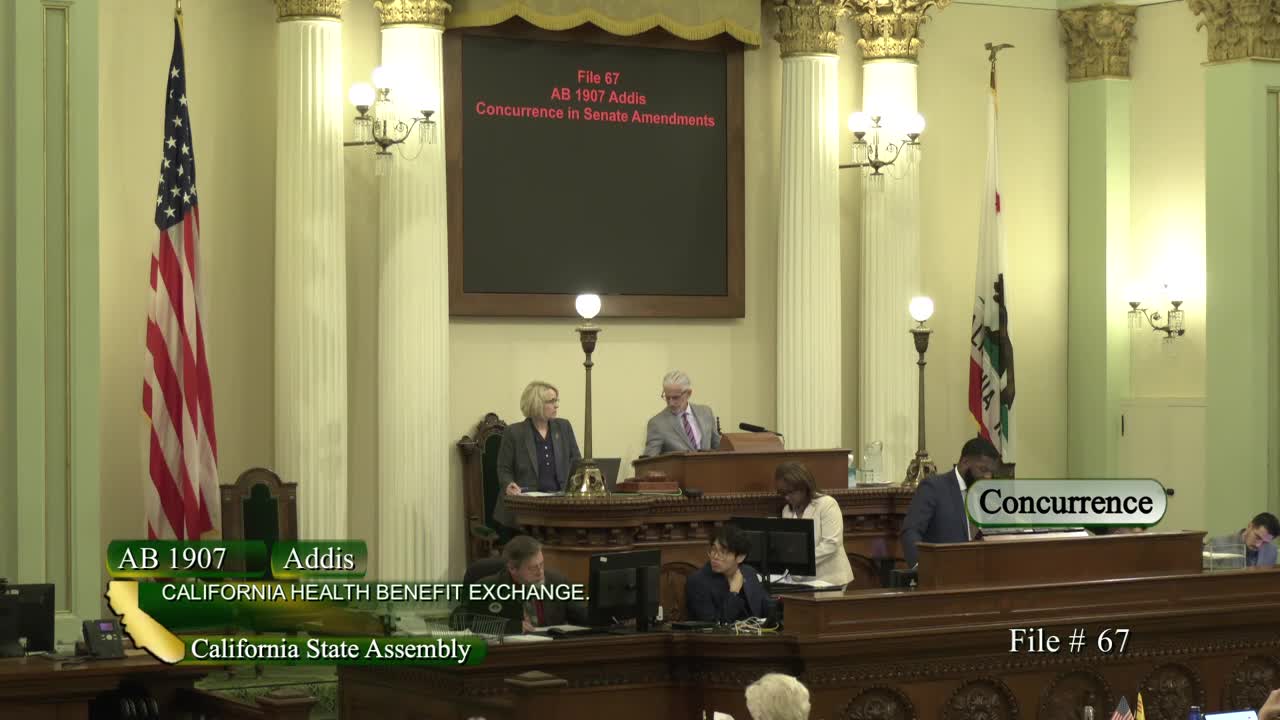
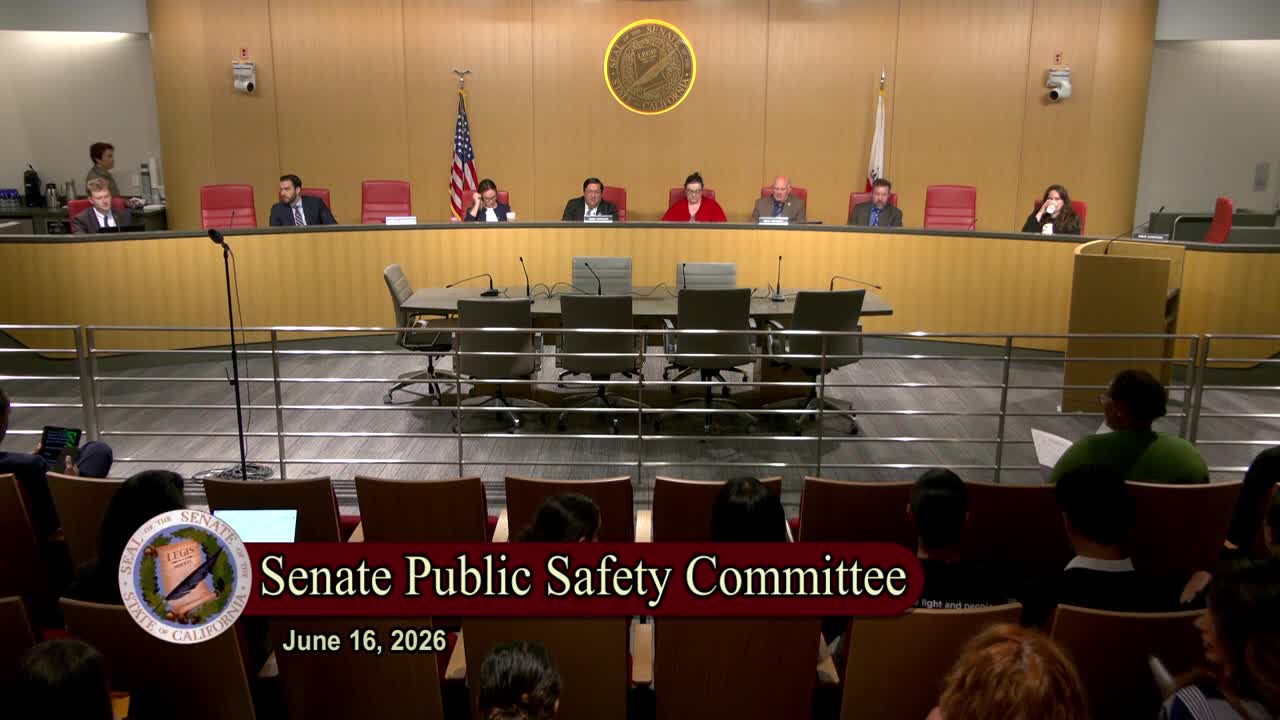
Bill Author

Bill Co-Author(s):