AB 1744: Environmental advertising: sunscreen.
- Session Year: 2025-2026
- House: Assembly
- Latest Version Date: 2026-09-18
Current Status:
Passed
(2026-09-18: Chaptered by Secretary of State - Chapter 272, Statutes of 2026.)
Introduced
In Committee
Awaiting First Chamber Vote
Passed First Chamber
In Committee
Awaiting Second Chamber Vote
Passed Second Chamber
Enacted
Under existing law, it is unlawful for any person to make any untruthful, deceptive, or misleading environmental marketing claim, whether explicit or implied. A violation of this requirement is a misdemeanor.
This bill would make it unlawful for a person to represent in advertising or on the label or container of any sunscreen product, as specified, sold in the state, that the product is reef safe, reef friendly, ocean safe, marine safe, ocean friendly, marine conscious, reef conscious, or a similar term or phrase likely to cause a reasonable consumer to believe that the product does not harm marine ecosystems unless the product is free of chemical ultraviolet filters, as specified. A violation of the bill would be a misdemeanor. By creating a new crime, the bill would impose a state-mandated local program.
The California Constitution requires the state to reimburse local agencies and school districts for certain costs mandated by the state. Statutory provisions establish procedures for making that reimbursement.
This bill would provide that no reimbursement is required by this act for a specified reason.
Under existing law, it is unlawful for any person to make any untruthful, deceptive, or misleading environmental marketing claim, whether explicit or implied. A violation of this requirement is a misdemeanor.
This bill would make it unlawful for a person to represent in advertising or on the label or container of any sunscreen product, as specified, sold in the state, that the product is reef safe, reef friendly, ocean safe, marine safe, or any other term implying ocean friendly, marine conscious, reef conscious, or a similar term or phrase likely to cause a reasonable consumer to believe that the product does not harm marine ecosystems unless the product is free of chemical ultraviolet filters, as specified. A violation of the bill would be a misdemeanor. By creating a new crime, the bill would impose a state-mandated local program.
The California Constitution requires the state to reimburse local agencies and school districts for certain costs mandated by the state. Statutory provisions establish procedures for making that reimbursement.
This bill would provide that no reimbursement is required by this act for a specified reason.
Under existing law, it is unlawful for any person to make any untruthful, deceptive, or misleading environmental marketing claim, whether explicit or implied. A violation of this requirement is a misdemeanor.
This bill would make it unlawful for a person to represent in advertising or on the label or container of any sunscreen product, as specified, sold in the state, that the product is reef safe, reef friendly, ocean safe, marine safe, or any other term implying the product does not harm marine ecosystems unless the product is free of chemical ultraviolet filters, as specified. A violation of the bill would be a misdemeanor. By creating a new crime, the bill would impose a state-mandated local program.
The California Constitution requires the state to reimburse local agencies and school districts for certain costs mandated by the state. Statutory provisions establish procedures for making that reimbursement.
This bill would provide that no reimbursement is required by this act for a specified reason.
(a)It is unlawful for a person to represent in advertising or on the label or container of any sunscreen product sold in the state that the product is reef safe, reef friendly, ocean safe, marine safe, ocean friendly, marine conscious, reef conscious, or a similar term or phrase likely to cause a reasonable consumer to believe that the product does not harm marine ecosystems unless the product does not contain any chemical ultraviolet filters, including, but not limited to, all of the following:
(1)Avobenzone (CAS 70356-09-1).
(2)Homosalate (CAS 118-56-9).
(3)Octinoxate (CAS 5466-77-3).
(4)Octisalate (CAS 118-60-5).
(5)Octocrylene (CAS 6197-30-4).
(6)Oxybenzone (CAS 131-57-7).
(b)For purposes of this section, sunscreen product includes any over-the-counter drug regulated by the United States Food and Drug Administration that is intended to protect users from ultraviolet radiation, including, but not limited to, lotions, sprays, sticks, gels, and solids.
(c)Nothing in this section shall imply a person is exempt from the requirements of Section 17580 or 17580.5 related to substantiation of environmental marketing claims.
SEC. 2.No reimbursement is required by this act pursuant to Section 6 of Article XIIIB of the California Constitution because the only costs that may be incurred by a local agency or school district will be incurred because this act creates a new crime or infraction, eliminates a crime or infraction, or changes the penalty for a crime or infraction, within the meaning of Section 17556 of the Government Code, or changes the definition of a crime within the meaning of Section 6 of Article XIIIB of the California Constitution.
(a)It is unlawful for a person to represent in advertising or on the label or container of any sunscreen product sold in the state that the product is reef safe, reef friendly, ocean safe, marine safe, or any other term implying ocean friendly, marine conscious, reef conscious, or a similar term or phrase likely to cause a reasonable consumer to believe that the product does not harm marine ecosystems unless the product does not contain any chemical ultraviolet filters, including, but not limited to, all of the following:
(1)Avobenzone (CAS 70356-09-1).
(2)Homosalate (CAS 118-56-9).
(3)Octinoxate (CAS 5466-77-3).
(4)Octisalate (CAS 118-60-5).
(5)Octocrylene (CAS 6197-30-4).
(6)Oxybenzone (CAS 131-57-7).
(b)For purposes of this section, sunscreen product includes any over-the-counter drug regulated by the United States Food and Drug Administration that is intended to protect users from ultraviolet radiation, including, but not limited to, lotions, sprays, sticks, gels, and solids.
(c)Nothing in this section shall imply a person is exempt from the requirements of Section 17580 or 17580.5 related to substantiation of environmental marketing claims.
SEC. 2.No reimbursement is required by this act pursuant to Section 6 of Article XIIIB of the California Constitution because the only costs that may be incurred by a local agency or school district will be incurred because this act creates a new crime or infraction, eliminates a crime or infraction, or changes the penalty for a crime or infraction, within the meaning of Section 17556 of the Government Code, or changes the definition of a crime within the meaning of Section 6 of Article XIIIB of the California Constitution.
(a)It is unlawful for a person to represent in advertising or on the label or container of any sunscreen product sold in the state that the product is reef safe, reef friendly, ocean safe, marine safe, or any other term implying the product does not harm marine ecosystems unless the product does not contain any chemical ultraviolet filters, including, but not limited to, all of the following:
(1)Avobenzone. Avobenzone (CAS 70356-09-1).
(2)Homosalate. Homosalate (CAS 118-56-9).
(3)Octinoxate. Octinoxate (CAS 5466-77-3).
(4)Octisalate. Octisalate (CAS 118-60-5).
(5)Octocrylene. Octocrylene (CAS 6197-30-4).
(6)Oxybenzone. Oxybenzone (CAS 131-57-7).
(b)For purposes of this section, sunscreen product includes any over-the-counter drug regulated by the United States Food and Drug Administration that is intended to protect users from ultraviolet radiation, including, but not limited to, lotions, sprays, sticks, gels, and solids.
(c)Nothing in this section shall imply a person is exempt from the requirements of Section 17580 or 17580.5 related to substantiation of environmental marketing claims.
SEC. 2.No reimbursement is required by this act pursuant to Section 6 of Article XIIIB of the California Constitution because the only costs that may be incurred by a local agency or school district will be incurred because this act creates a new crime or infraction, eliminates a crime or infraction, or changes the penalty for a crime or infraction, within the meaning of Section 17556 of the Government Code, or changes the definition of a crime within the meaning of Section 6 of Article XIIIB of the California Constitution.
(a)It is unlawful for a person to represent in advertising or on the label or container of any sunscreen product sold in the state that the product is reef safe, reef friendly, ocean safe, marine safe, or any other term implying the product does not harm marine ecosystems unless the product does not contain any chemical ultraviolet filters, including, but not limited to, all of the following:
(1)Avobenzone.
(2)Homosalate.
(3)Octinoxate.
(4)Octisalate.
(5)Octocrylene.
(6)Oxybenzone.
(b)For purposes of this section, sunscreen product includes any over-the-counter drug regulated by the United States Food and Drug Administration that is intended to protect users from ultraviolet radiation, including, but not limited to, lotions, sprays, sticks, gels, and solids.
(c)Nothing in this section shall imply a person is exempt from the requirements of Section 17580 or 17580.5 related to substantiation of environmental marketing claims.
SEC. 2.No reimbursement is required by this act pursuant to Section 6 of Article XIIIB of the California Constitution because the only costs that may be incurred by a local agency or school district will be incurred because this act creates a new crime or infraction, eliminates a crime or infraction, or changes the penalty for a crime or infraction, within the meaning of Section 17556 of the Government Code, or changes the definition of a crime within the meaning of Section 6 of Article XIIIB of the California Constitution.
|
Date
|
Status
|
|---|---|
| Sep 18, 2026 | Chaptered by Secretary of State - Chapter 272, Statutes of 2026. |
| Sep 18, 2026 | Approved by the Governor. |
| Aug 27, 2026 | Enrolled and presented to the Governor at 4 p.m. |
| Aug 20, 2026 | In Assembly. Ordered to Engrossing and Enrolling. |
| Aug 20, 2026 | Read third time. Passed. Ordered to the Assembly. (Ayes 38. Noes 0. Page 5583.). |
| Aug 20, 2026 | Read third time. Passed. Ordered to the Assembly. (Ayes 38. Noes 0.). |
| Aug 13, 2026 | Read second time. Ordered to third reading. |
| Aug 13, 2026 | From committee: Do pass. (Ayes 7. Noes 0.) (August 13). |
| Aug 3, 2026 | In committee: Referred to APPR. suspense file. |
| Jun 24, 2026 | From committee: Do pass and re-refer to Com. on APPR. (Ayes 7. Noes 0.) (June 24). Re-referred to Com. on APPR. |
| Jun 17, 2026 | From committee: Do pass and re-refer to Com. on E.Q. (Ayes 11. Noes 0.) (June 16). Re-referred to Com. on E.Q. |
| Jun 3, 2026 | Referred to Coms. on JUD. and E.Q. |
| May 21, 2026 | In Senate. Read first time. To Com. on RLS. for assignment. |
| May 21, 2026 | Read third time. Passed. Ordered to the Senate. (Ayes 70. Noes 2. Page 5194.) |
| May 21, 2026 | Read third time. Passed. Ordered to the Senate. (Ayes 70. Noes 2.) |
| May 18, 2026 | Read second time. Ordered to third reading. |
| May 14, 2026 | From committee: Do pass. (Ayes 14. Noes 1.) (May 14). |
| Apr 22, 2026 | In committee: Set, first hearing. Referred to APPR. suspense file. |
| Apr 13, 2026 | Re-referred to Com. on APPR. |
| Apr 9, 2026 | Read second time and amended. |
| Apr 8, 2026 | From committee: Amend, and do pass as amended and re-refer to Com. on APPR. (Ayes 15. Noes 0.) (April 7). |
| Mar 11, 2026 | From committee: Do pass and re-refer to Com. on P. & C.P. (Ayes 7. Noes 0.) (March 10). Re-referred to Com. on P. & C.P. |
| Mar 4, 2026 | Re-referred to Com. on E.S & T.M. |
| Mar 3, 2026 | From committee chair, with author's amendments: Amend, and re-refer to Com. on E.S & T.M. Read second time and amended. |
| Feb 23, 2026 | Referred to Coms. on E.S & T.M. and P. & C.P. |
| Feb 6, 2026 | From printer. May be heard in committee March 8. |
| Feb 5, 2026 | Read first time. To print. |
|
Date
|
Description
|
Location
|
Votes
|
|
|---|---|---|---|---|
| Aug 20, 2026 | Assembly 3rd Reading AB1744 Addis et al. By Stern | Senate Floor |
Passed |
|
| Aug 13, 2026 | Do pass | Senate Standing Committee on Appropriations |
Passed |
|
| Aug 3, 2026 | Placed on suspense file | Senate Standing Committee on Appropriations |
Passed |
|
| Jun 24, 2026 | Do pass, but first be re-referred to the Committee on [Appropriations] | Senate Standing Committee on Environmental Quality |
Passed |
|
| Jun 16, 2026 | Do pass, but first be re-referred to the Committee on [Environmental Quality] | Senate Standing Committee on Judiciary |
Passed |
|
| May 21, 2026 | AB 1744 Addis Assembly Third Reading | Assembly Floor |
Passed |
|
| May 14, 2026 | Do pass. | Assembly Standing Committee on Appropriations |
Passed |
|
| Apr 7, 2026 | Do pass as amended and be re-referred to the Committee on [Appropriations] | Assembly Standing Committee on Privacy and Consumer Protection |
Passed |
|
| Mar 10, 2026 | Do pass and be re-referred to the Committee on [Privacy and Consumer Protection] | Assembly Standing Committee on Environmental Safety and Toxic Materials |
Passed |
This list shows positions taken on this bill by organizations on the date displayed, which is linked to the original source.
Positions by individuals are not included.
|
Organization
|
Position
|
Date
|
|---|---|---|
| A Voice for Choice Advocacy | ** Support | |
| California Legislative Central Coast Caucus | ** Support | |
| Consumer Reports | ** Support | |
| Eco Club of C.K. McClatchy High School | ** Support | |
| McClatchy High School Eco Club | ** Support | |
| Personal Care Products Council (PCPC) | ** Against | |
| Surfrider Foundation | ** Support |
SENATE RULES COMMITTEE Office of Senate Floor Analyses (916) 651-4171 | AB 1744 |
THIRD READING
Bill No: AB 1744
Author: Addis (D) and Hart (D)
Amended: 4/9/26 in Assembly
Vote: 21
SENATE JUDICIARY COMMITTEE: 11-0, 6/16/26
AYES: Umberg, Niello, Allen, Caballero, Durazo, Laird, Reyes, Stern, Valladares, Wahab, Wiener
NO VOTE RECORDED: Ashby, Weber Pierson
SENATE ENVIRONMENTAL QUALITY COMMITTEE: 7-0, 6/24/26
AYES: Blakespear, Valladares, Allen, Dahle, Gonzalez, Hurtado, Menjivar
SENATE APPROPRIATIONS COMMITTEE: 7-0, 8/13/26
AYES: Cervantes, Seyarto, Cabaldon, Dahle, Grayson, Richardson, Wahab
ASSEMBLY FLOOR: 70-2, 5/21/26 - See last page for vote
SUBJECT: Environmental advertising: sunscreen
SOURCE: McClatchy High School Eco Club
DIGEST:
This bill prohibits a person from representing in advertising or on the label or container of any sunscreen product sold in the state that the product is “reef safe,” “reef friendly,” “ocean safe,” “marine safe,” ocean friendly,” “marine conscious,” “reef conscious,” or a similar term or phrase likely to cause a reasonable consumer to believe that the product does not harm marine ecosystems unless the product does not contain any chemical ultraviolet filters.
ANALYSIS:
Existing law:
- Requires, pursuant to the Environmental Representations Law, any person who represents in advertising or on the label or container of a consumer good that the consumer good that it manufactures or distributes is not harmful to, or is beneficial to, the natural environment, through the use of such terms as “environmental choice,” “ecologically friendly,” “earth friendly,” “environmentally friendly,” “ecologically sound,” “environmentally sound,” “environmentally safe,” “ecologically safe,” “environmentally lite,” “green product,” or any other like term, to maintain in written form in its records the following information and documentation supporting the validity of the representation:
- the reasons why the person believes the representation to be true;
- any significant adverse environmental impacts directly associated with the production, distribution, use, and disposal of the consumer good;
- any measures that are taken by the person to reduce the environmental impacts directly associated with the production, distribution, and disposal of the consumer good;
- violations of any federal, state, or local permits directly associated with the production or distribution of the consumer good; and
- whether the consumer good conforms with the uniform standards contained in the Federal Trade Commission Guidelines for Environmental Marketing Claims for the use of the terms “recycled,” “recyclable,” “biodegradable,” “photodegradable,” or “ozone friendly.” (Business & Professions (Bus. & Prof.) Code § 17580(a).)
- Makes it unlawful for any person to make any untruthful, deceptive, or misleading environmental marketing claim, whether explicit or implied. “Environmental marketing claim” includes any claim contained in the “Guides for the Use of Environmental Marketing Claims” published by the Federal Trade Commission (FTC). (Bus. & Prof. Code § 17580.5(a).)
- Provides that it shall be a defense to any suit or complaint brought pursuant to the above that the person’s environmental marketing claims conform to the standards or are consistent with the examples contained in the FTC guides. (Bus. & Prof. Code § 17580.5(b).)
- Provides that a violation of the above provisions is a misdemeanor punishable by imprisonment in the county jail not to exceed six months, or by a fine not to exceed $2,500, or by both. (Bus. & Prof. Code § 17581.)
- Prohibits a person from offering for sale, selling, distributing, or importing into California any product or packaging for which a deceptive or misleading claim about the recyclability of the product or packaging is made. (Public (Pub.) Resources Code § 42355.51.)
- Provides that it is the public policy of the state that environmental marketing claims, whether explicit or implied, should be substantiated by competent and reliable evidence to prevent deceiving or misleading consumers about the environmental impact of plastic products. (Pub. Resources Code § 42355.5.)
- Establishes the Unfair Competition Law (UCL), which provides a statutory cause of action for any unlawful, unfair, or fraudulent business act or practice and unfair, deceptive, untrue, or misleading advertising, including over the internet. (Bus. & Prof. Code §§ 17200 et seq.)
- Establishes the False Advertising Law (FAL), which proscribes making or disseminating any statement that is known or should be known to be untrue or misleading with intent to directly or indirectly dispose of real or personal property. (Bus. & Prof. Code § 17500 et seq.) Provides that it is unlawful for a person, with bad faith intent, to register, traffic in, or use a domain name that is confusingly similar to the personal name of another person. (Bus. & Prof. Code § 17525.)
- Establishes the Consumer Legal Remedies Act (CLRA), which prohibits unfair methods of competition and unfair or deceptive acts or practices undertaken by any person in a transaction intended to result or which results in the sale or lease of goods or services to any consumer. (Civil (Civ.) Code § 1770(a).)
This bill:
- Prohibits a person from representing in advertising or on the label or container of any sunscreen product sold in the state that the product is “reef safe,” “reef friendly,” “ocean safe,” “marine safe,” ocean friendly,” “marine conscious,” “reef conscious,” or a similar term or phrase likely to cause a reasonable consumer to believe that the product does not harm marine ecosystems unless the product does not contain any chemical ultraviolet filters, including, but not limited to, all of the following:
- avobenzone (CAS 70356-09-1);
- homosalate (CAS 118-56-9);
- octinoxate (CAS 5466-77-3);
- octisalate (CAS 118-60-5);
- octocrylene (CAS 6197-30-4); and
- oxybenzone (CAS 131-57-7).
- Provides that “sunscreen product” includes any over-the-counter drug regulated by the United States Food and Drug Administration that is intended to protect users from ultraviolet radiation, including, but not limited to, lotions, sprays, sticks, gels, and solids.
- Provides that nothing in this bill implies a person is exempt from the requirements of the California’s Environmental Representations Law related to substantiation of environmental marketing claims.
Comments
“Greenwashing” refers to a practice of falsely conveying that a company’s products are more environmentally friendly than they really are. California’s Environmental Representations Law is one example of how the state is attempting to combat such practices. It requires strict supporting documentation and information, to be made publicly available, of any representations made in advertising or on labels or containers of consumer goods that the good is not harmful to, or is beneficial to, the environment through the use of specified terms, including “environmentally safe” or “green product.” The statute makes it unlawful for any person to make any untruthful, deceptive, or misleading environmental marketing claims, whether explicit or implied. (Bus. & Prof. Code § 17580.5(a).) Violations are a misdemeanor punishable by imprisonment in the county jail not to exceed six months, or by a fine not to exceed $2,500, or by both. (Bus. & Prof. Code § 17581.)
This bill seeks to address a specific issue of greenwashing related to sunscreen that is advertised as “reef safe,” “ocean safe,” or other similar verbiage that implies the product does not harm the ocean, ocean life, or ocean habitats but contain chemical ultraviolet filters that harm marine ecosystems. In March of this year, the District Attorney for the County of Santa Clara sued Edgewell, the maker of Banan Boat and Hawaiian Tropic sunscreens, alleging false advertising related to advertising that claimed the products were “reef friendly” and eventually settled with the company. [1] In 2020, a Hawaii ban on two active ingredients in sunscreen that are harmful to reefs— oxybenzone and octinoxate— became operative.[2] The Press Release from the District Attorney’s Office for the County of Santa Clara noted:
The toxic effects of chemical sunscreen ingredients on reefs and marine life have been documented for years in numerous articles and published scientific studies. Since 2018, a series of chemical sunscreen bans have been adopted in the state of Hawaii, the Republic of Palau, the island of Bonaire, the city of Key West, Florida, and the U.S. Virgin Islands.
Prosecutors allege that the defendant’s “reef friendly” advertising was misleading and took unfair advantage of the fact that California consumers are likely to consider the environmental impact of a product while shopping.[3] A second lawsuit was settled by the Santa Clara County District Attorney with Supergoop for similar reasons.[4]
California has many consumer-protection laws that combat deceptive or unfair practices by authorizing causes of action and providing attendant remedies to various parties.
The UCL (Bus. & Prof. Code § 17200) provides remedies for “anything that can properly be called a business practice and that at the same time is forbidden by law.” (Cel-Tech Communications, Inc. v. Los Angeles Cellular Telephone Co. (1999) 20 Cal.4th 163, 180 [citations omitted].) The UCL provides that a court “may make such orders or judgments . . . as may be necessary to restore to any person in interest any money or property, real or personal, which may have been acquired by means of such unfair competition.” (Bus. & Prof. Code § 17203; see also Korea Supply Co. v. Lockheed Martin Corp. (2003) 29 Cal.4th 1134, 1146 [“An order for restitution, then, is authorized by the clear language of the [UCL.”]].) The law also permits courts to award injunctive relief and, in certain cases, to assess civil penalties against the violator. (Bus. & Prof. Code §§ 17203, 17206.)
The FAL proscribes making or disseminating any statement that is known or should be known to be untrue or misleading with intent to directly or indirectly dispose of real or personal property. (Bus. & Prof. Code §§ 17500 et seq.) Violators are subject to a civil penalty not to exceed $2,500 for each violation in an action brought by the Attorney General or by any district attorney, county counsel, or city attorney. (Bus. & Prof. Code § 17536.) Similar to the UCL, the FAL provides that a person may bring an action for an injunction or restitution if the person has suffered injury in fact and has lost money or property as a result of a violation of the FAL. (Bus. & Prof. Code § 17535.)
The CLRA prohibits “unfair methods of competition and unfair or deceptive acts or practices undertaken by any person in a transaction intended to result or which results in the sale or lease of goods or services to any consumer,” (Civ. Code § 1770(a)), and prohibits conduct “likely to mislead a reasonable consumer,” (Colgan v. Leatherman Tool Grp., Inc. (2006) 135 Cal. App. 4th 663, 680; internal quotation marks omitted.) The CLRA enables a consumer who suffers damage as a result of a violation of section 1770 to bring an action for actual damages, an order enjoining the behavior resulting in the violation, restitution of property, punitive damages, and any other relief the court deems proper. (Civ. Code § 1780.)
These laws have been used to address untruthful, deceptive, or misleading environmental marketing claims. One example is a class action in which the plaintiff has certified a class action asserting six causes of action against Keurig for falsely representing their pods as “recyclable,” including CLRA and UCL claims. (Smith v. Keurig Green Mt., Inc. (N.D.Cal. 2019) 393 F. Supp. 3d 837, 842.) In 2013, then Attorney General Kamala Harris’ office secured a consent judgment against defendants based on allegations of false, misleading, and deceptive marketing and advertising statements regarding the biodegradability and recyclability of their plastic bottles in violation of the Environmental Representations Law, the UCL, and the FAL. (People ex rel. Barris v. Enso Plastics (Super. Ct. Orange County, 2013, No.518091) (2013 Cal. Super. LEXIS 21809).)
“Commercial speech,” including statements made in advertising, is protected by the First Amendment but enjoys a lesser degree of protection than other forms of constitutionally guaranteed expression.[5] “The First Amendment’s concern for commercial speech is based on the informational function of advertising.”[6] Advertising that is misleading or unlawful and has no informational value, can be banned by the government.[7] But for an advertisement that “is neither misleading nor unrelated to unlawful activity, the government’s power is more circumscribed.”[8] To regulate accurate speech relating to legal activity, the government must assert a “substantial interest” to be achieved, and the limitation “must be designed carefully to achieve the State’s goal.”[9] When a state seeks to compel commercial speech, e.g., require an advertisement to disclose specific information, “a requirement that [an advertiser] include in [their] advertising purely factual and uncontroversial information” that will “dissipate the possibility of consumer confusion or deception” will generally pass First Amendment muster.[10] As the advertising this bill is targeting is misleading to consumers, it seems permissible for the state to ban it.
The United States Supreme Court affirmed that the Dormant Commerce Clause generally does not prohibit a state from regulating commerce within its borders, even if the prohibition affects out-of-state sellers, unless the prohibition acts to discriminate against out-of-state interests for the benefit of in-state commerce. [11] The Court has held that “[s]tate laws that ‘regulat[e] even-handedly [across all in-state and out-of-state businesses] to effectuate a legitimate local public interest…will be upheld unless the burden imposed upon such commerce is clearly excessive in relation to the putative local benefits.’”[12] The bill seems to meet these requirements, and as such should not conflict with the Dormant Commerce Clause.
FISCAL EFFECT: Appropriation: No Fiscal Com.: Yes Local: Yes
The Senate Appropriations Committee analysis states “Minor to significant court cost pressure if the Attorney General (AG) brings civil actions for violations against any person who engages in a deceptive act or practice. Actual costs will depend on the number of actions filed and the amount of time needed to adjudicate each case. Jury trials would be few.
Potentially significant court cost pressure as the UCL permits private plaintiffs to bring an action in court. Although courts are not funded based on workload, increased pressure on the Trial Court Trust Fund may create a demand for increased funding for courts. The proposed FY 2026-07 Governor’s budget would provide $70 million General Fund support (Trial Court Trust Fund, General Fund).
Unknown costs to the counties to incarcerate if a six month misdemeanor sentence is imposed. Incarceration for this misdemeanor appears unlikely. The average annual cost to incarcerate one person in county jail is approximately $80,000. In 2021 Los Angeles County budgeted $1.3 billion for jail costs with $90,000 per incarcerated person. Actual incarceration costs to counties will depend on the number of convictions and the length of each sentence. Generally, county incarceration costs are not reimbursable state mandates pursuant to Proposition 30 (2012).”
McClatchy High School Eco Club (source)
A Voice for Choice Advocacy
California Legislative Central Coast Caucus
Consumer Reports
Surfrider Foundation
OPPOSITION: (Verified 8/12/26)
None received
ARGUMENTS IN SUPPORT: The author writes:
“Using misleading or factually untrue labels on products is a deceptive practice that not only breaks consumer trust but also creates unfair competition against honest brands. We have seen this in recent years with sunscreen products that market themselves as ‘reef safe’ or otherwise ‘reef friendly,’ because companies know that there is a market for people who genuinely care about the environment. Rather than develop products that are truly safe based on the best available science, these companies sell mislabeled goods in an attempt to capitalize on the demand for ‘greener’ products. As a result, the average consumer is more likely to use sunscreen that harms the environment because the label told them it was reef safe. This practice has directly harmed aquatic life, particularly corals, which are already facing the threats associated with climate change. AB 1744 will help ensure that consumers can make truly informed choices when buying sunscreen without the fear of being misled by dishonest labeling practices.”
The McClatchy High School Eco Club , the sponsor of the bill, writes in support stating:
“Scientific research and findings from the National Oceanic and Atmospheric Administration (NOAA), as well as peer-reviewed studies, show that chemicals used in many sunscreens - including oxybenzone, octinoxate, and octocrylene - can harm rocky reefs, corals, kelp and other marine life by disrupting photosynthesis, damaging DNA, and causing coral bleaching. When people (swimmers, divers, etc.) enter the water, these chemicals wash off and accumulate in coastal habitats, where even trace levels can affect coral larvae, algae, and fish populations. They can damage marine vegetation such as kelp and seagrass, which are essential components of rocky reef ecosystems, providing food and habitat for many marine species. This evidence has prompted some jurisdictions to ban certain chemical UV filter ingredients, including the State of Hawaii for certain chemicals and Maui for all active chemical ingredients,
Despite growing awareness of these harms, some sunscreen products containing chemical UV filters are still being marketed in non-ban states, such as California, as “reef safe,” misleading consumers and undermining marine protection efforts. These false environmental claims exploit consumers’ desire to buy eco-friendly products, give unfair market advantages, and perpetuate damage to marine ecosystems.
AB 1744 addresses the problem through a truth-in-advertising approach: it removes the ability of companies to claim environmental safety if their products contain chemical UV filters associated with ecological harm.”
ASSEMBLY FLOOR: 70-2, 5/21/26
AYES: Addis, Aguiar-Curry, Ahrens, Alanis, Alvarez, Ávila Farías, Bains, Bauer-Kahan, Bennett, Berman, Boerner, Bonta, Bryan, Calderon, Caloza, Carrillo, Castillo, Connolly, Davies, Dixon, Elhawary, Ellis, Fong, Gabriel, Gallagher, Gipson, Jeff Gonzalez, Mark González, Haney, Harabedian, Hart, Hoover, Irwin, Jackson, Johnson, Kalra, Krell, Lee, Lowenthal, Macedo, McKinnor, Muratsuchi, Nguyen, Ortega, Pacheco, Papan, Patel, Patterson, Pellerin, Petrie-Norris, Quirk-Silva, Ransom, Michelle Rodriguez, Rogers, Blanca Rubio, Sanchez, Schiavo, Schultz, Sharp-Collins, Solache, Soria, Stefani, Ta, Valencia, Wallis, Ward, Wicks, Wilson, Zbur, Rivas
NOES: DeMaio, Hadwick
NO VOTE RECORDED: Arambula, Chen, Flora, Garcia, Lackey, Ramos, Celeste Rodriguez, Tangipa
Prepared by: Amanda Mattson / JUD. / (916) 651-4113
8/14/26 13:19:34
**** END ****
County of Santa Clara, D.A., Press Release, (Mar. 25, 2025), District Attorney sues maker of Banana Boat and Hawaiian Tropic over “reef friendly” advertising claim available at https://da.santaclaracounty.gov/district-attorney-sues-maker-banana-boat-and-hawaiian-tropic-over-reef-friendly-advertising-claim#:~:text=and%20Hawaiian%20Tropic-,over%20%E2%80%9Creef%20friendly%E2%80%9D%20advertising%20claim,chemical%20sunscreens%20in%20the%20future. ↑
Ibid. ↑
Ibid. ↑
County of Santa Clara, D.A., Press Release, (Jun. 13, 2025), DA obtains second “Reef Friendly” settlement for false advertising of sunscreen, available at https://da.santaclaracounty.gov/da-obtains-second-reef-friendly-settlement-false-advertising-sunscreen. ↑
Central Hudson Gas & Elec. Corp. v. Public Service Commission of New York (1980) 447 U.S. 557, 562-563. ↑
Id. at p. 563. ↑
Ibid. ↑
Ibid. ↑
Ibid. ↑
Zauderer v. Office of Disciplinary Counsel of Supreme Court of Ohio (1985) 471 U.S. 626, 651. ↑
Id. at pp. 1152-1153. ↑
South Dakota v. Wayfair, Inc. (2018) 138 S.Ct. 2080, 2091. ↑
SENATE COMMITTEE ON
Senator Sabrina Cervantes, Chair
2025 - 2026 Regular Session
AB 1744 (Addis) - Environmental advertising: sunscreen
Version: | Policy Vote: |
Urgency: | Mandate: |
Hearing Date: | Consultant: |
Bill Summary:
AB 1744 would prohibit a person from representing in advertising or on the label or container of any sunscreen product sold in the state that the product is “reef safe,” “reef friendly,” “ocean safe,” “marine safe,” ocean friendly,” “marine conscious,” “reef conscious,” or a similar term or phrase likely to cause a reasonable consumer to believe that the product does not harm marine ecosystems unless the product does not contain any chemical ultraviolet filters. A violation of the bill would be a misdemeanor.
Fiscal Impact:
Minor to significant court cost pressure if the Attorney General (AG) brings civil actions for violations against any person who engages in a deceptive act or practice. Actual costs will depend on the number of actions filed and the amount of time needed to adjudicate each case. Jury trials would be few.
Potentially significant court cost pressure as the UCL permits private plaintiffs to bring an action in court. Although courts are not funded based on workload, increased pressure on the Trial Court Trust Fund may create a demand for increased funding for courts. The proposed FY 2026-07 Governor’s budget would provide $70 million General Fund support (Trial Court Trust Fund, General Fund).
Unknown costs to the counties to incarcerate if a six month misdemeanor sentence is imposed. Incarceration for this misdemeanor appears unlikely. The average annual cost to incarcerate one person in county jail is approximately $80,000. In 2021 Los Angeles County budgeted $1.3 billion for jail costs with $90,000 per incarcerated person. Actual incarceration costs to counties will depend on the number of convictions and the length of each sentence. Generally, county incarceration costs are not reimbursable state mandates pursuant to Proposition 30 (2012).
Background:
The Unfair Competition Law (UCL) provides a statutory cause of action for any unlawful, unfair, or fraudulent business act or practice and unfair, deceptive, untrue, or misleading advertising, including over the internet.
Proposed Law:
A violation of environmental representation is a misdemeanor punishable by imprisonment in the county jail not to exceed six months, or by a fine not to exceed two thousand five hundred dollars ($2,500), or by both (Business and Professions Codes 17580-17581).
Staff Comments:
Unlike the AG, who may seek significant civil penalties for UCL violations, the remedies available to private plaintiffs are more limited. They may seek neither penalties nor damages to compensate for injuries caused by the violation. Instead, private plaintiffs may seek an injunction to halt the unfair, unlawful or fraudulent practice and restitution of any gains obtained as a result of the violation. As injunctions and restitution are equitable remedies that do not require submission to a jury, private UCL actions are tried before a judge, who has the sole discretion to determine if the alleged wrongful act is an unfair, fraudulent, or unlawful business practice and to determine the appropriate equitable remedy. A court may order restitution in a UCL action without individual proof of injury if it determines that such a remedy is necessary to prevent the unfair practice.
SENATE COMMITTEE ON ENVIRONMENTAL QUALITY
Senator Blakespear, Chair
2025 - 2026 Regular
Bill No: AB 1744
Author: | Addis and Hart | ||
Version: | 4/9/2026 | Hearing Date: | 6/24/2026 |
Urgency: | No | Fiscal: | Yes |
Consultant: | Taylor McKie | ||
SUBJECT: Environmental advertising: sunscreen
DIGEST: This bill prohibits a person from representing in advertising or on the label or container of any sunscreen that the product does not harm marine ecosystems, unless it does not contain chemical ultraviolet filters, as specified.
ANALYSIS:
Existing federal law:
- Requires, pursuant to the federal Food, Drug & Cosmetic Act (FD&C Act), cosmetics produced or distributed for retail sale to consumers for their personal care to bear an ingredient declaration. (21 Code of Federal Regulations (CFR) § 701.3)
- Deems an over-the-counter (OTC) sunscreen drug product in a form suitable for topical administration as generally recognized as safe and effective and not misbranded if it meets specified conditions in regulation. (21 CFR §§ 352 et seq.)
Existing state law:
- Defines, pursuant to the Sherman Food, Drug, and Cosmetic Law (Sherman Act), “cosmetic” as any article, or its components, intended to be rubbed, poured, sprinkled, or sprayed on, introduced into, or otherwise applied to, the human body, or any part of the human body, for cleansing, beautifying, promoting attractiveness, or altering the appearance. Provides that the term “cosmetic” does not include soap. (Health & Safety Code (HSC) § 109900)
- Requires, pursuant to the Safe Consumer Cosmetic Act (Cosmetics Act), a manufacturer of a cosmetic that is subject to regulation by the U.S. Food and Drug Administration (FDA) to submit to the California Department of Public Health (CDPH) a list of its cosmetic products sold in California that contain any ingredient that is a chemical identified as causing cancer or reproductive toxicity. (HSC § 111792)
- Provides that it is unlawful for a person to make an untruthful, deceptive, or misleading environmental marketing claim, whether explicit or implied. (Business and Professions Code (BPC) § 17580.5)
- Provides that any violation of the law governing environmental representations is a misdemeanor punishable by imprisonment in the county jail not to exceed six months, or by a fine not to exceed two thousand five hundred dollars ($2,500), or by both. (BPC § 17581)
This bill:
- Prohibits a person from representing in advertising or on the label or container of any sunscreen that the product does not harm marine ecosystems, as specified, unless the product does not contain any chemical ultraviolet filters, as specified.
- Specifies that “sunscreen product” includes any over-the counter drug regulated by the FDA that is intended to protect users from ultraviolet radiation, including but not limited to lotions, sprays, sticks, gels, and solids.
- Specifies that the proposed provisions do not exempt a person from the requirements related to substantiation of environmental marketing claims.
Background
- Regulating cosmetics in California. California has two laws governing the safety of cosmetics. The first is the Sherman Act, established by SB 1360 (Committee on Health and Human Services, Chapter 415, Statutes of 1995), which is administered by CDPH to regulate cosmetics. It broadly defines a cosmetic as any article, or its components, intended to be rubbed, poured, sprinkled, or sprayed on, introduced into, or otherwise applied to, the human body, or any part of the human body, for cleansing, beautifying, promoting attractiveness, or altering the appearance.
The other law is the California Cosmetics Act, established by SB 484 (Migden, Chapter 729, Statutes of 2005). It requires, for all cosmetic products sold in California, the manufacturer, packer, and/or distributor named on the product label to provide CDPH a list of all cosmetic products that contain any ingredients known or suspected to cause cancer, birth defects, or other reproductive harm. CDPH maintains an active, searchable database with all the data collected from manufacturers under the Cosmetics Act. CDPH is required to make that data user-friendly and available to the public. To date, 1,428 companies have reported 169,545 products and 390 ingredients to CDPH, including over 3,000 entries for sunscreen products.
CDPH does not have any enforcement authority or penalty authority over the manufacturers that are covered, so not all manufacturers may comply and submit their products’ information. State law does not currently contain a mechanism that would compel manufacturers to comply.
Federally, under the FD&C Act, cosmetics and their ingredients are not typically required to be tested for safety, reviewed, or approved before they are sold to the public. Sunscreens are classified as over-the-counter (OTC) drugs by the FDA. An OTC sunscreen drug product in a form suitable for topical administration is generally recognized as safe and effective and is not misbranded if it meets each condition in an OTC monograph and conditions established in federal regulation. The OTC monograph includes testing requirements to ensure protection against UV radiation.[1] These regulations only consider safe use for humans, but no consideration of environmental impacts.
- Marine beings and sunscreen don’t mix. The use of sunscreen while partaking in coastal recreation introduces a variety of chemicals into the coastal marine ecosystem. While the use of sunscreen is important to protect against ultraviolet (UV) radiation during the day at the beach, the same chemicals that protect humans from skin cancer may cause harm to coral reefs and aquatic organisms.
Sunscreens contain UV chemical filters that either absorb or scatter UV radiation to reduce the risk of sunburn and skin cancer. About 45 UV chemical filters are subjected to regulation globally, and 17 UV chemical filters are found in products marketed in the United States.[2],[3] This bill lists six of those filters: avobenzone, homosalate, octinoxate, octisalate, octocrylene, and oxybenzone. Studies have shown that generally, the UV chemical filters in sunscreens can harm aquatic life, including coral reefs.2,[4]
Healthy coral reefs are one of the most valuable ecosystems on Earth. They provide billions of dollars in economic and environmental services, such as food, coastal protection, and tourism. However, coral ecosystems around the world face serious threats from a number of sources, including climate change, unsustainable fishing, land-based pollution, coastal development, disease, and invasive species.[5] Outside of those environmental stressors, sunscreen ingredients can have the potential to induce coral bleaching, making them more vulnerable to disease and death.4,[6] However, it is unclear the relative extent sunscreen ingredients contribute to the harm of coral reefs given the various other stressors they are subjected to.
Additionally, research has shown that organic UV chemical filters are toxic at high concentrations and tend to bioaccumulate in aquatic organisms, including algae, arthropods (crabs, lobsters), mollusks, echinoderms (starfish), and marine vertebrae (fish, sea turtles, dolphins).[7] Biomagnification may also occur, as the contaminants that bioaccumulate at the bottom of the food chain increase in concentration as predators at the top of the food chain feed.7 Not only does this impact the health of these marine animals, but humans may also be exposed through seafood consumption.
While studies demonstrate that there is a potential for the marine ecosystem to be harmed by sunscreen ingredients, data is limited.7 Experts indicate that a more comprehensive ecological risk assessment of all UV chemical filters in sunscreen is important to better understand the impacts at various biological endpoints and exposure scenarios, and could oversight of UV chemical filters in sunscreens.3
- Reducing pollution from sunscreen. Despite the need for further assessment, there are options to reduce or limit the use of sunscreens that contain potentially harmful UV chemical filters. Some states and jurisdictions in the United States, such as Hawaii and the U.S. Virgin Islands, have voted to ban the sale of sunscreen products that contain reef damaging chemicals.7 Beachgoers could also turn to alternative solutions to protect themselves from the sun. Mineral sunscreen, which does not use UV chemical filters, is considered a better option because there are less impacts to aquatic organisms or beachgoers could consider wearing UV protective clothing, like sun shirts and pants.
There have been lawsuits filed against companies that manufacture sunscreen that claim in advertising or on labels that their products are safe for the ocean or reefs to gain a market advantage.[8],[9],[10] Plaintiffs allege that the advertising is false and misleading, as those products will still contain ingredients that are potentially harmful to marine life.
This bill would make it unlawful for a person to represent in advertising or labeling that a sunscreen product is not harmful to marine ecosystems.
Comments
- Purpose of Bill. According to the author, “Using misleading or factually untrue labels on products is a deceptive practice that not only breaks consumer trust but also creates unfair competition against honest brands. We have seen this in recent years with sunscreen products that market themselves as ‘reef safe’ or otherwise ‘reef friendly,’ because companies know that there is a market for people who genuinely care about the environment. Rather than develop products that are truly safe based on the best available science, these companies sell mislabeled goods in an attempt to capitalize on the demand for ‘greener’ products. As a result, the average consumer is more likely to use sunscreen that harms the environment because the label told them it was reef safe. This practice has directly harmed aquatic life, particularly corals, which are already facing the threats associated with climate change. AB 1744 will help ensure that consumers can make truly informed choices when buying sunscreen without the fear of being misled by dishonest labeling practices.”
Related/Prior Legislation
AB 60 (Papan, Chapter 432, Statutes of 2025) prohibits, commencing January 1, 2027, a person or entity from manufacturing, selling, delivering, holding, or offering for sale in commerce any cosmetic product that contains specified ingredients.
AB 496 (Friedman, Chapter 441, Statutes of 2023) prohibits, commencing January 1, 2027, a person or entity from manufacturing, selling, delivering, holding or offering for sale in commerce any cosmetic product that contains any of the ingredients specified in the bill.
AB 2771 (Friedman, Chapter 804, Statutes of 2022) prohibits any person or entity from manufacturing, selling, delivering, holding, or offering for sale in commerce any cosmetic product that contains any per- or polyfluoroalkyl substance (PFAS).
AB 2762 (Muratsuchi, Chapter 314, Statutes of 2020) prohibits, beginning January 1, 2025, the manufacture, sale, delivery, holding, or offering for sale in commerce of any cosmetic product containing specified intentionally added ingredients.
AB 60 (Friedman, 2019) would have prohibited the sale, offering of sale, or distribution for sale in the state, of any sunscreen that contains oxybenzone, or octinoxate, or both, without a prescription.
SOURCE:
McClatchy High School Eco Club
SUPPORT:
A Voice for Choice Advocacy
Consumer Reports
Mcclatchy High School Eco Club
Surfrider Foundation
OPPOSITION:
None received
-- END --
U.S. Food and Drug Administration. (2021). Over-the-Counter Monograph M020: Sunscreen Drug Products for Over-the-Counter Human Use. ↑
Tovar-Sánchez, A., et. al. (2013). Sunscreen Products as Emerging Pollutants to Coastal Waters. ↑
National Academies of Sciences, Engineering, and Medicine. (2022). Review of Fate, Exposure, and Effects of Sunscreens in Aquatic Environments and Implications for Sunscreen Usage and Human Health. ↑
Wheate, N. (2022). A review of environmental contamination and potential health impacts on aquatic life from the active chemical in sunscreen formulations. ↑
National Oceanic and Atmospheric Administration. (2016). Coral reefs: One of Earth’s most diverse ecosystems. ↑
National Oceanic and Atmospheric Administration. (2024). What is coral bleaching? ↑
Chatzigianni, M., et. al. (2022). Environmental impacts due to the use of sunscreen products: a mini-review. ↑
Combs, L. (2025). New Lawsuit Raises Concerns Over Labeling of ‘Reef-Safe’ Sunscreens. ↑
Shaak, E. (2021). Class Action Alleges Target Falsely Advertised Up & Up Sunscreen as ‘Reef-Conscious’. ↑
Los Gatan. (2025). In first-of-its-kind sunscreen judgement, Sun Bum settles over false ‘reef friendly’ claims. ↑
Senator Thomas Umberg, Chair
2025-2026 Regular Session
Bill No: AB 1744 (Author:Addis)
Version: April 9, 2026
Hearing Date: June 16, 2026
Fiscal: Yes
Urgency: No
Consultant: AM
SUBJECT
Environmental advertising: sunscreen
DIGEST
This bill prohibits a person from representing in advertising or on the label or container of any sunscreen product sold in the state that the product is “reef safe,” “reef friendly,” “ocean safe,” “marine safe,” ocean friendly,” “marine conscious,” “reef conscious,” or a similar term or phrase likely to cause a reasonable consumer to believe that the product does not harm marine ecosystems unless the product does not contain any chemical ultraviolet filters
EXECUTIVE SUMMARY
This bill seeks to address a specific issue of greenwashing related to sunscreen that is advertised as “reef safe,” “ocean safe,” or other similar verbiage that implies the product does not harm the ocean, ocean life, or ocean habitats while containing chemical ultraviolet filters that harm marine ecosystems. The bill does not ban the sale or use of sunscreen with chemical ultraviolet filters. It merely seeks to ensure advertising of sunscreen is not misleading consumers into believing they are using a product that is safe for marine life and ecosystems when it may not be. This ensures consumers have the information needed to make an informed choice.
The bill is sponsored by the McClatchy High School Eco Club and supported by Consumer Reports and the Surfrider Foundation. No timely opposition was received by the Committee. Should the bill pass this Committee, it will next be referred to the Senate Environmental Quality Committee.
PROPOSED CHANGES TO THE LAW
Existing law:
- Requires, pursuant to the Environmental Representations Law, any person who represents in advertising or on the label or container of a consumer good that the consumer good that it manufactures or distributes is not harmful to, or is beneficial to, the natural environment, through the use of such terms as “environmental choice,” “ecologically friendly,” “earth friendly,” “environmentally friendly,” “ecologically sound,” “environmentally sound,” “environmentally safe,” “ecologically safe,” “environmentally lite,” “green product,” or any other like term, to maintain in written form in its records the following information and documentation supporting the validity of the representation:
- the reasons why the person believes the representation to be true;
- any significant adverse environmental impacts directly associated with the production, distribution, use, and disposal of the consumer good;
- any measures that are taken by the person to reduce the environmental impacts directly associated with the production, distribution, and disposal of the consumer good;
- violations of any federal, state, or local permits directly associated with the production or distribution of the consumer good; and
- whether the consumer good conforms with the uniform standards contained in the Federal Trade Commission Guidelines for Environmental Marketing Claims for the use of the terms “recycled,” “recyclable,” “biodegradable,” “photodegradable,” or “ozone friendly.” (Bus. & Prof. Code § 17580(a).)
- States it is the intent of the Legislature that the above information and documentation shall be fully disclosed to the public and requires it to be furnished to any member of the public upon request. (Bus. & Prof. Code § 17580(b), (d).)
- Makes it unlawful for any person to make any untruthful, deceptive, or misleading environmental marketing claim, whether explicit or implied. “Environmental marketing claim” includes any claim contained in the “Guides for the Use of Environmental Marketing Claims” published by the Federal Trade Commission (FTC). (Bus. & Prof. Code § 17580.5(a).)
- Provides that it shall be a defense to any suit or complaint brought pursuant to the above that the person’s environmental marketing claims conform to the standards or are consistent with the examples contained in the FTC guides. (Bus. & Prof. Code § 17580.5(b).)
- Provides that a violation of the above provisions is a misdemeanor punishable by imprisonment in the county jail not to exceed six months, or by a fine not to exceed $2,500, or by both. (Bus. & Prof. Code § 17581.)
- Prohibits a person from offering for sale, selling, distributing, or importing into California any product or packaging for which a deceptive or misleading claim about the recyclability of the product or packaging is made. (Pub. Resources Code § 42355.51.)
- Provides that it is the public policy of the state that environmental marketing claims, whether explicit or implied, should be substantiated by competent and reliable evidence to prevent deceiving or misleading consumers about the environmental impact of plastic products. (Pub. Resources Code § 42355.5.)
- Establishes the Unfair Competition Law (UCL), which provides a statutory cause of action for any unlawful, unfair, or fraudulent business act or practice and unfair, deceptive, untrue, or misleading advertising, including over the internet. (Bus. & Prof. Code §§ 17200 et seq.)
- Establishes the False Advertising Law (FAL), which proscribes making or disseminating any statement that is known or should be known to be untrue or misleading with intent to directly or indirectly dispose of real or personal property. (Bus. & Prof. Code § 17500 et seq.) Provides that it is unlawful for a person, with bad faith intent, to register, traffic in, or use a domain name that is confusingly similar to the personal name of another person. (Bus. & Prof. Code § 17525.)
- Establishes the Consumer Legal Remedies Act (CLRA), which prohibits unfair methods of competition and unfair or deceptive acts or practices undertaken by any person in a transaction intended to result or which results in the sale or lease of goods or services to any consumer. (Civ. Code § 1770(a).)
This bill:
- Prohibits a person from representing in advertising or on the label or container of any sunscreen product sold in the state that the product is “reef safe,” “reef friendly,” “ocean safe,” “marine safe,” ocean friendly,” “marine conscious,” “reef conscious,” or a similar term or phrase likely to cause a reasonable consumer to believe that the product does not harm marine ecosystems unless the product does not contain any chemical ultraviolet filters, including, but not limited to, all of the following:
- avobenzone (CAS 70356-09-1);
- homosalate (CAS 118-56-9);
- octinoxate (CAS 5466-77-3);
- octisalate (CAS 118-60-5);
- octocrylene (CAS 6197-30-4); and
- oxybenzone (CAS 131-57-7).
- Provides that “sunscreen product” includes any over-the-counter drug regulated by the United States Food and Drug Administration that is intended to protect users from ultraviolet radiation, including, but not limited to, lotions, sprays, sticks, gels, and solids.
- Provides that nothing in this bill implies a person is exempt from the requirements of the California’s Environmental Representations Law related to substantiation of environmental marketing claims.
COMMENTS
- Stated need for the bill
The author writes:
Using misleading or factually untrue labels on products is a deceptive practice that not only breaks consumer trust but also creates unfair competition against honest brands. We have seen this in recent years with sunscreen products that market themselves as ‘reef safe’ or otherwise ‘reef friendly,’ because companies know that there is a market for people who genuinely care about the environment. Rather than develop products that are truly safe based on the best available science, these companies sell mislabeled goods in an attempt to capitalize on the demand for ‘greener’ products. As a result, the average consumer is more likely to use sunscreen that harms the environment because the label told them it was reef safe. This practice has directly harmed aquatic life, particularly corals, which are already facing the threats associated with climate change. AB 1744 will help ensure that consumers can make truly informed choices when buying sunscreen without the fear of being misled by dishonest labeling practices.
- Banning misleading advertising in sunscreen
“Greenwashing” refers to a practice of falsely conveying that a company’s products are more environmentally friendly than they really are. California’s Environmental Representations Law is one example of how the state is attempting to combat such practices. It requires strict supporting documentation and information, to be made publicly available, of any representations made in advertising or on labels or containers of consumer goods that the good is not harmful to, or is beneficial to, the environment through the use of specified terms, including “environmentally safe” or “green product.” The statute makes it unlawful for any person to make any untruthful, deceptive, or misleading environmental marketing claims, whether explicit or implied. (Bus. & Prof. Code § 17580.5(a).) Violations are a misdemeanor punishable by imprisonment in the county jail not to exceed six months, or by a fine not to exceed $2,500, or by both. (Bus. & Prof. Code § 17581.)
This bill seeks to address a specific issue of greenwashing related to sunscreen that is advertised as “reef safe,” “ocean safe,” or other similar verbiage that implies the product does not harm the ocean, ocean life, or ocean habitats but contain chemical ultraviolet filters that harm marine ecosystems. In March of this year, the District Attorney for the County of Santa Clara sued Edgewell, the maker of Banan Boat and Hawaiian Tropic sunscreens, alleging false advertising related to advertising that claimed the products were “reef friendly” and eventually settled with the company. [1] In 2020, a Hawaii ban on two active ingredients in sunscreen that are harmful to reefs— oxybenzone and octinoxate— became operative.[2] The Press Release from the District Attorney’s Office for the County of Santa Clara noted:
The toxic effects of chemical sunscreen ingredients on reefs and marine life have been documented for years in numerous articles and published scientific studies. Since 2018, a series of chemical sunscreen bans have been adopted in the state of Hawaii, the Republic of Palau, the island of Bonaire, the city of Key West, Florida, and the U.S. Virgin Islands.
Prosecutors allege that the defendant’s “reef friendly” advertising was misleading and took unfair advantage of the fact that California consumers are likely to consider the environmental impact of a product while shopping.[3]
A second lawsuit was settled by the Santa Clara County District Attorney with Supergoop for similar reasons.[4]
The National Ocean and Atmospheric Administration (NOAA) writes:
Healthy coral reefs are one of the most valuable ecosystems on Earth. They provide billions of dollars in economic and environmental services, such as food, coastal protection, and tourism. However, coral ecosystems around the world face serious threats from a number of sources, including climate change, unsustainable fishing, land-based pollution, coastal development, disease, and invasive species.
Scientists have also discovered that some of the chemicals found in sunscreen and other personal health products threaten the health of coral reefs. How these, and other compounds, affect reef ecosystems remains an active area of research. In August 2022, the National Academy of Sciences released a study[5] which reviews the state of the science on the use of sunscreen ingredients and their environmental impacts. Overall the study found that specific (chemical) UV filters found in chemical sunscreen can harm aquatic life, including corals, and therefore, a more comprehensive ecological risk assessment of all UV filters in chemical sunscreen is needed. Mineral sunscreen, which does not use (chemical) UV filters, is considered a better option because there are less effects to aquatic organisms. Wearing UV protective clothing, like sun shirts and pants, is also a great option.[6]
- Enforcement
California has many consumer-protection laws that combat deceptive or unfair practices by authorizing causes of action and providing attendant remedies to various parties.
The UCL (Bus. & Prof. Code § 17200) provides remedies for “anything that can properly be called a business practice and that at the same time is forbidden by law.” (Cel-Tech Communications, Inc. v. Los Angeles Cellular Telephone Co. (1999) 20 Cal.4th 163, 180 [citations omitted].) The UCL provides that a court “may make such orders or judgments . . . as may be necessary to restore to any person in interest any money or property, real or personal, which may have been acquired by means of such unfair competition.” (Bus. & Prof. Code § 17203; see also Korea Supply Co. v. Lockheed Martin Corp. (2003) 29 Cal.4th 1134, 1146 [“An order for restitution, then, is authorized by the clear language of the [UCL.”]].) The law also permits courts to award injunctive relief and, in certain cases, to assess civil penalties against the violator. (Bus. & Prof. Code §§ 17203, 17206.)
The FAL proscribes making or disseminating any statement that is known or should be known to be untrue or misleading with intent to directly or indirectly dispose of real or personal property. (Bus. & Prof. Code §§ 17500 et seq.) Violators are subject to a civil penalty not to exceed $2,500 for each violation in an action brought by the Attorney General or by any district attorney, county counsel, or city attorney. (Bus. & Prof. Code § 17536.) Similar to the UCL, the FAL provides that a person may bring an action for an injunction or restitution if the person has suffered injury in fact and has lost money or property as a result of a violation of the FAL. (Bus. & Prof. Code § 17535.)
The CLRA prohibits “unfair methods of competition and unfair or deceptive acts or practices undertaken by any person in a transaction intended to result or which results in the sale or lease of goods or services to any consumer,” (Civ. Code § 1770(a)), and prohibits conduct “likely to mislead a reasonable consumer,” (Colgan v. Leatherman Tool Grp., Inc. (2006) 135 Cal. App. 4th 663, 680; internal quotation marks omitted.) The CLRA enables a consumer who suffers damage as a result of a violation of section 1770 to bring an action for actual damages, an order enjoining the behavior resulting in the violation, restitution of property, punitive damages, and any other relief the court deems proper. (Civ. Code § 1780.)
These laws have been used to address untruthful, deceptive, or misleading environmental marketing claims. One example is a class action in which the plaintiff has certified a class action asserting six causes of action against Keurig for falsely representing their pods as “recyclable,” including CLRA and UCL claims. (Smith v. Keurig Green Mt., Inc. (N.D.Cal. 2019) 393 F. Supp. 3d 837, 842.) In 2013, then Attorney General Kamala Harris’ office secured a consent judgment against defendants based on allegations of false, misleading, and deceptive marketing and advertising statements regarding the biodegradability and recyclability of their plastic bottles in violation of the Environmental Representations Law, the UCL, and the FAL. (People ex rel. Barris v. Enso Plastics (Super. Ct. Orange County, 2013, No.518091) (2013 Cal. Super. LEXIS 21809).)
- First Amendment and commercial speech
“Commercial speech,” including statements made in advertising, is protected by the First Amendment but enjoys a lesser degree of protection than other forms of constitutionally guaranteed expression.[7] “The First Amendment’s concern for commercial speech is based on the informational function of advertising.”[8] Advertising that is misleading or unlawful and has no informational value, can be banned by the government.[9] But for an advertisement that “is neither misleading nor unrelated to unlawful activity, the government’s power is more circumscribed.”[10] To regulate accurate speech relating to legal activity, the government must assert a “substantial interest” to be achieved, and the limitation “must be designed carefully to achieve the State’s goal.”[11] When a state seeks to compel commercial speech, e.g., require an advertisement to disclose specific information, “a requirement that [an advertiser] include in [their] advertising purely factual and uncontroversial information” that will “dissipate the possibility of consumer confusion or deception” will generally pass First Amendment muster.[12] As the advertising this bill is targeting is misleading to consumers, it seems permissible for the state to ban it.
- Dormant Commerce Clause
Section 8 of Article I of the United States Constitution grants the United States Congress the power to regulate interstate commerce. The converse proposition—that states may not usurp Congress’s express power to regulate interstate commerce—is known as the Dormant Commerce Clause—“the [Commerce] Clause also contains a further, negative command, one effectively forbidding the enforcement of certain state economic regulations even when Congress has failed to legislate on the subject.” [13] The United States Supreme Court affirmed that the Dormant Commerce Clause generally does not prohibit a state from regulating commerce within its borders, even if the prohibition affects out-of-state sellers, unless the prohibition acts to discriminate against out-of-state interests for the benefit of in-state commerce. [14] The Court has held that “[s]tate laws that ‘regulat[e] even-handedly [across all in-state and out-of-state businesses] to effectuate a legitimate local public interest…will be upheld unless the burden imposed upon such commerce is clearly excessive in relation to the putative local benefits.’”[15] The bill seems to meet these requirements, and as such should not conflict with the Dormant Commerce Clause.
- Stakeholder statements
The McClatchy High School Eco Club , the sponsor of the bill, writes in support stating:
Scientific research and findings from the National Oceanic and Atmospheric Administration (NOAA), as well as peer-reviewed studies, show that chemicals used in many sunscreens - including oxybenzone, octinoxate, and octocrylene - can harm rocky reefs, corals, kelp and other marine life by disrupting photosynthesis, damaging DNA, and causing coral bleaching. When people (swimmers, divers, etc.) enter the water, these chemicals wash off and accumulate in coastal habitats, where even trace levels can affect coral larvae, algae, and fish populations. They can damage marine vegetation such as kelp and seagrass, which are essential components of rocky reef ecosystems, providing food and habitat for many marine species. This evidence has prompted some jurisdictions to ban certain chemical UV filter ingredients, including the State of Hawaii for certain chemicals and Maui for all active chemical ingredients,
Despite growing awareness of these harms, some sunscreen products containing chemical UV filters are still being marketed in non-ban states, such as California, as “reef safe,” misleading consumers and undermining marine protection efforts. These false environmental claims exploit consumers’ desire to buy eco-friendly products, give unfair market advantages, and perpetuate damage to marine ecosystems.
AB 1744 addresses the problem through a truth-in-advertising approach: it removes the ability of companies to claim environmental safety if their products contain chemical UV filters associated with ecological harm.
SUPPORT
McClatchy High School Eco Club (sponsor) Consumer Reports |
Surfrider Foundation |
OPPOSITION
None received
RELATED LEGISLATION
Pending Legislation: None known.
Prior Legislation: None known.
PRIOR VOTES
Assembly Floor (Ayes 70, Noes 2)
Assembly Appropriations Committee (Ayes 14, Noes 1)
Assembly Privacy and Consumer Protection Committee (Ayes 15, Noes 0)
Assembly Environmental Safety and Toxic Materials Committee (Ayes 7, Noes 0)
**************
County of Santa Clara, D.A., Press Release, (Mar. 25, 2025), District Attorney sues maker of Banana Boat and Hawaiian Tropic over “reef friendly” advertising claim available at https://da.santaclaracounty.gov/district-attorney-sues-maker-banana-boat-and-hawaiian-tropic-over-reef-friendly-advertising-claim#:~:text=and%20Hawaiian%20Tropic-,over%20%E2%80%9Creef%20friendly%E2%80%9D%20advertising%20claim,chemical%20sunscreens%20in%20the%20future. ↑
Ibid. ↑
Ibid. ↑
County of Santa Clara, D.A., Press Release, (Jun. 13, 2025), DA obtains second “Reef Friendly” settlement for false advertising of sunscreen, available at https://da.santaclaracounty.gov/da-obtains-second-reef-friendly-settlement-false-advertising-sunscreen. ↑
Nat’l Academies, (2022), Review of Fate, Exposure, and Effects of Sunscreens in Aquatic Environments and Implications for Sunscreen Usage and Human Health, available at https://www.nationalacademies.org/projects/DELS-OSB-20-04/publication/26381. ↑
NOAA, Skincare Chemicals and Coral Reefs, (Jun. 20, 2024) available at https://oceanservice.noaa.gov/news/sunscreen-corals.html. ↑
Central Hudson Gas & Elec. Corp. v. Public Service Commission of New York (1980) 447 U.S. 557, 562-563. ↑
Id. at p. 563. ↑
Ibid. ↑
Ibid. ↑
Ibid. ↑
Zauderer v. Office of Disciplinary Counsel of Supreme Court of Ohio (1985) 471 U.S. 626, 651. ↑
National Pork Producers Council v. Ross (2023) 143 S.Ct. 1142, 1152 (internal quotation marks and alterations omitted). ↑
Id. at pp. 1152-1153. ↑
South Dakota v. Wayfair, Inc. (2018) 138 S.Ct. 2080, 2091. ↑
ASSEMBLY THIRD READING
ATR Bill Id:AB 1744
Author:(Addis and Hart)
As Amended Ver:April 9, 2026
Majority vote
SUMMARY
Provides that it is unlawful for a person to represent in advertising or on the label or container of any sunscreen product sold in the state that the product is "reef safe," "reef friendly," "ocean safe," "marine safe," "ocean friendly," marine conscious," "reef conscious," or a similar term or phrase likely to cause a reasonable consumer to believe that the product does not harm marine ecosystems unless the product does not contain any of the specified chemical ultraviolet (UV) filters.
Major Provisions
COMMENTS
State cosmetic regulatory requirements: California has two laws governing the safety of cosmetics. The first is the Sherman Food, Drug, and Cosmetic Act (Sherman Act), established by SB 1360 (Committee on Health and Human Services, Chapter 415, Statutes of 1995), which is administered by the California Department Public Health (CDPH) to regulate cosmetics. It broadly defines a cosmetic as any article, or its components, intended to be rubbed, poured, sprinkled, or sprayed on, introduced into, or otherwise applied to, the human body, or any part of the human body, for cleansing, beautifying, promoting attractiveness, or altering the appearance.
The other law is the California Safe Cosmetics Act (Cosmetics Act), established by SB 484 (Migden, Chapter 729, Statutes of 2005). It requires, for all cosmetic products sold in California, the manufacturer, packer, and/or distributor named on the product label to provide CDPH a list of all cosmetic products that contain any ingredients known or suspected to cause cancer, birth defects, or other reproductive harm. CDPH maintains an active, searchable database with all the data collected from manufacturers under the Cosmetics Act. CDPH is required to make that data user-friendly and available to the public. To date, 1,428 companies have reported 169,545 products and 390 ingredients to CDPH [a recent search of the database found over 3,000 entries for sunscreen products]. CDPH does not have any enforcement authority or penalty authority over the manufacturers that are covered, so not all manufacturers are currently complying and submitting their products' information. State law does not currently contain a mechanism that would allow the state to compel these manufacturers to comply.
Federal cosmetics regulatory requirements: Neither the federal Food and Drug Administration (FDA) nor CDPH require premarket safety testing, review, or approval of cosmetic products. Under the federal Food Drug and Cosmetic Act (FD&C Act), cosmetics and their ingredients are not required to be approved before they are sold to the public, and the FDA does not have the authority to require manufacturers to file health and safety data on cosmetic ingredients or to order a recall of a dangerous cosmetic product.
Skincare chemicals and coral reefs: According to the National Oceanic and Atmospheric Administration (NOAA),
"Healthy coral reefs are one of the most valuable ecosystems on Earth. They provide billions of dollars in economic and environmental services, such as food, coastal protection, and tourism. However, coral ecosystems around the world face serious threats from a number of sources, including climate change, unsustainable fishing, land-based pollution, coastal development, disease, and invasive species.
Scientists have also discovered that some of the chemicals found in sunscreen and other personal health products threaten the health of coral reefs. How these, and other compounds, affect reef ecosystems remains an active area of research. In August 2022, the National Academy of Sciences released a study [referenced later in this analysis] which reviews the state of the science on the use of sunscreen ingredients and their environmental impacts.
Overall the study found that specific (chemical) UV filters found in chemical sunscreen can harm aquatic life, including corals, and therefore, a more comprehensive ecological risk assessment of all UV filters in chemical sunscreen is needed. Mineral sunscreen, which does not use (chemical) UV filters, is considered a better option because there are less effects to aquatic organisms. Wearing UV protective clothing, like sun shirts and pants, is also a great option."
Effects of sunscreens on aquatic environments: According to the National Academies of Sciences, Engineering, and Medicine 2022 article "Review of Fate, Exposure, and Effects of Sunscreens in Aquatic Environments and Implications for Sunscreen Usage and Human Health,"
"UV (ultraviolet) filters, which are the active ingredients in sunscreens that reduce the amount of UV radiation reaching the skin, have been detected in water, sediments, and marine life in both saltwater and freshwater aquatic environments. Their presence, while itself not indicative of environmental harm, has led to a rapid increase in research on their potential environmental impact. However, the use of sunscreens is a critical tool for helping people reduce their risk of sunburn and skin cancer and slow the pace of skin aging. There are currently 17 UV filters that can be found in sunscreen products marketed in the United States, though not all are in common use.
UV filters in sunscreens absorb, reflect, and/or scatter the sun’s rays to reduce the amount of UV radiation that reaches the skin. UV filters are also used in a variety of other products, including cosmetics, hair and skin care products, insect repellents, and other consumer and industrial applications.
The following are [chemical] UV Filters: Aminobenzoic acid; Avobenzone; Cinoxate; Dioxybenzone; Ecamsule; Ensulizole; Homosalate; Meradimate; Octinoxate; Octisalate; Octocrylene; Oxybenzone; Padimate O; Sulisobenzone; and, Trolamine Salicylate.
Laboratory observations show that, in high enough concentrations, some UV filters can be toxic to algal, invertebrate, and fish species. However, studies are lacking across a diversity of species, particularly marine species, and are challenged by the absence of standard test methods for many species of importance, such as corals."
This bill: AB 1744 does not ban sunscreen. This bill prohibits a person from marketing their product as being safe for reefs, the ocean or marine life if the product contains any specified chemical UV filters that studies have shown to have some toxicity to aquatic life.
According to the Author
"Using misleading or factually untrue labels on products is a deceptive practice that not only breaks consumer trust but also creates unfair competition against honest brands. We have seen this in recent years with sunscreen products that market themselves as ‘reef safe’ or otherwise ‘reef friendly’ because companies know that there is a market for people who genuinely care about the environment. Rather than develop products that are truly safe based on the best available science, these companies sell mislabeled goods in an attempt to capitalize on the demand for ‘greener’ products. As a result, the average consumer is more likely to use sunscreen that harms the environment because the label told them it was reef safe. This practice has directly harmed aquatic life, particularly corals, which are already facing the threats associated with climate change. AB 1744 will help ensure that consumers can make truly informed choices when buying sunscreen without the fear of being misled by unfair mislabeling practices."
Arguments in Support
According to the Eco Club (students from C.K. McClatchy High School, Sacramento, California):
"The Eco Club of C.K. McClatchy High School is pleased to sponsor AB 1744 (Addis & Hart), which prohibits a manufacturer from labeling or advertising a sunscreen product sold in California as "reef safe," "reef friendly," "ocean safe," "marine safe," or any similar claim unless the product contains no chemical ultraviolet filters.
Scientific research and findings from the National Oceanic and Atmospheric Administration (NOAA), as well as peer-reviewed studies, show that chemicals used in many sunscreens - including oxybenzone, octinoxate, and octocrylene - can harm rocky reefs, corals, kelp and other marine life by disrupting photosynthesis, damaging DNA, and causing coral bleaching. When people (swimmers, divers, etc.) enter the water, these chemicals wash off and accumulate in coastal habitats, where even trace levels can affect coral larvae, algae, and fish populations. They can damage marine vegetation such as kelp and seagrass, which are essential components of rocky reef ecosystems, providing food and habitat for many marine species. This evidence has prompted some jurisdictions to ban certain chemical UV filter ingredients, including the State of Hawaii for certain chemicals and Maui for all active chemical ingredients.
Despite growing awareness of these harms, some sunscreen products containing chemical UV filters are still being marketed in non-ban states, such as California, as "reef safe," misleading consumers and undermining marine protection efforts. These false environmental claims exploit consumers desire to buy eco-friendly products, give unfair market advantages, and perpetuate damage to marine ecosystems.
AB 1744 addresses the problem through a truth-in-advertising approach: it removes the ability of companies to claim environmental safety if their products contain chemical UV filters associated with ecological harm.
We believe by tying "reef safe" claims exclusively to products free of chemical UV filters, AB 1744 will close a marketing loophole, prevent greenwashing, and reduce consumer confusion while reinforcing protection of California’s sensitive marine ecosystems."
Arguments in Opposition
None on file.
FISCAL COMMENTS
According to the Assembly Appropriations Committee, enactment of this bill may result in incarceration costs to counties, possibly in excess of $150,000; actual incarceration costs will depend on the number of convictions and the length of each sentence.
VOTES
ASM ENVIRONMENTAL SAFETY AND TOXIC MATERIALS: 7-0-0
YES: Connolly, Ellis, Bauer-Kahan, Castillo, Lee, McKinnor, Papan
ASM PRIVACY AND CONSUMER PROTECTION: 15-0-0
YES: Lowenthal, Macedo, Bryan, DeMaio, Hart, Hoover, Irwin, McKinnor, Ortega, Patterson, Pellerin, Petrie-Norris, Ward, Wicks, Wilson
ASM APPROPRIATIONS: 14-1-0
YES: Wicks, Hoover, Aguiar-Curry, Calderon, Caloza, Dixon, Fong, Mark González, Krell, Pacheco, Pellerin, Sharp-Collins, Solache, Ta
NO: Tangipa
UPDATED
VERSION: April 9, 2026
CONSULTANT: Josh Tooker / E.S. & T.M. / (916) 319-3965 FN: 0002592
Date of Hearing: April 22, 2026
ASSEMBLY COMMITTEE ON APPROPRIATIONS
Buffy Wicks, Chair
ABPCA Bill Id:AB 1744
Author:(Addis) – As Amended Ver:April 9, 2026
Policy Committee: | Environmental Safety and Toxic Materials | Vote: | 7 - 0 |
Privacy and Consumer Protection | 15 - 0 | ||
|
|
Urgency: No State Mandated Local Program: Yes Reimbursable: No
SUMMARY:
This bill makes it unlawful for a person to represent in advertising or on the label or container of any sunscreen product, as defined, sold in the state that the product is "reef safe," "reef friendly," "ocean safe," "marine safe," “ocean friendly,” “marine conscious,” “reef conscious,” or a similar term or phrase likely to cause a reasonable consumer to believe that the product does not harm marine ecosystems unless the product does not contain any chemical ultraviolet (UV) filters, including the ones enumerated in the bill.
FISCAL EFFECT:
Under existing law, it is unlawful for any person to make any untruthful, deceptive, or misleading environmental marketing claim, whether explicit or implied. A violation of this prohibition is a misdemeanor, punishable by imprisonment in county jail not to exceed six months, or by a fine not to exceed $2,500, or by both. The prohibition in this bill is subject to the same enforcement mechanism.
This bill may result in incarceration costs (local funds, General Fund) to the counties, possibly in excess of $150,000; actual incarceration costs will depend on the number of convictions and the length of each sentence. The average annual cost to incarcerate one person in county jail is approximately $29,000, though costs are higher in larger counties. County incarceration costs are not subject to reimbursement by the state. However, overcrowding in county jails creates cost pressure on the General Fund because the state has historically granted new funding to counties to offset overcrowding resulting from public safety realignment. The state must reimburse these costs from the General Fund if the Commission on State Mandates determines the duties imposed by this bill constitute a reimbursable state mandate.
The Legislative Analyst’s Office recently warned of General Fund structural deficits of around $35 billion per year in the 2027-28 fiscal year and ongoing.
COMMENTS:
1) Purpose. According to the author:
Using misleading or factually untrue labels on products is a deceptive practice that not only breaks consumer trust but also creates unfair competition against honest brands. We have seen this in recent years with sunscreen products that market themselves as ‘reef safe’ or otherwise ‘reef friendly’ because companies know that there is a market for people who genuinely care about the environment…As a result, the average consumer is more likely to use sunscreen that harms the environment because the label told them it was reef safe.
This practice has directly harmed aquatic life, particularly corals, which are already facing the threats associated with climate change. AB 1744 will help ensure that consumers can make truly informed choices when buying sunscreen without the fear of being misled by unfair mislabeling practices.
2) Background. This bill is sponsored by the Eco Club of C.K. McClatchy High School, which writes that scientific research and peer-reviewed studies show that many chemicals used in sunscreens can harm rocky reefs, corals, kelp, and other marine life by disrupting photosynthesis, damaging DNA, and causing coral bleaching. The organization notes that despite growing awareness of these harms, some sunscreen products containing chemical UV filters are still marketed as “reef safe,” misleading consumers and undermining marine protection efforts.
This bill does not ban sunscreen; rather, it prohibits a person from marketing their product as being safe for reefs, the ocean, or marine life if the product contains chemical UV filters that studies have shown can be toxic to aquatic life.
In their letter of concern, the Personal Care Products Council (PCPC) argues, “data does not definitively show a causal link between the chemical [UV] filters targeted by this bill and negative impacts to the reef and marine ecosystem.” PCPC contends that although this bill is not a ban or restriction on the use of UV filters, the organization is concerned about the assertion the bill makes that UV filters are unsafe for the environment: “Sunscreens are a critical tool in preventing skin cancer and anything that would lead to fewer consumers using these products is something that would gravely concern us.”
Analysis Prepared by: Nikita Koraddi / APPR. / (916) 319-2081
Date of Hearing: April 7, 2026
Fiscal:
ASSEMBLY COMMITTEE ON PRIVACY AND CONSUMER PROTECTION
Rebecca Bauer-Kahan, Chair
ABPCA Bill Id:AB 1744 (
Author:Addis) – As Amended Ver:March 3, 2026
PROPOSED AMENDMENTS
SUBJECT: Environmental advertising: sunscreen
SYNOPSIS
UV filters – chemicals used in some sunscreens that help prevent skin cancer – wash off humans when they swim or shower and then accumulate in aquatic environments.[1] With global sunscreen sales projected to reach $13.64 billion this year and an estimated 6,000–14,000 metric tons of UV filters released annually into coral reef zones alone,[2] concerns over the impacts to endangered species have grown. While it has not been definitively established that the real-world concentrations of UV filters cause widespread devastation to marine environments, these chemicals, at sufficient quantities, have been shown to be deadly to corals and other marine life.
This bill makes it unlawful for a person to represent that a sunscreen product is “reef safe,” “reef friendly,” “ocean safe,” “marine safe,” or any other term implying the product does not harm marine ecosystems unless the product is free of chemical ultraviolet filters. The bill is sponsored by Sacramento’s own McClatchy High School Eco Club and supported by Consumer Reports, A Voice for Choice Advocacy, and Surfrider Foundation.
The bill has elicited a letter of concern from the Personal Care Products Council. Although their members do not advertise their UV filter sunscreens as “reef safe” or the like, they point to studies that suggest the causal link between UV filters and environmental harms is not definitive. They assert that a ban of such chemicals – which this bill does not contemplate – would be unjustified. An amendment described in Comment #5 clarifies language they assert is too vague.
The Environmental Safety and Toxic Materials Committee passed the bill on a 7-0 vote.
EXISTING LAW:
- Establishes the False Advertising Law, which proscribes making or disseminating any untrue or misleading statements in connection with advertisements. (Bus. & Prof. Code § 17500 et seq.)
- Requires a person who represents in advertising or on the label or container of a consumer good that the consumer good that it manufactures or distributes is not harmful to, or is beneficial to, the natural environment, through the use of such terms as “environmental choice,” “ecologically friendly,” “earth friendly,” “environmentally friendly,” “ecologically sound,” “environmentally sound,” “environmentally safe,” “ecologically safe,” “environmentally lite,” “green product,” or any other like term, or through the use of a chasing arrows symbol or by otherwise directing a consumer to recycle the consumer good, to maintain in written form in its records specified information and documentation supporting the validity of the representation. (Bus. & Prof. Code § 17580(a).)
- Makes it unlawful for a person to make an untruthful, deceptive, or misleading environmental marketing claim, whether explicit or implied. (Bus. & Prof. Code § 17580.5(a).)
- Makes a violation of 2) a misdemeanor punishable by imprisonment in the county jail not exceeding six months, or by a fine not exceeding $2,500, or by both that imprisonment and fine. (Bus. & Prof. Code § 17581.)
THIS BILL:
- Makes it unlawful for a person to represent in advertising or on the label or container of any sunscreen product, as specified, sold in the state, that the product is “reef safe,” “reef friendly,” “ocean safe,” “marine safe,” or any other term implying the product does not harm marine ecosystems unless the product is free of chemical ultraviolet filters. List as examples avobenzone, homosalate, octinoxate, octisalate, octocrylene, and oxybenzone.
- Defines “sunscreen product” as any over-the-counter drug regulated by the United States Food and Drug Administration that is intended to protect users from ultraviolet radiation, including, but not limited to, lotions, sprays, sticks, gels, and solids.
- Clarifies that compliance with the bill does not relieve an entity of the obligation to substantiate environmental claims as specified in 1) and 2) in existing law above.
COMMENTS:
1) Author’s statement. According to the author:
Using misleading or factually untrue labels on products is a deceptive practice that not only breaks consumer trust but also creates unfair competition against honest brands. We have seen this in recent years with sunscreen products that market themselves as ‘reef safe’ or otherwise ‘reef friendly,’ because companies know that there is a market for people who genuinely care about the environment. Rather than develop products that are truly safe based on the best available science, these companies sell mislabeled goods in an attempt to capitalize on the demand for ‘greener’ products. As a result, the average consumer is more likely to use sunscreen that harms the environment because the label told them it was reef safe. This practice has directly harmed aquatic life, particularly corals, which are already facing the threats associated with climate change. AB 1744 will help ensure that consumers can make truly informed choices when buying sunscreen without the fear of being misled by unfair mislabeling practices.
2) Background. In sufficient concentrations, UV filters have been shown to harm coral. One Stanford study found that the combination of oxybenzone and sunlight proved lethal to sea anemones, close relatives of coral, within 17 days.[3] A 2016 study found that coral larvae exposed to oxybenzone experienced bleaching, DNA damage, and skeletal deformities.[4] A 2022 report from the National Academies of Sciences, Engineering, and Medicine concluded that evidence of potential harm to marine environments warranted a formal environmental risk assessment by the U.S. Environmental Protection Agency (EPA).[5] Hawaii has banned sunscreen products containing oxybenzone or octinoxate,[6] and some researchers have called for a national ban on oxybenzone.[7]
However, some studies claiming oxybenzone or octinoxate kill coral rely on concentrations that are higher than the level normally observed in the environment. It is possible that the small amounts of sunscreen that wash off swimmers are tolerated by corals. The Smithsonian notes that mass coral bleaching occurs during marine heat waves from climate change, and that there is no evidence that sunscreens play a significant role in these events. However, more subtle impacts are difficult to rule out.[8]
This uncertainty is partly a data problem: EPA researchers have found that fewer than four percent of published coral toxicity studies meet the quality standards needed for use in a formal risk assessment, largely because experiments have not consistently controlled or documented water conditions.[9] A 2025 paper found that available data fall short of the EPA’s minimum requirements for assessing risk across the diversity of aquatic species, particularly for saltwater animals and long-term exposures.[10] In short, the extent to which real-world concentrations of UV filters endanger coral reefs is unsettled. On the other hand, there does not appear to be a basis for the opposite conclusion: that UV filters are “reef safe” or “reef friendly.”
Recent lawsuits support this view. In 2025, the Santa Clara County District Attorney’s Office secured a $300,000 settlement against Sun Bum under existing false advertising law, after alleging the company marketed chemical sunscreens as “reef friendly” without scientific basis.[11] As part of the settlement, Sun Bum was barred from using reef-related claims on any product containing chemical UV filters and was required to fund coral reef restoration efforts. Similar charges have since been filed against Banana Boat and Hawaiian Tropic.[12]
Taken together, these developments reflect a growing consensus that “reef safe” and similar claims constitute misleading advertising under existing consumer protection law. This bill would codify this conclusion.
3) What this bill would do. Existing law requires substantiation of environmental claims on products that are advertised or labeled as environmentally friendly or recyclable. This bill builds on that by identifying specific examples of deceptive advertisements in the context of sunscreen products that purport to be marine-friendly. Specifically, the bill would make it unlawful for a person to represent that a sunscreen product is “reef safe,” “reef friendly,” “ocean safe,” “marine safe,” or any other term implying the product does not harm marine ecosystems unless the product is free of chemical ultraviolet filters. A violation of the bill’s provisions is a misdemeanor punishable by imprisonment in the county jail not exceeding six months, or by a fine not exceeding $2,500, or by both that imprisonment and fine.
Writing in support, the Surfrider Foundation states:
The Surfrider Foundation’s 2025 Reef Friendly Sunscreen Guide highlights the well-documented harms caused by conventional chemical sunscreens. When sunscreen washes off during swimming, surfing, or other water activities, these synthetic chemicals endanger marine life and freshwater species alike. Damaged reef ecosystems lose their capacity to serve as critical nurseries and feeding grounds for hundreds of marine species, undermining coastal protection from storm surge, preservation of sandy beaches, breeding grounds for commercial fisheries, and the recreational and economic value of healthy reefs. Chemical UV filters have also been shown to directly harm fish — impairing neurological and reproductive function, acting as hormone disruptors, and increasing disease rates.
Surfrider’s guide further underscores that the terms “reef friendly” and “reef safe” are currently unregulated — meaning any brand can print these claims on a bottle regardless of what its ingredients actually contain. Only uncoated mineral sunscreens using non-nano zinc oxide and/or titanium dioxide as active ingredients are genuinely safer for reefs and other aquatic and marine wildlife. Despite this, many products containing chemical UV filters such as oxybenzone, octinoxate, and octocrylene continue to be marketed with these claims, creating consumer confusion and enabling greenwashing.
AB 1744 responds to this problem with a straightforward, science-backed standard for truth in advertising: restricting "reef safe" and comparable claims exclusively to products that are free of chemical UV filters. In doing so, the bill closes a significant marketing loophole — advancing transparency, shielding consumers from deceptive environmental claims, and strengthening safeguards for California's invaluable marine ecosystems.
4) Letter of concern. Stopping short of taking an opposition position, the Personal Care Products Council (PCPC) writes to express the following concerns:
We share the author’s goal of protecting the marine environment. However, data does not definitively show a causal link between the chemical ultraviolet (UV) filters targeted by this bill and negative impacts to the reef and marine ecosystem. Although this bill is not a ban or restriction on the use of these UV filters, we are concerned with the assertion that the bill makes that they are unsafe for the environment. Sunscreens are a critical tool in preventing skin cancer and anything that would lead to fewer consumers using these products is something that would gravely concern us. Further, any future legislation banning sunscreens with UV filters or discouraging their use in any way is something we would strongly oppose.
Additionally, as written, the bill provides vague and undefined language that would preclude the use of “any other term implying the product does not harm marine ecosystems” which would leave producers with unclear guidance on what would be a prohibited claim under this proposal. While few producers in the industry use these claims, the industry would benefit from greater clarity for compliance purposes and to avoid unintentionally banning a term that could be caught up in this very broad “catch all.”
5) Amendment. To address the PCPC’s concern relating to the catchall language, the author has agreed to amend the bill as follows:
It is unlawful for a person to represent in advertising or on the label or container of any sunscreen product sold in the state that the product is “reef safe,” “reef friendly,” “ocean safe,” “marine safe,” or any other term implying “ocean friendly,” “marine conscious,” “reef friendly,” “reef conscious” or similar term or phrase likely to cause a reasonable consumer to believe that the product does not harm marine ecosystems, unless the product does not contain any chemical ultraviolet filters, including, but not limited to, all of the following:
ARGUMENTS IN SUPPORT: The bill’s sponsor, McClatchy High School Eco Club, writes:
California’s rocky and coral reef ecosystems - from the Channel Islands to the northern kelp forests - support hundreds of marine species, protect coastlines, and generate billions in tourism and fisheries revenue. The Pacific Fishery Management Council recognizes California’s rocky reef ecosystems as Habitats of Particular Concern because they play a critical role in sustaining healthy fish populations and are among the most ecologically sensitive and stressed marine environments on the West Coast.
Scientific research and findings from the National Oceanic and Atmospheric Administration (NOAA), as well as peer-reviewed studies, show that chemicals used in many sunscreens - including oxybenzone, octinoxate, and octocrylene - can harm rocky reefs, corals, kelp and other marine life by disrupting photosynthesis, damaging DNA, and causing coral bleaching. When people (swimmers, divers, etc.) enter the water, these chemicals wash off and accumulate in coastal habitats, where even trace levels can affect coral larvae, algae, and fish populations. They can damage marine vegetation such as kelp and seagrass, which are essential components of rocky reef ecosystems, providing food and habitat for many marine species. This evidence has prompted some jurisdictions to ban certain chemical UV filter ingredients, including the State of Hawaii for certain chemicals and Maui for all active chemical ingredients,
Despite growing awareness of these harms, some sunscreen products containing chemical UV filters are still being marketed in non-ban states, such as California, as “reef safe,” misleading consumers and undermining marine protection efforts. These false environmental claims exploit consumers’ desire to buy eco-friendly products, give unfair market advantages, and perpetuate damage to marine ecosystems.
AB 1744 addresses the problem through a truth-in-advertising approach: it removes the ability of companies to claim environmental safety if their products contain chemical UV filters associated with ecological harm.
REGISTERED SUPPORT / OPPOSITION:
Support
McClatchy High School Eco Club (Sponsor)
A Voice for Choice Advocacy
Consumer Reports
Surfrider Foundation
Opposition
None on file.
Analysis Prepared by: Josh Tosney / P. & C.P. / (916) 319-2200
National Academies of Sciences, Engineering, and Medicine (NASEM), “Review of Fate, Exposure, and Effects of Sunscreens in Aquatic Environments and Implications for Sunscreen Usage and Human Health,” (2022), https://doi.org/10.17226/26381. ↑
Plymouth Marine Laboratory, “Sunscreen’s potential impact on marine life needs urgent investigation, new study reveals,” https://pml.ac.uk/news/sunscreens-potential-impact-on-marine-life-needs-urgent-investigation-new-study-reveals/. ↑
Vuckovic, D., et al. “Conversion of oxybenzone in sea anemones and corals.” Science (2022), https://doi.org/10.1126/science.abn2600; ↑
Downs, C.A., et al. “Toxicopathological effects of the sunscreen UV filter, oxybenzone (benzophenone-3), on coral planulae and cultured primary cells and its environmental contamination in Hawaii and the U.S. Virgin Islands,” Archives of Environmental Contamination and Toxicology (2016) 70(2), 265–288, https://pubmed.ncbi.nlm.nih.gov/26487337/. ↑
NASEM, supra, note 1. ↑
Hawaii Revises Statutes § 342D-21. ↑
Nemoto et al, “Dangers of Oxybenzone in Sunscreens on Coral Reefs: Proposed Policy Approaches,” Journal of Science Policy and Governance (2024), https://doi.org/10.38126/JSPG240106. ↑
Smithsonian Ocean, “The Truth About Corals and Sunscreen,” (2023), https://ocean.si.edu/ecosystems/coral-reefs/truth-about-corals-and-sunscreen. ↑
Raimondo, S., Hankins, C., & Henderson, W.M. “Significant research needs for defensible hazard assessment of UV filters in aquatic ecosystems part 1: effects data.” Environmental Toxicology and Chemistry (2025) 44(4), 867–869, https://doi.org/10.1093/etojnl/vgaf018. ↑
Ibid. ↑
Santa Clara Count District Attorney’s Office, “DA secures first ever judgment in lawsuit against major sunscreen manufacturer for false “reef friendly” advertising,” https://da.santaclaracounty.gov/da-secures-first-ever-judgment-lawsuit-against-major-sunscreen-manufacturer-false-reef-friendly. ↑
State v. Edgewell Personal Care, LLC, No. 25-cv-461660 (Cal. Super. Ct. Mar. 24, 2025). ↑
Date of Hearing: March 10, 2026
ASSEMBLY COMMITTEE ON ENVIRONMENTAL SAFETY AND TOXIC MATERIALS
Damon Connolly, Chair
ABPCA Bill Id:AB 1744 (
Author:Addis) – As Introduced Ver:February 5, 2026
SUBJECT: Environmental advertising: sunscreen
SUMMARY: Provides that it is unlawful for a person to represent in advertising or on the label or container of any sunscreen product sold in the state that the product is "reef safe," "reef friendly," "ocean safe," "marine safe," or any other term implying the product does not harm marine ecosystems unless the product does not contain any of the specified chemical ultraviolet (UV) filters. Specifically, this bill:
1) Provides that it is unlawful for a person to represent in advertising or on the label or container of any sunscreen product sold in the state that the product is "reef safe," "reef friendly," "ocean safe," "marine safe," or any other term implying the product does not harm marine ecosystems unless the product does not contain any chemical UVt filters, including, but not limited to, all of the following:
a) Avobenzone (CAS 70356-09-1);
b) Homosalate (CAS 118-56-9);
c) Octinoxate (CAS 5466-77-3);
d) Octisalate (CAS 118-60-5);
e) Octocrylene (CAS 6197-30-4); and,
f) Oxybenzone (CAS 131-57-7).
2) Defines "sunscreen product" as any over-the-counter drug regulated by the United States Food and Drug Administration (FDA) that is intended to protect users from UV radiation, including, but not limited to, lotions, sprays, sticks, gels, and solids.
EXISTING LAW:
- Requires, pursuant to the federal Food, Drug & Cosmetic Act (FD&C Act), cosmetics produced or distributed for retail sale to consumers for their personal care to bear an ingredient declaration. (21 Code of Federal Regulations § 701.3)
- Defines, pursuant to the Sherman Food, Drug, and Cosmetic Law (Sherman Act), "cosmetic" as any article, or its components, intended to be rubbed, poured, sprinkled, or sprayed on, introduced into, or otherwise applied to, the human body, or any part of the human body, for cleansing, beautifying, promoting attractiveness, or altering the appearance. Provides that the term "cosmetic" does not include soap. (Health & Safety Code (HSC) § 109900)
- Requires, pursuant to the Safe Consumer Cosmetic Act (Cosmetics Act), a manufacturer of a cosmetic that is subject to regulation by the federal Food and Drug Administration (FDA) to submit to the California Department of Public Health (CDPH) a list of its cosmetic products sold in California that contain any ingredient that is a chemical identified as causing cancer or reproductive toxicity. (HSC § 111792)
- Provides that it is unlawful for a person to make an untruthful, deceptive, or misleading environmental marketing claim, whether explicit or implied. (Business and Professions Code (BPC) § 17580.5)
- Provides that any violation of the law governing environmental representations (BPCs 17580-17581) is a misdemeanor punishable by imprisonment in the county jail not to exceed six months, or by a fine not to exceed two thousand five hundred dollars ($2,500), or by both. (BPC § 17581)
- For purposes of Advertising, BPCs 17500-17606, defines "person" as any individual, partnership, firm, association, or corporation. (BPC § 17506)
FISCAL EFFECT: Unknown.
COMMENTS:
Need for the bill: According to the author, "Using misleading or factually untrue labels on products is a deceptive practice that not only breaks consumer trust but also creates unfair competition against honest brands. We have seen this in recent years with sunscreen products that market themselves as ‘reef safe’ or otherwise ‘reef friendly’ because companies know that there is a market for people who genuinely care about the environment. Rather than develop products that are truly safe based on the best available science, these companies sell mislabeled goods in an attempt to capitalize on the demand for ‘greener’ products. As a result, the average consumer is more likely to use sunscreen that harms the environment because the label told them it was reef safe. This practice has directly harmed aquatic life, particularly corals, which are already facing the threats associated with climate change. AB 1744 will help ensure that consumers can make truly informed choices when buying sunscreen without the fear of being misled by unfair mislabeling practices."
State cosmetic regulatory requirements: California has two laws governing the safety of cosmetics. The first is the Sherman Act, established by SB 1360 (Committee on Health and Human Services, Chapter 415, Statutes of 1995), which is administered by CDPH to regulate cosmetics. It broadly defines a cosmetic as any article, or its components, intended to be rubbed, poured, sprinkled, or sprayed on, introduced into, or otherwise applied to, the human body, or any part of the human body, for cleansing, beautifying, promoting attractiveness, or altering the appearance.
The other law is the California Cosmetics Act, established by SB 484 (Migden, Chapter 729, Statutes of 2005). It requires, for all cosmetic products sold in California, the manufacturer, packer, and/or distributor named on the product label to provide CDPH a list of all cosmetic products that contain any ingredients known or suspected to cause cancer, birth defects, or other reproductive harm. CDPH maintains an active, searchable database with all the data collected from manufacturers under the Cosmetics Act. CDPH is required to make that data user-friendly and available to the public. To date, 1,428 companies have reported 169,545 products and 390 ingredients to CDPH. [a recent search of the database found over 3,000 entries for sunscreen products]. CDPH does not have any enforcement authority or penalty authority over the manufacturers that are covered, so not all manufacturers are currently complying and submitting their products' information. State law does not currently contain a mechanism that would allow the state to compel these manufacturers to comply.
Federal cosmetics regulatory requirements: Neither the FDA nor CDPH require premarket safety testing, review, or approval of cosmetic products. Under the FD&C Act, cosmetics and their ingredients are not required to be approved before they are sold to the public, and the FDA does not have the authority to require manufacturers to file health and safety data on cosmetic ingredients or to order a recall of a dangerous cosmetic product.
Skincare chemicals and coral reefs: According to the National Oceanic and Atmospheric Administration (NOAA),
"Healthy coral reefs are one of the most valuable ecosystems on Earth. They provide billions of dollars in economic and environmental services, such as food, coastal protection, and tourism. However, coral ecosystems around the world face serious threats from a number of sources, including climate change, unsustainable fishing, land-based pollution, coastal development, disease, and invasive species.
Scientists have also discovered that some of the chemicals found in sunscreen and other personal health products threaten the health of coral reefs. How these, and other compounds, affect reef ecosystems remains an active area of research. In August 2022, the National Academy of Sciences released a study [referenced later in this analysis] which reviews the state of the science on the use of sunscreen ingredients and their environmental impacts.
Overall the study found that specific (chemical) UV filters found in chemical sunscreen can harm aquatic life, including corals, and therefore, a more comprehensive ecological risk assessment of all UV filters in chemical sunscreen is needed. Mineral sunscreen, which does not use (chemical) UV filters, is considered a better option because there are less effects to aquatic organisms. Wearing UV protective clothing, like sun shirts and pants, is also a great option."
Below is a diagram from NOAA's website, explaining the effects of sunscreen chemicals on marine life.

Effects of sunscreens in aquatic environments: According to the National Academies of Sciences, Engineering, and Medicine. 2022. Review of Fate, Exposure, and Effects of Sunscreens in Aquatic Environments and Implications for Sunscreen Usage and Human Health. Washington, DC: The National Academies Press,
"UV (ultraviolet) filters, which are the active ingredients in sunscreens that reduce the amount of UV radiation reaching the skin, have been detected in water, sediments, and marine life in both saltwater and freshwater aquatic environments. Their presence, while itself not indicative of environmental harm, has led to a rapid increase in research on their potential environmental impact. However, the use of sunscreens is a critical tool for helping people reduce their risk of sunburn and skin cancer and slow the pace of skin aging. There are currently 17 UV filters that can be found in sunscreen products marketed in the United States, though not all are in common use. It is challenging to determine whether and under what conditions individual or mixtures of UV filters are a risk to organisms and ecosystems—either alone or in combination with other environmental stressors—and where these conditions might occur. An ecological risk assessment (ERA) is a process that can help identify the particular exposure setting(s) in which UV filters could be the cause of ecological impacts.
UV filters in sunscreens absorb, reflect, and/or scatter the sun’s rays to reduce the amount of UV radiation that reaches the skin. UV filters are also used in a variety of other products, including cosmetics, hair and skin care products, insect repellents, and other consumer and industrial applications.
The following are [chemical] UV Filters: Aminobenzoic acid; Avobenzone; Cinoxate; Dioxybenzone; Ecamsule; Ensulizole; Homosalate; Meradimate; Octinoxate; Octisalate; Octocrylene; Oxybenzone; Padimate O; Sulisobenzone; and, Trolamine salicylate.
Laboratory observations show that, in high enough concentrations, some UV filters can be toxic to algal, invertebrate, and fish species. However, studies are lacking across a diversity of species, particularly marine species, and are challenged by the absence of standard test methods for many species of importance, such as corals.
Given the evidence of local exposures of aquatic organisms to UV filters in U.S. aquatic ecosystems, potentially including endangered species, and experimentally demonstrated potential for environmental impact, the U.S. Environmental Protection Agency (EPA) should conduct an ecological risk assessment for all currently marketed UV filters and any new ones that become available. The results of the ERA should be shared with FDA for its considerations of the environment in its oversight of UV filters."
This bill: AB 1744 does not ban sunscreen. This bill prohibits a person from marketing their product as being safe for reefs, the ocean or marine life, if it contains one of a specified list of chemical UV filters that studies have shown some toxicity to aquatic life.
Arguments in support: According to the Eco Club (students from C.K. McClatchy High School, Sacramento, California):
"The Eco Club of C.K. McClatchy High School is pleased to sponsor AB 1744 (Addis & Hart), which prohibits a manufacturer from labeling or advertising a sunscreen product sold in California as "reef safe," "reef friendly," "ocean safe," "marine safe," or any similar claim unless the product contains no chemical ultraviolet filters.
Scientific research and findings from the National Oceanic and Atmospheric Administration (NOAA), as well as peer-reviewed studies, show that chemicals used in many sunscreens - including oxybenzone, octinoxate, and octocrylene - can harm rocky reefs, corals, kelp and other marine life by disrupting photosynthesis, damaging DNA, and causing coral bleaching. When people (swimmers, divers, etc.) enter the water, these chemicals wash off and accumulate in coastal habitats, where even trace levels can affect coral larvae, algae, and fish populations. They can damage marine vegetation such as kelp and seagrass, which are essential components of rocky reef ecosystems, providing food and habitat for many marine species. This evidence has prompted some jurisdictions to ban certain chemical UV filter ingredients, including the State of Hawaii for certain chemicals and Maui for all active chemical ingredients.
Despite growing awareness of these harms, some sunscreen products containing chemical UV filters are still being marketed in non-ban states, such as California, as "reef safe," misleading consumers and undermining marine protection efforts. These false environmental claims exploit consumers desire to buy eco-friendly products, give unfair market advantages, and perpetuate damage to marine ecosystems.
AB 1744 addresses the problem through a truth-in-advertising approach: it removes the ability of companies to claim environmental safety if their products contain chemical UV filters associated with ecological harm.
We believe by tying "reef safe" claims exclusively to products free of chemical UV filters, AB 1744 will close a marketing loophole, prevent greenwashing, and reduce consumer confusion while reinforcing protection of California’s sensitive marine ecosystems."
Arguments in opposition: None on file.
Double-referral: Should this bill pass the Assembly Committee on Environmental Safety and Toxic Materials, it will be re-referred to the Assembly Committee on Privacy and Consumer Protection.
Related legislation:
1) AB 60 (Papan, Chapter 432, Statutes of 2025). Prohibits, commencing January 1, 2027, a person or entity from manufacturing, selling, delivering, holding, or offering for sale in commerce any cosmetic product that contains any of the specified ingredients in the bill.
2) AB 496 (Friedman, Chapter 441, Statutes of 2023). Prohibits, commencing January 1, 2027, a person or entity from manufacturing, selling, delivering, holding or offering for sale in commerce any cosmetic product that contains any of the ingredients specified in the bill.
3) AB 2771 (Friedman, Chapter 804, Statutes of 2022). Prohibits any person or entity from manufacturing, selling, delivering, holding, or offering for sale in commerce any cosmetic product that contains any per- or polyfluoroalkyl substance (PFAS).
4) AB 2762 (Muratsuchi, Chapter 314, Statutes of 2020). Prohibits, beginning January 1, 2025, the manufacture, sale, delivery, holding, or offering for sale in commerce of any cosmetic product containing specified intentionally added ingredients.
5) AB 60 (Friedman, 2019-2020). Would have prohibited the sale, offering of sale, or distribution for sale in the state, of any sunscreen that contains oxybenzone, or octinoxate, or both, without a prescription.
REGISTERED SUPPORT / OPPOSITION:
Support
Consumer Reports
McClatchy High School Eco Club
Surfrider Foundation
Opposition
None on file.
Analysis Prepared by: Josh Tooker / E.S. & T.M. / (916) 319-3965
Discussed in Hearing
 1MIN
Senate Floor
 1MIN
Senate Standing Committee on Appropriations
 4MIN
Senate Standing Committee on Environmental Quality
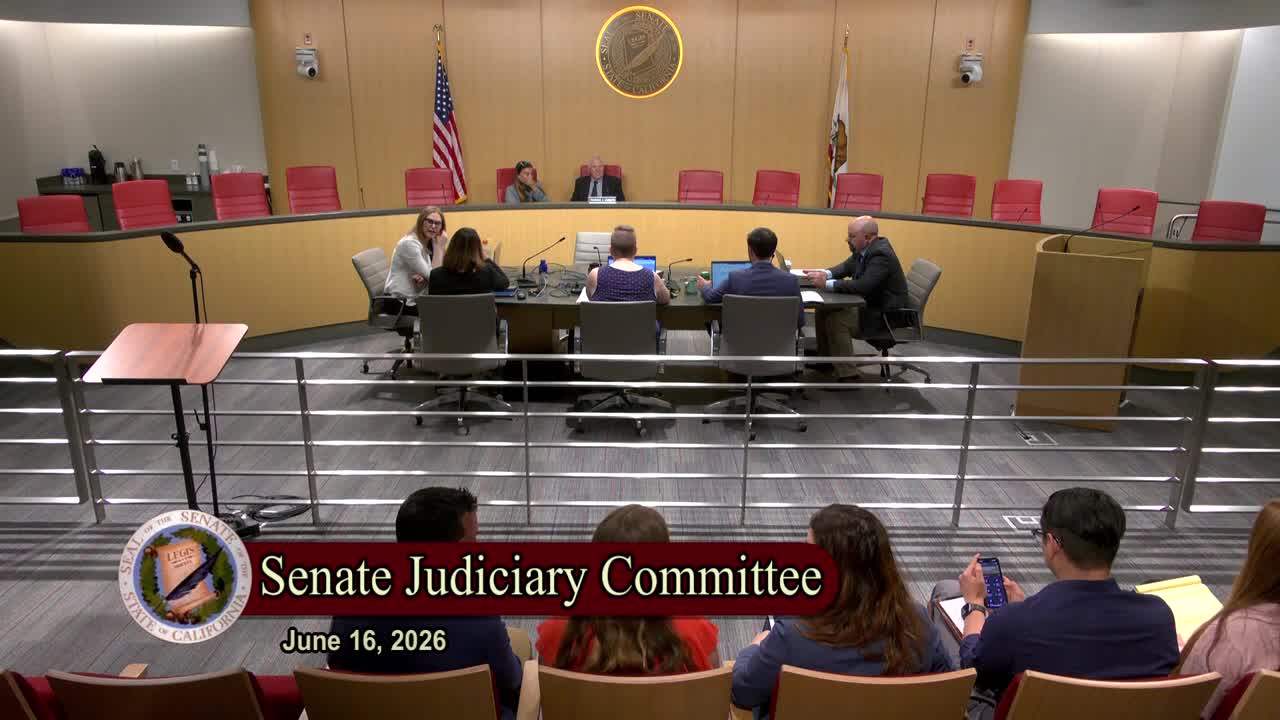 6MIN
Senate Standing Committee on Judiciary
 1MIN
Assembly Floor
 32MIN
Assembly Standing Committee on Appropriations
 19MIN
Assembly Standing Committee on Privacy and Consumer Protection
 9MIN
Assembly Standing Committee on Environmental Safety and Toxic Materials


Bill Co-Author(s):