AB 1753: Protective orders: firearms and ammunition: notice and procedures.
- Session Year: 2025-2026
- House: Assembly
- Latest Version Date: 2026-09-26
Current Status:
Passed
(2026-09-26: Chaptered by Secretary of State - Chapter 458, Statutes of 2026.)
Introduced
In Committee
Awaiting First Chamber Vote
Passed First Chamber
In Committee
Awaiting Second Chamber Vote
Passed Second Chamber
Enacted
(1)Existing law establishes procedures by which a person may petition the court for certain protective or restraining orders, including civil harassment restraining orders, domestic violence restraining orders, elder or dependent adult abuse restraining orders, gun violence restraining orders, postsecondary school restraining orders, and workplace violence restraining orders, to enjoin a restrained person from taking specified actions. Before a hearing on the issuance or denial of a domestic violence restraining order or gun violence restraining order, existing law requires the court to ensure that a search has been conducted to determine, among other things, if the subject of the proposed order owns or possesses a firearm as reflected in the Department of Justice Automated Firearms System. If after the search, the court finds that the subject of the proposed order owns or possesses a firearm, existing law requires the court to make a written record as to whether the subject has relinquished the firearm and provided proof of the required storage, sale, or relinquishment of the firearm. Upon a courts issuance of such a protective order, existing law requires the restrained person to relinquish any firearm and ammunition in that persons immediate possession or control, according to specified procedures. Existing law prescribes procedures by which the restrained person must certify compliance with the court, and for the court to determine, by a preponderance of the evidence, whether the person has a firearm in violation of the order.
This bill would make clarifying and conforming changes to the procedures relating to the protective or restraining orders described above by explicitly requiring the restrained person to relinquish, in addition to any firearm, any ammunition in that persons immediate possession or control. The bill, commencing January 1, 2028, would require courts to permit a party or witness to appear remotely at a hearing for a postsecondary educational institution or workplace violence restraining order at no cost. This bill would also require courts to develop rules and instructions for such remote appearances and to post them on their internet websites. The bill would also, commencing on January 1, 2028, require courts to allow filings related to those protective orders to be submitted electronically, as specified.
(2)Existing law prohibits court from granting a temporary restraining order without notice to the respondent, except as specified. Existing law requires a peace officer, upon the request of a petitioner, to serve any civil harassment restraining order, domestic violence restraining order, elder or dependent adult abuse restraining order, gun violence restraining order, postsecondary school restraining order, or workplace violence restraining order on the respondent, whether or not the respondent has been taken into custody. Existing law prescribes procedures that a sheriff or marshal must follow when serving a writ, warrant, summons, order, or other process issued by a superior court in a civil action or proceeding. Existing law requires the Judicial Council, on or before January 1, 2024, to create a statewide form or forms to be used by litigants in civil actions or proceedings to request service of process or notice by a marshal or sheriff.
This bill, commencing January 1, 2028, would prohibit a court from requiring notice to be provided to the party to be restrained in advance of accepting a filing for, or deciding, an application for an ex parte restraining order, as specified, if the applicant or the applicants attorney certifies to the court under oath that providing notice to the party to be restrained in advance of filing the petition would likely endanger the safety of the petitioner or other persons. The bill, commencing January 1, 2028, would require a peace officer, as defined, to follow the procedures that apply to a sheriff or marshal when serving a writ, warrant, summons, order, or other process issued by a superior court, as described above. The bill would require the Judicial Council, on or before January 1, 2028, to create a statewide form or forms to be used by litigants in civil actions or proceedings to request service of process or notice by a marshal or sheriff, or by a peace officer serving any of the restraining or protective orders described above. By expanding the duties of peace officers, which include officers of local law enforcement agencies, and expanding the crime of perjury, this bill would impose a state-mandated local program.
(3)Existing law requires, on any charge involving acts of domestic violence, that the district attorney or prosecuting city attorney conduct a search of certain databases for protective or restraining orders, as specified.
This bill would additionally require the district attorney or prosecuting city attorney to conduct a search of the Department of Justice Automated Firearms System. By expanding the duties of the district attorney or prosecuting city attorney, this bill would impose a state-mandated local program.
Under existing law, before a hearing on the issuance or denial of a domestic violence restraining order, the court must ensure that a search is or has been conducted to determine if the subject of the proposed order has, among other things, a prior criminal conviction for a violent or serious felony, owns or possesses a firearm, as reflected in the Department of Justice Automated Firearms System, or has a prior restraining order or violation thereof. Existing law requires this search to be conducted of specified records and databases readily available and reasonably accessible to the court. Existing law requires the court, after issuing its ruling, to advise the parties that they may request the information upon which the court relied to conduct the search and information obtained as a result of the search to be maintained in a confidential case file, except as specified.
This bill would authorize a court to order any of the searches described above to be conducted before a hearing on the issuance or denial of a civil harassment restraining order, elder or dependent adult abuse restraining order, gun violence restraining order, postsecondary school restraining order, or workplace violence restraining order. The bill would require the court, after issuing its ruling, to provide the advisement to the parties described above, and to keep the information obtained as a result of any search to be maintained in a confidential case file, except as specified.
(4)Existing law requires a court, when issuing a gun violence restraining order, to notify the Department of Justice regarding the order. Existing law requires the court, when issuing protective orders and firearm or ammunition relinquishment orders, to notify the prosecuting agency and law enforcement officials, as specified, in order, to enable the prosecuting agency and law enforcement officials to take necessary actions to obtain any firearms or ammunition owned, possessed, or controlled by the subject of the order.
This bill would require local law enforcement agencies and prosecuting agencies, as defined, to designate a person responsible for accessing or receiving notifications from the superior court indicating that a person has violated a protective or restraining orders firearm relinquishment requirement and to regularly ensure that the clerk of the court has updated contact information for the person designated to receive those notifications on behalf of the agency.
This bill would also require each prosecuting agency to ensure that a protected person or protected people named in the order are notified about the issuance, terms, and duration of the protective order, except as specified. The bill would require each prosecuting agency to develop, adopt, and implement written policies and standards regarding notification to protected parties on or before January 1, 2028, as specified. By placing new requirements on local law enforcement agencies and prosecuting agencies, this bill would impose a state-mandated local program.
This bill, commencing January 1, 2028, would authorize a law enforcement agency or officer to seek enforcement of a valid extreme risk protection order issued by another state or jurisdiction. The bill would define an extreme risk protection order as an injunction, restraining order, or other civil or criminal court order issued by another state or jurisdiction that does not name a protected individual, but prohibits the subject of the order from possessing, owning, controlling, purchasing, or receiving firearms for the duration of the order based on evidence that the subject of the order poses a danger to themselves or others. The bill would require a valid extreme risk protection order to be registered with a court in this state if requested by a law enforcement officer or other petitioner.
(5)Existing law requires each county to electronically transmit data regarding protective orders through the California Law Enforcement Telecommunications System of the Department of Justice, as specified. Existing law requires the Department of Justice to maintain the California Restraining and Protective Order System that contains detailed information regarding protective and restraining orders and injunctions, as specified, and to make that information available to court clerks and law enforcement personnel.
This bill would extend these reporting requirements to include any protective order or restraining orders issued pursuant to specified sections, including a gun violence restraining order or an extreme risk protection order.
(6)Existing law, the Uniform Interstate Enforcement of Domestic Violence Protection Orders Act, authorizes the enforcement of a valid foreign protection order in a tribunal of this state under certain conditions.
The bill would expand the definition of a protection order to include any injunction or order under the federal Violence Against Women Act and would extend these provisions to orders issued by any state or other jurisdiction. The bill would make conforming changes.
(7)Existing law authorizes the Department of Justice, subject to an appropriation by the Legislature, to establish or contract with a vendor to establish an automated protected person information and notification system, as specified.
This bill would authorize the department to establish or contract with a vendor to create the above-described notification system through the availability of necessary funding through grants or other sources.
(8)Existing law, subject to exceptions, provides that any person who has been convicted of certain misdemeanors may not, within 10 years of the conviction, own, purchase, receive, possess or have under their custody or control, any firearm and makes a violation of that prohibition punishable as a misdemeanor or a felony.
This bill would prohibit a person, who is convicted on or after January 1, 2027, of specified offenses, including misdemeanor violations of a gun violence restraining order or other protective orders, or violations that constitute a hate crime, from owning, purchasing, receiving, or having in their possession or under their custody or control any firearm within 10 years of the conviction, and would make conforming changes. By expanding the scope of an existing crime, the bill would create a state-mandated local program.
(9)Existing law requires a peace officer who is at the scene of a domestic violence incident or enforcing a domestic violence restraining order or gun violence restraining order to take temporary custody of any firearm or other deadly weapon in plain sight or discovered pursuant to a consensual or otherwise lawful search, as specified.
This bill would additionally require a peace officer to take temporary custody of any ammunition in plain sight or discovered pursuant to such a search. By expanding the duties of local law enforcement agencies, this bill would impose a state-mandated local program.
(10)This bill would provide that its provisions are severable.
(11)This bill would provide that if AB 2179 is enacted, then the changes made to Section 527.8 of the Code of Civil Procedure by this bill would not be operative.
This bill would incorporate additional changes to Section 527.8 of the Code of Civil Procedure proposed by AB 1961 to be operative only if this bill and AB 1961 are enacted and this bill is enacted last.
This bill would incorporate additional changes to Section 527.85 of the Code of Civil Procedure proposed by SB 1374 to be operative only if this bill and SB 1374 are enacted and this bill is enacted last.
This bill would incorporate additional changes to Section 6383 of the Family Code proposed by SB 99 and SB 1395, to be operative only if this bill and either or both of those bills are enacted and this bill is enacted last.
This bill would incorporate additional changes to Section 29805 of the Penal Code proposed by SB 1220 to be operative only if this bill and SB 1220 are enacted and this bill is enacted last.
(12)The California Constitution requires the state to reimburse local agencies and school districts for certain costs mandated by the state. Statutory provisions establish procedures for making that reimbursement.
This bill would provide that with regard to certain mandates no reimbursement is required by this act for a specified reason.
With regard to any other mandates, this bill would provide that, if the Commission on State Mandates determines that the bill contains costs so mandated by the state, reimbursement for those costs shall be made pursuant to the statutory provisions noted above.
(1)Existing law establishes procedures by which a person may petition the court for certain protective or restraining orders, including civil harassment restraining orders, domestic violence restraining orders, elder or dependent adult abuse restraining orders, gun violence restraining orders, postsecondary school restraining orders, and workplace violence restraining orders, to enjoin a restrained person from taking specified actions. Before a hearing on the issuance or denial of a domestic violence restraining order or gun violence restraining order, existing law requires the court to ensure that a search has been conducted to determine, among other things, if the subject of the proposed order owns or possesses a firearm as reflected in the Department of Justice Automated Firearms System. If after the search, the court finds that the subject of the proposed order owns or possesses a firearm, existing law requires the court to make a written record as to whether the subject has relinquished the firearm and provided proof of the required storage, sale, or relinquishment of the firearm. Upon a courts issuance of such a protective order, existing law requires the restrained person to relinquish any firearm and ammunition in that persons immediate possession or control, according to specified procedures. Existing law prescribes procedures by which the restrained person must certify compliance with the court, and for the court to determine, by a preponderance of the evidence, whether the person has a firearm in violation of the order.
This bill would make clarifying and conforming changes to the procedures relating to the protective or restraining orders described above by explicitly requiring the restrained person to relinquish, in addition to any firearm, any ammunition in that persons immediate possession or control. The bill, commencing January 1, 2028, would require courts to permit a party or witness to appear remotely at a hearing for a postsecondary educational institution or workplace violence restraining order at no cost. This bill would also require courts to develop rules and instructions for such remote appearances and to post them on their internet websites. The bill would also, commencing on January 1, 2028, require courts to allow filings related to those protective orders to be submitted electronically, as specified.
(2)Existing law prohibits court from granting a temporary restraining order without notice to the respondent, except as specified. Existing law requires a peace officer, upon the request of a petitioner, to serve any civil harassment restraining order, domestic violence restraining order, elder or dependent adult abuse restraining order, gun violence restraining order, postsecondary school restraining order, or workplace violence restraining order on the respondent, whether or not the respondent has been taken into custody. Existing law prescribes procedures that a sheriff or marshal must follow when serving a writ, warrant, summons, order, or other process issued by a superior court in a civil action or proceeding. Existing law requires the Judicial Council, on or before January 1, 2024, to create a statewide form or forms to be used by litigants in civil actions or proceedings to request service of process or notice by a marshal or sheriff.
This bill, commencing January 1, 2028, would prohibit a court from requiring notice to be provided to the party to be restrained in advance of accepting a filing for, or deciding, an application for an ex parte restraining order, as specified, if the applicant or the applicants attorney certifies to the court under oath that providing notice to the party to be restrained in advance of filing the petition would likely endanger the safety of the petitioner or other persons. The bill, commencing January 1, 2028, would require a peace officer, as defined, to follow the procedures that apply to a sheriff or marshal when serving a writ, warrant, summons, order, or other process issued by a superior court, as described above. The bill would require the Judicial Council, on or before January 1, 2028, to create a statewide form or forms to be used by litigants in civil actions or proceedings to request service of process or notice by a marshal or sheriff, or by a peace officer serving any of the restraining or protective orders described above. By expanding the duties of peace officers, which include officers of local law enforcement agencies, and expanding the crime of perjury, this bill would impose a state-mandated local program.
(3)Existing law requires, on any charge involving acts of domestic violence, that the district attorney or prosecuting city attorney conduct a search of certain databases for protective or restraining orders, as specified.
This bill would additionally require the district attorney or prosecuting city attorney to conduct a search of the Department of Justice Automated Firearms System. By expanding the duties of the district attorney or prosecuting city attorney, this bill would impose a state-mandated local program.
Under existing law, before a hearing on the issuance or denial of a domestic violence restraining order, the court must ensure that a search is or has been conducted to determine if the subject of the proposed order has, among other things, a prior criminal conviction for a violent or serious felony, owns or possesses a firearm, as reflected in the Department of Justice Automated Firearms System, or has a prior restraining order or violation thereof. Existing law requires this search to be conducted of specified records and databases readily available and reasonably accessible to the court. Existing law requires the court, after issuing its ruling, to advise the parties that they may request the information upon which the court relied to conduct the search and information obtained as a result of the search to be maintained in a confidential case file, except as specified.
This bill would authorize a court to order any of the searches described above to be conducted before a hearing on the issuance or denial of a civil harassment restraining order, elder or dependent adult abuse restraining order, gun violence restraining order, postsecondary school restraining order, or workplace violence restraining order. The bill would require the court, after issuing its ruling, to provide the advisement to the parties described above, and to keep the information obtained as a result of any search to be maintained in a confidential case file, except as specified.
(4)Existing law requires a court, when issuing a gun violence restraining order, to notify the Department of Justice regarding the order. Existing law requires the court, when issuing protective orders and firearm or ammunition relinquishment orders, to notify the prosecuting agency and law enforcement officials, as specified, in order, to enable the prosecuting agency and law enforcement officials to take necessary actions to obtain any firearms or ammunition owned, possessed, or controlled by the subject of the order.
This bill would require local law enforcement agencies and prosecuting agencies, as defined, to designate a person responsible for accessing or receiving notifications from the superior court indicating that a person has violated a protective or restraining orders firearm relinquishment requirement and to regularly ensure that the clerk of the court has updated contact information for the person designated to receive those notifications on behalf of the agency.
This bill would also require each prosecuting agency to ensure that a protected person or protected people named in the order are notified about the issuance, terms, and duration of the protective order, except as specified. The bill would require each prosecuting agency to develop, adopt, and implement written policies and standards regarding notification to protected parties on or before January 1, 2028, as specified. By placing new requirements on local law enforcement agencies and prosecuting agencies, this bill would impose a state-mandated local program.
This bill, commencing January 1, 2028, would authorize a law enforcement agency or officer to seek enforcement of a valid extreme risk protection order issued by another state or jurisdiction. The bill would define an extreme risk protection order as an injunction, restraining order, or other civil or criminal court order issued by another state or jurisdiction that does not name a protected individual, but prohibits the subject of the order from possessing, owning, controlling, purchasing, or receiving firearms for the duration of the order based on evidence that the subject of the order poses a danger to themselves or others. The bill would require a valid extreme risk protection order to be registered with a court in this state if requested by a law enforcement officer or other petitioner.
(5)Existing law requires each county to electronically transmit data regarding protective orders through the California Law Enforcement Telecommunications System of the Department of Justice, as specified. Existing law requires the Department of Justice to maintain the California Restraining and Protective Order System that contains detailed information regarding protective and restraining orders and injunctions, as specified, and to make that information available to court clerks and law enforcement personnel.
This bill would extend these reporting requirements to include any protective order or restraining orders issued pursuant to specified sections, including a gun violence restraining order or an extreme risk protection order.
(6)Existing law, the Uniform Interstate Enforcement of Domestic Violence Protection Orders Act, authorizes the enforcement of a valid foreign protection order in a tribunal of this state under certain conditions.
The bill would expand the definition of a protection order to include any injunction or order under the federal Violence Against Women Act and would extend these provisions to orders issued by any state or other jurisdiction. The bill would make conforming changes.
(7)Existing law authorizes the Department of Justice, subject to an appropriation by the Legislature, to establish or contract with a vendor to establish an automated protected person information and notification system, as specified.
This bill would authorize the department to establish or contract with a vendor to create the above-described notification system through the availability of necessary funding through grants or other sources.
(8)Existing law, subject to exceptions, provides that any person who has been convicted of certain misdemeanors may not, within 10 years of the conviction, own, purchase, receive, possess or have under their custody or control, any firearm and makes a violation of that prohibition punishable as a misdemeanor or a felony.
This bill would prohibit a person, who is convicted on or after January 1, 2027, of specified offenses, including misdemeanor violations of a gun violence restraining order or other protective orders, or violations that constitute a hate crime, from owning, purchasing, receiving, or having in their possession or under their custody or control any firearm within 10 years of the conviction, and would make conforming changes. By expanding the scope of an existing crime, the bill would create a state-mandated local program.
(9)Existing law requires a peace officer who is at the scene of a domestic violence incident or enforcing a domestic violence restraining order or gun violence restraining order to take temporary custody of any firearm or other deadly weapon in plain sight or discovered pursuant to a consensual or otherwise lawful search, as specified.
This bill would additionally require a peace officer to take temporary custody of any ammunition in plain sight or discovered pursuant to such a search. By expanding the duties of local law enforcement agencies, this bill would impose a state-mandated local program.
(10)This bill would provide that its provisions are severable.
(11)This bill would provide that if AB 2179 is enacted, then the changes made to Section 527.8 of the Code of Civil Procedure by this bill would not be operative.
This bill would incorporate additional changes to Section 527.8 of the Code of Civil Procedure proposed by AB 1961 to be operative only if this bill and AB 1961 are enacted and this bill is enacted last.
This bill would incorporate additional changes to Section 527.85 of the Code of Civil Procedure proposed by SB 1374 to be operative only if this bill and SB 1374 are enacted and this bill is enacted last.
This bill would incorporate additional changes to Section 6383 of the Family Code proposed by SB 99 and SB 1395, to be operative only if this bill and either or both of those bills are enacted and this bill is enacted last.
This bill would incorporate additional changes to Section 29805 of the Penal Code proposed by SB 1220 to be operative only if this bill and SB 1220 are enacted and this bill is enacted last.
(11)(12)The California Constitution requires the state to reimburse local agencies and school districts for certain costs mandated by the state. Statutory provisions establish procedures for making that reimbursement.
This bill would provide that with regard to certain mandates no reimbursement is required by this act for a specified reason.
With regard to any other mandates, this bill would provide that, if the Commission on State Mandates determines that the bill contains costs so mandated by the state, reimbursement for those costs shall be made pursuant to the statutory provisions noted above.
(1)Existing law establishes procedures by which a person may petition the court for certain protective or restraining orders, including civil harassment restraining orders, domestic violence restraining orders, elder or dependent adult abuse restraining orders, gun violence restraining orders, postsecondary school restraining orders, and workplace violence restraining orders, to enjoin a restrained person from taking specified actions. Before a hearing on the issuance or denial of a domestic violence restraining order or gun violence restraining order, existing law requires the court to ensure that a search has been conducted to determine, among other things, if the subject of the proposed order owns or possesses a firearm as reflected in the Department of Justice Automated Firearms System. If after the search, the court finds that the subject of the proposed order owns or possesses a firearm, existing law requires the court to make a written record as to whether the subject has relinquished the firearm and provided proof of the required storage, sale, or relinquishment of the firearm. Upon a courts issuance of such a protective order, existing law requires the restrained person to relinquish any firearm and ammunition in that persons immediate possession or control, according to specified procedures. Existing law prescribes procedures by which the restrained person must certify compliance with the court, and for the court to determine, by a preponderance of the evidence, whether the person has a firearm in violation of the order.
This bill would make clarifying and conforming changes to the procedures relating to the protective or restraining orders described above by explicitly requiring the restrained person to relinquish, in addition to any firearm, any ammunition in that persons immediate possession or control. The bill, commencing January 1, 2028, would require courts to permit a party or witness to appear remotely at a hearing for a postsecondary educational institution or workplace violence restraining order at no cost. This bill would also require courts to develop rules and instructions for such remote appearances and to post them on their internet websites.
(2)Existing law prohibits court from granting a temporary restraining order without notice to the respondent, except as specified. Existing law requires a peace officer, upon the request of a petitioner, to serve any civil harassment restraining order, domestic violence restraining order, elder or dependent adult abuse restraining order, gun violence restraining order, postsecondary school restraining order, or workplace violence restraining order on the respondent, whether or not the respondent has been taken into custody. Existing law prescribes procedures that a sheriff or marshal must follow when serving a writ, warrant, summons, order, or other process issued by a superior court in a civil action or proceeding. Existing law requires the Judicial Council, on or before January 1, 2024, to create a statewide form or forms to be used by litigants in civil actions or proceedings to request service of process or notice by a marshal or sheriff.
This bill, commencing January 1, 2028, would prohibit a court from requiring notice to be provided to the party to be restrained in advance of accepting a filing for, or deciding, an application for an ex parte restraining order, as specified, if the applicant or the applicants attorney certifies to the court under oath that providing notice to the party to be restrained in advance of filing the petition would likely endanger the safety of the petitioner or other persons. The bill, commencing January 1, 2028, would require a peace officer, as defined, to follow the procedures that apply to a sheriff or marshal when serving a writ, warrant, summons, order, or other process issued by a superior court, as described above. The bill would require the Judicial Council, on or before January 1, 2028, to create a statewide form or forms to be used by litigants in civil actions or proceedings to request service of process or notice by a marshal or sheriff, or by a peace officer serving any of the restraining or protective orders described above. By expanding the duties of peace officers, which include officers of local law enforcement agencies, and expanding the crime of perjury, this bill would impose a state-mandated local program.
(3)Existing law requires, on any charge involving acts of domestic violence, that the district attorney or prosecuting city attorney conduct a search of certain databases for protective or restraining orders, as specified.
This bill would additionally require the district attorney or prosecuting city attorney to conduct a search of the Department of Justice Automated Firearms System. By expanding the duties of the district attorney or prosecuting city attorney, this bill would impose a state-mandated local program.
Under existing law, before a hearing on the issuance or denial of a domestic violence restraining order, the court must ensure that a search is or has been conducted to determine if the subject of the proposed order has, among other things, a prior criminal conviction for a violent or serious felony, owns or possesses a firearm, as reflected in the Department of Justice Automated Firearms System, or has a prior restraining order or violation thereof. Existing law requires this search to be conducted of specified records and databases readily available and reasonably accessible to the court. Existing law requires the court, after issuing its ruling, to advise the parties that they may request the information upon which the court relied to conduct the search and information obtained as a result of the search to be maintained in a confidential case file, except as specified.
This bill would authorize a court to order any of the searches described above to be conducted before a hearing on the issuance or denial of a civil harassment restraining order, elder or dependent adult abuse restraining order, gun violence restraining order, postsecondary school restraining order, or workplace violence restraining order. The bill would require the court, after issuing its ruling, to provide the advisement to the parties described above, and to keep the information obtained as a result of any search to be maintained in a confidential case file, except as specified.
(4)Existing law requires a court, when issuing a gun violence restraining order, to notify the Department of Justice regarding the order. Existing law requires the court, when issuing protective orders and firearm or ammunition relinquishment orders, to notify the prosecuting agency and law enforcement officials, as specified, in order, to enable the prosecuting agency and law enforcement officials to take necessary actions to obtain any firearms or ammunition owned, possessed, or controlled by the subject of the order.
This bill would require local law enforcement agencies and prosecuting agencies, as defined, to designate a person responsible for accessing or receiving notifications from the superior court indicating that a person has violated a protective or restraining orders firearm relinquishment requirement and to regularly ensure that the clerk of the court has updated contact information for the person designated to receive those notifications on behalf of the agency.
This bill would also require each prosecuting agency to ensure that a protected person or protected people named in the order are notified about the issuance, terms, and duration of the protective order, except as specified. The bill would require each prosecuting agency to develop, adopt, and implement written policies and standards regarding notification to protected parties on or before January 1, 2028, as specified. By placing new requirements on local law enforcement agencies and prosecuting agencies, this bill would impose a state-mandated local program.
This bill, commencing January 1, 2028, would authorize a law enforcement agency or officer to seek enforcement of a valid extreme risk protection order issued by another state or jurisdiction. The bill would define an extreme risk protection order as an injunction, restraining order, or other civil or criminal court order issued by another state or jurisdiction that does not name a protected individual, but prohibits the subject of the order from possessing, owning, controlling, purchasing, or receiving firearms for the duration of the order based on evidence that the subject of the order poses a danger to themselves or others. The bill would require a valid extreme risk protection order to be registered with a court in this state if requested by a law enforcement officer or other petitioner.
(5)Existing law requires each county to electronically transmit data regarding protective orders through the California Law Enforcement Telecommunications System of the Department of Justice, as specified. Existing law requires the Department of Justice to maintain the California Restraining and Protective Order System that contains detailed information regarding protective and restraining orders and injunctions, as specified, and to make that information available to court clerks and law enforcement personnel.
This bill would extend these reporting requirements to include any protective order or restraining orders issued pursuant to specified sections, including a gun violence restraining order or an extreme risk protection order.
(6)Existing law, the Uniform Interstate Enforcement of Domestic Violence Protection Orders Act, authorizes the enforcement of a valid foreign protection order in a tribunal of this state under certain conditions.
The bill would expand the definition of a protection order to include any injunction or order under the federal Violence Against Women Act and would extend these provisions to orders issued by any state or other jurisdiction. The bill would make conforming changes.
(7)Existing law authorizes the Department of Justice, subject to an appropriation by the Legislature, to establish or contract with a vendor to establish an automated protected person information and notification system, as specified.
This bill would authorize the department to establish or contract with a vendor to create the above-described notification system through the availability of necessary funding through grants or other sources.
(8)Existing law, subject to exceptions, provides that any person who has been convicted of certain misdemeanors may not, within 10 years of the conviction, own, purchase, receive, possess or have under their custody or control, any firearm and makes a violation of that prohibition punishable as a misdemeanor or a felony.
This bill would prohibit a person, who is convicted on or after January 1, 2027, of specified offenses, including misdemeanor violations of a gun violence restraining order or other protective orders, or violations that constitute a hate crime, from owning, purchasing, receiving, or having in their possession or under their custody or control any firearm within 10 years of the conviction, and would make conforming changes. By expanding the scope of an existing crime, the bill would create a state-mandated local program.
(9)Existing law requires a peace officer who is at the scene of a domestic violence incident or enforcing a domestic violence restraining order or gun violence restraining order to take temporary custody of any firearm or other deadly weapon in plain sight or discovered pursuant to a consensual or otherwise lawful search, as specified.
This bill would additionally require a peace officer to take temporary custody of any ammunition in plain sight or discovered pursuant to such a search. By expanding the duties of local law enforcement agencies, this bill would impose a state-mandated local program.
(10)This bill would provide that its provisions are severable.
(11)The California Constitution requires the state to reimburse local agencies and school districts for certain costs mandated by the state. Statutory provisions establish procedures for making that reimbursement.
This bill would provide that with regard to certain mandates no reimbursement is required by this act for a specified reason.
With regard to any other mandates, this bill would provide that, if the Commission on State Mandates determines that the bill contains costs so mandated by the state, reimbursement for those costs shall be made pursuant to the statutory provisions noted above.
(1)Existing law establishes procedures by which a person may petition the court for certain protective or restraining orders, including civil harassment restraining orders, domestic violence restraining orders, elder or dependent adult abuse restraining orders, gun violence restraining orders, postsecondary school restraining orders, and workplace violence restraining orders, to enjoin a restrained person from taking specified actions. Before a hearing on the issuance or denial of a domestic violence restraining order or gun violence restraining order, existing law requires the court to ensure that a search has been conducted to determine, among other things, if the subject of the proposed order owns or possesses a firearm as reflected in the Department of Justice Automated Firearms System. If after the search, the court finds that the subject of the proposed order owns or possesses a firearm, existing law requires the court to make a written record as to whether the subject has relinquished the firearm and provided proof of the required storage, sale, or relinquishment of the firearm. Upon a courts issuance of such a protective order, existing law requires the restrained person to relinquish any firearm and ammunition in that persons immediate possession or control, according to specified procedures. Existing law prescribes procedures by which the restrained person must certify compliance with the court, and for the court to determine, by a preponderance of the evidence, whether the person has a firearm in violation of the order.
This bill would make clarifying and conforming changes to the procedures relating to the protective or restraining orders described above by explicitly requiring the restrained person to relinquish, in addition to any firearm, any ammunition in that persons immediate possession or control. The bill bill, commencing January 1, 2028, would require courts to permit a party, support person, party or witness to appear remotely at a hearing for a postsecondary educational institution or workplace violence restraining order at no cost. This bill would also require courts to develop rules and instructions for such remote appearances and to post them on its website. their internet websites.
(2)Existing law prohibits court from granting a temporary restraining order without notice to the respondent, except as specified. Existing law requires a peace officer, upon the request of a petitioner, to serve any civil harassment restraining order, domestic violence restraining order, elder or dependent adult abuse restraining order, gun violence restraining order, postsecondary school restraining order, or workplace violence restraining order on the respondent, whether or not the respondent has been taken into custody. Existing law prescribes procedures that a sheriff or marshal must follow when serving a writ, warrant, summons, order, or other process issued by a superior court in a civil action or proceeding. Existing law requires the Judicial Council, on or before January 1, 2024, to create a statewide form or forms to be used by litigants in civil actions or proceedings to request service of process or notice by a marshal or sheriff.
This bill would prohibit a court from requiring a petitioner to provide prior notice to a proposed respondent in advance of filing an application for a temporary or ex parte protective or restraining order if requiring such notice would likely endanger the applicant or others, except as specified. The bill bill, commencing January 1, 2028, would prohibit a court from requiring notice to be provided to the party to be restrained in advance of accepting a filing for, or deciding, an application for an ex parte restraining order, as specified, if the applicant or the applicants attorney certifies to the court under oath that providing notice to the party to be restrained in advance of filing the petition would likely endanger the safety of the petitioner or other persons. The bill, commencing January 1, 2028, would require a peace officer, as defined, to follow the procedures that apply to a sheriff or marshal when serving a writ, warrant, summons, order, or other process issued by a superior court, as described above. The bill would require the Judicial Council, on or before January 1, 2028, to create a statewide form or forms to be used by litigants in civil actions or proceedings to request service of process or notice by a marshal or sheriff, or by a peace officer serving any of the restraining or protective orders described above. By expanding the duties of peace officers, which include officers of local law enforcement agencies, and expanding the crime of perjury, this bill would impose a state-mandated local program.
(3)Existing law requires, on any charge involving acts of domestic violence, that the district attorney or prosecuting city attorney conduct a search of certain databases for protective or restraining orders, as specified.
This bill would additionally require the district attorney or prosecuting city attorney to conduct a search of the Department of Justice Automated Firearms System. By expanding the duties of the district attorney or prosecuting city attorney, this bill would impose a state-mandated local program.
Under existing law, before a hearing on the issuance or denial of a domestic violence restraining order, the court must ensure that a search is or has been conducted to determine if the subject of the proposed order has, among other things, a prior criminal conviction for a violent or serious felony, owns or possesses a firearm, as reflected in the Department of Justice Automated Firearms System, or has a prior restraining order or violation thereof. Existing law requires this search to be conducted of specified records and databases readily available and reasonably accessible to the court. Existing law requires the court, after issuing its ruling, to advise the parties that they may request the information upon which the court relied to conduct the search and information obtained as a result of the search to be maintained in a confidential case file, except as specified.
This bill would authorize a court to order any of the searches described above to be conducted before a hearing on the issuance or denial of a civil harassment restraining order, elder or dependent adult abuse restraining order, gun violence restraining order, postsecondary school restraining order, or workplace violence restraining order. The bill would require the court, after issuing its ruling, to provide the advisement to the parties described above, and to keep the information obtained as a result of any search to be maintained in a confidential case file, except as specified.
(4)Existing law requires a court, when issuing a gun violence restraining order, to notify the Department of Justice regarding the order. Existing law requires the court, when issuing protective orders and firearm or ammunition relinquishment orders, to notify the prosecuting agency and law enforcement officials, as specified, in order, to enable the prosecuting agency and law enforcement officials to take necessary actions to obtain any firearms or ammunition owned, possessed, or controlled by the subject of the order.
This bill would require local law enforcement agencies and prosecuting agencies, as defined, to designate a person responsible for accessing or receiving notifications from the superior court indicating that a person has violated a protective or restraining orders firearm relinquishment requirement and to regularly ensure that the clerk of the court has updated contact information for the person designated to receive those notifications on behalf of the agency.
This bill would also require each prosecuting agency to ensure that a protected person or protected people named in the order are notified about the issuance, terms, and duration of the protective order, except as specified. The bill would require each prosecuting agency to develop, adopt, and implement written policies and standards regarding notification to protected parties on or before January 1, 2028, as specified. By placing new requirements on local law enforcement agencies and prosecuting agencies, this bill would impose a state-mandated local program.
This bill bill, commencing January 1, 2028, would authorize a law enforcement agency or officer to seek enforcement of a valid extreme risk protection order issued by another state or jurisdiction. The bill would define an extreme risk protection order as an injunction, restraining order, or other civil or criminal court order issued by another state or jurisdiction that does not name a protected individual, but prohibits the subject of the order from possessing, owning, controlling, purchasing, or receiving, receiving firearms for the duration of the order based on evidence that the subject of the order poses a danger to themselves or others. The bill would require a valid extreme risk protection order to be registered with a court in this state if requested by a law enforcement officer or other petitioner.
(5)Existing law requires each county to electronically transmit data regarding protective orders through the California Law Enforcement Telecommunications System of the Department of Justice, as specified. Existing law requires the Department of Justice to maintain the California Restraining and Protective Order System that contains detailed information regarding protective and restraining orders and injunctions, as specified, and to make that information available to court clerks and law enforcement personnel.
This bill would extend these reporting requirements to include any protective order or restraining orders issued pursuant to specified sections, including a gun violence restraining order or an extreme risk protection order.
(6)Existing law, the Uniform Interstate Enforcement of Domestic Violence Protection Orders Act, authorizes the enforcement of a valid foreign protection order in a tribunal of this state under certain conditions.
The bill would also expand the definition of a protection order to include any injunction or order under the federal Violence Against Women Act and would extend these provisions to orders issued by any state or other jurisdiction. The bill would make conforming changes.
Existing(7)Existing law authorizes the Department of Justice, subject to an appropriation by the Legislature, to establish or contract with a vendor to establish an automated protect protected person information and notification system, as specified.
This bill would authorize the department to establish or contract with a vendor to create the above-described notification system through the availability of necessary funding through grants or other sources.
(6)(8)Existing law, subject to exceptions, provides that any person who has been convicted of certain misdemeanors may not, within 10 years of the conviction, own, purchase, receive, possess or have under their custody or control, any firearm and makes a violation of that prohibition punishable as a misdemeanor or a felony.
This bill would prohibit a person, who is convicted on or after January 1, 2027, of specified offenses, including misdemeanor violations of a gun violence restraining order or other protective orders orders, or violations that constitute a hate crime, from owning, purchasing, receiving, or having in their possession or under their custody or control any firearm within 10 years of the conviction, and would make conforming changes. By expanding the scope of an existing crime, the bill would create a state-mandated local program.
(7)(9)Existing law requires a peace officer who is at the scene of a domestic violence incident or enforcing a domestic violence restraining order or gun violence restraining order to take temporary custody of any firearm or other deadly weapon in plain sight or discovered pursuant to a consensual or otherwise lawful search, as specified.
This bill would additionally require a peace officer to take temporary custody of any ammunition in plain sight or discovered pursuant to such a search. By expanding the duties of local law enforcement agencies, this bill would impose a state-mandated local program.
(8)(10)This bill would provide that its provisions are severable.
(9)(11)The California Constitution requires the state to reimburse local agencies and school districts for certain costs mandated by the state. Statutory provisions establish procedures for making that reimbursement.
This bill would provide that with regard to certain mandates no reimbursement is required by this act for a specified reason.
With regard to any other mandates, this bill would provide that, if the Commission on State Mandates determines that the bill contains costs so mandated by the state, reimbursement for those costs shall be made pursuant to the statutory provisions noted above.
(1)Existing law establishes procedures by which a person may petition the court for certain protective or restraining orders, including civil harassment restraining orders, domestic violence restraining orders, elder or dependent adult abuse restraining orders, gun violence restraining orders, postsecondary school restraining orders, and workplace violence restraining orders, to enjoin a restrained person from taking specified actions. Before a hearing on the issuance or denial of a domestic violence restraining order or gun violence restraining order, existing law requires the court to ensure that a search has been conducted to determine, among other things, if the subject of the proposed order owns or possesses a firearm as reflected in the Department of Justice Automated Firearms System. If after the search, the court finds that the subject of the proposed order owns or possesses a firearm, existing law requires the court to make a written record as to whether the subject has relinquished the firearm and provided proof of the required storage, sale, or relinquishment of the firearm. Upon a courts issuance of such a protective order, existing law requires the restrained person to relinquish any firearm and ammunition in that persons immediate possession or control, according to specified procedures. Existing law prescribes procedures by which the restrained person must certify compliance with the court, and for the court to determine, by a preponderance of the evidence, whether the person has a firearm in violation of the order.
This bill would make clarifying and conforming changes to the procedures relating to the protective or restraining orders described above by explicitly requiring the restrained person to relinquish, in addition to any firearm, any ammunition in that persons immediate possession or control. The bill would require courts to permit a party, support person, or witness to appear remotely at a hearing for a postsecondary educational institution or workplace violence restraining order at no cost. This bill would also require courts to develop rules and instructions for such remote appearances and to post them on its website.
(2)Existing law prohibits court from granting a temporary restraining order without notice to the respondent, except as specified. Existing law requires a peace officer, upon the request of a petitioner, to serve any civil harassment restraining order, domestic violence restraining order, elder or dependent adult abuse restraining order, gun violence restraining order, postsecondary school restraining order, or workplace violence restraining order on the respondent, whether or not the respondent has been taken into custody. Existing law prescribes procedures that a sheriff or marshal must follow when serving a writ, warrant, summons, order, or other process issued by a superior court in a civil action or proceeding. Existing law requires the Judicial Council, on or before January 1, 2024, to create a statewide form or forms to be used by litigants in civil actions or proceedings to request service of process or notice by a marshal or sheriff.
This bill would prohibit a court from requiring a petitioner to provide prior notice to a proposed respondent in advance of filing an application for a temporary or ex parte protective or restraining order if requiring such notice would likely endanger the applicant or others, except as specified. The bill would require a peace officer, as defined, to follow the procedures that apply to a sheriff or marshal when serving a writ, warrant, summons, order, or other process issued by a superior court, as described above. The bill would require the Judicial Council, on or before January 1, 2028, to create a statewide form or forms to be used by litigants in civil actions or proceedings to request service of process or notice by a marshal or sheriff, or by a peace officer serving any of the restraining or protective orders described above. By expanding the duties of peace officers, which include officers of local law enforcement agencies, this bill would impose a state-mandated local program.
(3)Existing law requires, on any charge involving acts of domestic violence, that the district attorney or prosecuting city attorney conduct a search of certain databases for protective or restraining orders, as specified.
This bill would additionally require the district attorney or prosecuting city attorney to conduct a search of the Department of Justice Automated Firearms System. By expanding the duties of the district attorney or prosecuting city attorney, this bill would impose a state-mandated local program.
Under existing law, before a hearing on the issuance or denial of a domestic violence restraining order, the court must ensure that a search is or has been conducted to determine if the subject of the proposed order has, among other things, a prior criminal conviction for a violent or serious felony, owns or possesses a firearm, as reflected in the Department of Justice Automated Firearms System, or has a prior restraining order or violation thereof. Existing law requires this search to be conducted of specified records and databases readily available and reasonably accessible to the court. Existing law requires the court, after issuing its ruling, to advise the parties that they may request the information upon which the court relied to conduct the search and information obtained as a result of the search to be maintained in a confidential case file, except as specified.
This bill would authorize a court to order any of the searches described above to be conducted before a hearing on the issuance or denial of a civil harassment restraining order, elder or dependent adult abuse restraining order, gun violence restraining order, postsecondary school restraining order, or workplace violence restraining order. The bill would require the court, after issuing its ruling, to provide the advisement to the parties described above, and to keep the information obtained as a result of any search to be maintained in a confidential case file, except as specified.
(4)Existing law requires a court, when issuing a gun violence restraining order, to notify the Department of Justice regarding the order. Existing law requires the court, when issuing protective orders and firearm or ammunition relinquishment orders, to notify the prosecuting agency and law enforcement officials, as specified, in order, to enable the prosecuting agency and law enforcement officials to take necessary actions to obtain any firearms or ammunition owned, possessed, or controlled by the subject of the order.
This bill would require local law enforcement agencies and prosecuting agencies, as defined, to designate a person responsible for accessing or receiving notifications from the superior court indicating that a person has violated a protective or restraining orders firearm relinquishment requirement and to regularly ensure that the clerk of the court has updated contact information for the person designated to receive those notifications on behalf of the agency.
This bill would also require each prosecuting agency to ensure that a protected person or protected people named in the order are notified about the issuance, terms, and duration of the protective order, except as specified. The bill would require each prosecuting agency to develop, adopt, and implement written policies and standards regarding notification to protected parties on or before January 1, 2028, as specified. By placing new requirements on local law enforcement agencies and prosecuting agencies, this bill would impose a state-mandated local program.
This bill would authorize a law enforcement agency or officer to seek enforcement of a valid extreme risk protection order issued by another state or jurisdiction. The bill would define an extreme risk protection order as an injunction, restraining order, or other civil or criminal court order issued by another state or jurisdiction that does not name a protected individual, but prohibits the subject of the order from possessing, owning, controlling, purchasing, or receiving, firearms for the duration of the order based on evidence that the subject of the order poses a danger to themselves or others. The bill would require a valid extreme risk protection order to be registered with a court in this state if requested by a law enforcement officer or other petitioner.
(5)Existing law requires each county to electronically transmit data regarding protective orders through the California Law Enforcement Telecommunications System of the Department of Justice, as specified. Existing law requires the Department of Justice to maintain the California Restraining and Protective Order System that contains detailed information regarding protective and restraining orders and injunctions, as specified, and to make that information available to court clerks and law enforcement personnel.
This bill would extend these reporting requirements to include any protective order or restraining orders issued pursuant to specified sections, including a gun violence restraining order or an extreme risk protection order.
The bill would also expand the definition of a protection order to include any injunction or order under the federal Violence Against Women Act and would extend these provisions to orders issued by any state or other jurisdiction. The bill would make conforming changes.
Existing law authorizes the Department of Justice, subject to an appropriation by the Legislature, to establish or contract with a vendor to establish an automated protect person information and notification system, as specified.
This bill would authorize the department to establish or contract with a vendor to create the above-described notification system through the availability of necessary funding through grants or other sources.
(6)Existing law, subject to exceptions, provides that any person who has been convicted of certain misdemeanors may not, within 10 years of the conviction, own, purchase, receive, possess or have under their custody or control, any firearm and makes a violation of that prohibition punishable as a misdemeanor or a felony.
This bill would prohibit a person, who is convicted on or after January 1, 2027, of specified offenses, including misdemeanor violations of a gun violence protective orders or violations that constitute a hate crime, from owning, purchasing, receiving, or having in their possession or under their custody or control any firearm within 10 years of the conviction, and would make conforming changes. By expanding the scope of an existing crime, the bill would create a state-mandated local program.
(7)Existing law requires a peace officer who is at the scene of a domestic violence incident or enforcing a domestic violence restraining order or gun violence restraining order to take temporary custody of any firearm or other deadly weapon in plain sight or discovered pursuant to a consensual or otherwise lawful search, as specified.
This bill would additionally require a peace officer to take temporary custody of any ammunition in plain sight or discovered pursuant to such a search. By expanding the duties of local law enforcement agencies, this bill would impose a state-mandated local program.
(8)This bill would provide that its provisions are severable.
(8)(9)The California Constitution requires the state to reimburse local agencies and school districts for certain costs mandated by the state. Statutory provisions establish procedures for making that reimbursement.
This bill would provide that with regard to certain mandates no reimbursement is required by this act for a specified reason.
With regard to any other mandates, this bill would provide that, if the Commission on State Mandates determines that the bill contains costs so mandated by the state, reimbursement for those costs shall be made pursuant to the statutory provisions noted above.
(1)Existing law establishes procedures by which a person may petition the court for certain protective or restraining orders, including civil harassment restraining orders, domestic violence restraining orders, elder or dependent adult abuse restraining orders, gun violence restraining orders, postsecondary school restraining orders, and workplace violence restraining orders, to enjoin a restrained person from taking specified actions. Before a hearing on the issuance or denial of a domestic violence restraining order or gun violence restraining order, existing law requires the court to ensure that a search has been conducted to determine, among other things, if the subject of the proposed order owns or possesses a firearm as reflected in the Department of Justice Automated Firearms System. If after the search, the court finds that the subject of the proposed order owns or possesses a firearm, existing law requires the court to make a written record as to whether the subject has relinquished the firearm and provided proof of the required storage, sale, or relinquishment of the firearm. Upon a courts issuance of such a protective order, existing law requires the restrained person to relinquish any firearm and ammunition in that persons immediate possession or control, according to specified procedures. Existing law prescribes procedures by which the restrained person must certify compliance with the court, and for the court to determine, by a preponderance of the evidence, whether the person has a firearm in violation of the order.
This bill would make clarifying and conforming changes to the procedures relating to the protective or restraining orders described above by explicitly requiring the restrained person to relinquish, in addition to any firearm, any ammunition in that persons immediate possession or control. The bill would require courts to permit a party, support person, or witness to appear remotely at a hearing for a postsecondary educational institution or workplace violence restraining order at no cost. This bill would also require courts to develop rules and instructions for such remote appearances and to post them on its website.
(2)Existing law prohibits court from granting a temporary restraining order without notice to the respondent, except as specified. Existing law requires a peace officer, upon the request of a petitioner, to serve any civil harassment restraining order, domestic violence restraining order, elder or dependent adult abuse restraining order, gun violence restraining order, postsecondary school restraining order, or workplace violence restraining order on the respondent, whether or not the respondent has been taken into custody. Existing law prescribes procedures that a sheriff or marshal must follow when serving a writ, warrant, summons, order, or other process issued by a superior court in a civil action or proceeding. Existing law requires the Judicial Council, on or before January 1, 2024, to create a statewide form or forms to be used by litigants in civil actions or proceedings to request service of process or notice by a marshal or sheriff.
This bill would, for the restraining or protective orders described above, prohibit a court from denying a request for a temporary or ex parte restraining order solely because the respondent was not provided notice. The bill would instead require a petitioner for such an order to provide prior notice to the respondent of a petition for a temporary or ex parte restraining order only if the court determines, on a case-by-case basis, that requiring prior notice would be in the interests of justice and would not likely endanger the petitioner, proposed protected parties, or other persons. would prohibit a court from requiring a petitioner to provide prior notice to a proposed respondent in advance of filing an application for a temporary or ex parte protective or restraining order if requiring such notice would likely endanger the applicant or others, except as specified. The bill would require a peace officer, as defined, to follow the procedures that apply to a sheriff or marshal when serving a writ, warrant, summons, order, or other process issued by a superior court, as described above. The bill would require the Judicial Council, on or before January 1, 2028, to create a statewide form or forms to be used by litigants in civil actions or proceedings to request service of process or notice by a marshal or sheriff, or by a peace officer serving any of the restraining or protective orders described above. By expanding the duties of peace officers, which include officers of local law enforcement agencies, this bill would impose a state-mandated local program.
(3)Existing law requires, on any charge involving acts of domestic violence, that the district attorney or prosecuting city attorney conduct a search of certain databases for protective or restraining orders, as specified.
This bill would additionally require the district attorney or prosecuting city attorney to conduct a search of the Department of Justice Automated Firearms System. By expanding the duties of the district attorney or prosecuting city attorney, this bill would impose a state-mandated local program.
Under existing law, before a hearing on the issuance or denial of a domestic violence restraining order, the court must ensure that a search is or has been conducted to determine if the subject of the proposed order has, among other things, a prior criminal conviction for a violent or serious felony, owns or possesses a firearm, as reflected in the Department of Justice Automated Firearms System, or has a prior restraining order or violation thereof. Existing law requires this search to be conducted of specified records and databases readily available and reasonably accessible to the court. Existing law requires the court, after issuing its ruling, to advise the parties that they may request the information upon which the court relied to conduct the search and information obtained as a result of the search to be maintained in a confidential case file, except as specified.
This bill would authorize a court to order any of the searches described above to be conducted before a hearing on the issuance or denial of a civil harassment restraining order, elder or dependent adult abuse restraining order, gun violence restraining order, postsecondary school restraining order, or workplace violence restraining order. The bill would require the court, after issuing its ruling, to provide the advisement to the parties described above, and to keep the information obtained as a result of any search to be maintained in a confidential case file, except as specified.
(4)Existing law requires a court, when issuing a gun violence restraining order, to notify the Department of Justice regarding the order. Existing law requires the court, when issuing protective orders and firearm or ammunition relinquishment orders, to notify the prosecuting agency and law enforcement officials, as specified, in order, to enable the prosecuting agency and law enforcement officials to take necessary actions to obtain any firearms or ammunition owned, possessed, or controlled by the subject of the order.
This bill would require local law enforcement agencies and prosecuting agencies, as defined, to designate a person responsible for accessing or receiving notifications from the superior court indicating that a person has violated a protective or restraining orders firearm relinquishment requirement and to regularly ensure that the clerk of the court has updated contact information for the person designated to receive those notifications on behalf of the agency.
This bill would also require each prosecuting agency to ensure that a protected person or protected people named in the order are notified about the issuance, terms, and duration of the protective order, except as specified. The bill would require each prosecuting agency to develop, adopt, and implement written policies and standards regarding notification to protected parties on or before January 1, 2028, as specified. By placing new requirements on local law enforcement agencies and prosecuting agencies, this bill would impose a state-mandated local program.
This bill would authorize a law enforcement agency or officer to seek enforcement of a valid extreme risk protection order issued by another state or jurisdiction. The bill would define an extreme risk protection order as an injunction, restraining order, or other civil or criminal court order issued by another state or jurisdiction that does not name a protected individual, but prohibits the subject of the order from possessing, owning, controlling, purchasing, or receiving, firearms for the duration of the order based on evidence that the subject of the order poses a danger to themselves or others. The bill would require a valid extreme risk protection order to be registered with a court in this state if requested by a law enforcement officer or other petitioner.
(5)Existing law requires each county to electronically transmit data regarding protective orders through the California Law Enforcement Telecommunications System of the Department of Justice, as specified. Existing law requires the Department of Justice to maintain the California Restraining and Protective Order System that contains detailed information regarding protective and restraining orders and injunctions, as specified, and to make that information available to court clerks and law enforcement personnel.
This bill would extend these reporting requirements to include any protective order or restraining orders issued pursuant to specified sections, including a gun violence restraining order or an extreme risk protection order.
The bill would also expand the definition of a protection order to include any injunction or order under the federal Violence Against Women Act and would extend these provisions to orders issued by any state or other jurisdiction. The bill would make conforming changes.
Existing law authorizes the Department of Justice, subject to an appropriation by the Legislature, to establish or contract with a vendor to establish an automated protect person information and notification system, as specified.
This bill would authorize the department to establish or contract with a vendor to create the above-described notification system through the availability of necessary funding through grants or other sources.
(6)Existing law, subject to exceptions, provides that any person who has been convicted of certain misdemeanors may not, within 10 years of the conviction, own, purchase, receive, possess or have under their custody or control, any firearm and makes a violation of that prohibition punishable as a misdemeanor or a felony.
This bill would prohibit a person, who is convicted on or after January 1, 2027, of specified offenses, including misdemeanor violations of a gun violence protective orders or violations that constitute a hate crime, from owning, purchasing, receiving, or having in their possession or under their custody or control any firearm within 10 years of the conviction, and would make conforming changes. By expanding the scope of an existing crime, the bill would create a state-mandated local program.
(7)Existing law requires a peace officer who is at the scene of a domestic violence incident or enforcing a domestic violence restraining order or gun violence restraining order to take temporary custody of any firearm or other deadly weapon in plain sight or discovered pursuant to a consensual or otherwise lawful search, as specified.
This bill would additionally require a peace officer to take temporary custody of any ammunition in plain sight or discovered pursuant to such a search. By expanding the duties of local law enforcement agencies, this bill would impose a state-mandated local program.
(8)The California Constitution requires the state to reimburse local agencies and school districts for certain costs mandated by the state. Statutory provisions establish procedures for making that reimbursement.
This bill would provide that with regard to certain mandates no reimbursement is required by this act for a specified reason.
With regard to any other mandates, this bill would provide that, if the Commission on State Mandates determines that the bill contains costs so mandated by the state, reimbursement for those costs shall be made pursuant to the statutory provisions noted above.
(1)Existing law establishes procedures by which a person may petition the court for certain protective or restraining orders, including civil harassment restraining orders, domestic violence restraining orders, elder or dependent adult abuse restraining orders, gun violence restraining orders, postsecondary school restraining orders, and workplace violence restraining orders, to enjoin a restrained person from taking specified actions. Before a hearing on the issuance or denial of a domestic violence restraining order or gun violence restraining order, existing law requires the court to ensure that a search has been conducted to determine, among other things, if the subject of the proposed order owns or possesses a firearm as reflected in the Department of Justice Automated Firearms System. If after the search, the court finds that the subject of the proposed order owns or possesses a firearm, existing law requires the court to make a written record as to whether the subject has relinquished the firearm and provided proof of the required storage, sale, or relinquishment of the firearm. Upon a courts issuance of such a protective order, existing law requires the restrained person to relinquish any firearm and ammunition in that persons immediate possession or control, according to specified procedures. Existing law prescribes procedures by which the restrained person must certify compliance with the court, and for the court to determine, by a preponderance of the evidence, whether the person has a firearm in violation of the order.
This bill would make clarifying and conforming changes to the procedures relating to the protective or restraining orders described above by explicitly requiring the restrained person to relinquish, in addition to any firearm, any ammunition in that persons immediate possession or control. The bill would additionally apply the prehearing firearm search and recordkeeping requirements described above to civil harassment restraining orders, workplace violence restraining orders, postsecondary school restraining orders, and elder or dependent adult abuse restraining orders. The bill would require courts to permit a party, support person, or witness to appear remotely at a hearing for a postsecondary educational institution or workplace violence restraining order at no cost. This bill would also require courts to develop rules and instructions for such remote appearances and to post them on its website.
(2)Existing law prohibits court from granting a temporary restraining order without notice to the respondent, except as specified. Existing law requires a peace officer, upon the request of a petitioner, to serve any civil harassment restraining order, domestic violence restraining order, elder or dependent adult abuse restraining order, gun violence restraining order, postsecondary school restraining order, or workplace violence restraining order on the respondent, whether or not the respondent has been taken into custody. Existing law prescribes procedures that a sheriff or marshal must follow when serving a writ, warrant, summons, order, or other process issued by a superior court in a civil action or proceeding. Existing law requires the Judicial Council, on or before January 1, 2024, to create a statewide form or forms to be used by litigants in civil actions or proceedings to request service of process or notice by a marshal or sheriff.
This bill would, for the restraining or protective orders described above, prohibit a court from denying a request for a temporary or ex parte restraining order solely because the respondent was not provided notice. The bill would instead require a petitioner for such an order to provide prior notice to the respondent of a petition for a temporary or ex parte restraining order only if the court determines, on a case-by-case basis, that requiring prior notice would be in the interests of justice and would not likely endanger the petitioner, proposed protected parties, or other persons. The bill would require a peace officer, as defined, to follow the procedures that apply to a sheriff or marshal when serving a writ, warrant, summons, order, or other process issued by a superior court, as described above. The bill would require the Judicial Council, on or before January 1, 2028, to create a statewide form or forms to be used by litigants in civil actions or proceedings to request service of process or notice by a marshal or sheriff, or by a peace officer serving any of the restraining or protective orders described above. By expanding the duties of peace officers, which include officers of local law enforcement agencies, this bill would impose a state-mandated local program.
(3)Existing law requires, on any charge involving acts of domestic violence, that the district attorney or prosecuting city attorney conduct a search of certain databases for protective or restraining orders, as specified.
This bill would additionally require the district attorney or prosecuting city attorney to conduct a search of the Department of Justice Automated Firearms System. By expanding the duties of the district attorney or prosecuting city attorney, this bill would impose a state-mandated local program.
Under existing law, before a hearing on the issuance or denial of a domestic violence restraining order, the court must ensure that a search is or has been conducted to determine if the subject of the proposed order has, among other things, a prior criminal conviction for a violent or serious felony, owns or possesses a firearm, as reflected in the Department of Justice Automated Firearms System, or has a prior restraining order or violation thereof. Existing law requires this search to be conducted of specified records and databases readily available and reasonably accessible to the court. Existing law requires the court, after issuing its ruling, to advise the parties that they may request the information upon which the court relied to conduct the search and information obtained as a result of the search to be maintained in a confidential case file, except as specified.
This bill would authorize a court to order any of the searches described above to be conducted before a hearing on the issuance or denial of a civil harassment restraining order, elder or dependent adult abuse restraining order, gun violence restraining order, postsecondary school restraining order, or workplace violence restraining order. The bill would require the court, after issuing its ruling, to provide the advisement to the parties described above, and to keep the information obtained as a result of any search to be maintained in a confidential case file, except as specified.
(4)Existing law requires a court, when issuing a gun violence restraining order, to notify the Department of Justice regarding the order. Existing law requires the court, when issuing protective orders and firearm or ammunition relinquishment orders, to notify the prosecuting agency and law enforcement officials, as specified, in order, to enable the prosecuting agency and law enforcement officials to take necessary actions to obtain any firearms or ammunition owned, possessed, or controlled by the subject of the order.
This bill would require local law enforcement agencies and prosecuting agencies, as defined, to designate a person responsible for accessing or receiving notifications from the superior court indicating that a person has violated a protective or restraining orders firearm relinquishment requirement and to regularly ensure that the clerk of the court has updated contact information for the person designated to receive those notifications on behalf of the agency.
This bill would also require each prosecuting agency to ensure that a protected person or protected people named in the order are notified about the issuance, terms, and duration of the protective order, except as specified. The bill would require each prosecuting agency to develop, adopt, and implement written policies and standards regarding notification to protected parties on or before January 1, 2028, as specified. By placing new requirements on local law enforcement agencies and prosecuting agencies, this bill would impose a state-mandated local program.
This bill would authorize a law enforcement agency or officer to seek enforcement of a valid extreme risk protection order issued by another state or jurisdiction. The bill would define an extreme risk protection order as an injunction, restraining order, or other civil or criminal court order issued by another state or jurisdiction that does not name a protected individual, but prohibits the subject of the order from possessing, owning, controlling, purchasing, or receiving, firearms for the duration of the order based on evidence that the subject of the order poses a danger to themselves or others. The bill would require a valid extreme risk protection order to be registered with a court in this state if requested by a law enforcement officer or other petitioner.
(5)Existing law requires each county to electronically transmit data regarding protective orders through the California Law Enforcement Telecommunications System of the Department of Justice, as specified. Existing law requires the Department of Justice to maintain the California Restraining and Protective Order System that contains detailed information regarding protective and restraining orders and injunctions, as specified, and to make that information available to court clerks and law enforcement personnel.
This bill would extend these reporting requirements to include any protective order or restraining orders issued pursuant to specified sections, including a gun violence restraining order or an extreme risk protection order.
The bill would also expand the definition of a protection order to include any injunction or order under the federal Violence Against Women Act and would extend these provisions to orders issued by any state or other jurisdiction. The bill would make conforming changes.
Existing law authorizes the Department of Justice, subject to an appropriation by the Legislature, to establish or contract with a vendor to establish an automated protect person information and notification system, as specified.
This bill would authorize the department to establish or contract with a vendor to create the above-described notification system through the availability of necessary funding through grants or other sources.
(6)Existing law, subject to exceptions, provides that any person who has been convicted of certain misdemeanors may not, within 10 years of the conviction, own, purchase, receive, possess or have under their custody or control, any firearm and makes a violation of that prohibition punishable as a misdemeanor or a felony.
This bill would prohibit a person, who is convicted on or after January 1, 2027, of specified offenses, including misdemeanor violations of a gun violence protective orders or violations that constitute a hate crime, from owning, purchasing, receiving, or having in their possession or under their custody or control any firearm within 10 years of the conviction, and would make conforming changes. By expanding the scope of an existing crime, the bill would create a state-mandated local program.
(2)(7)Existing law requires a peace officer who is at the scene of a domestic violence incident or enforcing a domestic violence restraining order or gun violence restraining order to take temporary custody of any firearm or other deadly weapon in plain sight or discovered pursuant to a consensual or otherwise lawful search, as specified.
This bill would additionally require a peace officer to take temporary custody of any ammunition in plain sight or discovered pursuant to such a search. By expanding the duties of local law enforcement agencies, this bill would impose a state-mandated local program.
The California Constitution requires the state to reimburse local agencies and school districts for certain costs mandated by the state. Statutory provisions establish procedures for making that reimbursement.This bill would provide that, if the Commission on State Mandates determines that the bill contains costs mandated by the state, reimbursement for those costs shall be made pursuant to the statutory provisions noted above.(8)The California Constitution requires the state to reimburse local agencies and school districts for certain costs mandated by the state. Statutory provisions establish procedures for making that reimbursement.
This bill would provide that with regard to certain mandates no reimbursement is required by this act for a specified reason.
With regard to any other mandates, this bill would provide that, if the Commission on State Mandates determines that the bill contains costs so mandated by the state, reimbursement for those costs shall be made pursuant to the statutory provisions noted above.
(1)Existing law establishes procedures by which a person may petition the court for certain protective or restraining orders, including civil harassment restraining orders, domestic violence restraining orders, elder or dependent adult abuse restraining orders, gun violence restraining orders, postsecondary school restraining orders, and workplace violence restraining orders, to enjoin a restrained person from taking specified actions. Before a hearing on the issuance or denial of a domestic violence restraining order or gun violence restraining order, existing law requires the court to ensure that a search has been conducted to determine, among other things, if the subject of the proposed order owns or possesses a firearm as reflected in the Department of Justice Automated Firearms System. If after the search, the court finds that the subject of the proposed order owns or possesses a firearm, existing law requires the court to make a written record as to whether the subject has relinquished the firearm and provided proof of the required storage, sale, or relinquishment of the firearm. Upon a courts issuance of such a protective order, existing law requires the restrained person to relinquish any firearm and ammunition in that persons immediate possession or control, according to specified procedures. Existing law prescribes procedures by which the restrained person must certify compliance with the court, and for the court to determine, by a preponderance of the evidence, whether the person has a firearm in violation of the order.
This bill would make clarifying and conforming changes to the procedures relating to the protective or restraining orders described above by explicitly requiring the restrained person to relinquish, in addition to any firearm, any ammunition in that persons immediate possession or control. The bill would additionally apply the prehearing firearm search and recordkeeping requirements described above to civil harassment restraining orders, workplace violence restraining orders, postsecondary school restraining orders, and elder or dependent adult abuse restraining orders. The bill would require courts to permit a party, support person, or witness to appear remotely at a hearing for a postsecondary educational institution or workplace violence restraining order at no cost. This bill would also require courts to develop rules and instructions for such remote appearances and to post them on its website.
(2)Existing law requires a peace officer who is at the scene of a domestic violence incident or enforcing a domestic violence restraining order or gun violence restraining order to take temporary custody of any firearm or other deadly weapon in plain sight or discovered pursuant to a consensual or otherwise lawful search, as specified.
This bill would additionally require a peace officer to take temporary custody of any ammunition in plain sight or discovered pursuant to such a search. By expanding the duties of local law enforcement agencies, this bill would impose a state-mandated local program.
The California Constitution requires the state to reimburse local agencies and school districts for certain costs mandated by the state. Statutory provisions establish procedures for making that reimbursement.
This bill would provide that, if the Commission on State Mandates determines that the bill contains costs mandated by the state, reimbursement for those costs shall be made pursuant to the statutory provisions noted above.
(a)The Legislature finds and declares that requiring petitioners to provide prior notice of a petition for a temporary or ex parte protective or restraining order against an individual who has engaged in violent, abusive, or other dangerous conduct may result in all of the following:
(1)Create significant risk of harm to the petitioner and other individuals, especially given the heightened potential for retaliation and violence during separation from an abusive partner or relationship.
(2)Deter survivors of violence and abuse from requesting temporary or ex parte protective or restraining orders.
(3)Increase the likelihood that respondents will seek to evade service of a temporary or ex parte protective or restraining order.
(b)The Legislature finds and declares that remote appearances at hearings on petitions for protective or restraining orders increase safety and access to justice for survivors of violent, abusive, or other dangerous conduct. The Legislature therefore encourages all persons and entities that provide safety planning support to those survivors to inform survivors of the laws regarding remote appearances in all appropriate circumstances.
SEC. 2.Section 527 of the Code of Civil Procedure is amended to read:527.(a)A preliminary injunction may be granted at any time before judgment upon a verified complaint, or upon affidavits if the complaint in the one case, or the affidavits in the other, show satisfactorily that sufficient grounds exist therefor. A preliminary injunction shall not be granted without notice to the opposing party.
(b)A temporary restraining order or a preliminary injunction, or both, may be granted in a class action, in which one or more of the parties sues or defends for the benefit of numerous parties upon the same grounds as in other actions, whether or not the class has been certified.
(c)A temporary restraining order shall not be granted without notice to the opposing party, unless both of the following requirements are satisfied:
(1)It appears from facts shown by affidavit or by the verified complaint that great or irreparable injury will result to the applicant before the matter can be heard on notice.
(2)The applicant or the applicants attorney certifies one of the following to the court under oath:
(A)That within a reasonable time prior to the application, the applicant informed the opposing party or the opposing partys attorney at what time and where the application would be made.
(B)That the applicant in good faith attempted but was unable to inform the opposing party and the opposing partys attorney, specifying the efforts made to contact them.
(C)That for reasons specified, the applicant should not be required to so inform the opposing party or the opposing partys attorney.
(d)(1)Commencing January 1, 2028, and notwithstanding subdivision (c), the court shall not require notice to be provided to the party to be restrained in advance of accepting a filing for, or deciding, an application for an ex parte restraining order pursuant to the statutes listed in paragraph (2) if the applicant or the applicants attorney certifies to the court under oath that providing notice to the party to be restrained in advance of filing the petition would likely endanger the safety of the petitioner or other persons.
(2)This subdivision applies to a petition for a temporary restraining order pursuant to any of the following:
(A)Section 527.6.
(B)Section 527.8.
(C)Section 527.85.
(D)Section 15657.03 of the Welfare and Institutions Code.
(E)Chapter 3 (commencing with Section 18150) of Division 3.2 of Title 2 of Part 6 the Penal Code.
(3)A court shall not adopt or maintain any rule, form, or practice that is inconsistent with this subdivision.
(e)In case a temporary restraining order is granted without notice in the contingency specified in subdivision (c) or (d):
(1)The matter shall be made returnable on an order requiring cause to be shown why a preliminary injunction should not be granted, on the earliest day that the business of the court will admit of, but not later than 15 days or, if good cause appears to the court, 22 days from the date the temporary restraining order is issued.
(2)The party who obtained the temporary restraining order shall, within five days from the date the temporary restraining order is issued or two days prior to the hearing, whichever is earlier, serve on the opposing party a copy of the complaint if not previously served, the order to show cause stating the date, time, and place of the hearing, any affidavits to be used in the application, and a copy of the points and authorities in support of the application. The court may for good cause, on motion of the applicant or on its own motion, shorten the time required by this paragraph for service on the opposing party.
(3)When the matter first comes up for hearing, if the party who obtained the temporary restraining order is not ready to proceed, or if the party has failed to effect service as required by paragraph (2), the court shall dissolve the temporary restraining order.
(4)The opposing party is entitled to one continuance for a reasonable period of not less than 15 days or any shorter period requested by the opposing party, to enable the opposing party to meet the application for a preliminary injunction. If the opposing party obtains a continuance under this paragraph, the temporary restraining order shall remain in effect until the date of the continued hearing.
(5)Upon the filing of an affidavit by the applicant that the opposing party could not be served within the time required by paragraph (2), the court may reissue any temporary restraining order previously issued. The reissued order shall be made returnable as provided by paragraph (1), with the time for hearing measured from the date of reissuance. No fee shall be charged for reissuing the order.
(f)The opposing party may, in response to an order to show cause, present affidavits relating to the granting of the preliminary injunction, and if the affidavits are served on the applicant at least two days prior to the hearing, the applicant shall not be entitled to any continuance on account thereof. On the day the order is made returnable, the hearing shall take precedence over all other matters on the calendar of the day, except older matters of the same character, and matters to which special precedence may be given by law. When the cause is at issue it shall be set for trial at the earliest possible date and shall take precedence over all other cases, except older matters of the same character, and matters to which special precedence may be given by law.
(g)Notwithstanding failure to satisfy the time requirements of this section, the court may nonetheless hear the order to show cause why a preliminary injunction should not be granted if the moving and supporting papers are served within the time required by Section 1005 and one of the following conditions is satisfied:
(1)The order to show cause is issued without a temporary restraining order.
(2)The order to show cause is issued with a temporary restraining order, but is either not set for hearing within the time required by paragraph (1) of subdivision (e), or the party who obtained the temporary restraining order fails to effect service within the time required by paragraph (2) of subdivision (e).
(h)This section does not apply to an order issued under the Family Code.
(i)As used in this section:
(1)Complaint means a complaint or a cross-complaint.
(2)Court means the court in which the action is pending.
SEC. 3.Section 527.8 of the Code of Civil Procedure is amended to read:527.8.(a)Any employer or collective bargaining representative of an employee who has suffered harassment, unlawful violence, or a credible threat of violence from any individual, that can reasonably be construed to be carried out or to have been carried out at the workplace, may seek a temporary restraining order and an order after hearing on behalf of the employee and, at the discretion of the court, any number of other employees at the workplace, and, if appropriate, other employees at other workplaces of the employer. For purposes of this section only, a person may bring a petition for a temporary restraining order and an order after hearing on behalf of an employee as their collective bargaining representative only if the person serves as a collective bargaining representative for that employee in employment or labor matters at the employees workplace.
(b)For purposes of this section:
(1)Course of conduct is a pattern of conduct composed of a series of acts over a period of time, however short, evidencing a continuity of purpose, including following or stalking an employee to or from the place of work; entering the workplace; following an employee during hours of employment; making telephone calls to an employee; or sending correspondence to an employee by any means, including, but not limited to, the use of the public or private mails, interoffice mail, facsimile, or computer email.
(2)Credible threat of violence is a knowing and willful statement or course of conduct that would place a reasonable person in fear for their safety, or the safety of their immediate family, and that serves no legitimate purpose.
(3)Employer and employee mean persons defined in Section 350 of the Labor Code. Employer also includes a federal agency, the state, a state agency, a city, county, or district, a joint powers authority, or a public transit operator, whether operated directly by a public entity or through a contract or subcontract, and a private, public, or quasi-public corporation, or any public agency thereof or therein. Employee also includes the members of boards of directors of private, public, and quasi-public corporations and elected and appointed public officers. For purposes of this section only, employee also includes a volunteer or independent contractor who performs services for the employer at the employers worksite. The changes made to this paragraph during the 202526 Regular Session are declaratory of existing law.
(4)Harassment is a knowing and willful course of conduct directed at a specific person that seriously alarms, annoys, or harasses the person, and that serves no legitimate purpose. The course of conduct must be that which would cause a reasonable person to suffer substantial emotional distress, and must actually cause substantial emotional distress.
(5)Petitioner means the employer or collective bargaining representative that petitions under subdivision (a) for a temporary restraining order and order after hearing.
(6)Respondent means the person against whom the temporary restraining order and order after hearing are sought and, if the petition is granted, the restrained person.
(7)Temporary restraining order and order after hearing mean orders that include any of the following restraining orders, whether issued ex parte or after notice and hearing:
(A)An order enjoining a party from harassing, intimidating, molesting, attacking, striking, stalking, threatening, sexually assaulting, battering, abusing, telephoning, including, but not limited to, making annoying telephone calls as described in Section 653m of the Penal Code, destroying personal property, contacting, either directly or indirectly, by mail or otherwise, or coming within a specified distance of, or disturbing the peace of, the employee.
(B)An order enjoining a party from specified behavior that the court determines is necessary to effectuate orders described in subparagraph (A).
(8)Unlawful violence is any assault or battery, or stalking as prohibited in Section 646.9 of the Penal Code, or any violation of Section 243.3 of the Penal Code, but shall not include lawful acts of self-defense or defense of others. The changes made to this paragraph during the 202526 Regular Session are declaratory of existing law.
(c)This section does not permit a court to issue a temporary restraining order or order after hearing prohibiting speech or other activities that are constitutionally protected, protected by the National Labor Relations Act (29 U.S.C. Sec. 151 et seq.), protected by Chapter 11.5 (commencing with Section 3555) of Division 4 of Title 1 of the Government Code, or otherwise protected by Section 527.3 or any other provision of law.
(d)In the discretion of the court, on a showing of good cause, a temporary restraining order or order after hearing issued under this section may include other named family or household members, or other persons employed at the employees workplace or workplaces.
(e)Before filing a petition under this section, an employer or collective bargaining representative of an employee shall provide the employee who has suffered harassment, unlawful violence, or a credible threat of violence from any individual, an opportunity to decline to be named in the temporary restraining order. An employees request to not be named in the temporary restraining order shall not prohibit an employer or collective bargaining representative from seeking a temporary restraining order on behalf of other employees at the workplace, and, if appropriate, other employees at other workplaces of the employer.
(f)(1)Upon filing a petition under this section, the petitioner may obtain a temporary restraining order in accordance with Section 527, if the petitioner also files a declaration that, to the satisfaction of the court, shows one of the following:
(A)Reasonable proof that an employee has suffered unlawful violence or a credible threat of violence by the respondent, and that great or irreparable harm would result to an employee.
(B)Clear and convincing evidence of all of the following:
(i)That an employee has suffered harassment by the respondent.
(ii)That great or irreparable harm would result to an employee.
(iii)That the course of conduct at issue served no legitimate purpose.
(iv)That the issuance of the order is not prohibited by subdivision (c).
(2)The temporary restraining order may include any of the protective orders described in paragraph (7) of subdivision (b).
(g)A request for the issuance of a temporary restraining order without notice under this section shall be granted or denied on the same day that the petition is submitted to the court, unless the petition is filed too late in the day to permit effective review, in which case the order shall be granted or denied on the next day of judicial business in sufficient time for the order to be filed that day with the clerk of the court.
(h)A temporary restraining order granted under this section shall remain in effect, at the courts discretion, for a period not to exceed 21 days, or if the court extends the time for hearing under subdivision (i), not to exceed 25 days, unless otherwise modified or terminated by the court.
(i)Within 21 days, or if good cause appears to the court, 25 days from the date that a petition for a temporary order is granted or denied, a hearing shall be held on the petition. If no request for temporary orders is made, the hearing shall be held within 21 days, or, if good cause appears to the court, 25 days, from the date that the petition is filed.
(j)The respondent may file a response that explains, excuses, justifies, or denies the alleged harassment, unlawful violence, or credible threats of violence.
(k)At the hearing, the judge shall receive any testimony that is relevant and may make an independent inquiry. Moreover, if the respondent is currently employed by the employer of the employee, as described in subdivision (a), the judge shall receive evidence concerning the employers decision to retain, terminate, or otherwise discipline the respondent. If the judge finds by clear and convincing evidence that the respondent engaged in harassment, engaged in unlawful violence, or made a credible threat of violence, an order shall issue prohibiting further harassment, unlawful violence, or threats of violence.
(l)(1)In the discretion of the court, an order issued after notice and hearing under this section may have a duration of not more than three years, subject to termination or modification by further order of the court either on written stipulation filed with the court or on the motion of a party. These orders may be renewed, upon the request of a party, for a duration of not more than three years, without a showing of any further harassment, unlawful violence, or credible threats of violence since the issuance of the original order, subject to termination or modification by further order of the court either on written stipulation filed with the court or on the motion of a party. The request for renewal may be brought at any time within the three months before the expiration of the order.
(2)The failure to state the expiration date on the face of the form creates an order with a duration of three years from the date of issuance.
(3)If an action is filed for the purpose of terminating or modifying a protective order prior to the expiration date specified in the order by a party other than the protected party, the party who is protected by the order shall be given notice, pursuant to subdivision (b) of Section 1005, of the proceeding by personal service or, if the protected party has satisfied the requirements of Chapter 3.1 (commencing with Section 6205) of Division 7 of Title 1 of the Government Code, by service on the Secretary of State. If the party who is protected by the order cannot be notified prior to the hearing for modification or termination of the protective order, the court shall deny the motion to modify or terminate the order without prejudice or continue the hearing until the party who is protected can be properly noticed and may, upon a showing of good cause, specify another method for service of process that is reasonably designed to afford actual notice to the protected party. The protected party may waive their right to notice if they are physically present in court and does not challenge the sufficiency of the notice.
(m)This section does not preclude any party from representation by private counsel or from appearing on the partys own behalf.
(n)Upon filing of a petition under this section, the respondent shall be personally served with a copy of the petition, temporary restraining order, if any, and notice of hearing of the petition. Service shall be made at least five days before the hearing. The court may, for good cause, on motion of the petitioner or on its own motion, shorten the time for service on the respondent.
(o)A notice of hearing under this section shall notify the respondent that, if they do not attend the hearing, the court may make orders against them that could last up to three years.
(p)The respondent shall be entitled, as a matter of course, to one continuance, for a reasonable period, to respond to the petition.
(q)(1)Any party may request a continuance of the hearing, which the court shall grant on a showing of good cause. The request may be made in writing before or at the hearing or orally at the hearing. The court may also grant a continuance on its own motion.
(2)If the court grants a continuance, any temporary restraining order that has been granted shall remain in effect until the end of the continued hearing, unless otherwise ordered by the court. In granting a continuance, the court may modify or terminate a temporary restraining order.
(r)(1)If a respondent, named in a restraining order issued under this section after a hearing, has not been served personally with the order but has received actual notice of the existence and substance of the order through personal appearance in court to hear the terms of the order from the court, no additional proof of service is required for enforcement of the order.
(2)If the respondent named in a temporary restraining order is personally served with the order and notice of hearing with respect to a restraining order or protective order based on the temporary restraining order, but the person does not appear at the hearing, either personally or by an attorney, and the terms and conditions of the restraining order or protective order issued at the hearing are identical to the temporary restraining order, except for the duration of the order, then the restraining order or protective order issued at the hearing may be served on the person by first-class mail sent to that person at the most current address for the person available to the court.
(3)The Judicial Council form for temporary orders issued pursuant to this subdivision shall contain a statement in substantially the following form:
If you have been personally served with this temporary restraining order and notice of hearing, but you do not appear at the hearing either in person or by a lawyer, and a restraining order that is the same as this restraining order except for the expiration date is issued at the hearing, a copy of the order will be served on you by mail at the following address: ____.
If that address is not correct or you wish to verify that the temporary restraining order was converted to a restraining order at the hearing without substantive change and to find out the duration of that order, contact the clerk of the court.
(s)(1)Information on a temporary restraining order or order after hearing relating to workplace violence issued by a court pursuant to this section shall be transmitted to the Department of Justice in accordance with either paragraph (2) or (3).
(2)The court shall order the petitioner or the attorney for the petitioner to deliver a copy of any order issued under this section, or a reissuance, extension, modification, or termination of the order, and any subsequent proof of service, by the close of the business day on which the order, reissuance, extension, modification, or termination was made, to each law enforcement agency having jurisdiction over the residence of the petitioner and to any additional law enforcement agencies within the courts discretion as are requested by the petitioner.
(3)Alternatively, the court or its designee shall transmit, within one business day, to law enforcement personnel all information required under subdivision (b) of Section 6380 of the Family Code regarding any order issued under this section, or a reissuance, extension, modification, or termination of the order, and any subsequent proof of service, by either one of the following methods:
(A)Transmitting a physical copy of the order or proof of service to a local law enforcement agency authorized by the Department of Justice to enter orders into the California Law Enforcement Telecommunications System (CLETS).
(B)With the approval of the Department of Justice, entering the order or proof of service into CLETS directly.
(4)Each appropriate law enforcement agency shall make available information as to the existence and current status of these orders to law enforcement officers responding to the scene of reported harassment, unlawful violence, or a credible threat of violence.
(5)At the request of the petitioner, an order issued under this section shall be served on the respondent, regardless of whether the respondent has been taken into custody, by any law enforcement officer who is present at the scene of reported harassment, unlawful violence, or a credible threat of violence involving the parties to the proceedings. The petitioner shall provide the officer with an endorsed copy of the order and proof of service that the officer shall complete and send to the issuing court.
(6)Upon receiving information at the scene of an incident of harassment, unlawful violence, or a credible threat of violence that a protective order has been issued under this section, or that a person who has been taken into custody is the subject of an order, if the petitioner or the protected person cannot produce an endorsed copy of the order, a law enforcement officer shall immediately attempt to verify the existence of the order.
(7)If the law enforcement officer determines that a protective order has been issued but not served, the officer shall immediately notify the respondent of the terms of the order and obtain the respondents address. The law enforcement officer shall at that time also enforce the order, but may not arrest or take the respondent into custody for acts in violation of the order that were committed prior to the verbal notice of the terms and conditions of the order. The law enforcement officers verbal notice of the terms of the order shall constitute service of the order and constitutes sufficient notice for the purposes of this section and for the purposes of Section 29825 of the Penal Code. The petitioner shall mail an endorsed copy of the order to the respondents mailing address provided to the law enforcement officer within one business day of the reported incident of harassment, unlawful violence, or a credible threat of violence at which a verbal notice of the terms of the order was provided by a law enforcement officer.
(t)(1)A person subject to a protective order issued under this section shall not own, possess, purchase, receive, or attempt to purchase or receive a firearm or ammunition while the protective order is in effect.
(2)The court shall order a person subject to a protective order issued under this section to relinquish any firearms they own or possess pursuant to Section 527.9.
(3)Every person who owns, possesses, purchases or receives, or attempts to purchase or receive a firearm or ammunition while the protective order is in effect is punishable pursuant to Section 29825 of the Penal Code.
(u)Any intentional disobedience of any temporary restraining order or order after hearing granted under this section is punishable pursuant to Section 273.6 of the Penal Code.
(v)This section shall not be construed as expanding, diminishing, altering, or modifying the duty, if any, of an employer to provide a safe workplace for employees and other persons.
(w)(1)The Judicial Council shall develop forms, instructions, and rules for relating to matters governed by this section. The forms for the petition and response shall be simple and concise, and their use by parties in actions brought pursuant to this section shall be mandatory.
(2)A temporary restraining order or order after hearing relating to harassment, unlawful violence, or a credible threat of violence issued by a court pursuant to this section shall be issued on forms adopted by the Judicial Council and that have been approved by the Department of Justice pursuant to subdivision (i) of Section 6380 of the Family Code. However, the fact that an order issued by a court pursuant to this section was not issued on forms adopted by the Judicial Council and approved by the Department of Justice shall not, in and of itself, make the order unenforceable.
(x)(1)(A)Commencing January 1, 2028, a court that receives petitions for protective orders under this section shall permit those petitions and any filings related to those petitions to be submitted electronically. The court shall, based on the time of receipt, act on those filings consistent with subdivision (g).
(B)The request, notice of the court date, copies of the request to serve on the respondent, and the temporary restraining order, if granted, shall be electronically provided to a petitioner who electronically filed the petition, unless the petitioner notes, at the time of electronic filing, that those documents will be physically obtained from the court.
(2)There is no filing fee for a petition that alleges that a person has inflicted or threatened violence against an employee employed or represented by the petitioner, or stalked the employee, or acted or spoken in any other manner that has placed the employee in reasonable fear of violence, and that seeks a protective or restraining order restraining stalking or future violence or threats of violence, in any action brought pursuant to this section. A fee shall not be paid for a subpoena filed in connection with a petition alleging these acts. A fee shall not be paid for filing a response to a petition alleging these acts.
(y)(1)Subject to paragraph (4) of subdivision (b) of Section 6103.2 of the Government Code, there shall be no fee for the service of process by a sheriff or marshal of a temporary restraining order or order after hearing to be issued pursuant to this section if either of the following conditions applies:
(A)The temporary restraining order or order after hearing issued pursuant to this section is based upon stalking, as prohibited by Section 646.9 of the Penal Code.
(B)The temporary restraining order or order after hearing issued pursuant to this section is based on unlawful violence or a credible threat of violence.
(2)The Judicial Council shall prepare and develop forms for persons who wish to avail themselves of the services described in this subdivision.
(z)Commencing January 1, 2028, a party or witness may appear remotely at the hearing on a petition for an order under this section. The superior court of each county shall not charge a fee for a party to appear remotely at the hearing. The superior court of each county shall develop local rules and instructions for remote appearances permitted under this subdivision and shall post them on its internet website.
(aa)This section shall become operative on January 1, 2025.
SEC. 3.5.Section 527.8 of the Code of Civil Procedure is amended to read:527.8.(a)(1)Any employer or collective bargaining representative of an employee who has suffered harassment, unlawful violence, or a credible threat of violence from any individual, that can reasonably be construed to be carried out or to have been carried out at the workplace, may seek a temporary restraining order and an order after hearing on behalf of the employee and, at the discretion of the court, any number of other employees at the workplace, and, if appropriate, other employees at other workplaces of the employer. For purposes of this section only, a person may bring a petition for a temporary restraining order and an order after hearing on behalf of an employee as their collective bargaining representative only if the person serves as a collective bargaining representative for that employee in employment or labor matters at the employees workplace.
(2)If harassment, unlawful violence, or a credible threat of violence is directed at an employers workplace or a location where a group of employees perform their primary job duties, rather than at any specific employee, the employer may, without naming a specific employee in the petition, seek a temporary restraining order and an order after hearing, as described in subparagraph (B) of paragraph (7) of subdivision (b), on behalf of all employees at that workplace or location.
(3)On or before January 1, 2028, the Judicial Council shall adopt or modify forms, as needed, to implement this subdivision.
(4)Notwithstanding any other law, contracts entered into or amended, or changes to existing information technology systems made pursuant to paragraph (2) shall be exempt from Chapter 6 (commencing with Section 14825) of Part 5.5 of Division 3 of Title 2 of the Government Code, Chapter 5 (commencing with Section 19130) of Part 2 of Division 5 of Title 2 of the Government Code, Chapter 3 (commencing with Section 12100) of Part 2 of Division 2 of the Public Contract Code, the Statewide Information Management Manual, and the State Administrative Manual, and shall be exempt from the review or approval of any division of the Department of General Services or the Department of Technology.
(b)For purposes of this section:
(1)Course of conduct is a pattern of conduct composed of a series of acts over a period of time, however short, evidencing a continuity of purpose, including following or stalking an employee to or from the place of work; entering the workplace; following an employee during hours of employment; making telephone calls to an employee; or sending correspondence to an employee by any means, including, but not limited to, the use of the public or private mails, interoffice mail, facsimile, or computer email.
(2)Credible threat of violence is a knowing and willful statement or course of conduct that would place a reasonable person in fear for their safety, or the safety of their immediate family, and that serves no legitimate purpose.
(3)Employer and employee mean persons defined in Section 350 of the Labor Code. Employer also includes a federal agency, the state, a state agency, a city, county, or district, a joint powers authority, or a public transit operator, whether operated directly by a public entity or through a contract or subcontract, and a private, public, or quasi-public corporation, or any public agency thereof or therein. Employee also includes the members of boards of directors of private, public, and quasi-public corporations and elected and appointed public officers. For purposes of this section only, employee also includes a volunteer or independent contractor who performs services for the employer at the employers worksite. The changes made to this paragraph during the 202526 Regular Session are declaratory of existing law.
(4)Harassment is a knowing and willful course of conduct directed at a specific person that seriously alarms, annoys, or harasses the person, and that serves no legitimate purpose. The course of conduct must be that which would cause a reasonable person to suffer substantial emotional distress, and must actually cause substantial emotional distress.
(5)Petitioner means the employer or collective bargaining representative that petitions under subdivision (a) for a temporary restraining order and order after hearing.
(6)Respondent means the person against whom the temporary restraining order and order after hearing are sought and, if the petition is granted, the restrained person.
(7)Temporary restraining order and order after hearing mean orders that include any of the following restraining orders, whether issued ex parte or after notice and hearing:
(A)An order enjoining a party from harassing, intimidating, molesting, attacking, striking, stalking, threatening, sexually assaulting, battering, abusing, telephoning, including, but not limited to, making annoying telephone calls as described in Section 653m of the Penal Code, destroying personal property, contacting, either directly or indirectly, by mail or otherwise, or coming within a specified distance of, or disturbing the peace of, the employee.
(B)In response to a petition made on behalf of all employees at the employers workplace or a location where a group of employees performs their primary job duties, an order enjoining a party from telephoning, including, but not limited to, making annoying telephone calls as described in Section 653m of the Penal Code, contacting, either directly or indirectly, by mail or otherwise, or coming within a specified distance of that workplace or location.
(C)An order enjoining a party from specified behavior that the court determines is necessary to effectuate orders described in subparagraph (A) or (B).
(8)Unlawful violence is any assault or battery, or stalking as prohibited in Section 646.9 of the Penal Code, or any violation of Section 243.3 of the Penal Code, but shall not include lawful acts of self-defense or defense of others. The changes made to this paragraph during the 202526 Regular Session are declaratory of existing law.
(c)This section does not permit a court to issue a temporary restraining order or order after hearing prohibiting speech or other activities that are constitutionally protected, protected by the National Labor Relations Act (29 U.S.C. Sec. 151 et seq.), protected by Chapter 11.5 (commencing with Section 3555) of Division 4 of Title 1 of the Government Code, or otherwise protected by Section 527.3 or any other provision of law.
(d)In the discretion of the court, on a showing of good cause, a temporary restraining order or order after hearing issued under this section may include other named family or household members, or other persons employed at the employees workplace or workplaces.
(e)Before filing a petition under this section, an employer or collective bargaining representative of an employee shall provide the employee who has suffered harassment, unlawful violence, or a credible threat of violence from any individual, an opportunity to decline to be named in the temporary restraining order. An employees request to not be named in the temporary restraining order shall not prohibit an employer or collective bargaining representative from seeking a temporary restraining order on behalf of other employees at the workplace, and, if appropriate, other employees at other workplaces of the employer.
(f)(1)Upon filing a petition under this section, the petitioner may obtain a temporary restraining order in accordance with Section 527, if the petitioner also files a declaration that, to the satisfaction of the court, shows one of the following:
(A)Reasonable proof that an employee has suffered unlawful violence or a credible threat of violence by the respondent, and that great or irreparable harm would result to an employee.
(B)Clear and convincing evidence of all of the following:
(i)That an employee has suffered harassment by the respondent.
(ii)That great or irreparable harm would result to an employee.
(iii)That the course of conduct at issue served no legitimate purpose.
(iv)That the issuance of the order is not prohibited by subdivision (c).
(2)The temporary restraining order may include any of the protective orders described in paragraph (7) of subdivision (b).
(g)A request for the issuance of a temporary restraining order without notice under this section shall be granted or denied on the same day that the petition is submitted to the court, unless the petition is filed too late in the day to permit effective review, in which case the order shall be granted or denied on the next day of judicial business in sufficient time for the order to be filed that day with the clerk of the court.
(h)A temporary restraining order granted under this section shall remain in effect, at the courts discretion, for a period not to exceed 21 days, or if the court extends the time for hearing under subdivision (i), not to exceed 25 days, unless otherwise modified or terminated by the court.
(i)Within 21 days, or if good cause appears to the court, 25 days from the date that a petition for a temporary order is granted or denied, a hearing shall be held on the petition. If no request for temporary orders is made, the hearing shall be held within 21 days, or, if good cause appears to the court, 25 days, from the date that the petition is filed.
(j)The respondent may file a response that explains, excuses, justifies, or denies the alleged harassment, unlawful violence, or credible threats of violence.
(k)At the hearing, the judge shall receive any testimony that is relevant and may make an independent inquiry. Moreover, if the respondent is currently employed by the employer of the employee, as described in subdivision (a), the judge shall receive evidence concerning the employers decision to retain, terminate, or otherwise discipline the respondent. If the judge finds by clear and convincing evidence that the respondent engaged in harassment, engaged in unlawful violence, or made a credible threat of violence, an order shall issue prohibiting further harassment, unlawful violence, or threats of violence.
(l)(1)In the discretion of the court, an order issued after notice and hearing under this section may have a duration of not more than three years, subject to termination or modification by further order of the court either on written stipulation filed with the court or on the motion of a party. These orders may be renewed, upon the request of a party, for a duration of not more than three years, without a showing of any further harassment, unlawful violence, or credible threats of violence since the issuance of the original order, subject to termination or modification by further order of the court either on written stipulation filed with the court or on the motion of a party. The request for renewal may be brought at any time within the three months before the expiration of the order.
(2)The failure to state the expiration date on the face of the form creates an order with a duration of three years from the date of issuance.
(3)If an action is filed for the purpose of terminating or modifying a protective order prior to the expiration date specified in the order by a party other than the protected party, the party who is protected by the order shall be given notice, pursuant to subdivision (b) of Section 1005, of the proceeding by personal service or, if the protected party has satisfied the requirements of Chapter 3.1 (commencing with Section 6205) of Division 7 of Title 1 of the Government Code, by service on the Secretary of State. If the party who is protected by the order cannot be notified prior to the hearing for modification or termination of the protective order, the court shall deny the motion to modify or terminate the order without prejudice or continue the hearing until the party who is protected can be properly noticed and may, upon a showing of good cause, specify another method for service of process that is reasonably designed to afford actual notice to the protected party. The protected party may waive their right to notice if they are physically present in court and does not challenge the sufficiency of the notice.
(m)This section does not preclude any party from representation by private counsel or from appearing on the partys own behalf.
(n)Upon filing of a petition under this section, the respondent shall be personally served with a copy of the petition, temporary restraining order, if any, and notice of hearing of the petition. Service shall be made at least five days before the hearing. The court may, for good cause, on motion of the petitioner or on its own motion, shorten the time for service on the respondent.
(o)A notice of hearing under this section shall notify the respondent that, if they do not attend the hearing, the court may make orders against them that could last up to three years.
(p)The respondent shall be entitled, as a matter of course, to one continuance, for a reasonable period, to respond to the petition.
(q)(1)Any party may request a continuance of the hearing, which the court shall grant on a showing of good cause. The request may be made in writing before or at the hearing or orally at the hearing. The court may also grant a continuance on its own motion.
(2)If the court grants a continuance, any temporary restraining order that has been granted shall remain in effect until the end of the continued hearing, unless otherwise ordered by the court. In granting a continuance, the court may modify or terminate a temporary restraining order.
(r)(1)If a respondent, named in a restraining order issued under this section after a hearing, has not been served personally with the order but has received actual notice of the existence and substance of the order through personal appearance in court to hear the terms of the order from the court, no additional proof of service is required for enforcement of the order.
(2)If the respondent named in a temporary restraining order is personally served with the order and notice of hearing with respect to a restraining order or protective order based on the temporary restraining order, but the person does not appear at the hearing, either personally or by an attorney, and the terms and conditions of the restraining order or protective order issued at the hearing are identical to the temporary restraining order, except for the duration of the order, then the restraining order or protective order issued at the hearing may be served on the person by first-class mail sent to that person at the most current address for the person available to the court.
(3)The Judicial Council form for temporary orders issued pursuant to this subdivision shall contain a statement in substantially the following form:
If you have been personally served with this temporary restraining order and notice of hearing, but you do not appear at the hearing either in person or by a lawyer, and a restraining order that is the same as this restraining order except for the expiration date is issued at the hearing, a copy of the order will be served on you by mail at the following address: ____.
If that address is not correct or you wish to verify that the temporary restraining order was converted to a restraining order at the hearing without substantive change and to find out the duration of that order, contact the clerk of the court.
(s)(1)Information on a temporary restraining order or order after hearing relating to workplace violence issued by a court pursuant to this section shall be transmitted to the Department of Justice in accordance with either paragraph (2) or (3).
(2)The court shall order the petitioner or the attorney for the petitioner to deliver a copy of any order issued under this section, or a reissuance, extension, modification, or termination of the order, and any subsequent proof of service, by the close of the business day on which the order, reissuance, extension, modification, or termination was made, to each law enforcement agency having jurisdiction over the residence of the petitioner and to any additional law enforcement agencies within the courts discretion as are requested by the petitioner.
(3)Alternatively, the court or its designee shall transmit, within one business day, to law enforcement personnel all information required under subdivision (b) of Section 6380 of the Family Code regarding any order issued under this section, or a reissuance, extension, modification, or termination of the order, and any subsequent proof of service, by either one of the following methods:
(A)Transmitting a physical copy of the order or proof of service to a local law enforcement agency authorized by the Department of Justice to enter orders into the California Law Enforcement Telecommunications System (CLETS).
(B)With the approval of the Department of Justice, entering the order or proof of service into CLETS directly.
(4)Each appropriate law enforcement agency shall make available information as to the existence and current status of these orders to law enforcement officers responding to the scene of reported harassment, unlawful violence, or a credible threat of violence.
(5)At the request of the petitioner, an order issued under this section shall be served on the respondent, regardless of whether the respondent has been taken into custody, by any law enforcement officer who is present at the scene of reported harassment, unlawful violence, or a credible threat of violence involving the parties to the proceedings. The petitioner shall provide the officer with an endorsed copy of the order and proof of service that the officer shall complete and send to the issuing court.
(6)Upon receiving information at the scene of an incident of harassment, unlawful violence, or a credible threat of violence that a protective order has been issued under this section, or that a person who has been taken into custody is the subject of an order, if the petitioner or the protected person cannot produce an endorsed copy of the order, a law enforcement officer shall immediately attempt to verify the existence of the order.
(7)If the law enforcement officer determines that a protective order has been issued but not served, the officer shall immediately notify the respondent of the terms of the order and obtain the respondents address. The law enforcement officer shall at that time also enforce the order, but may not arrest or take the respondent into custody for acts in violation of the order that were committed prior to the verbal notice of the terms and conditions of the order. The law enforcement officers verbal notice of the terms of the order shall constitute service of the order and constitutes sufficient notice for the purposes of this section and for the purposes of Section 29825 of the Penal Code. The petitioner shall mail an endorsed copy of the order to the respondents mailing address provided to the law enforcement officer within one business day of the reported incident of harassment, unlawful violence, or a credible threat of violence at which a verbal notice of the terms of the order was provided by a law enforcement officer.
(t)(1)A person subject to a protective order issued under this section shall not own, possess, purchase, receive, or attempt to purchase or receive a firearm or ammunition while the protective order is in effect.
(2)The court shall order a person subject to a protective order issued under this section to relinquish any firearms they own or possess pursuant to Section 527.9.
(3)Every person who owns, possesses, purchases or receives, or attempts to purchase or receive a firearm or ammunition while the protective order is in effect is punishable pursuant to Section 29825 of the Penal Code.
(u)Any intentional disobedience of any temporary restraining order or order after hearing granted under this section is punishable pursuant to Section 273.6 of the Penal Code.
(v)This section shall not be construed as expanding, diminishing, altering, or modifying the duty, if any, of an employer to provide a safe workplace for employees and other persons.
(w)(1)The Judicial Council shall develop forms, instructions, and rules for relating to matters governed by this section. The forms for the petition and response shall be simple and concise, and their use by parties in actions brought pursuant to this section shall be mandatory.
(2)A temporary restraining order or order after hearing relating to harassment, unlawful violence, or a credible threat of violence issued by a court pursuant to this section shall be issued on forms adopted by the Judicial Council and that have been approved by the Department of Justice pursuant to subdivision (i) of Section 6380 of the Family Code. However, the fact that an order issued by a court pursuant to this section was not issued on forms adopted by the Judicial Council and approved by the Department of Justice shall not, in and of itself, make the order unenforceable.
(x)(1)(A)Commencing January 1, 2028, a court that receives petitions for protective orders under this section shall permit those petitions and any filings related to those petitions to be submitted electronically. The court shall, based on the time of receipt, act on those filings consistent with subdivision (g).
(B)The request, notice of the court date, copies of the request to serve on the respondent, and the temporary restraining order, if granted, shall be electronically provided to a petitioner who electronically filed the petition, unless the petitioner notes, at the time of electronic filing, that those documents will be physically obtained from the court.
(2)There is no filing fee for a petition that alleges that a person has inflicted or threatened violence against an employee employed or represented by the petitioner, or stalked the employee, or acted or spoken in any other manner that has placed the employee in reasonable fear of violence, and that seeks a protective or restraining order restraining stalking or future violence or threats of violence, in any action brought pursuant to this section. A fee shall not be paid for a subpoena filed in connection with a petition alleging these acts. A fee shall not be paid for filing a response to a petition alleging these acts.
(y)(1)Subject to paragraph (4) of subdivision (b) of Section 6103.2 of the Government Code, there shall be no fee for the service of process by a sheriff or marshal of a temporary restraining order or order after hearing to be issued pursuant to this section if either of the following conditions applies:
(A)The temporary restraining order or order after hearing issued pursuant to this section is based upon stalking, as prohibited by Section 646.9 of the Penal Code.
(B)The temporary restraining order or order after hearing issued pursuant to this section is based on unlawful violence or a credible threat of violence.
(2)The Judicial Council shall prepare and develop forms for persons who wish to avail themselves of the services described in this subdivision.
(z)Commencing January 1, 2028, a party or witness may appear remotely at the hearing on a petition for an order under this section. The superior court of each county shall not charge a fee for a party to appear remotely at the hearing. The superior court of each county shall develop local rules and instructions for remote appearances permitted under this subdivision and shall post them on its internet website.
(aa)This section shall become operative on January 1, 2025.
SEC. 4.Section 527.85 of the Code of Civil Procedure is amended to read:527.85.(a)A chief administrative officer of a postsecondary educational institution, or an officer or employee designated by the chief administrative officer to maintain order on the school campus or facility, a student of which has suffered unlawful violence or a credible threat of violence may, with the written consent of the student, seek a temporary restraining order and an order after hearing on behalf of the student and, at the discretion of the court, any number of other students at the campus or facility who are similarly situated.
(b)For purposes of this section, the following definitions apply:
(1)Chief administrative officer means the principal, president, or highest ranking official of the postsecondary educational institution.
(2)Course of conduct means a pattern of conduct composed of a series of acts over a period of time, however short, evidencing a continuity of purpose, including any of the following:
(A)Following or stalking a student to or from school.
(B)Entering the school campus or facility.
(C)Following a student during school hours.
(D)Making telephone calls to a student.
(E)Sending correspondence to a student by any means, including, but not limited to, the use of the public or private mails, interoffice mail, facsimile, or computer email.
(3)Credible threat of violence means a knowing and willful statement or course of conduct that would place a reasonable person in fear for their safety, or the safety of their immediate family, and that serves no legitimate purpose.
(4)Petitioner means the chief administrative officer, or their designee, who petitions under subdivision (a) for a temporary restraining order and order after hearing.
(5)Postsecondary educational institution means an institution of vocational, professional, or postsecondary education.
(6)Respondent means the person against whom the temporary restraining order and order after hearing are sought and, if the petition is granted, the restrained person.
(7)Student means an adult currently enrolled in or applying for admission to a postsecondary educational institution.
(8)Temporary restraining order and order after hearing mean orders that include any of the following restraining orders, whether issued ex parte, or after notice and hearing:
(A)An order enjoining a party from harassing, intimidating, molesting, attacking, striking, stalking, threatening, sexually assaulting, battering, abusing, telephoning, including, but not limited to, making annoying telephone calls as described in Section 653m of the Penal Code, destroying personal property, contacting, either directly or indirectly, by mail or otherwise, or coming within a specified distance of, or disturbing the peace of, the student.
(B)An order enjoining a party from specified behavior that the court determines is necessary to effectuate orders described in subparagraph (A).
(9)Unlawful violence means any assault or battery, or stalking as prohibited in Section 646.9 of the Penal Code, but shall not include lawful acts of self-defense or defense of others.
(c)This section does not permit a court to issue a temporary restraining order or order after hearing prohibiting speech or other activities that are constitutionally protected, or otherwise protected by Section 527.3 or any other law.
(d)In the discretion of the court, on a showing of good cause, a temporary restraining order or order after hearing issued under this section may include other named family or household members of the student, or other students at the campus or facility.
(e)Upon filing a petition under this section, the petitioner may obtain a temporary restraining order in accordance with Section 527, if the petitioner also files a declaration that, to the satisfaction of the court, shows reasonable proof that a student has suffered unlawful violence or a credible threat of violence by the respondent, and that great or irreparable harm would result to the student. The temporary restraining order may include any of the protective orders described in paragraph (8) of subdivision (b).
(f)A request for the issuance of a temporary restraining order without notice under this section shall be granted or denied on the same day that the petition is submitted to the court, unless the petition is filed too late in the day to permit effective review, in which case the order shall be granted or denied on the next day of judicial business in sufficient time for the order to be filed that day with the clerk of the court.
(g)A temporary restraining order granted under this section shall remain in effect, at the courts discretion, for a period not to exceed 21 days, or if the court extends the time for hearing under subdivision (h), not to exceed 25 days, unless otherwise modified or terminated by the court.
(h)Within 21 days, or if good cause appears to the court, within 25 days, from the date that a petition for a temporary order is granted or denied, a hearing shall be held on the petition. If no request for temporary orders is made, the hearing shall be held within 21 days, or if good cause appears to the court, 25 days, from the date the petition is filed.
(i)The respondent may file a response that explains, excuses, justifies, or denies the alleged unlawful violence or credible threats of violence.
(j)At the hearing, the judge shall receive any testimony that is relevant and may make an independent inquiry. Moreover, if the respondent is a current student of the entity requesting the order, the judge shall receive evidence concerning the decision of the postsecondary educational institution decision to retain, terminate, or otherwise discipline the respondent. If the judge finds by clear and convincing evidence that the respondent engaged in unlawful violence or made a credible threat of violence, an order shall be issued prohibiting further unlawful violence or threats of violence.
(k)(1)In the discretion of the court, an order issued after notice and hearing under this section may have a duration of not more than three years, subject to termination or modification by further order of the court either on written stipulation filed with the court or on the motion of a party. These orders may be renewed, upon the request of a party, for a duration of not more than three years, without a showing of any further violence or threats of violence since the issuance of the original order, subject to termination or modification by further order of the court either on written stipulation filed with the court or on the motion of a party. The request for renewal may be brought at any time within the three months before the expiration of the order.
(2)The failure to state the expiration date on the face of the form creates an order with a duration of three years from the date of issuance.
(3)If an action is filed for the purpose of terminating or modifying a protective order prior to the expiration date specified in the order by a party other than the protected party, the party who is protected by the order shall be given notice, pursuant to subdivision (b) of Section 1005, of the proceeding by personal service or, if the protected party has satisfied the requirements of Chapter 3.1 (commencing with Section 6205) of Division 7 of Title 1 of the Government Code, by service on the Secretary of State. If the party who is protected by the order cannot be notified prior to the hearing for modification or termination of the protective order, the court shall deny the motion to modify or terminate the order without prejudice or continue the hearing until the party who is protected can be properly noticed and may, upon a showing of good cause, specify another method for service of process that is reasonably designed to afford actual notice to the protected party. The protected party may waive their right to notice if they are physically present in court and does not challenge the sufficiency of the notice.
(l)This section does not preclude either party from representation by private counsel or from appearing on their own behalf.
(m)Upon filing of a petition under this section, the respondent shall be personally served with a copy of the petition, temporary restraining order, if any, and notice of hearing of the petition. Service shall be made at least five days before the hearing. The court may, for good cause, on motion of the petitioner or on its own motion, shorten the time for service on the respondent.
(n)A notice of hearing under this section shall notify the respondent that if the respondent does not attend the hearing, the court may make orders against the respondent that could last up to three years.
(o)The respondent shall be entitled, as a matter of course, to one continuance, for a reasonable period, to respond to the petition.
(p)(1)Either party may request a continuance of the hearing, which the court shall grant on a showing of good cause. The request may be made in writing before or at the hearing or orally at the hearing. The court may also grant a continuance on its own motion.
(2)If the court grants a continuance, any temporary restraining order that has been granted shall remain in effect until the end of the continued hearing, unless otherwise ordered by the court. In granting a continuance, the court may modify or terminate a temporary restraining order.
(q)(1)If a respondent, named in an order issued under this section after a hearing, has not been served personally with the order but has received actual notice of the existence and substance of the order through personal appearance in court to hear the terms of the order from the court, no additional proof of service is required for enforcement of the order.
(2)If the respondent named in a temporary restraining order is personally served with the order and notice of hearing with respect to a restraining order or protective order based on the temporary restraining order, but the respondent does not appear at the hearing, either personally or by an attorney, and the terms and conditions of the restraining order or protective order issued at the hearing are identical to the temporary restraining order, except for the duration of the order, then the restraining order or protective order issued at the hearing may be served on the respondent by first-class mail sent to that person at the most current address for the respondent available to the court.
(3)The Judicial Council form for temporary orders issued pursuant to this subdivision shall contain a statement in substantially the following form:
If you have been personally served with a temporary restraining order and notice of hearing, but you do not appear at the hearing either in person or by a lawyer, and a restraining order that is the same as this temporary restraining order except for the expiration date is issued at the hearing, a copy of the order will be served on you by mail at the following address:____.
If that address is not correct or you wish to verify that the temporary restraining order was converted to a restraining order at the hearing without substantive change and to find out the duration of that order, contact the clerk of the court.
(r)(1)Information on a temporary restraining order or order after hearing issued by a court pursuant to this section shall be transmitted to the Department of Justice in accordance with either paragraph (2) or (3).
(2)The court shall order the petitioner or the attorney for the petitioner to deliver a copy of any order issued under this section, or a reissuance, extension, modification, or termination of the order, and any subsequent proof of service, by the close of the business day on which the order, reissuance, or termination of the order, and any proof of service, was made, to each law enforcement agency having jurisdiction over the residence of the petition and to any additional law enforcement agencies within the courts discretion as are requested by the petitioner.
(3)Alternatively, the court or its designee shall transmit, within one business day, to law enforcement personnel all information required under subdivision (b) of Section 6380 of the Family Code regarding any order issued under this section, or a reissuance, extension, modification, or termination of the order, and any subsequent proof of service, by either one of the following methods:
(A)Transmitting a physical copy of the order or proof of service to a local law enforcement agency authorized by the Department of Justice to enter orders into the California Law Enforcement Telecommunications System (CLETS).
(B)With the approval of the Department of Justice, entering the order of proof of service into CLETS directly.
(4)Each appropriate law enforcement agency shall make available information as to the existence and current status of these orders to law enforcement officers responding to the scene of reported unlawful violence or a credible threat of violence.
(5)At the request of the petitioner, an order issued under this section shall be served on the respondent, regardless of whether the respondent has been taken into custody, by any law enforcement officer who is present at the scene of reported unlawful violence or a credible threat of violence involving the parties to the proceedings. The petitioner shall provide the officer with an endorsed copy of the order and proof of service that the officer shall complete and send to the issuing court.
(6)Upon receiving information at the scene of an incident of unlawful violence or a credible threat of violence that a protective order has been issued under this section, or that a person who has been taken into custody is the subject of an order, if the petitioner or the protected person cannot produce an endorsed copy of the order, a law enforcement officer shall immediately attempt to verify the existence of the order.
(7)If the law enforcement officer determines that a protective order has been issued but not served, the officer shall immediately notify the respondent of the terms of the order and obtain the respondents address. The law enforcement officer shall at that time also enforce the order, but may not arrest or take the respondent into custody for acts in violation of the order that were committed prior to the verbal notice of the terms and conditions of the order. The law enforcement officers verbal notice of the terms of the order shall constitute service of the order and constitutes sufficient notice for the purposes of this section, and Section 29825 of the Penal Code. The petitioner shall mail an endorsed copy of the order to the respondents mailing address provided to the law enforcement officer within one business day of the reported incident of unlawful violence or a credible threat of violence at which a verbal notice of the terms of the order was provided by a law enforcement officer.
(s)(1)A person subject to a protective order issued under this section shall not own, possess, purchase, receive, or attempt to purchase or receive a firearm or ammunition while the protective order is in effect.
(2)The court shall order a person subject to a protective order issued under this section to relinquish any firearms the person owns or possesses pursuant to Section 527.9.
(3)Every person who owns, possesses, purchases, or receives, or attempts to purchase or receive, a firearm or ammunition while the protective order is in effect is punishable pursuant to Section 29825 of the Penal Code.
(t)Any intentional disobedience of any temporary restraining order or order after hearing granted under this section is punishable pursuant to Section 273.6 of the Penal Code.
(u)This section shall not be construed as expanding, diminishing, altering, or modifying the duty, if any, of a postsecondary educational institution to provide a safe environment for students and other persons.
(v)(1)The Judicial Council shall develop forms, instructions, and rules relating to matters governed by this section. The forms for the petition and response shall be simple and concise, and their use by parties in actions brought pursuant to this section shall be mandatory.
(2)A temporary restraining order or order after hearing relating to unlawful violence or a credible threat of violence issued by a court pursuant to this section shall be issued on forms adopted by the Judicial Council that have been approved by the Department of Justice pursuant to subdivision (i) of Section 6380 of the Family Code. However, the fact that an order issued by a court pursuant to this section was not issued on forms adopted by the Judicial Council and approved by the Department of Justice shall not, in and of itself, make the order unenforceable.
(w)(1)(A)Commencing January 1, 2028, a court that receives petitions for protective orders under this section shall permit those petitions and any filings related to those petitions to be submitted electronically. The court shall, based on the time of receipt, act on those filings consistent with subdivision (g).
(B)The request, notice of the court date, copies of the request to serve on the respondent, and the temporary restraining order, if granted, shall be electronically provided to a petitioner who electronically filed the petition, unless the petitioner notes, at the time of electronic filing, that those documents will be physically obtained from the court.
(2)There is no filing fee for a petition that alleges that a person has inflicted unlawful violence, including stalking, or made a credible threat against a student of the petitioner, and that seeks a protective or restraining order restraining stalking or other future unlawful violence or threats of violence, in any action brought pursuant to this section. No fee shall be paid for a subpoena filed in connection with a petition alleging these acts. No fee shall be paid for filing a response to a petition alleging these acts.
(x)(1)Subject to paragraph (4) of subdivision (b) of Section 6103.2 of the Government Code, there shall be no fee for the service of process by a sheriff or marshal of a temporary restraining order or order after hearing to be issued pursuant to this section if either of the following conditions applies:
(A)The temporary restraining order or order after hearing issued pursuant to this section is based upon unlawful violence, including stalking, as prohibited by Section 646.9 of the Penal Code.
(B)The temporary restraining order or order after hearing issued pursuant to this section is based upon a credible threat of violence.
(2)The Judicial Council shall prepare and develop forms for persons who wish to avail themselves of the services described in this subdivision.
(y)Commencing January 1, 2028, a party or witness may appear remotely at the hearing on a petition for an order under this section. The superior court of each county shall not charge a fee for a party to appear remotely at the hearing. The superior court of each county shall develop local rules and instructions for remote appearances permitted under this subdivision and shall post them on its internet website.
(z)This section shall become operative on January 1, 2026.
SEC. 4.1.Section 527.85 of the Code of Civil Procedure is amended to read:527.85.(a)A chief administrative officer of a postsecondary educational institution, or an officer or employee designated by the chief administrative officer to maintain order on the school campus or facility, a student of which has suffered unlawful violence or a credible threat of violence may, with the written consent of the student, seek a temporary restraining order and an order after hearing on behalf of the student and, at the discretion of the court, any number of other students at the campus or facility who are similarly situated.
(b)For purposes of this section, the following definitions apply:
(1)Chief administrative officer means the principal, president, or highest ranking official of the postsecondary educational institution.
(2)Course of conduct means a pattern of conduct composed of a series of acts over a period of time, however short, evidencing a continuity of purpose, including any of the following:
(A)Following or stalking a student to or from school.
(B)Entering the school campus or facility.
(C)Following a student during school hours.
(D)Making telephone calls to a student.
(E)Sending correspondence to a student by any means, including, but not limited to, the use of the public or private mails, interoffice mail, facsimile, or computer email.
(3)Credible threat of violence means a knowing and willful statement or course of conduct that would place a reasonable person in fear for their safety, or the safety of their immediate family, and that serves no legitimate purpose.
(4)Petitioner means the chief administrative officer, or their designee, who petitions under subdivision (a) for a temporary restraining order and order after hearing.
(5)Postsecondary educational institution means an institution of vocational, professional, or postsecondary education.
(6)Respondent means the person against whom the temporary restraining order and order after hearing are sought and, if the petition is granted, the restrained person.
(7)Student means an adult currently enrolled in or applying for admission to a postsecondary educational institution.
(8)Temporary restraining order and order after hearing mean orders that include any of the following restraining orders, whether issued ex parte, or after notice and hearing:
(A)An order enjoining a party from harassing, intimidating, molesting, attacking, striking, stalking, threatening, sexually assaulting, battering, abusing, telephoning, including, but not limited to, making annoying telephone calls as described in Section 653m of the Penal Code, destroying personal property, contacting, either directly or indirectly, by mail or otherwise, or coming within a specified distance of, or disturbing the peace of, the student.
(B)An order enjoining a party from specified behavior that the court determines is necessary to effectuate orders described in subparagraph (A).
(9)Unlawful violence means any assault or battery, or stalking as prohibited in Section 646.9 of the Penal Code, but shall not include lawful acts of self-defense or defense of others.
(c)This section does not permit a court to issue a temporary restraining order or order after hearing prohibiting speech or other activities that are constitutionally protected, or otherwise protected by Section 527.3 or any other law.
(d)In the discretion of the court, on a showing of good cause, a temporary restraining order or order after hearing issued under this section may include other named family or household members of the student, or other students at the campus or facility.
(e)Upon filing a petition under this section, the petitioner may obtain a temporary restraining order in accordance with Section 527, if the petitioner also files a declaration that, to the satisfaction of the court, shows reasonable proof that a student has suffered unlawful violence or a credible threat of violence by the respondent, and that great or irreparable harm would result to the student. The temporary restraining order may include any of the protective orders described in paragraph (8) of subdivision (b).
(f)A request for the issuance of a temporary restraining order without notice under this section shall be granted or denied on the same day that the petition is submitted to the court, unless the petition is filed too late in the day to permit effective review, in which case the order shall be granted or denied on the next day of judicial business in sufficient time for the order to be filed that day with the clerk of the court.
(g)A temporary restraining order granted under this section shall remain in effect, at the courts discretion, for a period not to exceed 21 days, or if the court extends the time for hearing under subdivision (h), not to exceed 25 days, unless otherwise modified or terminated by the court.
(h)Within 21 days, or if good cause appears to the court, within 25 days, from the date that a petition for a temporary order is granted or denied, a hearing shall be held on the petition. If no request for temporary orders is made, the hearing shall be held within 21 days, or if good cause appears to the court, 25 days, from the date the petition is filed.
(i)The respondent may file a response that explains, excuses, justifies, or denies the alleged unlawful violence or credible threats of violence.
(j)At the hearing, the judge shall receive any testimony that is relevant and may make an independent inquiry. Moreover, if the respondent is a current student of the entity requesting the order, the judge shall receive evidence concerning the decision of the postsecondary educational institution decision to retain, terminate, or otherwise discipline the respondent. If the judge finds by clear and convincing evidence that the respondent engaged in unlawful violence or made a credible threat of violence, an order shall be issued prohibiting further unlawful violence or threats of violence.
(k)(1)In the discretion of the court, an order issued after notice and hearing under this section may have a duration of not more than three years, subject to termination or modification by further order of the court either on written stipulation filed with the court or on the motion of a party. These orders may be renewed, upon the request of a party, for a duration of not more than three years, without a showing of any further violence or threats of violence since the issuance of the original order, subject to termination or modification by further order of the court either on written stipulation filed with the court or on the motion of a party. The request for renewal may be brought at any time within the three months before the expiration of the order.
(2)The failure to state the expiration date on the face of the form creates an order with a duration of three years from the date of issuance.
(3)If an action is filed for the purpose of terminating or modifying a protective order prior to the expiration date specified in the order by a party other than the protected party, the party who is protected by the order shall be given notice, pursuant to subdivision (b) of Section 1005, of the proceeding by personal service or, if the protected party has satisfied the requirements of Chapter 3.1 (commencing with Section 6205) of Division 7 of Title 1 of the Government Code, by service on the Secretary of State. If the party who is protected by the order cannot be notified prior to the hearing for modification or termination of the protective order, the court shall deny the motion to modify or terminate the order without prejudice or continue the hearing until the party who is protected can be properly noticed and may, upon a showing of good cause, specify another method for service of process that is reasonably designed to afford actual notice to the protected party. The protected party may waive their right to notice if they are physically present in court and does not challenge the sufficiency of the notice.
(l)This section does not preclude either party from representation by private counsel or from appearing on their own behalf.
(m)Upon filing of a petition under this section, the respondent shall be personally served with a copy of the petition, temporary restraining order, if any, and notice of hearing of the petition. Service shall be made at least five days before the hearing. The court may, for good cause, on motion of the petitioner or on its own motion, shorten the time for service on the respondent.
(n)A notice of hearing under this section shall notify the respondent that if the respondent does not attend the hearing, the court may make orders against the respondent that could last up to three years.
(o)The respondent shall be entitled, as a matter of course, to one continuance, for a reasonable period, to respond to the petition.
(p)(1)Either party may request a continuance of the hearing, which the court shall grant on a showing of good cause. The request may be made in writing before or at the hearing or orally at the hearing. The court may also grant a continuance on its own motion.
(2)If the court grants a continuance, any temporary restraining order that has been granted shall remain in effect until the end of the continued hearing, unless otherwise ordered by the court. In granting a continuance, the court may modify or terminate a temporary restraining order.
(q)(1)If a respondent, named in an order issued under this section after a hearing, has not been served personally with the order but has received actual notice of the existence and substance of the order through personal appearance in court to hear the terms of the order from the court, no additional proof of service is required for enforcement of the order.
(2)If the respondent named in a temporary restraining order is personally served with the order and notice of hearing with respect to a restraining order or protective order based on the temporary restraining order, but the respondent does not appear at the hearing, either personally or by an attorney, and the terms and conditions of the restraining order or protective order issued at the hearing are identical to the temporary restraining order, except for the duration of the order, then the restraining order or protective order issued at the hearing may be served on the respondent by first-class mail sent to that person at the most current address for the respondent available to the court.
(3)The Judicial Council form for temporary orders issued pursuant to this subdivision shall contain a statement in substantially the following form:
If you have been personally served with a temporary restraining order and notice of hearing, but you do not appear at the hearing either in person or by a lawyer, and a restraining order that is the same as this temporary restraining order except for the expiration date is issued at the hearing, a copy of the order will be served on you by mail at the following address:____.
If that address is not correct or you wish to verify that the temporary restraining order was converted to a restraining order at the hearing without substantive change and to find out the duration of that order, contact the clerk of the court.
(r)(1)Information on a temporary restraining order or order after hearing issued by a court pursuant to this section shall be transmitted to the Department of Justice in accordance with either paragraph (2) or (3).
(2)The court shall order the petitioner or the attorney for the petitioner to deliver a copy of any order issued under this section, or a reissuance, extension, modification, or termination of the order, and any subsequent proof of service, by the close of the business day on which the order, reissuance, or termination of the order, and any proof of service, was made, to each law enforcement agency having jurisdiction over the residence of the petition and to any additional law enforcement agencies within the courts discretion as are requested by the petitioner.
(3)Alternatively, the court or its designee shall transmit, within one business day, to law enforcement personnel all information required under subdivision (b) of Section 6380 of the Family Code regarding any order issued under this section, or a reissuance, extension, modification, or termination of the order, and any subsequent proof of service, by either one of the following methods:
(A)Transmitting a physical copy of the order or proof of service to a local law enforcement agency authorized by the Department of Justice to enter orders into the California Law Enforcement Telecommunications System (CLETS).
(B)With the approval of the Department of Justice, entering the order of proof of service into CLETS directly.
(4)Each appropriate law enforcement agency shall make available information as to the existence and current status of these orders to law enforcement officers responding to the scene of reported unlawful violence or a credible threat of violence.
(5)At the request of the petitioner, an order issued under this section shall be served on the respondent, regardless of whether the respondent has been taken into custody, by any law enforcement officer who is present at the scene of reported unlawful violence or a credible threat of violence involving the parties to the proceedings. The petitioner shall provide the officer with an endorsed copy of the order and proof of service that the officer shall complete and send to the issuing court.
(6)Upon receiving information at the scene of an incident of unlawful violence or a credible threat of violence that a protective order has been issued under this section, or that a person who has been taken into custody is the subject of an order, if the petitioner or the protected person cannot produce an endorsed copy of the order, a law enforcement officer shall immediately attempt to verify the existence of the order.
(7)If the law enforcement officer determines that a protective order has been issued but not served, the officer shall immediately notify the respondent of the terms of the order and obtain the respondents address. The law enforcement officer shall at that time also enforce the order, but may not arrest or take the respondent into custody for acts in violation of the order that were committed prior to the verbal notice of the terms and conditions of the order. The law enforcement officers verbal notice of the terms of the order shall constitute service of the order and constitutes sufficient notice for the purposes of this section, and Section 29825 of the Penal Code. The petitioner shall mail an endorsed copy of the order to the respondents mailing address provided to the law enforcement officer within one business day of the reported incident of unlawful violence or a credible threat of violence at which a verbal notice of the terms of the order was provided by a law enforcement officer.
(s)(1)A person subject to a protective order issued under this section shall not own, possess, purchase, receive, or attempt to purchase or receive a firearm or ammunition while the protective order is in effect.
(2)The court shall order a person subject to a protective order issued under this section to relinquish any firearms the person owns or possesses pursuant to Section 527.9.
(3)Every person who owns, possesses, purchases, or receives, or attempts to purchase or receive, a firearm or ammunition while the protective order is in effect is punishable pursuant to Section 29825 of the Penal Code.
(t)Any intentional disobedience of any temporary restraining order or order after hearing granted under this section is punishable pursuant to Section 273.6 of the Penal Code.
(u)This section shall not be construed as expanding, diminishing, altering, or modifying the duty, if any, of a postsecondary educational institution to provide a safe environment for students and other persons.
(v)(1)The Judicial Council shall develop forms, instructions, and rules relating to matters governed by this section. The forms for the petition and response shall be simple and concise, and their use by parties in actions brought pursuant to this section shall be mandatory.
(2)A temporary restraining order or order after hearing relating to unlawful violence or a credible threat of violence issued by a court pursuant to this section shall be issued on forms adopted by the Judicial Council that have been approved by the Department of Justice pursuant to subdivision (i) of Section 6380 of the Family Code. However, the fact that an order issued by a court pursuant to this section was not issued on forms adopted by the Judicial Council and approved by the Department of Justice shall not, in and of itself, make the order unenforceable.
(w)(1)(A)Commencing January 1, 2028, a court that receives petitions for protective orders under this section shall permit those petitions and any filings related to those petitions to be submitted electronically. The court shall, based on the time of receipt, act on those filings consistent with subdivision (g).
(B)The request, notice of the court date, copies of the request to serve on the respondent, and the temporary restraining order, if granted, shall be electronically provided to a petitioner who electronically filed the petition, unless the petitioner notes, at the time of electronic filing, that those documents will be physically obtained from the court.
(2)There is no filing fee for a petition that alleges that a person has inflicted unlawful violence, including stalking, or made a credible threat against a student of the petitioner, and that seeks a protective or restraining order restraining stalking or other future unlawful violence or threats of violence, in any action brought pursuant to this section. No fee shall be paid for a subpoena filed in connection with a petition alleging these acts. No fee shall be paid for filing a response to a petition alleging these acts.
(x)(1)Subject to paragraph (4) of subdivision (b) of Section 6103.2 of the Government Code, there shall be no fee for the service of process by a sheriff or marshal of a temporary restraining order or order after hearing to be issued pursuant to this section if either of the following conditions applies:
(A)The temporary restraining order or order after hearing issued pursuant to this section is based upon unlawful violence, including stalking, as prohibited by Section 646.9 of the Penal Code.
(B)The temporary restraining order or order after hearing issued pursuant to this section is based upon a credible threat of violence.
(2)The Judicial Council shall prepare and develop forms for persons who wish to avail themselves of the services described in this subdivision.
(y)Commencing January 1, 2028, a party or witness may appear remotely at the hearing on a petition for an order under this section. The superior court of each county shall not charge a fee for a party to appear remotely at the hearing. The superior court of each county shall develop local rules and instructions for remote appearances permitted under this subdivision and shall post them on its internet website.
(z)This section shall become inoperative on July 1, 2029, and, as of January 1, 2030, is repealed.
SEC. 4.2.Section 527.85 is added to the Code of Civil Procedure, to read:527.85.(a)(1)A chief administrative officer of a postsecondary educational institution, or an officer or employee designated by the chief administrative officer to maintain order on the school campus or facility, a student of which has suffered unlawful violence or a credible threat of violence may, with the written consent of the student, seek a temporary restraining order and an order after hearing on behalf of the student and, at the discretion of the court, any number of other students at the campus or facility who are similarly situated.
(2)A chief administrative officer of a postsecondary educational institution, or an officer or employee designated by the chief administrative officer to maintain order on the school campus or facility, which has become aware of an unlawful violence or a credible threat of violence towards a campus, may seek a temporary restraining order and an order after hearing on behalf of the institution and, at the discretion of the court, any property of the campus or facility which are owned by the institution.
(3)On or before January 1, 2028, the Judicial Council shall adopt or modify forms, as needed, to implement this subdivision.
(b)For purposes of this section, the following definitions apply:
(1)Chief administrative officer means the principal, president, or highest ranking official of the postsecondary educational institution.
(2)Course of conduct means a pattern of conduct composed of a series of acts over a period of time, however short, evidencing a continuity of purpose, including any of the following:
(A)Following or stalking a student to or from school.
(B)Entering the school campus or facility.
(C)Following a student during school hours.
(D)Making telephone calls or sending correspondence, including, but not limited to, email correspondence, to a student.
(E)Making telephone calls or sending correspondence, including, but not limited to, email correspondence, to the campus or its employees.
(F)Sending correspondence to a student by any means, including, but not limited to, the use of the public or private mails, interoffice mail, facsimile, or email.
(G)Sending correspondence to a chief administrative officer by any means, including, but not limited to, the use of public or private mails, interoffice mail, facsimile, or email.
(3)Credible threat of violence means a knowing and willful statement or course of conduct that would place a reasonable person, including a person at a school campus or facility, in fear for their safety, or the safety of their immediate family, and that serves no legitimate purpose.
(4)Petitioner means the chief administrative officer, or their designee, who petitions under subdivision (a) for a temporary restraining order and order after hearing.
(5)Postsecondary educational institution means an institution of vocational, professional, or postsecondary education.
(6)Respondent means the person against whom the temporary restraining order and order after hearing are sought and, if the petition is granted, the restrained person.
(7)Student means an adult currently enrolled in or applying for admission to a postsecondary educational institution.
(8)Temporary restraining order and order after hearing mean orders that include any of the following restraining orders, whether issued ex parte, or after notice and hearing:
(A)An order enjoining a party from harassing, intimidating, molesting, attacking, striking, stalking, threatening, sexually assaulting, battering, abusing, telephoning, including, but not limited to, making annoying telephone calls as described in Section 653m of the Penal Code, destroying personal property, contacting, either directly or indirectly, by mail or otherwise, or coming within a specified distance of, or disturbing the peace of, the student.
(B)An order enjoining a party from specified behavior that the court determines is necessary to effectuate orders described in subparagraph (A).
(C)An order enjoining a party from harassing, intimidating, attacking, striking, stalking, threatening, telephoning, emailing, including, but not limited to, making annoying telephone calls or sending annoying email correspondence as described in Section 653m of the Penal Code, destroying property, contacting, either directly or indirectly, by mail or otherwise, or coming within a specified distance of a school campus or facility.
(9)Unlawful violence means any assault or battery, or stalking as prohibited in Section 646.9 of the Penal Code, but shall not include lawful acts of self-defense or defense of others.
(c)This section does not permit a court to issue a temporary restraining order or order after hearing prohibiting speech or other activities that are constitutionally protected, or otherwise protected by Section 527.3 or any other law.
(d)In the discretion of the court, on a showing of good cause, a temporary restraining order or order after hearing issued under this section may include other named family or household members of the student, or other students at the campus or facility.
(e)Upon filing a petition under this section, the petitioner may obtain a temporary restraining order in accordance with Section 527, if the petitioner also files a declaration that, to the satisfaction of the court, shows reasonable proof that a student or other person at a school campus or facility has suffered unlawful violence or a credible threat of violence by the respondent, and that great or irreparable harm would result to the student or other person at the school campus or facility. The temporary restraining order may include any of the protective orders described in paragraph (8) of subdivision (b).
(f)A request for the issuance of a temporary restraining order without notice under this section shall be granted or denied on the same day that the petition is submitted to the court, unless the petition is filed too late in the day to permit effective review, in which case the order shall be granted or denied on the next day of judicial business in sufficient time for the order to be filed that day with the clerk of the court.
(g)A temporary restraining order granted under this section shall remain in effect, at the courts discretion, for a period not to exceed 21 days, or if the court extends the time for hearing under subdivision (h), not to exceed 25 days, unless otherwise modified or terminated by the court.
(h)Within 21 days, or if good cause appears to the court, within 25 days, from the date that a petition for a temporary order is granted or denied, a hearing shall be held on the petition. If no request for temporary orders is made, the hearing shall be held within 21 days, or if good cause appears to the court, 25 days, from the date the petition is filed.
(i)The respondent may file a response that explains, excuses, justifies, or denies the alleged unlawful violence or credible threats of violence.
(j)At the hearing, the judge shall receive any testimony that is relevant and may make an independent inquiry. Moreover, if the respondent is a current student of the entity requesting the order, the judge shall receive evidence concerning the decision of the postsecondary educational institution decision to retain, terminate, or otherwise discipline the respondent. If the judge finds by clear and convincing evidence that the respondent engaged in unlawful violence or made a credible threat of violence, an order shall be issued prohibiting further unlawful violence or threats of violence.
(k)(1)In the discretion of the court, an order issued after notice and hearing under this section may have a duration of not more than three years, subject to termination or modification by further order of the court either on written stipulation filed with the court or on the motion of a party. These orders may be renewed, upon the request of a party, for a duration of not more than three years, without a showing of any further violence or threats of violence since the issuance of the original order, subject to termination or modification by further order of the court either on written stipulation filed with the court or on the motion of a party. The request for renewal may be brought at any time within the three months before the expiration of the order.
(2)The failure to state the expiration date on the face of the form creates an order with a duration of three years from the date of issuance.
(3)If an action is filed for the purpose of terminating or modifying a protective order prior to the expiration date specified in the order by a party other than the protected party, the party who is protected by the order shall be given notice, pursuant to subdivision (b) of Section 1005, of the proceeding by personal service or, if the protected party has satisfied the requirements of Chapter 3.1 (commencing with Section 6205) of Division 7 of Title 1 of the Government Code, by service on the Secretary of State. If the party who is protected by the order cannot be notified prior to the hearing for modification or termination of the protective order, the court shall deny the motion to modify or terminate the order without prejudice or continue the hearing until the party who is protected can be properly noticed and may, upon a showing of good cause, specify another method for service of process that is reasonably designed to afford actual notice to the protected party. The protected party may waive their right to notice if they are physically present in court and does not challenge the sufficiency of the notice.
(l)This section does not preclude either party from representation by private counsel or from appearing on their own behalf.
(m)Upon filing of a petition under this section, the respondent shall be personally served with a copy of the petition, temporary restraining order, if any, and notice of hearing of the petition. Service shall be made at least five days before the hearing. The court may, for good cause, on motion of the petitioner or on its own motion, shorten the time for service on the respondent.
(n)A notice of hearing under this section shall notify the respondent that if the respondent does not attend the hearing, the court may make orders against the respondent that could last up to three years.
(o)The respondent shall be entitled, as a matter of course, to one continuance, for a reasonable period, to respond to the petition.
(p)(1)Either party may request a continuance of the hearing, which the court shall grant on a showing of good cause. The request may be made in writing before or at the hearing or orally at the hearing. The court may also grant a continuance on its own motion.
(2)If the court grants a continuance, any temporary restraining order that has been granted shall remain in effect until the end of the continued hearing, unless otherwise ordered by the court. In granting a continuance, the court may modify or terminate a temporary restraining order.
(q)(1)If a respondent, named in an order issued under this section after a hearing, has not been served personally with the order but has received actual notice of the existence and substance of the order through personal appearance in court to hear the terms of the order from the court, no additional proof of service is required for enforcement of the order.
(2)If the respondent named in a temporary restraining order is personally served with the order and notice of hearing with respect to a restraining order or protective order based on the temporary restraining order, but the respondent does not appear at the hearing, either personally or by an attorney, and the terms and conditions of the restraining order or protective order issued at the hearing are identical to the temporary restraining order, except for the duration of the order, then the restraining order or protective order issued at the hearing may be served on the respondent by first-class mail sent to that person at the most current address for the respondent available to the court.
(3)The Judicial Council form for temporary orders issued pursuant to this subdivision shall contain a statement in substantially the following form:
If you have been personally served with a temporary restraining order and notice of hearing, but you do not appear at the hearing either in person or by a lawyer, and a restraining order that is the same as this temporary restraining order except for the expiration date is issued at the hearing, a copy of the order will be served on you by mail at the following address:____.
If that address is not correct or you wish to verify that the temporary restraining order was converted to a restraining order at the hearing without substantive change and to find out the duration of that order, contact the clerk of the court.
(r)(1)Information on a temporary restraining order or order after hearing issued by a court pursuant to this section shall be transmitted to the Department of Justice in accordance with either paragraph (2) or (3).
(2)The court shall order the petitioner or the attorney for the petitioner to deliver a copy of any order issued under this section, or a reissuance, extension, modification, or termination of the order, and any subsequent proof of service, by the close of the business day on which the order, reissuance, or termination of the order, and any proof of service, was made, to each law enforcement agency having jurisdiction over the residence of the petition and to any additional law enforcement agencies within the courts discretion as are requested by the petitioner.
(3)Alternatively, the court or its designee shall transmit, within one business day, to law enforcement personnel all information required under subdivision (b) of Section 6380 of the Family Code regarding any order issued under this section, or a reissuance, extension, modification, or termination of the order, and any subsequent proof of service, by either one of the following methods:
(A)Transmitting a physical copy of the order or proof of service to a local law enforcement agency authorized by the Department of Justice to enter orders into the California Law Enforcement Telecommunications System (CLETS).
(B)With the approval of the Department of Justice, entering the order of proof of service into CLETS directly.
(4)Each appropriate law enforcement agency shall make available information as to the existence and current status of these orders to law enforcement officers responding to the scene of reported unlawful violence or a credible threat of violence.
(5)At the request of the petitioner, an order issued under this section shall be served on the respondent, regardless of whether the respondent has been taken into custody, by any law enforcement officer who is present at the scene of reported unlawful violence or a credible threat of violence involving the parties to the proceedings. The petitioner shall provide the officer with an endorsed copy of the order and proof of service that the officer shall complete and send to the issuing court.
(6)Upon receiving information at the scene of an incident of unlawful violence or a credible threat of violence that a protective order has been issued under this section, or that a person who has been taken into custody is the subject of an order, if the petitioner or the protected person cannot produce an endorsed copy of the order, a law enforcement officer shall immediately attempt to verify the existence of the order.
(7)If the law enforcement officer determines that a protective order has been issued but not served, the officer shall immediately notify the respondent of the terms of the order and obtain the respondents address. The law enforcement officer shall at that time also enforce the order, but may not arrest or take the respondent into custody for acts in violation of the order that were committed prior to the verbal notice of the terms and conditions of the order. The law enforcement officers verbal notice of the terms of the order shall constitute service of the order and constitutes sufficient notice for the purposes of this section, and Section 29825 of the Penal Code. The petitioner shall mail an endorsed copy of the order to the respondents mailing address provided to the law enforcement officer within one business day of the reported incident of unlawful violence or a credible threat of violence at which a verbal notice of the terms of the order was provided by a law enforcement officer.
(s)(1)A person subject to a protective order issued under this section shall not own, possess, purchase, receive, or attempt to purchase or receive a firearm or ammunition while the protective order is in effect.
(2)The court shall order a person subject to a protective order issued under this section to relinquish any firearms the person owns or possesses pursuant to Section 527.9.
(3)Every person who owns, possesses, purchases, or receives, or attempts to purchase or receive, a firearm or ammunition while the protective order is in effect is punishable pursuant to Section 29825 of the Penal Code.
(t)Any intentional disobedience of any temporary restraining order or order after hearing granted under this section is punishable pursuant to Section 273.6 of the Penal Code.
(u)This section shall not be construed as expanding, diminishing, altering, or modifying the duty, if any, of a postsecondary educational institution to provide a safe environment for students and other persons.
(v)(1)The Judicial Council shall develop forms, instructions, and rules relating to matters governed by this section. The forms for the petition and response shall be simple and concise, and their use by parties in actions brought pursuant to this section shall be mandatory.
(2)A temporary restraining order or order after hearing relating to unlawful violence or a credible threat of violence issued by a court pursuant to this section shall be issued on forms adopted by the Judicial Council that have been approved by the Department of Justice pursuant to subdivision (i) of Section 6380 of the Family Code. However, the fact that an order issued by a court pursuant to this section was not issued on forms adopted by the Judicial Council and approved by the Department of Justice shall not, in and of itself, make the order unenforceable.
(w)(1)(A)A court that receives petitions for protective orders under this section shall permit those petitions and any filings related to those petitions to be submitted electronically. The court shall, based on the time of receipt, act on those filings consistent with subdivision (g).
(B)The request, notice of the court date, copies of the request to serve on the respondent, and the temporary restraining order, if granted, shall be electronically provided to a petitioner who electronically filed the petition, unless the petitioner notes, at the time of electronic filing, that those documents will be physically obtained from the court.
(2)There is no filing fee for a petition that alleges that a person has inflicted unlawful violence, including stalking, or made a credible threat against a student of the petitioner, and that seeks a protective or restraining order restraining stalking or other future unlawful violence or threats of violence, in any action brought pursuant to this section. No fee shall be paid for a subpoena filed in connection with a petition alleging these acts. No fee shall be paid for filing a response to a petition alleging these acts.
(x)(1)Subject to paragraph (4) of subdivision (b) of Section 6103.2 of the Government Code, there shall be no fee for the service of process by a sheriff or marshal of a temporary restraining order or order after hearing to be issued pursuant to this section if either of the following conditions applies:
(A)The temporary restraining order or order after hearing issued pursuant to this section is based upon unlawful violence, including stalking, as prohibited by Section 646.9 of the Penal Code.
(B)The temporary restraining order or order after hearing issued pursuant to this section is based upon a credible threat of violence.
(2)The Judicial Council shall prepare and develop forms for persons who wish to avail themselves of the services described in this subdivision.
(y)A party or witness may appear remotely at the hearing on a petition for an order under this section. The superior court of each county shall not charge a fee for a party to appear remotely at the hearing. The superior court of each county shall develop local rules and instructions for remote appearances permitted under this subdivision and shall post them on its internet website.
(z)This section shall become operative on July 1, 2029.
SEC. 5.Section 527.9 of the Code of Civil Procedure is amended to read:527.9.(a)A person subject to a temporary restraining order or injunction issued pursuant to Section 527.6, 527.8, or 527.85 or subject to a restraining order issued pursuant to Section 136.2 of the Penal Code, or Section 15657.03 of the Welfare and Institutions Code, shall relinquish the firearm and ammunition pursuant to this section.
(b)Upon the issuance of a protective order against a person pursuant to subdivision (a), the court shall order that person to relinquish any firearm and ammunition in that persons immediate possession or control, or subject to that persons immediate possession or control, within 24 hours of being served with the order, either by surrendering the firearm and ammunition to the control of local law enforcement officials, or by selling the firearm and ammunition to a licensed gun dealer, as specified in Article 1 (commencing with Section 26700) and Article 2 (commencing with Section 26800) of Chapter 2 of Division 6 of Title 4 of Part 6 of the Penal Code. The court shall provide the person with information on how any firearms or ammunition still in the restrained partys possession are to be relinquished, according to local procedures, and the process for submitting a receipt to the court showing proof of relinquishment. A person ordered to relinquish any firearm and ammunition pursuant to this subdivision shall file with the court a receipt showing the firearm and ammunition were surrendered to the local law enforcement agency or sold to a licensed gun dealer within 48 hours after receiving the order. A court holding a hearing on this matter shall review the file to determine whether the receipt has been filed and inquire of the respondent whether they have complied with the requirement. Violations of the firearms or ammunition prohibition of any restraining order under this section shall be reported to the prosecuting attorney in the jurisdiction where the order has been issued within two business days of the court hearing unless the restrained party provides a receipt showing compliance at a subsequent hearing or by direct filing with the clerk of the court. If the person does not file a receipt with the court within 48 hours after receiving the order for a firearm or ammunition in their possession, the court shall order the clerk of the court to immediately notify, by the most effective means available, appropriate law enforcement officials of the issuance and contents of a protective order, information about the firearm or ammunition, and of any other information the court deems appropriate. In the event that it is necessary to continue the date of any hearing due to a request for a relinquishment order pursuant to this section, the court shall ensure that all applicable protective orders described in Section 6218 of the Family Code remain in effect or bifurcate the issues and grant the permanent restraining order pending the date of the hearing.
(c)A local law enforcement agency may charge the person subject to the order or injunction a fee for the storage of any firearm or ammunition relinquished pursuant to this section. The fee shall not exceed the actual cost incurred by the local law enforcement agency for the storage of the firearm or ammunition. For purposes of this subdivision, actual cost means expenses directly related to taking possession of a firearm and ammunition, storing the firearm and ammunition, and surrendering possession of the firearm and ammunition to a licensed dealer as defined in Section 26700 of the Penal Code or to the person relinquishing the firearm.
(d)The restraining order requiring a person to relinquish a firearm and ammunition pursuant to subdivision (b) shall state on its face that the respondent is prohibited from owning, possessing, purchasing, or receiving a firearm or ammunition while the protective order is in effect and that the firearm or ammunition shall be relinquished to the local law enforcement agency for that jurisdiction or sold to a licensed gun dealer, and that proof of surrender or sale shall be filed with the court within a specified period of receipt of the order. The order shall also state on its face the expiration date for relinquishment. Nothing in this section shall limit a respondents right under existing law to petition the court at a later date for modification of the order.
(e)The restraining order requiring a person to relinquish a firearm or ammunition pursuant to subdivision (b) shall prohibit the person from possessing or controlling any firearm or ammunition for the duration of the order. At the expiration of the order, the local law enforcement agency shall return possession of any surrendered firearm and ammunition to the respondent, within five days after the expiration of the relinquishment order, unless the local law enforcement agency determines that (1) the firearm has been stolen, (2) the respondent is prohibited from possessing a firearm because the respondent is in any prohibited class for the possession of firearms, as defined in Chapter 2 (commencing with Section 29800) and Chapter 3 (commencing with Section 29900) of Division 9 of Title 4 of Part 6 of the Penal Code and Sections 8100 and 8103 of the Welfare and Institutions Code, or (3) another successive restraining order is issued against the respondent under this section. If the local law enforcement agency determines that the respondent is the legal owner of any firearm or ammunition deposited with the local law enforcement agency and is prohibited from possessing any firearm, the respondent shall be entitled to sell or transfer the firearm or ammunition to a licensed dealer as defined in Section 26700 of the Penal Code. If the firearm has been stolen, the firearm shall be restored to the lawful owner upon their identification of the firearm and proof of ownership.
(f)The court may, as part of the relinquishment order, grant an exemption from the relinquishment requirements of this section for a particular firearm or ammunition if the respondent is not otherwise prohibited from owning, possessing, controlling, or purchasing a firearm and ammunition under state or federal law and one of the following applies:
(1)(A)The respondent is currently employed as a sworn peace officer who is required, as a condition of continued employment, to carry a firearm, ammunition, or firearm and ammunition and the current employer is unable to reassign the peace officer to another position where use of a specified firearm or ammunition is unnecessary. In such a case, a court may allow the peace officer to continue to carry a specified firearm, ammunition, or firearm and ammunition, either on duty or off duty, if the court finds by a preponderance of the evidence, in writing or on the record, both of the following:
(i)The peace officers personal safety depends on the ability to carry that specific firearm, ammunition, or firearm and ammunition outside of scheduled work hours.
(ii)The peace officer does not pose an additional threat of harm to a protected party or the public by having access to that specific firearm, ammunition, or firearm and ammunition, including whether the peace officer might use the firearm for a purpose other than as permitted under this paragraph.
(B)Prior to making the finding in subparagraph (A), the court shall require a mandatory psychological evaluation of the peace officer by a licensed mental health professional with domestic violence expertise. The court shall consider the results of an evaluation and may require the peace officer to enter into counseling or another remedial treatment program to deal with a propensity for domestic violence.
(2)(A)The respondent is not a peace officer but is required to carry a specific firearm, ammunition, or firearm and ammunition during scheduled work hours as a condition of continued employment, and the current employer is unable to reassign the respondent to another position where the firearm, ammunition, or firearm and ammunition is unnecessary. In this case, a court may grant an exemption to allow the respondent to possess a specific firearm, ammunition, or firearm and ammunition only during scheduled work hours if the court finds by a preponderance of the evidence, in writing or on the record, that the respondent does not pose an additional threat of harm to a protected party or the public by having access to the specific firearm, ammunition, or firearm and ammunition only during scheduled work hours, including whether the respondent might utilize the firearm, ammunition, or firearm and ammunition for a purpose other than as permitted under this paragraph.
(B)To assist the court in making the determination pursuant to subparagraph (A), the court may order a psychological evaluation of the respondent by a licensed mental health professional with domestic violence expertise.
(C)If the court grants an exemption pursuant to this paragraph, the order shall provide that the specific firearm, ammunition, or firearm and ammunition shall be in the physical possession of the respondent only during scheduled work hours and that the exemption does not authorize the respondent to possess any other firearm or ammunition, or to possess the specific firearm, ammunition, or firearm and ammunition outside of scheduled work hours.
(g)(1)If an exemption is granted pursuant to subdivision (f) during the pendency of a temporary restraining order and the court subsequently issues a restraining order after hearing on the same application, the court shall review and make a finding, in writing or on the record, as to whether the exemption remains appropriate, based upon the criteria set forth in paragraph (1) or (2) of subdivision (f), as applicable, in light of the issuance of the order after hearing. This review and finding shall occur at the time the restraining order after hearing is issued.
(2)If an exemption is granted and the court subsequently renews the restraining order pursuant to Section 6345 of the Family Code at the request of a party, the court shall review and make a finding, in writing or on the record, as to whether the exemption remains appropriate, based upon the criteria set forth in paragraph (1) or (2) of subdivision (f), as applicable, in light of the renewal. This finding shall be made at the time the restraining order after hearing is renewed.
(3)The court may terminate or modify an exemption granted pursuant to this subdivision at any time if the respondent demonstrates a need to modify the specific firearm, ammunition, or firearm and ammunition authorized by the court pursuant to subdivision (f), if the respondent no longer meets the requirements in this section, or if the respondent otherwise violates the restraining order.
(h)During the period of the relinquishment order, a respondent is entitled to make one sale of all firearms that are in the possession of a local law enforcement agency pursuant to this section. A licensed gun dealer, who presents a local law enforcement agency with a bill of sale indicating that all firearms owned by the respondent that are in the possession of the local law enforcement agency have been sold by the respondent to the licensed gun dealer, shall be given possession of those firearms, at the location where a respondents firearms are stored, within five days of presenting the local law enforcement agency with a bill of sale.
(i)If the respondent declines to relinquish possession of a firearm or ammunition based on the assertion of the right against self-incrimination, as provided by the Fifth Amendment to the United States Constitution and Section 15 of Article I of the California Constitution, the court may grant use immunity for the act of relinquishing the firearm or ammunition required under this section.
(j)(1)The relinquishment or surrender of a firearm to a law enforcement agency pursuant to this section or the return of a firearm to a person pursuant to this section shall not be subject to the requirements of Section 27545 of the Penal Code.
(2)Returns of firearms or ammunition pursuant to this section shall be governed by the applicable provisions of Chapter 2 (commencing with Section 33850) of Division 11 of Title 4 of Part 6 of the Penal Code.
(k)This section shall become operative on January 1, 2026.
SEC. 6.Section 527.11 of the Code of Civil Procedure is amended to read:527.11.(a)When relevant information is presented to the court at any noticed hearing that a restrained person has a firearm or ammunition, the court shall consider that information to determine, by a preponderance of the evidence, whether the person subject to an order defined in Section 527.6, 527.8, 527.85, Section 136.2 of the Penal Code, or Section 15657.03 of the Welfare and Institutions Code, has a firearm or ammunition in or subject to their immediate possession or control in violation of the order.
(b)(1)In making a determination under this section, the court may consider whether the restrained person filed a firearm or ammunition relinquishment, storage, or sales receipt or if an exemption from the firearm or ammunition prohibition was granted.
(2)The court may make the determination at any noticed hearing where a restraining order is issued, at a subsequent review hearing, or at any subsequent hearing while the order remains in effect.
(3)If the court makes a determination that the restrained person has a firearm or ammunition in violation of the order, the court must make a written record of the determination and provide a copy to any party who is present at the hearing and, upon request, to any party not present at the hearing.
(c)(1)When presented with information under subdivision (a), the court may set a review hearing to determine whether a violation of the order has taken place.
(2)The review hearing should be held within 10 court days after the noticed hearing at which the information was presented. If the restrained person is not present when the court sets the review hearing, the protected person must provide notice of the review hearing to the restrained person at least two court days before the review hearing, in accordance with Section 414.10, by personal service or by mail to the restrained persons last known address.
(3)The court may for good cause extend the date of the review hearing for a reasonable period or remove it from the calendar.
(4)The court shall order the restrained person to appear at the review hearing.
(5)The court may conduct the review hearing in the absence of the protected person.
(6)This section does not prohibit the court from permitting a party or witness to appear through technology that enables remote appearances, as determined by the court.
(d)The determination made pursuant to this section may be considered by the court in issuing an order to show cause for contempt pursuant to paragraph (5) of subdivision (a) of Section 1209 or an order for monetary sanctions pursuant to Section 177.5.
(e)This section shall become operative on January 1, 2026.
SEC. 7.Section 527.12 of the Code of Civil Procedure is amended to read:527.12.(a)A peace officer shall, upon the request of a petitioner, serve any temporary restraining order, order after hearing, or protective order issued pursuant to Sections 527.6, 527.8, and 527.85, Section 136.2 of the Penal Code, or Section 15657.03 of the Welfare and Institutions Code, on the respondent, whether or not the respondent has been taken into custody.
(b)(1)The petitioner shall provide the peace officer with an endorsed copy of the order and the officer shall complete and transmit the proof of service to the issuing court. It is a rebuttable presumption that the proof of service was signed on the date of service.
(2)If the protected person cannot produce an endorsed copy of the order, the peace officer shall immediately verify the existence of the order in the California Restraining and Protective Order System.
(3)If the peace officer determines that an order subject to this section has been issued but not served, the officer shall immediately notify the respondent of the terms of the order and advise the respondent to obtain a copy of the full order from the issuing court. Upon notice, the officer shall immediately enforce the order. The officers verbal notice of the terms of the order shall constitute service of the order and is sufficient notice for the purposes of this section and for the purposes of Sections 273.6 and 29825 of the Penal Code.
(4)If an order served pursuant to this section is subject to the reporting requirements of Section 13730 of the Penal Code, the report shall include the name and assignment of the peace officer who served the order and the case number of the order. If a report is not required, the information specified in this paragraph shall be included in the daily incident log of the officers employing law enforcement agency.
(c)Notwithstanding any law, a fee shall not be charged to the petitioner for service of an order pursuant to this section.
(d)(1)There shall be no civil liability on the part of, and no cause of action for false arrest or false imprisonment against, a peace officer who makes an arrest pursuant to a protective or restraining order that is regular upon its face, if the peace officer, in making the arrest, acts in good faith and has reasonable cause to believe that the person against whom the order is issued has notice of the order and has committed an act in violation of the order.
(2)If there is more than one order issued and one of the orders is an emergency protective order that has precedence in enforcement pursuant to paragraph (1) of subdivision (c) of Section 136.2 of the Penal Code, the peace officer shall enforce the emergency protective order. If there is more than one order issued, none of the orders issued is an emergency protective order that has precedence in enforcement, and one of the orders issued is a no-contact order, the peace officer shall enforce the no-contact order. If there is more than one civil order regarding the same parties and neither an emergency protective order that has precedence in enforcement nor a no-contact order has been issued, the peace officer shall enforce the order that was issued last. If there are both civil and criminal orders regarding the same parties and neither an emergency protective order that has precedence in enforcement nor a no-contact order has been issued, the peace officer shall enforce the criminal order issued last, subject to the provisions of subdivisions (h) and (i) of Section 136.2 of the Penal Code. This section does not exonerate a peace officer from liability for the unreasonable use of force in the enforcement of the order. The immunities afforded by this section shall not affect the availability of any other immunity that may apply, including, but not limited to, Sections 820.2 and 820.4 of the Government Code.
(e)Commencing January 1, 2028, a peace officer required to serve a restraining or protective order under this section shall comply with Article 3 (commencing with Section 26660) of Chapter 2 of Part 3 of Division 2 of Title 3 of the Government Code. For purposes of this subdivision, any reference to marshal or sheriff in that article shall also include a peace officer required to serve a restraining or protective order under this section.
(f)Commencing January 1, 2028, a peace officer required to serve a restraining or protective order under this section may, pursuant to the requirements set forth in Section 6103.2 of the Government Code, submit a billing to the superior court for payment of fees for service of the order. For purposes of this subdivision, any reference to marshal or sheriff in Section 6103.2 of the Government Code shall also include a peace officer required to serve a restraining or protective order under this section.
(g)For purposes of this section, peace officer has the same meaning as that term is defined in Section 830 of the Penal Code.
(h)This section shall become operative on January 1, 2026.
SEC. 8.Section 527.13 is added to the Code of Civil Procedure, immediately following Section 527.12, to read:527.13.(a)The purpose of this section is to clarify that a court adjudicating a protective order or restraining order described in subdivision (e) of this section may order a search to be conducted of the Department of Justice Automated Firearms System and other databases, as described in Section 6306 of the Family Code, if the court is not otherwise required to cause a search to be conducted pursuant to that section or Section 18110 of the Penal Code.
(b)The court may order a search to be conducted pursuant to and in accordance with the requirements set forth in subdivision (a) of Section 6306 of the Family Code in any of the following circumstances:
(1)Upon receiving a petition for any protective order or restraining order described in subdivision (e).
(2)Before a hearing on the issuance, renewal, or termination of any protective order or restraining order described in subdivision (e).
(3)Before a hearing concerning the respondents compliance with, or violation of, any protective order or restraining order described in subdivision (e).
(c)To the extent practicable with available resources, courts and designated law enforcement partners may develop protocols to ensure that before a hearing on the issuance, renewal, or termination of any protective order or restraining order that includes firearm prohibitions, a search is conducted of, at a minimum, the Department of Justice Automated Firearms System in order to inform the courts findings about whether the respondent owns, possesses, or controls firearms and has relinquished all firearms in compliance with a court order or state law.
(d)After issuing its ruling, the court shall advise the parties pursuant to subdivision (c) of Section 6306 of the Family Code and shall keep information obtained from a search conducted pursuant to this section confidential pursuant to subdivision (d) of Section 6306 of the Family Code.
(e)This section applies to all of the following protective and restraining orders:
(1)A civil harassment restraining order issued under Section 527.6.
(2)A domestic violence restraining order issued under Part 4 (commencing with Section 6300) of Division 10 of the Family Code.
(3)An elder or dependent adult abuse restraining order issued under Section 15657.03 of the Welfare and Institutions Code.
(4)A gun violence restraining order issued under Division 3.2 (commencing with Section 18100) of Title 2 of Part 6 of the Penal Code.
(5)A juvenile court restraining order issued under Section 6380 of the Family Code or Section 213.5, 304, or 362.4 of the Welfare and Institutions Code.
(6)A postsecondary school violence restraining order issued under Section 527.85.
(7)A workplace violence restraining order issued under Section 527.8.
SEC. 9.Section 6380 of the Family Code is amended to read:6380.(a)Each county, with the approval of the Department of Justice, shall, by July 1, 1996, develop a procedure, using existing systems, for the electronic transmission of data, as described in subdivision (b), to the Department of Justice. The data shall be electronically transmitted through the California Law Enforcement Telecommunications System (CLETS) of the Department of Justice by law enforcement personnel, or with the approval of the Department of Justice, court personnel, or another appropriate agency capable of maintaining and preserving the integrity of both the CLETS and the California Restraining and Protective Order System, as described in subdivision (e). Data entry is required to be entered only once under the requirements of this section, unless the order is served at a later time. A portion of all fees payable to the Department of Justice under subdivision (a) of Section 1203.097 of the Penal Code for the entry of the information required under this section, based upon the proportion of the costs incurred by the local agency and those incurred by the Department of Justice, shall be transferred to the local agency actually providing the data. All data with respect to criminal court protective orders issued, modified, extended, or terminated under Section 136.2, 273.5, 368, 422.85, 422.865, 422.88, 646.9, or 1203.097 of the Penal Code, and all data filed with the court on the required Judicial Council forms with respect to any protective or restraining orders described in subdivision (b), including their issuance, modification, extension, or termination, shall be transmitted by the court or its designee within one business day to law enforcement personnel by either one of the following methods, unless an alternative method is otherwise expressly authorized by statute:
(1)Transmitting a physical copy of the order to a local law enforcement agency authorized by the Department of Justice to enter orders into CLETS.
(2)With the approval of the Department of Justice, entering the order into CLETS directly.
(b)Upon the issuance of a protective order to which this division applies pursuant to Section 6221, or the issuance of any other protective or restraining order pursuant to Section 527.6, 527.8, or 527.85 of the Code of Civil Procedure, or the issuance of a criminal court protective order under Section 136.2, 273.5, 368, 422.85, 422.865, 422.88, 646.9, 646.91, or 1203.097 of the Penal Code, or a retail crime restraining order under Section 490.8 of the Penal Code, or the issuance of a juvenile court restraining order related to domestic violence pursuant to Section 213.5, 304, or 362.4 of the Welfare and Institutions Code, or the issuance of a gun violence restraining order pursuant to Division 3.2 (commencing with Section 18100) of Title 2 of Part 6 of the Penal Code, or the issuance of a protective order pursuant to Section 15657.03 of the Welfare and Institutions Code, or upon registration with the court clerk of a valid protective or restraining order or valid extreme risk protection order issued by the tribunal of another state or jurisdiction, as defined in Section 6401, and including any of the foregoing orders issued in connection with an order for modification of a custody or visitation order issued pursuant to a dissolution, legal separation, nullity, or paternity proceeding the Department of Justice shall be immediately notified of the contents of the order and the following information:
(1)The name, race, date of birth, and other personal descriptive information of the respondent as required by a form prescribed by the Department of Justice.
(2)The names of the protected persons.
(3)The date of issuance of the order.
(4)The duration or expiration date of the order.
(5)The terms and conditions of the protective order, including stay-away, no-contact, residency exclusion, custody, and visitation provisions of the order.
(6)The department or division number and the address of the court.
(7)Whether or not the order was served upon the respondent.
(8)The terms and conditions of any restrictions on the ownership or possession of firearms.
All available information shall be included; however, the inability to provide all categories of information shall not delay the entry of the information available.
(c)The information conveyed to the Department of Justice shall also indicate whether the respondent was present in court to be informed of the contents of the court order. The respondents presence in court shall provide proof of service of notice of the terms of the protective order. The respondents failure to appear shall also be included in the information provided to the Department of Justice.
(d)(1)Within one business day of service, a law enforcement officer who served a protective order shall submit the proof of service directly into the Department of Justice California Restraining and Protective Order System, including the officers name and law enforcement agency, and shall transmit the original proof of service form to the issuing court.
(2)Within one business day of receipt of proof of service by a person other than a law enforcement officer, the clerk of the court shall submit the proof of service of a protective order directly into the Department of Justice California Restraining and Protective Order System, including the name of the person who served the order. If the court is unable to provide this notification to the Department of Justice by electronic transmission, the court shall, within one business day of receipt, transmit a copy of the proof of service to a local law enforcement agency. The local law enforcement agency shall submit the proof of service directly into the Department of Justice California Restraining and Protective Order System within one business day of receipt from the court.
(e)The Department of Justice shall maintain a California Restraining and Protective Order System and shall make available to court clerks and law enforcement personnel, through computer access, all information regarding the protective and restraining orders and injunctions described in subdivision (b), whether or not served upon the respondent.
(f)If a court issues a modification, extension, or termination of a protective order, it shall be on forms adopted by the Judicial Council of California and that have been approved by the Department of Justice, and the transmitting agency for the county shall immediately notify the Department of Justice, by electronic transmission, of the terms of the modification, extension, or termination.
(g)The Judicial Council shall assist local courts charged with the responsibility for issuing protective orders by developing informational packets describing the general procedures for obtaining a domestic violence restraining order and indicating the appropriate Judicial Council forms. The informational packets shall include a design, that local courts shall complete, that describes local court procedures and maps to enable applicants to locate filing windows and appropriate courts, and shall also include information on how to return proofs of service, including mailing addresses and fax numbers. The court clerk shall provide a fee waiver form to all applicants for domestic violence protective orders. The court clerk shall provide all Judicial Council forms required by this chapter to applicants free of charge. The informational packet shall also contain a statement that the protective order is enforceable in any state or jurisdiction, as defined in Section 6401, and general information about agencies in other jurisdictions that may be contacted regarding enforcement of an order issued by a court of this state.
(h)For the purposes of this part, electronic transmission shall include computer access through the California Law Enforcement Telecommunications System (CLETS).
(i)All protective and restraining orders issued on forms adopted by the Judicial Council and that have been approved by the Department of Justice shall be transmitted to the Department of Justice. A valid protective or restraining order or valid extreme risk protective order issued by a tribunal of another state or jurisdiction, as defined in Section 6401, including, but not limited to, orders related to domestic or family violence, shall also, upon request, be registered pursuant to Section 6404.
(j)(1)All protective orders subject to transmittal to CLETS pursuant to this section are required to be so transmitted.
(2)This subdivision does not constitute a change in, but is declaratory of, existing law.
SEC. 10.Section 6380.5 of the Family Code is amended to read:6380.5.(a)This section shall be known, and may be cited, as Wylands Law.
(b)Subject to an appropriation by the Legislature, or the availability of necessary funding through grants or other sources, the department may establish, or contract with a vendor to establish, an automated protected person information and notification system to provide a petitioner or protected person in a protective order case with automated access to information maintained in the California Restraining and Protective Order System about their case, which shall include all of the following:
(1)Whether the department has received a record of the protective order.
(2)If the protective order has been successfully served on the restrained person.
(3)Notwithstanding any other law, if the restrained person has violated the protective order by attempting to purchase or acquire a firearm or ammunition while the order is in effect.
(c)(1)Notwithstanding any other law, a record demonstrating whether the superior court has fulfilled its transmission obligations pursuant to subdivision (a) or (b) of Section 6380 is required to be open to public inspection and copying.
(2)Notwithstanding any other law, a record demonstrating receipt of information about a protective order that the department maintains is a public record that is not exempt from disclosure in response to a public record request made pursuant to the California Public Records Act (Division 10 (commencing with Section 7920.000) of Title 1 of the Government Code).
(3)Paragraph (2) of this subdivision does not constitute a change in, but is declaratory of, existing law.
(d)For purposes of this section, the following definitions apply:
(1)Department means the Department of Justice.
(2)Protective order includes all order types listed in Section 6380 and the reissuance, extension, modification, or termination of the order.
SEC. 11.Section 6383 of the Family Code is amended to read:6383.(a)A temporary restraining order, emergency protective order, or an order issued after hearing pursuant to this part shall, on request of the petitioner, be served on the respondent, whether or not the respondent has been taken into custody, either by a law enforcement officer, excluding those defined in subdivision (a) of Section 830.5 of the Penal Code, who is present at the scene of reported domestic violence involving the parties to the proceeding or who receives a request from the petitioner to provide service of the order.
(b)(1)The petitioner shall provide the officer with an endorsed copy of the order and a proof of service that the officer shall complete and transmit to the issuing court.
(2)Service shall be provided pursuant to Section 6389 of the Family Code.
(3)Notwithstanding any other law, a fee shall not be charged to the petitioner for service of an order described in subdivision (a).
(4)If a firearm is obtained at the scene of a domestic violence incident or during service as provided in this section, law enforcement shall enter, or cause to be entered, the firearm into the Department of Justice Automated Firearms System pursuant to Section 11108.2 of the Penal Code.
(c)It is a rebuttable presumption that the proof of service was signed on the date of service.
(d)Upon receiving information at the scene of a domestic violence incident that a protective order has been issued under this part, or that a person who has been taken into custody is the respondent to that order, if the protected person cannot produce an endorsed copy of the order, a law enforcement officer shall immediately inquire of the California Restraining and Protective Order System to verify the existence of the order.
(e)If the law enforcement officer determines that a protective order has been issued but not served, the officer shall immediately notify the respondent of the terms of the order and where a written copy of the order can be obtained, and the officer shall, at that time, also enforce the order. The law enforcement officers verbal notice of the terms of the order shall constitute service of the order and is sufficient notice for the purposes of this section and for the purposes of Sections 273.6 and 29825 of the Penal Code.
(f)If a report is required under Section 13730 of the Penal Code, or if no report is required, then in the daily incident log, the officer shall provide the name and assignment of the officer notifying the respondent pursuant to subdivision (e) and the case number of the order.
(g)Upon service of the order outside of the court, a law enforcement officer shall advise the respondent to go to the local court to obtain a copy of the order containing the full terms and conditions of the order.
(h)(1)There shall be no civil liability on the part of, and no cause of action for false arrest or false imprisonment against, a peace officer who makes an arrest pursuant to a protective or restraining order that is regular upon its face, if the peace officer, in making the arrest, acts in good faith and has reasonable cause to believe that the person against whom the order is issued has notice of the order and has committed an act in violation of the order.
(2)If there is more than one order issued and one of the orders is an emergency protective order that has precedence in enforcement pursuant to paragraph (1) of subdivision (c) of Section 136.2 of the Penal Code, the peace officer shall enforce the emergency protective order. If there is more than one order issued, none of the orders issued is an emergency protective order that has precedence in enforcement, and one of the orders issued is a no-contact order, as described in Section 6320, the peace officer shall enforce the no-contact order. If there is more than one civil order regarding the same parties and neither an emergency protective order that has precedence in enforcement nor a no-contact order has been issued, the peace officer shall enforce the order that was issued last. If there are both civil and criminal orders regarding the same parties and neither an emergency protective order that has precedence in enforcement nor a no-contact order has been issued, the peace officer shall enforce the criminal order issued last, subject to the provisions of subdivisions (h) and (i) of Section 136.2 of the Penal Code. This section does not exonerate a peace officer from liability for the unreasonable use of force in the enforcement of the order. The immunities afforded by this section shall not affect the availability of any other immunity that may apply, including, but not limited to, Sections 820.2 and 820.4 of the Government Code.
(i)A peace officer listed in Section 18250 of the Penal Code shall take temporary custody of any firearm or other deadly weapon or ammunition in plain sight or discovered pursuant to a consensual or otherwise lawful search as necessary for the protection of the peace officer or other persons present in any of the following circumstances:
(1)The peace officer is at the scene of a domestic violence incident involving a threat to human life or a physical assault.
(2)The peace officer is serving a protective order issued pursuant to this part.
(3)The peace officer is serving a gun violence restraining order issued pursuant to Division 3.2 (commencing with Section 18100) of Title 2 of Part 6 of the Penal Code.
(j)A peace officer required to serve a restraining or protective order under this section shall comply with Article 3 (commencing with Section 26660) of Chapter 2 of Part 3 of Division 2 of Title 3 of the Government Code. For purposes of this subdivision, any reference to marshal or sheriff in that article shall also include a peace officer required to serve a restraining or protective order under this section.
(k)A peace officer required to serve a restraining or protective order under this section may, pursuant to the requirements set forth in Section 6103.2 of the Government Code, submit a billing to the superior court for payment of fees for service of the order. For purposes of this subdivision, any reference to marshal or sheriff in Section 6103.2 of the Government Code shall also include a peace officer required to serve a restraining or protective order under this section.
SEC. 11.1.Section 6383 of the Family Code is amended to read:6383.(a)A temporary restraining order, emergency protective order, or an order issued after hearing pursuant to this part shall, on request of the petitioner, be served on the respondent, whether or not the respondent has been taken into custody, either by a law enforcement officer, excluding those defined in subdivision (a) of Section 830.5 of the Penal Code, who is present at the scene of reported domestic violence involving the parties to the proceeding or who receives a request from the petitioner to provide service of the order.
(b)(1)The petitioner shall provide the officer with an endorsed copy of the order and a proof of service that the officer shall complete and transmit to the issuing court.
(2)Service shall be provided pursuant to Section 6389 of the Family Code.
(3)Notwithstanding any other law, a fee shall not be charged to the petitioner for service of an order described in subdivision (a).
(4)If a firearm is obtained at the scene of a domestic violence incident or during service as provided in this section, law enforcement shall enter, or cause to be entered, the firearm into the Department of Justice Automated Firearms System pursuant to Section 11108.2 of the Penal Code.
(c)It is a rebuttable presumption that the proof of service was signed on the date of service.
(d)Upon receiving information at the scene of a domestic violence incident that a protective order has been issued under this part, that a military protective order has been issued, or that a person who has been taken into custody is the respondent to that protective order or military protective order, if the protected person cannot produce an endorsed copy of the relevant order, a law enforcement officer shall immediately inquire of the California Restraining and Protective Order System to verify the existence of a protective order or the National Crime Information Center to verify existence of a military protective order.
(e)If the law enforcement officer determines that a protective order has been issued but not served, the officer shall immediately notify the respondent of the terms of the order and where a written copy of the order can be obtained, and the officer shall, at that time, also enforce the order. The law enforcement officers verbal notice of the terms of the order shall constitute service of the order and is sufficient notice for the purposes of this section and for the purposes of Sections 273.6 and 29825 of the Penal Code.
(f)If a report is required under Section 13730 of the Penal Code, or if no report is required, then in the daily incident log, the officer shall provide the name and assignment of the officer notifying the respondent pursuant to subdivision (e) and the case number of the order.
(g)Upon service of the order outside of the court, a law enforcement officer shall advise the respondent to go to the local court to obtain a copy of the order containing the full terms and conditions of the order.
(h)(1)There shall be no civil liability on the part of, and no cause of action for false arrest or false imprisonment against, a peace officer who makes an arrest pursuant to a protective or restraining order that is regular upon its face, if the peace officer, in making the arrest, acts in good faith and has reasonable cause to believe that the person against whom the order is issued has notice of the order and has committed an act in violation of the order.
(2)If there is more than one order issued and one of the orders is an emergency protective order that has precedence in enforcement pursuant to paragraph (1) of subdivision (c) of Section 136.2 of the Penal Code, the peace officer shall enforce the emergency protective order. If there is more than one order issued, none of the orders issued is an emergency protective order that has precedence in enforcement, and one of the orders issued is a no-contact order, as described in Section 6320, the peace officer shall enforce the no-contact order. If there is more than one civil order regarding the same parties and neither an emergency protective order that has precedence in enforcement nor a no-contact order has been issued, the peace officer shall enforce the order that was issued last. If there are both civil and criminal orders regarding the same parties and neither an emergency protective order that has precedence in enforcement nor a no-contact order has been issued, the peace officer shall enforce the criminal order issued last, subject to the provisions of subdivisions (h) and (i) of Section 136.2 of the Penal Code. This section does not exonerate a peace officer from liability for the unreasonable use of force in the enforcement of the order. The immunities afforded by this section shall not affect the availability of any other immunity that may apply, including, but not limited to, Sections 820.2 and 820.4 of the Government Code.
(i)A peace officer listed in Section 18250 of the Penal Code shall take temporary custody of any firearm or other deadly weapon or ammunition in plain sight or discovered pursuant to a consensual or otherwise lawful search as necessary for the protection of the peace officer or other persons present in any of the following circumstances:
(1)The peace officer is at the scene of a domestic violence incident involving a threat to human life or a physical assault.
(2)The peace officer is serving a protective order issued pursuant to this part.
(3)The peace officer is serving a gun violence restraining order issued pursuant to Division 3.2 (commencing with Section 18100) of Title 2 of Part 6 of the Penal Code.
(j)A peace officer required to serve a restraining or protective order under this section shall comply with Article 3 (commencing with Section 26660) of Chapter 2 of Part 3 of Division 2 of Title 3 of the Government Code. For purposes of this subdivision, any reference to marshal or sheriff in that article shall also include a peace officer required to serve a restraining or protective order under this section.
(k)A peace officer required to serve a restraining or protective order under this section may, pursuant to the requirements set forth in Section 6103.2 of the Government Code, submit a billing to the superior court for payment of fees for service of the order. For purposes of this subdivision, any reference to marshal or sheriff in Section 6103.2 of the Government Code shall also include a peace officer required to serve a restraining or protective order under this section.
(l)If a law enforcement officer, pursuant to subdivision (d), determines that a military protective order registered in the National Crime Information Center systems (NCIC) has been issued against a person involved in the domestic violence incident who violates a provision of a protective order issued pursuant to this part or Part 5 (commencing with Section 6400), that officer shall notify the law enforcement agency that entered the military protective order into NCIC that the restrained party may be in violation of a military protective order.
(m)Each law enforcement agency in the state that petitions for or enforces protective orders issued pursuant to this division may develop and adopt memoranda of understanding with military law enforcement or other designated representatives of one or more military installations located in whole or in part within the borders of its jurisdiction that govern the investigation and actions related to domestic violence involving service members assigned to units on those installations. Those memoranda may include, but are not limited to, all of the following:
(1)To whom, how, and when each party would report information about potential violations of military or civilian protective orders.
(2)Each partys role and responsibilities when conducting an investigation and in providing domestic violence prevention or rehabilitative services to a family in response to the results of the investigations, consistent with state and federal law.
(3)Protocols describing what, if any, confidential information may be shared between the parties and for what purposes, in accordance with applicable state and federal law.
(n)For the purposes of this section, military protective order has the same meaning as defined in Section 6310.
SEC. 11.2.Section 6383 of the Family Code is amended to read:6383.(a)A temporary restraining order, emergency protective order, or an order issued after hearing pursuant to this part shall, on request of the petitioner, be served on the respondent, whether or not the respondent has been taken into custody, either by a law enforcement officer, excluding those defined in subdivision (a) of Section 830.5 of the Penal Code, who is present at the scene of reported domestic violence involving the parties to the proceeding or who receives a request from the petitioner to provide service of the order.
(b)(1)The petitioner shall provide the officer with an endorsed copy of the order and a proof of service that the officer shall complete and transmit to the issuing court.
(2)Service shall be provided pursuant to Section 6389 of the Family Code.
(3)Notwithstanding any other law, a fee shall not be charged to the petitioner for service of an order described in subdivision (a).
(4)If a firearm is obtained at the scene of a domestic violence incident or during service as provided in this section, law enforcement shall enter, or cause to be entered, the firearm into the Department of Justice Automated Firearms System pursuant to Section 11108.2 of the Penal Code.
(c)It is a rebuttable presumption that the proof of service was signed on the date of service.
(d)Upon receiving information at the scene of a domestic violence incident that a protective order has been issued under this part, or that a person who has been taken into custody is the respondent to that order, if the protected person cannot produce an endorsed copy of the order, a law enforcement officer shall immediately inquire of the California Restraining and Protective Order System to verify the existence of the order.
(e)If the law enforcement officer determines that a protective order has been issued but not served, the officer shall immediately notify the respondent of the terms of the order and where a written copy of the order can be obtained, and the officer shall, at that time, also enforce the order. The law enforcement officers verbal notice of the terms of the order shall constitute service of the order and is sufficient notice for the purposes of this section and for the purposes of Sections 273.6 and 29825 of the Penal Code.
(f)If a report is required under Section 13730 of the Penal Code, or if no report is required, then in the daily incident log, the officer shall provide the name and assignment of the officer notifying the respondent pursuant to subdivision (e) and the case number of the order.
(g)Upon service of the order outside of the court, a law enforcement officer shall advise the respondent to go to the local court to obtain a copy of the order containing the full terms and conditions of the order.
(h)(1)There shall be no civil liability on the part of, and no cause of action for false arrest or false imprisonment against, a peace officer who makes an arrest pursuant to a protective or restraining order that is regular upon its face, if the peace officer, in making the arrest, acts in good faith and has reasonable cause to believe that the person against whom the order is issued has notice of the order and has committed an act in violation of the order.
(2)If there is more than one order issued and one of the orders is an emergency protective order that has precedence in enforcement pursuant to paragraph (1) of subdivision (c) of Section 136.2 of the Penal Code, the peace officer shall enforce the emergency protective order. If there is more than one order issued, none of the orders issued is an emergency protective order that has precedence in enforcement, and one of the orders issued is a no-contact order, as described in Section 6320, the peace officer shall enforce the no-contact order. If there is more than one civil order regarding the same parties and neither an emergency protective order that has precedence in enforcement nor a no-contact order has been issued, the peace officer shall enforce the order that was issued last. If there are both civil and criminal orders regarding the same parties and neither an emergency protective order that has precedence in enforcement nor a no-contact order has been issued, the peace officer shall enforce the criminal order issued last, subject to the provisions of subdivisions (h), (i), and (j) of Section 136.2 of the Penal Code. This section does not exonerate a peace officer from liability for the unreasonable use of force in the enforcement of the order. The immunities afforded by this section shall not affect the availability of any other immunity that may apply, including, but not limited to, Sections 820.2 and 820.4 of the Government Code.
(i)A peace officer listed in Section 18250 of the Penal Code shall take temporary custody of any firearm or other deadly weapon or ammunition in plain sight or discovered pursuant to a consensual or otherwise lawful search as necessary for the protection of the peace officer or other persons present in any of the following circumstances:
(1)The peace officer is at the scene of a domestic violence incident involving a threat to human life or a physical assault.
(2)The peace officer is serving a protective order issued pursuant to this part.
(3)The peace officer is serving a gun violence restraining order issued pursuant to Division 3.2 (commencing with Section 18100) of Title 2 of Part 6 of the Penal Code.
(j)A peace officer required to serve a restraining or protective order under this section shall comply with Article 3 (commencing with Section 26660) of Chapter 2 of Part 3 of Division 2 of Title 3 of the Government Code. For purposes of this subdivision, any reference to marshal or sheriff in that article shall also include a peace officer required to serve a restraining or protective order under this section.
(k)A peace officer required to serve a restraining or protective order under this section may, pursuant to the requirements set forth in Section 6103.2 of the Government Code, submit a billing to the superior court for payment of fees for service of the order. For purposes of this subdivision, any reference to marshal or sheriff in Section 6103.2 of the Government Code shall also include a peace officer required to serve a restraining or protective order under this section.
SEC. 11.3.Section 6383 of the Family Code is amended to read:6383.(a)A temporary restraining order, emergency protective order, or an order issued after hearing pursuant to this part shall, on request of the petitioner, be served on the respondent, whether or not the respondent has been taken into custody, either by a law enforcement officer, excluding those defined in subdivision (a) of Section 830.5 of the Penal Code, who is present at the scene of reported domestic violence involving the parties to the proceeding or who receives a request from the petitioner to provide service of the order.
(b)(1)The petitioner shall provide the officer with an endorsed copy of the order and a proof of service that the officer shall complete and transmit to the issuing court.
(2)Service shall be provided pursuant to Section 6389 of the Family Code.
(3)Notwithstanding any other law, a fee shall not be charged to the petitioner for service of an order described in subdivision (a).
(4)If a firearm is obtained at the scene of a domestic violence incident or during service as provided in this section, law enforcement shall enter, or cause to be entered, the firearm into the Department of Justice Automated Firearms System pursuant to Section 11108.2 of the Penal Code.
(c)It is a rebuttable presumption that the proof of service was signed on the date of service.
(d)Upon receiving information at the scene of a domestic violence incident that a protective order has been issued under this part, that a military protective order has been issued, or that a person who has been taken into custody is the respondent to that protective order or military protective order, if the protected person cannot produce an endorsed copy of the relevant order, a law enforcement officer shall immediately inquire of the California Restraining and Protective Order System to verify the existence of a protective order or the National Crime Information Center to verify existence of a military protective order.
(e)If the law enforcement officer determines that a protective order has been issued but not served, the officer shall immediately notify the respondent of the terms of the order and where a written copy of the order can be obtained, and the officer shall, at that time, also enforce the order. The law enforcement officers verbal notice of the terms of the order shall constitute service of the order and is sufficient notice for the purposes of this section and for the purposes of Sections 273.6 and 29825 of the Penal Code.
(f)If a report is required under Section 13730 of the Penal Code, or if no report is required, then in the daily incident log, the officer shall provide the name and assignment of the officer notifying the respondent pursuant to subdivision (e) and the case number of the order.
(g)Upon service of the order outside of the court, a law enforcement officer shall advise the respondent to go to the local court to obtain a copy of the order containing the full terms and conditions of the order.
(h)(1)There shall be no civil liability on the part of, and no cause of action for false arrest or false imprisonment against, a peace officer who makes an arrest pursuant to a protective or restraining order that is regular upon its face, if the peace officer, in making the arrest, acts in good faith and has reasonable cause to believe that the person against whom the order is issued has notice of the order and has committed an act in violation of the order.
(2)If there is more than one order issued and one of the orders is an emergency protective order that has precedence in enforcement pursuant to paragraph (1) of subdivision (c) of Section 136.2 of the Penal Code, the peace officer shall enforce the emergency protective order. If there is more than one order issued, none of the orders issued is an emergency protective order that has precedence in enforcement, and one of the orders issued is a no-contact order, as described in Section 6320, the peace officer shall enforce the no-contact order. If there is more than one civil order regarding the same parties and neither an emergency protective order that has precedence in enforcement nor a no-contact order has been issued, the peace officer shall enforce the order that was issued last. If there are both civil and criminal orders regarding the same parties and neither an emergency protective order that has precedence in enforcement nor a no-contact order has been issued, the peace officer shall enforce the criminal order issued last, subject to the provisions of subdivisions (h), (i), and (j) of Section 136.2 of the Penal Code. This section does not exonerate a peace officer from liability for the unreasonable use of force in the enforcement of the order. The immunities afforded by this section shall not affect the availability of any other immunity that may apply, including, but not limited to, Sections 820.2 and 820.4 of the Government Code.
(i)A peace officer listed in Section 18250 of the Penal Code shall take temporary custody of any firearm or other deadly weapon or ammunition in plain sight or discovered pursuant to a consensual or otherwise lawful search as necessary for the protection of the peace officer or other persons present in any of the following circumstances:
(1)The peace officer is at the scene of a domestic violence incident involving a threat to human life or a physical assault.
(2)The peace officer is serving a protective order issued pursuant to this part.
(3)The peace officer is serving a gun violence restraining order issued pursuant to Division 3.2 (commencing with Section 18100) of Title 2 of Part 6 of the Penal Code.
(j)A peace officer required to serve a restraining or protective order under this section shall comply with Article 3 (commencing with Section 26660) of Chapter 2 of Part 3 of Division 2 of Title 3 of the Government Code. For purposes of this subdivision, any reference to marshal or sheriff in that article shall also include a peace officer required to serve a restraining or protective order under this section.
(k)A peace officer required to serve a restraining or protective order under this section may, pursuant to the requirements set forth in Section 6103.2 of the Government Code, submit a billing to the superior court for payment of fees for service of the order. For purposes of this subdivision, any reference to marshal or sheriff in Section 6103.2 of the Government Code shall also include a peace officer required to serve a restraining or protective order under this section.
(l)If a law enforcement officer, pursuant to subdivision (d), determines that a military protective order registered in the National Crime Information Center systems (NCIC) has been issued against a person involved in the domestic violence incident who violates a provision of a protective order issued pursuant to this part or Part 5 (commencing with Section 6400), that officer shall notify the law enforcement agency that entered the military protective order into NCIC that the restrained party may be in violation of a military protective order.
(m)Each law enforcement agency in the state that petitions for or enforces protective orders issued pursuant to this division may develop and adopt memoranda of understanding with military law enforcement or other designated representatives of one or more military installations located in whole or in part within the borders of its jurisdiction that govern the investigation and actions related to domestic violence involving service members assigned to units on those installations. Those memoranda may include, but are not limited to, all of the following:
(1)To whom, how, and when each party would report information about potential violations of military or civilian protective orders.
(2)Each partys role and responsibilities when conducting an investigation and in providing domestic violence prevention or rehabilitative services to a family in response to the results of the investigations, consistent with state and federal law.
(3)Protocols describing what, if any, confidential information may be shared between the parties and for what purposes, in accordance with applicable state and federal law.
(n)For the purposes of this section, military protective order has the same meaning as defined in Section 6310.
SEC. 12.Section 6401 of the Family Code is amended to read:6401.In this part:
(a)Foreign protection order means a protection order issued by a tribunal of another state or jurisdiction.
(b)Issuing state or jurisdiction means the state or jurisdiction whose tribunal issues a protection order.
(c)Mutual foreign protection order means a foreign protection order that includes provisions in favor of both the protected individual seeking enforcement of the order and the respondent.
(d)Protected individual means an individual protected by a protection order.
(e)Protection order means an injunction or other order, issued by a tribunal under the domestic violence, family violence, or antistalking laws of the issuing state, to prevent an individual from engaging in violent or threatening acts against, harassment of, contact or communication with, or physical proximity to, another individual. The term also includes any other injunction or order defined as a protection order under the federal Violence Against Women Act (18 U.S.C. Sec. 2266(5)), including both of the following:
(1)Any injunction, restraining order, or any other order issued by a civil or criminal court for the purpose of preventing violent or threatening acts or harassment against, sexual violence, or contact or communication with or physical proximity to, another person, including any temporary or final order issued by a civil or criminal court whether obtained by filing an independent action or as a pendente lite order in another proceeding so long as any civil or criminal order was issued in response to a complaint, petition, or motion filed by or on behalf of a person seeking protection.
(2)Any support, child custody or visitation provisions, orders, remedies or relief issued as part of a protection order, restraining order, or injunction pursuant to state, tribal, territorial, or local law authorizing the issuance of protection orders, restraining orders, or injunctions for the protection of victims of domestic violence, sexual assault, dating violence, or stalking.
(f)Respondent means the individual against whom enforcement of a protection order is sought.
(g)State or jurisdiction means a state of the United States, the District of Columbia, Puerto Rico, the United States Virgin Islands, or any territory or insular possession subject to the jurisdiction of the United States. The term includes an Indian tribe or band, or any branch of the United States military, that has jurisdiction to issue protection orders.
(h)Tribunal means a court, agency, or other entity authorized by law to issue or modify a protection order.
SEC. 13.Section 6402 of the Family Code is amended to read:6402.(a)A person authorized by the law of this state to seek enforcement of a protection order may seek enforcement of a valid foreign protection order in a tribunal of this state. The tribunal shall enforce the terms of the order, including terms that provide relief that a tribunal of this state would lack power to provide but for this section. The tribunal shall enforce the order, whether the order was obtained by independent action or in another proceeding, if it is an order issued in response to a complaint, petition, or motion filed by or on behalf of an individual seeking protection. In a proceeding to enforce a foreign protection order, the tribunal shall follow the procedures of this state for the enforcement of protection orders.
(b)A tribunal of this state may not enforce a foreign protection order issued by a tribunal of a state or jurisdiction that does not recognize the standing of a protected individual to seek enforcement of the order.
(c)A tribunal of this state shall enforce the provisions of a valid foreign protection order which govern custody and visitation, if the order was issued in accordance with the jurisdictional requirements governing the issuance of custody and visitation orders in the issuing state or jurisdiction.
(d)A foreign protection order is valid if it meets all of the following criteria:
(1)Identifies the protected individual and the respondent.
(2)Is currently in effect.
(3)Was issued by a tribunal that had jurisdiction over the parties and subject matter under the law of the issuing state or jurisdiction.
(4)Was issued after the respondent was given reasonable notice and had an opportunity to be heard before the tribunal issued the order or, in the case of an order ex parte, the respondent was given notice and has had or will have an opportunity to be heard within a reasonable time after the order was issued, in a manner consistent with the rights of the respondent to due process.
(e)A foreign protection order valid on its face is prima facie evidence of its validity.
(f)Absence of any of the criteria for validity of a foreign protection order is an affirmative defense in an action seeking enforcement of the order.
(g)A tribunal of this state may enforce provisions of a mutual foreign protection order which favor a respondent only if both of the following are true:
(1)The respondent filed a written pleading seeking a protection order from the tribunal of the issuing state.
(2)The tribunal of the issuing state made specific findings in favor of the respondent.
SEC. 14.Section 6403.5 is added to the Family Code, to read:6403.5.(a)A law enforcement agency or officer in this state may seek enforcement in a tribunal of this state of a valid extreme risk protection order issued by a tribunal under the laws of another state or jurisdiction.
(b)For the purposes of this section, the term extreme risk protection order means an injunction, restraining order, or other civil or criminal court order issued by a tribunal under the laws of the issuing state or jurisdiction, as defined in Section 6401, that does not name a protected individual, but prohibits the respondent from possessing, owning, controlling, purchasing, or receiving firearms for the duration of the order based on evidence that the respondent poses a danger to themselves or others. Extreme risk protection orders are similar or equivalent to civil orders described as gun violence restraining orders under Division 3.2 (commencing with Section 18100) of Title 2 of Part 6 of the Penal Code, and to criminal protective orders to surrender firearms under clause (ii) of subparagraph (G) of paragraph (1) of subdivision (a) of Section 136.2 of the Penal Code.
(c)For the purposes this section, an extreme risk protection order is valid if the order meets all of the following criteria:
(1)The order identifies the respondent.
(2)The order is currently in effect.
(3)The order was issued by a tribunal under the laws of another state or jurisdiction, as defined in Section 6401, that had jurisdiction over the parties and subject matter under the law of the issuing state or jurisdiction.
(4)The order was issued after the respondent was given reasonable notice and had an opportunity to be heard before the tribunal issued the order or, in the case of an order ex parte, the respondent was given notice and has had or will have an opportunity to be heard within a reasonable time after the order was issued, in a manner consistent with the rights of the respondent to due process.
(d)The tribunal shall enforce the terms of a valid extreme risk protection order.
(e)An extreme risk protection order valid on its face is prima facie evidence of its validity.
(f)Absence of any of the criteria for validity of an extreme risk protection order is an affirmative defense in an action seeking enforcement of the order.
(g)A law enforcement officer of this state, upon determining that there is probable cause to believe that a valid extreme risk protection order exists and that the order has been violated, shall enforce the order as if it were the order of a tribunal of this state. Presentation of an extreme risk protection order that identifies the respondent and, on its face, is currently in effect, constitutes, in and of itself, probable cause to believe that a valid extreme risk protection order exists. For the purposes of this section, the extreme risk protection order may be inscribed on a tangible medium or may have been stored in an electronic or other medium if it is retrievable in perceivable form. Presentation of a certified copy of an extreme risk protection order is not required for enforcement.
(h)If an extreme risk protection order is not presented, a law enforcement officer of this state may consider other information in determining whether there is probable cause to believe that a valid extreme risk protection order exists.
(i)If a law enforcement officer of this state determines that an otherwise valid extreme risk protection order cannot be enforced because the respondent has not been notified or served with the order, the officer shall inform the respondent of the order, make a reasonable effort to serve the order upon the respondent, and allow the respondent a reasonable opportunity to comply with the order before enforcing the order. Verbal notice of the terms of the order is sufficient notice for the purposes of this section.
(j)Registration or filing of an order in this state is not required for the enforcement of a valid extreme risk protection order pursuant to this part.
(k)A valid extreme risk protection order shall, upon request of a law enforcement officer or other petitioner, be registered with a court of this state under the same process for registration of foreign protection orders provided in Section 6404 in order to be entered in the California Restraining and Protective Order System established under Section 6380.
(l)The provisions of Section 6405 regarding immunities, liability, and precedence in enforcement shall apply to extreme risk protection orders under this section.
(m)This section shall become operative on January 1, 2028.
SEC. 15.Section 26666.10 of the Government Code is amended to read:26666.10.(a)On or before January 1, 2024, the Judicial Council shall create a statewide form or forms to be used by litigants in civil actions or proceedings to request service of process or notice by a marshal or sheriff, including their department or office.
(b) A marshal or sheriff, including their department or office, shall accept an electronic signature and shall not require an original or wet signature on the form or forms created pursuant to this section.
(c) The Judicial Council form or forms shall do all of the following:
(1)Require the name, address, and description of the person to be served and the signature of the litigant requesting service, or their attorney of record, and may require any other pertinent information for service.
(2)Indicate on the form which fields on the form, if any, are required.
(3)Allow the litigants or their attorney of records signature to be made electronically.
(d) Upon completion of the forms described in subdivision (a), requests to a marshal or sheriff, including their department or office, to serve a notice or other process pursuant to Section 26666 shall be made on the Judicial Council form or forms. No sheriff or marshal, including their department or office, shall require completion of a form or request other than the Judicial Council form or forms described in this section.
(e) Pursuant to Section 7927.430, the Judicial Council form or forms and the information contained therein shall not be subject to disclosure and shall be kept confidential.
(f)This section shall remain in effect until January 1, 2028, and as of that date is repealed.
SEC. 16.Section 26666.10 is added to the Government Code, to read:26666.10.(a)On or before January 1, 2028, the Judicial Council shall create a statewide form or forms to be used by litigants in civil actions or proceedings to request service of process or notice by a marshal or sheriff, or by a peace officer required to serve a restraining or protective order under Section 527.12 of the Code of Civil Procedure or Section 6383 of the Family Code.
(b) A marshal or sheriff, or a peace officer required to serve a restraining or protective order under Section 527.12 of the Code of Civil Procedure or Section 6383 of the Family Code, including the marshals, sheriffs, or peace officers department or office, shall accept an electronic signature and shall not require an original or wet signature on the form or forms created pursuant to this section.
(c) The Judicial Council form or forms shall do all of the following:
(1)Require the name, address, and description of the person to be served and the signature of the litigant requesting service, or their attorney of record, and may require any other pertinent information for service.
(2)Indicate on the form which fields on the form, if any, are required.
(3)Allow the litigants or their attorney of records signature to be made electronically.
(d) Upon completion of the forms described in subdivision (a), requests to a marshal or sheriff, or to a peace officer required to serve a restraining or protective order under Section 527.12 of the Code of Civil Procedure or Section 6383 of the Family Code, including the marshals, sheriffs, or peace officers department or office, to serve a notice or other process pursuant to Section 26666 shall be made on the Judicial Council form or forms. A marshal, sheriff, or peace officer, including their department or office, shall not require completion of a form or request other than the Judicial Council form or forms described in this section.
(e) Pursuant to Section 7927.430, the Judicial Council form or forms and the information contained therein shall not be subject to disclosure and shall be kept confidential.
(f)This section shall become operative on January 1, 2028.
SEC. 17.Section 136.26 is added to the Penal Code, to read:136.26.(a)If a court issues a criminal protective order to protect one or more individuals pursuant to Section 136.2, 273.5, 368, 646.9, 1203.097, or other applicable law, the prosecuting agency shall seek to ensure the protected person or protected people named in that order are promptly notified about the issuance, terms, and duration of the protective order. This section does not apply if the protected person or people were notified about the protective order through their presence in court when the order was issued.
(b)Each prosecuting agency identified in subdivision (d), shall, on or before January 1, 2028, develop, adopt, and implement written policies and standards for the agency governing all of the following:
(1)Ensuring protected parties are notified about the issuance, terms, and duration of criminal protective orders, as described in subdivision (a).
(2)Receiving and responding to notifications from the court that a person subject to a gun violence restraining order, or any civil or criminal protective or restraining order identified in Section 29825, has violated the orders firearm relinquishment requirements and may unlawfully possess or control firearms or ammunition in violation of court order and state law.
(3)Receiving and responding to notifications that a person convicted of a crime prosecuted by that agency has violated the firearm relinquishment requirements of Section 29810 and may unlawfully possess or control firearms or ammunition in violation of court order and state law.
(c)In developing and updating the standards and policies developed pursuant to subdivision (b), prosecuting agencies are encouraged to consult and collaborate with domestic violence service providers and survivor advocates, local law enforcement and court administration representatives, and any guidance, technical assistance, or recommendations issued by the Department of Justice.
(d)For the purposes of subdivisions (b) and (c), a prosecuting agency includes a district attorneys office, and any city attorneys office that prosecutes crimes related to domestic violence or abuse, or violations of protective or restraining orders, including violations related to unlawful possession or control of firearms and ammunition.
SEC. 18.Section 273.75 of the Penal Code is amended to read:273.75.(a)On any charge involving acts of domestic violence as defined in subdivisions (a) and (b) of Section 13700 of the Penal Code or Sections 6203 and 6211 of the Family Code, the district attorney or prosecuting city attorney shall perform or cause to be performed, by accessing the electronic databases enumerated in subdivision (b), a thorough investigation of the defendants history, including, but not limited to, prior convictions for domestic violence, other forms of violence or weapons offenses and any current protective or restraining order issued by any civil or criminal court. This information and the information provided by the arresting agency pursuant to Section 273.76 shall be presented for consideration by the court (1) when setting bond or when releasing a defendant on their own recognizance at the arraignment, if the defendant is in custody, (2) upon consideration of any plea agreement, and (3) when issuing a protective order pursuant to subdivision (h) or (i) of Section 136.2, subdivision (j) of Section 273.5, subdivision (l) of Section 368, subdivision (k) of Section 646.9, or paragraph (2) of subdivision (a) of Section 1203.097. In determining bail or release upon a plea agreement, the court shall consider the safety of the victim, the victims children, and any other person who may be in danger if the defendant is released.
(b)For purposes of this section, the district attorney or prosecuting city attorney shall search or cause to be searched the following databases, when readily available and reasonably accessible:
(1)The California Sex and Arson Registry (CSAR).
(2)The Supervised Release File.
(3)State summary criminal history information maintained by the Department of Justice pursuant to Section 11105 of the Penal Code.
(4)The Federal Bureau of Investigations nationwide database.
(5)Locally maintained criminal history records or databases.
(6)The Department of Justice Automated Firearms System.
However, a record or database need not be searched if the information available in that record or database can be obtained as a result of a search conducted in another record or database.
(c)If the investigation required by this section reveals a current civil protective or restraining order or a protective or restraining order issued by another criminal court and involving the same or related parties, and if a protective or restraining order is issued in the current criminal proceeding, the district attorney or prosecuting city attorney shall send relevant information regarding the contents of the order issued in the current criminal proceeding, and any information regarding a conviction of the defendant, to the other court immediately after the order has been issued. When requested, the information described in this subdivision may be sent to the appropriate family, juvenile, or civil court. When requested, and upon a showing of a compelling need, the information described in this section may be sent to a court in another state.
(d)If the information provided to the court pursuant to subdivision (a) indicates that the defendant owns or possesses a firearm, or if the court otherwise receives evidence that the defendant owns or possesses a firearm or ammunition, the court shall provide information to the defendant on how to comply with the firearm and ammunition prohibition. If evidence of compliance with firearms prohibitions is not provided within 48 hours of the defendant being served with the protective order or after a review hearing pursuant to Rule 4.700 of the California Rules of Court if required or as may be required otherwise, the court shall order the clerk of the court to notify within two business days, by the most effective means available, the prosecuting agency and appropriate law enforcement officials of the issuance and contents of the protective order, information about the firearm or ammunition, and of any other information obtained through the search that the court determines is appropriate. The prosecuting agency and law enforcement officials so notified shall take all actions necessary to obtain those and any other firearms or ammunition owned, possessed, or controlled by the defendant and to address any violation of the order with respect to firearms or ammunition as appropriate and as soon as practicable.
SEC. 19.Section 422.85 of the Penal Code is amended to read:422.85.(a)In the case of any person who is convicted of any offense against the person or property of another individual, private institution, or public agency, committed because of the victims actual or perceived race, color, ethnicity, religion, nationality, country of origin, ancestry, disability, gender, gender identity, gender expression, or sexual orientation, including, but not limited to, offenses defined in Section 302, 423.2, 594.3, 11411, 11412, or 11413, or for any hate crime, the court, absent compelling circumstances stated on the record, shall make an order protecting the victim, or known immediate family or domestic partner of the victim, from further acts of violence, threats, stalking, or harassment by the defendant, including any stay-away conditions the court deems appropriate, and shall make obedience of that protective order, including the provisions described in subdivision (c), a condition of the defendants probation. In these cases, the court may also order that the defendant be required to do one or more of the following as a condition of probation:
(1)Complete a class or program on racial or ethnic sensitivity, or other similar training in the area of civil rights, or a one-year counseling program intended to reduce the tendency toward violent and antisocial behavior if that class, program, or training is available and was developed or authorized by the court or local agencies in cooperation with organizations serving the affected community.
(2)Make payments or other compensation to a community-based program or local agency that provides services to victims of hate violence.
(3)Reimburse the victim for reasonable costs of counseling and other reasonable expenses that the court finds are the direct result of the defendants acts.
(b)Any payments or other compensation ordered under this section shall be in addition to restitution payments required under Section 1203.04 and shall be made only after that restitution is paid in full.
(c)(1)A person subject to a protective order issued under this section shall not own, possess, purchase, have custody or control of, receive, or attempt to purchase or receive, a firearm or ammunition while the protective order is in effect.
(2)The court shall order a person subject to a protective order issued under this section to relinquish any firearms or ammunition pursuant to Section 527.9 of the Code of Civil Procedure.
(3)A person who owns, possesses, has custody or control of, purchases, receives, or attempts to purchase or receive a firearm while the protective order is in effect is punishable pursuant to Section 29825.
SEC. 20.Section 422.865 of the Penal Code is amended to read:422.865.(a)In the case of any person who is committed to a state hospital or other treatment facility under the provisions of Section 1026 for any offense against the person or property of another individual, private institution, or public agency because of the victims actual or perceived race, color, ethnicity, religion, nationality, country of origin, ancestry, disability, gender, or sexual orientation, including, but not limited to, offenses defined in Section 302, 423.2, 594.3, 11411, 11412, or 11413, or for any hate crime, and then is either placed on outpatient status or conditional release from the state hospital or other treatment facility, the court or community program director may order that the defendant be required as a condition of outpatient status or conditional release to complete a class or program on racial or ethnic sensitivity, or other similar training in the area of civil rights, or a one-year counseling program intended to reduce the tendency toward violent and antisocial behavior if that class, program, or training is available and was developed or authorized by the court or local agencies in cooperation with organizations serving the affected community.
(b)In the case of any person who is committed to a state hospital or other treatment facility under the provisions of Section 1026 for any offense against the person or property of another individual, private institution, or public agency committed because of the victims actual or perceived race, color, ethnicity, religion, nationality, country of origin, ancestry, disability, gender, or sexual orientation, including, but not limited to, offenses defined in Section 302, 423.2, 594.3, 11411, 11412, or 11413, or for any hate crime, and then is either placed on outpatient status or conditional release from the state hospital or other treatment facility, the court, absent compelling circumstances stated on the record, shall make an order protecting the victim, or known immediate family or domestic partner of the victim, from further acts of violence, threats, stalking, or harassment by the defendant, including any stay-away conditions as the court deems appropriate, and shall make obedience of that protective order, including the provisions described in subdivision (d), a condition of the defendants outpatient status or conditional release.
(c)It is the intent of the Legislature to encourage state agencies and treatment facilities to establish education and training programs to prevent violations of civil rights and hate crimes.
(d)(1)A person subject to a protective order issued under this section shall not own, possess, have custody or control of, purchase, receive, or attempt to purchase or receive, a firearm or ammunition while the protective order is in effect.
(2)The court shall order a person subject to a protective order issued under this section to relinquish any firearms or ammunition in their ownership, possession, custody, or control, pursuant to Section 527.9 of the Code of Civil Procedure.
(3)A person who owns, possesses, has custody or control of, purchases, receives, or attempts to purchase or receive a firearm while the protective order is in effect is punishable pursuant to Section 29825.
SEC. 21.Section 422.88 of the Penal Code is amended to read:422.88.(a)The court in which a criminal proceeding stemming from a hate crime or alleged hate crime is filed shall take all actions reasonably required, including granting criminal protective or restraining orders, to safeguard the health, safety, or privacy of the alleged victim, or of a person who is a victim of, or at risk of becoming a victim of, a hate crime.
(b)The court in which a criminal proceeding stemming from a hate crime or alleged hate crime is filed shall, upon request by a prosecutor or victim or on the courts own motion, consider issuing a criminal protective order against the defendant to protect a person identified in subdivision (a) of this section.
(c)Restraining orders issued pursuant to subdivision (a) or (b) may include, without limitation, provisions prohibiting or restricting the photographing of a person who is a victim of, or at risk of becoming a victim of, a hate crime when reasonably required to safeguard the health, safety, or privacy of that person.
(d)This section shall remain in effect until July 1, 2029, and as of January 1, 2030, is repealed.
SEC. 22.Section 422.88 is added to the Penal Code, to read:422.88.(a)The court in which a criminal proceeding stemming from a hate crime or alleged hate crime is filed shall take all actions reasonably required, including granting criminal protective or restraining orders, to safeguard the health, safety, or privacy of the alleged victim, or of a person who is a victim of, or at risk of becoming a victim of, a hate crime.
(b)The court in which a criminal proceeding stemming from a hate crime or alleged hate crime is filed shall, upon request by a prosecutor or victim or on the courts own motion, consider issuing a criminal protective order against the defendant to protect a person identified in subdivision (a) of this section.
(c)If the court does not issue any protective order against the defendant to protect any person identified in subdivision (a), the court shall, upon request by a prosecutor or victim or on the courts own motion, consider issuing a protective order equivalent to the firearm prohibition order described in clause (ii) of subparagraph (G) of paragraph (1) of subdivision (a) of Section 136.2, which does not name a protected person but provides as follows:
(1)The defendant shall not own, possess, have custody or control of, purchase, receive, or attempt to purchase or receive a firearm or ammunition while the protective order is in effect.
(2)The defendant shall relinquish any firearms or ammunition pursuant to Section 527.9 of the Code of Civil Procedure.
(3)A person who owns, possesses, has custody or control of, purchases, receives, or attempts to purchase or receive a firearm while the protective order is in effect is punishable pursuant to Section 29825.
(d)Restraining orders issued pursuant to subdivision (a) or (b) may include, without limitation, provisions prohibiting or restricting the photographing of a person who is a victim of, or at risk of becoming a victim of, a hate crime when reasonably required to safeguard the health, safety, or privacy of that person.
(e)This section shall become operative on July 1, 2029.
SEC. 23.Section 16520 of the Penal Code is amended to read:16520.(a)As used in this part, firearm means a device, designed to be used as a weapon, from which is expelled through a barrel, a projectile by the force of an explosion or other form of combustion.
(b)As used in the following provisions, firearm includes the frame or receiver of the weapon, including both a completed frame or receiver, or a firearm precursor part:
(1)Section 136.2.
(2)Section 646.91.
(3)Sections 16515 and 16517.
(4)Section 16550.
(5)Section 16730.
(6)Section 16960.
(7)Section 16990.
(8)Section 17070.
(9)Section 17310.
(10)Sections 18100 to 18500, inclusive.
(11)Section 23690.
(12)Sections 23900 to 23925, inclusive.
(13)Commencing on July 1, 2026, Sections 25250 to 25275, inclusive.
(14)Sections 26500 to 26590, inclusive.
(15)Sections 26600 to 27140, inclusive.
(16)Sections 27200 to 28490, inclusive.
(17)Sections 29010 to 29150, inclusive.
(18)Section 29185.
(19)Sections 29610 to 29750, inclusive.
(20)Sections 29800 to 29905, inclusive.
(21)Sections 30150 to 30165, inclusive.
(22)Section 31615.
(23)Sections 31700 to 31830, inclusive.
(24)Sections 34355 to 34370, inclusive.
(25)Sections 527.6 to 527.13, inclusive, of the Code of Civil Procedure.
(26)Sections 8100 to 8108, inclusive, of the Welfare and Institutions Code.
(27)Section 15657.03 of the Welfare and Institutions Code.
(c)As used in the following provisions, firearm also includes a rocket, rocket propelled projectile launcher, or similar device containing an explosive or incendiary material, whether or not the device is designed for emergency or distress signaling purposes:
(1)Section 16750.
(2)Subdivision (b) of Section 16840.
(3)Section 25400.
(4)Sections 25850 to 26025, inclusive.
(5)Subdivisions (a), (b), and (c) of Section 26030.
(6)Sections 26035 to 26055, inclusive.
(d)As used in the following provisions, firearm does not include an unloaded antique firearm:
(1)Section 16730.
(2)Section 16550.
(3)Section 16960.
(4)Section 17310.
(5)Subdivision (b) of Section 23920.
(6)Section 25135.
(7)Chapter 6 (commencing with Section 26350) of Division 5 of Title 4.
(8)Chapter 7 (commencing with Section 26400) of Division 5 of Title 4.
(9)Sections 26500 to 26588, inclusive.
(10)Sections 26700 to 26915, inclusive.
(11)Section 27510.
(12)Section 27530.
(13)Section 27540.
(14)Section 27545.
(15)Sections 27555 to 27585, inclusive.
(16)Sections 29010 to 29150, inclusive.
(17)Section 29180.
(e)As used in Sections 34005 and 34010, firearm does not include a destructive device.
(f)As used in Sections 17280 and 24680, firearm has the same meaning as in Section 922 of Title 18 of the United States Code.
(g)As used in Sections 29180 to 29184, inclusive, firearm includes the completed frame or receiver of a weapon.
SEC. 24.Section 18120 of the Penal Code is amended to read:18120.(a)A person subject to a gun violence restraining order issued pursuant to this division shall not have in the persons custody or control, own, purchase, possess, or receive any firearms or ammunition while that order is in effect.
(b)(1)Upon issuance of a gun violence restraining order issued pursuant to this division, the court shall order the restrained person to surrender all firearms and ammunition in the restrained persons custody or control, or which the restrained person possesses or owns pursuant to this subdivision.
(2)The surrender ordered pursuant to paragraph (1) shall occur by immediately surrendering all firearms and ammunition in a safe manner, upon request of a law enforcement officer, to the control of the officer, after being served with the restraining order. A law enforcement officer serving a gun violence restraining order that indicates that the restrained person possesses firearms or ammunition shall request that all firearms and ammunition be immediately surrendered.
(3)If the gun violence restraining order is issued as an ex parte order or order after notice and hearing, and is served by a person other than a law enforcement officer, and if no request is made by a law enforcement officer, the surrender shall occur within 24 hours of being served with the order, by surrendering all firearms and ammunition in a safe manner to the control of a local law enforcement agency, selling all firearms and ammunition to a licensed firearms dealer, or transferring all firearms and ammunition to a licensed firearms dealer in accordance with Section 29830.
(4)The law enforcement officer or licensed firearms dealer taking possession of firearms or ammunition pursuant to this subdivision shall issue a receipt to the person surrendering the firearm or firearms or ammunition or both at the time of surrender.
(5)A person ordered to surrender all firearms and ammunition pursuant to this subdivision shall, within 48 hours after being served with the order, do both of the following:
(A)File with the court that issued the gun violence restraining order the original receipt showing all firearms and ammunition have been surrendered to a local law enforcement agency or sold or transferred to a licensed firearms dealer. Failure to timely file a receipt shall constitute a violation of the restraining order.
(B)File a copy of the receipt described in subparagraph (A) with the law enforcement agency, if any, that served the gun violence restraining order. Failure to timely file a copy of the receipt shall constitute a violation of the restraining order.
(6)When issuing an order pursuant to this subdivision, the court shall provide the respondent with information on how any firearms or ammunition still in the restrained partys possession are to be relinquished, according to local procedures, and the process for submitting a receipt to the court showing proof of relinquishment. A court holding a hearing on this matter shall review the file to determine whether the receipt has been filed and inquire of the respondent whether they have complied with the requirement. Violations of the firearms or ammunition prohibition of any restraining order under this section shall be reported to the prosecuting attorney in the jurisdiction where the order has been issued within two business days of the court hearing unless the restrained party provides a receipt showing compliance at a subsequent hearing or by direct filing with the clerk of the court. If the person does not file a receipt with the court within 48 hours after receiving the order for a firearm or ammunition in their possession, the court shall order the clerk of the court to immediately notify, by the most effective means available, appropriate law enforcement officials of the issuance and contents of a protective order, information about the firearm or ammunition, and of any other information the court deems appropriate.
(c)(1)Except as provided in paragraph (2), firearms or ammunition surrendered to a law enforcement officer or law enforcement agency pursuant to this section shall be retained by the law enforcement agency until the expiration of a gun violence restraining order that has been issued against the restrained person. Upon expiration of an order, the firearms or ammunition shall be returned to the restrained person in accordance with the provisions of Chapter 2 (commencing with Section 33850) of Division 11 of Title 4. Firearms or ammunition that are not claimed are subject to the requirements of Section 34000.
(2)A restrained person who owns firearms or ammunition that are in the custody of a law enforcement agency pursuant to this section is entitled to sell the firearms or ammunition to a licensed firearms dealer or transfer the firearms or ammunition to a licensed firearms dealer in accordance with Section 29830 if the firearm or firearms or ammunition are otherwise legal to own or possess and the restrained person otherwise has right to title of the firearm or firearms or ammunition.
(d)If a person other than the restrained person claims title to firearms or ammunition surrendered pursuant to this section, and the person is determined by the law enforcement agency to be the lawful owner of the firearm or firearms or ammunition, the firearm or firearms or ammunition shall be returned to the person pursuant to Chapter 2 (commencing with Section 33850) of Division 11 of Title 4.
(e)Within one business day of receiving the receipt referred to in paragraph (4) of subdivision (b), the court that issued the order shall transmit a copy of the receipt to the Department of Justice in a manner and pursuant to a process prescribed by the department.
(f)If the respondent declines to relinquish possession of a firearm or ammunition based on the assertion of the right against self-incrimination, as provided by the Fifth Amendment to the United States Constitution and Section 15 of Article I of the California Constitution, the court may grant use immunity for the act of relinquishing the firearm or ammunition required under this section.
(g)(1)The relinquishment or surrender of a firearm to a law enforcement agency pursuant to this section or the return of a firearm to a person pursuant to this section shall not be subject to the requirements of Section 27545.
(2)Returns of firearms or ammunition pursuant to this section shall be governed by the applicable provisions of Chapter 2 (commencing with Section 33850) of Division 11 of Title 4.
(h)This section shall become operative on January 1, 2026.
SEC. 25.Section 18120.5 of the Penal Code is amended to read:18120.5.(a)When relevant information is presented to the court at any noticed hearing that a restrained person has a firearm or ammunition, the court shall consider that information to determine, by a preponderance of the evidence, whether the person subject to an order defined in this division has a firearm or ammunition in or subject to their possession or control in violation of the order.
(b)(1)In making a determination under this section, the court may consider whether the restrained person filed a firearm or ammunition relinquishment, storage, or sales receipt or if an exemption from the firearm or ammunition prohibition was granted.
(2)The court may make the determination at any noticed hearing where a restraining order is issued, at a subsequent review hearing, or at any subsequent hearing while the order remains in effect.
(3)If the court makes a determination that the restrained person has a firearm in violation of the order, the court must make a written record of the determination and provide a copy to any party who is present at the hearing and, upon request, to any party not present at the hearing.
(c)(1)When presented with information under subdivision (a), the court may set a review hearing to determine whether a violation of the order has taken place.
(2)The review hearing shall be held within 10 court days after the noticed hearing at which the information was presented. If the restrained person is not present when the court sets the review hearing, the protected person must provide notice of the review hearing to the restrained person at least two court days before the review hearing, in accordance with Section 414.10 of the Code of Civil Procedure, by personal service or by mail to the restrained persons last known address.
(3)The court may for good cause extend the date of the review hearing for a reasonable period or remove it from the calendar.
(4)The court shall order the restrained person to appear at the review hearing.
(5)This section does not prohibit the court from permitting a party or witness to appear through technology that enables remote appearances, as determined by the court.
(d)The determination made pursuant to this section may be considered by the court in issuing an order to show cause for contempt pursuant to paragraph (5) of subdivision (a) of Section 1209 of the Code of Civil Procedure or an order for monetary sanctions pursuant to Section 177.5 of the Code of Civil Procedure.
(e)This section shall become operative on January 1, 2026.
SEC. 26.Section 18205 of the Penal Code is amended to read:18205.(a)Every person who owns or possesses a firearm or ammunition with knowledge that they are prohibited from doing so by a temporary emergency gun violence restraining order issued pursuant to Chapter 2 (commencing with Section 18125), an ex parte gun violence restraining order issued pursuant to Chapter 3 (commencing with Section 18150), a gun violence restraining order issued after notice and a hearing issued pursuant to Chapter 4 (commencing with Section 18170), or by a valid order issued by an out-of-state jurisdiction that is similar or equivalent to a gun violence restraining order described in this division, is guilty of a misdemeanor. A person convicted of a violation of this section before January 1, 2027, shall be prohibited from having custody or control of, owning, purchasing, possessing, or receiving, or attempting to purchase or receive, a firearm or ammunition for a five-year period, to commence upon the expiration of the existing gun violence restraining order. A person convicted of a violation of this section on or after January 1, 2027, shall be prohibited from having custody or control of, owning, purchasing, possessing, or receiving, or attempting to purchase or receive, a firearm or ammunition, within 10 years of the conviction, pursuant to Section 29805.
(b)For purposes of this section, a valid order issued by an out-of-state jurisdiction that is similar or equivalent to a gun violence restraining order described in this section must be issued upon a showing by clear and convincing evidence that the person poses a significant danger of causing personal injury to themselves or another because of owning or possessing a firearm or ammunition.
SEC. 27.Section 29805 of the Penal Code is amended to read:29805.(a)(1)Except as provided in Section 29855, subdivision (a) of Section 29800, or subdivision (b), any person who has been convicted of a misdemeanor violation of Section 71, 76, 136.1, 136.5, or 140, subdivision (d) of Section 148, subdivision (f) of Section 148.5, Section 171b, paragraph (1) of subdivision (a) of Section 171c, Section 171d, 186.28, 240, 241, 242, 243, 243.4, 244.5, 245, 245.5, 246.3, 247, 273.5, 273.6, 417, 417.6, 422, 422.6, 626.9, 646.9, 830.95, 17500, 17510, 25300, 25800, 30315, or 32625, subdivision (b) or (d) of Section 26100, or Section 27510, or Section 8100, 8101, or 8103 of the Welfare and Institutions Code, any firearm-related offense pursuant to Sections 871.5 and 1001.5 of the Welfare and Institutions Code, Section 487 if the property taken was a firearm, or of the conduct punished in subdivision (c) of Section 27590, and who, within 10 years of the conviction, owns, purchases, receives, or has in possession or under custody or control, any firearm is guilty of a public offense, punishable by imprisonment in a county jail not exceeding 1 year or in the state prison, by a fine not exceeding one thousand dollars ($1,000), or by both that imprisonment and fine.
(2)Any person who has an outstanding warrant for any misdemeanor offense described in this subdivision, and who has knowledge of the outstanding warrant, and who owns, purchases, receives, or has in possession or under custody or control any firearm is guilty of a public offense, punishable by imprisonment in a county jail not exceeding one year or in the state prison, by a fine not exceeding one thousand dollars ($1,000), or by both that imprisonment and fine.
(b)Any person who is convicted, on or after January 1, 2019, of a misdemeanor violation of Section 273.5, and who subsequently owns, purchases, receives, or has in possession or under custody or control, any firearm is guilty of a public offense, punishable by imprisonment in a county jail not exceeding one year or in the state prison, by a fine not exceeding one thousand dollars ($1,000), or by both that imprisonment and fine.
(c)Any person who is convicted on or after January 1, 2020, of a misdemeanor violation of Section 25100, 25135, or 25200, and who, within 10 years of the conviction, owns, purchases, receives, or has in possession or under custody or control, any firearm is guilty of a public offense, punishable by imprisonment in a county jail not exceeding 1 year or in the state prison, by a fine not exceeding one thousand dollars ($1,000), or by both that fine and imprisonment.
(d)Any person who is convicted on or after January 1, 2023, of a misdemeanor violation of Section 273a, subdivision (b) or (c) of Section 368, or subdivision (e) or (f) of Section 29180, and who, within 10 years of the conviction, owns, purchases, receives, or has in possession or under custody or control, any firearm is guilty of a public offense, punishable by imprisonment in a county jail not exceeding 1 year or in the state prison, by a fine not exceeding one thousand dollars ($1,000), or by both that fine and imprisonment.
(e)Except as provided in Section 29855 or subdivision (a) of Section 29800, any person who is convicted on or after January 1, 2024, of a misdemeanor violation of this section, and who, within 10 years of the conviction, owns, purchases, receives, or has in possession or under custody or control, any firearm is guilty of a public offense, punishable by imprisonment in a county jail not exceeding 1 year or in the state prison, by a fine not exceeding one thousand dollars ($1,000), or by both that fine and imprisonment.
(f)Any person who is convicted on or after January 1, 2024, of a misdemeanor violation of paragraph (5), (6), or (7) of subdivision (c) of Section 25400, paragraph (5), (6), or (7) of subdivision (c) of Section 25850, subdivision (a) of Section 26350, or subdivision (a) of Section 26400, and who, within 10 years of the conviction, owns, purchases, receives, or has in possession or under custody or control, any firearm is guilty of a public offense, punishable by imprisonment in a county jail not exceeding 1 year or in the state prison, by a fine not exceeding one thousand dollars ($1,000), or by both that fine and imprisonment.
(g)Any person who is convicted on or after January 1, 2025, of a misdemeanor violation of subdivision (a) of Section 597, and who, within 10 years of the conviction, owns, purchases, receives, or has in possession or under custody or control, any firearm is guilty of a public offense, punishable by imprisonment in a county jail not exceeding 1 year, by a fine not exceeding one thousand dollars ($1,000), or by both that fine and imprisonment.
(h)Any person, who is convicted on or after January 1, 2026, of a misdemeanor violation of Section 24610, 27530, 29185, 29186, 30605, 30610, 32900, 33215, or 33600, and who, within 10 years of the conviction, owns, purchases, receives, or has in their possession or under their custody or control any firearm, is guilty of a public offense, punishable by imprisonment in a county jail not exceeding 1 year, by a fine not exceeding one thousand dollars ($1,000), or by both that fine and imprisonment.
(i)Any person who is convicted on or after January 1, 2027, of a misdemeanor violation of Section 273.65, 422.3, 422.7, 422.77, 18205, 29815, 29825, or 30305, or of subdivision (c) or (d) of Section 166, or any other offense that is defined as a hate crime under Title 11.6 of Part 1, and who, within 10 years of the conviction, owns, purchases, receives, or has in possession or under custody or control, any firearm is guilty of a public offense, punishable by imprisonment in a county jail not exceeding 1 year, by a fine not exceeding one thousand dollars ($1,000), or by both that fine and imprisonment.
(j)The court, on forms prescribed by the Department of Justice, shall notify the department of persons subject to this section. However, the prohibition in this section may be reduced, eliminated, or conditioned as provided in Section 29855 or 29860.
SEC. 27.5.Section 29805 of the Penal Code is amended to read:29805.(a)(1)Except as provided in Section 29855, subdivision (a) of Section 29800, or subdivision (b), any person who has been convicted of a misdemeanor violation of Section 71, 76, 136.1, 136.5, or 140, subdivision (d) of Section 148, subdivision (f) of Section 148.5, Section 171b, paragraph (1) of subdivision (a) of Section 171c, Section 171d, 186.28, 240, 241, 242, 243, 243.4, 244.5, 245, 245.5, 246.3, 247, 273.5, 273.6, 417, 417.6, 422, 422.6, 626.9, 646.9, 830.95, 17500, 17510, 25300, 25800, 30315, or 32625, subdivision (b) or (d) of Section 26100, or Section 27510, or Section 8100, 8101, or 8103 of the Welfare and Institutions Code, any firearm-related offense pursuant to Sections 871.5 and 1001.5 of the Welfare and Institutions Code, Section 487 if the property taken was a firearm, or of the conduct punished in subdivision (c) of Section 27590, and who, within 10 years of the conviction, owns, purchases, receives, or has in possession or under custody or control, any firearm is guilty of a public offense, punishable by imprisonment in a county jail not exceeding 1 year or in the state prison, by a fine not exceeding one thousand dollars ($1,000), or by both that imprisonment and fine.
(2)Any person who has an outstanding warrant for any misdemeanor offense described in this subdivision, and who has knowledge of the outstanding warrant, and who owns, purchases, receives, or has in possession or under custody or control any firearm is guilty of a public offense, punishable by imprisonment in a county jail not exceeding one year or in the state prison, by a fine not exceeding one thousand dollars ($1,000), or by both that imprisonment and fine.
(b)Any person who is convicted, on or after January 1, 2019, of a misdemeanor violation of Section 273.5, and who subsequently owns, purchases, receives, or has in possession or under custody or control, any firearm is guilty of a public offense, punishable by imprisonment in a county jail not exceeding one year or in the state prison, by a fine not exceeding one thousand dollars ($1,000), or by both that imprisonment and fine.
(c)Any person who is convicted on or after January 1, 2020, of a misdemeanor violation of Section 25100, 25135, or 25200, and who, within 10 years of the conviction, owns, purchases, receives, or has in possession or under custody or control, any firearm is guilty of a public offense, punishable by imprisonment in a county jail not exceeding 1 year or in the state prison, by a fine not exceeding one thousand dollars ($1,000), or by both that fine and imprisonment.
(d)Any person who is convicted on or after January 1, 2023, of a misdemeanor violation of Section 273a, subdivision (b) or (c) of Section 368, or subdivision (e) or (f) of Section 29180, and who, within 10 years of the conviction, owns, purchases, receives, or has in possession or under custody or control, any firearm is guilty of a public offense, punishable by imprisonment in a county jail not exceeding 1 year or in the state prison, by a fine not exceeding one thousand dollars ($1,000), or by both that fine and imprisonment.
(e)Except as provided in Section 29855 or subdivision (a) of Section 29800, any person who is convicted on or after January 1, 2024, of a misdemeanor violation of this section, and who, within 10 years of the conviction, owns, purchases, receives, or has in possession or under custody or control, any firearm is guilty of a public offense, punishable by imprisonment in a county jail not exceeding 1 year or in the state prison, by a fine not exceeding one thousand dollars ($1,000), or by both that fine and imprisonment.
(f)Any person who is convicted on or after January 1, 2024, of a misdemeanor violation of paragraph (5), (6), or (7) of subdivision (c) of Section 25400, paragraph (5), (6), or (7) of subdivision (c) of Section 25850, subdivision (a) of Section 26350, or subdivision (a) of Section 26400, and who, within 10 years of the conviction, owns, purchases, receives, or has in possession or under custody or control, any firearm is guilty of a public offense, punishable by imprisonment in a county jail not exceeding 1 year or in the state prison, by a fine not exceeding one thousand dollars ($1,000), or by both that fine and imprisonment.
(g)Any person who is convicted on or after January 1, 2025, of a misdemeanor violation of subdivision (a) of Section 597, and who, within 10 years of the conviction, owns, purchases, receives, or has in possession or under custody or control, any firearm is guilty of a public offense, punishable by imprisonment in a county jail not exceeding 1 year, by a fine not exceeding one thousand dollars ($1,000), or by both that fine and imprisonment.
(h)Any person, who is convicted on or after January 1, 2026, of a misdemeanor violation of Section 24610, 27530, 29185, 29186, 30605, 30610, 32900, 33215, or 33600, and who, within 10 years of the conviction, owns, purchases, receives, or has in their possession or under their custody or control any firearm, is guilty of a public offense, punishable by imprisonment in a county jail not exceeding 1 year, by a fine not exceeding one thousand dollars ($1,000), or by both that fine and imprisonment.
(i)Any person who is convicted on or after January 1, 2027, of a misdemeanor violation of Section 273.65, 422.3, 422.7, 422.77, 18205, 29815, 29825, or 30305, or of subdivision (c) or (d) of Section 166, or any other offense that is defined as a hate crime under Title 11.6 of Part 1, and who, within 10 years of the conviction, owns, purchases, receives, or has in possession or under custody or control, any firearm is guilty of a public offense, punishable by imprisonment in a county jail not exceeding 1 year, by a fine not exceeding one thousand dollars ($1,000), or by both that fine and imprisonment.
(j)Any person, who is convicted on or after January 1, 2027, of a violation of subdivision (a) of Section 23920 and who, within 10 years of the conviction, owns, purchases, receives, or has in their possession or under their custody or control any firearm, is guilty of a public offense, punishable by imprisonment in a county jail not exceeding one year, by a fine not exceeding one thousand dollars ($1,000), or by both that fine and imprisonment.
(k)The court, on forms prescribed by the Department of Justice, shall notify the department of persons subject to this section. However, the prohibition in this section may be reduced, eliminated, or conditioned as provided in Section 29855 or 29860.
SEC. 28.Section 29813.5 is added to the Penal Code, to read:29813.5.(a)Each local law enforcement agency, and each prosecuting agency identified in subdivision (c), shall do both of the following:
(1)Designate a person responsible for accessing or receiving notifications from the superior court indicating that a restrained person has violated a protective or restraining orders firearm relinquishment requirements, pursuant to subdivision (f) of Section 6306 and Section 6389 of the Family Code, Section 527.9 of the Code of Civil Procedure, Section 273.75 or Section 18120 of this code, or other applicable law.
(2)Regularly ensure that the clerk of the superior court has updated contact information for the person responsible for accessing and receiving such notifications from the court on behalf of the agency.
(b)Law enforcement agencies operating in the same jurisdiction may agree to designate one lead agency for their jurisdiction responsible for receiving noncompliance notifications from the court, as described in subdivision (a), and for coordinating followup actions and information sharing necessary to investigate and address the violation of the protective or restraining order, including, but not limited to, the safety responses required under subdivision (f) of Section 6383 of the Family Code.
(c)For the purposes of this section, a prosecuting agency includes a district attorneys office, and any city attorneys office that prosecutes crimes related to domestic violence or abuse, or violations of protective or restraining orders, including violations related to unlawful possession or control of firearms and ammunition.
SEC. 29.Section 29825 of the Penal Code is amended to read:29825.(a)A person who purchases or receives, or attempts to purchase or receive, a firearm knowing that the person is prohibited from doing so in any jurisdiction by a temporary restraining order or injunction issued pursuant to Section 527.6, 527.8, or 527.85 of the Code of Civil Procedure, a protective order as defined in Section 6218 of the Family Code, a protective order issued pursuant to Section 136.2, subdivision (j) of Section 273.5, subdivision (l) of Section 368, Sections 422.85, 422.865, 422.88, subdivision (k) of Section 646.9, Section 646.91, or paragraph (2) of subdivision (a) of Section 1203.097 of this code, a protective order issued pursuant to Section 15657.03 of the Welfare and Institutions Code, or by a valid order issued by an out-of-state jurisdiction that is similar or equivalent to a temporary restraining order, injunction, or protective order specified in this subdivision, that includes a prohibition from owning or possessing a firearm, is guilty of a public offense, punishable by imprisonment in a county jail not exceeding one year or in the state prison, by a fine not exceeding one thousand dollars ($1,000), or by both that imprisonment and fine.
(b)A person who owns or possesses a firearm knowing that the person is prohibited from doing so in any jurisdiction by a temporary restraining order or injunction issued pursuant to Section 527.6, 527.8, or 527.85 of the Code of Civil Procedure, a protective order as defined in Section 6218 of the Family Code, a protective order issued pursuant to Section 136.2, subdivision (j) of Section 273.5, subdivision (l) of Section 368, Sections 422.85, 422.865, 422.88, subdivision (k) of Section 646.9, Section 646.91, or paragraph (2) of subdivision (a) of Section 1203.097 of this code, a protective order issued pursuant to Section 15657.03 of the Welfare and Institutions Code, or by a valid order issued by an out-of-state jurisdiction that is similar or equivalent to a temporary restraining order, injunction, or protective order specified in this subdivision, that includes a prohibition from owning or possessing a firearm, is guilty of a public offense, punishable by imprisonment in a county jail not exceeding one year, by a fine not exceeding one thousand dollars ($1,000), or by both that imprisonment and fine.
(c)If probation is granted upon conviction of a violation of this section, the court shall impose probation consistent with Section 1203.097.
(d)The Judicial Council shall provide notice on all protective orders issued within the state that the respondent is prohibited from owning, possessing, purchasing, receiving, or attempting to purchase or receive a firearm while the protective order is in effect. The order shall also state that a firearm owned or possessed by the person shall be relinquished to the local law enforcement agency for that jurisdiction, sold to a licensed firearms dealer, or transferred to a licensed firearms dealer pursuant to Section 29830 for the duration of the period that the protective order is in effect, and that proof of surrender or sale shall be filed within a specified time of receipt of the order. The order shall state the penalties for a violation of the prohibition. The order shall also state on its face the expiration date for relinquishment.
SEC. 30.The provisions of this act are severable. If any provision of this act or its application is held invalid, that invalidity shall not affect other provisions or applications that can be given effect without the invalid provision or application.
SEC. 31.(a)(1)If Assembly Bill 2179 is enacted during the 2026 calendar year and takes effect on January 1, 2027, and Assembly Bill 1961 is not enacted or as enacted does not amend Section 527.8 of the Code of Civil Procedure, the amendments made by Assembly Bill 2179 to Section 527.8 of the Code of Civil Procedure shall prevail over the amendments made by Sections 3 and 3.5 of this act, whether the act is enacted before, or subsequent to, the enactment of this act.
(2)If Assembly Bill 2179 is enacted during the 2026 calendar year and takes effect on January 1, 2027, and Assembly Bill 1961 is also enacted during the 2026 calendar year and takes effect on January 1, 2027, the amendments made by Assembly Bill 2179 or Assembly Bill 1961, whichever is enacted later, shall prevail over the amendments made by Sections 3 and 3.5 of this act, whether those acts are enacted before, or subsequent to, the enactment of this act.
(3)Section 3.5 of this bill incorporates amendments to Section 527.8 of the Code of Civil Procedure proposed by both this bill and Assembly Bill 1961. That section of this bill shall only become operative if (A) both bills are enacted and become effective on or before January 1, 2027, (B) each bill amends Section 527.8 of the Code of Civil Procedure, (C) Assembly Bill 2179 is not enacted or as enacted does not amend that section, and (D) this bill is enacted after Assembly Bill 1961, in which case Section 3 of this bill shall not become operative.
(b)Sections 4.1 and 4.2 of this bill incorporate amendments to Section 527.85 of the Code of Civil Procedure proposed by both this bill and Senate Bill 1374. Those sections of this bill shall only become operative if (A) both bills are enacted and become effective on or before January 1, 2027, (B) each bill amends Section 527.85 of the Code of Civil Procedure, and (C) this bill is enacted after Senate Bill 1374, in which case Section 4 of this bill shall not become operative.
(c)(1)Section 11.1 of this bill incorporates amendments to Section 6383 of the Family Code proposed by both this bill and Senate Bill 99. That section of this bill shall only become operative if (A) both bills are enacted and become effective on or before January 1, 2027, (B) each bill amends Section 6383 of the Family Code, (C) Senate Bill 1395 is not enacted or as enacted does not amend that section, and (D) this bill is enacted after Senate Bill 99, in which case Sections 11, 11.2, and 11.3 of this bill shall not become operative.
(2)Section 11.2 of this bill incorporates amendments to Section 6383 of the Family Code proposed by both this bill and Senate Bill 1395. That section of this bill shall only become operative if (A) both bills are enacted and become effective on or before January 1, 2027, (B) each bill amends Section 6383 of the Family Code, (C) Senate Bill 99 is not enacted or as enacted does not amend that section, and (D) this bill is enacted after Senate Bill 1395, in which case Sections 11, 11.1, and 11.3 of this bill shall not become operative.
(3)Section 11.3 of this bill incorporates amendments to Section 6383 of the Family Code proposed by this bill, Senate Bill 99, and Senate Bill 1395. That section of this bill shall only become operative if (A) all three bills are enacted and become effective on or before January 1, 2027, (B) all three bills amend Section 6383 of the Family Code, and (C) this bill is enacted after Senate Bill 99 and Senate Bill 1395, in which case Sections 11, 11.1, and 11.2 of this bill shall not become operative.
(d)Section 27.5 of this bill incorporates amendments to Section 29805 of the Penal Code proposed by both this bill and Senate Bill 1220. That section of this bill shall only become operative if (1) both bills are enacted and become effective on or before January 1, 2027, (2) each bill amends Section 29805 of the Penal Code, and (3) this bill is enacted after Senate Bill 1220, in which case Section 27 of this bill shall not become operative.
SEC. 32.No reimbursement is required by this act pursuant to Section 6 of Article XIIIB of the California Constitution for certain costs that may be incurred by a local agency or school district because, in that regard, this act creates a new crime or infraction, eliminates a crime or infraction, or changes the penalty for a crime or infraction, within the meaning of Section 17556 of the Government Code, or changes the definition of a crime within the meaning of Section 6 of Article XIIIB of the California Constitution.
However, if the Commission on State Mandates determines that this act contains other costs mandated by the state, reimbursement to local agencies and school districts for those costs shall be made pursuant to Part 7 (commencing with Section 17500) of Division 4 of Title 2 of the Government Code.
(a)The Legislature finds and declares that requiring petitioners to provide prior notice of a petition for a temporary or ex parte protective or restraining order against an individual who has engaged in violent, abusive, or other dangerous conduct may result in all of the following:
(1)Create significant risk of harm to the petitioner and other individuals, especially given the heightened potential for retaliation and violence during separation from an abusive partner or relationship.
(2)Deter survivors of violence and abuse from requesting temporary or ex parte protective or restraining orders.
(3)Increase the likelihood that respondents will seek to evade service of a temporary or ex parte protective or restraining order.
(b)The Legislature finds and declares that remote appearances at hearings on petitions for protective or restraining orders increase safety and access to justice for survivors of violent, abusive, or other dangerous conduct. The Legislature therefore encourages all persons and entities that provide safety planning support to those survivors to inform survivors of the laws regarding remote appearances in all appropriate circumstances.
SEC. 2.Section 527 of the Code of Civil Procedure is amended to read:527.(a)A preliminary injunction may be granted at any time before judgment upon a verified complaint, or upon affidavits if the complaint in the one case, or the affidavits in the other, show satisfactorily that sufficient grounds exist therefor. A preliminary injunction shall not be granted without notice to the opposing party.
(b)A temporary restraining order or a preliminary injunction, or both, may be granted in a class action, in which one or more of the parties sues or defends for the benefit of numerous parties upon the same grounds as in other actions, whether or not the class has been certified.
(c)A temporary restraining order shall not be granted without notice to the opposing party, unless both of the following requirements are satisfied:
(1)It appears from facts shown by affidavit or by the verified complaint that great or irreparable injury will result to the applicant before the matter can be heard on notice.
(2)The applicant or the applicants attorney certifies one of the following to the court under oath:
(A)That within a reasonable time prior to the application, the applicant informed the opposing party or the opposing partys attorney at what time and where the application would be made.
(B)That the applicant in good faith attempted but was unable to inform the opposing party and the opposing partys attorney, specifying the efforts made to contact them.
(C)That for reasons specified, the applicant should not be required to so inform the opposing party or the opposing partys attorney.
(d)(1)Commencing January 1, 2028, and notwithstanding subdivision (c), the court shall not require notice to be provided to the party to be restrained in advance of accepting a filing for, or deciding, an application for an ex parte restraining order pursuant to the statutes listed in paragraph (2) if the applicant or the applicants attorney certifies to the court under oath that providing notice to the party to be restrained in advance of filing the petition would likely endanger the safety of the petitioner or other persons.
(2)This subdivision applies to a petition for a temporary restraining order pursuant to any of the following:
(A)Section 527.6.
(B)Section 527.8.
(C)Section 527.85.
(D)Section 15657.03 of the Welfare and Institutions Code.
(E)Chapter 3 (commencing with Section 18150) of Division 3.2 of Title 2 of Part 6 the Penal Code.
(3)A court shall not adopt or maintain any rule, form, or practice that is inconsistent with this subdivision.
(e)In case a temporary restraining order is granted without notice in the contingency specified in subdivision (c) or (d):
(1)The matter shall be made returnable on an order requiring cause to be shown why a preliminary injunction should not be granted, on the earliest day that the business of the court will admit of, but not later than 15 days or, if good cause appears to the court, 22 days from the date the temporary restraining order is issued.
(2)The party who obtained the temporary restraining order shall, within five days from the date the temporary restraining order is issued or two days prior to the hearing, whichever is earlier, serve on the opposing party a copy of the complaint if not previously served, the order to show cause stating the date, time, and place of the hearing, any affidavits to be used in the application, and a copy of the points and authorities in support of the application. The court may for good cause, on motion of the applicant or on its own motion, shorten the time required by this paragraph for service on the opposing party.
(3)When the matter first comes up for hearing, if the party who obtained the temporary restraining order is not ready to proceed, or if the party has failed to effect service as required by paragraph (2), the court shall dissolve the temporary restraining order.
(4)The opposing party is entitled to one continuance for a reasonable period of not less than 15 days or any shorter period requested by the opposing party, to enable the opposing party to meet the application for a preliminary injunction. If the opposing party obtains a continuance under this paragraph, the temporary restraining order shall remain in effect until the date of the continued hearing.
(5)Upon the filing of an affidavit by the applicant that the opposing party could not be served within the time required by paragraph (2), the court may reissue any temporary restraining order previously issued. The reissued order shall be made returnable as provided by paragraph (1), with the time for hearing measured from the date of reissuance. No fee shall be charged for reissuing the order.
(f)The opposing party may, in response to an order to show cause, present affidavits relating to the granting of the preliminary injunction, and if the affidavits are served on the applicant at least two days prior to the hearing, the applicant shall not be entitled to any continuance on account thereof. On the day the order is made returnable, the hearing shall take precedence over all other matters on the calendar of the day, except older matters of the same character, and matters to which special precedence may be given by law. When the cause is at issue it shall be set for trial at the earliest possible date and shall take precedence over all other cases, except older matters of the same character, and matters to which special precedence may be given by law.
(g)Notwithstanding failure to satisfy the time requirements of this section, the court may nonetheless hear the order to show cause why a preliminary injunction should not be granted if the moving and supporting papers are served within the time required by Section 1005 and one of the following conditions is satisfied:
(1)The order to show cause is issued without a temporary restraining order.
(2)The order to show cause is issued with a temporary restraining order, but is either not set for hearing within the time required by paragraph (1) of subdivision (e), or the party who obtained the temporary restraining order fails to effect service within the time required by paragraph (2) of subdivision (e).
(h)This section does not apply to an order issued under the Family Code.
(i)As used in this section:
(1)Complaint means a complaint or a cross-complaint.
(2)Court means the court in which the action is pending.
SEC. 3.Section 527.8 of the Code of Civil Procedure is amended to read:527.8.(a)Any employer or collective bargaining representative of an employee who has suffered harassment, unlawful violence, or a credible threat of violence from any individual, that can reasonably be construed to be carried out or to have been carried out at the workplace, may seek a temporary restraining order and an order after hearing on behalf of the employee and, at the discretion of the court, any number of other employees at the workplace, and, if appropriate, other employees at other workplaces of the employer. For purposes of this section only, a person may bring a petition for a temporary restraining order and an order after hearing on behalf of an employee as their collective bargaining representative only if the person serves as a collective bargaining representative for that employee in employment or labor matters at the employees workplace.
(b)For purposes of this section:
(1)Course of conduct is a pattern of conduct composed of a series of acts over a period of time, however short, evidencing a continuity of purpose, including following or stalking an employee to or from the place of work; entering the workplace; following an employee during hours of employment; making telephone calls to an employee; or sending correspondence to an employee by any means, including, but not limited to, the use of the public or private mails, interoffice mail, facsimile, or computer email.
(2)Credible threat of violence is a knowing and willful statement or course of conduct that would place a reasonable person in fear for their safety, or the safety of their immediate family, and that serves no legitimate purpose.
(3)Employer and employee mean persons defined in Section 350 of the Labor Code. Employer also includes a federal agency, the state, a state agency, a city, county, or district, a joint powers authority, or a public transit operator, whether operated directly by a public entity or through a contract or subcontract, and a private, public, or quasi-public corporation, or any public agency thereof or therein. Employee also includes the members of boards of directors of private, public, and quasi-public corporations and elected and appointed public officers. For purposes of this section only, employee also includes a volunteer or independent contractor who performs services for the employer at the employers worksite. The changes made to this paragraph during the 202526 Regular Session are declaratory of existing law.
(4)Harassment is a knowing and willful course of conduct directed at a specific person that seriously alarms, annoys, or harasses the person, and that serves no legitimate purpose. The course of conduct must be that which would cause a reasonable person to suffer substantial emotional distress, and must actually cause substantial emotional distress.
(5)Petitioner means the employer or collective bargaining representative that petitions under subdivision (a) for a temporary restraining order and order after hearing.
(6)Respondent means the person against whom the temporary restraining order and order after hearing are sought and, if the petition is granted, the restrained person.
(7)Temporary restraining order and order after hearing mean orders that include any of the following restraining orders, whether issued ex parte or after notice and hearing:
(A)An order enjoining a party from harassing, intimidating, molesting, attacking, striking, stalking, threatening, sexually assaulting, battering, abusing, telephoning, including, but not limited to, making annoying telephone calls as described in Section 653m of the Penal Code, destroying personal property, contacting, either directly or indirectly, by mail or otherwise, or coming within a specified distance of, or disturbing the peace of, the employee.
(B)An order enjoining a party from specified behavior that the court determines is necessary to effectuate orders described in subparagraph (A).
(8)Unlawful violence is any assault or battery, or stalking as prohibited in Section 646.9 of the Penal Code, or any violation of Section 243.3 of the Penal Code, but shall not include lawful acts of self-defense or defense of others. The changes made to this paragraph during the 202526 Regular Session are declaratory of existing law.
(c)This section does not permit a court to issue a temporary restraining order or order after hearing prohibiting speech or other activities that are constitutionally protected, protected by the National Labor Relations Act (29 U.S.C. Sec. 151 et seq.), protected by Chapter 11.5 (commencing with Section 3555) of Division 4 of Title 1 of the Government Code, or otherwise protected by Section 527.3 or any other provision of law.
(d)In the discretion of the court, on a showing of good cause, a temporary restraining order or order after hearing issued under this section may include other named family or household members, or other persons employed at the employees workplace or workplaces.
(e)Before filing a petition under this section, an employer or collective bargaining representative of an employee shall provide the employee who has suffered harassment, unlawful violence, or a credible threat of violence from any individual, an opportunity to decline to be named in the temporary restraining order. An employees request to not be named in the temporary restraining order shall not prohibit an employer or collective bargaining representative from seeking a temporary restraining order on behalf of other employees at the workplace, and, if appropriate, other employees at other workplaces of the employer.
(f)(1)Upon filing a petition under this section, the petitioner may obtain a temporary restraining order in accordance with Section 527, if the petitioner also files a declaration that, to the satisfaction of the court, shows one of the following:
(A)Reasonable proof that an employee has suffered unlawful violence or a credible threat of violence by the respondent, and that great or irreparable harm would result to an employee.
(B)Clear and convincing evidence of all of the following:
(i)That an employee has suffered harassment by the respondent.
(ii)That great or irreparable harm would result to an employee.
(iii)That the course of conduct at issue served no legitimate purpose.
(iv)That the issuance of the order is not prohibited by subdivision (c).
(2)The temporary restraining order may include any of the protective orders described in paragraph (7) of subdivision (b).
(g)A request for the issuance of a temporary restraining order without notice under this section shall be granted or denied on the same day that the petition is submitted to the court, unless the petition is filed too late in the day to permit effective review, in which case the order shall be granted or denied on the next day of judicial business in sufficient time for the order to be filed that day with the clerk of the court.
(h)A temporary restraining order granted under this section shall remain in effect, at the courts discretion, for a period not to exceed 21 days, or if the court extends the time for hearing under subdivision (i), not to exceed 25 days, unless otherwise modified or terminated by the court.
(i)Within 21 days, or if good cause appears to the court, 25 days from the date that a petition for a temporary order is granted or denied, a hearing shall be held on the petition. If no request for temporary orders is made, the hearing shall be held within 21 days, or, if good cause appears to the court, 25 days, from the date that the petition is filed.
(j)The respondent may file a response that explains, excuses, justifies, or denies the alleged harassment, unlawful violence, or credible threats of violence.
(k)At the hearing, the judge shall receive any testimony that is relevant and may make an independent inquiry. Moreover, if the respondent is currently employed by the employer of the employee, as described in subdivision (a), the judge shall receive evidence concerning the employers decision to retain, terminate, or otherwise discipline the respondent. If the judge finds by clear and convincing evidence that the respondent engaged in harassment, engaged in unlawful violence, or made a credible threat of violence, an order shall issue prohibiting further harassment, unlawful violence, or threats of violence.
(l)(1)In the discretion of the court, an order issued after notice and hearing under this section may have a duration of not more than three years, subject to termination or modification by further order of the court either on written stipulation filed with the court or on the motion of a party. These orders may be renewed, upon the request of a party, for a duration of not more than three years, without a showing of any further harassment, unlawful violence, or credible threats of violence since the issuance of the original order, subject to termination or modification by further order of the court either on written stipulation filed with the court or on the motion of a party. The request for renewal may be brought at any time within the three months before the expiration of the order.
(2)The failure to state the expiration date on the face of the form creates an order with a duration of three years from the date of issuance.
(3)If an action is filed for the purpose of terminating or modifying a protective order prior to the expiration date specified in the order by a party other than the protected party, the party who is protected by the order shall be given notice, pursuant to subdivision (b) of Section 1005, of the proceeding by personal service or, if the protected party has satisfied the requirements of Chapter 3.1 (commencing with Section 6205) of Division 7 of Title 1 of the Government Code, by service on the Secretary of State. If the party who is protected by the order cannot be notified prior to the hearing for modification or termination of the protective order, the court shall deny the motion to modify or terminate the order without prejudice or continue the hearing until the party who is protected can be properly noticed and may, upon a showing of good cause, specify another method for service of process that is reasonably designed to afford actual notice to the protected party. The protected party may waive their right to notice if they are physically present in court and does not challenge the sufficiency of the notice.
(m)This section does not preclude any party from representation by private counsel or from appearing on the partys own behalf.
(n)Upon filing of a petition under this section, the respondent shall be personally served with a copy of the petition, temporary restraining order, if any, and notice of hearing of the petition. Service shall be made at least five days before the hearing. The court may, for good cause, on motion of the petitioner or on its own motion, shorten the time for service on the respondent.
(o)A notice of hearing under this section shall notify the respondent that, if they do not attend the hearing, the court may make orders against them that could last up to three years.
(p)The respondent shall be entitled, as a matter of course, to one continuance, for a reasonable period, to respond to the petition.
(q)(1)Any party may request a continuance of the hearing, which the court shall grant on a showing of good cause. The request may be made in writing before or at the hearing or orally at the hearing. The court may also grant a continuance on its own motion.
(2)If the court grants a continuance, any temporary restraining order that has been granted shall remain in effect until the end of the continued hearing, unless otherwise ordered by the court. In granting a continuance, the court may modify or terminate a temporary restraining order.
(r)(1)If a respondent, named in a restraining order issued under this section after a hearing, has not been served personally with the order but has received actual notice of the existence and substance of the order through personal appearance in court to hear the terms of the order from the court, no additional proof of service is required for enforcement of the order.
(2)If the respondent named in a temporary restraining order is personally served with the order and notice of hearing with respect to a restraining order or protective order based on the temporary restraining order, but the person does not appear at the hearing, either personally or by an attorney, and the terms and conditions of the restraining order or protective order issued at the hearing are identical to the temporary restraining order, except for the duration of the order, then the restraining order or protective order issued at the hearing may be served on the person by first-class mail sent to that person at the most current address for the person available to the court.
(3)The Judicial Council form for temporary orders issued pursuant to this subdivision shall contain a statement in substantially the following form:
If you have been personally served with this temporary restraining order and notice of hearing, but you do not appear at the hearing either in person or by a lawyer, and a restraining order that is the same as this restraining order except for the expiration date is issued at the hearing, a copy of the order will be served on you by mail at the following address: ____.
If that address is not correct or you wish to verify that the temporary restraining order was converted to a restraining order at the hearing without substantive change and to find out the duration of that order, contact the clerk of the court.
(s)(1)Information on a temporary restraining order or order after hearing relating to workplace violence issued by a court pursuant to this section shall be transmitted to the Department of Justice in accordance with either paragraph (2) or (3).
(2)The court shall order the petitioner or the attorney for the petitioner to deliver a copy of any order issued under this section, or a reissuance, extension, modification, or termination of the order, and any subsequent proof of service, by the close of the business day on which the order, reissuance, extension, modification, or termination was made, to each law enforcement agency having jurisdiction over the residence of the petitioner and to any additional law enforcement agencies within the courts discretion as are requested by the petitioner.
(3)Alternatively, the court or its designee shall transmit, within one business day, to law enforcement personnel all information required under subdivision (b) of Section 6380 of the Family Code regarding any order issued under this section, or a reissuance, extension, modification, or termination of the order, and any subsequent proof of service, by either one of the following methods:
(A)Transmitting a physical copy of the order or proof of service to a local law enforcement agency authorized by the Department of Justice to enter orders into the California Law Enforcement Telecommunications System (CLETS).
(B)With the approval of the Department of Justice, entering the order or proof of service into CLETS directly.
(4)Each appropriate law enforcement agency shall make available information as to the existence and current status of these orders to law enforcement officers responding to the scene of reported harassment, unlawful violence, or a credible threat of violence.
(5)At the request of the petitioner, an order issued under this section shall be served on the respondent, regardless of whether the respondent has been taken into custody, by any law enforcement officer who is present at the scene of reported harassment, unlawful violence, or a credible threat of violence involving the parties to the proceedings. The petitioner shall provide the officer with an endorsed copy of the order and proof of service that the officer shall complete and send to the issuing court.
(6)Upon receiving information at the scene of an incident of harassment, unlawful violence, or a credible threat of violence that a protective order has been issued under this section, or that a person who has been taken into custody is the subject of an order, if the petitioner or the protected person cannot produce an endorsed copy of the order, a law enforcement officer shall immediately attempt to verify the existence of the order.
(7)If the law enforcement officer determines that a protective order has been issued but not served, the officer shall immediately notify the respondent of the terms of the order and obtain the respondents address. The law enforcement officer shall at that time also enforce the order, but may not arrest or take the respondent into custody for acts in violation of the order that were committed prior to the verbal notice of the terms and conditions of the order. The law enforcement officers verbal notice of the terms of the order shall constitute service of the order and constitutes sufficient notice for the purposes of this section and for the purposes of Section 29825 of the Penal Code. The petitioner shall mail an endorsed copy of the order to the respondents mailing address provided to the law enforcement officer within one business day of the reported incident of harassment, unlawful violence, or a credible threat of violence at which a verbal notice of the terms of the order was provided by a law enforcement officer.
(t)(1)A person subject to a protective order issued under this section shall not own, possess, purchase, receive, or attempt to purchase or receive a firearm or ammunition while the protective order is in effect.
(2)The court shall order a person subject to a protective order issued under this section to relinquish any firearms they own or possess pursuant to Section 527.9.
(3)Every person who owns, possesses, purchases or receives, or attempts to purchase or receive a firearm or ammunition while the protective order is in effect is punishable pursuant to Section 29825 of the Penal Code.
(u)Any intentional disobedience of any temporary restraining order or order after hearing granted under this section is punishable pursuant to Section 273.6 of the Penal Code.
(v)This section shall not be construed as expanding, diminishing, altering, or modifying the duty, if any, of an employer to provide a safe workplace for employees and other persons.
(w)(1)The Judicial Council shall develop forms, instructions, and rules for relating to matters governed by this section. The forms for the petition and response shall be simple and concise, and their use by parties in actions brought pursuant to this section shall be mandatory.
(2)A temporary restraining order or order after hearing relating to harassment, unlawful violence, or a credible threat of violence issued by a court pursuant to this section shall be issued on forms adopted by the Judicial Council and that have been approved by the Department of Justice pursuant to subdivision (i) of Section 6380 of the Family Code. However, the fact that an order issued by a court pursuant to this section was not issued on forms adopted by the Judicial Council and approved by the Department of Justice shall not, in and of itself, make the order unenforceable.
(x)(1)(A)Commencing January 1, 2028, a court that receives petitions for protective orders under this section shall permit those petitions and any filings related to those petitions to be submitted electronically. The court shall, based on the time of receipt, act on those filings consistent with subdivision (g).
(B)The request, notice of the court date, copies of the request to serve on the respondent, and the temporary restraining order, if granted, shall be electronically provided to a petitioner who electronically filed the petition, unless the petitioner notes, at the time of electronic filing, that those documents will be physically obtained from the court.
(x)(2)There is no filing fee for a petition that alleges that a person has inflicted or threatened violence against an employee employed or represented by the petitioner, or stalked the employee, or acted or spoken in any other manner that has placed the employee in reasonable fear of violence, and that seeks a protective or restraining order restraining stalking or future violence or threats of violence, in any action brought pursuant to this section. A fee shall not be paid for a subpoena filed in connection with a petition alleging these acts. A fee shall not be paid for filing a response to a petition alleging these acts.
(y)(1)Subject to paragraph (4) of subdivision (b) of Section 6103.2 of the Government Code, there shall be no fee for the service of process by a sheriff or marshal of a temporary restraining order or order after hearing to be issued pursuant to this section if either of the following conditions applies:
(A)The temporary restraining order or order after hearing issued pursuant to this section is based upon stalking, as prohibited by Section 646.9 of the Penal Code.
(B)The temporary restraining order or order after hearing issued pursuant to this section is based on unlawful violence or a credible threat of violence.
(2)The Judicial Council shall prepare and develop forms for persons who wish to avail themselves of the services described in this subdivision.
(z)Commencing January 1, 2028, a party or witness may appear remotely at the hearing on a petition for an order under this section. The superior court of each county shall not charge a fee for a party to appear remotely at the hearing. The superior court of each county shall develop local rules and instructions for remote appearances permitted under this subdivision and shall post them on its internet website.
(aa)This section shall become operative on January 1, 2025.
SEC. 3.5.Section 527.8 of the Code of Civil Procedure is amended to read:527.8.(a)(1)Any employer or collective bargaining representative of an employee who has suffered harassment, unlawful violence, or a credible threat of violence from any individual, that can reasonably be construed to be carried out or to have been carried out at the workplace, may seek a temporary restraining order and an order after hearing on behalf of the employee and, at the discretion of the court, any number of other employees at the workplace, and, if appropriate, other employees at other workplaces of the employer. For purposes of this section only, a person may bring a petition for a temporary restraining order and an order after hearing on behalf of an employee as their collective bargaining representative only if the person serves as a collective bargaining representative for that employee in employment or labor matters at the employees workplace.
(2)If harassment, unlawful violence, or a credible threat of violence is directed at an employers workplace or a location where a group of employees perform their primary job duties, rather than at any specific employee, the employer may, without naming a specific employee in the petition, seek a temporary restraining order and an order after hearing, as described in subparagraph (B) of paragraph (7) of subdivision (b), on behalf of all employees at that workplace or location.
(3)On or before January 1, 2028, the Judicial Council shall adopt or modify forms, as needed, to implement this subdivision.
(4)Notwithstanding any other law, contracts entered into or amended, or changes to existing information technology systems made pursuant to paragraph (2) shall be exempt from Chapter 6 (commencing with Section 14825) of Part 5.5 of Division 3 of Title 2 of the Government Code, Chapter 5 (commencing with Section 19130) of Part 2 of Division 5 of Title 2 of the Government Code, Chapter 3 (commencing with Section 12100) of Part 2 of Division 2 of the Public Contract Code, the Statewide Information Management Manual, and the State Administrative Manual, and shall be exempt from the review or approval of any division of the Department of General Services or the Department of Technology.
(b)For purposes of this section:
(1)Course of conduct is a pattern of conduct composed of a series of acts over a period of time, however short, evidencing a continuity of purpose, including following or stalking an employee to or from the place of work; entering the workplace; following an employee during hours of employment; making telephone calls to an employee; or sending correspondence to an employee by any means, including, but not limited to, the use of the public or private mails, interoffice mail, facsimile, or computer email.
(2)Credible threat of violence is a knowing and willful statement or course of conduct that would place a reasonable person in fear for their safety, or the safety of their immediate family, and that serves no legitimate purpose.
(3)Employer and employee mean persons defined in Section 350 of the Labor Code. Employer also includes a federal agency, the state, a state agency, a city, county, or district, a joint powers authority, or a public transit operator, whether operated directly by a public entity or through a contract or subcontract, and a private, public, or quasi-public corporation, or any public agency thereof or therein. Employee also includes the members of boards of directors of private, public, and quasi-public corporations and elected and appointed public officers. For purposes of this section only, employee also includes a volunteer or independent contractor who performs services for the employer at the employers worksite. The changes made to this paragraph during the 202526 Regular Session are declaratory of existing law.
(4)Harassment is a knowing and willful course of conduct directed at a specific person that seriously alarms, annoys, or harasses the person, and that serves no legitimate purpose. The course of conduct must be that which would cause a reasonable person to suffer substantial emotional distress, and must actually cause substantial emotional distress.
(5)Petitioner means the employer or collective bargaining representative that petitions under subdivision (a) for a temporary restraining order and order after hearing.
(6)Respondent means the person against whom the temporary restraining order and order after hearing are sought and, if the petition is granted, the restrained person.
(7)Temporary restraining order and order after hearing mean orders that include any of the following restraining orders, whether issued ex parte or after notice and hearing:
(A)An order enjoining a party from harassing, intimidating, molesting, attacking, striking, stalking, threatening, sexually assaulting, battering, abusing, telephoning, including, but not limited to, making annoying telephone calls as described in Section 653m of the Penal Code, destroying personal property, contacting, either directly or indirectly, by mail or otherwise, or coming within a specified distance of, or disturbing the peace of, the employee.
(B)In response to a petition made on behalf of all employees at the employers workplace or a location where a group of employees performs their primary job duties, an order enjoining a party from telephoning, including, but not limited to, making annoying telephone calls as described in Section 653m of the Penal Code, contacting, either directly or indirectly, by mail or otherwise, or coming within a specified distance of that workplace or location.
(B)(C)An order enjoining a party from specified behavior that the court determines is necessary to effectuate orders described in subparagraph (A). (A) or (B).
(8)Unlawful violence is any assault or battery, or stalking as prohibited in Section 646.9 of the Penal Code, or any violation of Section 243.3 of the Penal Code, but shall not include lawful acts of self-defense or defense of others. The changes made to this paragraph during the 202526 Regular Session are declaratory of existing law.
(c)This section does not permit a court to issue a temporary restraining order or order after hearing prohibiting speech or other activities that are constitutionally protected, protected by the National Labor Relations Act (29 U.S.C. Sec. 151 et seq.), protected by Chapter 11.5 (commencing with Section 3555) of Division 4 of Title 1 of the Government Code, or otherwise protected by Section 527.3 or any other provision of law.
(d)In the discretion of the court, on a showing of good cause, a temporary restraining order or order after hearing issued under this section may include other named family or household members, or other persons employed at the employees workplace or workplaces.
(e)Before filing a petition under this section, an employer or collective bargaining representative of an employee shall provide the employee who has suffered harassment, unlawful violence, or a credible threat of violence from any individual, an opportunity to decline to be named in the temporary restraining order. An employees request to not be named in the temporary restraining order shall not prohibit an employer or collective bargaining representative from seeking a temporary restraining order on behalf of other employees at the workplace, and, if appropriate, other employees at other workplaces of the employer.
(f)(1)Upon filing a petition under this section, the petitioner may obtain a temporary restraining order in accordance with subdivision (a) of Section 527, if the petitioner also files a declaration that, to the satisfaction of the court, shows one of the following:
(A)Reasonable proof that an employee has suffered unlawful violence or a credible threat of violence by the respondent, and that great or irreparable harm would result to an employee.
(B)Clear and convincing evidence of all of the following:
(i)That an employee has suffered harassment by the respondent.
(ii)That great or irreparable harm would result to an employee.
(iii)That the course of conduct at issue served no legitimate purpose.
(iv)That the issuance of the order is not prohibited by subdivision (c).
(2)The temporary restraining order may include any of the protective orders described in paragraph (7) of subdivision (b).
(g)A request for the issuance of a temporary restraining order without notice under this section shall be granted or denied on the same day that the petition is submitted to the court, unless the petition is filed too late in the day to permit effective review, in which case the order shall be granted or denied on the next day of judicial business in sufficient time for the order to be filed that day with the clerk of the court.
(h)A temporary restraining order granted under this section shall remain in effect, at the courts discretion, for a period not to exceed 21 days, or if the court extends the time for hearing under subdivision (i), not to exceed 25 days, unless otherwise modified or terminated by the court.
(i)Within 21 days, or if good cause appears to the court, 25 days from the date that a petition for a temporary order is granted or denied, a hearing shall be held on the petition. If no request for temporary orders is made, the hearing shall be held within 21 days, or, if good cause appears to the court, 25 days, from the date that the petition is filed.
(j)The respondent may file a response that explains, excuses, justifies, or denies the alleged harassment, unlawful violence, or credible threats of violence.
(k)At the hearing, the judge shall receive any testimony that is relevant and may make an independent inquiry. Moreover, if the respondent is currently employed by the employer of the employee, as described in subdivision (a), the judge shall receive evidence concerning the employers decision to retain, terminate, or otherwise discipline the respondent. If the judge finds by clear and convincing evidence that the respondent engaged in harassment, engaged in unlawful violence, or made a credible threat of violence, an order shall issue prohibiting further harassment, unlawful violence, or threats of violence.
(l)(1)In the discretion of the court, an order issued after notice and hearing under this section may have a duration of not more than three years, subject to termination or modification by further order of the court either on written stipulation filed with the court or on the motion of a party. These orders may be renewed, upon the request of a party, for a duration of not more than three years, without a showing of any further harassment, unlawful violence, or credible threats of violence since the issuance of the original order, subject to termination or modification by further order of the court either on written stipulation filed with the court or on the motion of a party. The request for renewal may be brought at any time within the three months before the expiration of the order.
(2)The failure to state the expiration date on the face of the form creates an order with a duration of three years from the date of issuance.
(3)If an action is filed for the purpose of terminating or modifying a protective order prior to the expiration date specified in the order by a party other than the protected party, the party who is protected by the order shall be given notice, pursuant to subdivision (b) of Section 1005, of the proceeding by personal service or, if the protected party has satisfied the requirements of Chapter 3.1 (commencing with Section 6205) of Division 7 of Title 1 of the Government Code, by service on the Secretary of State. If the party who is protected by the order cannot be notified prior to the hearing for modification or termination of the protective order, the court shall deny the motion to modify or terminate the order without prejudice or continue the hearing until the party who is protected can be properly noticed and may, upon a showing of good cause, specify another method for service of process that is reasonably designed to afford actual notice to the protected party. The protected party may waive their right to notice if they are physically present in court and does not challenge the sufficiency of the notice.
(m)This section does not preclude any party from representation by private counsel or from appearing on the partys own behalf.
(n)Upon filing of a petition under this section, the respondent shall be personally served with a copy of the petition, temporary restraining order, if any, and notice of hearing of the petition. Service shall be made at least five days before the hearing. The court may, for good cause, on motion of the petitioner or on its own motion, shorten the time for service on the respondent.
(o)A notice of hearing under this section shall notify the respondent that, if they do not attend the hearing, the court may make orders against them that could last up to three years.
(p)The respondent shall be entitled, as a matter of course, to one continuance, for a reasonable period, to respond to the petition.
(q)(1)Any party may request a continuance of the hearing, which the court shall grant on a showing of good cause. The request may be made in writing before or at the hearing or orally at the hearing. The court may also grant a continuance on its own motion.
(2)If the court grants a continuance, any temporary restraining order that has been granted shall remain in effect until the end of the continued hearing, unless otherwise ordered by the court. In granting a continuance, the court may modify or terminate a temporary restraining order.
(r)(1)If a respondent, named in a restraining order issued under this section after a hearing, has not been served personally with the order but has received actual notice of the existence and substance of the order through personal appearance in court to hear the terms of the order from the court, no additional proof of service is required for enforcement of the order.
(2)If the respondent named in a temporary restraining order is personally served with the order and notice of hearing with respect to a restraining order or protective order based on the temporary restraining order, but the person does not appear at the hearing, either personally or by an attorney, and the terms and conditions of the restraining order or protective order issued at the hearing are identical to the temporary restraining order, except for the duration of the order, then the restraining order or protective order issued at the hearing may be served on the person by first-class mail sent to that person at the most current address for the person available to the court.
(3)The Judicial Council form for temporary orders issued pursuant to this subdivision shall contain a statement in substantially the following form:
If you have been personally served with this temporary restraining order and notice of hearing, but you do not appear at the hearing either in person or by a lawyer, and a restraining order that is the same as this restraining order except for the expiration date is issued at the hearing, a copy of the order will be served on you by mail at the following address: ____.
If that address is not correct or you wish to verify that the temporary restraining order was converted to a restraining order at the hearing without substantive change and to find out the duration of that order, contact the clerk of the court.
(s)(1)Information on a temporary restraining order or order after hearing relating to workplace violence issued by a court pursuant to this section shall be transmitted to the Department of Justice in accordance with either paragraph (2) or (3).
(2)The court shall order the petitioner or the attorney for the petitioner to deliver a copy of any order issued under this section, or a reissuance, extension, modification, or termination of the order, and any subsequent proof of service, by the close of the business day on which the order, reissuance, extension, modification, or termination was made, to each law enforcement agency having jurisdiction over the residence of the petitioner and to any additional law enforcement agencies within the courts discretion as are requested by the petitioner.
(3)Alternatively, the court or its designee shall transmit, within one business day, to law enforcement personnel all information required under subdivision (b) of Section 6380 of the Family Code regarding any order issued under this section, or a reissuance, extension, modification, or termination of the order, and any subsequent proof of service, by either one of the following methods:
(A)Transmitting a physical copy of the order or proof of service to a local law enforcement agency authorized by the Department of Justice to enter orders into the California Law Enforcement Telecommunications System (CLETS).
(B)With the approval of the Department of Justice, entering the order or proof of service into CLETS directly.
(4)Each appropriate law enforcement agency shall make available information as to the existence and current status of these orders to law enforcement officers responding to the scene of reported harassment, unlawful violence, or a credible threat of violence.
(5)At the request of the petitioner, an order issued under this section shall be served on the respondent, regardless of whether the respondent has been taken into custody, by any law enforcement officer who is present at the scene of reported harassment, unlawful violence, or a credible threat of violence involving the parties to the proceedings. The petitioner shall provide the officer with an endorsed copy of the order and proof of service that the officer shall complete and send to the issuing court.
(6)Upon receiving information at the scene of an incident of harassment, unlawful violence, or a credible threat of violence that a protective order has been issued under this section, or that a person who has been taken into custody is the subject of an order, if the petitioner or the protected person cannot produce an endorsed copy of the order, a law enforcement officer shall immediately attempt to verify the existence of the order.
(7)If the law enforcement officer determines that a protective order has been issued but not served, the officer shall immediately notify the respondent of the terms of the order and obtain the respondents address. The law enforcement officer shall at that time also enforce the order, but may not arrest or take the respondent into custody for acts in violation of the order that were committed prior to the verbal notice of the terms and conditions of the order. The law enforcement officers verbal notice of the terms of the order shall constitute service of the order and constitutes sufficient notice for the purposes of this section and for the purposes of Section 29825 of the Penal Code. The petitioner shall mail an endorsed copy of the order to the respondents mailing address provided to the law enforcement officer within one business day of the reported incident of harassment, unlawful violence, or a credible threat of violence at which a verbal notice of the terms of the order was provided by a law enforcement officer.
(t)(1)A person subject to a protective order issued under this section shall not own, possess, purchase, receive, or attempt to purchase or receive a firearm or ammunition while the protective order is in effect.
(2)The court shall order a person subject to a protective order issued under this section to relinquish any firearms they own or possess pursuant to Section 527.9.
(3)Every person who owns, possesses, purchases or receives, or attempts to purchase or receive a firearm or ammunition while the protective order is in effect is punishable pursuant to Section 29825 of the Penal Code.
(u)Any intentional disobedience of any temporary restraining order or order after hearing granted under this section is punishable pursuant to Section 273.6 of the Penal Code.
(v)This section shall not be construed as expanding, diminishing, altering, or modifying the duty, if any, of an employer to provide a safe workplace for employees and other persons.
(w)(1)The Judicial Council shall develop forms, instructions, and rules for relating to matters governed by this section. The forms for the petition and response shall be simple and concise, and their use by parties in actions brought pursuant to this section shall be mandatory.
(2)A temporary restraining order or order after hearing relating to harassment, unlawful violence, or a credible threat of violence issued by a court pursuant to this section shall be issued on forms adopted by the Judicial Council and that have been approved by the Department of Justice pursuant to subdivision (i) of Section 6380 of the Family Code. However, the fact that an order issued by a court pursuant to this section was not issued on forms adopted by the Judicial Council and approved by the Department of Justice shall not, in and of itself, make the order unenforceable.
(x)(1)(A)Commencing January 1, 2028, a court that receives petitions for protective orders under this section shall permit those petitions and any filings related to those petitions to be submitted electronically. The court shall, based on the time of receipt, act on those filings consistent with subdivision (g).
(B)The request, notice of the court date, copies of the request to serve on the respondent, and the temporary restraining order, if granted, shall be electronically provided to a petitioner who electronically filed the petition, unless the petitioner notes, at the time of electronic filing, that those documents will be physically obtained from the court.
(x)(2)There is no filing fee for a petition that alleges that a person has inflicted or threatened violence against an employee employed or represented by the petitioner, or stalked the employee, or acted or spoken in any other manner that has placed the employee in reasonable fear of violence, and that seeks a protective or restraining order restraining stalking or future violence or threats of violence, in any action brought pursuant to this section. A fee shall not be paid for a subpoena filed in connection with a petition alleging these acts. A fee shall not be paid for filing a response to a petition alleging these acts.
(y)(1)Subject to paragraph (4) of subdivision (b) of Section 6103.2 of the Government Code, there shall be no fee for the service of process by a sheriff or marshal of a temporary restraining order or order after hearing to be issued pursuant to this section if either of the following conditions applies:
(A)The temporary restraining order or order after hearing issued pursuant to this section is based upon stalking, as prohibited by Section 646.9 of the Penal Code.
(B)The temporary restraining order or order after hearing issued pursuant to this section is based on unlawful violence or a credible threat of violence.
(2)The Judicial Council shall prepare and develop forms for persons who wish to avail themselves of the services described in this subdivision.
(z)Commencing January 1, 2028, a party or witness may appear remotely at the hearing on a petition for an order under this section. The superior court of each county shall not charge a fee for a party to appear remotely at the hearing. The superior court of each county shall develop local rules and instructions for remote appearances permitted under this subdivision and shall post them on its internet website.
(z)(aa)This section shall become operative on January 1, 2025.
SEC. 4.Section 527.85 of the Code of Civil Procedure is amended to read:527.85.(a)A chief administrative officer of a postsecondary educational institution, or an officer or employee designated by the chief administrative officer to maintain order on the school campus or facility, a student of which has suffered unlawful violence or a credible threat of violence may, with the written consent of the student, seek a temporary restraining order and an order after hearing on behalf of the student and, at the discretion of the court, any number of other students at the campus or facility who are similarly situated.
(b)For purposes of this section, the following definitions apply:
(1)Chief administrative officer means the principal, president, or highest ranking official of the postsecondary educational institution.
(2)Course of conduct means a pattern of conduct composed of a series of acts over a period of time, however short, evidencing a continuity of purpose, including any of the following:
(A)Following or stalking a student to or from school.
(B)Entering the school campus or facility.
(C)Following a student during school hours.
(D)Making telephone calls to a student.
(E)Sending correspondence to a student by any means, including, but not limited to, the use of the public or private mails, interoffice mail, facsimile, or computer email.
(3)Credible threat of violence means a knowing and willful statement or course of conduct that would place a reasonable person in fear for their safety, or the safety of their immediate family, and that serves no legitimate purpose.
(4)Petitioner means the chief administrative officer, or their designee, who petitions under subdivision (a) for a temporary restraining order and order after hearing.
(5)Postsecondary educational institution means an institution of vocational, professional, or postsecondary education.
(6)Respondent means the person against whom the temporary restraining order and order after hearing are sought and, if the petition is granted, the restrained person.
(7)Student means an adult currently enrolled in or applying for admission to a postsecondary educational institution.
(8)Temporary restraining order and order after hearing mean orders that include any of the following restraining orders, whether issued ex parte, or after notice and hearing:
(A)An order enjoining a party from harassing, intimidating, molesting, attacking, striking, stalking, threatening, sexually assaulting, battering, abusing, telephoning, including, but not limited to, making annoying telephone calls as described in Section 653m of the Penal Code, destroying personal property, contacting, either directly or indirectly, by mail or otherwise, or coming within a specified distance of, or disturbing the peace of, the student.
(B)An order enjoining a party from specified behavior that the court determines is necessary to effectuate orders described in subparagraph (A).
(9)Unlawful violence means any assault or battery, or stalking as prohibited in Section 646.9 of the Penal Code, but shall not include lawful acts of self-defense or defense of others.
(c)This section does not permit a court to issue a temporary restraining order or order after hearing prohibiting speech or other activities that are constitutionally protected, or otherwise protected by Section 527.3 or any other law.
(d)In the discretion of the court, on a showing of good cause, a temporary restraining order or order after hearing issued under this section may include other named family or household members of the student, or other students at the campus or facility.
(e)Upon filing a petition under this section, the petitioner may obtain a temporary restraining order in accordance with Section 527, if the petitioner also files a declaration that, to the satisfaction of the court, shows reasonable proof that a student has suffered unlawful violence or a credible threat of violence by the respondent, and that great or irreparable harm would result to the student. The temporary restraining order may include any of the protective orders described in paragraph (8) of subdivision (b).
(f)A request for the issuance of a temporary restraining order without notice under this section shall be granted or denied on the same day that the petition is submitted to the court, unless the petition is filed too late in the day to permit effective review, in which case the order shall be granted or denied on the next day of judicial business in sufficient time for the order to be filed that day with the clerk of the court.
(g)A temporary restraining order granted under this section shall remain in effect, at the courts discretion, for a period not to exceed 21 days, or if the court extends the time for hearing under subdivision (h), not to exceed 25 days, unless otherwise modified or terminated by the court.
(h)Within 21 days, or if good cause appears to the court, within 25 days, from the date that a petition for a temporary order is granted or denied, a hearing shall be held on the petition. If no request for temporary orders is made, the hearing shall be held within 21 days, or if good cause appears to the court, 25 days, from the date the petition is filed.
(i)The respondent may file a response that explains, excuses, justifies, or denies the alleged unlawful violence or credible threats of violence.
(j)At the hearing, the judge shall receive any testimony that is relevant and may make an independent inquiry. Moreover, if the respondent is a current student of the entity requesting the order, the judge shall receive evidence concerning the decision of the postsecondary educational institution decision to retain, terminate, or otherwise discipline the respondent. If the judge finds by clear and convincing evidence that the respondent engaged in unlawful violence or made a credible threat of violence, an order shall be issued prohibiting further unlawful violence or threats of violence.
(k)(1)In the discretion of the court, an order issued after notice and hearing under this section may have a duration of not more than three years, subject to termination or modification by further order of the court either on written stipulation filed with the court or on the motion of a party. These orders may be renewed, upon the request of a party, for a duration of not more than three years, without a showing of any further violence or threats of violence since the issuance of the original order, subject to termination or modification by further order of the court either on written stipulation filed with the court or on the motion of a party. The request for renewal may be brought at any time within the three months before the expiration of the order.
(2)The failure to state the expiration date on the face of the form creates an order with a duration of three years from the date of issuance.
(3)If an action is filed for the purpose of terminating or modifying a protective order prior to the expiration date specified in the order by a party other than the protected party, the party who is protected by the order shall be given notice, pursuant to subdivision (b) of Section 1005, of the proceeding by personal service or, if the protected party has satisfied the requirements of Chapter 3.1 (commencing with Section 6205) of Division 7 of Title 1 of the Government Code, by service on the Secretary of State. If the party who is protected by the order cannot be notified prior to the hearing for modification or termination of the protective order, the court shall deny the motion to modify or terminate the order without prejudice or continue the hearing until the party who is protected can be properly noticed and may, upon a showing of good cause, specify another method for service of process that is reasonably designed to afford actual notice to the protected party. The protected party may waive their right to notice if they are physically present in court and does not challenge the sufficiency of the notice.
(l)This section does not preclude either party from representation by private counsel or from appearing on their own behalf.
(m)Upon filing of a petition under this section, the respondent shall be personally served with a copy of the petition, temporary restraining order, if any, and notice of hearing of the petition. Service shall be made at least five days before the hearing. The court may, for good cause, on motion of the petitioner or on its own motion, shorten the time for service on the respondent.
(n)A notice of hearing under this section shall notify the respondent that if the respondent does not attend the hearing, the court may make orders against the respondent that could last up to three years.
(o)The respondent shall be entitled, as a matter of course, to one continuance, for a reasonable period, to respond to the petition.
(p)(1)Either party may request a continuance of the hearing, which the court shall grant on a showing of good cause. The request may be made in writing before or at the hearing or orally at the hearing. The court may also grant a continuance on its own motion.
(2)If the court grants a continuance, any temporary restraining order that has been granted shall remain in effect until the end of the continued hearing, unless otherwise ordered by the court. In granting a continuance, the court may modify or terminate a temporary restraining order.
(q)(1)If a respondent, named in an order issued under this section after a hearing, has not been served personally with the order but has received actual notice of the existence and substance of the order through personal appearance in court to hear the terms of the order from the court, no additional proof of service is required for enforcement of the order.
(2)If the respondent named in a temporary restraining order is personally served with the order and notice of hearing with respect to a restraining order or protective order based on the temporary restraining order, but the respondent does not appear at the hearing, either personally or by an attorney, and the terms and conditions of the restraining order or protective order issued at the hearing are identical to the temporary restraining order, except for the duration of the order, then the restraining order or protective order issued at the hearing may be served on the respondent by first-class mail sent to that person at the most current address for the respondent available to the court.
(3)The Judicial Council form for temporary orders issued pursuant to this subdivision shall contain a statement in substantially the following form:
If you have been personally served with a temporary restraining order and notice of hearing, but you do not appear at the hearing either in person or by a lawyer, and a restraining order that is the same as this temporary restraining order except for the expiration date is issued at the hearing, a copy of the order will be served on you by mail at the following address:____.
If that address is not correct or you wish to verify that the temporary restraining order was converted to a restraining order at the hearing without substantive change and to find out the duration of that order, contact the clerk of the court.
(r)(1)Information on a temporary restraining order or order after hearing issued by a court pursuant to this section shall be transmitted to the Department of Justice in accordance with either paragraph (2) or (3).
(2)The court shall order the petitioner or the attorney for the petitioner to deliver a copy of any order issued under this section, or a reissuance, extension, modification, or termination of the order, and any subsequent proof of service, by the close of the business day on which the order, reissuance, or termination of the order, and any proof of service, was made, to each law enforcement agency having jurisdiction over the residence of the petition and to any additional law enforcement agencies within the courts discretion as are requested by the petitioner.
(3)Alternatively, the court or its designee shall transmit, within one business day, to law enforcement personnel all information required under subdivision (b) of Section 6380 of the Family Code regarding any order issued under this section, or a reissuance, extension, modification, or termination of the order, and any subsequent proof of service, by either one of the following methods:
(A)Transmitting a physical copy of the order or proof of service to a local law enforcement agency authorized by the Department of Justice to enter orders into the California Law Enforcement Telecommunications System (CLETS).
(B)With the approval of the Department of Justice, entering the order of proof of service into CLETS directly.
(4)Each appropriate law enforcement agency shall make available information as to the existence and current status of these orders to law enforcement officers responding to the scene of reported unlawful violence or a credible threat of violence.
(5)At the request of the petitioner, an order issued under this section shall be served on the respondent, regardless of whether the respondent has been taken into custody, by any law enforcement officer who is present at the scene of reported unlawful violence or a credible threat of violence involving the parties to the proceedings. The petitioner shall provide the officer with an endorsed copy of the order and proof of service that the officer shall complete and send to the issuing court.
(6)Upon receiving information at the scene of an incident of unlawful violence or a credible threat of violence that a protective order has been issued under this section, or that a person who has been taken into custody is the subject of an order, if the petitioner or the protected person cannot produce an endorsed copy of the order, a law enforcement officer shall immediately attempt to verify the existence of the order.
(7)If the law enforcement officer determines that a protective order has been issued but not served, the officer shall immediately notify the respondent of the terms of the order and obtain the respondents address. The law enforcement officer shall at that time also enforce the order, but may not arrest or take the respondent into custody for acts in violation of the order that were committed prior to the verbal notice of the terms and conditions of the order. The law enforcement officers verbal notice of the terms of the order shall constitute service of the order and constitutes sufficient notice for the purposes of this section, and Section 29825 of the Penal Code. The petitioner shall mail an endorsed copy of the order to the respondents mailing address provided to the law enforcement officer within one business day of the reported incident of unlawful violence or a credible threat of violence at which a verbal notice of the terms of the order was provided by a law enforcement officer.
(s)(1)A person subject to a protective order issued under this section shall not own, possess, purchase, receive, or attempt to purchase or receive a firearm or ammunition while the protective order is in effect.
(2)The court shall order a person subject to a protective order issued under this section to relinquish any firearms the person owns or possesses pursuant to Section 527.9.
(3)Every person who owns, possesses, purchases, or receives, or attempts to purchase or receive, a firearm or ammunition while the protective order is in effect is punishable pursuant to Section 29825 of the Penal Code.
(t)Any intentional disobedience of any temporary restraining order or order after hearing granted under this section is punishable pursuant to Section 273.6 of the Penal Code.
(u)This section shall not be construed as expanding, diminishing, altering, or modifying the duty, if any, of a postsecondary educational institution to provide a safe environment for students and other persons.
(v)(1)The Judicial Council shall develop forms, instructions, and rules relating to matters governed by this section. The forms for the petition and response shall be simple and concise, and their use by parties in actions brought pursuant to this section shall be mandatory.
(2)A temporary restraining order or order after hearing relating to unlawful violence or a credible threat of violence issued by a court pursuant to this section shall be issued on forms adopted by the Judicial Council that have been approved by the Department of Justice pursuant to subdivision (i) of Section 6380 of the Family Code. However, the fact that an order issued by a court pursuant to this section was not issued on forms adopted by the Judicial Council and approved by the Department of Justice shall not, in and of itself, make the order unenforceable.
(w)(1)(A)Commencing January 1, 2028, a court that receives petitions for protective orders under this section shall permit those petitions and any filings related to those petitions to be submitted electronically. The court shall, based on the time of receipt, act on those filings consistent with subdivision (g).
(B)The request, notice of the court date, copies of the request to serve on the respondent, and the temporary restraining order, if granted, shall be electronically provided to a petitioner who electronically filed the petition, unless the petitioner notes, at the time of electronic filing, that those documents will be physically obtained from the court.
(w)(2)There is no filing fee for a petition that alleges that a person has inflicted unlawful violence, including stalking, or made a credible threat against a student of the petitioner, and that seeks a protective or restraining order restraining stalking or other future unlawful violence or threats of violence, in any action brought pursuant to this section. No fee shall be paid for a subpoena filed in connection with a petition alleging these acts. No fee shall be paid for filing a response to a petition alleging these acts.
(x)(1)Subject to paragraph (4) of subdivision (b) of Section 6103.2 of the Government Code, there shall be no fee for the service of process by a sheriff or marshal of a temporary restraining order or order after hearing to be issued pursuant to this section if either of the following conditions applies:
(A)The temporary restraining order or order after hearing issued pursuant to this section is based upon unlawful violence, including stalking, as prohibited by Section 646.9 of the Penal Code.
(B)The temporary restraining order or order after hearing issued pursuant to this section is based upon a credible threat of violence.
(2)The Judicial Council shall prepare and develop forms for persons who wish to avail themselves of the services described in this subdivision.
(y)Commencing January 1, 2028, a party or witness may appear remotely at the hearing on a petition for an order under this section. The superior court of each county shall not charge a fee for a party to appear remotely at the hearing. The superior court of each county shall develop local rules and instructions for remote appearances permitted under this subdivision and shall post them on its internet website.
(z)This section shall become operative on January 1, 2026.
SEC. 4.1.Section 527.85 of the Code of Civil Procedure is amended to read:527.85.(a)A chief administrative officer of a postsecondary educational institution, or an officer or employee designated by the chief administrative officer to maintain order on the school campus or facility, a student of which has suffered unlawful violence or a credible threat of violence may, with the written consent of the student, seek a temporary restraining order and an order after hearing on behalf of the student and, at the discretion of the court, any number of other students at the campus or facility who are similarly situated.
(b)For purposes of this section, the following definitions apply:
(1)Chief administrative officer means the principal, president, or highest ranking official of the postsecondary educational institution.
(2)Course of conduct means a pattern of conduct composed of a series of acts over a period of time, however short, evidencing a continuity of purpose, including any of the following:
(A)Following or stalking a student to or from school.
(B)Entering the school campus or facility.
(C)Following a student during school hours.
(D)Making telephone calls to a student.
(E)Sending correspondence to a student by any means, including, but not limited to, the use of the public or private mails, interoffice mail, facsimile, or computer email.
(3)Credible threat of violence means a knowing and willful statement or course of conduct that would place a reasonable person in fear for their safety, or the safety of their immediate family, and that serves no legitimate purpose.
(4)Petitioner means the chief administrative officer, or their designee, who petitions under subdivision (a) for a temporary restraining order and order after hearing.
(5)Postsecondary educational institution means an institution of vocational, professional, or postsecondary education.
(6)Respondent means the person against whom the temporary restraining order and order after hearing are sought and, if the petition is granted, the restrained person.
(7)Student means an adult currently enrolled in or applying for admission to a postsecondary educational institution.
(8)Temporary restraining order and order after hearing mean orders that include any of the following restraining orders, whether issued ex parte, or after notice and hearing:
(A)An order enjoining a party from harassing, intimidating, molesting, attacking, striking, stalking, threatening, sexually assaulting, battering, abusing, telephoning, including, but not limited to, making annoying telephone calls as described in Section 653m of the Penal Code, destroying personal property, contacting, either directly or indirectly, by mail or otherwise, or coming within a specified distance of, or disturbing the peace of, the student.
(B)An order enjoining a party from specified behavior that the court determines is necessary to effectuate orders described in subparagraph (A).
(9)Unlawful violence means any assault or battery, or stalking as prohibited in Section 646.9 of the Penal Code, but shall not include lawful acts of self-defense or defense of others.
(c)This section does not permit a court to issue a temporary restraining order or order after hearing prohibiting speech or other activities that are constitutionally protected, or otherwise protected by Section 527.3 or any other law.
(d)In the discretion of the court, on a showing of good cause, a temporary restraining order or order after hearing issued under this section may include other named family or household members of the student, or other students at the campus or facility.
(e)Upon filing a petition under this section, the petitioner may obtain a temporary restraining order in accordance with subdivision (a) of Section 527, if the petitioner also files a declaration that, to the satisfaction of the court, shows reasonable proof that a student has suffered unlawful violence or a credible threat of violence by the respondent, and that great or irreparable harm would result to the student. The temporary restraining order may include any of the protective orders described in paragraph (8) of subdivision (b).
(f)A request for the issuance of a temporary restraining order without notice under this section shall be granted or denied on the same day that the petition is submitted to the court, unless the petition is filed too late in the day to permit effective review, in which case the order shall be granted or denied on the next day of judicial business in sufficient time for the order to be filed that day with the clerk of the court.
(g)A temporary restraining order granted under this section shall remain in effect, at the courts discretion, for a period not to exceed 21 days, or if the court extends the time for hearing under subdivision (h), not to exceed 25 days, unless otherwise modified or terminated by the court.
(h)Within 21 days, or if good cause appears to the court, within 25 days, from the date that a petition for a temporary order is granted or denied, a hearing shall be held on the petition. If no request for temporary orders is made, the hearing shall be held within 21 days, or if good cause appears to the court, 25 days, from the date the petition is filed.
(i)The respondent may file a response that explains, excuses, justifies, or denies the alleged unlawful violence or credible threats of violence.
(j)At the hearing, the judge shall receive any testimony that is relevant and may make an independent inquiry. Moreover, if the respondent is a current student of the entity requesting the order, the judge shall receive evidence concerning the decision of the postsecondary educational institution decision to retain, terminate, or otherwise discipline the respondent. If the judge finds by clear and convincing evidence that the respondent engaged in unlawful violence or made a credible threat of violence, an order shall be issued prohibiting further unlawful violence or threats of violence.
(k)(1)In the discretion of the court, an order issued after notice and hearing under this section may have a duration of not more than three years, subject to termination or modification by further order of the court either on written stipulation filed with the court or on the motion of a party. These orders may be renewed, upon the request of a party, for a duration of not more than three years, without a showing of any further violence or threats of violence since the issuance of the original order, subject to termination or modification by further order of the court either on written stipulation filed with the court or on the motion of a party. The request for renewal may be brought at any time within the three months before the expiration of the order.
(2)The failure to state the expiration date on the face of the form creates an order with a duration of three years from the date of issuance.
(3)If an action is filed for the purpose of terminating or modifying a protective order prior to the expiration date specified in the order by a party other than the protected party, the party who is protected by the order shall be given notice, pursuant to subdivision (b) of Section 1005, of the proceeding by personal service or, if the protected party has satisfied the requirements of Chapter 3.1 (commencing with Section 6205) of Division 7 of Title 1 of the Government Code, by service on the Secretary of State. If the party who is protected by the order cannot be notified prior to the hearing for modification or termination of the protective order, the court shall deny the motion to modify or terminate the order without prejudice or continue the hearing until the party who is protected can be properly noticed and may, upon a showing of good cause, specify another method for service of process that is reasonably designed to afford actual notice to the protected party. The protected party may waive their right to notice if they are physically present in court and does not challenge the sufficiency of the notice.
(l)This section does not preclude either party from representation by private counsel or from appearing on their own behalf.
(m)Upon filing of a petition under this section, the respondent shall be personally served with a copy of the petition, temporary restraining order, if any, and notice of hearing of the petition. Service shall be made at least five days before the hearing. The court may, for good cause, on motion of the petitioner or on its own motion, shorten the time for service on the respondent.
(n)A notice of hearing under this section shall notify the respondent that if the respondent does not attend the hearing, the court may make orders against the respondent that could last up to three years.
(o)The respondent shall be entitled, as a matter of course, to one continuance, for a reasonable period, to respond to the petition.
(p)(1)Either party may request a continuance of the hearing, which the court shall grant on a showing of good cause. The request may be made in writing before or at the hearing or orally at the hearing. The court may also grant a continuance on its own motion.
(2)If the court grants a continuance, any temporary restraining order that has been granted shall remain in effect until the end of the continued hearing, unless otherwise ordered by the court. In granting a continuance, the court may modify or terminate a temporary restraining order.
(q)(1)If a respondent, named in an order issued under this section after a hearing, has not been served personally with the order but has received actual notice of the existence and substance of the order through personal appearance in court to hear the terms of the order from the court, no additional proof of service is required for enforcement of the order.
(2)If the respondent named in a temporary restraining order is personally served with the order and notice of hearing with respect to a restraining order or protective order based on the temporary restraining order, but the respondent does not appear at the hearing, either personally or by an attorney, and the terms and conditions of the restraining order or protective order issued at the hearing are identical to the temporary restraining order, except for the duration of the order, then the restraining order or protective order issued at the hearing may be served on the respondent by first-class mail sent to that person at the most current address for the respondent available to the court.
(3)The Judicial Council form for temporary orders issued pursuant to this subdivision shall contain a statement in substantially the following form:
If you have been personally served with a temporary restraining order and notice of hearing, but you do not appear at the hearing either in person or by a lawyer, and a restraining order that is the same as this temporary restraining order except for the expiration date is issued at the hearing, a copy of the order will be served on you by mail at the following address:____.
If that address is not correct or you wish to verify that the temporary restraining order was converted to a restraining order at the hearing without substantive change and to find out the duration of that order, contact the clerk of the court.
(r)(1)Information on a temporary restraining order or order after hearing issued by a court pursuant to this section shall be transmitted to the Department of Justice in accordance with either paragraph (2) or (3).
(2)The court shall order the petitioner or the attorney for the petitioner to deliver a copy of any order issued under this section, or a reissuance, extension, modification, or termination of the order, and any subsequent proof of service, by the close of the business day on which the order, reissuance, or termination of the order, and any proof of service, was made, to each law enforcement agency having jurisdiction over the residence of the petition and to any additional law enforcement agencies within the courts discretion as are requested by the petitioner.
(3)Alternatively, the court or its designee shall transmit, within one business day, to law enforcement personnel all information required under subdivision (b) of Section 6380 of the Family Code regarding any order issued under this section, or a reissuance, extension, modification, or termination of the order, and any subsequent proof of service, by either one of the following methods:
(A)Transmitting a physical copy of the order or proof of service to a local law enforcement agency authorized by the Department of Justice to enter orders into the California Law Enforcement Telecommunications System (CLETS).
(B)With the approval of the Department of Justice, entering the order of proof of service into CLETS directly.
(4)Each appropriate law enforcement agency shall make available information as to the existence and current status of these orders to law enforcement officers responding to the scene of reported unlawful violence or a credible threat of violence.
(5)At the request of the petitioner, an order issued under this section shall be served on the respondent, regardless of whether the respondent has been taken into custody, by any law enforcement officer who is present at the scene of reported unlawful violence or a credible threat of violence involving the parties to the proceedings. The petitioner shall provide the officer with an endorsed copy of the order and proof of service that the officer shall complete and send to the issuing court.
(6)Upon receiving information at the scene of an incident of unlawful violence or a credible threat of violence that a protective order has been issued under this section, or that a person who has been taken into custody is the subject of an order, if the petitioner or the protected person cannot produce an endorsed copy of the order, a law enforcement officer shall immediately attempt to verify the existence of the order.
(7)If the law enforcement officer determines that a protective order has been issued but not served, the officer shall immediately notify the respondent of the terms of the order and obtain the respondents address. The law enforcement officer shall at that time also enforce the order, but may not arrest or take the respondent into custody for acts in violation of the order that were committed prior to the verbal notice of the terms and conditions of the order. The law enforcement officers verbal notice of the terms of the order shall constitute service of the order and constitutes sufficient notice for the purposes of this section, and Section 29825 of the Penal Code. The petitioner shall mail an endorsed copy of the order to the respondents mailing address provided to the law enforcement officer within one business day of the reported incident of unlawful violence or a credible threat of violence at which a verbal notice of the terms of the order was provided by a law enforcement officer.
(s)(1)A person subject to a protective order issued under this section shall not own, possess, purchase, receive, or attempt to purchase or receive a firearm or ammunition while the protective order is in effect.
(2)The court shall order a person subject to a protective order issued under this section to relinquish any firearms the person owns or possesses pursuant to Section 527.9.
(3)Every person who owns, possesses, purchases, or receives, or attempts to purchase or receive, a firearm or ammunition while the protective order is in effect is punishable pursuant to Section 29825 of the Penal Code.
(t)Any intentional disobedience of any temporary restraining order or order after hearing granted under this section is punishable pursuant to Section 273.6 of the Penal Code.
(u)This section shall not be construed as expanding, diminishing, altering, or modifying the duty, if any, of a postsecondary educational institution to provide a safe environment for students and other persons.
(v)(1)The Judicial Council shall develop forms, instructions, and rules relating to matters governed by this section. The forms for the petition and response shall be simple and concise, and their use by parties in actions brought pursuant to this section shall be mandatory.
(2)A temporary restraining order or order after hearing relating to unlawful violence or a credible threat of violence issued by a court pursuant to this section shall be issued on forms adopted by the Judicial Council that have been approved by the Department of Justice pursuant to subdivision (i) of Section 6380 of the Family Code. However, the fact that an order issued by a court pursuant to this section was not issued on forms adopted by the Judicial Council and approved by the Department of Justice shall not, in and of itself, make the order unenforceable.
(w)(1)(A)Commencing January 1, 2028, a court that receives petitions for protective orders under this section shall permit those petitions and any filings related to those petitions to be submitted electronically. The court shall, based on the time of receipt, act on those filings consistent with subdivision (g).
(B)The request, notice of the court date, copies of the request to serve on the respondent, and the temporary restraining order, if granted, shall be electronically provided to a petitioner who electronically filed the petition, unless the petitioner notes, at the time of electronic filing, that those documents will be physically obtained from the court.
(w)(2)There is no filing fee for a petition that alleges that a person has inflicted unlawful violence, including stalking, or made a credible threat against a student of the petitioner, and that seeks a protective or restraining order restraining stalking or other future unlawful violence or threats of violence, in any action brought pursuant to this section. No fee shall be paid for a subpoena filed in connection with a petition alleging these acts. No fee shall be paid for filing a response to a petition alleging these acts.
(x)(1)Subject to paragraph (4) of subdivision (b) of Section 6103.2 of the Government Code, there shall be no fee for the service of process by a sheriff or marshal of a temporary restraining order or order after hearing to be issued pursuant to this section if either of the following conditions applies:
(A)The temporary restraining order or order after hearing issued pursuant to this section is based upon unlawful violence, including stalking, as prohibited by Section 646.9 of the Penal Code.
(B)The temporary restraining order or order after hearing issued pursuant to this section is based upon a credible threat of violence.
(2)The Judicial Council shall prepare and develop forms for persons who wish to avail themselves of the services described in this subdivision.
(y)This section shall become operative on January 1, 2026.(y)Commencing January 1, 2028, a party or witness may appear remotely at the hearing on a petition for an order under this section. The superior court of each county shall not charge a fee for a party to appear remotely at the hearing. The superior court of each county shall develop local rules and instructions for remote appearances permitted under this subdivision and shall post them on its internet website.
(z)This section shall become inoperative on July 1, 2029, and, as of January 1, 2030, is repealed.
SEC. 4.2.Section 527.85 is added to the Code of Civil Procedure, to read:527.85.(a)(1)A chief administrative officer of a postsecondary educational institution, or an officer or employee designated by the chief administrative officer to maintain order on the school campus or facility, a student of which has suffered unlawful violence or a credible threat of violence may, with the written consent of the student, seek a temporary restraining order and an order after hearing on behalf of the student and, at the discretion of the court, any number of other students at the campus or facility who are similarly situated.
(2)A chief administrative officer of a postsecondary educational institution, or an officer or employee designated by the chief administrative officer to maintain order on the school campus or facility, which has become aware of an unlawful violence or a credible threat of violence towards a campus, may seek a temporary restraining order and an order after hearing on behalf of the institution and, at the discretion of the court, any property of the campus or facility which are owned by the institution.
(3)On or before January 1, 2028, the Judicial Council shall adopt or modify forms, as needed, to implement this subdivision.
(b)For purposes of this section, the following definitions apply:
(1)Chief administrative officer means the principal, president, or highest ranking official of the postsecondary educational institution.
(2)Course of conduct means a pattern of conduct composed of a series of acts over a period of time, however short, evidencing a continuity of purpose, including any of the following:
(A)Following or stalking a student to or from school.
(B)Entering the school campus or facility.
(C)Following a student during school hours.
(D)Making telephone calls or sending correspondence, including, but not limited to, email correspondence, to a student.
(E)Making telephone calls or sending correspondence, including, but not limited to, email correspondence, to the campus or its employees.
(F)Sending correspondence to a student by any means, including, but not limited to, the use of the public or private mails, interoffice mail, facsimile, or email.
(G)Sending correspondence to a chief administrative officer by any means, including, but not limited to, the use of public or private mails, interoffice mail, facsimile, or email.
(3)Credible threat of violence means a knowing and willful statement or course of conduct that would place a reasonable person, including a person at a school campus or facility, in fear for their safety, or the safety of their immediate family, and that serves no legitimate purpose.
(4)Petitioner means the chief administrative officer, or their designee, who petitions under subdivision (a) for a temporary restraining order and order after hearing.
(5)Postsecondary educational institution means an institution of vocational, professional, or postsecondary education.
(6)Respondent means the person against whom the temporary restraining order and order after hearing are sought and, if the petition is granted, the restrained person.
(7)Student means an adult currently enrolled in or applying for admission to a postsecondary educational institution.
(8)Temporary restraining order and order after hearing mean orders that include any of the following restraining orders, whether issued ex parte, or after notice and hearing:
(A)An order enjoining a party from harassing, intimidating, molesting, attacking, striking, stalking, threatening, sexually assaulting, battering, abusing, telephoning, including, but not limited to, making annoying telephone calls as described in Section 653m of the Penal Code, destroying personal property, contacting, either directly or indirectly, by mail or otherwise, or coming within a specified distance of, or disturbing the peace of, the student.
(B)An order enjoining a party from specified behavior that the court determines is necessary to effectuate orders described in subparagraph (A).
(C)An order enjoining a party from harassing, intimidating, attacking, striking, stalking, threatening, telephoning, emailing, including, but not limited to, making annoying telephone calls or sending annoying email correspondence as described in Section 653m of the Penal Code, destroying property, contacting, either directly or indirectly, by mail or otherwise, or coming within a specified distance of a school campus or facility.
(9)Unlawful violence means any assault or battery, or stalking as prohibited in Section 646.9 of the Penal Code, but shall not include lawful acts of self-defense or defense of others.
(c)This section does not permit a court to issue a temporary restraining order or order after hearing prohibiting speech or other activities that are constitutionally protected, or otherwise protected by Section 527.3 or any other law.
(d)In the discretion of the court, on a showing of good cause, a temporary restraining order or order after hearing issued under this section may include other named family or household members of the student, or other students at the campus or facility.
(e)Upon filing a petition under this section, the petitioner may obtain a temporary restraining order in accordance with Section 527, if the petitioner also files a declaration that, to the satisfaction of the court, shows reasonable proof that a student or other person at a school campus or facility has suffered unlawful violence or a credible threat of violence by the respondent, and that great or irreparable harm would result to the student or other person at the school campus or facility. The temporary restraining order may include any of the protective orders described in paragraph (8) of subdivision (b).
(f)A request for the issuance of a temporary restraining order without notice under this section shall be granted or denied on the same day that the petition is submitted to the court, unless the petition is filed too late in the day to permit effective review, in which case the order shall be granted or denied on the next day of judicial business in sufficient time for the order to be filed that day with the clerk of the court.
(g)A temporary restraining order granted under this section shall remain in effect, at the courts discretion, for a period not to exceed 21 days, or if the court extends the time for hearing under subdivision (h), not to exceed 25 days, unless otherwise modified or terminated by the court.
(h)Within 21 days, or if good cause appears to the court, within 25 days, from the date that a petition for a temporary order is granted or denied, a hearing shall be held on the petition. If no request for temporary orders is made, the hearing shall be held within 21 days, or if good cause appears to the court, 25 days, from the date the petition is filed.
(i)The respondent may file a response that explains, excuses, justifies, or denies the alleged unlawful violence or credible threats of violence.
(j)At the hearing, the judge shall receive any testimony that is relevant and may make an independent inquiry. Moreover, if the respondent is a current student of the entity requesting the order, the judge shall receive evidence concerning the decision of the postsecondary educational institution decision to retain, terminate, or otherwise discipline the respondent. If the judge finds by clear and convincing evidence that the respondent engaged in unlawful violence or made a credible threat of violence, an order shall be issued prohibiting further unlawful violence or threats of violence.
(k)(1)In the discretion of the court, an order issued after notice and hearing under this section may have a duration of not more than three years, subject to termination or modification by further order of the court either on written stipulation filed with the court or on the motion of a party. These orders may be renewed, upon the request of a party, for a duration of not more than three years, without a showing of any further violence or threats of violence since the issuance of the original order, subject to termination or modification by further order of the court either on written stipulation filed with the court or on the motion of a party. The request for renewal may be brought at any time within the three months before the expiration of the order.
(2)The failure to state the expiration date on the face of the form creates an order with a duration of three years from the date of issuance.
(3)If an action is filed for the purpose of terminating or modifying a protective order prior to the expiration date specified in the order by a party other than the protected party, the party who is protected by the order shall be given notice, pursuant to subdivision (b) of Section 1005, of the proceeding by personal service or, if the protected party has satisfied the requirements of Chapter 3.1 (commencing with Section 6205) of Division 7 of Title 1 of the Government Code, by service on the Secretary of State. If the party who is protected by the order cannot be notified prior to the hearing for modification or termination of the protective order, the court shall deny the motion to modify or terminate the order without prejudice or continue the hearing until the party who is protected can be properly noticed and may, upon a showing of good cause, specify another method for service of process that is reasonably designed to afford actual notice to the protected party. The protected party may waive their right to notice if they are physically present in court and does not challenge the sufficiency of the notice.
(l)This section does not preclude either party from representation by private counsel or from appearing on their own behalf.
(m)Upon filing of a petition under this section, the respondent shall be personally served with a copy of the petition, temporary restraining order, if any, and notice of hearing of the petition. Service shall be made at least five days before the hearing. The court may, for good cause, on motion of the petitioner or on its own motion, shorten the time for service on the respondent.
(n)A notice of hearing under this section shall notify the respondent that if the respondent does not attend the hearing, the court may make orders against the respondent that could last up to three years.
(o)The respondent shall be entitled, as a matter of course, to one continuance, for a reasonable period, to respond to the petition.
(p)(1)Either party may request a continuance of the hearing, which the court shall grant on a showing of good cause. The request may be made in writing before or at the hearing or orally at the hearing. The court may also grant a continuance on its own motion.
(2)If the court grants a continuance, any temporary restraining order that has been granted shall remain in effect until the end of the continued hearing, unless otherwise ordered by the court. In granting a continuance, the court may modify or terminate a temporary restraining order.
(q)(1)If a respondent, named in an order issued under this section after a hearing, has not been served personally with the order but has received actual notice of the existence and substance of the order through personal appearance in court to hear the terms of the order from the court, no additional proof of service is required for enforcement of the order.
(2)If the respondent named in a temporary restraining order is personally served with the order and notice of hearing with respect to a restraining order or protective order based on the temporary restraining order, but the respondent does not appear at the hearing, either personally or by an attorney, and the terms and conditions of the restraining order or protective order issued at the hearing are identical to the temporary restraining order, except for the duration of the order, then the restraining order or protective order issued at the hearing may be served on the respondent by first-class mail sent to that person at the most current address for the respondent available to the court.
(3)The Judicial Council form for temporary orders issued pursuant to this subdivision shall contain a statement in substantially the following form:
If you have been personally served with a temporary restraining order and notice of hearing, but you do not appear at the hearing either in person or by a lawyer, and a restraining order that is the same as this temporary restraining order except for the expiration date is issued at the hearing, a copy of the order will be served on you by mail at the following address:____.
If that address is not correct or you wish to verify that the temporary restraining order was converted to a restraining order at the hearing without substantive change and to find out the duration of that order, contact the clerk of the court.
(r)(1)Information on a temporary restraining order or order after hearing issued by a court pursuant to this section shall be transmitted to the Department of Justice in accordance with either paragraph (2) or (3).
(2)The court shall order the petitioner or the attorney for the petitioner to deliver a copy of any order issued under this section, or a reissuance, extension, modification, or termination of the order, and any subsequent proof of service, by the close of the business day on which the order, reissuance, or termination of the order, and any proof of service, was made, to each law enforcement agency having jurisdiction over the residence of the petition and to any additional law enforcement agencies within the courts discretion as are requested by the petitioner.
(3)Alternatively, the court or its designee shall transmit, within one business day, to law enforcement personnel all information required under subdivision (b) of Section 6380 of the Family Code regarding any order issued under this section, or a reissuance, extension, modification, or termination of the order, and any subsequent proof of service, by either one of the following methods:
(A)Transmitting a physical copy of the order or proof of service to a local law enforcement agency authorized by the Department of Justice to enter orders into the California Law Enforcement Telecommunications System (CLETS).
(B)With the approval of the Department of Justice, entering the order of proof of service into CLETS directly.
(4)Each appropriate law enforcement agency shall make available information as to the existence and current status of these orders to law enforcement officers responding to the scene of reported unlawful violence or a credible threat of violence.
(5)At the request of the petitioner, an order issued under this section shall be served on the respondent, regardless of whether the respondent has been taken into custody, by any law enforcement officer who is present at the scene of reported unlawful violence or a credible threat of violence involving the parties to the proceedings. The petitioner shall provide the officer with an endorsed copy of the order and proof of service that the officer shall complete and send to the issuing court.
(6)Upon receiving information at the scene of an incident of unlawful violence or a credible threat of violence that a protective order has been issued under this section, or that a person who has been taken into custody is the subject of an order, if the petitioner or the protected person cannot produce an endorsed copy of the order, a law enforcement officer shall immediately attempt to verify the existence of the order.
(7)If the law enforcement officer determines that a protective order has been issued but not served, the officer shall immediately notify the respondent of the terms of the order and obtain the respondents address. The law enforcement officer shall at that time also enforce the order, but may not arrest or take the respondent into custody for acts in violation of the order that were committed prior to the verbal notice of the terms and conditions of the order. The law enforcement officers verbal notice of the terms of the order shall constitute service of the order and constitutes sufficient notice for the purposes of this section, and Section 29825 of the Penal Code. The petitioner shall mail an endorsed copy of the order to the respondents mailing address provided to the law enforcement officer within one business day of the reported incident of unlawful violence or a credible threat of violence at which a verbal notice of the terms of the order was provided by a law enforcement officer.
(s)(1)A person subject to a protective order issued under this section shall not own, possess, purchase, receive, or attempt to purchase or receive a firearm or ammunition while the protective order is in effect.
(2)The court shall order a person subject to a protective order issued under this section to relinquish any firearms the person owns or possesses pursuant to Section 527.9.
(3)Every person who owns, possesses, purchases, or receives, or attempts to purchase or receive, a firearm or ammunition while the protective order is in effect is punishable pursuant to Section 29825 of the Penal Code.
(t)Any intentional disobedience of any temporary restraining order or order after hearing granted under this section is punishable pursuant to Section 273.6 of the Penal Code.
(u)This section shall not be construed as expanding, diminishing, altering, or modifying the duty, if any, of a postsecondary educational institution to provide a safe environment for students and other persons.
(v)(1)The Judicial Council shall develop forms, instructions, and rules relating to matters governed by this section. The forms for the petition and response shall be simple and concise, and their use by parties in actions brought pursuant to this section shall be mandatory.
(2)A temporary restraining order or order after hearing relating to unlawful violence or a credible threat of violence issued by a court pursuant to this section shall be issued on forms adopted by the Judicial Council that have been approved by the Department of Justice pursuant to subdivision (i) of Section 6380 of the Family Code. However, the fact that an order issued by a court pursuant to this section was not issued on forms adopted by the Judicial Council and approved by the Department of Justice shall not, in and of itself, make the order unenforceable.
(w)(1)(A)A court that receives petitions for protective orders under this section shall permit those petitions and any filings related to those petitions to be submitted electronically. The court shall, based on the time of receipt, act on those filings consistent with subdivision (g).
(B)The request, notice of the court date, copies of the request to serve on the respondent, and the temporary restraining order, if granted, shall be electronically provided to a petitioner who electronically filed the petition, unless the petitioner notes, at the time of electronic filing, that those documents will be physically obtained from the court.
(2)There is no filing fee for a petition that alleges that a person has inflicted unlawful violence, including stalking, or made a credible threat against a student of the petitioner, and that seeks a protective or restraining order restraining stalking or other future unlawful violence or threats of violence, in any action brought pursuant to this section. No fee shall be paid for a subpoena filed in connection with a petition alleging these acts. No fee shall be paid for filing a response to a petition alleging these acts.
(x)(1)Subject to paragraph (4) of subdivision (b) of Section 6103.2 of the Government Code, there shall be no fee for the service of process by a sheriff or marshal of a temporary restraining order or order after hearing to be issued pursuant to this section if either of the following conditions applies:
(A)The temporary restraining order or order after hearing issued pursuant to this section is based upon unlawful violence, including stalking, as prohibited by Section 646.9 of the Penal Code.
(B)The temporary restraining order or order after hearing issued pursuant to this section is based upon a credible threat of violence.
(2)The Judicial Council shall prepare and develop forms for persons who wish to avail themselves of the services described in this subdivision.
(y)A party or witness may appear remotely at the hearing on a petition for an order under this section. The superior court of each county shall not charge a fee for a party to appear remotely at the hearing. The superior court of each county shall develop local rules and instructions for remote appearances permitted under this subdivision and shall post them on its internet website.
(z)This section shall become operative on July 1, 2029.
SEC. 5.Section 527.9 of the Code of Civil Procedure is amended to read:527.9.(a)A person subject to a temporary restraining order or injunction issued pursuant to Section 527.6, 527.8, or 527.85 or subject to a restraining order issued pursuant to Section 136.2 of the Penal Code, or Section 15657.03 of the Welfare and Institutions Code, shall relinquish the firearm and ammunition pursuant to this section.
(b)Upon the issuance of a protective order against a person pursuant to subdivision (a), the court shall order that person to relinquish any firearm and ammunition in that persons immediate possession or control, or subject to that persons immediate possession or control, within 24 hours of being served with the order, either by surrendering the firearm and ammunition to the control of local law enforcement officials, or by selling the firearm and ammunition to a licensed gun dealer, as specified in Article 1 (commencing with Section 26700) and Article 2 (commencing with Section 26800) of Chapter 2 of Division 6 of Title 4 of Part 6 of the Penal Code. The court shall provide the person with information on how any firearms or ammunition still in the restrained partys possession are to be relinquished, according to local procedures, and the process for submitting a receipt to the court showing proof of relinquishment. A person ordered to relinquish any firearm and ammunition pursuant to this subdivision shall file with the court a receipt showing the firearm and ammunition were surrendered to the local law enforcement agency or sold to a licensed gun dealer within 48 hours after receiving the order. A court holding a hearing on this matter shall review the file to determine whether the receipt has been filed and inquire of the respondent whether they have complied with the requirement. Violations of the firearms or ammunition prohibition of any restraining order under this section shall be reported to the prosecuting attorney in the jurisdiction where the order has been issued within two business days of the court hearing unless the restrained party provides a receipt showing compliance at a subsequent hearing or by direct filing with the clerk of the court. If the person does not file a receipt with the court within 48 hours after receiving the order for a firearm or ammunition in their possession, the court shall order the clerk of the court to immediately notify, by the most effective means available, appropriate law enforcement officials of the issuance and contents of a protective order, information about the firearm or ammunition, and of any other information the court deems appropriate. In the event that it is necessary to continue the date of any hearing due to a request for a relinquishment order pursuant to this section, the court shall ensure that all applicable protective orders described in Section 6218 of the Family Code remain in effect or bifurcate the issues and grant the permanent restraining order pending the date of the hearing.
(c)A local law enforcement agency may charge the person subject to the order or injunction a fee for the storage of any firearm or ammunition relinquished pursuant to this section. The fee shall not exceed the actual cost incurred by the local law enforcement agency for the storage of the firearm or ammunition. For purposes of this subdivision, actual cost means expenses directly related to taking possession of a firearm and ammunition, storing the firearm and ammunition, and surrendering possession of the firearm and ammunition to a licensed dealer as defined in Section 26700 of the Penal Code or to the person relinquishing the firearm.
(d)The restraining order requiring a person to relinquish a firearm and ammunition pursuant to subdivision (b) shall state on its face that the respondent is prohibited from owning, possessing, purchasing, or receiving a firearm or ammunition while the protective order is in effect and that the firearm or ammunition shall be relinquished to the local law enforcement agency for that jurisdiction or sold to a licensed gun dealer, and that proof of surrender or sale shall be filed with the court within a specified period of receipt of the order. The order shall also state on its face the expiration date for relinquishment. Nothing in this section shall limit a respondents right under existing law to petition the court at a later date for modification of the order.
(e)The restraining order requiring a person to relinquish a firearm or ammunition pursuant to subdivision (b) shall prohibit the person from possessing or controlling any firearm or ammunition for the duration of the order. At the expiration of the order, the local law enforcement agency shall return possession of any surrendered firearm and ammunition to the respondent, within five days after the expiration of the relinquishment order, unless the local law enforcement agency determines that (1) the firearm has been stolen, (2) the respondent is prohibited from possessing a firearm because the respondent is in any prohibited class for the possession of firearms, as defined in Chapter 2 (commencing with Section 29800) and Chapter 3 (commencing with Section 29900) of Division 9 of Title 4 of Part 6 of the Penal Code and Sections 8100 and 8103 of the Welfare and Institutions Code, or (3) another successive restraining order is issued against the respondent under this section. If the local law enforcement agency determines that the respondent is the legal owner of any firearm or ammunition deposited with the local law enforcement agency and is prohibited from possessing any firearm, the respondent shall be entitled to sell or transfer the firearm or ammunition to a licensed dealer as defined in Section 26700 of the Penal Code. If the firearm has been stolen, the firearm shall be restored to the lawful owner upon their identification of the firearm and proof of ownership.
(f)The court may, as part of the relinquishment order, grant an exemption from the relinquishment requirements of this section for a particular firearm or ammunition if the respondent is not otherwise prohibited from owning, possessing, controlling, or purchasing a firearm and ammunition under state or federal law and one of the following applies:
(1)(A)The respondent is currently employed as a sworn peace officer who is required, as a condition of continued employment, to carry a firearm, ammunition, or firearm and ammunition and the current employer is unable to reassign the peace officer to another position where use of a specified firearm or ammunition is unnecessary. In such a case, a court may allow the peace officer to continue to carry a specified firearm, ammunition, or firearm and ammunition, either on duty or off duty, if the court finds by a preponderance of the evidence, in writing or on the record, both of the following:
(i)The peace officers personal safety depends on the ability to carry that specific firearm, ammunition, or firearm and ammunition outside of scheduled work hours.
(ii)The peace officer does not pose an additional threat of harm to a protected party or the public by having access to that specific firearm, ammunition, or firearm and ammunition, including whether the peace officer might use the firearm for a purpose other than as permitted under this paragraph.
(B)Prior to making the finding in subparagraph (A), the court shall require a mandatory psychological evaluation of the peace officer by a licensed mental health professional with domestic violence expertise. The court shall consider the results of an evaluation and may require the peace officer to enter into counseling or another remedial treatment program to deal with a propensity for domestic violence.
(2)(A)The respondent is not a peace officer but is required to carry a specific firearm, ammunition, or firearm and ammunition during scheduled work hours as a condition of continued employment, and the current employer is unable to reassign the respondent to another position where the firearm, ammunition, or firearm and ammunition is unnecessary. In this case, a court may grant an exemption to allow the respondent to possess a specific firearm, ammunition, or firearm and ammunition only during scheduled work hours if the court finds by a preponderance of the evidence, in writing or on the record, that the respondent does not pose an additional threat of harm to a protected party or the public by having access to the specific firearm, ammunition, or firearm and ammunition only during scheduled work hours, including whether the respondent might utilize the firearm, ammunition, or firearm and ammunition for a purpose other than as permitted under this paragraph.
(B)To assist the court in making the determination pursuant to subparagraph (A), the court may order a psychological evaluation of the respondent by a licensed mental health professional with domestic violence expertise.
(C)If the court grants an exemption pursuant to this paragraph, the order shall provide that the specific firearm, ammunition, or firearm and ammunition shall be in the physical possession of the respondent only during scheduled work hours and that the exemption does not authorize the respondent to possess any other firearm or ammunition, or to possess the specific firearm, ammunition, or firearm and ammunition outside of scheduled work hours.
(g)(1)If an exemption is granted pursuant to subdivision (f) during the pendency of a temporary restraining order and the court subsequently issues a restraining order after hearing on the same application, the court shall review and make a finding, in writing or on the record, as to whether the exemption remains appropriate, based upon the criteria set forth in paragraph (1) or (2) of subdivision (f), as applicable, in light of the issuance of the order after hearing. This review and finding shall occur at the time the restraining order after hearing is issued.
(2)If an exemption is granted and the court subsequently renews the restraining order pursuant to Section 6345 of the Family Code at the request of a party, the court shall review and make a finding, in writing or on the record, as to whether the exemption remains appropriate, based upon the criteria set forth in paragraph (1) or (2) of subdivision (f), as applicable, in light of the renewal. This finding shall be made at the time the restraining order after hearing is renewed.
(3)The court may terminate or modify an exemption granted pursuant to this subdivision at any time if the respondent demonstrates a need to modify the specific firearm, ammunition, or firearm and ammunition authorized by the court pursuant to subdivision (f), if the respondent no longer meets the requirements in this section, or if the respondent otherwise violates the restraining order.
(h)During the period of the relinquishment order, a respondent is entitled to make one sale of all firearms that are in the possession of a local law enforcement agency pursuant to this section. A licensed gun dealer, who presents a local law enforcement agency with a bill of sale indicating that all firearms owned by the respondent that are in the possession of the local law enforcement agency have been sold by the respondent to the licensed gun dealer, shall be given possession of those firearms, at the location where a respondents firearms are stored, within five days of presenting the local law enforcement agency with a bill of sale.
(i)If the respondent declines to relinquish possession of a firearm or ammunition based on the assertion of the right against self-incrimination, as provided by the Fifth Amendment to the United States Constitution and Section 15 of Article I of the California Constitution, the court may grant use immunity for the act of relinquishing the firearm or ammunition required under this section.
(j)(1)The relinquishment or surrender of a firearm to a law enforcement agency pursuant to this section or the return of a firearm to a person pursuant to this section shall not be subject to the requirements of Section 27545 of the Penal Code.
(2)Returns of firearms or ammunition pursuant to this section shall be governed by the applicable provisions of Chapter 2 (commencing with Section 33850) of Division 11 of Title 4 of Part 6 of the Penal Code.
(k)This section shall become operative on January 1, 2026.
SEC. 6.Section 527.11 of the Code of Civil Procedure is amended to read:527.11.(a)When relevant information is presented to the court at any noticed hearing that a restrained person has a firearm or ammunition, the court shall consider that information to determine, by a preponderance of the evidence, whether the person subject to an order defined in Section 527.6, 527.8, 527.85, Section 136.2 of the Penal Code, or Section 15657.03 of the Welfare and Institutions Code, has a firearm or ammunition in or subject to their immediate possession or control in violation of the order.
(b)(1)In making a determination under this section, the court may consider whether the restrained person filed a firearm or ammunition relinquishment, storage, or sales receipt or if an exemption from the firearm or ammunition prohibition was granted.
(2)The court may make the determination at any noticed hearing where a restraining order is issued, at a subsequent review hearing, or at any subsequent hearing while the order remains in effect.
(3)If the court makes a determination that the restrained person has a firearm or ammunition in violation of the order, the court must make a written record of the determination and provide a copy to any party who is present at the hearing and, upon request, to any party not present at the hearing.
(c)(1)When presented with information under subdivision (a), the court may set a review hearing to determine whether a violation of the order has taken place.
(2)The review hearing should be held within 10 court days after the noticed hearing at which the information was presented. If the restrained person is not present when the court sets the review hearing, the protected person must provide notice of the review hearing to the restrained person at least two court days before the review hearing, in accordance with Section 414.10, by personal service or by mail to the restrained persons last known address.
(3)The court may for good cause extend the date of the review hearing for a reasonable period or remove it from the calendar.
(4)The court shall order the restrained person to appear at the review hearing.
(5)The court may conduct the review hearing in the absence of the protected person.
(6)This section does not prohibit the court from permitting a party or witness to appear through technology that enables remote appearances, as determined by the court.
(d)The determination made pursuant to this section may be considered by the court in issuing an order to show cause for contempt pursuant to paragraph (5) of subdivision (a) of Section 1209 or an order for monetary sanctions pursuant to Section 177.5.
(e)This section shall become operative on January 1, 2026.
SEC. 7.Section 527.12 of the Code of Civil Procedure is amended to read:527.12.(a)A peace officer shall, upon the request of a petitioner, serve any temporary restraining order, order after hearing, or protective order issued pursuant to Sections 527.6, 527.8, and 527.85, Section 136.2 of the Penal Code, or Section 15657.03 of the Welfare and Institutions Code, on the respondent, whether or not the respondent has been taken into custody.
(b)(1)The petitioner shall provide the peace officer with an endorsed copy of the order and the officer shall complete and transmit the proof of service to the issuing court. It is a rebuttable presumption that the proof of service was signed on the date of service.
(2)If the protected person cannot produce an endorsed copy of the order, the peace officer shall immediately verify the existence of the order in the California Restraining and Protective Order System.
(3)If the peace officer determines that an order subject to this section has been issued but not served, the officer shall immediately notify the respondent of the terms of the order and advise the respondent to obtain a copy of the full order from the issuing court. Upon notice, the officer shall immediately enforce the order. The officers verbal notice of the terms of the order shall constitute service of the order and is sufficient notice for the purposes of this section and for the purposes of Sections 273.6 and 29825 of the Penal Code.
(4)If an order served pursuant to this section is subject to the reporting requirements of Section 13730 of the Penal Code, the report shall include the name and assignment of the peace officer who served the order and the case number of the order. If a report is not required, the information specified in this paragraph shall be included in the daily incident log of the officers employing law enforcement agency.
(c)Notwithstanding any law, a fee shall not be charged to the petitioner for service of an order pursuant to this section.
(d)(1)There shall be no civil liability on the part of, and no cause of action for false arrest or false imprisonment against, a peace officer who makes an arrest pursuant to a protective or restraining order that is regular upon its face, if the peace officer, in making the arrest, acts in good faith and has reasonable cause to believe that the person against whom the order is issued has notice of the order and has committed an act in violation of the order.
(2)If there is more than one order issued and one of the orders is an emergency protective order that has precedence in enforcement pursuant to paragraph (1) of subdivision (c) of Section 136.2 of the Penal Code, the peace officer shall enforce the emergency protective order. If there is more than one order issued, none of the orders issued is an emergency protective order that has precedence in enforcement, and one of the orders issued is a no-contact order, the peace officer shall enforce the no-contact order. If there is more than one civil order regarding the same parties and neither an emergency protective order that has precedence in enforcement nor a no-contact order has been issued, the peace officer shall enforce the order that was issued last. If there are both civil and criminal orders regarding the same parties and neither an emergency protective order that has precedence in enforcement nor a no-contact order has been issued, the peace officer shall enforce the criminal order issued last, subject to the provisions of subdivisions (h) and (i) of Section 136.2 of the Penal Code. This section does not exonerate a peace officer from liability for the unreasonable use of force in the enforcement of the order. The immunities afforded by this section shall not affect the availability of any other immunity that may apply, including, but not limited to, Sections 820.2 and 820.4 of the Government Code.
(e)Commencing January 1, 2028, a peace officer required to serve a restraining or protective order under this section shall comply with Article 3 (commencing with Section 26660) of Chapter 2 of Part 3 of Division 2 of Title 3 of the Government Code. For purposes of this subdivision, any reference to marshal or sheriff in that article shall also include a peace officer required to serve a restraining or protective order under this section.
(f)Commencing January 1, 2028, a peace officer required to serve a restraining or protective order under this section may, pursuant to the requirements set forth in Section 6103.2 of the Government Code, submit a billing to the superior court for payment of fees for service of the order. For purposes of this subdivision, any reference to marshal or sheriff in Section 6103.2 of the Government Code shall also include a peace officer required to serve a restraining or protective order under this section.
(g)For purposes of this section, peace officer has the same meaning as that term is defined in Section 830 of the Penal Code.
(h)This section shall become operative on January 1, 2026.
SEC. 8.Section 527.13 is added to the Code of Civil Procedure, immediately following Section 527.12, to read:527.13.(a)The purpose of this section is to clarify that a court adjudicating a protective order or restraining order described in subdivision (e) of this section may order a search to be conducted of the Department of Justice Automated Firearms System and other databases, as described in Section 6306 of the Family Code, if the court is not otherwise required to cause a search to be conducted pursuant to that section or Section 18110 of the Penal Code.
(b)The court may order a search to be conducted pursuant to and in accordance with the requirements set forth in subdivision (a) of Section 6306 of the Family Code in any of the following circumstances:
(1)Upon receiving a petition for any protective order or restraining order described in subdivision (e).
(2)Before a hearing on the issuance, renewal, or termination of any protective order or restraining order described in subdivision (e).
(3)Before a hearing concerning the respondents compliance with, or violation of, any protective order or restraining order described in subdivision (e).
(c)To the extent practicable with available resources, courts and designated law enforcement partners may develop protocols to ensure that before a hearing on the issuance, renewal, or termination of any protective order or restraining order that includes firearm prohibitions, a search is conducted of, at a minimum, the Department of Justice Automated Firearms System in order to inform the courts findings about whether the respondent owns, possesses, or controls firearms and has relinquished all firearms in compliance with a court order or state law.
(d)After issuing its ruling, the court shall advise the parties pursuant to subdivision (c) of Section 6306 of the Family Code and shall keep information obtained from a search conducted pursuant to this section confidential pursuant to subdivision (d) of Section 6306 of the Family Code.
(e)This section applies to all of the following protective and restraining orders:
(1)A civil harassment restraining order issued under Section 527.6.
(2)A domestic violence restraining order issued under Part 4 (commencing with Section 6300) of Division 10 of the Family Code.
(3)An elder or dependent adult abuse restraining order issued under Section 15657.03 of the Welfare and Institutions Code.
(4)A gun violence restraining order issued under Division 3.2 (commencing with Section 18100) of Title 2 of Part 6 of the Penal Code.
(5)A juvenile court restraining order issued under Section 6380 of the Family Code or Section 213.5, 304, or 362.4 of the Welfare and Institutions Code.
(6)A postsecondary school violence restraining order issued under Section 527.85.
(7)A workplace violence restraining order issued under Section 527.8.
SEC. 9.Section 6380 of the Family Code is amended to read:6380.(a)Each county, with the approval of the Department of Justice, shall, by July 1, 1996, develop a procedure, using existing systems, for the electronic transmission of data, as described in subdivision (b), to the Department of Justice. The data shall be electronically transmitted through the California Law Enforcement Telecommunications System (CLETS) of the Department of Justice by law enforcement personnel, or with the approval of the Department of Justice, court personnel, or another appropriate agency capable of maintaining and preserving the integrity of both the CLETS and the California Restraining and Protective Order System, as described in subdivision (e). Data entry is required to be entered only once under the requirements of this section, unless the order is served at a later time. A portion of all fees payable to the Department of Justice under subdivision (a) of Section 1203.097 of the Penal Code for the entry of the information required under this section, based upon the proportion of the costs incurred by the local agency and those incurred by the Department of Justice, shall be transferred to the local agency actually providing the data. All data with respect to criminal court protective orders issued, modified, extended, or terminated under Section 136.2, 273.5, 368, 422.85, 422.865, 422.88, 646.9, or 1203.097 of the Penal Code, and all data filed with the court on the required Judicial Council forms with respect to any protective or restraining orders described in subdivision (b), including their issuance, modification, extension, or termination, shall be transmitted by the court or its designee within one business day to law enforcement personnel by either one of the following methods, unless an alternative method is otherwise expressly authorized by statute:
(1)Transmitting a physical copy of the order to a local law enforcement agency authorized by the Department of Justice to enter orders into CLETS.
(2)With the approval of the Department of Justice, entering the order into CLETS directly.
(b)Upon the issuance of a protective order to which this division applies pursuant to Section 6221, or the issuance of any other protective or restraining order pursuant to Section 527.6, 527.8, or 527.85 of the Code of Civil Procedure, or the issuance of a criminal court protective order under Section 136.2, 273.5, 368, 422.85, 422.865, 422.88, 646.9, 646.91, or 1203.097 of the Penal Code, or a retail crime restraining order under Section 490.8 of the Penal Code, or the issuance of a juvenile court restraining order related to domestic violence pursuant to Section 213.5, 304, or 362.4 of the Welfare and Institutions Code, or the issuance of a gun violence restraining order pursuant to Division 3.2 (commencing with Section 18100) of Title 2 of Part 6 of the Penal Code, or the issuance of a protective order pursuant to Section 15657.03 of the Welfare and Institutions Code, or upon registration with the court clerk of a valid protective or restraining order or valid extreme risk protection order issued by the tribunal of another state or jurisdiction, as defined in Section 6401, and including any of the foregoing orders issued in connection with an order for modification of a custody or visitation order issued pursuant to a dissolution, legal separation, nullity, or paternity proceeding the Department of Justice shall be immediately notified of the contents of the order and the following information:
(1)The name, race, date of birth, and other personal descriptive information of the respondent as required by a form prescribed by the Department of Justice.
(2)The names of the protected persons.
(3)The date of issuance of the order.
(4)The duration or expiration date of the order.
(5)The terms and conditions of the protective order, including stay-away, no-contact, residency exclusion, custody, and visitation provisions of the order.
(6)The department or division number and the address of the court.
(7)Whether or not the order was served upon the respondent.
(8)The terms and conditions of any restrictions on the ownership or possession of firearms.
All available information shall be included; however, the inability to provide all categories of information shall not delay the entry of the information available.
(c)The information conveyed to the Department of Justice shall also indicate whether the respondent was present in court to be informed of the contents of the court order. The respondents presence in court shall provide proof of service of notice of the terms of the protective order. The respondents failure to appear shall also be included in the information provided to the Department of Justice.
(d)(1)Within one business day of service, a law enforcement officer who served a protective order shall submit the proof of service directly into the Department of Justice California Restraining and Protective Order System, including the officers name and law enforcement agency, and shall transmit the original proof of service form to the issuing court.
(2)Within one business day of receipt of proof of service by a person other than a law enforcement officer, the clerk of the court shall submit the proof of service of a protective order directly into the Department of Justice California Restraining and Protective Order System, including the name of the person who served the order. If the court is unable to provide this notification to the Department of Justice by electronic transmission, the court shall, within one business day of receipt, transmit a copy of the proof of service to a local law enforcement agency. The local law enforcement agency shall submit the proof of service directly into the Department of Justice California Restraining and Protective Order System within one business day of receipt from the court.
(e)The Department of Justice shall maintain a California Restraining and Protective Order System and shall make available to court clerks and law enforcement personnel, through computer access, all information regarding the protective and restraining orders and injunctions described in subdivision (b), whether or not served upon the respondent.
(f)If a court issues a modification, extension, or termination of a protective order, it shall be on forms adopted by the Judicial Council of California and that have been approved by the Department of Justice, and the transmitting agency for the county shall immediately notify the Department of Justice, by electronic transmission, of the terms of the modification, extension, or termination.
(g)The Judicial Council shall assist local courts charged with the responsibility for issuing protective orders by developing informational packets describing the general procedures for obtaining a domestic violence restraining order and indicating the appropriate Judicial Council forms. The informational packets shall include a design, that local courts shall complete, that describes local court procedures and maps to enable applicants to locate filing windows and appropriate courts, and shall also include information on how to return proofs of service, including mailing addresses and fax numbers. The court clerk shall provide a fee waiver form to all applicants for domestic violence protective orders. The court clerk shall provide all Judicial Council forms required by this chapter to applicants free of charge. The informational packet shall also contain a statement that the protective order is enforceable in any state or jurisdiction, as defined in Section 6401, and general information about agencies in other jurisdictions that may be contacted regarding enforcement of an order issued by a court of this state.
(h)For the purposes of this part, electronic transmission shall include computer access through the California Law Enforcement Telecommunications System (CLETS).
(i)All protective and restraining orders issued on forms adopted by the Judicial Council and that have been approved by the Department of Justice shall be transmitted to the Department of Justice. A valid protective or restraining order or valid extreme risk protective order issued by a tribunal of another state or jurisdiction, as defined in Section 6401, including, but not limited to, orders related to domestic or family violence, shall also, upon request, be registered pursuant to Section 6404.
(j)(1)All protective orders subject to transmittal to CLETS pursuant to this section are required to be so transmitted.
(2)This subdivision does not constitute a change in, but is declaratory of, existing law.
SEC. 10.Section 6380.5 of the Family Code is amended to read:6380.5.(a)This section shall be known, and may be cited, as Wylands Law.
(b)Subject to an appropriation by the Legislature, or the availability of necessary funding through grants or other sources, the department may establish, or contract with a vendor to establish, an automated protected person information and notification system to provide a petitioner or protected person in a protective order case with automated access to information maintained in the California Restraining and Protective Order System about their case, which shall include all of the following:
(1)Whether the department has received a record of the protective order.
(2)If the protective order has been successfully served on the restrained person.
(3)Notwithstanding any other law, if the restrained person has violated the protective order by attempting to purchase or acquire a firearm or ammunition while the order is in effect.
(c)(1)Notwithstanding any other law, a record demonstrating whether the superior court has fulfilled its transmission obligations pursuant to subdivision (a) or (b) of Section 6380 is required to be open to public inspection and copying.
(2)Notwithstanding any other law, a record demonstrating receipt of information about a protective order that the department maintains is a public record that is not exempt from disclosure in response to a public record request made pursuant to the California Public Records Act (Division 10 (commencing with Section 7920.000) of Title 1 of the Government Code).
(3)Paragraph (2) of this subdivision does not constitute a change in, but is declaratory of, existing law.
(d)For purposes of this section, the following definitions apply:
(1)Department means the Department of Justice.
(2)Protective order includes all order types listed in Section 6380 and the reissuance, extension, modification, or termination of the order.
SEC. 11.Section 6383 of the Family Code is amended to read:6383.(a)A temporary restraining order, emergency protective order, or an order issued after hearing pursuant to this part shall, on request of the petitioner, be served on the respondent, whether or not the respondent has been taken into custody, either by a law enforcement officer, excluding those defined in subdivision (a) of Section 830.5 of the Penal Code, who is present at the scene of reported domestic violence involving the parties to the proceeding or who receives a request from the petitioner to provide service of the order.
(b)(1)The petitioner shall provide the officer with an endorsed copy of the order and a proof of service that the officer shall complete and transmit to the issuing court.
(2)Service shall be provided pursuant to Section 6389 of the Family Code.
(3)Notwithstanding any other law, a fee shall not be charged to the petitioner for service of an order described in subdivision (a).
(4)If a firearm is obtained at the scene of a domestic violence incident or during service as provided in this section, law enforcement shall enter, or cause to be entered, the firearm into the Department of Justice Automated Firearms System pursuant to Section 11108.2 of the Penal Code.
(c)It is a rebuttable presumption that the proof of service was signed on the date of service.
(d)Upon receiving information at the scene of a domestic violence incident that a protective order has been issued under this part, or that a person who has been taken into custody is the respondent to that order, if the protected person cannot produce an endorsed copy of the order, a law enforcement officer shall immediately inquire of the California Restraining and Protective Order System to verify the existence of the order.
(e)If the law enforcement officer determines that a protective order has been issued but not served, the officer shall immediately notify the respondent of the terms of the order and where a written copy of the order can be obtained, and the officer shall, at that time, also enforce the order. The law enforcement officers verbal notice of the terms of the order shall constitute service of the order and is sufficient notice for the purposes of this section and for the purposes of Sections 273.6 and 29825 of the Penal Code.
(f)If a report is required under Section 13730 of the Penal Code, or if no report is required, then in the daily incident log, the officer shall provide the name and assignment of the officer notifying the respondent pursuant to subdivision (e) and the case number of the order.
(g)Upon service of the order outside of the court, a law enforcement officer shall advise the respondent to go to the local court to obtain a copy of the order containing the full terms and conditions of the order.
(h)(1)There shall be no civil liability on the part of, and no cause of action for false arrest or false imprisonment against, a peace officer who makes an arrest pursuant to a protective or restraining order that is regular upon its face, if the peace officer, in making the arrest, acts in good faith and has reasonable cause to believe that the person against whom the order is issued has notice of the order and has committed an act in violation of the order.
(2)If there is more than one order issued and one of the orders is an emergency protective order that has precedence in enforcement pursuant to paragraph (1) of subdivision (c) of Section 136.2 of the Penal Code, the peace officer shall enforce the emergency protective order. If there is more than one order issued, none of the orders issued is an emergency protective order that has precedence in enforcement, and one of the orders issued is a no-contact order, as described in Section 6320, the peace officer shall enforce the no-contact order. If there is more than one civil order regarding the same parties and neither an emergency protective order that has precedence in enforcement nor a no-contact order has been issued, the peace officer shall enforce the order that was issued last. If there are both civil and criminal orders regarding the same parties and neither an emergency protective order that has precedence in enforcement nor a no-contact order has been issued, the peace officer shall enforce the criminal order issued last, subject to the provisions of subdivisions (h) and (i) of Section 136.2 of the Penal Code. This section does not exonerate a peace officer from liability for the unreasonable use of force in the enforcement of the order. The immunities afforded by this section shall not affect the availability of any other immunity that may apply, including, but not limited to, Sections 820.2 and 820.4 of the Government Code.
(i)A peace officer listed in Section 18250 of the Penal Code shall take temporary custody of any firearm or other deadly weapon or ammunition in plain sight or discovered pursuant to a consensual or otherwise lawful search as necessary for the protection of the peace officer or other persons present in any of the following circumstances:
(1)The peace officer is at the scene of a domestic violence incident involving a threat to human life or a physical assault.
(2)The peace officer is serving a protective order issued pursuant to this part.
(3)The peace officer is serving a gun violence restraining order issued pursuant to Division 3.2 (commencing with Section 18100) of Title 2 of Part 6 of the Penal Code.
(j)A peace officer required to serve a restraining or protective order under this section shall comply with Article 3 (commencing with Section 26660) of Chapter 2 of Part 3 of Division 2 of Title 3 of the Government Code. For purposes of this subdivision, any reference to marshal or sheriff in that article shall also include a peace officer required to serve a restraining or protective order under this section.
(k)A peace officer required to serve a restraining or protective order under this section may, pursuant to the requirements set forth in Section 6103.2 of the Government Code, submit a billing to the superior court for payment of fees for service of the order. For purposes of this subdivision, any reference to marshal or sheriff in Section 6103.2 of the Government Code shall also include a peace officer required to serve a restraining or protective order under this section.
SEC. 11.1.Section 6383 of the Family Code is amended to read:6383.(a)A temporary restraining order, emergency protective order, or an order issued after hearing pursuant to this part shall, on request of the petitioner, be served on the respondent, whether or not the respondent has been taken into custody, either by a law enforcement officer, excluding those defined in subdivision (a) of Section 830.5 of the Penal Code, who is present at the scene of reported domestic violence involving the parties to the proceeding or who receives a request from the petitioner to provide service of the order.
(b)(1)The petitioner shall provide the officer with an endorsed copy of the order and a proof of service that the officer shall complete and transmit to the issuing court.
(2)Service shall be provided pursuant to Section 6389 of the Family Code.
(3)Notwithstanding any other law, a fee shall not be charged to the petitioner for service of an order described in subdivision (a).
(4)If a firearm is obtained at the scene of a domestic violence incident or during service as provided in this section, law enforcement shall enter, or cause to be entered, the firearm into the Department of Justice Automated Firearms System pursuant to Section 11108.2 of the Penal Code.
(c)It is a rebuttable presumption that the proof of service was signed on the date of service.
(d)Upon receiving information at the scene of a domestic violence incident that a protective order has been issued under this part, that a military protective order has been issued, or that a person who has been taken into custody is the respondent to that protective order or military protective order, if the protected person cannot produce an endorsed copy of the relevant order, a law enforcement officer shall immediately inquire of the California Restraining and Protective Order System to verify the existence of the order. a protective order or the National Crime Information Center to verify existence of a military protective order.
(e)If the law enforcement officer determines that a protective order has been issued but not served, the officer shall immediately notify the respondent of the terms of the order and where a written copy of the order can be obtained, and the officer shall, at that time, also enforce the order. The law enforcement officers verbal notice of the terms of the order shall constitute service of the order and is sufficient notice for the purposes of this section and for the purposes of Sections 273.6 and 29825 of the Penal Code.
(f)If a report is required under Section 13730 of the Penal Code, or if no report is required, then in the daily incident log, the officer shall provide the name and assignment of the officer notifying the respondent pursuant to subdivision (e) and the case number of the order.
(g)Upon service of the order outside of the court, a law enforcement officer shall advise the respondent to go to the local court to obtain a copy of the order containing the full terms and conditions of the order.
(h)(1)There shall be no civil liability on the part of, and no cause of action for false arrest or false imprisonment against, a peace officer who makes an arrest pursuant to a protective or restraining order that is regular upon its face, if the peace officer, in making the arrest, acts in good faith and has reasonable cause to believe that the person against whom the order is issued has notice of the order and has committed an act in violation of the order.
(2)If there is more than one order issued and one of the orders is an emergency protective order that has precedence in enforcement pursuant to paragraph (1) of subdivision (c) of Section 136.2 of the Penal Code, the peace officer shall enforce the emergency protective order. If there is more than one order issued, none of the orders issued is an emergency protective order that has precedence in enforcement, and one of the orders issued is a no-contact order, as described in Section 6320, the peace officer shall enforce the no-contact order. If there is more than one civil order regarding the same parties and neither an emergency protective order that has precedence in enforcement nor a no-contact order has been issued, the peace officer shall enforce the order that was issued last. If there are both civil and criminal orders regarding the same parties and neither an emergency protective order that has precedence in enforcement nor a no-contact order has been issued, the peace officer shall enforce the criminal order issued last, subject to the provisions of subdivisions (h) and (i) of Section 136.2 of the Penal Code. This section does not exonerate a peace officer from liability for the unreasonable use of force in the enforcement of the order. The immunities afforded by this section shall not affect the availability of any other immunity that may apply, including, but not limited to, Sections 820.2 and 820.4 of the Government Code.
(i)A peace officer listed in Section 18250 of the Penal Code shall take temporary custody of any firearm or other deadly weapon or ammunition in plain sight or discovered pursuant to a consensual or otherwise lawful search as necessary for the protection of the peace officer or other persons present in any of the following circumstances:
(1)The peace officer is at the scene of a domestic violence incident involving a threat to human life or a physical assault.
(2)The peace officer is serving a protective order issued pursuant to this part.
(3)The peace officer is serving a gun violence restraining order issued pursuant to Division 3.2 (commencing with Section 18100) of Title 2 of Part 6 of the Penal Code.
(j)A peace officer required to serve a restraining or protective order under this section shall comply with Article 3 (commencing with Section 26660) of Chapter 2 of Part 3 of Division 2 of Title 3 of the Government Code. For purposes of this subdivision, any reference to marshal or sheriff in that article shall also include a peace officer required to serve a restraining or protective order under this section.
(k)A peace officer required to serve a restraining or protective order under this section may, pursuant to the requirements set forth in Section 6103.2 of the Government Code, submit a billing to the superior court for payment of fees for service of the order. For purposes of this subdivision, any reference to marshal or sheriff in Section 6103.2 of the Government Code shall also include a peace officer required to serve a restraining or protective order under this section.
(l)If a law enforcement officer, pursuant to subdivision (d), determines that a military protective order registered in the National Crime Information Center systems (NCIC) has been issued against a person involved in the domestic violence incident who violates a provision of a protective order issued pursuant to this part or Part 5 (commencing with Section 6400), that officer shall notify the law enforcement agency that entered the military protective order into NCIC that the restrained party may be in violation of a military protective order.
(m)Each law enforcement agency in the state that petitions for or enforces protective orders issued pursuant to this division may develop and adopt memoranda of understanding with military law enforcement or other designated representatives of one or more military installations located in whole or in part within the borders of its jurisdiction that govern the investigation and actions related to domestic violence involving service members assigned to units on those installations. Those memoranda may include, but are not limited to, all of the following:
(1)To whom, how, and when each party would report information about potential violations of military or civilian protective orders.
(2)Each partys role and responsibilities when conducting an investigation and in providing domestic violence prevention or rehabilitative services to a family in response to the results of the investigations, consistent with state and federal law.
(3)Protocols describing what, if any, confidential information may be shared between the parties and for what purposes, in accordance with applicable state and federal law.
(n)For the purposes of this section, military protective order has the same meaning as defined in Section 6310.
SEC. 11.2.Section 6383 of the Family Code is amended to read:6383.(a)A temporary restraining order, emergency protective order, or an order issued after hearing pursuant to this part shall, on request of the petitioner, be served on the respondent, whether or not the respondent has been taken into custody, either by a law enforcement officer, excluding those defined in subdivision (a) of Section 830.5 of the Penal Code, who is present at the scene of reported domestic violence involving the parties to the proceeding or who receives a request from the petitioner to provide service of the order.
(b)(1)The petitioner shall provide the officer with an endorsed copy of the order and a proof of service that the officer shall complete and transmit to the issuing court.
(2)Service shall be provided pursuant to Section 6389 of the Family Code.
(3)Notwithstanding any other law, a fee shall not be charged to the petitioner for service of an order described in subdivision (a).
(4)If a firearm is obtained at the scene of a domestic violence incident or during service as provided in this section, law enforcement shall enter, or cause to be entered, the firearm into the Department of Justice Automated Firearms System pursuant to Section 11108.2 of the Penal Code.
(c)It is a rebuttable presumption that the proof of service was signed on the date of service.
(d)Upon receiving information at the scene of a domestic violence incident that a protective order has been issued under this part, or that a person who has been taken into custody is the respondent to that order, if the protected person cannot produce an endorsed copy of the order, a law enforcement officer shall immediately inquire of the California Restraining and Protective Order System to verify the existence of the order.
(e)If the law enforcement officer determines that a protective order has been issued but not served, the officer shall immediately notify the respondent of the terms of the order and where a written copy of the order can be obtained, and the officer shall, at that time, also enforce the order. The law enforcement officers verbal notice of the terms of the order shall constitute service of the order and is sufficient notice for the purposes of this section and for the purposes of Sections 273.6 and 29825 of the Penal Code.
(f)If a report is required under Section 13730 of the Penal Code, or if no report is required, then in the daily incident log, the officer shall provide the name and assignment of the officer notifying the respondent pursuant to subdivision (e) and the case number of the order.
(g)Upon service of the order outside of the court, a law enforcement officer shall advise the respondent to go to the local court to obtain a copy of the order containing the full terms and conditions of the order.
(h)(1)There shall be no civil liability on the part of, and no cause of action for false arrest or false imprisonment against, a peace officer who makes an arrest pursuant to a protective or restraining order that is regular upon its face, if the peace officer, in making the arrest, acts in good faith and has reasonable cause to believe that the person against whom the order is issued has notice of the order and has committed an act in violation of the order.
(2)If there is more than one order issued and one of the orders is an emergency protective order that has precedence in enforcement pursuant to paragraph (1) of subdivision (c) of Section 136.2 of the Penal Code, the peace officer shall enforce the emergency protective order. If there is more than one order issued, none of the orders issued is an emergency protective order that has precedence in enforcement, and one of the orders issued is a no-contact order, as described in Section 6320, the peace officer shall enforce the no-contact order. If there is more than one civil order regarding the same parties and neither an emergency protective order that has precedence in enforcement nor a no-contact order has been issued, the peace officer shall enforce the order that was issued last. If there are both civil and criminal orders regarding the same parties and neither an emergency protective order that has precedence in enforcement nor a no-contact order has been issued, the peace officer shall enforce the criminal order issued last, subject to the provisions of subdivisions (h) and (i) (h), (i), and (j) of Section 136.2 of the Penal Code. This section does not exonerate a peace officer from liability for the unreasonable use of force in the enforcement of the order. The immunities afforded by this section shall not affect the availability of any other immunity that may apply, including, but not limited to, Sections 820.2 and 820.4 of the Government Code.
(i)A peace officer listed in Section 18250 of the Penal Code shall take temporary custody of any firearm or other deadly weapon or ammunition in plain sight or discovered pursuant to a consensual or otherwise lawful search as necessary for the protection of the peace officer or other persons present in any of the following circumstances:
(1)The peace officer is at the scene of a domestic violence incident involving a threat to human life or a physical assault.
(2)The peace officer is serving a protective order issued pursuant to this part.
(3)The peace officer is serving a gun violence restraining order issued pursuant to Division 3.2 (commencing with Section 18100) of Title 2 of Part 6 of the Penal Code.
(j)A peace officer required to serve a restraining or protective order under this section shall comply with Article 3 (commencing with Section 26660) of Chapter 2 of Part 3 of Division 2 of Title 3 of the Government Code. For purposes of this subdivision, any reference to marshal or sheriff in that article shall also include a peace officer required to serve a restraining or protective order under this section.
(k)A peace officer required to serve a restraining or protective order under this section may, pursuant to the requirements set forth in Section 6103.2 of the Government Code, submit a billing to the superior court for payment of fees for service of the order. For purposes of this subdivision, any reference to marshal or sheriff in Section 6103.2 of the Government Code shall also include a peace officer required to serve a restraining or protective order under this section.
SEC. 11.3.Section 6383 of the Family Code is amended to read:6383.(a)A temporary restraining order, emergency protective order, or an order issued after hearing pursuant to this part shall, on request of the petitioner, be served on the respondent, whether or not the respondent has been taken into custody, either by a law enforcement officer, excluding those defined in subdivision (a) of Section 830.5 of the Penal Code, who is present at the scene of reported domestic violence involving the parties to the proceeding or who receives a request from the petitioner to provide service of the order.
(b)(1)The petitioner shall provide the officer with an endorsed copy of the order and a proof of service that the officer shall complete and transmit to the issuing court.
(2)Service shall be provided pursuant to Section 6389 of the Family Code.
(3)Notwithstanding any other law, a fee shall not be charged to the petitioner for service of an order described in subdivision (a).
(4)If a firearm is obtained at the scene of a domestic violence incident or during service as provided in this section, law enforcement shall enter, or cause to be entered, the firearm into the Department of Justice Automated Firearms System pursuant to Section 11108.2 of the Penal Code.
(c)It is a rebuttable presumption that the proof of service was signed on the date of service.
(d)Upon receiving information at the scene of a domestic violence incident that a protective order has been issued under this part, that a military protective order has been issued, or that a person who has been taken into custody is the respondent to that protective order or military protective order, if the protected person cannot produce an endorsed copy of the relevant order, a law enforcement officer shall immediately inquire of the California Restraining and Protective Order System to verify the existence of the order. a protective order or the National Crime Information Center to verify existence of a military protective order.
(e)If the law enforcement officer determines that a protective order has been issued but not served, the officer shall immediately notify the respondent of the terms of the order and where a written copy of the order can be obtained, and the officer shall, at that time, also enforce the order. The law enforcement officers verbal notice of the terms of the order shall constitute service of the order and is sufficient notice for the purposes of this section and for the purposes of Sections 273.6 and 29825 of the Penal Code.
(f)If a report is required under Section 13730 of the Penal Code, or if no report is required, then in the daily incident log, the officer shall provide the name and assignment of the officer notifying the respondent pursuant to subdivision (e) and the case number of the order.
(g)Upon service of the order outside of the court, a law enforcement officer shall advise the respondent to go to the local court to obtain a copy of the order containing the full terms and conditions of the order.
(h)(1)There shall be no civil liability on the part of, and no cause of action for false arrest or false imprisonment against, a peace officer who makes an arrest pursuant to a protective or restraining order that is regular upon its face, if the peace officer, in making the arrest, acts in good faith and has reasonable cause to believe that the person against whom the order is issued has notice of the order and has committed an act in violation of the order.
(2)If there is more than one order issued and one of the orders is an emergency protective order that has precedence in enforcement pursuant to paragraph (1) of subdivision (c) of Section 136.2 of the Penal Code, the peace officer shall enforce the emergency protective order. If there is more than one order issued, none of the orders issued is an emergency protective order that has precedence in enforcement, and one of the orders issued is a no-contact order, as described in Section 6320, the peace officer shall enforce the no-contact order. If there is more than one civil order regarding the same parties and neither an emergency protective order that has precedence in enforcement nor a no-contact order has been issued, the peace officer shall enforce the order that was issued last. If there are both civil and criminal orders regarding the same parties and neither an emergency protective order that has precedence in enforcement nor a no-contact order has been issued, the peace officer shall enforce the criminal order issued last, subject to the provisions of subdivisions (h) and (i) (h), (i), and (j) of Section 136.2 of the Penal Code. This section does not exonerate a peace officer from liability for the unreasonable use of force in the enforcement of the order. The immunities afforded by this section shall not affect the availability of any other immunity that may apply, including, but not limited to, Sections 820.2 and 820.4 of the Government Code.
(i)A peace officer listed in Section 18250 of the Penal Code shall take temporary custody of any firearm or other deadly weapon or ammunition in plain sight or discovered pursuant to a consensual or otherwise lawful search as necessary for the protection of the peace officer or other persons present in any of the following circumstances:
(1)The peace officer is at the scene of a domestic violence incident involving a threat to human life or a physical assault.
(2)The peace officer is serving a protective order issued pursuant to this part.
(3)The peace officer is serving a gun violence restraining order issued pursuant to Division 3.2 (commencing with Section 18100) of Title 2 of Part 6 of the Penal Code.
(j)A peace officer required to serve a restraining or protective order under this section shall comply with Article 3 (commencing with Section 26660) of Chapter 2 of Part 3 of Division 2 of Title 3 of the Government Code. For purposes of this subdivision, any reference to marshal or sheriff in that article shall also include a peace officer required to serve a restraining or protective order under this section.
(k)A peace officer required to serve a restraining or protective order under this section may, pursuant to the requirements set forth in Section 6103.2 of the Government Code, submit a billing to the superior court for payment of fees for service of the order. For purposes of this subdivision, any reference to marshal or sheriff in Section 6103.2 of the Government Code shall also include a peace officer required to serve a restraining or protective order under this section.
(l)If a law enforcement officer, pursuant to subdivision (d), determines that a military protective order registered in the National Crime Information Center systems (NCIC) has been issued against a person involved in the domestic violence incident who violates a provision of a protective order issued pursuant to this part or Part 5 (commencing with Section 6400), that officer shall notify the law enforcement agency that entered the military protective order into NCIC that the restrained party may be in violation of a military protective order.
(m)Each law enforcement agency in the state that petitions for or enforces protective orders issued pursuant to this division may develop and adopt memoranda of understanding with military law enforcement or other designated representatives of one or more military installations located in whole or in part within the borders of its jurisdiction that govern the investigation and actions related to domestic violence involving service members assigned to units on those installations. Those memoranda may include, but are not limited to, all of the following:
(1)To whom, how, and when each party would report information about potential violations of military or civilian protective orders.
(2)Each partys role and responsibilities when conducting an investigation and in providing domestic violence prevention or rehabilitative services to a family in response to the results of the investigations, consistent with state and federal law.
(3)Protocols describing what, if any, confidential information may be shared between the parties and for what purposes, in accordance with applicable state and federal law.
(n)For the purposes of this section, military protective order has the same meaning as defined in Section 6310.
SEC. 12.Section 6401 of the Family Code is amended to read:6401.In this part:
(a)Foreign protection order means a protection order issued by a tribunal of another state or jurisdiction.
(b)Issuing state or jurisdiction means the state or jurisdiction whose tribunal issues a protection order.
(c)Mutual foreign protection order means a foreign protection order that includes provisions in favor of both the protected individual seeking enforcement of the order and the respondent.
(d)Protected individual means an individual protected by a protection order.
(e)Protection order means an injunction or other order, issued by a tribunal under the domestic violence, family violence, or antistalking laws of the issuing state, to prevent an individual from engaging in violent or threatening acts against, harassment of, contact or communication with, or physical proximity to, another individual. The term also includes any other injunction or order defined as a protection order under the federal Violence Against Women Act (18 U.S.C. Sec. 2266(5)), including both of the following:
(1)Any injunction, restraining order, or any other order issued by a civil or criminal court for the purpose of preventing violent or threatening acts or harassment against, sexual violence, or contact or communication with or physical proximity to, another person, including any temporary or final order issued by a civil or criminal court whether obtained by filing an independent action or as a pendente lite order in another proceeding so long as any civil or criminal order was issued in response to a complaint, petition, or motion filed by or on behalf of a person seeking protection.
(2)Any support, child custody or visitation provisions, orders, remedies or relief issued as part of a protection order, restraining order, or injunction pursuant to state, tribal, territorial, or local law authorizing the issuance of protection orders, restraining orders, or injunctions for the protection of victims of domestic violence, sexual assault, dating violence, or stalking.
(f)Respondent means the individual against whom enforcement of a protection order is sought.
(g)State or jurisdiction means a state of the United States, the District of Columbia, Puerto Rico, the United States Virgin Islands, or any territory or insular possession subject to the jurisdiction of the United States. The term includes an Indian tribe or band, or any branch of the United States military, that has jurisdiction to issue protection orders.
(h)Tribunal means a court, agency, or other entity authorized by law to issue or modify a protection order.
SEC. 13.Section 6402 of the Family Code is amended to read:6402.(a)A person authorized by the law of this state to seek enforcement of a protection order may seek enforcement of a valid foreign protection order in a tribunal of this state. The tribunal shall enforce the terms of the order, including terms that provide relief that a tribunal of this state would lack power to provide but for this section. The tribunal shall enforce the order, whether the order was obtained by independent action or in another proceeding, if it is an order issued in response to a complaint, petition, or motion filed by or on behalf of an individual seeking protection. In a proceeding to enforce a foreign protection order, the tribunal shall follow the procedures of this state for the enforcement of protection orders.
(b)A tribunal of this state may not enforce a foreign protection order issued by a tribunal of a state or jurisdiction that does not recognize the standing of a protected individual to seek enforcement of the order.
(c)A tribunal of this state shall enforce the provisions of a valid foreign protection order which govern custody and visitation, if the order was issued in accordance with the jurisdictional requirements governing the issuance of custody and visitation orders in the issuing state or jurisdiction.
(d)A foreign protection order is valid if it meets all of the following criteria:
(1)Identifies the protected individual and the respondent.
(2)Is currently in effect.
(3)Was issued by a tribunal that had jurisdiction over the parties and subject matter under the law of the issuing state or jurisdiction.
(4)Was issued after the respondent was given reasonable notice and had an opportunity to be heard before the tribunal issued the order or, in the case of an order ex parte, the respondent was given notice and has had or will have an opportunity to be heard within a reasonable time after the order was issued, in a manner consistent with the rights of the respondent to due process.
(e)A foreign protection order valid on its face is prima facie evidence of its validity.
(f)Absence of any of the criteria for validity of a foreign protection order is an affirmative defense in an action seeking enforcement of the order.
(g)A tribunal of this state may enforce provisions of a mutual foreign protection order which favor a respondent only if both of the following are true:
(1)The respondent filed a written pleading seeking a protection order from the tribunal of the issuing state.
(2)The tribunal of the issuing state made specific findings in favor of the respondent.
SEC. 14.Section 6403.5 is added to the Family Code, to read:6403.5.(a)A law enforcement agency or officer in this state may seek enforcement in a tribunal of this state of a valid extreme risk protection order issued by a tribunal under the laws of another state or jurisdiction.
(b)For the purposes of this section, the term extreme risk protection order means an injunction, restraining order, or other civil or criminal court order issued by a tribunal under the laws of the issuing state or jurisdiction, as defined in Section 6401, that does not name a protected individual, but prohibits the respondent from possessing, owning, controlling, purchasing, or receiving firearms for the duration of the order based on evidence that the respondent poses a danger to themselves or others. Extreme risk protection orders are similar or equivalent to civil orders described as gun violence restraining orders under Division 3.2 (commencing with Section 18100) of Title 2 of Part 6 of the Penal Code, and to criminal protective orders to surrender firearms under clause (ii) of subparagraph (G) of paragraph (1) of subdivision (a) of Section 136.2 of the Penal Code.
(c)For the purposes this section, an extreme risk protection order is valid if the order meets all of the following criteria:
(1)The order identifies the respondent.
(2)The order is currently in effect.
(3)The order was issued by a tribunal under the laws of another state or jurisdiction, as defined in Section 6401, that had jurisdiction over the parties and subject matter under the law of the issuing state or jurisdiction.
(4)The order was issued after the respondent was given reasonable notice and had an opportunity to be heard before the tribunal issued the order or, in the case of an order ex parte, the respondent was given notice and has had or will have an opportunity to be heard within a reasonable time after the order was issued, in a manner consistent with the rights of the respondent to due process.
(d)The tribunal shall enforce the terms of a valid extreme risk protection order.
(e)An extreme risk protection order valid on its face is prima facie evidence of its validity.
(f)Absence of any of the criteria for validity of an extreme risk protection order is an affirmative defense in an action seeking enforcement of the order.
(g)A law enforcement officer of this state, upon determining that there is probable cause to believe that a valid extreme risk protection order exists and that the order has been violated, shall enforce the order as if it were the order of a tribunal of this state. Presentation of an extreme risk protection order that identifies the respondent and, on its face, is currently in effect, constitutes, in and of itself, probable cause to believe that a valid extreme risk protection order exists. For the purposes of this section, the extreme risk protection order may be inscribed on a tangible medium or may have been stored in an electronic or other medium if it is retrievable in perceivable form. Presentation of a certified copy of an extreme risk protection order is not required for enforcement.
(h)If an extreme risk protection order is not presented, a law enforcement officer of this state may consider other information in determining whether there is probable cause to believe that a valid extreme risk protection order exists.
(i)If a law enforcement officer of this state determines that an otherwise valid extreme risk protection order cannot be enforced because the respondent has not been notified or served with the order, the officer shall inform the respondent of the order, make a reasonable effort to serve the order upon the respondent, and allow the respondent a reasonable opportunity to comply with the order before enforcing the order. Verbal notice of the terms of the order is sufficient notice for the purposes of this section.
(j)Registration or filing of an order in this state is not required for the enforcement of a valid extreme risk protection order pursuant to this part.
(k)A valid extreme risk protection order shall, upon request of a law enforcement officer or other petitioner, be registered with a court of this state under the same process for registration of foreign protection orders provided in Section 6404 in order to be entered in the California Restraining and Protective Order System established under Section 6380.
(l)The provisions of Section 6405 regarding immunities, liability, and precedence in enforcement shall apply to extreme risk protection orders under this section.
(m)This section shall become operative on January 1, 2028.
SEC. 15.Section 26666.10 of the Government Code is amended to read:26666.10.(a)On or before January 1, 2024, the Judicial Council shall create a statewide form or forms to be used by litigants in civil actions or proceedings to request service of process or notice by a marshal or sheriff, including their department or office.
(b) A marshal or sheriff, including their department or office, shall accept an electronic signature and shall not require an original or wet signature on the form or forms created pursuant to this section.
(c) The Judicial Council form or forms shall do all of the following:
(1)Require the name, address, and description of the person to be served and the signature of the litigant requesting service, or their attorney of record, and may require any other pertinent information for service.
(2)Indicate on the form which fields on the form, if any, are required.
(3)Allow the litigants or their attorney of records signature to be made electronically.
(d) Upon completion of the forms described in subdivision (a), requests to a marshal or sheriff, including their department or office, to serve a notice or other process pursuant to Section 26666 shall be made on the Judicial Council form or forms. No sheriff or marshal, including their department or office, shall require completion of a form or request other than the Judicial Council form or forms described in this section.
(e) Pursuant to Section 7927.430, the Judicial Council form or forms and the information contained therein shall not be subject to disclosure and shall be kept confidential.
(f)This section shall remain in effect until January 1, 2028, and as of that date is repealed.
SEC. 16.Section 26666.10 is added to the Government Code, to read:26666.10.(a)On or before January 1, 2028, the Judicial Council shall create a statewide form or forms to be used by litigants in civil actions or proceedings to request service of process or notice by a marshal or sheriff, or by a peace officer required to serve a restraining or protective order under Section 527.12 of the Code of Civil Procedure or Section 6383 of the Family Code.
(b) A marshal or sheriff, or a peace officer required to serve a restraining or protective order under Section 527.12 of the Code of Civil Procedure or Section 6383 of the Family Code, including the marshals, sheriffs, or peace officers department or office, shall accept an electronic signature and shall not require an original or wet signature on the form or forms created pursuant to this section.
(c) The Judicial Council form or forms shall do all of the following:
(1)Require the name, address, and description of the person to be served and the signature of the litigant requesting service, or their attorney of record, and may require any other pertinent information for service.
(2)Indicate on the form which fields on the form, if any, are required.
(3)Allow the litigants or their attorney of records signature to be made electronically.
(d) Upon completion of the forms described in subdivision (a), requests to a marshal or sheriff, or to a peace officer required to serve a restraining or protective order under Section 527.12 of the Code of Civil Procedure or Section 6383 of the Family Code, including the marshals, sheriffs, or peace officers department or office, to serve a notice or other process pursuant to Section 26666 shall be made on the Judicial Council form or forms. A marshal, sheriff, or peace officer, including their department or office, shall not require completion of a form or request other than the Judicial Council form or forms described in this section.
(e) Pursuant to Section 7927.430, the Judicial Council form or forms and the information contained therein shall not be subject to disclosure and shall be kept confidential.
(f)This section shall become operative on January 1, 2028.
SEC. 17.Section 136.26 is added to the Penal Code, to read:136.26.(a)If a court issues a criminal protective order to protect one or more individuals pursuant to Section 136.2, 273.5, 368, 646.9, 1203.097, or other applicable law, the prosecuting agency shall seek to ensure the protected person or protected people named in that order are promptly notified about the issuance, terms, and duration of the protective order. This section does not apply if the protected person or people were notified about the protective order through their presence in court when the order was issued.
(b)Each prosecuting agency identified in subdivision (d), shall, on or before January 1, 2028, develop, adopt, and implement written policies and standards for the agency governing all of the following:
(1)Ensuring protected parties are notified about the issuance, terms, and duration of criminal protective orders, as described in subdivision (a).
(2)Receiving and responding to notifications from the court that a person subject to a gun violence restraining order, or any civil or criminal protective or restraining order identified in Section 29825, has violated the orders firearm relinquishment requirements and may unlawfully possess or control firearms or ammunition in violation of court order and state law.
(3)Receiving and responding to notifications that a person convicted of a crime prosecuted by that agency has violated the firearm relinquishment requirements of Section 29810 and may unlawfully possess or control firearms or ammunition in violation of court order and state law.
(c)In developing and updating the standards and policies developed pursuant to subdivision (b), prosecuting agencies are encouraged to consult and collaborate with domestic violence service providers and survivor advocates, local law enforcement and court administration representatives, and any guidance, technical assistance, or recommendations issued by the Department of Justice.
(d)For the purposes of subdivisions (b) and (c), a prosecuting agency includes a district attorneys office, and any city attorneys office that prosecutes crimes related to domestic violence or abuse, or violations of protective or restraining orders, including violations related to unlawful possession or control of firearms and ammunition.
SEC. 18.Section 273.75 of the Penal Code is amended to read:273.75.(a)On any charge involving acts of domestic violence as defined in subdivisions (a) and (b) of Section 13700 of the Penal Code or Sections 6203 and 6211 of the Family Code, the district attorney or prosecuting city attorney shall perform or cause to be performed, by accessing the electronic databases enumerated in subdivision (b), a thorough investigation of the defendants history, including, but not limited to, prior convictions for domestic violence, other forms of violence or weapons offenses and any current protective or restraining order issued by any civil or criminal court. This information and the information provided by the arresting agency pursuant to Section 273.76 shall be presented for consideration by the court (1) when setting bond or when releasing a defendant on their own recognizance at the arraignment, if the defendant is in custody, (2) upon consideration of any plea agreement, and (3) when issuing a protective order pursuant to subdivision (h) or (i) of Section 136.2, subdivision (j) of Section 273.5, subdivision (l) of Section 368, subdivision (k) of Section 646.9, or paragraph (2) of subdivision (a) of Section 1203.097. In determining bail or release upon a plea agreement, the court shall consider the safety of the victim, the victims children, and any other person who may be in danger if the defendant is released.
(b)For purposes of this section, the district attorney or prosecuting city attorney shall search or cause to be searched the following databases, when readily available and reasonably accessible:
(1)The California Sex and Arson Registry (CSAR).
(2)The Supervised Release File.
(3)State summary criminal history information maintained by the Department of Justice pursuant to Section 11105 of the Penal Code.
(4)The Federal Bureau of Investigations nationwide database.
(5)Locally maintained criminal history records or databases.
(6)The Department of Justice Automated Firearms System.
However, a record or database need not be searched if the information available in that record or database can be obtained as a result of a search conducted in another record or database.
(c)If the investigation required by this section reveals a current civil protective or restraining order or a protective or restraining order issued by another criminal court and involving the same or related parties, and if a protective or restraining order is issued in the current criminal proceeding, the district attorney or prosecuting city attorney shall send relevant information regarding the contents of the order issued in the current criminal proceeding, and any information regarding a conviction of the defendant, to the other court immediately after the order has been issued. When requested, the information described in this subdivision may be sent to the appropriate family, juvenile, or civil court. When requested, and upon a showing of a compelling need, the information described in this section may be sent to a court in another state.
(d)If the information provided to the court pursuant to subdivision (a) indicates that the defendant owns or possesses a firearm, or if the court otherwise receives evidence that the defendant owns or possesses a firearm or ammunition, the court shall provide information to the defendant on how to comply with the firearm and ammunition prohibition. If evidence of compliance with firearms prohibitions is not provided within 48 hours of the defendant being served with the protective order or after a review hearing pursuant to Rule 4.700 of the California Rules of Court if required or as may be required otherwise, the court shall order the clerk of the court to notify within two business days, by the most effective means available, the prosecuting agency and appropriate law enforcement officials of the issuance and contents of the protective order, information about the firearm or ammunition, and of any other information obtained through the search that the court determines is appropriate. The prosecuting agency and law enforcement officials so notified shall take all actions necessary to obtain those and any other firearms or ammunition owned, possessed, or controlled by the defendant and to address any violation of the order with respect to firearms or ammunition as appropriate and as soon as practicable.
SEC. 19.Section 422.85 of the Penal Code is amended to read:422.85.(a)In the case of any person who is convicted of any offense against the person or property of another individual, private institution, or public agency, committed because of the victims actual or perceived race, color, ethnicity, religion, nationality, county country of origin, ancestry, disability, gender, gender identity, gender expression, or sexual orientation, including, but not limited to, offenses defined in Section 302, 423.2, 594.3, 11411, 11412, or 11413, or for any hate crime, the court, absent compelling circumstances stated on the record, shall make an order protecting the victim, or known immediate family or domestic partner of the victim, from further acts of violence, threats, stalking, or harassment by the defendant, including any stay-away conditions the court deems appropriate, and shall make obedience of that protective order, including the provisions described in subdivision (c), a condition of the defendants probation. In these cases, the court may also order that the defendant be required to do one or more of the following as a condition of probation:
(1)Complete a class or program on racial or ethnic sensitivity, or other similar training in the area of civil rights, or a one-year counseling program intended to reduce the tendency toward violent and antisocial behavior if that class, program, or training is available and was developed or authorized by the court or local agencies in cooperation with organizations serving the affected community.
(2)Make payments or other compensation to a community-based program or local agency that provides services to victims of hate violence.
(3)Reimburse the victim for reasonable costs of counseling and other reasonable expenses that the court finds are the direct result of the defendants acts.
(b)Any payments or other compensation ordered under this section shall be in addition to restitution payments required under Section 1203.04 and shall be made only after that restitution is paid in full.
(c)(1)A person subject to a protective order issued under this section shall not own, possess, purchase, have custody or control of, receive, or attempt to purchase or receive, a firearm or ammunition while the protective order is in effect.
(2)The court shall order a person subject to a protective order issued under this section to relinquish any firearms or ammunition pursuant to Section 527.9 of the Code of Civil Procedure.
(3)A person who owns, possesses, has custody or control of, purchases, receives, or attempts to purchase or receive a firearm while the protective order is in effect is punishable pursuant to Section 29825.
SEC. 20.Section 422.865 of the Penal Code is amended to read:422.865.(a)In the case of any person who is committed to a state hospital or other treatment facility under the provisions of Section 1026 for any offense against the person or property of another individual, private institution, or public agency because of the victims actual or perceived race, color, ethnicity, religion, nationality, county country of origin, ancestry, disability, gender, or sexual orientation, including, but not limited to, offenses defined in Section 302, 423.2, 594.3, 11411, 11412, or 11413, or for any hate crime, and then is either placed on outpatient status or conditional release from the state hospital or other treatment facility, the court or community program director may order that the defendant be required as a condition of outpatient status or conditional release to complete a class or program on racial or ethnic sensitivity, or other similar training in the area of civil rights, or a one-year counseling program intended to reduce the tendency toward violent and antisocial behavior if that class, program, or training is available and was developed or authorized by the court or local agencies in cooperation with organizations serving the affected community.
(b)In the case of any person who is committed to a state hospital or other treatment facility under the provisions of Section 1026 for any offense against the person or property of another individual, private institution, or public agency committed because of the victims actual or perceived race, color, ethnicity, religion, nationality, county country of origin, ancestry, disability, gender, or sexual orientation, including, but not limited to, offenses defined in Section 302, 423.2, 594.3, 11411, 11412, or 11413, or for any hate crime, and then is either placed on outpatient status or conditional release from the state hospital or other treatment facility, the court, absent compelling circumstances stated on the record, shall make an order protecting the victim, or known immediate family or domestic partner of the victim, from further acts of violence, threats, stalking, or harassment by the defendant, including any stay-away conditions as the court deems appropriate, and shall make obedience of that protective order, including the provisions described in subdivision (d), a condition of the defendants outpatient status or conditional release.
(c)It is the intent of the Legislature to encourage state agencies and treatment facilities to establish education and training programs to prevent violations of civil rights and hate crimes.
(d)(1)A person subject to a protective order issued under this section shall not own, possess, have custody or control of, purchase, receive, or attempt to purchase or receive, a firearm or ammunition while the protective order is in effect.
(2)The court shall order a person subject to a protective order issued under this section to relinquish any firearms or ammunition in their ownership, possession, custody, or control, pursuant to Section 527.9 of the Code of Civil Procedure.
(3)A person who owns, possesses, has custody or control of, purchases, receives, or attempts to purchase or receive a firearm while the protective order is in effect is punishable pursuant to Section 29825.
SEC. 21.Section 422.88 of the Penal Code is amended to read:422.88.(a)The court in which a criminal proceeding stemming from a hate crime or alleged hate crime is filed shall take all actions reasonably required, including granting criminal protective or restraining orders, to safeguard the health, safety, or privacy of the alleged victim, or of a person who is a victim of, or at risk of becoming a victim of, a hate crime.
(b)The court in which a criminal proceeding stemming from a hate crime or alleged hate crime is filed shall, upon request by a prosecutor or victim or on the courts own motion, consider issuing a criminal protective order against the defendant to protect a person identified in subdivision (a) of this section.
(c)If the court does not issue any protective order against the defendant to protect any person identified in subdivision (a), the court shall, upon request by a prosecutor or victim or on the courts own motion, consider issuing a protective order equivalent to the firearm prohibition order described in clause (ii) of subparagraph (G) of paragraph (1) of subdivision (a) of Section 136.2, which does not name a protected person but provides as follows:(1)The defendant shall not own, possess, have custody or control of, purchase, receive, or attempt to purchase or receive a firearm or ammunition while the protective order is in effect.(2)The defendant shall relinquish any firearms or ammunition pursuant to Section 527.9 of the Code of Civil Procedure.(3)A person who owns, possesses, has custody or control of, purchases, receives, or attempts to purchase or receive a firearm while the protective order is in effect is punishable pursuant to Section 29825.(d)(c)Restraining orders issued pursuant to subdivision (a) or (b) may include, without limitation, provisions prohibiting or restricting the photographing of a person who is a victim of, or at risk of becoming a victim of, a hate crime when reasonably required to safeguard the health, safety, or privacy of that person.
(d)This section shall remain in effect until July 1, 2029, and as of January 1, 2030, is repealed.
SEC. 22.Section 422.88 is added to the Penal Code, to read:422.88.(a)The court in which a criminal proceeding stemming from a hate crime or alleged hate crime is filed shall take all actions reasonably required, including granting criminal protective or restraining orders, to safeguard the health, safety, or privacy of the alleged victim, or of a person who is a victim of, or at risk of becoming a victim of, a hate crime.
(b)The court in which a criminal proceeding stemming from a hate crime or alleged hate crime is filed shall, upon request by a prosecutor or victim or on the courts own motion, consider issuing a criminal protective order against the defendant to protect a person identified in subdivision (a) of this section.
(c)If the court does not issue any protective order against the defendant to protect any person identified in subdivision (a), the court shall, upon request by a prosecutor or victim or on the courts own motion, consider issuing a protective order equivalent to the firearm prohibition order described in clause (ii) of subparagraph (G) of paragraph (1) of subdivision (a) of Section 136.2, which does not name a protected person but provides as follows:
(1)The defendant shall not own, possess, have custody or control of, purchase, receive, or attempt to purchase or receive a firearm or ammunition while the protective order is in effect.
(2)The defendant shall relinquish any firearms or ammunition pursuant to Section 527.9 of the Code of Civil Procedure.
(3)A person who owns, possesses, has custody or control of, purchases, receives, or attempts to purchase or receive a firearm while the protective order is in effect is punishable pursuant to Section 29825.
(d)Restraining orders issued pursuant to subdivision (a) or (b) may include, without limitation, provisions prohibiting or restricting the photographing of a person who is a victim of, or at risk of becoming a victim of, a hate crime when reasonably required to safeguard the health, safety, or privacy of that person.
(e)This section shall become operative on July 1, 2029.
SEC. 22.SEC. 23.Section 16520 of the Penal Code is amended to read:16520.(a)As used in this part, firearm means a device, designed to be used as a weapon, from which is expelled through a barrel, a projectile by the force of an explosion or other form of combustion.
(b)As used in the following provisions, firearm includes the frame or receiver of the weapon, including both a completed frame or receiver, or a firearm precursor part:
(1)Section 136.2.
(2)Section 646.91.
(3)Sections 16515 and 16517.
(4)Section 16550.
(5)Section 16730.
(6)Section 16960.
(7)Section 16990.
(8)Section 17070.
(9)Section 17310.
(10)Sections 18100 to 18500, inclusive.
(11)Section 23690.
(12)Sections 23900 to 23925, inclusive.
(13)Commencing on July 1, 2026, Sections 25250 to 25275, inclusive.
(14)Sections 26500 to 26590, inclusive.
(15)Sections 26600 to 27140, inclusive.
(16)Sections 27200 to 28490, inclusive.
(17)Sections 29010 to 29150, inclusive.
(18)Section 29185.
(19)Sections 29610 to 29750, inclusive.
(20)Sections 29800 to 29905, inclusive.
(21)Sections 30150 to 30165, inclusive.
(22)Section 31615.
(23)Sections 31700 to 31830, inclusive.
(24)Sections 34355 to 34370, inclusive.
(25)Sections 527.6 to 527.13, inclusive, of the Code of Civil Procedure.
(26)Sections 8100 to 8108, inclusive, of the Welfare and Institutions Code.
(27)Section 15657.03 of the Welfare and Institutions Code.
(c)As used in the following provisions, firearm also includes a rocket, rocket propelled projectile launcher, or similar device containing an explosive or incendiary material, whether or not the device is designed for emergency or distress signaling purposes:
(1)Section 16750.
(2)Subdivision (b) of Section 16840.
(3)Section 25400.
(4)Sections 25850 to 26025, inclusive.
(5)Subdivisions (a), (b), and (c) of Section 26030.
(6)Sections 26035 to 26055, inclusive.
(d)As used in the following provisions, firearm does not include an unloaded antique firearm:
(1)Section 16730.
(2)Section 16550.
(3)Section 16960.
(4)Section 17310.
(5)Subdivision (b) of Section 23920.
(6)Section 25135.
(7)Chapter 6 (commencing with Section 26350) of Division 5 of Title 4.
(8)Chapter 7 (commencing with Section 26400) of Division 5 of Title 4.
(9)Sections 26500 to 26588, inclusive.
(10)Sections 26700 to 26915, inclusive.
(11)Section 27510.
(12)Section 27530.
(13)Section 27540.
(14)Section 27545.
(15)Sections 27555 to 27585, inclusive.
(16)Sections 29010 to 29150, inclusive.
(17)Section 29180.
(e)As used in Sections 34005 and 34010, firearm does not include a destructive device.
(f)As used in Sections 17280 and 24680, firearm has the same meaning as in Section 922 of Title 18 of the United States Code.
(g)As used in Sections 29180 to 29184, inclusive, firearm includes the completed frame or receiver of a weapon.
SEC. 23.SEC. 24.Section 18120 of the Penal Code is amended to read:18120.(a)A person subject to a gun violence restraining order issued pursuant to this division shall not have in the persons custody or control, own, purchase, possess, or receive any firearms or ammunition while that order is in effect.
(b)(1)Upon issuance of a gun violence restraining order issued pursuant to this division, the court shall order the restrained person to surrender all firearms and ammunition in the restrained persons custody or control, or which the restrained person possesses or owns pursuant to this subdivision.
(2)The surrender ordered pursuant to paragraph (1) shall occur by immediately surrendering all firearms and ammunition in a safe manner, upon request of a law enforcement officer, to the control of the officer, after being served with the restraining order. A law enforcement officer serving a gun violence restraining order that indicates that the restrained person possesses firearms or ammunition shall request that all firearms and ammunition be immediately surrendered.
(3)If the gun violence restraining order is issued as an ex parte order or order after notice and hearing, and is served by a person other than a law enforcement officer, and if no request is made by a law enforcement officer, the surrender shall occur within 24 hours of being served with the order, by surrendering all firearms and ammunition in a safe manner to the control of a local law enforcement agency, selling all firearms and ammunition to a licensed firearms dealer, or transferring all firearms and ammunition to a licensed firearms dealer in accordance with Section 29830.
(4)The law enforcement officer or licensed firearms dealer taking possession of firearms or ammunition pursuant to this subdivision shall issue a receipt to the person surrendering the firearm or firearms or ammunition or both at the time of surrender.
(5)A person ordered to surrender all firearms and ammunition pursuant to this subdivision shall, within 48 hours after being served with the order, do both of the following:
(A)File with the court that issued the gun violence restraining order the original receipt showing all firearms and ammunition have been surrendered to a local law enforcement agency or sold or transferred to a licensed firearms dealer. Failure to timely file a receipt shall constitute a violation of the restraining order.
(B)File a copy of the receipt described in subparagraph (A) with the law enforcement agency, if any, that served the gun violence restraining order. Failure to timely file a copy of the receipt shall constitute a violation of the restraining order.
(6)When issuing an order pursuant to this subdivision, the court shall provide the respondent with information on how any firearms or ammunition still in the restrained partys possession are to be relinquished, according to local procedures, and the process for submitting a receipt to the court showing proof of relinquishment. A court holding a hearing on this matter shall review the file to determine whether the receipt has been filed and inquire of the respondent whether they have complied with the requirement. Violations of the firearms or ammunition prohibition of any restraining order under this section shall be reported to the prosecuting attorney in the jurisdiction where the order has been issued within two business days of the court hearing unless the restrained party provides a receipt showing compliance at a subsequent hearing or by direct filing with the clerk of the court. If the person does not file a receipt with the court within 48 hours after receiving the order for a firearm or ammunition in their possession, the court shall order the clerk of the court to immediately notify, by the most effective means available, appropriate law enforcement officials of the issuance and contents of a protective order, information about the firearm or ammunition, and of any other information the court deems appropriate.
(c)(1)Except as provided in paragraph (2), firearms or ammunition surrendered to a law enforcement officer or law enforcement agency pursuant to this section shall be retained by the law enforcement agency until the expiration of a gun violence restraining order that has been issued against the restrained person. Upon expiration of an order, the firearms or ammunition shall be returned to the restrained person in accordance with the provisions of Chapter 2 (commencing with Section 33850) of Division 11 of Title 4. Firearms or ammunition that are not claimed are subject to the requirements of Section 34000.
(2)A restrained person who owns firearms or ammunition that are in the custody of a law enforcement agency pursuant to this section is entitled to sell the firearms or ammunition to a licensed firearms dealer or transfer the firearms or ammunition to a licensed firearms dealer in accordance with Section 29830 if the firearm or firearms or ammunition are otherwise legal to own or possess and the restrained person otherwise has right to title of the firearm or firearms or ammunition.
(d)If a person other than the restrained person claims title to firearms or ammunition surrendered pursuant to this section, and the person is determined by the law enforcement agency to be the lawful owner of the firearm or firearms or ammunition, the firearm or firearms or ammunition shall be returned to the person pursuant to Chapter 2 (commencing with Section 33850) of Division 11 of Title 4.
(e)Within one business day of receiving the receipt referred to in paragraph (4) of subdivision (b), the court that issued the order shall transmit a copy of the receipt to the Department of Justice in a manner and pursuant to a process prescribed by the department.
(f)If the respondent declines to relinquish possession of a firearm or ammunition based on the assertion of the right against self-incrimination, as provided by the Fifth Amendment to the United States Constitution and Section 15 of Article I of the California Constitution, the court may grant use immunity for the act of relinquishing the firearm or ammunition required under this section.
(g)(1)The relinquishment or surrender of a firearm to a law enforcement agency pursuant to this section or the return of a firearm to a person pursuant to this section shall not be subject to the requirements of Section 27545.
(2)Returns of firearms or ammunition pursuant to this section shall be governed by the applicable provisions of Chapter 2 (commencing with Section 33850) of Division 11 of Title 4.
(h)This section shall become operative on January 1, 2026.
SEC. 24.SEC. 25.Section 18120.5 of the Penal Code is amended to read:18120.5.(a)When relevant information is presented to the court at any noticed hearing that a restrained person has a firearm or ammunition, the court shall consider that information to determine, by a preponderance of the evidence, whether the person subject to an order defined in this division has a firearm or ammunition in or subject to their possession or control in violation of the order.
(b)(1)In making a determination under this section, the court may consider whether the restrained person filed a firearm or ammunition relinquishment, storage, or sales receipt or if an exemption from the firearm or ammunition prohibition was granted.
(2)The court may make the determination at any noticed hearing where a restraining order is issued, at a subsequent review hearing, or at any subsequent hearing while the order remains in effect.
(3)If the court makes a determination that the restrained person has a firearm in violation of the order, the court must make a written record of the determination and provide a copy to any party who is present at the hearing and, upon request, to any party not present at the hearing.
(c)(1)When presented with information under subdivision (a), the court may set a review hearing to determine whether a violation of the order has taken place.
(2)The review hearing shall be held within 10 court days after the noticed hearing at which the information was presented. If the restrained person is not present when the court sets the review hearing, the protected person must provide notice of the review hearing to the restrained person at least two court days before the review hearing, in accordance with Section 414.10 of the Code of Civil Procedure, by personal service or by mail to the restrained persons last known address.
(3)The court may for good cause extend the date of the review hearing for a reasonable period or remove it from the calendar.
(4)The court shall order the restrained person to appear at the review hearing.
(5)This section does not prohibit the court from permitting a party or witness to appear through technology that enables remote appearances, as determined by the court.
(d)The determination made pursuant to this section may be considered by the court in issuing an order to show cause for contempt pursuant to paragraph (5) of subdivision (a) of Section 1209 of the Code of Civil Procedure or an order for monetary sanctions pursuant to Section 177.5 of the Code of Civil Procedure.
(e)This section shall become operative on January 1, 2026.
SEC. 25.SEC. 26.Section 18205 of the Penal Code is amended to read:18205.(a)Every person who owns or possesses a firearm or ammunition with knowledge that they are prohibited from doing so by a temporary emergency gun violence restraining order issued pursuant to Chapter 2 (commencing with Section 18125), an ex parte gun violence restraining order issued pursuant to Chapter 3 (commencing with Section 18150), a gun violence restraining order issued after notice and a hearing issued pursuant to Chapter 4 (commencing with Section 18170), or by a valid order issued by an out-of-state jurisdiction that is similar or equivalent to a gun violence restraining order described in this division, is guilty of a misdemeanor. A person convicted of a violation of this section before January 1, 2027, shall be prohibited from having custody or control of, owning, purchasing, possessing, or receiving, or attempting to purchase or receive, a firearm or ammunition for a five-year period, to commence upon the expiration of the existing gun violence restraining order. A person convicted of a violation of this section on or after January 1, 2027, shall be prohibited from having custody or control of, owning, purchasing, possessing, or receiving, or attempting to purchase or receive, a firearm or ammunition, within 10 years of the conviction, pursuant to Section 29805.
(b)For purposes of this section, a valid order issued by an out-of-state jurisdiction that is similar or equivalent to a gun violence restraining order described in this section must be issued upon a showing by clear and convincing evidence that the person poses a significant danger of causing personal injury to themselves or another because of owning or possessing a firearm or ammunition.
SEC. 26.SEC. 27.Section 29805 of the Penal Code is amended to read:29805.(a)(1)Except as provided in Section 29855, subdivision (a) of Section 29800, or subdivision (b), any person who has been convicted of a misdemeanor violation of Section 71, 76, 136.1, 136.5, or 140, subdivision (d) of Section 148, subdivision (f) of Section 148.5, Section 171b, paragraph (1) of subdivision (a) of Section 171c, Section 171d, 186.28, 240, 241, 242, 243, 243.4, 244.5, 245, 245.5, 246.3, 247, 273.5, 273.6, 417, 417.6, 422, 422.6, 626.9, 646.9, 830.95, 17500, 17510, 25300, 25800, 30315, or 32625, subdivision (b) or (d) of Section 26100, or Section 27510, or Section 8100, 8101, or 8103 of the Welfare and Institutions Code, any firearm-related offense pursuant to Sections 871.5 and 1001.5 of the Welfare and Institutions Code, Section 487 if the property taken was a firearm, or of the conduct punished in subdivision (c) of Section 27590, and who, within 10 years of the conviction, owns, purchases, receives, or has in possession or under custody or control, any firearm is guilty of a public offense, punishable by imprisonment in a county jail not exceeding 1 year or in the state prison, by a fine not exceeding one thousand dollars ($1,000), or by both that imprisonment and fine.
(2)Any person who has an outstanding warrant for any misdemeanor offense described in this subdivision, and who has knowledge of the outstanding warrant, and who owns, purchases, receives, or has in possession or under custody or control any firearm is guilty of a public offense, punishable by imprisonment in a county jail not exceeding one year or in the state prison, by a fine not exceeding one thousand dollars ($1,000), or by both that imprisonment and fine.
(b)Any person who is convicted, on or after January 1, 2019, of a misdemeanor violation of Section 273.5, and who subsequently owns, purchases, receives, or has in possession or under custody or control, any firearm is guilty of a public offense, punishable by imprisonment in a county jail not exceeding one year or in the state prison, by a fine not exceeding one thousand dollars ($1,000), or by both that imprisonment and fine.
(c)Any person who is convicted on or after January 1, 2020, of a misdemeanor violation of Section 25100, 25135, or 25200, and who, within 10 years of the conviction, owns, purchases, receives, or has in possession or under custody or control, any firearm is guilty of a public offense, punishable by imprisonment in a county jail not exceeding 1 year or in the state prison, by a fine not exceeding one thousand dollars ($1,000), or by both that fine and imprisonment.
(d)Any person who is convicted on or after January 1, 2023, of a misdemeanor violation of Section 273a, subdivision (b) or (c) of Section 368, or subdivision (e) or (f) of Section 29180, and who, within 10 years of the conviction, owns, purchases, receives, or has in possession or under custody or control, any firearm is guilty of a public offense, punishable by imprisonment in a county jail not exceeding 1 year or in the state prison, by a fine not exceeding one thousand dollars ($1,000), or by both that fine and imprisonment.
(e)Except as provided in Section 29855 or subdivision (a) of Section 29800, any person who is convicted on or after January 1, 2024, of a misdemeanor violation of this section, and who, within 10 years of the conviction, owns, purchases, receives, or has in possession or under custody or control, any firearm is guilty of a public offense, punishable by imprisonment in a county jail not exceeding 1 year or in the state prison, by a fine not exceeding one thousand dollars ($1,000), or by both that fine and imprisonment.
(f)Any person who is convicted on or after January 1, 2024, of a misdemeanor violation of paragraph (5), (6), or (7) of subdivision (c) of Section 25400, paragraph (5), (6), or (7) of subdivision (c) of Section 25850, subdivision (a) of Section 26350, or subdivision (a) of Section 26400, and who, within 10 years of the conviction, owns, purchases, receives, or has in possession or under custody or control, any firearm is guilty of a public offense, punishable by imprisonment in a county jail not exceeding 1 year or in the state prison, by a fine not exceeding one thousand dollars ($1,000), or by both that fine and imprisonment.
(g)Any person who is convicted on or after January 1, 2025, of a misdemeanor violation of subdivision (a) of Section 597, and who, within 10 years of the conviction, owns, purchases, receives, or has in possession or under custody or control, any firearm is guilty of a public offense, punishable by imprisonment in a county jail not exceeding 1 year, by a fine not exceeding one thousand dollars ($1,000), or by both that fine and imprisonment.
(h)Any person, who is convicted on or after January 1, 2026, of a misdemeanor violation of Section 24610, 27530, 29185, 29186, 30605, 30610, 32900, 33215, or 33600, and who, within 10 years of the conviction, owns, purchases, receives, or has in their possession or under their custody or control any firearm, is guilty of a public offense, punishable by imprisonment in a county jail not exceeding 1 year, by a fine not exceeding one thousand dollars ($1,000), or by both that fine and imprisonment.
(i)Any person who is convicted on or after January 1, 2027, of a misdemeanor violation of Section 273.65, 422.3, 422.7, 422.77, 18205, 29815, 29825, or 30305, or of subdivision (c) or (d) of Section 166, or any other offense that is defined as a hate crime under Title 11.6 of Part 1, and who, within 10 years of the conviction, owns, purchases, receives, or has in possession or under custody or control, any firearm is guilty of a public offense, punishable by imprisonment in a county jail not exceeding 1 year, by a fine not exceeding one thousand dollars ($1,000), or by both that fine and imprisonment.
(j)The court, on forms prescribed by the Department of Justice, shall notify the department of persons subject to this section. However, the prohibition in this section may be reduced, eliminated, or conditioned as provided in Section 29855 or 29860.
SEC. 27.5.Section 29805 of the Penal Code is amended to read:29805.(a)(1)Except as provided in Section 29855, subdivision (a) of Section 29800, or subdivision (b), any person who has been convicted of a misdemeanor violation of Section 71, 76, 136.1, 136.5, or 140, subdivision (d) of Section 148, subdivision (f) of Section 148.5, Section 171b, paragraph (1) of subdivision (a) of Section 171c, Section 171d, 186.28, 240, 241, 242, 243, 243.4, 244.5, 245, 245.5, 246.3, 247, 273.5, 273.6, 417, 417.6, 422, 422.6, 626.9, 646.9, 830.95, 17500, 17510, 25300, 25800, 30315, or 32625, subdivision (b) or (d) of Section 26100, or Section 27510, or Section 8100, 8101, or 8103 of the Welfare and Institutions Code, any firearm-related offense pursuant to Sections 871.5 and 1001.5 of the Welfare and Institutions Code, Section 487 if the property taken was a firearm, or of the conduct punished in subdivision (c) of Section 27590, and who, within 10 years of the conviction, owns, purchases, receives, or has in possession or under custody or control, any firearm is guilty of a public offense, punishable by imprisonment in a county jail not exceeding one 1 year or in the state prison, by a fine not exceeding one thousand dollars ($1,000), or by both that imprisonment and fine.
(2)Any person who has an outstanding warrant for any misdemeanor offense described in this subdivision, and who has knowledge of the outstanding warrant, and who owns, purchases, receives, or has in possession or under custody or control any firearm is guilty of a public offense, punishable by imprisonment in a county jail not exceeding one year or in the state prison, by a fine not exceeding one thousand dollars ($1,000), or by both that imprisonment and fine.
(b)Any person who is convicted, on or after January 1, 2019, of a misdemeanor violation of Section 273.5, and who subsequently owns, purchases, receives, or has in possession or under custody or control, any firearm is guilty of a public offense, punishable by imprisonment in a county jail not exceeding one year or in the state prison, by a fine not exceeding one thousand dollars ($1,000), or by both that imprisonment and fine.
(c)Any person who is convicted on or after January 1, 2020, of a misdemeanor violation of Section 25100, 25135, or 25200, and who, within 10 years of the conviction, owns, purchases, receives, or has in possession or under custody or control, any firearm is guilty of a public offense, punishable by imprisonment in a county jail not exceeding one 1 year or in the state prison, by a fine not exceeding one thousand dollars ($1,000), or by both that fine and imprisonment.
(d)Any person who is convicted on or after January 1, 2023, of a misdemeanor violation of Section 273a, subdivision (b) or (c) of Section 368, or subdivision (e) or (f) of Section 29180, and who, within 10 years of the conviction, owns, purchases, receives, or has in possession or under custody or control, any firearm is guilty of a public offense, punishable by imprisonment in a county jail not exceeding one 1 year or in the state prison, by a fine not exceeding one thousand dollars ($1,000), or by both that fine and imprisonment.
(e)Except as provided in Section 29855 or subdivision (a) of Section 29800, any person who is convicted on or after January 1, 2024, of a misdemeanor violation of this section, and who, within 10 years of the conviction, owns, purchases, receives, or has in possession or under custody or control, any firearm is guilty of a public offense, punishable by imprisonment in a county jail not exceeding one 1 year or in the state prison, by a fine not exceeding one thousand dollars ($1,000), or by both that fine and imprisonment.
(f)Any person who is convicted on or after January 1, 2024, of a misdemeanor violation of paragraph (5), (6), or (7) of subdivision (c) of Section 25400, paragraph (5), (6), or (7) of subdivision (c) of Section 25850, subdivision (a) of Section 26350, or subdivision (a) of Section 26400, and who, within 10 years of the conviction, owns, purchases, receives, or has in possession or under custody or control, any firearm is guilty of a public offense, punishable by imprisonment in a county jail not exceeding one 1 year or in the state prison, by a fine not exceeding one thousand dollars ($1,000), or by both that fine and imprisonment.
(g)Any person who is convicted on or after January 1, 2025, of a misdemeanor violation of subdivision (a) of Section 597, and who, within 10 years of the conviction, owns, purchases, receives, or has in possession or under custody or control, any firearm is guilty of a public offense, punishable by imprisonment in a county jail not exceeding one 1 year, by a fine not exceeding one thousand dollars ($1,000), or by both that fine and imprisonment.
(h)Any person, who is convicted on or after January 1, 2026, of a misdemeanor violation of Section 24610, 27530, 29185, 29186, 30605, 30610, 32900, 33215, or 33600, and who, within 10 years of the conviction, owns, purchases, receives, or has in their possession or under their custody or control any firearm, is guilty of a public offense, punishable by imprisonment in a county jail not exceeding one 1 year, by a fine not exceeding one thousand dollars ($1,000), or by both that fine and imprisonment.
(i)Any person who is convicted on or after January 1, 2027, of a misdemeanor violation of Section 273.65, 422.3, 422.7, 422.77, 18205, 29815, 29825, or 30305, or of subdivision (c) or (d) of Section 166, or any other offense that is defined as a hate crime under Title 11.6 of Part 1, and who, within 10 years of the conviction, owns, purchases, receives, or has in possession or under custody or control, any firearm is guilty of a public offense, punishable by imprisonment in a county jail not exceeding 1 year, by a fine not exceeding one thousand dollars ($1,000), or by both that fine and imprisonment.
(j)Any person, who is convicted on or after January 1, 2027, of a violation of subdivision (a) of Section 23920 and who, within 10 years of the conviction, owns, purchases, receives, or has in their possession or under their custody or control any firearm, is guilty of a public offense, punishable by imprisonment in a county jail not exceeding one year, by a fine not exceeding one thousand dollars ($1,000), or by both that fine and imprisonment.
(i)(k)The court, on forms prescribed by the Department of Justice, shall notify the department of persons subject to this section. However, the prohibition in this section may be reduced, eliminated, or conditioned as provided in Section 29855 or 29860.
SEC. 27.SEC. 28.Section 29813.5 is added to the Penal Code, to read:29813.5.(a)Each local law enforcement agency, and each prosecuting agency identified in subdivision (c), shall do both of the following:
(1)Designate a person responsible for accessing or receiving notifications from the superior court indicating that a restrained person has violated a protective or restraining orders firearm relinquishment requirements, pursuant to subdivision (f) of Section 6306 and Section 6389 of the Family Code, Section 527.9 of the Code of Civil Procedure, Section 273.75 or Section 18120 of this code, or other applicable law.
(2)Regularly ensure that the clerk of the superior court has updated contact information for the person responsible for accessing and receiving such notifications from the court on behalf of the agency.
(b)Law enforcement agencies operating in the same jurisdiction may agree to designate one lead agency for their jurisdiction responsible for receiving noncompliance notifications from the court, as described in subdivision (a), and for coordinating followup actions and information sharing necessary to investigate and address the violation of the protective or restraining order, including, but not limited to, the safety responses required under subdivision (f) of Section 6383 of the Family Code.
(c)For the purposes of this section, a prosecuting agency includes a district attorneys office, and any city attorneys office that prosecutes crimes related to domestic violence or abuse, or violations of protective or restraining orders, including violations related to unlawful possession or control of firearms and ammunition.
SEC. 28.SEC. 29.Section 29825 of the Penal Code is amended to read:29825.(a)A person who purchases or receives, or attempts to purchase or receive, a firearm knowing that the person is prohibited from doing so in any jurisdiction by a temporary restraining order or injunction issued pursuant to Section 527.6, 527.8, or 527.85 of the Code of Civil Procedure, a protective order as defined in Section 6218 of the Family Code, a protective order issued pursuant to Section 136.2, subdivision (j) of Section 273.5, subdivision (l) of Section 368, Sections 422.85, 422.865, 422.88, subdivision (k) of Section 646.9, Section 646.91, or paragraph (2) of subdivision (a) of Section 1203.097 of this code, a protective order issued pursuant to Section 15657.03 of the Welfare and Institutions Code, or by a valid order issued by an out-of-state jurisdiction that is similar or equivalent to a temporary restraining order, injunction, or protective order specified in this subdivision, that includes a prohibition from owning or possessing a firearm, is guilty of a public offense, punishable by imprisonment in a county jail not exceeding one year or in the state prison, by a fine not exceeding one thousand dollars ($1,000), or by both that imprisonment and fine.
(b)A person who owns or possesses a firearm knowing that the person is prohibited from doing so in any jurisdiction by a temporary restraining order or injunction issued pursuant to Section 527.6, 527.8, or 527.85 of the Code of Civil Procedure, a protective order as defined in Section 6218 of the Family Code, a protective order issued pursuant to Section 136.2, subdivision (j) of Section 273.5, subdivision (l) of Section 368, Sections 422.85, 422.865, 422.88, subdivision (k) of Section 646.9, Section 646.91, or paragraph (2) of subdivision (a) of Section 1203.097 of this code, a protective order issued pursuant to Section 15657.03 of the Welfare and Institutions Code, or by a valid order issued by an out-of-state jurisdiction that is similar or equivalent to a temporary restraining order, injunction, or protective order specified in this subdivision, that includes a prohibition from owning or possessing a firearm, is guilty of a public offense, punishable by imprisonment in a county jail not exceeding one year, by a fine not exceeding one thousand dollars ($1,000), or by both that imprisonment and fine.
(c)If probation is granted upon conviction of a violation of this section, the court shall impose probation consistent with Section 1203.097.
(d)The Judicial Council shall provide notice on all protective orders issued within the state that the respondent is prohibited from owning, possessing, purchasing, receiving, or attempting to purchase or receive a firearm while the protective order is in effect. The order shall also state that a firearm owned or possessed by the person shall be relinquished to the local law enforcement agency for that jurisdiction, sold to a licensed firearms dealer, or transferred to a licensed firearms dealer pursuant to Section 29830 for the duration of the period that the protective order is in effect, and that proof of surrender or sale shall be filed within a specified time of receipt of the order. The order shall state the penalties for a violation of the prohibition. The order shall also state on its face the expiration date for relinquishment.
SEC. 29.SEC. 30.The provisions of this act are severable. If any provision of this act or its application is held invalid, that invalidity shall not affect other provisions or applications that can be given effect without the invalid provision or application.
SEC. 31.(a)(1)If Assembly Bill 2179 is enacted during the 2026 calendar year and takes effect on January 1, 2027, and Assembly Bill 1961 is not enacted or as enacted does not amend Section 527.8 of the Code of Civil Procedure, the amendments made by Assembly Bill 2179 to Section 527.8 of the Code of Civil Procedure shall prevail over the amendments made by Sections 3 and 3.5 of this act, whether the act is enacted before, or subsequent to, the enactment of this act.
(2)If Assembly Bill 2179 is enacted during the 2026 calendar year and takes effect on January 1, 2027, and Assembly Bill 1961 is also enacted during the 2026 calendar year and takes effect on January 1, 2027, the amendments made by Assembly Bill 2179 or Assembly Bill 1961, whichever is enacted later, shall prevail over the amendments made by Sections 3 and 3.5 of this act, whether those acts are enacted before, or subsequent to, the enactment of this act.
(3)Section 3.5 of this bill incorporates amendments to Section 527.8 of the Code of Civil Procedure proposed by both this bill and Assembly Bill 1961. That section of this bill shall only become operative if (A) both bills are enacted and become effective on or before January 1, 2027, (B) each bill amends Section 527.8 of the Code of Civil Procedure, (C) Assembly Bill 2179 is not enacted or as enacted does not amend that section, and (D) this bill is enacted after Assembly Bill 1961, in which case Section 3 of this bill shall not become operative.
(b)Sections 4.1 and 4.2 of this bill incorporate amendments to Section 527.85 of the Code of Civil Procedure proposed by both this bill and Senate Bill 1374. Those sections of this bill shall only become operative if (A) both bills are enacted and become effective on or before January 1, 2027, (B) each bill amends Section 527.85 of the Code of Civil Procedure, and (C) this bill is enacted after Senate Bill 1374, in which case Section 4 of this bill shall not become operative.
(c)(1)Section 11.1 of this bill incorporates amendments to Section 6383 of the Family Code proposed by both this bill and Senate Bill 99. That section of this bill shall only become operative if (A) both bills are enacted and become effective on or before January 1, 2027, (B) each bill amends Section 6383 of the Family Code, (C) Senate Bill 1395 is not enacted or as enacted does not amend that section, and (D) this bill is enacted after Senate Bill 99, in which case Sections 11, 11.2, and 11.3 of this bill shall not become operative.
(2)Section 11.2 of this bill incorporates amendments to Section 6383 of the Family Code proposed by both this bill and Senate Bill 1395. That section of this bill shall only become operative if (A) both bills are enacted and become effective on or before January 1, 2027, (B) each bill amends Section 6383 of the Family Code, (C) Senate Bill 99 is not enacted or as enacted does not amend that section, and (D) this bill is enacted after Senate Bill 1395, in which case Sections 11, 11.1, and 11.3 of this bill shall not become operative.
(3)Section 11.3 of this bill incorporates amendments to Section 6383 of the Family Code proposed by this bill, Senate Bill 99, and Senate Bill 1395. That section of this bill shall only become operative if (A) all three bills are enacted and become effective on or before January 1, 2027, (B) all three bills amend Section 6383 of the Family Code, and (C) this bill is enacted after Senate Bill 99 and Senate Bill 1395, in which case Sections 11, 11.1, and 11.2 of this bill shall not become operative.
(d)Section 27.5 of this bill incorporates amendments to Section 29805 of the Penal Code proposed by both this bill and Senate Bill 1220. That section of this bill shall only become operative if (1) both bills are enacted and become effective on or before January 1, 2027, (2) each bill amends Section 29805 of the Penal Code, and (3) this bill is enacted after Senate Bill 1220, in which case Section 27 of this bill shall not become operative.
SEC. 30.SEC. 32.No reimbursement is required by this act pursuant to Section 6 of Article XIIIB of the California Constitution for certain costs that may be incurred by a local agency or school district because, in that regard, this act creates a new crime or infraction, eliminates a crime or infraction, or changes the penalty for a crime or infraction, within the meaning of Section 17556 of the Government Code, or changes the definition of a crime within the meaning of Section 6 of Article XIIIB of the California Constitution.
However, if the Commission on State Mandates determines that this act contains other costs mandated by the state, reimbursement to local agencies and school districts for those costs shall be made pursuant to Part 7 (commencing with Section 17500) of Division 4 of Title 2 of the Government Code.
(a)The Legislature finds and declares that requiring petitioners to provide prior notice of a petition for a temporary or ex parte protective or restraining order against an individual who has engaged in violent, abusive, or other dangerous conduct may result in all of the following:
(1)Create significant risk of harm to the petitioner and other individuals, especially given the heightened potential for retaliation and violence during separation from an abusive partner or relationship.
(2)Deter survivors of violence and abuse from requesting temporary or ex parte protective or restraining orders.
(3)Increase the likelihood that respondents will seek to evade service of a temporary or ex parte protective or restraining order.
(b)The Legislature finds and declares that remote appearances at hearings on petitions for protective or restraining orders increase safety and access to justice for survivors of violent, abusive, or other dangerous conduct. The Legislature therefore encourages all persons and entities that provide safety planning support to those survivors to inform survivors of the laws regarding remote appearances in all appropriate circumstances.
SEC. 2.Section 527 of the Code of Civil Procedure is amended to read:527.(a)A preliminary injunction may be granted at any time before judgment upon a verified complaint, or upon affidavits if the complaint in the one case, or the affidavits in the other, show satisfactorily that sufficient grounds exist therefor. A preliminary injunction shall not be granted without notice to the opposing party.
(b)A temporary restraining order or a preliminary injunction, or both, may be granted in a class action, in which one or more of the parties sues or defends for the benefit of numerous parties upon the same grounds as in other actions, whether or not the class has been certified.
(c)A temporary restraining order shall not be granted without notice to the opposing party, unless both of the following requirements are satisfied:
(1)It appears from facts shown by affidavit or by the verified complaint that great or irreparable injury will result to the applicant before the matter can be heard on notice.
(2)The applicant or the applicants attorney certifies one of the following to the court under oath:
(A)That within a reasonable time prior to the application, the applicant informed the opposing party or the opposing partys attorney at what time and where the application would be made.
(B)That the applicant in good faith attempted but was unable to inform the opposing party and the opposing partys attorney, specifying the efforts made to contact them.
(C)That for reasons specified, the applicant should not be required to so inform the opposing party or the opposing partys attorney.
(d)(1)Commencing January 1, 2028, and notwithstanding subdivision (c), the court shall not require notice to be provided to the party to be restrained in advance of accepting a filing for, or deciding, an application for an ex parte restraining order pursuant to the statutes listed in paragraph (2) if the applicant or the applicants attorney certifies to the court under oath that providing notice to the party to be restrained in advance of filing the petition would likely endanger the safety of the petitioner or other persons.
(2)This subdivision applies to a petition for a temporary restraining order pursuant to any of the following:
(A)Section 527.6.
(B)Section 527.8.
(C)Section 527.85.
(D)Section 15657.03 of the Welfare and Institutions Code.
(E)Chapter 3 (commencing with Section 18150) of Division 3.2 of Title 2 of Part 6 the Penal Code.
(3)A court shall not adopt or maintain any rule, form, or practice that is inconsistent with this subdivision.
(e)In case a temporary restraining order is granted without notice in the contingency specified in subdivision (c) or (d):
(1)The matter shall be made returnable on an order requiring cause to be shown why a preliminary injunction should not be granted, on the earliest day that the business of the court will admit of, but not later than 15 days or, if good cause appears to the court, 22 days from the date the temporary restraining order is issued.
(2)The party who obtained the temporary restraining order shall, within five days from the date the temporary restraining order is issued or two days prior to the hearing, whichever is earlier, serve on the opposing party a copy of the complaint if not previously served, the order to show cause stating the date, time, and place of the hearing, any affidavits to be used in the application, and a copy of the points and authorities in support of the application. The court may for good cause, on motion of the applicant or on its own motion, shorten the time required by this paragraph for service on the opposing party.
(3)When the matter first comes up for hearing, if the party who obtained the temporary restraining order is not ready to proceed, or if the party has failed to effect service as required by paragraph (2), the court shall dissolve the temporary restraining order.
(4)The opposing party is entitled to one continuance for a reasonable period of not less than 15 days or any shorter period requested by the opposing party, to enable the opposing party to meet the application for a preliminary injunction. If the opposing party obtains a continuance under this paragraph, the temporary restraining order shall remain in effect until the date of the continued hearing.
(5)Upon the filing of an affidavit by the applicant that the opposing party could not be served within the time required by paragraph (2), the court may reissue any temporary restraining order previously issued. The reissued order shall be made returnable as provided by paragraph (1), with the time for hearing measured from the date of reissuance. No fee shall be charged for reissuing the order.
(f)The opposing party may, in response to an order to show cause, present affidavits relating to the granting of the preliminary injunction, and if the affidavits are served on the applicant at least two days prior to the hearing, the applicant shall not be entitled to any continuance on account thereof. On the day the order is made returnable, the hearing shall take precedence over all other matters on the calendar of the day, except older matters of the same character, and matters to which special precedence may be given by law. When the cause is at issue it shall be set for trial at the earliest possible date and shall take precedence over all other cases, except older matters of the same character, and matters to which special precedence may be given by law.
(g)Notwithstanding failure to satisfy the time requirements of this section, the court may nonetheless hear the order to show cause why a preliminary injunction should not be granted if the moving and supporting papers are served within the time required by Section 1005 and one of the following conditions is satisfied:
(1)The order to show cause is issued without a temporary restraining order.
(2)The order to show cause is issued with a temporary restraining order, but is either not set for hearing within the time required by paragraph (1) of subdivision (e), or the party who obtained the temporary restraining order fails to effect service within the time required by paragraph (2) of subdivision (e).
(h)This section does not apply to an order issued under the Family Code.
(i)As used in this section:
(1)Complaint means a complaint or a cross-complaint.
(2)Court means the court in which the action is pending.
SEC. 3.Section 527.8 of the Code of Civil Procedure is amended to read:527.8.(a)Any employer or collective bargaining representative of an employee who has suffered harassment, unlawful violence, or a credible threat of violence from any individual, that can reasonably be construed to be carried out or to have been carried out at the workplace, may seek a temporary restraining order and an order after hearing on behalf of the employee and, at the discretion of the court, any number of other employees at the workplace, and, if appropriate, other employees at other workplaces of the employer. For purposes of this section only, a person may bring a petition for a temporary restraining order and an order after hearing on behalf of an employee as their collective bargaining representative only if the person serves as a collective bargaining representative for that employee in employment or labor matters at the employees workplace.
(b)For purposes of this section:
(1)Course of conduct is a pattern of conduct composed of a series of acts over a period of time, however short, evidencing a continuity of purpose, including following or stalking an employee to or from the place of work; entering the workplace; following an employee during hours of employment; making telephone calls to an employee; or sending correspondence to an employee by any means, including, but not limited to, the use of the public or private mails, interoffice mail, facsimile, or computer email.
(2)Credible threat of violence is a knowing and willful statement or course of conduct that would place a reasonable person in fear for their safety, or the safety of their immediate family, and that serves no legitimate purpose.
(3)Employer and employee mean persons defined in Section 350 of the Labor Code. Employer also includes a federal agency, the state, a state agency, a city, county, or district, a joint powers authority, or a public transit operator, whether operated directly by a public entity or through a contract or subcontract, and a private, public, or quasi-public corporation, or any public agency thereof or therein. Employee also includes the members of boards of directors of private, public, and quasi-public corporations and elected and appointed public officers. For purposes of this section only, employee also includes a volunteer or independent contractor who performs services for the employer at the employers worksite. The changes made to this paragraph during the 202526 Regular Session are declaratory of existing law.
(4)Harassment is a knowing and willful course of conduct directed at a specific person that seriously alarms, annoys, or harasses the person, and that serves no legitimate purpose. The course of conduct must be that which would cause a reasonable person to suffer substantial emotional distress, and must actually cause substantial emotional distress.
(5)Petitioner means the employer or collective bargaining representative that petitions under subdivision (a) for a temporary restraining order and order after hearing.
(6)Respondent means the person against whom the temporary restraining order and order after hearing are sought and, if the petition is granted, the restrained person.
(7)Temporary restraining order and order after hearing mean orders that include any of the following restraining orders, whether issued ex parte or after notice and hearing:
(A)An order enjoining a party from harassing, intimidating, molesting, attacking, striking, stalking, threatening, sexually assaulting, battering, abusing, telephoning, including, but not limited to, making annoying telephone calls as described in Section 653m of the Penal Code, destroying personal property, contacting, either directly or indirectly, by mail or otherwise, or coming within a specified distance of, or disturbing the peace of, the employee.
(B)An order enjoining a party from specified behavior that the court determines is necessary to effectuate orders described in subparagraph (A).
(8)Unlawful violence is any assault or battery, or stalking as prohibited in Section 646.9 of the Penal Code, or any violation of Section 243.3 of the Penal Code, but shall not include lawful acts of self-defense or defense of others. The changes made to this paragraph during the 202526 Regular Session are declaratory of existing law.
(c)This section does not permit a court to issue a temporary restraining order or order after hearing prohibiting speech or other activities that are constitutionally protected, protected by the National Labor Relations Act (29 U.S.C. Sec. 151 et seq.), protected by Chapter 11.5 (commencing with Section 3555) of Division 4 of Title 1 of the Government Code, or otherwise protected by Section 527.3 or any other provision of law.
(d)In the discretion of the court, on a showing of good cause, a temporary restraining order or order after hearing issued under this section may include other named family or household members, or other persons employed at the employees workplace or workplaces.
(e)Before filing a petition under this section, an employer or collective bargaining representative of an employee shall provide the employee who has suffered harassment, unlawful violence, or a credible threat of violence from any individual, an opportunity to decline to be named in the temporary restraining order. An employees request to not be named in the temporary restraining order shall not prohibit an employer or collective bargaining representative from seeking a temporary restraining order on behalf of other employees at the workplace, and, if appropriate, other employees at other workplaces of the employer.
(f)(1)Upon filing a petition under this section, the petitioner may obtain a temporary restraining order in accordance with Section 527, if the petitioner also files a declaration that, to the satisfaction of the court, shows one of the following:
(A)Reasonable proof that an employee has suffered unlawful violence or a credible threat of violence by the respondent, and that great or irreparable harm would result to an employee.
(B)Clear and convincing evidence of all of the following:
(i)That an employee has suffered harassment by the respondent.
(ii)That great or irreparable harm would result to an employee.
(iii)That the course of conduct at issue served no legitimate purpose.
(iv)That the issuance of the order is not prohibited by subdivision (c).
(2)The temporary restraining order may include any of the protective orders described in paragraph (7) of subdivision (b).
(g)A request for the issuance of a temporary restraining order without notice under this section shall be granted or denied on the same day that the petition is submitted to the court, unless the petition is filed too late in the day to permit effective review, in which case the order shall be granted or denied on the next day of judicial business in sufficient time for the order to be filed that day with the clerk of the court.
(h)A temporary restraining order granted under this section shall remain in effect, at the courts discretion, for a period not to exceed 21 days, or if the court extends the time for hearing under subdivision (i), not to exceed 25 days, unless otherwise modified or terminated by the court.
(i)Within 21 days, or if good cause appears to the court, 25 days from the date that a petition for a temporary order is granted or denied, a hearing shall be held on the petition. If no request for temporary orders is made, the hearing shall be held within 21 days, or, if good cause appears to the court, 25 days, from the date that the petition is filed.
(j)The respondent may file a response that explains, excuses, justifies, or denies the alleged harassment, unlawful violence, or credible threats of violence.
(k)At the hearing, the judge shall receive any testimony that is relevant and may make an independent inquiry. Moreover, if the respondent is currently employed by the employer of the employee, as described in subdivision (a), the judge shall receive evidence concerning the employers decision to retain, terminate, or otherwise discipline the respondent. If the judge finds by clear and convincing evidence that the respondent engaged in harassment, engaged in unlawful violence, or made a credible threat of violence, an order shall issue prohibiting further harassment, unlawful violence, or threats of violence.
(l)(1)In the discretion of the court, an order issued after notice and hearing under this section may have a duration of not more than three years, subject to termination or modification by further order of the court either on written stipulation filed with the court or on the motion of a party. These orders may be renewed, upon the request of a party, for a duration of not more than three years, without a showing of any further harassment, unlawful violence, or credible threats of violence since the issuance of the original order, subject to termination or modification by further order of the court either on written stipulation filed with the court or on the motion of a party. The request for renewal may be brought at any time within the three months before the expiration of the order.
(2)The failure to state the expiration date on the face of the form creates an order with a duration of three years from the date of issuance.
(3)If an action is filed for the purpose of terminating or modifying a protective order prior to the expiration date specified in the order by a party other than the protected party, the party who is protected by the order shall be given notice, pursuant to subdivision (b) of Section 1005, of the proceeding by personal service or, if the protected party has satisfied the requirements of Chapter 3.1 (commencing with Section 6205) of Division 7 of Title 1 of the Government Code, by service on the Secretary of State. If the party who is protected by the order cannot be notified prior to the hearing for modification or termination of the protective order, the court shall deny the motion to modify or terminate the order without prejudice or continue the hearing until the party who is protected can be properly noticed and may, upon a showing of good cause, specify another method for service of process that is reasonably designed to afford actual notice to the protected party. The protected party may waive their right to notice if they are physically present in court and does not challenge the sufficiency of the notice.
(m)This section does not preclude any party from representation by private counsel or from appearing on the partys own behalf.
(n)Upon filing of a petition under this section, the respondent shall be personally served with a copy of the petition, temporary restraining order, if any, and notice of hearing of the petition. Service shall be made at least five days before the hearing. The court may, for good cause, on motion of the petitioner or on its own motion, shorten the time for service on the respondent.
(o)A notice of hearing under this section shall notify the respondent that, if they do not attend the hearing, the court may make orders against them that could last up to three years.
(p)The respondent shall be entitled, as a matter of course, to one continuance, for a reasonable period, to respond to the petition.
(q)(1)Any party may request a continuance of the hearing, which the court shall grant on a showing of good cause. The request may be made in writing before or at the hearing or orally at the hearing. The court may also grant a continuance on its own motion.
(2)If the court grants a continuance, any temporary restraining order that has been granted shall remain in effect until the end of the continued hearing, unless otherwise ordered by the court. In granting a continuance, the court may modify or terminate a temporary restraining order.
(r)(1)If a respondent, named in a restraining order issued under this section after a hearing, has not been served personally with the order but has received actual notice of the existence and substance of the order through personal appearance in court to hear the terms of the order from the court, no additional proof of service is required for enforcement of the order.
(2)If the respondent named in a temporary restraining order is personally served with the order and notice of hearing with respect to a restraining order or protective order based on the temporary restraining order, but the person does not appear at the hearing, either personally or by an attorney, and the terms and conditions of the restraining order or protective order issued at the hearing are identical to the temporary restraining order, except for the duration of the order, then the restraining order or protective order issued at the hearing may be served on the person by first-class mail sent to that person at the most current address for the person available to the court.
(3)The Judicial Council form for temporary orders issued pursuant to this subdivision shall contain a statement in substantially the following form:
If you have been personally served with this temporary restraining order and notice of hearing, but you do not appear at the hearing either in person or by a lawyer, and a restraining order that is the same as this restraining order except for the expiration date is issued at the hearing, a copy of the order will be served on you by mail at the following address: ____.
If that address is not correct or you wish to verify that the temporary restraining order was converted to a restraining order at the hearing without substantive change and to find out the duration of that order, contact the clerk of the court.
(s)(1)Information on a temporary restraining order or order after hearing relating to workplace violence issued by a court pursuant to this section shall be transmitted to the Department of Justice in accordance with either paragraph (2) or (3).
(2)The court shall order the petitioner or the attorney for the petitioner to deliver a copy of any order issued under this section, or a reissuance, extension, modification, or termination of the order, and any subsequent proof of service, by the close of the business day on which the order, reissuance, extension, modification, or termination was made, to each law enforcement agency having jurisdiction over the residence of the petitioner and to any additional law enforcement agencies within the courts discretion as are requested by the petitioner.
(3)Alternatively, the court or its designee shall transmit, within one business day, to law enforcement personnel all information required under subdivision (b) of Section 6380 of the Family Code regarding any order issued under this section, or a reissuance, extension, modification, or termination of the order, and any subsequent proof of service, by either one of the following methods:
(A)Transmitting a physical copy of the order or proof of service to a local law enforcement agency authorized by the Department of Justice to enter orders into the California Law Enforcement Telecommunications System (CLETS).
(B)With the approval of the Department of Justice, entering the order or proof of service into CLETS directly.
(4)Each appropriate law enforcement agency shall make available information as to the existence and current status of these orders to law enforcement officers responding to the scene of reported harassment, unlawful violence, or a credible threat of violence.
(5)At the request of the petitioner, an order issued under this section shall be served on the respondent, regardless of whether the respondent has been taken into custody, by any law enforcement officer who is present at the scene of reported harassment, unlawful violence, or a credible threat of violence involving the parties to the proceedings. The petitioner shall provide the officer with an endorsed copy of the order and proof of service that the officer shall complete and send to the issuing court.
(6)Upon receiving information at the scene of an incident of harassment, unlawful violence, or a credible threat of violence that a protective order has been issued under this section, or that a person who has been taken into custody is the subject of an order, if the petitioner or the protected person cannot produce an endorsed copy of the order, a law enforcement officer shall immediately attempt to verify the existence of the order.
(7)If the law enforcement officer determines that a protective order has been issued but not served, the officer shall immediately notify the respondent of the terms of the order and obtain the respondents address. The law enforcement officer shall at that time also enforce the order, but may not arrest or take the respondent into custody for acts in violation of the order that were committed prior to the verbal notice of the terms and conditions of the order. The law enforcement officers verbal notice of the terms of the order shall constitute service of the order and constitutes sufficient notice for the purposes of this section and for the purposes of Section 29825 of the Penal Code. The petitioner shall mail an endorsed copy of the order to the respondents mailing address provided to the law enforcement officer within one business day of the reported incident of harassment, unlawful violence, or a credible threat of violence at which a verbal notice of the terms of the order was provided by a law enforcement officer.
(t)(1)A person subject to a protective order issued under this section shall not own, possess, purchase, receive, or attempt to purchase or receive a firearm or ammunition while the protective order is in effect.
(2)The court shall order a person subject to a protective order issued under this section to relinquish any firearms they own or possess pursuant to Section 527.9.
(3)Every person who owns, possesses, purchases or receives, or attempts to purchase or receive a firearm or ammunition while the protective order is in effect is punishable pursuant to Section 29825 of the Penal Code.
(u)Any intentional disobedience of any temporary restraining order or order after hearing granted under this section is punishable pursuant to Section 273.6 of the Penal Code.
(v)This section shall not be construed as expanding, diminishing, altering, or modifying the duty, if any, of an employer to provide a safe workplace for employees and other persons.
(w)(1)The Judicial Council shall develop forms, instructions, and rules for relating to matters governed by this section. The forms for the petition and response shall be simple and concise, and their use by parties in actions brought pursuant to this section shall be mandatory.
(2)A temporary restraining order or order after hearing relating to harassment, unlawful violence, or a credible threat of violence issued by a court pursuant to this section shall be issued on forms adopted by the Judicial Council and that have been approved by the Department of Justice pursuant to subdivision (i) of Section 6380 of the Family Code. However, the fact that an order issued by a court pursuant to this section was not issued on forms adopted by the Judicial Council and approved by the Department of Justice shall not, in and of itself, make the order unenforceable.
(x)There is no filing fee for a petition that alleges that a person has inflicted or threatened violence against an employee employed or represented by the petitioner, or stalked the employee, or acted or spoken in any other manner that has placed the employee in reasonable fear of violence, and that seeks a protective or restraining order restraining stalking or future violence or threats of violence, in any action brought pursuant to this section. A fee shall not be paid for a subpoena filed in connection with a petition alleging these acts. A fee shall not be paid for filing a response to a petition alleging these acts.
(y)(1)Subject to paragraph (4) of subdivision (b) of Section 6103.2 of the Government Code, there shall be no fee for the service of process by a sheriff or marshal of a temporary restraining order or order after hearing to be issued pursuant to this section if either of the following conditions applies:
(A)The temporary restraining order or order after hearing issued pursuant to this section is based upon stalking, as prohibited by Section 646.9 of the Penal Code.
(B)The temporary restraining order or order after hearing issued pursuant to this section is based on unlawful violence or a credible threat of violence.
(2)The Judicial Council shall prepare and develop forms for persons who wish to avail themselves of the services described in this subdivision.
(z)Commencing January 1, 2028, a party or witness may appear remotely at the hearing on a petition for an order under this section. The superior court of each county shall not charge a fee for a party to appear remotely at the hearing. The superior court of each county shall develop local rules and instructions for remote appearances permitted under this subdivision and shall post them on its internet website.
(aa)This section shall become operative on January 1, 2025.
SEC. 4.Section 527.85 of the Code of Civil Procedure is amended to read:527.85.(a)A chief administrative officer of a postsecondary educational institution, or an officer or employee designated by the chief administrative officer to maintain order on the school campus or facility, a student of which has suffered unlawful violence or a credible threat of violence may, with the written consent of the student, seek a temporary restraining order and an order after hearing on behalf of the student and, at the discretion of the court, any number of other students at the campus or facility who are similarly situated.
(b)For purposes of this section, the following definitions apply:
(1)Chief administrative officer means the principal, president, or highest ranking official of the postsecondary educational institution.
(2)Course of conduct means a pattern of conduct composed of a series of acts over a period of time, however short, evidencing a continuity of purpose, including any of the following:
(A)Following or stalking a student to or from school.
(B)Entering the school campus or facility.
(C)Following a student during school hours.
(D)Making telephone calls to a student.
(E)Sending correspondence to a student by any means, including, but not limited to, the use of the public or private mails, interoffice mail, facsimile, or computer email.
(3)Credible threat of violence means a knowing and willful statement or course of conduct that would place a reasonable person in fear for their safety, or the safety of their immediate family, and that serves no legitimate purpose.
(4)Petitioner means the chief administrative officer, or their designee, who petitions under subdivision (a) for a temporary restraining order and order after hearing.
(5)Postsecondary educational institution means an institution of vocational, professional, or postsecondary education.
(6)Respondent means the person against whom the temporary restraining order and order after hearing are sought and, if the petition is granted, the restrained person.
(7)Student means an adult currently enrolled in or applying for admission to a postsecondary educational institution.
(8)Temporary restraining order and order after hearing mean orders that include any of the following restraining orders, whether issued ex parte, or after notice and hearing:
(A)An order enjoining a party from harassing, intimidating, molesting, attacking, striking, stalking, threatening, sexually assaulting, battering, abusing, telephoning, including, but not limited to, making annoying telephone calls as described in Section 653m of the Penal Code, destroying personal property, contacting, either directly or indirectly, by mail or otherwise, or coming within a specified distance of, or disturbing the peace of, the student.
(B)An order enjoining a party from specified behavior that the court determines is necessary to effectuate orders described in subparagraph (A).
(9)Unlawful violence means any assault or battery, or stalking as prohibited in Section 646.9 of the Penal Code, but shall not include lawful acts of self-defense or defense of others.
(c)This section does not permit a court to issue a temporary restraining order or order after hearing prohibiting speech or other activities that are constitutionally protected, or otherwise protected by Section 527.3 or any other law.
(d)In the discretion of the court, on a showing of good cause, a temporary restraining order or order after hearing issued under this section may include other named family or household members of the student, or other students at the campus or facility.
(e)Upon filing a petition under this section, the petitioner may obtain a temporary restraining order in accordance with Section 527, if the petitioner also files a declaration that, to the satisfaction of the court, shows reasonable proof that a student has suffered unlawful violence or a credible threat of violence by the respondent, and that great or irreparable harm would result to the student. The temporary restraining order may include any of the protective orders described in paragraph (8) of subdivision (b).
(f)A request for the issuance of a temporary restraining order without notice under this section shall be granted or denied on the same day that the petition is submitted to the court, unless the petition is filed too late in the day to permit effective review, in which case the order shall be granted or denied on the next day of judicial business in sufficient time for the order to be filed that day with the clerk of the court.
(g)A temporary restraining order granted under this section shall remain in effect, at the courts discretion, for a period not to exceed 21 days, or if the court extends the time for hearing under subdivision (h), not to exceed 25 days, unless otherwise modified or terminated by the court.
(h)Within 21 days, or if good cause appears to the court, within 25 days, from the date that a petition for a temporary order is granted or denied, a hearing shall be held on the petition. If no request for temporary orders is made, the hearing shall be held within 21 days, or if good cause appears to the court, 25 days, from the date the petition is filed.
(i)The respondent may file a response that explains, excuses, justifies, or denies the alleged unlawful violence or credible threats of violence.
(j)At the hearing, the judge shall receive any testimony that is relevant and may make an independent inquiry. Moreover, if the respondent is a current student of the entity requesting the order, the judge shall receive evidence concerning the decision of the postsecondary educational institution decision to retain, terminate, or otherwise discipline the respondent. If the judge finds by clear and convincing evidence that the respondent engaged in unlawful violence or made a credible threat of violence, an order shall be issued prohibiting further unlawful violence or threats of violence.
(k)(1)In the discretion of the court, an order issued after notice and hearing under this section may have a duration of not more than three years, subject to termination or modification by further order of the court either on written stipulation filed with the court or on the motion of a party. These orders may be renewed, upon the request of a party, for a duration of not more than three years, without a showing of any further violence or threats of violence since the issuance of the original order, subject to termination or modification by further order of the court either on written stipulation filed with the court or on the motion of a party. The request for renewal may be brought at any time within the three months before the expiration of the order.
(2)The failure to state the expiration date on the face of the form creates an order with a duration of three years from the date of issuance.
(3)If an action is filed for the purpose of terminating or modifying a protective order prior to the expiration date specified in the order by a party other than the protected party, the party who is protected by the order shall be given notice, pursuant to subdivision (b) of Section 1005, of the proceeding by personal service or, if the protected party has satisfied the requirements of Chapter 3.1 (commencing with Section 6205) of Division 7 of Title 1 of the Government Code, by service on the Secretary of State. If the party who is protected by the order cannot be notified prior to the hearing for modification or termination of the protective order, the court shall deny the motion to modify or terminate the order without prejudice or continue the hearing until the party who is protected can be properly noticed and may, upon a showing of good cause, specify another method for service of process that is reasonably designed to afford actual notice to the protected party. The protected party may waive their right to notice if they are physically present in court and does not challenge the sufficiency of the notice.
(l)This section does not preclude either party from representation by private counsel or from appearing on their own behalf.
(m)Upon filing of a petition under this section, the respondent shall be personally served with a copy of the petition, temporary restraining order, if any, and notice of hearing of the petition. Service shall be made at least five days before the hearing. The court may, for good cause, on motion of the petitioner or on its own motion, shorten the time for service on the respondent.
(n)A notice of hearing under this section shall notify the respondent that if the respondent does not attend the hearing, the court may make orders against the respondent that could last up to three years.
(o)The respondent shall be entitled, as a matter of course, to one continuance, for a reasonable period, to respond to the petition.
(p)(1)Either party may request a continuance of the hearing, which the court shall grant on a showing of good cause. The request may be made in writing before or at the hearing or orally at the hearing. The court may also grant a continuance on its own motion.
(2)If the court grants a continuance, any temporary restraining order that has been granted shall remain in effect until the end of the continued hearing, unless otherwise ordered by the court. In granting a continuance, the court may modify or terminate a temporary restraining order.
(q)(1)If a respondent, named in an order issued under this section after a hearing, has not been served personally with the order but has received actual notice of the existence and substance of the order through personal appearance in court to hear the terms of the order from the court, no additional proof of service is required for enforcement of the order.
(2)If the respondent named in a temporary restraining order is personally served with the order and notice of hearing with respect to a restraining order or protective order based on the temporary restraining order, but the respondent does not appear at the hearing, either personally or by an attorney, and the terms and conditions of the restraining order or protective order issued at the hearing are identical to the temporary restraining order, except for the duration of the order, then the restraining order or protective order issued at the hearing may be served on the respondent by first-class mail sent to that person at the most current address for the respondent available to the court.
(3)The Judicial Council form for temporary orders issued pursuant to this subdivision shall contain a statement in substantially the following form:
If you have been personally served with a temporary restraining order and notice of hearing, but you do not appear at the hearing either in person or by a lawyer, and a restraining order that is the same as this temporary restraining order except for the expiration date is issued at the hearing, a copy of the order will be served on you by mail at the following address:____.
If that address is not correct or you wish to verify that the temporary restraining order was converted to a restraining order at the hearing without substantive change and to find out the duration of that order, contact the clerk of the court.
(r)(1)Information on a temporary restraining order or order after hearing issued by a court pursuant to this section shall be transmitted to the Department of Justice in accordance with either paragraph (2) or (3).
(2)The court shall order the petitioner or the attorney for the petitioner to deliver a copy of any order issued under this section, or a reissuance, extension, modification, or termination of the order, and any subsequent proof of service, by the close of the business day on which the order, reissuance, or termination of the order, and any proof of service, was made, to each law enforcement agency having jurisdiction over the residence of the petition and to any additional law enforcement agencies within the courts discretion as are requested by the petitioner.
(3)Alternatively, the court or its designee shall transmit, within one business day, to law enforcement personnel all information required under subdivision (b) of Section 6380 of the Family Code regarding any order issued under this section, or a reissuance, extension, modification, or termination of the order, and any subsequent proof of service, by either one of the following methods:
(A)Transmitting a physical copy of the order or proof of service to a local law enforcement agency authorized by the Department of Justice to enter orders into the California Law Enforcement Telecommunications System (CLETS).
(B)With the approval of the Department of Justice, entering the order of proof of service into CLETS directly.
(4)Each appropriate law enforcement agency shall make available information as to the existence and current status of these orders to law enforcement officers responding to the scene of reported unlawful violence or a credible threat of violence.
(5)At the request of the petitioner, an order issued under this section shall be served on the respondent, regardless of whether the respondent has been taken into custody, by any law enforcement officer who is present at the scene of reported unlawful violence or a credible threat of violence involving the parties to the proceedings. The petitioner shall provide the officer with an endorsed copy of the order and proof of service that the officer shall complete and send to the issuing court.
(6)Upon receiving information at the scene of an incident of unlawful violence or a credible threat of violence that a protective order has been issued under this section, or that a person who has been taken into custody is the subject of an order, if the petitioner or the protected person cannot produce an endorsed copy of the order, a law enforcement officer shall immediately attempt to verify the existence of the order.
(7)If the law enforcement officer determines that a protective order has been issued but not served, the officer shall immediately notify the respondent of the terms of the order and obtain the respondents address. The law enforcement officer shall at that time also enforce the order, but may not arrest or take the respondent into custody for acts in violation of the order that were committed prior to the verbal notice of the terms and conditions of the order. The law enforcement officers verbal notice of the terms of the order shall constitute service of the order and constitutes sufficient notice for the purposes of this section, and Section 29825 of the Penal Code. The petitioner shall mail an endorsed copy of the order to the respondents mailing address provided to the law enforcement officer within one business day of the reported incident of unlawful violence or a credible threat of violence at which a verbal notice of the terms of the order was provided by a law enforcement officer.
(s)(1)A person subject to a protective order issued under this section shall not own, possess, purchase, receive, or attempt to purchase or receive a firearm or ammunition while the protective order is in effect.
(2)The court shall order a person subject to a protective order issued under this section to relinquish any firearms the person owns or possesses pursuant to Section 527.9.
(3)Every person who owns, possesses, purchases, or receives, or attempts to purchase or receive, a firearm or ammunition while the protective order is in effect is punishable pursuant to Section 29825 of the Penal Code.
(t)Any intentional disobedience of any temporary restraining order or order after hearing granted under this section is punishable pursuant to Section 273.6 of the Penal Code.
(u)This section shall not be construed as expanding, diminishing, altering, or modifying the duty, if any, of a postsecondary educational institution to provide a safe environment for students and other persons.
(v)(1)The Judicial Council shall develop forms, instructions, and rules relating to matters governed by this section. The forms for the petition and response shall be simple and concise, and their use by parties in actions brought pursuant to this section shall be mandatory.
(2)A temporary restraining order or order after hearing relating to unlawful violence or a credible threat of violence issued by a court pursuant to this section shall be issued on forms adopted by the Judicial Council that have been approved by the Department of Justice pursuant to subdivision (i) of Section 6380 of the Family Code. However, the fact that an order issued by a court pursuant to this section was not issued on forms adopted by the Judicial Council and approved by the Department of Justice shall not, in and of itself, make the order unenforceable.
(w)There is no filing fee for a petition that alleges that a person has inflicted unlawful violence, including stalking, or made a credible threat against a student of the petitioner, and that seeks a protective or restraining order restraining stalking or other future unlawful violence or threats of violence, in any action brought pursuant to this section. No fee shall be paid for a subpoena filed in connection with a petition alleging these acts. No fee shall be paid for filing a response to a petition alleging these acts.
(x)(1)Subject to paragraph (4) of subdivision (b) of Section 6103.2 of the Government Code, there shall be no fee for the service of process by a sheriff or marshal of a temporary restraining order or order after hearing to be issued pursuant to this section if either of the following conditions applies:
(A)The temporary restraining order or order after hearing issued pursuant to this section is based upon unlawful violence, including stalking, as prohibited by Section 646.9 of the Penal Code.
(B)The temporary restraining order or order after hearing issued pursuant to this section is based upon a credible threat of violence.
(2)The Judicial Council shall prepare and develop forms for persons who wish to avail themselves of the services described in this subdivision.
(y)Commencing January 1, 2028, a party or witness may appear remotely at the hearing on a petition for an order under this section. The superior court of each county shall not charge a fee for a party to appear remotely at the hearing. The superior court of each county shall develop local rules and instructions for remote appearances permitted under this subdivision and shall post them on its internet website.
(z)This section shall become operative on January 1, 2026.
SEC. 5.Section 527.9 of the Code of Civil Procedure is amended to read:527.9.(a)A person subject to a temporary restraining order or injunction issued pursuant to Section 527.6, 527.8, or 527.85 or subject to a restraining order issued pursuant to Section 136.2 of the Penal Code, or Section 15657.03 of the Welfare and Institutions Code, shall relinquish the firearm and ammunition pursuant to this section.
(b)Upon the issuance of a protective order against a person pursuant to subdivision (a), the court shall order that person to relinquish any firearm and ammunition in that persons immediate possession or control, or subject to that persons immediate possession or control, within 24 hours of being served with the order, either by surrendering the firearm and ammunition to the control of local law enforcement officials, or by selling the firearm and ammunition to a licensed gun dealer, as specified in Article 1 (commencing with Section 26700) and Article 2 (commencing with Section 26800) of Chapter 2 of Division 6 of Title 4 of Part 6 of the Penal Code. The court shall provide the person with information on how any firearms or ammunition still in the restrained partys possession are to be relinquished, according to local procedures, and the process for submitting a receipt to the court showing proof of relinquishment. A person ordered to relinquish any firearm and ammunition pursuant to this subdivision shall file with the court a receipt showing the firearm and ammunition were surrendered to the local law enforcement agency or sold to a licensed gun dealer within 48 hours after receiving the order. A court holding a hearing on this matter shall review the file to determine whether the receipt has been filed and inquire of the respondent whether they have complied with the requirement. Violations of the firearms or ammunition prohibition of any restraining order under this section shall be reported to the prosecuting attorney in the jurisdiction where the order has been issued within two business days of the court hearing unless the restrained party provides a receipt showing compliance at a subsequent hearing or by direct filing with the clerk of the court. If the person does not file a receipt with the court within 48 hours after receiving the order for a firearm or ammunition in their possession, the court shall order the clerk of the court to immediately notify, by the most effective means available, appropriate law enforcement officials of the issuance and contents of a protective order, information about the firearm or ammunition, and of any other information the court deems appropriate. In the event that it is necessary to continue the date of any hearing due to a request for a relinquishment order pursuant to this section, the court shall ensure that all applicable protective orders described in Section 6218 of the Family Code remain in effect or bifurcate the issues and grant the permanent restraining order pending the date of the hearing.
(c)A local law enforcement agency may charge the person subject to the order or injunction a fee for the storage of any firearm or ammunition relinquished pursuant to this section. The fee shall not exceed the actual cost incurred by the local law enforcement agency for the storage of the firearm or ammunition. For purposes of this subdivision, actual cost means expenses directly related to taking possession of a firearm and ammunition, storing the firearm and ammunition, and surrendering possession of the firearm and ammunition to a licensed dealer as defined in Section 26700 of the Penal Code or to the person relinquishing the firearm.
(d)The restraining order requiring a person to relinquish a firearm and ammunition pursuant to subdivision (b) shall state on its face that the respondent is prohibited from owning, possessing, purchasing, or receiving a firearm or ammunition while the protective order is in effect and that the firearm or ammunition shall be relinquished to the local law enforcement agency for that jurisdiction or sold to a licensed gun dealer, and that proof of surrender or sale shall be filed with the court within a specified period of receipt of the order. The order shall also state on its face the expiration date for relinquishment. Nothing in this section shall limit a respondents right under existing law to petition the court at a later date for modification of the order.
(e)The restraining order requiring a person to relinquish a firearm or ammunition pursuant to subdivision (b) shall prohibit the person from possessing or controlling any firearm or ammunition for the duration of the order. At the expiration of the order, the local law enforcement agency shall return possession of any surrendered firearm and ammunition to the respondent, within five days after the expiration of the relinquishment order, unless the local law enforcement agency determines that (1) the firearm has been stolen, (2) the respondent is prohibited from possessing a firearm because the respondent is in any prohibited class for the possession of firearms, as defined in Chapter 2 (commencing with Section 29800) and Chapter 3 (commencing with Section 29900) of Division 9 of Title 4 of Part 6 of the Penal Code and Sections 8100 and 8103 of the Welfare and Institutions Code, or (3) another successive restraining order is issued against the respondent under this section. If the local law enforcement agency determines that the respondent is the legal owner of any firearm or ammunition deposited with the local law enforcement agency and is prohibited from possessing any firearm, the respondent shall be entitled to sell or transfer the firearm or ammunition to a licensed dealer as defined in Section 26700 of the Penal Code. If the firearm has been stolen, the firearm shall be restored to the lawful owner upon their identification of the firearm and proof of ownership.
(f)The court may, as part of the relinquishment order, grant an exemption from the relinquishment requirements of this section for a particular firearm or ammunition if the respondent is not otherwise prohibited from owning, possessing, controlling, or purchasing a firearm and ammunition under state or federal law and one of the following applies:
(1)(A)The respondent is currently employed as a sworn peace officer who is required, as a condition of continued employment, to carry a firearm, ammunition, or firearm and ammunition and the current employer is unable to reassign the peace officer to another position where use of a specified firearm or ammunition is unnecessary. In such a case, a court may allow the peace officer to continue to carry a specified firearm, ammunition, or firearm and ammunition, either on duty or off duty, if the court finds by a preponderance of the evidence, in writing or on the record, both of the following:
(i)The peace officers personal safety depends on the ability to carry that specific firearm, ammunition, or firearm and ammunition outside of scheduled work hours.
(ii)The peace officer does not pose an additional threat of harm to a protected party or the public by having access to that specific firearm, ammunition, or firearm and ammunition, including whether the peace officer might use the firearm for a purpose other than as permitted under this paragraph.
(B)Prior to making the finding in subparagraph (A), the court shall require a mandatory psychological evaluation of the peace officer by a licensed mental health professional with domestic violence expertise. The court shall consider the results of an evaluation and may require the peace officer to enter into counseling or another remedial treatment program to deal with a propensity for domestic violence.
(2)(A)The respondent is not a peace officer but is required to carry a specific firearm, ammunition, or firearm and ammunition during scheduled work hours as a condition of continued employment, and the current employer is unable to reassign the respondent to another position where the firearm, ammunition, or firearm and ammunition is unnecessary. In this case, a court may grant an exemption to allow the respondent to possess a specific firearm, ammunition, or firearm and ammunition only during scheduled work hours if the court finds by a preponderance of the evidence, in writing or on the record, that the respondent does not pose an additional threat of harm to a protected party or the public by having access to the specific firearm, ammunition, or firearm and ammunition only during scheduled work hours, including whether the respondent might utilize the firearm, ammunition, or firearm and ammunition for a purpose other than as permitted under this paragraph.
(B)To assist the court in making the determination pursuant to subparagraph (A), the court may order a psychological evaluation of the respondent by a licensed mental health professional with domestic violence expertise.
(C)If the court grants an exemption pursuant to this paragraph, the order shall provide that the specific firearm, ammunition, or firearm and ammunition shall be in the physical possession of the respondent only during scheduled work hours and that the exemption does not authorize the respondent to possess any other firearm or ammunition, or to possess the specific firearm, ammunition, or firearm and ammunition outside of scheduled work hours.
(g)(1)If an exemption is granted pursuant to subdivision (f) during the pendency of a temporary restraining order and the court subsequently issues a restraining order after hearing on the same application, the court shall review and make a finding, in writing or on the record, as to whether the exemption remains appropriate, based upon the criteria set forth in paragraph (1) or (2) of subdivision (f), as applicable, in light of the issuance of the order after hearing. This review and finding shall occur at the time the restraining order after hearing is issued.
(2)If an exemption is granted and the court subsequently renews the restraining order pursuant to Section 6345 of the Family Code at the request of a party, the court shall review and make a finding, in writing or on the record, as to whether the exemption remains appropriate, based upon the criteria set forth in paragraph (1) or (2) of subdivision (f), as applicable, in light of the renewal. This finding shall be made at the time the restraining order after hearing is renewed.
(3)The court may terminate or modify an exemption granted pursuant to this subdivision at any time if the respondent demonstrates a need to modify the specific firearm, ammunition, or firearm and ammunition authorized by the court pursuant to subdivision (f), if the respondent no longer meets the requirements in this section, or if the respondent otherwise violates the restraining order.
(h)During the period of the relinquishment order, a respondent is entitled to make one sale of all firearms that are in the possession of a local law enforcement agency pursuant to this section. A licensed gun dealer, who presents a local law enforcement agency with a bill of sale indicating that all firearms owned by the respondent that are in the possession of the local law enforcement agency have been sold by the respondent to the licensed gun dealer, shall be given possession of those firearms, at the location where a respondents firearms are stored, within five days of presenting the local law enforcement agency with a bill of sale.
(i)If the respondent declines to relinquish possession of a firearm or ammunition based on the assertion of the right against self-incrimination, as provided by the Fifth Amendment to the United States Constitution and Section 15 of Article I of the California Constitution, the court may grant use immunity for the act of relinquishing the firearm or ammunition required under this section.
(j)(1)The relinquishment or surrender of a firearm to a law enforcement agency pursuant to this section or the return of a firearm to a person pursuant to this section shall not be subject to the requirements of Section 27545 of the Penal Code.
(2)Returns of firearms or ammunition pursuant to this section shall be governed by the applicable provisions of Chapter 2 (commencing with Section 33850) of Division 11 of Title 4 of Part 6 of the Penal Code.
(k)This section shall become operative on January 1, 2026.
SEC. 6.Section 527.11 of the Code of Civil Procedure is amended to read:527.11.(a)When relevant information is presented to the court at any noticed hearing that a restrained person has a firearm or ammunition, the court shall consider that information to determine, by a preponderance of the evidence, whether the person subject to an order defined in Section 527.6, 527.8, 527.85, Section 136.2 of the Penal Code, or Section 15657.03 of the Welfare and Institutions Code, has a firearm or ammunition in or subject to their immediate possession or control in violation of the order.
(b)(1)In making a determination under this section, the court may consider whether the restrained person filed a firearm or ammunition relinquishment, storage, or sales receipt or if an exemption from the firearm or ammunition prohibition was granted.
(2)The court may make the determination at any noticed hearing where a restraining order is issued, at a subsequent review hearing, or at any subsequent hearing while the order remains in effect.
(3)If the court makes a determination that the restrained person has a firearm or ammunition in violation of the order, the court must make a written record of the determination and provide a copy to any party who is present at the hearing and, upon request, to any party not present at the hearing.
(c)(1)When presented with information under subdivision (a), the court may set a review hearing to determine whether a violation of the order has taken place.
(2)The review hearing should be held within 10 court days after the noticed hearing at which the information was presented. If the restrained person is not present when the court sets the review hearing, the protected person must provide notice of the review hearing to the restrained person at least two court days before the review hearing, in accordance with Section 414.10, by personal service or by mail to the restrained persons last known address.
(3)The court may for good cause extend the date of the review hearing for a reasonable period or remove it from the calendar.
(4)The court shall order the restrained person to appear at the review hearing.
(5)The court may conduct the review hearing in the absence of the protected person.
(6)This section does not prohibit the court from permitting a party or witness to appear through technology that enables remote appearances, as determined by the court.
(d)The determination made pursuant to this section may be considered by the court in issuing an order to show cause for contempt pursuant to paragraph (5) of subdivision (a) of Section 1209 or an order for monetary sanctions pursuant to Section 177.5.
(e)This section shall become operative on January 1, 2026.
SEC. 7.Section 527.12 of the Code of Civil Procedure is amended to read:527.12.(a)A peace officer shall, upon the request of a petitioner, serve any temporary restraining order, order after hearing, or protective order issued pursuant to Sections 527.6, 527.8, and 527.85, Section 136.2 of the Penal Code, or Section 15657.03 of the Welfare and Institutions Code, on the respondent, whether or not the respondent has been taken into custody.
(b)(1)The petitioner shall provide the peace officer with an endorsed copy of the order and the officer shall complete and transmit the proof of service to the issuing court. It is a rebuttable presumption that the proof of service was signed on the date of service.
(2)If the protected person cannot produce an endorsed copy of the order, the peace officer shall immediately verify the existence of the order in the California Restraining and Protective Order System.
(3)If the peace officer determines that an order subject to this section has been issued but not served, the officer shall immediately notify the respondent of the terms of the order and advise the respondent to obtain a copy of the full order from the issuing court. Upon notice, the officer shall immediately enforce the order. The officers verbal notice of the terms of the order shall constitute service of the order and is sufficient notice for the purposes of this section and for the purposes of Sections 273.6 and 29825 of the Penal Code.
(4)If an order served pursuant to this section is subject to the reporting requirements of Section 13730 of the Penal Code, the report shall include the name and assignment of the peace officer who served the order and the case number of the order. If a report is not required, the information specified in this paragraph shall be included in the daily incident log of the officers employing law enforcement agency.
(c)Notwithstanding any law, a fee shall not be charged to the petitioner for service of an order pursuant to this section.
(d)(1)There shall be no civil liability on the part of, and no cause of action for false arrest or false imprisonment against, a peace officer who makes an arrest pursuant to a protective or restraining order that is regular upon its face, if the peace officer, in making the arrest, acts in good faith and has reasonable cause to believe that the person against whom the order is issued has notice of the order and has committed an act in violation of the order.
(2)If there is more than one order issued and one of the orders is an emergency protective order that has precedence in enforcement pursuant to paragraph (1) of subdivision (c) of Section 136.2 of the Penal Code, the peace officer shall enforce the emergency protective order. If there is more than one order issued, none of the orders issued is an emergency protective order that has precedence in enforcement, and one of the orders issued is a no-contact order, the peace officer shall enforce the no-contact order. If there is more than one civil order regarding the same parties and neither an emergency protective order that has precedence in enforcement nor a no-contact order has been issued, the peace officer shall enforce the order that was issued last. If there are both civil and criminal orders regarding the same parties and neither an emergency protective order that has precedence in enforcement nor a no-contact order has been issued, the peace officer shall enforce the criminal order issued last, subject to the provisions of subdivisions (h) and (i) of Section 136.2 of the Penal Code. This section does not exonerate a peace officer from liability for the unreasonable use of force in the enforcement of the order. The immunities afforded by this section shall not affect the availability of any other immunity that may apply, including, but not limited to, Sections 820.2 and 820.4 of the Government Code.
(e)Commencing January 1, 2028, a peace officer required to serve a restraining or protective order under this section shall comply with Article 3 (commencing with Section 26660) of Chapter 2 of Part 3 of Division 2 of Title 3 of the Government Code. For purposes of this subdivision, any reference to marshal or sheriff in that article shall also include a peace officer required to serve a restraining or protective order under this section.
(f)Commencing January 1, 2028, a peace officer required to serve a restraining or protective order under this section may, pursuant to the requirements set forth in Section 6103.2 of the Government Code, submit a billing to the superior court for payment of fees for service of the order. For purposes of this subdivision, any reference to marshal or sheriff in Section 6103.2 of the Government Code shall also include a peace officer required to serve a restraining or protective order under this section.
(g)For purposes of this section, peace officer has the same meaning as that term is defined in Section 830 of the Penal Code.
(h)This section shall become operative on January 1, 2026.
SEC. 8.Section 527.13 is added to the Code of Civil Procedure, immediately following Section 527.12, to read:527.13.(a)The purpose of this section is to clarify that a court adjudicating a protective order or restraining order described in subdivision (e) of this section may order a search to be conducted of the Department of Justice Automated Firearms System and other databases, as described in Section 6306 of the Family Code, if the court is not otherwise required to cause a search to be conducted pursuant to that section or Section 18110 of the Penal Code.
(b)The court may order a search to be conducted pursuant to and in accordance with the requirements set forth in subdivision (a) of Section 6306 of the Family Code in any of the following circumstances:
(1)Upon receiving a petition for any protective order or restraining order described in subdivision (e).
(2)Before a hearing on the issuance, renewal, or termination of any protective order or restraining order described in subdivision (e).
(3)Before a hearing concerning the respondents compliance with, or violation of, any protective order or restraining order described in subdivision (e).
(c)To the extent practicable with available resources, courts and designated law enforcement partners may develop protocols to ensure that before a hearing on the issuance, renewal, or termination of any protective order or restraining order that includes firearm prohibitions, a search is conducted of, at a minimum, the Department of Justice Automated Firearms System in order to inform the courts findings about whether the respondent owns, possesses, or controls firearms and has relinquished all firearms in compliance with a court order or state law.
(d)After issuing its ruling, the court shall advise the parties pursuant to subdivision (c) of Section 6306 of the Family Code and shall keep information obtained from a search conducted pursuant to this section confidential pursuant to subdivision (d) of Section 6306 of the Family Code.
(e)This section applies to all of the following protective and restraining orders:
(1)A civil harassment restraining order issued under Section 527.6.
(2)A domestic violence restraining order issued under Part 4 (commencing with Section 6300) of Division 10 of the Family Code.
(3)An elder or dependent adult abuse restraining order issued under Section 15657.03 of the Welfare and Institutions Code.
(4)A gun violence restraining order issued under Division 3.2 (commencing with Section 18100) of Title 2 of Part 6 of the Penal Code.
(5)A juvenile court restraining order issued under Section 6380 of the Family Code or Section 213.5, 304, or 362.4 of the Welfare and Institutions Code.
(6)A postsecondary school violence restraining order issued under Section 527.85.
(7)A workplace violence restraining order issued under Section 527.8.
SEC. 9.Section 6300 of the Family Code is amended to read:6300.(a)An order may be issued under this part to restrain any person for the purpose specified in Section 6220, if an affidavit or testimony and any additional information provided to the court pursuant to Section 6306, shows, to the satisfaction of the court, reasonable proof of a past act or acts of abuse. The court may issue an order under this part based solely on the affidavit or testimony of the person requesting the restraining order.(b)(1)An ex parte restraining order issued pursuant to Article 1 (commencing with Section 6320) shall not be denied solely because the other party was not provided with notice.(2)A petitioner shall not be uniformly required to provide prior notice to the proposed respondent about a petition for a temporary or ex parte protective or restraining order in all cases, and shall not be required to establish exceptional circumstances. A court shall not adopt or maintain any rule, form, or practice that is inconsistent with this subdivision.(3)A petitioner shall only be required to provide prior notice to the proposed respondent about a petition for a temporary or ex parte protective or restraining order on a case-by-case basis, if the court determines that requiring prior notice would be in the interests of justice and would not likely endanger the petitioner, proposed protected parties, or other persons.(c)An ex parte request for a protective order, as defined in Section 6218, shall not be rejected for filing by the court clerk if it is submitted on mandatory Judicial Council forms, includes all of the forms required to issue an order, and identifies the party submitting the request and the party who is the subject of the requested order.SEC. 10.SEC. 9.Section 6380 of the Family Code is amended to read:6380.(a)Each county, with the approval of the Department of Justice, shall, by July 1, 1996, develop a procedure, using existing systems, for the electronic transmission of data, as described in subdivision (b), to the Department of Justice. The data shall be electronically transmitted through the California Law Enforcement Telecommunications System (CLETS) of the Department of Justice by law enforcement personnel, or with the approval of the Department of Justice, court personnel, or another appropriate agency capable of maintaining and preserving the integrity of both the CLETS and the California Restraining and Protective Order System, as described in subdivision (e). Data entry is required to be entered only once under the requirements of this section, unless the order is served at a later time. A portion of all fees payable to the Department of Justice under subdivision (a) of Section 1203.097 of the Penal Code for the entry of the information required under this section, based upon the proportion of the costs incurred by the local agency and those incurred by the Department of Justice, shall be transferred to the local agency actually providing the data. All data with respect to criminal court protective orders issued, modified, extended, or terminated under Section 136.2, 273.5, 368, 422.85, 422.865, 422.88, 646.9, or 1203.097 of the Penal Code, and all data filed with the court on the required Judicial Council forms with respect to any protective or restraining orders described in subdivision (b), including their issuance, modification, extension, or termination, shall be transmitted by the court or its designee within one business day to law enforcement personnel by either one of the following methods, unless an alternative method is otherwise expressly authorized by statute:
(1)Transmitting a physical copy of the order to a local law enforcement agency authorized by the Department of Justice to enter orders into CLETS.
(2)With the approval of the Department of Justice, entering the order into CLETS directly.
(b)Upon the issuance of a protective order to which this division applies pursuant to Section 6221, or the issuance of any other protective or restraining order pursuant to Section 527.6, 527.8, or 527.85 of the Code of Civil Procedure, or the issuance of a criminal court protective order under Section 136.2, 273.5, 368, 422.85, 422.865, 422.88, 646.9, 646.91, or 1203.097 of the Penal Code, or a retail crime restraining order under Section 490.8 of the Penal Code, or the issuance of a juvenile court restraining order related to domestic violence pursuant to Section 213.5, 304, or 362.4 of the Welfare and Institutions Code, or the issuance of a gun violence restraining order pursuant to Division 3.2 (commencing with Section 18100) of Title 2 of Part 6 of the Penal Code, or the issuance of a protective order pursuant to Section 15657.03 of the Welfare and Institutions Code, or upon registration with the court clerk of a valid protective or restraining order or valid extreme risk protection order issued by the tribunal of another state or jurisdiction, as defined in Section 6401, and including any of the foregoing orders issued in connection with an order for modification of a custody or visitation order issued pursuant to a dissolution, legal separation, nullity, or paternity proceeding the Department of Justice shall be immediately notified of the contents of the order and the following information:
(1)The name, race, date of birth, and other personal descriptive information of the respondent as required by a form prescribed by the Department of Justice.
(2)The names of the protected persons.
(3)The date of issuance of the order.
(4)The duration or expiration date of the order.
(5)The terms and conditions of the protective order, including stay-away, no-contact, residency exclusion, custody, and visitation provisions of the order.
(6)The department or division number and the address of the court.
(7)Whether or not the order was served upon the respondent.
(8)The terms and conditions of any restrictions on the ownership or possession of firearms.
All available information shall be included; however, the inability to provide all categories of information shall not delay the entry of the information available.
(c)The information conveyed to the Department of Justice shall also indicate whether the respondent was present in court to be informed of the contents of the court order. The respondents presence in court shall provide proof of service of notice of the terms of the protective order. The respondents failure to appear shall also be included in the information provided to the Department of Justice.
(d)(1)Within one business day of service, a law enforcement officer who served a protective order shall submit the proof of service directly into the Department of Justice California Restraining and Protective Order System, including the officers name and law enforcement agency, and shall transmit the original proof of service form to the issuing court.
(2)Within one business day of receipt of proof of service by a person other than a law enforcement officer, the clerk of the court shall submit the proof of service of a protective order directly into the Department of Justice California Restraining and Protective Order System, including the name of the person who served the order. If the court is unable to provide this notification to the Department of Justice by electronic transmission, the court shall, within one business day of receipt, transmit a copy of the proof of service to a local law enforcement agency. The local law enforcement agency shall submit the proof of service directly into the Department of Justice California Restraining and Protective Order System within one business day of receipt from the court.
(e)The Department of Justice shall maintain a California Restraining and Protective Order System and shall make available to court clerks and law enforcement personnel, through computer access, all information regarding the protective and restraining orders and injunctions described in subdivision (b), whether or not served upon the respondent.
(f)If a court issues a modification, extension, or termination of a protective order, it shall be on forms adopted by the Judicial Council of California and that have been approved by the Department of Justice, and the transmitting agency for the county shall immediately notify the Department of Justice, by electronic transmission, of the terms of the modification, extension, or termination.
(g)The Judicial Council shall assist local courts charged with the responsibility for issuing protective orders by developing informational packets describing the general procedures for obtaining a domestic violence restraining order and indicating the appropriate Judicial Council forms. The informational packets shall include a design, that local courts shall complete, that describes local court procedures and maps to enable applicants to locate filing windows and appropriate courts, and shall also include information on how to return proofs of service, including mailing addresses and fax numbers. The court clerk shall provide a fee waiver form to all applicants for domestic violence protective orders. The court clerk shall provide all Judicial Council forms required by this chapter to applicants free of charge. The informational packet shall also contain a statement that the protective order is enforceable in any state or jurisdiction, as defined in Section 6401, and general information about agencies in other jurisdictions that may be contacted regarding enforcement of an order issued by a court of this state.
(h)For the purposes of this part, electronic transmission shall include computer access through the California Law Enforcement Telecommunications System (CLETS).
(i)All protective and restraining orders issued on forms adopted by the Judicial Council and that have been approved by the Department of Justice shall be transmitted to the Department of Justice. A valid protective or restraining order or valid extreme risk protective order issued by a tribunal of another state or jurisdiction, as defined in Section 6401, including, but not limited to, orders related to domestic or family violence, shall also, upon request, be registered pursuant to Section 6404.
(j)(1)All protective orders subject to transmittal to CLETS pursuant to this section are required to be so transmitted.
(2)This subdivision does not constitute a change in, but is declaratory of, existing law.
SEC. 11.SEC. 10.Section 6380.5 of the Family Code is amended to read:6380.5.(a)This section shall be known, and may be cited, as Wylands Law.
(b)Subject to an appropriation by the Legislature, or the availability of necessary funding through grants or other sources, the department may establish, or contract with a vendor to establish, an automated protected person information and notification system to provide a petitioner or protected person in a protective order case with automated access to information maintained in the California Restraining and Protective Order System about their case, which shall include all of the following:
(1)Whether the department has received a record of the protective order.
(2)If the protective order has been successfully served on the restrained person.
(3)Notwithstanding any other law, if the restrained person has violated the protective order by attempting to purchase or acquire a firearm or ammunition while the order is in effect.
(c)(1)Notwithstanding any other law, a record demonstrating whether the superior court has fulfilled its transmission obligations pursuant to subdivision (a) or (b) of Section 6380 is required to be open to public inspection and copying.
(2)Notwithstanding any other law, a record demonstrating receipt of information about a protective order that the department maintains is a public record that is not exempt from disclosure in response to a public record request made pursuant to the California Public Records Act (Division 10 (commencing with Section 7920.000) of Title 1 of the Government Code).
(3)Paragraph (2) of this subdivision does not constitute a change in, but is declaratory of, existing law.
(d)For purposes of this section, the following definitions apply:
(1)Department means the Department of Justice.
(2)Protective order includes all order types listed in Section 6380 and the reissuance, extension, modification, or termination of the order.
SEC. 12.SEC. 11.Section 6383 of the Family Code is amended to read:6383.(a)A temporary restraining order, emergency protective order, or an order issued after hearing pursuant to this part shall, on request of the petitioner, be served on the respondent, whether or not the respondent has been taken into custody, either by a law enforcement officer, excluding those defined in subdivision (a) of Section 830.5 of the Penal Code, who is present at the scene of reported domestic violence involving the parties to the proceeding or who receives a request from the petitioner to provide service of the order.
(b)(1)The petitioner shall provide the officer with an endorsed copy of the order and a proof of service that the officer shall complete and transmit to the issuing court.
(2)Service shall be provided pursuant to Section 6389 of the Family Code.
(3)Notwithstanding any other law, a fee shall not be charged to the petitioner for service of an order described in subdivision (a).
(4)If a firearm is obtained at the scene of a domestic violence incident or during service as provided in this section, law enforcement shall enter, or cause to be entered, the firearm into the Department of Justice Automated Firearms System pursuant to Section 11108.2 of the Penal Code.
(c)It is a rebuttable presumption that the proof of service was signed on the date of service.
(d)Upon receiving information at the scene of a domestic violence incident that a protective order has been issued under this part, or that a person who has been taken into custody is the respondent to that order, if the protected person cannot produce an endorsed copy of the order, a law enforcement officer shall immediately inquire of the California Restraining and Protective Order System to verify the existence of the order.
(e)If the law enforcement officer determines that a protective order has been issued but not served, the officer shall immediately notify the respondent of the terms of the order and where a written copy of the order can be obtained, and the officer shall, at that time, also enforce the order. The law enforcement officers verbal notice of the terms of the order shall constitute service of the order and is sufficient notice for the purposes of this section and for the purposes of Sections 273.6 and 29825 of the Penal Code.
(f)If a report is required under Section 13730 of the Penal Code, or if no report is required, then in the daily incident log, the officer shall provide the name and assignment of the officer notifying the respondent pursuant to subdivision (e) and the case number of the order.
(g)Upon service of the order outside of the court, a law enforcement officer shall advise the respondent to go to the local court to obtain a copy of the order containing the full terms and conditions of the order.
(h)(1)There shall be no civil liability on the part of, and no cause of action for false arrest or false imprisonment against, a peace officer who makes an arrest pursuant to a protective or restraining order that is regular upon its face, if the peace officer, in making the arrest, acts in good faith and has reasonable cause to believe that the person against whom the order is issued has notice of the order and has committed an act in violation of the order.
(2)If there is more than one order issued and one of the orders is an emergency protective order that has precedence in enforcement pursuant to paragraph (1) of subdivision (c) of Section 136.2 of the Penal Code, the peace officer shall enforce the emergency protective order. If there is more than one order issued, none of the orders issued is an emergency protective order that has precedence in enforcement, and one of the orders issued is a no-contact order, as described in Section 6320, the peace officer shall enforce the no-contact order. If there is more than one civil order regarding the same parties and neither an emergency protective order that has precedence in enforcement nor a no-contact order has been issued, the peace officer shall enforce the order that was issued last. If there are both civil and criminal orders regarding the same parties and neither an emergency protective order that has precedence in enforcement nor a no-contact order has been issued, the peace officer shall enforce the criminal order issued last, subject to the provisions of subdivisions (h) and (i) of Section 136.2 of the Penal Code. This section does not exonerate a peace officer from liability for the unreasonable use of force in the enforcement of the order. The immunities afforded by this section shall not affect the availability of any other immunity that may apply, including, but not limited to, Sections 820.2 and 820.4 of the Government Code.
(i)A peace officer listed in Section 18250 of the Penal Code shall take temporary custody of any firearm or other deadly weapon or ammunition in plain sight or discovered pursuant to a consensual or otherwise lawful search as necessary for the protection of the peace officer or other persons present in any of the following circumstances:
(1)The peace officer is at the scene of a domestic violence incident involving a threat to human life or a physical assault.
(2)The peace officer is serving a protective order issued pursuant to this part.
(3)The peace officer is serving a gun violence restraining order issued pursuant to Division 3.2 (commencing with Section 18100) of Title 2 of Part 6 of the Penal Code.
(j)A peace officer required to serve a restraining or protective order under this section shall comply with Article 3 (commencing with Section 26660) of Chapter 2 of Part 3 of Division 2 of Title 3 of the Government Code. For purposes of this subdivision, any reference to marshal or sheriff in that article shall also include a peace officer required to serve a restraining or protective order under this section.
(k)A peace officer required to serve a restraining or protective order under this section may, pursuant to the requirements set forth in Section 6103.2 of the Government Code, submit a billing to the superior court for payment of fees for service of the order. For purposes of this subdivision, any reference to marshal or sheriff in Section 6103.2 of the Government Code shall also include a peace officer required to serve a restraining or protective order under this section.
SEC. 13.SEC. 12.Section 6401 of the Family Code is amended to read:6401.In this part:
(a)Foreign protection order means a protection order issued by a tribunal of another state or jurisdiction.
(b)Issuing state or jurisdiction means the state or jurisdiction whose tribunal issues a protection order.
(c)Mutual foreign protection order means a foreign protection order that includes provisions in favor of both the protected individual seeking enforcement of the order and the respondent.
(d)Protected individual means an individual protected by a protection order.
(e)Protection order means an injunction or other order, issued by a tribunal under the domestic violence, family violence, or antistalking laws of the issuing state, to prevent an individual from engaging in violent or threatening acts against, harassment of, contact or communication with, or physical proximity to, another individual. The term also includes any other injunction or order defined as a protection order under the federal Violence Against Women Act (18 U.S.C. Sec. 2266(5)), including both of the following:
(1)Any injunction, restraining order, or any other order issued by a civil or criminal court for the purpose of preventing violent or threatening acts or harassment against, sexual violence, or contact or communication with or physical proximity to, another person, including any temporary or final order issued by a civil or criminal court whether obtained by filing an independent action or as a pendente lite order in another proceeding so long as any civil or criminal order was issued in response to a complaint, petition, or motion filed by or on behalf of a person seeking protection.
(2)Any support, child custody or visitation provisions, orders, remedies or relief issued as part of a protection order, restraining order, or injunction pursuant to state, tribal, territorial, or local law authorizing the issuance of protection orders, restraining orders, or injunctions for the protection of victims of domestic violence, sexual assault, dating violence, or stalking.
(f)Respondent means the individual against whom enforcement of a protection order is sought.
(g)State or jurisdiction means a state of the United States, the District of Columbia, Puerto Rico, the United States Virgin Islands, or any territory or insular possession subject to the jurisdiction of the United States. The term includes an Indian tribe or band, or any branch of the United States military, that has jurisdiction to issue protection orders.
(h)Tribunal means a court, agency, or other entity authorized by law to issue or modify a protection order.
SEC. 14.SEC. 13.Section 6402 of the Family Code is amended to read:6402.(a)A person authorized by the law of this state to seek enforcement of a protection order may seek enforcement of a valid foreign protection order in a tribunal of this state. The tribunal shall enforce the terms of the order, including terms that provide relief that a tribunal of this state would lack power to provide but for this section. The tribunal shall enforce the order, whether the order was obtained by independent action or in another proceeding, if it is an order issued in response to a complaint, petition, or motion filed by or on behalf of an individual seeking protection. In a proceeding to enforce a foreign protection order, the tribunal shall follow the procedures of this state for the enforcement of protection orders.
(b)A tribunal of this state may not enforce a foreign protection order issued by a tribunal of a state or jurisdiction that does not recognize the standing of a protected individual to seek enforcement of the order.
(c)A tribunal of this state shall enforce the provisions of a valid foreign protection order which govern custody and visitation, if the order was issued in accordance with the jurisdictional requirements governing the issuance of custody and visitation orders in the issuing state or jurisdiction.
(d)A foreign protection order is valid if it meets all of the following criteria:
(1)Identifies the protected individual and the respondent.
(2)Is currently in effect.
(3)Was issued by a tribunal that had jurisdiction over the parties and subject matter under the law of the issuing state or jurisdiction.
(4)Was issued after the respondent was given reasonable notice and had an opportunity to be heard before the tribunal issued the order or, in the case of an order ex parte, the respondent was given notice and has had or will have an opportunity to be heard within a reasonable time after the order was issued, in a manner consistent with the rights of the respondent to due process.
(e)A foreign protection order valid on its face is prima facie evidence of its validity.
(f)Absence of any of the criteria for validity of a foreign protection order is an affirmative defense in an action seeking enforcement of the order.
(g)A tribunal of this state may enforce provisions of a mutual foreign protection order which favor a respondent only if both of the following are true:
(1)The respondent filed a written pleading seeking a protection order from the tribunal of the issuing state.
(2)The tribunal of the issuing state made specific findings in favor of the respondent.
SEC. 15.SEC. 14.Section 6403.5 is added to the Family Code, to read:6403.5.(a)A law enforcement agency or officer in this state may seek enforcement in a tribunal of this state of a valid extreme risk protection order issued by a tribunal under the laws of another state or jurisdiction.
(b)For the purposes of this section, the term extreme risk protection order means an injunction, restraining order, or other civil or criminal court order issued by a tribunal under the laws of the issuing state or jurisdiction, as defined in Section 6401, that does not name a protected individual, but prohibits the respondent from possessing, owning, controlling, purchasing, or receiving firearms for the duration of the order based on evidence that the respondent poses a danger to themselves or others. Extreme risk protection orders are similar or equivalent to civil orders described as gun violence restraining orders under Division 3.2 (commencing with Section 18100) of Title 2 of Part 6 of the Penal Code, and to criminal protective orders to surrender firearms under clause (ii) of subparagraph (G) of paragraph (1) of subdivision (a) of Section 136.2 of the Penal Code.
(c)For the purposes this section, an extreme risk protection order is valid if the order meets all of the following criteria:
(1)The order identifies the respondent.
(2)The order is currently in effect.
(3)The order was issued by a tribunal under the laws of another state or jurisdiction, as defined in Section 6401, that had jurisdiction over the parties and subject matter under the law of the issuing state or jurisdiction.
(4)The order was issued after the respondent was given reasonable notice and had an opportunity to be heard before the tribunal issued the order or, in the case of an order ex parte, the respondent was given notice and has had or will have an opportunity to be heard within a reasonable time after the order was issued, in a manner consistent with the rights of the respondent to due process.
(d)The tribunal shall enforce the terms of a valid extreme risk protection order.
(e)An extreme risk protection order valid on its face is prima facie evidence of its validity.
(f)Absence of any of the criteria for validity of an extreme risk protection order is an affirmative defense in an action seeking enforcement of the order.
(g)A law enforcement officer of this state, upon determining that there is probable cause to believe that a valid extreme risk protection order exists and that the order has been violated, shall enforce the order as if it were the order of a tribunal of this state. Presentation of an extreme risk protection order that identifies the respondent and, on its face, is currently in effect, constitutes, in and of itself, probable cause to believe that a valid extreme risk protection order exists. For the purposes of this section, the extreme risk protection order may be inscribed on a tangible medium or may have been stored in an electronic or other medium if it is retrievable in perceivable form. Presentation of a certified copy of an extreme risk protection order is not required for enforcement.
(h)If an extreme risk protection order is not presented, a law enforcement officer of this state may consider other information in determining whether there is probable cause to believe that a valid extreme risk protection order exists.
(i)If a law enforcement officer of this state determines that an otherwise valid extreme risk protection order cannot be enforced because the respondent has not been notified or served with the order, the officer shall inform the respondent of the order, make a reasonable effort to serve the order upon the respondent, and allow the respondent a reasonable opportunity to comply with the order before enforcing the order. Verbal notice of the terms of the order is sufficient notice for the purposes of this section.
(j)Registration or filing of an order in this state is not required for the enforcement of a valid extreme risk protection order pursuant to this part.
(k)A valid extreme risk protection order shall, upon request of a law enforcement officer or other petitioner, be registered with a court of this state under the same process for registration of foreign protection orders provided in Section 6404 in order to be entered in the California Restraining and Protective Order System established under Section 6380.
(l)The provisions of Section 6405 regarding immunities, liability, and precedence in enforcement shall apply to extreme risk protection orders under this section.
(m)This section shall become operative on January 1, 2028.
SEC. 16.SEC. 15.Section 26666.10 of the Government Code is amended to read:26666.10.(a)On or before January 1, 2024, the Judicial Council shall create a statewide form or forms to be used by litigants in civil actions or proceedings to request service of process or notice by a marshal or sheriff, including their department or office.
(b) A marshal or sheriff, including their department or office, shall accept an electronic signature and shall not require an original or wet signature on the form or forms created pursuant to this section.
(c) The Judicial Council form or forms shall do all of the following:
(1)Require the name, address, and description of the person to be served and the signature of the litigant requesting service, or their attorney of record, and may require any other pertinent information for service.
(2)Indicate on the form which fields on the form, if any, are required.
(3)Allow the litigants or their attorney of records signature to be made electronically.
(d) Upon completion of the forms described in subdivision (a), requests to a marshal or sheriff, including their department or office, to serve a notice or other process pursuant to Section 26666 shall be made on the Judicial Council form or forms. No sheriff or marshal, including their department or office, shall require completion of a form or request other than the Judicial Council form or forms described in this section.
(e) Pursuant to Section 7927.430, the Judicial Council form or forms and the information contained therein shall not be subject to disclosure and shall be kept confidential.
(f)This section shall remain in effect until January 1, 2028, and as of that date is repealed.
SEC. 17.SEC. 16.Section 26666.10 is added to the Government Code, to read:26666.10.(a)On or before January 1, 2028, the Judicial Council shall create a statewide form or forms to be used by litigants in civil actions or proceedings to request service of process or notice by a marshal or sheriff, or by a peace officer required to serve a restraining or protective order under Section 527.12 of the Code of Civil Procedure or Section 6383 of the Family Code.
(b) A marshal or sheriff, or a peace officer required to serve a restraining or protective order under Section 527.12 of the Code of Civil Procedure or Section 6383 of the Family Code, including the marshals, sheriffs, or peace officers department or office, shall accept an electronic signature and shall not require an original or wet signature on the form or forms created pursuant to this section.
(c) The Judicial Council form or forms shall do all of the following:
(1)Require the name, address, and description of the person to be served and the signature of the litigant requesting service, or their attorney of record, and may require any other pertinent information for service.
(2)Indicate on the form which fields on the form, if any, are required.
(3)Allow the litigants or their attorney of records signature to be made electronically.
(d) Upon completion of the forms described in subdivision (a), requests to a marshal or sheriff, or to a peace officer required to serve a restraining or protective order under Section 527.12 of the Code of Civil Procedure or Section 6383 of the Family Code, including the marshals, sheriffs, or peace officers department or office, to serve a notice or other process pursuant to Section 26666 shall be made on the Judicial Council form or forms. A marshal, sheriff, or peace officer, including their department or office, shall not require completion of a form or request other than the Judicial Council form or forms described in this section.
(e) Pursuant to Section 7927.430, the Judicial Council form or forms and the information contained therein shall not be subject to disclosure and shall be kept confidential.
(f)This section shall become operative on January 1, 2028.
SEC. 18.SEC. 17.Section 136.26 is added to the Penal Code, to read:136.26.(a)If a court issues a criminal protective order to protect one or more individuals pursuant to Section 136.2, 273.5, 368, 646.9, 1203.097, or other applicable law, the prosecuting agency shall seek to ensure the protected person or protected people named in that order are promptly notified about the issuance, terms, and duration of the protective order. This section does not apply if the protected person or people were notified about the protective order through their presence in court when the order was issued.
(b)Each prosecuting agency identified in subdivision (d), shall, on or before January 1, 2028, develop, adopt, and implement written policies and standards for the agency governing all of the following:
(1)Ensuring protected parties are notified about the issuance, terms, and duration of criminal protective orders, as described in subdivision (a).
(2)Receiving and responding to notifications from the court that a person subject to a gun violence restraining order, or any civil or criminal protective or restraining order identified in Section 29825, has violated the orders firearm relinquishment requirements and may unlawfully possess or control firearms or ammunition in violation of court order and state law.
(3)Receiving and responding to notifications that a person convicted of a crime prosecuted by that agency has violated the firearm relinquishment requirements of Section 29810 and may unlawfully possess or control firearms or ammunition in violation of court order and state law.
(c)In developing and updating the standards and policies developed pursuant to subdivision (b), prosecuting agencies are encouraged to consult and collaborate with domestic violence service providers and survivor advocates, local law enforcement and court administration representatives, and any guidance, technical assistance, or recommendations issued by the Department of Justice.
(d)For the purposes of subdivisions (b) and (c), a prosecuting agency includes a district attorneys office, and any city attorneys office that prosecutes crimes related to domestic violence or abuse, or violations of protective or restraining orders, including violations related to unlawful possession or control of firearms and ammunition.
SEC. 19.SEC. 18.Section 273.75 of the Penal Code is amended to read:273.75.(a)On any charge involving acts of domestic violence as defined in subdivisions (a) and (b) of Section 13700 of the Penal Code or Sections 6203 and 6211 of the Family Code, the district attorney or prosecuting city attorney shall perform or cause to be performed, by accessing the electronic databases enumerated in subdivision (b), a thorough investigation of the defendants history, including, but not limited to, prior convictions for domestic violence, other forms of violence or weapons offenses and any current protective or restraining order issued by any civil or criminal court. This information and the information provided by the arresting agency pursuant to Section 273.76 shall be presented for consideration by the court (1) when setting bond or when releasing a defendant on their own recognizance at the arraignment, if the defendant is in custody, (2) upon consideration of any plea agreement, and (3) when issuing a protective order pursuant to subdivision (h) or (i) of Section 136.2, subdivision (j) of Section 273.5, subdivision (l) of Section 368, subdivision (k) of Section 646.9, or paragraph (2) of subdivision (a) of Section 1203.097. In determining bail or release upon a plea agreement, the court shall consider the safety of the victim, the victims children, and any other person who may be in danger if the defendant is released.
(b)For purposes of this section, the district attorney or prosecuting city attorney shall search or cause to be searched the following databases, when readily available and reasonably accessible:
(1)The California Sex and Arson Registry (CSAR).
(2)The Supervised Release File.
(3)State summary criminal history information maintained by the Department of Justice pursuant to Section 11105 of the Penal Code.
(4)The Federal Bureau of Investigations nationwide database.
(5)Locally maintained criminal history records or databases.
(6)The Department of Justice Automated Firearms System.
However, a record or database need not be searched if the information available in that record or database can be obtained as a result of a search conducted in another record or database.
(c)If the investigation required by this section reveals a current civil protective or restraining order or a protective or restraining order issued by another criminal court and involving the same or related parties, and if a protective or restraining order is issued in the current criminal proceeding, the district attorney or prosecuting city attorney shall send relevant information regarding the contents of the order issued in the current criminal proceeding, and any information regarding a conviction of the defendant, to the other court immediately after the order has been issued. When requested, the information described in this subdivision may be sent to the appropriate family, juvenile, or civil court. When requested, and upon a showing of a compelling need, the information described in this section may be sent to a court in another state.
(d)If the information provided to the court pursuant to subdivision (a) indicates that the defendant owns or possesses a firearm, or if the court otherwise receives evidence that the defendant owns or possesses a firearm or ammunition, the court shall provide information to the defendant on how to comply with the firearm and ammunition prohibition. If evidence of compliance with firearms prohibitions is not provided within 48 hours of the defendant being served with the protective order or after a review hearing pursuant to Rule 4.700 of the California Rules of Court if required or as may be required otherwise, the court shall order the clerk of the court to notify within two business days, by the most effective means available, the prosecuting agency and appropriate law enforcement officials of the issuance and contents of the protective order, information about the firearm or ammunition, and of any other information obtained through the search that the court determines is appropriate. The prosecuting agency and law enforcement officials so notified shall take all actions necessary to obtain those and any other firearms or ammunition owned, possessed, or controlled by the defendant and to address any violation of the order with respect to firearms or ammunition as appropriate and as soon as practicable.
SEC. 20.SEC. 19.Section 422.85 of the Penal Code is amended to read:422.85.(a)In the case of any person who is convicted of any offense against the person or property of another individual, private institution, or public agency, committed because of the victims actual or perceived race, color, ethnicity, religion, nationality, county of origin, ancestry, disability, gender, gender identity, gender expression, or sexual orientation, including, but not limited to, offenses defined in Section 302, 423.2, 594.3, 11411, 11412, or 11413, or for any hate crime, the court, absent compelling circumstances stated on the record, shall make an order protecting the victim, or known immediate family or domestic partner of the victim, from further acts of violence, threats, stalking, or harassment by the defendant, including any stay-away conditions the court deems appropriate, and shall make obedience of that protective order, including the provisions described in subdivision (c), a condition of the defendants probation. In these cases, the court may also order that the defendant be required to do one or more of the following as a condition of probation:
(1)Complete a class or program on racial or ethnic sensitivity, or other similar training in the area of civil rights, or a one-year counseling program intended to reduce the tendency toward violent and antisocial behavior if that class, program, or training is available and was developed or authorized by the court or local agencies in cooperation with organizations serving the affected community.
(2)Make payments or other compensation to a community-based program or local agency that provides services to victims of hate violence.
(3)Reimburse the victim for reasonable costs of counseling and other reasonable expenses that the court finds are the direct result of the defendants acts.
(b)Any payments or other compensation ordered under this section shall be in addition to restitution payments required under Section 1203.04 and shall be made only after that restitution is paid in full.
(c)(1)A person subject to a protective order issued under this section shall not own, possess, purchase, have custody or control of, receive, or attempt to purchase or receive, a firearm or ammunition while the protective order is in effect.
(2)The court shall order a person subject to a protective order issued under this section to relinquish any firearms or ammunition pursuant to Section 527.9 of the Code of Civil Procedure.
(3)A person who owns, possesses, has custody or control of, purchases, receives, or attempts to purchase or receive a firearm while the protective order is in effect is punishable pursuant to Section 29825.
SEC. 21.SEC. 20.Section 422.865 of the Penal Code is amended to read:422.865.(a)In the case of any person who is committed to a state hospital or other treatment facility under the provisions of Section 1026 for any offense against the person or property of another individual, private institution, or public agency because of the victims actual or perceived race, color, ethnicity, religion, nationality, county of origin, ancestry, disability, gender, or sexual orientation, including, but not limited to, offenses defined in Section 302, 423.2, 594.3, 11411, 11412, or 11413, or for any hate crime, and then is either placed on outpatient status or conditional release from the state hospital or other treatment facility, the court or community program director may order that the defendant be required as a condition of outpatient status or conditional release to complete a class or program on racial or ethnic sensitivity, or other similar training in the area of civil rights, or a one-year counseling program intended to reduce the tendency toward violent and antisocial behavior if that class, program, or training is available and was developed or authorized by the court or local agencies in cooperation with organizations serving the affected community.
(b)In the case of any person who is committed to a state hospital or other treatment facility under the provisions of Section 1026 for any offense against the person or property of another individual, private institution, or public agency committed because of the victims actual or perceived race, color, ethnicity, religion, nationality, county of origin, ancestry, disability, gender, or sexual orientation, including, but not limited to, offenses defined in Section 302, 423.2, 594.3, 11411, 11412, or 11413, or for any hate crime, and then is either placed on outpatient status or conditional release from the state hospital or other treatment facility, the court, absent compelling circumstances stated on the record, shall make an order protecting the victim, or known immediate family or domestic partner of the victim, from further acts of violence, threats, stalking, or harassment by the defendant, including any stay-away conditions as the court deems appropriate, and shall make obedience of that protective order, including the provisions described in subdivision (d), a condition of the defendants outpatient status or conditional release.
(c)It is the intent of the Legislature to encourage state agencies and treatment facilities to establish education and training programs to prevent violations of civil rights and hate crimes.
(d)(1)A person subject to a protective order issued under this section shall not own, possess, have custody or control of, purchase, receive, or attempt to purchase or receive, a firearm or ammunition while the protective order is in effect.
(2)The court shall order a person subject to a protective order issued under this section to relinquish any firearms or ammunition in their ownership, possession, custody, or control, pursuant to Section 527.9 of the Code of Civil Procedure.
(3)A person who owns, possesses, has custody or control of, purchases, receives, or attempts to purchase or receive a firearm while the protective order is in effect is punishable pursuant to Section 29825.
SEC. 22.SEC. 21.Section 422.88 of the Penal Code is amended to read:422.88.(a)The court in which a criminal proceeding stemming from a hate crime or alleged hate crime is filed shall take all actions reasonably required, including granting criminal protective or restraining orders, to safeguard the health, safety, or privacy of the alleged victim, or of a person who is a victim of, or at risk of becoming a victim of, a hate crime.
(b)The court in which a criminal proceeding stemming from a hate crime or alleged hate crime is filed shall, upon request by a prosecutor or victim or on the courts own motion, consider issuing a criminal protective order against the defendant to protect a person identified in subdivision (a) of this section.
(c)If the court does not issue any protective order against the defendant to protect any person identified in subdivision (a), the court shall, upon request by a prosecutor or victim or on the courts own motion, consider issuing a protective order equivalent to the firearm prohibition order described in clause (ii) of subparagraph (G) of paragraph (1) of subdivision (a) of Section 136.2, which does not name a protected person but provides as follows:
(1)The defendant shall not own, possess, have custody or control of, purchase, receive, or attempt to purchase or receive a firearm or ammunition while the protective order is in effect.
(2)The defendant shall relinquish any firearms or ammunition pursuant to Section 527.9 of the Code of Civil Procedure.
(3)A person who owns, possesses, has custody or control of, purchases, receives, or attempts to purchase or receive a firearm while the protective order is in effect is punishable pursuant to Section 29825.
(d)Restraining orders issued pursuant to subdivision (a) or (b) may include, without limitation, provisions prohibiting or restricting the photographing of a person who is a victim of, or at risk of becoming a victim of, a hate crime when reasonably required to safeguard the health, safety, or privacy of that person.
SEC. 23.SEC. 22.Section 16520 of the Penal Code is amended to read:16520.(a)As used in this part, firearm means a device, designed to be used as a weapon, from which is expelled through a barrel, a projectile by the force of an explosion or other form of combustion.
(b)As used in the following provisions, firearm includes the frame or receiver of the weapon, including both a completed frame or receiver, or a firearm precursor part:
(1)Section 136.2.
(2)Section 646.91.
(3)Sections 16515 and 16517.
(4)Section 16550.
(5)Section 16730.
(6)Section 16960.
(7)Section 16990.
(8)Section 17070.
(9)Section 17310.
(10)Sections 18100 to 18500, inclusive.
(11)Section 23690.
(12)Sections 23900 to 23925, inclusive.
(13)Commencing on July 1, 2026, Sections 25250 to 25275, inclusive.
(14)Sections 26500 to 26590, inclusive.
(15)Sections 26600 to 27140, inclusive.
(16)Sections 27200 to 28490, inclusive.
(17)Sections 29010 to 29150, inclusive.
(18)Section 29185.
(19)Sections 29610 to 29750, inclusive.
(20)Sections 29800 to 29905, inclusive.
(21)Sections 30150 to 30165, inclusive.
(22)Section 31615.
(23)Sections 31700 to 31830, inclusive.
(24)Sections 34355 to 34370, inclusive.
(25)Sections 527.6 to 527.13, inclusive, of the Code of Civil Procedure.
(26)Sections 8100 to 8108, inclusive, of the Welfare and Institutions Code.
(27)Section 15657.03 of the Welfare and Institutions Code.
(c)As used in the following provisions, firearm also includes a rocket, rocket propelled projectile launcher, or similar device containing an explosive or incendiary material, whether or not the device is designed for emergency or distress signaling purposes:
(1)Section 16750.
(2)Subdivision (b) of Section 16840.
(3)Section 25400.
(4)Sections 25850 to 26025, inclusive.
(5)Subdivisions (a), (b), and (c) of Section 26030.
(6)Sections 26035 to 26055, inclusive.
(d)As used in the following provisions, firearm does not include an unloaded antique firearm:
(1)Section 16730.
(2)Section 16550.
(3)Section 16960.
(4)Section 17310.
(5)Subdivision (b) of Section 23920.
(6)Section 25135.
(7)Chapter 6 (commencing with Section 26350) of Division 5 of Title 4.
(8)Chapter 7 (commencing with Section 26400) of Division 5 of Title 4.
(9)Sections 26500 to 26588, inclusive.
(10)Sections 26700 to 26915, inclusive.
(11)Section 27510.
(12)Section 27530.
(13)Section 27540.
(14)Section 27545.
(15)Sections 27555 to 27585, inclusive.
(16)Sections 29010 to 29150, inclusive.
(17)Section 29180.
(e)As used in Sections 34005 and 34010, firearm does not include a destructive device.
(f)As used in Sections 17280 and 24680, firearm has the same meaning as in Section 922 of Title 18 of the United States Code.
(g)As used in Sections 29180 to 29184, inclusive, firearm includes the completed frame or receiver of a weapon.
SEC. 24.SEC. 23.Section 18120 of the Penal Code is amended to read:18120.(a)A person subject to a gun violence restraining order issued pursuant to this division shall not have in the persons custody or control, own, purchase, possess, or receive any firearms or ammunition while that order is in effect.
(b)(1)Upon issuance of a gun violence restraining order issued pursuant to this division, the court shall order the restrained person to surrender all firearms and ammunition in the restrained persons custody or control, or which the restrained person possesses or owns pursuant to this subdivision.
(2)The surrender ordered pursuant to paragraph (1) shall occur by immediately surrendering all firearms and ammunition in a safe manner, upon request of a law enforcement officer, to the control of the officer, after being served with the restraining order. A law enforcement officer serving a gun violence restraining order that indicates that the restrained person possesses firearms or ammunition shall request that all firearms and ammunition be immediately surrendered.
(3)If the gun violence restraining order is issued as an ex parte order or order after notice and hearing, and is served by a person other than a law enforcement officer, and if no request is made by a law enforcement officer, the surrender shall occur within 24 hours of being served with the order, by surrendering all firearms and ammunition in a safe manner to the control of a local law enforcement agency, selling all firearms and ammunition to a licensed firearms dealer, or transferring all firearms and ammunition to a licensed firearms dealer in accordance with Section 29830.
(4)The law enforcement officer or licensed firearms dealer taking possession of firearms or ammunition pursuant to this subdivision shall issue a receipt to the person surrendering the firearm or firearms or ammunition or both at the time of surrender.
(5)A person ordered to surrender all firearms and ammunition pursuant to this subdivision shall, within 48 hours after being served with the order, do both of the following:
(A)File with the court that issued the gun violence restraining order the original receipt showing all firearms and ammunition have been surrendered to a local law enforcement agency or sold or transferred to a licensed firearms dealer. Failure to timely file a receipt shall constitute a violation of the restraining order.
(B)File a copy of the receipt described in subparagraph (A) with the law enforcement agency, if any, that served the gun violence restraining order. Failure to timely file a copy of the receipt shall constitute a violation of the restraining order.
(6)When issuing an order pursuant to this subdivision, the court shall provide the respondent with information on how any firearms or ammunition still in the restrained partys possession are to be relinquished, according to local procedures, and the process for submitting a receipt to the court showing proof of relinquishment. A court holding a hearing on this matter shall review the file to determine whether the receipt has been filed and inquire of the respondent whether they have complied with the requirement. Violations of the firearms or ammunition prohibition of any restraining order under this section shall be reported to the prosecuting attorney in the jurisdiction where the order has been issued within two business days of the court hearing unless the restrained party provides a receipt showing compliance at a subsequent hearing or by direct filing with the clerk of the court. If the person does not file a receipt with the court within 48 hours after receiving the order for a firearm or ammunition in their possession, the court shall order the clerk of the court to immediately notify, by the most effective means available, appropriate law enforcement officials of the issuance and contents of a protective order, information about the firearm or ammunition, and of any other information the court deems appropriate.
(c)(1)Except as provided in paragraph (2), firearms or ammunition surrendered to a law enforcement officer or law enforcement agency pursuant to this section shall be retained by the law enforcement agency until the expiration of a gun violence restraining order that has been issued against the restrained person. Upon expiration of an order, the firearms or ammunition shall be returned to the restrained person in accordance with the provisions of Chapter 2 (commencing with Section 33850) of Division 11 of Title 4. Firearms or ammunition that are not claimed are subject to the requirements of Section 34000.
(2)A restrained person who owns firearms or ammunition that are in the custody of a law enforcement agency pursuant to this section is entitled to sell the firearms or ammunition to a licensed firearms dealer or transfer the firearms or ammunition to a licensed firearms dealer in accordance with Section 29830 if the firearm or firearms or ammunition are otherwise legal to own or possess and the restrained person otherwise has right to title of the firearm or firearms or ammunition.
(d)If a person other than the restrained person claims title to firearms or ammunition surrendered pursuant to this section, and the person is determined by the law enforcement agency to be the lawful owner of the firearm or firearms or ammunition, the firearm or firearms or ammunition shall be returned to the person pursuant to Chapter 2 (commencing with Section 33850) of Division 11 of Title 4.
(e)Within one business day of receiving the receipt referred to in paragraph (4) of subdivision (b), the court that issued the order shall transmit a copy of the receipt to the Department of Justice in a manner and pursuant to a process prescribed by the department.
(f)If the respondent declines to relinquish possession of a firearm or ammunition based on the assertion of the right against self-incrimination, as provided by the Fifth Amendment to the United States Constitution and Section 15 of Article I of the California Constitution, the court may grant use immunity for the act of relinquishing the firearm or ammunition required under this section.
(g)(1)The relinquishment or surrender of a firearm to a law enforcement agency pursuant to this section or the return of a firearm to a person pursuant to this section shall not be subject to the requirements of Section 27545.
(2)Returns of firearms or ammunition pursuant to this section shall be governed by the applicable provisions of Chapter 2 (commencing with Section 33850) of Division 11 of Title 4.
(h)This section shall become operative on January 1, 2026.
SEC. 25.SEC. 24.Section 18120.5 of the Penal Code is amended to read:18120.5.(a)When relevant information is presented to the court at any noticed hearing that a restrained person has a firearm or ammunition, the court shall consider that information to determine, by a preponderance of the evidence, whether the person subject to an order defined in this division has a firearm or ammunition in or subject to their possession or control in violation of the order.
(b)(1)In making a determination under this section, the court may consider whether the restrained person filed a firearm or ammunition relinquishment, storage, or sales receipt or if an exemption from the firearm or ammunition prohibition was granted.
(2)The court may make the determination at any noticed hearing where a restraining order is issued, at a subsequent review hearing, or at any subsequent hearing while the order remains in effect.
(3)If the court makes a determination that the restrained person has a firearm in violation of the order, the court must make a written record of the determination and provide a copy to any party who is present at the hearing and, upon request, to any party not present at the hearing.
(c)(1)When presented with information under subdivision (a), the court may set a review hearing to determine whether a violation of the order has taken place.
(2)The review hearing shall be held within 10 court days after the noticed hearing at which the information was presented. If the restrained person is not present when the court sets the review hearing, the protected person must provide notice of the review hearing to the restrained person at least two court days before the review hearing, in accordance with Section 414.10 of the Code of Civil Procedure, by personal service or by mail to the restrained persons last known address.
(3)The court may for good cause extend the date of the review hearing for a reasonable period or remove it from the calendar.
(4)The court shall order the restrained person to appear at the review hearing.
(5)This section does not prohibit the court from permitting a party or witness to appear through technology that enables remote appearances, as determined by the court.
(d)The determination made pursuant to this section may be considered by the court in issuing an order to show cause for contempt pursuant to paragraph (5) of subdivision (a) of Section 1209 of the Code of Civil Procedure or an order for monetary sanctions pursuant to Section 177.5 of the Code of Civil Procedure.
(e)This section shall become operative on January 1, 2026.
SEC. 26.SEC. 25.Section 18205 of the Penal Code is amended to read:18205.(a)Every person who owns or possesses a firearm or ammunition with knowledge that they are prohibited from doing so by a temporary emergency gun violence restraining order issued pursuant to Chapter 2 (commencing with Section 18125), an ex parte gun violence restraining order issued pursuant to Chapter 3 (commencing with Section 18150), a gun violence restraining order issued after notice and a hearing issued pursuant to Chapter 4 (commencing with Section 18170), or by a valid order issued by an out-of-state jurisdiction that is similar or equivalent to a gun violence restraining order described in this division, is guilty of a misdemeanor. A person convicted of a violation of this section before January 1, 2027, shall be prohibited from having custody or control of, owning, purchasing, possessing, or receiving, or attempting to purchase or receive, a firearm or ammunition for a five-year period, to commence upon the expiration of the existing gun violence restraining order. A person convicted of a violation of this section on or after January 1, 2027, shall be prohibited from having custody or control of, owning, purchasing, possessing, or receiving, or attempting to purchase or receive, a firearm or ammunition, within 10 years of the conviction, pursuant to Section 29805.
(b)For purposes of this section, a valid order issued by an out-of-state jurisdiction that is similar or equivalent to a gun violence restraining order described in this section must be issued upon a showing by clear and convincing evidence that the person poses a significant danger of causing personal injury to themselves or another because of owning or possessing a firearm or ammunition.
SEC. 27.SEC. 26.Section 29805 of the Penal Code is amended to read:29805.(a)(1)Except as provided in Section 29855, subdivision (a) of Section 29800, or subdivision (b), any person who has been convicted of a misdemeanor violation of Section 71, 76, 136.1, 136.5, or 140, subdivision (d) of Section 148, subdivision (f) of Section 148.5, Section 171b, paragraph (1) of subdivision (a) of Section 171c, Section 171d, 186.28, 240, 241, 242, 243, 243.4, 244.5, 245, 245.5, 246.3, 247, 273.5, 273.6, 417, 417.6, 422, 422.6, 626.9, 646.9, 830.95, 17500, 17510, 25300, 25800, 30315, or 32625, subdivision (b) or (d) of Section 26100, or Section 27510, or Section 8100, 8101, or 8103 of the Welfare and Institutions Code, any firearm-related offense pursuant to Sections 871.5 and 1001.5 of the Welfare and Institutions Code, Section 487 if the property taken was a firearm, or of the conduct punished in subdivision (c) of Section 27590, and who, within 10 years of the conviction, owns, purchases, receives, or has in possession or under custody or control, any firearm is guilty of a public offense, punishable by imprisonment in a county jail not exceeding 1 year or in the state prison, by a fine not exceeding one thousand dollars ($1,000), or by both that imprisonment and fine.
(2)Any person who has an outstanding warrant for any misdemeanor offense described in this subdivision, and who has knowledge of the outstanding warrant, and who owns, purchases, receives, or has in possession or under custody or control any firearm is guilty of a public offense, punishable by imprisonment in a county jail not exceeding one year or in the state prison, by a fine not exceeding one thousand dollars ($1,000), or by both that imprisonment and fine.
(b)Any person who is convicted, on or after January 1, 2019, of a misdemeanor violation of Section 273.5, and who subsequently owns, purchases, receives, or has in possession or under custody or control, any firearm is guilty of a public offense, punishable by imprisonment in a county jail not exceeding one year or in the state prison, by a fine not exceeding one thousand dollars ($1,000), or by both that imprisonment and fine.
(c)Any person who is convicted on or after January 1, 2020, of a misdemeanor violation of Section 25100, 25135, or 25200, and who, within 10 years of the conviction, owns, purchases, receives, or has in possession or under custody or control, any firearm is guilty of a public offense, punishable by imprisonment in a county jail not exceeding 1 year or in the state prison, by a fine not exceeding one thousand dollars ($1,000), or by both that fine and imprisonment.
(d)Any person who is convicted on or after January 1, 2023, of a misdemeanor violation of Section 273a, subdivision (b) or (c) of Section 368, or subdivision (e) or (f) of Section 29180, and who, within 10 years of the conviction, owns, purchases, receives, or has in possession or under custody or control, any firearm is guilty of a public offense, punishable by imprisonment in a county jail not exceeding 1 year or in the state prison, by a fine not exceeding one thousand dollars ($1,000), or by both that fine and imprisonment.
(e)Except as provided in Section 29855 or subdivision (a) of Section 29800, any person who is convicted on or after January 1, 2024, of a misdemeanor violation of this section, and who, within 10 years of the conviction, owns, purchases, receives, or has in possession or under custody or control, any firearm is guilty of a public offense, punishable by imprisonment in a county jail not exceeding 1 year or in the state prison, by a fine not exceeding one thousand dollars ($1,000), or by both that fine and imprisonment.
(f)Any person who is convicted on or after January 1, 2024, of a misdemeanor violation of paragraph (5), (6), or (7) of subdivision (c) of Section 25400, paragraph (5), (6), or (7) of subdivision (c) of Section 25850, subdivision (a) of Section 26350, or subdivision (a) of Section 26400, and who, within 10 years of the conviction, owns, purchases, receives, or has in possession or under custody or control, any firearm is guilty of a public offense, punishable by imprisonment in a county jail not exceeding 1 year or in the state prison, by a fine not exceeding one thousand dollars ($1,000), or by both that fine and imprisonment.
(g)Any person who is convicted on or after January 1, 2025, of a misdemeanor violation of subdivision (a) of Section 597, and who, within 10 years of the conviction, owns, purchases, receives, or has in possession or under custody or control, any firearm is guilty of a public offense, punishable by imprisonment in a county jail not exceeding 1 year, by a fine not exceeding one thousand dollars ($1,000), or by both that fine and imprisonment.
(h)Any person, who is convicted on or after January 1, 2026, of a misdemeanor violation of Section 24610, 27530, 29185, 29186, 30605, 30610, 32900, 33215, or 33600, and who, within 10 years of the conviction, owns, purchases, receives, or has in their possession or under their custody or control any firearm, is guilty of a public offense, punishable by imprisonment in a county jail not exceeding 1 year, by a fine not exceeding one thousand dollars ($1,000), or by both that fine and imprisonment.
(i)Any person who is convicted on or after January 1, 2027, of a misdemeanor violation of Section 273.65, 422.3, 422.7, 422.77, 18205, 29815, 29825, or 30305, or of subdivision (c) or (d) of Section 166, or any other offense that is defined as a hate crime under Title 11.6 of Part 1, and who, within 10 years of the conviction, owns, purchases, receives, or has in possession or under custody or control, any firearm is guilty of a public offense, punishable by imprisonment in a county jail not exceeding 1 year, by a fine not exceeding one thousand dollars ($1,000), or by both that fine and imprisonment.
(j)The court, on forms prescribed by the Department of Justice, shall notify the department of persons subject to this section. However, the prohibition in this section may be reduced, eliminated, or conditioned as provided in Section 29855 or 29860.
SEC. 28.SEC. 27.Section 29813.5 is added to the Penal Code, to read:29813.5.(a)Each local law enforcement agency, and each prosecuting agency identified in subdivision (c), shall do both of the following:
(1)Designate a person responsible for accessing or receiving notifications from the superior court indicating that a restrained person has violated a protective or restraining orders firearm relinquishment requirements, pursuant to subdivision (f) of Section 6306 and Section 6389 of the Family Code, Section 527.9 of the Code of Civil Procedure, Section 273.75 or Section 18120 of this code, or other applicable law.
(2)Regularly ensure that the clerk of the superior court has updated contact information for the person responsible for accessing and receiving such notifications from the court on behalf of the agency.
(b)Law enforcement agencies operating in the same jurisdiction may agree to designate one lead agency for their jurisdiction responsible for receiving noncompliance notifications from the court, as described in subdivision (a), and for coordinating followup actions and information sharing necessary to investigate and address the violation of the protective or restraining order, including, but not limited to, the safety responses required under subdivision (f) of Section 6383 of the Family Code.
(c)For the purposes of this section, a prosecuting agency includes a district attorneys office, and any city attorneys office that prosecutes crimes related to domestic violence or abuse, or violations of protective or restraining orders, including violations related to unlawful possession or control of firearms and ammunition.
SEC. 29.SEC. 28.Section 29825 of the Penal Code is amended to read:29825.(a)A person who purchases or receives, or attempts to purchase or receive, a firearm knowing that the person is prohibited from doing so in any jurisdiction by a temporary restraining order or injunction issued pursuant to Section 527.6, 527.8, or 527.85 of the Code of Civil Procedure, a protective order as defined in Section 6218 of the Family Code, a protective order issued pursuant to Section 136.2, subdivision (j) of Section 273.5, subdivision (l) of Section 368, Sections 422.85, 422.865, 422.88, subdivision (k) of Section 646.9, Section 646.91, or paragraph (2) of subdivision (a) of Section 1203.097 of this code, a protective order issued pursuant to Section 15657.03 of the Welfare and Institutions Code, or by a valid order issued by an out-of-state jurisdiction that is similar or equivalent to a temporary restraining order, injunction, or protective order specified in this subdivision, that includes a prohibition from owning or possessing a firearm, is guilty of a public offense, punishable by imprisonment in a county jail not exceeding one year or in the state prison, by a fine not exceeding one thousand dollars ($1,000), or by both that imprisonment and fine.
(b)A person who owns or possesses a firearm knowing that the person is prohibited from doing so in any jurisdiction by a temporary restraining order or injunction issued pursuant to Section 527.6, 527.8, or 527.85 of the Code of Civil Procedure, a protective order as defined in Section 6218 of the Family Code, a protective order issued pursuant to Section 136.2, subdivision (j) of Section 273.5, subdivision (l) of Section 368, Sections 422.85, 422.865, 422.88, subdivision (k) of Section 646.9, Section 646.91, or paragraph (2) of subdivision (a) of Section 1203.097 of this code, a protective order issued pursuant to Section 15657.03 of the Welfare and Institutions Code, or by a valid order issued by an out-of-state jurisdiction that is similar or equivalent to a temporary restraining order, injunction, or protective order specified in this subdivision, that includes a prohibition from owning or possessing a firearm, is guilty of a public offense, punishable by imprisonment in a county jail not exceeding one year, by a fine not exceeding one thousand dollars ($1,000), or by both that imprisonment and fine.
(c)If probation is granted upon conviction of a violation of this section, the court shall impose probation consistent with Section 1203.097.
(d)The Judicial Council shall provide notice on all protective orders issued within the state that the respondent is prohibited from owning, possessing, purchasing, receiving, or attempting to purchase or receive a firearm while the protective order is in effect. The order shall also state that a firearm owned or possessed by the person shall be relinquished to the local law enforcement agency for that jurisdiction, sold to a licensed firearms dealer, or transferred to a licensed firearms dealer pursuant to Section 29830 for the duration of the period that the protective order is in effect, and that proof of surrender or sale shall be filed within a specified time of receipt of the order. The order shall state the penalties for a violation of the prohibition. The order shall also state on its face the expiration date for relinquishment.
SEC. 30.SEC. 29.The provisions of this act are severable. If any provision of this act or its application is held invalid, that invalidity shall not affect other provisions or applications that can be given effect without the invalid provision or application.
SEC. 31.SEC. 30.No reimbursement is required by this act pursuant to Section 6 of Article XIIIB of the California Constitution for certain costs that may be incurred by a local agency or school district because, in that regard, this act creates a new crime or infraction, eliminates a crime or infraction, or changes the penalty for a crime or infraction, within the meaning of Section 17556 of the Government Code, or changes the definition of a crime within the meaning of Section 6 of Article XIIIB of the California Constitution.
However, if the Commission on State Mandates determines that this act contains other costs mandated by the state, reimbursement to local agencies and school districts for those costs shall be made pursuant to Part 7 (commencing with Section 17500) of Division 4 of Title 2 of the Government Code.
(a)The Legislature finds and declares that requiring petitioners to provide prior notice of a petition for a temporary or ex parte protective or restraining order against an individual who has engaged in violent, abusive, or other dangerous conduct may result in all of the following:
(1)Create significant risk of harm to the petitioner and other individuals, especially given the heightened potential for retaliation and violence during separation from an abusive partner or relationship.
(2)Deter survivors of violence and abuse from requesting temporary or ex parte protective or restraining orders.
(3)Increase the likelihood that respondents will seek to evade service of a temporary or ex parte protective or restraining order.
(b)The Legislature finds and declares that remote appearances at hearings on petitions for protective or restraining orders increase safety and access to justice for survivors of violent, abusive, or other dangerous conduct. The Legislature therefore encourages all persons and entities that provide safety planning support to those survivors to inform survivors of the laws regarding remote appearances in all appropriate circumstances.
SECTION 1.SEC. 2.Section 527 of the Code of Civil Procedure is amended to read:527.(a)A preliminary injunction may be granted at any time before judgment upon a verified complaint, or upon affidavits if the complaint in the one case, or the affidavits in the other, show satisfactorily that sufficient grounds exist therefor. A preliminary injunction shall not be granted without notice to the opposing party.
(b)A temporary restraining order or a preliminary injunction, or both, may be granted in a class action, in which one or more of the parties sues or defends for the benefit of numerous parties upon the same grounds as in other actions, whether or not the class has been certified.
(c)A temporary restraining order shall not be granted without notice to the opposing party, unless both of the following requirements are satisfied:
(1)It appears from facts shown by affidavit or by the verified complaint that great or irreparable injury will result to the applicant before the matter can be heard on notice.
(2)The applicant or the applicants attorney certifies one of the following to the court under oath:
(A)That within a reasonable time prior to the application, the applicant informed the opposing party or the opposing partys attorney at what time and where the application would be made.
(B)That the applicant in good faith attempted but was unable to inform the opposing party and the opposing partys attorney, specifying the efforts made to contact them.
(C)That providing notice to the party to be restrained in advance of filing an application for a temporary restraining order would likely endanger the applicant or other persons safety. (D)(C)That for reasons specified, the applicant should not be required to so inform the opposing party or the opposing partys attorney.
(d)(1)Commencing January 1, 2028, and notwithstanding subdivision (c), the court shall not require notice to be provided to the party to be restrained in advance of accepting a filing for, or deciding, an application for an ex parte restraining order pursuant to the statutes listed in paragraph (2) if the applicant or the applicants attorney certifies to the court under oath that providing notice to the party to be restrained in advance of filing the petition would likely endanger the safety of the petitioner or other persons.
(2)This subdivision applies to a petition for a temporary restraining order pursuant to any of the following:
(A)Section 527.6.
(B)Section 527.8.
(C)Section 527.85.
(D)Section 15657.03 of the Welfare and Institutions Code.
(E)Chapter 3 (commencing with Section 18150) of Division 3.2 of Title 2 of Part 6 the Penal Code.
(3)A court shall not adopt or maintain any rule, form, or practice that is inconsistent with this subdivision.
(d)(e)In case a temporary restraining order is granted without notice in the contingency specified in subdivision (c): (c) or (d):
(1)The matter shall be made returnable on an order requiring cause to be shown why a preliminary injunction should not be granted, on the earliest day that the business of the court will admit of, but not later than 15 days or, if good cause appears to the court, 22 days from the date the temporary restraining order is issued.
(2)The party who obtained the temporary restraining order shall, within five days from the date the temporary restraining order is issued or two days prior to the hearing, whichever is earlier, serve on the opposing party a copy of the complaint if not previously served, the order to show cause stating the date, time, and place of the hearing, any affidavits to be used in the application, and a copy of the points and authorities in support of the application. The court may for good cause, on motion of the applicant or on its own motion, shorten the time required by this paragraph for service on the opposing party.
(3)When the matter first comes up for hearing, if the party who obtained the temporary restraining order is not ready to proceed, or if the party has failed to effect service as required by paragraph (2), the court shall dissolve the temporary restraining order.
(4)The opposing party is entitled to one continuance for a reasonable period of not less than 15 days or any shorter period requested by the opposing party, to enable the opposing party to meet the application for a preliminary injunction. If the opposing party obtains a continuance under this paragraph, the temporary restraining order shall remain in effect until the date of the continued hearing.
(5)Upon the filing of an affidavit by the applicant that the opposing party could not be served within the time required by paragraph (2), the court may reissue any temporary restraining order previously issued. The reissued order shall be made returnable as provided by paragraph (1), with the time for hearing measured from the date of reissuance. No fee shall be charged for reissuing the order.
(e)(f)The opposing party may, in response to an order to show cause, present affidavits relating to the granting of the preliminary injunction, and if the affidavits are served on the applicant at least two days prior to the hearing, the applicant shall not be entitled to any continuance on account thereof. On the day the order is made returnable, the hearing shall take precedence over all other matters on the calendar of the day, except older matters of the same character, and matters to which special precedence may be given by law. When the cause is at issue it shall be set for trial at the earliest possible date and shall take precedence over all other cases, except older matters of the same character, and matters to which special precedence may be given by law.
(f)(g)Notwithstanding failure to satisfy the time requirements of this section, the court may nonetheless hear the order to show cause why a preliminary injunction should not be granted if the moving and supporting papers are served within the time required by Section 1005 and one of the following conditions is satisfied:
(1)The order to show cause is issued without a temporary restraining order.
(2)The order to show cause is issued with a temporary restraining order, but is either not set for hearing within the time required by paragraph (1) of subdivision (d), (e), or the party who obtained the temporary restraining order fails to effect service within the time required by paragraph (2) of subdivision (d). (e).
(g)(h)This section does not apply to an order issued under the Family Code.
(h)(i)As used in this section:
(1)Complaint means a complaint or a cross-complaint.
(2)Court means the court in which the action is pending.
SEC. 2.Section 527.1 is added to the Code of Civil Procedure, immediately following Section 527, to read:527.1.(a)(1)The Legislature finds and declares that requiring petitioners to provide prior notice of a petition for a temporary or ex parte protective or restraining order against an individual who has engaged in violent, abusive, or other dangerous conduct may result in all of the following:(A)Create significant risk of harm to the petitioner and other individuals, especially given the heightened potential for retaliation and violence during separation from an abusive partner or relationship.(B)Deter survivors of violence and abuse from requesting temporary or ex parte protective or restraining orders.(C)Increase the likelihood that respondents will seek to evade service of a temporary or ex parte protective or restraining order.(2)Accordingly, the Legislature finds that it is necessary to establish that petitioners shall only be required to provide prior notice to the proposed respondent of a petition for a temporary or ex parte protective or restraining order based on a case-by-case determination that takes the interests of justice and safety into account.(b)Except as provided by Sections 6300 and 6326 of the Family Code:(1)The court shall not require a petitioner to provide prior notice to the proposed respondent in advance of filing an application for a temporary or ex parte protective or restraining order, if requiring pre-filing notice would likely endanger the applicant or other persons safety.(2)A petitioner shall not be required to establish exceptional circumstances to file an application for a temporary or ex parte protective or restraining order without providing pre-filing notice to the proposed respondent.(3)A court shall not adopt or maintain any rule, form, or practice that is inconsistent with this subdivision.SEC. 3.Section 527.75 is added to the Code of Civil Procedure, immediately following Section 527.7, to read:527.75.The Legislature finds and declares that court self-help centers and other stakeholders that provide information and safety planning support to survivors of violent, abusive, or other dangerous conduct should seek to inform individuals considering protective or restraining orders that they may appear remotely at hearings on petitions for these orders through the use of remote technology, and that such appearances are at no charge to the petitioner.SEC. 4.SEC. 3.Section 527.8 of the Code of Civil Procedure is amended to read:527.8.(a)Any employer or collective bargaining representative of an employee who has suffered harassment, unlawful violence, or a credible threat of violence from any individual, that can reasonably be construed to be carried out or to have been carried out at the workplace, may seek a temporary restraining order and an order after hearing on behalf of the employee and, at the discretion of the court, any number of other employees at the workplace, and, if appropriate, other employees at other workplaces of the employer. For purposes of this section only, a person may bring a petition for a temporary restraining order and an order after hearing on behalf of an employee as their collective bargaining representative only if the person serves as a collective bargaining representative for that employee in employment or labor matters at the employees workplace.
(b)For purposes of this section:
(1)Course of conduct is a pattern of conduct composed of a series of acts over a period of time, however short, evidencing a continuity of purpose, including following or stalking an employee to or from the place of work; entering the workplace; following an employee during hours of employment; making telephone calls to an employee; or sending correspondence to an employee by any means, including, but not limited to, the use of the public or private mails, interoffice mail, facsimile, or computer email.
(2)Credible threat of violence is a knowing and willful statement or course of conduct that would place a reasonable person in fear for their safety, or the safety of their immediate family, and that serves no legitimate purpose.
(3)Employer and employee mean persons defined in Section 350 of the Labor Code. Employer also includes a federal agency, the state, a state agency, a city, county, or district, a joint powers authority, or a public transit operator, whether operated directly by a public entity or through a contract or subcontract, and a private, public, or quasi-public corporation, or any public agency thereof or therein. Employee also includes the members of boards of directors of private, public, and quasi-public corporations and elected and appointed public officers. For purposes of this section only, employee also includes a volunteer or independent contractor who performs services for the employer at the employers worksite. The changes made to this paragraph during the 202526 Regular Session are declaratory of existing law.
(4)Harassment is a knowing and willful course of conduct directed at a specific person that seriously alarms, annoys, or harasses the person, and that serves no legitimate purpose. The course of conduct must be that which would cause a reasonable person to suffer substantial emotional distress, and must actually cause substantial emotional distress.
(5)Petitioner means the employer or collective bargaining representative that petitions under subdivision (a) for a temporary restraining order and order after hearing.
(6)Respondent means the person against whom the temporary restraining order and order after hearing are sought and, if the petition is granted, the restrained person.
(7)Temporary restraining order and order after hearing mean orders that include any of the following restraining orders, whether issued ex parte or after notice and hearing:
(A)An order enjoining a party from harassing, intimidating, molesting, attacking, striking, stalking, threatening, sexually assaulting, battering, abusing, telephoning, including, but not limited to, making annoying telephone calls as described in Section 653m of the Penal Code, destroying personal property, contacting, either directly or indirectly, by mail or otherwise, or coming within a specified distance of, or disturbing the peace of, the employee.
(B)An order enjoining a party from specified behavior that the court determines is necessary to effectuate orders described in subparagraph (A).
(8)Unlawful violence is any assault or battery, or stalking as prohibited in Section 646.9 of the Penal Code, or any violation of Section 243.3 of the Penal Code, but shall not include lawful acts of self-defense or defense of others. The changes made to this paragraph during the 202526 Regular Session are declaratory of existing law.
(c)This section does not permit a court to issue a temporary restraining order or order after hearing prohibiting speech or other activities that are constitutionally protected, protected by the National Labor Relations Act (29 U.S.C. Sec. 151 et seq.), protected by Chapter 11.5 (commencing with Section 3555) of Division 4 of Title 1 of the Government Code, or otherwise protected by Section 527.3 or any other provision of law.
(d)In the discretion of the court, on a showing of good cause, a temporary restraining order or order after hearing issued under this section may include other named family or household members, or other persons employed at the employees workplace or workplaces.
(e)Before filing a petition under this section, an employer or collective bargaining representative of an employee shall provide the employee who has suffered harassment, unlawful violence, or a credible threat of violence from any individual, an opportunity to decline to be named in the temporary restraining order. An employees request to not be named in the temporary restraining order shall not prohibit an employer or collective bargaining representative from seeking a temporary restraining order on behalf of other employees at the workplace, and, if appropriate, other employees at other workplaces of the employer.
(f)(1)Upon filing a petition under this section, the petitioner may obtain a temporary restraining order in accordance with subdivision (a) of Section 527, if the petitioner also files a declaration that, to the satisfaction of the court, shows one of the following:
(A)Reasonable proof that an employee has suffered unlawful violence or a credible threat of violence by the respondent, and that great or irreparable harm would result to an employee.
(B)Clear and convincing evidence of all of the following:
(i)That an employee has suffered harassment by the respondent.
(ii)That great or irreparable harm would result to an employee.
(iii)That the course of conduct at issue served no legitimate purpose.
(iv)That the issuance of the order is not prohibited by subdivision (c).
(2)The temporary restraining order may include any of the protective orders described in paragraph (7) of subdivision (b).
(g)A request for the issuance of a temporary restraining order without notice under this section shall be granted or denied on the same day that the petition is submitted to the court, unless the petition is filed too late in the day to permit effective review, in which case the order shall be granted or denied on the next day of judicial business in sufficient time for the order to be filed that day with the clerk of the court.
(h)A temporary restraining order granted under this section shall remain in effect, at the courts discretion, for a period not to exceed 21 days, or if the court extends the time for hearing under subdivision (i), not to exceed 25 days, unless otherwise modified or terminated by the court.
(i)Within 21 days, or if good cause appears to the court, 25 days from the date that a petition for a temporary order is granted or denied, a hearing shall be held on the petition. If no request for temporary orders is made, the hearing shall be held within 21 days, or, if good cause appears to the court, 25 days, from the date that the petition is filed.
(j)The respondent may file a response that explains, excuses, justifies, or denies the alleged harassment, unlawful violence, or credible threats of violence.
(k)At the hearing, the judge shall receive any testimony that is relevant and may make an independent inquiry. Moreover, if the respondent is currently employed by the employer of the employee, as described in subdivision (a), the judge shall receive evidence concerning the employers decision to retain, terminate, or otherwise discipline the respondent. If the judge finds by clear and convincing evidence that the respondent engaged in harassment, engaged in unlawful violence, or made a credible threat of violence, an order shall issue prohibiting further harassment, unlawful violence, or threats of violence.
(l)(1)In the discretion of the court, an order issued after notice and hearing under this section may have a duration of not more than three years, subject to termination or modification by further order of the court either on written stipulation filed with the court or on the motion of a party. These orders may be renewed, upon the request of a party, for a duration of not more than three years, without a showing of any further harassment, unlawful violence, or credible threats of violence since the issuance of the original order, subject to termination or modification by further order of the court either on written stipulation filed with the court or on the motion of a party. The request for renewal may be brought at any time within the three months before the expiration of the order.
(2)The failure to state the expiration date on the face of the form creates an order with a duration of three years from the date of issuance.
(3)If an action is filed for the purpose of terminating or modifying a protective order prior to the expiration date specified in the order by a party other than the protected party, the party who is protected by the order shall be given notice, pursuant to subdivision (b) of Section 1005, of the proceeding by personal service or, if the protected party has satisfied the requirements of Chapter 3.1 (commencing with Section 6205) of Division 7 of Title 1 of the Government Code, by service on the Secretary of State. If the party who is protected by the order cannot be notified prior to the hearing for modification or termination of the protective order, the court shall deny the motion to modify or terminate the order without prejudice or continue the hearing until the party who is protected can be properly noticed and may, upon a showing of good cause, specify another method for service of process that is reasonably designed to afford actual notice to the protected party. The protected party may waive their right to notice if they are physically present in court and does not challenge the sufficiency of the notice.
(m)This section does not preclude any party from representation by private counsel or from appearing on the partys own behalf.
(n)Upon filing of a petition under this section, the respondent shall be personally served with a copy of the petition, temporary restraining order, if any, and notice of hearing of the petition. Service shall be made at least five days before the hearing. The court may, for good cause, on motion of the petitioner or on its own motion, shorten the time for service on the respondent.
(o)A notice of hearing under this section shall notify the respondent that, if they do not attend the hearing, the court may make orders against them that could last up to three years.
(p)The respondent shall be entitled, as a matter of course, to one continuance, for a reasonable period, to respond to the petition.
(q)(1)Any party may request a continuance of the hearing, which the court shall grant on a showing of good cause. The request may be made in writing before or at the hearing or orally at the hearing. The court may also grant a continuance on its own motion.
(2)If the court grants a continuance, any temporary restraining order that has been granted shall remain in effect until the end of the continued hearing, unless otherwise ordered by the court. In granting a continuance, the court may modify or terminate a temporary restraining order.
(r)(1)If a respondent, named in a restraining order issued under this section after a hearing, has not been served personally with the order but has received actual notice of the existence and substance of the order through personal appearance in court to hear the terms of the order from the court, no additional proof of service is required for enforcement of the order.
(2)If the respondent named in a temporary restraining order is personally served with the order and notice of hearing with respect to a restraining order or protective order based on the temporary restraining order, but the person does not appear at the hearing, either personally or by an attorney, and the terms and conditions of the restraining order or protective order issued at the hearing are identical to the temporary restraining order, except for the duration of the order, then the restraining order or protective order issued at the hearing may be served on the person by first-class mail sent to that person at the most current address for the person available to the court.
(3)The Judicial Council form for temporary orders issued pursuant to this subdivision shall contain a statement in substantially the following form:
If you have been personally served with this temporary restraining order and notice of hearing, but you do not appear at the hearing either in person or by a lawyer, and a restraining order that is the same as this restraining order except for the expiration date is issued at the hearing, a copy of the order will be served on you by mail at the following address: ____.
If that address is not correct or you wish to verify that the temporary restraining order was converted to a restraining order at the hearing without substantive change and to find out the duration of that order, contact the clerk of the court.
(s)(1)Information on a temporary restraining order or order after hearing relating to workplace violence issued by a court pursuant to this section shall be transmitted to the Department of Justice in accordance with either paragraph (2) or (3).
(2)The court shall order the petitioner or the attorney for the petitioner to deliver a copy of any order issued under this section, or a reissuance, extension, modification, or termination of the order, and any subsequent proof of service, by the close of the business day on which the order, reissuance, extension, modification, or termination was made, to each law enforcement agency having jurisdiction over the residence of the petitioner and to any additional law enforcement agencies within the courts discretion as are requested by the petitioner.
(3)Alternatively, the court or its designee shall transmit, within one business day, to law enforcement personnel all information required under subdivision (b) of Section 6380 of the Family Code regarding any order issued under this section, or a reissuance, extension, modification, or termination of the order, and any subsequent proof of service, by either one of the following methods:
(A)Transmitting a physical copy of the order or proof of service to a local law enforcement agency authorized by the Department of Justice to enter orders into the California Law Enforcement Telecommunications System (CLETS).
(B)With the approval of the Department of Justice, entering the order or proof of service into CLETS directly.
(4)Each appropriate law enforcement agency shall make available information as to the existence and current status of these orders to law enforcement officers responding to the scene of reported harassment, unlawful violence, or a credible threat of violence.
(5)At the request of the petitioner, an order issued under this section shall be served on the respondent, regardless of whether the respondent has been taken into custody, by any law enforcement officer who is present at the scene of reported harassment, unlawful violence, or a credible threat of violence involving the parties to the proceedings. The petitioner shall provide the officer with an endorsed copy of the order and proof of service that the officer shall complete and send to the issuing court.
(6)Upon receiving information at the scene of an incident of harassment, unlawful violence, or a credible threat of violence that a protective order has been issued under this section, or that a person who has been taken into custody is the subject of an order, if the petitioner or the protected person cannot produce an endorsed copy of the order, a law enforcement officer shall immediately attempt to verify the existence of the order.
(7)If the law enforcement officer determines that a protective order has been issued but not served, the officer shall immediately notify the respondent of the terms of the order and obtain the respondents address. The law enforcement officer shall at that time also enforce the order, but may not arrest or take the respondent into custody for acts in violation of the order that were committed prior to the verbal notice of the terms and conditions of the order. The law enforcement officers verbal notice of the terms of the order shall constitute service of the order and constitutes sufficient notice for the purposes of this section and for the purposes of Section 29825 of the Penal Code. The petitioner shall mail an endorsed copy of the order to the respondents mailing address provided to the law enforcement officer within one business day of the reported incident of harassment, unlawful violence, or a credible threat of violence at which a verbal notice of the terms of the order was provided by a law enforcement officer.
(t)(1)A person subject to a protective order issued under this section shall not own, possess, purchase, receive, or attempt to purchase or receive a firearm or ammunition while the protective order is in effect.
(2)The court shall order a person subject to a protective order issued under this section to relinquish any firearms they own or possess pursuant to Section 527.9.
(3)Every person who owns, possesses, purchases or receives, or attempts to purchase or receive a firearm or ammunition while the protective order is in effect is punishable pursuant to Section 29825 of the Penal Code.
(u)Any intentional disobedience of any temporary restraining order or order after hearing granted under this section is punishable pursuant to Section 273.6 of the Penal Code.
(v)This section shall not be construed as expanding, diminishing, altering, or modifying the duty, if any, of an employer to provide a safe workplace for employees and other persons.
(w)(1)The Judicial Council shall develop forms, instructions, and rules for relating to matters governed by this section. The forms for the petition and response shall be simple and concise, and their use by parties in actions brought pursuant to this section shall be mandatory.
(2)A temporary restraining order or order after hearing relating to harassment, unlawful violence, or a credible threat of violence issued by a court pursuant to this section shall be issued on forms adopted by the Judicial Council and that have been approved by the Department of Justice pursuant to subdivision (i) of Section 6380 of the Family Code. However, the fact that an order issued by a court pursuant to this section was not issued on forms adopted by the Judicial Council and approved by the Department of Justice shall not, in and of itself, make the order unenforceable.
(x)There is no filing fee for a petition that alleges that a person has inflicted or threatened violence against an employee employed or represented by the petitioner, or stalked the employee, or acted or spoken in any other manner that has placed the employee in reasonable fear of violence, and that seeks a protective or restraining order restraining stalking or future violence or threats of violence, in any action brought pursuant to this section. A fee shall not be paid for a subpoena filed in connection with a petition alleging these acts. A fee shall not be paid for filing a response to a petition alleging these acts.
(y)(1)Subject to paragraph (4) of subdivision (b) of Section 6103.2 of the Government Code, there shall be no fee for the service of process by a sheriff or marshal of a temporary restraining order or order after hearing to be issued pursuant to this section if either of the following conditions applies:
(A)The temporary restraining order or order after hearing issued pursuant to this section is based upon stalking, as prohibited by Section 646.9 of the Penal Code.
(B)The temporary restraining order or order after hearing issued pursuant to this section is based on unlawful violence or a credible threat of violence.
(2)The Judicial Council shall prepare and develop forms for persons who wish to avail themselves of the services described in this subdivision.
(z)A party, support person, or witness may appear remotely at a hearing on a petition for an order under this section. No fee may be charged for any of these persons to appear remotely. The superior court of each county shall develop local rules and instructions for remote appearances and shall post them on its internet website.(z)Commencing January 1, 2028, a party or witness may appear remotely at the hearing on a petition for an order under this section. The superior court of each county shall not charge a fee for a party to appear remotely at the hearing. The superior court of each county shall develop local rules and instructions for remote appearances permitted under this subdivision and shall post them on its internet website.
(aa)This section shall become operative on January 1, 2025.
SEC. 5.SEC. 4.Section 527.85 of the Code of Civil Procedure is amended to read:527.85.(a)A chief administrative officer of a postsecondary educational institution, or an officer or employee designated by the chief administrative officer to maintain order on the school campus or facility, a student of which has suffered unlawful violence or a credible threat of violence may, with the written consent of the student, seek a temporary restraining order and an order after hearing on behalf of the student and, at the discretion of the court, any number of other students at the campus or facility who are similarly situated.
(b)For purposes of this section, the following definitions apply:
(1)Chief administrative officer means the principal, president, or highest ranking official of the postsecondary educational institution.
(2)Course of conduct means a pattern of conduct composed of a series of acts over a period of time, however short, evidencing a continuity of purpose, including any of the following:
(A)Following or stalking a student to or from school.
(B)Entering the school campus or facility.
(C)Following a student during school hours.
(D)Making telephone calls to a student.
(E)Sending correspondence to a student by any means, including, but not limited to, the use of the public or private mails, interoffice mail, facsimile, or computer email.
(3)Credible threat of violence means a knowing and willful statement or course of conduct that would place a reasonable person in fear for their safety, or the safety of their immediate family, and that serves no legitimate purpose.
(4)Petitioner means the chief administrative officer, or their designee, who petitions under subdivision (a) for a temporary restraining order and order after hearing.
(5)Postsecondary educational institution means an institution of vocational, professional, or postsecondary education.
(6)Respondent means the person against whom the temporary restraining order and order after hearing are sought and, if the petition is granted, the restrained person.
(7)Student means an adult currently enrolled in or applying for admission to a postsecondary educational institution.
(8)Temporary restraining order and order after hearing mean orders that include any of the following restraining orders, whether issued ex parte, or after notice and hearing:
(A)An order enjoining a party from harassing, intimidating, molesting, attacking, striking, stalking, threatening, sexually assaulting, battering, abusing, telephoning, including, but not limited to, making annoying telephone calls as described in Section 653m of the Penal Code, destroying personal property, contacting, either directly or indirectly, by mail or otherwise, or coming within a specified distance of, or disturbing the peace of, the student.
(B)An order enjoining a party from specified behavior that the court determines is necessary to effectuate orders described in subparagraph (A).
(9)Unlawful violence means any assault or battery, or stalking as prohibited in Section 646.9 of the Penal Code, but shall not include lawful acts of self-defense or defense of others.
(c)This section does not permit a court to issue a temporary restraining order or order after hearing prohibiting speech or other activities that are constitutionally protected, or otherwise protected by Section 527.3 or any other law.
(d)In the discretion of the court, on a showing of good cause, a temporary restraining order or order after hearing issued under this section may include other named family or household members of the student, or other students at the campus or facility.
(e)Upon filing a petition under this section, the petitioner may obtain a temporary restraining order in accordance with subdivision (a) of Section 527, if the petitioner also files a declaration that, to the satisfaction of the court, shows reasonable proof that a student has suffered unlawful violence or a credible threat of violence by the respondent, and that great or irreparable harm would result to the student. The temporary restraining order may include any of the protective orders described in paragraph (8) of subdivision (b).
(f)A request for the issuance of a temporary restraining order without notice under this section shall be granted or denied on the same day that the petition is submitted to the court, unless the petition is filed too late in the day to permit effective review, in which case the order shall be granted or denied on the next day of judicial business in sufficient time for the order to be filed that day with the clerk of the court.
(g)A temporary restraining order granted under this section shall remain in effect, at the courts discretion, for a period not to exceed 21 days, or if the court extends the time for hearing under subdivision (h), not to exceed 25 days, unless otherwise modified or terminated by the court.
(h)Within 21 days, or if good cause appears to the court, within 25 days, from the date that a petition for a temporary order is granted or denied, a hearing shall be held on the petition. If no request for temporary orders is made, the hearing shall be held within 21 days, or if good cause appears to the court, 25 days, from the date the petition is filed.
(i)The respondent may file a response that explains, excuses, justifies, or denies the alleged unlawful violence or credible threats of violence.
(j)At the hearing, the judge shall receive any testimony that is relevant and may make an independent inquiry. Moreover, if the respondent is a current student of the entity requesting the order, the judge shall receive evidence concerning the decision of the postsecondary educational institution decision to retain, terminate, or otherwise discipline the respondent. If the judge finds by clear and convincing evidence that the respondent engaged in unlawful violence or made a credible threat of violence, an order shall be issued prohibiting further unlawful violence or threats of violence.
(k)(1)In the discretion of the court, an order issued after notice and hearing under this section may have a duration of not more than three years, subject to termination or modification by further order of the court either on written stipulation filed with the court or on the motion of a party. These orders may be renewed, upon the request of a party, for a duration of not more than three years, without a showing of any further violence or threats of violence since the issuance of the original order, subject to termination or modification by further order of the court either on written stipulation filed with the court or on the motion of a party. The request for renewal may be brought at any time within the three months before the expiration of the order.
(2)The failure to state the expiration date on the face of the form creates an order with a duration of three years from the date of issuance.
(3)If an action is filed for the purpose of terminating or modifying a protective order prior to the expiration date specified in the order by a party other than the protected party, the party who is protected by the order shall be given notice, pursuant to subdivision (b) of Section 1005, of the proceeding by personal service or, if the protected party has satisfied the requirements of Chapter 3.1 (commencing with Section 6205) of Division 7 of Title 1 of the Government Code, by service on the Secretary of State. If the party who is protected by the order cannot be notified prior to the hearing for modification or termination of the protective order, the court shall deny the motion to modify or terminate the order without prejudice or continue the hearing until the party who is protected can be properly noticed and may, upon a showing of good cause, specify another method for service of process that is reasonably designed to afford actual notice to the protected party. The protected party may waive their right to notice if they are physically present in court and does not challenge the sufficiency of the notice.
(l)This section does not preclude either party from representation by private counsel or from appearing on their own behalf.
(m)Upon filing of a petition under this section, the respondent shall be personally served with a copy of the petition, temporary restraining order, if any, and notice of hearing of the petition. Service shall be made at least five days before the hearing. The court may, for good cause, on motion of the petitioner or on its own motion, shorten the time for service on the respondent.
(n)A notice of hearing under this section shall notify the respondent that if the respondent does not attend the hearing, the court may make orders against the respondent that could last up to three years.
(o)The respondent shall be entitled, as a matter of course, to one continuance, for a reasonable period, to respond to the petition.
(p)(1)Either party may request a continuance of the hearing, which the court shall grant on a showing of good cause. The request may be made in writing before or at the hearing or orally at the hearing. The court may also grant a continuance on its own motion.
(2)If the court grants a continuance, any temporary restraining order that has been granted shall remain in effect until the end of the continued hearing, unless otherwise ordered by the court. In granting a continuance, the court may modify or terminate a temporary restraining order.
(q)(1)If a respondent, named in an order issued under this section after a hearing, has not been served personally with the order but has received actual notice of the existence and substance of the order through personal appearance in court to hear the terms of the order from the court, no additional proof of service is required for enforcement of the order.
(2)If the respondent named in a temporary restraining order is personally served with the order and notice of hearing with respect to a restraining order or protective order based on the temporary restraining order, but the respondent does not appear at the hearing, either personally or by an attorney, and the terms and conditions of the restraining order or protective order issued at the hearing are identical to the temporary restraining order, except for the duration of the order, then the restraining order or protective order issued at the hearing may be served on the respondent by first-class mail sent to that person at the most current address for the respondent available to the court.
(3)The Judicial Council form for temporary orders issued pursuant to this subdivision shall contain a statement in substantially the following form:
If you have been personally served with a temporary restraining order and notice of hearing, but you do not appear at the hearing either in person or by a lawyer, and a restraining order that is the same as this temporary restraining order except for the expiration date is issued at the hearing, a copy of the order will be served on you by mail at the following address:____.
If that address is not correct or you wish to verify that the temporary restraining order was converted to a restraining order at the hearing without substantive change and to find out the duration of that order, contact the clerk of the court.
(r)(1)Information on a temporary restraining order or order after hearing issued by a court pursuant to this section shall be transmitted to the Department of Justice in accordance with either paragraph (2) or (3).
(2)The court shall order the petitioner or the attorney for the petitioner to deliver a copy of any order issued under this section, or a reissuance, extension, modification, or termination of the order, and any subsequent proof of service, by the close of the business day on which the order, reissuance, or termination of the order, and any proof of service, was made, to each law enforcement agency having jurisdiction over the residence of the petition and to any additional law enforcement agencies within the courts discretion as are requested by the petitioner.
(3)Alternatively, the court or its designee shall transmit, within one business day, to law enforcement personnel all information required under subdivision (b) of Section 6380 of the Family Code regarding any order issued under this section, or a reissuance, extension, modification, or termination of the order, and any subsequent proof of service, by either one of the following methods:
(A)Transmitting a physical copy of the order or proof of service to a local law enforcement agency authorized by the Department of Justice to enter orders into the California Law Enforcement Telecommunications System (CLETS).
(B)With the approval of the Department of Justice, entering the order of proof of service into CLETS directly.
(4)Each appropriate law enforcement agency shall make available information as to the existence and current status of these orders to law enforcement officers responding to the scene of reported unlawful violence or a credible threat of violence.
(5)At the request of the petitioner, an order issued under this section shall be served on the respondent, regardless of whether the respondent has been taken into custody, by any law enforcement officer who is present at the scene of reported unlawful violence or a credible threat of violence involving the parties to the proceedings. The petitioner shall provide the officer with an endorsed copy of the order and proof of service that the officer shall complete and send to the issuing court.
(6)Upon receiving information at the scene of an incident of unlawful violence or a credible threat of violence that a protective order has been issued under this section, or that a person who has been taken into custody is the subject of an order, if the petitioner or the protected person cannot produce an endorsed copy of the order, a law enforcement officer shall immediately attempt to verify the existence of the order.
(7)If the law enforcement officer determines that a protective order has been issued but not served, the officer shall immediately notify the respondent of the terms of the order and obtain the respondents address. The law enforcement officer shall at that time also enforce the order, but may not arrest or take the respondent into custody for acts in violation of the order that were committed prior to the verbal notice of the terms and conditions of the order. The law enforcement officers verbal notice of the terms of the order shall constitute service of the order and constitutes sufficient notice for the purposes of this section, and Section 29825 of the Penal Code. The petitioner shall mail an endorsed copy of the order to the respondents mailing address provided to the law enforcement officer within one business day of the reported incident of unlawful violence or a credible threat of violence at which a verbal notice of the terms of the order was provided by a law enforcement officer.
(s)(1)A person subject to a protective order issued under this section shall not own, possess, purchase, receive, or attempt to purchase or receive a firearm or ammunition while the protective order is in effect.
(2)The court shall order a person subject to a protective order issued under this section to relinquish any firearms the person owns or possesses pursuant to Section 527.9.
(3)Every person who owns, possesses, purchases, or receives, or attempts to purchase or receive, a firearm or ammunition while the protective order is in effect is punishable pursuant to Section 29825 of the Penal Code.
(t)Any intentional disobedience of any temporary restraining order or order after hearing granted under this section is punishable pursuant to Section 273.6 of the Penal Code.
(u)This section shall not be construed as expanding, diminishing, altering, or modifying the duty, if any, of a postsecondary educational institution to provide a safe environment for students and other persons.
(v)(1)The Judicial Council shall develop forms, instructions, and rules relating to matters governed by this section. The forms for the petition and response shall be simple and concise, and their use by parties in actions brought pursuant to this section shall be mandatory.
(2)A temporary restraining order or order after hearing relating to unlawful violence or a credible threat of violence issued by a court pursuant to this section shall be issued on forms adopted by the Judicial Council that have been approved by the Department of Justice pursuant to subdivision (i) of Section 6380 of the Family Code. However, the fact that an order issued by a court pursuant to this section was not issued on forms adopted by the Judicial Council and approved by the Department of Justice shall not, in and of itself, make the order unenforceable.
(w)There is no filing fee for a petition that alleges that a person has inflicted unlawful violence, including stalking, or made a credible threat against a student of the petitioner, and that seeks a protective or restraining order restraining stalking or other future unlawful violence or threats of violence, in any action brought pursuant to this section. No fee shall be paid for a subpoena filed in connection with a petition alleging these acts. No fee shall be paid for filing a response to a petition alleging these acts.
(x)(1)Subject to paragraph (4) of subdivision (b) of Section 6103.2 of the Government Code, there shall be no fee for the service of process by a sheriff or marshal of a temporary restraining order or order after hearing to be issued pursuant to this section if either of the following conditions applies:
(A)The temporary restraining order or order after hearing issued pursuant to this section is based upon unlawful violence, including stalking, as prohibited by Section 646.9 of the Penal Code.
(B)The temporary restraining order or order after hearing issued pursuant to this section is based upon a credible threat of violence.
(2)The Judicial Council shall prepare and develop forms for persons who wish to avail themselves of the services described in this subdivision.
(y)A party, support person, or witness may appear remotely at a hearing on a petition for an order under this section. No fee may be charged for any of these persons to appear remotely. The superior court of each county shall develop local rules and instructions for remote appearances and shall post them on its internet website.(y)Commencing January 1, 2028, a party or witness may appear remotely at the hearing on a petition for an order under this section. The superior court of each county shall not charge a fee for a party to appear remotely at the hearing. The superior court of each county shall develop local rules and instructions for remote appearances permitted under this subdivision and shall post them on its internet website.
(z)This section shall become operative on January 1, 2026.
SEC. 6.SEC. 5.Section 527.9 of the Code of Civil Procedure is amended to read:527.9.(a)A person subject to a temporary restraining order or injunction issued pursuant to Section 527.6, 527.8, or 527.85 or subject to a restraining order issued pursuant to Section 136.2 of the Penal Code, or Section 15657.03 of the Welfare and Institutions Code, shall relinquish the firearm and ammunition pursuant to this section.
(b)Upon the issuance of a protective order against a person pursuant to subdivision (a), the court shall order that person to relinquish any firearm and ammunition in that persons immediate possession or control, or subject to that persons immediate possession or control, within 24 hours of being served with the order, either by surrendering the firearm and ammunition to the control of local law enforcement officials, or by selling the firearm and ammunition to a licensed gun dealer, as specified in Article 1 (commencing with Section 26700) and Article 2 (commencing with Section 26800) of Chapter 2 of Division 6 of Title 4 of Part 6 of the Penal Code. The court shall provide the person with information on how any firearms or ammunition still in the restrained partys possession are to be relinquished, according to local procedures, and the process for submitting a receipt to the court showing proof of relinquishment. A person ordered to relinquish any firearm and ammunition pursuant to this subdivision shall file with the court a receipt showing the firearm and ammunition were surrendered to the local law enforcement agency or sold to a licensed gun dealer within 48 hours after receiving the order. A court holding a hearing on this matter shall review the file to determine whether the receipt has been filed and inquire of the respondent whether they have complied with the requirement. Violations of the firearms or ammunition prohibition of any restraining order under this section shall be reported to the prosecuting attorney in the jurisdiction where the order has been issued within two business days of the court hearing unless the restrained party provides a receipt showing compliance at a subsequent hearing or by direct filing with the clerk of the court. If the person does not file a receipt with the court within 48 hours after receiving the order for a firearm or ammunition in their possession, the court shall order the clerk of the court to immediately notify, by the most effective means available, appropriate law enforcement officials of the issuance and contents of a protective order, information about the firearm or ammunition, and of any other information the court deems appropriate. In the event that it is necessary to continue the date of any hearing due to a request for a relinquishment order pursuant to this section, the court shall ensure that all applicable protective orders described in Section 6218 of the Family Code remain in effect or bifurcate the issues and grant the permanent restraining order pending the date of the hearing.
(c)A local law enforcement agency may charge the person subject to the order or injunction a fee for the storage of any firearm or ammunition relinquished pursuant to this section. The fee shall not exceed the actual cost incurred by the local law enforcement agency for the storage of the firearm or ammunition. For purposes of this subdivision, actual cost means expenses directly related to taking possession of a firearm and ammunition, storing the firearm and ammunition, and surrendering possession of the firearm and ammunition to a licensed dealer as defined in Section 26700 of the Penal Code or to the person relinquishing the firearm.
(d)The restraining order requiring a person to relinquish a firearm and ammunition pursuant to subdivision (b) shall state on its face that the respondent is prohibited from owning, possessing, purchasing, or receiving a firearm or ammunition while the protective order is in effect and that the firearm or ammunition shall be relinquished to the local law enforcement agency for that jurisdiction or sold to a licensed gun dealer, and that proof of surrender or sale shall be filed with the court within a specified period of receipt of the order. The order shall also state on its face the expiration date for relinquishment. Nothing in this section shall limit a respondents right under existing law to petition the court at a later date for modification of the order.
(e)The restraining order requiring a person to relinquish a firearm or ammunition pursuant to subdivision (b) shall prohibit the person from possessing or controlling any firearm or ammunition for the duration of the order. At the expiration of the order, the local law enforcement agency shall return possession of any surrendered firearm and ammunition to the respondent, within five days after the expiration of the relinquishment order, unless the local law enforcement agency determines that (1) the firearm has been stolen, (2) the respondent is prohibited from possessing a firearm because the respondent is in any prohibited class for the possession of firearms, as defined in Chapter 2 (commencing with Section 29800) and Chapter 3 (commencing with Section 29900) of Division 9 of Title 4 of Part 6 of the Penal Code and Sections 8100 and 8103 of the Welfare and Institutions Code, or (3) another successive restraining order is issued against the respondent under this section. If the local law enforcement agency determines that the respondent is the legal owner of any firearm or ammunition deposited with the local law enforcement agency and is prohibited from possessing any firearm, the respondent shall be entitled to sell or transfer the firearm or ammunition to a licensed dealer as defined in Section 26700 of the Penal Code. If the firearm has been stolen, the firearm shall be restored to the lawful owner upon their identification of the firearm and proof of ownership.
(f)The court may, as part of the relinquishment order, grant an exemption from the relinquishment requirements of this section for a particular firearm or ammunition if the respondent is not otherwise prohibited from owning, possessing, controlling, or purchasing a firearm and ammunition under state or federal law and one of the following applies:
(1)(A)The respondent is currently employed as a sworn peace officer who is required, as a condition of continued employment, to carry a firearm, ammunition, or firearm and ammunition and the current employer is unable to reassign the peace officer to another position where use of a specified firearm or ammunition is unnecessary. In such a case, a court may allow the peace officer to continue to carry a specified firearm, ammunition, or firearm and ammunition, either on duty or off duty, if the court finds by a preponderance of the evidence, in writing or on the record, both of the following:
(i)The peace officers personal safety depends on the ability to carry that specific firearm, ammunition, or firearm and ammunition outside of scheduled work hours.
(ii)The peace officer does not pose an additional threat of harm to a protected party or the public by having access to that specific firearm, ammunition, or firearm and ammunition, including whether the peace officer might use the firearm for a purpose other than as permitted under this paragraph.
(B)Prior to making the finding in subparagraph (A), the court shall require a mandatory psychological evaluation of the peace officer by a licensed mental health professional with domestic violence expertise. The court shall consider the results of an evaluation and may require the peace officer to enter into counseling or another remedial treatment program to deal with a propensity for domestic violence.
(2)(A)The respondent is not a peace officer but is required to carry a specific firearm, ammunition, or firearm and ammunition during scheduled work hours as a condition of continued employment, and the current employer is unable to reassign the respondent to another position where the firearm, ammunition, or firearm and ammunition is unnecessary. In this case, a court may grant an exemption to allow the respondent to possess a specific firearm, ammunition, or firearm and ammunition only during scheduled work hours if the court finds by a preponderance of the evidence, in writing or on the record, that the respondent does not pose an additional threat of harm to a protected party or the public by having access to the specific firearm, ammunition, or firearm and ammunition only during scheduled work hours, including whether the respondent might utilize the firearm, ammunition, or firearm and ammunition for a purpose other than as permitted under this paragraph.
(B)To assist the court in making the determination pursuant to subparagraph (A), the court may order a psychological evaluation of the respondent by a licensed mental health professional with domestic violence expertise.
(C)If the court grants an exemption pursuant to this paragraph, the order shall provide that the specific firearm, ammunition, or firearm and ammunition shall be in the physical possession of the respondent only during scheduled work hours and that the exemption does not authorize the respondent to possess any other firearm or ammunition, or to possess the specific firearm, ammunition, or firearm and ammunition outside of scheduled work hours.
(g)(1)If an exemption is granted pursuant to subdivision (f) during the pendency of a temporary restraining order and the court subsequently issues a restraining order after hearing on the same application, the court shall review and make a finding, in writing or on the record, as to whether the exemption remains appropriate, based upon the criteria set forth in paragraph (1) or (2) of subdivision (f), as applicable, in light of the issuance of the order after hearing. This review and finding shall occur at the time the restraining order after hearing is issued.
(2)If an exemption is granted and the court subsequently renews the restraining order pursuant to Section 6345 of the Family Code at the request of a party, the court shall review and make a finding, in writing or on the record, as to whether the exemption remains appropriate, based upon the criteria set forth in paragraph (1) or (2) of subdivision (f), as applicable, in light of the renewal. This finding shall be made at the time the restraining order after hearing is renewed.
(3)The court may terminate or modify an exemption granted pursuant to this subdivision at any time if the respondent demonstrates a need to modify the specific firearm, ammunition, or firearm and ammunition authorized by the court pursuant to subdivision (f), if the respondent no longer meets the requirements in this section, or if the respondent otherwise violates the restraining order.
(h)During the period of the relinquishment order, a respondent is entitled to make one sale of all firearms that are in the possession of a local law enforcement agency pursuant to this section. A licensed gun dealer, who presents a local law enforcement agency with a bill of sale indicating that all firearms owned by the respondent that are in the possession of the local law enforcement agency have been sold by the respondent to the licensed gun dealer, shall be given possession of those firearms, at the location where a respondents firearms are stored, within five days of presenting the local law enforcement agency with a bill of sale.
(i)If the respondent declines to relinquish possession of a firearm or ammunition based on the assertion of the right against self-incrimination, as provided by the Fifth Amendment to the United States Constitution and Section 15 of Article I of the California Constitution, the court may grant use immunity for the act of relinquishing the firearm or ammunition required under this section.
(j)(1)The relinquishment or surrender of a firearm to a law enforcement agency pursuant to this section or the return of a firearm to a person pursuant to this section shall not be subject to the requirements of Section 27545 of the Penal Code.
(2)Returns of firearms or ammunition pursuant to this section shall be governed by the applicable provisions of Chapter 2 (commencing with Section 33850) of Division 11 of Title 4 of Part 6 of the Penal Code.
(k)This section shall become operative on January 1, 2026.
SEC. 7.SEC. 6.Section 527.11 of the Code of Civil Procedure is amended to read:527.11.(a)When relevant information is presented to the court at any noticed hearing that a restrained person has a firearm or ammunition, the court shall consider that information to determine, by a preponderance of the evidence, whether the person subject to an order defined in Section 527.6, 527.8, 527.85, Section 136.2 of the Penal Code, or Section 15657.03 of the Welfare and Institutions Code, has a firearm or ammunition in or subject to their immediate possession or control in violation of the order.
(b)(1)In making a determination under this section, the court may consider whether the restrained person filed a firearm or ammunition relinquishment, storage, or sales receipt or if an exemption from the firearm or ammunition prohibition was granted.
(2)The court may make the determination at any noticed hearing where a restraining order is issued, at a subsequent review hearing, or at any subsequent hearing while the order remains in effect.
(3)If the court makes a determination that the restrained person has a firearm or ammunition in violation of the order, the court must make a written record of the determination and provide a copy to any party who is present at the hearing and, upon request, to any party not present at the hearing.
(c)(1)When presented with information under subdivision (a), the court may set a review hearing to determine whether a violation of the order has taken place.
(2)The review hearing should be held within 10 court days after the noticed hearing at which the information was presented. If the restrained person is not present when the court sets the review hearing, the protected person must provide notice of the review hearing to the restrained person at least two court days before the review hearing, in accordance with Section 414.10, by personal service or by mail to the restrained persons last known address.
(3)The court may for good cause extend the date of the review hearing for a reasonable period or remove it from the calendar.
(4)The court shall order the restrained person to appear at the review hearing.
(5)The court may conduct the review hearing in the absence of the protected person.
(6)This section does not prohibit the court from permitting a party or witness to appear through technology that enables remote appearances, as determined by the court.
(d)The determination made pursuant to this section may be considered by the court in issuing an order to show cause for contempt pursuant to paragraph (5) of subdivision (a) of Section 1209 or an order for monetary sanctions pursuant to Section 177.5.
(e)This section shall become operative on January 1, 2026.
SEC. 8.SEC. 7.Section 527.12 of the Code of Civil Procedure is amended to read:527.12.(a)A peace officer shall, upon the request of a petitioner, serve any temporary restraining order, order after hearing, or protective order issued pursuant to Sections 527.6, 527.8, and 527.85, Section 136.2 of the Penal Code, or Section 15657.03 of the Welfare and Institutions Code, on the respondent, whether or not the respondent has been taken into custody.
(b)(1)The petitioner shall provide the peace officer with an endorsed copy of the order and the officer shall complete and transmit the proof of service to the issuing court. It is a rebuttable presumption that the proof of service was signed on the date of service.
(2)If the protected person cannot produce an endorsed copy of the order, the peace officer shall immediately verify the existence of the order in the California Restraining and Protective Order System.
(3)If the peace officer determines that an order subject to this section has been issued but not served, the officer shall immediately notify the respondent of the terms of the order and advise the respondent to obtain a copy of the full order from the issuing court. Upon notice, the officer shall immediately enforce the order. The officers verbal notice of the terms of the order shall constitute service of the order and is sufficient notice for the purposes of this section and for the purposes of Sections 273.6 and 29825 of the Penal Code.
(4)If an order served pursuant to this section is subject to the reporting requirements of Section 13730 of the Penal Code, the report shall include the name and assignment of the peace officer who served the order and the case number of the order. If a report is not required, the information specified in this paragraph shall be included in the daily incident log of the officers employing law enforcement agency.
(c)Notwithstanding any law, a fee shall not be charged to the petitioner for service of an order pursuant to this section.
(d)(1)There shall be no civil liability on the part of, and no cause of action for false arrest or false imprisonment against, a peace officer who makes an arrest pursuant to a protective or restraining order that is regular upon its face, if the peace officer, in making the arrest, acts in good faith and has reasonable cause to believe that the person against whom the order is issued has notice of the order and has committed an act in violation of the order.
(2)If there is more than one order issued and one of the orders is an emergency protective order that has precedence in enforcement pursuant to paragraph (1) of subdivision (c) of Section 136.2 of the Penal Code, the peace officer shall enforce the emergency protective order. If there is more than one order issued, none of the orders issued is an emergency protective order that has precedence in enforcement, and one of the orders issued is a no-contact order, the peace officer shall enforce the no-contact order. If there is more than one civil order regarding the same parties and neither an emergency protective order that has precedence in enforcement nor a no-contact order has been issued, the peace officer shall enforce the order that was issued last. If there are both civil and criminal orders regarding the same parties and neither an emergency protective order that has precedence in enforcement nor a no-contact order has been issued, the peace officer shall enforce the criminal order issued last, subject to the provisions of subdivisions (h) and (i) of Section 136.2 of the Penal Code. This section does not exonerate a peace officer from liability for the unreasonable use of force in the enforcement of the order. The immunities afforded by this section shall not affect the availability of any other immunity that may apply, including, but not limited to, Sections 820.2 and 820.4 of the Government Code.
(e)A Commencing January 1, 2028, a peace officer required to serve a restraining or protective order under this section shall comply with Article 3 (commencing with Section 26660) of Chapter 2 of Part 3 of Division 2 of Title 3 of the Government Code. For purposes of this subdivision, any reference to marshal or sheriff in that article shall also include a peace officer required to serve a restraining or protective order under this section.
(f)A Commencing January 1, 2028, a peace officer required to serve a restraining or protective order under this section may, pursuant to the requirements set forth in Section 6103.2 of the Government Code, submit a billing to the superior court for payment of fees for service of the order. For purposes of this subdivision, any reference to marshal or sheriff in Section 6103.2 of the Government Code shall also include a peace officer required to serve a restraining or protective order under this section.
(g)For purposes of this section, peace officer has the same meaning as that term is defined in Section 830 of the Penal Code.
(h)This section shall become operative on January 1, 2026.
SEC. 9.SEC. 8.Section 527.13 is added to the Code of Civil Procedure, immediately following Section 527.12, to read:527.13.(a)The purpose of this section is to clarify that a court adjudicating a protective order or restraining order described in subdivision (e) of this section may order a search to be conducted of the Department of Justice Automated Firearms System and other databases, as described in Section 6306 of the Family Code, if the court is not otherwise required to cause a search to be conducted pursuant to that section or Section 18110 of the Penal Code.
(b)The court may order a search to be conducted pursuant to and in accordance with the requirements set forth in subdivision (a) of Section 6306 of the Family Code in any of the following circumstances:
(1)Upon receiving a petition for any protective order or restraining order described in subdivision (e).
(2)Before a hearing on the issuance, renewal, or termination of any protective order or restraining order described in subdivision (e).
(3)Before a hearing concerning the respondents compliance with, or violation of, any protective order or restraining order described in subdivision (e).
(c)To the extent practicable with available resources, courts and designated law enforcement partners may develop protocols to ensure that before a hearing on the issuance, renewal, or termination of any protective order or restraining order that includes firearm prohibitions, a search is conducted of, at a minimum, the Department of Justice Automated Firearms System in order to inform the courts findings about whether the respondent owns, possesses, or controls firearms and has relinquished all firearms in compliance with a court order or state law.
(d)After issuing its ruling, the court shall advise the parties pursuant to subdivision (c) of Section 6306 of the Family Code and shall keep information obtained from a search conducted pursuant to this section confidential pursuant to subdivision (d) of Section 6306 of the Family Code.
(e)This section applies to all of the following protective and restraining orders:
(1)A civil harassment restraining order issued under Section 527.6.
(2)A domestic violence restraining order issued under Part 4 (commencing with Section 6300) of Division 10 of the Family Code.
(3)An elder or dependent adult abuse restraining order issued under Section 15657.03 of the Welfare and Institutions Code.
(4)A gun violence restraining order issued under Division 3.2 (commencing with Section 18100) of Title 2 of Part 6 of the Penal Code.
(5)A juvenile court restraining order issued under Section 6380 of the Family Code or Section 213.5, 304, or 362.4 of the Welfare and Institutions Code.
(6)A postsecondary school violence restraining order issued under Section 527.85.
(7)A workplace violence restraining order issued under Section 527.8.
SEC. 10.SEC. 9.Section 6300 of the Family Code is amended to read:6300.(a)An order may be issued under this part to restrain any person for the purpose specified in Section 6220, if an affidavit or testimony and any additional information provided to the court pursuant to Section 6306, shows, to the satisfaction of the court, reasonable proof of a past act or acts of abuse. The court may issue an order under this part based solely on the affidavit or testimony of the person requesting the restraining order.
(b)(1)An ex parte restraining order issued pursuant to Article 1 (commencing with Section 6320) shall not be denied solely because the other party was not provided with notice.
(2)A petitioner shall not be uniformly required to provide prior notice to the proposed respondent about a petition for a temporary or ex parte protective or restraining order in all cases, and shall not be required to establish exceptional circumstances. A court shall not adopt or maintain any rule, form, or practice that is inconsistent with this subdivision.
(3)A petitioner shall only be required to provide prior notice to the proposed respondent about a petition for a temporary or ex parte protective or restraining order on a case-by-case basis, if the court determines that requiring prior notice would be in the interests of justice and would not likely endanger the petitioner, proposed protected parties, or other persons.
(c)An ex parte request for a protective order, as defined in Section 6218, shall not be rejected for filing by the court clerk if it is submitted on mandatory Judicial Council forms, includes all of the forms required to issue an order, and identifies the party submitting the request and the party who is the subject of the requested order.
SEC. 11.SEC. 10.Section 6380 of the Family Code is amended to read:6380.(a)Each county, with the approval of the Department of Justice, shall, by July 1, 1996, develop a procedure, using existing systems, for the electronic transmission of data, as described in subdivision (b), to the Department of Justice. The data shall be electronically transmitted through the California Law Enforcement Telecommunications System (CLETS) of the Department of Justice by law enforcement personnel, or with the approval of the Department of Justice, court personnel, or another appropriate agency capable of maintaining and preserving the integrity of both the CLETS and the California Restraining and Protective Order System, as described in subdivision (e). Data entry is required to be entered only once under the requirements of this section, unless the order is served at a later time. A portion of all fees payable to the Department of Justice under subdivision (a) of Section 1203.097 of the Penal Code for the entry of the information required under this section, based upon the proportion of the costs incurred by the local agency and those incurred by the Department of Justice, shall be transferred to the local agency actually providing the data. All data with respect to criminal court protective orders issued, modified, extended, or terminated under Section 136.2, 273.5, 368, 422.85, 422.865, 422.88, 646.9, or 1203.097 of the Penal Code, and all data filed with the court on the required Judicial Council forms with respect to any protective or restraining orders described in subdivision (b), including their issuance, modification, extension, or termination, shall be transmitted by the court or its designee within one business day to law enforcement personnel by either one of the following methods, unless an alternative method is otherwise expressly authorized by statute:
(1)Transmitting a physical copy of the order to a local law enforcement agency authorized by the Department of Justice to enter orders into CLETS.
(2)With the approval of the Department of Justice, entering the order into CLETS directly.
(b)Upon the issuance of a protective order to which this division applies pursuant to Section 6221, or the issuance of any other protective or restraining order pursuant to Section 527.6, 527.8, or 527.85 of the Code of Civil Procedure, or the issuance of a criminal court protective order under Section 136.2, 273.5, 368, 422.85, 422.865, 422.88, 646.9, 646.91, or 1203.097 of the Penal Code, or a retail crime restraining order under Section 490.8 of the Penal Code, or the issuance of a juvenile court restraining order related to domestic violence pursuant to Section 213.5, 304, or 362.4 of the Welfare and Institutions Code, or the issuance of a gun violence restraining order pursuant to Division 3.2 (commencing with Section 18100) of Title 2 of Part 6 of the Penal Code, or the issuance of a protective order pursuant to Section 15657.03 of the Welfare and Institutions Code, or upon registration with the court clerk of a valid protective or restraining order or valid extreme risk protection order issued by the tribunal of another state or jurisdiction, as defined in Section 6401, and including any of the foregoing orders issued in connection with an order for modification of a custody or visitation order issued pursuant to a dissolution, legal separation, nullity, or paternity proceeding the Department of Justice shall be immediately notified of the contents of the order and the following information:
(1)The name, race, date of birth, and other personal descriptive information of the respondent as required by a form prescribed by the Department of Justice.
(2)The names of the protected persons.
(3)The date of issuance of the order.
(4)The duration or expiration date of the order.
(5)The terms and conditions of the protective order, including stay-away, no-contact, residency exclusion, custody, and visitation provisions of the order.
(6)The department or division number and the address of the court.
(7)Whether or not the order was served upon the respondent.
(8)The terms and conditions of any restrictions on the ownership or possession of firearms.
All available information shall be included; however, the inability to provide all categories of information shall not delay the entry of the information available.
(c)The information conveyed to the Department of Justice shall also indicate whether the respondent was present in court to be informed of the contents of the court order. The respondents presence in court shall provide proof of service of notice of the terms of the protective order. The respondents failure to appear shall also be included in the information provided to the Department of Justice.
(d)(1)Within one business day of service, a law enforcement officer who served a protective order shall submit the proof of service directly into the Department of Justice California Restraining and Protective Order System, including the officers name and law enforcement agency, and shall transmit the original proof of service form to the issuing court.
(2)Within one business day of receipt of proof of service by a person other than a law enforcement officer, the clerk of the court shall submit the proof of service of a protective order directly into the Department of Justice California Restraining and Protective Order System, including the name of the person who served the order. If the court is unable to provide this notification to the Department of Justice by electronic transmission, the court shall, within one business day of receipt, transmit a copy of the proof of service to a local law enforcement agency. The local law enforcement agency shall submit the proof of service directly into the Department of Justice California Restraining and Protective Order System within one business day of receipt from the court.
(e)The Department of Justice shall maintain a California Restraining and Protective Order System and shall make available to court clerks and law enforcement personnel, through computer access, all information regarding the protective and restraining orders and injunctions described in subdivision (b), whether or not served upon the respondent.
(f)If a court issues a modification, extension, or termination of a protective order, it shall be on forms adopted by the Judicial Council of California and that have been approved by the Department of Justice, and the transmitting agency for the county shall immediately notify the Department of Justice, by electronic transmission, of the terms of the modification, extension, or termination.
(g)The Judicial Council shall assist local courts charged with the responsibility for issuing protective orders by developing informational packets describing the general procedures for obtaining a domestic violence restraining order and indicating the appropriate Judicial Council forms. The informational packets shall include a design, that local courts shall complete, that describes local court procedures and maps to enable applicants to locate filing windows and appropriate courts, and shall also include information on how to return proofs of service, including mailing addresses and fax numbers. The court clerk shall provide a fee waiver form to all applicants for domestic violence protective orders. The court clerk shall provide all Judicial Council forms required by this chapter to applicants free of charge. The informational packet shall also contain a statement that the protective order is enforceable in any state or jurisdiction, as defined in Section 6401, and general information about agencies in other jurisdictions that may be contacted regarding enforcement of an order issued by a court of this state.
(h)For the purposes of this part, electronic transmission shall include computer access through the California Law Enforcement Telecommunications System (CLETS).
(i)All protective and restraining orders issued on forms adopted by the Judicial Council and that have been approved by the Department of Justice shall be transmitted to the Department of Justice. A valid protective or restraining order or valid extreme risk protective order issued by a tribunal of another state or jurisdiction, as defined in Section 6401, including, but not limited to, orders related to domestic or family violence, shall also, upon request, be registered pursuant to Section 6404.
(j)(1)All protective orders subject to transmittal to CLETS pursuant to this section are required to be so transmitted.
(2)This subdivision does not constitute a change in, but is declaratory of, existing law.
SEC. 12.SEC. 11.Section 6380.5 of the Family Code is amended to read:6380.5.(a)This section shall be known, and may be cited, as Wylands Law.
(b)Subject to an appropriation by the Legislature, or the availability of necessary funding through grants or other sources, the department may establish, or contract with a vendor to establish, an automated protected person information and notification system to provide a petitioner or protected person in a protective order case with automated access to information maintained in the California Restraining and Protective Order System about their case, which shall include all of the following:
(1)Whether the department has received a record of the protective order.
(2)If the protective order has been successfully served on the restrained person.
(3)Notwithstanding any other law, if the restrained person has violated the protective order by attempting to purchase or acquire a firearm or ammunition while the order is in effect.
(c)(1)Notwithstanding any other law, a record demonstrating whether the superior court has fulfilled its transmission obligations pursuant to subdivision (a) or (b) of Section 6380 is required to be open to public inspection and copying.
(2)Notwithstanding any other law, a record demonstrating receipt of information about a protective order that the department maintains is a public record that is not exempt from disclosure in response to a public record request made pursuant to the California Public Records Act (Division 10 (commencing with Section 7920.000) of Title 1 of the Government Code).
(3)Paragraph (2) of this subdivision does not constitute a change in, but is declaratory of, existing law.
(d)For purposes of this section, the following definitions apply:
(1)Department means the Department of Justice.
(2)Protective order includes all order types listed in Section 6380 and the reissuance, extension, modification, or termination of the order.
SEC. 13.SEC. 12.Section 6383 of the Family Code is amended to read:6383.(a)A temporary restraining order, emergency protective order, or an order issued after hearing pursuant to this part shall, on request of the petitioner, be served on the respondent, whether or not the respondent has been taken into custody, either by a law enforcement officer, excluding those defined in subdivision (a) of Section 830.5 of the Penal Code, who is present at the scene of reported domestic violence involving the parties to the proceeding or who receives a request from the petitioner to provide service of the order.
(b)(1)The petitioner shall provide the officer with an endorsed copy of the order and a proof of service that the officer shall complete and transmit to the issuing court.
(2)Service shall be provided pursuant to Section 6389 of the Family Code.
(3)Notwithstanding any other law, a fee shall not be charged to the petitioner for service of an order described in subdivision (a).
(4)If a firearm is obtained at the scene of a domestic violence incident or during service as provided in this section, law enforcement shall enter, or cause to be entered, the firearm into the Department of Justice Automated Firearms System pursuant to Section 11108.2 of the Penal Code.
(c)It is a rebuttable presumption that the proof of service was signed on the date of service.
(d)Upon receiving information at the scene of a domestic violence incident that a protective order has been issued under this part, or that a person who has been taken into custody is the respondent to that order, if the protected person cannot produce an endorsed copy of the order, a law enforcement officer shall immediately inquire of the California Restraining and Protective Order System to verify the existence of the order.
(e)If the law enforcement officer determines that a protective order has been issued but not served, the officer shall immediately notify the respondent of the terms of the order and where a written copy of the order can be obtained, and the officer shall, at that time, also enforce the order. The law enforcement officers verbal notice of the terms of the order shall constitute service of the order and is sufficient notice for the purposes of this section and for the purposes of Sections 273.6 and 29825 of the Penal Code.
(f)If a report is required under Section 13730 of the Penal Code, or if no report is required, then in the daily incident log, the officer shall provide the name and assignment of the officer notifying the respondent pursuant to subdivision (e) and the case number of the order.
(g)Upon service of the order outside of the court, a law enforcement officer shall advise the respondent to go to the local court to obtain a copy of the order containing the full terms and conditions of the order.
(h)(1)There shall be no civil liability on the part of, and no cause of action for false arrest or false imprisonment against, a peace officer who makes an arrest pursuant to a protective or restraining order that is regular upon its face, if the peace officer, in making the arrest, acts in good faith and has reasonable cause to believe that the person against whom the order is issued has notice of the order and has committed an act in violation of the order.
(2)If there is more than one order issued and one of the orders is an emergency protective order that has precedence in enforcement pursuant to paragraph (1) of subdivision (c) of Section 136.2 of the Penal Code, the peace officer shall enforce the emergency protective order. If there is more than one order issued, none of the orders issued is an emergency protective order that has precedence in enforcement, and one of the orders issued is a no-contact order, as described in Section 6320, the peace officer shall enforce the no-contact order. If there is more than one civil order regarding the same parties and neither an emergency protective order that has precedence in enforcement nor a no-contact order has been issued, the peace officer shall enforce the order that was issued last. If there are both civil and criminal orders regarding the same parties and neither an emergency protective order that has precedence in enforcement nor a no-contact order has been issued, the peace officer shall enforce the criminal order issued last, subject to the provisions of subdivisions (h) and (i) of Section 136.2 of the Penal Code. This section does not exonerate a peace officer from liability for the unreasonable use of force in the enforcement of the order. The immunities afforded by this section shall not affect the availability of any other immunity that may apply, including, but not limited to, Sections 820.2 and 820.4 of the Government Code.
(i)A peace officer listed in Section 18250 of the Penal Code shall take temporary custody of any firearm or other deadly weapon or ammunition in plain sight or discovered pursuant to a consensual or otherwise lawful search as necessary for the protection of the peace officer or other persons present in any of the following circumstances:
(1)The peace officer is at the scene of a domestic violence incident involving a threat to human life or a physical assault.
(2)The peace officer is serving a protective order issued pursuant to this part.
(3)The peace officer is serving a gun violence restraining order issued pursuant to Division 3.2 (commencing with Section 18100) of Title 2 of Part 6 of the Penal Code.
(j)A peace officer required to serve a restraining or protective order under this section shall comply with Article 3 (commencing with Section 26660) of Chapter 2 of Part 3 of Division 2 of Title 3 of the Government Code. For purposes of this subdivision, any reference to marshal or sheriff in that article shall also include a peace officer required to serve a restraining or protective order under this section.
(k)A peace officer required to serve a restraining or protective order under this section may, pursuant to the requirements set forth in Section 6103.2 of the Government Code, submit a billing to the superior court for payment of fees for service of the order. For purposes of this subdivision, any reference to marshal or sheriff in Section 6103.2 of the Government Code shall also include a peace officer required to serve a restraining or protective order under this section.
SEC. 14.SEC. 13.Section 6401 of the Family Code is amended to read:6401.In this part:
(a)Foreign protection order means a protection order issued by a tribunal of another state or jurisdiction.
(b)Issuing state or jurisdiction means the state or jurisdiction whose tribunal issues a protection order.
(c)Mutual foreign protection order means a foreign protection order that includes provisions in favor of both the protected individual seeking enforcement of the order and the respondent.
(d)Protected individual means an individual protected by a protection order.
(e)Protection order means an injunction or other order, issued by a tribunal under the domestic violence, family violence, or antistalking laws of the issuing state, to prevent an individual from engaging in violent or threatening acts against, harassment of, contact or communication with, or physical proximity to, another individual. The term also includes any other injunction or order defined as a protection order under the federal Violence Against Women Act (18 U.S.C. Sec. 2266(5)), including both of the following:
(1)Any injunction, restraining order, or any other order issued by a civil or criminal court for the purpose of preventing violent or threatening acts or harassment against, sexual violence, or contact or communication with or physical proximity to, another person, including any temporary or final order issued by a civil or criminal court whether obtained by filing an independent action or as a pendente lite order in another proceeding so long as any civil or criminal order was issued in response to a complaint, petition, or motion filed by or on behalf of a person seeking protection.
(2)Any support, child custody or visitation provisions, orders, remedies or relief issued as part of a protection order, restraining order, or injunction pursuant to state, tribal, territorial, or local law authorizing the issuance of protection orders, restraining orders, or injunctions for the protection of victims of domestic violence, sexual assault, dating violence, or stalking.
(f)Respondent means the individual against whom enforcement of a protection order is sought.
(g)State or jurisdiction means a state of the United States, the District of Columbia, Puerto Rico, the United States Virgin Islands, or any territory or insular possession subject to the jurisdiction of the United States. The term includes an Indian tribe or band, or any branch of the United States military, that has jurisdiction to issue protection orders.
(h)Tribunal means a court, agency, or other entity authorized by law to issue or modify a protection order.
SEC. 15.SEC. 14.Section 6402 of the Family Code is amended to read:6402.(a)A person authorized by the law of this state to seek enforcement of a protection order may seek enforcement of a valid foreign protection order in a tribunal of this state. The tribunal shall enforce the terms of the order, including terms that provide relief that a tribunal of this state would lack power to provide but for this section. The tribunal shall enforce the order, whether the order was obtained by independent action or in another proceeding, if it is an order issued in response to a complaint, petition, or motion filed by or on behalf of an individual seeking protection. In a proceeding to enforce a foreign protection order, the tribunal shall follow the procedures of this state for the enforcement of protection orders.
(b)A tribunal of this state may not enforce a foreign protection order issued by a tribunal of a state or jurisdiction that does not recognize the standing of a protected individual to seek enforcement of the order.
(c)A tribunal of this state shall enforce the provisions of a valid foreign protection order which govern custody and visitation, if the order was issued in accordance with the jurisdictional requirements governing the issuance of custody and visitation orders in the issuing state or jurisdiction.
(d)A foreign protection order is valid if it meets all of the following criteria:
(1)Identifies the protected individual and the respondent.
(2)Is currently in effect.
(3)Was issued by a tribunal that had jurisdiction over the parties and subject matter under the law of the issuing state or jurisdiction.
(4)Was issued after the respondent was given reasonable notice and had an opportunity to be heard before the tribunal issued the order or, in the case of an order ex parte, the respondent was given notice and has had or will have an opportunity to be heard within a reasonable time after the order was issued, in a manner consistent with the rights of the respondent to due process.
(e)A foreign protection order valid on its face is prima facie evidence of its validity.
(f)Absence of any of the criteria for validity of a foreign protection order is an affirmative defense in an action seeking enforcement of the order.
(g)A tribunal of this state may enforce provisions of a mutual foreign protection order which favor a respondent only if both of the following are true:
(1)The respondent filed a written pleading seeking a protection order from the tribunal of the issuing state.
(2)The tribunal of the issuing state made specific findings in favor of the respondent.
SEC. 16.SEC. 15.Section 6403.5 is added to the Family Code, to read:6403.5.(a)For the purposes of this section, the term extreme risk protection order means an injunction, restraining order, or other civil or criminal court order issued by a tribunal under the laws of the issuing state or jurisdiction, as defined in Section 6401, that does not name a protected individual, but prohibits the respondent from possessing, owning, controlling, purchasing, or receiving, firearms for the duration of the order based on evidence that the respondent poses a danger to themselves or others. Extreme risk protection orders are similar or equivalent to civil orders described as gun violence restraining orders under Division 3.2 (commencing with Section 18100) of Title 2 of Part 6 of the Penal Code, and to criminal protective orders to surrender firearms under clause (ii) of subparagraph (G) of paragraph (1) of subdivision (a) of Section 136.2 of the Penal Code.(b)6403.5.(a)A law enforcement agency or officer in this state may seek enforcement in a tribunal of this state of a valid extreme risk protection order issued by a tribunal under the laws of another state or jurisdiction.
(b)For the purposes of this section, the term extreme risk protection order means an injunction, restraining order, or other civil or criminal court order issued by a tribunal under the laws of the issuing state or jurisdiction, as defined in Section 6401, that does not name a protected individual, but prohibits the respondent from possessing, owning, controlling, purchasing, or receiving firearms for the duration of the order based on evidence that the respondent poses a danger to themselves or others. Extreme risk protection orders are similar or equivalent to civil orders described as gun violence restraining orders under Division 3.2 (commencing with Section 18100) of Title 2 of Part 6 of the Penal Code, and to criminal protective orders to surrender firearms under clause (ii) of subparagraph (G) of paragraph (1) of subdivision (a) of Section 136.2 of the Penal Code.
(c)For the purposes this section, an extreme risk protection order is valid if the order meets all of the following criteria:
(1)The order identifies the respondent.
(2)The order is currently in effect.
(3)The order was issued by a tribunal under the laws of another state or jurisdiction, as defined in Section 6401, that had jurisdiction over the parties and subject matter under the law of the issuing state or jurisdiction.
(4)The order was issued after the respondent was given reasonable notice and had an opportunity to be heard before the tribunal issued the order or, in the case of an order ex parte, the respondent was given notice and has had or will have an opportunity to be heard within a reasonable time after the order was issued, in a manner consistent with the rights of the respondent to due process.
(d)The tribunal shall enforce the terms of a valid extreme risk protection order.
(e)An extreme risk protection order valid on its face is prima facie evidence of its validity.
(f)Absence of any of the criteria for validity of an extreme risk protection order is an affirmative defense in an action seeking enforcement of the order.
(g)A law enforcement officer of this state, upon determining that there is probable cause to believe that a valid extreme risk protection order exists and that the order has been violated, shall enforce the order as if it were the order of a tribunal of this state. Presentation of an extreme risk protection order that identifies the respondent and, on its face, is currently in effect, constitutes, in and of itself, probable cause to believe that a valid extreme risk protection order exists. For the purposes of this section, the extreme risk protection order may be inscribed on a tangible medium or may have been stored in an electronic or other medium if it is retrievable in perceivable form. Presentation of a certified copy of an extreme risk protection order is not required for enforcement.
(h)If an extreme risk protection order is not presented, a law enforcement officer of this state may consider other information in determining whether there is probable cause to believe that a valid extreme risk protection order exists.
(i)If a law enforcement officer of this state determines that an otherwise valid extreme risk protection order cannot be enforced because the respondent has not been notified or served with the order, the officer shall inform the respondent of the order, make a reasonable effort to serve the order upon the respondent, and allow the respondent a reasonable opportunity to comply with the order before enforcing the order. Verbal notice of the terms of the order is sufficient notice for the purposes of this section.
(j)Registration or filing of an order in this state is not required for the enforcement of a valid extreme risk protection order pursuant to this part.
(k)A valid extreme risk protection order shall, upon request of a law enforcement officer or other petitioner, be registered with a court of this state under the same process for registration of foreign protection orders provided in Section 6404 in order to be entered in the California Restraining and Protective Order System established under Section 6380.
(l)The provisions of Section 6405 regarding immunities, liability, and precedence in enforcement shall apply to extreme risk protection orders under this section.
(m)This section shall become operative on January 1, 2028.
SEC. 17.SEC. 16.Section 26666.10 of the Government Code is amended to read:26666.10.(a)On or before January 1, 2024, the Judicial Council shall create a statewide form or forms to be used by litigants in civil actions or proceedings to request service of process or notice by a marshal or sheriff, including their department or office.
(b) A marshal or sheriff, including their department or office, shall accept an electronic signature and shall not require an original or wet signature on the form or forms created pursuant to this section.
(c) The Judicial Council form or forms shall do all of the following:
(1)Require the name, address, and description of the person to be served and the signature of the litigant requesting service, or their attorney of record, and may require any other pertinent information for service.
(2)Indicate on the form which fields on the form, if any, are required.
(3)Allow the litigants or their attorney of records signature to be made electronically.
(d) Upon completion of the forms described in subdivision (a), requests to a marshal or sheriff, including their department or office, to serve a notice or other process pursuant to Section 26666 shall be made on the Judicial Council form or forms. No sheriff or marshal, including their department or office, shall require completion of a form or request other than the Judicial Council form or forms described in this section.
(e) Pursuant to Section 7927.430, the Judicial Council form or forms and the information contained therein shall not be subject to disclosure and shall be kept confidential.
(f)This section shall remain in effect until January 1, 2028, and as of that date is repealed.
SEC. 18.SEC. 17.Section 26666.10 is added to the Government Code, to read:26666.10.(a)On or before January 1, 2028, the Judicial Council shall create a statewide form or forms to be used by litigants in civil actions or proceedings to request service of process or notice by a marshal or sheriff, or by a peace officer required to serve a restraining or protective order under Section 527.12 of the Code of Civil Procedure or Section 6383 of the Family Code.
(b) A marshal or sheriff, or a peace officer required to serve a restraining or protective order under Section 527.12 of the Code of Civil Procedure or Section 6383 of the Family Code, including the marshals, sheriffs, or peace officers department or office, shall accept an electronic signature and shall not require an original or wet signature on the form or forms created pursuant to this section.
(c) The Judicial Council form or forms shall do all of the following:
(1)Require the name, address, and description of the person to be served and the signature of the litigant requesting service, or their attorney of record, and may require any other pertinent information for service.
(2)Indicate on the form which fields on the form, if any, are required.
(3)Allow the litigants or their attorney of records signature to be made electronically.
(d) Upon completion of the forms described in subdivision (a), requests to a marshal or sheriff, or to a peace officer required to serve a restraining or protective order under Section 527.12 of the Code of Civil Procedure or Section 6383 of the Family Code, including the marshals, sheriffs, or peace officers department or office, to serve a notice or other process pursuant to Section 26666 shall be made on the Judicial Council form or forms. A marshal, sheriff, or peace officer, including their department or office, shall not require completion of a form or request other than the Judicial Council form or forms described in this section.
(e) Pursuant to Section 7927.430, the Judicial Council form or forms and the information contained therein shall not be subject to disclosure and shall be kept confidential.
(f)This section shall become operative on January 1, 2028.
SEC. 19.SEC. 18.Section 136.26 is added to the Penal Code, to read:136.26.(a)If a court issues a criminal protective order to protect one or more individuals pursuant to Section 136.2, 273.5, 368, 646.9, 1203.097, or other applicable law, the prosecuting agency shall seek to ensure the protected person or protected people named in that order are promptly notified about the issuance, terms, and duration of the protective order. This section does not apply if the protected person or people were notified about the protective order through their presence in court when the order was issued.
(b)Each prosecuting agency identified in subdivision (d), shall, on or before January 1, 2028, develop, adopt, and implement written policies and standards for the agency governing all of the following:
(1)Ensuring protected parties are notified about the issuance, terms, and duration of criminal protective orders, as described in subdivision (a).
(2)Receiving and responding to notifications from the court that a person subject to a gun violence restraining order, or any civil or criminal protective or restraining order identified in Section 29825, has violated the orders firearm relinquishment requirements and may unlawfully possess or control firearms or ammunition in violation of court order and state law.
(3)Receiving and responding to notifications that a person convicted of a crime prosecuted by that agency has violated the firearm relinquishment requirements of Section 29810 and may unlawfully possess or control firearms or ammunition in violation of court order and state law.
(c)In developing and updating the standards and policies developed pursuant to subdivision (b), prosecuting agencies are encouraged to consult and collaborate with domestic violence service providers and survivor advocates, local law enforcement and court administration representatives, and any guidance, technical assistance, or recommendations issued by the Department of Justice.
(d)For the purposes of subdivisions (b) and (c), a prosecuting agency includes a district attorneys office, and any city attorneys office that prosecutes crimes related to domestic violence or abuse, or violations of protective or restraining orders, including violations related to unlawful possession or control of firearms and ammunition.
SEC. 20.SEC. 19.Section 273.75 of the Penal Code is amended to read:273.75.(a)On any charge involving acts of domestic violence as defined in subdivisions (a) and (b) of Section 13700 of the Penal Code or Sections 6203 and 6211 of the Family Code, the district attorney or prosecuting city attorney shall perform or cause to be performed, by accessing the electronic databases enumerated in subdivision (b), a thorough investigation of the defendants history, including, but not limited to, prior convictions for domestic violence, other forms of violence or weapons offenses and any current protective or restraining order issued by any civil or criminal court. This information and the information provided by the arresting agency pursuant to Section 273.76 shall be presented for consideration by the court (1) when setting bond or when releasing a defendant on their own recognizance at the arraignment, if the defendant is in custody, (2) upon consideration of any plea agreement, and (3) when issuing a protective order pursuant to subdivision (h) or (i) of Section 136.2, subdivision (j) of Section 273.5, subdivision (l) of Section 368, subdivision (k) of Section 646.9, or paragraph (2) of subdivision (a) of Section 1203.097. In determining bail or release upon a plea agreement, the court shall consider the safety of the victim, the victims children, and any other person who may be in danger if the defendant is released.
(b)For purposes of this section, the district attorney or prosecuting city attorney shall search or cause to be searched the following databases, when readily available and reasonably accessible:
(1)The California Sex and Arson Registry (CSAR).
(2)The Supervised Release File.
(3)State summary criminal history information maintained by the Department of Justice pursuant to Section 11105 of the Penal Code.
(4)The Federal Bureau of Investigations nationwide database.
(5)Locally maintained criminal history records or databases.
(6)The Department of Justice Automated Firearms System.
However, a record or database need not be searched if the information available in that record or database can be obtained as a result of a search conducted in another record or database.
(c)If the investigation required by this section reveals a current civil protective or restraining order or a protective or restraining order issued by another criminal court and involving the same or related parties, and if a protective or restraining order is issued in the current criminal proceeding, the district attorney or prosecuting city attorney shall send relevant information regarding the contents of the order issued in the current criminal proceeding, and any information regarding a conviction of the defendant, to the other court immediately after the order has been issued. When requested, the information described in this subdivision may be sent to the appropriate family, juvenile, or civil court. When requested, and upon a showing of a compelling need, the information described in this section may be sent to a court in another state.
(d)If the information provided to the court pursuant to subdivision (a) indicates that the defendant owns or possesses a firearm, or if the court otherwise receives evidence that the defendant owns or possesses a firearm or ammunition, the court shall provide information to the defendant on how to comply with the firearm and ammunition prohibition. If evidence of compliance with firearms prohibitions is not provided within 48 hours of the defendant being served with the protective order or after a review hearing pursuant to Rule 4.700 of the California Rules of Court if required or as may be required otherwise, the court shall order the clerk of the court to notify within two business days, by the most effective means available, the prosecuting agency and appropriate law enforcement officials of the issuance and contents of the protective order, information about the firearm or ammunition, and of any other information obtained through the search that the court determines is appropriate. The prosecuting agency and law enforcement officials so notified shall take all actions necessary to obtain those and any other firearms or ammunition owned, possessed, or controlled by the defendant and to address any violation of the order with respect to firearms or ammunition as appropriate and as soon as practicable.
SEC. 21.SEC. 20.Section 422.85 of the Penal Code is amended to read:422.85.(a)In the case of any person who is convicted of any offense against the person or property of another individual, private institution, or public agency, committed because of the victims actual or perceived race, color, ethnicity, religion, nationality, county of origin, ancestry, disability, gender, gender identity, gender expression, or sexual orientation, including, but not limited to, offenses defined in Section 302, 423.2, 594.3, 11411, 11412, or 11413, or for any hate crime, the court, absent compelling circumstances stated on the record, shall make an order protecting the victim, or known immediate family or domestic partner of the victim, from further acts of violence, threats, stalking, or harassment by the defendant, including any stay-away conditions the court deems appropriate, and shall make obedience of that protective order, including the provisions described in subdivision (c), a condition of the defendants probation. In these cases, the court may also order that the defendant be required to do one or more of the following as a condition of probation:
(1)Complete a class or program on racial or ethnic sensitivity, or other similar training in the area of civil rights, or a one-year counseling program intended to reduce the tendency toward violent and antisocial behavior if that class, program, or training is available and was developed or authorized by the court or local agencies in cooperation with organizations serving the affected community.
(2)Make payments or other compensation to a community-based program or local agency that provides services to victims of hate violence.
(3)Reimburse the victim for reasonable costs of counseling and other reasonable expenses that the court finds are the direct result of the defendants acts.
(b)Any payments or other compensation ordered under this section shall be in addition to restitution payments required under Section 1203.04 and shall be made only after that restitution is paid in full.
(c)(1)A person subject to a protective order issued under this section shall not own, possess, purchase, have custody or control of, receive, or attempt to purchase or receive, a firearm or ammunition while the protective order is in effect.
(2)The court shall order a person subject to a protective order issued under this section to relinquish any firearms or ammunition pursuant to Section 527.9 of the Code of Civil Procedure.
(3)A person who owns, possesses, has custody or control of, purchases, receives, or attempts to purchase or receive a firearm while the protective order is in effect is punishable pursuant to Section 29825.
SEC. 22.SEC. 21.Section 422.865 of the Penal Code is amended to read:422.865.(a)In the case of any person who is committed to a state hospital or other treatment facility under the provisions of Section 1026 for any offense against the person or property of another individual, private institution, or public agency because of the victims actual or perceived race, color, ethnicity, religion, nationality, county of origin, ancestry, disability, gender, or sexual orientation, including, but not limited to, offenses defined in Section 302, 423.2, 594.3, 11411, 11412, or 11413, or for any hate crime, and then is either placed on outpatient status or conditional release from the state hospital or other treatment facility, the court or community program director may order that the defendant be required as a condition of outpatient status or conditional release to complete a class or program on racial or ethnic sensitivity, or other similar training in the area of civil rights, or a one-year counseling program intended to reduce the tendency toward violent and antisocial behavior if that class, program, or training is available and was developed or authorized by the court or local agencies in cooperation with organizations serving the affected community.
(b)In the case of any person who is committed to a state hospital or other treatment facility under the provisions of Section 1026 for any offense against the person or property of another individual, private institution, or public agency committed because of the victims actual or perceived race, color, ethnicity, religion, nationality, county of origin, ancestry, disability, gender, or sexual orientation, including, but not limited to, offenses defined in Section 302, 423.2, 594.3, 11411, 11412, or 11413, or for any hate crime, and then is either placed on outpatient status or conditional release from the state hospital or other treatment facility, the court, absent compelling circumstances stated on the record, shall make an order protecting the victim, or known immediate family or domestic partner of the victim, from further acts of violence, threats, stalking, or harassment by the defendant, including any stay-away conditions as the court deems appropriate, and shall make obedience of that protective order, including the provisions described in subdivision (d), a condition of the defendants outpatient status or conditional release.
(c)It is the intent of the Legislature to encourage state agencies and treatment facilities to establish education and training programs to prevent violations of civil rights and hate crimes.
(d)(1)A person subject to a protective order issued under this section shall not own, possess, have custody or control of, purchase, receive, or attempt to purchase or receive, a firearm or ammunition while the protective order is in effect.
(2)The court shall order a person subject to a protective order issued under this section to relinquish any firearms or ammunition in their ownership, possession, custody, or control, pursuant to Section 527.9 of the Code of Civil Procedure.
(3)A person who owns, possesses, has custody or control of, purchases, receives, or attempts to purchase or receive a firearm while the protective order is in effect is punishable pursuant to Section 29825.
SEC. 23.SEC. 22.Section 422.88 of the Penal Code is amended to read:422.88.(a)The court in which a criminal proceeding stemming from a hate crime or alleged hate crime is filed shall take all actions reasonably required, including granting criminal protective or restraining orders, to safeguard the health, safety, or privacy of the alleged victim, or of a person who is a victim of, or at risk of becoming a victim of, a hate crime.
(b)The court in which a criminal proceeding stemming from a hate crime or alleged hate crime is filed shall, upon request by a prosecutor or victim or on the courts own motion, consider issuing a criminal protective order against the defendant to protect a person identified in subdivision (a) of this section.
(c)If the court does not issue any protective order against the defendant to protect any person identified in subdivision (a), the court shall, upon request by a prosecutor or victim or on the courts own motion, consider issuing a protective order equivalent to the firearm prohibition order described in clause (ii) of subparagraph (G) of paragraph (1) of subdivision (a) of Section 136.2, which does not name a protected person but provides as follows:
(1)The defendant shall not own, possess, have custody or control of, purchase, receive, or attempt to purchase or receive a firearm or ammunition while the protective order is in effect.
(2)The defendant shall relinquish any firearms or ammunition pursuant to Section 527.9 of the Code of Civil Procedure.
(3)A person who owns, possesses, has custody or control of, purchases, receives, or attempts to purchase or receive a firearm while the protective order is in effect is punishable pursuant to Section 29825.
(d)Restraining orders issued pursuant to subdivision (a) or (b) may include, without limitation, provisions prohibiting or restricting the photographing of a person who is a victim of, or at risk of becoming a victim of, a hate crime when reasonably required to safeguard the health, safety, or privacy of that person.
SEC. 24.SEC. 23.Section 16520 of the Penal Code is amended to read:16520.(a)As used in this part, firearm means a device, designed to be used as a weapon, from which is expelled through a barrel, a projectile by the force of an explosion or other form of combustion.
(b)As used in the following provisions, firearm includes the frame or receiver of the weapon, including both a completed frame or receiver, or a firearm precursor part:
(1)Section 136.2.
(2)Section 646.91.
(3)Sections 16515 and 16517.
(4)Section 16550.
(5)Section 16730.
(6)Section 16960.
(7)Section 16990.
(8)Section 17070.
(9)Section 17310.
(10)Sections 18100 to 18500, inclusive.
(11)Section 23690.
(12)Sections 23900 to 23925, inclusive.
(13)Commencing on July 1, 2026, Sections 25250 to 25275, inclusive.
(14)Sections 26500 to 26590, inclusive.
(15)Sections 26600 to 27140, inclusive.
(16)Sections 27200 to 28490, inclusive.
(17)Sections 29010 to 29150, inclusive.
(18)Section 29185.
(19)Sections 29610 to 29750, inclusive.
(20)Sections 29800 to 29905, inclusive.
(21)Sections 30150 to 30165, inclusive.
(22)Section 31615.
(23)Sections 31700 to 31830, inclusive.
(24)Sections 34355 to 34370, inclusive.
(25)Sections 527.6 to 527.13, inclusive, of the Code of Civil Procedure.
(26)Sections 8100 to 8108, inclusive, of the Welfare and Institutions Code.
(27)Section 15657.03 of the Welfare and Institutions Code.
(c)As used in the following provisions, firearm also includes a rocket, rocket propelled projectile launcher, or similar device containing an explosive or incendiary material, whether or not the device is designed for emergency or distress signaling purposes:
(1)Section 16750.
(2)Subdivision (b) of Section 16840.
(3)Section 25400.
(4)Sections 25850 to 26025, inclusive.
(5)Subdivisions (a), (b), and (c) of Section 26030.
(6)Sections 26035 to 26055, inclusive.
(d)As used in the following provisions, firearm does not include an unloaded antique firearm:
(1)Section 16730.
(2)Section 16550.
(3)Section 16960.
(4)Section 17310.
(5)Subdivision (b) of Section 23920.
(6)Section 25135.
(7)Chapter 6 (commencing with Section 26350) of Division 5 of Title 4.
(8)Chapter 7 (commencing with Section 26400) of Division 5 of Title 4.
(9)Sections 26500 to 26588, inclusive.
(10)Sections 26700 to 26915, inclusive.
(11)Section 27510.
(12)Section 27530.
(13)Section 27540.
(14)Section 27545.
(15)Sections 27555 to 27585, inclusive.
(16)Sections 29010 to 29150, inclusive.
(17)Section 29180.
(e)As used in Sections 34005 and 34010, firearm does not include a destructive device.
(f)As used in Sections 17280 and 24680, firearm has the same meaning as in Section 922 of Title 18 of the United States Code.
(g)As used in Sections 29180 to 29184, inclusive, firearm includes the completed frame or receiver of a weapon.
SEC. 25.SEC. 24.Section 18120 of the Penal Code is amended to read:18120.(a)A person subject to a gun violence restraining order issued pursuant to this division shall not have in the persons custody or control, own, purchase, possess, or receive any firearms or ammunition while that order is in effect.
(b)(1)Upon issuance of a gun violence restraining order issued pursuant to this division, the court shall order the restrained person to surrender all firearms and ammunition in the restrained persons custody or control, or which the restrained person possesses or owns pursuant to this subdivision.
(2)The surrender ordered pursuant to paragraph (1) shall occur by immediately surrendering all firearms and ammunition in a safe manner, upon request of a law enforcement officer, to the control of the officer, after being served with the restraining order. A law enforcement officer serving a gun violence restraining order that indicates that the restrained person possesses firearms or ammunition shall request that all firearms and ammunition be immediately surrendered.
(3)If the gun violence restraining order is issued as an ex parte order or order after notice and hearing, and is served by a person other than a law enforcement officer, and if no request is made by a law enforcement officer, the surrender shall occur within 24 hours of being served with the order, by surrendering all firearms and ammunition in a safe manner to the control of a local law enforcement agency, selling all firearms and ammunition to a licensed firearms dealer, or transferring all firearms and ammunition to a licensed firearms dealer in accordance with Section 29830.
(4)The law enforcement officer or licensed firearms dealer taking possession of firearms or ammunition pursuant to this subdivision shall issue a receipt to the person surrendering the firearm or firearms or ammunition or both at the time of surrender.
(5)A person ordered to surrender all firearms and ammunition pursuant to this subdivision shall, within 48 hours after being served with the order, do both of the following:
(A)File with the court that issued the gun violence restraining order the original receipt showing all firearms and ammunition have been surrendered to a local law enforcement agency or sold or transferred to a licensed firearms dealer. Failure to timely file a receipt shall constitute a violation of the restraining order.
(B)File a copy of the receipt described in subparagraph (A) with the law enforcement agency, if any, that served the gun violence restraining order. Failure to timely file a copy of the receipt shall constitute a violation of the restraining order.
(6)When issuing an order pursuant to this subdivision, the court shall provide the respondent with information on how any firearms or ammunition still in the restrained partys possession are to be relinquished, according to local procedures, and the process for submitting a receipt to the court showing proof of relinquishment. A court holding a hearing on this matter shall review the file to determine whether the receipt has been filed and inquire of the respondent whether they have complied with the requirement. Violations of the firearms or ammunition prohibition of any restraining order under this section shall be reported to the prosecuting attorney in the jurisdiction where the order has been issued within two business days of the court hearing unless the restrained party provides a receipt showing compliance at a subsequent hearing or by direct filing with the clerk of the court. If the person does not file a receipt with the court within 48 hours after receiving the order for a firearm or ammunition in their possession, the court shall order the clerk of the court to immediately notify, by the most effective means available, appropriate law enforcement officials of the issuance and contents of a protective order, information about the firearm or ammunition, and of any other information the court deems appropriate.
(c)(1)Except as provided in paragraph (2), firearms or ammunition surrendered to a law enforcement officer or law enforcement agency pursuant to this section shall be retained by the law enforcement agency until the expiration of a gun violence restraining order that has been issued against the restrained person. Upon expiration of an order, the firearms or ammunition shall be returned to the restrained person in accordance with the provisions of Chapter 2 (commencing with Section 33850) of Division 11 of Title 4. Firearms or ammunition that are not claimed are subject to the requirements of Section 34000.
(2)A restrained person who owns firearms or ammunition that are in the custody of a law enforcement agency pursuant to this section is entitled to sell the firearms or ammunition to a licensed firearms dealer or transfer the firearms or ammunition to a licensed firearms dealer in accordance with Section 29830 if the firearm or firearms or ammunition are otherwise legal to own or possess and the restrained person otherwise has right to title of the firearm or firearms or ammunition.
(d)If a person other than the restrained person claims title to firearms or ammunition surrendered pursuant to this section, and the person is determined by the law enforcement agency to be the lawful owner of the firearm or firearms or ammunition, the firearm or firearms or ammunition shall be returned to the person pursuant to Chapter 2 (commencing with Section 33850) of Division 11 of Title 4.
(e)Within one business day of receiving the receipt referred to in paragraph (4) of subdivision (b), the court that issued the order shall transmit a copy of the receipt to the Department of Justice in a manner and pursuant to a process prescribed by the department.
(f)If the respondent declines to relinquish possession of a firearm or ammunition based on the assertion of the right against self-incrimination, as provided by the Fifth Amendment to the United States Constitution and Section 15 of Article I of the California Constitution, the court may grant use immunity for the act of relinquishing the firearm or ammunition required under this section.
(g)(1)The relinquishment or surrender of a firearm to a law enforcement agency pursuant to this section or the return of a firearm to a person pursuant to this section shall not be subject to the requirements of Section 27545.
(2)Returns of firearms or ammunition pursuant to this section shall be governed by the applicable provisions of Chapter 2 (commencing with Section 33850) of Division 11 of Title 4.
(h)This section shall become operative on January 1, 2026.
SEC. 26.SEC. 25.Section 18120.5 of the Penal Code is amended to read:18120.5.(a)When relevant information is presented to the court at any noticed hearing that a restrained person has a firearm or ammunition, the court shall consider that information to determine, by a preponderance of the evidence, whether the person subject to an order defined in this division has a firearm or ammunition in or subject to their possession or control in violation of the order.
(b)(1)In making a determination under this section, the court may consider whether the restrained person filed a firearm or ammunition relinquishment, storage, or sales receipt or if an exemption from the firearm or ammunition prohibition was granted.
(2)The court may make the determination at any noticed hearing where a restraining order is issued, at a subsequent review hearing, or at any subsequent hearing while the order remains in effect.
(3)If the court makes a determination that the restrained person has a firearm in violation of the order, the court must make a written record of the determination and provide a copy to any party who is present at the hearing and, upon request, to any party not present at the hearing.
(c)(1)When presented with information under subdivision (a), the court may set a review hearing to determine whether a violation of the order has taken place.
(2)The review hearing shall be held within 10 court days after the noticed hearing at which the information was presented. If the restrained person is not present when the court sets the review hearing, the protected person must provide notice of the review hearing to the restrained person at least two court days before the review hearing, in accordance with Section 414.10 of the Code of Civil Procedure, by personal service or by mail to the restrained persons last known address.
(3)The court may for good cause extend the date of the review hearing for a reasonable period or remove it from the calendar.
(4)The court shall order the restrained person to appear at the review hearing.
(5)This section does not prohibit the court from permitting a party or witness to appear through technology that enables remote appearances, as determined by the court.
(d)The determination made pursuant to this section may be considered by the court in issuing an order to show cause for contempt pursuant to paragraph (5) of subdivision (a) of Section 1209 of the Code of Civil Procedure or an order for monetary sanctions pursuant to Section 177.5 of the Code of Civil Procedure.
(e)This section shall become operative on January 1, 2026.
SEC. 27.SEC. 26.Section 18205 of the Penal Code is amended to read:18205.(a)Every person who owns or possesses a firearm or ammunition with knowledge that they are prohibited from doing so by a temporary emergency gun violence restraining order issued pursuant to Chapter 2 (commencing with Section 18125), an ex parte gun violence restraining order issued pursuant to Chapter 3 (commencing with Section 18150), a gun violence restraining order issued after notice and a hearing issued pursuant to Chapter 4 (commencing with Section 18170), or by a valid order issued by an out-of-state jurisdiction that is similar or equivalent to a gun violence restraining order described in this division, is guilty of a misdemeanor. A person convicted of a violation of this section before January 1, 2027, shall be prohibited from having custody or control of, owning, purchasing, possessing, or receiving, or attempting to purchase or receive, a firearm or ammunition for a five-year period, to commence upon the expiration of the existing gun violence restraining order. A person convicted of a violation of this section on or after January 1, 2027, shall be prohibited from having custody or control of, owning, purchasing, possessing, or receiving, or attempting to purchase or receive, a firearm or ammunition, within 10 years of the conviction, pursuant to Section 29805.
(b)For purposes of this section, a valid order issued by an out-of-state jurisdiction that is similar or equivalent to a gun violence restraining order described in this section must be issued upon a showing by clear and convincing evidence that the person poses a significant danger of causing personal injury to themselves or another because of owning or possessing a firearm or ammunition.
SEC. 28.SEC. 27.Section 29805 of the Penal Code is amended to read:29805.(a)(1)Except as provided in Section 29855, subdivision (a) of Section 29800, or subdivision (b), any person who has been convicted of a misdemeanor violation of Section 71, 76, 136.1, 136.5, or 140, subdivision (d) of Section 148, subdivision (f) of Section 148.5, Section 171b, paragraph (1) of subdivision (a) of Section 171c, Section 171d, 186.28, 240, 241, 242, 243, 243.4, 244.5, 245, 245.5, 246.3, 247, 273.5, 273.6, 417, 417.6, 422, 422.6, 626.9, 646.9, 830.95, 17500, 17510, 25300, 25800, 30315, or 32625, subdivision (b) or (d) of Section 26100, or Section 27510, or Section 8100, 8101, or 8103 of the Welfare and Institutions Code, any firearm-related offense pursuant to Sections 871.5 and 1001.5 of the Welfare and Institutions Code, Section 487 if the property taken was a firearm, or of the conduct punished in subdivision (c) of Section 27590, and who, within 10 years of the conviction, owns, purchases, receives, or has in possession or under custody or control, any firearm is guilty of a public offense, punishable by imprisonment in a county jail not exceeding 1 year or in the state prison, by a fine not exceeding one thousand dollars ($1,000), or by both that imprisonment and fine.
(2)Any person who has an outstanding warrant for any misdemeanor offense described in this subdivision, and who has knowledge of the outstanding warrant, and who owns, purchases, receives, or has in possession or under custody or control any firearm is guilty of a public offense, punishable by imprisonment in a county jail not exceeding one year or in the state prison, by a fine not exceeding one thousand dollars ($1,000), or by both that imprisonment and fine.
(b)Any person who is convicted, on or after January 1, 2019, of a misdemeanor violation of Section 273.5, and who subsequently owns, purchases, receives, or has in possession or under custody or control, any firearm is guilty of a public offense, punishable by imprisonment in a county jail not exceeding one year or in the state prison, by a fine not exceeding one thousand dollars ($1,000), or by both that imprisonment and fine.
(c)Any person who is convicted on or after January 1, 2020, of a misdemeanor violation of Section 25100, 25135, or 25200, and who, within 10 years of the conviction, owns, purchases, receives, or has in possession or under custody or control, any firearm is guilty of a public offense, punishable by imprisonment in a county jail not exceeding 1 year or in the state prison, by a fine not exceeding one thousand dollars ($1,000), or by both that fine and imprisonment.
(d)Any person who is convicted on or after January 1, 2023, of a misdemeanor violation of Section 273a, subdivision (b) or (c) of Section 368, or subdivision (e) or (f) of Section 29180, and who, within 10 years of the conviction, owns, purchases, receives, or has in possession or under custody or control, any firearm is guilty of a public offense, punishable by imprisonment in a county jail not exceeding 1 year or in the state prison, by a fine not exceeding one thousand dollars ($1,000), or by both that fine and imprisonment.
(e)Except as provided in Section 29855 or subdivision (a) of Section 29800, any person who is convicted on or after January 1, 2024, of a misdemeanor violation of this section, and who, within 10 years of the conviction, owns, purchases, receives, or has in possession or under custody or control, any firearm is guilty of a public offense, punishable by imprisonment in a county jail not exceeding 1 year or in the state prison, by a fine not exceeding one thousand dollars ($1,000), or by both that fine and imprisonment.
(f)Any person who is convicted on or after January 1, 2024, of a misdemeanor violation of paragraph (5), (6), or (7) of subdivision (c) of Section 25400, paragraph (5), (6), or (7) of subdivision (c) of Section 25850, subdivision (a) of Section 26350, or subdivision (a) of Section 26400, and who, within 10 years of the conviction, owns, purchases, receives, or has in possession or under custody or control, any firearm is guilty of a public offense, punishable by imprisonment in a county jail not exceeding 1 year or in the state prison, by a fine not exceeding one thousand dollars ($1,000), or by both that fine and imprisonment.
(g)Any person who is convicted on or after January 1, 2025, of a misdemeanor violation of subdivision (a) of Section 597, and who, within 10 years of the conviction, owns, purchases, receives, or has in possession or under custody or control, any firearm is guilty of a public offense, punishable by imprisonment in a county jail not exceeding 1 year, by a fine not exceeding one thousand dollars ($1,000), or by both that fine and imprisonment.
(h)Any person, who is convicted on or after January 1, 2026, of a misdemeanor violation of Section 24610, 27530, 29185, 29186, 30605, 30610, 32900, 33215, or 33600, and who, within 10 years of the conviction, owns, purchases, receives, or has in their possession or under their custody or control any firearm, is guilty of a public offense, punishable by imprisonment in a county jail not exceeding 1 year, by a fine not exceeding one thousand dollars ($1,000), or by both that fine and imprisonment.
(i)Any person who is convicted on or after January 1, 2027, of a misdemeanor violation of Section 273.65, 422.3, 422.7, 422.77, 18205, 29815, 29825, or 30305, or of subdivision (c) or (d) of Section 166, or any other offense that is defined as a hate crime under Title 11.6 of Part 1, and who, within 10 years of the conviction, owns, purchases, receives, or has in possession or under custody or control, any firearm is guilty of a public offense, punishable by imprisonment in a county jail not exceeding 1 year, by a fine not exceeding one thousand dollars ($1,000), or by both that fine and imprisonment.
(j)The court, on forms prescribed by the Department of Justice, shall notify the department of persons subject to this section. However, the prohibition in this section may be reduced, eliminated, or conditioned as provided in Section 29855 or 29860.
SEC. 29.SEC. 28.Section 29813.5 is added to the Penal Code, to read:29813.5.(a)Each local law enforcement agency, and each prosecuting agency identified in subdivision (c), shall do both of the following:
(1)Designate a person responsible for accessing or receiving notifications from the superior court indicating that a restrained person has violated a protective or restraining orders firearm relinquishment requirements, pursuant to subdivision (f) of Section 6306 and Section 6389 of the Family Code, Section 527.9 of the Code of Civil Procedure, Section 273.75 or Section 18120 of this code, or other applicable law.
(2)Regularly ensure that the clerk of the superior court has updated contact information for the person responsible for accessing and receiving such notifications from the court on behalf of the agency.
(b)Law enforcement agencies operating in the same jurisdiction may agree to designate one lead agency for their jurisdiction responsible for receiving noncompliance notifications from the court, as described in subdivision (a), and for coordinating followup actions and information sharing necessary to investigate and address the violation of the protective or restraining order, including, but not limited to, the safety responses required under subdivision (f) of Section 6383 of the Family Code.
(c)For the purposes of this section, a prosecuting agency includes a district attorneys office, and any city attorneys office that prosecutes crimes related to domestic violence or abuse, or violations of protective or restraining orders, including violations related to unlawful possession or control of firearms and ammunition.
SEC. 30.SEC. 29.Section 29825 of the Penal Code is amended to read:29825.(a)A person who purchases or receives, or attempts to purchase or receive, a firearm knowing that the person is prohibited from doing so in any jurisdiction by a temporary restraining order or injunction issued pursuant to Section 527.6, 527.8, or 527.85 of the Code of Civil Procedure, a protective order as defined in Section 6218 of the Family Code, a protective order issued pursuant to Section 136.2, subdivision (j) of Section 273.5, subdivision (l) of Section 368, Sections 422.85, 422.865, 422.88, subdivision (k) of Section 646.9, Section 646.91, or paragraph (2) of subdivision (a) of Section 1203.097 of this code, a protective order issued pursuant to Section 15657.03 of the Welfare and Institutions Code, or by a valid order issued by an out-of-state jurisdiction that is similar or equivalent to a temporary restraining order, injunction, or protective order specified in this subdivision, that includes a prohibition from owning or possessing a firearm, is guilty of a public offense, punishable by imprisonment in a county jail not exceeding one year or in the state prison, by a fine not exceeding one thousand dollars ($1,000), or by both that imprisonment and fine.
(b)A person who owns or possesses a firearm knowing that the person is prohibited from doing so in any jurisdiction by a temporary restraining order or injunction issued pursuant to Section 527.6, 527.8, or 527.85 of the Code of Civil Procedure, a protective order as defined in Section 6218 of the Family Code, a protective order issued pursuant to Section 136.2, subdivision (j) of Section 273.5, subdivision (l) of Section 368, Sections 422.85, 422.865, 422.88, subdivision (k) of Section 646.9, Section 646.91, or paragraph (2) of subdivision (a) of Section 1203.097 of this code, a protective order issued pursuant to Section 15657.03 of the Welfare and Institutions Code, or by a valid order issued by an out-of-state jurisdiction that is similar or equivalent to a temporary restraining order, injunction, or protective order specified in this subdivision, that includes a prohibition from owning or possessing a firearm, is guilty of a public offense, punishable by imprisonment in a county jail not exceeding one year, by a fine not exceeding one thousand dollars ($1,000), or by both that imprisonment and fine.
(c)If probation is granted upon conviction of a violation of this section, the court shall impose probation consistent with Section 1203.097.
(d)The Judicial Council shall provide notice on all protective orders issued within the state that the respondent is prohibited from owning, possessing, purchasing, receiving, or attempting to purchase or receive a firearm while the protective order is in effect. The order shall also state that a firearm owned or possessed by the person shall be relinquished to the local law enforcement agency for that jurisdiction, sold to a licensed firearms dealer, or transferred to a licensed firearms dealer pursuant to Section 29830 for the duration of the period that the protective order is in effect, and that proof of surrender or sale shall be filed within a specified time of receipt of the order. The order shall state the penalties for a violation of the prohibition. The order shall also state on its face the expiration date for relinquishment.
SEC. 31.SEC. 30.The provisions of this act are severable. If any provision of this act or its application is held invalid, that invalidity shall not affect other provisions or applications that can be given effect without the invalid provision or application.
SEC. 32.SEC. 31.No reimbursement is required by this act pursuant to Section 6 of Article XIIIB of the California Constitution for certain costs that may be incurred by a local agency or school district because, in that regard, this act creates a new crime or infraction, eliminates a crime or infraction, or changes the penalty for a crime or infraction, within the meaning of Section 17556 of the Government Code, or changes the definition of a crime within the meaning of Section 6 of Article XIIIB of the California Constitution.
However, if the Commission on State Mandates determines that this act contains other costs mandated by the state, reimbursement to local agencies and school districts for those costs shall be made pursuant to Part 7 (commencing with Section 17500) of Division 4 of Title 2 of the Government Code.
(a)A preliminary injunction may be granted at any time before judgment upon a verified complaint, or upon affidavits if the complaint in the one case, or the affidavits in the other, show satisfactorily that sufficient grounds exist therefor. A preliminary injunction shall not be granted without notice to the opposing party.
(b)A temporary restraining order or a preliminary injunction, or both, may be granted in a class action, in which one or more of the parties sues or defends for the benefit of numerous parties upon the same grounds as in other actions, whether or not the class has been certified.
(c)A temporary restraining order shall not be granted without notice to the opposing party, unless both of the following requirements are satisfied:
(1)It appears from facts shown by affidavit or by the verified complaint that great or irreparable injury will result to the applicant before the matter can be heard on notice.
(2)The applicant or the applicants attorney certifies one of the following to the court under oath:
(A)That within a reasonable time prior to the application, the applicant informed the opposing party or the opposing partys attorney at what time and where the application would be made.
(B)That the applicant in good faith attempted but was unable to inform the opposing party and the opposing partys attorney, specifying the efforts made to contact them.
(C)That providing notice to the party to be restrained in advance of filing an application for a temporary restraining order would likely endanger the applicant or other persons safety.
(D)That for reasons specified, the applicant should not be required to so inform the opposing party or the opposing partys attorney.
(d)In case a temporary restraining order is granted without notice in the contingency specified in subdivision (c):
(1)The matter shall be made returnable on an order requiring cause to be shown why a preliminary injunction should not be granted, on the earliest day that the business of the court will admit of, but not later than 15 days or, if good cause appears to the court, 22 days from the date the temporary restraining order is issued.
(2)The party who obtained the temporary restraining order shall, within five days from the date the temporary restraining order is issued or two days prior to the hearing, whichever is earlier, serve on the opposing party a copy of the complaint if not previously served, the order to show cause stating the date, time, and place of the hearing, any affidavits to be used in the application, and a copy of the points and authorities in support of the application. The court may for good cause, on motion of the applicant or on its own motion, shorten the time required by this paragraph for service on the opposing party.
(3)When the matter first comes up for hearing, if the party who obtained the temporary restraining order is not ready to proceed, or if the party has failed to effect service as required by paragraph (2), the court shall dissolve the temporary restraining order.
(4)The opposing party is entitled to one continuance for a reasonable period of not less than 15 days or any shorter period requested by the opposing party, to enable the opposing party to meet the application for a preliminary injunction. If the opposing party obtains a continuance under this paragraph, the temporary restraining order shall remain in effect until the date of the continued hearing.
(5)Upon the filing of an affidavit by the applicant that the opposing party could not be served within the time required by paragraph (2), the court may reissue any temporary restraining order previously issued. The reissued order shall be made returnable as provided by paragraph (1), with the time for hearing measured from the date of reissuance. No fee shall be charged for reissuing the order.
(e)The opposing party may, in response to an order to show cause, present affidavits relating to the granting of the preliminary injunction, and if the affidavits are served on the applicant at least two days prior to the hearing, the applicant shall not be entitled to any continuance on account thereof. On the day the order is made returnable, the hearing shall take precedence over all other matters on the calendar of the day, except older matters of the same character, and matters to which special precedence may be given by law. When the cause is at issue it shall be set for trial at the earliest possible date and shall take precedence over all other cases, except older matters of the same character, and matters to which special precedence may be given by law.
(f)Notwithstanding failure to satisfy the time requirements of this section, the court may nonetheless hear the order to show cause why a preliminary injunction should not be granted if the moving and supporting papers are served within the time required by Section 1005 and one of the following conditions is satisfied:
(1)The order to show cause is issued without a temporary restraining order.
(2)The order to show cause is issued with a temporary restraining order, but is either not set for hearing within the time required by paragraph (1) of subdivision (d), or the party who obtained the temporary restraining order fails to effect service within the time required by paragraph (2) of subdivision (d).
(g)This section does not apply to an order issued under the Family Code.
(h)As used in this section:
(1)Complaint means a complaint or a cross-complaint.
(2)Court means the court in which the action is pending.
SEC. 2.Section 527.1 is added to the Code of Civil Procedure, immediately following Section 527, to read:527.1.(a)(1)The Legislature finds and declares that requiring petitioners to provide prior notice of a petition for a temporary or ex parte protective or restraining order against an individual who has engaged in violent, abusive, or other dangerous conduct may result in all of the following:
(A)Create significant risk of harm to the petitioner and other individuals, especially given the heightened potential for retaliation and violence during separation from an abusive partner or relationship.
(B)Deter survivors of violence and abuse from requesting temporary or ex parte protective or restraining orders.
(C)Increase the likelihood that respondents will seek to evade service of a temporary or ex parte protective or restraining order.
(2)Accordingly, the Legislature finds that it is necessary to establish that petitioners shall only be required to provide prior notice to the proposed respondent of a petition for a temporary or ex parte protective or restraining order based on a case-by-case determination that takes the interests of justice and safety into account.
(b)Except as provided by Sections 6300 and 6326 of the Family Code:
(1)The court shall not require a petitioner to provide prior notice to the proposed respondent in advance of filing an application for a temporary or ex parte protective or restraining order, if requiring pre-filing notice would likely endanger the applicant or other persons safety.
(2)A petitioner shall not be required to establish exceptional circumstances to file an application for a temporary or ex parte protective or restraining order without providing pre-filing notice to the proposed respondent.
(3)A court shall not adopt or maintain any rule, form, or practice that is inconsistent with this subdivision.
SEC. 3.Section 527.75 is added to the Code of Civil Procedure, immediately following Section 527.7, to read:527.75.(a)The Legislature encourages finds and declares that court self-help centers and other stakeholders that provide information and safety planning support to survivors of violent, abusive, or other dangerous conduct should seek to inform individuals considering protective or restraining orders that they may appear remotely at hearings on petitions for these orders through the use of remote technology, and that such appearances are at no charge to the petitioner.
(b)This section shall become operative on July 1, 2027.SEC. 4.Section 527.8 of the Code of Civil Procedure is amended to read:527.8.(a)Any employer or collective bargaining representative of an employee who has suffered harassment, unlawful violence, or a credible threat of violence from any individual, that can reasonably be construed to be carried out or to have been carried out at the workplace, may seek a temporary restraining order and an order after hearing on behalf of the employee and, at the discretion of the court, any number of other employees at the workplace, and, if appropriate, other employees at other workplaces of the employer. For purposes of this section only, a person may bring a petition for a temporary restraining order and an order after hearing on behalf of an employee as their collective bargaining representative only if the person serves as a collective bargaining representative for that employee in employment or labor matters at the employees workplace.
(b)For purposes of this section:
(1)Course of conduct is a pattern of conduct composed of a series of acts over a period of time, however short, evidencing a continuity of purpose, including following or stalking an employee to or from the place of work; entering the workplace; following an employee during hours of employment; making telephone calls to an employee; or sending correspondence to an employee by any means, including, but not limited to, the use of the public or private mails, interoffice mail, facsimile, or computer email.
(2)Credible threat of violence is a knowing and willful statement or course of conduct that would place a reasonable person in fear for their safety, or the safety of their immediate family, and that serves no legitimate purpose.
(3)Employer and employee mean persons defined in Section 350 of the Labor Code. Employer also includes a federal agency, the state, a state agency, a city, county, or district, a joint powers authority, or a public transit operator, whether operated directly by a public entity or through a contract or subcontract, and a private, public, or quasi-public corporation, or any public agency thereof or therein. Employee also includes the members of boards of directors of private, public, and quasi-public corporations and elected and appointed public officers. For purposes of this section only, employee also includes a volunteer or independent contractor who performs services for the employer at the employers worksite. The changes made to this paragraph during the 202526 Regular Session are declaratory of existing law.
(4)Harassment is a knowing and willful course of conduct directed at a specific person that seriously alarms, annoys, or harasses the person, and that serves no legitimate purpose. The course of conduct must be that which would cause a reasonable person to suffer substantial emotional distress, and must actually cause substantial emotional distress.
(5)Petitioner means the employer or collective bargaining representative that petitions under subdivision (a) for a temporary restraining order and order after hearing.
(6)Respondent means the person against whom the temporary restraining order and order after hearing are sought and, if the petition is granted, the restrained person.
(7)Temporary restraining order and order after hearing mean orders that include any of the following restraining orders, whether issued ex parte or after notice and hearing:
(A)An order enjoining a party from harassing, intimidating, molesting, attacking, striking, stalking, threatening, sexually assaulting, battering, abusing, telephoning, including, but not limited to, making annoying telephone calls as described in Section 653m of the Penal Code, destroying personal property, contacting, either directly or indirectly, by mail or otherwise, or coming within a specified distance of, or disturbing the peace of, the employee.
(B)An order enjoining a party from specified behavior that the court determines is necessary to effectuate orders described in subparagraph (A).
(8)Unlawful violence is any assault or battery, or stalking as prohibited in Section 646.9 of the Penal Code, or any violation of Section 243.3 of the Penal Code, but shall not include lawful acts of self-defense or defense of others. The changes made to this paragraph during the 202526 Regular Session are declaratory of existing law.
(c)This section does not permit a court to issue a temporary restraining order or order after hearing prohibiting speech or other activities that are constitutionally protected, protected by the National Labor Relations Act (29 U.S.C. Sec. 151 et seq.), protected by Chapter 11.5 (commencing with Section 3555) of Division 4 of Title 1 of the Government Code, or otherwise protected by Section 527.3 or any other provision of law.
(d)In the discretion of the court, on a showing of good cause, a temporary restraining order or order after hearing issued under this section may include other named family or household members, or other persons employed at the employees workplace or workplaces.
(e)Before filing a petition under this section, an employer or collective bargaining representative of an employee shall provide the employee who has suffered harassment, unlawful violence, or a credible threat of violence from any individual, an opportunity to decline to be named in the temporary restraining order. An employees request to not be named in the temporary restraining order shall not prohibit an employer or collective bargaining representative from seeking a temporary restraining order on behalf of other employees at the workplace, and, if appropriate, other employees at other workplaces of the employer.
(f)(1)Upon filing a petition under this section, the petitioner may obtain a temporary restraining order in accordance with subdivision (a) of Section 527, if the petitioner also files a declaration that, to the satisfaction of the court, shows one of the following:
(A)Reasonable proof that an employee has suffered unlawful violence or a credible threat of violence by the respondent, and that great or irreparable harm would result to an employee.
(B)Clear and convincing evidence of all of the following:
(i)That an employee has suffered harassment by the respondent.
(ii)That great or irreparable harm would result to an employee.
(iii)That the course of conduct at issue served no legitimate purpose.
(iv)That the issuance of the order is not prohibited by subdivision (c).
(2)The temporary restraining order may include any of the protective orders described in paragraph (7) of subdivision (b).
(g)A request for the issuance of a temporary restraining order without notice under this section shall be granted or denied on the same day that the petition is submitted to the court, unless the petition is filed too late in the day to permit effective review, in which case the order shall be granted or denied on the next day of judicial business in sufficient time for the order to be filed that day with the clerk of the court.
(h)A temporary restraining order granted under this section shall remain in effect, at the courts discretion, for a period not to exceed 21 days, or if the court extends the time for hearing under subdivision (i), not to exceed 25 days, unless otherwise modified or terminated by the court.
(i)Within 21 days, or if good cause appears to the court, 25 days from the date that a petition for a temporary order is granted or denied, a hearing shall be held on the petition. If no request for temporary orders is made, the hearing shall be held within 21 days, or, if good cause appears to the court, 25 days, from the date that the petition is filed.
(j)The respondent may file a response that explains, excuses, justifies, or denies the alleged harassment, unlawful violence, or credible threats of violence.
(k)At the hearing, the judge shall receive any testimony that is relevant and may make an independent inquiry. Moreover, if the respondent is currently employed by the employer of the employee, as described in subdivision (a), the judge shall receive evidence concerning the employers decision to retain, terminate, or otherwise discipline the respondent. If the judge finds by clear and convincing evidence that the respondent engaged in harassment, engaged in unlawful violence, or made a credible threat of violence, an order shall issue prohibiting further harassment, unlawful violence, or threats of violence.
(l)(1)In the discretion of the court, an order issued after notice and hearing under this section may have a duration of not more than three years, subject to termination or modification by further order of the court either on written stipulation filed with the court or on the motion of a party. These orders may be renewed, upon the request of a party, for a duration of not more than three years, without a showing of any further harassment, unlawful violence, or credible threats of violence since the issuance of the original order, subject to termination or modification by further order of the court either on written stipulation filed with the court or on the motion of a party. The request for renewal may be brought at any time within the three months before the expiration of the order.
(2)The failure to state the expiration date on the face of the form creates an order with a duration of three years from the date of issuance.
(3)If an action is filed for the purpose of terminating or modifying a protective order prior to the expiration date specified in the order by a party other than the protected party, the party who is protected by the order shall be given notice, pursuant to subdivision (b) of Section 1005, of the proceeding by personal service or, if the protected party has satisfied the requirements of Chapter 3.1 (commencing with Section 6205) of Division 7 of Title 1 of the Government Code, by service on the Secretary of State. If the party who is protected by the order cannot be notified prior to the hearing for modification or termination of the protective order, the court shall deny the motion to modify or terminate the order without prejudice or continue the hearing until the party who is protected can be properly noticed and may, upon a showing of good cause, specify another method for service of process that is reasonably designed to afford actual notice to the protected party. The protected party may waive their right to notice if they are physically present in court and does not challenge the sufficiency of the notice.
(m)This section does not preclude any party from representation by private counsel or from appearing on the partys own behalf.
(n)Upon filing of a petition under this section, the respondent shall be personally served with a copy of the petition, temporary restraining order, if any, and notice of hearing of the petition. Service shall be made at least five days before the hearing. The court may, for good cause, on motion of the petitioner or on its own motion, shorten the time for service on the respondent.
(o)A notice of hearing under this section shall notify the respondent that, if they do not attend the hearing, the court may make orders against them that could last up to three years.
(p)The respondent shall be entitled, as a matter of course, to one continuance, for a reasonable period, to respond to the petition.
(q)(1)Any party may request a continuance of the hearing, which the court shall grant on a showing of good cause. The request may be made in writing before or at the hearing or orally at the hearing. The court may also grant a continuance on its own motion.
(2)If the court grants a continuance, any temporary restraining order that has been granted shall remain in effect until the end of the continued hearing, unless otherwise ordered by the court. In granting a continuance, the court may modify or terminate a temporary restraining order.
(r)(1)If a respondent, named in a restraining order issued under this section after a hearing, has not been served personally with the order but has received actual notice of the existence and substance of the order through personal appearance in court to hear the terms of the order from the court, no additional proof of service is required for enforcement of the order.
(2)If the respondent named in a temporary restraining order is personally served with the order and notice of hearing with respect to a restraining order or protective order based on the temporary restraining order, but the person does not appear at the hearing, either personally or by an attorney, and the terms and conditions of the restraining order or protective order issued at the hearing are identical to the temporary restraining order, except for the duration of the order, then the restraining order or protective order issued at the hearing may be served on the person by first-class mail sent to that person at the most current address for the person available to the court.
(3)The Judicial Council form for temporary orders issued pursuant to this subdivision shall contain a statement in substantially the following form:
If you have been personally served with this temporary restraining order and notice of hearing, but you do not appear at the hearing either in person or by a lawyer, and a restraining order that is the same as this restraining order except for the expiration date is issued at the hearing, a copy of the order will be served on you by mail at the following address: ____.
If that address is not correct or you wish to verify that the temporary restraining order was converted to a restraining order at the hearing without substantive change and to find out the duration of that order, contact the clerk of the court.
(s)(1)Information on a temporary restraining order or order after hearing relating to workplace violence issued by a court pursuant to this section shall be transmitted to the Department of Justice in accordance with either paragraph (2) or (3).
(2)The court shall order the petitioner or the attorney for the petitioner to deliver a copy of any order issued under this section, or a reissuance, extension, modification, or termination of the order, and any subsequent proof of service, by the close of the business day on which the order, reissuance, extension, modification, or termination was made, to each law enforcement agency having jurisdiction over the residence of the petitioner and to any additional law enforcement agencies within the courts discretion as are requested by the petitioner.
(3)Alternatively, the court or its designee shall transmit, within one business day, to law enforcement personnel all information required under subdivision (b) of Section 6380 of the Family Code regarding any order issued under this section, or a reissuance, extension, modification, or termination of the order, and any subsequent proof of service, by either one of the following methods:
(A)Transmitting a physical copy of the order or proof of service to a local law enforcement agency authorized by the Department of Justice to enter orders into the California Law Enforcement Telecommunications System (CLETS).
(B)With the approval of the Department of Justice, entering the order or proof of service into CLETS directly.
(4)Each appropriate law enforcement agency shall make available information as to the existence and current status of these orders to law enforcement officers responding to the scene of reported harassment, unlawful violence, or a credible threat of violence.
(5)At the request of the petitioner, an order issued under this section shall be served on the respondent, regardless of whether the respondent has been taken into custody, by any law enforcement officer who is present at the scene of reported harassment, unlawful violence, or a credible threat of violence involving the parties to the proceedings. The petitioner shall provide the officer with an endorsed copy of the order and proof of service that the officer shall complete and send to the issuing court.
(6)Upon receiving information at the scene of an incident of harassment, unlawful violence, or a credible threat of violence that a protective order has been issued under this section, or that a person who has been taken into custody is the subject of an order, if the petitioner or the protected person cannot produce an endorsed copy of the order, a law enforcement officer shall immediately attempt to verify the existence of the order.
(7)If the law enforcement officer determines that a protective order has been issued but not served, the officer shall immediately notify the respondent of the terms of the order and obtain the respondents address. The law enforcement officer shall at that time also enforce the order, but may not arrest or take the respondent into custody for acts in violation of the order that were committed prior to the verbal notice of the terms and conditions of the order. The law enforcement officers verbal notice of the terms of the order shall constitute service of the order and constitutes sufficient notice for the purposes of this section and for the purposes of Section 29825 of the Penal Code. The petitioner shall mail an endorsed copy of the order to the respondents mailing address provided to the law enforcement officer within one business day of the reported incident of harassment, unlawful violence, or a credible threat of violence at which a verbal notice of the terms of the order was provided by a law enforcement officer.
(t)(1)A person subject to a protective order issued under this section shall not own, possess, purchase, receive, or attempt to purchase or receive a firearm or ammunition while the protective order is in effect.
(2)The court shall order a person subject to a protective order issued under this section to relinquish any firearms they own or possess pursuant to Section 527.9.
(3)Every person who owns, possesses, purchases or receives, or attempts to purchase or receive a firearm or ammunition while the protective order is in effect is punishable pursuant to Section 29825 of the Penal Code.
(u)Any intentional disobedience of any temporary restraining order or order after hearing granted under this section is punishable pursuant to Section 273.6 of the Penal Code.
(v)This section shall not be construed as expanding, diminishing, altering, or modifying the duty, if any, of an employer to provide a safe workplace for employees and other persons.
(w)(1)The Judicial Council shall develop forms, instructions, and rules for relating to matters governed by this section. The forms for the petition and response shall be simple and concise, and their use by parties in actions brought pursuant to this section shall be mandatory.
(2)A temporary restraining order or order after hearing relating to harassment, unlawful violence, or a credible threat of violence issued by a court pursuant to this section shall be issued on forms adopted by the Judicial Council and that have been approved by the Department of Justice pursuant to subdivision (i) of Section 6380 of the Family Code. However, the fact that an order issued by a court pursuant to this section was not issued on forms adopted by the Judicial Council and approved by the Department of Justice shall not, in and of itself, make the order unenforceable.
(x)There is no filing fee for a petition that alleges that a person has inflicted or threatened violence against an employee employed or represented by the petitioner, or stalked the employee, or acted or spoken in any other manner that has placed the employee in reasonable fear of violence, and that seeks a protective or restraining order restraining stalking or future violence or threats of violence, in any action brought pursuant to this section. A fee shall not be paid for a subpoena filed in connection with a petition alleging these acts. A fee shall not be paid for filing a response to a petition alleging these acts.
(y)(1)Subject to paragraph (4) of subdivision (b) of Section 6103.2 of the Government Code, there shall be no fee for the service of process by a sheriff or marshal of a temporary restraining order or order after hearing to be issued pursuant to this section if either of the following conditions applies:
(A)The temporary restraining order or order after hearing issued pursuant to this section is based upon stalking, as prohibited by Section 646.9 of the Penal Code.
(B)The temporary restraining order or order after hearing issued pursuant to this section is based on unlawful violence or a credible threat of violence.
(2)The Judicial Council shall prepare and develop forms for persons who wish to avail themselves of the services described in this subdivision.
(z)A party, support person, or witness may appear remotely at a hearing on a petition for an order under this section. No fee may be charged for any of these persons to appear remotely. The superior court of each county shall develop local rules and instructions for remote appearances and shall post them on its internet website.
(aa)This section shall become operative on January 1, 2025.
SEC. 5.Section 527.85 of the Code of Civil Procedure is amended to read:527.85.(a)A chief administrative officer of a postsecondary educational institution, or an officer or employee designated by the chief administrative officer to maintain order on the school campus or facility, a student of which has suffered unlawful violence or a credible threat of violence may, with the written consent of the student, seek a temporary restraining order and an order after hearing on behalf of the student and, at the discretion of the court, any number of other students at the campus or facility who are similarly situated.
(b)For purposes of this section, the following definitions apply:
(1)Chief administrative officer means the principal, president, or highest ranking official of the postsecondary educational institution.
(2)Course of conduct means a pattern of conduct composed of a series of acts over a period of time, however short, evidencing a continuity of purpose, including any of the following:
(A)Following or stalking a student to or from school.
(B)Entering the school campus or facility.
(C)Following a student during school hours.
(D)Making telephone calls to a student.
(E)Sending correspondence to a student by any means, including, but not limited to, the use of the public or private mails, interoffice mail, facsimile, or computer email.
(3)Credible threat of violence means a knowing and willful statement or course of conduct that would place a reasonable person in fear for their safety, or the safety of their immediate family, and that serves no legitimate purpose.
(4)Petitioner means the chief administrative officer, or their designee, who petitions under subdivision (a) for a temporary restraining order and order after hearing.
(5)Postsecondary educational institution means an institution of vocational, professional, or postsecondary education.
(6)Respondent means the person against whom the temporary restraining order and order after hearing are sought and, if the petition is granted, the restrained person.
(7)Student means an adult currently enrolled in or applying for admission to a postsecondary educational institution.
(8)Temporary restraining order and order after hearing mean orders that include any of the following restraining orders, whether issued ex parte, or after notice and hearing:
(A)An order enjoining a party from harassing, intimidating, molesting, attacking, striking, stalking, threatening, sexually assaulting, battering, abusing, telephoning, including, but not limited to, making annoying telephone calls as described in Section 653m of the Penal Code, destroying personal property, contacting, either directly or indirectly, by mail or otherwise, or coming within a specified distance of, or disturbing the peace of, the student.
(B)An order enjoining a party from specified behavior that the court determines is necessary to effectuate orders described in subparagraph (A).
(9)Unlawful violence means any assault or battery, or stalking as prohibited in Section 646.9 of the Penal Code, but shall not include lawful acts of self-defense or defense of others.
(c)This section does not permit a court to issue a temporary restraining order or order after hearing prohibiting speech or other activities that are constitutionally protected, or otherwise protected by Section 527.3 or any other law.
(d)In the discretion of the court, on a showing of good cause, a temporary restraining order or order after hearing issued under this section may include other named family or household members of the student, or other students at the campus or facility.
(e)Upon filing a petition under this section, the petitioner may obtain a temporary restraining order in accordance with subdivision (a) of Section 527, if the petitioner also files a declaration that, to the satisfaction of the court, shows reasonable proof that a student has suffered unlawful violence or a credible threat of violence by the respondent, and that great or irreparable harm would result to the student. The temporary restraining order may include any of the protective orders described in paragraph (8) of subdivision (b).
(f)A request for the issuance of a temporary restraining order without notice under this section shall be granted or denied on the same day that the petition is submitted to the court, unless the petition is filed too late in the day to permit effective review, in which case the order shall be granted or denied on the next day of judicial business in sufficient time for the order to be filed that day with the clerk of the court.
(g)A temporary restraining order granted under this section shall remain in effect, at the courts discretion, for a period not to exceed 21 days, or if the court extends the time for hearing under subdivision (h), not to exceed 25 days, unless otherwise modified or terminated by the court.
(h)Within 21 days, or if good cause appears to the court, within 25 days, from the date that a petition for a temporary order is granted or denied, a hearing shall be held on the petition. If no request for temporary orders is made, the hearing shall be held within 21 days, or if good cause appears to the court, 25 days, from the date the petition is filed.
(i)The respondent may file a response that explains, excuses, justifies, or denies the alleged unlawful violence or credible threats of violence.
(j)At the hearing, the judge shall receive any testimony that is relevant and may make an independent inquiry. Moreover, if the respondent is a current student of the entity requesting the order, the judge shall receive evidence concerning the decision of the postsecondary educational institution decision to retain, terminate, or otherwise discipline the respondent. If the judge finds by clear and convincing evidence that the respondent engaged in unlawful violence or made a credible threat of violence, an order shall be issued prohibiting further unlawful violence or threats of violence.
(k)(1)In the discretion of the court, an order issued after notice and hearing under this section may have a duration of not more than three years, subject to termination or modification by further order of the court either on written stipulation filed with the court or on the motion of a party. These orders may be renewed, upon the request of a party, for a duration of not more than three years, without a showing of any further violence or threats of violence since the issuance of the original order, subject to termination or modification by further order of the court either on written stipulation filed with the court or on the motion of a party. The request for renewal may be brought at any time within the three months before the expiration of the order.
(2)The failure to state the expiration date on the face of the form creates an order with a duration of three years from the date of issuance.
(3)If an action is filed for the purpose of terminating or modifying a protective order prior to the expiration date specified in the order by a party other than the protected party, the party who is protected by the order shall be given notice, pursuant to subdivision (b) of Section 1005, of the proceeding by personal service or, if the protected party has satisfied the requirements of Chapter 3.1 (commencing with Section 6205) of Division 7 of Title 1 of the Government Code, by service on the Secretary of State. If the party who is protected by the order cannot be notified prior to the hearing for modification or termination of the protective order, the court shall deny the motion to modify or terminate the order without prejudice or continue the hearing until the party who is protected can be properly noticed and may, upon a showing of good cause, specify another method for service of process that is reasonably designed to afford actual notice to the protected party. The protected party may waive their right to notice if they are physically present in court and does not challenge the sufficiency of the notice.
(l)This section does not preclude either party from representation by private counsel or from appearing on their own behalf.
(m)Upon filing of a petition under this section, the respondent shall be personally served with a copy of the petition, temporary restraining order, if any, and notice of hearing of the petition. Service shall be made at least five days before the hearing. The court may, for good cause, on motion of the petitioner or on its own motion, shorten the time for service on the respondent.
(n)A notice of hearing under this section shall notify the respondent that if the respondent does not attend the hearing, the court may make orders against the respondent that could last up to three years.
(o)The respondent shall be entitled, as a matter of course, to one continuance, for a reasonable period, to respond to the petition.
(p)(1)Either party may request a continuance of the hearing, which the court shall grant on a showing of good cause. The request may be made in writing before or at the hearing or orally at the hearing. The court may also grant a continuance on its own motion.
(2)If the court grants a continuance, any temporary restraining order that has been granted shall remain in effect until the end of the continued hearing, unless otherwise ordered by the court. In granting a continuance, the court may modify or terminate a temporary restraining order.
(q)(1)If a respondent, named in an order issued under this section after a hearing, has not been served personally with the order but has received actual notice of the existence and substance of the order through personal appearance in court to hear the terms of the order from the court, no additional proof of service is required for enforcement of the order.
(2)If the respondent named in a temporary restraining order is personally served with the order and notice of hearing with respect to a restraining order or protective order based on the temporary restraining order, but the respondent does not appear at the hearing, either personally or by an attorney, and the terms and conditions of the restraining order or protective order issued at the hearing are identical to the temporary restraining order, except for the duration of the order, then the restraining order or protective order issued at the hearing may be served on the respondent by first-class mail sent to that person at the most current address for the respondent available to the court.
(3)The Judicial Council form for temporary orders issued pursuant to this subdivision shall contain a statement in substantially the following form:
If you have been personally served with a temporary restraining order and notice of hearing, but you do not appear at the hearing either in person or by a lawyer, and a restraining order that is the same as this temporary restraining order except for the expiration date is issued at the hearing, a copy of the order will be served on you by mail at the following address:____.
If that address is not correct or you wish to verify that the temporary restraining order was converted to a restraining order at the hearing without substantive change and to find out the duration of that order, contact the clerk of the court.
(r)(1)Information on a temporary restraining order or order after hearing issued by a court pursuant to this section shall be transmitted to the Department of Justice in accordance with either paragraph (2) or (3).
(2)The court shall order the petitioner or the attorney for the petitioner to deliver a copy of any order issued under this section, or a reissuance, extension, modification, or termination of the order, and any subsequent proof of service, by the close of the business day on which the order, reissuance, or termination of the order, and any proof of service, was made, to each law enforcement agency having jurisdiction over the residence of the petition and to any additional law enforcement agencies within the courts discretion as are requested by the petitioner.
(3)Alternatively, the court or its designee shall transmit, within one business day, to law enforcement personnel all information required under subdivision (b) of Section 6380 of the Family Code regarding any order issued under this section, or a reissuance, extension, modification, or termination of the order, and any subsequent proof of service, by either one of the following methods:
(A)Transmitting a physical copy of the order or proof of service to a local law enforcement agency authorized by the Department of Justice to enter orders into the California Law Enforcement Telecommunications System (CLETS).
(B)With the approval of the Department of Justice, entering the order of proof of service into CLETS directly.
(4)Each appropriate law enforcement agency shall make available information as to the existence and current status of these orders to law enforcement officers responding to the scene of reported unlawful violence or a credible threat of violence.
(5)At the request of the petitioner, an order issued under this section shall be served on the respondent, regardless of whether the respondent has been taken into custody, by any law enforcement officer who is present at the scene of reported unlawful violence or a credible threat of violence involving the parties to the proceedings. The petitioner shall provide the officer with an endorsed copy of the order and proof of service that the officer shall complete and send to the issuing court.
(6)Upon receiving information at the scene of an incident of unlawful violence or a credible threat of violence that a protective order has been issued under this section, or that a person who has been taken into custody is the subject of an order, if the petitioner or the protected person cannot produce an endorsed copy of the order, a law enforcement officer shall immediately attempt to verify the existence of the order.
(7)If the law enforcement officer determines that a protective order has been issued but not served, the officer shall immediately notify the respondent of the terms of the order and obtain the respondents address. The law enforcement officer shall at that time also enforce the order, but may not arrest or take the respondent into custody for acts in violation of the order that were committed prior to the verbal notice of the terms and conditions of the order. The law enforcement officers verbal notice of the terms of the order shall constitute service of the order and constitutes sufficient notice for the purposes of this section, and Section 29825 of the Penal Code. The petitioner shall mail an endorsed copy of the order to the respondents mailing address provided to the law enforcement officer within one business day of the reported incident of unlawful violence or a credible threat of violence at which a verbal notice of the terms of the order was provided by a law enforcement officer.
(s)(1)A person subject to a protective order issued under this section shall not own, possess, purchase, receive, or attempt to purchase or receive a firearm or ammunition while the protective order is in effect.
(2)The court shall order a person subject to a protective order issued under this section to relinquish any firearms the person owns or possesses pursuant to Section 527.9.
(3)Every person who owns, possesses, purchases, or receives, or attempts to purchase or receive, a firearm or ammunition while the protective order is in effect is punishable pursuant to Section 29825 of the Penal Code.
(t)Any intentional disobedience of any temporary restraining order or order after hearing granted under this section is punishable pursuant to Section 273.6 of the Penal Code.
(u)This section shall not be construed as expanding, diminishing, altering, or modifying the duty, if any, of a postsecondary educational institution to provide a safe environment for students and other persons.
(v)(1)The Judicial Council shall develop forms, instructions, and rules relating to matters governed by this section. The forms for the petition and response shall be simple and concise, and their use by parties in actions brought pursuant to this section shall be mandatory.
(2)A temporary restraining order or order after hearing relating to unlawful violence or a credible threat of violence issued by a court pursuant to this section shall be issued on forms adopted by the Judicial Council that have been approved by the Department of Justice pursuant to subdivision (i) of Section 6380 of the Family Code. However, the fact that an order issued by a court pursuant to this section was not issued on forms adopted by the Judicial Council and approved by the Department of Justice shall not, in and of itself, make the order unenforceable.
(w)There is no filing fee for a petition that alleges that a person has inflicted unlawful violence, including stalking, or made a credible threat against a student of the petitioner, and that seeks a protective or restraining order restraining stalking or other future unlawful violence or threats of violence, in any action brought pursuant to this section. No fee shall be paid for a subpoena filed in connection with a petition alleging these acts. No fee shall be paid for filing a response to a petition alleging these acts.
(x)(1)Subject to paragraph (4) of subdivision (b) of Section 6103.2 of the Government Code, there shall be no fee for the service of process by a sheriff or marshal of a temporary restraining order or order after hearing to be issued pursuant to this section if either of the following conditions applies:
(A)The temporary restraining order or order after hearing issued pursuant to this section is based upon unlawful violence, including stalking, as prohibited by Section 646.9 of the Penal Code.
(B)The temporary restraining order or order after hearing issued pursuant to this section is based upon a credible threat of violence.
(2)The Judicial Council shall prepare and develop forms for persons who wish to avail themselves of the services described in this subdivision.
(y)A party, support person, or witness may appear remotely at a hearing on a petition for an order under this section. No fee may be charged for any of these persons to appear remotely. The superior court of each county shall develop local rules and instructions for remote appearances and shall post them on its internet website.
(z)This section shall become operative on January 1, 2026.
SEC. 6.Section 527.9 of the Code of Civil Procedure is amended to read:527.9.(a)A person subject to a temporary restraining order or injunction issued pursuant to Section 527.6, 527.8, or 527.85 or subject to a restraining order issued pursuant to Section 136.2 of the Penal Code, or Section 15657.03 of the Welfare and Institutions Code, shall relinquish the firearm and ammunition pursuant to this section.
(b)Upon the issuance of a protective order against a person pursuant to subdivision (a), the court shall order that person to relinquish any firearm and ammunition in that persons immediate possession or control, or subject to that persons immediate possession or control, within 24 hours of being served with the order, either by surrendering the firearm and ammunition to the control of local law enforcement officials, or by selling the firearm and ammunition to a licensed gun dealer, as specified in Article 1 (commencing with Section 26700) and Article 2 (commencing with Section 26800) of Chapter 2 of Division 6 of Title 4 of Part 6 of the Penal Code. The court shall provide the person with information on how any firearms or ammunition still in the restrained partys possession are to be relinquished, according to local procedures, and the process for submitting a receipt to the court showing proof of relinquishment. A person ordered to relinquish any firearm and ammunition pursuant to this subdivision shall file with the court a receipt showing the firearm and ammunition were surrendered to the local law enforcement agency or sold to a licensed gun dealer within 48 hours after receiving the order. A court holding a hearing on this matter shall review the file to determine whether the receipt has been filed and inquire of the respondent whether they have complied with the requirement. Violations of the firearms or ammunition prohibition of any restraining order under this section shall be reported to the prosecuting attorney in the jurisdiction where the order has been issued within two business days of the court hearing unless the restrained party provides a receipt showing compliance at a subsequent hearing or by direct filing with the clerk of the court. If the person does not file a receipt with the court within 48 hours after receiving the order for a firearm or ammunition in their possession, the court shall order the clerk of the court to immediately notify, by the most effective means available, appropriate law enforcement officials of the issuance and contents of a protective order, information about the firearm or ammunition, and of any other information the court deems appropriate. In the event that it is necessary to continue the date of any hearing due to a request for a relinquishment order pursuant to this section, the court shall ensure that all applicable protective orders described in Section 6218 of the Family Code remain in effect or bifurcate the issues and grant the permanent restraining order pending the date of the hearing.
(c)A local law enforcement agency may charge the person subject to the order or injunction a fee for the storage of any firearm or ammunition relinquished pursuant to this section. The fee shall not exceed the actual cost incurred by the local law enforcement agency for the storage of the firearm or ammunition. For purposes of this subdivision, actual cost means expenses directly related to taking possession of a firearm and ammunition, storing the firearm and ammunition, and surrendering possession of the firearm and ammunition to a licensed dealer as defined in Section 26700 of the Penal Code or to the person relinquishing the firearm.
(d)The restraining order requiring a person to relinquish a firearm and ammunition pursuant to subdivision (b) shall state on its face that the respondent is prohibited from owning, possessing, purchasing, or receiving a firearm or ammunition while the protective order is in effect and that the firearm or ammunition shall be relinquished to the local law enforcement agency for that jurisdiction or sold to a licensed gun dealer, and that proof of surrender or sale shall be filed with the court within a specified period of receipt of the order. The order shall also state on its face the expiration date for relinquishment. Nothing in this section shall limit a respondents right under existing law to petition the court at a later date for modification of the order.
(e)The restraining order requiring a person to relinquish a firearm or ammunition pursuant to subdivision (b) shall prohibit the person from possessing or controlling any firearm or ammunition for the duration of the order. At the expiration of the order, the local law enforcement agency shall return possession of any surrendered firearm and ammunition to the respondent, within five days after the expiration of the relinquishment order, unless the local law enforcement agency determines that (1) the firearm has been stolen, (2) the respondent is prohibited from possessing a firearm because the respondent is in any prohibited class for the possession of firearms, as defined in Chapter 2 (commencing with Section 29800) and Chapter 3 (commencing with Section 29900) of Division 9 of Title 4 of Part 6 of the Penal Code and Sections 8100 and 8103 of the Welfare and Institutions Code, or (3) another successive restraining order is issued against the respondent under this section. If the local law enforcement agency determines that the respondent is the legal owner of any firearm or ammunition deposited with the local law enforcement agency and is prohibited from possessing any firearm, the respondent shall be entitled to sell or transfer the firearm or ammunition to a licensed dealer as defined in Section 26700 of the Penal Code. If the firearm has been stolen, the firearm shall be restored to the lawful owner upon their identification of the firearm and proof of ownership.
(f)The court may, as part of the relinquishment order, grant an exemption from the relinquishment requirements of this section for a particular firearm or ammunition if the respondent is not otherwise prohibited from owning, possessing, controlling, or purchasing a firearm and ammunition under state or federal law and one of the following applies:
(1)(A)The respondent is currently employed as a sworn peace officer who is required, as a condition of continued employment, to carry a firearm, ammunition, or firearm and ammunition and the current employer is unable to reassign the peace officer to another position where use of a specified firearm or ammunition is unnecessary. In such a case, a court may allow the peace officer to continue to carry a specified firearm, ammunition, or firearm and ammunition, either on duty or off duty, if the court finds by a preponderance of the evidence, in writing or on the record, both of the following:
(i)The peace officers personal safety depends on the ability to carry that specific firearm, ammunition, or firearm and ammunition outside of scheduled work hours.
(ii)The peace officer does not pose an additional threat of harm to a protected party or the public by having access to that specific firearm, ammunition, or firearm and ammunition, including whether the peace officer might use the firearm for a purpose other than as permitted under this paragraph.
(B)Prior to making the finding in subparagraph (A), the court shall require a mandatory psychological evaluation of the peace officer by a licensed mental health professional with domestic violence expertise. The court shall consider the results of an evaluation and may require the peace officer to enter into counseling or another remedial treatment program to deal with a propensity for domestic violence.
(2)(A)The respondent is not a peace officer but is required to carry a specific firearm, ammunition, or firearm and ammunition during scheduled work hours as a condition of continued employment, and the current employer is unable to reassign the respondent to another position where the firearm, ammunition, or firearm and ammunition is unnecessary. In this case, a court may grant an exemption to allow the respondent to possess a specific firearm, ammunition, or firearm and ammunition only during scheduled work hours if the court finds by a preponderance of the evidence, in writing or on the record, that the respondent does not pose an additional threat of harm to a protected party or the public by having access to the specific firearm, ammunition, or firearm and ammunition only during scheduled work hours, including whether the respondent might utilize the firearm, ammunition, or firearm and ammunition for a purpose other than as permitted under this paragraph.
(B)To assist the court in making the determination pursuant to subparagraph (A), the court may order a psychological evaluation of the respondent by a licensed mental health professional with domestic violence expertise.
(C)If the court grants an exemption pursuant to this paragraph, the order shall provide that the specific firearm, ammunition, or firearm and ammunition shall be in the physical possession of the respondent only during scheduled work hours and that the exemption does not authorize the respondent to possess any other firearm or ammunition, or to possess the specific firearm, ammunition, or firearm and ammunition outside of scheduled work hours.
(g)(1)If an exemption is granted pursuant to subdivision (f) during the pendency of a temporary restraining order and the court subsequently issues a restraining order after hearing on the same application, the court shall review and make a finding, in writing or on the record, as to whether the exemption remains appropriate, based upon the criteria set forth in paragraph (1) or (2) of subdivision (f), as applicable, in light of the issuance of the order after hearing. This review and finding shall occur at the time the restraining order after hearing is issued.
(2)If an exemption is granted and the court subsequently renews the restraining order pursuant to Section 6345 of the Family Code at the request of a party, the court shall review and make a finding, in writing or on the record, as to whether the exemption remains appropriate, based upon the criteria set forth in paragraph (1) or (2) of subdivision (f), as applicable, in light of the renewal. This finding shall be made at the time the restraining order after hearing is renewed.
(3)The court may terminate or modify an exemption granted pursuant to this subdivision at any time if the respondent demonstrates a need to modify the specific firearm, ammunition, or firearm and ammunition authorized by the court pursuant to subdivision (f), if the respondent no longer meets the requirements in this section, or if the respondent otherwise violates the restraining order.
(h)During the period of the relinquishment order, a respondent is entitled to make one sale of all firearms that are in the possession of a local law enforcement agency pursuant to this section. A licensed gun dealer, who presents a local law enforcement agency with a bill of sale indicating that all firearms owned by the respondent that are in the possession of the local law enforcement agency have been sold by the respondent to the licensed gun dealer, shall be given possession of those firearms, at the location where a respondents firearms are stored, within five days of presenting the local law enforcement agency with a bill of sale.
(i)If the respondent declines to relinquish possession of a firearm or ammunition based on the assertion of the right against self-incrimination, as provided by the Fifth Amendment to the United States Constitution and Section 15 of Article I of the California Constitution, the court may grant use immunity for the act of relinquishing the firearm or ammunition required under this section.
(j)(1)The relinquishment or surrender of a firearm to a law enforcement agency pursuant to this section or the return of a firearm to a person pursuant to this section shall not be subject to the requirements of Section 27545 of the Penal Code.
(2)Returns of firearms or ammunition pursuant to this section shall be governed by the applicable provisions of Chapter 2 (commencing with Section 33850) of Division 11 of Title 4 of Part 6 of the Penal Code.
(k)This section shall become operative on January 1, 2026.
SEC. 7.Section 527.11 of the Code of Civil Procedure is amended to read:527.11.(a)When relevant information is presented to the court at any noticed hearing that a restrained person has a firearm or ammunition, the court shall consider that information to determine, by a preponderance of the evidence, whether the person subject to an order defined in Section 527.6, 527.8, 527.85, Section 136.2 of the Penal Code, or Section 15657.03 of the Welfare and Institutions Code, has a firearm or ammunition in or subject to their immediate possession or control in violation of the order.
(b)(1)In making a determination under this section, the court may consider whether the restrained person filed a firearm or ammunition relinquishment, storage, or sales receipt or if an exemption from the firearm or ammunition prohibition was granted.
(2)The court may make the determination at any noticed hearing where a restraining order is issued, at a subsequent review hearing, or at any subsequent hearing while the order remains in effect.
(3)If the court makes a determination that the restrained person has a firearm or ammunition in violation of the order, the court must make a written record of the determination and provide a copy to any party who is present at the hearing and, upon request, to any party not present at the hearing.
(c)(1)When presented with information under subdivision (a), the court may set a review hearing to determine whether a violation of the order has taken place.
(2)The review hearing should be held within 10 court days after the noticed hearing at which the information was presented. If the restrained person is not present when the court sets the review hearing, the protected person must provide notice of the review hearing to the restrained person at least two court days before the review hearing, in accordance with Section 414.10, by personal service or by mail to the restrained persons last known address.
(3)The court may for good cause extend the date of the review hearing for a reasonable period or remove it from the calendar.
(4)The court shall order the restrained person to appear at the review hearing.
(5)The court may conduct the review hearing in the absence of the protected person.
(6)This section does not prohibit the court from permitting a party or witness to appear through technology that enables remote appearances, as determined by the court.
(d)The determination made pursuant to this section may be considered by the court in issuing an order to show cause for contempt pursuant to paragraph (5) of subdivision (a) of Section 1209 or an order for monetary sanctions pursuant to Section 177.5.
(e)This section shall become operative on January 1, 2026.
SEC. 8.Section 527.12 of the Code of Civil Procedure is amended to read:527.12.(a)A peace officer shall, upon the request of a petitioner, serve any temporary restraining order, order after hearing, or protective order issued pursuant to Sections 527.6, 527.8, and 527.85, Section 136.2 of the Penal Code, or Section 15657.03 of the Welfare and Institutions Code, on the respondent, whether or not the respondent has been taken into custody.
(b)(1)The petitioner shall provide the peace officer with an endorsed copy of the order and the officer shall complete and transmit the proof of service to the issuing court. It is a rebuttable presumption that the proof of service was signed on the date of service.
(2)If the protected person cannot produce an endorsed copy of the order, the peace officer shall immediately verify the existence of the order in the California Restraining and Protective Order System.
(3)If the peace officer determines that an order subject to this section has been issued but not served, the officer shall immediately notify the respondent of the terms of the order and advise the respondent to obtain a copy of the full order from the issuing court. Upon notice, the officer shall immediately enforce the order. The officers verbal notice of the terms of the order shall constitute service of the order and is sufficient notice for the purposes of this section and for the purposes of Sections 273.6 and 29825 of the Penal Code.
(4)If an order served pursuant to this section is subject to the reporting requirements of Section 13730 of the Penal Code, the report shall include the name and assignment of the peace officer who served the order and the case number of the order. If a report is not required, the information specified in this paragraph shall be included in the daily incident log of the officers employing law enforcement agency.
(c)Notwithstanding any law, a fee shall not be charged to the petitioner for service of an order pursuant to this section.
(d)(1)There shall be no civil liability on the part of, and no cause of action for false arrest or false imprisonment against, a peace officer who makes an arrest pursuant to a protective or restraining order that is regular upon its face, if the peace officer, in making the arrest, acts in good faith and has reasonable cause to believe that the person against whom the order is issued has notice of the order and has committed an act in violation of the order.
(2)If there is more than one order issued and one of the orders is an emergency protective order that has precedence in enforcement pursuant to paragraph (1) of subdivision (c) of Section 136.2 of the Penal Code, the peace officer shall enforce the emergency protective order. If there is more than one order issued, none of the orders issued is an emergency protective order that has precedence in enforcement, and one of the orders issued is a no-contact order, the peace officer shall enforce the no-contact order. If there is more than one civil order regarding the same parties and neither an emergency protective order that has precedence in enforcement nor a no-contact order has been issued, the peace officer shall enforce the order that was issued last. If there are both civil and criminal orders regarding the same parties and neither an emergency protective order that has precedence in enforcement nor a no-contact order has been issued, the peace officer shall enforce the criminal order issued last, subject to the provisions of subdivisions (h) and (i) of Section 136.2 of the Penal Code. This section does not exonerate a peace officer from liability for the unreasonable use of force in the enforcement of the order. The immunities afforded by this section shall not affect the availability of any other immunity that may apply, including, but not limited to, Sections 820.2 and 820.4 of the Government Code.
(e)A peace officer required to serve a restraining or protective order under this section shall comply with Article 3 (commencing with Section 26660) of Chapter 2 of Part 3 of Division 2 of Title 3 of the Government Code. For purposes of this subdivision, any reference to marshal or sheriff in that article shall also include a peace officer required to serve a restraining or protective order under this section.
(f)A peace officer required to serve a restraining or protective order under this section may, pursuant to the requirements set forth in Section 6103.2 of the Government Code, submit a billing to the superior court for payment of fees for service of the order. For purposes of this subdivision, any reference to marshal or sheriff in Section 6103.2 of the Government Code shall also include a peace officer required to serve a restraining or protective order under this section.
(g)For purposes of this section, peace officer has the same meaning as that term is defined in Section 830 of the Penal Code.
(h)This section shall become operative on January 1, 2026.
SEC. 9.Section 527.13 is added to the Code of Civil Procedure, immediately following Section 527.12, to read:527.13.(a)The purpose of this section is to clarify that a court adjudicating a protective order or restraining order described in subdivision (e) of this section may order a search to be conducted of the Department of Justice Automated Firearms System and other databases, as described in Section 6306 of the Family Code, if the court is not otherwise required to cause a search to be conducted pursuant to that section or Section 18110 of the Penal Code.
(b)The court may order a search to be conducted pursuant to and in accordance with the requirements set forth in subdivision (a) of Section 6306 of the Family Code in any of the following circumstances:
(1)Upon receiving a petition for any protective order or restraining order described in subdivision (e).
(2)Before a hearing on the issuance, renewal, or termination of any protective order or restraining order described in subdivision (e).
(3)Before a hearing concerning the respondents compliance with, or violation of, any protective order or restraining order described in subdivision (e).
(c)To the extent practicable with available resources, courts and designated law enforcement partners may develop protocols to ensure that before a hearing on the issuance, renewal, or termination of any protective order or restraining order that includes firearm prohibitions, a search is conducted of, at a minimum, the Department of Justice Automated Firearms System in order to inform the courts findings about whether the respondent owns, possesses, or controls firearms and has relinquished all firearms in compliance with a court order or state law.
(d)After issuing its ruling, the court shall advise the parties pursuant to subdivision (c) of Section 6306 of the Family Code and shall keep information obtained from a search conducted pursuant to this section confidential pursuant to subdivision (d) of Section 6306 of the Family Code.
(e)This section applies to all of the following protective and restraining orders:
(1)A civil harassment restraining order issued under Section 527.6.
(2)A domestic violence restraining order issued under Part 4 (commencing with Section 6300) of Division 10 of the Family Code.
(3)An elder or dependent adult abuse restraining order issued under Section 15657.03 of the Welfare and Institutions Code.
(4)A gun violence restraining order issued under Division 3.2 (commencing with Section 18100) of Title 2 of Part 6 of the Penal Code.
(5)A juvenile court restraining order issued under Section 6380 of the Family Code or Section 213.5, 304, or 362.4 of the Welfare and Institutions Code.
(6)A postsecondary school violence restraining order issued under Section 527.85.
(7)A workplace violence restraining order issued under Section 527.8.
SEC. 10.Section 6300 of the Family Code is amended to read:6300.(a)An order may be issued under this part to restrain any person for the purpose specified in Section 6220, if an affidavit or testimony and any additional information provided to the court pursuant to Section 6306, shows, to the satisfaction of the court, reasonable proof of a past act or acts of abuse. The court may issue an order under this part based solely on the affidavit or testimony of the person requesting the restraining order.
(b)(1)An ex parte restraining order issued pursuant to Article 1 (commencing with Section 6320) shall not be denied solely because the other party was not provided with notice.
(2)A petitioner shall not be uniformly required to provide prior notice to the proposed respondent about a petition for a temporary or ex parte protective or restraining order in all cases, and shall not be required to establish exceptional circumstances. A court shall not adopt or maintain any rule, form, or practice that is inconsistent with this subdivision.
(3)A petitioner shall only be required to provide prior notice to the proposed respondent about a petition for a temporary or ex parte protective or restraining order on a case-by-case basis, if the court determines that requiring prior notice would be in the interests of justice and would not likely endanger the petitioner, proposed protected parties, or other persons.
(c)An ex parte request for a protective order, as defined in Section 6218, shall not be rejected for filing by the court clerk if it is submitted on mandatory Judicial Council forms, includes all of the forms required to issue an order, and identifies the party submitting the request and the party who is the subject of the requested order.
SEC. 11.Section 6380 of the Family Code is amended to read:6380.(a)Each county, with the approval of the Department of Justice, shall, by July 1, 1996, develop a procedure, using existing systems, for the electronic transmission of data, as described in subdivision (b), to the Department of Justice. The data shall be electronically transmitted through the California Law Enforcement Telecommunications System (CLETS) of the Department of Justice by law enforcement personnel, or with the approval of the Department of Justice, court personnel, or another appropriate agency capable of maintaining and preserving the integrity of both the CLETS and the California Restraining and Protective Order System, as described in subdivision (e). Data entry is required to be entered only once under the requirements of this section, unless the order is served at a later time. A portion of all fees payable to the Department of Justice under subdivision (a) of Section 1203.097 of the Penal Code for the entry of the information required under this section, based upon the proportion of the costs incurred by the local agency and those incurred by the Department of Justice, shall be transferred to the local agency actually providing the data. All data with respect to criminal court protective orders issued, modified, extended, or terminated under Section 136.2, 273.5, 368, 422.85, 422.865, 422.88, 646.9, or 1203.097 of the Penal Code, and all data filed with the court on the required Judicial Council forms with respect to any protective or restraining orders described in subdivision (b), including their issuance, modification, extension, or termination, shall be transmitted by the court or its designee within one business day to law enforcement personnel by either one of the following methods: methods, unless an alternative method is otherwise expressly authorized by statute:
(1)Transmitting a physical copy of the order to a local law enforcement agency authorized by the Department of Justice to enter orders into CLETS.
(2)With the approval of the Department of Justice, entering the order into CLETS directly.
(b)Upon the issuance of a protective order to which this division applies pursuant to Section 6221, or the issuance of any other protective or restraining order pursuant to Section 527.6, 527.8, or 527.85 of the Code of Civil Procedure, or the issuance of a criminal court protective order under Section 136.2, 273.5, 368, 422.85, 422.865, 422.88, 646.9, 646.91, or 1203.097 of the Penal Code, or a retail crime restraining order under Section 490.8 of the Penal Code, or the issuance of a juvenile court restraining order related to domestic violence pursuant to Section 213.5, 304, or 362.4 of the Welfare and Institutions Code, or the issuance of a gun violence restraining order pursuant to Division 3.2 (commencing with Section 18100) of Title 2 of Part 6 of the Penal Code, or the issuance of a protective order pursuant to Section 15657.03 of the Welfare and Institutions Code, or upon registration with the court clerk of a valid protective or restraining order or valid extreme risk protection order issued by the tribunal of another state or jurisdiction, as defined in Section 6401, and including any of the foregoing orders issued in connection with an order for modification of a custody or visitation order issued pursuant to a dissolution, legal separation, nullity, or paternity proceeding the Department of Justice shall be immediately notified of the contents of the order and the following information:
(1)The name, race, date of birth, and other personal descriptive information of the respondent as required by a form prescribed by the Department of Justice.
(2)The names of the protected persons.
(3)The date of issuance of the order.
(4)The duration or expiration date of the order.
(5)The terms and conditions of the protective order, including stay-away, no-contact, residency exclusion, custody, and visitation provisions of the order.
(6)The department or division number and the address of the court.
(7)Whether or not the order was served upon the respondent.
(8)The terms and conditions of any restrictions on the ownership or possession of firearms.
All available information shall be included; however, the inability to provide all categories of information shall not delay the entry of the information available.
(c)The information conveyed to the Department of Justice shall also indicate whether the respondent was present in court to be informed of the contents of the court order. The respondents presence in court shall provide proof of service of notice of the terms of the protective order. The respondents failure to appear shall also be included in the information provided to the Department of Justice.
(d)(1)Within one business day of service, a law enforcement officer who served a protective order shall submit the proof of service directly into the Department of Justice California Restraining and Protective Order System, including the officers name and law enforcement agency, and shall transmit the original proof of service form to the issuing court.
(2)Within one business day of receipt of proof of service by a person other than a law enforcement officer, the clerk of the court shall submit the proof of service of a protective order directly into the Department of Justice California Restraining and Protective Order System, including the name of the person who served the order. If the court is unable to provide this notification to the Department of Justice by electronic transmission, the court shall, within one business day of receipt, transmit a copy of the proof of service to a local law enforcement agency. The local law enforcement agency shall submit the proof of service directly into the Department of Justice California Restraining and Protective Order System within one business day of receipt from the court.
(e)The Department of Justice shall maintain a California Restraining and Protective Order System and shall make available to court clerks and law enforcement personnel, through computer access, all information regarding the protective and restraining orders and injunctions described in subdivision (b), whether or not served upon the respondent.
(f)If a court issues a modification, extension, or termination of a protective order, it shall be on forms adopted by the Judicial Council of California and that have been approved by the Department of Justice, and the transmitting agency for the county shall immediately notify the Department of Justice, by electronic transmission, of the terms of the modification, extension, or termination.
(g)The Judicial Council shall assist local courts charged with the responsibility for issuing protective orders by developing informational packets describing the general procedures for obtaining a domestic violence restraining order and indicating the appropriate Judicial Council forms. The informational packets shall include a design, that local courts shall complete, that describes local court procedures and maps to enable applicants to locate filing windows and appropriate courts, and shall also include information on how to return proofs of service, including mailing addresses and fax numbers. The court clerk shall provide a fee waiver form to all applicants for domestic violence protective orders. The court clerk shall provide all Judicial Council forms required by this chapter to applicants free of charge. The informational packet shall also contain a statement that the protective order is enforceable in any state or jurisdiction, as defined in Section 6401, and general information about agencies in other jurisdictions that may be contacted regarding enforcement of an order issued by a court of this state.
(h)For the purposes of this part, electronic transmission shall include computer access through the California Law Enforcement Telecommunications System (CLETS).
(i)All protective and restraining orders issued on forms adopted by the Judicial Council and that have been approved by the Department of Justice shall be transmitted to the Department of Justice. A valid protective or restraining order or valid extreme risk protective order issued by a tribunal of another state or jurisdiction, as defined in Section 6401, including, but not limited to, orders related to domestic or family violence, shall also, upon request, be registered pursuant to Section 6404.
(j)(1)All protective orders subject to transmittal to CLETS pursuant to this section are required to be so transmitted.
(2)This subdivision does not constitute a change in, but is declaratory of, existing law.
SEC. 12.Section 6380.5 of the Family Code is amended to read:6380.5.(a)This section shall be known, and may be cited, as Wylands Law.
(b)Subject to an appropriation by the Legislature, or the availability of necessary funding through grants or other sources, the department may establish, or contract with a vendor to establish, an automated protected person information and notification system to provide a petitioner or protected person in a protective order case with automated access to information maintained in the California Restraining and Protective Order System about their case, which shall include all of the following:
(1)Whether the department has received a record of the protective order.
(2)If the protective order has been successfully served on the restrained person.
(3)Notwithstanding any other law, if the restrained person has violated the protective order by attempting to purchase or acquire a firearm or ammunition while the order is in effect.
(c)(1)Notwithstanding any other law, a record demonstrating whether the superior court has fulfilled its transmission obligations pursuant to subdivision (a) or (b) of Section 6380 is required to be open to public inspection and copying.
(2)Notwithstanding any other law, a record demonstrating receipt of information about a protective order that the department maintains is a public record that is not exempt from disclosure in response to a public record request made pursuant to the California Public Records Act (Division 10 (commencing with Section 7920.000) of Title 1 of the Government Code).
(3)Paragraph (2) of this subdivision does not constitute a change in, but is declaratory of, existing law.
(d)For purposes of this section, the following definitions apply:
(1)Department means the Department of Justice.
(2)Protective order includes all order types listed in Section 6380 and the reissuance, extension, modification, or termination of the order.
SEC. 13.Section 6383 of the Family Code is amended to read:6383.(a)A temporary restraining order, emergency protective order, or an order issued after hearing pursuant to this part shall, on request of the petitioner, be served on the respondent, whether or not the respondent has been taken into custody, either by a law enforcement officer, excluding those defined in subdivision (a) of Section 830.5 of the Penal Code, who is present at the scene of reported domestic violence involving the parties to the proceeding or who receives a request from the petitioner to provide service of the order.
(b)(1)The petitioner shall provide the officer with an endorsed copy of the order and a proof of service that the officer shall complete and transmit to the issuing court.
(2)Service shall be provided pursuant to Section 6389 of the Family Code.
(3)Notwithstanding any other law, a fee shall not be charged to the petitioner for service of an order described in subdivision (a).
(4)If a firearm is obtained at the scene of a domestic violence incident or during service as provided in this section, law enforcement shall enter, or cause to be entered, the firearm into the Department of Justice Automated Firearms System pursuant to Section 11108.2 of the Penal Code.
(c)It is a rebuttable presumption that the proof of service was signed on the date of service.
(d)Upon receiving information at the scene of a domestic violence incident that a protective order has been issued under this part, or that a person who has been taken into custody is the respondent to that order, if the protected person cannot produce an endorsed copy of the order, a law enforcement officer shall immediately inquire of the California Restraining and Protective Order System to verify the existence of the order.
(e)If the law enforcement officer determines that a protective order has been issued but not served, the officer shall immediately notify the respondent of the terms of the order and where a written copy of the order can be obtained, and the officer shall, at that time, also enforce the order. The law enforcement officers verbal notice of the terms of the order shall constitute service of the order and is sufficient notice for the purposes of this section and for the purposes of Sections 273.6 and 29825 of the Penal Code.
(f)If a report is required under Section 13730 of the Penal Code, or if no report is required, then in the daily incident log, the officer shall provide the name and assignment of the officer notifying the respondent pursuant to subdivision (e) and the case number of the order.
(g)Upon service of the order outside of the court, a law enforcement officer shall advise the respondent to go to the local court to obtain a copy of the order containing the full terms and conditions of the order.
(h)(1)There shall be no civil liability on the part of, and no cause of action for false arrest or false imprisonment against, a peace officer who makes an arrest pursuant to a protective or restraining order that is regular upon its face, if the peace officer, in making the arrest, acts in good faith and has reasonable cause to believe that the person against whom the order is issued has notice of the order and has committed an act in violation of the order.
(2)If there is more than one order issued and one of the orders is an emergency protective order that has precedence in enforcement pursuant to paragraph (1) of subdivision (c) of Section 136.2 of the Penal Code, the peace officer shall enforce the emergency protective order. If there is more than one order issued, none of the orders issued is an emergency protective order that has precedence in enforcement, and one of the orders issued is a no-contact order, as described in Section 6320, the peace officer shall enforce the no-contact order. If there is more than one civil order regarding the same parties and neither an emergency protective order that has precedence in enforcement nor a no-contact order has been issued, the peace officer shall enforce the order that was issued last. If there are both civil and criminal orders regarding the same parties and neither an emergency protective order that has precedence in enforcement nor a no-contact order has been issued, the peace officer shall enforce the criminal order issued last, subject to the provisions of subdivisions (h) and (i) of Section 136.2 of the Penal Code. This section does not exonerate a peace officer from liability for the unreasonable use of force in the enforcement of the order. The immunities afforded by this section shall not affect the availability of any other immunity that may apply, including, but not limited to, Sections 820.2 and 820.4 of the Government Code.
(i)A peace officer listed in Section 18250 of the Penal Code shall take temporary custody of any firearm or other deadly weapon or ammunition in plain sight or discovered pursuant to a consensual or otherwise lawful search as necessary for the protection of the peace officer or other persons present in any of the following circumstances:
(1)The peace officer is at the scene of a domestic violence incident involving a threat to human life or a physical assault.
(2)The peace officer is serving a protective order issued pursuant to this part.
(3)The peace officer is serving a gun violence restraining order issued pursuant to Division 3.2 (commencing with Section 18100) of Title 2 of Part 6 of the Penal Code.
(j)A peace officer required to serve a restraining or protective order under this section shall comply with Article 3 (commencing with Section 26660) of Chapter 2 of Part 3 of Division 2 of Title 3 of the Government Code. For purposes of this subdivision, any reference to marshal or sheriff in that article shall also include a peace officer required to serve a restraining or protective order under this section.
(k)A peace officer required to serve a restraining or protective order under this section may, pursuant to the requirements set forth in Section 6103.2 of the Government Code, submit a billing to the superior court for payment of fees for service of the order. For purposes of this subdivision, any reference to marshal or sheriff in Section 6103.2 of the Government Code shall also include a peace officer required to serve a restraining or protective order under this section.
SEC. 14.Section 6401 of the Family Code is amended to read:6401.In this part:
(a)Foreign protection order means a protection order issued by a tribunal of another state or jurisdiction.
(b)Issuing state or jurisdiction means the state or jurisdiction whose tribunal issues a protection order.
(c)Mutual foreign protection order means a foreign protection order that includes provisions in favor of both the protected individual seeking enforcement of the order and the respondent.
(d)Protected individual means an individual protected by a protection order.
(e)Protection order means an injunction or other order, issued by a tribunal under the domestic violence, family violence, or antistalking laws of the issuing state, to prevent an individual from engaging in violent or threatening acts against, harassment of, contact or communication with, or physical proximity to, another individual. The term also includes any other injunction or order defined as a protection order under the federal Violence Against Women Act (18 U.S.C. Sec. 2266(5)), including both of the following:
(1)Any injunction, restraining order, or any other order issued by a civil or criminal court for the purpose of preventing violent or threatening acts or harassment against, sexual violence, or contact or communication with or physical proximity to, another person, including any temporary or final order issued by a civil or criminal court whether obtained by filing an independent action or as a pendente lite order in another proceeding so long as any civil or criminal order was issued in response to a complaint, petition, or motion filed by or on behalf of a person seeking protection.
(2)Any support, child custody or visitation provisions, orders, remedies or relief issued as part of a protection order, restraining order, or injunction pursuant to state, tribal, territorial, or local law authorizing the issuance of protection orders, restraining orders, or injunctions for the protection of victims of domestic violence, sexual assault, dating violence, or stalking.
(f)Respondent means the individual against whom enforcement of a protection order is sought.
(g)State or jurisdiction means a state of the United States, the District of Columbia, Puerto Rico, the United States Virgin Islands, or any territory or insular possession subject to the jurisdiction of the United States. The term includes an Indian tribe or band, or any branch of the United States military, that has jurisdiction to issue protection orders.
(h)Tribunal means a court, agency, or other entity authorized by law to issue or modify a protection order.
SEC. 15.Section 6402 of the Family Code is amended to read:6402.(a)A person authorized by the law of this state to seek enforcement of a protection order may seek enforcement of a valid foreign protection order in a tribunal of this state. The tribunal shall enforce the terms of the order, including terms that provide relief that a tribunal of this state would lack power to provide but for this section. The tribunal shall enforce the order, whether the order was obtained by independent action or in another proceeding, if it is an order issued in response to a complaint, petition, or motion filed by or on behalf of an individual seeking protection. In a proceeding to enforce a foreign protection order, the tribunal shall follow the procedures of this state for the enforcement of protection orders.
(b)A tribunal of this state may not enforce a foreign protection order issued by a tribunal of a state or jurisdiction that does not recognize the standing of a protected individual to seek enforcement of the order.
(c)A tribunal of this state shall enforce the provisions of a valid foreign protection order which govern custody and visitation, if the order was issued in accordance with the jurisdictional requirements governing the issuance of custody and visitation orders in the issuing state or jurisdiction.
(d)A foreign protection order is valid if it meets all of the following criteria:
(1)Identifies the protected individual and the respondent.
(2)Is currently in effect.
(3)Was issued by a tribunal that had jurisdiction over the parties and subject matter under the law of the issuing state or jurisdiction.
(4)Was issued after the respondent was given reasonable notice and had an opportunity to be heard before the tribunal issued the order or, in the case of an order ex parte, the respondent was given notice and has had or will have an opportunity to be heard within a reasonable time after the order was issued, in a manner consistent with the rights of the respondent to due process.
(e)A foreign protection order valid on its face is prima facie evidence of its validity.
(f)Absence of any of the criteria for validity of a foreign protection order is an affirmative defense in an action seeking enforcement of the order.
(g)A tribunal of this state may enforce provisions of a mutual foreign protection order which favor a respondent only if both of the following are true:
(1)The respondent filed a written pleading seeking a protection order from the tribunal of the issuing state.
(2)The tribunal of the issuing state made specific findings in favor of the respondent.
SEC. 16.Section 6403.5 is added to the Family Code, to read:6403.5.(a)For the purposes of this section, the term extreme risk protection order means an injunction, restraining order, or other civil or criminal court order issued by a tribunal under the laws of the issuing state or jurisdiction, as defined in Section 6401, that does not name a protected individual, but prohibits the respondent from possessing, owning, controlling, purchasing, or receiving, firearms for the duration of the order based on evidence that the respondent poses a danger to themselves or others. Extreme risk protection orders are similar or equivalent to civil orders described as gun violence restraining orders under Division 3.2 (commencing with Section 18100) of Title 2 of Part 6 of the Penal Code, and to criminal protective orders to surrender firearms under clause (ii) of subparagraph (G) of paragraph (1) of subdivision (a) of Section 136.2 of the Penal Code.
(b)A law enforcement agency or officer in this state may seek enforcement in a tribunal of this state of a valid extreme risk protection order issued by a tribunal under the laws of another state or jurisdiction.
(c)For the purposes this section, an extreme risk protection order is valid if the order meets all of the following criteria:
(1)The order identifies the respondent.
(2)The order is currently in effect.
(3)The order was issued by a tribunal under the laws of another state or jurisdiction, as defined in Section 6401, that had jurisdiction over the parties and subject matter under the law of the issuing state or jurisdiction.
(4)The order was issued after the respondent was given reasonable notice and had an opportunity to be heard before the tribunal issued the order or, in the case of an order ex parte, the respondent was given notice and has had or will have an opportunity to be heard within a reasonable time after the order was issued, in a manner consistent with the rights of the respondent to due process.
(d)The tribunal shall enforce the terms of a valid extreme risk protection order.
(e)An extreme risk protection order valid on its face is prima facie evidence of its validity.
(f)Absence of any of the criteria for validity of an extreme risk protection order is an affirmative defense in an action seeking enforcement of the order.
(g)A law enforcement officer of this state, upon determining that there is probable cause to believe that a valid extreme risk protection order exists and that the order has been violated, shall enforce the order as if it were the order of a tribunal of this state. Presentation of an extreme risk protection order that identifies the respondent and, on its face, is currently in effect, constitutes, in and of itself, probable cause to believe that a valid extreme risk protection order exists. For the purposes of this section, the extreme risk protection order may be inscribed on a tangible medium or may have been stored in an electronic or other medium if it is retrievable in perceivable form. Presentation of a certified copy of an extreme risk protection order is not required for enforcement.
(h)If an extreme risk protection order is not presented, a law enforcement officer of this state may consider other information in determining whether there is probable cause to believe that a valid extreme risk protection order exists.
(i)If a law enforcement officer of this state determines that an otherwise valid extreme risk protection order cannot be enforced because the respondent has not been notified or served with the order, the officer shall inform the respondent of the order, make a reasonable effort to serve the order upon the respondent, and allow the respondent a reasonable opportunity to comply with the order before enforcing the order. Verbal notice of the terms of the order is sufficient notice for the purposes of this section.
(j)Registration or filing of an order in this state is not required for the enforcement of a valid extreme risk protection order pursuant to this part.
(k)A valid extreme risk protection order shall, upon request of a law enforcement officer or other petitioner, be registered with a court of this state under the same process for registration of foreign protection orders provided in Section 6404 in order to be entered in the California Restraining and Protective Order System established under Section 6380.
(l)The provisions of Section 6405 regarding immunities, liability, and precedence in enforcement shall apply to extreme risk protection orders under this section.
SEC. 17.Section 26666.10 of the Government Code is amended to read:26666.10.(a)On or before January 1, 2024, the Judicial Council shall create a statewide form or forms to be used by litigants in civil actions or proceedings to request service of process or notice by a marshal or sheriff, including their department or office.
(b) A marshal or sheriff, including their department or office, shall accept an electronic signature and shall not require an original or wet signature on the form or forms created pursuant to this section.
(c) The Judicial Council form or forms shall do all of the following:
(1)Require the name, address, and description of the person to be served and the signature of the litigant requesting service, or their attorney of record, and may require any other pertinent information for service.
(2)Indicate on the form which fields on the form, if any, are required.
(3)Allow the litigants or their attorney of records signature to be made electronically.
(d) Upon completion of the forms described in subdivision (a), requests to a marshal or sheriff, including their department or office, to serve a notice or other process pursuant to Section 26666 shall be made on the Judicial Council form or forms. No sheriff or marshal, including their department or office, shall require completion of a form or request other than the Judicial Council form or forms described in this section.
(e) Pursuant to Section 7927.430, the Judicial Council form or forms and the information contained therein shall not be subject to disclosure and shall be kept confidential.
(f)This section shall remain in effect until January 1, 2028, and as of that date is repealed.
SEC. 18.Section 26666.10 is added to the Government Code, to read:26666.10.(a)On or before January 1, 2028, the Judicial Council shall create a statewide form or forms to be used by litigants in civil actions or proceedings to request service of process or notice by a marshal or sheriff, or by a peace officer required to serve a restraining or protective order under Section 527.12 of the Code of Civil Procedure or Section 6383 of the Family Code.
(b) A marshal or sheriff, or a peace officer required to serve a restraining or protective order under Section 527.12 of the Code of Civil Procedure or Section 6383 of the Family Code, including the marshals, sheriffs, or peace officers department or office, shall accept an electronic signature and shall not require an original or wet signature on the form or forms created pursuant to this section.
(c) The Judicial Council form or forms shall do all of the following:
(1)Require the name, address, and description of the person to be served and the signature of the litigant requesting service, or their attorney of record, and may require any other pertinent information for service.
(2)Indicate on the form which fields on the form, if any, are required.
(3)Allow the litigants or their attorney of records signature to be made electronically.
(d) Upon completion of the forms described in subdivision (a), requests to a marshal or sheriff, or to a peace officer required to serve a restraining or protective order under Section 527.12 of the Code of Civil Procedure or Section 6383 of the Family Code, including the marshals, sheriffs, or peace officers department or office, to serve a notice or other process pursuant to Section 26666 shall be made on the Judicial Council form or forms. A marshal, sheriff, or peace officer, including their department or office, shall not require completion of a form or request other than the Judicial Council form or forms described in this section.
(e) Pursuant to Section 7927.430, the Judicial Council form or forms and the information contained therein shall not be subject to disclosure and shall be kept confidential.
(f)This section shall become operative on January 1, 2028.
SEC. 19.Section 136.26 is added to the Penal Code, to read:136.26.(a)If a court issues a criminal protective order to protect one or more individuals pursuant to Section 136.2, 273.5, 368, 646.9, 1203.097, or other applicable law, the prosecuting agency shall seek to ensure the protected person or protected people named in that order are promptly notified about the issuance, terms, and duration of the protective order. This section does not apply if the protected person or people were notified about the protective order through their presence in court when the order was issued.
(b)Each prosecuting agency identified in subdivision (d), shall, on or before January 1, 2028, develop, adopt, and implement written policies and standards for the agency governing all of the following:
(1)Ensuring protected parties are notified about the issuance, terms, and duration of criminal protective orders, as described in subdivision (a).
(2)Receiving and responding to notifications from the court that a person subject to a gun violence restraining order, or any civil or criminal protective or restraining order identified in Section 29825, has violated the orders firearm relinquishment requirements and may unlawfully possess or control firearms or ammunition in violation of court order and state law.
(3)Receiving and responding to notifications that a person convicted of a crime prosecuted by that agency has violated the firearm relinquishment requirements of Section 29810 and may unlawfully possess or control firearms or ammunition in violation of court order and state law.
(c)In developing and updating the standards and policies developed pursuant to subdivision (b), prosecuting agencies are encouraged to consult and collaborate with domestic violence service providers and survivor advocates, local law enforcement and court administration representatives, and any guidance, technical assistance, or recommendations issued by the Department of Justice.
(d)For the purposes of subdivisions (b) and (c), a prosecuting agency includes a district attorneys office, and any city attorneys office that prosecutes crimes related to domestic violence or abuse, or violations of protective or restraining orders, including violations related to unlawful possession or control of firearms and ammunition.
SEC. 20.Section 273.75 of the Penal Code is amended to read:273.75.(a)On any charge involving acts of domestic violence as defined in subdivisions (a) and (b) of Section 13700 of the Penal Code or Sections 6203 and 6211 of the Family Code, the district attorney or prosecuting city attorney shall perform or cause to be performed, by accessing the electronic databases enumerated in subdivision (b), a thorough investigation of the defendants history, including, but not limited to, prior convictions for domestic violence, other forms of violence or weapons offenses and any current protective or restraining order issued by any civil or criminal court. This information and the information provided by the arresting agency pursuant to Section 273.76 shall be presented for consideration by the court (1) when setting bond or when releasing a defendant on their own recognizance at the arraignment, if the defendant is in custody, (2) upon consideration of any plea agreement, and (3) when issuing a protective order pursuant to subdivision (h) or (i) of Section 136.2, subdivision (j) of Section 273.5, subdivision (l) of Section 368, subdivision (k) of Section 646.9, or paragraph (2) of subdivision (a) of Section 1203.097. In determining bail or release upon a plea agreement, the court shall consider the safety of the victim, the victims children, and any other person who may be in danger if the defendant is released.
(b)For purposes of this section, the district attorney or prosecuting city attorney shall search or cause to be searched the following databases, when readily available and reasonably accessible:
(1)The California Sex and Arson Registry (CSAR).
(2)The Supervised Release File.
(3)State summary criminal history information maintained by the Department of Justice pursuant to Section 11105 of the Penal Code.
(4)The Federal Bureau of Investigations nationwide database.
(5)Locally maintained criminal history records or databases.
(6)The Department of Justice Automated Firearms System.
However, a record or database need not be searched if the information available in that record or database can be obtained as a result of a search conducted in another record or database.
(c)If the investigation required by this section reveals a current civil protective or restraining order or a protective or restraining order issued by another criminal court and involving the same or related parties, and if a protective or restraining order is issued in the current criminal proceeding, the district attorney or prosecuting city attorney shall send relevant information regarding the contents of the order issued in the current criminal proceeding, and any information regarding a conviction of the defendant, to the other court immediately after the order has been issued. When requested, the information described in this subdivision may be sent to the appropriate family, juvenile, or civil court. When requested, and upon a showing of a compelling need, the information described in this section may be sent to a court in another state.
(d)If the information provided to the court pursuant to subdivision (a) indicates that the defendant owns or possesses a firearm, or if the court otherwise receives evidence that the defendant owns or possesses a firearm or ammunition, the court shall provide information to the defendant on how to comply with the firearm and ammunition prohibition. If evidence of compliance with firearms prohibitions is not provided within 48 hours of the defendant being served with the protective order or after a review hearing pursuant to Rule 4.700 of the California Rules of Court if required or as may be required otherwise, the court shall order the clerk of the court to notify within two business days, by the most effective means available, the prosecuting agency and appropriate law enforcement officials of the issuance and contents of the protective order, information about the firearm or ammunition, and of any other information obtained through the search that the court determines is appropriate. The prosecuting agency and law enforcement officials so notified shall take all actions necessary to obtain those and any other firearms or ammunition owned, possessed, or controlled by the defendant and to address any violation of the order with respect to firearms or ammunition as appropriate and as soon as practicable.
SEC. 21.Section 422.85 of the Penal Code is amended to read:422.85.(a)In the case of any person who is convicted of any offense against the person or property of another individual, private institution, or public agency, committed because of the victims actual or perceived race, color, ethnicity, religion, nationality, county of origin, ancestry, disability, gender, gender identity, gender expression, or sexual orientation, including, but not limited to, offenses defined in Section 302, 423.2, 594.3, 11411, 11412, or 11413, or for any hate crime, the court, absent compelling circumstances stated on the record, shall make an order protecting the victim, or known immediate family or domestic partner of the victim, from further acts of violence, threats, stalking, or harassment by the defendant, including any stay-away conditions the court deems appropriate, and shall make obedience of that protective order, including the provisions described in subdivision (c), a condition of the defendants probation. In these cases, the court may also order that the defendant be required to do one or more of the following as a condition of probation:
(1)Complete a class or program on racial or ethnic sensitivity, or other similar training in the area of civil rights, or a one-year counseling program intended to reduce the tendency toward violent and antisocial behavior if that class, program, or training is available and was developed or authorized by the court or local agencies in cooperation with organizations serving the affected community.
(2)Make payments or other compensation to a community-based program or local agency that provides services to victims of hate violence.
(3)Reimburse the victim for reasonable costs of counseling and other reasonable expenses that the court finds are the direct result of the defendants acts.
(b)Any payments or other compensation ordered under this section shall be in addition to restitution payments required under Section 1203.04 and shall be made only after that restitution is paid in full.
(c)(1)A person subject to a protective order issued under this section shall not own, possess, purchase, have custody or control of, receive, or attempt to purchase or receive, a firearm or ammunition while the protective order is in effect.
(2)The court shall order a person subject to a protective order issued under this section to relinquish any firearms or ammunition pursuant to Section 527.9 of the Code of Civil Procedure.
(3)A person who owns, possesses, has custody or control of, purchases, receives, or attempts to purchase or receive a firearm while the protective order is in effect is punishable pursuant to Section 29825.
SEC. 22.Section 422.865 of the Penal Code is amended to read:422.865.(a)In the case of any person who is committed to a state hospital or other treatment facility under the provisions of Section 1026 for any offense against the person or property of another individual, private institution, or public agency because of the victims actual or perceived race, color, ethnicity, religion, nationality, county of origin, ancestry, disability, gender, or sexual orientation, including, but not limited to, offenses defined in Section 302, 423.2, 594.3, 11411, 11412, or 11413, or for any hate crime, and then is either placed on outpatient status or conditional release from the state hospital or other treatment facility, the court or community program director may order that the defendant be required as a condition of outpatient status or conditional release to complete a class or program on racial or ethnic sensitivity, or other similar training in the area of civil rights, or a one-year counseling program intended to reduce the tendency toward violent and antisocial behavior if that class, program, or training is available and was developed or authorized by the court or local agencies in cooperation with organizations serving the affected community.
(b)In the case of any person who is committed to a state hospital or other treatment facility under the provisions of Section 1026 for any offense against the person or property of another individual, private institution, or public agency committed because of the victims actual or perceived race, color, ethnicity, religion, nationality, county of origin, ancestry, disability, gender, or sexual orientation, including, but not limited to, offenses defined in Section 302, 423.2, 594.3, 11411, 11412, or 11413, or for any hate crime, and then is either placed on outpatient status or conditional release from the state hospital or other treatment facility, the court, absent compelling circumstances stated on the record, shall make an order protecting the victim, or known immediate family or domestic partner of the victim, from further acts of violence, threats, stalking, or harassment by the defendant, including any stay-away conditions as the court deems appropriate, and shall make obedience of that protective order, including the provisions described in subdivision (d), a condition of the defendants outpatient status or conditional release.
(c)It is the intent of the Legislature to encourage state agencies and treatment facilities to establish education and training programs to prevent violations of civil rights and hate crimes.
(d)(1)A person subject to a protective order issued under this section shall not own, possess, have custody or control of, purchase, receive, or attempt to purchase or receive, a firearm or ammunition while the protective order is in effect.
(2)The court shall order a person subject to a protective order issued under this section to relinquish any firearms or ammunition in their ownership, possession, custody, or control, pursuant to Section 527.9 of the Code of Civil Procedure.
(3)A person who owns, possesses, has custody or control of, purchases, receives, or attempts to purchase or receive a firearm while the protective order is in effect is punishable pursuant to Section 29825.
SEC. 23.Section 422.88 of the Penal Code is amended to read:422.88.(a)The court in which a criminal proceeding stemming from a hate crime or alleged hate crime is filed shall take all actions reasonably required, including granting criminal protective or restraining orders, to safeguard the health, safety, or privacy of the alleged victim, or of a person who is a victim of, or at risk of becoming a victim of, a hate crime.
(b)The court in which a criminal proceeding stemming from a hate crime or alleged hate crime is filed shall, upon request by a prosecutor or victim or on the courts own motion, consider issuing a criminal protective order against the defendant to protect a person identified in subdivision (a) of this section.
(c)If the court does not issue any protective order against the defendant to protect any person identified in subdivision (a), the court shall, upon request by a prosecutor or victim or on the courts own motion, consider issuing a protective order equivalent to the firearm prohibition order described in clause (ii) of subparagraph (G) of paragraph (1) of subdivision (a) of Section 136.2, which does not name a protected person but provides as follows:
(1)The defendant shall not own, possess, have custody or control of, purchase, receive, or attempt to purchase or receive a firearm or ammunition while the protective order is in effect.
(2)The defendant shall relinquish any firearms or ammunition pursuant to Section 527.9 of the Code of Civil Procedure.
(3)A person who owns, possesses, has custody or control of, purchases, receives, or attempts to purchase or receive a firearm while the protective order is in effect is punishable pursuant to Section 29825.
(d)Restraining orders issued pursuant to subdivision (a) or (b) may include, without limitation, provisions prohibiting or restricting the photographing of a person who is a victim of, or at risk of becoming a victim of, a hate crime when reasonably required to safeguard the health, safety, or privacy of that person.
SEC. 24.Section 16520 of the Penal Code is amended to read:16520.(a)As used in this part, firearm means a device, designed to be used as a weapon, from which is expelled through a barrel, a projectile by the force of an explosion or other form of combustion.
(b)As used in the following provisions, firearm includes the frame or receiver of the weapon, including both a completed frame or receiver, or a firearm precursor part:
(1)Section 136.2.
(2)Section 646.91.
(3)Sections 16515 and 16517.
(4)Section 16550.
(5)Section 16730.
(6)Section 16960.
(7)Section 16990.
(8)Section 17070.
(9)Section 17310.
(10)Sections 18100 to 18500, inclusive.
(11)Section 23690.
(12)Sections 23900 to 23925, inclusive.
(13)Commencing on July 1, 2026, Sections 25250 to 25275, inclusive.
(14)Sections 26500 to 26590, inclusive.
(15)Sections 26600 to 27140, inclusive.
(16)Sections 27200 to 28490, inclusive.
(17)Sections 29010 to 29150, inclusive.
(18)Section 29185.
(19)Sections 29610 to 29750, inclusive.
(20)Sections 29800 to 29905, inclusive.
(21)Sections 30150 to 30165, inclusive.
(22)Section 31615.
(23)Sections 31700 to 31830, inclusive.
(24)Sections 34355 to 34370, inclusive.
(25)Sections 527.6 to 527.13, inclusive, of the Code of Civil Procedure.
(26)Sections 8100 to 8108, inclusive, of the Welfare and Institutions Code.
(27)Section 15657.03 of the Welfare and Institutions Code.
(c)As used in the following provisions, firearm also includes a rocket, rocket propelled projectile launcher, or similar device containing an explosive or incendiary material, whether or not the device is designed for emergency or distress signaling purposes:
(1)Section 16750.
(2)Subdivision (b) of Section 16840.
(3)Section 25400.
(4)Sections 25850 to 26025, inclusive.
(5)Subdivisions (a), (b), and (c) of Section 26030.
(6)Sections 26035 to 26055, inclusive.
(d)As used in the following provisions, firearm does not include an unloaded antique firearm:
(1)Section 16730.
(2)Section 16550.
(3)Section 16960.
(4)Section 17310.
(5)Subdivision (b) of Section 23920.
(6)Section 25135.
(7)Chapter 6 (commencing with Section 26350) of Division 5 of Title 4.
(8)Chapter 7 (commencing with Section 26400) of Division 5 of Title 4.
(9)Sections 26500 to 26588, inclusive.
(10)Sections 26700 to 26915, inclusive.
(11)Section 27510.
(12)Section 27530.
(13)Section 27540.
(14)Section 27545.
(15)Sections 27555 to 27585, inclusive.
(16)Sections 29010 to 29150, inclusive.
(17)Section 29180.
(e)As used in Sections 34005 and 34010, firearm does not include a destructive device.
(f)As used in Sections 17280 and 24680, firearm has the same meaning as in Section 922 of Title 18 of the United States Code.
(g)As used in Sections 29180 to 29184, inclusive, firearm includes the completed frame or receiver of a weapon.
SEC. 25.Section 18120 of the Penal Code is amended to read:18120.(a)A person subject to a gun violence restraining order issued pursuant to this division shall not have in the persons custody or control, own, purchase, possess, or receive any firearms or ammunition while that order is in effect.
(b)(1)Upon issuance of a gun violence restraining order issued pursuant to this division, the court shall order the restrained person to surrender all firearms and ammunition in the restrained persons custody or control, or which the restrained person possesses or owns pursuant to this subdivision.
(2)The surrender ordered pursuant to paragraph (1) shall occur by immediately surrendering all firearms and ammunition in a safe manner, upon request of a law enforcement officer, to the control of the officer, after being served with the restraining order. A law enforcement officer serving a gun violence restraining order that indicates that the restrained person possesses firearms or ammunition shall request that all firearms and ammunition be immediately surrendered.
(3)If the gun violence restraining order is issued as an ex parte order or order after notice and hearing, and is served by a person other than a law enforcement officer, and if no request is made by a law enforcement officer, the surrender shall occur within 24 hours of being served with the order, by surrendering all firearms and ammunition in a safe manner to the control of a local law enforcement agency, selling all firearms and ammunition to a licensed firearms dealer, or transferring all firearms and ammunition to a licensed firearms dealer in accordance with Section 29830.
(4)The law enforcement officer or licensed firearms dealer taking possession of firearms or ammunition pursuant to this subdivision shall issue a receipt to the person surrendering the firearm or firearms or ammunition or both at the time of surrender.
(5)A person ordered to surrender all firearms and ammunition pursuant to this subdivision shall, within 48 hours after being served with the order, do both of the following:
(A)File with the court that issued the gun violence restraining order the original receipt showing all firearms and ammunition have been surrendered to a local law enforcement agency or sold or transferred to a licensed firearms dealer. Failure to timely file a receipt shall constitute a violation of the restraining order.
(B)File a copy of the receipt described in subparagraph (A) with the law enforcement agency, if any, that served the gun violence restraining order. Failure to timely file a copy of the receipt shall constitute a violation of the restraining order.
(6)When issuing an order pursuant to this subdivision, the court shall provide the respondent with information on how any firearms or ammunition still in the restrained partys possession are to be relinquished, according to local procedures, and the process for submitting a receipt to the court showing proof of relinquishment. A court holding a hearing on this matter shall review the file to determine whether the receipt has been filed and inquire of the respondent whether they have complied with the requirement. Violations of the firearms or ammunition prohibition of any restraining order under this section shall be reported to the prosecuting attorney in the jurisdiction where the order has been issued within two business days of the court hearing unless the restrained party provides a receipt showing compliance at a subsequent hearing or by direct filing with the clerk of the court. If the person does not file a receipt with the court within 48 hours after receiving the order for a firearm or ammunition in their possession, the court shall order the clerk of the court to immediately notify, by the most effective means available, appropriate law enforcement officials of the issuance and contents of a protective order, information about the firearm or ammunition, and of any other information the court deems appropriate.
(c)(1)Except as provided in paragraph (2), firearms or ammunition surrendered to a law enforcement officer or law enforcement agency pursuant to this section shall be retained by the law enforcement agency until the expiration of a gun violence restraining order that has been issued against the restrained person. Upon expiration of an order, the firearms or ammunition shall be returned to the restrained person in accordance with the provisions of Chapter 2 (commencing with Section 33850) of Division 11 of Title 4. Firearms or ammunition that are not claimed are subject to the requirements of Section 34000.
(2)A restrained person who owns firearms or ammunition that are in the custody of a law enforcement agency pursuant to this section is entitled to sell the firearms or ammunition to a licensed firearms dealer or transfer the firearms or ammunition to a licensed firearms dealer in accordance with Section 29830 if the firearm or firearms or ammunition are otherwise legal to own or possess and the restrained person otherwise has right to title of the firearm or firearms or ammunition.
(d)If a person other than the restrained person claims title to firearms or ammunition surrendered pursuant to this section, and the person is determined by the law enforcement agency to be the lawful owner of the firearm or firearms or ammunition, the firearm or firearms or ammunition shall be returned to the person pursuant to Chapter 2 (commencing with Section 33850) of Division 11 of Title 4.
(e)Within one business day of receiving the receipt referred to in paragraph (4) of subdivision (b), the court that issued the order shall transmit a copy of the receipt to the Department of Justice in a manner and pursuant to a process prescribed by the department.
(f)If the respondent declines to relinquish possession of a firearm or ammunition based on the assertion of the right against self-incrimination, as provided by the Fifth Amendment to the United States Constitution and Section 15 of Article I of the California Constitution, the court may grant use immunity for the act of relinquishing the firearm or ammunition required under this section.
(g)(1)The relinquishment or surrender of a firearm to a law enforcement agency pursuant to this section or the return of a firearm to a person pursuant to this section shall not be subject to the requirements of Section 27545.
(2)Returns of firearms or ammunition pursuant to this section shall be governed by the applicable provisions of Chapter 2 (commencing with Section 33850) of Division 11 of Title 4.
(h)This section shall become operative on January 1, 2026.
SEC. 26.Section 18120.5 of the Penal Code is amended to read:18120.5.(a)When relevant information is presented to the court at any noticed hearing that a restrained person has a firearm or ammunition, the court shall consider that information to determine, by a preponderance of the evidence, whether the person subject to an order defined in this division has a firearm or ammunition in or subject to their possession or control in violation of the order.
(b)(1)In making a determination under this section, the court may consider whether the restrained person filed a firearm or ammunition relinquishment, storage, or sales receipt or if an exemption from the firearm or ammunition prohibition was granted.
(2)The court may make the determination at any noticed hearing where a restraining order is issued, at a subsequent review hearing, or at any subsequent hearing while the order remains in effect.
(3)If the court makes a determination that the restrained person has a firearm in violation of the order, the court must make a written record of the determination and provide a copy to any party who is present at the hearing and, upon request, to any party not present at the hearing.
(c)(1)When presented with information under subdivision (a), the court may set a review hearing to determine whether a violation of the order has taken place.
(2)The review hearing shall be held within 10 court days after the noticed hearing at which the information was presented. If the restrained person is not present when the court sets the review hearing, the protected person must provide notice of the review hearing to the restrained person at least two court days before the review hearing, in accordance with Section 414.10 of the Code of Civil Procedure, by personal service or by mail to the restrained persons last known address.
(3)The court may for good cause extend the date of the review hearing for a reasonable period or remove it from the calendar.
(4)The court shall order the restrained person to appear at the review hearing.
(5)This section does not prohibit the court from permitting a party or witness to appear through technology that enables remote appearances, as determined by the court.
(d)The determination made pursuant to this section may be considered by the court in issuing an order to show cause for contempt pursuant to paragraph (5) of subdivision (a) of Section 1209 of the Code of Civil Procedure or an order for monetary sanctions pursuant to Section 177.5 of the Code of Civil Procedure.
(e)This section shall become operative on January 1, 2026.
SEC. 27.Section 18205 of the Penal Code is amended to read:18205.(a)Every person who owns or possesses a firearm or ammunition with knowledge that they are prohibited from doing so by a temporary emergency gun violence restraining order issued pursuant to Chapter 2 (commencing with Section 18125), an ex parte gun violence restraining order issued pursuant to Chapter 3 (commencing with Section 18150), a gun violence restraining order issued after notice and a hearing issued pursuant to Chapter 4 (commencing with Section 18170), or by a valid order issued by an out-of-state jurisdiction that is similar or equivalent to a gun violence restraining order described in this division, is guilty of a misdemeanor. A person convicted of a violation of this section before January 1, 2027, shall be prohibited from having custody or control of, owning, purchasing, possessing, or receiving, or attempting to purchase or receive, a firearm or ammunition for a five-year period, to commence upon the expiration of the existing gun violence restraining order. A person convicted of a violation of this section on or after January 1, 2027, shall be prohibited from having custody or control of, owning, purchasing, possessing, or receiving, or attempting to purchase or receive, a firearm or ammunition, within 10 years of the conviction, pursuant to Section 29805.
(b)For purposes of this section, a valid order issued by an out-of-state jurisdiction that is similar or equivalent to a gun violence restraining order described in this section must be issued upon a showing by clear and convincing evidence that the person poses a significant danger of causing personal injury to themselves or another because of owning or possessing a firearm or ammunition.
SEC. 28.Section 29805 of the Penal Code is amended to read:29805.(a)(1)Except as provided in Section 29855, subdivision (a) of Section 29800, or subdivision (b), any person who has been convicted of a misdemeanor violation of Section 71, 76, 136.1, 136.5, or 140, subdivision (d) of Section 148, subdivision (f) of Section 148.5, Section 171b, paragraph (1) of subdivision (a) of Section 171c, Section 171d, 186.28, 240, 241, 242, 243, 243.4, 244.5, 245, 245.5, 246.3, 247, 273.5, 273.6, 417, 417.6, 422, 422.6, 626.9, 646.9, 830.95, 17500, 17510, 25300, 25800, 30315, or 32625, subdivision (b) or (d) of Section 26100, or Section 27510, or Section 8100, 8101, or 8103 of the Welfare and Institutions Code, any firearm-related offense pursuant to Sections 871.5 and 1001.5 of the Welfare and Institutions Code, Section 487 if the property taken was a firearm, or of the conduct punished in subdivision (c) of Section 27590, and who, within 10 years of the conviction, owns, purchases, receives, or has in possession or under custody or control, any firearm is guilty of a public offense, punishable by imprisonment in a county jail not exceeding 1 year or in the state prison, by a fine not exceeding one thousand dollars ($1,000), or by both that imprisonment and fine.
(2)Any person who has an outstanding warrant for any misdemeanor offense described in this subdivision, and who has knowledge of the outstanding warrant, and who owns, purchases, receives, or has in possession or under custody or control any firearm is guilty of a public offense, punishable by imprisonment in a county jail not exceeding one year or in the state prison, by a fine not exceeding one thousand dollars ($1,000), or by both that imprisonment and fine.
(b)Any person who is convicted, on or after January 1, 2019, of a misdemeanor violation of Section 273.5, and who subsequently owns, purchases, receives, or has in possession or under custody or control, any firearm is guilty of a public offense, punishable by imprisonment in a county jail not exceeding one year or in the state prison, by a fine not exceeding one thousand dollars ($1,000), or by both that imprisonment and fine.
(c)Any person who is convicted on or after January 1, 2020, of a misdemeanor violation of Section 25100, 25135, or 25200, and who, within 10 years of the conviction, owns, purchases, receives, or has in possession or under custody or control, any firearm is guilty of a public offense, punishable by imprisonment in a county jail not exceeding 1 year or in the state prison, by a fine not exceeding one thousand dollars ($1,000), or by both that fine and imprisonment.
(d)Any person who is convicted on or after January 1, 2023, of a misdemeanor violation of Section 273a, subdivision (b) or (c) of Section 368, or subdivision (e) or (f) of Section 29180, and who, within 10 years of the conviction, owns, purchases, receives, or has in possession or under custody or control, any firearm is guilty of a public offense, punishable by imprisonment in a county jail not exceeding 1 year or in the state prison, by a fine not exceeding one thousand dollars ($1,000), or by both that fine and imprisonment.
(e)Except as provided in Section 29855 or subdivision (a) of Section 29800, any person who is convicted on or after January 1, 2024, of a misdemeanor violation of this section, and who, within 10 years of the conviction, owns, purchases, receives, or has in possession or under custody or control, any firearm is guilty of a public offense, punishable by imprisonment in a county jail not exceeding 1 year or in the state prison, by a fine not exceeding one thousand dollars ($1,000), or by both that fine and imprisonment.
(f)Any person who is convicted on or after January 1, 2024, of a misdemeanor violation of paragraph (5), (6), or (7) of subdivision (c) of Section 25400, paragraph (5), (6), or (7) of subdivision (c) of Section 25850, subdivision (a) of Section 26350, or subdivision (a) of Section 26400, and who, within 10 years of the conviction, owns, purchases, receives, or has in possession or under custody or control, any firearm is guilty of a public offense, punishable by imprisonment in a county jail not exceeding 1 year or in the state prison, by a fine not exceeding one thousand dollars ($1,000), or by both that fine and imprisonment.
(g)Any person who is convicted on or after January 1, 2025, of a misdemeanor violation of subdivision (a) of Section 597, and who, within 10 years of the conviction, owns, purchases, receives, or has in possession or under custody or control, any firearm is guilty of a public offense, punishable by imprisonment in a county jail not exceeding 1 year, by a fine not exceeding one thousand dollars ($1,000), or by both that fine and imprisonment.
(h)Any person, who is convicted on or after January 1, 2026, of a misdemeanor violation of Section 24610, 27530, 29185, 29186, 30605, 30610, 32900, 33215, or 33600, and who, within 10 years of the conviction, owns, purchases, receives, or has in their possession or under their custody or control any firearm, is guilty of a public offense, punishable by imprisonment in a county jail not exceeding 1 year, by a fine not exceeding one thousand dollars ($1,000), or by both that fine and imprisonment.
(i)Any person who is convicted on or after January 1, 2027, of a misdemeanor violation of Section 273.65, 422.3, 422.7, 422.77, 18205, 29815, 29825, or 30305, or of subdivision (c) or (d) of Section 166, or any other offense that is defined as a hate crime under Title 11.6 of Part 1, and who, within 10 years of the conviction, owns, purchases, receives, or has in possession or under custody or control, any firearm is guilty of a public offense, punishable by imprisonment in a county jail not exceeding 1 year, by a fine not exceeding one thousand dollars ($1,000), or by both that fine and imprisonment.
(j)The court, on forms prescribed by the Department of Justice, shall notify the department of persons subject to this section. However, the prohibition in this section may be reduced, eliminated, or conditioned as provided in Section 29855 or 29860.
SEC. 29.Section 29813.5 is added to the Penal Code, to read:29813.5.(a)Each local law enforcement agency, and each prosecuting agency identified in subdivision (c), shall do both of the following:
(1)Designate a person responsible for accessing or receiving notifications from the superior court indicating that a restrained person has violated a protective or restraining orders firearm relinquishment requirements, pursuant to subdivision (f) of Section 6306 and Section 6389 of the Family Code, Section 527.9 of the Code of Civil Procedure, Section 273.75 or Section 18120 of this code, or other applicable law.
(2)Regularly ensure that the clerk of the superior court has updated contact information for the person responsible for accessing and receiving such notifications from the court on behalf of the agency.
(b)Law enforcement agencies operating in the same jurisdiction may agree to designate one lead agency for their jurisdiction responsible for receiving noncompliance notifications from the court, as described in subdivision (a), and for coordinating followup actions and information sharing necessary to investigate and address the violation of the protective or restraining order, including, but not limited to, the safety responses required under subdivision (f) of Section 6383 of the Family Code.
(c)For the purposes of this section, a prosecuting agency includes a district attorneys office, and any city attorneys office that prosecutes crimes related to domestic violence or abuse, or violations of protective or restraining orders, including violations related to unlawful possession or control of firearms and ammunition.
SEC. 30.Section 29825 of the Penal Code is amended to read:29825.(a)A person who purchases or receives, or attempts to purchase or receive, a firearm knowing that the person is prohibited from doing so in any jurisdiction by a temporary restraining order or injunction issued pursuant to Section 527.6, 527.8, or 527.85 of the Code of Civil Procedure, a protective order as defined in Section 6218 of the Family Code, a protective order issued pursuant to Section 136.2, subdivision (j) of Section 273.5, subdivision (l) of Section 368, Sections 422.85, 422.865, 422.88, subdivision (k) of Section 646.9, Section 646.91, or paragraph (2) of subdivision (a) of Section 1203.097 of this code, a protective order issued pursuant to Section 15657.03 of the Welfare and Institutions Code, or by a valid order issued by an out-of-state jurisdiction that is similar or equivalent to a temporary restraining order, injunction, or protective order specified in this subdivision, that includes a prohibition from owning or possessing a firearm, is guilty of a public offense, punishable by imprisonment in a county jail not exceeding one year or in the state prison, by a fine not exceeding one thousand dollars ($1,000), or by both that imprisonment and fine.
(b)A person who owns or possesses a firearm knowing that the person is prohibited from doing so in any jurisdiction by a temporary restraining order or injunction issued pursuant to Section 527.6, 527.8, or 527.85 of the Code of Civil Procedure, a protective order as defined in Section 6218 of the Family Code, a protective order issued pursuant to Section 136.2, subdivision (j) of Section 273.5, subdivision (l) of Section 368, Sections 422.85, 422.865, 422.88, subdivision (k) of Section 646.9, Section 646.91, or paragraph (2) of subdivision (a) of Section 1203.097 of this code, a protective order issued pursuant to Section 15657.03 of the Welfare and Institutions Code, or by a valid order issued by an out-of-state jurisdiction that is similar or equivalent to a temporary restraining order, injunction, or protective order specified in this subdivision, that includes a prohibition from owning or possessing a firearm, is guilty of a public offense, punishable by imprisonment in a county jail not exceeding one year, by a fine not exceeding one thousand dollars ($1,000), or by both that imprisonment and fine.
(c)If probation is granted upon conviction of a violation of this section, the court shall impose probation consistent with Section 1203.097.
(d)The Judicial Council shall provide notice on all protective orders issued within the state that the respondent is prohibited from owning, possessing, purchasing, receiving, or attempting to purchase or receive a firearm while the protective order is in effect. The order shall also state that a firearm owned or possessed by the person shall be relinquished to the local law enforcement agency for that jurisdiction, sold to a licensed firearms dealer, or transferred to a licensed firearms dealer pursuant to Section 29830 for the duration of the period that the protective order is in effect, and that proof of surrender or sale shall be filed within a specified time of receipt of the order. The order shall state the penalties for a violation of the prohibition. The order shall also state on its face the expiration date for relinquishment.
SEC. 31.The provisions of this act are severable. If any provision of this act or its application is held invalid, that invalidity shall not affect other provisions or applications that can be given effect without the invalid provision or application.
SEC. 30.SEC. 32.No reimbursement is required by this act pursuant to Section 6 of Article XIIIB of the California Constitution for certain costs that may be incurred by a local agency or school district because, in that regard, this act creates a new crime or infraction, eliminates a crime or infraction, or changes the penalty for a crime or infraction, within the meaning of Section 17556 of the Government Code, or changes the definition of a crime within the meaning of Section 6 of Article XIIIB of the California Constitution.
However, if the Commission on State Mandates determines that this act contains other costs mandated by the state, reimbursement to local agencies and school districts for those costs shall be made pursuant to Part 7 (commencing with Section 17500) of Division 4 of Title 2 of the Government Code.
(a)A preliminary injunction may be granted at any time before judgment upon a verified complaint, or upon affidavits if the complaint in the one case, or the affidavits in the other, show satisfactorily that sufficient grounds exist therefor. No A preliminary injunction shall not be granted without notice to the opposing party.
(b)A temporary restraining order or a preliminary injunction, or both, may be granted in a class action, in which one or more of the parties sues or defends for the benefit of numerous parties upon the same grounds as in other actions, whether or not the class has been certified.
(c)No A temporary restraining order shall not be granted without notice to the opposing party, unless both of the following requirements are satisfied:
(1)It appears from facts shown by affidavit or by the verified complaint that great or irreparable injury will result to the applicant before the matter can be heard on notice.
(2)The applicant or the applicants attorney certifies one of the following to the court under oath:
(A)That within a reasonable time prior to the application application, the applicant informed the opposing party or the opposing partys attorney at what time and where the application would be made.
(B)That the applicant in good faith attempted but was unable to inform the opposing party and the opposing partys attorney, specifying the efforts made to contact them.
(C)That providing notice to the party to be restrained in advance of filing an application for a temporary restraining order would likely endanger the applicant or other persons safety.
(C)(D)That for reasons specified specified, the applicant should not be required to so inform the opposing party or the opposing partys attorney.
(d)In case a temporary restraining order is granted without notice in the contingency specified in subdivision (c):
(1)The matter shall be made returnable on an order requiring cause to be shown why a preliminary injunction should not be granted, on the earliest day that the business of the court will admit of, but not later than 15 days or, if good cause appears to the court, 22 days from the date the temporary restraining order is issued.
(2)The party who obtained the temporary restraining order shall, within five days from the date the temporary restraining order is issued or two days prior to the hearing, whichever is earlier, serve on the opposing party a copy of the complaint if not previously served, the order to show cause stating the date, time, and place of the hearing, any affidavits to be used in the application, and a copy of the points and authorities in support of the application. The court may for good cause, on motion of the applicant or on its own motion, shorten the time required by this paragraph for service on the opposing party.
(3)When the matter first comes up for hearing, if the party who obtained the temporary restraining order is not ready to proceed, or if the party has failed to effect service as required by paragraph (2), the court shall dissolve the temporary restraining order.
(4)The opposing party is entitled to one continuance for a reasonable period of not less than 15 days or any shorter period requested by the opposing party, to enable the opposing party to meet the application for a preliminary injunction. If the opposing party obtains a continuance under this paragraph, the temporary restraining order shall remain in effect until the date of the continued hearing.
(5)Upon the filing of an affidavit by the applicant that the opposing party could not be served within the time required by paragraph (2), the court may reissue any temporary restraining order previously issued. The reissued order shall be made returnable as provided by paragraph (1), with the time for hearing measured from the date of reissuance. No fee shall be charged for reissuing the order.
(e)The opposing party may, in response to an order to show cause, present affidavits relating to the granting of the preliminary injunction, and if the affidavits are served on the applicant at least two days prior to the hearing, the applicant shall not be entitled to any continuance on account thereof. On the day the order is made returnable, the hearing shall take precedence over all other matters on the calendar of the day, except older matters of the same character, and matters to which special precedence may be given by law. When the cause is at issue it shall be set for trial at the earliest possible date and shall take precedence over all other cases, except older matters of the same character, and matters to which special precedence may be given by law.
(f)Notwithstanding failure to satisfy the time requirements of this section, the court may nonetheless hear the order to show cause why a preliminary injunction should not be granted if the moving and supporting papers are served within the time required by Section 1005 and one of the following conditions is satisfied:
(1)The order to show cause is issued without a temporary restraining order.
(2)The order to show cause is issued with a temporary restraining order, but is either not set for hearing within the time required by paragraph (1) of subdivision (d), or the party who obtained the temporary restraining order fails to effect service within the time required by paragraph (2) of subdivision (d).
(g)This section does not apply to an order issued under the Family Code.
(h)As used in this section:
(1)Complaint means a complaint or a cross-complaint.
(2)Court means the court in which the action is pending.
SECTION 1.SEC. 2.Section 527.1 is added to the Code of Civil Procedure, immediately following Section 527, to read:527.1.(a)(1)The Legislature finds and declares that requiring petitioners to provide prior notice of a petition for a temporary or ex parte protective or restraining order against an individual who has engaged in violent, abusive, or other dangerous conduct may result in all of the following:
(A)Create significant risk of harm to the petitioner and other individuals, especially given the heightened potential for retaliation and violence during separation from an abusive partner or relationship.
(B)Deter survivors of violence and abuse from requesting temporary or ex parte protective or restraining orders.
(C)Increase the likelihood that respondents will seek to evade service of a temporary or ex parte protective or restraining order.
(2)Accordingly, the Legislature finds that it is necessary to establish that petitioners shall only be required to provide prior notice to the proposed respondent of a petition for a temporary or ex parte protective or restraining order based on a case-by-case determination that takes the interests of justice and safety into account.
(b)Notwithstanding subdivision (c) of Section 527 or any other law, all of the following shall apply when a petitioner requests any of the temporary or ex parte protective or restraining orders described in subdivision (c):(1)The court shall not deny a temporary or ex parte restraining order solely because the proposed respondent was not provided with notice.(2)A petitioner shall not be uniformly required to provide prior notice to the proposed respondent of a petition for a temporary or ex parte protective or restraining order in all cases, and shall not be required to establish exceptional circumstances to obtain a temporary or ex parte protective or restraining order without providing prior notice.(3)A petitioner shall only be required to provide prior notice to the proposed respondent of a petition for a temporary or ex parte protective or restraining order if the court determines, on a case-by-case basis, that requiring prior notice would be in the interests of justice and would not likely endanger the petitioner, proposed protected parties, or other persons.(c)This section applies to all of the following protective and restraining orders:(1)A civil harassment restraining order issued under Section 527.6.(2)A domestic violence restraining order issued under Part 4 (commencing with Section 6300) of Division 10 of the Family Code.(3)An elder or dependent adult abuse restraining order issued under Section 15657.03 of the Welfare and Institutions Code.(4)A gun violence restraining order issued under Division 3.2 (commencing with Section 18100) of Title 2 of Part 6 of the Penal Code.(5)A juvenile court restraining order issued under Section 6380 of the Family Code or Section 213.5, 304, or 362.4 of the Welfare and Institutions Code.(6)A postsecondary school violence restraining order issued under Section 527.85.(7)A workplace violence restraining order issued under Section 527.8.(b)Except as provided by Sections 6300 and 6326 of the Family Code:
(1)The court shall not require a petitioner to provide prior notice to the proposed respondent in advance of filing an application for a temporary or ex parte protective or restraining order, if requiring pre-filing notice would likely endanger the applicant or other persons safety.
(2)A petitioner shall not be required to establish exceptional circumstances to file an application for a temporary or ex parte protective or restraining order without providing pre-filing notice to the proposed respondent.
(3)A court shall not adopt or maintain any rule, form, or practice that is inconsistent with this subdivision.
SEC. 2.SEC. 3.Section 527.75 is added to the Code of Civil Procedure, immediately following Section 527.7, to read:527.75.(a)The Legislature encourages court self-help centers and other stakeholders that provide information and safety planning support to survivors of violent, abusive, or other dangerous conduct to inform individuals considering protective or restraining orders that they may appear remotely at hearings on petitions for these orders through the use of remote technology, and that such appearances are at no charge to the petitioner.
(b)This section shall become operative on July 1, 2027.
SEC. 3.SEC. 4.Section 527.8 of the Code of Civil Procedure is amended to read:527.8.(a)Any employer or collective bargaining representative of an employee who has suffered harassment, unlawful violence, or a credible threat of violence from any individual, that can reasonably be construed to be carried out or to have been carried out at the workplace, may seek a temporary restraining order and an order after hearing on behalf of the employee and, at the discretion of the court, any number of other employees at the workplace, and, if appropriate, other employees at other workplaces of the employer. For purposes of this section only, a person may bring a petition for a temporary restraining order and an order after hearing on behalf of an employee as their collective bargaining representative only if the person serves as a collective bargaining representative for that employee in employment or labor matters at the employees workplace.
(b)For purposes of this section:
(1)Course of conduct is a pattern of conduct composed of a series of acts over a period of time, however short, evidencing a continuity of purpose, including following or stalking an employee to or from the place of work; entering the workplace; following an employee during hours of employment; making telephone calls to an employee; or sending correspondence to an employee by any means, including, but not limited to, the use of the public or private mails, interoffice mail, facsimile, or computer email.
(2)Credible threat of violence is a knowing and willful statement or course of conduct that would place a reasonable person in fear for their safety, or the safety of their immediate family, and that serves no legitimate purpose.
(3)Employer and employee mean persons defined in Section 350 of the Labor Code. Employer also includes a federal agency, the state, a state agency, a city, county, or district, a joint powers authority, or a public transit operator, whether operated directly by a public entity or through a contract or subcontract, and a private, public, or quasi-public corporation, or any public agency thereof or therein. Employee also includes the members of boards of directors of private, public, and quasi-public corporations and elected and appointed public officers. For purposes of this section only, employee also includes a volunteer or independent contractor who performs services for the employer at the employers worksite. The changes made to this paragraph during the 202526 Regular Session are declaratory of existing law.
(4)Harassment is a knowing and willful course of conduct directed at a specific person that seriously alarms, annoys, or harasses the person, and that serves no legitimate purpose. The course of conduct must be that which would cause a reasonable person to suffer substantial emotional distress, and must actually cause substantial emotional distress.
(5)Petitioner means the employer or collective bargaining representative that petitions under subdivision (a) for a temporary restraining order and order after hearing.
(6)Respondent means the person against whom the temporary restraining order and order after hearing are sought and, if the petition is granted, the restrained person.
(7)Temporary restraining order and order after hearing mean orders that include any of the following restraining orders, whether issued ex parte or after notice and hearing:
(A)An order enjoining a party from harassing, intimidating, molesting, attacking, striking, stalking, threatening, sexually assaulting, battering, abusing, telephoning, including, but not limited to, making annoying telephone calls as described in Section 653m of the Penal Code, destroying personal property, contacting, either directly or indirectly, by mail or otherwise, or coming within a specified distance of, or disturbing the peace of, the employee.
(B)An order enjoining a party from specified behavior that the court determines is necessary to effectuate orders described in subparagraph (A).
(8)Unlawful violence is any assault or battery, or stalking as prohibited in Section 646.9 of the Penal Code, or any violation of Section 243.3 of the Penal Code, but shall not include lawful acts of self-defense or defense of others. The changes made to this paragraph during the 202526 Regular Session are declaratory of existing law.
(c)This section does not permit a court to issue a temporary restraining order or order after hearing prohibiting speech or other activities that are constitutionally protected, protected by the National Labor Relations Act (29 U.S.C. Sec. 151 et seq.), protected by Chapter 11.5 (commencing with Section 3555) of Division 4 of Title 1 of the Government Code, or otherwise protected by Section 527.3 or any other provision of law.
(d)In the discretion of the court, on a showing of good cause, a temporary restraining order or order after hearing issued under this section may include other named family or household members, or other persons employed at the employees workplace or workplaces.
(e)Before filing a petition under this section, an employer or collective bargaining representative of an employee shall provide the employee who has suffered harassment, unlawful violence, or a credible threat of violence from any individual, an opportunity to decline to be named in the temporary restraining order. An employees request to not be named in the temporary restraining order shall not prohibit an employer or collective bargaining representative from seeking a temporary restraining order on behalf of other employees at the workplace, and, if appropriate, other employees at other workplaces of the employer.
(f)(1)Upon filing a petition under this section, the petitioner may obtain a temporary restraining order in accordance with subdivision (a) of Section 527, if the petitioner also files a declaration that, to the satisfaction of the court, shows one of the following:
(A)Reasonable proof that an employee has suffered unlawful violence or a credible threat of violence by the respondent, and that great or irreparable harm would result to an employee.
(B)Clear and convincing evidence of all of the following:
(i)That an employee has suffered harassment by the respondent.
(ii)That great or irreparable harm would result to an employee.
(iii)That the course of conduct at issue served no legitimate purpose.
(iv)That the issuance of the order is not prohibited by subdivision (c).
(2)The temporary restraining order may include any of the protective orders described in paragraph (7) of subdivision (b).
(g)A request for the issuance of a temporary restraining order without notice under this section shall be granted or denied on the same day that the petition is submitted to the court, unless the petition is filed too late in the day to permit effective review, in which case the order shall be granted or denied on the next day of judicial business in sufficient time for the order to be filed that day with the clerk of the court.
(h)A temporary restraining order granted under this section shall remain in effect, at the courts discretion, for a period not to exceed 21 days, or if the court extends the time for hearing under subdivision (i), not to exceed 25 days, unless otherwise modified or terminated by the court.
(i)Within 21 days, or if good cause appears to the court, 25 days from the date that a petition for a temporary order is granted or denied, a hearing shall be held on the petition. If no request for temporary orders is made, the hearing shall be held within 21 days, or, if good cause appears to the court, 25 days, from the date that the petition is filed.
(j)The respondent may file a response that explains, excuses, justifies, or denies the alleged harassment, unlawful violence, or credible threats of violence.
(k)At the hearing, the judge shall receive any testimony that is relevant and may make an independent inquiry. Moreover, if the respondent is currently employed by the employer of the employee, as described in subdivision (a), the judge shall receive evidence concerning the employers decision to retain, terminate, or otherwise discipline the respondent. If the judge finds by clear and convincing evidence that the respondent engaged in harassment, engaged in unlawful violence, or made a credible threat of violence, an order shall issue prohibiting further harassment, unlawful violence, or threats of violence.
(l)(1)In the discretion of the court, an order issued after notice and hearing under this section may have a duration of not more than three years, subject to termination or modification by further order of the court either on written stipulation filed with the court or on the motion of a party. These orders may be renewed, upon the request of a party, for a duration of not more than three years, without a showing of any further harassment, unlawful violence, or credible threats of violence since the issuance of the original order, subject to termination or modification by further order of the court either on written stipulation filed with the court or on the motion of a party. The request for renewal may be brought at any time within the three months before the expiration of the order.
(2)The failure to state the expiration date on the face of the form creates an order with a duration of three years from the date of issuance.
(3)If an action is filed for the purpose of terminating or modifying a protective order prior to the expiration date specified in the order by a party other than the protected party, the party who is protected by the order shall be given notice, pursuant to subdivision (b) of Section 1005, of the proceeding by personal service or, if the protected party has satisfied the requirements of Chapter 3.1 (commencing with Section 6205) of Division 7 of Title 1 of the Government Code, by service on the Secretary of State. If the party who is protected by the order cannot be notified prior to the hearing for modification or termination of the protective order, the court shall deny the motion to modify or terminate the order without prejudice or continue the hearing until the party who is protected can be properly noticed and may, upon a showing of good cause, specify another method for service of process that is reasonably designed to afford actual notice to the protected party. The protected party may waive their right to notice if they are physically present in court and does not challenge the sufficiency of the notice.
(m)This section does not preclude any party from representation by private counsel or from appearing on the partys own behalf.
(n)Upon filing of a petition under this section, the respondent shall be personally served with a copy of the petition, temporary restraining order, if any, and notice of hearing of the petition. Service shall be made at least five days before the hearing. The court may, for good cause, on motion of the petitioner or on its own motion, shorten the time for service on the respondent.
(o)A notice of hearing under this section shall notify the respondent that, if they do not attend the hearing, the court may make orders against them that could last up to three years.
(p)The respondent shall be entitled, as a matter of course, to one continuance, for a reasonable period, to respond to the petition.
(q)(1)Any party may request a continuance of the hearing, which the court shall grant on a showing of good cause. The request may be made in writing before or at the hearing or orally at the hearing. The court may also grant a continuance on its own motion.
(2)If the court grants a continuance, any temporary restraining order that has been granted shall remain in effect until the end of the continued hearing, unless otherwise ordered by the court. In granting a continuance, the court may modify or terminate a temporary restraining order.
(r)(1)If a respondent, named in a restraining order issued under this section after a hearing, has not been served personally with the order but has received actual notice of the existence and substance of the order through personal appearance in court to hear the terms of the order from the court, no additional proof of service is required for enforcement of the order.
(2)If the respondent named in a temporary restraining order is personally served with the order and notice of hearing with respect to a restraining order or protective order based on the temporary restraining order, but the person does not appear at the hearing, either personally or by an attorney, and the terms and conditions of the restraining order or protective order issued at the hearing are identical to the temporary restraining order, except for the duration of the order, then the restraining order or protective order issued at the hearing may be served on the person by first-class mail sent to that person at the most current address for the person available to the court.
(3)The Judicial Council form for temporary orders issued pursuant to this subdivision shall contain a statement in substantially the following form:
If you have been personally served with this temporary restraining order and notice of hearing, but you do not appear at the hearing either in person or by a lawyer, and a restraining order that is the same as this restraining order except for the expiration date is issued at the hearing, a copy of the order will be served on you by mail at the following address: ____.
If that address is not correct or you wish to verify that the temporary restraining order was converted to a restraining order at the hearing without substantive change and to find out the duration of that order, contact the clerk of the court.
(s)(1)Information on a temporary restraining order or order after hearing relating to workplace violence issued by a court pursuant to this section shall be transmitted to the Department of Justice in accordance with either paragraph (2) or (3).
(2)The court shall order the petitioner or the attorney for the petitioner to deliver a copy of any order issued under this section, or a reissuance, extension, modification, or termination of the order, and any subsequent proof of service, by the close of the business day on which the order, reissuance, extension, modification, or termination was made, to each law enforcement agency having jurisdiction over the residence of the petitioner and to any additional law enforcement agencies within the courts discretion as are requested by the petitioner.
(3)Alternatively, the court or its designee shall transmit, within one business day, to law enforcement personnel all information required under subdivision (b) of Section 6380 of the Family Code regarding any order issued under this section, or a reissuance, extension, modification, or termination of the order, and any subsequent proof of service, by either one of the following methods:
(A)Transmitting a physical copy of the order or proof of service to a local law enforcement agency authorized by the Department of Justice to enter orders into the California Law Enforcement Telecommunications System (CLETS).
(B)With the approval of the Department of Justice, entering the order or proof of service into CLETS directly.
(4)Each appropriate law enforcement agency shall make available information as to the existence and current status of these orders to law enforcement officers responding to the scene of reported harassment, unlawful violence, or a credible threat of violence.
(5)At the request of the petitioner, an order issued under this section shall be served on the respondent, regardless of whether the respondent has been taken into custody, by any law enforcement officer who is present at the scene of reported harassment, unlawful violence, or a credible threat of violence involving the parties to the proceedings. The petitioner shall provide the officer with an endorsed copy of the order and proof of service that the officer shall complete and send to the issuing court.
(6)Upon receiving information at the scene of an incident of harassment, unlawful violence, or a credible threat of violence that a protective order has been issued under this section, or that a person who has been taken into custody is the subject of an order, if the petitioner or the protected person cannot produce an endorsed copy of the order, a law enforcement officer shall immediately attempt to verify the existence of the order.
(7)If the law enforcement officer determines that a protective order has been issued but not served, the officer shall immediately notify the respondent of the terms of the order and obtain the respondents address. The law enforcement officer shall at that time also enforce the order, but may not arrest or take the respondent into custody for acts in violation of the order that were committed prior to the verbal notice of the terms and conditions of the order. The law enforcement officers verbal notice of the terms of the order shall constitute service of the order and constitutes sufficient notice for the purposes of this section and for the purposes of Section 29825 of the Penal Code. The petitioner shall mail an endorsed copy of the order to the respondents mailing address provided to the law enforcement officer within one business day of the reported incident of harassment, unlawful violence, or a credible threat of violence at which a verbal notice of the terms of the order was provided by a law enforcement officer.
(t)(1)A person subject to a protective order issued under this section shall not own, possess, purchase, receive, or attempt to purchase or receive a firearm or ammunition while the protective order is in effect.
(2)The court shall order a person subject to a protective order issued under this section to relinquish any firearms they own or possess pursuant to Section 527.9.
(3)Every person who owns, possesses, purchases or receives, or attempts to purchase or receive a firearm or ammunition while the protective order is in effect is punishable pursuant to Section 29825 of the Penal Code.
(u)Any intentional disobedience of any temporary restraining order or order after hearing granted under this section is punishable pursuant to Section 273.6 of the Penal Code.
(v)This section shall not be construed as expanding, diminishing, altering, or modifying the duty, if any, of an employer to provide a safe workplace for employees and other persons.
(w)(1)The Judicial Council shall develop forms, instructions, and rules for relating to matters governed by this section. The forms for the petition and response shall be simple and concise, and their use by parties in actions brought pursuant to this section shall be mandatory.
(2)A temporary restraining order or order after hearing relating to harassment, unlawful violence, or a credible threat of violence issued by a court pursuant to this section shall be issued on forms adopted by the Judicial Council and that have been approved by the Department of Justice pursuant to subdivision (i) of Section 6380 of the Family Code. However, the fact that an order issued by a court pursuant to this section was not issued on forms adopted by the Judicial Council and approved by the Department of Justice shall not, in and of itself, make the order unenforceable.
(x)There is no filing fee for a petition that alleges that a person has inflicted or threatened violence against an employee employed or represented by the petitioner, or stalked the employee, or acted or spoken in any other manner that has placed the employee in reasonable fear of violence, and that seeks a protective or restraining order restraining stalking or future violence or threats of violence, in any action brought pursuant to this section. A fee shall not be paid for a subpoena filed in connection with a petition alleging these acts. A fee shall not be paid for filing a response to a petition alleging these acts.
(y)(1)Subject to paragraph (4) of subdivision (b) of Section 6103.2 of the Government Code, there shall be no fee for the service of process by a sheriff or marshal of a temporary restraining order or order after hearing to be issued pursuant to this section if either of the following conditions applies:
(A)The temporary restraining order or order after hearing issued pursuant to this section is based upon stalking, as prohibited by Section 646.9 of the Penal Code.
(B)The temporary restraining order or order after hearing issued pursuant to this section is based on unlawful violence or a credible threat of violence.
(2)The Judicial Council shall prepare and develop forms for persons who wish to avail themselves of the services described in this subdivision.
(z)A party, support person, or witness may appear remotely at a hearing on a petition for an order under this section. No fee may be charged for any of these persons to appear remotely. The superior court of each county shall develop local rules and instructions for remote appearances and shall post them on its internet website.
(aa)This section shall become operative on January 1, 2025.
SEC. 4.SEC. 5.Section 527.85 of the Code of Civil Procedure is amended to read:527.85.(a)A chief administrative officer of a postsecondary educational institution, or an officer or employee designated by the chief administrative officer to maintain order on the school campus or facility, a student of which has suffered unlawful violence or a credible threat of violence may, with the written consent of the student, seek a temporary restraining order and an order after hearing on behalf of the student and, at the discretion of the court, any number of other students at the campus or facility who are similarly situated.
(b)For purposes of this section, the following definitions apply:
(1)Chief administrative officer means the principal, president, or highest ranking official of the postsecondary educational institution.
(2)Course of conduct means a pattern of conduct composed of a series of acts over a period of time, however short, evidencing a continuity of purpose, including any of the following:
(A)Following or stalking a student to or from school.
(B)Entering the school campus or facility.
(C)Following a student during school hours.
(D)Making telephone calls to a student.
(E)Sending correspondence to a student by any means, including, but not limited to, the use of the public or private mails, interoffice mail, facsimile, or computer email.
(3)Credible threat of violence means a knowing and willful statement or course of conduct that would place a reasonable person in fear for their safety, or the safety of their immediate family, and that serves no legitimate purpose.
(4)Petitioner means the chief administrative officer, or their designee, who petitions under subdivision (a) for a temporary restraining order and order after hearing.
(5)Postsecondary educational institution means an institution of vocational, professional, or postsecondary education.
(6)Respondent means the person against whom the temporary restraining order and order after hearing are sought and, if the petition is granted, the restrained person.
(7)Student means an adult currently enrolled in or applying for admission to a postsecondary educational institution.
(8)Temporary restraining order and order after hearing mean orders that include any of the following restraining orders, whether issued ex parte, or after notice and hearing:
(A)An order enjoining a party from harassing, intimidating, molesting, attacking, striking, stalking, threatening, sexually assaulting, battering, abusing, telephoning, including, but not limited to, making annoying telephone calls as described in Section 653m of the Penal Code, destroying personal property, contacting, either directly or indirectly, by mail or otherwise, or coming within a specified distance of, or disturbing the peace of, the student.
(B)An order enjoining a party from specified behavior that the court determines is necessary to effectuate orders described in subparagraph (A).
(9)Unlawful violence means any assault or battery, or stalking as prohibited in Section 646.9 of the Penal Code, but shall not include lawful acts of self-defense or defense of others.
(c)This section does not permit a court to issue a temporary restraining order or order after hearing prohibiting speech or other activities that are constitutionally protected, or otherwise protected by Section 527.3 or any other law.
(d)In the discretion of the court, on a showing of good cause, a temporary restraining order or order after hearing issued under this section may include other named family or household members of the student, or other students at the campus or facility.
(e)Upon filing a petition under this section, the petitioner may obtain a temporary restraining order in accordance with subdivision (a) of Section 527, if the petitioner also files a declaration that, to the satisfaction of the court, shows reasonable proof that a student has suffered unlawful violence or a credible threat of violence by the respondent, and that great or irreparable harm would result to the student. The temporary restraining order may include any of the protective orders described in paragraph (8) of subdivision (b).
(f)A request for the issuance of a temporary restraining order without notice under this section shall be granted or denied on the same day that the petition is submitted to the court, unless the petition is filed too late in the day to permit effective review, in which case the order shall be granted or denied on the next day of judicial business in sufficient time for the order to be filed that day with the clerk of the court.
(g)A temporary restraining order granted under this section shall remain in effect, at the courts discretion, for a period not to exceed 21 days, or if the court extends the time for hearing under subdivision (h), not to exceed 25 days, unless otherwise modified or terminated by the court.
(h)Within 21 days, or if good cause appears to the court, within 25 days, from the date that a petition for a temporary order is granted or denied, a hearing shall be held on the petition. If no request for temporary orders is made, the hearing shall be held within 21 days, or if good cause appears to the court, 25 days, from the date the petition is filed.
(i)The respondent may file a response that explains, excuses, justifies, or denies the alleged unlawful violence or credible threats of violence.
(j)At the hearing, the judge shall receive any testimony that is relevant and may make an independent inquiry. Moreover, if the respondent is a current student of the entity requesting the order, the judge shall receive evidence concerning the decision of the postsecondary educational institution decision to retain, terminate, or otherwise discipline the respondent. If the judge finds by clear and convincing evidence that the respondent engaged in unlawful violence or made a credible threat of violence, an order shall be issued prohibiting further unlawful violence or threats of violence.
(k)(1)In the discretion of the court, an order issued after notice and hearing under this section may have a duration of not more than three years, subject to termination or modification by further order of the court either on written stipulation filed with the court or on the motion of a party. These orders may be renewed, upon the request of a party, for a duration of not more than three years, without a showing of any further violence or threats of violence since the issuance of the original order, subject to termination or modification by further order of the court either on written stipulation filed with the court or on the motion of a party. The request for renewal may be brought at any time within the three months before the expiration of the order.
(2)The failure to state the expiration date on the face of the form creates an order with a duration of three years from the date of issuance.
(3)If an action is filed for the purpose of terminating or modifying a protective order prior to the expiration date specified in the order by a party other than the protected party, the party who is protected by the order shall be given notice, pursuant to subdivision (b) of Section 1005, of the proceeding by personal service or, if the protected party has satisfied the requirements of Chapter 3.1 (commencing with Section 6205) of Division 7 of Title 1 of the Government Code, by service on the Secretary of State. If the party who is protected by the order cannot be notified prior to the hearing for modification or termination of the protective order, the court shall deny the motion to modify or terminate the order without prejudice or continue the hearing until the party who is protected can be properly noticed and may, upon a showing of good cause, specify another method for service of process that is reasonably designed to afford actual notice to the protected party. The protected party may waive their right to notice if they are physically present in court and does not challenge the sufficiency of the notice.
(l)This section does not preclude either party from representation by private counsel or from appearing on their own behalf.
(m)Upon filing of a petition under this section, the respondent shall be personally served with a copy of the petition, temporary restraining order, if any, and notice of hearing of the petition. Service shall be made at least five days before the hearing. The court may, for good cause, on motion of the petitioner or on its own motion, shorten the time for service on the respondent.
(n)A notice of hearing under this section shall notify the respondent that if the respondent does not attend the hearing, the court may make orders against the respondent that could last up to three years.
(o)The respondent shall be entitled, as a matter of course, to one continuance, for a reasonable period, to respond to the petition.
(p)(1)Either party may request a continuance of the hearing, which the court shall grant on a showing of good cause. The request may be made in writing before or at the hearing or orally at the hearing. The court may also grant a continuance on its own motion.
(2)If the court grants a continuance, any temporary restraining order that has been granted shall remain in effect until the end of the continued hearing, unless otherwise ordered by the court. In granting a continuance, the court may modify or terminate a temporary restraining order.
(q)(1)If a respondent, named in an order issued under this section after a hearing, has not been served personally with the order but has received actual notice of the existence and substance of the order through personal appearance in court to hear the terms of the order from the court, no additional proof of service is required for enforcement of the order.
(2)If the respondent named in a temporary restraining order is personally served with the order and notice of hearing with respect to a restraining order or protective order based on the temporary restraining order, but the respondent does not appear at the hearing, either personally or by an attorney, and the terms and conditions of the restraining order or protective order issued at the hearing are identical to the temporary restraining order, except for the duration of the order, then the restraining order or protective order issued at the hearing may be served on the respondent by first-class mail sent to that person at the most current address for the respondent available to the court.
(3)The Judicial Council form for temporary orders issued pursuant to this subdivision shall contain a statement in substantially the following form:
If you have been personally served with a temporary restraining order and notice of hearing, but you do not appear at the hearing either in person or by a lawyer, and a restraining order that is the same as this temporary restraining order except for the expiration date is issued at the hearing, a copy of the order will be served on you by mail at the following address:____.
If that address is not correct or you wish to verify that the temporary restraining order was converted to a restraining order at the hearing without substantive change and to find out the duration of that order, contact the clerk of the court.
(r)(1)Information on a temporary restraining order or order after hearing issued by a court pursuant to this section shall be transmitted to the Department of Justice in accordance with either paragraph (2) or (3).
(2)The court shall order the petitioner or the attorney for the petitioner to deliver a copy of any order issued under this section, or a reissuance, extension, modification, or termination of the order, and any subsequent proof of service, by the close of the business day on which the order, reissuance, or termination of the order, and any proof of service, was made, to each law enforcement agency having jurisdiction over the residence of the petition and to any additional law enforcement agencies within the courts discretion as are requested by the petitioner.
(3)Alternatively, the court or its designee shall transmit, within one business day, to law enforcement personnel all information required under subdivision (b) of Section 6380 of the Family Code regarding any order issued under this section, or a reissuance, extension, modification, or termination of the order, and any subsequent proof of service, by either one of the following methods:
(A)Transmitting a physical copy of the order or proof of service to a local law enforcement agency authorized by the Department of Justice to enter orders into the California Law Enforcement Telecommunications System (CLETS).
(B)With the approval of the Department of Justice, entering the order of proof of service into CLETS directly.
(4)Each appropriate law enforcement agency shall make available information as to the existence and current status of these orders to law enforcement officers responding to the scene of reported unlawful violence or a credible threat of violence.
(5)At the request of the petitioner, an order issued under this section shall be served on the respondent, regardless of whether the respondent has been taken into custody, by any law enforcement officer who is present at the scene of reported unlawful violence or a credible threat of violence involving the parties to the proceedings. The petitioner shall provide the officer with an endorsed copy of the order and proof of service that the officer shall complete and send to the issuing court.
(6)Upon receiving information at the scene of an incident of unlawful violence or a credible threat of violence that a protective order has been issued under this section, or that a person who has been taken into custody is the subject of an order, if the petitioner or the protected person cannot produce an endorsed copy of the order, a law enforcement officer shall immediately attempt to verify the existence of the order.
(7)If the law enforcement officer determines that a protective order has been issued but not served, the officer shall immediately notify the respondent of the terms of the order and obtain the respondents address. The law enforcement officer shall at that time also enforce the order, but may not arrest or take the respondent into custody for acts in violation of the order that were committed prior to the verbal notice of the terms and conditions of the order. The law enforcement officers verbal notice of the terms of the order shall constitute service of the order and constitutes sufficient notice for the purposes of this section, and Section 29825 of the Penal Code. The petitioner shall mail an endorsed copy of the order to the respondents mailing address provided to the law enforcement officer within one business day of the reported incident of unlawful violence or a credible threat of violence at which a verbal notice of the terms of the order was provided by a law enforcement officer.
(s)(1)A person subject to a protective order issued under this section shall not own, possess, purchase, receive, or attempt to purchase or receive a firearm or ammunition while the protective order is in effect.
(2)The court shall order a person subject to a protective order issued under this section to relinquish any firearms the person owns or possesses pursuant to Section 527.9.
(3)Every person who owns, possesses, purchases, or receives, or attempts to purchase or receive, a firearm or ammunition while the protective order is in effect is punishable pursuant to Section 29825 of the Penal Code.
(t)Any intentional disobedience of any temporary restraining order or order after hearing granted under this section is punishable pursuant to Section 273.6 of the Penal Code.
(u)This section shall not be construed as expanding, diminishing, altering, or modifying the duty, if any, of a postsecondary educational institution to provide a safe environment for students and other persons.
(v)(1)The Judicial Council shall develop forms, instructions, and rules relating to matters governed by this section. The forms for the petition and response shall be simple and concise, and their use by parties in actions brought pursuant to this section shall be mandatory.
(2)A temporary restraining order or order after hearing relating to unlawful violence or a credible threat of violence issued by a court pursuant to this section shall be issued on forms adopted by the Judicial Council that have been approved by the Department of Justice pursuant to subdivision (i) of Section 6380 of the Family Code. However, the fact that an order issued by a court pursuant to this section was not issued on forms adopted by the Judicial Council and approved by the Department of Justice shall not, in and of itself, make the order unenforceable.
(w)There is no filing fee for a petition that alleges that a person has inflicted unlawful violence, including stalking, or made a credible threat against a student of the petitioner, and that seeks a protective or restraining order restraining stalking or other future unlawful violence or threats of violence, in any action brought pursuant to this section. No fee shall be paid for a subpoena filed in connection with a petition alleging these acts. No fee shall be paid for filing a response to a petition alleging these acts.
(x)(1)Subject to paragraph (4) of subdivision (b) of Section 6103.2 of the Government Code, there shall be no fee for the service of process by a sheriff or marshal of a temporary restraining order or order after hearing to be issued pursuant to this section if either of the following conditions applies:
(A)The temporary restraining order or order after hearing issued pursuant to this section is based upon unlawful violence, including stalking, as prohibited by Section 646.9 of the Penal Code.
(B)The temporary restraining order or order after hearing issued pursuant to this section is based upon a credible threat of violence.
(2)The Judicial Council shall prepare and develop forms for persons who wish to avail themselves of the services described in this subdivision.
(y)A party, support person, or witness may appear remotely at a hearing on a petition for an order under this section. No fee may be charged for any of these persons to appear remotely. The superior court of each county shall develop local rules and instructions for remote appearances and shall post them on its internet website.
(z)This section shall become operative on January 1, 2026.
SEC. 5.SEC. 6.Section 527.9 of the Code of Civil Procedure is amended to read:527.9.(a)A person subject to a temporary restraining order or injunction issued pursuant to Section 527.6, 527.8, or 527.85 or subject to a restraining order issued pursuant to Section 136.2 of the Penal Code, or Section 15657.03 of the Welfare and Institutions Code, shall relinquish the firearm and ammunition pursuant to this section.
(b)Upon the issuance of a protective order against a person pursuant to subdivision (a), the court shall order that person to relinquish any firearm and ammunition in that persons immediate possession or control, or subject to that persons immediate possession or control, within 24 hours of being served with the order, either by surrendering the firearm and ammunition to the control of local law enforcement officials, or by selling the firearm and ammunition to a licensed gun dealer, as specified in Article 1 (commencing with Section 26700) and Article 2 (commencing with Section 26800) of Chapter 2 of Division 6 of Title 4 of Part 6 of the Penal Code. The court shall provide the person with information on how any firearms or ammunition still in the restrained partys possession are to be relinquished, according to local procedures, and the process for submitting a receipt to the court showing proof of relinquishment. A person ordered to relinquish any firearm and ammunition pursuant to this subdivision shall file with the court a receipt showing the firearm and ammunition were surrendered to the local law enforcement agency or sold to a licensed gun dealer within 48 hours after receiving the order. A court holding a hearing on this matter shall review the file to determine whether the receipt has been filed and inquire of the respondent whether they have complied with the requirement. Violations of the firearms or ammunition prohibition of any restraining order under this section shall be reported to the prosecuting attorney in the jurisdiction where the order has been issued within two business days of the court hearing unless the restrained party provides a receipt showing compliance at a subsequent hearing or by direct filing with the clerk of the court. If the person does not file a receipt with the court within 48 hours after receiving the order for a firearm or ammunition in their possession, the court shall order the clerk of the court to immediately notify, by the most effective means available, appropriate law enforcement officials of the issuance and contents of a protective order, information about the firearm or ammunition, and of any other information the court deems appropriate. In the event that it is necessary to continue the date of any hearing due to a request for a relinquishment order pursuant to this section, the court shall ensure that all applicable protective orders described in Section 6218 of the Family Code remain in effect or bifurcate the issues and grant the permanent restraining order pending the date of the hearing.
(c)A local law enforcement agency may charge the person subject to the order or injunction a fee for the storage of any firearm or ammunition relinquished pursuant to this section. The fee shall not exceed the actual cost incurred by the local law enforcement agency for the storage of the firearm or ammunition. For purposes of this subdivision, actual cost means expenses directly related to taking possession of a firearm and ammunition, storing the firearm and ammunition, and surrendering possession of the firearm and ammunition to a licensed dealer as defined in Section 26700 of the Penal Code or to the person relinquishing the firearm.
(d)The restraining order requiring a person to relinquish a firearm and ammunition pursuant to subdivision (b) shall state on its face that the respondent is prohibited from owning, possessing, purchasing, or receiving a firearm or ammunition while the protective order is in effect and that the firearm or ammunition shall be relinquished to the local law enforcement agency for that jurisdiction or sold to a licensed gun dealer, and that proof of surrender or sale shall be filed with the court within a specified period of receipt of the order. The order shall also state on its face the expiration date for relinquishment. Nothing in this section shall limit a respondents right under existing law to petition the court at a later date for modification of the order.
(e)The restraining order requiring a person to relinquish a firearm or ammunition pursuant to subdivision (b) shall prohibit the person from possessing or controlling any firearm or ammunition for the duration of the order. At the expiration of the order, the local law enforcement agency shall return possession of any surrendered firearm and ammunition to the respondent, within five days after the expiration of the relinquishment order, unless the local law enforcement agency determines that (1) the firearm has been stolen, (2) the respondent is prohibited from possessing a firearm because the respondent is in any prohibited class for the possession of firearms, as defined in Chapter 2 (commencing with Section 29800) and Chapter 3 (commencing with Section 29900) of Division 9 of Title 4 of Part 6 of the Penal Code and Sections 8100 and 8103 of the Welfare and Institutions Code, or (3) another successive restraining order is issued against the respondent under this section. If the local law enforcement agency determines that the respondent is the legal owner of any firearm or ammunition deposited with the local law enforcement agency and is prohibited from possessing any firearm, the respondent shall be entitled to sell or transfer the firearm or ammunition to a licensed dealer as defined in Section 26700 of the Penal Code. If the firearm has been stolen, the firearm shall be restored to the lawful owner upon their identification of the firearm and proof of ownership.
(f)The court may, as part of the relinquishment order, grant an exemption from the relinquishment requirements of this section for a particular firearm or ammunition if the respondent is not otherwise prohibited from owning, possessing, controlling, or purchasing a firearm and ammunition under state or federal law and one of the following applies:
(1)(A)The respondent is currently employed as a sworn peace officer who is required, as a condition of continued employment, to carry a firearm, ammunition, or firearm and ammunition and the current employer is unable to reassign the peace officer to another position where use of a specified firearm or ammunition is unnecessary. In such a case, a court may allow the peace officer to continue to carry a specified firearm, ammunition, or firearm and ammunition, either on duty or off duty, if the court finds by a preponderance of the evidence, in writing or on the record, both of the following:
(i)The peace officers personal safety depends on the ability to carry that specific firearm, ammunition, or firearm and ammunition outside of scheduled work hours.
(ii)The peace officer does not pose an additional threat of harm to a protected party or the public by having access to that specific firearm, ammunition, or firearm and ammunition, including whether the peace officer might use the firearm for a purpose other than as permitted under this paragraph.
(B)Prior to making the finding in subparagraph (A), the court shall require a mandatory psychological evaluation of the peace officer by a licensed mental health professional with domestic violence expertise. The court shall consider the results of an evaluation and may require the peace officer to enter into counseling or another remedial treatment program to deal with a propensity for domestic violence.
(2)(A)The respondent is not a peace officer but is required to carry a specific firearm, ammunition, or firearm and ammunition during scheduled work hours as a condition of continued employment, and the current employer is unable to reassign the respondent to another position where the firearm, ammunition, or firearm and ammunition is unnecessary. In this case, a court may grant an exemption to allow the respondent to possess a specific firearm, ammunition, or firearm and ammunition only during scheduled work hours if the court finds by a preponderance of the evidence, in writing or on the record, that the respondent does not pose an additional threat of harm to a protected party or the public by having access to the specific firearm, ammunition, or firearm and ammunition only during scheduled work hours, including whether the respondent might utilize the firearm, ammunition, or firearm and ammunition for a purpose other than as permitted under this paragraph.
(B)To assist the court in making the determination pursuant to subparagraph (A), the court may order a psychological evaluation of the respondent by a licensed mental health professional with domestic violence expertise.
(C)If the court grants an exemption pursuant to this paragraph, the order shall provide that the specific firearm, ammunition, or firearm and ammunition shall be in the physical possession of the respondent only during scheduled work hours and that the exemption does not authorize the respondent to possess any other firearm or ammunition, or to possess the specific firearm, ammunition, or firearm and ammunition outside of scheduled work hours.
(g)(1)If an exemption is granted pursuant to subdivision (f) during the pendency of a temporary restraining order and the court subsequently issues a restraining order after hearing on the same application, the court shall review and make a finding, in writing or on the record, as to whether the exemption remains appropriate, based upon the criteria set forth in paragraph (1) or (2) of subdivision (f), as applicable, in light of the issuance of the order after hearing. This review and finding shall occur at the time the restraining order after hearing is issued.
(2)If an exemption is granted and the court subsequently renews the restraining order pursuant to Section 6345 of the Family Code at the request of a party, the court shall review and make a finding, in writing or on the record, as to whether the exemption remains appropriate, based upon the criteria set forth in paragraph (1) or (2) of subdivision (f), as applicable, in light of the renewal. This finding shall be made at the time the restraining order after hearing is renewed.
(3)The court may terminate or modify an exemption granted pursuant to this subdivision at any time if the respondent demonstrates a need to modify the specific firearm, ammunition, or firearm and ammunition authorized by the court pursuant to subdivision (f), if the respondent no longer meets the requirements in this section, or if the respondent otherwise violates the restraining order.
(h)During the period of the relinquishment order, a respondent is entitled to make one sale of all firearms that are in the possession of a local law enforcement agency pursuant to this section. A licensed gun dealer, who presents a local law enforcement agency with a bill of sale indicating that all firearms owned by the respondent that are in the possession of the local law enforcement agency have been sold by the respondent to the licensed gun dealer, shall be given possession of those firearms, at the location where a respondents firearms are stored, within five days of presenting the local law enforcement agency with a bill of sale.
(i)If the respondent declines to relinquish possession of a firearm or ammunition based on the assertion of the right against self-incrimination, as provided by the Fifth Amendment to the United States Constitution and Section 15 of Article I of the California Constitution, the court may grant use immunity for the act of relinquishing the firearm or ammunition required under this section.
(j)(1)The relinquishment or surrender of a firearm to a law enforcement agency pursuant to this section or the return of a firearm to a person pursuant to this section shall not be subject to the requirements of Section 27545 of the Penal Code.
(2)Returns of firearms or ammunition pursuant to this section shall be governed by the applicable provisions of Chapter 2 (commencing with Section 33850) of Division 11 of Title 4 of Part 6 of the Penal Code.
(k)This section shall become operative on January 1, 2026.
SEC. 6.SEC. 7.Section 527.11 of the Code of Civil Procedure is amended to read:527.11.(a)When relevant information is presented to the court at any noticed hearing that a restrained person has a firearm or ammunition, the court shall consider that information to determine, by a preponderance of the evidence, whether the person subject to an order defined in Section 527.6, 527.8, 527.85, Section 136.2 of the Penal Code, or Section 15657.03 of the Welfare and Institutions Code, has a firearm or ammunition in or subject to their immediate possession or control in violation of the order.
(b)(1)In making a determination under this section, the court may consider whether the restrained person filed a firearm or ammunition relinquishment, storage, or sales receipt or if an exemption from the firearm or ammunition prohibition was granted.
(2)The court may make the determination at any noticed hearing where a restraining order is issued, at a subsequent review hearing, or at any subsequent hearing while the order remains in effect.
(3)If the court makes a determination that the restrained person has a firearm or ammunition in violation of the order, the court must make a written record of the determination and provide a copy to any party who is present at the hearing and, upon request, to any party not present at the hearing.
(c)(1)When presented with information under subdivision (a), the court may set a review hearing to determine whether a violation of the order has taken place.
(2)The review hearing should be held within 10 court days after the noticed hearing at which the information was presented. If the restrained person is not present when the court sets the review hearing, the protected person must provide notice of the review hearing to the restrained person at least two court days before the review hearing, in accordance with Section 414.10, by personal service or by mail to the restrained persons last known address.
(3)The court may for good cause extend the date of the review hearing for a reasonable period or remove it from the calendar.
(4)The court shall order the restrained person to appear at the review hearing.
(5)The court may conduct the review hearing in the absence of the protected person.
(6)This section does not prohibit the court from permitting a party or witness to appear through technology that enables remote appearances, as determined by the court.
(d)The determination made pursuant to this section may be considered by the court in issuing an order to show cause for contempt pursuant to paragraph (5) of subdivision (a) of Section 1209 or an order for monetary sanctions pursuant to Section 177.5.
(e)This section shall become operative on January 1, 2026.
SEC. 7.SEC. 8.Section 527.12 of the Code of Civil Procedure is amended to read:527.12.(a)A peace officer shall, upon the request of a petitioner, serve any temporary restraining order, order after hearing, or protective order issued pursuant to Sections 527.6, 527.8, and 527.85, Section 136.2 of the Penal Code, or Section 15657.03 of the Welfare and Institutions Code, on the respondent, whether or not the respondent has been taken into custody.
(b)(1)The petitioner shall provide the peace officer with an endorsed copy of the order and the officer shall complete and transmit the proof of service to the issuing court. It is a rebuttable presumption that the proof of service was signed on the date of service.
(2)If the protected person cannot produce an endorsed copy of the order, the peace officer shall immediately verify the existence of the order in the California Restraining and Protective Order System.
(3)If the peace officer determines that an order subject to this section has been issued but not served, the officer shall immediately notify the respondent of the terms of the order and advise the respondent to obtain a copy of the full order from the issuing court. Upon notice, the officer shall immediately enforce the order. The officers verbal notice of the terms of the order shall constitute service of the order and is sufficient notice for the purposes of this section and for the purposes of Sections 273.6 and 29825 of the Penal Code.
(4)If an order served pursuant to this section is subject to the reporting requirements of Section 13730 of the Penal Code, the report shall include the name and assignment of the peace officer who served the order and the case number of the order. If a report is not required, the information specified in this paragraph shall be included in the daily incident log of the officers employing law enforcement agency.
(c)Notwithstanding any law, a fee shall not be charged to the petitioner for service of an order pursuant to this section.
(d)(1)There shall be no civil liability on the part of, and no cause of action for false arrest or false imprisonment against, a peace officer who makes an arrest pursuant to a protective or restraining order that is regular upon its face, if the peace officer, in making the arrest, acts in good faith and has reasonable cause to believe that the person against whom the order is issued has notice of the order and has committed an act in violation of the order.
(2)If there is more than one order issued and one of the orders is an emergency protective order that has precedence in enforcement pursuant to paragraph (1) of subdivision (c) of Section 136.2 of the Penal Code, the peace officer shall enforce the emergency protective order. If there is more than one order issued, none of the orders issued is an emergency protective order that has precedence in enforcement, and one of the orders issued is a no-contact order, the peace officer shall enforce the no-contact order. If there is more than one civil order regarding the same parties and neither an emergency protective order that has precedence in enforcement nor a no-contact order has been issued, the peace officer shall enforce the order that was issued last. If there are both civil and criminal orders regarding the same parties and neither an emergency protective order that has precedence in enforcement nor a no-contact order has been issued, the peace officer shall enforce the criminal order issued last, subject to the provisions of subdivisions (h) and (i) of Section 136.2 of the Penal Code. This section does not exonerate a peace officer from liability for the unreasonable use of force in the enforcement of the order. The immunities afforded by this section shall not affect the availability of any other immunity that may apply, including, but not limited to, Sections 820.2 and 820.4 of the Government Code.
(e)A peace officer required to serve a restraining or protective order under this section shall comply with Article 3 (commencing with Section 26660) of Chapter 2 of Part 3 of Division 2 of Title 3 of the Government Code. For purposes of this subdivision, any reference to marshal or sheriff in that article shall also include a peace officer required to serve a restraining or protective order under this section.
(f)A peace officer required to serve a restraining or protective order under this section may, pursuant to the requirements set forth in Section 6103.2 of the Government Code, submit a billing to the superior court for payment of fees for service of the order. For purposes of this subdivision, any reference to marshal or sheriff in Section 6103.2 of the Government Code shall also include a peace officer required to serve a restraining or protective order under this section.
(g)For purposes of this section, peace officer has the same meaning as that term is defined in Section 830 of the Penal Code.
(h)This section shall become operative on January 1, 2026.
SEC. 8.SEC. 9.Section 527.13 is added to the Code of Civil Procedure, immediately following Section 527.12, to read:527.13.(a)The purpose of this section is to clarify that a court adjudicating a protective order or restraining order described in subdivision (e) of this section may order a search to be conducted of the Department of Justice Automated Firearms System and other databases, as described in Section 6306 of the Family Code, if the court is not otherwise required to cause a search to be conducted pursuant to that section or Section 18110 of the Penal Code.
(b)The court may order a search to be conducted pursuant to and in accordance with the requirements set forth in subdivision (a) of Section 6306 of the Family Code in any of the following circumstances:
(1)Upon receiving a petition for any protective order or restraining order described in subdivision (e).
(2)Before a hearing on the issuance, renewal, or termination of any protective order or restraining order described in subdivision (e).
(3)Before a hearing concerning the respondents compliance with, or violation of, any protective order or restraining order described in subdivision (e).
(c)To the extent practicable with available resources, courts and designated law enforcement partners may develop protocols to ensure that before a hearing on the issuance, renewal, or termination of any protective order or restraining order that includes firearm prohibitions, a search is conducted of, at a minimum, the Department of Justice Automated Firearms System in order to inform the courts findings about whether the respondent owns, possesses, or controls firearms and has relinquished all firearms in compliance with a court order or state law.
(d)After issuing its ruling, the court shall advise the parties pursuant to subdivision (c) of Section 6306 of the Family Code and shall keep information obtained from a search conducted pursuant to this section confidential pursuant to subdivision (d) of Section 6306 of the Family Code.
(e)This section applies to all of the following protective and restraining orders:
(1)A civil harassment restraining order issued under Section 527.6.
(2)A domestic violence restraining order issued under Part 4 (commencing with Section 6300) of Division 10 of the Family Code.
(3)An elder or dependent adult abuse restraining order issued under Section 15657.03 of the Welfare and Institutions Code.
(4)A gun violence restraining order issued under Division 3.2 (commencing with Section 18100) of Title 2 of Part 6 of the Penal Code.
(5)A juvenile court restraining order issued under Section 6380 of the Family Code or Section 213.5, 304, or 362.4 of the Welfare and Institutions Code.
(6)A postsecondary school violence restraining order issued under Section 527.85.
(7)A workplace violence restraining order issued under Section 527.8.
SEC. 9.SEC. 10.Section 6300 of the Family Code is amended to read:6300.(a)An order may be issued under this part to restrain any person for the purpose specified in Section 6220, if an affidavit or testimony and any additional information provided to the court pursuant to Section 6306, shows, to the satisfaction of the court, reasonable proof of a past act or acts of abuse. The court may issue an order under this part based solely on the affidavit or testimony of the person requesting the restraining order.
(b)(1)An ex parte restraining order issued pursuant to Article 1 (commencing with Section 6320) shall not be denied solely because the other party was not provided with notice.
(2)A petitioner shall not be uniformly required to provide prior notice to the proposed respondent about a petition for a temporary or ex parte protective or restraining order in all cases, and shall not be required to establish exceptional circumstances. A court shall not adopt or maintain any rule, form, or practice that is inconsistent with this subdivision.
(3)A petitioners petitioner shall only be required to provide prior notice to the proposed respondent about a petition for a temporary or ex parte protective or restraining order on a case-by-case basis, if the court determines that requiring prior notice would be in the interests of justice and would not likely endanger the petitioner, proposed protected parties, or other persons.
(c)An ex parte request for a protective order, as defined in Section 6218, shall not be rejected for filing by the court clerk if it is submitted on mandatory Judicial Council forms, includes all of the forms required to issue an order, and identifies the party submitting the request and the party who is the subject of the requested order.
SEC. 10.SEC. 11.Section 6380 of the Family Code is amended to read:6380.(a)Each county, with the approval of the Department of Justice, shall, by July 1, 1996, develop a procedure, using existing systems, for the electronic transmission of data, as described in subdivision (b), to the Department of Justice. The data shall be electronically transmitted through the California Law Enforcement Telecommunications System (CLETS) of the Department of Justice by law enforcement personnel, or with the approval of the Department of Justice, court personnel, or another appropriate agency capable of maintaining and preserving the integrity of both the CLETS and the California Restraining and Protective Order System, as described in subdivision (e). Data entry is required to be entered only once under the requirements of this section, unless the order is served at a later time. A portion of all fees payable to the Department of Justice under subdivision (a) of Section 1203.097 of the Penal Code for the entry of the information required under this section, based upon the proportion of the costs incurred by the local agency and those incurred by the Department of Justice, shall be transferred to the local agency actually providing the data. All data with respect to criminal court protective orders issued, modified, extended, or terminated under Section 136.2, 273.5, 368, 646.9, or 1203.097 of the Penal Code, and all data filed with the court on the required Judicial Council forms with respect to any protective or restraining orders described in subdivision (b), including their issuance, modification, extension, or termination, shall be transmitted by the court or its designee within one business day to law enforcement personnel by either one of the following methods:
(1)Transmitting a physical copy of the order to a local law enforcement agency authorized by the Department of Justice to enter orders into CLETS.
(2)With the approval of the Department of Justice, entering the order into CLETS directly.
(b)Upon the issuance of a protective order to which this division applies pursuant to Section 6221, or the issuance of any other protective or restraining order pursuant to Section 527.6, 527.8, or 527.85 of the Code of Civil Procedure, or the issuance of a criminal court protective order under Section 136.2, 273.5, 368, 646.9, 646.91, or 1203.097 of the Penal Code, or a retail crime restraining order under Section 490.8 of the Penal Code, or the issuance of a juvenile court restraining order related to domestic violence pursuant to Section 213.5, 304, or 362.4 of the Welfare and Institutions Code, or the issuance of a gun violence restraining order pursuant to Division 3.2 (commencing with Section 18100) of Title 2 of Part 6 of the Penal Code, or the issuance of a protective order pursuant to Section 15657.03 of the Welfare and Institutions Code, or upon registration with the court clerk of a valid protective or restraining order or valid extreme risk protection order issued by the tribunal of another state or jurisdiction, as defined in Section 6401, and including any of the foregoing orders issued in connection with an order for modification of a custody or visitation order issued pursuant to a dissolution, legal separation, nullity, or paternity proceeding the Department of Justice shall be immediately notified of the contents of the order and the following information:
(1)The name, race, date of birth, and other personal descriptive information of the respondent as required by a form prescribed by the Department of Justice.
(2)The names of the protected persons.
(3)The date of issuance of the order.
(4)The duration or expiration date of the order.
(5)The terms and conditions of the protective order, including stay-away, no-contact, residency exclusion, custody, and visitation provisions of the order.
(6)The department or division number and the address of the court.
(7)Whether or not the order was served upon the respondent.
(8)The terms and conditions of any restrictions on the ownership or possession of firearms.
All available information shall be included; however, the inability to provide all categories of information shall not delay the entry of the information available.
(c)The information conveyed to the Department of Justice shall also indicate whether the respondent was present in court to be informed of the contents of the court order. The respondents presence in court shall provide proof of service of notice of the terms of the protective order. The respondents failure to appear shall also be included in the information provided to the Department of Justice.
(d)(1)Within one business day of service, a law enforcement officer who served a protective order shall submit the proof of service directly into the Department of Justice California Restraining and Protective Order System, including the officers name and law enforcement agency, and shall transmit the original proof of service form to the issuing court.
(2)Within one business day of receipt of proof of service by a person other than a law enforcement officer, the clerk of the court shall submit the proof of service of a protective order directly into the Department of Justice California Restraining and Protective Order System, including the name of the person who served the order. If the court is unable to provide this notification to the Department of Justice by electronic transmission, the court shall, within one business day of receipt, transmit a copy of the proof of service to a local law enforcement agency. The local law enforcement agency shall submit the proof of service directly into the Department of Justice California Restraining and Protective Order System within one business day of receipt from the court.
(e)The Department of Justice shall maintain a California Restraining and Protective Order System and shall make available to court clerks and law enforcement personnel, through computer access, all information regarding the protective and restraining orders and injunctions described in subdivision (b), whether or not served upon the respondent.
(f)If a court issues a modification, extension, or termination of a protective order, it shall be on forms adopted by the Judicial Council of California and that have been approved by the Department of Justice, and the transmitting agency for the county shall immediately notify the Department of Justice, by electronic transmission, of the terms of the modification, extension, or termination.
(g)The Judicial Council shall assist local courts charged with the responsibility for issuing protective orders by developing informational packets describing the general procedures for obtaining a domestic violence restraining order and indicating the appropriate Judicial Council forms. The informational packets shall include a design, that local courts shall complete, that describes local court procedures and maps to enable applicants to locate filing windows and appropriate courts, and shall also include information on how to return proofs of service, including mailing addresses and fax numbers. The court clerk shall provide a fee waiver form to all applicants for domestic violence protective orders. The court clerk shall provide all Judicial Council forms required by this chapter to applicants free of charge. The informational packet shall also contain a statement that the protective order is enforceable in any state or jurisdiction, as defined in Section 6401, and general information about agencies in other jurisdictions that may be contacted regarding enforcement of an order issued by a court of this state.
(h)For the purposes of this part, electronic transmission shall include computer access through the California Law Enforcement Telecommunications System (CLETS).
(i)All protective and restraining orders issued on forms adopted by the Judicial Council and that have been approved by the Department of Justice shall be transmitted to the Department of Justice. A valid protective or restraining order or valid extreme risk protective order issued by a tribunal of another state or jurisdiction, as defined in Section 6401, including, but not limited to, orders related to domestic or family violence, shall also, upon request, be registered pursuant to Section 6404.
(j)(1)All protective orders subject to transmittal to CLETS pursuant to this section are required to be so transmitted.
(2)This subdivision does not constitute a change in, but is declaratory of, existing law.
SEC. 11.SEC. 12.Section 6380.5 of the Family Code is amended to read:6380.5.(a)This section shall be known, and may be cited, as Wylands Law.
(b)Subject to an appropriation by the Legislature, or the availability of necessary funding through grants or other sources, the department may establish, or contract with a vendor to establish, an automated protected person information and notification system to provide a petitioner or protected person in a protective order case with automated access to information maintained in the California Restraining and Protective Order System about their case, which shall include all of the following:
(1)Whether the department has received a record of the protective order.
(2)If the protective order has been successfully served on the restrained person.
(3)Notwithstanding any other law, if the restrained person has violated the protective order by attempting to purchase or acquire a firearm or ammunition while the order is in effect.
(c)(1)Notwithstanding any other law, a record demonstrating whether the superior court has fulfilled its transmission obligations pursuant to subdivision (a) or (b) of Section 6380 is required to be open to public inspection and copying.
(2)Notwithstanding any other law, a record demonstrating receipt of information about a protective order that the department maintains is a public record that is not exempt from disclosure in response to a public record request made pursuant to the California Public Records Act (Division 10 (commencing with Section 7920.000) of Title 1 of the Government Code).
(3)Paragraph (2) of this subdivision does not constitute a change in, but is declaratory of, existing law.
(d)For purposes of this section, the following definitions apply:
(1)Department means the Department of Justice.
(2)Protective order includes all order types listed in Section 6380 and the reissuance, extension, modification, or termination of the order.
SEC. 12.SEC. 13.Section 6383 of the Family Code is amended to read:6383.(a)A temporary restraining order, emergency protective order, or an order issued after hearing pursuant to this part shall, on request of the petitioner, be served on the respondent, whether or not the respondent has been taken into custody, either by a law enforcement officer, excluding those defined in subdivision (a) of Section 830.5 of the Penal Code, who is present at the scene of reported domestic violence involving the parties to the proceeding or who receives a request from the petitioner to provide service of the order.
(b)(1)The petitioner shall provide the officer with an endorsed copy of the order and a proof of service that the officer shall complete and transmit to the issuing court.
(2)Service shall be provided pursuant to Section 6389 of the Family Code.
(3)Notwithstanding any other law, a fee shall not be charged to the petitioner for service of an order described in subdivision (a).
(4)If a firearm is obtained at the scene of a domestic violence incident or during service as provided in this section, law enforcement shall enter, or cause to be entered, the firearm into the Department of Justice Automated Firearms System pursuant to Section 11108.2 of the Penal Code.
(c)It is a rebuttable presumption that the proof of service was signed on the date of service.
(d)Upon receiving information at the scene of a domestic violence incident that a protective order has been issued under this part, or that a person who has been taken into custody is the respondent to that order, if the protected person cannot produce an endorsed copy of the order, a law enforcement officer shall immediately inquire of the California Restraining and Protective Order System to verify the existence of the order.
(e)If the law enforcement officer determines that a protective order has been issued but not served, the officer shall immediately notify the respondent of the terms of the order and where a written copy of the order can be obtained, and the officer shall, at that time, also enforce the order. The law enforcement officers verbal notice of the terms of the order shall constitute service of the order and is sufficient notice for the purposes of this section and for the purposes of Sections 273.6 and 29825 of the Penal Code.
(f)If a report is required under Section 13730 of the Penal Code, or if no report is required, then in the daily incident log, the officer shall provide the name and assignment of the officer notifying the respondent pursuant to subdivision (e) and the case number of the order.
(g)Upon service of the order outside of the court, a law enforcement officer shall advise the respondent to go to the local court to obtain a copy of the order containing the full terms and conditions of the order.
(h)(1)There shall be no civil liability on the part of, and no cause of action for false arrest or false imprisonment against, a peace officer who makes an arrest pursuant to a protective or restraining order that is regular upon its face, if the peace officer, in making the arrest, acts in good faith and has reasonable cause to believe that the person against whom the order is issued has notice of the order and has committed an act in violation of the order.
(2)If there is more than one order issued and one of the orders is an emergency protective order that has precedence in enforcement pursuant to paragraph (1) of subdivision (c) of Section 136.2 of the Penal Code, the peace officer shall enforce the emergency protective order. If there is more than one order issued, none of the orders issued is an emergency protective order that has precedence in enforcement, and one of the orders issued is a no-contact order, as described in Section 6320, the peace officer shall enforce the no-contact order. If there is more than one civil order regarding the same parties and neither an emergency protective order that has precedence in enforcement nor a no-contact order has been issued, the peace officer shall enforce the order that was issued last. If there are both civil and criminal orders regarding the same parties and neither an emergency protective order that has precedence in enforcement nor a no-contact order has been issued, the peace officer shall enforce the criminal order issued last, subject to the provisions of subdivisions (h) and (i) of Section 136.2 of the Penal Code. This section does not exonerate a peace officer from liability for the unreasonable use of force in the enforcement of the order. The immunities afforded by this section shall not affect the availability of any other immunity that may apply, including, but not limited to, Sections 820.2 and 820.4 of the Government Code.
(i)A peace officer listed in Section 18250 of the Penal Code shall take temporary custody of any firearm or other deadly weapon or ammunition in plain sight or discovered pursuant to a consensual or otherwise lawful search as necessary for the protection of the peace officer or other persons present in any of the following circumstances:
(1)The peace officer is at the scene of a domestic violence incident involving a threat to human life or a physical assault.
(2)The peace officer is serving a protective order issued pursuant to this part.
(3)The peace officer is serving a gun violence restraining order issued pursuant to Division 3.2 (commencing with Section 18100) of Title 2 of Part 6 of the Penal Code.
(j)A peace officer required to serve a restraining or protective order under this section shall comply with Article 3 (commencing with Section 26660) of Chapter 2 of Part 3 of Division 2 of Title 3 of the Government Code. For purposes of this subdivision, any reference to marshal or sheriff in that article shall also include a peace officer required to serve a restraining or protective order under this section.
(k)A peace officer required to serve a restraining or protective order under this section may, pursuant to the requirements set forth in Section 6103.2 of the Government Code, submit a billing to the superior court for payment of fees for service of the order. For purposes of this subdivision, any reference to marshal or sheriff in Section 6103.2 of the Government Code shall also include a peace officer required to serve a restraining or protective order under this section.
SEC. 13.SEC. 14.Section 6401 of the Family Code is amended to read:6401.In this part:
(a)Foreign protection order means a protection order issued by a tribunal of another state or jurisdiction.
(b)Issuing state or jurisdiction means the state or jurisdiction whose tribunal issues a protection order.
(c)Mutual foreign protection order means a foreign protection order that includes provisions in favor of both the protected individual seeking enforcement of the order and the respondent.
(d)Protected individual means an individual protected by a protection order.
(e)Protection order means an injunction or other order, issued by a tribunal under the domestic violence, family violence, or antistalking laws of the issuing state, to prevent an individual from engaging in violent or threatening acts against, harassment of, contact or communication with, or physical proximity to, another individual. The term also includes any other injunction or order defined as a protection order under the federal Violence Against Women Act (18 U.S.C. Sec. 2266(5)), including both of the following:
(1)Any injunction, restraining order, or any other order issued by a civil or criminal court for the purpose of preventing violent or threatening acts or harassment against, sexual violence, or contact or communication with or physical proximity to, another person, including any temporary or final order issued by a civil or criminal court whether obtained by filing an independent action or as a pendente lite order in another proceeding so long as any civil or criminal order was issued in response to a complaint, petition, or motion filed by or on behalf of a person seeking protection.
(2)Any support, child custody or visitation provisions, orders, remedies or relief issued as part of a protection order, restraining order, or injunction pursuant to state, tribal, territorial, or local law authorizing the issuance of protection orders, restraining orders, or injunctions for the protection of victims of domestic violence, sexual assault, dating violence, or stalking.
(f)Respondent means the individual against whom enforcement of a protection order is sought.
(g)State or jurisdiction means a state of the United States, the District of Columbia, Puerto Rico, the United States Virgin Islands, or any territory or insular possession subject to the jurisdiction of the United States. The term includes an Indian tribe or band, or any branch of the United States military, that has jurisdiction to issue protection orders.
(h)Tribunal means a court, agency, or other entity authorized by law to issue or modify a protection order.
SEC. 14.SEC. 15.Section 6402 of the Family Code is amended to read:6402.(a)A person authorized by the law of this state to seek enforcement of a protection order may seek enforcement of a valid foreign protection order in a tribunal of this state. The tribunal shall enforce the terms of the order, including terms that provide relief that a tribunal of this state would lack power to provide but for this section. The tribunal shall enforce the order, whether the order was obtained by independent action or in another proceeding, if it is an order issued in response to a complaint, petition, or motion filed by or on behalf of an individual seeking protection. In a proceeding to enforce a foreign protection order, the tribunal shall follow the procedures of this state for the enforcement of protection orders.
(b)A tribunal of this state may not enforce a foreign protection order issued by a tribunal of a state or jurisdiction that does not recognize the standing of a protected individual to seek enforcement of the order.
(c)A tribunal of this state shall enforce the provisions of a valid foreign protection order which govern custody and visitation, if the order was issued in accordance with the jurisdictional requirements governing the issuance of custody and visitation orders in the issuing state or jurisdiction.
(d)A foreign protection order is valid if it meets all of the following criteria:
(1)Identifies the protected individual and the respondent.
(2)Is currently in effect.
(3)Was issued by a tribunal that had jurisdiction over the parties and subject matter under the law of the issuing state or jurisdiction.
(4)Was issued after the respondent was given reasonable notice and had an opportunity to be heard before the tribunal issued the order or, in the case of an order ex parte, the respondent was given notice and has had or will have an opportunity to be heard within a reasonable time after the order was issued, in a manner consistent with the rights of the respondent to due process.
(e)A foreign protection order valid on its face is prima facie evidence of its validity.
(f)Absence of any of the criteria for validity of a foreign protection order is an affirmative defense in an action seeking enforcement of the order.
(g)A tribunal of this state may enforce provisions of a mutual foreign protection order which favor a respondent only if both of the following are true:
(1)The respondent filed a written pleading seeking a protection order from the tribunal of the issuing state.
(2)The tribunal of the issuing state made specific findings in favor of the respondent.
SEC. 15.SEC. 16.Section 6403.5 is added to the Family Code, to read:6403.5.(a)For the purposes of this section, the term extreme risk protection order means an injunction, restraining order, or other civil or criminal court order issued by a tribunal under the laws of the issuing state or jurisdiction, as defined in Section 6401, that does not name a protected individual, but prohibits the respondent from possessing, owning, controlling, purchasing, or receiving, firearms for the duration of the order based on evidence that the respondent poses a danger to themselves or others. Extreme risk protection orders are similar or equivalent to civil orders described as gun violence restraining orders under Division 3.2 (commencing with Section 18100) of Title 2 of Part 6 of the Penal Code, and to criminal protective orders to surrender firearms under clause (ii) of subparagraph (G) of paragraph (1) of subdivision (a) of Section 136.2 of the Penal Code.
(b)A law enforcement agency or officer in this state may seek enforcement in a tribunal of this state of a valid extreme risk protection order issued by a tribunal under the laws of another state or jurisdiction.
(c)For the purposes this section, an extreme risk protection order is valid if the order meets all of the following criteria:
(1)The order identifies the respondent.
(2)The order is currently in effect.
(3)The order was issued by a tribunal under the laws of another state or jurisdiction, as defined in Section 6401, that had jurisdiction over the parties and subject matter under the law of the issuing state or jurisdiction.
(4)The order was issued after the respondent was given reasonable notice and had an opportunity to be heard before the tribunal issued the order or, in the case of an order ex parte, the respondent was given notice and has had or will have an opportunity to be heard within a reasonable time after the order was issued, in a manner consistent with the rights of the respondent to due process.
(d)The tribunal shall enforce the terms of a valid extreme risk protection order.
(e)An extreme risk protection order valid on its face is prima facie evidence of its validity.
(f)Absence of any of the criteria for validity of an extreme risk protection order is an affirmative defense in an action seeking enforcement of the order.
(g)A law enforcement officer of this state, upon determining that there is probable cause to believe that a valid extreme risk protection order exists and that the order has been violated, shall enforce the order as if it were the order of a tribunal of this state. Presentation of an extreme risk protection order that identifies the respondent and, on its face, is currently in effect, constitutes, in and of itself, probable cause to believe that a valid extreme risk protection order exists. For the purposes of this section, the extreme risk protection order may be inscribed on a tangible medium or may have been stored in an electronic or other medium if it is retrievable in perceivable form. Presentation of a certified copy of an extreme risk protection order is not required for enforcement.
(h)If an extreme risk protection order is not presented, a law enforcement officer of this state may consider other information in determining whether there is probable cause to believe that a valid extreme risk protection order exists.
(i)If a law enforcement officer of this state determines that an otherwise valid extreme risk protection order cannot be enforced because the respondent has not been notified or served with the order, the officer shall inform the respondent of the order, make a reasonable effort to serve the order upon the respondent, and allow the respondent a reasonable opportunity to comply with the order before enforcing the order. Verbal notice of the terms of the order is sufficient notice for the purposes of this section.
(j)Registration or filing of an order in this state is not required for the enforcement of a valid extreme risk protection order pursuant to this part.
(k)A valid extreme risk protection order shall, upon request of a law enforcement officer or other petitioner, be registered with a court of this state under the same process for registration of foreign protection orders provided in Section 6404 in order to be entered in the California Restraining and Protective Order System established under Section 6380.
(l)The provisions of Section 6405 regarding immunities, liability, and precedence in enforcement shall apply to extreme risk protection orders under this section.
SEC. 16.SEC. 17.Section 26666.10 of the Government Code is amended to read:26666.10.(a)On or before January 1, 2024, the Judicial Council shall create a statewide form or forms to be used by litigants in civil actions or proceedings to request service of process or notice by a marshal or sheriff, including their department or office.
(b) A marshal or sheriff, including their department or office, shall accept an electronic signature and shall not require an original or wet signature on the form or forms created pursuant to this section.
(c) The Judicial Council form or forms shall do all of the following:
(1)Require the name, address, and description of the person to be served and the signature of the litigant requesting service, or their attorney of record, and may require any other pertinent information for service.
(2)Indicate on the form which fields on the form, if any, are required.
(3)Allow the litigants or their attorney of records signature to be made electronically.
(d) Upon completion of the forms described in subdivision (a), requests to a marshal or sheriff, including their department or office, to serve a notice or other process pursuant to Section 26666 shall be made on the Judicial Council form or forms. No sheriff or marshal, including their department or office, shall require completion of a form or request other than the Judicial Council form or forms described in this section.
(e) Pursuant to Section 7927.430, the Judicial Council form or forms and the information contained therein shall not be subject to disclosure and shall be kept confidential.
(f)This section shall remain in effect until January 1, 2028, and as of that date is repealed.
SEC. 17.SEC. 18.Section 26666.10 is added to the Government Code, to read:26666.10.(a)On or before January 1, 2028, the Judicial Council shall create a statewide form or forms to be used by litigants in civil actions or proceedings to request service of process or notice by a marshal or sheriff, or by a peace officer required to serve a restraining or protective order under Section 527.12 of the Code of Civil Procedure or Section 6383 of the Family Code.
(b) A marshal or sheriff, or a peace officer required to serve a restraining or protective order under Section 527.12 of the Code of Civil Procedure or Section 6383 of the Family Code, including the marshals, sheriffs, or peace officers department or office, shall accept an electronic signature and shall not require an original or wet signature on the form or forms created pursuant to this section.
(c) The Judicial Council form or forms shall do all of the following:
(1)Require the name, address, and description of the person to be served and the signature of the litigant requesting service, or their attorney of record, and may require any other pertinent information for service.
(2)Indicate on the form which fields on the form, if any, are required.
(3)Allow the litigants or their attorney of records signature to be made electronically.
(d) Upon completion of the forms described in subdivision (a), requests to a marshal or sheriff, or to a peace officer required to serve a restraining or protective order under Section 527.12 of the Code of Civil Procedure or Section 6383 of the Family Code, including the marshals, sheriffs, or peace officers department or office, to serve a notice or other process pursuant to Section 26666 shall be made on the Judicial Council form or forms. A marshal, sheriff, or peace officer, including their department or office, shall not require completion of a form or request other than the Judicial Council form or forms described in this section.
(e) Pursuant to Section 7927.430, the Judicial Council form or forms and the information contained therein shall not be subject to disclosure and shall be kept confidential.
(f)This section shall become operative on January 1, 2028.
SEC. 18.SEC. 19.Section 136.26 is added to the Penal Code, to read:136.26.(a)If a court issues a criminal protective order to protect one or more individuals pursuant to Section 136.2, 273.5, 368, 646.9, 1203.097, or other applicable law, the prosecuting agency shall seek to ensure the protected person or protected people named in that order are promptly notified about the issuance, terms, and duration of the protective order. This section does not apply if the protected person or people were notified about the protective order through their presence in court when the order was issued.
(b)Each prosecuting agency identified in subdivision (d), shall, on or before January 1, 2028, develop, adopt, and implement written policies and standards for the agency governing all of the following:
(1)Ensuring protected parties are notified about the issuance, terms, and duration of criminal protective orders, as described in subdivision (a).
(2)Receiving and responding to notifications from the court that a person subject to a gun violence restraining order, or any civil or criminal protective or restraining order identified in Section 29825, has violated the orders firearm relinquishment requirements and may unlawfully possess or control firearms or ammunition in violation of court order and state law.
(3)Receiving and responding to notifications that a person convicted of a crime prosecuted by that agency has violated the firearm relinquishment requirements of Section 29810 and may unlawfully possess or control firearms or ammunition in violation of court order and state law.
(c)In developing and updating the standards and policies developed pursuant to subdivision (b), prosecuting agencies are encouraged to consult and collaborate with domestic violence service providers and survivor advocates, local law enforcement and court administration representatives, and any guidance, technical assistance, or recommendations issued by the Department of Justice.
(d)For the purposes of subdivisions (b) and (c), a prosecuting agency includes a district attorneys office, and any city attorneys office that prosecutes crimes related to domestic violence or abuse, or violations of protective or restraining orders, including violations related to unlawful possession or control of firearms and ammunition.
SEC. 19.SEC. 20.Section 273.75 of the Penal Code is amended to read:273.75.(a)On any charge involving acts of domestic violence as defined in subdivisions (a) and (b) of Section 13700 of the Penal Code or Sections 6203 and 6211 of the Family Code, the district attorney or prosecuting city attorney shall perform or cause to be performed, by accessing the electronic databases enumerated in subdivision (b), a thorough investigation of the defendants history, including, but not limited to, prior convictions for domestic violence, other forms of violence or weapons offenses and any current protective or restraining order issued by any civil or criminal court. This information and the information provided by the arresting agency pursuant to Section 273.76 shall be presented for consideration by the court (1) when setting bond or when releasing a defendant on their own recognizance at the arraignment, if the defendant is in custody, (2) upon consideration of any plea agreement, and (3) when issuing a protective order pursuant to subdivision (h) or (i) of Section 136.2, subdivision (j) of Section 273.5, subdivision (l) of Section 368, subdivision (k) of Section 646.9, or paragraph (2) of subdivision (a) of Section 1203.097. In determining bail or release upon a plea agreement, the court shall consider the safety of the victim, the victims children, and any other person who may be in danger if the defendant is released.
(b)For purposes of this section, the district attorney or prosecuting city attorney shall search or cause to be searched the following databases, when readily available and reasonably accessible:
(1)The California Sex and Arson Registry (CSAR).
(2)The Supervised Release File.
(3)State summary criminal history information maintained by the Department of Justice pursuant to Section 11105 of the Penal Code.
(4)The Federal Bureau of Investigations nationwide database.
(5)Locally maintained criminal history records or databases.
(6)The Department of Justice Automated Firearms System.
However, a record or database need not be searched if the information available in that record or database can be obtained as a result of a search conducted in another record or database.
(c)If the investigation required by this section reveals a current civil protective or restraining order or a protective or restraining order issued by another criminal court and involving the same or related parties, and if a protective or restraining order is issued in the current criminal proceeding, the district attorney or prosecuting city attorney shall send relevant information regarding the contents of the order issued in the current criminal proceeding, and any information regarding a conviction of the defendant, to the other court immediately after the order has been issued. When requested, the information described in this subdivision may be sent to the appropriate family, juvenile, or civil court. When requested, and upon a showing of a compelling need, the information described in this section may be sent to a court in another state.
(d)If the information provided to the court pursuant to subdivision (a) indicates that the defendant owns or possesses a firearm, or if the court otherwise receives evidence that the defendant owns or possesses a firearm or ammunition, the court shall provide information to the defendant on how to comply with the firearm and ammunition prohibition. If evidence of compliance with firearms prohibitions is not provided within 48 hours of the defendant being served with the protective order or after a review hearing pursuant to Rule 4.700 of the California Rules of Court if required or as may be required otherwise, the court shall order the clerk of the court to notify within two business days, by the most effective means available, the prosecuting agency and appropriate law enforcement officials of the issuance and contents of the protective order, information about the firearm or ammunition, and of any other information obtained through the search that the court determines is appropriate. The prosecuting agency and law enforcement officials so notified shall take all actions necessary to obtain those and any other firearms or ammunition owned, possessed, or controlled by the defendant and to address any violation of the order with respect to firearms or ammunition as appropriate and as soon as practicable.
SEC. 20.SEC. 21.Section 422.85 of the Penal Code is amended to read:422.85.(a)In the case of any person who is convicted of any offense against the person or property of another individual, private institution, or public agency, committed because of the victims actual or perceived race, color, ethnicity, religion, nationality, county of origin, ancestry, disability, gender, gender identity, gender expression, or sexual orientation, including, but not limited to, offenses defined in Section 302, 423.2, 594.3, 11411, 11412, or 11413, or for any hate crime, the court, absent compelling circumstances stated on the record, shall make an order protecting the victim, or known immediate family or domestic partner of the victim, from further acts of violence, threats, stalking, or harassment by the defendant, including any stay-away conditions the court deems appropriate, and shall make obedience of that protective order, including the provisions described in subdivision (c), a condition of the defendants probation. In these cases cases, the court may also order that the defendant be required to do one or more of the following as a condition of probation:
(1)Complete a class or program on racial or ethnic sensitivity, or other similar training in the area of civil rights, or a one-year counseling program intended to reduce the tendency toward violent and antisocial behavior if that class, program, or training is available and was developed or authorized by the court or local agencies in cooperation with organizations serving the affected community.
(2)Make payments or other compensation to a community-based program or local agency that provides services to victims of hate violence.
(3)Reimburse the victim for reasonable costs of counseling and other reasonable expenses that the court finds are the direct result of the defendants acts.
(b)Any payments or other compensation ordered under this section shall be in addition to restitution payments required under Section 1203.04, 1203.04 and shall be made only after that restitution is paid in full.
(c)(1)A person subject to a protective order issued under this section shall not own, possess, purchase, have custody or control of, receive, or attempt to purchase or receive, a firearm or ammunition while the protective order is in effect.
(2)The court shall order a person subject to a protective order issued under this section to relinquish any firearms or ammunition pursuant to Section 527.9 of the Code of Civil Procedure.
(3)A person who owns, possesses, has custody or control of, purchases, receives, or attempts to purchase or receive a firearm while the protective order is in effect is punishable pursuant to Section 29825.
SEC. 21.SEC. 22.Section 422.865 of the Penal Code is amended to read:422.865.(a)In the case of any person who is committed to a state hospital or other treatment facility under the provisions of Section 1026 for any offense against the person or property of another individual, private institution, or public agency because of the victims actual or perceived race, color, ethnicity, religion, nationality, county of origin, ancestry, disability, gender, or sexual orientation, including, but not limited to, offenses defined in Section 302, 423.2, 594.3, 11411, 11412, or 11413, or for any hate crime, and then is either placed on outpatient status or conditional release from the state hospital or other treatment facility, the court or community program director may order that the defendant be required as a condition of outpatient status or conditional release to complete a class or program on racial or ethnic sensitivity, or other similar training in the area of civil rights, or a one-year counseling program intended to reduce the tendency toward violent and antisocial behavior if that class, program, or training is available and was developed or authorized by the court or local agencies in cooperation with organizations serving the affected community.
(b)In the case of any person who is committed to a state hospital or other treatment facility under the provisions of Section 1026 for any offense against the person or property of another individual, private institution, or public agency committed because of the victims actual or perceived race, color, ethnicity, religion, nationality, county of origin, ancestry, disability, gender, or sexual orientation, including, but not limited to, offenses defined in Section 302, 423.2, 594.3, 11411, 11412, or 11413, or for any hate crime, and then is either placed on outpatient status or conditional release from the state hospital or other treatment facility, the court, absent compelling circumstances stated on the record, shall make an order protecting the victim, or known immediate family or domestic partner of the victim, from further acts of violence, threats, stalking, or harassment by the defendant, including any stay-away conditions as the court deems appropriate, and shall make obedience of that protective order, including the provisions described in subdivision (d), a condition of the defendants outpatient status or conditional release.
(c)It is the intent of the Legislature to encourage state agencies and treatment facilities to establish education and training programs to prevent violations of civil rights and hate crimes.
(d)(1)A person subject to a protective order issued under this section shall not own, possess, have custody or control of, purchase, receive, or attempt to purchase or receive, a firearm or ammunition while the protective order is in effect.
(2)The court shall order a person subject to a protective order issued under this section to relinquish any firearms or ammunition in their ownership, possession, custody, or control, pursuant to Section 527.9 of the Code of Civil Procedure.
(3)A person who owns, possesses, has custody or control of, purchases, receives, or attempts to purchase or receive a firearm while the protective order is in effect is punishable pursuant to Section 29825.
SEC. 22.SEC. 23.Section 422.88 of the Penal Code is amended to read:422.88.(a)The court in which a criminal proceeding stemming from a hate crime or alleged hate crime is filed shall take all actions reasonably required, including granting criminal protective or restraining orders, to safeguard the health, safety, or privacy of the alleged victim, or of a person who is a victim of, or at risk of becoming a victim of, a hate crime.
(b)The court in which a criminal proceeding stemming from a hate crime or alleged hate crime is filed shall, upon request by a prosecutor or victim or on the courts own motion, consider issuing a criminal protective order against the defendant to protect a person identified in subdivision (a) of this section.
(c)If the court does not issue any protective order against the defendant to protect any person identified in subdivision (a), the court shall, upon request by a prosecutor or victim or on the courts own motion, consider issuing a protective order equivalent to the firearm prohibition order described in clause (ii) of subparagraph (G) of paragraph (1) of subdivision (a) of Section 136.2, which does not name a protected person but provides as follows:
(1)The defendant shall not own, possess, have custody or control of, purchase, receive, or attempt to purchase or receive a firearm or ammunition while the protective order is in effect.
(2)The defendant shall relinquish any firearms or ammunition pursuant to Section 527.9 of the Code of Civil Procedure.
(3)A person who owns, possesses, has custody or control of, purchases, receives, or attempts to purchase or receive a firearm while the protective order is in effect is punishable pursuant to Section 29825.
(d)Restraining orders issued pursuant to subdivision (a) or (b) may include, without limitation, provisions prohibiting or restricting the photographing of a person who is a victim of, or at risk of becoming a victim of, a hate crime when reasonably required to safeguard the health, safety, or privacy of that person.
SEC. 23.SEC. 24.Section 16520 of the Penal Code is amended to read:16520.(a)As used in this part, firearm means a device, designed to be used as a weapon, from which is expelled through a barrel, a projectile by the force of an explosion or other form of combustion.
(b)As used in the following provisions, firearm includes the frame or receiver of the weapon, including both a completed frame or receiver, or a firearm precursor part:
(1)Section 136.2.
(2)Section 646.91.
(3)Sections 16515 and 16517.
(4)Section 16550.
(5)Section 16730.
(6)Section 16960.
(7)Section 16990.
(8)Section 17070.
(9)Section 17310.
(10)Sections 18100 to 18500, inclusive.
(11)Section 23690.
(12)Sections 23900 to 23925, inclusive.
(13)Commencing on July 1, 2026, Sections 25250 to 25275, inclusive.
(14)Sections 26500 to 26590, inclusive.
(15)Sections 26600 to 27140, inclusive.
(16)Sections 27200 to 28490, inclusive.
(17)Sections 29010 to 29150, inclusive.
(18)Section 29185.
(19)Sections 29610 to 29750, inclusive.
(20)Sections 29800 to 29905, inclusive.
(21)Sections 30150 to 30165, inclusive.
(22)Section 31615.
(23)Sections 31700 to 31830, inclusive.
(24)Sections 34355 to 34370, inclusive.
(25)Sections 527.6 to 527.13, inclusive, of the Code of Civil Procedure.
(26)Sections 8100 to 8108, inclusive, of the Welfare and Institutions Code.
(27)Section 15657.03 of the Welfare and Institutions Code.
(c)As used in the following provisions, firearm also includes a rocket, rocket propelled projectile launcher, or similar device containing an explosive or incendiary material, whether or not the device is designed for emergency or distress signaling purposes:
(1)Section 16750.
(2)Subdivision (b) of Section 16840.
(3)Section 25400.
(4)Sections 25850 to 26025, inclusive.
(5)Subdivisions (a), (b), and (c) of Section 26030.
(6)Sections 26035 to 26055, inclusive.
(d)As used in the following provisions, firearm does not include an unloaded antique firearm:
(1)Section 16730.
(2)Section 16550.
(3)Section 16960.
(4)Section 17310.
(5)Subdivision (b) of Section 23920.
(6)Section 25135.
(7)Chapter 6 (commencing with Section 26350) of Division 5 of Title 4.
(8)Chapter 7 (commencing with Section 26400) of Division 5 of Title 4.
(9)Sections 26500 to 26588, inclusive.
(10)Sections 26700 to 26915, inclusive.
(11)Section 27510.
(12)Section 27530.
(13)Section 27540.
(14)Section 27545.
(15)Sections 27555 to 27585, inclusive.
(16)Sections 29010 to 29150, inclusive.
(17)Section 29180.
(e)As used in Sections 34005 and 34010, firearm does not include a destructive device.
(f)As used in Sections 17280 and 24680, firearm has the same meaning as in Section 922 of Title 18 of the United States Code.
(g)As used in Sections 29180 to 29184, inclusive, firearm includes the completed frame or receiver of a weapon.
SEC. 24.SEC. 25.Section 18120 of the Penal Code is amended to read:18120.(a)A person subject to a gun violence restraining order issued pursuant to this division shall not have in the persons custody or control, own, purchase, possess, or receive any firearms or ammunition while that order is in effect.
(b)(1)Upon issuance of a gun violence restraining order issued pursuant to this division, the court shall order the restrained person to surrender all firearms and ammunition in the restrained persons custody or control, or which the restrained person possesses or owns pursuant to this subdivision.
(2)The surrender ordered pursuant to paragraph (1) shall occur by immediately surrendering all firearms and ammunition in a safe manner, upon request of a law enforcement officer, to the control of the officer, after being served with the restraining order. A law enforcement officer serving a gun violence restraining order that indicates that the restrained person possesses firearms or ammunition shall request that all firearms and ammunition be immediately surrendered.
(3)If the gun violence restraining order is issued as an ex parte order or order after notice and hearing, and is served by a person other than a law enforcement officer, and if no request is made by a law enforcement officer, the surrender shall occur within 24 hours of being served with the order, by surrendering all firearms and ammunition in a safe manner to the control of a local law enforcement agency, selling all firearms and ammunition to a licensed firearms dealer, or transferring all firearms and ammunition to a licensed firearms dealer in accordance with Section 29830.
(4)The law enforcement officer or licensed firearms dealer taking possession of firearms or ammunition pursuant to this subdivision shall issue a receipt to the person surrendering the firearm or firearms or ammunition or both at the time of surrender.
(5)A person ordered to surrender all firearms and ammunition pursuant to this subdivision shall, within 48 hours after being served with the order, do both of the following:
(A)File with the court that issued the gun violence restraining order the original receipt showing all firearms and ammunition have been surrendered to a local law enforcement agency or sold or transferred to a licensed firearms dealer. Failure to timely file a receipt shall constitute a violation of the restraining order.
(B)File a copy of the receipt described in subparagraph (A) with the law enforcement agency, if any, that served the gun violence restraining order. Failure to timely file a copy of the receipt shall constitute a violation of the restraining order.
(6)When issuing an order pursuant to this subdivision, the court shall provide the respondent with information on how any firearms or ammunition still in the restrained partys possession are to be relinquished, according to local procedures, and the process for submitting a receipt to the court showing proof of relinquishment. A court holding a hearing on this matter shall review the file to determine whether the receipt has been filed and inquire of the respondent whether they have complied with the requirement. Violations of the firearms or ammunition prohibition of any restraining order under this section shall be reported to the prosecuting attorney in the jurisdiction where the order has been issued within two business days of the court hearing unless the restrained party provides a receipt showing compliance at a subsequent hearing or by direct filing with the clerk of the court. If the person does not file a receipt with the court within 48 hours after receiving the order for a firearm or ammunition in their possession, the court shall order the clerk of the court to immediately notify, by the most effective means available, appropriate law enforcement officials of the issuance and contents of a protective order, information about the firearm or ammunition, and of any other information the court deems appropriate.
(c)(1)Except as provided in paragraph (2), firearms or ammunition surrendered to a law enforcement officer or law enforcement agency pursuant to this section shall be retained by the law enforcement agency until the expiration of a gun violence restraining order that has been issued against the restrained person. Upon expiration of an order, the firearms or ammunition shall be returned to the restrained person in accordance with the provisions of Chapter 2 (commencing with Section 33850) of Division 11 of Title 4. Firearms or ammunition that are not claimed are subject to the requirements of Section 34000.
(2)A restrained person who owns firearms or ammunition that are in the custody of a law enforcement agency pursuant to this section is entitled to sell the firearms or ammunition to a licensed firearms dealer or transfer the firearms or ammunition to a licensed firearms dealer in accordance with Section 29830 if the firearm or firearms or ammunition are otherwise legal to own or possess and the restrained person otherwise has right to title of the firearm or firearms or ammunition.
(d)If a person other than the restrained person claims title to firearms or ammunition surrendered pursuant to this section, and the person is determined by the law enforcement agency to be the lawful owner of the firearm or firearms or ammunition, the firearm or firearms or ammunition shall be returned to the person pursuant to Chapter 2 (commencing with Section 33850) of Division 11 of Title 4.
(e)Within one business day of receiving the receipt referred to in paragraph (4) of subdivision (b), the court that issued the order shall transmit a copy of the receipt to the Department of Justice in a manner and pursuant to a process prescribed by the department.
(f)If the respondent declines to relinquish possession of a firearm or ammunition based on the assertion of the right against self-incrimination, as provided by the Fifth Amendment to the United States Constitution and Section 15 of Article I of the California Constitution, the court may grant use immunity for the act of relinquishing the firearm or ammunition required under this section.
(g)(1)The relinquishment or surrender of a firearm to a law enforcement agency pursuant to this section or the return of a firearm to a person pursuant to this section shall not be subject to the requirements of Section 27545.
(2)Returns of firearms or ammunition pursuant to this section shall be governed by the applicable provisions of Chapter 2 (commencing with Section 33850) of Division 11 of Title 4.
(h)This section shall become operative on January 1, 2026.
SEC. 25.SEC. 26.Section 18120.5 of the Penal Code is amended to read:18120.5.(a)When relevant information is presented to the court at any noticed hearing that a restrained person has a firearm or ammunition, the court shall consider that information to determine, by a preponderance of the evidence, whether the person subject to an order defined in this division has a firearm or ammunition in or subject to their possession or control in violation of the order.
(b)(1)In making a determination under this section, the court may consider whether the restrained person filed a firearm or ammunition relinquishment, storage, or sales receipt or if an exemption from the firearm or ammunition prohibition was granted.
(2)The court may make the determination at any noticed hearing where a restraining order is issued, at a subsequent review hearing, or at any subsequent hearing while the order remains in effect.
(3)If the court makes a determination that the restrained person has a firearm in violation of the order, the court must make a written record of the determination and provide a copy to any party who is present at the hearing and, upon request, to any party not present at the hearing.
(c)(1)When presented with information under subdivision (a), the court may set a review hearing to determine whether a violation of the order has taken place.
(2)The review hearing shall be held within 10 court days after the noticed hearing at which the information was presented. If the restrained person is not present when the court sets the review hearing, the protected person must provide notice of the review hearing to the restrained person at least two court days before the review hearing, in accordance with Section 414.10 of the Code of Civil Procedure, by personal service or by mail to the restrained persons last known address.
(3)The court may for good cause extend the date of the review hearing for a reasonable period or remove it from the calendar.
(4)The court shall order the restrained person to appear at the review hearing.
(5)This section does not prohibit the court from permitting a party or witness to appear through technology that enables remote appearances, as determined by the court.
(d)The determination made pursuant to this section may be considered by the court in issuing an order to show cause for contempt pursuant to paragraph (5) of subdivision (a) of Section 1209 of the Code of Civil Procedure or an order for monetary sanctions pursuant to Section 177.5 of the Code of Civil Procedure.
(e)This section shall become operative on January 1, 2026.
SEC. 26.SEC. 27.Section 18205 of the Penal Code is amended to read:18205.(a)Every person who owns or possesses a firearm or ammunition with knowledge that they are prohibited from doing so by a temporary emergency gun violence restraining order issued pursuant to Chapter 2 (commencing with Section 18125), an ex parte gun violence restraining order issued pursuant to Chapter 3 (commencing with Section 18150), a gun violence restraining order issued after notice and a hearing issued pursuant to Chapter 4 (commencing with Section 18170), or by a valid order issued by an out-of-state jurisdiction that is similar or equivalent to a gun violence restraining order described in this division, is guilty of a misdemeanor. A person convicted of a violation of this section before January 1, 2027, shall be prohibited from having custody or control of, owning, purchasing, possessing, or receiving, or attempting to purchase or receive, a firearm or ammunition for a five-year period, to commence upon the expiration of the existing gun violence restraining order. A person convicted of a violation of this section on or after January 1, 2027, shall be prohibited from having custody or control of, owning, purchasing, possessing, or receiving, or attempting to purchase or receive, a firearm or ammunition, within 10 years of the conviction, pursuant to Section 29805.
(b)For purposes of this section, a valid order issued by an out-of-state jurisdiction that is similar or equivalent to a gun violence restraining order described in this section must be issued upon a showing by clear and convincing evidence that the person poses a significant danger of causing personal injury to themselves or another because of owning or possessing a firearm or ammunition.
SEC. 27.SEC. 28.Section 29805 of the Penal Code is amended to read:29805.(a)(1)Except as provided in Section 29855, subdivision (a) of Section 29800, or subdivision (b), any person who has been convicted of a misdemeanor violation of Section 71, 76, 136.1, 136.5, or 140, subdivision (d) of Section 148, subdivision (f) of Section 148.5, Section 171b, paragraph (1) of subdivision (a) of Section 171c, Section 171d, 186.28, 240, 241, 242, 243, 243.4, 244.5, 245, 245.5, 246.3, 247, 273.5, 273.6, 417, 417.6, 422, 422.6, 626.9, 646.9, 830.95, 17500, 17510, 25300, 25800, 30315, or 32625, subdivision (b) or (d) of Section 26100, or Section 27510, or Section 8100, 8101, or 8103 of the Welfare and Institutions Code, any firearm-related offense pursuant to Sections 871.5 and 1001.5 of the Welfare and Institutions Code, Section 487 if the property taken was a firearm, or of the conduct punished in subdivision (c) of Section 27590, and who, within 10 years of the conviction, owns, purchases, receives, or has in possession or under custody or control, any firearm is guilty of a public offense, punishable by imprisonment in a county jail not exceeding one 1 year or in the state prison, by a fine not exceeding one thousand dollars ($1,000), or by both that imprisonment and fine.
(2)Any person who has an outstanding warrant for any misdemeanor offense described in this subdivision, and who has knowledge of the outstanding warrant, and who owns, purchases, receives, or has in possession or under custody or control any firearm is guilty of a public offense, punishable by imprisonment in a county jail not exceeding one year or in the state prison, by a fine not exceeding one thousand dollars ($1,000), or by both that imprisonment and fine.
(b)Any person who is convicted, on or after January 1, 2019, of a misdemeanor violation of Section 273.5, and who subsequently owns, purchases, receives, or has in possession or under custody or control, any firearm is guilty of a public offense, punishable by imprisonment in a county jail not exceeding one year or in the state prison, by a fine not exceeding one thousand dollars ($1,000), or by both that imprisonment and fine.
(c)Any person who is convicted on or after January 1, 2020, of a misdemeanor violation of Section 25100, 25135, or 25200, and who, within 10 years of the conviction, owns, purchases, receives, or has in possession or under custody or control, any firearm is guilty of a public offense, punishable by imprisonment in a county jail not exceeding one 1 year or in the state prison, by a fine not exceeding one thousand dollars ($1,000), or by both that fine and imprisonment.
(d)Any person who is convicted on or after January 1, 2023, of a misdemeanor violation of Section 273a, subdivision (b) or (c) of Section 368, or subdivision (e) or (f) of Section 29180, and who, within 10 years of the conviction, owns, purchases, receives, or has in possession or under custody or control, any firearm is guilty of a public offense, punishable by imprisonment in a county jail not exceeding one 1 year or in the state prison, by a fine not exceeding one thousand dollars ($1,000), or by both that fine and imprisonment.
(e)Except as provided in Section 29855 or subdivision (a) of Section 29800, any person who is convicted on or after January 1, 2024, of a misdemeanor violation of this section, and who, within 10 years of the conviction, owns, purchases, receives, or has in possession or under custody or control, any firearm is guilty of a public offense, punishable by imprisonment in a county jail not exceeding one 1 year or in the state prison, by a fine not exceeding one thousand dollars ($1,000), or by both that fine and imprisonment.
(f)Any person who is convicted on or after January 1, 2024, of a misdemeanor violation of paragraph (5), (6), or (7) of subdivision (c) of Section 25400, paragraph (5), (6), or (7) of subdivision (c) of Section 25850, subdivision (a) of Section 26350, or subdivision (a) of Section 26400, and who, within 10 years of the conviction, owns, purchases, receives, or has in possession or under custody or control, any firearm is guilty of a public offense, punishable by imprisonment in a county jail not exceeding one 1 year or in the state prison, by a fine not exceeding one thousand dollars ($1,000), or by both that fine and imprisonment.
(g)Any person who is convicted on or after January 1, 2025, of a misdemeanor violation of subdivision (a) of Section 597, and who, within 10 years of the conviction, owns, purchases, receives, or has in possession or under custody or control, any firearm is guilty of a public offense, punishable by imprisonment in a county jail not exceeding one 1 year, by a fine not exceeding one thousand dollars ($1,000), or by both that fine and imprisonment.
(h)Any person, who is convicted on or after January 1, 2026, of a misdemeanor violation of Section 24610, 27530, 29185, 29186, 30605, 30610, 32900, 33215, or 33600, and who, within 10 years of the conviction, owns, purchases, receives, or has in their possession or under their custody or control any firearm, is guilty of a public offense, punishable by imprisonment in a county jail not exceeding one 1 year, by a fine not exceeding one thousand dollars ($1,000), or by both that fine and imprisonment.
(i)Any person who is convicted on or after January 1, 2027, of a misdemeanor violation of Section 273.65, 422.3, 422.7, 422.77, 18205, 29815, 29825, or 30305, or of subdivision (c) or (d) of Section 166, or any other offense that is defined as a hate crime under Title 11.6 of Part 1, and who, within 10 years of the conviction, owns, purchases, receives, or has in possession or under custody or control, any firearm is guilty of a public offense, punishable by imprisonment in a county jail not exceeding 1 year, by a fine not exceeding one thousand dollars ($1,000), or by both that fine and imprisonment.
(j)The court, on forms prescribed by the Department of Justice, shall notify the department of persons subject to this section. However, the prohibition in this section may be reduced, eliminated, or conditioned as provided in Section 29855 or 29860.
SEC. 28.SEC. 29.Section 29813.5 is added to the Penal Code, to read:29813.5.(a)Each local law enforcement agency, and each prosecuting agency identified in subdivision (c), shall do both of the following:
(1)Designate a person responsible for accessing or receiving notifications from the superior court indicating that a restrained person has violated a protective or restraining orders firearm relinquishment requirements, pursuant to subdivision (f) of Section 6306 and Section 6389 of the Family Code, Section 527.9 of the Code of Civil Procedure, Section 273.75 or Section 18120 of this code, or other applicable law.
(2)Regularly ensure that the clerk of the superior court has updated contact information for the person responsible for accessing and receiving such notifications from the court on behalf of the agency.
(b)Law enforcement agencies operating in the same jurisdiction may agree to designate one lead agency for their jurisdiction responsible for receiving noncompliance notifications from the court, as described in subdivision (a), and for coordinating followup actions and information sharing necessary to investigate and address the violation of the protective or restraining order, including, but not limited to, the safety responses required under subdivision (f) of Section 6383 of the Family Code.
(c)For the purposes of this section, a prosecuting agency includes a district attorneys office, and any city attorneys office that prosecutes crimes related to domestic violence or abuse, or violations of protective or restraining orders, including violations related to unlawful possession or control of firearms and ammunition.
SEC. 29.SEC. 30.No reimbursement is required by this act pursuant to Section 6 of Article XIIIB of the California Constitution for certain costs that may be incurred by a local agency or school district because, in that regard, this act creates a new crime or infraction, eliminates a crime or infraction, or changes the penalty for a crime or infraction, within the meaning of Section 17556 of the Government Code, or changes the definition of a crime within the meaning of Section 6 of Article XIIIB of the California Constitution.
However, if the Commission on State Mandates determines that this act contains other costs mandated by the state, reimbursement to local agencies and school districts for those costs shall be made pursuant to Part 7 (commencing with Section 17500) of Division 4 of Title 2 of the Government Code.
REVISIONS: HeadingLine 2.(a)(1)The Legislature finds and declares that requiring petitioners to provide prior notice of a petition for a temporary or ex parte protective or restraining order against an individual who has engaged in violent, abusive, or other dangerous conduct may result in all of the following:
(A)Create significant risk of harm to the petitioner and other individuals, especially given the heightened potential for retaliation and violence during separation from an abusive partner or relationship.
(B)Deter survivors of violence and abuse from requesting temporary or ex parte protective or restraining orders.
(C)Increase the likelihood that respondents will seek to evade service of a temporary or ex parte protective or restraining order.
(2)Accordingly, the Legislature finds that it is necessary to establish that petitioners shall only be required to provide prior notice to the proposed respondent of a petition for a temporary or ex parte protective or restraining order based on a case-by-case determination that takes the interests of justice and safety into account.
(b)Notwithstanding subdivision (c) of Section 527 or any other law, all of the following shall apply when a petitioner requests any of the temporary or ex parte protective or restraining orders described in subdivision (c):
(1)The court shall not deny a temporary or ex parte restraining order solely because the proposed respondent was not provided with notice.
(2)A petitioner shall not be uniformly required to provide prior notice to the proposed respondent of a petition for a temporary or ex parte protective or restraining order in all cases, and shall not be required to establish exceptional circumstances to obtain a temporary or ex parte protective or restraining order without providing prior notice.
(3)A petitioner shall only be required to provide prior notice to the proposed respondent of a petition for a temporary or ex parte protective or restraining order if the court determines, on a case-by-case basis, that requiring prior notice would be in the interests of justice and would not likely endanger the petitioner, proposed protected parties, or other persons.
(c)This section applies to all of the following protective and restraining orders:
(1)A civil harassment restraining order issued under Section 527.6.
(2)A domestic violence restraining order issued under Part 4 (commencing with Section 6300) of Division 10 of the Family Code.
(3)An elder or dependent adult abuse restraining order issued under Section 15657.03 of the Welfare and Institutions Code.
(4)A gun violence restraining order issued under Division 3.2 (commencing with Section 18100) of Title 2 of Part 6 of the Penal Code.
(5)A juvenile court restraining order issued under Section 6380 of the Family Code or Section 213.5, 304, or 362.4 of the Welfare and Institutions Code.
(6)A postsecondary school violence restraining order issued under Section 527.85.
(7)A workplace violence restraining order issued under Section 527.8.
SEC. 2.Section 527.75 is added to the Code of Civil Procedure, immediately following Section 527.7, to read:527.75.(a)The Legislature encourages court self-help centers and other stakeholders that provide information and safety planning support to survivors of violent, abusive, or other dangerous conduct to inform individuals considering protective or restraining orders that they may appear remotely at hearings on petitions for these orders through the use of remote technology, and that such appearances are at no charge to the petitioner.
(b)This section shall become operative on July 1, 2027.
SEC. 3.Section 527.8 of the Code of Civil Procedure is amended to read:527.8.(a)Any employer or collective bargaining representative of an employee who has suffered harassment, unlawful violence, or a credible threat of violence from any individual, that can reasonably be construed to be carried out or to have been carried out at the workplace, may seek a temporary restraining order and an order after hearing on behalf of the employee and, at the discretion of the court, any number of other employees at the workplace, and, if appropriate, other employees at other workplaces of the employer. For purposes of this section only, a person may bring a petition for a temporary restraining order and an order after hearing on behalf of an employee as their collective bargaining representative only if the person serves as a collective bargaining representative for that employee in employment or labor matters at the employees workplace.
(b)For purposes of this section:
(1)Course of conduct is a pattern of conduct composed of a series of acts over a period of time, however short, evidencing a continuity of purpose, including following or stalking an employee to or from the place of work; entering the workplace; following an employee during hours of employment; making telephone calls to an employee; or sending correspondence to an employee by any means, including, but not limited to, the use of the public or private mails, interoffice mail, facsimile, or computer email.
(2)Credible threat of violence is a knowing and willful statement or course of conduct that would place a reasonable person in fear for their safety, or the safety of their immediate family, and that serves no legitimate purpose.
(3)Employer and employee mean persons defined in Section 350 of the Labor Code. Employer also includes a federal agency, the state, a state agency, a city, county, or district, a joint powers authority, or a public transit operator, whether operated directly by a public entity or through a contract or subcontract, and a private, public, or quasi-public corporation, or any public agency thereof or therein. Employee also includes the members of boards of directors of private, public, and quasi-public corporations and elected and appointed public officers. For purposes of this section only, employee also includes a volunteer or independent contractor who performs services for the employer at the employers worksite. The changes made to this paragraph during the 202526 Regular Session are declaratory of existing law.
(4)Harassment is a knowing and willful course of conduct directed at a specific person that seriously alarms, annoys, or harasses the person, and that serves no legitimate purpose. The course of conduct must be that which would cause a reasonable person to suffer substantial emotional distress, and must actually cause substantial emotional distress.
(5)Petitioner means the employer or collective bargaining representative that petitions under subdivision (a) for a temporary restraining order and order after hearing.
(6)Respondent means the person against whom the temporary restraining order and order after hearing are sought and, if the petition is granted, the restrained person.
(7)Temporary restraining order and order after hearing mean orders that include any of the following restraining orders, whether issued ex parte or after notice and hearing:
(A)An order enjoining a party from harassing, intimidating, molesting, attacking, striking, stalking, threatening, sexually assaulting, battering, abusing, telephoning, including, but not limited to, making annoying telephone calls as described in Section 653m of the Penal Code, destroying personal property, contacting, either directly or indirectly, by mail or otherwise, or coming within a specified distance of, or disturbing the peace of, the employee.
(B)An order enjoining a party from specified behavior that the court determines is necessary to effectuate orders described in subparagraph (A).
(8)Unlawful violence is any assault or battery, or stalking as prohibited in Section 646.9 of the Penal Code, or any violation of Section 243.3 of the Penal Code, but shall not include lawful acts of self-defense or defense of others. The changes made to this paragraph during the 202526 Regular Session are declaratory of existing law.
(c)This section does not permit a court to issue a temporary restraining order or order after hearing prohibiting speech or other activities that are constitutionally protected, protected by the National Labor Relations Act (29 U.S.C. Sec. 151 et seq.), protected by Chapter 11.5 (commencing with Section 3555) of Division 4 of Title 1 of the Government Code, or otherwise protected by Section 527.3 or any other provision of law.
(d)In the discretion of the court, on a showing of good cause, a temporary restraining order or order after hearing issued under this section may include other named family or household members, or other persons employed at the employees workplace or workplaces.
(e)Before filing a petition under this section, an employer or collective bargaining representative of an employee shall provide the employee who has suffered harassment, unlawful violence, or a credible threat of violence from any individual, an opportunity to decline to be named in the temporary restraining order. An employees request to not be named in the temporary restraining order shall not prohibit an employer or collective bargaining representative from seeking a temporary restraining order on behalf of other employees at the workplace, and, if appropriate, other employees at other workplaces of the employer.
(f)(1)Upon filing a petition under this section, the petitioner may obtain a temporary restraining order in accordance with subdivision (a) of Section 527, if the petitioner also files a declaration that, to the satisfaction of the court, shows one of the following:
(A)Reasonable proof that an employee has suffered unlawful violence or a credible threat of violence by the respondent, and that great or irreparable harm would result to an employee.
(B)Clear and convincing evidence of all of the following:
(i)That an employee has suffered harassment by the respondent.
(ii)That great or irreparable harm would result to an employee.
(iii)That the course of conduct at issue served no legitimate purpose.
(iv)That the issuance of the order is not prohibited by subdivision (c).
(2)The temporary restraining order may include any of the protective orders described in paragraph (7) of subdivision (b).
(g)A request for the issuance of a temporary restraining order without notice under this section shall be granted or denied on the same day that the petition is submitted to the court, unless the petition is filed too late in the day to permit effective review, in which case the order shall be granted or denied on the next day of judicial business in sufficient time for the order to be filed that day with the clerk of the court.
(h)A temporary restraining order granted under this section shall remain in effect, at the courts discretion, for a period not to exceed 21 days, or if the court extends the time for hearing under subdivision (i), not to exceed 25 days, unless otherwise modified or terminated by the court.
(i)Within 21 days, or if good cause appears to the court, 25 days from the date that a petition for a temporary order is granted or denied, a hearing shall be held on the petition. If no request for temporary orders is made, the hearing shall be held within 21 days, or, if good cause appears to the court, 25 days, from the date that the petition is filed.
(j)The respondent may file a response that explains, excuses, justifies, or denies the alleged harassment, unlawful violence, or credible threats of violence.
(k)(1)Before a hearing on the issuance, renewal, modification, or termination of an order under this section, the court shall ensure that a search is or has been conducted to determine if the respondent owns or possesses a firearm as reflected in the Department of Justice Automated Firearms System.(2)If a court does not have electronic or other access to the Department of Justice Automated Firearms System and if there is no preexisting agreement between the court and a law enforcement agency that the law enforcement agency will conduct a search of the California Law Enforcement Telecommunications System in order to report to the court whether the subject of the proposed order owns or possesses a firearm, upon the request of the court, the sheriff shall access the California Law Enforcement Telecommunications System in order to search the Department of Justice Automated Firearms System for the purpose of determining whether the subject of the order owns or possesses firearms. The sheriff shall report the results of this search to the court.(3)If the results of the search conducted pursuant to paragraph (1) indicate that the respondent owns or possesses a firearm or if the court receives evidence of the respondents possession of a firearm or ammunition, the court shall make a written record as to whether the respondent has relinquished the firearm or ammunition and provided proof of the required storage, sale, or relinquishment of the firearm or ammunition. If evidence of compliance with firearms prohibitions is not provided pursuant to subdivision (b) of Section 527.9, the court shall order the clerk of the court to immediately notify, by the most effective means available, appropriate law enforcement officials of the issuance and contents of a protective order, information about the firearm or ammunition, and of any other information obtained through the search that the court determines is appropriate. The law enforcement officials so notified shall take all actions necessary to obtain those and any other firearms or ammunition owned, possessed, or controlled by the respondent and to address any violation of the order with respect to firearms or ammunition as appropriate and as soon as practicable.(l)(k)At the hearing, the judge shall receive any testimony that is relevant and may make an independent inquiry. Moreover, if the respondent is currently employed by the employer of the employee, as described in subdivision (a), the judge shall receive evidence concerning the employers decision to retain, terminate, or otherwise discipline the respondent. If the judge finds by clear and convincing evidence that the respondent engaged in harassment, engaged in unlawful violence, or made a credible threat of violence, an order shall issue prohibiting further harassment, unlawful violence, or threats of violence.
(m)(l)(1)In the discretion of the court, an order issued after notice and hearing under this section may have a duration of not more than three years, subject to termination or modification by further order of the court either on written stipulation filed with the court or on the motion of a party. These orders may be renewed, upon the request of a party, for a duration of not more than three years, without a showing of any further harassment, unlawful violence, or credible threats of violence since the issuance of the original order, subject to termination or modification by further order of the court either on written stipulation filed with the court or on the motion of a party. The request for renewal may be brought at any time within the three months before the expiration of the order.
(2)The failure to state the expiration date on the face of the form creates an order with a duration of three years from the date of issuance.
(3)If an action is filed for the purpose of terminating or modifying a protective order prior to the expiration date specified in the order by a party other than the protected party, the party who is protected by the order shall be given notice, pursuant to subdivision (b) of Section 1005, of the proceeding by personal service or, if the protected party has satisfied the requirements of Chapter 3.1 (commencing with Section 6205) of Division 7 of Title 1 of the Government Code, by service on the Secretary of State. If the party who is protected by the order cannot be notified prior to the hearing for modification or termination of the protective order, the court shall deny the motion to modify or terminate the order without prejudice or continue the hearing until the party who is protected can be properly noticed and may, upon a showing of good cause, specify another method for service of process that is reasonably designed to afford actual notice to the protected party. The protected party may waive their right to notice if they are physically present in court and does not challenge the sufficiency of the notice.
(n)(m)This section does not preclude any party from representation by private counsel or from appearing on the partys own behalf.
(o)(n)Upon filing of a petition under this section, the respondent shall be personally served with a copy of the petition, temporary restraining order, if any, and notice of hearing of the petition. Service shall be made at least five days before the hearing. The court may, for good cause, on motion of the petitioner or on its own motion, shorten the time for service on the respondent.
(p)(o)A notice of hearing under this section shall notify the respondent that, if they do not attend the hearing, the court may make orders against them that could last up to three years.
(q)(p)The respondent shall be entitled, as a matter of course, to one continuance, for a reasonable period, to respond to the petition.
(r)(q)(1)Any party may request a continuance of the hearing, which the court shall grant on a showing of good cause. The request may be made in writing before or at the hearing or orally at the hearing. The court may also grant a continuance on its own motion.
(2)If the court grants a continuance, any temporary restraining order that has been granted shall remain in effect until the end of the continued hearing, unless otherwise ordered by the court. In granting a continuance, the court may modify or terminate a temporary restraining order.
(s)(r)(1)If a respondent, named in a restraining order issued under this section after a hearing, has not been served personally with the order but has received actual notice of the existence and substance of the order through personal appearance in court to hear the terms of the order from the court, no additional proof of service is required for enforcement of the order.
(2)If the respondent named in a temporary restraining order is personally served with the order and notice of hearing with respect to a restraining order or protective order based on the temporary restraining order, but the person does not appear at the hearing, either personally or by an attorney, and the terms and conditions of the restraining order or protective order issued at the hearing are identical to the temporary restraining order, except for the duration of the order, then the restraining order or protective order issued at the hearing may be served on the person by first-class mail sent to that person at the most current address for the person available to the court.
(3)The Judicial Council form for temporary orders issued pursuant to this subdivision shall contain a statement in substantially the following form:
If you have been personally served with this temporary restraining order and notice of hearing, but you do not appear at the hearing either in person or by a lawyer, and a restraining order that is the same as this restraining order except for the expiration date is issued at the hearing, a copy of the order will be served on you by mail at the following address: ____.
If that address is not correct or you wish to verify that the temporary restraining order was converted to a restraining order at the hearing without substantive change and to find out the duration of that order, contact the clerk of the court.
(t)
(s)(1)Information on a temporary restraining order or order after hearing relating to workplace violence issued by a court pursuant to this section shall be transmitted to the Department of Justice in accordance with either paragraph (2) or (3).
(2)The court shall order the petitioner or the attorney for the petitioner to deliver a copy of any order issued under this section, or a reissuance, extension, modification, or termination of the order, and any subsequent proof of service, by the close of the business day on which the order, reissuance, extension, modification, or termination was made, to each law enforcement agency having jurisdiction over the residence of the petitioner and to any additional law enforcement agencies within the courts discretion as are requested by the petitioner.
(3)Alternatively, the court or its designee shall transmit, within one business day, to law enforcement personnel all information required under subdivision (b) of Section 6380 of the Family Code regarding any order issued under this section, or a reissuance, extension, modification, or termination of the order, and any subsequent proof of service, by either one of the following methods:
(A)Transmitting a physical copy of the order or proof of service to a local law enforcement agency authorized by the Department of Justice to enter orders into the California Law Enforcement Telecommunications System (CLETS).
(B)With the approval of the Department of Justice, entering the order or proof of service into CLETS directly.
(4)Each appropriate law enforcement agency shall make available information as to the existence and current status of these orders to law enforcement officers responding to the scene of reported harassment, unlawful violence, or a credible threat of violence.
(5)At the request of the petitioner, an order issued under this section shall be served on the respondent, regardless of whether the respondent has been taken into custody, by any law enforcement officer who is present at the scene of reported harassment, unlawful violence, or a credible threat of violence involving the parties to the proceedings. The petitioner shall provide the officer with an endorsed copy of the order and proof of service that the officer shall complete and send to the issuing court.
(6)Upon receiving information at the scene of an incident of harassment, unlawful violence, or a credible threat of violence that a protective order has been issued under this section, or that a person who has been taken into custody is the subject of an order, if the petitioner or the protected person cannot produce an endorsed copy of the order, a law enforcement officer shall immediately attempt to verify the existence of the order.
(7)If the law enforcement officer determines that a protective order has been issued but not served, the officer shall immediately notify the respondent of the terms of the order and obtain the respondents address. The law enforcement officer shall at that time also enforce the order, but may not arrest or take the respondent into custody for acts in violation of the order that were committed prior to the verbal notice of the terms and conditions of the order. The law enforcement officers verbal notice of the terms of the order shall constitute service of the order and constitutes sufficient notice for the purposes of this section and for the purposes of Section 29825 of the Penal Code. The petitioner shall mail an endorsed copy of the order to the respondents mailing address provided to the law enforcement officer within one business day of the reported incident of harassment, unlawful violence, or a credible threat of violence at which a verbal notice of the terms of the order was provided by a law enforcement officer.
(u)(t)(1)A person subject to a protective order issued under this section shall not own, possess, purchase, receive, or attempt to purchase or receive a firearm or ammunition while the protective order is in effect.
(2)The court shall order a person subject to a protective order issued under this section to relinquish any firearms they own or possess pursuant to Section 527.9.
(3)Every person who owns, possesses, purchases or receives, or attempts to purchase or receive a firearm or ammunition while the protective order is in effect is punishable pursuant to Section 29825 of the Penal Code.
(v)(u)Any intentional disobedience of any temporary restraining order or order after hearing granted under this section is punishable pursuant to Section 273.6 of the Penal Code.
(w)(v)This section shall not be construed as expanding, diminishing, altering, or modifying the duty, if any, of an employer to provide a safe workplace for employees and other persons.
(x)(w)(1)The Judicial Council shall develop forms, instructions, and rules for relating to matters governed by this section. The forms for the petition and response shall be simple and concise, and their use by parties in actions brought pursuant to this section shall be mandatory.
(2)A temporary restraining order or order after hearing relating to harassment, unlawful violence, or a credible threat of violence issued by a court pursuant to this section shall be issued on forms adopted by the Judicial Council and that have been approved by the Department of Justice pursuant to subdivision (i) of Section 6380 of the Family Code. However, the fact that an order issued by a court pursuant to this section was not issued on forms adopted by the Judicial Council and approved by the Department of Justice shall not, in and of itself, make the order unenforceable.
(y)(x)There is no filing fee for a petition that alleges that a person has inflicted or threatened violence against an employee employed or represented by the petitioner, or stalked the employee, or acted or spoken in any other manner that has placed the employee in reasonable fear of violence, and that seeks a protective or restraining order restraining stalking or future violence or threats of violence, in any action brought pursuant to this section. A fee shall not be paid for a subpoena filed in connection with a petition alleging these acts. A fee shall not be paid for filing a response to a petition alleging these acts.
(z)(y)(1)Subject to paragraph (4) of subdivision (b) of Section 6103.2 of the Government Code, there shall be no fee for the service of process by a sheriff or marshal of a temporary restraining order or order after hearing to be issued pursuant to this section if either of the following conditions applies:
(A)The temporary restraining order or order after hearing issued pursuant to this section is based upon stalking, as prohibited by Section 646.9 of the Penal Code.
(B)The temporary restraining order or order after hearing issued pursuant to this section is based on unlawful violence or a credible threat of violence.
(2)The Judicial Council shall prepare and develop forms for persons who wish to avail themselves of the services described in this subdivision.
(aa)(z)A party, support person, or witness may appear remotely at a hearing on a petition for an order under this section. No fee may be charged for any of these persons to appear remotely. The superior court of each county shall develop local rules and instructions for remote appearances and shall post them on its internet website.
(ab)(aa)This section shall become operative on January 1, 2025.
SEC. 4.Section 527.85 of the Code of Civil Procedure is amended to read:527.85.(a)A chief administrative officer of a postsecondary educational institution, or an officer or employee designated by the chief administrative officer to maintain order on the school campus or facility, a student of which has suffered unlawful violence or a credible threat of violence may, with the written consent of the student, seek a temporary restraining order and an order after hearing on behalf of the student and, at the discretion of the court, any number of other students at the campus or facility who are similarly situated.
(b)For purposes of this section, the following definitions apply:
(1)Chief administrative officer means the principal, president, or highest ranking official of the postsecondary educational institution.
(2)Course of conduct means a pattern of conduct composed of a series of acts over a period of time, however short, evidencing a continuity of purpose, including any of the following:
(A)Following or stalking a student to or from school.
(B)Entering the school campus or facility.
(C)Following a student during school hours.
(D)Making telephone calls to a student.
(E)Sending correspondence to a student by any means, including, but not limited to, the use of the public or private mails, interoffice mail, facsimile, or computer email.
(3)Credible threat of violence means a knowing and willful statement or course of conduct that would place a reasonable person in fear for their safety, or the safety of their immediate family, and that serves no legitimate purpose.
(4)Petitioner means the chief administrative officer, or their designee, who petitions under subdivision (a) for a temporary restraining order and order after hearing.
(5)Postsecondary educational institution means an institution of vocational, professional, or postsecondary education.
(6)Respondent means the person against whom the temporary restraining order and order after hearing are sought and, if the petition is granted, the restrained person.
(7)Student means an adult currently enrolled in or applying for admission to a postsecondary educational institution.
(8)Temporary restraining order and order after hearing mean orders that include any of the following restraining orders, whether issued ex parte, or after notice and hearing:
(A)An order enjoining a party from harassing, intimidating, molesting, attacking, striking, stalking, threatening, sexually assaulting, battering, abusing, telephoning, including, but not limited to, making annoying telephone calls as described in Section 653m of the Penal Code, destroying personal property, contacting, either directly or indirectly, by mail or otherwise, or coming within a specified distance of, or disturbing the peace of, the student.
(B)An order enjoining a party from specified behavior that the court determines is necessary to effectuate orders described in subparagraph (A).
(9)Unlawful violence means any assault or battery, or stalking as prohibited in Section 646.9 of the Penal Code, but shall not include lawful acts of self-defense or defense of others.
(c)This section does not permit a court to issue a temporary restraining order or order after hearing prohibiting speech or other activities that are constitutionally protected, or otherwise protected by Section 527.3 or any other law.
(d)In the discretion of the court, on a showing of good cause, a temporary restraining order or order after hearing issued under this section may include other named family or household members of the student, or other students at the campus or facility.
(e)Upon filing a petition under this section, the petitioner may obtain a temporary restraining order in accordance with subdivision (a) of Section 527, if the petitioner also files a declaration that, to the satisfaction of the court, shows reasonable proof that a student has suffered unlawful violence or a credible threat of violence by the respondent, and that great or irreparable harm would result to the student. The temporary restraining order may include any of the protective orders described in paragraph (8) of subdivision (b).
(f)A request for the issuance of a temporary restraining order without notice under this section shall be granted or denied on the same day that the petition is submitted to the court, unless the petition is filed too late in the day to permit effective review, in which case the order shall be granted or denied on the next day of judicial business in sufficient time for the order to be filed that day with the clerk of the court.
(g)A temporary restraining order granted under this section shall remain in effect, at the courts discretion, for a period not to exceed 21 days, or if the court extends the time for hearing under subdivision (h), not to exceed 25 days, unless otherwise modified or terminated by the court.
(h)Within 21 days, or if good cause appears to the court, within 25 days, from the date that a petition for a temporary order is granted or denied, a hearing shall be held on the petition. If no request for temporary orders is made, the hearing shall be held within 21 days, or if good cause appears to the court, 25 days, from the date the petition is filed.
(i)The respondent may file a response that explains, excuses, justifies, or denies the alleged unlawful violence or credible threats of violence.
(j)(1)Before a hearing on the issuance, renewal, modification, or termination of an order under this section, the court shall ensure that a search is or has been conducted to determine if the respondent owns or possesses a firearm as reflected in the Department of Justice Automated Firearms System.(2)If a court does not have electronic or other access to the Department of Justice Automated Firearms System and if there is no preexisting agreement between the court and a law enforcement agency that the law enforcement agency will conduct a search of the California Law Enforcement Telecommunications System in order to report to the court whether the subject of the proposed order owns or possesses a firearm, upon the request of the court, the sheriff shall access the California Law Enforcement Telecommunications System in order to search the Department of Justice Automated Firearms System for the purpose of determining whether the subject of the order owns or possesses firearms. The sheriff shall report the results of this search to the court.(3)If the results of the search conducted pursuant to paragraph (1) indicate that the respondent owns or possesses a firearm or if the court receives evidence of the respondents possession of a firearm or ammunition, the court shall make a written record as to whether the respondent has relinquished the firearm or ammunition and provided proof of the required storage, sale, or relinquishment of the firearm or ammunition. If evidence of compliance with firearms prohibitions is not provided pursuant to subdivision (b) of Section 527.9, the court shall order the clerk of the court to immediately notify, by the most effective means available, appropriate law enforcement officials of the issuance and contents of a protective order, information about the firearm or ammunition, and of any other information obtained through the search that the court determines is appropriate. The law enforcement officials so notified shall take all actions necessary to obtain those and any other firearms or ammunition owned, possessed, or controlled by the respondent and to address any violation of the order with respect to firearms or ammunition as appropriate and as soon as practicable. (k)(j)At the hearing, the judge shall receive any testimony that is relevant and may make an independent inquiry. Moreover, if the respondent is a current student of the entity requesting the order, the judge shall receive evidence concerning the decision of the postsecondary educational institution decision to retain, terminate, or otherwise discipline the respondent. If the judge finds by clear and convincing evidence that the respondent engaged in unlawful violence or made a credible threat of violence, an order shall be issued prohibiting further unlawful violence or threats of violence.
(l)(k)(1)In the discretion of the court, an order issued after notice and hearing under this section may have a duration of not more than three years, subject to termination or modification by further order of the court either on written stipulation filed with the court or on the motion of a party. These orders may be renewed, upon the request of a party, for a duration of not more than three years, without a showing of any further violence or threats of violence since the issuance of the original order, subject to termination or modification by further order of the court either on written stipulation filed with the court or on the motion of a party. The request for renewal may be brought at any time within the three months before the expiration of the order.
(2)The failure to state the expiration date on the face of the form creates an order with a duration of three years from the date of issuance.
(3)If an action is filed for the purpose of terminating or modifying a protective order prior to the expiration date specified in the order by a party other than the protected party, the party who is protected by the order shall be given notice, pursuant to subdivision (b) of Section 1005, of the proceeding by personal service or, if the protected party has satisfied the requirements of Chapter 3.1 (commencing with Section 6205) of Division 7 of Title 1 of the Government Code, by service on the Secretary of State. If the party who is protected by the order cannot be notified prior to the hearing for modification or termination of the protective order, the court shall deny the motion to modify or terminate the order without prejudice or continue the hearing until the party who is protected can be properly noticed and may, upon a showing of good cause, specify another method for service of process that is reasonably designed to afford actual notice to the protected party. The protected party may waive their right to notice if they are physically present in court and does not challenge the sufficiency of the notice.
(m)(l)This section does not preclude either party from representation by private counsel or from appearing on their own behalf.
(n)(m)Upon filing of a petition under this section, the respondent shall be personally served with a copy of the petition, temporary restraining order, if any, and notice of hearing of the petition. Service shall be made at least five days before the hearing. The court may, for good cause, on motion of the petitioner or on its own motion, shorten the time for service on the respondent.
(o)(n)A notice of hearing under this section shall notify the respondent that if the respondent does not attend the hearing, the court may make orders against the respondent that could last up to three years.
(p)(o)The respondent shall be entitled, as a matter of course, to one continuance, for a reasonable period, to respond to the petition.
(q)(p)(1)Either party may request a continuance of the hearing, which the court shall grant on a showing of good cause. The request may be made in writing before or at the hearing or orally at the hearing. The court may also grant a continuance on its own motion.
(2)If the court grants a continuance, any temporary restraining order that has been granted shall remain in effect until the end of the continued hearing, unless otherwise ordered by the court. In granting a continuance, the court may modify or terminate a temporary restraining order.
(r)(q)(1)If a respondent, named in an order issued under this section after a hearing, has not been served personally with the order but has received actual notice of the existence and substance of the order through personal appearance in court to hear the terms of the order from the court, no additional proof of service is required for enforcement of the order.
(2)If the respondent named in a temporary restraining order is personally served with the order and notice of hearing with respect to a restraining order or protective order based on the temporary restraining order, but the respondent does not appear at the hearing, either personally or by an attorney, and the terms and conditions of the restraining order or protective order issued at the hearing are identical to the temporary restraining order, except for the duration of the order, then the restraining order or protective order issued at the hearing may be served on the respondent by first-class mail sent to that person at the most current address for the respondent available to the court.
(3)The Judicial Council form for temporary orders issued pursuant to this subdivision shall contain a statement in substantially the following form:
If you have been personally served with a temporary restraining order and notice of hearing, but you do not appear at the hearing either in person or by a lawyer, and a restraining order that is the same as this temporary restraining order except for the expiration date is issued at the hearing, a copy of the order will be served on you by mail at the following address:____.
If that address is not correct or you wish to verify that the temporary restraining order was converted to a restraining order at the hearing without substantive change and to find out the duration of that order, contact the clerk of the court.
(s)
(r)(1)Information on a temporary restraining order or order after hearing issued by a court pursuant to this section shall be transmitted to the Department of Justice in accordance with either paragraph (2) or (3).
(2)The court shall order the petitioner or the attorney for the petitioner to deliver a copy of any order issued under this section, or a reissuance, extension, modification, or termination of the order, and any subsequent proof of service, by the close of the business day on which the order, reissuance, or termination of the order, and any proof of service, was made, to each law enforcement agency having jurisdiction over the residence of the petition and to any additional law enforcement agencies within the courts discretion as are requested by the petitioner.
(3)Alternatively, the court or its designee shall transmit, within one business day, to law enforcement personnel all information required under subdivision (b) of Section 6380 of the Family Code regarding any order issued under this section, or a reissuance, extension, modification, or termination of the order, and any subsequent proof of service, by either one of the following methods:
(A)Transmitting a physical copy of the order or proof of service to a local law enforcement agency authorized by the Department of Justice to enter orders into the California Law Enforcement Telecommunications System (CLETS).
(B)With the approval of the Department of Justice, entering the order of proof of service into CLETS directly.
(4)Each appropriate law enforcement agency shall make available information as to the existence and current status of these orders to law enforcement officers responding to the scene of reported unlawful violence or a credible threat of violence.
(5)At the request of the petitioner, an order issued under this section shall be served on the respondent, regardless of whether the respondent has been taken into custody, by any law enforcement officer who is present at the scene of reported unlawful violence or a credible threat of violence involving the parties to the proceedings. The petitioner shall provide the officer with an endorsed copy of the order and proof of service that the officer shall complete and send to the issuing court.
(6)Upon receiving information at the scene of an incident of unlawful violence or a credible threat of violence that a protective order has been issued under this section, or that a person who has been taken into custody is the subject of an order, if the petitioner or the protected person cannot produce an endorsed copy of the order, a law enforcement officer shall immediately attempt to verify the existence of the order.
(7)If the law enforcement officer determines that a protective order has been issued but not served, the officer shall immediately notify the respondent of the terms of the order and obtain the respondents address. The law enforcement officer shall at that time also enforce the order, but may not arrest or take the respondent into custody for acts in violation of the order that were committed prior to the verbal notice of the terms and conditions of the order. The law enforcement officers verbal notice of the terms of the order shall constitute service of the order and constitutes sufficient notice for the purposes of this section, and Section 29825 of the Penal Code. The petitioner shall mail an endorsed copy of the order to the respondents mailing address provided to the law enforcement officer within one business day of the reported incident of unlawful violence or a credible threat of violence at which a verbal notice of the terms of the order was provided by a law enforcement officer.
(t)(s)(1)A person subject to a protective order issued under this section shall not own, possess, purchase, receive, or attempt to purchase or receive a firearm or ammunition while the protective order is in effect.
(2)The court shall order a person subject to a protective order issued under this section to relinquish any firearms the person owns or possesses pursuant to Section 527.9.
(3)Every person who owns, possesses, purchases, or receives, or attempts to purchase or receive, a firearm or ammunition while the protective order is in effect is punishable pursuant to Section 29825 of the Penal Code.
(u)(t)Any intentional disobedience of any temporary restraining order or order after hearing granted under this section is punishable pursuant to Section 273.6 of the Penal Code.
(v)(u)This section shall not be construed as expanding, diminishing, altering, or modifying the duty, if any, of a postsecondary educational institution to provide a safe environment for students and other persons.
(w)(v)(1)The Judicial Council shall develop forms, instructions, and rules relating to matters governed by this section. The forms for the petition and response shall be simple and concise, and their use by parties in actions brought pursuant to this section shall be mandatory.
(2)A temporary restraining order or order after hearing relating to unlawful violence or a credible threat of violence issued by a court pursuant to this section shall be issued on forms adopted by the Judicial Council that have been approved by the Department of Justice pursuant to subdivision (i) of Section 6380 of the Family Code. However, the fact that an order issued by a court pursuant to this section was not issued on forms adopted by the Judicial Council and approved by the Department of Justice shall not, in and of itself, make the order unenforceable.
(x)(w)There is no filing fee for a petition that alleges that a person has inflicted unlawful violence, including stalking, or made a credible threat against a student of the petitioner, and that seeks a protective or restraining order restraining stalking or other future unlawful violence or threats of violence, in any action brought pursuant to this section. No fee shall be paid for a subpoena filed in connection with a petition alleging these acts. No fee shall be paid for filing a response to a petition alleging these acts.
(y)(x)(1)Subject to paragraph (4) of subdivision (b) of Section 6103.2 of the Government Code, there shall be no fee for the service of process by a sheriff or marshal of a temporary restraining order or order after hearing to be issued pursuant to this section if either of the following conditions applies:
(A)The temporary restraining order or order after hearing issued pursuant to this section is based upon unlawful violence, including stalking, as prohibited by Section 646.9 of the Penal Code.
(B)The temporary restraining order or order after hearing issued pursuant to this section is based upon a credible threat of violence.
(2)The Judicial Council shall prepare and develop forms for persons who wish to avail themselves of the services described in this subdivision.
(z)(y)A party, support person, or witness may appear remotely at a hearing on a petition for an order under this section. No fee may be charged for any of these persons to appear remotely. The superior court of each county shall develop local rules and instructions for remote appearances and shall post them on its internet website.
(aa)(z)This section shall become operative on January 1, 2026.
SEC. 5.Section 527.9 of the Code of Civil Procedure is amended to read:527.9.(a)A person subject to a temporary restraining order or injunction issued pursuant to Section 527.6, 527.8, or 527.85 or subject to a restraining order issued pursuant to Section 136.2 of the Penal Code, or Section 15657.03 of the Welfare and Institutions Code, shall relinquish the firearm and ammunition pursuant to this section.
(b)Upon the issuance of a protective order against a person pursuant to subdivision (a), the court shall order that person to relinquish any firearm and ammunition in that persons immediate possession or control, or subject to that persons immediate possession or control, within 24 hours of being served with the order, either by surrendering the firearm and ammunition to the control of local law enforcement officials, or by selling the firearm and ammunition to a licensed gun dealer, as specified in Article 1 (commencing with Section 26700) and Article 2 (commencing with Section 26800) of Chapter 2 of Division 6 of Title 4 of Part 6 of the Penal Code. The court shall provide the person with information on how any firearms or ammunition still in the restrained partys possession are to be relinquished, according to local procedures, and the process for submitting a receipt to the court showing proof of relinquishment. A person ordered to relinquish any firearm and ammunition pursuant to this subdivision shall file with the court a receipt showing the firearm and ammunition were surrendered to the local law enforcement agency or sold to a licensed gun dealer within 48 hours after receiving the order. A court holding a hearing on this matter shall review the file to determine whether the receipt has been filed and inquire of the respondent whether they have complied with the requirement. Violations of the firearms or ammunition prohibition of any restraining order under this section shall be reported to the prosecuting attorney in the jurisdiction where the order has been issued within two business days of the court hearing unless the restrained party provides a receipt showing compliance at a subsequent hearing or by direct filing with the clerk of the court. If the person does not file a receipt with the court within 48 hours after receiving the order for a firearm or ammunition in their possession, the court shall order the clerk of the court to immediately notify, by the most effective means available, appropriate law enforcement officials of the issuance and contents of a protective order, information about the firearm or ammunition, and of any other information the court deems appropriate. In the event that it is necessary to continue the date of any hearing due to a request for a relinquishment order pursuant to this section, the court shall ensure that all applicable protective orders described in Section 6218 of the Family Code remain in effect or bifurcate the issues and grant the permanent restraining order pending the date of the hearing.
(c)A local law enforcement agency may charge the person subject to the order or injunction a fee for the storage of any firearm or ammunition relinquished pursuant to this section. The fee shall not exceed the actual cost incurred by the local law enforcement agency for the storage of the firearm or ammunition. For purposes of this subdivision, actual cost means expenses directly related to taking possession of a firearm and ammunition, storing the firearm and ammunition, and surrendering possession of the firearm and ammunition to a licensed dealer as defined in Section 26700 of the Penal Code or to the person relinquishing the firearm.
(d)The restraining order requiring a person to relinquish a firearm and ammunition pursuant to subdivision (b) shall state on its face that the respondent is prohibited from owning, possessing, purchasing, or receiving a firearm or ammunition while the protective order is in effect and that the firearm or ammunition shall be relinquished to the local law enforcement agency for that jurisdiction or sold to a licensed gun dealer, and that proof of surrender or sale shall be filed with the court within a specified period of receipt of the order. The order shall also state on its face the expiration date for relinquishment. Nothing in this section shall limit a respondents right under existing law to petition the court at a later date for modification of the order.
(e)The restraining order requiring a person to relinquish a firearm or ammunition pursuant to subdivision (b) shall prohibit the person from possessing or controlling any firearm or ammunition for the duration of the order. At the expiration of the order, the local law enforcement agency shall return possession of any surrendered firearm and ammunition to the respondent, within five days after the expiration of the relinquishment order, unless the local law enforcement agency determines that (1) the firearm has been stolen, (2) the respondent is prohibited from possessing a firearm because the respondent is in any prohibited class for the possession of firearms, as defined in Chapter 2 (commencing with Section 29800) and Chapter 3 (commencing with Section 29900) of Division 9 of Title 4 of Part 6 of the Penal Code and Sections 8100 and 8103 of the Welfare and Institutions Code, or (3) another successive restraining order is issued against the respondent under this section. If the local law enforcement agency determines that the respondent is the legal owner of any firearm or ammunition deposited with the local law enforcement agency and is prohibited from possessing any firearm, the respondent shall be entitled to sell or transfer the firearm or ammunition to a licensed dealer as defined in Section 26700 of the Penal Code. If the firearm has been stolen, the firearm shall be restored to the lawful owner upon their identification of the firearm and proof of ownership.
(f)The court may, as part of the relinquishment order, grant an exemption from the relinquishment requirements of this section for a particular firearm or ammunition if the respondent is not otherwise prohibited from owning, possessing, controlling, or purchasing a firearm and ammunition under state or federal law and one of the following applies:
(1)(A)The respondent is currently employed as a sworn peace officer who is required, as a condition of continued employment, to carry a firearm, ammunition, or firearm and ammunition and the current employer is unable to reassign the peace officer to another position where use of a specified firearm or ammunition is unnecessary. In such a case, a court may allow the peace officer to continue to carry a specified firearm, ammunition, or firearm and ammunition, either on duty or off duty, if the court finds by a preponderance of the evidence, in writing or on the record, both of the following:
(i)The peace officers personal safety depends on the ability to carry that specific firearm, ammunition, or firearm and ammunition outside of scheduled work hours.
(ii)The peace officer does not pose an additional threat of harm to a protected party or the public by having access to that specific firearm, ammunition, or firearm and ammunition, including whether the peace officer might use the firearm for a purpose other than as permitted under this paragraph.
(B)Prior to making the finding in subparagraph (A), the court shall require a mandatory psychological evaluation of the peace officer by a licensed mental health professional with domestic violence expertise. The court shall consider the results of an evaluation and may require the peace officer to enter into counseling or another remedial treatment program to deal with a propensity for domestic violence.
(2)(A)The respondent is not a peace officer but is required to carry a specific firearm, ammunition, or firearm and ammunition during scheduled work hours as a condition of continued employment, and the current employer is unable to reassign the respondent to another position where the firearm, ammunition, or firearm and ammunition is unnecessary. In this case, a court may grant an exemption to allow the respondent to possess a specific firearm, ammunition, or firearm and ammunition only during scheduled work hours if the court finds by a preponderance of the evidence, in writing or on the record, that the respondent does not pose an additional threat of harm to a protected party or the public by having access to the specific firearm, ammunition, or firearm and ammunition only during scheduled work hours, including whether the respondent might utilize the firearm, ammunition, or firearm and ammunition for a purpose other than as permitted under this paragraph.
(B)To assist the court in making the determination pursuant to subparagraph (A), the court may order a psychological evaluation of the respondent by a licensed mental health professional with domestic violence expertise.
(C)If the court grants an exemption pursuant to this paragraph, the order shall provide that the specific firearm, ammunition, or firearm and ammunition shall be in the physical possession of the respondent only during scheduled work hours and that the exemption does not authorize the respondent to possess any other firearm or ammunition, or to possess the specific firearm, ammunition, or firearm and ammunition outside of scheduled work hours.
(g)(1)If an exemption is granted pursuant to subdivision (f) during the pendency of a temporary restraining order and the court subsequently issues a restraining order after hearing on the same application, the court shall review and make a finding, in writing or on the record, as to whether the exemption remains appropriate, based upon the criteria set forth in paragraph (1) or (2) of subdivision (f), as applicable, in light of the issuance of the order after hearing. This review and finding shall occur at the time the restraining order after hearing is issued.
(2)If an exemption is granted and the court subsequently renews the restraining order pursuant to Section 6345 of the Family Code at the request of a party, the court shall review and make a finding, in writing or on the record, as to whether the exemption remains appropriate, based upon the criteria set forth in paragraph (1) or (2) of subdivision (f), as applicable, in light of the renewal. This finding shall be made at the time the restraining order after hearing is renewed.
(3)The court may terminate or modify an exemption granted pursuant to this subdivision at any time if the respondent demonstrates a need to modify the specific firearm, ammunition, or firearm and ammunition authorized by the court pursuant to subdivision (f), if the respondent no longer meets the requirements in this section, or if the respondent otherwise violates the restraining order.
(h)During the period of the relinquishment order, a respondent is entitled to make one sale of all firearms that are in the possession of a local law enforcement agency pursuant to this section. A licensed gun dealer, who presents a local law enforcement agency with a bill of sale indicating that all firearms owned by the respondent that are in the possession of the local law enforcement agency have been sold by the respondent to the licensed gun dealer, shall be given possession of those firearms, at the location where a respondents firearms are stored, within five days of presenting the local law enforcement agency with a bill of sale.
(i)If the respondent declines to relinquish possession of a firearm or ammunition based on the assertion of the right against self-incrimination, as provided by the Fifth Amendment to the United States Constitution and Section 15 of Article I of the California Constitution, the court may grant use immunity for the act of relinquishing the firearm or ammunition required under this section.
(j)(1)The relinquishment or surrender of a firearm to a law enforcement agency pursuant to this section or the return of a firearm to a person pursuant to this section shall not be subject to the requirements of Section 27545 of the Penal Code.
(2)Returns of firearms or ammunition pursuant to this section shall be governed by the applicable provisions of Chapter 2 (commencing with Section 33850) of Division 11 of Title 4 of Part 6 of the Penal Code.
(k)This section shall become operative on January 1, 2026.
SEC. 6.Section 527.11 of the Code of Civil Procedure is amended to read:527.11.(a)When relevant information is presented to the court at any noticed hearing that a restrained person has a firearm or ammunition, the court shall consider that information to determine, by a preponderance of the evidence, whether the person subject to an order defined in Section 527.6, 527.8, 527.85, Section 136.2 of the Penal Code, or Section 15657.03 of the Welfare and Institutions Code, has a firearm or ammunition in or subject to their immediate possession or control in violation of the order.
(b)(1)In making a determination under this section, the court may consider whether the restrained person filed a firearm or ammunition relinquishment, storage, or sales receipt or if an exemption from the firearm or ammunition prohibition was granted.
(2)The court may make the determination at any noticed hearing where a restraining order is issued, at a subsequent review hearing, or at any subsequent hearing while the order remains in effect.
(3)If the court makes a determination that the restrained person has a firearm or ammunition in violation of the order, the court must make a written record of the determination and provide a copy to any party who is present at the hearing and, upon request, to any party not present at the hearing.
(c)(1)When presented with information under subdivision (a), the court may set a review hearing to determine whether a violation of the order has taken place.
(2)The review hearing should be held within 10 court days after the noticed hearing at which the information was presented. If the restrained person is not present when the court sets the review hearing, the protected person must provide notice of the review hearing to the restrained person at least two court days before the review hearing, in accordance with Section 414.10, by personal service or by mail to the restrained persons last known address.
(3)The court may for good cause extend the date of the review hearing for a reasonable period or remove it from the calendar.
(4)The court shall order the restrained person to appear at the review hearing.
(5)The court may conduct the review hearing in the absence of the protected person.
(6)This section does not prohibit the court from permitting a party or witness to appear through technology that enables remote appearances, as determined by the court.
(d)The determination made pursuant to this section may be considered by the court in issuing an order to show cause for contempt pursuant to paragraph (5) of subdivision (a) of Section 1209 or an order for monetary sanctions pursuant to Section 177.5.
(e)This section shall become operative on January 1, 2026.
SEC. 7.Section 527.12 of the Code of Civil Procedure is amended to read:527.12.(a)A peace officer shall, upon the request of a petitioner, serve any temporary restraining order, order after hearing, or protective order issued pursuant to Sections 527.6, 527.8, and 527.85, Section 136.2 of the Penal Code, or Section 15657.03 of the Welfare and Institutions Code, on the respondent, whether or not the respondent has been taken into custody.
(b)(1)The petitioner shall provide the peace officer with an endorsed copy of the order and the officer shall complete and transmit the proof of service to the issuing court. It is a rebuttable presumption that the proof of service was signed on the date of service.
(2)If the protected person cannot produce an endorsed copy of the order, the peace officer shall immediately verify the existence of the order in the California Restraining and Protective Order System.
(3)If the peace officer determines that an order subject to this section has been issued but not served, the officer shall immediately notify the respondent of the terms of the order and advise the respondent to obtain a copy of the full order from the issuing court. Upon notice, the officer shall immediately enforce the order. The officers verbal notice of the terms of the order shall constitute service of the order and is sufficient notice for the purposes of this section and for the purposes of Sections 273.6 and 29825 of the Penal Code.
(4)If an order served pursuant to this section is subject to the reporting requirements of Section 13730 of the Penal Code, the report shall include the name and assignment of the peace officer who served the order and the case number of the order. If a report is not required, the information specified in this paragraph shall be included in the daily incident log of the officers employing law enforcement agency.
(c)Notwithstanding any law, a fee shall not be charged to the petitioner for service of an order pursuant to this section.
(d)(1)There shall be no civil liability on the part of, and no cause of action for false arrest or false imprisonment against, a peace officer who makes an arrest pursuant to a protective or restraining order that is regular upon its face, if the peace officer, in making the arrest, acts in good faith and has reasonable cause to believe that the person against whom the order is issued has notice of the order and has committed an act in violation of the order.
(2)If there is more than one order issued and one of the orders is an emergency protective order that has precedence in enforcement pursuant to paragraph (1) of subdivision (c) of Section 136.2 of the Penal Code, the peace officer shall enforce the emergency protective order. If there is more than one order issued, none of the orders issued is an emergency protective order that has precedence in enforcement, and one of the orders issued is a no-contact order, the peace officer shall enforce the no-contact order. If there is more than one civil order regarding the same parties and neither an emergency protective order that has precedence in enforcement nor a no-contact order has been issued, the peace officer shall enforce the order that was issued last. If there are both civil and criminal orders regarding the same parties and neither an emergency protective order that has precedence in enforcement nor a no-contact order has been issued, the peace officer shall enforce the criminal order issued last, subject to the provisions of subdivisions (h) and (i) of Section 136.2 of the Penal Code. This section does not exonerate a peace officer from liability for the unreasonable use of force in the enforcement of the order. The immunities afforded by this section shall not affect the availability of any other immunity that may apply, including, but not limited to, Sections 820.2 and 820.4 of the Government Code.
(e)A peace officer required to serve a restraining or protective order under this section shall comply with Article 3 (commencing with Section 26660) of Chapter 2 of Part 3 of Division 2 of Title 3 of the Government Code. For purposes of this subdivision, any reference to marshal or sheriff in that article shall also include a peace officer required to serve a restraining or protective order under this section.
(f)A peace officer required to serve a restraining or protective order under this section may, pursuant to the requirements set forth in Section 6103.2 of the Government Code, submit a billing to the superior court for payment of fees for service of the order. For purposes of this subdivision, any reference to marshal or sheriff in Section 6103.2 of the Government Code shall also include a peace officer required to serve a restraining or protective order under this section.
(e)(g)For purposes of this section, peace officer has the same meaning as that term is defined in Section 830 of the Penal Code.
(f)(h)This section shall become operative on January 1, 2026.
SEC. 8.Section 527.13 is added to the Code of Civil Procedure, immediately following Section 527.12, to read:527.13.(a)The purpose of this section is to clarify that a court adjudicating a protective order or restraining order described in subdivision (e) of this section may order a search to be conducted of the Department of Justice Automated Firearms System and other databases, as described in Section 6306 of the Family Code, if the court is not otherwise required to cause a search to be conducted pursuant to that section or Section 18110 of the Penal Code.
(b)The court may order a search to be conducted pursuant to and in accordance with the requirements set forth in subdivision (a) of Section 6306 of the Family Code in any of the following circumstances:
(1)Upon receiving a petition for any protective order or restraining order described in subdivision (e).
(2)Before a hearing on the issuance, renewal, or termination of any protective order or restraining order described in subdivision (e).
(3)Before a hearing concerning the respondents compliance with, or violation of, any protective order or restraining order described in subdivision (e).
(c)To the extent practicable with available resources, courts and designated law enforcement partners may develop protocols to ensure that before a hearing on the issuance, renewal, or termination of any protective order or restraining order that includes firearm prohibitions, a search is conducted of, at a minimum, the Department of Justice Automated Firearms System in order to inform the courts findings about whether the respondent owns, possesses, or controls firearms and has relinquished all firearms in compliance with a court order or state law.
(d)After issuing its ruling, the court shall advise the parties pursuant to subdivision (c) of Section 6306 of the Family Code and shall keep information obtained from a search conducted pursuant to this section confidential pursuant to subdivision (d) of Section 6306 of the Family Code.
(e)This section applies to all of the following protective and restraining orders:
(1)A civil harassment restraining order issued under Section 527.6.
(2)A domestic violence restraining order issued under Part 4 (commencing with Section 6300) of Division 10 of the Family Code.
(3)An elder or dependent adult abuse restraining order issued under Section 15657.03 of the Welfare and Institutions Code.
(4)A gun violence restraining order issued under Division 3.2 (commencing with Section 18100) of Title 2 of Part 6 of the Penal Code.
(5)A juvenile court restraining order issued under Section 6380 of the Family Code or Section 213.5, 304, or 362.4 of the Welfare and Institutions Code.
(6)A postsecondary school violence restraining order issued under Section 527.85.
(7)A workplace violence restraining order issued under Section 527.8.
SEC. 9.Section 6300 of the Family Code is amended to read:6300.(a)An order may be issued under this part to restrain any person for the purpose specified in Section 6220, if an affidavit or testimony and any additional information provided to the court pursuant to Section 6306, shows, to the satisfaction of the court, reasonable proof of a past act or acts of abuse. The court may issue an order under this part based solely on the affidavit or testimony of the person requesting the restraining order.
(b)(1)An ex parte restraining order issued pursuant to Article 1 (commencing with Section 6320) shall not be denied solely because the other party was not provided with notice.
(2)A petitioner shall not be uniformly required to provide prior notice to the proposed respondent about a petition for a temporary or ex parte protective or restraining order in all cases, and shall not be required to establish exceptional circumstances.
(3)A petitioners shall only be required to provide prior notice to the proposed respondent about a petition for a temporary or ex parte protective or restraining order on a case-by-case basis, if the court determines that requiring prior notice would be in the interests of justice and would not likely endanger the petitioner, proposed protected parties, or other persons.
(c)An ex parte request for a protective order, as defined in Section 6218, shall not be rejected for filing by the court clerk if it is submitted on mandatory Judicial Council forms, includes all of the forms required to issue an order, and identifies the party submitting the request and the party who is the subject of the requested order.
SEC. 10.Section 6380 of the Family Code is amended to read:6380.(a)Each county, with the approval of the Department of Justice, shall, by July 1, 1996, develop a procedure, using existing systems, for the electronic transmission of data, as described in subdivision (b), to the Department of Justice. The data shall be electronically transmitted through the California Law Enforcement Telecommunications System (CLETS) of the Department of Justice by law enforcement personnel, or with the approval of the Department of Justice, court personnel, or another appropriate agency capable of maintaining and preserving the integrity of both the CLETS and the California Restraining and Protective Order System, as described in subdivision (e). Data entry is required to be entered only once under the requirements of this section, unless the order is served at a later time. A portion of all fees payable to the Department of Justice under subdivision (a) of Section 1203.097 of the Penal Code for the entry of the information required under this section, based upon the proportion of the costs incurred by the local agency and those incurred by the Department of Justice, shall be transferred to the local agency actually providing the data. All data with respect to criminal court protective orders issued, modified, extended, or terminated under Section 136.2 136.2, 273.5, 368, 646.9, or 1203.097 of the Penal Code, and all data filed with the court on the required Judicial Council forms with respect to any protective orders, or restraining orders described in subdivision (b), including their issuance, modification, extension, or termination, to which this division applies pursuant to Section 6221, shall be transmitted by the court or its designee within one business day to law enforcement personnel by either one of the following methods:
(1)Transmitting a physical copy of the order to a local law enforcement agency authorized by the Department of Justice to enter orders into CLETS.
(2)With the approval of the Department of Justice, entering the order into CLETS directly.
(b)Upon the issuance of a protective order to which this division applies pursuant to Section 6221, or the issuance of a temporary restraining order or injunction relating to harassment, unlawful violence, or the threat of violence any other protective or restraining order pursuant to Section 527.6, 527.8, or 527.85 of the Code of Civil Procedure, or the issuance of a criminal court protective order under Section 136.2 136.2, 273.5, 368, 646.9, 646.91, or 1203.097 of the Penal Code, or a retail crime restraining order under Section 490.8 of the Penal Code, or the issuance of a juvenile court restraining order related to domestic violence pursuant to Section 213.5, 304, or 362.4 of the Welfare and Institutions Code, or the issuance of a gun violence restraining order pursuant to Division 3.2 (commencing with Section 18100) of Title 2 of Part 6 of the Penal Code, or the issuance of a protective order pursuant to Section 15657.03 of the Welfare and Institutions Code, or upon registration with the court clerk of a domestic violence valid protective or restraining order or valid extreme risk protection order issued by the tribunal of another state, state or jurisdiction, as defined in Section 6401, and including any of the foregoing orders issued in connection with an order for modification of a custody or visitation order issued pursuant to a dissolution, legal separation, nullity, or paternity proceeding the Department of Justice shall be immediately notified of the contents of the order and the following information:
(1)The name, race, date of birth, and other personal descriptive information of the respondent as required by a form prescribed by the Department of Justice.
(2)The names of the protected persons.
(3)The date of issuance of the order.
(4)The duration or expiration date of the order.
(5)The terms and conditions of the protective order, including stay-away, no-contact, residency exclusion, custody, and visitation provisions of the order.
(6)The department or division number and the address of the court.
(7)Whether or not the order was served upon the respondent.
(8)The terms and conditions of any restrictions on the ownership or possession of firearms.
All available information shall be included; however, the inability to provide all categories of information shall not delay the entry of the information available.
(c)The information conveyed to the Department of Justice shall also indicate whether the respondent was present in court to be informed of the contents of the court order. The respondents presence in court shall provide proof of service of notice of the terms of the protective order. The respondents failure to appear shall also be included in the information provided to the Department of Justice.
(d)(1)Within one business day of service, a law enforcement officer who served a protective order shall submit the proof of service directly into the Department of Justice California Restraining and Protective Order System, including the officers name and law enforcement agency, and shall transmit the original proof of service form to the issuing court.
(2)Within one business day of receipt of proof of service by a person other than a law enforcement officer, the clerk of the court shall submit the proof of service of a protective order directly into the Department of Justice California Restraining and Protective Order System, including the name of the person who served the order. If the court is unable to provide this notification to the Department of Justice by electronic transmission, the court shall, within one business day of receipt, transmit a copy of the proof of service to a local law enforcement agency. The local law enforcement agency shall submit the proof of service directly into the Department of Justice California Restraining and Protective Order System within one business day of receipt from the court.
(e)The Department of Justice shall maintain a California Restraining and Protective Order System and shall make available to court clerks and law enforcement personnel, through computer access, all information regarding the protective and restraining orders and injunctions described in subdivision (b), whether or not served upon the respondent.
(f)If a court issues a modification, extension, or termination of a protective order, it shall be on forms adopted by the Judicial Council of California and that have been approved by the Department of Justice, and the transmitting agency for the county shall immediately notify the Department of Justice, by electronic transmission, of the terms of the modification, extension, or termination.
(g)The Judicial Council shall assist local courts charged with the responsibility for issuing protective orders by developing informational packets describing the general procedures for obtaining a domestic violence restraining order and indicating the appropriate Judicial Council forms. The informational packets shall include a design, that local courts shall complete, that describes local court procedures and maps to enable applicants to locate filing windows and appropriate courts, and shall also include information on how to return proofs of service, including mailing addresses and fax numbers. The court clerk shall provide a fee waiver form to all applicants for domestic violence protective orders. The court clerk shall provide all Judicial Council forms required by this chapter to applicants free of charge. The informational packet shall also contain a statement that the protective order is enforceable in any state, state or jurisdiction, as defined in Section 6401, and general information about agencies in other jurisdictions that may be contacted regarding enforcement of an order issued by a court of this state.
(h)For the purposes of this part, electronic transmission shall include computer access through the California Law Enforcement Telecommunications System (CLETS).
(i)Only All protective and restraining orders issued on forms adopted by the Judicial Council of California and that have been approved by the Department of Justice shall be transmitted to the Department of Justice. However, this provision does not apply to a A valid protective or restraining order related to domestic or family violence or valid extreme risk protective order issued by a tribunal of another state, state or jurisdiction, as defined in Section 6401. Those orders shall, 6401, including, but not limited to, orders related to domestic or family violence, shall also, upon request, be registered pursuant to Section 6404.
(j)(1)All protective orders subject to transmittal to CLETS pursuant to this section are required to be so transmitted.
(2)This subdivision does not constitute a change in, but is declaratory of, existing law.
SEC. 11.Section 6380.5 of the Family Code is amended to read:6380.5.(a)This section shall be known, and may be cited, as Wylands Law.
(b)Subject to an appropriation by the Legislature, or the availability of necessary funding through grants or other sources, the department may establish, or contract with a vendor to establish, an automated protected person information and notification system to provide a petitioner or protected person in a protective order case with automated access to information maintained in the California Restraining and Protective Order System about their case, which shall include all of the following:
(1)Whether the department has received a record of the protective order.
(2)If the protective order has been successfully served on the restrained person.
(3)Notwithstanding any other law, if the restrained person has violated the protective order by attempting to purchase or acquire a firearm or ammunition while the order is in effect.
(c)(1)Notwithstanding any other law, a record demonstrating whether the superior court has fulfilled its transmission obligations pursuant to subdivision (a) or (b) of Section 6380 is required to be open to public inspection and copying.
(2)Notwithstanding any other law, a record demonstrating receipt of information about a protective order that the department maintains is a public record that is not exempt from disclosure in response to a public record request made pursuant to the California Public Records Act (Division 10 (commencing with Section 7920.000) of Title 1 of the Government Code).
(3)Paragraph (2) of this subdivision does not constitute a change in, but is declaratory of, existing law.
(d)For purposes of this section, the following definitions apply:
(1)Department means the Department of Justice.
(2)Protective order includes all order types listed in Section 6380 and the reissuance, extension, modification, or termination of the order.
SEC. 7.SEC. 12.Section 6383 of the Family Code is amended to read:6383.(a)A temporary restraining order, emergency protective order, or an order issued after hearing pursuant to this part shall, on request of the petitioner, be served on the respondent, whether or not the respondent has been taken into custody, either by a law enforcement officer, excluding those defined in subdivision (a) of Section 830.5 of the Penal Code, who is present at the scene of reported domestic violence involving the parties to the proceeding or who receives a request from the petitioner to provide service of the order.
(b)(1)The petitioner shall provide the officer with an endorsed copy of the order and a proof of service that the officer shall complete and transmit to the issuing court.
(2)Service shall be provided pursuant to Section 6389 of the Family Code.
(3)Notwithstanding any other law, a fee shall not be charged to the petitioner for service of an order described in subdivision (a).
(4)If a firearm is obtained at the scene of a domestic violence incident or during service as provided in this section, law enforcement shall enter, or cause to be entered, the firearm into the Department of Justice Automated Firearms System pursuant to Section 11108.2 of the Penal Code.
(c)It is a rebuttable presumption that the proof of service was signed on the date of service.
(d)Upon receiving information at the scene of a domestic violence incident that a protective order has been issued under this part, or that a person who has been taken into custody is the respondent to that order, if the protected person cannot produce an endorsed copy of the order, a law enforcement officer shall immediately inquire of the California Restraining and Protective Order System to verify the existence of the order.
(e)If the law enforcement officer determines that a protective order has been issued but not served, the officer shall immediately notify the respondent of the terms of the order and where a written copy of the order can be obtained, and the officer shall, at that time, also enforce the order. The law enforcement officers verbal notice of the terms of the order shall constitute service of the order and is sufficient notice for the purposes of this section and for the purposes of Sections 273.6 and 29825 of the Penal Code.
(f)If a report is required under Section 13730 of the Penal Code, or if no report is required, then in the daily incident log, the officer shall provide the name and assignment of the officer notifying the respondent pursuant to subdivision (e) and the case number of the order.
(g)Upon service of the order outside of the court, a law enforcement officer shall advise the respondent to go to the local court to obtain a copy of the order containing the full terms and conditions of the order.
(h)(1)There shall be no civil liability on the part of, and no cause of action for false arrest or false imprisonment against, a peace officer who makes an arrest pursuant to a protective or restraining order that is regular upon its face, if the peace officer, in making the arrest, acts in good faith and has reasonable cause to believe that the person against whom the order is issued has notice of the order and has committed an act in violation of the order.
(2)If there is more than one order issued and one of the orders is an emergency protective order that has precedence in enforcement pursuant to paragraph (1) of subdivision (c) of Section 136.2 of the Penal Code, the peace officer shall enforce the emergency protective order. If there is more than one order issued, none of the orders issued is an emergency protective order that has precedence in enforcement, and one of the orders issued is a no-contact order, as described in Section 6320, the peace officer shall enforce the no-contact order. If there is more than one civil order regarding the same parties and neither an emergency protective order that has precedence in enforcement nor a no-contact order has been issued, the peace officer shall enforce the order that was issued last. If there are both civil and criminal orders regarding the same parties and neither an emergency protective order that has precedence in enforcement nor a no-contact order has been issued, the peace officer shall enforce the criminal order issued last, subject to the provisions of subdivisions (h) and (i) of Section 136.2 of the Penal Code. This section does not exonerate a peace officer from liability for the unreasonable use of force in the enforcement of the order. The immunities afforded by this section shall not affect the availability of any other immunity that may apply, including, but not limited to, Sections 820.2 and 820.4 of the Government Code.
(i)A peace officer listed in Section 18250 of the Penal Code shall take temporary custody of any firearm or other deadly weapon or ammunition in plain sight or discovered pursuant to a consensual or otherwise lawful search as necessary for the protection of the peace officer or other persons present in any of the following circumstances:
(1)The peace officer is at the scene of a domestic violence incident involving a threat to human life or a physical assault.
(2)The peace officer is serving a protective order issued pursuant to this part.
(3)The peace officer is serving a gun violence restraining order issued pursuant to Division 3.2 (commencing with Section 18100) of Title 2 of Part 6 of the Penal Code.
(j)A peace officer required to serve a restraining or protective order under this section shall comply with Article 3 (commencing with Section 26660) of Chapter 2 of Part 3 of Division 2 of Title 3 of the Government Code. For purposes of this subdivision, any reference to marshal or sheriff in that article shall also include a peace officer required to serve a restraining or protective order under this section.
(k)A peace officer required to serve a restraining or protective order under this section may, pursuant to the requirements set forth in Section 6103.2 of the Government Code, submit a billing to the superior court for payment of fees for service of the order. For purposes of this subdivision, any reference to marshal or sheriff in Section 6103.2 of the Government Code shall also include a peace officer required to serve a restraining or protective order under this section.
SEC. 13.Section 6401 of the Family Code is amended to read:6401.In this part:
(1)(a)Foreign protection order means a protection order issued by a tribunal of another state. state or jurisdiction.
(2)(b)Issuing state state or jurisdiction means the state or jurisdiction whose tribunal issues a protection order.
(3)(c)Mutual foreign protection order means a foreign protection order that includes provisions in favor of both the protected individual seeking enforcement of the order and the respondent.
(4)(d)Protected individual means an individual protected by a protection order.
(5)(e)Protection order means an injunction or other order, issued by a tribunal under the domestic violence, family violence, or antistalking laws of the issuing state, to prevent an individual from engaging in violent or threatening acts against, harassment of, contact or communication with, or physical proximity to, another individual. The term also includes any other injunction or order defined as a protection order under the federal Violence Against Women Act (18 U.S.C. Sec. 2266(5)), including both of the following:
(1)Any injunction, restraining order, or any other order issued by a civil or criminal court for the purpose of preventing violent or threatening acts or harassment against, sexual violence, or contact or communication with or physical proximity to, another person, including any temporary or final order issued by a civil or criminal court whether obtained by filing an independent action or as a pendente lite order in another proceeding so long as any civil or criminal order was issued in response to a complaint, petition, or motion filed by or on behalf of a person seeking protection.
(2)Any support, child custody or visitation provisions, orders, remedies or relief issued as part of a protection order, restraining order, or injunction pursuant to state, tribal, territorial, or local law authorizing the issuance of protection orders, restraining orders, or injunctions for the protection of victims of domestic violence, sexual assault, dating violence, or stalking.
(6)(f)Respondent means the individual against whom enforcement of a protection order is sought.
(7)State(g)State or jurisdiction means a state of the United States, the District of Columbia, Puerto Rico, the United States Virgin Islands, or any territory or insular possession subject to the jurisdiction of the United States. The term includes an Indian tribe or band, or any branch of the United States military, that has jurisdiction to issue protection orders.
(8)(h)Tribunal means a court, agency, or other entity authorized by law to issue or modify a protection order.
SEC. 14.Section 6402 of the Family Code is amended to read:6402.(a)A person authorized by the law of this state to seek enforcement of a protection order may seek enforcement of a valid foreign protection order in a tribunal of this state. The tribunal shall enforce the terms of the order, including terms that provide relief that a tribunal of this state would lack power to provide but for this section. The tribunal shall enforce the order, whether the order was obtained by independent action or in another proceeding, if it is an order issued in response to a complaint, petition, or motion filed by or on behalf of an individual seeking protection. In a proceeding to enforce a foreign protection order, the tribunal shall follow the procedures of this state for the enforcement of protection orders.
(b)A tribunal of this state may not enforce a foreign protection order issued by a tribunal of a state or jurisdiction that does not recognize the standing of a protected individual to seek enforcement of the order.
(c)A tribunal of this state shall enforce the provisions of a valid foreign protection order which govern custody and visitation, if the order was issued in accordance with the jurisdictional requirements governing the issuance of custody and visitation orders in the issuing state. state or jurisdiction.
(d)A foreign protection order is valid if it meets all of the following criteria:
(1)Identifies the protected individual and the respondent.
(2)Is currently in effect.
(3)Was issued by a tribunal that had jurisdiction over the parties and subject matter under the law of the issuing state. state or jurisdiction.
(4)Was issued after the respondent was given reasonable notice and had an opportunity to be heard before the tribunal issued the order or, in the case of an order ex parte, the respondent was given notice and has had or will have an opportunity to be heard within a reasonable time after the order was issued, in a manner consistent with the rights of the respondent to due process.
(e)A foreign protection order valid on its face is prima facie evidence of its validity.
(f)Absence of any of the criteria for validity of a foreign protection order is an affirmative defense in an action seeking enforcement of the order.
(g)A tribunal of this state may enforce provisions of a mutual foreign protection order which favor a respondent only if both of the following are true:
(1)The respondent filed a written pleading seeking a protection order from the tribunal of the issuing state.
(2)The tribunal of the issuing state made specific findings in favor of the respondent.
SEC. 15.Section 6403.5 is added to the Family Code, to read:6403.5.(a)For the purposes of this section, the term extreme risk protection order means an injunction, restraining order, or other civil or criminal court order issued by a tribunal under the laws of the issuing state or jurisdiction, as defined in Section 6401, that does not name a protected individual, but prohibits the respondent from possessing, owning, controlling, purchasing, or receiving, firearms for the duration of the order based on evidence that the respondent poses a danger to themselves or others. Extreme risk protection orders are similar or equivalent to civil orders described as gun violence restraining orders under Division 3.2 (commencing with Section 18100) of Title 2 of Part 6 of the Penal Code, and to criminal protective orders to surrender firearms under clause (ii) of subparagraph (G) of paragraph (1) of subdivision (a) of Section 136.2 of the Penal Code.
(b)A law enforcement agency or officer in this state may seek enforcement in a tribunal of this state of a valid extreme risk protection order issued by a tribunal under the laws of another state or jurisdiction.
(c)For the purposes this section, an extreme risk protection order is valid if the order meets all of the following criteria:
(1)The order identifies the respondent.
(2)The order is currently in effect.
(3)The order was issued by a tribunal under the laws of another state or jurisdiction, as defined in Section 6401, that had jurisdiction over the parties and subject matter under the law of the issuing state or jurisdiction.
(4)The order was issued after the respondent was given reasonable notice and had an opportunity to be heard before the tribunal issued the order or, in the case of an order ex parte, the respondent was given notice and has had or will have an opportunity to be heard within a reasonable time after the order was issued, in a manner consistent with the rights of the respondent to due process.
(d)The tribunal shall enforce the terms of a valid extreme risk protection order.
(e)An extreme risk protection order valid on its face is prima facie evidence of its validity.
(f)Absence of any of the criteria for validity of an extreme risk protection order is an affirmative defense in an action seeking enforcement of the order.
(g)A law enforcement officer of this state, upon determining that there is probable cause to believe that a valid extreme risk protection order exists and that the order has been violated, shall enforce the order as if it were the order of a tribunal of this state. Presentation of an extreme risk protection order that identifies the respondent and, on its face, is currently in effect, constitutes, in and of itself, probable cause to believe that a valid extreme risk protection order exists. For the purposes of this section, the extreme risk protection order may be inscribed on a tangible medium or may have been stored in an electronic or other medium if it is retrievable in perceivable form. Presentation of a certified copy of an extreme risk protection order is not required for enforcement.
(h)If an extreme risk protection order is not presented, a law enforcement officer of this state may consider other information in determining whether there is probable cause to believe that a valid extreme risk protection order exists.
(i)If a law enforcement officer of this state determines that an otherwise valid extreme risk protection order cannot be enforced because the respondent has not been notified or served with the order, the officer shall inform the respondent of the order, make a reasonable effort to serve the order upon the respondent, and allow the respondent a reasonable opportunity to comply with the order before enforcing the order. Verbal notice of the terms of the order is sufficient notice for the purposes of this section.
(j)Registration or filing of an order in this state is not required for the enforcement of a valid extreme risk protection order pursuant to this part.
(k)A valid extreme risk protection order shall, upon request of a law enforcement officer or other petitioner, be registered with a court of this state under the same process for registration of foreign protection orders provided in Section 6404 in order to be entered in the California Restraining and Protective Order System established under Section 6380.
(l)The provisions of Section 6405 regarding immunities, liability, and precedence in enforcement shall apply to extreme risk protection orders under this section.
SEC. 16.Section 26666.10 of the Government Code is amended to read:26666.10.(a)On or before January 1, 2024, the Judicial Council shall create a statewide form or forms to be used by litigants in civil actions or proceedings to request service of process or notice by a marshal or sheriff, including their department or office.
(b) A marshal or sheriff, including their department or office, shall accept an electronic signature and shall not require an original or wet signature on the form or forms created pursuant to this section.
(c) The Judicial Council form or forms shall do all of the following:
(1)Require the name, address, and description of the person to be served and the signature of the litigant requesting service, or their attorney of record, and may require any other pertinent information for service.
(2)Indicate on the form which fields on the form, if any, are required.
(3)Allow the litigants or their attorney of records signature to be made electronically.
(d) Upon completion of the forms described in subdivision (a), requests to a marshal or sheriff, including their department or office, to serve a notice or other process pursuant to Section 26666 shall be made on the Judicial Council form or forms. No sheriff or marshal, including their department or office, shall require completion of a form or request other than the Judicial Council form or forms described in this section.
(e) Pursuant to Section 7927.430, the Judicial Council form or forms and the information contained therein shall not be subject to disclosure and shall be kept confidential.
(f)This section shall remain in effect until January 1, 2028, and as of that date is repealed.
SEC. 17.Section 26666.10 is added to the Government Code, to read:26666.10.(a)On or before January 1, 2028, the Judicial Council shall create a statewide form or forms to be used by litigants in civil actions or proceedings to request service of process or notice by a marshal or sheriff, or by a peace officer required to serve a restraining or protective order under Section 527.12 of the Code of Civil Procedure or Section 6383 of the Family Code.
(b) A marshal or sheriff, or a peace officer required to serve a restraining or protective order under Section 527.12 of the Code of Civil Procedure or Section 6383 of the Family Code, including the marshals, sheriffs, or peace officers department or office, shall accept an electronic signature and shall not require an original or wet signature on the form or forms created pursuant to this section.
(c) The Judicial Council form or forms shall do all of the following:
(1)Require the name, address, and description of the person to be served and the signature of the litigant requesting service, or their attorney of record, and may require any other pertinent information for service.
(2)Indicate on the form which fields on the form, if any, are required.
(3)Allow the litigants or their attorney of records signature to be made electronically.
(d) Upon completion of the forms described in subdivision (a), requests to a marshal or sheriff, or to a peace officer required to serve a restraining or protective order under Section 527.12 of the Code of Civil Procedure or Section 6383 of the Family Code, including the marshals, sheriffs, or peace officers department or office, to serve a notice or other process pursuant to Section 26666 shall be made on the Judicial Council form or forms. A marshal, sheriff, or peace officer, including their department or office, shall not require completion of a form or request other than the Judicial Council form or forms described in this section.
(e) Pursuant to Section 7927.430, the Judicial Council form or forms and the information contained therein shall not be subject to disclosure and shall be kept confidential.
(f)This section shall become operative on January 1, 2028.
SEC. 18.Section 136.26 is added to the Penal Code, to read:136.26.(a)If a court issues a criminal protective order to protect one or more individuals pursuant to Section 136.2, 273.5, 368, 646.9, 1203.097, or other applicable law, the prosecuting agency shall seek to ensure the protected person or protected people named in that order are promptly notified about the issuance, terms, and duration of the protective order. This section does not apply if the protected person or people were notified about the protective order through their presence in court when the order was issued.
(b)Each prosecuting agency identified in subdivision (d), shall, on or before January 1, 2028, develop, adopt, and implement written policies and standards for the agency governing all of the following:
(1)Ensuring protected parties are notified about the issuance, terms, and duration of criminal protective orders, as described in subdivision (a).
(2)Receiving and responding to notifications from the court that a person subject to a gun violence restraining order, or any civil or criminal protective or restraining order identified in Section 29825, has violated the orders firearm relinquishment requirements and may unlawfully possess or control firearms or ammunition in violation of court order and state law.
(3)Receiving and responding to notifications that a person convicted of a crime prosecuted by that agency has violated the firearm relinquishment requirements of Section 29810 and may unlawfully possess or control firearms or ammunition in violation of court order and state law.
(c)In developing and updating the standards and policies developed pursuant to subdivision (b), prosecuting agencies are encouraged to consult and collaborate with domestic violence service providers and survivor advocates, local law enforcement and court administration representatives, and any guidance, technical assistance, or recommendations issued by the Department of Justice.
(d)For the purposes of subdivisions (b) and (c), a prosecuting agency includes a district attorneys office, and any city attorneys office that prosecutes crimes related to domestic violence or abuse, or violations of protective or restraining orders, including violations related to unlawful possession or control of firearms and ammunition.
SEC. 19.Section 273.75 of the Penal Code is amended to read:273.75.(a)On any charge involving acts of domestic violence as defined in subdivisions (a) and (b) of Section 13700 of the Penal Code or Sections 6203 and 6211 of the Family Code, the district attorney or prosecuting city attorney shall perform or cause to be performed, by accessing the electronic databases enumerated in subdivision (b), a thorough investigation of the defendants history, including, but not limited to, prior convictions for domestic violence, other forms of violence or weapons offenses and any current protective or restraining order issued by any civil or criminal court. This information and the information provided by the arresting agency pursuant to Section 273.76 shall be presented for consideration by the court (1) when setting bond or when releasing a defendant on their own recognizance at the arraignment, if the defendant is in custody, (2) upon consideration of any plea agreement, and (3) when issuing a protective order pursuant to subdivision (h) or (i) of Section 136.2, subdivision (j) of Section 273.5, subdivision (l) of Section 368, subdivision (k) of Section 646.9, or paragraph (2) of subdivision (a) of Section 1203.097. In determining bail or release upon a plea agreement, the court shall consider the safety of the victim, the victims children, and any other person who may be in danger if the defendant is released.
(b)For purposes of this section, the district attorney or prosecuting city attorney shall search or cause to be searched the following databases, when readily available and reasonably accessible:
(1)The California Sex and Arson Registry (CSAR).
(2)The Supervised Release File.
(3)State summary criminal history information maintained by the Department of Justice pursuant to Section 11105 of the Penal Code.
(4)The Federal Bureau of Investigations nationwide database.
(5)Locally maintained criminal history records or databases.
(6)The Department of Justice Automated Firearms System.
However, a record or database need not be searched if the information available in that record or database can be obtained as a result of a search conducted in another record or database.
(c)If the investigation required by this section reveals a current civil protective or restraining order or a protective or restraining order issued by another criminal court and involving the same or related parties, and if a protective or restraining order is issued in the current criminal proceeding, the district attorney or prosecuting city attorney shall send relevant information regarding the contents of the order issued in the current criminal proceeding, and any information regarding a conviction of the defendant, to the other court immediately after the order has been issued. When requested, the information described in this subdivision may be sent to the appropriate family, juvenile, or civil court. When requested, and upon a showing of a compelling need, the information described in this section may be sent to a court in another state.
(d)If the information provided to the court pursuant to subdivision (a) indicates that the defendant owns or possesses a firearm, or if the court otherwise receives evidence that the defendant owns or possesses a firearm or ammunition, the court shall provide information to the defendant on how to comply with the firearm and ammunition prohibition. If evidence of compliance with firearms prohibitions is not provided within 48 hours of the defendant being served with the protective order or after a review hearing pursuant to Rule 4.700 of the California Rules of Court if required or as may be required otherwise, the court shall order the clerk of the court to notify within two business days, by the most effective means available, the prosecuting agency and appropriate law enforcement officials of the issuance and contents of the protective order, information about the firearm or ammunition, and of any other information obtained through the search that the court determines is appropriate. The prosecuting agency and law enforcement officials so notified shall take all actions necessary to obtain those and any other firearms or ammunition owned, possessed, or controlled by the defendant and to address any violation of the order with respect to firearms or ammunition as appropriate and as soon as practicable.
SEC. 20.Section 422.85 of the Penal Code is amended to read:422.85.(a)In the case of any person who is convicted of any offense against the person or property of another individual, private institution, or public agency, committed because of the victims actual or perceived race, color, ethnicity, religion, nationality, country county of origin, ancestry, disability, gender, gender identity, gender expression, or sexual orientation, including, but not limited to, offenses defined in Section 302, 423.2, 594.3, 11411, 11412, or 11413, or for any hate crime, the court, absent compelling circumstances stated on the record, shall make an order protecting the victim, or known immediate family or domestic partner of the victim, from further acts of violence, threats, stalking, or harassment by the defendant, including any stay-away conditions the court deems appropriate, and shall make obedience of that order protective order, including the provisions described in subdivision (c), a condition of the defendants probation. In these cases the court may also order that the defendant be required to do one or more of the following as a condition of probation:
(1)Complete a class or program on racial or ethnic sensitivity, or other similar training in the area of civil rights, or a one-year counseling program intended to reduce the tendency toward violent and antisocial behavior if that class, program, or training is available and was developed or authorized by the court or local agencies in cooperation with organizations serving the affected community.
(2)Make payments or other compensation to a community-based program or local agency that provides services to victims of hate violence.
(3)Reimburse the victim for reasonable costs of counseling and other reasonable expenses that the court finds are the direct result of the defendants acts.
(b)Any payments or other compensation ordered under this section shall be in addition to restitution payments required under Section 1203.04, and shall be made only after that restitution is paid in full.
(c)(1)A person subject to a protective order issued under this section shall not own, possess, purchase, have custody or control of, receive, or attempt to purchase or receive, a firearm or ammunition while the protective order is in effect.
(2)The court shall order a person subject to a protective order issued under this section to relinquish any firearms or ammunition pursuant to Section 527.9 of the Code of Civil Procedure.
(3)A person who owns, possesses, has custody or control of, purchases, receives, or attempts to purchase or receive a firearm while the protective order is in effect is punishable pursuant to Section 29825.
SEC. 21.Section 422.865 of the Penal Code is amended to read:422.865.(a)In the case of any person who is committed to a state hospital or other treatment facility under the provisions of Section 1026 for any offense against the person or property of another individual, private institution, or public agency because of the victims actual or perceived race, color, ethnicity, religion, nationality, country county of origin, ancestry, disability, gender, or sexual orientation, including, but not limited to, offenses defined in Section 302, 423.2, 594.3, 11411, 11412, or 11413, or for any hate crime, and then is either placed on outpatient status or conditional release from the state hospital or other treatment facility, the court or community program director may order that the defendant be required as a condition of outpatient status or conditional release to complete a class or program on racial or ethnic sensitivity, or other similar training in the area of civil rights, or a one-year counseling program intended to reduce the tendency toward violent and antisocial behavior if that class, program, or training is available and was developed or authorized by the court or local agencies in cooperation with organizations serving the affected community.
(b)In the case of any person who is committed to a state hospital or other treatment facility under the provisions of Section 1026 for any offense against the person or property of another individual, private institution, or public agency committed because of the victims actual or perceived race, color, ethnicity, religion, nationality, country county of origin, ancestry, disability, gender, or sexual orientation, including, but not limited to, offenses defined in Section 302, 423.2, 594.3, 11411, 11412, or 11413, or for any hate crime, and then is either placed on outpatient status or conditional release from the state hospital or other treatment facility, the court, absent compelling circumstances stated on the record, shall make an order protecting the victim, or known immediate family or domestic partner of the victim, from further acts of violence, threats, stalking, or harassment by the defendant, including any stay-away conditions as the court deems appropriate, and shall make obedience of that order protective order, including the provisions described in subdivision (d), a condition of the defendants outpatient status or conditional release.
(c)It is the intent of the Legislature to encourage state agencies and treatment facilities to establish education and training programs to prevent violations of civil rights and hate crimes.
(d)(1)A person subject to a protective order issued under this section shall not own, possess, have custody or control of, purchase, receive, or attempt to purchase or receive, a firearm or ammunition while the protective order is in effect.
(2)The court shall order a person subject to a protective order issued under this section to relinquish any firearms or ammunition in their ownership, possession, custody, or control, pursuant to Section 527.9 of the Code of Civil Procedure.
(3)A person who owns, possesses, has custody or control of, purchases, receives, or attempts to purchase or receive a firearm while the protective order is in effect is punishable pursuant to Section 29825.
SEC. 22.Section 422.88 of the Penal Code is amended to read:422.88.(a)The court in which a criminal proceeding stemming from a hate crime or alleged hate crime is filed shall take all actions reasonably required, including granting criminal protective or restraining orders, to safeguard the health, safety, or privacy of the alleged victim, or of a person who is a victim of, or at risk of becoming a victim of, a hate crime.
(b)The court in which a criminal proceeding stemming from a hate crime or alleged hate crime is filed shall, upon request by a prosecutor or victim or on the courts own motion, consider issuing a criminal protective order against the defendant to protect a person identified in subdivision (a) of this section.
(c)If the court does not issue any protective order against the defendant to protect any person identified in subdivision (a), the court shall, upon request by a prosecutor or victim or on the courts own motion, consider issuing a protective order equivalent to the firearm prohibition order described in clause (ii) of subparagraph (G) of paragraph (1) of subdivision (a) of Section 136.2, which does not name a protected person but provides as follows:
(1)The defendant shall not own, possess, have custody or control of, purchase, receive, or attempt to purchase or receive a firearm or ammunition while the protective order is in effect.
(2)The defendant shall relinquish any firearms or ammunition pursuant to Section 527.9 of the Code of Civil Procedure.
(3)A person who owns, possesses, has custody or control of, purchases, receives, or attempts to purchase or receive a firearm while the protective order is in effect is punishable pursuant to Section 29825.
(b)(d)Restraining orders issued pursuant to subdivision (a) or (b) may include include, without limitation, provisions prohibiting or restricting the photographing of a person who is a victim of, or at risk of becoming a victim of, a hate crime when reasonably required to safeguard the health, safety, or privacy of that person.
SEC. 8.SEC. 23.Section 16520 of the Penal Code is amended to read:16520.(a)As used in this part, firearm means a device, designed to be used as a weapon, from which is expelled through a barrel, a projectile by the force of an explosion or other form of combustion.
(b)As used in the following provisions, firearm includes the frame or receiver of the weapon, including both a completed frame or receiver, or a firearm precursor part:
(1)Section 136.2.
(2)Section 646.91.
(3)Sections 16515 and 16517.
(4)Section 16550.
(5)Section 16730.
(6)Section 16960.
(7)Section 16990.
(8)Section 17070.
(9)Section 17310.
(10)Sections 18100 to 18500, inclusive.
(11)Section 23690.
(12)Sections 23900 to 23925, inclusive.
(13)Commencing on July 1, 2026, Sections 25250 to 25275, inclusive.
(14)Sections 26500 to 26590, inclusive.
(15)Sections 26600 to 27140, inclusive.
(16)Sections 27200 to 28490, inclusive.
(17)Sections 29010 to 29150, inclusive.
(18)Section 29185.
(19)Sections 29610 to 29750, inclusive.
(20)Sections 29800 to 29905, inclusive.
(21)Sections 30150 to 30165, inclusive.
(22)Section 31615.
(23)Sections 31700 to 31830, inclusive.
(24)Sections 34355 to 34370, inclusive.
(25)Sections 527.6 to 527.11, 527.13, inclusive, of the Code of Civil Procedure.
(26)Sections 8100 to 8108, inclusive, of the Welfare and Institutions Code.
(27)Section 15657.03 of the Welfare and Institutions Code.
(c)As used in the following provisions, firearm also includes a rocket, rocket propelled projectile launcher, or similar device containing an explosive or incendiary material, whether or not the device is designed for emergency or distress signaling purposes:
(1)Section 16750.
(2)Subdivision (b) of Section 16840.
(3)Section 25400.
(4)Sections 25850 to 26025, inclusive.
(5)Subdivisions (a), (b), and (c) of Section 26030.
(6)Sections 26035 to 26055, inclusive.
(d)As used in the following provisions, firearm does not include an unloaded antique firearm:
(1)Section 16730.
(2)Section 16550.
(3)Section 16960.
(4)Section 17310.
(5)Subdivision (b) of Section 23920.
(6)Section 25135.
(7)Chapter 6 (commencing with Section 26350) of Division 5 of Title 4.
(8)Chapter 7 (commencing with Section 26400) of Division 5 of Title 4.
(9)Sections 26500 to 26588, inclusive.
(10)Sections 26700 to 26915, inclusive.
(11)Section 27510.
(12)Section 27530.
(13)Section 27540.
(14)Section 27545.
(15)Sections 27555 to 27585, inclusive.
(16)Sections 29010 to 29150, inclusive.
(17)Section 29180.
(e)As used in Sections 34005 and 34010, firearm does not include a destructive device.
(f)As used in Sections 17280 and 24680, firearm has the same meaning as in Section 922 of Title 18 of the United States Code.
(g)As used in Sections 29180 to 29184, inclusive, firearm includes the completed frame or receiver of a weapon.
SEC. 9.SEC. 24.Section 18120 of the Penal Code is amended to read:18120.(a)A person subject to a gun violence restraining order issued pursuant to this division shall not have in the persons custody or control, own, purchase, possess, or receive any firearms or ammunition while that order is in effect.
(b)(1)Upon issuance of a gun violence restraining order issued pursuant to this division, the court shall order the restrained person to surrender all firearms and ammunition in the restrained persons custody or control, or which the restrained person possesses or owns pursuant to this subdivision.
(2)The surrender ordered pursuant to paragraph (1) shall occur by immediately surrendering all firearms and ammunition in a safe manner, upon request of a law enforcement officer, to the control of the officer, after being served with the restraining order. A law enforcement officer serving a gun violence restraining order that indicates that the restrained person possesses firearms or ammunition shall request that all firearms and ammunition be immediately surrendered.
(3)If the gun violence restraining order is issued as an ex parte order or order after notice and hearing, and is served by a person other than a law enforcement officer, and if no request is made by a law enforcement officer, the surrender shall occur within 24 hours of being served with the order, by surrendering all firearms and ammunition in a safe manner to the control of a local law enforcement agency, selling all firearms and ammunition to a licensed firearms dealer, or transferring all firearms and ammunition to a licensed firearms dealer in accordance with Section 29830.
(4)The law enforcement officer or licensed firearms dealer taking possession of firearms or ammunition pursuant to this subdivision shall issue a receipt to the person surrendering the firearm or firearms or ammunition or both at the time of surrender.
(5)A person ordered to surrender all firearms and ammunition pursuant to this subdivision shall, within 48 hours after being served with the order, do both of the following:
(A)File with the court that issued the gun violence restraining order the original receipt showing all firearms and ammunition have been surrendered to a local law enforcement agency or sold or transferred to a licensed firearms dealer. Failure to timely file a receipt shall constitute a violation of the restraining order.
(B)File a copy of the receipt described in subparagraph (A) with the law enforcement agency, if any, that served the gun violence restraining order. Failure to timely file a copy of the receipt shall constitute a violation of the restraining order.
(6)When issuing an order pursuant to this subdivision, the court shall provide the respondent with information on how any firearms or ammunition still in the restrained partys possession are to be relinquished, according to local procedures, and the process for submitting a receipt to the court showing proof of relinquishment. A court holding a hearing on this matter shall review the file to determine whether the receipt has been filed and inquire of the respondent whether they have complied with the requirement. Violations of the firearms or ammunition prohibition of any restraining order under this section shall be reported to the prosecuting attorney in the jurisdiction where the order has been issued within two business days of the court hearing unless the restrained party provides a receipt showing compliance at a subsequent hearing or by direct filing with the clerk of the court. If the person does not file a receipt with the court within 48 hours after receiving the order for a firearm or ammunition in their possession, the court shall order the clerk of the court to immediately notify, by the most effective means available, appropriate law enforcement officials of the issuance and contents of a protective order, information about the firearm or ammunition, and of any other information the court deems appropriate.
(c)(1)Except as provided in paragraph (2), firearms or ammunition surrendered to a law enforcement officer or law enforcement agency pursuant to this section shall be retained by the law enforcement agency until the expiration of a gun violence restraining order that has been issued against the restrained person. Upon expiration of an order, the firearms or ammunition shall be returned to the restrained person in accordance with the provisions of Chapter 2 (commencing with Section 33850) of Division 11 of Title 4. Firearms or ammunition that are not claimed are subject to the requirements of Section 34000.
(2)A restrained person who owns firearms or ammunition that are in the custody of a law enforcement agency pursuant to this section is entitled to sell the firearms or ammunition to a licensed firearms dealer or transfer the firearms or ammunition to a licensed firearms dealer in accordance with Section 29830 if the firearm or firearms or ammunition are otherwise legal to own or possess and the restrained person otherwise has right to title of the firearm or firearms or ammunition.
(d)If a person other than the restrained person claims title to firearms or ammunition surrendered pursuant to this section, and the person is determined by the law enforcement agency to be the lawful owner of the firearm or firearms or ammunition, the firearm or firearms or ammunition shall be returned to the person pursuant to Chapter 2 (commencing with Section 33850) of Division 11 of Title 4.
(e)Within one business day of receiving the receipt referred to in paragraph (4) of subdivision (b), the court that issued the order shall transmit a copy of the receipt to the Department of Justice in a manner and pursuant to a process prescribed by the department.
(f)If the respondent declines to relinquish possession of a firearm or ammunition based on the assertion of the right against self-incrimination, as provided by the Fifth Amendment to the United States Constitution and Section 15 of Article I of the California Constitution, the court may grant use immunity for the act of relinquishing the firearm or ammunition required under this section.
(g)(1)The relinquishment or surrender of a firearm to a law enforcement agency pursuant to this section or the return of a firearm to a person pursuant to this section shall not be subject to the requirements of Section 27545.
(2)Returns of firearms or ammunition pursuant to this section shall be governed by the applicable provisions of Chapter 2 (commencing with Section 33850) of Division 11 of Title 4.
(h)This section shall become operative on January 1, 2026.
SEC. 10.SEC. 25.Section 18120.5 of the Penal Code is amended to read:18120.5.(a)When relevant information is presented to the court at any noticed hearing that a restrained person has a firearm or ammunition, the court shall consider that information to determine, by a preponderance of the evidence, whether the person subject to an order defined in this division has a firearm or ammunition in or subject to their immediate possession or control in violation of the order.
(b)(1)In making a determination under this section, the court may consider whether the restrained person filed a firearm or ammunition relinquishment, storage, or sales receipt or if an exemption from the firearm or ammunition prohibition was granted.
(2)The court may make the determination at any noticed hearing where a restraining order is issued, at a subsequent review hearing, or at any subsequent hearing while the order remains in effect.
(3)If the court makes a determination that the restrained person has a firearm in violation of the order, the court must make a written record of the determination and provide a copy to any party who is present at the hearing and, upon request, to any party not present at the hearing.
(c)(1)When presented with information under subdivision (a), the court may set a review hearing to determine whether a violation of the order has taken place.
(2)The review hearing shall be held within 10 court days after the noticed hearing at which the information was presented. If the restrained person is not present when the court sets the review hearing, the protected person must provide notice of the review hearing to the restrained person at least two court days before the review hearing, in accordance with Section 414.10 of the Code of Civil Procedure, by personal service or by mail to the restrained persons last known address.
(3)The court may for good cause extend the date of the review hearing for a reasonable period or remove it from the calendar.
(4)The court shall order the restrained person to appear at the review hearing.
(5)This section does not prohibit the court from permitting a party or witness to appear through technology that enables remote appearances, as determined by the court.
(d)The determination made pursuant to this section may be considered by the court in issuing an order to show cause for contempt pursuant to paragraph (5) of subdivision (a) of Section 1209 of the Code of Civil Procedure or an order for monetary sanctions pursuant to Section 177.5 of the Code of Civil Procedure.
(e)This section shall become operative on January 1, 2026.
SEC. 11.Section 15657.03 of the Welfare and Institutions Code is amended to read:15657.03.(a)(1)An elder or dependent adult who has suffered abuse, as defined in Section 15610.07, may seek protective orders as provided in this section.(2)(A)A petition may be brought on behalf of an abused elder or dependent adult by a conservator or a trustee of the elder or dependent adult, an attorney-in-fact of an elder or dependent adult who acts within the authority of a power of attorney, a person appointed as a guardian ad litem for the elder or dependent adult, or other person legally authorized to seek the relief.(B)(i)Subject to clause (ii), if the petition alleges abuse of an elder or dependent adult in the form of isolation, the term other person legally authorized to seek the relief as used in subparagraph (A) includes an interested party as defined in paragraph (3) of subdivision (b).(ii)Clause (i) shall apply only for the purpose of seeking an order enjoining isolation under subparagraph (E) of paragraph (5) of subdivision (b).(3)(A)A petition under this section may be brought on behalf of an elder or dependent adult by a county adult protective services agency in either of the following circumstances:(i)If the elder or dependent adult has suffered abuse as defined in subdivision (b) and has an impaired ability to appreciate and understand the circumstances that place the elder or dependent at risk of harm.(ii)If the elder or dependent adult has provided written authorization to a county adult protective services agency to act on that persons behalf.(B)In the case of a petition filed pursuant to clause (i) of subparagraph (A) by a county adult protective services agency, a referral shall be made to the public guardian consistent with Section 2920 of the Probate Code prior to or concurrent with the filing of the petition, unless a petition for appointment of a conservator has already been filed with the probate court by the public guardian or another party.(C)A county adult protective services agency shall be subject to any confidentiality restrictions that otherwise apply to its activities under law and shall disclose only those facts as necessary to establish reasonable cause for the filing of the petition, including, in the case of a petition filed pursuant to clause (i) of subparagraph (A), to establish the agencys belief that the elder or dependent adult has suffered abuse and has an impaired ability to appreciate and understand the circumstances that place the elder or dependent adult at risk, and as may be requested by the court in determining whether to issue an order under this section.(b)For purposes of this section:(1)Abuse has the meaning set forth in Section 15610.07.(2)Conservator means the legally appointed conservator of the person or estate of the petitioner, or both.(3)Interested party means an individual with a personal, preexisting relationship with the elder or dependent adult. A preexisting relationship may be shown by a description of past involvement with the elder or dependent adult, time spent together, and any other proof that the individual spent time with the elder or dependent adult.(4)Petitioner means the elder or dependent adult to be protected by the protective orders and, if the court grants the petition, the protected person.(5)Protective order means an order that includes any of the following restraining orders, whether issued ex parte, after notice and hearing, or in a judgment:(A)An order enjoining a party from abusing, intimidating, molesting, attacking, striking, stalking, threatening, sexually assaulting, battering, harassing, telephoning, including, but not limited to, making annoying telephone calls as described in Section 653m of the Penal Code, destroying personal property, contacting, either directly or indirectly, by mail or otherwise, or coming within a specified distance of, or disturbing the peace of, the petitioner, and, in the discretion of the court, on a showing of good cause, of other named family or household members or a conservator, if any, of the petitioner. On a showing of good cause, in an order issued pursuant to this subparagraph in connection with an animal owned, possessed, leased, kept, or held by the petitioner, or residing in the residence or household of the petitioner, the court may do either or both of the following:(i)Grant the petitioner exclusive care, possession, or control of the animal.(ii)Order the respondent to stay away from the animal and refrain from taking, transferring, encumbering, concealing, molesting, attacking, striking, threatening, harming, or otherwise disposing of the animal.(B)An order excluding a party from the petitioners residence or dwelling, except that this order shall not be issued if legal or equitable title to, or lease of, the residence or dwelling is in the sole name of the party to be excluded, or is in the name of the party to be excluded and any other party besides the petitioner.(C)An order enjoining a party from specified behavior that the court determines is necessary to effectuate orders described in subparagraph (A) or (B).(D)(i)After notice and a hearing only, a finding that specific debts were incurred as the result of financial abuse of the elder or dependent adult by the respondent. For purposes of this subparagraph, the acts that may support this order include, but are not limited to, the crimes proscribed by Section 530.5 of the Penal Code.(ii)The finding pursuant to clause (i) shall not entitle the petitioner to any remedies other than those actually set forth in this section. The finding pursuant to clause (i) shall not affect the priority of any lien or other security interest.(E)(i)After notice and a hearing only, an order enjoining a party from abusing an elder or dependent adult by isolating them. An order may be issued under this subparagraph to restrain the respondent for the purpose of preventing a recurrence of isolation if the court finds by a preponderance of the evidence, to the satisfaction of the court, that the following requirements are met:(I)The respondents past act or acts of isolation of the elder or dependent adult repeatedly prevented contact with the interested party.(II)The elder or dependent adult expressly desires contact with the interested party. A court shall use all means at its disposal to determine whether the elder or dependent adult desires contact with the person and has the capacity to consent to that contact.(III)The respondents isolation of the elder or dependent adult from the interested party was not in response to an actual or threatened abuse of the elder or dependent adult by the interested party or the elder or dependent adults desire not to have contact with the interested party.(ii)The order may specify the actions to be enjoined, including enjoining the respondent from preventing the interested party from in-person or remote online visits with the elder or dependent adult, including telephone and online contact.(iii)An order enjoining isolation under this section is not required for an elder or dependent adult to visit with anyone with whom the elder or dependent adult desires visitation.(iv)An order enjoining isolation shall not be issued under this section if the elder or dependent adult resides in a long-term care facility, as defined in Section 9701, or a residential facility, as defined in Section 1502 of the Health and Safety Code. In those cases, action may be taken under appropriate federal law.(v)An order enjoining isolation shall not be issued under this section if the elder or dependent adult is a patient of a health facility as defined in subdivision (a), (b), or (f) of Section 1250 of the Health and Safety Code. In those cases, action may be taken under other appropriate state or federal law.(6)Respondent means the person against whom the protective orders are sought and, if the petition is granted, the restrained or enjoined person.(c)Except as provided in subdivision (b), an order may be issued under this section, with or without notice, to restrain any person for the purpose of preventing a recurrence of abuse, if a declaration shows, to the satisfaction of the court, reasonable proof of a past act or acts of abuse of the petitioning elder or dependent adult.(d)Upon filing a petition for protective orders under this section, the petitioner may obtain a temporary restraining order in accordance with Section 527 of the Code of Civil Procedure, except to the extent this section provides a rule that is inconsistent. The temporary restraining order may include any of the protective orders described in paragraph (5) of subdivision (b). However, the court may issue an ex parte order excluding a party from the petitioners residence or dwelling only on a showing of all of the following:(1)Facts sufficient for the court to ascertain that the party who will stay in the dwelling has a right under color of law to possession of the premises.(2)That the party to be excluded has assaulted or threatens to assault the petitioner, other named family or household member of the petitioner, or a conservator of the petitioner.(3)That physical or emotional harm would otherwise result to the petitioner, other named family or household member of the petitioner, or a conservator of the petitioner.(e)A request for the issuance of a temporary restraining order without notice under this section shall be granted or denied on the same day that the petition is submitted to the court, unless the petition is filed too late in the day to permit effective review, in which case the order shall be granted or denied on the next day of judicial business in sufficient time for the order to be filed that day with the clerk of the court.(f)Within 21 days, or, if good cause appears to the court, 25 days, from the date that a request for a temporary restraining order is granted or denied, a hearing shall be held on the petition. If no request for temporary orders is made, the hearing shall be held within 21 days, or, if good cause appears to the court, 25 days, from the date that the petition is filed.(g)The respondent may file a response that explains or denies the alleged abuse.(h)(1)Before a hearing on the issuance, renewal, modification, or termination of an order under this section, the court shall ensure that a search is or has been conducted to determine if the respondent owns or possesses a firearm as reflected in the Department of Justice Automated Firearms System.(2)If a court does not have electronic or other access to the Department of Justice Automated Firearms System and if there is no preexisting agreement between the court and a law enforcement agency that the law enforcement agency will conduct a search of the California Law Enforcement Telecommunications System in order to report to the court whether the subject of the proposed order owns or possesses a firearm, upon the request of the court, the sheriff shall access the California Law Enforcement Telecommunications System in order to search the Department of Justice Automated Firearms System for the purpose of determining whether the subject of the order owns or possesses firearms. The sheriff shall report the results of this search to the court.(3)If the results of the search conducted pursuant to paragraph (1) indicate that the respondent owns or possesses a firearm or if the court receives evidence of the respondents possession of a firearm or ammunition, the court shall make a written record as to whether the respondent has relinquished the firearm or ammunition and provided proof of the required storage, sale, or relinquishment of the firearm or ammunition. If evidence of compliance with firearms prohibitions is not provided pursuant to subdivision (b) of Section 527.9 of the Code of Civil Procedure, the court shall order the clerk of the court to immediately notify, by the most effective means available, appropriate law enforcement officials of the issuance and contents of a protective order, information about the firearm or ammunition, and of any other information obtained through the search that the court determines is appropriate. The law enforcement officials so notified shall take all actions necessary to obtain those and any other firearms or ammunition owned, possessed, or controlled by the respondent and to address any violation of the order with respect to firearms or ammunition as appropriate and as soon as practicable.(i)The court may issue, upon notice and a hearing, any of the orders set forth in paragraph (5) of subdivision (b). The court may issue, after notice and hearing, an order excluding a person from a residence or dwelling if the court finds that physical or emotional harm would otherwise result to the petitioner, other named family or household member of the petitioner, or conservator of the petitioner.(j)(1)In the discretion of the court, an order issued after notice and a hearing under this section may have a duration of not more than five years, subject to termination or modification by further order of the court either on written stipulation filed with the court or on the motion of a party. These orders may be renewed upon the request of a party, either for five years or permanently, without a showing of any further abuse since the issuance of the original order, subject to termination or modification by further order of the court either on written stipulation filed with the court or on the motion of a party. The request for renewal may be brought at any time within the three months before the expiration of the order.(2)The failure to state the expiration date on the face of the form creates an order with a duration of three years from the date of issuance.(3)If an action is filed for the purpose of terminating or modifying a protective order prior to the expiration date specified in the order by a party other than the protected party, the party who is protected by the order shall be given notice, pursuant to subdivision (b) of Section 1005 of the Code of Civil Procedure, of the proceeding by personal service or, if the protected party has satisfied the requirements of Chapter 3.1 (commencing with Section 6205) of Division 7 of Title 1 of the Government Code, by service on the Secretary of State. If the party who is protected by the order cannot be notified prior to the hearing for modification or termination of the protective order, the court shall deny the motion to modify or terminate the order without prejudice or continue the hearing until the party who is protected can be properly noticed and may, upon a showing of good cause, specify another method for service of process that is reasonably designed to afford actual notice to the protected party. The protected party may waive the right to notice if that party is physically present in court and does not challenge the sufficiency of the notice.(k)In a proceeding under this section, a support person may accompany a party in court and, if the party is not represented by an attorney, may sit with the party at the table that is generally reserved for the party and the partys attorney. The support person is present to provide moral and emotional support for a person who alleges to be a victim of abuse. The support person is not present as a legal adviser and may not provide legal advice. The support person may assist the person who alleges to be a victim of abuse in feeling more confident that the alleged abuse victim will not be injured or threatened by the other party during the proceedings if the person who alleges to be a victim of abuse and the other party are required to be present in close proximity. This subdivision does not preclude the court from exercising its discretion to remove the support person from the courtroom if the court believes the support person is prompting, swaying, or influencing the party assisted by the support person.(l)(1)Except as provided in paragraph (2), upon the filing of a petition for protective orders under this section, the respondent shall be personally served with a copy of the petition, notice of the hearing or order to show cause, temporary restraining order, if any, and any declarations in support of the petition. Service shall be made at least five days before the hearing. The court may, on motion of the petitioner or on its own motion, shorten the time for service on the respondent.(2)Commencing January 1, 2027, if the court determines at the hearing that, after a diligent effort, the petitioner has been unable to accomplish personal service, and that there is reason to believe that the respondent is evading service or cannot be located, then the court may specify another method of service that is reasonably calculated to give actual notice to the respondent and may prescribe the manner in which proof of service shall be made.(m)A notice of hearing under this section shall notify the respondent that if the respondent does not attend the hearing, the court may make orders against the respondent that could last up to five years.(n)The respondent shall be entitled, as a matter of course, to one continuance, for a reasonable period, to respond to the petition.(o)(1)Either party may request a continuance of the hearing, which the court shall grant on a showing of good cause. The request may be made in writing before or at the hearing or orally at the hearing. The court may also grant a continuance on its own motion.(2)If the court grants a continuance, any temporary restraining order that has been granted shall remain in effect until the end of the continued hearing, unless otherwise ordered by the court. In granting a continuance, the court may modify or terminate a temporary restraining order.(p)(1)If a respondent, named in an order issued under this section after a hearing, has not been served personally with the order but has received actual notice of the existence and substance of the order through personal appearance in court to hear the terms of the order from the court, no additional proof of service is required for enforcement of the order.(2)If the respondent named in a temporary restraining order is personally served with the order and notice of hearing with respect to a restraining order or protective order based on the temporary restraining order, but the respondent does not appear at the hearing, either personally or by an attorney, and the terms and conditions of the restraining order or protective order issued at the hearing are identical to the temporary restraining order, except for the duration of the order, then the restraining order or protective order issued at the hearing may be served on the respondent by first-class mail sent to the respondent at the most current address for the respondent that is available to the court.(3)The Judicial Council form for temporary orders issued pursuant to this subdivision shall contain a statement in substantially the following form:If you have been personally served with a temporary restraining order and notice of hearing, but you do not appear at the hearing either in person or by a lawyer, and a restraining order that is the same as this temporary restraining order except for the expiration date is issued at the hearing, a copy of the order will be served on you by mail at the following address:If that address is not correct or you wish to verify that the temporary restraining order was converted to a restraining order at the hearing without substantive change and to find out the duration of that order, contact the clerk of the court.(q)(1)Information on a protective order relating to elder or dependent adult abuse issued by a court pursuant to this section shall be transmitted to the Department of Justice in accordance with either paragraph (2) or (3).(2)The court shall order the petitioner or the attorney for the petitioner to deliver a copy of an order issued under this section, or a reissuance, extension, modification, or termination of the order, and any subsequent proof of service, by the close of the business day on which the order, reissuance, extension, modification, or termination was made, to each law enforcement agency having jurisdiction over the residence of the petitioner, and to any additional law enforcement agencies within the courts discretion as are requested by the petitioner.(3)Alternatively, the court or its designee shall transmit, within one business day, to law enforcement personnel all information required under subdivision (b) of Section 6380 of the Family Code regarding any order issued under this section, or a reissuance, extension, modification, or termination of the order, and any subsequent proof of service, by either one of the following methods:(A)Transmitting a physical copy of the order or proof of service to a local law enforcement agency authorized by the Department of Justice to enter orders into the California Law Enforcement Telecommunications System (CLETS).(B)With the approval of the Department of Justice, entering the order or proof of service into CLETS directly.(4)Each appropriate law enforcement agency shall make available information as to the existence and current status of these orders to law enforcement officers responding to the scene of reported abuse.(5)An order issued under this section shall, on request of the petitioner, be served on the respondent, whether or not the respondent has been taken into custody, by any law enforcement officer who is present at the scene of reported abuse involving the parties to the proceeding. The petitioner shall provide the officer with an endorsed copy of the order and a proof of service, which the officer shall complete and send to the issuing court.(6)Upon receiving information at the scene of an incident of abuse that a protective order has been issued under this section, or that a person who has been taken into custody is the respondent to that order, if the protected person cannot produce an endorsed copy of the order, a law enforcement officer shall immediately attempt to verify the existence of the order.(7)If the law enforcement officer determines that a protective order has been issued but not served, the officer shall immediately notify the respondent of the terms of the order and where a written copy of the order can be obtained, and the officer shall at that time also enforce the order. The law enforcement officers oral notice of the terms of the order shall constitute service of the order and is sufficient notice for the purposes of this section and for the purposes of Section 273.6 of the Penal Code.(8)This subdivision does not apply, and the protective order shall not be subject to the requirements of Section 6380 of the Family Code, if the protective order issued pursuant to this section was made solely on the basis of isolation unaccompanied by force, threat, harassment, intimidation, or any other form of abuse.(r)This section does not preclude either party from representation by private counsel or from appearing on the partys own behalf.(s)(1)There shall not be a filing fee for a petition, response, or paper seeking the reissuance, modification, or enforcement of a protective order filed in a proceeding brought pursuant to this section.(2)(A)Commencing January 1, 2027, a court that receives petitions for protective orders under this section shall permit those petitions and any filings related to those petitions to be submitted electronically at no charge to the petitioner. The court shall, based on the time of the receipt, act on those filings consistent with subdivision (e).(B)The request, notice of the court date, copies of the request to serve on the respondent, and the temporary restraining order, if granted, shall be provided to a petitioner who filed the petition electronically, unless the petitioner notes, at the time of electronic filing, that these documents will be picked up from the court.(t)Pursuant to paragraph (4) of subdivision (b) of Section 6103.2 of the Government Code, a petitioner shall not be required to pay a fee for law enforcement to serve an order issued under this section.(u)The prevailing party in an action brought under this section may be awarded court costs and attorneys fees, if any.(v)(1)A person subject to a protective order under this section shall not own, possess, purchase, receive, or attempt to receive a firearm or ammunition while the protective order is in effect.(2)The court shall order a person subject to a protective order issued under this section to relinquish any firearms that the person owns or possesses pursuant to Section 527.9 of the Code of Civil Procedure.(3)Every person who owns, possesses, purchases, or receives, or attempts to purchase or receive a firearm or ammunition while subject to a protective order issued under this section is punishable pursuant to Section 29825 of the Penal Code.(4)This subdivision does not apply in a case in which a protective order issued under this section was made solely on the basis of financial abuse or isolation unaccompanied by force, threat, harassment, intimidation, or any other form of abuse.(w)In a proceeding brought under paragraph (3) of subdivision (a), all of the following apply:(1)Upon the filing of a petition for a protective order, the elder or dependent adult on whose behalf the petition has been filed shall receive a copy of the petition, a notice of the hearing, and any declarations submitted in support of the petition. The elder or dependent adult shall receive this information at least five days before the hearing. The court may, on motion of the petitioner or on its own motion, shorten the time for provision of this information to the elder or dependent adult.(2)The adult protective services agency shall make reasonable efforts to assist the elder or dependent adult to attend the hearing in person or by remote means and provide testimony to the court, if that person wishes to do so. If the elder or dependent adult does not attend the hearing, the agency shall provide information to the court at the hearing regarding the reasons why the elder or dependent adult is not in attendance.(3)Upon the filing of a petition for a protective order and upon issuance of an order granting the petition, the county adult protective services agency shall take all reasonable steps to provide for the safety of the elder or dependent adult, pursuant to Chapter 13 (commencing with Section 15750), which may include, but are not limited to, facilitating the location of alternative accommodations for the elder or dependent adult, if needed.(x)Commencing January 1, 2027, a party, representative of the county adult protective services agency, or witness may appear remotely at the hearing on a petition for a protective order under this section. The superior court of each county shall not charge a fee for any of these persons to appear remotely at the hearing and shall develop local rules and instructions for remote appearances permitted under this section, which shall be posted on its internet website.(y)Willful disobedience of a temporary restraining order or restraining order after hearing granted under this section is punishable pursuant to Section 273.6 of the Penal Code.(z)This section does not apply to any action or proceeding governed by Title 1.6C (commencing with Section 1788) of Part 4 of Division 3 of the Civil Code, Chapter 3 (commencing with Section 525) of Title 7 of Part 2 of the Code of Civil Procedure, or Division 10 (commencing with Section 6200) of the Family Code. This section does not preclude a petitioners right to use other existing civil remedies.(aa)(1)The Judicial Council shall develop forms, instructions, and rules relating to matters governed by this section. The petition and response forms shall be simple and concise, and shall be used by parties in actions brought pursuant to this section.(2)On or before February 1, 2023, the Judicial Council shall revise or promulgate forms as necessary to implement the changes made by the act that added this paragraph.(ab)When issuing a protective order pursuant to this section for abuse involving acts described in paragraph (1) or (2) of subdivision (a) of Section 15610.07, after notice and a hearing, the court may, if appropriate, also issue an order requiring the restrained party to participate in mandatory clinical counseling or anger management courses provided by a counselor, psychologist, psychiatrist, therapist, clinical social worker, or other mental or behavioral health professional licensed in the state to provide those services.(ac)(1)Commencing January 1, 2027, information regarding electronic filing and access to the superior courts self-help center shall be prominently displayed on each superior courts home page.(2)Each self-help center shall maintain and make available information related to elder abuse restraining orders pursuant to this section.SEC. 26.Section 18205 of the Penal Code is amended to read:18205.(a)Every person who owns or possesses a firearm or ammunition with knowledge that they are prohibited from doing so by a temporary emergency gun violence restraining order issued pursuant to Chapter 2 (commencing with Section 18125), an ex parte gun violence restraining order issued pursuant to Chapter 3 (commencing with Section 18150), a gun violence restraining order issued after notice and a hearing issued pursuant to Chapter 4 (commencing with Section 18170), or by a valid order issued by an out-of-state jurisdiction that is similar or equivalent to a gun violence restraining order described in this division, is guilty of a misdemeanor and misdemeanor. A person convicted of a violation of this section before January 1, 2027, shall be prohibited from having custody or control of, owning, purchasing, possessing, or receiving, or attempting to purchase or receive, a firearm or ammunition for a five-year period, to commence upon the expiration of the existing gun violence restraining order. A person convicted of a violation of this section on or after January 1, 2027, shall be prohibited from having custody or control of, owning, purchasing, possessing, or receiving, or attempting to purchase or receive, a firearm or ammunition, within 10 years of the conviction, pursuant to Section 29805.
(b)For purposes of this section, a valid order issued by an out-of-state jurisdiction that is similar or equivalent to a gun violence restraining order described in this section must be issued upon a showing by clear and convincing evidence that the person poses a significant danger of causing personal injury to themselves or another because of owning or possessing a firearm or ammunition.
SEC. 27.Section 29805 of the Penal Code is amended to read:29805.(a)(1)Except as provided in Section 29855, subdivision (a) of Section 29800, or subdivision (b), any person who has been convicted of a misdemeanor violation of Section 71, 76, 136.1, 136.5, or 140, subdivision (d) of Section 148, subdivision (f) of Section 148.5, Section 171b, paragraph (1) of subdivision (a) of Section 171c, Section 171d, 186.28, 240, 241, 242, 243, 243.4, 244.5, 245, 245.5, 246.3, 247, 273.5, 273.6, 417, 417.6, 422, 422.6, 626.9, 646.9, 830.95, 17500, 17510, 25300, 25800, 30315, or 32625, subdivision (b) or (d) of Section 26100, or Section 27510, or Section 8100, 8101, or 8103 of the Welfare and Institutions Code, any firearm-related offense pursuant to Sections 871.5 and 1001.5 of the Welfare and Institutions Code, Section 487 if the property taken was a firearm, or of the conduct punished in subdivision (c) of Section 27590, and who, within 10 years of the conviction, owns, purchases, receives, or has in possession or under custody or control, any firearm is guilty of a public offense, punishable by imprisonment in a county jail not exceeding one year or in the state prison, by a fine not exceeding one thousand dollars ($1,000), or by both that imprisonment and fine.
(2)Any person who has an outstanding warrant for any misdemeanor offense described in this subdivision, and who has knowledge of the outstanding warrant, and who owns, purchases, receives, or has in possession or under custody or control any firearm is guilty of a public offense, punishable by imprisonment in a county jail not exceeding one year or in the state prison, by a fine not exceeding one thousand dollars ($1,000), or by both that imprisonment and fine.
(b)Any person who is convicted, on or after January 1, 2019, of a misdemeanor violation of Section 273.5, and who subsequently owns, purchases, receives, or has in possession or under custody or control, any firearm is guilty of a public offense, punishable by imprisonment in a county jail not exceeding one year or in the state prison, by a fine not exceeding one thousand dollars ($1,000), or by both that imprisonment and fine.
(c)Any person who is convicted on or after January 1, 2020, of a misdemeanor violation of Section 25100, 25135, or 25200, and who, within 10 years of the conviction, owns, purchases, receives, or has in possession or under custody or control, any firearm is guilty of a public offense, punishable by imprisonment in a county jail not exceeding one year or in the state prison, by a fine not exceeding one thousand dollars ($1,000), or by both that fine and imprisonment.
(d)Any person who is convicted on or after January 1, 2023, of a misdemeanor violation of Section 273a, subdivision (b) or (c) of Section 368, or subdivision (e) or (f) of Section 29180, and who, within 10 years of the conviction, owns, purchases, receives, or has in possession or under custody or control, any firearm is guilty of a public offense, punishable by imprisonment in a county jail not exceeding one year or in the state prison, by a fine not exceeding one thousand dollars ($1,000), or by both that fine and imprisonment.
(e)Except as provided in Section 29855 or subdivision (a) of Section 29800, any person who is convicted on or after January 1, 2024, of a misdemeanor violation of this section, and who, within 10 years of the conviction, owns, purchases, receives, or has in possession or under custody or control, any firearm is guilty of a public offense, punishable by imprisonment in a county jail not exceeding one year or in the state prison, by a fine not exceeding one thousand dollars ($1,000), or by both that fine and imprisonment.
(f)Any person who is convicted on or after January 1, 2024, of a misdemeanor violation of paragraph (5), (6), or (7) of subdivision (c) of Section 25400, paragraph (5), (6), or (7) of subdivision (c) of Section 25850, subdivision (a) of Section 26350, or subdivision (a) of Section 26400, and who, within 10 years of the conviction, owns, purchases, receives, or has in possession or under custody or control, any firearm is guilty of a public offense, punishable by imprisonment in a county jail not exceeding one year or in the state prison, by a fine not exceeding one thousand dollars ($1,000), or by both that fine and imprisonment.
(g)Any person who is convicted on or after January 1, 2025, of a misdemeanor violation of subdivision (a) of Section 597, and who, within 10 years of the conviction, owns, purchases, receives, or has in possession or under custody or control, any firearm is guilty of a public offense, punishable by imprisonment in a county jail not exceeding one year, by a fine not exceeding one thousand dollars ($1,000), or by both that fine and imprisonment.
(h)Any person, who is convicted on or after January 1, 2026, of a misdemeanor violation of Section 24610, 27530, 29185, 29186, 30605, 30610, 32900, 33215, or 33600, and who, within 10 years of the conviction, owns, purchases, receives, or has in their possession or under their custody or control any firearm, is guilty of a public offense, punishable by imprisonment in a county jail not exceeding one year, by a fine not exceeding one thousand dollars ($1,000), or by both that fine and imprisonment.
(i)Any person who is convicted on or after January 1, 2027, of a misdemeanor violation of Section 273.65, 422.3, 422.7, 422.77, 18205, 29815, 29825, or 30305, or of subdivision (c) or (d) of Section 166, or any other offense that is defined as a hate crime under Title 11.6 of Part 1, and who, within 10 years of the conviction, owns, purchases, receives, or has in possession or under custody or control, any firearm is guilty of a public offense, punishable by imprisonment in a county jail not exceeding 1 year, by a fine not exceeding one thousand dollars ($1,000), or by both that fine and imprisonment.
(i)(j)The court, on forms prescribed by the Department of Justice, shall notify the department of persons subject to this section. However, the prohibition in this section may be reduced, eliminated, or conditioned as provided in Section 29855 or 29860.
SEC. 28.Section 29813.5 is added to the Penal Code, to read:29813.5.(a)Each local law enforcement agency, and each prosecuting agency identified in subdivision (c), shall do both of the following:
(1)Designate a person responsible for accessing or receiving notifications from the superior court indicating that a restrained person has violated a protective or restraining orders firearm relinquishment requirements, pursuant to subdivision (f) of Section 6306 and Section 6389 of the Family Code, Section 527.9 of the Code of Civil Procedure, Section 273.75 or Section 18120 of this code, or other applicable law.
(2)Regularly ensure that the clerk of the superior court has updated contact information for the person responsible for accessing and receiving such notifications from the court on behalf of the agency.
(b)Law enforcement agencies operating in the same jurisdiction may agree to designate one lead agency for their jurisdiction responsible for receiving noncompliance notifications from the court, as described in subdivision (a), and for coordinating followup actions and information sharing necessary to investigate and address the violation of the protective or restraining order, including, but not limited to, the safety responses required under subdivision (f) of Section 6383 of the Family Code.
(c)For the purposes of this section, a prosecuting agency includes a district attorneys office, and any city attorneys office that prosecutes crimes related to domestic violence or abuse, or violations of protective or restraining orders, including violations related to unlawful possession or control of firearms and ammunition.
SEC. 12.If the Commission on State Mandates determines that this act contains costs mandated by the state, reimbursement to local agencies and school districts for those costs shall be made pursuant to Part 7 (commencing with Section 17500) of Division 4 of Title 2 of the Government Code.SEC. 29.No reimbursement is required by this act pursuant to Section 6 of Article XIIIB of the California Constitution for certain costs that may be incurred by a local agency or school district because, in that regard, this act creates a new crime or infraction, eliminates a crime or infraction, or changes the penalty for a crime or infraction, within the meaning of Section 17556 of the Government Code, or changes the definition of a crime within the meaning of Section 6 of Article XIIIB of the California Constitution.
However, if the Commission on State Mandates determines that this act contains other costs mandated by the state, reimbursement to local agencies and school districts for those costs shall be made pursuant to Part 7 (commencing with Section 17500) of Division 4 of Title 2 of the Government Code.
(a)(1)A person who has suffered harassment as defined in subdivision (b) may seek a temporary restraining order and an order after hearing prohibiting harassment as provided in this section.
(2)An individual need not be a resident of the state to file a petition for an order under this section. A petition for an order as specified in paragraph (1) may be filed in any superior court in this state, consistent with Section 410.10 of the Code of Civil Procedure, which may include, but is not limited to:
(A)The county in which the petitioner resides or is temporarily located.
(B)The county in which the defendant resides.
(C)The county in which the offense occurred.
(D)Any other court that may have jurisdiction over the parties or the subject matter of the case.
(3)A minor, under 12 years of age, accompanied by a duly appointed and acting guardian ad litem, shall be permitted to appear in court without counsel for the limited purpose of requesting or opposing a request for a temporary restraining order or order after hearing, or both, under this section as provided in Section 374.
(b)For purposes of this section, the following terms have the following meanings:
(1)Course of conduct is a pattern of conduct composed of a series of acts over a period of time, however short, evidencing a continuity of purpose, including following or stalking an individual, making harassing telephone calls to an individual, or sending harassing correspondence to an individual by any means, including, but not limited to, the use of public or private mails, interoffice mail, facsimile, or email. Constitutionally protected activity is not included within the meaning of course of conduct.
(2)Credible threat of violence is a knowing and willful statement or course of conduct that would place a reasonable person in fear for the persons safety or the safety of the persons immediate family, and that serves no legitimate purpose.
(3)Harassment is unlawful violence, a credible threat of violence, or a knowing and willful course of conduct directed at a specific person that seriously alarms, annoys, or harasses the person, and that serves no legitimate purpose. The course of conduct must be that which would cause a reasonable person to suffer substantial emotional distress, and must actually cause substantial emotional distress to the petitioner.
(4)Petitioner means the person to be protected by the temporary restraining order and order after hearing and, if the court grants the petition, the protected person.
(5)Respondent means the person against whom the temporary restraining order and order after hearing are sought and, if the petition is granted, the restrained person.
(6)Temporary restraining order and order after hearing mean orders that include any of the following restraining orders, whether issued ex parte or after notice and hearing:
(A)An order enjoining a party from harassing, intimidating, molesting, attacking, striking, stalking, threatening, sexually assaulting, battering, abusing, telephoning, including, but not limited to, making annoying telephone calls, as described in Section 653m of the Penal Code, destroying personal property, contacting, either directly or indirectly, by mail or otherwise, or coming within a specified distance of, or disturbing the peace of, the petitioner. On a showing of good cause, in an order issued pursuant to this subparagraph in connection with an animal owned, possessed, leased, kept, or held by the petitioner, or residing in the residence or household of the petitioner, the court may do either or both of the following:
(i)Grant the petitioner exclusive care, possession, or control of the animal.
(ii)Order the respondent to stay away from the animal and refrain from taking, transferring, encumbering, concealing, molesting, attacking, striking, threatening, harming, or otherwise disposing of the animal.
(B)An order enjoining a party from specified behavior that the court determines is necessary to effectuate orders described in subparagraph (A).
(7)Unlawful violence is any assault or battery, or stalking as prohibited in Section 646.9 of the Penal Code, but does not include lawful acts of self-defense or defense of others.
(c)In the discretion of the court, on a showing of good cause, a temporary restraining order or order after hearing issued under this section may include other named family or household members.
(d)Upon filing a petition for orders under this section, the petitioner may obtain a temporary restraining order in accordance with Section 527, except to the extent this section provides an inconsistent rule. The temporary restraining order may include any of the restraining orders described in paragraph (6) of subdivision (b). A temporary restraining order may be issued with or without notice, based on a declaration that, to the satisfaction of the court, shows reasonable proof of harassment of the petitioner by the respondent, and that great or irreparable harm would result to the petitioner.
(e)A request for the issuance of a temporary restraining order without notice under this section shall be granted or denied on the same day that the petition is submitted to the court. If the petition is filed too late in the day to permit effective review, the order shall be granted or denied on the next day of judicial business in sufficient time for the order to be filed that day with the clerk of the court.
(f)A temporary restraining order issued under this section shall remain in effect, at the courts discretion, for a period not to exceed 21 days, or, if the court extends the time for hearing under subdivision (g), not to exceed 25 days, unless otherwise modified or terminated by the court.
(g)Within 21 days, or, if good cause appears to the court, 25 days from the date that a petition for a temporary order is granted or denied, a hearing shall be held on the petition. If a request for a temporary order is not made, the hearing shall be held within 21 days, or, if good cause appears to the court, 25 days, from the date that the petition is filed.
(h)The respondent may file a response that explains, excuses, justifies, or denies the alleged harassment, or may file a cross-petition under this section.
(i)(1)Before a hearing on the issuance, renewal, modification, or termination of an order under this section, the court shall ensure that a search is or has been conducted to determine if the respondent owns or possesses a firearm as reflected in the Department of Justice Automated Firearms System.
(2)If a court does not have electronic or other access to the Department of Justice Automated Firearms System and if there is no preexisting agreement between the court and a law enforcement agency that the law enforcement agency will conduct a search of the California Law Enforcement Telecommunications System in order to report to the court whether the subject of the proposed order owns or possesses a firearm, upon the request of the court, the sheriff shall access the California Law Enforcement Telecommunications System in order to search the Department of Justice Automated Firearms System for the purpose of determining whether the subject of the order owns or possesses firearms. The sheriff shall report the results of this search to the court.
(3)If the results of the search conducted pursuant to paragraph (1) indicate that the respondent owns or possesses a firearm or if the court receives evidence of the respondents possession of a firearm or ammunition, the court shall make a written record as to whether the respondent has relinquished the firearm or ammunition and provided proof of the required storage, sale, or relinquishment of the firearm or ammunition. If evidence of compliance with firearms prohibitions is not provided pursuant to subdivision (b) of Section 527.9, the court shall order the clerk of the court to immediately notify, by the most effective means available, appropriate law enforcement officials of the issuance and contents of a protective order, information about the firearm or ammunition, and of any other information obtained through the search that the court determines is appropriate. The law enforcement officials so notified shall take all actions necessary to obtain those and any other firearms or ammunition owned, possessed, or controlled by the respondent and to address any violation of the order with respect to firearms or ammunition as appropriate and as soon as practicable.
(i)(j)(1)At the hearing, the judge shall receive any testimony that is relevant, and may make an independent inquiry. If the judge finds by clear and convincing evidence that unlawful harassment exists, an order shall issue prohibiting the harassment.
(2)Commencing January 1, 2027, a party or witness may appear remotely at the hearing on a petition for an order under this section. The superior court of each county shall not charge a fee for a party to appear remotely at the hearing and shall develop local rules and instructions for remote appearances permitted under this paragraph, which shall be posted on its internet website.
(j)(k)(1)In the discretion of the court, an order issued after notice and hearing under this section may have a duration of no more than five years, subject to termination or modification by further order of the court either on written stipulation filed with the court or on the motion of a party. The order may be renewed, upon the request of a party, for a duration of no more than five additional years, without a showing of any further harassment since the issuance of the original order, subject to termination or modification by further order of the court either on written stipulation filed with the court or on the motion of a party. A request for renewal may be brought any time within the three months before the order expires.
(2)The failure to state the expiration date on the face of the form creates an order with a duration of three years from the date of issuance.
(3)If an action is filed for the purpose of terminating or modifying a protective order before the expiration date specified in the order by a party other than the protected party, the party who is protected by the order shall be given notice, pursuant to subdivision (b) of Section 1005, of the proceeding by personal service or, if the protected party has satisfied the requirements of Chapter 3.1 (commencing with Section 6205) of Division 7 of Title 1 of the Government Code, by service on the Secretary of State. If the party who is protected by the order cannot be notified before the hearing for modification or termination of the protective order, the court shall deny the motion to modify or terminate the order without prejudice or continue the hearing until the party who is protected can be properly noticed and may, upon a showing of good cause, specify another method for service of process that is reasonably designed to afford actual notice to the protected party. The protected party may waive the protected partys right to notice if the protected party is physically present in court and does not challenge the sufficiency of the notice.
(k)(l)This section does not preclude either party from representation by private counsel or from appearing on the partys own behalf.
(l)(m)In a proceeding under this section, if there are allegations of unlawful violence or credible threats of violence, a support person may accompany a party in court and, if the party is not represented by an attorney, may sit with the party at the table that is generally reserved for the party and the partys attorney. The support person is present to provide moral and emotional support for a person who alleges they are a victim of violence. The support person is not present as a legal adviser and may not provide legal advice. The support person may assist the person who alleges they are a victim of violence in feeling more confident that they will not be injured or threatened by the other party during the proceedings if the person who alleges the person is a victim of violence and the other party are required to be present in close proximity. This subdivision does not preclude the court from exercising its discretion to remove the support person from the courtroom if the court believes the support person is prompting, swaying, or influencing the party assisted by the support person.
(m)(n)(1)Except as provided in paragraph (2), upon the filing of a petition under this section, the respondent shall be personally served with a copy of the petition, temporary restraining order, if any, and notice of hearing of the petition. Service shall be made at least five days before the hearing. The court may for good cause, on motion of the petitioner or on its own motion, shorten the time for service on the respondent.
(2)If the court determines at the hearing that, after a diligent effort, the petitioner has been unable to accomplish personal service, and that there is reason to believe that the respondent is evading service or cannot be located, then the court may specify another method of service that is reasonably calculated to give actual notice to the respondent and may prescribe the manner in which proof of service shall be made.
(n)(o)A notice of hearing under this section shall notify the respondent that if the respondent does not attend the hearing, the court may make orders against the respondent that could last up to five years.
(o)(p)The respondent shall be entitled, as a matter of course, to one continuance, for a reasonable period, to respond to the petition.
(p)(q)(1)Either party may request a continuance of the hearing, which the court shall grant on a showing of good cause. The request may be made in writing before or at the hearing, or orally at the hearing. The court may also grant a continuance on its own motion.
(2)If the court grants a continuance, any temporary restraining order that has been granted shall remain in effect until the end of the continued hearing, unless otherwise ordered by the court. In granting a continuance, the court may modify or terminate a temporary restraining order.
(q)(r)(1)If a respondent named in a restraining order issued after a hearing has not been served personally with the order but has received actual notice of the existence and substance of the order through personal appearance in court to hear the terms of the order from the court, additional proof of service is not required for enforcement of the order.
(2)If the respondent named in a temporary restraining order is personally served with the order and notice of hearing with respect to a restraining order or protective order based on the temporary restraining order, but the respondent does not appear at the hearing, either personally or by an attorney, and the terms and conditions of the restraining order or protective order issued at the hearing are identical to the temporary restraining order, except for the duration of the order, the restraining order or protective order issued at the hearing may be served on the respondent by first-class mail sent to the respondent at the most current address for the respondent available to the court.
(3)The Judicial Council form for temporary orders issued pursuant to this subdivision shall contain a statement in substantially the following form:
If you have been personally served with this temporary restraining order and notice of hearing, but you do not appear at the hearing either in person or by a lawyer, and a restraining order that is the same as this temporary restraining order except for the expiration date is issued at the hearing, a copy of the restraining order will be served on you by mail at the following address: ____.
If that address is not correct or you wish to verify that the temporary restraining order was converted to a restraining order at the hearing without substantive change and to find out the duration of that order, contact the clerk of the court.
(4)If information about a minor has been made confidential pursuant to subdivision (v), the notice shall identify the information, specifically, that has been made confidential and shall include a statement that disclosure or misuse of that information is punishable as a contempt of court.
(r)(s)(1)Information on a temporary restraining order or order after hearing relating to civil harassment issued by a court pursuant to this section shall be transmitted to the Department of Justice in accordance with either paragraph (2) or (3).
(2)The court shall order the petitioner or the attorney for the petitioner to deliver a copy of an order issued under this section, or reissuance, extension, modification, or termination of the order, and any subsequent proof of service, by the close of the business day on which the order, reissuance, extension, modification, or termination was made, to a law enforcement agency having jurisdiction over the residence of the petitioner and to any additional law enforcement agencies within the courts discretion as are requested by the petitioner.
(3)Alternatively, the court or its designee shall transmit, within one business day, to law enforcement personnel all information required under subdivision (b) of Section 6380 of the Family Code regarding any order issued under this section, or a reissuance, extension, modification, or termination of the order, and any subsequent proof of service, by either one of the following methods:
(A)Transmitting a physical copy of the order or proof of service to a local law enforcement agency authorized by the Department of Justice to enter orders into the California Law Enforcement Telecommunications System (CLETS).
(B)With the approval of the Department of Justice, entering the order or proof of service into CLETS directly.
(4)Each appropriate law enforcement agency shall make available information as to the existence and current status of orders issued under this section to law enforcement officers responding to the scene of reported harassment.
(5)An order issued under this section shall, on request of the petitioner, be served on the respondent, whether or not the respondent has been taken into custody, by any law enforcement officer who is present at the scene of reported harassment involving the parties to the proceeding. The petitioner shall provide the officer with an endorsed copy of the order and a proof of service that the officer shall complete and send to the issuing court.
(6)Upon receiving information at the scene of an incident of harassment that a protective order has been issued under this section, or that a person who has been taken into custody is the subject of an order, if the protected person cannot produce a certified copy of the order, a law enforcement officer shall immediately attempt to verify the existence of the order.
(7)If the law enforcement officer determines that a protective order has been issued but not served, the officer shall immediately notify the respondent of the terms of the order and shall at that time also enforce the order. Verbal notice of the terms of the order shall constitute service of the order and is sufficient notice for purposes of this section and for purposes of Section 29825 of the Penal Code. Verbal notice shall include the information required pursuant to paragraph (4) of subdivision (q).
(s)(t)The prevailing party in an action brought pursuant to this section may be awarded court costs and attorneys fees, if any.
(t)(u)Willful disobedience of a temporary restraining order or order after hearing granted pursuant to this section is punishable pursuant to Section 273.6 of the Penal Code.
(u)(v)(1)A person subject to a protective order issued pursuant to this section shall not own, possess, purchase, receive, or attempt to purchase or receive a firearm or ammunition while the protective order is in effect.
(2)The court shall order a person subject to a protective order issued pursuant to this section to relinquish any firearms the person owns or possesses pursuant to Section 527.9.
(3)A person who owns, possesses, purchases, or receives, or attempts to purchase or receive, a firearm or ammunition while the protective order is in effect is punishable pursuant to Section 29825 of the Penal Code.
(v)(w)(1)A minor or the minors legal guardian may petition the court to have information regarding the minor that was obtained in connection with a request for a protective order pursuant to this section, including, but not limited to, the minors name, address, and the circumstances surrounding the request for a protective order with respect to that minor, be kept confidential.
(2)The court may order the information specified in paragraph (1) be kept confidential if the court expressly finds all of the following:
(A)The minors right to privacy overcomes the right of public access to the information.
(B)There is a substantial probability that the minors interest will be prejudiced if the information is not kept confidential.
(C)The order to keep the information confidential is narrowly tailored.
(D)No less restrictive means exist to protect the minors privacy.
(3)(A)If the request is granted, except as provided in paragraph (4), information regarding the minor shall be maintained in a confidential case file and shall not become part of the public file in the proceeding or any other civil proceeding involving the parties. Except as provided in subparagraph (B), if the court determines that disclosure of confidential information has been made without a court order, the court may impose a sanction of up to one thousand dollars ($1,000). A minor who has alleged harassment, as defined in subdivision (b), shall not be sanctioned for disclosure of the confidential information. If the court imposes a sanction, the court shall first determine whether the person has or is reasonably likely to have the ability to pay.
(B)Confidential information may be disclosed without a court order only in the following circumstances:
(i)By the minors legal guardian who petitioned to keep the information confidential pursuant to this subdivision or the protected party in an order pursuant to this division, provided that the disclosure is necessary to prevent harassment or is in the minors best interest. A legal guardian or a protected party who makes a disclosure under this clause is subject to the sanction in subparagraph (A) only if the disclosure was malicious.
(ii)By a person to whom confidential information is disclosed, provided that the disclosure is necessary to prevent harassment or is in the best interest of the minor, no more information than necessary is disclosed, and a delay would be caused by first obtaining a court order to authorize the disclosure of the information. A person who makes a disclosure pursuant to this clause is subject to the sanction in subparagraph (A) if the person discloses the information in a manner that recklessly or maliciously disregards these requirements.
(4)(A)Confidential information shall be made available to both of the following:
(i)Law enforcement pursuant to subdivision (r), to the extent necessary and only for the purpose of enforcing the order.
(ii)The respondent to allow the respondent to comply with the order for confidentiality and to allow the respondent to comply with and respond to the protective order. A notice shall be provided to the respondent that identifies the specific information that has been made confidential and shall include a statement that disclosure is punishable by a monetary fine.
(B)At any time, the court on its own may authorize a disclosure of any portion of the confidential information to certain individuals or entities as necessary to prevent harassment, as defined under subdivision (b), including implementation of the protective order, or if it is in the best interest of the minor.
(C)The court may authorize a disclosure of any portion of the confidential information to any person that files a petition if necessary to prevent harassment, as defined under subdivision (b), or if it is in the best interest of the minor. The party who petitioned the court to keep the information confidential pursuant to this subdivision shall be served personally or by first-class mail with a copy of the petition and afforded an opportunity to object to the disclosure.
(w)(x)This section does not apply to any action or proceeding covered by Title 1.6C (commencing with Section 1788) of Part 4 of Division 3 of the Civil Code or by Division 10 (commencing with Section 6200) of the Family Code. This section does not preclude a petitioner from using other existing civil remedies.
(x)(y)(1)The Judicial Council shall develop forms, instructions, and rules relating to matters governed by this section. The petition and response forms shall be simple and concise, and their use by parties in actions brought pursuant to this section is mandatory.
(2)A temporary restraining order or order after hearing relating to civil harassment issued by a court pursuant to this section shall be issued on forms adopted by the Judicial Council and that have been approved by the Department of Justice pursuant to subdivision (i) of Section 6380 of the Family Code. However, the fact that an order issued by a court pursuant to this section was not issued on forms adopted by the Judicial Council and approved by the Department of Justice shall not, in and of itself, make the order unenforceable.
(y)(z)(1)(A)Commencing January 1, 2027, a court that receives petitions for protective orders under this section shall permit those petitions and any filings related to those petitions to be submitted electronically. The court shall, based on the time of the receipt, act on those filings consistent with subdivision (e).
(B)The request, notice of the court date, copies of the request to serve on the respondent, and the temporary restraining order, if granted, shall be provided to a petitioner who filed the petition electronically, unless the petitioner notes, at the time of electronic filing, that these documents will be picked up from the court.
(2)(A)There is no filing fee for a petition that alleges that a person has inflicted or threatened violence against the petitioner, stalked the petitioner, or acted or spoken in any other manner that has placed the petitioner in reasonable fear of violence, and that seeks a protective or restraining order restraining stalking, future violence, or threats of violence, in an action brought pursuant to this section.
(B)A fee shall not be paid for a subpoena filed in connection with a petition alleging these acts.
(C)A fee shall not be paid for filing a response to a petition alleging these acts.
(z)(aa)(1)Subject to paragraph (4) of subdivision (b) of Section 6103.2 of the Government Code, there shall not be a fee for the service of process by a sheriff or marshal of a protective or restraining order to be issued, if either of the following conditions apply:
(A)The protective or restraining order issued pursuant to this section is based upon stalking, as prohibited by Section 646.9 of the Penal Code.
(B)The protective or restraining order issued pursuant to this section is based upon unlawful violence or a credible threat of violence.
(2)The Judicial Council shall prepare and develop forms for persons who wish to avail themselves of the services described in this subdivision.
SEC. 2.Section 527.75 is added to the Code of Civil Procedure, immediately following Section 527.7, to read:527.75.(a)The Legislature encourages court self-help centers and other stakeholders that provide information and safety planning support to survivors of violent, abusive, or other dangerous conduct to inform individuals considering protective or restraining orders that they may appear remotely at hearings on petitions for these orders through the use of remote technology, and that such appearances are at no charge to the petitioner.
(b)This section shall become operative on July 1, 2027.
SEC. 3.Section 527.8 of the Code of Civil Procedure is amended to read:527.8.(a)Any employer or collective bargaining representative of an employee who has suffered harassment, unlawful violence, or a credible threat of violence from any individual, that can reasonably be construed to be carried out or to have been carried out at the workplace, may seek a temporary restraining order and an order after hearing on behalf of the employee and, at the discretion of the court, any number of other employees at the workplace, and, if appropriate, other employees at other workplaces of the employer. For purposes of this section only, a person may bring a petition for a temporary restraining order and an order after hearing on behalf of an employee as their collective bargaining representative only if the person serves as a collective bargaining representative for that employee in employment or labor matters at the employees workplace.
(b)For purposes of this section:
(1)Course of conduct is a pattern of conduct composed of a series of acts over a period of time, however short, evidencing a continuity of purpose, including following or stalking an employee to or from the place of work; entering the workplace; following an employee during hours of employment; making telephone calls to an employee; or sending correspondence to an employee by any means, including, but not limited to, the use of the public or private mails, interoffice mail, facsimile, or computer email.
(2)Credible threat of violence is a knowing and willful statement or course of conduct that would place a reasonable person in fear for their safety, or the safety of their immediate family, and that serves no legitimate purpose.
(3)Employer and employee mean persons defined in Section 350 of the Labor Code. Employer also includes a federal agency, the state, a state agency, a city, county, or district, a joint powers authority, or a public transit operator, whether operated directly by a public entity or through a contract or subcontract, and a private, public, or quasi-public corporation, or any public agency thereof or therein. Employee also includes the members of boards of directors of private, public, and quasi-public corporations and elected and appointed public officers. For purposes of this section only, employee also includes a volunteer or independent contractor who performs services for the employer at the employers worksite. The changes made to this paragraph during the 202526 Regular Session are declaratory of existing law.
(4)Harassment is a knowing and willful course of conduct directed at a specific person that seriously alarms, annoys, or harasses the person, and that serves no legitimate purpose. The course of conduct must be that which would cause a reasonable person to suffer substantial emotional distress, and must actually cause substantial emotional distress.
(5)Petitioner means the employer or collective bargaining representative that petitions under subdivision (a) for a temporary restraining order and order after hearing.
(6)Respondent means the person against whom the temporary restraining order and order after hearing are sought and, if the petition is granted, the restrained person.
(7)Temporary restraining order and order after hearing mean orders that include any of the following restraining orders, whether issued ex parte or after notice and hearing:
(A)An order enjoining a party from harassing, intimidating, molesting, attacking, striking, stalking, threatening, sexually assaulting, battering, abusing, telephoning, including, but not limited to, making annoying telephone calls as described in Section 653m of the Penal Code, destroying personal property, contacting, either directly or indirectly, by mail or otherwise, or coming within a specified distance of, or disturbing the peace of, the employee.
(B)An order enjoining a party from specified behavior that the court determines is necessary to effectuate orders described in subparagraph (A).
(8)Unlawful violence is any assault or battery, or stalking as prohibited in Section 646.9 of the Penal Code, or any violation of Section 243.3 of the Penal Code, but shall not include lawful acts of self-defense or defense of others. The changes made to this paragraph during the 202526 Regular Session are declaratory of existing law.
(c)This section does not permit a court to issue a temporary restraining order or order after hearing prohibiting speech or other activities that are constitutionally protected, protected by the National Labor Relations Act (29 U.S.C. Sec. 151 et seq.), protected by Chapter 11.5 (commencing with Section 3555) of Division 4 of Title 1 of the Government Code, or otherwise protected by Section 527.3 or any other provision of law.
(d)In the discretion of the court, on a showing of good cause, a temporary restraining order or order after hearing issued under this section may include other named family or household members, or other persons employed at the employees workplace or workplaces.
(e)Before filing a petition under this section, an employer or collective bargaining representative of an employee shall provide the employee who has suffered harassment, unlawful violence, or a credible threat of violence from any individual, an opportunity to decline to be named in the temporary restraining order. An employees request to not be named in the temporary restraining order shall not prohibit an employer or collective bargaining representative from seeking a temporary restraining order on behalf of other employees at the workplace, and, if appropriate, other employees at other workplaces of the employer.
(f)(1)Upon filing a petition under this section, the petitioner may obtain a temporary restraining order in accordance with subdivision (a) of Section 527, if the petitioner also files a declaration that, to the satisfaction of the court, shows one of the following:
(A)Reasonable proof that an employee has suffered unlawful violence or a credible threat of violence by the respondent, and that great or irreparable harm would result to an employee.
(B)Clear and convincing evidence of all of the following:
(i)That an employee has suffered harassment by the respondent.
(ii)That great or irreparable harm would result to an employee.
(iii)That the course of conduct at issue served no legitimate purpose.
(iv)That the issuance of the order is not prohibited by subdivision (c).
(2)The temporary restraining order may include any of the protective orders described in paragraph (7) of subdivision (b).
(g)A request for the issuance of a temporary restraining order without notice under this section shall be granted or denied on the same day that the petition is submitted to the court, unless the petition is filed too late in the day to permit effective review, in which case the order shall be granted or denied on the next day of judicial business in sufficient time for the order to be filed that day with the clerk of the court.
(h)A temporary restraining order granted under this section shall remain in effect, at the courts discretion, for a period not to exceed 21 days, or if the court extends the time for hearing under subdivision (i), not to exceed 25 days, unless otherwise modified or terminated by the court.
(i)Within 21 days, or if good cause appears to the court, 25 days from the date that a petition for a temporary order is granted or denied, a hearing shall be held on the petition. If no request for temporary orders is made, the hearing shall be held within 21 days, or, if good cause appears to the court, 25 days, from the date that the petition is filed.
(j)The respondent may file a response that explains, excuses, justifies, or denies the alleged harassment, unlawful violence, or credible threats of violence.
(k)(1)Before a hearing on the issuance, renewal, modification, or termination of an order under this section, the court shall ensure that a search is or has been conducted to determine if the respondent owns or possesses a firearm as reflected in the Department of Justice Automated Firearms System.
(2)If a court does not have electronic or other access to the Department of Justice Automated Firearms System and if there is no preexisting agreement between the court and a law enforcement agency that the law enforcement agency will conduct a search of the California Law Enforcement Telecommunications System in order to report to the court whether the subject of the proposed order owns or possesses a firearm, upon the request of the court, the sheriff shall access the California Law Enforcement Telecommunications System in order to search the Department of Justice Automated Firearms System for the purpose of determining whether the subject of the order owns or possesses firearms. The sheriff shall report the results of this search to the court.
(3)If the results of the search conducted pursuant to paragraph (1) indicate that the respondent owns or possesses a firearm or if the court receives evidence of the respondents possession of a firearm or ammunition, the court shall make a written record as to whether the respondent has relinquished the firearm or ammunition and provided proof of the required storage, sale, or relinquishment of the firearm or ammunition. If evidence of compliance with firearms prohibitions is not provided pursuant to subdivision (b) of Section 527.9, the court shall order the clerk of the court to immediately notify, by the most effective means available, appropriate law enforcement officials of the issuance and contents of a protective order, information about the firearm or ammunition, and of any other information obtained through the search that the court determines is appropriate. The law enforcement officials so notified shall take all actions necessary to obtain those and any other firearms or ammunition owned, possessed, or controlled by the respondent and to address any violation of the order with respect to firearms or ammunition as appropriate and as soon as practicable.
(k)(l)At the hearing, the judge shall receive any testimony that is relevant and may make an independent inquiry. Moreover, if the respondent is currently employed by the employer of the employee, as described in subdivision (a), the judge shall receive evidence concerning the employers decision to retain, terminate, or otherwise discipline the respondent. If the judge finds by clear and convincing evidence that the respondent engaged in harassment, engaged in unlawful violence, or made a credible threat of violence, an order shall issue prohibiting further harassment, unlawful violence, or threats of violence.
(l)(m)(1)In the discretion of the court, an order issued after notice and hearing under this section may have a duration of not more than three years, subject to termination or modification by further order of the court either on written stipulation filed with the court or on the motion of a party. These orders may be renewed, upon the request of a party, for a duration of not more than three years, without a showing of any further harassment, unlawful violence, or credible threats of violence since the issuance of the original order, subject to termination or modification by further order of the court either on written stipulation filed with the court or on the motion of a party. The request for renewal may be brought at any time within the three months before the expiration of the order.
(2)The failure to state the expiration date on the face of the form creates an order with a duration of three years from the date of issuance.
(3)If an action is filed for the purpose of terminating or modifying a protective order prior to the expiration date specified in the order by a party other than the protected party, the party who is protected by the order shall be given notice, pursuant to subdivision (b) of Section 1005, of the proceeding by personal service or, if the protected party has satisfied the requirements of Chapter 3.1 (commencing with Section 6205) of Division 7 of Title 1 of the Government Code, by service on the Secretary of State. If the party who is protected by the order cannot be notified prior to the hearing for modification or termination of the protective order, the court shall deny the motion to modify or terminate the order without prejudice or continue the hearing until the party who is protected can be properly noticed and may, upon a showing of good cause, specify another method for service of process that is reasonably designed to afford actual notice to the protected party. The protected party may waive their right to notice if they are physically present in court and does not challenge the sufficiency of the notice.
(m)(n)This section does not preclude any party from representation by private counsel or from appearing on the partys own behalf.
(n)(o)Upon filing of a petition under this section, the respondent shall be personally served with a copy of the petition, temporary restraining order, if any, and notice of hearing of the petition. Service shall be made at least five days before the hearing. The court may, for good cause, on motion of the petitioner or on its own motion, shorten the time for service on the respondent.
(o)(p)A notice of hearing under this section shall notify the respondent that, if they do not attend the hearing, the court may make orders against them that could last up to three years.
(p)(q)The respondent shall be entitled, as a matter of course, to one continuance, for a reasonable period, to respond to the petition.
(q)(r)(1)Any party may request a continuance of the hearing, which the court shall grant on a showing of good cause. The request may be made in writing before or at the hearing or orally at the hearing. The court may also grant a continuance on its own motion.
(2)If the court grants a continuance, any temporary restraining order that has been granted shall remain in effect until the end of the continued hearing, unless otherwise ordered by the court. In granting a continuance, the court may modify or terminate a temporary restraining order.
(r)(s)(1)If a respondent, named in a restraining order issued under this section after a hearing, has not been served personally with the order but has received actual notice of the existence and substance of the order through personal appearance in court to hear the terms of the order from the court, no additional proof of service is required for enforcement of the order.
(2)If the respondent named in a temporary restraining order is personally served with the order and notice of hearing with respect to a restraining order or protective order based on the temporary restraining order, but the person does not appear at the hearing, either personally or by an attorney, and the terms and conditions of the restraining order or protective order issued at the hearing are identical to the temporary restraining order, except for the duration of the order, then the restraining order or protective order issued at the hearing may be served on the person by first-class mail sent to that person at the most current address for the person available to the court.
(3)The Judicial Council form for temporary orders issued pursuant to this subdivision shall contain a statement in substantially the following form:
If you have been personally served with this temporary restraining order and notice of hearing, but you do not appear at the hearing either in person or by a lawyer, and a restraining order that is the same as this restraining order except for the expiration date is issued at the hearing, a copy of the order will be served on you by mail at the following address: ____.
If that address is not correct or you wish to verify that the temporary restraining order was converted to a restraining order at the hearing without substantive change and to find out the duration of that order, contact the clerk of the court.
(s)(t)(1)Information on a temporary restraining order or order after hearing relating to workplace violence issued by a court pursuant to this section shall be transmitted to the Department of Justice in accordance with either paragraph (2) or (3).
(2)The court shall order the petitioner or the attorney for the petitioner to deliver a copy of any order issued under this section, or a reissuance, extension, modification, or termination of the order, and any subsequent proof of service, by the close of the business day on which the order, reissuance, extension, modification, or termination was made, to each law enforcement agency having jurisdiction over the residence of the petitioner and to any additional law enforcement agencies within the courts discretion as are requested by the petitioner.
(3)Alternatively, the court or its designee shall transmit, within one business day, to law enforcement personnel all information required under subdivision (b) of Section 6380 of the Family Code regarding any order issued under this section, or a reissuance, extension, modification, or termination of the order, and any subsequent proof of service, by either one of the following methods:
(A)Transmitting a physical copy of the order or proof of service to a local law enforcement agency authorized by the Department of Justice to enter orders into the California Law Enforcement Telecommunications System (CLETS).
(B)With the approval of the Department of Justice, entering the order or proof of service into CLETS directly.
(4)Each appropriate law enforcement agency shall make available information as to the existence and current status of these orders to law enforcement officers responding to the scene of reported harassment, unlawful violence, or a credible threat of violence.
(5)At the request of the petitioner, an order issued under this section shall be served on the respondent, regardless of whether the respondent has been taken into custody, by any law enforcement officer who is present at the scene of reported harassment, unlawful violence, or a credible threat of violence involving the parties to the proceedings. The petitioner shall provide the officer with an endorsed copy of the order and proof of service that the officer shall complete and send to the issuing court.
(6)Upon receiving information at the scene of an incident of harassment, unlawful violence, or a credible threat of violence that a protective order has been issued under this section, or that a person who has been taken into custody is the subject of an order, if the petitioner or the protected person cannot produce an endorsed copy of the order, a law enforcement officer shall immediately attempt to verify the existence of the order.
(7)If the law enforcement officer determines that a protective order has been issued but not served, the officer shall immediately notify the respondent of the terms of the order and obtain the respondents address. The law enforcement officer shall at that time also enforce the order, but may not arrest or take the respondent into custody for acts in violation of the order that were committed prior to the verbal notice of the terms and conditions of the order. The law enforcement officers verbal notice of the terms of the order shall constitute service of the order and constitutes sufficient notice for the purposes of this section and for the purposes of Section 29825 of the Penal Code. The petitioner shall mail an endorsed copy of the order to the respondents mailing address provided to the law enforcement officer within one business day of the reported incident of harassment, unlawful violence, or a credible threat of violence at which a verbal notice of the terms of the order was provided by a law enforcement officer.
(t)(u)(1)A person subject to a protective order issued under this section shall not own, possess, purchase, receive, or attempt to purchase or receive a firearm or ammunition while the protective order is in effect.
(2)The court shall order a person subject to a protective order issued under this section to relinquish any firearms they own or possess pursuant to Section 527.9.
(3)Every person who owns, possesses, purchases or receives, or attempts to purchase or receive a firearm or ammunition while the protective order is in effect is punishable pursuant to Section 29825 of the Penal Code.
(u)(v)Any intentional disobedience of any temporary restraining order or order after hearing granted under this section is punishable pursuant to Section 273.6 of the Penal Code.
(v)(w)This section shall not be construed as expanding, diminishing, altering, or modifying the duty, if any, of an employer to provide a safe workplace for employees and other persons.
(w)(x)(1)The Judicial Council shall develop forms, instructions, and rules for relating to matters governed by this section. The forms for the petition and response shall be simple and concise, and their use by parties in actions brought pursuant to this section shall be mandatory.
(2)A temporary restraining order or order after hearing relating to harassment, unlawful violence, or a credible threat of violence issued by a court pursuant to this section shall be issued on forms adopted by the Judicial Council and that have been approved by the Department of Justice pursuant to subdivision (i) of Section 6380 of the Family Code. However, the fact that an order issued by a court pursuant to this section was not issued on forms adopted by the Judicial Council and approved by the Department of Justice shall not, in and of itself, make the order unenforceable.
(x)(y)There is no filing fee for a petition that alleges that a person has inflicted or threatened violence against an employee employed or represented by the petitioner, or stalked the employee, or acted or spoken in any other manner that has placed the employee in reasonable fear of violence, and that seeks a protective or restraining order restraining stalking or future violence or threats of violence, in any action brought pursuant to this section. A fee shall not be paid for a subpoena filed in connection with a petition alleging these acts. A fee shall not be paid for filing a response to a petition alleging these acts.
(y)(z)(1)Subject to paragraph (4) of subdivision (b) of Section 6103.2 of the Government Code, there shall be no fee for the service of process by a sheriff or marshal of a temporary restraining order or order after hearing to be issued pursuant to this section if either of the following conditions applies:
(A)The temporary restraining order or order after hearing issued pursuant to this section is based upon stalking, as prohibited by Section 646.9 of the Penal Code.
(B)The temporary restraining order or order after hearing issued pursuant to this section is based on unlawful violence or a credible threat of violence.
(2)The Judicial Council shall prepare and develop forms for persons who wish to avail themselves of the services described in this subdivision.
(aa)A party, support person, or witness may appear remotely at a hearing on a petition for an order under this section. No fee may be charged for any of these persons to appear remotely. The superior court of each county shall develop local rules and instructions for remote appearances and shall post them on its internet website.
(z)(ab)This section shall become operative on January 1, 2025.
SEC. 4.Section 527.85 of the Code of Civil Procedure is amended to read:527.85.(a)A chief administrative officer of a postsecondary educational institution, or an officer or employee designated by the chief administrative officer to maintain order on the school campus or facility, a student of which has suffered unlawful violence or a credible threat of violence may, with the written consent of the student, seek a temporary restraining order and an order after hearing on behalf of the student and, at the discretion of the court, any number of other students at the campus or facility who are similarly situated.
(b)For purposes of this section, the following definitions apply:
(1)Chief administrative officer means the principal, president, or highest ranking official of the postsecondary educational institution.
(2)Course of conduct means a pattern of conduct composed of a series of acts over a period of time, however short, evidencing a continuity of purpose, including any of the following:
(A)Following or stalking a student to or from school.
(B)Entering the school campus or facility.
(C)Following a student during school hours.
(D)Making telephone calls to a student.
(E)Sending correspondence to a student by any means, including, but not limited to, the use of the public or private mails, interoffice mail, facsimile, or computer email.
(3)Credible threat of violence means a knowing and willful statement or course of conduct that would place a reasonable person in fear for their safety, or the safety of their immediate family, and that serves no legitimate purpose.
(4)Petitioner means the chief administrative officer, or their designee, who petitions under subdivision (a) for a temporary restraining order and order after hearing.
(5)Postsecondary educational institution means an institution of vocational, professional, or postsecondary education.
(6)Respondent means the person against whom the temporary restraining order and order after hearing are sought and, if the petition is granted, the restrained person.
(7)Student means an adult currently enrolled in or applying for admission to a postsecondary educational institution.
(8)Temporary restraining order and order after hearing mean orders that include any of the following restraining orders, whether issued ex parte, or after notice and hearing:
(A)An order enjoining a party from harassing, intimidating, molesting, attacking, striking, stalking, threatening, sexually assaulting, battering, abusing, telephoning, including, but not limited to, making annoying telephone calls as described in Section 653m of the Penal Code, destroying personal property, contacting, either directly or indirectly, by mail or otherwise, or coming within a specified distance of, or disturbing the peace of, the student.
(B)An order enjoining a party from specified behavior that the court determines is necessary to effectuate orders described in subparagraph (A).
(9)Unlawful violence means any assault or battery, or stalking as prohibited in Section 646.9 of the Penal Code, but shall not include lawful acts of self-defense or defense of others.
(c)This section does not permit a court to issue a temporary restraining order or order after hearing prohibiting speech or other activities that are constitutionally protected, or otherwise protected by Section 527.3 or any other law.
(d)In the discretion of the court, on a showing of good cause, a temporary restraining order or order after hearing issued under this section may include other named family or household members of the student, or other students at the campus or facility.
(e)Upon filing a petition under this section, the petitioner may obtain a temporary restraining order in accordance with subdivision (a) of Section 527, if the petitioner also files a declaration that, to the satisfaction of the court, shows reasonable proof that a student has suffered unlawful violence or a credible threat of violence by the respondent, and that great or irreparable harm would result to the student. The temporary restraining order may include any of the protective orders described in paragraph (8) of subdivision (b).
(f)A request for the issuance of a temporary restraining order without notice under this section shall be granted or denied on the same day that the petition is submitted to the court, unless the petition is filed too late in the day to permit effective review, in which case the order shall be granted or denied on the next day of judicial business in sufficient time for the order to be filed that day with the clerk of the court.
(g)A temporary restraining order granted under this section shall remain in effect, at the courts discretion, for a period not to exceed 21 days, or if the court extends the time for hearing under subdivision (h), not to exceed 25 days, unless otherwise modified or terminated by the court.
(h)Within 21 days, or if good cause appears to the court, within 25 days, from the date that a petition for a temporary order is granted or denied, a hearing shall be held on the petition. If no request for temporary orders is made, the hearing shall be held within 21 days, or if good cause appears to the court, 25 days, from the date the petition is filed.
(i)The respondent may file a response that explains, excuses, justifies, or denies the alleged unlawful violence or credible threats of violence.
(j)(1)Before a hearing on the issuance, renewal, modification, or termination of an order under this section, the court shall ensure that a search is or has been conducted to determine if the respondent owns or possesses a firearm as reflected in the Department of Justice Automated Firearms System.
(2)If a court does not have electronic or other access to the Department of Justice Automated Firearms System and if there is no preexisting agreement between the court and a law enforcement agency that the law enforcement agency will conduct a search of the California Law Enforcement Telecommunications System in order to report to the court whether the subject of the proposed order owns or possesses a firearm, upon the request of the court, the sheriff shall access the California Law Enforcement Telecommunications System in order to search the Department of Justice Automated Firearms System for the purpose of determining whether the subject of the order owns or possesses firearms. The sheriff shall report the results of this search to the court.
(3)If the results of the search conducted pursuant to paragraph (1) indicate that the respondent owns or possesses a firearm or if the court receives evidence of the respondents possession of a firearm or ammunition, the court shall make a written record as to whether the respondent has relinquished the firearm or ammunition and provided proof of the required storage, sale, or relinquishment of the firearm or ammunition. If evidence of compliance with firearms prohibitions is not provided pursuant to subdivision (b) of Section 527.9, the court shall order the clerk of the court to immediately notify, by the most effective means available, appropriate law enforcement officials of the issuance and contents of a protective order, information about the firearm or ammunition, and of any other information obtained through the search that the court determines is appropriate. The law enforcement officials so notified shall take all actions necessary to obtain those and any other firearms or ammunition owned, possessed, or controlled by the respondent and to address any violation of the order with respect to firearms or ammunition as appropriate and as soon as practicable.
(j)(k)At the hearing, the judge shall receive any testimony that is relevant and may make an independent inquiry. Moreover, if the respondent is a current student of the entity requesting the order, the judge shall receive evidence concerning the decision of the postsecondary educational institution decision to retain, terminate, or otherwise discipline the respondent. If the judge finds by clear and convincing evidence that the respondent engaged in unlawful violence or made a credible threat of violence, an order shall be issued prohibiting further unlawful violence or threats of violence.
(k)(l)(1)In the discretion of the court, an order issued after notice and hearing under this section may have a duration of not more than three years, subject to termination or modification by further order of the court either on written stipulation filed with the court or on the motion of a party. These orders may be renewed, upon the request of a party, for a duration of not more than three years, without a showing of any further violence or threats of violence since the issuance of the original order, subject to termination or modification by further order of the court either on written stipulation filed with the court or on the motion of a party. The request for renewal may be brought at any time within the three months before the expiration of the order.
(2)The failure to state the expiration date on the face of the form creates an order with a duration of three years from the date of issuance.
(3)If an action is filed for the purpose of terminating or modifying a protective order prior to the expiration date specified in the order by a party other than the protected party, the party who is protected by the order shall be given notice, pursuant to subdivision (b) of Section 1005, of the proceeding by personal service or, if the protected party has satisfied the requirements of Chapter 3.1 (commencing with Section 6205) of Division 7 of Title 1 of the Government Code, by service on the Secretary of State. If the party who is protected by the order cannot be notified prior to the hearing for modification or termination of the protective order, the court shall deny the motion to modify or terminate the order without prejudice or continue the hearing until the party who is protected can be properly noticed and may, upon a showing of good cause, specify another method for service of process that is reasonably designed to afford actual notice to the protected party. The protected party may waive their right to notice if they are physically present in court and does not challenge the sufficiency of the notice.
(l)(m)This section does not preclude either party from representation by private counsel or from appearing on their own behalf.
(m)(n)Upon filing of a petition under this section, the respondent shall be personally served with a copy of the petition, temporary restraining order, if any, and notice of hearing of the petition. Service shall be made at least five days before the hearing. The court may, for good cause, on motion of the petitioner or on its own motion, shorten the time for service on the respondent.
(n)(o)A notice of hearing under this section shall notify the respondent that if the respondent does not attend the hearing, the court may make orders against the respondent that could last up to three years.
(o)(p)The respondent shall be entitled, as a matter of course, to one continuance, for a reasonable period, to respond to the petition.
(p)(q)(1)Either party may request a continuance of the hearing, which the court shall grant on a showing of good cause. The request may be made in writing before or at the hearing or orally at the hearing. The court may also grant a continuance on its own motion.
(2)If the court grants a continuance, any temporary restraining order that has been granted shall remain in effect until the end of the continued hearing, unless otherwise ordered by the court. In granting a continuance, the court may modify or terminate a temporary restraining order.
(q)(r)(1)If a respondent, named in an order issued under this section after a hearing, has not been served personally with the order but has received actual notice of the existence and substance of the order through personal appearance in court to hear the terms of the order from the court, no additional proof of service is required for enforcement of the order.
(2)If the respondent named in a temporary restraining order is personally served with the order and notice of hearing with respect to a restraining order or protective order based on the temporary restraining order, but the respondent does not appear at the hearing, either personally or by an attorney, and the terms and conditions of the restraining order or protective order issued at the hearing are identical to the temporary restraining order, except for the duration of the order, then the restraining order or protective order issued at the hearing may be served on the respondent by first-class mail sent to that person at the most current address for the respondent available to the court.
(3)The Judicial Council form for temporary orders issued pursuant to this subdivision shall contain a statement in substantially the following form:
If you have been personally served with a temporary restraining order and notice of hearing, but you do not appear at the hearing either in person or by a lawyer, and a restraining order that is the same as this temporary restraining order except for the expiration date is issued at the hearing, a copy of the order will be served on you by mail at the following address:____.
If that address is not correct or you wish to verify that the temporary restraining order was converted to a restraining order at the hearing without substantive change and to find out the duration of that order, contact the clerk of the court.
(r)
(s)(1)Information on a temporary restraining order or order after hearing issued by a court pursuant to this section shall be transmitted to the Department of Justice in accordance with either paragraph (2) or (3).
(2)The court shall order the petitioner or the attorney for the petitioner to deliver a copy of any order issued under this section, or a reissuance, extension, modification, or termination of the order, and any subsequent proof of service, by the close of the business day on which the order, reissuance, or termination of the order, and any proof of service, was made, to each law enforcement agency having jurisdiction over the residence of the petition and to any additional law enforcement agencies within the courts discretion as are requested by the petitioner.
(3)Alternatively, the court or its designee shall transmit, within one business day, to law enforcement personnel all information required under subdivision (b) of Section 6380 of the Family Code regarding any order issued under this section, or a reissuance, extension, modification, or termination of the order, and any subsequent proof of service, by either one of the following methods:
(A)Transmitting a physical copy of the order or proof of service to a local law enforcement agency authorized by the Department of Justice to enter orders into the California Law Enforcement Telecommunications System (CLETS).
(B)With the approval of the Department of Justice, entering the order of proof of service into CLETS directly.
(4)Each appropriate law enforcement agency shall make available information as to the existence and current status of these orders to law enforcement officers responding to the scene of reported unlawful violence or a credible threat of violence.
(5)At the request of the petitioner, an order issued under this section shall be served on the respondent, regardless of whether the respondent has been taken into custody, by any law enforcement officer who is present at the scene of reported unlawful violence or a credible threat of violence involving the parties to the proceedings. The petitioner shall provide the officer with an endorsed copy of the order and proof of service that the officer shall complete and send to the issuing court.
(6)Upon receiving information at the scene of an incident of unlawful violence or a credible threat of violence that a protective order has been issued under this section, or that a person who has been taken into custody is the subject of an order, if the petitioner or the protected person cannot produce an endorsed copy of the order, a law enforcement officer shall immediately attempt to verify the existence of the order.
(7)If the law enforcement officer determines that a protective order has been issued but not served, the officer shall immediately notify the respondent of the terms of the order and obtain the respondents address. The law enforcement officer shall at that time also enforce the order, but may not arrest or take the respondent into custody for acts in violation of the order that were committed prior to the verbal notice of the terms and conditions of the order. The law enforcement officers verbal notice of the terms of the order shall constitute service of the order and constitutes sufficient notice for the purposes of this section, and Section 29825 of the Penal Code. The petitioner shall mail an endorsed copy of the order to the respondents mailing address provided to the law enforcement officer within one business day of the reported incident of unlawful violence or a credible threat of violence at which a verbal notice of the terms of the order was provided by a law enforcement officer.
(s)(t)(1)A person subject to a protective order issued under this section shall not own, possess, purchase, receive, or attempt to purchase or receive a firearm or ammunition while the protective order is in effect.
(2)The court shall order a person subject to a protective order issued under this section to relinquish any firearms the person owns or possesses pursuant to Section 527.9.
(3)Every person who owns, possesses, purchases, or receives, or attempts to purchase or receive, a firearm or ammunition while the protective order is in effect is punishable pursuant to Section 29825 of the Penal Code.
(t)(u)Any intentional disobedience of any temporary restraining order or order after hearing granted under this section is punishable pursuant to Section 273.6 of the Penal Code.
(u)(v)This section shall not be construed as expanding, diminishing, altering, or modifying the duty, if any, of a postsecondary educational institution to provide a safe environment for students and other persons.
(v)(w)(1)The Judicial Council shall develop forms, instructions, and rules relating to matters governed by this section. The forms for the petition and response shall be simple and concise, and their use by parties in actions brought pursuant to this section shall be mandatory.
(2)A temporary restraining order or order after hearing relating to unlawful violence or a credible threat of violence issued by a court pursuant to this section shall be issued on forms adopted by the Judicial Council that have been approved by the Department of Justice pursuant to subdivision (i) of Section 6380 of the Family Code. However, the fact that an order issued by a court pursuant to this section was not issued on forms adopted by the Judicial Council and approved by the Department of Justice shall not, in and of itself, make the order unenforceable.
(w)(x)There is no filing fee for a petition that alleges that a person has inflicted unlawful violence, including stalking, or made a credible threat against a student of the petitioner, and that seeks a protective or restraining order restraining stalking or other future unlawful violence or threats of violence, in any action brought pursuant to this section. No fee shall be paid for a subpoena filed in connection with a petition alleging these acts. No fee shall be paid for filing a response to a petition alleging these acts.
(x)(y)(1)Subject to paragraph (4) of subdivision (b) of Section 6103.2 of the Government Code, there shall be no fee for the service of process by a sheriff or marshal of a temporary restraining order or order after hearing to be issued pursuant to this section if either of the following conditions applies:
(A)The temporary restraining order or order after hearing issued pursuant to this section is based upon unlawful violence, including stalking, as prohibited by Section 646.9 of the Penal Code.
(B)The temporary restraining order or order after hearing issued pursuant to this section is based upon a credible threat of violence.
(2)The Judicial Council shall prepare and develop forms for persons who wish to avail themselves of the services described in this subdivision.
(z)A party, support person, or witness may appear remotely at a hearing on a petition for an order under this section. No fee may be charged for any of these persons to appear remotely. The superior court of each county shall develop local rules and instructions for remote appearances and shall post them on its internet website.
(y)(aa)This section shall become operative on January 1, 2026.
SEC. 5.Section 527.9 of the Code of Civil Procedure is amended to read:527.9.(a)A person subject to a temporary restraining order or injunction issued pursuant to Section 527.6, 527.8, or 527.85 or subject to a restraining order issued pursuant to Section 136.2 of the Penal Code, or Section 15657.03 of the Welfare and Institutions Code, shall relinquish the firearm and ammunition pursuant to this section.
(b)Upon the issuance of a protective order against a person pursuant to subdivision (a), the court shall order that person to relinquish any firearm and ammunition in that persons immediate possession or control, or subject to that persons immediate possession or control, within 24 hours of being served with the order, either by surrendering the firearm and ammunition to the control of local law enforcement officials, or by selling the firearm and ammunition to a licensed gun dealer, as specified in Article 1 (commencing with Section 26700) and Article 2 (commencing with Section 26800) of Chapter 2 of Division 6 of Title 4 of Part 6 of the Penal Code. The court shall provide the person with information on how any firearms or ammunition still in the restrained partys possession are to be relinquished, according to local procedures, and the process for submitting a receipt to the court showing proof of relinquishment. A person ordered to relinquish any firearm and ammunition pursuant to this subdivision shall file with the court a receipt showing the firearm and ammunition were surrendered to the local law enforcement agency or sold to a licensed gun dealer within 48 hours after receiving the order. A court holding a hearing on this matter shall review the file to determine whether the receipt has been filed and inquire of the respondent whether they have complied with the requirement. Violations of the firearms or ammunition prohibition of any restraining order under this section shall be reported to the prosecuting attorney in the jurisdiction where the order has been issued within two business days of the court hearing unless the restrained party provides a receipt showing compliance at a subsequent hearing or by direct filing with the clerk of the court. If the person does not file a receipt with the court within 48 hours after receiving the order for a firearm or ammunition in their possession, the court shall order the clerk of the court to immediately notify, by the most effective means available, appropriate law enforcement officials of the issuance and contents of a protective order, information about the firearm or ammunition, and of any other information the court deems appropriate. In the event that it is necessary to continue the date of any hearing due to a request for a relinquishment order pursuant to this section, the court shall ensure that all applicable protective orders described in Section 6218 of the Family Code remain in effect or bifurcate the issues and grant the permanent restraining order pending the date of the hearing.
(c)A local law enforcement agency may charge the person subject to the order or injunction a fee for the storage of any firearm or ammunition relinquished pursuant to this section. The fee shall not exceed the actual cost incurred by the local law enforcement agency for the storage of the firearm or ammunition. For purposes of this subdivision, actual cost means expenses directly related to taking possession of a firearm and ammunition, storing the firearm and ammunition, and surrendering possession of the firearm and ammunition to a licensed dealer as defined in Section 26700 of the Penal Code or to the person relinquishing the firearm.
(d)The restraining order requiring a person to relinquish a firearm and ammunition pursuant to subdivision (b) shall state on its face that the respondent is prohibited from owning, possessing, purchasing, or receiving a firearm or ammunition while the protective order is in effect and that the firearm or ammunition shall be relinquished to the local law enforcement agency for that jurisdiction or sold to a licensed gun dealer, and that proof of surrender or sale shall be filed with the court within a specified period of receipt of the order. The order shall also state on its face the expiration date for relinquishment. Nothing in this section shall limit a respondents right under existing law to petition the court at a later date for modification of the order.
(e)The restraining order requiring a person to relinquish a firearm or ammunition pursuant to subdivision (b) shall prohibit the person from possessing or controlling any firearm or ammunition for the duration of the order. At the expiration of the order, the local law enforcement agency shall return possession of any surrendered firearm and ammunition to the respondent, within five days after the expiration of the relinquishment order, unless the local law enforcement agency determines that (1) the firearm has been stolen, (2) the respondent is prohibited from possessing a firearm because the respondent is in any prohibited class for the possession of firearms, as defined in Chapter 2 (commencing with Section 29800) and Chapter 3 (commencing with Section 29900) of Division 9 of Title 4 of Part 6 of the Penal Code and Sections 8100 and 8103 of the Welfare and Institutions Code, or (3) another successive restraining order is issued against the respondent under this section. If the local law enforcement agency determines that the respondent is the legal owner of any firearm or ammunition deposited with the local law enforcement agency and is prohibited from possessing any firearm, the respondent shall be entitled to sell or transfer the firearm or ammunition to a licensed dealer as defined in Section 26700 of the Penal Code. If the firearm has been stolen, the firearm shall be restored to the lawful owner upon their identification of the firearm and proof of ownership.
(f)The court may, as part of the relinquishment order, grant an exemption from the relinquishment requirements of this section for a particular firearm or ammunition if the respondent is not otherwise prohibited from owning, possessing, controlling, or purchasing a firearm and ammunition under state or federal law and one of the following applies:
(1)(A)The respondent is currently employed as a sworn peace officer who is required, as a condition of continued employment, to carry a firearm, ammunition, or firearm and ammunition and the current employer is unable to reassign the peace officer to another position where use of a specified firearm or ammunition is unnecessary. In such a case, a court may allow the peace officer to continue to carry a specified firearm, ammunition, or firearm and ammunition, either on duty or off duty, if the court finds by a preponderance of the evidence, in writing or on the record, both of the following:
(i)The peace officers personal safety depends on the ability to carry that specific firearm, ammunition, or firearm and ammunition outside of scheduled work hours.
(ii)The peace officer does not pose an additional threat of harm to a protected party or the public by having access to that specific firearm, ammunition, or firearm and ammunition, including whether the peace officer might use the firearm for a purpose other than as permitted under this paragraph.
(B)Prior to making the finding in subparagraph (A), the court shall require a mandatory psychological evaluation of the peace officer by a licensed mental health professional with domestic violence expertise. The court shall consider the results of an evaluation and may require the peace officer to enter into counseling or another remedial treatment program to deal with a propensity for domestic violence.
(2)(A)The respondent is not a peace officer but is required to carry a specific firearm, ammunition, or firearm and ammunition during scheduled work hours as a condition of continued employment, and the current employer is unable to reassign the respondent to another position where the firearm, ammunition, or firearm and ammunition is unnecessary. In this case, a court may grant an exemption to allow the respondent to possess a specific firearm, ammunition, or firearm and ammunition only during scheduled work hours if the court finds by a preponderance of the evidence, in writing or on the record, that the respondent does not pose an additional threat of harm to a protected party or the public by having access to the specific firearm, ammunition, or firearm and ammunition only during scheduled work hours, including whether the respondent might utilize the firearm, ammunition, or firearm and ammunition for a purpose other than as permitted under this paragraph.
(B)To assist the court in making the determination pursuant to subparagraph (A), the court may order a psychological evaluation of the respondent by a licensed mental health professional with domestic violence expertise.
(C)If the court grants an exemption pursuant to this paragraph, the order shall provide that the specific firearm, ammunition, or firearm and ammunition shall be in the physical possession of the respondent only during scheduled work hours and that the exemption does not authorize the respondent to possess any other firearm or ammunition, or to possess the specific firearm, ammunition, or firearm and ammunition outside of scheduled work hours.
(g)(1)If an exemption is granted pursuant to subdivision (f) during the pendency of a temporary restraining order and the court subsequently issues a restraining order after hearing on the same application, the court shall review and make a finding, in writing or on the record, as to whether the exemption remains appropriate, based upon the criteria set forth in paragraph (1) or (2) of subdivision (f), as applicable, in light of the issuance of the order after hearing. This review and finding shall occur at the time the restraining order after hearing is issued.
(2)If an exemption is granted and the court subsequently renews the restraining order pursuant to Section 6345 of the Family Code at the request of a party, the court shall review and make a finding, in writing or on the record, as to whether the exemption remains appropriate, based upon the criteria set forth in paragraph (1) or (2) of subdivision (f), as applicable, in light of the renewal. This finding shall be made at the time the restraining order after hearing is renewed.
(3)The court may terminate or modify an exemption granted pursuant to this subdivision at any time if the respondent demonstrates a need to modify the specific firearm, ammunition, or firearm and ammunition authorized by the court pursuant to subdivision (f), if the respondent no longer meets the requirements in this section, or if the respondent otherwise violates the restraining order.
(h)During the period of the relinquishment order, a respondent is entitled to make one sale of all firearms that are in the possession of a local law enforcement agency pursuant to this section. A licensed gun dealer, who presents a local law enforcement agency with a bill of sale indicating that all firearms owned by the respondent that are in the possession of the local law enforcement agency have been sold by the respondent to the licensed gun dealer, shall be given possession of those firearms, at the location where a respondents firearms are stored, within five days of presenting the local law enforcement agency with a bill of sale.
(i)If the respondent declines to relinquish possession of a firearm or ammunition based on the assertion of the right against self-incrimination, as provided by the Fifth Amendment to the United States Constitution and Section 15 of Article I of the California Constitution, the court may grant use immunity for the act of relinquishing the firearm or ammunition required under this section.
(j)(1)The relinquishment or surrender of a firearm to a law enforcement agency pursuant to this section or the return of a firearm to a person pursuant to this section shall not be subject to the requirements of Section 27545 of the Penal Code.
(2)Returns of firearms or ammunition pursuant to this section shall be governed by the applicable provisions of Chapter 2 (commencing with Section 33850) of Division 11 of Title 4 of Part 6 of the Penal Code.
(k)This section shall become operative on January 1, 2026.
SEC. 6.Section 527.11 of the Code of Civil Procedure is amended to read:527.11.(a)When relevant information is presented to the court at any noticed hearing that a restrained person has a firearm, firearm or ammunition, the court shall consider that information to determine, by a preponderance of the evidence, whether the person subject to an order defined in Section 527.6, 527.8, or 527.85 527.85, Section 136.2 of the Penal Code, or Section 15657.03 of the Welfare and Institutions Code, has a firearm or ammunition in or subject to their immediate possession or control in violation of the order.
(b)(1)In making a determination under this section, the court may consider whether the restrained person filed a firearm or ammunition relinquishment, storage, or sales receipt or if an exemption from the firearm or ammunition prohibition was granted.
(2)The court may make the determination at any noticed hearing where a restraining order is issued, at a subsequent review hearing, or at any subsequent hearing while the order remains in effect.
(3)If the court makes a determination that the restrained person has a firearm or ammunition in violation of the order, the court must make a written record of the determination and provide a copy to any party who is present at the hearing and, upon request, to any party not present at the hearing.
(c)(1)When presented with information under subdivision (a), the court may set a review hearing to determine whether a violation of the order has taken place.
(2)The review hearing should be held within 10 court days after the noticed hearing at which the information was presented. If the restrained person is not present when the court sets the review hearing, the protected person must provide notice of the review hearing to the restrained person at least two court days before the review hearing, in accordance with Section 414.10, by personal service or by mail to the restrained persons last known address.
(3)The court may for good cause extend the date of the review hearing for a reasonable period or remove it from the calendar.
(4)The court shall order the restrained person to appear at the review hearing.
(5)The court may conduct the review hearing in the absence of the protected person.
(6)This section does not prohibit the court from permitting a party or witness to appear through technology that enables remote appearances, as determined by the court.
(d)The determination made pursuant to this section may be considered by the court in issuing an order to show cause for contempt pursuant to paragraph (5) of subdivision (a) of Section 1209 or an order for monetary sanctions pursuant to Section 177.5.
(e)This section shall become operative on January 1, 2026.
SEC. 7.Section 6383 of the Family Code is amended to read:6383.(a)A temporary restraining order, emergency protective order, or an order issued after hearing pursuant to this part shall, on request of the petitioner, be served on the respondent, whether or not the respondent has been taken into custody, either by a law enforcement officer, excluding those defined in subdivision (a) of Section 830.5 of the Penal Code, who is present at the scene of reported domestic violence involving the parties to the proceeding or who receives a request from the petitioner to provide service of the order.
(b)(1)The petitioner shall provide the officer with an endorsed copy of the order and a proof of service that the officer shall complete and transmit to the issuing court.
(2)Service shall be provided pursuant to Section 6389 of the Family Code.
(3)Notwithstanding any other law, a fee shall not be charged to the petitioner for service of an order described in subdivision (a).
(4)If a firearm is obtained at the scene of a domestic violence incident or during service as provided in this section, law enforcement shall enter, or cause to be entered, the firearm into the Department of Justice Automated Firearms System pursuant to Section 11108.2 of the Penal Code.
(c)It is a rebuttable presumption that the proof of service was signed on the date of service.
(d)Upon receiving information at the scene of a domestic violence incident that a protective order has been issued under this part, or that a person who has been taken into custody is the respondent to that order, if the protected person cannot produce an endorsed copy of the order, a law enforcement officer shall immediately inquire of the California Restraining and Protective Order System to verify the existence of the order.
(e)If the law enforcement officer determines that a protective order has been issued but not served, the officer shall immediately notify the respondent of the terms of the order and where a written copy of the order can be obtained, and the officer shall, at that time, also enforce the order. The law enforcement officers verbal notice of the terms of the order shall constitute service of the order and is sufficient notice for the purposes of this section and for the purposes of Sections 273.6 and 29825 of the Penal Code.
(f)If a report is required under Section 13730 of the Penal Code, or if no report is required, then in the daily incident log, the officer shall provide the name and assignment of the officer notifying the respondent pursuant to subdivision (e) and the case number of the order.
(g)Upon service of the order outside of the court, a law enforcement officer shall advise the respondent to go to the local court to obtain a copy of the order containing the full terms and conditions of the order.
(h)(1)There shall be no civil liability on the part of, and no cause of action for false arrest or false imprisonment against, a peace officer who makes an arrest pursuant to a protective or restraining order that is regular upon its face, if the peace officer, in making the arrest, acts in good faith and has reasonable cause to believe that the person against whom the order is issued has notice of the order and has committed an act in violation of the order.
(2)If there is more than one order issued and one of the orders is an emergency protective order that has precedence in enforcement pursuant to paragraph (1) of subdivision (c) of Section 136.2 of the Penal Code, the peace officer shall enforce the emergency protective order. If there is more than one order issued, none of the orders issued is an emergency protective order that has precedence in enforcement, and one of the orders issued is a no-contact order, as described in Section 6320, the peace officer shall enforce the no-contact order. If there is more than one civil order regarding the same parties and neither an emergency protective order that has precedence in enforcement nor a no-contact order has been issued, the peace officer shall enforce the order that was issued last. If there are both civil and criminal orders regarding the same parties and neither an emergency protective order that has precedence in enforcement nor a no-contact order has been issued, the peace officer shall enforce the criminal order issued last, subject to the provisions of subdivisions (h) and (i) of Section 136.2 of the Penal Code. This section does not exonerate a peace officer from liability for the unreasonable use of force in the enforcement of the order. The immunities afforded by this section shall not affect the availability of any other immunity that may apply, including, but not limited to, Sections 820.2 and 820.4 of the Government Code.
(i)A peace officer listed in Section 18250 of the Penal Code shall take temporary custody of any firearm or other deadly weapon or ammunition in plain sight or discovered pursuant to a consensual or otherwise lawful search as necessary for the protection of the peace officer or other persons present in any of the following circumstances:
(1)The peace officer is at the scene of a domestic violence incident involving a threat to human life or a physical assault.
(2)The peace officer is serving a protective order issued pursuant to this part.
(3)The peace officer is serving a gun violence restraining order issued pursuant to Division 3.2 (commencing with Section 18100) of Title 2 of Part 6 of the Penal Code.
SEC. 8.Section 16520 of the Penal Code is amended to read:16520.(a)As used in this part, firearm means a device, designed to be used as a weapon, from which is expelled through a barrel, a projectile by the force of an explosion or other form of combustion.
(b)As used in the following provisions, firearm includes the frame or receiver of the weapon, including both a completed frame or receiver, or a firearm precursor part:
(1)Section 136.2.
(2)Section 646.91.
(3)Sections 16515 and 16517.
(4)Section 16550.
(5)Section 16730.
(6)Section 16960.
(7)Section 16990.
(8)Section 17070.
(9)Section 17310.
(10)Sections 18100 to 18500, inclusive.
(11)Section 23690.
(12)Sections 23900 to 23925, inclusive.
(13)Commencing on July 1, 2026, Sections 25250 to 25275, inclusive.
(14)Sections 26500 to 26590, inclusive.
(15)Sections 26600 to 27140, inclusive.
(16)Sections 27200 to 28490, inclusive.
(17)Sections 29010 to 29150, inclusive.
(18)Section 29185.
(19)Sections 29610 to 29750, inclusive.
(20)Sections 29800 to 29905, inclusive.
(21)Sections 30150 to 30165, inclusive.
(22)Section 31615.
(23)Sections 31700 to 31830, inclusive.
(24)Sections 34355 to 34370, inclusive.
(25)Sections 527.6 to 527.9, 527.11, inclusive, of the Code of Civil Procedure.
(26)Sections 8100 to 8108, inclusive, of the Welfare and Institutions Code.
(27)Section 15657.03 of the Welfare and Institutions Code.
(c)As used in the following provisions, firearm also includes a rocket, rocket propelled projectile launcher, or similar device containing an explosive or incendiary material, whether or not the device is designed for emergency or distress signaling purposes:
(1)Section 16750.
(2)Subdivision (b) of Section 16840.
(3)Section 25400.
(4)Sections 25850 to 26025, inclusive.
(5)Subdivisions (a), (b), and (c) of Section 26030.
(6)Sections 26035 to 26055, inclusive.
(d)As used in the following provisions, firearm does not include an unloaded antique firearm:
(1)Section 16730.
(2)Section 16550.
(3)Section 16960.
(4)Section 17310.
(5)Subdivision (b) of Section 23920.
(6)Section 25135.
(7)Chapter 6 (commencing with Section 26350) of Division 5 of Title 4.
(8)Chapter 7 (commencing with Section 26400) of Division 5 of Title 4.
(9)Sections 26500 to 26588, inclusive.
(10)Sections 26700 to 26915, inclusive.
(11)Section 27510.
(12)Section 27530.
(13)Section 27540.
(14)Section 27545.
(15)Sections 27555 to 27585, inclusive.
(16)Sections 29010 to 29150, inclusive.
(17)Section 29180.
(e)As used in Sections 34005 and 34010, firearm does not include a destructive device.
(f)As used in Sections 17280 and 24680, firearm has the same meaning as in Section 922 of Title 18 of the United States Code.
(g)As used in Sections 29180 to 29184, inclusive, firearm includes the completed frame or receiver of a weapon.
SEC. 9.Section 18120 of the Penal Code is amended to read:18120.(a)A person subject to a gun violence restraining order issued pursuant to this division shall not have in the persons custody or control, own, purchase, possess, or receive any firearms or ammunition while that order is in effect.
(b)(1)Upon issuance of a gun violence restraining order issued pursuant to this division, the court shall order the restrained person to surrender all firearms and ammunition in the restrained persons custody or control, or which the restrained person possesses or owns pursuant to this subdivision.
(2)The surrender ordered pursuant to paragraph (1) shall occur by immediately surrendering all firearms and ammunition in a safe manner, upon request of a law enforcement officer, to the control of the officer, after being served with the restraining order. A law enforcement officer serving a gun violence restraining order that indicates that the restrained person possesses firearms or ammunition shall request that all firearms and ammunition be immediately surrendered.
(3)If the gun violence restraining order is issued as an ex parte order or order after notice and hearing, and is served by a person other than a law enforcement officer, and if no request is made by a law enforcement officer, the surrender shall occur within 24 hours of being served with the order, by surrendering all firearms and ammunition in a safe manner to the control of a local law enforcement agency, selling all firearms and ammunition to a licensed firearms dealer, or transferring all firearms and ammunition to a licensed firearms dealer in accordance with Section 29830.
(4)The law enforcement officer or licensed firearms dealer taking possession of firearms or ammunition pursuant to this subdivision shall issue a receipt to the person surrendering the firearm or firearms or ammunition or both at the time of surrender.
(5)A person ordered to surrender all firearms and ammunition pursuant to this subdivision shall, within 48 hours after being served with the order, do both of the following:
(A)File with the court that issued the gun violence restraining order the original receipt showing all firearms and ammunition have been surrendered to a local law enforcement agency or sold or transferred to a licensed firearms dealer. Failure to timely file a receipt shall constitute a violation of the restraining order.
(B)File a copy of the receipt described in subparagraph (A) with the law enforcement agency, if any, that served the gun violence restraining order. Failure to timely file a copy of the receipt shall constitute a violation of the restraining order.
(6)When issuing an order pursuant to this subdivision, the court shall provide the respondent with information on how any firearms or ammunition still in the restrained partys possession are to be relinquished, according to local procedures, and the process for submitting a receipt to the court showing proof of relinquishment. A court holding a hearing on this matter shall review the file to determine whether the receipt has been filed and inquire of the respondent whether they have complied with the requirement. Violations of the firearms or ammunition prohibition of any restraining order under this section shall be reported to the prosecuting attorney in the jurisdiction where the order has been issued within two business days of the court hearing unless the restrained party provides a receipt showing compliance at a subsequent hearing or by direct filing with the clerk of the court. If the person does not file a receipt with the court within 48 hours after receiving the order for a firearm or ammunition in their possession, the court shall order the clerk of the court to immediately notify, by the most effective means available, appropriate law enforcement officials of the issuance and contents of a protective order, information about the firearm or ammunition, and of any other information the court deems appropriate.
(c)(1)Except as provided in paragraph (2), firearms or ammunition surrendered to a law enforcement officer or law enforcement agency pursuant to this section shall be retained by the law enforcement agency until the expiration of a gun violence restraining order that has been issued against the restrained person. Upon expiration of an order, the firearms or ammunition shall be returned to the restrained person in accordance with the provisions of Chapter 2 (commencing with Section 33850) of Division 11 of Title 4. Firearms or ammunition that are not claimed are subject to the requirements of Section 34000.
(2)A restrained person who owns firearms or ammunition that are in the custody of a law enforcement agency pursuant to this section is entitled to sell the firearms or ammunition to a licensed firearms dealer or transfer the firearms or ammunition to a licensed firearms dealer in accordance with Section 29830 if the firearm or firearms or ammunition are otherwise legal to own or possess and the restrained person otherwise has right to title of the firearm or firearms or ammunition.
(d)If a person other than the restrained person claims title to firearms or ammunition surrendered pursuant to this section, and the person is determined by the law enforcement agency to be the lawful owner of the firearm or firearms or ammunition, the firearm or firearms or ammunition shall be returned to the person pursuant to Chapter 2 (commencing with Section 33850) of Division 11 of Title 4.
(e)Within one business day of receiving the receipt referred to in paragraph (4) of subdivision (b), the court that issued the order shall transmit a copy of the receipt to the Department of Justice in a manner and pursuant to a process prescribed by the department.
(f)If the respondent declines to relinquish possession of a firearm or ammunition based on the assertion of the right against self-incrimination, as provided by the Fifth Amendment to the United States Constitution and Section 15 of Article I of the California Constitution, the court may grant use immunity for the act of relinquishing the firearm or ammunition required under this section.
(g)(1)The relinquishment or surrender of a firearm to a law enforcement agency pursuant to this section or the return of a firearm to a person pursuant to this section shall not be subject to the requirements of Section 27545.
(2)Returns of firearms or ammunition pursuant to this section shall be governed by the applicable provisions of Chapter 2 (commencing with Section 33850) of Division 11 of Title 4.
(h)This section shall become operative on January 1, 2026.
SEC. 10.Section 18120.5 of the Penal Code is amended to read:18120.5.(a)When relevant information is presented to the court at any noticed hearing that a restrained person has a firearm, firearm or ammunition, the court shall consider that information to determine, by a preponderance of the evidence, whether the person subject to an order defined in Section 136.2 or Division 3.2 (commencing with Section 18100) of Title 2 of Part 6 this division has a firearm or ammunition in or subject to their immediate possession or control in violation of the order.
(b)(1)In making a determination under this section, the court may consider whether the restrained person filed a firearm or ammunition relinquishment, storage, or sales receipt or if an exemption from the firearm or ammunition prohibition was granted.
(2)The court may make the determination at any noticed hearing where a restraining order is issued, at a subsequent review hearing, or at any subsequent hearing while the order remains in effect.
(3)If the court makes a determination that the restrained person has a firearm in violation of the order, the court must make a written record of the determination and provide a copy to any party who is present at the hearing and, upon request, to any party not present at the hearing.
(c)(1)When presented with information under subdivision (a), the court may set a review hearing to determine whether a violation of the order has taken place.
(2)The review hearing shall be held within 10 court days after the noticed hearing at which the information was presented. If the restrained person is not present when the court sets the review hearing, the protected person must provide notice of the review hearing to the restrained person at least two court days before the review hearing, in accordance with Section 414.10 of the Code of Civil Procedure, by personal service or by mail to the restrained persons last known address.
(3)The court may for good cause extend the date of the review hearing for a reasonable period or remove it from the calendar.
(4)The court shall order the restrained person to appear at the review hearing.
(5)This section does not prohibit the court from permitting a party or witness to appear through technology that enables remote appearances, as determined by the court.
(d)The determination made pursuant to this section may be considered by the court in issuing an order to show cause for contempt pursuant to paragraph (5) of subdivision (a) of Section 1209 of the Code of Civil Procedure or an order for monetary sanctions pursuant to Section 177.5 of the Code of Civil Procedure.
(e)This section shall become operative on January 1, 2026.
SEC. 11.Section 15657.03 of the Welfare and Institutions Code is amended to read:15657.03.(a)(1)An elder or dependent adult who has suffered abuse, as defined in Section 15610.07, may seek protective orders as provided in this section.
(2)(A)A petition may be brought on behalf of an abused elder or dependent adult by a conservator or a trustee of the elder or dependent adult, an attorney-in-fact of an elder or dependent adult who acts within the authority of a power of attorney, a person appointed as a guardian ad litem for the elder or dependent adult, or other person legally authorized to seek the relief.
(B)(i)Subject to clause (ii), if the petition alleges abuse of an elder or dependent adult in the form of isolation, the term other person legally authorized to seek the relief as used in subparagraph (A) includes an interested party as defined in paragraph (3) of subdivision (b).
(ii)Clause (i) shall apply only for the purpose of seeking an order enjoining isolation under subparagraph (E) of paragraph (5) of subdivision (b).
(3)(A)A petition under this section may be brought on behalf of an elder or dependent adult by a county adult protective services agency in either of the following circumstances:
(i)If the elder or dependent adult has suffered abuse as defined in subdivision (b) and has an impaired ability to appreciate and understand the circumstances that place the elder or dependent at risk of harm.
(ii)If the elder or dependent adult has provided written authorization to a county adult protective services agency to act on that persons behalf.
(B)In the case of a petition filed pursuant to clause (i) of subparagraph (A) by a county adult protective services agency, a referral shall be made to the public guardian consistent with Section 2920 of the Probate Code prior to or concurrent with the filing of the petition, unless a petition for appointment of a conservator has already been filed with the probate court by the public guardian or another party.
(C)A county adult protective services agency shall be subject to any confidentiality restrictions that otherwise apply to its activities under law and shall disclose only those facts as necessary to establish reasonable cause for the filing of the petition, including, in the case of a petition filed pursuant to clause (i) of subparagraph (A), to establish the agencys belief that the elder or dependent adult has suffered abuse and has an impaired ability to appreciate and understand the circumstances that place the elder or dependent adult at risk, and as may be requested by the court in determining whether to issue an order under this section.
(b)For purposes of this section:
(1)Abuse has the meaning set forth in Section 15610.07.
(2)Conservator means the legally appointed conservator of the person or estate of the petitioner, or both.
(3)Interested party means an individual with a personal, preexisting relationship with the elder or dependent adult. A preexisting relationship may be shown by a description of past involvement with the elder or dependent adult, time spent together, and any other proof that the individual spent time with the elder or dependent adult.
(4)Petitioner means the elder or dependent adult to be protected by the protective orders and, if the court grants the petition, the protected person.
(5)Protective order means an order that includes any of the following restraining orders, whether issued ex parte, after notice and hearing, or in a judgment:
(A)An order enjoining a party from abusing, intimidating, molesting, attacking, striking, stalking, threatening, sexually assaulting, battering, harassing, telephoning, including, but not limited to, making annoying telephone calls as described in Section 653m of the Penal Code, destroying personal property, contacting, either directly or indirectly, by mail or otherwise, or coming within a specified distance of, or disturbing the peace of, the petitioner, and, in the discretion of the court, on a showing of good cause, of other named family or household members or a conservator, if any, of the petitioner. On a showing of good cause, in an order issued pursuant to this subparagraph in connection with an animal owned, possessed, leased, kept, or held by the petitioner, or residing in the residence or household of the petitioner, the court may do either or both of the following:
(i)Grant the petitioner exclusive care, possession, or control of the animal.
(ii)Order the respondent to stay away from the animal and refrain from taking, transferring, encumbering, concealing, molesting, attacking, striking, threatening, harming, or otherwise disposing of the animal.
(B)An order excluding a party from the petitioners residence or dwelling, except that this order shall not be issued if legal or equitable title to, or lease of, the residence or dwelling is in the sole name of the party to be excluded, or is in the name of the party to be excluded and any other party besides the petitioner.
(C)An order enjoining a party from specified behavior that the court determines is necessary to effectuate orders described in subparagraph (A) or (B).
(D)(i)After notice and a hearing only, a finding that specific debts were incurred as the result of financial abuse of the elder or dependent adult by the respondent. For purposes of this subparagraph, the acts that may support this order include, but are not limited to, the crimes proscribed by Section 530.5 of the Penal Code.
(ii)The finding pursuant to clause (i) shall not entitle the petitioner to any remedies other than those actually set forth in this section. The finding pursuant to clause (i) shall not affect the priority of any lien or other security interest.
(E)(i)After notice and a hearing only, an order enjoining a party from abusing an elder or dependent adult by isolating them. An order may be issued under this subparagraph to restrain the respondent for the purpose of preventing a recurrence of isolation if the court finds by a preponderance of the evidence, to the satisfaction of the court, that the following requirements are met:
(I)The respondents past act or acts of isolation of the elder or dependent adult repeatedly prevented contact with the interested party.
(II)The elder or dependent adult expressly desires contact with the interested party. A court shall use all means at its disposal to determine whether the elder or dependent adult desires contact with the person and has the capacity to consent to that contact.
(III)The respondents isolation of the elder or dependent adult from the interested party was not in response to an actual or threatened abuse of the elder or dependent adult by the interested party or the elder or dependent adults desire not to have contact with the interested party.
(ii)The order may specify the actions to be enjoined, including enjoining the respondent from preventing the interested party from in-person or remote online visits with the elder or dependent adult, including telephone and online contact.
(iii)An order enjoining isolation under this section is not required for an elder or dependent adult to visit with anyone with whom the elder or dependent adult desires visitation.
(iv)An order enjoining isolation shall not be issued under this section if the elder or dependent adult resides in a long-term care facility, as defined in Section 9701, or a residential facility, as defined in Section 1502 of the Health and Safety Code. In those cases, action may be taken under appropriate federal law.
(v)An order enjoining isolation shall not be issued under this section if the elder or dependent adult is a patient of a health facility as defined in subdivision (a), (b), or (f) of Section 1250 of the Health and Safety Code. In those cases, action may be taken under other appropriate state or federal law.
(6)Respondent means the person against whom the protective orders are sought and, if the petition is granted, the restrained or enjoined person.
(c)Except as provided in subdivision (b), an order may be issued under this section, with or without notice, to restrain any person for the purpose of preventing a recurrence of abuse, if a declaration shows, to the satisfaction of the court, reasonable proof of a past act or acts of abuse of the petitioning elder or dependent adult.
(d)Upon filing a petition for protective orders under this section, the petitioner may obtain a temporary restraining order in accordance with Section 527 of the Code of Civil Procedure, except to the extent this section provides a rule that is inconsistent. The temporary restraining order may include any of the protective orders described in paragraph (5) of subdivision (b). However, the court may issue an ex parte order excluding a party from the petitioners residence or dwelling only on a showing of all of the following:
(1)Facts sufficient for the court to ascertain that the party who will stay in the dwelling has a right under color of law to possession of the premises.
(2)That the party to be excluded has assaulted or threatens to assault the petitioner, other named family or household member of the petitioner, or a conservator of the petitioner.
(3)That physical or emotional harm would otherwise result to the petitioner, other named family or household member of the petitioner, or a conservator of the petitioner.
(e)A request for the issuance of a temporary restraining order without notice under this section shall be granted or denied on the same day that the petition is submitted to the court, unless the petition is filed too late in the day to permit effective review, in which case the order shall be granted or denied on the next day of judicial business in sufficient time for the order to be filed that day with the clerk of the court.
(f)Within 21 days, or, if good cause appears to the court, 25 days, from the date that a request for a temporary restraining order is granted or denied, a hearing shall be held on the petition. If no request for temporary orders is made, the hearing shall be held within 21 days, or, if good cause appears to the court, 25 days, from the date that the petition is filed.
(g)The respondent may file a response that explains or denies the alleged abuse.
(h)(1)Before a hearing on the issuance, renewal, modification, or termination of an order under this section, the court shall ensure that a search is or has been conducted to determine if the respondent owns or possesses a firearm as reflected in the Department of Justice Automated Firearms System.
(2)If a court does not have electronic or other access to the Department of Justice Automated Firearms System and if there is no preexisting agreement between the court and a law enforcement agency that the law enforcement agency will conduct a search of the California Law Enforcement Telecommunications System in order to report to the court whether the subject of the proposed order owns or possesses a firearm, upon the request of the court, the sheriff shall access the California Law Enforcement Telecommunications System in order to search the Department of Justice Automated Firearms System for the purpose of determining whether the subject of the order owns or possesses firearms. The sheriff shall report the results of this search to the court.
(3)If the results of the search conducted pursuant to paragraph (1) indicate that the respondent owns or possesses a firearm or if the court receives evidence of the respondents possession of a firearm or ammunition, the court shall make a written record as to whether the respondent has relinquished the firearm or ammunition and provided proof of the required storage, sale, or relinquishment of the firearm or ammunition. If evidence of compliance with firearms prohibitions is not provided pursuant to subdivision (b) of Section 527.9 of the Code of Civil Procedure, the court shall order the clerk of the court to immediately notify, by the most effective means available, appropriate law enforcement officials of the issuance and contents of a protective order, information about the firearm or ammunition, and of any other information obtained through the search that the court determines is appropriate. The law enforcement officials so notified shall take all actions necessary to obtain those and any other firearms or ammunition owned, possessed, or controlled by the respondent and to address any violation of the order with respect to firearms or ammunition as appropriate and as soon as practicable.
(h)(i)The court may issue, upon notice and a hearing, any of the orders set forth in paragraph (5) of subdivision (b). The court may issue, after notice and hearing, an order excluding a person from a residence or dwelling if the court finds that physical or emotional harm would otherwise result to the petitioner, other named family or household member of the petitioner, or conservator of the petitioner.
(i)(j)(1)In the discretion of the court, an order issued after notice and a hearing under this section may have a duration of not more than five years, subject to termination or modification by further order of the court either on written stipulation filed with the court or on the motion of a party. These orders may be renewed upon the request of a party, either for five years or permanently, without a showing of any further abuse since the issuance of the original order, subject to termination or modification by further order of the court either on written stipulation filed with the court or on the motion of a party. The request for renewal may be brought at any time within the three months before the expiration of the order.
(2)The failure to state the expiration date on the face of the form creates an order with a duration of three years from the date of issuance.
(3)If an action is filed for the purpose of terminating or modifying a protective order prior to the expiration date specified in the order by a party other than the protected party, the party who is protected by the order shall be given notice, pursuant to subdivision (b) of Section 1005 of the Code of Civil Procedure, of the proceeding by personal service or, if the protected party has satisfied the requirements of Chapter 3.1 (commencing with Section 6205) of Division 7 of Title 1 of the Government Code, by service on the Secretary of State. If the party who is protected by the order cannot be notified prior to the hearing for modification or termination of the protective order, the court shall deny the motion to modify or terminate the order without prejudice or continue the hearing until the party who is protected can be properly noticed and may, upon a showing of good cause, specify another method for service of process that is reasonably designed to afford actual notice to the protected party. The protected party may waive the right to notice if that party is physically present in court and does not challenge the sufficiency of the notice.
(j)(k)In a proceeding under this section, a support person may accompany a party in court and, if the party is not represented by an attorney, may sit with the party at the table that is generally reserved for the party and the partys attorney. The support person is present to provide moral and emotional support for a person who alleges to be a victim of abuse. The support person is not present as a legal adviser and may not provide legal advice. The support person may assist the person who alleges to be a victim of abuse in feeling more confident that the alleged abuse victim will not be injured or threatened by the other party during the proceedings if the person who alleges to be a victim of abuse and the other party are required to be present in close proximity. This subdivision does not preclude the court from exercising its discretion to remove the support person from the courtroom if the court believes the support person is prompting, swaying, or influencing the party assisted by the support person.
(k)(l)(1)Except as provided in paragraph (2), upon the filing of a petition for protective orders under this section, the respondent shall be personally served with a copy of the petition, notice of the hearing or order to show cause, temporary restraining order, if any, and any declarations in support of the petition. Service shall be made at least five days before the hearing. The court may, on motion of the petitioner or on its own motion, shorten the time for service on the respondent.
(2)Commencing January 1, 2027, if the court determines at the hearing that, after a diligent effort, the petitioner has been unable to accomplish personal service, and that there is reason to believe that the respondent is evading service or cannot be located, then the court may specify another method of service that is reasonably calculated to give actual notice to the respondent and may prescribe the manner in which proof of service shall be made.
(l)(m)A notice of hearing under this section shall notify the respondent that if the respondent does not attend the hearing, the court may make orders against the respondent that could last up to five years.
(m)(n)The respondent shall be entitled, as a matter of course, to one continuance, for a reasonable period, to respond to the petition.
(n)(o)(1)Either party may request a continuance of the hearing, which the court shall grant on a showing of good cause. The request may be made in writing before or at the hearing or orally at the hearing. The court may also grant a continuance on its own motion.
(2)If the court grants a continuance, any temporary restraining order that has been granted shall remain in effect until the end of the continued hearing, unless otherwise ordered by the court. In granting a continuance, the court may modify or terminate a temporary restraining order.
(o)(p)(1)If a respondent, named in an order issued under this section after a hearing, has not been served personally with the order but has received actual notice of the existence and substance of the order through personal appearance in court to hear the terms of the order from the court, no additional proof of service is required for enforcement of the order.
(2)If the respondent named in a temporary restraining order is personally served with the order and notice of hearing with respect to a restraining order or protective order based on the temporary restraining order, but the respondent does not appear at the hearing, either personally or by an attorney, and the terms and conditions of the restraining order or protective order issued at the hearing are identical to the temporary restraining order, except for the duration of the order, then the restraining order or protective order issued at the hearing may be served on the respondent by first-class mail sent to the respondent at the most current address for the respondent that is available to the court.
(3)The Judicial Council form for temporary orders issued pursuant to this subdivision shall contain a statement in substantially the following form:
If you have been personally served with a temporary restraining order and notice of hearing, but you do not appear at the hearing either in person or by a lawyer, and a restraining order that is the same as this temporary restraining order except for the expiration date is issued at the hearing, a copy of the order will be served on you by mail at the following address:
If that address is not correct or you wish to verify that the temporary restraining order was converted to a restraining order at the hearing without substantive change and to find out the duration of that order, contact the clerk of the court.
(p)(q)(1)Information on a protective order relating to elder or dependent adult abuse issued by a court pursuant to this section shall be transmitted to the Department of Justice in accordance with either paragraph (2) or (3).
(2)The court shall order the petitioner or the attorney for the petitioner to deliver a copy of an order issued under this section, or a reissuance, extension, modification, or termination of the order, and any subsequent proof of service, by the close of the business day on which the order, reissuance, extension, modification, or termination was made, to each law enforcement agency having jurisdiction over the residence of the petitioner, and to any additional law enforcement agencies within the courts discretion as are requested by the petitioner.
(3)Alternatively, the court or its designee shall transmit, within one business day, to law enforcement personnel all information required under subdivision (b) of Section 6380 of the Family Code regarding any order issued under this section, or a reissuance, extension, modification, or termination of the order, and any subsequent proof of service, by either one of the following methods:
(A)Transmitting a physical copy of the order or proof of service to a local law enforcement agency authorized by the Department of Justice to enter orders into the California Law Enforcement Telecommunications System (CLETS).
(B)With the approval of the Department of Justice, entering the order or proof of service into CLETS directly.
(4)Each appropriate law enforcement agency shall make available information as to the existence and current status of these orders to law enforcement officers responding to the scene of reported abuse.
(5)An order issued under this section shall, on request of the petitioner, be served on the respondent, whether or not the respondent has been taken into custody, by any law enforcement officer who is present at the scene of reported abuse involving the parties to the proceeding. The petitioner shall provide the officer with an endorsed copy of the order and a proof of service, which the officer shall complete and send to the issuing court.
(6)Upon receiving information at the scene of an incident of abuse that a protective order has been issued under this section, or that a person who has been taken into custody is the respondent to that order, if the protected person cannot produce an endorsed copy of the order, a law enforcement officer shall immediately attempt to verify the existence of the order.
(7)If the law enforcement officer determines that a protective order has been issued but not served, the officer shall immediately notify the respondent of the terms of the order and where a written copy of the order can be obtained, and the officer shall at that time also enforce the order. The law enforcement officers oral notice of the terms of the order shall constitute service of the order and is sufficient notice for the purposes of this section and for the purposes of Section 273.6 of the Penal Code.
(8)This subdivision does not apply, and the protective order shall not be subject to the requirements of Section 6380 of the Family Code, if the protective order issued pursuant to this section was made solely on the basis of isolation unaccompanied by force, threat, harassment, intimidation, or any other form of abuse.
(q)(r)This section does not preclude either party from representation by private counsel or from appearing on the partys own behalf.
(r)(s)(1)There shall not be a filing fee for a petition, response, or paper seeking the reissuance, modification, or enforcement of a protective order filed in a proceeding brought pursuant to this section.
(2)(A)Commencing January 1, 2027, a court that receives petitions for protective orders under this section shall permit those petitions and any filings related to those petitions to be submitted electronically at no charge to the petitioner. The court shall, based on the time of the receipt, act on those filings consistent with subdivision (e).
(B)The request, notice of the court date, copies of the request to serve on the respondent, and the temporary restraining order, if granted, shall be provided to a petitioner who filed the petition electronically, unless the petitioner notes, at the time of electronic filing, that these documents will be picked up from the court.
(s)(t)Pursuant to paragraph (4) of subdivision (b) of Section 6103.2 of the Government Code, a petitioner shall not be required to pay a fee for law enforcement to serve an order issued under this section.
(t)(u)The prevailing party in an action brought under this section may be awarded court costs and attorneys fees, if any.
(u)(v)(1)A person subject to a protective order under this section shall not own, possess, purchase, receive, or attempt to receive a firearm or ammunition while the protective order is in effect.
(2)The court shall order a person subject to a protective order issued under this section to relinquish any firearms that the person owns or possesses pursuant to Section 527.9 of the Code of Civil Procedure.
(3)Every person who owns, possesses, purchases, or receives, or attempts to purchase or receive a firearm or ammunition while subject to a protective order issued under this section is punishable pursuant to Section 29825 of the Penal Code.
(4)This subdivision does not apply in a case in which a protective order issued under this section was made solely on the basis of financial abuse or isolation unaccompanied by force, threat, harassment, intimidation, or any other form of abuse.
(v)(w)In a proceeding brought under paragraph (3) of subdivision (a), all of the following apply:
(1)Upon the filing of a petition for a protective order, the elder or dependent adult on whose behalf the petition has been filed shall receive a copy of the petition, a notice of the hearing, and any declarations submitted in support of the petition. The elder or dependent adult shall receive this information at least five days before the hearing. The court may, on motion of the petitioner or on its own motion, shorten the time for provision of this information to the elder or dependent adult.
(2)The adult protective services agency shall make reasonable efforts to assist the elder or dependent adult to attend the hearing in person or by remote means and provide testimony to the court, if that person wishes to do so. If the elder or dependent adult does not attend the hearing, the agency shall provide information to the court at the hearing regarding the reasons why the elder or dependent adult is not in attendance.
(3)Upon the filing of a petition for a protective order and upon issuance of an order granting the petition, the county adult protective services agency shall take all reasonable steps to provide for the safety of the elder or dependent adult, pursuant to Chapter 13 (commencing with Section 15750), which may include, but are not limited to, facilitating the location of alternative accommodations for the elder or dependent adult, if needed.
(w)(x)Commencing January 1, 2027, a party, representative of the county adult protective services agency, or witness may appear remotely at the hearing on a petition for a protective order under this section. The superior court of each county shall not charge a fee for any of these persons to appear remotely at the hearing and shall develop local rules and instructions for remote appearances permitted under this section, which shall be posted on its internet website.
(x)(y)Willful disobedience of a temporary restraining order or restraining order after hearing granted under this section is punishable pursuant to Section 273.6 of the Penal Code.
(y)(z)This section does not apply to any action or proceeding governed by Title 1.6C (commencing with Section 1788) of Part 4 of Division 3 of the Civil Code, Chapter 3 (commencing with Section 525) of Title 7 of Part 2 of the Code of Civil Procedure, or Division 10 (commencing with Section 6200) of the Family Code. This section does not preclude a petitioners right to use other existing civil remedies.
(z)(aa)(1)The Judicial Council shall develop forms, instructions, and rules relating to matters governed by this section. The petition and response forms shall be simple and concise, and shall be used by parties in actions brought pursuant to this section.
(2)On or before February 1, 2023, the Judicial Council shall revise or promulgate forms as necessary to implement the changes made by the act that added this paragraph.
(aa)(ab)When issuing a protective order pursuant to this section for abuse involving acts described in paragraph (1) or (2) of subdivision (a) of Section 15610.07, after notice and a hearing, the court may, if appropriate, also issue an order requiring the restrained party to participate in mandatory clinical counseling or anger management courses provided by a counselor, psychologist, psychiatrist, therapist, clinical social worker, or other mental or behavioral health professional licensed in the state to provide those services.
(ab)(ac)(1)Commencing January 1, 2027, information regarding electronic filing and access to the superior courts self-help center shall be prominently displayed on each superior courts home page.
(2)Each self-help center shall maintain and make available information related to elder abuse restraining orders pursuant to this section.
SEC. 12.If the Commission on State Mandates determines that this act contains costs mandated by the state, reimbursement to local agencies and school districts for those costs shall be made pursuant to Part 7 (commencing with Section 17500) of Division 4 of Title 2 of the Government Code.
|
Date
|
Status
|
|---|---|
| Sep 26, 2026 | Chaptered by Secretary of State - Chapter 458, Statutes of 2026. |
| Sep 26, 2026 | Approved by the Governor. |
| Sep 4, 2026 | Enrolled and presented to the Governor at 4 p.m. |
| Aug 27, 2026 | Senate amendments concurred in. To Engrossing and Enrolling. (Ayes 63. Noes 5. Page 6709.). |
| Aug 27, 2026 | Senate amendments concurred in. To Engrossing and Enrolling. (Ayes 63. Noes 5.). |
| Aug 27, 2026 | In Assembly. Concurrence in Senate amendments pending. |
| Aug 26, 2026 | Read third time. Passed. Ordered to the Assembly. (Ayes 31. Noes 1. Page 5896.). |
| Aug 26, 2026 | Read third time. Passed. Ordered to the Assembly. (Ayes 30. Noes 1.). |
| Aug 24, 2026 | Read second time. Ordered to third reading. |
| Aug 21, 2026 | Read third time and amended. Ordered to second reading. |
| Aug 13, 2026 | Read second time. Ordered to third reading. |
| Aug 13, 2026 | From committee: Do pass. (Ayes 5. Noes 0.) (August 13). |
| Aug 3, 2026 | In committee: Referred to APPR. suspense file. |
| Jul 2, 2026 | Read second time and amended. Re-referred to Com. on APPR. |
| Jul 1, 2026 | From committee: Amend, and do pass as amended and re-refer to Com. on APPR. (Ayes 12. Noes 0.) (June 30). |
| Jun 17, 2026 | Read second time and amended. Re-referred to Com. on JUD. |
| Jun 16, 2026 | From committee: Amend, and do pass as amended and re-refer to Com. on JUD. (Ayes 5. Noes 0.) (June 16). |
| Jun 3, 2026 | Referred to Coms. on PUB. S. and JUD. |
| May 27, 2026 | In Senate. Read first time. To Com. on RLS. for assignment. |
| May 26, 2026 | Read third time. Passed. Ordered to the Senate. (Ayes 62. Noes 6. Page 5359.) |
| May 26, 2026 | Read third time. Passed. Ordered to the Senate. (Ayes 62. Noes 6.) |
| May 26, 2026 | Read third time. Passed. Ordered to the Senate. |
| May 19, 2026 | Read second time. Ordered to third reading. |
| May 18, 2026 | Read second time and amended. Ordered returned to second reading. |
| May 14, 2026 | Joint Rule 62(a), file notice suspended. (Page 5030.) |
| May 14, 2026 | From committee: Amend, and do pass as amended. (Ayes 11. Noes 0.) (May 14). |
| May 14, 2026 | Joint Rule 62(a), file notice suspended. |
| May 13, 2026 | In committee: Set, first hearing. Referred to APPR. suspense file. |
| Apr 22, 2026 | From committee: Do pass and re-refer to Com. on APPR. (Ayes 9. Noes 1.) (April 21). Re-referred to Com. on APPR. |
| Apr 22, 2026 | Coauthors revised. |
| Apr 20, 2026 | Re-referred to Com. on JUD. |
| Apr 16, 2026 | Read second time and amended. |
| Apr 15, 2026 | From committee: Amend, and do pass as amended and re-refer to Com. on JUD. (Ayes 9. Noes 0.) (April 14). |
| Apr 7, 2026 | In committee: Hearing postponed by committee. |
| Mar 25, 2026 | Re-referred to Com. on PUB. S. |
| Mar 24, 2026 | From committee chair, with author's amendments: Amend, and re-refer to Com. on PUB. S. Read second time and amended. |
| Mar 18, 2026 | In committee: Set, second hearing. Hearing canceled at the request of author. |
| Mar 11, 2026 | In committee: Set, first hearing. Hearing canceled at the request of author. |
| Feb 23, 2026 | Referred to Coms. on PUB. S. and JUD. |
| Feb 10, 2026 | From printer. May be heard in committee March 12. |
| Feb 9, 2026 | Read first time. To print. |
|
Date
|
Description
|
Location
|
Votes
|
|
|---|---|---|---|---|
| Aug 27, 2026 | AB 1753 Stefani Concurrence in Senate Amendments | Assembly Floor |
Passed |
|
| Aug 26, 2026 | Assembly 3rd Reading AB1753 Stefani et al. By Blakespear | Senate Floor |
Passed |
|
| Aug 13, 2026 | Do pass | Senate Standing Committee on Appropriations |
Passed |
|
| Aug 3, 2026 | Placed on suspense file | Senate Standing Committee on Appropriations |
Passed |
|
| Jun 30, 2026 | Do pass as amended, but first amend, and re-refer to the Committee on [Appropriations] | Senate Standing Committee on Judiciary |
Passed |
|
| Jun 16, 2026 | Do pass as amended, but first amend, and re-refer to the Committee on [Judiciary] | Senate Standing Committee on Public Safety |
Passed |
|
| May 26, 2026 | AB 1753 Stefani Assembly Third Reading | Assembly Floor |
Passed |
|
| May 14, 2026 | Do pass as amended. | Assembly Standing Committee on Appropriations |
Passed |
|
| Apr 21, 2026 | Do pass and be re-referred to the Committee on [Appropriations] | Assembly Standing Committee on Judiciary |
Passed |
|
| Apr 14, 2026 | Do pass as amended and be re-referred to the Committee on [Judiciary] | Assembly Standing Committee on Public Safety |
Passed |
This list shows positions taken on this bill by organizations on the date displayed, which is linked to the original source.
Positions by individuals are not included.
|
Organization
|
Position
|
Date
|
|---|---|---|
| Alameda; City of | ** Support | |
| Brady California | ** Support | |
| Brady United Against Gun Violence | ** Support | |
| California Chapter of the American College of Emergency Physicians | ** Support | |
| California Department of Justice | ** Support | |
| California Department of Justice (Co-Sponsor) | ** Support | |
| California Partnership To End Domestic Violence | ** Support | |
| California Police Chiefs Association | ** Support | |
| California Public Defenders Association | ** Support | |
| California Rifle and Pistol Association | ** Against | |
| City and County of San Francisco | ** Support | |
| Department of Justice (co-source) | ** Support | |
| Everytown for Gun Safety | ** Support | |
| Everytown for Gun Safety Action Fund | ** Support | |
| Giffords | ** Support | |
| Giffords Law Center to End Gun Violence (co-source) | ** Support | |
| Hilde B Foundation | ** Support | |
| Los Angeles County District Attorney'S Office | ** Support | |
| Los Angeles District Attorney’s Office | ** Support | |
| Moms Demand Action for Gun Sense in America | ** Support | |
| National Rifle Association - Institute For Legislative Action | ** Against | |
| National Rifle Association’s Institute for Legislative Action | ** Against | |
| san francisco marin medical society | ** Support | |
| Students Demand Action for Gun Sense in America | ** Support |
CONCURRENCE IN SENATE AMENDMENTS
CSA1 Bill Id:AB 1753
Author:(Stefani)
As Amended Ver:August 21, 2026
Majority vote
SUMMARY
Establishes, among other things, that courts shall issue an ex parte restraining order (EPRO) or temporary restraining order (TRO) if the respondent was not provided notice, and that courts cannot require petitioners to establish exceptional circumstances in order to grant the petitioner a temporary or ex parte restraining order.
Senate Amendments
- Require courts to allow filings related to specified protective orders to be submitted electronically, as defined, beginning January 1, 2028.
- Require the court to act on those filings based on the time of receipt, as defined.
- Provide that the request, notice of court date, copies of the request to serve on the respondent, and the TRO, if granted, shall be electronically provided to the petitioner unless the petitioner notes, at the time of electronic filing, that those documents will be physically obtained from the court.
- Delete amended requirements for domestic violence restraining orders (DVROs).
- Update start date to January 1, 2028, for provision modifying notice requirement for defined TROs.
- Update start dates to January 1, 2028, for provisions authorizing remote hearings in specified cases.
- Update start dates to January 1, 2028, for provisions requiring peace officers to serve restraining or protective orders in specified cases.
- Update start date to January 1, 2028, for provision modifying requirements for EPROs.
- Double-joints this bill with AB 2179 (Patel), AB 1961 (Ahrens), SB 1374 (Niello), SB 99 (Blakespear), SB 1395 (Valladares), and SB 1220 (Hurtado) to avoid chaptering issues.
- Updates findings and declarations.
- Makes technical and conforming changes.
COMMENTS
As passed by the Assembly, this bill: Established, among other things, that courts shall issue an ex parte restraining order (EPRO) or temporary restraining order (TRO) even if the respondent was not provided notice, and that courts cannot require petitioners to establish exceptional circumstances in order to grant the petitioner a temporary or ex parte restraining order.
Major Provisions
- Authorized a person asking for a restraining order, in combination with provisions of existing law, to certify with the court under oath that notice could not be provided because providing notice to the party to be restrained in advance of filing an application for a temporary restraining order would likely endanger the applicant or other person's safety.
- Stated the court shall not require exceptional circumstances, nor adopt rules inconsistent with statute, for issuance of unnoticed TROs.
- Required a person subject to a TRO to relinquish ammunition under specified orders.
- Authorized remote appearances at no cost for a party, support person, or witness at workplace violence and postsecondary educational institution protective order hearings.
- Provided that a peace officer required to serve specified orders shall comply with defined requirements and may submit a billing to the court for payment for service of the order.
- Clarified that a court adjudicating a protective order may order a search of Automated Firearms System (AFS) and other databases and may develop protocols to ensure that before a hearing on the issuance, renewal, or termination of any protective order.
- Stated that the court may conduct an AFS search when receiving a petition for any protective order, before a hearing on the issuance, renewal, or termination of any protective order, before a hearing concerning compliance with, or violation of, any protective order.
- Provided that after issuing its ruling on a protective order, the court shall advise the parties that information obtained from a search shall remain confidential.
- Stated that a petitioner for a DVRO shall not be uniformly required to provide prior notice to the proposed respondent about a petition for a temporary or ex parte protective or restraining order in all cases and shall not be required to establish exceptional circumstances.
- Stated that a petitioner for a DVRO shall only be required to provide prior notice to the proposed respondent about a petition for a temporary or ex parte protective or restraining order if the court determines that requiring prior notice would not likely endanger the petitioner, proposed protected parties, or other persons.
- Stated that for DVROs courts shall evaluate on a case-by-case bases whether it is in the interests of justice to provide notice to proposed respondents.
- Included valid extreme risk protection orders, including, but not limited to, orders related to domestic or family violence, in the existing requirement that certain orders shall be transmitted to the Department of Justice (DOJ).
- Stated that all data with respect to criminal court protective orders issued, modified, extended, or terminated, and all data filed with the court shall be transmitted by the court or its designee within one business day to law enforcement personnel using defined methods, unless an alternative method is otherwise expressly authorized by statute.
- Required all protective orders issued on forms adopted by the Judicial Council of California, and that have been approved by the DOJ, to be transmitted to the DOJ, except as specified.
- Included as protection orders certain orders issued under the federal Violence Against Women Act (VAWA).
- Established that a law enforcement agency (LEA) may seek enforcement in this state of a valid extreme risk protection order (ERPO) issued by a tribunal under the laws of another state or jurisdiction.
- Stated that an ERPO is valid if the order meets all of the following criteria:
- The order identifies the respondent.
- The order is currently in effect.
- The order was issued by a tribunal under the laws of another state or jurisdiction, as defined.
- The order was issued after the respondent was given reasonable notice and had an opportunity to be heard before the tribunal issued the order or, in the case of an order ex parte, the respondent was given notice and has had or will have an opportunity to be heard within a reasonable time after the order was issued.
- Required our courts to enforce the terms of a valid ERPO. Registration or filing of an order in this state is not required for enforcement of a valid ERPO.
- Stated that a valid ERPO shall be registered with a court of this state under the same process for registration of foreign protection orders in order to be entered in the California Restraining and Protective Order System (CRPOS).
- Provided that an ERPO valid on its face is prima facie evidence of its validity and that absence of any of the criteria for validity of an ERPO is an affirmative defense in an action seeking enforcement of the order.
- Provided that defined immunities, liabilities, and precedents shall apply to ERPOs.
- Stated that a law enforcement officer of this state, upon determining that there is probable cause to believe that a valid ERPO exists and that the order has been violated, shall enforce the order as if it were the order of a tribunal of this state. If the ERPO is not presented, a law enforcement officer of this state may consider other information in determining whether there is probable cause to believe that a valid ERPO exists.
- Stated that if a law enforcement officer of this state determines that an otherwise valid ERPO cannot be enforced because the respondent has not been notified or served with the order, the officer shall inform the respondent of the order, make a reasonable effort to serve the order upon the respondent, and allow the respondent a reasonable opportunity to comply with the order before enforcing the order. Verbal notice of the order is sufficient notice.
- Required the Judicial Council to create statewide forms, as defined, for use by litigants in civil proceedings to request service of process or notice by a marshal or sheriff, or by a peace officer required to serve a protective order. A peace officer shall accept an electronic signature. A wet signature on the form or forms shall not be required.
- Specified that Judicial Council forms and the information contained therein shall not be subject to disclosure and shall be kept confidential.
- Stated that when a court issues a criminal protective order, the prosecuting agency shall ensure the people protected by the order are promptly notified about the terms of the order.
- Required every identified prosecuting agency to, on or before January 1, 2028, develop, adopt, and implement written policies and standards for the agency governing notice to protected parties, receiving and responding to violations of a protective order, and violations of firearm relinquishment orders.
- Included AFS in the existing requirement that any charge of domestic violence requires the prosecuting agency to perform a search of specified databases that shall be presented to the court for consideration during certain steps in the trial process.
- Specified that in developing and updating the standards and policies, prosecuting agencies are encouraged to consult and collaborate with domestic violence service providers and survivor advocates, local law enforcement and court administration representatives, and any guidance, technical assistance, or recommendations issued by the DOJ.
- Stated that a person who is committed to a state hospital or other treatment facility, and subject to a protective order, shall relinquish their firearms, not seek to secure a firearm, and makes violations punishable by specified firearms prohibitions.
- Required the court in which a criminal proceeding stemming from a hate crime is filed, upon request by a prosecutor or victim or on the court's own motion, to consider issuing a criminal protective order against the defendant.
- Stated that if the court does not issue any protective order against the defendant to protect any identified person, the court shall, upon request by a prosecutor or victim or on the court's own motion, consider issuing a protective order equivalent to a firearms prohibition.
- Established that a person convicted of defined violations who owns or possesses a firearm or ammunition, with knowledge that they are prohibited from doing so by a TRO or gun violence restraining order (GVRO), shall be prohibited from having custody or control of firearm or ammunition for 10 years.
- Stated that any person who is convicted of specified misdemeanor violations, or any other offense that is defined as a hate crime, and who, within 10 years of the conviction, owns, purchases, receives, or has in possession or under custody or control, any firearm is guilty of a public offense, punishable by imprisonment in a county jail not exceeding one year, by a fine not exceeding $1,000, or by both that fine and imprisonment.
- Required LEA's and defined prosecuting agencies to designate a responsible person to access and receive notifications of a restrained person’s violation of firearms relinquishment requirements and ensure the clerk of the superior court has updated contact information.
- Stated that LEA's operating in the same jurisdiction may designate one lead agency for their jurisdiction responsible for receiving noncompliance notifications from the court, and for coordinating follow up actions and information sharing.
- Defined "extreme risk protection order" as an injunction, restraining order, or other civil or criminal court order issued by a tribunal under the laws of the issuing state or jurisdiction, that does not name a protected individual, but prohibits the respondent from possessing, owning, controlling, purchasing, or receiving, firearms for the duration of the order based on evidence that the respondent poses a danger to themselves or others. Extreme risk protection orders are similar or equivalent to civil orders known as GVRO's.
- Included a severability clause.
- Made legislative declarations and findings and removes provision that the findings and declarations shall become operable on July 1, 2027.
- Made conforming changes.
According to the Author
"AB 1753 takes on one of the most critical gaps in survivor protection by making sure California's protective order laws actually work. The bill tackles the problem from multiple angles. It strengthens firearm surrender requirements, improves coordination between courts and law enforcement when someone is illegally armed in violation of a protective order, registers more protective orders in law enforcement and background check databases, and ensures that people convicted of dangerous misdemeanors fail background checks. Too often, survivors get a protective order and assume they're safe, only to find that the system meant to back it up is broken. This bill closes the gap between what the law promises and what survivors actually experience."
Arguments in Support
According to the California Chapter of the American College of Emergency Physicians, "Our state has made significant advances in some public health and safety arenas. Mortality from motor vehicle accidents has been significantly reduced from laws related to seat belts, child safety seats, motorcycle helmets, and drunk driving. Meanwhile, despite advances in trauma care, deaths from firearms have remained relatively steady and fatalities from gun violence recently surpassed those from automobiles, according to the CDC.
"It is well documented that abuser access to firearms is a risk factor for lethality. AB 1753 expands existing firearm relinquishment procedures to include civil harassment restraining orders, workplace violence restraining orders, postsecondary school restraining orders, and elder or dependent adult abuse restraining orders.
"As emergency physicians, we are often the first—and only—physicians to treat victims of gun violence. To reduce firearm-related deaths and injuries, we must prevent people from getting shot in the first place.
"For these reasons, California ACEP is pleased to support AB 1753."
Arguments in Opposition
According to the California Rifle and Pistol Association, "This legislation expands California's already expansive regime of firearm and ammunition restrictions through civil protective orders, further eroding due process and property rights for law-abiding citizens.
"AB 1753 amends multiple sections of the Code of Civil Procedure, Family Code, Penal Code, and Welfare and Institutions Code to explicitly require that individuals subject to various protective or restraining orders—such as civil harassment (CCP Section 527.6), workplace violence (Section 527.8), private postsecondary (Section 527.85), elder/dependent adult (Section 15657.03), domestic violence (Family Code Section 6383), and gun violence restraining orders (Penal Code Sections 18120 et seq.)—relinquish not only firearms but also any ammunition in their immediate possession or control. It makes conforming changes to definitions (e.g., Penal Code Section 16520), relinquishment procedures, and enforcement mechanisms.
"While the bill is framed as 'clarifying,' it substantively broadens the scope of ammunition bans in civil proceedings that frequently:
"Are issued ex parte (without the accused present or able to respond initially).
"Rely on allegations rather than proven facts or criminal convictions.
"Apply to broad categories of disputes (harassment, workplace conflicts, campus issues) where no violence or threat of violence has been adjudicated.
"Result in immediate disarmament and potential criminal penalties for non-compliance, even in cases of mistaken or abusive filings.
"Key concerns include:
"Due Process Deficiencies: Civil restraining orders often impose lifetime or long-term ammunition prohibitions with minimal evidentiary standards. Expanding to ammunition—essential for lawful use of firearms (hunting, sport shooting, self-defense)—effectively nullifies Second Amendment rights without the robust protections required for criminal proceedings. This conflicts with U.S. Supreme Court precedents emphasizing historical tradition and individualized assessments (e.g., Bruen).
"Risk of Abuse and Overreach: Protective orders are sometimes used strategically in family, employment, or neighbor disputes. Automatically triggering ammunition surrender increases the potential for harassment or false claims, leaving respondents defenseless and facing felony-level consequences for technical violations.
"No Demonstrated Public Safety Benefit: Existing laws already mandate firearm relinquishment in these orders, with prohibitions on possession. Extending to ammunition does little to prevent misuse (prohibited persons cannot lawfully acquire it anyway) but burdens compliant owners who store firearms safely and unloaded.
"Disproportionate Impact: Law-abiding hunters, competitive shooters, collectors, and self-defense practitioners face unnecessary confiscation or restrictions on property they lawfully own, often without prompt hearings or easy return mechanisms.
"CRPA urges the Committee to reject AB 1753. California's firearm laws are among the strictest in the nation; further expansions through low-threshold civil processes undermine constitutional rights without enhancing safety. Focus instead on enforcing criminal laws against actual threats and abusers."
FISCAL COMMENTS
According to the Senate Appropriations Committee, "Potentially moderate workload increases to the Department of Justice (DOJ) to receive and process expanded protective order data transmissions, including criminal court protective orders, out-of-state extreme risk protection orders, and additional Judicial Council-form protective orders; and develop guidance and technical assistance (special funds, General Fund).
"Up to $80,000 annually for Judicial Council workload for additional hearing time and clerk workload to run firearm checks. Most courts do not charge for remote hearings therefore the prohibition on these cases charging for remote appearances would result in a minor revenue loss. (Trial Court Trust Fund, General Fund).
"Potentially significant costs to local law enforcement agencies to designate responsible personnel to access and receive firearm relinquishment violation notifications, coordinate follow-up actions and information sharing, and seek reimbursement for service of protective orders. Law enforcement would be authorized to submit a billing to the superior court for payment of service fees, offset some local costs. Costs will depend on whether the duties imposed by this bill constitute a reimbursable state mandate, as determined by the Commission on State Mandates (General Fund).
"Potentially significant costs to local law enforcement agencies to maintain custody of seized ammunition. Costs for each instance will likely be low, but costs could be significant in the aggregate statewide, with actual costs depending on the volume of ammunition that must be seized and maintained. Costs will depend on whether the duties imposed by this bill constitute a reimbursable state mandate, as determined by the Commission on State Mandates (General Fund)."
VOTES:
ASM PUBLIC SAFETY: 9-0-0
YES: Schultz, Alanis, Mark González, Haney, Harabedian, Lackey, Nguyen, Ramos, Sharp-Collins
ASM JUDICIARY: 9-1-2
YES: Kalra, Bauer-Kahan, Bryan, Connolly, Harabedian, Pacheco, Papan, Stefani, Zbur
NO: Sanchez
ABS, ABST OR NV: Macedo, Dixon
ASM APPROPRIATIONS: 11-0-4
YES: Wicks, Aguiar-Curry, Calderon, Caloza, Fong, Mark González, Krell, Pacheco, Pellerin, Sharp-Collins, Solache
ABS, ABST OR NV: Hoover, Dixon, Ta, Tangipa
ASSEMBLY FLOOR: 62-6-12
YES: Addis, Aguiar-Curry, Ahrens, Alanis, Alvarez, Arambula, Ávila Farías, Bains, Bauer-Kahan, Bennett, Berman, Boerner, Bonta, Bryan, Calderon, Caloza, Carrillo, Chen, Connolly, Elhawary, Fong, Gabriel, Garcia, Gipson, Jeff Gonzalez, Mark González, Haney, Harabedian, Hart, Irwin, Jackson, Kalra, Krell, Lackey, Lee, Lowenthal, McKinnor, Nguyen, Ortega, Pacheco, Papan, Patel, Pellerin, Petrie-Norris, Quirk-Silva, Ramos, Ransom, Michelle Rodriguez, Rogers, Blanca Rubio, Schiavo, Schultz, Sharp-Collins, Solache, Soria, Stefani, Valencia, Ward, Wicks, Wilson, Zbur, Rivas
NO: Castillo, DeMaio, Hadwick, Patterson, Sanchez, Tangipa
ABS, ABST OR NV: Davies, Dixon, Ellis, Flora, Gallagher, Hoover, Johnson, Macedo, Muratsuchi, Celeste Rodriguez, Ta, Wallis
SENATE FLOOR: 31-1-8
YES: Allen, Alvarado-Gil, Archuleta, Arreguín, Ashby, Becker, Blakespear, Cabaldon, Caballero, Cervantes, Cortese, Durazo, Gonzalez, Grayson, Hurtado, Laird, Limón, McGuire, McNerney, Menjivar, Padilla, Pérez, Reyes, Richardson, Rubio, Smallwood-Cuevas, Stern, Umberg, Wahab, Weber Pierson, Wiener
NO: Jones
ABS, ABST OR NV: Choi, Dahle, Grove, Niello, Ochoa Bogh, Seyarto, Strickland, Valladares
UPDATED
VERSION: August 21, 2026
CONSULTANT: Dustin Weber / PUB. S. / (916) 319-3744 FN: 0004344
SENATE RULES COMMITTEE Office of Senate Floor Analyses (916) 651-4171 | AB 1753 |
THIRD READING
Bill No: AB 1753
Author: Stefani (D), et al.
Amended: 8/21/26 in Senate
Vote: 21
SENATE PUBLIC SAFETY COMMITTEE: 5-0, 6/16/26
AYES: Arreguín, Caballero, Cortese, Pérez, Wiener
NO VOTE RECORDED: Seyarto
SENATE JUDICIARY COMMITTEE: 12-0, 6/30/26
AYES: Umberg, Allen, Ashby, Caballero, Durazo, Laird, Reyes, Stern, Valladares, Wahab, Weber Pierson, Wiener
NO VOTE RECORDED: Niello
SENATE APPROPRIATIONS COMMITTEE: 5-0, 8/13/26
AYES: Cervantes, Cabaldon, Grayson, Richardson, Wahab
NO VOTE RECORDED: Seyarto, Dahle
ASSEMBLY FLOOR: 62-6, 5/26/26 - See last page for vote
SUBJECT: Protective orders: firearms and ammunition: notice and procedures
SOURCE: Department of Justice (DOJ); Giffords Law Center to End Gun Violence
DIGEST:
This expansive bill makes a host of changes regarding protective orders and associated firearm restrictions. This bill requires, pursuant to a protective order requiring the relinquishment of firearms, the restrained party to also relinquish any ammunition in their possession; requires courts to permit to permit a party, support person, or witness to appear remotely at a hearing for specified restraining orders; requires a peace officer to follow procedures that apply to a sheriff or marshal when serving process issued by a superior court; requires a prosecutor to conduct a search of the DOJ Automated Firearms System (AFS) on any charge involving acts of domestic violence; clarifies when courts may conduct a search of AFS in conjunction with a protective order; imposes several notification requirements on law enforcement and prosecuting agencies with regard to protective orders; authorizes a law enforcement agency to seek enforcement of a valid extreme risk protection order issued by another jurisdiction; expands reporting requirements related to information regarding protective orders communicated through the California Restraining and Protective Order System (CARPOS); authorizes DOJ to obtain funding for Wyland’s law via grants and other sources; and adds several misdemeanor offenses, including those related to fun violence restraining orders (GVROs) and hate crimes, to the list of crimes resulting in a 10-year ban on the purchase and possession of firearms and ammunition.
Senate Floor Amendments of 8/21/26 address chaptering conflicts and delay, to July 1, 2029, the operative date of provisions related to the issuance of protective orders in hate crime cases.
ANALYSIS:
Existing law:
- Sets forth, generally, procedures and requirements related to temporary civil restraining orders. (Code of Civil Procedure (CCP), § 527 et. seq.)
- Provides that a temporary restraining order (TRO) shall not be granted without notice to the opposing party, unless specified requirements are satisfied. (CCP, § 527, subd. (c).)
- Authorizes a party or witness to a civil restraining order petition to appear remotely at the hearing on a petition and prohibits courts from charging a fee for a party to appear remotely and requires the courts to develop local rules and instructions for remote appearances. (CCP, § 527.6, subd. (i).)
- Sets forth standards and procedures under which an employer or collective bargaining representative of an employee may seek a civil restraining order on behalf of an employee who has suffered harassment, unlawful violence, or a credible threat of violence that can reasonably be construed to be carried out or to have been carried out at the workplace. (CCP, § 527.8.)
- Sets forth standards and procedures under which a chief administrative officer of a postsecondary educational institution, or an officer or employee designated by the chief administrative officer to maintain order on the school campus or facility, may, with the written consent of a student who has suffered a credible threat of violence, as specified, seek a temporary restraining order and an order after hearing on behalf of the student, and, at the discretion of the court, any number of other students at the campus who are similarly situated. (CCP, § 527.85.)
- Requires a person who is the subject of a civil harassment, workplace violence or postsecondary violence temporary restraining order or injunction, elder abuse restraining order, or a restraining order issued during the pendency of criminal proceedings or following specified criminal convictions, to relinquish any firearm in that person’s immediate possession or control, or subject to that person’s immediate possession or control, within 24 hours of being served with the order, either by surrendering the firearm to the control of local law enforcement officials, or by selling the firearm to a licensed gun dealer, as specified. (CCP, § 527.9, subd. (a), (b).)
- Provides that the court when it receives relevant information, at any noticed civil injunction or TRO hearing, that a restrained person has a firearm, the court shall consider that information to determine, by a preponderance of the evidence, whether the person subject to a defined order has a firearm in, or subject to, their immediate possession or control in violation of the order. (CCP, § 527.11, subd. (a).)
- Requires a peace officer, upon the request of a petitioner, to serve any TRO, order after hearing, or protective order issued pursuant to specified provisions of existing law, on the respondent, whether or not the respondent has been taken into custody, as specified. (CCP, § 527.12.)
- Requires a sheriff or marshal to comply with various procedures related to the service of process and notice, as provided. (Government (Gov.) Code, § 26660 et. seq.)
- Establishes the Domestic Violence Protection Act (DVPA), which sets forth procedural and substantive requirements for the issuance of a restraining order, whether issued ex parte, after notice and hearing, or in a judgment, that enjoins specified acts of abuse, excluding a person from a dwelling, or enjoining other specified behavior. (Family (Fam.) Code, §§ 6200 et seq.)
- Provides that a domestic violence restraining order (DVRO) may be issued to restrain a person, as specified, based on an affidavit or testimony and any additional information provided to the court that shows, to the satisfaction of the court, reasonable proof of a past act or acts of abuse. Specifies that a court may issue an order under this part based solely on the affidavit or testimony of the person requesting the restraining order. (Fam. Code, § 6300, subd. (a).)
- Provides that an ex parte DVRO shall not be denied solely because the other party was not provided notice. (Fam. Code, § 6300, subd. (b).)
- Wyland’s law, provides that, subject to an appropriation by the legislature, the DOJ may establish, or contract with a vendor to establish, an automated protected person information and notification system to provide a petitioner or protected person in a protective order case with automated access to information maintained in CARPOS about their case, which shall include specified elements. (Fam. Code, § 6380.5, subd. (b).
- Provides that a DVRO, whether a temporary restraining order, emergency protective order, or an order issued after hearing pursuant to the DVPA, shall, on request of the petitioner, be served on the respondent by a law enforcement officer, as specified, who is present at the scene of reported domestic violence involving the parties to the proceeding or who receives a request from the petitioner to provide service of the order. (Fam. Code, § 6383, subd. (a).)
- Existing law states that a person who is the subject of DVRO issued by the court shall not own, possess, purchase, or receive a firearm or ammunition while the protective order is in effect. A violation of this prohibition is punishable as either a misdemeanor (owning or possessing a firearm when prohibited from doing so by a restraining order) or a wobbler (purchasing or receiving or attempting to purchase or receive a firearm when prohibited from doing so by a restraining order). (Fam. Code, § 6389; Pen. Code, § 29825.)
- The Uniform Interstate Enforcement of Domestic Violence Protection Orders Act (UIEA), provides that a person authorized by the laws of California to seek enforcement of a protection order may seek enforcement of a valid foreign protection order – an order issued by a tribunal of another state – in a tribunal of this state, but a tribunal of this state may not enforce a foreign protection order issued by a tribunal of a state that does not recognize the standing of a protected individual to seek enforcement of the order. (Fam. Code, § 6402, subds. (a)-(b).)
- Authorizes the trial court in a criminal case to issue protective orders when there is a good cause belief that harm to, or intimidation or dissuasion of, a victim or witness has occurred or is reasonably likely to occur. (Penal (Pen.) Code, § 136.2, subd. (a).)
- Requires the court, at the time of sentencing, to consider issuing an order restraining the defendant from any contact with a victim of the crime when the defendant has been convicted of a crime involving domestic violence, as specified, human trafficking, rape, statutory rape, spousal rape, pimping, pandering, a gang-related offense, elder abuse, stalking, a sexual offense involving a minor victim, or a crime that requires the defendant to register as a sex offender. Provides that the order may be valid for up to 10 years, as determined by the court. (Pen. Code, §§ 136.2, subd. (i)(1), 368, subd. (l), 646.9, subd. (k), 1201.3, subd. (a).)
- Prohibits a person who is subject to a protective order from owning, possessing, purchasing, attempting to purchase or receive, a firearm while the protective order is in effect. Requires the court to order a person subject to the protective order to relinquish ownership or possession of any firearms. (Pen. Code, § 136.2, subd. (d).)
- Provides that on any charge involving acts of domestic violence, the district attorney or prosecuting city attorney shall perform a thorough investigation of the defendant’s history, and that the prosecuting attorney shall search or cause to be searched specified criminal databases. (Pen. Code, § 273.75, subd. (a).)
- Establishes that in the case of a person who is convicted of any defined offenses, including hate crimes, the court shall make an order protecting the victim or known immediate family of the victim. (Pen. Code, § 422.85, subd. (a).)
- Defines a GVRO as “an order, in writing, signed by the court, prohibiting and enjoining a named person from having in his or her custody or control, owning, purchasing, possessing, or receiving any firearms or ammunition,” and establishes a civil restraining order process to prohibit and enjoin the subject of a GVRO from having in his or her custody or control, owning, purchasing, possessing, or receiving any firearms or ammunition. (Pen. Code, § 18100.)
- Provides that persons convicted of specified serious or violent misdemeanors are prohibited from possession of firearms for a period of 10 years and that a violation of that prohibition is punishable as a misdemeanor with imprisonment up to one year or as a state prison felony. (Pen. Code, § 29805, subd. (a).)
- Includes within the list of misdemeanors triggering a 10-year firearm prohibition (also known as the “10-year list”) the crimes of stalking, sexual battery, assault with a deadly weapon, battery with serious bodily injury, brandishing a firearm of deadly weapon, assault with force likely to produce great bodily injury, battery on a peace officer, corporal injury to spouse, cohabitant or fellow parent, child abuse, elder abuse, unsafe storage of a firearm, threats of bodily injury or death, as well as specified crimes related to undetectable firearms, unserialized firearms, computer numerical control (CNC) milling machines, 3d printers used to manufacture firearms, assault weapons, .50 BMG rifles, multiburst trigger activators, and other firearms, among other misdemeanors. (Pen. Code, § 29805, subds. (a), (h).)
This bill:
- Specifies that for civil restraining orders other than DVPA orders, a court shall not require notice to be provided to the party to be restrained in advance of accepting a filing for, or deciding, an application for an ex parte restraining order if the applicant or the applicant’s attorney certifies to the court under oath that providing notice to the party to be restrained in advance of filing the petition would likely endanger the safety of the petitioner or other persons.
- Provides that, commencing January 1, 2028, a party, support person, or witness may appear remotely at a hearing on a petition for a workplace violence restraining order or a school violence restraining order, and that no fee may be charged to appear remotely.
- Provides that if AB 2179 (Patel) is enacted, then the above provision would not become operative.
- Provides that, commencing January 1, 2028, a peace officer required to serve a civil restraining or protective order, as specified, shall comply with existing procedures and requirements to which sheriffs and marshals are subject, and that a peace officer required to serve such an order may submit a billing to the superior court for payment of fees for service of the order.
- Provides that a court may order a search of the AFS in any of the following circumstances: upon receiving a petition for any of several specified restraining or protective orders, including civil harassment restraining orders, domestic violence restraining orders, elder or dependent adult abuse restraining orders, GVROs, juvenile court restraining orders, and school and workplace violence restraining orders; before a hearing on the issuance, renewal, or termination of those orders; or before a hearing concerning the respondent’s compliance with, or violation of those orders.
- Authorizes courts and designated law enforcement partners to develop protocols to ensure that before a hearing on the issuance, renewal, or termination of any protective order or restraining order that includes firearm prohibitions, a search is conducted of, at a minimum, the Department of Justice Automated Firearms System in order to inform the court’s findings about whether the respondent owns, possesses, or controls firearms and has relinquished all firearms in compliance with a court order or state law.
- Requires the court, after its ruling, to advise the parties pursuant to existing procedures and keep information obtained from a search confidential, as specified.
- Expands the types of protective and restraining orders information for which must be electronically transmitted to the DOJ, including valid “extreme risk protection orders” issued by the tribunal of another state or jurisdiction.
- Provides that the creation of information and notification systems pursuant to Wyland’s law may be subject to the availability of necessary funding through grants and other sources.
- Provides that a peace officer required to serve a DVRO shall comply with existing procedures and requirements to which sheriffs and marshals are subject, and that a peace officer required to serve such an order may submit a billing to the superior court for payment of fees for service of the order.
- Expands the definition of “protective order” for the purposes of UIEA to include any other injunction or order defined as a protection order under the federal Violence Against Women Act (18 U.S.C. § 2266(5)), as specified.
- Provides that, commencing January 1, 2028, a law enforcement agency or officer in this state may seek enforcement in a tribunal of this state of a valid extreme risk protection order issued by a tribunal under the laws of another state or jurisdiction, where “extreme risk protection order” (ERPO) means an injunction, restraining order, or other civil or criminal court order issued by a tribunal under the laws of the issuing state or jurisdiction that does not name a protected individual, but prohibits the respondent from possessing, owning, controlling, purchasing, or receiving, firearms for the duration of the order based on evidence that the respondent poses a danger to themselves or others, similar or equivalent to GVROs and specified criminal protective orders under the laws of this state.
- Specifies that an ERPO is valid if it meets all of several enumerated criteria.
- Provides that a law enforcement officer of this state, upon determining that there is probable cause to believe that a valid ERPO exists and that the order has been violated, shall enforce the order as if it were the order of a tribunal of this state, as specified.
- Requires the Judicial Council, on or before January 1, 2028, to create statewide forms for the service of a civil protective order that can be provided to a marshal, sheriff, or peace officer, as provided, to reflect the provisions of the bill requiring peace officers to serve civil protective orders on the same terms as marshals and sheriffs.
- Provides that if a court issues a criminal protective order to protect one or more individuals, as specified, the prosecuting agency shall seek to ensure the protected person or protected people named in that order are promptly notified about the issuance, terms, and duration of the protective order, unless the protected person or people were notified about the order through their presence in court.
- Provides that each prosecuting agency, as specified, shall, on or before January 1, 2028, develop, adopt, and implement written policies and standards for the agency governing specified notification-related topics.
- Provides that on any charge involving acts of domestic violence, the prosecuting attorney shall search or cause to be searched the AFS as part of the investigation into the defendant’s criminal history.
- Prohibits a person who is the subject of a protective order entered after their conviction for specified offenses, including a hate crime, from owing, possessing, purchasing, having custody or control of, receiving, or attempting to purchase or receive, a firearm or ammunition while the protective order is in effect; the court shall order the person to relinquish any firearms or ammunition pursuant to existing procedures, and a violation of this prohibition is punishable under existing law.
- Provides that, commencing July 1, 2029, the court in which a criminal proceeding stemming from a hate crime or alleged hate crime is filed shall, upon request by a prosecutor or victim or on the court’s own motion, consider issuing a criminal protective order against the defendant to protect a victim or potential victim; if the court does not issue any protective order against the defendant to protect any victim or potential victim, the court shall, upon request by a prosecutor or victim or on the court’s own motion, consider issuing a protective order equivalent to the firearm prohibition order that is part of a criminal protective order, as specified.
- Provides that for the purposes of the process a court must follow in determining whether the person subject to a relinquishment order related to specified restraining orders has violated that order, and the process of conducting a background check through specified databases, the definition of firearm includes the frame or receiver of the weapon, including both a completed frame or receiver, or a firearm precursor part.
- Adds “ammunition” to provisions of the civil protective order statutes, to bring them into conformity with existing law regarding firearm and ammunition relinquishment.
- Provides that a peace officer shall take temporary custody of any ammunition in plain sight or discovered pursuant to a consensual or otherwise lawful search as necessary for the protection of the peace officer or other persons present in specified circumstances, including when the peace officer is at the scene of a domestic violence incident involving a threat to human life or a physical assault, and when the peace officer is serving a DVRO or GVRO.
- Adds several misdemeanors to the 10-year list, including violation of specified protective orders, criminal threats, hate crimes, GVRO violations, among others.
- Provides that each law enforcement agency and each specified prosecuting agency shall do both of the following:
- Designate a person responsible for accessing or receiving notifications from the superior court indicating that a restrained person has violated a protective or restraining order’s firearm relinquishment requirements, as specified.
- Regularly ensure that the clerk of the superior court has updated contact information for the person responsible for accessing and receiving such notifications from the court on behalf of the agency.
- Includes a severability clause.
Comments
This is an expansive measure that contains 32 distinct sections amending 4 different codes: the Penal Code, Family Code, Government Code, and Code of Civil Procedure. In so doing, this bill makes an array of changes to the procedures for and enforcement of several different types of protective and restraining orders , including those related to civil harassment, workplace or school violence, elder or dependent adult abuse, gun violence, certain criminal convictions, among others. For a more detailed discussion of this bill’s many provisions, please see the analyses prepared by the Committees on the Judiciary and Public Safety.
FISCAL EFFECT: Appropriation: No Fiscal Com.: Yes Local: Yes
According to the Senate Appropriations Committee:
Potentially moderate workload increases to the Department of Justice (DOJ) to receive and process expanded protective order data transmissions, including criminal court protective orders, out-of-state extreme risk protection orders, and additional Judicial Council-form protective orders; and develop guidance and technical assistance (special funds, General Fund).
Up to $80,000 annually for Judicial Council workload for additional hearing time and clerk workload to run firearm checks. Most courts do not charge for remote hearings therefore the prohibition on these cases charging for remote appearances would result in a minor revenue loss. (Trial Court Trust Fund, General Fund).
Potentially significant costs to local law enforcement agencies to designate responsible personnel to access and receive firearm relinquishment violation notifications, coordinate follow-up actions and information sharing, and seek reimbursement for service of protective orders. Law enforcement would be authorized to submit a billing to the superior court for payment of service fees, offset some local costs. Costs will depend on whether the duties imposed by this bill constitute a reimbursable state mandate, as determined by the Commission on State Mandates (General Fund).
Potentially significant costs to local law enforcement agencies to maintain custody of seized ammunition. Costs for each instance will likely be low, but costs could be significant in the aggregate statewide, with actual costs depending on the volume of ammunition that must be seized and maintained. Costs will depend on whether the duties imposed by this bill constitute a reimbursable state mandate, as determined by the Commission on State Mandates (General Fund).
SUPPORT: (Verified 8/21/26)
Department of Justice (co-source)
Giffords Law Center to End Gun Violence (co-source)
Alameda; City of
Brady California
Brady United Against Gun Violence
California Chapter of the American College of Emergency Physicians
California Police Chiefs Association
Everytown for Gun Safety Action Fund
Hilde B Foundation
Los Angeles County District Attorney's Office
Moms Demand Action for Gun Sense in America
San Francisco Marin Medical Society
Students Demand Action for Gun Sense in America
OPPOSITION: (Verified 8/21/26)
California Rifle and Pistol Association, INC.
National Rifle Association - Institute for Legislative Action
ASSEMBLY FLOOR: 62-6, 5/26/26
AYES: Addis, Aguiar-Curry, Ahrens, Alanis, Alvarez, Arambula, Ávila Farías, Bains, Bauer-Kahan, Bennett, Berman, Boerner, Bonta, Bryan, Calderon, Caloza, Carrillo, Chen, Connolly, Elhawary, Fong, Gabriel, Garcia, Gipson, Jeff Gonzalez, Mark González, Haney, Harabedian, Hart, Irwin, Jackson, Kalra, Krell, Lackey, Lee, Lowenthal, McKinnor, Nguyen, Ortega, Pacheco, Papan, Patel, Pellerin, Petrie-Norris, Quirk-Silva, Ramos, Ransom, Michelle Rodriguez, Rogers, Blanca Rubio, Schiavo, Schultz, Sharp-Collins, Solache, Soria, Stefani, Valencia, Ward, Wicks, Wilson, Zbur, Rivas
NOES: Castillo, DeMaio, Hadwick, Patterson, Sanchez, Tangipa
NO VOTE RECORDED: Davies, Dixon, Ellis, Flora, Gallagher, Hoover, Johnson, Macedo, Muratsuchi, Celeste Rodriguez, Ta, Wallis
Prepared by: Alex Barnett / PUB. S. /
8/24/26 11:39:02
**** END ****
SENATE RULES COMMITTEE Office of Senate Floor Analyses (916) 651-4171 | AB 1753 |
THIRD READING
Bill No: AB 1753
Author: Stefani (D), et al.
Amended: 7/2/26 in Senate
Vote: 21
SENATE PUBLIC SAFETY COMMITTEE: 5-0, 6/16/26
AYES: Arreguín, Caballero, Cortese, Pérez, Wiener
NO VOTE RECORDED: Seyarto
SENATE JUDICIARY COMMITTEE: 12-0, 6/30/26
AYES: Umberg, Allen, Ashby, Caballero, Durazo, Laird, Reyes, Stern, Valladares, Wahab, Weber Pierson, Wiener
NO VOTE RECORDED: Niello
SENATE APPROPRIATIONS COMMITTEE: 5-0, 8/13/26
AYES: Cervantes, Cabaldon, Grayson, Richardson, Wahab
NO VOTE RECORDED: Seyarto, Dahle
ASSEMBLY FLOOR: 62-6, 5/26/26 - See last page for vote
SUBJECT: Protective orders: firearms and ammunition: notice and procedures
SOURCE: Department of Justice (DOJ); Giffords Law Center to End Gun Violence
DIGEST:
This expansive bill makes a host of changes regarding protective orders and associated firearm restrictions. This bill requires, pursuant to a protective order requiring the relinquishment of firearms, the restrained party to also relinquish any ammunition in their possession; requires courts to permit to permit a party, support person, or witness to appear remotely at a hearing for specified restraining orders; requires a peace officer to follow procedures that apply to a sheriff or marshal when serving process issued by a superior court; requires a prosecutor to conduct a search of the DOJ Automated Firearms System (AFS) on any charge involving acts of domestic violence; clarifies when courts may conduct a search of AFS in conjunction with a protective order; imposes several notification requirements on law enforcement and prosecuting agencies with regard to protective orders; authorizes a law enforcement agency to seek enforcement of a valid extreme risk protection order issued by another jurisdiction; expands reporting requirements related to information regarding protective orders communicated through the California Restraining and Protective Order System (CARPOS); authorizes DOJ to obtain funding for Wyland’s law via grants and other sources; and adds several misdemeanor offenses, including those related to fun violence restraining orders (GVROs) and hate crimes, to the list of crimes resulting in a 10-year ban on the purchase and possession of firearms and ammunition.
ANALYSIS:
Existing law:
- Sets forth, generally, procedures and requirements related to temporary civil restraining orders. (Code of Civil Procedure (CCP), § 527 et. seq.)
- Provides that a temporary restraining order (TRO) shall not be granted without notice to the opposing party, unless specified requirements are satisfied. (CCP, § 527, subd. (c).)
- Authorizes a party or witness to a civil restraining order petition to appear remotely at the hearing on a petition and prohibits courts from charging a fee for a party to appear remotely and requires the courts to develop local rules and instructions for remote appearances. (CCP, § 527.6, subd. (i).)
- Sets forth standards and procedures under which an employer or collective bargaining representative of an employee may seek a civil restraining order on behalf of an employee who has suffered harassment, unlawful violence, or a credible threat of violence that can reasonably be construed to be carried out or to have been carried out at the workplace. (CCP, § 527.8.)
- Sets forth standards and procedures under which a chief administrative officer of a postsecondary educational institution, or an officer or employee designated by the chief administrative officer to maintain order on the school campus or facility, may, with the written consent of a student who has suffered a credible threat of violence, as specified, seek a temporary restraining order and an order after hearing on behalf of the student, and, at the discretion of the court, any number of other students at the campus who are similarly situated. (CCP, § 527.85.)
- Requires a person who is the subject of a civil harassment, workplace violence or postsecondary violence temporary restraining order or injunction, elder abuse restraining order, or a restraining order issued during the pendency of criminal proceedings or following specified criminal convictions, to relinquish any firearm in that person’s immediate possession or control, or subject to that person’s immediate possession or control, within 24 hours of being served with the order, either by surrendering the firearm to the control of local law enforcement officials, or by selling the firearm to a licensed gun dealer, as specified. (CCP, § 527.9, subd. (a), (b).)
- Provides that the court when it receives relevant information, at any noticed civil injunction or TRO hearing, that a restrained person has a firearm, the court shall consider that information to determine, by a preponderance of the evidence, whether the person subject to a defined order has a firearm in, or subject to, their immediate possession or control in violation of the order. (CCP, § 527.11, subd. (a).)
- Requires a peace officer, upon the request of a petitioner, to serve any TRO, order after hearing, or protective order issued pursuant to specified provisions of existing law, on the respondent, whether or not the respondent has been taken into custody, as specified. (CCP, § 527.12.)
- Requires a sheriff or marshal to comply with various procedures related to the service of process and notice, as provided. (Government (Gov.) Code, § 26660 et. seq.)
- Establishes the Domestic Violence Protection Act (DVPA), which sets forth procedural and substantive requirements for the issuance of a restraining order, whether issued ex parte, after notice and hearing, or in a judgment, that enjoins specified acts of abuse, excluding a person from a dwelling, or enjoining other specified behavior. (Family (Fam.) Code, §§ 6200 et seq.)
- Provides that a domestic violence restraining order (DVRO) may be issued to restrain a person, as specified, based on an affidavit or testimony and any additional information provided to the court that shows, to the satisfaction of the court, reasonable proof of a past act or acts of abuse. Specifies that a court may issue an order under this part based solely on the affidavit or testimony of the person requesting the restraining order. (Fam. Code, § 6300, subd. (a).)
- Provides that an ex parte DVRO shall not be denied solely because the other party was not provided notice. (Fam. Code, § 6300, subd. (b).)
- Wyland’s law, provides that, subject to an appropriation by the legislature, the DOJ may establish, or contract with a vendor to establish, an automated protected person information and notification system to provide a petitioner or protected person in a protective order case with automated access to information maintained in CARPOS about their case, which shall include specified elements. (Fam. Code, § 6380.5, subd. (b).
- Provides that a DVRO, whether a temporary restraining order, emergency protective order, or an order issued after hearing pursuant to the DVPA, shall, on request of the petitioner, be served on the respondent by a law enforcement officer, as specified, who is present at the scene of reported domestic violence involving the parties to the proceeding or who receives a request from the petitioner to provide service of the order. (Fam. Code, § 6383, subd. (a).)
- Existing law states that a person who is the subject of DVRO issued by the court shall not own, possess, purchase, or receive a firearm or ammunition while the protective order is in effect. A violation of this prohibition is punishable as either a misdemeanor (owning or possessing a firearm when prohibited from doing so by a restraining order) or a wobbler (purchasing or receiving or attempting to purchase or receive a firearm when prohibited from doing so by a restraining order). (Fam. Code, § 6389; Pen. Code, § 29825.)
- The Uniform Interstate Enforcement of Domestic Violence Protection Orders Act (UIEA), provides that a person authorized by the laws of California to seek enforcement of a protection order may seek enforcement of a valid foreign protection order – an order issued by a tribunal of another state – in a tribunal of this state, but a tribunal of this state may not enforce a foreign protection order issued by a tribunal of a state that does not recognize the standing of a protected individual to seek enforcement of the order. (Fam. Code, § 6402, subds. (a)-(b).)
- Authorizes the trial court in a criminal case to issue protective orders when there is a good cause belief that harm to, or intimidation or dissuasion of, a victim or witness has occurred or is reasonably likely to occur. (Penal (Pen.) Code, § 136.2, subd. (a).)
- Requires the court, at the time of sentencing, to consider issuing an order restraining the defendant from any contact with a victim of the crime when the defendant has been convicted of a crime involving domestic violence, as specified, human trafficking, rape, statutory rape, spousal rape, pimping, pandering, a gang-related offense, elder abuse, stalking, a sexual offense involving a minor victim, or a crime that requires the defendant to register as a sex offender. Provides that the order may be valid for up to 10 years, as determined by the court. (Pen. Code, §§ 136.2, subd. (i)(1), 368, subd. (l), 646.9, subd. (k), 1201.3, subd. (a).)
- Prohibits a person who is subject to a protective order from owning, possessing, purchasing, attempting to purchase or receive, a firearm while the protective order is in effect. Requires the court to order a person subject to the protective order to relinquish ownership or possession of any firearms. (Pen. Code, § 136.2, subd. (d).)
- Provides that on any charge involving acts of domestic violence, the district attorney or prosecuting city attorney shall perform a thorough investigation of the defendant’s history, and that the prosecuting attorney shall search or cause to be searched specified criminal databases. (Pen. Code, § 273.75, subd. (a).)
- Establishes that in the case of a person who is convicted of any defined offenses, including hate crimes, the court shall make an order protecting the victim or known immediate family of the victim. (Pen. Code, § 422.85, subd. (a).)
- Defines a GVRO as “an order, in writing, signed by the court, prohibiting and enjoining a named person from having in his or her custody or control, owning, purchasing, possessing, or receiving any firearms or ammunition,” and establishes a civil restraining order process to prohibit and enjoin the subject of a GVRO from having in his or her custody or control, owning, purchasing, possessing, or receiving any firearms or ammunition. (Pen. Code, § 18100.)
- Provides that persons convicted of specified serious or violent misdemeanors are prohibited from possession of firearms for a period of 10 years and that a violation of that prohibition is punishable as a misdemeanor with imprisonment up to one year or as a state prison felony. (Pen. Code, § 29805, subd. (a).)
- Includes within the list of misdemeanors triggering a 10-year firearm prohibition (also known as the “10-year list”) the crimes of stalking, sexual battery, assault with a deadly weapon, battery with serious bodily injury, brandishing a firearm of deadly weapon, assault with force likely to produce great bodily injury, battery on a peace officer, corporal injury to spouse, cohabitant or fellow parent, child abuse, elder abuse, unsafe storage of a firearm, threats of bodily injury or death, as well as specified crimes related to undetectable firearms, unserialized firearms, computer numerical control (CNC) milling machines, 3d printers used to manufacture firearms, assault weapons, .50 BMG rifles, multiburst trigger activators, and other firearms, among other misdemeanors. (Pen. Code, § 29805, subds. (a), (h).)
This bill:
- Specifies that for civil restraining orders other than DVPA orders, a court shall not require notice to be provided to the party to be restrained in advance of accepting a filing for, or deciding, an application for an ex parte restraining order if the applicant or the applicant’s attorney certifies to the court under oath that providing notice to the party to be restrained in advance of filing the petition would likely endanger the safety of the petitioner or other persons.
- Provides that, commencing January 1, 2028, a party, support person, or witness may appear remotely at a hearing on a petition for a workplace violence restraining order or a school violence restraining order, and that no fee may be charged to appear remotely.
- Provides that, commencing January 1, 2028, a peace officer required to serve a civil restraining or protective order, as specified, shall comply with existing procedures and requirements to which sheriffs and marshals are subject, and that a peace officer required to serve such an order may submit a billing to the superior court for payment of fees for service of the order.
- Provides that a court may order a search of the AFS in any of the following circumstances: upon receiving a petition for any of several specified restraining or protective orders, including civil harassment restraining orders, domestic violence restraining orders, elder or dependent adult abuse restraining orders, GVROs, juvenile court restraining orders, and school and workplace violence restraining orders; before a hearing on the issuance, renewal, or termination of those orders; or before a hearing concerning the respondent’s compliance with, or violation of those orders.
- Authorizes courts and designated law enforcement partners to develop protocols to ensure that before a hearing on the issuance, renewal, or termination of any protective order or restraining order that includes firearm prohibitions, a search is conducted of, at a minimum, the Department of Justice Automated Firearms System in order to inform the court’s findings about whether the respondent owns, possesses, or controls firearms and has relinquished all firearms in compliance with a court order or state law.
- Requires the court, after its ruling, to advise the parties pursuant to existing procedures and keep information obtained from a search confidential, as specified.
- Expands the types of protective and restraining orders information for which must be electronically transmitted to the DOJ, including valid “extreme risk protection orders” issued by the tribunal of another state or jurisdiction.
- Provides that the creation of information and notification systems pursuant to Wyland’s law may be subject to the availability of necessary funding through grants and other sources.
- Provides that a peace officer required to serve a DVRO shall comply with existing procedures and requirements to which sheriffs and marshals are subject, and that a peace officer required to serve such an order may submit a billing to the superior court for payment of fees for service of the order.
- Expands the definition of “protective order” for the purposes of UIEA to include any other injunction or order defined as a protection order under the federal Violence Against Women Act (18 U.S.C. § 2266(5)), as specified.
- Provides that, commencing January 1, 2028, a law enforcement agency or officer in this state may seek enforcement in a tribunal of this state of a valid extreme risk protection order issued by a tribunal under the laws of another state or jurisdiction, where “extreme risk protection order” (ERPO) means an injunction, restraining order, or other civil or criminal court order issued by a tribunal under the laws of the issuing state or jurisdiction that does not name a protected individual, but prohibits the respondent from possessing, owning, controlling, purchasing, or receiving, firearms for the duration of the order based on evidence that the respondent poses a danger to themselves or others, similar or equivalent to GVROs and specified criminal protective orders under the laws of this state.
- Specifies that an ERPO is valid if it meets all of several enumerated criteria.
- Provides that a law enforcement officer of this state, upon determining that there is probable cause to believe that a valid ERPO exists and that the order has been violated, shall enforce the order as if it were the order of a tribunal of this state, as specified.
- Requires the Judicial Council, on or before January 1, 2028, to create statewide forms for the service of a civil protective order that can be provided to a marshal, sheriff, or peace officer, as provided, to reflect the provisions of the bill requiring peace officers to serve civil protective orders on the same terms as marshals and sheriffs.
- Provides that if a court issues a criminal protective order to protect one or more individuals, as specified, the prosecuting agency shall seek to ensure the protected person or protected people named in that order are promptly notified about the issuance, terms, and duration of the protective order, unless the protected person or people were notified about the order through their presence in court.
- Provides that each prosecuting agency, as specified, shall, on or before January 1, 2028, develop, adopt, and implement written policies and standards for the agency governing specified notification-related topics.
- Provides that on any charge involving acts of domestic violence, the prosecuting attorney shall search or cause to be searched the AFS as part of the investigation into the defendant’s criminal history.
- Prohibits a person who is the subject of a protective order entered after their conviction for specified offenses, including a hate crime, from owing, possessing, purchasing, having custody or control of, receiving, or attempting to purchase or receive, a firearm or ammunition while the protective order is in effect; the court shall order the person to relinquish any firearms or ammunition pursuant to existing procedures, and a violation of this prohibition is punishable under existing law.
- Provides that the court in which a criminal proceeding stemming from a hate crime or alleged hate crime is filed shall, upon request by a prosecutor or victim or on the court’s own motion, consider issuing a criminal protective order against the defendant to protect a victim or potential victim; if the court does not issue any protective order against the defendant to protect any victim or potential victim, the court shall, upon request by a prosecutor or victim or on the court’s own motion, consider issuing a protective order equivalent to the firearm prohibition order that is part of a criminal protective order, as specified.
- Provides that for the purposes of the process a court must follow in determining whether the person subject to a relinquishment order related to specified restraining orders has violated that order, and the process of conducting a background check through specified databases, the definition of firearm includes the frame or receiver of the weapon, including both a completed frame or receiver, or a firearm precursor part.
- Adds “ammunition” to provisions of the civil protective order statutes, to bring them into conformity with existing law regarding firearm and ammunition relinquishment.
- Provides that a peace officer shall take temporary custody of any ammunition in plain sight or discovered pursuant to a consensual or otherwise lawful search as necessary for the protection of the peace officer or other persons present in specified circumstances, including when the peace officer is at the scene of a domestic violence incident involving a threat to human life or a physical assault, and when the peace officer is serving a DVRO or GVRO.
- Adds several misdemeanors to the 10-year list, including violation of specified protective orders, criminal threats, hate crimes, GVRO violations, among others.
- Provides that each law enforcement agency and each specified prosecuting agency shall do both of the following:
- Designate a person responsible for accessing or receiving notifications from the superior court indicating that a restrained person has violated a protective or restraining order’s firearm relinquishment requirements, as specified.
- Regularly ensure that the clerk of the superior court has updated contact information for the person responsible for accessing and receiving such notifications from the court on behalf of the agency.
- Includes a severability clause.
Comments
This is an expansive measure that contains 32 distinct sections amending 4 different codes: the Penal Code, Family Code, Government Code, and Code of Civil Procedure. In so doing, this bill makes an array of changes to the procedures for and enforcement of several different types of protective and restraining orders , including those related to civil harassment, workplace or school violence, elder or dependent adult abuse, gun violence, certain criminal convictions, among others. For a more detailed discussion of this bill’s many provisions, please see the analyses prepared by the Committees on the Judiciary and Public Safety.
FISCAL EFFECT: Appropriation: No Fiscal Com.: Yes Local: Yes
According to the Senate Appropriations Committee:
Potentially moderate workload increases to the Department of Justice (DOJ) to receive and process expanded protective order data transmissions, including criminal court protective orders, out-of-state extreme risk protection orders, and additional Judicial Council-form protective orders; and develop guidance and technical assistance (special funds, General Fund).
Up to $80,000 annually for Judicial Council workload for additional hearing time and clerk workload to run firearm checks. Most courts do not charge for remote hearings therefore the prohibition on these cases charging for remote appearances would result in a minor revenue loss. (Trial Court Trust Fund, General Fund).
Potentially significant costs to local law enforcement agencies to designate responsible personnel to access and receive firearm relinquishment violation notifications, coordinate follow-up actions and information sharing, and seek reimbursement for service of protective orders. Law enforcement would be authorized to submit a billing to the superior court for payment of service fees, offset some local costs. Costs will depend on whether the duties imposed by this bill constitute a reimbursable state mandate, as determined by the Commission on State Mandates (General Fund).
Potentially significant costs to local law enforcement agencies to maintain custody of seized ammunition. Costs for each instance will likely be low, but costs could be significant in the aggregate statewide, with actual costs depending on the volume of ammunition that must be seized and maintained. Costs will depend on whether the duties imposed by this bill constitute a reimbursable state mandate, as determined by the Commission on State Mandates (General Fund).
SUPPORT: (Verified 8/13/26)
Department of Justice (co-source)
Giffords Law Center to End Gun Violence (co-source)
Alameda; City of
Brady California
Brady United Against Gun Violence
California Chapter of the American College of Emergency Physicians
California Police Chiefs Association
Everytown for Gun Safety Action Fund
Hilde B Foundation
Los Angeles County District Attorney's Office
Moms Demand Action for Gun Sense in America
San Francisco Marin Medical Society
Students Demand Action for Gun Sense in America
OPPOSITION: (Verified 8/13/26)
California Rifle and Pistol Association, INC.
National Rifle Association - Institute for Legislative Action
ASSEMBLY FLOOR: 62-6, 5/26/26
AYES: Addis, Aguiar-Curry, Ahrens, Alanis, Alvarez, Arambula, Ávila Farías, Bains, Bauer-Kahan, Bennett, Berman, Boerner, Bonta, Bryan, Calderon, Caloza, Carrillo, Chen, Connolly, Elhawary, Fong, Gabriel, Garcia, Gipson, Jeff Gonzalez, Mark González, Haney, Harabedian, Hart, Irwin, Jackson, Kalra, Krell, Lackey, Lee, Lowenthal, McKinnor, Nguyen, Ortega, Pacheco, Papan, Patel, Pellerin, Petrie-Norris, Quirk-Silva, Ramos, Ransom, Michelle Rodriguez, Rogers, Blanca Rubio, Schiavo, Schultz, Sharp-Collins, Solache, Soria, Stefani, Valencia, Ward, Wicks, Wilson, Zbur, Rivas
NOES: Castillo, DeMaio, Hadwick, Patterson, Sanchez, Tangipa
NO VOTE RECORDED: Davies, Dixon, Ellis, Flora, Gallagher, Hoover, Johnson, Macedo, Muratsuchi, Celeste Rodriguez, Ta, Wallis
Prepared by: Alex Barnett / PUB. S. /
8/14/26 15:51:43
**** END ****
SENATE COMMITTEE ON
Senator Sabrina Cervantes, Chair
2025 - 2026 Regular Session
AB 1753 (Stefani) - Protective orders: firearms and ammunition: notice and procedures
Version: | Policy Vote: |
Urgency: | Mandate: |
Hearing Date: | Consultant: |
Bill Summary:
AB 1753 would increase firearm and ammunition relinquishment procedures under protective order statutes. The bill would make changes to civil protective orders relating to service, remote appearances and recognition of protective orders issued in other jurisdictions.
Fiscal Impact:
Potentially moderate workload increases to the Department of Justice (DOJ) to receive and process expanded protective order data transmissions, including criminal court protective orders, out-of-state extreme risk protection orders, and additional Judicial Council-form protective orders; and develop guidance and technical assistance (special funds, General Fund).
Up to $80,000 annually for Judicial Council workload for additional hearing time and clerk workload to run firearm checks. Most courts do not charge for remote hearings therefore the prohibition on these cases charging for remote appearances would result in a minor revenue loss. (Trial Court Trust Fund, General Fund).
Potentially significant costs to local law enforcement agencies to designate responsible personnel to access and receive firearm relinquishment violation notifications, coordinate follow-up actions and information sharing, and seek reimbursement for service of protective orders. Law enforcement would be authorized to submit a billing to the superior court for payment of service fees, offset some local costs. Costs will depend on whether the duties imposed by this bill constitute a reimbursable state mandate, as determined by the Commission on State Mandates (General Fund).
Potentially significant costs to local law enforcement agencies to maintain custody of seized ammunition. Costs for each instance will likely be low, but costs could be significant in the aggregate statewide, with actual costs depending on the volume of ammunition that must be seized and maintained. Costs will depend on whether the duties imposed by this bill constitute a reimbursable state mandate, as determined by the Commission on State Mandates (General Fund).
Background:
State law provides for civil restraining and protective orders to protect against domestic violence, elder abuse, workplace violence, and violence at postsecondary educational institutions; state law also provides for criminal protective orders, including gun violence restraining orders. Under most civil or criminal protective order regimes, the subject of the order is prohibited from owning or possessing firearms or ammunition and must relinquish any firearms or ammunition in their possession.
Proposed Law:
This bill proposes numerous changes to various restraining order provisions to increase the efficacy of such orders, particularly as they relate to gun violence.
Related Legislation:
AB 2179 (Patel) requires a court, beginning July 1, 2027, to permit electronic filings and remote appearances in proceedings for a workplace violence restraining order, and requires the Judicial Council to develop the necessary forms and rules to implement those requirements on or before January 1, 2028. AB 2179 is on Senate Third Reading.
AB 1961 (Ahrens) authorizes an employer to seek a workplace violence restraining order for an entire workplace, without naming a specific employee, if harassment, unlawful violence, or a credible threat of violence is directed at an entire workplace or location. AB 1961 is on today’s agenda.
AB 1657 (Rogers) clarifies that a court cannot refuse to grant an application for a temporary restraining order under the Domestic Violence Prevention Act on the basis that the petitioner did not provide notice to the respondent in advance. AB 1657 is on Senate Third Reading.
SB 899 (Skinner) Chapter 544/2024 extended firearm and ammunition relinquishment procedures that existed for purposes of domestic violence restraining orders to other specified protective orders, thereby standardizing the procedures across civil restraining order types.
Senator Thomas Umberg, Chair
2025-2026 Regular Session
Bill No: AB 1753 (Author:Stefani)
Version: June 17, 2026
Hearing Date: June 30, 2026
Fiscal: Yes
Urgency: No
Consultant: AWM
SUBJECT
Protective orders: firearms and ammunition: notice and procedures
DIGEST
This bill strengthens existing firearm and ammunition relinquishment procedures under existing protective order statutes, and makes changes to California’s civil protective orders relating to service, remote appearances, and recognition of protective orders issued in other jurisdictions.
EXECUTIVE SUMMARY
State law provides for civil restraining and protective orders to protect against domestic violence, elder abuse, workplace violence, and violence at postsecondary educational institutions; state law also provides for criminal protective orders, including gun violence restraining orders. Under most civil or criminal protective order regimes, the subject of the order is prohibited from owning or possessing firearms or ammunition and must relinquish any firearms or ammunition in their possession.
AB 1753 proposes numerous changes to various restraining order provisions in order to increase the efficacy of such orders, particularly as they relate to gun violence. Many of the bill’s provisions are within the Senate Public Safety Committee’s jurisdiction, which passed this bill with a vote of 5-0.
For purposes of this Committee’s jurisdiction, this bill prohibits a court from refusing to issue specified ex parte and temporary civil law restraining orders where the petitioner has not complied with a pre-filing notice requirement, if enforcing the requirement is likely to result in harm to the petitioner or another party; authorizes a court to conduct specified record searches in advance of a hearing on a civil protective order petition, similar to the processes available under the Domestic Violence Prevention Act (DVPA); creates consistency between the various civil restraining orders’ provisions for remote appearances; and expands statutes relating to the recognition of valid protection orders issued by another state or jurisdiction, including under the federal Violence Against Women Act. The author has agreed to remove a provision of this bill that conflicts with AB 1657 (Rogers, 2026), which this Committee passed at its June 9, 2026, hearing.
This bill is sponsored by the California Department of Justice and Giffords, and is supported by Brady, the California Police Chiefs Association, Everytown for Gun Safety, the Los Angeles District Attorney’s Office, and the San Francisco Marin Medical Society. This bill is opposed by the California Rifle & Pistol Association and the National Rifle Association’s Institute for Legislative Action. The Senate Public Safety Committee passed this bill with a vote of 5-0.
PROPOSED CHANGES TO THE LAW
Existing law:
- Establishes the processes and requirements for the grant of preliminary injunctive relief in a civil matter. (Code Civ. Proc., § 527.)
- Establishes civil protective order regimes through which persons may obtain an ex parte order, or an order after hearing, on the basis of the following:
- Harassment, as defined, including unlawful violence, a credible threat of violence, or a knowing and willful course of conduct directed at a specific person, as provided. (Code Civ. Proc., § 527.6.)
- Harassment, unlawful violence, or a credible threat of violence against an employee or other person at a workplace, known as a workplace violence restraining order (WVRO). (Code Civ. Proc., § 527.8.)
- Unlawful violence or a credible threat of violence against a student at a postsecondary educational institution. (Code Civ. Proc.. § 527.85.)
- Domestic violence, as defined. (Fam. Code, div. 10, §§ 6200 et seq.)
- Abuse of an elder or dependent adult. (Welf. & Inst. Code, § 15657.03.)
- Requires, prior to a hearing on the issuance or denial of an order under the DVPA, the court to ensure that a search is or has been conducted to determine if the subject of the proposed order:
- Has a prior criminal conviction for specified felonies.
- Has a prior misdemeanor conviction involving domestic violence, weapons, or other violence.
- Has an outstanding warrant.
- Is currently on parole or probation.
- Owns or possesses a firearm as reflected in the Department of Justice Automated Firearms System.
- Has a prior restraining order or violation of a prior restraining order. (Fam. Code, § 6306.)
- Requires the search in 3) to be conducted of all records and databases readily available and reasonably accessible to the court, as specified. (Fam. Code, § 6306.)
- Requires the court, after issuing its ruling on whether to issue or deny a DVPA order after hearing, to advise the parties that they may request any information obtained through the search in 3) on which the court relied in its decision or in making any temporary custody or visitation orders, and to keep all information obtained in the search in a confidential case file, as specified. (Fam. Code, § 6306.)
- Requires a person subject to an order issued pursuant to 2) to relinquish any firearms or ammunition in their possession or control to law enforcement, as specified. (Code Civ. Proc., § 527.9; Fam. Code, § 6389.)
- Establishes procedures and requirements relating to the service of a protective order under 2) by a law enforcement officer. (Code Civ. Proc., § 527.12; Fam. Code, § 6383.)
- Permits a person protected by a protected order issued in another jurisdiction to seek enforcement of that order, provided that the order meets specified requirements. (Fam. Code, §§ 6400-6409.)
- Requires each county to develop a procedure for transmitting an order issued under 2), or recognized under 10), to the DOJ through the California Law Enforcement Telecommunications System (CLETS), along with specified information about the restrained person; and requires the DOJ to input the submitted information into the California Restraining and Protective Order System, which shall be available to court clerks and law enforcement personnel. (Fam. Code, §§ 6380, 6380.5.)
- Establishes the Uniform Interstate Enforcement of Domestic Violence Protection Orders Act, which provides for the enforcement of a protective order issued by a tribunal of another state to enjoin domestic violence, family violence, or stalking conduct, known as a “foreign protective order,” as follows:
- A person authorized by California law to seek enforcement of a protection order may seek enforcement of a valid foreign protection order in a California state court; the court shall enforce the terms of the order, including terms that the tribunal of this state would lack the power to provide independently.
- The order shall be enforced if it is an order issued in response to a complaint, petition, or motion filed by, or on behalf of, the individual seeking protection.
- A foreign protective order is valid if it satisfies certain criteria, including that the order identifies the protected individual and respondent, is currently in effect, and was issued pursuant to specified due process requirements. (Fam. Code, §§ 6401, 6402.)
- Establishes procedures and requirements within the Penal Code relating to the relinquishment of firearms and ammunition, pursuant to orders listed in 2), for criminal protective orders, or in connection with criminal proceedings. (Pen. Code, §§ 18100-18225, 18250-18500, 298-29830.)
This bill:
- Specifies, for civil protective orders other than DVPA protective orders, that petitioners should be required to provide notice to the proposed respondent of a petition for a temporary or ex parte order based on a case-by-case determination that takes the interests of justice and safety into account.
- The court shall not require a petitioner to provide prior notice to the proposed respondent in advance of filing an application for a temporary or ex parte protective order, if requiring pre-filing notice would likely endanger the applicant or other person’s safety.
- A petitioner shall not be required to establish exceptional circumstances to file an application for a temporary or ex parte protective or restraining order without providing pre-filing notice to the proposed respondent.
- A court shall not adopt or maintain any rule, form, or practice that is inconsistent with these provisions.
- States that the Legislature encourages court self-help centers and other stakeholders that provide information and safety planning support to other survivors of violent, abusive, or other dangerous conduct to inform individuals considering protective or restraining orders that may appear remotely at hearings on petitions for these orders through the use of remote technology, and that such appearances are at no charge to petitioner; this provision shall become operative on July 1, 2027.
- Provides that a party, support person, or witness may appear remotely at a hearing on a petition for an order for a WVRO or postsecondary educational institution protective order, and requires the superior court of each county to develop local rules and instructions for remote appearances and post them on its website.
- Adds “ammunition” to provisions of the civil protective order statutes, to bring them into conformity with existing law regarding firearm and ammunition relinquishment.
- Provides that a peace officer required to serve a civil restraining or protective order, or a DVPA order, shall comply with existing law governing service of process by a sheriff or marshal; and permits, beginning January 1, 2028, a peace officer serving a civil restraining or protective order to submit a billing to the superior court for payment of fees for service of the order, as specified.
- Clarifies that a court adjudicating specified civil protective orders or restraining orders may order a search to be conducted of the Department of Justice Automated Firearm System and other databases, as described, if the court is not otherwise required to cause a search to be conducted pursuant to the specific statutory framework; after issuing its ruling, the court shall advise the parties regarding their rights to request information obtained in the search and the confidentiality of the results, as specified.
- Provides that a search pursuant to 6) may be conducted pursuant to the existing search provisions in the DVPA in any of the following circumstances:
- Upon receiving a petition for any protective order or restraining order.
- Before a hearing on the issuance, renewal, or termination of any protective or restraining order.
- Before a hearing concerning the respondent’s compliance with, or violation of, any protective or restraining order.
- Permits, to the extent practicable with available resources, courts and designated law enforcement partners to develop protocols to ensure that before a hearing on the issuance, renewal, or termination of any order under 6) that includes firearm prohibitions, a search is conducted of, at a minimum, the Department of Justice Automated Firearms System in order to inform the court’s findings about whether the respondent owns, possesses, or controls firearms and has relinquished all firearms in compliance with a court order or state law.
- Provides the following with respect to the DVPA:
- A petitioner shall not be uniformly required to provide prior notice to the proposed respondent about a petition for a temporary or ex parte protective or temporary restraining order (TRO) in all cases, and shall not be required to establish exceptional circumstances; a court shall not adopt or maintain any rule, form, or practice that is inconsistent with this requirement.
- A petitioner shall be required to provide prior notice to the proposed respondent about a petition for a temporary or ex parte TRO only on a case-by-case basis, if the court determines that requiring prior notice would be in the interests of justice and would not likely endanger the petitioner, proposed protected parties, or other persons.
- Expands the counties’ existing obligation to develop a procedure for the electronic transmission of data relating to gun violence protection orders and DVPA orders to the Department of Justice, as follows:
- Expands the categories of protective orders in connection with which data must be filed, to include additional criminal protective orders and additional civil protective orders.
- Expands the categories of protective orders which require the courts to upload information following the issuance of the order, to include additional criminal protective, civil, and valid out-of-state orders.
- Specifies that all protective and restraining orders issued on forms adopted by the Judicial Council and approved by the Department of Justice shall be transmitted to the Department of Justice; a valid order issued by a tribunal of another state or jurisdiction shall be registered upon request.
- Authorizes the Department of Justice to use funding from grants or other sources to establish the automated protected person and notification system authorized under existing law.
- Modifies and clarifies the Uniform Interstate Enforcement of Domestic Violence Protection Orders Act, as follows:
- Changes the definition of “foreign protective order” to include a protection order issued by a tribunal of another jurisdiction.
- Expands the definition of “protection order” to include any other injunction or order defined as a “protection order” under the federal Violence Against Women Act (18 U.S.C. § 2266(5)), including the following:
- Any injunction, restraining order, or any other order issued by a civil or criminal court for the purpose of preventing violent or threatening acts or harassment against, sexual violence against, or contact or communication with or physical proximity to, another person, including any temporary or final order issued by a civil or criminal court whether obtained by filing an independent action or as a pendente lite order in another proceeding, so long as any civil or criminal order was issued in response to a complaint, petition, or motion filed by or on behalf of a person seeking protection.
- Any support, child custody or visitation provisions, orders, remedies or relief issued as part of a protection order, restraining order, or injunction pursuant to state, tribal, territorial, or local law authorizing the issuance of protection orders, restraining orders, or injunctions for the protection of victims of domestic violence, sexual assault, dating violence, or stalking.
- Authorizes, beginning January 1, 2028, a law enforcement agency or officer to seek enforcement in a tribunal of this state of a valid extreme risk protection order issued by a tribunal under the laws of another state or jurisdiction, as follows:
- An “extreme risk protection order” is an injunction, restraining order, or other civil or criminal court order issued by a tribunal under the laws of the issuing state or jurisdiction that does not name a protected individual but prevents the respondent from possessing, owning, controlling, purchasing, or receiving firearms for the duration of the order, as specified, similar to California’s gun violence restraining order statute.
- An extreme risk protection order is valid if the order identifies the respondent; is currently in effect; was issued by a tribunal under the laws of another state or jurisdiction that had jurisdiction over the parties and subject matter under the law of that state or jurisdiction; and was issued after the respondent was given reasonable notice and an opportunity to be heard or, in the case of an ex parte order, the respondent was given notice and has had or will have an opportunity to be heard within a reasonable time, as specified.
- The tribunal shall enforce the terms of a valid risk extreme protection order.
- An extreme risk protection order valid on its face is prima facie evidence of its validity.
- Absence of any criteria for validity is an affirmative defense in an action seeking enforcement of an order.
- Requires, beginning January 1, 2028, a law enforcement officer of the state, upon determining that there is probable cause to believe that a valid extreme risk protection order exists and that it has been violated, to enforce the order as if it were an order of a tribunal of this state, as follows:
- Presentation of an extreme risk protection order that identifies the respondent and, on its face, is currently in effect, constitutes, in and of itself, probable cause to believe that the valid extreme risk protection order exists; the order may be in a tangible medium or electronically stored if it is retrievable, and need not be a certified copy.
- If a valid extreme risk protection order is not presented, the law enforcement officer may consider additional information in determining whether there is probable cause to believe that a valid order exists.
- If an in-state law enforcement officer determines that an otherwise-valid extreme risk protection order cannot be enforced because the respondent has not been notified or served with the order, the respondent shall inform the respondent of the order, make a reasonable effort to serve the order, and allow the respondent a reasonable opportunity to comply with the order before enforcing the order; verbal notice is sufficient.
- Registration or filing of an order in this state is not required for the enforcement of a valid extreme risk protection order.
- A valid extreme risk protection order shall, upon request of a law enforcement officer or other petitioner, be registered with a court of this state under the same process for registration of foreign protection orders to be entered in the California Restraining and Protective Order System established under Family Code Section 6380.
- The provisions relating to the immunities, liability, and precedence in enforcement of foreign protection orders apply with respect to extreme risk protection orders.
- Requires the Judicial Council, on or before January 1, 2028, to create statewide forms for the service of a civil protective order that can be provided to a marshal, sheriff, or peace officer, as provided, to reflect the provisions of the bill requiring peace officers to serve civil protective orders on the same terms as marshals and sheriffs.
- Requires, when a court issues a criminal protective order to protect one or more individuals, the prosecuting agency to seek to ensure that the protected person or people named in the order are promptly notified about the issuance, terms, and duration of the order, unless the protected person or people were notified about the order through their presence in court when the order was issued.
- Requires prosecuting agencies, as defined, on or before January 1, 2028, to develop, adopt, and implement written policies and standards for all of the following:
- Ensuring protected parties are notified about the issuance, terms, and duration of criminal protective orders.
- Receiving and responding to notifications from the court that a person subject to a gun violence restraining order, or any civil or criminal protective order or restraining order, as specified, has violated the order’s firearm relinquishment requirements and may unlawfully possess or control firearms or ammunition.
- Receiving and responding to notifications that a person convicted of a crime prosecuted by that agency has violated the firearm relinquishment requirements and may unlawfully possess or control firearms or ammunition.
- Encourages prosecuting agencies, in developing and updating the standards and policies in 17), to consult and collaborate with domestic violence service providers and survivor advocates, local law enforcement and court administration representatives, and any guidance, technical assistance, or recommendations issued by the Department of Justice.
- Requires the district attorney or prosecuting city attorney, on any charge involving acts of domestic violence, to search or cause to be searched the Department of Justice Automated Firearms System in addition to their search of already-required databases.
- Prohibits a person who is the subject of a protective order entered after their conviction for specified offenses, including a hate crime, from owing, possessing, purchasing, having custody or control of, receiving, or attempting to purchase or receive, a firearm or ammunition while the protective order is in effect; the court shall order the person to relinquish any firearms or ammunition pursuant to existing procedures, and a violation of this prohibition is punishable under existing law.
- Provides that the same restrictions and requirements in 20) apply to a person who is committed to a state hospital or other treatment facility for any of the offenses in 20).
- Specifies that the actions a court may be reasonably required to take in a criminal proceeding stemming from a hate crime or alleged hate crime to protect the victim include granting criminal protective orders, as follows:
- The court shall, upon request by a prosecutor or victim or the court’s own motion, consider issuing a criminal protective order against the defendant to protect the victim.
- If the court does not issue any protective order against the defendant, the court shall, at the request of the prosecutor or victim or on the court’s own motion, consider issuing a protective order equivalent to the firearm prohibition order that is part of a criminal protective order, as specified.
- Adds, to the list of misdemeanors that can trigger a 10-year restriction on ownership or possession of firearms or ammunition, including violation of specified protective orders, criminal threats, hate crimes, and GVRO violations, among others; the extended prohibition will take effect for convictions on or after January 1, 2027.
- Requires each local law enforcement agency, and specified prosecuting agencies, to do both of the following:
- Designate a person responsible for accessing or receiving notifications from the superior court that a restrained person has violated a protective or restraining order’s firearm relinquishment requirements.
- Regularly ensure that the clerk of the superior court has updated contact information for the person responsible for accessing and receiving such notifications from the court on behalf of the agency.
- Permits law enforcement agencies in the same jurisdiction to agree to designate one lead agency for their jurisdiction responsible for receiving noncompliance notifications pursuant to 24), and for coordinating follow-up actions and information-sharing, as specified.
- Makes conforming changes to reflect the expanded civil and criminal protective order provisions and to add “ammunition” consistently across provisions relating to firearm and ammunition prohibitions.
- Includes a severability clause.
COMMENTS
- Author’s comment
According to the author:
AB 1753 takes on one of the most critical gaps in survivor protection by making sure California's protective order laws actually work. The bill tackles the problem from multiple angles. It strengthens firearm surrender requirements, improves coordination between courts and law enforcement when someone is illegally armed in violation of a protective order, registers more protective orders in law enforcement and background check databases, and ensures that people convicted of dangerous misdemeanors fail background checks. Too often, survivors get a protective order and assume they're safe, only to find that the system meant to back it up is broken. This bill closes the gap between what the law promises and what survivors actually experience.
2. Background on California’s civil protective order statutes
The State has a number of provisions by which a person who is being abused or harassed, or who is in immediate danger of abuse or harassment, may seek an order from the court to protect them from the perpetrator.[1] When such an order is issued, the person subject to the order must also relinquish, or sell, any firearms or ammunition they possess; this requirement is in recognition of the tragic fact that “abusers who possess guns tend to inflict the most severe abuse.”[2] The Legislature has, in recent years, made efforts to harmonize the firearm and ammunition relinquishment procedures and requirements across these various protective order types.[3]
As a general matter, a person seeking a civil protective order must petition the court for an order. The court may grant a short-term TRO on an ex parte basis and schedule a noticed hearing on the request for a longer-term order. The DVPA’s requirements vary somewhat from other civil order types: a DVPA petitioner does not need to provide notice to the respondent before the court grants the TRO, and the standard for granting an order is preponderance of the evidence, as opposed to “clear and convincing evidence” for most other civil protective order types. Prior to a hearing on a DVPA petition, the court must search specified databases for information about whether the respondent owns firearms or has been convicted of specified offenses. After a hearing at which the respondent has an opportunity to be heard, the court can issue a longer term order, which includes the firearm and ammunition relinquishment provisions noted above. A sheriff or marshal must serve a DVPA order on the respondent upon request.
When a civil protective order is issued, the court or its designee is required to transmit the order through CLETS to the Department of Justice so that the order is available to all peace officers statewide through the California Restraining and Protective Order System. Violation of a protective order or firearm prohibitions is a crime.
3. This bill modifies laws relating to civil and criminal protective orders, firearm relinquishment, and related criminal offenses
This bill makes widespread changes to the procedures for and enforcement of several different types of protective and restraining orders, including those related to civil harassment, workplace or school violence, domestic violence, elder or dependent adult abuse, gun violence, and certain criminal convictions. The Senate Public Safety Committee’s analysis of this bill discussed the provisions relating to relinquishment of ammunition, service protocols for peace officers, enforcement of out-of-state gun violence restraining orders, and new firearm prohibitions; that Committee passed this bill with a vote of 5-0. This analysis discusses the portions of the bill that fall within this Committee’s jurisdiction.
Notice in advance of a TRO. This bill modifies a petitioner’s obligation to provide the party to be restrained with notice in advance of filing, or the court’s grant of, a petition for a TRO under the general civil harassment, workplace violence, postsecondary educational institution, elder and dependent adult abuse, and gun violence order types, by specifying that the court shall not require notice if the applicant or applicant’s attorney certifies under oath that providing notice in advance would likely endanger the safety of the petitioner or other persons. This provision will take effect on January 1, 2028.
As currently in print, the bill also modifies the DVPA to permit a court to require pre-filing or pre-decision notice to the party to be restrained as a condition of issuing a TRO in certain circumstances. This is inconsistent with existing law, which states that a court may not deny an application for a DVPA TRO solely because the other party was not provided with notice. This provision is also inconsistent with AB 1657 (Rogers, 2026), which clarifies that the DVPA does not require notice in advance of filing or granting an application for a TRO, and which this Committee passed with a vote of 12-1. The author has agreed to remove this provision, i.e., Section 9 of the bill.
Remote appearances. This bill permits remote appearances in workplace violence restraining order and postsecondary educational institution restraining order proceedings, consistent with the allowance for remote proceedings in other civil protective order case types. These provisions take effect on January 1, 2028.
Service of orders. This bill permits a peace officer to serve a restraining or protective order, and permits a peace officer to be reimbursed, under the same terms as a sheriff or marshal. The bill also requires the Judicial Council to make new service forms reflecting the possibility of service by a peace officer. These provisions take effect on January 1, 2028.
Pre-order search. This bill clarifies that a court adjudicating a civil protective or restraining order request may order a search of the Department of Justice Automated Firearms System and other databases currently searched before a hearing under the DVPA. Unlike the DVPA, the court is permitted, but not required, to order the database search. Consistent with the requirements under the DVPA, the information obtained through a database search is confidential and kept separate from the public case file.
California Restraining and Protective Order System. Current law requires DVPA orders and most civil protective orders to be uploaded via CLETS to the Department of Justice’s California Restraining and Protective Order System, which allows law enforcement to search for protective orders issued statewide. This bill adds several protective order types issued under the Penal Code to the list of order types that must be uploaded, and permits valid foreign protection and extreme risk protection orders to be uploaded. The bill also permits the Department of Justice to use grants or other funding sources to create an automated information and notification system for persons protected by protective orders.
Foreign protection orders. This bill expands the definition of what qualifies as a “foreign protection order” that may be recognized within this state, to include orders issued by a tribunal of another jurisdiction, and orders that fall within the definition of “protective order” under the federal Violence Against Women Act.[4] The bill also establishes processes for the recognition and enforcement of “extreme risk protection orders” issued in another state or jurisdiction, when the order is similar or equivalent to California’s gun violence restraining order. Among other things, the bill requires a law enforcement officer to enforce the order if provided with a facially valid copy of the order and, if the restrained person has not yet been served, provide them with notice of the order.
4. Arguments in support
According to GIFFORDS:
AB 1753 addresses lingering implementation barriers to ensure that California’s justice system takes effective, necessary action to address problematic gaps. AB 1753 adopts a multipronged approach to resolve inconsistencies across protection order types and strengthen firearm surrender requirements:
- Preventing Access to Firearms: The bill prevents individuals from accessing firearms or ammunition for 10 years following misdemeanor convictions for violations of protection orders, probation conditions, hate crimes or criminal threats against schools, houses of worship, or medical facilities, establishing parity with similarly situated offenses.
- Enhancing Judicial Oversight: It clarifies that courts may obtain Automated Firearms System (AFS) and CLETS checks at any stage of a protective order case to verify if a subject is armed.
- Formalizing Accountability: Prosecuting agencies would be required to develop standard protocols for responding to court notifications of firearm relinquishment noncompliance.
- Prioritizing Safety: The bill replaces blanket court rules that require petitioners to provide prior notice to an opposing party before requesting a preliminary, ex-parte order.
- Modernizing Access: It ensures survivors have access and awareness to remote hearings for all protection order types.
- Standardizing Data Entry: provides a standard process for registering in the California Restraining and Protective Order System (CARPOS) and enforcing all valid protective orders issued by tribal courts and courts in other states, not just orders related to domestic violence, to promote consistent enforcement in California, including for firearm background checks.
5. Arguments in opposition
According to the National Rifle Association’s Institute for Legislative Action:
As an initial matter, NRA-ILA has consistently maintained that red flag laws, including GVRO statutes, raise serious constitutional concerns. These laws authorize the temporary deprivation of a fundamental constitutional right through a civil process that does not afford the same robust procedural protections required in criminal proceedings. Orders may be issued on an expedited basis, often prior to a full adversarial hearing, and based on evidentiary standards lower than those required to sustain a criminal conviction. When a statute permits the suspension of a fundamental right without the full measure of constitutional safeguards, it raises substantial questions under both the Second Amendment and core due process principles.
California’s existing GVRO framework already allows courts to impose sweeping restrictions on an individual’s ability to possess firearms and ammunition through this civil process. Assembly Bill 1753 does not create a new prohibition on ammunition possession under a GVRO. Instead, it expands the enforcement framework surrounding these orders by modifying the procedures used to determine whether a respondent is in violation of a GVRO. Specifically, this bill expands compliance determinations to include ammunition possession in addition to firearms.
While this change may be characterized as procedural, it further expands the enforcement mechanisms associated with California’s red flag law framework. Expanding the compliance and enforcement mechanisms within this framework is particularly troubling in light of the fact that Gun Violence Restraining Orders are imposed through a civil proceeding that does not provide the full procedural protections traditionally required prior to restricting the exercise of a fundamental constitutional right.
SUPPORT
California Department of Justice (co-sponsor)
GIFFORDS (co-sponsor)
Brady
California Police Chiefs Association
Everytown for Gun Safety
Los Angeles District Attorney’s Office
San Francisco Marin Medical Society
OPPOSITION
California Rifle & Pistol Association
National Rifle Association’s Institute for Legislative Action
RELATED LEGISLATION
Pending legislation:
AB 2179 (Patel, 2026) requires a court, beginning July 1, 2027, to permit electronic filings and remote appearances in proceedings for a workplace violence restraining order, and requires the Judicial Council of California to develop the necessary forms and rules to implement those requirements on or before January 1, 2028. AB 2179 is pending on the Senate Floor.
AB 1961 (Ahrens, 2026) authorizes an employer to seek a workplace violence restraining order for an entire workplace, without naming a specific employee, if harassment, unlawful violence, or a credible threat of violence is directed at an entire workplace or location. AB 1961 is pending on the Senate Floor.
AB 1657 (Rogers, 2026) clarifies that a court cannot refuse to grant an application for a TRO under the DVPA on the basis that the petitioner did not provide notice to the respondent in advance. AB 1657 is pending on the Senate Floor.
Prior legislation:
SB 899 (Skinner, Ch. 544, Stats. 2024) extended firearm and ammunition relinquishment procedures that existed for purposes of domestic violence restraining orders to other specified protective orders, thereby standardizing the procedures across civil restraining order types.
AB 818 (Petrie-Norris, Ch. 242, Stats. 2023) required a law enforcement officer to serve a domestic violence protective order issued under the DVPA and confiscate firearms obtained on the scene of a domestic violence incident, as specified.
SB 320 (Eggman, Ch. 685, Stats. 2021) codified Rules of Court related to the relinquishment of a firearm by a person subject to a civil domestic violence restraining order and requires the courts to notify law enforcement and the county prosecutor’s office when there has been a violation of a firearm relinquishment order.
PRIOR VOTES:
Senate Public Safety Committee (Ayes 5, Noes 0)
Assembly Floor (Ayes 62, Noes 6)
Assembly Appropriations Committee (Ayes 11, Noes 0)
Assembly Judiciary Committee (Ayes 9, Noes 1)
Assembly Public Safety Committee (Ayes 9, Noes 0)
**************
See Code Civ. Proc., §§ 527.6, 527.8, 527.85; Fam. Code, §§ 6200 et seq.; Pen. Code, §§ 136.2, 18100 et seq.; Welf. & Inst. Code, § 15657.03. ↑
Campbell, et al., Risk Factors for Femicide in Abusive Relationships: Results from a Multisite Case Control Study, Am. J. Public Health, 2003 July, 93(7), pp. 1079-1089. ↑
See, e.g., SB 899 (Skinner, Ch. 544, Stats. 2024); SB 320 (Eggman, Ch. 685, Stats. 2021). ↑
See 18 U.S.C. § 2265(5). ↑
SENATE COMMITTEE ON PUBLIC SAFETY
Senator Jesse Arreguín, Chair
2025 - 2026 Regular
Bill No: AB 1753 Hearing Date: June 16, 2026
Author: | Stefani | ||
Version: | May 18, 2026 | ||
Urgency: | No | Fiscal: | Yes |
Consultant: | AB | ||
Subject: Protective orders: firearms and ammunition: notice and procedures
HISTORY
Source: Department of Justice; Giffords Law Center to End Gun Violence
Prior Legislation: AB 1363 (Stefani), Ch. 574, Stats. of 2025
AB 824 (Stefani), held in Senate Appropriations, 2025
AB 1344 (Irwin), Ch. 573, Stats. of 2025
SB 899 (Skinner), Ch. 544, Stats. of 2024
AB 3083 (Lackey), Ch. 541, Stats. of 2024
AB 2907 (Zbur), Ch. 538, Stats. of 2024
AB 2621 (Gabriel), Ch. 532, Stats. of 2024
AB 732 (Fong), Ch. 240, Stats. of 2023
AB 818 (Petrie-Norris), Ch. 242, Stats of 2023
SB 320 (Eggman), Ch. 685, Stats. of 2021
Support: Brady California; Brady United Against Gun Violence; California Police Chiefs Association; Everytown for Gun Safety Action Fund; Moms Demand Action for Gun Sense in America; Students Demand Action for Gun Sense in America
Opposition: California Rifle and Pistol Association; National Rifle Association – Institute for Legislative Action
Assembly Floor Vote: 62 - 6
PURPOSE
The purpose of this bill is to, pursuant to a protective order requiring the relinquishment of firearms, require the restrained party to also relinquish any ammunition in their possession; to require courts to permit to permit a party, support person, or witness to appear remotely at a hearing for specified restraining orders; to require a peace officer to follow procedures that apply to a sheriff or marshal when serving process issued by a superior court; to require a prosecutor to conduct a search of the Department of Justice (DOJ) Automated Firearms System (AFS) on any charge involving acts of domestic violence; to clarify when courts may conduct a search of AFS in conjunction with a protective order; to impose several notification requirements on law enforcement and prosecuting agencies with regard to protective orders; to authorize a law enforcement agency to seek enforcement of a valid extreme risk protection order issued by another jurisdiction; to expand reporting requirements related to information regarding protective orders communicated through the California Restraining and Protective Order System (CARPOS); to authorize DOJ to obtain funding for Wyland’s law via grants and other sources; to add several misdemeanor offenses, including those related to fun violence restraining orders (GVROs) and hate crimes, to the list of crimes resulting in a 10-year ban on the purchase and possession of firearms and ammunition.
Existing law generally sets forth procedures and requirements related to temporary civil restraining orders. (Code of Civil Procedure (CCP), § 527 et. seq.)
Existing law provides that a temporary restraining order (TRO) shall not be granted without notice to the opposing party, unless specified requirements are satisfied. (CCP, § 527, subd. (c).)
Existing law states that in cases where a TRO is granted without notice, the matter shall be returnable on an order not later than 15 days or, if good cause appears to the court, 22 days from the date the TRO is issued. (CCP, § 527, subd. (d)(1).)
Existing law establishes that the party who obtained the TRO shall, within five days from the date the TRO is issued or two days prior to the hearing, whichever is earlier, serve the opposing party a copy of the complaint. (CCP, § 527, subd. (d)(2).)
Existing law authorizes a party or witness to a civil restraining order petition to appear remotely at the hearing on a petition and prohibits courts from charging a fee for a party to appear remotely and requires the courts to develop local rules and instructions for remote appearances. (CCP, § 527.6, subd. (i).)
Existing law sets forth standards and procedures under which an employer or collective bargaining representative of an employee may seek a civil restraining order on behalf of an employee who has suffered harassment, unlawful violence, or a credible threat of violence that can reasonably be construed to be carried out or to have been carried out at the workplace. (CCP, § 527.8.)
Existing law sets forth standards and procedures under which a chief administrative officer of a postsecondary educational institution, or an officer or employee designated by the chief administrative officer to maintain order on the school campus or facility, may, with the written consent of a student who has suffered a credible threat of violence, as specified, seek a temporary restraining order and an order after hearing on behalf of the student, and, at the discretion of the court, any number of other students at the campus who are similarly situated. (CCP, § 527.85.)
Existing law requires a person who is the subject of a civil harassment, workplace violence or postsecondary violence temporary restraining order or injunction, elder abuse restraining order, or a restraining order issued during the pendency of criminal proceedings or following specified criminal convictions, to relinquish any firearm in that person’s immediate possession or control, or subject to that person’s immediate possession or control, within 24 hours of being served with the order, either by surrendering the firearm to the control of local law enforcement officials, or by selling the firearm to a licensed gun dealer, as specified. (CCP, § 527.9, subd. (a), (b).)
Existing law provides that the court when it receives relevant information, at any noticed civil injunction or TRO hearing, that a restrained person has a firearm, the court shall consider that information to determine, by a preponderance of the evidence, whether the person subject to a defined order has a firearm in, or subject to, their immediate possession or control in violation of the order. (CCP, § 527.11, subd. (a).)
Existing law provides that the court may consider a sales or storage receipt of relinquishment from the restrained person or whether an exemption was granted to the restrained person’s prohibition on possessing firearms when making a determination of whether the restrained person is in violation of the relinquishment order. (Civ. Code, § 527.11, subd. (b).)
Existing law requires a peace officer, upon the request of a petitioner, to serve any TRO, order after hearing, or protective order issued pursuant to specified provisions of existing law, on the respondent, whether or not the respondent has been taken into custody, as specified. (CCP, § 527.12.)
Existing law requires a sheriff or marshal to comply with various procedures related to the service of process and notice, as provided. (Gov. Code, § 26660 et. seq.)
This bill sets forth various legislative findings and declarations regarding the risk that requiring petitioners to provide prior notice of a petition for a temporary or ex parte protective or restraining order against an individual who has engaged in violent, abusive, or other dangerous conduct may result in significant harm, among others.
This bill prohibits a court, except as provided in existing provisions of law, from requiring a petitioner to provide prior notice to the proposed respondent in advance of filing an application for a temporary ex parte protective or restraining order, if requiring pre-filing notice would likely endanger the applicant or other persons’ safety.
This bill provides that a petitioner shall not be required to establish exceptional circumstances to file an application for a temporary or ex parte protective or restraining order without providing pre-filing notice to the proposed respondent.
This bill provides that a party, support person, or witness may appear remotely at a hearing on a petition for a workplace violence restraining order or a school violence restraining order, and that no fee may be charged to appear remotely.
This bill provides that a peace officer required to serve a civil restraining or protective order, as specified, shall comply with existing procedures and requirements to which sheriffs and marshals are subject, and that a peace officer required to serve such an order may submit a billing to the superior court for payment of fees for service of the order.
This bill provides that a court may order a search of the AFS in any of the following circumstances:
- Upon receiving a petition for any of several specified restraining or protective orders, including civil harassment restraining orders, domestic violence restraining orders, elder or dependent adult abuse restraining orders, GVROs, juvenile court restraining orders, and school and workplace violence restraining orders.
- Before a hearing on the issuance, renewal, or termination of those orders; or
- Before a hearing concerning the respondent’s compliance with, or violation of those orders.
This bill authorizes courts and designated law enforcement partners to develop protocols to ensure that before a hearing on the issuance, renewal, or termination of any protective order or restraining order that includes firearm prohibitions, a search is conducted of, at a minimum, the Department of Justice Automated Firearms System in order to inform the court’s findings about whether the respondent owns, possesses, or controls firearms and has relinquished all firearms in compliance with a court order or state law.
This bill requires the court, after its ruling, to advise the parties pursuant to existing procedures and keep information obtained from a search confidential, as specified.
Existing law establishes the Domestic Violence Protection Act (DVPA), which sets forth procedural and substantive requirements for the issuance of a restraining order, whether issued ex parte, after notice and hearing, or in a judgment, that enjoins specified acts of abuse, excluding a person from a dwelling, or enjoining other specified behavior. (Fam. Code, §§ 6200 et seq.)
Existing law provides that a domestic violence restraining order (DVRO) may be issued to restrain a person, as specified, based on an affidavit or testimony and any additional information provided to the court that shows, to the satisfaction of the court, reasonable proof of a past act or acts of abuse. Specifies that a court may issue an order under this part based solely on the affidavit or testimony of the person requesting the restraining order. (Fam. Code, § 6300, subd. (a).)
Existing law provides that an ex parte DVRO shall not be denied solely because the other party was not provided notice. (Fam. Code, § 6300, subd. (b).)
Existing law provides that an ex parte DVRO may not be rejected for filing by the county clerk if it is submitted on mandatory Judicial Council forms, includes any other required forms, and identifies the party submitting the request and the party who is the subject of the order. (Fam. Code, § 6300, subd. (c).)
Existing law requires counties, with the approval of the DOJ, shall develop a procedure, using existing systems, for the electronic transmission of protective order data to the DOJ, as described. (Fam. Code, § 6380, subd. (a).)
Existing law, known as Wyland’s law, provides that, subject to an appropriation by the legislature, the DOJ may establish, or contract with a vendor to establish, an automated protected person information and notification system to provide a petitioner or protected person in a protective order case with automated access to information maintained in CARPOS about their case, which shall include specified elements. (Fam. Code, § 6380.5, subd. (b).)
Existing law provides that a DVRO, whether a temporary restraining order, emergency protective order, or an order issued after hearing pursuant to the DVPA, shall, on request of the petitioner, be served on the respondent by a law enforcement officer, as specified, who is present at the scene of reported domestic violence involving the parties to the proceeding or who receives a request from the petitioner to provide service of the order. (Fam. Code, § 6383, subd. (a).)
Existing law states that a person who is the subject of DVRO issued by the court shall not own, possess, purchase, or receive a firearm or ammunition while the protective order is in effect. A violation of this prohibition is punishable as either a misdemeanor (owning or possessing a firearm when prohibited from doing so by a restraining order) or a wobbler (purchasing or receiving or attempting to purchase or receive a firearm when prohibited from doing so by a restraining order). (Fam. Code, § 6389; Pen. Code, § 29825.)
Existing law, the Uniform Interstate Enforcement of Domestic Violence Protection Orders Act (UIEA), provides that a person authorized by the laws of California to seek enforcement of a protection order may seek enforcement of a valid foreign protection order – an order issued by a tribunal of another state – in a tribunal of this state, but a tribunal of this state may not enforce a foreign protection order issued by a tribunal of a state that does not recognize the standing of a protected individual to seek enforcement of the order. (Fam. Code, § 6402, subds. (a)-(b).)
Existing law defines “protection order,” for the purposes of UIEA as an injunction or other order, issued by a tribunal under the domestic violence, family violence, or anti-stalking laws of the issuing state, to prevent an individual from engaging in violent or threatening acts against, harassment of, contact or communication with, or physical proximity to, another individual.
This bill provides that a petitioner for a DVRO shall not be uniformly required to provide prior notice to the proposed respondent about a petition for a temporary or ex parte protective or restraining order in all cases and shall not be required to establish exceptional circumstances.
This bill provides that a petitioner for a DVRO shall only be required to provide prior notice to the proposed respondent about a petition for a temporary or ex parte protective or restraining order on a case-by-case basis, if the court determines that requiring prior notice would not likely endanger the petitioner, proposed protected parties, or other persons.
This bill expands the types of protective and restraining orders information for which must be electronically transmitted to the DOJ, including valid “extreme risk protection orders” issued by the tribunal of another state or jurisdiction.
This bill provides that the creation of information and notification systems pursuant to Wyland’s law may be subject to the availability of necessary funding through grants and other sources.
This bill provides that a peace officer required to serve a DVRO shall comply with existing procedures and requirements to which sheriffs and marshals are subject, and that a peace officer required to serve such an order may submit a billing to the superior court for payment of fees for service of the order.
This bill expands the definition of “protective order” for the purposes of UIEA to include any other injunction or order defined as a protection order under the federal Violence Against Women Act, including both of the following:
- (Any injunction, restraining order, or any other order issued by a civil or criminal court for the purpose of preventing violent or threatening acts or harassment against, sexual violence, or contact or communication with or physical proximity to, another person, including any temporary or final order issued by a civil or criminal court whether obtained by filing an independent action or as a pendente lite order in another proceeding so long as any civil or criminal order was issued in response to a complaint, petition, or motion filed by or on behalf of a person seeking protection.
- Any support, child custody or visitation provisions, orders, remedies or relief issued as part of a protection order, restraining order, or injunction pursuant to state, tribal, territorial, or local law authorizing the issuance of protection orders, restraining orders, or injunctions for the protection of victims of domestic violence, sexual assault, dating violence, or stalking.
This bill provides that a law enforcement agency or officer in this state may seek enforcement in a tribunal of this state of a valid extreme risk protection order issued by a tribunal under the laws of another state or jurisdiction, where “extreme risk protection order” (ERPO) means an injunction, restraining order, or other civil or criminal court order issued by a tribunal under the laws of the issuing state or jurisdiction that does not name a protected individual, but prohibits the respondent from possessing, owning, controlling, purchasing, or receiving, firearms for the duration of the order based on evidence that the respondent poses a danger to themselves or others, similar or equivalent to GVROs and specified criminal protective orders under the laws of this state.
This bill provides that for the purposes of the above provision, an ERPO is valid if it meets all of the following criteria:
- The order identifies the respondent.
- The order is currently in effect.
- The order was issued by a tribunal under the laws of another state or jurisdiction that had jurisdiction over the parties and subject matter under the law of the issuing state or jurisdiction.
- The order was issued after the respondent was given reasonable notice and had an opportunity to be heard before the tribunal issued the order or, in the case of an order ex parte, the respondent was given notice and has had or will have an opportunity to be heard within a reasonable time after the order was issued, in a manner consistent with the rights of the respondent to due process.
This bill provides that an ERPO valid on its face is prima facie evidence of its validity, and absence of any of the criteria for validity of an ERPO is an affirmative defense in an action seeking enforcement of the order.
This bill provides that a law enforcement officer of this state, upon determining that there is probable cause to believe that a valid ERPO exists and that the order has been violated, shall enforce the order as if it were the order of a tribunal of this state. Presentation of an ERPO that identifies the respondent and, on its face, is currently in effect, constitutes, in and of itself, probable cause to believe that a valid extreme risk protection order exists. For the purposes of this provision, the extreme risk protection order may be inscribed on a tangible medium or may have been stored in an electronic or other medium if it is retrievable in perceivable form, and presentation of a certified copy of an extreme risk protection order is not required for enforcement.
This bill specifies that if an ERPO is not presented, a law enforcement officer of this state may consider other information in determining whether there is probable cause to believe that a valid ERPO exists.
This bill specifies that if a law enforcement officer of this state determines that an otherwise valid ERPO cannot be enforced because the respondent has not been notified or served with the order, the officer shall inform the respondent of the order, make a reasonable effort to serve the order upon the respondent, and allow the respondent a reasonable opportunity to comply with the order before enforcing the order.
Existing law authorizes the trial court in a criminal case to issue protective orders when there is a good cause belief that harm to, or intimidation or dissuasion of, a victim or witness has occurred or is reasonably likely to occur. (Pen. Code, § 136.2, subd. (a).)
Existing law provides that a person violating a protective order may be punished for any substantive offense described in provisions of law related to intimidation of witnesses or victims, or for contempt of court. (Pen. Code, § 136.2, subd. (b).)
Existing law requires the court, at the time of sentencing, to consider issuing an order restraining the defendant from any contact with a victim of the crime when the defendant has been convicted of a crime involving domestic violence, as specified, human trafficking, rape, statutory rape, spousal rape, pimping, pandering, a gang-related offense, elder abuse, stalking, a sexual offense involving a minor victim, or a crime that requires the defendant to register as a sex offender. Provides that the order may be valid for up to 10 years, as determined by the court. (Pen. Code, §§ 136.2, subd. (i)(1), 368, subd. (l), 646.9, subd. (k), 1201.3, subd. (a).)
Existing law provides that the duration of a restraining order issued by the court be based upon the seriousness of the facts before the court, the probability of future violations, the safety of a victim and the victim’s immediate family, and any information provided to the court, as specified. (Pen. Code, § 136.2, subd. (i)(1).)
Existing law prohibits a person who is subject to a protective order from owning, possessing, purchasing, attempting to purchase or receive, a firearm while the protective order is in effect. Requires the court to order a person subject to the protective order to relinquish ownership or possession of any firearms. (Pen. Code, § 136.2, subd. (d).)
Existing law requires the court, at the time of sentencing, to consider issuing an order restraining the defendant from contact with a victim of the crime when the defendant has been convicted of domestic violence involving corporal injury resulting in a traumatic condition. Provides that the order may be valid for up to 15 years, as determined by the court. Authorizes the issuing court, upon a written petition by the prosecuting attorney, defendant, or victim, to modify or terminate a protective order for good cause provided the prosecuting attorney, defendant, and victim are notified at least 15 days before the hearing on the petition. (Pen. Code, § 273.5, subd. (j)(1) & (2).)
Existing law provides that a willful and knowing violation of a criminal protective order constitutes contempt of court, a misdemeanor, punishable by imprisonment in a county jail for up to one year or a fine of $1,000, or both. (Pen. Code, §§ 166, subds. (a)(4) & (c)(4), 273.6, subd. (a).)
Existing law provides that on any charge involving acts of domestic violence, the district attorney or prosecuting city attorney shall perform a thorough investigation of the defendant’s history, and that the prosecuting attorney shall search or cause to be searched specified criminal databases. (Pen. Code, § 273.75, subd. (a).)
This bill provides that if a court issues a criminal protective order to protect one or more individuals, as specified, the prosecuting agency shall seek to ensure the protected person or protected people named in that order are promptly notified about the issuance, terms, and duration of the protective order, unless the protected person or people were notified about the order through their presence in court.
This bill provides that each prosecuting agency, as specified, shall, on or before January 1, 2028, develop, adopt, and implement written policies and standards for the agency governing all of the following:
- Ensuring protected parties are notified about the issuance, terms, and duration of criminal protective orders.
- Receiving and responding to notifications from the court that a person subject to a gun violence restraining order, or any civil or criminal protective or restraining order, has violated the order’s firearm relinquishment requirements and may unlawfully possess or control firearms or ammunition in violation of court order and state law.
- Receiving and responding to notifications that a person convicted of a crime prosecuted by that agency has violated the firearm relinquishment requirements of Section 29810 and may unlawfully possess or control firearms or ammunition in violation of court order and state law.
This bill provides that on any charge involving acts of domestic violence, the prosecuting attorney shall search or cause to be searched the AFS as part of the investigation into the defendant’s criminal history.
Existing law establishes that in the case of a person who is convicted of any defined offenses, including hate crimes, the court shall make an order protecting the victim or known immediate family of the victim. (Pen. Code, § 422.85, subd. (a).)
Existing law states that a person who is committed to a state hospital or other treatment facility because of any defined offenses, including hate crimes, may be ordered by the court to complete training in the area of civil rights as a condition of outpatient status or conditional release. (Pen. Code, § 422.865, subd. (a).)
This bill specifies that a person subject to a protective order issued pursuant to the preceding two provisions shall not own, possess, have custody or control of, purchase, receive, or attempt to purchase or receive a firearm or ammunition while the protective order is in effect, and shall relinquish their firearms and ammunition, as specified.
Existing law specifies that courts shall take all actions reasonably required to safeguard the health, safety, or privacy of the alleged victim, or of a person who is a victim of a hate crime, during a criminal proceeding involving a hate crime. (Pen. Code, § 422.88, subd. (a).)
This bill provides that the court in which a criminal proceeding stemming from a hate crime or alleged hate crime is filed shall, upon request by a prosecutor or victim or on the court’s own motion, consider issuing a criminal protective order against the defendant to protect a victim or potential victim.
This bill provides that if the court does not issue any protective order against the defendant to protect any victim or potential victim, the court shall, upon request by a prosecutor or victim or on the court’s own motion, consider issuing a protective order equivalent to the firearm prohibition order that is part of a criminal protective order, as specified.
This bill provides that for the purposes of the process a court must follow in determining whether the person subject to a relinquishment order related to specified restraining orders has violated that order, and the process of conducting a background check through specified databases, the definition of firearm includes the frame or receiver of the weapon, including both a completed frame or receiver, or a firearm precursor part.
Existing law defines a GVRO as “an order, in writing, signed by the court, prohibiting and enjoining a named person from having in his or her custody or control, owning, purchasing, possessing, or receiving any firearms or ammunition,” and establishes a civil restraining order process to prohibit and enjoin the subject of a GVRO from having in his or her custody or control, owning, purchasing, possessing, or receiving any firearms or ammunition. (Pen. Code, § 18100.)
Existing law provides that a person subject to a GVRO shall not have in the person’s custody or control, own, purchase, possess, or receive any firearms or ammunition while that order is in effect. (Pen. Code, § 18120, subd. (a).)
Existing law provides that upon the issuance of a GVRO, the court shall order the restrained person to surrender all firearms and ammunition in the restrained person’s custody or control, or which the restrained person possesses or owns. (Pen. Code, § 18120, subd. (b)(1).)
Existing law provides that when issuing a GVRO, the court shall provide the respondent with information on how any firearms and ammunition still in the restrained party’s possession are to be relinquished, according to local procedures, and the process for submitting a receipt to the court showing proof of relinquishment. (Pen. Code, § 18120, subd. (b)(6).)
Existing law provides that violations of the GVRO firearms prohibition shall be reported to the prosecuting attorney in the jurisdiction where the order has been issued within 2 business days of the court hearing, as specified, and that if the person does not file a receipt with the court within 48 hours after receiving the order for a firearm in their possession, the court shall notify law enforcement, as specified. (Ibid.)
Existing law states that the court when it receives relevant information, at any GVRO hearing, that a restrained person has a firearm, the court shall consider that information to determine, by a preponderance of the evidence, whether the person subject to a defined order has a firearm in or subject to their immediate possession or control in violation of the order. (Pen. Code, § 18120.5, subd. (a).)
Existing law provides that the court may consider a sales or storage receipt of relinquishment from the restrained person or whether an exemption was granted to the restrained person’s prohibition on possessing firearms when making a determination of whether the restrained person is in violation of the GVRO relinquishment order. (Pen. Code, § 18120.5, subd. (b)(1).)
Existing law provides that every person who owns or possesses a firearm or ammunition with knowledge that they are prohibited from doing so by a GVRO or similar out of state order is guilty of a misdemeanor, and is prohibited from owning, purchasing or possessing a firearm for a 5-year period commencing upon the expiration of the GVRO. (Pen. Code, § 18205, subd. (a).)
This bill specifies that certain processes and requirements related to firearm and ammunition relinquishment ordered pursuant to a civil harassment restraining order, a workplace violence restraining order, a school violence restraining order, a criminal protection order, or an elder abuse or dependent adult restraining order also apply to ammunition possessed or owned by the restrained party, per the following:
- A restrained party may comply with the requirement that ammunition be relinquished within 24 hours of being served the order by selling the ammunition to a licensed gun dealer.
- Violations of the ammunition prohibition of any restraining order shall be reported to the prosecuting attorney in the jurisdiction where the order has been issued within two business days of the court hearing, unless the restrained party provides a receipt showing compliance at a subsequent hearing or by direct filing with the clerk of the court.
- If the person does not file a receipt with the court within 48 hours after receiving the order for ammunition in their possession, the court must notify law enforcement.
- The restraining order shall state on its face that the ammunition shall be relinquished to the local law enforcement agency or sold to a local gun dealer, as specified.
- The restraining order requiring a person to relinquish a firearm or ammunition shall prohibit the person from possessing or controlling any ammunition for the duration of the order, as specified.
This bill includes the possession of ammunition by a party subject to a civil harassment restraining order, workplace violence restraining order, school violence restraining order, criminal protection order, elder abuse or dependent adult restraining order or GVRO into provisions of existing law setting forth the process that a court must follow in determining whether violations of relinquishment requirements have occurred, per the following:
- When relevant information is presented to the court at any noticed hearing that a restrained person has ammunition, the court shall consider that information to determine, by a preponderance of the evidence, whether the person subject to a restraining order has ammunition in, or subject to, their immediate possession or control in violation of the order.
- In making this determination, the court may consider whether the restrained person filed an ammunition relinquishment, storage or sales receipt, or if an exemption from the ammunition prohibition was granted.
- If the court makes a determination that the restrained person has ammunition in violation of the order, the court must make a written record of the determination, as specified.
This bill provides that a peace officer shall take temporary custody of any ammunition in plain sight or discovered pursuant to a consensual or otherwise lawful search as necessary for the protection of the peace officer or other persons present in any of the following circumstances:
- The peace officer is at the scene of a domestic violence incident involving a threat to human life or a physical assault.
- The peace officer is serving a DVRO.
- The peace officer is serving a GVRO.
Existing law provides that persons convicted of specified serious or violent misdemeanors are prohibited from possession of firearms for a period of 10 years and that a violation of that prohibition is punishable as a misdemeanor with imprisonment up to one year or as a state prison felony. (Pen. Code, § 29805, subd. (a).)
Existing law includes within the list of misdemeanors triggering a 10-year firearm prohibition (also known as the “10-year list”) the crimes of stalking, sexual battery, assault with a deadly weapon, battery with serious bodily injury, brandishing a firearm of deadly weapon, assault with force likely to produce great bodily injury, battery on a peace officer, corporal injury to spouse, cohabitant or fellow parent, child abuse, elder abuse, unsafe storage of a firearm, threats of bodily injury or death, as well as specified crimes related to undetectable firearms, unserialized firearms, computer numerical control (CNC) milling machines, 3d printers used to manufacture firearms, assault weapons, .50 BMG rifles, multiburst trigger activators, and other firearms, among other misdemeanors. (Pen. Code, § 29805, subds. (a), (h).)
Existing law provides that persons with the knowledge that they have an outstanding warrant for any of the specified serious or violent misdemeanors that result in a 10-year prohibition are guilty of a crime if they possess a firearm while the warrant is outstanding. Provides that a violation is punishable as a misdemeanor, with imprisonment up to one year, or as a state prison felony. (Pen. Code, §§ 29805, subd. (a), 29851.)
Existing law provides that any person who purchases or receives a firearm, knowing that they are prohibited from doing so due to a restraining order, as specified, is guilty of a wobbler. (Pen. Code, § 29825, subd. (a).)
Existing law provides that any person who owns or possesses a firearm, knowing that they are prohibited from doing so due to a restraining order, as specified, is guilty of a misdemeanor. (Pen. Code, § 29825, subd. (b).)
This bill adds several misdemeanors to the 10-year list, including violation of specified protective orders, criminal threats, hate crimes, GVRO violations, among others.
This bill provides that each law enforcement agency and each specified prosecuting agency shall do both of the following:
- Designate a person responsible for accessing or receiving notifications from the superior court indicating that a restrained person has violated a protective or restraining order’s firearm relinquishment requirements, as specified.
- Regularly ensure that the clerk of the superior court has updated contact information for the person responsible for accessing and receiving such notifications from the court on behalf of the agency.
This bill provides that law enforcement agencies operating in the same jurisdiction may agree to designate one lead agency for their jurisdiction responsible for receiving noncompliance notifications from the court and for coordinating follow-up actions and information sharing necessary to investigate and address the violation of the protective or restraining order, including, but not limited to, required safety responses.
COMMENTS
- Need for This Bill
According to the author:
AB 1753 takes on one of the most critical gaps in survivor protection by making sure California's protective order laws actually work. The bill tackles the problem from multiple angles. It strengthens firearm surrender requirements, improves coordination between courts and law enforcement when someone is illegally armed in violation of a protective order, registers more protective orders in law enforcement and background check databases, and ensures that people convicted of dangerous misdemeanors fail background checks. Too often, survivors get a protective order and assume they're safe, only to find that the system meant to back it up is broken. This bill closes the gap between what the law promises and what survivors actually experience.
- Effect of This Bill
This is an expansive measure that contains 32 distinct sections amending 4 different codes: the Penal Code, Family Code, Government Code, and Code of Civil Procedure. In so doing, the bill makes an array of changes to the procedures for and enforcement of several different types of protective and restraining orders[1], including those related to civil harassment, workplace or school violence, elder or dependent adult abuse, gun violence, certain criminal convictions, among others. Many of these provisions, including those that expand relinquishment mandates to ammunition, require peace officers service process to follow specific protocols, expand pre-hearing background checks, allow for the enforcement of out-of-state gun violence restraining orders, and establish new firearm prohibitions, among others, are within the jurisdiction of this Committee and will be discussed in turn below, whereas other of the bill’s provisions fall outside that jurisdiction (see comment 3).
Ammunition Prohibitions and Relinquishment
As referenced above, existing law generally sets forth six separate categories of pre-conviction restraining orders that occur in the civil (i.e. non-criminal) context, including DVROs (which can also be ordered after a criminal conviction), civil harassment restraining orders, elder abuse restraining orders, GVROs, workplace violence restraining orders, and school violence restraining orders.[2] DVROs are issued to protect a petitioner who presents “reasonable proof of a past act or acts of abuse,” and are among the most common restraining orders issued throughout the state, and can be issued either pretrial or post-conviction.[3] Civil harassment restraining orders offer protection against someone with whom the petitioner does not have a close relationship, such as a neighbor, certain relatives, a landlord, or a co-worker. Further, elder abuse restraining orders protect adults aged 65 or above or other dependent adults from someone abusing or neglecting them, while workplace and school violence protection orders allow employers and school administrators to petition for an order protecting an employee or student, respectively. Unlike the preceding types of restraining order, under which the primary focus is restricting contact between parties, GVROs are designed to temporarily remove firearms from individuals who pose a significant danger of causing injury to themselves or others.[4]
In addition to these six types of restraining order, courts can also issue protective orders in conjunction with a criminal case, which generally seek to protect victims either prior to trial or after conviction. These criminal protective orders (CPOs) are usually related to interpersonal abuse, such as victim or witness intimidation, elder or dependent adult abuse, stalking and domestic violence. Generally, these orders may be valid for up to 10 years at the judge’s discretion, and the Legislature has repeatedly expressed its intent that the length of these orders be based on the seriousness of the facts before the court, the probability of future violations, and the safety of the victim and their immediate family.[5]
The statutes establishing the six types of restraining orders discussed above, as well as both pretrial and post-conviction CPOs, also subject the restrained party to certain firearm restrictions. These provisions are fairly standard across all types of restraining order or CPO, and in addition to prohibiting the restrained party from possessing, purchasing, or receiving, or attempting to purchase or receive firearms while the orders are in effect, these provisions require the court to order the relinquishment of firearms under the subject’s control and prescribe penalties for a violation of the prohibition.[6]
In 2024, the Legislature passed SB 899 (Skinner), Chapter 544, Statutes of 2024, which sought to promote uniformity of firearm relinquishment procedures by extending the firearm and ammunition relinquishment procedures for most other restraining orders into alignment with those that exist for DVROs.[7] These changes generally require that upon the issuance of a restraining order, the subject of the order must relinquish control of any firearms or ammunition within 24 hours, and must provide the court with proof of relinquishment within 48 hours of receiving the order. Under SB 899, the court must provide instructions to the restrained party on how to comply with these relinquishment provisions, and must notify law enforcement regarding any non-compliance. SB 899 also established a court process for determining whether a restrained party has violated the firearm restrictions associated with a restraining order.[8] Another relevant provision of existing law (not enacted by SB 899) requires peace officers serving a DVRO or GVRO, or at the scene of certain DV incidents, to take temporary custody of any firearm or other deadly weapon in plain sight or discovered pursuant to a search.[9]
While some language from the provisions described in the preceding paragraph refers to “firearms and ammunition,” other language, such as that relating to how a firearm may be relinquished, the consequences of violation, how relinquishment may be verified to the court, how relinquishment provisions are stated on the face of the restraining order, and other clauses, only refer to “firearms” and omit “ammunition.” This bill adds the term “ammunition” to this language to ensure that all of the provisions described above apply consistently to the possession of ammunition by a restrained party.
A separate provision of existing law requires a peace officer to serve a DVRO on the restrained party, whether or not they have been taken into custody, when the officer is present at the scene of reported domestic violence involving the parties to the order or has received a request to serve the order from the protected party. This provision also requires the officer to take into temporary custody any firearm or other deadly weapon in plain sight or discovered pursuant to a lawful search under certain circumstances.[10] This bill also requires the officer to take custody of any ammunition in plain sight or discovered pursuant to a lawful search.[11]
Service of Process by Peace Officers
Similar to the provision referenced in the preceding paragraph regarding DVRO service by peace officers, existing law requires peace officers to serve, upon request of the petitioner, any CPO or restraining order based on civil harassment, workplace or school violence, or elder or dependent adult abuse.[12] Both of these provisions impose guardrails and prescribe certain processes that must be followed by the peace officer in effecting such service. For instance, both provisions state that a fee shall not be charged for such service and that verbal notice constitutes legal notice. Another set of existing provisions impose certain requirements on sheriffs and marshals serving process, most of which are ministerial in nature, but notably, these provisions do not apply to peace officers. This bill provides that these service of process requirements apply to peace officers serving DVROs, CPOs, and restraining orders based on civil harassment, workplace or school violence, or elder or dependent adult abuse. This provision of the bill also falls within the jurisdiction of the Senate Judiciary Committee (see comment 3) and may be further analyzed there should the bill pass out of this Committee.
Background Checks via Criminal and Firearm Databases
In 2001, the Legislature passed Senate Bill 66 (Kuehl), Chapter 572, Statutes of 2001, which added Family Code section 6306, a requirement that a court, prior to a hearing on the issuance or denial of a DVRO, conduct a background check of certain databases to determine if the proposed subject of the order has any specified prior criminal convictions or outstanding warrants, is on parole or probation, or is or was the subject of other protective or restraining orders. In 2012, that section was amended to include a requirement that the court also conduct a search of those databases to check whether the subject of a proposed DVRO has a registered firearm.[13] In 2024, that section was expanded once again to require the court to search the AFS to determine whether the proposed subject owns or possesses a firearm as reflected in that database.[14]
This bill broadens the scope of mandatory pre-hearing background checks beyond DVROs, providing that the court may, if not otherwise required to do so as specified, conduct a background check pursuant to section 6306 upon receiving a petition for, before a hearing on the issuance, renewal or termination of, or before a hearing regarding a subject’s compliance with the following types of restraining orders: civil harassment orders, elder or dependent adult abuse restraining orders, GVROs, juvenile court restraining orders, and workplace and school violence restraining orders. Moreover, the bill authorizes courts and law enforcement partners to develop protocols to effectuate these background checks and ensure that, at a minimum, AFS is searched to determine the firearm ownership and relinquishment status of a subject or proposed subject of a restraining order. The bill also amends section 6306’s criminal analogue (Penal Code section 273.75) to require prosecutors to search AFS when they conduct the required background check of a domestic violence defendant.
Reporting Protective Orders to DOJ and Wyland’s Law
Existing law requires specified information regarding restraining orders to be submitted to DOJ by courts and law enforcement personnel via the California Law Enforcement Telecommunications System (CLETS) and the California Restraining and Protective Order System (CARPOS).[15] This requirement functions both to enable DOJ to maintain a statewide repository of restraining orders (via CARPOS) and transform the paper order issued by the judge into a digital record that enforceable by law enforcement statewide. Currently, this provision requires a court that has issued a CPO to transmit data regarding the issuance, modification, extension or termination of such an order to the relevant law enforcement personnel within one business day. This provision also requires information regarding a broad range of restraining orders, including CPOs, to be submitted to DOJ immediately. This bill expands the scope of CPOs subject to these requirements to include orders issued pursuant to specific domestic violence and elder abuse crimes, hate crimes, stalking, and as part of probation for a domestic violence conviction. The bill also provides that “extreme risk protection orders” (essentially GVROs from another state or territorial jurisdiction, discussed more in the subsection below) are subject to these reporting requirements.
Last year, the Legislature passed AB 1363 (Stefani), Chapter 574, Statutes of 2025, also known as Wyland’s law, which authorized the DOJ, upon an appropriation by the Legislature, to establish an automated protected person information and notification system to provide a petitioner or protected person in a protective order case with automated access to information maintained in CARPOS about their case, including all of the following:
- Whether the department has received a record of the protective order.
- If the protective order has been successfully served on the restrained person.
- If the restrained person has violated the protective order by attempting to purchase or acquire a firearm or ammunition while the order is in effect.[16]
This bill provides that such a system may also be funded, in addition to an appropriation by the Legislature, by grants or via other sources, depending on the availability of necessary funding.
Extreme Risk Protection Orders
In 2014, California enacted the nation’s first gun violence restraining order law (AB 1014 Skinner, Ch. 872, Stats. of 2014), which was modeled after similar domestic violence restraining order statutes, and went into effect on January 1, 2016. A GVRO prohibits the restrained person from purchasing or possessing firearms or ammunition and authorizes law enforcement to remove any firearms or ammunition already in the individual’s possession. A court is required to notify DOJ when a GVRO is issued, renewed, dissolved, or terminated. The statutory scheme establishes three types of GVRO’s: (1) a temporary emergency GVRO, (2) an ex parte GVRO, and (3) a GVRO issued after notice and hearing.[17] Since California enacted its GVRO law over a decade ago, many more states have enacted such laws – today, laws in 22 states, the US Virgin Islands, and the District of Columbia provide for gun violence restraining orders, more commonly referred to as Red Flag orders or “extreme risk protection orders” (ERPOs).[18]
A provision of California law known as the Uniform Interstate Enforcement of Domestic Violence Protection Orders Act (UIEA), elements of which have been adopted by many other states, ensure that protective orders issued outside the state can be enforced herein.[19] This bill provides that ERPOs issued by a court in another state or jurisdiction are enforceable by law enforcement personnel in California. To that end, the bill specifies prerequisites for determining whether an out-of-state ERPO is valid and therefore enforceable, requires California courts to enforce the terms of such orders, and sets forth other procedures that law enforcement must follow in determining whether a valid ERPO in fact exists.
Notification Requirements for District Attorneys and Law Enforcement Agencies
As referenced above, existing law permits courts to issue protective orders in conjunction with a criminal case, either prior to trial, or, more often, post-conviction. Commonly, these orders are issued in conjunction with certain domestic violence and elder abuse crimes, the crime of stalking, the potential intimidation of a witness, and as part of probation for a domestic violence conviction. Given that the orders are issued in the context of a criminal proceeding where the presence of the protected party or parties is not always mandatory, it is possible that these orders might be issued without notice ever reaching the protected persons. Accordingly, this bill requires prosecuting agencies, as defined, to seek to ensure that the protected parties named in the order are promptly notified about the issuance, terms, and duration of the CPO. To effectuate this requirement, the bill mandates that by January 1, 2028, prosecuting agencies develop, adopt, and implement written policies and standards for ensuring that protected parties are notified of a CPO and for receiving and responding to notifications regarding compliance with firearm relinquishment requirements attached to CPOs, GVROs, and criminal convictions.[20] A separate provision of this bill requires each local law enforcement agency and prosecuting agency to designate a person responsible for accessing or receiving notifications from the superior court indicating that a restrained person has violated a restraining order’s firearm relinquishment requirements.
Firearm Prohibitions Related to Hate Crimes
California law safeguards the rights of constitutionally protected classes through a robust and well-established set of criminal statutes addressing a wide range of conduct. These laws include the Freedom of Access to Clinic Entrances (FACE) Act, which establishes several crimes prohibiting interference with persons or property damage at places of worship or abortion clinics; misdemeanors for intentionally disturbing a religious meeting; a wobbler for knowingly committing an act of vandalism against a place of worship; a wobbler for burning or desecrating a religious symbol; a felony for threatening a person intending to cause, or causing, the person to refrain from exercising their religion; and a felony for threatening to commit a crime that will result in the death or great bodily injury to another person at a house of worship.[21] Perhaps the most comprehensive and well-defined criminal protections for religious freedom in California are its hate crime statutes, which include both standalone offenses and sentencing enhancements for specific conduct. Existing law defines “hate crime” as a criminal act committed, in whole or in part, because of one or more specified actual or perceived characteristics of the victim, including disability, gender, nationality, race or ethnicity, religion, sexual orientation, or association with a person or group with one or more of these perceived characteristics.[22] These statutes also provide that, in any case where a person is convicted of a hate crime (one falling under these statutes or another that falls under the broader meaning of the term as listed above), or is committed to a state hospital or other treatment facility due to commission of such a crime but subsequently released, the court must issue a protective order protecting the victim or their known immediate family or domestic partner, from further harassment.[23] In addition, the court in which a criminal proceeding stemming from a hate crime is filed must take all actions reasonably required, including granting a restraining order, to safeguard the alleged victim or potential victims.[24]
This bill modifies these provisions requiring judges to issue a restraining order and take all actions reasonably required to protect a victim by prohibiting the subject of such an order from owning, possessing, purchasing, or receiving a firearm or ammunition while the order is in effect, and requires the relinquishment of any firearms or ammunition in their possession. Moreover, the bill imposes a criminal penalty for a violation of this firearm prohibition.[25]
10-year Firearm Prohibitions for Violation of Protective Orders
Existing state and federal law contains a myriad of prohibitions on the possession and attempted purchase of firearms by certain individuals. Under both state and federal law, all felony convictions lead to a lifetime prohibition.[26] California law goes further and imposes a 10-year prohibition on the possession and purchase of firearms for individuals convicted of numerous misdemeanor offenses that involve either violence or threat of violence as well as certain firearm-related crimes.[27] Since the 10-year firearm prohibition for certain misdemeanor convictions was enacted in 1991, several bills over the past several decades have sought to add offenses to the “10-year list,” which now includes over 60 misdemeanor offenses. Most recently, AB 1263 (Gipson), Chapter 636, Statutes of 2025, added over a dozen distinct firearm-related offenses to the 10-year list. This bill adds at least 9 offenses to the 10-year list that fall within two categories: 1) hate crimes and 2) criminal violations of firearm prohibitions attached to protective orders, convictions, or terms of probation.
It should be noted that legislative measures adding crimes to the 10-year list invariably impact the DOJ’s Armed and Prohibited Persons System (APPS) case backlog. That is, since the creation of the APPS system in 2001, DOJ has faced a perennial backlog of cases in which it has information that a person subject to a firearm prohibition may or does own or possess a prohibited item, and is responsible for investigating such persons and recovering any contraband. The most recent APPS report to the Legislature pursuant to SB 94 covers calendar year 2025. According to the report, in 2025, DOJ removed 10,746 prohibited persons from the APPS database, and added 12,035 prohibited persons. As of January 1, 2026, the APPS database contained 27,199 armed and prohibited persons, and included 10,893 active cases and 16,306 pending cases.[28] Compare this to the prior year’s report, which indicated that the system had 10,044 active cases and 15,867 pending cases. According to the DOJ, “A combination of factors resulted in a large increase in the number of individuals who were identified as subject to state or federal firearm prohibitions in 2025,” including “legislation creating new misdemeanor prohibitions, increases in the number of individuals with firearm records known to DOJ, increases in the number of prohibiting events such as convictions and restraining orders, local record auditing efforts to identify and report previously unreported prohibiting events, as well as certain state and federal process changes related to individuals subject to outstanding felony arrest warrants and criminal protective orders.”[29] By adding yet another sizeable set of crimes to the 10-year firearm prohibition list, this bill will inevitably add new individuals to the APPS database, requiring additional reviews, investigations and seizure operations by DOJ.
- Double Referral
As mentioned in the previous comment, this bill has also been referred to the Judiciary Committee, which will hear this bill should it pass out of this Committee. For an analysis of provisions outside this Committee’s jurisdiction, such as those regarding remote appearances, pre-filing notice, the federal Violence Against Women Act, and Judicial Council forms related to service of process, see the analysis prepared by that committee.
- Amendments
The author will be taking several amendments in Committee to address issues raised by the Judicial Council and to avoid a conflict with AB 1657 (Rogers), per the following:
- Strike SEC. 10 of the bill (amending Fam. Code section 6300) in its entirety to avoid a conflict with AB 1657 (Rogers).
- Reorganize certain pre-filing notice provisions and delay operative date to January 1, 2028.
- Delay operative date of remote appearance provisions to January 1, 2028.
- Delay peace officer service of process requirements to January 1, 2028.
- Reorganize “extreme risk protection order” provisions in SEC. 16 of the bill for clarity.
- Move certain legislative findings to a separate section so as not to incorporate them with substantive changes to the law.
- Argument in Support
According to the Brady Campaign:
The bill will address critical implementation barriers and safety gaps in California’s protective order processes, ensuring our laws provide the security survivors expect and deserve. California leads the nation in gun violence prevention efforts and has consistently developed innovative forms of protection for all Californians. One of the most impactful gun violence prevention solutions the state has adopted is its nine life-saving court protection and restraining orders that carry firearm prohibitions. In 2023, nearly 290,000 protective orders were reported to the California Department of Justice, a 20% increase over 2020.
Implementation of these lifesaving tools, however, can be inconsistent throughout the state. The California Department of Justice’s (DOJ) Office of Gun Violence Prevention has observed that gun violence restraining order rates vary widely by county. Meanwhile, a 2021 CalMatters investigation found that firearm relinquishment was frequently failing to occur in domestic violence restraining order cases. In response, the California Legislature allocated just over $30 million to a firearm relinquishment grant program and has substantially upgraded the firearm relinquishment process.
While these subsequent legislative efforts have improved rates of firearm relinquishment, the reality of firearm surrender still falls far short of statutory requirements. AB 1753 addresses lingering implementation barriers to ensure that California’s justice system takes effective, necessary action to address problematic gaps. AB 1753 adopts a multipronged approach to resolve inconsistencies across protection order types and strengthen firearm surrender requirements:
- Preventing Access to Firearms: The bill prevents individuals from accessing firearms or ammunition for 10 years following misdemeanor convictions for hate crimes or criminal threats against schools, houses of worship, or medical facilities, establishing parity with similarly situated offenses.
- Enhancing Judicial Oversight: It clarifies that courts may obtain Automated Firearms System (AFS) and CLETS checks at any stage of a protective order case to verify if a subject is armed.
- Formalizing Accountability: Prosecuting agencies would be required to develop standard protocols for responding to court notifications of firearm relinquishment noncompliance.
- Prioritizing Safety: The bill prohibits blanket court rules that require petitioners to provide prior notice to an opposing party before requesting a preliminary, ex-parte order. Instead, courts must make these decisions on a case-by-case basis, with careful consideration of safety concerns.
- Modernizing Access: It ensures survivors have access and awareness to remote hearings for all protection order types.
- Argument in Opposition
According to the California Rifle and Pistol Association:
AB 1753 expands firearm and ammunition restrictions across a wide array of protective orders, mandates additional law enforcement and prosecutorial duties, authorizes enforcement of out-of-state extreme risk protection orders, and creates new criminal prohibitions. While public safety is the stated goal, the bill primarily burdens law-abiding citizens through civil processes rather than targeting actual criminals.
Key Concerns with the Amended Bill:
- Expanded Ammunition Relinquishment and Custody: Requiring surrender of ammunition (in addition to firearms) for civil harassment, workplace violence, postsecondary, elder abuse, DV, and GVROs creates immediate compliance burdens and criminal exposure, even in cases without proven violence. Peace officers must now take temporary custody of ammunition discovered in plain sight.
- New Firearm Prohibitions: Imposes 10-year bans for additional misdemeanors (including GVRO violations and hate crimes) post-2027, expanding the pool of prohibited persons through civil-adjacent mechanisms.
- Enforcement and Notification Mandates: Requires new agency designees, policies for victim notifications, AFS searches in more proceedings, and enforcement of out-of-state orders. This strains local resources without clear evidence of improved outcomes.
- Due Process and Overreach Risks: Relaxed ex parte notice rules, broad remote appearance provisions, and reliance on allegations heighten abuse potential in non-criminal contexts, chilling lawful ownership and self-defense rights.
-- END --
Though there is some legal distinction between restraining and protective orders, all such orders for the purposes of this analysis will be referred to as “restraining orders.” ↑
Fam. Code § 6389; Code of Civil Procedure §§ 527.6, 527.8, 527.85; Welf. & Inst. Code, § 15657.03; Penal Code § 18100 et. seq.; For more info, see https://selfhelp.courts.ca.gov/types-restraining-orders ↑
Fam. Code, §§ 6218, 6300. ↑
GVROs can only be requested by certain parties, usually by law enforcement, but in certain cases by the subject’s immediate family, employer, co-worker, employee or teacher. ↑
Pen. Code §136.2. ↑
For an example of these firearm restriction provisions, see Code of Civil Procedure, § 527.8, subd. (t). ↑
SB 899 (Skinner), Chapter 544, Statutes of 2024; see Family Code, § 6389; Code of Civil Procedure, § 527.9. ↑
The provisions in this paragraph are generally codified at Code of Civ. Proc. §§527.9, 527.11; the GVRO court process for determining whether the restrained party has a firearm is codified at Pen. Code, § 18120.5. ↑
Fam. Code, § 6383. ↑
Fam. Code, § 6383, subds. (a), (i). ↑
It should be noted that these ammunition-related provisions were included in AB 824 (Stefani), introduced last year, which was ultimately held in Senate Appropriations Committee. ↑
Code of Civil Procedures, § 527.12. ↑
SB 1433 (Alquist), Chapter 765, Statutes of 2012. ↑
AB 3083 (Lackey), Chapter 541, Statutes of 2024; The AFS was created in 1980 to identify lost or stolen firearms and connect firearms with persons, and tracks serial numbers of every firearm owned by government agencies, handled by law enforcement (seized, destroyed, held in evidence, reported stolen, recovered), voluntarily recorded in AFS, required to be registered with the DOJ (i.e. assault weapons or imported weapons), or handled by a firearms dealer through transactions, as well as concealed carry permit records. AFS is codified at Pen. Code, § 11106. ↑
Fam. Code, § 6380. ↑
Fam. Code, § 6380.5. ↑
California’s GVRO law is codified at Pen. Code, §§ 18100, et. seq. ↑
“ERPO Laws by State.” Institute for Firearm Injury Prevention, University of Michigan. https://firearminjury.umich.edu/erpo-by-state/ ↑
UIEA is codified at Fam. Code, §§ 6400 et. seq. ↑
Individuals convicted of a long list of specified crimes must relinquish firearms and ammunition pursuant to Pen. Code, § 29810. ↑
Pen. Code, §§ 423.2 et. seq., 302, 594.3, 11411, 11412, 11413. ↑
Pen. Code, §§ 422.55 et. seq. ↑
Pen. Code, §§ 422.85, 422.865. ↑
Pen. Code, § 422.88. ↑
See Pen. Code, § 29825. ↑
18 U.S.C. § 922(g); Penal Code § 29800. ↑
Pen. Code, § 29805. ↑
“Armed and Prohibited Persons Systems Report 2025: Annual Report to the Legislature, SB 94 Legislative Report, Calendar Year 2025.” Available at <https://oag.ca.gov/system/files/media/2025-apps-report.pdf>. Active cases are those for which the DOJ has not yet begun investigations or is in the process of investigating, while pending cases are those for which the DOJ has exhausted all leads or determined that the person is not within their jurisdiction. ↑
Id. at p.5. ↑
ASSEMBLY THIRD READING
ATR Bill Id:AB 1753
Author:(Stefani)
As Amended Ver:May 18, 2026
Majority vote
SUMMARY
Establishes, among other things, that courts shall issue an ex parte restraining order (EPRO) or temporary restraining order (TRO) even if the respondent was not provided notice, and that courts cannot require petitioners to establish exceptional circumstances in order to grant the petitioner a temporary or ex parte restraining order.
Major Provisions
- Authorizes a person asking for a restraining order, in combination with provisions of existing law, to certify with the court under oath that notice could not be provided because providing notice to the party to be restrained in advance of filing an application for a temporary restraining order would likely endanger the applicant or other person’s safety.
- States the court shall not require exceptional circumstances, nor adopt rules inconsistent with statute, for issuance of unnoticed TROs.
- Requires a person subject to a TRO to relinquish ammunition under specified orders.
- Authorizes remote appearances at no cost for a party, support person, or witness at workplace violence and postsecondary educational institution protective order hearings.
- Provides that a peace officer required to serve specified orders shall comply with defined requirements and may submit a billing to the court for payment for service of the order.
- Clarifies that a court adjudicating a protective order may order a search of Automated Firearms System (AFS) and other databases and may develop protocols to ensure that before a hearing on the issuance, renewal, or termination of any protective order.
- States that the court may conduct an AFS search when receiving a petition for any protective order, before a hearing on the issuance, renewal, or termination of any protective order, before a hearing concerning compliance with, or violation of, any protective order.
- Provides that after issuing its ruling on a protective order, the court shall advise the parties that information obtained from a search shall remain confidential.
- States that a petitioner for a DVRO shall not be uniformly required to provide prior notice to the proposed respondent about a petition for a temporary or ex parte protective or restraining order in all cases and shall not be required to establish exceptional circumstances.
- States that a petitioner for a DVRO shall only be required to provide prior notice to the proposed respondent about a petition for a temporary or ex parte protective or restraining order if the court determines that requiring prior notice would not likely endanger the petitioner, proposed protected parties, or other persons.
- States that for DVROs courts shall evaluate on a case-by-case bases whether it is in the interests of justice to provide notice to proposed respondents.
- Includes valid extreme risk protection orders, including, but not limited to, orders related to domestic or family violence, in the existing requirement that certain orders shall be transmitted to the Department of Justice (DOJ).
- States that all data with respect to criminal court protective orders issued, modified, extended, or terminated, and all data filed with the court shall be transmitted by the court or its designee within one business day to law enforcement personnel using defined methods, unless an alternative method is otherwise expressly authorized by statute.
- Requires all protective orders issued on forms adopted by the Judicial Council of California, and that have been approved by the DOJ, to be transmitted to the DOJ, except as specified.
- Includes as protection orders certain orders issued under the federal Violence Against Women Act (VAWA).
- Establishes that a law enforcement agency (LEA) may seek enforcement in this state of a valid extreme risk protection order (ERPO) issued by a tribunal under the laws of another state or jurisdiction.
- States that an ERPO is valid if the order meets all of the following criteria:
- The order identifies the respondent.
- The order is currently in effect.
- The order was issued by a tribunal under the laws of another state or jurisdiction, as defined.
- The order was issued after the respondent was given reasonable notice and had an opportunity to be heard before the tribunal issued the order or, in the case of an order ex parte, the respondent was given notice and has had or will have an opportunity to be heard within a reasonable time after the order was issued.
- Requires our courts to enforce the terms of a valid ERPO. Registration or filing of an order in this state is not required for enforcement of a valid ERPO.
- States that a valid ERPO shall be registered with a court of this state under the same process for registration of foreign protection orders in order to be entered in the California Restraining and Protective Order System (CRPOS).
- Provides that an ERPO valid on its face is prima facie evidence of its validity and that absence of any of the criteria for validity of an ERPO is an affirmative defense in an action seeking enforcement of the order.
- Provides that defined immunities, liabilities, and precedents shall apply to ERPOs.
- States that a law enforcement officer of this state, upon determining that there is probable cause to believe that a valid ERPO exists and that the order has been violated, shall enforce the order as if it were the order of a tribunal of this state. If the ERPO is not presented, a law enforcement officer of this state may consider other information in determining whether there is probable cause to believe that a valid ERPO exists.
- States that if a law enforcement officer of this state determines that an otherwise valid ERPO cannot be enforced because the respondent has not been notified or served with the order, the officer shall inform the respondent of the order, make a reasonable effort to serve the order upon the respondent, and allow the respondent a reasonable opportunity to comply with the order before enforcing the order. Verbal notice of the order is sufficient notice.
- Requires the Judicial Council to create statewide forms, as defined, for use by litigants in civil proceedings to request service of process or notice by a marshal or sheriff, or by a peace officer required to serve a protective order. A peace officer shall accept an electronic signature. A wet signature on the form or forms shall not be required.
- Specifies that Judicial Council forms and the information contained therein shall not be subject to disclosure and shall be kept confidential.
- States that when a court issues a criminal protective order, the prosecuting agency shall ensure the people protected by the order are promptly notified about the terms of the order.
- Requires every identified prosecuting agency to, on or before January 1, 2028, develop, adopt, and implement written policies and standards for the agency governing notice to protected parties, receiving and responding to violations of a protective order, and violations of firearm relinquishment orders.
- Includes AFS in the existing requirement that any charge of domestic violence requires the prosecuting agency to perform a search of specified databases that shall be presented to the court for consideration during certain steps in the trial process.
- Specifies that in developing and updating the standards and policies, prosecuting agencies are encouraged to consult and collaborate with domestic violence service providers and survivor advocates, local law enforcement and court administration representatives, and any guidance, technical assistance, or recommendations issued by the DOJ.
- States that a person who is committed to a state hospital or other treatment facility, and subject to a protective order, shall relinquish their firearms, not seek to secure a firearm, and makes violations punishable by specified firearms prohibitions.
- Requires the court in which a criminal proceeding stemming from a hate crime is filed, upon request by a prosecutor or victim or on the court's own motion, to consider issuing a criminal protective order against the defendant.
- States that if the court does not issue any protective order against the defendant to protect any identified person, the court shall, upon request by a prosecutor or victim or on the court’s own motion, consider issuing a protective order equivalent to a firearms prohibition.
- Establishes that a person convicted of defined violations who owns or possesses a firearm or ammunition, with knowledge that they are prohibited from doing so by a TRO or gun violence restraining order (GVRO), shall be prohibited from having custody or control of firearm or ammunition for 10 years.
- States that any person who is convicted of specified misdemeanor violations, or any other offense that is defined as a hate crime, and who, within 10 years of the conviction, owns, purchases, receives, or has in possession or under custody or control, any firearm is guilty of a public offense, punishable by imprisonment in a county jail not exceeding one year, by a fine not exceeding $1,000, or by both that fine and imprisonment.
- Requires LEA's and defined prosecuting agencies to designate a responsible person to access and receive notifications of a restrained person’s violation of firearms relinquishment requirements and ensure the clerk of the superior court has updated contact information.
- States that LEA's operating in the same jurisdiction may designate one lead agency for their jurisdiction responsible for receiving noncompliance notifications from the court, and for coordinating follow up actions and information sharing.
- Defines "extreme risk protection order" as an injunction, restraining order, or other civil or criminal court order issued by a tribunal under the laws of the issuing state or jurisdiction, that does not name a protected individual, but prohibits the respondent from possessing, owning, controlling, purchasing, or receiving, firearms for the duration of the order based on evidence that the respondent poses a danger to themselves or others. Extreme risk protection orders are similar or equivalent to civil orders known as GVRO's.
- Includes severability clause.
- Makes legislative declarations and findings and removes provision that the findings and declarations shall become operable on July 1, 2027.
- Makes conforming changes.
COMMENTS
According to the Author
"AB 1753 takes on one of the most critical gaps in survivor protection by making sure California's protective order laws actually work. The bill tackles the problem from multiple angles. It strengthens firearm surrender requirements, improves coordination between courts and law enforcement when someone is illegally armed in violation of a protective order, registers more protective orders in law enforcement and background check databases, and ensures that people convicted of dangerous misdemeanors fail background checks. Too often, survivors get a protective order and assume they're safe, only to find that the system meant to back it up is broken. This bill closes the gap between what the law promises and what survivors actually experience."
Arguments in Support
According to the American College of Emergency Physicians, "Our state has made significant advances in some public health and safety arenas. Mortality from motor vehicle accidents has been significantly reduced from laws related to seat belts, child safety seats, motorcycle helmets, and drunk driving. Meanwhile, despite advances in trauma care, deaths from firearms have remained relatively steady and fatalities from gun violence recently surpassed those from automobiles, according to the CDC.
"It is well documented that abuser access to firearms is a risk factor for lethality. AB 1753 expands existing firearm relinquishment procedures to include civil harassment restraining orders, workplace violence restraining orders, postsecondary school restraining orders, and elder or dependent adult abuse restraining orders.
"As emergency physicians, we are often the first—and only—physicians to treat victims of gun violence. To reduce firearm-related deaths and injuries, we must prevent people from getting shot in the first place.
"For these reasons, California ACEP is pleased to support AB 1753."
Arguments in Opposition
According to the California Rifle and Pistol Association, "This legislation expands California's already expansive regime of firearm and ammunition restrictions through civil protective orders, further eroding due process and property rights for law-abiding citizens.
"AB 1753 amends multiple sections of the Code of Civil Procedure, Family Code, Penal Code, and Welfare and Institutions Code to explicitly require that individuals subject to various protective or restraining orders—such as civil harassment (CCP Section 527.6), workplace violence (Section 527.8), private postsecondary (Section 527.85), elder/dependent adult (Section 15657.03), domestic violence (Family Code Section 6383), and gun violence restraining orders (Penal Code Sections 18120 et seq.)—relinquish not only firearms but also any ammunition in their immediate possession or control. It makes conforming changes to definitions (e.g., Penal Code Section 16520), relinquishment procedures, and enforcement mechanisms.
"While the bill is framed as 'clarifying,' it substantively broadens the scope of ammunition bans in civil proceedings that frequently:
"Are issued ex parte (without the accused present or able to respond initially).
"Rely on allegations rather than proven facts or criminal convictions.
"Apply to broad categories of disputes (harassment, workplace conflicts, campus issues) where no violence or threat of violence has been adjudicated.
"Result in immediate disarmament and potential criminal penalties for non-compliance, even in cases of mistaken or abusive filings.
"Key concerns include:
"Due Process Deficiencies: Civil restraining orders often impose lifetime or long-term ammunition prohibitions with minimal evidentiary standards. Expanding to ammunition—essential for lawful use of firearms (hunting, sport shooting, self-defense)—effectively nullifies Second Amendment rights without the robust protections required for criminal proceedings. This conflicts with U.S. Supreme Court precedents emphasizing historical tradition and individualized assessments (e.g., Bruen).
"Risk of Abuse and Overreach: Protective orders are sometimes used strategically in family, employment, or neighbor disputes. Automatically triggering ammunition surrender increases the potential for harassment or false claims, leaving respondents defenseless and facing felony-level consequences for technical violations.
"No Demonstrated Public Safety Benefit: Existing laws already mandate firearm relinquishment in these orders, with prohibitions on possession. Extending to ammunition does little to prevent misuse (prohibited persons cannot lawfully acquire it anyway) but burdens compliant owners who store firearms safely and unloaded.
"Disproportionate Impact: Law-abiding hunters, competitive shooters, collectors, and self-defense practitioners face unnecessary confiscation or restrictions on property they lawfully own, often without prompt hearings or easy return mechanisms.
"CRPA urges the Committee to reject AB 1753. California's firearm laws are among the strictest in the nation; further expansions through low-threshold civil processes undermine constitutional rights without enhancing safety. Focus instead on enforcing criminal laws against actual threats and abusers."
FISCAL COMMENTS
According to the Assembly Appropriations Committee:
- Workload costs to the Department of Justice (General Fund, special funds) of an unknown but potentially minor to moderate amount to, among other things, receive and process expanded protective order data transmissions, including criminal court protective orders, out-of-state extreme risk protection orders (ERPOs), and additional Judicial Council-form protective orders; and develop guidance and technical assistance.
- Judicial Council identifies about $80,000 in costs for additional hearing time and clerk workload to determine if a person is in possession of a firearm. (Trial Court Trust Fund, General Fund). Judicial Council does not have any fiscal concerns at this time.
- Workload costs to local law enforcement agencies (local funds) to designate responsible personnel to access and receive firearm relinquishment violation notifications, coordinate follow-up actions and information sharing, and (where applicable) seek reimbursement for service of protective orders. The bill authorizes peace officers to submit a billing to the superior court for payment of service fees, which would offset some local costs. General Fund costs will depend on whether the duties imposed by this bill constitute a reimbursable state mandate, as determined by the Commission on State Mandates.
- Local costs, possibly reimbursable by the state (General Fund), of an unknown but potentially significant amount to law enforcement agencies (LEAs) to maintain custody of seized ammunition. Costs for each instance will likely be low, but costs could be significant in the aggregate statewide, with actual costs depending on the volume of ammunition that must be seized and maintained by LEAs. General Fund costs will depend on whether the duties imposed by this bill constitute a reimbursable state mandate, as determined by the Commission on State Mandates.
The Legislative Analyst’s Office recently warned of General Fund structural deficits of around $35 billion per year beginning in the 2027-28 fiscal year.
VOTES
ASM PUBLIC SAFETY: 9-0-0
YES: Schultz, Alanis, Mark González, Haney, Harabedian, Lackey, Nguyen, Ramos, Sharp-Collins
ASM JUDICIARY: 9-1-2
YES: Kalra, Bauer-Kahan, Bryan, Connolly, Harabedian, Pacheco, Papan, Stefani, Zbur
NO: Sanchez
ABS, ABST OR NV: Macedo, Dixon
ASM APPROPRIATIONS: 11-0-4
YES: Wicks, Aguiar-Curry, Calderon, Caloza, Fong, Mark González, Krell, Pacheco, Pellerin, Sharp-Collins, Solache
ABS, ABST OR NV: Hoover, Dixon, Ta, Tangipa
UPDATED
VERSION: May 18, 2026
CONSULTANT: Dustin Weber / PUB. S. / (916) 319-3744 FN: 0002910
Date of Hearing: May 13, 2026
ASSEMBLY COMMITTEE ON APPROPRIATIONS
Buffy Wicks, Chair
ABPCA Bill Id:AB 1753
Author:(Stefani) – As Amended Ver:April 16, 2026
Policy Committee: | Public Safety | Vote: | 9 - 0 |
Judiciary | 9 - 1 | ||
|
|
Urgency: No State Mandated Local Program: Yes Reimbursable: Yes
SUMMARY:
This bill makes numerous changes to California’s protective order statutes, including modifying notice requirements for temporary and ex parte restraining orders, requiring relinquishment of ammunition (in addition to firearms) under certain protective orders, providing for recognition and enforcement of out-of-state extreme risk protection orders, and adding specified misdemeanor convictions to the 10-year firearms prohibition list.
Specifically, this bill:
- Authorizes courts to issue ex parte and temporary restraining orders (TROs) without prior notice if the petitioner certifies that providing notice would likely endanger the applicant or others, and prohibits courts from requiring petitioners to establish exceptional circumstances.
- Requires relinquishment of ammunition (in addition to firearms) under specified TROs.
- Authorizes courts to order a Department of Justice Automated Firearms System (AFS) database search at any stage of a protective order proceeding.
- Requires LEAs and prosecuting agencies to designate personnel to receive notifications of firearm relinquishment violations, and requires prosecuting agencies to develop written policies governing protected party notice and relinquishment violation responses by January 1, 2028.
- Authorizes peace officers to submit a billing to the court for service of protective orders, and authorizes remote appearances at no cost at workplace violence and postsecondary educational institution protective order hearings.
- Adds specified misdemeanor convictions (including hate crimes, protective order violations, and threats against schools and sensitive locations) to the 10-year firearms prohibition list.
FISCAL EFFECT:
- Workload costs to the Department of Justice (General Fund, special funds) of an unknown but potentially minor to moderate amount to, among other things, receive and process expanded protective order data transmissions, including criminal court protective orders, out-of-state extreme risk protection orders (ERPOs), and additional Judicial Council-form protective orders; and develop guidance and technical assistance.
- Judicial Council identifies about $80,000 in costs for additional hearing time and clerk workload to determine if a person is in possession of a firearm. (Trial Court Trust Fund, General Fund). Judicial Council does not have any fiscal concerns at this time.
- Workload costs to local law enforcement agencies (local funds) to designate responsible personnel to access and receive firearm relinquishment violation notifications, coordinate follow-up actions and information sharing, and (where applicable) seek reimbursement for service of protective orders. The bill authorizes peace officers to submit a billing to the superior court for payment of service fees, which would offset some local costs. General Fund costs will depend on whether the duties imposed by this bill constitute a reimbursable state mandate, as determined by the Commission on State Mandates.
- Local costs, possibly reimbursable by the state (General Fund), of an unknown but potentially significant amount to law enforcement agencies (LEAs) to maintain custody of seized ammunition. Costs for each instance will likely be low, but costs could be significant in the aggregate statewide, with actual costs depending on the volume of ammunition that must be seized and maintained by LEAs. General Fund costs will depend on whether the duties imposed by this bill constitute a reimbursable state mandate, as determined by the Commission on State Mandates.
The Legislative Analyst’s Office recently warned of General Fund structural deficits of around $35 billion per year beginning in the 2027-28 fiscal year.
COMMENTS:
- Purpose. According to the author:
AB 1753 takes on one of the most critical gaps in survivor protection by making sure California's protective order laws actually work. […] Too often, survivors get a protective order and assume they’re safe, only to find that the system meant to back it up is broken. This bill closes the gap between what the law promises and what survivors actually experience.
- Background. California law authorizes seven types of civil protective orders, plus criminal protective orders. Existing law generally requires notice to the opposing party before a TRO is issued, with limited exceptions. Existing law also requires relinquishment of firearms under specified protective orders. SB 899 (Skinner), Chapter 544, Statutes of 2024, extended firearm and ammunition relinquishment requirements across additional protective order types, but some provisions omitted reference to ammunition. This bill addresses that gap and makes other changes across the protective order framework, including notice modifications, ammunition relinquishment, AFS searches, ERPO recognition, agency policy adoption, and expanded firearms prohibitions for specified misdemeanor convictions. The Public Safety Committee analysis discusses procedural due process concerns related to the bill’s modifications to TRO notice requirements (Mathews v. Eldridge; Medina v. California) and Second Amendment concerns under United States v. Rahimi (2024) regarding firearm relinquishment without notice. To the extent the bill is challenged in court, any defense costs would be borne by the Department of Justice.
- Prior Legislation. AB 824 (Stefani), of the current legislative session, addresses similar ammunition relinquishment issues and was held in the Senate Appropriations Committee.
Analysis Prepared by: Shiran Zohar / APPR. / (916) 319-2081
Date of Hearing: April 21, 2026
ASSEMBLY COMMITTEE ON JUDICIARY
Ash Kalra, Chair
ABPCA Bill Id:AB 1753
Author:(Stefani) – As Amended Ver:April 16, 2026
SUBJECT: Protective orders: firearms and ammunition: notice and procedures
KEY ISSUES:
- IN AN EFFORT TO PREVENT PETITIONERS FROM BEING EXPOSED TO ADDITIONAL HARM, SHOULD COURTS BE PROHIBITED FROM REQUIRING THE PETITIONER TO PROVIDE THE RESPONDENT ADVANCED NOTICE OF THEIR INTENT TO FILE AN APPLICATION FOR A TEMPORARY OR EX PARTE RESTRAINING ORDER IF REQUIRING NOTICE WOULD LIKELY ENDANGER THE APPLICANT OR OTHERS?
- SHOULD CIVIL LAW RESTRAINING ORDER STATUTES BE AMENDED TO PROVIDE GREATER CONSISTENCY IN IMPLEMENTATION AND EFFICACY?
SYNOPSIS
Restraining orders (also referred to as protective orders) can take the form of civil matters relating to domestic violence, elder abuse, workplace violence, school violence, as well as criminal protective orders including gun violence restraining orders. AB 1753 proposes a plethora of changes to various restraining order provisions in order to increase the efficacy of such orders, particularly as they relate to gun violence. Of particular relevance to this Committee, this bill proposes to prohibit courts from refusing to issue ex parte and temporary civil law restraining orders where the petitioner has not complied with a pre-filing notice requirement if enforcing the requirement is likely to result in harm to the petitioner or another party. The bill also creates consistency between the various civil restraining orders by allowing parties to appear remotely for hearings on the petition at no extra cost, and attempts to promote the state statutes’ compliance with the requirements of the federal Violence Against Women Act.
This bill is sponsored by the California Department of Justice (DOJ) and GIFFORDS. It enjoys support from gun violence prevention advocates, the California Partnership to End Domestic Violence, the California Police Chiefs Association, the City and County of San Francisco, and the California Chapter of the American College of Emergency Physicians. It is opposed by the California Rifle, Pistol Association and the National Rifle Association – Institute for Legislative Action, and four individuals. The bill was previously heard by the Assembly Committee on Public Safety where it was approved unanimously.
SUMMARY: Authorizes courts to issue ex parte and temporary civil law restraining orders even if the respondent was not provided notice prior to filing the petition, authorizes parties to workplace violence and postsecondary educational institution restraining orders to appear remotely, and makes other clarifying changes throughout restraining order statutes in the Code of Civil Procedure, Family Code, Welfare and Institutions Code, and Penal Code. Specifically, this bill:
- Makes relevant findings and declarations on behalf of the Legislature regarding the risk that requiring petitioners to provide prior notice of a petition for a temporary or ex parte protective or restraining order against an individual who has engaged in violent, abusive, or other dangerous conduct may result in significant harm.
- States that the Legislature finds it is necessary to establish that petitioners shall only be required to provide prior notice to the proposed respondent of a petition for a temporary or ex parte protective or restraining order based on a case-by-case determination that takes the interests of justice and safety into account, and prohibits a court from denying a temporary or ex parte restraining order solely because the proposed respondent was not provided with notice.
- Prohibits a court, except as provided in existing provisions of law, to require a petitioner to provide prior notice to the proposed respondent in advance of filing an application for a temporary ex parte protective or restraining order, if requiring pre-filing notice would likely endanger the applicant or other persons’ safety.
- Authorizes remote appearances at no cost for a party, support person, or witness at workplace violence and postsecondary educational institution protective order hearings.
- Provides that a peace officer required to serve specified orders shall comply with defined requirements and may submit a billing to the court for payment for service of the order.
- Clarifies that a court adjudicating a protective order may order a search of the Department of Justice Automated Firearms System (AFS) and other databases and may develop protocols to ensure a search is conducted before a hearing on the issuance, renewal, or termination of any protective order.
- States that the court may conduct an AFS search when receiving a petition for any protective order, before a hearing on the issuance, renewal, or termination of any protective order, before a hearing concerning compliance with, or violation of, any protective order.
- Provides that after issuing its ruling on a protective order, the court shall advise the parties that information obtained from a search shall remain confidential.
- States that a petitioner for a DVRO shall not be uniformly required to provide prior notice to the proposed respondent about a petition for a temporary or ex parte protective or restraining order in all cases and shall not be required to establish exceptional circumstances.
- States that a petitioner for a DVRO shall only be required to provide prior notice to the proposed respondent about a petition for a temporary or ex parte protective or restraining order if the court determines that requiring prior notice would not likely endanger the petitioner, proposed protected parties, or other persons.
- States that for DVROs courts shall evaluate on a case-by-case basis whether it is in the interests of justice to provide notice to proposed respondents.
- Includes valid extreme risk protection orders, including, but not limited to, orders related to domestic or family violence, in the existing requirement that certain orders shall be transmitted to the Department of Justice.
- States that all data with respect to criminal court protective orders issued, modified, extended, or terminated, and all data filed with the court shall be transmitted by the court or its designee within one business day to law enforcement personnel.
- Requires all protective orders issued on forms adopted by the Judicial Council of California, and that have been approved by the Department of Justice, to be transmitted to the Department, except as specified.
- Includes as protection orders certain orders issued under the federal Violence Against Women Act (VAWA).
- Establishes that a law enforcement agency (LEA) may seek enforcement in this state of a valid extreme risk protection order (ERPO) issued by a tribunal under the laws of another state or jurisdiction.
- States that an ERPO is valid if the order meets all of the following criteria:
- The order identifies the respondent.
- The order is currently in effect.
- The order was issued by a tribunal under the laws of another state or jurisdiction, as defined.
- The order was issued after the respondent was given reasonable notice and had an opportunity to be heard before the tribunal issued the order or, in the case of an order ex parte, the respondent was given notice and has had or will have an opportunity to be heard within a reasonable time after the order was issued.
- Requires our courts to enforce the terms of a valid ERPO. Registration or filing of an order in this state is not required for enforcement of a valid ERPO.
- States that a valid ERPO shall be registered with a court of this state under the same process for registration of foreign protection orders in order to be entered in the California Restraining and Protective Order System (CRPOS).
- Provides that an ERPO valid on its face is prima facie evidence of its validity and that absence of any of the criteria for validity of an ERPO is an affirmative defense in an action seeking enforcement of the order.
- Provides that defined immunities, liabilities, and precedents shall apply to ERPOs.
- States that a law enforcement officer of this state, upon determining that there is probable cause to believe that a valid ERPO exists and that the order has been violated, shall enforce the order as if it were the order of a tribunal of this state. If the ERPO is not presented, a law enforcement officer of this state may consider other information in determining whether there is probable cause to believe that a valid ERPO exists.
- States that if a law enforcement officer of this state determines that an otherwise valid ERPO cannot be enforced because the respondent has not been notified or served with the order, the officer shall inform the respondent of the order, make a reasonable effort to serve the order upon the respondent, and allow the respondent a reasonable opportunity to comply with the order before enforcing the order. Verbal notice of the order is sufficient notice.
- Requires the Judicial Council to create statewide forms, as defined, for use by litigants in civil proceedings to request service of process or notice by a marshal or sheriff, or by a peace officer required to serve a protective order. A peace officer shall accept an electronic signature. A wet signature on the form or forms shall not be required.
- Specifies that Judicial Council forms and the information contained therein shall not be subject to disclosure and shall be kept confidential.
- States that when a court issues a criminal protective order, the prosecuting agency shall ensure the people protected by the order are promptly notified about the terms of the order.
- Requires every identified prosecuting agency to, on or before January 1, 2028, develop, adopt, and implement written policies and standards for the agency governing notice to protected parties, receiving and responding to violations of a protective order, and violations of firearm relinquishment orders.
- Includes AFS in the existing requirement that any charge of domestic violence requires the prosecuting agency to perform a search of specified databases that shall be presented to the court for consideration during certain steps in the trial process.
- Specifies that in developing and updating the standards and policies, prosecuting agencies are encouraged to consult and collaborate with domestic violence service providers and survivor advocates, local law enforcement and court administration representatives, and any guidance, technical assistance, or recommendations issued by the DOJ.
- States that a person who is committed to a state hospital or other treatment facility, and subject to a protective order, shall relinquish their firearms, not seek to secure a firearm, and makes violations punishable by specified firearms prohibitions.
- Requires the court in which a criminal proceeding stemming from a hate crime is filed, upon request by a prosecutor or victim or on the court’s own motion, to consider issuing a criminal protective order against the defendant.
- States that if the court does not issue any protective order against the defendant to protect any identified person, the court shall, upon request by a prosecutor or victim or on the court’s own motion, consider issuing a protective order equivalent to a firearms prohibition.
- Establishes that a person convicted of defined violations who owns or possesses a firearm or ammunition, with knowledge that they are prohibited from doing so by a TRO or gun violence restraining order (GVRO), shall be prohibited from having custody or control of firearm or ammunition for 10 years.
- States that any person who is convicted of specified misdemeanor violations, or any other offense that is defined as a hate crime, and who, within 10 years of the conviction, owns, purchases, receives, or has in possession or under custody or control, any firearm is guilty of a public offense, punishable by imprisonment in a county jail not exceeding one year, by a fine not exceeding $1,000, or by both that fine and imprisonment.
- Requires LEAs and defined prosecuting agencies to designate a responsible person to access and receive notifications of a restrained person’s violation of firearms relinquishment requirements and ensure the clerk of the superior court has updated contact information.
- States that LEAs operating in the same jurisdiction may designate one lead agency for their jurisdiction responsible for receiving noncompliance notifications from the court, and for coordinating follow up actions and information sharing.
- Defines “extreme risk protection order” as an injunction, restraining order, or other civil or criminal court order issued by a tribunal under the laws of the issuing state or jurisdiction, that does not name a protected individual, but prohibits the respondent from possessing, owning, controlling, purchasing, or receiving, firearms for the duration of the order based on evidence that the respondent poses a danger to themselves or others. Extreme risk protection orders are similar or equivalent to civil orders known as GVRO’s.
- Makes legislative declarations and findings.
- Makes conforming changes.
EXISTING LAW:
- Sets forth standards and procedures under which a person may seek a temporary civil restraining order and an order after hearing. (Code of Civil Procedure (CCP) Section 527.6.)
- Authorizes a party or witness to a civil restraining order petition to appear remotely at the hearing on a petition. Prohibits courts from charging a fee for a party to appear remotely and requires the courts to develop local rules and instructions for remote appearances. (CCP Section 527.6 (i).)
- Sets forth standards and procedures under which an employer or collective bargaining representative of an employee may seek a civil restraining order on behalf of an employee who has suffered harassment, unlawful violence, or a credible threat of violence that can reasonably be construed to be carried out or to have been carried out at the workplace. (CCP Section 527.8.)
- Establishes the Domestic Violence Protection Act (DVPA) setting forth procedural and substantive requirements for the issuance of a “protective order,” whether issued ex parte, after notice and hearing, or in a judgment, that enjoins specified acts of abuse, excluding a person from a dwelling, or enjoining other specified behavior. (Family Code Section 6200 et seq.)
- Authorizes a party, support person, or witness to appear remotely at the hearing on a petition for a domestic violence restraining order. Beginning January 1, 2027, prohibits a fee for a party, support person, or witness to appear remotely at the hearing. (Family Code Section 6308.)
- Provides that a domestic violence restraining order (DVRO) may be issued to restrain a person, as specified, based on an affidavit or testimony and any additional information provided to the court that shows, to the satisfaction of the court, reasonable proof of a past act or acts of abuse. Specifies that a court may issue an order under this part based solely on the affidavit or testimony of the person requesting the restraining order. (Family Code Section 6300 (a).)
- Provides that an ex parte DVRO shall not be denied solely because the other party was not provided notice. (Family Code Section 6300 (b).)
- Provides that an ex parte DVRO may not be rejected for filing by the county clerk if it is submitted on mandatory Judicial Council forms, includes any other required forms, and identifies the party submitting the request and the party who is the subject of the order. (Family Code Section 6300 (c).)
- Requires an ex parte DVRO to be issued or denied on the same day that the application is submitted to the court, unless the application is filed too late in the day to permit effective review, in which case the order shall be issued or denied on the next day of judicial business, as specified. Provides the ex parte order shall not be denied because the other party was not provided with notice. (Family Code Section 6326.)
- Sets forth standards and procedures under which an elder or dependent adult who has suffered abuse may seek protective orders. (Welfare and Institutions Code (WIC) Section 15657.03.)
- Beginning January 1, 2027, requires a court that receives petitions for protective orders to permit those petitions and any filings related to the petitions to be submitted electronically at no charge to the petitioner. (WIC Section 15657.03 (r).)
- Provides guidelines for courts to maintain self-help centers for self-represented litigants in various civil matters. (California Rule of Court Rule 10.960.)
FISCAL EFFECT: As currently in print this bill is keyed fiscal.
COMMENTS: Existing law authorizes courts to issue a wide variety of orders to protect one or more individuals from harm by a restrained party. Restraining orders (also referred to as protective orders) can take the form of civil matters relating to domestic violence, elder abuse, workplace violence, school violence, as well as criminal protective orders including gun violence restraining orders. AB 1753 proposes a plethora of changes to various restraining order provisions in order to increase the efficacy of such orders, particularly as they relate to gun violence. According to the author:
AB 1753 takes on one of the most critical gaps in survivor protection by making sure California's protective order laws actually work. The bill tackles the problem from multiple angles. It strengthens firearm surrender requirements, improves coordination between courts and law enforcement when someone is illegally armed in violation of a protective order, registers more protective orders in law enforcement and background check databases, and ensures that people convicted of dangerous misdemeanors fail background checks. Too often, survivors get a protective order and assume they're safe, only to find that the system meant to back it up is broken. This bill closes the gap between what the law promises and what survivors actually experience.
Among its numerous provisions, this bill addresses a number of issues within the jurisdiction of this Committee relating to remote appearances in civil restraining order proceedings, notice requirements ahead of issuance of a temporary domestic violence restraining order, service of restraining orders by law enforcement and concurrent reimbursement authority, and authority to search the Department of Justice Automated Firearms System in relevant restraining order proceedings.
Remote appearances. In 2021, the Legislature passed SB 538 (Rubio) Chap. 686, Stats 2021. SB 538 required courts to accept electronic filings for DVRO petitions and authorized a party seeking a DVRO, their support person, or a witness to appear remotely in a hearing on the petition. (Family Code Sections 6307, 6308, respectively.) Last year, the Legislature passed AB 561 (Quirk-Silva) Chap. 267, Stats 2025, which enacted various changes to the statutes governing restraining orders including domestic violence restraining orders, EADACPA, and civil harassment restraining orders. In relevant part, AB 561 made the following changes beginning January 2027: prohibited courts from charging a fee to parties who appear remotely in DVRO proceedings; authorized parties seeking civil restraining orders to appear remotely for a hearing on the petition and prohibited collecting fees to do so; required courts to accept electronic filings without an accompanying fee; and made the same conforming changes to EADACPA for elder and dependent adult restraining orders. In sum, SB 538 and AB 561 have worked in tandem to eventually allow parties to petition for various types of restraining orders to file their petitions electronically and appear remotely for the hearing on the petition, without additional fees.
However, AB 561 did not make conforming changes to either the workplace violence or postsecondary educational institution violence restraining order statutes. Therefore, petitioners and witnesses for both types of restraining order proceedings are required to appear in person for a hearing on the petition. It is not clear why either statute was left out of AB 561. The impetus underlying allowing parties to file petitions remotely in other types of restraining order cases – to allow protected parties and witnesses to maintain distance from the restrained party and ease access to the proceeding, and in doing so encourage parties to seek restraining orders where necessary – appears to remain the same in the context of workplace violence and violence in postsecondary educational institutions. Thus, providing the same opportunities to file petitions electronically and allowing parties and witnesses to appear remotely in hearings seems a reasonable proposal.
On March 24, this Committee heard and approved AB 2179 (Patel), which likewise amended the workplace violence restraining order statute to authorize remote appearances with no additional cost. The author may wish to consider consolidating efforts with the author of AB 2179 in order to avoid duplicative language.
AB 1753 makes an additional conforming change to encourage self-help centers and other stakeholders who provide resources to survivors of violent, abusive, or other dangerous conduct to inform those individuals about their ability to appear remotely at such hearings.
Firearms and ammunition. Existing law requires individuals subject to certain types of restraining orders to relinquish any firearms and ammunition. In 2024, the Legislature enacted SB 899 (Skinner & Blakespear) Chap. 544 Stats. 2024, which extended existing procedures in the Domestic Violence Prevention Act (DVPA) relating to relinquishment of firearms and ammunition occur in other types of protective and restraining orders, including orders issued during the pendency of criminal proceedings and following specified criminal convictions. However, it appears that some relevant provisions omitted reference to ammunition, and only required relinquishment of the firearm. This bill proposes changes throughout various Code of Civil Procedure and Family Code sections and the Penal Code to ensure that where a restrained party is required to relinquish their firearm, they are also required to relinquish their ammunition.
Service by law enforcement agencies. Existing law requires law enforcement to serve restraining orders on the restrained party if requested by the petitioner. (Civil Code Section 527.12.) Government Code Section 26600 provides guidelines for law enforcement in completing service of process. Government Code Section 6103.2 authorizes sheriffs and marshals to request prepayment by a public agency for a fee incurred in connection with the service of process or notice in certain circumstances. This bill applies both sections to service of restraining orders by law enforcement, thereby allowing law enforcement agencies to offset costs associated with service.
Existing law also requires Judicial Council to create unified forms for use by litigants in civil actions to request service of process by a marshal or sheriff. (Government Code Section 26666.10.) This bill would require Judicial Council to modify those standard forms to account for the bill’s numerous changes by January 1, 2028.
Department of Justice Automated Firearms System search. Existing law requires courts to ensure that a respondent in a domestic violence restraining order proceeding with a history of specified criminal convictions or domestic violence convictions and defendants in gun violence restraining order proceedings are subject to extensive specified records search, including the Department of Justice Automated Firearms System, the California Sex and Arson Registry, the Supervised Release File, a state summary of criminal history information maintained by the Department of Justice, the Federal Bureau of Investigation’s nationwide database, and locally maintained criminal history records or databases. This bill clarifies that a court may also order a search of any of the enumerated databases in a proceeding for any type of civil restraining order.
It is highly unlikely that every restraining order proceeding would necessitate a search of any of these databases. Nevertheless a search of any one of those databases may very well turn up relevant information that could prompt a court to issue or modify the protective order. Clarifying to the extent necessary that courts have the discretion to conduct such searches where applicable could be a helpful tool to courts in ensuring protected parties receive the most effective restraining orders possible.
Pre-filing notice of temporary restraining order. California law generally requires every party to litigation to be served with notice of the pending litigation, referred to as service of process. Service of process occupies an important role in ensuring litigants’ due process rights because it provides them an opportunity to respond and be heard in court. Restraining order proceedings present a complication to due process in that each petition for a restraining order, be it a domestic violence restraining order or workplace violence restraining order, may be accompanied by a temporary emergency order, also referred to as an emergency or temporary restraining order. Emergency protective orders and temporary restraining orders are issued ex parte – that is, based only upon the affidavit or testimony of the party seeking relief, whereas a permanent restraining order, on the other hand, may be issued only after a hearing at which the respondent is free to attend and testify. Because of their inherently time-sensitive manner, requests are reviewed and, if approved, issued on the same day as requested, or the next business day at the latest. Once a restraining order has been issued, it is immediately entered into a law enforcement database and may be enforced. Existing law typically requires that, in an effort to preserve due process, a party seeking a restraining order provide the respondent prior notice of their intent to file the petition. However, existing law already recognizes that, in many situations, it may be difficult, or even dangerous, for someone to provide prior notice of their intent to file. Existing Code of Civil Procedure Section 527 prohibits issuance of a temporary restraining order absent notice unless the party can demonstrate that the person will suffer irreparable injury before the matter can be heard with notice and the applicant certifies that one of three conditions were satisfied including that, “for reasons specified the applicant should not be required to so inform the opposing party or the opposing party’s attorney.” Therefore, under circumstances where a party is at significant risk of harm and can specify as much, a court may proceed with a TRO even absent the pre-filing notice to the respondent.
DVROs do not always require advance notice before the application is filed, or the order is issued. State law expressly states that a court may not deny an application for a DVRO based “solely” on failure to provide notice. (Family Code Section 6300 (a).) In addition, California Rule of Court 1.151 treats DVROs as a special case. This rule provides that an application for emergency restraining orders – though not necessarily DVROs – must be accompanied by a written statement that declares one of the following: (1) that notice has been provided to the other party; (2) that the applicant made a good faith effort to provide notice but failed to do so, specifying the efforts made to inform the other party; or (3) that, for reasons specified, the applicant should not be required to inform the opposing party. (California Rule of Court 1.151 (e)(2)(C).) However, while this rule applies to emergency orders generally, it exempts DVROs unless specifically included. (California Rule of Court 1.151 (a).) In any civil restraining order proceeding, a court must generally have evidence that a respondent was served with notice of the petition and hearing before issuing a full restraining order after hearing, regardless of whether a petitioner was permitted to proceed without the pre-filing notice.
This bill seeks to mirror the exemption to the notice requirement for DVRO petitions for every type of civil restraining order. The bill amends existing exemptions to notice requirements in Code of Civil Procedure Section 527 to require a petitioner or their attorney to certify that providing notice to the restrained party prior to filing the application for a TRO would likely endanger the applicant or another persons’ safety. It also adds proposed Section 527.1 to allow petitioners for temporary restraining orders, except as established by Family Code Sections 6300 and 6326, to prohibit a court from requiring a petitioner to provide prior notice to a restrained party ahead of filing an application for a TRO if requiring the pre-filing notice would endanger the applicant or other persons’ safety. Proposed section 527.1 also prohibits a court from requiring a petitioner to establish exceptional circumstances to file an application for a TRO without providing pre-filing notice to the proposed respondent.
The bill also amends Family Code Section 6300 to prohibit a petitioner from being uniformly required to provide prior notice to the respondent about a petition for temporary or ex parte orders in all cases, or from being required to establish exceptional circumstances, and would prohibit a court from adopting or maintaining any rule, form, or practice that is inconsistent with this prohibition. Additionally, the bill would only require petitioners to provide notice of a petition ahead of filing on a case-by-case basis, if the court determines that requiring prior notice would be in the interest of justice and not likely to endanger the petitioner or any other person.
Recognizing the risk any individual facing threats or harassment may face any time they interact with their abuser, this bill would authorize a petitioner requesting any restraining order to certify under oath that they were unable to provide notice because doing so would likely endanger their safety or the safety of another person. As a brief note, this Committee heard and approved AB 1657 (Rogers) on March 10, which also modifies Family Code Section 6300 to achieve the same goal but with slightly different language. The author may wish to consider consolidating efforts with AB 1657 to avoid duplication.
The Violence Against Women Act (VAWA). The federal Violence Against Women Act, which provides a federal framework for protecting victims of domestic violence, intimate violence, sexual assault, and stalking, requires states to give full faith and credit to protective orders issued by courts in other jurisdictions. VAWA does not limit the definition of protective orders to solely domestic violence-related restraining orders. In order to ensure thorough compliance with VAWA, this bill modifies the definition of “protection order” to include “any other injunction or order defined as a ‘protection order’” under VAWA, as specified. The bill also makes changes throughout the relevant statutes to authorize enforcement of orders issued by another jurisdiction in addition to any other state, and incorporates authorization to enforce “extreme risk protection orders” issued in another state or jurisdiction.
At first glance, this new provision seems to provide a new type of civil restraining order. However, there are no procedures, standards, or timelines established for obtaining an EPRO. Instead it seems that the intent of the language is simply to explicitly require the state to recognize restraining orders administered in other jurisdictions. Recognizing the potential for confusion, the author may wish to amend this section to simply state that California courts are required to recognize restraining orders, including extreme risk protection orders, validly issued in other jurisdictions in order to comply with VAWA.
The bill also makes various other technical changes throughout the state’s numerous protective order statutes to streamline efficacy.
ARGUMENTS IN SUPPORT: This bill is sponsored by the California Department of Justice (DOJ) and GIFFORDS. It enjoys support from gun violence prevention advocates, the California Partnership to End Domestic Violence, the California Police Chiefs Association, the City and County of San Francisco, and the California Chapter of the American College of Emergency Physicians. In support of the measure the Department of Justice submits:
AB 1753 was developed based on recommendations by the DOJ’s Office of Gun Violence Prevention, Giffords, the courts, and survivors’ advocates. DOJ’s Office of Gun Violence Prevention has identified improving implementation of protective orders as a leading priority for reducing gun violence in California. This bill will strengthen California’s protective order and firearm relinquishment system with a comprehensive set of reforms, including by:
- Bringing consistency in implementation and enforcement across California’s nine types of protective orders;
- Ensuring more consistent coordination and information sharing between courts, law enforcement, and prosecuting agencies to ensure prompt firearm relinquishment compliance or accountability in protective order cases;
- Improving enforceability of tribal and out-of-state protective orders;
- Expanding remote hearing access for protection order cases and removing other barriers to access for survivors;
- Authorizing more local law enforcement agencies to receive reimbursement for serving protective orders;
- Strengthening courts’ authority to issue a range of firearm prohibiting protective orders in criminal hate crime cases, including when hate crime offenders are a danger to the public or large groups of people instead of specific identifiable victims;
- Closing arbitrary gaps in the list of misdemeanor offenses that result in firearm prohibitions upon conviction, to ensure people convicted of hate crimes, protective order violations, and threats of violence against schools and sensitive locations are disqualified from accessing firearms for 10 years.
ARGUMENTS IN OPPOSITION: This bill is opposed by the California Rifle and Pistol Association and the National Rifle Association, as well as four individuals. The National Rifle Association submits:
As an initial matter, NRA-ILA has consistently maintained that red flag laws, including GVRO statutes, raise serious constitutional concerns. These laws authorize the temporary deprivation of a fundamental constitutional right through a civil process that does not afford the same robust procedural protections required in criminal proceedings. Orders may be issued on an expedited basis, often prior to a full adversarial hearing, and based on evidentiary standards lower than those required to sustain a criminal conviction. When a statute permits the suspension of a fundamental right without the full measure of constitutional safeguards, it raises substantial questions under both the Second Amendment and core due process principles.
California’s existing GVRO framework already allows courts to impose sweeping restrictions on an individual’s ability to possess firearms and ammunition through this civil process. Assembly Bill 1753 does not create a new prohibition on ammunition possession under a GVRO. Instead, it expands the enforcement framework surrounding these orders by modifying the procedures used to determine whether a respondent is in violation of a GVRO. Specifically, this bill expands compliance determinations to include ammunition possession in addition to firearms.
While this change may be characterized as procedural, it further expands the enforcement mechanisms associated with California’s red flag law framework. Expanding the compliance and enforcement mechanisms within this framework is particularly troubling in light of the fact that Gun Violence Restraining Orders are imposed through a civil proceeding that does not provide the full procedural protections traditionally required prior to restricting the exercise of a fundamental constitutional right.
REGISTERED SUPPORT / OPPOSITION:
Support
Giffords (co-sponsor)
California Department of Justice (co-sponsor)
Brady California
Brady United Against Gun Violence
California Chapter of the American College of Emergency Physicians and
California Partnership to End Domestic Violence
California Police Chiefs Association
City and County of San Francisco
Everytown for Gun Safety Action Fund
Opposition
California Rifle and Pistol Association, INC.
National Rifle Association - Institute for Legislative Action
Analysis Prepared by: Manuela Boucher-de la Cadena / JUD. / (916) 319-2334
Date of Hearing:
Counsel: Dustin Weber
ASSEMBLY COMMITTEE ON
Nick Schultz, Chair
ABPCA Bill Id:
Author:() – As Ver:
As Proposed to be Amended in Committee
SUMMARY:
Establishes, among other things, that courts shall issue an ex parte restraining order (EPRO) or temporary restraining order (TRO) even if the respondent was not provided notice, and that courts cannot require petitioners to establish exceptional circumstances in order to grant the petitioner a temporary or ex parte restraining order. Specifically, this bill:
- Authorizes a person asking for a restraining order, in combination with provisions of existing law, to certify with the court under oath that notice could not be provided because providing notice to the party to be restrained in advance of filing an application for a temporary restraining order would likely endanger the applicant or other person’s safety.
- States the court shall not require exceptional circumstances, nor adopt rules inconsistent with statute, for issuance of unnoticed TROs.
- Requires a person subject to a TRO to relinquish ammunition under specified orders.
- Authorizes remote appearances at no cost for a party, support person, or witness at workplace violence and postsecondary educational institution protective order hearings.
- Provides that a peace officer required to serve specified orders shall comply with defined requirements and may submit a billing to the court for payment for service of the order.
- Clarifies that a court adjudicating a protective order may order a search of AFS and other databases and may develop protocols to ensure that before a hearing on the issuance, renewal, or termination of any protective order.
- States that the court may conduct an AFS search when receiving a petition for any protective order, before a hearing on the issuance, renewal, or termination of any protective order, before a hearing concerning compliance with, or violation of, any protective order.
- Provides that after issuing its ruling on a protective order, the court shall advise the parties that information obtained from a search shall remain confidential.
- States that a petitioner for a DVRO shall not be uniformly required to provide prior notice to the proposed respondent about a petition for a temporary or ex parte protective or restraining order in all cases and shall not be required to establish exceptional circumstances.
- States that a petitioner for a DVRO shall only be required to provide prior notice to the proposed respondent about a petition for a temporary or ex parte protective or restraining order if the court determines that requiring prior notice would not likely endanger the petitioner, proposed protected parties, or other persons.
- States that for DVROs courts shall evaluate on a case-by-case bases whether it is in the interests of justice to provide notice to proposed respondents.
- Includes valid extreme risk protection orders, including, but not limited to, orders related to domestic or family violence, in the existing requirement that certain orders shall be transmitted to DOJ.
- States that all data with respect to criminal court protective orders issued, modified, extended, or terminated, and all data filed with the court shall be transmitted by the court or its designee within one business day to law enforcement personnel.
- Requires all protective orders issued on forms adopted by the Judicial Council of California, and that have been approved by the DOJ, to be transmitted to the DOJ, except as specified.
- Includes as protection orders certain orders issued under the federal Violence Against Women Act (VAWA).
- Establishes that a law enforcement agency (LEA) may seek enforcement in this state of a valid extreme risk protection order (ERPO) issued by a tribunal under the laws of another state or jurisdiction.
- States that an ERPO is valid if the order meets all of the following criteria:
- The order identifies the respondent.
- The order is currently in effect.
- The order was issued by a tribunal under the laws of another state or jurisdiction, as defined.
- The order was issued after the respondent was given reasonable notice and had an opportunity to be heard before the tribunal issued the order or, in the case of an order ex parte, the respondent was given notice and has had or will have an opportunity to be heard within a reasonable time after the order was issued.
- Requires our courts to enforce the terms of a valid ERPO. Registration or filing of an order in this state is not required for enforcement of a valid ERPO.
- States that a valid ERPO shall be registered with a court of this state under the same process for registration of foreign protection orders in order to be entered in the California Restraining and Protective Order System (CRPOS).
- Provides that an ERPO valid on its face is prima facie evidence of its validity and that absence of any of the criteria for validity of an ERPO is an affirmative defense in an action seeking enforcement of the order.
- Provides that defined immunities, liabilities, and precedents shall apply to ERPOs.
- States that a law enforcement officer of this state, upon determining that there is probable cause to believe that a valid ERPO exists and that the order has been violated, shall enforce the order as if it were the order of a tribunal of this state. If the ERPO is not presented, a law enforcement officer of this state may consider other information in determining whether there is probable cause to believe that a valid ERPO exists.
- States that if a law enforcement officer of this state determines that an otherwise valid ERPO cannot be enforced because the respondent has not been notified or served with the order, the officer shall inform the respondent of the order, make a reasonable effort to serve the order upon the respondent, and allow the respondent a reasonable opportunity to comply with the order before enforcing the order. Verbal notice of the order is sufficient notice.
- Requires the Judicial Council to create statewide forms, as defined, for use by litigants in civil proceedings to request service of process or notice by a marshal or sheriff, or by a peace officer required to serve a protective order. A peace officer shall accept an electronic signature. A wet signature on the form or forms shall not be required.
- Specifies that Judicial Council forms and the information contained therein shall not be subject to disclosure and shall be kept confidential.
- States that when a court issues a criminal protective order, the prosecuting agency shall ensure the people protected by the order are promptly notified about the terms of the order.
- Requires every identified prosecuting agency to, on or before January 1, 2028, develop, adopt, and implement written policies and standards for the agency governing notice to protected parties, receiving and responding to violations of a protective order, and violations of firearm relinquishment orders.
- Includes AFS in the existing requirement that any charge of domestic violence requires the prosecuting agency to perform a search of specified databases that shall be presented to the court for consideration during certain steps in the trial process.
- Specifies that in developing and updating the standards and policies, prosecuting agencies are encouraged to consult and collaborate with domestic violence service providers and survivor advocates, local law enforcement and court administration representatives, and any guidance, technical assistance, or recommendations issued by the DOJ.
- States that a person who is committed to a state hospital or other treatment facility, and subject to a protective order, shall relinquish their firearms, not seek to secure a firearm, and makes violations punishable by specified firearms prohibitions.
- Requires the court in which a criminal proceeding stemming from a hate crime is filed, upon request by a prosecutor or victim or on the court’s own motion, to consider issuing a criminal protective order against the defendant.
- States that if the court does not issue any protective order against the defendant to protect any identified person, the court shall, upon request by a prosecutor or victim or on the court’s own motion, consider issuing a protective order equivalent to a firearms prohibition.
- Establishes that a person convicted of defined violations who owns or possesses a firearm or ammunition, with knowledge that they are prohibited from doing so by a TRO or gun violence restraining order (GVRO), shall be prohibited from having custody or control of firearm or ammunition for 10 years.
- States that any person who is convicted of specified misdemeanor violations, or any other offense that is defined as a hate crime, and who, within 10 years of the conviction, owns, purchases, receives, or has in possession or under custody or control, any firearm is guilty of a public offense, punishable by imprisonment in a county jail not exceeding one year, by a fine not exceeding $1,000, or by both that fine and imprisonment.
- Requires LEA’s and defined prosecuting agencies to designate a responsible person to access and receive notifications of a restrained person’s violation of firearms relinquishment requirements and ensure the clerk of the superior court has updated contact information.
- States that LEA’s operating in the same jurisdiction may designate one lead agency for their jurisdiction responsible for receiving noncompliance notifications from the court, and for coordinating follow up actions and information sharing.
- Defines “extreme risk protection order” as an injunction, restraining order, or other civil or criminal court order issued by a tribunal under the laws of the issuing state or jurisdiction, that does not name a protected individual, but prohibits the respondent from possessing, owning, controlling, purchasing, or receiving, firearms for the duration of the order based on evidence that the respondent poses a danger to themselves or others. Extreme risk protection orders are similar or equivalent to civil orders known as GVRO’s.
- Makes legislative declarations and findings.
- Makes conforming changes.
EXISTING LAW:
- Sets procedures for temporary civil restraining orders. (Civ. Proc. Code, § 527, et seq.)
- Establishes procedures for domestic violence restraining orders. (Fam. Code, § 6300, et seq.)
- Specifies procedures for elder abuse and dependent adult restraining orders. (Welf. & Inst. Code, § 15657.03, et seq.)
- States procedures for gun violence restraining orders. (Pen. Code, § 18100, et seq.)
- Establishes procedures for a juvenile court restraining order. (Welf. & Inst. Code, § 213.5, et seq.)
- States procedures for postsecondary school violence restraining orders. (Civ. Proc. Code, § 527.85, et seq.)
- Provides procedures for workplace violence restraining orders. (Civ. Proc. Code, § 527.8, et seq.)
- Authorizes a party or witness to a civil restraining order petition to appear remotely at the hearing on a petition beginning January 1, 2027. (Civ. Proc. Code, § 527.6, subd. (i)(2).)
- States that a preliminary injunction may be granted at any time before judgment upon a verified complaint showing the existence of satisfactory and sufficient grounds. No preliminary injunction shall be granted without notice to the opposing party. (Civ. Proc. Code, § 527, subd. (a).)
- Establishes that no TRO shall be granted without notice to the opposing party, unless both of the following requirements are satisfied:
- It appears from facts shown by affidavit or by verified complaint that great or irreparable injury will result to the applicant before the matter can be heard on notice.
- The applicant or the applicant’s attorney certifies one of the following to the court under oath:
- That within a reasonable time prior to the application the applicant informed the opposing party or the opposing party’s attorney at what time and where the application would be made.
- That the applicant in good faith attempted but was unable to inform the opposing party and the opposing party’s attorney, specifying the efforts made to contact them.
- That for reasons specified the applicant should not be required to so inform the opposing party or the opposing party’s attorney. (Civ. Proc. Code, § 527, subd. (c).)
- States that in cases where a TRO is granted without notice, the matter shall be returnable on an order not later than 15 days or, if good cause appears to the court, 22 days from the date the TRO is issued. (Civ. Proc. Code, § 527, subd. (d)(1).)
- Establishes that the party who obtained the TRO shall, within five days from the date the TRO is issued or two days prior to the hearing, whichever is earlier, serve the opposing party a copy of the complaint. (Civ. Proc. Code, § 527, subd. (d)(2).)
- Provides that a person subject to a defined TRO or injunction shall relinquish firearms and ammunition. (Civ. Proc. Code, § 527.9, subd. (a).)
- Specifies that when relevant information is presented to the court at any noticed hearing that a restrained person has a firearm, the court shall, by a preponderance of evidence, consider that information to determine whether the person has a firearm in violation of the order. (Civ. Proc. Code, § 527.11, subd. (a).)
- Requires a peace officer to, upon the request of a petitioner, serve any TRO, order after hearing, or protective order on the respondent. (Civ. Proc. Code, § 527.12, subd. (a).)
- States that counties, with the approval of the DOJ, shall develop a procedure, using existing systems, for the electronic transmission of protective order data, as described. (Fam. Code, § 6380, subd. (a).)
- Specifies that DOJ may establish an Armed Prohibited Persons System (APPS) to provide a protected person with automated access to information in CRPOS, as specified. (Fam. Code, § 6380.5, subd. (b).)
- Authorizes a person of this state to seek enforcement of a protection order issued by another tribunal. (Fam. Code, § 6402, subd. (a).)
- States that the Judicial Council shall create a statewide form or forms to be used by litigants in civil actions or proceedings to request service of process or notice by a marshal or sheriff. (Gov. Code, § 26666.10, subd. (a).)
- Provides that on any charge involving acts of domestic violence, the district attorney or prosecuting city attorney shall perform a thorough investigation of the defendant’s history. (Pen. Code, § 273.75, subd. (a).)
- Establishes that in the case of a person who is convicted of any defined offenses, including hate crimes, the court shall make an order protecting the victim or known immediate family of the victim. (Pen. Code, § 422.85, subd. (a).)
- States that a person who is committed to a state hospital or other treatment facility because of any defined offenses, including hate crimes, may be ordered by the court to complete training in the area of civil rights as a condition of outpatient status or conditional release. (Pen. Code, § 422.865, subd. (a).)
- Specifies that courts shall take all actions reasonably required to safeguard the health, safety, or privacy of the alleged victim, or of a person who is a victim of a hate crime, during a criminal proceeding involving a hate crime. (Pen. Code, § 422.88, subd. (a).)
- Requires the court to notify DOJ when a GVRO is issued, renewed, dissolved, or terminated. (Pen. Code, § 18115.)
- Prohibits a person that is subject to a GVRO from having in their custody any firearms or ammunition while the order is in effect. (Pen. Code, § 18120, subd. (a).)
- Requires relinquishment of firearms pursuant to a TRO within 24 hours of being served with the order, as specified. (Pen. Code, § 18120, subd. (b)(3).)
- Punishes with a misdemeanor every person who owns or possesses a firearm or ammunition with knowledge that they are prohibited from doing so by a restraining order. (Pen. Code, § 18205, subd. (a).)
- States a temporary GVRO and an ex parte GVRO expire after 21 days. (Pen. Code, §§ 18125, subd. (b), 18155, subd. (c).)
- States that a person who, within 10 years of the conviction, owns, purchases, receives, or has in possession or under custody or control, any firearm is guilty of a public offense, punishable by imprisonment in a county jail not exceeding one year or in the state prison, by a fine not exceeding $1,000, or by both that imprisonment and fine. (Pen. Code, § 29085, subd. (a)(1).)
- Defines “foreign protection order” as a protection order issued by a tribunal of another state. state or jurisdiction. (Fam. Code, § 6401, subd. (1).)
- Defines “protection order” as an injunction or other order, issued by a tribunal under the domestic violence, family violence, or other laws of the issuing state, to prevent an individual from engaging in violent or threatening acts against, harassment of, contact or communication with, or physical proximity to, an individual. (Fam. Code, § 6401, subd. (5).)
FISCAL EFFECT:
Unknown
COMMENTS:
- Author's Statement: According to the author, “AB 1753 takes on one of the most critical gaps in survivor protection by making sure California's protective order laws actually work. The bill tackles the problem from multiple angles. It strengthens firearm surrender requirements, improves coordination between courts and law enforcement when someone is illegally armed in violation of a protective order, registers more protective orders in law enforcement and background check databases, and ensures that people convicted of dangerous misdemeanors fail background checks. Too often, survivors get a protective order and assume they're safe, only to find that the system meant to back it up is broken. This bill closes the gap between what the law promises and what survivors actually experience.”
- Effect of the Bill: AB 1753 attempts to address various issues, particularly as those issues relate to protective orders.
Among other things, this bill would: 1) increase misdemeanor convictions that trigger 10-year firearm or ammunition prohibition, 2) authorize courts to obtain an AFS and CLETS check at any stage of a protective order case involving firearm prohibitions, 3) make LEA’s eligible to receive reimbursement for serving protective orders, 4) require LEA’s and prosecuting agencies to designate a position responsible for accessing and receiving notices regarding firearm relinquishment orders, 5) provide enforcement of foreign protective orders under the VAWA, 6) require prosecuting agencies to attempt notification of victims and witnesses when a court issues a protective order on their behalf, and 7) amend the law so that TROs can be issued without notice to the proposed respondent under additional, specific circumstances.
California law currently provides for numerous protective orders, including: 1) civil harassment restraining orders, 2) domestic violence restraining orders, 3) elder or dependent adult abuse restraining orders, 4) gun violence restraining orders, 5) juvenile court restraining orders, 6) postsecondary school violence restraining orders, and 7) workplace violence restraining order. TRO’s and EPRO’s are commonly available for these protective orders. TRO’s and EPRO’s can be issued without notice and an opportunity to be heard in limited circumstances. (See, e.g., Fam. Code, § 6300.) These orders are generally issued in emergency situations where a person is at risk of imminent physical danger. A TRO allows a person petitioning for the order to restrict the person subject to the order from getting in close physical proximity and forcing the respondent to relinquish their firearms to LEAs. (Civ. Proc. Code, § 527.9, subd. (a).) Due to concerns around fairness and constitutional due process obligations, TROs are limited in duration (fewer than 30 days) and subject to the petitioner generally having to establish a need for the order.[1]
DVRO’s, for example, can take the form of emergency protective orders, which are sought by law enforcement, or TROs, which are sought by the victim. Temporary DVRO’s can be based only upon the affidavit or testimony of the party seeking relief. (Fam. Code, § 6300.) A permanent restraining order, on the other hand, may be issued only after a hearing before an impartial tribunal where the respondent has been notified of the hearing ahead of time. (Civ. Proc. Code, § 527.) Because of the time-sensitive nature of many TRO’s, requests for TRO’s are often immediately reviewed and issued.[2]
It is easily understood how potentially difficult or dangerous it may be for a victim of domestic violence to provide advance notice to an abuser before filing an application for a TRO. AB 1753 therefore requires courts to evaluate issuing unnoticed TROs on a case-by-case basis in the interests of justice. This bill further restricts certain courts’ local rules by explicitly stating petitioners for TROs shall not be required to establish exceptional circumstances. Courts also are not permitted to adopt rules on requirements for unnoticed TROs that are inconsistent with statute. While many of the provisions of AB 1753 do not present significant legal or constitutional concerns, the proposed changes in this bill that partly abrogate existing notice requirements could create procedural due process problems.
- Procedural Due Process: Procedural due process generally requires state actors to provide specific procedural protections before they deprive a person of any protected life, liberty, or property interest. (Morrissey v. Brewer (1972) 408 U.S. 471, 481.) The Fourteenth Amendment’s Due Process Clause imposes the same procedural due process limitations on the states as the Fifth Amendment does on the federal government. (Ibid.) While the particular procedures required by the constitution vary depending on the circumstances, a key consideration is evaluating whether sufficient procedures are present that do not subject individuals to the arbitrary exercise of government power before depriving a person of a life, liberty, or property right. (Marchant v. Pennsylvania R.R. (1894) 153 U.S. 380, 386.)
A fundamental, classic liberty interest is the right to be free from bodily restraint. (Board of Regents v. Roth (1972) 408 U.S. 564, 572.) A liberty interest additionally exists in the ability to exercise constitutional rights. (Ibid.) AB 1753, in combination with existing law, could work to deprive a person of their liberty interests because protective orders act as bodily restraints and the right to possess a firearm for self-defense is a constitutionally protected right. Being forced to surrender property, like firearms, to the government following issuance of a protective order implicates due process property rights, too. This is particularly true where, as is the case with this bill, an absence of notice that a person could be subject to a TRO and the proceeding relinquishment requirements may become far more common.
The appropriate framework for due process analyses of criminal procedure concerns involves a narrow inquiry into whether the law is offensive to fundamental concepts of fairness. (Medina v. California (1992) 505 U.S. 437, 443.) In the civil context, however, the Court applies a three-part balancing test that evaluates the procedures against 1) the private interest affected, 2) the risk of erroneous deprivation of that interest under the chosen procedure, and 3) the government interest at stake. (Mathews v. Eldridge (1974) 424 U.S. 319, 335.) Both tests could be relevant in the context of the protective orders impacted by this bill. It is unclear, however, whether AB 1753’s erosion of existing procedural requirements would survive judicial scrutiny either under the three-part civil test or narrow inquiry criminal test.
Additional United States Supreme Court precedent suggests at least some concern is possible with the constitutionality of the bill’s notice language. The Court found that the procedures required by due process are constitutional questions to be answered by the judiciary, not statutory questions for the legislature. (Cleveland Bd. of Educ. V. Loudermill (1984) 470 U.S. 532.) In another case, the Court held prejudgment seizure of property provisions were a deprivation of property without due process “insofar as they deny the right to a prior opportunity to be heard before chattels are taken from their possessor.” (Fuentes v. Shevin (1972) 407 U.S. 67.) Interestingly, in Loudermill, the Chief Justice advanced criticism of the Mathews balancing test saying, “[the test is] simply an ad hoc weighing which depends to a great extent upon how the Court subjectively views the underlying interests at stake.” (Loudermill, supra, at p. 562 [Rehnquist, C.J., dissenting].) A person’s ownership and possession of firearms is a common example that could be impacted some of the bill’s provisions. Firearms are chattels. A person subject to a TRO in California is required to relinquish their firearms or face criminal punishment. TROs are issuable without prior notice or an opportunity to be heard, and such notice could become less common should AB 1753 become law. Thus, certain notice provisions in the bill could create procedural due process problems.
The author cites a 2008 Judicial Council report[3] in support of AB 1753, which in part circumscribes existing notice requirements. This report is nearly 20 years old, so the data is a bit stale. Moreover, the report appears to focus on domestic violence orders, not all protective orders. Support for this focus can be found in the online description of the report. The description states, “Created by the Judicial Council of California in January of 2008, this document details recommended guidelines and practices for improving the administration of justice in domestic violence cases.”[4] The DVRO statute already provides for greater opportunity to dispense with notice. (Fam. Code, § 6300, subd. (a) (“An ex parte [domestic violence] restraining order shall not be denied solely because the other party was not provided with notice.”).) AB 1753 would authorize even further opportunity than existing law provides to not provide notice. Inclusion of this extra language arguably further corrodes constitutional notice requirements.
Given the age of the report, and the state of existing law, it is not clear whether specific notice provisions in the bill would fall within existing constitutional boundaries.
- The Bruen Analysis: AB 2310 would allow issuance of TROs in many cases without procedural due process. Existing law provides for mandatory surrender of firearms within 24 hours of a person being subject to a TRO. The combination of AB 2310’s notice provisions and existing law provisions regarding firearms relinquishment produces relatively restrictive regulation of plain text Second Amendment conduct.
To be subject to Second Amendment scrutiny, a law must first infringe on plain text Second Amendment conduct. (New York State Rifle & Pistol Association, Inc. v. Bruen, (2022) 597 U.S. 1, 17.) Justifying a law or regulation that purports to place restrictions on protected Second Amendment conduct requires the government to demonstrate the law is “consistent with the nation’s historical tradition of firearms regulation.” (Id. at p. 24.) A firearms regulation is constitutional if the government establishes the proposed law is “relevantly similar” to historical laws, regulations, and traditions. (Id. at p. 29.)
The United States Supreme Court has already ruled in a case where one critical issue involved firearms prohibitions and restraining orders. In 2023, the Court held that when an individual has been found by a court to pose a credible threat to the physical safety of another, that individual may be temporarily disarmed consistent with the Second Amendment. (United States v. Rahimi (2024) 602 U.S. 680, 685.) Key to this holding, however, was the fact that the person who was temporarily disarmed received procedural due process. (Rahimi, supra, at p. 711 [finding going armed laws relevantly similar to the federal statute at issue in the case thereby constitutionally permitting a court to disarm a dangerous person only . . . after notice and [a] hearing.”].) While it is ultimately unclear whether the Court would have reached a different conclusion in Rahimi absent the defendant receiving procedural due process, mandatory relinquishment of a person’s firearms upon issuance of a protective order where no notice was provided may also exceed the constitutional bounds of the Second Amendment.
- Committee Amendments: As proposed to be amended, AB 1753 updates subdivision (c)(2) of the Civil Code with new language that would authorize a person asking for a restraining order, in combination with provisions in existing law, to certify with the court under oath that notice could not be provided because “providing notice to the party to be restrained in advance of filing an application for a temporary restraining order would likely endanger the applicant or other person’s safety.”
Additionally, AB 1753 states the court shall not require exceptional circumstances from a petitioner to issue an unnoticed TRO. Courts may not establish local rules in conflict with the statute, either. An amendment is made to section 6300 of the Family Code to permit issuance of an unnoticed TRO if the court finds, on a case-by-case basis, that no notice is in the interests of justice. Conforming language to the findings and declarations is also included in the bill.
- Argument in Support: According to the American College of Emergency Physicians, “Our state has made significant advances in some public health and safety arenas. Mortality from motor vehicle accidents has been significantly reduced from laws related to seat belts, child safety seats, motorcycle helmets, and drunk driving. Meanwhile, despite advances in trauma care, deaths from firearms have remained relatively steady and fatalities from gun violence recently surpassed those from automobiles, according to the CDC.
“It is well documented that abuser access to firearms is a risk factor for lethality. AB 1753 expands existing firearm relinquishment procedures to include civil harassment restraining orders, workplace violence restraining orders, postsecondary school restraining orders, and elder or dependent adult abuse restraining orders.
“As emergency physicians, we are often the first—and only—physicians to treat victims of gun violence. To reduce firearm-related deaths and injuries, we must prevent people from getting shot in the first place.
“For these reasons, California ACEP is pleased to support AB 1753.”
- Argument in Opposition: According to the California Rifle and Pistol Association, “This legislation expands California's already expansive regime of firearm and ammunition restrictions through civil protective orders, further eroding due process and property rights for law-abiding citizens.
“AB 1753 amends multiple sections of the Code of Civil Procedure, Family Code, Penal Code, and Welfare and Institutions Code to explicitly require that individuals subject to various protective or restraining orders—such as civil harassment (CCP §527.6), workplace violence (§527.8), private postsecondary (§527.85), elder/dependent adult (§15657.03), domestic violence (Family Code §6383), and gun violence restraining orders (Penal Code §§18120 et seq.)—relinquish not only firearms but also any ammunition in their immediate possession or control. It makes conforming changes to definitions (e.g., Penal Code §16520), relinquishment procedures, and enforcement mechanisms.
“While the bill is framed as ‘clarifying,’ it substantively broadens the scope of ammunition bans in civil proceedings that frequently:
“Are issued ex parte (without the accused present or able to respond initially).
“Rely on allegations rather than proven facts or criminal convictions.
“Apply to broad categories of disputes (harassment, workplace conflicts, campus issues) where no violence or threat of violence has been adjudicated.
“Result in immediate disarmament and potential criminal penalties for non-compliance, even in cases of mistaken or abusive filings.
“Key concerns include:
“Due Process Deficiencies: Civil restraining orders often impose lifetime or long-term ammunition prohibitions with minimal evidentiary standards. Expanding to ammunition—essential for lawful use of firearms (hunting, sport shooting, self-defense)—effectively nullifies Second Amendment rights without the robust protections required for criminal proceedings. This conflicts with U.S. Supreme Court precedents emphasizing historical tradition and individualized assessments (e.g., Bruen).
“Risk of Abuse and Overreach: Protective orders are sometimes used strategically in family, employment, or neighbor disputes. Automatically triggering ammunition surrender increases the potential for harassment or false claims, leaving respondents defenseless and facing felony-level consequences for technical violations.
“No Demonstrated Public Safety Benefit: Existing laws already mandate firearm relinquishment in these orders, with prohibitions on possession. Extending to ammunition does little to prevent misuse (prohibited persons cannot lawfully acquire it anyway) but burdens compliant owners who store firearms safely and unloaded.
“Disproportionate Impact: Law-abiding hunters, competitive shooters, collectors, and self-defense practitioners face unnecessary confiscation or restrictions on property they lawfully own, often without prompt hearings or easy return mechanisms.
“CRPA urges the Committee to reject AB 1753. California's firearm laws are among the strictest in the nation; further expansions through low-threshold civil processes undermine constitutional rights without enhancing safety. Focus instead on enforcing criminal laws against actual threats and abusers.”
- Related Legislation:
- AB 1657 (Rogers) would prohibit a court from requiring that notice be provided to the party to be restrained in advance of filing an application for an ex parte restraining order. AB 1657 would also prohibit a court from requiring an explanation or declaration to substantiate a party’s decision not to provide notice in advance of filing. AB 1657 is pending a vote on the Assembly floor.
- AB 1974 (Stefani) would authorize LEA’s to implement a voluntary firearm safe storage program. AB 1974 is pending hearing in the Assembly Public Safety Committee.
- AB 2179 (Patel) would allow any party or witness to a petition for a restraining order to appear remotely at a hearing and would prohibit any fee for appearing remotely. AB 2179 is pending hearing in the Assembly Appropriations Committee.
- SB 1374 (Niello) would authorize a chief administrative officer of the postsecondary educational institution or an officer or employee designated by the chief administrative officer to maintain order on the school campus or facility to seek a temporary restraining order and an injunction on behalf of the postsecondary educational institution, upon a showing of unlawful violence or a credible threat of violence directed at it. SB 1374 is pending hearing in the Senate Education Committee.
- Prior Legislation:
- AB 383 (Davies), Chapter 362, Statutes of 2025, applied relinquishment procedures to firearms or ammunition in custody or control of a juvenile who is prohibited from owning, possessing, or having under their custody or control a firearm until they are 30 years of age.
- AB 451 (Quirk-Silva), Chapter 693, Statutes of 2025, required local LEAs to adopt standard policies and procedures to implement requirements governing service, implementation, and enforcement of protective orders.
- AB 561 (Quirk-Silva), Chapter 267, Statutes of 2025, expanded e-filing for elder abuse restraining orders.
- AB 1078 (Berman), Chapter 570, Statutes of 2025, among other things, required the review of the California Restraining and Protective Order System to include information concerning whether the applicant is reasonably likely to be a danger to self, others, or the community at large.
- AB 1344 (Irwin), Chapter 573, Statutes of 2025, authorized certain counties to establish a pilot program to additionally authorize a district attorney to request that the court issue a temporary emergency gun violence restraining order, as specified.
- AB 824 (Stefani), of the 2025-26 Legislative Session, would have made clarifying changes to the procedures relating to the protective or restraining orders by explicitly requiring the restrained person to relinquish, in addition to any firearm, any ammunition in that person’s immediate possession or control. AB 824 was held in the Assembly Appropriations Committee.
- SB 1002 (Blakespear), Chapter 526, Statutes of 2024, required a person subject to the prohibition, because they are a danger to themselves or others as a result of a mental health disorder, to relinquish a firearm, other deadly weapon, or ammunition they own, possess, or control within 72 hours of discharge from a facility.
- SB 899 (Skinner), Chapter 544, Statutes of 2024, requires the court, when issuing protective orders, to provide the person how any firearms or ammunition still in their possession to be relinquished. Requires the court to review the file to determine whether the receipt was filed and inquire whether the person complied with the requirement.
- AB 2621 (Gabriel), Chapter 532, Statutes of 2024, expanded the requirement for law enforcement agencies to have written policies and standards for gun violence to also maintain them in accordance with changes to statute, and also expands to scope of the policies to other firearm prohibiting emergency protective orders.
- AB 301 (Bauer-Kahan), Chapter 234, Statutes of 2023, authorizes courts to consider evidence of acquisition of body armor when determining whether grounds for a GVRO exist.
- AB 303 (Davies), Chapter 161, Statutes of 2023, required the Attorney General to provide specific information to local law enforcement agencies involving prohibited persons, including, but not limited to, personal identifying information, case status, and information regarding previous contact with the prohibited person.
- AB 732 (Fong), Chapter 240, Statutes of 2023, required local LEA’s to designate a person to access or receive Armed Prohibited Persons System (APPS) database information from DOJ and report to DOJ quarterly regarding steps taken to remove individuals from the APPS.
- AB 818 (Petrie-Norris), Chapter 242, Statutes of 2023, required all peace officers, not just sheriffs and marshals, to serve all types of protective orders for free upon the petitioner’s request.
- AB 36 (Gabriel), of the 2023-2024 Legislative Session, would have provided that any person subject to a civil or criminal protective order issued on or after July 1, 2024, shall not own, possess, purchase, or receive a firearm or ammunition within three years after expiration of the order. AB 36 was held in the Assembly Appropriations Committee.
- AB 667 (Maienschein), of the 2023-2024 Legislative Session, would have required a court to issue a GVRO for a duration of five years if the subject of the petition displayed an extreme risk of violence, as specified, within the prior 12 months. AB 667 was held in the Senate Public Safety Committee.
- AB 2870 (Santiago), Chapter 974, Statutes of 2022, allowed a petition for a GVRO to be made by an individual who has a child in common with the subject, an individual who has a dating relationship.
- SB 320 (Eggman), Chapter 685, Statutes of 2021, codified rules related to the relinquishment of a firearm by a person subject to a civil domestic violence restraining order and requires the courts to notify law enforcement and the county prosecutor’s office when there has been a violation of a firearm relinquishment order.
- SB 538 (Rubio), Chapter 686, Statutes of 2021, authorized remote appearances for GVRO and DVRO petitioners.
REGISTERED SUPPORT / OPPOSITION:
Support
California Department of Justice (Co-Sponsor)
Brady California
Brady United Against Gun Violence
California Chapter of the American College of Emergency Physicians
California Partnership to End Domestic Violence
California Police Chiefs Association
City and County of San Francisco
Everytown for Gun Safety Action Fund
Giffords
Opposition
California Rifle and Pistol Association, INC.
National Rifle Association - Institute for Legislative Action
Analysis Prepared by:
Temporary restraining orders. Cornell Law School Legal Information Institute <https://www.law.cornell.edu/wex/temporary_restraining_order> [as of Apr. 3, 2026]. ↑
Ibid. ↑
Final Report of the Domestic Violence Practice and Procedure Task Force (Jan. 2008) Judicial Council of California <https://www.allianceforhope.org/family-justice-center-alliance/resources/final-report-domestic-violence-practice-procedure-task-force> [as of Apr. 3, 2026]. ↑
Ibid [italics added]. ↑
Date of Hearing:
Counsel: Dustin Weber
ASSEMBLY COMMITTEE ON
Nick Schultz, Chair
ABPCA Bill Id:
Author:() – As Ver:
SUMMARY:
Establishes, among other things, that courts shall issue an ex parte restraining order (EPRO) or temporary restraining order (TRO) even if the respondent was not provided notice, and that courts cannot require petitioners to establish exceptional circumstances in order to grant the petitioner a temporary or ex parte restraining order. Specifically, this bill:
- States that a petitioner may request a temporary or ex parte protective or restraining order and a permissible search shall be conducted of the Department of Justice (DOJ) Automated Firearms System (AFS) for the following orders:
- A civil harassment restraining order.
- A domestic violence restraining order.
- An elder or dependent adult abuse restraining order.
- A gun violence restraining order.
- A juvenile court restraining order.
- A postsecondary school violence restraining order.
- A workplace violence restraining order.
- Establishes that the court cannot deny a TRO or EPRO solely because the proposed respondent was not provided with notice and that the petitioner shall not be uniformly required to provide prior notice to the proposed respondent.
- States that the petitioner shall not be required to establish exceptional circumstances to obtain a TRO or EPRO without providing prior notice.
- States that a petitioner shall only be required to provide prior notice to the proposed respondent of a petition for a TRO or EPRO if the court determines, on a case-by-case basis, that requiring prior notice would be in the interests of justice and would not likely endanger the petitioner, proposed protected parties, or other persons.
- Requires a person subject to a TRO to relinquish ammunition under specified orders.
- Authorizes remote appearances at no cost for a party, support person, or witness at workplace violence and postsecondary educational institution protective order hearings.
- Provides that a peace officer required to serve specified orders shall comply with defined requirements and may submit a billing to the court for payment for service of the order.
- Clarifies that a court adjudicating a protective order may order a search of AFS and other databases and may develop protocols to ensure that before a hearing on the issuance, renewal, or termination of any protective order.
- States that the court may conduct an AFS search when receiving a petition for any protective order, before a hearing on the issuance, renewal, or termination of any protective order, before a hearing concerning compliance with, or violation of, any protective order.
- Provides that after issuing its ruling on a protective order, the court shall advise the parties that information obtained from a search shall remain confidential.
- Includes valid extreme risk protection orders, including, but not limited to, orders related to domestic or family violence, in the existing requirement that certain orders shall be transmitted to DOJ.
- States that all data with respect to criminal court protective orders issued, modified, extended, or terminated, and all data filed with the court shall be transmitted by the court or its designee within one business day to law enforcement personnel.
- Requires all protective orders issued on forms adopted by the Judicial Council of California, and that have been approved by the DOJ, to be transmitted to the DOJ, except as specified.
- Includes as protection orders certain orders issued under the federal Violence Against Women Act (VAWA).
- Establishes that a law enforcement agency (LEA) may seek enforcement in this state of a valid extreme risk protection order (ERPO) issued by a tribunal under the laws of another state or jurisdiction.
- States that an ERPO is valid if the order meets all of the following criteria:
- The order identifies the respondent.
- The order is currently in effect.
- The order was issued by a tribunal under the laws of another state or jurisdiction, as defined.
- The order was issued after the respondent was given reasonable notice and had an opportunity to be heard before the tribunal issued the order or, in the case of an order ex parte, the respondent was given notice and has had or will have an opportunity to be heard within a reasonable time after the order was issued.
- Requires our courts to enforce the terms of a valid ERPO. Registration or filing of an order in this state is not required for enforcement of a valid ERPO.
- States that a valid ERPO shall be registered with a court of this state under the same process for registration of foreign protection orders in order to be entered in the California Restraining and Protective Order System (CRPOS).
- Provides that an ERPO valid on its face is prima facie evidence of its validity and that absence of any of the criteria for validity of an ERPO is an affirmative defense in an action seeking enforcement of the order.
- Provides that defined immunities, liabilities, and precedents shall apply to ERPOs.
- States that a law enforcement officer of this state, upon determining that there is probable cause to believe that a valid ERPO exists and that the order has been violated, shall enforce the order as if it were the order of a tribunal of this state. If the ERPO is not presented, a law enforcement officer of this state may consider other information in determining whether there is probable cause to believe that a valid ERPO exists.
- States that if a law enforcement officer of this state determines that an otherwise valid ERPO cannot be enforced because the respondent has not been notified or served with the order, the officer shall inform the respondent of the order, make a reasonable effort to serve the order upon the respondent, and allow the respondent a reasonable opportunity to comply with the order before enforcing the order. Verbal notice of the order is sufficient notice.
- Requires the Judicial Council to create statewide forms, as defined, for use by litigants in civil proceedings to request service of process or notice by a marshal or sheriff, or by a peace officer required to serve a protective order. A peace officer shall accept an electronic signature. A wet signature on the form or forms shall not be required.
- Specifies that Judicial Council forms and the information contained therein shall not be subject to disclosure and shall be kept confidential.
- States that when a court issues a criminal protective order, the prosecuting agency shall ensure the people protected by the order are promptly notified about the terms of the order.
- Requires every identified prosecuting agency to, on or before January 1, 2028, develop, adopt, and implement written policies and standards for the agency governing notice to protected parties, receiving and responding to violations of a protective order, and violations of firearm relinquishment orders.
- Includes AFS in the existing requirement that any charge of domestic violence requires the prosecuting agency to perform a search of specified databases that shall be presented to the court for consideration during certain steps in the trial process.
- Specifies that in developing and updating the standards and policies, prosecuting agencies are encouraged to consult and collaborate with domestic violence service providers and survivor advocates, local law enforcement and court administration representatives, and any guidance, technical assistance, or recommendations issued by the DOJ.
.
- States that a person who is committed to a state hospital or other treatment facility, and subject to a protective order, shall relinquish their firearms, not seek to secure a firearm, and makes violations punishable by specified firearms prohibitions.
- Requires the court in which a criminal proceeding stemming from a hate crime is filed, upon request by a prosecutor or victim or on the court’s own motion, to consider issuing a criminal protective order against the defendant.
- States that if the court does not issue any protective order against the defendant to protect any identified person, the court shall, upon request by a prosecutor or victim or on the court’s own motion, consider issuing a protective order equivalent to a firearms prohibition.
- Establishes that a person convicted of defined violations who owns or possesses a firearm or ammunition, with knowledge that they are prohibited from doing so by a TRO or gun violence restraining order (GVRO), shall be prohibited from having custody or control of firearm or ammunition for 10 years.
- States that any person who is convicted of specified misdemeanor violations, or any other offense that is defined as a hate crime, and who, within 10 years of the conviction, owns, purchases, receives, or has in possession or under custody or control, any firearm is guilty of a public offense, punishable by imprisonment in a county jail not exceeding one year, by a fine not exceeding $1,000, or by both that fine and imprisonment.
- Requires LEA’s and defined prosecuting agencies to designate a responsible person to access and receive notifications of a restrained person’s violation of firearms relinquishment requirements and ensure the clerk of the superior court has updated contact information.
- States that LEA’s operating in the same jurisdiction may designate one lead agency for their jurisdiction responsible for receiving noncompliance notifications from the court, and for coordinating follow up actions and information sharing.
- Defines “extreme risk protection order” as an injunction, restraining order, or other civil or criminal court order issued by a tribunal under the laws of the issuing state or jurisdiction, that does not name a protected individual, but prohibits the respondent from possessing, owning, controlling, purchasing, or receiving, firearms for the duration of the order based on evidence that the respondent poses a danger to themselves or others. Extreme risk protection orders are similar or equivalent to civil orders known as GVRO’s.
- Makes legislative declarations and findings.
- Makes conforming changes.
EXISTING LAW:
- Sets procedures for temporary civil restraining orders. (Civ. Proc. Code, § 527, et seq.)
- Establishes procedures for domestic violence restraining orders. (Fam. Code, § 6300, et seq.)
- Specifies procedures for elder abuse and dependent adult restraining orders. (Welf. & Inst. Code, § 15657.03, et seq.)
- States procedures for gun violence restraining orders. (Pen. Code, § 18100, et seq.)
- Establishes procedures for a juvenile court restraining order. (Welf. & Inst. Code, § 213.5, et seq.)
- States procedures for postsecondary school violence restraining orders. (Civ. Proc. Code, § 527.85, et seq.)
- Provides procedures for workplace violence restraining orders. (Civ. Proc. Code, § 527.8, et seq.)
- Authorizes a party or witness to a civil restraining order petition to appear remotely at the hearing on a petition beginning January 1, 2027. (Civ. Proc. Code, § 527.6, subd. (i)(2).)
- States that a preliminary injunction may be granted at any time before judgment upon a verified complaint showing the existence of satisfactory and sufficient grounds. No preliminary injunction shall be granted without notice to the opposing party. (Civ. Proc. Code, § 527, subd. (a).)
- Establishes that no TRO shall be granted without notice to the opposing party, unless both of the following requirements are satisfied:
- It appears from facts shown by affidavit or by verified complaint that great or irreparable injury will result to the applicant before the matter can be heard on notice.
- The applicant or the applicant’s attorney certifies one of the following to the court under oath:
- That within a reasonable time prior to the application the applicant informed the opposing party or the opposing party’s attorney at what time and where the application would be made.
- That the applicant in good faith attempted but was unable to inform the opposing party and the opposing party’s attorney, specifying the efforts made to contact them.
- That for reasons specified the applicant should not be required to so inform the opposing party or the opposing party’s attorney. (Civ. Proc. Code, § 527, subd. (c).)
- States that in cases where a TRO is granted without notice, the matter shall be returnable on an order not later than 15 days or, if good cause appears to the court, 22 days from the date the TRO is issued. (Civ. Proc. Code, § 527, subd. (d)(1).)
- Establishes that the party who obtained the TRO shall, within five days from the date the TRO is issued or two days prior to the hearing, whichever is earlier, serve the opposing party a copy of the complaint. (Civ. Proc. Code, § 527, subd. (d)(2).)
- Provides that a person subject to a defined TRO or injunction shall relinquish firearms and ammunition. (Civ. Proc. Code, § 527.9, subd. (a).)
- Specifies that when relevant information is presented to the court at any noticed hearing that a restrained person has a firearm, the court shall, by a preponderance of evidence, consider that information to determine whether the person has a firearm in violation of the order. (Civ. Proc. Code, § 527.11, subd. (a).)
- Requires a peace officer to, upon the request of a petitioner, serve any TRO, order after hearing, or protective order on the respondent. (Civ. Proc. Code, § 527.12, subd. (a).)
- States that counties, with the approval of the DOJ, shall develop a procedure, using existing systems, for the electronic transmission of protective order data, as described. (Fam. Code, § 6380, subd. (a).)
- Specifies that DOJ may establish an Armed Prohibited Persons System (APPS) to provide a protected person with automated access to information in CRPOS, as specified. (Fam. Code, § 6380.5, subd. (b).)
- Authorizes a person of this state to seek enforcement of a protection order issued by another tribunal. (Fam. Code, § 6402, subd. (a).)
- States that the Judicial Council shall create a statewide form or forms to be used by litigants in civil actions or proceedings to request service of process or notice by a marshal or sheriff. (Gov. Code, § 26666.10, subd. (a).)
- Provides that on any charge involving acts of domestic violence, the district attorney or prosecuting city attorney shall perform a thorough investigation of the defendant’s history. (Pen. Code, § 273.75, subd. (a).)
- Establishes that in the case of a person who is convicted of any defined offenses, including hate crimes, the court shall make an order protecting the victim or known immediate family of the victim. (Pen. Code, § 422.85, subd. (a).)
- States that a person who is committed to a state hospital or other treatment facility because of any defined offenses, including hate crimes, may be ordered by the court to complete training in the area of civil rights as a condition of outpatient status or conditional release. (Pen. Code, § 422.865, subd. (a).)
- Specifies that courts shall take all actions reasonably required to safeguard the health, safety, or privacy of the alleged victim, or of a person who is a victim of a hate crime, during a criminal proceeding involving a hate crime. (Pen. Code, § 422.88, subd. (a).)
- Requires the court to notify DOJ when a GVRO is issued, renewed, dissolved, or terminated. (Pen. Code, § 18115.)
- Prohibits a person that is subject to a GVRO from having in their custody any firearms or ammunition while the order is in effect. (Pen. Code, § 18120, subd. (a).)
- Requires relinquishment of firearms pursuant to a TRO within 24 hours of being served with the order, as specified. (Pen. Code, § 18120, subd. (b)(3).)
- Punishes with a misdemeanor every person who owns or possesses a firearm or ammunition with knowledge that they are prohibited from doing so by a restraining order. (Pen. Code, § 18205, subd. (a).)
- States a temporary GVRO and an ex parte GVRO expire after 21 days. (Pen. Code, §§ 18125, subd. (b), 18155, subd. (c).)
- States that a person who, within 10 years of the conviction, owns, purchases, receives, or has in possession or under custody or control, any firearm is guilty of a public offense, punishable by imprisonment in a county jail not exceeding one year or in the state prison, by a fine not exceeding $1,000, or by both that imprisonment and fine. (Pen. Code, § 29085, subd. (a)(1).)
- Defines “foreign protection order” as a protection order issued by a tribunal of another state. state or jurisdiction. (Fam. Code, § 6401, subd. (1).)
- Defines “protection order” as an injunction or other order, issued by a tribunal under the domestic violence, family violence, or other laws of the issuing state, to prevent an individual from engaging in violent or threatening acts against, harassment of, contact or communication with, or physical proximity to, an individual. (Fam. Code, § 6401, subd. (5).)
FISCAL EFFECT:
Unknown
COMMENTS:
- Author's Statement: According to the author, “AB 1753 takes on one of the most critical gaps in survivor protection by making sure California's protective order laws actually work. The bill tackles the problem from multiple angles. It strengthens firearm surrender requirements, improves coordination between courts and law enforcement when someone is illegally armed in violation of a protective order, registers more protective orders in law enforcement and background check databases, and ensures that people convicted of dangerous misdemeanors fail background checks. Too often, survivors get a protective order and assume they're safe, only to find that the system meant to back it up is broken. This bill closes the gap between what the law promises and what survivors actually experience.”
- Effect of the Bill: AB 1753 attempts to address various issues, particularly as those issues relate to protective orders.
Among other things, this bill would: 1) increase misdemeanor convictions that trigger 10-year firearm or ammunition prohibition, 2) authorize courts to obtain an AFS and CLETS check at any stage of a protective order case involving firearm prohibitions, 3) make LEA’s eligible to receive reimbursement for serving protective orders, 4) require LEA’s and prosecuting agencies to designate a position responsible for accessing and receiving notices regarding firearm relinquishment orders, 5) provide enforcement of foreign protective orders under the VAWA, 6) require prosecuting agencies to attempt notification of victims and witnesses when a court issues a protective order on their behalf, and 7) change the law so that TROs can be issued without notice to the proposed respondent.
California law currently provides for numerous protective orders, including: 1) civil harassment restraining orders, 2) domestic violence restraining orders, 3) elder or dependent adult abuse restraining orders, 4) gun violence restraining orders, 5) juvenile court restraining orders, 6) postsecondary school violence restraining orders, and 7) workplace violence restraining order. TRO’s and EPRO’s are commonly available for these protective orders. TRO’s and EPRO’s can be issued without notice and an opportunity to be heard in limited circumstances. (See, e.g., Fam. Code, § 6300.) These orders are generally issued in emergency situations where a person is at risk of imminent physical danger. A TRO allows a person petitioning for the order to restrict the person subject to the order from getting in close physical proximity and forcing the respondent to relinquish their firearms to LEA’s (Civ. Proc. Code, § 527.9, subd. (a).) Due to concerns around fairness and constitutional due process obligations, TROs are limited in duration (fewer than 30 days) and subject to the petitioner generally establishing a need for the order.[1]
DVRO’s, for example, can take the form of emergency protective orders, which are sought by law enforcement, or TROs, which are sought by the victim. Temporary DVRO’s can be based only upon the affidavit or testimony of the party seeking relief. (Fam. Code, § 6300.) A permanent restraining order, on the other hand, may be issued only after a hearing before an impartial tribunal where the respondent has been notified of the hearing ahead of time. (Civ. Proc. Code, § 527.) Because of the time-sensitive nature of many TRO’s, requests for TRO’s are often immediately reviewed and issued.[2]
It is easily understood how potentially difficult or dangerous it may be for a victim of domestic violence to provide advance notice to an abuser before filing an application for a TRO. While many of the provisions of AB 1753 do not present significant legal or constitutional concerns, the proposed changes in this bill that partly abrogate existing notice requirements could create procedural due process problems.
- Procedural Due Process: Procedural due process generally requires state actors to provide specific procedural protections before they deprive a person of any protected life, liberty, or property interest. (Morrissey v. Brewer (1972) 408 U.S. 471, 481.) The Fourteenth Amendment’s Due Process Clause imposes the same procedural due process limitations on the states as the Fifth Amendment does on the Federal Government. (Ibid.) While the particular procedures required by the constitution vary depending on the circumstances, a key consideration in evaluating whether sufficient procedures are present that do not subject individuals to the arbitrary exercise of government power before depriving a person of a life, liberty, or property right. (Marchant v. Pennsylvania R.R. (1894) 153 U.S. 380, 386.)
A fundamental, classic liberty interest is the right to be free from bodily restraint. (Board of Regents v. Roth (1972) 408 U.S. 564, 572.) A liberty interest additionally exists in the ability to exercise constitutional rights. (Ibid.) AB 1753, in combination with existing law, could work to deprive a person of their liberty interests because protective orders act as bodily restraints and the right to possess a firearm for self-defense is a constitutionally protected right. Being forced to surrender property, like firearms, to the government following issuance of a protective order implicates due process property rights, too. This is particularly true where, as is the case with this bill, an absence of notice that a person could be subject to a TRO and relinquishment requirements may become far more common.
The appropriate framework for due process analyses of criminal procedure concerns involves a narrow inquiry into whether the law is offensive to fundamental concepts of fairness. (Medina v. California (1992) 505 U.S. 437, 443.) In the civil context, however the Court applies a three-part balancing test that evaluates the procedures against 1) the private interest affected, 2) the risk of erroneous deprivation of that interest under the chosen procedure, and 3) the government interest at stake. (Mathews v. Eldridge (1974) 424 U.S. 319, 335.) Both tests could be relevant in the context of the protective orders impacted by this bill. It is unclear, however, whether AB 1753’s erosion of existing procedural requirements would survive judicial scrutiny either under the three-part civil test or narrow inquiry criminal test.
Additional United States Supreme Court precedent suggests some concern is warranted with the constitutionality of the bill’s notice language. The Court found that the procedures required by due process are constitutional questions to be answered by the judiciary, not statutory questions for the legislature. (Cleveland Bd. of Educ. V. Loudermill (1984) 470 U.S. 532.) In another case, the Court held prejudgment seizure of property provisions were a deprivation of property without due process “insofar as they deny the right to a prior opportunity to be heard before chattels are taken from their possessor.” (Fuentes v. Shevin (1972) 407 U.S. 67.) Interestingly, in Loudermill, the Chief Justice advanced criticism of the Mathews balancing test saying, “[the test is] simply an ad hoc weighing which depends a great extent upon how the Court subjectively views the underlying interests at stake.” (Loudermill, supra, at p. 562 [Rehnquist, C.J., dissenting].) Firearms are chattels. A person subject to a TRO in California is required to relinquish their firearms or face criminal punishment. TRO’s are issuable without prior notice or an opportunity to be heard. Thus, certain notice provisions in the bill could create procedural due process problems.
The author cites a 2008 Judicial Council report[3] in support of AB 1753, which in part circumscribes existing notice requirements. This report is nearly 20 years old, so the data is a bit stale. Moreover, the report appears to focus on domestic violence orders, not all protective orders. Support for this focus can be found in the online description of the report. The description states, “Created by the Judicial Council of California in January of 2008, this document details recommended guidelines and practices for improving the administration of justice in domestic violence cases.”[4] The DVRO statute already provides for some of the notice limitations AB 1753 would apply to every protective order. (Fam. Code, § 6300, subd. (a) (“An ex parte [domestic violence] restraining order shall not be denied solely because the other party was not provided with notice.”).) Furthermore, AB 1753 conforms its statutory language to the 2008 report but then adds additional notice limitation provisions. The additional language states, “the petitioner shall only be required to provide prior notice if the court determines that requiring prior notice would be in the interests of justice and would not likely endanger the petitioner, proposed protected parties, or other persons.” Inclusion of this extra language arguably further corrodes constitutional notice requirements.
Given the age of the report, and the state of existing law, it is not clear whether specific notice provisions in the bill would fall within existing constitutional boundaries.
- The Bruen Analysis: AB 2310 would allow issuance of TRO’s in many cases without procedural due process. Existing law provides for mandatory surrender of firearms within 24 hours of a person being subject to a TRO. The combination of AB 2310’s notice provisions and existing law provisions regarding firearms relinquishment produces relatively restrictive regulation of plain text Second Amendment conduct.
To be subject to Second Amendment scrutiny, a law must first infringe on plain text Second Amendment conduct. (New York State Rifle & Pistol Association, Inc. v. Bruen, (2022) 597 U.S. 1, 17.) Justifying a law or regulation that purports to place restrictions on protected Second Amendment conduct requires the government to demonstrate the law is “consistent with the nation’s historical tradition of firearms regulation.” (Id. at p. 24.) A firearms regulation is constitutional if the government establishes the proposed law is “relevantly similar” to historical laws, regulations, and traditions. (Id. at p. 29.)
The United States Supreme Court has already ruled on a related issue. In 2023, the Court held that when an individual has been found by a court to pose a credible threat to the physical safety of another, that individual may be temporarily disarmed consistent with the Second Amendment. (United States v. Rahimi (2024) 602 U.S. 680, 685.) Key to this holding, however, was the fact that the person who was temporarily disarmed received procedural due process. (Rahimi, supra, at p. 711 [finding going armed laws relevantly similar to the federal statute at issue in the case thereby constitutionally permitting a court to disarm a dangerous person only . . . after notice and [a] hearing.”].) While it is ultimately unclear whether the Court would have reached a different conclusion in Rahimi absent the defendant receiving procedural due process, mandatory relinquishment of a person’s firearms upon issuance of a protective order, where the person surrendering their firearm has had no meaningful opportunity to be made aware or heard on the order due to statutory limitations on requiring notice, may exceed the constitutional bounds of the Second Amendment.
- Argument in Support: According to the American College of Emergency Physicians, “Our state has made significant advances in some public health and safety arenas. Mortality from motor vehicle accidents has been significantly reduced from laws related to seat belts, child safety seats, motorcycle helmets, and drunk driving. Meanwhile, despite advances in trauma care, deaths from firearms have remained relatively steady and fatalities from gun violence recently surpassed those from automobiles, according to the CDC.
“It is well documented that abuser access to firearms is a risk factor for lethality. AB 1753 expands existing firearm relinquishment procedures to include civil harassment restraining orders, workplace violence restraining orders, postsecondary school restraining orders, and elder or dependent adult abuse restraining orders.
“As emergency physicians, we are often the first—and only—physicians to treat victims of gun violence. To reduce firearm-related deaths and injuries, we must prevent people from getting shot in the first place.
“For these reasons, California ACEP is pleased to support AB 1753.”
- Argument in Opposition: According to the California Rifle and Pistol Association, “This legislation expands California's already expansive regime of firearm and ammunition restrictions through civil protective orders, further eroding due process and property rights for law-abiding citizens.
“AB 1753 amends multiple sections of the Code of Civil Procedure, Family Code, Penal Code, and Welfare and Institutions Code to explicitly require that individuals subject to various protective or restraining orders—such as civil harassment (CCP §527.6), workplace violence (§527.8), private postsecondary (§527.85), elder/dependent adult (§15657.03), domestic violence (Family Code §6383), and gun violence restraining orders (Penal Code §§18120 et seq.)—relinquish not only firearms but also any ammunition in their immediate possession or control. It makes conforming changes to definitions (e.g., Penal Code §16520), relinquishment procedures, and enforcement mechanisms.
“While the bill is framed as ‘clarifying,’ it substantively broadens the scope of ammunition bans in civil proceedings that frequently:
“Are issued ex parte (without the accused present or able to respond initially).
“Rely on allegations rather than proven facts or criminal convictions.
“Apply to broad categories of disputes (harassment, workplace conflicts, campus issues) where no violence or threat of violence has been adjudicated.
“Result in immediate disarmament and potential criminal penalties for non-compliance, even in cases of mistaken or abusive filings.
“Key concerns include:
“Due Process Deficiencies: Civil restraining orders often impose lifetime or long-term ammunition prohibitions with minimal evidentiary standards. Expanding to ammunition—essential for lawful use of firearms (hunting, sport shooting, self-defense)—effectively nullifies Second Amendment rights without the robust protections required for criminal proceedings. This conflicts with U.S. Supreme Court precedents emphasizing historical tradition and individualized assessments (e.g., Bruen).
“Risk of Abuse and Overreach: Protective orders are sometimes used strategically in family, employment, or neighbor disputes. Automatically triggering ammunition surrender increases the potential for harassment or false claims, leaving respondents defenseless and facing felony-level consequences for technical violations.
“No Demonstrated Public Safety Benefit: Existing laws already mandate firearm relinquishment in these orders, with prohibitions on possession. Extending to ammunition does little to prevent misuse (prohibited persons cannot lawfully acquire it anyway) but burdens compliant owners who store firearms safely and unloaded.
“Disproportionate Impact: Law-abiding hunters, competitive shooters, collectors, and self-defense practitioners face unnecessary confiscation or restrictions on property they lawfully own, often without prompt hearings or easy return mechanisms.
“CRPA urges the Committee to reject AB 1753. California's firearm laws are among the strictest in the nation; further expansions through low-threshold civil processes undermine constitutional rights without enhancing safety. Focus instead on enforcing criminal laws against actual threats and abusers.”
- Related Legislation:
- AB 1657 (Rogers) would prohibit a court from requiring that notice be provided to the party to be restrained in advance of filing an application for an ex parte restraining order. AB 1657 would also prohibit a court from requiring an explanation or declaration to substantiate a party’s decision not to provide notice in advance of filing. AB 1657 is pending a vote on the Assembly floor.
- AB 1974 (Stefani) would authorize LEA’s to implement a voluntary firearm safe storage program. AB 1974 is pending hearing in the Assembly Public Safety Committee.
- AB 2179 (Patel) would allow any party or witness to a petition for a restraining order to appear remotely at a hearing and would prohibit any fee for appearing remotely. AB 2179 is pending hearing in the Assembly Appropriations Committee.
- SB 1374 (Niello) would authorize a chief administrative officer of the postsecondary educational institution or an officer or employee designated by the chief administrative officer to maintain order on the school campus or facility to seek a temporary restraining order and an injunction on behalf of the postsecondary educational institution, upon a showing of unlawful violence or a credible threat of violence directed at it. SB 1374 is pending hearing in the Senate Education Committee.
- Prior Legislation:
- AB 383 (Davies), Chapter 362, Statutes of 2025, applied relinquishment procedures to firearms or ammunition in custody or control of a juvenile who is prohibited from owning, possessing, or having under their custody or control a firearm until they are 30 years of age.
- AB 451 (Quirk-Silva), Chapter 693, Statutes of 2025, required local LEAs to adopt standard policies and procedures to implement requirements governing service, implementation, and enforcement of protective orders.
- AB 561 (Quirk-Silva), Chapter 267, Statutes of 2025, expanded e-filing for elder abuse restraining orders.
- AB 1078 (Berman), Chapter 570, Statutes of 2025, among other things, required the review of the California Restraining and Protective Order System to include information concerning whether the applicant is reasonably likely to be a danger to self, others, or the community at large.
- AB 1344 (Irwin), Chapter 573, Statutes of 2025, authorized certain counties to establish a pilot program to additionally authorize a district attorney to request that the court issue a temporary emergency gun violence restraining order, as specified.
- AB 824 (Stefani), of the 2025-26 Legislative Session, would have made clarifying changes to the procedures relating to the protective or restraining orders by explicitly requiring the restrained person to relinquish, in addition to any firearm, any ammunition in that person’s immediate possession or control. AB 824 was held in the Assembly Appropriations Committee.
- SB 1002 (Blakespear), Chapter 526, Statutes of 2024, required a person subject to the prohibition, because they are a danger to themselves or others as a result of a mental health disorder, to relinquish a firearm, other deadly weapon, or ammunition they own, possess, or control within 72 hours of discharge from a facility.
- SB 899 (Skinner), Chapter 544, Statutes of 2024, requires the court, when issuing protective orders, to provide the person how any firearms or ammunition still in their possession to be relinquished. Requires the court to review the file to determine whether the receipt was filed and inquire whether the person complied with the requirement.
- AB 2621 (Gabriel), Chapter 532, Statutes of 2024, expanded the requirement for law enforcement agencies to have written policies and standards for gun violence to also maintain them in accordance with changes to statute, and also expands to scope of the policies to other firearm prohibiting emergency protective orders.
- AB 301 (Bauer-Kahan), Chapter 234, Statutes of 2023, authorizes courts to consider evidence of acquisition of body armor when determining whether grounds for a GVRO exist.
- AB 303 (Davies), Chapter 161, Statutes of 2023, required the Attorney General to provide specific information to local law enforcement agencies involving prohibited persons, including, but not limited to, personal identifying information, case status, and information regarding previous contact with the prohibited person.
- AB 732 (Fong), Chapter 240, Statutes of 2023, required local LEA’s to designate a person to access or receive Armed Prohibited Persons System (APPS) database information from DOJ and report to DOJ quarterly regarding steps taken to remove individuals from the APPS.
- AB 818 (Petrie-Norris), Chapter 242, Statutes of 2023, required all peace officers, not just sheriffs and marshals, to serve all types of protective orders for free upon the petitioner’s request.
- AB 36 (Gabriel), of the 2023-2024 Legislative Session, would have provided that any person subject to a civil or criminal protective order issued on or after July 1, 2024, shall not own, possess, purchase, or receive a firearm or ammunition within three years after expiration of the order. AB 36 was held in the Assembly Appropriations Committee.
- AB 667 (Maienschein), of the 2023-2024 Legislative Session, would have required a court to issue a GVRO for a duration of five years if the subject of the petition displayed an extreme risk of violence, as specified, within the prior 12 months. AB 667 was held in the Senate Public Safety Committee.
- AB 2870 (Santiago), Chapter 974, Statutes of 2022, allowed a petition for a GVRO to be made by an individual who has a child in common with the subject, an individual who has a dating relationship.
- SB 320 (Eggman), Chapter 685, Statutes of 2021, codified rules related to the relinquishment of a firearm by a person subject to a civil domestic violence restraining order and requires the courts to notify law enforcement and the county prosecutor’s office when there has been a violation of a firearm relinquishment order.
- SB 538 (Rubio), Chapter 686, Statutes of 2021, authorized remote appearances for GVRO and DVRO petitioners.
REGISTERED SUPPORT / OPPOSITION:
Support
California Chapter of the American College of Emergency Physicians
California Public Defenders Association
City and County of San Francisco
Everytown for Gun Safety Action Fund
Giffords
Opposition
California Rifle and Pistol Association, INC.
National Rifle Association - Institute for Legislative Action
Analysis Prepared by:
Temporary restraining orders. Cornell Law School Legal Information Institute <https://www.law.cornell.edu/wex/temporary_restraining_order> [as of Apr. 3, 2026]. ↑
Ibid. ↑
Final Report of the Domestic Violence Practice and Procedure Task Force (Jan. 2008) Judicial Council of California <https://www.allianceforhope.org/family-justice-center-alliance/resources/final-report-domestic-violence-practice-procedure-task-force> [as of Apr. 3, 2026]. ↑
Ibid [italics added]. ↑
Discussed in Hearing
 44SEC
Assembly Floor
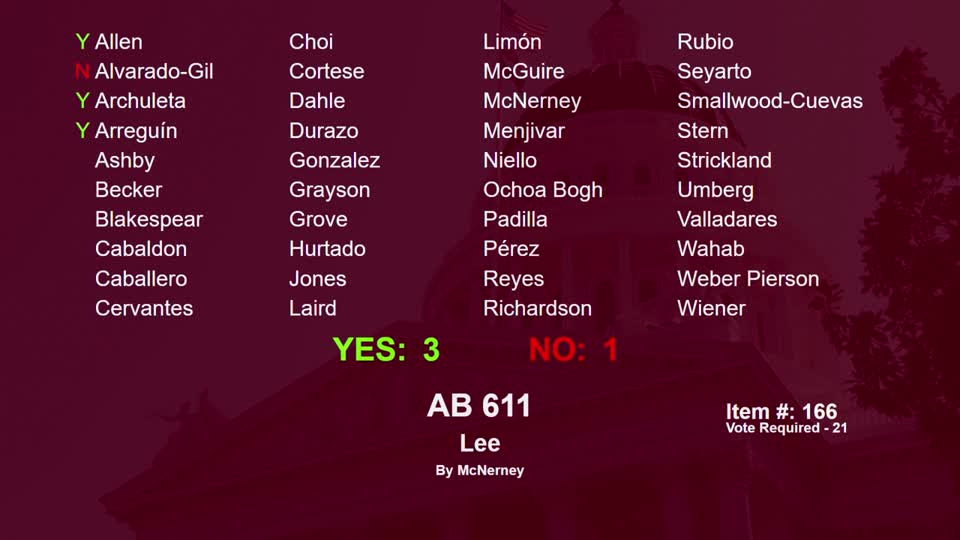 2MIN
Senate Floor
 6MIN
Senate Standing Committee on Judiciary
 22MIN
Senate Standing Committee on Public Safety
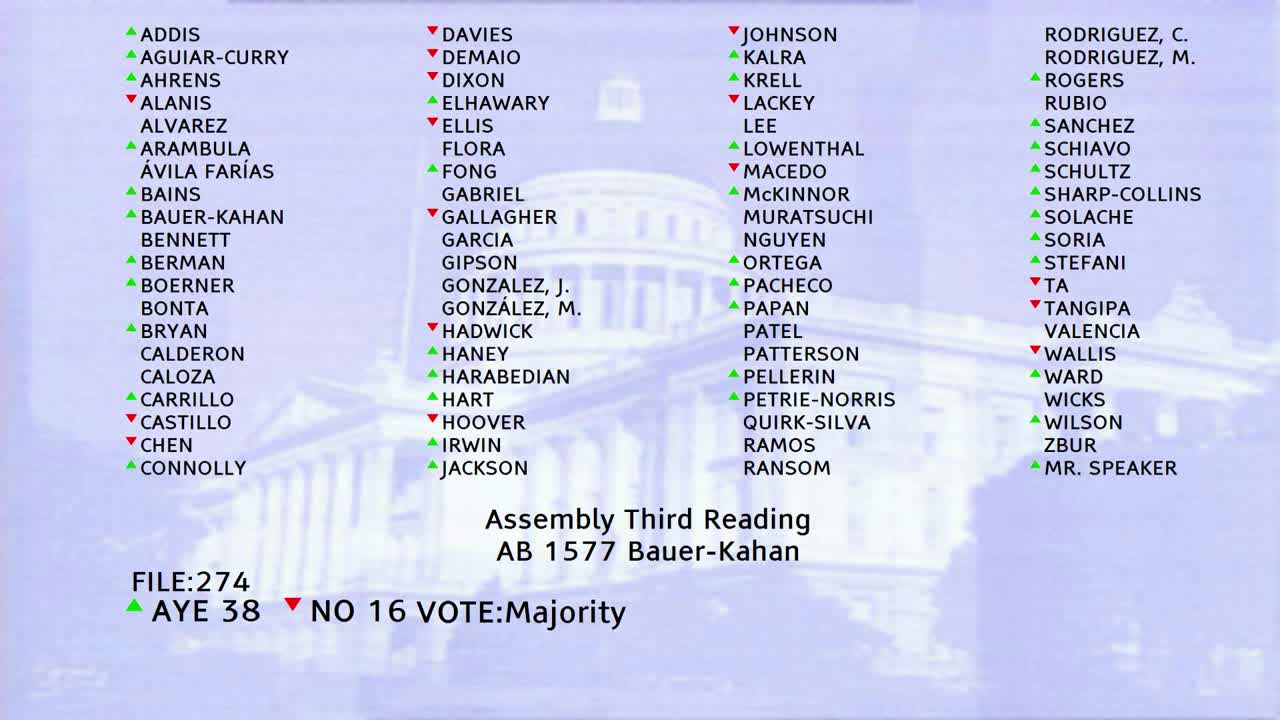 1MIN
Assembly Floor
 8MIN
Assembly Standing Committee on Judiciary
 11MIN