AB 1755: CalWORKS.
- Session Year: 2025-2026
- House: Assembly
- Latest Version Date: 2026-09-20
Current Status:
Passed
(2026-09-20: Chaptered by Secretary of State - Chapter 375, Statutes of 2026.)
Introduced
In Committee
Awaiting First Chamber Vote
Passed First Chamber
In Committee
Awaiting Second Chamber Vote
Passed Second Chamber
Enacted
Existing federal law, the Personal Responsibility and Work Opportunity Reconciliation Act of 1996, replaced the federal Aid to Families with Dependent Children (AFDC) program with the federal Temporary Assistance to Needy Families (TANF) block grant program. Existing federal law provides for allocation of federal funds through the federal TANF block grant program to eligible states. Existing law establishes the California Work Opportunity and Responsibility to Kids (CalWORKs) program, under which, through a combination of state and county funds and federal funds received through the TANF program, each county provides cash assistance and other benefits to qualified low-income families.
Existing law requires aid to be granted to a family with a related child under 18 years of age who has been deprived of parental support or care due to the unemployment, continued absence, death, incapacity, or incarceration of a parent. Existing law considers a child to be deprived of parental support or care due to unemployment of the childs parent or parents when the childs parent or parents have worked less than 100 hours in the preceding 4 weeks and meets specified requirements related to the federal AFDC program.
This bill would, for purposes of determining a childs deprivation of parental support or care, delete the requirements that the parent or parents work less than 100 hours in the preceding 4 weeks and meet the federal AFDC program requirements. The bill would instead disregard the number of hours that the childs parent or parents work, provided the family does not exceed the applicable gross or net income limits. The bill would make these provisions operative on July 1, 2027, or when the State Department of Social Services notifies the Legislature that the Statewide Automated Welfare System can perform the necessary automation to implement the provisions, whichever is later. To the extent that the bill would expand eligibility for the CalWORKs program, thereby imposing a higher level of service on counties, the bill would impose a state-mandated local program.
Existing law continuously appropriates moneys from the General Fund to defray a portion of county costs under the CalWORKs program.
This bill would instead provide that the continuous appropriation would not be made for purposes of implementing these provisions.
The California Constitution requires the state to reimburse local agencies and school districts for certain costs mandated by the state. Statutory provisions establish procedures for making that reimbursement.
This bill would provide that, if the Commission on State Mandates determines that the bill contains costs mandated by the state, reimbursement for those costs shall be made pursuant to the statutory provisions noted above.
Existing federal law, the Personal Responsibility and Work Opportunity Reconciliation Act of 1996, replaced the federal Aid to Families with Dependent Children (AFDC) program with the federal Temporary Assistance to Needy Families (TANF) block grant program. Existing federal law provides for allocation of federal funds through the federal TANF block grant program to eligible states. Existing law establishes the California Work Opportunity and Responsibility to Kids (CalWORKs) program, under which, through a combination of state and county funds and federal funds received through the TANF program, each county provides cash assistance and other benefits to qualified low-income families.
Existing law requires aid to be granted to a family with a related child under 18 years of age who has been deprived of parental support or care due to the unemployment, continued absence, death, incapacity, or incarceration of a parent. Existing law considers a child to be deprived of parental support or care due to unemployment of the childs parent or parents when the childs parent or parents have worked less than 100 hours in the preceding 4 weeks and meets specified requirements related to the federal AFDC program.
This bill would, for purposes of determining a childs deprivation of parental support or care, delete the requirements that the parent or parents work less than 100 hours in the preceding 4 weeks and meet the federal AFDC program requirements. The bill would instead disregard the number of hours that the childs parent or parents work, provided the family does not exceed the applicable gross or net income limits and is otherwise eligible for assistance. limits. The bill would make these provisions operative on July 1, 2027, or when the State Department of Social Services notifies the Legislature that the Statewide Automated Welfare System can perform the necessary automation to implement the provisions, whichever is later. To the extent that the bill would expand eligibility for the CalWORKs program, thereby imposing a higher level of service on counties, the bill would impose a state-mandated local program.
Existing law continuously appropriates moneys from the General Fund to defray a portion of county costs under the CalWORKs program.
This bill would instead provide that the continuous appropriation would not be made for purposes of implementing these provisions.
The California Constitution requires the state to reimburse local agencies and school districts for certain costs mandated by the state. Statutory provisions establish procedures for making that reimbursement.
This bill would provide that, if the Commission on State Mandates determines that the bill contains costs mandated by the state, reimbursement for those costs shall be made pursuant to the statutory provisions noted above.
Existing federal law, the Personal Responsibility and Work Opportunity Reconciliation Act of 1996, replaced the federal Aid to Families with Dependent Children (AFDC) program with the federal Temporary Assistance to Needy Families (TANF) block grant program. Existing federal law provides for allocation of federal funds through the federal TANF block grant program to eligible states. Existing law establishes the California Work Opportunity and Responsibility to Kids (CalWORKs) program, under which, through a combination of state and county funds and federal funds received through the TANF program, each county provides cash assistance and other benefits to qualified low-income families.
Existing law requires aid to be granted to a family with a related child under 18 years of age who has been deprived of parental support or care due to the unemployment, continued absence, death, incapacity, or incarceration of a parent. Existing law considers a child to be deprived of parental support or care due to unemployment of the childs parent or parents when the childs parent or parents have worked less than 100 hours in the preceding 4 weeks and meets specified requirements related to the federal AFDC program.
This bill would, for purposes of determining a childs deprivation of parental support or care, delete the requirements that the parent or parents work less than 100 hours in the preceding 4 weeks and meet the federal AFDC program requirements. The bill would instead disregard the number of hours that the childs parent or parents work, provided the family does not exceed the applicable gross or net income limits and is otherwise eligible for assistance. To the extent that the bill would expand eligibility for the CalWORKs program, thereby imposing a higher level of service on counties, the bill would impose a state-mandated local program.
The California Constitution requires the state to reimburse local agencies and school districts for certain costs mandated by the state. Statutory provisions establish procedures for making that reimbursement.
This bill would provide that, if the Commission on State Mandates determines that the bill contains costs mandated by the state, reimbursement for those costs shall be made pursuant to the statutory provisions noted above.
(a)For the purposes of this chapter, all of the following shall apply:
(1)Unemployed parent means a natural or adoptive parent with whom the child is living.
(2)A child for whom a parent is applying for assistance under this chapter shall be considered to be deprived of parental support or care due to the unemployment of the childs parent or parents when the parent has worked less than 100 hours in the preceding four weeks and meets the requirements concerning an unemployed parent in effect on August 21, 1996, as set forth in Section 233.100 of Title 45 of the Code of Federal Regulations, except for the provisions of subparagraph (i) to (v), inclusive, of paragraph (3) of subdivision (a) of that section.
(3)A family receiving aid under this chapter with a child who is considered to be deprived of parental support or care due to unemployment may continue to receive assistance regardless of the number of hours the childs parent works, provided that the family does not exceed the applicable gross or net income limits and is otherwise eligible for assistance.
(b)This section shall become inoperative on July 1, 2027, or on the date the department notifies the Legislature that the Statewide Automated Welfare System can perform the necessary automation to implement Section 11201, as added by the act that added this subdivision, whichever date is later, and, as of January 1 of the following year, is repealed.
SEC. 2.Section 11201 is added to the Welfare and Institutions Code, to read:11201.(a)For the purposes of this chapter, both of the following shall apply:
(1)Unemployed parent means a natural or adoptive parent with whom the child is living.
(2)A child for whom a parent is applying for assistance under this chapter shall be considered to be deprived of parental support or care due to the unemployment of the childs parent or parents, regardless of the number of hours the childs parent or parents work, provided that the family does not exceed the applicable gross or net income limits.
(b)Notwithstanding the rulemaking provisions of the Administrative Procedure Act (Chapter 3.5 (commencing with Section 11340) of Part 1 of Division 3 of Title 2 of the Government Code), the department may implement, interpret, or make specific this section by means of all-county letters or similar written instructions from the department until regulations are adopted. These all-county letters or similar instructions shall have the same force and effect as regulations until the adoption of regulations.
(c)This section shall become operative on July 1, 2027, or on the date the department notifies the Legislature that the Statewide Automated Welfare System can perform the necessary automation to implement this section, whichever date is later.
SEC. 3.No appropriation pursuant to Section 15200 of the Welfare and Institutions Code shall be made for purposes of this act.
SEC. 4.If the Commission on State Mandates determines that this act contains costs mandated by the state, reimbursement to local agencies and school districts for those costs shall be made pursuant to Part 7 (commencing with Section 17500) of Division 4 of Title 2 of the Government Code.
(a)For the purposes of this chapter, all of the following shall apply:
(a)(1)Unemployed parent means a natural or adoptive parent with whom the child is living.
(b)(2)A child for whom a parent is applying for assistance under this chapter shall be considered to be deprived of parental support or care due to the unemployment of his or her the childs parent or parents when the parent has worked less than 100 hours in the preceding four weeks and meets the requirements concerning an unemployed parent in effect on August 21, 1996, as set forth in Section 233.100 of Title 45 of the Code of Federal Regulations Regulations, except for the provisions of subparagraph (i) to (v), inclusive, of paragraph (3) of subsection subdivision (a) of that section.
(c)(3)A family receiving aid under this chapter with a child who is considered to be deprived of parental support or care due to unemployment may continue to receive assistance regardless of the number of hours his or her the childs parent works works, provided that the family does not exceed the applicable gross or net income limits and is otherwise eligible for assistance.
(b)This section shall become inoperative on July 1, 2027, or on the date the department notifies the Legislature that the Statewide Automated Welfare System can perform the necessary automation to implement Section 11201, as added by the act that added this subdivision, whichever date is later, and, as of January 1 of the following year, is repealed.
SEC. 2.Section 11201 is added to the Welfare and Institutions Code, to read:11201.(a)For the purposes of this chapter, both of the following shall apply:
(1)Unemployed parent means a natural or adoptive parent with whom the child is living.
(2)A child for whom a parent is applying for assistance under this chapter shall be considered to be deprived of parental support or care due to the unemployment of the childs parent or parents, regardless of the number of hours the childs parent or parents work, provided that the family does not exceed the applicable gross or net income limits.
(b)Notwithstanding the rulemaking provisions of the Administrative Procedure Act (Chapter 3.5 (commencing with Section 11340) of Part 1 of Division 3 of Title 2 of the Government Code), the department may implement, interpret, or make specific this section by means of all-county letters or similar written instructions from the department until regulations are adopted. These all-county letters or similar instructions shall have the same force and effect as regulations until the adoption of regulations.
(c)This section shall become operative on July 1, 2027, or on the date the department notifies the Legislature that the Statewide Automated Welfare System can perform the necessary automation to implement this section, whichever date is later.
SEC. 3.No appropriation pursuant to Section 15200 of the Welfare and Institutions Code shall be made for purposes of this act.
SEC. 2.SEC. 4.If the Commission on State Mandates determines that this act contains costs mandated by the state, reimbursement to local agencies and school districts for those costs shall be made pursuant to Part 7 (commencing with Section 17500) of Division 4 of Title 2 of the Government Code.
For the purposes of this chapter, all of the following shall apply:
(a)Unemployed parent means a natural or adoptive parent with whom the child is living.
(b)A child for whom a parent is applying for assistance under this chapter shall be considered to be deprived of parental support or care due to the unemployment of the childs parent or parents, regardless of the number of hours the childs parent or parents work, provided that the family does not exceed the applicable gross or net income limits and is otherwise eligible for assistance.
SEC. 2.If the Commission on State Mandates determines that this act contains costs mandated by the state, reimbursement to local agencies and school districts for those costs shall be made pursuant to Part 7 (commencing with Section 17500) of Division 4 of Title 2 of the Government Code.
For the purposes of this chapter, the following shall apply:
(a)Unemployed parent means a natural or adoptive parent with whom the child is living.
(b)A child for whom a parent is applying for assistance under this chapter shall be considered to be deprived of parental support or care due to the unemployment of his or her parent or parents when the parent has worked less than 100 hours in the preceding four weeks and meets the requirements concerning an unemployed parent in effect on August 21, 1996, as set forth in Section 233.100 of Title 45 of the Code of Federal Regulations except for the provisions of subparagraph (i) to (v), inclusive, of paragraph (3) of subsection (a) of that section. the childs parent or parents, regardless of the number of hours the childs parent or parents work, provided that the family does not exceed the applicable gross or net income limits and is otherwise eligible for assistance.
(c)A family receiving aid under this chapter with a child who is considered to be deprived of parental support or care due to unemployment may continue to receive assistance regardless of the number of hours his or her parent works provided the family does not exceed the applicable gross or net income limits and is otherwise eligible for assistance.SEC. 2.If the Commission on State Mandates determines that this act contains costs mandated by the state, reimbursement to local agencies and school districts for those costs shall be made pursuant to Part 7 (commencing with Section 17500) of Division 4 of Title 2 of the Government Code.
REVISIONS: HeadingLines 1 and 2.|
Date
|
Status
|
|---|---|
| Sep 20, 2026 | Chaptered by Secretary of State - Chapter 375, Statutes of 2026. |
| Sep 20, 2026 | Approved by the Governor. |
| Sep 4, 2026 | Enrolled and presented to the Governor at 4 p.m. |
| Aug 27, 2026 | Senate amendments concurred in. To Engrossing and Enrolling. (Ayes 77. Noes 0. Page 6738.). |
| Aug 27, 2026 | Senate amendments concurred in. To Engrossing and Enrolling. (Ayes 77. Noes 0.). |
| Aug 27, 2026 | In Assembly. Concurrence in Senate amendments pending. |
| Aug 27, 2026 | Read third time. Passed. Ordered to the Assembly. (Ayes 40. Noes 0. Page 5949.). |
| Aug 27, 2026 | Read third time. Passed. Ordered to the Assembly. (Ayes 38. Noes 0.). |
| Aug 17, 2026 | Read second time. Ordered to third reading. |
| Aug 13, 2026 | Read second time and amended. Ordered returned to second reading. |
| Aug 13, 2026 | From committee: Amend, and do pass as amended. (Ayes 7. Noes 0.) (August 13). |
| Jun 29, 2026 | In committee: Referred to APPR. suspense file. |
| Jun 16, 2026 | From committee: Do pass and re-refer to Com. on APPR. (Ayes 5. Noes 0.) (June 15). Re-referred to Com. on APPR. |
| Jun 3, 2026 | From committee chair, with author's amendments: Amend, and re-refer to committee. Read second time, amended, and re-referred to Com. on HUMAN S. |
| Jun 3, 2026 | Referred to Com. on HUMAN S. |
| May 27, 2026 | In Senate. Read first time. To Com. on RLS. for assignment. |
| May 26, 2026 | Read third time. Passed. Ordered to the Senate. (Ayes 78. Noes 0. Page 5298.) |
| May 26, 2026 | Read third time. Passed. Ordered to the Senate. (Ayes 78. Noes 0.) |
| May 26, 2026 | Read third time. Passed. Ordered to the Senate. |
| May 18, 2026 | Read second time. Ordered to third reading. |
| May 14, 2026 | From committee: Do pass. (Ayes 15. Noes 0.) (May 14). |
| Apr 22, 2026 | In committee: Set, first hearing. Referred to APPR. suspense file. |
| Mar 25, 2026 | From committee: Do pass and re-refer to Com. on APPR. (Ayes 7. Noes 0.) (March 24). Re-referred to Com. on APPR. |
| Mar 25, 2026 | Coauthors revised. |
| Feb 23, 2026 | Referred to Com. on HUM. S. |
| Feb 10, 2026 | From printer. May be heard in committee March 12. |
| Feb 9, 2026 | Read first time. To print. |
|
Date
|
Description
|
Location
|
Votes
|
|
|---|---|---|---|---|
| Aug 27, 2026 | AB 1755 Sharp-Collins Concurrence in Senate Amendments | Assembly Floor |
Passed |
|
| Aug 27, 2026 | Assembly 3rd Reading AB1755 Sharp-Collins et al. By Rubio | Senate Floor |
Passed |
|
| Aug 13, 2026 | Do pass as amended | Senate Standing Committee on Appropriations |
Passed |
|
| Jun 29, 2026 | Placed on suspense file | Senate Standing Committee on Appropriations |
Passed |
|
| Jun 15, 2026 | Do pass, but first be re-referred to the Committee on [Appropriations] | Senate Standing Committee on Human Services |
Passed |
|
| May 26, 2026 | AB 1755 Sharp-Collins Assembly Third Reading | Assembly Floor |
Passed |
|
| May 14, 2026 | Do pass. | Assembly Standing Committee on Appropriations |
Passed |
|
| Mar 24, 2026 | Do pass and be re-referred to the Committee on [Appropriations] | Assembly Standing Committee on Human Services |
Passed |
This list shows positions taken on this bill by organizations on the date displayed, which is linked to the original source.
Positions by individuals are not included.
|
Organization
|
Position
|
Date
|
|---|---|---|
| American Academy Of Pediatrics, California | ** Support | |
| California Association Of Food Banks | ** Support | |
| California Family Resource Association | ** Support | |
| California Legislative Women's Caucus | ** Support | |
| California Legislative Women’s Caucus | ** Support | |
| California Partnership To End Domestic Violence | ** Support | |
| CFT – a Union of Educators & Classified Professionals, AFT, AFL-CIO | ** Support | |
| Child Abuse Prevention Center and its Affiliates Safe Kids California | ** Support | |
| Child Abuse Prevention Center and its Affiliates Safe Kids California, Prevent Child Abuse California and the California Family Resource Association | ** Support | |
| Coalition of California Welfare Rights Organization | ** Support | |
| Community Legal Services in East Palo Alto | ** Support | |
| County Welfare Directors Association Of California (Cwda) | ** Support | |
| County Welfare Diretors Association of California | ** Support | |
| County Welfare Diretors Association of California (CWDA) | ** Support | |
| End Child Poverty California Powered by Grace | ** Support | |
| Lieutenant Governor Eleni Kounalakis | ** Support | |
| Los Angeles County | ** Support | |
| Parent Voices CA | ** Support | |
| Prevent Child Abuse California | ** Support | |
| Reimagine CalWORKs Coalition | ** Support | |
| Seiu Ca | ** Support | |
| The Reimagine CalWORKs Coalition | ** Support | |
| western center on law and poverty | ** Support |
CONCURRENCE IN SENATE AMENDMENTS
CSA1 Bill Id:AB 1755
Author:(Sharp-Collins and Lee)
As Amended Ver:August 13, 2026
Majority vote
SUMMARY
Authorizes a parent to work any number of hours and still qualify for California Work Opportunity and Responsibility to Kids (CalWORKs) provided the family does not exceed the applicable gross or net income limits and is otherwise eligible for assistance.
Senate Amendments
Delay implementation until July 1, 2027, or until the California Department of Social Services (CDSS) notifies the Legislature that the Statewide Automated Welfare System can perform the necessary automation.
Define "Unemployed parent" as a natural or adoptive parent with whom the child is living.
Allow CDSS to implement this bill via an all-county letter.
COMMENTS
Background: CalWORKs Overview. CalWORKs is the state's primary cash assistance program. More specifically, CalWORKs implements the federal Temporary Assistance for Needy Families program, which is a federal flexible block grant with the objective of providing income and support to families with children. CalWORKs provides eligible low-income families with cash grants and education, employment and training programs, and supportive services to give families opportunities to build resilience and achieve critical economic mobility.
In Fiscal Year 2024-25, 358,942 families received assistance, and the Administration projects a 1.3% increase to 363,766 families. As of October 2025, the maximum monthly grant for a family of three on CalWORKs (one parent and two children), if the family has no other income and lives in a high-cost-of-living county, is $1,175, which is 53% of the 2025 Federal Poverty Level (FPL). The average grant amount in FY 25-26 was $999.
CalWORKs Eligibility. CalWORKs is administered by each county, where each county determines eligibility through an application and an interview. Applicants must display eligibility of deprivation, age, property, residency, and income.
Deprivation: The aided child must be deprived of parental support or care because at least one parent is:
- Deceased;
- Either physically or mentally incapacitated;
- The applicant parent is not working or is working less than 100 hours per month; or,
- Continually absent from the home.
Age: Children may be eligible for CalWORKs until their 18th birthday, or are 18 years of age and in high school or vocational school full-time, and are expected to complete either program before their 19th birthday, or they are disabled and attend school full-time.
Property: The property of a child and the parent(s) must be under the following limits:
- Families without elderly or disabled members may have $12,137 combined personal and real property per family.
- Families with elderly (those who are 60 years of age or older) or disabled members may have $18,206 combined personal and real property per family.
- Furniture, clothing, and appliances are exempt.
- The family home is exempt provided the family lives in the home.
- Automobiles may be exempt for specific uses and/or up to $33,499.
Residency: There are no durational residency requirements for the CalWORKs program. Families who make their residence in California and who intend to continue to live in California may be eligible. Family members must be legal residents of the United States.
Income Limits: A new CalWORKs Income Reporting Threshold (IRT) is released every year for the new Federal Fiscal Year, which runs from October 1 to September 30. If a family’s gross monthly income exceeds the IRT, the family must report their income, which requires the county to re-evaluate the family’s case. Because the IRT is determined annually, the California Department of Social Services (CDSS) issues a new chart each fall to reflect changes. According to All County Letter No. 25-61 and effective October 1, 2025, to financially qualify, applicants must qualify using either Tier One or Tier Two in the IRT. The CalWORKs IRT amount for each family is the lower of the tiers below.
- Tier One IRT: $1,222 (55% of the 2025 FPL for a family of three) plus the amount of income last used to calculate the family's FPL monthly benefits; or
- Tier Two IRT: The amount of income which may render the family ineligible for CalFresh, or 130% of the 2025 FPL, as shown in the chart.
CalWORKs Welfare-to-Work Requirement. Unless deemed exempt, an adult in a one-parent assistance unit is required to participate in welfare-to-work activities for an average of 30 hours per week or, in the case of someone who is pregnant or parenting a child under six years of age, an average of 20 hours per week, monthly. In a two-parent assistance unit, one or both adults must participate in welfare-to-work activities for a combined average of 35 hours per week. Welfare-to-work activities include participation in subsidized and unsubsidized employment, community service, adult basic education, community college, job skills, training, mental health counseling, substance use disorder treatment, domestic abuse services, or other activities necessary to assist recipients in obtaining employment.
If a CalWORKs recipient who is not exempt from participation does not meet the welfare-to-work requirements, the recipient may be sanctioned, and that recipient’s portion of the family’s grant may be subtracted from the amount provided to the family.
Supportive services are available for families participating in welfare-to-work activities. They include childcare, transportation, ancillary expenses, mental health services, non-medical substance abuse services, and personal counseling. A recipient may be excused from participating in welfare-to-work activities for good cause and will not be sanctioned if required supported services are not available.
This bill would allow a participant to work any number of hours and still qualify for assistance as long as they pass the means test and do not exceed income requirements. To put this into context, California's minimum wage is $16.90, and if someone works 160 hours/month, they are grossing $2,704/month. If they were a family of three, they would be income-eligible, but ineligible due to the deprivation eligibility requirements which cap the number of hours a parent can work while still receiving aid.
According to the Author
"California's safety net should support families who are working to make ends meet, not penalize them for doing so. The 100 hour rule is an outdated provision that denies assistance to families who remain in poverty simply because a parent works additional hours. [This bill] modernizes CalWORKs by eliminating this obsolete barrier and ensuring that eligibility is based on income and need. This bill advances equity, supports family stability, and strengthens California's commitment to reducing child poverty."
Arguments in Support
The Reimagine CalWORKs Coalition The 100-hour rule policy assumes that working an average of 25 hours a week can generate enough income for a parent to provide for their family and further assumes the family's income is above the eligibility threshold (known as the Minimum Basic Standard of Adequate Care or MBSAC). This old welfare rule known as the "work penalty" was adopted after the welfare reform era of the 1990’s. It was based on assumptions about sufficiency of income from hours worked, which can be incorrect, and which have served no good purpose but to punish hard working families and harm children who are poor. California is one of only four states that still implements this regressive 100-hour AFDC policy from the early 20th century. The other states are Kentucky, Mississippi, and South Dakota…In practice, about 70 percent of families denied assistance because of this rule are eligible when they reapply within one or two months of the initial denial because their hours change. However, it makes no sense and it is inhumane to subject impoverished families to this bureaucratic rule, when good government dictates that we treat them fairly, give them the services and supports they need, and judge them based on facts about their economic sufficiency and not on assumptions that are incorrect. More importantly, policies like this put families at risk of homelessness."
Arguments in Opposition
None on file.
FISCAL COMMENTS
According to the Senate Committee on Appropriations: "Unknown ongoing General Fund costs, likely low millions, to eliminate the 100-hour rule limitation for child deprivation. Costs are related to grants, employment services, child care, and automation. Costs to counties for administration would be potentially reimbursable by the state, subject to a determination by the Commission on State Mandates."
VOTES:
ASM HUMAN SERVICES: 7-0-0
YES: Lee, Castillo, Gipson, Elhawary, Jackson, Solache, Tangipa
ASM APPROPRIATIONS: 15-0-0
YES: Wicks, Hoover, Aguiar-Curry, Calderon, Caloza, Dixon, Fong, Mark González, Krell, Pacheco, Pellerin, Sharp-Collins, Solache, Ta, Tangipa
ASSEMBLY FLOOR: 78-0-2
YES: Addis, Aguiar-Curry, Ahrens, Alanis, Alvarez, Arambula, Ávila Farías, Bains, Bauer-Kahan, Bennett, Berman, Boerner, Bonta, Bryan, Calderon, Caloza, Carrillo, Castillo, Chen, Connolly, Davies, DeMaio, Dixon, Elhawary, Ellis, Flora, Fong, Gabriel, Gallagher, Garcia, Gipson, Jeff Gonzalez, Mark González, Hadwick, Haney, Harabedian, Hart, Hoover, Irwin, Jackson, Johnson, Kalra, Krell, Lackey, Lee, Lowenthal, Macedo, McKinnor, Nguyen, Ortega, Pacheco, Papan, Patel, Patterson, Pellerin, Petrie-Norris, Quirk-Silva, Ramos, Ransom, Michelle Rodriguez, Rogers, Blanca Rubio, Sanchez, Schiavo, Schultz, Sharp-Collins, Solache, Soria, Stefani, Ta, Tangipa, Valencia, Wallis, Ward, Wicks, Wilson, Zbur, Rivas
ABS, ABST OR NV: Muratsuchi, Celeste Rodriguez
UPDATED
VERSION: August 13, 2026
CONSULTANT: Alexandria Smith / HUM. S. / (916) 319-2089 FN: 0004081
SENATE RULES COMMITTEE Office of Senate Floor Analyses (916) 651-4171 | AB 1755 |
THIRD READING
Bill No: AB 1755
Author: Sharp-Collins (D) and Lee (D), et al.
Amended: 8/13/26 in Senate
Vote: 21
SENATE HUMAN SERVICES COMMITTEE: 5-0, 6/15/26
AYES: Becker, Ochoa Bogh, Laird, Pérez, Weber Pierson
SENATE APPROPRIATIONS COMMITTEE: 7-0, 8/13/26
AYES: Cervantes, Seyarto, Cabaldon, Dahle, Grayson, Richardson, Wahab
ASSEMBLY FLOOR: 78-0, 5/26/26 - See last page for vote
SUBJECT: CalWORKS
SOURCE: Coalition of California Welfare Rights Organization
California Partnership to End Domestic Violence
End Child Poverty California Powered by Grace
Parent Voices CA
SEIU CA
DIGEST:
This bill deletes the rule that families with parents who work over 100 hours in a month are ineligible for assistance from the California Work Opportunity and Responsibility to Kids (CalWORKs) program.
ANALYSIS:
Existing Law:
- Establishes the federal Temporary Assistance for Needy Families (TANF) program, which permits states to implement the program under a state plan. (42 United States Code [U.S.C.] section 601 et seq.)
- Permits TANF financial assistance to any child that has been deprived of parental support or care by reason of the fact that his or her parent who is the principal earner is employed less than 100 hours a month; or exceeds that standard for a particular month if his or her work is intermittent and the excess is of a temporary nature as evidenced by the fact that he or she was under the 100-hour standard for two prior months and is expected to be under the standard during the next month. (45 Code of Federal Regulations [CFR] section 233.100)
- Establishes the CalWORKs program to provide cash assistance and other social services for low-income families through the federal TANF program. Under CalWORKs, each county provides assistance through a combination of state, county, and federal TANF funds. (Welfare and Institutions Code [WIC] section 11200 et seq.)
- Establishes income, asset, and real property limits used to determine eligibility for the CalWORKs program and grant amounts based on family size and county of residence. (WIC section 11150-11160; WIC section 11450 et seq.)
- Requires all individuals in the household who are 16 years of age or older, unless they are otherwise exempt, to participate in welfare-to-work activities as a condition of eligibility for CalWORKs. (WIC section 11320.3 and section 11322.6)
- Establishes asset limits to determine eligibility for CalWORKs aid. Prohibits a CalWORKs applicant or recipient from receiving aid if they have countable resources over $10,000, or more than $15,000 if one member of the household is age 60 or older or has a disability, or if they have a vehicle valued over $25,000. Requires asset limits to be increased every year based on the California Necessities Index. (WIC section 11155)
- Establishes that a child is considered deprived of parental support for the purposes of receiving CalWORKs benefits due to the unemployment of their parent or parents when a parent has worked less than 100 hours in the preceding four weeks and meets specified federal definitions of an unemployed parent. (WIC section 11201(b))
- Establishes that a family receiving CalWORKs benefits with a child who is considered to be deprived of parental support due to unemployment may continue to receive assistance regardless of the number of hours their parent works, provided the family does not exceed the applicable gross or net income limits and is otherwise eligible for assistance. (WIC section 11201(c))
This bill:
- Makes the requirement that a parent must not work more than 100 hours in the preceding four weeks in order to for their child to be considered deprived of parental support due to unemployment of the parent inoperative on July 1, 2027 or on the date the department notifies the Legislature that the Statewide Automated Welfare System can perform the necessary automation to implement this section, whichever date is later, and on January 1 of the following year, repealed.
- Makes the current the provision that allows a family receiving CalWORKs benefits with a child who is considered to be deprived of parental support due to unemployment to continue to receive assistance regardless of the number of hours their parent works, provided the family does not exceed income limits and is otherwise eligible for assistance inoperative on July 1, 2027 or on the date the department notifies the Legislature that the Statewide Automated Welfare System can perform the necessary automation to implement this section, whichever date is later, and on January 1 of the following year, repealed.
- Defines “unemployed parent” to mean a natural or adoptive parent with whom the child is living.
- Makes a child to be considered to be deprived of parental support or care due to the unemployment of their parent, and therefore qualify for CalWORKs benefits, as long as the family’s income does not exceed the applicable CalWORKs gross or net income limits and is otherwise eligible for assistance.
- Allow California Department of Social Services (CDSS) to implement, interpret, or make specific the bill through all- county letters or similar written instructions until regulations have been adopted.
- Makes this section operative on July 1, 2027, or on the date the department notifies the Legislature that the Statewide Automated Welfare System can perform the necessary automation to implement this section, whichever date is later.
Background
According to the author, “California’s safety net should support families working to make ends meet, not penalize them for working additional hours. The current 100-hour rule in CalWORKs is an outdated policy that denies assistance to otherwise income-eligible families solely because a parent exceeds a monthly work-hour threshold. AB 1755 modernizes the program by eliminating this obsolete barrier and ensuring eligibility is based on income and need rather than arbitrary hour limits. By removing a policy that discourages work, the bill promotes family stability, advances economic equity, reduces administrative burdens, and strengthens California’s commitment to reducing child poverty and supporting working families.”
CalWORKs. As California’s version of the federal TANF program, CalWORKs is the state’s largest anti-poverty program. CalWORKs provides temporary cash assistance aimed at moving children out of poverty and helping qualified low-income families meet their basic needs, such as rent, clothing, utility bills, food, and other items needed to ensure children are cared for at home and safely remain with their families. In addition to cash assistance, adult CalWORKs recipients are provided education, employment, and training services designed to help remove barriers to work and promote self-sufficiency. These services are typically outlined in a welfare-to-work plan. CDSS is the designated state agency responsible for program supervision at the state level, and counties are responsible for administering the program at the local level.
CalWORKs is funded through federal, state, county and realignments funds. The federal government gives the state a TANF block grant and CalWORKs receives a majority of that allocation. California and local governments spend a maintenance-of-effort amount as well, as required by federal law. The state also uses General Fund money for state-only programs and provides counties with a single allocation to fund many CalWORKs services. Funds from the 1991 realignment are also used to fund assistance payments and are part of the single allocation.
Eligibility for CalWORKs is based on family size, income level, and region. Families must show economic hardship through income and asset tests and participation in the program is time limited. Adults are only allowed to use CalWORKs for 60 months in their lifetime. Children of adults who receive cash aid can continue to receive benefits until they are 18 years old in California.
Welfare-to-Work. Adults who participate in CalWORKs are also required to participate in welfare-to-work activities, unless exempted, which include employment, education, job skills training, vocational education, work study on college campuses, on-the-job training, community service, and job retention services, or activities to address or remove barriers like mental health, substance use disorder, and domestic abuse. Eligible families can also receive supportive services like child care, transportation, ancillary expenses, mental health services, substance abuse services, and personal counseling.
CalWORKs Deprivation Standard. The state’s CalWORKs deprivation standards were originally enacted to comply with federal Aid to Families with Dependent Children (AFDC) rules, which required two-parent families to take additional steps to prove deprivation in order to receive aid. The AFDC statute was replaced in 1996 with the TANF program, which emphasized work preparation in conjunction with receipt of the grant. One of the four core purposes of the TANF program is to encourage the formation and maintenance of two-parent families.
The deprivation test means that, to qualify for CalWORKs, a child in the family must be “deprived of parental support or care” due to the death, physical or mental incapacity, or incarceration of a parent; the unemployment of a parent or parents; or the continued absence of a parent, as defined. Consequently, the only way a two-parent household can meet the deprivation test is if the principal wage earner is unemployed, which is defined as working less than 100 hours a month, regardless of their income. The 100-hour work limit is a remnant of the prior AFDC law, which was based on the assumption that an average of 25 hours per week would put a family above the threshold to receive cash benefits.
Many states have modified or removed special requirements for two-parent units, but California remains one of the few states that has the 100-hour limit in statute. The elimination of this rule would allow county eligibility workers to evaluate applications based only on income limits and allow more families to receive benefits that would otherwise qualify. An evaluation of the Minnesota Family Investment Program found that when “the 100-hour and work history rules were removed, two-parent families were allowed to retain more of their earnings”[1]. Studies of the program have also found that rules like the 100-hour rule discourage employment rather than incentivize it. This bill would remove 100-hour work limit for purposes of determining if a family meets the deprivation standard.
Related/Prior Legislation:
AB 1324 (Sharp-Collins, 2025) would have made several changes to CalWORKs, including deleting the rule that families with unemployed parents who work over 100 hours in a month are ineligible for CalWORKs assistance and made changes to the extended subsidized employment program, including conducting a CalWORKs expansion feasibility study. AB 1324 was vetoed.
SB 996 (Kamlager, 2022) would have repealed the consideration of an individual’s or family’s assets as a condition of eligibility for CalWORKs and repealed the 100-hour standard described above for purposes of determining a child’s deprivation of parental support or care due to the unemployment of their parent. SB 996 was held in the Assembly Appropriations Committee.
AB 371 (Mullin, 2015) would have removed the deprivation standard for purposes of determining eligibility for CalWORKs and would have instead required that aid be granted to a family if the family meets applicable eligibility requirements, without regard to the absence or employment status of the parent, among other changes to CalWORKs requirements. AB 371 was vetoed.
AB 1502 (Mullin, 2014) would have removed the deprivation standard for purposes of determining eligibility for CalWORKs and would have instead required that aid be granted to a family if the family meets applicable eligibility requirements, without regard to the absence or employment status of the parent, among other changes to CalWORKs requirements. AB 1502 was held in the Senate Appropriations Committee.
FISCAL EFFECT: Appropriation: No Fiscal Com.: Yes Local: Yes
According to the Senate Appropriations Committee: “Unknown ongoing General Fund costs, likely low millions, to eliminate the 100-hour rule limitation for child deprivation. Costs are related to grants, employment services, child care, and automation. Costs to counties for administration would be potentially reimbursable by the state, subject to a determination by the Commission on State Mandates.”
SUPPORT: (Verified 8/14/26)
Coalition of California Welfare Rights Organization (co-source)
California Partnership to End Domestic Violence (co-source)
End Child Poverty California Powered by Grace (co-source)
Parent Voices CA (co-source)
California Association of Food Banks
California Family Resource Association
California Legislative Women's Caucus
Child Abuse Prevention Center and its Affiliates Safe Kids California, Prevent Child Abuse California and the California Family Resource Association; the
County Welfare Diretors Association of California (CWDA)
Lieutenant Governor Eleni Kounalakis
Los Angeles County
Seiu CA
Western Center on Law and Poverty
OPPOSITION: (Verified 8/14/26)
None received
ASSEMBLY FLOOR: 78-0, 5/26/26
AYES: Addis, Aguiar-Curry, Ahrens, Alanis, Alvarez, Arambula, Ávila Farías, Bains, Bauer-Kahan, Bennett, Berman, Boerner, Bonta, Bryan, Calderon, Caloza, Carrillo, Castillo, Chen, Connolly, Davies, DeMaio, Dixon, Elhawary, Ellis, Flora, Fong, Gabriel, Gallagher, Garcia, Gipson, Jeff Gonzalez, Mark González, Hadwick, Haney, Harabedian, Hart, Hoover, Irwin, Jackson, Johnson, Kalra, Krell, Lackey, Lee, Lowenthal, Macedo, McKinnor, Nguyen, Ortega, Pacheco, Papan, Patel, Patterson, Pellerin, Petrie-Norris, Quirk-Silva, Ramos, Ransom, Michelle Rodriguez, Rogers, Blanca Rubio, Sanchez, Schiavo, Schultz, Sharp-Collins, Solache, Soria, Stefani, Ta, Tangipa, Valencia, Wallis, Ward, Wicks, Wilson, Zbur, Rivas
NO VOTE RECORDED: Muratsuchi, Celeste Rodriguez
Prepared by: Naima Ford Antal / HUMAN S. / (916) 651-1524
8/17/26 10:42:49
**** END ****
Paula Roberts and Mark Greenberg. Marriage and the TANF Rules: A Discussion Paper. Center for Law and Social Policy. February 1, 2005 ↑
SENATE COMMITTEE ON
Senator Sabrina Cervantes, Chair
2025 - 2026 Regular Session
AB 1755 (Sharp-Collins) - CalWORKS
Version: | Policy Vote: |
Urgency: | Mandate: |
Hearing Date: | Consultant: |
Bill Summary:
AB 1755 would revise the “deprivation rule” for purposes of CalWORKs eligibility.
*********** ANALYSIS ADDENDUM – SUSPENSE FILE ***********
The following information is revised to reflect amendments
adopted by the committee on August 13, 2026
Fiscal Impact:
- Unknown ongoing General Fund costs, likely low millions, to eliminate the 100-hour rule limitation for child deprivation. Costs are related to grants, employment services, child care, and automation.
- Costs to counties for administration would be potentially reimbursable by the state, subject to a determination by the Commission on State Mandates.
Author Amendments:
Clarify the operative date.
-- END --
SENATE COMMITTEE ON
Senator Sabrina Cervantes, Chair
2025 - 2026 Regular Session
AB 1755 (Sharp-Collins) - CalWORKS
Version: | Policy Vote: |
Urgency: | Mandate: |
Hearing Date: | Consultant: |
Bill Summary:
AB 1755 would revise the “deprivation rule” for purposes of CalWORKs eligibility.
Fiscal Impact:
- The California Department of Social Services (CDSS) estimates initial General Fund costs of $1.3 million and ongoing General Fund costs of $2.5 million to eliminate the 100-hour rule limitation for child deprivation. This assumes each month there is an average of approximately 121 families in the first year and 146 families ongoing that would be newly eligible for CalWORKs benefits with the elimination of the 100-hour rule. Cost estimates include costs for grants, employment services, child care, and automation.
- Cost to counties for administration would be potentially reimbursable by the state, subject to a determination by the Commission on State Mandates.
Background:
The CalWORKs program provides temporary cash assistance aimed at moving children out of poverty and helping qualified low-income families meet their basic needs such as rent, clothing, utility bills, food, and other items needed to ensure children are cared for at home and safely remain with their families. In addition to cash assistance, adult CalWORKs recipients participate in welfare-to-work activities and are provided education and employment and training services designed to help remove barriers to work and promote self-sufficiency. CalWORKs is funded through a combination of state and county funds and federal funds received through the federal Temporary Assistance for Needy Families (TANF) program.
The deprivation rule means that in order to qualify for CalWORKs, a child in the family must be “deprived of parental support or care” due to the death, physical or mental incapacity, unemployment, or the continued absence of a parent. Current state law considers a child to be deprived of parental support or care due to unemployment of the child’s parent or parents when the parent has worked less than 100 hours in the preceding four weeks and meets specified federal requirements.
Proposed Law:
AB 1755 would revise the current CalWORKs eligibility deprivation standard for unemployment and instead, provide that child is considered to be deprived of parental support or care due to the unemployment of the child’s parent or parents, regardless of the number of hours the child’s parent or parents work, provided that the family does not exceed the applicable gross or net income limits and is otherwise eligible for assistance.
Related Legislation:
AB 1324 (Sharp-Collins, 2025) included a similar provision related to the CalWORKs deprivation rule. The bill was vetoed by the Governor.
-- END --
SENATE COMMITTEE ON HUMAN SERVICES
Senator Becker, Chair
2025 - 2026 Regular
Bill No: | AB 1755 | ||
Author: | Sharp-Collins | ||
Version: | June 3, 2026 | Hearing Date: | June 15, 2026 |
Urgency: | No | Fiscal: | Yes |
Consultant: | Naima Ford Antal | ||
Subject: CalWORKS
SUMMARY
This bill deletes the rule that families with parents who work over 100 hours in a month are ineligible for assistance from the California Work Opportunity and Responsibility to Kids (CalWORKs) program.
ABSTRACT
Existing Law:
- Establishes the federal Temporary Assistance for Needy Families (TANF) program, which permits states to implement the program under a state plan. (42 United States Code [U.S.C.] 601 et seq.)
- Permits TANF financial assistance to any child that has been deprived of parental support or care by reason of the fact that his or her parent who is the principal earner is employed less than 100 hours a month; or exceeds that standard for a particular month if his or her work is intermittent and the excess is of a temporary nature as evidenced by the fact that he or she was under the 100-hour standard for two prior months and is expected to be under the standard during the next month. (45 Code of Federal Regulations [CFR] 233.100)
- Establishes the CalWORKs program to provide cash assistance and other social services for low-income families through the federal TANF program. Under CalWORKs, each county provides assistance through a combination of state, county, and federal TANF funds. (Welfare and Institutions Code [WIC] 11200 et seq.)
- Establishes income, asset, and real property limits used to determine eligibility for the CalWORKs program and grant amounts based on family size and county of residence. (WIC 11150-11160; WIC 11450 et seq.)
- Requires all individuals in the household who are 16 years of age or older, unless they are otherwise exempt, to participate in welfare-to-work activities as a condition of eligibility for CalWORKs. (WIC 11320.3 and 11322.6)
- Establishes asset limits to determine eligibility for CalWORKs aid. Prohibits a CalWORKs applicant or recipient from receiving aid if they have countable resources over $10,000, or more than $15,000 if one member of the household is age 60 or older or has a disability, or if they have a vehicle valued over $25,000. Requires asset limits to be increased every year based on the California Necessities Index. (WIC 11155)
- Establishes that a child is considered deprived of parental support for the purposes of receiving CalWORKs benefits due to the unemployment of their parent or parents when a parent has worked less than 100 hours in the preceding four weeks and meets specified federal definitions of an unemployed parent. (WIC 11201(b))
- Establishes that a family receiving CalWORKs benefits with a child who is considered to be deprived of parental support due to unemployment may continue to receive assistance regardless of the number of hours their parent works, provided the family does not exceed the applicable gross or net income limits and is otherwise eligible for assistance. (WIC 11201(c))
This Bill:
- Deletes the requirement that a parent must not work more than 100 hours in the preceding four weeks in order to for their child to be considered deprived of parental support due to unemployment of the parent.
- Deletes the provision that allows a family receiving CalWORKs benefits with a child who is considered to be deprived of parental support due to unemployment to continue to receive assistance regardless of the number of hours their parent works, provided the family does not exceed income limits and is otherwise eligible for assistance.
- Allows a child to be considered to be deprived of parental support or care due to the unemployment of their parent, and therefore qualify for CalWORKs benefits, as long as the family’s income does not exceed the applicable CalWORKs gross or net income limits and is otherwise eligible for assistance.
FISCAL IMPACT
According to the Assembly Appropriations Committee:
This bill will likely result in ongoing state costs in the low millions of dollars annually for increased benefit amounts and administration and one-time costs for automation changes. These costs are estimated as follows:
- CDSS estimates ongoing General Fund costs of approximately $1.3 million in the first year and $2.5 million ongoing thereafter for additional benefits due to increased eligibility resulting from the elimination of the 100-hour rule. This estimate is based on a monthly grant cost of $992, ongoing monthly employment services costs of $558 per family, ongoing monthly childcare costs of $980 per family, and 2025 data indicating approximately 121 families in the first year and 146 families ongoing will be newly eligible for CalWORKs benefits under this bill. Actual costs may vary and will depend on uptake of the caseload.
California's annual $3.7 billion federal TANF block grant may be used flexibly within the CalWORKs program. It is fully allocated within the existing and proposed state budgets. Therefore, this analysis assumes any new costs for CalWORKs will be funded by the GF. State GF costs may be mitigated to the extent TANF funding is not fully expended in any particular year, or if one of the CalWORKs subaccounts has sufficient revenue available to support grant costs.
- CDSS estimates one-time GF automation costs of approximately $218,500 for system updates to the California Statewide Automated Welfare System (CalSAWS) to remove the 100-hour rule limitation.
- Administrative costs to county social workers for increased workload due to expanded eligibility are unknown, but potentially reimbursable by the state, subject to a determination by the Commission on State Mandates.
BACKGROUND AND DISCUSSION
Purpose of the Bill:
According to the author, “California’s safety net should support families working to make ends meet, not penalize them for working additional hours. The current 100-hour rule in CalWORKs is an outdated policy that denies assistance to otherwise income-eligible families solely because a parent exceeds a monthly work-hour threshold. AB 1755 modernizes the program by eliminating this obsolete barrier and ensuring eligibility is based on income and need rather than arbitrary hour limits. By removing a policy that discourages work, the bill promotes family stability, advances economic equity, reduces administrative burdens, and strengthens California’s commitment to reducing child poverty and supporting working families.”
CalWORKs
As California’s version of the federal TANF program, CalWORKs is the state’s largest anti-poverty program. CalWORKs provides temporary cash assistance aimed at moving children out of poverty and helping qualified low-income families meet their basic needs, such as rent, clothing, utility bills, food, and other items needed to ensure children are cared for at home and safely remain with their families. In addition to cash assistance, adult CalWORKs recipients are provided education, employment, and training services designed to help remove barriers to work and promote self-sufficiency. These services are typically outlined in a welfare-to-work plan. CDSS is the designated state agency responsible for program supervision at the state level, and counties are responsible for administering the program at the local level.
CalWORKs is funded through federal, state, county and realignments funds. The federal government gives the state a TANF block grant and CalWORKs receives a majority of that allocation. California and local governments spend a maintenance-of-effort amount as well, as required by federal law. The state also uses General Fund money for state-only programs and provides counties with a single allocation to fund many CalWORKs services. Funds from the 1991 realignment are also used to fund assistance payments and are part of the single allocation.
Eligibility for CalWORKs is based on family size, income level, and region. Families must show economic hardship through income and asset tests and participation in the program is time limited. Adults are only allowed to use CalWORKs for 60 months in their lifetime. Children of adults who receive cash aid can continue to receive benefits until they are 18 years old in California.
Welfare-to-Work
Adults who participate in CalWORKs are also required to participate in welfare-to-work activities, unless exempted, which include employment, education, job skills training, vocational education, work study on college campuses, on-the-job training, community service, and job retention services, or activities to address or remove barriers like mental health, substance use disorder, and domestic abuse. Eligible families can also receive supportive services like child care, transportation, ancillary expenses, mental health services, substance abuse services, and personal counseling.
CalWORKs Deprivation Standard
The state’s CalWORKs deprivation standards were originally enacted to comply with federal Aid to Families with Dependent Children (AFDC) rules, which required two-parent families to take additional steps to prove deprivation in order to receive aid. The AFDC statute was replaced in 1996 with the TANF program, which emphasized work preparation in conjunction with receipt of the grant. One of the four core purposes of the TANF program is to encourage the formation and maintenance of two-parent families.
The deprivation test means that, to qualify for CalWORKs, a child in the family must be “deprived of parental support or care” due to the death, physical or mental incapacity, or incarceration of a parent; the unemployment of a parent or parents; or the continued absence of a parent, as defined. Consequently, the only way a two-parent household can meet the deprivation test is if the principal wage earner is unemployed, which is defined as working less than 100 hours a month, regardless of their income. The 100-hour work limit is a remnant of the prior AFDC law, which was based on the assumption that an average of 25 hours per week would put a family above the threshold to receive cash benefits.
Many states have modified or removed special requirements for two-parent units, but California remains one of the few states that has the 100-hour limit in statute. The elimination of this rule would allow county eligibility workers to evaluate applications based only on income limits and allow more families to receive benefits that would otherwise qualify. An evaluation of the Minnesota Family Investment Program found that when “the 100-hour and work history rules were removed, two-parent families were allowed to retain more of their earnings”[1]. Studies of the program have also found that rules like the 100-hour rule discourage employment rather than incentivize it. This bill would remove 100-hour work limit for purposes of determining if a family meets the deprivation standard.
Related/Prior Legislation:
AB 1324 (Sharp-Collins, 2025) would have made several changes to CalWORKs, including deleting the rule that families with unemployed parents who work over 100 hours in a month are ineligible for CalWORKs assistance and made changes to the extended subsidized employment program, including conducting a CalWORKs expansion feasibility study. AB 1324 was vetoed.
SB 996 (Kamlager, 2022) would have repealed the consideration of an individual’s or family’s assets as a condition of eligibility for CalWORKs and repealed the 100-hour standard described above for purposes of determining a child’s deprivation of parental support or care due to the unemployment of their parent. SB 996 was held in the Assembly Appropriations Committee.
AB 371 (Mullin, 2015) would have removed the deprivation standard for purposes of determining eligibility for CalWORKs and would have instead required that aid be granted to a family if the family meets applicable eligibility requirements, without regard to the absence or employment status of the parent, among other changes to CalWORKs requirements. AB 371 was vetoed.
AB 1502 (Mullin, 2014) would have removed the deprivation standard for purposes of determining eligibility for CalWORKs and would have instead required that aid be granted to a family if the family meets applicable eligibility requirements, without regard to the absence or employment status of the parent, among other changes to CalWORKs requirements. AB 1502 was held in the Senate Appropriations Committee.
COMMENTS
AB 1755 would change the definition of the CalWORKs deprivation standard to better align with modern wages and labor trends. Past assumptions that children whose parents worked more than 100 hours in a month should have sufficient resources does not take into consideration how much cost of living has changed versus wages. Based on minimum wage and current CalWORKs income limits, a parent could work over 100 hours per week and still make less than the income limit based on how many children they have. The purpose of CalWORKs is to provide resources to very low-income families in a way that allows them to stabilize themselves and achieve economic mobility. The 100-hour time limit law makes eligibility more complicated and creates barriers that may not align the goals of the program.
PRIOR VOTES
Assembly Floor: | 78 - 0 |
Assembly Appropriations Committee: | 15 - 0 |
Assembly Human Services Committee: | 7 - 0 |
POSITIONS
Support:
Coalition of California Welfare Rights Organization (Sponsor)
California Partnership to End Domestic Violence (Co-Sponsor)
End Child Poverty California Powered by Grace (Co-Sponsor)
Parent Voices CA (Co-Sponsor)
SEIU CA (Co-Sponsor)
Western Center on Law and Poverty
California Association of Food Banks
California Legislative Women’s Caucus
County Welfare Directors Association of California (CWDA)
Los Angeles County
Oppose:
None received
-- END --
Paula Roberts and Mark Greenberg. Marriage and the TANF Rules: A Discussion Paper. Center for Law and Social Policy. February 1, 2005 ↑
ASSEMBLY THIRD READING
ATR Bill Id:AB 1755
Author:(Sharp-Collins and Lee)
As Introduced Ver:February 9, 2026
Majority vote
SUMMARY
Authorizes a parent to work any number of hours and still qualify for CalWORKs provided the family does not exceed the applicable gross or net income limits and is otherwise eligible for assistance. Specifically, this bill, removes the provision that requires, in order to meet eligibility for CalWORKs under the deprivation of parental support standard, a parent to work less than 100 hours in the preceding four weeks and to meet specified federal requirements.
Major Provisions
COMMENTS
Background: CalWORKs Overview. CalWORKs is the state's primary cash assistance program. More specifically, CalWORKs implements the federal TANF program, which is a federal flexible block grant with the objective of providing income and support to families with children. CalWORKs provides eligible low-income families with cash grants and education, employment and training programs, and supportive services to give families opportunities to build resilience and achieve critical economic mobility.
In Fiscal Year 2024-25, 358,942 families received assistance, and the Administration projects a 1.3% increase to 363,766 families. As of October 2025, the maximum monthly grant for a family of three on CalWORKs (one parent and two children), if the family has no other income and lives in a high-cost-of-living county, is $1,175, which is 53% of the 2025 Federal Poverty Level (FPL). The average grant amount in FY 25-26 was $999.
CalWORKs Eligibility. CalWORKs is administered by each county, where each county determines eligibility through an application and an interview. Applicants must display eligibility of deprivation, age, property, residency, and income.
Deprivation: The aided child must be deprived of parental support or care because at least one parent is:
- Deceased;
- Either physically or mentally incapacitated;
- The applicant parent is not working or is working less than 100 hours per month; or,
- Continually absent from the home.
Age: Children may be eligible for CalWORKs until their 18th birthday, or are 18 years of age and in high school or vocational school full-time, and are expected to complete either program before their 19th birthday, or they are disabled and attend school full-time.
Property: The property of a child and the parent(s) must be under the following limits:
- Families without elderly or disabled members may have $12,137 combined personal and real property per family.
- Families with elderly (those who are 60 years of age or older) or disabled members may have $18,206 combined personal and real property per family.
- Furniture, clothing, and appliances are exempt.
- The family home is exempt provided the family lives in the home.
- Automobiles may be exempt for specific uses and/or up to $33,499.
Residency: There are no durational residency requirements for the CalWORKs program. Families who make their residence in California and who intend to continue to live in California may be eligible. Family members must be legal residents of the United States.
Income Limits: A new CalWORKs Income Reporting Threshold (IRT) is released every year for the new Federal Fiscal Year, which runs from October 1 to September 30. If a family’s gross monthly income exceeds the IRT, the family must report their income, which requires the county to re-evaluate the family’s case. Because the IRT is determined annually, the California Department of Social Services (CDSS) issues a new chart each fall to reflect changes. According to All County Letter No. 25-61 and effective October 1, 2025, to financially qualify, applicants must qualify using either Tier One or Tier Two in the IRT. The CalWORKs IRT amount for each family is the lower of the tiers below.
- Tier One IRT: $1,222 (55% of the 2025 FPL for a family of three) plus the amount of income last used to calculate the family's FPL monthly benefits; or
- Tier Two IRT: The amount of income which may render the family ineligible for CalFresh, or 130% of the 2025 FPL, as shown in the chart.
CalWORKs Welfare-to-Work Requirement. Unless deemed exempt, an adult in a one-parent assistance unit is required to participate in welfare-to-work activities for an average of 30 hours per week or, in the case of someone who is pregnant or parenting a child under six years of age, an average of 20 hours per week, monthly. In a two-parent assistance unit, one or both adults must participate in welfare-to-work activities for a combined average of 35 hours per week. Welfare-to-work activities include participation in subsidized and unsubsidized employment, community service, adult basic education, community college, job skills, training, mental health counseling, substance use disorder treatment, domestic abuse services, or other activities necessary to assist recipients in obtaining employment.
If a CalWORKs recipient who is not exempt from participation does not meet the welfare-to-work requirements, the recipient may be sanctioned, and that recipient’s portion of the family’s grant may be subtracted from the amount provided to the family.
Supportive services are available for families participating in welfare-to-work activities. They include childcare, transportation, ancillary expenses, mental health services, non-medical substance abuse services, and personal counseling. A recipient may be excused from participating in welfare-to-work activities for good cause and will not be sanctioned if required supported services are not available.
This bill would allow a participant to work any number of hours and still qualify for assistance as long as they pass the means test and do not exceed income requirements. To put this into context, California's minimum wage is $16.90, and if someone works 160 hours/month, they are grossing $2,704/month. If they were a family of three, they would be income-eligible, but ineligible due to the deprivation eligibility requirements which cap the number of hours a parent can work while still receiving aid.
According to the Author
"California's safety net should support families who are working to make ends meet, not penalize them for doing so. The 100 hour rule is an outdated provision that denies assistance to families who remain in poverty simply because a parent works additional hours. [This bill] modernizes CalWORKs by eliminating this obsolete barrier and ensuring that eligibility is based on income and need. This bill advances equity, supports family stability, and strengthens California's commitment to reducing child poverty."
Arguments in Support
The Reimagine CalWORKs Coalition writes, "The 100-hour rule policy assumes that working an average of 25 hours a week can generate enough income for a parent to provide for their family and further assumes the family's income is above the eligibility threshold (known as the Minimum Basic Standard of Adequate Care or MBSAC). This old welfare rule known as the "work penalty" was adopted after the welfare reform era of the 1990's. It was based on assumptions about sufficiency of income from hours worked, which can be incorrect, and which have served no good purpose but to punish hard working families and harm children who are poor. California is one of only four states that still implements this regressive 100-hour AFDC policy from the early 20th century. The other states are Kentucky, Mississippi, and South Dakota."
Arguments in Opposition
None on file.
FISCAL COMMENTS
According to the Assembly Appropriations Committee on April 22, 2026:
This bill will likely result in ongoing state costs in the low millions of dollars annually for increased benefit amounts and administration and one-time costs for automation changes. These costs are estimated as follows:
- CDSS estimates ongoing General Fund costs of approximately $1.3 million in the first year and $2.5 million ongoing thereafter for additional benefits due to increased eligibility resulting from the elimination of the 100-hour rule. This estimate is based on a monthly grant cost of $992, ongoing monthly employment services costs of $558 per family, ongoing monthly childcare costs of $980 per family, and 2025 data indicating approximately 121 families in the first year and 146 families ongoing will be newly eligible for CalWORKs benefits under this bill. Actual costs may vary and will depend on uptake in caseload.
California's annual $3.7 billion federal TANF block grant may be used flexibly within the CalWORKs program. It is fully allocated within the existing and proposed state budgets. Therefore, this analysis assumes any new costs for CalWORKs will be funded by the GF. State GF costs may be mitigated to the extent TANF funding is not fully expended in any particular year, or if one of the CalWORKs subaccounts has sufficient revenue available to support grant costs.
- CDSS estimates one-time GF automation costs of approximately $218,500 for system updates to the California Statewide Automated Welfare System (CalSAWS) to remove the 100-hour rule limitation.
- Administrative costs to county social workers for increased workload due to expanded eligibility are unknown, but potentially reimbursable by the state, subject to a determination by the Commission on State Mandates.
The Legislative Analyst's Office recently warned of General Fund structural deficits of around $35 billion per year in the 2027-28 fiscal year and ongoing.
VOTES
ASM HUMAN SERVICES: 7-0-0
YES: Lee, Castillo, Gipson, Elhawary, Jackson, Solache, Tangipa
ASM APPROPRIATIONS: 15-0-0
YES: Wicks, Hoover, Aguiar-Curry, Calderon, Caloza, Dixon, Fong, Mark González, Krell, Pacheco, Pellerin, Sharp-Collins, Solache, Ta, Tangipa
UPDATED
VERSION: February 9, 2026
CONSULTANT: Alexandria Smith / HUM. S. / (916) 319-2089 FN: 0002783
Date of Hearing: April 22, 2026
ASSEMBLY COMMITTEE ON APPROPRIATIONS
Buffy Wicks, Chair
ABPCA Bill Id:AB 1755
Author:(Sharp-Collins) – As Introduced Ver:February 9, 2026
Policy Committee: | Human Services | Vote: | 7 - 0 |
|
| ||
|
|
Urgency: No State Mandated Local Program: Yes Reimbursable: Yes
SUMMARY:
For purposes of California Work Opportunity and Responsibility to Kids (CalWORKs) program eligibility under the deprivation of parental support standard, this bill deletes the “100-hour rule” that requires the parent or parents work less than 100 hours in the preceding four weeks and meet related federal program requirements. The bill instead allows a parent to work any number of hours and still qualify for CalWORKs provided the family does not exceed the applicable gross or net income limits and is otherwise eligible for assistance.
FISCAL EFFECT:
This bill will likely result in ongoing state costs in the low millions of dollars annually for increased benefit amounts and administration and one-time costs for automation changes. These costs are estimated as follows:
- CDSS estimates ongoing General Fund costs of approximately $1.3 million in the first year and $2.5 million ongoing thereafter for additional benefits due to increased eligibility resulting from the elimination of the 100-hour rule. This estimate is based on a monthly grant cost of $992, ongoing monthly employment services costs of $558 per family, ongoing monthly childcare costs of $980 per family, and 2025 data indicating approximately 121 families in the first year and 146 families ongoing will be newly eligible for CalWORKs benefits under this bill. Actual costs may vary and will depend on uptake in caseload.
California's annual $3.7 billion federal TANF block grant may be used flexibly within the CalWORKs program. It is fully allocated within the existing and proposed state budgets. Therefore, this analysis assumes any new costs for CalWORKs will be funded by the GF. State GF costs may be mitigated to the extent TANF funding is not fully expended in any particular year, or if one of the CalWORKs subaccounts has sufficient revenue available to support grant costs.
- CDSS estimates one-time GF automation costs of approximately $218,500 for system updates to the California Statewide Automated Welfare System (CalSAWS) to remove the 100-hour rule limitation.
- Administrative costs to county social workers for increased workload due to expanded eligibility are unknown, but potentially reimbursable by the state, subject to a determination by the Commission on State Mandates.
The Legislative Analyst’s Office recently warned of General Fund structural deficits of around $35 billion per year in the 2027-28 fiscal year and ongoing.
COMMENTS:
- Purpose. According to the author:
California’s safety net should support families who are working to make ends meet, not penalize them for doing so. The 100-hour rule is an outdated provision that denies assistance to families who remain in poverty simply because a parent works additional hours. [This bill] modernizes CalWORKs by eliminating this obsolete barrier and ensuring that eligibility is based on income and need. This bill advances equity, supports family stability, and strengthens California’s commitment to reducing child poverty.
- Background. CalWORKs, the state’s largest anti-poverty program, provides temporary cash assistance and supportive services aimed at moving children out of poverty and helping qualified low-income families meet their basic needs.
Existing law, among other eligibility criteria, requires CalWORKs aid be granted to a family with a child under 18 years of age who has been “deprived of parental support or care due to the unemployment, continued absence, death, incapacity, or incarceration of a parent.” Existing law considers a child deprived of parental support or care due to the unemployment of the child’s parent or parents when the parent has worked less than 100 hours in the preceding four weeks.
According to the Reimagine CalWORKs Coalition:
The 100-hour rule policy assumes that working an average of 25 hours a week can generate enough income for a parent to provide for their family and further assumes the family’s income is above the eligibility threshold. This old welfare rule known as the “work penalty” was adopted after the welfare reform era of the 1990’s. It was based on assumptions about sufficiency of income from hours worked, which can be incorrect, and which have served no good purpose but to punish hard working families and harm children who are poor. California is one of only four states that still implements this regressive 100-hour AFDC policy from the early 20th century.
AB 1324 (Sharp-Collins), of this legislative session, among other provisions, would have updated various eligibility requirements for CalWORKs, including eliminating the 100-hour rule. AB 1324 was vetoed by the Governor, who cited ongoing General Fund costs pressures not accounted for in the 2025 Budget Act. This year’s bill is a narrower version and contains only the 100-hour rule elimination, which substantially reduces the cost.
Analysis Prepared by: Jennifer Swenson / APPR. / (916) 319-2081
Date of Hearing: March 24, 2026
ASSEMBLY COMMITTEE ON HUMAN SERVICES
Alex Lee, Chair
ABPCA Bill Id:AB 1755 (
Author:Sharp-Collins) – As Introduced Ver:February 9, 2026
SUBJECT: CalWORKS
SUMMARY: Authorizes a parent to work any number of hours and still qualify for CalWORKs provided the family does not exceed the applicable gross or net income limits and is otherwise eligible for assistance. Specifically, this bill, removes the provision that requires, in order to meet eligibility for CalWORKs under the deprivation of parental support standard, a parent to work less than 100 hours in the preceding four weeks and to meet specified federal requirements.
EXISTING LAW:
State law:
- Establishes the CalWORKs program to provide cash assistance and other social services for low-income families through Temporary Assistance for Needy Families (TANF). Under CalWORKs, each county provides assistance through a combination of state, county and federal TANF funds. (Welfare and Institutions Code [WIC] § 11200 et seq.)
- Establishes income, asset, and real property limits used to determine eligibility for the CalWORKs program, and CalWORKs grant amounts, based on family size and county of residence. (WIC §§ 11150-11160, 11450 et seq.)
- Considers, for purposes of CalWORKs, a child to be deprived of parental support or care due to unemployment of the child’s parent or parents when the child’s parent or parents have worked less than 100 hours in the preceding four weeks and meet specified requirements related to the federal Aid to Families with Dependent Children (AFDC) program. (WIC § 11201(b))
- Requires aid, services, or both, to be granted to families with related children under 18 years of age because they have been deprived of parental support or care due to:
- The death, physical or mental incapacity, or incarceration of a parent;
- The unemployment of a parent or parents; and,
- Continued absence of a parent from the home due to divorce, separation, desertion, or any other reason, except absence occasioned solely by reason of the performance of active duty in the uniformed services of the United States. “Continued absence” exists when the nature of the absence is such as either to interrupt or to terminate the parent’s functioning as a provider of maintenance, physical care, or guidance for the child, and the known or indefinite duration of the absence precludes counting on the parent’s performance of the function of planning for the present support or care of the child. If these conditions exist, the parent may be absent for any reason, and may have left only recently or some time previously. (WIC § 11250)
- Requires all individuals over 16 years of age, unless they are otherwise exempt, to participate in welfare-to-work activities as a condition of eligibility for CalWORKs. (WIC § 11320.3)
Federal law:
- Establishes the federal TANF program, which provides block grants to states to develop and implement their own state welfare-to-work programs designed to provide cash assistance and other supports and services to low-income families. (42 United States Code § 601 et seq.)
FISCAL EFFECT: Unknown, this bill has not been analyzed by a fiscal committee.
COMMENTS:
Background: CalWORKs Overview. CalWORKs is the state’s primary cash assistance program. More specifically, CalWORKs implements the federal TANF program, which is a federal flexible block grant with the objective of providing income and support to families with children. CalWORKs provides eligible low-income families with cash grants and education, employment and training programs, and supportive services to give families opportunities to build resilience and achieve critical economic mobility.
In Fiscal Year 2024-25, 358,942 families received assistance, and the Administration projects a 1.3% increase to 363,766 families. As of October 2025, the maximum monthly grant for a family of three on CalWORKs (one parent and two children), if the family has no other income and lives in a high-cost-of-living county, is $1,175, which is 53% of the 2025 Federal Poverty Level (FPL). The average grant amount in FY 25-26 was $999.
CalWORKs Eligibility. CalWORKs is administered by each county, where each county determines eligibility through an application and an interview. Applicants must display eligibility of deprivation, age, property, residency, and income.
Deprivation: The aided child must be deprived of parental support or care because at least one parent is:
- Deceased;
- Either physically or mentally incapacitated;
- The applicant parent is not working or is working less than 100 hours per month; or,
- Continually absent from the home.
Age: Children may be eligible for CalWORKs until their 18th birthday, or are 18 years of age and in high school or vocational school full-time, and are expected to complete either program before their 19th birthday, or they are disabled and attend school full-time.
Property: The property of a child and the parent(s) must be under the following limits:
- Families without elderly or disabled members may have $12,137 combined personal and real property per family.
- Families with elderly (those who are 60 years of age or older) or disabled members may have $18,206 combined personal and real property per family.
- Furniture, clothing, and appliances are exempt.
- The family home is exempt provided the family lives in the home.
- Automobiles may be exempt for specific uses and/or up to $33,499.
Residency: There are no durational residency requirements for the CalWORKs program. Families who make their residence in California and who intend to continue to live in California may be eligible. Family members must be legal residents of the United States.
2026 CalWORKs Income Reporting Threshold | |
Assistance Unit/Family Size | Tier Two IRT |
0 | $1,696 |
1 | $1,696 |
2 | $2,292 |
3 | $2,888 |
4 | $3,483 |
5 | $4,079 |
6 | $4,675 |
7 | $5,271 |
8 | $5,867 |
Each additional member | Add $596 |
Income Limits: A new CalWORKs Income Reporting Threshold (IRT) is released every year for the new Federal Fiscal Year, which runs from October 1 to September 30. If a family’s gross monthly income exceeds the IRT, the family must report their income, which requires the county to re-evaluate the family’s case. Because the IRT is determined annually, the California Department of Social Services (CDSS) issues a new chart each fall to reflect changes. According to All County Letter No. 25-61 and effective October 1, 2025, to financially qualify, applicants must qualify using either Tier One or Tier Two in the IRT. The CalWORKs IRT amount for each family is the lower of the tiers below.
- Tier One IRT: $1,222 (55% of the 2025 FPL for a family of three) plus the amount of income last used to calculate the family’s FPL monthly benefits; or
- Tier Two IRT: The amount of income which may render the family ineligible for CalFresh, or 130% of the 2025 FPL, as shown in the chart.
CalWORKs Welfare-to-Work Requirement. Unless deemed exempt, an adult in a one-parent assistance unit is required to participate in welfare-to-work activities for an average of 30 hours per week or, in the case of someone who is pregnant or parenting a child under six years of age, an average of 20 hours per week, monthly. In a two-parent assistance unit, one or both adults must participate in welfare-to-work activities for a combined average of 35 hours per week. Welfare-to-work activities include participation in subsidized and unsubsidized employment, community service, adult basic education, community college, job skills, training, mental health counseling, substance use disorder treatment, domestic abuse services, or other activities necessary to assist recipients in obtaining employment.
If a CalWORKs recipient who is not exempt from participation does not meet the welfare-to-work requirements, the recipient may be sanctioned, and that recipient’s portion of the family’s grant may be subtracted from the amount provided to the family.
Supportive services are available for families participating in welfare-to-work activities. They include childcare, transportation, ancillary expenses, mental health services, non-medical substance abuse services, and personal counseling. A recipient may be excused from participating in welfare-to-work activities for good cause and will not be sanctioned if required supported services are not available.
This bill would allow a participant to work any number of hours and still qualify for assistance as long as they pass the means test and do not exceed income requirements. To put this into context, California's minimum wage is $16.90, and if someone works 160 hours/month, they are grossing $2,704/month. If they were a family of three, they would be income-eligible, but ineligible due to the deprivation eligibility requirements which cap the number of hours a parent can work while still receiving aid.
Author’s Statement: According to the Author, “California’s safety net should support families who are working to make ends meet, not penalize them for doing so. The 100 hour rule is an outdated provision that denies assistance to families who remain in poverty simply because a parent works additional hours. [This bill] modernizes CalWORKs by eliminating this obsolete barrier and ensuring that eligibility is based on income and need. This bill advances equity, supports family stability, and strengthens California’s commitment to reducing child poverty.”
Equity Implications: This program is the state’s primary cash aid safety net program and helps over 350,000 families and 650,000 children each year. According to the California Budget and Policy Center, “children experiencing poverty are more likely to face poverty in adulthood, impacting their overall well-being. When family incomes fall short of meeting basic needs, children may struggle to concentrate in school, face increased health risks in crowded living conditions, and endure heightened stress levels, negatively affecting their immune system and neurological development.”
This bill may help this population by allowing low-income, working families and underemployed families to still receive assistance and not penalize recipients and applicants for working full time.
Arguments in Support: The Reimagine CalWORKs Coalition writes, “The 100-hour rule policy assumes that working an average of 25 hours a week can generate enough income for a parent to provide for their family and further assumes the family’s income is above the eligibility threshold (known as the Minimum Basic Standard of Adequate Care or MBSAC). This old welfare rule known as the “work penalty” was adopted after the welfare reform era of the 1990’s. It was based on assumptions about sufficiency of income from hours worked, which can be incorrect, and which have served no good purpose but to punish hard working families and harm children who are poor. California is one of only four states that still implements this regressive 100-hour AFDC policy from the early 20th century. The other states are Kentucky, Mississippi, and South Dakota.”
Arguments in Opposition: None on file.
RELATED AND PRIOR LEGISLATION:
AB 1324 (Sharp-Collins) of 2025 would have required the CDSS to conduct a feasibility study on expanding the CalWORKs program; update various eligibility requirements for CalWORKs; and, prioritize specified employers to participate in CalWORKs' employment services placements. AB 1324 was vetoed by Governor Newsom for fiscal reasons.
SB 65 (Skinner), Chapter 449, Statutes of 2021, established the California Momnibus Act, which, among other things, eliminates the mandatory requirement to work or participate in welfare-to-work for pregnant persons, and makes participation voluntary for all pregnant people, regardless of whether the individual meets prior exemption requirements.
AB 1004 (Calderon), Chapter 99, Statutes of 2021, deleted requirements that, in order to be exempt from being considered income under the CalWORKs program, income or stipends related to the decennial census must be earned on the year of, or year prior to, a census, so that all such income or stipends may be exempted, regardless of when it is earned, and made those changes effective immediately.
AB 79 (Committee on Budget), Chapter 11, Statutes of 2020, among other things, authorized a 60-month CalWORKs lifetime time limit and eliminated the 24-month time clock for certain WTW activities, effective May 1, 2022, or when CDSS notifies the Legislature that all necessary automation changes are complete.
REGISTERED SUPPORT / OPPOSITION:
Support
California Partnership to End Domestic Violence (Co-Sponsor)
Coalition of California Welfare Rights Organizations (Co-Sponsor)
Coalition of Welfare Rights Organizations (Co-Sponsor)
County Welfare Diretors Association of California (CWDA) (Co-Sponsor)
End Child Poverty California Powered by Grace (Co-Sponsor)
Parent Voices (Co-Sponsor)
SEIU California (Co-Sponsor)
Western Center on Law and Poverty (Co-Sponsor)
American Academy of Pediatrics, California
California Association of Food Banks
California Family Resource Association
CFT – a Union of Educators & Classified Professionals, AFT, AFL-CIO
Child Abuse Prevention Center and its Affiliates Safe Kids California, Prevent Child Abuse California and the California Family Resource Association
Community Legal Services in East Palo Alto
Opposition
None on file.
Analysis Prepared by: Alexandria Smith / HUM. S. / (916) 319-2089
Discussed in Hearing
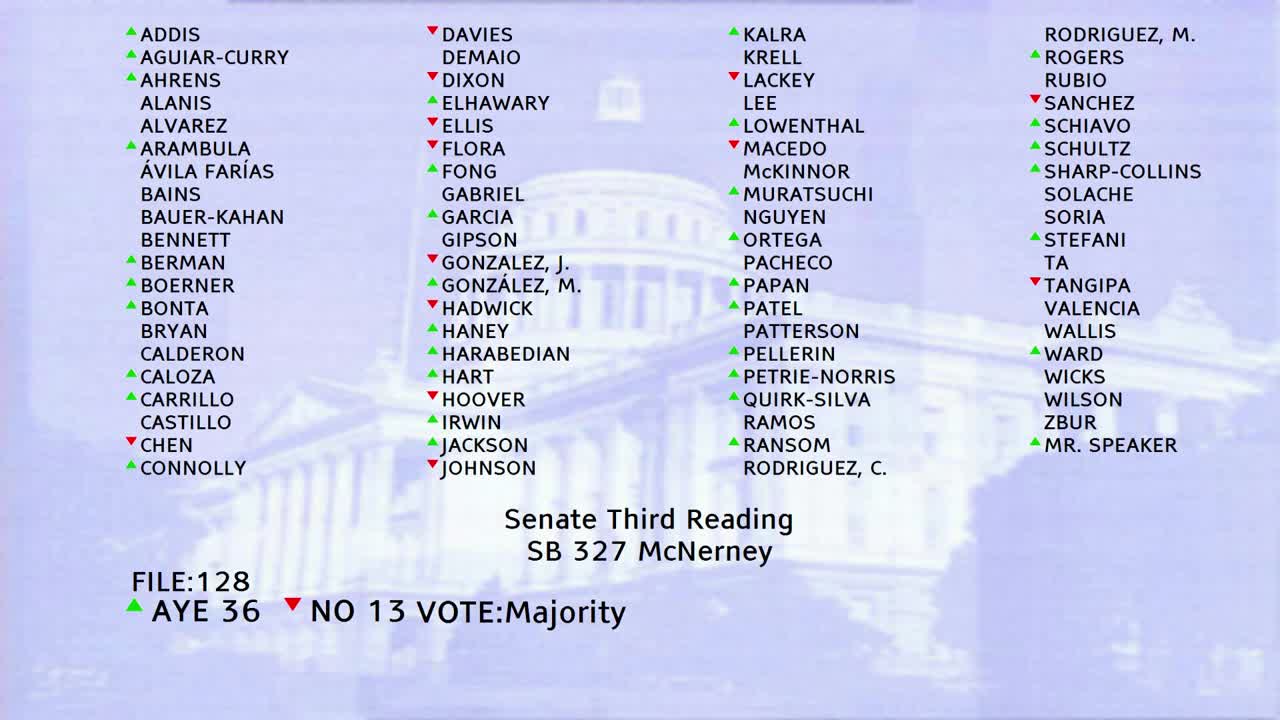 1MIN
Assembly Floor
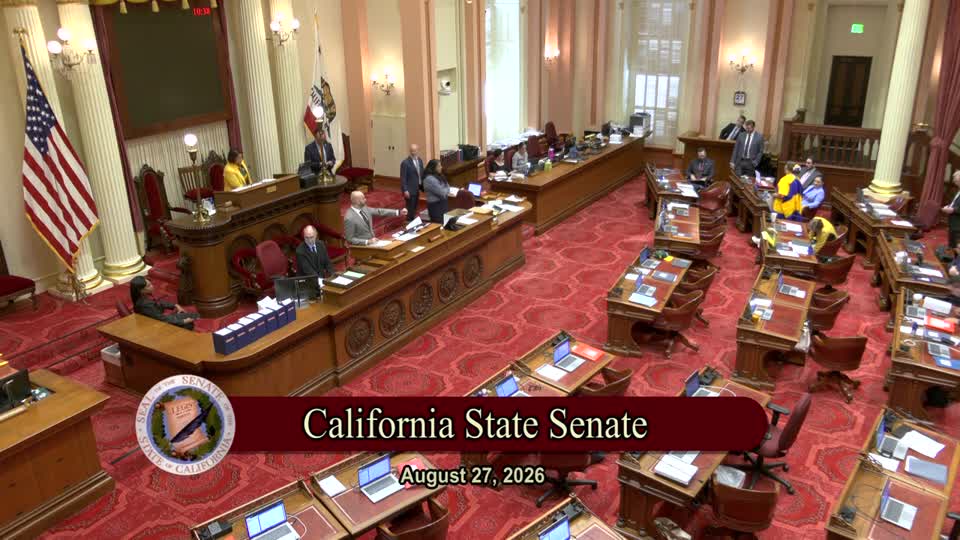 2MIN
Senate Floor
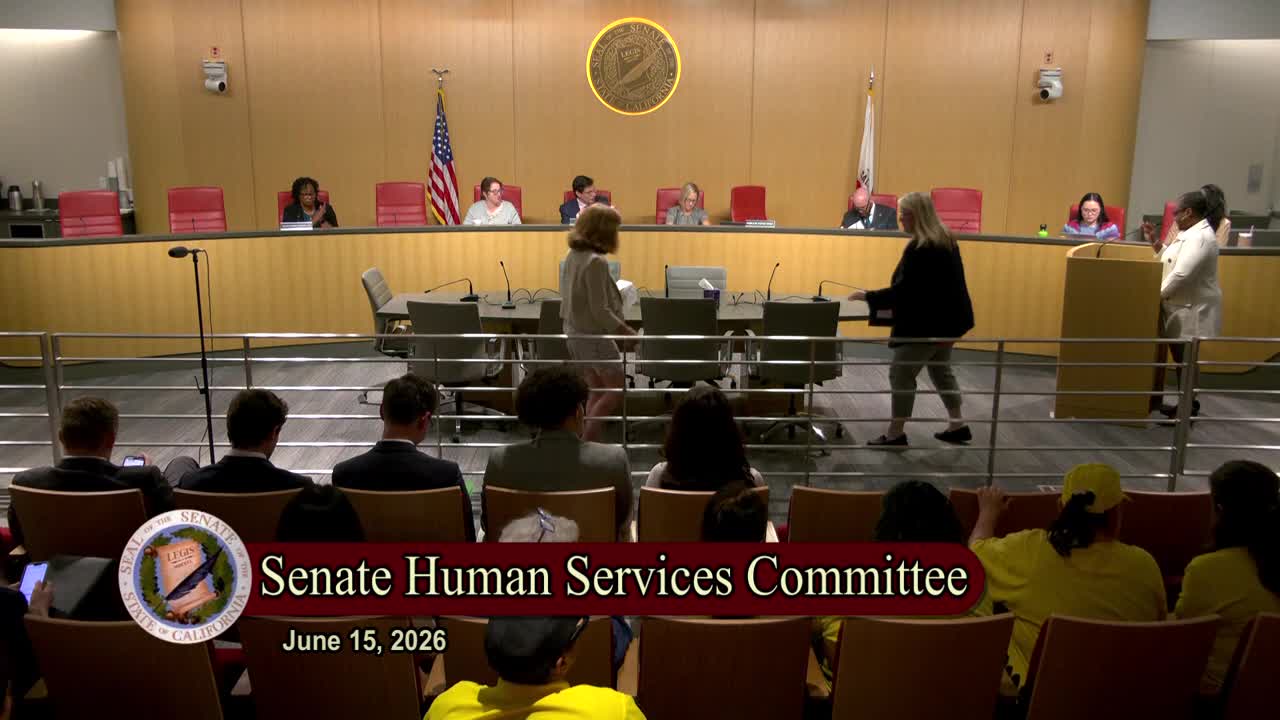 7MIN
Senate Standing Committee on Human Services
 1MIN
Assembly Floor
 32MIN
Assembly Standing Committee on Appropriations
 10MIN