AB 1775: Veterans.
- Session Year: 2025-2026
- House: Assembly
- Latest Version Date: 2026-09-26
Current Status:
Passed
(2026-09-26: Chaptered by Secretary of State - Chapter 467, Statutes of 2026.)
Introduced
In Committee
Awaiting First Chamber Vote
Passed First Chamber
In Committee
Awaiting Second Chamber Vote
Passed Second Chamber
Enacted
Existing law establishes the Department of Consumer Affairs under the direction of the Director of Consumer Affairs and sets forth its powers and duties relating to the administration of the various boards under its jurisdiction that license and regulate various professions and vocations. Existing law requires those boards to expedite, and authorizes them to assist, the initial licensure process for an applicant who supplies satisfactory evidence to the board that the applicant has served as an active duty member of the Armed Forces of the United States and was honorably discharged.
This bill would extend that requirement and authorization to also include members who were discharged or received a discharge solely as a result of a specified executive order. The bill would extend the requirement and authorization for the Speech-Language Pathology and Audiology and Hearing Aid Dispensers Board, commencing June 1, 2027. The bill would make additional conforming changes.
Existing law requires the department, subject to an appropriation by the Legislature, to establish the Veterans Military Discharge Upgrade Grant Program to help fund service providers who, for free or at low cost, will educate veterans about discharge upgrades and assist veterans in filing discharge upgrade applications, as specified. Existing law authorizes the department to prioritize veteran recipients of the services, such as prioritizing those who are able to demonstrate their less than honorable characterization of service was connected to a mental health condition, traumatic brain injury, sexual assault or harassment, or sexual orientation.
This bill would instead require the program to help fund service providers who will educate veterans on the above-described services at no cost. The bill would additionally require the department to prioritize veteran recipients, regardless of discharge status, who are able to demonstrate that their less than honorable characterization of service was connected to a behavioral health condition, traumatic brain injury, sexual assault or harassment, or sexual orientation or who are able to demonstrate their characterization of service was connected to gender identity.
This bill would additionally require the department, subject to an appropriation by the Legislature, to establish the Veterans Housing and Supportive Services Grant Program to help fund service providers who, for at no cost, will provide housing supports for veterans. The bill would require the department to develop criteria, procedures, and accountability measures as may be necessary to implement the grant program, and to prioritize veteran recipients, regardless of discharge status, who are able to demonstrate their less than honorable characterization of service was connected to a behavioral health condition, traumatic brain injury, sexual assault or harassment, or sexual orientation or who are able to demonstrate their characterization of service was connected to gender identity.
Existing law establishes the Department of Consumer Affairs under the direction of the Director of Consumer Affairs and sets forth its powers and duties relating to the administration of the various boards under its jurisdiction that license and regulate various professions and vocations. Existing law requires those boards to expedite, and authorizes them to assist, the initial licensure process for an applicant who supplies satisfactory evidence to the board that the applicant has served as an active duty member of the Armed Forces of the United States and was honorably discharged.
This bill would extend that requirement and authorization to also include members who were discharged or received a discharge solely as a result of a specified executive order. The bill would extend the requirement and authorization for the Speech-Language Pathology and Audiology and Hearing Aid Dispensers Board, commencing June 1, 2027. The bill would make additional conforming changes.
Existing law requires the department, subject to an appropriation by the Legislature, to establish the Veterans Military Discharge Upgrade Grant Program to help fund service providers who, for free or at low cost, will educate veterans about discharge upgrades and assist veterans in filing discharge upgrade applications, as specified. Existing law authorizes the department to prioritize veteran recipients of the services, such as prioritizing those who are able to demonstrate their less than honorable characterization of service was connected to a mental health condition, traumatic brain injury, sexual assault or harassment, or sexual orientation.
This bill would instead require the program to help fund service providers who will educate veterans on the above-described services at no cost. The bill would additionally require the department to prioritize veteran recipients recipients, regardless of discharge status, who are able to demonstrate that their less than honorable characterization of service was connected to a mental behavioral health condition, traumatic brain injury, sexual assault or harassment, or sexual orientation or who are able to demonstrate their characterization of service was connected to gender identity.
This bill would additionally require the department, subject to an appropriation by the Legislature, to establish the Veterans Housing and Supportive Services Grant Program to help fund service providers who, for at no cost, will provide housing supports for veterans being discharged from service. veterans. The bill would require the department to develop criteria, procedures, and accountability measures as may be necessary to implement the grant program, and to prioritize veteran recipients recipients, regardless of discharge status, who are able to demonstrate their less than honorable characterization of service was connected to a mental behavioral health condition, traumatic brain injury, sexual assault or harassment, or sexual orientation or who are able to demonstrate their characterization of service was connected to gender identity.
Existing law establishes the Department of Consumer Affairs under the direction of the Director of Consumer Affairs and sets forth its powers and duties relating to the administration of the various boards under its jurisdiction that license and regulate various professions and vocations. Existing law requires those boards to expedite, and authorizes them to assist, the initial licensure process for an applicant who supplies satisfactory evidence to the board that the applicant has served as an active duty member of the Armed Forces of the United States and was honorably discharged.
This bill would extend that requirement and authorization to also include members who were discharged or received a discharge solely as a result of a specified executive order. The bill would make additional conforming changes.
Existing law requires the department, subject to an appropriation by the Legislature, to establish the Veterans Military Discharge Upgrade Grant Program to help fund service providers who, for free or at low cost, will educate veterans about discharge upgrades and assist veterans in filing discharge upgrade applications, as specified. Existing law authorizes the department to prioritize veteran recipients of the services, such as prioritizing those who are able to demonstrate their less than honorable characterization of service was connected to a mental health condition, traumatic brain injury, sexual assault or harassment, or sexual orientation.
This bill would instead require the program to help fund service providers who will educate veterans on the above-described services at no cost. The bill would additionally require the department to prioritize veteran recipients who are able to demonstrate that their less than honorable characterization of service was connected to a mental health condition, traumatic brain injury, sexual assault or harassment, or sexual orientation or who are able to demonstrate their characterization of service was connected to gender identity.
This bill would additionally require the department, subject to an appropriation by the Legislature, to establish the Veterans Housing and Supportive Services Grant Program to help fund service providers who, for at no cost, will provide housing supports for veterans being discharged from service. The bill would require the department to develop criteria, procedures, and accountability measures as may be necessary to implement the grant program, and to prioritize veteran recipients who are able to demonstrate their less than honorable characterization of service was connected to a mental health condition, traumatic brain injury, sexual assault or harassment, or sexual orientation or who are able to demonstrate their characterization of service was connected to gender identity.
(a)Notwithstanding any other law, and except as provided in subdivision (e), on and after July 1, 2016, a board within the department shall expedite, and may assist, the initial licensure process for an applicant who supplies satisfactory evidence to the board that the applicant has served as an active duty member of the Armed Forces of the United States and was honorably discharged or received a discharge solely as a result of Executive Order No. 14183 issued on January 27, 2025.
(b)Notwithstanding any other law, on and after July 1, 2024, a board within the department shall expedite, and may assist, the initial licensure process for an applicant who supplies satisfactory evidence to the board that the applicant is an active duty member of a regular component of the Armed Forces of the United States enrolled in the United States Department of Defense SkillBridge program as authorized under Section 1143(e) of Title 10 of the United States Code.
(c)A board may adopt regulations necessary to administer this section in accordance with the provisions of Chapter 3.5 (commencing with Section 11340) of Part 1 of Division 3 of Title 2 of the Government Code.
(d)For purposes of this section, the term applicant refers to an applicant for an individual license and does not refer to applicants for business or entity licenses.
(e)The requirement pursuant to subdivision (a) involving those who received a discharge solely as a result of Executive Order No. 14183 issued on January 27, 2025, shall begin on June 1, 2027, for the Speech-Language Pathology and Audiology and Hearing Aid Dispensers Board.
SEC. 2.Section 115.8 of the Business and Professions Code is amended to read:115.8.The Department of Consumer Affairs shall compile information on military and spouse licensure into an annual report for the Legislature, which shall be submitted in conformance with Section 9795 of the Government Code. The report shall include all of the following for each license type of each board:
(a)The number of applications for a temporary license submitted by military spouses per fiscal year, pursuant to Section 115.6.
(b)The number of applications for expedited licenses received from honorably discharged military members and military spouses, or those who received a discharge solely as a result of Executive Order No. 14183 issued on January 27, 2025, pursuant to Sections 115.4 and 115.5.
(c)The number of licenses issued and denied per fiscal year pursuant to Sections 115.4, 115.5, and 115.6.
(d)The number of licenses issued pursuant to Section 115.6 that were suspended or revoked per fiscal year.
(e)The number of applications for waived renewal fees received and granted pursuant to Section 114.3 per fiscal year.
(f)The average length of time between application and issuance of licenses pursuant to Sections 115.4, 115.5, and 115.6.
SEC. 3.Section 885 of the Military and Veterans Code is amended to read:885.(a)The department shall establish the Veterans Military Discharge Upgrade Grant Program to help fund service providers who, at no cost, will educate veterans about discharge upgrades and assist qualifying veterans in filing discharge upgrade applications.
(b)The department shall develop criteria, procedures, and accountability measures as may be necessary to implement the grant program. The department shall prioritize veteran recipients, regardless of discharge status, who are able to demonstrate their less than honorable characterization of service was connected to a behavioral health condition, traumatic brain injury, sexual assault or harassment, or sexual orientation or who are able to demonstrate their characterization of service was connected to gender identity.
(c)Funding for the grant program is subject to appropriation by the Legislature.
(d)The department may adopt regulations as necessary to implement this section.
SEC. 4.Section 886 is added to the Military and Veterans Code, to read:886.(a)The department shall establish the Veterans Housing and Supportive Services Grant Program to help fund service providers who, for at no cost, will provide housing supports for veterans.
(b)The department shall develop criteria, procedures, and accountability measures as may be necessary to implement the grant program. The department shall prioritize veteran recipients, regardless of discharge status, who are able to demonstrate their less than honorable characterization of service was connected to a behavioral health condition, traumatic brain injury, sexual assault or harassment, or sexual orientation or who are able to demonstrate their characterization of service was connected to gender identity.
(c)Funding for the grant program is subject to appropriation by the Legislature.
(d)The department may adopt regulations as necessary to implement this section.
(a)Notwithstanding any other law, and except as provided in subdivision (e), on and after July 1, 2016, a board within the department shall expedite, and may assist, the initial licensure process for an applicant who supplies satisfactory evidence to the board that the applicant has served as an active duty member of the Armed Forces of the United States and was honorably discharged or received a discharge solely as a result of Executive Order No. 14183 issued on January 27, 2025.
(b)Notwithstanding any other law, on and after July 1, 2024, a board within the department shall expedite, and may assist, the initial licensure process for an applicant who supplies satisfactory evidence to the board that the applicant is an active duty member of a regular component of the Armed Forces of the United States enrolled in the United States Department of Defense SkillBridge program as authorized under Section 1143(e) of Title 10 of the United States Code.
(c)A board may adopt regulations necessary to administer this section in accordance with the provisions of Chapter 3.5 (commencing with Section 11340) of Part 1 of Division 3 of Title 2 of the Government Code.
(d)For purposes of this section, the term applicant refers to an applicant for an individual license and does not refer to applicants for business or entity licenses.
(e)The requirement pursuant to subdivision (a) involving those who received a discharge solely as a result of Executive Order No. 14183 issued on January 27, 2025, shall begin on June 1, 2027, for the Speech-Language Pathology and Audiology and Hearing Aid Dispensers Board.
SEC. 2.Section 115.8 of the Business and Professions Code is amended to read:115.8.The Department of Consumer Affairs shall compile information on military and spouse licensure into an annual report for the Legislature, which shall be submitted in conformance with Section 9795 of the Government Code. The report shall include all of the following for each license type of each board:
(a)The number of applications for a temporary license submitted by military spouses per fiscal year, pursuant to Section 115.6.
(b)The number of applications for expedited licenses received from honorably discharged military members and military spouses, or those who received a discharge solely as a result of Executive Order No. 14183 issued on January 27, 2025, pursuant to Sections 115.4 and 115.5.
(c)The number of licenses issued and denied per fiscal year pursuant to Sections 115.4, 115.5, and 115.6.
(d)The number of licenses issued pursuant to Section 115.6 that were suspended or revoked per fiscal year.
(e)The number of applications for waived renewal fees received and granted pursuant to Section 114.3 per fiscal year.
(f)The average length of time between application and issuance of licenses pursuant to Sections 115.4, 115.5, and 115.6.
SEC. 3.Section 885 of the Military and Veterans Code is amended to read:885.(a)The department shall establish the Veterans Military Discharge Upgrade Grant Program to help fund service providers who, at no cost, will educate veterans about discharge upgrades and assist qualifying veterans in filing discharge upgrade applications.
(b)The department shall develop criteria, procedures, and accountability measures as may be necessary to implement the grant program. The department shall prioritize veteran recipients recipients, regardless of discharge status, who are able to demonstrate their less than honorable characterization of service was connected to a mental behavioral health condition, traumatic brain injury, sexual assault or harassment, or sexual orientation or who are able to demonstrate their characterization of service was connected to gender identity.
(c)Funding for the grant program is subject to appropriation by the Legislature.
(d)The department may adopt regulations as necessary to implement this section.
SEC. 4.Section 886 is added to the Military and Veterans Code, to read:886.(a)The department shall establish the Veterans Housing and Supportive Services Grant Program to help fund service providers who, for at no cost, will provide housing supports for veterans being discharged from service. veterans.
(b)The department shall develop criteria, procedures, and accountability measures as may be necessary to implement the grant program. The department shall prioritize veteran recipients recipients, regardless of discharge status, who are able to demonstrate their less than honorable characterization of service was connected to a mental behavioral health condition, traumatic brain injury, sexual assault or harassment, or sexual orientation or who are able to demonstrate their characterization of service was connected to gender identity.
(c)Funding for the grant program is subject to appropriation by the Legislature.
(d)The department may adopt regulations as necessary to implement this section.
(a)Notwithstanding any other law, on and after July 1, 2016, a board within the department shall expedite, and may assist, the initial licensure process for an applicant who supplies satisfactory evidence to the board that the applicant has served as an active duty member of the Armed Forces of the United States and was honorably discharged or received a discharge solely as a result of Executive Order No. 14183 issued on January 27, 2025.
(b)Notwithstanding any other law, on and after July 1, 2024, a board within the department shall expedite, and may assist, the initial licensure process for an applicant who supplies satisfactory evidence to the board that the applicant is an active duty member of a regular component of the Armed Forces of the United States enrolled in the United States Department of Defense SkillBridge program as authorized under Section 1143(e) of Title 10 of the United States Code.
(c)A board may adopt regulations necessary to administer this section in accordance with the provisions of Chapter 3.5 (commencing with Section 11340) of Part 1 of Division 3 of Title 2 of the Government Code.
(d)For purposes of this section, the term applicant refers to an applicant for an individual license and does not refer to applicants for business or entity licenses.
SEC. 2.Section 115.8 of the Business and Professions Code is amended to read:115.8.The Department of Consumer Affairs shall compile information on military and spouse licensure into an annual report for the Legislature, which shall be submitted in conformance with Section 9795 of the Government Code. The report shall include all of the following for each license type of each board:
(a)The number of applications for a temporary license submitted by military spouses per fiscal year, pursuant to Section 115.6.
(b)The number of applications for expedited licenses received from honorably discharged military members and military spouses, or those who received a discharge solely as a result of Executive Order No. 14183 issued on January 27, 2025, pursuant to Sections 115.4 and 115.5.
(c)The number of licenses issued and denied per fiscal year pursuant to Sections 115.4, 115.5, and 115.6.
(d)The number of licenses issued pursuant to Section 115.6 that were suspended or revoked per fiscal year.
(e)The number of applications for waived renewal fees received and granted pursuant to Section 114.3 per fiscal year.
(f)The average length of time between application and issuance of licenses pursuant to Sections 115.4, 115.5, and 115.6.
SEC. 3.Section 885 of the Military and Veterans Code is amended to read:885.(a)The department shall establish the Veterans Military Discharge Upgrade Grant Program to help fund service providers who, at no cost, will educate veterans about discharge upgrades and assist qualifying veterans in filing discharge upgrade applications.
(b)The department shall develop criteria, procedures, and accountability measures as may be necessary to implement the grant program. The department shall prioritize veteran recipients who are able to demonstrate their less than honorable characterization of service was connected to a mental health condition, traumatic brain injury, sexual assault or harassment, or sexual orientation or who are able to demonstrate their characterization of service was connected to gender identity.
(c)Funding for the grant program is subject to appropriation by the Legislature.
(d)The department may adopt regulations as necessary to implement this section.
SEC. 4.Section 886 is added to the Military and Veterans Code, to read:886.(a)The department shall establish the Veterans Housing and Supportive Services Grant Program to help fund service providers who, for at no cost, will provide housing supports for veterans being discharged from service.
(b)The department shall develop criteria, procedures, and accountability measures as may be necessary to implement the grant program. The department shall prioritize veteran recipients who are able to demonstrate their less than honorable characterization of service was connected to a mental health condition, traumatic brain injury, sexual assault or harassment, or sexual orientation or who are able to demonstrate their characterization of service was connected to gender identity.
(c)Funding for the grant program is subject to appropriations appropriation by the Legislature.
(d)The department may adopt regulations as necessary to implement this section.
(a)Notwithstanding any other law, on and after July 1, 2016, a board within the department shall expedite, and may assist, the initial licensure process for an applicant who supplies satisfactory evidence to the board that the applicant has served as an active duty member of the Armed Forces of the United States and was honorably discharged. discharged or received a discharge solely as a result of Executive Order No. 14183 issued on January 27, 2025.
(b)Notwithstanding any other law, on and after July 1, 2024, a board within the department shall expedite, and may assist, the initial licensure process for an applicant who supplies satisfactory evidence to the board that the applicant is an active duty member of a regular component of the Armed Forces of the United States enrolled in the United States Department of Defense SkillBridge program as authorized under Section 1143(e) of Title 10 of the United States Code.
(c)A board may adopt regulations necessary to administer this section in accordance with the provisions of Chapter 3.5 (commencing with Section 11340) of Part 1 of Division 3 of Title 2 of the Government Code.
(d)For purposes of this section, the term applicant refers to an applicant for an individual license and does not refer to applicants for business or entity licenses.
SEC. 2.Section 115.8 of the Business and Professions Code is amended to read:115.8.The Department of Consumer Affairs shall compile information on military and spouse licensure into an annual report for the Legislature, which shall be submitted in conformance with Section 9795 of the Government Code. The report shall include all of the following for each license type of each board:
(a)The number of applications for a temporary license submitted by military spouses per fiscal year, pursuant to Section 115.6.
(b)The number of applications for expedited licenses received from honorably discharged military members and military spouses spouses, or those who received a discharge solely as a result of Executive Order No. 14183 issued on January 27, 2025, pursuant to Sections 115.4 and 115.5.
(c)The number of licenses issued and denied per fiscal year pursuant to Sections 115.4, 115.5, and 115.6.
(d)The number of licenses issued pursuant to Section 115.6 that were suspended or revoked per fiscal year.
(e)The number of applications for waived renewal fees received and granted pursuant to Section 114.3 per fiscal year.
(f)The average length of time between application and issuance of licenses pursuant to Sections 115.4, 115.5, and 115.6.
SEC. 3.Section 885 of the Military and Veterans Code is amended to read:885.(a)The department shall establish the Veterans Military Discharge Upgrade Grant Program to help fund service providers who, for free or at low at no cost, will educate veterans about discharge upgrades and assist qualifying veterans in filing discharge upgrade applications.
(b)The department shall develop criteria, procedures, and accountability measures as may be necessary to implement the grant program. The department may shall prioritize veteran recipients of the services, such as prioritizing those who are able to demonstrate their less than honorable characterization of service was connected to a mental health condition, traumatic brain injury, sexual assault or harassment, or sexual orientation. orientation or who are able to demonstrate their characterization of service was connected to gender identity.
(c)Funding for the grant program is subject to appropriation by the Legislature.
SEC. 4.Section 886 is added to the Military and Veterans Code, to read:886.(a)The department shall establish the Veterans Housing and Supportive Services Grant Program to help fund service providers who, for at no cost, will provide housing supports for veterans being discharged from service.
(b)The department shall develop criteria, procedures, and accountability measures as may be necessary to implement the grant program. The department shall prioritize veteran recipients who are able to demonstrate their less than honorable characterization of service was connected to a mental health condition, traumatic brain injury, sexual assault or harassment, or sexual orientation or who are able to demonstrate their characterization of service was connected to gender identity.
(c)Funding for the grant program is subject to appropriations by the Legislature.
REVISIONS: HeadingLine 2.|
Date
|
Status
|
|---|---|
| Sep 26, 2026 | Chaptered by Secretary of State - Chapter 467, Statutes of 2026. |
| Sep 26, 2026 | Approved by the Governor. |
| Aug 31, 2026 | Enrolled and presented to the Governor at 4 p.m. |
| Aug 25, 2026 | Senate amendments concurred in. To Engrossing and Enrolling. (Ayes 65. Noes 2. Page 6463.). |
| Aug 25, 2026 | Senate amendments concurred in. To Engrossing and Enrolling. (Ayes 65. Noes 2.). |
| Aug 24, 2026 | In Assembly. Concurrence in Senate amendments pending. |
| Aug 24, 2026 | Read third time. Passed. Ordered to the Assembly. (Ayes 32. Noes 0. Page 5707.). |
| Aug 24, 2026 | Read third time. Passed. Ordered to the Assembly. (Ayes 32. Noes 0.). |
| Aug 17, 2026 | Read second time. Ordered to third reading. |
| Aug 13, 2026 | Read second time and amended. Ordered returned to second reading. |
| Aug 13, 2026 | From committee: Amend, and do pass as amended. (Ayes 5. Noes 0.) (August 13). |
| Aug 3, 2026 | In committee: Referred to APPR. suspense file. |
| Jun 23, 2026 | From committee: Do pass and re-refer to Com. on APPR. (Ayes 4. Noes 0.) (June 22). Re-referred to Com. on APPR. |
| Jun 15, 2026 | From committee: Do pass and re-refer to Com. on M. & V.A. (Ayes 8. Noes 1.) (June 15). Re-referred to Com. on M. & V.A. |
| Jun 3, 2026 | Referred to Coms. on B. P. & E.D. and M. & V.A. |
| May 27, 2026 | In Senate. Read first time. To Com. on RLS. for assignment. |
| May 26, 2026 | Read third time. Passed. Ordered to the Senate. (Ayes 64. Noes 1. Page 5361.) |
| May 26, 2026 | Read third time. Passed. Ordered to the Senate. (Ayes 64. Noes 1.) |
| May 26, 2026 | Read third time. Passed. Ordered to the Senate. |
| May 19, 2026 | Read second time. Ordered to third reading. |
| May 18, 2026 | Read second time and amended. Ordered returned to second reading. |
| May 14, 2026 | From committee: Amend, and do pass as amended. (Ayes 11. Noes 0.) (May 14). |
| Apr 22, 2026 | In committee: Set, first hearing. Referred to APPR. suspense file. |
| Apr 7, 2026 | From committee: Do pass and re-refer to Com. on APPR. (Ayes 16. Noes 0.) (April 7). Re-referred to Com. on APPR. |
| Apr 7, 2026 | Coauthors revised. |
| Mar 25, 2026 | From committee: Do pass and re-refer to Com. on B. & P. (Ayes 8. Noes 0.) (March 24). Re-referred to Com. on B. & P. |
| Feb 23, 2026 | Referred to Com. on M. & V.A. |
| Feb 10, 2026 | From printer. May be heard in committee March 12. |
| Feb 9, 2026 | Read first time. To print. |
|
Date
|
Description
|
Location
|
Votes
|
|
|---|---|---|---|---|
| Aug 25, 2026 | AB 1775 Ward Concurrence in Senate Amendments | Assembly Floor |
Passed |
|
| Aug 24, 2026 | Assembly 3rd Reading AB1775 Ward et al. By Cervantes | Senate Floor |
Passed |
|
| Aug 13, 2026 | Do pass as amended | Senate Standing Committee on Appropriations |
Passed |
|
| Aug 3, 2026 | Placed on suspense file | Senate Standing Committee on Appropriations |
Passed |
|
| Jun 22, 2026 | Do pass, but first be re-referred to the Committee on [Appropriations] | Senate Standing Committee on Military and Veterans Affairs |
Passed |
|
| Jun 15, 2026 | Do pass, but first be re-referred to the Committee on [Military and Veterans Affairs] | Senate Standing Committee on Business, Professions and Economic Development |
Passed |
|
| May 26, 2026 | AB 1775 Ward Assembly Third Reading | Assembly Floor |
Passed |
|
| May 14, 2026 | Do pass as amended. | Assembly Standing Committee on Appropriations |
Passed |
|
| Apr 7, 2026 | Do pass and be re-referred to the Committee on [Appropriations] | Assembly Standing Committee on Business and Professions |
Passed |
|
| Mar 24, 2026 | Do pass and be re-referred to the Committee on [Business and Professions] | Assembly Standing Committee on Military and Veterans Affairs |
Passed |
This list shows positions taken on this bill by organizations on the date displayed, which is linked to the original source.
Positions by individuals are not included.
|
Organization
|
Position
|
Date
|
|---|---|---|
| Advocates for Trans Equality | ** Support | |
| Alliance for Transyouth Liberation | ** Support | |
| Board of Registered Nursing | ** Support | |
| California Association of Veteran Service Agencies | ** Support | |
| California Association Of Veterans Service Agencies | ** Support | |
| California Commission on the Status of Women and Girls | ** Support | |
| California-Hawaii State Conference Of The Naacp | ** Support | |
| California Legislative LGBTQ Caucus | ** Support | |
| California LGBTQ Health and Human Services Network | ** Support | |
| California State Board of Pharmacy | ** Support | |
| Calpride Valle Central | ** Support | |
| CFT – a Union of Educators & Classified Professionals, AFT, AFL-CIO | ** Support | |
| City of West Hollywood | ** Support | |
| Courage California | ** Support | |
| Disability Rights California | ** Support | |
| El/La Para TransLatinas | ** Support | |
| Equality California | ** Support | |
| Families United for Trans Rights (FUTR) East Bay Chapter | ** Support | |
| Gender Affirming Professionals | ** Support | |
| Lavender Democrats OC | ** Support | |
| Los Angeles LGBTQ Chamber of Commerce | ** Support | |
| Lyon-Martin Community Health Services | ** Support | |
| Minority Veterans of America | ** Support | |
| Modern Military Association of America | ** Support | |
| National Women’s Law Center Action Fund | ** Support | |
| Out in National Security | ** Support | |
| Out in National Security (Co-Sponsor) | ** Support | |
| PFLAG Clayton-Concord | ** Support | |
| PFLAG Fresno | ** Support | |
| PFLAG San Francisco | ** Support | |
| Planned Parenthood Affiliates Of California | ** Support | |
| Public Counsel | ** Support | |
| Rainbow Families Action Bay Area | ** Support | |
| San Diego Pride | ** Support | |
| Service Women's Action Network | ** Support | |
| Service Women’s Action Network | ** Support | |
| Sparta Pride | ** Support | |
| SPARTA Pride (Co-Sponsor) | ** Support | |
| Stonewall Democrats of Greater Sacramento | ** Support | |
| Swords to Plowshares | ** Support | |
| the san diego lgbt community center | ** Support | |
| The Translatin@ Coalition | ** Support | |
| TransCanWork | ** Support | |
| Transgender Military Hub | ** Support | |
| Viet Rainbow of Orange County | ** Support |
CONCURRENCE IN SENATE AMENDMENTS
CSA1 Bill Id:AB 1775
Author:(Ward)
As Amended Ver:August 13, 2026
Majority vote
SUMMARY
This bill requires licensing entities within the Department of Consumer Affairs (DCA) to expedite, and authorizes to assist with, initial licensure for an applicant who has served as an active-duty member of the U.S. Armed Forces and received a discharge solely as a result of federal action to restrict transgender participation in the military. This bill's implementation is delayed to June 1, 2027, for the Speech-Language Pathology and Audiology and Hearing Aid Dispensers Board. This bill requires DCA to annually report the number of applications received for expedited licenses resulting from this bill. This bill requires the Department of Veterans Affairs (CalVet) to revise its Military Discharge Upgrade Grant Program prioritization criteria, as specified, and establish a Veteran's Housing and Supportive Services Grant Program.
Senate Amendments
Amendments add co-authors, make technical and clarifying changes, and delay implementation for the Speech-Language Pathology and Audiology and Hearing Aid Dispensers Board to 2027.
COMMENTS
AB 1775 (Ward) would establish a Veteran's Housing and Supportive Services Grant Program as well as require CalVet to revise the prioritization criteria of its Military Discharge Upgrade Grant Program. California is at the forefront of protecting its veterans. The bill permits the DCA to expedite and authorizes licensing entities to assist with initial licensure for an applicant who was previously discharged solely as a result of federal action to restrict transgender participation in the military. AB 1775 highlights the importance of what a state can do to help its veterans as federal policy transitions them from holding active duty status to discharged. CalVet and DCA would be the primary agencies involved with the implementation of AB 1775. As federal restrictions limit the transgender military community further, California is taking the necessary steps to aid in the service members return to home.
According to the Author
AB 1775 is a vital lifeline to ensure we provide critical housing, employment, and transition-to-civilian-life support for service members being discharged from the U.S. military as a result of President Donald Trump’s Executive Order (EO) 14183, which targets transgender service members. California has a responsibility to step in when the federal government turns its back on people who served honorably. These service members are being forced out of service not because of misconduct or performance, but because of who they are. AB 1775 ensures that California does not compound that injustice by leaving veterans without housing, jobs, or a clear path to stability.
Arguments in Support
The Service Women's Action Network states: "AB 1775 addresses a clear and urgent transition gap. As outlined in the bill's background materials, some service members are experiencing abrupt or involuntary separations with limited time to prepare for civilian life, in some cases with little notice and disruption to pay and benefits. These conditions create significant risks for housing instability, unemployment, and gaps in access to care. From SWAN's experience working directly with service members and veterans, we know that the transition period is one of the most vulnerable points in a military career. When separation processes are compressed or inconsistent, individuals face barriers to securing housing, transferring credentials, and accessing earned benefits—all of which can have long-term impacts on economic security and wellbeing.
Arguments in Opposition
None on file.
FISCAL COMMENTS
This bill has unknown costs for each licensing entity within DCA to validate an applicant's eligibility for expedited licensure under this bill. These costs will depend on the number of people impacted by EO 14183; however, DCA anticipates they will be minor and absorbable (various special funds). The bill will result in one-time cost of approximately $197,000 for the Office of Information Services (OIS) within DCA for associated workload to update language for online and paper applications for all programs. OIS anticipates these costs will be absorbable by redirecting existing maintenance resources. The bill will also result in unknown ongoing General Fund cost pressures, likely in the low millions of dollars, to continue funding the grant program. Staff notes that the Budget Act of 2026 provides $2 million in one-time funding. This allocation supports the Veterans Military Discharge Upgrade Grant Program for veterans filing discharge upgrade applications, and for no cost legal services for veterans who are able to demonstrate their less than honorable characterization of service was connected to gender identity, behavioral health condition, traumatic brain injury, sexual assault, sexual harassment, or sexual orientation. The bill will also result in unknown costs to the California Department of Veterans Affairs (CalVet) to develop the new grant program's criteria, procedures, accountability measures, and to oversee grant administration. The Budget Act of 2026 specifies that up to five percent of the funds provided for veteran employment, housing, and discharge upgrade support may be used for administrative costs.
VOTES:
ASM MILITARY AND VETERANS AFFAIRS: 8-0-0
YES: Schiavo, Jeff Gonzalez, Ávila Farías, Carrillo, Davies, Irwin, Quirk-Silva, Valencia
ASM BUSINESS AND PROFESSIONS: 16-0-3
YES: Berman, Addis, Ahrens, Alanis, Bains, Aguiar-Curry, Caloza, Chen, Elhawary, Haney, Hart, Irwin, Jackson, Lowenthal, Nguyen, Pellerin
ABS, ABST OR NV: Johnson, Hadwick, Macedo
ASM APPROPRIATIONS: 11-0-4
YES: Wicks, Aguiar-Curry, Calderon, Caloza, Fong, Mark González, Krell, Pacheco, Pellerin, Sharp-Collins, Solache
ABS, ABST OR NV: Hoover, Dixon, Ta, Tangipa
ASSEMBLY FLOOR: 64-1-15
YES: Addis, Aguiar-Curry, Ahrens, Alanis, Alvarez, Arambula, Ávila Farías, Bains, Bauer-Kahan, Bennett, Berman, Boerner, Bonta, Bryan, Calderon, Caloza, Carrillo, Chen, Connolly, Davies, Elhawary, Flora, Fong, Gabriel, Garcia, Gipson, Jeff Gonzalez, Mark González, Haney, Harabedian, Hart, Irwin, Jackson, Kalra, Krell, Lee, Lowenthal, McKinnor, Nguyen, Ortega, Pacheco, Papan, Patel, Pellerin, Petrie-Norris, Quirk-Silva, Ramos, Ransom, Michelle Rodriguez, Rogers, Blanca Rubio, Schiavo, Schultz, Sharp-Collins, Solache, Soria, Stefani, Valencia, Wallis, Ward, Wicks, Wilson, Zbur, Rivas
NO: DeMaio
ABS, ABST OR NV: Castillo, Dixon, Ellis, Gallagher, Hadwick, Hoover, Johnson, Lackey, Macedo, Muratsuchi, Patterson, Celeste Rodriguez, Sanchez, Ta, Tangipa
SENATE FLOOR: 33-0-7
YES: Allen, Alvarado-Gil, Archuleta, Arreguín, Ashby, Becker, Blakespear, Cabaldon, Caballero, Cervantes, Cortese, Durazo, Gonzalez, Grayson, Grove, Hurtado, Laird, Limón, McGuire, McNerney, Menjivar, Padilla, Pérez, Reyes, Richardson, Rubio, Smallwood-Cuevas, Stern, Strickland, Umberg, Wahab, Weber Pierson, Wiener
ABS, ABST OR NV: Choi, Dahle, Jones, Niello, Ochoa Bogh, Seyarto, Valladares
UPDATED
VERSION: August 13, 2026
CONSULTANT: Christian Burkin / M. & V.A. / 916) 319-3550 FN: 0004080
CONCURRENCE IN SENATE AMENDMENTS
CSA1 Bill Id:AB 1775
Author:(Ward)
As Amended Ver:August 13, 2026
Majority vote
SUMMARY
This bill requires licensing entities within the Department of Consumer Affairs (DCA) to expedite, and authorizes to assist with, initial licensure for an applicant who has served as an active-duty member of the U.S. Armed Forces and received a discharge solely as a result of federal action to restrict transgender participation in the military. This bill's implementation is delayed to June 1, 2027, for the Speech-Language Pathology and Audiology and Hearing Aid Dispensers Board. This bill requires DCA to annually report the number of applications received for expedited licenses resulting from this bill. This bill requires the Department of Veterans Affairs (CalVet) to revise its Military Discharge Upgrade Grant Program prioritization criteria, as specified, and establish a Veteran's Housing and Supportive Services Grant Program.
Senate Amendments
Amendments add co-authors, make technical and clarifying changes, and delay implementation for the Speech-Language Pathology and Audiology and Hearing Aid Dispensers Board to 2027.
COMMENTS
AB 1775 (Ward) would establish a Veteran's Housing and Supportive Services Grant Program as well as require CalVet to revise the prioritization criteria of its Military Discharge Upgrade Grant Program. California is at the forefront of protecting its veterans. The bill permits the DCA to expedite and authorizes licensing entities to assist with initial licensure for an applicant who was previously discharged solely as a result of federal action to restrict transgender participation in the military. AB 1775 highlights the importance of what a state can do to help its veterans as federal policy transitions them from holding active duty status to discharged. CalVet and DCA would be the primary agencies involved with the implementation of AB 1775. As federal restrictions limit the transgender military community further, California is taking the necessary steps to aid in the service members return to home.
According to the Author
AB 1775 is a vital lifeline to ensure we provide critical housing, employment, and transition-to-civilian-life support for service members being discharged from the U.S. military as a result of President Donald Trump’s Executive Order (EO) 14183, which targets transgender service members. California has a responsibility to step in when the federal government turns its back on people who served honorably. These service members are being forced out of service not because of misconduct or performance, but because of who they are. AB 1775 ensures that California does not compound that injustice by leaving veterans without housing, jobs, or a clear path to stability.
Arguments in Support
The Service Women's Action Network states: "AB 1775 addresses a clear and urgent transition gap. As outlined in the bill's background materials, some service members are experiencing abrupt or involuntary separations with limited time to prepare for civilian life, in some cases with little notice and disruption to pay and benefits. These conditions create significant risks for housing instability, unemployment, and gaps in access to care. From SWAN's experience working directly with service members and veterans, we know that the transition period is one of the most vulnerable points in a military career. When separation processes are compressed or inconsistent, individuals face barriers to securing housing, transferring credentials, and accessing earned benefits—all of which can have long-term impacts on economic security and wellbeing.
Arguments in Opposition
None on file.
FISCAL COMMENTS
This bill has unknown costs for each licensing entity within DCA to validate an applicant's eligibility for expedited licensure under this bill. These costs will depend on the number of people impacted by EO 14183; however, DCA anticipates they will be minor and absorbable (various special funds). The bill will result in one-time cost of approximately $197,000 for the Office of Information Services (OIS) within DCA for associated workload to update language for online and paper applications for all programs. OIS anticipates these costs will be absorbable by redirecting existing maintenance resources. The bill will also result in unknown ongoing General Fund cost pressures, likely in the low millions of dollars, to continue funding the grant program. Staff notes that the Budget Act of 2026 provides $2 million in one-time funding. This allocation supports the Veterans Military Discharge Upgrade Grant Program for veterans filing discharge upgrade applications, and for no cost legal services for veterans who are able to demonstrate their less than honorable characterization of service was connected to gender identity, behavioral health condition, traumatic brain injury, sexual assault, sexual harassment, or sexual orientation. The bill will also result in unknown costs to the California Department of Veterans Affairs (CalVet) to develop the new grant program's criteria, procedures, accountability measures, and to oversee grant administration. The Budget Act of 2026 specifies that up to five percent of the funds provided for veteran employment, housing, and discharge upgrade support may be used for administrative costs.
VOTES:
ASM MILITARY AND VETERANS AFFAIRS: 8-0-0
YES: Schiavo, Jeff Gonzalez, Ávila Farías, Carrillo, Davies, Irwin, Quirk-Silva, Valencia
ASM BUSINESS AND PROFESSIONS: 16-0-3
YES: Berman, Addis, Ahrens, Alanis, Bains, Aguiar-Curry, Caloza, Chen, Elhawary, Haney, Hart, Irwin, Jackson, Lowenthal, Nguyen, Pellerin
ABS, ABST OR NV: Johnson, Hadwick, Macedo
ASM APPROPRIATIONS: 11-0-4
YES: Wicks, Aguiar-Curry, Calderon, Caloza, Fong, Mark González, Krell, Pacheco, Pellerin, Sharp-Collins, Solache
ABS, ABST OR NV: Hoover, Dixon, Ta, Tangipa
ASSEMBLY FLOOR: 64-1-15
YES: Addis, Aguiar-Curry, Ahrens, Alanis, Alvarez, Arambula, Ávila Farías, Bains, Bauer-Kahan, Bennett, Berman, Boerner, Bonta, Bryan, Calderon, Caloza, Carrillo, Chen, Connolly, Davies, Elhawary, Flora, Fong, Gabriel, Garcia, Gipson, Jeff Gonzalez, Mark González, Haney, Harabedian, Hart, Irwin, Jackson, Kalra, Krell, Lee, Lowenthal, McKinnor, Nguyen, Ortega, Pacheco, Papan, Patel, Pellerin, Petrie-Norris, Quirk-Silva, Ramos, Ransom, Michelle Rodriguez, Rogers, Blanca Rubio, Schiavo, Schultz, Sharp-Collins, Solache, Soria, Stefani, Valencia, Wallis, Ward, Wicks, Wilson, Zbur, Rivas
NO: DeMaio
ABS, ABST OR NV: Castillo, Dixon, Ellis, Gallagher, Hadwick, Hoover, Johnson, Lackey, Macedo, Muratsuchi, Patterson, Celeste Rodriguez, Sanchez, Ta, Tangipa
UPDATED
VERSION: August 13, 2026
CONSULTANT: Christian Burkin / M. & V.A. / 916) 319-3550 FN: 0004080
SENATE RULES COMMITTEE Office of Senate Floor Analyses (916) 651-4171 | AB 1775 |
THIRD READING
Bill No: AB 1775
Author: Ward (D), et al.
Amended: 8/13/26 in Senate
Vote: 21
SENATE BUS., PROF. & ECON. DEV. COMMITTEE: 8-1, 6/15/26
AYES: Wahab, Archuleta, Arreguín, Caballero, Grayson, Menjivar, Smallwood-Cuevas, Umberg
NOES: Strickland
NO VOTE RECORDED: Choi, Niello
SENATE MILITARY & VETERANS COMMITTEE: 4-0, 6/22/26
AYES: Archuleta, McNerney, Menjivar, Umberg
NO VOTE RECORDED: Grove
SENATE APPROPRIATIONS COMMITTEE: 5-0, 8/13/26
AYES: Cervantes, Cabaldon, Grayson, Richardson, Wahab
NO VOTE RECORDED: Seyarto, Dahle
ASSEMBLY FLOOR: 64-1, 5/26/26 - See last page for vote
SUBJECT: Veterans
SOURCE: Equality California, Minority Veterans of America, Out in National Security, SPARTA Pride, and Transgender Military Hub
DIGEST:
This bill requires licensing entities within the Department of Consumer Affairs (DCA) to expedite, and authorizes to assist with, initial licensure for an applicant who has served as an active-duty member of the U.S. Armed Forces and received a discharge solely as a result of federal action to restrict transgender participation in the military. This bill’s implementation is delayed to June 1, 2027, for the Speech-Language Pathology and Audiology and Hearing Aid Dispensers Board. This bill requires DCA to annually report the number of applications received for expedited licenses resulting from this bill. This bill requires the Department of Veterans Affairs (CalVet) to revise its Military Discharge Upgrade Grant Program prioritization criteria, as specified, and establish a Veteran’s Housing and Supportive Services Grant Program.
ANALYSIS:
Existing Law:
- Establishes the DCA within the Business, Consumer Services, and Housing Agency. (Business and Professions Code (BPC) § 100)
- Lists the boards, bureaus, commission, and program that comprise the Department. (BPC § 101)
- Requires a DCA board to inquire in every license application if the individual applying for licensure is serving in, or has previously served in, the military and if the board’s governing law authorizes veterans to apply military experience and training towards licensure requirements, to post information on the board’s website about the ability of veteran applicants to apply military experience and training towards licensure requirements. (BPC § 114.5)
- Requires a board within the DCA to expedite, and authorizes to assist, the initial licensure process for an applicant who supplies satisfactory evidence to the board that the applicant has served as an active-duty member of the Armed Forces of the United States and was honorably discharged. (BPC § 115.4)
- Requires a DCA board to expedite the licensure process for an applicant who is married to, or in a domestic partnership or other legal union with, an active-duty member of the U.S. Armed Forces, as specified. (BPC § 115.5)
- Requires DCA to compile information on military and spouse licensure into an annual report for the Legislature, which shall include the specified data for each license type for each board. (BPC § 115.8(b))
- Establishes the Department of Veterans Affairs (CalVet). (Military and Veterans Code (MVC) § 60)
- Requires the Department of Veterans Affairs (CalVet) to establish the Veteran’s Military Discharge Upgrade Grant Program to help fund service providers who, at low at no cost, will educate veterans about discharge upgrades and assist qualifying veterans in filing discharge upgrade applications. (MVC § 885(a))
- Requires CalVet to develop criteria, procedures, and accountability measures as may be necessary to implement the grant program. Authorizes the VA to prioritize veteran recipients who are able to demonstrate their less than honorable characterization of service was connected to a mental health condition, traumatic brain injury, sexual assault or harassment, or sexual orientation. (MVC § 885(b))
This bill:
- Requires boards within DCA to expedite, and authorizes to assist, the initial licensure process for an applicant who supplies satisfactory evidence to the board that the applicant has served as an active duty member of the U.S. Armed Forces and was discharged solely as a result of Executive Order (EO) No. 14183, issued on January 27, 2025.
- Delays implementation of 1) for the Speech-Language Pathology and Audiology and Hearing Aid Dispensers Board to June 1, 2027.
- Requires DCA to report the number of applications for expedited licenses from military applicants and military spouses who received a discharge solely as a result of EO No. 14183 in its annual report to the Legislature.
- Requires CalVet to educate veterans about discharge upgrades and assist qualifying veterans in filing discharge upgrade applications at no cost.
- Requires CalVet to prioritize veteran recipients of services, regardless of discharge status, provided under the Veteran’s Military Discharge Upgrade Grant Program who demonstrate their less than honorable characterization of service was connected to a behavioral health condition, traumatic brain injury, sexual assault or harassment, sexual orientation, or gender identity.
- Requires CalVet to establish the Veteran’s Housing and Supportive Services Grant Program and to prioritize veteran recipients of services, regardless of discharge status, provided under that program who are able to demonstrate their less than honorable characterization of service was connected to a behavioral health condition, traumatic brain injury, sexual assault or harassment, or sexual orientation or who are able to demonstrate their characterization of service was connected to gender identity.
Background
In January 2025, EO No. 14183 rescinded existing federal policy of inclusion for transgender people in the military and prohibited the use of preferred pronouns for transgender service members. In implementation, a Secretary of Defense memo to senior Pentagon leadership stated, “Service members who have a current diagnosis or history of, or exhibit symptoms consistent with, gender dysphoria may elect to separate voluntarily.” Further, “On conclusion of the self-identification eligibility window, the Military Departments will initiate involuntary separation processes.”
This bill grants the benefit of expedited DCA licensure to former service members who were discharged early solely based on their gender identity as if they were honorably discharged – a status they were working toward, but they were prevented from attaining by an abrupt and discriminatory change in federal policy.
Assistance with the Initial Licensure Process. Programs within DCA issue a wide and varied compilation of licenses ranging from professional to vocational, those needed for employment to those needed to operate a business, etc. Navigating license requirements can particularly difficult for former military who are applying for license types that require evidence of experience to qualify for licensure and are attempting to apply military experience toward meeting those requirements.
To address this, some boards that accept military experience have implemented programs to assist former military through the application process. For example, the Contractors State License Board (CSLB) implemented a Military Application Assistance Program where past and present military personnel and their spouses/ domestic partners have direct contact with CSLB’s licensing staff who review and expedite the processing of their application. Staff are specifically trained to evaluate military training and experience and evaluate college transcripts to apply transferable experience toward minimum licensure requirements. This bill provides access to these specialized services at any DCA program that offers them to former members of the military impacted by EO No. 14183.
The number of service members affected by the EO from California who are in fields that require licensure has not been published or estimated. According to the DCA 2024-2025 Annual Report, all DCA programs received 10,404 application expedite requests from honorably discharged members of the military. However, 8,925, or 86% of these requests, were submitted to three programs – the Bureau of Security and Investigative Services received 6,946 requests, CSLB received 1,039, and the Board of Registered Nursing (BRN) received 940. It is reasonable to assume these programs would also receive the majority of the expedite requests resulting from this bill. These programs also receive requests for other types of expedites, for example, BRN received 465 applications for military spouse expedites in 2024-2025. However, all three programs have existing infrastructure to process applications from the military.
Although it would be helpful to know the size of the affected population to predict the impact to program workloads, this bill is anticipated to address a relatively small and finite population. Consequently, any impact from this bill is expected to be negligible and short-term.
Establishes Eligibility for Veterans Grant Programs under CalVet. This bill establishs a Veteran’s Housing and Supporting Services Grant Program, to be administered by CalVet, to provide no cost housing assistance to veterans who are discharged from service. This bill also requires, rather that allows, CalVet to prioritize veterans who demonstrate that their less than honorable characterization of service was connected to a mental health condition, traumatic brain injury, sexual assault or harassment, or sexual orientation as recipients under the existing Veteran’s Military Discharge Upgrade Grant Program. Further, this bill adds gender identity as a priority qualifier for both grant programs.
FISCAL EFFECT: Appropriation: No Fiscal Com.: Yes Local: No
This bill has unknown costs for each licensing entity within DCA to validate an applicant’s eligibility for expedited licensure under this bill. These costs will depend on the number of people impacted by EO 14183; however, DCA anticipates they will be minor and absorbable (various special funds). The bill will result in one-time cost of approximately $197,000 for the Office of Information Services (OIS) within DCA for associated workload to update language for online and paper applications for all programs. OIS anticipates these costs will be absorbable by redirecting existing maintenance resources. The bill will also result in unknown ongoing General Fund cost pressures, likely in the low millions of dollars, to continue funding the grant program. Staff notes that the Budget Act of 2026 provides $2 million in one-time funding. This allocation supports the Veterans Military Discharge Upgrade Grant Program for veterans filing discharge upgrade applications, and for no cost legal services for veterans who are able to demonstrate their less than honorable characterization of service was connected to gender identity, behavioral health condition, traumatic brain injury, sexual assault, sexual harassment, or sexual orientation. The bill will also result in unknown costs to the California Department of Veterans Affairs (CalVet) to develop the new grant program’s criteria, procedures, and accountability measures, and to oversee grant administration. The Budget Act of 2026 specifies that up to five percent of the funds provided for veteran employment, housing, and discharge upgrade support may be used for administrative costs.
SUPPORT: (Verified 8/14/26)
Equality California (co-source)
Minority Veterans of America (co-source)
Out in National Security (co-source)
SPARTA Pride (co-source)
Transgender Military Hub (co-source)
Board of Registered Nursing
California Commission on the Status of Women and Girls
California Association of Veteran Service Agencies
California Association of Veterans Service Agencies
California Legislative LGBTQ Caucus
California-Hawaii State Conference of the NAACP
CFT – A Union of Educators & Classified Professionals, AFT, AFL-CIO
Disability Rights California
Los Angeles LGBTQ Chamber of Commerce
Modern Military Association of America
Planned Parenthood Affiliates of California
Stonewall Democrats of Greater Sacramento
OPPOSITION: (Verified 8/14/26)
None received
ASSEMBLY FLOOR: 64-1, 5/26/26
AYES: Addis, Aguiar-Curry, Ahrens, Alanis, Alvarez, Arambula, Ávila Farías, Bains, Bauer-Kahan, Bennett, Berman, Boerner, Bonta, Bryan, Calderon, Caloza, Carrillo, Chen, Connolly, Davies, Elhawary, Flora, Fong, Gabriel, Garcia, Gipson, Jeff Gonzalez, Mark González, Haney, Harabedian, Hart, Irwin, Jackson, Kalra, Krell, Lee, Lowenthal, McKinnor, Nguyen, Ortega, Pacheco, Papan, Patel, Pellerin, Petrie-Norris, Quirk-Silva, Ramos, Ransom, Michelle Rodriguez, Rogers, Blanca Rubio, Schiavo, Schultz, Sharp-Collins, Solache, Soria, Stefani, Valencia, Wallis, Ward, Wicks, Wilson, Zbur, Rivas
NOES: DeMaio
NO VOTE RECORDED: Castillo, Dixon, Ellis, Gallagher, Hadwick, Hoover, Johnson, Lackey, Macedo, Muratsuchi, Patterson, Celeste Rodriguez, Sanchez, Ta, Tangipa
Prepared by: Yeaphana La Marr / B., P. & E.D. /
8/17/26 10:42:49
**** END ****
SENATE COMMITTEE ON
Senator Sabrina Cervantes, Chair
2025 - 2026 Regular Session
AB 1775 (Ward) - Veterans
Version: | Policy Vote: |
Urgency: | Mandate: |
Hearing Date: | Consultant: |
Bill Summary:
AB 1775 requires licensing programs within the Department of Consumer Affairs (DCA) to expedite, assist with, and annually report on initial licensure for active-duty armed forces members discharged solely due to the January 27, 2025, Executive Order (EO) 14183, and provides these affected service members and veterans with employment, housing, and discharge upgrade support, as specified.
*********** ANALYSIS ADDENDUM – SUSPENSE FILE ***********
The following information is revised to reflect amendments
adopted by the committee on August 13, 2026
Fiscal Impact:
- Unknown costs for each licensing entity within DCA to validate an applicant’s eligibility for expedited licensure under this bill. These costs will depend on the number of people impacted by EO 14183; however, DCA anticipates they will be minor and absorbable (various special funds).
- One-time cost of approximately $197,000 for the Office of Information Services (OIS) within DCA for associated workload to update language for online and paper applications for all programs. OIS anticipates these costs will be absorbable by redirecting existing maintenance resources.
- Unknown ongoing General Fund cost pressures, likely in the low millions of dollars, to continue funding the grant program. Staff notes that the Budget Act of 2026 provides $2 million in one-time funding. This allocation supports the Veterans Military Discharge Upgrade Grant Program for veterans filing discharge upgrade applications, and for no cost legal services for veterans who are able to demonstrate their less than honorable characterization of service was connected to gender identity, behavioral health condition, traumatic brain injury, sexual assault, sexual harassment, or sexual orientation.
- Unknown costs to the California Department of Veterans Affairs (CalVet) to develop the new grant program’s criteria, procedures, and accountability measures, and to oversee grant administration. The Budget Act of 2026 specifies that up to five percent of the funds provided for veteran employment, housing, and discharge upgrade support may be used for administrative costs.
Author Amendments:
- Delay implementation for the Speech-Language Pathology and Audiology and Hearing Aid Dispensers Board.
- Make technical and clarifying changes.
- Add coauthors.
-- END --
SENATE COMMITTEE ON
Senator Sabrina Cervantes, Chair
2025 - 2026 Regular Session
AB 1775 (Ward) - Veterans
Version: | Policy Vote: |
Urgency: | Mandate: |
Hearing Date: | Consultant: |
Bill Summary:
AB 1775 requires licensing programs within the Department of Consumer Affairs (DCA) to expedite, assist with, and annually report on initial licensure for active-duty armed forces members discharged solely due to the January 27, 2025, Executive Order (EO) 14183, and provides these affected service members and veterans with employment, housing, and discharge upgrade support, as specified.
Fiscal Impact:
- Unknown costs for each licensing entity within DCA to validate an applicant’s eligibility for expedited licensure under this bill. These costs will depend on the number of people impacted by EO 14183; however, DCA anticipates they will be minor and absorbable (various special funds).
- One-time cost of approximately $197,000 for the Office of Information Services (OIS) within DCA for associated workload to update language for online and paper applications for all programs. OIS anticipates these costs will be absorbable by redirecting existing maintenance resources, provided there is a delayed implementation of the bill.
- Unknown ongoing General Fund cost pressures, likely in the low millions of dollars, to continue funding the grant program. Staff notes that the Budget Act of 2026 provides $2 million in one-time funding. This allocation supports the Veterans Military Discharge Upgrade Grant Program for veterans filing discharge upgrade applications, and for no cost legal services for veterans who are able to demonstrate their less than honorable characterization of service was connected to gender identity, behavioral health condition, traumatic brain injury, sexual assault, sexual harassment, or sexual orientation.
- Unknown costs to the California Department of Veterans Affairs (CalVet) to develop the new grant program’s criteria, procedures, and accountability measures, and to oversee grant administration. The Budget Act of 2026 specifies that up to five percent of the funds provided for veteran employment, housing, and discharge upgrade support may be used for administrative costs.
Background:
In 2017, the Trump Administration reversed the open-service policy and restricted military service by transgender individuals. In 2021, President Biden issued EO 14004, which reinstated the ability of qualified transgender individuals to serve openly and prohibited discrimination based on gender identity. However, on January 27, 2025, President Trump issued EO 14183, titled “Prioritizing Military Excellence and Readiness.” This order directed the Department of Defense to revise military standards and policies concerning gender dysphoria, gender identity, pronoun usage, and access to sex-specific facilities. Consequently, it rescinded the prior federal policy allowing qualified transgender individuals to serve openly in the Armed Forces.
Following the implementation of EO 14183 and related Department of Defense guidance, transgender service members faced potential separation from the military. Outlining this process, a memo from the Secretary of Defense to Senior Pentagon Leadership stated, “Service members who have a current diagnosis or history of, or exhibit symptoms consistent with, gender dysphoria may elect to separate voluntarily.” The memo further noted, “On conclusion of the self-identification eligibility window, the Military Departments will initiate involuntary separation processes.”
These separations arose from a federal policy addressing gender identity-related service standards, rather than from individual misconduct, poor performance, or case-specific findings that a service member could not meet military requirements. The separation process created significant uncertainty for affected service members, characterized by unclear timelines, inconsistent implementation across military branches, paperwork delays, abrupt discharge notices, and the potential loss of pay, benefits, and housing stability.
Proposed Law:
- Requires a board within DCA to expedite, and authorizes to assist, the initial licensure process for an applicant who supplies satisfactory evidence to the board that the applicant has served as an active duty member of the Armed Forces of the United States and was discharged solely as a result of EO No. 14183, issued on January 27, 2025.
- Requires DCA to report the number of applications for expedited licenses received from military members and military spouses who received a discharge solely as a result of EO No. 14183 issued on January 27, 2025, in its annual report to the Legislature.
- Requires CalVet, through the Veteran’s Military Discharge Upgrade Grant Program, to help fund service providers that, at no cost, educate veterans about discharge upgrades and assist qualifying veterans in filing discharge upgrade applications.
- Requires CalVet to prioritize veterans receiving discharge upgrade assistance if they can demonstrate that their less than honorable characterization of service was connected to a mental health condition, traumatic brain injury, sexual assault or harassment, sexual orientation, or if they can demonstrate that their characterization of service was connected to gender identity.
- Requires CalVet, subject to appropriation by the Legislature, to establish the Veteran’s Housing and Supportive Services Grant Program to help fund service providers that provide housing support for veterans being discharged from service at no cost.
- Requires CalVet to develop criteria, procedures, and accountability measures necessary to implement the Veteran’s Housing and Supportive Services Grant Program.
- Requires CalVet to prioritize veterans receiving housing and supportive services if they can demonstrate that their less than honorable characterization of service was connected to a mental health condition, traumatic brain injury, sexual assault or harassment, sexual orientation, or if they can demonstrate that their characterization of service was connected to gender identity.
-- END --
SENATE COMMITTEE ON MILITARY AND VETERANS AFFAIRS
Senator Bob Archuleta, Chair
2025 - 2026 Regular
Bill No: AB 1775 Hearing Date: 6/22/26
Author: | Ward | ||
Version: | 5/18/26 | ||
Urgency: | No | Fiscal: | Yes |
Consultant: | Diego Nelson | ||
Subject: Veterans support
DESCRIPTION
Summary:
Provides employment, housing, and discharge upgrade support for service members and veterans who are discharged, or receive a discharge, solely as a result of Executive Order 14183, issued on January 27, 2025.
Existing law:
- Provides that licensing boards within the Department of Consumer Affairs (DCA) are responsible for establishing minimum qualifications and levels of competency and for licensing persons who seek to engage in the professions and occupations regulated by those boards. (BPC § 101.6)
- Requires a board within DCA to expedite, and authorizes the board to assist, the initial licensure process for an applicant who provides satisfactory evidence that the applicant served as an active duty member of the Armed Forces of the United States and was honorably discharged. (BPC § 115.4(a))
- Requires a board within DCA to expedite, and authorizes the board to assist, the initial licensure process for an applicant who provides satisfactory evidence that the applicant is an active duty member of a regular component of the Armed Forces of the United States enrolled in the United States Department of Defense SkillBridge program. (BPC § 115.4(b); 10 U.S.C. § 1143(e))
- Requires DCA to compile information on military and spouse licensure into an annual report to the Legislature, including information on temporary licenses, expedited licenses, licenses issued and denied, waived renewal fees, and average processing timelines. (BPC § 115.8)
- Requires most boards within DCA to expedite the licensure process and waive associated fees for an applicant who holds a current license in another state and is married to, or in a domestic partnership or other legal union with, an active duty member of the Armed Forces assigned to a duty station in California under official active duty military orders. (BPC § 115.5)
- Requires boards within DCA to issue a temporary license to an applicant who is married to, or in a domestic partnership or other legal union with, an active duty member of the Armed Forces assigned to a duty station in California under official active duty military orders, if specified requirements are met. (BPC § 115.6)
- Authorizes CalVet to assist veterans and their dependents and survivors in obtaining privileges, preferences, care, and compensation provided under federal and state law. (MVC §§ 690–699.5)
- Requires CalVet, subject to appropriation by the Legislature, to establish the Veteran’s Military Discharge Upgrade Grant Program to help fund service providers that educate veterans about discharge upgrades and assist veterans in filing discharge upgrade applications. (MVC § 885)
- Authorizes CalVet, under the Veteran’s Military Discharge Upgrade Grant Program, to prioritize veterans who can demonstrate that their less than honorable characterization of service was connected to a mental health condition, traumatic brain injury, sexual assault or harassment, or sexual orientation. (MVC § 885)
- Establishes the Veterans Housing and Homeless Prevention Act of 2014 to provide for the acquisition, construction, rehabilitation, and preservation of affordable multifamily supportive housing, transitional housing, affordable rental housing, or related facilities for veterans and their families to allow veterans to access and maintain housing stability. (MVC §§ 987.001–987.011)
This bill:
- Requires a board within the Department of Consumer Affairs (DCA) to expedite, and authorizes the board to assist, the initial licensure process for an applicant who provides satisfactory evidence that the applicant served as an active duty member of the Armed Forces of the United States and was honorably discharged or received a discharge solely as a result of Executive Order 14183.
- Requires DCA’s annual military and spouse licensure report to include the number of expedited license applications received from honorably discharged military members and military spouses, as well as individuals who received a discharge solely as a result of Executive Order 14183.
- Requires the California Department of Veterans Affairs (CalVet), through the Veteran’s Military Discharge Upgrade Grant Program, to help fund service providers that, at no cost, educate veterans about discharge upgrades and assist qualifying veterans in filing discharge upgrade applications.
- Requires CalVet to prioritize veterans receiving discharge upgrade assistance if they can demonstrate that their less than honorable characterization of service was connected to a mental health condition, traumatic brain injury, sexual assault or harassment, sexual orientation, or if they can demonstrate that their characterization of service was connected to gender identity.
- Requires CalVet, subject to appropriation by the Legislature, to establish the Veteran’s Housing and Supportive Services Grant Program to help fund service providers that provide housing support for veterans being discharged from service at no cost.
- Requires CalVet to develop criteria, procedures, and accountability measures necessary to implement the Veteran’s Housing and Supportive Services Grant Program.
- Requires CalVet to prioritize veterans receiving housing and supportive services if they can demonstrate that their less than honorable characterization of service was connected to a mental health condition, traumatic brain injury, sexual assault or harassment, sexual orientation, or if they can demonstrate that their characterization of service was connected to gender identity.
BACKGROUND
For decades, LGBTQ+ service members have faced shifting federal policies that affected whether they could serve openly, remain in uniform, and access veterans benefits after separation. Under “Don’t Ask, Don’t Tell” (DADT), gay, lesbian, and bisexual service members were permitted to serve only if they concealed their sexual orientation. Although DADT was repealed more than a decade ago, its legacy continues for many veterans who received less than honorable discharges, lost access to benefits, or were pushed out of military service because of who they were.
The repeal of DADT did not resolve the status of transgender service members. For many years, transgender individuals were barred from serving openly based on military policies that treated gender identity or gender dysphoria as disqualifying. In 2015, the Department of Defense began reviewing the policy and readiness implications of allowing transgender personnel to serve openly. That review included a RAND Corporation study, which found that allowing transgender service members to serve openly would likely have only a minimal impact on readiness, health care costs, and unit cohesion. In 2016, the federal government lifted the ban and allowed qualified transgender individuals to serve openly in the Armed Forces.
That policy has changed repeatedly across presidential administrations. In 2017, the Trump Administration reversed the open-service policy and restricted military service by transgender individuals. In 2021, President Biden issued Executive Order 14004, which again allowed qualified transgender individuals to serve openly and prohibited discrimination against service members based on gender identity. However, on January 27, 2025, President Trump issued Executive Order 14183, titled “Prioritizing Military Excellence and Readiness.” The order directs the Department of Defense to revise military standards and policies related to gender dysphoria, gender identity, use of pronouns, and access to sex-specific facilities. It also rescinded the prior federal policy that allowed qualified transgender individuals to serve openly in the Armed Forces.
Following implementation of Executive Order No. 14183 and related Department of Defense guidance, transgender service members faced potential separation from military service. These separations arose from a federal policy addressing gender identity-related service standards rather than from individual misconduct, poor performance, or case-specific findings that a service member could not meet military requirements. The separation process also created uncertainty for affected service members, including unclear timelines, differences in implementation across branches, delays in paperwork, abrupt discharge notices, and potential loss of pay, benefits, and housing stability.
Litigation challenging the policy remains ongoing. In June 2026, the United States Court of Appeals for the District of Columbia Circuit held that the policy likely violated equal protection principles as applied to current service members and affirmed a preliminary injunction preventing the federal government from expelling active duty transgender service members while further proceedings continue. The court did not require the military to accept new transgender applicants while the litigation continues.
As a result, affected service members may be in different positions depending on their branch, status, and stage in the separation process. Some may remain in service while litigation proceeds, while others may have already begun or completed separation. For service members facing discharge, the loss of military employment can affect housing, health care, income, benefits, and the transition to civilian work. These challenges may be more significant when a discharge characterization limits access to state or federal veterans benefits or when a former service member must seek a discharge upgrade.
COMMENT
According to the author: “AB 1775 is a vital lifeline to ensure we provide critical housing, employment, and transition-to-civilian-life support for service members being discharged from the U.S. military as a result of President Donald Trump’s Executive Order (EO) 14183, which targets transgender service members. California has a responsibility to step in when the federal government turns its back on people who served honorably. These service members are being forced out of service not because of misconduct or performance, but because of who they are. AB 1775 ensures that California does not compound that injustice by leaving veterans without housing, jobs, or a clear path to stability.”
While California cannot dictate federal military policy, it can determine how the state responds to the immediate civilian impacts facing affected service members. Many of these individuals already live in California or are expected to return here after separation. Veterans’ organizations estimate that approximately 40 percent of affected service members will reside in the San Diego region, 20 percent in Los Angeles, 15 percent in Sacramento, 15 percent in San Francisco, and 10 percent in rural or Northern California communities.
The practical impact of these separations can be immediate and severe. Implementation has varied across military branches, with delayed paperwork, unclear timelines, and inconsistent treatment of voluntary and involuntary separations. As of September 2025, roughly 800 Army separation packets were pending legal review at the Pentagon, with active duty cases prioritized over National Guard cases. Some service members have reportedly received discharge notices with as little as 24 hours’ warning, disrupting pay, benefits, housing, and family stability.
AB 1775 addresses these state-level consequences in three ways. First, it extends existing expedited professional licensing protections to service members discharged solely as a result of Executive Order No. 14183. This provision does not waive licensing standards or alter education, training, examination, background check, or competency requirements. It only ensures that eligible applicants are not delayed in entering licensed civilian professions because their discharge was tied to the federal policy rather than misconduct or poor performance. However, the manner in which an applicant would establish satisfactory proof that the separation was solely the result of Executive Order No. 14183 remains to be determined, including what documentation would be sufficient and how licensing boards would verify that basis for discharge.
The bill strengthens the Veteran’s Military Discharge Upgrade Grant Program by requiring no-cost discharge upgrade assistance and adding gender identity to the prioritization criteria. A less than honorable discharge can limit access to benefits, complicate employment, create housing barriers, and carry long-term stigma. This provision builds on California’s prior efforts to assist veterans whose discharge characterization may have been connected to trauma, discrimination, sexual orientation, or other circumstances that do not reflect the totality of their service.
The bill establishes the Veteran’s Housing and Supportive Services Grant Program within CalVet, subject to appropriation. The program would fund service providers that offer no-cost housing support for veterans being discharged from service. This provision responds to documented housing challenges among transgender veterans, who were found in one Veterans Health Administration study to face housing instability at almost three times the rate of cisgender veterans.
The broader transition from military service to civilian life is also a known period of vulnerability. A recent Government Accountability Office report found that more than 210,000 service members separated from the military in fiscal year 2023 and noted that veterans in the first year after separation experience a suicide rate about 2.5 times higher than the active duty population. The report identified loss of purpose, financial strain, family strain, and difficulty readjusting to civilian life as transition-related challenges. The need for this support is backed by research showing that transgender veterans receiving care through the Veterans Health Administration experienced housing instability at nearly triple the rate of cisgender veterans.
Prior legislation:
SJR 6 (Caballero, et al), Resolution Chapter 173, Statutes of 2024, urged the President and the Congress of the United States to address, with effective policies, the issue of servicemembers who were unjustly discharged under “Don’t Ask, Don’t Tell” or predecessor provisions, in order to unify efforts to upgrade discharges issued under the Don’t Ask, Don’t Tell policy, and to restore benefits.
AB 325 (Irwin), Chapter 377, Statutes of 2022, requires CalVet to establish the Grant Program to help fund service providers who will educate veterans about discharge upgrades and assist veterans in filing discharge upgrade applications at little or no cost.
AJR 44 (Bloom), Resolution Chapter 164, Statutes of 2014, urges the DoD, Congress, and the President to create a more efficient process of upgrading the status of those who were “dishonorably” or other than honorably discharged from the U.S. Armed Forces, and to provide benefits, including applicable spousal benefits, to those veterans discharged solely on the basis of their sexual orientation.
AJR 19 (Pan), Resolution Chapter 154, Statutes of 2013, urges Congress and the President to provide benefits, including applicable spousal benefits, to those veterans discriminated against solely on the basis of their sexual orientation.
AB 1505 (Pan), Chapter 397, Statutes of 2012, requires the state to reinstate benefits to veterans that have their benefits reinstated by the federal government if the benefits were originally denied solely on the basis of sexual orientation. Requires CalVet to distribute information regarding military discharge upgrades.
POSITIONS
Sponsor: Equality California (Co-Sponsor)
Out in National Security (Co-Sponsor)
Transgender Military Hub (Co-Sponsor)
Support: California Commission on the Status of Women and Girls
California Association of Veteran Service Agencies
California Legislative LGBTQ Caucus
California State Board of Pharmacy
CFT – A Union of Educators & Classified Professionals, AFT, AFL-CIO
Los Angeles LGBTQ Chamber of Commerce
Modern Military Association of America
Planned Parenthood Affiliates of California
Oppose: None Received
-- END --
SENATE COMMITTEE ON
BUSINESS, PROFESSIONS AND ECONOMIC DEVELOPMENT
Senator Dr. Aisha Wahab, Chair
2025 - 2026 Regular
Bill No: Hearing Date: June 15, 2026
Author: | |||
Version: |
| ||
Urgency: | Fiscal: | ||
Consultant: | |||
Subject:
SUMMARY:
Requires licensing programs within the Department of Consumer Affairs (DCA or Department) to expedite, and authorizes to assist with, initial licensure for an applicant who has served as an active-duty member of the Armed Forces of the United States and received a discharge solely as a result of federal action to restrict transgender participation in the military. Requires DCA to annually report the number of applications received for expedited licenses resulting from this bill. Requires the Department of Veterans Affairs (CalVet) to revise its Military Discharge Upgrade Grant Program prioritization criteria, as specified and establish a Veteran’s Housing and Supportive Services Grant Program.
NOTE:
This bill is double-referred to the Senate Committee on Military and Veterans Affairs, second.
Existing law:
- Establishes the Department of Consumer Affairs (DCA) within the Business, Consumer Services, and Housing Agency. (Business and Professions Code (BPC) § 100)
- Lists the boards, bureaus, commission, and program that comprise the Department. (BPC § 101)
- Provides that “Board,” unless otherwise expressly provided, shall include “bureau,” “commission,” “committee,” “department,” “division,” “examining committee,” “program,” and “agency.” (BPC § 22)
- Requires a DCA board to inquire in every license application if the individual applying for licensure is serving in, or has previously served in, the military and if the board’s governing law authorizes veterans to apply military experience and training towards licensure requirements, to post information on the board’s website about the ability of veteran applicants to apply military experience and training towards licensure requirements. (BPC § 114.5)
- Requires a board within the DCA to expedite, and authorizes to assist, the initial licensure process for an applicant who supplies satisfactory evidence to the board that the applicant has served as an active duty member of the Armed Forces of the United States and was honorably discharged. (BPC § 115.4)
- Requires a DCA board to expedite the licensure process for an applicant who is married to, or in a domestic partnership or other legal union with, an active duty member of the Armed Forces of the United States who is assigned to a duty station in this state under official active duty military orders and who holds a current license in another state, district, or territory of the United States in the profession or vocation for which they are seeking a license from the board. (BPC § 115.5)
- Requires DCA to compile information on military and spouse licensure into an annual report for the Legislature, which shall include the specified data for each license type for each board, including the number of applications for expedited licenses received from honorably discharged military members and military spouses. (BPC § 115.8(b))
- Establishes the Department of Veterans Affairs (CalVet). (Military and Veterans Code (MVC) § 60)
- Requires the Department of Veterans Affairs (CalVet) to establish the Veteran’s Military Discharge Upgrade Grant Program to help fund service providers who, at low at no cost, will educate veterans about discharge upgrades and assist qualifying veterans in filing discharge upgrade applications. (MVC § 885(a))
- Requires CalVet to develop criteria, procedures, and accountability measures as may be necessary to implement the grant program. Authorizes the VA to prioritize veteran recipients who are able to demonstrate their less than honorable characterization of service was connected to a mental health condition, traumatic brain injury, sexual assault or harassment, or sexual orientation. (MVC § 885(b))
This bill:
- Requires a board within DCA to expedite, and authorizes to assist, the initial licensure process for an applicant who supplies satisfactory evidence to the board that the applicant has served as an active duty member of the Armed Forces of the United States and was discharged solely as a result of Executive Order No. 14183, issued on January 27, 2025.
- Requires the Department to report the number of applications for expedited licenses received from military members and military spouses who received a discharge solely as a result of Executive Order No. 14183 issued on January 27, 2025, in its annual report to the Legislature.
- Requires CalVet to educate veterans about discharge upgrades and assist qualifying veterans in filing discharge upgrade applications at no cost.
- Requires CalVet to prioritize veteran recipients of services provided under the Veteran’s Military Discharge Upgrade Grant Program who demonstrate their less than honorable characterization of service was connected to a mental health condition, traumatic brain injury, sexual assault or harassment, sexual orientation, or gender identity.
- Requires CalVet to establish the Veteran’s Housing and Supportive Services Grant Program and to prioritize veteran recipients of services provided under that program who are able to demonstrate their less than honorable characterization of service was connected to a mental health condition, traumatic brain injury, sexual assault or harassment, or sexual orientation or who are able to demonstrate their characterization of service was connected to gender identity.
FISCAL EFFECT:
This bill is keyed fiscal by Legislative Counsel. According to the Assembly Committee on Appropriations, CalVet notes ongoing General Fund (GF) cost pressures of an unknown amount but potentially in the high hundreds of thousands to the low millions of dollars annually to establish, administer, and provide grants for the new Housing and Supportive Services Grant Program. CalVet indicates it may incur administrative costs associated with developing program criteria, clarifying eligibility and prioritization requirements, awarding and overseeing grants, and ensuring program accountability. This program is subject to an appropriation by the Legislature and actual costs depend on the level of funding provided and the final statutory framework adopted. The bill will also result in GF cost pressures of an unknown amount resulting from the new requirement that discharge upgrade services be provided at no cost.
The author is requesting $5.5 million in the 2026-27 state budget to support this bill, including $5 million for housing assistance and $500,000 for the discharge upgrade program. The bill will result in minor and absorbable implementation costs to DCA, depending on the need to verify the number of people impacted by the EO and to validate their eligibility, as well as one-time IT costs of $197,000 to update application language for all programs that accept online applications and update paper applications on the program’s specific website. DCA indicates this cost is absorbable by redirecting existing resources if delayed implementation is granted.
COMMENTS:
- Purpose. This bill is co-sponsored by Equality California, Minority Veterans of America, Out in National Security, SPARTA Pride, and Transgender Military Hub. The Author states, “AB 1775 is a vital lifeline to ensure we provide critical housing, employment, and transition-to-civilian-life support for service members being discharged from the U.S. military as a result of President Donald Trump’s Executive Order (EO) 14183, which targets transgender service members. California has a responsibility to step in when the federal government turns its back on people who served honorably. These service members are being forced out of service not because of misconduct or performance, but because of who they are. AB 1775 ensures that California does not compound that injustice by leaving veterans without housing, jobs, or a clear path to stability.”
- Background. In January 2025, Executive Order No. 14183 rescinded existing federal policy of inclusion for transgender people in the military and prohibited the use of preferred pronouns for transgender service members. In implementation, the Secretary of Defense’s memo to Senior Pentagon Leadership stated, “Service members who have a current diagnosis or history of, or exhibit symptoms consistent with, gender dysphoria may elect to separate voluntarily.” The memo further states, “On conclusion of the self-identification eligibility window, the Military Departments will initiate involuntary separation processes.”
This bill would grant the benefit of expedited DCA licensure to former service members who were discharged early solely based on their gender identity as if they were honorably discharged – a status they were working toward, but they were prevented from attaining by an abrupt and discriminatory change in federal policy.
DCA licensure and regulation of professions. The DCA consists of 36 boards, bureaus, and other entities responsible for licensing, certifying, or otherwise regulating professionals in California, including 16 that issue licenses to healing arts professionals. As of March 2023, there were over 3.4 million active licensees who were issued a license by a program within DCA. Licensure is intended to protect consumers by ensuring applicants have the knowledge, skills, and abilities to engage in regulated activity without creating a negative impact on public health, safety, and welfare.
Each of DCA’s more than 280 license types has its own unique requirements, with the practice act for each profession providing various prerequisites, which may include providing evidence of prelicensure education, experience, and training, passing an examination, and meeting other requirements. Most boards require a background check to ensure the applicant does not have a history of convictions that are substantially related to the qualifications, functions, or duties of the profession. Boards additionally require the applicant to pay a fee, which is set at an amount reasonable for the board to recover the cost of processing an application. Additionally, business applicants may be required to obtain insurance and/or a bond, demonstrate good standing with the Secretary of State, and appoint a qualified manager or responsible managing employee to oversee the business’ operations within the scope of the license.
Based on the many licensing elements outside each program’s control, expediting an application may not achieve the desired effect regardless of how well intended or small the affected population. Boards typically set internal targets for application processing timelines and seek adequate staffing to meet those targets. License processing timelines are then regularly evaluated through the Legislature’s sunset review oversight process. The average processing time between initial application submission and license issuance varies depending on multiple factors, some that are within the programs’ control; however, sunset reviews have revealed that most delays occur based on factors outside the licensing programs’ control. These include, but are not limited to, application deficiencies that must be resolved by the applicant, the length of time to obtain an applicant’s criminal history, time to obtain transcripts, time for the applicant to successfully take a required examination, obtain insurance, among others.
Assistance with the Initial Licensure Process. Programs within DCA issue a wide and varied compilation of licenses ranging from professional to vocational, those needed for employment to those needed to operate a business, etc. Navigating license requirements can particularly difficult for former military who are applying for license types that require evidence of experience to qualify for licensure and are attempting to apply military experience toward meeting those requirements.
To address this, some boards that accept military experience have implemented programs to assist former military through the application process. For example, the Contractors State License Board (CSLB) implemented a Military Application Assistance Program where past and present military personnel and their spouses/domestic partners have direct contact with CSLB’s licensing staff who review and expedite the processing of their application. Staff are specifically trained to evaluate military training and experience and evaluate college transcripts to apply transferable experience toward minimum licensure requirements. This bill would provide access to these specialized services at any DCA program that offers them to former members of the military impacted by Executive Order No. 14183.
Comparison to Recent Attempts to Enact Expedited Licensure. Existing expedited licensure laws include those to benefit: 1) former members of the military; 2) military spouses, domestic partners, and those in any other legal union with a current member of the military stationed in California; 3) refugees and those granted asylum; 4) an active duty member of the Armed Forces enrolled in the United States Department of Defense SkillBridge program; and 5) specified healing arts licensees who intend to perform abortions in California.
Subsequent to these expedite mandates, several more were proposed, which were vetoed by the Governor. Each veto message included a similarly stated reason as the most recent bill, AB 742 (Elhawary of 2025):
“I appreciate the author's intent to increase diversity within the professional licensed population and improve licensure opportunities for historically underrepresented communities. However, as the number of applicants who qualify for expedited licensure increases, the benefits of mandated prioritization may start to diminish, creating negative impacts on other applicants. Additionally, licensing fee increases may result from this bill, as an increase in staff will be necessary to ensure expedited applications.
I vetoed two similar measures seeking to expedite licensure for specified populations last year for these same concerns, and I believe more data is needed on the effectiveness and consequences of expedited licensure before committing to similar frameworks.”
The number of service members affected by the executive order from California who are in fields that require licensure has not been published or estimated. According to the DCA 2024-2025 Annual Report, all DCA programs received 10,404 application expedite requests from honorably discharged members of the military. However, 8,925, or 86% of these requests, were submitted to three programs – the Bureau of Security and Investigative Services received 6,946 requests, CSLB received 1,039, and the Board of Registered Nursing (BRN) received 940. It is reasonable to assume these programs would also receive the majority of the expedite requests resulting from this bill. These programs also receive requests for other types of expedites, for example, BRN received 465 applications for military spouse expedites in 2024-2025.[1] However, all three programs have existing infrastructure to process applications from the military. None of these programs have taken a position on this bill.
Although it would be helpful to know the size of the affected population to predict the impact to program workloads, this bill is anticipated to address a relatively small and finite population. Consequently, any impact from this bill is expected to be negligible and short-term.
Establishes Eligibility for Veterans Grant Programs under CalVet. This bill would establish a Veteran’s Housing and Supporting Services Grant Program, to be administered by CalVet, to provide no cost housing assistance to veterans who are discharged from service. This bill also requires, rather that allows, CalVet to prioritize veterans who demonstrate that their less than honorable characterization of service was connected to a mental health condition, traumatic brain injury, sexual assault or harassment, or sexual orientation as recipients under the existing Veteran’s Military Discharge Upgrade Grant Program. Further, this bill adds gender identity as a priority qualifier for both grant programs.
- Related Legislation. AB 742 (Elhawary of 2025) would have required each board within DCA to expedite the application of any applicant who is a descendant of an American Slave, effective on the date that a certification process for the descendants of American Slaves is implemented by the Bureau for Descendants of American Slavery. This bill was vetoed by the Governor.
AB 2442 (Zbur of 2024) would have required specified healing arts boards under the DCA to expedite the licensure process for applicants who demonstrate that they intend to provide gender-affirming health care or gender-affirming mental health care services. This bill was vetoed by the Governor.
AB 2862 (Gipson of 2024) would have required all licensing boards, bureaus, commissions, and programs within the DCA to prioritize African American applicants seeking licensure, especially those who are descended from an enslaved person in the United States, until January 1, 2029. This bill was held in the Senate Committee on Business, Professions and Economic Development.
SB 1067 (Smallwood-Cuevas of 2024) would have required healing arts boards to expedite the licensure process for applicants who intend to practice in a medically underserved area. This bill was vetoed by the Governor.
AB 883 (Mathis, Chapter 348, Statutes of 2023) requires DCA programs to expedite, and authorizes the program to assist with, the initial licensure process for an applicant who supplies satisfactory evidence they are an active-duty member of a regular component of the Armed Forces of the United States enrolled in the United States Department of Defense SkillBridge program.
AB 657 (Cooper, Chapter 560, Statutes of 2022) requires specified DCA boards to expedite applications from those who demonstrate they intend to provide abortions.
AB 2113 (Low, Chapter 186, Statutes of 2020) requires entities under the DCA to expedite applications from refugees, asylees, and special immigrant visa holders.
SB 1226 (Correa, Chapter 657, Statutes of 2014) requires entities under the DCA to expedite applications from honorable discharged veterans.
AB 1904 (Block, Chapter 399, Statutes of 2012) requires entities under the DCA to expedite applications from military spouses and partners.
- Arguments in Support. Equality California (Co-Sponsor) the Los Angeles LGBTQ Chamber of Commerce write, “At a time when transgender people are facing unprecedented attacks across the country, AB 1775 ensures that transgender veterans who have served our country honorably are not abandoned and reaffirms California’s commitment to fairness and opportunity for all who serve.”
Out in National Security (Co-Sponsor) writes, “California’s economy and public sector also benefit directly when veterans are able to fully participate in the workforce…Removing administrative barriers that limit access to benefits and housing stability helps ensure that these highly trained individuals can continue contributing their skills in civilian roles that strengthen both the state’s economy and public safety.”
The Transgender Military Hub (Co-Sponsor) writes, “Despite California’s strong commitment to supporting veterans, gaps in state law leave these individuals without key protections. Current statutes…limit expedited professional licensing to those with honorable discharges. Without state action, these gaps increase the risk of unemployment, housing instability, and homelessness. As such, AB 1775 seeks to mitigate these shortcomings by updating existing statute to ensure…expedited state professional licensing eligibility includes those discharged solely as a result of Executive Order 14183, allowing them to transition into civilian employment without unnecessary delay.”
The California Board of Pharmacy writes, “AB 1775 complements existing licensure provisions by closing a gap left by federal policy and ensuring that all eligible former service members can obtain professional licenses in a timely manner. This promotes workforce stability and strengthens access to essential healthcare services across the state.”
The California Commission on the Status of Women & Girls writes, “With the separation process associated with Executive Order No. 14183 having been rapid and abrupt, transgender members have been left with unclear guidance about completing “voluntary” separation paperwork, sudden cuts to their pay and benefits, and faced with sudden uncertain circumstances. This has prohibited transgender members from having sufficient time and resources to quickly secure housing and plan their next steps in light of the order. AB 1775 seeks to fill these gaps that have left many transgender veterans vulnerable by ensuring they are given the same access to crucial support and resources.”
The California Association of Veteran Service Agencies writes, “AB 1775 helps ensure that veterans are not left behind due to discriminatory and rushed federal
policies. It strengthens California’s support systems, reduces the risk of homelessness and unemployment, and upholds the state’s commitment to fairness and opportunity for all who serve.”
CFT — A Union of Educators & Classified Professionals, AFT, AFL-CIO writes, “…expedited professional licensing is limited to those with honorable discharges, excluding veterans receiving other types of discharges because of Executive Order 14183. Consequentially, affected veterans are prevented from quickly entering the civilian workforce, increasing the risk of unemployment and housing instability. As such, state action is necessary to prevent avoidable homelessness, unemployment, and long-term instability among veterans discharged under rushed or discriminatory federal policies.”
The Modern Military Association of America writes, “AB 1775 ensures that veterans who have served our country are not abandoned due to discriminatory and rushed federal policies. It strengthens California’s safety net, prevents avoidable homelessness and unemployment, and upholds our state’s commitment to fairness and opportunity for all who serve.”
Planned Parenthood Affiliates of California write, “AB 1775 closes gaps in existing law that can increase the risk of unemployment, housing instability, and homelessness for discharged service members. This bill will help to ensure that veterans who have served our country are not abandoned due to new, discriminatory federal policies. Strengthening California’s safety net upholds our state’s commitment to fairness and opportunity for all who serve.”
SUPPORT AND OPPOSITION:
Support:
Equality California (Co-Sponsor)
Out in National Security (Co-Sponsor)
Transgender Military Hub (Co-Sponsor)
California Commission on the Status of Women and Girls
California Association of Veteran Service Agencies
California Legislative LGBTQ Caucus
California State Board of Pharmacy
CFT – A Union of Educators & Classified Professionals, AFT, AFL-CIO
Los Angeles LGBTQ Chamber of Commerce
Modern Military Association of America
Planned Parenthood Affiliates of California
Opposition:
None received
-- END --
Data for expedited application requests for refugees, those granted asylum, members of the SkillBridge program, and eligible healing arts licensees are not included in the annual report. ↑
ASSEMBLY THIRD READING
ATR Bill Id:AB 1775
Author:(Ward)
As Amended Ver:May 18, 2026
Majority vote
SUMMARY
Adds to the requirements for expedited licensure for veterans and spouses by regulatory boards under the Department of Consumer Affairs (DCA) an applicant who has served as an active duty member of the United States (U.S.) Armed Forces and received a discharge solely as a result of Executive Order No. (EO) 14183. Requires the California Department of Veterans Affairs (CalVet) to help fund service providers who will educate veterans about discharge upgrades and assist veterans in filing discharge upgrade applications at no cost. Requires CalVet to establish the Veteran's Housing and Supportive Services Grant Program, as specified. Authorizes CalVet to adopt regulations necessary to implement this bill.
Major Provisions
>
COMMENTS
As of March 2026, the Department of Defense (DoD) is actively purging transgender service members from the U.S. military following a May 2025 Supreme Court ruling that allowed a wide-reaching ban to take effect. The Pentagon has moved from a voluntary separation phase into an active involuntary separation process for the thousands of openly transgender troops currently serving. The Pentagon is currently removing thousands of transgender troops as part of an effort to eliminate "gender ideology" from the military. Administrative separation boards have been ordered to find any transgender service member with a past or current diagnosis of gender dysphoria "unfit" and separate them from service. While approximately 1,000 service members chose voluntary separation in 2025, there are roughly 4,240 active-duty, Guard, and Reserve members with a formal diagnosis of gender dysphoria who are now subject to involuntary removal. Advocacy groups estimate the total number of impacted individuals could be as high as 15,000. Critics and service members have reported that the current separation boards often have a predetermined outcome, providing little to no due process for those trying to save their careers.
- An Associated Press article, "Transgender troops are now being identified for removal under Pentagon orders" highlighted a significant issue that the Pentagon's estimated figures may not fully capture the reality, as some individuals may have enlisted after completing their transition and might not have undergone medical or surgical procedures that could reveal their status. Furthermore, officials raised the possibility that health privacy laws could restrict their ability to access and report accurate information from service records. It's important to consider the challenges these brave individuals face while serving their country.
- The RAND Corporation's report, "Assessing the Implications of Allowing Transgender Personnel to Serve Openly," estimates that there are as many as 6,630 transgender service members currently in active duty. Even when considering the higher estimates, RAND concluded that less than 0.1% of the total force would face deployment restrictions in any given year due to the time required for transition-related care. Their examination of other nations, like the UK and Canada, that permit transgender service members revealed minimal to no adverse effects on unit cohesion, operational effectiveness, or readiness. While commanders noted some initial bias, they reported that such sentiments generally faded over time.
According to the Author
This bill "is a vital lifeline to ensure we provide critical housing, employment, and transition-to-civilian-life support for service members being discharged from the U.S. military as a result of President Donald Trump's Executive Order (EO) 14183, which targets transgender service members. California has a responsibility to step in when the federal government turns its back on people who served honorably. These service members are being forced out of service not because of misconduct or performance, but because of who they are. AB 1775 ensures that California does not compound that injustice by leaving veterans without housing, jobs, or a clear path to stability."
Arguments in Support
This bill is cosponsored by Equality California, Out in National Security, and SPARTA Pride. Additionally, numerous organizations including, the California Commission on the Status of Women and Girls, Planned Parenthood Affiliates of California, Advocates for Trans Equality, and Courage California all write in support of this bill. Supporters argue that this bill is essential for providing critical assistance to transgender service members who were discharged under unjust federal policies. On January 27, 2025, President Trump signed Executive Order 14183, which called for the removal of transgender individuals from military service—not due to any form of misconduct or failure to meet standards, but purely because of who they are. While two federal courts initially blocked the ban, the U.S. Supreme Court lifted those injunctions on May 6, 2025, enabling the Department of Defense to commence the discharge of transgender personnel.
Transgender service members in California have proudly served our nation, holding to the same standards as their colleagues. Yet, they have faced discharges based solely on their identity, with no credible evidence showing that transgender individuals are unfit to serve. The separation process has been swift and harsh, leaving many with inadequate guidance on navigating the so-called "voluntary" separation paperwork, abrupt cuts to their pay and benefits, and a future shrouded in uncertainty. This has denied transgender members the necessary time and resources to secure housing and plan for their next steps in the wake of this order.
This bill aims to bridge the gaps that have left numerous transgender veterans vulnerable, ensuring they receive the same expedited licensing and support as any other service member who is honorably discharged.
Arguments in Opposition
None on file.
FISCAL COMMENTS
According to the Assembly Appropriations Committee, costs to CalVet will be:
- Ongoing General Fund (GF) cost pressures of an unknown amount but potentially in the high hundreds of thousands to the low millions of dollars annually to establish, administer, and provide grants for the new Housing and Supportive Services Grant Program. CalVet indicates it may incur administrative costs associated with developing program criteria, clarifying eligibility and prioritization requirements, awarding and overseeing grants, and ensuring program accountability. This program is subject to an appropriation by the Legislature and actual costs depend on the level of funding provided and the final statutory framework adopted.
- GF cost pressures of an unknown amount resulting from the new requirement that discharge upgraded services be provided at no cost.
The author is requesting $5.5 million in the 2026-27 state budget to support this bill, including $5 million for housing assistance and $500,000 for the discharge upgrade program.
VOTES
ASM MILITARY AND VETERANS AFFAIRS: 8-0-0
YES: Schiavo, Jeff Gonzalez, Ávila Farías, Carrillo, Davies, Irwin, Quirk-Silva, Valencia
ASM BUSINESS AND PROFESSIONS: 16-0-3
YES: Berman, Addis, Ahrens, Alanis, Bains, Aguiar-Curry, Caloza, Chen, Elhawary, Haney, Hart, Irwin, Jackson, Lowenthal, Nguyen, Pellerin
ABS, ABST OR NV: Johnson, Hadwick, Macedo
ASM APPROPRIATIONS: 11-0-4
YES: Wicks, Aguiar-Curry, Calderon, Caloza, Fong, Mark González, Krell, Pacheco, Pellerin, Sharp-Collins, Solache
ABS, ABST OR NV: Hoover, Dixon, Ta, Tangipa
UPDATED
VERSION: May 18, 2026
CONSULTANT: Patty Patten / M. & V.A. / (916) 319-3550 FN: 0002675
Date of Hearing: April 22, 2026
ASSEMBLY COMMITTEE ON APPROPRIATIONS
Buffy Wicks, Chair
ABPCA Bill Id:AB 1775
Author:(Ward) – As Introduced Ver:February 9, 2026
Policy Committee: | Military and Veterans Affairs | Vote: | 8 - 0 |
Business and Professions | 16 - 0 | ||
|
|
Urgency: No State Mandated Local Program: No Reimbursable: No
SUMMARY:
This bill requires the Department of Consumer Affairs (DCA) to expedite licensure for an applicant who has served as an active-duty member of the United States (U.S.) Armed Forces and received a discharge solely as a result of federal action to restrict military service by transgender individuals.
This bill also requires the California Department of Veterans Affairs (CalVet) to prioritize, for services provided under the Veteran’s Military Discharge Upgrade Grant Program, veterans who demonstrate their less-than-honorable characterization of service was connected to a mental health condition, traumatic brain injury, sexual assault or harassment, or sexual orientation, or who demonstrate their characterization of service was connected to gender identity.
Finally, this bill requires CalVet to establish the Veteran’s Housing and Supportive Services Grant Program, subject to an appropriation by the Legislature.
Specifically, this bill:
- Requires a regulatory board under DCA to expedite, in the same manner as for an applicant who was honorably discharged, an initial license for an applicant who served as an active-duty member of the U.S. Armed Forces and received a discharge solely as a result of federal Executive Order (EO) No. 14183 issued on January 27, 2025, and to include in its annual report to the Legislature the number of such applications.
- Requires CalVet, under the existing Veteran’s Military Discharge Upgrade Grant Program, to fund service providers who, at no cost, rather than at low or no cost, will educate veterans about discharge upgrades and assist veterans in filing discharge upgrade applications.
- Requires, rather than allows, CalVet to prioritize veteran recipients of services under the grant program in item 2, above, who can demonstrate their less-than-honorable characterization of service was connected to a mental health condition, traumatic brain injury, sexual assault or harassment, or sexual orientation, and adds to the program’s prioritization requirements, veterans who can demonstrate their characterization of service was connected to gender identity.
- Requires CalVet, subject to an appropriation by the Legislature, to establish the Veteran’s Housing and Supportive Services Grant Program to help fund service providers who offer no-cost housing assistance and supportive services for veterans being discharged from service. CalVet must develop criteria, procedures, and accountability measures necessary to implement the program.
- Requires CalVet, under the new grant program, to prioritize veteran recipients of services who can demonstrate their less-than-honorable characterization of service was connected to a mental health condition, traumatic brain injury, sexual assault or harassment, or sexual orientation or who are able to demonstrate their characterization of service was connected to gender identity.
FISCAL EFFECT:
- CalVet:
- Ongoing General Fund cost pressures of an unknown amount but potentially in the high hundreds of thousands to the low millions of dollars annually to establish, administer, and provide grants for the new Housing and Supportive Services Grant Program. CalVet indicates it may incur administrative costs associated with developing program criteria, clarifying eligibility and prioritization requirements, awarding and overseeing grants, and ensuring program accountability. This program is subject to an appropriation by the Legislature and actual costs depend on the level of funding provided and the final statutory framework adopted.
- GF cost pressures of an unknown amount resulting from the new requirement that discharge upgrade services be provided at no cost.
The author is requesting $5.5 million in the 2026-27 state budget to support this bill, including $5 million for housing assistance and $500,000 for the discharge upgrade program.
- DCA:
- Minor and absorbable implementation costs, depending on the need to verify the number of people impacted by the EO and to validate their eligibility.
- One-time IT costs of $197,000 to update application language for all programs that accept online applications and update paper applications on the program’s specific website. DCA indicates this cost is absorbable by redirecting existing resources if delayed implementation is granted.
The Legislative Analyst’s Office recently warned of General Fund structural deficits of around $35 billion per year in the 2027-28 fiscal year and ongoing.
COMMENTS:
- Purpose. This bill is co-sponsored by Equality California, Out in National Security, and SPARTA Pride. According to the author:
[This bill] is a vital lifeline to ensure we provide critical housing, employment, and transition-to-civilian-life support for service members being discharged from the U.S. military due to President Donald Trump’s EO 14183, which targets transgender service members. These service members are being forced out of service not because of misconduct or performance, but because of who they are. [This bill] ensures that California does not compound that injustice by leaving veterans without housing, jobs, or a clear path to stability.
- Background. On January 27, 2025, President Trump signed EO 14183, which called for the removal of transgender individuals from military service. While two federal courts initially blocked the ban, the U.S. Supreme Court lifted those injunctions on May 6, 2025, enabling the U.S. Department of Defense to commence the discharge of transgender personnel. Supporters assert:
As documented by national experts and advocates, the implementation of this policy has created widespread fear, confusion, and instability. Thousands of service members now face the prospect of forced separation, often under compressed and uncertain timelines, with little clarity about their benefits, discharge status, or future. These abrupt separations can immediately cut off pay and benefits, leaving veterans unable to secure housing or transition smoothly into civilian employment.
Existing law requires boards and bureaus under the DCA to expedite applications from honorably discharged veterans, with the goal of enabling these individuals to quickly transition into civilian employment upon retiring from service. The author contends California law should expressly provide that programs intended to support honorably discharged service members obtain professional licenses are available to individuals discharged as a result of EO 14183, regardless of how the discharge is officially processed by the Department of Defense.
This bill provides transgender service members subject to involuntary separation from the armed forces under EO 14183 eligibility for expedited professional licensing under DCA, as well as priority access to both discharge upgrade services through the Veteran’s Military Discharge Upgrade Grant Program and housing services through a newly established housing program for discharged veterans.
Analysis Prepared by: Jennifer Swenson / APPR. / (916) 319-2081
Date of Hearing:
ASSEMBLY COMMITTEE ON BUSINESS AND PROFESSIONS
Marc Berman, Chair
ABPCA Bill Id:AB 1775
Author:(Ward) – As Introduced Ver:February 9, 2026
NOTE: This bill is double referred and previously passed the Assembly Committee on Military and Veterans Affairs on an 8-0 vote.
SUBJECT: Veterans.
SUMMARY: Provides that an individual who received a discharge from the United States Armed Forces solely as a result of federal action to restrict military service by transgender individuals is eligible for programs administered by licensing entities within the Department of Consumer Affairs (DCA) to assist honorably discharged military members and their spouses.
EXISTING LAW:
- Establishes the Department of Veterans Affairs (CalVet). (Military and Veterans Code § 60)
- Establishes the DCA within the Business, Consumer Services, and Housing Agency. (Business and Professions Code (BPC) § 100)
- Enumerates various regulatory boards, bureaus, committees, and commissions under the DCA’s jurisdiction, including healing arts boards under Division 2. (BPC § 101)
- Defines “board” as also inclusive of “bureau,” “commission,” “committee,” “department,” “division,” “examining committee,” “program,” and “agency.” (BPC § 22)
- States that boards within the DCA must establish minimum qualifications and levels of competency and license persons desiring to engage in the occupations they regulate, upon determining that such persons possess the requisite skills and qualifications necessary to provide safe and effective services to the public. (BPC § 101.6)
- Provides that any licensee or registrant of any board within the DCA whose license expired while the licensee or registrant was on active duty as a member of the California National Guard or the United States Armed Forces, may, upon application, reinstate their license or registration without examination or penalty. (BPC § 114)
- Requires boards within the DCA to waive renewal fees, continuing education requirements, and other renewal requirements as determined by the board, if any are applicable, for a licensee or registrant called to active duty as a member of the United States Armed Forces or the California National Guard. (BPC § 114.3)
- Requires boards within the DCA to inquire in every application for licensure if the individual applying for licensure is serving in, or has previously served in, the military. (BPC § 114.5)
- Extends protections for licensees or registrants whose licenses expire while on active duty to a licensee or registrant whose license was obtained while in the armed services. (BPC § 115)
- Requires boards within the DCA to expedite, and authorizes boards to assist, the initial licensure process for an individual applicant who has served as an active duty member of the Armed Forces of the United States and was honorably discharged or who is enrolled in the United States Department of Defense SkillBridge program. (BPC § 115.4)
- Requires most boards within the DCA to expedite the licensure process and waive any associated fees for an individual applicant who holds a current license in another state and who is married to, or in a domestic partnership or other legal union with, an active duty member of the Armed Forces of the United States who is assigned to a duty station in California under official active duty military orders. (BPC § 115.5)
- Requires boards within the DCA to issue a temporary license to an applicant who is married to, or in a domestic partnership or other legal union with, an active duty member of the Armed Forces of the United States who is assigned to a duty station in California under official active duty military orders. (BPC § 115.6)
- Requires the DCA to compile specified information on military and spouse licensure into an annual report for the Legislature. (BPC § 115.8)
- Requires the DCA and boards within the DCA to publish information pertinent to all licensing options available to military spouses on the home page of the internet website of the department or board. (BPC § 115.9)
- Conforms state law with federal requirements enabling the portability of professional licenses for servicemembers and military spouses. (BPC § 115.10)
THIS BILL:
- Provides that a board within the DCA shall expedite, and may assist, the initial licensure process for an applicant who supplies satisfactory evidence to the board that the applicant has served as an active duty member of the Armed Forces of the United States and received a discharge solely as a result of Executive Order No. 14183 issued on January 27, 2025 in the same manner as an applicant who was honorably discharged.
- Requires the DCA to include the number of applications for expedited licenses received from military members and military spouses who received a discharge solely as a result of Executive Order No. 14183 issued on January 27, 2025 in its annual report to the Legislature.
- Requires CalVet to prioritize veteran recipients of services provided under the Veteran’s Military Discharge Upgrade Grant Program who are able to demonstrate their less than honorable characterization of service was connected to a mental health condition, traumatic brain injury, sexual assault or harassment, or sexual orientation or who are able to demonstrate their characterization of service was connected to gender identity.
- Requires CalVet to establish the Veteran’s Housing and Supportive Services Grant Program and to prioritize veteran recipients of services provided under that program who are able to demonstrate their less than honorable characterization of service was connected to a mental health condition, traumatic brain injury, sexual assault or harassment, or sexual orientation or who are able to demonstrate their characterization of service was connected to gender identity.
FISCAL EFFECT: Unknown; this bill is keyed fiscal by the Legislative Counsel.
COMMENTS:
Purpose. This bill is co-sponsored by Equality California, Out in National Security, and SPARTA Pride. According to the author:
AB 1775 is a vital lifeline to ensure we provide critical housing, employment, and transition-to-civilian-life support for service members being discharged from the U.S. military as a result of President Donald Trump’s Executive Order (EO) 14183, which targets transgender service members. California has a responsibility to step in when the federal government turns its back on people who served honorably. These service members are being forced out of service not because of misconduct or performance, but because of who they are. AB 1775 ensures that California does not compound that injustice by leaving veterans without housing, jobs, or a clear path to stability.
Background.
Expedited Licensure. The DCA consists of 36 boards, bureaus, and other entities responsible for licensing, certifying, or otherwise regulating professionals in California. As of the DCA’s 2025 Annual Report, there are over 3.2 million licensees overseen by programs under the DCA. Each licensing program has its own unique requirements, with the governing acts for each profession establishing prerequisites including education, training, examination, and the payment of fees.
The average length of time between the submission of an initial license application and approval by an entity under the DCA can vary based on a number of circumstances, including increased workload, delays in obtaining an applicant’s criminal history, and deficiencies in an application. Boards typically set internal targets for application processing timelines and seek adequate staffing in an effort to meet those targets consistently. License processing timelines are then regularly evaluated through the sunset review oversight process by the Assembly Committee on Business and Professions and the Senate Committee on Business, Professions, and Economic Development.
The Legislature has enacted laws requiring boards within the DCA to expedite the applications of certain applicants for licensure. The first expedited licensure laws specifically related to the unique needs of military families. The Syracuse University Institute for Veterans and Military Families found that up to 35 percent of military spouses are employed in fields requiring licensure. Because each state possesses its own licensing regime for professional occupations, military family members are required to obtain a new license each time they move states, with one-third of military spouses reportedly moving four or more times while their partner is on active duty. Because of the barriers encountered by military family members who seek to relocate their licensed work to a new state, it is understood that continuing to work in their field is often challenging if not impossible.
In an effort to address these concerns, AB 1904 (Block) was enacted in 2012 to require boards and bureaus under the DCA to expedite the licensure process for military spouses and domestic partners of a military member who is on active duty in California. Two years later, SB 1226 (Correa) was enacted to similarly require boards and bureaus under the DCA to expedite applications from honorably discharged veterans, with the goal of enabling these individuals to quickly transition into civilian employment upon retiring from service.
In 2023, the federal Servicemembers Civil Relief Act (SCRA) imposed new requirements on states to recognize qualifying out-of-state licenses for service members and their spouses. This new form of enhanced license portability potentially displaces the need for expedited licensure for these applicants. In August 2024, the DCA received an award for its Federal Professional License Portability and State Registration Portal, which allows servicemembers and their spouses to apply online for registration in California under the SCRA.
Statute requires entities under the DCA to annually report the number of applications for expedited licensure that were submitted by veterans and active duty spouses and partners. For example, in Fiscal Year 2024-25, the Board of Registered Nursing MBC received 718 applications for a registered nurse license from honorably discharged veterans subject to expedited processing. Of these expedited applications, 456 resulted in the issuance of a license by the board.
Federal Treatment of Transgender Service Members. Transgender individuals have existed throughout human history, including within the Armed Forces. However, transgender people have long faced arbitrary and draconian obstacles to serving openly in the military. In 1963, the United States Army established Regulation 40-501, which banned transgender people from serving under the notion that they were “mentally unfit.”[1]
In July 2015, Secretary of Defense Ash Carter announced the creation of “a working group to study the policy and readiness implications of welcoming transgender persons to serve openly.” The Office of the Under Secretary of Defense for Personnel and Readiness within the Department of Defense sponsored a study by the RAND National Defense Research Institute, which supported permitting transgender individuals to serve openly in the military.[2] In June 2016, the Obama Administration announced that it would allow transgender individuals to openly serve in the United States Armed Forces.[3] However, this policy was reversed by the Trump Administration in August 2017 through a memorandum disqualifying transgender persons from military service.[4] While federal courts initially issued injunctions delaying the effect of this discriminatory policy, the memorandum was ultimately allowed to take effect by the Supreme Court of the United States.[5]
In January 2021, President Joe Biden issued Executive Order 14004 – Enabling All Qualified Americans to Serve Their Country in Uniform. Declaring that “the All-Volunteer Force thrives when it is composed of diverse Americans who can meet the rigorous standards for military service, and an inclusive military strengthens our national security,” the Biden Administration formally established a policy “to ensure that all transgender individuals who wish to serve in the United States military and can meet the appropriate standards shall be able to do so openly and free from discrimination.” This executive order formally rescinded the policy established under the Trump Administration’s prior memorandum.
When President Donald Trump took office for his second term in January 2025, he immediately reversed the actions of the Biden Administration in support of transgender service members. Executive Order 14183 – Prioritizing Military Excellence and Readiness referred to “radical gender ideology” within the Armed Forces established “to appease activists unconcerned with the requirements of military service like physical and mental health, selflessness, and unit cohesion.” President Trump’s executive order rescinded the Biden Administration’s policy of inclusion for transgender people in the military and prohibited the use of preferred pronouns for transgender service members.
The implementation of Executive Order 14183 has resulted in significant confusion and destabilized transgender service members subject to involuntary separation from the Armed Forces. The immediate effects of the Trump Administration’s policy have been chaotic and inconsistent, and the long-term effects of the policy on service members remain uncertain. In the meantime, the author contends that California law should expressly provide that programs intended to support honorably discharged service members obtain professional licenses are available to individuals discharged as a result of Executive Order 14183, regardless of how the discharge is officially processed by the Department of Defense. These programs enable veterans to more smoothly transition to civilian life by expediting their ability to enter into new careers requiring licensure or registration.
Veteran Programs Under CalVet. This bill would additionally establish new requirements for CalVet to help fund service providers who provide assistance to veterans. Specifically, the bill would require CalVet to prioritize veteran recipients under the Veteran’s Military Discharge Upgrade Grant Program who are able to demonstrate their less than honorable characterization of service was connected to a mental health condition, traumatic brain injury, sexual assault or harassment, or sexual. The bill would also require CalVet to establish a Veteran’s Housing and Supportive Services Grant Program, which would require similar prioritization of recipients. These provisions of the bill are within the jurisdiction of the Committee on Military and Veterans Affairs, which previously heard and passed this bill.
Prior Related Legislation. AB 2442 (Gipson) of 2024 would have required state licensing boards under the DCA to prioritize applicants who demonstrate that they intend to provide gender-affirming health care or gender-affirming mental health care services. This bill died in the Senate Committee on Business, Professions, and Economic Development.
SB 143 (Committee on Budget and Fiscal Review), Chapter 196, Statutes of 2023 conformed state statutes with federal law enabling the portability of professional licenses for servicemembers and spouses if certain requirements are met.
AB 657 (Cooper), Chapter 560, Statutes of 2022 requires specified boards under the DCA to expedite applications from applicants who demonstrate that they intend to provide abortions.
AB 2113 (Low), Chapter 186, Statutes of 2020 requires entities under the DCA to expedite applications from refugees, asylees, and special immigrant visa holders.
SB 1226 (Correa), Chapter 657, Statutes of 2014 requires entities under the DCA to expedite applications from honorable discharged veterans.
AB 1904 (Block), Chapter 399, Statutes of 2012 requires entities under the DCA to expedite applications from military spouses and partners.
ARGUMENTS IN SUPPORT:
Equality California (EQCA) is a co-sponsor of this bill. EQCA argues that the bill “ensures eligibility for expedited professional licensing to support a smooth transition into civilian life, establishes no-cost housing services for discharged veterans, and prioritizes access to discharge upgrades through the Veteran’s Military Discharge Upgrade Grant Program.” EQCA further writes: “At a time when transgender people are facing unprecedented attacks across the country, AB 1775 ensures that transgender veterans who have served our country honorably are not abandoned and reaffirms California’s commitment to fairness and opportunity for all who serve.”
ARGUMENTS IN OPPOSITION:
None on file.
REGISTERED SUPPORT:
Equality California (Co-Sponsor)
Out in National Security (Co-Sponsor)
SPARTA Pride (Co-Sponsor)
Advocates for Trans Equality
Alliance for TransYouth Liberation
California Association of Veteran Service Agencies
California Commission on the Status of Women and Girls
California Legislative LGBTQ Caucus
California LGBTQ Health and Human Services Network
CalPride Valle Central
City of West Hollywood
Courage California
Disability Rights California
El/La Para Translatinas
Families United for Trans Rights (FUTR) East Bay Chapter
Gender Affirming Professionals
Lavender Democrats OC
Lyon-Martin Community Health Services
Modern Military Association of America
National Women’s Law Center Action Fund
PFLAG Clayton-Concord
PFLAG Fresno
PFLAG San Francisco
Planned Parenthood Affiliates of California
Public Counsel
Rainbow Families Action Bay Area
San Diego Pride
Service Women’s Action Network
Swords to Plowshares
The San Diego LGBT Community Center
The TransLatin@ Coalition
TransCanWork
Transgender Military Hub
Viet Rainbow of Orange County
REGISTERED OPPOSITION:
None on file
Analysis Prepared by: Robert Sumner / B. & P. / (916) 319-3301
Gaur, Vaishali. “The Legal History of LGBTQ+ People in the Military.” FindLaw, January 2025. ↑
Schaefer, Agnes Gereben, et al. Assessing the Implications of Allowing Transgender Personnel to Serve Openly. RAND Corporation, National Defense Research Institute, 2016. ↑
“Secretary of Defense Ash Carter Announces Policy for Transgender Service Members.” U.S. Department of Defense, June 2016. ↑
“Presidential Memorandum for the Secretary of Defense and the Secretary of Homeland Security.” Federal Register, August 2017. ↑
Stohr, Greg. “Supreme Court Lets Trump's Transgender Military Ban Take Effect.” Bloomberg, January 2019 ↑
Date of Hearing: March 24, 2026
ASSEMBLY COMMITTEE ON MILITARY AND VETERANS AFFAIRS
Pilar Schiavo, Chair
ABPCA Bill Id:AB 1775 (
Author:Ward) – As Introduced Ver:February 9, 2026
SUBJECT: Veterans.
SUMMARY: Adds to the requirements for expedited licensure for veterans and spouses by regulatory boards under the Department of Consumer Affairs (DCA) an applicant who has served as an active duty member of the United States (U.S.) Armed Forces and received a discharge solely as a result of Executive Order No. (EO) 14183. Requires the California Department of Veterans Affairs (CalVet) to help fund service providers who will educate veterans about discharge upgrades and assist veterans in filing discharge upgrade applications at no cost. Requires CalVet to establish the Veteran’s Housing and Supportive Services Grant Program, as specified. Specifically, this bill:
- Requires a regulatory board under DCA to expedite an initial license to an applicant who provides satisfactory evidence that the applicant has served as an active duty member of the United States Armed Forces and received a discharge solely as a result of Executive Order No. 14183 issued on January 27, 2025. Adds to the annual report to the Legislature by DCA the number of applications for expedited licenses received from those who received a discharge solely because of EO 14183 issued on January 27, 2025.
- Requires CalVet through the Veteran’s Military Discharge Upgrade Grant Program (Grant Program) to fund service providers who, at no cost, will educate veterans about discharge upgrades and assist qualifying veterans in filing discharge upgrade applications. Adds the requirement for the Grant Program that CalVet is to prioritize veterans who can demonstrate their characterization of service was connected to gender identity.
- Requires CalVet to establish the Veteran’s Housing and Supportive Services Grant Program to help fund service providers who, at no cost, will provide housing supports for veterans being discharged from service. Requires CalVet to prioritize veteran recipients who can demonstrate their less than honorable characterization of service was connected to a mental health condition, traumatic brain injury, sexual assault or harassment, or sexual orientation or who are able to demonstrate their characterization of service was connected to gender identity.
EXISTING FEDERAL FORCE OF LAW: EO 14183, titled "Prioritizing Military Excellence and Readiness" and signed by President Trump on January 27, 2025, mandates the exclusion of most transgender individuals from military service. It directs the Department of Defense (DoD) to update medical standards, restrict service based on biological sex, and rescind previous policies. Key aspects include:
- Transgender Service Restriction: States that gender dysphoria or a gender identity different from one’s biological sex is inconsistent with military readiness.
- Medical and Policy Updates: Orders the DoD to update medical standards to exclude individuals with a history of gender dysphoria and halt gender-affirming medical procedures.
- Facilities and Pronouns: Restricts the use of sleeping, changing, and bathing facilities to those designated for a member’s biological sex and prohibits the use of identification-based pronouns.
- Implementation and Scope: Applies to all military branches and the Coast Guard, revoking the Biden Administration's Executive Order 14004 which enabled all qualified Americans, including transgender individuals, to serve in the U.S. Armed Forces openly, reversing restrictions from the previous administration.
- Separation and Discharge: Reports indicate the policy leads to the separation of transgender personnel and bans the enlistment of new transgender individuals, effective in 2025.
EXISTING LAW:
- Establishes DCA within the Business, Consumer Services, and Housing Agency. (Business and Professions Code (BPC) §100)
- Requires a DCA regulatory board to expedite and assist the initial licensure process for an applicant who supplies satisfactory evidence to the board that the applicant has served as an active duty member of the Armed Forces of the United States and was honorably discharged. (BPC § 115.4)
- Establishes CalVet and authorizes it to assist veterans and their dependents and survivors in obtaining privileges, preferences, care, or compensation provided by federal and state law. (Military and Veterans Code (MVC) § 60 and 690 - 699.5)
- Requires CalVet to establish the Grant Program to help fund service providers who, for free or low cost, will educate veterans about discharge upgrades and assist qualifying veterans in filing discharge upgrade applications. Allows CalVet to prioritize receipt of services to veterans who can demonstrate their less-than-honorable characterization of service was connected to a mental health condition, traumatic brain injury, sexual assault or harassment or sexual orientation. (MVC § 885)
- Enacts the Veterans Housing and Homeless Prevention Act of 2014 to provide for the acquisition, construction, rehabilitation, and preservation of affordable multifamily supportive housing, affordable transitional housing, affordable rental housing, or related facilities for veterans and their families to allow veterans to access and maintain housing stability. (MVC § 987.001 - 987.011)
FISCAL EFFECT: This bill has not been analyzed by a fiscal committee.
COMMENTS:
- PURPOSE OF THIS BILL. According to the author, this bill “is a vital lifeline to ensure we provide critical housing, employment, and transition-to-civilian-life support for service members being discharged from the U.S. military as a result of President Donald Trump’s Executive Order (EO) 14183, which targets transgender service members. California has a responsibility to step in when the federal government turns its back on people who served honorably. These service members are being forced out of service not because of misconduct or performance, but because of who they are. AB 1775 ensures that California does not compound that injustice by leaving veterans without housing, jobs, or a clear path to stability.”
- BACKGROUND. As of March 2026, the DoD is actively purging transgender service members from the U.S. military following a May 2025 Supreme Court ruling that allowed a wide-reaching ban to take effect. The Pentagon has moved from a voluntary separation phase into an active involuntary separation process for the thousands of openly transgender troops currently serving. The Pentagon is currently removing thousands of transgender troops as part of an effort to eliminate "gender ideology" from the military. Administrative separation boards have been ordered to find any transgender service member with a past or current diagnosis of gender dysphoria "unfit" and separate them from service. While approximately 1,000 service members chose voluntary separation in 2025, there are roughly 4,240 active-duty, Guard, and Reserve members with a formal diagnosis of gender dysphoria who are now subject to involuntary removal. Advocacy groups estimate the total number of impacted individuals could be as high as 15,000. Critics and service members have reported that the current separation boards often have a predetermined outcome, providing little to no due process for those trying to save their careers.
- An Associated Press article, “Transgender troops are now being identified for removal under Pentagon orders” highlighted a significant issue that the Pentagon’s estimated figures may not fully capture the reality, as some individuals may have enlisted after completing their transition and might not have undergone medical or surgical procedures that could reveal their status. Furthermore, officials raised the possibility that health privacy laws could restrict their ability to access and report accurate information from service records. It’s important to consider the challenges these brave individuals face while serving their country.
- The RAND Corporation's report, “Assessing the Implications of Allowing Transgender Personnel to Serve Openly,” estimates that there are as many as 6,630 transgender service members currently in active duty. Even when considering the higher estimates, RAND concluded that less than 0.1% of the total force would face deployment restrictions in any given year due to the time required for transition-related care. Their examination of other nations, like the UK and Canada, that permit transgender service members revealed minimal to no adverse effects on unit cohesion, operational effectiveness, or readiness. While commanders noted some initial bias, they reported that such sentiments generally faded over time.
- SUPPORT. This bill is cosponsored by Equality California, Out in National Security, and SPARTA Pride. Additionally, numerous organizations including, the California Commission on the Status of Women and Girls, Planned Parenthood Affiliates of California, Advocates for Trans Equality, and Courage California all write in support of this bill. Supporters argue that this bill is essential for providing critical assistance to transgender service members who were discharged under unjust federal policies. On January 27, 2025, President Trump signed Executive Order 14183, which called for the removal of transgender individuals from military service—not due to any form of misconduct or failure to meet standards, but purely because of who they are. While two federal courts initially blocked the ban, the U.S. Supreme Court lifted those injunctions on May 6, 2025, enabling the Department of Defense to commence the discharge of transgender personnel.
Transgender service members in California have proudly served our nation, holding to the same standards as their colleagues. Yet, they have faced discharges based solely on their identity, with no credible evidence showing that transgender individuals are unfit to serve. The separation process has been swift and harsh, leaving many with inadequate guidance on navigating the so-called “voluntary” separation paperwork, abrupt cuts to their pay and benefits, and a future shrouded in uncertainty. This has denied transgender members the necessary time and resources to secure housing and plan for their next steps in the wake of this order.
This bill aims to bridge the gaps that have left numerous transgender veterans vulnerable, ensuring they receive the same expedited licensing and support as any other service member who is honorably discharged. - PREVIOUS LEGISLATION.
- SJR 6 (Caballero, et al), Resolution Chapter 173, Statutes of 2024, urged the President and the Congress of the United States to address, with effective policies, the issue of servicemembers who were unjustly discharged under “Don’t Ask, Don’t Tell” or predecessor provisions, in order to unify efforts to upgrade discharges issued under the Don’t Ask, Don’t Tell policy, and to restore benefits.
- AB 325 (Irwin), Chapter 377, Statutes of 2022, requires CalVet to establish the Grant Program to help fund service providers who will educate veterans about discharge upgrades and assist veterans in filing discharge upgrade applications at little or no cost.
- AJR 44 (Bloom), Resolution Chapter 164, Statutes of 2014, urges the DoD, Congress, and the President to create a more efficient process of upgrading the status of those who were “dishonorably” or other than honorably discharged from the U.S. Armed Forces, and to provide benefits, including applicable spousal benefits, to those veterans discharged solely on the basis of their sexual orientation.
- AJR 19 (Pan), Resolution Chapter 154, Statutes of 2013, urges Congress and the President to provide benefits, including applicable spousal benefits, to those veterans discriminated against solely on the basis of their sexual orientation.
- AB 1505 (Pan), Chapter 397, Statutes of 2012, requires the state to reinstate benefits to veterans that have their benefits reinstated by the federal government if the benefits were originally denied solely on the basis of sexual orientation. Requires CalVet to distribute information regarding military discharge upgrades.
REGISTERED SUPPORT / OPPOSITION:
Support
Advocates for Trans Equality
Alliance for TransYouth Liberation
California Commission on the Status of Women and Girls
California LGBTQ Health and Human Services Network
CalPride Valle Central
Courage California
El/La Para Translatinas
Equality California
Families United for Trans Rights (FUTR) East Bay Chapter
Gender Affirming Professionals
Lyon-Martin Community Health Services
Out in National Security
PFLAG Clayton-concord
PFLAG Fresno
PFLAG San Francisco
Planned Parenthood Affiliates of California
Public Counsel
Rainbow Families Action Bay Area
San Diego Pride
Sparta Pride
The San Diego LGBT Community Center
The TransLatin@ Coalition
Transcanwork
Viet Rainbow of Orange County
West Hollywood/Hernan Molina, Governmental Affairs Liaison
Opposition
None on file.
Analysis Prepared by: Patty Patten / M. & V.A. / (916) 319-3550
Discussed in Hearing
 1MIN
Assembly Floor
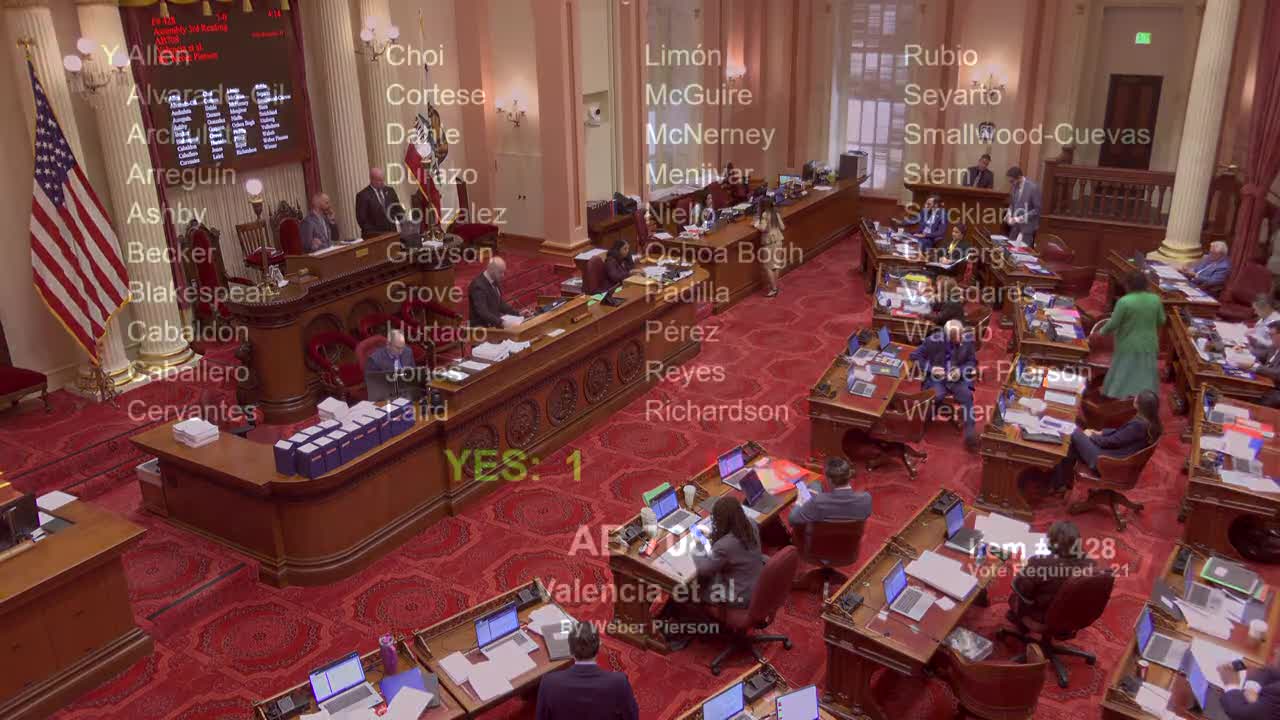 2MIN
Senate Floor
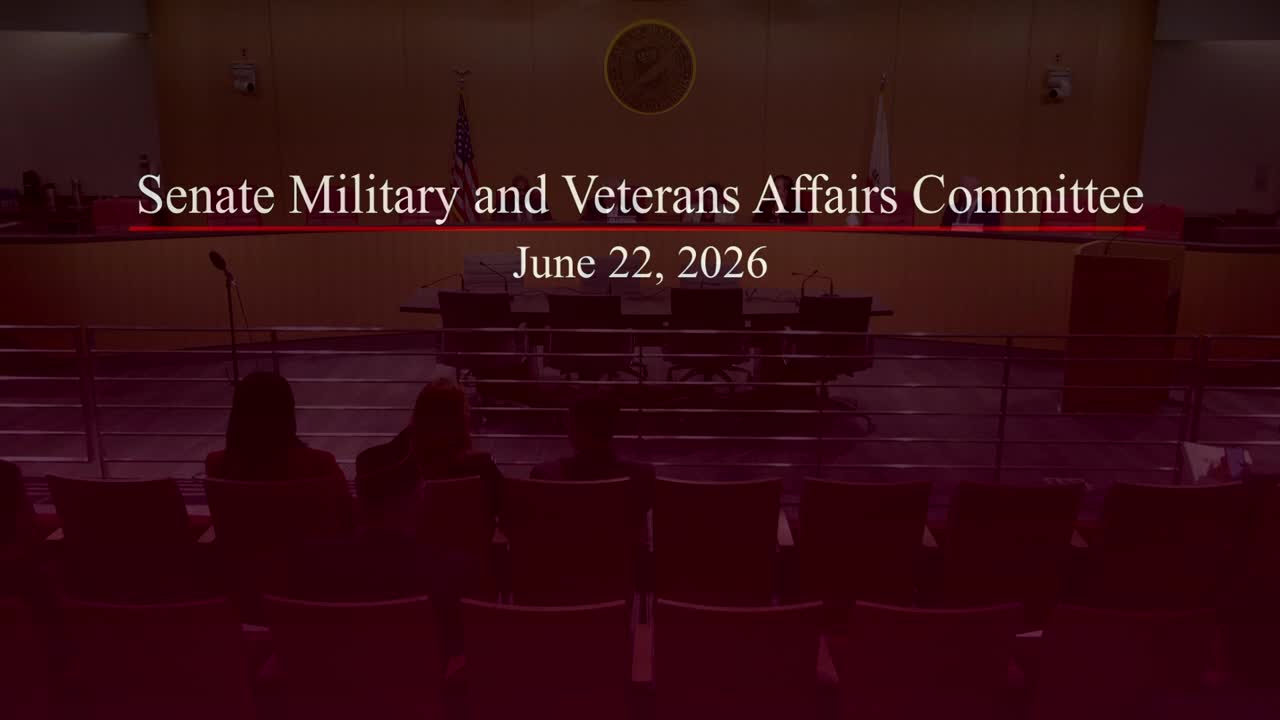 14MIN
Senate Standing Committee on Military and Veterans Affairs
 8MIN
Senate Standing Committee on Business, Professions and Economic Development
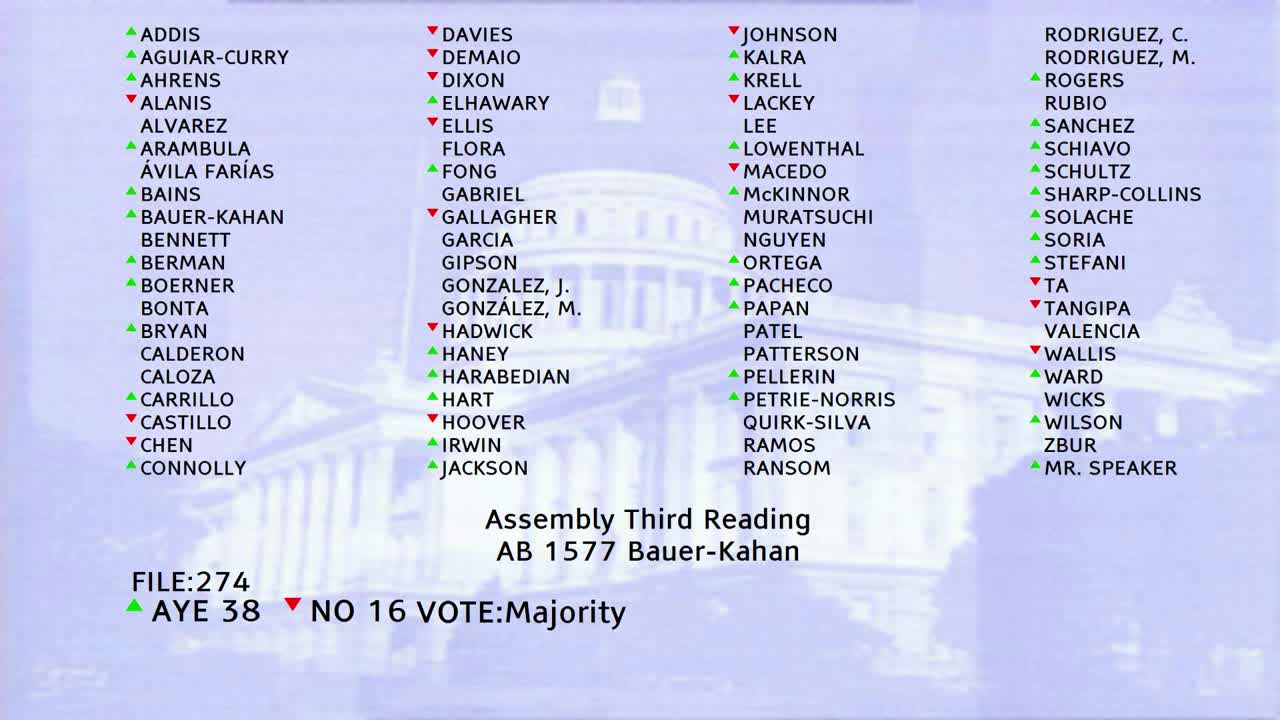 54SEC
Assembly Floor
 32MIN
Assembly Standing Committee on Appropriations
 9MIN
Assembly Standing Committee on Business and Professions
 27MIN
Assembly Standing Committee on Military and Veterans Affairs
Bill Author