AB 1778: Controlled substances: testosterone.
- Session Year: 2025-2026
- House: Assembly
- Latest Version Date: 2026-08-24
Current Status:
Passed
(2026-08-24: Chaptered by Secretary of State - Chapter 121, Statutes of 2026.)
Introduced
In Committee
Awaiting First Chamber Vote
Passed First Chamber
In Committee
Awaiting Second Chamber Vote
Passed Second Chamber
Enacted
Existing law, the California Uniform Controlled Substances Act, classifies controlled substances into 5 designated schedules, with the most restrictive limitations generally placed on controlled substances classified in Schedule I, and the least restrictive limitations generally placed on controlled substances classified in Schedule V. Existing federal law also regulates controlled substances by schedule. Under existing state and federal law, testosterone is classified as a Schedule III controlled substance.
This bill would, if testosterone or dihydrotestosterone is excluded from Schedule III of the federal Controlled Substances Act and reclassified to a less restrictive schedule or exempted from the act, deem it to be rescheduled or exempted, respectively, under this division.
Existing law, the California Uniform Controlled Substances Act, classifies controlled substances into 5 designated schedules, with the most restrictive limitations generally placed on controlled substances classified in Schedule I, and the least restrictive limitations generally placed on controlled substances classified in Schedule V. Existing federal law also regulates controlled substances by schedule. Under existing state and federal law, testosterone is classified as a Schedule III controlled substance.
This bill would, if testosterone or dihydrotestosterone is excluded from Schedule III of the federal Controlled Substances Act and reclassified to a less restrictive schedule or exempted from the act, deem it to be rescheduled or exempted, respectively, under this division.
Existing law, the California Uniform Controlled Substances Act, classifies controlled substances into 5 designated schedules, with the most restrictive limitations generally placed on controlled substances classified in Schedule I, and the least restrictive limitations generally placed on controlled substances classified in Schedule V. Existing federal law also regulates controlled substances by schedule. Under existing state and federal law, testosterone is classified as a Schedule III controlled substance.
This bill would, if testosterone or dihydrotestosterone is excluded from Schedule III of the federal Controlled Substances Act and reclassified to a less restrictive schedule or exempted from the act, deem it to be rescheduled or exempted, respectively, under this division.
Existing law, the California Uniform Controlled Substances Act, classifies controlled substances into 5 designated schedules, with the most restrictive limitations generally placed on controlled substances classified in Schedule I, and the least restrictive limitations generally placed on controlled substances classified in Schedule V. Existing federal law also regulates controlled substances by schedule. Under existing state and federal law, testosterone is classified as a Schedule III controlled substance.
This bill would, if testosterone is excluded from Schedule III of the federal Controlled Substances Act and reclassified or exempted from the act, deem it to be rescheduled or exempted, respectively, under this division.
Notwithstanding any other law, the classification of testosterone and dihydrotestosterone under this division shall conform to their classifications under the federal Controlled Substances Act if that classification is less restrictive than the classification under this division. If testosterone or dihydrotestosterone is removed from Schedule III and rescheduled to a less restrictive schedule or exempted under federal law, it shall be deemed rescheduled or exempted, respectively, under this division.
Notwithstanding any other law, the classification of testosterone and dihydrotestosterone under this division shall conform to their classifications under the federal Controlled Substances Act if that classification is less restrictive than the classification under this division. If testosterone or dihydrotestosterone is removed from Schedule III and rescheduled to a less restrictive schedule or exempted under federal law, it shall be deemed rescheduled or exempted, respectively, under this division.
Notwithstanding any other law, the classification of testosterone and dihydrotestosterone under this division shall conform to its classification their classifications under the federal Controlled Substances Act. Act if that classification is less restrictive than the classification under this division. If testosterone or dihydrotestosterone is removed from Schedule III and rescheduled to a less restrictive schedule or exempted under federal law, it shall be deemed rescheduled or exempted, respectively, under this division.
Notwithstanding any other law, the classification of testosterone under this division shall conform to its classification under the federal Controlled Substances Act. If testosterone is removed from Schedule III and rescheduled or exempted under federal law, it shall be deemed rescheduled or exempted, respectively, under this division.
|
Date
|
Status
|
|---|---|
| Aug 24, 2026 | Chaptered by Secretary of State - Chapter 121, Statutes of 2026. |
| Aug 24, 2026 | Approved by the Governor. |
| Aug 12, 2026 | Enrolled and presented to the Governor at 12 p.m. |
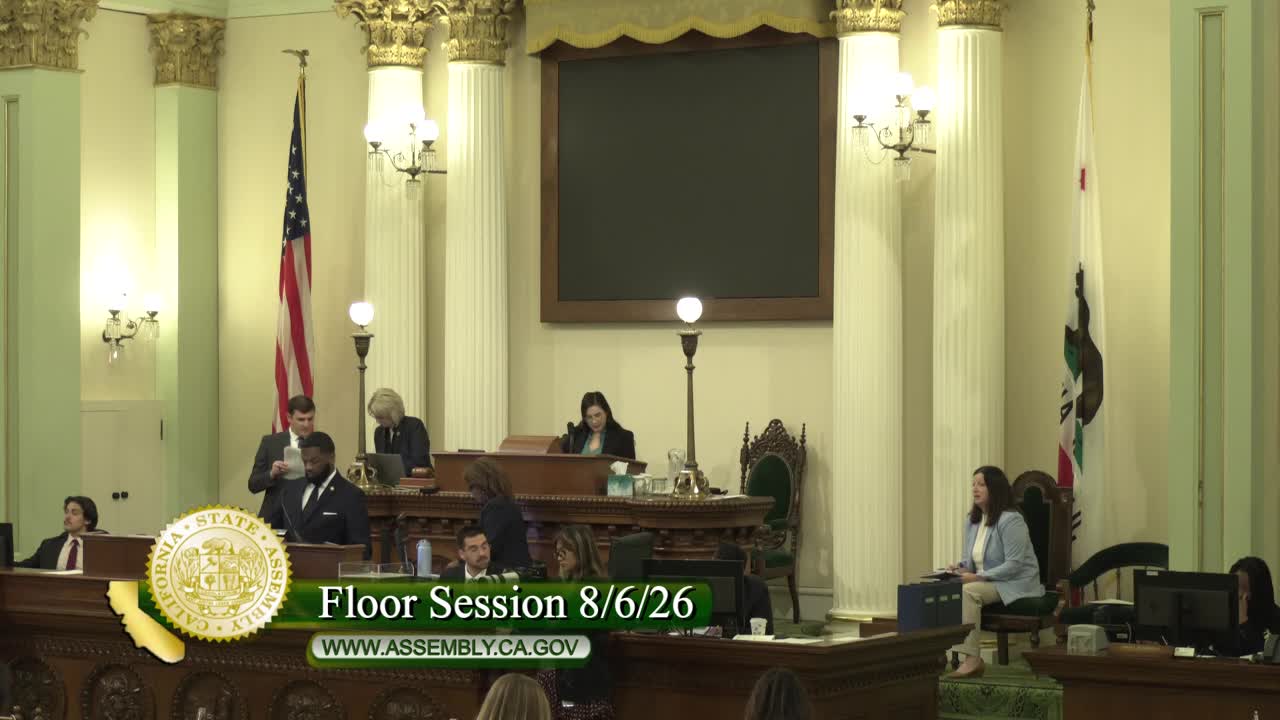
| Aug 6, 2026 | Senate amendments concurred in. To Engrossing and Enrolling. (Ayes 75. Noes 0. Page 6073.). |
| Aug 6, 2026 | Senate amendments concurred in. To Engrossing and Enrolling. (Ayes 75. Noes 0.). |
| Jul 2, 2026 | In Assembly. Concurrence in Senate amendments pending. |
| Jul 2, 2026 | Read third time. Passed. Ordered to the Assembly. (Ayes 37. Noes 0. Page 5188.). |
| Jul 2, 2026 | Read third time. Passed. Ordered to the Assembly. (Ayes 37. Noes 0.). |
| Jun 30, 2026 | Read second time. Ordered to Consent Calendar. |
| Jun 29, 2026 | From committee: Be ordered to second reading file pursuant to Senate Rule 28.8 and ordered to Consent Calendar. |
| Jun 16, 2026 | From committee: Do pass and re-refer to Com. on APPR. with recommendation: To Consent Calendar. (Ayes 6. Noes 0.) (June 16). Re-referred to Com. on APPR. |
| Jun 1, 2026 | From committee chair, with author's amendments: Amend, and re-refer to committee. Read second time, amended, and re-referred to Com. on PUB. S. |
| May 27, 2026 | Referred to Com. on PUB. S. |
| May 14, 2026 | In Senate. Read first time. To Com. on RLS. for assignment. |
| May 14, 2026 | Read third time. Passed. Ordered to the Senate. (Ayes 77. Noes 0. Page 5053.) |
| May 14, 2026 | Read third time. Passed. Ordered to the Senate. (Ayes 77. Noes 0.) |
| May 7, 2026 | Read second time. Ordered to Consent Calendar. |
| May 6, 2026 | From committee: Do pass. To Consent Calendar. (Ayes 14. Noes 0.) (May 6). |
| Apr 22, 2026 | From committee: Do pass and re-refer to Com. on APPR. with recommendation: To Consent Calendar. (Ayes 9. Noes 0.) (April 21). Re-referred to Com. on APPR. |
| Apr 7, 2026 | From committee: Do pass and re-refer to Com. on PUB. S. with recommendation: To Consent Calendar. (Ayes 19. Noes 0.) (April 7). Re-referred to Com. on PUB. S. |
| Mar 2, 2026 | Referred to Coms. on B. & P. and PUB. S. |
| Feb 10, 2026 | From printer. May be heard in committee March 12. |
| Feb 9, 2026 | Read first time. To print. |
|
Date
|
Description
|
Location
|
Votes
|
|
|---|---|---|---|---|
| Aug 6, 2026 | AB 1778 Patterson Concurrence in Senate Amendments | Assembly Floor |
Passed |
|
| Jul 2, 2026 | Consent Calendar 2nd AB1778 Patterson | Senate Floor |
Passed |
|
| Jun 16, 2026 | Do pass, but first be re-referred to the Committee on [Appropriations] with the recommendation: To Consent Calendar | Senate Standing Committee on Public Safety |
Passed |
|
| May 14, 2026 | AB 1778 Patterson Consent Calendar Second Day Regular Session | Assembly Floor |
Passed |
|
| May 6, 2026 | Do pass. To Consent Calendar. | Assembly Standing Committee on Appropriations |
Passed |
|
| Apr 21, 2026 | Do pass and be re-referred to the Committee on [Appropriations] with recommendation: To Consent Calendar | Assembly Standing Committee on Public Safety |
Passed |
|
| Apr 7, 2026 | Do pass and be re-referred to the Committee on [Public Safety] with recommendation: To Consent Calendar | Assembly Standing Committee on Business and Professions |
Passed |
This list shows positions taken on this bill by organizations on the date displayed, which is linked to the original source.
Positions by individuals are not included.
|
Organization
|
Position
|
Date
|
|---|---|---|
| California Pharmacists Association (CPhA) | ** Support | |
| Drug Policy Alliance | ** Support | |
| Los Angeles County District Attorney’s Office | ** Support |
CONCURRENCE IN SENATE AMENDMENTS
CSA1 Bill Id:AB 1778
Author:(Patterson)
As Amended Ver:June 1, 2026
Majority vote
SUMMARY
Removes or reclassifies testosterone or dihydrotestosterone from Schedule III of California's Uniform Controlled Substances Act (UCSA), contingent upon either of those substances being removed or reclassified to a less restrictive schedule pursuant to federal Controlled Substances Act (CSA).
Senate Amendments
- Extend the bill's provisions to include dihydrotestosterone.
- Provide that a substance is only automatically reclassified if the federal change was to a less restrictive schedule under the CSA.
COMMENTS
Overview of Testosterone. Testosterone is the primary male sex hormone, although it is also produced by females in lesser quantities. Testosterone is critical to the development of male reproductive organs and other secondary sexual characteristics which are developed during puberty, such as muscle and bone mass, and body hair. Testosterone is primarily produced by the testis, but it is also produced by both the male and female adrenal glands.
Humans naturally produce testosterone, but it can also be chemically synthesized. Chemical synthesis of testosterone was first achieved in 1935, although research on full synthesis was being conducted as far back as the 1860s. Contemporary synthesis of testosterone is typically accomplished though microbial fermentation of plant cholesterol. Synthetic testosterone is typically administered via transdermal patches and gels, intramuscular injections, or ingestion.
Medical Usage of Testosterone. Research has shown that testosterone has several therapeutic uses. As a result, it is approved by the federal Food and Drug Administration (FDA) to treat a number of conditions, and it is included in the World Health Organization's list of essential medicines. One of the primary, on-label uses for testosterone in the US is "testosterone replacement therapy" (TRT). TRT is most commonly used in the treatment of hypogonadism in cisgendered men, which is a condition that causes decreased natural testosterone production.
Testosterone is also a primary hormone used by transgender men in transgender hormone therapy (THT). THT is a form of gender affirming healthcare employed by many transgender men to facilitate gender transition. Gender-affirming care encompasses medical interventions such as prescription hormone therapy, surgical procedures, and mental health support aimed at aligning an individual's physical body with their gender identity. Testosterone is one of the main hormones used in THT due to its role in the development of secondary male sex characteristics, including facial and body hair, increased bone density and muscle mass, and decreased estrogen production. According to a recent study, approximately 70% of transgender men in the US have at one point used testosterone as part of THT. For many transgender individuals, these interventions are not merely elective but are necessary for alleviating gender dysphoria and improving overall well-being.
Illicit and Off-label Usage of Testosterone. Although there are a number of approved medical uses for testosterone, it also has a history of illicit and off label use. The most prominent illicit usage of testosterone has been anabolic hormone and "steroid doping" in sports. Usage of anabolic hormones and steroids in sports, like testosterone, date as far back as the 1950s. In 1975, the International Olympic committee banned the usage of anabolic hormones and steroids by athletes. Despite the Olympic ban, and similar bans by other athletic organizations, illicit hormone and steroid use continued to persist as a problem in both amateur and professional athletic circles. This trend was one of primary reasons that the US congress passed the Anabolic Steroid Act of 1990, which added testosterone, as well as other anabolic hormones and steroids, to the federal CSA as Schedule III substances. Soon after, California's USCA followed this scheduling.
More recently, interest in off-label testosterone use has expanded beyond the world of athletics, driven in part by alternative health influencers and social media trends. A significant percentage of people in the US have either used or expressed interest in using off-label testosterone for general health and wellness. According to a 2025 report by CBS News[1], prescriptions for TRT rose from 7.3 million in 2019 to over 11 million in last year. According to the report, many consumers are seeking TRT as a "fountain of youth", purporting increased vitality, energy, and libido. However, with increased use of testosterone as a wellness drug has also come increased research into potential risks. According to the same report, studies show "slight increased risk of certain heart, lung and kidney conditions" for individuals with low testosterone using TRT, and notes the risks for individuals with normal testosterone levels may be higher. Additionally, both the Mayo Clinic and Cleveland Clinic have found TRT can affect fertility by reducing sperm count, cause acne and worsen sleep apnea.
Regulation of Testosterone. Testosterone's wide on-label and illicit usage has led to the creation of many regulations concerning its manufacture, use, possession, and sale at both the state and federal level. Some of the most important regulations concerning testosterone are contained within the federal Controlled Substances Act (CSA), and the California Uniform Controlled Substances Act (UCSA). Some substances used in prescription hormone therapy, such as testosterone, are scheduled as Class III as controlled substances under the CSA and UCSA, and are therefore subject to strict requirements in the prescribing and dispensing of those substances. Treatments involving prescription hormone therapy are also subject to professional oversight by state licensing boards under the DCA pursuant to various healing arts practice acts.
The UCSA, as well as the federal CSA classify controlled substances into one of five schedules. Drugs falling within Schedules II through V may be prescribed only by health practitioners in possession of a federal Drug Enforcement Agency (DEA) registration and are ranked according to the drug's potential for abuse, with lower numbered schedules representing drugs with a higher risk of abuse or dependence. Testosterone is currently a Schedule III substance on the UCS and the CSA. Schedule III substances are those defined as having a moderate potential for physical and psychological dependence, but that have some form of recognized medical value. According to the DEA, examples of other Schedule III substances include Tylenol with codeine, ketamine, and other anabolic steroids.
The UCSA and the CSA are typically aligned on how medications are classified, but there have been conflicts between the federal and state acts, typically when the federal government reschedules a substance or exempts a specific drug from the CSA. When this occurs, statute in California typically must be legislatively amended to reconcile the differences. When a drug is scheduled differently at the federal and state level, it can create confusion and legal challenges for healing arts professionals, who are licensed by various medical boards under the DCA. These professionals are permitted to administer, prescribe, and dispense controlled substances under varying degrees of control, and subject to rigorous tracking and reporting requirements. When the federal and state schedules are not aligned for a particular controlled substance, it can create conflicting obligations for health care providers which can have adverse effects on providers and patients alike.
The increased interest in testosterone has led to an increase in research on the risks and benefits of its usage. In 2025, the federal Food and Drug Administration (FDA) assembled an expert panel to discuss this research. This panel made three major requests of the FDA which were: remove testosterone from Schedule III of the federal CSA, expand the FDA approved uses for testosterone to include age related low testosterone, and remove the black box warning about a correlation between testosterone use and prostate cancer risk from testosterone prescription labels. This panel received significant pushback from a contingent of medical experts who claimed that the panel's conclusions did not reflect the body of scientific research about the potential risks of testosterone usage. Following this panel the FDA opened a public comment period on February 9, 2026, regarding testosterone labeling and scheduling, and rulemaking is currently ongoing. Recognizing that ongoing conversations at the federal level may lead to the change of scheduling, or entire removal, of testosterone in the federal CSA, this bill would similarly remove or reschedule testosterone in the California USCA contingent on federal action to deschedule or change to a less restrictive schedule.
According to the Author
"AB 1778 is about ensuring consistency and clarity in our laws. If the federal government changes how testosterone is classified, California should not be stuck operating under outdated rules that create confusion for doctors, pharmacists, and patients. Right now, state law would not automatically adjust if federal law changes, and this opens the door to unnecessary red tape and conflicting standards. AB 1778 simply keeps California aligned with federal scheduling decisions, providing a clear and consistent framework moving forward."
Arguments in Support
This bill is supported by the California Pharmacists Association (CPhA), who argue: "AB 1778 represents a practical step toward a more cohesive regulatory system that enhances compliance, reduces confusion, and supports pharmacists in delivering high-quality care."
Arguments in Opposition
There is no opposition on file.
FISCAL COMMENTS
Pursuant to Senate Rule 28.8, negligible state costs.
VOTES:
ASM BUSINESS AND PROFESSIONS: 19-0-0
YES: Berman, Johnson, Addis, Ahrens, Alanis, Bains, Aguiar-Curry, Caloza, Chen, Elhawary, Hadwick, Haney, Hart, Irwin, Jackson, Lowenthal, Macedo, Nguyen, Pellerin
ASM PUBLIC SAFETY: 9-0-0
YES: Schultz, Alanis, Mark González, Haney, Harabedian, Lackey, Nguyen, Ramos, Sharp-Collins
ASM APPROPRIATIONS: 14-0-1
YES: Wicks, Hoover, Aguiar-Curry, Caloza, Dixon, Fong, Mark González, Krell, Pacheco, Pellerin, Sharp-Collins, Solache, Ta, Tangipa
ABS, ABST OR NV: Arambula
ASSEMBLY FLOOR: 77-0-3
YES: Addis, Aguiar-Curry, Ahrens, Alanis, Alvarez, Ávila Farías, Bains, Bauer-Kahan, Bennett, Berman, Boerner, Bonta, Bryan, Calderon, Caloza, Carrillo, Castillo, Chen, Connolly, Davies, DeMaio, Dixon, Elhawary, Ellis, Fong, Gabriel, Gallagher, Garcia, Gipson, Jeff Gonzalez, Mark González, Hadwick, Haney, Harabedian, Hart, Hoover, Irwin, Jackson, Johnson, Kalra, Krell, Lackey, Lee, Lowenthal, Macedo, McKinnor, Muratsuchi, Nguyen, Ortega, Pacheco, Papan, Patel, Patterson, Pellerin, Petrie-Norris, Quirk-Silva, Ramos, Ransom, Michelle Rodriguez, Rogers, Blanca Rubio, Sanchez, Schiavo, Schultz, Sharp-Collins, Solache, Soria, Stefani, Ta, Tangipa, Valencia, Wallis, Ward, Wicks, Wilson, Zbur, Rivas
ABS, ABST OR NV: Arambula, Flora, Celeste Rodriguez
SENATE FLOOR: 37-0-3
YES: Allen, Archuleta, Arreguín, Ashby, Becker, Blakespear, Cabaldon, Caballero, Cervantes, Choi, Cortese, Dahle, Durazo, Gonzalez, Grayson, Grove, Hurtado, Jones, Laird, Limón, McGuire, McNerney, Menjivar, Niello, Ochoa Bogh, Padilla, Pérez, Reyes, Seyarto, Smallwood-Cuevas, Stern, Strickland, Umberg, Valladares, Wahab, Weber Pierson, Wiener
ABS, ABST OR NV: Alvarado-Gil, Richardson, Rubio
UPDATED
VERSION: June 1, 2026
CONSULTANT: Edward Franco / B. & P. / (916) 319-3301 FN: 0003309
Moniuszko, S. (2025, February 26). Testosterone replacement therapy is rising in popularity. What is it and what are there risks? CBS News. https://www.cbsnews.com/news/what-is-testosterone-replacement-therapy-risks/ ↑
SENATE RULES COMMITTEE Office of Senate Floor Analyses (916) 651-4171 | AB 1778 |
CONSENT
Bill No: AB 1778
Author: Patterson (R)
Amended: 6/1/26 in Senate
Vote: 21
SENATE PUBLIC SAFETY COMMITTEE: 6-0, 6/16/26
AYES: Arreguín, Seyarto, Caballero, Cortese, Pérez, Wiener
SENATE APPROPRIATIONS COMMITTEE: Senate Rule 28.8
ASSEMBLY FLOOR: 77-0, 5/14/26 (Consent) - See last page for vote
SUBJECT: Controlled substances: testosterone
SOURCE: Author
DIGEST:
This bill provides that if testosterone or dihydrotestosterone is removed from Schedule III of the federal Controlled Substances Act and rescheduled to a less restrictive schedule or exempted under federal law, it will be deemed rescheduled or exempted, respectively, under the state Controlled Substances Act.
ANALYSIS:
Existing law:
- Classifies controlled substances in five schedules according to their danger and potential for abuse. (Health & Safety (Saf.) Code, §§ 11054-11058.)
- Classifies testosterone as a Schedule III controlled substance. Provides an exception when possessed by, sold to, purchased by, transferred to, or administered by a licensed veterinarian, or a licensed veterinarian’s designated agent, exclusively for veterinary use. (Health & Saf. Code, § 11056, subd. (f)(30).)
- Makes the possession of a non-narcotic Schedule III controlled substance a misdemeanor, unless upon the prescription of a physician, dentist, podiatrist, or veterinarian licensed to practice in this state, and punishable by imprisonment in a county jail for a period of not more than one year. Provides that a person may instead be sentenced to 16 months, two years, or three years in county jail if that person has one or more prior convictions for specified offenses. (Health & Saf. Code § 11377, subd. (a).)
- Makes possession for sale of a non-narcotic Schedule III substance a felony subject to imprisonment in county jail for 16 months, 2 years or 3 years. (Health & Saf. Code, § 11378.)
- Makes trafficking of a non-narcotic Schedule III substance a felony subject to imprisonment in county jail for 2, 3, or 4 years. (Health & Saf. Code, § 11379.)
- Makes manufacturing, producing, or preparing a non-narcotic Schedule III controlled substance either directly or indirectly by chemical extraction or independently by means of chemical synthesis a felony punishable by imprisonment in county jail for 3, 5, or 7 years and a fine of up to $50,000. (Health & Saf. Code, § 11379.6, subd. (a).)
- Makes offering to manufacture, produce, or prepare a non-narcotic Schedule III controlled substance either directly or indirectly by chemical extraction or independently by means of chemical synthesis a felony punishable by imprisonment in county jail for 3, 4, or 5 years. (Health & Saf., § 11379.6, subd. (e).)
This bill provides that if testosterone or dihydrotestosterone is removed from Schedule III of the federal Controlled Substances Act and rescheduled to a less restrictive schedule or exempted under federal law, it will be deemed rescheduled or exempted, respectively, under the state Controlled Substances Act.
Background
Through the Controlled Substances Act (CSA) of 1970, the federal government regulates the manufacture, distribution, and dispensing of controlled substances. The CSA groups drugs into five schedules with decreasing potential for physical or psychological harm, based on three considerations: accepted medical use; potential for abuse; and, safety or dependency liability. Two goals of the CSA are “to ensure that patients have access to pharmaceutical controlled substances for legitimate medical purposes while also seeking to protect public health from the dangers of controlled substances diverted into or produced for the illicit market.” (Congressional Research Service, Summary, The Controlled Substances Act: A Legal Overview for the 119th Congress (Jan. 22, 2025) available at <https://www.congress.gov/crs-product/R45948 .) Consistent with those goals are the CSA’s provisions designed to prevent diversion and misuse of controlled substances. (Id. at p. 2.) Substances are added to or removed from the schedules through agency action or by legislation. (Id. at p. 9.)
California’s controlled substances schedules largely follow the federal schedules. (See People v. Ward (2008) 167 Cal.App.4th 252, 259 [“In the California Uniform Controlled Substances Act, California adopted the five schedules of controlled substances used in federal law and in the Uniform Controlled Substances Act”]; Williamson v. Bd. Of Medical Quality Assurance (1990) 271 Cal.App.3d 1343, 1352, fn. 1. [“Effective January 1, 1985, Schedules I through V of the California Uniform Controlled Substances Act were revised so as to generally parallel the five schedules contained in the Federal Controlled Substances Act.”].) The controlled substance schedules are codified in Health and Safety Code sections 11054 to 11058.
- Schedule I controlled substances, such as heroin, ecstasy, and LSD, have a high potential for abuse and no generally accepted medical use.
- Schedule II controlled substances have a currently accepted medical use, with significant risk to patient safety, and have a high potential for abuse and dependence. Schedule II drugs can be narcotics or non-narcotic. Examples of Schedule II controlled substances include morphine, oxycodone, codeine, and amphetamine.
- Schedule III controlled substances have a currently accepted medical use and potential for abuse leading to moderate physical dependence. Examples of Schedule III controlled substances include ketamine and anabolic steroids.
- Schedule IV controlled substances have a currently accepted medical use and low potential for abuse which may lead to limited physical dependence. Examples of Schedule IV controlled substances include benzodiazepines.
- Schedule V controlled substances have a low potential for abuse or dependence. Examples of Schedule V controlled substances include buprenorphine and narcotic drugs containing non-narcotic active medicinal ingredients.
Testosterone and dihydrotestosterone. Testosterone is an androgenic hormone that is essential to the development of male growth and masculine characteristics. It is classified as a Schedule III controlled substance under both federal and California law. Testosterone products are FDA-approved solely for use in men who lack or have low testosterone levels in conjunction with an associated medical condition. (https://www.fda.gov/drugs/drug-alerts-and-statements/fda-issues-class-wide-labeling-changes-testosterone-products?aff_id=DAPL4&order=ASC&orderby=post_date) Current FDA-approved testosterone formulations include oral, topical gel, transdermal patch, buccal system (applied to upper gum or inner cheek), and injection. (Ibid.) Testosterone is also widely used as part of gender-affirming hormone therapy for transgender men and some nonbinary individuals, where it is considered a medically necessary treatment by major medical organizations. (https://www.endocrine.org/clinical-practice-guidelines/gender-dysphoria-gender-incongruence)
Dihydrotestosterone (DHT) is the most potent male sex hormone and is considered a pure androgen because it cannot convert into estrogen. (https://www.ncbi.nlm.nih.gov/books/NBK557634/) DHT plays a vital role in the sexual development of males, and a deficiency or excess of DHT leads to specific pathologies. As adult men age, DHT does not play a significant role in their physiology. However, the most notable effects of issues with DHT in adult men are prostate enlargement and male pattern hair loss. (Ibid.)
Testosterone, DHT, and other anabolic steroids are associated with non-medical use, particularly in athletic performance enhancement and bodybuilding. The U.S. Drug Enforcement Administration (DEA) has identified anabolic steroid misuse, including testosterone, as a persistent concern due to risks of cardiovascular harm, liver damage, and hormonal disruption. (https://www.dea.gov/factsheets/steroids) Additionally, the World Anti-Doping Agency prohibits testosterone and DHT use in competitive sports due to potential misuse for its performance-enhancing effects. (https://www.wada-ama.org/en/prohibited-list)
Testosterone is currently included in Schedule III of the controlled substance schedules. This bill provides that if testosterone or DHT is removed from Schedule III of the federal Controlled Substances Act and rescheduled to a less restrictive schedule or exempted under federal law, it will be deemed rescheduled or exempted, respectively, under the state Controlled Substances Act. As such, obtaining testosterone or DHT would still require a prescription but it would be subject to fewer restrictions and regulations. For example, prescribers and dispensers would no longer be mandated to report their prescribing and dispensing activities to the state’s prescription drug monitoring program. Criminal liability for possession, possession for sale, manufacturing, etc. of a non-narcotic Schedule III substance without a prescription would also no longer apply.
FISCAL EFFECT: Appropriation: No Fiscal Com.: Yes Local: No
SUPPORT: (Verified 6/29/26)
California Pharmacists Association
Drug Policy Alliance
Los Angeles County District Attorney’s Office
OPPOSITION: (Verified 6/29/26)
None received
ASSEMBLY FLOOR: 77-0, 5/14/26
AYES: Addis, Aguiar-Curry, Ahrens, Alanis, Alvarez, Ávila Farías, Bains, Bauer-Kahan, Bennett, Berman, Boerner, Bonta, Bryan, Calderon, Caloza, Carrillo, Castillo, Chen, Connolly, Davies, DeMaio, Dixon, Elhawary, Ellis, Fong, Gabriel, Gallagher, Garcia, Gipson, Jeff Gonzalez, Mark González, Hadwick, Haney, Harabedian, Hart, Hoover, Irwin, Jackson, Johnson, Kalra, Krell, Lackey, Lee, Lowenthal, Macedo, McKinnor, Muratsuchi, Nguyen, Ortega, Pacheco, Papan, Patel, Patterson, Pellerin, Petrie-Norris, Quirk-Silva, Ramos, Ransom, Michelle Rodriguez, Rogers, Blanca Rubio, Sanchez, Schiavo, Schultz, Sharp-Collins, Solache, Soria, Stefani, Ta, Tangipa, Valencia, Wallis, Ward, Wicks, Wilson, Zbur, Rivas
NO VOTE RECORDED: Arambula, Flora, Celeste Rodriguez
Prepared by: Stephanie Jordan / PUB. S. /
7/1/26 16:54:59
**** END ****
SENATE COMMITTEE ON PUBLIC SAFETY
Senator Jesse Arreguín, Chair
2025 - 2026 Regular
Bill No: AB 1778 Hearing Date: June 16, 2026
Author: | Patterson | ||
Version: | June 1, 2026 | ||
Urgency: | No | Fiscal: | Yes |
Consultant: | SJ | ||
Subject: Controlled substances: testosterone
HISTORY
Source: Author
Prior Legislation: AB 82 (Ward), Ch. 679, Stats. of 2025
AB 1152 (Patterson), Ch. 183, Stats. of 2025
AB 2018 (Rodriguez), Ch. 98, Stats. of 2024
AB 527 (Wood), Ch. 618, Stats. of 2021
AB 2589 (Bigelow), Ch. 81, Stats. of 2018
AB 1591 (Condit), Ch. 567, Stats. of 1989
AB 4029 (Condit), Ch. 1033, Stats. of 1986
Support: California Pharmacists Association; Drug Policy Alliance
Opposition: None known
Assembly Floor Vote: 77 - 0
PURPOSE
The purpose of this bill is to provide that if testosterone or dihydrotestosterone is removed from Schedule III of the federal Controlled Substances Act and rescheduled to a less restrictive schedule or exempted under federal law, it will be deemed rescheduled or exempted, respectively, under the state Controlled Substances Act.
Existing law classifies controlled substances in five schedules according to their danger and potential for abuse. (Health & Saf. Code, §§ 11054-11058.)
Existing law classifies testosterone as a Schedule III controlled substance. Provides an exception when possessed by, sold to, purchased by, transferred to, or administered by a licensed veterinarian, or a licensed veterinarian’s designated agent, exclusively for veterinary use. (Health & Saf. Code, § 11056, subd. (f)(30).)
Existing law makes the possession of a non-narcotic Schedule III controlled substance a misdemeanor, unless upon the prescription of a physician, dentist, podiatrist, or veterinarian licensed to practice in this state, and punishable by imprisonment in a county jail for a period of not more than one year. Provides that a person may instead be sentenced to 16 months, two years, or three years in county jail if that person has one or more prior convictions for specified offenses. (Health & Saf. Code § 11377, subd. (a).)
Existing law makes possession for sale of a non-narcotic Schedule III substance a felony subject to imprisonment in county jail for 16 months, 2 years or 3 years. (Health & Saf. Code, § 11378.)
Existing law makes trafficking of a non-narcotic Schedule III substance a felony subject to imprisonment in county jail for 2, 3, or 4 years. (Health & Saf. Code, § 11379.)
Existing law makes manufacturing, producing, or preparing a non-narcotic Schedule III controlled substance either directly or indirectly by chemical extraction or independently by means of chemical synthesis a felony punishable by imprisonment in county jail for 3, 5, or 7 years and a fine of up to $50,000. (Health & Saf. Code, § 11379.6, subd. (a).)
Existing law makes offering to manufacture, produce, or prepare a non-narcotic Schedule III controlled substance either directly or indirectly by chemical extraction or independently by means of chemical synthesis a felony punishable by imprisonment in county jail for 3, 4, or 5 years. (Health & Saf., § 11379.6, subd. (e).)
This bill provides that if testosterone or dihydrotestosterone is removed from Schedule III of the federal Controlled Substances Act and rescheduled to a less restrictive schedule or exempted under federal law, it will be deemed rescheduled or exempted, respectively, under the state Controlled Substances Act.
COMMENTS
- Need For This Bill
According to the author:
AB 1778 is about ensuring consistency and clarity in our laws. If the federal government reclassifies testosterone and dihydrotestosterone –critical natural hormones- to a lower schedule, California should not be stuck operating under outdated rules that create confusion for doctors, pharmacists, and patients. Right now, state law would not automatically adjust if federal law changes, and this opens the door to unnecessary red tape and conflicting standards. AB 1778 simply keeps California aligned with federal scheduling decisions, providing a clear and consistent framework moving forward.
- Controlled Substances Act
Through the Controlled Substances Act (CSA) of 1970, the federal government regulates the manufacture, distribution, and dispensing of controlled substances. The CSA groups drugs into five schedules with decreasing potential for physical or psychological harm, based on three considerations: accepted medical use; potential for abuse; and, safety or dependency liability. Two goals of the CSA are “to ensure that patients have access to pharmaceutical controlled substances for legitimate medical purposes while also seeking to protect public health from the dangers of controlled substances diverted into or produced for the illicit market.” (Congressional Research Service, Summary, The Controlled Substances Act: A Legal Overview for the 119th Congress (Jan. 22, 2025) available at <https://www.congress.gov/crs-product/R45948>.) Consistent with those goals are the CSA’s provisions designed to prevent diversion and misuse of controlled substances. (Id. at p. 2.) Substances are added to or removed from the schedules through agency action or by legislation. (Id. at p. 9.)
California’s controlled substances schedules largely follow the federal schedules. (See People v. Ward (2008) 167 Cal.App.4th 252, 259 [“In the California Uniform Controlled Substances Act, California adopted the five schedules of controlled substances used in federal law and in the Uniform Controlled Substances Act”]; Williamson v. Bd. Of Medical Quality Assurance (1990) 271 Cal.App.3d 1343, 1352, fn. 1. [“Effective January 1, 1985, Schedules I through V of the California Uniform Controlled Substances Act were revised so as to generally parallel the five schedules contained in the Federal Controlled Substances Act.”].) The controlled substance schedules are codified in Health and Safety Code sections 11054 to 11058.
- Schedule I controlled substances, such as heroin, ecstasy, and LSD, have a high potential for abuse and no generally accepted medical use.
- Schedule II controlled substances have a currently accepted medical use, with significant risk to patient safety, and have a high potential for abuse and dependence. Schedule II drugs can be narcotics or non-narcotic. Examples of Schedule II controlled substances include morphine, oxycodone, codeine, and amphetamine.
- Schedule III controlled substances have a currently accepted medical use and potential for abuse leading to moderate physical dependence. Examples of Schedule III controlled substances include ketamine and anabolic steroids.
- Schedule IV controlled substances have a currently accepted medical use and low potential for abuse which may lead to limited physical dependence. Examples of Schedule IV controlled substances include benzodiazepines.
- Schedule V controlled substances have a low potential for abuse or dependence. Examples of Schedule V controlled substances include buprenorphine and narcotic drugs containing non-narcotic active medicinal ingredients.
- Testosterone and Dihydrotestosterone
Testosterone is an androgenic hormone that is essential to the development of male growth and masculine characteristics. It is classified as a Schedule III controlled substance under both federal and California law. Testosterone products are FDA-approved solely for use in men who lack or have low testosterone levels in conjunction with an associated medical condition.[1] Current FDA-approved testosterone formulations include oral, topical gel, transdermal patch, buccal system (applied to upper gum or inner cheek), and injection.[2] Testosterone is also widely used as part of gender-affirming hormone therapy for transgender men and some nonbinary individuals, where it is considered a medically necessary treatment by major medical organizations.[3]
Dihydrotestosterone (DHT) is the most potent male sex hormone and is considered a pure androgen because it cannot convert into estrogen.[4] DHT plays a vital role in the sexual development of males, and a deficiency or excess of DHT leads to specific pathologies. As adult men age, DHT does not play a significant role in their physiology. However, the most notable effects of issues with DHT in adult men are prostate enlargement and male pattern hair loss.[5]
Testosterone, DHT, and other anabolic steroids are associated with non-medical use, particularly in athletic performance enhancement and bodybuilding. The U.S. Drug Enforcement Administration (DEA) has identified anabolic steroid misuse, including testosterone, as a persistent concern due to risks of cardiovascular harm, liver damage, and hormonal disruption.[6] Additionally, the World Anti-Doping Agency prohibits testosterone and DHT use in competitive sports due to potential misuse for its performance-enhancing effects.[7]
Testosterone is currently included in Schedule III of the controlled substance schedules. This bill provides that if testosterone or DHT is removed from Schedule III of the federal Controlled Substances Act and rescheduled to a less restrictive schedule or exempted under federal law, it will be deemed rescheduled or exempted, respectively, under the state Controlled Substances Act. As such, obtaining testosterone or DHT would still require a prescription but it would be subject to fewer restrictions and regulations. For example, prescribers and dispensers would no longer be mandated to report their prescribing and dispensing activities to the state’s prescription drug monitoring program. Criminal liability for possession, possession for sale, manufacturing, etc. of a non-narcotic Schedule III substance without a prescription would also no longer apply.
- Argument in Support
The California Pharmacists Association writes:
AB 1778 … promotes alignment between federal and state-controlled substance laws, which is critical for safe, efficient, and consistent pharmacy practice.
Pharmacists in California must comply with both state and federal requirements. When controlled substance schedules are not aligned, even temporarily, it can create confusion about which rules apply, including prescribing limits, storage and security, and recordkeeping. This increases the risk of inadvertent noncompliance, potential enforcement issues, and operational challenges.
By ensuring that California law automatically conforms if federal law reclassifies or exempts testosterone from Schedule III, AB 1778 helps eliminate these inconsistencies. This alignment reduces administrative burden, streamlines workflow, and allows pharmacists to focus more on patient care rather than navigating conflicting regulatory frameworks.
More broadly, CPhA supports efforts to modernize and better align controlled substance scheduling to reflect evolving clinical evidence and federal determinations. AB 1778 represents a practical step toward a more cohesive regulatory system that enhances compliance, reduces confusion, and supports pharmacists in delivering high-quality care. While the bill is limited to testosterone, CPhA would prefer that this approach be applied more broadly to ensure consistent alignment across all controlled substances.
-- END --
https://www.fda.gov/drugs/drug-alerts-and-statements/fda-issues-class-wide-labeling-changes-testosterone-products?aff_id=DAPL4&order=ASC&orderby=post_date ↑
Ibid. ↑
https://www.endocrine.org/clinical-practice-guidelines/gender-dysphoria-gender-incongruence ↑
https://www.ncbi.nlm.nih.gov/books/NBK557634/ ↑
Ibid. ↑
https://www.dea.gov/factsheets/steroids ↑
https://www.wada-ama.org/en/prohibited-list ↑
Date of Hearing: May 6, 2026
ASSEMBLY COMMITTEE ON APPROPRIATIONS
Buffy Wicks, Chair
ABPCA Bill Id:AB 1778
Author:(Patterson) – As Introduced Ver:February 9, 2026
Policy Committee: | Business and Professions | Vote: | 19 - 0 |
Public Safety | 9 - 0 | ||
|
|
Urgency: No State Mandated Local Program: No Reimbursable: No
SUMMARY:
This bill requires the classification of testosterone under California’s Uniform Controlled Substances Act (UCSA) to conform to its classification under the federal Controlled Substances Act, including any future rescheduling or exemption.
FISCAL EFFECT:
No significant state costs.
COMMENTS:
- Purpose. According to the author:
[This bill] is about ensuring consistency and clarity in our laws. If the federal government changes how testosterone is classified, California should not be stuck operating under outdated rules that create confusion for doctors, pharmacists, and patients. Right now, state law would not automatically adjust if federal law changes, and this opens the door to unnecessary red tape and conflicting standards. [This bill] simply keeps California aligned with federal scheduling decisions, providing a clear and consistent framework moving forward.
- Background. Testosterone is essential to the development of male growth and masculine characteristics. Testosterone is currently approved solely for use in men who lack or have low testosterone levels in conjunction with an associated medical condition. Testosterone is also widely used as part of gender-affirming hormone therapy for transgender men and some nonbinary individuals, where it is considered a medically necessary treatment by major medical organizations.
Testosterone and other anabolic steroids are also associated with non-medical use, particularly in athletic performance enhancement and bodybuilding. The U.S. Drug Enforcement Administration (DEA) has identified anabolic steroid misuse, including testosterone, as a persistent concern due to risks of cardiovascular harm, liver damage, and hormonal disruption. Additionally, the World Anti-Doping Agency prohibits testosterone use in competitive sports due to its performance-enhancing effects.
Testosterone has been classified as a Schedule III controlled substance under the federal Controlled Substances Act since Congress passed the Anabolic Steroids Control Act of 1990. In December 2025, the U.S. Food and Drug Administration (FDA) convened an expert panel on testosterone replacement therapy to evaluate its safety, appropriate clinical use, and potential risks, including misuse and overprescription, indicating the FDA is reviewing new evidence on testosterone therapy and considering expanded approved uses, signaling potential shifts in federal regulation such as rescheduling testosterone in the near future.
Analysis Prepared by: Allegra Kim / APPR. / (916) 319-2081
Date of Hearing:
Chief Counsel: Andrew Ironside
ASSEMBLY COMMITTEE ON
Nick Schultz, Chair
ABPCA Bill Id:
Author:() – As Ver:
SUMMARY:
Requires testosterone’s classification under California’s Uniform Controlled Substances Act (UCSA) to conform to its classification under the federal Controlled Substances Act, including any future rescheduling or exemption.
EXISTING LAW:
- Lists controlled substances in five “schedules” - intended to list drugs in decreasing order of harm and increasing medical utility or safety - and provides penalties for possession of and commerce in controlled substances. Schedule I includes the most serious and heavily controlled substances, with Schedule V being the least serious and most lightly controlled substances. (Health & Saf. Code, §§ 11054-11058.)
- Classifies testosterone, among other specified substances, as a Schedule III controlled substance. (Health & Saf. Code, § 11056.)
- Makes possession of a non-narcotic Schedule III controlled substance a misdemeanor subject to imprisonment in county jail for up to one year. (Health & Saf. Code, § 11377, subd. (a).)
- Makes possession of a non-narcotic Schedule III controlled substance a felony subject to 16 months, 2 years, or 3 years in county jail where the person has one or more prior convictions for an offense classified as a violent felony or one that requires registration as a sex offender. (Health & Saf. Code, § 11377, subd. (a).)
- Makes possession for sale of a non-narcotic Schedule III substance a felony subject to imprisonment in county jail for 16 months, 2 years or 3 years. (Health & Saf. Code, § 11378.)
- Makes trafficking of a non-narcotic Schedule III substance a felony subject to imprisonment in county jail for 2, 3, or 4 years. (Health & Saf. Code, § 11379.)
- Makes manufacturing, producing, or preparing a non-narcotic Schedule III controlled substance either directly or indirectly by chemical extraction or independently by means of chemical synthesis a felony punishable by imprisonment in county jail for 3, 5, or 7 years and a fine of up to $50,000. (Health & Saf. Code, § 11379.6, subd. (a).)
- Makes offering to manufacture, produce, or prepare a non-narcotic Schedule III controlled substance either directly or indirectly by chemical extraction or independently by means of chemical synthesis a felony punishable by imprisonment in county jail for 3, 4, or 5 years. (Health & Saf., § 11379.6, subd. (e).)
FISCAL EFFECT:
Unknown
COMMENTS:
- Author's Statement: According to the author, “AB 1778 is about ensuring consistency and clarity in our laws. If the federal government changes how testosterone is classified, California should not be stuck operating under outdated rules that create confusion for doctors, pharmacists, and patients. Right now, state law would not automatically adjust if federal law changes, and this opens the door to unnecessary red tape and conflicting standards. AB 1778 simply keeps California aligned with federal scheduling decisions, providing a clear and consistent framework moving forward.”
- Testosterone: Testosterone is an androgenic hormone that is essential to the development of male growth and masculine characteristics, which is classified as a Schedule III controlled substance under both federal and California law. Medically, testosterone is currently approved solely for use in men who lack or have low testosterone levels in conjunction with an associated medical condition.[1] Current FDA-approved testosterone formulations include oral, topical gel, transdermal patch, buccal system (applied to upper gum or inner cheek), and injection.[2] Testosterone is also widely used as part of gender-affirming hormone therapy for transgender men and some nonbinary individuals, where it is considered a medically necessary treatment by major medical organizations.[3] At the same time, testosterone and other anabolic steroids are associated with non-medical use, particularly in athletic performance enhancement and bodybuilding. The U.S. Drug Enforcement Administration (DEA) has identified anabolic steroid misuse, including testosterone, as a persistent concern due to risks of cardiovascular harm, liver damage, and hormonal disruption.[4] Additionally, the World Anti-Doping Agency prohibits testosterone use in competitive sports due to potential misuse for its performance-enhancing effects.[5] National researchers estimates that between 3 to 4 million individuals misuse anabolic steroids, with use concentrated among young men and often beginning before age 21.[6] Due to California-specific data being limited, it is unclear how often illegal uses of testosterone may be occurring in California.
- The California Uniform Controlled Substances Act: In 1970, Congress passed the Comprehensive Drug Abuse Prevention and Control Act, which established a framework for federal regulation of controlled substances. Title II of the act is the Controlled Substances Act (CSA), which placed controlled substances in one of five “schedules.”
The schedule on which a controlled substance is placed determines the level of restriction imposed on its production, distribution, and possession, as well as the penalties applicable to any improper handling of the substance… [W]hen DEA places substances under control by regulation, the agency assigns each controlled substance to a schedule based on its medical utility and its potential for abuse and dependence.[7]
Substances are added to or removed from schedules through agency action or by legislation.[8]
State laws generally follow the federal scheduling decisions, and “they are relatively uniform across jurisdictions because almost all states have adopted a version of a model statute called the Uniform Controlled Substances Act (UCSA).” (Id. at 4.) California adopted the UCSA in 1972. (Stats. 1972, ch. 1407, § 3.) The UCSA generally aligns with the federal government’s scheduling decisions. (See People v. Ward (2008) 167 Cal.App.4th 252, 259 [“In the California Uniform Controlled Substances Act, California adopted the five schedules of controlled substances used in federal law and in the Uniform Controlled Substances Act”]; Williamson v. Bd. Of Medical Quality Assurance (1990) 271 Cal.App.3d 1343, 1352, fn. 1. [“Effective January 1, 1985, Schedules I through V of the California Uniform Controlled Substances Act were revised so as to generally parallel the five schedules contained in the Federal Controlled Substances Act.”].)
Congress has already classified testosterone as a Schedule III controlled substance under the federal Controlled Substances Act, when it passed the Anabolic Steroids Control Act of 1990.[9] There appears to be no current federal bills proposing to reschedule or reclassify testosterone. However, in December 2025, the U.S. Food and Drug Administration (FDA) convened an expert panel on testosterone replacement therapy to evaluate its safety, appropriate clinical use, and potential risks, including misuse and overprescription.[10] The panel reflects the FDA is reviewing new evidence on testosterone therapy and considering expanded approved uses, signaling potential shifts in federal regulation such as rescheduling testosterone in the near future.
- Effect of the Bill: This bill would provide that the classification of testosterone under the California Uniform Controlled Substances Act conforms to its classification under the federal Controlled Substances Act. Under this bill, if testosterone is rescheduled or exempted under federal law, it would be deemed rescheduled or exempted under state law without further legislative action. Testosterone is classified as a Schedule III controlled substance and is not considered a narcotic. (Health & Saf. Code, § 11056.) As a non-narcotic, Schedule III substance, possession of testosterone without a valid prescription is generally a misdemeanor punishable by up to one year in county jail. (Health & Saf. Code, § 11377, subd. (a).) Possession of testosterone for sale is punishable by imprisonment for up to three years, and sale or transportation is punishable by imprisonment for up to four years. (Health & Saf. Code, §§ 11378-11379, subd. (a).)
In California, testosterone remains lawfully available by prescription, but unlawful possession, distribution, or use without a valid prescription is subject to criminal penalties. While comprehensive statewide data on testosterone misuse is limited, national law enforcement and public health authorities have identified anabolic steroid use, including testosterone, as part of broader illicit drug distribution networks and doping practices.[11] The dual status of testosterone, as both an established medical therapy and a substance with potential for misuse, makes in an inherently complicated substance to regulate, especially with growing medical uses being contemplated by the FDA.
By linking state classification to federal law, this bill would effectively delegate future scheduling decisions regarding testosterone to federal authorities, ensuring that California law conforms to any federal reclassification without requiring separate state legislation.
- Argument in Support: According to the California Pharmacists Association, “Pharmacists in California must comply with both state and federal requirements. When controlled substance schedules are not aligned, even temporarily, it can create confusion about which rules apply, including prescribing limits, storage and security, and recordkeeping. This increases the risk of inadvertent noncompliance, potential enforcement issues, and operational challenges. By ensuring that California law automatically conforms if federal law reclassifies or exempts testosterone from Schedule III, AB 1778 helps eliminate these inconsistencies. This alignment reduces administrative burden, streamlines workflow, and allows pharmacists to focus more on patient care rather than navigating conflicting regulatory frameworks.”
- Related Legislation: AB 1612 (Alanis) authorizes law enforcement agencies to transport controlled substances that have been held beyond the applicable retention period for use in ongoing investigations or related proceedings. AB 1612 is set to be heard by the Committee today.
- Prior Legislation:
- AB 82 (Ward) Chapter 679, Statutes of 2025, prohibited the reporting of prescriptions for testosterone to the Department of Justice’s Controlled Substance Utilization Review and Evaluation System (CURES), California’s prescription drug monitoring program, and required the removal of existing testosterone prescription records from CURES by January 1, 2027.
- SB 6 (Ashby), of the 2025-2026 Legislative Session, would made xylazine a Schedule III controlled substance under California’s Uniform Controlled Substances Act. SB 6 was held in suspense in the Assembly Appropriations Committee.
- AB 634 (Gonzalez), of the 2025–2026 Legislative Session, would made tianeptine a Schedule I controlled substance under California’s Uniform Controlled Substances Act. AB 634 is pending referral in the Senate Rules Committee.
- SB 1502 (Ashby) was substantially similar to SB 6. SB 1502 was held in the Assembly Public Safety Committee.
- AB 2018 (Rodriguez), Chapter 98, Statutes of 2024, removed fenfluramine as a controlled substance under the UCSA.
- SB 58 (Wiener), of the 2023-2024 Legislative Session, would have made lawful the possession for personal use of specified hallucinogenic substances by persons 21 years of age or older, and would have made lawful the facilitated and supported use of these substances once the state develops a regulatory framework for these activities. The Governor vetoed SB 58.
- AB 2246 (Petrie-Norris), of the 2021-2022 Legislative Session, would have, among other things, classified non-FDA approved fentanyl analogs as Schedule I controlled substances. AB 2246 failed passage in this committee.
- SB 519 (Wiener), of the 2021-2022 Legislative Session, was substantially similar to SB 58. SB 519 died on the Assembly inactive file.
- AB 710 (Wood), Chapter 62, Statues of 2018 provides that if cannabidiol (CBD) is federally rescheduled or otherwise made a legally prescribable controlled substance, it shall also be legal to prescribe under state law.
REGISTERED SUPPORT / OPPOSITION:
Support
California Pharmacists Association
Opposition
None submitted
Analysis Prepared by:
https://www.fda.gov/drugs/drug-alerts-and-statements/fda-issues-class-wide-labeling-changes-testosterone-products?aff_id=DAPL4&order=ASC&orderby=post_date ↑
Ibid. ↑
https://www.endocrine.org/clinical-practice-guidelines/gender-dysphoria-gender-incongruence ↑
The Controlled Substances ACT (CSA): A Legal Overview for the 118th Congress, Congressional Research Service (Jan. 19, 2023) p. 2 <https://crsreports.congress.gov/product/pdf/r/r45948> [last visited Mar. 28, 2024]. ↑
Id. at p. 9. ↑
https://www.congress.gov/bill/101st-congress/house-bill/4658 ↑
https://www.fda.gov/patients/fda-expert-panels/fda-expert-panel-testosterone-replacement-therapy-men-12102025 ↑
Date of Hearing:
ASSEMBLY COMMITTEE ON BUSINESS AND PROFESSIONS
Marc Berman, Chair
ABPCA Bill Id:AB 1778
Author:(Patterson) – As Introduced Ver:February 9, 2026
NOTE: This bill is double referred and if passed by this Committee will be re-referred to the Assembly Committee on Public Safety.
SUBJECT: Controlled substances: testosterone.
SUMMARY: Removes or reclassifies testosterone from Schedule III of California’s Uniform Controlled Substances Act (UCSA), contingent upon it being removed or reclassified pursuant to federal Controlled Substances Act (CSA).
EXISTING LAW:
- Establishes the UCSA in California, which divides controlled substances into five schedules ranging with the most serious and heavily controlled substances, classified as Schedule I, to the least serious and most lightly controlled substances, classified as Schedule V, and imposes various reporting and enforcement provisions specific to each schedule. (Health and Safety Code (HSC) §§ 11000 et. seq.)
- Establishes and enumerates the groups of substances which are designated as Schedule III under the UCSA. (HSC § 11056)
- Establishes that anabolic steroids and chorionic gonadotropin, including testosterone as Schedule III controlled substances under the UCSA. (HSC § 11056(f))
- Authorizes only a licensed physician, dentist, podiatrist, veterinarian, naturopathic doctor, registered nurse, certified nurse-midwife, optometrist, or out-of-state prescriber to write or issue a prescription, subject to their respective scope of practice. (HSC § 11150)
- Provides that a prescription for a controlled substance shall only be issued for a legitimate medical purpose by an individual practitioner acting in the usual course of their professional practice, and that the responsibility for the proper prescribing and dispensing of controlled substances is upon the prescribing practitioner, but a corresponding responsibility rests with the pharmacist who fills the prescription. (HSC § 11153)
- Requires prescribers of UCSA controlled substances to comply with specified requirements which include: the forms that prescriptions must be written on; the required information included in a prescription form; and the manner that a prescription must be dispensed. (HSC § 11164)
- Authorizes specified healing arts professionals licensed under the Department of Consumer Affairs (DCA) to prescribe, furnish, or administer controlled substances to a patient when the patient is suffering from a disease, ailment, injury, or infirmities attendant upon old age, other than addiction to a controlled substance, and only in the quantity and for the length of time as are reasonably necessary. (HSC § 11210)
- Authorizes persons who, under applicable federal laws or regulations, are lawfully entitled to use controlled substances for the purpose of research, instruction, or analysis, to obtain and use specified controlled substances upon registration with and approval by the California Department of Justice (DOJ). (HSC § 11212)
- Makes possession of a non-narcotic Schedule III controlled substance a misdemeanor subject to imprisonment in county jail for up to one year, and a felony in cases where the person has one or more prior convictions for an offense classified as a violent felony or one that requires registration as a sex offender. (HSC § 11377(a))
- Makes possession for sale of a non-narcotic Schedule III substance a felony subject to imprisonment in county jail for 16 months, 2 years or 3 years. (HSC § 11378)
- Makes trafficking of a non-narcotic Schedule III substance a felony subject to imprisonment in county jail for 2, 3, or 4 years. (HSC § 11379)
- Makes manufacturing, producing, or preparing a non-narcotic Schedule III controlled substance either directly or indirectly by chemical extraction or independently by means of chemical synthesis a felony punishable by imprisonment in county jail for 3, 5, or 7 years and a fine of up to $50,000. (HSC § 11379.6(a))
- Makes offering, manufacturing, producing, or preparing a non-narcotic Schedule III controlled substance either directly or indirectly by chemical extraction or independently by means of chemical synthesis a felony punishable by imprisonment in county jail for 3, 4, or 5 years. (HSC § 11379.6(e))
THIS BILL:
- Conforms testosterone’s classification under California’s UCSA to its classification under the federal CSA. Testosterone is currently a Schedule III substance under California’s UCSA and the federal CSA.
- Provides that if testosterone is reclassified or exempted from the federal CSA, this bill automatically reclassifies or exempts testosterone from California’s UCSA.
FISCAL EFFECT: Unknown; this bill is keyed fiscal by the Legislative Counsel.
COMMENTS:
Purpose. This bill is sponsored by the author. According to the author:
AB 1778 is about ensuring consistency and clarity in our laws. If the federal government changes how testosterone is classified, California should not be stuck operating under outdated rules that create confusion for doctors, pharmacists, and patients. Right now, state law would not automatically adjust if federal law changes, and this opens the door to unnecessary red tape and conflicting standards. AB 1778 simply keeps California aligned with federal scheduling decisions, providing a clear and consistent framework moving forward.
Background.
Overview of Testosterone. Testosterone is the primary male sex hormone, although it is also produced by females in lesser quantities. Testosterone is critical to the development of male reproductive organs and other secondary sexual characteristics which are developed during puberty, such as muscle and bone mass, and body hair. Testosterone is primarily produced by the testis, but it is also produced by both the male and female adrenal glands.
Humans naturally produce testosterone, but it can also be chemically synthesized. Chemical synthesis of testosterone was first achieved in 1935, although research on full synthesis was being conducted as far back as the 1860s. Contemporary synthesis of testosterone is typically accomplished though microbial fermentation of plant cholesterol. Synthetic testosterone is typically administered via transdermal patches and gels, intramuscular injections, or ingestion.
Medical Usage of Testosterone. Research has shown that testosterone has several therapeutic uses. As a result, it is approved by the FDA to treat a number of conditions, and it is included in the World Health Organization’s list of essential medicines. One of the primary, on-label uses for testosterone in the US is “testosterone replacement therapy” (TRT). TRT is most commonly used in the treatment of hypogonadism in cisgendered men, which is a condition that causes decreased natural testosterone production.
Testosterone is also a primary hormone used by transgender men in transgender hormone therapy (THT). THT is a form of gender affirming healthcare employed by many transgender men to facilitate gender transition. Gender-affirming care encompasses medical interventions such as prescription hormone therapy, surgical procedures, and mental health support aimed at aligning an individual’s physical body with their gender identity. Testosterone is one of the main hormones used in THT due to its role in the development of secondary male sex characteristics, including facial and body hair, increased bone density and muscle mass, and decreased estrogen production. According to a recent study, approximately 70% of transgender men in the US have at one point used testosterone as part of THT. For many transgender individuals, these interventions are not merely elective but are necessary for alleviating gender dysphoria and improving overall well-being.
Illicit and Off-label Usage of Testosterone. Although there are a number of approved medical uses for testosterone, it also has a history of illicit and off label use. The most prominent illicit usage of testosterone has been anabolic hormone and “steroid doping” in sports. Usage of anabolic hormones and steroids in sports, like testosterone, date as far back as the 1950s. In 1975, the International Olympic committee banned the usage of anabolic hormones and steroids by athletes. Despite the Olympic ban, and similar bans by other athletic organizations, illicit hormone and steroid use continued to persist as a problem in both amateur and professional athletic circles. This trend was one of primary reasons that the US congress passed the Anabolic Steroid Act of 1990, which added testosterone, as well as other anabolic hormones and steroids, to the federal CSA as Schedule III substances. Soon after, California’s USCA followed this scheduling.
More recently, interest in off-label testosterone use has expanded beyond the world of athletics, driven in part by alternative health influencers and social media trends. A significant percentage of people in the US have either used or expressed interest in using off-label testosterone for general health and wellness. According to a 2025 report by CBS News[1], prescriptions for TRT rose from 7.3 million in 2019 to over 11 million in last year. According to the report, many consumers are seeking TRT as a “fountain of youth”, purporting increased vitality, energy, and libido. However, with increased use of testosterone as a wellness drug has also come increased research into potential risks. According to the same report, studies show “slight increased risk of certain heart, lung and kidney conditions” for individuals with low testosterone using TRT, and notes the risks for individuals with normal testosterone levels may be higher. Additionally, both the Mayo Clinic and Cleveland Clinic have found TRT can affect fertility by reducing sperm count, cause acne and worsen sleep apnea.
Regulation of Testosterone. Testosterone’s wide on-label and illicit usage has led to the creation of many regulations concerning its manufacture, use, possession, and sale at both the state and federal level. Some of the most important regulations concerning testosterone are contained within the federal Controlled Substances Act (CSA), and the California Uniform Controlled Substances Act (UCSA). Some substances used in prescription hormone therapy, such as testosterone, are scheduled as Class III as controlled substances under the CSA and UCSA, and are therefore subject to strict requirements in the prescribing and dispensing of those substances. Treatments involving prescription hormone therapy are also subject to professional oversight by state licensing boards under the DCA pursuant to various healing arts practice acts.
The UCSA, as well as the federal CSA classify controlled substances into one of five schedules. Drugs falling within Schedules II through V may be prescribed only by health practitioners in possession of a federal Drug Enforcement Agency (DEA) registration and are ranked according to the drug’s potential for abuse, with lower numbered schedules representing drugs with a higher risk of abuse or dependence. Testosterone is currently a Schedule III substance on the UCS and the CSA. Schedule III substances are those defined as having a moderate potential for physical and psychological dependence, but that have some form of recognized medical value. According to the DEA, examples of other Schedule III substances include Tylenol with codeine, ketamine, and other anabolic steroids.
The UCSA and the CSA are typically aligned on how medications are classified, but there have been conflicts between the federal and state acts, typically when the federal government reschedules a substance or exempts a specific drug from the CSA. When this occurs, statute in California typically must be legislatively amended to reconcile the differences. When a drug is scheduled differently at the federal and state level, it can create confusion and legal challenges for healing arts professionals, who are licensed by various medical boards under the DCA. These professionals are permitted to administer, prescribe, and dispense controlled substances under varying degrees of control, and subject to rigorous tracking and reporting requirements. When the federal and state schedules are not aligned for a particular controlled substance, it can create conflicting obligations for health care providers which can have adverse effects on providers and patients alike.
The increased interest in testosterone has led to an increase in research on the risks and benefits of its usage. In 2025, the federal Food and Drug Administration (FDA) assembled an expert panel to discuss this research. This panel made three major requests of the FDA which were: remove testosterone from Schedule III of the federal CSA, expand the FDA approved uses for testosterone to include age related low testosterone, and remove the black box warning about a correlation between testosterone use and prostate cancer risk from testosterone prescription labels. This panel received significant pushback from a contingent of medical experts who claimed that the panel’s conclusions did not reflect the body of scientific research about the potential risks of testosterone usage. Following this panel the FDA opened a public comment period on February 9, 2026, regarding testosterone labeling and scheduling, and rulemaking is currently ongoing. Recognizing that ongoing conversations at the federal level may lead to the change of scheduling, or entire removal, of testosterone in the federal CSA, this bill would similarly remove or reschedule testosterone in the California USCA contingent on whatever action the federal government takes.
Current Related Legislation. AB 1785 (Hoover) would expand the definition of “retail distributor” under the Uniform Controlled Substances Act to include online retailers for purposes of selling ephedrine, pseudoephedrine, norpseudoephedrine, or phenylpropanolamine products (PSE medications), subject to the same reporting requirements and distribution limits. This bill is currently pending in this committee.
Prior Related Legislation. AB 1152 (Patterson), Chapter 183, Statutes of 2025 required that if human chorionic gonadotropin (hCG) is rescheduled or removed from the federal CSA, hGC would also be rescheduled or removed from California’s UCSA, to conform with federal law. At the time the law was enacted, hCG was a Schedule III controlled substance under the federal CSA.
AB 82 (Ward), Chapter 679, Statutes of 2025 prohibited prescriptions for testosterone or mifepristone from being reported to the Department of Justice (DOJ), the Controlled Substances Utilization Review and Evaluation System (CURES) or a contractor working for or with either the DOJ or CURES. This bill also required the removal of records regarding the prescription of mifepristone and testosterone from the DOJ and CURES prior to January 1, 2027.
SB 497 (Wiener), Chapter 497, Statutes of 2025 required warrants for law enforcement requests for patient health care information contained in California’s state healthcare database. This warrant requirement includes requests for data pertaining to prescriptions for hormones such as testosterone and other hormones, when they are prescribed pursuant to legally protected health care activity.
AB 2018 (Rodriguez), Chapter 98, Statutes of 2024 removed fenfluramine, which was a Schedule IV controlled substance, from the UCSA.
AB 2589 (Bigelow), Chapter 81, Statutes of 2018 exempted human chorionic gonadotropin (hCG) from the regulations associated with Schedule III controlled substances when possessed, sold to, purchased by, transferred to, or administered by a licensed veterinarian, or a licensed veterinarian’s designated agent, exclusively for veterinary use.
ARGUMENTS IN SUPPORT:
This bill is supported by the California Pharmacists Association (CPhA), who argue: “AB 1778 represents a practical step toward a more cohesive regulatory system that enhances compliance, reduces confusion, and supports pharmacists in delivering high-quality care.”
ARGUMENTS IN OPPOSITION:
None on file.
REGISTERED SUPPORT:
California Pharmacists Association
REGISTERED OPPOSITION:
None on file
Analysis Prepared by: Connor Urschel / B. & P. / (916) 319-3301; Edward Franco / B. & P. / (916) 319-3301
Moniuszko, S. (2025, February 26). Testosterone replacement therapy is rising in popularity. What is it and what are there risks? CBS News. https://www.cbsnews.com/news/what-is-testosterone-replacement-therapy-risks/ ↑
Bill Author

Bill Co-Author(s):