AB 1785: California Uniform Controlled Substances Act: online retailer.
- Session Year: 2025-2026
- House: Assembly
- Latest Version Date: 2026-02-09
Current Status:
In Progress
(2026-08-13: In committee: Held under submission.)
Introduced
In Committee
Awaiting First Chamber Vote
Passed First Chamber
In Committee
Awaiting Second Chamber Vote
Passed Second Chamber
Enacted
The California Uniform Controlled Substances Act (act), among other things, requires a retail distributor to comply with specific requirements for the sale of certain types of controlled substances, including, among other requirements, not selling in a single transaction more than 3 packages of a product that is known to contain ephedrine, pseudoephedrine, norpseudoephedrine, or phenylpropanolamine. A violation of these requirements by a retail distributor is a crime.
The act defines a retail distributor, for its purposes, as a grocery store, general merchandise store, drugstore, or other related entity, the activities of which, as a distributor of ephedrine, pseudoephedrine, norpseudoephedrine, or phenylpropanolamine products, are limited exclusively to the sale of ephedrine, pseudoephedrine, norpseudoephedrine, or phenylpropanolamine products for personal use both in number of sales and volume of sales, either directly to walk-in customers or in face-to-face transactions by direct sales.
This bill would include an online retailer, as specified, within the definition of a retail distributor. By expanding the types of entities that are subject to the requirements imposed on retail distributors under the act, the violation of which is a crime, this bill would expand the scope of a crime, thereby imposing a state-mandated local program.
The California Constitution requires the state to reimburse local agencies and school districts for certain costs mandated by the state. Statutory provisions establish procedures for making that reimbursement.
This bill would provide that no reimbursement is required by this act for a specified reason.
(a)Any manufacturer, wholesaler, retailer, or other person or entity in this state that sells, transfers, or otherwise furnishes any of the following substances to any person or entity in this state or any other state shall submit a report to the Department of Justice of all of those transactions:
(1)Phenyl-2-propanone.
(2)Methylamine.
(3)Ethylamine.
(4)D-lysergic acid.
(5)Ergotamine tartrate.
(6)Diethyl malonate.
(7)Malonic acid.
(8)Ethyl malonate.
(9)Barbituric acid.
(10)Piperidine.
(11)N-acetylanthranilic acid.
(12)Pyrrolidine.
(13)Phenylacetic acid.
(14)Anthranilic acid.
(15)Morpholine.
(16)Ephedrine.
(17)Pseudoephedrine.
(18)Norpseudoephedrine.
(19)Phenylpropanolamine.
(20)Propionic anhydride.
(21)Isosafrole.
(22)Safrole.
(23)Piperonal.
(24)Thionyl chloride.
(25)Benzyl cyanide.
(26)Ergonovine maleate.
(27)N-methylephedrine.
(28)N-ethylephedrine.
(29)N-methylpseudoephedrine.
(30)N-ethylpseudoephedrine.
(31)Chloroephedrine.
(32)Chloropseudoephedrine.
(33)Hydriodic acid.
(34)Gamma-butyrolactone, including butyrolactone; butyrolactone gamma; 4-butyrolactone; 2(3H)-furanone dihydro; dihydro-2(3H)-furanone; tetrahydro-2-furanone; 1,2-butanolide; 1,4-butanolide; 4-butanolide; gamma-hydroxybutyric acid lactone; 3-hydroxybutyric acid lactone and 4-hydroxybutanoic acid lactone with Chemical Abstract Service number (96-48-0).
(35)1,4-butanediol, including butanediol; butane-1,4-diol; 1,4-butylene glycol; butylene glycol; 1,4-dihydroxybutane; 1,4-tetramethylene glycol; tetramethylene glycol; tetramethylene 1,4-diol with Chemical Abstract Service number (110-63-4).
(36)Red phosphorus, including white phosphorus, hypophosphorous acid and its salts, ammonium hypophosphite, calcium hypophosphite, iron hypophosphite, potassium hypophosphite, manganese hypophosphite, magnesium hypophosphite, sodium hypophosphite, and phosphorous acid and its salts.
(37)Iodine or tincture of iodine.
(38)Any of the substances listed by the Department of Justice in regulations promulgated pursuant to subdivision (b).
(b)The Department of Justice may adopt rules and regulations in accordance with Chapter 3.5 (commencing with Section 11340) of Part 1 of Division 3 of Title 2 of the Government Code that add substances to subdivision (a) if the substance is a precursor to a controlled substance and delete substances from subdivision (a). However, no regulation adding or deleting a substance shall have any effect beyond March 1 of the year following the calendar year during which the regulation was adopted.
(c)(1)(A)Any manufacturer, wholesaler, retailer, or other person or entity in this state, prior to selling, transferring, or otherwise furnishing any substance specified in subdivision (a) to any person or business entity in this state or any other state, shall require (i) a letter of authorization from that person or business entity that includes the currently valid business license number or federal Drug Enforcement Administration (DEA) registration number, the address of the business, and a full description of how the substance is to be used, and (ii) proper identification from the purchaser. The manufacturer, wholesaler, retailer, or other person or entity in this state shall retain this information in a readily available manner for three years. The requirement for a full description of how the substance is to be used does not require the person or business entity to reveal their chemical processes that are typically considered trade secrets and proprietary information.
(B)For the purposes of this paragraph, proper identification for in-state or out-of-state purchasers includes two or more of the following: federal tax identification number; sellers permit identification number; city or county business license number; license issued by the State Department of Public Health; registration number issued by the federal Drug Enforcement Administration; precursor business permit number issued by the Department of Justice; drivers license; or other identification issued by a state.
(2)(A)Any manufacturer, wholesaler, retailer, or other person or entity in this state that exports a substance specified in subdivision (a) to any person or business entity located in a foreign country shall, on or before the date of exportation, submit to the Department of Justice a notification of that transaction, which notification shall include the name and quantity of the substance to be exported and the name, address, and, if assigned by the foreign country or subdivision thereof, business identification number of the person or business entity located in a foreign country importing the substance.
(B)The department may authorize the submission of the notification on a monthly basis with respect to repeated, regular transactions between an exporter and an importer involving a substance specified in subdivision (a), if the department determines that a pattern of regular supply of the substance exists between the exporter and importer and that the importer has established a record of utilization of the substance for lawful purposes.
(d)(1)Any manufacturer, wholesaler, retailer, or other person or entity in this state that sells, transfers, or otherwise furnishes a substance specified in subdivision (a) to a person or business entity in this state or any other state shall, not less than 21 days prior to delivery of the substance, submit a report of the transaction, which includes the identification information specified in subdivision (c), to the Department of Justice. The Department of Justice may authorize the submission of the reports on a monthly basis with respect to repeated, regular transactions between the furnisher and the recipient involving the substance or substances if the Department of Justice determines that a pattern of regular supply of the substance or substances exists between the manufacturer, wholesaler, retailer, or other person or entity that sells, transfers, or otherwise furnishes the substance or substances and the recipient of the substance or substances, and the recipient has established a record of utilization of the substance or substances for lawful purposes.
(2)The person selling, transferring, or otherwise furnishing any substance specified in subdivision (a) shall affix his or her their signature or otherwise identify himself or herself themself as a witness to the identification of the purchaser or purchasing individual, and shall, if a common carrier is used, maintain a manifest of the delivery to the purchaser for three years.
(e)This section shall not apply to any of the following:
(1)Any pharmacist or other authorized person who sells or furnishes a substance upon the prescription of a physician, dentist, podiatrist, or veterinarian.
(2)Any physician, dentist, podiatrist, or veterinarian who administers or furnishes a substance to his or her their patients.
(3)Any manufacturer or wholesaler licensed by the California State Board of Pharmacy that sells, transfers, or otherwise furnishes a substance to a licensed pharmacy, physician, dentist, podiatrist, or veterinarian, or a retail distributor as defined in subdivision (h), provided that the manufacturer or wholesaler submits records of any suspicious sales or transfers as determined by the Department of Justice.
(4)Any analytical research facility that is registered with the federal Drug Enforcement Administration of the United States Department of Justice.
(5) A state-licensed health care facility that administers or furnishes a substance to its patients.
(6)(A)Any sale, transfer, furnishing, or receipt of any product that contains ephedrine, pseudoephedrine, norpseudoephedrine, or phenylpropanolamine and which is lawfully sold, transferred, or furnished over the counter without a prescription pursuant to the federal Food, Drug, and Cosmetic Act (21 U.S.C. Sec. 301 et seq.) or regulations adopted thereunder. However, this section shall apply to preparations in solid or liquid dosage form, except pediatric liquid forms, as defined, containing ephedrine, pseudoephedrine, norpseudoephedrine, or phenylpropanolamine where the individual transaction involves more than three packages or nine grams of ephedrine, pseudoephedrine, norpseudoephedrine, or phenylpropanolamine.
(B)Any ephedrine, pseudoephedrine, norpseudoephedrine, or phenylpropanolamine product subsequently removed from exemption pursuant to Section 814 of Title 21 of the United States Code shall similarly no longer be exempt from any state reporting or permitting requirement, unless otherwise reinstated pursuant to subdivision (d) or (e) of Section 814 of Title 21 of the United States Code as an exempt product.
(7)The sale, transfer, furnishing, or receipt of any betadine or povidone solution with an iodine content not exceeding 1 percent in containers of eight ounces or less, or any tincture of iodine not exceeding 2 percent in containers of one ounce or less, that is sold over the counter.
(8)Any transfer of a substance specified in subdivision (a) for purposes of lawful disposal as waste.
(f)(1)Any person specified in subdivision (a) or (d) who does not submit a report as required by that subdivision or who knowingly submits a report with false or fictitious information shall be punished by imprisonment in a county jail not exceeding six months, by a fine not exceeding five thousand dollars ($5,000), or by both the fine and imprisonment.
(2)Any person specified in subdivision (a) or (d) who has previously been convicted of a violation of paragraph (1) shall, upon a subsequent conviction thereof, be punished by imprisonment pursuant to subdivision (h) of Section 1170 of the Penal Code, or by imprisonment in a county jail not exceeding one year, by a fine not exceeding one hundred thousand dollars ($100,000), or by both the fine and imprisonment.
(g)(1)Except as otherwise provided in subparagraph (A) of paragraph (6) of subdivision (e), it is unlawful for any manufacturer, wholesaler, retailer, or other person to sell, transfer, or otherwise furnish a substance specified in subdivision (a) to a person under 18 years of age.
(2)Except as otherwise provided in subparagraph (A) of paragraph (6) of subdivision (e), it is unlawful for any person under 18 years of age to possess a substance specified in subdivision (a).
(3)Notwithstanding any other law, it is unlawful for any retail distributor to (i) sell in a single transaction more than three packages of a product that he or she knows they know to contain ephedrine, pseudoephedrine, norpseudoephedrine, or phenylpropanolamine, or (ii) knowingly sell more than nine grams of ephedrine, pseudoephedrine, norpseudoephedrine, or phenylpropanolamine, other than pediatric liquids as defined. Except as otherwise provided in this section, the three package per transaction limitation or nine gram per transaction limitation imposed by this paragraph shall apply to any product that is lawfully sold, transferred, or furnished over the counter without a prescription pursuant to the federal Food, Drug, and Cosmetic Act (21 U.S.C. Sec. 301 et seq.), or regulations adopted thereunder, unless exempted from the requirements of the federal Controlled Substances Act by the federal Drug Enforcement Administration pursuant to Section 814 of Title 21 of the United States Code.
(4)(A)A first violation of this subdivision is a misdemeanor.
(B)Any person who has previously been convicted of a violation of this subdivision shall, upon a subsequent conviction thereof, be punished by imprisonment in a county jail not exceeding one year, by a fine not exceeding ten thousand dollars ($10,000), or by both the fine and imprisonment.
(h)For the purposes of this article, the following terms have the following meanings:
(1)Drug store is any entity described in Code 5912 of the Standard Industrial Classification (SIC) Manual published by the United States Office of Management and Budget, 1987 edition.
(2)General merchandise store is any entity described in Codes 5311 to 5399, inclusive, and Code 5499 of the Standard Industrial Classification (SIC) Manual published by the United States Office of Management and Budget, 1987 edition.
(3)Grocery store is any entity described in Code 5411 of the Standard Industrial Classification (SIC) Manual published by the United States Office of Management and Budget, 1987 edition.
(4)Pediatric liquid means a nonencapsulated liquid whose unit measure according to product labeling is stated in milligrams, ounces, or other similar measure. In no instance shall the dosage units exceed 15 milligrams of phenylpropanolamine or pseudoephedrine per five milliliters of liquid product, except for liquid products primarily intended for administration to children under two years of age for which the recommended dosage unit does not exceed two milliliters and the total package content does not exceed one fluid ounce.
(5)Retail distributor means a grocery store, general merchandise store, drugstore, or other related entity, including an online retailer, the activities of which, as a distributor of ephedrine, pseudoephedrine, norpseudoephedrine, or phenylpropanolamine products, are limited exclusively to the sale of ephedrine, pseudoephedrine, norpseudoephedrine, or phenylpropanolamine products for personal use both in number of sales and volume of sales, either directly to walk-in customers or in face-to-face transactions by direct sales. by direct in-store sales, or online sales fulfilled by delivery, in-person pickup, or curbside pickup. Retail distributor includes an entity that makes a direct sale, but does not include the parent company of that entity if the company is not involved in direct sales regulated by this article.
(6)Sale for personal use means the sale in a single transaction to an individual customer for a legitimate medical use of a product containing ephedrine, pseudoephedrine, norpseudoephedrine, or phenylpropanolamine in dosages at or below that specified in paragraph (3) of subdivision (g). Sale for personal use also includes the sale of those products to employers to be dispensed to employees from first-aid kits or medicine chests.
(i)It is the intent of the Legislature that this section shall preempt all local ordinances or regulations governing the sale by a retail distributor of over-the-counter products containing ephedrine, pseudoephedrine, norpseudoephedrine, or phenylpropanolamine.
SEC. 2.No reimbursement is required by this act pursuant to Section 6 of Article XIIIB of the California Constitution because the only costs that may be incurred by a local agency or school district will be incurred because this act creates a new crime or infraction, eliminates a crime or infraction, or changes the penalty for a crime or infraction, within the meaning of Section 17556 of the Government Code, or changes the definition of a crime within the meaning of Section 6 of Article XIIIB of the California Constitution.
|
Date
|
Status
|
|---|---|
| Aug 13, 2026 | In committee: Held under submission. |
| Jun 22, 2026 | In committee: Referred to APPR. suspense file. |
| Jun 8, 2026 | From committee: Do pass and re-refer to Com. on APPR. (Ayes 10. Noes 0.) (June 8). Re-referred to Com. on APPR. |
| May 13, 2026 | Referred to Com. on B. P. & E.D. |
| May 5, 2026 | In Senate. Read first time. To Com. on RLS. for assignment. |
| May 4, 2026 | Read third time. Passed. Ordered to the Senate. (Ayes 73. Noes 0. Page 4916.) |
| May 4, 2026 | Read third time. Passed. Ordered to the Senate. (Ayes 73. Noes 0.) |
| May 4, 2026 | Read third time. Passed. Ordered to the Senate. |
| Apr 23, 2026 | Read second time. Ordered to Consent Calendar. |
| Apr 22, 2026 | From committee: Do pass. To Consent Calendar. (Ayes 13. Noes 0.) (April 22). |
| Apr 7, 2026 | From committee: Do pass and re-refer to Com. on APPR. with recommendation: To Consent Calendar. (Ayes 19. Noes 0.) (April 7). Re-referred to Com. on APPR. |
| Mar 2, 2026 | Referred to Com. on B. & P. |
| Feb 10, 2026 | From printer. May be heard in committee March 12. |
| Feb 9, 2026 | Read first time. To print. |
|
Date
|
Description
|
Location
|
Votes
|
|
|---|---|---|---|---|
| Jun 22, 2026 | Placed on suspense file | Senate Standing Committee on Appropriations |
Passed |
|
| Jun 8, 2026 | Do pass, but first be re-referred to the Committee on [Appropriations] | Senate Standing Committee on Business, Professions and Economic Development |
Passed |
|
| May 4, 2026 | AB 1785 Hoover Consent Calendar Second Day Regular Session | Assembly Floor |
Passed |
|
| Apr 22, 2026 | Do pass. To Consent Calendar. | Assembly Standing Committee on Appropriations |
Passed |
|
| Apr 7, 2026 | Do pass and be re-referred to the Committee on [Appropriations] with recommendation: To Consent Calendar | Assembly Standing Committee on Business and Professions |
Passed |
This list shows positions taken on this bill by organizations on the date displayed, which is linked to the original source.
Positions by individuals are not included.
|
Organization
|
Position
|
Date
|
|---|---|---|
| Consumer Healthcare Products Association | ** Support |
SENATE COMMITTEE ON
Senator Sabrina Cervantes, Chair
2025 - 2026 Regular Session
AB 1785 (Hoover) - California Uniform Controlled Substances Act: online retailer
Version: | Policy Vote: |
Urgency: | Mandate: |
Hearing Date: | Consultant: |
Bill Summary:
AB 1785 expands the definition of “retail distributor” in the Uniform Controlled Substances Act (UCSA) to include online retailers for purposes of selling ephedrine, pseudoephedrine, norpseudoephedrine, or phenylpropanolamine products (PSE medications), subject to the same reporting requirements and distribution limits.
Fiscal Impact:
Unknown, potentially significant workload cost pressures to the state funded trial court system to adjudicate any misdemeanor violations resulting from this bill (Trial Court Trust Fund, General Fund). The fiscal impact of this bill to the courts will depend on many unknowns, including the number of cases filed and the factors unique to each case. An eight-hour court day costs approximately $8,000 in staff in workload. If court days exceed 10, costs to the trial courts could reach hundreds of thousands of dollars. While the courts are not funded on a workload basis, an increase in workload could result in delayed court services and would put pressure on the General Fund to fund additional staff and resources and to increase the amount appropriated to backfill for trial court operations.
Background:
In California, PSE medications are not scheduled substances, but they are regulated as precursor chemicals under the UCSA and classified as “List I” substances under the federal Controlled Substances Act (CSA). The regulatory framework surrounding their manufacture, distribution, and sale was heavily shaped by the federal Combat Methamphetamine Epidemic Act (CMEA) of 2005. Designed to prevent PSE from being used in the illegal manufacture of methamphetamine, the CMEA established strict recordkeeping, reporting, and age-verification controls. Many of these federal requirements are directly mirrored in California’s UCSA, forming the foundation of the state's subsequent legislation on PSE medications.
Under these aligned federal and state regulations, retail distributors face specific limitations. They must verify that customers are at least 18 years of age and ensure no individual purchases more than three packages, or nine grams, of PSE medication within a 30-day period. Currently, lawful sales in California are restricted to retail distributors who register with the Department of Justice and submit periodic sales reports. Furthermore, the UCSA defines a "retail distributor" strictly as a physical entity, such as a grocery store, general merchandise store, or drugstore. Because online retailers do not currently meet this definition, they are prohibited from selling PSE medications directly to consumers in California.
Proposed Law:
- Updates the definition of “retail distributor”, for purposes of PSE sale limitations, to also include an online retailer.
- Clarifies that the sale of PSE medications for personal use by a retail distributor can be facilitated via direct in-store sales, or online sales fulfilled via delivery, in-person pickup, or curbside pickup.
- Makes other technical changes.
-- END --
SENATE COMMITTEE ON
BUSINESS, PROFESSIONS AND ECONOMIC DEVELOPMENT
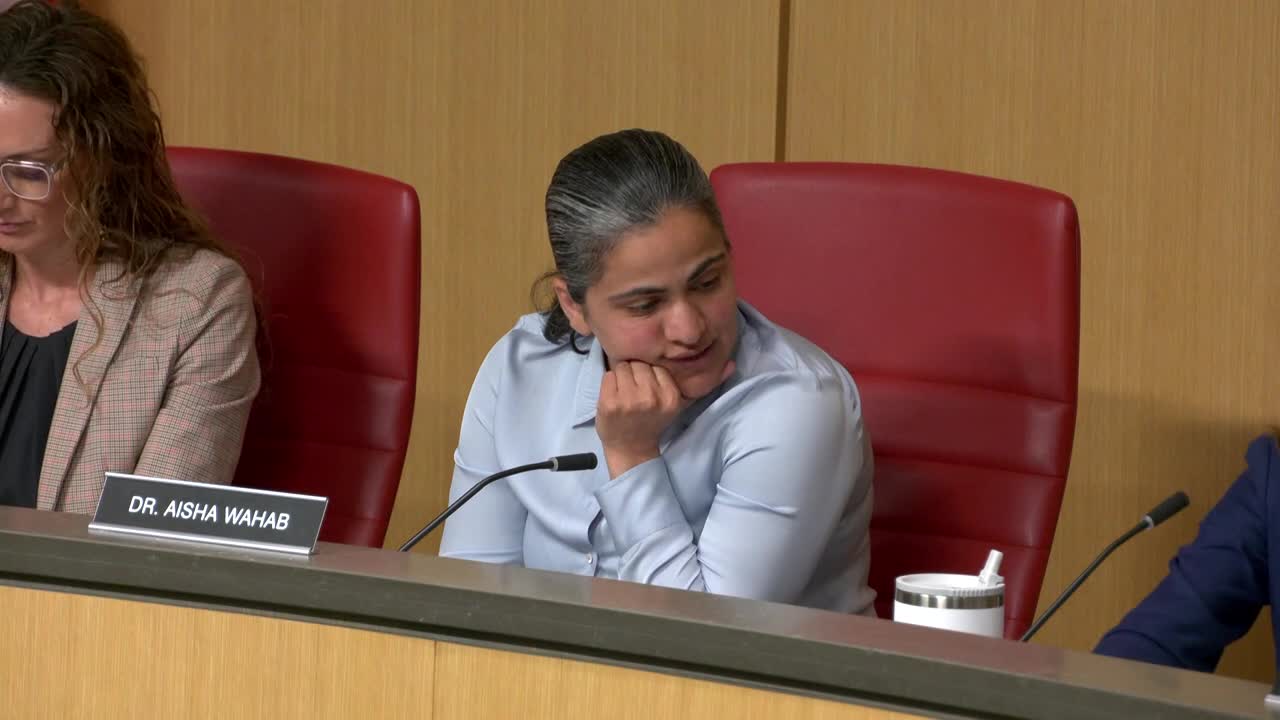
Senator Dr. Aisha Wahab, Chair
2025 - 2026 Regular
Bill No: Hearing Date: June 8, 2026
Author: | |||
Version: |
| ||
Urgency: | Fiscal: | ||
Consultant: | |||
Subject:
SUMMARY:
Updates the definition of “retail distributor” in the Uniform Controlled Substances Act (UCSA) to include online retailers for purposes of selling ephedrine, pseudoephedrine, norpseudoephedrine, or phenylpropanolamine products (PSE medications), subject to the same reporting requirements and distribution limits.
Existing law:
- Establishes the UCSA, which divides controlled substances into five schedules ranging with the most serious and heavily controlled substances, classified as Schedule I, to the least serious and most lightly controlled substances, classified as Schedule V, and imposes various reporting and enforcement provisions specific to each schedule. (Health and Safety Code (HSC) §§ 11000 et. seq.)
- Requires any manufacturer, wholesaler, retailer, or other person or entity in California that sells, transfers, or otherwise furnishes PSE medications, or PSE compounds, to any other person or entity to submit a report to the California Department of Justice (DOJ) of all of those transactions. (HSC § 11100(a))
- Prohibits any person or entity from furnishing a PSE medication to a person under 18 years of age. (HSC § 111100(g))
- Prohibits a retail distributor from selling, in a single transaction, more than three packages of a product known to contain ephedrine, pseudoephedrine, norpseudoephedrine, or phenylpropanolamine. Prohibits a retail distributor from knowingly selling more than nine grams of those substances in a single transaction, except for pediatric liquid products, as defined. Applies these limits to products that may lawfully be sold over the counter without a prescription under federal law, unless the product has been specifically exempted from the requirements of the federal Controlled Substances Act by the federal Drug Enforcement Administration. (HSC § 111100(g)(3))
- Defines “retail distributor” as a grocery store, general merchandise store, drugstore, or similar business whose sales of products containing ephedrine, pseudoephedrine, norpseudoephedrine, or phenylpropanolamine are limited to direct sales to customers for personal use, including sales to walk-in customers and other face-to-face transactions. Specifies that a parent company is not a retail distributor if it is not involved in those direct sales. (HSC § 11100(h)(5))
This bill:
- Updates the definition of “retail distributor”, for purposes of PSE sale limitations, to also include an online retailer.
- Clarifies that the sale of PSE medications for personal use by a retail distributor can be facilitated via direct in-store sales, or online sales fulfilled via delivery, in-person pickup, or curbside pickup.
- Makes various technical and conforming changes.
FISCAL EFFECT:
This bill is keyed fiscal by Legislative Counsel. According to the Assembly Committee on Appropriations, the Department of Justice reports no significant costs.
COMMENTS:
- Purpose. This bill is sponsored by the Consumer Healthcare Products Association. According to the Author, six states, including California, continue to prohibit online sales of PSE medications, creating unnecessary barriers to healthcare access, while most states (44) have successfully implemented secure online sales channels. The Author states that it still ensures online sales of PSE medications maintain all federal and state mandated security restrictions and that online retailers would still be required to validate a person’s identity to ensure they have not already purchased their legally allowable maximum of PSE. According to the Author, the bill improves access to common cold medicines, especially for people with limited transportation and those who live in rural areas where brick and mortar retailers are not conveniently located.
- Background.
PSE Medications. Pseudoephedrine is a central nervous system stimulant that serves as an effective nasal decongestant and sinus reliever and is the primary ingredient in many allergy and cold medications. There are derivatives and alternative formulations of pseudoephedrine, including ephedrine, norpseudoephedrine, and phenylpropanolamine, which have similar therapeutic effects. These drugs, also called “PSE medications”, have many therapeutic uses and are commonly used to treat allergies, cold symptoms, asthma, obesity, and other respiratory ailments. It is typically administered either orally or via injection. Popular PSE medications on the consumer market include “Sudafed,” “Claritin-D,” and “Mucinex D.” In addition to their many therapeutic uses, PSE medications are chemical precursors to methamphetamine, a Schedule II controlled substance under both the federal Controlled Substances Act (CSA) and California’s UCSA. As a result, there are a number of state and federal laws which regulate the manufacture, distribution, sale, possession, and usage of PSE medications.
Ephedrine and Controlled Substance Regulation. Both the federal CSA and California’s USCA classify controlled substances into one of five schedules, and largely mirror one another. Drugs falling within Schedules II through V may be prescribed only by health practitioners in possession of a federal Drug Enforcement Agency (DEA) registration, and are scheduled according to the drug’s potential for abuse and harm. The federal CSA also classifies certain chemicals that, while not designated as controlled substances under the CSA’s drug schedule, have been identified as precursors for the manufacture of scheduled drugs. Chemicals included on List I of the CSA have legitimate medical uses but are also crucial ingredients to the manufacture of other drugs included on the CSA’s controlled substance schedule. California maintains its own controlled substance schedule under the UCSA. Like the Federal CSA, California’s UCSA also contains a list of precursor chemicals which, although not scheduled, are subject to a number of restrictions due to their potential use in the manufacture of more egregious controlled substances.
Regulation of PSE Medicines in California. In California, PSE medications are not a scheduled substance, but they are listed as precursor chemicals under the UCSA. As such, PSE medications are subject to a number of regulations concerning their manufacture, distribution, sale, furnishing, possession and usage. Additionally, PSE medications are considered “List I” substances under the federal CSA.
Many of the recordkeeping, age verification, and distribution limit requirements related to PSE medications resulted from the passage of the Combat Methamphetamine Epidemic Act (CMEA) by the federal government in 2005. Recognizing the potential for PSE medications to be used in the illegal manufacture of methamphetamine, this act established controls on the manufacture, distribution, sale, furnishing, and possession of PSE medications, including reporting requirements and minimum age limits. Specific to retail distributors of PSE medications, the CMEA required that they ensure customers are not furnished with more than three packages, or nine grams, of a PSE medication within a 30-day period. Further, retail distributors must ensure customers purchasing PSE medications are at least 18 years of age. Many of the requirements set out by the CMEA are mirrored in California’s USCA, and they helped shape subsequent California legislation concerning PSE medications.
Currently, PSE medications can only be lawfully sold in California by retail distributors who register with the Department of Justice and make periodic reports to the department containing information about PSE medication sales. Additionally, “retail distributors” are limited to a grocery store, general merchandise store, drugstore, or other related entity that sells PSE products directly to consumers. However, online retailers are currently not included under this definition of retail distributor and as a result, are not able to sell PSE medications in California.
As a result, the author and sponsors have put forward this bill to include “online retailers” under the wider definition of “retail distributor” under the USCA for purposes of selling PSE medications, and would clarify that such sales can occur either directly in-person, or online via direct delivery to the consumer, in-person pickup, or curbside pickup. Consumers purchasing from an online retailer would still be subject to the same monthly transaction limits as physical retailers and would be subject to the same age verification requirements. Furthermore, online retailers would still be required to retain and report transaction information to the DOJ relevant to PSE medication sales.
- Arguments in Support. The Consumer Healthcare Products Association writes that allowing the online sales of widely used PSE-containing products, like Sudafed, Claritin-D, Allegra-D, Zyrtec-D, and more, this bill will make it easier for consumers to have access to some of the most effective and trusted treatments for cold, allergy, and sinus symptoms. According to the group, “The bill simply ensures that the existing, robust regulatory framework governing the sale of PSE-containing products applies equally to online purchases as it does to traditional in-store transactions. Importantly, all existing consumer safeguards remain fully intact. Online sales would continue to be subject to the requirements of both the federal Combat Methamphetamine Epidemic Act (CMEA) and California state law, including strict per-transaction purchase limits of no more than 3.6 grams per day or 9 grams of PSE per month, and identity verification requirements.”
SUPPORT AND OPPOSITION:
Support:
Consumer Healthcare Products Association
Opposition:
None received
-- END --
Date of Hearing: April 22, 2026
ASSEMBLY COMMITTEE ON APPROPRIATIONS
Buffy Wicks, Chair
ABPCA Bill Id:AB 1785
Author:(Hoover) – As Introduced Ver:February 9, 2026
Policy Committee: | Business and Professions | Vote: | 19 - 0 |
|
| ||
|
|
Urgency: No State Mandated Local Program: Yes Reimbursable: No
SUMMARY:
This bill authorizes online sales of pseudoephedrine and related medications for personal use under the Uniform Controlled Substances Act (UCSA).
Specifically, this bill:
- Expands the definition of “retail distributor” of ephedrine, pseudoephedrine, norpseudoephedrine, or phenylpropanolamine products (collectively, PSE medications) under the UCSA to include an online retailer.
- Specifies the online sale of PSE medications may be fulfilled via delivery, in-person pickup, or curbside pickup.
FISCAL EFFECT:
The Department of Justice reports no significant costs.
COMMENTS:
- Purpose. This bill is sponsored by the Consumer Healthcare Products Association. According to the author:
This bill allows for the online sale of [PSE medications] while maintaining all federal and state mandated security restrictions. Online retailers would still be required to validate a person’s identity to ensure they have not already purchased their legally allowable maximum of PSE.
- Background. PSE Medications. Pseudoephedrine is a central nervous system stimulant and effective nasal decongestant and sinus reliever, and is a primary ingredient in many allergy and cold medications. Derivatives and alternative formulations of pseudoephedrine, including PSE medications, have similar therapeutic effects and uses. PSE medications are also chemical precursors to methamphetamine, a Schedule II controlled substance under both the federal Controlled Substances Act (CSA) and California’s UCSA, meaning it has accepted medical uses but has a high potential for abuse.
The UCSA requires a retail distributor to comply with specific requirements for the sale of certain controlled substances, including selling no more than nine grams of a PSE medication or three packages of a product containing a PSE medication in a single transaction. A “retail distributor” is defined in statute to include a grocery store, general merchandise store, drugstore, or other related entity that sells PSE medications directly to consumers; online retailers are not included under this definition and are therefore not authorized to sell PSE medications in California. Under this bill, online purchases of PSE medications would be subject to the same requirements as purchases from physical retailers.
Analysis Prepared by: Allegra Kim / APPR. / (916) 319-2081
Date of Hearing:
ASSEMBLY COMMITTEE ON BUSINESS AND PROFESSIONS
Marc Berman, Chair
ABPCA Bill Id:AB 1785
Author:(Hoover) – As Introduced Ver:February 9, 2026
SUBJECT: California Uniform Controlled Substances Act: online retailer.
SUMMARY: Expands the definition of “retail distributor” under the Uniform Controlled Substances Act (UCSA) to include online retailers for purposes of selling ephedrine, pseudoephedrine, norpseudoephedrine, or phenylpropanolamine products (PSE medications), subject to the same reporting requirements and distribution limits.
EXISTING LAW:
- Establishes the UCSA, which divides controlled substances into five schedules ranging with the most serious and heavily controlled substances, classified as Schedule I, to the least serious and most lightly controlled substances, classified as Schedule V, and imposes various reporting and enforcement provisions specific to each schedule. (Health and Safety Code (HSC) §§ 11000 et. seq.)
- Requires that any manufacturer, wholesaler, retailer, or other person or entity in California that sells, transfers, or otherwise furnishes PSE medications, or PSE compounds, to any other person or entity shall submit a report to the California Department of Justice (DOJ) of all of those transactions. (HSC § 11100(a))
- Requires that any person or entity in California selling, transferring, or otherwise furnishing any PSE medication to another person or entity to obtain a letter of authorization and proper identification from the purchaser, as defined. (HSC § 11100(c))
- Requires that any person or entity who sells or transfers PSE medications to another person or entity submit a report to the DOJ containing information related to PSE medication transactions, including purchaser identification information, within a specified timeframe. (HSC § 11100(d))
- Exempts PSE medication transactions that are lawfully sold over the counter without a prescription so long as the PSE medication is in solid or liquid form, and an individual transaction does not involve more than three packages, or nine grams, of a PSE medication. (HSC § 11100(e)(6))
- Makes failure to submit required transaction reports a misdemeanor subject to imprisonment for up to either six months for a first offense, or one year for a second offense, and a fine of up to $5000 for a first offense, or $100,000 for a second offense. (HSC §11100(f))
- Makes it unlawful for any person or entity to furnish a PSE medication to a person under 18 years of age. (HSC § 111100(g)
- Defines “retail distributor”, for purposes of PSE distribution reporting and permitting requirements, as an entity that meets all of the following requirements:
- Is a grocery store, general merchandise store, drugstore, or other related entity,
- Is limited in their role as a PSE distributor to exclusively sell PSE medications for personal use, both in volume and number of sales, and
- Sell directly to customers via walk-in or face-to-face transactions.
(HSC § 11100(h)(5))
THIS BILL:
- Expands the definition of “retail distributor,” for purposes of PSE distribution reporting and permitting requirements, to also include “an online retailer.”
- Clarifies that the sale of PSE medications for personal use by a retail distributor can be facilitated via direct in-store sales, or online sales fulfilled via delivery, in-person pickup, or curbside pickup.
- Makes technical amendments related to gender-neutral language.
FISCAL EFFECT: Unknown; this bill is keyed fiscal by the Legislative Counsel.
COMMENTS:
Purpose. This bill is sponsored by the Consumer Healthcare Products Association. According to the bill’s author:
This bill allows for the online sale of Pseudoephedrine (PSE) medications while maintaining all federal and state mandated security restrictions. Online retailers would still be required to validate a person’s identity to ensure they have not already purchased their legally allowable maximum of PSE.
Background.
PSE Medications. Pseudoephedrine is a central nervous system stimulant that serves as an effective nasal decongestant and sinus reliever, and is primary ingredient in many allergy and cold medications. There are derivatives and alternative formulations of pseudoephedrine, including ephedrine, norpseudoephedrine, and phenylpropanolamine, which have similar therapeutic effects. These drugs, also called “PSE medications”, have many therapeutic uses and are commonly used to treat allergies, cold symptoms, asthma, and obesity, and other respiratory ailments. It is typically administered either orally or via injection. . Popular PSE medications on the consumer market include “Sudafed,” “Claritin-D,” and “Mucinex D.” In addition to their many therapeutic uses, PSE medications are chemical precursors to methamphetamine, a Schedule II controlled substance under both the federal Controlled Substances Act (CSA) and California’s UCSA. As a result, there are a number of state and federal laws which regulate the manufacture, distribution, sale, possession, and usage of PSE medications.
Ephedrine and Controlled Substance Regulation. Both the federal CSA and California’s USCA classify controlled substances into one of five schedules, and largely mirror one another. Drugs falling within Schedules II through V may be prescribed only by health practitioners in possession of a federal Drug Enforcement Agency (DEA) registration, and are scheduled according to the drug’s potential for abuse and harm. The federal CSA also classifies certain chemicals that, while not designated as controlled substances under the CSA’s drug schedule, have been identified as precursors for the manufacture of scheduled drugs. Chemicals included on List I of the CSA have legitimate medical uses but are also crucial ingredients to the manufacture of other drugs included on the CSA’s controlled substance schedule. California maintains its own controlled substance schedule under the UCSA. Like the Federal CSA, California’s UCSA also contains a list of precursor chemicals which, although not scheduled, are subject to a number of restrictions due to their potential use in the manufacture of more egregious controlled substances.
Regulation of PSE Medicines in California. In California, PSE medications are not a scheduled substance, but they are listed as precursor chemicals under the UCSA. As such, PSE medications are subject to a number of regulations concerning their manufacture, distribution, sale, furnishing, possession and usage. Additionally, PSE medications are considered “List I” substances under the federal CSA.
Many of the recordkeeping, age verification, and distribution limit requirements related to PSE medications resulted from the passage of the Combat Methamphetamine Epidemic Act (CMEA) by the federal government in 2005. Recognizing the potential for PSE medications to be used in the illegal manufacture of methamphetamine, this act established controls on the manufacture, distribution, sale, furnishing, and possession of PSE medications, including reporting requirements and minimum age limits. Specific to retail distributors of PSE medications, the CMEA required that they ensure customers are not furnished with more than three packages, or nine grams, of a PSE medication within a 30-day period. Further, retail distributors must ensure customers purchasing PSE medications are at least 18 years of age. Many of the requirements set out by the CMEA are mirrored in California’s USCA, and they helped shape subsequent California legislation concerning PSE medications.
Currently, PSE medications can only be lawfully sold by in California by retail distributors who register with the Department of Justice and make periodic reports to the department containing information about PSE medication sales. Additionally, “retail distributors” are limited to a grocery store, general merchandise store, drugstore, or other related entity that sells PSE products directly to consumers. However, online retailers are currently not included under this definition of retail distributor and as a result, are not able to sell PSE medications in California.
As a result, the author and sponsors have put forward this bill to include “online retailers” under the wider definition of “retail distributor” under the USCA for purposes of selling PSE medications, and would clarify that such sales can occur either directly in-person, or online via direct delivery to the consumer, in-person pickup, or curbside pickup. Consumers purchasing from an online retailer would still be subject to the same monthly transaction limits as physical retailers and would be subject to the same age verification requirements. Furthermore, online retailers would still be required to retain and report transaction information to the DOJ relevant to PSE medication sales.
Current Related Legislation. AB 1778 (Patterson) would remove or reclassify testosterone from Schedule III of California’s UCSA, contingent upon it being removed or reclassified pursuant to federal CSA. This bill is pending in this committee.
AB 2030 (Lowenthal) would prohibit the sale, offer of sale, or delivery of an over-the-counter weight loss or diet supplement, including those containing ephedrine group alkalids, to any person 18 years or younger, and would institute an ID check when purchasing certain diet and weight loss supplements. This bill is pending in the Assembly Judiciary Committee.
Prior Related Legislation. SB 1144 (Strickland), Chapter 867, Statutes of 2012, a public safety omnibus bill, made several substantive and technical changes to the Health and Safety, Labor, and Penal codes, including technical changes to the California UCSA.
AB 162 (Runner), Chapter 978, Statutes of 1999 made sale of more than three packages or more than 9 milligrams of ephedrine or related substances by a retail distributor a misdemeanor.
ARGUMENTS IN SUPPORT:
This bill is sponsored by the Consumer Healthcare Products Associations (CHPA), who writes: “By permitting online sales of popular pseudoephedrine (PSE)-containing products — including Sudafed, Claritin-D, Allegra-D, Mucinex-D, Zyrtec-D, and more — this bill would make it easier for consumers to obtain some of the most reliable and effective treatments available for cold, allergy, and sinus symptoms.”
ARGUMENTS IN OPPOSITION:
None on file.
REGISTERED SUPPORT:
Consumer Healthcare Products Association (Sponsor)
REGISTERED OPPOSITON:
None on file
Analysis Prepared by: Connor Urschel / B. & P. / (916) 319-3301; Edward Franco / B. & P. / (916) 319-3301
Discussed in Hearing
 3MIN
Senate Standing Committee on Business, Professions and Economic Development
 32MIN
Assembly Standing Committee on Appropriations
Bill Author

Bill Co-Author(s):