AB 1786: Public contracts: best value construction contracting for counties, cities, and the San Gabriel Valley Council of Governments.
- Session Year: 2025-2026
- House: Assembly
- Latest Version Date: 2026-09-14
Current Status:
Passed
(2026-09-15: Chaptered by Secretary of State - Chapter 202, Statutes of 2026.)
Introduced
In Committee
Awaiting First Chamber Vote
Passed First Chamber
In Committee
Awaiting Second Chamber Vote
Passed Second Chamber
Enacted
Existing law establishes a program to allow counties to select a bidder on the basis of best value, as defined, for construction projects in excess of $1,000,000. Existing law also authorizes counties to use a best value construction contracting method to award individual annual contracts, not to exceed $3,000,000, for repair, remodeling, or other repetitive work to be done according to unit prices, as specified. Existing law establishes procedures and criteria for the selection of a best value contractor and requires that bidders verify specified information under oath. Existing law requires the board of supervisors of a participating county to submit a report that contains specified information about the projects awarded using the best value procedures described above to the appropriate policy committees of the Legislature and the Joint Legislative Budget Committee before March 1, 2029. Existing law repeals the program provisions on January 1, 2030.
This bill would, instead, authorize a county, city, or the San Gabriel Valley Council of Governments to select a bidder on the basis of best value, as described above, for construction projects in excess of $500,000, would make various conforming changes to the above-described provisions, and would extend the operation of those provisions until January 1, 2032. With regard to the above-specified reporting requirement, the bill would, instead, require the governing body of a participating county, city, or the San Gabriel Valley Council of Governments to submit the report, as specified, to the appropriate policy committees of the Legislature and the Joint Legislative Budget Committee before March 1, 2031. The bill would expand the crime of perjury by extending the operation of the program and expanding the program to cities and the San Gabriel Valley Council of Governments, thereby imposing a state-mandated local program.
The California Constitution requires the state to reimburse local agencies and school districts for certain costs mandated by the state. Statutory provisions establish procedures for making that reimbursement.
This bill would provide that no reimbursement is required by this act for a specified reason.
This bill would make legislative findings and declarations as to the necessity of a special statute for the San Gabriel Valley.
Existing law establishes a program to allow counties to select a bidder on the basis of best value, as defined, for construction projects in excess of $1,000,000. Existing law also authorizes counties to use a best value construction contracting method to award individual annual contracts, not to exceed $3,000,000, for repair, remodeling, or other repetitive work to be done according to unit prices, as specified. Existing law establishes procedures and criteria for the selection of a best value contractor and requires that bidders verify specified information under oath. Existing law requires the board of supervisors of a participating county to submit a report that contains specified information about the projects awarded using the best value procedures described above to the appropriate policy committees of the Legislature and the Joint Legislative Budget Committee before March 1, 2029. Existing law repeals the program provisions on January 1, 2030.
This bill would, instead, authorize a county, city, or the San Gabriel Valley Council of Governments to select a bidder on the basis of best value, as described above, for construction projects in excess of $500,000, would make various conforming changes to the above-described provisions, and would extend the operation of those provisions until January 1, 2040. 2032. With regard to the above-specified reporting requirement, the bill would, instead, require the governing body of a participating county, city, or the San Gabriel Valley Council of Governments to submit the report, as specified, to the appropriate policy committees of the Legislature and the Joint Legislative Budget Committee before March 1, 2031. The bill would expand the crime of perjury by extending the operation of the program and expanding the program to cities and the San Gabriel Valley Council of Governments, thereby imposing a state-mandated local program.
The California Constitution requires the state to reimburse local agencies and school districts for certain costs mandated by the state. Statutory provisions establish procedures for making that reimbursement.
This bill would provide that no reimbursement is required by this act for a specified reason.
This bill would make legislative findings and declarations as to the necessity of a special statute for the San Gabriel Valley.
Existing law establishes a program to allow counties to select a bidder on the basis of best value, as defined, for construction projects in excess of $1,000,000. Existing law also authorizes counties to use a best value construction contracting method to award individual annual contracts, not to exceed $3,000,000, for repair, remodeling, or other repetitive work to be done according to unit prices, as specified. Existing law establishes procedures and criteria for the selection of a best value contractor and requires that bidders verify specified information under oath. Existing law requires the board of supervisors of a participating county to submit a report that contains specified information about the projects awarded using the best value procedures described above to the appropriate policy committees of the Legislature and the Joint Legislative Budget Committee before March 1, 2029. Existing law repeals the program provisions on January 1, 2030.
This bill would, instead, authorize a county, general law city, and eligible joint powers authority, as defined, to utilize this program, city, or the San Gabriel Valley Council of Governments to select a bidder on the basis of best value, as described above, for construction projects in excess of $500,000, would make various conforming changes to the above-described provisions, and would extend the operation of those provisions until January 1, 2040. The bill would delete the provisions authorizing counties to use a best value construction contracting method to award individual annual contracts, not to exceed $3,000,000, for repair, remodeling, or other repetitive work to be done according to unit prices, as specified. With regard to the above-specified reporting requirement, the bill would, instead, require the governing body of a participating county, city, or eligible joint powers authority the San Gabriel Valley Council of Governments to submit the report, as specified, to the appropriate policy committees of the Legislature and the Joint Legislative Budget Committee before March 1, 2031. The bill would expand the crime of perjury by extending the operation of the program and expanding the program to general law cities and eligible joint powers authorities, the San Gabriel Valley Council of Governments, thereby imposing a state-mandated local program.
The California Constitution requires the state to reimburse local agencies and school districts for certain costs mandated by the state. Statutory provisions establish procedures for making that reimbursement.
This bill would provide that no reimbursement is required by this act for a specified reason.
Existing law establishes a program to allow counties to select a bidder on the basis of best value, as defined, for construction projects in excess of $1,000,000. Existing law also authorizes counties to use a best value construction contracting method to award individual annual contracts, not to exceed $3,000,000, for repair, remodeling, or other repetitive work to be done according to unit prices, as specified. Existing law establishes procedures and criteria for the selection of a best value contractor and requires that bidders verify specified information under oath. Existing law requires the board of supervisors of a participating county to submit a report that contains specified information about the projects awarded using the best value procedures described above to the appropriate policy committees of the Legislature and the Joint Legislative Budget Committee before March 1, 2029. Existing law repeals the program provisions on January 1, 2030.
This bill would, instead, authorize a county, general law city, and eligible joint powers authority, as defined, to utilize this program, would make various conforming changes to the above-described provisions, and would extend the operation of those provisions until January 1, 2040. The bill would delete the provisions authorizing counties to use a best value construction contracting method to award individual annual contracts, not to exceed $3,000,000, for repair, remodeling, or other repetitive work to be done according to unit prices, as specified. With regard to the above-specified reporting requirement, the bill would, instead, require the governing body of a participating county, city, or eligible joint powers authority to submit the report, as specified, to the appropriate policy committees of the Legislature and the Joint Legislative Budget Committee before March 1, 2031. The bill would expand the crime of perjury by extending the operation of the program and expanding the program to general law cities and eligible joint powers authorities, thereby imposing a state-mandated local program.
The California Constitution requires the state to reimburse local agencies and school districts for certain costs mandated by the state. Statutory provisions establish procedures for making that reimbursement.
This bill would provide that no reimbursement is required by this act for a specified reason.
(a)This article provides optional authority for a best value procurement program for construction projects in excess of five hundred thousand dollars ($500,000) for participating counties, cities, and the San Gabriel Valley Council of Governments.
(b)The governing body of a participating county, city, or the San Gabriel Valley Council of Governments shall let any contract for a construction project pursuant to this article to the bidder representing the best value or else reject all bids.
(c)The bidder may be selected on the basis of the best value to the county, city, or San Gabriel Valley Council of Governments. In order to implement this method of selection, the governing body shall adopt and publish procedures and required criteria that ensure that all selections are conducted in a fair and impartial manner. These procedures shall conform to Sections 20155.3 to 20155.6, inclusive.
(d)If the governing body deems it to be in the best interest of the participating county, city, or the San Gabriel Valley Council of Governments, on the refusal or failure of the successful bidder for a project to execute a tendered contract, the governing body may award it to the bidder with the second lowest best value score, as determined in accordance with subdivision (c) of Section 20155.5 and thereafter to the third lowest best value score, if necessary.
(e)(1)A county may also use the best value construction contracting method set out in this article to award individual annual contracts, which shall not exceed three million dollars ($3,000,000), adjusted annually to reflect the percentage change in the California Consumer Price Index, for repair, remodeling, or other repetitive work to be done according to unit prices. The contracts shall be based on plans and specifications for typical work. No annual contracts may be awarded for any new construction.
(2)For purposes of this subdivision, best value criteria shall be applied to the annual contract for construction services, rather than to an individual, specific project. Annual contracts may be extended or renewed for two subsequent annual terms and a maximum of six million dollars ($6,000,000) over the subsequent two terms of the contract. Contract values shall be adjusted annually to reflect the percentage change in the California Consumer Price Index.
(3)For purposes of this subdivision, unit price means the amount paid for a single unit of an item of work, and typical work means a work description applicable universally or applicable to a large number of individual projects, as distinguished from work specifically described with respect to an individual project. For purposes of this section, repair, remodeling, or other repetitive work to be done according to unit prices shall not include design or contract drawings.
SEC. 3.Section 20155.1 of the Public Contract Code is amended to read:20155.1.As used in this article:
(a)Best value means a procurement process whereby the selected bidder may be selected on the basis of objective criteria for evaluating the qualifications of bidders with the resulting selection representing the best combination of price and qualifications.
(b)Best value contract means a competitively bid contract entered into pursuant to this article.
(c)Best value contractor means a properly licensed person, firm, or corporation that submits a bid for, or is awarded, a best value contract.
(d)City means any chartered or general law city.
(e)County means any chartered or general law county and includes a city and county.
(f)Demonstrated management competency means the experience, competency, capability, and capacity of the proposed management staffing to complete projects of similar size, scope, or complexity.
(g)Financial condition means the financial resources needed to perform the contract. The criteria used to evaluate a bidders financial condition shall include, at a minimum, capacity to obtain all required payment bonds, performance bonds, and liability insurance.
(h)Labor compliance means the ability to comply with, and past performance with, contract and statutory requirements for the payment of wages and qualifications of the workforce. The criteria used to evaluate a bidders labor compliance shall include, as a minimum, the bidders ability to comply with the apprenticeship requirements of the California Apprenticeship Council and the Department of Industrial Relations, its past conformance with those requirements, and its past conformance with requirements to pay prevailing wages on public works projects.
(i)Qualifications means the financial condition, relevant experience, demonstrated management competency, labor compliance, and safety record of the bidder, and, if required by the bidding documents, some or all of the preceding qualifications as they pertain to subcontractors proposed to be used by the bidder for designated portions of the work. A county, city, or the San Gabriel Valley Council of Governments shall evaluate financial condition, relevant experience, demonstrated management competency, labor compliance, and safety record, using, to the extent possible, quantifiable measurements.
(j)Relevant experience means the experience, competency, capability, and capacity to complete projects of similar size, scope, or complexity.
(k)Safety record means the prior history concerning the safe performance of construction contracts. The criteria used to evaluate a bidders safety record shall include, at a minimum, its experience modification rate for the most recent three-year period, and its average total recordable injury or illness rate and average lost work rate for the most recent three-year period.
SEC. 4.Section 20155.3 of the Public Contract Code is amended to read:20155.3.A county, city, or the San Gabriel Valley Council of Governments shall proceed in accordance with the following when awarding best value contracts under this article:
(a)The county, city, or San Gabriel Valley Council of Governments shall not select a bidder on the basis of the best value to a county, city, or the San Gabriel Valley Council of Governments unless, after evaluating at a public meeting the alternative of awarding the contract on the basis of the lowest bid price, the county, city, or San Gabriel Valley Council of Governments makes a written finding that awarding the contract on the basis of best value, for the specific project under consideration, will accomplish one or more of the following objectives: reducing project costs, expediting the completion of the project, or providing features not achievable through awarding the contract on the basis of the lowest bid price.
(b)The county, city, or San Gabriel Valley Council of Governments shall prepare a solicitation for bids and give notice pursuant to Section 20125. A county, city, or the San Gabriel Valley Council of Governments may identify specific types of subcontractors that are required to be included in the bids. A county, city, or the San Gabriel Valley Council of Governments shall comply with Chapter 4 (commencing with Section 4100) of Part 1 with regard to construction subcontractors identified in the bid.
(c)The county, city, or San Gabriel Valley Council of Governments shall establish a procedure to prequalify bidders pursuant to Section 20101. The information required pursuant to this section shall be verified under oath by the bidder in the manner in which civil pleadings in civil actions are verified. Information submitted by the bidder as part of the evaluation process shall not be open to public inspection to the extent that information is exempt from disclosure under the California Public Records Act (Division 10 (commencing with Section 7920.000) of Title 1 of the Government Code).
(d)Each solicitation for bids shall do all of the following:
(1)Invite prequalified bidders to submit sealed bids in the manner prescribed by this article.
(2)Include a section identifying and describing the following:
(A)Criteria that the county, city, or San Gabriel Valley Council of Governments will consider in evaluating bids.
(B)The methodology and rating or weighting system that will be used by the county, city, or San Gabriel Valley Council of Governments in evaluating bids.
(C)The relative importance or weight assigned to the criteria identified in the request for bids.
(e)Final evaluation of the best value contractor shall be done in a manner that prevents cost or price information from being revealed to the committee evaluating the qualifications of the bidders prior to completion and announcement of that committees decision.
SEC. 5.Section 20155.4 of the Public Contract Code is amended to read:20155.4.(a)A best value contractor shall not be prequalified or shortlisted unless the contractor provides an enforceable commitment to the county, city, or San Gabriel Valley Council of Governments that the contractor and its subcontractors at every tier will use a skilled and trained workforce to perform all work on the project or contract that falls within an apprenticeable occupation in the building and construction trades, in accordance with Chapter 2.9 (commencing with Section 2600) of Part 1.
(b)This section shall not apply if any of the following requirements are met:
(1)The county, city, or San Gabriel Valley Council of Governments has entered into a project labor agreement that will bind all contractors and subcontractors performing work on the project or contract to use a skilled and trained workforce, and the contractor agrees to be bound by that project labor agreement.
(2)The project or contract is being performed under the extension or renewal of a project labor agreement that was entered into by the county, city, or San Gabriel Valley Council of Governments prior to January 1, 2017.
(3)The contractor has entered into a project labor agreement that will bind the contractor and all its subcontractors at every tier performing the project or contract to use a skilled and trained workforce.
(c)For purposes of this section, project labor agreement has the same meaning as in paragraph (1) of subdivision (b) of Section 2500.
SEC. 6.Section 20155.5 of the Public Contract Code is amended to read:20155.5.Selection of the best value contractor shall be made as follows:
(a)(1)An evaluation committee appointed by the county, city, or San Gabriel Valley Council of Governments shall evaluate the qualifications of the bidders based solely upon the criteria set forth in the solicitation documents, and shall assign a qualifications score to each bid.
(2)A county, city, or the San Gabriel Valley Council of Governments shall establish written policies and procedures, consistent with applicable law, to ensure that members of an evaluation committee are free from conflicts of interest, if the county, city, or San Gabriel Valley Council of Governments has not already established applicable written policies and procedures.
(b)A county, city, or the San Gabriel Valley Council of Governments shall not award a contract for a construction project pursuant to this article if a solicitation for bids for that construction project results in the submission of fewer than three responsive bids to the county, city, or San Gabriel Valley Council of Governments for evaluation.
(c)Except as provided in subdivision (d) of Section 20155, the award of the contract shall be made to the bidder whose bid is determined by a county, city, or the San Gabriel Valley Council of Governments, in writing, to be the best value to the county, city, or San Gabriel Valley Council of Governments. To determine the best value contractor, the county, city, or San Gabriel Valley Council of Governments shall divide each bidders price by its qualifications score. The lowest resulting cost per quality point will represent the best value bid.
(d)A county, city, or the San Gabriel Valley Council of Governments shall issue a written decision of its contract award.
(e)Upon issuance of a contract award, a county, city, or the San Gabriel Valley Council of Governments shall publicly announce its award identifying the best value contractor to which the award is made, the project, the project price, and the selected best value contractors score based on the evaluation criteria listed in the request for bids. The notice of award shall be made public and include the score of the selected best value contractor in relation to all other responsive bidders and their respective prices. The contract file shall include documentation sufficient to support the decision to award.
SEC. 7.Section 20155.6 of the Public Contract Code is amended to read:20155.6.(a)If a county, city, or the San Gabriel Valley Council of Governments elects to award a project pursuant to this article, retention proceeds withheld by the county, city, or San Gabriel Valley Council of Governments from the selected best value contractor shall not exceed 5 percent if a performance and payment bond, issued by an admitted surety insurer, is required in the solicitation of bids.
(b)In a contract between the selected best value contractor and a subcontractor, and in a contract between a subcontractor and any subcontractor thereunder, the percentage of the retention proceeds withheld shall not exceed the percentage specified in the contract between the county, city, or San Gabriel Valley Council of Governments and the selected best value contractor. If the selected best value contractor provides written notice to a subcontractor that, prior to or at the time the bid is requested, a bond may be required and the subcontractor subsequently is unable or refuses to furnish a bond to the selected best value contractor, then the selected best value contractor may withhold retention proceeds in excess of the percentage specified in the contract between the county, city, or San Gabriel Valley Council of Governments and the selected best value contractor from any payment made by the selected best value contractor to the subcontractor.
SEC. 8.Section 20155.7 of the Public Contract Code is amended to read:20155.7.(a)Before March 1, 2031, the governing body of a participating county, city, or the San Gabriel Valley Council of Governments shall submit a report to the appropriate policy committees of the Legislature and the Joint Legislative Budget Committee.
(b)The report shall include, but is not limited to, all of the following:
(1)A description of the projects awarded using the best value procedures.
(2)The contract award amounts.
(3)The best value contractors awarded the projects.
(4)A description of any written protests concerning the solicitation, bid, or award of the contracts and the resolution of those protests.
(5)A description of the prequalification process.
(6)The criteria used to evaluate the bids, including the weighting of the criteria.
(7)If applicable, an assessment of project performance, including delays or cost increases.
(c)A report submitted pursuant to subdivision (a) shall be submitted in compliance with Section 9795 of the Government Code.
SEC. 9.Section 20155.9 of the Public Contract Code is amended to read:20155.9.This article shall remain in effect only until January 1, 2032, and as of that date is repealed.
SEC. 10.The Legislature finds and declares that a special statute is necessary and that a general statute cannot be made applicable within the meaning of Section 16 of Article IV of the California Constitution because the San Gabriel Valley Council of Governments undertakes complex, multifaceted projects involving public infrastructure, housing development, and community improvements that require specialized statutory treatment.
SEC. 11.No reimbursement is required by this act pursuant to Section 6 of Article XIIIB of the California Constitution because the only costs that may be incurred by a local agency or school district will be incurred because this act creates a new crime or infraction, eliminates a crime or infraction, or changes the penalty for a crime or infraction, within the meaning of Section 17556 of the Government Code, or changes the definition of a crime within the meaning of Section 6 of Article XIIIB of the California Constitution.
(a)This article provides optional authority for a best value procurement program for construction projects in excess of five hundred thousand dollars ($500,000) for participating counties, cities, and the San Gabriel Valley Council of Governments.
(b)The governing body of a participating county, city, or the San Gabriel Valley Council of Governments shall let any contract for a construction project pursuant to this article to the bidder representing the best value or else reject all bids.
(c)The bidder may be selected on the basis of the best value to the county, city, or San Gabriel Valley Council of Governments. In order to implement this method of selection, the governing body shall adopt and publish procedures and required criteria that ensure that all selections are conducted in a fair and impartial manner. These procedures shall conform to Sections 20155.3 to 20155.6, inclusive.
(d)If the governing body deems it to be in the best interest of the participating county, city, or the San Gabriel Valley Council of Governments, on the refusal or failure of the successful bidder for a project to execute a tendered contract, the governing body may award it to the bidder with the second lowest best value score, as determined in accordance with subdivision (c) of Section 20155.5 and thereafter to the third lowest best value score, if necessary.
(e)(1)A county may also use the best value construction contracting method set out in this article to award individual annual contracts, which shall not exceed three million dollars ($3,000,000), adjusted annually to reflect the percentage change in the California Consumer Price Index, for repair, remodeling, or other repetitive work to be done according to unit prices. The contracts shall be based on plans and specifications for typical work. No annual contracts may be awarded for any new construction.
(2)For purposes of this subdivision, best value criteria shall be applied to the annual contract for construction services, rather than to an individual, specific project. Annual contracts may be extended or renewed for two subsequent annual terms and a maximum of six million dollars ($6,000,000) over the subsequent two terms of the contract. Contract values shall be adjusted annually to reflect the percentage change in the California Consumer Price Index.
(3)For purposes of this subdivision, unit price means the amount paid for a single unit of an item of work, and typical work means a work description applicable universally or applicable to a large number of individual projects, as distinguished from work specifically described with respect to an individual project. For purposes of this section, repair, remodeling, or other repetitive work to be done according to unit prices shall not include design or contract drawings.
SEC. 3.Section 20155.1 of the Public Contract Code is amended to read:20155.1.As used in this article:
(a)Best value means a procurement process whereby the selected bidder may be selected on the basis of objective criteria for evaluating the qualifications of bidders with the resulting selection representing the best combination of price and qualifications.
(b)Best value contract means a competitively bid contract entered into pursuant to this article.
(c)Best value contractor means a properly licensed person, firm, or corporation that submits a bid for, or is awarded, a best value contract.
(d)City means any chartered or general law city.
(e)County means any chartered or general law county and includes a city and county.
(f)Demonstrated management competency means the experience, competency, capability, and capacity of the proposed management staffing to complete projects of similar size, scope, or complexity.
(g)Financial condition means the financial resources needed to perform the contract. The criteria used to evaluate a bidders financial condition shall include, at a minimum, capacity to obtain all required payment bonds, performance bonds, and liability insurance.
(h)Labor compliance means the ability to comply with, and past performance with, contract and statutory requirements for the payment of wages and qualifications of the workforce. The criteria used to evaluate a bidders labor compliance shall include, as a minimum, the bidders ability to comply with the apprenticeship requirements of the California Apprenticeship Council and the Department of Industrial Relations, its past conformance with those requirements, and its past conformance with requirements to pay prevailing wages on public works projects.
(i)Qualifications means the financial condition, relevant experience, demonstrated management competency, labor compliance, and safety record of the bidder, and, if required by the bidding documents, some or all of the preceding qualifications as they pertain to subcontractors proposed to be used by the bidder for designated portions of the work. A county, city, or the San Gabriel Valley Council of Governments shall evaluate financial condition, relevant experience, demonstrated management competency, labor compliance, and safety record, using, to the extent possible, quantifiable measurements.
(j)Relevant experience means the experience, competency, capability, and capacity to complete projects of similar size, scope, or complexity.
(k)Safety record means the prior history concerning the safe performance of construction contracts. The criteria used to evaluate a bidders safety record shall include, at a minimum, its experience modification rate for the most recent three-year period, and its average total recordable injury or illness rate and average lost work rate for the most recent three-year period.
SEC. 4.Section 20155.3 of the Public Contract Code is amended to read:20155.3.A county, city, or the San Gabriel Valley Council of Governments shall proceed in accordance with the following when awarding best value contracts under this article:
(a)The county, city, or San Gabriel Valley Council of Governments shall not select a bidder on the basis of the best value to a county, city, or the San Gabriel Valley Council of Governments unless, after evaluating at a public meeting the alternative of awarding the contract on the basis of the lowest bid price, the county, city, or San Gabriel Valley Council of Governments makes a written finding that awarding the contract on the basis of best value, for the specific project under consideration, will accomplish one or more of the following objectives: reducing project costs, expediting the completion of the project, or providing features not achievable through awarding the contract on the basis of the lowest bid price.
(b)The county, city, or San Gabriel Valley Council of Governments shall prepare a solicitation for bids and give notice pursuant to Section 20125. A county, city, or the San Gabriel Valley Council of Governments may identify specific types of subcontractors that are required to be included in the bids. A county, city, or the San Gabriel Valley Council of Governments shall comply with Chapter 4 (commencing with Section 4100) of Part 1 with regard to construction subcontractors identified in the bid.
(c)The county, city, or San Gabriel Valley Council of Governments shall establish a procedure to prequalify bidders pursuant to Section 20101. The information required pursuant to this section shall be verified under oath by the bidder in the manner in which civil pleadings in civil actions are verified. Information submitted by the bidder as part of the evaluation process shall not be open to public inspection to the extent that information is exempt from disclosure under the California Public Records Act (Division 10 (commencing with Section 7920.000) of Title 1 of the Government Code).
(d)Each solicitation for bids shall do all of the following:
(1)Invite prequalified bidders to submit sealed bids in the manner prescribed by this article.
(2)Include a section identifying and describing the following:
(A)Criteria that the county, city, or San Gabriel Valley Council of Governments will consider in evaluating bids.
(B)The methodology and rating or weighting system that will be used by the county, city, or San Gabriel Valley Council of Governments in evaluating bids.
(C)The relative importance or weight assigned to the criteria identified in the request for bids.
(e)Final evaluation of the best value contractor shall be done in a manner that prevents cost or price information from being revealed to the committee evaluating the qualifications of the bidders prior to completion and announcement of that committees decision.
SEC. 5.Section 20155.4 of the Public Contract Code is amended to read:20155.4.(a)A best value contractor shall not be prequalified or shortlisted unless the contractor provides an enforceable commitment to the county, city, or San Gabriel Valley Council of Governments that the contractor and its subcontractors at every tier will use a skilled and trained workforce to perform all work on the project or contract that falls within an apprenticeable occupation in the building and construction trades, in accordance with Chapter 2.9 (commencing with Section 2600) of Part 1.
(b)This section shall not apply if any of the following requirements are met:
(1)The county, city, or San Gabriel Valley Council of Governments has entered into a project labor agreement that will bind all contractors and subcontractors performing work on the project or contract to use a skilled and trained workforce, and the contractor agrees to be bound by that project labor agreement.
(2)The project or contract is being performed under the extension or renewal of a project labor agreement that was entered into by the county, city, or San Gabriel Valley Council of Governments prior to January 1, 2017.
(3)The contractor has entered into a project labor agreement that will bind the contractor and all its subcontractors at every tier performing the project or contract to use a skilled and trained workforce.
(c)For purposes of this section, project labor agreement has the same meaning as in paragraph (1) of subdivision (b) of Section 2500.
SEC. 6.Section 20155.5 of the Public Contract Code is amended to read:20155.5.Selection of the best value contractor shall be made as follows:
(a)(1)An evaluation committee appointed by the county, city, or San Gabriel Valley Council of Governments shall evaluate the qualifications of the bidders based solely upon the criteria set forth in the solicitation documents, and shall assign a qualifications score to each bid.
(2)A county, city, or the San Gabriel Valley Council of Governments shall establish written policies and procedures, consistent with applicable law, to ensure that members of an evaluation committee are free from conflicts of interest, if the county, city, or San Gabriel Valley Council of Governments has not already established applicable written policies and procedures.
(b)A county, city, or the San Gabriel Valley Council of Governments shall not award a contract for a construction project pursuant to this article if a solicitation for bids for that construction project results in the submission of fewer than three responsive bids to the county, city, or San Gabriel Valley Council of Governments for evaluation.
(c)Except as provided in subdivision (d) of Section 20155, the award of the contract shall be made to the bidder whose bid is determined by a county, city, or the San Gabriel Valley Council of Governments, in writing, to be the best value to the county, city, or San Gabriel Valley Council of Governments. To determine the best value contractor, the county, city, or San Gabriel Valley Council of Governments shall divide each bidders price by its qualifications score. The lowest resulting cost per quality point will represent the best value bid.
(d)A county, city, or the San Gabriel Valley Council of Governments shall issue a written decision of its contract award.
(e)Upon issuance of a contract award, a county, city, or the San Gabriel Valley Council of Governments shall publicly announce its award identifying the best value contractor to which the award is made, the project, the project price, and the selected best value contractors score based on the evaluation criteria listed in the request for bids. The notice of award shall be made public and include the score of the selected best value contractor in relation to all other responsive bidders and their respective prices. The contract file shall include documentation sufficient to support the decision to award.
SEC. 7.Section 20155.6 of the Public Contract Code is amended to read:20155.6.(a)If a county, city, or the San Gabriel Valley Council of Governments elects to award a project pursuant to this article, retention proceeds withheld by the county, city, or San Gabriel Valley Council of Governments from the selected best value contractor shall not exceed 5 percent if a performance and payment bond, issued by an admitted surety insurer, is required in the solicitation of bids.
(b)In a contract between the selected best value contractor and a subcontractor, and in a contract between a subcontractor and any subcontractor thereunder, the percentage of the retention proceeds withheld shall not exceed the percentage specified in the contract between the county, city, or San Gabriel Valley Council of Governments and the selected best value contractor. If the selected best value contractor provides written notice to a subcontractor that, prior to or at the time the bid is requested, a bond may be required and the subcontractor subsequently is unable or refuses to furnish a bond to the selected best value contractor, then the selected best value contractor may withhold retention proceeds in excess of the percentage specified in the contract between the county, city, or San Gabriel Valley Council of Governments and the selected best value contractor from any payment made by the selected best value contractor to the subcontractor.
SEC. 8.Section 20155.7 of the Public Contract Code is amended to read:20155.7.(a)Before March 1, 2031, the governing body of a participating county, city, or the San Gabriel Valley Council of Governments shall submit a report to the appropriate policy committees of the Legislature and the Joint Legislative Budget Committee.
(b)The report shall include, but is not limited to, all of the following:
(1)A description of the projects awarded using the best value procedures.
(2)The contract award amounts.
(3)The best value contractors awarded the projects.
(4)A description of any written protests concerning the solicitation, bid, or award of the contracts and the resolution of those protests.
(5)A description of the prequalification process.
(6)The criteria used to evaluate the bids, including the weighting of the criteria.
(7)If applicable, an assessment of project performance, including delays or cost increases.
(c)A report submitted pursuant to subdivision (a) shall be submitted in compliance with Section 9795 of the Government Code.
SEC. 9.Section 20155.9 of the Public Contract Code is amended to read:20155.9.This article shall remain in effect only until January 1, 2040, 2032, and as of that date is repealed.
SEC. 10.The Legislature finds and declares that a special statute is necessary and that a general statute cannot be made applicable within the meaning of Section 16 of Article IV of the California Constitution because the San Gabriel Valley Council of Governments undertakes complex, multifaceted projects involving public infrastructure, housing development, and community improvements that require specialized statutory treatment.
SEC. 10. SEC. 11.No reimbursement is required by this act pursuant to Section 6 of Article XIIIB of the California Constitution because the only costs that may be incurred by a local agency or school district will be incurred because this act creates a new crime or infraction, eliminates a crime or infraction, or changes the penalty for a crime or infraction, within the meaning of Section 17556 of the Government Code, or changes the definition of a crime within the meaning of Section 6 of Article XIIIB of the California Constitution.
(a)This article provides optional authority for a best value procurement program for construction projects in excess of one million dollars ($1,000,000) five hundred thousand dollars ($500,000) for participating counties, cities, and eligible joint powers authorities, as defined in Section 20155.1. the San Gabriel Valley Council of Governments.
(b)The governing body of a participating county, city, or eligible joint powers authority the San Gabriel Valley Council of Governments shall let any contract for a construction project pursuant to this article to the bidder representing the best value or else reject all bids.
(c)The bidder may be selected on the basis of the best value to the county, city, or San Gabriel Valley Council of Governments. In order to implement this method of selection, the governing body shall adopt and publish procedures and required criteria that ensure that all selections are conducted in a fair and impartial manner. These procedures shall conform to Sections 20155.3 to 20155.6, inclusive.
(d)If the governing body deems it to be in the best interest of the participating county, city, or eligible joint powers authority, the San Gabriel Valley Council of Governments, on the refusal or failure of the successful bidder for a project to execute a tendered contract, the governing body may award it to the bidder with the second lowest best value score, as determined in accordance with subdivision (c) of Section 20155.5 and thereafter to the third lowest best value score, if necessary.
(e)(1)A county may also use the best value construction contracting method set out in this article to award individual annual contracts, which shall not exceed three million dollars ($3,000,000), adjusted annually to reflect the percentage change in the California Consumer Price Index, for repair, remodeling, or other repetitive work to be done according to unit prices. The contracts shall be based on plans and specifications for typical work. No annual contracts may be awarded for any new construction.
(2)For purposes of this subdivision, best value criteria shall be applied to the annual contract for construction services, rather than to an individual, specific project. Annual contracts may be extended or renewed for two subsequent annual terms and a maximum of six million dollars ($6,000,000) over the subsequent two terms of the contract. Contract values shall be adjusted annually to reflect the percentage change in the California Consumer Price Index.
(3)For purposes of this subdivision, unit price means the amount paid for a single unit of an item of work, and typical work means a work description applicable universally or applicable to a large number of individual projects, as distinguished from work specifically described with respect to an individual project. For purposes of this section, repair, remodeling, or other repetitive work to be done according to unit prices shall not include design or contract drawings.
SEC. 3.Section 20155.1 of the Public Contract Code is amended to read:20155.1.As used in this article:
(a)Best value means a procurement process whereby the selected bidder may be selected on the basis of objective criteria for evaluating the qualifications of bidders with the resulting selection representing the best combination of price and qualifications.
(b)Best value contract means a competitively bid contract entered into pursuant to this article.
(c)Best value contractor means a properly licensed person, firm, or corporation that submits a bid for, or is awarded, a best value contract.
(d)City means any chartered or general law city and does not include a charter city. city.
(e)County means any chartered or general law county and includes a city and county.
(f)Demonstrated management competency means the experience, competency, capability, and capacity of the proposed management staffing to complete projects of similar size, scope, or complexity.
(g)(1)Eligible joint powers authority means a joint powers authority formed pursuant to Chapter 5 (commencing with Section 6500) of Division 7 of Title 1 of the Government Code that is expressly authorized in its joint powers agreement to finance, develop, construct, or deliver public works, public infrastructure, affordable housing, or a combination thereof. (2)An eligible joint powers authority shall not include a joint powers authority that exercises independent land use regulatory authority or general police powers. (h)(g)Financial condition means the financial resources needed to perform the contract. The criteria used to evaluate a bidders financial condition shall include, at a minimum, capacity to obtain all required payment bonds, performance bonds, and liability insurance.
(i)(h)Labor compliance means the ability to comply with, and past performance with, contract and statutory requirements for the payment of wages and qualifications of the workforce. The criteria used to evaluate a bidders labor compliance shall include, as a minimum, the bidders ability to comply with the apprenticeship requirements of the California Apprenticeship Council and the Department of Industrial Relations, its past conformance with those requirements, and its past conformance with requirements to pay prevailing wages on public works projects.
(j)(i)Qualifications means the financial condition, relevant experience, demonstrated management competency, labor compliance, and safety record of the bidder, and, if required by the bidding documents, some or all of the preceding qualifications as they pertain to subcontractors proposed to be used by the bidder for designated portions of the work. A county, city, or eligible joint powers authority the San Gabriel Valley Council of Governments shall evaluate financial condition, relevant experience, demonstrated management competency, labor compliance, and safety record, using, to the extent possible, quantifiable measurements.
(k)(j)Relevant experience means the experience, competency, capability, and capacity to complete projects of similar size, scope, or complexity.
(l)(k)Safety record means the prior history concerning the safe performance of construction contracts. The criteria used to evaluate a bidders safety record shall include, at a minimum, its experience modification rate for the most recent three-year period, and its average total recordable injury or illness rate and average lost work rate for the most recent three-year period.
SEC. 4.Section 20155.3 of the Public Contract Code is amended to read:20155.3.A county, city, or eligible joint powers authority the San Gabriel Valley Council of Governments shall proceed in accordance with the following when awarding best value contracts under this article:
(a)The county, city, or eligible joint powers authority San Gabriel Valley Council of Governments shall not select a bidder on the basis of the best value to a county, city, or eligible joint powers authority the San Gabriel Valley Council of Governments unless, after evaluating at a public meeting the alternative of awarding the contract on the basis of the lowest bid price, the county, city, or eligible joint powers authority San Gabriel Valley Council of Governments makes a written finding that awarding the contract on the basis of best value, for the specific project under consideration, will accomplish one or more of the following objectives: reducing project costs, expediting the completion of the project, or providing features not achievable through awarding the contract on the basis of the lowest bid price.
(b)The county, city, or eligible joint powers authority San Gabriel Valley Council of Governments shall prepare a solicitation for bids and give notice pursuant to Section 20125. A county, city, or eligible joint powers authority the San Gabriel Valley Council of Governments may identify specific types of subcontractors that are required to be included in the bids. A county, city, or eligible joint powers authority the San Gabriel Valley Council of Governments shall comply with Chapter 4 (commencing with Section 4100) of Part 1 with regard to construction subcontractors identified in the bid.
(c)The county, city, or eligible joint powers authority San Gabriel Valley Council of Governments shall establish a procedure to prequalify bidders pursuant to Section 20101. The information required pursuant to this section shall be verified under oath by the bidder in the manner in which civil pleadings in civil actions are verified. Information submitted by the bidder as part of the evaluation process shall not be open to public inspection to the extent that information is exempt from disclosure under the California Public Records Act (Division 10 (commencing with Section 7920.000) of Title 1 of the Government Code).
(d)Each solicitation for bids shall do all of the following:
(1)Invite prequalified bidders to submit sealed bids in the manner prescribed by this article.
(2)Include a section identifying and describing the following:
(A)Criteria that the county, city, or eligible joint powers authority San Gabriel Valley Council of Governments will consider in evaluating bids.
(B)The methodology and rating or weighting system that will be used by the county, city, or eligible joint powers authority San Gabriel Valley Council of Governments in evaluating bids.
(C)The relative importance or weight assigned to the criteria identified in the request for bids.
(e)Final evaluation of the best value contractor shall be done in a manner that prevents cost or price information from being revealed to the committee evaluating the qualifications of the bidders prior to completion and announcement of that committees decision.
SEC. 5.Section 20155.4 of the Public Contract Code is amended to read:20155.4.(a)A best value contractor shall not be prequalified or shortlisted unless the contractor provides an enforceable commitment to the county, city, or eligible joint powers authority San Gabriel Valley Council of Governments that the contractor and its subcontractors at every tier will use a skilled and trained workforce to perform all work on the project or contract that falls within an apprenticeable occupation in the building and construction trades, in accordance with Chapter 2.9 (commencing with Section 2600) of Part 1.
(b)This section shall not apply if any of the following requirements are met:
(1)The county, city, or eligible joint powers authority San Gabriel Valley Council of Governments has entered into a project labor agreement that will bind all contractors and subcontractors performing work on the project or contract to use a skilled and trained workforce, and the contractor agrees to be bound by that project labor agreement.
(2)The project or contract is being performed under the extension or renewal of a project labor agreement that was entered into by the county, city, or eligible joint powers authority San Gabriel Valley Council of Governments prior to January 1, 2017.
(3)The contractor has entered into a project labor agreement that will bind the contractor and all its subcontractors at every tier performing the project or contract to use a skilled and trained workforce.
(c)For purposes of this section, project labor agreement has the same meaning as in paragraph (1) of subdivision (b) of Section 2500.
SEC. 6.Section 20155.5 of the Public Contract Code is amended to read:20155.5.Selection of the best value contractor shall be made as follows:
(a)(1)An evaluation committee appointed by the county, city, or eligible joint powers authority San Gabriel Valley Council of Governments shall evaluate the qualifications of the bidders based solely upon the criteria set forth in the solicitation documents, and shall assign a qualifications score to each bid.
(2)A county, city, or eligible joint powers authority the San Gabriel Valley Council of Governments shall establish written policies and procedures, consistent with applicable law, to ensure that members of an evaluation committee are free from conflicts of interest, if the county, city, or eligible joint powers authority San Gabriel Valley Council of Governments has not already established applicable written policies and procedures.
(b)A county, city, or eligible joint powers authority the San Gabriel Valley Council of Governments shall not award a contract for a construction project pursuant to this article if a solicitation for bids for that construction project results in the submission of fewer than three responsive bids to the county, city, or eligible joint powers authority San Gabriel Valley Council of Governments for evaluation.
(c)Except as provided in subdivision (d) of Section 20155, the award of the contract shall be made to the bidder whose bid is determined by a county, city, or eligible joint powers authority, the San Gabriel Valley Council of Governments, in writing, to be the best value to the county, city, or eligible joint powers authority. San Gabriel Valley Council of Governments. To determine the best value contractor, the county, city, or eligible joint powers authority San Gabriel Valley Council of Governments shall divide each bidders price by its qualifications score. The lowest resulting cost per quality point will represent the best value bid.
(d)A county, city, or eligible joint powers authority the San Gabriel Valley Council of Governments shall issue a written decision of its contract award.
(e)Upon issuance of a contract award, a county, city, or eligible joint powers authority the San Gabriel Valley Council of Governments shall publicly announce its award identifying the best value contractor to which the award is made, the project, the project price, and the selected best value contractors score based on the evaluation criteria listed in the request for bids. The notice of award shall be made public and include the score of the selected best value contractor in relation to all other responsive bidders and their respective prices. The contract file shall include documentation sufficient to support the decision to award.
SEC. 7.Section 20155.6 of the Public Contract Code is amended to read:20155.6.(a)If a county, city, or eligible joint powers authority the San Gabriel Valley Council of Governments elects to award a project pursuant to this article, retention proceeds withheld by the county, city, or eligible joint powers authority San Gabriel Valley Council of Governments from the selected best value contractor shall not exceed 5 percent if a performance and payment bond, issued by an admitted surety insurer, is required in the solicitation of bids.
(b)In a contract between the selected best value contractor and a subcontractor, and in a contract between a subcontractor and any subcontractor thereunder, the percentage of the retention proceeds withheld shall not exceed the percentage specified in the contract between the county, city, or eligible joint powers authority San Gabriel Valley Council of Governments and the selected best value contractor. If the selected best value contractor provides written notice to a subcontractor that, prior to or at the time the bid is requested, a bond may be required and the subcontractor subsequently is unable or refuses to furnish a bond to the selected best value contractor, then the selected best value contractor may withhold retention proceeds in excess of the percentage specified in the contract between the county, city, or eligible joint powers authority San Gabriel Valley Council of Governments and the selected best value contractor from any payment made by the selected best value contractor to the subcontractor.
SEC. 8.Section 20155.7 of the Public Contract Code is amended to read:20155.7.(a)Before March 1, 2031, the governing body of a participating county, city, or eligible joint powers authority the San Gabriel Valley Council of Governments shall submit a report to the appropriate policy committees of the Legislature and the Joint Legislative Budget Committee.
(b)The report shall include, but is not limited to, all of the following:
(1)A description of the projects awarded using the best value procedures.
(2)The contract award amounts.
(3)The best value contractors awarded the projects.
(4)A description of any written protests concerning the solicitation, bid, or award of the contracts and the resolution of those protests.
(5)A description of the prequalification process.
(6)The criteria used to evaluate the bids, including the weighting of the criteria.
(7)If applicable, an assessment of project performance, including delays or cost increases.
(c)A report submitted pursuant to subdivision (a) shall be submitted in compliance with Section 9795 of the Government Code.
SEC. 9.Section 20155.9 of the Public Contract Code is amended to read:20155.9.This article shall remain in effect only until January 1, 2040, and as of that date is repealed.
SEC. 10.No reimbursement is required by this act pursuant to Section 6 of Article XIIIB of the California Constitution because the only costs that may be incurred by a local agency or school district will be incurred because this act creates a new crime or infraction, eliminates a crime or infraction, or changes the penalty for a crime or infraction, within the meaning of Section 17556 of the Government Code, or changes the definition of a crime within the meaning of Section 6 of Article XIIIB of the California Constitution.
(a)This article provides optional authority for a best value procurement program for county construction projects in excess of one million dollars ($1,000,000). ($1,000,000) for participating counties, cities, and eligible joint powers authorities, as defined in Section 20155.1.
(b)The board of supervisors of a county governing body of a participating county, city, or eligible joint powers authority shall let any contract for a construction project pursuant to this article to the bidder representing the best value or else reject all bids.
(c)The bidder may be selected on the basis of the best value to the county. In order to implement this method of selection, the board of supervisors governing body shall adopt and publish procedures and required criteria that ensure that all selections are conducted in a fair and impartial manner. These procedures shall conform to Sections 20155.3 to 20155.6, inclusive, and shall be mandatory for a county that chooses to participate in the pilot program. inclusive.
(d)If the board of supervisors of a county governing body deems it to be in the best interest of the county, the board of supervisors, participating county, city, or eligible joint powers authority, on the refusal or failure of the successful bidder for a project to execute a tendered contract, the governing body may award it to the bidder with the second lowest best value score, as determined in accordance with subdivision (c) of Section 20155.5. If the second bidder fails or refuses to execute the contract, the board of supervisors may likewise award it to the bidder with 20155.5 and thereafter to the third lowest best value score, as determined in accordance with subdivision (c) of Section 20155.5. if necessary.
(e)(1)A county may also use the best value construction contracting method set out in this article to award individual annual contracts, which shall not exceed three million dollars ($3,000,000), adjusted annually to reflect the percentage change in the California Consumer Price Index, for repair, remodeling, or other repetitive work to be done according to unit prices. The contracts shall be based on plans and specifications for typical work. No annual contracts may be awarded for any new construction.(2)For purposes of this subdivision, best value criteria shall be applied to the annual contract for construction services, rather than to an individual, specific project. Annual contracts may be extended or renewed for two subsequent annual terms and a maximum of six million dollars ($6,000,000) over the subsequent two terms of the contract. Contract values shall be adjusted annually to reflect the percentage change in the California Consumer Price Index.(3)For purposes of this subdivision, unit price means the amount paid for a single unit of an item of work, and typical work means a work description applicable universally or applicable to a large number of individual projects, as distinguished from work specifically described with respect to an individual project. For purposes of this section, repair, remodeling, or other repetitive work to be done according to unit prices shall not include design or contract drawings.SEC. 3.Section 20155.1 of the Public Contract Code is amended to read:20155.1.As used in this article:
(a)Best value means a procurement process whereby the selected bidder may be selected on the basis of objective criteria for evaluating the qualifications of bidders with the resulting selection representing the best combination of price and qualifications.
(b)Best value contract means a competitively bid contract entered into pursuant to this article.
(c)Best value contractor means a properly licensed person, firm, or corporation that submits a bid for, or is awarded, a best value contract.
(d)City means any general law city and does not include a charter city.
(d)(e)County means any chartered or general law county. County county and includes a city and county.
(e)(f)Demonstrated management competency means the experience, competency, capability, and capacity of the proposed management staffing to complete projects of similar size, scope, or complexity.
(g)(1)Eligible joint powers authority means a joint powers authority formed pursuant to Chapter 5 (commencing with Section 6500) of Division 7 of Title 1 of the Government Code that is expressly authorized in its joint powers agreement to finance, develop, construct, or deliver public works, public infrastructure, affordable housing, or a combination thereof.
(2)An eligible joint powers authority shall not include a joint powers authority that exercises independent land use regulatory authority or general police powers.
(f)(h)Financial condition means the financial resources needed to perform the contract. The criteria used to evaluate a bidders financial condition shall include, at a minimum, capacity to obtain all required payment bonds, performance bonds, and liability insurance.
(g)(i)Labor compliance means the ability to comply with, and past performance with, contract and statutory requirements for the payment of wages and qualifications of the workforce. The criteria used to evaluate a bidders labor compliance shall include, as a minimum, the bidders ability to comply with the apprenticeship requirements of the California Apprenticeship Council and the Department of Industrial Relations, its past conformance with those requirements, and its past conformance with requirements to pay prevailing wages on public works projects.
(h)(j)Qualifications means the financial condition, relevant experience, demonstrated management competency, labor compliance, and safety record of the bidder, and, if required by the bidding documents, some or all of the preceding qualifications as they pertain to subcontractors proposed to be used by the bidder for designated portions of the work. A county county, city, or eligible joint powers authority shall evaluate financial condition, relevant experience, demonstrated management competency, labor compliance, and safety record, using, to the extent possible, quantifiable measurements.
(i)(k)Relevant experience means the experience, competency, capability, and capacity to complete projects of similar size, scope, or complexity.
(j)(l)Safety record means the prior history concerning the safe performance of construction contracts. The criteria used to evaluate a bidders safety record shall include, at a minimum, its experience modification rate for the most recent three-year period, and its average total recordable injury or illness rate and average lost work rate for the most recent three-year period.
SEC. 4.Section 20155.3 of the Public Contract Code is amended to read:20155.3.A county county, city, or eligible joint powers authority shall proceed in accordance with the following when awarding best value contracts under this article:
(a)The county county, city, or eligible joint powers authority shall not select a bidder on the basis of the best value to a county county, city, or eligible joint powers authority unless, after evaluating at a public meeting the alternative of awarding the contract on the basis of the lowest bid price, the county county, city, or eligible joint powers authority makes a written finding that awarding the contract on the basis of best value, for the specific project under consideration, will accomplish one or more of the following objectives: reducing project costs, expediting the completion of the project, or providing features not achievable through awarding the contract on the basis of the lowest bid price.
(b)The county county, city, or eligible joint powers authority shall prepare a solicitation for bids and give notice pursuant to Section 20125. A county county, city, or eligible joint powers authority may identify specific types of subcontractors that are required to be included in the bids. A county county, city, or eligible joint powers authority shall comply with Chapter 4 (commencing with Section 4100) of Part 1 with regard to construction subcontractors identified in the bid.
(c)The county county, city, or eligible joint powers authority shall establish a procedure to prequalify bidders pursuant to Section 20101. The information required pursuant to this section shall be verified under oath by the bidder in the manner in which civil pleadings in civil actions are verified. Information submitted by the bidder as part of the evaluation process shall not be open to public inspection to the extent that information is exempt from disclosure under the California Public Records Act (Division 10 (commencing with Section 7920.000) of Title 1 of the Government Code).
(d)Each solicitation for bids shall do all of the following:
(1)Invite prequalified bidders to submit sealed bids in the manner prescribed by this article.
(2)Include a section identifying and describing the following:
(A)Criteria that the county county, city, or eligible joint powers authority will consider in evaluating bids.
(B)The methodology and rating or weighting system that will be used by the county county, city, or eligible joint powers authority in evaluating bids.
(C)The relative importance or weight assigned to the criteria identified in the request for bids.
(e)Final evaluation of the best value contractor shall be done in a manner that prevents cost or price information from being revealed to the committee evaluating the qualifications of the bidders prior to completion and announcement of that committees decision.
SEC. 5.Section 20155.4 of the Public Contract Code is amended to read:20155.4.(a)A best value contractor shall not be prequalified or shortlisted unless the contractor provides an enforceable commitment to the county county, city, or eligible joint powers authority that the contractor and its subcontractors at every tier will use a skilled and trained workforce to perform all work on the project or contract that falls within an apprenticeable occupation in the building and construction trades, in accordance with Chapter 2.9 (commencing with Section 2600) of Part 1.
(b)This section shall not apply if any of the following requirements are met:
(1)The county county, city, or eligible joint powers authority has entered into a project labor agreement that will bind all contractors and subcontractors performing work on the project or contract to use a skilled and trained workforce, and the contractor agrees to be bound by that project labor agreement.
(2)The project or contract is being performed under the extension or renewal of a project labor agreement that was entered into by the county county, city, or eligible joint powers authority prior to January 1, 2017.
(3)The contractor has entered into a project labor agreement that will bind the contractor and all its subcontractors at every tier performing the project or contract to use a skilled and trained workforce.
(c)For purposes of this section, project labor agreement has the same meaning as in paragraph (1) of subdivision (b) of Section 2500.
SEC. 6.Section 20155.5 of the Public Contract Code is amended to read:20155.5.Selection of the best value contractor shall be made as follows:
(a)(1)An evaluation committee appointed by the county county, city, or eligible joint powers authority shall evaluate the qualifications of the bidders based solely upon the criteria set forth in the solicitation documents, and shall assign a qualifications score to each bid.
(2)A county county, city, or eligible joint powers authority shall establish written policies and procedures, consistent with applicable law, to ensure that members of an evaluation committee are free from conflicts of interest, if the county county, city, or eligible joint powers authority has not already established applicable written policies and procedures.
(b)A county county, city, or eligible joint powers authority shall not award a contract for a construction project pursuant to this article if a solicitation for bids for that construction project results in the submission of fewer than three responsive bids to the county county, city, or eligible joint powers authority for evaluation.
(c)Except as provided in subdivision (d) of Section 20155, the award of the contract shall be made to the bidder whose bid is determined by a county, city, or eligible joint powers authority, in writing, to be the best value to the county. county, city, or eligible joint powers authority. To determine the best value contractor, the county county, city, or eligible joint powers authority shall divide each bidders price by its qualifications score. The lowest resulting cost per quality point will represent the best value bid.
(d)A county county, city, or eligible joint powers authority shall issue a written decision of its contract award.
(e)Upon issuance of a contract award, a county county, city, or eligible joint powers authority shall publicly announce its award identifying the best value contractor to which the award is made, the project, the project price, and the selected best value contractors score based on the evaluation criteria listed in the request for bids. The notice of award shall be made public and include the score of the selected best value contractor in relation to all other responsive bidders and their respective prices. The contract file shall include documentation sufficient to support the decision to award.
SEC. 7.Section 20155.6 of the Public Contract Code is amended to read:20155.6.(a)If a county county, city, or eligible joint powers authority elects to award a project pursuant to this article, retention proceeds withheld by the county county, city, or eligible joint powers authority from the selected best value contractor shall not exceed 5 percent if a performance and payment bond, issued by an admitted surety insurer, is required in the solicitation of bids.
(b)In a contract between the selected best value contractor and a subcontractor, and in a contract between a subcontractor and any subcontractor thereunder, the percentage of the retention proceeds withheld shall not exceed the percentage specified in the contract between the county county, city, or eligible joint powers authority and the selected best value contractor. If the selected best value contractor provides written notice to a subcontractor that, prior to or at the time the bid is requested, a bond may be required and the subcontractor subsequently is unable or refuses to furnish a bond to the selected best value contractor, then the selected best value contractor may withhold retention proceeds in excess of the percentage specified in the contract between the county county, city, or eligible joint powers authority and the selected best value contractor from any payment made by the selected best value contractor to the subcontractor.
SEC. 8.Section 20155.7 of the Public Contract Code is amended to read:20155.7.(a)Before March 1, 2029, the board of supervisors of a participating county 2031, the governing body of a participating county, city, or eligible joint powers authority shall submit a report to the appropriate policy committees of the Legislature and the Joint Legislative Budget Committee. The
(b)The report shall include, but is not limited to, all of the following information: following:
(1)A description of the projects awarded using the best value procedures.
(2)The contract award amounts.
(3)The best value contractors awarded the projects.
(4)A description of any written protests concerning any aspect of the solicitation, bid, or award of the best value contracts, including contracts and the resolution of the those protests.
(5)A description of the prequalification process.
(6)The criteria used to evaluate the bids, including the weighting of the criteria and an assessment of the effectiveness of the methodology. criteria.
(7)If a project awarded under this article has been completed, an If applicable, an assessment of the project performance, to include a summary of any including delays or cost increases.
(b)(c)A report submitted pursuant to subdivision (a) shall be submitted in compliance with Section 9795 of the Government Code.
SEC. 9.Section 20155.9 of the Public Contract Code is amended to read:20155.9.This article shall remain in effect only until January 1, 2030, 2040, and as of that date is repealed.
SEC. 10.No reimbursement is required by this act pursuant to Section 6 of Article XIIIB of the California Constitution because the only costs that may be incurred by a local agency or school district will be incurred because this act creates a new crime or infraction, eliminates a crime or infraction, or changes the penalty for a crime or infraction, within the meaning of Section 17556 of the Government Code, or changes the definition of a crime within the meaning of Section 6 of Article XIIIB of the California Constitution.
|
Date
|
Status
|
|---|---|
| Sep 15, 2026 | Chaptered by Secretary of State - Chapter 202, Statutes of 2026. |
| Sep 15, 2026 | Approved by the Governor. |
| Sep 14, 2026 | Chaptered by Secretary of State - Chapter 202, Statutes of 2026. |
| Sep 14, 2026 | Approved by the Governor. |
| Aug 27, 2026 | Enrolled and presented to the Governor at 4 p.m. |
| Aug 20, 2026 | Senate amendments concurred in. To Engrossing and Enrolling. (Ayes 77. Noes 0. Page 6318.). |
| Aug 20, 2026 | Senate amendments concurred in. To Engrossing and Enrolling. (Ayes 77. Noes 0.). |
| Aug 20, 2026 | Senate amendments concurred in. To Engrossing and Enrolling. |
| Aug 19, 2026 | In Assembly. Concurrence in Senate amendments pending. |
| Aug 19, 2026 | Read third time. Passed. Ordered to the Assembly. (Ayes 38. Noes 0. Page 5545.). |
| Aug 19, 2026 | Read third time. Passed. Ordered to the Assembly. (Ayes 38. Noes 0.). |
| Jun 30, 2026 | Read second time. Ordered to third reading. |
| Jun 29, 2026 | From committee: Be ordered to second reading pursuant to Senate Rule 28.8. |
| Jun 18, 2026 | Read second time and amended. Re-referred to Com. on APPR. |
| Jun 17, 2026 | From committee: Amend, and do pass as amended and re-refer to Com. on APPR. (Ayes 6. Noes 0.) (June 17). |
| May 20, 2026 | Referred to Com. on L. GOV. |
| May 12, 2026 | In Senate. Read first time. To Com. on RLS. for assignment. |
| May 11, 2026 | Read third time. Passed. Ordered to the Senate. (Ayes 72. Noes 0. Page 5003.) |
| May 11, 2026 | Read third time. Passed. Ordered to the Senate. (Ayes 72. Noes 0.) |
| May 11, 2026 | Read third time. Passed. Ordered to the Senate. |
| May 7, 2026 | Read second time. Ordered to third reading. |
| May 6, 2026 | From committee: Do pass. (Ayes 14. Noes 0.) (May 6). |
| Apr 23, 2026 | From committee: Do pass and re-refer to Com. on APPR. (Ayes 10. Noes 0.) (April 22). Re-referred to Com. on APPR. |
| Apr 6, 2026 | In committee: Set, first hearing. Hearing canceled at the request of author. |
| Mar 16, 2026 | Re-referred to Com. on L. GOV. |
| Mar 12, 2026 | From committee chair, with author's amendments: Amend, and re-refer to Com. on L. GOV. Read second time and amended. |
| Feb 23, 2026 | Referred to Com. on L. GOV. |
| Feb 11, 2026 | From printer. May be heard in committee March 13. |
| Feb 10, 2026 | Read first time. To print. |
|
Date
|
Description
|
Location
|
Votes
|
|
|---|---|---|---|---|
| Aug 20, 2026 | AB 1786 Harabedian Concurrence in Senate Amendments | Assembly Floor |
Passed |
|
| Aug 19, 2026 | Assembly 3rd Reading AB1786 Harabedian By Reyes | Senate Floor |
Passed |
|
| Jun 17, 2026 | Do pass as amended, but first amend, and re-refer to the Committee on [Appropriations] | Senate Standing Committee on Local Government |
Passed |
|
| May 11, 2026 | AB 1786 Harabedian Assembly Third Reading | Assembly Floor |
Passed |
|
| May 6, 2026 | Do pass. | Assembly Standing Committee on Appropriations |
Passed |
|
| Apr 22, 2026 | Do pass and be re-referred to the Committee on [Appropriations] | Assembly Standing Committee on Local Government |
Passed |
This list shows positions taken on this bill by organizations on the date displayed, which is linked to the original source.
Positions by individuals are not included.
|
Organization
|
Position
|
Date
|
|---|---|---|
| AMERICAN SOCIETY OF CIVIL ENGINEERS-REGION 9 | ** Support | |
| Associated General Contractors Of California | ** Against | |
| Board of Supervisor Hilda Solis, LA County | ** Support | |
| California Chapters of the American Public Works Association | ** Support | |
| California Infrastructure Delivery Coalition | ** Support | |
| California State Association Of Counties | ** Support | |
| City Of Azusa | ** Support | |
| City of Baldwin Park | ** Support | |
| City of Belmont | ** Support | |
| City of Claremont | ** Support | |
| City Of Coalinga | ** Support | |
| City of Diamond Bar | ** Support | |
| City of Duarte | ** Support | |
| City of Glendora | ** Support | |
| City of Hesperia | ** Support | |
| City Of Industry | ** Support | |
| City of La Verne | ** Support | |
| City of Monrovia | ** Support | |
| City of Monterey Park | ** Support | |
| City Of Placentia | ** Support | |
| City of Rosemead | ** Support | |
| City of San Dimas | ** Support | |
| City of Sierra Madre | ** Support | |
| City of South Pasadena | ** Support | |
| City of Stanton | ** Support | |
| City of Thousand Oaks | ** Support | |
| City of Tulare | ** Support | |
| City of Walnut | ** Support | |
| City Of Westminster | ** Support | |
| LA County Board of Supervisor Hilda Solis | ** Support | |
| League Of California Cities | ** Support | |
| Los Angeles County | ** Support | |
| Orange County Fire Authority | ** Support | |
| San Gabriel COG | ** Support | |
| San Gabriel Valley Council Of Governments | ** Support | |
| San Gabriel Valley Council of Governments (Sponsor) | ** Support | |
| San Gabriel Valley Economic Partnership | ** Support | |
| Western Electrical Contractors Association | ** Against |
CONCURRENCE IN SENATE AMENDMENTS
CSA1 Bill Id:AB 1786
Author:(Harabedian)
As Amended Ver:June 18, 2026
Majority vote
SUMMARY
Expands a pilot program that authorizes counties to use best value contracting to include cities and the San Gabriel Valley Council of Governments (COG), reduce the dollar threshold for eligible projects, and extend the existing sunset date from January 1, 2030, to January 1, 2032.
Senate Amendments
- Reduce the extension of the sunset date from January 1, 2040, to January 1, 2032.
- Add findings and declarations regarding the necessity for a special statute for the San Gabriel Valley COG.
COMMENTS
Best value contracting has generally been recognized as a viable alternative for construction projects. Traditionally, construction projects were put out to bid and awarded based upon a lowest-cost approach (the lowest bidder). Best value, which is a competitive contracting process, allows projects to be awarded to the contractor offering the best combination of price and qualifications, instead of just the lowest bid. In addition to submitting bids for project cost, prospective contractors also submit technical proposals. The technical proposals are evaluated based on objective criteria and scores are compiled. The scores are then used to weigh or adjust the submitted bid price. The contract is awarded to the contractor that represents the best value to the contracting agency.
SB 762 (Wolk), Chapter 627, Statutes of 2015, established a pilot program until January 1, 2020, that allowed the counties of Alameda, Los Angeles, Riverside, San Bernardino, San Diego, Solano, and Yuba to award contracts for construction projects in excess of $1 million to the bidder representing the best value. Participating counties must satisfy a number of requirements in order to use this authority, including:
- Adopting and publishing procedures and required criteria that ensure all selections are conducted in a fair and impartial manner.
- Evaluating at a public meeting the alternative of awarding the contract on the basis of the lowest bid price.
- Making a written finding that awarding a contract on the basis of best value will reduce project costs, expedite project completion, and/or provide features not achievable via the low-bid method.
- Preparing bid solicitations and providing notice as required by the Local Agency Public Construction Act (LAPC Act) and complying with the Subcontracting Fair Practices Act regarding subcontractors identified in a bid.
- Establishing prequalification procedures in accordance with the LAPC Act.
- Including in bid solicitations the criteria and rating system a county will consider in evaluating bids.
- Prequalifying or shortlisting only those contractors who provide an enforceable commitment to use a skilled and trained workforce to perform all work on the project that falls within an apprenticeable occupation, with specified exceptions.
- Appointing an evaluation committee, which must evaluate bidders solely upon the criteria in the bid solicitations and assign a qualifications score to each bid.
- Determining best value by dividing each bidder′s price by its qualifications score, with the lowest cost per quality point representing the best value bid.
- Publicly announcing bid awards, including the score of the selected contractor in relation to all other bidders.
- Submitting a report to the Legislature, including information about the county′s use of the bill′s authority, before the pilot program sunsets.
SB 793 (Hill) Chapter 627, Statutes of 2017, expanded the pilot program with the following provisions:
- Adding San Mateo County to the list of counties authorized to use the pilot program.
- Allowing counties in the pilot program to also use the program′s best value contracting method to award individual annual contracts for repair, remodeling, or other repetitive work to be done according to unit prices – also known as job order contracting or a job order contract. These contracts cannot exceed $3 million, adjusted for inflation, and must be based on plans and specifications for typical work. They also cannot be for new construction. Best value criteria must be applied to the annual contract for construction services, rather than to an individual, specific project. Annual contracts may be extended or renewed for two subsequent annual terms at a maximum of $6 million over the subsequent terms. Contract values must be adjusted annually to reflect the percentage change in the California Consumer Price Index.
SB 128 (Beall) added the Counties of Monterey and Santa Clara to the authorization and extended the sunset date from January 1, 2020, to January 1, 2025. AB 1957 (Wilson), Chapter 58, Statutes of 2024, expanded the pilot program again to include all counties and extended the sunset date to January 1, 2030.
According to the Author
"AB 1786 provides local governments and the San Gabriel Council of Governments with the flexibility to select contractors based not only on cost, but also on proven experience, safety records, and past performance, ensuring taxpayer dollars deliver the highest possible value. By allowing the San Gabriel Council of Governments to use best-value contracting for complex projects, this bill helps reduce costly delays, improve project quality, and promote safer worksites. The result is more efficient delivery of critical public investments, including roads, housing, and infrastructure, that communities rely on every day, completed on time and within budget."
Arguments in Support
The San Gabriel Valley Council of Governments, sponsor of this measure, writes, ″We are currently implementing a robust portfolio of large-scale transportation and infrastructure projects throughout the region. These efforts include delivery of the Alameda Corridor-East (ACE) Program, which consists of 19 highway-rail grade separations and at-grade crossing safety improvements; management of construction for the SR-57/SR-60 Interchange Improvement Project; and delivery of the La Verne Metro A Line Pedestrian Bridge Project. In addition, the SGVCOG is partnering with seven cities including Azusa, Claremont, Covina, Glendora, La Verne, Pomona, and San Dimas, to implement a range of active transportation, first- and last-mile, pedestrian and bicycle safety enhancements, as well as bus system improvements across the eastern San Gabriel Valley. We are also advancing transit corridor improvements throughout the broader region to improve mobility, safety, and regional connectivity. Looking ahead, the SGVCOG is preparing to launch the next phase of grade separation projects and at-grade safety improvements under the ACE Program, further strengthening the region′s transportation network and supporting long-term economic vitality.
″These efforts require close coordination with freight and passenger rail operators, utility companies, state regulatory agencies such as Caltrans and the California Public Utilities Commission, and multiple local and regional jurisdictions. Many of these projects are located within active urban corridors, necessitating careful traffic management, robust community outreach, and diligent schedule coordination to ensure safe and timely delivery.
″Projects of this nature involve significant technical complexity, heightened safety considerations, strict grant deadlines, and exposure to volatile material and labor markets. Under a lowest responsible bidder framework, agencies are constrained to award contracts based solely on price once responsibility is established. While appropriate for many types of projects, this approach can limit an agency′s ability to meaningfully evaluate a contractor′s demonstrated experience with comparable rail, corridor, or multijurisdictional projects; capacity to manage and sequence work within constrained and active environments; safety performance record; and proven ability to minimize community impacts while delivering projects on schedule.
″Best value contracting allows agencies to evaluate objective qualifications in conjunction with price to identify proposals that offers the best overall value to taxpayers. By incorporating measurable criteria related to relevant experience, management competency, workforce compliance, financial capacity, and safety record, agencies can reduce the risk of costly change orders, claims, delays, and long term lifecycle cost escalation. For complex regional infrastructure, this procurement method enhances predictability, strengthens accountability, and protects public funds.
″Providing the SGVCOG with best value contracting authority would promote more efficient delivery of critical transportation improvements that enhance safety at rail crossing and along key infrastructure corridors, reduce congestion, improve regional mobility, and strengthen economic vitality across the San Gabriel Valley. As a regional agency responsible for delivering infrastructure that spans multiple jurisdictions and funding sources, the SGVCOG requires procurement tools that align with the complexity and risk profile of modern public works delivery.″
Arguments in Opposition
The Associated General Contractors of California (AGC) writes, "AGC has long supported the responsible use of alternative project delivery tools including design build, construction manager/general contractor, and best value procurement when they help public agencies deliver critical infrastructure more efficiently. However, AGC has serious concerns when these delivery methods are paired with additional workforce mandates or cross references to statutes that may trigger skilled and trained workforce (STW) requirements. Layering workforce quotas on top of alternative delivery can significantly restrict competition, increase project costs, and undermine the very efficiencies these tools are intended to provide.
"AGC must oppose AB 1786 because it expands STW mandates to new public entities under current law. Combining best value procurement with rigid workforce quotas undermines the very goals best value is intended to achieve. Imposing STW requirements would exclude a portion of the local contractor workforce, reduce the number of eligible bidders, and significantly increase project costs. In some cases, agencies facing STW shortages are forced toward project labor agreements as a compliance mechanism, which further restricts participation by small, local, and minority owned firms.
"Public contracting laws are designed to promote transparency, competition, and accountability. The Legislature has repeatedly emphasized the need to expand the construction industry's capacity and increase participation by newer, smaller, and local firms on public works projects. However, bills like AB 1786 risk moving in the opposite direction. By expanding procurement authorities that may be paired with additional workforce mandates, the bill could unintentionally sideline many qualified contractors from meaningful participation in public infrastructure work. These consequences would ultimately slow project delivery and increase costs for the projects the bill seeks to accelerate."
FISCAL COMMENTS
According to the Senate Appropriations Committee, pursuant to Senate Rule 28.8, negligible state costs.
VOTES:
ASM LOCAL GOVERNMENT: 10-0-0
YES: Carrillo, Ta, Johnson, Pacheco, Ramos, Ransom, Blanca Rubio, Stefani, Ward, Wilson
ASM APPROPRIATIONS: 14-0-1
YES: Wicks, Hoover, Aguiar-Curry, Caloza, Dixon, Fong, Mark González, Krell, Pacheco, Pellerin, Sharp-Collins, Solache, Ta, Tangipa
ABS, ABST OR NV: Arambula
ASSEMBLY FLOOR: 72-0-8
YES: Addis, Aguiar-Curry, Ahrens, Alanis, Alvarez, Ávila Farías, Bains, Bauer-Kahan, Bennett, Berman, Boerner, Bonta, Bryan, Calderon, Caloza, Carrillo, Castillo, Chen, Connolly, Davies, DeMaio, Dixon, Elhawary, Ellis, Flora, Fong, Gabriel, Garcia, Gipson, Jeff Gonzalez, Mark González, Hadwick, Haney, Harabedian, Hart, Hoover, Irwin, Jackson, Johnson, Kalra, Krell, Lackey, Lee, Macedo, McKinnor, Muratsuchi, Nguyen, Ortega, Pacheco, Papan, Patel, Patterson, Pellerin, Petrie-Norris, Ramos, Ransom, Rogers, Blanca Rubio, Sanchez, Schiavo, Schultz, Sharp-Collins, Stefani, Ta, Tangipa, Valencia, Wallis, Ward, Wicks, Wilson, Zbur, Rivas
ABS, ABST OR NV: Arambula, Gallagher, Lowenthal, Quirk-Silva, Celeste Rodriguez, Michelle Rodriguez, Solache, Soria
UPDATED
VERSION: June 18, 2026
CONSULTANT: Angela Mapp / L. GOV. / (916) 319-3958 FN: 0003762
SENATE RULES COMMITTEE Office of Senate Floor Analyses (916) 651-4171 | AB 1786 |
THIRD READING
Bill No: AB 1786
Author: Harabedian (D)
Amended: 6/18/26 in Senate
Vote: 21
SENATE LOCAL GOVERNMENT COMMITTEE: 6-0, 6/17/26
AYES: Durazo, Choi, Arreguín, Cervantes, Laird, Seyarto
NO VOTE RECORDED: Ashby
SENATE APPROPRIATIONS COMMITTEE: Senate Rule 28.8
ASSEMBLY FLOOR: 72-0, 5/11/26 - See last page for vote
SUBJECT: Public contracts: best value construction contracting for counties, cities, and the San Gabriel Valley Council of Governments
SOURCE: San Gabriel Valley Council of Governments
DIGEST:
This bill 1) extends the best-value contracting pilot program to include cities and the San Gabriel Valley Council of Governments, 2) reduces the dollar threshold for projects to qualify, and 3) extends the sunset date to January 1, 2032.
ANALYSIS:
Existing law:
- Establishes a pilot program for counties to select bidder on the basis of best value.
- Awards contracts for construction projects in excess of $1 million to the bidder representing the best value.
- Establishes that participating counties must satisfy a number of requirements in order to use this authority, including:
- Adopting and publishing procedures and required criteria that ensure all selections are conducted in a fair and impartial manner.
- Evaluating at a public meeting the alternative of awarding the contract on the basis of the lowest bid price.
- Making a written finding that awarding a contract on the basis of best value will reduce project costs, expedite project completion, and/or provide features not achievable via the low-bid method.
- Preparing bid solicitations and providing notice as required by the Local Agency Public Construction Act (LAPC Act) and complying with the Subcontracting Fair Practices Act regarding subcontractors identified in a bid.
- Establishing prequalification procedures in accordance with the LAPC Act.
- Including in bid solicitations the criteria and rating system a county will consider in evaluating bids.
- Prequalifying or shortlisting only those contractors who provide an enforceable commitment to use a skilled and trained workforce to perform all work on the project that falls within an apprenticeable occupation, with specified exceptions.
- Appointing an evaluation committee, which must evaluate bidders solely upon the criteria in the bid solicitations and assign a qualifications score to each bid.
- Determining best value by dividing each bidder's price by its qualifications score, with the lowest cost per quality point representing the best value bid.
- Publicly announcing bid awards, including the score of the selected contractor in relation to all other bidders.
- Submitting a report to the Legislature, including information about the county’s use of the bill’s authority, before the pilot program sunsets.
This bill:
- Expands the types of local agencies that may use best value contracting, pursuant to existing law governing the use of best value for counties, to include cities (including charter cities) and the San Gabriel Valley COG.
- Reduces the dollar threshold for construction projects that are eligible for this authorization, from $1 million to $500,000.
- Extends the existing sunset date on this authorization from January 1, 2030, to January 1, 2032.
- Makes a number of technical and conforming changes.
- Provides that no reimbursement is required by this bill pursuant to Section 6 of Article XIII B of the California Constitution because the only costs that may be incurred by a local agency or school district will be incurred because this bill creates a new crime or infraction, eliminates a crime or infraction, or changes the penalty for a crime or infraction, within the meaning of Section 17556 of the Government Code, or changes the definition of a crime within the meaning of Section 6 of Article XIII B of the California Constitution.
Background
Contracting. The Local Agency Public Construction Act (the Act) generally requires local agencies to invite bids for construction projects and award contracts to the lowest responsible bidder. Local agencies typically use the traditional design-bid-build method for constructing public works. This approach splits construction projects into two distinct phases: design and construction. During the design phase, the local agency prepares detailed project plans and specifications using its own employees or by hiring outside architects and engineers. Once project designs are complete, local agencies invite bids from the construction community and award the contract to the lowest responsible bidder.
Over the last couple of decades, the Legislature has gradually expanded local agencies’ authority to procure construction projects using various alternatives to the design-bid-build project delivery method. These alternatives include:
- “Design-build” contracting, which allows local agencies to procure both design and construction services from a single company before the development of complete plans and specifications SB 785 (Wolk, Chapter 931, Statutes of 2014).
- “Construction manager at risk” contracting, which allows local agencies to retain a construction manager, who provides pre-construction services during the design period, later becomes the general contractor during the construction process, and is responsible for delivering the project within an agreed upon price, thereby assuming the risk for cost overruns SB 328 (Knight, Chapter 517, Statutes of 2013).
During the bidding phase, these alternative procurement methods allow a local agency to evaluate bids on a “best-value” basis, incorporating technical factors, such as qualifications, in addition to price. For example, the statutes authorizing design-build contracting allow local agencies to award a contract based on consideration of objective criteria that include features, functions, lifecycle costs, experience, and past performance.
County best-value contracting pilot. SB 762 (Wolk, Chapter 627, Statutes of 2015) established a pilot program until January 1, 2020, that allowed the counties of Alameda, Los Angeles, Riverside, San Bernardino, San Diego, Solano, and Yuba to award contracts for construction projects in excess of $1 million using the best-value method.
SB 793 (Hill, Chapter 627, Statutes of 2017) added San Mateo County to the pilot program and allowed counties participating in the pilot to use the program to award individual annual contracts for repair, remodeling, or other repetitive work to be done according to unit prices – also known as “job-order contracting.” If a county uses the best-value method for job order contracts, the contracts must:
- Not exceed $3 million, adjusted for inflation;
- Not be for new construction; and
- Apply the best-value method criteria to the annual contract for construction services, not to an individual project.
Additionally, participating counties can extend annual contracts for two annual terms to a maximum of $6 million over that period. Counties must adjust contract values annually to reflect the percentage change in the California consumer price index.
SB 128 (Beall, Chapter 501, Statutes of 2019) added Monterey and Santa Clara counties to the authorization and extended the sunset date from January 1, 2020, to January 1, 2025. As a result, ten counties were eligible to use the best-value procurement method: Alameda, Los Angeles, Monterey, Riverside, San Bernardino, San Diego, San Mateo, Santa Clara, Solano, and Yuba.
Most recently, AB 1957 (Wilson, Chapter 58, Statutes of 2024) expanded the authority to all counties and extended the sunset date to January 1, 2030.
Best-value contracting requirements. Participating counties must satisfy a number of requirements to use the best-value contracting authority, including to:
- Adopt and publish procedures and required criteria to ensure local agencies select bids in a fair and impartial manner;
- Evaluate at a public meeting the alternative of awarding the contract on the basis of the lowest bid price;
- Make a written finding that awarding the contract on the basis of best value will reduce project costs, expedite project completion, and/or provide features not achievable via the low-bid method;
- Prepare bid solicitations and provide notice as required by the Act, and comply with the Subcontracting Fair Practices Act regarding subcontractors identified in a bid;
- Establish prequalification procedures in accordance with the Act;
- Include in bid solicitations the criteria and rating system a county will consider in evaluating bids;
- Prequalify or shortlist only those contractors who provide an enforceable commitment to use a skilled and trained workforce to perform all work on the project that falls within an apprenticeable occupation, with specified exceptions;
- Appoint an evaluation committee, which must evaluate bidders solely upon the criteria in the bid solicitations and assign a qualifications score to each bid;
- Determine best value by dividing each bidder’s price by its qualifications score, with the lowest cost per quality point representing the best-value bid;
- Announce bid awards publicly, including the score of the selected contractor in relation to all other bidders; and
- Submit a report to the Legislature, including information about the county’s use of the bill’s authority on or before March 1, 2029.
Comments
According to the author, “AB 1786 provides local governments and contract cities with the flexibility to select contractors based not only on cost, but also on proven experience, safety records, and past performance, ensuring taxpayer dollars deliver the highest possible value. By allowing contract cities to use best-value contracting for complex projects, this bill helps reduce costly delays, improve project quality, and promote safer worksites. The result is more efficient delivery of critical public investments, including roads, housing, and infrastructure, that communities rely on every day, completed on time and within budget.”
Clear as mud. The Joint Exercise of Powers Act authorizes public agencies to jointly exercise powers that they share in common. Because this bill extends best value procurement authority to all cities, the member agencies of SGVCOG would share that authority in common and could exercise it through the JPA. While this bill specifically grants the authority to SGVCOG, other JPAs with membership consisting of cities and counties would also gain best value procurement authority because their members would gain this new shared power.
FISCAL EFFECT: Appropriation: No Fiscal Com.: Yes Local: Yes
SUPPORT: (Verified 6/30/26)
San Gabriel Valley Council of Governments (Source)
American Society of Civil Engineers-region 9
California Chapters of the American Public Works Association
California Infrastructure Delivery Coalition
California State Association of Counties
City of Azusa
City of Baldwin Park
City of Claremont
City of Diamond Bar
City of Duarte
City of Glendora
City of Hesperia
City of Industry
City of Monrovia
City of Monterey Park
City of Rosemead
City of San Dimas
City of Sierra Madre
City of South Pasadena
City of Thousand Oaks
City of Tulare
City of Walnut
City of Westminster
LA County Board of Supervisor Hilda Solis
League of California Cities
Los Angeles County
OPPOSITION: (Verified 6/30/26)
Associated General Contractors, California Chapters
Western Electrical Contractors Association
ASSEMBLY FLOOR: 72-0, 5/11/26
AYES: Addis, Aguiar-Curry, Ahrens, Alanis, Alvarez, Ávila Farías, Bains, Bauer-Kahan, Bennett, Berman, Boerner, Bonta, Bryan, Calderon, Caloza, Carrillo, Castillo, Chen, Connolly, Davies, DeMaio, Dixon, Elhawary, Ellis, Flora, Fong, Gabriel, Garcia, Gipson, Jeff Gonzalez, Mark González, Hadwick, Haney, Harabedian, Hart, Hoover, Irwin, Jackson, Johnson, Kalra, Krell, Lackey, Lee, Macedo, McKinnor, Muratsuchi, Nguyen, Ortega, Pacheco, Papan, Patel, Patterson, Pellerin, Petrie-Norris, Ramos, Ransom, Rogers, Blanca Rubio, Sanchez, Schiavo, Schultz, Sharp-Collins, Stefani, Ta, Tangipa, Valencia, Wallis, Ward, Wicks, Wilson, Zbur, Rivas
NO VOTE RECORDED: Arambula, Gallagher, Lowenthal, Quirk-Silva, Celeste Rodriguez, Michelle Rodriguez, Solache, Soria
Prepared by: Itzel Vargas / L. GOV. / (916) 651-4119
7/1/26 16:54:59
**** END ****
SENATE COMMITTEE ON LOCAL GOVERNMENT
Senator María Elena Durazo, Chair
2025 - 2026 Regular
Bill No: | AB 1786 | Hearing Date: | 6/17/26 |
Author: | Harabedian | Fiscal: | Yes |
Version: | 3/12/26 | Consultant: | Vargas |
Public contracts: best value construction contracting for counties, cities, and the San Gabriel Valley Council of Governments
Extends the best-value contracting pilot program to include cities and the San Gabriel Valley Council of Governments, reduce the dollar threshold for projects to qualify, and extend the sunset date an additional 10 years.
Background
Contracting. The Local Agency Public Construction Act (the Act) generally requires local agencies to invite bids for construction projects and award contracts to the lowest responsible bidder. Local agencies typically use the traditional design-bid-build method for constructing public works. This approach splits construction projects into two distinct phases: design and construction. During the design phase, the local agency prepares detailed project plans and specifications using its own employees or by hiring outside architects and engineers. Once project designs are complete, local agencies invite bids from the construction community and award the contract to the lowest responsible bidder.
Over the last couple of decades, the Legislature has gradually expanded local agencies’ authority to procure construction projects using various alternatives to the design-bid-build project delivery method. These alternatives include:
- “Design-build” contracting, which allows local agencies to procure both design and construction services from a single company before the development of complete plans and specifications (SB 785, Wolk, 2014); and,
- “Construction manager at risk” contracting, which allows local agencies to retain a construction manager, who provides pre-construction services during the design period, later becomes the general contractor during the construction process, and is responsible for delivering the project within an agreed upon price, thereby assuming the risk for cost overruns (SB 328, Knight, 2013).
During the bidding phase, these alternative procurement methods allow a local agency to evaluate bids on a “best-value” basis, incorporating technical factors, such as qualifications, in addition to price. For example, the statutes authorizing design-build contracting allow local agencies to award a contract based on consideration of objective criteria that include features, functions, lifecycle costs, experience, and past performance.
County best-value contracting pilot. SB 762 (Wolk, 2015) established a pilot program until January 1, 2020, that allowed the counties of Alameda, Los Angeles, Riverside, San Bernardino, San Diego, Solano, and Yuba to award contracts for construction projects in excess of $1 million using the best-value method.
SB 793 (Hill, 2017) added San Mateo County to the pilot program and allowed counties participating in the pilot to use the program to award individual annual contracts for repair, remodeling, or other repetitive work to be done according to unit prices – also known as “job-order contracting.” If a county uses the best-value method for job order contracts, the contracts must:
- Not exceed $3 million, adjusted for inflation;
- Not be for new construction; and
- Apply the best-value method criteria to the annual contract for construction services, not to an individual project.
Additionally, participating counties can extend annual contracts for two annual terms to a maximum of $6 million over that period. Counties must adjust contract values annually to reflect the percentage change in the California consumer price index.
In 2019, SB 128 (Beall) added Monterey and Santa Clara counties to the authorization and extended the sunset date from January 1, 2020, to January 1, 2025. As a result, ten counties were eligible to use the best-value procurement method: Alameda, Los Angeles, Monterey, Riverside, San Bernardino, San Diego, San Mateo, Santa Clara, Solano, and Yuba.
Most recently, AB 1957 (Wilson, 2024) expanded the authority to all counties and extended the sunset date to January 1, 2030.
Best-value contracting requirements. Participating counties must satisfy a number of requirements to use the best-value contracting authority, including to:
- Adopt and publish procedures and required criteria to ensure local agencies select bids in a fair and impartial manner;
- Evaluate at a public meeting the alternative of awarding the contract on the basis of the lowest bid price;
- Make a written finding that awarding the contract on the basis of best value will reduce project costs, expedite project completion, and/or provide features not achievable via the low-bid method;
- Prepare bid solicitations and provide notice as required by the Act, and comply with the Subcontracting Fair Practices Act regarding subcontractors identified in a bid;
- Establish prequalification procedures in accordance with the Act;
- Include in bid solicitations the criteria and rating system a county will consider in evaluating bids;
- Prequalify or shortlist only those contractors who provide an enforceable commitment to use a skilled and trained workforce to perform all work on the project that falls within an apprenticeable occupation, with specified exceptions;
- Appoint an evaluation committee, which must evaluate bidders solely upon the criteria in the bid solicitations and assign a qualifications score to each bid;
- Determine best value by dividing each bidder’s price by its qualifications score, with the lowest cost per quality point representing the best-value bid;
- Announce bid awards publicly, including the score of the selected contractor in relation to all other bidders; and
- Submit a report to the Legislature, including information about the county’s use of the bill’s authority on or before March 1, 2029.
Joint powers agencies. The Joint Exercise of Powers Act allows two or more public agencies to use their powers in common if they sign a joint powers agreement. Sometimes an agreement creates a new, separate public entity called a joint powers agency or joint powers authority (JPA). Agencies that can exercise joint powers include federal agencies, state departments, counties, cities, special districts, school districts, federally recognized Indian tribes, and even other joint powers authorities.
San Gabriel Council of Governments (SGVCOG). The SGVCOG is a joint powers authority consisting of 31 cities and Los Angeles County. As a regional planning agency, SGVCOG works on issues related to transportation, homelessness, the environment, and water resources. According to SGVCOG, best-value contracting authority could help avoid costly project delays. For example, SGVCOG cites a recent project in the City of Duarte that included sidewalk and pedestrian enhancements within a commercial corridor. This project included decorative paver installation, ADA ramp reconstruction, utility coordination, and street landscaping. The city awarded the contract to the lowest responsible bidder which had strong general construction experience but limited expertise in specialty paver installation and complex utility coordination. According to SGVCOG, as construction progressed, the contractor’s lack of direct expertise contributed to schedule delays and additional change orders.
SGVCOG wants the Legislature to expand the program to include all cities, extend the sunset date, and lower the threshold for eligible construction projects.
Proposed Law
Assembly Bill 1786 expands the best value contracting pilot program to include all cities, general and charter, and SGVCOG.
AB 1786 also reduces the dollar threshold for construction projects that are eligible from $1 million to $500,000.
AB 1786 also extends the sunset date on the authorization for the program from January 1, 2030, to January 1, 2040, and requires local agencies that use the authority to report to the Legislature on or before March 1, 2031.
AB 1786 also makes several technical and confirming changes.
Comments
1. Purpose of the bill. According to the author, “AB 1786 provides local governments and contract cities with the flexibility to select contractors based not only on cost, but also on proven experience, safety records, and past performance, ensuring taxpayer dollars deliver the highest possible value. By allowing contract cities to use best-value contracting for complex projects, this bill helps reduce costly delays, improve project quality, and promote safer worksites. The result is more efficient delivery of critical public investments, including roads, housing, and infrastructure, that communities rely on every day, completed on time and within budget.”
2. Clear as mud. The Joint Exercise of Powers Act authorizes public agencies to jointly exercise powers that they share in common. Because AB 1786 extends best value procurement authority to all cities, the member agencies of SGVCOG would share that authority in common and could exercise it through the JPA. While AB 1786 specifically grants the authority to SGVCOG, other JPAs with membership consisting of cities and counties would also gain best value procurement authority because their members would gain this new shared power.
3. Sunset redux. Historically, when the Legislature has granted local agencies alternative public contracting authorities, it has generally done so on a pilot basis with five-year sunset dates and reporting requirements timed to inform that sunset. These sunset and reporting provisions provide information regarding implementation and outcomes while preserving the Legislature’s ability to revisit the authorization and make adjustments based on the experience with the law. AB 1786 extends the existing best value contracting authority from January 1, 2030, to January 1, 2040, while also expanding that authority to all cities in the state. By extending the authority for an additional ten years and substantially expanding the number of eligible local agencies, the bill makes significant changes to the program while simultaneously limiting opportunities for legislative review of whether the authority is achieving intended objectives and producing improved project outcomes. The Committee may wish to consider amending AB 1786 to revise the sunset date to January 1, 2032, to match the Legislature’s historical approach to extending sunset dates.
4. Mandate. The California Constitution requires the state to reimburse local governments for the costs of new or expanded state mandated local programs. Because AB 1786 expands the crime of perjury, Legislative Counsel says the bill imposes a new state mandate. AB 1786 disclaims the state's responsibility for providing reimbursement because the costs are due to expanding a crime.
Assembly Actions
Assembly Local Government Committee: 10-0
Assembly Appropriations Committee: 14-0
Assembly Floor: 72-0
Support and Opposition
(6/12/2026)
Support: San Gabriel Valley Council of Governments (Sponsor)
Board of Supervisor Hilda Solis, LA County
American Society of Civil Engineers-region 9
California Chapters of the American Public Works Association
California State Association of Counties (CSAC)
City of Azusa
City of Baldwin Park
City of Claremont
City of Diamond Bar
City of Duarte
City of Glendora
City of Hesperia
City of Industry
City of Monrovia
City of Monterey Park
City of Rosemead
City of San Dimas
City of Sierra Madre
City of South Pasadena
City of Walnut
City of Westminster
League of California Cities
Los Angeles County
Opposition: Associated General Contractors, California Chapters
Western Electrical Contractors Association
-- END --
ASSEMBLY THIRD READING
ATR Bill Id:AB 1786
Author:(Harabedian)
As Amended Ver:March 12, 2026
Majority vote
SUMMARY
Expands a pilot program that authorizes counties to use best value contracting to include cities and the San Gabriel Valley Council of Governments (COG), reduce the dollar threshold for eligible projects, and extend the sunset date for an additional 10 years.
Major Provisions
- Expands the types of local agencies that may use best value contracting, pursuant to existing law governing the use of best value for counties, to include cities (including charter cities) and the San Gabriel Valley COG.
- Reduces the dollar threshold for construction projects that are eligible for this authorization, from $1 million to $500,000.
- Extends the existing sunset date on this authorization from January 1,2030,to January 1, 2040.
COMMENTS
Best value contracting has generally been recognized as a viable alternative for construction projects. Traditionally, construction projects were put out to bid and awarded based upon a lowest-cost approach (the lowest bidder). Best value, which is a competitive contracting process, allows projects to be awarded to the contractor offering the best combination of price and qualifications, instead of just the lowest bid. In addition to submitting bids for project cost, prospective contractors also submit technical proposals. The technical proposals are evaluated based on objective criteria and scores are compiled. The scores are then used to weigh or adjust the submitted bid price. The contract is awarded to the contractor that represents the best value to the contracting agency.
SB 762 (Wolk), Chapter 627, Statutes of 2015, established a pilot program until January 1, 2020, that allowed the counties of Alameda, Los Angeles, Riverside, San Bernardino, San Diego, Solano, and Yuba to award contracts for construction projects in excess of $1 million to the bidder representing the best value. Participating counties must satisfy a number of requirements in order to use this authority, including:
- Adopting and publishing procedures and required criteria that ensure all selections are conducted in a fair and impartial manner.
- Evaluating at a public meeting the alternative of awarding the contract on the basis of the lowest bid price.
- Making a written finding that awarding a contract on the basis of best value will reduce project costs, expedite project completion, and/or provide features not achievable via the low-bid method.
- Preparing bid solicitations and providing notice as required by the Local Agency Public Construction Act (LAPC Act) and complying with the Subcontracting Fair Practices Act regarding subcontractors identified in a bid.
- Establishing prequalification procedures in accordance with the LAPC Act.
- Including in bid solicitations the criteria and rating system a county will consider in evaluating bids.
- Prequalifying or shortlisting only those contractors who provide an enforceable commitment to use a skilled and trained workforce to perform all work on the project that falls within an apprenticeable occupation, with specified exceptions.
- Appointing an evaluation committee, which must evaluate bidders solely upon the criteria in the bid solicitations and assign a qualifications score to each bid.
- Determining best value by dividing each bidder′s price by its qualifications score, with the lowest cost per quality point representing the best value bid.
- Publicly announcing bid awards, including the score of the selected contractor in relation to all other bidders.
- Submitting a report to the Legislature, including information about the county′s use of the bill′s authority, before the pilot program sunsets.
SB 793 (Hill) Chapter 627, Statutes of 2017, expanded the pilot program with the following provisions:
- Adding San Mateo County to the list of counties authorized to use the pilot program.
- Allowing counties in the pilot program to also use the program′s best value contracting method to award individual annual contracts for repair, remodeling, or other repetitive work to be done according to unit prices – also known as job order contracting or a job order contract. These contracts cannot exceed $3 million, adjusted for inflation, and must be based on plans and specifications for typical work. They also cannot be for new construction. Best value criteria must be applied to the annual contract for construction services, rather than to an individual, specific project. Annual contracts may be extended or renewed for two subsequent annual terms at a maximum of $6 million over the subsequent terms. Contract values must be adjusted annually to reflect the percentage change in the California Consumer Price Index.
SB 128 (Beall) added the Counties of Monterey and Santa Clara to the authorization and extended the sunset date from January 1, 2020, to January 1, 2025.
AB 1957 (Wilson), Chapter 58, Statutes of 2024, expanded the pilot program again to include all counties and extend the sunset date to January 1, 2030.
According to the Author
AB 1786 provides local governments and the San Gabriel Council of Governments with the flexibility to select contractors based not only on cost, but also on proven experience, safety records, and past performance, ensuring taxpayer dollars deliver the highest possible value. By allowing the San Gabriel Council of Governments to use best-value contracting for complex projects, this bill helps reduce costly delays, improve project quality, and promote safer worksites. The result is more efficient delivery of critical public investments, including roads, housing, and infrastructure, that communities rely on every day, completed on time and within budget.
Arguments in Support
The San Gabriel Valley Council of Governments, sponsor of this measure, writes, ″We are currently implementing a robust portfolio of large-scale transportation and infrastructure projects throughout the region. These efforts include delivery of the Alameda Corridor-East (ACE) Program, which consists of 19 highway-rail grade separations and at-grade crossing safety improvements; management of construction for the SR-57/SR-60 Interchange Improvement Project; and delivery of the La Verne Metro A Line Pedestrian Bridge Project. In addition, the SGVCOG is partnering with seven cities including Azusa, Claremont, Covina, Glendora, La Verne, Pomona, and San Dimas, to implement a range of active transportation, first- and last-mile, pedestrian and bicycle safety enhancements, as well as bus system improvements across the eastern San Gabriel Valley. We are also advancing transit corridor improvements throughout the broader region to improve mobility, safety, and regional connectivity. Looking ahead, the SGVCOG is preparing to launch the next phase of grade separation projects and at-grade safety improvements under the ACE Program, further strengthening the region′s transportation network and supporting long-term economic vitality.
″These efforts require close coordination with freight and passenger rail operators, utility companies, state regulatory agencies such as Caltrans and the California Public Utilities Commission, and multiple local and regional jurisdictions. Many of these projects are located within active urban corridors, necessitating careful traffic management, robust community outreach, and diligent schedule coordination to ensure safe and timely delivery.
″Projects of this nature involve significant technical complexity, heightened safety considerations, strict grant deadlines, and exposure to volatile material and labor markets. Under a lowest responsible bidder framework, agencies are constrained to award contracts based solely on price once responsibility is established. While appropriate for many types of projects, this approach can limit an agency′s ability to meaningfully evaluate a contractor′s demonstrated experience with comparable rail, corridor, or multijurisdictional projects; capacity to manage and sequence work within constrained and active environments; safety performance record; and proven ability to minimize community impacts while delivering projects on schedule.
″Best value contracting allows agencies to evaluate objective qualifications in conjunction with price to identify proposals that offers the best overall value to taxpayers. By incorporating measurable criteria related to relevant experience, management competency, workforce compliance, financial capacity, and safety record, agencies can reduce the risk of costly change orders, claims, delays, and long term lifecycle cost escalation. For complex regional infrastructure, this procurement method enhances predictability, strengthens accountability, and protects public funds.
″Providing the SGVCOG with best value contracting authority would promote more efficient delivery of critical transportation improvements that enhance safety at rail crossing and along key infrastructure corridors, reduce congestion, improve regional mobility, and strengthen economic vitality across the San Gabriel Valley. As a regional agency responsible for delivering infrastructure that spans multiple jurisdictions and funding sources, the SGVCOG requires procurement tools that align with the complexity and risk profile of modern public works delivery.″
Arguments in Opposition
None on file.
FISCAL COMMENTS
No state costs.
VOTES
ASM LOCAL GOVERNMENT: 10-0-0
YES: Carrillo, Ta, Johnson, Pacheco, Ramos, Ransom, Blanca Rubio, Stefani, Ward, Wilson
ASM APPROPRIATIONS: 14-0-1
YES: Wicks, Hoover, Aguiar-Curry, Caloza, Dixon, Fong, Mark González, Krell, Pacheco, Pellerin, Sharp-Collins, Solache, Ta, Tangipa
ABS, ABST OR NV: Arambula
UPDATED
VERSION: March 12, 2026
CONSULTANT: Angela Mapp / L. GOV. / (916) 319-3958 FN: 0002515
Date of Hearing: May 6, 2026
ASSEMBLY COMMITTEE ON APPROPRIATIONS
Buffy Wicks, Chair
ABPCA Bill Id:AB 1786
Author:(Harabedian) – As Amended Ver:March 12, 2026
Policy Committee: | Local Government | Vote: | 10 - 0 |
|
| ||
|
|
Urgency: No State Mandated Local Program: Yes Reimbursable: No
SUMMARY:
This bill authorizes cities, including charter cities, and the San Gabriel Valley Council of Governments (COG) to use an existing pilot program allowing counties to use the “best value” construction contracting method, reduces the dollar threshold for eligible projects from $1 million to $500,000, and extends the sunset date from January 1, 2030, to January 1, 2040.
FISCAL EFFECT:
No state costs.
COMMENTS:
- Purpose. This bill is sponsored by the San Gabriel COG. According to the author:
[This bill] provides local governments and the San Gabriel Council of Governments with the flexibility to select contractors based not only on cost, but also on proven experience, safety records, and past performance, ensuring taxpayer dollars deliver the highest possible value. By allowing the San Gabriel Council of Governments to use best-value contracting for complex projects, this bill helps reduce costly delays, improve project quality, and promote safer worksites. The result is more efficient delivery of critical public investments, including roads, housing, and infrastructure, that communities rely on every day, completed on time and within budget.
- Background. SB 762 (Wolk), Chapter 627, Statutes of 2015, established a pilot program until January 1, 2020, allowing the counties of Alameda, Los Angeles, Riverside, San Bernardino, San Diego, Solano, and Yuba to award contracts for construction projects in excess of $1 million to the bidder representing the best value. Traditionally, construction projects have been bid out and awarded based upon a lowest-cost approach. Best value, a competitive contracting process, allows projects to be awarded to the contractor offering the best combination of price and qualifications, instead of only the lowest bid. In addition to submitting bids for project cost, prospective contractors also submit technical proposals. The technical proposals are evaluated based on objective criteria and scored. The scores are then used to weigh or adjust the submitted bid price. The contract is awarded to the contractor that represents the best value to the contracting agency.
Subsequent legislation expanded the pilot to include additional counties and extended the sunset date. AB 1957 (Wilson), Chapter 58, Statutes of 2024, expanded the pilot program to include all counties and extend the sunset date to January 1, 2030.
Analysis Prepared by: Jennifer Swenson / APPR. / (916) 319-2081
Date of Hearing: April 22, 2026
ASSEMBLY COMMITTEE ON LOCAL GOVERNMENT
Juan Carrillo, Chair
ABPCA Bill Id:AB 1786 (
Author:Harabedian) – As Amended Ver:March 12, 2026
SUBJECT: Public contracts: best value construction contracting for counties, cities, and the San Gabriel Valley Council of Governments.
SUMMARY: Expands a pilot program that authorizes counties to use best value contracting to include cities and the San Gabriel Valley Council of Governments (COG), reduce the dollar threshold for eligible projects, and extend the sunset date for an additional 10 years. Specifically, this bill:
- Expands the types of local agencies that may use best value contracting, pursuant to existing law governing the use of best value for counties, to include cities (including charter cities) and the San Gabriel Valley COG.
- Reduces the dollar threshold for construction projects that are eligible for this authorization, from $1 million to $500,000.
- Extends the existing sunset date on this authorization from January 1, 2030, to January 1, 2040.
- Makes a number of technical and conforming changes.
- Provides that no reimbursement is required by this bill pursuant to Section 6 of Article XIII B of the California Constitution because the only costs that may be incurred by a local agency or school district will be incurred because this bill creates a new crime or infraction, eliminates a crime or infraction, or changes the penalty for a crime or infraction, within the meaning of Section 17556 of the Government Code, or changes the definition of a crime within the meaning of Section 6 of Article XIII B of the California Constitution.
FISCAL EFFECT: This bill is keyed fiscal and contains a state-mandated local program.
COMMENTS:
- Author’s Statement. According to the author, “AB 1786 provides local governments and the San Gabriel Council of Governments with the flexibility to select contractors based not only on cost, but also on proven experience, safety records, and past performance, ensuring taxpayer dollars deliver the highest possible value. By allowing the San Gabriel Council of Governments to use best-value contracting for complex projects, this bill helps reduce costly delays, improve project quality, and promote safer worksites. The result is more efficient delivery of critical public investments, including roads, housing, and infrastructure, that communities rely on every day, completed on time and within budget.”
- Background. Best value contracting has generally been recognized as a viable alternative for construction projects. Traditionally, construction projects were put out to bid and awarded based upon a lowest-cost approach (the lowest bidder). Best value, which is a competitive contracting process, allows projects to be awarded to the contractor offering the best combination of price and qualifications, instead of just the lowest bid. In addition to submitting bids for project cost, prospective contractors also submit technical proposals. The technical proposals are evaluated based on objective criteria and scores are compiled. The scores are then used to weigh or adjust the submitted bid price. The contract is awarded to the contractor that represents the best value to the contracting agency.
- Best Value Pilot for Counties. SB 762 (Wolk), Chapter 627, Statutes of 2015, established a pilot program until January 1, 2020, that allowed the counties of Alameda, Los Angeles, Riverside, San Bernardino, San Diego, Solano, and Yuba to award contracts for construction projects in excess of $1 million to the bidder representing the best value. Participating counties must satisfy a number of requirements in order to use this authority, including:
- Adopting and publishing procedures and required criteria that ensure all selections are conducted in a fair and impartial manner.
- Evaluating at a public meeting the alternative of awarding the contract on the basis of the lowest bid price.
- Making a written finding that awarding a contract on the basis of best value will reduce project costs, expedite project completion, and/or provide features not achievable via the low-bid method.
- Preparing bid solicitations and providing notice as required by the Local Agency Public Construction Act (LAPC Act) and complying with the Subcontracting Fair Practices Act regarding subcontractors identified in a bid.
- Establishing prequalification procedures in accordance with the LAPC Act.
- Including in bid solicitations the criteria and rating system a county will consider in evaluating bids.
- Prequalifying or shortlisting only those contractors who provide an enforceable commitment to use a skilled and trained workforce to perform all work on the project that falls within an apprenticeable occupation, with specified exceptions.
- Appointing an evaluation committee, which must evaluate bidders solely upon the criteria in the bid solicitations and assign a qualifications score to each bid.
- Determining best value by dividing each bidder's price by its qualifications score, with the lowest cost per quality point representing the best value bid.
- Publicly announcing bid awards, including the score of the selected contractor in relation to all other bidders.
- Submitting a report to the Legislature, including information about the county’s use of the bill’s authority, before the pilot program sunsets.
- Expansions of the Best Value Pilot. SB 793 (Hill) Chapter 627, Statutes of 2017, expanded the pilot program with the following provisions:
- Adding San Mateo County to the list of counties authorized to use the pilot program.
- Allowing counties in the pilot program to also use the program’s best value contracting method to award individual annual contracts for repair, remodeling, or other repetitive work to be done according to unit prices – also known as job order contracting or a job order contract. These contracts cannot exceed $3 million, adjusted for inflation, and must be based on plans and specifications for typical work. They also cannot be for new construction. Best value criteria must be applied to the annual contract for construction services, rather than to an individual, specific project. Annual contracts may be extended or renewed for two subsequent annual terms at a maximum of $6 million over the subsequent terms. Contract values must be adjusted annually to reflect the percentage change in the California Consumer Price Index.
SB 128 (Beall) added the Counties of Monterey and Santa Clara to the authorization and extended the sunset date from January 1, 2020, to January 1, 2025.
AB 1957 (Wilson), Chapter 58, Statutes of 2024, expanded the pilot program again to include all counties and extend the sunset date to January 1, 2030.
- Bill Summary. This bill once again expands the authorization for counties to use best value in three ways. This bill:
- Expands the types of local agencies that may use the authorization to include cities, including charter cities, and the San Gabriel Valley COG.
- Reduces the dollar threshold for construction projects that are eligible for the authorization, from $1 million to $500,000.
- Extends the sunset date from January 1, 2030, to January 1, 2040.
All other requirements of the existing authorization continue to apply.
This bill is sponsored by the San Gabriel Valley COG.
- Arguments in Support. The San Gabriel Valley Council of Governments, sponsor of this measure, writes, “We are currently implementing a robust portfolio of large-scale transportation and infrastructure projects throughout the region. These efforts include delivery of the Alameda Corridor-East (ACE) Program, which consists of 19 highway-rail grade separations and at-grade crossing safety improvements; management of construction for the SR-57/SR-60 Interchange Improvement Project; and delivery of the La Verne Metro A Line Pedestrian Bridge Project. In addition, the SGVCOG is partnering with seven cities including Azusa, Claremont, Covina, Glendora, La Verne, Pomona, and San Dimas, to implement a range of active transportation, first- and last-mile, pedestrian and bicycle safety enhancements, as well as bus system improvements across the eastern San Gabriel Valley. We are also advancing transit corridor improvements throughout the broader region to improve mobility, safety, and regional connectivity. Looking ahead, the SGVCOG is preparing to launch the next phase of grade separation projects and at-grade safety improvements under the ACE Program, further strengthening the region’s transportation network and supporting long-term economic vitality.
“These efforts require close coordination with freight and passenger rail operators, utility companies, state regulatory agencies such as Caltrans and the California Public Utilities Commission, and multiple local and regional jurisdictions. Many of these projects are located within active urban corridors, necessitating careful traffic management, robust community outreach, and diligent schedule coordination to ensure safe and timely delivery.
“Projects of this nature involve significant technical complexity, heightened safety considerations, strict grant deadlines, and exposure to volatile material and labor markets. Under a lowest responsible bidder framework, agencies are constrained to award contracts based solely on price once responsibility is established. While appropriate for many types of projects, this approach can limit an agency’s ability to meaningfully evaluate a contractor’s demonstrated experience with comparable rail, corridor, or multijurisdictional projects; capacity to manage and sequence work within constrained and active environments; safety performance record; and proven ability to minimize community impacts while delivering projects on schedule.
“Best value contracting allows agencies to evaluate objective qualifications in conjunction with price to identify proposals that offers the best overall value to taxpayers. By incorporating measurable criteria related to relevant experience, management competency, workforce compliance, financial capacity, and safety record, agencies can reduce the risk of costly change orders, claims, delays, and long term lifecycle cost escalation. For complex regional infrastructure, this procurement method enhances predictability, strengthens accountability, and protects public funds.
“Providing the SGVCOG with best value contracting authority would promote more efficient delivery of critical transportation improvements that enhance safety at rail crossing and along key infrastructure corridors, reduce congestion, improve regional mobility, and strengthen economic vitality across the San Gabriel Valley. As a regional agency responsible for delivering infrastructure that spans multiple jurisdictions and funding sources, the SGVCOG requires procurement tools that align with the complexity and risk profile of modern public works delivery.”
- Arguments in Opposition. None on file.
REGISTERED SUPPORT / OPPOSITION:
Support
San Gabriel Valley Council of Governments [SPONSOR]
California Chapters of the American Public Works Association
City of Azusa
City of Belmont
City of Claremont
City of Coalinga
City of Diamond Bar
City of Duarte
City of Glendora
City of Industry
City of La Verne
City of Monrovia
City of Monterey Park
City of Placentia
City of Rosemead
City of San Dimas
City of Sierra Madre
City of South Pasadena
City of Stanton
City of Tulare
City of Westminster
League of California Cities
Orange County Fire Authority
San Gabriel Valley Economic Partnership
Supervisor Hilda Solis, Los Angeles County
Western Electrical Contractors Association (if amended)
Opposition
None on file
Analysis Prepared by: Angela Mapp / L. GOV. / (916) 319-3958
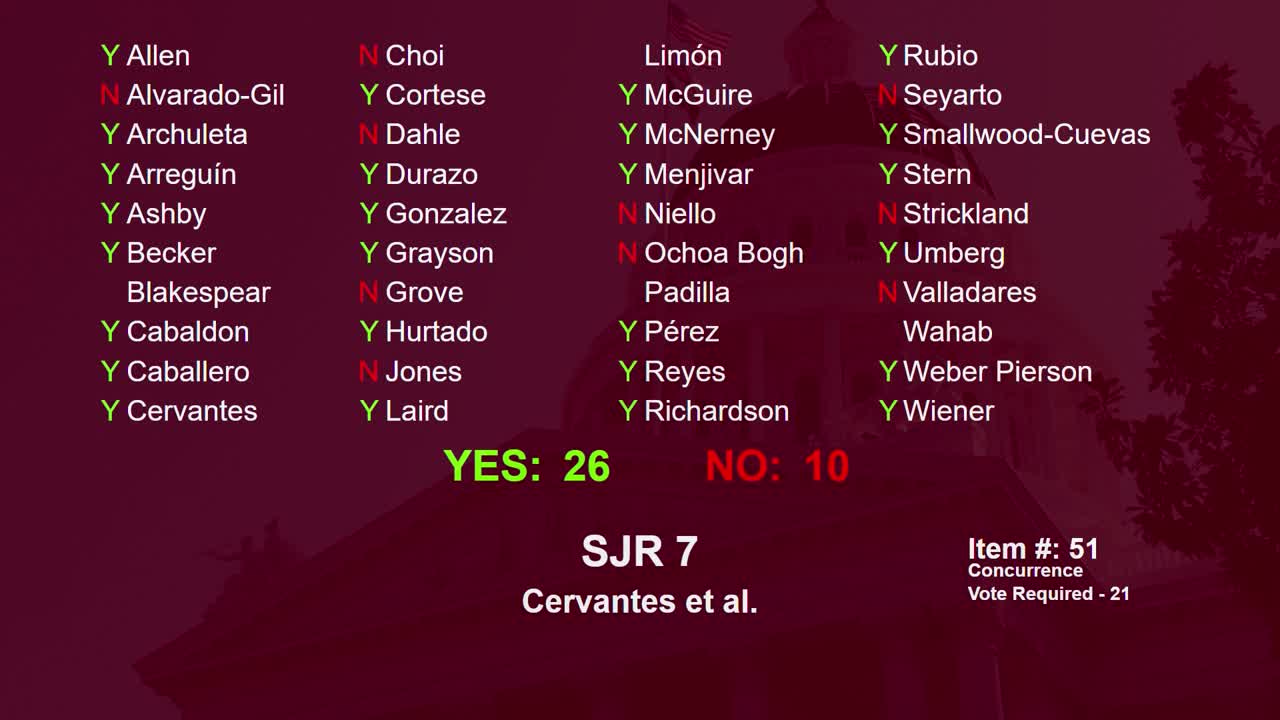
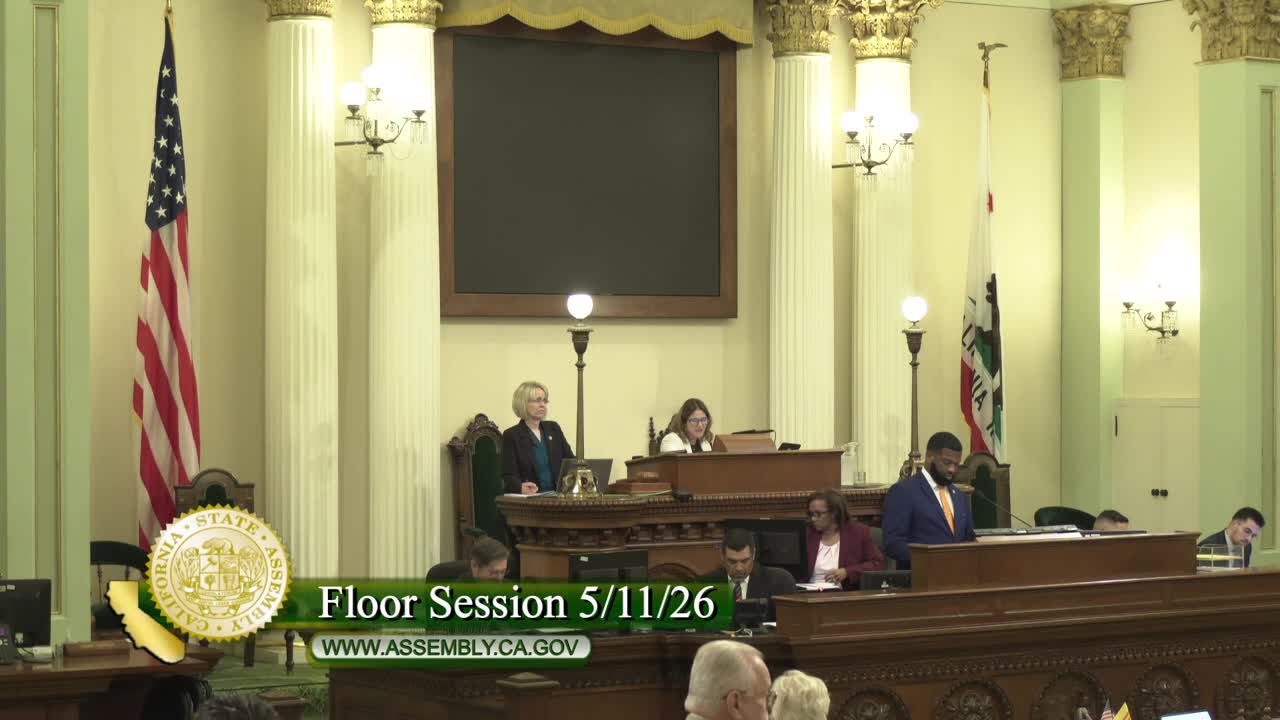
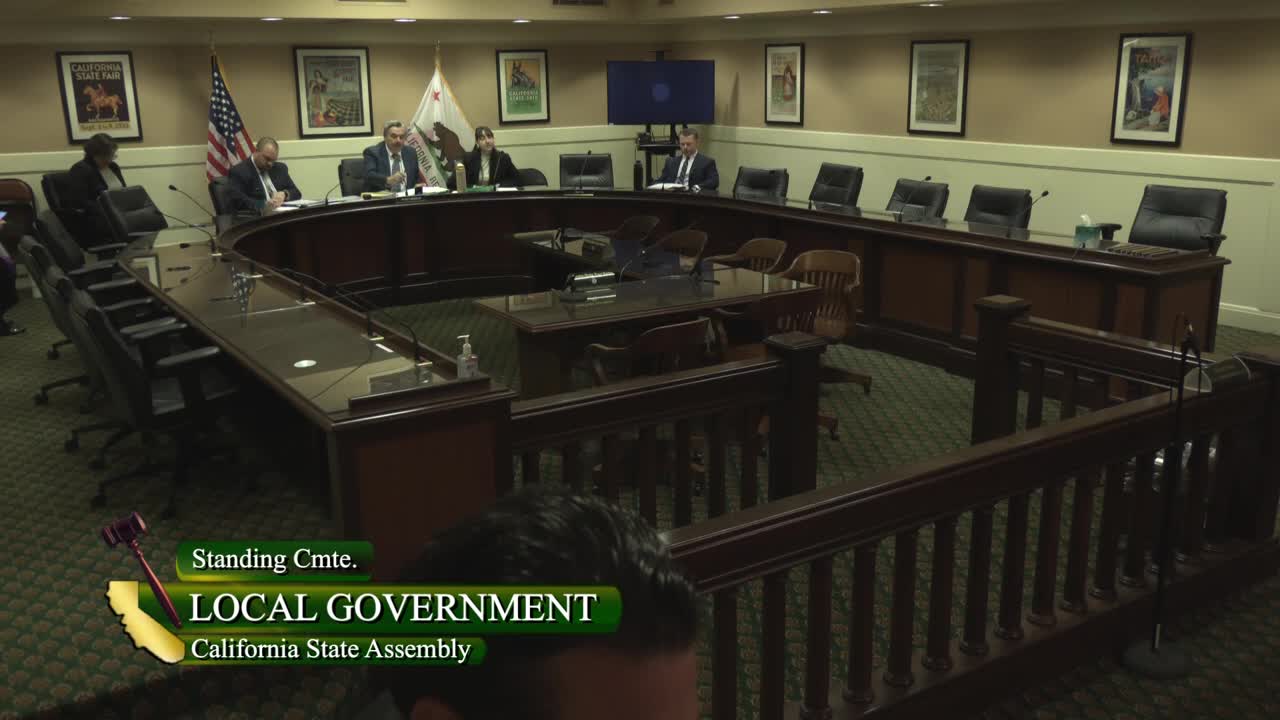
Bill Author

Bill Co-Author(s):