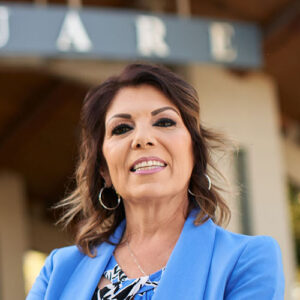
AB 1792: Pupil instruction: health framework: sexual health.
- Session Year: 2025-2026
- House: Assembly
- Latest Version Date: 2026-09-18
Current Status:
Passed
(2026-09-18: Chaptered by Secretary of State - Chapter 273, Statutes of 2026.)
Introduced
In Committee
Awaiting First Chamber Vote
Passed First Chamber
In Committee
Awaiting Second Chamber Vote
Passed Second Chamber
Enacted
Existing law establishes the Instructional Quality Commission and requires the commission to, among other things, recommend curriculum frameworks to the State Board of Education.
This bill would require the commission, during the next revision of the publication Health Framework for California Public Schools, to consider including, and recommending for adoption by the state board, specific content related to sexual health instruction to educate pupils about dating abuse and digital violence, as described.
(a)During the next revision of the publication Health Framework for California Public Schools (health framework), the Instructional Quality Commission shall consider including, and recommending for adoption by the state board, specific content related to sexual health instruction to educate pupils about dating abuse and digital violence.
(b)For purposes of subdivision (a), sexual health education includes, but is not limited to, all of the following:
(1)The knowledge and skills necessary to understand digital and online safety, including the risks associated with nonconsensual intimate imagery, deepfakes, online grooming, sextortion, stalking, and the misuse of generative artificial intelligence.
(2)Age-appropriate, inclusive instruction on legal rights, protections, and support resources related to interpersonal violence, including information on restraining orders and how to seek assistance from trusted adults, school staff, and community resources.
(3)Instruction inclusive of, and responsive to, the experiences of LGBTQIA+ and gender diverse pupils, who are disproportionately impacted by dating violence and technology-facilitated abuse.
REVISIONS: HeadingLine 2.|
Date
|
Status
|
|---|---|
| Sep 18, 2026 | Chaptered by Secretary of State - Chapter 273, Statutes of 2026. |
| Sep 18, 2026 | Approved by the Governor. |
| Aug 31, 2026 | Enrolled and presented to the Governor at 4 p.m. |
| Aug 25, 2026 | In Assembly. Ordered to Engrossing and Enrolling. |
| Aug 25, 2026 | Read third time. Passed. Ordered to the Assembly. (Ayes 30. Noes 9. Page 5756.). |
| Aug 25, 2026 | Read third time. Passed. Ordered to the Assembly. (Ayes 29. Noes 9.). |
| Jun 23, 2026 | Read second time. Ordered to third reading. |
| Jun 22, 2026 | From committee: Be ordered to second reading pursuant to Senate Rule 28.8. |
| Jun 10, 2026 | From committee: Do pass and re-refer to Com. on APPR. (Ayes 5. Noes 2.) (June 10). Re-referred to Com. on APPR. |
| May 27, 2026 | Referred to Com. on ED. |
| May 14, 2026 | In Senate. Read first time. To Com. on RLS. for assignment. |
| May 14, 2026 | Read third time. Passed. Ordered to the Senate. (Ayes 60. Noes 8. Page 5046.) |
| May 14, 2026 | Read third time. Passed. Ordered to the Senate. (Ayes 60. Noes 8.) |
| May 7, 2026 | Read second time. Ordered to third reading. |
| May 6, 2026 | From committee: Do pass. (Ayes 10. Noes 0.) (May 6). |
| Mar 19, 2026 | Coauthors revised. |
| Mar 19, 2026 | From committee: Do pass and re-refer to Com. on APPR. (Ayes 6. Noes 0.) (March 18). Re-referred to Com. on APPR. |
| Feb 23, 2026 | Referred to Com. on ED. |
| Feb 11, 2026 | From printer. May be heard in committee March 13. |
| Feb 10, 2026 | Read first time. To print. |
|
Date
|
Description
|
Location
|
Votes
|
|
|---|---|---|---|---|
| Aug 25, 2026 | Assembly 3rd Reading AB1792 Michelle Rodriguez By Reyes | Senate Floor |
Passed |
|
| Jun 10, 2026 | Do pass, but first be re-referred to the Committee on [Appropriations] | Senate Standing Committee on Education |
Passed |
|
| May 14, 2026 | AB 1792 Michelle Rodriguez Assembly Third Reading | Assembly Floor |
Passed |
|
| May 6, 2026 | Do pass. | Assembly Standing Committee on Appropriations |
Passed |
|
| Mar 18, 2026 | Do pass and be re-referred to the Committee on [Appropriations] | Assembly Standing Committee on Education |
Passed |
This list shows positions taken on this bill by organizations on the date displayed, which is linked to the original source.
Positions by individuals are not included.
|
Organization
|
Position
|
Date
|
|---|---|---|
| Alameda County Office Of Education | ** Support | |
| AMERICAN COLLEGE OF OBSTETRICIANS & GYNECOLOGISTS - DISTRICT IX | ** Support | |
| Association Of California School Administrators | ** Support | |
| California Commission on the Status of Women and Girls | ** Support | |
| California Teachers Association | ** Support | |
| CFT – a Union of Educators & Classified Professionals, AFT, AFL-CIO | ** Support | |
| Democrats for an Informed Approach to Gender | ** Against | |
| Los Angeles Unified School District | ** Support | |
| Real Impact | ** Against | |
| Stop the Cycle | ** Support | |
| Technet | ** Support | |
| Youth Move National | ** Support |
SENATE RULES COMMITTEE Office of Senate Floor Analyses (916) 651-4171 | AB 1792 |
THIRD READING
Bill No: AB 1792
Author: Michelle Rodriguez (D), et al.
Introduced: 2/10/26
Vote: 21
SENATE EDUCATION COMMITTEE: 5-2, 6/10/26
AYES: Pérez, Cabaldon, Cortese, Menjivar, Reyes
NOES: Ochoa Bogh, Choi
SENATE APPROPRIATIONS COMMITTEE: Senate Rule 28.8
ASSEMBLY FLOOR: 60-8, 5/14/26 - See last page for vote
SUBJECT: Pupil instruction: health framework: sexual health
SOURCE: Author
DIGEST:
This bill requires the Instructional Quality Commission (IQC), during its next revision of the Health Framework for California Public Schools, to consider including and recommending to the State Board of Education (SBE) for adoption, specific content related to sexual health instruction to educate pupils about dating abuse and digital violence.
ANALYSIS:
Existing law:
- Establishes the California Healthy Youth Act (CHYA), which requires local educational agencies (LEAs) to provide comprehensive sexual health and Human Immunodeficiency Virus (HIV) prevention instruction to all students in grades 7 to 12, at least once in middle school and once in high school. (Education Code (EC) § 51933)
- Requires that students in grades 7 to 12, inclusive, receive instruction at least once in junior high or middle school and once in high school about adolescent relationship abuse and intimate partner violence, including the early warning signs thereof. (EC § 51934)
- Requires, as part of comprehensive sexual health education, that LEAs and charter schools provide students with information on local resources for assistance with sexual assault and intimate partner violence. (EC § 51934)
- Requires public schools, including charter schools and private schools, that serve students in any of grades 7 to 12, and public and private institutions of higher education that issue pupil or student identification cards, to print the telephone number for the National Domestic Violence Hotline and local domestic violence hotlines on those identification cards. (EC § 215.5)
- Requires the California Department of Education (CDE) to post on its website resources on teen dating violence prevention, local and national hotlines and services for youth experiencing teen dating violence, and other relevant sources for parents, guardians, and other caretakers of students. (EC § 231.7)
- Requires the IQC, during its next revision of the Health Education Framework, on or after January 1, 2025, to consider including content on sextortion, as defined. (EC § 33546.2)
- Defines “sextortion” as a threat to use sexual or intimate images or videos, however obtained, to compel another person to produce sexual or intimate images or videos, engage in sexual acts, or provide anything of value.
This bill:
- Requires the IQC, during its next revision of the Health Framework for California Public Schools, to consider including and recommending to the SBE for adoption, specific content related to sexual health instruction to educate pupils about dating abuse and digital violence.
- Specifies that “sexual health education” includes, but is not limited to, all of the following:
- The knowledge and skills necessary to understand digital and online safety, including the risks associated with nonconsensual intimate imagery, deepfakes, online grooming, sextortion, stalking, and the misuse of generative artificial intelligence.
- Age-appropriate, inclusive instruction on legal rights, protections, and support resources related to interpersonal violence, including information on restraining orders and how to seek assistance from trusted adults, school staff, and community resources.
- Instruction inclusive of, and responsive to, the experiences of LGBTQIA+ and gender diverse pupils, who are disproportionately impacted by dating violence and technology-facilitated abuse.
Comments
Need for the bill. According to the author, “As technology continues to evolve, our responsibility to protect young people must evolve with it. Today’s students are navigating digital threats that were virtually unheard of just a decade ago, including deepfakes, sextortion, nonconsensual intimate imagery, and AI-generated exploitation. This legislation helps ensure California’s Health Education Framework keeps pace with these emerging challenges by directing the Instructional Quality Commission to consider guidance on technology-facilitated abuse within sexual health instruction. Education remains one of our strongest prevention tools. By providing students with age-appropriate information on digital consent, online safety, and available legal protections, we can better equip them to recognize risks, protect themselves, and seek help before harm occurs.”
California Healthy Youth Act. CHYA was first enacted in 2003 under its previous name, the Comprehensive Sexual Health and HIV/AIDS Prevention Education Act. When first passed, the act required LEAs to provide comprehensive sexual health education in any grade, including kindergarten, so long as it consisted of age-appropriate instruction and used instructors trained in the appropriate courses. In 2016, AB 329 (Weber, Chapter 398, Statutes of 2015) renamed the act as CHYA and required LEAs to provide comprehensive sexual health education and HIV prevention education to all students at least once in middle school and at least once in high school. CHYA lists many required topics, including information on HIV and sexually transmitted infection (STI) prevention, the prevention of unintended pregnancies, gender identity, sexual orientation, sexual harassment, sexual assault, sexual abuse, human trafficking, adolescent relationship abuse, intimate partner violence, healthy relationships, local health resources, and students’ rights to access sexual health and reproductive health care.
From its inception in 2003 through today, CHYA has always afforded parents the right to opt their child out of a portion, or all, of the instruction and required LEAs to notify parents and guardians of this right. Parents and guardians can exercise this right by informing the LEA in writing of their decision.
Health Education Framework for California Public Schools, Kindergarten Through Grade Twelve. In May 2019, the SBE adopted the Health Education Framework for California Public Schools, Kindergarten Through Grade Twelve (the Framework) to provide instructional guidance and support to California teachers, administrators, curriculum specialists, other educators, and school boards for implementation of the health education content standards. According to the CDE, the Framework was designed to “help students build strong and healthy relationships with their families, friends, and communities while strengthening their resiliency and personal decision-making skills for healthy living.” The Framework covers six content areas of health education: nutrition and physical activity; growth, development, and sexual health; injury prevention and safety; alcohol, tobacco, and other drugs; mental, emotional, and social health; and personal and community health.
The six content areas are woven throughout the grade spans and build upon each other to ensure students gain a holistic understanding of health.
Importantly, the 2019 Framework also provides standards-based guidance, resources, and instructional strategies that are consistent with CHYA.
Dating abuse and violence prevention education within the Health Education Framework. This bill requires the IQC, during its next revision of the Health Education Framework, to consider including specific content on dating abuse and digital violence, as specified. Dating abuse or violence, online abuse, and grooming are all topics that are featured within the Health Education Framework.
- In the transitional kindergarten (TK) to 3rd grade span, teachers begin familiarizing students with concepts like personal space and boundaries, “trusted adults” or safe people with whom they can share information when they feel uncomfortable, and how to communicate their comfort and discomfort.
- In the 4th to 6th grade span, students build on their foundational understanding of personal space and boundaries and learn about the effects of peer pressure, healthy vs. unhealthy relationships, and red flags, which includes grooming, online recruitment, and other tactics that traffickers or unsafe individuals use to exploit their victims. They also examine concepts they have learned from mass media, such as television, movies, music, and video games, to determine whether those messages portray healthy or unhealthy relationships.
- In the 7th to 8th grade span, students learn more about peer pressure within romantic relationships; consensual ways of demonstrating affection; the various forms of abuse including physical, sexual, technological, emotional, spiritual, and financial abuse; sexual harassment in the form of verbal, visual, and physical actions; and the relationship between dating violence, sexual assault, child sexual abuse, and sex trafficking or exploitation.
- In the 9th to 12th grade span, students expand on their understanding of relationship violence by researching the prevalence of domestic violence and teen dating violence to learn more about its impact as well as resources for support for themselves or others. Students also delve deeper into their understandings of coercive control, cycles of abuse, and the dangers of technological abuse including cyberbullying, stalking, the sharing of explicit photographs and/or video with others or posting online, possession or distribution of child pornography, demanding email or social media passwords, and taking photographs of someone without their knowledge.
FISCAL EFFECT: Appropriation: No Fiscal Com.: Yes Local: No
SUPPORT: (Verified 6/22/26)
Alameda County Office of Education
American College of Obstetricians & Gynecologists - District IX
Association of California School Administrators
California Commission on the Status of Women and Girls
California Teachers Association
CFT – A Union of Educators & Classified Professionals, AFT, AFL-CIO
Los Angeles Unified School District
TechNet
OPPOSITION: (Verified 6/22/26)
Democrats for an Informed Approach to Gender
Real Impact
ASSEMBLY FLOOR: 60-8, 5/14/26
AYES: Addis, Aguiar-Curry, Ahrens, Alanis, Alvarez, Ávila Farías, Bains, Bauer-Kahan, Bennett, Berman, Boerner, Bonta, Bryan, Calderon, Caloza, Carrillo, Connolly, Elhawary, Fong, Gabriel, Garcia, Gipson, Mark González, Haney, Harabedian, Hart, Irwin, Jackson, Kalra, Krell, Lee, Lowenthal, McKinnor, Muratsuchi, Nguyen, Ortega, Pacheco, Papan, Patel, Pellerin, Petrie-Norris, Quirk-Silva, Ramos, Ransom, Michelle Rodriguez, Rogers, Blanca Rubio, Schiavo, Schultz, Sharp-Collins, Solache, Soria, Stefani, Valencia, Wallis, Ward, Wicks, Wilson, Zbur, Rivas
NOES: DeMaio, Dixon, Gallagher, Hadwick, Johnson, Macedo, Patterson, Sanchez
NO VOTE RECORDED: Arambula, Castillo, Chen, Davies, Ellis, Flora, Jeff Gonzalez, Hoover, Lackey, Celeste Rodriguez, Ta, Tangipa
Prepared by: Therresa Austin / ED. / (916) 651-4105
6/24/26 16:32:19
**** END ****
SENATE COMMITTEE ON EDUCATION
Senator Sasha Renée Pérez, Chair
2025 - 2026 Regular
Bill No: Hearing Date: June 10, 2026
Author: | |||
Version: |
| ||
Urgency: | Fiscal: | ||
Consultant: | |||
Subject:
SUMMARY
This bill requires the Instructional Quality Commission (IQC), during its next revision of the Health Framework for California Public Schools, to consider including and recommending to the State Board of Education (SBE) for adoption, specific content related to sexual health instruction to educate pupils about dating abuse and digital violence.
BACKGROUND
Existing law:
- Establishes the California Healthy Youth Act (CHYA), which requires local educational agencies (LEAs) to provide comprehensive sexual health and Human Immunodeficiency Virus (HIV) prevention instruction to all students in grades 7 to 12, at least once in middle school and once in high school. (Education Code (EC) § 51933)
- Requires that students in grades 7 to 12, inclusive, receive instruction at least once in junior high or middle school and once in high school about adolescent relationship abuse and intimate partner violence, including the early warning signs thereof. (EC § 51934)
- Requires, as part of comprehensive sexual health education, that LEAs and charter schools provide students with information on local resources for assistance with sexual assault and intimate partner violence. (EC § 51934)
- Requires public schools, including charter schools and private schools, that serve students in any of grades 7 to 12, and public and private institutions of higher education that issue pupil or student identification cards, to print the telephone number for the National Domestic Violence Hotline and local domestic violence hotlines on those identification cards. (EC § 215.5)
- Requires the California Department of Education (CDE) to post on its website resources on teen dating violence prevention, local and national hotlines and services for youth experiencing teen dating violence, and other relevant sources for parents, guardians, and other caretakers of students. (EC § 231.7)
- Requires the IQC, during its next revision of the Health Education Framework, on or after January 1, 2025, to consider including content on sextortion, as defined. (EC § 33546.2)
- Defines “sextortion” as a threat to use sexual or intimate images or videos, however obtained, to compel another person to produce sexual or intimate images or videos, engage in sexual acts, or provide anything of value.
ANALYSIS
This bill:
- Requires the IQC, during its next revision of the Health Framework for California Public Schools, to consider including and recommending to the SBE for adoption, specific content related to sexual health instruction to educate pupils about dating abuse and digital violence.
- Specifies that “sexual health education” includes, but is not limited to, all of the following:
- The knowledge and skills necessary to understand digital and online safety, including the risks associated with nonconsensual intimate imagery, deepfakes, online grooming, sextortion, stalking, and the misuse of generative artificial intelligence.
- Age-appropriate, inclusive instruction on legal rights, protections, and support resources related to interpersonal violence, including information on restraining orders and how to seek assistance from trusted adults, school staff, and community resources.
- Instruction inclusive of, and responsive to, the experiences of LGBTQIA+ and gender diverse pupils, who are disproportionately impacted by dating violence and technology-facilitated abuse.
STAFF COMMENTS
- Need for the bill. According to the author, “As technology continues to evolve, our responsibility to protect young people must evolve with it. Today’s students are navigating digital threats that were virtually unheard of just a decade ago, including deepfakes, sextortion, nonconsensual intimate imagery, and AI-generated exploitation. This legislation helps ensure California’s Health Education Framework keeps pace with these emerging challenges by directing the Instructional Quality Commission to consider guidance on technology-facilitated abuse within sexual health instruction. Education remains one of our strongest prevention tools. By providing students with age-appropriate information on digital consent, online safety, and available legal protections, we can better equip them to recognize risks, protect themselves, and seek help before harm occurs.”
- The IQC and the SBE. The Legislature has vested the IQC and the SBE with the authority to develop and adopt state curriculum and instructional materials. The IQC develops curriculum frameworks through a process involving practitioners and experts who have an in-depth understanding of curriculum and instruction, including the full scope and sequence of the curriculum in each subject and at each grade level, constraints on instructional time and resources, and the relationship of curriculum to state assessments and other measures of student progress. Changes are frequently made in response to public comment. The frameworks are then adopted by the SBE in a public meeting.
The resulting curriculum framework is intended to serve as a guidance document for educators and administrators on how to plan for and provide quality, skills-based, standards-aligned instruction on the various content areas.
The SBE also adopts, in a public process, instructional materials aligned to those frameworks for grades K-8. School district governing boards and charter schools then adopt instructional materials aligned to these standards and frameworks.
The respective revision and adoption processes have traditionally occurred on a regular schedule, giving schools a predictable timetable to plan and budget for changes to the curriculum. Local adoption of new curricula also involves significant local cost and investment of resources for professional development.
- California Healthy Youth Act. CHYA was first enacted in 2003 under its previous name, the Comprehensive Sexual Health and HIV/AIDS Prevention Education Act. When first passed, the act required LEAs to provide comprehensive sexual health education in any grade, including kindergarten, so long as it consisted of age-appropriate instruction and used instructors trained in the appropriate courses. In 2016, AB 329 (Weber, Chapter 398, Statutes of 2015) renamed the act as CHYA and required LEAs to provide comprehensive sexual health education and HIV prevention education to all students at least once in middle school and at least once in high school. CHYA lists many required topics, including information on HIV and sexually transmitted infection (STI) prevention, the prevention of unintended pregnancies, gender identity, sexual orientation, sexual harassment, sexual assault, sexual abuse, human trafficking, adolescent relationship abuse, intimate partner violence, healthy relationships, local health resources, and students’ rights to access sexual health and reproductive health care.
From its inception in 2003 through today, CHYA has always afforded parents the right to opt their child out of a portion, or all, of the instruction and required LEAs to notify parents and guardians of this right. Parents and guardians can exercise this right by informing the LEA in writing of their decision.
- Health Education Framework for California Public Schools, Kindergarten Through Grade Twelve. In May 2019, the SBE adopted the Health Education Framework for California Public Schools, Kindergarten Through Grade Twelve (the Framework) to provide instructional guidance and support to California teachers, administrators, curriculum specialists, other educators, and school boards for implementation of the health education content standards. According to the California Department of Education (CDE), the Framework was designed to “help students build strong and healthy relationships with their families, friends, and communities while strengthening their resiliency and personal decision-making skills for healthy living.” The Framework covers six content areas of health education: nutrition and physical activity; growth, development, and sexual health; injury prevention and safety; alcohol, tobacco, and other drugs; mental, emotional, and social health; and personal and community health.
The six content areas are woven throughout the grade spans and build upon each other to ensure students gain a holistic understanding of health.
Importantly, the 2019 Framework also provides standards-based guidance, resources, and instructional strategies that are consistent with CHYA.
- Dating abuse and violence prevention education within the Health Education Framework. This bill requires the IQC, during its next revision of the Health Education Framework, to consider including specific content on dating abuse and digital violence, as specified. Dating abuse or violence, online abuse, and grooming are all topics that are featured within the Health Education Framework.
- In the transitional kindergarten (TK) to 3rd grade span, teachers begin familiarizing students with concepts like personal space and boundaries, “trusted adults” or safe people with whom they can share information when they feel uncomfortable, and how to communicate their comfort and discomfort.
- In the 4th to 6th grade span, students build on their foundational understanding of personal space and boundaries and learn about the effects of peer pressure, healthy vs. unhealthy relationships, and red flags, which includes grooming, online recruitment, and other tactics that traffickers or unsafe individuals use to exploit their victims. They also examine concepts they have learned from mass media, such as television, movies, music, and video games, to determine whether those messages portray healthy or unhealthy relationships.
- In the 7th to 8th grade span, students learn more about peer pressure within romantic relationships; consensual ways of demonstrating affection; the various forms of abuse including physical, sexual, technological, emotional, spiritual, and financial abuse; sexual harassment in the form of verbal, visual, and physical actions; and the relationship between dating violence, sexual assault, child sexual abuse, and sex trafficking or exploitation.
- In the 9th to 12th grade span, students expand on their understanding of relationship violence by researching the prevalence of domestic violence and teen dating violence to learn more about its impact as well as resources for support for themselves or others. Students also delve deeper into their understandings of coercive control, cycles of abuse, and the dangers of technological abuse including cyberbullying, stalking, the sharing of explicit photographs and/or video with others or posting online, possession or distribution of child pornography, demanding email or social media passwords, and taking photographs of someone without their knowledge.
- The Curriculum Guidance Study and future of curriculum development and adoption. The 2025-26 budget, through AB 121 (Committee on Budget, Chapter 8, Statutes of 2025), included $1 million for a Curriculum Guidance Study to evaluate the processes by which other states develop curriculum guidance, and to make recommendations about how to improve and streamline California’s processes across all content areas. The report is required to include, among other topics:
- The roles and responsibilities of the CDE, the IQC, the SBE, the Legislature, LEAs, educators, parents and guardians, and the public; and
- The processes and cycles for developing, revising, and adopting content standards, curriculum frameworks, and other instructional guidance, and how available instructional time in elementary and secondary schools is considered.
This report is to be completed by January 1, 2027.
- Prior and related legislation.
AB 1766 (Krell, 2026) would require the ICC, during its next revision of the health curriculum framework, to consider including specified content on human trafficking and sexual exploitation.
AB 2053 (Mathis, Chapter 695, Statutes of 2024) requires that instruction about adolescent relationship abuse and intimate partner violence include, within the CHYA, information about resources available to pupils related to adolescent relationship abuse and intimate partner violence, including the National Domestic Violence Hotline and local domestic violence hotlines.
AB 1071 (Hoover, Chapter 65, Statutes of 2023) requires the CDE to post on its website resources on teen dating violence prevention, local and national hotlines and services for youth experiencing teen dating violence, and other relevant sources for parents, guardians, and other caretakers of pupils.
AB 1861 (Rodriguez, Chapter 807, Statutes of 2018) requires that students receive instruction on how social media and mobile device applications are used in human trafficking, by adding it to the content included in comprehensive sexual health education.
SUPPORT
Alameda County Office of Education
American College of Obstetricians & Gynecologists - District IX
Association of California School Administrators
California Commission on the Status of Women and Girls
California Teachers Association
Los Angeles Unified School District
TechNet
OPPOSITION
Real Impact
-- END --
ASSEMBLY THIRD READING
ATR Bill Id:AB 1792
Author:(Michelle Rodriguez)
As Introduced Ver:February 10, 2026
Majority vote
SUMMARY
Requires that, during the next revision of health curriculum framework, the Instructional Quality Commission (IQC) consider including, and recommending for adoption by the State Board of Education (SBE), specified content related to sexual health instruction to educate pupils about dating abuse and digital violence.
Major Provisions
- Requires that, during the next revision of health curriculum framework, the IQC consider including, and recommending for adoption by the SBE, specific content related to sexual health instruction to educate pupils about dating abuse and digital violence, including:
- The knowledge and skills necessary to understand digital and online safety, including the risks associated with nonconsensual intimate imagery, deepfakes, online grooming, sextortion, stalking, and the misuse of generative artificial intelligence (AI);
- Age-appropriate, inclusive instruction on legal rights, protections, and support resources related to interpersonal violence, including information on restraining orders and how to seek assistance from trusted adults, school staff, and community resources; and
- Instruction inclusive of, and responsive to, the experiences of LGBTQIA+ and gender diverse pupils, who are disproportionately impacted by dating violence and technology-facilitated abuse.
COMMENTS
Adolescent relationship abuse, intimate partner violence in mandated instruction. Current law requires students in grades 7 to 12 to receive instruction at least once in junior high or middle school and once in high school about adolescent relationship abuse and intimate partner violence, including the early warning signs thereof. Current law also requires, as part of comprehensive sexual health education, local educational agencies (LEAs) and charter schools to provide students with information on local resources for assistance with sexual assault and intimate partner violence. Additionally, the health education framework adopted by the SBE in 2019 contains a significant amount of content on healthy relationships, teen dating violence, and sex trafficking.
Curriculum development and adoption process under review. The 2025-26 budget, through AB 121 (Committee on Budget), Chapter 8, Statutes of 2025, included $1 million for a study on the processes by which other states develop curriculum guidance, and to make recommendations about how to improve and streamline California′s processes. This report is to be completed by January 1, 2027.
The report is required to include, among other topics:
- The roles and responsibilities of the CDE, the IQC, the SBE, the Legislature, LEAs, educators, parents and guardians, and the public; and
- The processes and cycles for developing, revising, and adopting content standards, curriculum frameworks, and other instructional guidance, and how available instructional time in elementary and secondary schools is considered.
According to the Author
″As technology evolves, so must our responsibility to protect young people. Today′s student face digital threats that did not even exist a decade ago, including deepfakes, sextortion, nonconsensual intimate imagery, and AI generated exploitation. This legislation ensures that California′s Health Education Framework keeps pace with these emerging risks by directing the Instructional Quality Commission to consider incorporating guidance on technology-facilitated abuse into sexual health instruction. Education is one of our most powerful prevention tools. By providing age-appropriate information on digital consent, online safety, and available legal protections, we equip students with the knowledge they need before harm occurs.″
Arguments in Support
The Alameda County Office of Education writes, ″Adolescents are particularly vulnerable, both as targets and as unwitting participants, in an online environment where digital abuse, sextortion, grooming, and image manipulation are increasingly prevalent. As technology-facilitated abuse, exploitation, sextortion, deepfakes, and the misuse of generative AI increasingly impact adolescents, updating the health curriculum framework through the IQC process ensures California′s sexual health education remains current, responsive, and aligned with the evolving challenges facing students in today′s digital society.
ACOE strongly supports this bill′s approach of asking the IQC and SBE to consider integrating these topics into the health curriculum framework. By utilizing the existing framework revision process, the state can ensure this instruction is consistent, age-appropriate, and keeps pace with rapidly evolving digital threats without overburdening the current curriculum.″
Arguments in Opposition
None on file
FISCAL COMMENTS
According to the Assembly Appropriations Committee, no new state costs.
VOTES
ASM EDUCATION: 6-0-2
YES: Patel, Alvarez, Bonta, Garcia, Lowenthal, Zbur
ABS, ABST OR NV: Hoover, Castillo
ASM APPROPRIATIONS: 10-0-5
YES: Wicks, Aguiar-Curry, Caloza, Fong, Mark González, Krell, Pacheco, Pellerin, Sharp-Collins, Solache
ABS, ABST OR NV: Hoover, Arambula, Dixon, Ta, Tangipa
UPDATED
VERSION: February 10, 2026
CONSULTANT: Tanya Lieberman / ED. / (916) 319-2087 FN: 0002522
Date of Hearing: May 6, 2026
ASSEMBLY COMMITTEE ON APPROPRIATIONS
Buffy Wicks, Chair
ABPCA Bill Id:AB 1792
Author:(Michelle Rodriguez) – As Introduced Ver:February 10, 2026
Policy Committee: | Education | Vote: | 6 - 0 |
|
| ||
|
|
Urgency: No State Mandated Local Program: No Reimbursable: No
SUMMARY:
This bill requires the Instructional Quality Commission (IQC), upon the next revision of the Health Framework for California Public Schools (health framework), to consider including, and recommending for adoption by the State Board of Education (SBE), specific sexual health instruction to educate students about dating abuse and digital violence.
FISCAL EFFECT:
No new state costs.
COMMENTS:
- Purpose. According to the author:
As technology evolves, so must our responsibility to protect young people. Today’s student face digital threats that did not even exist a decade ago, including deepfakes, sextortion, nonconsensual intimate imagery, and AI generated exploitation. This legislation ensures that California’s Health Education Framework keeps pace with these emerging risks by directing the Instructional Quality Commission to consider incorporating guidance on technology-facilitated abuse into sexual health instruction. Education is one of our most powerful prevention tools. By providing age-appropriate information on digital consent, online safety, and available legal protections, we equip students with the knowledge they need before harm occurs.
- Background. The health framework, adopted by the SBE on May 6, 2019, includes information regarding sexual health, sexual assault and abuse, dating violence, cyberbullying and cyber exploitation, and human trafficking. Further, since 2016, the California Healthy Youth Act requires school districts to ensure that all students receive comprehensive sexual health education, which includes information about human trafficking. Additionally, AB 1861 (Rodriguez), Chapter 807, Statutes of 2018, requires a school district, as part of its comprehensive sexual health education for all seventh to 12th grade pupils, to provide information regarding how social media and mobile device applications are used for human trafficking.
Current law charges the IQC and SBE with developing and adopting state curriculum and instructional materials for use in public schools. The process is iterative and public, involving input from the public, practitioners, and experts in the given curriculum area in question. Notably, the Health Framework curriculum framework adoption in 2019 did not result in a subsequent successful instructional materials adoption, largely due to a lack of interest from publishers. The Budget Act of 2025 appropriated $1 million for a study to provide recommendations for how to improve and streamline California’s curriculum development and adoption process by January 1, 2027.
- Related Legislation. AB 1766 (Krell), of the current legislative session, requires the IQC to consider including, and recommending for adoption by the SBE, recommendations for LEAs on covering human trafficking prevention, staying safe from sexually exploitative materials, and skills-based content building protective factors such as healthy boundaries and digital citizenship.
AB 1653 (Lackey), of the current legislative session, requires the Instructional Quality Commission (IQC) to consider including, and recommending for adoption by the SBE, specific heat illness related content in the next revision of the California public schools health framework.
AB 86 (Boerner), of the current legislative session, would have required the SBE to adopt kindergarten through grade 8 health education instructional materials, on or before July 1, 2028. The Governor vetoed AB 86 suggesting that such proposals should only be considered after conclusion of the study authorized by the Budget Act of 2025 and encouraged local governing boards to use existing discretion to evaluate and select from materials aligned with state standards.
- Prior Legislation. AB 2053 (Mathis), Chapter 695, Statutes of 2024, requires that instruction about adolescent relationship abuse and intimate partner violence include the resources available to students related to adolescent relationship abuse and intimate partner violence.
Analysis Prepared by: Aaron Heredia / APPR. / (916) 319-2081
Date of Hearing:
ASSEMBLY COMMITTEE ON
Darshana Patel, Chair
ABPCA Bill Id: (
Author:) – As Ver:
SUBJECT:
SUMMARY: Requires that, during the next revision of health curriculum framework, the Instructional Quality Commission (IQC) consider including, and recommending for adoption by the State Board of Education (SBE), specified content related to sexual health instruction to educate pupils about dating abuse and digital violence. Specifically, this bill:
- Requires that, during the next revision of health curriculum framework, the IQC consider including, and recommending for adoption by the SBE, specific content related to sexual health instruction to educate pupils about dating abuse and digital violence, including:
- The knowledge and skills necessary to understand digital and online safety, including the risks associated with nonconsensual intimate imagery, deepfakes, online grooming, sextortion, stalking, and the misuse of generative artificial intelligence;
- Age-appropriate, inclusive instruction on legal rights, protections, and support resources related to interpersonal violence, including information on restraining orders and how to seek assistance from trusted adults, school staff, and community resources; and
- Instruction inclusive of, and responsive to, the experiences of LGBTQIA+ and gender diverse pupils, who are disproportionately impacted by dating violence and technology-facilitated abuse.
EXISTING LAW:
- Requires that students in grades 7 to 12, inclusive, receive instruction at least once in junior high or middle school and once in high school about adolescent relationship abuse and intimate partner violence, including the early warning signs thereof. (Education Code (EC) 51934)
- Requires, as part of comprehensive sexual health education, that local educational agencies (LEAs) and charter schools provide students with information on local resources for assistance with sexual assault and intimate partner violence. (EC 51934)
- Requires public schools, including charter schools and private schools, that serve students in any of grades 7 to 12, and public and private institutions of higher education that issue pupil or student identification cards, to print the telephone number for the National Domestic Violence Hotline and local domestic violence hotlines on those identification cards. (EC 215.5)
- Requires the California Department of Education (CDE) to post on its website resources on teen dating violence prevention, local and national hotlines and services for youth experiencing teen dating violence, and other relevant sources for parents, guardians, and other caretakers of students. (EC 231.7)
- Requires that, when the health education framework is revised after January 1, 2017, the IQC consider including comprehensive information for kindergarten and grades 1 to 8, inclusive, on the development of healthy relationships, which is age and developmentally appropriate and consistent with the health education standards adopted by the State Board of Education (SBE). (EC 33546)
- States that, for purposes of this section, the “development of healthy relationships” includes, but is not limited to:
- Understanding the principles of treating one another with respect, dignity, and kindness;
- Demonstrating the ability to use interpersonal communication skills to address and resolve disagreement and conflict; and
- Recognizing when and how to respond to dangerous or other situations that may result in the bullying, harassment, harming, or hurting of another person. (EC 33546)
- Requires that, when the health education framework is revised after January 1, 2016, the IQC consider including comprehensive information for grades 9 to 12, inclusive, on sexual harassment and violence that includes, but is not limited to, all of the following:
- Information on different forms of sexual harassment and violence, including instances that occur among peers and in a dating relationship; a discussion of prevention strategies; how students report sexual harassment and violence; and potential resources victims can access;
- Discussion of the affirmative consent standard, as defined, and skills students may use to establish boundaries in peer and dating relationships; and
- Discussion of legal aspects of sexual harassment and violence under state and federal law. (EC 33544)
- Requires that, if the governing board of a school district requires a course in health education for graduation from high school, the governing board of the school district include instruction in sexual harassment and violence, including, but not limited to, information on the affirmative consent standard, as defined.
- Requires that, if the governing board of a school district provides instruction on sexual harassment and violence, it ensure teachers consult information related to sexual harassment and violence in the health education framework when delivering health instruction. (EC 51225.36)
- Requires that when the health education framework is next revised after January 1, 2015, the IQC consider including a distinct category on sexual abuse and sex trafficking prevention education that includes, but is not limited to, all of the following:
- Information on different forms of sexual abuse and assault; discussion of prevention strategies; how to report sexual abuse or suspected sexual abuse; and local resources for victims;
- Discussion of healthy boundaries for relationships; how to recognize potentially harmful and abusive relationships; and refusal skills to overcome peer pressure and to avoid high-risk activities;
- Information on sex trafficking and risk factors; the recruiting tactics of sex traffickers and peer recruiters, including recruitment through the internet; how to report sex trafficking or suspected sex trafficking; and local resources for victims;
- Discussion of legal aspects of sexual abuse and sex trafficking under state and federal laws; and
- Discussion of how culture and mass media influence and desensitize our perceptions of sexual abuse and sex trafficking, including, but not limited to, stereotypes and myths about the victims and abusers, victim blaming, and the role of language. Requires that this instruction emphasize compassion for people who have suffered from sexual abuse or sex trafficking, and support positive reentry experiences for survivors returning to school. (EC 33545)
- Authorizes a school district to provide sexual abuse and sex trafficking prevention education, defined as instruction on the prevalence and nature of sexual abuse and sex trafficking, strategies to reduce their risk, techniques to set healthy boundaries, and how to safely report an incident.
- States that a parent or guardian of a student has the right to excuse his or her child from all or part of sexual abuse and sex trafficking prevention education, and assessments related to that education.
- Authorizes the CDE to make available on its website resources on sexual abuse and sex trafficking prevention for professional learning purposes, and relevant materials for parents and guardians of students.
- Encourages schools to collaborate with law enforcement on intervention programs for high-risk students and minors.
- Authorizes in-service training to be conducted periodically to enable school district personnel to learn about new developments in the understanding of sexual abuse and sex trafficking, and to receive instruction on current prevention efforts and methods. (EC 51950)
FISCAL EFFECT: Unknown
COMMENTS:
Need for the bill. The author states, “As technology evolves, so must our responsibility to protect young people. Today’s student face digital threats that did not even exist a decade ago, including deepfakes, sextortion, nonconsensual intimate imagery, and AI generated exploitation. This legislation ensures that California’s Health Education Framework keeps pace with these emerging risks by directing the Instructional Quality Commission to consider incorporating guidance on technology-facilitated abuse into sexual health instruction. Education is one of our most powerful prevention tools. By providing age-appropriate information on digital consent, online safety, and available legal protections, we equip students with the knowledge they need before harm occurs.”
Adolescent relationship abuse, intimate partner violence in mandated instruction. As noted above, current law requires students in grades 7 to 12, inclusive, receive instruction at least once in junior high or middle school and once in high school about adolescent relationship abuse and intimate partner violence, including the early warning signs thereof. Current law also requires, as part of comprehensive sexual health education, LEAs and charter schools to provide students with information on local resources for assistance with sexual assault and intimate partner violence.
Additionally, the health education framework adopted by the SBE in 2019 contains a significant amount of content on healthy relationships, teen dating violence, and sex trafficking.
In the chapter for grades 7-8, the Framework contains an extensive discussion of healthy relationships, dating violence, and sex trafficking, which includes a sample lesson on dating violence. In the chapter for grades 9-12, the Framework states:
- One in three teens will experience teen dating violence, and many do not report or even recognize their experience as abuse. Students can research domestic violence and teen dating violence to learn more about its prevalence and impact, and resources for support for themselves or others;
- It is important for students to understand that relationship abuse or intimate partner violence impacts people of all genders and sexual orientations, and is about one person having power and control over another. It is not limited to physical violence. Different forms of abuse are meant to control the person being targeted. Coercive control is a pattern of behavior which seeks to take away the victim’s liberty or freedom and to strip away their sense of self. Through further discussion and research, students can assess characteristics of harmful or abusive relationships (9–12.7.5.S), including the six forms of relationship abuse; and
- Students may benefit from more anonymous online resources, such as the Love is Respect website of the National Domestic Violence Hotline. Students may also benefit from making a connection with helpful people and resources in the community. Inform students that many services available at domestic violence agencies, youth service agencies, and suicide prevention hotlines and organizations are confidential and do not require parental consent to access (e.g., counseling and support hotlines). Invite a local domestic violence agency to present information about dating violence and locally available resources and services. Information about domestic violence organizations can be an important resource for students who are exposed to abusive adult relationships. These agencies are usually experienced in providing presentations to youth and can help facilitate discussion about the issue. They can also provide safety planning information and counseling services for students who are in an unhealthy or dangerous situation.
The current Health Education Content Standards, adopted by the SBE in 2008, also include several standards related to teen dating violence:
Grades 7-8:
- 5.1.S: Use a decision-making process to examine risky social and dating situations.
- 5.2.S: Apply a decision-making process to avoid potentially dangerous situations, such as gang activities, violence in dating, and other social situations.
- 7.5.M: Demonstrate skills to avoid or escape from potentially violent situations, including dating.
Grades 9-12:
- 1.2.S: Recognize potentially harmful or abusive relationships, including dangerous dating situations.
Finally, the CDE is required to post on its website resources on teen dating violence prevention, local and national hotlines and services for youth experiencing teen dating violence, and other relevant sources for parents, guardians, and other caretakers of students.
Prevalence of teen dating violence. Research indicates that teen dating violence is experienced and perpetrated by a significant number of students:
- Data from the Centers for Disease Control and Prevention’s (CDC’s) Youth Risk Behavior Survey in 2019 indicate that among U.S. high school students who reported dating during the 12 months before the survey, about 1 in 12 experienced physical dating violence and about 1 in 12 experienced sexual dating violence.
- Data from the CDC’s Youth Risk Behavior Survey show that teens experiencing teen dating violence were more likely to report carrying a weapon at school, missing school because they felt unsafe, being threatened or injured with a weapon on school property, having a physical fight at school, and being bullied on school property. (Vivolo-Kantor, 2016)
- According to the CDC, intimate partner violence often begins in adolescence. An estimated 8.5 million women in the U.S. (7%) and over 4 million men (4%) reported experiencing physical violence, rape or stalking from an intimate partner in their lifetime and indicated that they first experienced these or other forms of violence by that partner before the age of 18. (CDC, 2017)
- In one study of survey data from 2,895 middle school students in four U.S. cities, 77% reported perpetrating verbal/emotional abuse, 32% reported perpetrating physical abuse, 20% reported threatening a partner, 15% reported perpetrating sexual abuse, 13% reported perpetrating relational abuse, and 6% reported stalking. (Niolon, 2015)
Trafficking education in mandated instruction. As noted above, current law requires that students in grades 7 to 12 receive instruction at least once in junior high or middle school and once in high school about sexual assault, sexual harassment, sexual abuse, and human trafficking. Current law requires that information on human trafficking include both of the following:
- Information on the prevalence, nature, and strategies to reduce the risk of human trafficking, techniques to set healthy boundaries, and how to safely seek assistance; and
- Information on how social media and mobile device applications are used for human trafficking.
Trafficking education in 2019 Health Education Framework. The current health curriculum framework, adopted by the SBE in 2019, includes content within grade chapters and also in an appendix devoted to sex trafficking specifically. These additions were made to reflect the requirements to teach this content pursuant to the CHYA, and at least in part pursuant to SB 1165 (Mitchell), Chapter 713, Statutes of 2014, which required the IQC to consider including sexual abuse and sex trafficking prevention education in the health framework when it was next revised.
The framework notes that:
- Teachers have a unique opportunity to provide prevention education as well as observe behavior and possible warning signs that a student may be in an abusive relationship, experiencing child sexual abuse, or being trafficked for commercial sexual exploitation;
- Education in this area can begin as early as TK and kindergarten as students explore protective skills such as setting boundaries, identifying emotions, and telling a trusted adult; and
- In California, the average age that a child is first brought into commercial sexual exploitation, or sex trafficking, is twelve to fourteen for girls and eleven to thirteen for boys.
In the chapter for grades 7-8, the Framework contains an extensive discussion of healthy relationships, dating violence, and sex trafficking, which includes a sample lesson on dating violence.
The appendix on sex trafficking includes content on:
- Prevention and early education, including trafficking indicators;
- Impact, including examples of trauma and psychological impact;
- Intervention, including an example of a survivor support system and a vignette depicting a school intervention example;
- Guidance on developing school protocols as an addendum to child abuse protocols, with a recognize-respond-refer approach, as well as a sample school or district protocol; and
- References for additional information.
Finally, CDE’s website includes a page devoted to the information and resources on commercially sexually exploited children and youth.
Content Standards, Frameworks, and Model Curricula. The Legislature has vested the IQC and the SBE with the authority to develop and adopt state curriculum and instructional materials. The IQC develops curriculum frameworks in each subject by convening expert panels, developing drafts, and holding public hearings to solicit input. Changes are frequently made in response to public comment. The SBE then adopts the frameworks in a public meeting. The SBE also adopts, in a public process, instructional materials aligned to those frameworks for grades K-8. School district governing boards and charter schools then adopt instructional materials aligned to these standards and frameworks. This process has traditionally occurred on a regular schedule, giving schools a predictable timetable to plan and budget for changes to the curriculum. Local adoption of new curricula involves significant local costs, including resources for professional development.
These existing processes involve practitioners and experts who have an in-depth understanding of curriculum and instruction, including the full scope and sequence of the curriculum in each subject and at each grade level, constraints on instructional time and resources, and the relationship of curriculum to state assessments and other measures of student progress.
Curriculum development and adoption process under review. The 2025-26 budget, through AB 121 (Committee on Budget), Chapter 8, Statutes of 2025, included $1 million for a study on the processes by which other states develop curriculum guidance, and to make recommendations about how to improve and streamline California’s processes. This report is to be completed by January 1, 2027.
The report is required to include, among other topics:
- The roles and responsibilities of the CDE, the IQC, the SBE, the Legislature, LEAs, educators, parents and guardians, and the public; and
- The processes and cycles for developing, revising, and adopting content standards, curriculum frameworks, and other instructional guidance, and how available instructional time in elementary and secondary schools is considered.
Recent Governor’s veto message states that changes to curriculum should wait until study is complete and recommendations adopted. In 2025, the Governor vetoed AB 86 (Boerner), which would have
required the SBE to adopt instructional materials for health education for kindergarten through 8th grade, on or before July 1, 2028, with the following message:
The Budget Act of 2025 authorized a Curriculum Guidance Study to evaluate and improve the current state-level curriculum guidance adoption process to improve efficiency and consistency across all content areas. Proposals like AB 86 should only be considered after this study is complete and changes to the process are adopted. In the meantime, local governing boards continue to have the authority to evaluate and select a range of materials that align with the state standards and the associated curriculum framework.
Two-house curriculum bill policies. For several Sessions, the Assembly and Senate Education Committees have had adopted identical policies on curriculum measures. These policies state, in part:
- The Committee strongly discourages the introduction of measures which require, or require consideration of, modifications to state curriculum through changes to the curriculum framework, or the course of study, which require that specific curriculum be taught, or which require the development of new model curricula or any other state-adopted curriculum.
- The Committee encourages Members to engage in the existing administrative processes for modifying state curricula. Members may wish, for example, to provide written comments or public testimony to the Instructional Quality Commission, the State Board of Education, or the Superintendent of Public Instruction. Committee staff can share a model letter to the Instructional Quality Commission. Members may also wish to engage with the Legislative Members who are appointed to serve on the Instructional Quality Commission, or to engage in the Legislature’s oversight or appointment processes for this purpose.
The policies also state that bills proposing changes to the curriculum frameworks, instructional materials, or the course of study shall either request or require that the IQC consider including content not already included in the existing or draft curriculum frameworks, instructional materials, the course of study, model curricula or any other state-adopted curriculum, to be added in the next regularly scheduled revision of a framework. The Committee may wish to consider that this bill conforms to this provision.
Arguments in support. The Alameda County Office of Education writes, “Adolescents are particularly vulnerable, both as targets and as unwitting participants, in an online environment where digital abuse, sextortion, grooming, and image manipulation are increasingly prevalent. As technology-facilitated abuse, exploitation, sextortion, deepfakes, and the misuse of generative AI increasingly impact adolescents, updating the health curriculum framework through the IQC process ensures California’s sexual health education remains current, responsive, and aligned with the evolving challenges facing students in today’s digital society.
ACOE strongly supports this bill’s approach of asking the IQC and SBE to consider integrating these topics into the health curriculum framework. By utilizing the existing framework revision process, the state can ensure this instruction is consistent, age-appropriate, and keeps pace with rapidly evolving digital threats without overburdening the current curriculum.”
Related legislation. AB 1766 (Krell) of the 2025-26 Session would require the IQC, the next time it revises the health curriculum framework, to consider including specified content on human trafficking and sexual exploitation.
AB 2053 (Mathis), Chapter 695, Statutes of 2024, requires that instruction about adolescent relationship abuse and intimate partner violence include the resources available to students related to adolescent relationship abuse and intimate partner violence, including the National Domestic Violence Hotline and local domestic violence hotlines that provide confidential support services for students that have experienced domestic violence or stalking, and that are available by telephone 24 hours a day.
AB 1071 (Hoover), Chapter 65, Statutes of 2023, requires the CDE to post on its website resources on teen dating violence prevention, local and national hotlines and services for youth experiencing teen dating violence, and other relevant sources for parents, guardians, and other caretakers of students.
AB 1861 (Rodriguez), Chapter 807, Statues of 2018, requires that students receive instruction on how social media and mobile device applications are used in human trafficking, by adding it to the content included in comprehensive sexual health education.
AB 1868 (Cunningham), Chapter 428, Statutes of 2018, authorizes school districts to include, as part of comprehensive sexual health education, instruction on the risks and consequences of creating or sharing sexually suggestive or explicit materials using cellular telephones, social networking websites, computer networks, or other digital media.
AB 2601 (Weber), Chapter 495, Statutes of 2018, requires charter schools to ensure that all pupils in 7th through 12th grade receive comprehensive sexual health education and HIV prevention education.
SB 316 (Rubio), Chapter 270, Statutes of 2019, requires public schools, including charter schools, and private schools, that serve students in any of grades 7 to 12, and public and private institutions of higher education that issue pupil or student identification cards, to print the telephone number for the National Domestic Violence Hotline and local domestic violence hotlines on those identification cards.
AB 643 (Frazier), Chapter 574, Statutes of 2017, requires that content on the early warning signs of adolescent relationship abuse and intimate partner violence be included in mandated sexual health instruction.
SB 1435 (Jackson) Chapter 633, Statutes of 2016, requires, when the health curriculum framework is next revised after January 1, 2017, the IQC to consider including comprehensive information for kindergarten and grades 1 to 8, inclusive, on the development of healthy relationships, as specified.
SB 592 (Leyva) of the 2015-16 Session would have required school districts to provide educational programs that promote healthy relationships and prevent adolescent relationship abuse to students in grades 6-12, required the Superintendent of Public Instruction (SPI) to provide information for use by schools, and required school safety plans to include procedures and policies to prevent and respond to adolescent relationship abuse. SB 592 was held in the Senate Appropriations Committee. AB 329 (Weber), Chapter 398, Statutes of 2015, makes instruction in sexual health education a requirement, revises HIV prevention education content, expands topics covered in sexual health education, requires this instruction to be inclusive of different sexual orientations, and clarifies parental consent policy.
SB 695 (de Leon), Chapter 424, Statutes of 2015, requires the IQC to consider adding content to the health curriculum framework for grades 9-12 on sexual harassment and violence, including the affirmative consent standard, and requires school districts which require a health course for graduation to include this content.
AB 1227 (Bonta), Chapter 558, Statutes of 2017, establishes the Human Trafficking Prevention Education and Training Act, which allows schools to provide training on human trafficking, and makes changes to the Commercially Sexually Exploited Children Program by, among other things, including educational entities among the groups with whom a county must collaborate, as specified.
SB 1165 (Mitchell), Chapter 713, Statutes of 2014, requires the IQC to consider including sexual abuse and sex trafficking prevention education in the health framework when it is next revised.
REGISTERED SUPPORT / OPPOSITION:
Support
Alameda County Office of Education
California Federation of Teachers
Stop the Cycle
TechNet
Youth Move National
Opposition
None on file
Analysis Prepared by:
Date of Hearing:
ASSEMBLY COMMITTEE ON
, Chair
ABPCA Bill Id: (
Author:) – As Ver:
SUBJECT:
SUMMARY: Requires that, during the next revision of health curriculum framework, the Instructional Quality Commission (IQC) consider including, and recommending for adoption by the State Board of Education (SBE), specified content related to sexual health instruction to educate pupils about dating abuse and digital violence. Specifically, this bill:
- Requires that, during the next revision of health curriculum framework, the IQC consider including, and recommending for adoption by the SBE, specific content related to sexual health instruction to educate pupils about dating abuse and digital violence, including:
- The knowledge and skills necessary to understand digital and online safety, including the risks associated with nonconsensual intimate imagery, deepfakes, online grooming, sextortion, stalking, and the misuse of generative artificial intelligence;
- Age-appropriate, inclusive instruction on legal rights, protections, and support resources related to interpersonal violence, including information on restraining orders and how to seek assistance from trusted adults, school staff, and community resources; and
- Instruction inclusive of, and responsive to, the experiences of LGBTQIA+ and gender diverse pupils, who are disproportionately impacted by dating violence and technology-facilitated abuse.
EXISTING LAW:
- Requires that students in grades 7 to 12, inclusive, receive instruction at least once in junior high or middle school and once in high school about adolescent relationship abuse and intimate partner violence, including the early warning signs thereof. (Education Code (EC) 51934)
- Requires, as part of comprehensive sexual health education, that local educational agencies (LEAs) and charter schools provide students with information on local resources for assistance with sexual assault and intimate partner violence. (EC 51934)
- Requires public schools, including charter schools and private schools, that serve students in any of grades 7 to 12, and public and private institutions of higher education that issue pupil or student identification cards, to print the telephone number for the National Domestic Violence Hotline and local domestic violence hotlines on those identification cards. (EC 215.5)
- Requires the California Department of Education (CDE) to post on its website resources on teen dating violence prevention, local and national hotlines and services for youth experiencing teen dating violence, and other relevant sources for parents, guardians, and other caretakers of students. (EC 231.7)
- Requires that, when the health education framework is revised after January 1, 2017, the IQC consider including comprehensive information for kindergarten and grades 1 to 8, inclusive, on the development of healthy relationships, which is age and developmentally appropriate and consistent with the health education standards adopted by the State Board of Education (SBE). (EC 33546)
- States that, for purposes of this section, the “development of healthy relationships” includes, but is not limited to:
- Understanding the principles of treating one another with respect, dignity, and kindness;
- Demonstrating the ability to use interpersonal communication skills to address and resolve disagreement and conflict; and
- Recognizing when and how to respond to dangerous or other situations that may result in the bullying, harassment, harming, or hurting of another person. (EC 33546)
- Requires that, when the health education framework is revised after January 1, 2016, the IQC consider including comprehensive information for grades 9 to 12, inclusive, on sexual harassment and violence that includes, but is not limited to, all of the following:
- Information on different forms of sexual harassment and violence, including instances that occur among peers and in a dating relationship; a discussion of prevention strategies; how students report sexual harassment and violence; and potential resources victims can access;
- Discussion of the affirmative consent standard, as defined, and skills students may use to establish boundaries in peer and dating relationships; and
- Discussion of legal aspects of sexual harassment and violence under state and federal law. (EC 33544)
- Requires that, if the governing board of a school district requires a course in health education for graduation from high school, the governing board of the school district include instruction in sexual harassment and violence, including, but not limited to, information on the affirmative consent standard, as defined.
- Requires that, if the governing board of a school district provides instruction on sexual harassment and violence, it ensure teachers consult information related to sexual harassment and violence in the health education framework when delivering health instruction. (EC 51225.36)
- Requires that when the health education framework is next revised after January 1, 2015, the IQC consider including a distinct category on sexual abuse and sex trafficking prevention education that includes, but is not limited to, all of the following:
- Information on different forms of sexual abuse and assault; discussion of prevention strategies; how to report sexual abuse or suspected sexual abuse; and local resources for victims;
- Discussion of healthy boundaries for relationships; how to recognize potentially harmful and abusive relationships; and refusal skills to overcome peer pressure and to avoid high-risk activities;
- Information on sex trafficking and risk factors; the recruiting tactics of sex traffickers and peer recruiters, including recruitment through the internet; how to report sex trafficking or suspected sex trafficking; and local resources for victims;
- Discussion of legal aspects of sexual abuse and sex trafficking under state and federal laws; and
- Discussion of how culture and mass media influence and desensitize our perceptions of sexual abuse and sex trafficking, including, but not limited to, stereotypes and myths about the victims and abusers, victim blaming, and the role of language. Requires that this instruction emphasize compassion for people who have suffered from sexual abuse or sex trafficking, and support positive reentry experiences for survivors returning to school. (EC 33545)
- Authorizes a school district to provide sexual abuse and sex trafficking prevention education, defined as instruction on the prevalence and nature of sexual abuse and sex trafficking, strategies to reduce their risk, techniques to set healthy boundaries, and how to safely report an incident.
- States that a parent or guardian of a student has the right to excuse his or her child from all or part of sexual abuse and sex trafficking prevention education, and assessments related to that education.
- Authorizes the CDE to make available on its website resources on sexual abuse and sex trafficking prevention for professional learning purposes, and relevant materials for parents and guardians of students.
- Encourages schools to collaborate with law enforcement on intervention programs for high-risk students and minors.
- Authorizes in-service training to be conducted periodically to enable school district personnel to learn about new developments in the understanding of sexual abuse and sex trafficking, and to receive instruction on current prevention efforts and methods. (EC 51950)
FISCAL EFFECT: Unknown
COMMENTS:
Need for the bill. The author states, “As technology evolves, so must our responsibility to protect young people. Today’s student face digital threats that did not even exist a decade ago, including deepfakes, sextortion, nonconsensual intimate imagery, and AI generated exploitation. This legislation ensures that California’s Health Education Framework keeps pace with these emerging risks by directing the Instructional Quality Commission to consider incorporating guidance on technology-facilitated abuse into sexual health instruction. Education is one of our most powerful prevention tools. By providing age-appropriate information on digital consent, online safety, and available legal protections, we equip students with the knowledge they need before harm occurs.”
Adolescent relationship abuse, intimate partner violence in mandated instruction. As noted above, current law requires students in grades 7 to 12, inclusive, receive instruction at least once in junior high or middle school and once in high school about adolescent relationship abuse and intimate partner violence, including the early warning signs thereof. Current law also requires, as part of comprehensive sexual health education, LEAs and charter schools to provide students with information on local resources for assistance with sexual assault and intimate partner violence.
Additionally, the health education framework adopted by the SBE in 2019 contains a significant amount of content on healthy relationships, teen dating violence, and sex trafficking.
In the chapter for grades 7-8, the Framework contains an extensive discussion of healthy relationships, dating violence, and sex trafficking, which includes a sample lesson on dating violence. In the chapter for grades 9-12, the Framework states:
- One in three teens will experience teen dating violence, and many do not report or even recognize their experience as abuse. Students can research domestic violence and teen dating violence to learn more about its prevalence and impact, and resources for support for themselves or others;
- It is important for students to understand that relationship abuse or intimate partner violence impacts people of all genders and sexual orientations, and is about one person having power and control over another. It is not limited to physical violence. Different forms of abuse are meant to control the person being targeted. Coercive control is a pattern of behavior which seeks to take away the victim’s liberty or freedom and to strip away their sense of self. Through further discussion and research, students can assess characteristics of harmful or abusive relationships (9–12.7.5.S), including the six forms of relationship abuse; and
- Students may benefit from more anonymous online resources, such as the Love is Respect website of the National Domestic Violence Hotline. Students may also benefit from making a connection with helpful people and resources in the community. Inform students that many services available at domestic violence agencies, youth service agencies, and suicide prevention hotlines and organizations are confidential and do not require parental consent to access (e.g., counseling and support hotlines). Invite a local domestic violence agency to present information about dating violence and locally available resources and services. Information about domestic violence organizations can be an important resource for students who are exposed to abusive adult relationships. These agencies are usually experienced in providing presentations to youth and can help facilitate discussion about the issue. They can also provide safety planning information and counseling services for students who are in an unhealthy or dangerous situation.
The current Health Education Content Standards, adopted by the SBE in 2008, also include several standards related to teen dating violence:
Grades 7-8:
- 5.1.S: Use a decision-making process to examine risky social and dating situations.
- 5.2.S: Apply a decision-making process to avoid potentially dangerous situations, such as gang activities, violence in dating, and other social situations.
- 7.5.M: Demonstrate skills to avoid or escape from potentially violent situations, including dating.
Grades 9-12:
- 1.2.S: Recognize potentially harmful or abusive relationships, including dangerous dating situations.
Finally, the CDE is required to post on its website resources on teen dating violence prevention, local and national hotlines and services for youth experiencing teen dating violence, and other relevant sources for parents, guardians, and other caretakers of students.
Prevalence of teen dating violence. Research indicates that teen dating violence is experienced and perpetrated by a significant number of students:
- Data from the Centers for Disease Control and Prevention’s (CDC’s) Youth Risk Behavior Survey in 2019 indicate that among U.S. high school students who reported dating during the 12 months before the survey, about 1 in 12 experienced physical dating violence and about 1 in 12 experienced sexual dating violence.
- Data from the CDC’s Youth Risk Behavior Survey show that teens experiencing teen dating violence were more likely to report carrying a weapon at school, missing school because they felt unsafe, being threatened or injured with a weapon on school property, having a physical fight at school, and being bullied on school property. (Vivolo-Kantor, 2016)
- According to the CDC, intimate partner violence often begins in adolescence. An estimated 8.5 million women in the U.S. (7%) and over 4 million men (4%) reported experiencing physical violence, rape or stalking from an intimate partner in their lifetime and indicated that they first experienced these or other forms of violence by that partner before the age of 18. (CDC, 2017)
- In one study of survey data from 2,895 middle school students in four U.S. cities, 77% reported perpetrating verbal/emotional abuse, 32% reported perpetrating physical abuse, 20% reported threatening a partner, 15% reported perpetrating sexual abuse, 13% reported perpetrating relational abuse, and 6% reported stalking. (Niolon, 2015)
Trafficking education in mandated instruction. As noted above, current law requires that students in grades 7 to 12 receive instruction at least once in junior high or middle school and once in high school about sexual assault, sexual harassment, sexual abuse, and human trafficking. Current law requires that information on human trafficking include both of the following:
- Information on the prevalence, nature, and strategies to reduce the risk of human trafficking, techniques to set healthy boundaries, and how to safely seek assistance; and
- Information on how social media and mobile device applications are used for human trafficking.
Trafficking education in 2019 Health Education Framework. The current health curriculum framework, adopted by the SBE in 2019, includes content within grade chapters and also in an appendix devoted to sex trafficking specifically. These additions were made to reflect the requirements to teach this content pursuant to the CHYA, and at least in part pursuant to SB 1165 (Mitchell), Chapter 713, Statutes of 2014, which required the IQC to consider including sexual abuse and sex trafficking prevention education in the health framework when it was next revised.
The framework notes that:
- Teachers have a unique opportunity to provide prevention education as well as observe behavior and possible warning signs that a student may be in an abusive relationship, experiencing child sexual abuse, or being trafficked for commercial sexual exploitation;
- Education in this area can begin as early as TK and kindergarten as students explore protective skills such as setting boundaries, identifying emotions, and telling a trusted adult; and
- In California, the average age that a child is first brought into commercial sexual exploitation, or sex trafficking, is twelve to fourteen for girls and eleven to thirteen for boys.
In the chapter for grades 7-8, the Framework contains an extensive discussion of healthy relationships, dating violence, and sex trafficking, which includes a sample lesson on dating violence.
The appendix on sex trafficking includes content on:
- Prevention and early education, including trafficking indicators;
- Impact, including examples of trauma and psychological impact;
- Intervention, including an example of a survivor support system and a vignette depicting a school intervention example;
- Guidance on developing school protocols as an addendum to child abuse protocols, with a recognize-respond-refer approach, as well as a sample school or district protocol; and
- References for additional information.
Finally, CDE’s website includes a page devoted to the information and resources on commercially sexually exploited children and youth.
Content Standards, Frameworks, and Model Curricula. The Legislature has vested the IQC and the SBE with the authority to develop and adopt state curriculum and instructional materials. The IQC develops curriculum frameworks in each subject by convening expert panels, developing drafts, and holding public hearings to solicit input. Changes are frequently made in response to public comment. The SBE then adopts the frameworks in a public meeting. The SBE also adopts, in a public process, instructional materials aligned to those frameworks for grades K-8. School district governing boards and charter schools then adopt instructional materials aligned to these standards and frameworks. This process has traditionally occurred on a regular schedule, giving schools a predictable timetable to plan and budget for changes to the curriculum. Local adoption of new curricula involves significant local costs, including resources for professional development.
These existing processes involve practitioners and experts who have an in-depth understanding of curriculum and instruction, including the full scope and sequence of the curriculum in each subject and at each grade level, constraints on instructional time and resources, and the relationship of curriculum to state assessments and other measures of student progress.
Curriculum development and adoption process under review. The 2025-26 budget, through AB 121 (Committee on Budget), Chapter 8, Statutes of 2025, included $1 million for a study on the processes by which other states develop curriculum guidance, and to make recommendations about how to improve and streamline California’s processes. This report is to be completed by January 1, 2027.
The report is required to include, among other topics:
- The roles and responsibilities of the CDE, the IQC, the SBE, the Legislature, LEAs, educators, parents and guardians, and the public; and
- The processes and cycles for developing, revising, and adopting content standards, curriculum frameworks, and other instructional guidance, and how available instructional time in elementary and secondary schools is considered.
Recent Governor’s veto message states that changes to curriculum should wait until study is complete and recommendations adopted. In 2025, the Governor vetoed AB 86 (Boerner), which would have
required the SBE to adopt instructional materials for health education for kindergarten through 8th grade, on or before July 1, 2028, with the following message:
The Budget Act of 2025 authorized a Curriculum Guidance Study to evaluate and improve the current state-level curriculum guidance adoption process to improve efficiency and consistency across all content areas. Proposals like AB 86 should only be considered after this study is complete and changes to the process are adopted. In the meantime, local governing boards continue to have the authority to evaluate and select a range of materials that align with the state standards and the associated curriculum framework.
Two-house curriculum bill policies. For several Sessions, the Assembly and Senate Education Committees have had adopted identical policies on curriculum measures. These policies state, in part:
- The Committee strongly discourages the introduction of measures which require, or require consideration of, modifications to state curriculum through changes to the curriculum framework, or the course of study, which require that specific curriculum be taught, or which require the development of new model curricula or any other state-adopted curriculum.
- The Committee encourages Members to engage in the existing administrative processes for modifying state curricula. Members may wish, for example, to provide written comments or public testimony to the Instructional Quality Commission, the State Board of Education, or the Superintendent of Public Instruction. Committee staff can share a model letter to the Instructional Quality Commission. Members may also wish to engage with the Legislative Members who are appointed to serve on the Instructional Quality Commission, or to engage in the Legislature’s oversight or appointment processes for this purpose.
The policies also state that bills proposing changes to the curriculum frameworks, instructional materials, or the course of study shall either request or require that the IQC consider including content not already included in the existing or draft curriculum frameworks, instructional materials, the course of study, model curricula or any other state-adopted curriculum, to be added in the next regularly scheduled revision of a framework. The Committee may wish to consider that this bill conforms to this provision.
Arguments in support. The Alameda County Office of Education writes, “Adolescents are particularly vulnerable, both as targets and as unwitting participants, in an online environment where digital abuse, sextortion, grooming, and image manipulation are increasingly prevalent. As technology-facilitated abuse, exploitation, sextortion, deepfakes, and the misuse of generative AI increasingly impact adolescents, updating the health curriculum framework through the IQC process ensures California’s sexual health education remains current, responsive, and aligned with the evolving challenges facing students in today’s digital society.
ACOE strongly supports this bill’s approach of asking the IQC and SBE to consider integrating these topics into the health curriculum framework. By utilizing the existing framework revision process, the state can ensure this instruction is consistent, age-appropriate, and keeps pace with rapidly evolving digital threats without overburdening the current curriculum.”
Related legislation. AB 1766 (Krell) of the 2025-26 Session would require the IQC, the next time it revises the health curriculum framework, to consider including specified content on human trafficking and sexual exploitation.
AB 2053 (Mathis), Chapter 695, Statutes of 2024, requires that instruction about adolescent relationship abuse and intimate partner violence include the resources available to students related to adolescent relationship abuse and intimate partner violence, including the National Domestic Violence Hotline and local domestic violence hotlines that provide confidential support services for students that have experienced domestic violence or stalking, and that are available by telephone 24 hours a day.
AB 1071 (Hoover), Chapter 65, Statutes of 2023, requires the CDE to post on its website resources on teen dating violence prevention, local and national hotlines and services for youth experiencing teen dating violence, and other relevant sources for parents, guardians, and other caretakers of students.
AB 1861 (Rodriguez), Chapter 807, Statues of 2018, requires that students receive instruction on how social media and mobile device applications are used in human trafficking, by adding it to the content included in comprehensive sexual health education.
AB 1868 (Cunningham), Chapter 428, Statutes of 2018, authorizes school districts to include, as part of comprehensive sexual health education, instruction on the risks and consequences of creating or sharing sexually suggestive or explicit materials using cellular telephones, social networking websites, computer networks, or other digital media.
AB 2601 (Weber), Chapter 495, Statutes of 2018, requires charter schools to ensure that all pupils in 7th through 12th grade receive comprehensive sexual health education and HIV prevention education.
SB 316 (Rubio), Chapter 270, Statutes of 2019, requires public schools, including charter schools, and private schools, that serve students in any of grades 7 to 12, and public and private institutions of higher education that issue pupil or student identification cards, to print the telephone number for the National Domestic Violence Hotline and local domestic violence hotlines on those identification cards.
AB 643 (Frazier), Chapter 574, Statutes of 2017, requires that content on the early warning signs of adolescent relationship abuse and intimate partner violence be included in mandated sexual health instruction.
SB 1435 (Jackson) Chapter 633, Statutes of 2016, requires, when the health curriculum framework is next revised after January 1, 2017, the IQC to consider including comprehensive information for kindergarten and grades 1 to 8, inclusive, on the development of healthy relationships, as specified.
SB 592 (Leyva) of the 2015-16 Session would have required school districts to provide educational programs that promote healthy relationships and prevent adolescent relationship abuse to students in grades 6-12, required the Superintendent of Public Instruction (SPI) to provide information for use by schools, and required school safety plans to include procedures and policies to prevent and respond to adolescent relationship abuse. SB 592 was held in the Senate Appropriations Committee. AB 329 (Weber), Chapter 398, Statutes of 2015, makes instruction in sexual health education a requirement, revises HIV prevention education content, expands topics covered in sexual health education, requires this instruction to be inclusive of different sexual orientations, and clarifies parental consent policy.
SB 695 (de Leon), Chapter 424, Statutes of 2015, requires the IQC to consider adding content to the health curriculum framework for grades 9-12 on sexual harassment and violence, including the affirmative consent standard, and requires school districts which require a health course for graduation to include this content.
AB 1227 (Bonta), Chapter 558, Statutes of 2017, establishes the Human Trafficking Prevention Education and Training Act, which allows schools to provide training on human trafficking, and makes changes to the Commercially Sexually Exploited Children Program by, among other things, including educational entities among the groups with whom a county must collaborate, as specified.
SB 1165 (Mitchell), Chapter 713, Statutes of 2014, requires the IQC to consider including sexual abuse and sex trafficking prevention education in the health framework when it is next revised.
REGISTERED SUPPORT / OPPOSITION:
Support
Alameda County Office of Education
California Federation of Teachers
Stop the Cycle
TechNet
Youth Move National
Opposition
None on file
Analysis Prepared by:
Discussed in Hearing
 2MIN
Senate Floor
 8MIN
Senate Standing Committee on Education
 1MIN
Assembly Floor
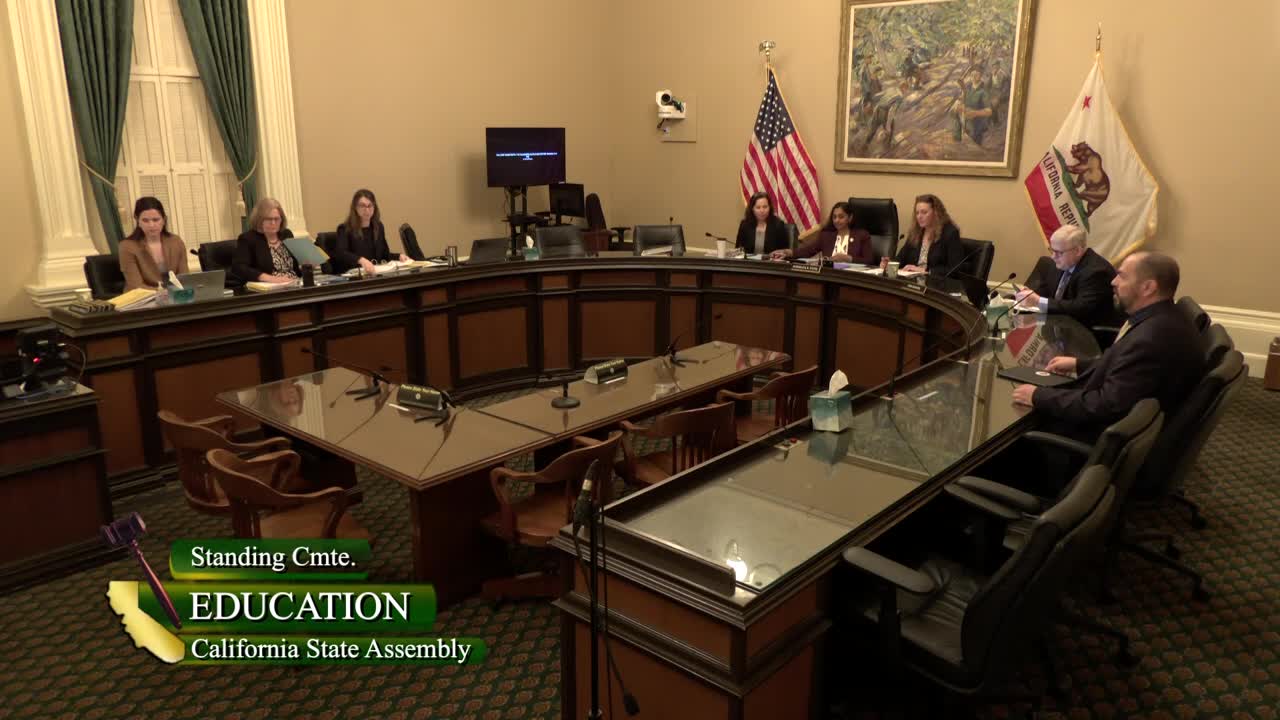 8MIN
Assembly Standing Committee on Education
Bill Author