AB 1793: Cash payments: calculation.
- Session Year: 2025-2026
- House: Assembly
- Latest Version Date: 2026-09-30
Current Status:
Passed
(2026-09-30: Chaptered by Secretary of State - Chapter 896, Statutes of 2026.)
Introduced
In Committee
Awaiting First Chamber Vote
Passed First Chamber
In Committee
Awaiting Second Chamber Vote
Passed Second Chamber
Enacted
Federal law establishes United States coins and currency as legal tender for all debts, public charges, taxes, and dues, and authorizes the Secretary of the Treasury to mint and issue a one-cent coin. Existing state law generally regulates the use of credit cards, debit cards, gift certificates, and other forms of payment for goods and services in this state.
Existing law prohibits a person from overcharging for a commodity. A violation of this provision is a crime.
This bill would enact the California Common Cents Act to require a merchant, for the portion of the total transaction price paid with legal tender, to determine the total transaction price of goods or services by rounding to the nearest amount of cents divisible by 5, as specified. The bill would define terms for its purposes, including defining legal tender as all metal coins and paper currencies of the United States. The bill would require any rounding adjustment to be disregarded for the purposes of the computation of any applicable tax, fee, or surcharge, tax, fee, or surcharge reimbursement, or the measure thereof, and authorize the California Department of Tax and Fee Administration to promulgate regulations to implement this requirement. The bill would prohibit a person from collecting from a purchaser an amount greater than the amount permitted under these provisions and would subject a violation of this prohibition to the same remedies as the prohibition against overcharging for a commodity, as provided. By expanding a crime, this bill would impose a state-mandated local program. The bill would make its provisions operative on July 1, 2027. The bill would make its provisions severable.
The California Constitution requires the state to reimburse local agencies and school districts for certain costs mandated by the state. Statutory provisions establish procedures for making that reimbursement.
This bill would provide that no reimbursement is required by this act for a specified reason.
Federal law establishes United States coins and currency as legal tender for all debts, public charges, taxes, and dues, and authorizes the Secretary of the Treasury to mint and issue a one-cent coin. Existing state law generally regulates the use of credit cards, debit cards, gift certificates, and other forms of payment for goods and services in this state.
Existing law prohibits a person from overcharging for a commodity. A violation of this provision is a crime.
This bill would enact the California Common Cents Act to require a merchant, for the portion of the total transaction price paid with legal tender, to determine the total transaction price of goods or services by rounding to the nearest amount of cents divisible by 5, as specified. The bill would define terms for its purposes, including defining legal tender as all metal coins and paper currencies of the United States. The bill would require any rounding adjustment to be disregarded for the purposes of the computation of any applicable tax, fee, or surcharge, tax, fee, or surcharge reimbursement, or the measure thereof, and authorize the California Department of Tax and Fee Administration to promulgate regulations to implement this requirement. The bill would prohibit a person from collecting from a purchaser an amount greater than the amount permitted under these provisions and would subject a violation of this prohibition to the same remedies as the prohibition against overcharging for a commodity, as provided. By expanding a crime, this bill would impose a state-mandated local program. The bill would make its provisions operative on July 1, 2027. The bill would make its provisions severable.
The California Constitution requires the state to reimburse local agencies and school districts for certain costs mandated by the state. Statutory provisions establish procedures for making that reimbursement.
This bill would provide that no reimbursement is required by this act for a specified reason.
Federal law establishes United States coins and currency as legal tender for all debts, public charges, taxes, and dues, and authorizes the Secretary of the Treasury to mint and issue a one-cent coin. Existing state law generally regulates the use of credit cards, debit cards, gift certificates, and other forms of payment for goods and services in this state.
Existing law prohibits a person from overcharging for a commodity. A violation of this provision is a crime.
This bill would enact the California Common Cents Act to require a merchant, for the portion of the total transaction price paid with legal tender, to determine the total transaction price of goods or services by rounding to the nearest amount of cents divisible by 5, as specified. The bill would define terms for its purposes, including defining legal tender as all metal coins and paper currencies of the United States. The bill would require any rounding adjustment to be disregarded for the purposes of the computation of any applicable tax, fee, or surcharge, tax, fee, or surcharge reimbursement, or the measure thereof, and authorize the California Department of Tax and Fee Administration to promulgate regulations to implement this requirement. The bill would prohibit a person from collecting from a purchaser an amount greater than the amount permitted under these provisions and would subject a violation of this prohibition to the same remedies as the prohibition against overcharging for a commodity, as provided. By expanding a crime, this bill would impose a state-mandated local program. The bill would make its provisions operative on July 1, 2027. The bill would make its provisions severable. By expanding a crime, this bill would impose a state-mandated local program.
The California Constitution requires the state to reimburse local agencies and school districts for certain costs mandated by the state. Statutory provisions establish procedures for making that reimbursement.
This bill would provide that no reimbursement is required by this act for a specified reason.
Federal law establishes United States coins and currency as legal tender for all debts, public charges, taxes, and dues, and authorizes the Secretary of the Treasury to mint and issue a one-cent coin. Existing state law generally regulates the use of credit cards, debit cards, gift certificates, and other forms of payment for goods and services in this state.
Existing law prohibits a person from overcharging for a commodity. A violation of this provision is a crime.
This bill would enact the California Common Cents Act to require a merchant, for a the portion of the total transaction price paid with legal tender, to determine the total transaction price of goods or services by rounding to the nearest amount of cents divisible by 5, as specified. The bill would define legal tender as all metal coins and paper currencies of the United States. The bill would authorize the Treasurer to promulgate regulations to implement the act, including regulating exemptions or exclusions from the acts requirements. The bill would require any rounding adjustment to be disregarded for the purposes of the computation of any applicable tax, fee, or surcharge, or the measure thereof, and authorize the California Department of Tax and Fee Administration to promulgate regulations to implement this requirement. The bill would prohibit a person from collecting from a purchaser an amount greater than the amount permitted under these provisions and would subject a violation of this prohibition to the same remedies as the prohibition against overcharging for a commodity, as provided. The bill would make its provisions operative on July 1, 2027. The bill would make its provisions severable. By expanding a crime, this bill would impose a state-mandated local program.
The California Constitution requires the state to reimburse local agencies and school districts for certain costs mandated by the state. Statutory provisions establish procedures for making that reimbursement.
This bill would provide that no reimbursement is required by this act for a specified reason.
Federal law establishes United States coins and currency as legal tender for all debts, public charges, taxes, and dues, and authorizes the Secretary of the Treasury to mint and issue a one-cent coin. Existing state law generally regulates the use of credit cards, debit cards, gift certificates, and other forms of payment for goods and services in this state.
This bill would enact the Californians for California Common Cents Act to require a merchant, for a transaction paid with legal tender, to determine the total price of goods or services by rounding to the nearest amount divisible by five, 5, as specified. The bill would define legal tender as all coins and currencies of the United States. The bill would authorize the Commissioner of Financial Protection and Innovation Treasurer to promulgate regulations to implement the act, including regulating exemptions or exclusions from the acts requirements.
Federal law establishes United States coins and currency as legal tender for all debts, public charges, taxes, and dues, and authorizes the Secretary of the Treasury to mint and issue a one-cent coin. Existing state law generally regulates the use of credit cards, debit cards, gift certificates, and other forms of payment for goods and services in this state.
This bill would enact the Californians for Common Cents Act to require a merchant, for a transaction paid with legal tender, to determine the total price of goods or services by rounding to the nearest amount divisible by five, as specified. The bill would define legal tender as all coins and currencies of the United States. The bill would authorize the Commissioner of Financial Protection and Innovation to promulgate regulations to implement the act, including regulating exemptions or exclusions from the acts requirements.
This title shall be known, and may be cited, as the California Common Cents Act.
1789.61.For the purposes of this title, the following terms shall apply:
(a)Installment payment means a sum of money due as one of multiple payments over a period of time pursuant to a contract of sale entered into by and between the merchant and the purchaser.
(b)Legal tender means all metal coins and paper currencies of the United States.
(c)Merchant means any person engaged in the business of selling goods or services at a physical location in this state.
(d)Person includes any individual, firm, partnership, joint venture, limited liability company, association, social club, fraternal organization, corporation, estate, trust, business trust, receiver, assignee for the benefit of creditors, trustee, trustee in bankruptcy, syndicate, or any other group or combination acting as a unit. Person does not include the state, any county, city and county, municipality, district, or other political subdivision of the state.
(e)Tax, fee, or surcharge does not include any taxes, penalties, additions to tax, fees, interest, or other charges, imposed pursuant to Part 10 (commencing with Section 17001) of, Part 10.2 (commencing with Section 18401) of, or Part 11 (commencing with Section 23001) of, Division 2 of the Revenue and Taxation Code.
(f)Total transaction price means either of the following:
(1)The total amount of consideration received by the merchant for the sale of goods or services in a single transaction, including any applicable taxes, fees, or surcharges, or tax, fee, or surcharge reimbursement.
(2)An installment payment made in a single transaction.
1789.62.(a)Notwithstanding any other laws, regulations, or standards of the state or local government and except as provided in subdivision (b), a merchant doing business in this state shall determine the total transaction price of goods or services in the following manner:
(1)If the total transaction price ends with one cent ($0.01), two cents ($0.02), six cents ($0.06), or seven cents ($0.07), it shall be rounded down to the nearest amount of cents divisible by five for payments made in whole with legal tender.
(2)If the total transaction price ends with three cents ($0.03), four cents ($0.04), eight cents ($0.08), or nine cents ($0.09), it shall be rounded up to the nearest amount of cents divisible by five for payments made in whole with legal tender.
(b)The rounding requirements pursuant to subdivision (a) shall not apply if either of the following applies:
(1)The total transaction price is two cents ($0.02) or fewer.
(2)A payment for the full amount of the total transaction price is made entirely by any demand or negotiable instrument, electronic fund transfer, money order, credit card, debit card, electronic payment, cryptocurrency, or other like instrument.
(c)Any merchant selling goods or services shall not be in violation of any state or local requirements, laws, regulations, or standards based on any lawful action taken in compliance with this section.
(d)Any refund issued by a merchant to a customer with respect to the sale of goods or services that is paid in whole or in part with legal tender shall be rounded in the same manner as the total transaction price pursuant to this section.
(e)(1)If a payment for the total transaction price is made with a combination of legal tender and any other method or methods, the merchant shall round the portion of the total transaction price equivalent to the amount paid with legal tender in the same manner as the total transaction price pursuant to this section.
(2)Any rounding made pursuant to this subdivision shall not alter or affect the exact amount authorized, cleared, or settled through any noncash payment system.
1789.63.Notwithstanding any other law, any rounding adjustment pursuant to Section 1789.62 shall be disregarded for purposes of the computation of any applicable tax, fee, or surcharge, tax, fee, or surcharge reimbursement, or the measure thereof.
1789.64.(a)A person shall not, in connection with a retail transaction subject to cash rounding under Section 1789.62, collect from a purchaser an amount greater than the amount permitted after application of the rounding requirements.
(b)A violation of this section is subject to the same remedies, penalties, inspection authority, and enforcement procedures applicable to a violation of Section 12024.2 of the Business and Professions Code.
(c)This section does not apply to the calculation, reporting, or remittance of taxes, fees, or surcharges administered by the California Department of Tax and Fee Administration.
(d)For purposes of this section, overcharge means an amount collected in excess of the amount permitted after application of the rounding requirements pursuant to Section 1789.62.
1789.65.The California Department of Tax and Fee Administration may promulgate regulations to implement Section 1789.63.
1789.66.This title shall become operative July 1, 2027.
1789.67.The provisions of this title are severable. If any provision of this title or its application is held invalid, that invalidity shall not affect other provisions or applications that can be given effect without the invalid provision or application.
SEC. 2.No reimbursement is required by this act pursuant to Section 6 of Article XIIIB of the California Constitution because the only costs that may be incurred by a local agency or school district will be incurred because this act creates a new crime or infraction, eliminates a crime or infraction, or changes the penalty for a crime or infraction, within the meaning of Section 17556 of the Government Code, or changes the definition of a crime within the meaning of Section 6 of Article XIIIB of the California Constitution.
This title shall be known, and may be cited, as the California Common Cents Act.
1789.61.For the purposes of this title, the following terms shall apply:
(a)Installment payment means a sum of money due as one of multiple payments over a period of time pursuant to a contract of sale entered into by and between the merchant and the purchaser.
(b)Legal tender means all metal coins and paper currencies of the United States.
(c)Merchant means any person engaged in the business of selling goods or services at a physical location in this state.
(d)Person includes any individual, firm, partnership, joint venture, limited liability company, association, social club, fraternal organization, corporation, estate, trust, business trust, receiver, assignee for the benefit of creditors, trustee, trustee in bankruptcy, syndicate, or any other group or combination acting as a unit. Person does not include the state, any county, city and county, municipality, district, or other political subdivision of the state.
(e)Tax, fee, or surcharge does not include any taxes, penalties, additions to tax, fees, interest, or other charges, imposed pursuant to Part 10 (commencing with Section 17001) of, Part 10.2 (commencing with Section 18401) of, or Part 11 (commencing with Section 23001) of, Division 2 of the Revenue and Taxation Code.
(f)Total transaction price means either of the following:
(1)The total amount of consideration received by the merchant for the sale of goods or services in a single transaction, including any applicable taxes, fees, or surcharges, or tax, fee, or surcharge reimbursement.
(2)An installment payment made in a single transaction.
1789.62.(a)Notwithstanding any other laws, regulations, or standards of the state or local government and except as provided in subdivision (b), a merchant doing business in this state shall determine the total transaction price of goods or services in the following manner:
(1)If the total transaction price ends with one cent ($0.01), two cents ($0.02), six cents ($0.06), or seven cents ($0.07), it shall be rounded down to the nearest amount of cents divisible by five for payments made in whole with legal tender.
(2)If the total transaction price ends with three cents ($0.03), four cents ($0.04), eight cents ($0.08), or nine cents ($0.09), it shall be rounded up to the nearest amount of cents divisible by five for payments made in whole with legal tender.
(b)The rounding requirements pursuant to subdivision (a) shall not apply if either of the following applies:
(1)The total transaction price is two cents ($0.02) or fewer.
(2)A payment for the full amount of the total transaction price is made entirely by any demand or negotiable instrument, electronic fund transfer, money order, credit card, debit card, electronic payment, cryptocurrency, or other like instrument.
(c)Any merchant selling goods or services shall not be in violation of any state or local requirements, laws, regulations, or standards based on any lawful action taken in compliance with this section.
(d)Any refund issued by a merchant to a customer with respect to the sale of goods or services that is paid in whole or in part with legal tender shall be rounded in the same manner as the total transaction price pursuant to this section.
(e)(1)If a payment for the total transaction price is made with a combination of legal tender and any other method or methods, the merchant shall round the portion of the total transaction price equivalent to the amount paid with legal tender in the same manner as the total transaction price pursuant to this section.
(2)Any rounding made pursuant to this subdivision shall not alter or affect the exact amount authorized, cleared, or settled through any noncash payment system.
1789.63.Notwithstanding any other law, any rounding adjustment pursuant to Section 1789.62 shall be disregarded for purposes of the computation of any applicable tax, fee, or surcharge, tax, fee, or surcharge reimbursement, or the measure thereof.
1789.64.(a)A person shall not, in connection with a retail transaction subject to cash rounding under Section 1789.62, collect from a purchaser an amount greater than the amount permitted after application of the rounding requirements.
(b)A violation of this section is subject to the same remedies, penalties, inspection authority, and enforcement procedures applicable to a violation of Section 12024.2 of the Business and Professions Code.
(c)This section does not apply to the calculation, reporting, or remittance of taxes, fees, or surcharges administered by the California Department of Tax and Fee Administration.
(d)For purposes of this section, overcharge means an amount collected in excess of the amount permitted after application of the rounding requirements pursuant to Section 1789.62.
1789.65.The California Department of Tax and Fee Administration may promulgate regulations to implement Section 1789.63.
1789.66.This title shall become operative July 1, 2027.
1789.67.The provisions of this title are severable. If any provision of this title or its application is held invalid, that invalidity shall not affect other provisions or applications that can be given effect without the invalid provision or application.
SEC. 2.No reimbursement is required by this act pursuant to Section 6 of Article XIIIB of the California Constitution because the only costs that may be incurred by a local agency or school district will be incurred because this act creates a new crime or infraction, eliminates a crime or infraction, or changes the penalty for a crime or infraction, within the meaning of Section 17556 of the Government Code, or changes the definition of a crime within the meaning of Section 6 of Article XIIIB of the California Constitution.
This title shall be known, and may be cited, as the California Common Cents Act.
1789.61.For the purposes of this title, the following terms shall apply:
(a)Installment payment means a sum of money due as one of multiple payments over a period of time pursuant to a contract of sale entered into by and between the merchant and the purchaser.
(b)Legal tender means all metal coins and paper currencies of the United States.
(c)Merchant means any person engaged in the business of selling goods or services at a physical location in this state.
(d)Person includes any individual, firm, partnership, joint venture, limited liability company, association, social club, fraternal organization, corporation, estate, trust, business trust, receiver, assignee for the benefit of creditors, trustee, trustee in bankruptcy, syndicate, this state, any county, city and county, municipality, district, or other political subdivision of the state, or any other group or combination acting as a unit. Person does not include the state, any county, city and county, municipality, district, or other political subdivision of the state.
(e)Tax, fee, or surcharge does not include any taxes, penalties, additions to tax, fees, interest, or other charges, imposed pursuant to Part 10 (commencing with Section 17001) of, Part 10.2 (commencing with Section 18401) of, or Part 11 (commencing with Section 23001) of, Division 2 of the Revenue and Taxation Code.
(f)Total transaction price means either of the following:
(1)The total amount of consideration received by the merchant for the sale of goods or services in a single transaction, including any applicable taxes, fees, or surcharges, or tax, fee, or surcharge reimbursement.
(2)An installment payment made in a single transaction.
1789.62.(a)Notwithstanding any other laws, regulations, or standards of the state or local government and except as provided in subdivision (b), a merchant doing business in this state shall determine the total transaction price of goods or services in the following manner:
(1)If the total transaction price ends with one cent ($0.01), two cents ($0.02), six cents ($0.06), or seven cents ($0.07), it shall be rounded down to the nearest amount of cents divisible by five for payments made in whole with legal tender.
(2)If the total transaction price ends with three cents ($0.03), four cents ($0.04), eight cents ($0.08), or nine cents ($0.09), it shall be rounded up to the nearest amount of cents divisible by five for payments made in whole with legal tender.
(b)The rounding requirements pursuant to subdivision (a) shall not apply if either of the following applies:
(1)The total transaction price is two cents ($0.02) or fewer.
(2)A payment for the full amount of the total transaction price is made entirely by any demand or negotiable instrument, electronic fund transfer, money order, credit card, debit card, electronic payment, cryptocurrency, or other like instrument.
(c)Any merchant selling goods or services shall not be in violation of any state or local requirements, laws, regulations, or standards based on any lawful action taken in compliance with this section.
(d)Any refund issued by a merchant to a customer with respect to the sale of goods or services that is paid in whole or in part with legal tender shall be rounded in the same manner as the total transaction price pursuant to this section.
(e)(1)If a payment for the total transaction price is made with a combination of legal tender and any other method or methods, the merchant shall round the portion of the total transaction price equivalent to the amount paid with legal tender in the same manner as the total transaction price pursuant to this section.
(2)Any rounding made pursuant to this subdivision shall not alter or affect the exact amount authorized, cleared, or settled through any noncash payment system.
1789.63.Notwithstanding any other law, any rounding adjustment pursuant to Section 1789.62 shall be disregarded for purposes of the computation of any applicable tax, fee, or surcharge, tax, fee, or surcharge reimbursement, or the measure thereof.
1789.64.(a)A person shall not, in connection with a retail transaction subject to cash rounding under Section 1789.62, collect from a purchaser an amount greater than the amount permitted after application of the rounding requirements.
(b)A violation of this section is subject to the same remedies, penalties, inspection authority, and enforcement procedures applicable to a violation of Section 12024.2 of the Business and Professions Code.
(c)This section does not apply to the calculation, reporting, or remittance of taxes taxes, fees, or surcharges administered by the California Department of Tax and Fee Administration.
(d)For purposes of this section, overcharge means an amount collected in excess of the amount permitted after application of the rounding requirements pursuant to Section 1789.62.
1789.65.The California Department of Tax and Fee Administration may promulgate regulations to implement Section 1789.63.
1789.66.This title shall become operative July 1, 2027.
1789.67.The provisions of this title are severable. If any provision of this title or its application is held invalid, that invalidity shall not affect other provisions or applications that can be given effect without the invalid provision or application.
SEC. 2.No reimbursement is required by this act pursuant to Section 6 of Article XIIIB of the California Constitution because the only costs that may be incurred by a local agency or school district will be incurred because this act creates a new crime or infraction, eliminates a crime or infraction, or changes the penalty for a crime or infraction, within the meaning of Section 17556 of the Government Code, or changes the definition of a crime within the meaning of Section 6 of Article XIIIB of the California Constitution.
This title shall be known, and may be cited, as the California Common Cents Act.
1789.61.For the purposes of this title, the following terms shall have the following meanings: apply:
(a)Installment payment means a sum of money due as one of multiple payments over a period of time pursuant to a contract of sale entered into by and between the merchant and the purchaser.
(b)Legal tender means all metal coins and paper currencies of the United States.
(a)(c)Merchant means any person, corporation, or partnership person engaged in the business of the sale of selling goods or services. services at a physical location in this state.
(b)Legal tender means all coins and currencies of the United States.(d)Person includes any individual, firm, partnership, joint venture, limited liability company, association, social club, fraternal organization, corporation, estate, trust, business trust, receiver, assignee for the benefit of creditors, trustee, trustee in bankruptcy, syndicate, this state, any county, city and county, municipality, district, or other political subdivision of the state, or any other group or combination acting as a unit.
(e)Tax, fee, or surcharge does not include any taxes, penalties, additions to tax, fees, interest, or other charges, imposed pursuant to Part 10 (commencing with Section 17001) of, Part 10.2 (commencing with Section 18401) of, or Part 11 (commencing with Section 23001) of, Division 2 of the Revenue and Taxation Code.
(f)Total transaction price means either of the following:
(1)The total amount of consideration received by the merchant for the sale of goods or services in a single transaction, including any applicable taxes, fees, or surcharges, or tax, fee, or surcharge reimbursement.
(2)An installment payment made in a single transaction.
1789.62.(a)Notwithstanding any other laws, regulations, or standards of the state or local government and except as provided in subdivision (b), a merchant doing business in this state shall determine the total transaction price of goods or services in the following manner:
(1)Calculate the sum of goods and services, making any subtraction for a discount or deduction and then any addition for applicable taxes, fees, and surcharges, including a sales and use tax, electronic recycling fee, tire fee, and 911 surcharge, in accordance with all applicable law.(2)(A)(1)If a mill, the total transaction price ends with one cent, cent ($0.01), two cents, cents ($0.02), six cents, cents ($0.06), or seven cents is at the end of the resulting sum from paragraph (1), that sum or the final cash amount returned to the customer ($0.07), it shall be rounded down to the nearest amount of cents divisible by five for those individuals seeking to pay payments made in whole with legal tender.
(B)(2)If the total transaction price ends with three cents, cents ($0.03), four cents, cents ($0.04), eight cents, cents ($0.08), or nine cents is at the end of the resulting sum from paragraph (1), that sum or the final cash amount returned to the customer ($0.09), it shall be rounded up to the nearest amount of cents divisible by five for those individuals paying payments made in whole with legal tender.
(b)The total price of goods or services shall not be calculated pursuant to subdivision (a) for the following transactions:(b)The rounding requirements pursuant to subdivision (a) shall not apply if either of the following applies:
(1)The sum of goods and services total transaction price is two cents ($0.02) or less. fewer.
(2)Payment A payment for the full amount of the total transaction price is made entirely by any demand or negotiable instrument, electronic fund transfer, money order, credit card, debit card, electronic payment, cryptocurrency, or other like instrument.
(c)Any tax imposed by the state or a local government shall not apply to gains or losses resulting from rounding.(d)(c)Any merchant selling goods or services shall not be in violation of any state or local requirements, laws, regulations, or standards based on any lawful action taken in compliance with this section.
(d)Any refund issued by a merchant to a customer with respect to the sale of goods or services that is paid in whole or in part with legal tender shall be rounded in the same manner as the total transaction price pursuant to this section.
(e)(1)If a payment for the total transaction price is made with a combination of legal tender and any other method or methods, the merchant shall round the portion of the total transaction price equivalent to the amount paid with legal tender in the same manner as the total transaction price pursuant to this section.
(2)Any rounding made pursuant to this subdivision shall not alter or affect the exact amount authorized, cleared, or settled through any noncash payment system.
1789.63.The Treasurer may promulgate regulations to implement this title, including, but not limited to, authorization of exemptions or exclusions from this title.1789.63.Notwithstanding any other law, any rounding adjustment pursuant to Section 1789.62 shall be disregarded for purposes of the computation of any applicable tax, fee, or surcharge, tax, fee, or surcharge reimbursement, or the measure thereof.
1789.64.(a)A person shall not, in connection with a retail transaction subject to cash rounding under Section 1789.62, collect from a purchaser an amount greater than the amount permitted after application of the rounding requirements.
(b)A violation of this section is subject to the same remedies, penalties, inspection authority, and enforcement procedures applicable to a violation of Section 12024.2 of the Business and Professions Code.
(c)This section does not apply to the calculation, reporting, or remittance of taxes administered by the California Department of Tax and Fee Administration.
(d)For purposes of this section, overcharge means an amount collected in excess of the amount permitted after application of the rounding requirements pursuant to Section 1789.62.
1789.65.The California Department of Tax and Fee Administration may promulgate regulations to implement Section 1789.63.
1789.66.This title shall become operative July 1, 2027.
1789.67.The provisions of this title are severable. If any provision of this title or its application is held invalid, that invalidity shall not affect other provisions or applications that can be given effect without the invalid provision or application.
SEC. 2.No reimbursement is required by this act pursuant to Section 6 of Article XIIIB of the California Constitution because the only costs that may be incurred by a local agency or school district will be incurred because this act creates a new crime or infraction, eliminates a crime or infraction, or changes the penalty for a crime or infraction, within the meaning of Section 17556 of the Government Code, or changes the definition of a crime within the meaning of Section 6 of Article XIIIB of the California Constitution.
This title shall be known, and may be cited as, cited, as the Californians for California Common Cents Act.
1789.61.For the purposes of this title, the following terms shall have the following meanings:
(a)Merchant means any person, corporation, or partnership engaged in the business of the sale of goods or services engaging in face-to-face, in-person sales. services.
(b)Legal tender means all coins and currencies of the United States.
1789.62.(a)Notwithstanding any other law laws, regulations, or standards of the state or local government and except as provided in subdivision (b), a merchant doing business in this state shall determine the total price of goods or services in the following manner:
(1)Calculate the sum of goods and services, making any subtraction for a discount or deduction and then any addition for applicable taxes, fees, and surcharges, including a sales and use tax, electronic recycling fee, tire fee, and 911 surcharge, in accordance with all applicable law.
(2)(A)If a mill, one cent, two cents, six cents, or seven cents is at the end of the resulting sum from paragraph (1), that sum or the final cash amount returned to the customer shall be rounded down to the nearest amount divisible by five for those individuals seeking to pay with legal tender.
(B)If three cents, four cents, eight cents, or nine cents is at the end of the resulting sum from paragraph (1), that sum or the final cash amount returned to the customer shall be rounded up to the nearest amount divisible by five for those individuals paying with legal tender.
(b)The total price of goods or services shall not be calculated pursuant to subdivision (a) for the following transactions:
(1)The sum of goods and services is four two cents or less.
(2)Payment is made by any demand or negotiable instrument, electronic fund transfer, money order, credit card, debit card, electronic payment, or other like instrument.
(c)Any tax imposed by the state or a local government shall not apply to gains or losses resulting from rounding.
(d)Any merchant selling goods or services shall not be in violation of any state or local requirements, laws, regulations, or standards based on any action taken in compliance with this section.
1789.63.The Commissioner of Financial Protection and Innovation Treasurer may promulgate regulations to implement this title, including, but not limited to, authorization of exemptions or exclusions from this title.
This title shall be known, and may be cited as, the Californians for Common Cents Act.
1789.61.For the purposes of this title, the following terms shall have the following meanings:
(a)Merchant means any person, corporation, or partnership engaged in the business of the sale of goods or services engaging in face-to-face, in-person sales.
(b)Legal tender means all coins and currencies of the United States.
1789.62.(a)Notwithstanding any other law and except as provided in subdivision (b), a merchant doing business in this state shall determine the total price of goods or services in the following manner:
(1)Calculate the sum of goods and services, making any subtraction for a discount or deduction and then any addition for applicable taxes, including sales and use tax, in accordance with all applicable law.
(2)(A)If a mill, one cent, two cents, six cents, or seven cents is at the end of the resulting sum from paragraph (1), that sum shall be rounded down to the nearest amount divisible by five for those individuals seeking to pay with legal tender.
(B)If three cents, four cents, eight cents, or nine cents is at the end of the resulting sum from paragraph (1), that sum shall be rounded up to the nearest amount divisible by five for those individuals paying with legal tender.
(b)The total price of goods or services shall not be calculated pursuant to subdivision (a) for the following transactions:
(1)The sum of goods and services is four cents or less.
(2)Payment is made by any demand or negotiable instrument, electronic fund transfer, money order, credit card, debit card, electronic payment, or other like instrument.
(c)Any tax imposed by the state or a local government shall not apply to gains or losses resulting from rounding.
1789.63.The Commissioner of Financial Protection and Innovation may promulgate regulations to implement this title, including, but not limited to, authorization of exemptions or exclusions from this title.
|
Date
|
Status
|
|---|---|
| Sep 30, 2026 | Chaptered by Secretary of State - Chapter 896, Statutes of 2026. |
| Sep 30, 2026 | Approved by the Governor. |
| Aug 28, 2026 | Enrolled and presented to the Governor at 3:30 p.m. |
| Aug 24, 2026 | Senate amendments concurred in. To Engrossing and Enrolling. (Ayes 68. Noes 1. Page 6415.). |
| Aug 24, 2026 | Senate amendments concurred in. To Engrossing and Enrolling. (Ayes 68. Noes 1.). |
| Aug 24, 2026 | Senate amendments concurred in. To Engrossing and Enrolling. |
| Aug 20, 2026 | In Assembly. Concurrence in Senate amendments pending. |
| Aug 20, 2026 | Read third time. Passed. Ordered to the Assembly. (Ayes 30. Noes 5. Page 5582.). |
| Aug 20, 2026 | Read third time. Passed. Ordered to the Assembly. (Ayes 30. Noes 5.). |
| Aug 12, 2026 | Read second time. Ordered to third reading. |
| Aug 11, 2026 | Read third time and amended. Ordered to second reading. |
| Aug 4, 2026 | Read second time. Ordered to third reading. |
| Aug 3, 2026 | From committee: Be ordered to second reading pursuant to Senate Rule 28.8. |
| Jun 25, 2026 | Read second time and amended. Re-referred to Com. on APPR. |
| Jun 24, 2026 | From committee: Amend, and do pass as amended and re-refer to Com. on APPR. (Ayes 4. Noes 0.) (June 24). |
| Jun 22, 2026 | From committee: Do pass and re-refer to Com. on REV. & TAX. (Ayes 7. Noes 2.) (June 22). Re-referred to Com. on REV. & TAX. |
| Jun 10, 2026 | Referred to Coms. on B. P. & E.D. and REV. & TAX. |
| May 21, 2026 | In Senate. Read first time. To Com. on RLS. for assignment. |
| May 21, 2026 | Read third time. Passed. Ordered to the Senate. (Ayes 62. Noes 1. Page 5197.) |
| May 21, 2026 | Read third time. Passed. Ordered to the Senate. (Ayes 62. Noes 1.) |
| May 18, 2026 | Read second time. Ordered to third reading. |
| May 14, 2026 | From committee: Do pass. (Ayes 11. Noes 0.) (May 14). |
| May 6, 2026 | In committee: Set, first hearing. Referred to APPR. suspense file. |
| Apr 21, 2026 | From committee: Do pass and re-refer to Com. on APPR. (Ayes 9. Noes 0.) (April 20). Re-referred to Com. on APPR. |
| Apr 8, 2026 | Re-referred to Com. on B. & F. |
| Apr 7, 2026 | From committee chair, with author's amendments: Amend, and re-refer to Com. on B. & F. Read second time and amended. |
| Feb 23, 2026 | Referred to Com. on B. & F. |
| Feb 11, 2026 | From printer. May be heard in committee March 13. |
| Feb 10, 2026 | Read first time. To print. |
|
Date
|
Description
|
Location
|
Votes
|
|
|---|---|---|---|---|
| Aug 24, 2026 | AB 1793 Ward Concurrence in Senate Amendments | Assembly Floor |
Passed |
|
| Aug 20, 2026 | Assembly 3rd Reading AB1793 Ward et al. By Caballero | Senate Floor |
Passed |
|
| Jun 24, 2026 | Do pass as amended, but first amend, and re-refer to the Committee on [Appropriations] | Senate Standing Committee on Revenue and Taxation |
Passed |
|
| Jun 22, 2026 | Do pass, but first be re-referred to the Committee on [Revenue and Taxation] | Senate Standing Committee on Business, Professions and Economic Development |
Passed |
|
| May 21, 2026 | AB 1793 Ward Assembly Third Reading | Assembly Floor |
Passed |
|
| May 14, 2026 | Do pass. | Assembly Standing Committee on Appropriations |
Passed |
|
| Apr 20, 2026 | Do pass and be re-referred to the Committee on [Appropriations] | Assembly Standing Committee on Banking and Finance |
Passed |
This list shows positions taken on this bill by organizations on the date displayed, which is linked to the original source.
Positions by individuals are not included.
|
Organization
|
Position
|
Date
|
|---|---|---|
| California Association for Micro Enterprise Opportunity | ** Support | |
| California Association for Micro Enterprise Opportunity (CAMEO) | ** Support | |
| California Fuels And Convenience Alliance | ** Support | |
| California Grocers Association | ** Support | |
| California Restaurant Association | ** Support | |
| California Retailers Association | ** Support | |
| CAMEO Network – California Association for Micro Enterprise Opportunity | ** Support | |
| Cinema Association of California | ** Support | |
| San Diego Regional Chamber Of Commerce | ** Support | |
| SFV Alliance | ** Against |
CONCURRENCE IN SENATE AMENDMENTS
CSA1 Bill Id:AB 1793
Author:(Ward and Rogers)
As Amended Ver:August 11, 2026
Majority vote
SUMMARY
This bill would address the penny shortage by requiring a merchant, for a transaction paid with cash, to determine the total price of goods or services by rounding to the nearest amount divisible by five, as specified.
Senate Amendments
- Defines "installment payments" to mean a sum of money due as one of multiple payments over a period of time pursuant to a contract of sale entered into by and between the merchant and the purchaser.
- Defines "legal tender" to mean all metal coins and paper currencies of the United States.
- Narrows scope to services at physical locations in the state.
- Adds the definition of "person" to include any individual, firm, partnership, joint venture, limited liability company, association, social club, fraternal organization, corporation, estate, trust, business trust, receiver, assignee for the benefit of creditors, trustee, trustee in bankruptcy, syndicate, or any other group or combination acting as a unit. Explicitly excludes: the state, any county, city and county, municipality, district, or other political subdivision of the state.
- Specifies "Total transaction price" means either of the following:
- The total amount of consideration received by the merchant for the sale of goods or services in a single transaction, including any applicable taxes, fees, or surcharges, or tax, fee, or surcharge reimbursement.
- An installment payment made in a single transaction.
- Specifies guidelines for refunding payments made in cash or combination of cash and non-cash.
- Provides the California Department of Tax and Fee Administration regulation authority.
- Specifies an operative date of July 1, 2027.
- Clarifies any rounding adjustment to be disregarded when computing an applicable tax, fee, surcharge, related reimbursement, or the measure of that tax, fee, surcharge, or reimbursement.
COMMENTS
- Background
On November 12, 2025, the United States Mint ended production of the penny citing a significant increase in cost of production.[1] Approximately 114 billion pennies remain in circulation, and its status as legal tender will remain intact.[2] The U.S. Treasury recommends that merchants adapt to the dropping supply of pennies by round transactions up or down to the nearest five cents. Recent guidance from the National Conference of State Legislators (NCSL) states: "The most recommended form of rounding is symmetrical rounding whereby if the final digit of the total transaction amount (including taxes) is 1, 2, 6, or 7 cents, the amount is rounded down to the nearest multiple of five. If the final digit is 3, 4, 8, or 9 cents, the amount is rounded up. Transactions totaling exactly $0.01 or $0.02 might be rounded up to $0.05. Rounding rules would not apply to payments made via electronic methods, checks, gift cards, or other non-cash instruments."[3]
- Federal Efforts
On April 29, 2025, H.R. 3074, the "Common Cents Act", was introduced at the federal policy level. This bill would direct the secretary of the Treasury to cease production of one-cent coins for general circulation, while allowing continued production for numismatic (collector) purposes, provided sales cover production costs. When initially introduced, Section 3 of the bill contained a provision mandating rounding. However, after consideration by the House Financial Services Committee, it was amended, and Section 3 was deleted.
- Penny Shortages
The Retail Industry Leader Association (RILA) conducted a survey in November of 2025 finding that "[o]f the 25 companies surveyed, nearly one-quarter indicated that more than 1,000 of their store locations are currently without pennies. Two-thirds of respondents said they are rounding transactions to the benefit of consumers when pennies are unavailable — a practice that, while fair to shoppers, is costing businesses millions of dollars as small amounts add up across thousands of daily cash transactions."[4]
- Litigation Risks
The NCSL's exploration into this topic includes in-depth consideration of potential legal risks.[5] The three risks NCSL's State and Local Taxation (SALT) Task Force identified are: 1) a potential violation of the federal Internet Tax Freedom Act (ITFA) to a certain extent; 2) "whistleblower" lawsuits state false claims acts against sellers for under-collection of sales tax from cash purchasers; and 3) class action lawsuits against sellers for over-collection of sales tax.
First, ITFA prohibits states, via the U.S. Constitution's Supremacy Clause, from imposing "discriminatory taxes." The prohibition on discriminatory taxes states that: "No State or political subdivision thereof may impose . . . discriminatory taxes on electronic commerce." "Electronic commerce" means "any transaction conducted over the Internet or through internet access, comprising the sale, lease, license, offer, or delivery of property, goods, services, or information, whether or not for consideration." While a "discriminatory tax" means a tax imposed on electronic commerce that is not generally imposed "on transactions involving similar property, goods, services, or information accomplished through other means[.]"
In this regard, the ITFA is potentially implicated when a state institutes a rounding rule—irrespective of the specific methodology—for cash payments that diverges from the rounding protocols applicable to electronic commerce. The SALT study estimates the likelihood that an ITFA challenge would succeed is unlikely:
- "Cash payments are not "similar" to electronic payments as the payment methods differ in terms of security, recordkeeping, acceptance and, importantly, the need to provide "change" to the purchaser."
- "The rounding rule that applies to non-cash payments is the same, whether "online" point-of-sale systems (which are processed via access the public Internet) or "offline" or "one-premise”" point-of-sale systems (which are processed via access to private networks or without the need for constant Internet connectivity). These point-of-sale systems are "similar" for ITFA purposes because they offer comparable security, recordkeeping and acceptance of such payments, as well as the lack of any requirement to provide change to a purchaser. "
- "Should rounding be mandated by federal law, such a statute would have to be read in harmony with ITFA. Consequently, enactment of federal rounding legislation makes a successful ITFA claim almost non-existent."[6]
Second, litigation risks for under-collection of the sales tax in certain states, like California, that permit qui tam suits in tax matters. In a qui tam action for state tax under-collection, a private party (a "relator") brings a lawsuit on the state government's behalf to assist in recovering funds that have not been properly paid to the government. "Said private party may assert that a company's tax collection practices or failure to collect the correct amount of tax has resulted in the state being defrauded. "Such a suit likely would be dismissed if the seller correctly applies the statutory or regulatory rounding rule because that action would not meet the "falsity" requirement under a typical false claims act. That is, compliance with duly enacted state law is a defense to improper under-collection of taxes because there would be no legally "false" action by the seller."[7]
Finally, similar to the second, in a class action, which is brought by consumers on behalf of a group for over-collection of tax, if a company correctly applies a state's rounding rule, a class action suit against the seller would likely fail. "In such cases where a class action plaintiff, i.e., a representative purchaser, files suit for over-collected tax, sellers have a number of defenses to class actions, including but not limited to: (i) "certification" of the class, where the plaintiffs must generally meet numerosity, commonality, typicality, representation, and predominance (all legal terms of art beyond the scope of this summary); (ii) lack of a private cause of action that underlies the suit; (iii) requirement to arbitrate under the seller's terms and conditions or contract, acknowledged or executed by the purchaser; and (iv) the voluntary payment doctrine."[8]
- Concerns for cash-required cities
Inclusion and accessibility were the primary motivators for cash inclusion ordinances. "For many City residents, such as those unable to obtain bank accounts, the ability to engage in consumer transactions, including goods and services vital to health and safety, depends on the ability to pay with legal cash tender established by the federal government of [the] United States."[9] Some retailers have raised concerns that rounding up may be considered a fee or penalty for the use of cash in cash-required cities because the use of credit card or other payments would result in exact payment. In both cities, the ordinances prohibit businesses from charging a fee or penalty for the use of cash or placing other conditions for the acceptance of cash. These provisions are intended to prevent businesses from steering customers to using one payment method over another. However, no business has imposed any fee, penalty or condition for the use of a different payment method when it is simply complying with the law, particularly where the law contemplates a balancing by rounding up and down based on a specific ending amount. Still, the author has taken a cautionary step to add further clarifying language to the bill that ensures no merchant acting in compliance with this bill is in violation of any state law or local ordinance.
- Consideration for Point-of-Sale System Implementation
The cessation of penny production necessitates significant technical modifications to existing Point of Sale (POS) infrastructure. Implementation of the proposed rounding mandate requires comprehensive adjustments to cash acceptance and reporting systems to facilitate the requisite protocols for transactions involving legal tender. Such efforts include the design of systems capable of differentiating between cash-based and electronic demand instruments, while mitigating operational risks and ensuring seamless integration with statutory tax reporting and payroll accounting systems.
According to the Author
AB 1793—the California Common Cents Act—provides critical legal clarity on the rounding of cash transactions to the nearest nickel following the end of penny production in 2025. Penny shortages have already caused confusion and inconsistency at the cash register, leading twenty states to pass symmetrical rounding legislation. By legalizing symmetrical rounding on the post-tax total transaction price, AB 1793 provides clear guidelines for businesses and discourages strategic pricing against cash consumers. Credit, debit, and electronic transactions will remain unaffected. In the absence of federal guidance, it is up to the California State Legislature to ensure a smooth and transparent adoption of cash rounding.
Arguments in Support
"AB 1793 provides clarity for California restaurants and their guests by providing a standardized, symmetrical framework for rounding that ensures uniformity across transactions.
Since the U.S. Mint halted penny production earlier this year, the restaurant community has faced some challenges providing exact change to cash-paying customers. With Federal Reserve terminals having ceased fulfilling penny orders and deposits, many have been left with no reliable way to access pennies. As a result, restaurant owners & operators have been left with few options as they navigate an inconsistent patchwork of laws governing payments and financial transactions.
The shortage also creates confusion for customers at checkout, leading to friction and frustration that can taint their experience and potentially harm a restaurant's relationship with its guests.
More than one in four transactions across the restaurant industry are paid in cash. When there is no clear framework for rounding, it leads to situations that can undermine customer trust and hospitality – key drivers of repeat business. Many restaurants are currently rounding down total transaction costs to the nearest nickel when exact change isn't available out of fear of litigation. However, prolonged rounding could end up causing harm to this same community – one that survives on razor-thin economic margins.
AB 1793 addresses this crucial issue by ensuring restaurants can serve customers without unnecessary financial and legal risk."—California Restaurant Association
Arguments in Opposition
"…One important argument remains that I have not seen made about this decision to remove the penny and round up or down to five. That argument is that it is not honest. It is not accurate book keeping. It will create dishonest ledgers of exchange. People will feel cheated on either side of the transactions.
How will the legislature or the franchise tax board deal with this inconsistency? How will this effect local tax collectors who will have to deal with this inaccurate reporting. Of all the issues the state has taken the current Federal Executive branch to court on, I wish this was one of those issues. Although it may seem trite, this by far effects more people than any of the decisions the executive branch has made so far.
While I urge this committee to reject this proposal, there is a strong possibility it will be voted on party lines and may even have bi-partisan support in this committee. If it is the wisdom of the legislature to pass this bill, I would request that it not go into effect until the latest possible date.
We will have a new president come January 20, 2029. Whoever this new president may be, they may agree with the reasons the United States should continue it's coinage of the US penny and have the Secretary of the Treasury resume striking. With that being a possibility, I ask that this bill impose a sunset date included in this legislation so that we can easily go back to honest transactions. I propose the date of June 30, 2029. A year into the new administration will be plenty of time for the new administration to decide if they would like to start striking penny's (sic) again. If not the legislature could renew the legislation in the 2029 legislative session."--SFV Alliance
FISCAL COMMENTS
No fiscal analysis of the amendments have been made. The following is a relevant excerpt from the analysis of the Assembly Committee on Appropriations.
No impact to local or state tax, fee, or surcharge collections paid with legal tender, as this bill does not include a government entity as a "merchant." However, this bill may impact the computation of income and allow a gross income exclusion under the Personal Income Tax or Corporation Tax Law, which may have GF revenue impact to the state of an unknown amount.
VOTES:
ASM BANKING AND FINANCE: 9-0-0
YES: Valencia, Chen, Dixon, Fong, Krell, Michelle Rodriguez, Blanca Rubio, Schiavo, Soria
ASM APPROPRIATIONS: 11-0-4
YES: Wicks, Aguiar-Curry, Calderon, Caloza, Fong, Mark González, Krell, Pacheco, Pellerin, Sharp-Collins, Solache
ABS, ABST OR NV: Hoover, Dixon, Ta, Tangipa
ASSEMBLY FLOOR: 62-1-17
YES: Addis, Aguiar-Curry, Ahrens, Alanis, Alvarez, Ávila Farías, Bains, Bauer-Kahan, Bennett, Berman, Boerner, Bonta, Bryan, Calderon, Caloza, Carrillo, Connolly, Davies, Elhawary, Fong, Gipson, Jeff Gonzalez, Mark González, Haney, Harabedian, Hart, Irwin, Jackson, Johnson, Kalra, Krell, Lee, Lowenthal, McKinnor, Nguyen, Ortega, Pacheco, Papan, Patel, Patterson, Pellerin, Petrie-Norris, Quirk-Silva, Ransom, Michelle Rodriguez, Rogers, Blanca Rubio, Sanchez, Schiavo, Schultz, Sharp-Collins, Solache, Soria, Stefani, Tangipa, Valencia, Wallis, Ward, Wicks, Wilson, Zbur, Rivas
NO: DeMaio
ABS, ABST OR NV: Arambula, Castillo, Chen, Dixon, Ellis, Flora, Gabriel, Gallagher, Garcia, Hadwick, Hoover, Lackey, Macedo, Muratsuchi, Ramos, Celeste Rodriguez, Ta
SENATE FLOOR: 30-5-5
YES: Allen, Archuleta, Arreguín, Ashby, Becker, Blakespear, Cabaldon, Caballero, Cervantes, Cortese, Durazo, Gonzalez, Grayson, Grove, Hurtado, Laird, Limón, McGuire, McNerney, Menjivar, Pérez, Richardson, Rubio, Smallwood-Cuevas, Stern, Umberg, Valladares, Wahab, Weber Pierson, Wiener
NO: Alvarado-Gil, Dahle, Niello, Ochoa Bogh, Strickland
ABS, ABST OR NV: Choi, Jones, Padilla, Reyes, Seyarto
UPDATED
VERSION: August 11, 2026
CONSULTANT: Desiree NguyenOrth / B. & F. / (916) 319-3081 FN: 0003902
Penny Production Cessation FAQs https://home.treasury.gov/news/featured-stories/penny-production-cessation-faqs. Last visited 2/23/26 "Over the past 10 years, the total production cost of the penny has risen from 1.3 cents to 3.69 cents per penny. These production costs include materials, facilities, and overhead." ↑
Id. ↑
Id. citing Elimination of the Penny: Cents-able Considerations (2025). ↑
Retailers Face Penny Shortages, Call for Federal Action (2025). ↑
Livingston, J. (2025) "Elimination of the Penny: Cents-able Considerations" A policy brief from the NCSL State and Local Taxation (SALT) Task Force. https://www.ncsl.org/fiscal/elimination-of-the-penny-cents-able-considerations. Last visited 3/2/2026. ↑
Livingston, J. (2025) at 10. ↑
Id. ↑
Id. ↑
The city of Berkeley's ordinance number 7,681-N.S. (a) ↑
SENATE RULES COMMITTEE Office of Senate Floor Analyses (916) 651-4171 | AB 1793 |
THIRD READING
Bill No: AB 1793
Author: Ward (D) and Rogers (D), et al.
Amended: 8/11/26 in Senate
Vote: 21
SENATE BUS., PROF. & ECON. DEV. COMMITTEE: 7-2, 6/22/26
AYES: Wahab, Archuleta, Arreguín, Caballero, Menjivar, Richardson, Umberg
NOES: Niello, Strickland
NO VOTE RECORDED: Choi, Smallwood-Cuevas
SENATE REVENUE AND TAXATION COMMITTEE: 4-0, 6/24/26
AYES: McNerney, Ashby, Becker, Grayson
NO VOTE RECORDED: Alvarado-Gil
SENATE APPROPRIATIONS COMMITTEE: Senate Rule 28.8
ASSEMBLY FLOOR: 62-1, 5/21/26 - See last page for vote
SUBJECT: Cash payments: calculation
SOURCE: Author
DIGEST:
This bill establishes the California Common Cents Act (Cents Act) to require merchants to round the portion of a transaction paid with legal tender to the nearest amount divisible by five cents after discounts, taxes, fees, and surcharges are calculated. Specifies how rounding applies to transactions involving both cash and noncash payment methods, provides that rounding does not affect the amount processed through electronic payment systems, authorizes the California Department of Tax and Fee Administration (CDTFA) to adopt implementing regulations, and provides a safe harbor from state and local liability for merchants complying with the Cents Act.
Senate Floor Amendments of 8/11/26 add a coauthor and make various conforming changes.
ANALYSIS:
Existing law:
- Establishes the Division of Measurement Standards (DMS) under the California Department of Food and Agriculture, which is responsible for supervising the weights and measures program throughout the state and ensuring equity in the marketplace. (Business and Professions Code (BPC) §§ 12100 et seq.)
- Requires county sealers of weights and measures to enforce state weights and measures laws, inspect commercial weighing and measuring devices, verify the accuracy of retail transactions, and protect consumers against fraud and misrepresentation in commercial transactions. (BPC §§ 12200-12246.)
- Establishes California's weights and measures laws governing commercial transactions involving weighing, measuring, counting, and pricing practices and administered by DMS and county sealers of weights and measures. Requires the inspection and testing of commercial weighing and measuring devices used in commerce, including devices used to determine the quantity of goods sold to consumers. (BPC §§ 12500 et seq.)
- Establishes California's point-of-sale scanner inspection program and authorizes county sealers to verify that the price charged to a consumer at checkout matches the price represented to the consumer. (BPC §§ 13300-13332.)
- Prohibits a retailer from charging a price for an item that exceeds the lowest price posted, advertised, marked, displayed, or quoted for that item and authorizes enforcement of retail pricing accuracy requirements. (BPC §§ 12024.2, 13300 et seq.)
- Imposes a sales and use tax on retailers for the privilege of selling tangible personal property at retail in this state and authorizes retailers to collect sales tax reimbursement from customers. (Revenue and Taxation Code §§ 6051, 6201.)
- Provides that United States coins and currency are legal tender for all debts, public charges, taxes, and dues. (31 United States Code (U.S.C.) § 5103.)
- Authorizes the United States Department of the Treasury and the United States Mint to produce and issue coins and currency for circulation. (31 U.S.C. §§ 5111-5112.)
This bill:
- Establishes the California Common Cents Act, operative July 1, 2027, and defines specified terms for purposes of the Act. Requires a merchant, when the total transaction price is paid entirely with legal tender, to round the total transaction price as follows:
- A total transaction price ending in one cent, two cents, six cents, or seven cents must be rounded down to the nearest amount divisible by five cents.
- A total transaction price ending in three cents, four cents, eight cents, or nine cents must be rounded up to the nearest amount divisible by five cents.
- Exempts various transactions from the rounding requirements.
- Requires a merchant, when payment is made using a combination of legal tender and one or more other payment methods, to round the portion of the total transaction price equivalent to the amount paid with legal tender in the same manner as a transaction paid entirely with legal tender. Provides that rounding in a transaction involving both legal tender and a noncash payment method must not alter or affect the exact amount authorized, cleared, or settled through a noncash payment system.
- Requires a refund paid in whole or in part with legal tender to be rounded in the same manner as the total transaction price.
- Provides that a merchant selling goods or services is not in violation of state or local requirements, laws, regulations, or standards based on a lawful action taken in compliance with the Cents Act.
- Requires any rounding adjustment to be disregarded when computing an applicable tax, fee, surcharge, related reimbursement, or the measure of that tax, fee, surcharge, or reimbursement.
- Prohibits a person, in connection with a retail transaction subject to cash rounding, from collecting an amount greater than the amount permitted after applying the rounding requirements.
- Subjects a violation of the prohibition against collecting an excessive amount to the same remedies, penalties, inspection authority, and enforcement procedures applicable to an overcharge under weights and measures laws.
- Provides that the overcharge and enforcement provisions do not apply to the calculation, reporting, or remittance of taxes administered by the CDTFA. Authorizes CDTFA to adopt regulations to implement the requirement that rounding adjustments be disregarded for purposes of computing applicable taxes, fees, surcharges, and reimbursements.
Background
According to the U.S. Department of the Treasury (Treasury), penny production is being suspended because the total production cost of a penny rose from 1.3 cents to 3.69 cents over the past decade. The U.S. Mint projects roughly $56 million in immediate annual savings from stopping production. As the Federal Reserve will continue to recirculate the roughly 114 billion pennies already in existence for as long as possible, pennies remain legal tender and retain their value. A July 2025 brief from the Federal Reserve Bank of Richmond (Economic Brief No. 25-27, The Cost of Rounding Cash Transactions to Eliminate Pennies) examined the likely effects of penny elimination on consumers and concluded that the primary consumer impact is likely to result from the rounding of cash transactions, rather than from changes in the underlying prices of goods and services.
Retail pricing is generally set by the merchant at the item level and then processed through a point-of-sale system that applies discounts, coupons, and applicable state and local sales tax before the customer pays. In California, sales tax is imposed on retailers but retailers may collect sales tax reimbursement from customers. Retailers must report and pay sales tax to CDTFA based on their taxable sales. Today, a price ending in $0.97, for example, can be charged and paid exactly in cash with pennies. Recent reporting on Treasury's penny phaseout plan notes that businesses may increasingly round cash transaction totals to the nearest nickel as pennies become scarcer in circulation. Treasury guidance states that businesses may round cash transactions and cites the National Conference of State Legislatures’ recommendation for “symmetrical rounding,” under which transaction totals ending in 1, 2, 6, or 7 cents are rounded down and totals ending in 3, 4, 8, or 9 cents are rounded up. Treasury notes that it is working with point-of-sale system providers and stakeholders to facilitate implementation of rounding practices in order to minimize consumer confusion.
Industry groups and economists have noted that the elimination of the penny will have operational consequences for retailers and cash-paying consumers, even if the overall economic impact is expected to be relatively small. According to the National Retail Federation (NRF), the principal concern is not the loss of the penny itself, but the lack of uniform rules governing how businesses should round cash transactions. The NRF has supported federal legislation that would establish a consistent nationwide rounding standard, arguing that customers may become confused if different retailers adopt different rounding practices and that legislative clarity is needed to ensure fairness and compliance with consumer protection laws.
The banking industry has expressed similar concerns. According to the American Bankers Association (ABA), as pennies become less available, banks and retailers may need to round cash transactions to the nearest nickel, similar to practices adopted in Canada and Australia after those countries discontinued their lowest-denomination coins. The ABA notes that electronic payments would continue to be processed to the exact cent, while only cash transactions would be subject to rounding.
This bill does not eliminate the penny or alter the calculation of prices, taxes, fees, or surcharges but establishes a uniform statewide method for determining the final cash amount exchanged when exact penny settlement is no longer practical.
Weights and Measures. California's weights and measures laws are designed to protect both consumers and honest businesses by ensuring that commercial transactions are conducted fairly, accurately, and transparently. According to the California Department of Food and Agriculture's (CDFA) Division of Measurement Standards (DMS), California's measurement system is intended to promote equity in the marketplace by ensuring that consumers receive the quantity of goods and services for which they pay and that businesses compete on a level playing field. DMS serves as the state’s primary authority for weights and measures enforcement and works in partnership with county sealers of weights and measures to inspect commercial weighing and measuring devices, verify pricing accuracy, and investigate consumer complaints.
County sealers of weights and measures are responsible for enforcing California’s weights and measures laws at the local level. Among their duties, county officials inspect retail point-of-sale systems, verify scanner accuracy, test weighing and measuring devices, ensure advertised prices match prices charged at checkout, and investigate instances in which consumers may be overcharged. The overarching purpose of these programs is to ensure that consumers receive exactly what is represented and charged in a commercial transaction.
As the federal government phases out production of the penny, cash transactions may increasingly require rounding to the nearest five cents. Although the underlying sales price, discounts, and taxes may continue to be calculated to the penny, the final cash payment amount may no longer be capable of exact settlement when pennies are unavailable. This raises issues similar to those traditionally addressed by California’s weights and measures laws: ensuring consumers understand how prices are calculated, ensuring merchants apply rounding consistently, and ensuring that customers are not systematically overcharged or undercredited through the transaction process.
FISCAL EFFECT: Appropriation: No Fiscal Com.: Yes Local: Yes
SUPPORT: (Verified 8/11/26)
California Fuels and Convenience Alliance
California Grocers Association
California Restaurant Association
California Retailers Association
California Association for Micro Enterprise Opportunity
Cinema Association of California
San Diego Regional Chamber of Commerce
OPPOSITION: (Verified 8/11/26)
San Fernando Valley Alliance
ARGUMENTS IN SUPPORT: Supporters write that this bill provides much
needed clarity and uniformity for retailers and consumers by establishing a
standardized approach to rounding cash transactions to the nearest nickel… By
applying rounding to the final, post-tax purchase price or change, AB 1793 also
avoids complications with sales tax calculations and discourages pricing strategies
that could disproportionately impact cash-paying consumers. Supporters say that
this bill reduces the risk of inconsistent practices and helps ensure customers are
treated equitably regardless of where they shop and that the bill will simplify cash
handling, reduce the administrative burden associated with one-cent coins, and
improve transaction efficiency for both businesses and consumers. According to
supporters, a standardized rounding rule reduces transaction issues, speeds up
checkout times, and eliminates the need for businesses to maintain penny supplies
that have become increasingly scarce and outdated and supporters not that in the
absence of federal legislation on cash transaction rounding, it is essential that
California provides clarity.
ASSEMBLY FLOOR: 62-1, 5/21/26
AYES: Addis, Aguiar-Curry, Ahrens, Alanis, Alvarez, Ávila Farías, Bains, Bauer-Kahan, Bennett, Berman, Boerner, Bonta, Bryan, Calderon, Caloza, Carrillo, Connolly, Davies, Elhawary, Fong, Gipson, Jeff Gonzalez, Mark González, Haney, Harabedian, Hart, Irwin, Jackson, Johnson, Kalra, Krell, Lee, Lowenthal, McKinnor, Nguyen, Ortega, Pacheco, Papan, Patel, Patterson, Pellerin, Petrie-Norris, Quirk-Silva, Ransom, Michelle Rodriguez, Rogers, Blanca Rubio, Sanchez, Schiavo, Schultz, Sharp-Collins, Solache, Soria, Stefani, Tangipa, Valencia, Wallis, Ward, Wicks, Wilson, Zbur, Rivas
NOES: DeMaio
NO VOTE RECORDED: Arambula, Castillo, Chen, Dixon, Ellis, Flora, Gabriel, Gallagher, Garcia, Hadwick, Hoover, Lackey, Macedo, Muratsuchi, Ramos, Celeste Rodriguez, Ta
Prepared by: Sarah Mason / B., P. & E.D. /
8/12/26 16:18:51
**** END ****
SENATE RULES COMMITTEE Office of Senate Floor Analyses (916) 651-4171 | AB 1793 |
THIRD READING
Bill No: AB 1793
Author: Ward (D) and Rogers (D)
Amended: 6/25/26 in Senate
Vote: 21
SENATE BUS., PROF. & ECON. DEV. COMMITTEE: 7-2, 6/22/26
AYES: Wahab, Archuleta, Arreguín, Caballero, Menjivar, Richardson, Umberg
NOES: Niello, Strickland
NO VOTE RECORDED: Choi, Smallwood-Cuevas
SENATE REVENUE AND TAXATION COMMITTEE: 4-0, 6/24/26
AYES: McNerney, Ashby, Becker, Grayson
NO VOTE RECORDED: Alvarado-Gil
SENATE APPROPRIATIONS COMMITTEE: Senate Rule 28.8
ASSEMBLY FLOOR: 62-1, 5/21/26 - See last page for vote
SUBJECT: Cash payments: calculation
SOURCE: Author
DIGEST:
This bill establishes the California Common Cents Act (Cents Act) to require merchants to round the portion of a transaction paid with legal tender to the nearest amount divisible by five cents after discounts, taxes, fees, and surcharges are calculated. Specifies how rounding applies to transactions involving both cash and noncash payment methods, provides that rounding does not affect the amount processed through electronic payment systems, authorizes the California Department of Tax and Fee Administration (CDTFA) to adopt implementing regulations, and provides a safe harbor from state and local liability for merchants complying with the Cents Act.
ANALYSIS:
Existing law:
- Establishes the Division of Measurement Standards (DMS) under the California Department of Food and Agriculture, which is responsible for supervising the weights and measures program throughout the state and ensuring equity in the marketplace. (Business and Professions Code (BPC) §§ 12100 et seq.)
- Requires county sealers of weights and measures to enforce state weights and measures laws, inspect commercial weighing and measuring devices, verify the accuracy of retail transactions, and protect consumers against fraud and misrepresentation in commercial transactions. (BPC §§ 12200-12246.)
- Establishes California's weights and measures laws governing commercial transactions involving weighing, measuring, counting, and pricing practices and administered by DMS and county sealers of weights and measures. Requires the inspection and testing of commercial weighing and measuring devices used in commerce, including devices used to determine the quantity of goods sold to consumers. (BPC §§ 12500 et seq.)
- Establishes California's point-of-sale scanner inspection program and authorizes county sealers to verify that the price charged to a consumer at checkout matches the price represented to the consumer. (BPC §§ 13300-13332.)
- Prohibits a retailer from charging a price for an item that exceeds the lowest price posted, advertised, marked, displayed, or quoted for that item and authorizes enforcement of retail pricing accuracy requirements. (BPC §§ 12024.2, 13300 et seq.)
- Imposes a sales and use tax on retailers for the privilege of selling tangible personal property at retail in this state and authorizes retailers to collect sales tax reimbursement from customers. (Revenue and Taxation Code §§ 6051, 6201.)
- Provides that United States coins and currency are legal tender for all debts, public charges, taxes, and dues. (31 United States Code (U.S.C.) § 5103.)
- Authorizes the United States Department of the Treasury and the United States Mint to produce and issue coins and currency for circulation. (31 U.S.C. §§ 5111-5112.)
This bill:
- Establishes the California Common Cents Act, operative July 1, 2027, and defines specified terms for purposes of the Act. Requires a merchant, when the total transaction price is paid entirely with legal tender, to round the total transaction price as follows:
- A total transaction price ending in one cent, two cents, six cents, or seven cents must be rounded down to the nearest amount divisible by five cents.
- A total transaction price ending in three cents, four cents, eight cents, or nine cents must be rounded up to the nearest amount divisible by five cents.
- Exempts various transactions from the rounding requirements.
- Requires a merchant, when payment is made using a combination of legal tender and one or more other payment methods, to round the portion of the total transaction price equivalent to the amount paid with legal tender in the same manner as a transaction paid entirely with legal tender. Provides that rounding in a transaction involving both legal tender and a noncash payment method must not alter or affect the exact amount authorized, cleared, or settled through a noncash payment system.
- Requires a refund paid in whole or in part with legal tender to be rounded in the same manner as the total transaction price.
- Provides that a merchant selling goods or services is not in violation of state or local requirements, laws, regulations, or standards based on a lawful action taken in compliance with the Cents Act.
- Requires any rounding adjustment to be disregarded when computing an applicable tax, fee, surcharge, related reimbursement, or the measure of that tax, fee, surcharge, or reimbursement.
- Prohibits a person, in connection with a retail transaction subject to cash rounding, from collecting an amount greater than the amount permitted after applying the rounding requirements.
- Subjects a violation of the prohibition against collecting an excessive amount to the same remedies, penalties, inspection authority, and enforcement procedures applicable to an overcharge under weights and measures laws.
- Provides that the overcharge and enforcement provisions do not apply to the calculation, reporting, or remittance of taxes administered by the California Department of Tax and Fee Administration (CDTFA). Authorizes CDTFA to adopt regulations to implement the requirement that rounding adjustments be disregarded for purposes of computing applicable taxes, fees, surcharges, and reimbursements.
Background
According to the U.S. Department of the Treasury (Treasury), penny production is being suspended because the total production cost of a penny rose from 1.3 cents to 3.69 cents over the past decade. The U.S. Mint projects roughly $56 million in immediate annual savings from stopping production. As the Federal Reserve will continue to recirculate the roughly 114 billion pennies already in existence for as long as possible, pennies remain legal tender and retain their value. A July 2025 brief from the Federal Reserve Bank of Richmond (Economic Brief No. 25-27, The Cost of Rounding Cash Transactions to Eliminate Pennies) examined the likely effects of penny elimination on consumers and concluded that the primary consumer impact is likely to result from the rounding of cash transactions, rather than from changes in the underlying prices of goods and services.
Retail pricing is generally set by the merchant at the item level and then processed through a point-of-sale system that applies discounts, coupons, and applicable state and local sales tax before the customer pays. In California, sales tax is imposed on retailers but retailers may collect sales tax reimbursement from customers. Retailers must report and pay sales tax to CDTFA based on their taxable sales. Today, a price ending in $0.97, for example, can be charged and paid exactly in cash with pennies. Recent reporting on Treasury's penny phaseout plan notes that businesses may increasingly round cash transaction totals to the nearest nickel as pennies become scarcer in circulation. Treasury guidance states that businesses may round cash transactions and cites the National Conference of State Legislatures’ recommendation for “symmetrical rounding,” under which transaction totals ending in 1, 2, 6, or 7 cents are rounded down and totals ending in 3, 4, 8, or 9 cents are rounded up. Treasury notes that it is working with point-of-sale system providers and stakeholders to facilitate implementation of rounding practices in order to minimize consumer confusion.
Industry groups and economists have noted that the elimination of the penny will have operational consequences for retailers and cash-paying consumers, even if the overall economic impact is expected to be relatively small. According to the National Retail Federation (NRF), the principal concern is not the loss of the penny itself, but the lack of uniform rules governing how businesses should round cash transactions. The NRF has supported federal legislation that would establish a consistent nationwide rounding standard, arguing that customers may become confused if different retailers adopt different rounding practices and that legislative clarity is needed to ensure fairness and compliance with consumer protection laws.
The banking industry has expressed similar concerns. According to the American Bankers Association (ABA), as pennies become less available, banks and retailers may need to round cash transactions to the nearest nickel, similar to practices adopted in Canada and Australia after those countries discontinued their lowest-denomination coins. The ABA notes that electronic payments would continue to be processed to the exact cent, while only cash transactions would be subject to rounding.
This bill does not eliminate the penny or alter the calculation of prices, taxes, fees, or surcharges but establishes a uniform statewide method for determining the final cash amount exchanged when exact penny settlement is no longer practical.
Weights and Measures. California's weights and measures laws are designed to protect both consumers and honest businesses by ensuring that commercial transactions are conducted fairly, accurately, and transparently. According to the California Department of Food and Agriculture's (CDFA) Division of Measurement Standards (DMS), California's measurement system is intended to promote equity in the marketplace by ensuring that consumers receive the quantity of goods and services for which they pay and that businesses compete on a level playing field. DMS serves as the state’s primary authority for weights and measures enforcement and works in partnership with county sealers of weights and measures to inspect commercial weighing and measuring devices, verify pricing accuracy, and investigate consumer complaints.
County sealers of weights and measures are responsible for enforcing California’s weights and measures laws at the local level. Among their duties, county officials inspect retail point-of-sale systems, verify scanner accuracy, test weighing and measuring devices, ensure advertised prices match prices charged at checkout, and investigate instances in which consumers may be overcharged. The overarching purpose of these programs is to ensure that consumers receive exactly what is represented and charged in a commercial transaction.
As the federal government phases out production of the penny, cash transactions may increasingly require rounding to the nearest five cents. Although the underlying sales price, discounts, and taxes may continue to be calculated to the penny, the final cash payment amount may no longer be capable of exact settlement when pennies are unavailable. This raises issues similar to those traditionally addressed by California’s weights and measures laws: ensuring consumers understand how prices are calculated, ensuring merchants apply rounding consistently, and ensuring that customers are not systematically overcharged or undercredited through the transaction process.
FISCAL EFFECT: Appropriation: No Fiscal Com.: Yes Local: Yes
SUPPORT: (Verified 8/4/26)
California Fuels and Convenience Alliance
California Grocers Association
California Restaurant Association
California Retailers Association
California Association for Micro Enterprise Opportunity
Cinema Association of California
San Diego Regional Chamber of Commerce
OPPOSITION: (Verified 8/4/26)
San Fernando Valley Alliance
ARGUMENTS IN SUPPORT: Supporters write that this bill provides much-needed clarity and uniformity for retailers and consumers by establishing a standardized approach to rounding cash transactions to the nearest nickel… By applying rounding to the final, post-tax purchase price or change, AB 1793 also avoids complications with sales tax calculations and discourages pricing strategies that could disproportionately impact cash-paying consumers. Supporters say that this bill reduces the risk of inconsistent practices and helps ensure customers are treated equitably regardless of where they shop and that the bill will simplify cash handling, reduce the administrative burden associated with one-cent coins, and improve transaction efficiency for both businesses and consumers. According to supporters, a standardized rounding rule reduces transaction issues, speeds up checkout times, and eliminates the need for businesses to maintain penny supplies that have become increasingly scarce and outdated and supporters not that in the absence of federal legislation on cash transaction rounding, it is essential that California provides clarity.
ASSEMBLY FLOOR: 62-1, 5/21/26
AYES: Addis, Aguiar-Curry, Ahrens, Alanis, Alvarez, Ávila Farías, Bains, Bauer-Kahan, Bennett, Berman, Boerner, Bonta, Bryan, Calderon, Caloza, Carrillo, Connolly, Davies, Elhawary, Fong, Gipson, Jeff Gonzalez, Mark González, Haney, Harabedian, Hart, Irwin, Jackson, Johnson, Kalra, Krell, Lee, Lowenthal, McKinnor, Nguyen, Ortega, Pacheco, Papan, Patel, Patterson, Pellerin, Petrie-Norris, Quirk-Silva, Ransom, Michelle Rodriguez, Rogers, Blanca Rubio, Sanchez, Schiavo, Schultz, Sharp-Collins, Solache, Soria, Stefani, Tangipa, Valencia, Wallis, Ward, Wicks, Wilson, Zbur, Rivas
NOES: DeMaio
NO VOTE RECORDED: Arambula, Castillo, Chen, Dixon, Ellis, Flora, Gabriel, Gallagher, Garcia, Hadwick, Hoover, Lackey, Macedo, Muratsuchi, Ramos, Celeste Rodriguez, Ta
Prepared by: Sarah Mason / B., P. & E.D. /
8/5/26 14:57:42
**** END ****
SENATE COMMITTEE ON REVENUE AND TAXATION
Senator Jerry McNerney, Chair
2025 - 2026 Regular
Bill No: | AB 1793 | Hearing Date: | 6/24/26 |
Author: | Ward | Tax Levy: | No |
Version: | 4/7/26 Amended | Fiscal: | Yes |
Consultant: | Summers | ||
Cash payments: calculation
Requires a merchant doing business in this state to determine the total price of goods or services paid entirely in cash or coin by rounding the nearest amount divisible by five.
Background
Sales and Use Tax Law (SUTL). Except where the law provides a specific exemption or exclusion, California’s SUT laws impose a sales tax on all retailers for the privilege of selling tangible personal property at retail in this state or, when sales tax does not apply, a use tax on the storage, use, or other consumption in this state of tangible personal property purchased from a retailer. Retailers are permitted to pass the SUT liability to customers and collect a “sales tax reimbursement” from them. If a retailer computes the amount of sales tax reimbursement upon an amount that is not taxable or is in excess of the taxable amount and the customer pays it, the retailer must either:
- Return the excess amount to the customer if CDTFA or the customer notifies the retailer of the excess amount; or
- Pay the excess amount to the state if the business does not refund the excess amount to the customer.
In addition to the SUT law, CDTFA administers over 40 special tax and fee programs. Some programs also impose a tax or fee on retail sales based on a percentage of “gross receipts” or “sales price,” as defined under the SUTL. These programs often involve cash payments and include the following:
- Cannabis Excise Tax
- California Firearm, Firearm Precursor Part, and Ammunition Excise Tax
- Lumber Products Assessment
- California Electronic Cigarette Excise Tax
- California Tire Fee
- Covered Electronic Waste Recycling Fee
- Covered Battery-Embedded Waste Recycling Fee
- California Battery Fee and Manufacturer Battery Fee (Lead Acid Battery Fee)
- 911 Surcharge, 988 Surcharge, and Prepaid Mobile Telephony Services Surcharge
- Energy Resources Surcharge
- Natural Gas Surcharge
The Fee Collection Procedures Law (FCPL) treats excess tax reimbursement in the same manner as the SUTL. Numerous special tax and fee programs are administered pursuant to the FCPL, including, among others, the cannabis tax and the California electronic cigarette excise tax.
Minting of pennies. On November 12, 2025, the United States Mint ended production of the penny, citing a significant increase in production costs.[1] Approximately 114 billion pennies remain in circulation, and their status as legal tender will remain intact. The U.S. Treasury recommends that merchants adapt to the declining supply of pennies by rounding transactions up or down to the nearest 5 cents.
As pennies become increasingly unavailable, retailers have begun adopting interim rounding practices for cash transactions. In November 2025, the Retail Industry Leaders Association (RILA) surveyed 25 large retailers and found that nearly one-quarter reported more than 1,000 store locations without pennies.[2] RILA also reported that two-thirds of respondents were rounding transactions in favor of consumers when pennies were unavailable. Although this practice avoids overcharging customers, RILA stated that it can cost retailers millions of dollars when small rounding differences are multiplied across thousands of daily cash transactions.
Additionally, recent guidance from the National Conference of State Legislatures (NCSL) identifies symmetrical rounding as the preferred approach when pennies are unavailable.[3] Under that method, the final cash transaction amount, including taxes and fees, is rounded to the nearest five-cent increment: totals ending in 1, 2, 6, or 7 cents are rounded down, while totals ending in 3, 4, 8, or 9 cents are rounded up. NCSL further states that rounding should apply only at the point of cash payment and should not apply to electronic payments, checks, gift cards, or other non-cash instruments. Because tax is calculated first, to the nearest cent, and only the final cash amount due is rounded, this approach preserves existing sales tax computation rules. The model mirrors Canada’s approach to this matter when it began phasing out the penny in 2013.
The author wants to provide legal clarity on the rounding of cash transactions for businesses and consumers alike by establishing a symmetrical rounding on the full cash purchase price of merchant transactions.
Proposed Law
Assembly Bill 1793, commencing January 1, 2027, would require a merchant doing business in this state to determine the total price of goods or services paid entirely in cash or coin by:
- First, calculating the sum of goods and services, making subtractions for any applicable discounts, deductions, taxes, fees, or surcharges.
- Second, rounding to the nearest amount divisible by five, as follows.
- Rounding down if the sum of goods and services ends in mills (tenths of one cent), one cent, or two cents.
- Rounding up if the sum of goods and services ends in three cents or four cents
- Rounding down if the sum of goods and services ends in six cents or seven cents.
- Rounding up if the sum of goods and services ends in eight cents or nine cents.
The rounding requirements would not apply to transactions in which:
- The sum of goods and services is two cents or less.
- Payment is made by any demand or negotiable instrument, electronic fund transfer, money order, credit card, debit card, electronic payment, or other like instrument.
The bill also defines several terms and provides that any merchant selling goods or services based on any action taken in compliance with this bill is not in violation of any state or local requirements, laws, regulations, or standards.
State Revenue Impact
None.
Comments
1. Purpose of the bill. According to the author, “AB 1793—the California Common Cents Act—responds to the recent end of penny production, providing critical legal clarity on the rounding procedures for businesses and consumers alike. By legalizing symmetrical rounding to the nearest nickel on the full cash purchase price, this bill provides clear guidelines for businesses and discourages strategic pricing against cash consumers. Credit, debit, and electronic transactions will remain unaffected, but a penny shortage will cause confusion and delays at the register for cash-paying customers. In the absence of federal guidance, it is up to the California State Legislature to ensure a smooth and transparent adoption of cash rounding.”
2. Point-of-Sale System Implementation. The cessation of penny production necessitates significant technical modifications to existing Point-of-Sale infrastructure. Implementation of the proposed rounding mandate requires comprehensive adjustments to cash acceptance and reporting systems to ensure compliance with the requisite protocols for transactions involving legal tender. Such efforts include designing systems that can differentiate between cash-based and electronic demand instruments, while mitigating operational risks and ensuring seamless integration with statutory tax reporting and payroll accounting systems.
3. Related legislation. Before the legislature this year is also SB 1005 (Caballero), which allows local agencies to round any payment made wholly or partly in cash to the nearest $0.05, and any refund or other amount tendered wholly or partly in cash by said agency.
4. Double-referred. The Senate Rules Committee ordered a double referral for AB 1793: first to the Committee on Business, Professions and Economic Development, which passed the bill on a vote of 7 to 2, and second to the Committee on Revenue and Taxation.
5. Committee amendments. The Committee could amend AB 1793 in the following ways:
- Delay this bill’s operative date to July 1, 2027.
- Revise the definition of “merchant” to mean any person engaged in the business of selling goods or services at a physical location in this state.
- Define “person” for purposes of the definition of “merchant” to mean any individual, firm, partnership, joint venture, limited liability company, association, social club, fraternal organization, corporation, estate, trust, business trust, receiver, assignee for the benefit of creditors, trustee, trustee in bankruptcy, syndicate, this state, any county, city and county, municipality, district, or other political subdivision of the state, or any other group or combination acting as a unit.
- Define “total transaction price” to mean either:
- The total amount of consideration received by the merchant for the sale of goods or services in a single transaction, including any applicable taxes, fees, or surcharges or tax, fee, or surcharge reimbursement, or
- An installment payment made in a single transaction.
- Define “installment payment” to mean a sum of money due as one of multiple payments over a period of time pursuant to a contract of sale entered into by and between the merchant and the purchaser.
- Revise the definition of “legal tender” to mean all metal coins and paper currencies of the United States.
- Clarify that “Tax, fee or surcharge” does not include any taxes, penalties, additions to tax, fees, interest, or other charges, imposed pursuant to the Personal Income Tax and Corporate Income Tax Laws.
- Clarify that rounding applies to the total transaction price whenever a payment is made wholly in cash.
- Add cryptocurrency to the list of payment types excluded from the rounding requirements of the Act.
- Move the rounding requirement with respect to any cash refund issued by a merchant to a separate subdivision.
- Clarify the application of the provisions that address taxes, fees, or surcharges administered by CDTFA and move it to a standalone section.
- Authorize CDTFA to promulgate regulations to implement the provision that addresses tax, fee, or surcharge implications.
- Remove the provisions authorizing the Treasurer to promulgate regulations under this Act.
- Prohibit merchants from collecting from a purchaser an amount greater than the amount permitted after application of the rounding requirements and specifies that a violation of this provision is subject to the same remedies, penalties, inspection authority, and enforcement procedures applicable to a violation of Business and Professions Code Section 12024.2, which is enforced by the Division of Weights and Measures.
- Define “overcharge” to mean the amount collected in excess of the amount permitted after application of the rounding requirements pursuant to this Act.
- Provide that any refund issued by a merchant to a customer with respect to the sale of goods or services that is paid in whole or in part with legal tender shall be rounded in the same manner as the total transaction price pursuant to this section.
- Provide that any rounding made pursuant to this subdivision shall not alter or affect the exact amount authorized, cleared, or settled through any noncash payment system.
- State that no reimbursement is required by this act pursuant to Section 6 of Article XIII B of the California Constitution.
- Add a preemption clause.
- Make technical and conforming changes.
Assembly Actions
Assembly Banking and Finance Committee: 9-0
Assembly Appropriations Committee: 11-0
Assembly Floor: 62-1
Support and Opposition
(6/22/26)
Support: California Fuels and Convenience Alliance
California Grocers Association
California Retailers Association
CAMEO Network – California Association for Micro Enterprise Opportunity
Cinema Association of California
San Diego Regional Chamber of Commerce
Opposition: San Fernando Valley Alliance
-- END --
SENATE COMMITTEE ON
BUSINESS, PROFESSIONS AND ECONOMIC DEVELOPMENT
Senator Dr. Aisha Wahab, Chair
2025 - 2026 Regular
Bill No: Hearing Date: June 22, 2026
Author: | |||
Version: |
| ||
Urgency: | Fiscal: | ||
Consultant: | |||
Subject:
SUMMARY:
Establishes the California Common Cents Act to create a uniform statewide standard for rounding cash transactions to the nearest five cents after discounts, taxes, fees, and surcharges are calculated. Exempts electronic and other non-cash payments, authorizes the State Treasurer to adopt implementing regulations, and provides that merchants complying with the rounding requirements are not subject to liability under state or local laws based on those actions.
Note: This bill is double-referred to the Senate Committee on Revenue and Taxation, second.
Existing law:
- Establishes the Division of Measurement Standards (DMS) under the California Department of Food and Agriculture, which is responsible for supervising the weights and measures program throughout the state and ensuring equity in the marketplace. (Business and Professions Code (BPC) §§ 12100 et seq.)
- Requires county sealers of weights and measures to enforce state weights and measures laws, inspect commercial weighing and measuring devices, verify the accuracy of retail transactions, and protect consumers against fraud and misrepresentation in commercial transactions. (BPC §§ 12200-12246.)
- Establishes California's weights and measures laws governing commercial transactions involving weighing, measuring, counting, and pricing practices and administered by DMS and county sealers of weights and measures. Requires the inspection and testing of commercial weighing and measuring devices used in commerce, including devices used to determine the quantity of goods sold to consumers. (BPC §§ 12500 et seq.)
- Establishes California's point-of-sale scanner inspection program and authorizes county sealers to verify that the price charged to a consumer at checkout matches the price represented to the consumer. (BPC §§ 13300-13332.)
- Prohibits a retailer from charging a price for an item that exceeds the lowest price posted, advertised, marked, displayed, or quoted for that item and authorizes enforcement of retail pricing accuracy requirements. (BPC §§ 12024.2, 13300 et seq.)
- Imposes a sales and use tax on retailers for the privilege of selling tangible personal property at retail in this state and authorizes retailers to collect sales tax reimbursement from customers. (Revenue and Taxation Code §§ 6051, 6201.)
- Provides that United States coins and currency are legal tender for all debts, public charges, taxes, and dues. (31 U.S.C. § 5103.)
- Authorizes the United States Department of the Treasury and the United States Mint to produce and issue coins and currency for circulation. (31 U.S.C. §§ 5111-5112.)
This bill:
- Establishes the California Common Cents Act and requires a merchant accepting a cash payment in legal tender to calculate the total purchase price by first applying any discounts or deductions and then adding applicable taxes, fees, and surcharges, including sales and use taxes and other applicable taxes, fees, and surcharges.
- Requires the resulting cash transaction total ending in one cent, two cents, six cents, seven cents, or a fraction of a cent (mill) to be rounded down to the nearest amount divisible by five. Requires the resulting cash transaction total ending in three cents, four cents, eight cents, or nine cents to be rounded up to the nearest amount divisible by five.
- Exempts transactions totaling two cents or less from the rounding requirements.
- Exempts payments made by check, money order, electronic fund transfer, credit card, debit card, electronic payment, or other non-cash payment method from the rounding requirements.
- Provides that state and local taxes do not apply to any gain or loss resulting solely from the rounding of a transaction.
- Provides that a merchant complying with the rounding requirements must not be deemed in violation of any state or local law, regulation, standard, or requirement based on actions taken in compliance with California Common Cents Act.
- Authorizes the State Treasurer to adopt implementing regulations, including regulations establishing exemptions or exclusions.
FISCAL EFFECT:
This bill is keyed fiscal by Legislative Counsel. According to the Assembly Committee on Appropriations, the bill will result in costs an unknown, but likely significant amount, in excess of $150,000, to the State Treasurer to promulgate regulations . The bill will not impact local or state tax, fee, or surcharge collections paid with legal tender, as this bill does not include a government entity as a “merchant.” However, this bill may impact the computation of income and allow a gross income exclusion under the Personal Income Tax or Corporation Tax Law, which may have General Fund revenue impact to the state of an unknown amount.
COMMENTS:
- Purpose. The Author is the Sponsor of this bill. According to the Author, the bill “responds to the recent end of penny production, providing critical legal clarity on the rounding procedures for businesses and consumers alike. By legalizing symmetrical rounding to the nearest nickel on the full cash purchase price, this bill provides clear guidelines for businesses and discourages strategic pricing against cash consumers. Credit, debit, and electronic transactions will remain unaffected, but a penny shortage will cause confusion and delays at the register for cash-paying customers. In the absence of federal guidance, it is up to the California State Legislature to ensure a smooth and transparent adoption of cash rounding.”
The Author states that “Symmetrical rounding has been successfully implemented in several countries, including Canada, Finland, Belgium, and the Netherlands. When the Royal Canadian Mint stopped production of the penny in 2012, symmetrical rounding was adopted nationwide. Tax calculations continued to use the pre-tax total in order to preserve accuracy. The Federal Government ran a national campaign to collect existing pennies, while the US government has not indicated that pennies will be systematically removed from circulation. As of now, they remain legal tender.”
- Background. According to the U.S. Department of the Treasury (Treasury), penny production is being suspended because the total production cost of a penny rose from 1.3 cents to 3.69 cents over the past decade. The U.S. Mint projects roughly $56 million in immediate annual savings from stopping production. As the Federal Reserve will continue to recirculate the roughly 114 billion pennies already in existence for as long as possible, pennies remain legal tender and retain their value. A July 2025 brief from the Federal Reserve Bank of Richmond (Economic Brief No. 25-27, The Cost of Rounding Cash Transactions to Eliminate Pennies) examined the likely effects of penny elimination on consumers and concluded that the primary consumer impact is likely to result from the rounding of cash transactions, rather than from changes in the underlying prices of goods and services. The authors examined the potential effects of rounding cash transactions to the nearest five cents as pennies become less available in circulation and estimated a net consumer cost of approximately $6 million annually nationwide under certain rounding assumptions. The authors further noted that the impact would depend largely on whether merchants employ symmetrical rounding practices that round some transactions up and others down.
Retail pricing is generally set by the merchant at the item level and then processed through a point-of-sale system that applies discounts, coupons, and applicable state and local sales tax before the customer pays. In California, sales tax is imposed on retailers but retailers may collect sales tax reimbursement from customers. Retailers must report and pay sales tax to CDTFA based on their taxable sales. Today, a price ending in $0.97, for example, can be charged and paid exactly in cash with pennies. Recent reporting on Treasury's penny phaseout plan notes that businesses may increasingly round cash transaction totals to the nearest nickel as pennies become scarcer in circulation. Treasury guidance states that businesses may round cash transactions and cites the National Conference of State Legislatures’ recommendation for “symmetrical rounding,” under which transaction totals ending in 1, 2, 6, or 7 cents are rounded down and totals ending in 3, 4, 8, or 9 cents are rounded up. Treasury notes that it is working with point-of-sale system providers and stakeholders to facilitate implementation of rounding practices in order to minimize consumer confusion.
Industry groups and economists have noted that the elimination of the penny will have operational consequences for retailers and cash-paying consumers, even if the overall economic impact is expected to be relatively small. According to the National Retail Federation (NRF), the principal concern is not the loss of the penny itself, but the lack of uniform rules governing how businesses should round cash transactions. The NRF has supported federal legislation that would establish a consistent nationwide rounding standard, arguing that customers may become confused if different retailers adopt different rounding practices and that legislative clarity is needed to ensure fairness and compliance with consumer protection laws.
The banking industry has expressed similar concerns. According to the American Bankers Association (ABA), as pennies become less available, banks and retailers may need to round cash transactions to the nearest nickel, similar to practices adopted in Canada and Australia after those countries discontinued their lowest-denomination coins. The ABA notes that electronic payments would continue to be processed to the exact cent, while only cash transactions would be subject to rounding.
This bill does not eliminate the penny or alter the calculation of prices, taxes, fees, or surcharges but establishes a uniform statewide method for determining the final cash amount exchanged when exact penny settlement is no longer practical.
Weights and Measures. California's weights and measures laws are designed to protect both consumers and honest businesses by ensuring that commercial transactions are conducted fairly, accurately, and transparently. According to the California Department of Food and Agriculture's (CDFA) Division of Measurement Standards (DMS), California's measurement system is intended to promote equity in the marketplace by ensuring that consumers receive the quantity of goods and services for which they pay and that businesses compete on a level playing field. DMS serves as the state’s primary authority for weights and measures enforcement and works in partnership with county sealers of weights and measures to inspect commercial weighing and measuring devices, verify pricing accuracy, and investigate consumer complaints.
County sealers of weights and measures are responsible for enforcing California’s weights and measures laws at the local level. Among their duties, county officials inspect retail point-of-sale systems, verify scanner accuracy, test weighing and measuring devices, ensure advertised prices match prices charged at checkout, and investigate instances in which consumers may be overcharged. The overarching purpose of these programs is to ensure that consumers receive exactly what is represented and charged in a commercial transaction.
California’s scanner inspection program is an example of these consumer-protection efforts. County sealers routinely inspect retail scanner and point-of-sale pricing systems to verify that prices charged at checkout match prices represented to consumers. The goal is to prevent pricing errors and maintain consumer confidence in retail transactions. Similar principles are reflected throughout California's weights and measures laws, which emphasize accuracy, transparency, and consistency in commercial transactions.
As the federal government phases out production of the penny, cash transactions may increasingly require rounding to the nearest five cents. Although the underlying sales price, discounts, and taxes may continue to be calculated to the penny, the final cash payment amount may no longer be capable of exact settlement when pennies are unavailable. This raises issues similar to those traditionally addressed by California’s weights and measures laws: ensuring consumers understand how prices are calculated, ensuring merchants apply rounding consistently, and ensuring that customers are not systematically overcharged or undercredited through the transaction process.
- Arguments in Support. The California Grocers Association writes that this bill “provides much-needed clarity and uniformity for retailers and consumers by establishing a standardized approach to rounding cash transactions to the nearest nickel. As the United States phases out production of the penny, businesses across California are increasingly facing operational challenges due to coin shortages and inconsistent rounding practices… By applying rounding to the final, post-tax purchase price or change, AB 1793 also avoids complications with sales tax calculations and discourages pricing strategies that could disproportionately impact cash-paying consumers.”
According to the California Retailers Association, this bill “reduces the risk of inconsistent practices and helps ensure customers are treated equitably regardless of where they shop. This is especially important for a diverse retail sector that must train employees, update systems, and maintain compliance across multiple store formats and jurisdictions.”
The Cinema Association of California says “This common-sense approach will simplify cash handling, reduce the administrative burden associated with one-cent coins, and improve transaction efficiency for both businesses and consumers. The bill's rounding provisions apply equally upward and downward, ensuring a fair and transparent process.”
According to the San Diego Regional Chamber, “For San Diego’s business community, legal clarity is paramount. Our member businesses, encompassing retail, hospitality, food service, and small businesses, conduct millions of cash transactions each year. Many serve working families and communities that rely on cash as their primary means of payment. A standardized rounding rule reduces transaction issues, speeds up checkout times, and eliminates the need for businesses to maintain penny supplies that have become increasingly scarce and outdated.”
CAMEO Network notes “With many Californians relying on cash to pay for groceries and other essential items, this bill will protect consumers and businesses and ensure consistency statewide. Already, many businesses are experiencing penny shortages, leading to delays and confusion at the register. In the absence of federal legislation on cash transaction rounding, it is essential that California provides clarity.”
The California Fuels and Convenience Alliance says this bill “provides much-needed clarity and consistency at the point of sale by establishing a uniform statewide standard for cash rounding, eliminating confusion caused by penny shortages and inconsistent store-by-store practices. This helps fuel and convenience retailers avoid transaction delays, reduce customer disputes, and operate under a predictable framework that ensures rounding has a near net-zero financial impact on both businesses and consumers.”
- Author’s Amendments. In order to respond to implementation issues, the following amendments will be adopted in the Senate Committee on Revenue and Taxation:
1789.61.
For the purposes of this title, the following terms shall have the following meanings apply:
(a) “Installment payment” means a sum of money due as one of multiple payments over a period of time pursuant to a contract of sale entered into by and between the merchant and the purchaser.
(b) “Legal tender” means all metal coins and paper currencies of the United States.
(c) “Merchant” means any person, corporation, or partnership engaged in the business of the sale of selling goods or services at a physical location in this state.
(d) “Person” includes any individual, firm, partnership, joint venture, limited liability company, association, social club, fraternal organization, corporation, estate, trust, business trust, receiver, assignee for the benefit of creditors, trustee, trustee in bankruptcy, syndicate, this state, any county, city and county, municipality, district, or other political subdivision of the state, or any other group or combination acting as a unit.
(e) “Tax, fee or surcharge” does not include any taxes, penalties, additions to tax, fees, interest, or other charges, imposed pursuant to Part 10 (commencing with Section 17001) of, Part 10.2 (commencing with Section 18401) of, or Part 11 (commencing with Section 23001) of, Division 2 of the Revenue and Taxation Code.
(f) “Total transaction price” means either of the following:
(1) The total amount of consideration received by the merchant for the sale of goods or services in a single transaction, including any applicable taxes, fees, or surcharges, or tax, fee, or surcharge reimbursement.
(2) An installment payment made in a single transaction.
1789.62.
(a) Notwithstanding any other laws, regulations, or standards of the state or local government and except as provided in subdivision (b), a merchant doing business in this state shall determine the total transaction price of goods or services in the following manner:
(1) Calculate the sum of goods and services, making any subtraction for a discount or deduction and then any addition for applicable taxes, fees, and surcharges, including a sales and use tax, electronic recycling fee, tire fee, and 911 surcharge, in accordance with all applicable law.
(2) (A) (1) If a mill, the total transaction price ends with one cent ($0.01), two cents ($0.02), six cents ($0.06), or seven cents ($0.07)is at the end of the resulting sum from paragraph (1), that sum or the final cash amount returned to the customer it shall be rounded down to the nearest amount of cents divisible by five for those individuals seeking to pay payments made in whole with legal tender.
(B) (2) If the total transaction price ends with three cents ($0.03), four cents ($0.04), eight cents ($0.08), or nine cents ($0.09) is at the end of the resulting sum from paragraph (1), that sum or the final cash amount returned to the customer it shall be rounded up to the nearest amount of cents divisible by five for those individuals paying payments made in whole with legal tender.
(b) The total price of goods or services shall not be calculated pursuant to subdivision (a) for the following transactions The rounding requirements pursuant to subdivision (a) shall not apply if either of the following applies:
(1) The sum of goods and services total transaction price is two cents ($0.02) or fewer.
(2) Payment A payment for the full amount of the total transaction price is made entirely by any demand or negotiable instrument, electronic fund transfer, money order, credit card, debit card, electronic payment, cryptocurrency, or other like instrument.
(c) Any tax imposed by the state or a local government shall not apply to gains or losses resulting from rounding.
(c) Any merchant selling goods or services shall not be in violation of any state or local requirements, laws, regulations, or standards based on any lawful action taken in compliance with the section.
(d) Any refund issued by a merchant to a customer with respect to the sale of goods or services that is paid in whole or in part with legal tender shall be rounded in the same manner as the total transaction price pursuant to this section.
(e) (1) If a payment for the total transaction price is made with a combination of legal tender and any other method or methods, the merchant shall round the portion of the total transaction price equivalent to the amount paid with legal tender in the same manner as the total transaction price pursuant to this section
(2) Any rounding made pursuant to this subdivision shall not alter or affect the exact amount authorized, cleared, or settled through any noncash payment system.
1789.63 The Treasurer may promulgate regulations to implement this title, including, but not limited to, authorization of exemptions or exclusions from this title.
1789.63. Notwithstanding any other law, any rounding adjustment pursuant to Section 1789.62 shall be disregarded for purposes of the computation of any applicable tax, fee, or surcharge, tax, fee, or surcharge reimbursement, or the measure thereof.
1789.63.1789.64
(a) A person shall not, in connection with a retail transaction subject to cash rounding under Section 1789.62, collect from a purchaser an amount greater than the amount permitted after application of the rounding requirements.
(b) A violation of this section is subject to the same remedies, penalties, inspection authority, and enforcement procedures applicable to a violation of Section 12024.2 of the Business and Professions Code.
(c) This section does not apply to the calculation, reporting, or remittance of taxes administered by the California Department of Tax and Fee Administration.
(d) For purposes of this section, “overcharge” means an amount collected in excess of the amount permitted after application of the rounding requirements pursuant to Section 1789.62.
1789.65 The California Department of Tax and Fee Administration may promulgate regulations to implement Section 1789.63.
1789.66
This title shall become operative July 1, 2027.
1789.67 The provisions of this title are severable. If any provision of this title or its application is held invalid, that invalidity shall not affect other provisions or applications that can be given effect without the invalid provision or application.
SEC. 2. No reimbursement is required by this act pursuant to Section 6 of Article XIII B of the California Constitution because the only costs that may be incurred by a local agency or school district will be incurred because this act creates a new crime or infraction, eliminates a crime or infraction, or changes the penalty for a crime or infraction, within the meaning of Section 17556 of the Government Code, or changes the definition of a crime within the meaning of Section 6 of Article XIII B of the California Constitution.
- Issues for further consideration. In order to ensure the bill can be effectively implemented and that provisions for consumer protection can be enforced by DMS, the Author should continue working with stakeholders to ensure appropriate code placement and to ensure that appropriate resources are made available to DMS to expand its efforts, particularly if the goal is for proactive DMS enforcement work.
SUPPORT AND OPPOSITION:
Support:
California Fuels and Convenience Alliance
California Grocers Association
California Retailers Association
California Association for Micro Enterprise Opportunity (CAMEO)
Cinema Association of California
San Diego Regional Chamber of Commerce
Opposition:
None received
-- END --
ASSEMBLY THIRD READING
ATR Bill Id:AB 1793
Author:(Ward and Rogers)
As Amended Ver:April 7, 2026
Majority vote
SUMMARY
This bill would address the penny shortage by requiring a merchant, for a transaction paid with cash, to determine the total price of goods or services by rounding to the nearest amount divisible by five, 5, as specified.
Major Provisions
This bill:
- Defines "merchant" to mean any person, corporations, or partnership engaged in the business of the sale of goods or services.
- Defines "legal tender" to mean all coins and currencies of the United States
- Requires a merchant to calculate the total amount of goods and services by subtracting any discount or deductions, then adding all applicable taxes, fees and surcharges.
- Any sums, or the final cash amount returned to the customer, resulting from the calculations taken from #3 ending in a mill ($0.001), one, two, six, or seven cents shall be rounded down to the nearest amount divisible by five for payments made by legal tender.
- Any sums, or the final cash amount returned to the customer resulting from the calculations taken from #3 ending in three, four, eight or nine cents shall be rounded up to the nearest amount divisible by five for payments made by legal tender.
- Part 4 and 5 do not apply:
- When the total sum of goods and services is two cents or less; or
- Payments made by any demand or negotiable instrument, electronic fund transfer, money order, credit card, debit card, electronic payment, or other like instrument.
- Prevents the application of tax imposed by the state or local government on gains or losses resulting from rounding.
- Exempts any merchant from violation of any state law or local requirement based on action taken in compliance with this section.
- Provides the State Treasurer authority to promulgate regulations to implement the bill.
COMMENTS
- Background
On November 12, 2025, the United States Mint ended production of the penny citing a significant increase in cost of production.[1] Approximately 114 billion pennies remain in circulation, and its status as legal tender will remain intact.[2] The U.S. Treasury recommends that merchants adapt to the dropping supply of pennies by round transactions up or down to the nearest five cents. Recent guidance from the National Conference of State Legislators (NCSL) states: "The most recommended form of rounding is symmetrical rounding whereby if the final digit of the total transaction amount (including taxes) is 1, 2, 6, or 7 cents, the amount is rounded down to the nearest multiple of five. If the final digit is 3, 4, 8, or 9 cents, the amount is rounded up. Transactions totaling exactly $0.01 or $0.02 might be rounded up to $0.05. Rounding rules would not apply to payments made via electronic methods, checks, gift cards, or other non-cash instruments."[3]
- Federal Efforts
On April 29, 2025, H.R. 3074, the "Common Cents Act", was introduced at the federal policy level. This bill would direct the secretary of the Treasury to cease production of one-cent coins for general circulation, while allowing continued production for numismatic (collector) purposes, provided sales cover production costs. When initially introduced, Section 3 of the bill contained a provision mandating rounding. However, after consideration by the House Financial Services Committee, it was amended, and Section 3 was deleted.
- Penny Shortages
The Retail Industry Leader Association (RILA) conducted a survey in November of 2025 finding that "[o]f the 25 companies surveyed, nearly one-quarter indicated that more than 1,000 of their store locations are currently without pennies. Two-thirds of respondents said they are rounding transactions to the benefit of consumers when pennies are unavailable — a practice that, while fair to shoppers, is costing businesses millions of dollars as small amounts add up across thousands of daily cash transactions."[4]
- Litigation Risks
The NCSL's exploration into this topic includes in-depth consideration of potential legal risks.[5] The three risks NCSL's State and Local Taxation (SALT) Task Force identified are: 1) a potential violation of the federal Internet Tax Freedom Act (ITFA) to a certain extent; 2) "whistleblower" lawsuits state false claims acts against sellers for under-collection of sales tax from cash purchasers; and 3) class action lawsuits against sellers for over-collection of sales tax.
First, ITFA prohibits states, via the U.S. Constitution's Supremacy Clause, from imposing "discriminatory taxes." The prohibition on discriminatory taxes states that: "No State or political subdivision thereof may impose discriminatory taxes on electronic commerce." "Electronic commerce" means "any transaction conducted over the Internet or through internet access, comprising the sale, lease, license, offer, or delivery of property, goods, services, or information, whether or not for consideration." While a "discriminatory tax" means a tax imposed on electronic commerce that is not generally imposed "on transactions involving similar property, goods, services, or information accomplished through other means[.]"
In this regard, the ITFA is potentially implicated when a state institutes a rounding rule—irrespective of the specific methodology—for cash payments that diverges from the rounding protocols applicable to electronic commerce. The SALT study estimates the likelihood that an ITFA challenge would succeed is unlikely:
- "Cash payments are not "similar" to electronic payments as the payment methods differ in terms of security, recordkeeping, acceptance and, importantly, the need to provide "change" to the purchaser."
- "The rounding rule that applies to non-cash payments is the same, whether "online" point-of-sale systems (which are processed via access the public Internet) or "offline" or "one-premise" point-of-sale systems (which are processed via access to private networks or without the need for constant Internet connectivity). These point-of-sale systems are "similar" for ITFA purposes because they offer comparable security, recordkeeping and acceptance of such payments, as well as the lack of any requirement to provide change to a purchaser. "
- "Should rounding be mandated by federal law, such a statute would have to be read in harmony with ITFA. Consequently, enactment of federal rounding legislation makes a successful ITFA claim almost non-existent."[6]
Second, litigation risks for under-collection of the sales tax in certain states, like California, that permit qui tam suits in tax matters. In a qui tam action for state tax under-collection, a private party (a "relator") brings a lawsuit on the state government's behalf to assist in recovering funds that have not been properly paid to the government. "Said private party may assert that a company's tax collection practices or failure to collect the correct amount of tax has resulted in the state being defrauded. "Such a suit likely would be dismissed if the seller correctly applies the statutory or regulatory rounding rule because that action would not meet the "falsity" requirement under a typical false claims act. That is, compliance with duly enacted state law is a defense to improper under-collection of taxes because there would be no legally "false" action by the seller."[7]
Finally, similar to the second, in a class action, which is brought by consumers on behalf of a group for over-collection of tax, if a company correctly applies a state's rounding rule, a class action suit against the seller would likely fail. "In such cases where a class action plaintiff, i.e., a representative purchaser, files suit for over-collected tax, sellers have a number of defenses to class actions, including but not limited to: (i) "certification" of the class, where the plaintiffs must generally meet numerosity, commonality, typicality, representation, and predominance (all legal terms of art beyond the scope of this summary); (ii) lack of a private cause of action that underlies the suit; (iii) requirement to arbitrate under the seller's terms and conditions or contract, acknowledged or executed by the purchaser; and (iv) the voluntary payment doctrine."[8]
- Concerns for cash-required cities
Inclusion and accessibility were the primary motivators for cash inclusion ordinances. "For many City residents, such as those unable to obtain bank accounts, the ability to engage in consumer transactions, including goods and services vital to health and safety, depends on the ability to pay with legal cash tender established by the federal government of [the] United States."[9] Some retailers have raised concerns that rounding up may be considered a fee or penalty for the use of cash in cash-required cities because the use of credit card or other payments would result in exact payment. In both cities, the ordinances prohibit businesses from charging a fee or penalty for the use of cash or placing other conditions for the acceptance of cash. These provisions are intended to prevent businesses from steering customers to using one payment method over another. However, no business has imposed any fee, penalty or condition for the use of a different payment method when it is simply complying with the law, particularly where the law contemplates a balancing by rounding up and down based on a specific ending amount. Still, the author has taken a cautionary step to add further clarifying language to the bill that ensures no merchant acting in compliance with this bill is in violation of any state law or local ordinance.
- Consideration for Point-of-Sale System Implementation
The cessation of penny production necessitates significant technical modifications to existing Point of Sale (POS) infrastructure. Implementation of the proposed rounding mandate requires comprehensive adjustments to cash acceptance and reporting systems to facilitate the requisite protocols for transactions involving legal tender. Such efforts include the design of systems capable of differentiating between cash-based and electronic demand instruments, while mitigating operational risks and ensuring seamless integration with statutory tax reporting and payroll accounting systems.
According to the Author
"AB 1793—the California Common Cents Act—provides critical legal clarity on the rounding of cash transactions for businesses and consumers alike. By legalizing symmetrical rounding on the full cash purchase price, this bill provides clear guidelines for businesses and discourages strategic pricing against cash consumers. Credit, debit, and electronic transactions will remain unaffected, but a penny shortage will cause confusion and delays at the register for cash-paying customers. In the absence of federal law, it is up to the California State Legislature to ensure a smooth and transparent adoption of cash rounding."
Arguments in Support
"The California Retailers Association is happy to support AB 1793, which would provide clear and uniform rules for rounding cash transactions in California. As the United States phases out penny circulation, retailers need certainty and consistency to administer cash purchases efficiently and fairly. AB 1793 offers a practical framework that helps avoid confusion at the point of sale and promotes a smooth transition for businesses and consumers alike. This is a bill of common cents…
Retailers operate thousands of registers across the state, often in high-volume environments where clarity in payment processing is essential. By establishing symmetrical rounding standards, AB 1793 reduces the risk of inconsistent practices and helps ensure customers are treated equitably regardless of where they shop. This is especially important for a diverse retail sector that must train employees, update systems, and maintain compliance across multiple store formats and jurisdictions." California Retailers Association
Arguments in Opposition
"…One important argument remains that I have not seen made about this decision to remove the penny and round up or down to five. That argument is that it is not honest. It is not accurate book keeping. It will create dishonest ledgers of exchange. People will feel cheated on either side of the transactions.
How will the legislature or the franchise tax board deal with this inconsistency? How will this effect local tax collectors who will have to deal with this inaccurate reporting. Of all the issues the state has taken the current Federal Executive branch to court on, I wish this was one of those issues. Although it may seem trite, this by far effects more people than any of the decisions the executive branch has made so far.
While I urge this committee to reject this proposal, there is a strong possibility it will be voted on party lines and may even have bi-partisan support in this committee. If it is the wisdom of the legislature to pass this bill, I would request that it not go into effect until the latest possible date.
We will have a new president come January 20, 2029. Whoever this new president may be, they may agree with the reasons the United States should continue it's coinage of the US penny and have the Secretary of the Treasury resume striking. With that being a possibility, I ask that this bill impose a sunset date included in this legislation so that we can easily go back to honest transactions. I propose the date of June 30, 2029. A year into the new administration will be plenty of time for the new administration to decide if they would like to start striking penny's (sic) again. If not the legislature could renew the legislation in the 2029 legislative session." SFV Alliance
FISCAL COMMENTS
From the Appropriations Committee analysis:
- Costs of an unknown, but likely significant amount, in excess of $150,000, to the STO to promulgate regulations to implement the Act (General Fund (GF)). The STO notes that it does not regulate merchant businesses or activities. Thus, the work envisioned by this bill is generally outside the scope of the STO's responsibilities, likely necessitating the hiring of expert staff or an external contract to develop regulations.
- No impact to local or state tax, fee, or surcharge collections paid with legal tender, as this bill does not include a government entity as a "merchant." However, this bill may impact the computation of income and allow a gross income exclusion under the Personal Income Tax or Corporation Tax Law, which may have GF revenue impact to the state of an unknown amount.
The Legislative Analyst's Office recently warned of GF structural deficits of around $35 billion per year in the 2027-28 fiscal year and ongoing.
VOTES
ASM BANKING AND FINANCE: 9-0-0
YES: Valencia, Chen, Dixon, Fong, Krell, Michelle Rodriguez, Blanca Rubio, Schiavo, Soria
ASM APPROPRIATIONS: 11-0-4
YES: Wicks, Aguiar-Curry, Calderon, Caloza, Fong, Mark González, Krell, Pacheco, Pellerin, Sharp-Collins, Solache
ABS, ABST OR NV: Hoover, Dixon, Ta, Tangipa
UPDATED
VERSION: April 7, 2026
CONSULTANT: Desiree Nguyen Orth / B. & F. / (916) 319-3081 FN: 0002776
Penny Production Cessation FAQs https://home.treasury.gov/news/featured-stories/penny-production-cessation-faqs. Last visited 2/23/26 “Over the past 10 years, the total production cost of the penny has risen from 1.3 cents to 3.69 cents per penny. These production costs include materials, facilities, and overhead.” ↑
Id. ↑
Id. citing Elimination of the Penny: Cents-able Considerations (2025). ↑
Retailers Face Penny Shortages, Call for Federal Action (2025). ↑
Livingston, J. (2025) “Elimination of the Penny: Cents-able Considerations” A policy brief from the NCSL State and Local Taxation (SALT) Task Force. https://www.ncsl.org/fiscal/elimination-of-the-penny-cents-able-considerations. Last visited 3/2/2026. ↑
Livingston, J. (2025) at 10. ↑
Id. ↑
Id. ↑
The city of Berkeley’s ordinance number 7,681-N.S. (a) ↑
Date of Hearing: May 6, 2026
ASSEMBLY COMMITTEE ON APPROPRIATIONS
Buffy Wicks, Chair
ABPCA Bill Id:AB 1793
Author:(Ward) – As Amended Ver:April 7, 2026
Policy Committee: | Banking and Finance | Vote: | 9 - 0 |
|
| ||
|
|
Urgency: No State Mandated Local Program: No Reimbursable: No
SUMMARY:
This bill enacts the California Common Cents Act (Act).
Specifically, this bill:
- Requires a merchant to determine, for a transaction paid with legal tender, the total price of goods or services, after subtracting applicable discounts and adding applicable taxes, fees, and surcharges, by rounding to the nearest amount divisible by five.
- Provides that a merchant selling goods or services is not in violation of other state or local laws based on an action taken to comply with rounding rules.
- Authorizes the State Treasurer (STO) to promulgate regulations to implement the Act, including regulations that allow additional exemptions or exclusions from rounding rules.
FISCAL EFFECT:
- Costs of an unknown, but likely significant amount, in excess of $150,000, to the STO to promulgate regulations to implement the Act (General Fund (GF)). The STO notes that it does not regulate merchant businesses or activities. Thus, the work envisioned by this bill is generally outside the scope of the STO’s responsibilities, likely necessitating the hiring of expert staff or an external contract to develop regulations.
- No impact to local or state tax, fee, or surcharge collections paid with legal tender, as this bill does not include a government entity as a “merchant.” However, this bill may impact the computation of income and allow a gross income exclusion under the Personal Income Tax or Corporation Tax Law, which may have GF revenue impact to the state of an unknown amount.
The Legislative Analyst’s Office recently warned of GF structural deficits of around $35 billion per year in the 2027-28 fiscal year and ongoing.
COMMENTS:
- Purpose. According to the author:
AB 1793 – the California Common Cents Act – provides critical legal clarity on the rounding of cash transactions for businesses and consumers alike. By legalizing symmetrical rounding on the full cash price, this bill provides clear guidelines for businesses and discourages strategic pricing against cash consumers. Credit, debit, and electronic transactions will remain unaffected, but a penny shortage will cause confusion and delays at the register for cash-paying customers. In the absence of federal law, it is up to the California State Legislature to ensure a smooth and transparent adoption of cash rounding.
- Common Cents. On November 12, 2025, the U.S. Mint ended production of the penny, citing a significant increase in the cost of production. Approximately 114 billion pennies remain in circulation and their status as legal tender remains intact. Absent federal law on the subject, the U.S. Treasury recommends that merchants adapt to the declining supply of pennies by rounding transactions up or down to the nearest five cents. Additionally, recent guidance from the National Conference of State Legislators (NCSL) recommends:
The most recommended form of rounding is symmetrical rounding whereby if the final digit of the total transaction amount (including taxes) is 1, 2, 6, or 7 cents, the amount is rounded down to the nearest multiple of five. If the final digit is 3, 4, 8, or 9 cents, the amount is rounded up. Transactions totaling exactly $0.01 or $0.02 might be rounded up to $0.05. Rounding rules would not apply to payments made via electronic methods, checks, gift cards, or other non-cash instruments.
This bill generally adopts the NCSL recommendations, except this bill exempts transactions of two cents or less from rounding rules and authorizes the STO to promulgate regulations to further implement the Act. This bill applies the rounding rules to a “merchant,” or a person, corporation, or partnership engaged in the business of the sale of goods or services, and thus does not apply to local or state government transactions that may be paid in cash.
- Support and Opposition. This bill is supported by business organizations, with the California Retailers Association arguing this bill “reduces the risk of inconsistent practices and helps ensure customers are treated equitably regardless of where they shop” which is “important for a diverse retail sector that must train employees, update systems, and maintain compliance across multiple store formats and jurisdictions.”
This bill is opposed by the SFV Alliance. Additionally, the Council on State Taxation writes that it would support this bill if amended “to provide guidance for all businesses in California, not just face-to-face merchants with cash transactions.”
- Related Legislation. SB 1005 (Caballero) authorizes a local agency to round the amount of a cash payment or refund to the nearest $0.05. SB 1005 is pending referral at the Assembly Desk.
Analysis Prepared by: Irene Ho / APPR. / (916) 319-2081
Date of Hearing: April 20, 2026
ASSEMBLY COMMITTEE ON BANKING AND FINANCE
Avelino Valencia, Chair
ABPCA Bill Id:AB 1793 (
Author:Ward) – As Amended Ver:April 7, 2026
SUBJECT: Cash payments: calculation
SUMMARY: Specifically, this bill:
- Defines “merchant” to mean any person, corporations, or partnership engaged in the business of the sale of goods or services engaging in face-to-face, in-person sales.
- Defines “legal tender” to mean all coins and currencies of the United States
- Requires a merchant to calculate the total amount of goods and services by subtracting any discount or deductions, then adding applicable taxes.
- Any sums resulting from the calculations taken from #3 ending in a mill ($0.001), one, two, six, or seven cents, the sum shall be rounded down to the nearest amount divisible by five for payments made by legal tender.
- Any sums resulting from the calculations taken from #3 ending in three, four, eight or nine cents shall be rounded up to the nearest amount divisible by five for payments made by legal tender.
- Part 4 and 5 do not apply:
- When the total sum of goods and services is four cents or less; or
- Payments made by any demand or negotiable instrument, electronic fund transfer, money order, credit card, debit card, electronic payment, or other like instrument.
- Prevents the application of tax imposed by the state or local government on gains or losses resulting from rounding.
- Provides the Department of Financial Protection and Innovation (DFPI) authority to promulgate regulations to implement the bill.
EXISTING LAW:
California
- AB 129 (2014) repealed Section 107 of the Corporations Code. That provision prohibited a corporation, flexible purpose corporation, association, or individual from issuing or putting in circulation, as money, anything but the lawful money of the United States.
- The city of San Francisco’s Legal Rights for Legal Tender Ordinance number 100-19 (4/11/19) prohibits brick-and-mortar businesses from denying cash payment for any transaction involving the purchase of any tangible good and/or service where the business would accept one or more other forms of payment, and the customer is physically present in the transaction. This ordinance prohibits the business from charging a fee or placing any other conditions on its acceptance cash.
- The city of Berkeley’s ordinance number 7,681-N.S. prohibits a drugstore, food products store, or retail products store operating at a fixed permanent, physical premise from denying cash payment for any transaction if offered. This ordinance prohibits the business from charging a fee or placing any other conditions on its acceptance cash.
Federal
- United States coins and currency (including Federal reserve notes and circulating notes of Federal reserve banks and national banks) are legal tender for all debts, public charges, taxes, and dues. Foreign gold or silver coins are not legal tender for debts. 31 United States Code (U.S. Code) § 5103.
- The Secretary of the Treasury has the authority to mint and issue coins in amounts the Secretary decides are necessary to meet the needs of the United States. 31 U.S. Code § 5111(a)(1).
- The Secretary of the Treasury may mint and issue only the following coins: dollar coin, quarter, dime, nickel, penny, fifty dollar, twenty-five dollar, ten dollar, and five dollar. 31 U.S. Code § 5112(a).
FISCAL EFFECT: Unknown. This bill is keyed Fiscal by Legislative Counsel.
COMMENTS:
- Purpose
Statement from the Author
AB 1793—the California Common Cents Act—provides critical legal clarity on the rounding of cash transactions for businesses and consumers alike. By legalizing symmetrical rounding on the full cash purchase price, this bill provides clear guidelines for businesses and discourages strategic pricing against cash consumers. Credit, debit, and electronic transactions will remain unaffected, but a penny shortage will cause confusion and delays at the register for cash-paying customers. In the absence of federal law, it is up to the California State Legislature to ensure a smooth and transparent adoption of cash rounding.
Argument in Support
The California Retailers Association is happy to support AB 1793, which would provide clear and uniform rules for rounding cash transactions in California. As the United States phases out penny circulation, retailers need certainty and consistency to administer cash purchases efficiently and fairly. AB 1793 offers a practical framework that helps avoid confusion at the point of sale and promotes a smooth transition for businesses and consumers alike. This is a bill of common cents…
Retailers operate thousands of registers across the state, often in high-volume environments where clarity in payment processing is essential. By establishing symmetrical rounding standards, AB 1793 reduces the risk of inconsistent practices and helps ensure customers are treated equitably regardless of where they shop. This is especially important for a diverse retail sector that must train employees, update systems, and maintain compliance across multiple store formats and jurisdictions.--California Retailers Association
Argument in Opposition
None received.
- Background
On November 12, 2025, the United States Mint ended production of the penny citing a significant increase in cost of production.[1] Approximately 114 billion pennies remain in circulation, and its status as legal tender will remain intact.[2] The U.S. Treasury recommends that merchants adapt to the dropping supply of pennies by round transactions up or down to the nearest five cents. Recent guidance from the National Conference of State Legislators (NCSL) states: “The most recommended form of rounding is symmetrical rounding whereby if the final digit of the total transaction amount (including taxes) is 1, 2, 6, or 7 cents, the amount is rounded down to the nearest multiple of five. If the final digit is 3, 4, 8, or 9 cents, the amount is rounded up. Transactions totaling exactly $0.01 or $0.02 might be rounded up to $0.05. Rounding rules would not apply to payments made via electronic methods, checks, gift cards, or other non-cash instruments.”[3]
- Federal Efforts
On April 29, 2025, H.R. 3074, the “Common Cents Act”, was introduced at the federal policy level. This bill would direct the secretary of the Treasury to cease production of one-cent coins for general circulation, while allowing continued production for numismatic (collector) purposes, provided sales cover production costs. When initially introduced, Section 3 of the bill contained a provision mandating rounding. However, after consideration by the House Financial Services Committee, it was amended, and Section 3 was deleted.
- Penny Shortages
The Retail Industry Leader Association (RILA) conducted a survey in November of 2025 finding that “[o]f the 25 companies surveyed, nearly one-quarter indicated that more than 1,000 of their store locations are currently without pennies. Two-thirds of respondents said they are rounding transactions to the benefit of consumers when pennies are unavailable — a practice that, while fair to shoppers, is costing businesses millions of dollars as small amounts add up across thousands of daily cash transactions.”[4]
- Litigation Risks
The NCSL’s exploration into this topic includes in-depth consideration of potential legal risks.[5] The three risks NCSL’s State and Local Taxation (SALT) Task Force identified are: 1) a potential violation of the federal Internet Tax Freedom Act (ITFA) to a certain extent; 2) “whistleblower” lawsuits state false claims acts against sellers for under-collection of sales tax from cash purchasers; and 3) class action lawsuits against sellers for over-collection of sales tax.
First, ITFA prohibits states, via the U.S. Constitution’s Supremacy Clause, from imposing “discriminatory taxes.” The prohibition on discriminatory taxes states that: “No State or political subdivision thereof may impose . . . discriminatory taxes on electronic commerce.” “Electronic commerce” means “any transaction conducted over the Internet or through internet access, comprising the sale, lease, license, offer, or delivery of property, goods, services, or information, whether or not for consideration.” While a “discriminatory tax” means a tax imposed on electronic commerce that is not generally imposed “on transactions involving similar property, goods, services, or information accomplished through other means[.]”
In this regard, the ITFA is potentially implicated when a state institutes a rounding rule—irrespective of the specific methodology—for cash payments that diverges from the rounding protocols applicable to electronic commerce. The SALT study estimates the likelihood that an ITFA challenge would succeed is unlikely:
- “Cash payments are not “similar” to electronic payments as the payment methods differ in terms of security, recordkeeping, acceptance and, importantly, the need to provide “change” to the purchaser.”
- “The rounding rule that applies to non-cash payments is the same, whether “online” point-of-sale systems (which are processed via access the public Internet) or “offline” or “one-premise” point-of-sale systems (which are processed via access to private networks or without the need for constant Internet connectivity). These point-of-sale systems are “similar” for ITFA purposes because they offer comparable security, recordkeeping and acceptance of such payments, as well as the lack of any requirement to provide change to a purchaser. “
- “Should rounding be mandated by federal law, such a statute would have to be read in harmony with ITFA. Consequently, enactment of federal rounding legislation makes a successful ITFA claim almost non-existent.”[6]
Second, litigation risks for under-collection of the sales tax in certain states, like California, that permit qui tam suits in tax matters. In a qui tam action for state tax under-collection, a private party (a “relator”) brings a lawsuit on the state government’s behalf to assist in recovering funds that have not been properly paid to the government. “Said private party may assert that a company’s tax collection practices or failure to collect the correct amount of tax has resulted in the state being defrauded. “Such a suit likely would be dismissed if the seller correctly applies the statutory or regulatory rounding rule because that action would not meet the “falsity” requirement under a typical false claims act. That is, compliance with duly enacted state law is a defense to improper under-collection of taxes because there would be no legally “false” action by the seller.”[7]
Finally, similar to the second, in a class action, which is brought by consumers on behalf of a group for over-collection of tax, if a company correctly applies a state’s rounding rule, a class action suit against the seller would likely fail. “In such cases where a class action plaintiff, i.e., a representative purchaser, files suit for over-collected tax, sellers have a number of defenses to class actions, including but not limited to: (i) “certification” of the class, where the plaintiffs must generally meet numerosity, commonality, typicality, representation, and predominance (all legal terms of art beyond the scope of this summary); (ii) lack of a private cause of action that underlies the suit; (iii) requirement to arbitrate under the seller’s terms and conditions or contract, acknowledged or executed by the purchaser; and (iv) the voluntary payment doctrine.”[8]
Concerns for cash-required cities
Inclusion and accessibility were the primary motivators for cash inclusion ordinances. “For many City residents, such as those unable to obtain bank accounts, the ability to engage in consumer transactions, including goods and services vital to health and safety, depends on the ability to pay with legal cash tender established by the federal government of [the] United States.”[9] Some retailers have raised concerns that rounding up may be considered a fee or penalty for the use of cash in cash-required cities because the use of credit card or other payments would result in exact payment. In both cities, the ordinances prohibit the businesses from charging a fee or penalty for the use of cash, or other placing other conditions for the acceptance of cash. These provisions are intended to prevent businesses from steering customers to using one payment method over another. However, no business has imposed any fee, penalty or condition for the use of a different payment method when it is simply complying with the law, particularly where the law contemplates a balancing by rounding up and down based on a specific ending amount.
Consideration for Point of Sale System Implementation
The cessation of penny production necessitates significant technical modifications to existing Point of Sale (POS) infrastructure. Implementation of the proposed rounding mandate requires comprehensive adjustments to cash acceptance and reporting systems to facilitate the requisite protocols for transactions involving legal tender. Such efforts include the design of systems capable of differentiating between cash-based and electronic demand instruments, while mitigating operational risks and ensuring seamless integration with statutory tax reporting and payroll accounting systems
REGISTERED SUPPORT / OPPOSITION:
Support
Last verified 4/15/26
California Grocers Association
California Retailers Association
Cameo - California Association for Micro Enterprise Opportunity
Opposition
4/15/26
None received.
Analysis Prepared by: Desiree NguyenOrth / B. & F. / (916) 319-3081
Penny Production Cessation FAQs https://home.treasury.gov/news/featured-stories/penny-production-cessation-faqs. Last visited 2/23/26 “Over the past 10 years, the total production cost of the penny has risen from 1.3 cents to 3.69 cents per penny. These production costs include materials, facilities, and overhead.” ↑
Id. ↑
Id. citing Elimination of the Penny: Cents-able Considerations (2025). ↑
Retailers Face Penny Shortages, Call for Federal Action (2025). ↑
Livingston, J. (2025) “Elimination of the Penny: Cents-able Considerations” A policy brief from the NCSL State and Local Taxation (SALT) Task Force. https://www.ncsl.org/fiscal/elimination-of-the-penny-cents-able-considerations. Last visited 3/2/2026. ↑
Livingston, J. (2025) at 10. ↑
Id. ↑
Id. ↑
The city of Berkeley’s ordinance number 7,681-N.S. (a) ↑
Discussed in Hearing
 2MIN
Assembly Floor
 2MIN
Senate Floor
 5MIN
Senate Standing Committee on Revenue and Taxation
 7MIN
Senate Standing Committee on Business, Professions and Economic Development
 2MIN
Assembly Floor
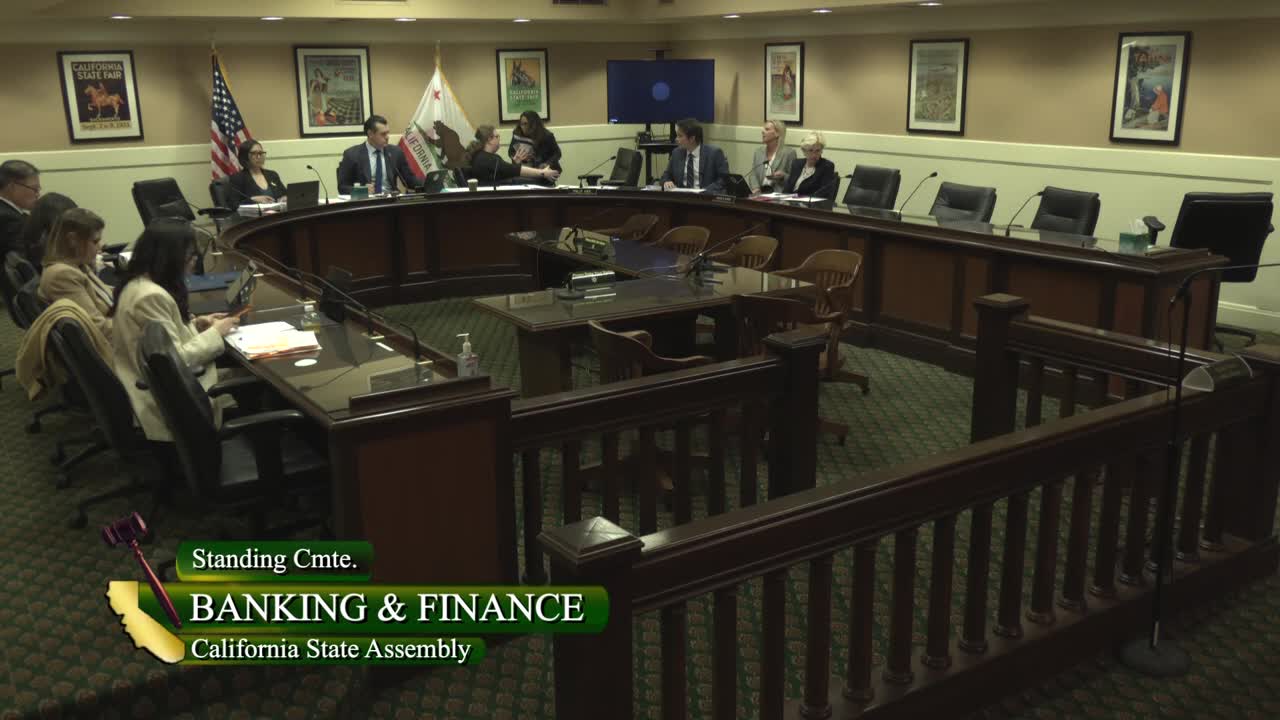 4MIN
Assembly Standing Committee on Banking and Finance


Bill Co-Author(s):
