AB 1794: Pharmacy: enteral nutrition supplements or replacements.
- Session Year: 2025-2026
- House: Assembly
- Latest Version Date: 2026-09-27
Current Status:
Passed
(2026-09-27: Chaptered by Secretary of State - Chapter 546, Statutes of 2026.)
Introduced
In Committee
Awaiting First Chamber Vote
Passed First Chamber
In Committee
Awaiting Second Chamber Vote
Passed Second Chamber
Enacted
Existing law, the Pharmacy Law, requires the California State Board of Pharmacy within the Department of Consumer Affairs to license and regulate the practice of pharmacy, including pharmacists, pharmacy technicians, and pharmacies. Under existing law, it is unlawful for any person to manufacture, compound, furnish, sell, or dispense a dangerous drug or dangerous device, or to dispense or compound a prescription unless they are licensed, as specified. Existing law authorizes the distribution of drugs and devices directly to dialysis patients pursuant to regulations adopted by the board and other specified conditions.
This bill would also authorize a pharmacist, manufacturer, or wholesaler to participate in an arrangement or agreement to deliver enteral nutrition supplements or replacements directly to a patients residence pursuant to a valid order from a prescriber acting within their scope of practice, and in accordance with the services and activities provided by a pharmacist, consistent with the accepted standard of care, as specified. For these purposes, the bill would define enteral nutrition supplements or replacements to mean medical food used as a therapeutic regimen to prevent serious disability or death in patients with medically diagnosed conditions that preclude the full use of regular food. The bill would also make nonsubstantive changes to existing provisions.
Existing law, the Pharmacy Law, requires the California State Board of Pharmacy within the Department of Consumer Affairs to license and regulate the practice of pharmacy, including pharmacists, pharmacy technicians, and pharmacies. Under existing law, it is unlawful for any person to manufacture, compound, furnish, sell, or dispense a dangerous drug or dangerous device, or to dispense or compound a prescription unless they are licensed, as specified. Existing law authorizes the distribution of drugs and devices directly to dialysis patients pursuant to regulations adopted by the board and other specified conditions.
This bill would also authorize a pharmacist, manufacturer, or wholesaler to participate in an arrangement or agreement to deliver enteral nutrition supplements or replacements directly to a patients residence pursuant to a valid order from a prescriber acting within their scope of practice. practice, and in accordance with the services and activities provided by a pharmacist, consistent with the accepted standard of care, as specified. For these purposes, the bill would define enteral nutrition supplements or replacements to mean medical food used as a therapeutic regimen to prevent serious disability or death in patients with medically diagnosed conditions that preclude the full use of regular food. The bill would also make technical changes to existing provisions.
Existing law, the Pharmacy Law, requires the California State Board of Pharmacy within the Department of Consumer Affairs to license and regulate the practice of pharmacy, including pharmacists, pharmacy technicians, and pharmacies. Under existing law, it is unlawful for any person to manufacture, compound, furnish, sell, or dispense a dangerous drug or dangerous device, or to dispense or compound a prescription unless they are licensed, as specified. Existing law exempts a manufacturer or wholesaler that provides dialysis drugs and devices directly to patients from these provisions and authorizes the distribution of drugs and devices directly to dialysis patients pursuant to regulations adopted by the board and other specified conditions.
This bill would also exempt a manufacturer, wholesaler, or distributor that furnishes enteral nutrition products directly to a patients residence, as specified, from these provisions. The bill would also authorize a pharmacist or an exempted manufacturer, wholesaler, or distributor to distribute enteral nutrition products directly to patients with medically diagnosed conditions that preclude the full use of regular food pursuant to regulations adopted by the board. pharmacist, manufacturer, or wholesaler to participate in an arrangement or agreement to deliver enteral nutrition supplements or replacements directly to a patients residence pursuant to a valid order from a prescriber acting within their scope of practice. For these purposes, the bill would define enteral nutrition supplements or replacements to mean medical food used as a therapeutic regimen to prevent serious disability or death in patients with medically diagnosed conditions that preclude the full use of regular food. The bill would also make technical changes to existing provisions.
Existing law, the Pharmacy Law, requires the California State Board of Pharmacy within the Department of Consumer Affairs to license and regulate the practice of pharmacy, including pharmacists, pharmacy technicians, and pharmacies. Under existing law, it is unlawful for any person to manufacture, compound, furnish, sell, or dispense a dangerous drug or dangerous device, or to dispense or compound a prescription unless they are licensed, as specified. Existing law exempts a manufacturer or wholesaler that provides dialysis drugs and devices directly to patients from these provisions and authorizes the distribution of drugs and devices directly to dialysis patients pursuant to regulations adopted by the board and other specified conditions.
This bill would also exempt a manufacturer, wholesaler, or distributor that furnishes enteral nutrition products directly to a patients residence, as specified, from these provisions. The bill would also authorize a pharmacist or an exempted manufacturer, wholesaler, or distributor to distribute enteral nutrition products directly to patients with medically diagnosed conditions that preclude the full use of regular food pursuant to regulations adopted by the board. The bill would also make technical changes to existing provisions.
(a)A person shall not furnish any dangerous drug, except upon the prescription of a physician, dentist, podiatrist, optometrist, veterinarian, or naturopathic doctor pursuant to Section 3640.7. A person shall not furnish any dangerous device, except upon the prescription of a physician, dentist, podiatrist, optometrist, veterinarian, or naturopathic doctor pursuant to Section 3640.7.
(b)This section shall not apply to the furnishing of any dangerous drug or dangerous device by a manufacturer, wholesaler, or pharmacy to each other or to a physician, dentist, podiatrist, optometrist, veterinarian, or naturopathic doctor pursuant to Section 3640.7, or to a laboratory under sales and purchase records that correctly give the date, the names and addresses of the supplier and the buyer, the drug or device, and its quantity. This section shall not apply to the furnishing of any dangerous device by a manufacturer, wholesaler, or pharmacy to a physical therapist acting within the scope of their license under sales and purchase records that correctly provide the date the device is provided, the names and addresses of the supplier and the buyer, a description of the device, and the quantity supplied.
(c)A pharmacist, or a person exempted pursuant to Section 4054, may distribute dangerous drugs and dangerous devices directly to dialysis patients pursuant to regulations adopted by the board. The board shall adopt any regulations as are necessary to ensure the safe distribution of these drugs and devices to dialysis patients without interruption thereof. A person who violates a regulation adopted pursuant to this subdivision shall be liable upon order of the board to surrender their personal license. These penalties shall be in addition to penalties that may be imposed pursuant to Section 4301. If the board finds any dialysis drugs or devices distributed pursuant to this subdivision to be ineffective or unsafe for the intended use, the board may institute immediate recall of any or all of the drugs or devices distributed to individual patients.
(d)Home dialysis patients who receive any drugs or devices pursuant to subdivision (c) shall have completed a full course of home training given by a dialysis center licensed by the State Department of Public Health. The physician prescribing the dialysis products shall submit proof satisfactory to the manufacturer or wholesaler that the patient has completed the program.
(e)A pharmacist may furnish a dangerous drug authorized for use pursuant to Section 2620.3 to a physical therapist. A record containing the date, name and address of the buyer, and name and quantity of the drug shall be maintained. This subdivision shall not be construed to authorize the furnishing of a controlled substance.
(f)A pharmacist may furnish electroneuromyographic needle electrodes or hypodermic needles used for the purpose of placing wire electrodes for kinesiological electromyographic testing to physical therapists who are certified by the Physical Therapy Board of California to perform tissue penetration in accordance with Section 2620.5.
(g)This section shall not be construed as permitting a licensed physical therapist to dispense or furnish a dangerous device without a prescription of a physician, dentist, podiatrist, optometrist, or veterinarian.
(h)A veterinary food-animal drug retailer shall dispense, furnish, transfer, or sell veterinary food-animal drugs only to another veterinary food-animal drug retailer, a pharmacy, a veterinarian, or to a veterinarians client pursuant to a prescription from the veterinarian for food-producing animals.
(i)(1)For purposes of this subdivision, enteral nutrition supplements or replacements means medical food used as a therapeutic regimen to prevent serious disability or death in patients with medically diagnosed conditions that preclude the full use of regular food.
(2)A pharmacist, manufacturer, or wholesaler may participate in an arrangement or agreement to deliver enteral nutrition supplements or replacements directly to a patients residence pursuant to a valid order from a prescriber acting within their scope of practice, and in accordance with the services and activities provided by a pharmacist, consistent with the accepted standard of care pursuant to Sections 4051 and 4052.
(a)A person shall not furnish any dangerous drug, except upon the prescription of a physician, dentist, podiatrist, optometrist, veterinarian, or naturopathic doctor pursuant to Section 3640.7. A person shall not furnish any dangerous device, except upon the prescription of a physician, dentist, podiatrist, optometrist, veterinarian, or naturopathic doctor pursuant to Section 3640.7.
(b)This section shall not apply to the furnishing of any dangerous drug or dangerous device by a manufacturer, wholesaler, or pharmacy to each other or to a physician, dentist, podiatrist, optometrist, veterinarian, or naturopathic doctor pursuant to Section 3640.7, or to a laboratory under sales and purchase records that correctly give the date, the names and addresses of the supplier and the buyer, the drug or device, and its quantity. This section shall not apply to the furnishing of any dangerous device by a manufacturer, wholesaler, or pharmacy to a physical therapist acting within the scope of their license under sales and purchase records that correctly provide the date the device is provided, the names and addresses of the supplier and the buyer, a description of the device, and the quantity supplied.
(c)A pharmacist, or a person exempted pursuant to Section 4054, may distribute dangerous drugs and dangerous devices directly to dialysis patients pursuant to regulations adopted by the board. The board shall adopt any regulations as are necessary to ensure the safe distribution of these drugs and devices to dialysis patients without interruption thereof. A person who violates a regulation adopted pursuant to this subdivision shall be liable upon order of the board to surrender their personal license. These penalties shall be in addition to penalties that may be imposed pursuant to Section 4301. If the board finds any dialysis drugs or devices distributed pursuant to this subdivision to be ineffective or unsafe for the intended use, the board may institute immediate recall of any or all of the drugs or devices distributed to individual patients.
(d)Home dialysis patients who receive any drugs or devices pursuant to subdivision (c) shall have completed a full course of home training given by a dialysis center licensed by the State Department of Public Health. The physician prescribing the dialysis products shall submit proof satisfactory to the manufacturer or wholesaler that the patient has completed the program.
(e)A pharmacist may furnish a dangerous drug authorized for use pursuant to Section 2620.3 to a physical therapist. A record containing the date, name and address of the buyer, and name and quantity of the drug shall be maintained. This subdivision shall not be construed to authorize the furnishing of a controlled substance.
(f)A pharmacist may furnish electroneuromyographic needle electrodes or hypodermic needles used for the purpose of placing wire electrodes for kinesiological electromyographic testing to physical therapists who are certified by the Physical Therapy Board of California to perform tissue penetration in accordance with Section 2620.5.
(g)This section shall not be construed as permitting a licensed physical therapist to dispense or furnish a dangerous device without a prescription of a physician, dentist, podiatrist, optometrist, or veterinarian.
(h)A veterinary food-animal drug retailer shall dispense, furnish, transfer, or sell veterinary food-animal drugs only to another veterinary food-animal drug retailer, a pharmacy, a veterinarian, or to a veterinarians client pursuant to a prescription from the veterinarian for food-producing animals.
(i)(1)For purposes of this subdivision, enteral nutrition supplements or replacements means medical food used as a therapeutic regimen to prevent serious disability or death in patients with medically diagnosed conditions that preclude the full use of regular food.
(2)A pharmacist, manufacturer, or wholesaler may participate in an arrangement or agreement to deliver enteral nutrition supplements or replacements directly to a patients residence pursuant to a valid order from a prescriber acting within their scope of practice. practice, and in accordance with the services and activities provided by a pharmacist, consistent with the accepted standard of care pursuant to Sections 4051 and 4052.
(a)A person shall not furnish any dangerous drug, except upon the prescription of a physician, dentist, podiatrist, optometrist, veterinarian, or naturopathic doctor pursuant to Section 3640.7. A person shall not furnish any dangerous device, except upon the prescription of a physician, dentist, podiatrist, optometrist, veterinarian, or naturopathic doctor pursuant to Section 3640.7.
(b)This section shall not apply to the furnishing of any dangerous drug or dangerous device by a manufacturer, wholesaler, or pharmacy to each other or to a physician, dentist, podiatrist, optometrist, veterinarian, or naturopathic doctor pursuant to Section 3640.7, or to a laboratory under sales and purchase records that correctly give the date, the names and addresses of the supplier and the buyer, the drug or device, and its quantity. This section shall not apply to the furnishing of any dangerous device by a manufacturer, wholesaler, or pharmacy to a physical therapist acting within the scope of their license under sales and purchase records that correctly provide the date the device is provided, the names and addresses of the supplier and the buyer, a description of the device, and the quantity supplied.
(c)A pharmacist, or a person exempted pursuant to Section 4054, may distribute dangerous drugs and dangerous devices directly to dialysis patients pursuant to regulations adopted by the board. The board shall adopt any regulations as are necessary to ensure the safe distribution of these drugs and devices to dialysis patients without interruption thereof. A person who violates a regulation adopted pursuant to this subdivision shall be liable upon order of the board to surrender their personal license. These penalties shall be in addition to penalties that may be imposed pursuant to Section 4301. If the board finds any dialysis drugs or devices distributed pursuant to this subdivision to be ineffective or unsafe for the intended use, the board may institute immediate recall of any or all of the drugs or devices distributed to individual patients.
(d)Home dialysis patients who receive any drugs or devices pursuant to subdivision (c) shall have completed a full course of home training given by a dialysis center licensed by the State Department of Public Health. The physician prescribing the dialysis products shall submit proof satisfactory to the manufacturer or wholesaler that the patient has completed the program.
(e)A pharmacist may furnish a dangerous drug authorized for use pursuant to Section 2620.3 to a physical therapist. A record containing the date, name and address of the buyer, and name and quantity of the drug shall be maintained. This subdivision shall not be construed to authorize the furnishing of a controlled substance.
(f)A pharmacist may furnish electroneuromyographic needle electrodes or hypodermic needles used for the purpose of placing wire electrodes for kinesiological electromyographic testing to physical therapists who are certified by the Physical Therapy Board of California to perform tissue penetration in accordance with Section 2620.5.
(g)This section shall not be construed as permitting a licensed physical therapist to dispense or furnish a dangerous device without a prescription of a physician, dentist, podiatrist, optometrist, or veterinarian.
(h)A veterinary food-animal drug retailer shall dispense, furnish, transfer, or sell veterinary food-animal drugs only to another veterinary food-animal drug retailer, a pharmacy, a veterinarian, or to a veterinarians client pursuant to a prescription from the veterinarian for food-producing animals.
(i)A (1)For purposes of this subdivision, enteral nutrition supplements or replacements means medical food used as a therapeutic regimen to prevent serious disability or death in patients with medically diagnosed conditions that preclude the full use of regular food.
(2)A pharmacist, manufacturer, or wholesaler may participate in an arrangement or a person exempted pursuant to Section 4054, may distribute agreement to deliver enteral nutrition products supplements or replacements directly to patients with medically diagnosed conditions that preclude the full use of regular food pursuant to regulations adopted by the board. a patients residence pursuant to a valid order from a prescriber acting within their scope of practice.
(a)Section 4051 shall not apply to a manufacturer or wholesaler that provides dialysis drugs and devices directly to patients.
(b)Section 4051 shall not apply to a manufacturer, wholesaler, or distributor that furnishes enteral nutrition products directly to a patients residence pursuant to a valid order from a prescriber acting within their scope of practice.
SEC. 2.Section 4059 of the Business and Professions Code is amended to read:4059.(a)A person may shall not furnish any dangerous drug, except upon the prescription of a physician, dentist, podiatrist, optometrist, veterinarian, or naturopathic doctor pursuant to Section 3640.7. A person may shall not furnish any dangerous device, except upon the prescription of a physician, dentist, podiatrist, optometrist, veterinarian, or naturopathic doctor pursuant to Section 3640.7.
(b)This section does shall not apply to the furnishing of any dangerous drug or dangerous device by a manufacturer, wholesaler, or pharmacy to each other or to a physician, dentist, podiatrist, optometrist, veterinarian, or naturopathic doctor pursuant to Section 3640.7, or to a laboratory under sales and purchase records that correctly give the date, the names and addresses of the supplier and the buyer, the drug or device, and its quantity. This section does shall not apply to the furnishing of any dangerous device by a manufacturer, wholesaler, or pharmacy to a physical therapist acting within the scope of his or her their license under sales and purchase records that correctly provide the date the device is provided, the names and addresses of the supplier and the buyer, a description of the device, and the quantity supplied.
(c)A pharmacist, or a person exempted pursuant to Section 4054, may distribute dangerous drugs and dangerous devices directly to dialysis patients pursuant to regulations adopted by the board. The board shall adopt any regulations as are necessary to ensure the safe distribution of these drugs and devices to dialysis patients without interruption thereof. A person who violates a regulation adopted pursuant to this subdivision shall be liable upon order of the board to surrender his or her their personal license. These penalties shall be in addition to penalties that may be imposed pursuant to Section 4301. If the board finds any dialysis drugs or devices distributed pursuant to this subdivision to be ineffective or unsafe for the intended use, the board may institute immediate recall of any or all of the drugs or devices distributed to individual patients.
(d)Home dialysis patients who receive any drugs or devices pursuant to subdivision (c) shall have completed a full course of home training given by a dialysis center licensed by the State Department of Public Health. The physician prescribing the dialysis products shall submit proof satisfactory to the manufacturer or wholesaler that the patient has completed the program.
(e)A pharmacist may furnish a dangerous drug authorized for use pursuant to Section 2620.3 to a physical therapist. A record containing the date, name and address of the buyer, and name and quantity of the drug shall be maintained. This subdivision shall not be construed to authorize the furnishing of a controlled substance.
(f)A pharmacist may furnish electroneuromyographic needle electrodes or hypodermic needles used for the purpose of placing wire electrodes for kinesiological electromyographic testing to physical therapists who are certified by the Physical Therapy Board of California to perform tissue penetration in accordance with Section 2620.5.
(g)Nothing in this section shall This section shall not be construed as permitting a licensed physical therapist to dispense or furnish a dangerous device without a prescription of a physician, dentist, podiatrist, optometrist, or veterinarian.
(h)A veterinary food-animal drug retailer shall dispense, furnish, transfer, or sell veterinary food-animal drugs only to another veterinary food-animal drug retailer, a pharmacy, a veterinarian, or to a veterinarians client pursuant to a prescription from the veterinarian for food-producing animals.
(i)A pharmacist, or a person exempted pursuant to Section 4054, may distribute enteral nutrition products directly to patients with medically diagnosed conditions that preclude the full use of regular food pursuant to regulations adopted by the board.
|
Date
|
Status
|
|---|---|
| Sep 27, 2026 | Chaptered by Secretary of State - Chapter 546, Statutes of 2026. |
| Sep 27, 2026 | Approved by the Governor. |
| Aug 31, 2026 | Enrolled and presented to the Governor at 4 p.m. |
| Aug 25, 2026 | Senate amendments concurred in. To Engrossing and Enrolling. (Ayes 78. Noes 0. Page 6465.). |
| Aug 25, 2026 | Senate amendments concurred in. To Engrossing and Enrolling. (Ayes 78. Noes 0.). |
| Aug 24, 2026 | In Assembly. Concurrence in Senate amendments pending. |
| Aug 24, 2026 | Read third time. Passed. Ordered to the Assembly. (Ayes 39. Noes 0. Page 5695.). |
| Aug 24, 2026 | Read third time. Passed. Ordered to the Assembly. (Ayes 39. Noes 0.). |
| Jun 30, 2026 | Read second time. Ordered to third reading. |
| Jun 29, 2026 | From committee: Be ordered to second reading pursuant to Senate Rule 28.8. |
| Jun 15, 2026 | From committee: Do pass and re-refer to Com. on APPR. (Ayes 11. Noes 0.) (June 15). Re-referred to Com. on APPR. |
| Jun 8, 2026 | From committee chair, with author's amendments: Amend, and re-refer to committee. Read second time, amended, and re-referred to Com. on B. P. & E.D. |
| May 20, 2026 | Referred to Com. on B. P. & E.D. |
| May 12, 2026 | In Senate. Read first time. To Com. on RLS. for assignment. |
| May 11, 2026 | Read third time. Passed. Ordered to the Senate. (Ayes 73. Noes 0. Page 4990.) |
| May 11, 2026 | Read third time. Passed. Ordered to the Senate. (Ayes 73. Noes 0.) |
| May 11, 2026 | Read third time. Passed. Ordered to the Senate. |
| Apr 30, 2026 | Read second time. Ordered to third reading. |
| Apr 29, 2026 | From committee: Do pass. (Ayes 14. Noes 0.) (April 29). |
| Apr 16, 2026 | Re-referred to Com. on APPR. |
| Apr 15, 2026 | Read second time and amended. |
| Apr 14, 2026 | From committee: Amend, and do pass as amended and re-refer to Com. on APPR. (Ayes 18. Noes 0.) (April 14). |
| Feb 23, 2026 | Referred to Com. on B. & P. |
| Feb 11, 2026 | From printer. May be heard in committee March 13. |
| Feb 10, 2026 | Read first time. To print. |
|
Date
|
Description
|
Location
|
Votes
|
|
|---|---|---|---|---|
| Aug 25, 2026 | AB 1794 Ransom Concurrence in Senate Amendments | Assembly Floor |
Passed |
|
| Aug 24, 2026 | Assembly 3rd Reading AB1794 Ransom By Blakespear | Senate Floor |
Passed |
|
| Jun 15, 2026 | Do pass, but first be re-referred to the Committee on [Appropriations] | Senate Standing Committee on Business, Professions and Economic Development |
Passed |
|
| May 11, 2026 | AB 1794 Ransom Assembly Third Reading | Assembly Floor |
Passed |
|
| Apr 29, 2026 | Do pass. | Assembly Standing Committee on Appropriations |
Passed |
|
| Apr 14, 2026 | Do pass as amended and be re-referred to the Committee on [Appropriations] | Assembly Standing Committee on Business and Professions |
Passed |
This list shows positions taken on this bill by organizations on the date displayed, which is linked to the original source.
Positions by individuals are not included.
|
Organization
|
Position
|
Date
|
|---|---|---|
| Biocom | ** Support | |
| California Association Of Medical Product Suppliers | ** Support | |
| California Association of Medical Product Suppliers (sponsor) | ** Support | |
| California Life Sciences Association | ** Support | |
| California Pharmacists Association | ** Against |
CONCURRENCE IN SENATE AMENDMENTS
CSA1 Bill Id:AB 1794
Author:(Ransom)
As Amended Ver:June 8, 2026
Majority vote
SUMMARY
Authorizes a pharmacist, manufacturer, or wholesaler to deliver prescribed enteral nutrition directly to a patient′s residence.
Senate Amendments
Clarify that a pharmacist, manufacturer, or wholesaler under this bill must follow the Pharmacy Law and the standard of care.
COMMENTS
Background. In clinical nutrition, nutrition therapy is a component of nutrition care provided during medical treatment. Nutrition therapy is provided through food replacements or nutritional supplements to maintain a healthy nutritional status when dealing with medical conditions.
Enteral nutrition is one of three forms of nutrition therapy, along with oral nutrition and parenteral nutrition. Oral nutrition involves eating or drinking the therapy by mouth. Enteral nutrition utilizes medical devices, such as nasal or stomach feeding tubes, to bypass the mouth and access the gastrointestinal (GI) tract directly. Parenteral nutrition utilizes intravenous catheters to provide the nutrients through the bloodstream, bypassing the GI tract altogether.
Direct Delivery of Prescription Enteral Nutrition. The Pharmacy Law and federal law specifically exempt food, which is defined to include enteral nutrition, from the definition of a drug. As a result, enteral nutrition is not regulated as a drug nor mentioned in the California State Board of Pharmacy (CSBP) regulations. When enteral nutrition is prescribed, a pharmacist may still process the prescription for labeling or payor reimbursement purposes, but there is no Pharmacy Law impediment to delivering food directly to a consumer.
According to the Author
[This bill] addresses a critical but often overlooked component of healthcare: access to medically necessary enteral formulas. For many Californians living with chronic illness, neurological conditions, gastrointestinal disorders, or severe disabilities who can′t consume food orally, enteral formula is life-sustaining liquid nutrition. These products are equivalent to food and prescribed by healthcare providers to keep people nourished and healthy, preventing hospitalization, and preserving their quality of life. Patients and families face unnecessary barriers to obtaining enteral formula; for medically fragile patients it can be difficult or even dangerous to make trips to the pharmacy to pick up a food product. That is an unacceptable barrier. Nutrition delivered through enteral products, defined as ″medical food,″ should be as accessible for patients as the grocery store. [This bill] makes access to these medically necessary formulas simple and straightforward for patients, allowing the formula to be shipped directly to their front door, because no one should struggle to obtain the nutrition they need to survive and thrive.
Arguments in Support
The California Association of Medical Product Suppliers (sponsor) writes in support:
[This bill] seeks to allow for prescribed ″medically necessary supplements, or enteral nutrition″ to be dispensed directly to patients at their homes while maintaining pharmacist oversight to ensure that nutritionally complete and clinically appropriate products are delivered safely. ″Drop shipment″ of enteral nutrition formulas directly to a patient′s home has provided a lifeline for medically fragile patients who would otherwise be forced to struggle with transportation due to a combination of physical, medical, sensory, and logistical challenges in order to retrieve their nutritional supports.
Enteral nutrition formulas are administered under medical supervision when prescribed for treatment for digestive and inherited metabolic disorders. Medicare and many commercial payers allow for shipment directly to patients′ homes as a cost-effective and efficient distribution method. Once the pharmacist confirms the initial order, allowing direct shipment streamlines access and reduces overhead - especially critical for medically fragile patients who rely on consistent nutritional support.
Medicare and many commercial payers allow for drop shipping as a cost-effective and efficient distribution method of enteral nutrition formulas and products. Prior to the establishment of Medi-Cal Rx in January 2022, licensed Home Medical Device Retailers (HMDRs) were able to distribute these items under fee for service and Medi-Cal managed care in the same manner. However, once Medi-Cal RX was implemented, it limited the distribution of enteral nutrition to ″by pharmacies only.″ Providers were recently notified by Prime Therapeutics, the pharmacy benefit manager (PBM) for California′s Medi-Cal Rx program, that drop shipping directly to patients′ homes would no longer be acceptable as dispensing of these nutritional items would require a pharmacist or pharmacy technician to physically pull and label the items.
We believe this interpretation may have occurred since the implementation of Medi-Cal RX, and that enteral nutrition is now being treated with the same caution reserved for ″controlled drugs″ and ″dangerous drugs″ as opposed to ″food.″ If left unchanged, this policy poses serious repercussions for those who rely on enteral nutrition formulas for their daily nutritional needs.
Arguments in Opposition
There is no opposition to the current version of the bill on file.
FISCAL COMMENTS
According to the Senate Appropriations Committee, pursuant to Senate Rule 28.8, no significant state costs anticipated.
VOTES:
ASM BUSINESS AND PROFESSIONS: 18-0-1
YES: Berman, Johnson, Addis, Ahrens, Alanis, Bauer-Kahan, Caloza, Chen, Elhawary, Hadwick, Haney, Hart, Irwin, Jackson, Lowenthal, Macedo, Nguyen, Pellerin
ABS, ABST OR NV: Bains
ASM APPROPRIATIONS: 14-0-1
YES: Wicks, Hoover, Arambula, Calderon, Caloza, Dixon, Fong, Mark González, Krell, Pacheco, Pellerin, Solache, Ta, Tangipa
ABS, ABST OR NV: Muratsuchi
ASSEMBLY FLOOR: 73-0-7
YES: Addis, Aguiar-Curry, Ahrens, Alanis, Alvarez, Ávila Farías, Bains, Bauer-Kahan, Bennett, Berman, Boerner, Bonta, Bryan, Calderon, Caloza, Carrillo, Castillo, Chen, Connolly, Davies, DeMaio, Dixon, Elhawary, Ellis, Flora, Fong, Gabriel, Gallagher, Garcia, Gipson, Jeff Gonzalez, Mark González, Hadwick, Haney, Harabedian, Hart, Hoover, Irwin, Jackson, Johnson, Kalra, Krell, Lackey, Lee, Macedo, McKinnor, Muratsuchi, Nguyen, Ortega, Pacheco, Papan, Patel, Patterson, Pellerin, Petrie-Norris, Ramos, Ransom, Rogers, Blanca Rubio, Sanchez, Schiavo, Schultz, Sharp-Collins, Stefani, Ta, Tangipa, Valencia, Wallis, Ward, Wicks, Wilson, Zbur, Rivas
ABS, ABST OR NV: Arambula, Lowenthal, Quirk-Silva, Celeste Rodriguez, Michelle Rodriguez, Solache, Soria
SENATE FLOOR: 39-0-1
YES: Allen, Alvarado-Gil, Archuleta, Arreguín, Ashby, Becker, Blakespear, Cabaldon, Caballero, Cervantes, Choi, Cortese, Dahle, Durazo, Gonzalez, Grayson, Grove, Hurtado, Jones, Laird, Limón, McGuire, McNerney, Menjivar, Niello, Ochoa Bogh, Padilla, Pérez, Richardson, Rubio, Seyarto, Smallwood-Cuevas, Stern, Strickland, Umberg, Valladares, Wahab, Weber Pierson, Wiener
ABS, ABST OR NV: Reyes
UPDATED
VERSION: June 8, 2026
CONSULTANT: Vincent Chee / B. & P. / (916) 319-3301 FN: 0004048
CONCURRENCE IN SENATE AMENDMENTS
CSA1 Bill Id:AB 1794
Author:(Ransom)
As Amended Ver:June 8, 2026
Majority vote
SUMMARY
Authorizes a pharmacist, manufacturer, or wholesaler to deliver prescribed enteral nutrition directly to a patient′s residence.
Senate Amendments
Clarify that a pharmacist, manufacturer, or wholesaler under this bill must follow the Pharmacy Law and the standard of care.
COMMENTS
Background. In clinical nutrition, nutrition therapy is a component of nutrition care provided during medical treatment. Nutrition therapy is provided through food replacements or nutritional supplements to maintain a healthy nutritional status when dealing with medical conditions.
Enteral nutrition is one of three forms of nutrition therapy, along with oral nutrition and parenteral nutrition. Oral nutrition involves eating or drinking the therapy by mouth. Enteral nutrition utilizes medical devices, such as nasal or stomach feeding tubes, to bypass the mouth and access the gastrointestinal (GI) tract directly. Parenteral nutrition utilizes intravenous catheters to provide the nutrients through the bloodstream, bypassing the GI tract altogether.
Direct Delivery of Prescription Enteral Nutrition. The Pharmacy Law and federal law specifically exempt food, which is defined to include enteral nutrition, from the definition of a drug. As a result, enteral nutrition is not regulated as a drug nor mentioned in the California State Board of Pharmacy (CSBP) regulations. When enteral nutrition is prescribed, a pharmacist may still process the prescription for labeling or payor reimbursement purposes, but there is no Pharmacy Law impediment to delivering food directly to a consumer.
According to the Author
[This bill] addresses a critical but often overlooked component of healthcare: access to medically necessary enteral formulas. For many Californians living with chronic illness, neurological conditions, gastrointestinal disorders, or severe disabilities who can′t consume food orally, enteral formula is life-sustaining liquid nutrition. These products are equivalent to food and prescribed by healthcare providers to keep people nourished and healthy, preventing hospitalization, and preserving their quality of life. Patients and families face unnecessary barriers to obtaining enteral formula; for medically fragile patients it can be difficult or even dangerous to make trips to the pharmacy to pick up a food product. That is an unacceptable barrier. Nutrition delivered through enteral products, defined as ″medical food,″ should be as accessible for patients as the grocery store. [This bill] makes access to these medically necessary formulas simple and straightforward for patients, allowing the formula to be shipped directly to their front door, because no one should struggle to obtain the nutrition they need to survive and thrive.
Arguments in Support
The California Association of Medical Product Suppliers (sponsor) writes in support:
[This bill] seeks to allow for prescribed ″medically necessary supplements, or enteral nutrition″ to be dispensed directly to patients at their homes while maintaining pharmacist oversight to ensure that nutritionally complete and clinically appropriate products are delivered safely. ″Drop shipment″ of enteral nutrition formulas directly to a patient′s home has provided a lifeline for medically fragile patients who would otherwise be forced to struggle with transportation due to a combination of physical, medical, sensory, and logistical challenges in order to retrieve their nutritional supports.
Enteral nutrition formulas are administered under medical supervision when prescribed for treatment for digestive and inherited metabolic disorders. Medicare and many commercial payers allow for shipment directly to patients′ homes as a cost-effective and efficient distribution method. Once the pharmacist confirms the initial order, allowing direct shipment streamlines access and reduces overhead - especially critical for medically fragile patients who rely on consistent nutritional support.
Medicare and many commercial payers allow for drop shipping as a cost-effective and efficient distribution method of enteral nutrition formulas and products. Prior to the establishment of Medi-Cal Rx in January 2022, licensed Home Medical Device Retailers (HMDRs) were able to distribute these items under fee for service and Medi-Cal managed care in the same manner. However, once Medi-Cal RX was implemented, it limited the distribution of enteral nutrition to ″by pharmacies only.″ Providers were recently notified by Prime Therapeutics, the pharmacy benefit manager (PBM) for California′s Medi-Cal Rx program, that drop shipping directly to patients′ homes would no longer be acceptable as dispensing of these nutritional items would require a pharmacist or pharmacy technician to physically pull and label the items.
We believe this interpretation may have occurred since the implementation of Medi-Cal RX, and that enteral nutrition is now being treated with the same caution reserved for ″controlled drugs″ and ″dangerous drugs″ as opposed to ″food.″ If left unchanged, this policy poses serious repercussions for those who rely on enteral nutrition formulas for their daily nutritional needs.
Arguments in Opposition
There is no opposition to the current version of the bill on file.
FISCAL COMMENTS
According to the Senate Appropriations Committee, pursuant to Senate Rule 28.8, no significant state costs anticipated.
VOTES:
ASM BUSINESS AND PROFESSIONS: 18-0-1
YES: Berman, Johnson, Addis, Ahrens, Alanis, Bauer-Kahan, Caloza, Chen, Elhawary, Hadwick, Haney, Hart, Irwin, Jackson, Lowenthal, Macedo, Nguyen, Pellerin
ABS, ABST OR NV: Bains
ASM APPROPRIATIONS: 14-0-1
YES: Wicks, Hoover, Arambula, Calderon, Caloza, Dixon, Fong, Mark González, Krell, Pacheco, Pellerin, Solache, Ta, Tangipa
ABS, ABST OR NV: Muratsuchi
ASSEMBLY FLOOR: 73-0-7
YES: Addis, Aguiar-Curry, Ahrens, Alanis, Alvarez, Ávila Farías, Bains, Bauer-Kahan, Bennett, Berman, Boerner, Bonta, Bryan, Calderon, Caloza, Carrillo, Castillo, Chen, Connolly, Davies, DeMaio, Dixon, Elhawary, Ellis, Flora, Fong, Gabriel, Gallagher, Garcia, Gipson, Jeff Gonzalez, Mark González, Hadwick, Haney, Harabedian, Hart, Hoover, Irwin, Jackson, Johnson, Kalra, Krell, Lackey, Lee, Macedo, McKinnor, Muratsuchi, Nguyen, Ortega, Pacheco, Papan, Patel, Patterson, Pellerin, Petrie-Norris, Ramos, Ransom, Rogers, Blanca Rubio, Sanchez, Schiavo, Schultz, Sharp-Collins, Stefani, Ta, Tangipa, Valencia, Wallis, Ward, Wicks, Wilson, Zbur, Rivas
ABS, ABST OR NV: Arambula, Lowenthal, Quirk-Silva, Celeste Rodriguez, Michelle Rodriguez, Solache, Soria
UPDATED
VERSION: June 8, 2026
CONSULTANT: Vincent Chee / B. & P. / (916) 319-3301 FN: 0004048
SENATE RULES COMMITTEE Office of Senate Floor Analyses (916) 651-4171 | AB 1794 |
THIRD READING
Bill No: AB 1794
Author: Ransom (D)
Amended: 6/8/26 in Senate
Vote: 21
SENATE BUS., PROF. & ECON. DEV. COMMITTEE: 11-0, 6/15/26
AYES: Wahab, Choi, Archuleta, Arreguín, Caballero, Grayson, Menjivar, Niello, Smallwood-Cuevas, Strickland, Umberg
SENATE APPROPRIATIONS COMMITTEE: Senate Rule 28.8
ASSEMBLY FLOOR: 73-0, 5/11/26 - See last page for vote
SUBJECT: Pharmacy: enteral nutrition supplements or replacements
SOURCE: California Association of Medical Product Suppliers
DIGEST:
This bill authorizes a pharmacist, manufacturer, or wholesaler to participate in an arrangement or agreement to deliver enteral nutrition supplements, as defined, or replacements directly to a patient’s residence pursuant to a valid order from a prescriber acting within their scope of practice without this being considered the unlicensed practice of pharmacy.
ANALYSIS:
Existing law:
- Regulates the practice of pharmacy under the Pharmacy Law and establishes the California State Board of Pharmacy (Board) to administer and enforce the Pharmacy Law. (Business and Professions Code (BPC) §§ 4000-4427.8)
- Exempts a manufacturer or wholesaler that provides dialysis drugs and devices directly to patients from the prohibition against unlicensed pharmacy practice. (BPC § 4054)
- Authorizes a pharmacist, or a manufacturer or wholesaler exempted from the unlicensed practice of pharmacy for dialysis drugs, to distribute dangerous drugs and dangerous devices directly to dialysis patients pursuant to regulations adopted by the board, as specified. (BPC § 4059(c))
- Defines "food" as (a) articles used for food or drink for humans or animals, (b) chewing gum, and (c) articles used for components of any such article. (Health and Safety Code § 109935)
- The Sherman Food, Drug, and Cosmetic Law establishes California's statutory framework governing foods, drugs, devices, and cosmetics, including provisions relating to their manufacture, packaging, labeling, distribution, and sale within the state.
- Defines “medical food” as a food which is formulated to be consumed or administered enterally under the supervision of a physician and which is intended for the specific dietary management of a disease or condition for which distinctive nutritional requirements, based on recognized scientific principles, are established by medical evaluation. (21 United States Code (U.S.C.) § 360ee(b)(3))
This bill authorizes a pharmacist, manufacturer, or wholesaler to participate in an arrangement or agreement to deliver enteral nutrition supplements or replacements directly to a patient’s residence pursuant to a valid order from a prescriber acting within their scope of practice without this being considered the unlicensed practice of pharmacy. Defines “enteral nutrition supplements or replacements ” as medical food used as a therapeutic regimen to prevent serious disability or death in patients with medically diagnosed conditions that preclude the full use of regular food.
Background
Nutrition therapy is a component of care used to maintain or improve nutritional status in patients with medical conditions. Nutrition therapy may be provided orally, enterally, or parenterally. Enteral nutrition involves the delivery of nutrients through the gastrointestinal tract, including through feeding tubes when a patient cannot consume adequate nutrition by mouth. Parenteral nutrition, by contrast, delivers nutrients intravenously and bypasses the gastrointestinal tract.
Certain enteral nutrition products may qualify as “medical foods” under federal law. Medical foods are defined in the Orphan Drug Act as foods formulated to be consumed or administered enterally under the supervision of a physician for the specific dietary management of a disease or condition with distinctive nutritional requirements established by medical evaluation. (21 U.S.C. § 360ee(b)(3).) Enteral nutrition products administered orally or through feeding tubes may qualify as medical foods when they are formulated and used for the specific dietary management of a disease or condition and otherwise satisfy the requirements of federal law. Thus, federal law recognizes that certain products used in connection with medical treatment and physician supervision may nonetheless be regulated as foods.
According to the U.S. Food and Drug Administration's (FDA) 2023 Guidance for Industry, Frequently Asked Questions About Medical Foods – Third Edition, medical foods are a distinct category of food and are not regulated as prescription drugs. FDA guidance describes medical foods as products intended for oral consumption or enteral administration by tube for patients with medically determined nutritional requirements that cannot be met by modification of the normal diet alone. FDA guidance further indicates that medical foods are not required under federal law to be dispensed solely pursuant to a prescription. Accordingly, the fact that a physician orders a medical food, or that a pharmacy processes the order for dispensing, labeling, or reimbursement purposes, does not by itself alter the product's regulatory classification as a food. A physician may prescribe or order enteral nutrition as part of a patient's medical treatment, but the product generally remains regulated as a food unless it independently satisfies the statutory definition of a drug.
The Health and Safety Code similarly defines “food” broadly to include articles used for food or drink for humans and articles used as components of such articles. Enteral nutrition products generally fall within California's food regulatory framework, although particular products may also be subject to regulation as drugs or devices depending on their composition, intended use, and applicable law. The Sherman Food, Drug, and Cosmetic Law establishes California's statutory framework governing foods, drugs, devices, and cosmetics, including provisions relating to their manufacture, packaging, labeling, advertising, distribution, and sale within the state.
Because enteral nutrition products are generally regulated as foods rather than drugs, proponents argue that existing law already permits direct delivery of prescribed enteral nutrition products to patients, including circumstances in which a pharmacist processes the order for labeling, documentation, or reimbursement purposes. Under this interpretation, the prescription serves as evidence of medical necessity and physician supervision, but does not itself transform the enteral nutrition product into a dangerous drug subject to all provisions of Pharmacy Law.
AB 1794 appears intended to provide express statutory authority for direct-to-patient delivery arrangements involving prescribed enteral nutrition products and to clarify the permissible roles of pharmacists, wholesalers, and manufacturers in those arrangements.
FISCAL EFFECT: Appropriation: No Fiscal Com.: Yes Local: No
SUPPORT: (Verified 6/30/26)
California Association of Medical Product Suppliers (source)
Biocom
California Life Sciences Association
OPPOSITION: (Verified 6/30/26)
None received
ARGUMENTS IN SUPPORT: California Association of Medical Suppliers writes that the approach in this bill “provides a safe alternative for family members and caregivers who may struggle to safely transport an individual on their own. Drop shipment allows caregivers to spend less time coordinating pharmacy trips and more time on other aspects of care. AB 1794 seeks to prioritize the needs of medically fragile individuals who already suffer from mobility issues, pain and fatigue, while maintaining appropriate clinical safeguards provided by pharmacists.”
Biocom states that “Enteral nutrition products are medically necessary for patients with serious conditions affecting their ability to eat or absorb nutrients through normal means. For these patients, consistent and timely access to enteral products is not a convenience - it is a clinical necessity. AB 1794 removes unnecessary friction by aligning the treatment of enteral nutrition products with the existing framework already in place for dialysis drugs and devices, ensuring that patients receive the nutrition they need without interruption.”
According to the California Life Sciences Association, “AB 1794 makes a simple, targeted fix; it allows enteral nutrition supplements or replacements to be delivered directly to a patient’s home pursuant to a valid order from a prescriber acting within their scope of practice, just as other essential medical and nutritional products routinely are. This change does not alter the prescriber oversight process, a valid order remains required, it simply removes a logistical intermediary that serves no clinical purpose for this category of product. The result will be greater continuity of care, reduced risk of harmful interruptions in nutrition, and improved quality of life for patients who depend on these products every day.”
ASSEMBLY FLOOR: 73-0, 5/11/26
AYES: Addis, Aguiar-Curry, Ahrens, Alanis, Alvarez, Ávila Farías, Bains, Bauer-Kahan, Bennett, Berman, Boerner, Bonta, Bryan, Calderon, Caloza, Carrillo, Castillo, Chen, Connolly, Davies, DeMaio, Dixon, Elhawary, Ellis, Flora, Fong, Gabriel, Gallagher, Garcia, Gipson, Jeff Gonzalez, Mark González, Hadwick, Haney, Harabedian, Hart, Hoover, Irwin, Jackson, Johnson, Kalra, Krell, Lackey, Lee, Macedo, McKinnor, Muratsuchi, Nguyen, Ortega, Pacheco, Papan, Patel, Patterson, Pellerin, Petrie-Norris, Ramos, Ransom, Rogers, Blanca Rubio, Sanchez, Schiavo, Schultz, Sharp-Collins, Stefani, Ta, Tangipa, Valencia, Wallis, Ward, Wicks, Wilson, Zbur, Rivas
NO VOTE RECORDED: Arambula, Lowenthal, Quirk-Silva, Celeste Rodriguez, Michelle Rodriguez, Solache, Soria
Prepared by: Sarah Mason / B., P. & E.D. /
7/1/26 16:55:00
**** END ****
SENATE COMMITTEE ON
BUSINESS, PROFESSIONS AND ECONOMIC DEVELOPMENT
Senator Dr. Aisha Wahab, Chair
2025 - 2026 Regular
Bill No: Hearing Date: June 15, 2026
Author: | |||
Version: |
| ||
Urgency: | Fiscal: | ||
Consultant: | |||
Subject:
SUMMARY:
Authorizes a pharmacist, manufacturer, or wholesaler to participate in an arrangement or agreement to deliver enteral nutrition supplements, as defined, or replacements directly to a patient’s residence pursuant to a valid order from a prescriber acting within their scope of practice without this being considered the unlicensed practice of pharmacy.
Existing law:
- Regulates the practice of pharmacy under the Pharmacy Law and establishes the California State Board of Pharmacy (Board) to administer and enforce the Pharmacy Law. (Business and Professions Code (BPC) §§ 4000-4427.8)
- Exempts a manufacturer or wholesaler that provides dialysis drugs and devices directly to patients from the prohibition against unlicensed pharmacy practice. (BPC § 4054)
- Authorizes a pharmacist, or a manufacturer or wholesaler exempted from the unlicensed practice of pharmacy for dialysis drugs, to distribute dangerous drugs and dangerous devices directly to dialysis patients pursuant to regulations adopted by the CSBP, as specified. (BPC § 4059(c))
- Defines “dangerous drug” or “dangerous device” to mean any drug or device unsafe for self-use in humans or animals, including any drug or device that by law can be lawfully dispensed only if prescribed or furnished by an authorized licensee. (BPC § 4022)
- Defines “device” to mean any instrument, apparatus, machine, implant, in vitro reagent, or contrivance, including its components, parts, products, or the byproducts of a device, and accessories that are used or intended for either (a) use in the diagnosis, cure, mitigation, treatment, or prevention of disease in a human or any other animal or (b) affect the structure or any function of the body of a human or any other animal. (BPC § 4023)
- Defines “drug” as: (a) articles recognized in the official United States Pharmacopoeia, official National Formulary or official Homeopathic Pharmacopoeia of the United States, or any supplement of any of them; (b) articles intended for use in the diagnosis, cure, mitigation, treatment, or prevention of disease in humans or other animals; (c) articles (other than food) intended to affect the structure or any function of the body of humans or other animals; (d) articles intended for use as a component of any of the other specified articles. (BPC § 4025)
- Defines “furnish” as to supply by any means, by sale or otherwise. (BPC § 4026)
- Defines “manufacturer” as every person who prepares, derives, produces, compounds, or repackages any drug or device except a pharmacy that manufactures on the immediate premises where the drug or device is sold to the ultimate consumer. (BPC § 4033(a)(1))
- Defines “pharmacist” as a natural person who holds a pharmacist license issued by the CSBP and entitles the licensee to practice pharmacy within or outside of a licensed pharmacy. (BPC § 4036)
- Defines “pharmacy” as an area, place, or premises licensed by the CSBP in which the profession of pharmacist is practiced and where prescriptions are compounded, including any area, place, or premises described in a CSBP license where controlled substances, dangerous drugs, or dangerous devices are stored, possessed, prepared, manufactured, derived, compounded, or repackaged, and from which the controlled substances, dangerous drugs, or dangerous devices are furnished, sold, or dispensed at retail. (BPC § 4037)
- Defines “prescription” as an oral, written, or electronic transmission order that is given individually for the person for whom ordered that contains specified identifying and instructional information and is issued by a licensed provider authorized to issue the order. (BPC § 4040).
- Defines “wholesaler” as a person who acts as a wholesale merchant, broker, jobber, customs broker, reverse distributor, agent, or a nonresident wholesaler, who sells for resale, or negotiates for distribution, or takes possession of, any drug or device; prohibits a wholesaler from storing, warehousing, or authorizing the storage or warehousing of drugs with any person or at any location not licensed by the CSBP. (BPC § 4043)
- Defines "food" as (a) articles used for food or drink for humans or animals, (b) chewing gum, and (c) articles used for components of any such article. (Health and Safety Code § 109935)
- The Sherman Food, Drug, and Cosmetic Law establishes California's statutory framework governing foods, drugs, devices, and cosmetics, including provisions relating to their manufacture, packaging, labeling, distribution, and sale within the state.
- Defines “drug” to include articles recognized in the official compendia, articles intended for use in the diagnosis, cure, mitigation, treatment, or prevention of disease, and articles (other than food) intended to affect the structure or function of the body. (HSC § 109925.)
- Defines “medical food” as a food which is formulated to be consumed or administered enterally under the supervision of a physician and which is intended for the specific dietary management of a disease or condition for which distinctive nutritional requirements, based on recognized scientific principles, are established by medical evaluation. (21 U.S.C. § 360ee(b)(3))
This bill authorizes a pharmacist, manufacturer, or wholesaler to participate in an arrangement or agreement to deliver enteral nutrition supplements or replacements directly to a patient’s residence pursuant to a valid order from a prescriber acting within their scope of practice without this being considered the unlicensed practice of pharmacy. Defines “enteral nutrition supplements or replacements ” as medical food used as a therapeutic regimen to prevent serious disability or death in patients with medically diagnosed conditions that preclude the full use of regular food.
FISCAL EFFECT:
This bill is keyed fiscal by Legislative Counsel. According to the Assembly Committee on Appropriations, the Board anticipates minor and absorbable costs to educate licensees through various means and to promulgate regulations.
COMMENTS:
- Purpose. The California Association for Medical Product Suppliers is the sponsor of this bill. According to the Author, “AB 1794 addresses a critical but often overlooked component of healthcare: access to medically necessary enteral formulas. For many Californians living with chronic illness, neurological conditions, gastrointestinal disorders, or severe disabilities who can’t consume food orally, enteral formula is life-sustaining liquid nutrition. These products are equivalent to food and prescribed by healthcare providers to keep people nourished and healthy, preventing hospitalization, and preserving their quality of life. Patients and families face unnecessary barriers to obtaining enteral formula; for medically fragile patients it can be difficult or even dangerous to make trips to the pharmacy to pick up a food product. That is an unacceptable barrier. Nutrition delivered through enteral products, defined as “medical food,” should be as accessible for patients as the grocery store. AB 1794 makes access to these medically necessary formulas simple and straightforward for patients, allowing the formula to be shipped directly to their front door, because no one should struggle to obtain the nutrition they need to survive and thrive.”
The Author states that “Medicare and many commercial payers allow for drop shipping as a cost-effective and efficient distribution method of enteral nutrition formulas and products as these formulas are classified as over-the-counter (OTC) items. Prior to the establishment of Medi-Cal Rx in January 2022, licensed Home Medical Device Retailers (HMDRs) were able to distribute these items under fee for service and Medi-Cal managed care in the same manner. However, once Medi-Cal RX was implemented, it limited the distribution of enteral nutrition to “by pharmacies only.” Providers were recently notified by the pharmacy benefit manager (PBM) for California's Medi-Cal Rx program, that drop shipping would no longer be acceptable as dispensing of these over the counter (OTC) nutritional items would require a pharmacist or pharmacy technician to pull and label the items eliminating the possibility of drop shipping from manufacturers.”
According to the Author, the sponsor states that they believe this interpretation may have occurred since the implementation of Medi-Cal RX, and that enteral nutrition is now being treated with the same caution reserved for “controlled drugs” and “dangerous drugs” as opposed to “food.” If left unchanged, this policy poses serious repercussions for those who rely on enteral nutrition formulas for their daily nutritional needs.
- Background. Nutrition therapy is a component of care used to maintain or improve nutritional status in patients with medical conditions. Nutrition therapy may be provided orally, enterally, or parenterally. Enteral nutrition involves the delivery of nutrients through the gastrointestinal tract, including through feeding tubes when a patient cannot consume adequate nutrition by mouth. Parenteral nutrition, by contrast, delivers nutrients intravenously and bypasses the gastrointestinal tract.
Certain enteral nutrition products may qualify as “medical foods” under federal law. Medical foods are defined in the Orphan Drug Act as foods formulated to be consumed or administered enterally under the supervision of a physician for the specific dietary management of a disease or condition with distinctive nutritional requirements established by medical evaluation. (21 U.S.C. § 360ee(b)(3).) Enteral nutrition products administered orally or through feeding tubes may qualify as medical foods when they are formulated and used for the specific dietary management of a disease or condition and otherwise satisfy the requirements of federal law. Thus, federal law recognizes that certain products used in connection with medical treatment and physician supervision may nonetheless be regulated as foods.
According to the U.S. Food and Drug Administration's (FDA) 2023 Guidance for Industry, Frequently Asked Questions About Medical Foods – Third Edition, medical foods are a distinct category of food and are not regulated as prescription drugs. FDA guidance describes medical foods as products intended for oral consumption or enteral administration by tube for patients with medically determined nutritional requirements that cannot be met by modification of the normal diet alone. FDA guidance further indicates that medical foods are not required under federal law to be dispensed solely pursuant to a prescription. Accordingly, the fact that a physician orders a medical food, or that a pharmacy processes the order for dispensing, labeling, or reimbursement purposes, does not by itself alter the product's regulatory classification as a food. A physician may prescribe or order enteral nutrition as part of a patient's medical treatment, but the product generally remains regulated as a food unless it independently satisfies the statutory definition of a drug.
The Health and Safety Code similarly defines “food” broadly to include articles used for food or drink for humans and articles used as components of such articles. Enteral nutrition products generally fall within California's food regulatory framework, although particular products may also be subject to regulation as drugs or devices depending on their composition, intended use, and applicable law. The Sherman Food, Drug, and Cosmetic Law establishes California's statutory framework governing foods, drugs, devices, and cosmetics, including provisions relating to their manufacture, packaging, labeling, advertising, distribution, and sale within the state.
Because enteral nutrition products are generally regulated as foods rather than drugs, proponents argue that existing law already permits direct delivery of prescribed enteral nutrition products to patients, including circumstances in which a pharmacist processes the order for labeling, documentation, or reimbursement purposes. Under this interpretation, the prescription serves as evidence of medical necessity and physician supervision, but does not itself transform the enteral nutrition product into a dangerous drug subject to all provisions of Pharmacy Law.
AB 1794 appears intended to provide express statutory authority for direct-to-patient delivery arrangements involving prescribed enteral nutrition products and to clarify the permissible roles of pharmacists, wholesalers, and manufacturers in those arrangements.
- Arguments in Support. The California Association of Medical Suppliers writes that the approach in this bill “provides a safe alternative for family members and caregivers who may struggle to safely transport an individual on their own. Drop shipment allows caregivers to spend less time coordinating pharmacy trips and more time on other aspects of care. AB 1794 seeks to prioritize the needs of medically fragile individuals who already suffer from mobility issues, pain and fatigue, while maintaining appropriate clinical safeguards provided by pharmacists.”
Biocom states that “Enteral nutrition products are medically necessary for patients with serious conditions affecting their ability to eat or absorb nutrients through normal means. For these patients, consistent and timely access to enteral products is not a convenience - it is a clinical necessity. AB 1794 removes unnecessary friction by aligning the treatment of enteral nutrition products with the existing framework already in place for dialysis drugs and devices, ensuring that patients receive the nutrition they need without interruption.”
According to the California Life Sciences Association, “AB 1794 makes a simple, targeted fix; it allows enteral nutrition supplements or replacements to be delivered directly to a patient’s home pursuant to a valid order from a prescriber acting within
their scope of practice, just as other essential medical and nutritional products routinely are. This change does not alter the prescriber oversight process, a valid order remains required, it simply removes a logistical intermediary that serves no clinical purpose for this category of product. The result will be greater continuity of care, reduced risk of harmful interruptions in nutrition, and improved quality of life for patients who depend on these products every day.”
SUPPORT AND OPPOSITION:
Support:
California Association of Medical Product Suppliers (sponsor)
Biocom
California Life Sciences Association
Opposition:
None received
-- END --
ASSEMBLY THIRD READING
ATR Bill Id:AB 1794
Author:(Ransom)
As Amended Ver:April 15, 2026
Majority vote
SUMMARY
Authorizes a pharmacist, manufacturer, or wholesaler to deliver prescribed enteral nutrition directly to a patient′s residence.
Major Provisions
- Defines ″enteral nutrition supplements or replacements″ to mean medical food used as a therapeutic regimen to prevent serious disability or death in patients with medically diagnosed conditions that preclude the full use of regular food.
- Authorizes a pharmacist, manufacturer, or wholesaler to participate in an arrangement or agreement to deliver enteral nutrition supplements or replacements directly to a patient′s residence pursuant to a valid order from a prescriber acting within their scope of practice.
COMMENTS
Background. In clinical nutrition, nutrition therapy is a component of nutrition care provided during medical treatment. Nutrition therapy is provided through food replacements or nutritional supplements to maintain a healthy nutritional status when dealing with medical conditions.
Enteral nutrition is one of three forms of nutrition therapy, along with oral nutrition and parenteral nutrition. Oral nutrition involves eating or drinking the therapy by mouth. Enteral nutrition utilizes medical devices, such as nasal or stomach feeding tubes, to bypass the mouth and access the gastrointestinal (GI) tract directly. Parenteral nutrition utilizes intravenous catheters to provide the nutrients through the bloodstream, bypassing the GI tract altogether.
Direct Delivery of Prescription Enteral Nutrition. The Pharmacy Law and federal law specifically exempt food, which is defined to include enteral nutrition, from the definition of a drug. As a result, enteral nutrition is not regulated as a drug nor mentioned in the CSBP regulations. When enteral nutrition is prescribed, a pharmacist may still process the prescription for labeling or payor reimbursement purposes, but there is no Pharmacy Law impediment to delivering food directly to a consumer.
According to the Author
[This bill] addresses a critical but often overlooked component of healthcare: access to medically necessary enteral formulas. For many Californians living with chronic illness, neurological conditions, gastrointestinal disorders, or severe disabilities who can′t consume food orally, enteral formula is life-sustaining liquid nutrition. These products are equivalent to food and prescribed by healthcare providers to keep people nourished and healthy, preventing hospitalization, and preserving their quality of life. Patients and families face unnecessary barriers to obtaining enteral formula; for medically fragile patients it can be difficult or even dangerous to make trips to the pharmacy to pick up a food product. That is an unacceptable barrier. Nutrition delivered through enteral products, defined as ″medical food,″ should be as accessible for patients as the grocery store. [This bill] makes access to these medically necessary formulas simple and straightforward for patients, allowing the formula to be shipped directly to their front door, because no one should struggle to obtain the nutrition they need to survive and thrive.
Arguments in Support
The California Association of Medical Product Suppliers (sponsor) writes in support:
[This bill] seeks to allow for prescribed ″medically necessary supplements, or enteral nutrition″ to be dispensed directly to patients at their homes while maintaining pharmacist oversight to ensure that nutritionally complete and clinically appropriate products are delivered safely. ″Drop shipment″ of enteral nutrition formulas directly to a patient′s home has provided a lifeline for medically fragile patients who would otherwise be forced to struggle with transportation due to a combination of physical, medical, sensory, and logistical challenges in order to retrieve their nutritional supports.
Enteral nutrition formulas are administered under medical supervision when prescribed for treatment for digestive and inherited metabolic disorders. Medicare and many commercial payers allow for shipment directly to patients′ homes as a cost-effective and efficient distribution method. Once the pharmacist confirms the initial order, allowing direct shipment streamlines access and reduces overhead - especially critical for medically fragile patients who rely on consistent nutritional support.
Medicare and many commercial payers allow for drop shipping as a cost-effective and efficient distribution method of enteral nutrition formulas and products. Prior to the establishment of Medi-Cal Rx in January 2022, licensed Home Medical Device Retailers (HMDRs) were able to distribute these items under fee for service and Medi-Cal managed care in the same manner. However, once Medi-Cal RX was implemented, it limited the distribution of enteral nutrition to ″by pharmacies only.″ Providers were recently notified by Prime Therapeutics, the pharmacy benefit manager (PBM) for California′s Medi-Cal Rx program, that drop shipping directly to patients′ homes would no longer be acceptable as dispensing of these nutritional items would require a pharmacist or pharmacy technician to physically pull and label the items.
We believe this interpretation may have occurred since the implementation of Medi-Cal RX, and that enteral nutrition is now being treated with the same caution reserved for ″controlled drugs″ and ″dangerous drugs″ as opposed to ″food.″ If left unchanged, this policy poses serious repercussions for those who rely on enteral nutrition formulas for their daily nutritional needs.
Arguments in Opposition
The California Pharmacists Association writes in opposition:
While we appreciate the intent behind the legislation to facilitate access to enteral nutrition (EN) products, we are deeply concerned about the risks to patient safety that could arise from reducing or eliminating pharmacist oversight in their distribution and use.
[The sponsor′s] fact sheet states that, ″unlike dangerous drugs that need the clinical judgment of a pharmacist when dispensed, enteral formula is prescribed as a nutritional support.″ While enteral nutrition products are not prescription medications, they do, however, interact with several prescription drugs and, among other things, affect absorption. Pharmacists routinely apply their expertise to identify and mitigate these risks, which can have serious clinical consequences if overlooked….
This could lead to subtherapeutic levels, treatment failure, or toxicity if doses are not adjusted. Pharmacists review concurrent medications to recommend timing separations (e.g., holding feeds 1–2 hours before/after certain drugs), alternative formulations, or therapeutic monitoring….
Additionally, exempting manufacturers, wholesalers, and distributors that furnish enteral nutrition products directly to a patient′s residence from the patient protection provisions in B&P Code Section 4051 undermines the statute′s longstanding commitment to safeguarding patients. These protections exist to ensure appropriate oversight, accountability, and safe delivery, regardless of the distribution channel. Carving out such an exemption creates a gap in patient protection, potentially exposing vulnerable individuals to increased risk and weakening the integrity of a framework specifically designed to prioritize patient safety.
FISCAL COMMENTS
The California State Board of Pharmacy (CSBP) anticipates minor and absorbable costs to educate licensees through various means and to promulgate regulations.
VOTES
ASM BUSINESS AND PROFESSIONS: 18-0-1
YES: Berman, Johnson, Addis, Ahrens, Alanis, Bauer-Kahan, Caloza, Chen, Elhawary, Hadwick, Haney, Hart, Irwin, Jackson, Lowenthal, Macedo, Nguyen, Pellerin
ABS, ABST OR NV: Bains
ASM APPROPRIATIONS: 14-0-1
YES: Wicks, Hoover, Arambula, Calderon, Caloza, Dixon, Fong, Mark González, Krell, Pacheco, Pellerin, Solache, Ta, Tangipa
ABS, ABST OR NV: Muratsuchi
UPDATED
VERSION: April 15, 2026
CONSULTANT: Vincent Chee / B. & P. / (916) 319-3301 FN: 0002449
Date of Hearing: April 29, 2026
ASSEMBLY COMMITTEE ON APPROPRIATIONS
Buffy Wicks, Chair
ABPCA Bill Id:AB 1794
Author:(Ransom) – As Amended Ver:April 15, 2026
Policy Committee: | Business and Professions | Vote: | 18 - 0 |
|
| ||
|
|
Urgency: No State Mandated Local Program: No Reimbursable: No
SUMMARY:
The bill authorizes a pharmacist, manufacturer, or wholesaler to participate in an arrangement that allows direct delivery of prescribed enteral nutrition products to a patient’s home.
FISCAL EFFECT:
The California State Board of Pharmacy (CSBP) anticipates minor and absorbable costs to educate licensees through various means and to promulgate regulations.
COMMENTS:
- Purpose. This bill is sponsored by the California Association of Medical Product Suppliers (CAMPS). According to the author:
Patients and families face unnecessary barriers to obtaining enteral formula; for medically fragile patients it can be difficult or even dangerous to make trips to the pharmacy to pick up a food product. That is an unacceptable barrier. Nutrition delivered through enteral products, defined as “medical food,” should be as accessible for patients as the grocery store. [This bill] makes access to these medically necessary formulas simple and straightforward for patients, allowing the formula to be shipped directly to their front door, because no one should struggle to obtain the nutrition they need to survive and thrive.
- Background. Enteral nutrition utilizes medical devices, such as nasal or stomach feeding tubes, to bypass the mouth and access the gastrointestinal (GI) tract directly. The California Pharmacy Law and federal law specifically exempt food, which is defined to include enteral nutrition, from the definition of a drug. Consequently, enteral nutrition is not regulated as a drug and is not mentioned in the CSBP regulations. When enteral nutrition is prescribed, a pharmacist may still process the prescription for labeling or payor reimbursement purposes, but there is no Pharmacy Law impediment to delivering food directly to a consumer.
CAMPS explains that Home Medical Device Retailers (HMDRs) were able to distribute enteral nutrition items under fee-for-service Medi-Cal and Medi-Cal managed care in the same manner. However, when Medi-Cal Rx was implemented in January 2022, only pharmacies were able to distribute enteral nutrition. The pharmacy benefit manager for California's Medi-Cal Rx program recently notified providers that drop shipping would no longer be acceptable as dispensing of these nutrition items would require a pharmacist or pharmacy technician to pull and label the items. CAMPS states this policy poses serious repercussions for those who rely on enteral nutrition formulas for their daily nutritional needs.
- Opposition. The California Pharmacists Association (CPA) writes in opposition that enteral nutrition products interact with several prescription drugs and, among other things, affect absorption, which could lead to subtherapeutic levels, treatment failure, or toxicity. CPA further argues that exempting manufacturers, wholesalers, and distributors from the patient protection provisions in the Pharmacy Law undermines the statute’s longstanding commitment to safeguarding patients.
Analysis Prepared by: Allegra Kim / APPR. / (916) 319-2081
Date of Hearing:
ASSEMBLY COMMITTEE ON BUSINESS AND PROFESSIONS
Marc Berman, Chair
ABPCA Bill Id:AB 1794
Author:(Ransom) – As Introduced Ver:February 10, 2026
SUBJECT: Pharmacy: enteral products.
SUMMARY: Exempts manufacturers, wholesalers, and distributors that furnish enteral nutrition products to a patient’s residence from the pharmacist scope of practice under the Pharmacy Law.
EXISTING LAW:
- Defines “medical food” to mean a food which is formulated to be consumed or administered enterally under the supervision of a physician and which is intended for the specific dietary management of a disease or condition for which distinctive nutritional requirements, based on recognized scientific principles, are established by medical evaluation. (Title 21 United States Code § 360ee(b)(3))
- Regulates the practice of pharmacy under the Pharmacy Law and establishes the California State Board of Pharmacy (CSBP) to administer and enforce the Pharmacy Law. (Business and Professions Code (BPC) §§ 4000-4427.8)
- Prohibits the unlicensed practice of pharmacy, meaning the manufacturing, compounding, furnishing, selling, or dispense a dangerous drug or dangerous device, or to dispense or compound a prescription of a prescriber unless licensed as a pharmacist. (BPC § 4051(b))
- Exempts a manufacturer or wholesaler that provides dialysis drugs and devices directly to patients from the prohibition against unlicensed pharmacy practice. (BPC § 4054)
- Authorizes a pharmacist, or a manufacturer or wholesaler exempted from the unlicensed practice of pharmacy for dialysis drugs, to distribute dangerous drugs and dangerous devices directly to dialysis patients pursuant to regulations adopted by the CSBP, as specified. (BPC § 4059(c))
- Defines “dangerous drug” or “dangerous device” to mean any drug or device unsafe for self-use in humans or animals, including any drug or device that by law can be lawfully dispensed only if prescribed or furnished by an authorized licensee. (BPC § 4022)
- Defines “device” to mean any instrument, apparatus, machine, implant, in vitro reagent, or contrivance, including its components, parts, products, or the byproducts of a device, and accessories that are used or intended for either (a) use in the diagnosis, cure, mitigation, treatment, or prevention of disease in a human or any other animal or (b) affect the structure or any function of the body of a human or any other animal. (BPC § 4023)
- Defines “drug” to mean: (a) articles recognized in the official United States Pharmacopoeia, official National Formulary or official Homeopathic Pharmacopoeia of the United States, or any supplement of any of them; (b) articles intended for use in the diagnosis, cure, mitigation, treatment, or prevention of disease in humans or other animals; (c) articles (other than food) intended to affect the structure or any function of the body of humans or other animals; (d) articles intended for use as a component of any of the other specified articles. (BPC § 4025)
- Defines “furnish” to mean to supply by any means, by sale or otherwise. (BPC § 4026)
- Defines “manufacturer” to mean every person who prepares, derives, produces, compounds, or repackages any drug or device except a pharmacy that manufactures on the immediate premises where the drug or device is sold to the ultimate consumer. (BPC § 4033(a)(1))
- Defines “pharmacist” to mean a natural person who holds a pharmacist license issued by the CSBP and entitles the licensee to practice pharmacy within or outside of a licensed pharmacy. (BPC § 4036)
- Defines “pharmacy” to mean an area, place, or premises licensed by the CSBP in which the profession of pharmacist is practiced and where prescriptions are compounded, including any area, place, or premises described in a CSBP license where controlled substances, dangerous drugs, or dangerous devices are stored, possessed, prepared, manufactured, derived, compounded, or repackaged, and from which the controlled substances, dangerous drugs, or dangerous devices are furnished, sold, or dispensed at retail. (BPC § 4037)
- Defines “prescription” to mean an oral, written, or electronic transmission order that is given individually for the person for whom ordered that contains specified identifying and instructional information and is issued by a licensed provider authorized to issue the order. (BPC § 4040).
- Defines “wholesaler” to mean and includes a person who acts as a wholesale merchant, broker, jobber, customs broker, reverse distributor, agent, or a nonresident wholesaler, who sells for resale, or negotiates for distribution, or takes possession of, any drug or device; prohibits a wholesaler from storing, warehousing, or authorizing the storage or warehousing of drugs with any person or at any location not licensed by the CSBP. (BPC § 4043)
- Defines “third-party logistics provider” to means an entity that provides or coordinates warehousing or other logistics services for a dangerous drug or dangerous device in intrastate or interstate commerce on behalf of a manufacturer, wholesaler, or dispenser of the dangerous drug or dangerous device, but does not take ownership of the dangerous drug or dangerous device, nor have responsibility to direct its sale or disposition. (BPC § 4045)
THIS BILL:
- Exempts a manufacturer, wholesaler, or distributor that furnishes enteral nutrition products directly to a patient’s residence pursuant to a valid order from a prescriber from the prohibition against the unlicensed practice of pharmacy.
- Authorizes the following individuals and entities to distribute enteral nutrition products directly to patients with medically diagnosed conditions that preclude the full use of regular food pursuant to regulations adopted by the CSBP:
- A pharmacist.
- A manufacturer or wholesaler that provides dialysis drugs and devices directly to patients.
- A manufacturer, wholesaler, or distributor that furnishes enteral nutrition products directly to a patient’s residence pursuant to a valid order from a prescriber.
FISCAL EFFECT: Unknown; this bill is keyed fiscal by the Legislative Counsel.
COMMENTS:
Purpose. This bill is sponsored by the California Association of Medical Product Suppliers. According to the author:
[This bill] addresses a critical but often overlooked component of healthcare: access to medically necessary enteral formulas. For many Californians living with chronic illness, neurological conditions, gastrointestinal disorders, or severe disabilities who can’t consume food orally, enteral formula is life-sustaining liquid nutrition. These products are equivalent to food and prescribed by healthcare providers to keep people nourished and healthy, preventing hospitalization, and preserving their quality of life. Patients and families face unnecessary barriers to obtaining enteral formula; for medically fragile patients it can be difficult or even dangerous to make trips to the pharmacy to pick up a food product. That is an unacceptable barrier. Nutrition delivered through enteral products, defined as “medical food,” should be as accessible for patients as the grocery store. [This bill] makes access to these medically necessary formulas simple and straightforward for patients, allowing the formula to be shipped directly to their front door, because no one should struggle to obtain the nutrition they need to survive and thrive.
Background. In clinical nutrition, nutrition therapy is a component of nutrition care provided during medical treatment.[1] Nutrition therapy is provided through food replacements or nutritional supplements to maintain a healthy nutritional status when dealing with medical conditions.
Enteral nutrition is one of three forms of nutrition therapy, along with oral nutrition and parenteral nutrition. Oral nutrition involves eating or drinking the therapy by mouth. Enteral nutrition utilizes medical devices, such as nasal or stomach feeding tubes, to bypass the mouth and access the gastrointestinal (GI) tract directly. Parenteral nutrition utilizes intravenous catheters to provide the nutrients through the bloodstream, bypassing the GI tract altogether.
Direct Delivery of Prescription Enteral Nutrition. The Pharmacy Law and federal law specifically exempt food, which is defined to include enteral nutrition, from the definition of a drug. As a result, enteral nutrition is not regulated as a drug nor mentioned in the CSBP regulations. When enteral nutrition is prescribed, a pharmacist may still process the prescription for labeling or payor reimbursement purposes, but there is no Pharmacy Law impediment to delivering food directly to a consumer.
Prior Related Legislation. AB 1926 (Connolly) of 2024 would have required health plan contracts and insurance policies to provide coverage for dietary enteral formulas for the treatment of regional enteritis (Crohn’s disease). AB 1926 was held on the Senate Appropriations Committee suspense file.
ARGUMENTS IN SUPPORT:
The California Association of Medical Product Suppliers (sponsor) writes in support:
[This bill] seeks to allow for prescribed “medically necessary supplements, or enteral nutrition” to be dispensed directly to patients at their homes while maintaining pharmacist oversight to ensure that nutritionally complete and clinically appropriate products are delivered safely. “Drop shipment” of enteral nutrition formulas directly to a patient’s home has provided a lifeline for medically fragile patients who would otherwise be forced to struggle with transportation due to a combination of physical, medical, sensory, and logistical challenges in order to retrieve their nutritional supports.
Enteral nutrition formulas are administered under medical supervision when prescribed for treatment for digestive and inherited metabolic disorders. Medicare and many commercial payers allow for shipment directly to patients’ homes as a cost-effective and efficient distribution method. Once the pharmacist confirms the initial order, allowing direct shipment streamlines access and reduces overhead - especially critical for medically fragile patients who rely on consistent nutritional support.
Medicare and many commercial payers allow for drop shipping as a cost-effective and efficient distribution method of enteral nutrition formulas and products. Prior to the establishment of Medi-Cal Rx in January 2022, licensed Home Medical Device Retailers (HMDRs) were able to distribute these items under fee for service and Medi-Cal managed care in the same manner. However, once Medi-Cal RX was implemented, it limited the distribution of enteral nutrition to “by pharmacies only.” Providers were recently notified by Prime Therapeutics, the pharmacy benefit manager (PBM) for California's Medi-Cal Rx program, that drop shipping directly to patients’ homes would no longer be acceptable as dispensing of these nutritional items would require a pharmacist or pharmacy technician to physically pull and label the items.
We believe this interpretation may have occurred since the implementation of Medi-Cal RX, and that enteral nutrition is now being treated with the same caution reserved for “controlled drugs” and “dangerous drugs” as opposed to “food.” If left unchanged, this policy poses serious repercussions for those who rely on enteral nutrition formulas for their daily nutritional needs.
ARGUMENTS IN OPPOSITION:
The California Pharmacists Association writes in opposition:
While we appreciate the intent behind the legislation to facilitate access to enteral nutrition (EN) products, we are deeply concerned about the risks to patient safety that could arise from reducing or eliminating pharmacist oversight in their distribution and use.
[The sponsor’s] fact sheet states that, “unlike dangerous drugs that need the clinical judgment of a pharmacist when dispensed, enteral formula is prescribed as a nutritional support.” While enteral nutrition products are not prescription medications, they do, however, interact with several prescription drugs and, among other things, affect absorption. Pharmacists routinely apply their expertise to identify and mitigate these risks, which can have serious clinical consequences if overlooked….
This could lead to subtherapeutic levels, treatment failure, or toxicity if doses are not adjusted. Pharmacists review concurrent medications to recommend timing separations (e.g., holding feeds 1–2 hours before/after certain drugs), alternative formulations, or therapeutic monitoring….
Additionally, exempting manufacturers, wholesalers, and distributors that furnish enteral nutrition products directly to a patient’s residence from the patient protection provisions in B&P Code Section 4051 undermines the statute’s longstanding commitment to safeguarding patients. These protections exist to ensure appropriate oversight, accountability, and safe delivery, regardless of the distribution channel. Carving out such an exemption creates a gap in patient protection, potentially exposing vulnerable individuals to increased risk and weakening the integrity of a framework specifically designed to prioritize patient safety.
IMPLEMENTATION ISSUES:
Overbroad Exemption. As stated in sponsor’s letter, the intent of the bill is to clarify that for delivery of enteral products directly to consumers. To accomplish this, the bill exempts manufacturers, wholesalers, and distributors who deliver enteral nutrition products from the pharmacy licensing requirements altogether. However, this exemption is overbroad for the following reasons:
- There is no prohibition against the direct-to-consumer delivery in the pharmacy licensing requirement. There may also be unintended impacts from that exemption beyond the scope of this bill.
- As drafted, the enteral nutrition exemption extends to dialysis manufacturers and wholesalers. Likewise, the exemption that dialysis manufacturers and wholesalers have for dangerous drugs and devices extends to enteral nutrition manufacturers and wholesalers.
- Distributors, which are not defined, do not appear to be specifically regulated under the Pharmacy Law and it is unclear why they would need to be exempted.
- There is no definition for enteral nutrition products, and products could mean more than the food. It could include the accompanying medical devices, such as the gastronomy access device that enters the skin to access the stomach.
Instead, the author may wish to amend the bill to remove the blanket exemption and directly state that a manufacturer or wholesaler may deliver enteral nutrition directly to a consumer.
AMENDMENTS:
- Limit enteral nutrition products to “supplements or replacements” to exclude the medical devices and the constituent parts used to administer the nutrition, and define the products using the Medi-Cal description for enteral nutrition:
On page 3 of the bill, line 38, insert:
(i) (1) For purposes of this subdivision, “enteral nutrition supplements or replacements” means medical food used as a therapeutic regimen to prevent serious disability or death in patients with medically diagnosed conditions that preclude the full use of regular food.
- Limit the exemption to directly allow “drop shipping” by manufacturers and wholesalers to process prescriptions as follows:
- On page 2, delete section 1 from the bill:
SECTION 1. Section 4054 of the Business and Professions Code is amended to read:
4054. (a) Section 4051 shall not apply to a manufacturer or wholesaler that provides dialysis drugs and devices directly to patients.
(b) Section 4051 shall not apply to a manufacturer, wholesaler, or distributor that furnishes enteral nutrition products directly to a patient’s residence pursuant to a valid order from a prescriber acting within their scope of practice.
- On page 3, line 38:
(2)A pharmacist, or a person exempted pursuant to Section 4054, manufacturer, or wholesaler may distribute participate in an arrangement or agreement to deliver enteral nutrition products supplements or replacements directly to patients with medically diagnosed conditions that preclude the full use of regular food pursuant to regulations adopted by the board. a patient’s residence pursuant to a valid order from a prescriber acting within their scope of practice.
REGISTERED SUPPORT:
California Association of Medical Product Suppliers (sponsor)
Biocom California
California Life Sciences Association
REGISTERED OPPOSITION:
California Pharmacists Association
Analysis Prepared by: Vincent Chee / B. & P. / (916) 319-3301
American Society for Parenteral and Enteral Nutrition, ASPEN Definition of Terms, Style, and Conventions Used in ASPEN Board of Directors–Approved Documents, last modified March 6, 2026, https://nutritioncare.org/definition-of-terms-style-and-conventions-used-in-aspen-board-of-directors-approved-documents/. ↑
Discussed in Hearing
 58SEC
Assembly Floor
 1MIN
Senate Floor
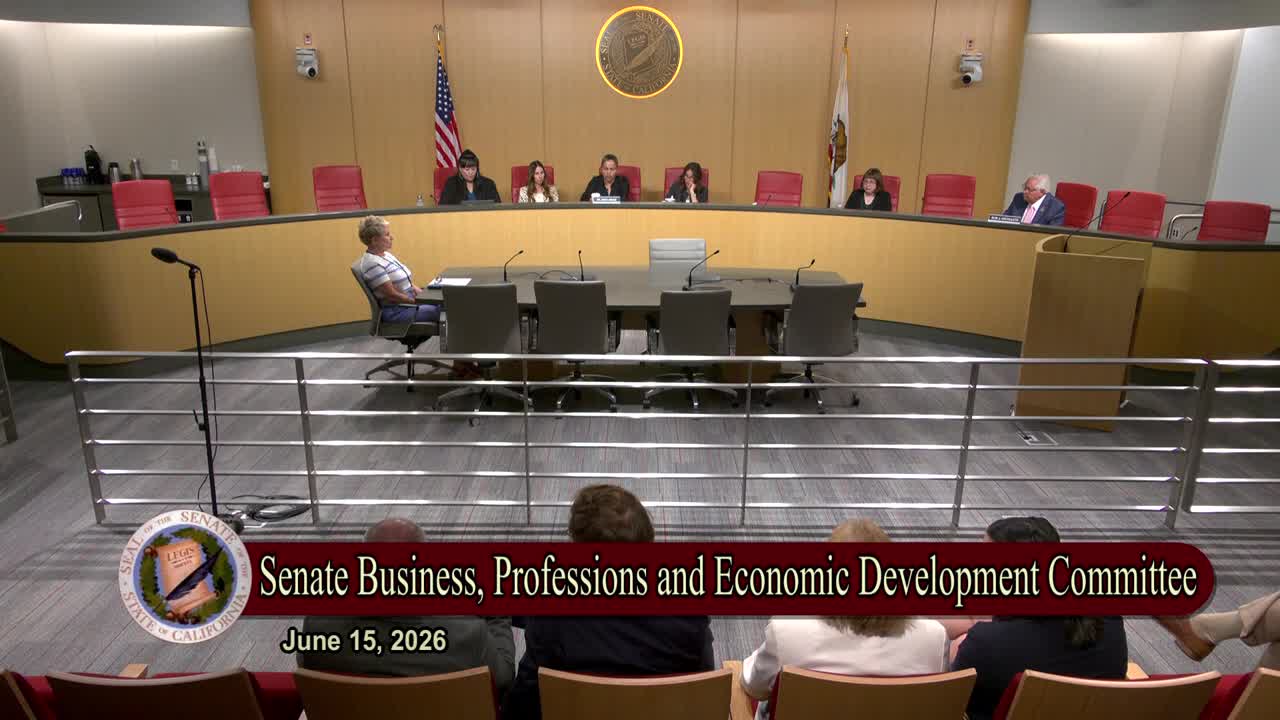 4MIN
Senate Standing Committee on Business, Professions and Economic Development
 2MIN
Assembly Floor
 7MIN
Assembly Standing Committee on Business and Professions
Bill Author

Bill Co-Author(s):