AB 1796: Licensed Professional Interior Designer Practice Act.
- Session Year: 2025-2026
- House: Assembly
- Latest Version Date: 2026-06-23
Current Status:
In Progress
(2026-06-23: From committee chair, with author's amendments: Amend, and re-refer to committee. Read second time, amended, and re-referred to Com. on B. P. & E.D.)
Introduced
In Committee
Awaiting First Chamber Vote
Passed First Chamber
In Committee
Awaiting Second Chamber Vote
Passed Second Chamber
Enacted
Existing law, until January 1, 2027, establishes a scheme for the certification of interior designers by the California Council for Interior Design Certification, a nonprofit organization, by obtaining a stamp from the council that identifies them as a certified interior designer, and makes it an unfair business practice for any person to represent or hold themselves out as a certified interior designer without a valid certification. Existing law also authorizes the council to issue a commercial designation to a person who satisfies specified requirements. Under the existing scheme, a certification under those provisions expires in 2 years unless renewed in a specified manner.
Existing law, the Architects Practice Act, establishes the California Architects Board, consisting of 10 members, in the Department of Consumer Affairs to license and regulate the practice of architecture.
This bill would authorize the council to issue a professional designation to a certified interior designer or qualified applicant only until ____, 2027, and would instead provide for the licensure and regulation of the practice of licensed professional interior design, as defined, by the board. The bill would add a member to the board who is a professional interior designer, and would specify that the professional interior designer members term begins and expires on unspecified dates. The
This bill would require the board to determine eligibility requirements, including examination and education requirements necessary for licensure. licensure, as provided. The bill would authorize the board to determine whether additional education or training is required for professional interior designers to identify when architectural or engineering services are required and, if so, would require the board to develop and prescribe sufficient education or training. The bill would make it a misdemeanor, punishable by an unspecified fee or by imprisonment in a county jail, or both, to engage impose an unspecified civil penalty for engaging in certain acts, including engaging in the practice of licensed professional interior design design, without a license. By creating new crimes, the bill would impose a state-mandated local program. The
This bill would exempt professional engineers, architects, land surveyors, and licensed contractors from the bills provisions governing professional interior design. The bill would require any stamp used by a licensed professional interior designer to be of a design authorized by the board and would prescribe the information contained in the stamp. The bill would establish requirements for professional interior instruments of service, as defined, and would prohibit a public entity from accepting professional interior instruments of service submissions from an individual who is not a licensed professional interior designer. By imposing requirements on local agencies, the bill would impose a state-mandated local program. The
This bill would prescribe acts that are subject to discipline by the board and the manner of discipline, and would specify conditions of renewal and expiration of a license. The bill would require the board to fix certain fees relating to licensure at specified and unspecified amounts, to be deposited into the California Professional Interior Designer Fund, established by the bill, to be made available to the board upon appropriation by the Legislature to be used to defray the expenses of the board in carrying out and enforcing the provisions of the bill. The bill would require the board to implement its provisions by July 1, 2028. The bill would make other related and conforming changes to the Architects Practice Act and the provisions governing interior designers.
Existing law allows a design professional, as defined, to claim a lien on certain works of improvement, as specified.
This bill would include licensed interior designers in the definition of design professional for purposes of the above-referenced lien provisions.
The California Constitution requires the state to reimburse local agencies and school districts for certain costs mandated by the state. Statutory provisions establish procedures for making that reimbursement.This bill would provide that with regard to certain mandates no reimbursement is required by this act for a specified reason.With regard to any other mandates, this bill would provide that, if the Commission on State Mandates determines that the bill contains costs so mandated by the state, reimbursement for those costs shall be made pursuant to the statutory provisions noted above.The California Constitution requires the state to reimburse local agencies and school districts for certain costs mandated by the state. Statutory provisions establish procedures for making that reimbursement.
This bill would provide that no reimbursement is required by this act for a specified reason.
Existing law, until January 1, 2027, establishes a scheme for the certification of interior designers by the California Council for Interior Design Certification, a nonprofit organization, by obtaining a stamp from the council that identifies them as a certified interior designer, and makes it an unfair business practice for any person to represent or hold themselves out as a certified interior designer without a valid certification. Existing law also authorizes the council to issue a commercial designation to a person who satisfies specified requirements. Under the existing scheme, a certification under those provisions expires in 2 years unless renewed in a specified manner.
Existing law, the Architects Practice Act, establishes the California Architects Board, consisting of 10 members, in the Department of Consumer Affairs to license and regulate the practice of architecture.
This bill would authorize the council to issue a professional designation to a certified interior designer or qualified applicant only until ____, 2027, and would instead provide for the licensure and regulation of the practice of professional interior design, as defined, by the board. The bill would add a member to the board who is a professional interior designer, and would specify that the professional interior designer members term begins and expires on unspecified dates. The bill would require the board to determine eligibility requirements, including examination and education requirements necessary for licensure. The bill would authorize the board to determine whether additional education or training is required for professional interior designers to identify when architectural or engineering services are required and, if so, would require the board to develop and prescribe sufficient education or training. The bill would make it a misdemeanor, punishable by an unspecified fee or by imprisonment in a county jail, or both, to engage in certain acts, including engaging in the practice of professional interior design without a license. By creating new crimes, the bill would impose a state-mandated local program. The bill would exempt professional engineers, architects, land surveyors, and licensed contractors from the bills provisions governing professional interior design. The bill would require any stamp used by a licensed professional interior designer to be of a design authorized by the board and would prescribe the information contained in the stamp. The bill would establish requirements for professional interior instruments of service, as defined, and would prohibit a public entity from accepting professional interior instruments of service submissions from an individual who is not a licensed professional interior designer. By imposing requirements on local agencies, the bill would impose a state-mandated local program. The bill would prescribe acts that are subject to discipline by the board and the manner of discipline, and would specify conditions of renewal and expiration of a license. The bill would require the board to fix certain fees relating to licensure at specified and unspecified amounts, to be deposited into the California Professional Interior Designer Fund, established by the bill, to be made available to the board upon appropriation by the Legislature to be used to defray the expenses of the board in carrying out and enforcing the provisions of the bill. The bill would require the board to implement its provisions by July 1, 2028. The bill would make other related and conforming changes to the Architects Practice Act and the provisions governing interior designers.
Existing law allows a design professional, as defined, to claim a lien on certain works of improvement, as specified.
This bill would include licensed interior designers in the definition of design professional for purposes of the above-referenced lien provisions.
The California Constitution requires the state to reimburse local agencies and school districts for certain costs mandated by the state. Statutory provisions establish procedures for making that reimbursement.
This bill would provide that with regard to certain mandates no reimbursement is required by this act for a specified reason.
With regard to any other mandates, this bill would provide that, if the Commission on State Mandates determines that the bill contains costs so mandated by the state, reimbursement for those costs shall be made pursuant to the statutory provisions noted above.
Existing law, until January 1, 2027, establishes a scheme for the certification of interior designers by the California Council for Interior Design Certification, a nonprofit organization, by obtaining a stamp from the council that identifies them as a certified interior designer, and makes it an unfair business practice for any person to represent or hold themselves out as a certified interior designer without a valid certification. Existing law also authorizes the council to issue a commercial designation to a person who satisfies specified requirements. Under the existing scheme, a certification under those provisions expires in 2 years unless renewed in a specified manner.
Existing law, the Architects Practice Act, establishes the California Architects Board, consisting of 10 members, in the Department of Consumer Affairs to license and regulate the practice of architecture.
This bill would authorize the council to issue a professional designation to a certified interior designer or qualified applicant only until ____, 2027, and would instead provide for the licensure and regulation of the practice of professional interior design, as defined, by the board. The bill would add a member to the board who is a professional interior designer, and would specify that the professional interior designer members term begins and expires on unspecified dates. The bill would require the board to determine eligibility requirements, including examination and education requirements necessary for licensure. The bill would authorize the board to determine whether additional education or training is required for professional interior designers to identify when architectural or engineering services are required and, if so, would require the board to develop and prescribe sufficient education or training. The bill would make it a misdemeanor, punishable by an unspecified fee or by imprisonment in a county jail, or both, to engage in certain acts, including engaging in the practice of professional interior design without a license. By creating new crimes, the bill would impose a state-mandated local program. The bill would exempt professional engineers, architects, land surveyors, and licensed contractors from the bills provisions governing professional interior design. The bill would require any stamp used by a licensed professional interior designer to be of a design authorized by the board and would prescribe the information contained in the stamp. The bill would establish requirements for professional interior instruments of service, as defined, and would prohibit a public entity from accepting professional interior instruments of service submissions from an individual who is not a licensed professional interior designer. By imposing requirements on local agencies, the bill would impose a state-mandated local program. The bill would prescribe acts that are subject to discipline by the board and the manner of discipline, and would specify conditions of renewal and expiration of a license. The bill would require the board to fix certain fees relating to licensure at specified and unspecified amounts, to be deposited into the California Architects Board Fund, a continuously appropriated fund, and would authorize the board to create subaccounts within the fund, as specified. By adding a potential source of revenue to a continuously appropriated fund, and by authorizing increased expenditure of moneys from a continuously appropriated fund for a new purpose, this bill would make an appropriation. The bill would also make an appropriation by requiring funds for the initial establishment and support of the regulatory activities affecting licensed professional interior designers to be advanced from the General Fund. California Professional Interior Designer Fund, established by the bill, to be made available to the board upon appropriation by the Legislature to be used to defray the expenses of the board in carrying out and enforcing the provisions of the bill. The bill would require the board to implement its provisions by July 1, 2028. The bill would make other related and conforming changes to the Architects Practice Act and the provisions governing interior designers.
Existing law allows a design professional, as defined, to claim a lien on certain works of improvement, as specified.
This bill would include licensed interior designers in the definition of design professional for purposes of the above-referenced lien provisions.
The California Constitution requires the state to reimburse local agencies and school districts for certain costs mandated by the state. Statutory provisions establish procedures for making that reimbursement.
This bill would provide that with regard to certain mandates no reimbursement is required by this act for a specified reason.
With regard to any other mandates, this bill would provide that, if the Commission on State Mandates determines that the bill contains costs so mandated by the state, reimbursement for those costs shall be made pursuant to the statutory provisions noted above.
Existing law, until January 1, 2027, establishes a scheme for the certification of interior designers by the California Council for Interior Design Certification, a nonprofit organization, by obtaining a stamp from the council that identifies them as a certified interior designer, and makes it an unfair business practice for any person to represent or hold themselves out as a certified interior designer without a valid certification. Existing law also authorizes the council to issue a commercial designation to a person who satisfies specified requirements. Under the existing scheme, a certification under those provisions expires in 2 years unless renewed in a specified manner.
Existing law, the Architects Practice Act, establishes the California Architects Board, consisting of 10 members, in the Department of Consumer Affairs to license and regulate the practice of architecture.
This bill would authorize the council to issue a commercial professional designation to a certified interior designer or qualified applicant only until ____, 2027, and would instead provide for the licensure and regulation of the practice of commercial professional interior design, as defined, by the board. The bill would add a member to the board who is a commercial professional interior designer, and would specify that the commercial professional interior designer members term begins and expires on unspecified dates. The act bill would require the board to determine eligibility requirements, including examination and education requirements necessary for licensure. The bill would authorize the board to determine whether additional education or training is required for professional interior designers to identify when architectural or engineering services are required and, if so, would require the board to develop and prescribe sufficient education or training. The bill would make it a misdemeanor, punishable by an unspecified fee or by imprisonment in a county jail, or both, to engage in certain acts, including engaging in the practice of commercial professional interior design without a license. By creating new crimes, the bill would impose a state-mandated local program. The bill would exempt professional engineers, architects, land surveyors, and licensed contractors from the bills provisions governing commercial professional interior design. The bill would require any stamp used by a licensed commercial professional interior designer to be of a design authorized by the board and would prescribe the information contained in the stamp. The bill would establish requirements for commercial professional interior instruments of service, as defined, and would prohibit a public entity from accepting commercial professional interior instruments of service submissions from an individual who is not a licensed commercial professional interior designer. By imposing requirements on local agencies, the bill would impose a state-mandated local program. The bill would prescribe acts that are subject to discipline by the board and the manner of discipline, and would specify conditions of renewal and expiration of a license. The bill would require the board to fix certain fees relating to licensure at specified and unspecified amounts, to be deposited into the California Architects Board Fund, a continuously appropriated fund, and would authorize the board to create subaccounts within the fund, as specified. By adding a potential source of revenue to a continuously appropriated fund, and by authorizing increased expenditure of moneys from a continuously appropriated fund for a new purpose, this bill would make an appropriation. The bill would also make an appropriation by requiring funds for the initial establishment and support of the regulatory activities affecting licensed commercial professional interior designers to be advanced from the General Fund. The bill would make other related and conforming changes to the Architects Practice Act and the provisions governing interior designers.
Existing law allows a design professional, as defined, to claim a lien on certain works of improvement, as specified.
This bill would include licensed interior designers in the definition of design professional for purposes of the above-referenced lien provisions.
The California Constitution requires the state to reimburse local agencies and school districts for certain costs mandated by the state. Statutory provisions establish procedures for making that reimbursement.
This bill would provide that with regard to certain mandates no reimbursement is required by this act for a specified reason.
With regard to any other mandates, this bill would provide that, if the Commission on State Mandates determines that the bill contains costs so mandated by the state, reimbursement for those costs shall be made pursuant to the statutory provisions noted above.
Existing law, until January 1, 2027, establishes a scheme for the certification of interior designers by the California Council for Interior Design Certification, a nonprofit organization, by obtaining a stamp from the council that identifies them as a certified interior designer, and makes it an unfair business practice for any person to represent or hold themselves out as a certified interior designer without a valid certification. Existing law also authorizes the council to issue a commercial designation to a person who satisfies specified requirements. Under the existing scheme, a certification under those provisions expires in 2 years unless renewed in a specified manner.
Existing law, the Architects Practice Act, establishes the California Architects Board, consisting of 10 members, in the Department of Consumer Affairs to license and regulate the practice of architecture.
This bill would authorize the council to issue a commercial designation to a certified interior designer or qualified applicant only until ____, 2027, and would instead provide for the licensure and regulation of the practice of commercial interior design, as defined, by the board. The bill would add a member to the board who is a commercial interior designer, and would specify that the commercial interior designer members term begins and expires on unspecified dates. The act would require the board to determine eligibility requirements, including examination and education requirements necessary for licensure. The bill would make it a misdemeanor, punishable by an unspecified fee or by imprisonment in a county jail, or both, to engage in certain acts, including engaging in the practice of commercial interior design without a license. By creating new crimes, the bill would impose a state-mandated local program. The bill would exempt professional engineers, architects, land surveyors, and licensed contractors from the bills provisions governing commercial interior design. The bill would require any stamp used by a licensed commercial interior designer to be of a design authorized by the board and would prescribe the information contained in the stamp. The bill would establish requirements for commercial interior instruments of service, as defined, and would prohibit a public entity from accepting commercial interior instruments of service submissions from an individual who is not a licensed commercial interior designer. By imposing requirements on local agencies, the bill would impose a state-mandated local program. The bill would prescribe acts that are subject to discipline by the board and the manner of discipline, and would specify conditions of renewal and expiration of a license. The bill would require the board to fix certain fees relating to licensure at specified and unspecified amounts, to be deposited into the California Architects Board Fund, a continuously appropriated fund, and would authorize the board to create subaccounts within the fund, as specified. By adding a potential source of revenue to a continuously appropriated fund, and by authorizing increased expenditure of moneys from a continuously appropriated fund for a new purpose, this bill would make an appropriation. The bill would also make an appropriation by requiring funds for the initial establishment and support of the regulatory activities affecting licensed commercial interior designers to be advanced from the General Fund. The bill would make other related and conforming changes to the Architects Practice Act and the provisions governing interior designers.
Existing law allows a design professional, as defined, to claim a lien on certain works of improvement, as specified.
This bill would include licensed interior designers in the definition of design professional for purposes of the above-referenced lien provisions.
The California Constitution requires the state to reimburse local agencies and school districts for certain costs mandated by the state. Statutory provisions establish procedures for making that reimbursement.
This bill would provide that with regard to certain mandates no reimbursement is required by this act for a specified reason.
With regard to any other mandates, this bill would provide that, if the Commission on State Mandates determines that the bill contains costs so mandated by the state, reimbursement for those costs shall be made pursuant to the statutory provisions noted above.
(a)The Legislature finds and declares all of the following:
(1)In California there are roughly 7.5 billion 7,500,000,000 square feet of existing professional buildings.
(2)More than 100,000,000 square feet of professional buildings are newly constructed across California California, and this does not account for the remodeling of existing space, which sometimes only needs a designer.
(3)The number of individuals who utilize professional buildings is significant, but difficult to approximate. In 2023, California had 18,400,000 employed people, the highest in the United States. About 88 percent of employed Californians, or roughly 16,200,000 people, work onsite, occupying professional space on a daily basis. This number does not capture those Californians who visit or pass through professional buildings to conduct tasks or business.
(4)Professional space includes, but is not limited to, hospitals, schools, college campuses, museums, retail stores, and airport terminals.
(5)Thirty-one jurisdictions across the nation regulate the profession of interior design, including 29 states, the District of Columbia, and Puerto Rico.
(6)The Legislature recognizes that acceptable overlap between licensed design professions occurs through coordinated practice within defined scope boundaries, consistent with nationally recognized professional standards governing architecture, engineering, and interior design professions.
(b)Given the quantity and scope of professional interior design space in California, the regulation of professional interior designers would ensure a reliable standard of practice, directly benefiting and protecting many Californians who work, study, visit, and convalesce in these spaces.
SEC. 2.Section 5510 of the Business and Professions Code is amended to read:5510.There is in the Department of Consumer Affairs a California Architects Board, which consists of 11 members.
Any reference in law to the California Board of Architectural Examiners shall mean the California Architects Board.
This section shall remain in effect only until January 1, 2029, and as of that date is repealed. Notwithstanding any other law, the repeal of this section renders the board subject to review by the appropriate policy committees of the Legislature.
SEC. 3.Section 5510.1 of the Business and Professions Code is amended to read:5510.1.The Legislature finds and declares that it is the mandate of the board to regulate the practice of architects and licensed professional interior designers in the interest and for the protection of the public health, safety, and welfare. For this purpose, the board shall delineate the minimum professional qualifications and performance standards for admission to and practice of the profession of architecture pursuant to this chapter and licensed professional interior designers pursuant to the Licensed Professional Interior Designer Practice Act (Chapter 3.8 (commencing with Section 5700)). The board shall establish a fair and uniform enforcement policy to deter and prosecute violations of this chapter or any rules and regulations promulgated pursuant to this chapter to provide for the protection of the consumer.
SEC. 4.Section 5514 of the Business and Professions Code is amended to read:5514.(a)The membership of the board shall be composed of 11 members, five 5 of whom shall be architects, one 1 of whom shall be a professional interior designer, and five 5 of whom shall be public members.
(b)The five architect members of the board shall be selected from architects in good standing who have been licensed and in practice in this state for at least five years at the time of appointment, all of whom shall be residents and in practice in California.
(c)The public members of the board shall not be licensees of the board.
(d)The first appointed professional interior designer member of the board shall have had an active National Council for Interior Design Qualification Certification for at least five years at the time of appointment, and shall be a resident and in practice in California. After licensure for professional interior designers is established, the one professional interior designer member of the board shall have been in good standing, licensed, a resident, and in practice in California for at least five years at the time of appointment.
SEC. 5.Section 5515 of the Business and Professions Code is amended to read:5515.(a)Every person appointed shall serve for four years and until the appointment and qualification of their successor or until one year has elapsed since the expiration of the term for which they were appointed, whichever occurs first.
(b)No person shall serve as a member of the board for more than two consecutive terms.
(c)Vacancies occurring before the expiration of the term shall be filled by appointment for the unexpired term.
(d)Each appointment shall expire on June 30 of the fourth year following the year in which the previous term expired.
(e)The Governor shall appoint three of the public members and the six licensed members qualified as provided in Section 5514. The Senate Rules Committee and the Speaker of the Assembly shall each appoint a public member.
SEC. 6.Section 5515.5 of the Business and Professions Code is amended to read:5515.5.(a)Notwithstanding Section 130 or 5515, the following provisions shall apply:
(1)Of the three licensed architects appointed by the Governor whose terms commence on July 1, 2013, the term of two members shall expire on June 30, 2017, and the term of one member shall expire on June 30, 2019.
(2)Of the two licensed architects appointed by the Governor whose terms commence on July 1, 2014, the term of one member shall expire on June 30, 2018, and the term of the other member shall expire on June 30, 2020.
(3)The term of the public member appointed by the Governor that commences on July 1, 2014, shall expire on June 30, 2019.
(4)Of the two public members appointed by the Governor whose terms commence on July 1, 2016, the term of one member shall expire on June 30, 2020, and the term of the other member shall expire on June 30, 2021.
(5)The term of the licensed professional interior designer appointed by the Governor that commences on July 1, ____, shall expire on June 30, ____.
(b)Except as provided in subdivision (a), this section shall not be construed to affect the application of Section 130 or 5515 to the terms of a current or future member of the board.
SEC. 7.Section 5526 of the Business and Professions Code is amended to read:5526.(a)The board shall adopt rules and regulations governing the examination of applicants for licenses to practice architecture and licensed professional interior design in this state.
(b)The board may, by rule or regulation, adopt rules of professional conduct that are not inconsistent with state or federal law. Every person who holds a license issued by the board shall be governed and controlled by these rules.
(c)The board may adopt other rules and regulations as may be necessary and proper.
(d)The board may, from time to time, repeal, amend, or modify rules and regulations adopted under this section. No rule or regulation shall be inconsistent with this chapter.
(e)The board shall adopt, by regulation, a system as described in Section 125.9 for the issuance to a licensee of a citation and a system as described in Section 148 for the issuance of an administrative citation to an unlicensed person who is acting in the capacity of a licensee or registrant under the jurisdiction of the board.
(f)The adoption, repeal, amendment, or modification of these rules and regulations shall be made in accordance with Chapter 3.5 (commencing with Section 11340) of Part 1 of Division 3 of Title 2 of the Government Code.
SEC. 8.Section 5528 of the Business and Professions Code is amended to read:5528.(a)The board may select and contract with necessary architect and professional interior design consultants who are licensed to assist it in its enforcement program on an intermittent basis. The architect and professional interior design consultants shall perform only those services that are necessary to carry out and enforce this chapter.
(b)For the purposes of Division 3.6 (commencing with Section 810) of Title 1 of the Government Code, any consultant under contract with the board shall be considered a public employee.
SEC. 9.Section 5601 of the Business and Professions Code is amended to read:5601.(a)Within 10 days after the beginning of every month, all fees collected by the department for the month preceding, under the provisions of this chapter, shall be paid into the State Treasury to the credit of the California Architects Board Fund.
(b)The board may create subaccounts within the California Architects Board Fund, as needed, for the purpose of ensuring that moneys within the fund are equitably apportioned among the architect and professional interior design professions and do not exceed the reasonable regulatory costs of the board pursuant to this chapter and Chapter 3.8 (commencing with Section 5700).
SEC. 10.Section 5602 of the Business and Professions Code is amended to read:5602.The money collected pursuant to this chapter and paid into the California Architects Board Fund, which is hereby continued in existence, shall be used in the manner prescribed by law to defray the expenses of the board in carrying out and enforcing the provisions of this chapter.
SEC. 11.Chapter 3.8 (commencing with Section 5700) is added to Division 3 of the Business and Professions Code, to read:3.8.Licensed Professional Interior Designer Practice Act1.Definitions5700.This chapter may be cited as the Licensed Professional Interior Designer Practice Act.
5701.For the purposes of this chapter, the following definitions apply:
(a)Board means the California Architects Board.
(b)Construction observation services means periodic observation of, or visits by a licensed professional interior designer or their agent to, the site of a work of improvement to determine general compliance with the professional interior instruments of service submissions. However, construction observation services does not mean the superintendence of construction processes, site conditions, operations, equipment, or personnel, or the maintenance of a safe place to work or any safety in, on, or about the site.
(c)Immediate and responsible direction means the professional interior designer does both of the following:
(1)Instructs any person in the preparation of a professional interior instrument of service, unless the person is any of the following:
(A)A licensed professional interior designer.
(B)An architect licensed pursuant to Chapter 3 (commencing with Section 5500).
(C)A civil or structural engineer registered pursuant to Chapter 7 (commencing with Section 6700).
(2)Exercises the same judgment and responsibility in reviewing all stages of the design documents and other phases of the work as required by law, and which would normally be exercised if the professional interior designer personally performed the required tasks.
(d)Licensed professional interior designer means a person who is licensed under this chapter.
(e)Licensed contractor means a person licensed under Chapter 9 (commencing with Section 7000).
(f)Professional engineer means a person who practices or offers to practice professional engineering as described in Section 6701.
(g)(1)Professional interior design includes offering or furnishing, or being responsible for, or in control of, the planning, design, and oversight of interior spaces, in part or in whole, in buildings and structures in California in a manner complying with generally applicable codes and regulations. This may include any of the following related to interior spaces or environments as part of a construction project:
(A)Investigation, evaluation, consultation, and advice.
(B)The preparation of plans, specifications, documentation, and assistance in the governmental review process related to the functional and aesthetic arrangement of interior spaces, including the preparation of professional interior instruments of service.
(C)The selection and specification of materials, finishes, fixtures, and furniture.
(D)The coordination of the work with technical and special consultants.
(E)The administration of contracts and observation of construction.
(2)Professional interior design does not include any of the following:
(A)The practice of a professional engineer, as defined in Section 6701, or the practice of a professional land surveyor, as defined in Section 8701.
(B)Services that constitute the practice of architecture, as defined in Section 5500.1, except as otherwise provided in this chapter.
(C)Services that constitute the practice of a structural engineer, as described in Section 6763.
(D)Changes to the construction classification of the building or structure according to the California Building Standards Code.
(3)Notwithstanding paragraph (1), professional interior design does not include any work that would require structural engineering analysis or would require the licensed professional interior designer to assume responsible control for a buildings structural systems, including the lateral force resisting system and the seismic bracing of components and equipment regulated by the authority having jurisdiction through adoption of a building code or other regulations.
(h)Professional interior instruments of service means the designs, drawings, and specifications that establish the scope of professional interior design to be constructed, the standard of quality for materials, workmanship, equipment, and construction systems, and the studies and other technical reports and calculations prepared in the course of the practice of licensed professional interior design.
(i)Professional land surveyor means a person who practices or offers to practice land surveying, as described in Section 8701.
(j)(1)Responsible control means the amount of control over the content of all professional interior instruments of service during their preparation that is ordinarily exercised by licensed professional interior designers applying the required professional standard of care. Professional responsibility and liability shall attach only to those aspects of the work performed within the licensed professional interior designers scope of practice and under their responsible control.
(2)Responsible control does not require the licensed professional interior designer to personally prepare all professional interior design instruments of service, but requires the exercise of professional judgment and supervisory authority consistent with the professional standard of care applicable to licensed professional interior designers.
(k)Structural engineer means a person authorized to use the title structural engineer as described in Section 6736.
2.Administration5705.(a)The board is vested with all of the functions, duties, powers, purposes, responsibilities, and jurisdiction concerning the practice of licensed professional interior design under this chapter.
(b)Pursuant to this chapter, the board shall exercise the following functions, powers, and duties:
(1)Conduct or authorize examinations to ascertain the fitness and qualifications of applicants for licensure and issue a license to those who are found to be fit and qualified.
(2)Prescribe rules and regulations for a method of examination of candidates. The board shall designate as its examination for licensure as a professional interior designer the National Council for Interior Design Qualification Examination.
(3)Conduct hearings on proceedings to revoke, suspend, or refuse to issue licensure.
(4)Promulgate rules and regulations required for the administration of this chapter.
(c)The board shall implement the provisions of this chapter no later than July 1, 2028.
3.Application of Chapter5710.(a)The board shall determine eligibility requirements, including, but not limited to, examination and education requirements necessary for licensure pursuant to this chapter. The board shall give special consideration to national examinations, but is not precluded from prescribing the examination and educational requirements specified in former Section 5811.1, as that section read on December 31, 2026.
(b)The board may also prescribe relevant continuing educational requirements, taking into account the cost to individual licensed professional interior designers.
(c)The board may determine whether education or training is required for professional interior designers to identify when architectural or engineering services are required and appropriately coordinate with, or refer those services to, licensed professionals authorized to perform them. If the board determines that education or training is required, the board shall develop and prescribe sufficient education or training.
(d)The board shall not limit consideration of educational requirements for licensure to any accredited two-year, three-year, or four-year program.
5711.(a)It is a misdemeanor, punishable by a fine civil penalty of not less than ____ dollars ($____) nor more than ____ dollars ($____) or by imprisonment in a county jail not exceeding six months, or by both that fine and imprisonment, for a person to do any of the following without possessing a valid, unrevoked license as provided in this chapter:
(1)Engage in the practice of licensed professional interior design.(2)Use the titles or terms licensed professional interior designer or licensed professional interior design, or any other titles, words, or abbreviations that would imply or indicate that they are licensed under this chapter.(3)Use the stamp of a licensed professional interior designer, as provided in Section 5720.(4)Advertise or put out a sign, card, or other device that might indicate to the public that they are a licensed professional interior designer or qualified to engage in the practice of licensed professional interior design.(b)A licensed professional interior designer with a valid license may stamp, seal, and submit professional interior instruments of service to the authorities having jurisdiction.
(c)A licensed professional interior designer shall not advertise any services that they are not legally permitted to perform, including architecture or engineering services or using the title architect in any form.
(d)This chapter does not prevent or restrict any of the following activities:
(1)The employment by a professional interior designer association, partnership, or corporation furnishing interior design services for remuneration of any person who is not a licensed professional interior designer to perform services in various capacities as needed, provided that the person does not represent themselves as, or use the title of, licensed professional interior designer.
(2)Use of the title interior designer on the part of a person not licensed under this chapter, provided that person does not represent themselves as, or use the title of, licensed professional interior designer.
(3)The practice, services, or activities of any person licensed in this state under any other law who is engaging in the profession or occupation for which they are licensed or otherwise legally permitted to engage in.
(4)Professional services limited to the design of kitchen and bath spaces or the specification of products for kitchen and bath areas in residential settings.
(5)The ability of a licensed professional interior designer to supervise their own projects.
(6)The provision of interior design or interior decorator services by any person or retail activity, if the person does not use the title licensed professional interior designer or licensed professional interior design, or any title, word, or abbreviation that would imply or indicate that they are licensed under this chapter.
5712.(a)A licensed professional interior designer shall use a written contract when contracting to provide professional services to a client pursuant to this chapter. That written contract shall be executed by the licensed professional interior designer and the client, or the clients representative, prior to the licensed professional interior designer commencing work, unless the client knowingly states in writing that work may be commenced before the contract is executed. The written contract shall include, but not be limited to, all of the following items:
(1)A description of the project for which the client is seeking services.
(2)A description of the services to be provided by the licensed professional interior designer to the client.
(3)A description of any basis of compensation applicable to the contract and the method of payment agreed upon by both parties.
(4)The name, address, and license number of the licensed professional interior designer, the name and address of the client, and the project address.
(5)A description of the procedure that the licensed professional interior designer and the client will use to accommodate additional services and contract changes, including, but not limited to, changes in the description of the project, in the description of the services, or in the description of the compensation and method of payment.
(6)A description of the procedure to be used by either party to terminate the contract.
(7)A statement identifying the ownership and use of professional interior instruments of service prepared by the licensed professional interior designer.
(8)A statement in at least 12-point type that reads, Licensed professional interior designers are licensed and regulated by the California Architects Board located at 2420 Del Paso Road, Suite 105, Sacramento, CA 95834.
(b)This section does not apply to any of the following:
(1)Professional services rendered by a licensed professional interior designer for which the client will not pay compensation.
(2)An arrangement as to the basis for compensation and manner of providing professional services implied by the fact that the licensed professional interior designers services are of the same general kind that the licensed professional interior designer has previously rendered to and received payment from the same client.
(3)If the client knowingly states in writing after full disclosure of this section that a writing that complies with the requirements of this section is not required.
(4)Professional services rendered by a licensed professional interior designer to a professional engineer registered to practice engineering under Chapter 7 (commencing with Section 6700), a land surveyor licensed under Chapter 15 (commencing with Section 8700), an architect licensed under Chapter 3 (commencing with Section 5500), or a contractor licensed under Chapter 9 (commencing with Section 7000).
5713.(a)As used in this section, the word person includes any individual, firm, partnership, general corporation, professional corporation, or limited liability partnership, as authorized by the Corporations Code.
(b)As used in this section, the terms business entity and collaboration include employer and employee relationships, joint ventures, partnerships, general corporations, and consulting relationships formed by written agreement in which the licensed professional interior designer provides immediate and responsible direction of professional interior design services.
(c)This chapter does not prevent a licensed professional interior designer from forming a business entity or collaborating with persons who are not licensed professional interior designers, provided that any licensed professional interior designers professional services that are provided through that entity or collaboration are offered and provided under the responsible control of a licensed professional interior designer, or licensed professional interior designers, and in accordance with the provisions of this chapter.
(d)(1)A business entity organized as a general corporation may include in its name any or all of the following:
(A)A fictitious name.
(B)The name of one or more licensed professional interior designers.
(C)The term licensed professional interior designer, the term licensed professional interior design, or a variation of the terms licensed professional interior designer and licensed professional interior design.
(2)Nothing in paragraph (1) shall limit a business entity organized as a general corporation from including in its name any other word or name that is not otherwise prohibited by law.
(3)Notwithstanding paragraphs (1) and (2), a business entity organized as a general corporation shall not include in its name the term professional corporation.
(e)This chapter does not prevent a corporation from furnishing or supplying by contract licensed professional interior design services, as long as any licensed professional interior designers professional services are offered and provided under the responsible control of a licensed professional interior designer, licensed professional interior designers, or those design professionals exempt from this chapter pursuant to Section 5715.
5714.Nothing in this chapter shall preclude any activities listed in the definition of a certified interior designer in former Section 5800, as it read on December 31, 2026, if that person does not represent themselves or their services in any manner prohibited by this chapter.
5715.Professional engineers registered to practice engineering under Chapter 7 (commencing with Section 6700), land surveyors licensed under Chapter 15 (commencing with Section 8700), architects licensed under Chapter 3 (commencing with Section 5500), and contractors licensed under Chapter 9 (commencing with Section 7000) are exempt from this chapter. However, they may not use the title licensed professional interior designer unless they hold a license as required in this chapter.
4.Seal and Certification5720.(a)(1)Any stamp used by a licensed professional interior designer under this chapter shall be of a design authorized by the board and shall, at a minimum, bear the licensees name, their license number, the legend Licensed Professional Interior Designer, and the legend State of California, and shall provide a means of indicating the renewal date of the license.
(2)The licensed professional interior designer shall affix the signature, current date, date of license expiration, and seal to the first sheet of any bound set or loose sheets of professional interior instruments of service used as contract documents between parties to the contract or documents prepared for the review and approval of any governmental or public authority having jurisdiction by that licensed professional interior designer or under that licensed professional interior designers responsible control.
(3)The sheet of professional interior instruments of service in which the seal is affixed shall indicate those documents or parts thereof for which the seal shall apply.
(4)A licensed professional interior designer shall not be deemed professionally responsible for the design, performance, or adequacy of any structural, mechanical, electrical, plumbing, or fire and life safety systems not prepared by or under the responsible control of the licensed professional interior designer.
(5)A licensed professional interior designer who signs or seals professional interior design instruments of service represents that the work was prepared by the licensed professional interior designer or under the licensed professional interior designers responsible control.
(b)A licensed professional interior designer shall not sign and seal professional interior instruments of service that were not prepared by or under the responsible control of the licensed professional interior designer, except in the following circumstances:
(1)A licensed professional interior designer may sign and seal those portions of the professional interior instruments of service submission that were prepared by or under the responsible control of a person who holds a license under this chapter, and who has signed and sealed the documents, if the licensed professional interior designer has reviewed in whole or in part those portions and has either coordinated their preparation or integrated them into the work.
(2)A partner or corporate officer of a professional design firm registered in this state who has professional knowledge of the content of the professional interior instrument of services submissions and intends to be responsible for the adequacy of the professional interior instruments of services submissions may sign and seal professional interior instruments of service submissions that are prepared by or under the responsible control of a licensed professional interior designer who is in the regular employment of the professional design firm.
(c)The licensed professional interior designer exercising responsible control under which the professional interior instruments of service submissions or portions of the professional interior instruments of service submissions were prepared shall be identified by name and California license number.
(d)If engineering, structural engineering, or licensed land surveying services are required in association with a project being performed by a licensed professional interior designer, the documents that have already been properly sealed by a licensed professional engineer, licensed structural engineer, or licensed land surveyor may be compiled by a licensed professional interior designer. Each design professional shall seal the respective documents and shall not seal a document that was not prepared under the design professionals responsible charge. For all other projects, engineering, structural engineering, or land surveying services shall be procured separately from the licensed professional interior designer.
5.Professional Interior Instrument of Service Submissions5725.(a)(1)All professional interior instruments of service submissions intended for use in this state shall be prepared and administered in accordance with standards of reasonable professional skill and diligence. Care shall be taken to reflect the requirements of state law and, if applicable, county and municipal ordinances in the submissions. In recognition that professional interior designers are required to be licensed for the protection of the public health, safety, and welfare, submissions shall be of such quality and scope, and be so administered, as to conform to professional standards.
(2)An officer, board, commission, or other public entity that receives professional interior instruments of service submissions shall not accept for filing or approval any professional interior instruments of service submissions from an individual who is not licensed under this chapter and is not otherwise licensed in this state to prepare the plans and specifications.
(3)(A)A licensed professional interior designer who seals and signs professional interior instruments of service submissions is not responsible for damage caused by subsequent changes to, or uses of, those professional interior instruments of service submissions if the subsequent changes or uses, including changes to uses made by state or local agencies, are not authorized or approved in writing by the licensed professional interior designer who originally sealed and signed the professional interior instruments of service submissions.
(B)The stamp and seal of professional interior instruments of service that relate to the design of a project does not impose a legal duty or responsibility upon the person signing the professional interior instruments of service to observe the construction undertaken to create the professional interior design. However, this subparagraph does not prohibit a licensed professional interior designer and a client from entering into a contractual agreement that includes a mutually acceptable arrangement for the provision of construction observation services. This subparagraph does not modify the liability of a licensed professional interior designer who undertakes, contractually or otherwise, the provision of construction observation services for rendering those services.
(C)A licensed professional interior designer shall be professionally responsible only for those aspects of a project that are within the licensed professional interior designers scope of practice and under their responsible control, and shall not be deemed responsible for the design, performance, or adequacy of any structural, mechanical, electrical, plumbing, or fire and life safety systems not prepared, directed, or approved by the licensed professional interior designer.
(D)In the event of damage to commercial real property caused by a natural disaster declared by the Governor, a licensed professional interior designer shall not be liable for damages arising from the reuse, replication, or reconstruction of professional interior instruments of service without the licensed professional interior designers prior written consent if the instruments of service were not originally prepared for that reuse.
(b)No person may use a licensed professional interior designers professional interior instruments of service without the consent of the licensed professional interior designer in a written contract, written agreement, or written license specifically authorizing that use.
(c)A licensed professional interior designer shall not unreasonably withhold consent to use their professional interior instruments of service from a person for whom the licensed professional interior designer provided the services. A licensed professional interior designer may reasonably withhold consent to use the professional interior instruments of service for cause, including, but not limited to, lack of full payment for services provided or failure to fulfill the conditions of a written contract.
(d)Coordination with, consultation with, or incorporation of work prepared by a licensed architect, professional engineer, or other design professional shall not be construed as assuming professional responsibility or liability for such work, unless the licensed professional interior designer expressly assumes such responsibility in writing and is legally authorized to do so.
6.Discipline5730.(a)The board may, upon its own motion, and shall, upon the verified complaint in writing of any person, investigate the actions of any licensed professional interior designer, and may suspend for a period not exceeding one year, or revoke, the license of any licensed professional interior designer who is guilty of any one or more of the acts or omissions constituting grounds for disciplinary action under this chapter.
(b)(1)An accusation against a licensed professional interior designer shall be filed within three years after the board discovers, or through the use of reasonable diligence should have discovered, the act or omission alleged as the ground for disciplinary action or within six years after the act or omission alleged as the ground for disciplinary action, whichever occurs first. However, with respect to an accusation alleging a violation of subdivision (f), the accusation may be filed within three years after the discovery by the board of the alleged facts constituting the fraud or misrepresentation prohibited by subdivision (f).
(2)If any accusation is not filed within the time provided in this subdivision, no action against a licensed professional interior designer shall be commenced under this article.
(c)Any proceeding for the suspension or revocation of licensure under this chapter shall be conducted in accordance with the provisions of Chapter 5 (commencing with Section 11500) of Part 1 of Division 3 of Title 2 of the Government Code. The board shall have all of the powers granted in that chapter.
(d)(1)A suspended license is subject to expiration and shall be renewed as provided in this chapter, but that renewal does not entitle the licensed professional interior designer, while it remains suspended and until it is reinstated, to engage in the activity to which the license relates, or in any other activity or conduct in violation of the order or judgment by which it was suspended.
(2)A revoked license is subject to expiration as provided in this chapter, but it may not be renewed. If it is reinstated after its expiration, the licensed professional interior designer, as a condition precedent to its reinstatement, shall pay a reinstatement fee in an amount equal to the renewal fee in effect on the last regular renewal date before the date on which it is reinstated, plus the delinquency fee, if any, accrued at the time of its revocation.
(e)The fact that the licensed professional interior designer is practicing in violation of this chapter constitutes a ground for disciplinary action.
(f)The fact that the licensed professional interior designer has obtained the license by fraud or misrepresentation, or that the person named in the license has obtained it by fraud or misrepresentation, constitutes a ground for disciplinary action.
(g)The fact that the professional interior designer is impersonating a licensed professional interior designer or former licensed professional interior designer of the same or similar name, or is practicing under an assumed, fictitious fictitious, or corporate name, constitutes a ground for disciplinary action.
(h)The fact that the licensed professional interior designer has aided or abetted in the practice of licensed professional interior design for any person not authorized to practice licensed professional interior design under this chapter constitutes a ground for disciplinary action.
(i)The fact that the licensed professional interior designer has been guilty of fraud or deceit constitutes a ground for disciplinary action.
(j)The fact that the licensed professional interior designer has been guilty of negligence or willful misconduct constitutes a ground for disciplinary action.
(k)The fact that the licensed professional interior designer has been guilty of gross incompetence constitutes a ground for disciplinary action.
(l)The fact that the licensed professional interior designer has affixed their signature or their stamp to, or has permitted the use of their name on, plans, drawings, specifications, or other instruments of service that have not been prepared by that designer or under their immediate and responsible direction, or has permitted their name or signature or stamp to be used for the purpose of assisting a person who is not a licensed professional interior designer to evade the provisions of this chapter, constitutes a ground for disciplinary action.
(m)The conviction of a felony in connection with the practice of licensed professional interior design is a ground for disciplinary action. The record of a conviction shall be conclusive evidence thereof.
(n)The fact that the licensed professional interior designer has had disciplinary action taken by any public agency for any act substantially related to the qualifications, functions, or duties as a professional interior designer constitutes a ground for disciplinary action.
(o)A plea or verdict of guilty or a conviction following a plea of nolo contendere made to a charge of a felony is deemed to be a conviction within the meaning of this article. The board may order the license suspended or revoked, or may decline to issue a license, when the time for appeal has elapsed, or the judgment of conviction has been affirmed on appeal or when an order granting probation is made suspending the imposition of sentence, irrespective of a subsequent order under the provisions of Section 1203.4 of the Penal Code allowing the person to withdraw their plea of guilty and to enter a plea of not guilty, or setting aside the verdict of guilty, or dismissing the accusation, information, or indictment.
5731.(a)(1)A licensed professional interior designer shall report to the board in writing within 30 days of the date the licensed professional interior designer has knowledge of any civil action judgment, settlement, arbitration award, or administrative action resulting in a judgment, settlement, or arbitration award against the licensed professional interior designer in any action alleging fraud, deceit, negligence, incompetence, or recklessness by the licensed professional interior designer in the practice of licensed professional interior design if the amount or value of the judgment, settlement, or arbitration award is five thousand dollars ($5,000) or greater.
(2)The report required by paragraph (1) shall be signed by the licensed professional interior designer and shall set forth the facts that constitute the reportable event. If the reportable event involves the action of an administrative agency or court, the report shall set forth all of the following:
(A)The title of the matter.
(B)The court or agency name.
(C)The docket number.
(D)The claim or file number.
(E)The date on which the reportable event occurred.
(3)The licensed professional interior designer shall promptly respond to oral or written inquiries from the board concerning the reportable event, including inquiries made by the board in conjunction with licensure renewal.
(4)Failure of a licensed professional interior designer to comply with this subdivision shall be grounds for disciplinary action.
(5)A licensed professional interior designer who fails to comply with this subdivision may be subject to a civil penalty of not less than one hundred dollars ($100) and not more than one thousand dollars ($1,000) as an intermediate sanction imposed by the board in lieu of revoking the license. A licensed professional interior designer who knowingly and intentionally fails to comply with this subdivision may be subject to a civil penalty of up to twenty thousand dollars ($20,000) as an additional intermediate sanction imposed by the board in lieu of revoking the license.
(b)(1)Within 30 days of payment of all or any portion of a civil action judgment, settlement, or arbitration award described in subdivision (a) against a licensed professional interior designer in which the amount or value of the judgment, settlement, or arbitration award is five thousand dollars ($5,000) or greater, any insurer providing professional liability insurance to that licensed professional interior designer or licensed professional interior design entity shall report to the board all of the following:
(A)The name of the licensed professional interior designer.
(B)The claim or file number.
(C)The amount or value of the judgment, settlement, or arbitration award.
(D)The amount paid by the insurer.
(E)The identity of the payee.
(2)Within 30 days of payment of all or any portion of any civil action judgment, settlement, or arbitration award described in subdivision (a) against a licensed professional interior designer in which the amount or value of the judgment, settlement, or arbitration award is five thousand dollars ($5,000) or greater, any state or local governmental agency that self-insures the licensed professional interior designer shall report to the board all of the following:
(A)The name of the licensed professional interior designer.
(B)The claim or file number.
(C)The amount or value of the judgment, settlement, or arbitration award.
(D)The amount paid by the insurer.
(E)The identity of the payee.
(c)The reporting requirements in subdivisions (a) and (b) shall apply if both of the following apply:
(1)A party to the civil action, settlement, arbitration award, or administrative action is or was a sole proprietorship, partnership, firm, corporation, or state or local governmental agency in which a licensed professional interior designer is or was an owner, partner, member, officer, or employee.
(2)A licensed professional interior designer in responsible control of the portion of the project that was the subject of the civil judgment, settlement, arbitration award, or administrative action.
(d)Notwithstanding any other provision of law, a licensed professional interior designer shall not be considered to have violated a confidential settlement agreement or other confidential agreement by providing a report to the board as required by this section.
(e)The board may adopt regulations to further define the reporting requirements in subdivisions (a) and (b).
7.Issuance of Licenses and Revenues5735.(a)(1)A license issued under this chapter shall expire no more than two years after the issuance date. The expiration date of the original license shall be set by the board in a manner to best distribute renewal procedures throughout each year.
(2)To renew an unexpired license, the licensed professional interior designer shall, on or before the expiration date of the license, apply for renewal in a form and manner prescribed by the board, and pay the renewal fee prescribed by this article.
(3)The renewal form shall include a statement specifying whether the licensed professional interior designer was convicted of a crime or disciplined by another public agency during the preceding renewal period and that the designers representations on the renewal form are true, correct, and contain no material omissions of fact, to their best knowledge and belief.
(b)Within 10 days after a judgment by a court of this state that a licensed professional interior designer has committed a crime or is liable for any death or personal or property injury or loss caused by the license holders licenseholders fraud, deceit, negligence, incompetency, or recklessness in practice, the clerk of the court that rendered the judgment shall report this to the board.
(c)Except as otherwise provided in this chapter, a license that has expired may be renewed at any time within five years after its expiration on filing of an application for renewal on a form prescribed by the board, and payment of all accrued and unpaid renewal fees. If the license is renewed more than 30 days after its expiration, the licensed professional interior designer, as a condition precedent to renewal, shall also pay the delinquency fee prescribed by this article. Renewal under this section shall be effective on the date on which the application is filed, on the date on which all renewal fees are paid, or on the date on which the delinquency fee, if any, is paid, whichever occurs last. If so renewed, the license shall continue in effect until the date provided pursuant to paragraph (1) of subdivision (a) of this section that next occurs after the effective date of the renewal, unless the license is renewed again.
(d)A license that has been expired for five years or more is nonrenewable and shall not be renewed, restored, reissued, or reinstated. An individual with a nonrenewable license shall not engage in the practice of licensed professional interior design until the individual applies for, and the board issues the individual, a new license.
(e)The board shall provide the authorities having jurisdiction with information about the practice and profession of licensed professional interior design.
5736.(a)The fees prescribed by this article for licensed professional interior designer applicants and licensed professional interior designers shall be fixed by the board as follows:
(1)The fee for an original license may not exceed ____ dollars ($____), except that, if the license is issued less than one year before the date on which it will expire, then the fee shall equal 50 percent of the fee fixed by the board for an original license. The board may, by appropriate regulation, provide for the waiver or refund of the initial licensure fee where the license is issued fewer than 45 days before the date on which it will expire.
(2)The fee for a duplicate license shall not exceed ____ dollars ($____).
(3)The renewal fee for a license shall not exceed____ dollars ($____).
(4)The penalty for failure to notify the board of a change of address within 30 days from an actual change in address shall not exceed fifty dollars ($50).
(5)The delinquency fee shall be 50 percent of the renewal fee for the license in effect on the date of the renewal of the license, but not less than ____ dollars ($____) nor more than ____ dollars ($____).
(b)The fees specified in subdivision (a) shall not exceed the reasonable regulatory costs of the board related to administering, implementing, and enforcing this chapter.
(c)(1)There is hereby established in the State Treasury, the California Professional Interior Designer Fund. Moneys deposited in the fund shall, upon appropriation by the Legislature, be made available to the board to be used in the manner prescribed by law to defray the expenses of the board in carrying out and enforcing the provisions of this chapter.
(2)Within 10 days after the beginning of every month, all fees collected by the board for the preceding month under this article shall be paid into the State Treasury to the credit of the California Professional Interior Designer Fund.
SEC. 12.Section 5801 of the Business and Professions Code is amended to read:5801.A Certified Interior Designer may obtain a stamp from the council that shall include a number that uniquely identifies and bears the name of that Certified Interior Designer and identifies the individual as one of the following:
(a)A Certified Interior Designer, if the applicant has provided the council with evidence of meeting the education, experience, and examination requirements pursuant to Section 5811.1.
(b)Until ____, 2027, a Certified Interior Designer with professional designation, if the Certified Interior Designer or applicant has met the requirements pursuant to Section 5811.2.
SEC. 13.Section 5801.1 of the Business and Professions Code is amended to read:5801.1.The procedure for the issuance of a stamp by the council under subdivision (a) of Section 5801, including the examinations recognized and required by the council, shall be subject to the occupational analyses and examination validation required by Section 139 every five to seven years.
SEC. 14.Section 5811.1 of the Business and Professions Code is amended to read:5811.1.(a)(1)The council may issue a Certified Interior Designer certification pursuant to subdivision (a) of Section 5801 to any applicant who provides satisfactory evidence that they meet all of the requirements of this chapter and who complies with the bylaws, rules, and procedures established by the council.
(2)In order to obtain a certification, an applicant shall submit an application as provided by the council and provide the council with satisfactory evidence that they meet all of the following requirements:
(A)Passage of an interior design examination approved by the council.
(B)Any of the following education and experience pathways:
(i)The person is a graduate of a four- or five-year accredited interior design degree program, and has two years of diversified interior design experience.
(ii)The person has completed a three-year accredited interior design certificate program, and has completed three years of diversified interior design experience.
(iii)The person has completed a two-year accredited interior design program and has completed four years of diversified interior design experience.
(iv)The person has at least eight years of interior design education, or at least eight years of diversified interior design experience, or a combination of interior design education and diversified interior design experience that together total at least eight years.
(C)All fees required by the council, as described in subdivision (e) of Section 5811, have been paid.
(b)(1)The certificate for a Certified Interior Designer under subdivision (a) of Section 5801 shall be subject to renewal every two years in a manner prescribed by the council, and shall expire unless renewed in that manner. The council may provide for the late renewal of a registration.
(2)The council may require Certified Interior Designers to complete continuing education specific to the practice of interior design each two-year certification cycle.
SEC. 15.Section 5811.2 is added to the Business and Professions Code, to read:5811.2.(a)(1)The council may issue a professional designation to a Certified Interior Designer or qualified applicant who provides satisfactory evidence that they meet all of the requirements of this chapter and who complies with the bylaws, rules, and procedures established by the council.
(2)In order to obtain a professional designation, a Certified Interior Designer or qualified applicant shall submit an application as provided by the council and provide the council with satisfactory evidence that they meet all of the following requirements:
(A)Passage of an interior design examination approved by the council.
(B)Any of the following education and experience pathways:
(i)The person is a graduate of a four- or five-year accredited interior design degree program, and has two years of diversified interior design experience.
(ii)The person has completed a three-year accredited interior design certificate program, and has three years of diversified interior design experience.
(iii)The person has completed a two-year accredited interior design program and has four years of diversified interior design experience.
(iv)The person has at least eight years of interior design education, or at least eight years of diversified interior design experience, or a combination of interior design education and diversified interior design experience that together total at least eight years.
(C)All fees required by the council, as described in subdivision (e) of Section 5811, have been paid.
(b)In addition to the requirements in subdivision (a), the Certified Interior Designer or qualified applicant shall pass additional interior design courses and examinations, as determined to be required by the council.
(c)The council may issue a professional designation to a Certified Interior Designer or qualified applicant only until ____, 2027. On and after ____, 2027, a Certified Interior Designer with an active professional designation shall not have that stamp renewed.
SEC. 16.Section 8014 of the Civil Code is amended to read:8014.Design professional means a person licensed as an architect pursuant to Chapter 3 (commencing with Section 5500) of Division 3 of the Business and Professions Code, licensed as a landscape architect pursuant to Chapter 3.5 (commencing with Section 5615) of Division 3 of the Business and Professions Code, licensed as a professional interior designer pursuant to Chapter 3.8 (commencing with Section 5700) of Division 3 of the Business and Professions Code, registered as a professional engineer pursuant to Chapter 7 (commencing with Section 6700) of Division 3 of the Business and Professions Code, or licensed as a land surveyor pursuant to Chapter 15 (commencing with Section 8700) of Division 3 of the Business and Professions Code.
SEC. 17.No reimbursement is required by this act pursuant to Section 6 of Article XIIIB of the California Constitution for certain costs that may be incurred by a local agency or school district because, in that regard, this act creates a new crime or infraction, eliminates a crime or infraction, or changes the penalty for a crime or infraction, within the meaning of Section 17556 of the Government Code, or changes the definition of a crime within the meaning of Section 6 of Article XIIIB of the California Constitution.However, if the Commission on State Mandates determines that this act contains other costs mandated by the state, reimbursement to local agencies and school districts for those costs shall be made pursuant to Part 7 (commencing with Section 17500) of Division 4 of Title 2 of the Government Code.SEC. 17.No reimbursement is required by this act pursuant to Section 6 of Article XIIIB of the California Constitution because a local agency or school district has the authority to levy service charges, fees, or assessments sufficient to pay for the program or level of service mandated by this act, within the meaning of Section 17556 of the Government Code.
(a)The Legislature finds and declares as follows: all of the following:
(1)In California there are roughly 7.5 billion square feet of existing professional buildings.
(2)More than 100,000,000 square feet of professional buildings are newly constructed across California and this does not account for the remodeling of existing space, which sometimes only needs a designer.
(3)The number of individuals who utilize professional buildings is significant, but difficult to approximate. In 2023, California had 18,400,000 employed people, the highest in the United States. About 88 percent of employed Californians, or roughly 16,200,000 people, work onsite, occupying professional space on a daily basis. This number does not capture those Californians who visit or pass through professional buildings to conduct tasks or business.
(4)Professional space includes, but is not limited to, hospitals, schools, college campuses, museums, retail stores, and airport terminals.
(5)Thirty-one jurisdictions across the nation regulate the profession of interior design, including 29 states, the District of Columbia, and Puerto Rico.
(6)The Legislature recognizes that acceptable overlap between licensed design professions occurs through coordinated practice within defined scope boundaries, consistent with nationally recognized professional standards governing architecture, engineering, and interior design professions.
(b)Given the quantity and scope of professional interior design space in California, the regulation of professional interior designers would ensure a reliable standard of practice, directly benefiting and protecting many Californians who work, study, visit, and convalesce in these spaces.
SEC. 2.Section 5510 of the Business and Professions Code is amended to read:5510.There is in the Department of Consumer Affairs a California Architects Board, which consists of 11 members.
Any reference in law to the California Board of Architectural Examiners shall mean the California Architects Board.
This section shall remain in effect only until January 1, 2029, and as of that date is repealed. Notwithstanding any other law, the repeal of this section renders the board subject to review by the appropriate policy committees of the Legislature.
SEC. 3.Section 5510.1 of the Business and Professions Code is amended to read:5510.1.The Legislature finds and declares that it is the mandate of the board to regulate the practice of architects and professional interior designers in the interest and for the protection of the public health, safety, and welfare. For this purpose, the board shall delineate the minimum professional qualifications and performance standards for admission to and practice of the profession of architecture pursuant to this chapter and professional interior designers pursuant to the Licensed Professional Interior Designer Practice Act (Chapter 3.8 (commencing with Section 5700)). The board shall establish a fair and uniform enforcement policy to deter and prosecute violations of this chapter or any rules and regulations promulgated pursuant to this chapter to provide for the protection of the consumer.
SEC. 4.Section 5514 of the Business and Professions Code is amended to read:5514.(a)The membership of the board shall be composed of 11 members, five of whom shall be architects, one of whom shall be a professional interior designer, and five of whom shall be public members.
(b)The five architect members of the board shall be selected from architects in good standing who have been licensed and in practice in this state for at least five years at the time of appointment, all of whom shall be residents and in practice in California.
(c)The public members of the board shall not be licensees of the board.
(d)The first appointed professional interior designer member of the board shall have had an active National Council for Interior Design Qualification Certification for at least five years at the time of appointment, and shall be a resident and in practice in California. After licensure for professional interior designers is established, the one professional interior designer member of the board shall have been in good standing, licensed, a resident, and in practice in California for at least five years at the time of appointment.
SEC. 5.Section 5515 of the Business and Professions Code is amended to read:5515.(a)Every person appointed shall serve for four years and until the appointment and qualification of their successor or until one year has elapsed since the expiration of the term for which they were appointed, whichever occurs first.
(b)No person shall serve as a member of the board for more than two consecutive terms.
(c)Vacancies occurring before the expiration of the term shall be filled by appointment for the unexpired term.
(d)Each appointment shall expire on June 30 of the fourth year following the year in which the previous term expired.
(e)The Governor shall appoint three of the public members and the six licensed members qualified as provided in Section 5514. The Senate Rules Committee and the Speaker of the Assembly shall each appoint a public member.
SEC. 6.Section 5515.5 of the Business and Professions Code is amended to read:5515.5.(a)Notwithstanding Section 130 or 5515, the following provisions shall apply:
(1)Of the three licensed architects appointed by the Governor whose terms commence on July 1, 2013, the term of two members shall expire on June 30, 2017, and the term of one member shall expire on June 30, 2019.
(2)Of the two licensed architects appointed by the Governor whose terms commence on July 1, 2014, the term of one member shall expire on June 30, 2018, and the term of the other member shall expire on June 30, 2020.
(3)The term of the public member appointed by the Governor that commences on July 1, 2014, shall expire on June 30, 2019.
(4)Of the two public members appointed by the Governor whose terms commence on July 1, 2016, the term of one member shall expire on June 30, 2020, and the term of the other member shall expire on June 30, 2021.
(5)The term of the licensed professional interior designer appointed by the Governor that commences on July 1, ____, shall expire on June 30, ____.
(b)Except as provided in subdivision (a), this section shall not be construed to affect the application of Section 130 or 5515 to the terms of a current or future member of the board.
SEC. 7.Section 5526 of the Business and Professions Code is amended to read:5526.(a)The board shall adopt rules and regulations governing the examination of applicants for licenses to practice architecture and professional interior design in this state.
(b)The board may, by rule or regulation, adopt rules of professional conduct that are not inconsistent with state or federal law. Every person who holds a license issued by the board shall be governed and controlled by these rules.
(c)The board may adopt other rules and regulations as may be necessary and proper.
(d)The board may, from time to time, repeal, amend, or modify rules and regulations adopted under this section. No rule or regulation shall be inconsistent with this chapter.
(e)The board shall adopt, by regulation, a system as described in Section 125.9 for the issuance to a licensee of a citation and a system as described in Section 148 for the issuance of an administrative citation to an unlicensed person who is acting in the capacity of a licensee or registrant under the jurisdiction of the board.
(f)The adoption, repeal, amendment, or modification of these rules and regulations shall be made in accordance with Chapter 3.5 (commencing with Section 11340) of Part 1 of Division 3 of Title 2 of the Government Code.
SEC. 8.Section 5528 of the Business and Professions Code is amended to read:5528.(a)The board may select and contract with necessary architect and professional interior design consultants who are licensed to assist it in its enforcement program on an intermittent basis. The architect and professional interior design consultants shall perform only those services that are necessary to carry out and enforce this chapter.
(b)For the purposes of Division 3.6 (commencing with Section 810) of Title 1 of the Government Code, any consultant under contract with the board shall be considered a public employee.
SEC. 9.Section 5601 of the Business and Professions Code is amended to read:5601.(a)Within 10 days after the beginning of every month, all fees collected by the department for the month preceding, under the provisions of this chapter, shall be paid into the State Treasury to the credit of the California Architects Board Fund.
(b)The board may create subaccounts within the California Architects Board Fund, as needed, for the purpose of ensuring that moneys within the fund are equitably apportioned among the architect and professional interior design professions and do not exceed the reasonable regulatory costs of the board pursuant to this chapter and Chapter 3.8 (commencing with Section 5700).
SEC. 10.Section 5602 of the Business and Professions Code is amended to read:5602.The money collected pursuant to this chapter and paid into the California Architects Board Fund, which is hereby continued in existence, shall be used in the manner prescribed by law to defray the expenses of the board in carrying out and enforcing the provisions of this chapter.
SEC. 11.Chapter 3.8 (commencing with Section 5700) is added to Division 3 of the Business and Professions Code, to read:3.8.Licensed Professional Interior Designer Practice Act1.Definitions5700.This chapter may be cited as the Licensed Professional Interior Designer Practice Act.
5701.For the purposes of this chapter, the following definitions apply:
(a)Board means the California Architects Board.
(b)Construction observation services means periodic observation of, or visits by a licensed professional interior designer or their agent to, the site of a work of improvement to determine general compliance with the professional interior instruments of service submissions. However, construction observation services does not mean the superintendence of construction processes, site conditions, operations, equipment, or personnel, or the maintenance of a safe place to work or any safety in, on, or about the site.
(c)Immediate and responsible direction means the professional interior designer does both of the following:
(1)Instructs any person in the preparation of a professional interior instrument of service, unless the person is any of the following:
(A)A licensed professional interior designer.
(B)An architect licensed pursuant to Chapter 3 (commencing with Section 5500).
(C)A civil or structural engineer registered pursuant to Chapter 7 (commencing with Section 6700).
(2)Exercises the same judgment and responsibility in reviewing all stages of the design documents and other phases of the work as required by law, and which would normally be exercised if the professional interior designer personally performed the required tasks.
(d)Licensed professional interior designer means a person who is licensed under this chapter.
(e)Licensed contractor means a person licensed under Chapter 9 (commencing with Section 7000).
(f)Professional engineer means a person who practices or offers to practice professional engineering as described in Section 6701.
(g)(1)Professional interior design includes offering or furnishing, or being responsible for, or in control of, the planning, design, and oversight of interior spaces, in part or in whole, in buildings and structures in California in a manner complying with generally applicable codes and regulations. This may include any of the following related to interior spaces or environments as part of a construction project:
(A)Investigation, evaluation, consultation, and advice.
(B)The preparation of plans, specifications, documentation, and assistance in the governmental review process related to the functional and aesthetic arrangement of interior spaces, including the preparation of professional interior instruments of service.
(C)The selection and specification of materials, finishes, fixtures, and furniture.
(D)The coordination of the work with technical and special consultants.
(E)The administration of contracts and observation of construction.
(2)Professional interior design does not include any of the following:
(A)The practice of a professional engineer, as defined in Section 6701, or the practice of a professional land surveyor, as defined in Section 8701.
(B)Services that constitute the practice of architecture, as defined in Section 5500.1, except as otherwise provided in this chapter.
(C)Services that constitute the practice of a structural engineer, as described in Section 6763.
(D)Changes to the construction classification of the building or structure according to the California Building Standards Code.
(3)Notwithstanding paragraph (1), professional interior design does not include any work that would require structural engineering analysis or would require the licensed professional interior designer to assume responsible control for a buildings structural systems, including the lateral force resisting system and the seismic bracing of components and equipment regulated by the authority having jurisdiction through adoption of a building code or other regulations.
(h)Professional interior instruments of service means the designs, drawings, and specifications that establish the scope of professional interior design to be constructed, the standard of quality for materials, workmanship, equipment, and construction systems, and the studies and other technical reports and calculations prepared in the course of the practice of professional interior design.
(i)Professional land surveyor means a person who practices or offers to practice land surveying, as described in Section 8701.
(j)(1)Responsible control means the amount of control over the content of all professional interior instruments of service during their preparation that is ordinarily exercised by licensed professional interior designers applying the required professional standard of care. Professional responsibility and liability shall attach only to those aspects of the work performed within the licensed professional interior designers scope of practice and under their responsible control.
(2)Responsible control does not require the licensed professional interior designer to personally prepare all professional interior design instruments of service, but requires the exercise of professional judgment and supervisory authority consistent with the professional standard of care applicable to licensed professional interior designers.
(k)Structural engineer means a person authorized to use the title structural engineer as described in Section 6736.
2.Administration5705.(a)The board is vested with all of the functions, duties, powers, purposes, responsibilities, and jurisdiction concerning the practice of professional interior design under this chapter.
(b)Pursuant to this chapter, the board shall exercise the following functions, powers, and duties:
(1)Conduct or authorize examinations to ascertain the fitness and qualifications of applicants for licensure and issue a license to those who are found to be fit and qualified.
(2)Prescribe rules and regulations for a method of examination of candidates. The board shall designate as its examination for licensure as a professional interior designer the National Council for Interior Design Qualification Examination.
(3)Conduct hearings on proceedings to revoke, suspend, or refuse to issue licensure.
(4)Promulgate rules and regulations required for the administration of this chapter.
(c)The board shall implement the provisions of this chapter no later than July 1, 2028.
3.Application of Chapter5710.(a)The board shall determine eligibility requirements, including, but not limited to, examination and education requirements necessary for licensure pursuant to this chapter. The board shall give special consideration to national examinations, but is not precluded from prescribing the examination and educational requirements specified in former Section 5811.1, as that section read on December 31, 2026.
(b)The board may also prescribe relevant continuing educational requirements, taking into account the cost to individual licensed professional interior designers.
(c)The board may determine whether education or training is required for professional interior designers to identify when architectural or engineering services are required and appropriately coordinate with, or refer those services to, licensed professionals authorized to perform them. If the board determines that education or training is required, the board shall develop and prescribe sufficient education or training.
5711.(a)It is a misdemeanor, punishable by a fine of not less than ____ dollars ($____) nor more than ____ dollars ($____) or by imprisonment in a county jail not exceeding six months, or by both that fine and imprisonment, for a person to do any of the following without possessing a valid, unrevoked license as provided in this chapter:
(1)Engage in the practice of professional interior design.
(2)Use the titles or terms licensed professional interior designer or licensed professional interior design, or any other titles, words, or abbreviations that would imply or indicate that they are licensed under this chapter.
(3)Use the stamp of a licensed professional interior designer, as provided in Section 5720.
(4)Advertise or put out a sign, card, or other device that might indicate to the public that they are a licensed professional interior designer or qualified to engage in the practice of professional interior design.
(b)A licensed professional interior designer with a valid license may stamp, seal, and submit professional interior instruments of service to the authorities having jurisdiction.
(c)A licensed professional interior designer shall not advertise any services that they are not legally permitted to perform, including architecture or engineering services or using the title architect in any form.
(d)This chapter does not prevent or restrict any of the following activities:
(1)The employment by a professional interior designer association, partnership, or corporation furnishing interior design services for remuneration of any person who is not a licensed professional interior designer to perform services in various capacities as needed, provided that the person does not represent themselves as, or use the title of, licensed professional interior designer.
(2)Use of the title interior designer on the part of a person not licensed under this chapter, provided that person does not represent themselves as, or use the title of, licensed professional interior designer.
(3)The practice, services, or activities of any person licensed in this state under any other law who is engaging in the profession or occupation for which they are licensed or otherwise legally permitted to engage in.
(4)Professional services limited to the design of kitchen and bath spaces or the specification of products for kitchen and bath areas in residential settings.
(5)The ability of a licensed professional interior designer to supervise their own projects.
5712.(a)A licensed professional interior designer shall use a written contract when contracting to provide professional services to a client pursuant to this chapter. That written contract shall be executed by the licensed professional interior designer and the client, or the clients representative, prior to the licensed professional interior designer commencing work, unless the client knowingly states in writing that work may be commenced before the contract is executed. The written contract shall include, but not be limited to, all of the following items:
(1)A description of the project for which the client is seeking services.
(2)A description of the services to be provided by the licensed professional interior designer to the client.
(3)A description of any basis of compensation applicable to the contract and the method of payment agreed upon by both parties.
(4)The name, address, and license number of the licensed professional interior designer, the name and address of the client, and the project address.
(5)A description of the procedure that the licensed professional interior designer and the client will use to accommodate additional services and contract changes, including, but not limited to, changes in the description of the project, in the description of the services, or in the description of the compensation and method of payment.
(6)A description of the procedure to be used by either party to terminate the contract.
(7)A statement identifying the ownership and use of professional interior instruments of service prepared by the licensed professional interior designer.
(8)A statement in at least 12-point type that reads, Licensed professional interior designers are licensed and regulated by the California Architects Board located at 2420 Del Paso Road, Suite 105, Sacramento, CA 95834.
(b)This section does not apply to any of the following:
(1)Professional services rendered by a licensed professional interior designer for which the client will not pay compensation.
(2)An arrangement as to the basis for compensation and manner of providing professional services implied by the fact that the licensed professional interior designers services are of the same general kind that the licensed professional interior designer has previously rendered to and received payment from the same client.
(3)If the client knowingly states in writing after full disclosure of this section that a writing that complies with the requirements of this section is not required.
(4)Professional services rendered by a licensed professional interior designer to a professional engineer registered to practice engineering under Chapter 7 (commencing with Section 6700), a land surveyor licensed under Chapter 15 (commencing with Section 8700), an architect licensed under Chapter 3 (commencing with Section 5500), or a contractor licensed under Chapter 9 (commencing with Section 7000).
5713.(a)As used in this section, the word person includes any individual, firm, partnership, general corporation, professional corporation, or limited liability partnership, as authorized by the Corporations Code.
(b)As used in this section, the terms business entity and collaboration include employer and employee relationships, joint ventures, partnerships, general corporations, and consulting relationships formed by written agreement in which the licensed professional interior designer provides immediate and responsible direction of professional interior design services.
(c)This chapter does not prevent a licensed professional interior designer from forming a business entity or collaborating with persons who are not licensed professional interior designers, provided that any licensed professional interior designers professional services that are provided through that entity or collaboration are offered and provided under the responsible control of a licensed professional interior designer, or licensed professional interior designers, and in accordance with the provisions of this chapter.
(d)(1)A business entity organized as a general corporation may include in its name any or all of the following:
(A)A fictitious name.
(B)The name of one or more licensed professional interior designers.
(C)The term licensed professional interior designer, the term licensed professional interior design, or a variation of the terms licensed professional interior designer and licensed professional interior design.
(2)Nothing in paragraph (1) shall limit a business entity organized as a general corporation from including in its name any other word or name that is not otherwise prohibited by law.
(3)Notwithstanding paragraphs (1) and (2), a business entity organized as a general corporation shall not include in its name the term professional corporation.
(e)This chapter does not prevent a corporation from furnishing or supplying by contract licensed professional interior design services, as long as any licensed professional interior designers professional services are offered and provided under the responsible control of a licensed professional interior designer, licensed professional interior designers, or those design professionals exempt from this chapter pursuant to Section 5715.
5714.Nothing in this chapter shall preclude any activities listed in the definition of a certified interior designer in former Section 5800, as it read on December 31, 2026, if that person does not represent themselves or their services in any manner prohibited by this chapter.
5715.Professional engineers registered to practice engineering under Chapter 7 (commencing with Section 6700), land surveyors licensed under Chapter 15 (commencing with Section 8700), architects licensed under Chapter 3 (commencing with Section 5500), and contractors licensed under Chapter 9 (commencing with Section 7000) are exempt from this chapter. However, they may not use the title licensed professional interior designer unless they hold a license as required in this chapter.
4.Seal and Certification5720.(a)(1)Any stamp used by a licensed professional interior designer under this chapter shall be of a design authorized by the board and shall, at a minimum, bear the licensees name, their license number, the legend Licensed Professional Interior Designer, and the legend State of California, and shall provide a means of indicating the renewal date of the license.
(2)The licensed professional interior designer shall affix the signature, current date, date of license expiration, and seal to the first sheet of any bound set or loose sheets of professional interior instruments of service used as contract documents between parties to the contract or documents prepared for the review and approval of any governmental or public authority having jurisdiction by that licensed professional interior designer or under that licensed professional interior designers responsible control.
(3)The sheet of professional interior instruments of service in which the seal is affixed shall indicate those documents or parts thereof for which the seal shall apply.
(4)A licensed professional interior designer shall not be deemed professionally responsible for the design, performance, or adequacy of any structural, mechanical, electrical, plumbing, or fire and life safety systems not prepared by or under the responsible control of the licensed professional interior designer.
(5)A licensed professional interior designer who signs or seals professional interior design instruments of service represents that the work was prepared by the licensed professional interior designer or under the licensed professional interior designers responsible control.
(b)A licensed professional interior designer shall not sign and seal professional interior instruments of service that were not prepared by or under the responsible control of the licensed professional interior designer, except in the following circumstances:
(1)A licensed professional interior designer may sign and seal those portions of the professional interior instruments of service submission that were prepared by or under the responsible control of a person who holds a license under this chapter, and who has signed and sealed the documents, if the licensed professional interior designer has reviewed in whole or in part those portions and has either coordinated their preparation or integrated them into the work.
(2)A partner or corporate officer of a professional design firm registered in this state who has professional knowledge of the content of the professional interior instrument of services submissions and intends to be responsible for the adequacy of the professional interior instruments of services submissions may sign and seal professional interior instruments of service submissions that are prepared by or under the responsible control of a licensed professional interior designer who is in the regular employment of the professional design firm.
(c)The licensed professional interior designer exercising responsible control under which the professional interior instruments of service submissions or portions of the professional interior instruments of service submissions were prepared shall be identified by name and California license number.
(d)If engineering, structural engineering, or licensed land surveying services are required in association with a project being performed by a licensed professional interior designer, the documents that have already been properly sealed by a licensed professional engineer, licensed structural engineer, or licensed land surveyor may be compiled by a licensed professional interior designer. Each design professional shall seal the respective documents and shall not seal a document that was not prepared under the design professionals responsible charge. For all other projects, engineering, structural engineering, or land surveying services shall be procured separately from the licensed professional interior designer.
5.Professional Interior Instrument of Service Submissions5725.(a)(1)All professional interior instruments of service submissions intended for use in this state shall be prepared and administered in accordance with standards of reasonable professional skill and diligence. Care shall be taken to reflect the requirements of state law and, if applicable, county and municipal ordinances in the submissions. In recognition that professional interior designers are required to be licensed for the protection of the public health, safety, and welfare, submissions shall be of such quality and scope, and be so administered, as to conform to professional standards.
(2)An officer, board, commission, or other public entity that receives professional interior instruments of service submissions shall not accept for filing or approval any professional interior instruments of service submissions from an individual who is not licensed under this chapter and is not otherwise licensed in this state to prepare the plans and specifications.
(3)(A)A licensed professional interior designer who seals and signs professional interior instruments of service submissions is not responsible for damage caused by subsequent changes to, or uses of, those professional interior instruments of service submissions if the subsequent changes or uses, including changes to uses made by state or local agencies, are not authorized or approved in writing by the licensed professional interior designer who originally sealed and signed the professional interior instruments of service submissions.
(B)The stamp and seal of professional interior instruments of service that relate to the design of a project does not impose a legal duty or responsibility upon the person signing the professional interior instruments of service to observe the construction undertaken to create the professional interior design. However, this subparagraph does not prohibit a licensed professional interior designer and a client from entering into a contractual agreement that includes a mutually acceptable arrangement for the provision of construction observation services. This subparagraph does not modify the liability of a licensed professional interior designer who undertakes, contractually or otherwise, the provision of construction observation services for rendering those services.
(C)A licensed professional interior designer shall be professionally responsible only for those aspects of a project that are within the licensed professional interior designers scope of practice and under their responsible control, and shall not be deemed responsible for the design, performance, or adequacy of any structural, mechanical, electrical, plumbing, or fire and life safety systems not prepared, directed, or approved by the licensed professional interior designer.
(D)In the event of damage to commercial real property caused by a natural disaster declared by the Governor, a licensed professional interior designer shall not be liable for damages arising from the reuse, replication, or reconstruction of professional interior instruments of service without the licensed professional interior designers prior written consent if the instruments of service were not originally prepared for that reuse.
(b)No person may use a licensed professional interior designers professional interior instruments of service without the consent of the licensed professional interior designer in a written contract, written agreement, or written license specifically authorizing that use.
(c)A licensed professional interior designer shall not unreasonably withhold consent to use their professional interior instruments of service from a person for whom the licensed professional interior designer provided the services. A licensed professional interior designer may reasonably withhold consent to use the professional interior instruments of service for cause, including, but not limited to, lack of full payment for services provided or failure to fulfill the conditions of a written contract.
(d)Coordination with, consultation with, or incorporation of work prepared by a licensed architect, professional engineer, or other design professional shall not be construed as assuming professional responsibility or liability for such work, unless the licensed professional interior designer expressly assumes such responsibility in writing and is legally authorized to do so.
6.Discipline5730.(a)The board may, upon its own motion, and shall, upon the verified complaint in writing of any person, investigate the actions of any licensed professional interior designer, and may suspend for a period not exceeding one year, or revoke, the license of any licensed professional interior designer who is guilty of any one or more of the acts or omissions constituting grounds for disciplinary action under this chapter.
(b)(1)An accusation against a licensed professional interior designer shall be filed within three years after the board discovers, or through the use of reasonable diligence should have discovered, the act or omission alleged as the ground for disciplinary action or within six years after the act or omission alleged as the ground for disciplinary action, whichever occurs first. However, with respect to an accusation alleging a violation of subdivision (f), the accusation may be filed within three years after the discovery by the board of the alleged facts constituting the fraud or misrepresentation prohibited by subdivision (f).
(2)If any accusation is not filed within the time provided in this subdivision, no action against a licensed professional interior designer shall be commenced under this article.
(c)Any proceeding for the suspension or revocation of licensure under this chapter shall be conducted in accordance with the provisions of Chapter 5 (commencing with Section 11500) of Part 1 of Division 3 of Title 2 of the Government Code. The board shall have all of the powers granted in that chapter.
(d)(1)A suspended license is subject to expiration and shall be renewed as provided in this chapter, but that renewal does not entitle the licensed professional interior designer, while it remains suspended and until it is reinstated, to engage in the activity to which the license relates, or in any other activity or conduct in violation of the order or judgment by which it was suspended.
(2)A revoked license is subject to expiration as provided in this chapter, but it may not be renewed. If it is reinstated after its expiration, the licensed professional interior designer, as a condition precedent to its reinstatement, shall pay a reinstatement fee in an amount equal to the renewal fee in effect on the last regular renewal date before the date on which it is reinstated, plus the delinquency fee, if any, accrued at the time of its revocation.
(e)The fact that the licensed professional interior designer is practicing in violation of this chapter constitutes a ground for disciplinary action.
(f)The fact that the licensed professional interior designer has obtained the license by fraud or misrepresentation, or that the person named in the license has obtained it by fraud or misrepresentation, constitutes a ground for disciplinary action.
(g)The fact that the professional interior designer is impersonating a licensed professional interior designer or former licensed professional interior designer of the same or similar name, or is practicing under an assumed, fictitious or corporate name, constitutes a ground for disciplinary action.
(h)The fact that the licensed professional interior designer has aided or abetted in the practice of professional interior design for any person not authorized to practice professional interior design under this chapter constitutes a ground for disciplinary action.
(i)The fact that the licensed professional interior designer has been guilty of fraud or deceit constitutes a ground for disciplinary action.
(j)The fact that the licensed professional interior designer has been guilty of negligence or willful misconduct constitutes a ground for disciplinary action.
(k)The fact that the licensed professional interior designer has been guilty of gross incompetence constitutes a ground for disciplinary action.
(l)The fact that the licensed professional interior designer has affixed their signature or their stamp to, or has permitted the use of their name on, plans, drawings, specifications, or other instruments of service that have not been prepared by that designer or under their immediate and responsible direction, or has permitted their name or signature or stamp to be used for the purpose of assisting a person who is not a licensed professional interior designer to evade the provisions of this chapter, constitutes a ground for disciplinary action.
(m)The conviction of a felony in connection with the practice of licensed professional interior design is a ground for disciplinary action. The record of a conviction shall be conclusive evidence thereof.
(n)The fact that the licensed professional interior designer has had disciplinary action taken by any public agency for any act substantially related to the qualifications, functions, or duties as a professional interior designer constitutes a ground for disciplinary action.
(o)A plea or verdict of guilty or a conviction following a plea of nolo contendere made to a charge of a felony is deemed to be a conviction within the meaning of this article. The board may order the license suspended or revoked, or may decline to issue a license, when the time for appeal has elapsed, or the judgment of conviction has been affirmed on appeal or when an order granting probation is made suspending the imposition of sentence, irrespective of a subsequent order under the provisions of Section 1203.4 of the Penal Code allowing the person to withdraw their plea of guilty and to enter a plea of not guilty, or setting aside the verdict of guilty, or dismissing the accusation, information, or indictment.
5731.(a)(1)A licensed professional interior designer shall report to the board in writing within 30 days of the date the licensed professional interior designer has knowledge of any civil action judgment, settlement, arbitration award, or administrative action resulting in a judgment, settlement, or arbitration award against the licensed professional interior designer in any action alleging fraud, deceit, negligence, incompetence, or recklessness by the licensed professional interior designer in the practice of professional interior design if the amount or value of the judgment, settlement, or arbitration award is five thousand dollars ($5,000) or greater.
(2)The report required by paragraph (1) shall be signed by the licensed professional interior designer and shall set forth the facts that constitute the reportable event. If the reportable event involves the action of an administrative agency or court, the report shall set forth all of the following:
(A)The title of the matter.
(B)The court or agency name.
(C)The docket number.
(D)The claim or file number.
(E)The date on which the reportable event occurred.
(3)The licensed professional interior designer shall promptly respond to oral or written inquiries from the board concerning the reportable event, including inquiries made by the board in conjunction with licensure renewal.
(4)Failure of a licensed professional interior designer to comply with this subdivision shall be grounds for disciplinary action.
(5)A licensed professional interior designer who fails to comply with this subdivision may be subject to a civil penalty of not less than one hundred dollars ($100) and not more than one thousand dollars ($1,000) as an intermediate sanction imposed by the board in lieu of revoking the license. A licensed professional interior designer who knowingly and intentionally fails to comply with this subdivision may be subject to a civil penalty of up to twenty thousand dollars ($20,000) as an additional intermediate sanction imposed by the board in lieu of revoking the license.
(b)(1)Within 30 days of payment of all or any portion of a civil action judgment, settlement, or arbitration award described in subdivision (a) against a licensed professional interior designer in which the amount or value of the judgment, settlement, or arbitration award is five thousand dollars ($5,000) or greater, any insurer providing professional liability insurance to that licensed professional interior designer or licensed professional interior design entity shall report to the board all of the following:
(A)The name of the licensed professional interior designer.
(B)The claim or file number.
(C)The amount or value of the judgment, settlement, or arbitration award.
(D)The amount paid by the insurer.
(E)The identity of the payee.
(2)Within 30 days of payment of all or any portion of any civil action judgment, settlement, or arbitration award described in subdivision (a) against a licensed professional interior designer in which the amount or value of the judgment, settlement, or arbitration award is five thousand dollars ($5,000) or greater, any state or local governmental agency that self-insures the licensed professional interior designer shall report to the board all of the following:
(A)The name of the licensed professional interior designer.
(B)The claim or file number.
(C)The amount or value of the judgment, settlement, or arbitration award.
(D)The amount paid by the insurer.
(E)The identity of the payee.
(c)The reporting requirements in subdivisions (a) and (b) shall apply if both of the following apply:
(1)A party to the civil action, settlement, arbitration award, or administrative action is or was a sole proprietorship, partnership, firm, corporation, or state or local governmental agency in which a licensed professional interior designer is or was an owner, partner, member, officer, or employee.
(2)A licensed professional interior designer in responsible control of the portion of the project that was the subject of the civil judgment, settlement, arbitration award, or administrative action.
(d)Notwithstanding any other provision of law, a licensed professional interior designer shall not be considered to have violated a confidential settlement agreement or other confidential agreement by providing a report to the board as required by this section.
(e)The board may adopt regulations to further define the reporting requirements in subdivisions (a) and (b).
7.Issuance of Licenses and Revenues5735.(a)(1)A license issued under this chapter shall expire no more than two years after the issuance date. The expiration date of the original license shall be set by the board in a manner to best distribute renewal procedures throughout each year.
(2)To renew an unexpired license, the licensed professional interior designer shall, on or before the expiration date of the license, apply for renewal in a form and manner prescribed by the board, and pay the renewal fee prescribed by this article.
(3)The renewal form shall include a statement specifying whether the licensed professional interior designer was convicted of a crime or disciplined by another public agency during the preceding renewal period and that the designers representations on the renewal form are true, correct, and contain no material omissions of fact, to their best knowledge and belief.
(b)Within 10 days after a judgment by a court of this state that a licensed professional interior designer has committed a crime or is liable for any death or personal or property injury or loss caused by the license holders fraud, deceit, negligence, incompetency, or recklessness in practice, the clerk of the court that rendered the judgment shall report this to the board.
(c)Except as otherwise provided in this chapter, a license that has expired may be renewed at any time within five years after its expiration on filing of an application for renewal on a form prescribed by the board, and payment of all accrued and unpaid renewal fees. If the license is renewed more than 30 days after its expiration, the licensed professional interior designer, as a condition precedent to renewal, shall also pay the delinquency fee prescribed by this article. Renewal under this section shall be effective on the date on which the application is filed, on the date on which all renewal fees are paid, or on the date on which the delinquency fee, if any, is paid, whichever occurs last. If so renewed, the license shall continue in effect until the date provided pursuant to paragraph (1) of subdivision (a) of this section that next occurs after the effective date of the renewal, unless the license is renewed again.
(d)A license that has been expired for five years or more is nonrenewable and shall not be renewed, restored, reissued, or reinstated. An individual with a nonrenewable license shall not engage in the practice of professional interior design until the individual applies for, and the board issues the individual, a new license.
(e)The board shall provide the authorities having jurisdiction with information about the practice and profession of licensed professional interior design.
5736.(a)The fees prescribed by this article for licensed professional interior designer applicants and licensed professional interior designers shall be fixed by the board as follows:
(1)The fee for an original license may not exceed ____ dollars ($____), except that, if the license is issued less than one year before the date on which it will expire, then the fee shall equal 50 percent of the fee fixed by the board for an original license. The board may, by appropriate regulation, provide for the waiver or refund of the initial licensure fee where the license is issued fewer than 45 days before the date on which it will expire.
(2)The fee for a duplicate license shall not exceed ____ dollars ($____).
(3)The renewal fee for a license shall not exceed____ dollars ($____).
(4)The penalty for failure to notify the board of a change of address within 30 days from an actual change in address shall not exceed fifty dollars ($50).
(5)The delinquency fee shall be 50 percent of the renewal fee for the license in effect on the date of the renewal of the license, but not less than ____ dollars ($____) nor more than ____ dollars ($____).
(b)The fees specified in subdivision (a) shall not exceed the reasonable regulatory costs of the board related to administering, implementing, and enforcing this chapter.
(c)(1)There is hereby established in the State Treasury, the California Professional Interior Designer Fund. Moneys deposited in the fund shall, upon appropriation by the Legislature, be made available to the board to be used in the manner prescribed by law to defray the expenses of the board in carrying out and enforcing the provisions of this chapter.
(2)Within 10 days after the beginning of every month, all fees collected by the board for the preceding month under this article shall be paid into the State Treasury to the credit of the California Professional Interior Designer Fund.
SEC. 12.Section 5801 of the Business and Professions Code is amended to read:5801.A Certified Interior Designer may obtain a stamp from the council that shall include a number that uniquely identifies and bears the name of that Certified Interior Designer and identifies the individual as one of the following:
(a)A Certified Interior Designer, if the applicant has provided the council with evidence of meeting the education, experience, and examination requirements pursuant to Section 5811.1.
(b)Until ____, 2027, a Certified Interior Designer with professional designation, if the Certified Interior Designer or applicant has met the requirements pursuant to Section 5811.2.
SEC. 13.Section 5801.1 of the Business and Professions Code is amended to read:5801.1.The procedure for the issuance of a stamp by the council under subdivision (a) of Section 5801, including the examinations recognized and required by the council, shall be subject to the occupational analyses and examination validation required by Section 139 every five to seven years.
SEC. 14.Section 5811.1 of the Business and Professions Code is amended to read:5811.1.(a)(1)The council may issue a Certified Interior Designer certification pursuant to subdivision (a) of Section 5801 to any applicant who provides satisfactory evidence that they meet all of the requirements of this chapter and who complies with the bylaws, rules, and procedures established by the council.
(2)In order to obtain a certification, an applicant shall submit an application as provided by the council and provide the council with satisfactory evidence that they meet all of the following requirements:
(A)Passage of an interior design examination approved by the council.
(B)Any of the following education and experience pathways:
(i)The person is a graduate of a four- or five-year accredited interior design degree program, and has two years of diversified interior design experience.
(ii)The person has completed a three-year accredited interior design certificate program, and has completed three years of diversified interior design experience.
(iii)The person has completed a two-year accredited interior design program and has completed four years of diversified interior design experience.
(iv)The person has at least eight years of interior design education, or at least eight years of diversified interior design experience, or a combination of interior design education and diversified interior design experience that together total at least eight years.
(C)All fees required by the council, as described in subdivision (e) of Section 5811, have been paid.
(b)(1)The certificate for a Certified Interior Designer under subdivision (a) of Section 5801 shall be subject to renewal every two years in a manner prescribed by the council, and shall expire unless renewed in that manner. The council may provide for the late renewal of a registration.
(2)The council may require Certified Interior Designers to complete continuing education specific to the practice of interior design each two-year certification cycle.
SEC. 15.Section 5811.2 is added to the Business and Professions Code, to read:5811.2.(a)(1)The council may issue a professional designation to a Certified Interior Designer or qualified applicant who provides satisfactory evidence that they meet all of the requirements of this chapter and who complies with the bylaws, rules, and procedures established by the council.
(2)In order to obtain a professional designation, a Certified Interior Designer or qualified applicant shall submit an application as provided by the council and provide the council with satisfactory evidence that they meet all of the following requirements:
(A)Passage of an interior design examination approved by the council.
(B)Any of the following education and experience pathways:
(i)The person is a graduate of a four- or five-year accredited interior design degree program, and has two years of diversified interior design experience.
(ii)The person has completed a three-year accredited interior design certificate program, and has three years of diversified interior design experience.
(iii)The person has completed a two-year accredited interior design program and has four years of diversified interior design experience.
(iv)The person has at least eight years of interior design education, or at least eight years of diversified interior design experience, or a combination of interior design education and diversified interior design experience that together total at least eight years.
(C)All fees required by the council, as described in subdivision (e) of Section 5811, have been paid.
(b)In addition to the requirements in subdivision (a), the Certified Interior Designer or qualified applicant shall pass additional interior design courses and examinations, as determined to be required by the council.
(c)The council may issue a professional designation to a Certified Interior Designer or qualified applicant only until ____, 2027. On and after ____, 2027, a Certified Interior Designer with an active professional designation shall not have that stamp renewed.
SEC. 16.Section 8014 of the Civil Code is amended to read:8014.Design professional means a person licensed as an architect pursuant to Chapter 3 (commencing with Section 5500) of Division 3 of the Business and Professions Code, licensed as a landscape architect pursuant to Chapter 3.5 (commencing with Section 5615) of Division 3 of the Business and Professions Code, licensed as a professional interior designer pursuant to Chapter 3.8 (commencing with Section 5700) of Division 3 of the Business and Professions Code, registered as a professional engineer pursuant to Chapter 7 (commencing with Section 6700) of Division 3 of the Business and Professions Code, or licensed as a land surveyor pursuant to Chapter 15 (commencing with Section 8700) of Division 3 of the Business and Professions Code.
SEC. 17.No reimbursement is required by this act pursuant to Section 6 of Article XIIIB of the California Constitution for certain costs that may be incurred by a local agency or school district because, in that regard, this act creates a new crime or infraction, eliminates a crime or infraction, or changes the penalty for a crime or infraction, within the meaning of Section 17556 of the Government Code, or changes the definition of a crime within the meaning of Section 6 of Article XIIIB of the California Constitution.
However, if the Commission on State Mandates determines that this act contains other costs mandated by the state, reimbursement to local agencies and school districts for those costs shall be made pursuant to Part 7 (commencing with Section 17500) of Division 4 of Title 2 of the Government Code.
(a)The Legislature finds and declares as follows:
(1)In California there are roughly 7.5 billion square feet of existing professional buildings.
(2)More than 100,000,000 square feet of professional buildings are newly constructed across California and this does not account for the remodeling of existing space, which sometimes only needs a designer.
(3)The number of individuals who utilize professional buildings is significant, but difficult to approximate. In 2023, California had 18,400,000 employed people, the highest in the United States. About 88 percent of employed Californians, or roughly 16,200,000 people, work onsite, occupying professional space on a daily basis. This number does not capture those Californians who visit or pass through professional buildings to conduct tasks or business.
(4)Professional space includes, but is not limited to, hospitals, schools, college campuses, museums, retail stores, and airport terminals.
(5)Thirty-one jurisdictions across the nation regulate the profession of interior design, including 29 states, the District of Columbia, and Puerto Rico.
(6)The Legislature recognizes that acceptable overlap between licensed design professions occurs through coordinated practice within defined scope boundaries, consistent with nationally recognized professional standards governing architecture, engineering, and interior design professions.
(b)Given the quantity and scope of professional interior design space in California, the regulation of professional interior designers would ensure a reliable standard of practice, directly benefiting and protecting many Californians who work, study, visit, and convalesce in these spaces.
SEC. 2.Section 5510 of the Business and Professions Code is amended to read:5510.There is in the Department of Consumer Affairs a California Architects Board, which consists of 11 members.
Any reference in law to the California Board of Architectural Examiners shall mean the California Architects Board.
This section shall remain in effect only until January 1, 2029, and as of that date is repealed. Notwithstanding any other law, the repeal of this section renders the board subject to review by the appropriate policy committees of the Legislature.
SEC. 3.Section 5510.1 of the Business and Professions Code is amended to read:5510.1.The Legislature finds and declares that it is the mandate of the board to regulate the practice of architects and professional interior designers in the interest and for the protection of the public health, safety, and welfare. For this purpose, the board shall delineate the minimum professional qualifications and performance standards for admission to and practice of the profession of architecture pursuant to this chapter and professional interior designers pursuant to the Licensed Professional Interior Designer Practice Act (Chapter 3.8 (commencing with Section 5700)). The board shall establish a fair and uniform enforcement policy to deter and prosecute violations of this chapter or any rules and regulations promulgated pursuant to this chapter to provide for the protection of the consumer.
SEC. 4.Section 5514 of the Business and Professions Code is amended to read:5514.(a)The membership of the board shall be composed of 11 members, five of whom shall be architects, one of whom shall be a professional interior designer, and five of whom shall be public members.
(b)The five architect members of the board shall be selected from architects in good standing who have been licensed and in practice in this state for at least five years at the time of appointment, all of whom shall be residents and in practice in California.
(c)The public members of the board shall not be licensees of the board.
(d)The first appointed professional interior designer member of the board shall have had an active National Council for Interior Design Qualification Certification for at least five years at the time of appointment, and shall be a resident and in practice in California. After licensure for professional interior designers is established, the one professional interior designer member of the board shall have been in good standing, licensed, a resident, and in practice in California for at least five years at the time of appointment.
SEC. 5.Section 5515 of the Business and Professions Code is amended to read:5515.(a)Every person appointed shall serve for four years and until the appointment and qualification of their successor or until one year has elapsed since the expiration of the term for which they were appointed, whichever occurs first.
(b)No person shall serve as a member of the board for more than two consecutive terms.
(c)Vacancies occurring before the expiration of the term shall be filled by appointment for the unexpired term.
(d)Each appointment shall expire on June 30 of the fourth year following the year in which the previous term expired.
(e)The Governor shall appoint three of the public members and the six licensed members qualified as provided in Section 5514. The Senate Rules Committee and the Speaker of the Assembly shall each appoint a public member.
SEC. 6.Section 5515.5 of the Business and Professions Code is amended to read:5515.5.(a)Notwithstanding Section 130 or 5515, the following provisions shall apply:
(1)Of the three licensed architects appointed by the Governor whose terms commence on July 1, 2013, the term of two members shall expire on June 30, 2017, and the term of one member shall expire on June 30, 2019.
(2)Of the two licensed architects appointed by the Governor whose terms commence on July 1, 2014, the term of one member shall expire on June 30, 2018, and the term of the other member shall expire on June 30, 2020.
(3)The term of the public member appointed by the Governor that commences on July 1, 2014, shall expire on June 30, 2019.
(4)Of the two public members appointed by the Governor whose terms commence on July 1, 2016, the term of one member shall expire on June 30, 2020, and the term of the other member shall expire on June 30, 2021.
(5)The term of the licensed professional interior designer appointed by the Governor that commences on July 1, ____, shall expire on June 30, ____.
(b)Except as provided in subdivision (a), this section shall not be construed to affect the application of Section 130 or 5515 to the terms of a current or future member of the board.
SEC. 7.Section 5526 of the Business and Professions Code is amended to read:5526.(a)The board shall adopt rules and regulations governing the examination of applicants for licenses to practice architecture and professional interior design in this state.
(b)The board may, by rule or regulation, adopt rules of professional conduct that are not inconsistent with state or federal law. Every person who holds a license issued by the board shall be governed and controlled by these rules.
(c)The board may adopt other rules and regulations as may be necessary and proper.
(d)The board may, from time to time, repeal, amend, or modify rules and regulations adopted under this section. No rule or regulation shall be inconsistent with this chapter.
(e)The board shall adopt, by regulation, a system as described in Section 125.9 for the issuance to a licensee of a citation and a system as described in Section 148 for the issuance of an administrative citation to an unlicensed person who is acting in the capacity of a licensee or registrant under the jurisdiction of the board.
(f)The adoption, repeal, amendment, or modification of these rules and regulations shall be made in accordance with Chapter 3.5 (commencing with Section 11340) of Part 1 of Division 3 of Title 2 of the Government Code.
SEC. 8.Section 5528 of the Business and Professions Code is amended to read:5528.(a)The board may select and contract with necessary architect and professional interior design consultants who are licensed to assist it in its enforcement program on an intermittent basis. The architect and professional interior design consultants shall perform only those services that are necessary to carry out and enforce this chapter.
(b)For the purposes of Division 3.6 (commencing with Section 810) of Title 1 of the Government Code, any consultant under contract with the board shall be considered a public employee.
SEC. 9.Section 5601 of the Business and Professions Code is amended to read:5601.(a)Within 10 days after the beginning of every month, all fees collected by the department for the month preceding, under the provisions of this chapter, shall be paid into the State Treasury to the credit of the California Architects Board Fund.
(b)The board may create subaccounts within the California Architects Board Fund, as needed, for the purpose of ensuring that moneys within the fund are equitably apportioned among the architect and professional interior design professions and do not exceed the reasonable regulatory costs of the board pursuant to this chapter and Chapter 3.8 (commencing with Section 5700).
SEC. 10.Section 5602 of the Business and Professions Code is amended to read:5602.The money collected pursuant to this chapter and paid into the California Architects Board Fund, which is hereby continued in existence, shall be used in the manner prescribed by law to defray the expenses of the board in carrying out and enforcing the provisions of this chapter.
SEC. 11.Chapter 3.8 (commencing with Section 5700) is added to Division 3 of the Business and Professions Code, to read:3.8.Licensed Professional Interior Designer Practice Act1.Definitions5700.This chapter may be cited as the Licensed Professional Interior Designer Practice Act.
5701.For the purposes of this chapter, the following definitions apply:
(a)Board means the California Architects Board.
(b)Construction observation services means periodic observation of, or visits by a licensed professional interior designer or their agent to, the site of a work of improvement to determine general compliance with the professional interior instruments of service submissions. However, construction observation services does not mean the superintendence of construction processes, site conditions, operations, equipment, or personnel, or the maintenance of a safe place to work or any safety in, on, or about the site.
(c)Immediate and responsible direction means the professional interior designer does both of the following:
(1)Instructs any person in the preparation of a professional interior instrument of service, unless the person is any of the following:
(A)A licensed professional interior designer.
(B)An architect licensed pursuant to Chapter 3 (commencing with Section 5500).
(C)A civil or structural engineer registered pursuant to Chapter 7 (commencing with Section 6700).
(2)Exercises the same judgment and responsibility in reviewing all stages of the design documents and other phases of the work as required by law, and which would normally be exercised if the professional interior designer personally performed the required tasks.
(d)Licensed professional interior designer means a person who is licensed under this chapter.
(e)Licensed contractor means a person licensed under Chapter 9 (commencing with Section 7000).
(f)Professional engineer means a person who practices or offers to practice professional engineering as described in Section 6701.
(g)(1)Professional interior design includes offering or furnishing, or being responsible for, or in control of, the planning, design, and oversight of interior spaces, in part or in whole, in buildings and structures in California in a manner complying with generally applicable codes and regulations. This may include any of the following related to interior spaces or environments as part of a construction project:
(A)Investigation, evaluation, consultation, and advice.
(B)The preparation of plans, specifications, documentation, and assistance in the governmental review process related to the functional and aesthetic arrangement of interior spaces, including the preparation of professional interior instruments of service.
(C)The selection and specification of materials, finishes, fixtures, and furniture.
(D)The coordination of the work with technical and special consultants.
(E)The administration of contracts and observation of construction.
(2)Professional interior design does not include any of the following:
(A)The practice of a professional engineer, as defined in Section 6701, or the practice of a professional land surveyor, as defined in Section 8701.
(B)Services that constitute the practice of architecture, as defined in Section 5500.1, except as otherwise provided in this chapter.
(C)Services that constitute the practice of a structural engineer, as described in Section 6763.
(D)Changes to the construction classification of the building or structure according to the California Building Standards Code.
(3)Notwithstanding paragraph (1), professional interior design does not include any work that would require structural engineering analysis or would require the licensed professional interior designer to assume responsible control for a buildings structural systems, including the lateral force resisting system and the seismic bracing of components and equipment regulated by the authority having jurisdiction through adoption of a building code or other regulations.
(h)Professional interior instruments of service means the designs, drawings, and specifications that establish the scope of professional interior design to be constructed, the standard of quality for materials, workmanship, equipment, and construction systems, and the studies and other technical reports and calculations prepared in the course of the practice of professional interior design.
(i)Professional land surveyor means a person who practices or offers to practice land surveying, as described in Section 8701.
(j)(1)Responsible control means the amount of control over the content of all professional interior instruments of service during their preparation that is ordinarily exercised by licensed professional interior designers applying the required professional standard of care. Professional responsibility and liability shall attach only to those aspects of the work performed within the licensed professional interior designers scope of practice and under their responsible control.
(2)Responsible control does not require the licensed professional interior designer to personally prepare all professional interior design instruments of service, but requires the exercise of professional judgment and supervisory authority consistent with the professional standard of care applicable to licensed professional interior designers.
(k)Structural engineer means a person authorized to use the title structural engineer as described in Section 6736.
2.Administration5705.(a)The board is vested with all of the functions, duties, powers, purposes, responsibilities, and jurisdiction concerning the practice of professional interior design under this chapter.
(b)Pursuant to this chapter, the board shall exercise the following functions, powers, and duties:
(1)Conduct or authorize examinations to ascertain the fitness and qualifications of applicants for licensure and issue a license to those who are found to be fit and qualified.
(2)Prescribe rules and regulations for a method of examination of candidates. The board shall designate as its examination for licensure as a professional interior designer the National Council for Interior Design Qualification Examination.
(3)Conduct hearings on proceedings to revoke, suspend, or refuse to issue licensure.
(4)Promulgate rules and regulations required for the administration of this chapter.
(c)The board shall implement the provisions of this chapter no later than July 1, 2028.
3.Application of Chapter5710.(a)The board shall determine eligibility requirements, including, but not limited to, examination and education requirements necessary for licensure pursuant to this chapter. The board shall give special consideration to national examinations, but is not precluded from prescribing the examination and educational requirements specified in former Section 5811.1, as that section read on December 31, 2026.
(b)The board may also prescribe relevant continuing educational requirements, taking into account the cost to individual licensed professional interior designers.
(c)The board may determine whether education or training is required for professional interior designers to identify when architectural or engineering services are required and appropriately coordinate with, or refer those services to, licensed professionals authorized to perform them. If the board determines that education or training is required, the board shall develop and prescribe sufficient education or training.
5711.(a)It is a misdemeanor, punishable by a fine of not less than ____ dollars ($____) nor more than ____ dollars ($____) or by imprisonment in a county jail not exceeding six months, or by both that fine and imprisonment, for a person to do any of the following without possessing a valid, unrevoked license as provided in this chapter:
(1)Engage in the practice of professional interior design.
(2)Use the titles or terms licensed professional interior designer or licensed professional interior design, or any other titles, words, or abbreviations that would imply or indicate that they are licensed under this chapter.
(3)Use the stamp of a licensed professional interior designer, as provided in Section 5720.
(4)Advertise or put out a sign, card, or other device that might indicate to the public that they are a licensed professional interior designer or qualified to engage in the practice of professional interior design.
(b)A licensed professional interior designer with a valid license may stamp, seal, and submit professional interior instruments of service to the authorities having jurisdiction.
(c)A licensed professional interior designer shall not advertise any services that they are not legally permitted to perform, including architecture or engineering services or using the title architect in any form.
(d)This chapter does not prevent or restrict any of the following activities:
(1)The employment by a professional interior designer association, partnership, or corporation furnishing interior design services for remuneration of any person who is not a licensed professional interior designer to perform services in various capacities as needed, provided that the person does not represent themselves as, or use the title of, licensed professional interior designer.
(2)Use of the title interior designer on the part of a person not licensed under this chapter, provided that person does not represent themselves as, or use the title of, licensed professional interior designer.
(3)The practice, services, or activities of any person licensed in this state under any other law who is engaging in the profession or occupation for which they are licensed or otherwise legally permitted to engage in.
(4)Professional services limited to the design of kitchen and bath spaces or the specification of products for kitchen and bath areas in residential settings.
(5)The ability of a licensed professional interior designer to supervise their own projects.
5712.(a)A licensed professional interior designer shall use a written contract when contracting to provide professional services to a client pursuant to this chapter. That written contract shall be executed by the licensed professional interior designer and the client, or the clients representative, prior to the licensed professional interior designer commencing work, unless the client knowingly states in writing that work may be commenced before the contract is executed. The written contract shall include, but not be limited to, all of the following items:
(1)A description of the project for which the client is seeking services.
(2)A description of the services to be provided by the licensed professional interior designer to the client.
(3)A description of any basis of compensation applicable to the contract and the method of payment agreed upon by both parties.
(4)The name, address, and license number of the licensed professional interior designer, the name and address of the client, and the project address.
(5)A description of the procedure that the licensed professional interior designer and the client will use to accommodate additional services and contract changes, including, but not limited to, changes in the description of the project, in the description of the services, or in the description of the compensation and method of payment.
(6)A description of the procedure to be used by either party to terminate the contract.
(7)A statement identifying the ownership and use of professional interior instruments of service prepared by the licensed professional interior designer.
(8)A statement in at least 12-point type that reads, Licensed professional interior designers are licensed and regulated by the California Architects Board located at 2420 Del Paso Road, Suite 105, Sacramento, CA 95834.
(b)This section does not apply to any of the following:
(1)Professional services rendered by a licensed professional interior designer for which the client will not pay compensation.
(2)An arrangement as to the basis for compensation and manner of providing professional services implied by the fact that the licensed professional interior designers services are of the same general kind that the licensed professional interior designer has previously rendered to and received payment from the same client.
(3)If the client knowingly states in writing after full disclosure of this section that a writing that complies with the requirements of this section is not required.
(4)Professional services rendered by a licensed professional interior designer to a professional engineer registered to practice engineering under Chapter 7 (commencing with Section 6700), a land surveyor licensed under Chapter 15 (commencing with Section 8700), an architect licensed under Chapter 3 (commencing with Section 5500), or a contractor licensed under Chapter 9 (commencing with Section 7000).
5713.(a)As used in this section, the word person includes any individual, firm, partnership, general corporation, professional corporation, or limited liability partnership, as authorized by the Corporations Code.
(b)As used in this section, the terms business entity and collaboration include employer and employee relationships, joint ventures, partnerships, general corporations, and consulting relationships formed by written agreement in which the licensed professional interior designer provides immediate and responsible direction of professional interior design services.
(c)This chapter does not prevent a licensed professional interior designer from forming a business entity or collaborating with persons who are not licensed professional interior designers, provided that any licensed professional interior designers professional services that are provided through that entity or collaboration are offered and provided under the responsible control of a licensed professional interior designer, or licensed professional interior designers, and in accordance with the provisions of this chapter.
(d)(1)A business entity organized as a general corporation may include in its name any or all of the following:
(A)A fictitious name.
(B)The name of one or more licensed professional interior designers.
(C)The term licensed professional interior designer, the term licensed professional interior design, or a variation of the terms licensed professional interior designer and licensed professional interior design.
(2)Nothing in paragraph (1) shall limit a business entity organized as a general corporation from including in its name any other word or name that is not otherwise prohibited by law.
(3)Notwithstanding paragraphs (1) and (2), a business entity organized as a general corporation shall not include in its name the term professional corporation.
(e)This chapter does not prevent a corporation from furnishing or supplying by contract licensed professional interior design services, as long as any licensed professional interior designers professional services are offered and provided under the responsible control of a licensed professional interior designer, licensed professional interior designers, or those design professionals exempt from this chapter pursuant to Section 5715.
5714.Nothing in this chapter shall preclude any activities listed in the definition of a certified interior designer in former Section 5800, as it read on December 31, 2026, if that person does not represent themselves or their services in any manner prohibited by this chapter.
5715.Professional engineers registered to practice engineering under Chapter 7 (commencing with Section 6700), land surveyors licensed under Chapter 15 (commencing with Section 8700), architects licensed under Chapter 3 (commencing with Section 5500), and contractors licensed under Chapter 9 (commencing with Section 7000) are exempt from this chapter. However, they may not use the title licensed professional interior designer unless they hold a license as required in this chapter.
4.Seal and Certification5720.(a)(1)Any stamp used by a licensed professional interior designer under this chapter shall be of a design authorized by the board and shall, at a minimum, bear the licensees name, their license number, the legend Licensed Professional Interior Designer, and the legend State of California, and shall provide a means of indicating the renewal date of the license.
(2)The licensed professional interior designer shall affix the signature, current date, date of license expiration, and seal to the first sheet of any bound set or loose sheets of professional interior instruments of service used as contract documents between parties to the contract or documents prepared for the review and approval of any governmental or public authority having jurisdiction by that licensed professional interior designer or under that licensed professional interior designers responsible control.
(3)The sheet of professional interior instruments of service in which the seal is affixed shall indicate those documents or parts thereof for which the seal shall apply.
(4)A licensed professional interior designer shall not be deemed professionally responsible for the design, performance, or adequacy of any structural, mechanical, electrical, plumbing, or fire and life safety systems not prepared by or under the responsible control of the licensed professional interior designer.
(5)A licensed professional interior designer who signs or seals professional interior design instruments of service represents that the work was prepared by the licensed professional interior designer or under the licensed professional interior designers responsible control.
(b)A licensed professional interior designer shall not sign and seal professional interior instruments of service that were not prepared by or under the responsible control of the licensed professional interior designer, except in the following circumstances:
(1)A licensed professional interior designer may sign and seal those portions of the professional interior instruments of service submission that were prepared by or under the responsible control of a person who holds a license under this chapter, and who has signed and sealed the documents, if the licensed professional interior designer has reviewed in whole or in part those portions and has either coordinated their preparation or integrated them into the work.
(2)A partner or corporate officer of a professional design firm registered in this state who has professional knowledge of the content of the professional interior instrument of services submissions and intends to be responsible for the adequacy of the professional interior instruments of services submissions may sign and seal professional interior instruments of service submissions that are prepared by or under the responsible control of a licensed professional interior designer who is in the regular employment of the professional design firm.
(c)The licensed professional interior designer exercising responsible control under which the professional interior instruments of service submissions or portions of the professional interior instruments of service submissions were prepared shall be identified by name and California license number.
(d)If engineering, structural engineering, or licensed land surveying services are required in association with a project being performed by a licensed professional interior designer, the documents that have already been properly sealed by a licensed professional engineer, licensed structural engineer, or licensed land surveyor may be compiled by a licensed professional interior designer. Each design professional shall seal the respective documents and shall not seal a document that was not prepared under the design professionals responsible charge. For all other projects, engineering, structural engineering, or land surveying services shall be procured separately from the licensed professional interior designer.
5.Professional Interior Instrument of Service Submissions5725.(a)(1)All professional interior instruments of service submissions intended for use in this state shall be prepared and administered in accordance with standards of reasonable professional skill and diligence. Care shall be taken to reflect the requirements of state law and, if applicable, county and municipal ordinances in the submissions. In recognition that professional interior designers are required to be licensed for the protection of the public health, safety, and welfare, submissions shall be of such quality and scope, and be so administered, as to conform to professional standards.
(2)An officer, board, commission, or other public entity that receives professional interior instruments of service submissions shall not accept for filing or approval any professional interior instruments of service submissions from an individual who is not licensed under this chapter and is not otherwise licensed in this state to prepare the plans and specifications.
(3)(A)A licensed professional interior designer who seals and signs professional interior instruments of service submissions is not responsible for damage caused by subsequent changes to, or uses of, those professional interior instruments of service submissions if the subsequent changes or uses, including changes to uses made by state or local agencies, are not authorized or approved in writing by the licensed professional interior designer who originally sealed and signed the professional interior instruments of service submissions.
(B)The stamp and seal of professional interior instruments of service that relate to the design of a project does not impose a legal duty or responsibility upon the person signing the professional interior instruments of service to observe the construction undertaken to create the professional interior design. However, this subparagraph does not prohibit a licensed professional interior designer and a client from entering into a contractual agreement that includes a mutually acceptable arrangement for the provision of construction observation services. This subparagraph does not modify the liability of a licensed professional interior designer who undertakes, contractually or otherwise, the provision of construction observation services for rendering those services.
(C)A licensed professional interior designer shall be professionally responsible only for those aspects of a project that are within the licensed professional interior designers scope of practice and under their responsible control, and shall not be deemed responsible for the design, performance, or adequacy of any structural, mechanical, electrical, plumbing, or fire and life safety systems not prepared, directed, or approved by the licensed professional interior designer.
(D)In the event of damage to commercial real property caused by a natural disaster declared by the Governor, a licensed professional interior designer shall not be liable for damages arising from the reuse, replication, or reconstruction of professional interior instruments of service without the licensed professional interior designers prior written consent if the instruments of service were not originally prepared for that reuse.
(b)No person may use a licensed professional interior designers professional interior instruments of service without the consent of the licensed professional interior designer in a written contract, written agreement, or written license specifically authorizing that use.
(c)A licensed professional interior designer shall not unreasonably withhold consent to use their professional interior instruments of service from a person for whom the licensed professional interior designer provided the services. A licensed professional interior designer may reasonably withhold consent to use the professional interior instruments of service for cause, including, but not limited to, lack of full payment for services provided or failure to fulfill the conditions of a written contract.
(d)Coordination with, consultation with, or incorporation of work prepared by a licensed architect, professional engineer, or other design professional shall not be construed as assuming professional responsibility or liability for such work, unless the licensed professional interior designer expressly assumes such responsibility in writing and is legally authorized to do so.
6.Discipline5730.(a)The board may, upon its own motion, and shall, upon the verified complaint in writing of any person, investigate the actions of any licensed professional interior designer, and may suspend for a period not exceeding one year, or revoke, the license of any licensed professional interior designer who is guilty of any one or more of the acts or omissions constituting grounds for disciplinary action under this chapter.
(b)(1)An accusation against a licensed professional interior designer shall be filed within three years after the board discovers, or through the use of reasonable diligence should have discovered, the act or omission alleged as the ground for disciplinary action or within six years after the act or omission alleged as the ground for disciplinary action, whichever occurs first. However, with respect to an accusation alleging a violation of subdivision (f), the accusation may be filed within three years after the discovery by the board of the alleged facts constituting the fraud or misrepresentation prohibited by subdivision (f).
(2)If any accusation is not filed within the time provided in this subdivision, no action against a licensed professional interior designer shall be commenced under this article.
(c)Any proceeding for the suspension or revocation of licensure under this chapter shall be conducted in accordance with the provisions of Chapter 5 (commencing with Section 11500) of Part 1 of Division 3 of Title 2 of the Government Code. The board shall have all of the powers granted in that chapter.
(d)(1)A suspended license is subject to expiration and shall be renewed as provided in this chapter, but that renewal does not entitle the licensed professional interior designer, while it remains suspended and until it is reinstated, to engage in the activity to which the license relates, or in any other activity or conduct in violation of the order or judgment by which it was suspended.
(2)A revoked license is subject to expiration as provided in this chapter, but it may not be renewed. If it is reinstated after its expiration, the licensed professional interior designer, as a condition precedent to its reinstatement, shall pay a reinstatement fee in an amount equal to the renewal fee in effect on the last regular renewal date before the date on which it is reinstated, plus the delinquency fee, if any, accrued at the time of its revocation.
(e)The fact that the licensed professional interior designer is practicing in violation of this chapter constitutes a ground for disciplinary action.
(f)The fact that the licensed professional interior designer has obtained the license by fraud or misrepresentation, or that the person named in the license has obtained it by fraud or misrepresentation, constitutes a ground for disciplinary action.
(g)The fact that the professional interior designer is impersonating a licensed professional interior designer or former licensed professional interior designer of the same or similar name, or is practicing under an assumed, fictitious or corporate name, constitutes a ground for disciplinary action.
(h)The fact that the licensed professional interior designer has aided or abetted in the practice of professional interior design for any person not authorized to practice professional interior design under this chapter constitutes a ground for disciplinary action.
(i)The fact that the licensed professional interior designer has been guilty of fraud or deceit constitutes a ground for disciplinary action.
(j)The fact that the licensed professional interior designer has been guilty of negligence or willful misconduct constitutes a ground for disciplinary action.
(k)The fact that the licensed professional interior designer has been guilty of gross incompetence constitutes a ground for disciplinary action.
(l)The fact that the licensed professional interior designer has affixed their signature or their stamp to, or has permitted the use of their name on, plans, drawings, specifications, or other instruments of service that have not been prepared by that designer or under their immediate and responsible direction, or has permitted their name or signature or stamp to be used for the purpose of assisting a person who is not a licensed professional interior designer to evade the provisions of this chapter, constitutes a ground for disciplinary action.
(m)The conviction of a felony in connection with the practice of licensed professional interior design is a ground for disciplinary action. The record of a conviction shall be conclusive evidence thereof.
(n)The fact that the licensed professional interior designer has had disciplinary action taken by any public agency for any act substantially related to the qualifications, functions, or duties as a professional interior designer constitutes a ground for disciplinary action.
(o)A plea or verdict of guilty or a conviction following a plea of nolo contendere made to a charge of a felony is deemed to be a conviction within the meaning of this article. The board may order the license suspended or revoked, or may decline to issue a license, when the time for appeal has elapsed, or the judgment of conviction has been affirmed on appeal or when an order granting probation is made suspending the imposition of sentence, irrespective of a subsequent order under the provisions of Section 1203.4 of the Penal Code allowing the person to withdraw their plea of guilty and to enter a plea of not guilty, or setting aside the verdict of guilty, or dismissing the accusation, information, or indictment.
5731.(a)(1)A licensed professional interior designer shall report to the board in writing within 30 days of the date the licensed professional interior designer has knowledge of any civil action judgment, settlement, arbitration award, or administrative action resulting in a judgment, settlement, or arbitration award against the licensed professional interior designer in any action alleging fraud, deceit, negligence, incompetence, or recklessness by the licensed professional interior designer in the practice of professional interior design if the amount or value of the judgment, settlement, or arbitration award is five thousand dollars ($5,000) or greater.
(2)The report required by paragraph (1) shall be signed by the licensed professional interior designer and shall set forth the facts that constitute the reportable event. If the reportable event involves the action of an administrative agency or court, the report shall set forth all of the following:
(A)The title of the matter.
(B)The court or agency name.
(C)The docket number.
(D)The claim or file number.
(E)The date on which the reportable event occurred.
(3)The licensed professional interior designer shall promptly respond to oral or written inquiries from the board concerning the reportable event, including inquiries made by the board in conjunction with licensure renewal.
(4)Failure of a licensed professional interior designer to comply with this subdivision shall be grounds for disciplinary action.
(5)A licensed professional interior designer who fails to comply with this subdivision may be subject to a civil penalty of not less than one hundred dollars ($100) and not more than one thousand dollars ($1,000) as an intermediate sanction imposed by the board in lieu of revoking the license. A licensed professional interior designer who knowingly and intentionally fails to comply with this subdivision may be subject to a civil penalty of up to twenty thousand dollars ($20,000) as an additional intermediate sanction imposed by the board in lieu of revoking the license.
(b)(1)Within 30 days of payment of all or any portion of a civil action judgment, settlement, or arbitration award described in subdivision (a) against a licensed professional interior designer in which the amount or value of the judgment, settlement, or arbitration award is five thousand dollars ($5,000) or greater, any insurer providing professional liability insurance to that licensed professional interior designer or licensed professional interior design entity shall report to the board all of the following:
(A)The name of the licensed professional interior designer.
(B)The claim or file number.
(C)The amount or value of the judgment, settlement, or arbitration award.
(D)The amount paid by the insurer.
(E)The identity of the payee.
(2)Within 30 days of payment of all or any portion of any civil action judgment, settlement, or arbitration award described in subdivision (a) against a licensed professional interior designer in which the amount or value of the judgment, settlement, or arbitration award is five thousand dollars ($5,000) or greater, any state or local governmental agency that self-insures the licensed professional interior designer shall report to the board all of the following:
(A)The name of the licensed professional interior designer.
(B)The claim or file number.
(C)The amount or value of the judgment, settlement, or arbitration award.
(D)The amount paid by the insurer.
(E)The identity of the payee.
(c)The reporting requirements in subdivisions (a) and (b) shall apply if both of the following apply:
(1)A party to the civil action, settlement, arbitration award, or administrative action is or was a sole proprietorship, partnership, firm, corporation, or state or local governmental agency in which a licensed professional interior designer is or was an owner, partner, member, officer, or employee.
(2)A licensed professional interior designer in responsible control of the portion of the project that was the subject of the civil judgment, settlement, arbitration award, or administrative action.
(d)Notwithstanding any other provision of law, a licensed professional interior designer shall not be considered to have violated a confidential settlement agreement or other confidential agreement by providing a report to the board as required by this section.
(e)The board may adopt regulations to further define the reporting requirements in subdivisions (a) and (b).
7.Issuance of Licenses and Revenues5735.(a)(1)A license issued under this chapter shall expire no more than two years after the issuance date. The expiration date of the original license shall be set by the board in a manner to best distribute renewal procedures throughout each year.
(2)To renew an unexpired license, the licensed professional interior designer shall, on or before the expiration date of the license, apply for renewal in a form and manner prescribed by the board, and pay the renewal fee prescribed by this article.
(3)The renewal form shall include a statement specifying whether the licensed professional interior designer was convicted of a crime or disciplined by another public agency during the preceding renewal period and that the designers representations on the renewal form are true, correct, and contain no material omissions of fact, to their best knowledge and belief.
(b)Within 10 days after a judgment by a court of this state that a licensed professional interior designer has committed a crime or is liable for any death or personal or property injury or loss caused by the license holders fraud, deceit, negligence, incompetency, or recklessness in practice, the clerk of the court that rendered the judgment shall report this to the board.
(c)Except as otherwise provided in this chapter, a license that has expired may be renewed at any time within five years after its expiration on filing of an application for renewal on a form prescribed by the board, and payment of all accrued and unpaid renewal fees. If the license is renewed more than 30 days after its expiration, the licensed professional interior designer, as a condition precedent to renewal, shall also pay the delinquency fee prescribed by this article. Renewal under this section shall be effective on the date on which the application is filed, on the date on which all renewal fees are paid, or on the date on which the delinquency fee, if any, is paid, whichever occurs last. If so renewed, the license shall continue in effect until the date provided pursuant to paragraph (1) of subdivision (a) of this section that next occurs after the effective date of the renewal, unless the license is renewed again.
(d)A license that has been expired for five years or more is nonrenewable and shall not be renewed, restored, reissued, or reinstated. An individual with a nonrenewable license shall not engage in the practice of professional interior design until the individual applies for, and the board issues the individual, a new license.
(e)The board shall provide the authorities having jurisdiction with information about the practice and profession of licensed professional interior design.
5736.(a)The fees prescribed by this article for licensed professional interior designer applicants and licensed professional interior designers shall be fixed by the board as follows:
(1)The fee for an original license may not exceed ____ dollars ($____), except that, if the license is issued less than one year before the date on which it will expire, then the fee shall equal 50 percent of the fee fixed by the board for an original license. The board may, by appropriate regulation, provide for the waiver or refund of the initial licensure fee where the license is issued fewer than 45 days before the date on which it will expire.
(2)The fee for a duplicate license shall not exceed ____ dollars ($____).
(3)The renewal fee for a license shall not exceed____ dollars ($____).
(4)The penalty for failure to notify the board of a change of address within 30 days from an actual change in address shall not exceed fifty dollars ($50).
(5)The delinquency fee shall be 50 percent of the renewal fee for the license in effect on the date of the renewal of the license, but not less than ____ dollars ($____) nor more than ____ dollars ($____).
(b)The fees specified in subdivision (a) shall not exceed the reasonable regulatory costs of the board related to administering, implementing, and enforcing this chapter.
(c)Within 10 days after the beginning of every month, all fees collected by the board for the preceding month under this article shall be paid into the State Treasury to the credit of the California Architects Board Fund.(1)There is hereby established in the State Treasury, the California Professional Interior Designer Fund. Moneys deposited in the fund shall, upon appropriation by the Legislature, be made available to the board to be used in the manner prescribed by law to defray the expenses of the board in carrying out and enforcing the provisions of this chapter.
(2)Within 10 days after the beginning of every month, all fees collected by the board for the preceding month under this article shall be paid into the State Treasury to the credit of the California Professional Interior Designer Fund.
8.Funding5740.(a)Funds for the initial establishment and support of the regulatory activities under this chapter shall be advanced from the General Fund.(b)Within 45 days of when this chapter becomes operative, the Director of Finance shall determine an amount of the advance from the General Fund to the California Architects Board Fund to implement this chapter.(c)Funds advanced pursuant to this section shall be appropriated to the board as necessary to implement this chapter and shall occur no later than 45 days from the enactment date of this chapter.5741.Moneys paid into the California Architects Board Fund pursuant to Section 5736 shall be used to defray the reasonable costs and expenses of the board in carrying out and enforcing this chapter and to repay the funds advanced from the General Fund pursuant to Section 5740.SEC. 12.Section 5801 of the Business and Professions Code is amended to read:5801.A Certified Interior Designer may obtain a stamp from the council that shall include a number that uniquely identifies and bears the name of that Certified Interior Designer and identifies the individual as one of the following:
(a)A Certified Interior Designer, if the applicant has provided the council with evidence of meeting the education, experience, and examination requirements pursuant to Section 5811.1.
(b)Until ____, 2027, a Certified Interior Designer with professional designation, if the Certified Interior Designer or applicant has met the requirements pursuant to Section 5811.2.
SEC. 13.Section 5801.1 of the Business and Professions Code is amended to read:5801.1.The procedure for the issuance of a stamp by the council under subdivision (a) of Section 5801, including the examinations recognized and required by the council, shall be subject to the occupational analyses and examination validation required by Section 139 every five to seven years.
SEC. 14.Section 5811.1 of the Business and Professions Code is amended to read:5811.1.(a)(1)The council may issue a Certified Interior Designer certification pursuant to subdivision (a) of Section 5801 to any applicant who provides satisfactory evidence that they meet all of the requirements of this chapter and who complies with the bylaws, rules, and procedures established by the council.
(2)In order to obtain a certification, an applicant shall submit an application as provided by the council and provide the council with satisfactory evidence that they meet all of the following requirements:
(A)Passage of an interior design examination approved by the council.
(B)Any of the following education and experience pathways:
(i)The person is a graduate of a four- or five-year accredited interior design degree program, and has two years of diversified interior design experience.
(ii)The person has completed a three-year accredited interior design certificate program, and has completed three years of diversified interior design experience.
(iii)The person has completed a two-year accredited interior design program and has completed four years of diversified interior design experience.
(iv)The person has at least eight years of interior design education, or at least eight years of diversified interior design experience, or a combination of interior design education and diversified interior design experience that together total at least eight years.
(C)All fees required by the council, as described in subdivision (e) of Section 5811, have been paid.
(b)(1)The certificate for a Certified Interior Designer under subdivision (a) of Section 5801 shall be subject to renewal every two years in a manner prescribed by the council, and shall expire unless renewed in that manner. The council may provide for the late renewal of a registration.
(2)The council may require Certified Interior Designers to complete continuing education specific to the practice of interior design each two-year certification cycle.
SEC. 15.Section 5811.2 is added to the Business and Professions Code, to read:5811.2.(a)(1)The council may issue a professional designation to a Certified Interior Designer or qualified applicant who provides satisfactory evidence that they meet all of the requirements of this chapter and who complies with the bylaws, rules, and procedures established by the council.
(2)In order to obtain a professional designation, a Certified Interior Designer or qualified applicant shall submit an application as provided by the council and provide the council with satisfactory evidence that they meet all of the following requirements:
(A)Passage of an interior design examination approved by the council.
(B)Any of the following education and experience pathways:
(i)The person is a graduate of a four- or five-year accredited interior design degree program, and has two years of diversified interior design experience.
(ii)The person has completed a three-year accredited interior design certificate program, and has three years of diversified interior design experience.
(iii)The person has completed a two-year accredited interior design program and has four years of diversified interior design experience.
(iv)The person has at least eight years of interior design education, or at least eight years of diversified interior design experience, or a combination of interior design education and diversified interior design experience that together total at least eight years.
(C)All fees required by the council, as described in subdivision (e) of Section 5811, have been paid.
(b)In addition to the requirements in subdivision (a), the Certified Interior Designer or qualified applicant shall pass additional interior design courses and examinations, as determined to be required by the council.
(c)The council may issue a professional designation to a Certified Interior Designer or qualified applicant only until ____, 2027. On and after ____, 2027, a Certified Interior Designer with an active professional designation shall not have that stamp renewed.
SEC. 16.Section 8014 of the Civil Code is amended to read:8014.Design professional means a person licensed as an architect pursuant to Chapter 3 (commencing with Section 5500) of Division 3 of the Business and Professions Code, licensed as a landscape architect pursuant to Chapter 3.5 (commencing with Section 5615) of Division 3 of the Business and Professions Code, licensed as a professional interior designer pursuant to Chapter 3.8 (commencing with Section 5700) of Division 3 of the Business and Professions Code, registered as a professional engineer pursuant to Chapter 7 (commencing with Section 6700) of Division 3 of the Business and Professions Code, or licensed as a land surveyor pursuant to Chapter 15 (commencing with Section 8700) of Division 3 of the Business and Professions Code.
SEC. 17.No reimbursement is required by this act pursuant to Section 6 of Article XIIIB of the California Constitution for certain costs that may be incurred by a local agency or school district because, in that regard, this act creates a new crime or infraction, eliminates a crime or infraction, or changes the penalty for a crime or infraction, within the meaning of Section 17556 of the Government Code, or changes the definition of a crime within the meaning of Section 6 of Article XIIIB of the California Constitution.
However, if the Commission on State Mandates determines that this act contains other costs mandated by the state, reimbursement to local agencies and school districts for those costs shall be made pursuant to Part 7 (commencing with Section 17500) of Division 4 of Title 2 of the Government Code.
(a)The Legislature finds and declares as follows:
(1)In California there are roughly 7.5 billion square feet of existing commercial professional buildings.
(2)More than 100,000,000 square feet of commercial professional buildings are newly constructed across California and this does not account for the remodeling of existing space, which sometimes only needs a designer.
(3)The number of individuals who utilize commercial professional buildings is significant, but difficult to approximate. In 2023, California had 18,400,000 employed people, the highest in the United States. About 88% 88 percent of employed Californians, or roughly 16,200,000 people, work onsite, occupying commercial professional space on a daily basis. This number does not capture those Californians who visit or pass through commercial professional buildings to conduct tasks or business.
(4)Commercial Professional space includes, but is not limited to, hospitals, schools, college campuses, museums, retail stores, and airport terminals.
(5)Thirty-one jurisdictions across the nation regulate the profession of interior design, including 29 states, the District of Columbia, and Puerto Rico.
(6)The Legislature recognizes that acceptable overlap between licensed design professions occurs through coordinated practice within defined scope boundaries, consistent with nationally recognized professional standards governing architecture, engineering, and interior design professions.
(b)Given the quantity and scope of commercial professional interior design space in California, the regulation of commercial professional interior designers would ensure a reliable standard of practice, directly benefiting and protecting many Californians who work, study, visit, and convalesce in these spaces.
SEC. 2.Section 5510 of the Business and Professions Code is amended to read:5510.There is in the Department of Consumer Affairs a California Architects Board, which consists of 11 members.
Any reference in law to the California Board of Architectural Examiners shall mean the California Architects Board.
This section shall remain in effect only until January 1, 2029, and as of that date is repealed. Notwithstanding any other law, the repeal of this section renders the board subject to review by the appropriate policy committees of the Legislature.
SEC. 3.Section 5510.1 of the Business and Professions Code is amended to read:5510.1.The Legislature finds and declares that it is the mandate of the board to regulate the practice of architects and commercial professional interior designers in the interest and for the protection of the public health, safety, and welfare. For this purpose, the board shall delineate the minimum professional qualifications and performance standards for admission to and practice of the profession of architecture pursuant to this chapter and commercial professional interior designers pursuant to the Licensed Commercial Professional Interior Designer Practice Act (Chapter 3.8 (commencing with Section 5700)). The board shall establish a fair and uniform enforcement policy to deter and prosecute violations of this chapter or any rules and regulations promulgated pursuant to this chapter to provide for the protection of the consumer.
SEC. 4.Section 5514 of the Business and Professions Code is amended to read:5514.(a)The membership of the board shall be composed of 11 members, five of whom shall be architects, one of whom shall be a commercial professional interior designer, and five of whom shall be public members.
(b)The five architect members of the board shall be selected from architects in good standing who have been licensed and in practice in this state for at least five years at the time of appointment, all of whom shall be residents and in practice in California.
(c)The public members of the board shall not be licensees of the board.
(d)The first appointed commercial professional interior designer member of the board shall have had an active National Council for Interior Design Qualification Certification for at least five years at the time of appointment, and shall be a resident and in practice in California. After licensure for commercial professional interior designers is established, the one commercial professional interior designer member of the board shall have been in good standing, licensed, a resident, and in practice in California for at least five years at the time of appointment.
SEC. 5.Section 5515 of the Business and Professions Code is amended to read:5515.(a)Every person appointed shall serve for four years and until the appointment and qualification of their successor or until one year has elapsed since the expiration of the term for which they were appointed, whichever occurs first.
(b)No person shall serve as a member of the board for more than two consecutive terms.
(c)Vacancies occurring before the expiration of the term shall be filled by appointment for the unexpired term.
(d)Each appointment shall expire on June 30 of the fourth year following the year in which the previous term expired.
(e)The Governor shall appoint three of the public members and the six licensed members qualified as provided in Section 5514. The Senate Rules Committee and the Speaker of the Assembly shall each appoint a public member.
SEC. 6.Section 5515.5 of the Business and Professions Code is amended to read:5515.5.(a)Notwithstanding Section 130 or 5515, the following provisions shall apply:
(1)Of the three licensed architects appointed by the Governor whose terms commence on July 1, 2013, the term of two members shall expire on June 30, 2017, and the term of one member shall expire on June 30, 2019.
(2)Of the two licensed architects appointed by the Governor whose terms commence on July 1, 2014, the term of one member shall expire on June 30, 2018, and the term of the other member shall expire on June 30, 2020.
(3)The term of the public member appointed by the Governor that commences on July 1, 2014, shall expire on June 30, 2019.
(4)Of the two public members appointed by the Governor whose terms commence on July 1, 2016, the term of one member shall expire on June 30, 2020, and the term of the other member shall expire on June 30, 2021.
(5)The term of the licensed commercial professional interior designer appointed by the Governor that commences on July 1, ____, shall expire on June 30, ____.
(b)Except as provided in subdivision (a), this section shall not be construed to affect the application of Section 130 or 5515 to the terms of a current or future member of the board.
SEC. 7.Section 5526 of the Business and Professions Code is amended to read:5526.(a)The board shall adopt rules and regulations governing the examination of applicants for licenses to practice architecture and commercial professional interior design in this state.
(b)The board may, by rule or regulation, adopt rules of professional conduct that are not inconsistent with state or federal law. Every person who holds a license issued by the board shall be governed and controlled by these rules.
(c)The board may adopt other rules and regulations as may be necessary and proper.
(d)The board may, from time to time, repeal, amend, or modify rules and regulations adopted under this section. No rule or regulation shall be inconsistent with this chapter.
(e)The board shall adopt, by regulation, a system as described in Section 125.9 for the issuance to a licensee of a citation and a system as described in Section 148 for the issuance of an administrative citation to an unlicensed person who is acting in the capacity of a licensee or registrant under the jurisdiction of the board.
(f)The adoption, repeal, amendment, or modification of these rules and regulations shall be made in accordance with Chapter 3.5 (commencing with Section 11340) of Part 1 of Division 3 of Title 2 of the Government Code.
SEC. 8.Section 5528 of the Business and Professions Code is amended to read:5528.(a)The board may select and contract with necessary architect and commercial professional interior design consultants who are licensed to assist it in its enforcement program on an intermittent basis. The architect and commercial professional interior design consultants shall perform only those services that are necessary to carry out and enforce this chapter.
(b)For the purposes of Division 3.6 (commencing with Section 810) of Title 1 of the Government Code, any consultant under contract with the board shall be considered a public employee.
SEC. 9.Section 5601 of the Business and Professions Code is amended to read:5601.(a)Within 10 days after the beginning of every month, all fees collected by the department for the month preceding, under the provisions of this chapter, shall be paid into the State Treasury to the credit of the California Architects Board Fund.
(b)The board may create subaccounts within the California Architects Board Fund, as needed, for the purpose of ensuring that moneys within the fund are equitably apportioned among the architect and commercial professional interior design professions and do not exceed the reasonable regulatory costs of the board pursuant to this chapter and Chapter 3.8 (commencing with Section 5700).
SEC. 10.Section 5602 of the Business and Professions Code is amended to read:5602.The money collected pursuant to this chapter and paid into the California Architects Board Fund, which is hereby continued in existence, shall be used in the manner prescribed by law to defray the expenses of the board in carrying out and enforcing the provisions of this chapter.
SEC. 11.Chapter 3.8 (commencing with Section 5700) is added to Division 3 of the Business and Professions Code, to read:3.8.Licensed Commercial Professional Interior Designer Practice Act1.Definitions5700.This chapter may be cited as the Licensed Commercial Professional Interior Designer Practice Act.
5701.For the purposes of this chapter, the following definitions apply:
(a)Board means the California Architects Board.
(b)(1)Commercial interior design includes offering or furnishing, or being responsible for, or in control of, the planning, design, and oversight of interior spaces, in part or in whole, in buildings and structures in California in a manner complying with generally applicable codes and regulations. This may include any of the following related to interior spaces or environments as part of a construction project:(A)Investigation, evaluation, consultation, and advice.(B)The preparation of plans, specifications, documentation, and assistance in the governmental review process related to the functional and aesthetic arrangement of interior spaces, including the preparation of commercial interior instruments of service.(C)The selection and specification of materials, finishes, fixtures, and furniture.(D)The coordination of the work with technical and special consultants.(E)The administration of contracts and observation of construction.(2)Commercial interior design does not include any of the following:(A)The practice of a professional engineer, as defined in Section 6701, or the practice of a professional land surveyor, as defined in Section 8701.(B)Services that constitute the practice of architecture, as defined in Section 5500.1, except as otherwise provided in this chapter.(C)Services that constitute the practice of a structural engineer, as described in Section 6763.(D)Changes to the construction classification of the building or structure according to the California Building Standards Code.(c)Commercial interior instruments of service means the designs, drawings, and specifications that establish the scope of commercial interior design to be constructed, the standard of quality for materials, workmanship, equipment, and construction systems, and the studies and other technical reports and calculations prepared in the course of the practice of commercial interior design. (d)(b)Construction observation services means periodic observation of, or visits by a licensed commercial professional interior designer or their agent to, the site of a work of improvement to determine general compliance with the commercial professional interior instruments of service submissions. However, construction observation services does not mean the superintendence of construction processes, site conditions, operations, equipment, or personnel, or the maintenance of a safe place to work or any safety in, on, or about the site.
(e)(c)Immediate and responsible direction means the commercial professional interior designer does both of the following:
(1)Instructs any person in the preparation of a commercial professional interior instrument of service, unless the person is any of the following:
(A)A licensed commercial professional interior designer.
(B)An architect licensed pursuant to Chapter 3 (commencing with Section 5500).
(C)A civil or structural engineer registered pursuant to Chapter 7 (commencing with Section 6700).
(2)Exercises the same judgment and responsibility in reviewing all stages of the design documents and other phases of the work as required by law, and which would normally be exercised if the commercial professional interior designer personally performed the required tasks.
(f)(d)Licensed commercial professional interior designer means a person who is licensed under this chapter.
(g)(e)Licensed contractor means a person licensed under Chapter 9 (commencing with Section 7000).
(h)(f)Professional engineer means a person who practices or offers to practice professional engineering as described in Section 6701.
(g)(1)Professional interior design includes offering or furnishing, or being responsible for, or in control of, the planning, design, and oversight of interior spaces, in part or in whole, in buildings and structures in California in a manner complying with generally applicable codes and regulations. This may include any of the following related to interior spaces or environments as part of a construction project:
(A)Investigation, evaluation, consultation, and advice.
(B)The preparation of plans, specifications, documentation, and assistance in the governmental review process related to the functional and aesthetic arrangement of interior spaces, including the preparation of professional interior instruments of service.
(C)The selection and specification of materials, finishes, fixtures, and furniture.
(D)The coordination of the work with technical and special consultants.
(E)The administration of contracts and observation of construction.
(2)Professional interior design does not include any of the following:
(A)The practice of a professional engineer, as defined in Section 6701, or the practice of a professional land surveyor, as defined in Section 8701.
(B)Services that constitute the practice of architecture, as defined in Section 5500.1, except as otherwise provided in this chapter.
(C)Services that constitute the practice of a structural engineer, as described in Section 6763.
(D)Changes to the construction classification of the building or structure according to the California Building Standards Code.
(3)Notwithstanding paragraph (1), professional interior design does not include any work that would require structural engineering analysis or would require the licensed professional interior designer to assume responsible control for a buildings structural systems, including the lateral force resisting system and the seismic bracing of components and equipment regulated by the authority having jurisdiction through adoption of a building code or other regulations.
(h)Professional interior instruments of service means the designs, drawings, and specifications that establish the scope of professional interior design to be constructed, the standard of quality for materials, workmanship, equipment, and construction systems, and the studies and other technical reports and calculations prepared in the course of the practice of professional interior design.
(i)Professional land surveyor means a person who practices or offers to practice land surveying, as described in Section 8701.
(j)(1)Responsible control means the amount of control over the content of all commercial professional interior instruments of service during their preparation that is ordinarily exercised by licensed commercial professional interior designers applying the required professional standard of care. Professional responsibility and liability shall attach only to those aspects of the work performed within the licensed professional interior designers scope of practice and under their responsible control.
(2)Responsible control does not require the licensed professional interior designer to personally prepare all professional interior design instruments of service, but requires the exercise of professional judgment and supervisory authority consistent with the professional standard of care applicable to licensed professional interior designers.
(k)Structural engineer means a person authorized to use the title structural engineer as described in Section 6736.
2.Administration5705.(a)The board is vested with all of the functions, duties, powers, purposes, responsibilities, and jurisdiction concerning the practice of commercial professional interior design under this chapter.
(b)Pursuant to this chapter, the board shall exercise the following functions, powers, and duties:
(1)Conduct or authorize examinations to ascertain the fitness and qualifications of applicants for licensure and issue a license to those who are found to be fit and qualified.
(2)Prescribe rules and regulations for a method of examination of candidates. The board shall designate as its examination for licensure as a commercial professional interior designer the National Council for Interior Design Qualification Examination.
(3)Conduct hearings on proceedings to revoke, suspend, or refuse to issue licensure.
(4)Promulgate rules and regulations required for the administration of this chapter.
3.Application of Chapter5710.(a)The board shall determine eligibility requirements, including, but not limited to, examination and education requirements necessary for licensure pursuant to this chapter. The board shall give special consideration to national examinations, but is not precluded from prescribing the examination and educational requirements specified in former Section 5811.1, as that section read on December 31, 2026.
(b)The board may also prescribe relevant continuing educational requirements, taking into account the cost to individual licensed commercial professional interior designers.
(c)The board may determine whether education or training is required for professional interior designers to identify when architectural or engineering services are required and appropriately coordinate with, or refer those services to, licensed professionals authorized to perform them. If the board determines that education or training is required, the board shall develop and prescribe sufficient education or training.
5711.(a)It is a misdemeanor, punishable by a fine of not less than ____ dollars ($____) nor more than ____ dollars ($____) or by imprisonment in a county jail not exceeding six months, or by both that fine and imprisonment, for a person to do any of the following without possessing a valid, unrevoked license as provided in this chapter:
(1)Engage in the practice of commercial professional interior design.
(2)Use the titles or terms licensed commercial professional interior designer or licensed commercial professional interior design, or any other titles, words, or abbreviations that would imply or indicate that they are licensed under this chapter.
(3)Use the stamp of a licensed commercial professional interior designer, as provided in Section 5720.
(4)Advertise or put out a sign, card, or other device that might indicate to the public that they are a licensed commercial professional interior designer or qualified to engage in the practice of commercial professional interior design.
(b)A licensed commercial professional interior designer with a valid license may stamp, seal, and submit commercial professional interior instruments of service to the authorities having jurisdiction.
(c)A licensed commercial professional interior designer shall not advertise any services that they are not legally permitted to perform, including architecture or engineering services or using the title architect in any form.
(d)This chapter does not prevent or restrict any of the following activities:
(1)The employment by a commercial professional interior designer association, partnership, or corporation furnishing interior design services for remuneration of any person who is not a licensed commercial professional interior designer to perform services in various capacities as needed, provided that the person does not represent themselves as, or use the title of, licensed commercial professional interior designer.
(2)Use of the title interior designer on the part of a person not licensed under this chapter, provided that person does not represent themselves as, or use the title of, licensed commercial professional interior designer.
(3)The practice, services, or activities of any person licensed in this state under any other law who is engaging in the profession or occupation for which they are licensed or otherwise legally permitted to engage in.
(4)Professional services limited to the design of kitchen and bath spaces or the specification of products for kitchen and bath areas in residential settings.
(5)The ability of a licensed commercial professional interior designer to supervise their own projects.
5712.(a)A licensed commercial professional interior designer shall use a written contract when contracting to provide professional services to a client pursuant to this chapter. That written contract shall be executed by the licensed commercial professional interior designer and the client, or the clients representative, prior to the licensed commercial professional interior designer commencing work, unless the client knowingly states in writing that work may be commenced before the contract is executed. The written contract shall include, but not be limited to, all of the following items:
(1)A description of the project for which the client is seeking services.
(2)A description of the services to be provided by the licensed commercial professional interior designer to the client.
(3)A description of any basis of compensation applicable to the contract and the method of payment agreed upon by both parties.
(4)The name, address, and license number of the licensed commercial professional interior designer, the name and address of the client, and the project address.
(5)A description of the procedure that the licensed commercial professional interior designer and the client will use to accommodate additional services and contract changes, including, but not limited to, changes in the description of the project, in the description of the services, or in the description of the compensation and method of payment.
(6)A description of the procedure to be used by either party to terminate the contract.
(7)A statement identifying the ownership and use of commercial professional interior instruments of service prepared by the licensed commercial professional interior designer.
(8)A statement in at least 12-point type that reads, Licensed commercial professional interior designers are licensed and regulated by the California Architects Board located at 2420 Del Paso Road, Suite 105, Sacramento, CA 95834.
(b)This section does not apply to any of the following:
(1)Professional services rendered by a licensed commercial professional interior designer for which the client will not pay compensation.
(2)An arrangement as to the basis for compensation and manner of providing professional services implied by the fact that the licensed commercial professional interior designers services are of the same general kind that the licensed commercial professional interior designer has previously rendered to and received payment from the same client.
(3)If the client knowingly states in writing after full disclosure of this section that a writing that complies with the requirements of this section is not required.
(4)Professional services rendered by a licensed commercial professional interior designer to a professional engineer registered to practice engineering under Chapter 7 (commencing with Section 6700), a land surveyor licensed under Chapter 15 (commencing with Section 8700), an architect licensed under Chapter 3 (commencing with Section 5500), or a contractor licensed under Chapter 9 (commencing with Section 7000).
5713.(a)As used in this section, the word person includes any individual, firm, partnership, general corporation, professional corporation, or limited liability partnership, as authorized by the Corporations Code.
(b)As used in this section, the terms business entity and collaboration include employer and employee relationships, joint ventures, partnerships, general corporations, and consulting relationships formed by written agreement in which the licensed commercial professional interior designer provides immediate and responsible direction of commercial professional interior design services.
(c)This chapter does not prevent a licensed commercial professional interior designer from forming a business entity or collaborating with persons who are not licensed commercial professional interior designers, provided that any licensed commercial professional interior designers professional services that are provided through that entity or collaboration are offered and provided under the responsible control of a licensed commercial professional interior designer, or licensed commercial professional interior designers, and in accordance with the provisions of this chapter.
(d)(1)A business entity organized as a general corporation may include in its name any or all of the following:
(A)A fictitious name.
(B)The name of one or more licensed commercial professional interior designers.
(C)The term licensed commercial professional interior designer, the term licensed commercial professional interior design, or a variation of the terms licensed commercial professional interior designer and licensed commercial professional interior design.
(2)Nothing in paragraph (1) shall limit a business entity organized as a general corporation from including in its name any other word or name that is not otherwise prohibited by law.
(3)Notwithstanding paragraphs (1) and (2), a business entity organized as a general corporation shall not include in its name the term professional corporation.
(e)This chapter does not prevent a corporation from furnishing or supplying by contract licensed commercial professional interior design services, as long as any licensed commercial professional interior designers professional services are offered and provided under the responsible control of a licensed commercial professional interior designer, licensed commercial professional interior designers, or those design professionals exempt from this chapter pursuant to Section 5715.
5714.Nothing in this chapter shall preclude any activities listed in the definition of a certified interior designer in former Section 5800, as it read on December 31, 2026, if that person does not represent themselves or their services in any manner prohibited by this chapter.
5715.Professional engineers registered to practice engineering under Chapter 7 (commencing with Section 6700), land surveyors licensed under Chapter 15 (commencing with Section 8700), architects licensed under Chapter 3 (commencing with Section 5500), and contractors licensed under Chapter 9 (commencing with Section 7000) are exempt from this chapter. However, they may not use the title licensed commercial professional interior designer unless they hold a license as required in this chapter.
4.Seal and Certification5720.(a)(1)Any stamp used by a licensed commercial professional interior designer under this chapter shall be of a design authorized by the board and shall, at a minimum, bear the licensees name, their license number, the legend Licensed Commercial Professional Interior Designer, and the legend State of California, and shall provide a means of indicating the renewal date of the license.
(2)The licensed commercial professional interior designer shall affix the signature, current date, date of license expiration, and seal to the first sheet of any bound set or loose sheets of commercial professional interior instruments of service used as contract documents between parties to the contract or documents prepared for the review and approval of any governmental or public authority having jurisdiction by that licensed commercial professional interior designer or under that licensed commercial professional interior designers responsible control.
(3)The sheet of commercial professional interior instruments of service in which the seal is affixed shall indicate those documents or parts thereof for which the seal shall apply.
(4)A licensed professional interior designer shall not be deemed professionally responsible for the design, performance, or adequacy of any structural, mechanical, electrical, plumbing, or fire and life safety systems not prepared by or under the responsible control of the licensed professional interior designer.
(5)A licensed professional interior designer who signs or seals professional interior design instruments of service represents that the work was prepared by the licensed professional interior designer or under the licensed professional interior designers responsible control.
(b)A licensed commercial professional interior designer shall not sign and seal commercial professional interior instruments of service that were not prepared by or under the responsible control of the licensed commercial professional interior designer, except in the following circumstances:
(1)A licensed commercial professional interior designer may sign and seal those portions of the commercial professional interior instruments of service submission that were prepared by or under the responsible control of a person who holds a license under this chapter, and who has signed and sealed the documents, if the licensed commercial professional interior designer has reviewed in whole or in part those portions and has either coordinated their preparation or integrated them into the work.
(2)A partner or corporate officer of a professional design firm registered in this state who has professional knowledge of the content of the commercial professional interior instrument of services submissions and intends to be responsible for the adequacy of the commercial professional interior instruments of services submissions may sign and seal commercial professional interior instruments of service submissions that are prepared by or under the responsible control of a licensed commercial professional interior designer who is in the regular employment of the professional design firm.
(c)The licensed commercial professional interior designer exercising responsible control under which the commercial professional interior instruments of service submissions or portions of the commercial professional interior instruments of service submissions were prepared shall be identified by name and California license number.
(d)If engineering, structural engineering, or licensed land surveying services are required in association with a project being performed by a licensed commercial professional interior designer, the documents that have already been properly sealed by a licensed professional engineer, licensed structural engineer, or licensed land surveyor may be compiled by a licensed commercial professional interior designer. Each design professional shall seal the respective documents and shall not seal a document that was not prepared under the design professionals responsible charge. For all other projects, engineering, structural engineering, or land surveying services shall be procured separately from the licensed commercial professional interior designer.
5.Commercial Professional Interior Instrument of Service Submissions5725.(a)(1)All commercial professional interior instruments of service submissions intended for use in this state shall be prepared and administered in accordance with standards of reasonable professional skill and diligence. Care shall be taken to reflect the requirements of state law and, if applicable, county and municipal ordinances in the submissions. In recognition that commercial professional interior designers are required to be licensed for the protection of the public health, safety, and welfare, submissions shall be of such quality and scope, and be so administered, as to conform to professional standards.
(2)An officer, board, commission, or other public entity that receives commercial professional interior instruments of service submissions shall not accept for filing or approval any commercial professional interior instruments of service submissions from an individual who is not licensed under this chapter and is not otherwise licensed in this state to prepare the plans and specifications.
(3)(A)A licensed commercial professional interior designer who seals and signs commercial professional interior instruments of service submissions is not responsible for damage caused by subsequent changes to, or uses of, those commercial professional interior instruments of service submissions if the subsequent changes or uses, including changes to uses made by state or local agencies, are not authorized or approved in writing by the licensed commercial professional interior designer who originally sealed and signed the commercial professional interior instruments of service submissions.
(B)The stamp and seal of commercial professional interior instruments of service that relate to the design of a project does not impose a legal duty or responsibility upon the person signing the commercial professional interior instruments of service to observe the construction undertaken to create the commercial professional interior design. However, this subparagraph does not prohibit a licensed commercial professional interior designer and a client from entering into a contractual agreement that includes a mutually acceptable arrangement for the provision of construction observation services. This subparagraph does not modify the liability of a licensed commercial professional interior designer who undertakes, contractually or otherwise, the provision of construction observation services for rendering those services.
(C)A licensed professional interior designer shall be professionally responsible only for those aspects of a project that are within the licensed professional interior designers scope of practice and under their responsible control, and shall not be deemed responsible for the design, performance, or adequacy of any structural, mechanical, electrical, plumbing, or fire and life safety systems not prepared, directed, or approved by the licensed professional interior designer.
(D)In the event of damage to commercial real property caused by a natural disaster declared by the Governor, a licensed professional interior designer shall not be liable for damages arising from the reuse, replication, or reconstruction of professional interior instruments of service without the licensed professional interior designers prior written consent if the instruments of service were not originally prepared for that reuse.
(b)No person may use a licensed commercial professional interior designers commercial professional interior instruments of service without the consent of the licensed commercial professional interior designer in a written contract, written agreement, or written license specifically authorizing that use.
(c)A licensed commercial professional interior designer shall not unreasonably withhold consent to use their commercial professional interior instruments of service from a person for whom the licensed commercial professional interior designer provided the services. A licensed commercial professional interior designer may reasonably withhold consent to use the commercial professional interior instruments of service for cause, including, but not limited to, lack of full payment for services provided or failure to fulfill the conditions of a written contract.
(d)Coordination with, consultation with, or incorporation of work prepared by a licensed architect, professional engineer, or other design professional shall not be construed as assuming professional responsibility or liability for such work, unless the licensed professional interior designer expressly assumes such responsibility in writing and is legally authorized to do so.
6.Discipline5730.(a)The board may, upon its own motion, and shall, upon the verified complaint in writing of any person, investigate the actions of any licensed commercial professional interior designer, and may suspend for a period not exceeding one year, or revoke, the license of any licensed commercial professional interior designer who is guilty of any one or more of the acts or omissions constituting grounds for disciplinary action under this chapter.
(b)(1)An accusation against a licensed commercial professional interior designer shall be filed within three years after the board discovers, or through the use of reasonable diligence should have discovered, the act or omission alleged as the ground for disciplinary action or within six years after the act or omission alleged as the ground for disciplinary action, whichever occurs first. However, with respect to an accusation alleging a violation of subdivision (f), the accusation may be filed within three years after the discovery by the board of the alleged facts constituting the fraud or misrepresentation prohibited by subdivision (f).
(2)If any accusation is not filed within the time provided in this subdivision, no action against a licensed commercial professional interior designer shall be commenced under this article.
(c)Any proceeding for the suspension or revocation of licensure under this chapter shall be conducted in accordance with the provisions of Chapter 5 (commencing with Section 11500) of Part 1 of Division 3 of Title 2 of the Government Code. The board shall have all of the powers granted in that chapter.
(d)(1)A suspended license is subject to expiration and shall be renewed as provided in this chapter, but that renewal does not entitle the licensed commercial professional interior designer, while it remains suspended and until it is reinstated, to engage in the activity to which the license relates, or in any other activity or conduct in violation of the order or judgment by which it was suspended.
(2)A revoked license is subject to expiration as provided in this chapter, but it may not be renewed. If it is reinstated after its expiration, the licensed commercial professional interior designer, as a condition precedent to its reinstatement, shall pay a reinstatement fee in an amount equal to the renewal fee in effect on the last regular renewal date before the date on which it is reinstated, plus the delinquency fee, if any, accrued at the time of its revocation.
(e)The fact that the licensed commercial professional interior designer is practicing in violation of this chapter constitutes a ground for disciplinary action.
(f)The fact that the licensed commercial professional interior designer has obtained the license by fraud or misrepresentation, or that the person named in the license has obtained it by fraud or misrepresentation, constitutes a ground for disciplinary action.
(g)The fact that the commercial professional interior designer is impersonating a licensed commercial professional interior designer or former licensed commercial professional interior designer of the same or similar name, or is practicing under an assumed, fictitious or corporate name, constitutes a ground for disciplinary action.
(h)The fact that the licensed commercial professional interior designer has aided or abetted in the practice of commercial professional interior design for any person not authorized to practice commercial professional interior design under this chapter constitutes a ground for disciplinary action.
(i)The fact that the licensed commercial professional interior designer has been guilty of fraud or deceit constitutes a ground for disciplinary action.
(j)The fact that the licensed commercial professional interior designer has been guilty of negligence or willful misconduct constitutes a ground for disciplinary action.
(k)The fact that the licensed commercial professional interior designer has been guilty of gross incompetence constitutes a ground for disciplinary action.
(l)The fact that the licensed commercial professional interior designer has affixed their signature or their stamp to, or has permitted the use of their name on, plans, drawings, specifications, or other instruments of service that have not been prepared by that designer or under their immediate and responsible direction, or has permitted their name or signature or stamp to be used for the purpose of assisting a person who is not a licensed commercial professional interior designer to evade the provisions of this chapter, constitutes a ground for disciplinary action.
(m)The conviction of a felony in connection with the practice of licensed commercial professional interior design is a ground for disciplinary action. The record of a conviction shall be conclusive evidence thereof.
(n)The fact that the licensed commercial professional interior designer has had disciplinary action taken by any public agency for any act substantially related to the qualifications, functions, or duties as a commercial professional interior designer constitutes a ground for disciplinary action.
(o)A plea or verdict of guilty or a conviction following a plea of nolo contendere made to a charge of a felony is deemed to be a conviction within the meaning of this article. The board may order the license suspended or revoked, or may decline to issue a license, when the time for appeal has elapsed, or the judgment of conviction has been affirmed on appeal or when an order granting probation is made suspending the imposition of sentence, irrespective of a subsequent order under the provisions of Section 1203.4 of the Penal Code allowing the person to withdraw their plea of guilty and to enter a plea of not guilty, or setting aside the verdict of guilty, or dismissing the accusation, information, or indictment.
5731.(a)(1)A licensed commercial professional interior designer shall report to the board in writing within 30 days of the date the licensed commercial professional interior designer has knowledge of any civil action judgment, settlement, arbitration award, or administrative action resulting in a judgment, settlement, or arbitration award against the licensed commercial professional interior designer in any action alleging fraud, deceit, negligence, incompetence, or recklessness by the licensed commercial professional interior designer in the practice of commercial professional interior design if the amount or value of the judgment, settlement, or arbitration award is five thousand dollars ($5,000) or greater.
(2)The report required by paragraph (1) shall be signed by the licensed commercial professional interior designer and shall set forth the facts that constitute the reportable event. If the reportable event involves the action of an administrative agency or court, the report shall set forth all of the following:
(A)The title of the matter.
(B)The court or agency name.
(C)The docket number.
(D)The claim or file number.
(E)The date on which the reportable event occurred.
(3)The licensed commercial professional interior designer shall promptly respond to oral or written inquiries from the board concerning the reportable event, including inquiries made by the board in conjunction with licensure renewal.
(4)Failure of a licensed commercial professional interior designer to comply with this subdivision shall be grounds for disciplinary action.
(5)A licensed commercial professional interior designer who fails to comply with this subdivision may be subject to a civil penalty of not less than one hundred dollars ($100) and not more than one thousand dollars ($1,000) as an intermediate sanction imposed by the board in lieu of revoking the license. A licensed commercial professional interior designer who knowingly and intentionally fails to comply with this subdivision may be subject to a civil penalty of up to twenty thousand dollars ($20,000) as an additional intermediate sanction imposed by the board in lieu of revoking the license.
(b)(1)Within 30 days of payment of all or any portion of a civil action judgment, settlement, or arbitration award described in subdivision (a) against a licensed commercial professional interior designer in which the amount or value of the judgment, settlement, or arbitration award is five thousand dollars ($5,000) or greater, any insurer providing professional liability insurance to that licensed commercial professional interior designer or licensed commercial professional interior design entity shall report to the board all of the following:
(A)The name of the licensed commercial professional interior designer.
(B)The claim or file number.
(C)The amount or value of the judgment, settlement, or arbitration award.
(D)The amount paid by the insurer.
(E)The identity of the payee.
(2)Within 30 days of payment of all or any portion of any civil action judgment, settlement, or arbitration award described in subdivision (a) against a licensed commercial professional interior designer in which the amount or value of the judgment, settlement, or arbitration award is five thousand dollars ($5,000) or greater, any state or local governmental agency that self-insures the licensed commercial professional interior designer shall report to the board all of the following:
(A)The name of the licensed commercial professional interior designer.
(B)The claim or file number.
(C)The amount or value of the judgment, settlement, or arbitration award.
(D)The amount paid by the insurer.
(E)The identity of the payee.
(c)The reporting requirements in subdivisions (a) and (b) shall apply if both of the following apply:
(1)A party to the civil action, settlement, arbitration award, or administrative action is or was a sole proprietorship, partnership, firm, corporation, or state or local governmental agency in which a licensed commercial professional interior designer is or was an owner, partner, member, officer, or employee.
(2)A licensed commercial professional interior designer in responsible control of the portion of the project that was the subject of the civil judgment, settlement, arbitration award, or administrative action.
(d)Notwithstanding any other provision of law, a licensed commercial professional interior designer shall not be considered to have violated a confidential settlement agreement or other confidential agreement by providing a report to the board as required by this section.
(e)The board may adopt regulations to further define the reporting requirements in subdivisions (a) and (b).
7.Issuance of Licenses and Revenues5735.(a)(1)A license issued under this chapter shall expire no more than two years after the issuance date. The expiration date of the original license shall be set by the board in a manner to best distribute renewal procedures throughout each year.
(2)To renew an unexpired license, the licensed commercial professional interior designer shall, on or before the expiration date of the license, apply for renewal in a form and manner prescribed by the board, and pay the renewal fee prescribed by this article.
(3)The renewal form shall include a statement specifying whether the licensed commercial professional interior designer was convicted of a crime or disciplined by another public agency during the preceding renewal period and that the designers representations on the renewal form are true, correct, and contain no material omissions of fact, to their best knowledge and belief.
(b)Within 10 days after a judgment by a court of this state that a licensed commercial professional interior designer has committed a crime or is liable for any death or personal or property injury or loss caused by the license holders fraud, deceit, negligence, incompetency, or recklessness in practice, the clerk of the court that rendered the judgment shall report this to the board.
(c)Except as otherwise provided in this chapter, a license that has expired may be renewed at any time within five years after its expiration on filing of an application for renewal on a form prescribed by the board, and payment of all accrued and unpaid renewal fees. If the license is renewed more than 30 days after its expiration, the licensed commercial professional interior designer, as a condition precedent to renewal, shall also pay the delinquency fee prescribed by this article. Renewal under this section shall be effective on the date on which the application is filed, on the date on which all renewal fees are paid, or on the date on which the delinquency fee, if any, is paid, whichever occurs last. If so renewed, the license shall continue in effect until the date provided pursuant to paragraph (1) of subdivision (a) of this section that next occurs after the effective date of the renewal, unless the license is renewed again.
(d)A license that has been expired for five years or more is nonrenewable and shall not be renewed, restored, reissued, or reinstated. An individual with a nonrenewable license shall not engage in the practice of commercial professional interior design until the individual applies for, and the board issues the individual, a new license.
(e)The board shall provide the authorities having jurisdiction with information about the practice and profession of licensed commercial professional interior design.
5736.(a)The fees prescribed by this article for licensed commercial professional interior designer applicants and licensed commercial professional interior designers shall be fixed by the board as follows:
(1)The fee for an original license may not exceed ____ dollars ($____), except that, if the license is issued less than one year before the date on which it will expire, then the fee shall equal 50 percent of the fee fixed by the board for an original license. The board may, by appropriate regulation, provide for the waiver or refund of the initial licensure fee where the license is issued fewer than 45 days before the date on which it will expire.
(2)The fee for a duplicate license shall not exceed ____ dollars ($____).
(3)The renewal fee for a license shall not exceed____ dollars ($____).
(4)The penalty for failure to notify the board of a change of address within 30 days from an actual change in address shall not exceed fifty dollars ($50).
(5)The delinquency fee shall be 50 percent of the renewal fee for the license in effect on the date of the renewal of the license, but not less than ____ dollars ($____) nor more than ____ dollars ($____).
(b)The fees specified in subdivision (a) shall not exceed the reasonable regulatory costs of the board related to administering, implementing, and enforcing this chapter.
(c)Within 10 days after the beginning of every month, all fees collected by the board for the preceding month under this article shall be paid into the State Treasury to the credit of the California Architects Board Fund.
8.Funding5740.(a)Funds for the initial establishment and support of the regulatory activities under this chapter shall be advanced from the General Fund.
(b)Within 45 days of when this chapter becomes operative, the Director of Finance shall determine an amount of the advance from the General Fund to the California Architects Board Fund to implement this chapter.
(c)Funds advanced pursuant to this section shall be appropriated to the board as necessary to implement this chapter and shall occur no later than 45 days from the enactment date of this chapter.
5741.Moneys paid into the California Architects Board Fund pursuant to Section 5736 shall be used to defray the reasonable costs and expenses of the board in carrying out and enforcing this chapter and to repay the funds advanced from the General Fund pursuant to Section 5740.
SEC. 12.Section 5801 of the Business and Professions Code is amended to read:5801.A Certified Interior Designer may obtain a stamp from the council that shall include a number that uniquely identifies and bears the name of that Certified Interior Designer and identifies the individual as one of the following:
(a)A Certified Interior Designer, if the applicant has provided the council with evidence of meeting the education, experience, and examination requirements pursuant to Section 5811.1.
(b)Until ____, 2027, a Certified Interior Designer with commercial professional designation, if the Certified Interior Designer or applicant has meet met the requirements pursuant to Section 5811.2.
SEC. 13.Section 5801.1 of the Business and Professions Code is amended to read:5801.1.The procedure for the issuance of a stamp by the council under subdivision (a) of Section 5801, including the examinations recognized and required by the council, shall be subject to the occupational analyses and examination validation required by Section 139 every five to seven years.
SEC. 14.Section 5811.1 of the Business and Professions Code is amended to read:5811.1.(a)(1)The council may issue a Certified Interior Designer certification pursuant to subdivision (a) of Section 5801 to any applicant who provides satisfactory evidence that they meet all of the requirements of this chapter and who complies with the bylaws, rules, and procedures established by the council.
(2)In order to obtain a certification, an applicant shall submit an application as provided by the council and provide the council with satisfactory evidence that they meet all of the following requirements:
(A)Passage of an interior design examination approved by the council.
(B)Any of the following education and experience pathways:
(i)The person is a graduate of a four- or five-year accredited interior design degree program, and has two years of diversified interior design experience.
(ii)The person has completed a three-year accredited interior design certificate program, and has completed three years of diversified interior design experience.
(iii)The person has completed a two-year accredited interior design program and has completed four years of diversified interior design experience.
(iv)The person has at least eight years of interior design education, or at least eight years of diversified interior design experience, or a combination of interior design education and diversified interior design experience that together total at least eight years.
(C)All fees required by the council, as described in subdivision (e) of Section 5811, have been paid.
(b)(1)The certificate for a Certified Interior Designer under subdivision (a) of Section 5801 shall be subject to renewal every two years in a manner prescribed by the council, and shall expire unless renewed in that manner. The council may provide for the late renewal of a registration.
(2)The council may require Certified Interior Designers to complete continuing education specific to the practice of interior design each two-year certification cycle.
SEC. 15.Section 5811.2 is added to the Business and Professions Code, to read:5811.2.(a)(1)The council may issue a commercial professional designation to a Certified Interior Designer or qualified applicant who provides satisfactory evidence that they meet all of the requirements of this chapter and who complies with the bylaws, rules, and procedures established by the council.
(2)In order to obtain a commercial professional designation, a Certified Interior Designer or qualified applicant shall submit an application as provided by the council and provide the council with satisfactory evidence that they meet all of the following requirements:
(A)Passage of an interior design examination approved by the council.
(B)Any of the following education and experience pathways:
(i)The person is a graduate of a four- or five-year accredited interior design degree program, and has two years of diversified interior design experience.
(ii)The person has completed a three-year accredited interior design certificate program, and has three years of diversified interior design experience.
(iii)The person has completed a two-year accredited interior design program and has four years of diversified interior design experience.
(iv)The person has at least eight years of interior design education, or at least eight years of diversified interior design experience, or a combination of interior design education and diversified interior design experience that together total at least eight years.
(C)All fees required by the council, as described in subdivision (e) of Section 5811, have been paid.
(b)In addition to the requirements in subdivision (a), the Certified Interior Designer or qualified applicant shall pass additional interior design courses and examinations, as determined to be required by the council.
(c)The council may issue a commercial professional designation to a Certified Interior Designer or qualified applicant only until ____, 2027. On and after ____, 2027, a Certified Interior Designer with an active commercial professional designation shall not have that stamp renewed.
SEC. 16.Section 8014 of the Civil Code is amended to read:8014.Design professional means a person licensed as an architect pursuant to Chapter 3 (commencing with Section 5500) of Division 3 of the Business and Professions Code, licensed as a landscape architect pursuant to Chapter 3.5 (commencing with Section 5615) of Division 3 of the Business and Professions Code, licensed as a commercial professional interior designer pursuant to Chapter 3.8 (commencing with Section 5700) of Division 3 of the Business and Professions Code, registered as a professional engineer pursuant to Chapter 7 (commencing with Section 6700) of Division 3 of the Business and Professions Code, or licensed as a land surveyor pursuant to Chapter 15 (commencing with Section 8700) of Division 3 of the Business and Professions Code.
SEC. 17.No reimbursement is required by this act pursuant to Section 6 of Article XIIIB of the California Constitution for certain costs that may be incurred by a local agency or school district because, in that regard, this act creates a new crime or infraction, eliminates a crime or infraction, or changes the penalty for a crime or infraction, within the meaning of Section 17556 of the Government Code, or changes the definition of a crime within the meaning of Section 6 of Article XIIIB of the California Constitution.
However, if the Commission on State Mandates determines that this act contains other costs mandated by the state, reimbursement to local agencies and school districts for those costs shall be made pursuant to Part 7 (commencing with Section 17500) of Division 4 of Title 2 of the Government Code.
(a)The Legislature finds and declares as follows:
(1)In California there are roughly 7.5 billion square feet of existing commercial buildings.
(2)More than 100,000,000 square feet of commercial buildings are newly constructed across California and this does not account for the remodeling of existing space, which sometimes only needs a designer.
(3)The number of individuals who utilize commercial buildings is significant, but difficult to approximate. In 2023, California had 18,400,000 employed people, the highest in the United States. About 88% of employed Californians, or roughly 16,200,000 people, work onsite, occupying commercial space on a daily basis. This number does not capture those Californians who visit or pass through commercial buildings to conduct tasks or business.
(4)Commercial space includes, but is not limited to, hospitals, schools, college campuses, museums, retail stores, and airport terminals.
(5)Thirty-one jurisdictions across the nation regulate the profession of interior design, including 29 states, the District of Columbia, and Puerto Rico.
(b)Given the quantity and scope of commercial interior design space in California, the regulation of commercial interior designers would ensure a reliable standard of practice, directly benefiting and protecting many Californians who work, study, visit, and convalesce in these spaces.
SEC. 2.Section 5510 of the Business and Professions Code is amended to read:5510.There is in the Department of Consumer Affairs a California Architects Board Board, which consists of 10 11 members.
Any reference in law to the California Board of Architectural Examiners shall mean the California Architects Board.
This section shall remain in effect only until January 1, 2029, and as of that date is repealed. Notwithstanding any other law, the repeal of this section renders the board subject to review by the appropriate policy committees of the Legislature.
SEC. 3.Section 5510.1 of the Business and Professions Code is amended to read:5510.1.The Legislature finds and declares that it is the mandate of the board to regulate the practice of architecture architects and commercial interior designers in the interest and for the protection of the public health, safety, and welfare. For this purpose, the board shall delineate the minimum professional qualifications and performance standards for admission to and practice of the profession of architecture. architecture pursuant to this chapter and commercial interior designers pursuant to the Licensed Commercial Interior Designer Practice Act (Chapter 3.8 (commencing with Section 5700)). The board shall establish a fair and uniform enforcement policy to deter and prosecute violations of this chapter or any rules and regulations promulgated pursuant to this chapter to provide for the protection of the consumer.
SEC. 4.Section 5514 of the Business and Professions Code is amended to read:5514.(a)The membership of the board shall be composed of 10 11 members, five of whom shall be architects architects, one of whom shall be a commercial interior designer, and five of whom shall be public members.
The(b)The five professional architect members of the board shall be selected from architects in good standing who have been licensed and in practice in this state for at least five years at the time of appointment, all of whom shall be residents and in practice in California.
The(c)The public members of the board shall not be licensees of the board.
This section shall become operative on January 1, 1988.(d)The first appointed commercial interior designer member of the board shall have had an active National Council for Interior Design Qualification Certification for at least five years at the time of appointment, and shall be a resident and in practice in California. After licensure for commercial interior designers is established, the one commercial interior designer member of the board shall have been in good standing, licensed, a resident, and in practice in California for at least five years at the time of appointment.
SEC. 5.Section 5515 of the Business and Professions Code is amended to read:5515.(a)Every person appointed shall serve for four years and until the appointment and qualification of their successor or until one year has elapsed since the expiration of the term for which they were appointed, whichever occurs first.
(b)No person shall serve as a member of the board for more than two consecutive terms.
(c)Vacancies occurring before the expiration of the term shall be filled by appointment for the unexpired term.
(d)Each appointment shall expire on June 30 of the fourth year following the year in which the previous term expired.
(e)The Governor shall appoint three of the public members and the five six licensed members qualified as provided in Section 5514. The Senate Rules Committee and the Speaker of the Assembly shall each appoint a public member.
SEC. 6.Section 5515.5 of the Business and Professions Code is amended to read:5515.5.(a)Notwithstanding Section 130 or 5515, the following provisions shall apply:
(1)Of the three licensed members architects appointed by the Governor whose terms commence on July 1, 2013, the term of two members shall expire on June 30, 2017, and the term of one member shall expire on June 30, 2019.
(2)Of the two licensed members architects appointed by the Governor whose terms commence on July 1, 2014, the term of one member shall expire on June 30, 2018, and the term of the other member shall expire on June 30, 2020.
(3)The term of the public member appointed by the Governor that commences on July 1, 2014, shall expire on June 30, 2019.
(4)Of the two public members appointed by the Governor whose terms commence on July 1, 2016, the term of one member shall expire on June 30, 2020, and the term of the other member shall expire on June 30, 2021.
(5)The term of the licensed commercial interior designer appointed by the Governor that commences on July 1, ____, shall expire on June 30, ____.
(b)Except as provided in subdivision (a), this section shall not be construed to affect the application of Section 130 or 5515 to the terms of a current or future member of the board.
SEC. 7.Section 5526 of the Business and Professions Code is amended to read:5526.(a)The board shall adopt rules and regulations governing the examination of applicants for licenses to practice architecture and commercial interior design in this state.
(b)The board may, by rule or regulation, adopt rules of professional conduct that are not inconsistent with state or federal law. Every person who holds a license issued by the board shall be governed and controlled by these rules.
(c)The board may adopt other rules and regulations as may be necessary and proper.
(d)The board may, from time to time, repeal, amend, or modify rules and regulations adopted under this section. No rule or regulation shall be inconsistent with this chapter.
(e)The board shall adopt, by regulation, a system as described in Section 125.9 for the issuance to a licensee of a citation and a system as described in Section 148 for the issuance of an administrative citation to an unlicensed person who is acting in the capacity of a licensee or registrant under the jurisdiction of the board.
(f)The adoption, repeal, amendment, or modification of these rules and regulations shall be made in accordance with Chapter 3.5 (commencing with Section 11340) of Part 1 of Division 3 of Title 2 of the Government Code.
SEC. 8.Section 5528 of the Business and Professions Code is amended to read:5528.(a)The board may select and contract with necessary architect and commercial interior design consultants who are licensed architects to assist it in its enforcement program on an intermittent basis. The architect and commercial interior design consultants shall perform only those services that are necessary to carry out and enforce this chapter.
(b)For the purposes of Division 3.6 (commencing with Section 810) of Title 1 of the Government Code, any consultant under contract with the board shall be considered a public employee.
SEC. 9.Section 5601 of the Business and Professions Code is amended to read:5601.(a)Within 10 days after the beginning of every month, all fees collected by the department for the month preceding, under the provisions of this chapter, shall be paid into the State Treasury to the credit of the California Architects Board Fund.
(b)The board may create subaccounts within the California Architects Board Fund, as needed, for the purpose of ensuring that moneys within the fund are equitably apportioned among the architect and commercial interior design professions and do not exceed the reasonable regulatory costs of the board pursuant to this chapter and Chapter 3.8 (commencing with Section 5700).
SEC. 10.Section 5602 of the Business and Professions Code is amended to read:5602.The money collected pursuant to this chapter and paid into the California Architects Board Fund, which is hereby continued in existence, shall be used in the manner prescribed by law to defray the expenses of the board in carrying out and enforcing the provisions of this chapter.
SEC. 11.Chapter 3.8 (commencing with Section 5700) is added to Division 3 of the Business and Professions Code, to read:3.8.Licensed Commercial Interior Designer Practice Act1.Definitions5700.This chapter may be cited as the Licensed Commercial Interior Designer Practice Act.
5701.For the purposes of this chapter, the following definitions apply:
(a)Board means the California Architects Board.
(b)(1)Commercial interior design includes offering or furnishing, or being responsible for, or in control of, the planning, design, and oversight of interior spaces, in part or in whole, in buildings and structures in California in a manner complying with generally applicable codes and regulations. This may include any of the following related to interior spaces or environments as part of a construction project:
(A)Investigation, evaluation, consultation, and advice.
(B)The preparation of plans, specifications, documentation, and assistance in the governmental review process related to the functional and aesthetic arrangement of interior spaces, including the preparation of commercial interior instruments of service.
(C)The selection and specification of materials, finishes, fixtures, and furniture.
(D)The coordination of the work with technical and special consultants.
(E)The administration of contracts and observation of construction.
(2)Commercial interior design does not include any of the following:
(A)The practice of a professional engineer, as defined in Section 6701, or the practice of a professional land surveyor, as defined in Section 8701.
(B)Services that constitute the practice of architecture, as defined in Section 5500.1, except as otherwise provided in this chapter.
(C)Services that constitute the practice of a structural engineer, as described in Section 6763.
(D)Changes to the construction classification of the building or structure according to the California Building Standards Code.
(c)Commercial interior instruments of service means the designs, drawings, and specifications that establish the scope of commercial interior design to be constructed, the standard of quality for materials, workmanship, equipment, and construction systems, and the studies and other technical reports and calculations prepared in the course of the practice of commercial interior design.
(d)Construction observation services means periodic observation of, or visits by a licensed commercial interior designer or their agent to, the site of a work of improvement to determine general compliance with the commercial interior instruments of service submissions. However, construction observation services does not mean the superintendence of construction processes, site conditions, operations, equipment, or personnel, or the maintenance of a safe place to work or any safety in, on, or about the site.
(e)Immediate and responsible direction means the commercial interior designer does both of the following:
(1)Instructs any person in the preparation of a commercial interior instrument of service, unless the person is any of the following:
(A)A licensed commercial interior designer.
(B)An architect licensed pursuant to Chapter 3 (commencing with Section 5500).
(C)A civil or structural engineer registered pursuant to Chapter 7 (commencing with Section 6700).
(2)Exercises the same judgment and responsibility in reviewing all stages of the design documents and other phases of the work as required by law, and which would normally be exercised if the commercial interior designer personally performed the required tasks.
(f)Licensed commercial interior designer means a person who is licensed under this chapter.
(g)Licensed contractor means a person licensed under Chapter 9 (commencing with Section 7000).
(h)Professional engineer means a person who practices or offers to practice professional engineering as described in Section 6701.
(i)Professional land surveyor means a person who practices or offers to practice land surveying, as described in Section 8701.
(j)Responsible control means the amount of control over the content of all commercial interior instruments of service during their preparation that is ordinarily exercised by licensed commercial interior designers applying the required professional standard of care.
2.Administration5705.(a)The board is vested with all of the functions, duties, powers, purposes, responsibilities, and jurisdiction concerning the practice of commercial interior design under this chapter.
(b)Pursuant to this chapter, the board shall exercise the following functions, powers, and duties:
(1)Conduct or authorize examinations to ascertain the fitness and qualifications of applicants for licensure and issue a license to those who are found to be fit and qualified.
(2)Prescribe rules and regulations for a method of examination of candidates. The board shall designate as its examination for licensure as a commercial interior designer the National Council for Interior Design Qualification Examination.
(3)Conduct hearings on proceedings to revoke, suspend, or refuse to issue licensure.
(4)Promulgate rules and regulations required for the administration of this chapter.
3.Application of Chapter5710.(a)The board shall determine eligibility requirements, including, but not limited to, examination and education requirements necessary for licensure pursuant to this chapter. The board shall give special consideration to national examinations, but is not precluded from prescribing the examination and educational requirements specified in former Section 5811.1, as that section read on December 31, 2026.
(b)The board may also prescribe relevant continuing educational requirements, taking into account the cost to individual licensed commercial interior designers.
5711.(a)It is a misdemeanor, punishable by a fine of not less than ____ dollars ($____) nor more than ____ dollars ($____) or by imprisonment in a county jail not exceeding six months, or by both that fine and imprisonment, for a person to do any of the following without possessing a valid, unrevoked license as provided in this chapter:
(1)Engage in the practice of commercial interior design.
(2)Use the titles or terms licensed commercial interior designer or licensed commercial interior design, or any other titles, words, or abbreviations that would imply or indicate that they are licensed under this chapter.
(3)Use the stamp of a licensed commercial interior designer, as provided in Section 5720.
(4)Advertise or put out a sign, card, or other device that might indicate to the public that they are a licensed commercial interior designer or qualified to engage in the practice of commercial interior design.
(b)A licensed commercial interior designer with a valid license may stamp, seal, and submit commercial interior instruments of service to the authorities having jurisdiction.
(c)A licensed commercial interior designer shall not advertise any services that they are not legally permitted to perform, including architecture or engineering services or using the title architect in any form.
(d)This chapter does not prevent or restrict any of the following activities:
(1)The employment by a commercial interior designer association, partnership, or corporation furnishing interior design services for remuneration of any person who is not a licensed commercial interior designer to perform services in various capacities as needed, provided that the person does not represent themselves as, or use the title of, licensed commercial interior designer.
(2)Use of the title interior designer on the part of a person not licensed under this chapter, provided that person does not represent themselves as, or use the title of, licensed commercial interior designer.
(3)The practice, services, or activities of any person licensed in this state under any other law who is engaging in the profession or occupation for which they are licensed or otherwise legally permitted to engage in.
(4)Professional services limited to the design of kitchen and bath spaces or the specification of products for kitchen and bath areas in residential settings.
(5)The ability of a licensed commercial interior designer to supervise their own projects.
5712.(a)A licensed commercial interior designer shall use a written contract when contracting to provide professional services to a client pursuant to this chapter. That written contract shall be executed by the licensed commercial interior designer and the client, or the clients representative, prior to the licensed commercial interior designer commencing work, unless the client knowingly states in writing that work may be commenced before the contract is executed. The written contract shall include, but not be limited to, all of the following items:
(1)A description of the project for which the client is seeking services.
(2)A description of the services to be provided by the licensed commercial interior designer to the client.
(3)A description of any basis of compensation applicable to the contract and the method of payment agreed upon by both parties.
(4)The name, address, and license number of the licensed commercial interior designer, the name and address of the client, and the project address.
(5)A description of the procedure that the licensed commercial interior designer and the client will use to accommodate additional services and contract changes, including, but not limited to, changes in the description of the project, in the description of the services, or in the description of the compensation and method of payment.
(6)A description of the procedure to be used by either party to terminate the contract.
(7)A statement identifying the ownership and use of commercial interior instruments of service prepared by the licensed commercial interior designer.
(8)A statement in at least 12-point type that reads, Licensed commercial interior designers are licensed and regulated by the California Architects Board located at 2420 Del Paso Road, Suite 105, Sacramento, CA 95834.
(b)This section does not apply to any of the following:
(1)Professional services rendered by a licensed commercial interior designer for which the client will not pay compensation.
(2)An arrangement as to the basis for compensation and manner of providing professional services implied by the fact that the licensed commercial interior designers services are of the same general kind that the licensed commercial interior designer has previously rendered to and received payment from the same client.
(3)If the client knowingly states in writing after full disclosure of this section that a writing that complies with the requirements of this section is not required.
(4)Professional services rendered by a licensed commercial interior designer to a professional engineer registered to practice engineering under Chapter 7 (commencing with Section 6700), a land surveyor licensed under Chapter 15 (commencing with Section 8700), an architect licensed under Chapter 3 (commencing with Section 5500), or a contractor licensed under Chapter 9 (commencing with Section 7000).
5713.(a)As used in this section, the word person includes any individual, firm, partnership, general corporation, professional corporation, or limited liability partnership, as authorized by the Corporations Code.
(b)As used in this section, the terms business entity and collaboration include employer and employee relationships, joint ventures, partnerships, general corporations, and consulting relationships formed by written agreement in which the licensed commercial interior designer provides immediate and responsible direction of commercial interior design services.
(c)This chapter does not prevent a licensed commercial interior designer from forming a business entity or collaborating with persons who are not licensed commercial interior designers, provided that any licensed commercial interior designers professional services that are provided through that entity or collaboration are offered and provided under the responsible control of a licensed commercial interior designer, or licensed commercial interior designers, and in accordance with the provisions of this chapter.
(d)(1)A business entity organized as a general corporation may include in its name any or all of the following:
(A)A fictitious name.
(B)The name of one or more licensed commercial interior designers.
(C)The term licensed commercial interior designer, the term licensed commercial interior design, or a variation of the terms licensed commercial interior designer and licensed commercial interior design.
(2)Nothing in paragraph (1) shall limit a business entity organized as a general corporation from including in its name any other word or name that is not otherwise prohibited by law.
(3)Notwithstanding paragraphs (1) and (2), a business entity organized as a general corporation shall not include in its name the term professional corporation.
(e)This chapter does not prevent a corporation from furnishing or supplying by contract licensed commercial interior design services, as long as any licensed commercial interior designers professional services are offered and provided under the responsible control of a licensed commercial interior designer, licensed commercial interior designers, or those design professionals exempt from this chapter pursuant to Section 5715.
5714.Nothing in this chapter shall preclude any activities listed in the definition of a certified interior designer in former Section 5800, as it read on December 31, 2026, if that person does not represent themselves or their services in any manner prohibited by this chapter.
5715.Professional engineers registered to practice engineering under Chapter 7 (commencing with Section 6700), land surveyors licensed under Chapter 15 (commencing with Section 8700), architects licensed under Chapter 3 (commencing with Section 5500), and contractors licensed under Chapter 9 (commencing with Section 7000) are exempt from this chapter. However, they may not use the title licensed commercial interior designer unless they hold a license as required in this chapter.
4.Seal and Certification5720.(a)(1)Any stamp used by a licensed commercial interior designer under this chapter shall be of a design authorized by the board and shall, at a minimum, bear the licensees name, their license number, the legend Licensed Commercial Interior Designer, and the legend State of California, and shall provide a means of indicating the renewal date of the license.
(2)The licensed commercial interior designer shall affix the signature, current date, date of license expiration, and seal to the first sheet of any bound set or loose sheets of commercial interior instruments of service used as contract documents between parties to the contract or documents prepared for the review and approval of any governmental or public authority having jurisdiction by that licensed commercial interior designer or under that licensed commercial interior designers responsible control.
(3)The sheet of commercial interior instruments of service in which the seal is affixed shall indicate those documents or parts thereof for which the seal shall apply.
(b)A licensed commercial interior designer shall not sign and seal commercial interior instruments of service that were not prepared by or under the responsible control of the licensed commercial interior designer, except in the following circumstances:
(1)A licensed commercial interior designer may sign and seal those portions of the commercial interior instruments of service submission that were prepared by or under the responsible control of a person who holds a license under this chapter, and who has signed and sealed the documents, if the licensed commercial interior designer has reviewed in whole or in part those portions and has either coordinated their preparation or integrated them into the work.
(2)A partner or corporate officer of a professional design firm registered in this state who has professional knowledge of the content of the commercial interior instrument of services submissions and intends to be responsible for the adequacy of the commercial interior instruments of services submissions may sign and seal commercial interior instruments of service submissions that are prepared by or under the responsible control of a licensed commercial interior designer who is in the regular employment of the professional design firm.
(c)The licensed commercial interior designer exercising responsible control under which the commercial interior instruments of service submissions or portions of the commercial interior instruments of service submissions were prepared shall be identified by name and California license number.
(d)If engineering, structural engineering, or licensed land surveying services are required in association with a project being performed by a licensed commercial interior designer, the documents that have already been properly sealed by a licensed professional engineer, licensed structural engineer, or licensed land surveyor may be compiled by a licensed commercial interior designer. Each design professional shall seal the respective documents and shall not seal a document that was not prepared under the design professionals responsible charge. For all other projects, engineering, structural engineering, or land surveying services shall be procured separately from the licensed commercial interior designer.
5.Commercial Interior Instrument of Service Submissions5725.(a)(1)All commercial interior instruments of service submissions intended for use in this state shall be prepared and administered in accordance with standards of reasonable professional skill and diligence. Care shall be taken to reflect the requirements of state law and, if applicable, county and municipal ordinances in the submissions. In recognition that commercial interior designers are required to be licensed for the protection of the public health, safety, and welfare, submissions shall be of such quality and scope, and be so administered, as to conform to professional standards.
(2)An officer, board, commission, or other public entity that receives commercial interior instruments of service submissions shall not accept for filing or approval any commercial interior instruments of service submissions from an individual who is not licensed under this chapter and is not otherwise licensed in this state to prepare the plans and specifications.
(3)(A)A licensed commercial interior designer who seals and signs commercial interior instruments of service submissions is not responsible for damage caused by subsequent changes to, or uses of, those commercial interior instruments of service submissions if the subsequent changes or uses, including changes to uses made by state or local agencies, are not authorized or approved in writing by the licensed commercial interior designer who originally sealed and signed the commercial interior instruments of service submissions.
(B)The stamp and seal of commercial interior instruments of service that relate to the design of a project does not impose a legal duty or responsibility upon the person signing the commercial interior instruments of service to observe the construction undertaken to create the commercial interior design. However, this subparagraph does not prohibit a licensed commercial interior designer and a client from entering into a contractual agreement that includes a mutually acceptable arrangement for the provision of construction observation services. This subparagraph does not modify the liability of a licensed commercial interior designer who undertakes, contractually or otherwise, the provision of construction observation services for rendering those services.
(b)No person may use a licensed commercial interior designers commercial interior instruments of service without the consent of the licensed commercial interior designer in a written contract, written agreement, or written license specifically authorizing that use.
(c)A licensed commercial interior designer shall not unreasonably withhold consent to use their commercial interior instruments of service from a person for whom the licensed commercial interior designer provided the services. A licensed commercial interior designer may reasonably withhold consent to use the commercial interior instruments of service for cause, including, but not limited to, lack of full payment for services provided or failure to fulfill the conditions of a written contract.
6.Discipline5730.(a)The board may, upon its own motion, and shall, upon the verified complaint in writing of any person, investigate the actions of any licensed commercial interior designer, and may suspend for a period not exceeding one year, or revoke, the license of any licensed commercial interior designer who is guilty of any one or more of the acts or omissions constituting grounds for disciplinary action under this chapter.
(b)(1)An accusation against a licensed commercial interior designer shall be filed within three years after the board discovers, or through the use of reasonable diligence should have discovered, the act or omission alleged as the ground for disciplinary action or within six years after the act or omission alleged as the ground for disciplinary action, whichever occurs first. However, with respect to an accusation alleging a violation of subdivision (f), the accusation may be filed within three years after the discovery by the board of the alleged facts constituting the fraud or misrepresentation prohibited by subdivision (f).
(2)If any accusation is not filed within the time provided in this subdivision, no action against a licensed commercial interior designer shall be commenced under this article.
(c)Any proceeding for the suspension or revocation of licensure under this chapter shall be conducted in accordance with the provisions of Chapter 5 (commencing with Section 11500) of Part 1 of Division 3 of Title 2 of the Government Code. The board shall have all of the powers granted in that chapter.
(d)(1)A suspended license is subject to expiration and shall be renewed as provided in this chapter, but that renewal does not entitle the licensed commercial interior designer, while it remains suspended and until it is reinstated, to engage in the activity to which the license relates, or in any other activity or conduct in violation of the order or judgment by which it was suspended.
(2)A revoked license is subject to expiration as provided in this chapter, but it may not be renewed. If it is reinstated after its expiration, the licensed commercial interior designer, as a condition precedent to its reinstatement, shall pay a reinstatement fee in an amount equal to the renewal fee in effect on the last regular renewal date before the date on which it is reinstated, plus the delinquency fee, if any, accrued at the time of its revocation.
(e)The fact that the licensed commercial interior designer is practicing in violation of this chapter constitutes a ground for disciplinary action.
(f)The fact that the licensed commercial interior designer has obtained the license by fraud or misrepresentation, or that the person named in the license has obtained it by fraud or misrepresentation, constitutes a ground for disciplinary action.
(g)The fact that the commercial interior designer is impersonating a licensed commercial interior designer or former licensed commercial interior designer of the same or similar name, or is practicing under an assumed, fictitious or corporate name, constitutes a ground for disciplinary action.
(h)The fact that the licensed commercial interior designer has aided or abetted in the practice of commercial interior design for any person not authorized to practice commercial interior design under this chapter constitutes a ground for disciplinary action.
(i)The fact that the licensed commercial interior designer has been guilty of fraud or deceit constitutes a ground for disciplinary action.
(j)The fact that the licensed commercial interior designer has been guilty of negligence or willful misconduct constitutes a ground for disciplinary action.
(k)The fact that the licensed commercial interior designer has been guilty of gross incompetence constitutes a ground for disciplinary action.
(l)The fact that the licensed commercial interior designer has affixed their signature or their stamp to, or has permitted the use of their name on, plans, drawings, specifications, or other instruments of service that have not been prepared by that designer or under their immediate and responsible direction, or has permitted their name or signature or stamp to be used for the purpose of assisting a person who is not a licensed commercial interior designer to evade the provisions of this chapter, constitutes a ground for disciplinary action.
(m)The conviction of a felony in connection with the practice of licensed commercial interior design is a ground for disciplinary action. The record of a conviction shall be conclusive evidence thereof.
(n)The fact that the licensed commercial interior designer has had disciplinary action taken by any public agency for any act substantially related to the qualifications, functions, or duties as a commercial interior designer constitutes a ground for disciplinary action.
(o)A plea or verdict of guilty or a conviction following a plea of nolo contendere made to a charge of a felony is deemed to be a conviction within the meaning of this article. The board may order the license suspended or revoked, or may decline to issue a license, when the time for appeal has elapsed, or the judgment of conviction has been affirmed on appeal or when an order granting probation is made suspending the imposition of sentence, irrespective of a subsequent order under the provisions of Section 1203.4 of the Penal Code allowing the person to withdraw their plea of guilty and to enter a plea of not guilty, or setting aside the verdict of guilty, or dismissing the accusation, information, or indictment.
5731.(a)(1)A licensed commercial interior designer shall report to the board in writing within 30 days of the date the licensed commercial interior designer has knowledge of any civil action judgment, settlement, arbitration award, or administrative action resulting in a judgment, settlement, or arbitration award against the licensed commercial interior designer in any action alleging fraud, deceit, negligence, incompetence, or recklessness by the licensed commercial interior designer in the practice of commercial interior design if the amount or value of the judgment, settlement, or arbitration award is five thousand dollars ($5,000) or greater.
(2)The report required by paragraph (1) shall be signed by the licensed commercial interior designer and shall set forth the facts that constitute the reportable event. If the reportable event involves the action of an administrative agency or court, the report shall set forth all of the following:
(A)The title of the matter.
(B)The court or agency name.
(C)The docket number.
(D)The claim or file number.
(E)The date on which the reportable event occurred.
(3)The licensed commercial interior designer shall promptly respond to oral or written inquiries from the board concerning the reportable event, including inquiries made by the board in conjunction with licensure renewal.
(4)Failure of a licensed commercial interior designer to comply with this subdivision shall be grounds for disciplinary action.
(5)A licensed commercial interior designer who fails to comply with this subdivision may be subject to a civil penalty of not less than one hundred dollars ($100) and not more than one thousand dollars ($1,000) as an intermediate sanction imposed by the board in lieu of revoking the license. A licensed commercial interior designer who knowingly and intentionally fails to comply with this subdivision may be subject to a civil penalty of up to twenty thousand dollars ($20,000) as an additional intermediate sanction imposed by the board in lieu of revoking the license.
(b)(1)Within 30 days of payment of all or any portion of a civil action judgment, settlement, or arbitration award described in subdivision (a) against a licensed commercial interior designer in which the amount or value of the judgment, settlement, or arbitration award is five thousand dollars ($5,000) or greater, any insurer providing professional liability insurance to that licensed commercial interior designer or licensed commercial interior design entity shall report to the board all of the following:
(A)The name of the licensed commercial interior designer.
(B)The claim or file number.
(C)The amount or value of the judgment, settlement, or arbitration award.
(D)The amount paid by the insurer.
(E)The identity of the payee.
(2)Within 30 days of payment of all or any portion of any civil action judgment, settlement, or arbitration award described in subdivision (a) against a licensed commercial interior designer in which the amount or value of the judgment, settlement, or arbitration award is five thousand dollars ($5,000) or greater, any state or local governmental agency that self-insures the licensed commercial interior designer shall report to the board all of the following:
(A)The name of the licensed commercial interior designer.
(B)The claim or file number.
(C)The amount or value of the judgment, settlement, or arbitration award.
(D)The amount paid by the insurer.
(E)The identity of the payee.
(c)The reporting requirements in subdivisions (a) and (b) shall apply if both of the following apply:
(1)A party to the civil action, settlement, arbitration award, or administrative action is or was a sole proprietorship, partnership, firm, corporation, or state or local governmental agency in which a licensed commercial interior designer is or was an owner, partner, member, officer, or employee.
(2)A licensed commercial interior designer in responsible control of the portion of the project that was the subject of the civil judgment, settlement, arbitration award, or administrative action.
(d)Notwithstanding any other provision of law, a licensed commercial interior designer shall not be considered to have violated a confidential settlement agreement or other confidential agreement by providing a report to the board as required by this section.
(e)The board may adopt regulations to further define the reporting requirements in subdivisions (a) and (b).
7.Issuance of Licenses and Revenues5735.(a)(1)A license issued under this chapter shall expire no more than two years after the issuance date. The expiration date of the original license shall be set by the board in a manner to best distribute renewal procedures throughout each year.
(2)To renew an unexpired license, the licensed commercial interior designer shall, on or before the expiration date of the license, apply for renewal in a form and manner prescribed by the board, and pay the renewal fee prescribed by this article.
(3)The renewal form shall include a statement specifying whether the licensed commercial interior designer was convicted of a crime or disciplined by another public agency during the preceding renewal period and that the designers representations on the renewal form are true, correct, and contain no material omissions of fact, to their best knowledge and belief.
(b)Within 10 days after a judgment by a court of this state that a licensed commercial interior designer has committed a crime or is liable for any death or personal or property injury or loss caused by the license holders fraud, deceit, negligence, incompetency, or recklessness in practice, the clerk of the court that rendered the judgment shall report this to the board.
(c)Except as otherwise provided in this chapter, a license that has expired may be renewed at any time within five years after its expiration on filing of an application for renewal on a form prescribed by the board, and payment of all accrued and unpaid renewal fees. If the license is renewed more than 30 days after its expiration, the licensed commercial interior designer, as a condition precedent to renewal, shall also pay the delinquency fee prescribed by this article. Renewal under this section shall be effective on the date on which the application is filed, on the date on which all renewal fees are paid, or on the date on which the delinquency fee, if any, is paid, whichever occurs last. If so renewed, the license shall continue in effect until the date provided pursuant to paragraph (1) of subdivision (a) of this section that next occurs after the effective date of the renewal, unless the license is renewed again.
(d)A license that has been expired for five years or more is nonrenewable and shall not be renewed, restored, reissued, or reinstated. An individual with a nonrenewable license shall not engage in the practice of commercial interior design until the individual applies for, and the board issues the individual, a new license.
(e)The board shall provide the authorities having jurisdiction with information about the practice and profession of licensed commercial interior design.
5736.(a)The fees prescribed by this article for licensed commercial interior designer applicants and licensed commercial interior designers shall be fixed by the board as follows:
(1)The fee for an original license may not exceed ____ dollars ($____), except that, if the license is issued less than one year before the date on which it will expire, then the fee shall equal 50 percent of the fee fixed by the board for an original license. The board may, by appropriate regulation, provide for the waiver or refund of the initial licensure fee where the license is issued fewer than 45 days before the date on which it will expire.
(2)The fee for a duplicate license shall not exceed ____ dollars ($____).
(3)The renewal fee for a license shall not exceed____ dollars ($____).
(4)The penalty for failure to notify the board of a change of address within 30 days from an actual change in address shall not exceed fifty dollars ($50).
(5)The delinquency fee shall be 50 percent of the renewal fee for the license in effect on the date of the renewal of the license, but not less than ____ dollars ($____) nor more than ____ dollars ($____).
(b)The fees specified in subdivision (a) shall not exceed the reasonable regulatory costs of the board related to administering, implementing, and enforcing this chapter.
(c)Within 10 days after the beginning of every month, all fees collected by the board for the preceding month under this article shall be paid into the State Treasury to the credit of the California Architects Board Fund.
8.Funding5740.(a)Funds for the initial establishment and support of the regulatory activities under this chapter shall be advanced from the General Fund.
(b)Within 45 days of when this chapter becomes operative, the Director of Finance shall determine an amount of the advance from the General Fund to the California Architects Board Fund to implement this chapter.
(c)Funds advanced pursuant to this section shall be appropriated to the board as necessary to implement this chapter and shall occur no later than 45 days from the enactment date of this chapter.
5741.Moneys paid into the California Architects Board Fund pursuant to Section 5736 shall be used to defray the reasonable costs and expenses of the board in carrying out and enforcing this chapter and to repay the funds advanced from the General Fund pursuant to Section 5740.
SEC. 12.Section 5801 of the Business and Professions Code is amended to read:5801.A Certified Interior Designer may obtain a stamp from the council that shall include a number that uniquely identifies and bears the name of that Certified Interior Designer and identifies the individual as either a Certified Interior Designer or a Certified Interior Designer with commercial designation if the Certified Interior Designer has met the requirements pursuant to paragraph (2) of subdivision (a) of Section 5811.1. The stamp certifies that the Certified Interior Designer has provided the council with evidence of meeting the education, experience, and examination requirements pursuant to Section 5811.1. one of the following:
(a)A Certified Interior Designer, if the applicant has provided the council with evidence of meeting the education, experience, and examination requirements pursuant to Section 5811.1.
(b)Until ____, 2027, a Certified Interior Designer with commercial designation, if the Certified Interior Designer or applicant has meet the requirements pursuant to Section 5811.2.
SEC. 13.Section 5801.1 of the Business and Professions Code is amended to read:5801.1.The procedure for the issuance of a stamp by the council under subdivision (a) of Section 5801, including the examinations recognized and required by the council, shall be subject to the occupational analyses and examination validation required by Section 139 every five to seven years.
SEC. 14.Section 5811.1 of the Business and Professions Code is amended to read:5811.1.(a)(1)The council may issue a Certified Interior Designer certification pursuant to subdivision (a) of Section 5801 to any applicant who provides satisfactory evidence that they meet all of the requirements of this chapter and who complies with the bylaws, rules, and procedures established by the council.
(1)(2)In order to obtain a certification, an applicant shall submit an application as provided by the council and provide the council with satisfactory evidence that they meet all of the following requirements:
(A)Passage of an interior design examination approved by the council.
(B)Any of the following education and experience pathways:
(i)The person is a graduate of a four- or five-year accredited interior design degree program, and has two years of diversified interior design experience.
(ii)The person has completed a three-year accredited interior design certificate program, and has completed three years of diversified interior design experience.
(iii)The person has completed a two-year accredited interior design program and has completed four years of diversified interior design experience.
(iv)The person has at least eight years of interior design education, or at least eight years of diversified interior design experience, or a combination of interior design education and diversified interior design experience that together total at least eight years.
(C)All fees required by the council, as described in subdivision (e) of Section 5811, have been paid.
(2)The council may issue a commercial designation to a Certified Interior Designer or qualified applicant who, in addition to the requirements in paragraph (1), passes additional interior design courses and examinations, as determined to be required by the council.(b)(1)Any certificate under this chapter The certificate for a Certified Interior Designer under subdivision (a) of Section 5801 shall be subject to renewal every two years in a manner prescribed by the council, and shall expire unless renewed in that manner. The council may provide for the late renewal of a registration.
(2)The council may require Certified Interior Designers to complete continuing education specific to the practice of interior design each two-year certification cycle.
SEC. 15.Section 5811.2 is added to the Business and Professions Code, to read:5811.2.(a)(1)The council may issue a commercial designation to a Certified Interior Designer or qualified applicant who provides satisfactory evidence that they meet all of the requirements of this chapter and who complies with the bylaws, rules, and procedures established by the council.
(2)In order to obtain a commercial designation, a Certified Interior Designer or qualified applicant shall submit an application as provided by the council and provide the council with satisfactory evidence that they meet all of the following requirements:
(A)Passage of an interior design examination approved by the council.
(B)Any of the following education and experience pathways:
(i)The person is a graduate of a four- or five-year accredited interior design degree program, and has two years of diversified interior design experience.
(ii)The person has completed a three-year accredited interior design certificate program, and has three years of diversified interior design experience.
(iii)The person has completed a two-year accredited interior design program and has four years of diversified interior design experience.
(iv)The person has at least eight years of interior design education, or at least eight years of diversified interior design experience, or a combination of interior design education and diversified interior design experience that together total at least eight years.
(C)All fees required by the council, as described in subdivision (e) of Section 5811, have been paid.
(b)In addition to the requirements in subdivision (a), the Certified Interior Designer or qualified applicant shall pass additional interior design courses and examinations, as determined to be required by the council.
(c)The council may issue a commercial designation to a Certified Interior Designer or qualified applicant only until ____, 2027. On and after ____, 2027, a Certified Interior Designer with an active commercial designation shall not have that stamp renewed.
SEC. 16.Section 8014 of the Civil Code is amended to read:8014.Design professional means a person licensed as an architect pursuant to Chapter 3 (commencing with Section 5500) of Division 3 of the Business and Professions Code, licensed as a landscape architect pursuant to Chapter 3.5 (commencing with Section 5615) of Division 3 of the Business and Professions Code, licensed as a commercial interior designer pursuant to Chapter 3.8 (commencing with Section 5700) of Division 3 of the Business and Professions Code, registered as a professional engineer pursuant to Chapter 7 (commencing with Section 6700) of Division 3 of the Business and Professions Code, or licensed as a land surveyor pursuant to Chapter 15 (commencing with Section 8700) of Division 3 of the Business and Professions Code.
SEC. 17.No reimbursement is required by this act pursuant to Section 6 of Article XIIIB of the California Constitution for certain costs that may be incurred by a local agency or school district because, in that regard, this act creates a new crime or infraction, eliminates a crime or infraction, or changes the penalty for a crime or infraction, within the meaning of Section 17556 of the Government Code, or changes the definition of a crime within the meaning of Section 6 of Article XIIIB of the California Constitution.
However, if the Commission on State Mandates determines that this act contains other costs mandated by the state, reimbursement to local agencies and school districts for those costs shall be made pursuant to Part 7 (commencing with Section 17500) of Division 4 of Title 2 of the Government Code.
|
Date
|
Status
|
|---|---|
| Jun 23, 2026 | From committee chair, with author's amendments: Amend, and re-refer to committee. Read second time, amended, and re-referred to Com. on B. P. & E.D. |
| Jun 10, 2026 | Referred to Coms. on B. P. & E.D. and PUB. S. |
| May 27, 2026 | In Senate. Read first time. To Com. on RLS. for assignment. |
| May 26, 2026 | Read third time. Passed. Ordered to the Senate. (Ayes 51. Noes 7. Page 5299.) |
| May 26, 2026 | Read third time. Passed. Ordered to the Senate. (Ayes 51. Noes 7.) |
| May 26, 2026 | Read third time. Passed. Ordered to the Senate. |
| May 18, 2026 | Read second time. Ordered to third reading. |
| May 14, 2026 | From committee: Do pass. (Ayes 11. Noes 4.) (May 14). |
| May 6, 2026 | In committee: Set, first hearing. Referred to APPR. suspense file. |
| Apr 21, 2026 | From committee: Do pass and re-refer to Com. on APPR. (Ayes 13. Noes 1.) (April 21). Re-referred to Com. on APPR. |
| Apr 20, 2026 | Re-referred to Com. on B. & P. |
| Apr 16, 2026 | From committee chair, with author's amendments: Amend, and re-refer to Com. on B. & P. Read second time and amended. |
| Apr 14, 2026 | Re-referred to Com. on B. & P. |
| Apr 13, 2026 | From committee chair, with author's amendments: Amend, and re-refer to Com. on B. & P. Read second time and amended. |
| Apr 6, 2026 | Re-referred to Com. on B. & P. |
| Mar 27, 2026 | From committee chair, with author's amendments: Amend, and re-refer to Com. on B. & P. Read second time and amended. |
| Mar 2, 2026 | Referred to Com. on B. & P. |
| Feb 11, 2026 | From printer. May be heard in committee March 13. |
| Feb 10, 2026 | Read first time. To print. |
|
Date
|
Description
|
Location
|
Votes
|
|
|---|---|---|---|---|
| May 26, 2026 | AB 1796 Jackson Assembly Third Reading | Assembly Floor |
Passed |
|
| May 14, 2026 | Do pass. | Assembly Standing Committee on Appropriations |
Passed |
|
| Apr 21, 2026 | Do pass and be re-referred to the Committee on [Appropriations] | Assembly Standing Committee on Business and Professions |
Passed |
This list shows positions taken on this bill by organizations on the date displayed, which is linked to the original source.
Positions by individuals are not included.
|
Organization
|
Position
|
Date
|
|---|---|---|
| American Institute Of Architects California | ** Against | |
| American Society Of Interior Designers | ** Support | |
| California Building Industry Association | ** Against | |
| California Council/American Society Of Landscape Architects | ** Against | |
| California Council For Affordable Housing | ** Against | |
| Chief Executive Officers of the California Community Colleges Board | ** Against | |
| Consumer Protection Policy Center/USD School of Law | ** Against | |
| Council for Interior Design Qualification | ** Support | |
| Institute for Justice | ** Against | |
| International Interior Design Association | ** Support | |
| International Interior Design Association (IIDA) | ** Support |
ASSEMBLY THIRD READING
ATR Bill Id:AB 1796
Author:(Jackson)
As Amended Ver:April 16, 2026
Majority vote
SUMMARY
Establishes a new category of licensed professional for interior designers within the California Architects Board (CAB), defines the scope of practice for professional interior design, and expands the membership of the CAB to include a professional interior designer.
Major Provisions
- Establish the Licensed Professional Interior Designer Practice Act.
- Define "professional interior design" as the planning, design, and oversight of interior spaces buildings and structures in California in a manner complying with generally applicable codes and regulations, including any of the following related to interior spaces or environments as part of a construction project:
- Investigation, evaluation, consultation, and advice.
- The preparation of plans, specifications, documentation, and assistance in the governmental review process related to the functional and aesthetic arrangement of interior spaces, including the preparation of professional interior instruments of service.
- The selection and specification of materials, finishes, fixtures, and furniture.
- The coordination of the work with technical and special consultants.
- The administration of contracts and observation of construction.
- Exclude from the definition of "professional interior design" any of the following:
- The practice of a professional engineer or the practice of a professional land surveyor.
- Services that constitute the practice of architecture, except as provided.
- Services that constitute the practice of a structural engineer.
- Changes to the construction classification of the building or structure according to the California Building Standards Code.
- Any work that would require structural engineering analysis or would require control for a building’s structural systems, including the lateral force resisting system and the seismic bracing of components and equipment regulated by the authority having jurisdiction through adoption of a building code or other regulations.
- Expand the membership of the California Architects Board (CAB) to include one professional interior designer and vest the CAB with all of the functions, duties, powers, purposes, responsibilities, and jurisdiction concerning the practice of professional interior design under the Licensed Professional Interior Designer Practice Act.
- Require the CAB to exercise the following functions, powers, and duties no later than July 1, 2028:
- Conduct or authorize examinations to ascertain the fitness and qualifications of applicants for licensure and issue a license to those who are found to be fit and qualified.
- Prescribe rules and regulations for a method of examination of candidates, with shall include designation of the National Council for Interior Design Qualification (NCIDQ) Examination as the examination for licensure as a professional interior designer.
- Conduct hearings on proceedings to revoke, suspend, or refuse to issue licensure.
- Promulgate rules and regulations required for the administration of the Licensed Professional Interior Designer Practice Act.
- Provide that it is a misdemeanor for a person to engage in the practice of professional interior design or use the titles "licensed professional interior designer" or otherwise imply or indicate that they are licensed under the Licensed Professional Interior Designer Practice Act.
- Provide that the Licensed Professional Interior Designer Practice Act does not prevent or restrict any of the following activities:
- The employment by a professional interior designer association, partnership, or corporation furnishing interior design services for remuneration of any person who is not a licensed professional interior designer to perform services in various capacities as needed, provided that the person does not represent themselves as, or use the title of, "licensed professional interior designer."
- Use of the title "interior designer" on the part of a person not licensed under this chapter, provided that person does not represent themselves as, or use the title of, “licensed professional interior designer.”
- The practice, services, or activities of any person licensed in this state under any other law who is engaging in the profession or occupation for which they are licensed or otherwise legally permitted to engage in.
- Professional services limited to the design of kitchen and bath spaces or the specification of products for kitchen and bath areas in residential settings.
- The ability of a licensed professional interior designer to supervise their own projects.
- Exempt professional engineers, land surveyors, architects, and contractors from the Licensed Professional Interior Designer Practice Act with the exception of title protections.
- Repeal the authority of the California Council for Interior Design (CCIDC) to issue a CID commercial designation and authorizes CCIDC to issue a professional designation until an undefined date in 2027.
- Add licensed professional interior designers to the definition of "design professional" contained within the Civil Code.
COMMENTS
History of Interior Design Regulation in California. While the phrase "interior design" is commonly associated with decorative services focused exclusively on visual elements such as furniture arrangements or wall colors, professional interior designers utilize considerable technical knowledge to ensure that indoor spaces are safe and functional in addition to aesthetically pleasing. Many interior designers are frequently involved in designing nonstructural interior elements and preparing code-compliant interior plans and documents and often work with building codes, accessibility standards, and contractors. During its most recent sunset review, CCIDC attributed public misconceptions regarding the scope of the interior design profession to the rise in popularity of design-oriented reality television, arguing that media portrayals "oversimplify and misrepresent the complexity and technical expertise required in professional practice."
Interior designers have never been formally licensed in California; however, the profession’s scope of work has historically overlapped with services provided by other professionals regulated by licensing entities within the Department of Consumer Affairs (DCA), including engineers, contractors, and architects. In 1988, the Legislature enacted SB 354 (Craven), sponsored by the California Legislative Conference on Interior Design (CLDIC), which required a study on the necessity and feasibility of licensing interior designers. The report distinguished the work of interior decorators, involving only minor public health, safety, or welfare concerns, from the more substantive work of interior designers. The study recommended that interior decorators be merely registered but that interior designers be licensed by a state board.
In 1990, SB 153 (Craven) was amended to provide for a voluntary certification program through a private interior design organization, with statutory protection of terms or titles indicating certification. While less comprehensive than a "Practice Act" administered by a state board, the bill's "Title Act" framework was identified as politically acceptable to Governor George Deukmejian, who did not support new licensing programs. CCIDC was established in January 1992 to administer the Title Act.
CCIDC’s organization and operations were repeatedly criticized by the Legislature during early sunset reviews, and the council was briefly allowed to sunset. In response to a new unified International Building Code, CCIDC itself sponsored AB 1096 (Romero) in 1999 to replace the existing certification program with a registration program under a new Board of Interior Design within the DCA. The bill was opposed by the CAB, along with the DCA. While AB 1096 was passed by the Legislature, the bill was vetoed by Governor Gray Davis.
Following several subsequent sunset reviews for CCIDC, SB 1312 (Yee/Calderon) was introduced in 2008 to repeal and replace the CAB with a new California Architects and Registered Interior Designers Board within the DCA, whose professional membership would include both licensed architects and registered interior designers. The bill was sponsored by the Interior Design Coalition of California (IDCC) and supported by several national interior design associations, but was opposed by CLCID, the CAB, and the American Institute of Architects, revealing a schism within the design profession regarding its future. After the bill passed its policy committee hearing as a "work in progress," it was amended to place interior designers under a new Registered Interior Designers Committee within the existing CAB. The amended bill ultimately failed to pass off the Senate Floor.
In 2012, AB 2482 (Ma) was introduced to establish a new California Registered Interior Designers Board within the DCA to license and regulate registered interior designers. While the bill would have established a new licensure category under a state board, later amendments to the bill declared an intent to merely "permit an additional career path" for some interior designers "by providing the opportunity for licensure for those who so choose." The language further declared that "it is not the intent of the Legislature to affect the existing practice of interior design in any way.” AB 2482 died without receiving a policy committee hearing in the Assembly after receiving a critical analysis.
During CCIDC's sunset review in 2017, the Legislature considered whether a new certification category should be created for commercial interior designers. The background paper noted that an October 2016 report on occupational licensing reform released by the Little Hoover Commission supported this proposal. The next sunset review of CCIDC took place in 2022. During the intervening period, the CCIDC board had elected to proactively establish an optional commercial designation for CIDs. This designation was subsequently codified in 2023 through SB 816 (Roth).
Sunrise Review. This bill proposes to establish a new category of license within the CAB which would be required to engage in the practice of professional interior design, as defined. When there are proposals for new or expanded regulation of an occupation, legislators and administrative officials are expected to weigh arguments regarding the necessity of the proposed regulation, determine the appropriate level of regulation (e.g., registration, certification, or licensure), and select a set of standards (education, experience, examinations). As a result, the Legislature uses a process known as "sunrise" to review and assess the proposals.
The sunrise review process includes a questionnaire and a set of evaluative scales to be completed by the group supporting regulation. The questionnaire is an objective tool for collecting and analyzing information needed to arrive at accurate, informed, and publicly supportable decisions regarding the merits of regulatory proposals. A questionnaire was prepared by the sponsor of this bill, which was extensively analyzed by the Assembly Committee on Business and Professions during its consideration of the proposal.
According to the Author
"AB 1796 would define, license, and regulate the practice of commercial interior design by the California Architects Board (CAB). Our interior design professionals in California reflect the state's diversity, with approximately 78% women, over 20% identifying as LGBTQ+, and 43% identifying as non-white practitioners. However, the profession of interior design is currently unregulated in California's Business and Professions Code, limiting these professionals as the only unlicensed design members on commercial construction projects. The absence of a Practice Act and formal license pathway in California forces commercial interior designers to practice under the oversight of other licensed professionals to engage with any part of the construction industry, like bidding for work, procuring insurance, or submitting drawings to Authorities Having Jurisdiction (AHJs), despite being qualified to perform this work independently. The current system forces designers to relinquish ownership of their work, as they cannot stamp and seal their own drawings for permits. As a result, they do not retain ownership over their intellectual property, limiting economic opportunities for a profession largely composed of women, LGBTQ, and non-white professionals. Furthermore, the lack of state regulation creates gaps in public safety and confusion for consumers regarding the roles, responsibilities, and qualifications of commercial interior designers."
Arguments in Support
The International Interior Design Association (IIDA) is sponsoring this bill. According to IIDA: "Professional interior designers in California already perform highly technical, code-governed work in a wide range of environments, including offices, hospitals, schools, laboratories, multi-family housing, government facilities, and airports. In our survey of interior designers in California, 89 percent reported that most (76–100 percent) of their projects involve regulated or permitted interior spaces. All respondents reported regular coordination with architects, engineers, and other licensed design professionals. Despite performing complex work daily in commercial spaces the current law does not formally license our professional practice. Our work impacts millions of Californians that live, learn, travel, heal and work in these commercial spaces." IIDA further argues that "AB 1796 strengthens public protection, clarifies the scope of practice, supports a diverse and experienced workforce, and ensures professionals performing regulated interior work are subject to clear standards and oversight."
Arguments in Opposition
The American Institute of Architects California opposes this bill, writing: "For several years, we have heard anecdotally that the rationale for this legislation stems from situations in which construction documents prepared by interior designers were not accepted by a small number of authorities having jurisdiction. There is a lack of clarity regarding the underlying causes of these reported rejections by jurisdictions, as no data or supporting evidence has been presented as part of the licensure discussions. In practice, plan rejections occur for a wide range of reasons and are a routine part of the construction document review process in California. It has not been demonstrated whether interior designers are subject to a different regulatory standard than other licensed professionals, whether their submissions fail to meet applicable code requirements, whether they fall outside the scope permitted under current law, or whether the issue is simply a function of their unlicensed status within the existing regulatory framework."
FISCAL COMMENTS
According to the Assembly Committee on Appropriations, the CAB indicates it would need to create and implement a new licensing structure, which is expected to increase applications, inquiries, outreach, and reporting. The CAB, among other things, would need to verify exam eligibility and licensing requirements, and anticipates an increase in investigative complaints. The CAB estimates the following special fund costs:
- Ongoing costs of $255,000 annually for two permanent staff positions to support increased licensing activities. The CAB estimates receiving 671 new license applications, with each license requiring approximately 6 hours to process.
- Ongoing costs of $141,000 annually for one permanent staff position to support additional enforcement workload assuming 100 cases annually at an estimated 14 hours per case.
- One-time costs of $141,000 for one limited-term staff position to implement regulations needed to implement the bill, including exam and licensing processes, disciplinary guidelines and fines, and all other necessary regulations.
- Absorbable costs of $15,000 annually in travel costs and per diem for an additional board member.
Additionally, the DCA estimates one-time IT costs of $274,000.
VOTES
ASM BUSINESS AND PROFESSIONS: 13-1-5
YES: Berman, Johnson, Addis, Ahrens, Bains, Elhawary, Haney, Hart, Jackson, Lowenthal, Macedo, Nguyen, Pellerin
NO: Irwin
ABS, ABST OR NV: Alanis, Bauer-Kahan, Caloza, Chen, Hadwick
ASM APPROPRIATIONS: 11-4-0
YES: Wicks, Aguiar-Curry, Calderon, Caloza, Fong, Mark González, Krell, Pacheco, Pellerin, Sharp-Collins, Solache
NO: Hoover, Dixon, Ta, Tangipa
UPDATED
VERSION: April 16, 2026
CONSULTANT: Robert Sumner / B. & P. / (916) 319-3301 FN: 0002652
Date of Hearing: May 6, 2026
ASSEMBLY COMMITTEE ON APPROPRIATIONS
Buffy Wicks, Chair
ABPCA Bill Id:AB 1796
Author:(Jackson) – As Amended Ver:April 16, 2026
Policy Committee: | Business and Professions | Vote: | 13 - 1 |
|
| ||
|
|
Urgency: No State Mandated Local Program: Yes Reimbursable: Yes
SUMMARY:
This bill establishes a new category of licensed professional for interior designers within the California Architects Board (CAB), defines the scope of practice for professional interior design, and expands the membership of the CAB to include a professional interior designer.
Specifically, this bill:
- Establishes the Licensed Professional Interior Designer Practice Act (Act) and requires the CAB, within the Department of Consumer Affairs (DCA) to implement the provisions of the Act no later than July 1, 2028.
- Defines “professional interior design” as offering or furnishing, or being responsible for, or in control of, the planning, design, and oversight of interior spaces, in part or in whole, in buildings and structures in California in a manner complying with generally applicable codes and regulations and provides extensive detail on what is and what is not included in this definition.
- Expands the membership of the CAB to include one professional interior designer.
- Vests the CAB with all of the functions, duties, powers, purposes, responsibilities, and jurisdiction concerning the practice of professional interior design under the Act.
- Provides it is a misdemeanor, published by up to six months in county jail or a fine of an unspecified amount, for a person to do any of the following without possessing a valid, unrevoked license as a licensed professional interior designer:
- Engage in the practice of professional interior design.
- Use the titles or terms “licensed professional interior designer” or “licensed professional interior design,” or any other titles, words, or abbreviations that would imply or indicate they are licensed under the Act.
- Use the stamp of a licensed professional interior designer.
- Advertise to the public they are a licensed professional interior designer or qualified to engage in the practice of professional interior design.
FISCAL EFFECT:
The CAB indicates it would need to create and implement a new licensing structure, which is expected to increase applications, inquiries, outreach, and reporting. The CAB, among other things, would need to verify exam eligibility and licensing requirements, and anticipates an increase in investigative complaints.
- The CAB estimates the following special fund costs:
- Ongoing costs of $255,000 annually for two permanent staff positions to support increased licensing activities. The CAB estimates receiving 671 new license applications, with each license requiring approximately 6 hours to process.
- Ongoing costs of $141,000 annually for one permanent staff position to support additional enforcement workload assuming 100 cases annually at an estimated 14 hours per case.
- One-time costs of $141,000 for one limited-term staff position to implement regulations needed to implement the bill, including exam and licensing processes, disciplinary guidelines and fines, and all other necessary regulations.
- Absorbable costs of $15,000 annually in travel costs and per diem for an additional board member.
- Boards and Bureaus within DCA are “special funded,” meaning they derive their funding from fees charged to licensees. The CAB would need to establish new fees to support the new licensing structure. Because the bill does not include a specific fee, appropriate fee levels cannot be determined at this time.
- The Office of Information Services (OIS), within DCA, estimates one-time IT costs of $274,000 related to building new licensing and renewal applications in Connect and Consumer Affairs License Search (CAS). OIS indicates this cost is absorbable because of the bill’s delayed implementation date.
COMMENTS:
- Purpose. This bill is sponsored by the International Interior Design Association. According to the author:
The absence of a Practice Act and formal license pathway in California forces commercial interior designers to practice under the oversight of other licensed professionals to engage with any part of the construction industry, like bidding for work, procuring insurance, or submitting drawings to Authorities Having Jurisdiction (AHJs), despite being qualified to perform this work independently. The current system forces designers to relinquish ownership of their work, as they cannot stamp and seal their own drawings for permits. As a result, they do not retain ownership over their intellectual property, limiting economic opportunities.
- Background. Sunrise Analysis. This bill proposes to establish a new category of license within the CAB, which would be required to engage in the practice of professional interior design. Under existing law, new professional licensure proposals are subject to a legislative “sunrise” process containing nine sunrise criteria, developed in coordination with DCA, to provide a framework for evaluating the need for regulation.
The evaluation of the professional interior designer license proposed by this bill is discussed at length in the Assembly Business and Professions Committee’s analysis of this bill. Discussions with stakeholder groups about whether licensure is the most appropriate path are ongoing.
California Council for Interior Design Certification (CCIDC). Existing law establishes a certification program and title protection for certified interior designers (CIDs) and specifies the education and examination requirements for certification. The original legislation required the formation of a non-profit entity as an oversight authority. Accordingly, CCIDC was established as a nonprofit public benefit corporation with oversight authority over the certification process. CCIDC is not a state agency nor does it receive state funding.
An interior designer may voluntarily become certified and obtain a “stamp” from CCIDC by demonstrating competency through education, experience and examination. Existing law allows only certified individuals to use the term “certified interior designer” or any other language that implies certification by CCIDC. Existing law further authorizes CCIDC to issue a commercial designation to CIDs who have passed additional interior design courses and examinations.
Although not a state board, CCIDC is subject to the Legislature’s sunset review process and is undergoing that review this year. AB 2772 (Assembly Business and Professions Committee), is the sunset review vehicle for CCIDC, though the bill does not yet address the issues discussed during CCIDC’s sunset review; nor does AB 2772 reconcile an extension of CCIDC’s 2027 sunset date with the possible transition to an interior design license issued and overseen by the CAB, as proposed by this bill.
The CAB. Existing law, the Architects Practice Act, provides for the licensure and regulation of the practice of architecture in California. The CAB is responsible for the implementation and enforcement of the Architects Practice Act. This bill expands the membership of the CAB from 10 to 11 members by adding one professional interior designer.
- Prior Legislation. AB 2482 (Ma), of the 2011-12 Legislative Session, would have established a California Registered Interior Designers Board within the DCA to regulate interior designers. AB 2482 died without a hearing.
Analysis Prepared by: Jennifer Swenson / APPR. / (916) 319-2081
Date of Hearing:
ASSEMBLY COMMITTEE ON BUSINESS AND PROFESSIONS
Marc Berman, Chair
ABPCA Bill Id:AB 1796
Author:(Jackson) – As Amended Ver:April 16, 2026
SUBJECT: Licensed Professional Interior Designer Practice Act.
SUMMARY: Establishes a new category of licensed professional for interior designers within the California Architects Board (CAB), defines the scope of practice for professional interior design, and expands the membership of the CAB to include a professional interior designer.
EXISTING LAW:
- Establishes the Department of Consumer Affairs (DCA) within the Business, Consumer Services, and Housing Agency. (Business and Professions Code (BPC) § 100)
- Enumerates various regulatory boards, bureaus, commissions, and programs under the DCA’s jurisdiction. (BPC § 101)
- Provides that all boards within the DCA are established for the purpose of ensuring that those private businesses and professions deemed to engage in activities which have potential impact upon the public health, safety, and welfare are adequately regulated in order to protect the people of California. (BPC § 101.6)
- Provides that each board within the DCA exists as a separate unit, and has the functions of setting standards, holding meetings, conducting examinations, reviewing applications, conducting investigations of violations of laws under its jurisdiction, issuing citations and holding hearings for the revocation of licenses, and the imposing of penalties following those hearings, insofar as those powers are given by statute to each respective board. (BPC § 108)
- Establishes the Professions and Vocations Fund within the State Treasury, consisting of various special funds for each of the boards, bureaus, and other entities within the DCA, and provides that each fund shall be available for expenditure only for the purposes provided by law. (BPC § 205)
- Establishes the Architects Practice Act to regulate the practice of architecture in California. (BPC §§ 5501 et seq.)
- Defines the practice of architecture as professional services which require the skills of an architect in the planning of sites, and the design, in whole or in part, of buildings, or groups of buildings and structures. (BPC § 5501)
- Establishes the CAB within the DCA to administer and enforce the Architects Practice Act. (BPC § 5510)
- Provides that the CAB consists of 10 members, five of whom are architects. (BPC § 5514)
- Requires the CAB to adopt rules and regulations governing the examination of applicants for licenses to practice architecture in California. (BPC § 5526)
- Defines the practice of landscape architecture as professional services for the purpose of landscape preservation, development and enhancement, such as consultation, investigation, reconnaissance, research, planning, design, preparation of drawings, construction documents and specifications, and responsible construction observation. (BPC § 5615)
- Establishes the Landscape Architects Technical Committee (LATC) within the jurisdiction of the CAB. (BPC § 5621)
- Authorizes the LATC to assist the CAB in the examination of candidates for a landscape architect’s license and, after investigation, evaluate and make recommendations regarding potential violations of laws governing the practice of landscape architecture. (BPC § 5622)
- Declares that protection of the public shall be the highest priority for the CAB and the LATC in exercising their licensing, regulatory, and disciplinary functions. (BPC §§ 5510.1; 5620.1)
- Defines the practice of a Certified Interior Designer (CID) as the preparation and submission of nonstructural or nonseismic plans to local building departments that are of sufficient complexity so as to require the skills of a licensed contractor to implement them, and the programming, planning, designing, and documenting of the construction and installation of nonstructural or nonseismic elements, finishes and furnishings within the interior spaces of a building. (BPC § 5800(a)
- Establishes the California Council for Interior Design Certification (CCIDC), a nonprofit organization that consists of CIDs whose governing board includes representatives of the public. (BPC § 5800(b))
- Provides that a CID may voluntarily obtain a stamp from CCIDC that includes a number that uniquely identifies and bears the name of that CID and identifies the individual as either a CID or a CID with commercial designation. (BPC § 5801)
- Subjects the procedure for the issuance of a stamp by CCIDC, including the examinations recognized and required by CCIDC, to occupational analyses and examination validation. (BPC § 5801.1)
- Requires all drawings, specifications, or documents prepared for submission to any government regulatory agency by any CID or under their supervision to be affixed by a stamp and signed by that CID. (BPC § 5802)
- Exempts CIDs from the Contractors State License Law insofar as they are designing systems for work to be performed by a licensed contractor. (BPC § 5803)
- Makes it an unfair business practice for any CID or any other person to advertise or put out any sign or card or other device, including any stamp or seal, or to represent to the public through any print or electronic media, that the person is “state certified” to practice interior design, or to use any other words or symbols that represent to the public that the person is so certified. (BPC § 5804)
- Provides that nothing in the CID title act precludes CIDs or any other person from submitting interior design plans for commercial or residential buildings to local building officials, except as provided. (BPC § 5805)
- Provides that nothing in the CID title act prohibits interior design or interior decorator services by any person or retail activity. (BPC § 5806)
- Requires CIDs to use a written contract when contracting to provide interior design services to a client. (BPC § 5807)
- Provides that the CID title act shall remain in effect only until January 1, 2027, and as of that date is repealed. (BPC § 5810)
- Requires meetings of CCIDC to comply with the rules of the Bagley-Keene Open Meeting Act and authorizes CCIDC to take reasonable actions to carry out its responsibilities and duties; to adopt bylaws, rules, and procedures necessary to effectuate the purposes of the CID title act; and to establish application fees, renewal fees, and other fees related to the regulatory costs of providing services and carrying out CCIDC’s responsibilities and duties. (BPC § 5811)
- Authorizes CCIDC to issue a certification to any applicant who provides satisfactory evidence that they meet all of the requirements of this chapter and who complies with the bylaws, rules, and procedures established by CCIDC and authorizes CCIDC to issue a commercial designation to a CID or qualified applicant who, in addition to the requirements for a CID, passes additional interior design courses and examinations, as determined to be required by CCIDC. (BPC § 5811.1)
- Makes it an unfair business practice for any person to represent or hold themselves out as, or to use the title “Certified Interior Designer” or any other term, such as “licensed,” “registered,” or “CID,” that implies or suggests that the person is certified as an interior designer when they do not hold a valid certification from CCIDC. (BPC § 5812)
- Establishes a “sunrise review” process for the Legislature to evaluate proposals to create any state board or category of licensed professional. (Government Code (GOV) §§ 9148 et seq.)
- Provides that “state board” includes any administrative or regulatory board, commission, committee, council, association, or authority. (GOV § 9148.2)
- Requires a plan for the establishment and operation of any proposed state board or new category of licensed professional to be developed by the author or sponsor of the legislation prior to consideration by the Legislature, including, but not limited, to all of the following:
- A description of the problem that the creation of the specific state board or new category of licensed professional would address, including the specific evidence of need for the state to address the problem.
- The reasons why this proposed state board or new category of licensed professional was selected to address this problem, including the full range of alternatives considered and the reason why each of these alternatives was not selected, including no action, the use of a current state board or agency or the existence of a current category of licensed professional to address the problem, existing regulation or administration, and addressing the problem by federal or local agencies.
- The specific public benefit or harm that would result from the establishment of the proposed state board or new category of licensed professional, the specific manner in which the proposed state board or new category of licensed professional would achieve this benefit, and the specific standards of performance which shall be used in reviewing the subsequent operation of the board or category of licensed professional.
- The specific source or sources of revenue and funding to be utilized by the proposed state board or new category of licensed professional in achieving its mandate.
- The necessary data and other information required shall be provided to the Legislature with the initial legislation and forwarded to the policy committees in which the bill will be heard.
(GOV § 9148.4)
THIS BILL:
- Establishes the Licensed Professional Interior Designer Practice Act.
- Defines “professional interior design” as offering or furnishing, or being responsible for, or in control of, the planning, design, and oversight of interior spaces, in part or in whole, in buildings and structures in California in a manner complying with generally applicable codes and regulations.
- Includes within the definition of “professional interior design” any of the following related to interior spaces or environments as part of a construction project:
- Investigation, evaluation, consultation, and advice.
- The preparation of plans, specifications, documentation, and assistance in the governmental review process related to the functional and aesthetic arrangement of interior spaces, including the preparation of professional interior instruments of service.
- The selection and specification of materials, finishes, fixtures, and furniture.
- The coordination of the work with technical and special consultants.
- The administration of contracts and observation of construction.
- Excludes from the definition of “professional interior design” any of the following:
- The practice of a professional engineer or the practice of a professional land surveyor.
- Services that constitute the practice of architecture, except as provided.
- Services that constitute the practice of a structural engineer.
- Changes to the construction classification of the building or structure according to the California Building Standards Code.
- Additionally excludes from the definition of “professional interior design” any work that would require structural engineering analysis or would require the licensed professional interior designer to assume responsible control for a building’s structural systems, including the lateral force resisting system and the seismic bracing of components and equipment regulated by the authority having jurisdiction through adoption of a building code or other regulations.
- Expands the membership of the CAB to include one professional interior designer.
- Vests the CAB with all of the functions, duties, powers, purposes, responsibilities, and jurisdiction concerning the practice of professional interior design under the Licensed Professional Interior Designer Practice Act.
- Requires the CAB to exercise the following functions, powers, and duties:
- Conduct or authorize examinations to ascertain the fitness and qualifications of applicants for licensure and issue a license to those who are found to be fit and qualified.
- Prescribe rules and regulations for a method of examination of candidates, with shall include designation of the National Council for Interior Design Qualification (NCIDQ) Examination as the examination for licensure as a professional interior designer.
- Conduct hearings on proceedings to revoke, suspend, or refuse to issue licensure.
- Promulgate rules and regulations required for the administration of the Licensed Professional Interior Designer Practice Act.
- Authorizes the CAB to adopt rules and regulations governing the examination of applicants for licenses to practice professional interior design.
- Requires the CAB to implement the provisions of the Licensed Professional Interior Designer Practice Act no later than July 1, 2028.
- Authorizes the CAB to create subaccounts within the California Architects Board Fund, as needed, for the purpose of ensuring that moneys within the fund are equitably apportioned among the architect and professional interior design professions and do not exceed the reasonable regulatory costs of the CAB.
- Requires the CAB to determine eligibility requirements, including, but not limited to, examination and education requirements necessary for licensure pursuant to the Licensed Professional Interior Designer Practice Act.
- Authorizes the CAB to prescribe relevant continuing educational requirements, taking into account the cost to individual licensed professional interior designers.
- Authorizes the CAB to determine whether education or training is required for professional interior designers to identify when architectural or engineering services are required and appropriately coordinate with, or refer those services to, licensed professionals authorized to perform them.
- Provides that it is a misdemeanor, published by up to six months of imprisonment in county jail or a fine of an unspecified amount, for a person to do any of the following without possessing a valid, unrevoked license as a licensed professional interior designer:
- Engage in the practice of professional interior design.
- Use the titles or terms “licensed professional interior designer” or “licensed professional interior design,” or any other titles, words, or abbreviations that would imply or indicate that they are licensed under the Licensed Professional Interior Designer Practice Act.
- Use the stamp of a licensed professional interior designer.
- Advertise or put out a sign, card, or other device that might indicate to the public that they are a licensed professional interior designer or qualified to engage in the practice of professional interior design.
- Authorizes a licensed professional interior designer with a valid license to stamp, seal, and submit professional interior instruments of service to the authorities having jurisdiction.
- Prohibits a licensed professional interior designer from advertising any services that they are not legally permitted to perform, including architecture or engineering services or using the title “architect” in any form.
- Provides that the Licensed Professional Interior Designer Practice Act does not prevent or restrict any of the following activities:
- The employment by a professional interior designer association, partnership, or corporation furnishing interior design services for remuneration of any person who is not a licensed professional interior designer to perform services in various capacities as needed, provided that the person does not represent themselves as, or use the title of, “licensed professional interior designer.”
- Use of the title “interior designer” on the part of a person not licensed under this chapter, provided that person does not represent themselves as, or use the title of, “licensed professional interior designer.”
- The practice, services, or activities of any person licensed in this state under any other law who is engaging in the profession or occupation for which they are licensed or otherwise legally permitted to engage in.
- Professional services limited to the design of kitchen and bath spaces or the specification of products for kitchen and bath areas in residential settings.
- The ability of a licensed professional interior designer to supervise their own projects.
- Requires a licensed professional interior designer to use a written contract when contracting to provide professional services to a client, except as provided.
- Requires a written contract to include specified items.
- Provides that the Licensed Professional Interior Designer Practice Act does not prevent a licensed professional interior designer from forming a business entity or collaborating with persons who are not licensed professional interior designers.
- Provides that nothing in the Licensed Professional Interior Designer Practice Act precludes any activities listed in the definition of a “certified interior designer” if that person does not represent themselves or their services in any prohibited manner.
- Exempts professional engineers, land surveyors, architects, and contractors from the Licensed Professional Interior Designer Practice Act with the exception of title protections.
- Requires any stamp used by a licensed professional interior designer to be of a design authorized by the CAB and to, at a minimum, bear the licensee’s name, their license number, the legend “Licensed Professional Interior Designer,” and the legend “State of California.”
- Requires a licensed professional interior designer to affix the signature, current date, date of license expiration, and seal to the first sheet of any bound set or loose sheets of professional interior instruments of service.
- Prohibits a licensed professional interior designer from signing and sealing professional interior instruments of service that were not prepared by or under the responsible control of the licensed professional interior designer, except in specified circumstances.
- Provides that all professional interior instruments of service submissions intended for use in California shall be prepared and administered in accordance with standards of reasonable professional skill and diligence.
- Authorizes the CAB to investigate the actions of any licensed professional interior designer, and to suspend or revoke the license of any licensed professional interior designer who is guilty of acts or omissions constituting specified grounds for disciplinary action.
- Requires a licensed professional interior designer shall report civil action judgments, settlements, arbitration awards, or administrative actions to the CAB.
- Provides that a license issued to a professional interior designer by the CAB must be renewed biannually.
- Requires applicants for licensure and licensees to pay fees charged by the CAB which are currently unspecified.
- Establishes the California Professional Interior Designer Fund within the State Treasury.
- Repeals CCIDC’s authority to issue a CID commercial designation and authorizes CCIDC to issue a professional designation until an undefined date in 2027.
- Adds licensed professional interior designers to the definition of “design professional” contained within the Civil Code.
FISCAL EFFECT: Unknown; this bill is keyed fiscal by the Legislative Counsel.
COMMENTS:
Purpose. This bill is sponsored by the International Interior Design Association. According to the author:
AB 1796 would define, license, and regulate the practice of commercial interior design by the California Architects Board (CAB). Our interior design professionals in California reflect the state's diversity, with approximately 78% women, over 20% identifying as LGBTQ+, and 43% identifying as non-white practitioners. However, the profession of interior design is currently unregulated in California's Business and Professions Code, limiting these professionals as the only unlicensed design members on commercial construction projects. The absence of a Practice Act and formal license pathway in California forces commercial interior designers to practice under the oversight of other licensed professionals to engage with any part of the construction industry, like bidding for work, procuring insurance, or submitting drawings to Authorities Having Jurisdiction (AHJs), despite being qualified to perform this work independently. The current system forces designers to relinquish ownership of their work, as they cannot stamp and seal their own drawings for permits. As a result, they do not retain ownership over their intellectual property, limiting economic opportunities for a profession largely composed of women, LGBTQ, and non-white professionals. Furthermore, the lack of state regulation creates gaps in public safety and confusion for consumers regarding the roles, responsibilities, and qualifications of commercial interior designers.
Background.
History of Interior Design Regulation in California. While the phrase “interior design” is commonly associated with decorative services focused exclusively on visual elements such as furniture arrangements or wall colors, professional interior designers utilize considerable technical knowledge to ensure that indoor spaces are safe and functional in addition to aesthetically pleasing. Many interior designers are frequently involved in designing nonstructural interior elements and preparing code-compliant interior plans and documents and often work with building codes, accessibility standards, and contractors. During its most recent sunset review, CCIDC attributed public misconceptions regarding the scope of the interior design profession to the rise in popularity of design-oriented reality television, arguing that media portrayals “oversimplify and misrepresent the complexity and technical expertise required in professional practice.”
Interior designers have never been formally licensed in California; however, the profession’s scope of work has historically overlapped with services provided by other professionals regulated by licensing entities within the DCA, including engineers, contractors, and architects. The CAB oversees professionals engaged in “the planning of sites, and the design, in whole or in part, of buildings, or groups of buildings and structures.” The Board for Professional Engineers, Land Surveyors, and Geologists (BPELSG) licenses professional engineers whose scope of practice includes “consultation, investigation, evaluation, planning or design of public or private utilities, structures, machines, processes, circuits, buildings, equipment or projects, and supervision of construction for the purpose of securing compliance with specifications and design for any such work.” Services provided by interior designers are also similar to those within the scope of licensees of the Contractors State License Board (CSLB).
During the 1980s, the design and construction industry was becoming increasingly specialized, with a distinct field of interior design emerging out of the more traditional disciplines of architecture and engineering while incorporating aspects of those state-licensed practices. This overlap in scope of practice created legal, business, and marketing problems for interior designers and their clients, resulting in a dilemma for the CAB and other state regulators and local building officials, who recognized both the similarities and differences between traditional architecture and interior design. Early efforts to regulate interior designers as a distinct profession commenced during this time, beginning in 1983 with SB 530 (Rosenthal), which originally proposed to classify interior designers as home improvement contractors under CSLB and then proposed to establish a State Board of Examiners of Interior Designers within the DCA to provide interior designers with title protection. SB 1502 (Dills) was next introduced in 1984 to establish title protection for interior designers under an advisory board within what is now the Bureau of Household Goods and Services (BHGS); this bill also failed passage in committee.
In 1985, the Legislature enacted SB 790 (Seymour), which revised statutory exemptions to the Architectural Practices Act, in conformity with exemptions to the Professional Engineering Act, to clarify the practice of architecture to allow for unlicensed individual to engage in interior design work to the extent that the work would not affect the safety of any building or its occupants, including structural and seismic considerations. However, local officials remained increasingly reluctant to approve any plans that did not bear the stamp of a state-licensed architect or engineer. According to a survey conducted by the CAB, a majority of the state’s 409 local building jurisdictions accepted plans from unlicensed individuals, but many local building officials reportedly interpreted the unclear terms in SB 790 to mean that only licensed professionals could submit plans for building interiors involving any safety considerations, with some interior designers testifying that interior designers had been precluded from submitting plans in approximately 80 local jurisdictions statewide.
In response to this persistent ambiguity, the Legislature enacted SB 354 (Craven) in 1988, an urgency bill which required CSLB to fund a study on the necessity and feasibility of licensing interior designers. SB 354 was sponsored by the California Legislative Conference on Interior Design (CLCID), an organization that was formed to advocate for the interior design profession. SB 354 required a report to be submitted to the Legislature by February 15 of the following year, including findings relating to how the practice of interior design affects the health, safety, and welfare of the public.[1]
The feasibility study, prepared by the California State University – Real Estate & Land Use Institute under an interagency agreement, analyzed data collected through interviews with approximately 100 interior designers, architects, engineers, building officials, and other stakeholders. The report’s first finding was that “the interior design profession consists of two groups of professionals performing tasks that can be defined as different for each group,” with tasks primarily associated with interior decorators involving only minor public health, safety, or welfare concerns while those tasks associated with interior designers involving those concerns more significantly. The study recommended that interior decorators be registered by the BHGS. In reference to interior designers, the study concluded:
The results of this research indicate that both groups of interior design professionals defined by this study should be regulated. However, licensing is recommended for interior designers only. Insofar as possible, the licensing procedure should follow the criteria for membership of many of the interior design associations. … The preferred recommendation is that a design state license board consisting of architects, engineers, land surveyors, landscape architects, interior designers, and other design professionals replace the present individual boards. The composition of the board would be proportionate to the number of professionals currently licensed.
The study recommended against including CSLB in the proposed multidisciplinary design board. The study also discussed the possibility of licensing interior designers through the CAB. However, it argued that “although this would be a rational approach in that the interior designers would be licensed with other design professionals, the two professions would have to resolve jurisdictional problems that they have not been able to solve in the past.”[2]
SB 153 (Craven) was introduced in 1989 to effectuate the study’s recommendations. Sponsored by CLCID, the bill initially proposed to include interior design in the definition of a specialty contractor license under CSLB. On November 14, 1989, the Senate Committee on Business and Professions held an interim hearing on the bill, with testimony from various stakeholders. During the hearing, Senator Joseph B. Montoya, the committee chair, acknowledged that the committee had recently “received a set of three amendments, each of which approaches the regulation of interior designers through a different board.” The first set proposed to have CSLB issue certificates of exemption to eligible interior designers; the second set proposed to register interior designers under a committee within the CAB; and the third set proposed to establish a registration unit for interior designers within the DCA. The interim hearing report discussed the deficiencies of each model and recognized “the natural tendency of this administration is to be against creation of any new boards or commissions or expansion thereof.”
Shortly after the Legislature reconvened in 1990, SB 153 was amended to provide for a voluntary certification program through a private interior design organization, with statutory protection of terms or titles indicating certification. While less comprehensive than a “Practice Act” administered by a state board, the bill’s “Title Act” framework—purportedly modeled after the dieticians’ statute under what was then the Department of Health Services—was identified as politically acceptable to Governor George Deukmejian, who signed the bill on July 20, 1990. CLCID and other stakeholders were optimistic that the legislation would result in interior designers again being allowed to submit plans to local building departments.[3]
SB 153 went into effect on January 1, 1991, and CLCID appointed a multidisciplinary task force of interior designers to plan the implementation of the bill. CCIDC was established in January 1992 as a nonprofit corporation, and CCIDC’s first board of directors approved bylaws to define classes of certification, govern appointment of new directors, and specify the roles and responsibilities of CCIDC. SB 1028 (Marks) was enacted in 1995 to clarify that the statutory definition of “interior design organization” referred to CCIDC’s structure as a nonprofit professional organization of CIDs whose governing board included representatives of the public.
The Joint Legislative Sunset Review Committee published its first sunset review of CCIDC in 1996. The committee report discussed 14 serious concerns regarding CCIDC’s operations, and the committee ultimately recommended that the interior design certification program be allowed to sunset the following year. The Joint Committee background paper questioned the need for what it described as a “state-sanctioned cartel” to carry out a certification program that any private association could do sufficiently without legislation and scrutinized whether certification was a necessary or appropriate solution to issues with plan acceptance by local officials.
Among other issues raised in the Joint Committee’s background paper was the “great potential for confusion and/or misrepresentation by interior designers who use the certification terminology when advertising their services,” with some CIDs referring to themselves as “state certified” in a way that implied that a state agency, rather than a private nonprofit corporation, had validated their credentials. The background paper further raised concerns about CCIDC’s limited enforcement capability, low exam passage rates for first-time candidates, and a lack of evidence that certification was needed or demanded by the public, among other issues. In the conclusion of its report, the Joint Committee stated:
In summary, there are general concerns that CCIDC, as a monopolistic private entity, can require membership for purposes of certification, can charge whatever it chooses for certification, and can adopt onerous or discriminatory membership and/or certification criteria. While CCIDCs present program appears to be an exemplary private certification program, there is a concern regarding the future accountability of such programs and organizations.
The provisions of law enacted through SB 153 were allowed to become inoperative on July 1, 1997, consistent with the Joint Committee’s recommendation that CCIDC be sunset. However, on August 26, 1997, the Legislature passed an urgency bill, SB 435 (McPherson), which reconstituted the interior design certification program by repealing its inoperative date from statute and extending the repeal date until January 1, 1999. The Governor signed this bill despite opposition from the DCA, which had argued that “there is no new evidence that the unregulated practice of interior design would endanger the health, safety or welfare of the public.”
While CCIDC’s interior design certification program had been extended by the Legislature, another challenge soon arose when it was announced that three previously distinct building codes would be combined into a unified International Building Code beginning in 2000. Early drafts of this consolidated code, referred to as IBC 2000, included language interpreted to preclude design professionals who were not registered by a state government agency from submitting plans to local building officials. Specifically, language in the final draft contained references to “registered design professionals,” which appeared inconsistent with voluntary certification.
In response to the new IBC 2000 requirements, CCIDC itself sponsored AB 1096 (Romero) in 1999 to replace the existing certification program with a registration program under a new Board of Interior Design within the DCA. While CCIDC and CLCID supported the bill as necessary to ensure compliance with IBC 2000, the bill was opposed by both the CAB and BPELSG and their professional associations, along with the DCA, who argued that the bill was ambiguously drafted to resemble a Practice Act rather than a Title Act and that IBC 2000 was not necessarily more restrictive than the prior codes. The Assembly policy committee suggested that the sponsor “seek an opinion from Legislative Counsel or the Attorney General, to determine the extent to which this language constitutes an absolute mandate for state registration of interior designers.”
While AB 1096 was passed by the Legislature, the bill was vetoed by Governor Gray Davis, who wrote:
This bill creates a new regulatory program for an industry where there is no demonstrated consumer harm. The creation of a new regulatory program and a new state agency at a time when the Legislature is eliminating licensing boards and streamlining regulatory programs is inappropriate. Additionally, this bill does not provide for adequate start-up funding and is unclear as to what, if any, consumer protection would be served. Government intervention in a marketplace should be reserved for cases where there is consumer harm.
Not long after the Governor’s veto, the Legislative Counsel of California delivered a formal opinion at the request of Senator McPherson as to whether the proposed IBC 2000 requirements would prohibit local building officials from accepting interior design plans from CIDs who were not registered design professionals. The opinion of the Legislative Counsel was that IBC 2000 did not prohibit local building officials from accepting interior design plans from unregistered CIDs, because IBC 2000 only required plans to be prepared by registered design professionals when required by state law. Because California did not license or regulate interior designers and allowed CIDs to submit plans to local building officials, the opinion concluded that IBC 2000 would not create any new prohibitions or barriers.[4]
Following several subsequent sunset reviews for CCIDC, SB 1312 (Yee/Calderon) was introduced in 2008 as a new effort to reassign responsibility for overseeing interior designers from CCIDC to a state agency. Initially, the bill proposed to repeal and replace the CAB with a new California Architects and Registered Interior Designers Board within the DCA, whose professional membership would include both licensed architects and registered interior designers. The bill was sponsored by the Interior Design Coalition of California (IDCC) and supported by several national interior design associations, but was opposed by CLCID, the CAB, and the American Institute of Architects, revealing a schism within the design profession regarding its future.
While the sponsor of SB 1312 argued that state oversight of interior designers was insufficient and that IBC 2000 was still likely to disrupt the interior design profession, the Senate Committee on Business, Professions, and Economic Development was skeptical of the purported consumer harm risk raised in the sponsor’s sunrise questionnaire and raised concerns about the membership composition of the new board and the potential consequences of imposing new requirements on all practicing interior designers. After the bill passed its policy committee hearing with a recognition that the measure was a “work in progress,” it was amended to place interior designers under a new Registered Interior Designers Committee within the existing CAB. The amended bill remained opposed by CLCID and ultimately failed to pass off the Senate Floor.
In 2012, AB 2482 (Ma) was introduced to establish a new California Registered Interior Designers Board within the DCA to license and regulate registered interior designers. While the bill would have established a new licensure category under a state board, later amendments to the bill declared an intent to merely “permit an additional career path” for some interior designers “by providing the opportunity for licensure for those who so choose.” The language further declared that “it is not the intent of the Legislature to affect the existing practice of interior design in any way.”
One of the central arguments in support of AB 2482 was that California’s status as a national outlier in its oversight of interior designers was impairing the profession. Of the 28 states that were believed at the time to provide for some form of regulation of interior design, only California relied on a private organization rather than a state agency. Supporters of the bill also pointed out that while other states required applicants to pass the NCIDQ examination, California had recently transitioned to exclusively requiring all applicants to pass the Interior Design Examination (IDEX) California, an examination developed by CCIDC that was recognized by no other state or the federal government, resulting in barriers to reciprocity and portability. Supporters of the bill also continued to blame the state’s private certification scheme for the inconsistent acceptance of plans submitted by CIDs to local building departments.
Despite these arguments, the Assembly policy committee analysis was critical of the bill:
Similar to the other boards and bureaus under DCA, as drafted, the Board would recognize the public’s health, safety and welfare as paramount to its duties. Despite this laudable intent, it is unclear whether the lack of this regulatory board and licensing program therein would constitute tangible harm to the public. It is also unclear if local permitting concerns can be resolved without establishing an entirely new regulatory body.
The analysis further noted that details regarding the construction of the new board membership composition remained blank, which the committee described as “problematic.” While AB 2482 was supported by the American Society of Interior Designers and other stakeholders, the proposal for licensure was again opposed by CLCID, the CAB, and the American Institute of Architects, in addition to the Community College League, who raised concerns about the potential impact on the state’s community college career and workforce preparation and training programs. AB 2482 died without receiving a policy committee hearing in the Assembly.
There were no further legislative efforts to reform the state’s regulation of interior designers prior to CCIDC’s sunset review in 2017. The sunset background paper raised several issues about CCIDC and its operations, while recommending that CCIDC’s sunset be extended by another four years. One new issue that received substantial discussion was whether a new certification category should be created for commercial interior designers. The sunset background paper noted that an October 2016 report on occupational licensing reform released by the Little Hoover Commission supported this proposal, stating:
Commercial interior designers, for example often do building code-impacted design work – moving walls that entail electrical, lighting, HVAC and other changes. They design the layout of prisons, where the safety of correctional officers and inmates is on the line. Even though the people performing this commercial work typically have extensive educational and work experience, city and county inspectors do not recognize their unlicensed voluntary credentials. Architects or engineers must sign off on their plans, resulting in time and cost delays.[5]
The next sunset review of CCIDC took place in 2022. During the intervening period, the CCIDC board had elected to proactively establish an optional commercial designation for CIDs. This designation was subsequently codified in 2023 through SB 816 (Roth).
California Council for Interior Design Certification. As of December 2025, there are 1,722 interior designers that hold a certification from CCIDC in California as CIDs. A CID is defined in statute as “a person who prepares and submits nonstructural or nonseismic plans … to local building departments that are of sufficient complexity so as to require the skills of a licensed contractor to implement them, and who engages in programming, planning, designing, and documenting the construction and installation of nonstructural or nonseismic elements, finishes and furnishings within the interior spaces of a building, and has demonstrated by means of education, experience and examination, the competency to protect and enhance the health, safety, and welfare of the public.” Certification offered by CCIDC is voluntary at the state level, though statute allows only certified individuals to use the term “certified interior designer” or any other language that implies certification by the Council. CCIDC is authorized to issue a commercial designation to CIDs who have passed additional interior design courses and examinations.
CCIDC has the authority to grant or deny applications for certification and to discipline certificate holders by denying, suspending, or imposing probationary conditions on certificates. CCIDC may also require a CID to complete remedial coursework in ethics and business practices as a condition of reinstatement or resolution of a disciplinary action. Through these responsibilities, CCIDC helps ensure that CIDs meet professional competency standards designed to protect California consumers. CCIDC does not approve or oversee educational institutions offering programs in interior design.
California Architects Board. The CAB was established in 1901 to protect the health, safety, and welfare of the public by regulating the practice of architecture in California. The CAB is responsible for the implementation and enforcement of the Architects Practice Act. At the CAB’s most recent sunset review in 2024, the CAB reported that there were over 21,000 architects and approximately 10,000 candidates who were in the process of meeting licensure requirements.
Within the CAB’s jurisdiction is the LATC, to which the CAB may delegate certain duties and functions. The LATC is tasked with establishing standards for licensure and enforcing laws and regulations governing the practice of landscape architecture in California. In its 2023 sunset report, the LATC reported that there were approximately 3,700 active landscape architect licensees in California. The LATC consists of five professional members appointed by the Governor, Senate, and Assembly. The CAB and LATC share an executive officer and assistant executive officer, although the LATC has five staff of its own.
Sunrise Review. This bill proposes to establish a new category of license within the CAB which would be required to engage in the practice of professional interior design, as defined. When there are proposals for new or expanded regulation of an occupation, legislators and administrative officials are expected to weigh arguments regarding the necessity of the proposed regulation, determine the appropriate level of regulation (e.g., registration, certification, or licensure), and select a set of standards (education, experience, examinations). As a result, the Legislature uses a process known as “sunrise” to review and assess the proposals.
The sunrise review process includes a questionnaire and a set of evaluative scales to be completed by the group supporting regulation. The questionnaire is an objective tool for collecting and analyzing information needed to arrive at accurate, informed, and publicly supportable decisions regarding the merits of regulatory proposals. A questionnaire was prepared by the sponsor of this bill, which will be analyzed further under “Sunrise Review.”
Current Related Legislation. AB 2772 (Business and Professions) is the sunset review vehicle for the California Council for Interior Design. This bill is pending in this committee.
Prior Related Legislation. SB 816 (Roth), Chapter 723, Statutes of 2023 codified CCIDC’s authority to issue a CID commercial designation.
SB 1437 (Roth), Chapter 311, Statutes of 2022 extended CCIDC’s sunset date.
SB 308 (Lieu), Chapter 333, Statutes of 2013 extended CCIDC’s sunset date, required CIDs to use written contracts when providing interior design services, and required meetings of CCIDC’s board to comply with the Bagley-Keene Open Meeting Act.
AB 2482 (Ma) of 2012 would have established a California Registered Interior Designers Board within the DCA regulate interior designers. This bill died without a hearing in this committee.
SB 1312 (Yee/Calderon) of 2008 would have placed interior designers under a Registered Interior Designers Committee within the CAB. This bill failed on the Senate Floor.
SB 363 (Figueroa), Chapter 874, Statutes of 2003 extended CCIDC’s sunset date, modified the qualifying education and experience standards for a CID, and required CCIDC to provide a report on the costs and benefits of its examination requirements and feasible alternatives.
SB 136 (Figueroa), Chapter 495, Statutes of 2001 extended CCIDC’s sunset date, required CCIDC to report specified information to the Joint Committee and to undergo an independent audit of its finances, and required CCIDC to change from a 501(c)(6) nonprofit corporation to a 501(c)(3) nonprofit corporation.
AB 1096 (Romero) of 1999 would have established a Board of Interior Design within the DCA. This bill was vetoed by the Governor.
SB 153 (Craven), Chapter 396, Statutes of 1990 established a voluntary certification process for interior designers through CCIDC.
SB 354 (Craven), Chapter 699, Statutes of 1988 required the CSLB to fund a study on the necessity and feasibility of licensing interior designers.
ARGUMENTS IN SUPPORT:
The International Interior Design Association (IIDA) is sponsoring this bill. According to IIDA: “Professional interior designers in California already perform highly technical, code-governed work in a wide range of environments, including offices, hospitals, schools, laboratories, multi-family housing, government facilities, and airports. In our survey of interior designers in California, 89 percent reported that most (76–100 percent) of their projects involve regulated or permitted interior spaces. All respondents reported regular coordination with architects, engineers, and other licensed design professionals. Despite performing complex work daily in commercial spaces the current law does not formally license our professional practice. Our work impacts millions of Californians that live, learn, travel, heal and work in these commercial spaces.” IIDA further argues that “AB 1796 strengthens public protection, clarifies the scope of practice, supports a diverse and experienced workforce, and ensures professionals performing regulated interior work are subject to clear standards and oversight.”
ARGUMENTS IN OPPOSITION:
The American Institute of Architects California opposes this bill, writing: “For several years, we have heard anecdotally that the rationale for this legislation stems from situations in which construction documents prepared by interior designers were not accepted by a small number of authorities having jurisdiction. There is a lack of clarity regarding the underlying causes of these reported rejections by jurisdictions, as no data or supporting evidence has been presented as part of the licensure discussions. In practice, plan rejections occur for a wide range of reasons and are a routine part of the construction document review process in California. It has not been demonstrated whether interior designers are subject to a different regulatory standard than other licensed professionals, whether their submissions fail to meet applicable code requirements, whether they fall outside the scope permitted under current law, or whether the issue is simply a function of their unlicensed status within the existing regulatory framework.”
SUNSET REVIEW:
Purpose of Sunrise. New regulatory and licensing proposals are generally intended to assure the competence of specified practitioners in different occupations. However, these proposals have resulted in a proliferation of licensure and certification programs, which are often met with mixed support. Proponents argue that regulation benefits the public by assuring competence and an avenue for consumer redress. Critics argue that regulation benefits a profession more than it benefits the public.
Sunrise helps distill those arguments by: (1) placing the burden of showing the necessity for new regulations on the requesting groups; (2) allowing the systematic collection of opinions both pro and con; and (3) documenting the criteria used to decide upon new regulatory proposals.
Sunrise has been in law since 1990, but recent studies continue to support the need for the process. Specifically, those studies show that, while licensing and other forms of regulation may increase employment opportunities and raise wages, they can also have negative or unintended economic impacts, such as shortages of practitioners or increased costs for services. In response to concerns over the growing number of professions requiring a license, the Obama Administration issued a report in 2015, Occupational Licensing: A Framework for Policymakers. The report agreed that, while licensing offers important protections to consumers and can benefit workers, there are also substantial costs, and licensing requirements may not always align with the skills necessary for the profession being licensed. Specifically, the report found:
There is evidence that licensing requirements raise the price of goods and services, restrict employment opportunities, and make it more difficult for workers to take their skills across State lines. Too often, policymakers do not carefully weigh these costs and benefits when making decisions about whether or how to regulate a profession through licensing. In some cases, alternative forms of occupational regulation, such as State certification, may offer a better balance between consumer protections and flexibility for workers.
Levels of Regulation. If a review of the proponents’ case indicates that regulation is necessary to protect public health, safety, and welfare, then a determination must be made regarding the appropriate level of regulation. As noted above, the public is often best served by minimal government intervention. The definitions and guidelines below are intended to facilitate the selection of the least restrictive level of regulation that will adequately protect the public interest.
Level I: Strengthen existing laws and controls. This choice includes providing stricter civil or criminal penalties. It is most appropriate where the public can effectively implement control.
Level II: Impose inspections and enforcement requirements. This choice may allow inspection and enforcement by a state agency. These should be considered where a service is provided that involves a hazard to the public health, safety, or welfare. Enforcement may include recourse to court injunctions and should apply to the business or organization providing the service, rather than the individual employees.
Level III: Impose registration requirements. Under registration, the state maintains an official roster of the practitioners of an occupation, recording also the location and other particulars of the practice, including a description of the services provided. This level of regulation is appropriate where any threat to the public is small.
Level IV: Provide an opportunity for certification. Certification is voluntary; it grants recognition to persons who have met certain prerequisites. Certification protects a title: non-certified persons may perform the same tasks but may not use “certified” in their titles. Usually, an occupational association is the certifying agency, but the state can be one as well. Either can provide consumers a list of certified practitioners who have agreed to provide services of a specified quality for a stated fee. This level of regulation is appropriate when the potential for harm exists and when consumers have a substantial need to rely on the services of practitioners.
Level V: Impose licensure requirements. Under licensure, the state allows persons who meet predetermined standards to work at an occupation that would be unlawful for an unlicensed person to practice. Licensure protects the scope of practice and the title. It also provides for a disciplinary process administered by a state control agency. This level of regulation is appropriate only in those cases where a clear potential for harm exists and no lesser level of regulation can be shown to adequately protect the public.
Sunrise Criteria and Questions. Central to the sunrise process are nine sunrise criteria, which were developed in coordination with the Department of Consumer Affairs to provide a framework for evaluating the need for regulation. These criteria are:
- Unregulated practice of the occupation in question will harm or endanger the public health, safety or welfare.
- Existing protections available to the consumer are insufficient.
- No alternatives to regulation will adequately protect the public.
- Regulation will alleviate existing problems.
- Practitioners operate independently, making decisions of consequence.
- The functions and tasks of the occupation are clearly defined.
- The occupation is clearly distinguishable from other occupations that are already regulated.
- The occupation requires knowledge, skills, and abilities that are both teachable and testable.
- The economic impact of regulation is justified.
The criteria were used to develop the sunrise questionnaire noted above and help legislators and administrators answer three policy questions:
- Does the proposed regulation benefit the public health, safety, or welfare?
- Will the proposed regulation be the most effective way to correct existing problems?
- Is the level of the proposed regulation appropriate?
Sunrise Analysis. The following analysis is based on the above criteria and corresponding questions and answers provided by the author and the sponsor of the bill, the International Interior Design Association (IIDA), which serves as the applicant group in the sunrise questionnaire. According to the IIDA:
Professional Interior Designers are the occupational group seeking regulation. Professional Interior Design is defined as the professional and comprehensive practice of creating a professional interior environment that addresses, protects, and responds to human need(s). The practice of interior design means the analysis, planning, design, documentation, and management of interior nonstructural construction and alteration projects in compliance with applicable building design and construction, fire, life safety, and energy codes, standards, regulations, and guidelines. Professional Interior Design done properly protects the general public and the direct consumer.
Criterion 1. Unregulated practice of professional interior designers will harm or endanger the public health, safety, or welfare. Currently, interior designers operate under what can be referred to as a “negative scope.” In other terms, interior designers are authorized to provide design services that are not within the existing scopes of practice for architects, engineers, contractors, or other licensed professionals. The authorized practice of interior design therefore ranges significantly from services exclusively focused on the aesthetic appeal of indoor spaces to much more substantial design and planning of sensitive spaces.
The applicant group alleges that the incompetent performance of certain interior design services “could lead to physical harm of the occupants in case of an emergency (the MGM Las Vegas fire is an example of professional interior design that didn’t meet code and caused significant injury and death. Nevada has since regulated interior design and has one of the highest numbers of licensed professionals in the country).” The applicant group further argues that “spaces that are not given proper attention by a competent design professional are less efficient, have high employee/patron dissatisfaction, and can impact the occupant's wellbeing in the space. U.S. studies in the past four years have shown productivity gains worth $6 billion to $20 billion per year simply by addressing sick building illnesses like respiratory diseases, allergies, and asthma.”
The risk of harm associated with unregulated interior design services is clearly dependent on what services are specifically being performed. The applicant group argues that “the lack of accessibility to public spaces for disabled people, an increased potential for slip and fall due to inadequate/poor flooring selections, … the quicker spread of fire in spaces not designed with proper fire separation or FFE (furniture, fixtures, and equipment) that contributes to flashover, sick building syndrome due to poor indoor air quality as a result of the lack of ventilation and ignorance in the selection of materials, etc.” are all potential causes of harm. However, not all interior design services are guaranteed to implicate these potential risk cases.
Criterion 2. Existing protections available to the consumer are insufficient. Current law allows for interior designers to voluntarily obtain certification from CCIDC. This certification is not required anywhere in the state. While a voluntary certification program administered by a private nonprofit fell short of earlier efforts to establish state licensure of interior designers by a board within the DCA, stakeholders hoped that the recognition granted to CIDs in statute would be sufficient to afford interior designers greater parity with other design professionals.
However, the applicant group argues that “because professional interior designers are unregulated in California, consumers have no clear information about the competency that should be present in a professional interior designer.” The applicant believes that the voluntary certification model, which currently only captures some CIDs, leads to consumer confusion and an inability for consumers to seek out competent professionals. While this may be true, there does not appear to be abundant evidence that the existing protections have been insufficient to prevent tangible harm on any systemic level.
Criterion 3. No alternatives to regulation will adequately protect the public. Professional interior designers are already subject to a lower tier of regulation through the existence of a title act for CIDs. The applicant group points out that the title act does not appear to be an accessible mechanism for consumers to seek redress for bad actors, with CCIDC receiving zero complaints in 2025. The applicant group further points out that 31 other jurisdictions nationally regulate interior design (29 states, D.C. and Puerto Rico) and that recently, Oklahoma, Illinois, Iowa, Wisconsin, and North Carolina have enacted reforms to allow a path to licensure for professional interior designers. Because a title act already exists in California, there are likely no significant intermediary options remaining between current law and state licensure.
Criterion 4. Regulation will mitigate existing problems. According to the applicant group: “Regulating professional interior design increases consumer transparency in commercial projects and ensures protections for the general public and the direct consumer. Consumers will have access to a list of individuals that have demonstrated competency. Additionally, there will be a mechanism for consumers to report and seek penalty for professional interior designers that do not meet the professional standard.”
While the applicant group’s arguments in the questionnaire for imposing licensure center around improving the ability of consumers to identify competent interior designers, historically much of the support licensure has related to stamp acceptance. The issue of stamp acceptance was the primary genesis for CCIDC’s creation, and the issue has been raised in nearly every sunset review of CCIDC by the Legislature. Certification was intended to help alleviate confusion among local building authorities in circumstances where building permits are required and provide assurance in knowing that a CID is competent to provide interior design services in accordance with the state building codes for the work they are allowed to perform.
However, the applicant group has argued that “the Council’s voluntary existence creates confusion; they offer stamps that confer no privileges. Authorities Having Jurisdiction often refuse to accept these stamps, given that they are not fully backed by the State. These stamps are precluded from including the seal of California. They note in their report that several jurisdictions routinely reject plans submitted by designers.” The applicant group argues CIDs are prohibited from being in responsible charge of certain projects, architectural firms do not recognize a CID certification for employment, and a 15-year review of CID permit submissions in San Francisco resulted in fewer than 50 CIDs filing only 124 permits during that time span.
CCIDC, meanwhile, asserts that the stamp acceptance issue is “more limited in scope than previously assumed.” CCIDC references the small number of plan check denial cases it has reviewed, in which a majority of the rejected plans were subsequently accepted, and argues that “these outcomes suggest that most issues surrounding CID plan submissions arise not from systemic opposition, but rather from misunderstandings or lack of familiarity with the Title Act and the legal scope of [CIDs]. In most cases, effective communication and targeted outreach have led to successful resolution.”
It is yet to be determined whether replacing voluntary certification under a private council with a mandatory licensure under a state board would resolve existing confusion for either consumers or local building officials. Both issues have been the subject of numerous stakeholder discussions for decades. The Legislature will have to determine what level of assurance it requires that a higher level of oversight will mitigate these problems prior to increasing the level of regulation on the interior design profession.
Criterion 5. Practitioners operate independently, making decisions of consequence. Professional interior designers currently operate as distinct practitioners within the fields of design. The applicant group argues that “these practitioners make professional judgments of consequence throughout the entire design and construction process,” pointing out that “a design error that could lead to a building being inaccessible” and that “failure to comply with codes and regulations could lead to death or injury of building occupants who can't exit a building safely in an emergency.”
As described by the applicant group, “there are two common routes in which professional interior designers perform their work: most professional interior designers work as part of a team within large, interdisciplinary design firms or they may operate as sole practitioners. The limiting nature of California’s current governance structure that restricts professional interior designers from getting their plans accepted by local building officials makes sole practitioners less common. This structure and the inherent added cost limits sole practitioners from working on projects.” The applicant group additionally points to the diversity of the interior design profession.
Criterion 6. Functions and tasks of the occupation are clearly defined. Because existing law does not establish a defined scope for interior design, any proposal to establish a license for the profession will have to clearly state what interior design services may or may not be provided without a license. This can be a complex determination given that other licensed professions currently provide similar services within the scope of their respective licenses. The applicant group states:
Our proposal actively defines the practice of professional interior design in addition to defining what professional interior designers cannot do by excluding professional interior designers from the activities of these existing professions: Professional Engineers Act, California Professional Land Surveyors Act, and the California Architects Practice Act. The proposed legislation not impinge upon other design professionals’ scope of practice. Our proposal is a Practice Act. We modeled our proposal after the statutory structure of the California Architects Practice Act. We believe that a Practice Act will provide for greater consumer transparency and protection, and a license for professional interior designers will reduce construction costs and address long standing equity issues in the design profession.
Criterion 7. The occupation is clearly distinguishable from other occupations that are already regulated. As noted above, professional interior designers engage in work that is similar to that of architects, structural engineers, and landscape architects, among others. The applicant group states: “Architects and Professional Interior Designers work closely on projects and have notable overlap in scope of practice. Most projects involve all groups listed above to some degree in order to properly design a safe, efficient, and sustainable space. Most projects now have a multi-displinary team across design professionals. Professional Interior Design as a profession was born out of architecture but has since become its own distinct field.” The applicant group believes that the proposal in this bill would not impact the authority or scopes of practice of other currently regulated groups.
Criterion 8. The occupation requires possession of knowledge, skills, and abilities that are both teachable and testable. Existing law establishes requirements for an interior designer to receive a CID certification from the CCIDC, including passage of an examination. When CCIDC was first created, three different examinations were accepted for certification, including the NCIDQ exam. In 2003, SB 363 (Figueroa) required CCIDC to submit a report to the Joint Committee that “reviews and assesses the costs and benefits associated with the California Code and Regulations Examination and explores feasible alternatives to that examination.” Concerns were raised that requiring applicants to pass both national and state-specific examinations was needlessly complex and burdensome, and that the unique nature of California building codes should be the emphasis of the examination. As a result, in 2008 CCIDC established the IDEX exam, a single examination specific to California.
CCIDC’s transition from a combination of national and state-specific examination requirements to a single examination focused on California practice was the result of specific deliberation by the Legislature and was in response to identified deficiencies with the original framework. However, the fact that applicants for certification must exclusively take and pass the IDEX has further siloed interior designers working in California from other states where the profession is regulated differently. This bill would require the CAB to designate as its examination for licensure as a professional interior designer the NCIDQ exam. According to the applicant group: “Passage of the NCIDQ Examination is required for interior design licensure/registration in every regulated jurisdiction within the United States and Canada with the exception of California.”
Criterion 9. The economic impact of regulation is justified. There are a number of implications to imposing licensure on a profession as opposed to providing for certification. An estimated 80 percent of professionals identified by the Bureau of Labor Statistics as interior designers working in California have chosen not to become certified by CCIDC; mandatory licensure would require some percentage of that population to qualify for and obtain a credential to continue practicing their profession. Current CIDs would also potentially encounter higher barriers to entry under the oversight of a state board, such as higher fees and more complex bureaucracy.
The applicant group believes approximately 670 or more interior designers will apply for licensure upon enactment of the bill, and that “as the program matures we anticipate more designers will apply.” The applicant group estimates that the fee cost for professional interior designers would be approximately $353 based on the most recent fee revenues and administrative expenditures for both the CAB and the LATC. The applicant group determined that placing the licensing program for professional interior designers within the CAB is a more economical solution than creating a new board.
POLICY ISSUE(S) FOR CONSIDERATION:
Sunrise Review. As noted above, the criteria and the sunrise questionnaire are intended to assist policymakers in answering the following questions:
- Does the proposed regulation benefit the public health, safety, or welfare? The applicant group describes the practice of professional interior design as implicating substantial public health and safety considerations when certain design services are being provided for certain high-risk settings like hospitals or airport terminals. While this is certainly the case for many interior design projects, this bill will inevitably capture situations where there is a much lower danger of consumer harm. However, similar arguments could be made for other professions that the state has chosen to regulate, such as landscape architects and cosmetologists. A determination could be made that while a license would not be necessary to protect the public in every instance of practice by a professional interior designer, there is enough general potential for harm associated with incompetent practice to warrant a higher level of regulation.
- Will the proposed regulation be the most effective way to correct existing problems? Many of the applicant group’s arguments in support of creating a new licensure category through this bill are focused on a perceived level of confusion that currently exists among consumers who are unable to effectively validate the competence of individuals from whom they wish to obtain interior design services. This problem exists in large part because a significant minority of interior designers practicing in California are in possession of a certification from CCIDC, and interior designers are not publicly vetted and subjected to oversight like other professionals who are within the jurisdiction of state licensing boards. This bill would conceivably correct these problems, to the extent they exist. Additionally, representatives of the interior design profession have repeatedly argued that stamp acceptance continues to be a significant issue, and that licensure would resolve that problem. While this is not the primary motive of the applicant group as stated in their sunrise questionnaire, there continues to be a debate about whether licensure is the most appropriate way to solve the issue of stamp acceptance, and that will likely remain a topic of discussion as this bill continues to be debated.
- Is the level of the proposed regulation appropriate? The proposal contained in this bill to establish a licensing program is the next level of regulation after what currently exists, which is title protection. CCIDC currently certifies approximately 1,722 CIDs, a substantial minority of what is believed to be the interior design profession statewide. CCIDC operates with a relatively small budget and employs only two staff. CCIDC does not have a formal enforcement program and has only received 223 documented complaints since it was founded. As a voluntary certification program for unlicensed design professionals, CCIDC’s legislative mandate is relatively modest, and its operations appear appropriately tailored to that scale. It could be argued that what exists currently is not especially consequential for the profession or for consumers. If the Legislature does determine that professional interior design involves services that present the risk of consumer harm, and that licensure would resolve those issues as well as other challenges that the interior design profession has faced with confusion among both local building authorities and consumers, the level of regulation proposed by this bill would likely be the remaining available option. However, the Legislature should remain mindful of the consequences of imposing such regulation, and the effects of implementing the bill should be carefully examined through future sunset review.
IMPLEMENTATION ISSUES:
While this bill is under consideration, AB 2772 (Committee on Business and Professions) has also been introduced to serve as the sunset review vehicle for CCIDC. While substantive language has not yet been drafted for AB 2772, any proposal to extend or reform the existing CID title act currently administered by CCIDC has a high likelihood of conflicting either directly or indirectly with the licensure proposal contained in this bill. In the event that both measures appear likely to pass, their contents will need to be reconciled prior to enactment.
REGISTERED SUPPORT:
International Interior Design Association (Sponsor)
American Society of Interior Designers
Council for Interior Design Qualification
86 individual interior designers, students, and design firms
REGISTERED OPPOSITION:
American Institute of Architects California
California Building Industry Association
California Council for Affordable Housing
California Council/American Society of Landscape Architects
Chief Executive Officers of the California Community Colleges Board
Consumer Protection Policy Center/USD School of Law
Institute for Justice
One individual
Analysis Prepared by: Robert Sumner / B. & P. / (916) 319-3301
“Governor Signs Bill That May Lead to Interior Design Licenses.” Los Angeles Times, 18 Sept. 1988. ↑
Place, D. M., Guenther G. Kress, and Charles F. Hohm. A Study to Determine the Need to License Interior Designers. California State University – Real Estate & Land Use Institute, 1989. ↑
“Bill Recognizing Designers is OKd.” Los Angeles Times, 12 Aug. 1990. ↑
California Legislative Counsel. Certified Interior Designer. Opinion no. 6147, 21 Sept. 2000. ↑
Little Hoover Commission. Jobs for Californians: Strategies to Ease Occupational Licensing Barriers. Report No. 234, October 2016. ↑
Discussed in Hearing
 1MIN
Assembly Floor
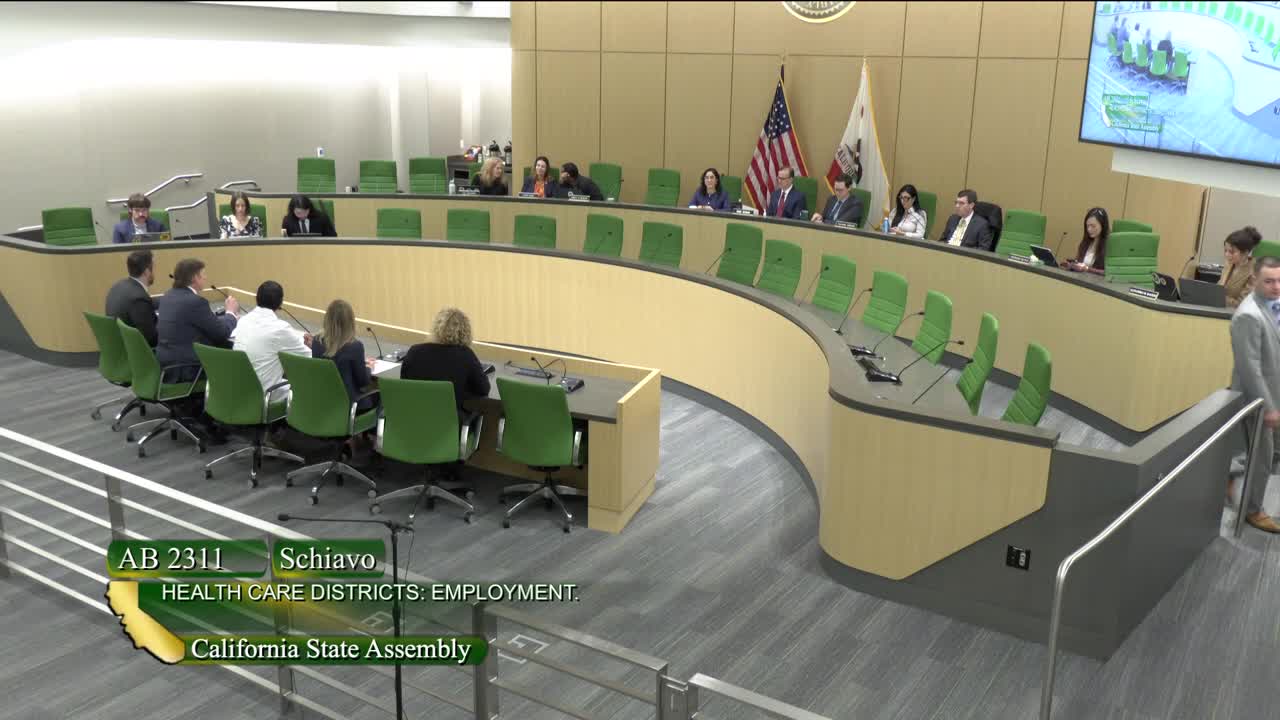 34MIN
Assembly Standing Committee on Business and Professions
Bill Author