AB 1802: Land use: mitigation lands: endowments.
- Session Year: 2025-2026
- House: Assembly
- Latest Version Date: 2026-09-18
Current Status:
Passed
(2026-09-18: Chaptered by Secretary of State - Chapter 274, Statutes of 2026.)
Introduced
In Committee
Awaiting First Chamber Vote
Passed First Chamber
In Committee
Awaiting Second Chamber Vote
Passed Second Chamber
Enacted
The Planning and Zoning Law authorizes a state or local public agency to authorize a governmental entity, a special district, a nonprofit organization, a for-profit entity, a person, or another entity to hold title to and manage an interest in property held for mitigation purposes, subject to certain requirements.
Existing law authorizes a governmental entity, special district, or nonprofit organization that holds the property as described above to hold an endowment conveyed for the property, except as specified. Existing law subjects the holder of an endowment to certain requirements, including that the holder certify to the project proponent or the holder of the mitigation property or a conservation easement and the local or state agency that required the endowment that it meets specified requirements. Existing law repeals these provisions on January 1, 2027.
This bill would delete the above repeal date, thereby extending those provisions indefinitely.
Existing law establishes the Department of Fish and Wildlife in the Natural Resources Agency. Under existing law, the department has jurisdiction over the conservation, protection, and management of fish, wildlife, native plants, and habitat necessary for biologically sustainable populations of those species.
This bill would require the department, on or before July 1, 2030, and every 5 years thereafter, to post on its internet website a summary table providing information on the status of certain endowments held as described above, as specified. The bill would require the summary table to include specified information with respect to each such endowment, including, among other things, the name of the endowment holder.
The Planning and Zoning Law authorizes a state or local public agency to authorize a governmental entity, a special district, a nonprofit organization, a for-profit entity, a person, or another entity to hold title to and manage an interest in property held for mitigation purposes, subject to certain requirements.
Existing law authorizes a governmental entity, special district, or nonprofit organization that holds the property as described above to hold an endowment conveyed for the property, except as specified. Existing law subjects the holder of an endowment to certain requirements, including that the holder certify to the project proponent or the holder of the mitigation property or a conservation easement and the local or state agency that required the endowment that it meets specified requirements. Existing law repeals these provisions on January 1, 2027.
This bill would delete the above repeal date, thereby extending those provisions indefinitely.
(a)Notwithstanding Section 13014 of the Fish and Game Code, if an endowment is conveyed pursuant to Section 65966 for property conveyed pursuant to Section 65967, the endowment may be held by the same governmental entity, special district, or nonprofit organization that holds the property pursuant to this section.
(b)(1)Except as permitted pursuant to paragraph (2), the endowment shall be held by one of the following:
(A)The agency or agencies that required the mitigation.
(B)The governmental entity, special district, or nonprofit organization that either holds the property, or holds an interest in the property, for conservation purposes.
(C)The governmental entity or special district that retains the property after conveying an interest in the property for conservation purposes if that governmental entity or special district is protecting, restoring, or enhancing the property that was retained.
(2)The exceptions to paragraph (1) are the following:
(A)An endowment that is held by an entity other than the state or holder of the mitigation property as of January 1, 2012.
(B)An endowment that is held by another entity, which is qualified pursuant to this chapter, pursuant to the terms of a natural community conservation plan (Chapter 10 (commencing with Section 2800) of Division 3 of the Fish and Game Code) or a safe harbor agreement (Article 3.7 (commencing with Section 2089.2) of Chapter 1.5 of Division 3 of the Fish and Game Code). In order for this paragraph to apply, prior to setting aside any endowments, the implementation agreement that is a part of an approved natural community conservation plan, the planning agreement for any natural community conservation plan that has not yet been approved, or the safe harbor agreement shall specifically address the arrangements for the endowment including, but not limited to, qualifications of the endowment holder, capitalization rate, return objectives, and the spending rule and disbursement policies.
(C)If existing law prohibits the holder of the mitigation property to hold the endowment, including for-profit entities.
(D)If the project proponent and the holder of the mitigation property or conservation easement agree that a community foundation or a congressionally chartered foundation shall hold the endowment.
(E)If the mitigation property is held or managed by a federal agency.
(F)If any of the same mitigation property is required to be conveyed pursuant to both a federal and state governmental approval, and under the federal governmental approval the federal agency does not approve one of the entities described in paragraph (1) of subdivision (b) as chosen to hold the endowment by the agreement of the project proponent and the holder of the mitigation property or conservation easement.
(c)A community foundation or congressionally chartered foundation that holds an endowment pursuant to subparagraphs (A) to (F), inclusive, of paragraph (2) of subdivision (b), shall meet all the qualifications and requirements of this chapter for holding, managing, investing, and disbursing the endowment funds.
(d)Any entity that holds an endowment under this chapter shall hold, manage, invest, and disburse the funds in furtherance of the long-term stewardship of the property in accordance with subdivision (a) of Section 65965.
(e)The holder of an endowment shall certify to the project proponent or the holder of the mitigation property or a conservation easement and the local or state agency that required the endowment that it meets all of the following requirements:
(1)The holder has the capacity to effectively manage the mitigation funds.
(2)The holder has the capacity to achieve reasonable rates of return on the investment of those funds similar to those of other prudent investors for endowment funds and shall manage and invest the endowment in good faith and with the care an ordinarily prudent person in a like position would exercise under similar circumstances, consistent with the Uniform Prudent Management of Institutional Funds Act (Part 7 (commencing with Section 18501) of Division 9 of the Probate Code).
(3)The holder utilizes generally accepted accounting practices as promulgated by either of the following:
(A)The Financial Accounting Standards Board or any successor entity for nonprofit organizations.
(B)The Governmental Accounting Standards Board or any successor entity for public agencies, to the extent those practices do not conflict with any requirement for special districts in Article 2 (commencing with Section 53630) of Chapter 4 of Part 1 of Division 2 of Title 5.
(4)The holder will be able to ensure that funds are accounted for, and tied to, a specific property.
(5)If the holder is a nonprofit organization, a community foundation, or a congressionally chartered foundation, it has an investment policy that is consistent with the Uniform Prudent Management of Institutional Funds Act (Part 7 (commencing with Section 18501) of Division 9 of the Probate Code).
(f)If a governmental entity, community foundation, special district, nonprofit organization, or a congressionally chartered foundation meets the requirements of this chapter, it is qualified to be a holder of the endowment for the purpose of obtaining any permit, clearance, or mitigation approval from a state or local agency.
(g)Except for a mitigation agreement prepared by a state agency, the mitigation agreement that authorizes the funds to be conveyed to a governmental entity, community foundation, special district, a congressionally chartered foundation, or nonprofit organization pursuant to subdivision (a) shall include a provision that requires the endowment be held by a governmental entity, special district, or a nonprofit organization to revert to the local agency, or to a successor organization identified by the agency and subject to subdivision (e), if any of the following occurs:
(1)The governmental entity, community foundation, special district, a congressionally chartered foundation, or nonprofit organization ceases to exist.
(2)The governmental entity, community foundation, special district, a congressionally chartered foundation, or nonprofit organization is dissolved.
(3)The governmental entity, community foundation, special district, a congressionally chartered foundation, or nonprofit organization becomes bankrupt or insolvent.
(4)The local agency reasonably determines that the endowment held by the governmental entity, community foundation, special district, or nonprofit organization, or its successor entity, is not being held, managed, invested, or disbursed for conservation purposes and consistent with the mitigation agreement and legal requirements. Any reverted funds shall continue to be held, managed, and disbursed only for long-term stewardship and benefit of the specific property for which they were set aside. If the funds revert from the governmental entity, community foundation, special district, or nonprofit organization, the special district or nonprofit organization may choose to relinquish the property. If the property is relinquished, the local agency shall accept title to the property or identify an approved governmental entity, community foundation, special district, or nonprofit organization to accept title to the property.
(h)Nothing in this section shall prohibit a state or local agency from determining that a governmental entity, community foundation, special district, a congressionally chartered foundation, or nonprofit organization meets the requirements of this section and is qualified to hold the endowment, or including a provision in the mitigation agreement as described in subdivision (g).
(i)A state or local agency may allow the endowment to be held temporarily in an escrow account until December 31, 2012, after which time the funds shall be transferred to the entity that will permanently hold the endowment.
(j)Subject to subdivision (g), any endowment that is conveyed to and held by a governmental entity, special district, or nonprofit organization pursuant to this section shall continue to be held by the entity if this section is repealed.
(k)A state or local agency shall not require, as a condition of obtaining any permit, clearance, agreement, or mitigation approval from the state or local agency, that a preferred or exclusively named entity by the state or local agency be named as the entity to hold, manage, invest, and disburse the funds in furtherance of the long-term stewardship of the property for which the funds were set aside.
SEC. 2.Section 65968.5 is added to the Government Code, to read:65968.5.(a)On or before July 1, 2030, and every five years thereafter, the Department of Fish and Wildlife shall post on its internet website a summary table providing information on the status of endowments held pursuant to this chapter for which either of the following is true:
(1)The Department of Fish and Wildlife provides state oversight of the endowment.
(2)The endowment is held pursuant to a Department of Fish and Wildlife permitting requirement.
(b)The summary table shall include, but is not limited to, all of the following with respect to each endowment:
(1)The name of the endowment holder.
(2)The location of the endowment property by county.
(3)The number of acres managed for that project.
(4)Whether all applicable annual reports were submitted on time.
(c)(1)The first summary table shall cover the duration from January 1, 2027, to December 31, 2029, inclusive, and subsequent summary tables shall each cover five-year durations.
(2)The Department of Fish and Wildlife shall notify the appropriate legislative policy and fiscal committees of the availability of the summary tables on its internet website.
(a)Notwithstanding Section 13014 of the Fish and Game Code, if an endowment is conveyed pursuant to Section 65966 for property conveyed pursuant to Section 65967, the endowment may be held by the same governmental entity, special district, or nonprofit organization that holds the property pursuant to this section.
(b)(1)Except as permitted pursuant to paragraph (2), the endowment shall be held by one of the following:
(A)The agency or agencies that required the mitigation.
(B)The governmental entity, special district, or nonprofit organization that either holds the property, or holds an interest in the property, for conservation purposes.
(C)The governmental entity or special district that retains the property after conveying an interest in the property for conservation purposes if that governmental entity or special district is protecting, restoring, or enhancing the property that was retained.
(2)The exceptions to paragraph (1) are the following:
(A)An endowment that is held by an entity other than the state or holder of the mitigation property as of January 1, 2012.
(B)An endowment that is held by another entity, which is qualified pursuant to this chapter, pursuant to the terms of a natural community conservation plan (Chapter 10 (commencing with Section 2800) of Division 3 of the Fish and Game Code) or a safe harbor agreement (Article 3.7 (commencing with Section 2089.2) of Chapter 1.5 of Division 3 of the Fish and Game Code). In order for this paragraph to apply, prior to setting aside any endowments, the implementation agreement that is a part of an approved natural community conservation plan, the planning agreement for any natural community conservation plan that has not yet been approved, or the safe harbor agreement shall specifically address the arrangements for the endowment including, but not limited to, qualifications of the endowment holder, capitalization rate, return objectives, and the spending rule and disbursement policies.
(C)If existing law prohibits the holder of the mitigation property to hold the endowment, including for-profit entities.
(D)If the project proponent and the holder of the mitigation property or conservation easement agree that a community foundation or a congressionally chartered foundation shall hold the endowment.
(E)If the mitigation property is held or managed by a federal agency.
(F)If any of the same mitigation property is required to be conveyed pursuant to both a federal and state governmental approval, and under the federal governmental approval the federal agency does not approve one of the entities described in paragraph (1) of subdivision (b) as chosen to hold the endowment by the agreement of the project proponent and the holder of the mitigation property or conservation easement.
(c)A community foundation or congressionally chartered foundation that holds an endowment pursuant to subparagraphs (A) to (F), inclusive, of paragraph (2) of subdivision (b), shall meet all the qualifications and requirements of this chapter for holding, managing, investing, and disbursing the endowment funds.
(d)Any entity that holds an endowment under this chapter shall hold, manage, invest, and disburse the funds in furtherance of the long-term stewardship of the property in accordance with subdivision (a) of Section 65965.
(e)The holder of an endowment shall certify to the project proponent or the holder of the mitigation property or a conservation easement and the local or state agency that required the endowment that it meets all of the following requirements:
(1)The holder has the capacity to effectively manage the mitigation funds.
(2)The holder has the capacity to achieve reasonable rates of return on the investment of those funds similar to those of other prudent investors for endowment funds and shall manage and invest the endowment in good faith and with the care an ordinarily prudent person in a like position would exercise under similar circumstances, consistent with the Uniform Prudent Management of Institutional Funds Act (Part 7 (commencing with Section 18501) of Division 9 of the Probate Code).
(3)The holder utilizes generally accepted accounting practices as promulgated by either of the following:
(A)The Financial Accounting Standards Board or any successor entity for nonprofit organizations.
(B)The Governmental Accounting Standards Board or any successor entity for public agencies, to the extent those practices do not conflict with any requirement for special districts in Article 2 (commencing with Section 53630) of Chapter 4 of Part 1 of Division 2 of Title 5.
(4)The holder will be able to ensure that funds are accounted for, and tied to, a specific property.
(5)If the holder is a nonprofit organization, a community foundation, or a congressionally chartered foundation, it has an investment policy that is consistent with the Uniform Prudent Management of Institutional Funds Act (Part 7 (commencing with Section 18501) of Division 9 of the Probate Code).
(f)If a governmental entity, community foundation, special district, nonprofit organization, or a congressionally chartered foundation meets the requirements of this chapter, it is qualified to be a holder of the endowment for the purpose of obtaining any permit, clearance, or mitigation approval from a state or local agency.
(g)Except for a mitigation agreement prepared by a state agency, the mitigation agreement that authorizes the funds to be conveyed to a governmental entity, community foundation, special district, a congressionally chartered foundation, or nonprofit organization pursuant to subdivision (a) shall include a provision that requires the endowment be held by a governmental entity, special district, or a nonprofit organization to revert to the local agency, or to a successor organization identified by the agency and subject to subdivision (e), if any of the following occurs:
(1)The governmental entity, community foundation, special district, a congressionally chartered foundation, or nonprofit organization ceases to exist.
(2)The governmental entity, community foundation, special district, a congressionally chartered foundation, or nonprofit organization is dissolved.
(3)The governmental entity, community foundation, special district, a congressionally chartered foundation, or nonprofit organization becomes bankrupt or insolvent.
(4)The local agency reasonably determines that the endowment held by the governmental entity, community foundation, special district, or nonprofit organization, or its successor entity, is not being held, managed, invested, or disbursed for conservation purposes and consistent with the mitigation agreement and legal requirements. Any reverted funds shall continue to be held, managed, and disbursed only for long-term stewardship and benefit of the specific property for which they were set aside. If the funds revert from the governmental entity, community foundation, special district, or nonprofit organization, the special district or nonprofit organization may choose to relinquish the property. If the property is relinquished, the local agency shall accept title to the property or identify an approved governmental entity, community foundation, special district, or nonprofit organization to accept title to the property.
(h)Nothing in this section shall prohibit a state or local agency from determining that a governmental entity, community foundation, special district, a congressionally chartered foundation, or nonprofit organization meets the requirements of this section and is qualified to hold the endowment, or including a provision in the mitigation agreement as described in subdivision (g).
(i)A state or local agency may allow the endowment to be held temporarily in an escrow account until December 31, 2012, after which time the funds shall be transferred to the entity that will permanently hold the endowment.
(j)Subject to subdivision (g), any endowment that is conveyed to and held by a governmental entity, special district, or nonprofit organization pursuant to this section shall continue to be held by the entity if this section is repealed.
(k)A state or local agency shall not require, as a condition of obtaining any permit, clearance, agreement, or mitigation approval from the state or local agency, that a preferred or exclusively named entity by the state or local agency be named as the entity to hold, manage, invest, and disburse the funds in furtherance of the long-term stewardship of the property for which the funds were set aside.
(l)This section shall remain in effect only until January 1, 2027, and as of that date is repealed, unless a later enacted statute, that is enacted before January 1, 2027, deletes or extends that date.|
Date
|
Status
|
|---|---|
| Sep 18, 2026 | Chaptered by Secretary of State - Chapter 274, Statutes of 2026. |
| Sep 18, 2026 | Approved by the Governor. |
| Aug 28, 2026 | Enrolled and presented to the Governor at 3:30 p.m. |
| Aug 24, 2026 | Senate amendments concurred in. To Engrossing and Enrolling. (Ayes 78. Noes 0. Page 6403.). |
| Aug 24, 2026 | Senate amendments concurred in. To Engrossing and Enrolling. (Ayes 78. Noes 0.). |
| Aug 24, 2026 | Senate amendments concurred in. To Engrossing and Enrolling. |
| Aug 20, 2026 | In Assembly. Concurrence in Senate amendments pending. |
| Aug 20, 2026 | Read third time. Passed. Ordered to the Assembly. (Ayes 39. Noes 0. Page 5590.). |
| Aug 20, 2026 | Read third time. Passed. Ordered to the Assembly. (Ayes 39. Noes 0.). |
| Aug 18, 2026 | Ordered to special consent calendar. |
| Aug 13, 2026 | Read second time. Ordered to third reading. |
| Aug 13, 2026 | From committee: Do pass. (Ayes 7. Noes 0.) (August 13). |
| Aug 3, 2026 | In committee: Referred to APPR. suspense file. |
| Jul 2, 2026 | Read second time and amended. Re-referred to Com. on APPR. |
| Jul 2, 2026 | From committee: Amend, and do pass as amended and re-refer to Com. on APPR. with recommendation: To Consent Calendar. (Ayes 7. Noes 0.) (July 1). |
| Jun 24, 2026 | From committee: Do pass and re-refer to Com. on L. GOV. with recommendation: To Consent Calendar. (Ayes 7. Noes 0.) (June 23). Re-referred to Com. on L. GOV. |
| Jun 3, 2026 | Referred to Coms. on N.R. & W. and L. GOV. |
| May 22, 2026 | In Senate. Read first time. To Com. on RLS. for assignment. |
| May 22, 2026 | Read third time. Passed. Ordered to the Senate. (Ayes 74. Noes 0. Page 5257.) |
| May 22, 2026 | Read third time. Passed. Ordered to the Senate. (Ayes 74. Noes 0.) |
| May 18, 2026 | Read second time. Ordered to third reading. |
| May 14, 2026 | From committee: Do pass. (Ayes 15. Noes 0.) (May 14). |
| May 6, 2026 | In committee: Set, first hearing. Referred to APPR. suspense file. |
| Apr 23, 2026 | From committee: Do pass and re-refer to Com. on APPR. with recommendation: To Consent Calendar. (Ayes 10. Noes 0.) (April 22). Re-referred to Com. on APPR. |
| Apr 15, 2026 | From committee: Do pass and re-refer to Com. on L. GOV. with recommendation: To Consent Calendar. (Ayes 13. Noes 0.) (April 14). Re-referred to Com. on L. GOV. |
| Apr 6, 2026 | Re-referred to Coms. on W., P., & W. and L. GOV. pursuant to Assembly Rule 96. |
| Mar 16, 2026 | Referred to Coms. on L. GOV. and W., P., & W. |
| Feb 11, 2026 | From printer. May be heard in committee March 13. |
| Feb 10, 2026 | Read first time. To print. |
|
Date
|
Description
|
Location
|
Votes
|
|
|---|---|---|---|---|
| Aug 24, 2026 | AB 1802 Stefani Concurrence in Senate Amendments | Assembly Floor |
Passed |
|
| Aug 20, 2026 | Special Consent AB1802 Stefani By Becker | Senate Floor |
Passed |
|
| Aug 13, 2026 | Do pass | Senate Standing Committee on Appropriations |
Passed |
|
| Aug 3, 2026 | Placed on suspense file | Senate Standing Committee on Appropriations |
Passed |
|
| Jul 1, 2026 | Do pass as amended, but first amend, and re-refer to the Committee on [Appropriations] with the recommendation: To Consent Calendar | Senate Standing Committee on Local Government |
Passed |
|
| Jul 1, 2026 | Do pass, but first be re-referred to the Committee on [Appropriations] with the recommendation: To Consent Calendar | Senate Standing Committee on Local Government |
Passed |
|
| Jun 23, 2026 | Do pass, but first be re-referred to the Committee on [Local Government] with the recommendation: To Consent Calendar | Senate Standing Committee on Natural Resources and Water |
Passed |
|
| May 22, 2026 | AB 1802 Stefani Assembly Third Reading | Assembly Floor |
Passed |
|
| May 14, 2026 | Do pass. | Assembly Standing Committee on Appropriations |
Passed |
|
| Apr 22, 2026 | Do pass and be re-referred to the Committee on [Appropriations] with recommendation: To Consent Calendar | Assembly Standing Committee on Local Government |
Passed |
|
| Apr 14, 2026 | Do pass and be re-referred to the Committee on [Local Government] with recommendation: To Consent Calendar | Assembly Standing Committee on Water, Parks, and Wildlife |
Passed |
This list shows positions taken on this bill by organizations on the date displayed, which is linked to the original source.
Positions by individuals are not included.
|
Organization
|
Position
|
Date
|
|---|---|---|
| California Councial of Land Trusts (sponsor) | ** Support | |
| California Council Of Land Trusts | ** Support | |
| California Council of Land Trusts (Sponsor) | ** Support | |
| County Of Placer | ** Support | |
| Eastern Sierra Land Trust | ** Support | |
| Elkhorn Slough Foundation | ** Support | |
| Feather River Land Trust | ** Support | |
| Filoli | ** Support | |
| John Muir Land Trust | ** Support | |
| Kings River Land Trust | ** Support | |
| Lake County Land Trust | ** Support | |
| Land Trust for Santa Barbara County | ** Support | |
| Marin Agricultural Land Trust | ** Support | |
| Placer Land Trust | ** Support | |
| Rivers & Lands Conservancy | ** Support | |
| Sacramento Valley Conservancy | ** Support | |
| Sequoia Riverlands Trust | ** Support | |
| Sierra Business Council | ** Support | |
| Sierra Consortium | ** Support | |
| Sierra County Land Trust | ** Support | |
| Sierra Foothill Conservancy | ** Support | |
| Sierra Nevada Alliance | ** Support | |
| Siskiyou Land Trust | ** Support | |
| Solano Land Trust | ** Support | |
| Sonoma Land Trust | ** Support | |
| The California Council of Land Trusts | ** Support | |
| The Land Trust of Santa Barbara County | ** Support | |
| The Nature Conservancy | ** Support | |
| Tri-Valley Conservancy | ** Support | |
| Truckee Donner Land Trust | ** Support |
CONCURRENCE IN SENATE AMENDMENTS
CSA1 Bill Id:AB 1802
Author:(Stefani)
As Amended Ver:July 2, 2026
Majority vote
SUMMARY
Deletes the sunset date of January 1, 2027, on the ability of governmental agencies, special districts, or nonprofit organizations that manage mitigation lands to also hold and manage the endowments established for the long-term stewardship of those mitigation lands, and requires the California Department of Fish and Wildlife (CDFW) to compile a summary of the status of endowments subject to CDFW's jurisdiction every five years.
Senate Amendments
- Require, on or before July 1, 2030, and every five years thereafter, CDFW to post on its internet website a summary table providing information on the status of endowments held pursuant to existing law for which either of the following is true:
- CDFW provides state oversight of the endowment.
- The endowment is held pursuant to a CDFW permitting requirement.
- Require the summary table to include, but not be limited to, all of the following with respect to each endowment:
- The name of the endowment holder.
- The location of the endowment property by county.
- The number of acres managed for that project.
- Whether all applicable annual reports were submitted on time.
- Require the first summary table to cover the duration from January 1, 2027, to December 31, 2029, inclusive, and require subsequent summary tables to each cover five-year durations.
- Require CDFW to notify the appropriate legislative policy and fiscal committees of the availability of the summary tables on its internet website.
COMMENTS
CDFW is the state's trustee agency for the state's plant, fish and wildlife. In certain circumstances, a project applicant may be required to transfer an interest in real property to CDFW or to another entity to mitigate the impact that the project will have on fish and wildlife resources in order to obtain a necessary project permit from CDFW. The interest in real property may involve a transfer of fee title, the granting of a conservation easement, or both. Nonprofit organizations – such as land trusts, special districts, or other governmental entities – can all hold and manage mitigation lands. An endowment to pay for the long-term stewardship of the mitigation lands may also be required.
The entity responsible for the mitigation lands (like a permittee or a bank sponsor) provides the endowment funds to the endowment holder, and the endowment holder then invests and distributes those funds to the mitigation land manager to implement management activities. To administer this provision, CDFW conducts oversight, review, and tracking of endowments. For example, the department tracks self-certification letters and annual fiscal reports provided by endowment holders as required by the Government Code and sends reminder letters when entities miss an annual report. CDFW staff also track and monitor endowments held at the National Fish and Wildlife Foundation (NFWF) governed by a memorandum of understanding between CDFW and NFWF.
SB 436 (Kehoe), Chapter 590, Statutes of 2011, and SB 1094 (Kehoe), Chapter 705, Statutes of 2012, established a set of requirements for mitigation agreements and the entities that may hold endowments dedicated to mitigation lands. Prior to the passage of SB 436 and SB 1094, there was a lack of clarity about who could hold and manage mitigation lands and any associated endowment set up to cover the long-term management costs of mitigation lands. In some instances, nonprofit organizations held and managed mitigation lands. However, because there was no explicit authority under the law for this arrangement, many public agencies that required mitigation for projects did not use this option for the long-term management of mitigation lands.
In addition, land managers that did hold and manage mitigation lands had to seek reimbursement for their management costs from the public agency that required the mitigation, sometimes experiencing delays in reimbursement payments of up to six months to a year. To resolve this situation, SB 436 and SB 1094 clarified that land managers could hold the mitigation endowment associated with the mitigation lands. These statutes originally contained a sunset date of January 1, 2022, which was extended to January 1, 2027, via SB 716 (McGuire), Chapter 735, Statutes of 2021.
According to the Author
"For more than 15 years, allowing nonprofits and special districts to fund, hold, and manage mitigation has proven to be a vital tool to reduce environmental impacts of development projects and ensure the long-term stewardship of California's unique habitats and wildlife. When mitigation land holders directly manage endowments, habitat management is more responsive and effective, ensures regulatory certainty, and supports streamlined compliance in infrastructure and development projects. AB 1802 removes the sunset on this existing authority, ensuring continuity for the organizations responsible for protecting and stewarding mitigation lands."
Arguments in Support
The California Council of Land Trusts, sponsor of this bill, writes, "When a private party or public agency seeks a permit for a development project, they may be required to provide funds to set aside lands for mitigation. In addition, the project developer may be required to finance the management or stewardship in perpetuity of those lands dedicated for mitigation. This financial set aside is also known as an endowment. This is a common practice to lessen and offset the adverse effects caused by various uses of public lands by requiring protection of California's plant and wildlife species for future generations.
"Endowments are essential for mitigation as an endowment perpetually replenishes itself through interest earned on principal, ensuring there is funding available for the perpetual stewardship of the land. When mitigation land holders directly manage endowments, habitat management is more responsive and effective, ensures regulatory certainty, and allows infrastructure and development projects to proceed with streamlined compliance. For more than 15 years, the ability for nonprofits and special districts to fund, hold, and manage mitigation management activities has proven to be a vital tool in mitigating the environmental impacts of development projects and ensuring the long-term stewardship of important habitat for some of California's unique floral and fauna."
Arguments in Opposition
None on file.
FISCAL COMMENTS
According to the Senate Appropriations Committee:
- By deleting the sunset on the ability of specified entities to hold and manage endowments for the stewardship of mitigation lands, this bill would result in the continuation of ongoing costs to the California Department of Fish and Wildlife (CDFW) of an unknown amount, potentially in excess of $150,000 (Fish and Game Preservation Fund [FGPF]).
- CDFW notes that if this provision in law (including the self-certification mechanism) sunsets in 2027 (absent this bill), the department would incur increased costs – including program staff, management, and legal review – to perform extended review of third-party mitigation fund holders. Therefore, this bill would also result in cost savings.
VOTES:
ASM WATER, PARKS, AND WILDLIFE: 13-0-0
YES: Papan, Jeff Gonzalez, Alanis, Alvarez, Ávila Farías, Bains, Bennett, Boerner, Caloza, Gallagher, Hart, Muratsuchi, Rogers
ASM LOCAL GOVERNMENT: 10-0-0
YES: Carrillo, Ta, Johnson, Pacheco, Ramos, Ransom, Blanca Rubio, Stefani, Ward, Wilson
ASM APPROPRIATIONS: 15-0-0
YES: Wicks, Hoover, Aguiar-Curry, Calderon, Caloza, Dixon, Fong, Mark González, Krell, Pacheco, Pellerin, Sharp-Collins, Solache, Ta, Tangipa
ASSEMBLY FLOOR: 74-0-6
YES: Addis, Aguiar-Curry, Ahrens, Alanis, Alvarez, Ávila Farías, Bains, Bauer-Kahan, Bennett, Berman, Boerner, Bonta, Bryan, Calderon, Caloza, Carrillo, Castillo, Connolly, Davies, DeMaio, Dixon, Elhawary, Ellis, Flora, Fong, Gallagher, Garcia, Gipson, Jeff Gonzalez, Mark González, Hadwick, Haney, Harabedian, Hart, Hoover, Irwin, Jackson, Johnson, Kalra, Krell, Lackey, Lee, Lowenthal, Macedo, McKinnor, Muratsuchi, Nguyen, Ortega, Pacheco, Papan, Patel, Patterson, Pellerin, Petrie-Norris, Quirk-Silva, Ramos, Ransom, Michelle Rodriguez, Rogers, Blanca Rubio, Sanchez, Schiavo, Schultz, Sharp-Collins, Solache, Soria, Stefani, Tangipa, Valencia, Wallis, Ward, Wilson, Zbur, Rivas
ABS, ABST OR NV: Arambula, Chen, Gabriel, Celeste Rodriguez, Ta, Wicks
UPDATED
VERSION: July 2, 2026
CONSULTANT: Angela Mapp / L. GOV. / (916) 319-3958 FN: 0003764
SENATE RULES COMMITTEE Office of Senate Floor Analyses (916) 651-4171 | AB 1802 |
THIRD READING
Bill No: AB 1802
Author: Stefani (D)
Amended: 7/2/26 in Senate
Vote: 21
SENATE NATURAL RES. & WATER COMMITTEE: 7-0, 6/23/26
AYES: Becker, Seyarto, Allen, Cabaldon, Grove, Laird, Stern
SENATE LOCAL GOVERNMENT COMMITTEE: 7-0, 7/1/26
AYES: Durazo, Choi, Arreguín, Ashby, Cervantes, Laird, Seyarto
SENATE APPROPRIATIONS COMMITTEE: 7-0, 8/13/26
AYES: Cervantes, Seyarto, Cabaldon, Dahle, Grayson, Richardson, Wahab
ASSEMBLY FLOOR: 74-0, 5/22/26 - See last page for vote
SUBJECT: Land use: mitigation lands: endowments
SOURCE: California Council of Land Trusts
DIGEST:
This bill removes the sunset on the ability of a governmental agency, nonprofit organization, or a special district that manages mitigation lands to also hold and manage the endowments established for long-term stewardship of those lands, and requires the California Department of Fish and Wildlife (CDFW) to compile a summary of the status of endowments subject to CDFW’s jurisdiction every five years, as provided.
ANALYSIS:
Existing law:
- Authorizes a state or local agency that requires property to be protected in order to mitigate impacts from a development project to identify how funding needs for the long-term stewardship of the mitigation property will be met. Authorizes the state or local agency to require that an endowment be established for this purpose. (Government Code §65966)
- Authorizes a state or local agency to authorize certain entities to hold title to and manage property transferred pursuant to required mitigation for the permitting of a development project under the Planning and Zoning Law, as provided. (Government Code §65967)
- Eligible entities include a governmental entity, special district, a nonprofit organization, a for-profit entity, or a person, among others.
- If a state or local agency is required to protect property to mitigate an adverse impact on natural resources, the agency may take any action that the agency deems necessary in order to meet its mitigation obligations, including holding an endowment, as provided.
- “Endowment” means the funds that are conveyed solely for the long-term stewardship, including long-term management, of a mitigation property, and held appropriately to that end, as specified. Endowments do not include funds conveyed for meeting short-term performance objectives of a project.
- Provides that an endowment may be held by the same entity that holds the property held for mitigation purposes in certain circumstances, or held by certain other entities, as specified. (Government Code §65968)
- Requires the holder of an endowment to certify to the project proponent or the holder of the mitigation property or a conservation easement and the local or state agency that required the endowment that it meets specified requirements. These requirements include the holder’s use of generally accepted accounting practices, the holder’s capacity to effectively manage the mitigation funds and achieve reasonable rates of return from the investment of those funds, among other things. (Government Code §65968)
- Sunsets on January 1, 2027, the authority of a governmental entity, special district, or nonprofit organization that hold the property held for mitigation purposes to also hold the endowment for the property, as provided. (Government Code §65968)
This bill:
- Removes the sunset on the ability of a governmental agency, nonprofit organization, or a special district that manages mitigation lands to also hold and manages the endowments established for long-term stewardship of those lands, as provided.
- Requires, on or before July 1, 2030 and every five years thereafter, CDFW to post on its internet website a summary table providing information on the status of certain endowments where CDFW provides state oversight of the endowment or the endowment is held pursuant to CDFW permitting requirements, as specified.
- Requires the summary table to provide certain specific information, including the location and number of acres managed for that project, among others.
- Requires CDFW to notify the appropriate legislative policy and fiscal committees of the availability of the summary table.
[NOTE: For additional information regarding this bill, see the Senate Natural Resources and Water and Local Government Committees’ analyses.]
FISCAL EFFECT: Appropriation: No Fiscal Com.: Yes Local: No
According to the Senate Appropriations Committee:
- By deleting the sunset on the ability of specified entities to hold and manage endowments for the stewardship of mitigation lands, this bill would result in the continuation of ongoing costs to the California Department of Fish and Wildlife (CDFW) of an unknown amount, potentially in excess of $150,000 (Fish and Game Preservation Fund [FGPF]).
- CDFW notes that if this provision in law (including the self-certification mechanism) sunsets in 2027 (absent this bill), the department would incur increased costs – including program staff, management, and legal review – to perform extended review of third-party mitigation fund holders. Therefore, this bill would also result in cost savings.
SUPPORT: (Verified 8/13/26)
California Council of Land Trusts (sponsor)
County of Placer
Eastern Sierra Land Trust
Elkhorn Slough Foundation
Feather River Land Trust
Filoli
John Muir Land Trust
Kings River Land Trust
Lake County Land Trust
Marin Agricultural Land Trust
Placer Land Trust
Rivers & Lands Conservancy
Sacramento Valley Conservancy
Sequoia Riverlands Trust
Sierra Business Council
Sierra County Land Trust
Sierra Foothill Conservancy
Sierra Nevada Alliance
Siskiyou Land Trust
Solano Land Trust
Sonoma Land Trust
The Land Trust of Santa Barbara County
The Nature Conservancy
Tri-Valley Conservancy
Truckee Donner Land Trust
OPPOSITION: (Verified 8/13/26)
None received
ARGUMENTS IN SUPPORT: According to the author, “For more than 15 years, allowing nonprofits and special districts to fund, hold, and manage mitigation has proven to be a vital tool to reduce environmental impacts of development projects and ensure the long-term stewardship of California’s unique habitats and wildlife. When mitigation land holders directly manage endowments, habitat management is more responsive and effective, ensures regulatory certainty, and supports streamlined compliance in infrastructure and development projects. AB 1802 removes the sunset on this existing authority, ensuring continuity for the organizations responsible for protecting and stewarding mitigation lands.”
ASSEMBLY FLOOR: 74-0, 5/22/26
AYES: Addis, Aguiar-Curry, Ahrens, Alanis, Alvarez, Ávila Farías, Bains, Bauer-Kahan, Bennett, Berman, Boerner, Bonta, Bryan, Calderon, Caloza, Carrillo, Castillo, Connolly, Davies, DeMaio, Dixon, Elhawary, Ellis, Flora, Fong, Gallagher, Garcia, Gipson, Jeff Gonzalez, Mark González, Hadwick, Haney, Harabedian, Hart, Hoover, Irwin, Jackson, Johnson, Kalra, Krell, Lackey, Lee, Lowenthal, Macedo, McKinnor, Muratsuchi, Nguyen, Ortega, Pacheco, Papan, Patel, Patterson, Pellerin, Petrie-Norris, Quirk-Silva, Ramos, Ransom, Michelle Rodriguez, Rogers, Blanca Rubio, Sanchez, Schiavo, Schultz, Sharp-Collins, Solache, Soria, Stefani, Tangipa, Valencia, Wallis, Ward, Wilson, Zbur, Rivas
NO VOTE RECORDED: Arambula, Chen, Gabriel, Celeste Rodriguez, Ta, Wicks
Prepared by: Katharine Moore / N.R. & W. / (916) 651-4116
8/14/26 16:06:32
**** END ****
SENATE COMMITTEE ON
Senator Sabrina Cervantes, Chair
2025 - 2026 Regular Session
AB 1802 (Stefani) - Land use: mitigation lands: endowments
Version: | Policy Vote: |
Urgency: | Mandate: |
Hearing Date: | Consultant: |
Bill Summary:
This bill would delete the sunset date of January 1, 2027, on the ability of governmental agencies, special districts, or nonprofit organizations that manage mitigation lands to hold and manage the endowments established for the long-term stewardship of those mitigation lands.
Fiscal Impact:
- By deleting the sunset on the ability of specified entities to hold and manage endowments for the stewardship of mitigation lands, this bill would result in the continuation of ongoing costs to the California Department of Fish and Wildlife (CDFW) of an unknown amount, potentially in excess of $150,000 (Fish and Game Preservation Fund [FGPF]).
- CDFW notes that if this provision in law (including the self-certification mechanism) sunsets in 2027 (absent this bill), the department would incur increased costs – including program staff, management, and legal review – to perform extended review of third-party mitigation fund holders. Therefore, this bill would also result in cost savings.
Background:
The California Department of Fish and Wildlife (CDFW) is the state’s trustee agency for the state’s plant, fish and wildlife. In certain circumstances, a project applicant may be required to transfer an interest in real property to CDFW or to another entity to mitigate the impact that the project will have on fish and wildlife resources in order to obtain a necessary project permit from CDFW. The interest in real property may involve a transfer of fee title, the granting of a conservation easement, or both. Nonprofit organizations, such as land trusts, special districts, or governmental entities can all hold and manage these mitigation lands. An endowment to pay for the long-term stewardship of the mitigation lands may also be required.
Two bills – SB 436 (Kehoe, Chapter 590, Statutes of 2011) and SB 1094 (Kehoe, Chapter 705, Statutes of 2012) – established a set of requirements for mitigation agreements and the entities that may hold endowments dedicated to mitigation lands. Before these two bills became law, there was a lack of clarity about who could hold and manage mitigation lands and any associated endowment set up to cover the long-term management costs of the mitigation lands. In some instances, nonprofit organizations held and managed mitigation lands, but there was no explicit authority under the law for this arrangement. At least in part due to this, many public agencies did not seek endowments for the long-term management of mitigation lands. Further, land managers that held and managed mitigation lands had to seek reimbursement for their management costs from the public agency that required the mitigation. This could result in reimbursement delays of six months to one year. Following the passage of the two bills, land managers were authorized to hold mitigation endowments associated with the mitigation lands.
Proposed Law:
Existing law establishes the framework governing mitigation lands required as a condition of development project approval — authorizing state and local agencies to require endowments for the long-term stewardship of those lands, specifying which entities may hold title to and manage the property and the endowment, imposing certification requirements on endowment holders regarding accounting practices and financial management capacity, and sunsetting on January 1, 2027 the authority of a governmental entity, special district, or nonprofit organization holding the mitigation property to also hold the associated endowment.
This bill would remove the sunset on the ability of a governmental agency, nonprofit organization, or a special district that manages mitigation lands to also hold and manages the endowments established for long-term stewardship of those lands.
It would also require CDFW, on or before July 1, 2030, and every five years thereafter, to post online a summary table providing information on the status of endowments held pursuant to these provisions for which either of the following is true:
- CDFW provides state oversight of the endowment.
- The endowment is held pursuant to a CDFW permitting requirement.
Related Legislation:
SB 716 (McGuire, Chapter 735, Statutes of 2021) extends the sunset until January 1, 2027, on the ability of governmental agencies, nonprofit organizations, special districts that manage mitigation lands to also hold and manage the endowments established for long-term stewardship of those lands.
SB 1094 (Kehoe, Chapter 705, Statutes of 2012) allows certain community foundations and congressionally chartered foundations to hold endowment accounts for mitigation lands, and expands and modifies the conditions all endowment holders must abide by.
SB 436 (Kehoe, Chapter 590, Statutes of 2011) authorizes a state or local agency to allow a qualified and approved nonprofit organization or special district to hold property and long-term stewardship funds to mitigate adverse impacts to natural resources caused by a permitted development project. Sunsets this authority on January 1, 2022.
Staff Comments:
CDFW costs. CDFW requires mitigation under its regulatory authorities. Mitigation may include the preservation of lands in perpetuity, which typically requires an endowment to appropriately manage the lands. The entity responsible for the mitigation lands (like a permittee or a bank sponsor) provides the endowment funds to the endowment holder, and the endowment holder then invests and distributes those funds to the mitigation land manager to implement management activities.
To administer this provision in law, CDFW conducts oversight, review, and tracking of endowments. For example, the department tracks self-certification letters and annual fiscal reports provided by endowment holders as required by the Government Code and sends reminder letters when entities miss an annual report. CDFW staff also track and monitor endowments held at the National Fish and Wildlife Foundation (NFWF) governed by a memorandum of understanding between CDFW and NFWF.
Sunset no more. One of the purposes of a sunset is to provide an opportunity for legislative oversight of the implementation of the program with the sunset. Removal of the sunset may therefore result in less scrutiny of a program. However, the development of the CDFW summary tables online provides an opportunity, despite the removal of the sunset, to provide legislative oversight of this program.
-- END --
SENATE COMMITTEE ON LOCAL GOVERNMENT
Senator María Elena Durazo, Chair
2025 - 2026 Regular
Bill No: | AB 1802 | Hearing Date: | 7/1/26 |
Author: | Stefani | Fiscal: | Yes |
Version: | 2/10/26 | Consultant: | Favorini-Csorba |
Land use: mitigation lands
Makes permanent the ability of governmental entities, nonprofit organizations, congressionally chartered foundations, and community foundations to hold mitigation land endowments.
Background
When cities and counties approve land use projects, they can require builders to set aside resource land or easements to mitigate the conversion of other property to development. Public agencies may impose mitigation conditions to offset the effects of other agencies’ public works projects. Rather than own and manage the mitigation land or the easements themselves, public agencies can turn over the property interests to nonprofit organizations that meet statutory criteria (SB 2746, Blakeslee, 2006; AB 1246, Blakeslee, 2007).
In addition to requiring project sponsors to set aside resource lands for mitigation purposes, sometimes public agencies also require applicants to set aside money, known as an endowment, to pay for managing the land or easements. In 2011, the Legislature authorized a state or local agency to allow a qualified and approved nonprofit organization or special district to hold property and long-term endowments to mitigate adverse impacts to natural resources caused by a permitted development project (SB 436, Kehoe). The next year, the Legislature expanded this authority to other governmental entities, community foundations, and congressionally chartered foundations (such as the National Fish and Wildlife Foundation, which is a private conservation organization created by Congress), and added voluminous requirements for mitigation agreements to ensure that the expected mitigation occurs in perpetuity (SB 1094, Kehoe). Among these requirements are an annual report from the entity that holds the endowment must report annually to the state or local agency that approved the mitigation measure on the fiscal health of the endowment. SB 1094 included a sunset date of January 1, 2022. SB 716 (McGuire) extended the sunset to January 1, 2027.
The California Council of Land Trusts wants the Legislature to make the authority for governmental entities, nonprofit organizations, and community foundations to hold endowments permanent.
Proposed Law
Assembly Bill 1802 repeals the January 1, 2027, sunset date on the ability of governmental entities, nonprofit organizations, congressionally chartered foundations, and community foundations to hold mitigation land endowments.
Comments
1. Purpose of the bill. According to the author, “For more than 15 years, allowing nonprofits and special districts to fund, hold, and manage mitigation has proven to be a vital tool to reduce environmental impacts of development projects and ensure the long-term stewardship of California’s unique habitats and wildlife. When mitigation land holders directly manage endowments, habitat management is more responsive and effective, ensures regulatory certainty, and supports streamlined compliance in infrastructure and development projects. AB 1802 removes the sunset on this existing authority, ensuring continuity for the organizations responsible for protecting and stewarding mitigation lands.”
2. Another county heard from. The Senate Rules Committee has ordered a double referral of AB 1802: first to the Committee on Natural Resources and Water, which approved AB 1802 at its June 23rd hearing on a vote of 7-0, and second to the Committee on Local Government. The Committee on Natural Resources and Water notes:
“In the fall, Committee staff asked the Senate Office of Research (SOR) to review CDFW’s implementation of this endowment program in view of the looming sunset. SOR’s review was positive. However, SOR noted that there were instances where the required submittal of an annual report to CDFW was delinquent or skipped. Some entities were repeat offenders. CDFW’s practice is to not authorize an entity that has a missing or delinquent report to hold an additional endowment until missing information is provided. CDFW also reported that a comprehensive database is under development that will include endowments for mitigation lands.
“One of the purposes of a sunset is to provide an opportunity for legislative oversight of the implementation of the program with the sunset. Removal of the sunset may therefore result in less scrutiny of a program. However, the development of the CDFW database provides an opportunity, despite the removal of the sunset, to provide legislative oversight of this program.
“In view of this, the Committee may wish to add a periodic legislative report containing information on the endowments starting in five years.”
These amendments will be adopted as committee amendments should the bill pass this Committee.
Assembly Actions
Assembly Water, Parks, and Wildlife Committee: 12-0
Assembly Local Government Committee: 10-0
Assembly Appropriations Committee: 15-0
Assembly Floor: 74-0
Support and Opposition
(6/26/26)
Support: Sierra Consortium
Sonoma Land Trust
Opposition: None Submitted
-- END --
SENATE COMMITTEE ON NATURAL RESOURCES AND WATER
Senator Josh Becker, Chair
2025 - 2026 Regular
Bill No: AB Hearing Date: June 23, 2026
Author: | |||
Version: | Introduced | ||
Urgency: | Fiscal: | ||
Consultant: | |||
Subject: Land use: mitigation lands
SUMMARY
This bill would remove the sunset on the ability of a governmental agency, nonprofit organization, or a special district that manages mitigation lands to also hold and manage the endowments established for long-term stewardship of those lands.
BACKGROUND AND EXISTING LAW
Mitigation lands
The California Department of Fish and Wildlife (CDFW) is the state’s trustee agency for the state’s plant, fish and wildlife. In certain circumstances, a project applicant may be required to transfer an interest in real property to CDFW or to another entity to mitigate the impact that the project will have on fish and wildlife resources in order to obtain a necessary project permit from CDFW. The interest in real property may involve a transfer of fee title, the granting of a conservation easement, or both. Nonprofit organizations, such as land trusts, special districts, or governmental entities can all hold and manage these mitigation lands. An endowment to pay for the long-term stewardship of the mitigation lands may also be required.
Two bills – SB 436 (Kehoe, Chapter 590, Statutes of 2011) and SB 1094 (Kehoe, Chapter 705, Statutes of 2012) – established a set of requirements for mitigation agreements and the entities that may hold endowments dedicated to mitigation lands. Before these two bills became law, there was a lack of clarity about who could hold and manage mitigation lands and any associated endowment set up to cover the long-term management costs of the mitigation lands. In some instances, nonprofit organizations held and managed mitigation lands, but there was no explicit authority under the law for this arrangement. At least in part due to this, many public agencies did not seek endowments for the long-term management of mitigation lands. Further, land managers that held and managed mitigation lands had to seek reimbursement for their management costs from the public agency that required the mitigation. This could result in reimbursement delays of six months to one year. Following the passage of the two bills, land managers were authorized to hold mitigation endowments associated with the mitigation lands.
Existing law:
- Authorizes a state or local agency that requires property to be protected in order to mitigate impacts from a development project to identify how funding needs for the long-term stewardship of the mitigation property will be met. Authorizes the state or local agency to require that an endowment be established for this purpose. (Government Code §65966)
- Authorizes a state or local agency to authorize certain entities to hold title to and manage property transferred pursuant to required mitigation for the permitting of a development project under the Planning and Zoning Law, as provided. (Government Code §65967)
- Eligible entities include a governmental entity, special district, a nonprofit organization, a for-profit entity, or a person, among others.
- If a state or local agency is required to protect property to mitigate an adverse impact on natural resources, the agency may take any action that the agency deems necessary in order to meet its mitigation obligations, including holding an endowment, as provided.
- “Endowment” means the funds that are conveyed solely for the long-term stewardship, including long-term management, of a mitigation property, and held appropriately to that end, as specified. Endowments do not include funds conveyed for meeting short-term performance objectives of a project.
- Provides that an endowment may be held by the same entity that holds the property held for mitigation purposes in certain circumstances, or held by certain other entities, as specified. (Government Code §65968)
- Requires the holder of an endowment to certify to the project proponent or the holder of the mitigation property or a conservation easement and the local or state agency that required the endowment that it meets specified requirements. These requirements include the holder’s use of generally accepted accounting practices, the holder’s capacity to effectively manage the mitigation funds and achieve reasonable rates of return from the investment of those funds, among other things. (Government Code §65968)
- Sunsets on January 1, 2027, the authority of a governmental entity, special district, or nonprofit organization that hold the property held for mitigation purposes to also hold the endowment for the property, as provided. (Government Code §65968)
PROPOSED LAW
This bill would remove the sunset on the ability of a governmental agency, nonprofit organization, or a special district that manages mitigation lands to also hold and manages the endowments established for long-term stewardship of those lands.
ARGUMENTS IN SUPPORT
According to the author, “For more than 15 years, allowing nonprofits and special districts to fund, hold, and manage mitigation has proven to be a vital tool to reduce environmental impacts of development projects and ensure the long-term stewardship of California’s unique habitats and wildlife. When mitigation land holders directly manage endowments, habitat management is more responsive and effective, ensures regulatory certainty, and supports streamlined compliance in infrastructure and development projects. AB 1802 removes the sunset on this existing authority, ensuring continuity for the organizations responsible for protecting and stewarding mitigation lands.”
ARGUMENTS IN OPPOSITION
None received
COMMENTS
This bill is double-referred. This bill is referred to both this Committee and the Senate Local Government Committee. This Committee is the Committee of first referral. Elements of this bill under the jurisdiction of the Senate Local Government Committee are included here for completeness and context only and will be discussed before that Committee.
Senate Office of Research review. In the fall, Committee staff asked the Senate Office of Research (SOR) to review CDFW’s implementation of this endowment program in view of the looming sunset. SOR’s review was positive. However, SOR noted that there were instances where the required submittal of an annual report to CDFW[1] was delinquent or skipped. Some entities were repeat offenders. CDFW’s practice is to not authorize an entity that has a missing or delinquent report to hold an additional endowment until missing information is provided. CDFW also reported that a comprehensive database is under development that will include endowments for mitigation lands.
One of the purposes of a sunset is to provide an opportunity for legislative oversight of the implementation of the program with the sunset. Removal of the sunset may therefore result in less scrutiny of a program. However, the development of the CDFW database provides an opportunity, despite the removal of the sunset, to provide legislative oversight of this program.
In view of this, the Committee may wish to add a periodic legislative report containing information on the endowments starting in five years. [Amendment #1]
Commitments by the author. Due to the vagaries of the legislative policy committee calendar and the time needed to process amendments, the committee amendments the author commits to in this Committee will be formally taken in the Senate Local Government Committee.
Recent related legislation
SB 716 (McGuire, Chapter 735, Statutes of 2021) extends the sunset until January 1, 2027, on the ability of governmental agencies, nonprofit organizations, special districts that manage mitigation lands to also hold and manage the endowments established for long-term stewardship of those lands.
SB 1094 (Kehoe, Chapter 705, Statutes of 2012) allows certain community foundations and congressionally chartered foundations to hold endowment accounts for mitigation lands, and expands and modifies the conditions all endowment holders must abide by.
SB 436 (Kehoe, Chapter 590, Statutes of 2011) authorizes a state or local agency to allow a qualified and approved nonprofit organization or special district to hold property and long-term stewardship funds to mitigate adverse impacts to natural resources caused by a permitted development project. Sunsets this authority on January 1, 2022.
SUGGESTED AMENDMENTS
AMENDMENT 1
Add a new section to the Government Code in the same chapter:
65968.X
On or before July 1, 2030 and every five years thereafter, the Department of Fish and Wildlife shall produce a summary table providing information on the status of endowments held pursuant to this chapter where the Department of Fish and Wildlife provides state oversight of the endowment or the endowment is held pursuant to a Department of Fish and Wildlife permitting requirement. The first summary table shall include the time period January 1, 2027 through December 31, 2029, inclusive, and subsequent summary tables shall include five years of information each. Each summary table shall include, but is not limited to, the name of each endowment holder, the location of the endowment property by county, number of acres managed for that project, and whether the annual reports were submitted on time. The Department of Fish and Wildlife shall post the summary table online on its internet website and notify the appropriate legislative policy and fiscal committees that the summary table is available there.
SUPPORT
California Council of Land Trusts (sponsor)
County of Placer
Eastern Sierra Land Trust
Elkhorn Slough Foundation
Feather River Land Trust
Filoli
John Muir Land Trust
Kings River Land Trust
Lake County Land Trust
Marin Agricultural Land Trust
Placer Land Trust
Rivers & Lands Conservancy
Sacramento Valley Conservancy
Sequoia Riverlands Trust
Sierra Business Council
Sierra County Land Trust
Sierra Foothill Conservancy
Sierra Nevada Alliance
Siskiyou Land Trust
Solano Land Trust
Sonoma Land Trust
The Land Trust of Santa Barbara County
Tri-Valley Conservancy
Truckee Donner Land Trust
OPPOSITION
None received
-- END --
Only holders of endowments and mitigation lands that stem from CDFW permitting and from CDFW mitigation banks are required to report to CDFW. ↑
ASSEMBLY THIRD READING
ATR Bill Id:AB 1802
Author:(Stefani)
As Introduced Ver:February 10, 2026
Majority vote
SUMMARY
Deletes the sunset date of January 1, 2027, on the ability of governmental agencies, special districts, or nonprofit organizations that manage mitigation lands to also hold and manage the endowments established for the long-term stewardship of those mitigation lands.
Major Provisions
COMMENTS
SB 436 (Kehoe), Chapter 590, Statutes of 2011, and SB 1094 (Kehoe), Chapter 705, Statutes of 2012, established a set of requirements for mitigation agreements and the entities that may hold endowments dedicated to mitigation lands. Prior to the passage of SB 436 and SB 1094, there was a lack of clarity about who could hold and manage mitigation lands and any associated endowment set up to cover the long-term management costs of mitigation lands. In some instances, nonprofit organizations held and managed mitigation lands. However, because there was no explicit authority under the law for this arrangement, many public agencies that required mitigation for projects did not use this option for the long-term management of mitigation lands.
Additionally, land managers that did hold and manage mitigation lands had to seek reimbursement for their management costs from the public agency that required the mitigation, sometimes experiencing delays in reimbursement payments of up to six months to a year. To resolve this situation, SB 436 and SB 1094 clarified that land managers could hold the mitigation endowment associated with the mitigation lands.
According to the Author
For more than 15 years, allowing nonprofits and special districts to fund, hold, and manage mitigation has proven to be a vital tool to reduce environmental impacts of development projects and ensure the long-term stewardship of California's unique habitats and wildlife. When mitigation land holders directly manage endowments, habitat management is more responsive and effective, ensures regulatory certainty, and supports streamlined compliance in infrastructure and development projects. AB 1802 removes the sunset on this existing authority, ensuring continuity for the organizations responsible for protecting and stewarding mitigation lands.
Arguments in Support
The California Council of Land Trusts, sponsor of this bill, writes, "When a private party or public agency seeks a permit for a development project, they may be required to provide funds to set aside lands for mitigation. In addition, the project developer may be required to finance the management or stewardship in perpetuity of those lands dedicated for mitigation. This financial set aside is also known as an endowment. This is a common practice to lessen and offset the adverse effects caused by various uses of public lands by requiring protection of California's plant and wildlife species for future generations.
"Endowments are essential for mitigation as an endowment perpetually replenishes itself through interest earned on principal, ensuring there is funding available for the perpetual stewardship of the land. When mitigation land holders directly manage endowments, habitat management is more responsive and effective, ensures regulatory certainty, and allows infrastructure and development projects to proceed with streamlined compliance. For more than 15 years, the ability for nonprofits and special districts to fund, hold, and manage mitigation management activities has proven to be a vital tool in mitigating the environmental impacts of development projects and ensuring the long-term stewardship of important habitat for some of California's unique floral and fauna."
Arguments in Opposition
None on file.
FISCAL COMMENTS
By deleting the sunset on the ability of specified entities to hold and manage endowments for the stewardship of mitigation lands, this bill results in a continuation of ongoing costs to the California Department of Fish and Wildlife (CDFW) of an unknown amount, potentially in excess of $150,000 (Fish and Game Preservation Fund). CDFW requires mitigation under its regulatory authorities. Mitigation may include the preservation of lands in perpetuity, which typically requires an endowment to appropriately manage the lands. The entity responsible for the mitigation lands (like a permittee or a bank sponsor) provides the endowment funds to the endowment holder, and the endowment holder then invests and distributes those funds to the mitigation land manager to implement management activities.
To administer this provision in law, CDFW conducts oversight, review, and tracking of endowments. For example, the department tracks self-certification letters and annual fiscal reports provided by endowment holders as required by the Government Code and sends reminder letters when entities miss an annual report. CDFW staff also track and monitor endowments held at the National Fish and Wildlife Foundation (NFWF) governed by a memorandum of understanding between CDFW and NFWF.
Conversely, CDFW notes that if this provision in law (including the self-certification mechanism) sunsets in 2027, the department will incur increased costs – including program staff, management, and legal review – to perform extended review of third-party mitigation fund holders.
VOTES
ASM WATER, PARKS, AND WILDLIFE: 13-0-0
YES: Papan, Jeff Gonzalez, Alanis, Alvarez, Ávila Farías, Bains, Bennett, Boerner, Caloza, Gallagher, Hart, Muratsuchi, Rogers
ASM LOCAL GOVERNMENT: 10-0-0
YES: Carrillo, Ta, Johnson, Pacheco, Ramos, Ransom, Blanca Rubio, Stefani, Ward, Wilson
ASM APPROPRIATIONS: 15-0-0
YES: Wicks, Hoover, Aguiar-Curry, Calderon, Caloza, Dixon, Fong, Mark González, Krell, Pacheco, Pellerin, Sharp-Collins, Solache, Ta, Tangipa
UPDATED
VERSION: February 10, 2026
CONSULTANT: Angela Mapp / L. GOV. / (916) 319-3958 FN: 0003037
Date of Hearing: May 6, 2026
ASSEMBLY COMMITTEE ON APPROPRIATIONS
Buffy Wicks, Chair
ABPCA Bill Id:AB 1802
Author:(Stefani) – As Introduced Ver:February 10, 2026
Policy Committee: | Water, Parks and Wildlife | Vote: | 13 - 0 |
Local Government | 10 - 0 | ||
|
|
Urgency: No State Mandated Local Program: No Reimbursable: No
SUMMARY:
This bill deletes the sunset date of January 1, 2027, on the ability of governmental agencies, special districts, or nonprofit organizations that manage mitigation lands to hold and manage the endowments established for the long-term stewardship of those mitigation lands.
FISCAL EFFECT:
By deleting the sunset on the ability of specified entities to hold and manage endowments for the stewardship of mitigation lands, this bill results in a continuation of ongoing costs to the California Department of Fish and Wildlife (CDFW) of an unknown amount, potentially in excess of $150,000 (Fish and Game Preservation Fund). CDFW requires mitigation under its regulatory authorities. Mitigation may include the preservation of lands in perpetuity, which typically requires an endowment to appropriately manage the lands. The entity responsible for the mitigation lands (like a permittee or a bank sponsor) provides the endowment funds to the endowment holder, and the endowment holder then invests and distributes those funds to the mitigation land manager to implement management activities.
To administer this provision in law, CDFW conducts oversight, review, and tracking of endowments. For example, the department tracks self-certification letters and annual fiscal reports provided by endowment holders as required by the Government Code and sends reminder letters when entities miss an annual report. CDFW staff also track and monitor endowments held at the National Fish and Wildlife Foundation (NFWF) governed by a memorandum of understanding between CDFW and NFWF.
Conversely, CDFW notes that if this provision in law (including the self-certification mechanism) sunsets in 2027, the department will incur increased costs – including program staff, management, and legal review – to perform extended review of third-party mitigation fund holders.
COMMENTS:
1) Purpose. According to the author:
For more than 15 years, allowing nonprofits and special districts to fund, hold, and manage mitigation has proven to be a vital tool to reduce environmental impacts of development projects and ensure the long-term stewardship of California’s unique habitats and wildlife. When mitigation land holders directly manage endowments, habitat management is more responsive and effective, ensures regulatory certainty, and supports streamlined compliance in infrastructure and development projects. AB 1802 removes the sunset on this existing authority, ensuring continuity for the organizations responsible for protecting and stewarding mitigation lands.
2) Background. Several bills have been introduced and enacted in the last two decades to create authority and standards for entities to hold and manage mitigation lands. The California Council of Land Trust (CCLT), the sponsor of this bill, notes that when a private party or public agency seeks a permit for a development project, the party or agency may be required to provide funds to set aside lands for mitigation. In addition, the project developer may be required to finance the management or stewardship in perpetuity of those lands dedicated for mitigation. This financial set-aside is also known as an endowment. CCLT notes this is a common practice to “lessen and offset the adverse effects caused by various uses of public lands by requiring protection of California’s plant and wildlife species for future generations,” and that endowments are essential for mitigation because an endowment “perpetually replenishes itself through interest earned on principal, ensuring there is funding available for the perpetual stewardship of the land.”
This bill deletes a statutory sunset date so that governmental agencies, special districts, or nonprofit organizations may hold mitigation endowment funds in perpetuity. This practice can create efficiencies and reduce costs for the governmental agency that requires a project proponent to set aside land and funding as mitigation for the development of a project or infrastructure the government agency has permitted and approved. CCLT writes that when mitigation land holders directly manage endowments, “habitat management is more responsive and effective, ensures regulatory certainty, and allows infrastructure and development projects to proceed with streamlined compliance.”
Analysis Prepared by: Nikita Koraddi / APPR. / (916) 319-2081
Date of Hearing: April 22, 2026
ASSEMBLY COMMITTEE ON LOCAL GOVERNMENT
Juan Carrillo, Chair
ABPCA Bill Id:AB 1802 (
Author:Stefani) – As Introduced Ver:February 10, 2026
SUBJECT: Land use: mitigation lands.
SUMMARY: Deletes the sunset date of January 1, 2027, on the ability of governmental agencies, special districts, or nonprofit organizations that manage mitigation lands to also hold and manage the endowments established for the long-term stewardship of those mitigation lands.
EXISTING LAW:
- Authorizes a state or local agency that requires property to be protected in order to mitigate impacts from a development project to identify how funding needs for the long-term stewardship of the mitigation property will be met. The state or local agency may require that an endowment be established for this purpose (Government Code § 65966).
- Authorizes a state or local agency to authorize governmental entities, special districts, or nonprofit organizations to hold title to and manage property set aside as mitigation for the permitting of a development project under the Planning and Zoning Law (Government Code § 65967).
- Provides that an endowment may be held by the same governmental entity, special district, or nonprofit organization that holds the property held for mitigation purposes if the entity meets specified requirements. Sunsets this authority on January 1, 2027 (Government Code § 65968).
- Requires the holder of an endowment to certify to the project proponent or the holder of the mitigation property or a conservation easement and the local or state agency that required the endowment that it meets specified requirements. These requirements include the holder’s use of generally accepted accounting practices and the holder’s capacity to effectively manage the mitigation funds and achieve reasonable rates of return from the investment of those funds, among other things [Government Code § 65968(e)].
- Defines “endowment” as the funds that are conveyed solely for the long-term stewardship, including long-term management, of a mitigation property, and held appropriately to that end, as specified. Endowments do not include funds conveyed for meeting short-term performance objectives of a project [Government Code § 65965(a)].
FISCAL EFFECT: This bill is keyed fiscal.
COMMENTS:
- Bill Summary and Author’s Statement. This bill deletes a sunset date so that governmental agencies, special districts, or nonprofit organizations may hold mitigation endowment funds in perpetuity.
According to the author, “For more than 15 years, allowing nonprofits and special districts to fund, hold, and manage mitigation has proven to be a vital tool to reduce environmental impacts of development projects and ensure the long-term stewardship of California’s unique habitats and wildlife. When mitigation land holders directly manage endowments, habitat management is more responsive and effective, ensures regulatory certainty, and supports streamlined compliance in infrastructure and development projects. AB 1802 removes the sunset on this existing authority, ensuring continuity for the organizations responsible for protecting and stewarding mitigation lands.”
This bill is sponsored by the California Council of Land Trusts.
- Background. SB 436 (Kehoe), Chapter 590, Statutes of 2011, and SB 1094 (Kehoe), Chapter 705, Statutes of 2012, established a set of requirements for mitigation agreements and the entities that may hold endowments dedicated to mitigation lands. Prior to the passage of SB 436 and SB 1094, there was a lack of clarity about who could hold and manage mitigation lands and any associated endowment set up to cover the long-term management costs of mitigation lands. In some instances, nonprofit organizations held and managed mitigation lands, but because there was no explicit authority under the law for this arrangement, many public agencies that required mitigation for projects did not use this option for the long-term management of mitigation lands. Additionally, land managers that did hold and manage mitigation lands had to seek reimbursement for their management costs from the public agency that required the mitigation, sometimes experiencing delays in reimbursement payments of up to six months to a year. To resolve this situation, SB 436 and SB 1094 clarified that land managers could hold the mitigation endowment associated with the mitigation lands.
- Previous Legislation. SB 716 (McGuire), Chapter 735, Statutes of 2021, among other provisions, extended sunset date on the authority for a governmental agency, special districts, or nonprofit organization to hold mitigation lands endowments from January 1, 2022 to January 1, 2027.
SB 1094 (Kehoe), Chapter 705, Statutes of 2012, allowed certain community foundations and congressionally chartered foundations to hold endowment accounts for mitigation lands. Also, expands and modifies conditions which all endowment holders must abide by.
SB 436 (Kehoe), Chapter 590, Statutes of 2011, authorized a state or local agency to allow a qualified and approved nonprofit organization or special district to hold property and long-term stewardship funds to mitigate adverse impacts to natural resources caused by a permitted development project. Sunsets this authority on January 1, 2022.
AB 444 (Caballero) of 2009 would have clarified that funds set aside for long-term management of mitigation lands conveyed to a nonprofit organization may also be conveyed to the nonprofit, and authorizes the nonprofit to hold, manage, invest, and disburse the funds for management and stewardship of the land or easement for which the funds were set aside. AB 444 was vetoed.
SB 1011 (Hollingsworth) of 2007 would have authorized the Department of Fish and Wildlife to negotiate terms for a public or non-profit entity to manage and hold mitigation endowment funds. SB 1011 was held in the Senate Appropriations Committee.
AB 2916 (Committee on Water, Parks, and Wildlife) of 2006 was substantially similar to SB 1011 of 2007. AB 2916 was held in the Senate Appropriations Committee.
AB 2746 (Blakeslee), Chapter 577, Statutes of 2006, allowed a state or local agency to authorize a nonprofit organization to hold title to, monitor, and manage an interest in real property that the agency requires a property owner to transfer to the agency to mitigate any adverse impact upon natural resources caused by permitting the development of a project or facility. - Arguments in Support. The California Council of Land Trusts, sponsor of this bill, writes, “When a private party or public agency seeks a permit for a development project, they may be required to provide funds to set aside lands for mitigation. In addition, the project developer may be required to finance the management or stewardship in perpetuity of those lands dedicated for mitigation. This financial set aside is also known as an endowment. This is a common practice to lessen and offset the adverse effects caused by various uses of public lands by requiring protection of California’s plant and wildlife species for future generations.
“Endowments are essential for mitigation as an endowment perpetually replenishes itself through interest earned on principal, ensuring there is funding available for the perpetual stewardship of the land. When mitigation land holders directly manage endowments, habitat management is more responsive and effective, ensures regulatory certainty, and allows infrastructure and development projects to proceed with streamlined compliance. For more than 15 years, the ability for nonprofits and special districts to fund, hold, and manage mitigation management activities has proven to be a vital tool in mitigating the environmental impacts of development projects and ensuring the long-term stewardship of important habitat for some of California’s unique floral and fauna.”
- Arguments in Opposition. None on file.
- Double-Referral. This bill is double-referred to the Water, Parks and Wildlife Committee, where it passed on a 13-0 vote on April 14, 2026.
REGISTERED SUPPORT / OPPOSITION:
Support
California Council of Land Trusts [SPONSOR]
Elkhorn Slough Foundation
Kings River Land Trust
Lake County Land Trust
Land Trust for Santa Barbara County
Marin Agricultural Land Trust
Placer Land Trust
Sacramento Valley Conservancy
Siskiyou Land Trust
Solano Land Trust
Sonoma Land Trust
Tri-Valley Conservancy
Opposition
None on file
Analysis Prepared by: Angela Mapp / L. GOV. / (916) 319-3958
Date of Hearing: April 14, 2026
ASSEMBLY COMMITTEE ON WATER, PARKS, AND WILDLIFE
Diane Papan, Chair
ABPCA Bill Id:AB 1802 (
Author:Stefani) – As Introduced Ver:February 10, 2026
SUBJECT: Land use: mitigation lands
SUMMARY: Deletes the sunset date of January 1, 2027 on the ability of governmental agencies, special districts, or nonprofit organizations that manage mitigation lands to also hold and manage the endowments established for the long-term stewardship of those mitigation lands.
EXISTING LAW:
- Authorizes a state or local agency that requires property to be protected in order to mitigate impacts from a development project to identify how funding needs for the long-term stewardship of the mitigation property will be met. The state or local agency may require that an endowment be established for this purpose (Government Code § 65966).
- Authorizes a state or local agency to authorize governmental entities, special districts, or nonprofit organizations to hold title to and manage property set aside as mitigation for the permitting of a development project under the Planning and Zoning Law (Government Code § 65967).
- Provides that an endowment may be held by the same governmental entity, special district, or nonprofit organization that holds the property held for mitigation purposes if the entity meets specified requirements. Sunsets this authority on January 1, 2027 (Government Code § 65968).
- Requires the holder of an endowment to certify to the project proponent or the holder of the mitigation property or a conservation easement and the local or state agency that required the endowment that it meets specified requirements. These requirements include the holder’s use of generally accepted accounting practices and the holder’s capacity to effectively manage the mitigation funds and achieve reasonable rates of return from the investment of those funds, among other things [Government Code § 65968(e)].
- Defines “endowment” as the funds that are conveyed solely for the long-term stewardship, including long-term management, of a mitigation property, and held appropriately to that end, as specified. Endowments do not include funds conveyed for meeting short-term performance objectives of a project [Government Code § 65965(a)].
FISCAL EFFECT: Unknown. This bill is keyed fiscal.
COMMENTS:
- Purpose of this bill. This bill deletes a sunset date so that governmental agencies, special districts, or nonprofit organizations may hold mitigation endowment funds in perpetuity. Several bills have been introduced and enacted in the last two decades to create authority and standards for governmental agencies, special districts, or nonprofit organizations to hold and manage mitigation lands. This practice can create efficiencies and reduce costs for the governmental agency that requires a project proponent to set aside land and funding as mitigation for that development of a project or infrastructure that the government agency has permitted and approved. The sunset date on the authority was previously extended for five years by AB 716 (McGuire) in 2022. Deleting the sunset date now will guarantee this practice remains an option for permitting agencies and reduce uncertainty about existing agreements between permitting agencies and entities that hold and manage mitigation lands.
According to the author, “For more than 15 years, allowing nonprofits and special districts to fund, hold, and manage mitigation has proven to be a vital tool to reduce environmental impacts of development projects and ensure the long-term stewardship of California’s unique habitats and wildlife. When mitigation land holders directly manage endowments, habitat management is more responsive and effective, ensures regulatory certainty, and supports streamlined compliance in infrastructure and development projects. [This bill] removes the sunset on this existing authority, ensuring continuity for the organizations responsible for protecting and stewarding mitigation lands.” - Background. SB 436 (Kehoe), Chapter 590, Statutes of 2011, and SB 1094 (Kehoe), Chapter 705, Statutes of 2012, established a set of requirements for mitigation agreements and the entities that may hold endowments dedicated to mitigation lands. Prior to the passage of SB 436 and SB 1094, there was a lack of clarity about who could hold and manage mitigation lands and any associated endowment set up to cover the long-term management costs of mitigation lands. In some instances, nonprofit organizations held and managed mitigation lands, but because there was no explicit authority under the law for this arrangement, many public agencies that required mitigation for projects did not use this option for the long-term management of mitigation lands. Additionally, land managers that did hold and manage mitigation lands had to seek reimbursement for their management costs from the public agency that required the mitigation, sometimes experiencing delays in reimbursement payments of up to six months to a year. To resolve this situation, SB 436 and SB 1094 clarified that land managers could hold the mitigation endowment associated with the mitigation lands.
- Arguments in support. The California Council of Land Trusts (CCLT) is the sponsor of this bill and argues that deletion of the sunset date on the authority for local agencies and nonprofits to hold endowments for mitigation lands has a proven track record. Further, CCLT maintains that this approach has benefits for project proponents and for the environment: “When mitigation land holders directly manage endowments, habitat management is more responsive and effective, ensures regulatory certainty, and allows infrastructure and development projects to proceed with streamlined compliance.”
- Dual referral. This bill has also been referred to the Assembly Local Government Committee.
- Related legislation. SB 716 (McGuire), Chapter 735, Statutes of 2021, among other provisions, extends sunset date on the authority for a governmental agency, special districts, or nonprofit organization to hold mitigation lands endowments from January 1, 2022 to January 1, 2027.
SB 1094 (Kehoe), Chapter 705, Statutes of 2012, allows certain community foundations and congressionally chartered foundations to hold endowment accounts for mitigation lands. Also, expands and modifies conditions which all endowment holders must abide by.
SB 436 (Kehoe), Chapter 590, Statutes of 2011, authorizes a state or local agency to allow a qualified and approved nonprofit organization or special district to hold property and long-term stewardship funds to mitigate adverse impacts to natural resources caused by a permitted development project. Sunsets this authority on January 1, 2022.
AB 444 (Caballero) of 2009 would have clarified that funds set aside for long-term management of mitigation lands conveyed to a nonprofit organization may also be conveyed to the nonprofit, and authorizes the nonprofit to hold, manage, invest, and disburse the funds for management and stewardship of the land or easement for which the funds were set aside. AB 444 was vetoed by Governor Schwarzenegger.
SB 1011 (Hollingsworth) of 2007 would have authorized the Department of Fish and Wildlife to negotiate terms for a public or non-profit entity to manage and hold mitigation endowment funds. SB 1011 was held in the Senate Appropriations Committee.
AB 2916 (Committee on Water, Parks, and Wildlife) of 2006 was substantially similar to SB 1011 of 2007. AB 2916 was held in the Senate Appropriations Committee.
AB 2746 (Blakeslee), Chapter 577, Statutes of 2006, allows a state or local agency to authorize a nonprofit organization to hold title to, monitor, and manage an interest in real property that the agency requires a property owner to transfer to the agency to mitigate any adverse impact upon natural resources caused by permitting the development of a project or facility.
REGISTERED SUPPORT / OPPOSITION:
Support
California Councial of Land Trusts (sponsor)
Elkhorn Slough Foundation
Kings River Land Trust
Lake County Land Trust
Land Trust for Santa Barbara County
Marin Agricultural Land Trust
Placer Land Trust
Siskiyou Land Trust
Solano Land Trust
Sonoma Land Trust
Tri-Valley Conservancy
Opposition
None on file
Analysis Prepared by: Pablo Garza / W., P., & W. / (916) 319-2096
Discussed in Hearing
View Older Hearings
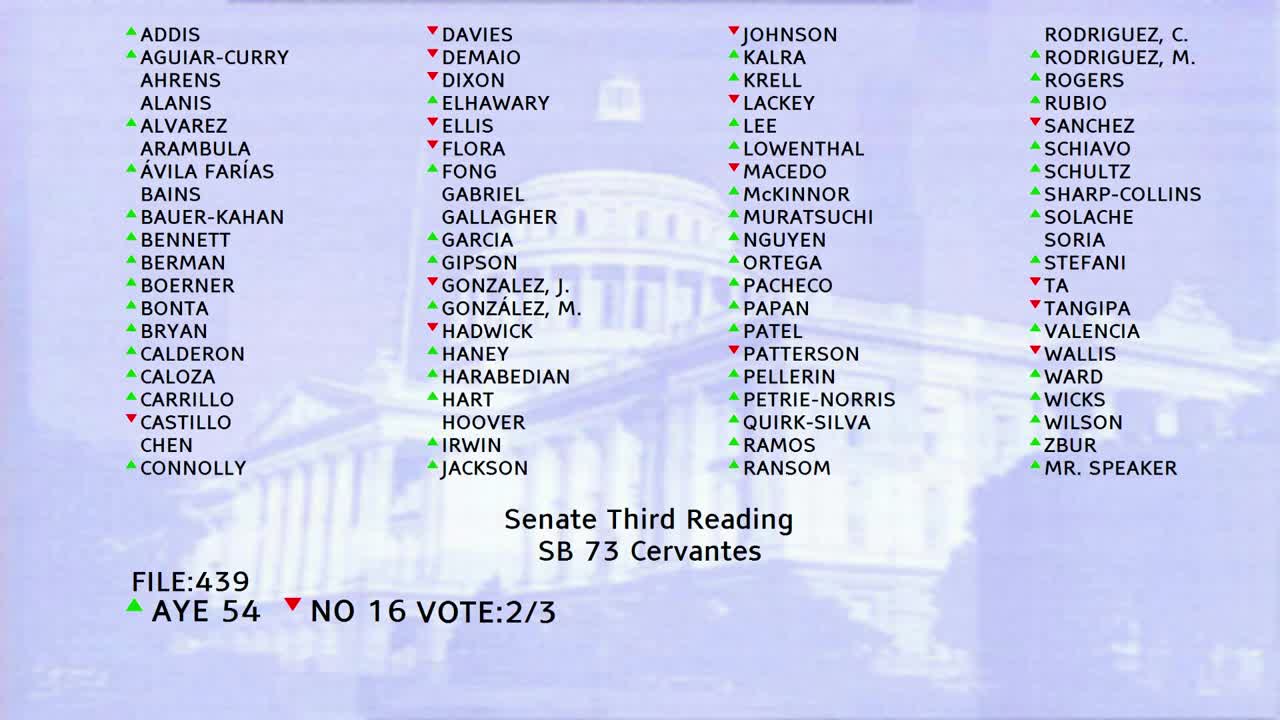
Bill Author

Bill Co-Author(s):